window.__IS_SSR__=true
window.__INITIAL_STATE__={
"attachmentsReducer": {
"audio_0": {
"type": "attachments",
"id": "audio_0",
"imgSizes": {
"kqedFullSize": {
"file": "https://ww2.kqed.org/news/wp-content/themes/KQED-unified/img/audio_bgs/background0.jpg"
}
}
},
"audio_1": {
"type": "attachments",
"id": "audio_1",
"imgSizes": {
"kqedFullSize": {
"file": "https://ww2.kqed.org/news/wp-content/themes/KQED-unified/img/audio_bgs/background1.jpg"
}
}
},
"audio_2": {
"type": "attachments",
"id": "audio_2",
"imgSizes": {
"kqedFullSize": {
"file": "https://ww2.kqed.org/news/wp-content/themes/KQED-unified/img/audio_bgs/background2.jpg"
}
}
},
"audio_3": {
"type": "attachments",
"id": "audio_3",
"imgSizes": {
"kqedFullSize": {
"file": "https://ww2.kqed.org/news/wp-content/themes/KQED-unified/img/audio_bgs/background3.jpg"
}
}
},
"audio_4": {
"type": "attachments",
"id": "audio_4",
"imgSizes": {
"kqedFullSize": {
"file": "https://ww2.kqed.org/news/wp-content/themes/KQED-unified/img/audio_bgs/background4.jpg"
}
}
},
"placeholder": {
"type": "attachments",
"id": "placeholder",
"imgSizes": {
"thumbnail": {
"file": "https://cdn.kqed.org/wp-content/uploads/2024/12/KQED-Default-Image-816638274-2000x1333-1-160x107.jpg",
"width": 160,
"height": 107,
"mimeType": "image/jpeg"
},
"medium": {
"file": "https://cdn.kqed.org/wp-content/uploads/2024/12/KQED-Default-Image-816638274-2000x1333-1-800x533.jpg",
"width": 800,
"height": 533,
"mimeType": "image/jpeg"
},
"medium_large": {
"file": "https://cdn.kqed.org/wp-content/uploads/2024/12/KQED-Default-Image-816638274-2000x1333-1-768x512.jpg",
"width": 768,
"height": 512,
"mimeType": "image/jpeg"
},
"large": {
"file": "https://cdn.kqed.org/wp-content/uploads/2024/12/KQED-Default-Image-816638274-2000x1333-1-1020x680.jpg",
"width": 1020,
"height": 680,
"mimeType": "image/jpeg"
},
"1536x1536": {
"file": "https://cdn.kqed.org/wp-content/uploads/2024/12/KQED-Default-Image-816638274-2000x1333-1-1536x1024.jpg",
"width": 1536,
"height": 1024,
"mimeType": "image/jpeg"
},
"fd-lrg": {
"file": "https://cdn.kqed.org/wp-content/uploads/2024/12/KQED-Default-Image-816638274-2000x1333-1-1536x1024.jpg",
"width": 1536,
"height": 1024,
"mimeType": "image/jpeg"
},
"fd-med": {
"file": "https://cdn.kqed.org/wp-content/uploads/2024/12/KQED-Default-Image-816638274-2000x1333-1-1020x680.jpg",
"width": 1020,
"height": 680,
"mimeType": "image/jpeg"
},
"fd-sm": {
"file": "https://cdn.kqed.org/wp-content/uploads/2024/12/KQED-Default-Image-816638274-2000x1333-1-800x533.jpg",
"width": 800,
"height": 533,
"mimeType": "image/jpeg"
},
"post-thumbnail": {
"file": "https://cdn.kqed.org/wp-content/uploads/2024/12/KQED-Default-Image-816638274-2000x1333-1-672x372.jpg",
"width": 672,
"height": 372,
"mimeType": "image/jpeg"
},
"twentyfourteen-full-width": {
"file": "https://cdn.kqed.org/wp-content/uploads/2024/12/KQED-Default-Image-816638274-2000x1333-1-1038x576.jpg",
"width": 1038,
"height": 576,
"mimeType": "image/jpeg"
},
"xxsmall": {
"file": "https://cdn.kqed.org/wp-content/uploads/2024/12/KQED-Default-Image-816638274-2000x1333-1-160x107.jpg",
"width": 160,
"height": 107,
"mimeType": "image/jpeg"
},
"xsmall": {
"file": "https://cdn.kqed.org/wp-content/uploads/2024/12/KQED-Default-Image-816638274-2000x1333-1-672x372.jpg",
"width": 672,
"height": 372,
"mimeType": "image/jpeg"
},
"small": {
"file": "https://cdn.kqed.org/wp-content/uploads/2024/12/KQED-Default-Image-816638274-2000x1333-1-672x372.jpg",
"width": 672,
"height": 372,
"mimeType": "image/jpeg"
},
"xlarge": {
"file": "https://cdn.kqed.org/wp-content/uploads/2024/12/KQED-Default-Image-816638274-2000x1333-1-1020x680.jpg",
"width": 1020,
"height": 680,
"mimeType": "image/jpeg"
},
"full-width": {
"file": "https://cdn.kqed.org/wp-content/uploads/2024/12/KQED-Default-Image-816638274-2000x1333-1-1920x1280.jpg",
"width": 1920,
"height": 1280,
"mimeType": "image/jpeg"
},
"guest-author-32": {
"file": "https://cdn.kqed.org/wp-content/uploads/2025/01/KQED-Default-Image-816638274-1333x1333-1-160x160.jpg",
"width": 32,
"height": 32,
"mimeType": "image/jpeg"
},
"guest-author-50": {
"file": "https://cdn.kqed.org/wp-content/uploads/2025/01/KQED-Default-Image-816638274-1333x1333-1-160x160.jpg",
"width": 50,
"height": 50,
"mimeType": "image/jpeg"
},
"guest-author-64": {
"file": "https://cdn.kqed.org/wp-content/uploads/2025/01/KQED-Default-Image-816638274-1333x1333-1-160x160.jpg",
"width": 64,
"height": 64,
"mimeType": "image/jpeg"
},
"guest-author-96": {
"file": "https://cdn.kqed.org/wp-content/uploads/2025/01/KQED-Default-Image-816638274-1333x1333-1-160x160.jpg",
"width": 96,
"height": 96,
"mimeType": "image/jpeg"
},
"guest-author-128": {
"file": "https://cdn.kqed.org/wp-content/uploads/2025/01/KQED-Default-Image-816638274-1333x1333-1-160x160.jpg",
"width": 128,
"height": 128,
"mimeType": "image/jpeg"
},
"detail": {
"file": "https://cdn.kqed.org/wp-content/uploads/2025/01/KQED-Default-Image-816638274-1333x1333-1-160x160.jpg",
"width": 160,
"height": 160,
"mimeType": "image/jpeg"
},
"kqedFullSize": {
"file": "https://cdn.kqed.org/wp-content/uploads/2024/12/KQED-Default-Image-816638274-2000x1333-1.jpg",
"width": 2000,
"height": 1333
}
}
},
"bayareabites_134765": {
"type": "attachments",
"id": "bayareabites_134765",
"meta": {
"index": "attachments_1716263798",
"site": "bayareabites",
"id": "134765",
"found": true
},
"parent": 134764,
"imgSizes": {
"twentyfourteen-full-width": {
"file": "https://ww2.kqed.org/app/uploads/sites/24/2019/09/crusoe2-2ddb3b7cf4063df0ddb213174ddfccdcdb954257-1038x576.jpg",
"width": 1038,
"mimeType": "image/jpeg",
"height": 576
},
"thumbnail": {
"file": "https://ww2.kqed.org/app/uploads/sites/24/2019/09/crusoe2-2ddb3b7cf4063df0ddb213174ddfccdcdb954257-160x120.jpg",
"width": 160,
"mimeType": "image/jpeg",
"height": 120
},
"post-thumbnail": {
"file": "https://ww2.kqed.org/app/uploads/sites/24/2019/09/crusoe2-2ddb3b7cf4063df0ddb213174ddfccdcdb954257-672x372.jpg",
"width": 672,
"mimeType": "image/jpeg",
"height": 372
},
"kqedFullSize": {
"file": "https://ww2.kqed.org/app/uploads/sites/24/2019/09/crusoe2-2ddb3b7cf4063df0ddb213174ddfccdcdb954257-e1568749628473.jpg",
"width": 1920,
"height": 1441
},
"large": {
"file": "https://ww2.kqed.org/app/uploads/sites/24/2019/09/crusoe2-2ddb3b7cf4063df0ddb213174ddfccdcdb954257-1020x766.jpg",
"width": 1020,
"mimeType": "image/jpeg",
"height": 766
},
"complete_open_graph": {
"file": "https://ww2.kqed.org/app/uploads/sites/24/2019/09/crusoe2-2ddb3b7cf4063df0ddb213174ddfccdcdb954257-1200x901.jpg",
"width": 1200,
"mimeType": "image/jpeg",
"height": 901
},
"full-width": {
"file": "https://ww2.kqed.org/app/uploads/sites/24/2019/09/crusoe2-2ddb3b7cf4063df0ddb213174ddfccdcdb954257-1920x1441.jpg",
"width": 1920,
"mimeType": "image/jpeg",
"height": 1441
},
"medium": {
"file": "https://ww2.kqed.org/app/uploads/sites/24/2019/09/crusoe2-2ddb3b7cf4063df0ddb213174ddfccdcdb954257-800x600.jpg",
"width": 800,
"mimeType": "image/jpeg",
"height": 600
},
"medium_large": {
"file": "https://ww2.kqed.org/app/uploads/sites/24/2019/09/crusoe2-2ddb3b7cf4063df0ddb213174ddfccdcdb954257-768x576.jpg",
"width": 768,
"mimeType": "image/jpeg",
"height": 576
}
},
"publishDate": 1568749306,
"modified": 1568749669,
"caption": "Illustration from a 19th-century edition of 'Robinson Crusoe', a novel by Daniel Defoe first published in 1719. It relates the story of Robinson Crusoe, stranded on an island for 28 years and his subsequent fight for survival. Out of desperation, he became a master of innovation, especially at preparing meals.",
"description": "Illustration from a 19th-century edition of 'Robinson Crusoe', a novel by Daniel Defoe first published in 1719. It relates the story of Robinson Crusoe, stranded on an island for 28 years and his subsequent fight for survival. Out of desperation, he became a master of innovation, especially at preparing meals.",
"title": "Illustration from a 19th-century edition of 'Robinson Crusoe', a novel by Daniel Defoe first published in 1719. It relates the story of Robinson Crusoe, stranded on an island for 28 years and his subsequent fight for survival. Out of desperation, he became a master of innovation, especially at preparing meals.",
"credit": "Universal History Archive/Universal Images Group via Getty Images",
"status": "inherit",
"isLoading": false,
"fetchFailed": false
},
"bayareabites_105443": {
"type": "attachments",
"id": "bayareabites_105443",
"meta": {
"index": "attachments_1716263798",
"site": "bayareabites",
"id": "105443",
"found": true
},
"parent": 105301,
"imgSizes": {
"twentyfourteen-full-width": {
"file": "https://ww2.kqed.org/app/uploads/sites/24/2015/12/pear-proscuitto-final7-1038x576.jpg",
"width": 1038,
"mimeType": "image/jpeg",
"height": 576
},
"thumbnail": {
"file": "https://ww2.kqed.org/app/uploads/sites/24/2015/12/pear-proscuitto-final7-400x267.jpg",
"width": 400,
"mimeType": "image/jpeg",
"height": 267
},
"fd-sm": {
"file": "https://ww2.kqed.org/app/uploads/sites/24/2015/12/pear-proscuitto-final7-960x640.jpg",
"width": 960,
"mimeType": "image/jpeg",
"height": 640
},
"post-thumbnail": {
"file": "https://ww2.kqed.org/app/uploads/sites/24/2015/12/pear-proscuitto-final7-672x372.jpg",
"width": 672,
"mimeType": "image/jpeg",
"height": 372
},
"kqedFullSize": {
"file": "https://ww2.kqed.org/app/uploads/sites/24/2015/12/pear-proscuitto-final7.jpg",
"width": 1920,
"height": 1280
},
"large": {
"file": "https://ww2.kqed.org/app/uploads/sites/24/2015/12/pear-proscuitto-final7-1440x960.jpg",
"width": 1440,
"mimeType": "image/jpeg",
"height": 960
},
"guest-author-96": {
"file": "https://ww2.kqed.org/app/uploads/sites/24/2015/12/pear-proscuitto-final7-96x96.jpg",
"width": 96,
"mimeType": "image/jpeg",
"height": 96
},
"medium": {
"file": "https://ww2.kqed.org/app/uploads/sites/24/2015/12/pear-proscuitto-final7-800x533.jpg",
"width": 800,
"mimeType": "image/jpeg",
"height": 533
},
"guest-author-64": {
"file": "https://ww2.kqed.org/app/uploads/sites/24/2015/12/pear-proscuitto-final7-64x64.jpg",
"width": 64,
"mimeType": "image/jpeg",
"height": 64
},
"guest-author-32": {
"file": "https://ww2.kqed.org/app/uploads/sites/24/2015/12/pear-proscuitto-final7-32x32.jpg",
"width": 32,
"mimeType": "image/jpeg",
"height": 32
},
"cat_post_thumb_sizecategory-posts-2": {
"file": "https://ww2.kqed.org/app/uploads/sites/24/2015/12/pear-proscuitto-final7-150x150.jpg",
"width": 150,
"mimeType": "image/jpeg",
"height": 150
},
"fd-lrg": {
"file": "https://ww2.kqed.org/app/uploads/sites/24/2015/12/pear-proscuitto-final7-1920x1280.jpg",
"width": 1920,
"mimeType": "image/jpeg",
"height": 1280
},
"fd-med": {
"file": "https://ww2.kqed.org/app/uploads/sites/24/2015/12/pear-proscuitto-final7-1180x787.jpg",
"width": 1180,
"mimeType": "image/jpeg",
"height": 787
},
"detail": {
"file": "https://ww2.kqed.org/app/uploads/sites/24/2015/12/pear-proscuitto-final7-75x75.jpg",
"width": 75,
"mimeType": "image/jpeg",
"height": 75
},
"medium_large": {
"file": "https://ww2.kqed.org/app/uploads/sites/24/2015/12/pear-proscuitto-final7-768x512.jpg",
"width": 768,
"mimeType": "image/jpeg",
"height": 512
},
"guest-author-128": {
"file": "https://ww2.kqed.org/app/uploads/sites/24/2015/12/pear-proscuitto-final7-128x128.jpg",
"width": 128,
"mimeType": "image/jpeg",
"height": 128
}
},
"publishDate": 1451279245,
"modified": 1543965808,
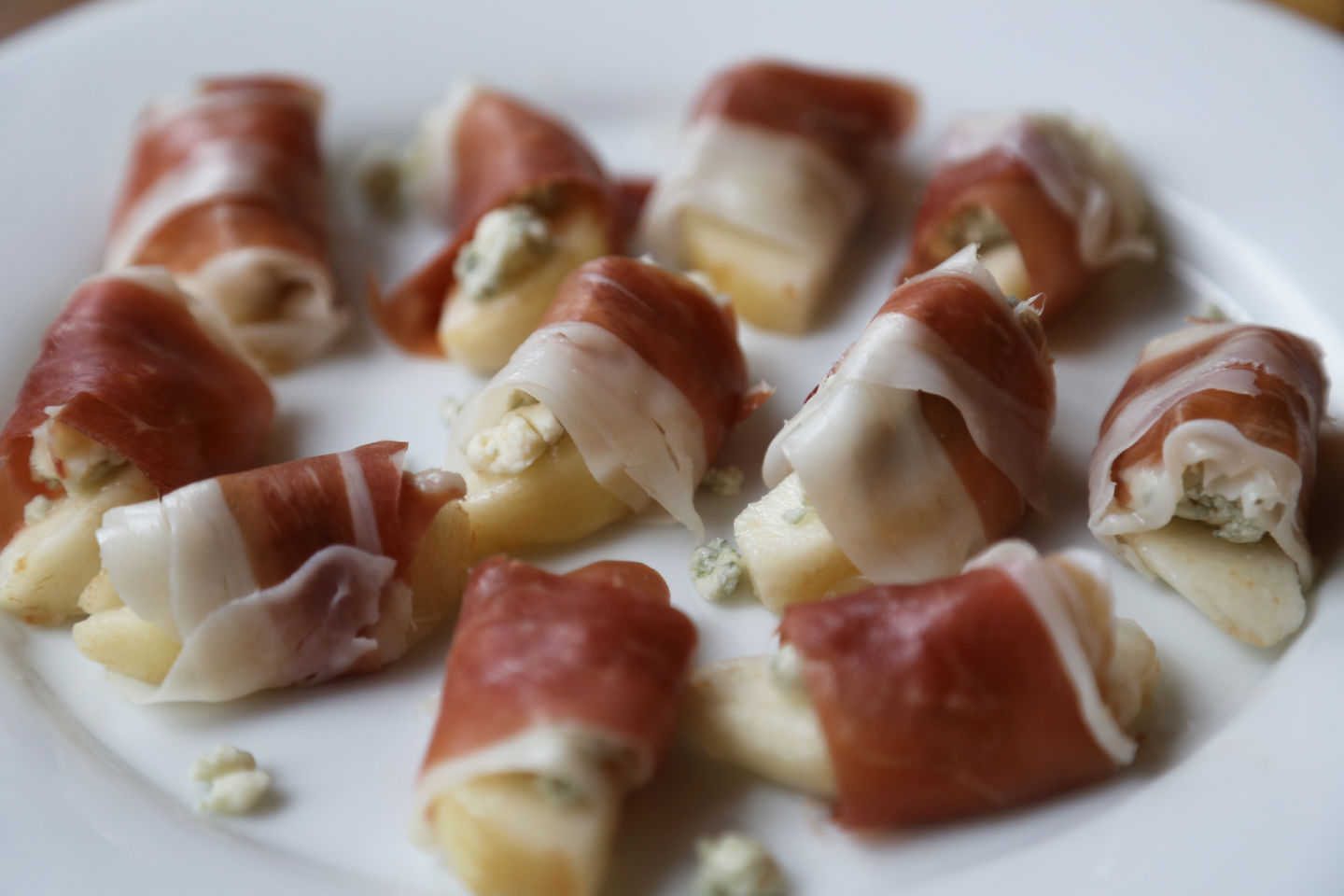
"caption": "Prosciutto-Wrapped Pears with Gorgonzola",
"description": "Prosciutto-Wrapped Pears with Gorgonzola",
"title": "Prosciutto-Wrapped Pears with Gorgonzola",
"credit": "Wendy Goodfriend",
"status": "inherit",
"isLoading": false,
"fetchFailed": false
},
"bayareabites_131647": {
"type": "attachments",
"id": "bayareabites_131647",
"meta": {
"index": "attachments_1716263798",
"site": "bayareabites",
"id": "131647",
"found": true
},
"parent": 131646,
"imgSizes": {
"small": {
"file": "https://ww2.kqed.org/app/uploads/sites/24/2018/12/1810-pamu-netflix-samin_0041_wide-b3f6a229c7e16c9248ba608dfb688f24168c955d-520x293.jpg",
"width": 520,
"mimeType": "image/jpeg",
"height": 293
},
"twentyfourteen-full-width": {
"file": "https://ww2.kqed.org/app/uploads/sites/24/2018/12/1810-pamu-netflix-samin_0041_wide-b3f6a229c7e16c9248ba608dfb688f24168c955d-1038x576.jpg",
"width": 1038,
"mimeType": "image/jpeg",
"height": 576
},
"thumbnail": {
"file": "https://ww2.kqed.org/app/uploads/sites/24/2018/12/1810-pamu-netflix-samin_0041_wide-b3f6a229c7e16c9248ba608dfb688f24168c955d-160x90.jpg",
"width": 160,
"mimeType": "image/jpeg",
"height": 90
},
"fd-sm": {
"file": "https://ww2.kqed.org/app/uploads/sites/24/2018/12/1810-pamu-netflix-samin_0041_wide-b3f6a229c7e16c9248ba608dfb688f24168c955d-960x540.jpg",
"width": 960,
"mimeType": "image/jpeg",
"height": 540
},
"post-thumbnail": {
"file": "https://ww2.kqed.org/app/uploads/sites/24/2018/12/1810-pamu-netflix-samin_0041_wide-b3f6a229c7e16c9248ba608dfb688f24168c955d-672x372.jpg",
"width": 672,
"mimeType": "image/jpeg",
"height": 372
},
"xsmall": {
"file": "https://ww2.kqed.org/app/uploads/sites/24/2018/12/1810-pamu-netflix-samin_0041_wide-b3f6a229c7e16c9248ba608dfb688f24168c955d-375x211.jpg",
"width": 375,
"mimeType": "image/jpeg",
"height": 211
},
"kqedFullSize": {
"file": "https://ww2.kqed.org/app/uploads/sites/24/2018/12/1810-pamu-netflix-samin_0041_wide-b3f6a229c7e16c9248ba608dfb688f24168c955d-e1544124546725.jpg",
"width": 1920,
"height": 1080
},
"large": {
"file": "https://ww2.kqed.org/app/uploads/sites/24/2018/12/1810-pamu-netflix-samin_0041_wide-b3f6a229c7e16c9248ba608dfb688f24168c955d-1020x574.jpg",
"width": 1020,
"mimeType": "image/jpeg",
"height": 574
},
"xlarge": {
"file": "https://ww2.kqed.org/app/uploads/sites/24/2018/12/1810-pamu-netflix-samin_0041_wide-b3f6a229c7e16c9248ba608dfb688f24168c955d-1180x664.jpg",
"width": 1180,
"mimeType": "image/jpeg",
"height": 664
},
"complete_open_graph": {
"file": "https://ww2.kqed.org/app/uploads/sites/24/2018/12/1810-pamu-netflix-samin_0041_wide-b3f6a229c7e16c9248ba608dfb688f24168c955d-1200x675.jpg",
"width": 1200,
"mimeType": "image/jpeg",
"height": 675
},
"guest-author-50": {
"file": "https://ww2.kqed.org/app/uploads/sites/24/2018/12/1810-pamu-netflix-samin_0041_wide-b3f6a229c7e16c9248ba608dfb688f24168c955d-50x50.jpg",
"width": 50,
"mimeType": "image/jpeg",
"height": 50
},
"guest-author-96": {
"file": "https://ww2.kqed.org/app/uploads/sites/24/2018/12/1810-pamu-netflix-samin_0041_wide-b3f6a229c7e16c9248ba608dfb688f24168c955d-96x96.jpg",
"width": 96,
"mimeType": "image/jpeg",
"height": 96
},
"medium": {
"file": "https://ww2.kqed.org/app/uploads/sites/24/2018/12/1810-pamu-netflix-samin_0041_wide-b3f6a229c7e16c9248ba608dfb688f24168c955d-800x450.jpg",
"width": 800,
"mimeType": "image/jpeg",
"height": 450
},
"guest-author-64": {
"file": "https://ww2.kqed.org/app/uploads/sites/24/2018/12/1810-pamu-netflix-samin_0041_wide-b3f6a229c7e16c9248ba608dfb688f24168c955d-64x64.jpg",
"width": 64,
"mimeType": "image/jpeg",
"height": 64
},
"guest-author-32": {
"file": "https://ww2.kqed.org/app/uploads/sites/24/2018/12/1810-pamu-netflix-samin_0041_wide-b3f6a229c7e16c9248ba608dfb688f24168c955d-32x32.jpg",
"width": 32,
"mimeType": "image/jpeg",
"height": 32
},
"fd-lrg": {
"file": "https://ww2.kqed.org/app/uploads/sites/24/2018/12/1810-pamu-netflix-samin_0041_wide-b3f6a229c7e16c9248ba608dfb688f24168c955d-1920x1080.jpg",
"width": 1920,
"mimeType": "image/jpeg",
"height": 1080
},
"fd-med": {
"file": "https://ww2.kqed.org/app/uploads/sites/24/2018/12/1810-pamu-netflix-samin_0041_wide-b3f6a229c7e16c9248ba608dfb688f24168c955d-1180x664.jpg",
"width": 1180,
"mimeType": "image/jpeg",
"height": 664
},
"full-width": {
"file": "https://ww2.kqed.org/app/uploads/sites/24/2018/12/1810-pamu-netflix-samin_0041_wide-b3f6a229c7e16c9248ba608dfb688f24168c955d-1920x1080.jpg",
"width": 1920,
"mimeType": "image/jpeg",
"height": 1080
},
"detail": {
"file": "https://ww2.kqed.org/app/uploads/sites/24/2018/12/1810-pamu-netflix-samin_0041_wide-b3f6a229c7e16c9248ba608dfb688f24168c955d-150x150.jpg",
"width": 150,
"mimeType": "image/jpeg",
"height": 150
},
"medium_large": {
"file": "https://ww2.kqed.org/app/uploads/sites/24/2018/12/1810-pamu-netflix-samin_0041_wide-b3f6a229c7e16c9248ba608dfb688f24168c955d-768x432.jpg",
"width": 768,
"mimeType": "image/jpeg",
"height": 432
},
"guest-author-128": {
"file": "https://ww2.kqed.org/app/uploads/sites/24/2018/12/1810-pamu-netflix-samin_0041_wide-b3f6a229c7e16c9248ba608dfb688f24168c955d-128x128.jpg",
"width": 128,
"mimeType": "image/jpeg",
"height": 128
},
"xxsmall": {
"file": "https://ww2.kqed.org/app/uploads/sites/24/2018/12/1810-pamu-netflix-samin_0041_wide-b3f6a229c7e16c9248ba608dfb688f24168c955d-240x135.jpg",
"width": 240,
"mimeType": "image/jpeg",
"height": 135
}
},
"publishDate": 1544124319,
"modified": 1544124560,
"caption": "Samin Nosrat travels to different countries to learn how salt, acid, fat and heat affect food on her four-part Netflix series.",
"description": "Samin Nosrat travels to different countries to learn how salt, acid, fat and heat affect food on her four-part Netflix series.",
"title": "Samin Nosrat travels to different countries to learn how salt, acid, fat and heat affect food on her four-part Netflix series.",
"credit": "Netflix",
"status": "inherit",
"isLoading": false,
"fetchFailed": false
},
"bayareabites_131004": {
"type": "attachments",
"id": "bayareabites_131004",
"meta": {
"index": "attachments_1716263798",
"site": "bayareabites",
"id": "131004",
"found": true
},
"parent": 131003,
"imgSizes": {
"small": {
"file": "https://ww2.kqed.org/app/uploads/sites/24/2018/10/img_5400-f11d164a35583c2b1a9e9ef54da43aa208f4532f-520x390.jpg",
"width": 520,
"mimeType": "image/jpeg",
"height": 390
},
"twentyfourteen-full-width": {
"file": "https://ww2.kqed.org/app/uploads/sites/24/2018/10/img_5400-f11d164a35583c2b1a9e9ef54da43aa208f4532f-1012x576.jpg",
"width": 1012,
"mimeType": "image/jpeg",
"height": 576
},
"thumbnail": {
"file": "https://ww2.kqed.org/app/uploads/sites/24/2018/10/img_5400-f11d164a35583c2b1a9e9ef54da43aa208f4532f-160x120.jpg",
"width": 160,
"mimeType": "image/jpeg",
"height": 120
},
"fd-sm": {
"file": "https://ww2.kqed.org/app/uploads/sites/24/2018/10/img_5400-f11d164a35583c2b1a9e9ef54da43aa208f4532f-960x720.jpg",
"width": 960,
"mimeType": "image/jpeg",
"height": 720
},
"post-thumbnail": {
"file": "https://ww2.kqed.org/app/uploads/sites/24/2018/10/img_5400-f11d164a35583c2b1a9e9ef54da43aa208f4532f-672x372.jpg",
"width": 672,
"mimeType": "image/jpeg",
"height": 372
},
"xsmall": {
"file": "https://ww2.kqed.org/app/uploads/sites/24/2018/10/img_5400-f11d164a35583c2b1a9e9ef54da43aa208f4532f-375x281.jpg",
"width": 375,
"mimeType": "image/jpeg",
"height": 281
},
"kqedFullSize": {
"file": "https://ww2.kqed.org/app/uploads/sites/24/2018/10/img_5400-f11d164a35583c2b1a9e9ef54da43aa208f4532f.jpg",
"width": 1012,
"height": 759
},
"guest-author-50": {
"file": "https://ww2.kqed.org/app/uploads/sites/24/2018/10/img_5400-f11d164a35583c2b1a9e9ef54da43aa208f4532f-50x50.jpg",
"width": 50,
"mimeType": "image/jpeg",
"height": 50
},
"guest-author-96": {
"file": "https://ww2.kqed.org/app/uploads/sites/24/2018/10/img_5400-f11d164a35583c2b1a9e9ef54da43aa208f4532f-96x96.jpg",
"width": 96,
"mimeType": "image/jpeg",
"height": 96
},
"medium": {
"file": "https://ww2.kqed.org/app/uploads/sites/24/2018/10/img_5400-f11d164a35583c2b1a9e9ef54da43aa208f4532f-800x600.jpg",
"width": 800,
"mimeType": "image/jpeg",
"height": 600
},
"guest-author-64": {
"file": "https://ww2.kqed.org/app/uploads/sites/24/2018/10/img_5400-f11d164a35583c2b1a9e9ef54da43aa208f4532f-64x64.jpg",
"width": 64,
"mimeType": "image/jpeg",
"height": 64
},
"guest-author-32": {
"file": "https://ww2.kqed.org/app/uploads/sites/24/2018/10/img_5400-f11d164a35583c2b1a9e9ef54da43aa208f4532f-32x32.jpg",
"width": 32,
"mimeType": "image/jpeg",
"height": 32
},
"detail": {
"file": "https://ww2.kqed.org/app/uploads/sites/24/2018/10/img_5400-f11d164a35583c2b1a9e9ef54da43aa208f4532f-150x150.jpg",
"width": 150,
"mimeType": "image/jpeg",
"height": 150
},
"medium_large": {
"file": "https://ww2.kqed.org/app/uploads/sites/24/2018/10/img_5400-f11d164a35583c2b1a9e9ef54da43aa208f4532f-768x576.jpg",
"width": 768,
"mimeType": "image/jpeg",
"height": 576
},
"guest-author-128": {
"file": "https://ww2.kqed.org/app/uploads/sites/24/2018/10/img_5400-f11d164a35583c2b1a9e9ef54da43aa208f4532f-128x128.jpg",
"width": 128,
"mimeType": "image/jpeg",
"height": 128
},
"xxsmall": {
"file": "https://ww2.kqed.org/app/uploads/sites/24/2018/10/img_5400-f11d164a35583c2b1a9e9ef54da43aa208f4532f-240x180.jpg",
"width": 240,
"mimeType": "image/jpeg",
"height": 180
}
},
"publishDate": 1540231397,
"modified": 1540231492,
"caption": "Molly Birnbaum, America's Test Kitchen Kids editor in chief, helps 8-year-old Lucy Gray make a one-pot pasta meal from a recipe in the new book, The Complete Cookbook for Young Chefs.",
"description": "Molly Birnbaum, America's Test Kitchen Kids editor in chief, helps 8-year-old Lucy Gray make a one-pot pasta meal from a recipe in the new book, The Complete Cookbook for Young Chefs.",
"title": "Molly Birnbaum, America's Test Kitchen Kids editor in chief, helps 8-year-old Lucy Gray make a one-pot pasta meal from a recipe in the new book, The Complete Cookbook for Young Chefs.",
"credit": "Paul Gray",
"status": "inherit",
"isLoading": false,
"fetchFailed": false
},
"bayareabites_129668": {
"type": "attachments",
"id": "bayareabites_129668",
"meta": {
"index": "attachments_1716263798",
"site": "bayareabites",
"id": "129668",
"found": true
},
"parent": 129667,
"imgSizes": {
"small": {
"file": "https://ww2.kqed.org/app/uploads/sites/24/2018/07/gettyimages-664940502-1-b54e3b1cb825ff967a0ff46b1a3faba677195d15-520x390.jpg",
"width": 520,
"mimeType": "image/jpeg",
"height": 390
},
"twentyfourteen-full-width": {
"file": "https://ww2.kqed.org/app/uploads/sites/24/2018/07/gettyimages-664940502-1-b54e3b1cb825ff967a0ff46b1a3faba677195d15-1038x576.jpg",
"width": 1038,
"mimeType": "image/jpeg",
"height": 576
},
"thumbnail": {
"file": "https://ww2.kqed.org/app/uploads/sites/24/2018/07/gettyimages-664940502-1-b54e3b1cb825ff967a0ff46b1a3faba677195d15-160x120.jpg",
"width": 160,
"mimeType": "image/jpeg",
"height": 120
},
"fd-sm": {
"file": "https://ww2.kqed.org/app/uploads/sites/24/2018/07/gettyimages-664940502-1-b54e3b1cb825ff967a0ff46b1a3faba677195d15-960x720.jpg",
"width": 960,
"mimeType": "image/jpeg",
"height": 720
},
"post-thumbnail": {
"file": "https://ww2.kqed.org/app/uploads/sites/24/2018/07/gettyimages-664940502-1-b54e3b1cb825ff967a0ff46b1a3faba677195d15-672x372.jpg",
"width": 672,
"mimeType": "image/jpeg",
"height": 372
},
"xsmall": {
"file": "https://ww2.kqed.org/app/uploads/sites/24/2018/07/gettyimages-664940502-1-b54e3b1cb825ff967a0ff46b1a3faba677195d15-375x281.jpg",
"width": 375,
"mimeType": "image/jpeg",
"height": 281
},
"kqedFullSize": {
"file": "https://ww2.kqed.org/app/uploads/sites/24/2018/07/gettyimages-664940502-1-b54e3b1cb825ff967a0ff46b1a3faba677195d15-e1532455949626.jpg",
"width": 1920,
"height": 1440
},
"large": {
"file": "https://ww2.kqed.org/app/uploads/sites/24/2018/07/gettyimages-664940502-1-b54e3b1cb825ff967a0ff46b1a3faba677195d15-1020x765.jpg",
"width": 1020,
"mimeType": "image/jpeg",
"height": 765
},
"xlarge": {
"file": "https://ww2.kqed.org/app/uploads/sites/24/2018/07/gettyimages-664940502-1-b54e3b1cb825ff967a0ff46b1a3faba677195d15-1180x885.jpg",
"width": 1180,
"mimeType": "image/jpeg",
"height": 885
},
"complete_open_graph": {
"file": "https://ww2.kqed.org/app/uploads/sites/24/2018/07/gettyimages-664940502-1-b54e3b1cb825ff967a0ff46b1a3faba677195d15-1200x900.jpg",
"width": 1200,
"mimeType": "image/jpeg",
"height": 900
},
"guest-author-50": {
"file": "https://ww2.kqed.org/app/uploads/sites/24/2018/07/gettyimages-664940502-1-b54e3b1cb825ff967a0ff46b1a3faba677195d15-50x50.jpg",
"width": 50,
"mimeType": "image/jpeg",
"height": 50
},
"guest-author-96": {
"file": "https://ww2.kqed.org/app/uploads/sites/24/2018/07/gettyimages-664940502-1-b54e3b1cb825ff967a0ff46b1a3faba677195d15-96x96.jpg",
"width": 96,
"mimeType": "image/jpeg",
"height": 96
},
"medium": {
"file": "https://ww2.kqed.org/app/uploads/sites/24/2018/07/gettyimages-664940502-1-b54e3b1cb825ff967a0ff46b1a3faba677195d15-800x600.jpg",
"width": 800,
"mimeType": "image/jpeg",
"height": 600
},
"guest-author-64": {
"file": "https://ww2.kqed.org/app/uploads/sites/24/2018/07/gettyimages-664940502-1-b54e3b1cb825ff967a0ff46b1a3faba677195d15-64x64.jpg",
"width": 64,
"mimeType": "image/jpeg",
"height": 64
},
"guest-author-32": {
"file": "https://ww2.kqed.org/app/uploads/sites/24/2018/07/gettyimages-664940502-1-b54e3b1cb825ff967a0ff46b1a3faba677195d15-32x32.jpg",
"width": 32,
"mimeType": "image/jpeg",
"height": 32
},
"fd-lrg": {
"file": "https://ww2.kqed.org/app/uploads/sites/24/2018/07/gettyimages-664940502-1-b54e3b1cb825ff967a0ff46b1a3faba677195d15-1920x1440.jpg",
"width": 1920,
"mimeType": "image/jpeg",
"height": 1440
},
"fd-med": {
"file": "https://ww2.kqed.org/app/uploads/sites/24/2018/07/gettyimages-664940502-1-b54e3b1cb825ff967a0ff46b1a3faba677195d15-1180x885.jpg",
"width": 1180,
"mimeType": "image/jpeg",
"height": 885
},
"full-width": {
"file": "https://ww2.kqed.org/app/uploads/sites/24/2018/07/gettyimages-664940502-1-b54e3b1cb825ff967a0ff46b1a3faba677195d15-1920x1440.jpg",
"width": 1920,
"mimeType": "image/jpeg",
"height": 1440
},
"detail": {
"file": "https://ww2.kqed.org/app/uploads/sites/24/2018/07/gettyimages-664940502-1-b54e3b1cb825ff967a0ff46b1a3faba677195d15-150x150.jpg",
"width": 150,
"mimeType": "image/jpeg",
"height": 150
},
"medium_large": {
"file": "https://ww2.kqed.org/app/uploads/sites/24/2018/07/gettyimages-664940502-1-b54e3b1cb825ff967a0ff46b1a3faba677195d15-768x576.jpg",
"width": 768,
"mimeType": "image/jpeg",
"height": 576
},
"guest-author-128": {
"file": "https://ww2.kqed.org/app/uploads/sites/24/2018/07/gettyimages-664940502-1-b54e3b1cb825ff967a0ff46b1a3faba677195d15-128x128.jpg",
"width": 128,
"mimeType": "image/jpeg",
"height": 128
},
"xxsmall": {
"file": "https://ww2.kqed.org/app/uploads/sites/24/2018/07/gettyimages-664940502-1-b54e3b1cb825ff967a0ff46b1a3faba677195d15-240x180.jpg",
"width": 240,
"mimeType": "image/jpeg",
"height": 180
}
},
"publishDate": 1532455857,
"modified": 1532456040,
"caption": "Brick transfers heat to dough more slowly than steel, allowing both pizza crust and toppings to simultaneously reach perfection.",
"description": "Brick transfers heat to dough more slowly than steel, allowing both pizza crust and toppings to simultaneously reach perfection.",
"title": "Brick transfers heat to dough more slowly than steel, allowing both pizza crust and toppings to simultaneously reach perfection.",
"credit": "Aldo Pavan/Getty Images",
"status": "inherit",
"isLoading": false,
"fetchFailed": false
},
"bayareabites_129026": {
"type": "attachments",
"id": "bayareabites_129026",
"meta": {
"index": "attachments_1716263798",
"site": "bayareabites",
"id": "129026",
"found": true
},
"parent": 129025,
"imgSizes": {
"small": {
"file": "https://ww2.kqed.org/app/uploads/sites/24/2018/06/gettyimages-596067764-27bc767beeebf36f57162c666d9569d24d5c1d3e-520x390.jpg",
"width": 520,
"mimeType": "image/jpeg",
"height": 390
},
"twentyfourteen-full-width": {
"file": "https://ww2.kqed.org/app/uploads/sites/24/2018/06/gettyimages-596067764-27bc767beeebf36f57162c666d9569d24d5c1d3e-1038x576.jpg",
"width": 1038,
"mimeType": "image/jpeg",
"height": 576
},
"thumbnail": {
"file": "https://ww2.kqed.org/app/uploads/sites/24/2018/06/gettyimages-596067764-27bc767beeebf36f57162c666d9569d24d5c1d3e-160x120.jpg",
"width": 160,
"mimeType": "image/jpeg",
"height": 120
},
"fd-sm": {
"file": "https://ww2.kqed.org/app/uploads/sites/24/2018/06/gettyimages-596067764-27bc767beeebf36f57162c666d9569d24d5c1d3e-960x720.jpg",
"width": 960,
"mimeType": "image/jpeg",
"height": 720
},
"post-thumbnail": {
"file": "https://ww2.kqed.org/app/uploads/sites/24/2018/06/gettyimages-596067764-27bc767beeebf36f57162c666d9569d24d5c1d3e-672x372.jpg",
"width": 672,
"mimeType": "image/jpeg",
"height": 372
},
"xsmall": {
"file": "https://ww2.kqed.org/app/uploads/sites/24/2018/06/gettyimages-596067764-27bc767beeebf36f57162c666d9569d24d5c1d3e-375x281.jpg",
"width": 375,
"mimeType": "image/jpeg",
"height": 281
},
"kqedFullSize": {
"file": "https://ww2.kqed.org/app/uploads/sites/24/2018/06/gettyimages-596067764-27bc767beeebf36f57162c666d9569d24d5c1d3e.jpg",
"width": 1914,
"height": 1435
},
"large": {
"file": "https://ww2.kqed.org/app/uploads/sites/24/2018/06/gettyimages-596067764-27bc767beeebf36f57162c666d9569d24d5c1d3e-1020x765.jpg",
"width": 1020,
"mimeType": "image/jpeg",
"height": 765
},
"xlarge": {
"file": "https://ww2.kqed.org/app/uploads/sites/24/2018/06/gettyimages-596067764-27bc767beeebf36f57162c666d9569d24d5c1d3e-1180x885.jpg",
"width": 1180,
"mimeType": "image/jpeg",
"height": 885
},
"complete_open_graph": {
"file": "https://ww2.kqed.org/app/uploads/sites/24/2018/06/gettyimages-596067764-27bc767beeebf36f57162c666d9569d24d5c1d3e-1200x900.jpg",
"width": 1200,
"mimeType": "image/jpeg",
"height": 900
},
"guest-author-50": {
"file": "https://ww2.kqed.org/app/uploads/sites/24/2018/06/gettyimages-596067764-27bc767beeebf36f57162c666d9569d24d5c1d3e-50x50.jpg",
"width": 50,
"mimeType": "image/jpeg",
"height": 50
},
"guest-author-96": {
"file": "https://ww2.kqed.org/app/uploads/sites/24/2018/06/gettyimages-596067764-27bc767beeebf36f57162c666d9569d24d5c1d3e-96x96.jpg",
"width": 96,
"mimeType": "image/jpeg",
"height": 96
},
"medium": {
"file": "https://ww2.kqed.org/app/uploads/sites/24/2018/06/gettyimages-596067764-27bc767beeebf36f57162c666d9569d24d5c1d3e-800x600.jpg",
"width": 800,
"mimeType": "image/jpeg",
"height": 600
},
"guest-author-64": {
"file": "https://ww2.kqed.org/app/uploads/sites/24/2018/06/gettyimages-596067764-27bc767beeebf36f57162c666d9569d24d5c1d3e-64x64.jpg",
"width": 64,
"mimeType": "image/jpeg",
"height": 64
},
"guest-author-32": {
"file": "https://ww2.kqed.org/app/uploads/sites/24/2018/06/gettyimages-596067764-27bc767beeebf36f57162c666d9569d24d5c1d3e-32x32.jpg",
"width": 32,
"mimeType": "image/jpeg",
"height": 32
},
"fd-med": {
"file": "https://ww2.kqed.org/app/uploads/sites/24/2018/06/gettyimages-596067764-27bc767beeebf36f57162c666d9569d24d5c1d3e-1180x885.jpg",
"width": 1180,
"mimeType": "image/jpeg",
"height": 885
},
"detail": {
"file": "https://ww2.kqed.org/app/uploads/sites/24/2018/06/gettyimages-596067764-27bc767beeebf36f57162c666d9569d24d5c1d3e-150x150.jpg",
"width": 150,
"mimeType": "image/jpeg",
"height": 150
},
"medium_large": {
"file": "https://ww2.kqed.org/app/uploads/sites/24/2018/06/gettyimages-596067764-27bc767beeebf36f57162c666d9569d24d5c1d3e-768x576.jpg",
"width": 768,
"mimeType": "image/jpeg",
"height": 576
},
"guest-author-128": {
"file": "https://ww2.kqed.org/app/uploads/sites/24/2018/06/gettyimages-596067764-27bc767beeebf36f57162c666d9569d24d5c1d3e-128x128.jpg",
"width": 128,
"mimeType": "image/jpeg",
"height": 128
},
"xxsmall": {
"file": "https://ww2.kqed.org/app/uploads/sites/24/2018/06/gettyimages-596067764-27bc767beeebf36f57162c666d9569d24d5c1d3e-240x180.jpg",
"width": 240,
"mimeType": "image/jpeg",
"height": 180
}
},
"publishDate": 1529001687,
"modified": 1529001821,
"caption": "Rinsing your produce is a good idea, but it won't give you 100 percent protection from bacteria that cause foodborne illness unless you cook it thoroughly. Because we eat lettuce raw, a lot of people got sick in a recent outbreak.",
"description": "Rinsing your produce is a good idea, but it won't give you 100 percent protection from bacteria that cause foodborne illness unless you cook it thoroughly. Because we eat lettuce raw, a lot of people got sick in a recent outbrea",
"title": "Rinsing your produce is a good idea, but it won't give you 100 percent protection from bacteria that cause foodborne illness unless you cook it thoroughly. Because we eat lettuce raw, a lot of people got sick in a recent outbreak.",
"credit": "StockFood/Getty Images/Foodcollection",
"status": "inherit",
"isLoading": false,
"fetchFailed": false
},
"bayareabites_127999": {
"type": "attachments",
"id": "bayareabites_127999",
"meta": {
"index": "attachments_1716263798",
"site": "bayareabites",
"id": "127999",
"found": true
},
"parent": 127998,
"imgSizes": {
"small": {
"file": "https://ww2.kqed.org/app/uploads/sites/24/2018/05/mcguckianphoto1_vert-a697b1b8a24dcc0863a867ba611f8d010a120777-520x693.jpg",
"width": 520,
"mimeType": "image/jpeg",
"height": 693
},
"twentyfourteen-full-width": {
"file": "https://ww2.kqed.org/app/uploads/sites/24/2018/05/mcguckianphoto1_vert-a697b1b8a24dcc0863a867ba611f8d010a120777-1038x576.jpg",
"width": 1038,
"mimeType": "image/jpeg",
"height": 576
},
"thumbnail": {
"file": "https://ww2.kqed.org/app/uploads/sites/24/2018/05/mcguckianphoto1_vert-a697b1b8a24dcc0863a867ba611f8d010a120777-160x213.jpg",
"width": 160,
"mimeType": "image/jpeg",
"height": 213
},
"fd-sm": {
"file": "https://ww2.kqed.org/app/uploads/sites/24/2018/05/mcguckianphoto1_vert-a697b1b8a24dcc0863a867ba611f8d010a120777-960x1280.jpg",
"width": 960,
"mimeType": "image/jpeg",
"height": 1280
},
"post-thumbnail": {
"file": "https://ww2.kqed.org/app/uploads/sites/24/2018/05/mcguckianphoto1_vert-a697b1b8a24dcc0863a867ba611f8d010a120777-672x372.jpg",
"width": 672,
"mimeType": "image/jpeg",
"height": 372
},
"xsmall": {
"file": "https://ww2.kqed.org/app/uploads/sites/24/2018/05/mcguckianphoto1_vert-a697b1b8a24dcc0863a867ba611f8d010a120777-375x500.jpg",
"width": 375,
"mimeType": "image/jpeg",
"height": 500
},
"kqedFullSize": {
"file": "https://ww2.kqed.org/app/uploads/sites/24/2018/05/mcguckianphoto1_vert-a697b1b8a24dcc0863a867ba611f8d010a120777-e1526000609396.jpg",
"width": 1920,
"height": 2560
},
"large": {
"file": "https://ww2.kqed.org/app/uploads/sites/24/2018/05/mcguckianphoto1_vert-a697b1b8a24dcc0863a867ba611f8d010a120777-1020x1360.jpg",
"width": 1020,
"mimeType": "image/jpeg",
"height": 1360
},
"xlarge": {
"file": "https://ww2.kqed.org/app/uploads/sites/24/2018/05/mcguckianphoto1_vert-a697b1b8a24dcc0863a867ba611f8d010a120777-1180x1573.jpg",
"width": 1180,
"mimeType": "image/jpeg",
"height": 1573
},
"complete_open_graph": {
"file": "https://ww2.kqed.org/app/uploads/sites/24/2018/05/mcguckianphoto1_vert-a697b1b8a24dcc0863a867ba611f8d010a120777-900x1200.jpg",
"width": 900,
"mimeType": "image/jpeg",
"height": 1200
},
"guest-author-50": {
"file": "https://ww2.kqed.org/app/uploads/sites/24/2018/05/mcguckianphoto1_vert-a697b1b8a24dcc0863a867ba611f8d010a120777-50x50.jpg",
"width": 50,
"mimeType": "image/jpeg",
"height": 50
},
"guest-author-96": {
"file": "https://ww2.kqed.org/app/uploads/sites/24/2018/05/mcguckianphoto1_vert-a697b1b8a24dcc0863a867ba611f8d010a120777-96x96.jpg",
"width": 96,
"mimeType": "image/jpeg",
"height": 96
},
"medium": {
"file": "https://ww2.kqed.org/app/uploads/sites/24/2018/05/mcguckianphoto1_vert-a697b1b8a24dcc0863a867ba611f8d010a120777-800x1067.jpg",
"width": 800,
"mimeType": "image/jpeg",
"height": 1067
},
"guest-author-64": {
"file": "https://ww2.kqed.org/app/uploads/sites/24/2018/05/mcguckianphoto1_vert-a697b1b8a24dcc0863a867ba611f8d010a120777-64x64.jpg",
"width": 64,
"mimeType": "image/jpeg",
"height": 64
},
"guest-author-32": {
"file": "https://ww2.kqed.org/app/uploads/sites/24/2018/05/mcguckianphoto1_vert-a697b1b8a24dcc0863a867ba611f8d010a120777-32x32.jpg",
"width": 32,
"mimeType": "image/jpeg",
"height": 32
},
"fd-lrg": {
"file": "https://ww2.kqed.org/app/uploads/sites/24/2018/05/mcguckianphoto1_vert-a697b1b8a24dcc0863a867ba611f8d010a120777-1920x2560.jpg",
"width": 1920,
"mimeType": "image/jpeg",
"height": 2560
},
"fd-med": {
"file": "https://ww2.kqed.org/app/uploads/sites/24/2018/05/mcguckianphoto1_vert-a697b1b8a24dcc0863a867ba611f8d010a120777-1180x1573.jpg",
"width": 1180,
"mimeType": "image/jpeg",
"height": 1573
},
"full-width": {
"file": "https://ww2.kqed.org/app/uploads/sites/24/2018/05/mcguckianphoto1_vert-a697b1b8a24dcc0863a867ba611f8d010a120777-1920x2560.jpg",
"width": 1920,
"mimeType": "image/jpeg",
"height": 2560
},
"detail": {
"file": "https://ww2.kqed.org/app/uploads/sites/24/2018/05/mcguckianphoto1_vert-a697b1b8a24dcc0863a867ba611f8d010a120777-150x150.jpg",
"width": 150,
"mimeType": "image/jpeg",
"height": 150
},
"medium_large": {
"file": "https://ww2.kqed.org/app/uploads/sites/24/2018/05/mcguckianphoto1_vert-a697b1b8a24dcc0863a867ba611f8d010a120777-768x1024.jpg",
"width": 768,
"mimeType": "image/jpeg",
"height": 1024
},
"guest-author-128": {
"file": "https://ww2.kqed.org/app/uploads/sites/24/2018/05/mcguckianphoto1_vert-a697b1b8a24dcc0863a867ba611f8d010a120777-128x128.jpg",
"width": 128,
"mimeType": "image/jpeg",
"height": 128
},
"xxsmall": {
"file": "https://ww2.kqed.org/app/uploads/sites/24/2018/05/mcguckianphoto1_vert-a697b1b8a24dcc0863a867ba611f8d010a120777-240x320.jpg",
"width": 240,
"mimeType": "image/jpeg",
"height": 320
}
},
"publishDate": 1525999098,
"modified": 1526000626,
"caption": "Col. Ambrose McGuckian was tapped by food giant W.R. Grace to develop better food for a chain of hospitals in South Carolina after he retired from the Army in 1964.",
"description": "Col. Ambrose McGuckian was tapped by food giant W.R. Grace to develop better food for a chain of hospitals in South Carolina after he retired from the Army in 1964.",
"title": "Col. Ambrose McGuckian was tapped by food giant W.R. Grace to develop better food for a chain of hospitals in South Carolina after he retired from the Army in 1964.",
"credit": "courtesy McGuckian family",
"status": "inherit",
"isLoading": false,
"fetchFailed": false
},
"bayareabites_124575": {
"type": "attachments",
"id": "bayareabites_124575",
"meta": {
"index": "attachments_1716263798",
"site": "bayareabites",
"id": "124575",
"found": true
},
"parent": 124574,
"imgSizes": {
"small": {
"file": "https://ww2.kqed.org/app/uploads/sites/24/2018/01/veggies_wide-b80211bdf3c7eafa2a6855b422e87ae5db2a32ff-520x292.jpg",
"width": 520,
"mimeType": "image/jpeg",
"height": 292
},
"twentyfourteen-full-width": {
"file": "https://ww2.kqed.org/app/uploads/sites/24/2018/01/veggies_wide-b80211bdf3c7eafa2a6855b422e87ae5db2a32ff-1038x576.jpg",
"width": 1038,
"mimeType": "image/jpeg",
"height": 576
},
"thumbnail": {
"file": "https://ww2.kqed.org/app/uploads/sites/24/2018/01/veggies_wide-b80211bdf3c7eafa2a6855b422e87ae5db2a32ff-160x90.jpg",
"width": 160,
"mimeType": "image/jpeg",
"height": 90
},
"fd-sm": {
"file": "https://ww2.kqed.org/app/uploads/sites/24/2018/01/veggies_wide-b80211bdf3c7eafa2a6855b422e87ae5db2a32ff-960x540.jpg",
"width": 960,
"mimeType": "image/jpeg",
"height": 540
},
"post-thumbnail": {
"file": "https://ww2.kqed.org/app/uploads/sites/24/2018/01/veggies_wide-b80211bdf3c7eafa2a6855b422e87ae5db2a32ff-672x372.jpg",
"width": 672,
"mimeType": "image/jpeg",
"height": 372
},
"xsmall": {
"file": "https://ww2.kqed.org/app/uploads/sites/24/2018/01/veggies_wide-b80211bdf3c7eafa2a6855b422e87ae5db2a32ff-375x211.jpg",
"width": 375,
"mimeType": "image/jpeg",
"height": 211
},
"kqedFullSize": {
"file": "https://ww2.kqed.org/app/uploads/sites/24/2018/01/veggies_wide-b80211bdf3c7eafa2a6855b422e87ae5db2a32ff.jpg",
"width": 2044,
"height": 1149
},
"large": {
"file": "https://ww2.kqed.org/app/uploads/sites/24/2018/01/veggies_wide-b80211bdf3c7eafa2a6855b422e87ae5db2a32ff-1020x573.jpg",
"width": 1020,
"mimeType": "image/jpeg",
"height": 573
},
"xlarge": {
"file": "https://ww2.kqed.org/app/uploads/sites/24/2018/01/veggies_wide-b80211bdf3c7eafa2a6855b422e87ae5db2a32ff-1180x663.jpg",
"width": 1180,
"mimeType": "image/jpeg",
"height": 663
},
"guest-author-50": {
"file": "https://ww2.kqed.org/app/uploads/sites/24/2018/01/veggies_wide-b80211bdf3c7eafa2a6855b422e87ae5db2a32ff-50x50.jpg",
"width": 50,
"mimeType": "image/jpeg",
"height": 50
},
"guest-author-96": {
"file": "https://ww2.kqed.org/app/uploads/sites/24/2018/01/veggies_wide-b80211bdf3c7eafa2a6855b422e87ae5db2a32ff-96x96.jpg",
"width": 96,
"mimeType": "image/jpeg",
"height": 96
},
"medium": {
"file": "https://ww2.kqed.org/app/uploads/sites/24/2018/01/veggies_wide-b80211bdf3c7eafa2a6855b422e87ae5db2a32ff-800x450.jpg",
"width": 800,
"mimeType": "image/jpeg",
"height": 450
},
"guest-author-64": {
"file": "https://ww2.kqed.org/app/uploads/sites/24/2018/01/veggies_wide-b80211bdf3c7eafa2a6855b422e87ae5db2a32ff-64x64.jpg",
"width": 64,
"mimeType": "image/jpeg",
"height": 64
},
"guest-author-32": {
"file": "https://ww2.kqed.org/app/uploads/sites/24/2018/01/veggies_wide-b80211bdf3c7eafa2a6855b422e87ae5db2a32ff-32x32.jpg",
"width": 32,
"mimeType": "image/jpeg",
"height": 32
},
"fd-lrg": {
"file": "https://ww2.kqed.org/app/uploads/sites/24/2018/01/veggies_wide-b80211bdf3c7eafa2a6855b422e87ae5db2a32ff-1920x1079.jpg",
"width": 1920,
"mimeType": "image/jpeg",
"height": 1079
},
"fd-med": {
"file": "https://ww2.kqed.org/app/uploads/sites/24/2018/01/veggies_wide-b80211bdf3c7eafa2a6855b422e87ae5db2a32ff-1180x663.jpg",
"width": 1180,
"mimeType": "image/jpeg",
"height": 663
},
"full-width": {
"file": "https://ww2.kqed.org/app/uploads/sites/24/2018/01/veggies_wide-b80211bdf3c7eafa2a6855b422e87ae5db2a32ff-1920x1079.jpg",
"width": 1920,
"mimeType": "image/jpeg",
"height": 1079
},
"detail": {
"file": "https://ww2.kqed.org/app/uploads/sites/24/2018/01/veggies_wide-b80211bdf3c7eafa2a6855b422e87ae5db2a32ff-150x150.jpg",
"width": 150,
"mimeType": "image/jpeg",
"height": 150
},
"medium_large": {
"file": "https://ww2.kqed.org/app/uploads/sites/24/2018/01/veggies_wide-b80211bdf3c7eafa2a6855b422e87ae5db2a32ff-768x432.jpg",
"width": 768,
"mimeType": "image/jpeg",
"height": 432
},
"guest-author-128": {
"file": "https://ww2.kqed.org/app/uploads/sites/24/2018/01/veggies_wide-b80211bdf3c7eafa2a6855b422e87ae5db2a32ff-128x128.jpg",
"width": 128,
"mimeType": "image/jpeg",
"height": 128
},
"xxsmall": {
"file": "https://ww2.kqed.org/app/uploads/sites/24/2018/01/veggies_wide-b80211bdf3c7eafa2a6855b422e87ae5db2a32ff-240x135.jpg",
"width": 240,
"mimeType": "image/jpeg",
"height": 135
}
},
"publishDate": 1516901203,
"modified": 1516901432,
"caption": "If veggies are chopped or shredded, any health benefits may be too small to be significant.",
"description": "If veggies are chopped or shredded, any health benefits may be too small to be significant.",
"title": "If veggies are chopped or shredded, any health benefits may be too small to be significant.",
"credit": "Personal Creations/Flickr",
"status": "inherit",
"isLoading": false,
"fetchFailed": false
},
"bayareabites_124570": {
"type": "attachments",
"id": "bayareabites_124570",
"meta": {
"index": "attachments_1716263798",
"site": "bayareabites",
"id": "124570",
"found": true
},
"parent": 124563,
"imgSizes": {
"small": {
"file": "https://ww2.kqed.org/app/uploads/sites/24/2018/01/SFS_StirFriedTofuShiitakeGreenBeans-25_qkrqpp-520x293.jpeg",
"width": 520,
"mimeType": "image/jpeg",
"height": 293
},
"twentyfourteen-full-width": {
"file": "https://ww2.kqed.org/app/uploads/sites/24/2018/01/SFS_StirFriedTofuShiitakeGreenBeans-25_qkrqpp-1038x576.jpeg",
"width": 1038,
"mimeType": "image/jpeg",
"height": 576
},
"thumbnail": {
"file": "https://ww2.kqed.org/app/uploads/sites/24/2018/01/SFS_StirFriedTofuShiitakeGreenBeans-25_qkrqpp-160x90.jpeg",
"width": 160,
"mimeType": "image/jpeg",
"height": 90
},
"fd-sm": {
"file": "https://ww2.kqed.org/app/uploads/sites/24/2018/01/SFS_StirFriedTofuShiitakeGreenBeans-25_qkrqpp-960x540.jpeg",
"width": 960,
"mimeType": "image/jpeg",
"height": 540
},
"post-thumbnail": {
"file": "https://ww2.kqed.org/app/uploads/sites/24/2018/01/SFS_StirFriedTofuShiitakeGreenBeans-25_qkrqpp-672x372.jpeg",
"width": 672,
"mimeType": "image/jpeg",
"height": 372
},
"xsmall": {
"file": "https://ww2.kqed.org/app/uploads/sites/24/2018/01/SFS_StirFriedTofuShiitakeGreenBeans-25_qkrqpp-375x211.jpeg",
"width": 375,
"mimeType": "image/jpeg",
"height": 211
},
"kqedFullSize": {
"file": "https://ww2.kqed.org/app/uploads/sites/24/2018/01/SFS_StirFriedTofuShiitakeGreenBeans-25_qkrqpp.jpeg",
"width": 1200,
"height": 675
},
"large": {
"file": "https://ww2.kqed.org/app/uploads/sites/24/2018/01/SFS_StirFriedTofuShiitakeGreenBeans-25_qkrqpp-1020x574.jpeg",
"width": 1020,
"mimeType": "image/jpeg",
"height": 574
},
"xlarge": {
"file": "https://ww2.kqed.org/app/uploads/sites/24/2018/01/SFS_StirFriedTofuShiitakeGreenBeans-25_qkrqpp-1180x664.jpeg",
"width": 1180,
"mimeType": "image/jpeg",
"height": 664
},
"guest-author-50": {
"file": "https://ww2.kqed.org/app/uploads/sites/24/2018/01/SFS_StirFriedTofuShiitakeGreenBeans-25_qkrqpp-50x50.jpeg",
"width": 50,
"mimeType": "image/jpeg",
"height": 50
},
"guest-author-96": {
"file": "https://ww2.kqed.org/app/uploads/sites/24/2018/01/SFS_StirFriedTofuShiitakeGreenBeans-25_qkrqpp-96x96.jpeg",
"width": 96,
"mimeType": "image/jpeg",
"height": 96
},
"medium": {
"file": "https://ww2.kqed.org/app/uploads/sites/24/2018/01/SFS_StirFriedTofuShiitakeGreenBeans-25_qkrqpp-800x450.jpeg",
"width": 800,
"mimeType": "image/jpeg",
"height": 450
},
"guest-author-64": {
"file": "https://ww2.kqed.org/app/uploads/sites/24/2018/01/SFS_StirFriedTofuShiitakeGreenBeans-25_qkrqpp-64x64.jpeg",
"width": 64,
"mimeType": "image/jpeg",
"height": 64
},
"guest-author-32": {
"file": "https://ww2.kqed.org/app/uploads/sites/24/2018/01/SFS_StirFriedTofuShiitakeGreenBeans-25_qkrqpp-32x32.jpeg",
"width": 32,
"mimeType": "image/jpeg",
"height": 32
},
"fd-med": {
"file": "https://ww2.kqed.org/app/uploads/sites/24/2018/01/SFS_StirFriedTofuShiitakeGreenBeans-25_qkrqpp-1180x664.jpeg",
"width": 1180,
"mimeType": "image/jpeg",
"height": 664
},
"detail": {
"file": "https://ww2.kqed.org/app/uploads/sites/24/2018/01/SFS_StirFriedTofuShiitakeGreenBeans-25_qkrqpp-150x150.jpeg",
"width": 150,
"mimeType": "image/jpeg",
"height": 150
},
"medium_large": {
"file": "https://ww2.kqed.org/app/uploads/sites/24/2018/01/SFS_StirFriedTofuShiitakeGreenBeans-25_qkrqpp-768x432.jpeg",
"width": 768,
"mimeType": "image/jpeg",
"height": 432
},
"guest-author-128": {
"file": "https://ww2.kqed.org/app/uploads/sites/24/2018/01/SFS_StirFriedTofuShiitakeGreenBeans-25_qkrqpp-128x128.jpeg",
"width": 128,
"mimeType": "image/jpeg",
"height": 128
},
"xxsmall": {
"file": "https://ww2.kqed.org/app/uploads/sites/24/2018/01/SFS_StirFriedTofuShiitakeGreenBeans-25_qkrqpp-240x135.jpeg",
"width": 240,
"mimeType": "image/jpeg",
"height": 135
}
},
"publishDate": 1516857786,
"modified": 1516857892,
"caption": "Get to know tofu",
"description": "Get to know tofu",
"title": "SFS_StirFriedTofuShiitakeGreenBeans-25_qkrqpp",
"credit": "Courtesy of America's Test Kitchen",
"status": "inherit",
"isLoading": false,
"fetchFailed": false
},
"bayareabites_124434": {
"type": "attachments",
"id": "bayareabites_124434",
"meta": {
"index": "attachments_1716263798",
"site": "bayareabites",
"id": "124434",
"found": true
},
"parent": 124430,
"imgSizes": {
"small": {
"file": "https://ww2.kqed.org/app/uploads/sites/24/2018/01/Screen-Shot-2018-01-15-at-6.04.56-PM-520x291.png",
"width": 520,
"mimeType": "image/png",
"height": 291
},
"twentyfourteen-full-width": {
"file": "https://ww2.kqed.org/app/uploads/sites/24/2018/01/Screen-Shot-2018-01-15-at-6.04.56-PM-1038x576.png",
"width": 1038,
"mimeType": "image/png",
"height": 576
},
"thumbnail": {
"file": "https://ww2.kqed.org/app/uploads/sites/24/2018/01/Screen-Shot-2018-01-15-at-6.04.56-PM-160x89.png",
"width": 160,
"mimeType": "image/png",
"height": 89
},
"fd-sm": {
"file": "https://ww2.kqed.org/app/uploads/sites/24/2018/01/Screen-Shot-2018-01-15-at-6.04.56-PM-960x536.png",
"width": 960,
"mimeType": "image/png",
"height": 536
},
"post-thumbnail": {
"file": "https://ww2.kqed.org/app/uploads/sites/24/2018/01/Screen-Shot-2018-01-15-at-6.04.56-PM-672x372.png",
"width": 672,
"mimeType": "image/png",
"height": 372
},
"xsmall": {
"file": "https://ww2.kqed.org/app/uploads/sites/24/2018/01/Screen-Shot-2018-01-15-at-6.04.56-PM-375x210.png",
"width": 375,
"mimeType": "image/png",
"height": 210
},
"kqedFullSize": {
"file": "https://ww2.kqed.org/app/uploads/sites/24/2018/01/Screen-Shot-2018-01-15-at-6.04.56-PM.png",
"width": 2176,
"height": 1216
},
"large": {
"file": "https://ww2.kqed.org/app/uploads/sites/24/2018/01/Screen-Shot-2018-01-15-at-6.04.56-PM-1020x570.png",
"width": 1020,
"mimeType": "image/png",
"height": 570
},
"xlarge": {
"file": "https://ww2.kqed.org/app/uploads/sites/24/2018/01/Screen-Shot-2018-01-15-at-6.04.56-PM-1180x659.png",
"width": 1180,
"mimeType": "image/png",
"height": 659
},
"guest-author-50": {
"file": "https://ww2.kqed.org/app/uploads/sites/24/2018/01/Screen-Shot-2018-01-15-at-6.04.56-PM-50x50.png",
"width": 50,
"mimeType": "image/png",
"height": 50
},
"guest-author-96": {
"file": "https://ww2.kqed.org/app/uploads/sites/24/2018/01/Screen-Shot-2018-01-15-at-6.04.56-PM-96x96.png",
"width": 96,
"mimeType": "image/png",
"height": 96
},
"medium": {
"file": "https://ww2.kqed.org/app/uploads/sites/24/2018/01/Screen-Shot-2018-01-15-at-6.04.56-PM-800x447.png",
"width": 800,
"mimeType": "image/png",
"height": 447
},
"guest-author-64": {
"file": "https://ww2.kqed.org/app/uploads/sites/24/2018/01/Screen-Shot-2018-01-15-at-6.04.56-PM-64x64.png",
"width": 64,
"mimeType": "image/png",
"height": 64
},
"guest-author-32": {
"file": "https://ww2.kqed.org/app/uploads/sites/24/2018/01/Screen-Shot-2018-01-15-at-6.04.56-PM-32x32.png",
"width": 32,
"mimeType": "image/png",
"height": 32
},
"fd-lrg": {
"file": "https://ww2.kqed.org/app/uploads/sites/24/2018/01/Screen-Shot-2018-01-15-at-6.04.56-PM-1920x1073.png",
"width": 1920,
"mimeType": "image/png",
"height": 1073
},
"fd-med": {
"file": "https://ww2.kqed.org/app/uploads/sites/24/2018/01/Screen-Shot-2018-01-15-at-6.04.56-PM-1180x659.png",
"width": 1180,
"mimeType": "image/png",
"height": 659
},
"full-width": {
"file": "https://ww2.kqed.org/app/uploads/sites/24/2018/01/Screen-Shot-2018-01-15-at-6.04.56-PM-1920x1073.png",
"width": 1920,
"mimeType": "image/png",
"height": 1073
},
"detail": {
"file": "https://ww2.kqed.org/app/uploads/sites/24/2018/01/Screen-Shot-2018-01-15-at-6.04.56-PM-150x150.png",
"width": 150,
"mimeType": "image/png",
"height": 150
},
"medium_large": {
"file": "https://ww2.kqed.org/app/uploads/sites/24/2018/01/Screen-Shot-2018-01-15-at-6.04.56-PM-768x429.png",
"width": 768,
"mimeType": "image/png",
"height": 429
},
"guest-author-128": {
"file": "https://ww2.kqed.org/app/uploads/sites/24/2018/01/Screen-Shot-2018-01-15-at-6.04.56-PM-128x128.png",
"width": 128,
"mimeType": "image/png",
"height": 128
},
"xxsmall": {
"file": "https://ww2.kqed.org/app/uploads/sites/24/2018/01/Screen-Shot-2018-01-15-at-6.04.56-PM-240x134.png",
"width": 240,
"mimeType": "image/png",
"height": 134
}
},
"publishDate": 1516068371,
"modified": 1516068629,
"caption": null,
"description": null,
"title": "Screen Shot 2018-01-15 at 6.04.56 PM",
"credit": "Courtesy of America's Test Kitchen",
"status": "inherit",
"isLoading": false,
"fetchFailed": false
},
"bayareabites_124344": {
"type": "attachments",
"id": "bayareabites_124344",
"meta": {
"index": "attachments_1716263798",
"site": "bayareabites",
"id": "124344",
"found": true
},
"parent": 124338,
"imgSizes": {
"small": {
"file": "https://ww2.kqed.org/app/uploads/sites/24/2018/01/SFS_tuscan_bean_stew-17-520x293.jpeg",
"width": 520,
"mimeType": "image/jpeg",
"height": 293
},
"twentyfourteen-full-width": {
"file": "https://ww2.kqed.org/app/uploads/sites/24/2018/01/SFS_tuscan_bean_stew-17-1038x576.jpeg",
"width": 1038,
"mimeType": "image/jpeg",
"height": 576
},
"thumbnail": {
"file": "https://ww2.kqed.org/app/uploads/sites/24/2018/01/SFS_tuscan_bean_stew-17-160x90.jpeg",
"width": 160,
"mimeType": "image/jpeg",
"height": 90
},
"fd-sm": {
"file": "https://ww2.kqed.org/app/uploads/sites/24/2018/01/SFS_tuscan_bean_stew-17-960x540.jpeg",
"width": 960,
"mimeType": "image/jpeg",
"height": 540
},
"post-thumbnail": {
"file": "https://ww2.kqed.org/app/uploads/sites/24/2018/01/SFS_tuscan_bean_stew-17-672x372.jpeg",
"width": 672,
"mimeType": "image/jpeg",
"height": 372
},
"xsmall": {
"file": "https://ww2.kqed.org/app/uploads/sites/24/2018/01/SFS_tuscan_bean_stew-17-375x211.jpeg",
"width": 375,
"mimeType": "image/jpeg",
"height": 211
},
"kqedFullSize": {
"file": "https://ww2.kqed.org/app/uploads/sites/24/2018/01/SFS_tuscan_bean_stew-17.jpeg",
"width": 1200,
"height": 675
},
"large": {
"file": "https://ww2.kqed.org/app/uploads/sites/24/2018/01/SFS_tuscan_bean_stew-17-1020x574.jpeg",
"width": 1020,
"mimeType": "image/jpeg",
"height": 574
},
"xlarge": {
"file": "https://ww2.kqed.org/app/uploads/sites/24/2018/01/SFS_tuscan_bean_stew-17-1180x664.jpeg",
"width": 1180,
"mimeType": "image/jpeg",
"height": 664
},
"guest-author-50": {
"file": "https://ww2.kqed.org/app/uploads/sites/24/2018/01/SFS_tuscan_bean_stew-17-50x50.jpeg",
"width": 50,
"mimeType": "image/jpeg",
"height": 50
},
"guest-author-96": {
"file": "https://ww2.kqed.org/app/uploads/sites/24/2018/01/SFS_tuscan_bean_stew-17-96x96.jpeg",
"width": 96,
"mimeType": "image/jpeg",
"height": 96
},
"medium": {
"file": "https://ww2.kqed.org/app/uploads/sites/24/2018/01/SFS_tuscan_bean_stew-17-800x450.jpeg",
"width": 800,
"mimeType": "image/jpeg",
"height": 450
},
"guest-author-64": {
"file": "https://ww2.kqed.org/app/uploads/sites/24/2018/01/SFS_tuscan_bean_stew-17-64x64.jpeg",
"width": 64,
"mimeType": "image/jpeg",
"height": 64
},
"guest-author-32": {
"file": "https://ww2.kqed.org/app/uploads/sites/24/2018/01/SFS_tuscan_bean_stew-17-32x32.jpeg",
"width": 32,
"mimeType": "image/jpeg",
"height": 32
},
"fd-med": {
"file": "https://ww2.kqed.org/app/uploads/sites/24/2018/01/SFS_tuscan_bean_stew-17-1180x664.jpeg",
"width": 1180,
"mimeType": "image/jpeg",
"height": 664
},
"detail": {
"file": "https://ww2.kqed.org/app/uploads/sites/24/2018/01/SFS_tuscan_bean_stew-17-150x150.jpeg",
"width": 150,
"mimeType": "image/jpeg",
"height": 150
},
"medium_large": {
"file": "https://ww2.kqed.org/app/uploads/sites/24/2018/01/SFS_tuscan_bean_stew-17-768x432.jpeg",
"width": 768,
"mimeType": "image/jpeg",
"height": 432
},
"guest-author-128": {
"file": "https://ww2.kqed.org/app/uploads/sites/24/2018/01/SFS_tuscan_bean_stew-17-128x128.jpeg",
"width": 128,
"mimeType": "image/jpeg",
"height": 128
},
"xxsmall": {
"file": "https://ww2.kqed.org/app/uploads/sites/24/2018/01/SFS_tuscan_bean_stew-17-240x135.jpeg",
"width": 240,
"mimeType": "image/jpeg",
"height": 135
}
},
"publishDate": 1515518016,
"modified": 1515518176,
"caption": "Olive oil",
"description": "Olive oil",
"title": "SFS_tuscan_bean_stew-17",
"credit": "Courtesy of America's Test Kitchen",
"status": "inherit",
"isLoading": false,
"fetchFailed": false
},
"bayareabites_124177": {
"type": "attachments",
"id": "bayareabites_124177",
"meta": {
"index": "attachments_1716263798",
"site": "bayareabites",
"id": "124177",
"found": true
},
"parent": 124176,
"imgSizes": {
"small": {
"file": "https://ww2.kqed.org/app/uploads/sites/24/2017/12/085_custom-3cbc67d5efc1188ad82ba51bf440ac69713397b9-520x347.jpg",
"width": 520,
"mimeType": "image/jpeg",
"height": 347
},
"twentyfourteen-full-width": {
"file": "https://ww2.kqed.org/app/uploads/sites/24/2017/12/085_custom-3cbc67d5efc1188ad82ba51bf440ac69713397b9-1038x576.jpg",
"width": 1038,
"mimeType": "image/jpeg",
"height": 576
},
"thumbnail": {
"file": "https://ww2.kqed.org/app/uploads/sites/24/2017/12/085_custom-3cbc67d5efc1188ad82ba51bf440ac69713397b9-160x107.jpg",
"width": 160,
"mimeType": "image/jpeg",
"height": 107
},
"fd-sm": {
"file": "https://ww2.kqed.org/app/uploads/sites/24/2017/12/085_custom-3cbc67d5efc1188ad82ba51bf440ac69713397b9-960x641.jpg",
"width": 960,
"mimeType": "image/jpeg",
"height": 641
},
"post-thumbnail": {
"file": "https://ww2.kqed.org/app/uploads/sites/24/2017/12/085_custom-3cbc67d5efc1188ad82ba51bf440ac69713397b9-672x372.jpg",
"width": 672,
"mimeType": "image/jpeg",
"height": 372
},
"xsmall": {
"file": "https://ww2.kqed.org/app/uploads/sites/24/2017/12/085_custom-3cbc67d5efc1188ad82ba51bf440ac69713397b9-375x251.jpg",
"width": 375,
"mimeType": "image/jpeg",
"height": 251
},
"kqedFullSize": {
"file": "https://ww2.kqed.org/app/uploads/sites/24/2017/12/085_custom-3cbc67d5efc1188ad82ba51bf440ac69713397b9.jpg",
"width": 2994,
"height": 2000
},
"large": {
"file": "https://ww2.kqed.org/app/uploads/sites/24/2017/12/085_custom-3cbc67d5efc1188ad82ba51bf440ac69713397b9-1020x681.jpg",
"width": 1020,
"mimeType": "image/jpeg",
"height": 681
},
"xlarge": {
"file": "https://ww2.kqed.org/app/uploads/sites/24/2017/12/085_custom-3cbc67d5efc1188ad82ba51bf440ac69713397b9-1180x788.jpg",
"width": 1180,
"mimeType": "image/jpeg",
"height": 788
},
"guest-author-50": {
"file": "https://ww2.kqed.org/app/uploads/sites/24/2017/12/085_custom-3cbc67d5efc1188ad82ba51bf440ac69713397b9-50x50.jpg",
"width": 50,
"mimeType": "image/jpeg",
"height": 50
},
"guest-author-96": {
"file": "https://ww2.kqed.org/app/uploads/sites/24/2017/12/085_custom-3cbc67d5efc1188ad82ba51bf440ac69713397b9-96x96.jpg",
"width": 96,
"mimeType": "image/jpeg",
"height": 96
},
"medium": {
"file": "https://ww2.kqed.org/app/uploads/sites/24/2017/12/085_custom-3cbc67d5efc1188ad82ba51bf440ac69713397b9-800x534.jpg",
"width": 800,
"mimeType": "image/jpeg",
"height": 534
},
"guest-author-64": {
"file": "https://ww2.kqed.org/app/uploads/sites/24/2017/12/085_custom-3cbc67d5efc1188ad82ba51bf440ac69713397b9-64x64.jpg",
"width": 64,
"mimeType": "image/jpeg",
"height": 64
},
"guest-author-32": {
"file": "https://ww2.kqed.org/app/uploads/sites/24/2017/12/085_custom-3cbc67d5efc1188ad82ba51bf440ac69713397b9-32x32.jpg",
"width": 32,
"mimeType": "image/jpeg",
"height": 32
},
"fd-lrg": {
"file": "https://ww2.kqed.org/app/uploads/sites/24/2017/12/085_custom-3cbc67d5efc1188ad82ba51bf440ac69713397b9-1920x1283.jpg",
"width": 1920,
"mimeType": "image/jpeg",
"height": 1283
},
"fd-med": {
"file": "https://ww2.kqed.org/app/uploads/sites/24/2017/12/085_custom-3cbc67d5efc1188ad82ba51bf440ac69713397b9-1180x788.jpg",
"width": 1180,
"mimeType": "image/jpeg",
"height": 788
},
"full-width": {
"file": "https://ww2.kqed.org/app/uploads/sites/24/2017/12/085_custom-3cbc67d5efc1188ad82ba51bf440ac69713397b9-1920x1283.jpg",
"width": 1920,
"mimeType": "image/jpeg",
"height": 1283
},
"detail": {
"file": "https://ww2.kqed.org/app/uploads/sites/24/2017/12/085_custom-3cbc67d5efc1188ad82ba51bf440ac69713397b9-150x150.jpg",
"width": 150,
"mimeType": "image/jpeg",
"height": 150
},
"medium_large": {
"file": "https://ww2.kqed.org/app/uploads/sites/24/2017/12/085_custom-3cbc67d5efc1188ad82ba51bf440ac69713397b9-768x513.jpg",
"width": 768,
"mimeType": "image/jpeg",
"height": 513
},
"guest-author-128": {
"file": "https://ww2.kqed.org/app/uploads/sites/24/2017/12/085_custom-3cbc67d5efc1188ad82ba51bf440ac69713397b9-128x128.jpg",
"width": 128,
"mimeType": "image/jpeg",
"height": 128
},
"xxsmall": {
"file": "https://ww2.kqed.org/app/uploads/sites/24/2017/12/085_custom-3cbc67d5efc1188ad82ba51bf440ac69713397b9-240x160.jpg",
"width": 240,
"mimeType": "image/jpeg",
"height": 160
}
},
"publishDate": 1514416763,
"modified": 1514416931,
"caption": "Roy Miller fills cans with cooked collard greens.",
"description": "Roy Miller fills cans with cooked collard greens.",
"title": "Roy Miller fills cans with cooked collard greens.",
"credit": "Dan Charles/NPR",
"status": "inherit",
"isLoading": false,
"fetchFailed": false
}
},
"audioPlayerReducer": {
"postId": "stream_live",
"isPaused": true,
"isPlaying": false,
"pfsActive": false,
"pledgeModalIsOpen": true,
"playerDrawerIsOpen": false,
"liveAudioPlayStartedAt": 0,
"liveAudioPlayContext": ""
},
"authorsReducer": {
"byline_bayareabites_134764": {
"type": "authors",
"id": "byline_bayareabites_134764",
"meta": {
"override": true
},
"slug": "byline_bayareabites_134764",
"name": "Nina Martyris, NPR Food",
"isLoading": false
},
"byline_bayareabites_131646": {
"type": "authors",
"id": "byline_bayareabites_131646",
"meta": {
"override": true
},
"slug": "byline_bayareabites_131646",
"name": "Sam Briger, Fresh Air",
"isLoading": false
},
"byline_bayareabites_131003": {
"type": "authors",
"id": "byline_bayareabites_131003",
"meta": {
"override": true
},
"slug": "byline_bayareabites_131003",
"name": "Lynn Neary, NPR Food",
"isLoading": false
},
"byline_bayareabites_129667": {
"type": "authors",
"id": "byline_bayareabites_129667",
"meta": {
"override": true
},
"slug": "byline_bayareabites_129667",
"name": "Angus Chen, NPR Food",
"isLoading": false
},
"byline_bayareabites_129025": {
"type": "authors",
"id": "byline_bayareabites_129025",
"meta": {
"override": true
},
"slug": "byline_bayareabites_129025",
"name": "Jill Neimark, NPR Food",
"isLoading": false
},
"byline_bayareabites_127998": {
"type": "authors",
"id": "byline_bayareabites_127998",
"meta": {
"override": true
},
"slug": "byline_bayareabites_127998",
"name": "Alice Popovici, NPR Food",
"isLoading": false
},
"byline_bayareabites_124574": {
"type": "authors",
"id": "byline_bayareabites_124574",
"meta": {
"override": true
},
"slug": "byline_bayareabites_124574",
"name": "Duane Mellor, \u003cstrong>\u003ca href=\"https://www.npr.org/sections/thesalt/2018/01/25/580056584/can-chopping-your-vegetables-boost-their-nutrients\">NPR Food\u003c/strong>\u003c/a>",
"isLoading": false
},
"byline_bayareabites_124563": {
"type": "authors",
"id": "byline_bayareabites_124563",
"meta": {
"override": true
},
"slug": "byline_bayareabites_124563",
"name": "\u003cstrong>\u003ca href=\"https://www.americastestkitchen.com/articles/541-a-beginner-s-guide-to-eating-and-shopping-for-tofu?incode=MASAD00L0&ref=new_search_experience_22\">America's Test Kitchen\u003c/a>\u003c/strong>",
"isLoading": false
},
"byline_bayareabites_124430": {
"type": "authors",
"id": "byline_bayareabites_124430",
"meta": {
"override": true
},
"slug": "byline_bayareabites_124430",
"name": "\u003cstrong>\u003ca href=\"https://www.americastestkitchen.com/articles/642-how-to-make-vegetable-prep-easier-with-your-food-processor\">America's Test Kitchen\u003c/a>\u003c/strong>",
"isLoading": false
},
"byline_bayareabites_124338": {
"type": "authors",
"id": "byline_bayareabites_124338",
"meta": {
"override": true
},
"slug": "byline_bayareabites_124338",
"name": "\u003cstrong>\u003ca href=\"https://www.americastestkitchen.com/articles/499-everything-you-need-to-know-about-olive-oil\">America's Test Kitchen\u003c/strong>\u003c/a>",
"isLoading": false
},
"byline_bayareabites_124176": {
"type": "authors",
"id": "byline_bayareabites_124176",
"meta": {
"override": true
},
"slug": "byline_bayareabites_124176",
"name": "Dan Charles, NPR Food",
"isLoading": false
},
"gcheung": {
"type": "authors",
"id": "11404",
"meta": {
"index": "authors_1716337520",
"id": "11404",
"found": true
},
"name": "Grace Cheung",
"firstName": "Grace",
"lastName": "Cheung",
"slug": "gcheung",
"email": "gcheung@kqed.org",
"display_author_email": false,
"staff_mastheads": [],
"title": "KQED Contributor",
"bio": "Grace was a social media and digital producer at KQED, and her love of food keeps her busy! As an amateur photographer and chef, she documents her recipes, restaurant adventures, and more on her blog, \u003ca href=\"https://put-an-egg-on-it.com/\">Put An Egg On It\u003c/a>. You can mostly follow her eating adventures on Instagram at \u003ca href=\"https://www.instagram.com/gcheung28/\">@gcheung28\u003c/a>.",
"avatar": "https://secure.gravatar.com/avatar/9d5b5595007c3709533a8959e3eda091?s=600&d=blank&r=g",
"twitter": null,
"facebook": null,
"instagram": null,
"linkedin": null,
"sites": [
{
"site": "arts",
"roles": []
},
{
"site": "jpepinheart",
"roles": [
"editor"
]
},
{
"site": "about",
"roles": [
"author"
]
},
{
"site": "bayareabites",
"roles": [
"contributor"
]
},
{
"site": "checkplease",
"roles": [
"subscriber"
]
},
{
"site": "food",
"roles": []
},
{
"site": "essentialpepin",
"roles": [
"administrator"
]
}
],
"headData": {
"title": "Grace Cheung | KQED",
"description": "KQED Contributor",
"ogImgSrc": "https://secure.gravatar.com/avatar/9d5b5595007c3709533a8959e3eda091?s=600&d=blank&r=g",
"twImgSrc": "https://secure.gravatar.com/avatar/9d5b5595007c3709533a8959e3eda091?s=600&d=blank&r=g"
},
"isLoading": false,
"link": "/author/gcheung"
}
},
"pagesReducer": {
"bayareabites_category_cooking-techniques-and-tips": {
"type": "terms",
"id": "bayareabites_2695",
"meta": {
"index": "terms_1716263798",
"site": "bayareabites",
"id": "2695",
"score": 14.405281
},
"featImg": null,
"name": "cooking techniques and tips",
"description": null,
"taxonomy": "category",
"headData": {
"twImgId": null,
"twTitle": null,
"ogTitle": null,
"ogImgId": null,
"twDescription": null,
"description": null,
"title": "cooking techniques and tips Archives | KQED Bay Area Bites",
"ogDescription": null
},
"ttid": 1905,
"slug": "cooking-techniques-and-tips",
"isLoading": false,
"title": "cooking techniques and tips",
"pageMeta": {
"site": "bayareabites",
"WpPageTemplate": "page-topic-editorial",
"currentPage": 2
},
"blocks": [
{
"blockName": "kqed/post-list",
"attrs": {
"layout": "cardArticle2",
"query": "posts/bayareabites?category=cooking-techniques-and-tips",
"seeMore": false,
"paginated": true,
"page": 2
}
},
{
"blockName": "kqed/ad"
}
]
}
},
"pfsSessionReducer": {},
"postsReducer": {
"stream_live": {
"type": "live",
"id": "stream_live",
"audioUrl": "https://hls.kqed.org/hls/kqed_app/playlist.m3u8",
"title": "Live Stream",
"excerpt": "Live Stream information currently unavailable.",
"link": "/radio",
"featImg": "",
"label": {
"name": "KQED Live",
"link": "/"
}
},
"stream_kqedNewscast": {
"type": "posts",
"id": "stream_kqedNewscast",
"audioUrl": "https://www.kqed.org/.stream/anon/radio/RDnews/newscast.mp3?_=1",
"title": "KQED Newscast",
"featImg": "",
"label": {
"name": "88.5 FM",
"link": "/"
}
},
"bayareabites_134764": {
"type": "posts",
"id": "bayareabites_134764",
"meta": {
"index": "posts_1716263798",
"site": "bayareabites",
"id": "134764",
"score": null,
"sort": [
1568750178000
]
},
"parent": 0,
"labelTerm": {
"site": "bayareabites"
},
"blocks": [],
"publishDate": 1568750178,
"format": "standard",
"disqusTitle": "The Spirit Of Innovation Still Thrives In The Good Old Kitchen Hack",
"title": "The Spirit Of Innovation Still Thrives In The Good Old Kitchen Hack",
"headTitle": "Bay Area Bites | KQED Food",
"content": "\u003cp>[aside postID='bayareabites_134687,bayareabites_133932' target=_ label='More Food History']\u003c/p>\n\u003cp>This year marks 300 years since the publication of Daniel Defoe's blockbuster novel \u003cem>Robinson Crusoe. \u003c/em>And while its hero is rightly hailed as fiction's most famous castaway, he can just as equally stake his claim to another — more culinary — title.\u003c/p>\n\u003cp>Robinson Crusoe: patron saint of the kitchen hack.\u003c/p>\n\u003cp>This is the man who grew, ground and baked his own organic, artisanal bread from scratch — with nary a Kitchenaid mixer in sight.\u003c/p>\n\u003cp>In an age when we are drowning in kitchen gizmos — whether it's a waterwheel-shaped device to cube a watermelon or a pint-sized mill to mince your herbs or a steel pot with buttons that promises Michelin magic — it's inspiring to recall the Herculean story of Crusoe's bread making and celebrate the kind of ingenuity it embodies.\u003c/p>\n\u003cp>[ad fullwidth]\u003c/p>\n\u003cp>Shipwrecked on a deserted island, Crusoe has no plow, no scythe, no threshing floor, no mill, no sieve, no oven. No problem. Driven by desperation, he comes up with tools and methods to turn his precious store of corn into freshly baked loaves: a bough of a tree is his harrow and a cutlass his scythe; he uses his bare hands to rub the kernels from the ears for want of a threshing floor; a mortar and pestle scooped from tree wood serve as a mill; calico and muslin neckcloths retrieved from his ship sift the coarse meal; and as for an oven — that seemingly insurmountable hurdle — rough clay pans handcrafted by him work just fine. This is jerry-riggery at its finest, and results in what to him is the most delicious loaf of bread in the world.\u003c/p>\n\u003cfigure id=\"attachment_134766\" class=\"wp-caption aligncenter\" style=\"max-width: 1838px\">\u003cimg src=\"https://ww2.kqed.org/bayareabites/wp-content/uploads/sites/24/2019/09/crusoe1_vert-fb2b0294e51ad7209a1655346183f36bb75d3035.jpg\" alt=\"Robinson Crusoe cooked with whatever was available.\" width=\"1838\" height=\"2451\" class=\"size-full wp-image-134766\" srcset=\"https://ww2.kqed.org/app/uploads/sites/24/2019/09/crusoe1_vert-fb2b0294e51ad7209a1655346183f36bb75d3035.jpg 1838w, https://ww2.kqed.org/app/uploads/sites/24/2019/09/crusoe1_vert-fb2b0294e51ad7209a1655346183f36bb75d3035-160x213.jpg 160w, https://ww2.kqed.org/app/uploads/sites/24/2019/09/crusoe1_vert-fb2b0294e51ad7209a1655346183f36bb75d3035-800x1067.jpg 800w, https://ww2.kqed.org/app/uploads/sites/24/2019/09/crusoe1_vert-fb2b0294e51ad7209a1655346183f36bb75d3035-768x1024.jpg 768w, https://ww2.kqed.org/app/uploads/sites/24/2019/09/crusoe1_vert-fb2b0294e51ad7209a1655346183f36bb75d3035-1020x1360.jpg 1020w, https://ww2.kqed.org/app/uploads/sites/24/2019/09/crusoe1_vert-fb2b0294e51ad7209a1655346183f36bb75d3035-900x1200.jpg 900w\" sizes=\"(max-width: 1838px) 100vw, 1838px\">\u003cfigcaption class=\"wp-caption-text\">Robinson Crusoe cooked with whatever was available. \u003ccite>(Buyenlarge/Getty Images)\u003c/cite>\u003c/figcaption>\u003c/figure>\n\u003cp>The Crusoe spirit is hardly unique. Throughout history, cooks across cultures have invented ways to overcome a lack of conventional cooking tools. This is especially true in conditions of war, captivity, scarcity – and student housing\u003c/p>\n\u003cp>America may be the cradle of the pointless gizmo but it is also the land, as food historian Frederick Opie reminds us, of the hoe cake — those crisp discs of cornbread supposedly named after the blade of the hoe on which they were baked by enslaved men and women forced to work the cotton fields of the South. \"They simply cleaned off their hoes, poured batter on it and baked their bread,\" says Opie. \"They were also known to use clam and oyster shells as knives; they sharpened them and used them to cut and grate vegetables.\"\u003c/p>\n\u003cp>Vessels were scarce, but the humble gourd proved wonderfully versatile. In his memoir \u003ca href=\"https://www.gutenberg.org/files/45631/45631-h/45631-h.htm\">\u003cem>Twelve Years a Slave\u003c/em>\u003c/a>, Solomon Northup sings its praise for dispensing \"with the necessity of pails, dippers, basins, and such tin and wooden superfluities altogether.\" During WWI, the Salvation Army women sent to France as part of the war effort \u003ca href=\"https://www.npr.org/sections/thesalt/2013/06/07/189514005/on-national-doughnut-day-free-food-and-feel-good-history\">churned out thousands of donuts for the GIs\u003c/a>, initially using shell casings for rolling pins and helmets filled with lard to fry braided crullers. They were a sensation with the soldiers, who dubbed them the \"Donut Lassies.\"\u003c/p>\n\u003cp>This spirit of innovation was recently saluted by food critic Ruth Reichl in a piece for \u003cem>Real Simple \u003c/em>magazine, where she called out the Great American Kitchen, with its \"battery of arcane appliances,\" as something of a hoax. (\"Utter nonsense\" was how she politely put it.) Reichl joyously recalled how she and her husband made do when they were young and penniless: a bottle of cheap wine was used to roll out pastry and — charmingly — discarded ceramic flower pots were called into service to bake cakes and bread. Theirs was a small, dishwasher-free kitchen with scavenged pallets for counters, but one full of music and happiness, hungry friends and good meals. \"I'm convinced I invented the microplane,\" Reichl jokes. \"When I needed to grate Parmesan, I riffled through my husband's tool box and borrowed his rasp.\"\u003c/p>\n\u003cp>Southern cooking legend Edna Lewis would have smiled in approval. Ingenuity and thrift were values she was raised on, growing up as she did during the Depression on a farm in Freetown, Va., a town established by emancipated slaves. When she died in 2006, the \u003ca href=\"https://www.nytimes.com/2006/02/14/us/edna-lewis-89-dies-wrote-cookbooks-that-revived-refined-southern-cuisine.html\">New York Times obituary\u003c/a> noted, \"Without fancy cooking equipment, the family improvised, measuring baking powder on coins.\" Nothing was bought from the store if something at home could do the job. Buying specialized jelly bags (used to strain fruit for jelly-making) was out of the question. \"I always use the washed and bleached-out bags that Virginia hams come in, and you can also use the bags that hold popcorn rice,\" Lewis writes in \u003ca href=\"https://www.amazon.com/Pursuit-Flavor-Edna-Lewis/dp/0525655514/ref=sr_1_1?keywords=in+pursuit+of+flavor&qid=1568319551&s=books&sr=1-1\">\u003cem>In Pursuit of Flavor\u003c/em>\u003c/a>. \"Just wash them well and hang them in the sun to dry and bleach.\"\u003c/p>\n\u003cp>Lewis also described how, even in the summer, meat could be kept cold in a contraption called a \"spring box\":\u003c/p>\n\u003cblockquote>\n\u003cp>\u003cem>\"Because we had no electricity, fresh meat was not refrigerated, but we could store it and other perishables for a few days in the spring box, even during the hottest weeks of the summer. The spring box was a covered wooden box set over the run-off stream from the spring. It had holes in both ends so that a tiny trickle of cold, clear spring water passed through it and kept any food stored inside perfectly cold ... My aunt, who had a well for water rather than a spring, would put food in the bucket and keep it cold by lowering it down the well.\"\u003c/em>\u003c/p>\n\u003c/blockquote>\n\u003cp>\"I love the Edna Lewis story about refrigeration,\" says Nashville baker and author Anne Byrn, who has improvised all her life. \"I have used a sharp paring knife to cut slivers of lemon zest when there's no zester on a photo shoot, and I know the visual tests for candy making in case there's no thermometer around,\" she says. \"This has completely frustrated my husband, John, a lover of gadgets, especially because I tossed out his red plastic shrimp deveiner when we were first married. I thought, Who needs this when you've got a sharp paring knife? ... But, I bought him a replacement!\"\u003c/p>\n\u003cp>In her book \u003ca href=\"https://www.amazon.com/American-Cake-Colonial-Gingerbread-Best-Loved/dp/1623365430/ref=sr_1_1?keywords=american+cake&qid=1568319514&s=books&sr=1-1\">\u003cem>American Cake\u003c/em>\u003c/a>\u003cem>,\u003c/em> Byrn notes that Shaker women used peach twigs to whisk egg whites in the forlorn hope that it would impart a peachy flavor to the meringue. \"The Shakers were truly innovative as well as minimalists,\" she says. \"They cared for nature, and it's no small coincidence that their contribution to cooking has been the lemon pie in which you use the entire lemon.\"\u003c/p>\n\u003cp>Byrn's forthcoming book, \u003ca href=\"https://www.amazon.com/Skillet-Love-Steak-Recipes-Cast-Iron/dp/1538763184\">Skillet Love\u003c/a>, is a tribute to the pan that does everything. \"It's perfect for people who like to improvise and are gadget-weary. It can pound chicken flat into cutlets. And now it is my new go-to pan for baking cakes. A pound cake baked in a cast-iron skillet has a crunchy exterior and the most tender interior crumb. And oh ... while we're talking about baking, cooks used tin cans to stamp out biscuits and cookies. Which is why tin cookie cutters cut the best! \"\u003c/p>\n\u003cp>Empty tins are a hacker's best friend. Ask the renowned chef of Italian food, Lidia Bastianich. \"For baking, I always have four empty tomato cans, cleaned, and I use them to prop up a hot baking sheet coming out of the oven to cool,\" she says. For British chef Jamie Oliver, \u003ca href=\"https://www.theguardian.com/lifeandstyle/2011/dec/02/chefs-favourite-kitchen-gadgets-equipment\">an empty jam jar\u003c/a> is his gadget \u003cem>du jour\u003c/em>. \"Super-cheap and super-useful, for anything from salad dressings and salsas to storing pulses and spices.\" One more use for the jam jar? It's the hipster's vessel of choice for drinking over-hopped, overpriced craft beer.\u003c/p>\n\u003cp>Another fertile nursery of innovation is the prison. \"I've done recent work with prisoners and have been simply amazed by the things they come up with,\" says Opie, who has a fascinating podcast called \u003ca href=\"https://soundcloud.com/fredopieshow/part-2-joint-gensius-prison-pop-ups-and-moonshine\">\u003cem>Joint Genius, Prison Pop Ups and Moonshine\u003c/em>\u003c/a>\u003ca href=\"https://soundcloud.com/fredopieshow/part-2-joint-gensius-prison-pop-ups-and-moonshine\">.\u003c/a> \"In one prison, there is a commissary where inmates can buy a hot pot, something to heat food but not cook or boil in — since boiling water can be used as a weapon. But there are a couple of prisoners who are really clever and they simply rewired those pots and now they use them to cook and boil food. It's amazing. They also use their T-shirts as a sieve to make all kinds of alcoholic beverages.\"\u003c/p>\n\u003cp>The T-shirt-as-sieve hack recalls Crusoe's neckcloth-as-sieve one. The bottle-as-rolling pin trick, of course, is hardly new, and Reichl will be pleased to know that when Gandhi was imprisoned by the British in 1932 during the Indian freedom struggle, he and his secretary, Mahadev Desai, used a glass bottle to roll out thin rotis (unleavened bread) when the jail warder didn't have a rolling pin handy. Opie calls these innovations \"universal ways of surviving.\"\u003c/p>\n\u003cp>If neckcloths, T-shirts, cutlasses and rasps can be pressed into service in the kitchen, kitchen products, too, can be called upon for non-culinary purposes. Chef \u003ca href=\"https://www.thebertinetkitchen.com/\">Richard Bertinet\u003c/a> says his scraper is indispensable \"for cleaning the car windscreen in winter,\" while Fergus Henderson gets lyrical about the wooden spoon: \"You can stir food, spank those who need spanking, conduct [an orchestra]. ...\" If one were to rewind all the way back to the Crusades, there is the Englishwoman named Margaret of Beverly, who defended herself in Jerusalem by\u003cstrong> \u003c/strong>clapping a saucepan on her head for a helmet. \u003c/p>\n\u003cp>In America, one of the most enduring icons of re-use is the feedsack dress, a fashionable garment that grew out of the hard years of the Depression, when creative rural housewives refashioned \u003ca href=\"https://americanhistory.si.edu/collections/search/object/nmah_1105750\">feed sacks\u003c/a> and flour bags to make clothes, curtains, towels and quilts for their families. Frugality aside, creating something beautiful out of ordinary packaging gave these women a sense of pride and joy that helped lighten those bleak years. \u003c/p>\n\u003cp>Food magazines and YouTube recognize this spirit and are constantly coming up with useful tips, whether it is using a wine stopper to make thumbprint cookies; a cooling rack to steam veggies; or a shower cap to cover a dish instead of fiddly plastic wrap.\u003c/p>\n\u003cp>For those who love hacks, gadgets are simply an impediment. To quote the Scottish poet Kathleen Jamie from another context, they have \"no more need of those implements than a deer has, browsing in a glade.\" The great Elizabeth David's rant against the \u003ca href=\"https://www.londonreviewbookshop.co.uk/blog/2017/3/garlic-presses-are-utterly-useless-by-elizabeth-david\">\"utterly useless\" garlic press\u003c/a> — that most divisive of all kitchen gadgets — is now legendary.\u003c/p>\n\u003cp>But there are other great chefs — Julia Child and James Beard among them — who love gadgets. Beard's joy on first encountering a food processor in Paris — he played a key role in making the Cuisinart processor a commercial success; it was a flop before he and Julia Child championed it — is perfectly understandable. The food processor, like the refrigerator, was life-changing, liberating cooks (mainly women) from the drudgery of chopping and grinding. But Beard also tended to get gulled by the flood of new and improved devices entering the market, and his editor Judith Jones complained bitterly about Corningware installing smooth-as-glass burners in his kitchen, which may have looked svelte but were as \"slow as molasses to heat up.\"\u003c/p>\n\u003cp>For all his love of gadgets, Beard knew that the most intelligent and sensuous tool in the kitchen was the human hand. \"Hands are our earliest tools,\" he said. \"Cooking starts with the hands, which are so sensitive that when they touch something, they transmit messages to your brain about texture and temperature.\"\u003c/p>\n\u003cp>The gadget debate will last forever, but most cooks will raise their glass to the one gadget that's simply indispensable. Poet Wendy Cope captured its profound importance when she wrote:\u003c/p>\n\u003cblockquote>\n\u003cp>\u003cem>The day he moved out was terrible --\u003c/em>\u003cbr>\u003cem> That evening she went through hell.\u003c/em>\u003cbr>\u003cem> His absence wasn't a problem\u003c/em>\u003cbr>\u003cem> But the corkscrew had gone as well.\u003c/em>\u003c/p>\n\u003c/blockquote>\n\u003cp>[ad floatright]\u003c/p>\n\u003cp>\u003ci>Copyright 2019 NPR. To see more, visit \u003ca href=\"https://www.npr.org/sections/thesalt/2019/09/17/760236914/the-spirit-of-innovation-still-thrives-in-the-good-old-kitchen-hack\">NPR.org\u003c/a>.\u003c/i>\u003c/p>\n\n",
"disqusIdentifier": "134764 https://ww2.kqed.org/bayareabites/?p=134764",
"disqusUrl": "https://ww2.kqed.org/bayareabites/2019/09/17/the-spirit-of-innovation-still-thrives-in-the-good-old-kitchen-hack/",
"stats": {
"hasVideo": false,
"hasChartOrMap": false,
"hasAudio": false,
"hasPolis": false,
"wordCount": 2025,
"hasGoogleForm": false,
"hasGallery": false,
"hasHearkenModule": false,
"iframeSrcs": [],
"paragraphCount": 30
},
"modified": 1568750178,
"excerpt": "What would Robinson Crusoe have done with a watermelon cuber? His spirit of ingenuity lives on in the kitchen, as inventive cooks still think beyond the norm of conventional kitchen tools.",
"headData": {
"twImgId": "",
"twTitle": "",
"ogTitle": "",
"ogImgId": "",
"twDescription": "",
"description": "What would Robinson Crusoe have done with a watermelon cuber? His spirit of ingenuity lives on in the kitchen, as inventive cooks still think beyond the norm of conventional kitchen tools.",
"title": "The Spirit Of Innovation Still Thrives In The Good Old Kitchen Hack | KQED",
"ogDescription": "",
"schema": {
"@context": "https://schema.org",
"@type": "Article",
"headline": "The Spirit Of Innovation Still Thrives In The Good Old Kitchen Hack",
"datePublished": "2019-09-17T12:56:18-07:00",
"dateModified": "2019-09-17T12:56:18-07:00",
"image": "https://cdn.kqed.org/wp-content/uploads/2020/02/KQED-OG-Image@1x.png"
}
},
"guestAuthors": [],
"slug": "the-spirit-of-innovation-still-thrives-in-the-good-old-kitchen-hack",
"status": "publish",
"nprApiLink": "http://api.npr.org/query?id=760236914&apiKey=MDAxOTAwOTE4MDEyMTkxMDAzNjczZDljZA004",
"nprByline": "Nina Martyris, NPR Food",
"nprStoryDate": "Tue, 17 Sep 2019 07:00:52 -0400",
"nprLastModifiedDate": "Tue, 17 Sep 2019 11:21:36 -0400",
"nprHtmlLink": "https://www.npr.org/sections/thesalt/2019/09/17/760236914/the-spirit-of-innovation-still-thrives-in-the-good-old-kitchen-hack?ft=nprml&f=760236914",
"nprImageAgency": "Universal Images Group via Getty Images",
"nprImageCredit": "Universal History Archive",
"nprStoryId": "760236914",
"nprRetrievedStory": "1",
"nprPubDate": "Tue, 17 Sep 2019 11:21:00 -0400",
"path": "/bayareabites/134764/the-spirit-of-innovation-still-thrives-in-the-good-old-kitchen-hack",
"audioTrackLength": null,
"parsedContent": [
{
"type": "contentString",
"content": "\u003cdiv class=\"post-body\">\u003cp>\u003cp>\u003c/p>\u003c/div>",
"attributes": {
"named": {},
"numeric": []
}
},
{
"type": "component",
"content": "",
"name": "aside",
"attributes": {
"named": {
"postid": "bayareabites_134687,bayareabites_133932",
"target": "_",
"label": "More Food History "
},
"numeric": []
}
},
{
"type": "contentString",
"content": "\u003cdiv class=\"post-body\">\u003cp>\u003c/p>\n\u003cp>This year marks 300 years since the publication of Daniel Defoe's blockbuster novel \u003cem>Robinson Crusoe. \u003c/em>And while its hero is rightly hailed as fiction's most famous castaway, he can just as equally stake his claim to another — more culinary — title.\u003c/p>\n\u003cp>Robinson Crusoe: patron saint of the kitchen hack.\u003c/p>\n\u003cp>This is the man who grew, ground and baked his own organic, artisanal bread from scratch — with nary a Kitchenaid mixer in sight.\u003c/p>\n\u003cp>In an age when we are drowning in kitchen gizmos — whether it's a waterwheel-shaped device to cube a watermelon or a pint-sized mill to mince your herbs or a steel pot with buttons that promises Michelin magic — it's inspiring to recall the Herculean story of Crusoe's bread making and celebrate the kind of ingenuity it embodies.\u003c/p>\n\u003cp>\u003c/p>\u003c/div>",
"attributes": {
"named": {},
"numeric": []
}
},
{
"type": "component",
"content": "",
"name": "ad",
"attributes": {
"named": {
"label": "fullwidth"
},
"numeric": [
"fullwidth"
]
}
},
{
"type": "contentString",
"content": "\u003cdiv class=\"post-body\">\u003cp>\u003c/p>\n\u003cp>Shipwrecked on a deserted island, Crusoe has no plow, no scythe, no threshing floor, no mill, no sieve, no oven. No problem. Driven by desperation, he comes up with tools and methods to turn his precious store of corn into freshly baked loaves: a bough of a tree is his harrow and a cutlass his scythe; he uses his bare hands to rub the kernels from the ears for want of a threshing floor; a mortar and pestle scooped from tree wood serve as a mill; calico and muslin neckcloths retrieved from his ship sift the coarse meal; and as for an oven — that seemingly insurmountable hurdle — rough clay pans handcrafted by him work just fine. This is jerry-riggery at its finest, and results in what to him is the most delicious loaf of bread in the world.\u003c/p>\n\u003cfigure id=\"attachment_134766\" class=\"wp-caption aligncenter\" style=\"max-width: 1838px\">\u003cimg src=\"https://ww2.kqed.org/bayareabites/wp-content/uploads/sites/24/2019/09/crusoe1_vert-fb2b0294e51ad7209a1655346183f36bb75d3035.jpg\" alt=\"Robinson Crusoe cooked with whatever was available.\" width=\"1838\" height=\"2451\" class=\"size-full wp-image-134766\" srcset=\"https://ww2.kqed.org/app/uploads/sites/24/2019/09/crusoe1_vert-fb2b0294e51ad7209a1655346183f36bb75d3035.jpg 1838w, https://ww2.kqed.org/app/uploads/sites/24/2019/09/crusoe1_vert-fb2b0294e51ad7209a1655346183f36bb75d3035-160x213.jpg 160w, https://ww2.kqed.org/app/uploads/sites/24/2019/09/crusoe1_vert-fb2b0294e51ad7209a1655346183f36bb75d3035-800x1067.jpg 800w, https://ww2.kqed.org/app/uploads/sites/24/2019/09/crusoe1_vert-fb2b0294e51ad7209a1655346183f36bb75d3035-768x1024.jpg 768w, https://ww2.kqed.org/app/uploads/sites/24/2019/09/crusoe1_vert-fb2b0294e51ad7209a1655346183f36bb75d3035-1020x1360.jpg 1020w, https://ww2.kqed.org/app/uploads/sites/24/2019/09/crusoe1_vert-fb2b0294e51ad7209a1655346183f36bb75d3035-900x1200.jpg 900w\" sizes=\"(max-width: 1838px) 100vw, 1838px\">\u003cfigcaption class=\"wp-caption-text\">Robinson Crusoe cooked with whatever was available. \u003ccite>(Buyenlarge/Getty Images)\u003c/cite>\u003c/figcaption>\u003c/figure>\n\u003cp>The Crusoe spirit is hardly unique. Throughout history, cooks across cultures have invented ways to overcome a lack of conventional cooking tools. This is especially true in conditions of war, captivity, scarcity – and student housing\u003c/p>\n\u003cp>America may be the cradle of the pointless gizmo but it is also the land, as food historian Frederick Opie reminds us, of the hoe cake — those crisp discs of cornbread supposedly named after the blade of the hoe on which they were baked by enslaved men and women forced to work the cotton fields of the South. \"They simply cleaned off their hoes, poured batter on it and baked their bread,\" says Opie. \"They were also known to use clam and oyster shells as knives; they sharpened them and used them to cut and grate vegetables.\"\u003c/p>\n\u003cp>Vessels were scarce, but the humble gourd proved wonderfully versatile. In his memoir \u003ca href=\"https://www.gutenberg.org/files/45631/45631-h/45631-h.htm\">\u003cem>Twelve Years a Slave\u003c/em>\u003c/a>, Solomon Northup sings its praise for dispensing \"with the necessity of pails, dippers, basins, and such tin and wooden superfluities altogether.\" During WWI, the Salvation Army women sent to France as part of the war effort \u003ca href=\"https://www.npr.org/sections/thesalt/2013/06/07/189514005/on-national-doughnut-day-free-food-and-feel-good-history\">churned out thousands of donuts for the GIs\u003c/a>, initially using shell casings for rolling pins and helmets filled with lard to fry braided crullers. They were a sensation with the soldiers, who dubbed them the \"Donut Lassies.\"\u003c/p>\n\u003cp>This spirit of innovation was recently saluted by food critic Ruth Reichl in a piece for \u003cem>Real Simple \u003c/em>magazine, where she called out the Great American Kitchen, with its \"battery of arcane appliances,\" as something of a hoax. (\"Utter nonsense\" was how she politely put it.) Reichl joyously recalled how she and her husband made do when they were young and penniless: a bottle of cheap wine was used to roll out pastry and — charmingly — discarded ceramic flower pots were called into service to bake cakes and bread. Theirs was a small, dishwasher-free kitchen with scavenged pallets for counters, but one full of music and happiness, hungry friends and good meals. \"I'm convinced I invented the microplane,\" Reichl jokes. \"When I needed to grate Parmesan, I riffled through my husband's tool box and borrowed his rasp.\"\u003c/p>\n\u003cp>Southern cooking legend Edna Lewis would have smiled in approval. Ingenuity and thrift were values she was raised on, growing up as she did during the Depression on a farm in Freetown, Va., a town established by emancipated slaves. When she died in 2006, the \u003ca href=\"https://www.nytimes.com/2006/02/14/us/edna-lewis-89-dies-wrote-cookbooks-that-revived-refined-southern-cuisine.html\">New York Times obituary\u003c/a> noted, \"Without fancy cooking equipment, the family improvised, measuring baking powder on coins.\" Nothing was bought from the store if something at home could do the job. Buying specialized jelly bags (used to strain fruit for jelly-making) was out of the question. \"I always use the washed and bleached-out bags that Virginia hams come in, and you can also use the bags that hold popcorn rice,\" Lewis writes in \u003ca href=\"https://www.amazon.com/Pursuit-Flavor-Edna-Lewis/dp/0525655514/ref=sr_1_1?keywords=in+pursuit+of+flavor&qid=1568319551&s=books&sr=1-1\">\u003cem>In Pursuit of Flavor\u003c/em>\u003c/a>. \"Just wash them well and hang them in the sun to dry and bleach.\"\u003c/p>\n\u003cp>Lewis also described how, even in the summer, meat could be kept cold in a contraption called a \"spring box\":\u003c/p>\n\u003cblockquote>\n\u003cp>\u003cem>\"Because we had no electricity, fresh meat was not refrigerated, but we could store it and other perishables for a few days in the spring box, even during the hottest weeks of the summer. The spring box was a covered wooden box set over the run-off stream from the spring. It had holes in both ends so that a tiny trickle of cold, clear spring water passed through it and kept any food stored inside perfectly cold ... My aunt, who had a well for water rather than a spring, would put food in the bucket and keep it cold by lowering it down the well.\"\u003c/em>\u003c/p>\n\u003c/blockquote>\n\u003cp>\"I love the Edna Lewis story about refrigeration,\" says Nashville baker and author Anne Byrn, who has improvised all her life. \"I have used a sharp paring knife to cut slivers of lemon zest when there's no zester on a photo shoot, and I know the visual tests for candy making in case there's no thermometer around,\" she says. \"This has completely frustrated my husband, John, a lover of gadgets, especially because I tossed out his red plastic shrimp deveiner when we were first married. I thought, Who needs this when you've got a sharp paring knife? ... But, I bought him a replacement!\"\u003c/p>\n\u003cp>In her book \u003ca href=\"https://www.amazon.com/American-Cake-Colonial-Gingerbread-Best-Loved/dp/1623365430/ref=sr_1_1?keywords=american+cake&qid=1568319514&s=books&sr=1-1\">\u003cem>American Cake\u003c/em>\u003c/a>\u003cem>,\u003c/em> Byrn notes that Shaker women used peach twigs to whisk egg whites in the forlorn hope that it would impart a peachy flavor to the meringue. \"The Shakers were truly innovative as well as minimalists,\" she says. \"They cared for nature, and it's no small coincidence that their contribution to cooking has been the lemon pie in which you use the entire lemon.\"\u003c/p>\n\u003cp>Byrn's forthcoming book, \u003ca href=\"https://www.amazon.com/Skillet-Love-Steak-Recipes-Cast-Iron/dp/1538763184\">Skillet Love\u003c/a>, is a tribute to the pan that does everything. \"It's perfect for people who like to improvise and are gadget-weary. It can pound chicken flat into cutlets. And now it is my new go-to pan for baking cakes. A pound cake baked in a cast-iron skillet has a crunchy exterior and the most tender interior crumb. And oh ... while we're talking about baking, cooks used tin cans to stamp out biscuits and cookies. Which is why tin cookie cutters cut the best! \"\u003c/p>\n\u003cp>Empty tins are a hacker's best friend. Ask the renowned chef of Italian food, Lidia Bastianich. \"For baking, I always have four empty tomato cans, cleaned, and I use them to prop up a hot baking sheet coming out of the oven to cool,\" she says. For British chef Jamie Oliver, \u003ca href=\"https://www.theguardian.com/lifeandstyle/2011/dec/02/chefs-favourite-kitchen-gadgets-equipment\">an empty jam jar\u003c/a> is his gadget \u003cem>du jour\u003c/em>. \"Super-cheap and super-useful, for anything from salad dressings and salsas to storing pulses and spices.\" One more use for the jam jar? It's the hipster's vessel of choice for drinking over-hopped, overpriced craft beer.\u003c/p>\n\u003cp>Another fertile nursery of innovation is the prison. \"I've done recent work with prisoners and have been simply amazed by the things they come up with,\" says Opie, who has a fascinating podcast called \u003ca href=\"https://soundcloud.com/fredopieshow/part-2-joint-gensius-prison-pop-ups-and-moonshine\">\u003cem>Joint Genius, Prison Pop Ups and Moonshine\u003c/em>\u003c/a>\u003ca href=\"https://soundcloud.com/fredopieshow/part-2-joint-gensius-prison-pop-ups-and-moonshine\">.\u003c/a> \"In one prison, there is a commissary where inmates can buy a hot pot, something to heat food but not cook or boil in — since boiling water can be used as a weapon. But there are a couple of prisoners who are really clever and they simply rewired those pots and now they use them to cook and boil food. It's amazing. They also use their T-shirts as a sieve to make all kinds of alcoholic beverages.\"\u003c/p>\n\u003cp>The T-shirt-as-sieve hack recalls Crusoe's neckcloth-as-sieve one. The bottle-as-rolling pin trick, of course, is hardly new, and Reichl will be pleased to know that when Gandhi was imprisoned by the British in 1932 during the Indian freedom struggle, he and his secretary, Mahadev Desai, used a glass bottle to roll out thin rotis (unleavened bread) when the jail warder didn't have a rolling pin handy. Opie calls these innovations \"universal ways of surviving.\"\u003c/p>\n\u003cp>If neckcloths, T-shirts, cutlasses and rasps can be pressed into service in the kitchen, kitchen products, too, can be called upon for non-culinary purposes. Chef \u003ca href=\"https://www.thebertinetkitchen.com/\">Richard Bertinet\u003c/a> says his scraper is indispensable \"for cleaning the car windscreen in winter,\" while Fergus Henderson gets lyrical about the wooden spoon: \"You can stir food, spank those who need spanking, conduct [an orchestra]. ...\" If one were to rewind all the way back to the Crusades, there is the Englishwoman named Margaret of Beverly, who defended herself in Jerusalem by\u003cstrong> \u003c/strong>clapping a saucepan on her head for a helmet. \u003c/p>\n\u003cp>In America, one of the most enduring icons of re-use is the feedsack dress, a fashionable garment that grew out of the hard years of the Depression, when creative rural housewives refashioned \u003ca href=\"https://americanhistory.si.edu/collections/search/object/nmah_1105750\">feed sacks\u003c/a> and flour bags to make clothes, curtains, towels and quilts for their families. Frugality aside, creating something beautiful out of ordinary packaging gave these women a sense of pride and joy that helped lighten those bleak years. \u003c/p>\n\u003cp>Food magazines and YouTube recognize this spirit and are constantly coming up with useful tips, whether it is using a wine stopper to make thumbprint cookies; a cooling rack to steam veggies; or a shower cap to cover a dish instead of fiddly plastic wrap.\u003c/p>\n\u003cp>For those who love hacks, gadgets are simply an impediment. To quote the Scottish poet Kathleen Jamie from another context, they have \"no more need of those implements than a deer has, browsing in a glade.\" The great Elizabeth David's rant against the \u003ca href=\"https://www.londonreviewbookshop.co.uk/blog/2017/3/garlic-presses-are-utterly-useless-by-elizabeth-david\">\"utterly useless\" garlic press\u003c/a> — that most divisive of all kitchen gadgets — is now legendary.\u003c/p>\n\u003cp>But there are other great chefs — Julia Child and James Beard among them — who love gadgets. Beard's joy on first encountering a food processor in Paris — he played a key role in making the Cuisinart processor a commercial success; it was a flop before he and Julia Child championed it — is perfectly understandable. The food processor, like the refrigerator, was life-changing, liberating cooks (mainly women) from the drudgery of chopping and grinding. But Beard also tended to get gulled by the flood of new and improved devices entering the market, and his editor Judith Jones complained bitterly about Corningware installing smooth-as-glass burners in his kitchen, which may have looked svelte but were as \"slow as molasses to heat up.\"\u003c/p>\n\u003cp>For all his love of gadgets, Beard knew that the most intelligent and sensuous tool in the kitchen was the human hand. \"Hands are our earliest tools,\" he said. \"Cooking starts with the hands, which are so sensitive that when they touch something, they transmit messages to your brain about texture and temperature.\"\u003c/p>\n\u003cp>The gadget debate will last forever, but most cooks will raise their glass to the one gadget that's simply indispensable. Poet Wendy Cope captured its profound importance when she wrote:\u003c/p>\n\u003cblockquote>\n\u003cp>\u003cem>The day he moved out was terrible --\u003c/em>\u003cbr>\u003cem> That evening she went through hell.\u003c/em>\u003cbr>\u003cem> His absence wasn't a problem\u003c/em>\u003cbr>\u003cem> But the corkscrew had gone as well.\u003c/em>\u003c/p>\n\u003c/blockquote>\n\u003cp>\u003c/p>\u003c/div>",
"attributes": {
"named": {},
"numeric": []
}
},
{
"type": "component",
"content": "",
"name": "ad",
"attributes": {
"named": {
"label": "floatright"
},
"numeric": [
"floatright"
]
}
},
{
"type": "contentString",
"content": "\u003cdiv class=\"post-body\">\u003cp>\u003c/p>\n\u003cp>\u003ci>Copyright 2019 NPR. To see more, visit \u003ca href=\"https://www.npr.org/sections/thesalt/2019/09/17/760236914/the-spirit-of-innovation-still-thrives-in-the-good-old-kitchen-hack\">NPR.org\u003c/a>.\u003c/i>\u003c/p>\n\n\u003c/div>\u003c/p>",
"attributes": {
"named": {},
"numeric": []
}
}
],
"link": "/bayareabites/134764/the-spirit-of-innovation-still-thrives-in-the-good-old-kitchen-hack",
"authors": [
"byline_bayareabites_134764"
],
"categories": [
"bayareabites_2254",
"bayareabites_2695",
"bayareabites_11028",
"bayareabites_2090",
"bayareabites_10916"
],
"tags": [
"bayareabites_1608",
"bayareabites_16465",
"bayareabites_16272"
],
"featImg": "bayareabites_134765",
"label": "bayareabites"
},
"bayareabites_131638": {
"type": "posts",
"id": "bayareabites_131638",
"meta": {
"index": "posts_1716263798",
"site": "bayareabites",
"id": "131638",
"score": null,
"sort": [
1544202959000
]
},
"parent": 0,
"labelTerm": {
"site": "bayareabites",
"term": 15124
},
"blocks": [],
"publishDate": 1544202959,
"format": "image",
"disqusTitle": "How to Make Your Holiday Dinner Menu Gluten-Free",
"title": "How to Make Your Holiday Dinner Menu Gluten-Free",
"headTitle": "New Year’s Recipes | Bay Area Bites | KQED Food",
"content": "\u003cp>If you’ve got a house full of hungry guests, preparing Christmas dinner is already stressful. Add in food allergies or restrictions and it’s another coal to the fire (and not one that helps you cook). With a few recipes and cooking tips in your arsenal, you can easily feed everyone at the table an impressive meal, and you’ll find that cooking a gluten-free holiday meal isn’t that hard!\u003c/p>\n\u003cp>[contextly_sidebar id=\"Nc1q6EcX6WAsjxkd1nW9qk4StPkDwpMN\"]\u003c/p>\n\u003cp>Fun fact: many food products include gluten in hidden or unexpected ways, so you should always double check your labels if it doesn’t outright say gluten-free. For example, the \u003ca href=\"https://celiac.org/gluten-free-living/what-is-gluten/sources-of-gluten/\">Celiac Disease Foundation\u003c/a> says even lunch meats might contain gluten. The good news: wines and hard liquor/distilled beverages are, for the most part, gluten-free (some makers use a wheat paste to seal their wine barrels).\u003c/p>\n\u003ch2>Hors D'oeuvres\u003c/h2>\n\u003cfigure id=\"attachment_83112\" class=\"wp-caption aligncenter\" style=\"max-width: 1000px\">\u003cimg class=\"size-full wp-image-83112\" src=\"https://ww2.kqed.org/bayareabites/wp-content/uploads/sites/24/2014/06/deviled-eggs-finished1000.jpg\" alt=\"Deviled eggs\" width=\"1000\" height=\"667\">\u003cfigcaption class=\"wp-caption-text\">Deviled eggs \u003ccite>(Wendy Goodfriend)\u003c/cite>\u003c/figcaption>\u003c/figure>\n\u003cp>If you want to go simple, try serving a platter of fresh veggies or sliced cheese and Kalamata olives (or all of the above). Traditional baguettes are out, but your local gluten-free bakeries like \u003ca href=\"https://www.mariposabaking.com/\">Mariposa Bakery\u003c/a> or \u003ca href=\"https://wholesome-bakery.myshopify.com/\">Wholesome Bakery\u003c/a> may carry gluten-free French bread — call to find out. Feeling pretty confident about your baking game? Try making Josey Baker Bread’s \u003ca href=\"https://www.kqed.org/bayareabites/82723/josey-baker-bread-baking-for-bros-with-gluten-free-adventure-bread-recipe\">Adventure Bread\u003c/a>!\u003cbr>\nOtherwise, here are a few recipes that will ease your guests’ hunger until the main meal:\u003c/p>\n\u003cul>\n\u003cli>\u003ca href=\"https://www.kqed.org/bayareabites/104941/holiday-dinner-starter-autumn-root-vegetable-salad-with-goat-cheese-crostini\">Autumn Root Vegetable Salad with Goat Cheese Crostini\u003c/a> (replace baguette with a gluten-free option)\u003c/li>\n\u003cli>\u003ca href=\"https://www.kqed.org/bayareabites/105301/new-years-eve-appetizers-prosciutto-wrapped-pears-with-gorgonzola\">Prosciutto-Wrapped Pears with Gorgonzola\u003c/a>(check the cheese does not contain wheat, barley, rye, oats, or malt)\u003c/li>\n\u003cli>\u003ca href=\"https://www.kqed.org/bayareabites/91470/umami-and-tang-for-new-years-spicy-vietnamese-fried-chicken-wings\">Spicy Vietnamese Fried Chicken Wings\u003c/a>\u003c/li>\n\u003cli>\u003ca href=\"https://www.kqed.org/bayareabites/90334/homemade-cultured-compound-butter-is-a-festive-addition-to-the-thanksgiving-table\">Homemade Cultured Compound Butter\u003c/a> (to pair with that gluten-free bread)\u003c/li>\n\u003cli>\u003ca href=\"https://www.kqed.org/bayareabites/82869/recipe-a-grown-up-twist-on-deviled-eggs\">A Grown-Up Twist on Deviled Eggs\u003c/a> (check mustard ingredients to make sure they do not include wheat flour or malt vinegar)\u003c/li>\n\u003c/ul>\n\u003ch2>Sides\u003c/h2>\n\u003cfigure id=\"attachment_89836\" class=\"wp-caption aligncenter\" style=\"max-width: 1000px\">\u003cimg class=\"size-full wp-image-89836\" src=\"https://ww2.kqed.org/bayareabites/wp-content/uploads/sites/24/2014/11/gluten-free-cornbreadstuff1000.jpg\" alt=\"Gluten-Free Cornbread and Red Pepper Stuffing.\" width=\"1000\" height=\"667\">\u003cfigcaption class=\"wp-caption-text\">Gluten-Free Cornbread and Red Pepper Stuffing. \u003ccite>(Wendy Goodfriend)\u003c/cite>\u003c/figcaption>\u003c/figure>\n\u003cp>Keep the sides easy by sticking to vegetable-based recipes. For anything that involves breadcrumbs or a crust, visit a local natural foods store for some gluten-free options.\u003c/p>\n\u003cul>\n\u003cli>\u003ca href=\"https://www.kqed.org/bayareabites/89594/decadent-gluten-free-thanksgiving-cornbread-and-red-pepper-stuffing\">Gluten-Free Cornbread and Red Pepper Stuffing\u003c/a>\u003c/li>\n\u003cli>\u003ca href=\"https://www.kqed.org/bayareabites/89627/british-style-roasties-sweet-potato-version\">British-Style Roasties: Sweet Potato Version\u003c/a>\u003c/li>\n\u003cli>\u003ca href=\"https://www.kqed.org/bayareabites/75211/christmas-kale-salad-with-pomegranatetangerine-and-avocado\">Kale, Pomegranate, Tangerine and Avocado Salad\u003c/a>\u003c/li>\n\u003cli>\u003ca href=\"https://www.kqed.org/bayareabites/114225/new-years-day-healthy-black-eyed-pea-salad-with-sherry-vinaigrette\">Black-Eyed Pea Salad with Sherry Vinaigrette\u003c/a>\u003c/li>\n\u003cli>\u003ca href=\"https://www.kqed.org/bayareabites/18562/gluten-free-thanksgiving-recipes\">Gluten-Free Dinner Rolls\u003c/a>\u003c/li>\n\u003c/ul>\n\u003ch2>Entrees\u003c/h2>\n\u003cfigure id=\"attachment_131617\" class=\"wp-caption aligncenter\" style=\"max-width: 1920px\">\u003cimg class=\"size-full wp-image-131617\" src=\"https://ww2.kqed.org/bayareabites/wp-content/uploads/sites/24/2018/12/DSCF4359-e1543882779557.jpg\" alt=\"The finished Christmas Duck with Endives and Duck Sauce.\" width=\"1920\" height=\"1175\">\u003cfigcaption class=\"wp-caption-text\">The finished Christmas Duck with Endives and Duck Sauce. \u003ccite>(Vic Chin)\u003c/cite>\u003c/figcaption>\u003c/figure>\n\u003cp>Go beyond the traditional turkey or ham for your holiday dinner! Some of these recipes involve chicken or beef broth which sometimes contain hydrolyzed wheat protein, so check the labels at the store.\u003c/p>\n\u003cul>\n\u003cli>\u003ca href=\"https://www.kqed.org/bayareabites/75307/glamorous-comfort-food-succulent-braised-short-ribs-for-christmas\">Braised Short Ribs with Gremolata\u003c/a>\u003c/li>\n\u003cli>\u003ca href=\"https://www.kqed.org/bayareabites/114223/new-years-day-braised-pork-shoulder-with-sauerkraut-and-apples\">Braised Pork Shoulder with Sauerkraut and Apples\u003c/a>\u003c/li>\n\u003cli>\u003ca href=\"https://www.kqed.org/bayareabites/131564/celebrity-chefs-recipes-chris-cosentinos-christmas-duck-with-endive-and-orange\">Chris Cosentino’s Christmas Duck\u003c/a>\u003c/li>\n\u003cli>\u003ca href=\"https://www.kqed.org/bayareabites/113982/a-holiday-classic-slow-roasted-beef-prime-rib-roast\">Slow-Roasted Beef Prime Rib Roast\u003c/a>\u003c/li>\n\u003cli>\u003ca href=\"https://www.kqed.org/bayareabites/105053/holiday-dinner-main-dish-roast-rack-of-lamb-with-garlic-and-herb-butter\">Roast Rack of Lamb with Herb Butter\u003c/a>\u003c/li>\n\u003c/ul>\n\u003ch2>Dessert\u003c/h2>\n\u003cfigure id=\"attachment_104498\" class=\"wp-caption aligncenter\" style=\"max-width: 1920px\">\u003cimg class=\"size-full wp-image-104498\" src=\"https://ww2.kqed.org/bayareabites/wp-content/uploads/sites/24/2015/12/crescents-final.jpg\" alt=\"Chocolate-Dipped Almond Crescents\" width=\"1920\" height=\"1280\" srcset=\"https://ww2.kqed.org/app/uploads/sites/24/2015/12/crescents-final.jpg 1920w, https://ww2.kqed.org/app/uploads/sites/24/2015/12/crescents-final-400x267.jpg 400w, https://ww2.kqed.org/app/uploads/sites/24/2015/12/crescents-final-800x533.jpg 800w, https://ww2.kqed.org/app/uploads/sites/24/2015/12/crescents-final-1440x960.jpg 1440w, https://ww2.kqed.org/app/uploads/sites/24/2015/12/crescents-final-1180x787.jpg 1180w, https://ww2.kqed.org/app/uploads/sites/24/2015/12/crescents-final-960x640.jpg 960w\" sizes=\"(max-width: 1920px) 100vw, 1920px\">\u003cfigcaption class=\"wp-caption-text\">Chocolate-Dipped Almond Crescents \u003ccite>(Wendy Goodfriend)\u003c/cite>\u003c/figcaption>\u003c/figure>\n\u003cp>For many, the best part of dinner is at the end when you just have room for one last bite (so you have to make it count). Preparing gluten-free desserts isn’t terribly difficult, but it’s easy to get confused since baking with wheat flour is the norm for American sweets. For a go-to gluten-free flour recipe, bookmark\u003ca href=\"https://www.kqed.org/bayareabites/79335/test-kitchen-have-your-gluten-free-cake-and-love-eating-it-too\"> this one\u003c/a> from America's Test Kitchen.\u003c/p>\n\u003cp>[ad fullwidth]\u003c/p>\n\u003cp>The following recipes are all gluten-free, but they’ll be a decadent treat for everyone at the table.\u003c/p>\n\u003cul>\n\u003cli>\u003ca href=\"https://www.kqed.org/bayareabites/104068/holiday-cookies-gluten-free-chocolate-meringues\">Gluten-Free Chocolate Meringues\u003c/a>\u003c/li>\n\u003cli>\u003ca href=\"https://www.kqed.org/bayareabites/104070/christmas-cookies-gluten-free-chocolate-dipped-almond-crescents\">Gluten-Free Chocolate-Dipped Almond Crescents\u003c/a>\u003c/li>\n\u003cli>\u003ca href=\"https://www.kqed.org/bayareabites/89937/homemade-pumpkin-caramels-make-a-great-thanksgiving-party-favor\">Pumpkin Caramels\u003c/a> (make sure to use 100% pure maple syrup)\u003c/li>\n\u003cli>\u003ca href=\"https://www.kqed.org/bayareabites/91369/diy-pate-de-fruit-makes-an-elegant-holiday-gift\">Pomegranate-Apple Pâte de Fruit\u003c/a>\u003c/li>\n\u003cli>\u003ca href=\"https://www.kqed.org/bayareabites/131281/diy-wine-gummies\">DIY Wine Gummies\u003c/a>\u003c/li>\n\u003c/ul>\n\u003cp>\u003c/p>\n\u003cp>Want more recipes? Here’s another \u003ca href=\"https://www.kqed.org/bayareabites/53032/a-gluten-free-holiday-table\">gluten-free holiday menu option.\u003c/a>\u003c/p>\n\n",
"disqusIdentifier": "131638 https://ww2.kqed.org/bayareabites/?p=131638",
"disqusUrl": "https://ww2.kqed.org/bayareabites/2018/12/07/how-to-make-your-holiday-dinner-menu-gluten-free/",
"stats": {
"hasVideo": false,
"hasChartOrMap": false,
"hasAudio": false,
"hasPolis": false,
"wordCount": 597,
"hasGoogleForm": false,
"hasGallery": false,
"hasHearkenModule": false,
"iframeSrcs": [],
"paragraphCount": 11
},
"modified": 1567629265,
"excerpt": "With a few good recipes, you can easily feed everyone at the table an impressive gluten-free holiday meal!",
"headData": {
"twImgId": "",
"twTitle": "",
"ogTitle": "",
"ogImgId": "",
"twDescription": "",
"description": "With a few good recipes, you can easily feed everyone at the table an impressive gluten-free holiday meal!",
"title": "How to Make Your Holiday Dinner Menu Gluten-Free | KQED",
"ogDescription": "",
"schema": {
"@context": "https://schema.org",
"@type": "Article",
"headline": "How to Make Your Holiday Dinner Menu Gluten-Free",
"datePublished": "2018-12-07T09:15:59-08:00",
"dateModified": "2019-09-04T13:34:25-07:00",
"image": "https://cdn.kqed.org/wp-content/uploads/2020/02/KQED-OG-Image@1x.png"
}
},
"guestAuthors": [],
"slug": "how-to-make-your-holiday-dinner-menu-gluten-free",
"status": "publish",
"path": "/bayareabites/131638/how-to-make-your-holiday-dinner-menu-gluten-free",
"audioTrackLength": null,
"parsedContent": [
{
"type": "contentString",
"content": "\u003cdiv class=\"post-body\">\u003cp>\u003cp>If you’ve got a house full of hungry guests, preparing Christmas dinner is already stressful. Add in food allergies or restrictions and it’s another coal to the fire (and not one that helps you cook). With a few recipes and cooking tips in your arsenal, you can easily feed everyone at the table an impressive meal, and you’ll find that cooking a gluten-free holiday meal isn’t that hard!\u003c/p>\n\u003cp>\u003c/p>\u003cp>\u003c/p>\u003cp>\u003c/p>\n\u003cp>Fun fact: many food products include gluten in hidden or unexpected ways, so you should always double check your labels if it doesn’t outright say gluten-free. For example, the \u003ca href=\"https://celiac.org/gluten-free-living/what-is-gluten/sources-of-gluten/\">Celiac Disease Foundation\u003c/a> says even lunch meats might contain gluten. The good news: wines and hard liquor/distilled beverages are, for the most part, gluten-free (some makers use a wheat paste to seal their wine barrels).\u003c/p>\n\u003ch2>Hors D'oeuvres\u003c/h2>\n\u003cfigure id=\"attachment_83112\" class=\"wp-caption aligncenter\" style=\"max-width: 1000px\">\u003cimg class=\"size-full wp-image-83112\" src=\"https://ww2.kqed.org/bayareabites/wp-content/uploads/sites/24/2014/06/deviled-eggs-finished1000.jpg\" alt=\"Deviled eggs\" width=\"1000\" height=\"667\">\u003cfigcaption class=\"wp-caption-text\">Deviled eggs \u003ccite>(Wendy Goodfriend)\u003c/cite>\u003c/figcaption>\u003c/figure>\n\u003cp>If you want to go simple, try serving a platter of fresh veggies or sliced cheese and Kalamata olives (or all of the above). Traditional baguettes are out, but your local gluten-free bakeries like \u003ca href=\"https://www.mariposabaking.com/\">Mariposa Bakery\u003c/a> or \u003ca href=\"https://wholesome-bakery.myshopify.com/\">Wholesome Bakery\u003c/a> may carry gluten-free French bread — call to find out. Feeling pretty confident about your baking game? Try making Josey Baker Bread’s \u003ca href=\"https://www.kqed.org/bayareabites/82723/josey-baker-bread-baking-for-bros-with-gluten-free-adventure-bread-recipe\">Adventure Bread\u003c/a>!\u003cbr>\nOtherwise, here are a few recipes that will ease your guests’ hunger until the main meal:\u003c/p>\n\u003cul>\n\u003cli>\u003ca href=\"https://www.kqed.org/bayareabites/104941/holiday-dinner-starter-autumn-root-vegetable-salad-with-goat-cheese-crostini\">Autumn Root Vegetable Salad with Goat Cheese Crostini\u003c/a> (replace baguette with a gluten-free option)\u003c/li>\n\u003cli>\u003ca href=\"https://www.kqed.org/bayareabites/105301/new-years-eve-appetizers-prosciutto-wrapped-pears-with-gorgonzola\">Prosciutto-Wrapped Pears with Gorgonzola\u003c/a>(check the cheese does not contain wheat, barley, rye, oats, or malt)\u003c/li>\n\u003cli>\u003ca href=\"https://www.kqed.org/bayareabites/91470/umami-and-tang-for-new-years-spicy-vietnamese-fried-chicken-wings\">Spicy Vietnamese Fried Chicken Wings\u003c/a>\u003c/li>\n\u003cli>\u003ca href=\"https://www.kqed.org/bayareabites/90334/homemade-cultured-compound-butter-is-a-festive-addition-to-the-thanksgiving-table\">Homemade Cultured Compound Butter\u003c/a> (to pair with that gluten-free bread)\u003c/li>\n\u003cli>\u003ca href=\"https://www.kqed.org/bayareabites/82869/recipe-a-grown-up-twist-on-deviled-eggs\">A Grown-Up Twist on Deviled Eggs\u003c/a> (check mustard ingredients to make sure they do not include wheat flour or malt vinegar)\u003c/li>\n\u003c/ul>\n\u003ch2>Sides\u003c/h2>\n\u003cfigure id=\"attachment_89836\" class=\"wp-caption aligncenter\" style=\"max-width: 1000px\">\u003cimg class=\"size-full wp-image-89836\" src=\"https://ww2.kqed.org/bayareabites/wp-content/uploads/sites/24/2014/11/gluten-free-cornbreadstuff1000.jpg\" alt=\"Gluten-Free Cornbread and Red Pepper Stuffing.\" width=\"1000\" height=\"667\">\u003cfigcaption class=\"wp-caption-text\">Gluten-Free Cornbread and Red Pepper Stuffing. \u003ccite>(Wendy Goodfriend)\u003c/cite>\u003c/figcaption>\u003c/figure>\n\u003cp>Keep the sides easy by sticking to vegetable-based recipes. For anything that involves breadcrumbs or a crust, visit a local natural foods store for some gluten-free options.\u003c/p>\n\u003cul>\n\u003cli>\u003ca href=\"https://www.kqed.org/bayareabites/89594/decadent-gluten-free-thanksgiving-cornbread-and-red-pepper-stuffing\">Gluten-Free Cornbread and Red Pepper Stuffing\u003c/a>\u003c/li>\n\u003cli>\u003ca href=\"https://www.kqed.org/bayareabites/89627/british-style-roasties-sweet-potato-version\">British-Style Roasties: Sweet Potato Version\u003c/a>\u003c/li>\n\u003cli>\u003ca href=\"https://www.kqed.org/bayareabites/75211/christmas-kale-salad-with-pomegranatetangerine-and-avocado\">Kale, Pomegranate, Tangerine and Avocado Salad\u003c/a>\u003c/li>\n\u003cli>\u003ca href=\"https://www.kqed.org/bayareabites/114225/new-years-day-healthy-black-eyed-pea-salad-with-sherry-vinaigrette\">Black-Eyed Pea Salad with Sherry Vinaigrette\u003c/a>\u003c/li>\n\u003cli>\u003ca href=\"https://www.kqed.org/bayareabites/18562/gluten-free-thanksgiving-recipes\">Gluten-Free Dinner Rolls\u003c/a>\u003c/li>\n\u003c/ul>\n\u003ch2>Entrees\u003c/h2>\n\u003cfigure id=\"attachment_131617\" class=\"wp-caption aligncenter\" style=\"max-width: 1920px\">\u003cimg class=\"size-full wp-image-131617\" src=\"https://ww2.kqed.org/bayareabites/wp-content/uploads/sites/24/2018/12/DSCF4359-e1543882779557.jpg\" alt=\"The finished Christmas Duck with Endives and Duck Sauce.\" width=\"1920\" height=\"1175\">\u003cfigcaption class=\"wp-caption-text\">The finished Christmas Duck with Endives and Duck Sauce. \u003ccite>(Vic Chin)\u003c/cite>\u003c/figcaption>\u003c/figure>\n\u003cp>Go beyond the traditional turkey or ham for your holiday dinner! Some of these recipes involve chicken or beef broth which sometimes contain hydrolyzed wheat protein, so check the labels at the store.\u003c/p>\n\u003cul>\n\u003cli>\u003ca href=\"https://www.kqed.org/bayareabites/75307/glamorous-comfort-food-succulent-braised-short-ribs-for-christmas\">Braised Short Ribs with Gremolata\u003c/a>\u003c/li>\n\u003cli>\u003ca href=\"https://www.kqed.org/bayareabites/114223/new-years-day-braised-pork-shoulder-with-sauerkraut-and-apples\">Braised Pork Shoulder with Sauerkraut and Apples\u003c/a>\u003c/li>\n\u003cli>\u003ca href=\"https://www.kqed.org/bayareabites/131564/celebrity-chefs-recipes-chris-cosentinos-christmas-duck-with-endive-and-orange\">Chris Cosentino’s Christmas Duck\u003c/a>\u003c/li>\n\u003cli>\u003ca href=\"https://www.kqed.org/bayareabites/113982/a-holiday-classic-slow-roasted-beef-prime-rib-roast\">Slow-Roasted Beef Prime Rib Roast\u003c/a>\u003c/li>\n\u003cli>\u003ca href=\"https://www.kqed.org/bayareabites/105053/holiday-dinner-main-dish-roast-rack-of-lamb-with-garlic-and-herb-butter\">Roast Rack of Lamb with Herb Butter\u003c/a>\u003c/li>\n\u003c/ul>\n\u003ch2>Dessert\u003c/h2>\n\u003cfigure id=\"attachment_104498\" class=\"wp-caption aligncenter\" style=\"max-width: 1920px\">\u003cimg class=\"size-full wp-image-104498\" src=\"https://ww2.kqed.org/bayareabites/wp-content/uploads/sites/24/2015/12/crescents-final.jpg\" alt=\"Chocolate-Dipped Almond Crescents\" width=\"1920\" height=\"1280\" srcset=\"https://ww2.kqed.org/app/uploads/sites/24/2015/12/crescents-final.jpg 1920w, https://ww2.kqed.org/app/uploads/sites/24/2015/12/crescents-final-400x267.jpg 400w, https://ww2.kqed.org/app/uploads/sites/24/2015/12/crescents-final-800x533.jpg 800w, https://ww2.kqed.org/app/uploads/sites/24/2015/12/crescents-final-1440x960.jpg 1440w, https://ww2.kqed.org/app/uploads/sites/24/2015/12/crescents-final-1180x787.jpg 1180w, https://ww2.kqed.org/app/uploads/sites/24/2015/12/crescents-final-960x640.jpg 960w\" sizes=\"(max-width: 1920px) 100vw, 1920px\">\u003cfigcaption class=\"wp-caption-text\">Chocolate-Dipped Almond Crescents \u003ccite>(Wendy Goodfriend)\u003c/cite>\u003c/figcaption>\u003c/figure>\n\u003cp>For many, the best part of dinner is at the end when you just have room for one last bite (so you have to make it count). Preparing gluten-free desserts isn’t terribly difficult, but it’s easy to get confused since baking with wheat flour is the norm for American sweets. For a go-to gluten-free flour recipe, bookmark\u003ca href=\"https://www.kqed.org/bayareabites/79335/test-kitchen-have-your-gluten-free-cake-and-love-eating-it-too\"> this one\u003c/a> from America's Test Kitchen.\u003c/p>\n\u003cp>\u003c/p>\u003c/div>",
"attributes": {
"named": {},
"numeric": []
}
},
{
"type": "component",
"content": "",
"name": "ad",
"attributes": {
"named": {
"label": "fullwidth"
},
"numeric": [
"fullwidth"
]
}
},
{
"type": "contentString",
"content": "\u003cdiv class=\"post-body\">\u003cp>\u003c/p>\n\u003cp>The following recipes are all gluten-free, but they’ll be a decadent treat for everyone at the table.\u003c/p>\n\u003cul>\n\u003cli>\u003ca href=\"https://www.kqed.org/bayareabites/104068/holiday-cookies-gluten-free-chocolate-meringues\">Gluten-Free Chocolate Meringues\u003c/a>\u003c/li>\n\u003cli>\u003ca href=\"https://www.kqed.org/bayareabites/104070/christmas-cookies-gluten-free-chocolate-dipped-almond-crescents\">Gluten-Free Chocolate-Dipped Almond Crescents\u003c/a>\u003c/li>\n\u003cli>\u003ca href=\"https://www.kqed.org/bayareabites/89937/homemade-pumpkin-caramels-make-a-great-thanksgiving-party-favor\">Pumpkin Caramels\u003c/a> (make sure to use 100% pure maple syrup)\u003c/li>\n\u003cli>\u003ca href=\"https://www.kqed.org/bayareabites/91369/diy-pate-de-fruit-makes-an-elegant-holiday-gift\">Pomegranate-Apple Pâte de Fruit\u003c/a>\u003c/li>\n\u003cli>\u003ca href=\"https://www.kqed.org/bayareabites/131281/diy-wine-gummies\">DIY Wine Gummies\u003c/a>\u003c/li>\n\u003c/ul>\n\u003cp>\u003c/p>\n\u003cp>Want more recipes? Here’s another \u003ca href=\"https://www.kqed.org/bayareabites/53032/a-gluten-free-holiday-table\">gluten-free holiday menu option.\u003c/a>\u003c/p>\n\n\u003c/div>\u003c/p>",
"attributes": {
"named": {},
"numeric": []
}
}
],
"link": "/bayareabites/131638/how-to-make-your-holiday-dinner-menu-gluten-free",
"authors": [
"11404"
],
"series": [
"bayareabites_15122",
"bayareabites_15124"
],
"categories": [
"bayareabites_1516",
"bayareabites_12744",
"bayareabites_2695",
"bayareabites_1653",
"bayareabites_11028",
"bayareabites_10028",
"bayareabites_12550",
"bayareabites_12"
],
"tags": [
"bayareabites_558",
"bayareabites_16285",
"bayareabites_138",
"bayareabites_3202",
"bayareabites_14738",
"bayareabites_16284"
],
"featImg": "bayareabites_105443",
"label": "bayareabites_15124"
},
"bayareabites_131646": {
"type": "posts",
"id": "bayareabites_131646",
"meta": {
"index": "posts_1716263798",
"site": "bayareabites",
"id": "131646",
"score": null,
"sort": [
1544124611000
]
},
"parent": 0,
"labelTerm": {
"site": "bayareabites"
},
"blocks": [],
"publishDate": 1544124611,
"format": "audio",
"disqusTitle": "On Netflix, Chef Samin Nosrat Goes Global To Demystify 'Salt Fat Acid Heat'",
"title": "On Netflix, Chef Samin Nosrat Goes Global To Demystify 'Salt Fat Acid Heat'",
"headTitle": "Bay Area Bites | KQED Food",
"content": "\u003cp>Samin Nosrat was 19 and a cooking novice when she ended up as an apprentice in the kitchen at Chez Panisse, \u003ca href=\"https://www.npr.org/2011/08/22/139707078/alice-waters-40-years-of-sustainable-food\">Alice Waters\u003c/a>' award-winning restaurant in Berkeley, Calif. There she watched the cooks whip up dishes without looking at cookbooks or relying on timers and she was struck by how little she understood about cooking.\u003c/p>\n\u003cp>\"The gap of knowledge between where I was and where they were seemed uncrossable,\" Nosrat says. \"I didn't even know the difference between cilantro and parsley.\"\u003c/p>\n\u003cp>https://ondemand.npr.org/anon.npr-mp3/npr/fa/2018/12/20181206_fa_02.mp3\u003c/p>\n\u003cp>But over time, Nosrat noticed that the daily conversations the cooks had about different dishes seemed to center on the same elements: salt, fat, acid and heat.\u003c/p>\n\u003cp>\"We always talked about how we had to adjust the salt or that something [needed] a little squeeze of lime — a little bit of acid,\" she says. Other times, the cooks would adjust the fat in which something was cooked or the actual method of cooking.\u003c/p>\n\u003cp>[ad fullwidth]\u003c/p>\n\u003cp>Nosrat began experimenting on her own with these elements. She moved to Italy, then returned to Berkeley, where she was chef de cuisine at an Italian restaurant. Along the way, she met Michael Pollan and collaborated with him on his Netflix series \u003cem>Cooked\u003c/em>.\u003cbr>\n[contextly_sidebar id=\"TA2TB6oVrvvgDxTy4LAnek5AklDt9lei\"]\u003cbr>\nEarlier this year, Nosrat won a James Beard award for\u003cem> Salt, Fat, Acid, Heat,\u003c/em> a cookbook inspired in part by her early observations at Chez Panisse. Now she's diving deeper, with a four-part Netflix show, also called \u003cem>Salt Fat Acid Heat\u003c/em>, in which she travels the world to learn more about each element.\u003c/p>\n\u003cp>Nosrat describes the show as a celebration of good food — and of the women who are often responsible for creating it. \"This was an opportunity for me to elevate and honor home cooks, most of whom are women and have been women for the great part of human history,\" she says.\u003c/p>\n\u003chr>\n\u003ch3>\u003cstrong>Interview highlights \u003c/strong>\u003c/h3>\n\u003cp>\u003cstrong>On how salt affects food\u003c/strong>\u003c/p>\n\u003cp>I think the simplest way that probably most of us can picture or think of is the example of a tomato. If you eat a tomato that you haven't sprinkled salt on, it might taste a little bit bland or just a little bit watery. Once you sprinkle a few crystals of salt on a slice of tomato, some of the juices start to come out, you know? Osmosis starts. ...\u003c/p>\n\u003cp>Aromatic compounds in vegetables are inside those watery cells, and so they come to the top. They're more available for you to breathe in. You take a bite. It's juicier, and so you have this taste experience that you wouldn't — you couldn't — have had without that salt. The salt really balances the acid in the tomato and the sweetness in the tomato and just makes it more tomato-y.\u003c/p>\n\u003cp>And that's really true for certainly every vegetable, and I believe for meat, too. But to me, my mouth now at this point — salt is the first thing I sort of just instinctively taste for. And I can always tell if something needs a little bit more.\u003c/p>\n\u003cp>\u003cstrong>On how some salts are saltier than others \u003c/strong>\u003c/p>\n\u003cp>All salts are not created equal. So if I am using Diamond Crystal at home and I say one teaspoon, but you have just a box of iodized table salt, what you use will almost be equivalent to twice as much. So for some recipes, it's not such a big deal, because maybe you're just putting the salt in a pot of water, and it will spread out over a large amount of food or a volume of liquid or something. But if you're making chocolate-chip cookies and you use twice as much salt, it could be bad news. So I think it's really important, more than anything, to be familiar with your own salt and to really taste as you go, so you start to learn what one pinch or one spoonful will do to a pot of food.\u003c/p>\n\u003cp>\u003cstrong>On how fat transports flavor \u003c/strong>\u003c/p>\n\u003cp>While salt is all about enhancing flavor, fat is mostly about texture. But it's also this amazing sort of transporter of flavor. It's a carrier. A great way to sort of imagine that is if you think of a garlic clove. If you set up two pans next to each other, and you put water in one, and olive oil in another one, and you just simmered one garlic clove in some water, and you sizzled a garlic clove in a little bit of olive oil, if you remove the cloves and throw them away, and then you dip your finger in the water and taste it, it'll probably taste pretty much just like water.\u003c/p>\n\u003cp>But if you taste the oil, it'll taste like this amazing perfume. An aroma of garlic will have fully penetrated and distributed itself around throughout the oil. And so now you have garlic oil. And if you think about that, that's what fat does for so many of the aromatic compounds and flavors in our cooking — it distributes flavor.\u003c/p>\n\u003cp>So that's why [when] we start a soup or stew, you put oil in the pan. And you put your onions in there. And if you're going to add a bay leaf or some coriander seed or whatever, you throw that in at the beginning so it can sort of work its way into that oil and then penetrate your dish fully. So that's one way that fat impacts flavor.\u003c/p>\n\u003cp>\u003cstrong>On how each culture has its own fat \u003c/strong>\u003c/p>\n\u003cp>Most fats have their own flavor, and each culture and cuisine has sort of its go-to fats, and often those fats will determine the taste of the food. So when we think of France, we think of butter. When we think of Italy or Spain, we think of olive oil. When we think of India, we think of ghee.\u003c/p>\n\u003cp>If I was trying to make something that tasted Japanese at home, I wouldn't use olive oil, because if I start with olive oil, that will permeate the whole dish, and it will never taste properly Japanese. So to make the thing taste of the place, start with the fat of the place.\u003c/p>\n\u003cp>\u003cstrong>On the importance of acid \u003c/strong>\u003c/p>\n\u003cp>I think for most home cooks and certainly most people who I have taught, it seems to be the [element] that's kind of the biggest surprise, because even the word \"acid\" seems so clinical and scientific. I remember even as a young cook people would use that word in the kitchen. At first, I didn't know what they were talking about. Then over time, I realized, \"Oh, it's just lemon, lime, a little vinegar, maybe a splash of wine or even a little goat cheese or feta cheese.\"\u003c/p>\n\u003cp>Anything tart is acid, but acid is a thing, I think, [many] Americans haven't necessarily created a language for it or a palate for it. A lot of other cultures really heavily believe in it. Often it comes through on the table in condiment form. So in Mexico [it's] all of those salsas and\u003cem> cremas\u003c/em> and cheeses and guacamole, all those things — or even just a wedge of lime that comes with your fish taco. That's acid. My family is from Iran, so we have a very acidic palate. We squeeze a sour orange over almost everything or lime. There's yogurt that we put on every meal. ...\u003c/p>\n\u003cp>Balsamic vinegar, pickles and mustard and ketchup — which is why it's kind of this delight for me, to make a really simple meal, like a bowl of rice and vegetables and a fried egg, and then be like, \"OK, what am I going to put on it today? Is it going to be kimchi? Is it going to be nine kinds of hot sauce? Am I going to grate some cheese and put a dollop of sour cream?\" Because in a lot of ways, even the most simple foods can just be elevated with a couple of condiments.\u003c/p>\n\u003cp>\u003cstrong>On how cooking in an oven requires vigilance \u003c/strong>\u003c/p>\n\u003cp>We associate [cooking in an oven] as this very straightforward and simple thing: You set the dial, you put something in there and then you come back 18 minutes later and it's done. But in my experience, no two ovens are the same. Even my oven, on different days, acts differently. Depending on what the weather is outside, what the weather is inside, if your thermostat is old or new, if it's accurate or not, how many times you've opened the oven door — a million different things will affect that temperature. Very rarely is that actual temperature in there the very specific thing to which you've set the dial. In fact, a lot of those thermostats have a plus or minus of up to 20 degrees. It's crazy! You might set it to 350, and it might be anywhere between 330 and 370.\u003c/p>\n\u003cp>So we have this false sense of precision when we cook in the oven, but it's actually in some ways the least precise form of cooking. So I think it gives you this false sense of, \"I don't need to pay attention,\" so you turn down your senses and you're paying less attention, and that is often where things go wrong. I watch my oven things like a hawk. I do set timers but mostly to remind me to move things around, because the back will always will be hotter than the front, and in my oven the left side is hotter. ... So I rotate things, I move them up and down different racks. I'm always paying attention, so that I can know when the thing is done.\u003c/p>\n\u003cp>[ad floatright]\u003c/p>\n\u003cp>\u003cem>Heidi Saman and Seth Kelley produced and edited the audio of this interview. Bridget Bentz, Molly Seavy-Nesper and Maria Godoy adapted it for the Web.\u003c/em>\u003c/p>\n\u003cdiv class=\"fullattribution\">Copyright 2018 Fresh Air. To see more, visit \u003ca href=\"http://www.npr.org/programs/fresh-air/\">Fresh Air\u003c/a>.\u003cimg src=\"https://www.google-analytics.com/__utm.gif?utmac=UA-5828686-4&utmdt=On+Netflix%2C+Chef+Samin+Nosrat+Goes+Global+To+Demystify+%27Salt+Fat+Acid+Heat%27&utme=8(APIKey)9(MDAxOTAwOTE4MDEyMTkxMDAzNjczZDljZA004)\">\u003c/div>\n\n",
"disqusIdentifier": "131646 https://ww2.kqed.org/bayareabites/?p=131646",
"disqusUrl": "https://ww2.kqed.org/bayareabites/2018/12/06/on-netflix-chef-samin-nosrat-goes-global-to-demystify-salt-fat-acid-heat/",
"stats": {
"hasVideo": false,
"hasChartOrMap": false,
"hasAudio": false,
"hasPolis": false,
"wordCount": 1695,
"hasGoogleForm": false,
"hasGallery": false,
"hasHearkenModule": false,
"iframeSrcs": [],
"paragraphCount": 29
},
"modified": 1544124611,
"excerpt": "In her four-part show, James Beard award-winning food writer and chef Samin Nosrat travels the globe, talking to home chefs to learn more about the four essentials of great food.",
"headData": {
"twImgId": "",
"twTitle": "",
"ogTitle": "",
"ogImgId": "",
"twDescription": "",
"description": "In her four-part show, James Beard award-winning food writer and chef Samin Nosrat travels the globe, talking to home chefs to learn more about the four essentials of great food.",
"title": "On Netflix, Chef Samin Nosrat Goes Global To Demystify 'Salt Fat Acid Heat' | KQED",
"ogDescription": "",
"schema": {
"@context": "https://schema.org",
"@type": "Article",
"headline": "On Netflix, Chef Samin Nosrat Goes Global To Demystify 'Salt Fat Acid Heat'",
"datePublished": "2018-12-06T11:30:11-08:00",
"dateModified": "2018-12-06T11:30:11-08:00",
"image": "https://cdn.kqed.org/wp-content/uploads/2020/02/KQED-OG-Image@1x.png"
}
},
"guestAuthors": [],
"slug": "on-netflix-chef-samin-nosrat-goes-global-to-demystify-salt-fat-acid-heat",
"status": "publish",
"nprApiLink": "http://api.npr.org/query?id=674116242&apiKey=MDAxOTAwOTE4MDEyMTkxMDAzNjczZDljZA004",
"nprByline": "Sam Briger, Fresh Air",
"nprStoryDate": "Thu, 06 Dec 2018 13:59:02 -0500",
"nprLastModifiedDate": "Thu, 06 Dec 2018 14:00:23 -0500",
"nprHtmlLink": "https://www.npr.org/sections/thesalt/2018/12/06/674116242/on-netflix-chef-samin-nosrat-goes-global-to-demystify-salt-fat-acid-heat?ft=nprml&f=674116242",
"nprAudio": "https://ondemand.npr.org/anon.npr-mp3/npr/fa/2018/12/20181206_fa_02.mp3?orgId=427869011&topicId=1053&d=997&p=13&story=674116242&ft=nprml&f=674116242",
"audioTrackLength": 998,
"nprImageAgency": "Netflix",
"nprAudioM3u": "http://api.npr.org/m3u/1674219140-45f060.m3u?orgId=427869011&topicId=1053&d=997&p=13&story=674116242&ft=nprml&f=674116242",
"nprStoryId": "674116242",
"nprRetrievedStory": "1",
"nprPubDate": "Thu, 06 Dec 2018 14:04:00 -0500",
"path": "/bayareabites/131646/on-netflix-chef-samin-nosrat-goes-global-to-demystify-salt-fat-acid-heat",
"audioUrl": "https://ondemand.npr.org/anon.npr-mp3/npr/fa/2018/12/20181206_fa_02.mp3?orgId=427869011&topicId=1053&d=997&p=13&story=674116242&ft=nprml&f=674116242",
"parsedContent": [
{
"type": "contentString",
"content": "\u003cdiv class=\"post-body\">\u003cp>\u003cp>Samin Nosrat was 19 and a cooking novice when she ended up as an apprentice in the kitchen at Chez Panisse, \u003ca href=\"https://www.npr.org/2011/08/22/139707078/alice-waters-40-years-of-sustainable-food\">Alice Waters\u003c/a>' award-winning restaurant in Berkeley, Calif. There she watched the cooks whip up dishes without looking at cookbooks or relying on timers and she was struck by how little she understood about cooking.\u003c/p>\n\u003cp>\"The gap of knowledge between where I was and where they were seemed uncrossable,\" Nosrat says. \"I didn't even know the difference between cilantro and parsley.\"\u003c/p>\n\u003cp>\u003c/p>\u003c/div>",
"attributes": {
"named": {},
"numeric": []
}
},
{
"type": "component",
"content": "",
"name": "nprOneAudioLink",
"attributes": {
"named": {
"src": "https://ondemand.npr.org/anon.npr-mp3/npr/fa/2018/12/20181206_fa_02.mp3"
},
"numeric": []
}
},
{
"type": "contentString",
"content": "\u003cdiv class=\"post-body\">\u003cp>\u003c/p>\n\u003cp>But over time, Nosrat noticed that the daily conversations the cooks had about different dishes seemed to center on the same elements: salt, fat, acid and heat.\u003c/p>\n\u003cp>\"We always talked about how we had to adjust the salt or that something [needed] a little squeeze of lime — a little bit of acid,\" she says. Other times, the cooks would adjust the fat in which something was cooked or the actual method of cooking.\u003c/p>\n\u003cp>\u003c/p>\u003c/div>",
"attributes": {
"named": {},
"numeric": []
}
},
{
"type": "component",
"content": "",
"name": "ad",
"attributes": {
"named": {
"label": "fullwidth"
},
"numeric": [
"fullwidth"
]
}
},
{
"type": "contentString",
"content": "\u003cdiv class=\"post-body\">\u003cp>\u003c/p>\n\u003cp>Nosrat began experimenting on her own with these elements. She moved to Italy, then returned to Berkeley, where she was chef de cuisine at an Italian restaurant. Along the way, she met Michael Pollan and collaborated with him on his Netflix series \u003cem>Cooked\u003c/em>.\u003cbr>\n\u003c/p>\u003cp>\u003c/p>\u003cp>\u003cbr>\nEarlier this year, Nosrat won a James Beard award for\u003cem> Salt, Fat, Acid, Heat,\u003c/em> a cookbook inspired in part by her early observations at Chez Panisse. Now she's diving deeper, with a four-part Netflix show, also called \u003cem>Salt Fat Acid Heat\u003c/em>, in which she travels the world to learn more about each element.\u003c/p>\n\u003cp>Nosrat describes the show as a celebration of good food — and of the women who are often responsible for creating it. \"This was an opportunity for me to elevate and honor home cooks, most of whom are women and have been women for the great part of human history,\" she says.\u003c/p>\n\u003chr>\n\u003ch3>\u003cstrong>Interview highlights \u003c/strong>\u003c/h3>\n\u003cp>\u003cstrong>On how salt affects food\u003c/strong>\u003c/p>\n\u003cp>I think the simplest way that probably most of us can picture or think of is the example of a tomato. If you eat a tomato that you haven't sprinkled salt on, it might taste a little bit bland or just a little bit watery. Once you sprinkle a few crystals of salt on a slice of tomato, some of the juices start to come out, you know? Osmosis starts. ...\u003c/p>\n\u003cp>Aromatic compounds in vegetables are inside those watery cells, and so they come to the top. They're more available for you to breathe in. You take a bite. It's juicier, and so you have this taste experience that you wouldn't — you couldn't — have had without that salt. The salt really balances the acid in the tomato and the sweetness in the tomato and just makes it more tomato-y.\u003c/p>\n\u003cp>And that's really true for certainly every vegetable, and I believe for meat, too. But to me, my mouth now at this point — salt is the first thing I sort of just instinctively taste for. And I can always tell if something needs a little bit more.\u003c/p>\n\u003cp>\u003cstrong>On how some salts are saltier than others \u003c/strong>\u003c/p>\n\u003cp>All salts are not created equal. So if I am using Diamond Crystal at home and I say one teaspoon, but you have just a box of iodized table salt, what you use will almost be equivalent to twice as much. So for some recipes, it's not such a big deal, because maybe you're just putting the salt in a pot of water, and it will spread out over a large amount of food or a volume of liquid or something. But if you're making chocolate-chip cookies and you use twice as much salt, it could be bad news. So I think it's really important, more than anything, to be familiar with your own salt and to really taste as you go, so you start to learn what one pinch or one spoonful will do to a pot of food.\u003c/p>\n\u003cp>\u003cstrong>On how fat transports flavor \u003c/strong>\u003c/p>\n\u003cp>While salt is all about enhancing flavor, fat is mostly about texture. But it's also this amazing sort of transporter of flavor. It's a carrier. A great way to sort of imagine that is if you think of a garlic clove. If you set up two pans next to each other, and you put water in one, and olive oil in another one, and you just simmered one garlic clove in some water, and you sizzled a garlic clove in a little bit of olive oil, if you remove the cloves and throw them away, and then you dip your finger in the water and taste it, it'll probably taste pretty much just like water.\u003c/p>\n\u003cp>But if you taste the oil, it'll taste like this amazing perfume. An aroma of garlic will have fully penetrated and distributed itself around throughout the oil. And so now you have garlic oil. And if you think about that, that's what fat does for so many of the aromatic compounds and flavors in our cooking — it distributes flavor.\u003c/p>\n\u003cp>So that's why [when] we start a soup or stew, you put oil in the pan. And you put your onions in there. And if you're going to add a bay leaf or some coriander seed or whatever, you throw that in at the beginning so it can sort of work its way into that oil and then penetrate your dish fully. So that's one way that fat impacts flavor.\u003c/p>\n\u003cp>\u003cstrong>On how each culture has its own fat \u003c/strong>\u003c/p>\n\u003cp>Most fats have their own flavor, and each culture and cuisine has sort of its go-to fats, and often those fats will determine the taste of the food. So when we think of France, we think of butter. When we think of Italy or Spain, we think of olive oil. When we think of India, we think of ghee.\u003c/p>\n\u003cp>If I was trying to make something that tasted Japanese at home, I wouldn't use olive oil, because if I start with olive oil, that will permeate the whole dish, and it will never taste properly Japanese. So to make the thing taste of the place, start with the fat of the place.\u003c/p>\n\u003cp>\u003cstrong>On the importance of acid \u003c/strong>\u003c/p>\n\u003cp>I think for most home cooks and certainly most people who I have taught, it seems to be the [element] that's kind of the biggest surprise, because even the word \"acid\" seems so clinical and scientific. I remember even as a young cook people would use that word in the kitchen. At first, I didn't know what they were talking about. Then over time, I realized, \"Oh, it's just lemon, lime, a little vinegar, maybe a splash of wine or even a little goat cheese or feta cheese.\"\u003c/p>\n\u003cp>Anything tart is acid, but acid is a thing, I think, [many] Americans haven't necessarily created a language for it or a palate for it. A lot of other cultures really heavily believe in it. Often it comes through on the table in condiment form. So in Mexico [it's] all of those salsas and\u003cem> cremas\u003c/em> and cheeses and guacamole, all those things — or even just a wedge of lime that comes with your fish taco. That's acid. My family is from Iran, so we have a very acidic palate. We squeeze a sour orange over almost everything or lime. There's yogurt that we put on every meal. ...\u003c/p>\n\u003cp>Balsamic vinegar, pickles and mustard and ketchup — which is why it's kind of this delight for me, to make a really simple meal, like a bowl of rice and vegetables and a fried egg, and then be like, \"OK, what am I going to put on it today? Is it going to be kimchi? Is it going to be nine kinds of hot sauce? Am I going to grate some cheese and put a dollop of sour cream?\" Because in a lot of ways, even the most simple foods can just be elevated with a couple of condiments.\u003c/p>\n\u003cp>\u003cstrong>On how cooking in an oven requires vigilance \u003c/strong>\u003c/p>\n\u003cp>We associate [cooking in an oven] as this very straightforward and simple thing: You set the dial, you put something in there and then you come back 18 minutes later and it's done. But in my experience, no two ovens are the same. Even my oven, on different days, acts differently. Depending on what the weather is outside, what the weather is inside, if your thermostat is old or new, if it's accurate or not, how many times you've opened the oven door — a million different things will affect that temperature. Very rarely is that actual temperature in there the very specific thing to which you've set the dial. In fact, a lot of those thermostats have a plus or minus of up to 20 degrees. It's crazy! You might set it to 350, and it might be anywhere between 330 and 370.\u003c/p>\n\u003cp>So we have this false sense of precision when we cook in the oven, but it's actually in some ways the least precise form of cooking. So I think it gives you this false sense of, \"I don't need to pay attention,\" so you turn down your senses and you're paying less attention, and that is often where things go wrong. I watch my oven things like a hawk. I do set timers but mostly to remind me to move things around, because the back will always will be hotter than the front, and in my oven the left side is hotter. ... So I rotate things, I move them up and down different racks. I'm always paying attention, so that I can know when the thing is done.\u003c/p>\n\u003cp>\u003c/p>\u003c/div>",
"attributes": {
"named": {},
"numeric": []
}
},
{
"type": "component",
"content": "",
"name": "ad",
"attributes": {
"named": {
"label": "floatright"
},
"numeric": [
"floatright"
]
}
},
{
"type": "contentString",
"content": "\u003cdiv class=\"post-body\">\u003cp>\u003c/p>\n\u003cp>\u003cem>Heidi Saman and Seth Kelley produced and edited the audio of this interview. Bridget Bentz, Molly Seavy-Nesper and Maria Godoy adapted it for the Web.\u003c/em>\u003c/p>\n\u003cdiv class=\"fullattribution\">Copyright 2018 Fresh Air. To see more, visit \u003ca href=\"http://www.npr.org/programs/fresh-air/\">Fresh Air\u003c/a>.\u003cimg src=\"https://www.google-analytics.com/__utm.gif?utmac=UA-5828686-4&utmdt=On+Netflix%2C+Chef+Samin+Nosrat+Goes+Global+To+Demystify+%27Salt+Fat+Acid+Heat%27&utme=8(APIKey)9(MDAxOTAwOTE4MDEyMTkxMDAzNjczZDljZA004)\">\u003c/div>\n\n\u003c/div>\u003c/p>",
"attributes": {
"named": {},
"numeric": []
}
}
],
"link": "/bayareabites/131646/on-netflix-chef-samin-nosrat-goes-global-to-demystify-salt-fat-acid-heat",
"authors": [
"byline_bayareabites_131646"
],
"categories": [
"bayareabites_63",
"bayareabites_2695",
"bayareabites_11028",
"bayareabites_2090",
"bayareabites_10028",
"bayareabites_10916"
],
"featImg": "bayareabites_131647",
"label": "bayareabites"
},
"bayareabites_131003": {
"type": "posts",
"id": "bayareabites_131003",
"meta": {
"index": "posts_1716263798",
"site": "bayareabites",
"id": "131003",
"score": null,
"sort": [
1540231730000
]
},
"parent": 0,
"labelTerm": {
"site": "bayareabites"
},
"blocks": [],
"publishDate": 1540231730,
"format": "standard",
"disqusTitle": "What's Cookin', Kiddo? America's Test Kitchen Unveils Book For Young Chefs",
"title": "What's Cookin', Kiddo? America's Test Kitchen Unveils Book For Young Chefs",
"headTitle": "Bay Area Bites | KQED Food",
"content": "\u003cp>Eight-year-old Lucy Gray is wide-eyed and quivering with anticipation when I arrive at her house in suburban Maryland. I am sorry to report that I am not the object of her excitement. She is thrilled because she will soon be cooking with my companion, Molly Birnbaum, editor in chief of \u003ca href=\"https://www.americastestkitchen.com/kids/home\">\u003cem>America's Test Kitchen Kids\u003c/em>\u003c/a>.\u003c/p>\n\u003cp>\u003ca href=\"https://www.americastestkitchen.com/\">\u003cem>America's Test Kitchen\u003c/em>\u003c/a> has long been a reliable source of advice for home cooks. The kitchen tests tools, techniques and recipes before making recommendations through its TV show, magazines and cookbooks. Now, all that know-how is becoming accessible to kids in \u003ca href=\"https://www.amazon.com/Complete-Cookbook-Young-Chefs/dp/1492670022\">\u003cem>The Complete Cookbook for Young Chefs\u003c/em>\u003c/a>.\u003c/p>\n\u003cp>The book has more than 100 recipes for foods that kids love to eat: blueberry muffins, cheese quesadillas, creamy dreamy tomato soup, sesame noodles with snow peas and carrots, chocolate mug cake. Birnbaum is going to show Lucy how to bring one of these yummy recipes to life. Lucy has chosen \"One Pot Pasta with Quick Tomato Sauce.\" Although Lucy has helped with cooking in the past, this is the first time she will prepare a main dish by herself.\u003c/p>\n\u003cp>Before cooking, Birnbaum advises Lucy to assemble all of the ingredients. For this recipe, they need olive oil, crushed tomatoes, onions, penne, basil, parmesan and seasonings.\u003c/p>\n\u003cp>As Lucy reads the recipe aloud, she stumbles over some unfamiliar terms. Birnbaum explains that cooking comes with its own foreign language: \"There are so many words in these recipes that you just don't know until you've cooked a lot.\"\u003c/p>\n\u003cp>[ad fullwidth]\u003c/p>\n\u003cp>That's why the cookbook has a section at the beginning called \"Decoding Kitchenspeak.\" It defines terms like \"whisking\" and \"zesting,\" and explains the difference between chopping and slicing, mincing and peeling, stirring and beating. The cookbook lays out the basics with photographs of tools and equipment, and explains common techniques like how to crack and separate an egg. The cookbook also emphasizes safety, saying that it is an important secret to success in the kitchen.\u003c/p>\n\u003cp>Birnbaum shows Lucy how to hold a knife while chopping an onion so that her fingers will be tucked safely away from the sharp edge. Under Birnbaum's watchful eye, Lucy takes over the prep work and begins to cook the onions. Lucy loves the way the onions glisten as she stirs. \"They're beautiful,\" she says.\u003c/p>\n\u003cp>Next, they add the canned tomatoes. Birnbaum says they did not use fresh tomatoes in this recipe because they want it to work year-round, even when tomatoes are out of season.\u003c/p>\n\u003cp>Lucy notices that they have not yet used the salt they'd placed in a small dish while assembling ingredients. \"Are you supposed to put the salt in now?\" she asks.\u003c/p>\n\u003cp>Checking the recipe, Birnbaum notes that yes, they should have added the salt while cooking the onions. \"Let's put it in right now,\" Birnbaum suggests. And then she reassures Lucy that it's OK to make mistakes when cooking.\u003c/p>\n\u003cp>\"For kids, mistakes are part of the process, and we really embrace them,\" Birnbaum says. \"I think doing a good technique and taking your own spin on it, even if it results in a mistake, is an awesome way to learn how to cook.\"\u003c/p>\n\u003cp>This recipe is interesting because the pasta is not cooked separately, but added with water into to the simmering tomato sauce. Lucy worries that there is too much water. But Birnbaum assures her that \"it's the perfect amount\" and will be soaked up by the pasta during the cooking process.\u003c/p>\n\u003cp>Birnbaum says these recipes, like a lot of others in the book, would also work for adults looking to cook something quick and delicious. \"I cook from this cookbook all the time,\" she confesses. \"And I don't have kids 8 to 13!\"\u003c/p>\n\u003cp>When the pasta is finished, Lucy adds the basil. As a final touch, she grates Parmesan cheese over each portion.\u003c/p>\n\u003cp>Her 12-year-old sister, Kate, digs in. \"What's in this?\" she wants to know. \"It tastes so good!\"\u003c/p>\n\u003cp>Their dad, Paul, agrees. \"I think this is going to be in our rotation,\" he says with a laugh, \"especially when the kids cook it.\"\u003c/p>\n\u003cp>That works for Lucy. She is already eager to take on her next culinary challenge.\u003c/p>\n\u003cp>\"And then we make dessert!\" she declares as she finishes up her pasta.\u003c/p>\n\u003cfigure id=\"attachment_131005\" class=\"wp-caption aligncenter\" style=\"max-width: 1035px\">\u003cimg class=\"size-full wp-image-131005\" src=\"https://ww2.kqed.org/bayareabites/wp-content/uploads/sites/24/2018/10/sfs_onepotpastatomatosauce-35_vert-939000d6befe5dc03d2710ab2a97494bd35ae659.jpg\" alt=\"America's Test Kitchen has released a new cookbook for young chefs containing easy-to-make, kid-friendly recipes, like this one-pot pasta.\" width=\"1035\" height=\"1380\" srcset=\"https://ww2.kqed.org/app/uploads/sites/24/2018/10/sfs_onepotpastatomatosauce-35_vert-939000d6befe5dc03d2710ab2a97494bd35ae659.jpg 1035w, https://ww2.kqed.org/app/uploads/sites/24/2018/10/sfs_onepotpastatomatosauce-35_vert-939000d6befe5dc03d2710ab2a97494bd35ae659-160x213.jpg 160w, https://ww2.kqed.org/app/uploads/sites/24/2018/10/sfs_onepotpastatomatosauce-35_vert-939000d6befe5dc03d2710ab2a97494bd35ae659-800x1067.jpg 800w, https://ww2.kqed.org/app/uploads/sites/24/2018/10/sfs_onepotpastatomatosauce-35_vert-939000d6befe5dc03d2710ab2a97494bd35ae659-768x1024.jpg 768w, https://ww2.kqed.org/app/uploads/sites/24/2018/10/sfs_onepotpastatomatosauce-35_vert-939000d6befe5dc03d2710ab2a97494bd35ae659-1020x1360.jpg 1020w, https://ww2.kqed.org/app/uploads/sites/24/2018/10/sfs_onepotpastatomatosauce-35_vert-939000d6befe5dc03d2710ab2a97494bd35ae659-900x1200.jpg 900w, https://ww2.kqed.org/app/uploads/sites/24/2018/10/sfs_onepotpastatomatosauce-35_vert-939000d6befe5dc03d2710ab2a97494bd35ae659-960x1280.jpg 960w, https://ww2.kqed.org/app/uploads/sites/24/2018/10/sfs_onepotpastatomatosauce-35_vert-939000d6befe5dc03d2710ab2a97494bd35ae659-240x320.jpg 240w, https://ww2.kqed.org/app/uploads/sites/24/2018/10/sfs_onepotpastatomatosauce-35_vert-939000d6befe5dc03d2710ab2a97494bd35ae659-375x500.jpg 375w, https://ww2.kqed.org/app/uploads/sites/24/2018/10/sfs_onepotpastatomatosauce-35_vert-939000d6befe5dc03d2710ab2a97494bd35ae659-520x693.jpg 520w\" sizes=\"(max-width: 1035px) 100vw, 1035px\">\u003cfigcaption class=\"wp-caption-text\">America's Test Kitchen has released a new cookbook for young chefs containing easy-to-make, kid-friendly recipes, like this one-pot pasta. \u003ccite>(America's Test Kitchen)\u003c/cite>\u003c/figcaption>\u003c/figure>\n\u003ch3>One-Pot Pasta With Quick Tomato Sauce\u003c/h3>\n\u003cp>\u003cem>This dish, which is the one cooked by 8-year-old Lucy Gray in this story, is part of a collection of recipes in The Complete Cookbook for Young Chefs, courtesy of America's Test Kitchen.\u003c/em>\u003c/p>\n\u003cp>Serves 4\u003c/p>\n\u003cp>Prep Time: 15 minutes\u003c/p>\n\u003cp>Cook Time: 35 minutes\u003c/p>\n\u003cp>\u003cstrong>Prepare Ingredients\u003c/strong>\u003c/p>\n\u003cp>2 tablespoons extra-virgin olive oil, plus extra for drizzling\u003c/p>\n\u003cp>1 onion, peeled and chopped fine\u003c/p>\n\u003cp>1 teaspoon salt\u003c/p>\n\u003cp>4 garlic cloves, peeled and minced\u003c/p>\n\u003cp>1 (28-ounce) can crushed tomatoes, opened\u003c/p>\n\u003cp>¼ teaspoon sugar\u003c/p>\n\u003cp>3¾ cups penne pasta\u003c/p>\n\u003cp>3 cups water\u003c/p>\n\u003cp>¼ cup chopped fresh basil\u003c/p>\n\u003cp>Grated Parmesan cheese\u003c/p>\n\u003cp>\u003cstrong>Gather Cooking Equipment\u003c/strong>\u003c/p>\n\u003cp>Dutch oven\u003c/p>\n\u003cp>Wooden spoon\u003c/p>\n\u003cp>Ladle\u003c/p>\n\u003cp>Serving bowls\u003c/p>\n\u003cp>\u003cstrong>Start Cooking!\u003c/strong>\u003c/p>\n\u003col>\n\u003cli>In Dutch oven, heat oil over medium heat for 1 minute (oil should be hot but not smoking). Add onion and salt and cook, stirring often with wooden spoon, until onion is softened, about 5 minutes. Stir in garlic and cook for 30 seconds.\u003c/li>\n\u003cli>Stir in tomatoes and sugar. Reduce heat to medium-low and simmer gently, stirring occasionally, for 10 minutes.\u003c/li>\n\u003cli>Carefully stir in pasta and water. Increase heat to medium-high and cook, stirring often, until pasta is tender, 16 to 18 minutes.\u003c/li>\n\u003cli>Turn off heat. Drizzle pasta with extra oil and sprinkle basil over top. Use ladle to divide pasta and sauce among individual bowls. Serve with Parmesan cheese.\u003c/li>\n\u003c/ol>\n\u003cp>\u003cstrong>Cooking Pasta and Sauce Together\u003c/strong>\u003c/p>\n\u003cp>[ad floatright]\u003c/p>\n\u003cp>Rather than boiling the pasta in a pot of water, draining it, and then combining the cooked pasta with the sauce, you can actually cook dried pasta right in the sauce (which means no extra pot or colander to wash!). To help the pasta cook evenly, it's important to add a measured amount of water to the pot with the sauce. By the time the pasta is cooked, the sauce will be the perfect consistency and the pasta will have absorbed some of the sauce, so it will taste better. Talk about win/win.\u003c/p>\n\u003cdiv class=\"fullattribution\">Copyright 2018 NPR. To see more, visit http://www.npr.org/.\u003cimg src=\"https://www.google-analytics.com/__utm.gif?utmac=UA-5828686-4&utmdt=What%27s+Cookin%27%2C+Kiddo%3F+America%27s+Test+Kitchen+Unveils+Book+For+Young+Chefs&utme=8(APIKey)9(MDAxOTAwOTE4MDEyMTkxMDAzNjczZDljZA004)\">\u003c/div>\n\n",
"disqusIdentifier": "131003 https://ww2.kqed.org/bayareabites/?p=131003",
"disqusUrl": "https://ww2.kqed.org/bayareabites/2018/10/22/whats-cookin-kiddo-americas-test-kitchen-unveils-book-for-young-chefs/",
"stats": {
"hasVideo": false,
"hasChartOrMap": false,
"hasAudio": false,
"hasPolis": false,
"wordCount": 1095,
"hasGoogleForm": false,
"hasGallery": false,
"hasHearkenModule": false,
"iframeSrcs": [],
"paragraphCount": 43
},
"modified": 1540231730,
"excerpt": "NPR's Lynn Neary drops in on a cooking session with 'America's Test Kitchen Kids' editor in chief and an 8-year-old chef to try one of more than 100 recipes for foods that kids love to eat — and make.",
"headData": {
"twImgId": "",
"twTitle": "",
"ogTitle": "",
"ogImgId": "",
"twDescription": "",
"description": "NPR's Lynn Neary drops in on a cooking session with 'America's Test Kitchen Kids' editor in chief and an 8-year-old chef to try one of more than 100 recipes for foods that kids love to eat — and make.",
"title": "What's Cookin', Kiddo? America's Test Kitchen Unveils Book For Young Chefs | KQED",
"ogDescription": "",
"schema": {
"@context": "https://schema.org",
"@type": "Article",
"headline": "What's Cookin', Kiddo? America's Test Kitchen Unveils Book For Young Chefs",
"datePublished": "2018-10-22T11:08:50-07:00",
"dateModified": "2018-10-22T11:08:50-07:00",
"image": "https://cdn.kqed.org/wp-content/uploads/2020/02/KQED-OG-Image@1x.png"
}
},
"guestAuthors": [],
"slug": "whats-cookin-kiddo-americas-test-kitchen-unveils-book-for-young-chefs",
"status": "publish",
"nprApiLink": "http://api.npr.org/query?id=658836696&apiKey=MDAxOTAwOTE4MDEyMTkxMDAzNjczZDljZA004",
"nprByline": "Lynn Neary, NPR Food",
"nprStoryDate": "Sun, 21 Oct 2018 08:12:02 -0400",
"nprLastModifiedDate": "Sun, 21 Oct 2018 08:21:33 -0400",
"nprHtmlLink": "https://www.npr.org/sections/thesalt/2018/10/21/658836696/whats-cookin-kiddo-americas-test-kitchen-unveils-book-for-young-chefs?ft=nprml&f=658836696",
"nprAudio": "https://ondemand.npr.org/anon.npr-mp3/npr/wesun/2018/10/20181021_wesun_whats_cookin_kiddo_americas_test_kitchen_unveils_book_for_young_chefs.mp3?orgId=1&topicId=1053&d=290&p=10&story=658836696&ft=nprml&f=658836696",
"audioTrackLength": 291,
"nprImageAgency": "Courtesy of Paul Gray",
"nprAudioM3u": "http://api.npr.org/m3u/1659279205-d13a76.m3u?orgId=1&topicId=1053&d=290&p=10&story=658836696&ft=nprml&f=658836696",
"nprStoryId": "658836696",
"nprRetrievedStory": "1",
"nprPubDate": "Sun, 21 Oct 2018 13:40:00 -0400",
"path": "/bayareabites/131003/whats-cookin-kiddo-americas-test-kitchen-unveils-book-for-young-chefs",
"audioUrl": "https://ondemand.npr.org/anon.npr-mp3/npr/wesun/2018/10/20181021_wesun_whats_cookin_kiddo_americas_test_kitchen_unveils_book_for_young_chefs.mp3?orgId=1&topicId=1053&d=290&p=10&story=658836696&ft=nprml&f=658836696",
"parsedContent": [
{
"type": "contentString",
"content": "\u003cdiv class=\"post-body\">\u003cp>\u003cp>Eight-year-old Lucy Gray is wide-eyed and quivering with anticipation when I arrive at her house in suburban Maryland. I am sorry to report that I am not the object of her excitement. She is thrilled because she will soon be cooking with my companion, Molly Birnbaum, editor in chief of \u003ca href=\"https://www.americastestkitchen.com/kids/home\">\u003cem>America's Test Kitchen Kids\u003c/em>\u003c/a>.\u003c/p>\n\u003cp>\u003ca href=\"https://www.americastestkitchen.com/\">\u003cem>America's Test Kitchen\u003c/em>\u003c/a> has long been a reliable source of advice for home cooks. The kitchen tests tools, techniques and recipes before making recommendations through its TV show, magazines and cookbooks. Now, all that know-how is becoming accessible to kids in \u003ca href=\"https://www.amazon.com/Complete-Cookbook-Young-Chefs/dp/1492670022\">\u003cem>The Complete Cookbook for Young Chefs\u003c/em>\u003c/a>.\u003c/p>\n\u003cp>The book has more than 100 recipes for foods that kids love to eat: blueberry muffins, cheese quesadillas, creamy dreamy tomato soup, sesame noodles with snow peas and carrots, chocolate mug cake. Birnbaum is going to show Lucy how to bring one of these yummy recipes to life. Lucy has chosen \"One Pot Pasta with Quick Tomato Sauce.\" Although Lucy has helped with cooking in the past, this is the first time she will prepare a main dish by herself.\u003c/p>\n\u003cp>Before cooking, Birnbaum advises Lucy to assemble all of the ingredients. For this recipe, they need olive oil, crushed tomatoes, onions, penne, basil, parmesan and seasonings.\u003c/p>\n\u003cp>As Lucy reads the recipe aloud, she stumbles over some unfamiliar terms. Birnbaum explains that cooking comes with its own foreign language: \"There are so many words in these recipes that you just don't know until you've cooked a lot.\"\u003c/p>\n\u003cp>\u003c/p>\u003c/div>",
"attributes": {
"named": {},
"numeric": []
}
},
{
"type": "component",
"content": "",
"name": "ad",
"attributes": {
"named": {
"label": "fullwidth"
},
"numeric": [
"fullwidth"
]
}
},
{
"type": "contentString",
"content": "\u003cdiv class=\"post-body\">\u003cp>\u003c/p>\n\u003cp>That's why the cookbook has a section at the beginning called \"Decoding Kitchenspeak.\" It defines terms like \"whisking\" and \"zesting,\" and explains the difference between chopping and slicing, mincing and peeling, stirring and beating. The cookbook lays out the basics with photographs of tools and equipment, and explains common techniques like how to crack and separate an egg. The cookbook also emphasizes safety, saying that it is an important secret to success in the kitchen.\u003c/p>\n\u003cp>Birnbaum shows Lucy how to hold a knife while chopping an onion so that her fingers will be tucked safely away from the sharp edge. Under Birnbaum's watchful eye, Lucy takes over the prep work and begins to cook the onions. Lucy loves the way the onions glisten as she stirs. \"They're beautiful,\" she says.\u003c/p>\n\u003cp>Next, they add the canned tomatoes. Birnbaum says they did not use fresh tomatoes in this recipe because they want it to work year-round, even when tomatoes are out of season.\u003c/p>\n\u003cp>Lucy notices that they have not yet used the salt they'd placed in a small dish while assembling ingredients. \"Are you supposed to put the salt in now?\" she asks.\u003c/p>\n\u003cp>Checking the recipe, Birnbaum notes that yes, they should have added the salt while cooking the onions. \"Let's put it in right now,\" Birnbaum suggests. And then she reassures Lucy that it's OK to make mistakes when cooking.\u003c/p>\n\u003cp>\"For kids, mistakes are part of the process, and we really embrace them,\" Birnbaum says. \"I think doing a good technique and taking your own spin on it, even if it results in a mistake, is an awesome way to learn how to cook.\"\u003c/p>\n\u003cp>This recipe is interesting because the pasta is not cooked separately, but added with water into to the simmering tomato sauce. Lucy worries that there is too much water. But Birnbaum assures her that \"it's the perfect amount\" and will be soaked up by the pasta during the cooking process.\u003c/p>\n\u003cp>Birnbaum says these recipes, like a lot of others in the book, would also work for adults looking to cook something quick and delicious. \"I cook from this cookbook all the time,\" she confesses. \"And I don't have kids 8 to 13!\"\u003c/p>\n\u003cp>When the pasta is finished, Lucy adds the basil. As a final touch, she grates Parmesan cheese over each portion.\u003c/p>\n\u003cp>Her 12-year-old sister, Kate, digs in. \"What's in this?\" she wants to know. \"It tastes so good!\"\u003c/p>\n\u003cp>Their dad, Paul, agrees. \"I think this is going to be in our rotation,\" he says with a laugh, \"especially when the kids cook it.\"\u003c/p>\n\u003cp>That works for Lucy. She is already eager to take on her next culinary challenge.\u003c/p>\n\u003cp>\"And then we make dessert!\" she declares as she finishes up her pasta.\u003c/p>\n\u003cfigure id=\"attachment_131005\" class=\"wp-caption aligncenter\" style=\"max-width: 1035px\">\u003cimg class=\"size-full wp-image-131005\" src=\"https://ww2.kqed.org/bayareabites/wp-content/uploads/sites/24/2018/10/sfs_onepotpastatomatosauce-35_vert-939000d6befe5dc03d2710ab2a97494bd35ae659.jpg\" alt=\"America's Test Kitchen has released a new cookbook for young chefs containing easy-to-make, kid-friendly recipes, like this one-pot pasta.\" width=\"1035\" height=\"1380\" srcset=\"https://ww2.kqed.org/app/uploads/sites/24/2018/10/sfs_onepotpastatomatosauce-35_vert-939000d6befe5dc03d2710ab2a97494bd35ae659.jpg 1035w, https://ww2.kqed.org/app/uploads/sites/24/2018/10/sfs_onepotpastatomatosauce-35_vert-939000d6befe5dc03d2710ab2a97494bd35ae659-160x213.jpg 160w, https://ww2.kqed.org/app/uploads/sites/24/2018/10/sfs_onepotpastatomatosauce-35_vert-939000d6befe5dc03d2710ab2a97494bd35ae659-800x1067.jpg 800w, https://ww2.kqed.org/app/uploads/sites/24/2018/10/sfs_onepotpastatomatosauce-35_vert-939000d6befe5dc03d2710ab2a97494bd35ae659-768x1024.jpg 768w, https://ww2.kqed.org/app/uploads/sites/24/2018/10/sfs_onepotpastatomatosauce-35_vert-939000d6befe5dc03d2710ab2a97494bd35ae659-1020x1360.jpg 1020w, https://ww2.kqed.org/app/uploads/sites/24/2018/10/sfs_onepotpastatomatosauce-35_vert-939000d6befe5dc03d2710ab2a97494bd35ae659-900x1200.jpg 900w, https://ww2.kqed.org/app/uploads/sites/24/2018/10/sfs_onepotpastatomatosauce-35_vert-939000d6befe5dc03d2710ab2a97494bd35ae659-960x1280.jpg 960w, https://ww2.kqed.org/app/uploads/sites/24/2018/10/sfs_onepotpastatomatosauce-35_vert-939000d6befe5dc03d2710ab2a97494bd35ae659-240x320.jpg 240w, https://ww2.kqed.org/app/uploads/sites/24/2018/10/sfs_onepotpastatomatosauce-35_vert-939000d6befe5dc03d2710ab2a97494bd35ae659-375x500.jpg 375w, https://ww2.kqed.org/app/uploads/sites/24/2018/10/sfs_onepotpastatomatosauce-35_vert-939000d6befe5dc03d2710ab2a97494bd35ae659-520x693.jpg 520w\" sizes=\"(max-width: 1035px) 100vw, 1035px\">\u003cfigcaption class=\"wp-caption-text\">America's Test Kitchen has released a new cookbook for young chefs containing easy-to-make, kid-friendly recipes, like this one-pot pasta. \u003ccite>(America's Test Kitchen)\u003c/cite>\u003c/figcaption>\u003c/figure>\n\u003ch3>One-Pot Pasta With Quick Tomato Sauce\u003c/h3>\n\u003cp>\u003cem>This dish, which is the one cooked by 8-year-old Lucy Gray in this story, is part of a collection of recipes in The Complete Cookbook for Young Chefs, courtesy of America's Test Kitchen.\u003c/em>\u003c/p>\n\u003cp>Serves 4\u003c/p>\n\u003cp>Prep Time: 15 minutes\u003c/p>\n\u003cp>Cook Time: 35 minutes\u003c/p>\n\u003cp>\u003cstrong>Prepare Ingredients\u003c/strong>\u003c/p>\n\u003cp>2 tablespoons extra-virgin olive oil, plus extra for drizzling\u003c/p>\n\u003cp>1 onion, peeled and chopped fine\u003c/p>\n\u003cp>1 teaspoon salt\u003c/p>\n\u003cp>4 garlic cloves, peeled and minced\u003c/p>\n\u003cp>1 (28-ounce) can crushed tomatoes, opened\u003c/p>\n\u003cp>¼ teaspoon sugar\u003c/p>\n\u003cp>3¾ cups penne pasta\u003c/p>\n\u003cp>3 cups water\u003c/p>\n\u003cp>¼ cup chopped fresh basil\u003c/p>\n\u003cp>Grated Parmesan cheese\u003c/p>\n\u003cp>\u003cstrong>Gather Cooking Equipment\u003c/strong>\u003c/p>\n\u003cp>Dutch oven\u003c/p>\n\u003cp>Wooden spoon\u003c/p>\n\u003cp>Ladle\u003c/p>\n\u003cp>Serving bowls\u003c/p>\n\u003cp>\u003cstrong>Start Cooking!\u003c/strong>\u003c/p>\n\u003col>\n\u003cli>In Dutch oven, heat oil over medium heat for 1 minute (oil should be hot but not smoking). Add onion and salt and cook, stirring often with wooden spoon, until onion is softened, about 5 minutes. Stir in garlic and cook for 30 seconds.\u003c/li>\n\u003cli>Stir in tomatoes and sugar. Reduce heat to medium-low and simmer gently, stirring occasionally, for 10 minutes.\u003c/li>\n\u003cli>Carefully stir in pasta and water. Increase heat to medium-high and cook, stirring often, until pasta is tender, 16 to 18 minutes.\u003c/li>\n\u003cli>Turn off heat. Drizzle pasta with extra oil and sprinkle basil over top. Use ladle to divide pasta and sauce among individual bowls. Serve with Parmesan cheese.\u003c/li>\n\u003c/ol>\n\u003cp>\u003cstrong>Cooking Pasta and Sauce Together\u003c/strong>\u003c/p>\n\u003cp>\u003c/p>\u003c/div>",
"attributes": {
"named": {},
"numeric": []
}
},
{
"type": "component",
"content": "",
"name": "ad",
"attributes": {
"named": {
"label": "floatright"
},
"numeric": [
"floatright"
]
}
},
{
"type": "contentString",
"content": "\u003cdiv class=\"post-body\">\u003cp>\u003c/p>\n\u003cp>Rather than boiling the pasta in a pot of water, draining it, and then combining the cooked pasta with the sauce, you can actually cook dried pasta right in the sauce (which means no extra pot or colander to wash!). To help the pasta cook evenly, it's important to add a measured amount of water to the pot with the sauce. By the time the pasta is cooked, the sauce will be the perfect consistency and the pasta will have absorbed some of the sauce, so it will taste better. Talk about win/win.\u003c/p>\n\u003cdiv class=\"fullattribution\">Copyright 2018 NPR. To see more, visit http://www.npr.org/.\u003cimg src=\"https://www.google-analytics.com/__utm.gif?utmac=UA-5828686-4&utmdt=What%27s+Cookin%27%2C+Kiddo%3F+America%27s+Test+Kitchen+Unveils+Book+For+Young+Chefs&utme=8(APIKey)9(MDAxOTAwOTE4MDEyMTkxMDAzNjczZDljZA004)\">\u003c/div>\n\n\u003c/div>\u003c/p>",
"attributes": {
"named": {},
"numeric": []
}
}
],
"link": "/bayareabites/131003/whats-cookin-kiddo-americas-test-kitchen-unveils-book-for-young-chefs",
"authors": [
"byline_bayareabites_131003"
],
"categories": [
"bayareabites_2695",
"bayareabites_11028",
"bayareabites_10028",
"bayareabites_1246",
"bayareabites_10916",
"bayareabites_12"
],
"featImg": "bayareabites_131004",
"label": "bayareabites"
},
"bayareabites_129667": {
"type": "posts",
"id": "bayareabites_129667",
"meta": {
"index": "posts_1716263798",
"site": "bayareabites",
"id": "129667",
"score": null,
"sort": [
1532457029000
]
},
"parent": 0,
"labelTerm": {
"site": "bayareabites"
},
"blocks": [],
"publishDate": 1532457029,
"format": "standard",
"disqusTitle": "Pizza Physics: Why Brick Ovens Bake The Perfect Italian-Style Pie",
"title": "Pizza Physics: Why Brick Ovens Bake The Perfect Italian-Style Pie",
"headTitle": "Bay Area Bites | KQED Food",
"content": "\u003cp>The ideal Italian pizza, be it Neapolitan or Roman, has a crisp crust flecked with dark spots — marks left by a blazing hot oven. The dough is fluffy, moist and stretchy, and the toppings are piping hot. A pizzeria's brick oven pops these out to perfection, but intrepid home cooks attempting to re-create Italian-style pizzas have more than likely discovered facsimiles are nigh impossible to produce.\u003c/p>\n\u003cp>\"Even if you prepare [the pizza] the same way, you cannot get the same result with just your oven at home,\" says Andreas Glatz, a physicist at Northern Illinois University and pizza enthusiast.\u003c/p>\n\u003cp>The fact that you need a vaulted brick oven to bake a great Italian-style pizza is well-known, but Glatz and Andrey Varlamov, also a pizza-eater and physicist at the Institute of Superconductors, Oxides and Other Innovative Materials and Devices in Rome, wanted to know why. The secret behind a pizzeria's magic, they concluded in a \u003ca href=\"https://arxiv.org/abs/1806.08790\">paper published on arXiv.org\u003c/a> last month, is in some unique thermal properties of the brick oven.\u003c/p>\n\u003cp>They started off interviewing \u003cem>pizzaiolos\u003c/em>, or pizza makers, in Rome who were masters of the Roman style of pizza. For this, the bake lasts 2 minutes at 626 degrees Fahrenheit. (Neapolitan pizzas usually bake at an even higher temperature — at least 700 degrees.) That turns out a \"well-baked but still moist dough and well-cooked toppings,\" Glatz says. The same settings in a conventional steel oven produce far less ideal results. \"You burn the dough before the surface of the pizza even reaches boiling, so this is not a product you will want to eat,\" he says. \u003cstrong>\u003c/strong>\u003c/p>\n\u003cp>\u003cstrong>Brick versus steel\u003c/strong>\u003c/p>\n\u003cp>[ad fullwidth]\u003c/p>\n\u003cp>Chewing this over, the physicists realized the key difference lies in how much more slowly brick transfers heat to the dough compared with steel — a measure known as the material's thermal conductivity. A brick oven heated to 626 degrees will heat the crust to roughly 392 degrees, while the pizza top receives indirect heat from the oven and stays at 212 degrees as water boils off from the cheese and tomato sauce. Glatz says that after about two minutes, both the pizza top and crust reach perfection.\u003c/p>\n\u003cp>But pizza crust in contact with a steel oven at the same temperature will hit 572 degrees because the metal transfers heat far more rapidly than brick. That's much too high for dough, Glatz says, \"so it simply burns.\" Unfortunately, because the top of the pizza must cook as well, simply lowering the oven temperature to 450 degrees doesn't work. While that will heat the crust to 392 degrees, the rest of the pizza won't receive enough heat to boil by the time the crust has cooked — resulting in cooked dough but undercooked toppings.\u003c/p>\n\u003cp>Home chefs could deploy a ceramic pizza stone in home ovens — which would work if home ovens could reach temperatures as high as 626 degrees. \"But most electric ovens cannot get to those temperatures,\" Gatz says. Even at 550 degrees, the upper limit for many home ovens, the longer required bake time from the lower temperature will dry out your pizza. What's more, Gatz has still colder news for home cooks: \"If you want the flavors of the smoke and the wood and the dry heat of a brick oven, there's no good emulation for this effect.\" \u003cstrong>\u003c/strong>\u003c/p>\n\u003cp>\u003cstrong>Switch up your style\u003c/strong>\u003c/p>\n\u003cp>Making an Italian-style pizza at home will simply never reach perfection, agrees Kenji Lopez-Alt, the author of \u003ca href=\"https://www.amazon.com/Food-Lab-Cooking-Through-Science/dp/0393081087/ref=sr_1_1?ie=UTF8&qid=1532113032&sr=8-1&keywords=the+food+lab+by+j+kenji+lopez-alt\">\u003cem>The Food Lab\u003c/em>\u003c/a> and food editor at \u003ca href=\"https://www.seriouseats.com/\">SeriousEats.com\u003c/a>.\u003c/p>\n\u003cp>\"No matter what you do, a home oven is not going to deliver absolutely perfect Neapolitan pizza,\" he says. \"I would honestly choose a style of pizza that doesn't require an extremely hot oven. Maybe more of a New York-style pizza.\" New York-style pizzas typically have dough with more fat — extra oil will help keep the dough \"nice and tender\" during a longer bake time, Lopez-Alt says.\u003cstrong>\u003c/strong>\u003c/p>\n\u003cp>Still, home cooks should not despair, Lopez-Alt notes. \"You can get pretty close [to a Neapolitan pizza.]\" Gatz and Varlamov's paper was right that a home oven doesn't reach the right temperatures, he says. \"But they do have broilers.\"\u003c/p>\n\u003cp>Preheating a steel surface — like a pan or, possibly, the oven floor — in the oven to around 430 degrees will quickly cook the pizza crust, while the broiler would expose the toppings to direct heat and fast cooking.\u003c/p>\n\u003cp>\"Steel at 500 degrees can burn the pizza in 60 to 90 seconds, so you want to be careful about that,\" Lopez-Alt says. \"If the bottom is going to burn, pick it up and let it finish under the broiler.\" That should create a well-baked crust and finished toppings without drying out the pizza, he says. \"It won't be exactly the same\" as a Neapolitan pizza.\u003c/p>\n\u003cp>\u003c/p>\n\u003cp>But it'll still be pretty good. \u003c/p>\n\u003cdiv class=\"fullattribution\">Copyright 2018 NPR. To see more, visit http://www.npr.org/.\u003cimg src=\"https://www.google-analytics.com/__utm.gif?utmac=UA-5828686-4&utmdt=Pizza+Physics%3A+Why+Brick+Ovens+Bake+The+Perfect+Italian-Style+Pie&utme=8(APIKey)9(MDAxOTAwOTE4MDEyMTkxMDAzNjczZDljZA004)\">\u003c/div>\n\n",
"disqusIdentifier": "129667 https://ww2.kqed.org/bayareabites/?p=129667",
"disqusUrl": "https://ww2.kqed.org/bayareabites/2018/07/24/pizza-physics-why-brick-ovens-bake-the-perfect-italian-style-pie/",
"stats": {
"hasVideo": false,
"hasChartOrMap": false,
"hasAudio": false,
"hasPolis": false,
"wordCount": 843,
"hasGoogleForm": false,
"hasGallery": false,
"hasHearkenModule": false,
"iframeSrcs": [],
"paragraphCount": 17
},
"modified": 1532457270,
"excerpt": "Brick transfers heat to dough more slowly than steel, allowing both crust and toppings to simultaneously reach perfection. In a home oven, that balance is elusive — but you might be able to get close.",
"headData": {
"twImgId": "",
"twTitle": "",
"ogTitle": "",
"ogImgId": "",
"twDescription": "",
"description": "Brick transfers heat to dough more slowly than steel, allowing both crust and toppings to simultaneously reach perfection. In a home oven, that balance is elusive — but you might be able to get close.",
"title": "Pizza Physics: Why Brick Ovens Bake The Perfect Italian-Style Pie | KQED",
"ogDescription": "",
"schema": {
"@context": "https://schema.org",
"@type": "Article",
"headline": "Pizza Physics: Why Brick Ovens Bake The Perfect Italian-Style Pie",
"datePublished": "2018-07-24T11:30:29-07:00",
"dateModified": "2018-07-24T11:34:30-07:00",
"image": "https://cdn.kqed.org/wp-content/uploads/2020/02/KQED-OG-Image@1x.png"
}
},
"guestAuthors": [],
"slug": "pizza-physics-why-brick-ovens-bake-the-perfect-italian-style-pie",
"status": "publish",
"nprApiLink": "http://api.npr.org/query?id=630544154&apiKey=MDAxOTAwOTE4MDEyMTkxMDAzNjczZDljZA004",
"nprByline": "Angus Chen, NPR Food",
"nprStoryDate": "Mon, 23 Jul 2018 10:46:00 -0400",
"nprLastModifiedDate": "Mon, 23 Jul 2018 11:14:24 -0400",
"nprHtmlLink": "https://www.npr.org/sections/thesalt/2018/07/23/630544154/pizza-physics-why-brick-ovens-bake-the-perfect-italian-style-pie?ft=nprml&f=630544154",
"nprImageAgency": "Getty Images",
"nprImageCredit": "Aldo Pavan",
"nprStoryId": "630544154",
"nprRetrievedStory": "1",
"nprPubDate": "Mon, 23 Jul 2018 11:14:00 -0400",
"path": "/bayareabites/129667/pizza-physics-why-brick-ovens-bake-the-perfect-italian-style-pie",
"audioTrackLength": null,
"parsedContent": [
{
"type": "contentString",
"content": "\u003cdiv class=\"post-body\">\u003cp>\u003cp>The ideal Italian pizza, be it Neapolitan or Roman, has a crisp crust flecked with dark spots — marks left by a blazing hot oven. The dough is fluffy, moist and stretchy, and the toppings are piping hot. A pizzeria's brick oven pops these out to perfection, but intrepid home cooks attempting to re-create Italian-style pizzas have more than likely discovered facsimiles are nigh impossible to produce.\u003c/p>\n\u003cp>\"Even if you prepare [the pizza] the same way, you cannot get the same result with just your oven at home,\" says Andreas Glatz, a physicist at Northern Illinois University and pizza enthusiast.\u003c/p>\n\u003cp>The fact that you need a vaulted brick oven to bake a great Italian-style pizza is well-known, but Glatz and Andrey Varlamov, also a pizza-eater and physicist at the Institute of Superconductors, Oxides and Other Innovative Materials and Devices in Rome, wanted to know why. The secret behind a pizzeria's magic, they concluded in a \u003ca href=\"https://arxiv.org/abs/1806.08790\">paper published on arXiv.org\u003c/a> last month, is in some unique thermal properties of the brick oven.\u003c/p>\n\u003cp>They started off interviewing \u003cem>pizzaiolos\u003c/em>, or pizza makers, in Rome who were masters of the Roman style of pizza. For this, the bake lasts 2 minutes at 626 degrees Fahrenheit. (Neapolitan pizzas usually bake at an even higher temperature — at least 700 degrees.) That turns out a \"well-baked but still moist dough and well-cooked toppings,\" Glatz says. The same settings in a conventional steel oven produce far less ideal results. \"You burn the dough before the surface of the pizza even reaches boiling, so this is not a product you will want to eat,\" he says. \u003cstrong>\u003c/strong>\u003c/p>\n\u003cp>\u003cstrong>Brick versus steel\u003c/strong>\u003c/p>\n\u003cp>\u003c/p>\u003c/div>",
"attributes": {
"named": {},
"numeric": []
}
},
{
"type": "component",
"content": "",
"name": "ad",
"attributes": {
"named": {
"label": "fullwidth"
},
"numeric": [
"fullwidth"
]
}
},
{
"type": "contentString",
"content": "\u003cdiv class=\"post-body\">\u003cp>\u003c/p>\n\u003cp>Chewing this over, the physicists realized the key difference lies in how much more slowly brick transfers heat to the dough compared with steel — a measure known as the material's thermal conductivity. A brick oven heated to 626 degrees will heat the crust to roughly 392 degrees, while the pizza top receives indirect heat from the oven and stays at 212 degrees as water boils off from the cheese and tomato sauce. Glatz says that after about two minutes, both the pizza top and crust reach perfection.\u003c/p>\n\u003cp>But pizza crust in contact with a steel oven at the same temperature will hit 572 degrees because the metal transfers heat far more rapidly than brick. That's much too high for dough, Glatz says, \"so it simply burns.\" Unfortunately, because the top of the pizza must cook as well, simply lowering the oven temperature to 450 degrees doesn't work. While that will heat the crust to 392 degrees, the rest of the pizza won't receive enough heat to boil by the time the crust has cooked — resulting in cooked dough but undercooked toppings.\u003c/p>\n\u003cp>Home chefs could deploy a ceramic pizza stone in home ovens — which would work if home ovens could reach temperatures as high as 626 degrees. \"But most electric ovens cannot get to those temperatures,\" Gatz says. Even at 550 degrees, the upper limit for many home ovens, the longer required bake time from the lower temperature will dry out your pizza. What's more, Gatz has still colder news for home cooks: \"If you want the flavors of the smoke and the wood and the dry heat of a brick oven, there's no good emulation for this effect.\" \u003cstrong>\u003c/strong>\u003c/p>\n\u003cp>\u003cstrong>Switch up your style\u003c/strong>\u003c/p>\n\u003cp>Making an Italian-style pizza at home will simply never reach perfection, agrees Kenji Lopez-Alt, the author of \u003ca href=\"https://www.amazon.com/Food-Lab-Cooking-Through-Science/dp/0393081087/ref=sr_1_1?ie=UTF8&qid=1532113032&sr=8-1&keywords=the+food+lab+by+j+kenji+lopez-alt\">\u003cem>The Food Lab\u003c/em>\u003c/a> and food editor at \u003ca href=\"https://www.seriouseats.com/\">SeriousEats.com\u003c/a>.\u003c/p>\n\u003cp>\"No matter what you do, a home oven is not going to deliver absolutely perfect Neapolitan pizza,\" he says. \"I would honestly choose a style of pizza that doesn't require an extremely hot oven. Maybe more of a New York-style pizza.\" New York-style pizzas typically have dough with more fat — extra oil will help keep the dough \"nice and tender\" during a longer bake time, Lopez-Alt says.\u003cstrong>\u003c/strong>\u003c/p>\n\u003cp>Still, home cooks should not despair, Lopez-Alt notes. \"You can get pretty close [to a Neapolitan pizza.]\" Gatz and Varlamov's paper was right that a home oven doesn't reach the right temperatures, he says. \"But they do have broilers.\"\u003c/p>\n\u003cp>Preheating a steel surface — like a pan or, possibly, the oven floor — in the oven to around 430 degrees will quickly cook the pizza crust, while the broiler would expose the toppings to direct heat and fast cooking.\u003c/p>\n\u003cp>\"Steel at 500 degrees can burn the pizza in 60 to 90 seconds, so you want to be careful about that,\" Lopez-Alt says. \"If the bottom is going to burn, pick it up and let it finish under the broiler.\" That should create a well-baked crust and finished toppings without drying out the pizza, he says. \"It won't be exactly the same\" as a Neapolitan pizza.\u003c/p>\n\u003cp>\u003c/p>\n\u003cp>But it'll still be pretty good. \u003c/p>\n\u003cdiv class=\"fullattribution\">Copyright 2018 NPR. To see more, visit http://www.npr.org/.\u003cimg src=\"https://www.google-analytics.com/__utm.gif?utmac=UA-5828686-4&utmdt=Pizza+Physics%3A+Why+Brick+Ovens+Bake+The+Perfect+Italian-Style+Pie&utme=8(APIKey)9(MDAxOTAwOTE4MDEyMTkxMDAzNjczZDljZA004)\">\u003c/div>\n\n\u003c/div>\u003c/p>",
"attributes": {
"named": {},
"numeric": []
}
}
],
"link": "/bayareabites/129667/pizza-physics-why-brick-ovens-bake-the-perfect-italian-style-pie",
"authors": [
"byline_bayareabites_129667"
],
"categories": [
"bayareabites_1516",
"bayareabites_2695",
"bayareabites_1321",
"bayareabites_11028",
"bayareabites_10028",
"bayareabites_4084",
"bayareabites_358",
"bayareabites_1873"
],
"tags": [
"bayareabites_443",
"bayareabites_9262"
],
"featImg": "bayareabites_129668",
"label": "bayareabites"
},
"bayareabites_129025": {
"type": "posts",
"id": "bayareabites_129025",
"meta": {
"index": "posts_1716263798",
"site": "bayareabites",
"id": "129025",
"score": null,
"sort": [
1529001831000
]
},
"parent": 0,
"labelTerm": {
"site": "bayareabites"
},
"blocks": [],
"publishDate": 1529001831,
"format": "standard",
"disqusTitle": "To Rinse Or Not To Rinse: How Washing Some Foods Can Help You Avoid Illness",
"title": "To Rinse Or Not To Rinse: How Washing Some Foods Can Help You Avoid Illness",
"headTitle": "Bay Area Bites | KQED Food",
"content": "\u003cp>This spring, millions of Americans worried that salad was no longer safe to eat: The U.S. was hit by the largest E. coli outbreak in a decade, with 172 people in 32 states sickened by contaminated romaine lettuce. Eighty-nine of those individuals were hospitalized, and at least five died.\u003c/p>\n\u003cp>Would rinsing lettuce have prevented the outbreak? Likely not, because the E. coli organism that caused the outbreak is so hardy that only a few bacteria are necessary to cause illness. And E. coli can survive in frozen or refrigerated temperatures. It is only destroyed through cooking or pasteurization, according to Colorado State University.\u003c/p>\n\u003cp>Rinsing does help prevent other illnesses associated with food. But it can sometimes cause more problems by splashing bacteria onto sinks and countertops. As summer and outdoor eating events beckon, here are some tips on what foods to rinse, how to rinse, and why.\u003c/p>\n\u003cul>\n\u003cli>\u003cstrong>Rinse your rice.\u003c/strong> Rice is grown in flooded paddy fields, and naturally takes up arsenic in the water and soil. According to plant and soil scientist Andrew Meharg, author of the book \u003ca href=\"https://www.amazon.com/Arsenic-Rice-Andrew-Meharg-ebook/dp/B00A27DM4C\">Arsenic & Rice\u003c/a>, soaking rice overnight, then rinsing thoroughly, reduces arsenic \u003ca href=\"https://www.huffingtonpost.ca/2017/03/20/arsenic-rice_n_15490252.html\">by up to half\u003c/a>. If you wish to flush out another 30 percent of the remaining arsenic, cook the rice \u003ca href=\"https://www.nature.com/news/simple-cooking-methods-flush-arsenic-out-of-rice-1.18034\">in five parts water to one part rice\u003c/a>. In addition, rinsing rice helps remove some of the starch that can cause it to get gummy when cooking. Keep in mind that \u003ca href=\"https://www.fda.gov/Food/FoodborneIllnessContaminants/Metals/ucm319948.htm\">rinsing\u003c/a> rice may reduce the levels of folate, iron, niacin and thiamin, by 50 to 70 percent, according to the Food and Drug Administration, and that the largest risk for arsenic exposure from rice is for those who eat it several times a day.\u003c/li>\n\u003c/ul>\n\u003cul>\n\u003cli>\u003cstrong>Rinse beans and grains\u003c/strong>, especially if you suffer from celiac disease. Rinsing grains removes debris and dirt. Rinsing is especially important for those suffering from celiac disease. Recent studies, which NPR \u003ca href=\"https://www.npr.org/sections/thesalt/2018/04/03/598990638/when-going-gluten-free-is-not-enough-new-tests-detect-hidden-exposure\">reported on last April\u003c/a>, suggest that accidental gluten exposure, even among celiacs following a gluten-free diet, is more common than thought. One way to be \"glutened\" is through inadvertent cross contamination of a gluten-free food. Grains and beans may be grown near wheat, barley, or rye; they may also be rotated with those gluten-containing crops; or they may become contaminated during processing, transport and packaging. In fact, it's even legal for some beans to contain stray grains: The Grain Inspection, Packers & Stockyards Administration allows lentils to contain a \u003ca href=\"https://www.glutenfreewatchdog.org/news/more-foreign-grain-found-in-edison-grainery-lentils/\">percentage of foreign grains\u003c/a>.\u003c/li>\n\u003c/ul>\n\u003cul>\n\u003cli>\u003cstrong>Wash your produce thoroughly.\u003c/strong> Back in 2005, dietitian Sandria Goodwin and her colleagues at Tennessee State University examined different home washing methods for produce. They found that soaking apples, tomatoes and lettuce in water and then rinsing thoroughly under running water significantly reduced the amount of microorganisms present. However, Goodwin tells NPR that, \"Nothing makes produce completely harmless except sterilization (which changes quality characteristics), so if people want to consume raw foods, there is always a risk.\" Case in point: the E. coli outbreak we mentioned above.\u003c/li>\n\u003c/ul>\n\u003cul>\n\u003cli>\u003cstrong>Don't rinse your chicken.\u003c/strong> As NPR reported \u003ca href=\"https://www.npr.org/sections/thesalt/2013/08/27/213578553/julia-child-was-wrong-don-t-wash-your-raw-chicken-folks\">five years ago\u003c/a>, rinsing raw chicken before cooking it is a \"\u003ca href=\"https://www.npr.org/sections/thesalt/2013/08/31/216948010/dont-panic-your-questions-on-not-washing-raw-chickens\">bad idea\u003c/a>, because it raises the risk of spreading dangerous bacteria found on raw poultry all over your kitchen\" Back then, the advice provoked a \"small #chickensh*tstorm,\" since chicken washing was so common — even Julia Child recommended it, saying she thought it was safer. The advice not to rinse your chicken still holds today, according to Cleveland Clinic dietitian \u003ca href=\"https://health.clevelandclinic.org/should-i-rinse-that-first-8-food-prep-dos-and-donts/\">Laura Jeffers\u003c/a>, who writes in a list of food prep do's and don't's: \"Any bacteria will be killed during the cooking process.\" Cooking the bird to an internal temperature of 165 degrees is sufficient. Similar rules apply for all raw meat and for eggs: Don't wash, but do cook \u003ca href=\"https://www.usda.gov/media/.../cooking-meat-check-new-recommended-temperatures\">to the appropriate temperature\u003c/a>.\u003c/li>\n\u003c/ul>\n\u003cul>\n\u003cli>\u003cstrong>Other useful advice:\u003c/strong> Clean your counter tops, cutting boards and utensils with hot soapy water before peeling or cutting produce. Wash your own hands with warm, soapy water for at least 20 seconds before preparing food. Use a vegetable brush to scrub produce with a hard rind or firm skin, such as potatoes, carrots, melons and apples. Make sure your washing water is at least 10 degrees colder than your produce, to inhibit bacteria further. Patting dry with paper towels helps reduce bacterial load. Chemical washes, bleaches or detergents are not recommended by the FDA, as produce may absorb them.\u003c/li>\n\u003c/ul>\n\u003cp>While our food supply is among the safest in the world, bad things sometimes happen. Most healthy people will completely recover from a foodborne illness within a short period of time. \u003c/p>\n\u003cp>\u003cem>Copyright 2018 \u003ca href=\"http://www.npr.org/\">NPR\u003c/a>.\u003c/em> \u003c/p>\n\u003cp>[ad fullwidth]\u003c/p>\u003cp>\u003c/p>\n",
"disqusIdentifier": "129025 https://ww2.kqed.org/bayareabites/?p=129025",
"disqusUrl": "https://ww2.kqed.org/bayareabites/2018/06/14/to-rinse-or-not-to-rinse-how-washing-some-foods-can-help-you-avoid-illness/",
"stats": {
"hasVideo": false,
"hasChartOrMap": false,
"hasAudio": false,
"hasPolis": false,
"wordCount": 775,
"hasGoogleForm": false,
"hasGallery": false,
"hasHearkenModule": false,
"iframeSrcs": [],
"paragraphCount": 7
},
"modified": 1529001831,
"excerpt": "Rinsing foods doesn't always prevent foodborne illness and can sometimes make the risks worse. Here's what the science says about which foods you should run water over and why.",
"headData": {
"twImgId": "",
"twTitle": "",
"ogTitle": "",
"ogImgId": "",
"twDescription": "",
"description": "Rinsing foods doesn't always prevent foodborne illness and can sometimes make the risks worse. Here's what the science says about which foods you should run water over and why.",
"title": "To Rinse Or Not To Rinse: How Washing Some Foods Can Help You Avoid Illness | KQED",
"ogDescription": "",
"schema": {
"@context": "https://schema.org",
"@type": "Article",
"headline": "To Rinse Or Not To Rinse: How Washing Some Foods Can Help You Avoid Illness",
"datePublished": "2018-06-14T11:43:51-07:00",
"dateModified": "2018-06-14T11:43:51-07:00",
"image": "https://cdn.kqed.org/wp-content/uploads/2020/02/KQED-OG-Image@1x.png"
}
},
"guestAuthors": [],
"slug": "to-rinse-or-not-to-rinse-how-washing-some-foods-can-help-you-avoid-illness",
"status": "publish",
"nprApiLink": "http://api.npr.org/query?id=619028707&apiKey=MDAxOTAwOTE4MDEyMTkxMDAzNjczZDljZA004",
"nprByline": "Jill Neimark, NPR Food",
"nprStoryDate": "Wed, 13 Jun 2018 10:20:00 -0400",
"nprLastModifiedDate": "Wed, 13 Jun 2018 10:21:16 -0400",
"nprHtmlLink": "https://www.npr.org/sections/thesalt/2018/06/13/619028707/to-rinse-or-not-to-rinse-how-washing-some-foods-can-help-you-avoid-illness?ft=nprml&f=619028707",
"nprImageAgency": "Getty Images/Foodcollection",
"nprImageCredit": "StockFood",
"nprStoryId": "619028707",
"nprRetrievedStory": "1",
"nprPubDate": "Wed, 13 Jun 2018 10:21:00 -0400",
"path": "/bayareabites/129025/to-rinse-or-not-to-rinse-how-washing-some-foods-can-help-you-avoid-illness",
"audioTrackLength": null,
"parsedContent": [
{
"type": "contentString",
"content": "\u003cdiv class=\"post-body\">\u003cp>\u003cp>This spring, millions of Americans worried that salad was no longer safe to eat: The U.S. was hit by the largest E. coli outbreak in a decade, with 172 people in 32 states sickened by contaminated romaine lettuce. Eighty-nine of those individuals were hospitalized, and at least five died.\u003c/p>\n\u003cp>Would rinsing lettuce have prevented the outbreak? Likely not, because the E. coli organism that caused the outbreak is so hardy that only a few bacteria are necessary to cause illness. And E. coli can survive in frozen or refrigerated temperatures. It is only destroyed through cooking or pasteurization, according to Colorado State University.\u003c/p>\n\u003cp>Rinsing does help prevent other illnesses associated with food. But it can sometimes cause more problems by splashing bacteria onto sinks and countertops. As summer and outdoor eating events beckon, here are some tips on what foods to rinse, how to rinse, and why.\u003c/p>\n\u003cul>\n\u003cli>\u003cstrong>Rinse your rice.\u003c/strong> Rice is grown in flooded paddy fields, and naturally takes up arsenic in the water and soil. According to plant and soil scientist Andrew Meharg, author of the book \u003ca href=\"https://www.amazon.com/Arsenic-Rice-Andrew-Meharg-ebook/dp/B00A27DM4C\">Arsenic & Rice\u003c/a>, soaking rice overnight, then rinsing thoroughly, reduces arsenic \u003ca href=\"https://www.huffingtonpost.ca/2017/03/20/arsenic-rice_n_15490252.html\">by up to half\u003c/a>. If you wish to flush out another 30 percent of the remaining arsenic, cook the rice \u003ca href=\"https://www.nature.com/news/simple-cooking-methods-flush-arsenic-out-of-rice-1.18034\">in five parts water to one part rice\u003c/a>. In addition, rinsing rice helps remove some of the starch that can cause it to get gummy when cooking. Keep in mind that \u003ca href=\"https://www.fda.gov/Food/FoodborneIllnessContaminants/Metals/ucm319948.htm\">rinsing\u003c/a> rice may reduce the levels of folate, iron, niacin and thiamin, by 50 to 70 percent, according to the Food and Drug Administration, and that the largest risk for arsenic exposure from rice is for those who eat it several times a day.\u003c/li>\n\u003c/ul>\n\u003cul>\n\u003cli>\u003cstrong>Rinse beans and grains\u003c/strong>, especially if you suffer from celiac disease. Rinsing grains removes debris and dirt. Rinsing is especially important for those suffering from celiac disease. Recent studies, which NPR \u003ca href=\"https://www.npr.org/sections/thesalt/2018/04/03/598990638/when-going-gluten-free-is-not-enough-new-tests-detect-hidden-exposure\">reported on last April\u003c/a>, suggest that accidental gluten exposure, even among celiacs following a gluten-free diet, is more common than thought. One way to be \"glutened\" is through inadvertent cross contamination of a gluten-free food. Grains and beans may be grown near wheat, barley, or rye; they may also be rotated with those gluten-containing crops; or they may become contaminated during processing, transport and packaging. In fact, it's even legal for some beans to contain stray grains: The Grain Inspection, Packers & Stockyards Administration allows lentils to contain a \u003ca href=\"https://www.glutenfreewatchdog.org/news/more-foreign-grain-found-in-edison-grainery-lentils/\">percentage of foreign grains\u003c/a>.\u003c/li>\n\u003c/ul>\n\u003cul>\n\u003cli>\u003cstrong>Wash your produce thoroughly.\u003c/strong> Back in 2005, dietitian Sandria Goodwin and her colleagues at Tennessee State University examined different home washing methods for produce. They found that soaking apples, tomatoes and lettuce in water and then rinsing thoroughly under running water significantly reduced the amount of microorganisms present. However, Goodwin tells NPR that, \"Nothing makes produce completely harmless except sterilization (which changes quality characteristics), so if people want to consume raw foods, there is always a risk.\" Case in point: the E. coli outbreak we mentioned above.\u003c/li>\n\u003c/ul>\n\u003cul>\n\u003cli>\u003cstrong>Don't rinse your chicken.\u003c/strong> As NPR reported \u003ca href=\"https://www.npr.org/sections/thesalt/2013/08/27/213578553/julia-child-was-wrong-don-t-wash-your-raw-chicken-folks\">five years ago\u003c/a>, rinsing raw chicken before cooking it is a \"\u003ca href=\"https://www.npr.org/sections/thesalt/2013/08/31/216948010/dont-panic-your-questions-on-not-washing-raw-chickens\">bad idea\u003c/a>, because it raises the risk of spreading dangerous bacteria found on raw poultry all over your kitchen\" Back then, the advice provoked a \"small #chickensh*tstorm,\" since chicken washing was so common — even Julia Child recommended it, saying she thought it was safer. The advice not to rinse your chicken still holds today, according to Cleveland Clinic dietitian \u003ca href=\"https://health.clevelandclinic.org/should-i-rinse-that-first-8-food-prep-dos-and-donts/\">Laura Jeffers\u003c/a>, who writes in a list of food prep do's and don't's: \"Any bacteria will be killed during the cooking process.\" Cooking the bird to an internal temperature of 165 degrees is sufficient. Similar rules apply for all raw meat and for eggs: Don't wash, but do cook \u003ca href=\"https://www.usda.gov/media/.../cooking-meat-check-new-recommended-temperatures\">to the appropriate temperature\u003c/a>.\u003c/li>\n\u003c/ul>\n\u003cul>\n\u003cli>\u003cstrong>Other useful advice:\u003c/strong> Clean your counter tops, cutting boards and utensils with hot soapy water before peeling or cutting produce. Wash your own hands with warm, soapy water for at least 20 seconds before preparing food. Use a vegetable brush to scrub produce with a hard rind or firm skin, such as potatoes, carrots, melons and apples. Make sure your washing water is at least 10 degrees colder than your produce, to inhibit bacteria further. Patting dry with paper towels helps reduce bacterial load. Chemical washes, bleaches or detergents are not recommended by the FDA, as produce may absorb them.\u003c/li>\n\u003c/ul>\n\u003cp>While our food supply is among the safest in the world, bad things sometimes happen. Most healthy people will completely recover from a foodborne illness within a short period of time. \u003c/p>\n\u003cp>\u003cem>Copyright 2018 \u003ca href=\"http://www.npr.org/\">NPR\u003c/a>.\u003c/em> \u003c/p>\n\u003cp>\u003c/p>\u003c/div>",
"attributes": {
"named": {},
"numeric": []
}
},
{
"type": "component",
"content": "",
"name": "ad",
"attributes": {
"named": {
"label": "fullwidth"
},
"numeric": [
"fullwidth"
]
}
},
{
"type": "contentString",
"content": "\u003cdiv class=\"post-body\">\u003cp>\u003c/p>\u003cp>\u003c/p>\n\u003c/div>\u003c/p>",
"attributes": {
"named": {},
"numeric": []
}
}
],
"link": "/bayareabites/129025/to-rinse-or-not-to-rinse-how-washing-some-foods-can-help-you-avoid-illness",
"authors": [
"byline_bayareabites_129025"
],
"categories": [
"bayareabites_2695",
"bayareabites_11028",
"bayareabites_10028",
"bayareabites_4084",
"bayareabites_1245",
"bayareabites_2035",
"bayareabites_358"
],
"tags": [
"bayareabites_11544"
],
"featImg": "bayareabites_129026",
"label": "bayareabites"
},
"bayareabites_127998": {
"type": "posts",
"id": "bayareabites_127998",
"meta": {
"index": "posts_1716263798",
"site": "bayareabites",
"id": "127998",
"score": null,
"sort": [
1526000672000
]
},
"parent": 0,
"labelTerm": {
"site": "bayareabites"
},
"blocks": [],
"publishDate": 1526000672,
"format": "standard",
"disqusTitle": "The Colonel In The Kitchen: A Surprising History Of Sous Vide",
"title": "The Colonel In The Kitchen: A Surprising History Of Sous Vide",
"headTitle": "Bay Area Bites | KQED Food",
"content": "\u003cp>\u003cstrong>\u003c/strong>Long before sous vide became a culinary sensation celebrated by top chefs around the world a retired Army colonel started cooking meat and vegetables in sealed plastic pouches immersed in a water bath to liven up the flavor of hospital food. But you'd be hard pressed to find his name associated with it.\u003c/p>\n\u003cp>Ambrose McGuckian wasn't looking for accolades from food critics and gourmands. He wanted to impress hospital patients at the Greenville Hospital System in South Carolina who'd been complaining about the \"institutional dullness\" of their food.\u003c/p>\n\u003cp>McGuckian was my step-grandfather and everyone called him \"Mac.\" In 1968, he was the project manager of a regional study to overhaul hospital food service. He'd been instructed to improve the quality of food while keeping costs down. So he studied existing food service programs and methods of food preparation until he found a formula that boosted taste and extended shelf life.\u003c/p>\n\u003cp>\"Traditional methods of hospital food service have locked operations into a spiral of ever-increasing costs in food, wages, equipment and supplies,\" Mac, then president of a company called A.G.S. Food System, Inc., \u003ca href=\"http://journals.sagepub.com/doi/abs/10.1177/001088046901000124\">wrote\u003c/a> in the May 1969 issue of \u003cem>Cornell Hotel & Restaurant Administration Quarterly\u003c/em>. But \"water bath cooking, in which the food product is first vacuum packaged in a plastic pouch and then immersed for a specified time in water heated to and maintained at a designated temperature,\" locked in flavor and streamlined food service, he wrote.\u003c/p>\n\u003cfigure id=\"attachment_128000\" class=\"wp-caption aligncenter\" style=\"max-width: 907px\">\u003cimg src=\"https://ww2.kqed.org/bayareabites/wp-content/uploads/sites/24/2018/05/a.g.s.-system_custom-cce71e8421dca4fc8ed096b69db5a79b0e15c16a.jpg\" alt=\"Illustrations of how the A.G.S. system portioned and cooked food, featured in the May 1969 issue of Cornell Hospital & Restaurant Administration Quarterly magazine. Col. Ambrose McGuckian, the author's step-grandfather, wrote in the magazine about the "water bath cooking" technique he'd developed — which sounds an awful lot like what we now know as sous vide.\" width=\"907\" height=\"597\" class=\"size-full wp-image-128000\" srcset=\"https://ww2.kqed.org/app/uploads/sites/24/2018/05/a.g.s.-system_custom-cce71e8421dca4fc8ed096b69db5a79b0e15c16a.jpg 907w, https://ww2.kqed.org/app/uploads/sites/24/2018/05/a.g.s.-system_custom-cce71e8421dca4fc8ed096b69db5a79b0e15c16a-160x105.jpg 160w, https://ww2.kqed.org/app/uploads/sites/24/2018/05/a.g.s.-system_custom-cce71e8421dca4fc8ed096b69db5a79b0e15c16a-800x527.jpg 800w, https://ww2.kqed.org/app/uploads/sites/24/2018/05/a.g.s.-system_custom-cce71e8421dca4fc8ed096b69db5a79b0e15c16a-768x506.jpg 768w, https://ww2.kqed.org/app/uploads/sites/24/2018/05/a.g.s.-system_custom-cce71e8421dca4fc8ed096b69db5a79b0e15c16a-240x158.jpg 240w, https://ww2.kqed.org/app/uploads/sites/24/2018/05/a.g.s.-system_custom-cce71e8421dca4fc8ed096b69db5a79b0e15c16a-375x247.jpg 375w, https://ww2.kqed.org/app/uploads/sites/24/2018/05/a.g.s.-system_custom-cce71e8421dca4fc8ed096b69db5a79b0e15c16a-520x342.jpg 520w\" sizes=\"(max-width: 907px) 100vw, 907px\">\u003cfigcaption class=\"wp-caption-text\">Illustrations of how the A.G.S. system portioned and cooked food, featured in the May 1969 issue of Cornell Hospital & Restaurant Administration Quarterly magazine. Col. Ambrose McGuckian, the author's step-grandfather, wrote in the magazine about the \"water bath cooking\" technique he'd developed — which sounds an awful lot like what we now know as sous vide.\u003c/figcaption>\u003c/figure>\n\u003cp>Once cooked, the food could be safely refrigerated for at least 60 days, then zapped in the microwave (yes, they had them in the foodservice industry back then) and served. No more dull, frozen-and-reheated meals, no more over-production and waste, no more pots to scrape—and the patients were happy, according to Mac's article.\u003c/p>\n\u003cp>[ad fullwidth]\u003c/p>\n\u003cp>\"I think it was just like, 'Bingo, this is something that is going to change the way America eats,' \" says Peter McGuckian. He's Mac's son and my step-uncle, and he remembers how excited Mac was about the project.\u003c/p>\n\u003cp>Fast-forward 50 years, and cooking \"under vacuum\" — also known as sous vide — has revolutionized the industry, helped along by Michelin-starred chefs like Thomas Keller.\u003c/p>\n\u003cp>https://youtu.be/lAeDR2fE0jA\u003c/p>\n\u003cp>Now, thanks to a new generation of tools, even home cooks can sous vide anything from roast beef to egg whites in their own kitchens.\u003c/p>\n\u003cp>But aside from a couple of references buried in food science textbooks, no one seems to remember my step-grandfather's contribution.\u003c/p>\n\u003cp>\u003cstrong>Chefs, scientists and plastics\u003c/strong>\u003c/p>\n\u003cp>Most sources credit two French chefs — Bruno Goussault and George Pralus — with independently developing sous vide, then working together to refine it.\u003c/p>\n\u003cp>When Goussault, who's known as the \"father of sous vide,\" \u003ca href=\"http://www.cuisinesolutions.com/about/meet-our-chief-scientist/\">developed the technique\u003c/a> in 1971, he was looking for a way to improve the tenderness of roast beef. Pralus, who's also been called the \"father of sous vide,\" discovered in 1974 that \u003ca href=\"https://www.nytimes.com/2005/08/14/magazine/under-pressure.html\">wrapping foie gras in plastic\u003c/a> prevented the fatty liver from shrinking as it cooked. A few years later, the two chefs teamed up with Cryovac, a plastic manufacturer, to fine-tune the method.\u003c/p>\n\u003cp>By 1991, when Goussault opened the \u003ca href=\"http://www.lecrea.com/en/about/academy/\">Culinary Research and Education Academy\u003c/a> in Paris, as a training center that promised to take the technique \"from boil-in-bag to haute cuisine,\" sous vide was on its way.\u003c/p>\n\u003cp>Goussault leads sous vide seminars for the culinary school, which trains chefs throughout the world, and is chief scientist at \u003ca href=\"https://www.cuisinesolutions.com/\">Cuisine Solutions\u003c/a>, a large-scale sous vide supplier based in Virginia. I recently asked him whether he'd heard of my step-grandfather's work. He said he hadn't, but that he was familiar with the Nacka System, which was developed in Swedish hospitals in the 1960s, according to a Canadian \u003ca href=\"https://books.google.com/books?id=CWkH8YHiYsEC&pg=PA255&dq=nacka+system+mcguckian&hl=en&sa=X&ved=0ahUKEwiXqamfzOPaAhUkwFkKHZX9D1oQ6AEILzAB%23v=onepage&q=nacka%2520system%2520mcguckian&f=false\">research book\u003c/a> on the principles of sous vide.\u003c/p>\n\u003cp>In this system — which Mac tested during his project — items were fully cooked, then vacuum-sealed, refrigerated and boiled before serving. But those who sampled the results said the food had a \"tired\" taste, likely as a result of overcooking.\u003c/p>\n\u003cp>Even before Nacka, there was interest in how the new soft plastics being developed could be used in the kitchen, but not necessarily for cooking.\u003c/p>\n\u003cp>In the 1960s, as people started buying more prepared foods, there was a push to develop lightweight containers, says \u003ca href=\"https://foodscience.cals.cornell.edu/people/julie-goddard-0\">Julie Goddard\u003c/a>, an associate professor at Cornell University who studies the intersection of food and materials science.\u003c/p>\n\u003cp>Food scientist and culinary anthropologist Carl Rietz describes cooking in plastic in his \u003ca href=\"https://catalog.hathitrust.org/Record/001046644\">1961 book\u003c/a> on culinary techniques, and warned against vapor pressure causing the plastic to rip.\u003c/p>\n\u003cp>Sous vide has come a long way since then.\u003c/p>\n\u003cfigure id=\"attachment_128001\" class=\"wp-caption alignright\" style=\"max-width: 1920px\">\u003cimg src=\"https://ww2.kqed.org/bayareabites/wp-content/uploads/sites/24/2018/05/mcguckianflowchart_vert-5d12aeb311888e3303ed949105d5a85b6839f7ba-e1526000490904.jpg\" alt=\"Ambrose McGuckian created a flowchart to illustrate the sequence of hospital food service from storage to preparation to patient for his patent.\" width=\"1920\" height=\"2560\" class=\"size-full wp-image-128001\">\u003cfigcaption class=\"wp-caption-text\">Ambrose McGuckian created a flowchart to illustrate the sequence of hospital food service from storage to preparation to patient for his patent. \u003ccite>(courtesy McGuckian family)\u003c/cite>\u003c/figcaption>\u003c/figure>\n\u003cp>These days, chefs have temperature controllers that can help \"dial in texture,\" says \u003ca href=\"https://foodscience.cals.cornell.edu/people/christopher-loss-phd\">Chris Loss,\u003c/a> a professor of food science at Cornell University. \"You definitely can change the sensory properties of foods by trapping in those aromas and juices.\"\u003c/p>\n\u003cp>\u003cstrong>The Cryovac system\u003c/strong>\u003c/p>\n\u003cp>Mac, who died in 2000, spent his career in the Army's Quartermaster Corps, in charge of organizing military food supplies during and after World War II. After retiring in 1964 as a colonel, he started a personnel firm placing Army veterans in food service jobs. Then he was hired by chemicals giant W.R. Grace as a consultant on the South Carolina hospital study.\u003c/p>\n\u003cp>Around the same time, his son Peter remembers coming home from college to find various sealed plastic packages in his parents' refrigerator. Sometimes, Mac would ask him to open up a pouch and taste what was inside.\u003c/p>\n\u003cp>\"One time, I said, 'Hey Dad, that's been in there for a little while,' \" Peter remembers. \"Go ahead, try it,\" Mac insisted, and Peter did. \"You've got to trust your dad, right?\"\u003c/p>\n\u003cp>Mac called his technique \"the A.G.S. System,\" named for the company formed to produce food and distribute it to the three hospitals in Anderson, Greenville, and Spartanburg, S.C. But it's more commonly known as \"the Cryovac system,\" for the manufacturer of plastic packaging and water bath cookers used in the project. Cryovac was a division of W.R. Grace.\u003c/p>\n\u003cp>Mac patented the technique in the U.S. and a few other countries, but Cryovac claimed ownership of the technique because Mac was one of its contractors when he developed it. They went back and forth over the rights for years, based on documents and correspondence Mac saved. Sometime in the early '70s they reached a cross-licensing arrangement, with A.G.S. as the formal assignee for Mac's patent.\u003c/p>\n\u003cfigure id=\"attachment_128002\" class=\"wp-caption aligncenter\" style=\"max-width: 1920px\">\u003cimg src=\"https://ww2.kqed.org/bayareabites/wp-content/uploads/sites/24/2018/05/mcguckianpatent-4ebad028fb33490dfb44f687c0c67c4a01821872-e1526000573789.jpg\" alt=\"\" width=\"1920\" height=\"1439\" class=\"size-full wp-image-128002\">\u003cfigcaption class=\"wp-caption-text\">Ambrose McGuckian's method of cooking and storing food in flexible bags, known as the 'A.G.S. Food System,' was an early form of sous-vide. \u003ccite>( courtesy McGuckian family)\u003c/cite>\u003c/figcaption>\u003c/figure>\n\u003cp>But in 1978, Mac writes in a letter to A.G.S. that Cryovac lawyers told him the patent wasn't worth \"really anything.\" Mac writes that he decided \"ownership of the patent, worthless as it may be, would mean more to me than ownership of 4,000 shares of AGS stock.\" He asked for an exchange.\u003c/p>\n\u003cp>\"[The patent] was important to my father because it was his baby and it was a significant development in the food industry at the time,\" remembers Peter's brother, Paul McGuckian, who is my stepfather. Paul, a retired judge, served as his father's attorney during negotiations with Cryovac and W.R. Grace in the 1970s. \"He hoped he could make some money from it.\"\u003c/p>\n\u003cp>As far as we know, he never did. Eventually the patent faded from everyone's memory.\u003c/p>\n\u003cp>Now Cryovac is owned by Sealed Air. Asked for a comment on this story, a company representative emailed a statement describing \"a long line of contributions to the advancement of food safety and food packaging.\" \u003c/p>\n\u003cp>[ad floatright]\u003c/p>\n\u003cp>\u003cem>Copyright 2018 \u003ca href=\"http://www.npr.org/\">NPR.\u003c/a>\u003c/em> \u003c/p>\n\n",
"disqusIdentifier": "127998 https://ww2.kqed.org/bayareabites/?p=127998",
"disqusUrl": "https://ww2.kqed.org/bayareabites/2018/05/10/the-colonel-in-the-kitchen-a-surprising-history-of-sous-vide/",
"stats": {
"hasVideo": false,
"hasChartOrMap": false,
"hasAudio": false,
"hasPolis": false,
"wordCount": 1396,
"hasGoogleForm": false,
"hasGallery": false,
"hasHearkenModule": false,
"iframeSrcs": [],
"paragraphCount": 33
},
"modified": 1526000672,
"excerpt": "Cooking food in a vacuum-sealed bag in a hot water bath is the height of haute cuisine. But an ex-Army colonel testing tastier hospital food seems to have had a lot to do with developing sous vide.",
"headData": {
"twImgId": "",
"twTitle": "",
"ogTitle": "",
"ogImgId": "",
"twDescription": "",
"description": "Cooking food in a vacuum-sealed bag in a hot water bath is the height of haute cuisine. But an ex-Army colonel testing tastier hospital food seems to have had a lot to do with developing sous vide.",
"title": "The Colonel In The Kitchen: A Surprising History Of Sous Vide | KQED",
"ogDescription": "",
"schema": {
"@context": "https://schema.org",
"@type": "Article",
"headline": "The Colonel In The Kitchen: A Surprising History Of Sous Vide",
"datePublished": "2018-05-10T18:04:32-07:00",
"dateModified": "2018-05-10T18:04:32-07:00",
"image": "https://cdn.kqed.org/wp-content/uploads/2020/02/KQED-OG-Image@1x.png"
}
},
"guestAuthors": [],
"slug": "the-colonel-in-the-kitchen-a-surprising-history-of-sous-vide",
"status": "publish",
"nprApiLink": "http://api.npr.org/query?id=608308624&apiKey=MDAxOTAwOTE4MDEyMTkxMDAzNjczZDljZA004",
"nprByline": "Alice Popovici, NPR Food",
"nprStoryDate": "Wed, 09 May 2018 14:22:00 -0400",
"nprLastModifiedDate": "Thu, 10 May 2018 00:45:32 -0400",
"nprHtmlLink": "https://www.npr.org/sections/thesalt/2018/05/09/608308624/the-colonel-in-the-kitchen-a-surprising-history-of-sous-vide?ft=nprml&f=608308624",
"nprImageAgency": "courtesy McGuckian family",
"nprStoryId": "608308624",
"nprRetrievedStory": "1",
"nprPubDate": "Thu, 10 May 2018 00:45:00 -0400",
"path": "/bayareabites/127998/the-colonel-in-the-kitchen-a-surprising-history-of-sous-vide",
"audioTrackLength": null,
"parsedContent": [
{
"type": "contentString",
"content": "\u003cdiv class=\"post-body\">\u003cp>\u003cp>\u003cstrong>\u003c/strong>Long before sous vide became a culinary sensation celebrated by top chefs around the world a retired Army colonel started cooking meat and vegetables in sealed plastic pouches immersed in a water bath to liven up the flavor of hospital food. But you'd be hard pressed to find his name associated with it.\u003c/p>\n\u003cp>Ambrose McGuckian wasn't looking for accolades from food critics and gourmands. He wanted to impress hospital patients at the Greenville Hospital System in South Carolina who'd been complaining about the \"institutional dullness\" of their food.\u003c/p>\n\u003cp>McGuckian was my step-grandfather and everyone called him \"Mac.\" In 1968, he was the project manager of a regional study to overhaul hospital food service. He'd been instructed to improve the quality of food while keeping costs down. So he studied existing food service programs and methods of food preparation until he found a formula that boosted taste and extended shelf life.\u003c/p>\n\u003cp>\"Traditional methods of hospital food service have locked operations into a spiral of ever-increasing costs in food, wages, equipment and supplies,\" Mac, then president of a company called A.G.S. Food System, Inc., \u003ca href=\"http://journals.sagepub.com/doi/abs/10.1177/001088046901000124\">wrote\u003c/a> in the May 1969 issue of \u003cem>Cornell Hotel & Restaurant Administration Quarterly\u003c/em>. But \"water bath cooking, in which the food product is first vacuum packaged in a plastic pouch and then immersed for a specified time in water heated to and maintained at a designated temperature,\" locked in flavor and streamlined food service, he wrote.\u003c/p>\n\u003cfigure id=\"attachment_128000\" class=\"wp-caption aligncenter\" style=\"max-width: 907px\">\u003cimg src=\"https://ww2.kqed.org/bayareabites/wp-content/uploads/sites/24/2018/05/a.g.s.-system_custom-cce71e8421dca4fc8ed096b69db5a79b0e15c16a.jpg\" alt=\"Illustrations of how the A.G.S. system portioned and cooked food, featured in the May 1969 issue of Cornell Hospital & Restaurant Administration Quarterly magazine. Col. Ambrose McGuckian, the author's step-grandfather, wrote in the magazine about the "water bath cooking" technique he'd developed — which sounds an awful lot like what we now know as sous vide.\" width=\"907\" height=\"597\" class=\"size-full wp-image-128000\" srcset=\"https://ww2.kqed.org/app/uploads/sites/24/2018/05/a.g.s.-system_custom-cce71e8421dca4fc8ed096b69db5a79b0e15c16a.jpg 907w, https://ww2.kqed.org/app/uploads/sites/24/2018/05/a.g.s.-system_custom-cce71e8421dca4fc8ed096b69db5a79b0e15c16a-160x105.jpg 160w, https://ww2.kqed.org/app/uploads/sites/24/2018/05/a.g.s.-system_custom-cce71e8421dca4fc8ed096b69db5a79b0e15c16a-800x527.jpg 800w, https://ww2.kqed.org/app/uploads/sites/24/2018/05/a.g.s.-system_custom-cce71e8421dca4fc8ed096b69db5a79b0e15c16a-768x506.jpg 768w, https://ww2.kqed.org/app/uploads/sites/24/2018/05/a.g.s.-system_custom-cce71e8421dca4fc8ed096b69db5a79b0e15c16a-240x158.jpg 240w, https://ww2.kqed.org/app/uploads/sites/24/2018/05/a.g.s.-system_custom-cce71e8421dca4fc8ed096b69db5a79b0e15c16a-375x247.jpg 375w, https://ww2.kqed.org/app/uploads/sites/24/2018/05/a.g.s.-system_custom-cce71e8421dca4fc8ed096b69db5a79b0e15c16a-520x342.jpg 520w\" sizes=\"(max-width: 907px) 100vw, 907px\">\u003cfigcaption class=\"wp-caption-text\">Illustrations of how the A.G.S. system portioned and cooked food, featured in the May 1969 issue of Cornell Hospital & Restaurant Administration Quarterly magazine. Col. Ambrose McGuckian, the author's step-grandfather, wrote in the magazine about the \"water bath cooking\" technique he'd developed — which sounds an awful lot like what we now know as sous vide.\u003c/figcaption>\u003c/figure>\n\u003cp>Once cooked, the food could be safely refrigerated for at least 60 days, then zapped in the microwave (yes, they had them in the foodservice industry back then) and served. No more dull, frozen-and-reheated meals, no more over-production and waste, no more pots to scrape—and the patients were happy, according to Mac's article.\u003c/p>\n\u003cp>\u003c/p>\u003c/div>",
"attributes": {
"named": {},
"numeric": []
}
},
{
"type": "component",
"content": "",
"name": "ad",
"attributes": {
"named": {
"label": "fullwidth"
},
"numeric": [
"fullwidth"
]
}
},
{
"type": "contentString",
"content": "\u003cdiv class=\"post-body\">\u003cp>\u003c/p>\n\u003cp>\"I think it was just like, 'Bingo, this is something that is going to change the way America eats,' \" says Peter McGuckian. He's Mac's son and my step-uncle, and he remembers how excited Mac was about the project.\u003c/p>\n\u003cp>Fast-forward 50 years, and cooking \"under vacuum\" — also known as sous vide — has revolutionized the industry, helped along by Michelin-starred chefs like Thomas Keller.\u003c/p>\u003c/p>\u003cp>\u003cspan class='utils-parseShortcode-shortcodes-__youtubeShortcode__embedYoutube'>\n \u003cspan class='utils-parseShortcode-shortcodes-__youtubeShortcode__embedYoutubeInside'>\n \u003ciframe\n loading='lazy'\n class='utils-parseShortcode-shortcodes-__youtubeShortcode__youtubePlayer'\n type='text/html'\n src='//www.youtube.com/embed/lAeDR2fE0jA'\n title='//www.youtube.com/embed/lAeDR2fE0jA'\n allowfullscreen='true'\n style='border:0;'>\u003c/iframe>\n \u003c/span>\n \u003c/span>\u003c/p>\u003cp>\u003cp>Now, thanks to a new generation of tools, even home cooks can sous vide anything from roast beef to egg whites in their own kitchens.\u003c/p>\n\u003cp>But aside from a couple of references buried in food science textbooks, no one seems to remember my step-grandfather's contribution.\u003c/p>\n\u003cp>\u003cstrong>Chefs, scientists and plastics\u003c/strong>\u003c/p>\n\u003cp>Most sources credit two French chefs — Bruno Goussault and George Pralus — with independently developing sous vide, then working together to refine it.\u003c/p>\n\u003cp>When Goussault, who's known as the \"father of sous vide,\" \u003ca href=\"http://www.cuisinesolutions.com/about/meet-our-chief-scientist/\">developed the technique\u003c/a> in 1971, he was looking for a way to improve the tenderness of roast beef. Pralus, who's also been called the \"father of sous vide,\" discovered in 1974 that \u003ca href=\"https://www.nytimes.com/2005/08/14/magazine/under-pressure.html\">wrapping foie gras in plastic\u003c/a> prevented the fatty liver from shrinking as it cooked. A few years later, the two chefs teamed up with Cryovac, a plastic manufacturer, to fine-tune the method.\u003c/p>\n\u003cp>By 1991, when Goussault opened the \u003ca href=\"http://www.lecrea.com/en/about/academy/\">Culinary Research and Education Academy\u003c/a> in Paris, as a training center that promised to take the technique \"from boil-in-bag to haute cuisine,\" sous vide was on its way.\u003c/p>\n\u003cp>Goussault leads sous vide seminars for the culinary school, which trains chefs throughout the world, and is chief scientist at \u003ca href=\"https://www.cuisinesolutions.com/\">Cuisine Solutions\u003c/a>, a large-scale sous vide supplier based in Virginia. I recently asked him whether he'd heard of my step-grandfather's work. He said he hadn't, but that he was familiar with the Nacka System, which was developed in Swedish hospitals in the 1960s, according to a Canadian \u003ca href=\"https://books.google.com/books?id=CWkH8YHiYsEC&pg=PA255&dq=nacka+system+mcguckian&hl=en&sa=X&ved=0ahUKEwiXqamfzOPaAhUkwFkKHZX9D1oQ6AEILzAB%23v=onepage&q=nacka%2520system%2520mcguckian&f=false\">research book\u003c/a> on the principles of sous vide.\u003c/p>\n\u003cp>In this system — which Mac tested during his project — items were fully cooked, then vacuum-sealed, refrigerated and boiled before serving. But those who sampled the results said the food had a \"tired\" taste, likely as a result of overcooking.\u003c/p>\n\u003cp>Even before Nacka, there was interest in how the new soft plastics being developed could be used in the kitchen, but not necessarily for cooking.\u003c/p>\n\u003cp>In the 1960s, as people started buying more prepared foods, there was a push to develop lightweight containers, says \u003ca href=\"https://foodscience.cals.cornell.edu/people/julie-goddard-0\">Julie Goddard\u003c/a>, an associate professor at Cornell University who studies the intersection of food and materials science.\u003c/p>\n\u003cp>Food scientist and culinary anthropologist Carl Rietz describes cooking in plastic in his \u003ca href=\"https://catalog.hathitrust.org/Record/001046644\">1961 book\u003c/a> on culinary techniques, and warned against vapor pressure causing the plastic to rip.\u003c/p>\n\u003cp>Sous vide has come a long way since then.\u003c/p>\n\u003cfigure id=\"attachment_128001\" class=\"wp-caption alignright\" style=\"max-width: 1920px\">\u003cimg src=\"https://ww2.kqed.org/bayareabites/wp-content/uploads/sites/24/2018/05/mcguckianflowchart_vert-5d12aeb311888e3303ed949105d5a85b6839f7ba-e1526000490904.jpg\" alt=\"Ambrose McGuckian created a flowchart to illustrate the sequence of hospital food service from storage to preparation to patient for his patent.\" width=\"1920\" height=\"2560\" class=\"size-full wp-image-128001\">\u003cfigcaption class=\"wp-caption-text\">Ambrose McGuckian created a flowchart to illustrate the sequence of hospital food service from storage to preparation to patient for his patent. \u003ccite>(courtesy McGuckian family)\u003c/cite>\u003c/figcaption>\u003c/figure>\n\u003cp>These days, chefs have temperature controllers that can help \"dial in texture,\" says \u003ca href=\"https://foodscience.cals.cornell.edu/people/christopher-loss-phd\">Chris Loss,\u003c/a> a professor of food science at Cornell University. \"You definitely can change the sensory properties of foods by trapping in those aromas and juices.\"\u003c/p>\n\u003cp>\u003cstrong>The Cryovac system\u003c/strong>\u003c/p>\n\u003cp>Mac, who died in 2000, spent his career in the Army's Quartermaster Corps, in charge of organizing military food supplies during and after World War II. After retiring in 1964 as a colonel, he started a personnel firm placing Army veterans in food service jobs. Then he was hired by chemicals giant W.R. Grace as a consultant on the South Carolina hospital study.\u003c/p>\n\u003cp>Around the same time, his son Peter remembers coming home from college to find various sealed plastic packages in his parents' refrigerator. Sometimes, Mac would ask him to open up a pouch and taste what was inside.\u003c/p>\n\u003cp>\"One time, I said, 'Hey Dad, that's been in there for a little while,' \" Peter remembers. \"Go ahead, try it,\" Mac insisted, and Peter did. \"You've got to trust your dad, right?\"\u003c/p>\n\u003cp>Mac called his technique \"the A.G.S. System,\" named for the company formed to produce food and distribute it to the three hospitals in Anderson, Greenville, and Spartanburg, S.C. But it's more commonly known as \"the Cryovac system,\" for the manufacturer of plastic packaging and water bath cookers used in the project. Cryovac was a division of W.R. Grace.\u003c/p>\n\u003cp>Mac patented the technique in the U.S. and a few other countries, but Cryovac claimed ownership of the technique because Mac was one of its contractors when he developed it. They went back and forth over the rights for years, based on documents and correspondence Mac saved. Sometime in the early '70s they reached a cross-licensing arrangement, with A.G.S. as the formal assignee for Mac's patent.\u003c/p>\n\u003cfigure id=\"attachment_128002\" class=\"wp-caption aligncenter\" style=\"max-width: 1920px\">\u003cimg src=\"https://ww2.kqed.org/bayareabites/wp-content/uploads/sites/24/2018/05/mcguckianpatent-4ebad028fb33490dfb44f687c0c67c4a01821872-e1526000573789.jpg\" alt=\"\" width=\"1920\" height=\"1439\" class=\"size-full wp-image-128002\">\u003cfigcaption class=\"wp-caption-text\">Ambrose McGuckian's method of cooking and storing food in flexible bags, known as the 'A.G.S. Food System,' was an early form of sous-vide. \u003ccite>( courtesy McGuckian family)\u003c/cite>\u003c/figcaption>\u003c/figure>\n\u003cp>But in 1978, Mac writes in a letter to A.G.S. that Cryovac lawyers told him the patent wasn't worth \"really anything.\" Mac writes that he decided \"ownership of the patent, worthless as it may be, would mean more to me than ownership of 4,000 shares of AGS stock.\" He asked for an exchange.\u003c/p>\n\u003cp>\"[The patent] was important to my father because it was his baby and it was a significant development in the food industry at the time,\" remembers Peter's brother, Paul McGuckian, who is my stepfather. Paul, a retired judge, served as his father's attorney during negotiations with Cryovac and W.R. Grace in the 1970s. \"He hoped he could make some money from it.\"\u003c/p>\n\u003cp>As far as we know, he never did. Eventually the patent faded from everyone's memory.\u003c/p>\n\u003cp>Now Cryovac is owned by Sealed Air. Asked for a comment on this story, a company representative emailed a statement describing \"a long line of contributions to the advancement of food safety and food packaging.\" \u003c/p>\n\u003cp>\u003c/p>\u003c/div>",
"attributes": {
"named": {},
"numeric": []
}
},
{
"type": "component",
"content": "",
"name": "ad",
"attributes": {
"named": {
"label": "floatright"
},
"numeric": [
"floatright"
]
}
},
{
"type": "contentString",
"content": "\u003cdiv class=\"post-body\">\u003cp>\u003c/p>\n\u003cp>\u003cem>Copyright 2018 \u003ca href=\"http://www.npr.org/\">NPR.\u003c/a>\u003c/em> \u003c/p>\n\n\u003c/div>\u003c/p>",
"attributes": {
"named": {},
"numeric": []
}
}
],
"link": "/bayareabites/127998/the-colonel-in-the-kitchen-a-surprising-history-of-sous-vide",
"authors": [
"byline_bayareabites_127998"
],
"categories": [
"bayareabites_2695",
"bayareabites_11028",
"bayareabites_2090",
"bayareabites_4084"
],
"tags": [
"bayareabites_10303"
],
"featImg": "bayareabites_127999",
"label": "bayareabites"
},
"bayareabites_124574": {
"type": "posts",
"id": "bayareabites_124574",
"meta": {
"index": "posts_1716263798",
"site": "bayareabites",
"id": "124574",
"score": null,
"sort": [
1516901490000
]
},
"parent": 0,
"labelTerm": {
"site": "bayareabites"
},
"blocks": [],
"publishDate": 1516901490,
"format": "standard",
"disqusTitle": "Can Chopping Your Vegetables Boost Their Nutrients?",
"title": "Can Chopping Your Vegetables Boost Their Nutrients?",
"headTitle": "Bay Area Bites | KQED Food",
"content": "\u003cp>We all know \u003ca href=\"https://www.eatforhealth.gov.au/sites/default/files/files/the_guidelines/n55_australian_dietary_guidelines.pdf\">eating vegetables\u003c/a> is a good way to improve health. And for many years, the focus has been on just \u003ca href=\"http://www.abc.net.au/health/thepulse/stories/2011/09/08/3308919.htm\">eating more vegetables\u003c/a>, be it fresh, frozen or canned.\u003c/p>\n\u003cp>But what if there was a quicker and easier way to get more benefit from our vegetables? Can the way we prepare vegetables boost their nutrition? Does tearing or chopping your lettuce make any difference? And, if we chop, does it matter what type of knife we use?\u003c/p>\n\u003cp>For a long time, we've believed tearing vegetables, especially salad leaves, is the best way to preserve their nutrients. The idea is that tearing leaves disrupts the cells of the plant less than chopping. Chopping slices straight through cells, allowing their contents to spill out. This means nutrients, especially minerals such as potassium, can \u003ca href=\"http://search.proquest.com/openview/76c92b4387f8c383140b1c9869572817/1?pq-origsite=gscholar&cbl=36750\">leak away\u003c/a>.\u003c/p>\n\u003cp>But it's not all bad news for chopping. It has several other effects on vegetables, some of which may be beneficial, at least in theory.\u003c/p>\n\u003cp>\u003cstrong>Cutting boosts polyphenols\u003c/strong>\u003c/p>\n\u003cp>[ad fullwidth]\u003c/p>\n\u003cp>Vegetables contain a wide range of \u003ca href=\"http://ajcn.nutrition.org/content/78/3/517S.short\">bioactive compounds\u003c/a>, a term that extends beyond their nutrients, like vitamin C and potassium, to include the \u003ca href=\"http://journals.lww.com/nutritiontodayonline/Abstract/2017/03000/Exploring_Possible_Health_Effects_of_Polyphenols.4.aspx\">polyphenols\u003c/a>.\u003c/p>\n\u003cp>These compounds are only found in plants and have various \u003ca href=\"http://www.sciencedirect.com/science/article/pii/S1360138506003141\">roles\u003c/a>, including providing color, acting as plant sunscreen against ultraviolet radiation, and giving the plant a bitter taste, which discourages animals from eating it.\u003c/p>\n\u003cp>Cutting some types of vegetables — notably celery, lettuce and parsnips — can \u003ca href=\"http://www.sciencedirect.com/science/article/pii/S0308814606002603\">increase\u003c/a> their polyphenol content.\u003c/p>\n\u003cp>There is logic in this. Cutting wounds the flesh of the vegetable and it responds by producing more polyphenols, helping defend the vegetable tissue from further damage. Similarly, if a grazing animal tasted these bitter compounds, it may think twice before taking another bite.\u003c/p>\n\u003cp>In theory, higher levels of polyphenols (say, from chopping) are better for our health. Polyphenols often make up a large proportion of what are described as \"\u003ca href=\"http://ajcn.nutrition.org/content/81/1/215S..full\">antioxidants,\u003c/a>\" which are thought to help support our body's \u003ca href=\"http://onlinelibrary.wiley.com/doi/10.1111/ijfs.13075/abstract\">defenses\u003c/a> against inflammation.\u003c/p>\n\u003cp>But there's a complication. After chopping comes \u003ca href=\"https://www.scientificamerican.com/article/experts-why-cut-apples-turn-brown/\">enzymatic browning\u003c/a>, the same chemical reaction that turns cut apples, potatoes and avocados brown. That's thanks to the enzyme polyphenol oxidase breaking down the polyphenols, the very compounds you're interested in.\u003c/p>\n\u003cp>\u003cstrong>How about chopping and chilling?\u003c/strong>\u003c/p>\n\u003cp>Refrigeration might help \u003ca href=\"http://www.fruitandvegetable.ucdavis.edu/files/217061.pdf\">slow the rate\u003c/a> of this browning reaction and so help preserve the potentially beneficial polyphenol content. This works as the cold temperatures in the fridge slow down the chemical reactions, which normally would break down the polyphenols.\u003c/p>\n\u003cp>On the face of it, this sounds like a great idea: chop up your vegetables and chill them to slow down polyphenol loss (and to stop color changes associated with enzymatic browning).\u003c/p>\n\u003cp>But the very act of the vegetable producing polyphenols (say after chopping) often involves using up \u003ca href=\"http://www.sciencedirect.com/science/article/pii/S0308814606002603\">vitamin C\u003c/a>. So, nutritionally it could be a case of \"robbing Peter to pay Paul,\" and there may not be any overall benefits.\u003c/p>\n\u003cp>We also need to look at the actual levels of polyphenol changes brought on by chopping. Although chopping carrots boosts levels by nearly \u003ca href=\"http://www.sciencedirect.com/science/article/pii/S0308814606002603\">200 percent\u003c/a>, carrots normally contain very small amounts of these compounds to start with.\u003c/p>\n\u003cp>So, while there may be statistically more polyphenols produced after chopping, practically this increase is largely irrelevant. This is because the quantities in these chopped and chilled vegetables are still only modest, and typically very \u003ca href=\"https://www.ncbi.nlm.nih.gov/pubmed/17157175\">poorly absorbed\u003c/a>.\u003c/p>\n\u003cp>So, for most people, the key message remains: Keep working toward eating at \u003ca href=\"https://www.eatforhealth.gov.au/sites/default/files/files/the_guidelines/n55_australian_dietary_guidelines.pdf\">least five servings of vegetables per day\u003c/a>. It is less important if the veggies are chopped or shredded, as any benefits are too small to be significant.\u003c/p>\n\u003cp>\u003cstrong>Chopping can affect taste and texture\u003c/strong>\u003c/p>\n\u003cp>But chopping (and the rise in polyphenols that come with it) can alter a vegetable's taste. This is because polyphenols have a slightly bitter taste, which \u003ca href=\"https://theconversation.com/hate-vegetables-you-might-have-super-taster-genes-74428\">not everyone likes\u003c/a>.\u003c/p>\n\u003cp>Chopping can also affect a vegetable's texture, as breaking up the cells releases other enzymes that can cause the structure of the product to break down and become soft and mushy. Refrigeration can slow this effect too.\u003c/p>\n\u003cp>This is the case with basil, with many recipes recommending tearing rather than chopping or risk \u003ca href=\"http://www.thekitchn.com/the-science-behind-bruising-yo-100988\">bruising the basil\u003c/a> as it can alter flavor and texture. The tearing of the leaves seems to damage fewer cells, so lower levels of enzymes are released, and less browning and damage can occur.\u003c/p>\n\u003cp>\u003cstrong>Can different knives affect polyphenol loss?\u003c/strong>\u003c/p>\n\u003cp>There is some suggestion that the type of knife may influence the breakdown of polyphenols and browning. A blunt knife potentially causes more damage to the cells, promoting polyphenol breakdown. So it might be better to use a sharp one.\u003c/p>\n\u003cp>More significantly, the \u003ca href=\"http://amg-v.com/copperpage.html\">copper\u003c/a> in steel knives can help the polyphenol oxidase enzyme work, causing more rapid browning. So, a \u003ca href=\"https://books.google.com.au/books?id=bWMWA1Mh0AsC&pg=PA272&lpg=PA272&dq=stainless+steel+knives+browning+vegetable&source=bl&ots=4HRL_I3XOt&sig=lFCm74Ul_Kv51oXWeif8vYQ2yjA&hl=en&sa=X&ved=0ahUKEwjvguyOrr7TAhUDJJQKHYJlDEAQ6AEIZTAN#v=onepage&q=stainless%20steel%20knives%20browning%20vegetable&f=false\">ceramic\u003c/a> or plastic knife could reduce this effect.\u003c/p>\n\u003cp>\u003cem>This story comes to us from \u003c/em>\u003ca href=\"https://theconversation.com/us/\">The Conversation\u003c/a>\u003cem>, an independent source of news and global perspectives from the academic and research community. Nenad Naumovski is an assistant professor in Food Science and Human Nutrition at the University of Canberra, Australia. Ekavi Georgousopoulou is a research associate at the University of Canberra. Duane Mellor is a senior lecturer at Coventry University in London.\u003c/em>\u003c/p>\n\u003cp>\u003c/p>\n\u003cp>\u003cem>Copyright 2018 \u003ca href=\"http://www.npr.org/\" rel=\"noopener\" target=\"_blank\">NPR\u003c/a>. \u003c/em>\u003c/p>\n\n",
"disqusIdentifier": "124574 https://ww2.kqed.org/bayareabites/?p=124574",
"disqusUrl": "https://ww2.kqed.org/bayareabites/2018/01/25/can-chopping-your-vegetables-boost-their-nutrients/",
"stats": {
"hasVideo": false,
"hasChartOrMap": false,
"hasAudio": false,
"hasPolis": false,
"wordCount": 859,
"hasGoogleForm": false,
"hasGallery": false,
"hasHearkenModule": false,
"iframeSrcs": [],
"paragraphCount": 29
},
"modified": 1546456722,
"excerpt": "Cutting some veggies can increase their polyphenols, chemical compounds that have antioxidant properties. In theory, higher levels of polyphenols are better for our health. But it's complicated.",
"headData": {
"twImgId": "",
"twTitle": "",
"ogTitle": "",
"ogImgId": "",
"twDescription": "",
"description": "Cutting some veggies can increase their polyphenols, chemical compounds that have antioxidant properties. In theory, higher levels of polyphenols are better for our health. But it's complicated.",
"title": "Can Chopping Your Vegetables Boost Their Nutrients? | KQED",
"ogDescription": "",
"schema": {
"@context": "https://schema.org",
"@type": "Article",
"headline": "Can Chopping Your Vegetables Boost Their Nutrients?",
"datePublished": "2018-01-25T09:31:30-08:00",
"dateModified": "2019-01-02T11:18:42-08:00",
"image": "https://cdn.kqed.org/wp-content/uploads/2020/02/KQED-OG-Image@1x.png"
}
},
"guestAuthors": [],
"slug": "can-chopping-your-vegetables-boost-their-nutrients",
"status": "publish",
"nprApiLink": "http://api.npr.org/query?id=580056584&apiKey=MDAxOTAwOTE4MDEyMTkxMDAzNjczZDljZA004",
"nprByline": "Duane Mellor, \u003cstrong>\u003ca href=\"https://www.npr.org/sections/thesalt/2018/01/25/580056584/can-chopping-your-vegetables-boost-their-nutrients\">NPR Food\u003c/strong>\u003c/a>",
"nprStoryDate": "Thu, 25 Jan 2018 11:00:00 -0500",
"nprLastModifiedDate": "Thu, 25 Jan 2018 11:06:11 -0500",
"nprHtmlLink": "https://www.npr.org/sections/thesalt/2018/01/25/580056584/can-chopping-your-vegetables-boost-their-nutrients?ft=nprml&f=580056584",
"nprImageAgency": "Flickr",
"nprImageCredit": "Personal Creations",
"nprStoryId": "580056584",
"nprRetrievedStory": "1",
"nprPubDate": "Thu, 25 Jan 2018 11:06:00 -0500",
"path": "/bayareabites/124574/can-chopping-your-vegetables-boost-their-nutrients",
"audioTrackLength": null,
"parsedContent": [
{
"type": "contentString",
"content": "\u003cdiv class=\"post-body\">\u003cp>\u003cp>We all know \u003ca href=\"https://www.eatforhealth.gov.au/sites/default/files/files/the_guidelines/n55_australian_dietary_guidelines.pdf\">eating vegetables\u003c/a> is a good way to improve health. And for many years, the focus has been on just \u003ca href=\"http://www.abc.net.au/health/thepulse/stories/2011/09/08/3308919.htm\">eating more vegetables\u003c/a>, be it fresh, frozen or canned.\u003c/p>\n\u003cp>But what if there was a quicker and easier way to get more benefit from our vegetables? Can the way we prepare vegetables boost their nutrition? Does tearing or chopping your lettuce make any difference? And, if we chop, does it matter what type of knife we use?\u003c/p>\n\u003cp>For a long time, we've believed tearing vegetables, especially salad leaves, is the best way to preserve their nutrients. The idea is that tearing leaves disrupts the cells of the plant less than chopping. Chopping slices straight through cells, allowing their contents to spill out. This means nutrients, especially minerals such as potassium, can \u003ca href=\"http://search.proquest.com/openview/76c92b4387f8c383140b1c9869572817/1?pq-origsite=gscholar&cbl=36750\">leak away\u003c/a>.\u003c/p>\n\u003cp>But it's not all bad news for chopping. It has several other effects on vegetables, some of which may be beneficial, at least in theory.\u003c/p>\n\u003cp>\u003cstrong>Cutting boosts polyphenols\u003c/strong>\u003c/p>\n\u003cp>\u003c/p>\u003c/div>",
"attributes": {
"named": {},
"numeric": []
}
},
{
"type": "component",
"content": "",
"name": "ad",
"attributes": {
"named": {
"label": "fullwidth"
},
"numeric": [
"fullwidth"
]
}
},
{
"type": "contentString",
"content": "\u003cdiv class=\"post-body\">\u003cp>\u003c/p>\n\u003cp>Vegetables contain a wide range of \u003ca href=\"http://ajcn.nutrition.org/content/78/3/517S.short\">bioactive compounds\u003c/a>, a term that extends beyond their nutrients, like vitamin C and potassium, to include the \u003ca href=\"http://journals.lww.com/nutritiontodayonline/Abstract/2017/03000/Exploring_Possible_Health_Effects_of_Polyphenols.4.aspx\">polyphenols\u003c/a>.\u003c/p>\n\u003cp>These compounds are only found in plants and have various \u003ca href=\"http://www.sciencedirect.com/science/article/pii/S1360138506003141\">roles\u003c/a>, including providing color, acting as plant sunscreen against ultraviolet radiation, and giving the plant a bitter taste, which discourages animals from eating it.\u003c/p>\n\u003cp>Cutting some types of vegetables — notably celery, lettuce and parsnips — can \u003ca href=\"http://www.sciencedirect.com/science/article/pii/S0308814606002603\">increase\u003c/a> their polyphenol content.\u003c/p>\n\u003cp>There is logic in this. Cutting wounds the flesh of the vegetable and it responds by producing more polyphenols, helping defend the vegetable tissue from further damage. Similarly, if a grazing animal tasted these bitter compounds, it may think twice before taking another bite.\u003c/p>\n\u003cp>In theory, higher levels of polyphenols (say, from chopping) are better for our health. Polyphenols often make up a large proportion of what are described as \"\u003ca href=\"http://ajcn.nutrition.org/content/81/1/215S..full\">antioxidants,\u003c/a>\" which are thought to help support our body's \u003ca href=\"http://onlinelibrary.wiley.com/doi/10.1111/ijfs.13075/abstract\">defenses\u003c/a> against inflammation.\u003c/p>\n\u003cp>But there's a complication. After chopping comes \u003ca href=\"https://www.scientificamerican.com/article/experts-why-cut-apples-turn-brown/\">enzymatic browning\u003c/a>, the same chemical reaction that turns cut apples, potatoes and avocados brown. That's thanks to the enzyme polyphenol oxidase breaking down the polyphenols, the very compounds you're interested in.\u003c/p>\n\u003cp>\u003cstrong>How about chopping and chilling?\u003c/strong>\u003c/p>\n\u003cp>Refrigeration might help \u003ca href=\"http://www.fruitandvegetable.ucdavis.edu/files/217061.pdf\">slow the rate\u003c/a> of this browning reaction and so help preserve the potentially beneficial polyphenol content. This works as the cold temperatures in the fridge slow down the chemical reactions, which normally would break down the polyphenols.\u003c/p>\n\u003cp>On the face of it, this sounds like a great idea: chop up your vegetables and chill them to slow down polyphenol loss (and to stop color changes associated with enzymatic browning).\u003c/p>\n\u003cp>But the very act of the vegetable producing polyphenols (say after chopping) often involves using up \u003ca href=\"http://www.sciencedirect.com/science/article/pii/S0308814606002603\">vitamin C\u003c/a>. So, nutritionally it could be a case of \"robbing Peter to pay Paul,\" and there may not be any overall benefits.\u003c/p>\n\u003cp>We also need to look at the actual levels of polyphenol changes brought on by chopping. Although chopping carrots boosts levels by nearly \u003ca href=\"http://www.sciencedirect.com/science/article/pii/S0308814606002603\">200 percent\u003c/a>, carrots normally contain very small amounts of these compounds to start with.\u003c/p>\n\u003cp>So, while there may be statistically more polyphenols produced after chopping, practically this increase is largely irrelevant. This is because the quantities in these chopped and chilled vegetables are still only modest, and typically very \u003ca href=\"https://www.ncbi.nlm.nih.gov/pubmed/17157175\">poorly absorbed\u003c/a>.\u003c/p>\n\u003cp>So, for most people, the key message remains: Keep working toward eating at \u003ca href=\"https://www.eatforhealth.gov.au/sites/default/files/files/the_guidelines/n55_australian_dietary_guidelines.pdf\">least five servings of vegetables per day\u003c/a>. It is less important if the veggies are chopped or shredded, as any benefits are too small to be significant.\u003c/p>\n\u003cp>\u003cstrong>Chopping can affect taste and texture\u003c/strong>\u003c/p>\n\u003cp>But chopping (and the rise in polyphenols that come with it) can alter a vegetable's taste. This is because polyphenols have a slightly bitter taste, which \u003ca href=\"https://theconversation.com/hate-vegetables-you-might-have-super-taster-genes-74428\">not everyone likes\u003c/a>.\u003c/p>\n\u003cp>Chopping can also affect a vegetable's texture, as breaking up the cells releases other enzymes that can cause the structure of the product to break down and become soft and mushy. Refrigeration can slow this effect too.\u003c/p>\n\u003cp>This is the case with basil, with many recipes recommending tearing rather than chopping or risk \u003ca href=\"http://www.thekitchn.com/the-science-behind-bruising-yo-100988\">bruising the basil\u003c/a> as it can alter flavor and texture. The tearing of the leaves seems to damage fewer cells, so lower levels of enzymes are released, and less browning and damage can occur.\u003c/p>\n\u003cp>\u003cstrong>Can different knives affect polyphenol loss?\u003c/strong>\u003c/p>\n\u003cp>There is some suggestion that the type of knife may influence the breakdown of polyphenols and browning. A blunt knife potentially causes more damage to the cells, promoting polyphenol breakdown. So it might be better to use a sharp one.\u003c/p>\n\u003cp>More significantly, the \u003ca href=\"http://amg-v.com/copperpage.html\">copper\u003c/a> in steel knives can help the polyphenol oxidase enzyme work, causing more rapid browning. So, a \u003ca href=\"https://books.google.com.au/books?id=bWMWA1Mh0AsC&pg=PA272&lpg=PA272&dq=stainless+steel+knives+browning+vegetable&source=bl&ots=4HRL_I3XOt&sig=lFCm74Ul_Kv51oXWeif8vYQ2yjA&hl=en&sa=X&ved=0ahUKEwjvguyOrr7TAhUDJJQKHYJlDEAQ6AEIZTAN#v=onepage&q=stainless%20steel%20knives%20browning%20vegetable&f=false\">ceramic\u003c/a> or plastic knife could reduce this effect.\u003c/p>\n\u003cp>\u003cem>This story comes to us from \u003c/em>\u003ca href=\"https://theconversation.com/us/\">The Conversation\u003c/a>\u003cem>, an independent source of news and global perspectives from the academic and research community. Nenad Naumovski is an assistant professor in Food Science and Human Nutrition at the University of Canberra, Australia. Ekavi Georgousopoulou is a research associate at the University of Canberra. Duane Mellor is a senior lecturer at Coventry University in London.\u003c/em>\u003c/p>\n\u003cp>\u003c/p>\n\u003cp>\u003cem>Copyright 2018 \u003ca href=\"http://www.npr.org/\" rel=\"noopener\" target=\"_blank\">NPR\u003c/a>. \u003c/em>\u003c/p>\n\n\u003c/div>\u003c/p>",
"attributes": {
"named": {},
"numeric": []
}
}
],
"link": "/bayareabites/124574/can-chopping-your-vegetables-boost-their-nutrients",
"authors": [
"byline_bayareabites_124574"
],
"categories": [
"bayareabites_2695",
"bayareabites_1245",
"bayareabites_1873"
],
"tags": [
"bayareabites_310",
"bayareabites_13353",
"bayareabites_199"
],
"featImg": "bayareabites_124575",
"label": "bayareabites"
},
"bayareabites_124563": {
"type": "posts",
"id": "bayareabites_124563",
"meta": {
"index": "posts_1716263798",
"site": "bayareabites",
"id": "124563",
"score": null,
"sort": [
1516893638000
]
},
"parent": 0,
"labelTerm": {
"site": "bayareabites"
},
"blocks": [],
"publishDate": 1516893638,
"format": "standard",
"disqusTitle": "A Beginner’s Guide to Eating and Shopping for Tofu",
"title": "A Beginner’s Guide to Eating and Shopping for Tofu",
"headTitle": "Bay Area Bites | KQED Food",
"content": "\u003cp>We’ve heard it before: \u003cstrong>\u003cem>Tofu is bland and boring\u003c/em>\u003c/strong>. If you’re of this mindset, you’re probably just not doing it right. (Note: tofu is not just for vegetarians and vegans. When seasoned and cooked properly, tofu can be as delicious as any other protein, and can display a range of meaty textures.) If you're not currently a tofu eater, keep an open mind: you might just end up loving the stuff.\u003c/p>\n\u003cp>[gallery type=\"square\" ids=\"124567,124569,124568\"]\u003c/p>\n\u003ch2>What Is Tofu, Exactly?\u003c/h2>\n\u003cp>Tofu is the result of a process that’s similar to making cheese: Curds, made from coagulating soy milk, are set in a mold and pressed to extract as much, or as little, of the liquid whey as desired. Depending on how long the tofu is pressed and how much coagulant is used, the amount of whey released will vary, creating a range of textures from soft to firm. (We also developed a recipe in our \u003ca href=\"https://americastestkitchen.buysub.com/america-s-test-kitchen-library-cookbooks/america-s-test-kitchen-diy-cookbook-bks.html?sourcekey=CARTZDYA0\" target=\"_blank\" rel=\"noopener\">\u003cem>D.I.Y. Cookbook\u003c/em>\u003c/a> for making tofu at home. Watch the how to video below.)\u003c/p>\n\u003cp>https://www.youtube.com/watch?v=-w4wQtYVl7k\u003c/p>\n\u003ch2>Supplies for Making Tofu\u003c/h2>\n\u003cp>\u003cstrong>Dried Soybeans: \u003c/strong>As we've noted above, tofu is made from soybeans. This is your (obvious) starting point.\u003c/p>\n\u003cp>[ad fullwidth]\u003c/p>\n\u003cp>\u003cstrong>Nigari: \u003c/strong>Nigari is a salt naturally extracted from ocean water. It's used as a coagulant in the tofu making process. We prefer liquid nigari to dried nigari.\u003c/p>\n\u003cp>\u003cstrong>Colander: \u003c/strong>You'll need to use a colander twice when making your own tofu: while rinsing your soybeans, and while extracting the soy milk from the soybean pulp.\u003c/p>\n\u003cp>\u003cstrong>Cheesecloth: \u003c/strong>Once you've blended and cooked the soybeans, you'll need to remove the remaining fibrous bits from the milk. To do so, you'll need some cheesecloth. The pulp that remains (which is rich in fiber, calcium, and protein) is called \u003cem>okara\u003c/em>\u003cstrong>\u003cem>—\u003c/em>\u003c/strong>some chefs discard of it, while others add it to quick breads, stir-fries, or cold salads.\u003c/p>\n\u003cp>\u003cstrong>Tofu Mold: \u003c/strong>Finally, you'll need a mold to give your tofu shape (though you can also use a plastic, quart-sized strawberry container).\u003c/p>\n\u003ch2>Wait, You’re Telling Me There Are Different Kinds of Tofu? What Should I Look for When Buying Tofu?\u003c/h2>\n\u003cp>Great questions. To answer the first part: yes, there are different kinds of tofu. Tofu ranges in texture from silken to soft to medium-firm to firm to extra-firm. As for part two: the answer really depends on how you intend to cook your tofu.\u003c/p>\n\u003cp>We prefer firm to extra-firm tofu (our tastings and testings team conducted a \u003ca href=\"https://www.cooksillustrated.com/articles/410-tasting-firm-tofu\" target=\"_blank\" rel=\"noopener\">rigorous taste test of firm tofu\u003c/a> and determined that our favorite brand is Nasoya Firm Tofu, which you should be able to find in most supermarkets) for stir-fries and noodle dishes because they hold their shape in high-heat cooking applications and when tossed with noodles. Extra-firm is a bit more resilient than firm, though the two are often interchangeable. They’re also both great marinated, tossed into salads or onto bowls, or in various Asian soups. (Try our recipe for the Chinese takeout classic \u003ca href=\"https://www.americastestkitchen.com/videos/950-hot-and-sour-soup\" target=\"_blank\" rel=\"noopener\">Hot and Sour Soup\u003c/a>.)\u003c/p>\n\u003cp>Soft tofu boasts a creamy texture. We love to pan-fry soft tofu (often coated with cornstarch) to achieve a crisp exterior, which contrasts nicely with its silky interior. You can also use soft tofu as a substitute for \u003ca href=\"https://www.americastestkitchen.com/recipes/6604-perfect-scrambled-eggs\" target=\"_blank\" rel=\"noopener\">scrambled eggs\u003c/a>.\u003c/p>\n\u003cp>Before you scramble your tofu, you'll want to spread it onto a paper towel-lined baking sheet and let it drain for 20 minutes, patting it dry at the end. Crumble the tofu into 1/4- to 1/2-inch pieces—tofu can be crumbled into smaller or larger pieces to resemble egg curds of different sizes—and heat 1 1/2 teaspoons of vegetable oil in a skillet over medium heat until shimmering. Add whatever vegetables you'd like to the skillet (we recommend bell peppers and shallots) and cook for 5 minutes. Then add the tofu, and cook for 2 additional minutes. (Note: we find that adding a small amount of \u003ca href=\"https://www.americastestkitchen.com/taste_tests/339-curry-powder\" target=\"_blank\" rel=\"noopener\">curry powder\u003c/a>—no more than 1/4 of a teaspoon—contributes good depth of flavor without overpowering the scramble.) Add salt, pepper, and some fresh herbs and \u003cem>\u003cstrong>voila!\u003c/strong>\u003c/em>, you've got yourself a delicious tofu scramble.\u003c/p>\n\u003cfigure id=\"attachment_124565\" class=\"wp-caption aligncenter\" style=\"max-width: 800px\">\u003ca href=\"https://ww2.kqed.org/bayareabites/wp-content/uploads/sites/24/2018/01/SFS_Tofu_Scramble_014.jpeg\">\u003cimg class=\"size-full wp-image-124565\" src=\"https://ww2.kqed.org/bayareabites/wp-content/uploads/sites/24/2018/01/SFS_Tofu_Scramble_014.jpeg\" alt=\"A tofu scramble\" width=\"800\" height=\"450\" srcset=\"https://ww2.kqed.org/app/uploads/sites/24/2018/01/SFS_Tofu_Scramble_014.jpeg 800w, https://ww2.kqed.org/app/uploads/sites/24/2018/01/SFS_Tofu_Scramble_014-160x90.jpeg 160w, https://ww2.kqed.org/app/uploads/sites/24/2018/01/SFS_Tofu_Scramble_014-768x432.jpeg 768w, https://ww2.kqed.org/app/uploads/sites/24/2018/01/SFS_Tofu_Scramble_014-240x135.jpeg 240w, https://ww2.kqed.org/app/uploads/sites/24/2018/01/SFS_Tofu_Scramble_014-375x211.jpeg 375w, https://ww2.kqed.org/app/uploads/sites/24/2018/01/SFS_Tofu_Scramble_014-520x293.jpeg 520w\" sizes=\"(max-width: 800px) 100vw, 800px\">\u003c/a>\u003cfigcaption class=\"wp-caption-text\">A tofu scramble \u003ccite>(Courtesy of America's Test Kitchen)\u003c/cite>\u003c/figcaption>\u003c/figure>\n\u003ch2>What Does Tofu Taste Like?\u003c/h2>\n\u003cp>Tofu has a clean, nutty, subtly sweet flavor, and is an ideal canvas for bold or aromatic sauces. It also takes to a wide variety of preparations (as mentioned above). Tofu is a great choice for vegans because it’s high in protein, as well as being rich in iron and calcium.\u003c/p>\n\u003ch2>How Do I Store Tofu?\u003c/h2>\n\u003cp>Tofu is highly perishable and has the best flavor and texture when it’s fresh, so look for a package with the latest expiration date possible. To store an opened package, submerge the tofu in water in a covered container and refrigerate it, changing the water daily. If your tofu tastes sour, it’s past its prime.\u003c/p>\n\u003cp>\u003c/p>\n\u003cp>\u003cem>This article originally appeared on \u003ca href=\"https://www.americastestkitchen.com/articles/541-a-beginner-s-guide-to-eating-and-shopping-for-tofu?incode=MASAD00L0&ref=new_search_experience_22\">America's Test Kitchen\u003c/a>.\u003c/em>\u003c/p>\n\n",
"disqusIdentifier": "124563 https://ww2.kqed.org/bayareabites/?p=124563",
"disqusUrl": "https://ww2.kqed.org/bayareabites/2018/01/25/a-beginners-guide-to-eating-and-shopping-for-tofu/",
"stats": {
"hasVideo": true,
"hasChartOrMap": false,
"hasAudio": false,
"hasPolis": false,
"wordCount": 886,
"hasGoogleForm": false,
"hasGallery": true,
"hasHearkenModule": false,
"iframeSrcs": [],
"paragraphCount": 17
},
"modified": 1516900562,
"excerpt": "What you should know about tofu—and why you should be eating this versatile soy-based protein.",
"headData": {
"twImgId": "",
"twTitle": "",
"ogTitle": "",
"ogImgId": "",
"twDescription": "",
"description": "What you should know about tofu—and why you should be eating this versatile soy-based protein.",
"title": "A Beginner’s Guide to Eating and Shopping for Tofu | KQED",
"ogDescription": "",
"schema": {
"@context": "https://schema.org",
"@type": "Article",
"headline": "A Beginner’s Guide to Eating and Shopping for Tofu",
"datePublished": "2018-01-25T07:20:38-08:00",
"dateModified": "2018-01-25T09:16:02-08:00",
"image": "https://cdn.kqed.org/wp-content/uploads/2020/02/KQED-OG-Image@1x.png"
}
},
"guestAuthors": [],
"slug": "a-beginners-guide-to-eating-and-shopping-for-tofu",
"status": "publish",
"nprByline": "\u003cstrong>\u003ca href=\"https://www.americastestkitchen.com/articles/541-a-beginner-s-guide-to-eating-and-shopping-for-tofu?incode=MASAD00L0&ref=new_search_experience_22\">America's Test Kitchen\u003c/a>\u003c/strong>",
"path": "/bayareabites/124563/a-beginners-guide-to-eating-and-shopping-for-tofu",
"audioTrackLength": null,
"parsedContent": [
{
"type": "contentString",
"content": "\u003cdiv class=\"post-body\">\u003cp>\u003cp>We’ve heard it before: \u003cstrong>\u003cem>Tofu is bland and boring\u003c/em>\u003c/strong>. If you’re of this mindset, you’re probably just not doing it right. (Note: tofu is not just for vegetarians and vegans. When seasoned and cooked properly, tofu can be as delicious as any other protein, and can display a range of meaty textures.) If you're not currently a tofu eater, keep an open mind: you might just end up loving the stuff.\u003c/p>\n\u003cp>\u003c/p>\u003c/div>",
"attributes": {
"named": {},
"numeric": []
}
},
{
"type": "component",
"content": "",
"name": "gallery",
"attributes": {
"named": {
"type": "square",
"ids": "124567,124569,124568",
"label": ""
},
"numeric": []
}
},
{
"type": "contentString",
"content": "\u003cdiv class=\"post-body\">\u003cp>\u003c/p>\n\u003ch2>What Is Tofu, Exactly?\u003c/h2>\n\u003cp>Tofu is the result of a process that’s similar to making cheese: Curds, made from coagulating soy milk, are set in a mold and pressed to extract as much, or as little, of the liquid whey as desired. Depending on how long the tofu is pressed and how much coagulant is used, the amount of whey released will vary, creating a range of textures from soft to firm. (We also developed a recipe in our \u003ca href=\"https://americastestkitchen.buysub.com/america-s-test-kitchen-library-cookbooks/america-s-test-kitchen-diy-cookbook-bks.html?sourcekey=CARTZDYA0\" target=\"_blank\" rel=\"noopener\">\u003cem>D.I.Y. Cookbook\u003c/em>\u003c/a> for making tofu at home. Watch the how to video below.)\u003c/p>\u003c/p>\u003cp>\u003cspan class='utils-parseShortcode-shortcodes-__youtubeShortcode__embedYoutube'>\n \u003cspan class='utils-parseShortcode-shortcodes-__youtubeShortcode__embedYoutubeInside'>\n \u003ciframe\n loading='lazy'\n class='utils-parseShortcode-shortcodes-__youtubeShortcode__youtubePlayer'\n type='text/html'\n src='//www.youtube.com/embed/-w4wQtYVl7k'\n title='//www.youtube.com/embed/-w4wQtYVl7k'\n allowfullscreen='true'\n style='border:0;'>\u003c/iframe>\n \u003c/span>\n \u003c/span>\u003c/p>\u003cp>\u003ch2>Supplies for Making Tofu\u003c/h2>\n\u003cp>\u003cstrong>Dried Soybeans: \u003c/strong>As we've noted above, tofu is made from soybeans. This is your (obvious) starting point.\u003c/p>\n\u003cp>\u003c/p>\u003c/div>",
"attributes": {
"named": {},
"numeric": []
}
},
{
"type": "component",
"content": "",
"name": "ad",
"attributes": {
"named": {
"label": "fullwidth"
},
"numeric": [
"fullwidth"
]
}
},
{
"type": "contentString",
"content": "\u003cdiv class=\"post-body\">\u003cp>\u003c/p>\n\u003cp>\u003cstrong>Nigari: \u003c/strong>Nigari is a salt naturally extracted from ocean water. It's used as a coagulant in the tofu making process. We prefer liquid nigari to dried nigari.\u003c/p>\n\u003cp>\u003cstrong>Colander: \u003c/strong>You'll need to use a colander twice when making your own tofu: while rinsing your soybeans, and while extracting the soy milk from the soybean pulp.\u003c/p>\n\u003cp>\u003cstrong>Cheesecloth: \u003c/strong>Once you've blended and cooked the soybeans, you'll need to remove the remaining fibrous bits from the milk. To do so, you'll need some cheesecloth. The pulp that remains (which is rich in fiber, calcium, and protein) is called \u003cem>okara\u003c/em>\u003cstrong>\u003cem>—\u003c/em>\u003c/strong>some chefs discard of it, while others add it to quick breads, stir-fries, or cold salads.\u003c/p>\n\u003cp>\u003cstrong>Tofu Mold: \u003c/strong>Finally, you'll need a mold to give your tofu shape (though you can also use a plastic, quart-sized strawberry container).\u003c/p>\n\u003ch2>Wait, You’re Telling Me There Are Different Kinds of Tofu? What Should I Look for When Buying Tofu?\u003c/h2>\n\u003cp>Great questions. To answer the first part: yes, there are different kinds of tofu. Tofu ranges in texture from silken to soft to medium-firm to firm to extra-firm. As for part two: the answer really depends on how you intend to cook your tofu.\u003c/p>\n\u003cp>We prefer firm to extra-firm tofu (our tastings and testings team conducted a \u003ca href=\"https://www.cooksillustrated.com/articles/410-tasting-firm-tofu\" target=\"_blank\" rel=\"noopener\">rigorous taste test of firm tofu\u003c/a> and determined that our favorite brand is Nasoya Firm Tofu, which you should be able to find in most supermarkets) for stir-fries and noodle dishes because they hold their shape in high-heat cooking applications and when tossed with noodles. Extra-firm is a bit more resilient than firm, though the two are often interchangeable. They’re also both great marinated, tossed into salads or onto bowls, or in various Asian soups. (Try our recipe for the Chinese takeout classic \u003ca href=\"https://www.americastestkitchen.com/videos/950-hot-and-sour-soup\" target=\"_blank\" rel=\"noopener\">Hot and Sour Soup\u003c/a>.)\u003c/p>\n\u003cp>Soft tofu boasts a creamy texture. We love to pan-fry soft tofu (often coated with cornstarch) to achieve a crisp exterior, which contrasts nicely with its silky interior. You can also use soft tofu as a substitute for \u003ca href=\"https://www.americastestkitchen.com/recipes/6604-perfect-scrambled-eggs\" target=\"_blank\" rel=\"noopener\">scrambled eggs\u003c/a>.\u003c/p>\n\u003cp>Before you scramble your tofu, you'll want to spread it onto a paper towel-lined baking sheet and let it drain for 20 minutes, patting it dry at the end. Crumble the tofu into 1/4- to 1/2-inch pieces—tofu can be crumbled into smaller or larger pieces to resemble egg curds of different sizes—and heat 1 1/2 teaspoons of vegetable oil in a skillet over medium heat until shimmering. Add whatever vegetables you'd like to the skillet (we recommend bell peppers and shallots) and cook for 5 minutes. Then add the tofu, and cook for 2 additional minutes. (Note: we find that adding a small amount of \u003ca href=\"https://www.americastestkitchen.com/taste_tests/339-curry-powder\" target=\"_blank\" rel=\"noopener\">curry powder\u003c/a>—no more than 1/4 of a teaspoon—contributes good depth of flavor without overpowering the scramble.) Add salt, pepper, and some fresh herbs and \u003cem>\u003cstrong>voila!\u003c/strong>\u003c/em>, you've got yourself a delicious tofu scramble.\u003c/p>\n\u003cfigure id=\"attachment_124565\" class=\"wp-caption aligncenter\" style=\"max-width: 800px\">\u003ca href=\"https://ww2.kqed.org/bayareabites/wp-content/uploads/sites/24/2018/01/SFS_Tofu_Scramble_014.jpeg\">\u003cimg class=\"size-full wp-image-124565\" src=\"https://ww2.kqed.org/bayareabites/wp-content/uploads/sites/24/2018/01/SFS_Tofu_Scramble_014.jpeg\" alt=\"A tofu scramble\" width=\"800\" height=\"450\" srcset=\"https://ww2.kqed.org/app/uploads/sites/24/2018/01/SFS_Tofu_Scramble_014.jpeg 800w, https://ww2.kqed.org/app/uploads/sites/24/2018/01/SFS_Tofu_Scramble_014-160x90.jpeg 160w, https://ww2.kqed.org/app/uploads/sites/24/2018/01/SFS_Tofu_Scramble_014-768x432.jpeg 768w, https://ww2.kqed.org/app/uploads/sites/24/2018/01/SFS_Tofu_Scramble_014-240x135.jpeg 240w, https://ww2.kqed.org/app/uploads/sites/24/2018/01/SFS_Tofu_Scramble_014-375x211.jpeg 375w, https://ww2.kqed.org/app/uploads/sites/24/2018/01/SFS_Tofu_Scramble_014-520x293.jpeg 520w\" sizes=\"(max-width: 800px) 100vw, 800px\">\u003c/a>\u003cfigcaption class=\"wp-caption-text\">A tofu scramble \u003ccite>(Courtesy of America's Test Kitchen)\u003c/cite>\u003c/figcaption>\u003c/figure>\n\u003ch2>What Does Tofu Taste Like?\u003c/h2>\n\u003cp>Tofu has a clean, nutty, subtly sweet flavor, and is an ideal canvas for bold or aromatic sauces. It also takes to a wide variety of preparations (as mentioned above). Tofu is a great choice for vegans because it’s high in protein, as well as being rich in iron and calcium.\u003c/p>\n\u003ch2>How Do I Store Tofu?\u003c/h2>\n\u003cp>Tofu is highly perishable and has the best flavor and texture when it’s fresh, so look for a package with the latest expiration date possible. To store an opened package, submerge the tofu in water in a covered container and refrigerate it, changing the water daily. If your tofu tastes sour, it’s past its prime.\u003c/p>\n\u003cp>\u003c/p>\n\u003cp>\u003cem>This article originally appeared on \u003ca href=\"https://www.americastestkitchen.com/articles/541-a-beginner-s-guide-to-eating-and-shopping-for-tofu?incode=MASAD00L0&ref=new_search_experience_22\">America's Test Kitchen\u003c/a>.\u003c/em>\u003c/p>\n\n\u003c/div>\u003c/p>",
"attributes": {
"named": {},
"numeric": []
}
}
],
"link": "/bayareabites/124563/a-beginners-guide-to-eating-and-shopping-for-tofu",
"authors": [
"byline_bayareabites_124563"
],
"categories": [
"bayareabites_2695",
"bayareabites_1245",
"bayareabites_1873"
],
"tags": [
"bayareabites_3585"
],
"featImg": "bayareabites_124570",
"label": "bayareabites"
},
"bayareabites_124430": {
"type": "posts",
"id": "bayareabites_124430",
"meta": {
"index": "posts_1716263798",
"site": "bayareabites",
"id": "124430",
"score": null,
"sort": [
1516111256000
]
},
"parent": 0,
"labelTerm": {
"site": "bayareabites"
},
"blocks": [],
"publishDate": 1516111256,
"format": "standard",
"disqusTitle": "How to Make Vegetable Prep Easier with Your Food Processor",
"title": "How to Make Vegetable Prep Easier with Your Food Processor",
"headTitle": "Bay Area Bites | KQED Food",
"content": "\u003cp>While we definitely think that home cooks should develop their knife skills, we can all use a little assist in the ingredient prep stage of a recipe, especially when we have to chop, dice, slice, and/or shred our way through a laundry list of components.\u003c/p>\n\u003cp>The detailed lineup of ingredients in many \u003ca href=\"https://www.americastestkitchen.com/recipes/browse/vegetables?dFR%5Bsearch_site_list%5D%5B0%5D=atk&display_format=grid&fR%5Bsearch_browse_slugs%5D%5B0%5D=vegetables&fR%5Bsearch_course_list%5D%5B0%5D=Main+Courses&fR%5Bsearch_document_klass%5D%5B0%5D=recipe&q=\" target=\"_blank\" rel=\"noopener\">vegetable-centric main dishes\u003c/a> can make these recipes seem intimidating, and often different vegetables need to be prepared in different ways. Luckily, a good \u003ca href=\"https://www.americastestkitchen.com/equipment_reviews/1649-food-processors\" target=\"_blank\" rel=\"noopener\">food processor\u003c/a> permits you to put down your \u003ca href=\"https://www.americastestkitchen.com/articles/420-how-to-build-the-best-knife-set\" target=\"_blank\" rel=\"noopener\">knives\u003c/a> (and your \u003ca href=\"https://www.americastestkitchen.com/equipment_reviews/1511-mandolines\" target=\"_blank\" rel=\"noopener\">mandoline\u003c/a> and your \u003ca href=\"https://www.americastestkitchen.com/equipment_reviews/1042-graters\" target=\"_blank\" rel=\"noopener\">grater\u003c/a>)—the food processor will act as your prep cook. You'll get more uniform results while saving time, energy, and your sanity.\u003c/p>\n\u003cp>Here are a few tricks we've discovered for making vegetable (and other ingredient) prep easier in the food processor:\u003c/p>\n\u003ch2>1. The Slicing Disk Is Your Best Friend\u003c/h2>\n\u003cp>Some food processors have adjustable blades so you can change the thickness of the slices. You can also purchase smaller or larger slicing disks for most models. The way you feed ingredients into the processor affects the slices, so pay attention to the orientation of the ingredient in the feed tube. Slicing works best with firm ingredients, so we prefer tightly packed greens, like the heart of romaine (see below). You can also roll greens like kale to create a tightly packed bundle for slicing.\u003c/p>\n\u003cp>\u003ca href=\"https://ww2.kqed.org/bayareabites/wp-content/uploads/sites/24/2018/01/Screen-Shot-2018-01-15-at-6.05.08-PM.png\">\u003cimg class=\"aligncenter size-full wp-image-124433\" src=\"https://ww2.kqed.org/bayareabites/wp-content/uploads/sites/24/2018/01/Screen-Shot-2018-01-15-at-6.05.08-PM.png\" alt=\"\" width=\"1462\" height=\"816\" srcset=\"https://ww2.kqed.org/app/uploads/sites/24/2018/01/Screen-Shot-2018-01-15-at-6.05.08-PM.png 1462w, https://ww2.kqed.org/app/uploads/sites/24/2018/01/Screen-Shot-2018-01-15-at-6.05.08-PM-160x89.png 160w, https://ww2.kqed.org/app/uploads/sites/24/2018/01/Screen-Shot-2018-01-15-at-6.05.08-PM-800x447.png 800w, https://ww2.kqed.org/app/uploads/sites/24/2018/01/Screen-Shot-2018-01-15-at-6.05.08-PM-768x429.png 768w, https://ww2.kqed.org/app/uploads/sites/24/2018/01/Screen-Shot-2018-01-15-at-6.05.08-PM-1020x569.png 1020w, https://ww2.kqed.org/app/uploads/sites/24/2018/01/Screen-Shot-2018-01-15-at-6.05.08-PM-1180x659.png 1180w, https://ww2.kqed.org/app/uploads/sites/24/2018/01/Screen-Shot-2018-01-15-at-6.05.08-PM-960x536.png 960w, https://ww2.kqed.org/app/uploads/sites/24/2018/01/Screen-Shot-2018-01-15-at-6.05.08-PM-240x134.png 240w, https://ww2.kqed.org/app/uploads/sites/24/2018/01/Screen-Shot-2018-01-15-at-6.05.08-PM-375x209.png 375w, https://ww2.kqed.org/app/uploads/sites/24/2018/01/Screen-Shot-2018-01-15-at-6.05.08-PM-520x290.png 520w\" sizes=\"(max-width: 1462px) 100vw, 1462px\">\u003c/a>\u003c/p>\n\u003ch2>2. Choose the Right Feed Tube\u003c/h2>\n\u003cp>Many food processors come with a small and large feed tube. Choosing the appropriate size for your ingredients will help you pack them tightly; you'll get cleaner, more consistent results if they don't have room to move around. Whole potatoes, onions, and big pieces like wedges of cabbage benefit from the larger tube, while smaller amounts of narrower carrots, zucchini, and celery work best in the smaller one.\u003c/p>\n\u003ch2>3. When In Doubt, Underprocess\u003c/h2>\n\u003cp>Our best advice for chopping in the processor is to err on the side of underprocessing—you can always give the ingredients another pulse to chop them more finely, but you can't go back. For this precise reason, we tend to use the pulse function instead of the processing function when chopping, grinding, or mincing ingredients in the food processor. Pulsing food offers more control than processing it; the food is chopped more evenly because the ingredients are redistributed—akin to stirring—with every pulse. This allows you more control over the final texture, as with something like \u003cstrong>\u003ca href=\"https://www.americastestkitchen.com/recipes/9035-paleo-cauliflower-rice\" target=\"_blank\" rel=\"noopener\">Cauliflower Rice\u003c/a>\u003c/strong>.\u003c/p>\n\u003cp>[ad fullwidth]\u003c/p>\n\u003cp>[gallery columns=\"2\" size=\"medium\" type=\"columns\" ids=\"124432,124431\"]\u003c/p>\n\u003ch2>4. Trim the Ingredients and Use Steady Pressure\u003c/h2>\n\u003cp>Depending on the size of your ingredient, you may need to do some trimming before placing it in the feed tube. Use steady pressure when pushing food through the tube into the blades. If you're slicing several different ingredients that will ultimately be combined, you can even put them all into the feed tube together.\u003c/p>\n\u003ch2>5. Shredding Disk Easy Cleaning\u003c/h2>\n\u003cp>The shredding disk can shred all kinds of ingredients into small, even pieces. You can power through pounds of potatoes and other firm ingredients (like carrots) in just seconds. To make cleanup easier, spray the feed tube, disk, and workbowl with a light coating of vegetable oil spray before you begin to keep the ingredients from gumming up the shredding disk.\u003c/p>\n\u003cp>\u003cem>\u003cstrong>For recipes to make with your food processor tonight, go \u003ca href=\"https://www.americastestkitchen.com/guides/food-processor-perfection/recipes-to-make-now\" target=\"_blank\" rel=\"noopener\">America's Test Kitchen's food processor recipes\u003c/a>! \u003c/strong>\u003c/em>\u003c/p>\n\u003cp>\u003c/p>\n\u003cp>\u003cem>This article originally appeared on \u003ca href=\"https://www.americastestkitchen.com/articles/642-how-to-make-vegetable-prep-easier-with-your-food-processor\" target=\"_blank\" rel=\"noopener\">America's Test Kitchen\u003c/a>.\u003c/em>\u003c/p>\n\n",
"disqusIdentifier": "124430 https://ww2.kqed.org/bayareabites/?p=124430",
"disqusUrl": "https://ww2.kqed.org/bayareabites/2018/01/16/how-to-make-vegetable-prep-easier-with-your-food-processor/",
"stats": {
"hasVideo": false,
"hasChartOrMap": false,
"hasAudio": false,
"hasPolis": false,
"wordCount": 594,
"hasGoogleForm": false,
"hasGallery": true,
"hasHearkenModule": false,
"iframeSrcs": [],
"paragraphCount": 14
},
"modified": 1516068987,
"excerpt": "Take a break from practicing your knife skills and let your food processor do the work.",
"headData": {
"twImgId": "",
"twTitle": "",
"ogTitle": "",
"ogImgId": "",
"twDescription": "",
"description": "Take a break from practicing your knife skills and let your food processor do the work.",
"title": "How to Make Vegetable Prep Easier with Your Food Processor | KQED",
"ogDescription": "",
"schema": {
"@context": "https://schema.org",
"@type": "Article",
"headline": "How to Make Vegetable Prep Easier with Your Food Processor",
"datePublished": "2018-01-16T06:00:56-08:00",
"dateModified": "2018-01-15T18:16:27-08:00",
"image": "https://cdn.kqed.org/wp-content/uploads/2020/02/KQED-OG-Image@1x.png"
}
},
"guestAuthors": [],
"slug": "how-to-make-vegetable-prep-easier-with-your-food-processor",
"status": "publish",
"nprByline": "\u003cstrong>\u003ca href=\"https://www.americastestkitchen.com/articles/642-how-to-make-vegetable-prep-easier-with-your-food-processor\">America's Test Kitchen\u003c/a>\u003c/strong>",
"path": "/bayareabites/124430/how-to-make-vegetable-prep-easier-with-your-food-processor",
"audioTrackLength": null,
"parsedContent": [
{
"type": "contentString",
"content": "\u003cdiv class=\"post-body\">\u003cp>\u003cp>While we definitely think that home cooks should develop their knife skills, we can all use a little assist in the ingredient prep stage of a recipe, especially when we have to chop, dice, slice, and/or shred our way through a laundry list of components.\u003c/p>\n\u003cp>The detailed lineup of ingredients in many \u003ca href=\"https://www.americastestkitchen.com/recipes/browse/vegetables?dFR%5Bsearch_site_list%5D%5B0%5D=atk&display_format=grid&fR%5Bsearch_browse_slugs%5D%5B0%5D=vegetables&fR%5Bsearch_course_list%5D%5B0%5D=Main+Courses&fR%5Bsearch_document_klass%5D%5B0%5D=recipe&q=\" target=\"_blank\" rel=\"noopener\">vegetable-centric main dishes\u003c/a> can make these recipes seem intimidating, and often different vegetables need to be prepared in different ways. Luckily, a good \u003ca href=\"https://www.americastestkitchen.com/equipment_reviews/1649-food-processors\" target=\"_blank\" rel=\"noopener\">food processor\u003c/a> permits you to put down your \u003ca href=\"https://www.americastestkitchen.com/articles/420-how-to-build-the-best-knife-set\" target=\"_blank\" rel=\"noopener\">knives\u003c/a> (and your \u003ca href=\"https://www.americastestkitchen.com/equipment_reviews/1511-mandolines\" target=\"_blank\" rel=\"noopener\">mandoline\u003c/a> and your \u003ca href=\"https://www.americastestkitchen.com/equipment_reviews/1042-graters\" target=\"_blank\" rel=\"noopener\">grater\u003c/a>)—the food processor will act as your prep cook. You'll get more uniform results while saving time, energy, and your sanity.\u003c/p>\n\u003cp>Here are a few tricks we've discovered for making vegetable (and other ingredient) prep easier in the food processor:\u003c/p>\n\u003ch2>1. The Slicing Disk Is Your Best Friend\u003c/h2>\n\u003cp>Some food processors have adjustable blades so you can change the thickness of the slices. You can also purchase smaller or larger slicing disks for most models. The way you feed ingredients into the processor affects the slices, so pay attention to the orientation of the ingredient in the feed tube. Slicing works best with firm ingredients, so we prefer tightly packed greens, like the heart of romaine (see below). You can also roll greens like kale to create a tightly packed bundle for slicing.\u003c/p>\n\u003cp>\u003ca href=\"https://ww2.kqed.org/bayareabites/wp-content/uploads/sites/24/2018/01/Screen-Shot-2018-01-15-at-6.05.08-PM.png\">\u003cimg class=\"aligncenter size-full wp-image-124433\" src=\"https://ww2.kqed.org/bayareabites/wp-content/uploads/sites/24/2018/01/Screen-Shot-2018-01-15-at-6.05.08-PM.png\" alt=\"\" width=\"1462\" height=\"816\" srcset=\"https://ww2.kqed.org/app/uploads/sites/24/2018/01/Screen-Shot-2018-01-15-at-6.05.08-PM.png 1462w, https://ww2.kqed.org/app/uploads/sites/24/2018/01/Screen-Shot-2018-01-15-at-6.05.08-PM-160x89.png 160w, https://ww2.kqed.org/app/uploads/sites/24/2018/01/Screen-Shot-2018-01-15-at-6.05.08-PM-800x447.png 800w, https://ww2.kqed.org/app/uploads/sites/24/2018/01/Screen-Shot-2018-01-15-at-6.05.08-PM-768x429.png 768w, https://ww2.kqed.org/app/uploads/sites/24/2018/01/Screen-Shot-2018-01-15-at-6.05.08-PM-1020x569.png 1020w, https://ww2.kqed.org/app/uploads/sites/24/2018/01/Screen-Shot-2018-01-15-at-6.05.08-PM-1180x659.png 1180w, https://ww2.kqed.org/app/uploads/sites/24/2018/01/Screen-Shot-2018-01-15-at-6.05.08-PM-960x536.png 960w, https://ww2.kqed.org/app/uploads/sites/24/2018/01/Screen-Shot-2018-01-15-at-6.05.08-PM-240x134.png 240w, https://ww2.kqed.org/app/uploads/sites/24/2018/01/Screen-Shot-2018-01-15-at-6.05.08-PM-375x209.png 375w, https://ww2.kqed.org/app/uploads/sites/24/2018/01/Screen-Shot-2018-01-15-at-6.05.08-PM-520x290.png 520w\" sizes=\"(max-width: 1462px) 100vw, 1462px\">\u003c/a>\u003c/p>\n\u003ch2>2. Choose the Right Feed Tube\u003c/h2>\n\u003cp>Many food processors come with a small and large feed tube. Choosing the appropriate size for your ingredients will help you pack them tightly; you'll get cleaner, more consistent results if they don't have room to move around. Whole potatoes, onions, and big pieces like wedges of cabbage benefit from the larger tube, while smaller amounts of narrower carrots, zucchini, and celery work best in the smaller one.\u003c/p>\n\u003ch2>3. When In Doubt, Underprocess\u003c/h2>\n\u003cp>Our best advice for chopping in the processor is to err on the side of underprocessing—you can always give the ingredients another pulse to chop them more finely, but you can't go back. For this precise reason, we tend to use the pulse function instead of the processing function when chopping, grinding, or mincing ingredients in the food processor. Pulsing food offers more control than processing it; the food is chopped more evenly because the ingredients are redistributed—akin to stirring—with every pulse. This allows you more control over the final texture, as with something like \u003cstrong>\u003ca href=\"https://www.americastestkitchen.com/recipes/9035-paleo-cauliflower-rice\" target=\"_blank\" rel=\"noopener\">Cauliflower Rice\u003c/a>\u003c/strong>.\u003c/p>\n\u003cp>\u003c/p>\u003c/div>",
"attributes": {
"named": {},
"numeric": []
}
},
{
"type": "component",
"content": "",
"name": "ad",
"attributes": {
"named": {
"label": "fullwidth"
},
"numeric": [
"fullwidth"
]
}
},
{
"type": "contentString",
"content": "\u003cdiv class=\"post-body\">\u003cp>\u003c/p>\n\u003cp>\u003c/p>\u003c/div>",
"attributes": {
"named": {},
"numeric": []
}
},
{
"type": "component",
"content": "",
"name": "gallery",
"attributes": {
"named": {
"columns": "2",
"size": "medium",
"type": "columns",
"ids": "124432,124431",
"label": ""
},
"numeric": []
}
},
{
"type": "contentString",
"content": "\u003cdiv class=\"post-body\">\u003cp>\u003c/p>\n\u003ch2>4. Trim the Ingredients and Use Steady Pressure\u003c/h2>\n\u003cp>Depending on the size of your ingredient, you may need to do some trimming before placing it in the feed tube. Use steady pressure when pushing food through the tube into the blades. If you're slicing several different ingredients that will ultimately be combined, you can even put them all into the feed tube together.\u003c/p>\n\u003ch2>5. Shredding Disk Easy Cleaning\u003c/h2>\n\u003cp>The shredding disk can shred all kinds of ingredients into small, even pieces. You can power through pounds of potatoes and other firm ingredients (like carrots) in just seconds. To make cleanup easier, spray the feed tube, disk, and workbowl with a light coating of vegetable oil spray before you begin to keep the ingredients from gumming up the shredding disk.\u003c/p>\n\u003cp>\u003cem>\u003cstrong>For recipes to make with your food processor tonight, go \u003ca href=\"https://www.americastestkitchen.com/guides/food-processor-perfection/recipes-to-make-now\" target=\"_blank\" rel=\"noopener\">America's Test Kitchen's food processor recipes\u003c/a>! \u003c/strong>\u003c/em>\u003c/p>\n\u003cp>\u003c/p>\n\u003cp>\u003cem>This article originally appeared on \u003ca href=\"https://www.americastestkitchen.com/articles/642-how-to-make-vegetable-prep-easier-with-your-food-processor\" target=\"_blank\" rel=\"noopener\">America's Test Kitchen\u003c/a>.\u003c/em>\u003c/p>\n\n\u003c/div>\u003c/p>",
"attributes": {
"named": {},
"numeric": []
}
}
],
"link": "/bayareabites/124430/how-to-make-vegetable-prep-easier-with-your-food-processor",
"authors": [
"byline_bayareabites_124430"
],
"categories": [
"bayareabites_588",
"bayareabites_2695"
],
"tags": [
"bayareabites_16048"
],
"featImg": "bayareabites_124434",
"label": "bayareabites"
},
"bayareabites_124338": {
"type": "posts",
"id": "bayareabites_124338",
"meta": {
"index": "posts_1716263798",
"site": "bayareabites",
"id": "124338",
"score": null,
"sort": [
1515518811000
]
},
"parent": 0,
"labelTerm": {
"site": "bayareabites"
},
"blocks": [],
"publishDate": 1515518811,
"format": "standard",
"disqusTitle": "Everything You Need to Know About Olive Oil",
"title": "Everything You Need to Know About Olive Oil",
"headTitle": "Bay Area Bites | KQED Food",
"content": "\u003cp>\u003cstrong>Olive oil, which is simply juice pressed from olives, has been an important part of Mediterranean cooking for thousands of years\u003c/strong>. The highest grade, called extra-virgin, is lively, bright, and full- bodied, with flavors ranging from peppery to buttery depending on the varieties of olives used and how ripe they were when harvested. In the Mediterranean, Spain is the leading producer of olive oil, followed by Italy and Greece. In the United States, California is the top producer (and in fact is the source of \u003ca href=\"https://www.americastestkitchen.com/taste_tests/1637-supermarket-extra-virgin-olive-oil\" target=\"_blank\" rel=\"noopener\">our winning supermarket extra-virgin olive oil\u003c/a>).\u003c/p>\n\u003ch2>Olive Oil is Healthy\u003c/h2>\n\u003cp>We use extra-virgin olive oil (EVOO) as our main cooking oil as well as in raw applications. \u003cstrong>Olive oil supports one of the main pillars of the Mediterranean Diet Pyramid: to eat more healthy fats and fewer saturated fats\u003c/strong>. It is high in monounsaturated fatty acids, which are healthy fats, and also contains important minor components including antioxidants and other beneficial phytochemicals, plant-derived compounds thought to protect against disease. Studies have also shown that people who regularly include olive oil in their diets have lower rates of heart disease, lower blood pressure, and reduced rates of diabetes and some cancers.\u003c/p>\n\u003ch2>The Fresher the Olive Oil, the Better\u003c/h2>\n\u003cp>\u003cstrong>Olive oil tastes great when it’s fresh\u003c/strong>. But olives are highly perishable, and their complex flavor degrades quickly, which makes producing—and handling—a top-notch oil time-sensitive, labor-intensive, and expensive.\u003c/p>\n\u003cfigure id=\"attachment_124343\" class=\"wp-caption aligncenter\" style=\"max-width: 900px\">\u003ca href=\"https://ww2.kqed.org/bayareabites/wp-content/uploads/sites/24/2018/01/SFS_olive_oil_yogurt_cake-20.jpeg\">\u003cimg class=\"size-full wp-image-124343\" src=\"https://ww2.kqed.org/bayareabites/wp-content/uploads/sites/24/2018/01/SFS_olive_oil_yogurt_cake-20.jpeg\" alt=\"Olive oil isn't just for drizzling over greens—you can also bake cakes with it!\" width=\"900\" height=\"506\" srcset=\"https://ww2.kqed.org/app/uploads/sites/24/2018/01/SFS_olive_oil_yogurt_cake-20.jpeg 900w, https://ww2.kqed.org/app/uploads/sites/24/2018/01/SFS_olive_oil_yogurt_cake-20-160x90.jpeg 160w, https://ww2.kqed.org/app/uploads/sites/24/2018/01/SFS_olive_oil_yogurt_cake-20-800x450.jpeg 800w, https://ww2.kqed.org/app/uploads/sites/24/2018/01/SFS_olive_oil_yogurt_cake-20-768x432.jpeg 768w, https://ww2.kqed.org/app/uploads/sites/24/2018/01/SFS_olive_oil_yogurt_cake-20-240x135.jpeg 240w, https://ww2.kqed.org/app/uploads/sites/24/2018/01/SFS_olive_oil_yogurt_cake-20-375x211.jpeg 375w, https://ww2.kqed.org/app/uploads/sites/24/2018/01/SFS_olive_oil_yogurt_cake-20-520x292.jpeg 520w\" sizes=\"(max-width: 900px) 100vw, 900px\">\u003c/a>\u003cfigcaption class=\"wp-caption-text\">Olive oil isn't just for drizzling over greens—you can also bake cakes with it! \u003ccite>(Courtesy of America's Test Kitchen)\u003c/cite>\u003c/figcaption>\u003c/figure>\n\u003ch2>It’s OK to Cook with Extra-Virgin Olive Oil\u003c/h2>\n\u003cp>Although conventional wisdom says that you shouldn’t cook with olive oil since its smoke point is low, we have found that this is not the case. \u003cstrong>With a smoke point of 410 degrees, extra-virgin olive oil is fine for most cooking applications, even frying\u003c/strong>. However, we don’t usually use olive oil for frying because it is not economical to use in large quantities.\u003c/p>\n\u003ch2>Olive Oil is Versatile\u003c/h2>\n\u003cp>\u003cstrong>Extra-virgin olive oil is of course a starring player in salad dressings, but we also use it as a condiment on vegetables, pastas, bean dishes, and grilled fish, and as a source of richness and body in soups and sauces\u003c/strong>. Since olive oil is a pricey purchase, we use what we term “supermarket” extra-virgin olive oil for everyday cooked applications and save the most flavorful “high-end” EVOO for drizzling.\u003c/p>\n\u003cfigure id=\"attachment_124342\" class=\"wp-caption aligncenter\" style=\"max-width: 900px\">\u003ca href=\"https://ww2.kqed.org/bayareabites/wp-content/uploads/sites/24/2018/01/SFS_Seared_Scallops_with_Orange-Lime_Dressing_020.jpeg\">\u003cimg class=\"size-full wp-image-124342\" src=\"https://ww2.kqed.org/bayareabites/wp-content/uploads/sites/24/2018/01/SFS_Seared_Scallops_with_Orange-Lime_Dressing_020.jpeg\" alt=\"Scallops, pan seared with olive oil (and drizzled with an olive oil, orange, and lime dressing).\" width=\"900\" height=\"506\" srcset=\"https://ww2.kqed.org/app/uploads/sites/24/2018/01/SFS_Seared_Scallops_with_Orange-Lime_Dressing_020.jpeg 900w, https://ww2.kqed.org/app/uploads/sites/24/2018/01/SFS_Seared_Scallops_with_Orange-Lime_Dressing_020-160x90.jpeg 160w, https://ww2.kqed.org/app/uploads/sites/24/2018/01/SFS_Seared_Scallops_with_Orange-Lime_Dressing_020-800x450.jpeg 800w, https://ww2.kqed.org/app/uploads/sites/24/2018/01/SFS_Seared_Scallops_with_Orange-Lime_Dressing_020-768x432.jpeg 768w, https://ww2.kqed.org/app/uploads/sites/24/2018/01/SFS_Seared_Scallops_with_Orange-Lime_Dressing_020-240x135.jpeg 240w, https://ww2.kqed.org/app/uploads/sites/24/2018/01/SFS_Seared_Scallops_with_Orange-Lime_Dressing_020-375x211.jpeg 375w, https://ww2.kqed.org/app/uploads/sites/24/2018/01/SFS_Seared_Scallops_with_Orange-Lime_Dressing_020-520x292.jpeg 520w\" sizes=\"(max-width: 900px) 100vw, 900px\">\u003c/a>\u003cfigcaption class=\"wp-caption-text\">Scallops, pan seared with olive oil (and drizzled with an olive oil, orange, and lime dressing). \u003ccite>(Courtesy of America's Test Kitchen)\u003c/cite>\u003c/figcaption>\u003c/figure>\n\u003ch2>How to Buy Olive Oil\u003c/h2>\n\u003cp>\u003cstrong>Buying extra-virgin olive oil in American supermarkets can be a tricky business\u003c/strong>. The standards of the \u003ca href=\"http://www.internationaloliveoil.org/\" target=\"_blank\" rel=\"noopener\">International Olive Council\u003c/a> (IOC), the industry’s worldwide governing body, are not enforced in the U.S., and a widely reported 2010 study from the \u003ca href=\"http://olivecenter.ucdavis.edu/\" target=\"_blank\" rel=\"noopener\">Olive Center at the University of California, Davis\u003c/a>, revealed that 69 percent of tested supermarket olive oils sold as “extra-virgin” were actually lesser grades being passed off at premium prices.\u003c/p>\n\u003cp>[ad fullwidth]\u003c/p>\n\u003cp>Since then, the U.S. olive oil industry has taken steps to be more stringent. The state of California, where olive oil production has grown tenfold over the past decade, passed the California Department of Food and Agriculture olive oil standard in 2014. The most stringent standard in the country, it is mandatory for medium-and large-scale \u003ca href=\"https://www.americastestkitchen.com/taste_tests/475-california-extra-virgin-olive-oils\" target=\"_blank\" rel=\"noopener\">California olive oil\u003c/a> production. In 2010, the U.S. Department of Agriculture (USDA) adopted chemical and sensory standards for olive oil grades similar to those established by the IOC. The USDA standard, however, is voluntary and rarely enforced, so choosing the right extra-virgin olive oil is a challenge, to say the least.\u003c/p>\n\u003ch2>Finding the Best Olive Oil\u003c/h2>\n\u003cp>\u003cstrong>To find the best “everyday” olive oil, we tasted 10 supermarket extra-virgin olive oils plain, with bread, over tomatoes and mozzarella, and in vinaigrette served on salad greens\u003c/strong>. We also sent each of the oils to an independent laboratory for chemical evaluation and to 10 trained olive oil tasters to get a second opinion on their flavor quality.\u003c/p>\n\u003cp>Our tasters were underwhelmed by the supermarket choices, but in the end, one oil stood out above the rest: California Olive Ranch Everyday Extra Virgin Olive Oil. We discovered that this largely boils down to the company’s control over every stage of the production process. The company uses a relatively new growing and harvesting process called super-high-density planting, in which the trees are planted together much more tightly than they would be in traditional groves.\u003c/p>\n\u003cp>As a result, the olives can be harvested by machines more efficiently than they would be if they were picked by hand. (Speed is of the essence, since olives begin to change flavor from the moment they are separated from the tree and must be pressed as quickly as possible to ensure that they retain the desired flavor profile.) Then, by bottling very close to the source, the company cuts out the risk that the oil will oxidize and spoil during transport to another facility.\u003c/p>\n\u003cp>And unlike some producers that sell their oil in clear glass or even plastic bottles, which expose the oil to more damaging light, our winning manufacturer uses dark-green glass bottles that help shield the oil. The upshot of all these factors: fresher and cheaper olive oil. While it costs more than mediocre oils from industrial bottlers, it’s far less expensive than our high-end extra-virgin favorite, Gaea Fresh.\u003c/p>\n\u003cp>\u003cstrong>When it comes to high-end olive oils, more expensive ones aren’t always better\u003c/strong>. Our winning high-end oil, Gaea Fresh, hails from Greece and, at half the price of some of the other oils in our tasting lineup, won’t break the bank. It won points with tasters for its bold yet nicely balanced flavor. We recommend using this oil in raw applications only.\u003c/p>\n\u003cfigure id=\"attachment_124341\" class=\"wp-caption aligncenter\" style=\"max-width: 900px\">\u003ca href=\"https://ww2.kqed.org/bayareabites/wp-content/uploads/sites/24/2018/01/SFS_Marinated_Olives-4.jpeg\">\u003cimg class=\"size-full wp-image-124341\" src=\"https://ww2.kqed.org/bayareabites/wp-content/uploads/sites/24/2018/01/SFS_Marinated_Olives-4.jpeg\" alt=\"Several varieties of marinated olives.\" width=\"900\" height=\"506\" srcset=\"https://ww2.kqed.org/app/uploads/sites/24/2018/01/SFS_Marinated_Olives-4.jpeg 900w, https://ww2.kqed.org/app/uploads/sites/24/2018/01/SFS_Marinated_Olives-4-160x90.jpeg 160w, https://ww2.kqed.org/app/uploads/sites/24/2018/01/SFS_Marinated_Olives-4-800x450.jpeg 800w, https://ww2.kqed.org/app/uploads/sites/24/2018/01/SFS_Marinated_Olives-4-768x432.jpeg 768w, https://ww2.kqed.org/app/uploads/sites/24/2018/01/SFS_Marinated_Olives-4-240x135.jpeg 240w, https://ww2.kqed.org/app/uploads/sites/24/2018/01/SFS_Marinated_Olives-4-375x211.jpeg 375w, https://ww2.kqed.org/app/uploads/sites/24/2018/01/SFS_Marinated_Olives-4-520x292.jpeg 520w\" sizes=\"(max-width: 900px) 100vw, 900px\">\u003c/a>\u003cfigcaption class=\"wp-caption-text\">Several varieties of marinated olives. \u003ccite>(Courtesy of America's Test Kitchen)\u003c/cite>\u003c/figcaption>\u003c/figure>\n\u003ch2>Types of Olives Used to Make Olive Oil\u003c/h2>\n\u003cp>\u003cstrong>There are over a thousand varieties of olives with a few dozen cultivated varieties that are commercially dominant\u003c/strong>. Some of the most commonly found varieties in the U.S. market are Arbequina and Picual from Spain, Koroneiki from Greece, and Coratina from Italy. Arbequina is noted for its ripe fruitiness, low bitterness, and pungency. Picual is very fruity with medium bitterness and pungency. Koroneiki is strongly fruity and herbaceous, with mild bitterness and pungency. Coratina is strongly green, herbaceous, bitter, and pungent.\u003c/p>\n\u003ch2>Keeping Olive Oil Fresh\u003c/h2>\n\u003cp>These three things can help you assess the quality of an extra-virgin olive oil before you buy it.\u003c/p>\n\u003cp>\u003cstrong>Harvest Date\u003c/strong>: A “best by” date might be 24 to 32 months after the oil was bottled, which in turn can be one to two years after it was pressed—so by the time that “best by” date rolls around, the oil could be about four years old. \u003cstrong>A harvest date is a more precise indication of freshness\u003c/strong>, since olive oil begins to degrade about 18 months after harvest. Look for the most recent date (certainly within the last 12 months), and note that in Europe and the United States, olives are harvested in the fall and winter, so most bottles list the previous year.\u003c/p>\n\u003cp>\u003cstrong>Dark Glass\u003c/strong>: Avoid clear glass; dark glass shields the oil from damaging light. Avoid clear plastic, too; it’s not a good barrier to light or air.\u003c/p>\n\u003cp>\u003cstrong>Oil Origin\u003c/strong>: Bottlers often print where their oil has been sourced from on the label; look for oil that has been sourced from a single country.\u003c/p>\n\u003ch2>Storing Olive Oil\u003c/h2>\n\u003cp>\u003cstrong>Never keep olive oil on your kitchen counter, since strong sunlight will oxidize the chlorophyll in the oil, producing stale, harsh flavors\u003c/strong>. Keeping your olive oil next to the stove is also a bad idea as heat accelerates spoilage. We recommend storing oil in a dark pantry or cupboard; do not store olive oil in the fridge, as it can become cloudy, thick, and viscous and can take a few hours to return to normal. You can keep unopened oil for about a year; but once opened, it lasts only about three months—so don’t buy in bulk. And if possible, check the harvest date to ensure the freshest bottle possible.\u003c/p>\n\u003cp>To check for freshness, pour a little oil in a small glass and sniff it. If it reminds you of crayons or stale walnuts, toss it.\u003c/p>\n\u003cp>[ad floatright]\u003c/p>\n\u003cp>\u003cem>This article originally appeared on \u003ca href=\"https://www.americastestkitchen.com/articles/499-everything-you-need-to-know-about-olive-oil\" target=\"_blank\" rel=\"noopener\">America's Test Kitchen\u003c/a>.\u003c/em>\u003c/p>\n\n",
"disqusIdentifier": "124338 https://ww2.kqed.org/bayareabites/?p=124338",
"disqusUrl": "https://ww2.kqed.org/bayareabites/2018/01/09/everything-you-need-to-know-about-olive-oil/",
"stats": {
"hasVideo": false,
"hasChartOrMap": false,
"hasAudio": false,
"hasPolis": false,
"wordCount": 1462,
"hasGoogleForm": false,
"hasGallery": false,
"hasHearkenModule": false,
"iframeSrcs": [],
"paragraphCount": 22
},
"modified": 1515518811,
"excerpt": "How to shop for, cook with, and store olive oil.",
"headData": {
"twImgId": "",
"twTitle": "",
"ogTitle": "",
"ogImgId": "",
"twDescription": "",
"description": "How to shop for, cook with, and store olive oil.",
"title": "Everything You Need to Know About Olive Oil | KQED",
"ogDescription": "",
"schema": {
"@context": "https://schema.org",
"@type": "Article",
"headline": "Everything You Need to Know About Olive Oil",
"datePublished": "2018-01-09T09:26:51-08:00",
"dateModified": "2018-01-09T09:26:51-08:00",
"image": "https://cdn.kqed.org/wp-content/uploads/2020/02/KQED-OG-Image@1x.png"
}
},
"guestAuthors": [],
"slug": "everything-you-need-to-know-about-olive-oil",
"status": "publish",
"nprByline": "\u003cstrong>\u003ca href=\"https://www.americastestkitchen.com/articles/499-everything-you-need-to-know-about-olive-oil\">America's Test Kitchen\u003c/strong>\u003c/a>",
"path": "/bayareabites/124338/everything-you-need-to-know-about-olive-oil",
"audioTrackLength": null,
"parsedContent": [
{
"type": "contentString",
"content": "\u003cdiv class=\"post-body\">\u003cp>\u003cp>\u003cstrong>Olive oil, which is simply juice pressed from olives, has been an important part of Mediterranean cooking for thousands of years\u003c/strong>. The highest grade, called extra-virgin, is lively, bright, and full- bodied, with flavors ranging from peppery to buttery depending on the varieties of olives used and how ripe they were when harvested. In the Mediterranean, Spain is the leading producer of olive oil, followed by Italy and Greece. In the United States, California is the top producer (and in fact is the source of \u003ca href=\"https://www.americastestkitchen.com/taste_tests/1637-supermarket-extra-virgin-olive-oil\" target=\"_blank\" rel=\"noopener\">our winning supermarket extra-virgin olive oil\u003c/a>).\u003c/p>\n\u003ch2>Olive Oil is Healthy\u003c/h2>\n\u003cp>We use extra-virgin olive oil (EVOO) as our main cooking oil as well as in raw applications. \u003cstrong>Olive oil supports one of the main pillars of the Mediterranean Diet Pyramid: to eat more healthy fats and fewer saturated fats\u003c/strong>. It is high in monounsaturated fatty acids, which are healthy fats, and also contains important minor components including antioxidants and other beneficial phytochemicals, plant-derived compounds thought to protect against disease. Studies have also shown that people who regularly include olive oil in their diets have lower rates of heart disease, lower blood pressure, and reduced rates of diabetes and some cancers.\u003c/p>\n\u003ch2>The Fresher the Olive Oil, the Better\u003c/h2>\n\u003cp>\u003cstrong>Olive oil tastes great when it’s fresh\u003c/strong>. But olives are highly perishable, and their complex flavor degrades quickly, which makes producing—and handling—a top-notch oil time-sensitive, labor-intensive, and expensive.\u003c/p>\n\u003cfigure id=\"attachment_124343\" class=\"wp-caption aligncenter\" style=\"max-width: 900px\">\u003ca href=\"https://ww2.kqed.org/bayareabites/wp-content/uploads/sites/24/2018/01/SFS_olive_oil_yogurt_cake-20.jpeg\">\u003cimg class=\"size-full wp-image-124343\" src=\"https://ww2.kqed.org/bayareabites/wp-content/uploads/sites/24/2018/01/SFS_olive_oil_yogurt_cake-20.jpeg\" alt=\"Olive oil isn't just for drizzling over greens—you can also bake cakes with it!\" width=\"900\" height=\"506\" srcset=\"https://ww2.kqed.org/app/uploads/sites/24/2018/01/SFS_olive_oil_yogurt_cake-20.jpeg 900w, https://ww2.kqed.org/app/uploads/sites/24/2018/01/SFS_olive_oil_yogurt_cake-20-160x90.jpeg 160w, https://ww2.kqed.org/app/uploads/sites/24/2018/01/SFS_olive_oil_yogurt_cake-20-800x450.jpeg 800w, https://ww2.kqed.org/app/uploads/sites/24/2018/01/SFS_olive_oil_yogurt_cake-20-768x432.jpeg 768w, https://ww2.kqed.org/app/uploads/sites/24/2018/01/SFS_olive_oil_yogurt_cake-20-240x135.jpeg 240w, https://ww2.kqed.org/app/uploads/sites/24/2018/01/SFS_olive_oil_yogurt_cake-20-375x211.jpeg 375w, https://ww2.kqed.org/app/uploads/sites/24/2018/01/SFS_olive_oil_yogurt_cake-20-520x292.jpeg 520w\" sizes=\"(max-width: 900px) 100vw, 900px\">\u003c/a>\u003cfigcaption class=\"wp-caption-text\">Olive oil isn't just for drizzling over greens—you can also bake cakes with it! \u003ccite>(Courtesy of America's Test Kitchen)\u003c/cite>\u003c/figcaption>\u003c/figure>\n\u003ch2>It’s OK to Cook with Extra-Virgin Olive Oil\u003c/h2>\n\u003cp>Although conventional wisdom says that you shouldn’t cook with olive oil since its smoke point is low, we have found that this is not the case. \u003cstrong>With a smoke point of 410 degrees, extra-virgin olive oil is fine for most cooking applications, even frying\u003c/strong>. However, we don’t usually use olive oil for frying because it is not economical to use in large quantities.\u003c/p>\n\u003ch2>Olive Oil is Versatile\u003c/h2>\n\u003cp>\u003cstrong>Extra-virgin olive oil is of course a starring player in salad dressings, but we also use it as a condiment on vegetables, pastas, bean dishes, and grilled fish, and as a source of richness and body in soups and sauces\u003c/strong>. Since olive oil is a pricey purchase, we use what we term “supermarket” extra-virgin olive oil for everyday cooked applications and save the most flavorful “high-end” EVOO for drizzling.\u003c/p>\n\u003cfigure id=\"attachment_124342\" class=\"wp-caption aligncenter\" style=\"max-width: 900px\">\u003ca href=\"https://ww2.kqed.org/bayareabites/wp-content/uploads/sites/24/2018/01/SFS_Seared_Scallops_with_Orange-Lime_Dressing_020.jpeg\">\u003cimg class=\"size-full wp-image-124342\" src=\"https://ww2.kqed.org/bayareabites/wp-content/uploads/sites/24/2018/01/SFS_Seared_Scallops_with_Orange-Lime_Dressing_020.jpeg\" alt=\"Scallops, pan seared with olive oil (and drizzled with an olive oil, orange, and lime dressing).\" width=\"900\" height=\"506\" srcset=\"https://ww2.kqed.org/app/uploads/sites/24/2018/01/SFS_Seared_Scallops_with_Orange-Lime_Dressing_020.jpeg 900w, https://ww2.kqed.org/app/uploads/sites/24/2018/01/SFS_Seared_Scallops_with_Orange-Lime_Dressing_020-160x90.jpeg 160w, https://ww2.kqed.org/app/uploads/sites/24/2018/01/SFS_Seared_Scallops_with_Orange-Lime_Dressing_020-800x450.jpeg 800w, https://ww2.kqed.org/app/uploads/sites/24/2018/01/SFS_Seared_Scallops_with_Orange-Lime_Dressing_020-768x432.jpeg 768w, https://ww2.kqed.org/app/uploads/sites/24/2018/01/SFS_Seared_Scallops_with_Orange-Lime_Dressing_020-240x135.jpeg 240w, https://ww2.kqed.org/app/uploads/sites/24/2018/01/SFS_Seared_Scallops_with_Orange-Lime_Dressing_020-375x211.jpeg 375w, https://ww2.kqed.org/app/uploads/sites/24/2018/01/SFS_Seared_Scallops_with_Orange-Lime_Dressing_020-520x292.jpeg 520w\" sizes=\"(max-width: 900px) 100vw, 900px\">\u003c/a>\u003cfigcaption class=\"wp-caption-text\">Scallops, pan seared with olive oil (and drizzled with an olive oil, orange, and lime dressing). \u003ccite>(Courtesy of America's Test Kitchen)\u003c/cite>\u003c/figcaption>\u003c/figure>\n\u003ch2>How to Buy Olive Oil\u003c/h2>\n\u003cp>\u003cstrong>Buying extra-virgin olive oil in American supermarkets can be a tricky business\u003c/strong>. The standards of the \u003ca href=\"http://www.internationaloliveoil.org/\" target=\"_blank\" rel=\"noopener\">International Olive Council\u003c/a> (IOC), the industry’s worldwide governing body, are not enforced in the U.S., and a widely reported 2010 study from the \u003ca href=\"http://olivecenter.ucdavis.edu/\" target=\"_blank\" rel=\"noopener\">Olive Center at the University of California, Davis\u003c/a>, revealed that 69 percent of tested supermarket olive oils sold as “extra-virgin” were actually lesser grades being passed off at premium prices.\u003c/p>\n\u003cp>\u003c/p>\u003c/div>",
"attributes": {
"named": {},
"numeric": []
}
},
{
"type": "component",
"content": "",
"name": "ad",
"attributes": {
"named": {
"label": "fullwidth"
},
"numeric": [
"fullwidth"
]
}
},
{
"type": "contentString",
"content": "\u003cdiv class=\"post-body\">\u003cp>\u003c/p>\n\u003cp>Since then, the U.S. olive oil industry has taken steps to be more stringent. The state of California, where olive oil production has grown tenfold over the past decade, passed the California Department of Food and Agriculture olive oil standard in 2014. The most stringent standard in the country, it is mandatory for medium-and large-scale \u003ca href=\"https://www.americastestkitchen.com/taste_tests/475-california-extra-virgin-olive-oils\" target=\"_blank\" rel=\"noopener\">California olive oil\u003c/a> production. In 2010, the U.S. Department of Agriculture (USDA) adopted chemical and sensory standards for olive oil grades similar to those established by the IOC. The USDA standard, however, is voluntary and rarely enforced, so choosing the right extra-virgin olive oil is a challenge, to say the least.\u003c/p>\n\u003ch2>Finding the Best Olive Oil\u003c/h2>\n\u003cp>\u003cstrong>To find the best “everyday” olive oil, we tasted 10 supermarket extra-virgin olive oils plain, with bread, over tomatoes and mozzarella, and in vinaigrette served on salad greens\u003c/strong>. We also sent each of the oils to an independent laboratory for chemical evaluation and to 10 trained olive oil tasters to get a second opinion on their flavor quality.\u003c/p>\n\u003cp>Our tasters were underwhelmed by the supermarket choices, but in the end, one oil stood out above the rest: California Olive Ranch Everyday Extra Virgin Olive Oil. We discovered that this largely boils down to the company’s control over every stage of the production process. The company uses a relatively new growing and harvesting process called super-high-density planting, in which the trees are planted together much more tightly than they would be in traditional groves.\u003c/p>\n\u003cp>As a result, the olives can be harvested by machines more efficiently than they would be if they were picked by hand. (Speed is of the essence, since olives begin to change flavor from the moment they are separated from the tree and must be pressed as quickly as possible to ensure that they retain the desired flavor profile.) Then, by bottling very close to the source, the company cuts out the risk that the oil will oxidize and spoil during transport to another facility.\u003c/p>\n\u003cp>And unlike some producers that sell their oil in clear glass or even plastic bottles, which expose the oil to more damaging light, our winning manufacturer uses dark-green glass bottles that help shield the oil. The upshot of all these factors: fresher and cheaper olive oil. While it costs more than mediocre oils from industrial bottlers, it’s far less expensive than our high-end extra-virgin favorite, Gaea Fresh.\u003c/p>\n\u003cp>\u003cstrong>When it comes to high-end olive oils, more expensive ones aren’t always better\u003c/strong>. Our winning high-end oil, Gaea Fresh, hails from Greece and, at half the price of some of the other oils in our tasting lineup, won’t break the bank. It won points with tasters for its bold yet nicely balanced flavor. We recommend using this oil in raw applications only.\u003c/p>\n\u003cfigure id=\"attachment_124341\" class=\"wp-caption aligncenter\" style=\"max-width: 900px\">\u003ca href=\"https://ww2.kqed.org/bayareabites/wp-content/uploads/sites/24/2018/01/SFS_Marinated_Olives-4.jpeg\">\u003cimg class=\"size-full wp-image-124341\" src=\"https://ww2.kqed.org/bayareabites/wp-content/uploads/sites/24/2018/01/SFS_Marinated_Olives-4.jpeg\" alt=\"Several varieties of marinated olives.\" width=\"900\" height=\"506\" srcset=\"https://ww2.kqed.org/app/uploads/sites/24/2018/01/SFS_Marinated_Olives-4.jpeg 900w, https://ww2.kqed.org/app/uploads/sites/24/2018/01/SFS_Marinated_Olives-4-160x90.jpeg 160w, https://ww2.kqed.org/app/uploads/sites/24/2018/01/SFS_Marinated_Olives-4-800x450.jpeg 800w, https://ww2.kqed.org/app/uploads/sites/24/2018/01/SFS_Marinated_Olives-4-768x432.jpeg 768w, https://ww2.kqed.org/app/uploads/sites/24/2018/01/SFS_Marinated_Olives-4-240x135.jpeg 240w, https://ww2.kqed.org/app/uploads/sites/24/2018/01/SFS_Marinated_Olives-4-375x211.jpeg 375w, https://ww2.kqed.org/app/uploads/sites/24/2018/01/SFS_Marinated_Olives-4-520x292.jpeg 520w\" sizes=\"(max-width: 900px) 100vw, 900px\">\u003c/a>\u003cfigcaption class=\"wp-caption-text\">Several varieties of marinated olives. \u003ccite>(Courtesy of America's Test Kitchen)\u003c/cite>\u003c/figcaption>\u003c/figure>\n\u003ch2>Types of Olives Used to Make Olive Oil\u003c/h2>\n\u003cp>\u003cstrong>There are over a thousand varieties of olives with a few dozen cultivated varieties that are commercially dominant\u003c/strong>. Some of the most commonly found varieties in the U.S. market are Arbequina and Picual from Spain, Koroneiki from Greece, and Coratina from Italy. Arbequina is noted for its ripe fruitiness, low bitterness, and pungency. Picual is very fruity with medium bitterness and pungency. Koroneiki is strongly fruity and herbaceous, with mild bitterness and pungency. Coratina is strongly green, herbaceous, bitter, and pungent.\u003c/p>\n\u003ch2>Keeping Olive Oil Fresh\u003c/h2>\n\u003cp>These three things can help you assess the quality of an extra-virgin olive oil before you buy it.\u003c/p>\n\u003cp>\u003cstrong>Harvest Date\u003c/strong>: A “best by” date might be 24 to 32 months after the oil was bottled, which in turn can be one to two years after it was pressed—so by the time that “best by” date rolls around, the oil could be about four years old. \u003cstrong>A harvest date is a more precise indication of freshness\u003c/strong>, since olive oil begins to degrade about 18 months after harvest. Look for the most recent date (certainly within the last 12 months), and note that in Europe and the United States, olives are harvested in the fall and winter, so most bottles list the previous year.\u003c/p>\n\u003cp>\u003cstrong>Dark Glass\u003c/strong>: Avoid clear glass; dark glass shields the oil from damaging light. Avoid clear plastic, too; it’s not a good barrier to light or air.\u003c/p>\n\u003cp>\u003cstrong>Oil Origin\u003c/strong>: Bottlers often print where their oil has been sourced from on the label; look for oil that has been sourced from a single country.\u003c/p>\n\u003ch2>Storing Olive Oil\u003c/h2>\n\u003cp>\u003cstrong>Never keep olive oil on your kitchen counter, since strong sunlight will oxidize the chlorophyll in the oil, producing stale, harsh flavors\u003c/strong>. Keeping your olive oil next to the stove is also a bad idea as heat accelerates spoilage. We recommend storing oil in a dark pantry or cupboard; do not store olive oil in the fridge, as it can become cloudy, thick, and viscous and can take a few hours to return to normal. You can keep unopened oil for about a year; but once opened, it lasts only about three months—so don’t buy in bulk. And if possible, check the harvest date to ensure the freshest bottle possible.\u003c/p>\n\u003cp>To check for freshness, pour a little oil in a small glass and sniff it. If it reminds you of crayons or stale walnuts, toss it.\u003c/p>\n\u003cp>\u003c/p>\u003c/div>",
"attributes": {
"named": {},
"numeric": []
}
},
{
"type": "component",
"content": "",
"name": "ad",
"attributes": {
"named": {
"label": "floatright"
},
"numeric": [
"floatright"
]
}
},
{
"type": "contentString",
"content": "\u003cdiv class=\"post-body\">\u003cp>\u003c/p>\n\u003cp>\u003cem>This article originally appeared on \u003ca href=\"https://www.americastestkitchen.com/articles/499-everything-you-need-to-know-about-olive-oil\" target=\"_blank\" rel=\"noopener\">America's Test Kitchen\u003c/a>.\u003c/em>\u003c/p>\n\n\u003c/div>\u003c/p>",
"attributes": {
"named": {},
"numeric": []
}
}
],
"link": "/bayareabites/124338/everything-you-need-to-know-about-olive-oil",
"authors": [
"byline_bayareabites_124338"
],
"categories": [
"bayareabites_2695",
"bayareabites_1321",
"bayareabites_1245"
],
"tags": [
"bayareabites_10897",
"bayareabites_11260",
"bayareabites_8347"
],
"featImg": "bayareabites_124344",
"label": "bayareabites"
},
"bayareabites_124176": {
"type": "posts",
"id": "bayareabites_124176",
"meta": {
"index": "posts_1716263798",
"site": "bayareabites",
"id": "124176",
"score": null,
"sort": [
1514417892000
]
},
"parent": 0,
"labelTerm": {
"site": "bayareabites"
},
"blocks": [],
"publishDate": 1514417892,
"format": "audio",
"disqusTitle": "In A New Deal-Era Cannery, Old Meets New",
"title": "In A New Deal-Era Cannery, Old Meets New",
"headTitle": "Bay Area Bites | KQED Food",
"content": "\u003cp>\u003cstrong>Listen to the story on All Things Considered:\u003c/strong>\u003cbr>\nhttps://ondemand.npr.org/anon.npr-mp3/npr/atc/2017/12/20171226_atc_in_a_new_deal-era_cannery_old_meets_new.mp3\u003c/p>\n\u003cp>Allie Hill got really serious about eating local food about eight years ago. She was cooking for three young children. \"I was able to go to the farmers' market and find my produce — fruits and veggies,\" she says. \"I was able to find meat, and even some dairy.\"\u003c/p>\n\u003cp>She simply couldn't find local version of other foods, though. These are foods that fill her pantry, like marinara sauce, apple sauce and everything else that comes to us preserved in sealed jars and cans.\u003c/p>\n\u003cp>The technology of canning, which brings those foods to us, was invented 200 years ago, and it was life-changing. With heat to kill disease-causing bacteria and a vacuum-sealed lid to prevent contamination, you could keep food edible for years.\u003c/p>\n\u003cfigure id=\"attachment_124178\" class=\"wp-caption aligncenter\" style=\"max-width: 1920px\">\u003cimg src=\"https://ww2.kqed.org/bayareabites/wp-content/uploads/sites/24/2017/12/262_custom-cedbe699313ec101ac8f6c27b2167dd290d0c635-e1514417060663.jpg\" alt=\"Allie Hill, left, director of Virginia Food Works, and Patty Gulick, manager of the Prince Edward Cannery.\" width=\"1920\" height=\"1207\" class=\"size-full wp-image-124178\">\u003cfigcaption class=\"wp-caption-text\">Allie Hill, left, director of Virginia Food Works, and Patty Gulick, manager of the Prince Edward Cannery. \u003ccite>(Dan Charles/NPR)\u003c/cite>\u003c/figcaption>\u003c/figure>\n\u003cp>These days, cans are everywhere, but the act of canning has vanished inside the walls of huge factories. People don't do it as much at home anymore, and Allie Hill couldn't find many local farmers doing it in central Virginia.\u003c/p>\n\u003cp>[ad fullwidth]\u003c/p>\n\u003cp>Then she discovered Prince Edward County's \u003ca href=\"http://www.co.prince-edward.va.us/cannery_index.shtml\">public cannery\u003c/a>, a place where anybody can walk in with bags of produce from their garden and walk out with preserved food.\u003c/p>\n\u003cp>Places like this once were common. \"It used to be, every county in the commonwealth [of Virginia] would have a cannery,\" says Wade Bartlett, the administrator of Prince Edward County.\u003c/p>\n\u003cp>Across the country, there were hundreds of them. Most were set up during the \u003ca href=\"https://www.britannica.com/event/New-Deal\">New Deal\u003c/a> and the second World War. Many were part of the agricultural extension service charged with bringing technical know-how to rural America. They brought almost industrial-scale food preservation to small towns.\u003c/p>\n\u003cfigure id=\"attachment_124179\" class=\"wp-caption aligncenter\" style=\"max-width: 1920px\">\u003cimg src=\"https://ww2.kqed.org/bayareabites/wp-content/uploads/sites/24/2017/12/239_custom-56600450bf79e9a1924e8befd161e49e0cbfd896-e1514417459879.jpg\" alt=\"Tom Crouse (left), Lester Goin, and Becky Goin peel sweet potatoes in the Prince Edward County cannery.\" width=\"1920\" height=\"1280\" class=\"size-full wp-image-124179\">\u003cfigcaption class=\"wp-caption-text\">Tom Crouse (left), Lester Goin, and Becky Goin peel sweet potatoes in the Prince Edward County cannery. \u003ccite>(Dan Charles/NPR)\u003c/cite>\u003c/figcaption>\u003c/figure>\n\u003cp>Most of these public canneries have since disappeared, shut down when funding got tight. But Bartlett says that \"the board of supervisors for Prince Edward County always thought it was an important part of the fabric of this county.\"\u003c/p>\n\u003cp>From the outside, the cannery doesn't look like much. It's just a long, single-story brick structure in the outskirts of the town of Farmville. But Patty Gulick, who manages the place, says what happens inside is like magic.\u003c/p>\n\u003cp>\"If everybody could see what goes on in the cannery, the world wold be a much happier place,\" she says. People work side by side, help each other out, trade advice and recipes. \"It doesn't matter if you're old, if you're young, your race, your wealth; everybody's the same in the cannery!\"\u003c/p>\n\u003cfigure id=\"attachment_124180\" class=\"wp-caption aligncenter\" style=\"max-width: 1920px\">\u003cimg src=\"https://ww2.kqed.org/bayareabites/wp-content/uploads/sites/24/2017/12/280_custom-997d745901f4cf8bdb20f784f8689e0a97e2f4b0-e1514417524280.jpg\" alt=\"Rodney Scott, who works at the public cannery, loads a batch of cans into one of the two giant pressure cookers in the cannery.\" width=\"1920\" height=\"1278\" class=\"size-full wp-image-124180\">\u003cfigcaption class=\"wp-caption-text\">Rodney Scott, who works at the public cannery, loads a batch of cans into one of the two giant pressure cookers in the cannery. \u003ccite>(Dan Charles/NPR)\u003c/cite>\u003c/figcaption>\u003c/figure>\n\u003cp>Half a dozen people are here today, both men and women, black and white. They're dropping sweet potatoes, collard greens, and tomato soup into huge cooking kettles that can hold up to 60 gallons. Cooked food then goes into steel cans of various sizes. Lids are attached by machines, and batches of cans then are lowered into giant pressure cookers.\u003c/p>\n\u003cfigure id=\"attachment_124181\" class=\"wp-caption aligncenter\" style=\"max-width: 1920px\">\u003cimg src=\"https://ww2.kqed.org/bayareabites/wp-content/uploads/sites/24/2017/12/324_custom-563a86ec8be3e377339cf56b0e946aa556968733-e1514417590181.jpg\" alt=\"Cans of tomato sauce, after emerging from the pressure cooker.\" width=\"1920\" height=\"1288\" class=\"size-full wp-image-124181\">\u003cfigcaption class=\"wp-caption-text\">Cans of tomato sauce, after emerging from the pressure cooker. \u003ccite>(Dan Charles/NPR)\u003c/cite>\u003c/figcaption>\u003c/figure>\n\u003cp>Rhonda Mayberry is canning what she calls creasy greens — similar to watercress. You won't find these greens in a supermarket, and they have a special place in Mayberry's heart because they helped get her through nursing school.\u003c/p>\n\u003cp>\"My husband and I lived in a little mobile home, and I was broke as a convict,\" she recalls. She spied these greens growing in a nearby corn field \"and so I took his good hunting knife, and I found a patch of creasies, and sent them off to sell. And that was my gas money to get back and forth to my nursing courses!\"\u003c/p>\n\u003cfigure id=\"attachment_124190\" class=\"wp-caption aligncenter\" style=\"max-width: 1600px\">\u003cimg src=\"https://ww2.kqed.org/bayareabites/wp-content/uploads/sites/24/2017/12/179_custom-23cea4882bac70b70d70f8cf427e5de5014525c6-s1600-c85.jpg\" alt=\"Rhonda Mayberry's creasy greens, ready to be cooked and canned.\" width=\"1600\" height=\"1062\" class=\"size-full wp-image-124190\" srcset=\"https://ww2.kqed.org/app/uploads/sites/24/2017/12/179_custom-23cea4882bac70b70d70f8cf427e5de5014525c6-s1600-c85.jpg 1600w, https://ww2.kqed.org/app/uploads/sites/24/2017/12/179_custom-23cea4882bac70b70d70f8cf427e5de5014525c6-s1600-c85-160x106.jpg 160w, https://ww2.kqed.org/app/uploads/sites/24/2017/12/179_custom-23cea4882bac70b70d70f8cf427e5de5014525c6-s1600-c85-800x531.jpg 800w, https://ww2.kqed.org/app/uploads/sites/24/2017/12/179_custom-23cea4882bac70b70d70f8cf427e5de5014525c6-s1600-c85-768x510.jpg 768w, https://ww2.kqed.org/app/uploads/sites/24/2017/12/179_custom-23cea4882bac70b70d70f8cf427e5de5014525c6-s1600-c85-1020x677.jpg 1020w, https://ww2.kqed.org/app/uploads/sites/24/2017/12/179_custom-23cea4882bac70b70d70f8cf427e5de5014525c6-s1600-c85-1180x783.jpg 1180w, https://ww2.kqed.org/app/uploads/sites/24/2017/12/179_custom-23cea4882bac70b70d70f8cf427e5de5014525c6-s1600-c85-960x637.jpg 960w, https://ww2.kqed.org/app/uploads/sites/24/2017/12/179_custom-23cea4882bac70b70d70f8cf427e5de5014525c6-s1600-c85-240x159.jpg 240w, https://ww2.kqed.org/app/uploads/sites/24/2017/12/179_custom-23cea4882bac70b70d70f8cf427e5de5014525c6-s1600-c85-375x249.jpg 375w, https://ww2.kqed.org/app/uploads/sites/24/2017/12/179_custom-23cea4882bac70b70d70f8cf427e5de5014525c6-s1600-c85-520x345.jpg 520w\" sizes=\"(max-width: 1600px) 100vw, 1600px\">\u003cfigcaption class=\"wp-caption-text\">Rhonda Mayberry's creasy greens, ready to be cooked and canned. \u003ccite>(Dan Charles/NPR)\u003c/cite>\u003c/figcaption>\u003c/figure>\n\u003cp>For all the memories, though, the number of people who use this facility is modest, and the county has thought about closing it. \u003c/p>\n\u003cp>But then Allie Hill, the local food enthusiast, discovered the cannery. She set up a non-profit group — \u003ca href=\"https://virginiafoodworks.org/\">Virginia Food Works\u003c/a> — that now operates this cannery on days when the home gardeners aren't using it. And it's bringing in a whole different group of cannery users. This is the farmers' market crowd: Internet-savvy young farmers and small food companies that sell to people who'll pay extra for food grown nearby.\u003c/p>\n\u003cp>\"It almost seems to me that we are part of saving this facility. We are allowing this facility to be used in new ways,\" Hill says.\u003c/p>\n\u003cp>Companies are using it to make apple sauce, ketchup, and barbecue sauces, packaging them in glass jars, with artsy labels. And in the process, they're reinventing an old tradition. \u003c/p>\n\u003cp>\u003c/p>\n\u003cp>\u003cem>Copyright 2017 \u003ca href=\"http://www.npr.org/\">NPR\u003c/a>.\u003c/em> \u003c/p>\n\n",
"disqusIdentifier": "124176 https://ww2.kqed.org/bayareabites/?p=124176",
"disqusUrl": "https://ww2.kqed.org/bayareabites/2017/12/27/in-a-new-deal-era-cannery-old-meets-new/",
"stats": {
"hasVideo": false,
"hasChartOrMap": false,
"hasAudio": false,
"hasPolis": false,
"wordCount": 854,
"hasGoogleForm": false,
"hasGallery": false,
"hasHearkenModule": false,
"iframeSrcs": [],
"paragraphCount": 21
},
"modified": 1514417892,
"excerpt": "During the New Deal, the government set up hundreds of public canneries in small towns. Most have disappeared, but a surviving cannery in Farmville, Va., is getting a boost from local farmers.",
"headData": {
"twImgId": "",
"twTitle": "",
"ogTitle": "",
"ogImgId": "",
"twDescription": "",
"description": "During the New Deal, the government set up hundreds of public canneries in small towns. Most have disappeared, but a surviving cannery in Farmville, Va., is getting a boost from local farmers.",
"title": "In A New Deal-Era Cannery, Old Meets New | KQED",
"ogDescription": "",
"schema": {
"@context": "https://schema.org",
"@type": "Article",
"headline": "In A New Deal-Era Cannery, Old Meets New",
"datePublished": "2017-12-27T15:38:12-08:00",
"dateModified": "2017-12-27T15:38:12-08:00",
"image": "https://cdn.kqed.org/wp-content/uploads/2020/02/KQED-OG-Image@1x.png"
}
},
"guestAuthors": [],
"slug": "in-a-new-deal-era-cannery-old-meets-new",
"status": "publish",
"nprApiLink": "http://api.npr.org/query?id=571740909&apiKey=MDAxOTAwOTE4MDEyMTkxMDAzNjczZDljZA004",
"nprByline": "Dan Charles, NPR Food",
"nprStoryDate": "Tue, 26 Dec 2017 16:34:24 -0500",
"nprLastModifiedDate": "Tue, 26 Dec 2017 16:34:24 -0500",
"nprHtmlLink": "https://www.npr.org/sections/thesalt/2017/12/26/571740909/in-a-new-deal-era-cannery-old-meets-new?ft=nprml&f=571740909",
"nprAudio": "https://ondemand.npr.org/anon.npr-mp3/npr/atc/2017/12/20171226_atc_in_a_new_deal-era_cannery_old_meets_new.mp3?orgId=1&topicId=1053&d=233&p=2&story=571740909&ft=nprml&f=571740909",
"nprImageAgency": "NPR",
"nprImageCredit": "Dan Charles",
"nprAudioM3u": "http://api.npr.org/m3u/1573628894-d9a0c9.m3u?orgId=1&topicId=1053&d=233&p=2&story=571740909&ft=nprml&f=571740909",
"nprStoryId": "571740909",
"nprRetrievedStory": "1",
"nprPubDate": "Tue, 26 Dec 2017 20:19:00 -0500",
"path": "/bayareabites/124176/in-a-new-deal-era-cannery-old-meets-new",
"audioUrl": "https://ondemand.npr.org/anon.npr-mp3/npr/atc/2017/12/20171226_atc_in_a_new_deal-era_cannery_old_meets_new.mp3?orgId=1&topicId=1053&d=233&p=2&story=571740909&ft=nprml&f=571740909",
"audioTrackLength": null,
"parsedContent": [
{
"type": "contentString",
"content": "\u003cdiv class=\"post-body\">\u003cp>\u003cp>\u003cstrong>Listen to the story on All Things Considered:\u003c/strong>\u003cbr>\n\u003c/p>\u003c/div>",
"attributes": {
"named": {},
"numeric": []
}
},
{
"type": "component",
"content": "",
"name": "nprOneAudioLink",
"attributes": {
"named": {
"src": "https://ondemand.npr.org/anon.npr-mp3/npr/atc/2017/12/20171226_atc_in_a_new_deal-era_cannery_old_meets_new.mp3"
},
"numeric": []
}
},
{
"type": "contentString",
"content": "\u003cdiv class=\"post-body\">\u003cp>\u003c/p>\n\u003cp>Allie Hill got really serious about eating local food about eight years ago. She was cooking for three young children. \"I was able to go to the farmers' market and find my produce — fruits and veggies,\" she says. \"I was able to find meat, and even some dairy.\"\u003c/p>\n\u003cp>She simply couldn't find local version of other foods, though. These are foods that fill her pantry, like marinara sauce, apple sauce and everything else that comes to us preserved in sealed jars and cans.\u003c/p>\n\u003cp>The technology of canning, which brings those foods to us, was invented 200 years ago, and it was life-changing. With heat to kill disease-causing bacteria and a vacuum-sealed lid to prevent contamination, you could keep food edible for years.\u003c/p>\n\u003cfigure id=\"attachment_124178\" class=\"wp-caption aligncenter\" style=\"max-width: 1920px\">\u003cimg src=\"https://ww2.kqed.org/bayareabites/wp-content/uploads/sites/24/2017/12/262_custom-cedbe699313ec101ac8f6c27b2167dd290d0c635-e1514417060663.jpg\" alt=\"Allie Hill, left, director of Virginia Food Works, and Patty Gulick, manager of the Prince Edward Cannery.\" width=\"1920\" height=\"1207\" class=\"size-full wp-image-124178\">\u003cfigcaption class=\"wp-caption-text\">Allie Hill, left, director of Virginia Food Works, and Patty Gulick, manager of the Prince Edward Cannery. \u003ccite>(Dan Charles/NPR)\u003c/cite>\u003c/figcaption>\u003c/figure>\n\u003cp>These days, cans are everywhere, but the act of canning has vanished inside the walls of huge factories. People don't do it as much at home anymore, and Allie Hill couldn't find many local farmers doing it in central Virginia.\u003c/p>\n\u003cp>\u003c/p>\u003c/div>",
"attributes": {
"named": {},
"numeric": []
}
},
{
"type": "component",
"content": "",
"name": "ad",
"attributes": {
"named": {
"label": "fullwidth"
},
"numeric": [
"fullwidth"
]
}
},
{
"type": "contentString",
"content": "\u003cdiv class=\"post-body\">\u003cp>\u003c/p>\n\u003cp>Then she discovered Prince Edward County's \u003ca href=\"http://www.co.prince-edward.va.us/cannery_index.shtml\">public cannery\u003c/a>, a place where anybody can walk in with bags of produce from their garden and walk out with preserved food.\u003c/p>\n\u003cp>Places like this once were common. \"It used to be, every county in the commonwealth [of Virginia] would have a cannery,\" says Wade Bartlett, the administrator of Prince Edward County.\u003c/p>\n\u003cp>Across the country, there were hundreds of them. Most were set up during the \u003ca href=\"https://www.britannica.com/event/New-Deal\">New Deal\u003c/a> and the second World War. Many were part of the agricultural extension service charged with bringing technical know-how to rural America. They brought almost industrial-scale food preservation to small towns.\u003c/p>\n\u003cfigure id=\"attachment_124179\" class=\"wp-caption aligncenter\" style=\"max-width: 1920px\">\u003cimg src=\"https://ww2.kqed.org/bayareabites/wp-content/uploads/sites/24/2017/12/239_custom-56600450bf79e9a1924e8befd161e49e0cbfd896-e1514417459879.jpg\" alt=\"Tom Crouse (left), Lester Goin, and Becky Goin peel sweet potatoes in the Prince Edward County cannery.\" width=\"1920\" height=\"1280\" class=\"size-full wp-image-124179\">\u003cfigcaption class=\"wp-caption-text\">Tom Crouse (left), Lester Goin, and Becky Goin peel sweet potatoes in the Prince Edward County cannery. \u003ccite>(Dan Charles/NPR)\u003c/cite>\u003c/figcaption>\u003c/figure>\n\u003cp>Most of these public canneries have since disappeared, shut down when funding got tight. But Bartlett says that \"the board of supervisors for Prince Edward County always thought it was an important part of the fabric of this county.\"\u003c/p>\n\u003cp>From the outside, the cannery doesn't look like much. It's just a long, single-story brick structure in the outskirts of the town of Farmville. But Patty Gulick, who manages the place, says what happens inside is like magic.\u003c/p>\n\u003cp>\"If everybody could see what goes on in the cannery, the world wold be a much happier place,\" she says. People work side by side, help each other out, trade advice and recipes. \"It doesn't matter if you're old, if you're young, your race, your wealth; everybody's the same in the cannery!\"\u003c/p>\n\u003cfigure id=\"attachment_124180\" class=\"wp-caption aligncenter\" style=\"max-width: 1920px\">\u003cimg src=\"https://ww2.kqed.org/bayareabites/wp-content/uploads/sites/24/2017/12/280_custom-997d745901f4cf8bdb20f784f8689e0a97e2f4b0-e1514417524280.jpg\" alt=\"Rodney Scott, who works at the public cannery, loads a batch of cans into one of the two giant pressure cookers in the cannery.\" width=\"1920\" height=\"1278\" class=\"size-full wp-image-124180\">\u003cfigcaption class=\"wp-caption-text\">Rodney Scott, who works at the public cannery, loads a batch of cans into one of the two giant pressure cookers in the cannery. \u003ccite>(Dan Charles/NPR)\u003c/cite>\u003c/figcaption>\u003c/figure>\n\u003cp>Half a dozen people are here today, both men and women, black and white. They're dropping sweet potatoes, collard greens, and tomato soup into huge cooking kettles that can hold up to 60 gallons. Cooked food then goes into steel cans of various sizes. Lids are attached by machines, and batches of cans then are lowered into giant pressure cookers.\u003c/p>\n\u003cfigure id=\"attachment_124181\" class=\"wp-caption aligncenter\" style=\"max-width: 1920px\">\u003cimg src=\"https://ww2.kqed.org/bayareabites/wp-content/uploads/sites/24/2017/12/324_custom-563a86ec8be3e377339cf56b0e946aa556968733-e1514417590181.jpg\" alt=\"Cans of tomato sauce, after emerging from the pressure cooker.\" width=\"1920\" height=\"1288\" class=\"size-full wp-image-124181\">\u003cfigcaption class=\"wp-caption-text\">Cans of tomato sauce, after emerging from the pressure cooker. \u003ccite>(Dan Charles/NPR)\u003c/cite>\u003c/figcaption>\u003c/figure>\n\u003cp>Rhonda Mayberry is canning what she calls creasy greens — similar to watercress. You won't find these greens in a supermarket, and they have a special place in Mayberry's heart because they helped get her through nursing school.\u003c/p>\n\u003cp>\"My husband and I lived in a little mobile home, and I was broke as a convict,\" she recalls. She spied these greens growing in a nearby corn field \"and so I took his good hunting knife, and I found a patch of creasies, and sent them off to sell. And that was my gas money to get back and forth to my nursing courses!\"\u003c/p>\n\u003cfigure id=\"attachment_124190\" class=\"wp-caption aligncenter\" style=\"max-width: 1600px\">\u003cimg src=\"https://ww2.kqed.org/bayareabites/wp-content/uploads/sites/24/2017/12/179_custom-23cea4882bac70b70d70f8cf427e5de5014525c6-s1600-c85.jpg\" alt=\"Rhonda Mayberry's creasy greens, ready to be cooked and canned.\" width=\"1600\" height=\"1062\" class=\"size-full wp-image-124190\" srcset=\"https://ww2.kqed.org/app/uploads/sites/24/2017/12/179_custom-23cea4882bac70b70d70f8cf427e5de5014525c6-s1600-c85.jpg 1600w, https://ww2.kqed.org/app/uploads/sites/24/2017/12/179_custom-23cea4882bac70b70d70f8cf427e5de5014525c6-s1600-c85-160x106.jpg 160w, https://ww2.kqed.org/app/uploads/sites/24/2017/12/179_custom-23cea4882bac70b70d70f8cf427e5de5014525c6-s1600-c85-800x531.jpg 800w, https://ww2.kqed.org/app/uploads/sites/24/2017/12/179_custom-23cea4882bac70b70d70f8cf427e5de5014525c6-s1600-c85-768x510.jpg 768w, https://ww2.kqed.org/app/uploads/sites/24/2017/12/179_custom-23cea4882bac70b70d70f8cf427e5de5014525c6-s1600-c85-1020x677.jpg 1020w, https://ww2.kqed.org/app/uploads/sites/24/2017/12/179_custom-23cea4882bac70b70d70f8cf427e5de5014525c6-s1600-c85-1180x783.jpg 1180w, https://ww2.kqed.org/app/uploads/sites/24/2017/12/179_custom-23cea4882bac70b70d70f8cf427e5de5014525c6-s1600-c85-960x637.jpg 960w, https://ww2.kqed.org/app/uploads/sites/24/2017/12/179_custom-23cea4882bac70b70d70f8cf427e5de5014525c6-s1600-c85-240x159.jpg 240w, https://ww2.kqed.org/app/uploads/sites/24/2017/12/179_custom-23cea4882bac70b70d70f8cf427e5de5014525c6-s1600-c85-375x249.jpg 375w, https://ww2.kqed.org/app/uploads/sites/24/2017/12/179_custom-23cea4882bac70b70d70f8cf427e5de5014525c6-s1600-c85-520x345.jpg 520w\" sizes=\"(max-width: 1600px) 100vw, 1600px\">\u003cfigcaption class=\"wp-caption-text\">Rhonda Mayberry's creasy greens, ready to be cooked and canned. \u003ccite>(Dan Charles/NPR)\u003c/cite>\u003c/figcaption>\u003c/figure>\n\u003cp>For all the memories, though, the number of people who use this facility is modest, and the county has thought about closing it. \u003c/p>\n\u003cp>But then Allie Hill, the local food enthusiast, discovered the cannery. She set up a non-profit group — \u003ca href=\"https://virginiafoodworks.org/\">Virginia Food Works\u003c/a> — that now operates this cannery on days when the home gardeners aren't using it. And it's bringing in a whole different group of cannery users. This is the farmers' market crowd: Internet-savvy young farmers and small food companies that sell to people who'll pay extra for food grown nearby.\u003c/p>\n\u003cp>\"It almost seems to me that we are part of saving this facility. We are allowing this facility to be used in new ways,\" Hill says.\u003c/p>\n\u003cp>Companies are using it to make apple sauce, ketchup, and barbecue sauces, packaging them in glass jars, with artsy labels. And in the process, they're reinventing an old tradition. \u003c/p>\n\u003cp>\u003c/p>\n\u003cp>\u003cem>Copyright 2017 \u003ca href=\"http://www.npr.org/\">NPR\u003c/a>.\u003c/em> \u003c/p>\n\n\u003c/div>\u003c/p>",
"attributes": {
"named": {},
"numeric": []
}
}
],
"link": "/bayareabites/124176/in-a-new-deal-era-cannery-old-meets-new",
"authors": [
"byline_bayareabites_124176"
],
"categories": [
"bayareabites_2695"
],
"tags": [
"bayareabites_344"
],
"featImg": "bayareabites_124177",
"label": "bayareabites"
}
},
"podcastsReducer": {
"isFetching": false,
"fetchFailed": false,
"hasFetched": false,
"podcasts": {}
},
"radioProgramsReducer": {
"isFetching": false,
"fetchFailed": false,
"hasFetched": false,
"radioPrograms": {}
},
"radioSearchSegmentsReducer": {},
"programsReducer": {
"all-things-considered": {
"id": "all-things-considered",
"title": "All Things Considered",
"info": "Every weekday, \u003cem>All Things Considered\u003c/em> hosts Robert Siegel, Audie Cornish, Ari Shapiro, and Kelly McEvers present the program's trademark mix of news, interviews, commentaries, reviews, and offbeat features. Michel Martin hosts on the weekends.",
"airtime": "MON-FRI 1pm-2pm, 4:30pm-6:30pm\u003cbr />SAT-SUN 5pm-6pm",
"imageSrc": "https://cdn.kqed.org/wp-content/uploads/2024/04/All-Things-Considered-Podcast-Tile-360x360-1.jpg",
"officialWebsiteLink": "https://www.npr.org/programs/all-things-considered/",
"meta": {
"site": "news",
"source": "npr"
},
"link": "/radio/program/all-things-considered"
},
"american-suburb-podcast": {
"id": "american-suburb-podcast",
"title": "American Suburb: The Podcast",
"tagline": "The flip side of gentrification, told through one town",
"info": "Gentrification is changing cities across America, forcing people from neighborhoods they have long called home. Call them the displaced. Now those priced out of the Bay Area are looking for a better life in an unlikely place. American Suburb follows this migration to one California town along the Delta, 45 miles from San Francisco. But is this once sleepy suburb ready for them?",
"imageSrc": "https://cdn.kqed.org/wp-content/uploads/2024/04/American-Suburb-Podcast-Tile-703x703-1.jpg",
"officialWebsiteLink": "/news/series/american-suburb-podcast",
"meta": {
"site": "news",
"source": "kqed",
"order": 19
},
"link": "/news/series/american-suburb-podcast/",
"subscribe": {
"npr": "https://rpb3r.app.goo.gl/RBrW",
"apple": "https://itunes.apple.com/WebObjects/MZStore.woa/wa/viewPodcast?mt=2&id=1287748328",
"tuneIn": "https://tunein.com/radio/American-Suburb-p1086805/",
"rss": "https://ww2.kqed.org/news/series/american-suburb-podcast/feed/podcast",
"google": "https://podcasts.google.com/feed/aHR0cHM6Ly9mZWVkcy5tZWdhcGhvbmUuZm0vS1FJTkMzMDExODgxNjA5"
}
},
"baycurious": {
"id": "baycurious",
"title": "Bay Curious",
"tagline": "Exploring the Bay Area, one question at a time",
"info": "KQED’s new podcast, Bay Curious, gets to the bottom of the mysteries — both profound and peculiar — that give the Bay Area its unique identity. And we’ll do it with your help! You ask the questions. You decide what Bay Curious investigates. And you join us on the journey to find the answers.",
"imageSrc": "https://cdn.kqed.org/wp-content/uploads/2024/04/Bay-Curious-Podcast-Tile-703x703-1.jpg",
"imageAlt": "KQED Bay Curious",
"officialWebsiteLink": "/news/series/baycurious",
"meta": {
"site": "news",
"source": "kqed",
"order": 3
},
"link": "/podcasts/baycurious",
"subscribe": {
"apple": "https://podcasts.apple.com/us/podcast/bay-curious/id1172473406",
"npr": "https://www.npr.org/podcasts/500557090/bay-curious",
"rss": "https://ww2.kqed.org/news/category/bay-curious-podcast/feed/podcast",
"amazon": "https://music.amazon.com/podcasts/9a90d476-aa04-455d-9a4c-0871ed6216d4/bay-curious",
"stitcher": "https://www.stitcher.com/podcast/kqed/bay-curious",
"spotify": "https://open.spotify.com/show/6O76IdmhixfijmhTZLIJ8k"
}
},
"bbc-world-service": {
"id": "bbc-world-service",
"title": "BBC World Service",
"info": "The day's top stories from BBC News compiled twice daily in the week, once at weekends.",
"airtime": "MON-FRI 9pm-10pm, TUE-FRI 1am-2am",
"imageSrc": "https://cdn.kqed.org/wp-content/uploads/2024/04/BBC-World-Service-Podcast-Tile-360x360-1.jpg",
"officialWebsiteLink": "https://www.bbc.co.uk/sounds/play/live:bbc_world_service",
"meta": {
"site": "news",
"source": "BBC World Service"
},
"link": "/radio/program/bbc-world-service",
"subscribe": {
"apple": "https://itunes.apple.com/us/podcast/global-news-podcast/id135067274?mt=2",
"tuneIn": "https://tunein.com/radio/BBC-World-Service-p455581/",
"rss": "https://podcasts.files.bbci.co.uk/p02nq0gn.rss"
}
},
"californiareport": {
"id": "californiareport",
"title": "The California Report",
"tagline": "California, day by day",
"info": "KQED’s statewide radio news program providing daily coverage of issues, trends and public policy decisions.",
"imageSrc": "https://cdn.kqed.org/wp-content/uploads/2024/04/The-California-Report-Podcast-Tile-703x703-1.jpg",
"imageAlt": "KQED The California Report",
"officialWebsiteLink": "/californiareport",
"meta": {
"site": "news",
"source": "kqed",
"order": 8
},
"link": "/californiareport",
"subscribe": {
"apple": "https://podcasts.apple.com/us/podcast/kqeds-the-california-report/id79681292",
"amazon": "https://music.amazon.com/podcasts/26099305-72af-4542-9dde-ac1807fe36d5/kqed-s-the-california-report",
"npr": "https://www.npr.org/podcasts/432285393/the-california-report",
"stitcher": "https://www.stitcher.com/podcast/kqedfm-kqeds-the-california-report-podcast-8838",
"rss": "https://ww2.kqed.org/news/tag/tcram/feed/podcast"
}
},
"californiareportmagazine": {
"id": "californiareportmagazine",
"title": "The California Report Magazine",
"tagline": "Your state, your stories",
"info": "Every week, The California Report Magazine takes you on a road trip for the ears: to visit the places and meet the people who make California unique. The in-depth storytelling podcast from the California Report.",
"airtime": "FRI 4:30pm-5pm, 6:30pm-7pm, 11pm-11:30pm",
"imageSrc": "https://cdn.kqed.org/wp-content/uploads/2024/04/The-California-Report-Magazine-Podcast-Tile-703x703-1.jpg",
"imageAlt": "KQED The California Report Magazine",
"officialWebsiteLink": "/californiareportmagazine",
"meta": {
"site": "news",
"source": "kqed",
"order": 10
},
"link": "/californiareportmagazine",
"subscribe": {
"apple": "https://podcasts.apple.com/us/podcast/the-california-report-magazine/id1314750545",
"google": "https://podcasts.google.com/feed/aHR0cHM6Ly9mZWVkcy5tZWdhcGhvbmUuZm0vS1FJTkM3NjkwNjk1OTAz",
"npr": "https://www.npr.org/podcasts/564733126/the-california-report-magazine",
"stitcher": "https://www.stitcher.com/podcast/kqed/the-california-report-magazine",
"rss": "https://ww2.kqed.org/news/tag/tcrmag/feed/podcast"
}
},
"city-arts": {
"id": "city-arts",
"title": "City Arts & Lectures",
"info": "A one-hour radio program to hear celebrated writers, artists and thinkers address contemporary ideas and values, often discussing the creative process. Please note: tapes or transcripts are not available",
"imageSrc": "https://ww2.kqed.org/radio/wp-content/uploads/sites/50/2018/05/cityartsandlecture-300x300.jpg",
"officialWebsiteLink": "https://www.cityarts.net/",
"airtime": "SUN 1pm-2pm, TUE 10pm, WED 1am",
"meta": {
"site": "news",
"source": "City Arts & Lectures"
},
"link": "https://www.cityarts.net",
"subscribe": {
"tuneIn": "https://tunein.com/radio/City-Arts-and-Lectures-p692/",
"rss": "https://www.cityarts.net/feed/"
}
},
"closealltabs": {
"id": "closealltabs",
"title": "Close All Tabs",
"tagline": "Your irreverent guide to the trends redefining our world",
"info": "Close All Tabs breaks down how digital culture shapes our world through thoughtful insights and irreverent humor.",
"imageSrc": "https://cdn.kqed.org/wp-content/uploads/2025/02/CAT_2_Tile-scaled.jpg",
"imageAlt": "KQED Close All Tabs",
"officialWebsiteLink": "/podcasts/closealltabs",
"meta": {
"site": "news",
"source": "kqed",
"order": 1
},
"link": "/podcasts/closealltabs",
"subscribe": {
"apple": "https://podcasts.apple.com/us/podcast/close-all-tabs/id214663465",
"rss": "https://feeds.megaphone.fm/KQINC6993880386",
"amazon": "https://music.amazon.com/podcasts/92d9d4ac-67a3-4eed-b10a-fb45d45b1ef2/close-all-tabs",
"spotify": "https://open.spotify.com/show/6LAJFHnGK1pYXYzv6SIol6?si=deb0cae19813417c"
}
},
"code-switch-life-kit": {
"id": "code-switch-life-kit",
"title": "Code Switch / Life Kit",
"info": "\u003cem>Code Switch\u003c/em>, which listeners will hear in the first part of the hour, has fearless and much-needed conversations about race. Hosted by journalists of color, the show tackles the subject of race head-on, exploring how it impacts every part of society — from politics and pop culture to history, sports and more.\u003cbr />\u003cbr />\u003cem>Life Kit\u003c/em>, which will be in the second part of the hour, guides you through spaces and feelings no one prepares you for — from finances to mental health, from workplace microaggressions to imposter syndrome, from relationships to parenting. The show features experts with real world experience and shares their knowledge. Because everyone needs a little help being human.\u003cbr />\u003cbr />\u003ca href=\"https://www.npr.org/podcasts/510312/codeswitch\">\u003cem>Code Switch\u003c/em> offical site and podcast\u003c/a>\u003cbr />\u003ca href=\"https://www.npr.org/lifekit\">\u003cem>Life Kit\u003c/em> offical site and podcast\u003c/a>\u003cbr />",
"airtime": "SUN 9pm-10pm",
"imageSrc": "https://cdn.kqed.org/wp-content/uploads/2024/04/Code-Switch-Life-Kit-Podcast-Tile-360x360-1.jpg",
"meta": {
"site": "radio",
"source": "npr"
},
"link": "/radio/program/code-switch-life-kit",
"subscribe": {
"apple": "https://podcasts.apple.com/podcast/1112190608?mt=2&at=11l79Y&ct=nprdirectory",
"google": "https://podcasts.google.com/feed/aHR0cHM6Ly93d3cubnByLm9yZy9yc3MvcG9kY2FzdC5waHA_aWQ9NTEwMzEy",
"spotify": "https://open.spotify.com/show/3bExJ9JQpkwNhoHvaIIuyV",
"rss": "https://feeds.npr.org/510312/podcast.xml"
}
},
"commonwealth-club": {
"id": "commonwealth-club",
"title": "Commonwealth Club of California Podcast",
"info": "The Commonwealth Club of California is the nation's oldest and largest public affairs forum. As a non-partisan forum, The Club brings to the public airwaves diverse viewpoints on important topics. The Club's weekly radio broadcast - the oldest in the U.S., dating back to 1924 - is carried across the nation on public radio stations and is now podcasting. Our website archive features audio of our recent programs, as well as selected speeches from our long and distinguished history. This podcast feed is usually updated twice a week and is always un-edited.",
"airtime": "THU 10pm, FRI 1am",
"imageSrc": "https://cdn.kqed.org/wp-content/uploads/2024/04/Commonwealth-Club-Podcast-Tile-360x360-1.jpg",
"officialWebsiteLink": "https://www.commonwealthclub.org/podcasts",
"meta": {
"site": "news",
"source": "Commonwealth Club of California"
},
"link": "/radio/program/commonwealth-club",
"subscribe": {
"apple": "https://itunes.apple.com/us/podcast/commonwealth-club-of-california-podcast/id976334034?mt=2",
"google": "https://podcasts.google.com/feed/aHR0cDovL3d3dy5jb21tb253ZWFsdGhjbHViLm9yZy9hdWRpby9wb2RjYXN0L3dlZWtseS54bWw",
"tuneIn": "https://tunein.com/radio/Commonwealth-Club-of-California-p1060/"
}
},
"forum": {
"id": "forum",
"title": "Forum",
"tagline": "The conversation starts here",
"info": "KQED’s live call-in program discussing local, state, national and international issues, as well as in-depth interviews.",
"airtime": "MON-FRI 9am-11am, 10pm-11pm",
"imageSrc": "https://cdn.kqed.org/wp-content/uploads/2024/04/Forum-Podcast-Tile-703x703-1.jpg",
"imageAlt": "KQED Forum with Mina Kim and Alexis Madrigal",
"officialWebsiteLink": "/forum",
"meta": {
"site": "news",
"source": "kqed",
"order": 9
},
"link": "/forum",
"subscribe": {
"apple": "https://podcasts.apple.com/us/podcast/kqeds-forum/id73329719",
"google": "https://podcasts.google.com/feed/aHR0cHM6Ly9mZWVkcy5tZWdhcGhvbmUuZm0vS1FJTkM5NTU3MzgxNjMz",
"npr": "https://www.npr.org/podcasts/432307980/forum",
"stitcher": "https://www.stitcher.com/podcast/kqedfm-kqeds-forum-podcast",
"rss": "https://feeds.megaphone.fm/KQINC9557381633"
}
},
"freakonomics-radio": {
"id": "freakonomics-radio",
"title": "Freakonomics Radio",
"info": "Freakonomics Radio is a one-hour award-winning podcast and public-radio project hosted by Stephen Dubner, with co-author Steve Levitt as a regular guest. It is produced in partnership with WNYC.",
"imageSrc": "https://ww2.kqed.org/news/wp-content/uploads/sites/10/2018/05/freakonomicsRadio.png",
"officialWebsiteLink": "http://freakonomics.com/",
"airtime": "SUN 1am-2am, SAT 3pm-4pm",
"meta": {
"site": "radio",
"source": "WNYC"
},
"link": "/radio/program/freakonomics-radio",
"subscribe": {
"npr": "https://rpb3r.app.goo.gl/4s8b",
"apple": "https://itunes.apple.com/us/podcast/freakonomics-radio/id354668519",
"tuneIn": "https://tunein.com/podcasts/WNYC-Podcasts/Freakonomics-Radio-p272293/",
"rss": "https://feeds.feedburner.com/freakonomicsradio"
}
},
"fresh-air": {
"id": "fresh-air",
"title": "Fresh Air",
"info": "Hosted by Terry Gross, \u003cem>Fresh Air from WHYY\u003c/em> is the Peabody Award-winning weekday magazine of contemporary arts and issues. One of public radio's most popular programs, Fresh Air features intimate conversations with today's biggest luminaries.",
"airtime": "MON-FRI 7pm-8pm",
"imageSrc": "https://cdn.kqed.org/wp-content/uploads/2024/04/Fresh-Air-Podcast-Tile-360x360-1.jpg",
"officialWebsiteLink": "https://www.npr.org/programs/fresh-air/",
"meta": {
"site": "radio",
"source": "npr"
},
"link": "/radio/program/fresh-air",
"subscribe": {
"npr": "https://rpb3r.app.goo.gl/4s8b",
"apple": "https://itunes.apple.com/WebObjects/MZStore.woa/wa/viewPodcast?s=143441&mt=2&id=214089682&at=11l79Y&ct=nprdirectory",
"tuneIn": "https://tunein.com/radio/Fresh-Air-p17/",
"rss": "https://feeds.npr.org/381444908/podcast.xml"
}
},
"here-and-now": {
"id": "here-and-now",
"title": "Here & Now",
"info": "A live production of NPR and WBUR Boston, in collaboration with stations across the country, Here & Now reflects the fluid world of news as it's happening in the middle of the day, with timely, in-depth news, interviews and conversation. Hosted by Robin Young, Jeremy Hobson and Tonya Mosley.",
"airtime": "MON-THU 11am-12pm",
"imageSrc": "https://cdn.kqed.org/wp-content/uploads/2024/04/Here-And-Now-Podcast-Tile-360x360-1.jpg",
"officialWebsiteLink": "http://www.wbur.org/hereandnow",
"meta": {
"site": "news",
"source": "npr"
},
"link": "/radio/program/here-and-now",
"subsdcribe": {
"apple": "https://itunes.apple.com/WebObjects/MZStore.woa/wa/viewPodcast?mt=2&id=426698661",
"tuneIn": "https://tunein.com/radio/Here--Now-p211/",
"rss": "https://feeds.npr.org/510051/podcast.xml"
}
},
"hidden-brain": {
"id": "hidden-brain",
"title": "Hidden Brain",
"info": "Shankar Vedantam uses science and storytelling to reveal the unconscious patterns that drive human behavior, shape our choices and direct our relationships.",
"imageSrc": "https://ww2.kqed.org/radio/wp-content/uploads/sites/50/2018/05/hiddenbrain.jpg",
"officialWebsiteLink": "https://www.npr.org/series/423302056/hidden-brain",
"airtime": "SUN 7pm-8pm",
"meta": {
"site": "news",
"source": "NPR"
},
"link": "/radio/program/hidden-brain",
"subscribe": {
"apple": "https://itunes.apple.com/us/podcast/hidden-brain/id1028908750?mt=2",
"tuneIn": "https://tunein.com/podcasts/Science-Podcasts/Hidden-Brain-p787503/",
"rss": "https://feeds.npr.org/510308/podcast.xml"
}
},
"how-i-built-this": {
"id": "how-i-built-this",
"title": "How I Built This with Guy Raz",
"info": "Guy Raz dives into the stories behind some of the world's best known companies. How I Built This weaves a narrative journey about innovators, entrepreneurs and idealists—and the movements they built.",
"imageSrc": "https://ww2.kqed.org/news/wp-content/uploads/sites/10/2018/05/howIBuiltThis.png",
"officialWebsiteLink": "https://www.npr.org/podcasts/510313/how-i-built-this",
"airtime": "SUN 7:30pm-8pm",
"meta": {
"site": "news",
"source": "npr"
},
"link": "/radio/program/how-i-built-this",
"subscribe": {
"npr": "https://rpb3r.app.goo.gl/3zxy",
"apple": "https://itunes.apple.com/us/podcast/how-i-built-this-with-guy-raz/id1150510297?mt=2",
"tuneIn": "https://tunein.com/podcasts/Arts--Culture-Podcasts/How-I-Built-This-p910896/",
"rss": "https://feeds.npr.org/510313/podcast.xml"
}
},
"hyphenacion": {
"id": "hyphenacion",
"title": "Hyphenación",
"tagline": "Where conversation and cultura meet",
"info": "What kind of no sabo word is Hyphenación? For us, it’s about living within a hyphenation. Like being a third-gen Mexican-American from the Texas border now living that Bay Area Chicano life. Like Xorje! Each week we bring together a couple of hyphenated Latinos to talk all about personal life choices: family, careers, relationships, belonging … everything is on the table. ",
"imageSrc": "https://cdn.kqed.org/wp-content/uploads/2025/03/Hyphenacion_FinalAssets_PodcastTile.png",
"imageAlt": "KQED Hyphenación",
"officialWebsiteLink": "/podcasts/hyphenacion",
"meta": {
"site": "news",
"source": "kqed",
"order": 15
},
"link": "/podcasts/hyphenacion",
"subscribe": {
"apple": "https://podcasts.apple.com/us/podcast/hyphenaci%C3%B3n/id1191591838",
"spotify": "https://open.spotify.com/show/2p3Fifq96nw9BPcmFdIq0o?si=39209f7b25774f38",
"youtube": "https://www.youtube.com/c/kqedarts",
"amazon": "https://music.amazon.com/podcasts/6c3dd23c-93fb-4aab-97ba-1725fa6315f1/hyphenaci%C3%B3n",
"rss": "https://feeds.megaphone.fm/KQINC2275451163"
}
},
"jerrybrown": {
"id": "jerrybrown",
"title": "The Political Mind of Jerry Brown",
"tagline": "Lessons from a lifetime in politics",
"info": "The Political Mind of Jerry Brown brings listeners the wisdom of the former Governor, Mayor, and presidential candidate. Scott Shafer interviewed Brown for more than 40 hours, covering the former governor's life and half-century in the political game – and Brown has some lessons he'd like to share. ",
"imageSrc": "https://cdn.kqed.org/wp-content/uploads/2024/04/The-Political-Mind-of-Jerry-Brown-Podcast-Tile-703x703-1.jpg",
"imageAlt": "KQED The Political Mind of Jerry Brown",
"officialWebsiteLink": "/podcasts/jerrybrown",
"meta": {
"site": "news",
"source": "kqed",
"order": 18
},
"link": "/podcasts/jerrybrown",
"subscribe": {
"npr": "https://www.npr.org/podcasts/790253322/the-political-mind-of-jerry-brown",
"apple": "https://itunes.apple.com/us/podcast/id1492194549",
"rss": "https://ww2.kqed.org/news/series/jerrybrown/feed/podcast/",
"tuneIn": "http://tun.in/pjGcK",
"stitcher": "https://www.stitcher.com/podcast/kqed/the-political-mind-of-jerry-brown",
"spotify": "https://open.spotify.com/show/54C1dmuyFyKMFttY6X2j6r?si=K8SgRCoISNK6ZbjpXrX5-w",
"amazon": "https://music.amazon.com/podcasts/44420f75-3b0e-4301-ab3b-16da6b09e543/the-political-mind-of-jerry-brown"
}
},
"latino-usa": {
"id": "latino-usa",
"title": "Latino USA",
"airtime": "MON 1am-2am, SUN 6pm-7pm",
"info": "Latino USA, the radio journal of news and culture, is the only national, English-language radio program produced from a Latino perspective.",
"imageSrc": "https://ww2.kqed.org/radio/wp-content/uploads/sites/50/2018/04/latinoUsa.jpg",
"officialWebsiteLink": "http://latinousa.org/",
"meta": {
"site": "news",
"source": "npr"
},
"link": "/radio/program/latino-usa",
"subscribe": {
"npr": "https://rpb3r.app.goo.gl/xtTd",
"apple": "https://itunes.apple.com/WebObjects/MZStore.woa/wa/viewPodcast?s=143441&mt=2&id=79681317&at=11l79Y&ct=nprdirectory",
"tuneIn": "https://tunein.com/radio/Latino-USA-p621/",
"rss": "https://feeds.npr.org/510016/podcast.xml"
}
},
"marketplace": {
"id": "marketplace",
"title": "Marketplace",
"info": "Our flagship program, helmed by Kai Ryssdal, examines what the day in money delivered, through stories, conversations, newsworthy numbers and more. Updated Monday through Friday at about 3:30 p.m. PT.",
"airtime": "MON-FRI 4pm-4:30pm, MON-WED 6:30pm-7pm",
"imageSrc": "https://cdn.kqed.org/wp-content/uploads/2024/04/Marketplace-Podcast-Tile-360x360-1.jpg",
"officialWebsiteLink": "https://www.marketplace.org/",
"meta": {
"site": "news",
"source": "American Public Media"
},
"link": "/radio/program/marketplace",
"subscribe": {
"apple": "https://itunes.apple.com/WebObjects/MZStore.woa/wa/viewPodcast?s=143441&mt=2&id=201853034&at=11l79Y&ct=nprdirectory",
"tuneIn": "https://tunein.com/radio/APM-Marketplace-p88/",
"rss": "https://feeds.publicradio.org/public_feeds/marketplace-pm/rss/rss"
}
},
"masters-of-scale": {
"id": "masters-of-scale",
"title": "Masters of Scale",
"info": "Masters of Scale is an original podcast in which LinkedIn co-founder and Greylock Partner Reid Hoffman sets out to describe and prove theories that explain how great entrepreneurs take their companies from zero to a gazillion in ingenious fashion.",
"airtime": "Every other Wednesday June 12 through October 16 at 8pm (repeats Thursdays at 2am)",
"imageSrc": "https://cdn.kqed.org/wp-content/uploads/2024/04/Masters-of-Scale-Podcast-Tile-360x360-1.jpg",
"officialWebsiteLink": "https://mastersofscale.com/",
"meta": {
"site": "radio",
"source": "WaitWhat"
},
"link": "/radio/program/masters-of-scale",
"subscribe": {
"apple": "http://mastersofscale.app.link/",
"rss": "https://rss.art19.com/masters-of-scale"
}
},
"mindshift": {
"id": "mindshift",
"title": "MindShift",
"tagline": "A podcast about the future of learning and how we raise our kids",
"info": "The MindShift podcast explores the innovations in education that are shaping how kids learn. Hosts Ki Sung and Katrina Schwartz introduce listeners to educators, researchers, parents and students who are developing effective ways to improve how kids learn. We cover topics like how fed-up administrators are developing surprising tactics to deal with classroom disruptions; how listening to podcasts are helping kids develop reading skills; the consequences of overparenting; and why interdisciplinary learning can engage students on all ends of the traditional achievement spectrum. This podcast is part of the MindShift education site, a division of KQED News. KQED is an NPR/PBS member station based in San Francisco. You can also visit the MindShift website for episodes and supplemental blog posts or tweet us \u003ca href=\"https://twitter.com/MindShiftKQED\">@MindShiftKQED\u003c/a> or visit us at \u003ca href=\"/mindshift\">MindShift.KQED.org\u003c/a>",
"imageSrc": "https://cdn.kqed.org/wp-content/uploads/2024/04/Mindshift-Podcast-Tile-703x703-1.jpg",
"imageAlt": "KQED MindShift: How We Will Learn",
"officialWebsiteLink": "/mindshift/",
"meta": {
"site": "news",
"source": "kqed",
"order": 12
},
"link": "/podcasts/mindshift",
"subscribe": {
"apple": "https://podcasts.apple.com/us/podcast/mindshift-podcast/id1078765985",
"google": "https://podcasts.google.com/feed/aHR0cHM6Ly9mZWVkcy5tZWdhcGhvbmUuZm0vS1FJTkM1NzY0NjAwNDI5",
"npr": "https://www.npr.org/podcasts/464615685/mind-shift-podcast",
"stitcher": "https://www.stitcher.com/podcast/kqed/stories-teachers-share",
"spotify": "https://open.spotify.com/show/0MxSpNYZKNprFLCl7eEtyx"
}
},
"morning-edition": {
"id": "morning-edition",
"title": "Morning Edition",
"info": "\u003cem>Morning Edition\u003c/em> takes listeners around the country and the world with multi-faceted stories and commentaries every weekday. Hosts Steve Inskeep, David Greene and Rachel Martin bring you the latest breaking news and features to prepare you for the day.",
"airtime": "MON-FRI 3am-9am",
"imageSrc": "https://cdn.kqed.org/wp-content/uploads/2024/04/Morning-Edition-Podcast-Tile-360x360-1.jpg",
"officialWebsiteLink": "https://www.npr.org/programs/morning-edition/",
"meta": {
"site": "news",
"source": "npr"
},
"link": "/radio/program/morning-edition"
},
"onourwatch": {
"id": "onourwatch",
"title": "On Our Watch",
"tagline": "Deeply-reported investigative journalism",
"info": "For decades, the process for how police police themselves has been inconsistent – if not opaque. In some states, like California, these proceedings were completely hidden. After a new police transparency law unsealed scores of internal affairs files, our reporters set out to examine these cases and the shadow world of police discipline. On Our Watch brings listeners into the rooms where officers are questioned and witnesses are interrogated to find out who this system is really protecting. Is it the officers, or the public they've sworn to serve?",
"imageSrc": "https://cdn.kqed.org/wp-content/uploads/2024/04/On-Our-Watch-Podcast-Tile-703x703-1.jpg",
"imageAlt": "On Our Watch from NPR and KQED",
"officialWebsiteLink": "/podcasts/onourwatch",
"meta": {
"site": "news",
"source": "kqed",
"order": 11
},
"link": "/podcasts/onourwatch",
"subscribe": {
"apple": "https://podcasts.apple.com/podcast/id1567098962",
"google": "https://podcasts.google.com/feed/aHR0cHM6Ly9mZWVkcy5ucHIub3JnLzUxMDM2MC9wb2RjYXN0LnhtbD9zYz1nb29nbGVwb2RjYXN0cw",
"npr": "https://rpb3r.app.goo.gl/onourwatch",
"spotify": "https://open.spotify.com/show/0OLWoyizopu6tY1XiuX70x",
"tuneIn": "https://tunein.com/radio/On-Our-Watch-p1436229/",
"stitcher": "https://www.stitcher.com/show/on-our-watch",
"rss": "https://feeds.npr.org/510360/podcast.xml"
}
},
"on-the-media": {
"id": "on-the-media",
"title": "On The Media",
"info": "Our weekly podcast explores how the media 'sausage' is made, casts an incisive eye on fluctuations in the marketplace of ideas, and examines threats to the freedom of information and expression in America and abroad. For one hour a week, the show tries to lift the veil from the process of \"making media,\" especially news media, because it's through that lens that we see the world and the world sees us",
"airtime": "SUN 2pm-3pm, MON 12am-1am",
"imageSrc": "https://ww2.kqed.org/radio/wp-content/uploads/sites/50/2018/04/onTheMedia.png",
"officialWebsiteLink": "https://www.wnycstudios.org/shows/otm",
"meta": {
"site": "news",
"source": "wnyc"
},
"link": "/radio/program/on-the-media",
"subscribe": {
"apple": "https://itunes.apple.com/us/podcast/on-the-media/id73330715?mt=2",
"tuneIn": "https://tunein.com/radio/On-the-Media-p69/",
"rss": "http://feeds.wnyc.org/onthemedia"
}
},
"pbs-newshour": {
"id": "pbs-newshour",
"title": "PBS NewsHour",
"info": "Analysis, background reports and updates from the PBS NewsHour putting today's news in context.",
"airtime": "MON-FRI 3pm-4pm",
"imageSrc": "https://cdn.kqed.org/wp-content/uploads/2024/04/PBS-News-Hour-Podcast-Tile-360x360-1.jpg",
"officialWebsiteLink": "https://www.pbs.org/newshour/",
"meta": {
"site": "news",
"source": "pbs"
},
"link": "/radio/program/pbs-newshour",
"subscribe": {
"apple": "https://itunes.apple.com/us/podcast/pbs-newshour-full-show/id394432287?mt=2",
"tuneIn": "https://tunein.com/radio/PBS-NewsHour---Full-Show-p425698/",
"rss": "https://www.pbs.org/newshour/feeds/rss/podcasts/show"
}
},
"perspectives": {
"id": "perspectives",
"title": "Perspectives",
"tagline": "KQED's series of daily listener commentaries since 1991",
"info": "KQED's series of daily listener commentaries since 1991.",
"imageSrc": "https://cdn.kqed.org/wp-content/uploads/2025/01/Perspectives_Tile_Final.jpg",
"imageAlt": "KQED Perspectives",
"officialWebsiteLink": "/perspectives/",
"meta": {
"site": "radio",
"source": "kqed",
"order": 14
},
"link": "/perspectives",
"subscribe": {
"apple": "https://podcasts.apple.com/us/podcast/id73801135",
"npr": "https://www.npr.org/podcasts/432309616/perspectives",
"rss": "https://ww2.kqed.org/perspectives/category/perspectives/feed/",
"google": "https://podcasts.google.com/feed/aHR0cHM6Ly93dzIua3FlZC5vcmcvcGVyc3BlY3RpdmVzL2NhdGVnb3J5L3BlcnNwZWN0aXZlcy9mZWVkLw"
}
},
"planet-money": {
"id": "planet-money",
"title": "Planet Money",
"info": "The economy explained. Imagine you could call up a friend and say, Meet me at the bar and tell me what's going on with the economy. Now imagine that's actually a fun evening.",
"airtime": "SUN 3pm-4pm",
"imageSrc": "https://ww2.kqed.org/radio/wp-content/uploads/sites/50/2018/04/planetmoney.jpg",
"officialWebsiteLink": "https://www.npr.org/sections/money/",
"meta": {
"site": "news",
"source": "npr"
},
"link": "/radio/program/planet-money",
"subscribe": {
"npr": "https://rpb3r.app.goo.gl/M4f5",
"apple": "https://itunes.apple.com/us/podcast/planet-money/id290783428?mt=2",
"tuneIn": "https://tunein.com/podcasts/Business--Economics-Podcasts/Planet-Money-p164680/",
"rss": "https://feeds.npr.org/510289/podcast.xml"
}
},
"politicalbreakdown": {
"id": "politicalbreakdown",
"title": "Political Breakdown",
"tagline": "Politics from a personal perspective",
"info": "Political Breakdown is a new series that explores the political intersection of California and the nation. Each week hosts Scott Shafer and Marisa Lagos are joined with a new special guest to unpack politics -- with personality — and offer an insider’s glimpse at how politics happens.",
"airtime": "THU 6:30pm-7pm",
"imageSrc": "https://cdn.kqed.org/wp-content/uploads/2024/04/Political-Breakdown-2024-Podcast-Tile-703x703-1.jpg",
"imageAlt": "KQED Political Breakdown",
"officialWebsiteLink": "/podcasts/politicalbreakdown",
"meta": {
"site": "radio",
"source": "kqed",
"order": 5
},
"link": "/podcasts/politicalbreakdown",
"subscribe": {
"apple": "https://podcasts.apple.com/us/podcast/political-breakdown/id1327641087",
"amazon": "https://music.amazon.com/podcasts/e0c2d153-ad36-4c8d-901d-f1da6a724824/political-breakdown",
"npr": "https://www.npr.org/podcasts/572155894/political-breakdown",
"stitcher": "https://www.stitcher.com/podcast/kqed/political-breakdown",
"spotify": "https://open.spotify.com/show/07RVyIjIdk2WDuVehvBMoN",
"rss": "https://ww2.kqed.org/news/tag/political-breakdown/feed/podcast"
}
},
"possible": {
"id": "possible",
"title": "Possible",
"info": "Possible is hosted by entrepreneur Reid Hoffman and writer Aria Finger. Together in Possible, Hoffman and Finger lead enlightening discussions about building a brighter collective future. The show features interviews with visionary guests like Trevor Noah, Sam Altman and Janette Sadik-Khan. Possible paints an optimistic portrait of the world we can create through science, policy, business, art and our shared humanity. It asks: What if everything goes right for once? How can we get there? Each episode also includes a short fiction story generated by advanced AI GPT-4, serving as a thought-provoking springboard to speculate how humanity could leverage technology for good.",
"airtime": "SUN 2pm",
"imageSrc": "https://cdn.kqed.org/wp-content/uploads/2024/04/Possible-Podcast-Tile-360x360-1.jpg",
"officialWebsiteLink": "https://www.possible.fm/",
"meta": {
"site": "news",
"source": "Possible"
},
"link": "/radio/program/possible",
"subscribe": {
"apple": "https://podcasts.apple.com/us/podcast/possible/id1677184070",
"spotify": "https://open.spotify.com/show/730YpdUSNlMyPQwNnyjp4k"
}
},
"pri-the-world": {
"id": "pri-the-world",
"title": "PRI's The World: Latest Edition",
"info": "Each weekday, host Marco Werman and his team of producers bring you the world's most interesting stories in an hour of radio that reminds us just how small our planet really is.",
"airtime": "MON-FRI 2pm-3pm",
"imageSrc": "https://cdn.kqed.org/wp-content/uploads/2024/04/The-World-Podcast-Tile-360x360-1.jpg",
"officialWebsiteLink": "https://www.pri.org/programs/the-world",
"meta": {
"site": "news",
"source": "PRI"
},
"link": "/radio/program/pri-the-world",
"subscribe": {
"apple": "https://itunes.apple.com/us/podcast/pris-the-world-latest-edition/id278196007?mt=2",
"tuneIn": "https://tunein.com/podcasts/News--Politics-Podcasts/PRIs-The-World-p24/",
"rss": "http://feeds.feedburner.com/pri/theworld"
}
},
"radiolab": {
"id": "radiolab",
"title": "Radiolab",
"info": "A two-time Peabody Award-winner, Radiolab is an investigation told through sounds and stories, and centered around one big idea. In the Radiolab world, information sounds like music and science and culture collide. Hosted by Jad Abumrad and Robert Krulwich, the show is designed for listeners who demand skepticism, but appreciate wonder. WNYC Studios is the producer of other leading podcasts including Freakonomics Radio, Death, Sex & Money, On the Media and many more.",
"airtime": "SUN 12am-1am, SAT 2pm-3pm",
"imageSrc": "https://ww2.kqed.org/radio/wp-content/uploads/sites/50/2018/04/radiolab1400.png",
"officialWebsiteLink": "https://www.wnycstudios.org/shows/radiolab/",
"meta": {
"site": "science",
"source": "WNYC"
},
"link": "/radio/program/radiolab",
"subscribe": {
"apple": "https://itunes.apple.com/us/podcast/radiolab/id152249110?mt=2",
"tuneIn": "https://tunein.com/radio/RadioLab-p68032/",
"rss": "https://feeds.wnyc.org/radiolab"
}
},
"reveal": {
"id": "reveal",
"title": "Reveal",
"info": "Created by The Center for Investigative Reporting and PRX, Reveal is public radios first one-hour weekly radio show and podcast dedicated to investigative reporting. Credible, fact based and without a partisan agenda, Reveal combines the power and artistry of driveway moment storytelling with data-rich reporting on critically important issues. The result is stories that inform and inspire, arming our listeners with information to right injustices, hold the powerful accountable and improve lives.Reveal is hosted by Al Letson and showcases the award-winning work of CIR and newsrooms large and small across the nation. In a radio and podcast market crowded with choices, Reveal focuses on important and often surprising stories that illuminate the world for our listeners.",
"airtime": "SAT 4pm-5pm",
"imageSrc": "https://ww2.kqed.org/radio/wp-content/uploads/sites/50/2018/04/reveal300px.png",
"officialWebsiteLink": "https://www.revealnews.org/episodes/",
"meta": {
"site": "news",
"source": "npr"
},
"link": "/radio/program/reveal",
"subscribe": {
"apple": "https://itunes.apple.com/us/podcast/reveal/id886009669",
"tuneIn": "https://tunein.com/radio/Reveal-p679597/",
"rss": "http://feeds.revealradio.org/revealpodcast"
}
},
"rightnowish": {
"id": "rightnowish",
"title": "Rightnowish",
"tagline": "Art is where you find it",
"info": "Rightnowish digs into life in the Bay Area right now… ish. Journalist Pendarvis Harshaw takes us to galleries painted on the sides of liquor stores in West Oakland. We'll dance in warehouses in the Bayview, make smoothies with kids in South Berkeley, and listen to classical music in a 1984 Cutlass Supreme in Richmond. Every week, Pen talks to movers and shakers about how the Bay Area shapes what they create, and how they shape the place we call home.",
"imageSrc": "https://cdn.kqed.org/wp-content/uploads/2024/04/Rightnowish-Podcast-Tile-500x500-1.jpg",
"imageAlt": "KQED Rightnowish with Pendarvis Harshaw",
"officialWebsiteLink": "/podcasts/rightnowish",
"meta": {
"site": "arts",
"source": "kqed",
"order": 16
},
"link": "/podcasts/rightnowish",
"subscribe": {
"npr": "https://www.npr.org/podcasts/721590300/rightnowish",
"rss": "https://ww2.kqed.org/arts/programs/rightnowish/feed/podcast",
"apple": "https://podcasts.apple.com/us/podcast/rightnowish/id1482187648",
"stitcher": "https://www.stitcher.com/podcast/kqed/rightnowish",
"google": "https://podcasts.google.com/feed/aHR0cHM6Ly9mZWVkcy5tZWdhcGhvbmUuZm0vS1FJTkMxMjU5MTY3NDc4",
"spotify": "https://open.spotify.com/show/7kEJuafTzTVan7B78ttz1I"
}
},
"science-friday": {
"id": "science-friday",
"title": "Science Friday",
"info": "Science Friday is a weekly science talk show, broadcast live over public radio stations nationwide. Each week, the show focuses on science topics that are in the news and tries to bring an educated, balanced discussion to bear on the scientific issues at hand. Panels of expert guests join host Ira Flatow, a veteran science journalist, to discuss science and to take questions from listeners during the call-in portion of the program.",
"airtime": "FRI 11am-1pm",
"imageSrc": "https://cdn.kqed.org/wp-content/uploads/2024/04/Science-Friday-Podcast-Tile-360x360-1.jpg",
"officialWebsiteLink": "https://www.wnycstudios.org/shows/science-friday",
"meta": {
"site": "news",
"source": "npr"
},
"link": "/radio/program/science-friday",
"subscribe": {
"apple": "https://itunes.apple.com/WebObjects/MZStore.woa/wa/viewPodcast?s=143441&mt=2&id=73329284&at=11l79Y&ct=nprdirectory",
"tuneIn": "https://tunein.com/radio/Science-Friday-p394/",
"rss": "http://feeds.wnyc.org/science-friday"
}
},
"snap-judgment": {
"id": "snap-judgment",
"title": "Snap Judgment",
"tagline": "Real stories with killer beats",
"info": "The Snap Judgment radio show and podcast mixes real stories with killer beats to produce cinematic, dramatic radio. Snap's musical brand of storytelling dares listeners to see the world through the eyes of another. This is storytelling... with a BEAT!! Snap first aired on public radio stations nationwide in July 2010. Today, Snap Judgment airs on over 450 public radio stations and is brought to the airwaves by KQED & PRX.",
"airtime": "SAT 1pm-2pm, 9pm-10pm",
"imageSrc": "https://cdn.kqed.org/wp-content/uploads/2024/05/Snap-Judgment-Podcast-Tile-703x703-1.jpg",
"imageAlt": "KQED Snap Judgment",
"officialWebsiteLink": "https://snapjudgment.org",
"meta": {
"site": "arts",
"source": "kqed",
"order": 4
},
"link": "https://snapjudgment.org",
"subscribe": {
"apple": "https://podcasts.apple.com/us/podcast/snap-judgment/id283657561",
"npr": "https://www.npr.org/podcasts/449018144/snap-judgment",
"stitcher": "https://www.pandora.com/podcast/snap-judgment/PC:241?source=stitcher-sunset",
"spotify": "https://open.spotify.com/show/3Cct7ZWmxHNAtLgBTqjC5v",
"rss": "https://snap.feed.snapjudgment.org/"
}
},
"soldout": {
"id": "soldout",
"title": "SOLD OUT: Rethinking Housing in America",
"tagline": "A new future for housing",
"info": "Sold Out: Rethinking Housing in America",
"imageSrc": "https://cdn.kqed.org/wp-content/uploads/2024/04/Sold-Out-Podcast-Tile-703x703-1.jpg",
"imageAlt": "KQED Sold Out: Rethinking Housing in America",
"officialWebsiteLink": "/podcasts/soldout",
"meta": {
"site": "news",
"source": "kqed",
"order": 13
},
"link": "/podcasts/soldout",
"subscribe": {
"npr": "https://www.npr.org/podcasts/911586047/s-o-l-d-o-u-t-a-new-future-for-housing",
"apple": "https://podcasts.apple.com/us/podcast/introducing-sold-out-rethinking-housing-in-america/id1531354937",
"rss": "https://feeds.megaphone.fm/soldout",
"spotify": "https://open.spotify.com/show/38dTBSk2ISFoPiyYNoKn1X",
"stitcher": "https://www.stitcher.com/podcast/kqed/sold-out-rethinking-housing-in-america",
"tunein": "https://tunein.com/radio/SOLD-OUT-Rethinking-Housing-in-America-p1365871/"
}
},
"spooked": {
"id": "spooked",
"title": "Spooked",
"tagline": "True-life supernatural stories",
"info": "",
"imageSrc": "https://cdn.kqed.org/wp-content/uploads/2024/10/Spooked-Podcast-Tile-703x703-1.jpg",
"imageAlt": "KQED Spooked",
"officialWebsiteLink": "https://spookedpodcast.org/",
"meta": {
"site": "news",
"source": "kqed",
"order": 7
},
"link": "https://spookedpodcast.org/",
"subscribe": {
"apple": "https://podcasts.apple.com/us/podcast/spooked/id1279361017",
"npr": "https://www.npr.org/podcasts/549547848/snap-judgment-presents-spooked",
"spotify": "https://open.spotify.com/show/76571Rfl3m7PLJQZKQIGCT",
"rss": "https://feeds.simplecast.com/TBotaapn"
}
},
"tech-nation": {
"id": "tech-nation",
"title": "Tech Nation Radio Podcast",
"info": "Tech Nation is a weekly public radio program, hosted by Dr. Moira Gunn. Founded in 1993, it has grown from a simple interview show to a multi-faceted production, featuring conversations with noted technology and science leaders, and a weekly science and technology-related commentary.",
"airtime": "FRI 10pm",
"imageSrc": "https://cdn.kqed.org/wp-content/uploads/2024/04/Tech-Nation-Radio-Podcast-Tile-360x360-1.jpg",
"officialWebsiteLink": "http://technation.podomatic.com/",
"meta": {
"site": "science",
"source": "Tech Nation Media"
},
"link": "/radio/program/tech-nation",
"subscribe": {
"rss": "https://technation.podomatic.com/rss2.xml"
}
},
"ted-radio-hour": {
"id": "ted-radio-hour",
"title": "TED Radio Hour",
"info": "The TED Radio Hour is a journey through fascinating ideas, astonishing inventions, fresh approaches to old problems, and new ways to think and create.",
"airtime": "SUN 3pm-4pm, SAT 10pm-11pm",
"imageSrc": "https://ww2.kqed.org/radio/wp-content/uploads/sites/50/2018/04/tedRadioHour.jpg",
"officialWebsiteLink": "https://www.npr.org/programs/ted-radio-hour/?showDate=2018-06-22",
"meta": {
"site": "news",
"source": "npr"
},
"link": "/radio/program/ted-radio-hour",
"subscribe": {
"npr": "https://rpb3r.app.goo.gl/8vsS",
"apple": "https://itunes.apple.com/WebObjects/MZStore.woa/wa/viewPodcast?s=143441&mt=2&id=523121474&at=11l79Y&ct=nprdirectory",
"tuneIn": "https://tunein.com/radio/TED-Radio-Hour-p418021/",
"rss": "https://feeds.npr.org/510298/podcast.xml"
}
},
"thebay": {
"id": "thebay",
"title": "The Bay",
"tagline": "Local news to keep you rooted",
"info": "Host Devin Katayama walks you through the biggest story of the day with reporters and newsmakers.",
"imageSrc": "https://cdn.kqed.org/wp-content/uploads/2024/04/The-Bay-Podcast-Tile-703x703-1.jpg",
"imageAlt": "KQED The Bay",
"officialWebsiteLink": "/podcasts/thebay",
"meta": {
"site": "radio",
"source": "kqed",
"order": 2
},
"link": "/podcasts/thebay",
"subscribe": {
"apple": "https://podcasts.apple.com/us/podcast/the-bay/id1350043452",
"amazon": "https://music.amazon.com/podcasts/d800ea4c-7a2c-42f2-b861-edaf78a5db0b/the-bay",
"npr": "https://www.npr.org/podcasts/586725995/the-bay",
"stitcher": "https://www.stitcher.com/podcast/kqed/the-bay",
"spotify": "https://open.spotify.com/show/4BIKBKIujizLHlIlBNaAqQ",
"rss": "https://feeds.megaphone.fm/KQINC8259786327"
}
},
"thelatest": {
"id": "thelatest",
"title": "The Latest",
"tagline": "Trusted local news in real time",
"info": "",
"imageSrc": "https://cdn.kqed.org/wp-content/uploads/2025/05/The-Latest-2025-Podcast-Tile-703x703-1.jpg",
"imageAlt": "KQED The Latest",
"officialWebsiteLink": "/thelatest",
"meta": {
"site": "news",
"source": "kqed",
"order": 6
},
"link": "/thelatest",
"subscribe": {
"apple": "https://podcasts.apple.com/us/podcast/the-latest-from-kqed/id1197721799",
"npr": "https://www.npr.org/podcasts/1257949365/the-latest-from-k-q-e-d",
"spotify": "https://open.spotify.com/show/5KIIXMgM9GTi5AepwOYvIZ?si=bd3053fec7244dba",
"rss": "https://feeds.megaphone.fm/KQINC9137121918"
}
},
"theleap": {
"id": "theleap",
"title": "The Leap",
"tagline": "What if you closed your eyes, and jumped?",
"info": "Stories about people making dramatic, risky changes, told by award-winning public radio reporter Judy Campbell.",
"imageSrc": "https://cdn.kqed.org/wp-content/uploads/2024/04/The-Leap-Podcast-Tile-703x703-1.jpg",
"imageAlt": "KQED The Leap",
"officialWebsiteLink": "/podcasts/theleap",
"meta": {
"site": "news",
"source": "kqed",
"order": 17
},
"link": "/podcasts/theleap",
"subscribe": {
"apple": "https://podcasts.apple.com/us/podcast/the-leap/id1046668171",
"npr": "https://www.npr.org/podcasts/447248267/the-leap",
"stitcher": "https://www.stitcher.com/podcast/kqed/the-leap",
"spotify": "https://open.spotify.com/show/3sSlVHHzU0ytLwuGs1SD1U",
"rss": "https://ww2.kqed.org/news/programs/the-leap/feed/podcast"
}
},
"the-moth-radio-hour": {
"id": "the-moth-radio-hour",
"title": "The Moth Radio Hour",
"info": "Since its launch in 1997, The Moth has presented thousands of true stories, told live and without notes, to standing-room-only crowds worldwide. Moth storytellers stand alone, under a spotlight, with only a microphone and a roomful of strangers. The storyteller and the audience embark on a high-wire act of shared experience which is both terrifying and exhilarating. Since 2008, The Moth podcast has featured many of our favorite stories told live on Moth stages around the country. For information on all of our programs and live events, visit themoth.org.",
"airtime": "SAT 8pm-9pm and SUN 11am-12pm",
"imageSrc": "https://ww2.kqed.org/radio/wp-content/uploads/sites/50/2018/04/theMoth.jpg",
"officialWebsiteLink": "https://themoth.org/",
"meta": {
"site": "arts",
"source": "prx"
},
"link": "/radio/program/the-moth-radio-hour",
"subscribe": {
"apple": "https://itunes.apple.com/us/podcast/the-moth-podcast/id275699983?mt=2",
"tuneIn": "https://tunein.com/radio/The-Moth-p273888/",
"rss": "http://feeds.themoth.org/themothpodcast"
}
},
"the-new-yorker-radio-hour": {
"id": "the-new-yorker-radio-hour",
"title": "The New Yorker Radio Hour",
"info": "The New Yorker Radio Hour is a weekly program presented by the magazine's editor, David Remnick, and produced by WNYC Studios and The New Yorker. Each episode features a diverse mix of interviews, profiles, storytelling, and an occasional burst of humor inspired by the magazine, and shaped by its writers, artists, and editors. This isn't a radio version of a magazine, but something all its own, reflecting the rich possibilities of audio storytelling and conversation. Theme music for the show was composed and performed by Merrill Garbus of tUnE-YArDs.",
"airtime": "SAT 10am-11am",
"imageSrc": "https://cdn.kqed.org/wp-content/uploads/2024/04/The-New-Yorker-Podcast-Tile-360x360-1.jpg",
"officialWebsiteLink": "https://www.wnycstudios.org/shows/tnyradiohour",
"meta": {
"site": "arts",
"source": "WNYC"
},
"link": "/radio/program/the-new-yorker-radio-hour",
"subscribe": {
"apple": "https://itunes.apple.com/us/podcast/id1050430296",
"tuneIn": "https://tunein.com/podcasts/WNYC-Podcasts/New-Yorker-Radio-Hour-p803804/",
"rss": "https://feeds.feedburner.com/newyorkerradiohour"
}
},
"the-sam-sanders-show": {
"id": "the-sam-sanders-show",
"title": "The Sam Sanders Show",
"info": "One of public radio's most dynamic voices, Sam Sanders helped launch The NPR Politics Podcast and hosted NPR's hit show It's Been A Minute. Now, the award-winning host returns with something brand new, The Sam Sanders Show. Every week, Sam Sanders and friends dig into the culture that shapes our lives: what's driving the biggest trends, how artists really think, and even the memes you can't stop scrolling past. Sam is beloved for his way of unpacking the world and bringing you up close to fresh currents and engaging conversations. The Sam Sanders Show is smart, funny and always a good time.",
"airtime": "FRI 12-1pm AND SAT 11am-12pm",
"imageSrc": "https://cdn.kqed.org/wp-content/uploads/2025/11/The-Sam-Sanders-Show-Podcast-Tile-400x400-1.jpg",
"officialWebsiteLink": "https://www.kcrw.com/shows/the-sam-sanders-show/latest",
"meta": {
"site": "arts",
"source": "KCRW"
},
"link": "https://www.kcrw.com/shows/the-sam-sanders-show/latest",
"subscribe": {
"rss": "https://feed.cdnstream1.com/zjb/feed/download/ac/28/59/ac28594c-e1d0-4231-8728-61865cdc80e8.xml"
}
},
"the-splendid-table": {
"id": "the-splendid-table",
"title": "The Splendid Table",
"info": "\u003cem>The Splendid Table\u003c/em> hosts our nation's conversations about cooking, sustainability and food culture.",
"imageSrc": "https://cdn.kqed.org/wp-content/uploads/2024/04/The-Splendid-Table-Podcast-Tile-360x360-1.jpg",
"officialWebsiteLink": "https://www.splendidtable.org/",
"airtime": "SUN 10-11 pm",
"meta": {
"site": "radio",
"source": "npr"
},
"link": "/radio/program/the-splendid-table"
},
"this-american-life": {
"id": "this-american-life",
"title": "This American Life",
"info": "This American Life is a weekly public radio show, heard by 2.2 million people on more than 500 stations. Another 2.5 million people download the weekly podcast. It is hosted by Ira Glass, produced in collaboration with Chicago Public Media, delivered to stations by PRX The Public Radio Exchange, and has won all of the major broadcasting awards.",
"airtime": "SAT 12pm-1pm, 7pm-8pm",
"imageSrc": "https://ww2.kqed.org/radio/wp-content/uploads/sites/50/2018/04/thisAmericanLife.png",
"officialWebsiteLink": "https://www.thisamericanlife.org/",
"meta": {
"site": "news",
"source": "wbez"
},
"link": "/radio/program/this-american-life",
"subscribe": {
"apple": "https://itunes.apple.com/WebObjects/MZStore.woa/wa/viewPodcast?s=143441&mt=2&id=201671138&at=11l79Y&ct=nprdirectory",
"rss": "https://www.thisamericanlife.org/podcast/rss.xml"
}
},
"tinydeskradio": {
"id": "tinydeskradio",
"title": "Tiny Desk Radio",
"info": "We're bringing the best of Tiny Desk to the airwaves, only on public radio.",
"airtime": "SUN 8pm and SAT 9pm",
"imageSrc": "https://cdn.kqed.org/wp-content/uploads/2025/04/300x300-For-Member-Station-Logo-Tiny-Desk-Radio-@2x.png",
"officialWebsiteLink": "https://www.npr.org/series/g-s1-52030/tiny-desk-radio",
"meta": {
"site": "news",
"source": "npr"
},
"link": "/radio/program/tinydeskradio",
"subscribe": {
"rss": "https://feeds.npr.org/g-s1-52030/rss.xml"
}
},
"wait-wait-dont-tell-me": {
"id": "wait-wait-dont-tell-me",
"title": "Wait Wait... Don't Tell Me!",
"info": "Peter Sagal and Bill Kurtis host the weekly NPR News quiz show alongside some of the best and brightest news and entertainment personalities.",
"airtime": "SUN 10am-11am, SAT 11am-12pm, SAT 6pm-7pm",
"imageSrc": "https://cdn.kqed.org/wp-content/uploads/2024/04/Wait-Wait-Podcast-Tile-300x300-1.jpg",
"officialWebsiteLink": "https://www.npr.org/programs/wait-wait-dont-tell-me/",
"meta": {
"site": "news",
"source": "npr"
},
"link": "/radio/program/wait-wait-dont-tell-me",
"subscribe": {
"npr": "https://rpb3r.app.goo.gl/Xogv",
"apple": "https://itunes.apple.com/WebObjects/MZStore.woa/wa/viewPodcast?s=143441&mt=2&id=121493804&at=11l79Y&ct=nprdirectory",
"tuneIn": "https://tunein.com/radio/Wait-Wait-Dont-Tell-Me-p46/",
"rss": "https://feeds.npr.org/344098539/podcast.xml"
}
},
"weekend-edition-saturday": {
"id": "weekend-edition-saturday",
"title": "Weekend Edition Saturday",
"info": "Weekend Edition Saturday wraps up the week's news and offers a mix of analysis and features on a wide range of topics, including arts, sports, entertainment, and human interest stories. The two-hour program is hosted by NPR's Peabody Award-winning Scott Simon.",
"airtime": "SAT 5am-10am",
"imageSrc": "https://cdn.kqed.org/wp-content/uploads/2024/04/Weekend-Edition-Podcast-Tile-360x360-1.jpg",
"officialWebsiteLink": "https://www.npr.org/programs/weekend-edition-saturday/",
"meta": {
"site": "news",
"source": "npr"
},
"link": "/radio/program/weekend-edition-saturday"
},
"weekend-edition-sunday": {
"id": "weekend-edition-sunday",
"title": "Weekend Edition Sunday",
"info": "Weekend Edition Sunday features interviews with newsmakers, artists, scientists, politicians, musicians, writers, theologians and historians. The program has covered news events from Nelson Mandela's 1990 release from a South African prison to the capture of Saddam Hussein.",
"airtime": "SUN 5am-10am",
"imageSrc": "https://cdn.kqed.org/wp-content/uploads/2024/04/Weekend-Edition-Podcast-Tile-360x360-1.jpg",
"officialWebsiteLink": "https://www.npr.org/programs/weekend-edition-sunday/",
"meta": {
"site": "news",
"source": "npr"
},
"link": "/radio/program/weekend-edition-sunday"
}
},
"racesReducer": {},
"racesGenElectionReducer": {},
"racesGenElection2026Reducer": {},
"racesGenElection2026PresidentialReducer": {},
"radioSchedulesReducer": {},
"listsReducer": {
"posts/bayareabites?category=cooking-techniques-and-tips": {
"isFetching": false,
"latestQuery": {
"from": 12,
"size": 12
},
"vitalsOnly": false,
"totalRequested": 12,
"isLoading": false,
"isLoadingMore": true,
"total": {
"value": 240,
"relation": "eq"
},
"items": [
"bayareabites_134764",
"bayareabites_131638",
"bayareabites_131646",
"bayareabites_131003",
"bayareabites_129667",
"bayareabites_129025",
"bayareabites_127998",
"bayareabites_124574",
"bayareabites_124563",
"bayareabites_124430",
"bayareabites_124338",
"bayareabites_124176"
],
"complete": true
}
},
"recallGuideReducer": {
"intros": {},
"policy": {},
"candidates": {}
},
"savedArticleReducer": {
"articles": [],
"status": {}
},
"newslettersReducer": {
"isFetching": false,
"fetchFailed": false,
"hasFetched": false,
"newsletters": {},
"isSubscribing": false,
"isUnsubscribing": false,
"subscribedNewsletters": {}
},
"termsReducer": {
"about": {
"name": "About",
"type": "terms",
"id": "about",
"slug": "about",
"link": "/about",
"taxonomy": "site"
},
"arts": {
"name": "Arts & Culture",
"grouping": [
"arts",
"pop",
"trulyca"
],
"description": "KQED Arts provides daily in-depth coverage of the Bay Area's music, art, film, performing arts, literature and arts news, as well as cultural commentary and criticism.",
"type": "terms",
"id": "arts",
"slug": "arts",
"link": "/arts",
"taxonomy": "site"
},
"artschool": {
"name": "Art School",
"parent": "arts",
"type": "terms",
"id": "artschool",
"slug": "artschool",
"link": "/artschool",
"taxonomy": "site"
},
"bayareabites": {
"name": "KQED food",
"grouping": [
"food",
"bayareabites",
"checkplease"
],
"parent": "food",
"type": "terms",
"id": "bayareabites",
"slug": "bayareabites",
"link": "/food",
"taxonomy": "site"
},
"bayareahiphop": {
"name": "Bay Area Hiphop",
"type": "terms",
"id": "bayareahiphop",
"slug": "bayareahiphop",
"link": "/bayareahiphop",
"taxonomy": "site"
},
"campaign21": {
"name": "Campaign 21",
"type": "terms",
"id": "campaign21",
"slug": "campaign21",
"link": "/campaign21",
"taxonomy": "site"
},
"careers": {
"name": "Careers",
"type": "terms",
"id": "careers",
"slug": "careers",
"link": "/careers",
"taxonomy": "site"
},
"checkplease": {
"name": "KQED food",
"grouping": [
"food",
"bayareabites",
"checkplease"
],
"parent": "food",
"type": "terms",
"id": "checkplease",
"slug": "checkplease",
"link": "/food",
"taxonomy": "site"
},
"education": {
"name": "Education",
"grouping": [
"education"
],
"type": "terms",
"id": "education",
"slug": "education",
"link": "/education",
"taxonomy": "site"
},
"elections": {
"name": "Elections",
"type": "terms",
"id": "elections",
"slug": "elections",
"link": "/elections",
"taxonomy": "site"
},
"events": {
"name": "Events",
"type": "terms",
"id": "events",
"slug": "events",
"link": "/events",
"taxonomy": "site"
},
"event": {
"name": "Event",
"alias": "events",
"type": "terms",
"id": "event",
"slug": "event",
"link": "/event",
"taxonomy": "site"
},
"filmschoolshorts": {
"name": "Film School Shorts",
"type": "terms",
"id": "filmschoolshorts",
"slug": "filmschoolshorts",
"link": "/filmschoolshorts",
"taxonomy": "site"
},
"food": {
"name": "KQED food",
"grouping": [
"food",
"bayareabites",
"checkplease"
],
"type": "terms",
"id": "food",
"slug": "food",
"link": "/food",
"taxonomy": "site"
},
"forum": {
"name": "Forum",
"relatedContentQuery": "posts/forum?",
"parent": "news",
"type": "terms",
"id": "forum",
"slug": "forum",
"link": "/forum",
"taxonomy": "site"
},
"futureofyou": {
"name": "Future of You",
"grouping": [
"science",
"futureofyou"
],
"parent": "science",
"type": "terms",
"id": "futureofyou",
"slug": "futureofyou",
"link": "/futureofyou",
"taxonomy": "site"
},
"jpepinheart": {
"name": "KQED food",
"relatedContentQuery": "posts/food,bayareabites,checkplease",
"parent": "food",
"type": "terms",
"id": "jpepinheart",
"slug": "jpepinheart",
"link": "/food",
"taxonomy": "site"
},
"liveblog": {
"name": "Live Blog",
"type": "terms",
"id": "liveblog",
"slug": "liveblog",
"link": "/liveblog",
"taxonomy": "site"
},
"livetv": {
"name": "Live TV",
"parent": "tv",
"type": "terms",
"id": "livetv",
"slug": "livetv",
"link": "/livetv",
"taxonomy": "site"
},
"lowdown": {
"name": "The Lowdown",
"relatedContentQuery": "posts/lowdown?",
"parent": "news",
"type": "terms",
"id": "lowdown",
"slug": "lowdown",
"link": "/lowdown",
"taxonomy": "site"
},
"mindshift": {
"name": "Mindshift",
"parent": "news",
"description": "MindShift explores the future of education by highlighting the innovative – and sometimes counterintuitive – ways educators and parents are helping all children succeed.",
"type": "terms",
"id": "mindshift",
"slug": "mindshift",
"link": "/mindshift",
"taxonomy": "site"
},
"news": {
"name": "News",
"grouping": [
"news",
"forum"
],
"type": "terms",
"id": "news",
"slug": "news",
"link": "/news",
"taxonomy": "site"
},
"newsletters": {
"name": "newsletters",
"type": "terms",
"id": "newsletters",
"slug": "newsletters",
"link": "/newsletters",
"taxonomy": "site"
},
"perspectives": {
"name": "Perspectives",
"parent": "radio",
"type": "terms",
"id": "perspectives",
"slug": "perspectives",
"link": "/perspectives",
"taxonomy": "site"
},
"podcasts": {
"name": "Podcasts",
"type": "terms",
"id": "podcasts",
"slug": "podcasts",
"link": "/podcasts",
"taxonomy": "site"
},
"pop": {
"name": "Pop",
"parent": "arts",
"type": "terms",
"id": "pop",
"slug": "pop",
"link": "/pop",
"taxonomy": "site"
},
"pressroom": {
"name": "Pressroom",
"type": "terms",
"id": "pressroom",
"slug": "pressroom",
"link": "/pressroom",
"taxonomy": "site"
},
"quest": {
"name": "Quest",
"parent": "science",
"type": "terms",
"id": "quest",
"slug": "quest",
"link": "/quest",
"taxonomy": "site"
},
"radio": {
"name": "Radio",
"grouping": [
"forum",
"perspectives"
],
"description": "Listen to KQED Public Radio – home of Forum and The California Report – on 88.5 FM in San Francisco, 89.3 FM in Sacramento, 88.3 FM in Santa Rosa and 88.1 FM in Martinez.",
"type": "terms",
"id": "radio",
"slug": "radio",
"link": "/radio",
"taxonomy": "site"
},
"root": {
"name": "KQED",
"image": "https://ww2.kqed.org/app/uploads/2020/02/KQED-OG-Image@1x.png",
"imageWidth": 1200,
"imageHeight": 630,
"headData": {
"title": "KQED | News, Radio, Podcasts, TV | Public Media for Northern California",
"description": "KQED provides public radio, television, and independent reporting on issues that matter to the Bay Area. We’re the NPR and PBS member station for Northern California."
},
"type": "terms",
"id": "root",
"slug": "root",
"link": "/root",
"taxonomy": "site"
},
"science": {
"name": "Science",
"grouping": [
"science",
"futureofyou"
],
"description": "KQED Science brings you award-winning science and environment coverage from the Bay Area and beyond.",
"type": "terms",
"id": "science",
"slug": "science",
"link": "/science",
"taxonomy": "site"
},
"stateofhealth": {
"name": "State of Health",
"parent": "science",
"type": "terms",
"id": "stateofhealth",
"slug": "stateofhealth",
"link": "/stateofhealth",
"taxonomy": "site"
},
"support": {
"name": "Support",
"type": "terms",
"id": "support",
"slug": "support",
"link": "/support",
"taxonomy": "site"
},
"thedolist": {
"name": "The Do List",
"parent": "arts",
"type": "terms",
"id": "thedolist",
"slug": "thedolist",
"link": "/thedolist",
"taxonomy": "site"
},
"trulyca": {
"name": "Truly CA",
"grouping": [
"arts",
"pop",
"trulyca"
],
"parent": "arts",
"type": "terms",
"id": "trulyca",
"slug": "trulyca",
"link": "/trulyca",
"taxonomy": "site"
},
"tv": {
"name": "TV",
"type": "terms",
"id": "tv",
"slug": "tv",
"link": "/tv",
"taxonomy": "site"
},
"voterguide": {
"name": "Voter Guide",
"parent": "elections",
"alias": "elections",
"type": "terms",
"id": "voterguide",
"slug": "voterguide",
"link": "/voterguide",
"taxonomy": "site"
},
"guiaelectoral": {
"name": "Guia Electoral",
"parent": "elections",
"alias": "elections",
"type": "terms",
"id": "guiaelectoral",
"slug": "guiaelectoral",
"link": "/guiaelectoral",
"taxonomy": "site"
},
"bayareabites_category_cooking-techniques-and-tips": {
"isLoading": true
},
"bayareabites_2695": {
"type": "terms",
"id": "bayareabites_2695",
"meta": {
"index": "terms_1716263798",
"site": "bayareabites",
"id": "2695",
"found": true
},
"relationships": {},
"featImg": null,
"name": "cooking techniques and tips",
"description": null,
"taxonomy": "category",
"headData": {
"twImgId": null,
"twTitle": null,
"ogTitle": null,
"ogImgId": null,
"twDescription": null,
"description": null,
"title": "cooking techniques and tips Archives | KQED Bay Area Bites",
"ogDescription": null
},
"ttid": 1905,
"slug": "cooking-techniques-and-tips",
"isLoading": false,
"link": "/bayareabites/category/cooking-techniques-and-tips"
},
"bayareabites_2254": {
"type": "terms",
"id": "bayareabites_2254",
"meta": {
"index": "terms_1716263798",
"site": "bayareabites",
"id": "2254",
"found": true
},
"relationships": {},
"featImg": null,
"name": "books, magazines, newspapers",
"description": null,
"taxonomy": "category",
"headData": {
"twImgId": null,
"twTitle": null,
"ogTitle": null,
"ogImgId": null,
"twDescription": null,
"description": null,
"title": "books, magazines, newspapers Archives | KQED Bay Area Bites",
"ogDescription": null
},
"ttid": 11,
"slug": "books-and-magazines",
"isLoading": false,
"link": "/bayareabites/category/books-and-magazines"
},
"bayareabites_11028": {
"type": "terms",
"id": "bayareabites_11028",
"meta": {
"index": "terms_1716263798",
"site": "bayareabites",
"id": "11028",
"found": true
},
"relationships": {},
"featImg": null,
"name": "food art",
"description": null,
"taxonomy": "category",
"headData": {
"twImgId": null,
"twTitle": null,
"ogTitle": null,
"ogImgId": null,
"twDescription": null,
"description": null,
"title": "food art Archives | KQED Bay Area Bites",
"ogDescription": null
},
"ttid": 7736,
"slug": "food-art",
"isLoading": false,
"link": "/bayareabites/category/food-art"
},
"bayareabites_2090": {
"type": "terms",
"id": "bayareabites_2090",
"meta": {
"index": "terms_1716263798",
"site": "bayareabites",
"id": "2090",
"found": true
},
"relationships": {},
"featImg": null,
"name": "food history and celebrities",
"description": null,
"taxonomy": "category",
"headData": {
"twImgId": null,
"twTitle": null,
"ogTitle": null,
"ogImgId": null,
"twDescription": null,
"description": null,
"title": "food history and celebrities Archives | KQED Bay Area Bites",
"ogDescription": null
},
"ttid": 1561,
"slug": "food-history-and-celebrities",
"isLoading": false,
"link": "/bayareabites/category/food-history-and-celebrities"
},
"bayareabites_10916": {
"type": "terms",
"id": "bayareabites_10916",
"meta": {
"index": "terms_1716263798",
"site": "bayareabites",
"id": "10916",
"found": true
},
"relationships": {},
"featImg": null,
"name": "NPR food",
"description": null,
"taxonomy": "category",
"headData": {
"twImgId": null,
"twTitle": null,
"ogTitle": null,
"ogImgId": null,
"twDescription": null,
"description": null,
"title": "NPR food Archives | KQED Bay Area Bites",
"ogDescription": null
},
"ttid": 5375,
"slug": "npr-food",
"isLoading": false,
"link": "/bayareabites/category/npr-food"
},
"bayareabites_1608": {
"type": "terms",
"id": "bayareabites_1608",
"meta": {
"index": "terms_1716263798",
"site": "bayareabites",
"id": "1608",
"found": true
},
"relationships": {},
"featImg": null,
"name": "food history",
"description": null,
"taxonomy": "tag",
"headData": {
"twImgId": null,
"twTitle": null,
"ogTitle": null,
"ogImgId": null,
"twDescription": null,
"description": null,
"title": "food history Archives | KQED Bay Area Bites",
"ogDescription": null
},
"ttid": 1310,
"slug": "food-history",
"isLoading": false,
"link": "/bayareabites/tag/food-history"
},
"bayareabites_16465": {
"type": "terms",
"id": "bayareabites_16465",
"meta": {
"index": "terms_1716263798",
"site": "bayareabites",
"id": "16465",
"found": true
},
"relationships": {},
"featImg": null,
"name": "kitchen hacks",
"description": null,
"taxonomy": "tag",
"headData": {
"twImgId": null,
"twTitle": null,
"ogTitle": null,
"ogImgId": null,
"twDescription": null,
"description": null,
"title": "kitchen hacks Archives | KQED Bay Area Bites",
"ogDescription": null
},
"ttid": 100795,
"slug": "kitchen-hacks",
"isLoading": false,
"link": "/bayareabites/tag/kitchen-hacks"
},
"bayareabites_16272": {
"type": "terms",
"id": "bayareabites_16272",
"meta": {
"index": "terms_1716263798",
"site": "bayareabites",
"id": "16272",
"found": true
},
"relationships": {},
"featImg": null,
"name": "npr food",
"description": null,
"taxonomy": "tag",
"headData": {
"twImgId": null,
"twTitle": null,
"ogTitle": null,
"ogImgId": null,
"twDescription": null,
"description": null,
"title": "npr food Archives | KQED Bay Area Bites",
"ogDescription": null
},
"ttid": 100602,
"slug": "npr-food",
"isLoading": false,
"link": "/bayareabites/tag/npr-food"
},
"bayareabites_15122": {
"type": "terms",
"id": "bayareabites_15122",
"meta": {
"index": "terms_1716263798",
"site": "bayareabites",
"id": "15122",
"found": true
},
"relationships": {},
"featImg": null,
"name": "Christmas Recipes",
"description": "\u003cimg src=\"http://ww2.kqed.org/bayareabites/wp-content/uploads/sites/24/2014/12/xmas20141000white.jpg\" alt=\"Merry Christmas dinner menu from Bay Area Bites. Photos: Wendy Goodfriend\" width=\"1000\" height=\"668\" class=\"aligncenter size-full wp-image-91212\" />\r\n\r\nWho doesn't love a bit of decadence for the holidays? Appetizers, entrees, sides, desserts and cocktails— our special collection of 'tis the seasonal recipes will help you create a sumptuous Christmas feast for any of your holiday guests.",
"taxonomy": "series",
"headData": {
"twImgId": null,
"twTitle": null,
"ogTitle": null,
"ogImgId": null,
"twDescription": null,
"description": "Who doesn't love a bit of decadence for the holidays? Appetizers, entrees, sides, desserts and cocktails— our special collection of 'tis the seasonal recipes will help you create a sumptuous Christmas feast for any of your holiday guests.",
"title": "Christmas Recipes Archives | KQED Bay Area Bites",
"ogDescription": null
},
"ttid": 99452,
"slug": "christmas-recipes",
"isLoading": false,
"link": "/bayareabites/series/christmas-recipes"
},
"bayareabites_15124": {
"type": "terms",
"id": "bayareabites_15124",
"meta": {
"index": "terms_1716263798",
"site": "bayareabites",
"id": "15124",
"found": true
},
"relationships": {},
"featImg": null,
"name": "New Year's Recipes",
"description": "\u003cimg src=\"https://ww2.kqed.org/bayareabites/wp-content/uploads/sites/24/2014/12/nye-collage.jpg\" alt=\"Happy New Year's Menu! Photos: Wendy Goodfriend\" width=\"1000\" height=\"667\" class=\"aligncenter size-full wp-image-91763\" />\r\n\r\nThrowing a New Year’s Eve cocktail party takes gumption, and a slew of terrific appetizers (and cocktail recipes). But don’t let the idea of throwing a NYE party intimidate you! Use our special collection of tasty, fully-tested recipes and make all other parties pale in comparison.",
"taxonomy": "series",
"headData": {
"twImgId": null,
"twTitle": null,
"ogTitle": null,
"ogImgId": null,
"twDescription": null,
"description": "Throwing a New Year’s Eve cocktail party takes gumption, and a slew of terrific appetizers (and cocktail recipes). But don’t let the idea of throwing a NYE party intimidate you! Use our special collection of tasty, fully-tested recipes and make all other parties pale in comparison.",
"title": "New Year's Recipes Archives | KQED Bay Area Bites",
"ogDescription": null
},
"ttid": 99454,
"slug": "new-years-recipes",
"isLoading": false,
"link": "/bayareabites/series/new-years-recipes"
},
"bayareabites_1516": {
"type": "terms",
"id": "bayareabites_1516",
"meta": {
"index": "terms_1716263798",
"site": "bayareabites",
"id": "1516",
"found": true
},
"relationships": {},
"featImg": null,
"name": "baking and bakeries",
"description": null,
"taxonomy": "category",
"headData": {
"twImgId": null,
"twTitle": null,
"ogTitle": null,
"ogImgId": null,
"twDescription": null,
"description": null,
"title": "baking and bakeries Archives | KQED Bay Area Bites",
"ogDescription": null
},
"ttid": 1253,
"slug": "baking-and-bakeries",
"isLoading": false,
"link": "/bayareabites/category/baking-and-bakeries"
},
"bayareabites_12744": {
"type": "terms",
"id": "bayareabites_12744",
"meta": {
"index": "terms_1716263798",
"site": "bayareabites",
"id": "12744",
"found": true
},
"relationships": {},
"featImg": null,
"name": "christmas recipes",
"description": null,
"taxonomy": "category",
"headData": {
"twImgId": null,
"twTitle": null,
"ogTitle": null,
"ogImgId": null,
"twDescription": null,
"description": null,
"title": "christmas recipes Archives | KQED Bay Area Bites",
"ogDescription": null
},
"ttid": 7207,
"slug": "christmas-recipes",
"isLoading": false,
"link": "/bayareabites/category/christmas-recipes"
},
"bayareabites_1653": {
"type": "terms",
"id": "bayareabites_1653",
"meta": {
"index": "terms_1716263798",
"site": "bayareabites",
"id": "1653",
"found": true
},
"relationships": {},
"featImg": null,
"name": "dessert and chocolate",
"description": null,
"taxonomy": "category",
"headData": {
"twImgId": null,
"twTitle": null,
"ogTitle": null,
"ogImgId": null,
"twDescription": null,
"description": null,
"title": "dessert and chocolate Archives | KQED Bay Area Bites",
"ogDescription": null
},
"ttid": 12,
"slug": "dessert-and-chocolate",
"isLoading": false,
"link": "/bayareabites/category/dessert-and-chocolate"
},
"bayareabites_10028": {
"type": "terms",
"id": "bayareabites_10028",
"meta": {
"index": "terms_1716263798",
"site": "bayareabites",
"id": "10028",
"found": true
},
"relationships": {},
"featImg": null,
"name": "food news",
"description": null,
"taxonomy": "category",
"headData": {
"twImgId": null,
"twTitle": null,
"ogTitle": null,
"ogImgId": null,
"twDescription": null,
"description": null,
"title": "food news Archives | KQED Bay Area Bites",
"ogDescription": null
},
"ttid": 8301,
"slug": "food-news",
"isLoading": false,
"link": "/bayareabites/category/food-news"
},
"bayareabites_12550": {
"type": "terms",
"id": "bayareabites_12550",
"meta": {
"index": "terms_1716263798",
"site": "bayareabites",
"id": "12550",
"found": true
},
"relationships": {},
"featImg": null,
"name": "holiday recipes",
"description": null,
"taxonomy": "category",
"headData": {
"twImgId": null,
"twTitle": null,
"ogTitle": null,
"ogImgId": null,
"twDescription": null,
"description": null,
"title": "holiday recipes Archives | KQED Bay Area Bites",
"ogDescription": null
},
"ttid": 7013,
"slug": "holiday-recipes",
"isLoading": false,
"link": "/bayareabites/category/holiday-recipes"
},
"bayareabites_12": {
"type": "terms",
"id": "bayareabites_12",
"meta": {
"index": "terms_1716263798",
"site": "bayareabites",
"id": "12",
"found": true
},
"relationships": {},
"featImg": null,
"name": "recipes",
"description": null,
"taxonomy": "category",
"headData": {
"twImgId": null,
"twTitle": null,
"ogTitle": null,
"ogImgId": null,
"twDescription": null,
"description": null,
"title": "recipes Archives | KQED Bay Area Bites",
"ogDescription": null
},
"ttid": 10,
"slug": "recipes",
"isLoading": false,
"link": "/bayareabites/category/recipes"
},
"bayareabites_558": {
"type": "terms",
"id": "bayareabites_558",
"meta": {
"index": "terms_1716263798",
"site": "bayareabites",
"id": "558",
"found": true
},
"relationships": {},
"featImg": null,
"name": "christmas",
"description": null,
"taxonomy": "tag",
"headData": {
"twImgId": null,
"twTitle": null,
"ogTitle": null,
"ogImgId": null,
"twDescription": null,
"description": null,
"title": "christmas Archives | KQED Bay Area Bites",
"ogDescription": null
},
"ttid": 523,
"slug": "christmas",
"isLoading": false,
"link": "/bayareabites/tag/christmas"
},
"bayareabites_16285": {
"type": "terms",
"id": "bayareabites_16285",
"meta": {
"index": "terms_1716263798",
"site": "bayareabites",
"id": "16285",
"found": true
},
"relationships": {},
"featImg": null,
"name": "fall recipes",
"description": null,
"taxonomy": "tag",
"headData": {
"twImgId": null,
"twTitle": null,
"ogTitle": null,
"ogImgId": null,
"twDescription": null,
"description": null,
"title": "fall recipes Archives | KQED Bay Area Bites",
"ogDescription": null
},
"ttid": 100615,
"slug": "fall-recipes",
"isLoading": false,
"link": "/bayareabites/tag/fall-recipes"
},
"bayareabites_138": {
"type": "terms",
"id": "bayareabites_138",
"meta": {
"index": "terms_1716263798",
"site": "bayareabites",
"id": "138",
"found": true
},
"relationships": {},
"featImg": null,
"name": "gluten-free",
"description": null,
"taxonomy": "tag",
"headData": {
"twImgId": null,
"twTitle": null,
"ogTitle": null,
"ogImgId": null,
"twDescription": null,
"description": null,
"title": "gluten-free Archives | KQED Bay Area Bites",
"ogDescription": null
},
"ttid": 103,
"slug": "gluten-free",
"isLoading": false,
"link": "/bayareabites/tag/gluten-free"
},
"bayareabites_3202": {
"type": "terms",
"id": "bayareabites_3202",
"meta": {
"index": "terms_1716263798",
"site": "bayareabites",
"id": "3202",
"found": true
},
"relationships": {},
"featImg": null,
"name": "new year's eve",
"description": null,
"taxonomy": "tag",
"headData": {
"twImgId": null,
"twTitle": null,
"ogTitle": null,
"ogImgId": null,
"twDescription": null,
"description": null,
"title": "new year's eve Archives | KQED Bay Area Bites",
"ogDescription": null
},
"ttid": 2195,
"slug": "new-years-eve",
"isLoading": false,
"link": "/bayareabites/tag/new-years-eve"
},
"bayareabites_14738": {
"type": "terms",
"id": "bayareabites_14738",
"meta": {
"index": "terms_1716263798",
"site": "bayareabites",
"id": "14738",
"found": true
},
"relationships": {},
"featImg": null,
"name": "recipes",
"description": null,
"taxonomy": "tag",
"headData": {
"twImgId": null,
"twTitle": null,
"ogTitle": null,
"ogImgId": null,
"twDescription": null,
"description": null,
"title": "recipes Archives | KQED Bay Area Bites",
"ogDescription": null
},
"ttid": 831,
"slug": "recipes",
"isLoading": false,
"link": "/bayareabites/tag/recipes"
},
"bayareabites_16284": {
"type": "terms",
"id": "bayareabites_16284",
"meta": {
"index": "terms_1716263798",
"site": "bayareabites",
"id": "16284",
"found": true
},
"relationships": {},
"featImg": null,
"name": "winter recipes",
"description": null,
"taxonomy": "tag",
"headData": {
"twImgId": null,
"twTitle": null,
"ogTitle": null,
"ogImgId": null,
"twDescription": null,
"description": null,
"title": "winter recipes Archives | KQED Bay Area Bites",
"ogDescription": null
},
"ttid": 100614,
"slug": "winter-recipes",
"isLoading": false,
"link": "/bayareabites/tag/winter-recipes"
},
"bayareabites_63": {
"type": "terms",
"id": "bayareabites_63",
"meta": {
"index": "terms_1716263798",
"site": "bayareabites",
"id": "63",
"found": true
},
"relationships": {},
"featImg": null,
"name": "chefs",
"description": null,
"taxonomy": "category",
"headData": {
"twImgId": null,
"twTitle": null,
"ogTitle": null,
"ogImgId": null,
"twDescription": null,
"description": null,
"title": "chefs Archives | KQED Bay Area Bites",
"ogDescription": null
},
"ttid": 27,
"slug": "chefs",
"isLoading": false,
"link": "/bayareabites/category/chefs"
},
"bayareabites_1246": {
"type": "terms",
"id": "bayareabites_1246",
"meta": {
"index": "terms_1716263798",
"site": "bayareabites",
"id": "1246",
"found": true
},
"relationships": {},
"featImg": null,
"name": "kids and family",
"description": null,
"taxonomy": "category",
"headData": {
"twImgId": null,
"twTitle": null,
"ogTitle": null,
"ogImgId": null,
"twDescription": null,
"description": null,
"title": "kids and family Archives | KQED Bay Area Bites",
"ogDescription": null
},
"ttid": 1085,
"slug": "kids-and-family",
"isLoading": false,
"link": "/bayareabites/category/kids-and-family"
},
"bayareabites_1321": {
"type": "terms",
"id": "bayareabites_1321",
"meta": {
"index": "terms_1716263798",
"site": "bayareabites",
"id": "1321",
"found": true
},
"relationships": {},
"featImg": null,
"name": "cookware and accessories",
"description": null,
"taxonomy": "category",
"headData": {
"twImgId": null,
"twTitle": null,
"ogTitle": null,
"ogImgId": null,
"twDescription": null,
"description": null,
"title": "cookware and accessories Archives | KQED Bay Area Bites",
"ogDescription": null
},
"ttid": 1155,
"slug": "cookware-and-accessories",
"isLoading": false,
"link": "/bayareabites/category/cookware-and-accessories"
},
"bayareabites_4084": {
"type": "terms",
"id": "bayareabites_4084",
"meta": {
"index": "terms_1716263798",
"site": "bayareabites",
"id": "4084",
"found": true
},
"relationships": {},
"featImg": null,
"name": "food trends and technology",
"description": null,
"taxonomy": "category",
"headData": {
"twImgId": null,
"twTitle": null,
"ogTitle": null,
"ogImgId": null,
"twDescription": null,
"description": null,
"title": "food trends and technology Archives | KQED Bay Area Bites",
"ogDescription": null
},
"ttid": 2573,
"slug": "food-and-technology",
"isLoading": false,
"link": "/bayareabites/category/food-and-technology"
},
"bayareabites_358": {
"type": "terms",
"id": "bayareabites_358",
"meta": {
"index": "terms_1716263798",
"site": "bayareabites",
"id": "358",
"found": true
},
"relationships": {},
"featImg": null,
"name": "science",
"description": null,
"taxonomy": "category",
"headData": {
"twImgId": null,
"twTitle": null,
"ogTitle": null,
"ogImgId": null,
"twDescription": null,
"description": null,
"title": "science Archives | KQED Bay Area Bites",
"ogDescription": null
},
"ttid": 7943,
"slug": "science",
"isLoading": false,
"link": "/bayareabites/category/science"
},
"bayareabites_1873": {
"type": "terms",
"id": "bayareabites_1873",
"meta": {
"index": "terms_1716263798",
"site": "bayareabites",
"id": "1873",
"found": true
},
"relationships": {},
"featImg": null,
"name": "vegetarian and vegan",
"description": null,
"taxonomy": "category",
"headData": {
"twImgId": null,
"twTitle": null,
"ogTitle": null,
"ogImgId": null,
"twDescription": null,
"description": null,
"title": "vegetarian and vegan Archives | KQED Bay Area Bites",
"ogDescription": null
},
"ttid": 1451,
"slug": "vegetarian-and-vegan",
"isLoading": false,
"link": "/bayareabites/category/vegetarian-and-vegan"
},
"bayareabites_443": {
"type": "terms",
"id": "bayareabites_443",
"meta": {
"index": "terms_1716263798",
"site": "bayareabites",
"id": "443",
"found": true
},
"relationships": {},
"featImg": null,
"name": "pizza",
"description": null,
"taxonomy": "tag",
"headData": {
"twImgId": null,
"twTitle": null,
"ogTitle": null,
"ogImgId": null,
"twDescription": null,
"description": null,
"title": "pizza Archives | KQED Bay Area Bites",
"ogDescription": null
},
"ttid": 408,
"slug": "pizza",
"isLoading": false,
"link": "/bayareabites/tag/pizza"
},
"bayareabites_9262": {
"type": "terms",
"id": "bayareabites_9262",
"meta": {
"index": "terms_1716263798",
"site": "bayareabites",
"id": "9262",
"found": true
},
"relationships": {},
"featImg": null,
"name": "pizza oven",
"description": null,
"taxonomy": "tag",
"headData": {
"twImgId": null,
"twTitle": null,
"ogTitle": null,
"ogImgId": null,
"twDescription": null,
"description": null,
"title": "pizza oven Archives | KQED Bay Area Bites",
"ogDescription": null
},
"ttid": 3716,
"slug": "pizza-oven",
"isLoading": false,
"link": "/bayareabites/tag/pizza-oven"
},
"bayareabites_1245": {
"type": "terms",
"id": "bayareabites_1245",
"meta": {
"index": "terms_1716263798",
"site": "bayareabites",
"id": "1245",
"found": true
},
"relationships": {},
"featImg": null,
"name": "health and nutrition",
"description": null,
"taxonomy": "category",
"headData": {
"twImgId": null,
"twTitle": null,
"ogTitle": null,
"ogImgId": null,
"twDescription": null,
"description": null,
"title": "health and nutrition Archives | KQED Bay Area Bites",
"ogDescription": null
},
"ttid": 1078,
"slug": "health-and-nutrition",
"isLoading": false,
"link": "/bayareabites/category/health-and-nutrition"
},
"bayareabites_2035": {
"type": "terms",
"id": "bayareabites_2035",
"meta": {
"index": "terms_1716263798",
"site": "bayareabites",
"id": "2035",
"found": true
},
"relationships": {},
"featImg": null,
"name": "politics, activism, food safety",
"description": null,
"taxonomy": "category",
"headData": {
"twImgId": null,
"twTitle": null,
"ogTitle": null,
"ogImgId": null,
"twDescription": null,
"description": null,
"title": "politics, activism, food safety Archives | KQED Bay Area Bites",
"ogDescription": null
},
"ttid": 943,
"slug": "politics-activism-food-safety",
"isLoading": false,
"link": "/bayareabites/category/politics-activism-food-safety"
},
"bayareabites_11544": {
"type": "terms",
"id": "bayareabites_11544",
"meta": {
"index": "terms_1716263798",
"site": "bayareabites",
"id": "11544",
"found": true
},
"relationships": {},
"featImg": null,
"name": "foodborne illness",
"description": null,
"taxonomy": "tag",
"headData": {
"twImgId": null,
"twTitle": null,
"ogTitle": null,
"ogImgId": null,
"twDescription": null,
"description": null,
"title": "foodborne illness Archives | KQED Bay Area Bites",
"ogDescription": null
},
"ttid": 6006,
"slug": "foodborne-illness",
"isLoading": false,
"link": "/bayareabites/tag/foodborne-illness"
},
"bayareabites_10303": {
"type": "terms",
"id": "bayareabites_10303",
"meta": {
"index": "terms_1716263798",
"site": "bayareabites",
"id": "10303",
"found": true
},
"relationships": {},
"featImg": null,
"name": "sous vide",
"description": null,
"taxonomy": "tag",
"headData": {
"twImgId": null,
"twTitle": null,
"ogTitle": null,
"ogImgId": null,
"twDescription": null,
"description": null,
"title": "sous vide Archives | KQED Bay Area Bites",
"ogDescription": null
},
"ttid": 4757,
"slug": "sous-vide",
"isLoading": false,
"link": "/bayareabites/tag/sous-vide"
},
"bayareabites_310": {
"type": "terms",
"id": "bayareabites_310",
"meta": {
"index": "terms_1716263798",
"site": "bayareabites",
"id": "310",
"found": true
},
"relationships": {},
"featImg": null,
"name": "healthy eating",
"description": null,
"taxonomy": "tag",
"headData": {
"twImgId": null,
"twTitle": null,
"ogTitle": null,
"ogImgId": null,
"twDescription": null,
"description": null,
"title": "healthy eating Archives | KQED Bay Area Bites",
"ogDescription": null
},
"ttid": 275,
"slug": "healthy-eating",
"isLoading": false,
"link": "/bayareabites/tag/healthy-eating"
},
"bayareabites_13353": {
"type": "terms",
"id": "bayareabites_13353",
"meta": {
"index": "terms_1716263798",
"site": "bayareabites",
"id": "13353",
"found": true
},
"relationships": {},
"featImg": null,
"name": "nutrients",
"description": null,
"taxonomy": "tag",
"headData": {
"twImgId": null,
"twTitle": null,
"ogTitle": null,
"ogImgId": null,
"twDescription": null,
"description": null,
"title": "nutrients Archives | KQED Bay Area Bites",
"ogDescription": null
},
"ttid": 7822,
"slug": "nutrients",
"isLoading": false,
"link": "/bayareabites/tag/nutrients"
},
"bayareabites_199": {
"type": "terms",
"id": "bayareabites_199",
"meta": {
"index": "terms_1716263798",
"site": "bayareabites",
"id": "199",
"found": true
},
"relationships": {},
"featImg": null,
"name": "vegetables",
"description": null,
"taxonomy": "tag",
"headData": {
"twImgId": null,
"twTitle": null,
"ogTitle": null,
"ogImgId": null,
"twDescription": null,
"description": null,
"title": "vegetables Archives | KQED Bay Area Bites",
"ogDescription": null
},
"ttid": 164,
"slug": "vegetables",
"isLoading": false,
"link": "/bayareabites/tag/vegetables"
},
"bayareabites_3585": {
"type": "terms",
"id": "bayareabites_3585",
"meta": {
"index": "terms_1716263798",
"site": "bayareabites",
"id": "3585",
"found": true
},
"relationships": {},
"featImg": null,
"name": "tofu",
"description": null,
"taxonomy": "tag",
"headData": {
"twImgId": null,
"twTitle": null,
"ogTitle": null,
"ogImgId": null,
"twDescription": null,
"description": null,
"title": "tofu Archives | KQED Bay Area Bites",
"ogDescription": null
},
"ttid": 2375,
"slug": "tofu",
"isLoading": false,
"link": "/bayareabites/tag/tofu"
},
"bayareabites_588": {
"type": "terms",
"id": "bayareabites_588",
"meta": {
"index": "terms_1716263798",
"site": "bayareabites",
"id": "588",
"found": true
},
"relationships": {},
"featImg": null,
"name": "cookbooks",
"description": null,
"taxonomy": "category",
"headData": {
"twImgId": null,
"twTitle": null,
"ogTitle": null,
"ogImgId": null,
"twDescription": null,
"description": null,
"title": "cookbooks Archives | KQED Bay Area Bites",
"ogDescription": null
},
"ttid": 76,
"slug": "cookbooks",
"isLoading": false,
"link": "/bayareabites/category/cookbooks"
},
"bayareabites_16048": {
"type": "terms",
"id": "bayareabites_16048",
"meta": {
"index": "terms_1716263798",
"site": "bayareabites",
"id": "16048",
"found": true
},
"relationships": {},
"featImg": null,
"name": "food processor",
"description": null,
"taxonomy": "tag",
"headData": {
"twImgId": null,
"twTitle": null,
"ogTitle": null,
"ogImgId": null,
"twDescription": null,
"description": null,
"title": "food processor Archives | KQED Bay Area Bites",
"ogDescription": null
},
"ttid": 100378,
"slug": "food-processor",
"isLoading": false,
"link": "/bayareabites/tag/food-processor"
},
"bayareabites_10897": {
"type": "terms",
"id": "bayareabites_10897",
"meta": {
"index": "terms_1716263798",
"site": "bayareabites",
"id": "10897",
"found": true
},
"relationships": {},
"featImg": null,
"name": "extra virgin olive oil",
"description": null,
"taxonomy": "tag",
"headData": {
"twImgId": null,
"twTitle": null,
"ogTitle": null,
"ogImgId": null,
"twDescription": null,
"description": null,
"title": "extra virgin olive oil Archives | KQED Bay Area Bites",
"ogDescription": null
},
"ttid": 5355,
"slug": "extra-virgin-olive-oil",
"isLoading": false,
"link": "/bayareabites/tag/extra-virgin-olive-oil"
},
"bayareabites_11260": {
"type": "terms",
"id": "bayareabites_11260",
"meta": {
"index": "terms_1716263798",
"site": "bayareabites",
"id": "11260",
"found": true
},
"relationships": {},
"featImg": null,
"name": "Mediterranean Diet",
"description": null,
"taxonomy": "tag",
"headData": {
"twImgId": null,
"twTitle": null,
"ogTitle": null,
"ogImgId": null,
"twDescription": null,
"description": null,
"title": "Mediterranean Diet Archives | KQED Bay Area Bites",
"ogDescription": null
},
"ttid": 5719,
"slug": "mediterranean-diet",
"isLoading": false,
"link": "/bayareabites/tag/mediterranean-diet"
},
"bayareabites_8347": {
"type": "terms",
"id": "bayareabites_8347",
"meta": {
"index": "terms_1716263798",
"site": "bayareabites",
"id": "8347",
"found": true
},
"relationships": {},
"featImg": null,
"name": "olive oil",
"description": null,
"taxonomy": "tag",
"headData": {
"twImgId": null,
"twTitle": null,
"ogTitle": null,
"ogImgId": null,
"twDescription": null,
"description": null,
"title": "olive oil Archives | KQED Bay Area Bites",
"ogDescription": null
},
"ttid": 2800,
"slug": "olive-oil",
"isLoading": false,
"link": "/bayareabites/tag/olive-oil"
},
"bayareabites_344": {
"type": "terms",
"id": "bayareabites_344",
"meta": {
"index": "terms_1716263798",
"site": "bayareabites",
"id": "344",
"found": true
},
"relationships": {},
"featImg": null,
"name": "canning",
"description": null,
"taxonomy": "tag",
"headData": {
"twImgId": null,
"twTitle": null,
"ogTitle": null,
"ogImgId": null,
"twDescription": null,
"description": null,
"title": "canning Archives | KQED Bay Area Bites",
"ogDescription": null
},
"ttid": 309,
"slug": "canning",
"isLoading": false,
"link": "/bayareabites/tag/canning"
}
},
"userPermissionsReducer": {
"wpLoggedIn": false
},
"eventsReducer": {},
"fssReducer": {},
"tvDailyScheduleReducer": {},
"tvWeeklyScheduleReducer": {},
"tvPrimetimeScheduleReducer": {},
"tvMonthlyScheduleReducer": {},
"userAccountReducer": {
"user": {
"email": null,
"emailStatus": "EMAIL_UNVALIDATED",
"loggedStatus": "LOGGED_OUT",
"loggingChecked": false,
"articles": [],
"firstName": null,
"lastName": null,
"phoneNumber": null,
"fetchingMembership": false,
"membershipError": false,
"memberships": [
{
"id": null,
"startDate": null,
"firstName": null,
"lastName": null,
"familyNumber": null,
"memberNumber": null,
"memberSince": null,
"expirationDate": null,
"pfsEligible": false,
"isSustaining": false,
"membershipLevel": "Prospect",
"membershipStatus": "Non Member",
"lastGiftDate": null,
"renewalDate": null,
"lastDonationAmount": null
}
]
},
"authModal": {
"isOpen": false,
"view": "LANDING_VIEW"
},
"error": null
},
"youthMediaReducer": {},
"checkPleaseReducer": {
"filterData": {
"region": {
"key": "Restaurant Region",
"filters": [
"Any Region"
]
},
"cuisine": {
"key": "Restaurant Cuisine",
"filters": [
"Any Cuisine"
]
}
},
"restaurantDataById": {},
"restaurantIdsSorted": [],
"error": null
},
"userAgentReducer": {
"userAgent": "Mozilla/5.0 AppleWebKit/537.36 (KHTML, like Gecko; compatible; ClaudeBot/1.0; +claudebot@anthropic.com)",
"isBot": true
},
"requestOutcomesReducer": {
"notFound": []
},
"navPromosReducer": {
"isFetching": false,
"fetchFailed": false,
"hasFetched": true,
"promos": {
"news": {
"name": "2026 Voter Guide",
"link": "/voterguide",
"imageURL": "https://cdn.kqed.org/wp-content/uploads/2026/10/Nav-News-Nov2026ElectionCoverage@2x-7bd4aad4.png",
"description": "Get informed in minutes with our Voter Guide for California’s November 3 election."
},
"podcasts-radio": {},
"video-tv": {},
"events": {},
"support": {}
}
}
}