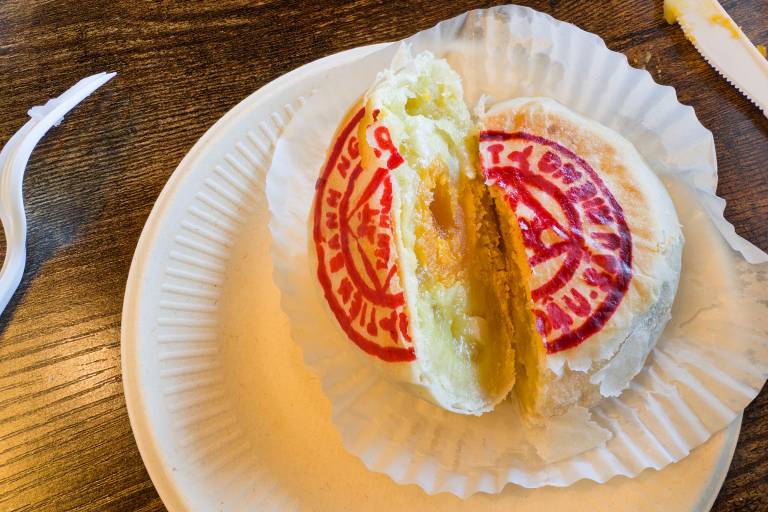
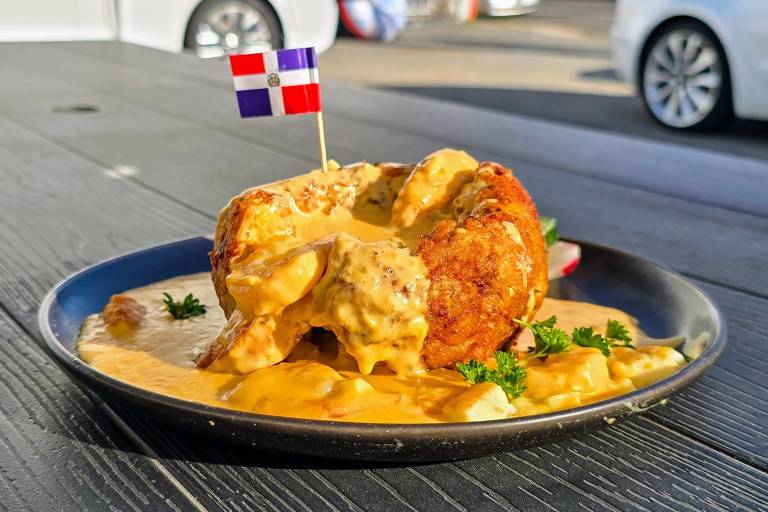
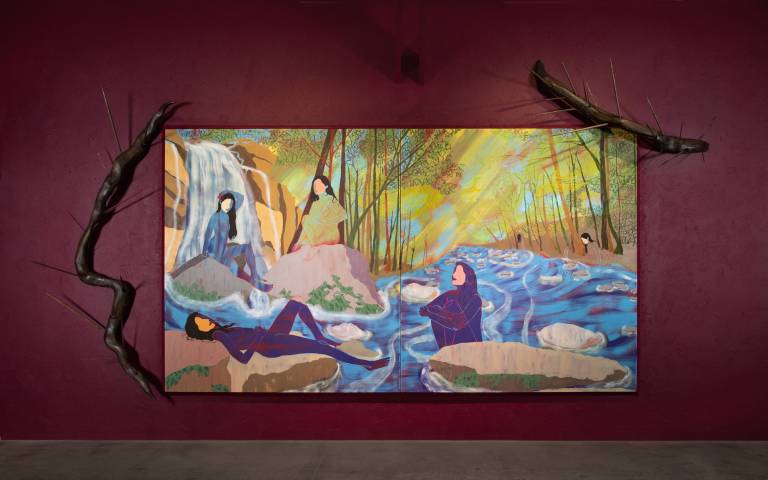
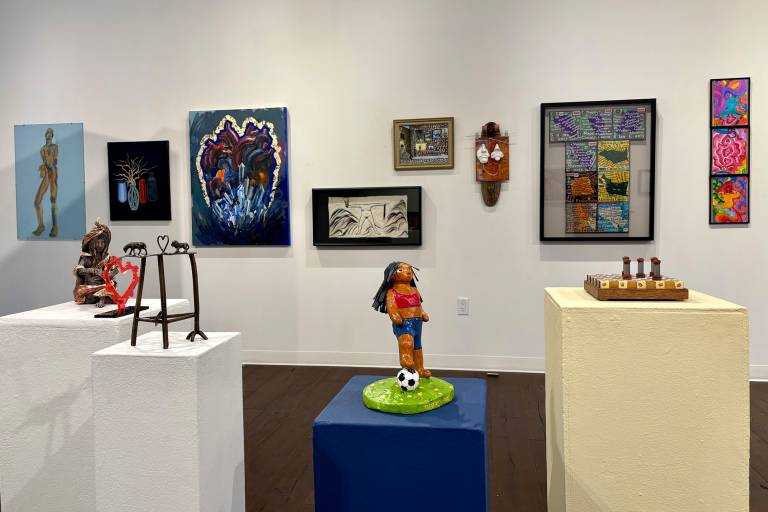
window.__IS_SSR__=true
window.__INITIAL_STATE__={
"attachmentsReducer": {
"audio_0": {
"type": "attachments",
"id": "audio_0",
"imgSizes": {
"kqedFullSize": {
"file": "https://ww2.kqed.org/news/wp-content/themes/KQED-unified/img/audio_bgs/background0.jpg"
}
}
},
"audio_1": {
"type": "attachments",
"id": "audio_1",
"imgSizes": {
"kqedFullSize": {
"file": "https://ww2.kqed.org/news/wp-content/themes/KQED-unified/img/audio_bgs/background1.jpg"
}
}
},
"audio_2": {
"type": "attachments",
"id": "audio_2",
"imgSizes": {
"kqedFullSize": {
"file": "https://ww2.kqed.org/news/wp-content/themes/KQED-unified/img/audio_bgs/background2.jpg"
}
}
},
"audio_3": {
"type": "attachments",
"id": "audio_3",
"imgSizes": {
"kqedFullSize": {
"file": "https://ww2.kqed.org/news/wp-content/themes/KQED-unified/img/audio_bgs/background3.jpg"
}
}
},
"audio_4": {
"type": "attachments",
"id": "audio_4",
"imgSizes": {
"kqedFullSize": {
"file": "https://ww2.kqed.org/news/wp-content/themes/KQED-unified/img/audio_bgs/background4.jpg"
}
}
},
"placeholder": {
"type": "attachments",
"id": "placeholder",
"imgSizes": {
"thumbnail": {
"file": "https://cdn.kqed.org/wp-content/uploads/2024/12/KQED-Default-Image-816638274-2000x1333-1-160x107.jpg",
"width": 160,
"height": 107,
"mimeType": "image/jpeg"
},
"medium": {
"file": "https://cdn.kqed.org/wp-content/uploads/2024/12/KQED-Default-Image-816638274-2000x1333-1-800x533.jpg",
"width": 800,
"height": 533,
"mimeType": "image/jpeg"
},
"medium_large": {
"file": "https://cdn.kqed.org/wp-content/uploads/2024/12/KQED-Default-Image-816638274-2000x1333-1-768x512.jpg",
"width": 768,
"height": 512,
"mimeType": "image/jpeg"
},
"large": {
"file": "https://cdn.kqed.org/wp-content/uploads/2024/12/KQED-Default-Image-816638274-2000x1333-1-1020x680.jpg",
"width": 1020,
"height": 680,
"mimeType": "image/jpeg"
},
"1536x1536": {
"file": "https://cdn.kqed.org/wp-content/uploads/2024/12/KQED-Default-Image-816638274-2000x1333-1-1536x1024.jpg",
"width": 1536,
"height": 1024,
"mimeType": "image/jpeg"
},
"fd-lrg": {
"file": "https://cdn.kqed.org/wp-content/uploads/2024/12/KQED-Default-Image-816638274-2000x1333-1-1536x1024.jpg",
"width": 1536,
"height": 1024,
"mimeType": "image/jpeg"
},
"fd-med": {
"file": "https://cdn.kqed.org/wp-content/uploads/2024/12/KQED-Default-Image-816638274-2000x1333-1-1020x680.jpg",
"width": 1020,
"height": 680,
"mimeType": "image/jpeg"
},
"fd-sm": {
"file": "https://cdn.kqed.org/wp-content/uploads/2024/12/KQED-Default-Image-816638274-2000x1333-1-800x533.jpg",
"width": 800,
"height": 533,
"mimeType": "image/jpeg"
},
"post-thumbnail": {
"file": "https://cdn.kqed.org/wp-content/uploads/2024/12/KQED-Default-Image-816638274-2000x1333-1-672x372.jpg",
"width": 672,
"height": 372,
"mimeType": "image/jpeg"
},
"twentyfourteen-full-width": {
"file": "https://cdn.kqed.org/wp-content/uploads/2024/12/KQED-Default-Image-816638274-2000x1333-1-1038x576.jpg",
"width": 1038,
"height": 576,
"mimeType": "image/jpeg"
},
"xxsmall": {
"file": "https://cdn.kqed.org/wp-content/uploads/2024/12/KQED-Default-Image-816638274-2000x1333-1-160x107.jpg",
"width": 160,
"height": 107,
"mimeType": "image/jpeg"
},
"xsmall": {
"file": "https://cdn.kqed.org/wp-content/uploads/2024/12/KQED-Default-Image-816638274-2000x1333-1-672x372.jpg",
"width": 672,
"height": 372,
"mimeType": "image/jpeg"
},
"small": {
"file": "https://cdn.kqed.org/wp-content/uploads/2024/12/KQED-Default-Image-816638274-2000x1333-1-672x372.jpg",
"width": 672,
"height": 372,
"mimeType": "image/jpeg"
},
"xlarge": {
"file": "https://cdn.kqed.org/wp-content/uploads/2024/12/KQED-Default-Image-816638274-2000x1333-1-1020x680.jpg",
"width": 1020,
"height": 680,
"mimeType": "image/jpeg"
},
"full-width": {
"file": "https://cdn.kqed.org/wp-content/uploads/2024/12/KQED-Default-Image-816638274-2000x1333-1-1920x1280.jpg",
"width": 1920,
"height": 1280,
"mimeType": "image/jpeg"
},
"guest-author-32": {
"file": "https://cdn.kqed.org/wp-content/uploads/2025/01/KQED-Default-Image-816638274-1333x1333-1-160x160.jpg",
"width": 32,
"height": 32,
"mimeType": "image/jpeg"
},
"guest-author-50": {
"file": "https://cdn.kqed.org/wp-content/uploads/2025/01/KQED-Default-Image-816638274-1333x1333-1-160x160.jpg",
"width": 50,
"height": 50,
"mimeType": "image/jpeg"
},
"guest-author-64": {
"file": "https://cdn.kqed.org/wp-content/uploads/2025/01/KQED-Default-Image-816638274-1333x1333-1-160x160.jpg",
"width": 64,
"height": 64,
"mimeType": "image/jpeg"
},
"guest-author-96": {
"file": "https://cdn.kqed.org/wp-content/uploads/2025/01/KQED-Default-Image-816638274-1333x1333-1-160x160.jpg",
"width": 96,
"height": 96,
"mimeType": "image/jpeg"
},
"guest-author-128": {
"file": "https://cdn.kqed.org/wp-content/uploads/2025/01/KQED-Default-Image-816638274-1333x1333-1-160x160.jpg",
"width": 128,
"height": 128,
"mimeType": "image/jpeg"
},
"detail": {
"file": "https://cdn.kqed.org/wp-content/uploads/2025/01/KQED-Default-Image-816638274-1333x1333-1-160x160.jpg",
"width": 160,
"height": 160,
"mimeType": "image/jpeg"
},
"kqedFullSize": {
"file": "https://cdn.kqed.org/wp-content/uploads/2024/12/KQED-Default-Image-816638274-2000x1333-1.jpg",
"width": 2000,
"height": 1333
}
}
},
"arts_13986823": {
"type": "attachments",
"id": "arts_13986823",
"meta": {
"index": "attachments_1716263798",
"site": "arts",
"id": "13986823",
"found": true
},
"title": "dzui banh pia",
"publishDate": 1771369545,
"status": "inherit",
"parent": 13986806,
"modified": 1771370389,
"caption": "A bánh pía pastry cut open to reveal its durian and salted egg yolk filling. The pastry is one of the signature items at Dzui Cake & Tea, a durian-focused dessert shop in East San José.",
"credit": "Luke Tsai/KQED",
"altTag": "A flaky Asian pastry cut in half to reveal its durian and salted egg yolk filling.",
"description": null,
"imgSizes": {
"thumbnail": {
"file": "https://cdn.kqed.org/wp-content/uploads/sites/2/2026/02/dzui-banh-pia-160x107.jpg",
"width": 160,
"height": 107,
"mimeType": "image/jpeg"
},
"medium_large": {
"file": "https://cdn.kqed.org/wp-content/uploads/sites/2/2026/02/dzui-banh-pia-768x512.jpg",
"width": 768,
"height": 512,
"mimeType": "image/jpeg"
},
"1536x1536": {
"file": "https://cdn.kqed.org/wp-content/uploads/sites/2/2026/02/dzui-banh-pia-1536x1024.jpg",
"width": 1536,
"height": 1024,
"mimeType": "image/jpeg"
},
"post-thumbnail": {
"file": "https://cdn.kqed.org/wp-content/uploads/sites/2/2026/02/dzui-banh-pia-672x372.jpg",
"width": 672,
"height": 372,
"mimeType": "image/jpeg"
},
"twentyfourteen-full-width": {
"file": "https://cdn.kqed.org/wp-content/uploads/sites/2/2026/02/dzui-banh-pia-1038x576.jpg",
"width": 1038,
"height": 576,
"mimeType": "image/jpeg"
},
"npr-cds-wide": {
"file": "https://cdn.kqed.org/wp-content/uploads/sites/2/2026/02/dzui-banh-pia-1200x675.jpg",
"width": 1200,
"height": 675,
"mimeType": "image/jpeg"
},
"kqedFullSize": {
"file": "https://cdn.kqed.org/wp-content/uploads/sites/2/2026/02/dzui-banh-pia.jpg",
"width": 2000,
"height": 1333
}
},
"isLoading": false,
"fetchFailed": false
},
"arts_13986727": {
"type": "attachments",
"id": "arts_13986727",
"meta": {
"index": "attachments_1716263798",
"site": "arts",
"id": "13986727",
"found": true
},
"title": "Yosimar.2x3",
"publishDate": 1771031589,
"status": "inherit",
"parent": 13986720,
"modified": 1771031649,
"caption": "Yosimar Reyes, Santa Clara County's Poet Laureate.",
"credit": "Courtesy Yosimar Reyes",
"altTag": "A man in a white suit with patterned decor stands against a yellow backdrop.",
"description": null,
"imgSizes": {
"thumbnail": {
"file": "https://cdn.kqed.org/wp-content/uploads/sites/2/2026/02/Yosimar.2x3-160x107.jpg",
"width": 160,
"height": 107,
"mimeType": "image/jpeg"
},
"medium_large": {
"file": "https://cdn.kqed.org/wp-content/uploads/sites/2/2026/02/Yosimar.2x3-768x512.jpg",
"width": 768,
"height": 512,
"mimeType": "image/jpeg"
},
"1536x1536": {
"file": "https://cdn.kqed.org/wp-content/uploads/sites/2/2026/02/Yosimar.2x3-1536x1024.jpg",
"width": 1536,
"height": 1024,
"mimeType": "image/jpeg"
},
"post-thumbnail": {
"file": "https://cdn.kqed.org/wp-content/uploads/sites/2/2026/02/Yosimar.2x3-672x372.jpg",
"width": 672,
"height": 372,
"mimeType": "image/jpeg"
},
"twentyfourteen-full-width": {
"file": "https://cdn.kqed.org/wp-content/uploads/sites/2/2026/02/Yosimar.2x3-1038x576.jpg",
"width": 1038,
"height": 576,
"mimeType": "image/jpeg"
},
"npr-cds-wide": {
"file": "https://cdn.kqed.org/wp-content/uploads/sites/2/2026/02/Yosimar.2x3-1200x675.jpg",
"width": 1200,
"height": 675,
"mimeType": "image/jpeg"
},
"kqedFullSize": {
"file": "https://cdn.kqed.org/wp-content/uploads/sites/2/2026/02/Yosimar.2x3.jpg",
"width": 1999,
"height": 1333
}
},
"isLoading": false,
"fetchFailed": false
},
"arts_13985940": {
"type": "attachments",
"id": "arts_13985940",
"meta": {
"index": "attachments_1716263798",
"site": "arts",
"id": "13985940",
"found": true
},
"title": "Mofongo",
"publishDate": 1769558268,
"status": "inherit",
"parent": 13985935,
"modified": 1769559574,
"caption": "At El Fogon d'Geny, the mofongo — a dish of mashed fried plantains — comes topped with shrimp and a creamy sauce. The San José food truck is one of the only Bay Area businesses specializing in the cuisine of the Dominican Republic.",
"credit": "Octavio Peña",
"altTag": "Mofongo (mashed fried plantains) covered in a creamy sauce, with a miniature Dominican flag as a decoration.",
"description": null,
"imgSizes": {
"thumbnail": {
"file": "https://cdn.kqed.org/wp-content/uploads/sites/2/2026/01/Mofongo-160x107.jpg",
"width": 160,
"height": 107,
"mimeType": "image/jpeg"
},
"medium_large": {
"file": "https://cdn.kqed.org/wp-content/uploads/sites/2/2026/01/Mofongo-768x512.jpg",
"width": 768,
"height": 512,
"mimeType": "image/jpeg"
},
"1536x1536": {
"file": "https://cdn.kqed.org/wp-content/uploads/sites/2/2026/01/Mofongo-1536x1024.jpg",
"width": 1536,
"height": 1024,
"mimeType": "image/jpeg"
},
"post-thumbnail": {
"file": "https://cdn.kqed.org/wp-content/uploads/sites/2/2026/01/Mofongo-672x372.jpg",
"width": 672,
"height": 372,
"mimeType": "image/jpeg"
},
"twentyfourteen-full-width": {
"file": "https://cdn.kqed.org/wp-content/uploads/sites/2/2026/01/Mofongo-1038x576.jpg",
"width": 1038,
"height": 576,
"mimeType": "image/jpeg"
},
"npr-cds-wide": {
"file": "https://cdn.kqed.org/wp-content/uploads/sites/2/2026/01/Mofongo-1200x675.jpg",
"width": 1200,
"height": 675,
"mimeType": "image/jpeg"
},
"kqedFullSize": {
"file": "https://cdn.kqed.org/wp-content/uploads/sites/2/2026/01/Mofongo.jpg",
"width": 2000,
"height": 1333
}
},
"isLoading": false,
"fetchFailed": false
},
"arts_13985918": {
"type": "attachments",
"id": "arts_13985918",
"meta": {
"index": "attachments_1716263798",
"site": "arts",
"id": "13985918",
"found": true
},
"title": "0T5A4703_V3_2000",
"publishDate": 1769546889,
"status": "inherit",
"parent": 13985914,
"modified": 1769547073,
"caption": "An installation view of Anoushka Mirchandani's 'All Us Come Cross the Water' in her show 'My Body Was A River Once,' at the Institute of Contemporary Art San José.",
"credit": "ICA San José",
"altTag": "wide landscape painting with nude figures lounging, framed by spiky wooden sculptures",
"description": null,
"imgSizes": {
"thumbnail": {
"file": "https://cdn.kqed.org/wp-content/uploads/sites/2/2026/01/0T5A4703_V3_2000-160x100.jpg",
"width": 160,
"height": 100,
"mimeType": "image/jpeg"
},
"medium_large": {
"file": "https://cdn.kqed.org/wp-content/uploads/sites/2/2026/01/0T5A4703_V3_2000-768x480.jpg",
"width": 768,
"height": 480,
"mimeType": "image/jpeg"
},
"1536x1536": {
"file": "https://cdn.kqed.org/wp-content/uploads/sites/2/2026/01/0T5A4703_V3_2000-1536x959.jpg",
"width": 1536,
"height": 959,
"mimeType": "image/jpeg"
},
"post-thumbnail": {
"file": "https://cdn.kqed.org/wp-content/uploads/sites/2/2026/01/0T5A4703_V3_2000-672x372.jpg",
"width": 672,
"height": 372,
"mimeType": "image/jpeg"
},
"twentyfourteen-full-width": {
"file": "https://cdn.kqed.org/wp-content/uploads/sites/2/2026/01/0T5A4703_V3_2000-1038x576.jpg",
"width": 1038,
"height": 576,
"mimeType": "image/jpeg"
},
"npr-cds-wide": {
"file": "https://cdn.kqed.org/wp-content/uploads/sites/2/2026/01/0T5A4703_V3_2000-1200x675.jpg",
"width": 1200,
"height": 675,
"mimeType": "image/jpeg"
},
"kqedFullSize": {
"file": "https://cdn.kqed.org/wp-content/uploads/sites/2/2026/01/0T5A4703_V3_2000.jpg",
"width": 2000,
"height": 1249
}
},
"isLoading": false,
"fetchFailed": false
},
"arts_13985765": {
"type": "attachments",
"id": "arts_13985765",
"meta": {
"index": "attachments_1716263798",
"site": "arts",
"id": "13985765",
"found": true
},
"title": "exhibition-view01_2000b",
"publishDate": 1769116509,
"status": "inherit",
"parent": 13985756,
"modified": 1769116537,
"caption": "An installation view of 'Super Hunger Anti-Valentine Bowl Games Part LX' at Works/San José.",
"credit": "Joe Miller",
"altTag": "pedestals with small sculptures and salon-style hanging of wall works behind",
"description": null,
"imgSizes": {
"thumbnail": {
"file": "https://cdn.kqed.org/wp-content/uploads/sites/2/2026/01/exhibition-view01_2000b-160x107.jpg",
"width": 160,
"height": 107,
"mimeType": "image/jpeg"
},
"medium_large": {
"file": "https://cdn.kqed.org/wp-content/uploads/sites/2/2026/01/exhibition-view01_2000b-768x512.jpg",
"width": 768,
"height": 512,
"mimeType": "image/jpeg"
},
"1536x1536": {
"file": "https://cdn.kqed.org/wp-content/uploads/sites/2/2026/01/exhibition-view01_2000b-1536x1025.jpg",
"width": 1536,
"height": 1025,
"mimeType": "image/jpeg"
},
"post-thumbnail": {
"file": "https://cdn.kqed.org/wp-content/uploads/sites/2/2026/01/exhibition-view01_2000b-672x372.jpg",
"width": 672,
"height": 372,
"mimeType": "image/jpeg"
},
"twentyfourteen-full-width": {
"file": "https://cdn.kqed.org/wp-content/uploads/sites/2/2026/01/exhibition-view01_2000b-1038x576.jpg",
"width": 1038,
"height": 576,
"mimeType": "image/jpeg"
},
"npr-cds-wide": {
"file": "https://cdn.kqed.org/wp-content/uploads/sites/2/2026/01/exhibition-view01_2000b-1200x675.jpg",
"width": 1200,
"height": 675,
"mimeType": "image/jpeg"
},
"kqedFullSize": {
"file": "https://cdn.kqed.org/wp-content/uploads/sites/2/2026/01/exhibition-view01_2000b.jpg",
"width": 2000,
"height": 1334
}
},
"isLoading": false,
"fetchFailed": false
},
"arts_13984825": {
"type": "attachments",
"id": "arts_13984825",
"meta": {
"index": "attachments_1716263798",
"site": "arts",
"id": "13984825",
"found": true
},
"title": "20251210_JERRYNAGANO_DECEMBER_GH-12-KQED",
"publishDate": 1765485070,
"status": "inherit",
"parent": 0,
"modified": 1765584983,
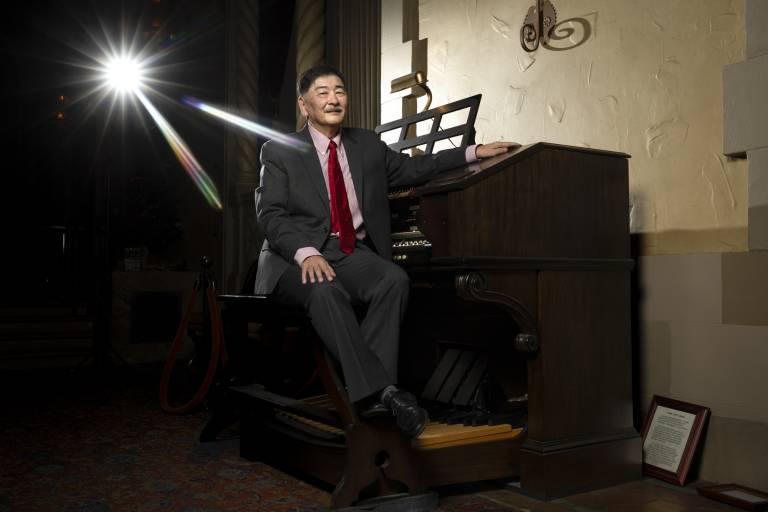
"caption": "Jerry Nagano poses with the California Theatre’s 1928 Wurlitzer lobby organ in San Jose on Dec. 10, 2025. Nagano, a veteran theater-organ performer and retired Stanford systems engineer, has been a fixture in California’s organ community for decades.",
"credit": "Gustavo Hernandez/KQED",
"altTag": "An organ player in a suit sits at his instrument in a dark theater.",
"description": null,
"imgSizes": {
"thumbnail": {
"file": "https://cdn.kqed.org/wp-content/uploads/sites/2/2025/12/20251210_JERRYNAGANO_DECEMBER_GH-12-KQED-160x107.jpg",
"width": 160,
"height": 107,
"mimeType": "image/jpeg"
},
"medium_large": {
"file": "https://cdn.kqed.org/wp-content/uploads/sites/2/2025/12/20251210_JERRYNAGANO_DECEMBER_GH-12-KQED-768x512.jpg",
"width": 768,
"height": 512,
"mimeType": "image/jpeg"
},
"1536x1536": {
"file": "https://cdn.kqed.org/wp-content/uploads/sites/2/2025/12/20251210_JERRYNAGANO_DECEMBER_GH-12-KQED-1536x1024.jpg",
"width": 1536,
"height": 1024,
"mimeType": "image/jpeg"
},
"post-thumbnail": {
"file": "https://cdn.kqed.org/wp-content/uploads/sites/2/2025/12/20251210_JERRYNAGANO_DECEMBER_GH-12-KQED-672x372.jpg",
"width": 672,
"height": 372,
"mimeType": "image/jpeg"
},
"twentyfourteen-full-width": {
"file": "https://cdn.kqed.org/wp-content/uploads/sites/2/2025/12/20251210_JERRYNAGANO_DECEMBER_GH-12-KQED-1038x576.jpg",
"width": 1038,
"height": 576,
"mimeType": "image/jpeg"
},
"npr-cds-wide": {
"file": "https://cdn.kqed.org/wp-content/uploads/sites/2/2025/12/20251210_JERRYNAGANO_DECEMBER_GH-12-KQED-1200x675.jpg",
"width": 1200,
"height": 675,
"mimeType": "image/jpeg"
},
"kqedFullSize": {
"file": "https://cdn.kqed.org/wp-content/uploads/sites/2/2025/12/20251210_JERRYNAGANO_DECEMBER_GH-12-KQED.jpg",
"width": 2000,
"height": 1333
}
},
"isLoading": false,
"fetchFailed": false
},
"arts_13984905": {
"type": "attachments",
"id": "arts_13984905",
"meta": {
"index": "attachments_1716263798",
"site": "arts",
"id": "13984905",
"found": true
},
"title": "Honey Garlic, Blueberry, Yuzu, Banana, and Pistachio Egg Tarts",
"publishDate": 1765498114,
"status": "inherit",
"parent": 13984898,
"modified": 1765498337,
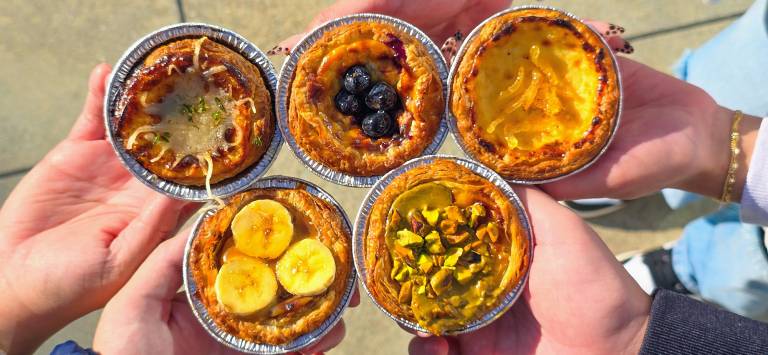
"caption": "A sampling of A&M Patisserie's many different egg tart variations. Pictured here, clockwise from the top left: honey garlic, blueberry, yuzu, pistachio and banana.",
"credit": "Octavio Peña",
"altTag": "Hands holding several different varieties of egg tarts, topped variously with banana slices, pistachios, blueberries and more.",
"description": null,
"imgSizes": {
"thumbnail": {
"file": "https://cdn.kqed.org/wp-content/uploads/sites/2/2025/12/Honey-Garlic-Blueberry-Yuzu-Banana-and-Pistachio-Egg-Tarts-160x74.jpg",
"width": 160,
"height": 74,
"mimeType": "image/jpeg"
},
"medium_large": {
"file": "https://cdn.kqed.org/wp-content/uploads/sites/2/2025/12/Honey-Garlic-Blueberry-Yuzu-Banana-and-Pistachio-Egg-Tarts-768x355.jpg",
"width": 768,
"height": 355,
"mimeType": "image/jpeg"
},
"1536x1536": {
"file": "https://cdn.kqed.org/wp-content/uploads/sites/2/2025/12/Honey-Garlic-Blueberry-Yuzu-Banana-and-Pistachio-Egg-Tarts-1536x710.jpg",
"width": 1536,
"height": 710,
"mimeType": "image/jpeg"
},
"post-thumbnail": {
"file": "https://cdn.kqed.org/wp-content/uploads/sites/2/2025/12/Honey-Garlic-Blueberry-Yuzu-Banana-and-Pistachio-Egg-Tarts-672x372.jpg",
"width": 672,
"height": 372,
"mimeType": "image/jpeg"
},
"twentyfourteen-full-width": {
"file": "https://cdn.kqed.org/wp-content/uploads/sites/2/2025/12/Honey-Garlic-Blueberry-Yuzu-Banana-and-Pistachio-Egg-Tarts-1038x576.jpg",
"width": 1038,
"height": 576,
"mimeType": "image/jpeg"
},
"npr-cds-wide": {
"file": "https://cdn.kqed.org/wp-content/uploads/sites/2/2025/12/Honey-Garlic-Blueberry-Yuzu-Banana-and-Pistachio-Egg-Tarts-1200x675.jpg",
"width": 1200,
"height": 675,
"mimeType": "image/jpeg"
},
"kqedFullSize": {
"file": "https://cdn.kqed.org/wp-content/uploads/sites/2/2025/12/Honey-Garlic-Blueberry-Yuzu-Banana-and-Pistachio-Egg-Tarts.jpg",
"width": 2000,
"height": 924
}
},
"isLoading": false,
"fetchFailed": false
},
"arts_13983633": {
"type": "attachments",
"id": "arts_13983633",
"meta": {
"index": "attachments_1716263798",
"site": "arts",
"id": "13983633",
"found": true
},
"title": "Classic Bot Chien 2",
"publishDate": 1762815592,
"status": "inherit",
"parent": 13983625,
"modified": 1762815753,
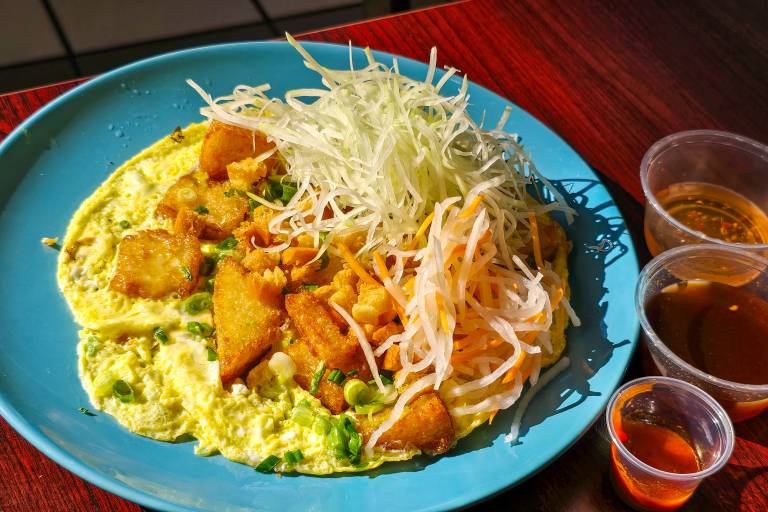
"caption": "A plate of traditional bột chiên, or Vietnamese rice cake omelettes, at Bột Chiên, a new stall in the food court at Lion Plaza in San José.",
"credit": "Octavio Peña",
"altTag": "An egg omelette topped with crispy rice cakes and pickled carrots and daikon.",
"description": null,
"imgSizes": {
"thumbnail": {
"file": "https://cdn.kqed.org/wp-content/uploads/sites/2/2025/11/Classic-Bot-Chien-2-160x107.jpg",
"width": 160,
"height": 107,
"mimeType": "image/jpeg"
},
"medium_large": {
"file": "https://cdn.kqed.org/wp-content/uploads/sites/2/2025/11/Classic-Bot-Chien-2-768x512.jpg",
"width": 768,
"height": 512,
"mimeType": "image/jpeg"
},
"1536x1536": {
"file": "https://cdn.kqed.org/wp-content/uploads/sites/2/2025/11/Classic-Bot-Chien-2-1536x1024.jpg",
"width": 1536,
"height": 1024,
"mimeType": "image/jpeg"
},
"post-thumbnail": {
"file": "https://cdn.kqed.org/wp-content/uploads/sites/2/2025/11/Classic-Bot-Chien-2-672x372.jpg",
"width": 672,
"height": 372,
"mimeType": "image/jpeg"
},
"twentyfourteen-full-width": {
"file": "https://cdn.kqed.org/wp-content/uploads/sites/2/2025/11/Classic-Bot-Chien-2-1038x576.jpg",
"width": 1038,
"height": 576,
"mimeType": "image/jpeg"
},
"npr-cds-wide": {
"file": "https://cdn.kqed.org/wp-content/uploads/sites/2/2025/11/Classic-Bot-Chien-2-1200x675.jpg",
"width": 1200,
"height": 675,
"mimeType": "image/jpeg"
},
"kqedFullSize": {
"file": "https://cdn.kqed.org/wp-content/uploads/sites/2/2025/11/Classic-Bot-Chien-2.jpg",
"width": 2000,
"height": 1333
}
},
"isLoading": false,
"fetchFailed": false
},
"arts_13982478": {
"type": "attachments",
"id": "arts_13982478",
"meta": {
"index": "attachments_1716263798",
"site": "arts",
"id": "13982478",
"found": true
},
"title": "IMG_1569-(1)",
"publishDate": 1760555009,
"status": "inherit",
"parent": 13982477,
"modified": 1760555058,
"caption": "Manang performs at Kababayan Drag Brunch in 2023.",
"credit": "Courtesy of Manang",
"altTag": "a Filipino-American drag queen in colorful clothes struts in front of an audience",
"description": null,
"imgSizes": {
"thumbnail": {
"file": "https://cdn.kqed.org/wp-content/uploads/sites/2/2025/10/IMG_1569-1-160x90.jpg",
"width": 160,
"height": 90,
"mimeType": "image/jpeg"
},
"medium_large": {
"file": "https://cdn.kqed.org/wp-content/uploads/sites/2/2025/10/IMG_1569-1-768x432.jpg",
"width": 768,
"height": 432,
"mimeType": "image/jpeg"
},
"1536x1536": {
"file": "https://cdn.kqed.org/wp-content/uploads/sites/2/2025/10/IMG_1569-1-1536x864.jpg",
"width": 1536,
"height": 864,
"mimeType": "image/jpeg"
},
"post-thumbnail": {
"file": "https://cdn.kqed.org/wp-content/uploads/sites/2/2025/10/IMG_1569-1-672x372.jpg",
"width": 672,
"height": 372,
"mimeType": "image/jpeg"
},
"twentyfourteen-full-width": {
"file": "https://cdn.kqed.org/wp-content/uploads/sites/2/2025/10/IMG_1569-1-1038x576.jpg",
"width": 1038,
"height": 576,
"mimeType": "image/jpeg"
},
"kqedFullSize": {
"file": "https://cdn.kqed.org/wp-content/uploads/sites/2/2025/10/IMG_1569-1.jpg",
"width": 2000,
"height": 1125
}
},
"isLoading": false,
"fetchFailed": false
},
"arts_13981937": {
"type": "attachments",
"id": "arts_13981937",
"meta": {
"index": "attachments_1716263798",
"site": "arts",
"id": "13981937",
"found": true
},
"title": "Aleena Thomas pouring a meter chai",
"publishDate": 1759260331,
"status": "inherit",
"parent": 13981935,
"modified": 1759280759,
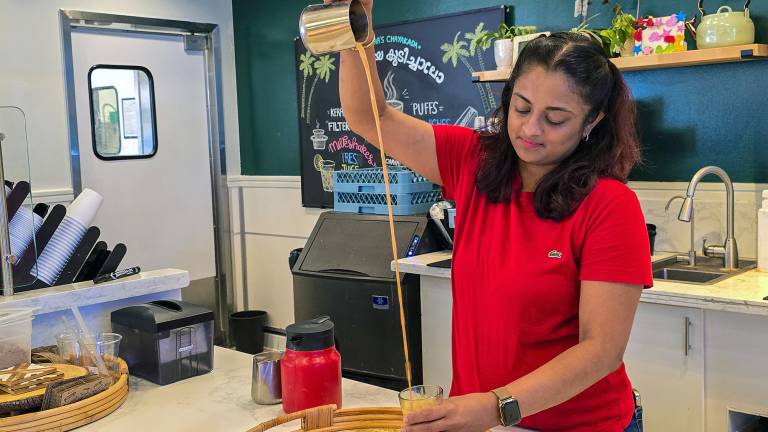
"caption": "Chayakada owner Aleena Thomas pours a cup of traditional Kerala-style meter chai. Thomas' San Jose shop claims to be the first Kerala-style chai cafe in the United States.",
"credit": "Octavio Peña",
"altTag": "Woman in a red t-shirt prepares a cup of chai, a thin stream of the milky tea pouring into the cup from a great height.",
"description": null,
"imgSizes": {
"thumbnail": {
"file": "https://cdn.kqed.org/wp-content/uploads/sites/2/2025/09/Aleena-Thomas-pouring-a-meter-chai-160x90.jpg",
"width": 160,
"height": 90,
"mimeType": "image/jpeg"
},
"medium_large": {
"file": "https://cdn.kqed.org/wp-content/uploads/sites/2/2025/09/Aleena-Thomas-pouring-a-meter-chai-768x432.jpg",
"width": 768,
"height": 432,
"mimeType": "image/jpeg"
},
"1536x1536": {
"file": "https://cdn.kqed.org/wp-content/uploads/sites/2/2025/09/Aleena-Thomas-pouring-a-meter-chai-1536x865.jpg",
"width": 1536,
"height": 865,
"mimeType": "image/jpeg"
},
"post-thumbnail": {
"file": "https://cdn.kqed.org/wp-content/uploads/sites/2/2025/09/Aleena-Thomas-pouring-a-meter-chai-672x372.jpg",
"width": 672,
"height": 372,
"mimeType": "image/jpeg"
},
"twentyfourteen-full-width": {
"file": "https://cdn.kqed.org/wp-content/uploads/sites/2/2025/09/Aleena-Thomas-pouring-a-meter-chai-1038x576.jpg",
"width": 1038,
"height": 576,
"mimeType": "image/jpeg"
},
"kqedFullSize": {
"file": "https://cdn.kqed.org/wp-content/uploads/sites/2/2025/09/Aleena-Thomas-pouring-a-meter-chai.jpg",
"width": 2000,
"height": 1126
}
},
"isLoading": false,
"fetchFailed": false
},
"arts_13981673": {
"type": "attachments",
"id": "arts_13981673",
"meta": {
"index": "attachments_1716263798",
"site": "arts",
"id": "13981673",
"found": true
},
"title": "El Rey Impala",
"publishDate": 1758661204,
"status": "inherit",
"parent": 13981636,
"modified": 1758734631,
"caption": "Gypsy Rose, a vintage 1964 Chevrolet Impala, is one of the lowrider world's most famous custom cars.",
"credit": "National Musuem of American History",
"altTag": "A vintage 1963 Chevrolet Impala named “El Rey.”",
"description": null,
"imgSizes": {
"thumbnail": {
"file": "https://cdn.kqed.org/wp-content/uploads/sites/2/2025/09/KgJR7pRg-160x82.jpg",
"width": 160,
"height": 82,
"mimeType": "image/jpeg"
},
"medium_large": {
"file": "https://cdn.kqed.org/wp-content/uploads/sites/2/2025/09/KgJR7pRg-768x394.jpg",
"width": 768,
"height": 394,
"mimeType": "image/jpeg"
},
"1536x1536": {
"file": "https://cdn.kqed.org/wp-content/uploads/sites/2/2025/09/KgJR7pRg-1536x788.jpg",
"width": 1536,
"height": 788,
"mimeType": "image/jpeg"
},
"post-thumbnail": {
"file": "https://cdn.kqed.org/wp-content/uploads/sites/2/2025/09/KgJR7pRg-672x372.jpg",
"width": 672,
"height": 372,
"mimeType": "image/jpeg"
},
"twentyfourteen-full-width": {
"file": "https://cdn.kqed.org/wp-content/uploads/sites/2/2025/09/KgJR7pRg-1038x576.jpg",
"width": 1038,
"height": 576,
"mimeType": "image/jpeg"
},
"kqedFullSize": {
"file": "https://cdn.kqed.org/wp-content/uploads/sites/2/2025/09/KgJR7pRg.jpg",
"width": 1600,
"height": 821
}
},
"isLoading": false,
"fetchFailed": false
},
"arts_13980119": {
"type": "attachments",
"id": "arts_13980119",
"meta": {
"index": "attachments_1716263798",
"site": "arts",
"id": "13980119",
"found": true
},
"title": "Hello Kitty Giants",
"publishDate": 1755121193,
"status": "inherit",
"parent": 0,
"modified": 1755121653,
"caption": "Hello Kitty throws out the first pitch before a game at Oracle Park on June 8, 2025 in San Francisco. ",
"credit": "Andy Kuno/San Francisco Giants/Getty Images",
"altTag": "A person in a large white kitten outfit wearing a cap and jersey for the Giants baseball team waves with both hands on the baseball field",
"description": null,
"imgSizes": {
"thumbnail": {
"file": "https://cdn.kqed.org/wp-content/uploads/sites/2/2025/08/GettyImages-2218697639-160x90.jpg",
"width": 160,
"height": 90,
"mimeType": "image/jpeg"
},
"medium_large": {
"file": "https://cdn.kqed.org/wp-content/uploads/sites/2/2025/08/GettyImages-2218697639-768x432.jpg",
"width": 768,
"height": 432,
"mimeType": "image/jpeg"
},
"1536x1536": {
"file": "https://cdn.kqed.org/wp-content/uploads/sites/2/2025/08/GettyImages-2218697639-1536x864.jpg",
"width": 1536,
"height": 864,
"mimeType": "image/jpeg"
},
"post-thumbnail": {
"file": "https://cdn.kqed.org/wp-content/uploads/sites/2/2025/08/GettyImages-2218697639-672x372.jpg",
"width": 672,
"height": 372,
"mimeType": "image/jpeg"
},
"twentyfourteen-full-width": {
"file": "https://cdn.kqed.org/wp-content/uploads/sites/2/2025/08/GettyImages-2218697639-1038x576.jpg",
"width": 1038,
"height": 576,
"mimeType": "image/jpeg"
},
"kqedFullSize": {
"file": "https://cdn.kqed.org/wp-content/uploads/sites/2/2025/08/GettyImages-2218697639.jpg",
"width": 2000,
"height": 1125
}
},
"isLoading": false,
"fetchFailed": false
}
},
"audioPlayerReducer": {
"postId": "stream_live",
"isPaused": true,
"isPlaying": false,
"pfsActive": false,
"pledgeModalIsOpen": true,
"playerDrawerIsOpen": false,
"liveAudioPlayStartedAt": 0,
"liveAudioPlayContext": ""
},
"authorsReducer": {
"ogpenn": {
"type": "authors",
"id": "11491",
"meta": {
"index": "authors_1716337520",
"id": "11491",
"found": true
},
"name": "Pendarvis Harshaw",
"firstName": "Pendarvis",
"lastName": "Harshaw",
"slug": "ogpenn",
"email": "ogpenn@gmail.com",
"display_author_email": false,
"staff_mastheads": [
"arts"
],
"title": "Community Engagement Reporter",
"bio": "Pendarvis Harshaw is an educator, host and writer with KQED Arts.",
"avatar": "https://secure.gravatar.com/avatar/972b77ee8e3f346ae2b00622661187fbfabd059b5693bbdc1475ea7a722fd4cd?s=600&d=blank&r=g",
"twitter": null,
"bluesky": null,
"facebook": null,
"instagram": "ogpenn",
"linkedin": null,
"sites": [
{
"site": "arts",
"roles": [
"administrator"
]
},
{
"site": "news",
"roles": [
"editor"
]
},
{
"site": "bayareabites",
"roles": [
"author"
]
},
{
"site": "hiphop",
"roles": [
"editor"
]
}
],
"headData": {
"title": "Pendarvis Harshaw | KQED",
"description": "Community Engagement Reporter",
"ogImgSrc": "https://secure.gravatar.com/avatar/972b77ee8e3f346ae2b00622661187fbfabd059b5693bbdc1475ea7a722fd4cd?s=600&d=blank&r=g",
"twImgSrc": "https://secure.gravatar.com/avatar/972b77ee8e3f346ae2b00622661187fbfabd059b5693bbdc1475ea7a722fd4cd?s=600&d=blank&r=g"
},
"isLoading": false,
"link": "/author/ogpenn"
},
"btorres": {
"type": "authors",
"id": "11666",
"meta": {
"index": "authors_1716337520",
"id": "11666",
"found": true
},
"name": "Blanca Torres",
"firstName": "Blanca",
"lastName": "Torres",
"slug": "btorres",
"email": "btorres@kqed.org",
"display_author_email": true,
"staff_mastheads": [
"news"
],
"title": "Producer, Forum",
"bio": "Blanca Torres brings sharp news judgement and keen sense of lively conversation to her work as producer for Forum. She loves producing shows that leave listeners feeling like they heard distinctive voices, learned something new and gained a fresh perspective.\r\n\r\nShe joined KQED in January of 2020 after 16 years of working as a newspaper reporter most recently at the \u003cem>San Francisco Business Times,\u003c/em> where she wrote about real estate and economic development. Before that, she covered a variety of beats including crime, education, retail, workplace, the economy, consumer issues, and small business for the \u003cem>Contra Costa Times, Baltimore Sun\u003c/em> and\u003cem> The Seattle Times\u003c/em>. In addition to reporting, she worked as an editorial writer and columnist for the \u003cem>Seattle Times\u003c/em>. From 2017 to 2020, Blanca won a total of ten awards from the National Association of Real Estate Editors and won first place for land use reporting from the California News Publishers Association two years in a row. She is also a member and former board member for the National Association of Hispanic Journalists.\r\n\r\nA native of the Pacific Northwest, Blanca earned her bachelor's degree from Vanderbilt University in Nashville and a master's in fine arts in creative writing at Mills College. She lives in the East Bay with her family.",
"avatar": "https://secure.gravatar.com/avatar/50b49d19b14a1eed34f26ebf4681152cdd81574ed21851100871ccd29e578cdc?s=600&d=blank&r=g",
"twitter": "@blancawrites",
"bluesky": null,
"facebook": null,
"instagram": null,
"linkedin": null,
"sites": [
{
"site": "arts",
"roles": [
"editor"
]
},
{
"site": "news",
"roles": [
"editor"
]
},
{
"site": "forum",
"roles": [
"editor"
]
}
],
"headData": {
"title": "Blanca Torres | KQED",
"description": "Producer, Forum",
"ogImgSrc": "https://secure.gravatar.com/avatar/50b49d19b14a1eed34f26ebf4681152cdd81574ed21851100871ccd29e578cdc?s=600&d=blank&r=g",
"twImgSrc": "https://secure.gravatar.com/avatar/50b49d19b14a1eed34f26ebf4681152cdd81574ed21851100871ccd29e578cdc?s=600&d=blank&r=g"
},
"isLoading": false,
"link": "/author/btorres"
},
"ltsai": {
"type": "authors",
"id": "11743",
"meta": {
"index": "authors_1716337520",
"id": "11743",
"found": true
},
"name": "Luke Tsai",
"firstName": "Luke",
"lastName": "Tsai",
"slug": "ltsai",
"email": "ltsai@kqed.org",
"display_author_email": true,
"staff_mastheads": [
"arts"
],
"title": "Food Editor",
"bio": "Luke Tsai is KQED's food editor and resident stinky tofu connoisseur. Prior to KQED, he was an editor at Eater SF, \u003cem>San Francisco \u003c/em>magazine, and the \u003cem>East Bay Express\u003c/em>, and his work has also appeared in TASTE, the \u003cem>San Francisco Chronicle\u003c/em>, and the \u003cem>Best Food Writing\u003c/em> anthology. When he isn't writing or editing, you'll find him eating most everything he can get his hands on.",
"avatar": "https://secure.gravatar.com/avatar/1e59b45bf191526e7339d6ba46e33a57b2030d25c27660ecc64ea3cb863e34f7?s=600&d=blank&r=g",
"twitter": "theluketsai",
"bluesky": null,
"facebook": null,
"instagram": null,
"linkedin": null,
"sites": [
{
"site": "",
"roles": [
"editor"
]
},
{
"site": "arts",
"roles": [
"administrator"
]
},
{
"site": "news",
"roles": [
"editor",
"contributor"
]
},
{
"site": "bayareabites",
"roles": [
"editor"
]
},
{
"site": "food",
"roles": [
"editor"
]
}
],
"headData": {
"title": "Luke Tsai | KQED",
"description": "Food Editor",
"ogImgSrc": "https://secure.gravatar.com/avatar/1e59b45bf191526e7339d6ba46e33a57b2030d25c27660ecc64ea3cb863e34f7?s=600&d=blank&r=g",
"twImgSrc": "https://secure.gravatar.com/avatar/1e59b45bf191526e7339d6ba46e33a57b2030d25c27660ecc64ea3cb863e34f7?s=600&d=blank&r=g"
},
"isLoading": false,
"link": "/author/ltsai"
},
"opena": {
"type": "authors",
"id": "11903",
"meta": {
"index": "authors_1716337520",
"id": "11903",
"found": true
},
"name": "Octavio Peña",
"firstName": "Octavio",
"lastName": "Peña",
"slug": "opena",
"email": "octaviopenagutierrez@gmail.com",
"display_author_email": false,
"staff_mastheads": [],
"title": "KQED Contributor",
"bio": null,
"avatar": "https://secure.gravatar.com/avatar/62850791380238ea3945ee72a3d56056477904792b41daaf11effa8780bab75d?s=600&d=blank&r=g",
"twitter": null,
"bluesky": null,
"facebook": null,
"instagram": null,
"linkedin": null,
"sites": [
{
"site": "arts",
"roles": [
"contributor"
]
}
],
"headData": {
"title": "Octavio Peña | KQED",
"description": "KQED Contributor",
"ogImgSrc": "https://secure.gravatar.com/avatar/62850791380238ea3945ee72a3d56056477904792b41daaf11effa8780bab75d?s=600&d=blank&r=g",
"twImgSrc": "https://secure.gravatar.com/avatar/62850791380238ea3945ee72a3d56056477904792b41daaf11effa8780bab75d?s=600&d=blank&r=g"
},
"isLoading": false,
"link": "/author/opena"
},
"djchavez": {
"type": "authors",
"id": "11905",
"meta": {
"index": "authors_1716337520",
"id": "11905",
"found": true
},
"name": "David John Chávez",
"firstName": "David John",
"lastName": "Chávez",
"slug": "djchavez",
"email": "theatrechavez@gmail.com",
"display_author_email": false,
"staff_mastheads": [],
"title": "KQED Contributor",
"bio": "Based in San José, David is a theater critic and reporter who who served as Executive Chair of the American Theatre Critics/Journalists Association (’22-’25), as well as a regular theater contributor to The Mercury News, San Francisco Chronicle, American Theatre Magazine and KQED, among other publications. He is a two-time juror for the Pulitzer Prize for Drama (’22-’23) and a 2020 fellow of the Eugene O'Neill National Critics Institute.",
"avatar": "https://secure.gravatar.com/avatar/5eaa3ce994228213820907c390795c28f7b97165c2b575f46d15fc9273a132b7?s=600&d=blank&r=g",
"twitter": null,
"bluesky": null,
"facebook": "https://www.facebook.com/bydavidjchavez",
"instagram": "https://www.instagram.com/davidjchavez/",
"linkedin": null,
"sites": [
{
"site": "arts",
"roles": [
"contributor"
]
}
],
"headData": {
"title": "David John Chávez | KQED",
"description": "KQED Contributor",
"ogImgSrc": "https://secure.gravatar.com/avatar/5eaa3ce994228213820907c390795c28f7b97165c2b575f46d15fc9273a132b7?s=600&d=blank&r=g",
"twImgSrc": "https://secure.gravatar.com/avatar/5eaa3ce994228213820907c390795c28f7b97165c2b575f46d15fc9273a132b7?s=600&d=blank&r=g"
},
"isLoading": false,
"link": "/author/djchavez"
},
"mblue": {
"type": "authors",
"id": "11917",
"meta": {
"index": "authors_1716337520",
"id": "11917",
"found": true
},
"name": "Max Blue",
"firstName": "Max",
"lastName": "Blue",
"slug": "mblue",
"email": "maxbluewriter@gmail.com",
"display_author_email": false,
"staff_mastheads": [],
"title": "KQED Contributor",
"bio": "Max Blue has contributed art criticism and reporting to Artsy, Cultured and Hyperallergic, among others. His short fiction has appeared in The MacGuffin and North Dakota Quarterly, among others. He lives in San Francisco.",
"avatar": "https://secure.gravatar.com/avatar/cf3bc08316ae54aaf34b606edc5721301b3306703234df5bee49a54e69d29843?s=600&d=blank&r=g",
"twitter": null,
"bluesky": null,
"facebook": null,
"instagram": "maxblueofficial",
"linkedin": null,
"sites": [
{
"site": "arts",
"roles": [
"contributor"
]
}
],
"headData": {
"title": "Max Blue | KQED",
"description": "KQED Contributor",
"ogImgSrc": "https://secure.gravatar.com/avatar/cf3bc08316ae54aaf34b606edc5721301b3306703234df5bee49a54e69d29843?s=600&d=blank&r=g",
"twImgSrc": "https://secure.gravatar.com/avatar/cf3bc08316ae54aaf34b606edc5721301b3306703234df5bee49a54e69d29843?s=600&d=blank&r=g"
},
"isLoading": false,
"link": "/author/mblue"
},
"jmelido": {
"type": "authors",
"id": "11972",
"meta": {
"index": "authors_1716337520",
"id": "11972",
"found": true
},
"name": "Janea Melido",
"firstName": "Janea",
"lastName": "Melido",
"slug": "jmelido",
"email": "jmelido@kqed.org",
"display_author_email": true,
"staff_mastheads": [
"arts"
],
"title": "Contributor, KQED Arts & Culture",
"bio": "Janea Melido holds a Bachelor of Arts in English and minor in Ethnic Studies from the University of Portland. She's drawn to the quiet power of everyday stories, especially ones that often go overlooked. When she's not reporting, she enjoys cutting up her old print stories and making collages out of them. She served as an intern for KQED Arts & Culture in 2025–26.",
"avatar": "https://secure.gravatar.com/avatar/a29821c5951064ade16b01245ce4604a599e1d4609df1ff590a8de6c7728826a?s=600&d=blank&r=g",
"twitter": null,
"bluesky": null,
"facebook": null,
"instagram": null,
"linkedin": null,
"sites": [
{
"site": "arts",
"roles": [
"contributor"
]
}
],
"headData": {
"title": "Janea Melido | KQED",
"description": "Contributor, KQED Arts & Culture",
"ogImgSrc": "https://secure.gravatar.com/avatar/a29821c5951064ade16b01245ce4604a599e1d4609df1ff590a8de6c7728826a?s=600&d=blank&r=g",
"twImgSrc": "https://secure.gravatar.com/avatar/a29821c5951064ade16b01245ce4604a599e1d4609df1ff590a8de6c7728826a?s=600&d=blank&r=g"
},
"isLoading": false,
"link": "/author/jmelido"
}
},
"pagesReducer": {
"arts_tag_san-jose": {
"type": "terms",
"id": "arts_1084",
"meta": {
"index": "terms_1716263798",
"site": "arts",
"id": "1084",
"score": 8.005517
},
"featImg": null,
"name": "San Jose",
"description": null,
"taxonomy": "tag",
"headData": {
"twImgId": null,
"twTitle": null,
"ogTitle": null,
"ogImgId": null,
"twDescription": null,
"description": null,
"title": "San Jose Archives | KQED Arts",
"ogDescription": null
},
"ttid": 1101,
"slug": "san-jose",
"isLoading": false,
"title": "San Jose",
"pageMeta": {
"site": "arts",
"WpPageTemplate": "page-topic-editorial",
"currentPage": 3
},
"blocks": [
{
"blockName": "kqed/post-list",
"attrs": {
"layout": "cardArticle2",
"query": "posts/arts?tag=san-jose",
"seeMore": false,
"paginated": true,
"page": 3
}
},
{
"blockName": "kqed/ad"
}
]
}
},
"pfsSessionReducer": {},
"postsReducer": {
"stream_live": {
"type": "live",
"id": "stream_live",
"audioUrl": "https://streams.kqed.org/kqedradio",
"title": "Live Stream",
"excerpt": "Live Stream information currently unavailable.",
"link": "/radio",
"featImg": "",
"label": {
"name": "KQED Live",
"link": "/"
}
},
"stream_kqedNewscast": {
"type": "posts",
"id": "stream_kqedNewscast",
"audioUrl": "https://www.kqed.org/.stream/anon/radio/RDnews/newscast.mp3?_=1",
"title": "KQED Newscast",
"featImg": "",
"label": {
"name": "88.5 FM",
"link": "/"
}
},
"arts_13986806": {
"type": "posts",
"id": "arts_13986806",
"meta": {
"index": "posts_1716263798",
"site": "arts",
"id": "13986806",
"score": null,
"sort": [
1771371202000
]
},
"guestAuthors": [],
"slug": "dzui-favorite-durian-dessert-shop-san-jose-banh-pia",
"title": "How Dzui’s Became San José’s Favorite Durian Dessert Shop",
"publishDate": 1771371202,
"format": "standard",
"headTitle": "How Dzui’s Became San José’s Favorite Durian Dessert Shop | KQED",
"labelTerm": {},
"content": "\u003cp>[dropcap]A[/dropcap]t Dzui’s, a snug \u003ca href=\"https://www.kqed.org/arts/tag/vietnamese-food\">Vietnamese\u003c/a> dessert shop in Eastside San José, the display case is a cabinet of delectable mysteries. One side of the counter is piled high with flaky pastries and savory sponge cakes topped, variously, with pork floss and toasted seaweed. On the other, pillowy crepe rolls sit beside clamshell containers of rice pudding molded into the shape of Labubus (!) and a cluster of layer cakes resembling a snow-dusted, neon-green mountain range. Half the items in the case aren’t labeled.\u003c/p>\n\u003cp>Who needs a menu, though, when just about everything is mind-bogglingly tasty? Over the course of three recent visits, I hoovered up a refreshing tofu pudding drink packed with boba, pandan jellies and other assorted textural delights, and devoured a pot-pie-like ground pork pastry with boiled quailed eggs hidden inside.\u003c/p>\n\u003cp>[aside postID='arts_13925835']More than anything, I reveled in the \u003ca href=\"https://www.kqed.org/arts/13925835/durian-bay-area-love-letter-singaporean-culture\">rich, famously pungent flavor of durian\u003c/a>. Plump, tender durian crepes crammed full of whipped cream that’s layered with chunks of the intoxicating fruit. A durian-and-salt-cream milk tea that only got more potent — and more delicious — the longer I drank it.\u003c/p>\n\u003cfigure id=\"attachment_13904916\" class=\"wp-caption alignnone\" style=\"max-width: 2500px\">\u003cimg loading=\"lazy\" decoding=\"async\" class=\"size-full wp-image-13904916\" src=\"https://cdn.kqed.org/wp-content/uploads/sites/2/2021/10/001_KQED100321_VietnameseSJDrinks_AndriaLo.jpg\" alt=\"Two Vietnamese milk tea drinks, a pastry and a spiky green durian fruit spread out on a countertop.\" width=\"2500\" height=\"1667\" srcset=\"https://cdn.kqed.org/wp-content/uploads/sites/2/2021/10/001_KQED100321_VietnameseSJDrinks_AndriaLo.jpg 2500w, https://cdn.kqed.org/wp-content/uploads/sites/2/2021/10/001_KQED100321_VietnameseSJDrinks_AndriaLo-800x533.jpg 800w, https://cdn.kqed.org/wp-content/uploads/sites/2/2021/10/001_KQED100321_VietnameseSJDrinks_AndriaLo-1020x680.jpg 1020w, https://cdn.kqed.org/wp-content/uploads/sites/2/2021/10/001_KQED100321_VietnameseSJDrinks_AndriaLo-160x107.jpg 160w, https://cdn.kqed.org/wp-content/uploads/sites/2/2021/10/001_KQED100321_VietnameseSJDrinks_AndriaLo-768x512.jpg 768w, https://cdn.kqed.org/wp-content/uploads/sites/2/2021/10/001_KQED100321_VietnameseSJDrinks_AndriaLo-1536x1024.jpg 1536w, https://cdn.kqed.org/wp-content/uploads/sites/2/2021/10/001_KQED100321_VietnameseSJDrinks_AndriaLo-2048x1366.jpg 2048w, https://cdn.kqed.org/wp-content/uploads/sites/2/2021/10/001_KQED100321_VietnameseSJDrinks_AndriaLo-1920x1280.jpg 1920w\" sizes=\"auto, (max-width: 2500px) 100vw, 2500px\">\u003cfigcaption class=\"wp-caption-text\">An assortment of drinks and desserts highlighting the rich, pungent flavor of fresh durian. \u003ccite>(Andria Lo)\u003c/cite>\u003c/figcaption>\u003c/figure>\n\u003cp>Most memorable of all was a treat I’d never tried before: a round, flaky pastry that looked like a mooncake or a Chinese \u003ca href=\"https://thewoksoflife.com/wife-cake-lao-po-bing/\">wife cake\u003c/a>. Inside, the filling was a mix of green mung beans, salted egg yolk, candied winter melon and, once again, that characteristic sweet funk of fresh, ripe durian — a delightful combination of textures and flavors.\u003c/p>\n\u003cp>The pastries are known as bánh pía. And, as I soon learned, they’re the product of a 40-plus-year family legacy.\u003c/p>\n\u003ch3>\u003cb>A Chinese-Vietnamese legacy\u003c/b>\u003c/h3>\n\u003cp>As it turns out, the shop’s owner, Dzui Thai, comes from a long line of bánh pía makers. His aunt and uncle run \u003ca href=\"https://www.banhpiatanhung.vn/\">Tân Hưng\u003c/a>, one of the most famous bánh pía brands in Vietnam, adapting his grandfather’s four-decade-old original recipe.\u003c/p>\n\u003cp>[ad fullwidth]\u003c/p>\n\u003cp>The bánh pía pastries are a legacy of Vietnam’s Teochew (aka Chaozhou) people, an ethnic Chinese subgroup that mostly resettled in parts of Southeast Asia. Both sides of Thai’s family are Teochew who moved to Sóc Trăng, Vietnam, two generations ago. Thai himself is fluent in Mandarin. He says even after immigrating to Sóc Trăng, his paternal grandparents didn’t speak any Vietnamese at all.\u003c/p>\n\u003cfigure id=\"attachment_13986819\" class=\"wp-caption alignnone\" style=\"max-width: 2000px\">\u003cimg loading=\"lazy\" decoding=\"async\" class=\"size-full wp-image-13986819\" src=\"https://cdn.kqed.org/wp-content/uploads/sites/2/2026/02/dzui-thai.jpg\" alt=\"A man in a baseball cap poses for a portrait while holding a plate of pastries.\" width=\"2000\" height=\"1333\" srcset=\"https://cdn.kqed.org/wp-content/uploads/sites/2/2026/02/dzui-thai.jpg 2000w, https://cdn.kqed.org/wp-content/uploads/sites/2/2026/02/dzui-thai-160x107.jpg 160w, https://cdn.kqed.org/wp-content/uploads/sites/2/2026/02/dzui-thai-768x512.jpg 768w, https://cdn.kqed.org/wp-content/uploads/sites/2/2026/02/dzui-thai-1536x1024.jpg 1536w\" sizes=\"auto, (max-width: 2000px) 100vw, 2000px\">\u003cfigcaption class=\"wp-caption-text\">The dessert shop’s owner, Dzui Thai, poses with an assortment of pastries. \u003ccite>(Luke Tsai/KQED)\u003c/cite>\u003c/figcaption>\u003c/figure>\n\u003cp>Bánh pía’s Chinese roots help explain why the pastries most closely resemble the kind of flaky, thin-skinned mooncakes that you’ll find in Chaozhou. In fact, Thai says, back in his hometown of Sóc Trăng, people were more likely to eat bánh pía to celebrate the Moon Festival than traditional mooncakes. As a kid, he remembers going to help out at his auntie’s factory each fall, right before the Moon Festival, and everyone would be exhausted from working almost nonstop for the whole month, making thousands upon thousands of bánh pía.\u003c/p>\n\u003cp>In fact, with his family’s blessing, the bánh pía at Dzui’s are also stamped with the Tân Hưng brand name — even though he produces the pastries independently here in San José, using the same laborious seven-step process that his family’s factories in Sóc Trăng employ. The branding caused some confusion when Thai first started selling the bánh pía, as some Vietnamese customers accused him of simply re-selling pastries he’d bought frozen from Vietnam.\u003c/p>\n\u003cp>“I respect my family, so that’s why I don’t change it,” Thai says of his decision to carry on the Tân Hưng name.\u003c/p>\n\u003cfigure id=\"attachment_13986822\" class=\"wp-caption alignnone\" style=\"max-width: 2000px\">\u003cimg loading=\"lazy\" decoding=\"async\" class=\"size-full wp-image-13986822\" src=\"https://cdn.kqed.org/wp-content/uploads/sites/2/2026/02/dzui-banh-pia-labubu.jpg\" alt=\"Overhead view of a round Asian pastry, with the name of the brand — Tân Hưng — stamped in red. Next to it, a container of Labubu-shaped desserts.\" width=\"2000\" height=\"1333\" srcset=\"https://cdn.kqed.org/wp-content/uploads/sites/2/2026/02/dzui-banh-pia-labubu.jpg 2000w, https://cdn.kqed.org/wp-content/uploads/sites/2/2026/02/dzui-banh-pia-labubu-160x107.jpg 160w, https://cdn.kqed.org/wp-content/uploads/sites/2/2026/02/dzui-banh-pia-labubu-768x512.jpg 768w, https://cdn.kqed.org/wp-content/uploads/sites/2/2026/02/dzui-banh-pia-labubu-1536x1024.jpg 1536w\" sizes=\"auto, (max-width: 2000px) 100vw, 2000px\">\u003cfigcaption class=\"wp-caption-text\">Dzui’s traditional durian bánh pía, seen here alongside a container of Labubu-shaped rice pudding. \u003ccite>(Luke Tsai/KQED)\u003c/cite>\u003c/figcaption>\u003c/figure>\n\u003cp>Thai’s own path to opening a food business was somewhat circuitous. Originally, he’d moved to California in the late 2000s to attend film school at USC, but wound up dropping out when he was diagnosed with leukemia. Then, seven or eight years later, whiles living in San José with his sister, the cancer returned, and he had to drop everything again.\u003c/p>\n\u003cp>“One day, I was lying in bed and didn’t know what to do. I was so craving my family’s [food], so I decided to make it,” Thai recalls. “And then I started to try and sell it at home.”\u003c/p>\n\u003cp>At first, Thai’s nascent home bakery business only sold one item — a savory sponge cake topped with pork floss, Chinese sausage and salted egg yolk. It was a hit, and remains one of Dzui’s best-selling items. Soon, he started selling bánh pía too. At the time, he says, no one else was baking those fresh in San José; you could only buy frozen pía cakes at Vietnamese markets.\u003c/p>\n\u003cfigure id=\"attachment_13986820\" class=\"wp-caption alignnone\" style=\"max-width: 2000px\">\u003cimg loading=\"lazy\" decoding=\"async\" class=\"size-full wp-image-13986820\" src=\"https://cdn.kqed.org/wp-content/uploads/sites/2/2026/02/dzui-savory-sponge-cake.jpg\" alt=\"A savory sponge cake on a plate.\" width=\"2000\" height=\"1333\" srcset=\"https://cdn.kqed.org/wp-content/uploads/sites/2/2026/02/dzui-savory-sponge-cake.jpg 2000w, https://cdn.kqed.org/wp-content/uploads/sites/2/2026/02/dzui-savory-sponge-cake-160x107.jpg 160w, https://cdn.kqed.org/wp-content/uploads/sites/2/2026/02/dzui-savory-sponge-cake-768x512.jpg 768w, https://cdn.kqed.org/wp-content/uploads/sites/2/2026/02/dzui-savory-sponge-cake-1536x1024.jpg 1536w\" sizes=\"auto, (max-width: 2000px) 100vw, 2000px\">\u003cfigcaption class=\"wp-caption-text\">The savory sponge cake remains one of the bakery’s best-selling items. \u003ccite>(Luke Tsai/KQED)\u003c/cite>\u003c/figcaption>\u003c/figure>\n\u003cp>Thai says his family didn’t initially support him getting into the food business; they were too worried about his health. But his little home baking venture was \u003ci>so \u003c/i>successful that they eventually relented and gave their approval. In 2017, when Thai was fully cancer-free, he opened Dzui’s Cakes & Desserts as a full-fledged Vietnamese bakery and snack shop. In the years since, Thai has expanded on his durian-forward beverage menu and added a cute cafe area bedecked with nostalgic, 1980s-era knicknacks, rebranding the shop as Dzui Cake & Tea.\u003c/p>\n\u003ch3>\u003cb>A paradise for durian lovers\u003c/b>\u003c/h3>\n\u003cp>As Thai tells it, it’s no coincidence that Dzui’s wound up becoming the South Bay’s go-to destination for durian desserts. That was the vision from the very beginning, he says. After all, even the store’s logo is a \u003ca href=\"https://www.facebook.com/photo/?fbid=506833571442967&set=a.506833548109636\">jolly cartoon durian\u003c/a>.\u003c/p>\n\u003cp>“When you open a business, you want to stand out — you want to be different,” Dzui says, pointing out the many other \u003ca href=\"https://www.kqed.org/arts/13904913/vietnamese-drinks-boba-che-guide-san-jose\">coffee shops and boba shops in San José\u003c/a> that sell more or less the same selection of milk teas and fruit teas.\u003c/p>\n\u003cfigure id=\"attachment_13986816\" class=\"wp-caption alignnone\" style=\"max-width: 1500px\">\u003cimg loading=\"lazy\" decoding=\"async\" class=\"size-full wp-image-13986816\" src=\"https://cdn.kqed.org/wp-content/uploads/sites/2/2026/02/dzui-drink.jpg\" alt=\"A hand holds a cup of milk tea. The label reads, "You can't buy happiness, but you can buy durian."\" width=\"1500\" height=\"2000\" srcset=\"https://cdn.kqed.org/wp-content/uploads/sites/2/2026/02/dzui-drink.jpg 1500w, https://cdn.kqed.org/wp-content/uploads/sites/2/2026/02/dzui-drink-160x213.jpg 160w, https://cdn.kqed.org/wp-content/uploads/sites/2/2026/02/dzui-drink-768x1024.jpg 768w, https://cdn.kqed.org/wp-content/uploads/sites/2/2026/02/dzui-drink-1152x1536.jpg 1152w\" sizes=\"auto, (max-width: 1500px) 100vw, 1500px\">\u003cfigcaption class=\"wp-caption-text\">Dzui’s potent durian milk tea. The slogan on the label speaks to the shop’s overall ethos: “You can’t buy happiness, but you can buy durian.” \u003ccite>(Luke Tsai/KQED)\u003c/cite>\u003c/figcaption>\u003c/figure>\n\u003cp>Of course, given the love-it-or-hate-it nature of durian itself, there was always a risk that the business would flop entirely. Instead, these days Dzui’s attracts large crowds of Asian (and some non-Asian) customers who come precisely \u003ci>because\u003c/i> they’ve heard the shop is a kind of paradise for durian lovers.\u003c/p>\n\u003cp>[aside postID='arts_13904913,arts_13986607,arts_13986360']As for his family’s famous bánh pía, Thai sells a few different variations on the treat, including a savory version that has a char siu pork filling with crunchy bits of candied winter melon that act as a wonderful counterpoint. But in his view, a truly traditional bánh pía never omits the durian.\u003c/p>\n\u003cp>For Vietnamese people, he says, “When you say, ‘I want a pía cake,’ it means you love durian. Because that cake has to have durian inside.”\u003c/p>\n\u003cp>As Tết, aka Vietnamese Lunar New Year, kicks off this week, Thai says bánh pía aren’t necessarily a traditional New Year’s treat, but many of his customers love them so much that they’ll still buy them for their festival celebrations. He includes an assortment of them in the various Lunar New Year gift boxes that he sells, along with another perennial customer favorite: Taiwanese-style pineapple cakes that he makes using fresh pineapples.\u003c/p>\n\u003cfigure id=\"attachment_13986818\" class=\"wp-caption alignnone\" style=\"max-width: 2000px\">\u003cimg loading=\"lazy\" decoding=\"async\" class=\"size-full wp-image-13986818\" src=\"https://cdn.kqed.org/wp-content/uploads/sites/2/2026/02/dzui-and-neice.jpg\" alt=\"A man and a young woman of Asian descent pose in front of a display of cakes and pastries.\" width=\"2000\" height=\"1333\" srcset=\"https://cdn.kqed.org/wp-content/uploads/sites/2/2026/02/dzui-and-neice.jpg 2000w, https://cdn.kqed.org/wp-content/uploads/sites/2/2026/02/dzui-and-neice-160x107.jpg 160w, https://cdn.kqed.org/wp-content/uploads/sites/2/2026/02/dzui-and-neice-768x512.jpg 768w, https://cdn.kqed.org/wp-content/uploads/sites/2/2026/02/dzui-and-neice-1536x1024.jpg 1536w\" sizes=\"auto, (max-width: 2000px) 100vw, 2000px\">\u003cfigcaption class=\"wp-caption-text\">Thai and his niece, My Trang, pose in front of a counter stacked high with breads and pastries. \u003ccite>(Luke Tsai/KQED)\u003c/cite>\u003c/figcaption>\u003c/figure>\n\u003cp>In the meantime, Thai says he’s thinking of bringing even more of his family’s Teochew specialties here to San José. In particular, he says, some of his regulars keep clamoring for a type of Chinese sausage that he makes, about the size of a finger, with fresh shrimp inside. “Maybe this year,” he muses.\u003c/p>\n\u003cp>And of course there’s always a bevy of durian innovations, old and new, in the works. “Have you tried the durian egg tarts?” Thai asks. He’s thinking of putting them back on the menu soon.\u003c/p>\n\u003cp>“They’re really, really good,” he tells me. And I believe him.\u003c/p>\n\u003chr>\n\u003cp>[ad floatright]\u003c/p>\n\u003cp>\u003ca href=\"https://www.facebook.com/p/Dzuis-Cakes-Desserts-100063489853107/\">\u003ci>Dzui Cake & Tea\u003c/i>\u003c/a>\u003ci> is open Monday, Wednesday and Thursday from 10 a.m.–8:30 p.m., and Friday–Sunday from 10 a.m.–9 p.m. at 2451 Alvin Ave. in San José. The shop is closed on Tuesdays.\u003c/i>\u003c/p>\n\n",
"blocks": [],
"excerpt": "The bakery’s bánh pía pastries are a Chinese-Vietnamese family’s 40-year legacy.",
"status": "publish",
"parent": 0,
"modified": 1771373552,
"stats": {
"hasAudio": false,
"hasVideo": false,
"hasChartOrMap": false,
"iframeSrcs": [],
"hasGoogleForm": false,
"hasGallery": false,
"hasHearkenModule": false,
"hasPolis": false,
"paragraphCount": 26,
"wordCount": 1618
},
"headData": {
"title": "How Dzui’s Became San José’s Favorite Durian Dessert Shop | KQED",
"description": "The bakery’s bánh pía pastries are a Chinese-Vietnamese family’s 40-year legacy.",
"ogTitle": "",
"ogDescription": "",
"ogImgId": "",
"twTitle": "",
"twDescription": "",
"twImgId": "",
"schema": {
"@context": "https://schema.org",
"@type": "Article",
"headline": "How Dzui’s Became San José’s Favorite Durian Dessert Shop",
"datePublished": "2026-02-17T15:33:22-08:00",
"dateModified": "2026-02-17T16:12:32-08:00",
"image": "https://cdn.kqed.org/wp-content/uploads/2020/02/KQED-OG-Image@1x.png"
}
},
"primaryCategory": {
"termId": 12276,
"slug": "food",
"name": "Food"
},
"source": "Food",
"sourceUrl": "https://www.kqed.org/food",
"sticky": false,
"nprStoryId": "kqed-13986806",
"templateType": "standard",
"featuredImageType": "standard",
"excludeFromSiteSearch": "Include",
"articleAge": "0",
"path": "/arts/13986806/dzui-favorite-durian-dessert-shop-san-jose-banh-pia",
"audioTrackLength": null,
"parsedContent": [
{
"type": "contentString",
"content": "\u003cdiv class=\"post-body\">\u003cp>\u003cp>\u003c/p>\u003cp>\u003cspan class=\"utils-parseShortcode-shortcodes-__dropcapShortcode__dropcap\">A\u003c/span>\u003c/p>\u003cp>t Dzui’s, a snug \u003ca href=\"https://www.kqed.org/arts/tag/vietnamese-food\">Vietnamese\u003c/a> dessert shop in Eastside San José, the display case is a cabinet of delectable mysteries. One side of the counter is piled high with flaky pastries and savory sponge cakes topped, variously, with pork floss and toasted seaweed. On the other, pillowy crepe rolls sit beside clamshell containers of rice pudding molded into the shape of Labubus (!) and a cluster of layer cakes resembling a snow-dusted, neon-green mountain range. Half the items in the case aren’t labeled.\u003c/p>\n\u003cp>Who needs a menu, though, when just about everything is mind-bogglingly tasty? Over the course of three recent visits, I hoovered up a refreshing tofu pudding drink packed with boba, pandan jellies and other assorted textural delights, and devoured a pot-pie-like ground pork pastry with boiled quailed eggs hidden inside.\u003c/p>\n\u003cp>\u003c/p>\u003c/div>",
"attributes": {
"named": {},
"numeric": []
}
},
{
"type": "component",
"content": "",
"name": "aside",
"attributes": {
"named": {
"postid": "arts_13925835",
"label": ""
},
"numeric": []
}
},
{
"type": "contentString",
"content": "\u003cdiv class=\"post-body\">\u003cp>More than anything, I reveled in the \u003ca href=\"https://www.kqed.org/arts/13925835/durian-bay-area-love-letter-singaporean-culture\">rich, famously pungent flavor of durian\u003c/a>. Plump, tender durian crepes crammed full of whipped cream that’s layered with chunks of the intoxicating fruit. A durian-and-salt-cream milk tea that only got more potent — and more delicious — the longer I drank it.\u003c/p>\n\u003cfigure id=\"attachment_13904916\" class=\"wp-caption alignnone\" style=\"max-width: 2500px\">\u003cimg loading=\"lazy\" decoding=\"async\" class=\"size-full wp-image-13904916\" src=\"https://cdn.kqed.org/wp-content/uploads/sites/2/2021/10/001_KQED100321_VietnameseSJDrinks_AndriaLo.jpg\" alt=\"Two Vietnamese milk tea drinks, a pastry and a spiky green durian fruit spread out on a countertop.\" width=\"2500\" height=\"1667\" srcset=\"https://cdn.kqed.org/wp-content/uploads/sites/2/2021/10/001_KQED100321_VietnameseSJDrinks_AndriaLo.jpg 2500w, https://cdn.kqed.org/wp-content/uploads/sites/2/2021/10/001_KQED100321_VietnameseSJDrinks_AndriaLo-800x533.jpg 800w, https://cdn.kqed.org/wp-content/uploads/sites/2/2021/10/001_KQED100321_VietnameseSJDrinks_AndriaLo-1020x680.jpg 1020w, https://cdn.kqed.org/wp-content/uploads/sites/2/2021/10/001_KQED100321_VietnameseSJDrinks_AndriaLo-160x107.jpg 160w, https://cdn.kqed.org/wp-content/uploads/sites/2/2021/10/001_KQED100321_VietnameseSJDrinks_AndriaLo-768x512.jpg 768w, https://cdn.kqed.org/wp-content/uploads/sites/2/2021/10/001_KQED100321_VietnameseSJDrinks_AndriaLo-1536x1024.jpg 1536w, https://cdn.kqed.org/wp-content/uploads/sites/2/2021/10/001_KQED100321_VietnameseSJDrinks_AndriaLo-2048x1366.jpg 2048w, https://cdn.kqed.org/wp-content/uploads/sites/2/2021/10/001_KQED100321_VietnameseSJDrinks_AndriaLo-1920x1280.jpg 1920w\" sizes=\"auto, (max-width: 2500px) 100vw, 2500px\">\u003cfigcaption class=\"wp-caption-text\">An assortment of drinks and desserts highlighting the rich, pungent flavor of fresh durian. \u003ccite>(Andria Lo)\u003c/cite>\u003c/figcaption>\u003c/figure>\n\u003cp>Most memorable of all was a treat I’d never tried before: a round, flaky pastry that looked like a mooncake or a Chinese \u003ca href=\"https://thewoksoflife.com/wife-cake-lao-po-bing/\">wife cake\u003c/a>. Inside, the filling was a mix of green mung beans, salted egg yolk, candied winter melon and, once again, that characteristic sweet funk of fresh, ripe durian — a delightful combination of textures and flavors.\u003c/p>\n\u003cp>The pastries are known as bánh pía. And, as I soon learned, they’re the product of a 40-plus-year family legacy.\u003c/p>\n\u003ch3>\u003cb>A Chinese-Vietnamese legacy\u003c/b>\u003c/h3>\n\u003cp>As it turns out, the shop’s owner, Dzui Thai, comes from a long line of bánh pía makers. His aunt and uncle run \u003ca href=\"https://www.banhpiatanhung.vn/\">Tân Hưng\u003c/a>, one of the most famous bánh pía brands in Vietnam, adapting his grandfather’s four-decade-old original recipe.\u003c/p>\n\u003cp>\u003c/p>\u003c/div>",
"attributes": {
"named": {},
"numeric": []
}
},
{
"type": "component",
"content": "",
"name": "ad",
"attributes": {
"named": {
"label": "fullwidth"
},
"numeric": [
"fullwidth"
]
}
},
{
"type": "contentString",
"content": "\u003cdiv class=\"post-body\">\u003cp>\u003c/p>\n\u003cp>The bánh pía pastries are a legacy of Vietnam’s Teochew (aka Chaozhou) people, an ethnic Chinese subgroup that mostly resettled in parts of Southeast Asia. Both sides of Thai’s family are Teochew who moved to Sóc Trăng, Vietnam, two generations ago. Thai himself is fluent in Mandarin. He says even after immigrating to Sóc Trăng, his paternal grandparents didn’t speak any Vietnamese at all.\u003c/p>\n\u003cfigure id=\"attachment_13986819\" class=\"wp-caption alignnone\" style=\"max-width: 2000px\">\u003cimg loading=\"lazy\" decoding=\"async\" class=\"size-full wp-image-13986819\" src=\"https://cdn.kqed.org/wp-content/uploads/sites/2/2026/02/dzui-thai.jpg\" alt=\"A man in a baseball cap poses for a portrait while holding a plate of pastries.\" width=\"2000\" height=\"1333\" srcset=\"https://cdn.kqed.org/wp-content/uploads/sites/2/2026/02/dzui-thai.jpg 2000w, https://cdn.kqed.org/wp-content/uploads/sites/2/2026/02/dzui-thai-160x107.jpg 160w, https://cdn.kqed.org/wp-content/uploads/sites/2/2026/02/dzui-thai-768x512.jpg 768w, https://cdn.kqed.org/wp-content/uploads/sites/2/2026/02/dzui-thai-1536x1024.jpg 1536w\" sizes=\"auto, (max-width: 2000px) 100vw, 2000px\">\u003cfigcaption class=\"wp-caption-text\">The dessert shop’s owner, Dzui Thai, poses with an assortment of pastries. \u003ccite>(Luke Tsai/KQED)\u003c/cite>\u003c/figcaption>\u003c/figure>\n\u003cp>Bánh pía’s Chinese roots help explain why the pastries most closely resemble the kind of flaky, thin-skinned mooncakes that you’ll find in Chaozhou. In fact, Thai says, back in his hometown of Sóc Trăng, people were more likely to eat bánh pía to celebrate the Moon Festival than traditional mooncakes. As a kid, he remembers going to help out at his auntie’s factory each fall, right before the Moon Festival, and everyone would be exhausted from working almost nonstop for the whole month, making thousands upon thousands of bánh pía.\u003c/p>\n\u003cp>In fact, with his family’s blessing, the bánh pía at Dzui’s are also stamped with the Tân Hưng brand name — even though he produces the pastries independently here in San José, using the same laborious seven-step process that his family’s factories in Sóc Trăng employ. The branding caused some confusion when Thai first started selling the bánh pía, as some Vietnamese customers accused him of simply re-selling pastries he’d bought frozen from Vietnam.\u003c/p>\n\u003cp>“I respect my family, so that’s why I don’t change it,” Thai says of his decision to carry on the Tân Hưng name.\u003c/p>\n\u003cfigure id=\"attachment_13986822\" class=\"wp-caption alignnone\" style=\"max-width: 2000px\">\u003cimg loading=\"lazy\" decoding=\"async\" class=\"size-full wp-image-13986822\" src=\"https://cdn.kqed.org/wp-content/uploads/sites/2/2026/02/dzui-banh-pia-labubu.jpg\" alt=\"Overhead view of a round Asian pastry, with the name of the brand — Tân Hưng — stamped in red. Next to it, a container of Labubu-shaped desserts.\" width=\"2000\" height=\"1333\" srcset=\"https://cdn.kqed.org/wp-content/uploads/sites/2/2026/02/dzui-banh-pia-labubu.jpg 2000w, https://cdn.kqed.org/wp-content/uploads/sites/2/2026/02/dzui-banh-pia-labubu-160x107.jpg 160w, https://cdn.kqed.org/wp-content/uploads/sites/2/2026/02/dzui-banh-pia-labubu-768x512.jpg 768w, https://cdn.kqed.org/wp-content/uploads/sites/2/2026/02/dzui-banh-pia-labubu-1536x1024.jpg 1536w\" sizes=\"auto, (max-width: 2000px) 100vw, 2000px\">\u003cfigcaption class=\"wp-caption-text\">Dzui’s traditional durian bánh pía, seen here alongside a container of Labubu-shaped rice pudding. \u003ccite>(Luke Tsai/KQED)\u003c/cite>\u003c/figcaption>\u003c/figure>\n\u003cp>Thai’s own path to opening a food business was somewhat circuitous. Originally, he’d moved to California in the late 2000s to attend film school at USC, but wound up dropping out when he was diagnosed with leukemia. Then, seven or eight years later, whiles living in San José with his sister, the cancer returned, and he had to drop everything again.\u003c/p>\n\u003cp>“One day, I was lying in bed and didn’t know what to do. I was so craving my family’s [food], so I decided to make it,” Thai recalls. “And then I started to try and sell it at home.”\u003c/p>\n\u003cp>At first, Thai’s nascent home bakery business only sold one item — a savory sponge cake topped with pork floss, Chinese sausage and salted egg yolk. It was a hit, and remains one of Dzui’s best-selling items. Soon, he started selling bánh pía too. At the time, he says, no one else was baking those fresh in San José; you could only buy frozen pía cakes at Vietnamese markets.\u003c/p>\n\u003cfigure id=\"attachment_13986820\" class=\"wp-caption alignnone\" style=\"max-width: 2000px\">\u003cimg loading=\"lazy\" decoding=\"async\" class=\"size-full wp-image-13986820\" src=\"https://cdn.kqed.org/wp-content/uploads/sites/2/2026/02/dzui-savory-sponge-cake.jpg\" alt=\"A savory sponge cake on a plate.\" width=\"2000\" height=\"1333\" srcset=\"https://cdn.kqed.org/wp-content/uploads/sites/2/2026/02/dzui-savory-sponge-cake.jpg 2000w, https://cdn.kqed.org/wp-content/uploads/sites/2/2026/02/dzui-savory-sponge-cake-160x107.jpg 160w, https://cdn.kqed.org/wp-content/uploads/sites/2/2026/02/dzui-savory-sponge-cake-768x512.jpg 768w, https://cdn.kqed.org/wp-content/uploads/sites/2/2026/02/dzui-savory-sponge-cake-1536x1024.jpg 1536w\" sizes=\"auto, (max-width: 2000px) 100vw, 2000px\">\u003cfigcaption class=\"wp-caption-text\">The savory sponge cake remains one of the bakery’s best-selling items. \u003ccite>(Luke Tsai/KQED)\u003c/cite>\u003c/figcaption>\u003c/figure>\n\u003cp>Thai says his family didn’t initially support him getting into the food business; they were too worried about his health. But his little home baking venture was \u003ci>so \u003c/i>successful that they eventually relented and gave their approval. In 2017, when Thai was fully cancer-free, he opened Dzui’s Cakes & Desserts as a full-fledged Vietnamese bakery and snack shop. In the years since, Thai has expanded on his durian-forward beverage menu and added a cute cafe area bedecked with nostalgic, 1980s-era knicknacks, rebranding the shop as Dzui Cake & Tea.\u003c/p>\n\u003ch3>\u003cb>A paradise for durian lovers\u003c/b>\u003c/h3>\n\u003cp>As Thai tells it, it’s no coincidence that Dzui’s wound up becoming the South Bay’s go-to destination for durian desserts. That was the vision from the very beginning, he says. After all, even the store’s logo is a \u003ca href=\"https://www.facebook.com/photo/?fbid=506833571442967&set=a.506833548109636\">jolly cartoon durian\u003c/a>.\u003c/p>\n\u003cp>“When you open a business, you want to stand out — you want to be different,” Dzui says, pointing out the many other \u003ca href=\"https://www.kqed.org/arts/13904913/vietnamese-drinks-boba-che-guide-san-jose\">coffee shops and boba shops in San José\u003c/a> that sell more or less the same selection of milk teas and fruit teas.\u003c/p>\n\u003cfigure id=\"attachment_13986816\" class=\"wp-caption alignnone\" style=\"max-width: 1500px\">\u003cimg loading=\"lazy\" decoding=\"async\" class=\"size-full wp-image-13986816\" src=\"https://cdn.kqed.org/wp-content/uploads/sites/2/2026/02/dzui-drink.jpg\" alt=\"A hand holds a cup of milk tea. The label reads, "You can't buy happiness, but you can buy durian."\" width=\"1500\" height=\"2000\" srcset=\"https://cdn.kqed.org/wp-content/uploads/sites/2/2026/02/dzui-drink.jpg 1500w, https://cdn.kqed.org/wp-content/uploads/sites/2/2026/02/dzui-drink-160x213.jpg 160w, https://cdn.kqed.org/wp-content/uploads/sites/2/2026/02/dzui-drink-768x1024.jpg 768w, https://cdn.kqed.org/wp-content/uploads/sites/2/2026/02/dzui-drink-1152x1536.jpg 1152w\" sizes=\"auto, (max-width: 1500px) 100vw, 1500px\">\u003cfigcaption class=\"wp-caption-text\">Dzui’s potent durian milk tea. The slogan on the label speaks to the shop’s overall ethos: “You can’t buy happiness, but you can buy durian.” \u003ccite>(Luke Tsai/KQED)\u003c/cite>\u003c/figcaption>\u003c/figure>\n\u003cp>Of course, given the love-it-or-hate-it nature of durian itself, there was always a risk that the business would flop entirely. Instead, these days Dzui’s attracts large crowds of Asian (and some non-Asian) customers who come precisely \u003ci>because\u003c/i> they’ve heard the shop is a kind of paradise for durian lovers.\u003c/p>\n\u003cp>\u003c/p>\u003c/div>",
"attributes": {
"named": {},
"numeric": []
}
},
{
"type": "component",
"content": "",
"name": "aside",
"attributes": {
"named": {
"postid": "arts_13904913,arts_13986607,arts_13986360",
"label": ""
},
"numeric": []
}
},
{
"type": "contentString",
"content": "\u003cdiv class=\"post-body\">\u003cp>As for his family’s famous bánh pía, Thai sells a few different variations on the treat, including a savory version that has a char siu pork filling with crunchy bits of candied winter melon that act as a wonderful counterpoint. But in his view, a truly traditional bánh pía never omits the durian.\u003c/p>\n\u003cp>For Vietnamese people, he says, “When you say, ‘I want a pía cake,’ it means you love durian. Because that cake has to have durian inside.”\u003c/p>\n\u003cp>As Tết, aka Vietnamese Lunar New Year, kicks off this week, Thai says bánh pía aren’t necessarily a traditional New Year’s treat, but many of his customers love them so much that they’ll still buy them for their festival celebrations. He includes an assortment of them in the various Lunar New Year gift boxes that he sells, along with another perennial customer favorite: Taiwanese-style pineapple cakes that he makes using fresh pineapples.\u003c/p>\n\u003cfigure id=\"attachment_13986818\" class=\"wp-caption alignnone\" style=\"max-width: 2000px\">\u003cimg loading=\"lazy\" decoding=\"async\" class=\"size-full wp-image-13986818\" src=\"https://cdn.kqed.org/wp-content/uploads/sites/2/2026/02/dzui-and-neice.jpg\" alt=\"A man and a young woman of Asian descent pose in front of a display of cakes and pastries.\" width=\"2000\" height=\"1333\" srcset=\"https://cdn.kqed.org/wp-content/uploads/sites/2/2026/02/dzui-and-neice.jpg 2000w, https://cdn.kqed.org/wp-content/uploads/sites/2/2026/02/dzui-and-neice-160x107.jpg 160w, https://cdn.kqed.org/wp-content/uploads/sites/2/2026/02/dzui-and-neice-768x512.jpg 768w, https://cdn.kqed.org/wp-content/uploads/sites/2/2026/02/dzui-and-neice-1536x1024.jpg 1536w\" sizes=\"auto, (max-width: 2000px) 100vw, 2000px\">\u003cfigcaption class=\"wp-caption-text\">Thai and his niece, My Trang, pose in front of a counter stacked high with breads and pastries. \u003ccite>(Luke Tsai/KQED)\u003c/cite>\u003c/figcaption>\u003c/figure>\n\u003cp>In the meantime, Thai says he’s thinking of bringing even more of his family’s Teochew specialties here to San José. In particular, he says, some of his regulars keep clamoring for a type of Chinese sausage that he makes, about the size of a finger, with fresh shrimp inside. “Maybe this year,” he muses.\u003c/p>\n\u003cp>And of course there’s always a bevy of durian innovations, old and new, in the works. “Have you tried the durian egg tarts?” Thai asks. He’s thinking of putting them back on the menu soon.\u003c/p>\n\u003cp>“They’re really, really good,” he tells me. And I believe him.\u003c/p>\n\u003chr>\n\u003cp>\u003c/p>\u003c/div>",
"attributes": {
"named": {},
"numeric": []
}
},
{
"type": "component",
"content": "",
"name": "ad",
"attributes": {
"named": {
"label": "floatright"
},
"numeric": [
"floatright"
]
}
},
{
"type": "contentString",
"content": "\u003cdiv class=\"post-body\">\u003cp>\u003c/p>\n\u003cp>\u003ca href=\"https://www.facebook.com/p/Dzuis-Cakes-Desserts-100063489853107/\">\u003ci>Dzui Cake & Tea\u003c/i>\u003c/a>\u003ci> is open Monday, Wednesday and Thursday from 10 a.m.–8:30 p.m., and Friday–Sunday from 10 a.m.–9 p.m. at 2451 Alvin Ave. in San José. The shop is closed on Tuesdays.\u003c/i>\u003c/p>\n\n\u003c/div>\u003c/p>",
"attributes": {
"named": {},
"numeric": []
}
}
],
"link": "/arts/13986806/dzui-favorite-durian-dessert-shop-san-jose-banh-pia",
"authors": [
"11743"
],
"categories": [
"arts_1",
"arts_12276",
"arts_235"
],
"tags": [
"arts_21727",
"arts_22144",
"arts_10278",
"arts_13164",
"arts_1084",
"arts_15126"
],
"featImg": "arts_13986823",
"label": "source_arts_13986806"
},
"arts_13986720": {
"type": "posts",
"id": "arts_13986720",
"meta": {
"index": "posts_1716263798",
"site": "arts",
"id": "13986720",
"score": null,
"sort": [
1771081256000
]
},
"guestAuthors": [],
"slug": "yosimar-reyes-play-no-llegamos-aqui-solos-ice-raids-east-san-jose",
"title": "While ICE Raids Loom, ‘No Llegamos Aquí Solos’ Is for Immigrants, by Immigrants",
"publishDate": 1771081256,
"format": "standard",
"headTitle": "While ICE Raids Loom, ‘No Llegamos Aquí Solos’ Is for Immigrants, by Immigrants | KQED",
"labelTerm": {},
"content": "\u003cp>\u003ci>This story was reported for K Onda KQED, a monthly newsletter focused on the Bay Area’s Latinx community. \u003c/i>\u003ca href=\"https://www.kqed.org/newsletters/k-onda\">\u003ci>Click here to subscribe\u003c/i>\u003c/a>.\u003c/p>\n\u003cp>When poet \u003ca href=\"https://www.kqed.org/arts/13904861/abuela-mexican-kitchen-undocumented-workers-san-jose\">Yosimar Reyes\u003c/a> started writing the play \u003ci>No Llegamos Aquí Solos\u003c/i> in early 2025, he could not have pictured the extent of the Trump administration’s violent crackdown on undocumented immigrants. But fear and injustice is all too familiar for Reyes, 37, who came to the United States from Mexico when he was three years old and lived for many years without authorization.\u003c/p>\n\u003cp>Decades of storytellers’ efforts to humanize undocumented people have evidently failed to convince people that immigrants are people too, Reyes tells KQED. So when Teatro Visión tapped Reyes to write a play, he focused on speaking directly to immigrants and celebrating them.\u003c/p>\n\u003cp>[aside postID='arts_13904861']\u003ci>No Llegamos Aquí Solos\u003c/i> (which translates as “we did not come here alone”) tells the stories of characters living in an East San José apartment building in the lead-up to a raid by immigration enforcement. “I wanted to showcase the different characters that I grew up with, and write about the people that inspired me to become a poet,” says Reyes, who is a DACA recipient and serves as Santa Clara County’s Poet Laureate.\u003c/p>\n\u003cp>\u003ci>No Llegamos Aquí Solos \u003c/i>\u003ca href=\"https://www.teatrovision.org/nllas\">runs through Feb. 22\u003c/a> at Mexican Heritage Plaza Theater in San José. KQED’s Blanca Torres talked with Reyes about his experience writing the play and seeing it come to the stage in this current moment.\u003c/p>\n\u003cp>[ad fullwidth]\u003c/p>\n\u003cp>\u003ci>This conversation was edited for length and clarity. \u003c/i>\u003c/p>\n\u003cfigure id=\"attachment_13986728\" class=\"wp-caption aligncenter\" style=\"max-width: 2000px\">\u003cimg loading=\"lazy\" decoding=\"async\" src=\"https://cdn.kqed.org/wp-content/uploads/sites/2/2026/02/N.jpg\" alt=\"\" width=\"2000\" height=\"1384\" class=\"size-full wp-image-13986728\" srcset=\"https://cdn.kqed.org/wp-content/uploads/sites/2/2026/02/N.jpg 2000w, https://cdn.kqed.org/wp-content/uploads/sites/2/2026/02/N-160x111.jpg 160w, https://cdn.kqed.org/wp-content/uploads/sites/2/2026/02/N-768x531.jpg 768w, https://cdn.kqed.org/wp-content/uploads/sites/2/2026/02/N-1536x1063.jpg 1536w\" sizes=\"auto, (max-width: 2000px) 100vw, 2000px\">\u003cfigcaption class=\"wp-caption-text\">The cast of ‘No Llegamos Aquí Solos.’ \u003ccite>(Ugho Badú)\u003c/cite>\u003c/figcaption>\u003c/figure>\n\u003cp>\u003cb>Blanca Torres: Can you tell me about some characters in this play that you created based on your life? \u003c/b>\u003c/p>\n\u003cp>\u003cb>Yosimar Reyes\u003c/b>: The script follows a series of neighbors. They’re undocumented, but they all have a different issue that’s impacting them. Oftentimes, plays or stories about undocumented people are meant to educate people. What’s more important is to hold a mirror to undocumented people. There’s a scene where a group of day laborers are all living in one apartment. There’s another character who sells food in the courtyard. It was important to also showcase the way in which characters contribute back to the community as well.\u003c/p>\n\u003cp>\u003cb>How do you feel about the stage production of the play coming at this particular moment? \u003c/b>\u003c/p>\n\u003cp>I’ve always been keenly aware of the way undocumented people have been represented. That has been the looming theme in a lot of my work. My grandmother, who I was a caregiver to, passed away in November 2024. I had advanced parole, which allows me to leave my country, so I was able to transport her remains back to Mexico. That was like an awakening. The story of so many undocumented immigrants that return home is either they are deported or in a coffin. I don’t necessarily want that to be my fate.\u003c/p>\n\u003cp>The character Ignacio, throughout the play, is bombarded with all these ICE raids that he’s seeing. And because he’s so focused on preparing, he forgets to enjoy the little moments or the small things that are happening. The play juxtaposes the madness of living under this constant threat of deportation with \u003ci>how do undocumented people actually live full lives\u003c/i>?\u003c/p>\n\u003cfigure id=\"attachment_13904928\" class=\"wp-caption aligncenter\" style=\"max-width: 2560px\">\u003cimg loading=\"lazy\" decoding=\"async\" src=\"https://cdn.kqed.org/wp-content/uploads/sites/2/2021/10/023_SanJose_MardoniaGaleana_10072021-scaled.jpg\" alt=\"An elderly Latina woman and her grandson post for a portrait outdoors in their tree-lined backyard.\" width=\"2560\" height=\"1707\" class=\"size-full wp-image-13904928\" srcset=\"https://cdn.kqed.org/wp-content/uploads/sites/2/2021/10/023_SanJose_MardoniaGaleana_10072021-scaled.jpg 2560w, https://cdn.kqed.org/wp-content/uploads/sites/2/2021/10/023_SanJose_MardoniaGaleana_10072021-800x533.jpg 800w, https://cdn.kqed.org/wp-content/uploads/sites/2/2021/10/023_SanJose_MardoniaGaleana_10072021-1020x680.jpg 1020w, https://cdn.kqed.org/wp-content/uploads/sites/2/2021/10/023_SanJose_MardoniaGaleana_10072021-160x107.jpg 160w, https://cdn.kqed.org/wp-content/uploads/sites/2/2021/10/023_SanJose_MardoniaGaleana_10072021-768x512.jpg 768w, https://cdn.kqed.org/wp-content/uploads/sites/2/2021/10/023_SanJose_MardoniaGaleana_10072021-1536x1024.jpg 1536w, https://cdn.kqed.org/wp-content/uploads/sites/2/2021/10/023_SanJose_MardoniaGaleana_10072021-2048x1365.jpg 2048w, https://cdn.kqed.org/wp-content/uploads/sites/2/2021/10/023_SanJose_MardoniaGaleana_10072021-1920x1280.jpg 1920w\" sizes=\"auto, (max-width: 2560px) 100vw, 2560px\">\u003cfigcaption class=\"wp-caption-text\">Yosimar Reyes (right) and his grandmother, pictured in East San José in 2021. \u003ccite>(Beth LaBerge/KQED)\u003c/cite>\u003c/figcaption>\u003c/figure>\n\u003cp>\u003cb>So has your thinking about telling the stories of undocumented people changed?\u003c/b>\u003c/p>\n\u003cp>We spent so much time and energy telling undocumented narratives, and it was to no avail, because people are willing to believe that we’re all these negative things. I wanted to write a play that’s unapologetic and is catered to my community. The question that I’m asking undocumented people is: What are the sacred things you lose when you choose to remain here? And how do we start taking care of our mental and spiritual well-being? The reality is that the deportation machine is going to grow and we are going to have to leave. How do we hold on to things that are more sacred than papers?\u003c/p>\n\u003cp>\u003cb>Can you tell more about East San José? Is this a community that people know a lot about? \u003c/b>\u003c/p>\n\u003cp>What happens with San José is we are put under the umbrella of Silicon Valley, right? There’s so much tech. There’s so much innovation. When I was growing up, that was kind of frustrating because I was like, yes, that’s downtown. The East Side is different. There’s multiple families in an apartment. People are living in deplorable housing conditions because we have slumlords. My grandma used to recycle bottles and cans. She used to hustle to pay the rent. We have families that are just trying to stay in this very, very expensive city. I remember growing up constantly feeling like an outsider. Yes, we might not be acknowledged, but we’re contributing to this city. We’re living full lives in this corner of the city.\u003c/p>\n\u003cfigure id=\"attachment_13986729\" class=\"wp-caption aligncenter\" style=\"max-width: 560px\">\u003cimg loading=\"lazy\" decoding=\"async\" src=\"https://cdn.kqed.org/wp-content/uploads/sites/2/2026/02/NoLLegamos.Cast_.jpg\" alt=\"\" width=\"560\" height=\"382\" class=\"size-full wp-image-13986729\" srcset=\"https://cdn.kqed.org/wp-content/uploads/sites/2/2026/02/NoLLegamos.Cast_.jpg 560w, https://cdn.kqed.org/wp-content/uploads/sites/2/2026/02/NoLLegamos.Cast_-160x109.jpg 160w\" sizes=\"auto, (max-width: 560px) 100vw, 560px\">\u003cfigcaption class=\"wp-caption-text\">The cast of Yosimar Reyes’ ‘No Llegamos Aquí Solos.’ Says Reyes, ‘Over the play, there’s this looming presence of the ICE raid, but the characters are cracking jokes. They’re making fun of each other. They have dark humor. They’re pushing through it.’ \u003ccite>(Italia Bautista Barcenas)\u003c/cite>\u003c/figcaption>\u003c/figure>\n\u003cp>\u003cb>What do you see, longer-term, coming out of the current immigration enforcement? How would you want things to either change or for the community to change? \u003c/b>\u003c/p>\n\u003cp>This country has always had a turbulent relationship with immigrants and people of color. Look at the history of the Civil Rights movement. There are Americans losing their civil liberties because they want to believe this lie that I’m a criminal. At this moment, undocumented people need to protect their energy. We need to enjoy our families. We need to start saving and dreaming of a different future.\u003c/p>\n\u003cp>For so long we have been told this is the only place we could build, that our home is here, that this is the only place we can make it. And all this effort that I have been putting in for 30-something years to become legal and doing things the right way, and it’s not happening – we are not going to get legalized anytime soon. So can we take time to pause, assess, protect our energy and really start thinking: If I have to go, how do I not lose a sense of myself and know that I have the fortitude to build all of this again?\u003c/p>\n\u003chr>\n\u003cp>[ad floatright]\u003c/p>\n\u003cp>\u003ci>‘No Llegamos Aquí Solos’ runs through Sunday, Feb. 22, at the Mexican Heritage Plaza Theater in San José. \u003c/i>\u003ca href=\"https://www.teatrovision.org/nllas\">\u003ci>Tickets and more information here\u003c/i>\u003c/a>\u003ci>.\u003c/i>\u003c/p>\n\n",
"blocks": [],
"excerpt": "Yosimar Reyes’ new play, set in East San José, shows the close ties of people under the threat of deportation.",
"status": "publish",
"parent": 0,
"modified": 1771032501,
"stats": {
"hasAudio": false,
"hasVideo": false,
"hasChartOrMap": false,
"iframeSrcs": [],
"hasGoogleForm": false,
"hasGallery": false,
"hasHearkenModule": false,
"hasPolis": false,
"paragraphCount": 21,
"wordCount": 1173
},
"headData": {
"title": "Yosimar Reyes Discusses New Play ‘No Llegamos Aquí Solos,’ Set in East San José | KQED",
"description": "While ICE Raids Loom, the play explores the close ties of those under the threat of deportation.",
"ogTitle": "While ICE Raids Loom, ‘No Llegamos Aquí Solos’ Is for Immigrants, by Immigrants",
"ogDescription": "Yosimar Reyes’ new play, set in East San José, shows the close ties of people under the threat of deportation.",
"ogImgId": "",
"twTitle": "While ICE Raids Loom, ‘No Llegamos Aquí Solos’ Is for Immigrants, by Immigrants",
"twDescription": "Yosimar Reyes’ new play, set in East San José, shows the close ties of people under the threat of deportation.",
"twImgId": "",
"socialTitle": "Yosimar Reyes Discusses New Play ‘No Llegamos Aquí Solos,’ Set in East San José %%page%% %%sep%% KQED",
"socialDescription": "While ICE Raids Loom, the play explores the close ties of those under the threat of deportation.",
"schema": {
"@context": "https://schema.org",
"@type": "Article",
"headline": "While ICE Raids Loom, ‘No Llegamos Aquí Solos’ Is for Immigrants, by Immigrants",
"datePublished": "2026-02-14T07:00:56-08:00",
"dateModified": "2026-02-13T17:28:21-08:00",
"image": "https://cdn.kqed.org/wp-content/uploads/2020/02/KQED-OG-Image@1x.png"
}
},
"primaryCategory": {
"termId": 1,
"slug": "arts",
"name": "Arts"
},
"source": "The Do List",
"sourceUrl": "https://www.kqed.org/thedolist",
"sticky": false,
"templateType": "standard",
"featuredImageType": "standard",
"excludeFromSiteSearch": "Include",
"articleAge": "0",
"path": "/arts/13986720/yosimar-reyes-play-no-llegamos-aqui-solos-ice-raids-east-san-jose",
"audioTrackLength": null,
"parsedContent": [
{
"type": "contentString",
"content": "\u003cdiv class=\"post-body\">\u003cp>\u003cp>\u003ci>This story was reported for K Onda KQED, a monthly newsletter focused on the Bay Area’s Latinx community. \u003c/i>\u003ca href=\"https://www.kqed.org/newsletters/k-onda\">\u003ci>Click here to subscribe\u003c/i>\u003c/a>.\u003c/p>\n\u003cp>When poet \u003ca href=\"https://www.kqed.org/arts/13904861/abuela-mexican-kitchen-undocumented-workers-san-jose\">Yosimar Reyes\u003c/a> started writing the play \u003ci>No Llegamos Aquí Solos\u003c/i> in early 2025, he could not have pictured the extent of the Trump administration’s violent crackdown on undocumented immigrants. But fear and injustice is all too familiar for Reyes, 37, who came to the United States from Mexico when he was three years old and lived for many years without authorization.\u003c/p>\n\u003cp>Decades of storytellers’ efforts to humanize undocumented people have evidently failed to convince people that immigrants are people too, Reyes tells KQED. So when Teatro Visión tapped Reyes to write a play, he focused on speaking directly to immigrants and celebrating them.\u003c/p>\n\u003cp>\u003c/p>\u003c/div>",
"attributes": {
"named": {},
"numeric": []
}
},
{
"type": "component",
"content": "",
"name": "aside",
"attributes": {
"named": {
"postid": "arts_13904861",
"label": ""
},
"numeric": []
}
},
{
"type": "contentString",
"content": "\u003cdiv class=\"post-body\">\u003cp>\u003ci>No Llegamos Aquí Solos\u003c/i> (which translates as “we did not come here alone”) tells the stories of characters living in an East San José apartment building in the lead-up to a raid by immigration enforcement. “I wanted to showcase the different characters that I grew up with, and write about the people that inspired me to become a poet,” says Reyes, who is a DACA recipient and serves as Santa Clara County’s Poet Laureate.\u003c/p>\n\u003cp>\u003ci>No Llegamos Aquí Solos \u003c/i>\u003ca href=\"https://www.teatrovision.org/nllas\">runs through Feb. 22\u003c/a> at Mexican Heritage Plaza Theater in San José. KQED’s Blanca Torres talked with Reyes about his experience writing the play and seeing it come to the stage in this current moment.\u003c/p>\n\u003cp>\u003c/p>\u003c/div>",
"attributes": {
"named": {},
"numeric": []
}
},
{
"type": "component",
"content": "",
"name": "ad",
"attributes": {
"named": {
"label": "fullwidth"
},
"numeric": [
"fullwidth"
]
}
},
{
"type": "contentString",
"content": "\u003cdiv class=\"post-body\">\u003cp>\u003c/p>\n\u003cp>\u003ci>This conversation was edited for length and clarity. \u003c/i>\u003c/p>\n\u003cfigure id=\"attachment_13986728\" class=\"wp-caption aligncenter\" style=\"max-width: 2000px\">\u003cimg loading=\"lazy\" decoding=\"async\" src=\"https://cdn.kqed.org/wp-content/uploads/sites/2/2026/02/N.jpg\" alt=\"\" width=\"2000\" height=\"1384\" class=\"size-full wp-image-13986728\" srcset=\"https://cdn.kqed.org/wp-content/uploads/sites/2/2026/02/N.jpg 2000w, https://cdn.kqed.org/wp-content/uploads/sites/2/2026/02/N-160x111.jpg 160w, https://cdn.kqed.org/wp-content/uploads/sites/2/2026/02/N-768x531.jpg 768w, https://cdn.kqed.org/wp-content/uploads/sites/2/2026/02/N-1536x1063.jpg 1536w\" sizes=\"auto, (max-width: 2000px) 100vw, 2000px\">\u003cfigcaption class=\"wp-caption-text\">The cast of ‘No Llegamos Aquí Solos.’ \u003ccite>(Ugho Badú)\u003c/cite>\u003c/figcaption>\u003c/figure>\n\u003cp>\u003cb>Blanca Torres: Can you tell me about some characters in this play that you created based on your life? \u003c/b>\u003c/p>\n\u003cp>\u003cb>Yosimar Reyes\u003c/b>: The script follows a series of neighbors. They’re undocumented, but they all have a different issue that’s impacting them. Oftentimes, plays or stories about undocumented people are meant to educate people. What’s more important is to hold a mirror to undocumented people. There’s a scene where a group of day laborers are all living in one apartment. There’s another character who sells food in the courtyard. It was important to also showcase the way in which characters contribute back to the community as well.\u003c/p>\n\u003cp>\u003cb>How do you feel about the stage production of the play coming at this particular moment? \u003c/b>\u003c/p>\n\u003cp>I’ve always been keenly aware of the way undocumented people have been represented. That has been the looming theme in a lot of my work. My grandmother, who I was a caregiver to, passed away in November 2024. I had advanced parole, which allows me to leave my country, so I was able to transport her remains back to Mexico. That was like an awakening. The story of so many undocumented immigrants that return home is either they are deported or in a coffin. I don’t necessarily want that to be my fate.\u003c/p>\n\u003cp>The character Ignacio, throughout the play, is bombarded with all these ICE raids that he’s seeing. And because he’s so focused on preparing, he forgets to enjoy the little moments or the small things that are happening. The play juxtaposes the madness of living under this constant threat of deportation with \u003ci>how do undocumented people actually live full lives\u003c/i>?\u003c/p>\n\u003cfigure id=\"attachment_13904928\" class=\"wp-caption aligncenter\" style=\"max-width: 2560px\">\u003cimg loading=\"lazy\" decoding=\"async\" src=\"https://cdn.kqed.org/wp-content/uploads/sites/2/2021/10/023_SanJose_MardoniaGaleana_10072021-scaled.jpg\" alt=\"An elderly Latina woman and her grandson post for a portrait outdoors in their tree-lined backyard.\" width=\"2560\" height=\"1707\" class=\"size-full wp-image-13904928\" srcset=\"https://cdn.kqed.org/wp-content/uploads/sites/2/2021/10/023_SanJose_MardoniaGaleana_10072021-scaled.jpg 2560w, https://cdn.kqed.org/wp-content/uploads/sites/2/2021/10/023_SanJose_MardoniaGaleana_10072021-800x533.jpg 800w, https://cdn.kqed.org/wp-content/uploads/sites/2/2021/10/023_SanJose_MardoniaGaleana_10072021-1020x680.jpg 1020w, https://cdn.kqed.org/wp-content/uploads/sites/2/2021/10/023_SanJose_MardoniaGaleana_10072021-160x107.jpg 160w, https://cdn.kqed.org/wp-content/uploads/sites/2/2021/10/023_SanJose_MardoniaGaleana_10072021-768x512.jpg 768w, https://cdn.kqed.org/wp-content/uploads/sites/2/2021/10/023_SanJose_MardoniaGaleana_10072021-1536x1024.jpg 1536w, https://cdn.kqed.org/wp-content/uploads/sites/2/2021/10/023_SanJose_MardoniaGaleana_10072021-2048x1365.jpg 2048w, https://cdn.kqed.org/wp-content/uploads/sites/2/2021/10/023_SanJose_MardoniaGaleana_10072021-1920x1280.jpg 1920w\" sizes=\"auto, (max-width: 2560px) 100vw, 2560px\">\u003cfigcaption class=\"wp-caption-text\">Yosimar Reyes (right) and his grandmother, pictured in East San José in 2021. \u003ccite>(Beth LaBerge/KQED)\u003c/cite>\u003c/figcaption>\u003c/figure>\n\u003cp>\u003cb>So has your thinking about telling the stories of undocumented people changed?\u003c/b>\u003c/p>\n\u003cp>We spent so much time and energy telling undocumented narratives, and it was to no avail, because people are willing to believe that we’re all these negative things. I wanted to write a play that’s unapologetic and is catered to my community. The question that I’m asking undocumented people is: What are the sacred things you lose when you choose to remain here? And how do we start taking care of our mental and spiritual well-being? The reality is that the deportation machine is going to grow and we are going to have to leave. How do we hold on to things that are more sacred than papers?\u003c/p>\n\u003cp>\u003cb>Can you tell more about East San José? Is this a community that people know a lot about? \u003c/b>\u003c/p>\n\u003cp>What happens with San José is we are put under the umbrella of Silicon Valley, right? There’s so much tech. There’s so much innovation. When I was growing up, that was kind of frustrating because I was like, yes, that’s downtown. The East Side is different. There’s multiple families in an apartment. People are living in deplorable housing conditions because we have slumlords. My grandma used to recycle bottles and cans. She used to hustle to pay the rent. We have families that are just trying to stay in this very, very expensive city. I remember growing up constantly feeling like an outsider. Yes, we might not be acknowledged, but we’re contributing to this city. We’re living full lives in this corner of the city.\u003c/p>\n\u003cfigure id=\"attachment_13986729\" class=\"wp-caption aligncenter\" style=\"max-width: 560px\">\u003cimg loading=\"lazy\" decoding=\"async\" src=\"https://cdn.kqed.org/wp-content/uploads/sites/2/2026/02/NoLLegamos.Cast_.jpg\" alt=\"\" width=\"560\" height=\"382\" class=\"size-full wp-image-13986729\" srcset=\"https://cdn.kqed.org/wp-content/uploads/sites/2/2026/02/NoLLegamos.Cast_.jpg 560w, https://cdn.kqed.org/wp-content/uploads/sites/2/2026/02/NoLLegamos.Cast_-160x109.jpg 160w\" sizes=\"auto, (max-width: 560px) 100vw, 560px\">\u003cfigcaption class=\"wp-caption-text\">The cast of Yosimar Reyes’ ‘No Llegamos Aquí Solos.’ Says Reyes, ‘Over the play, there’s this looming presence of the ICE raid, but the characters are cracking jokes. They’re making fun of each other. They have dark humor. They’re pushing through it.’ \u003ccite>(Italia Bautista Barcenas)\u003c/cite>\u003c/figcaption>\u003c/figure>\n\u003cp>\u003cb>What do you see, longer-term, coming out of the current immigration enforcement? How would you want things to either change or for the community to change? \u003c/b>\u003c/p>\n\u003cp>This country has always had a turbulent relationship with immigrants and people of color. Look at the history of the Civil Rights movement. There are Americans losing their civil liberties because they want to believe this lie that I’m a criminal. At this moment, undocumented people need to protect their energy. We need to enjoy our families. We need to start saving and dreaming of a different future.\u003c/p>\n\u003cp>For so long we have been told this is the only place we could build, that our home is here, that this is the only place we can make it. And all this effort that I have been putting in for 30-something years to become legal and doing things the right way, and it’s not happening – we are not going to get legalized anytime soon. So can we take time to pause, assess, protect our energy and really start thinking: If I have to go, how do I not lose a sense of myself and know that I have the fortitude to build all of this again?\u003c/p>\n\u003chr>\n\u003cp>\u003c/p>\u003c/div>",
"attributes": {
"named": {},
"numeric": []
}
},
{
"type": "component",
"content": "",
"name": "ad",
"attributes": {
"named": {
"label": "floatright"
},
"numeric": [
"floatright"
]
}
},
{
"type": "contentString",
"content": "\u003cdiv class=\"post-body\">\u003cp>\u003c/p>\n\u003cp>\u003ci>‘No Llegamos Aquí Solos’ runs through Sunday, Feb. 22, at the Mexican Heritage Plaza Theater in San José. \u003c/i>\u003ca href=\"https://www.teatrovision.org/nllas\">\u003ci>Tickets and more information here\u003c/i>\u003c/a>\u003ci>.\u003c/i>\u003c/p>\n\n\u003c/div>\u003c/p>",
"attributes": {
"named": {},
"numeric": []
}
}
],
"link": "/arts/13986720/yosimar-reyes-play-no-llegamos-aqui-solos-ice-raids-east-san-jose",
"authors": [
"11666"
],
"programs": [
"arts_140"
],
"categories": [
"arts_1",
"arts_22313",
"arts_967"
],
"tags": [
"arts_1256",
"arts_5573",
"arts_1084",
"arts_585"
],
"featImg": "arts_13986727",
"label": "source_arts_13986720"
},
"arts_13985935": {
"type": "posts",
"id": "arts_13985935",
"meta": {
"index": "posts_1716263798",
"site": "arts",
"id": "13985935",
"score": null,
"sort": [
1769559679000
]
},
"guestAuthors": [],
"slug": "dominican-republic-food-truck-san-jose-mofongo-el-fogon-dgeny",
"title": "This San José Food Truck Is One of the Only Dominican Food Spots in the Bay",
"publishDate": 1769559679,
"format": "standard",
"headTitle": "This San José Food Truck Is One of the Only Dominican Food Spots in the Bay | KQED",
"labelTerm": {},
"content": "\u003cp>A half-mile stretch on the outskirts of south downtown San José has become a hotbed for food trucks from across Latin America. In the past two years, new trucks have launched specializing in corn cachapas from Venezuela, tender nacatamales from Nicaragua, and, as of last May, the slow-cooked stews and savory mashed plantains of the Dominican Republic.\u003c/p>\n\u003cp>Wrapped in the characteristic blue, red and white of the Dominican flag, the \u003ca href=\"https://www.instagram.com/elfogongeny/\">El Fogon d’Geny\u003c/a> truck shares a small, picnic table–lined lot with a few other food trucks. Its arrival is great news for fans of Caribbean food: Dominican dishes used to be nearly impossible to come by in the Bay Area. Now, El Fogon d’Geny is putting in the work to introduce the cuisine’s hearty flavors to the South Bay.\u003c/p>\n\u003cp>Owner Vanessa Rodríguez was born in Santo Domingo, the capital of the Dominican Republic, but grew up in Nagua, a smaller city on the island’s northeastern coast. As a child, she learned to cook alongside her mother, grandmother and aunts. In 2002, she moved to Bávaro, Punta Cana, a more touristy area where she began her career as a professional cook. Over the years, she blended what she learned working in restaurant kitchens with her family’s recipes to develop her own style centered on patient, low-and-slow cooking and aggressive seasoning.\u003c/p>\n\u003cp>After immigrating to San José in 2016, she continued working at restaurants and, seeing the lack of Dominican representation, felt inspired to introduce her cuisine to the Bay. Three years ago, she finally gave it a shot, giving away plates of Dominican fried chicken to neighbors and friends. Eventually, she launched a home-based food business, selling habichuelas guisadas and moro de guandules via social media.\u003c/p>\n\u003cfigure id=\"attachment_13985941\" class=\"wp-caption alignnone\" style=\"max-width: 2000px\">\u003cimg loading=\"lazy\" decoding=\"async\" class=\"size-full wp-image-13985941\" src=\"https://cdn.kqed.org/wp-content/uploads/sites/2/2026/01/Vanessa-Rodriguez.jpg\" alt=\"A woman with long braids poses for a portrait in front on her food truck.\" width=\"2000\" height=\"1334\" srcset=\"https://cdn.kqed.org/wp-content/uploads/sites/2/2026/01/Vanessa-Rodriguez.jpg 2000w, https://cdn.kqed.org/wp-content/uploads/sites/2/2026/01/Vanessa-Rodriguez-160x107.jpg 160w, https://cdn.kqed.org/wp-content/uploads/sites/2/2026/01/Vanessa-Rodriguez-768x512.jpg 768w, https://cdn.kqed.org/wp-content/uploads/sites/2/2026/01/Vanessa-Rodriguez-1536x1025.jpg 1536w\" sizes=\"auto, (max-width: 2000px) 100vw, 2000px\">\u003cfigcaption class=\"wp-caption-text\">Vanessa Rodríguez launched her food truck business in May of 2025. \u003ccite>(Octavio Peña)\u003c/cite>\u003c/figcaption>\u003c/figure>\n\u003cp>“Starting a business here isn’t as easy as it is in my country,” says Rodríguez, “I saw it as a difficult dream to achieve, but I did it. Here I am.”\u003c/p>\n\u003cp>[ad fullwidth]\u003c/p>\n\u003cp>The number one reason to visit El Fogon d’Geny is to devour a plate of mofongo. While the savory plantain dish originated in Puerto Rican, it’s also popular in the Dominican Republic. Rodríguez says it’s the most difficult item on her menu to prepare, as she incorporates several personal twists. Traditionally, mofongo is made by frying green plantains, then mashing them with garlic and chicharrón. Rodríguez shapes her version into a crater and fries it to develop a crispy exterior that contrasts the fluffy, meaty interior. It’s topped with shrimp, sliced cheese and a creamy sauce that overflows onto the plate.\u003c/p>\n\u003cp>You can also try the distinctly Dominican take on mashed plantains called mangú, in which green plantains are boiled instead of fried before mashing. Rodriguez serves it as part of a traditional Dominican breakfast known as los tres golpes.The mangú has a texture reminiscent of refried beans but even creamier. It comes with fried eggs, two crisped slices of Dominican salami (like extremely beefy-tasting sausage patties) and slabs of fresh cheese that are fried until golden on the outside.\u003c/p>\n\u003cfigure id=\"attachment_13985942\" class=\"wp-caption alignnone\" style=\"max-width: 2000px\">\u003cimg loading=\"lazy\" decoding=\"async\" class=\"size-full wp-image-13985942\" src=\"https://cdn.kqed.org/wp-content/uploads/sites/2/2026/01/Los-Tres-Golpes.jpg\" alt=\"A plate with mashed plantains, fried eggs, and sliced of fried salami.\" width=\"2000\" height=\"1333\" srcset=\"https://cdn.kqed.org/wp-content/uploads/sites/2/2026/01/Los-Tres-Golpes.jpg 2000w, https://cdn.kqed.org/wp-content/uploads/sites/2/2026/01/Los-Tres-Golpes-160x107.jpg 160w, https://cdn.kqed.org/wp-content/uploads/sites/2/2026/01/Los-Tres-Golpes-768x512.jpg 768w, https://cdn.kqed.org/wp-content/uploads/sites/2/2026/01/Los-Tres-Golpes-1536x1024.jpg 1536w\" sizes=\"auto, (max-width: 2000px) 100vw, 2000px\">\u003cfigcaption class=\"wp-caption-text\">Los tres golpes, a popular Dominican breakfast dish. \u003ccite>(Octavio Peña)\u003c/cite>\u003c/figcaption>\u003c/figure>\n\u003cp>El Fogon d’Geny’s menu highlights a host of other Dominican specialties like habichuelas con dulce (sweet beans), pica pollo (fried chicken) and sancocho (a hearty stew). Rodríguez wanted to offer a large variety of dishes to reach as many people as possible. “I have Dominican and Latino clients, but there’s also a lot of people that aren’t familiar with the food,” says Rodríguez.\u003c/p>\n\u003cp>\u003cspan style=\"color: #2b2b2b;font-weight: 400\">\u003cb>\u003cstrong>\u003cspan style=\"font-weight: 400\">[aside postID='arts_13977950,arts_13977033,arts_13971280']\u003c/span>\u003c/strong>\u003c/b>\u003c/span>For those trying Dominican food for the first time, she recommends La Bandera Dominicana — a home-style plate loaded with tostones, fried yuca balls, habichuelas and a choice of stewed meat. It also includes a scoop of white rice and a piece of crunchy fried rice known as concón. The dish’s colorful components correspond to the red, white and blue of the Dominican flag. Being a first-timer to the cuisine myself, I opted for La Bandera Dominicana with chicken, which turned out to be fall-off-the-bone thighs and drumettes. My favorite bites on the plate were the surprisingly savory cheese-stuffed bolitos de yuca.\u003c/p>\n\u003cp>As one of the Bay Area’s only ambassadors of the cuisine, Rodríguez is dedicated to replicating the flavors of the Dominican Republic as closely as possible, importing spices, fresh chiles and cured meats from the island. Her crispy, highly seasoned fried chicken is made with several imported ingredients like adobo, sazón and ají gustoso (a sweet, fruity chile). One of her most popular rotating specials is the sancocho, a soup made with a medley of root vegetables and both fresh and cured meats. She also offers a wide selection of Dominican drinks like chinola (passionfruit), lechoza (papaya shake) and morir soñando (a creamy orange shake).\u003c/p>\n\u003cfigure id=\"attachment_13985943\" class=\"wp-caption alignnone\" style=\"max-width: 2000px\">\u003cimg loading=\"lazy\" decoding=\"async\" class=\"size-full wp-image-13985943\" src=\"https://cdn.kqed.org/wp-content/uploads/sites/2/2026/01/Pica-Pollo.jpg\" alt=\"A plate of fried chicken and tostones.\" width=\"2000\" height=\"1333\" srcset=\"https://cdn.kqed.org/wp-content/uploads/sites/2/2026/01/Pica-Pollo.jpg 2000w, https://cdn.kqed.org/wp-content/uploads/sites/2/2026/01/Pica-Pollo-160x107.jpg 160w, https://cdn.kqed.org/wp-content/uploads/sites/2/2026/01/Pica-Pollo-768x512.jpg 768w, https://cdn.kqed.org/wp-content/uploads/sites/2/2026/01/Pica-Pollo-1536x1024.jpg 1536w\" sizes=\"auto, (max-width: 2000px) 100vw, 2000px\">\u003cfigcaption class=\"wp-caption-text\">El Fogon D’geny’s crispy, highly seasoned Dominican-style fried chicken. \u003ccite>(Octavio Peña)\u003c/cite>\u003c/figcaption>\u003c/figure>\n\u003cp>In the end, what comes across most strongly is Rodriguez’s passion for her country, which shines through in the miniature Dominican flags she uses to decorate every dish and the selection of traditional Dominican snacks she keeps on display. She says her favorite compliment is when customers say that her food makes them want to visit the Dominican Republic.\u003c/p>\n\u003cp>“I feel very proud to represent my country,” says Rodríguez. “It’s an honor to share our culture and food with the people here. I hope La Bandera Dominicana can become a part of California’s gastronomy.”\u003c/p>\n\u003chr>\n\u003cp>\u003c/p>\n\u003cp>\u003ci>El Fogon d’Geny is currently open from 10:30 a.m.–9:30 p.m. every day except Tuesdays at 796 S. 1st St. in San José. Check the truck’s \u003c/i>\u003ca href=\"https://www.instagram.com/elfogongeny/\">\u003ci>Instagram page\u003c/i>\u003c/a>\u003ci> for its most up-to-date schedule. \u003c/i>\u003c/p>\n\n",
"blocks": [],
"excerpt": "El Fogon d’Geny is repping the Dominican Republic with its mofongo, pica pollo and assortment of hearty stews.",
"status": "publish",
"parent": 0,
"modified": 1769559889,
"stats": {
"hasAudio": false,
"hasVideo": false,
"hasChartOrMap": false,
"iframeSrcs": [],
"hasGoogleForm": false,
"hasGallery": false,
"hasHearkenModule": false,
"hasPolis": false,
"paragraphCount": 15,
"wordCount": 1052
},
"headData": {
"title": "A San José Food Truck Is One of the Bay Area's Only Dominican Food Spots | KQED",
"description": "El Fogon d’Geny is repping the Dominican Republic with its mofongo, pica pollo and assortment of hearty stews.",
"ogTitle": "This San José Food Truck Is One of the Only Dominican Food Spots in the Bay",
"ogDescription": "",
"ogImgId": "",
"twTitle": "This San José Food Truck Is One of the Only Dominican Food Spots in the Bay",
"twDescription": "",
"twImgId": "",
"socialTitle": "A San José Food Truck Is One of the Bay Area's Only Dominican Food Spots %%page%% %%sep%% KQED",
"schema": {
"@context": "https://schema.org",
"@type": "Article",
"headline": "This San José Food Truck Is One of the Only Dominican Food Spots in the Bay",
"datePublished": "2026-01-27T16:21:19-08:00",
"dateModified": "2026-01-27T16:24:49-08:00",
"image": "https://cdn.kqed.org/wp-content/uploads/2020/02/KQED-OG-Image@1x.png"
}
},
"primaryCategory": {
"termId": 12276,
"slug": "food",
"name": "Food"
},
"source": "Food",
"sourceUrl": "https://www.kqed.org/food",
"sticky": false,
"nprStoryId": "kqed-13985935",
"templateType": "standard",
"featuredImageType": "standard",
"excludeFromSiteSearch": "Include",
"articleAge": "0",
"path": "/arts/13985935/dominican-republic-food-truck-san-jose-mofongo-el-fogon-dgeny",
"audioTrackLength": null,
"parsedContent": [
{
"type": "contentString",
"content": "\u003cdiv class=\"post-body\">\u003cp>\u003cp>A half-mile stretch on the outskirts of south downtown San José has become a hotbed for food trucks from across Latin America. In the past two years, new trucks have launched specializing in corn cachapas from Venezuela, tender nacatamales from Nicaragua, and, as of last May, the slow-cooked stews and savory mashed plantains of the Dominican Republic.\u003c/p>\n\u003cp>Wrapped in the characteristic blue, red and white of the Dominican flag, the \u003ca href=\"https://www.instagram.com/elfogongeny/\">El Fogon d’Geny\u003c/a> truck shares a small, picnic table–lined lot with a few other food trucks. Its arrival is great news for fans of Caribbean food: Dominican dishes used to be nearly impossible to come by in the Bay Area. Now, El Fogon d’Geny is putting in the work to introduce the cuisine’s hearty flavors to the South Bay.\u003c/p>\n\u003cp>Owner Vanessa Rodríguez was born in Santo Domingo, the capital of the Dominican Republic, but grew up in Nagua, a smaller city on the island’s northeastern coast. As a child, she learned to cook alongside her mother, grandmother and aunts. In 2002, she moved to Bávaro, Punta Cana, a more touristy area where she began her career as a professional cook. Over the years, she blended what she learned working in restaurant kitchens with her family’s recipes to develop her own style centered on patient, low-and-slow cooking and aggressive seasoning.\u003c/p>\n\u003cp>After immigrating to San José in 2016, she continued working at restaurants and, seeing the lack of Dominican representation, felt inspired to introduce her cuisine to the Bay. Three years ago, she finally gave it a shot, giving away plates of Dominican fried chicken to neighbors and friends. Eventually, she launched a home-based food business, selling habichuelas guisadas and moro de guandules via social media.\u003c/p>\n\u003cfigure id=\"attachment_13985941\" class=\"wp-caption alignnone\" style=\"max-width: 2000px\">\u003cimg loading=\"lazy\" decoding=\"async\" class=\"size-full wp-image-13985941\" src=\"https://cdn.kqed.org/wp-content/uploads/sites/2/2026/01/Vanessa-Rodriguez.jpg\" alt=\"A woman with long braids poses for a portrait in front on her food truck.\" width=\"2000\" height=\"1334\" srcset=\"https://cdn.kqed.org/wp-content/uploads/sites/2/2026/01/Vanessa-Rodriguez.jpg 2000w, https://cdn.kqed.org/wp-content/uploads/sites/2/2026/01/Vanessa-Rodriguez-160x107.jpg 160w, https://cdn.kqed.org/wp-content/uploads/sites/2/2026/01/Vanessa-Rodriguez-768x512.jpg 768w, https://cdn.kqed.org/wp-content/uploads/sites/2/2026/01/Vanessa-Rodriguez-1536x1025.jpg 1536w\" sizes=\"auto, (max-width: 2000px) 100vw, 2000px\">\u003cfigcaption class=\"wp-caption-text\">Vanessa Rodríguez launched her food truck business in May of 2025. \u003ccite>(Octavio Peña)\u003c/cite>\u003c/figcaption>\u003c/figure>\n\u003cp>“Starting a business here isn’t as easy as it is in my country,” says Rodríguez, “I saw it as a difficult dream to achieve, but I did it. Here I am.”\u003c/p>\n\u003cp>\u003c/p>\u003c/div>",
"attributes": {
"named": {},
"numeric": []
}
},
{
"type": "component",
"content": "",
"name": "ad",
"attributes": {
"named": {
"label": "fullwidth"
},
"numeric": [
"fullwidth"
]
}
},
{
"type": "contentString",
"content": "\u003cdiv class=\"post-body\">\u003cp>\u003c/p>\n\u003cp>The number one reason to visit El Fogon d’Geny is to devour a plate of mofongo. While the savory plantain dish originated in Puerto Rican, it’s also popular in the Dominican Republic. Rodríguez says it’s the most difficult item on her menu to prepare, as she incorporates several personal twists. Traditionally, mofongo is made by frying green plantains, then mashing them with garlic and chicharrón. Rodríguez shapes her version into a crater and fries it to develop a crispy exterior that contrasts the fluffy, meaty interior. It’s topped with shrimp, sliced cheese and a creamy sauce that overflows onto the plate.\u003c/p>\n\u003cp>You can also try the distinctly Dominican take on mashed plantains called mangú, in which green plantains are boiled instead of fried before mashing. Rodriguez serves it as part of a traditional Dominican breakfast known as los tres golpes.The mangú has a texture reminiscent of refried beans but even creamier. It comes with fried eggs, two crisped slices of Dominican salami (like extremely beefy-tasting sausage patties) and slabs of fresh cheese that are fried until golden on the outside.\u003c/p>\n\u003cfigure id=\"attachment_13985942\" class=\"wp-caption alignnone\" style=\"max-width: 2000px\">\u003cimg loading=\"lazy\" decoding=\"async\" class=\"size-full wp-image-13985942\" src=\"https://cdn.kqed.org/wp-content/uploads/sites/2/2026/01/Los-Tres-Golpes.jpg\" alt=\"A plate with mashed plantains, fried eggs, and sliced of fried salami.\" width=\"2000\" height=\"1333\" srcset=\"https://cdn.kqed.org/wp-content/uploads/sites/2/2026/01/Los-Tres-Golpes.jpg 2000w, https://cdn.kqed.org/wp-content/uploads/sites/2/2026/01/Los-Tres-Golpes-160x107.jpg 160w, https://cdn.kqed.org/wp-content/uploads/sites/2/2026/01/Los-Tres-Golpes-768x512.jpg 768w, https://cdn.kqed.org/wp-content/uploads/sites/2/2026/01/Los-Tres-Golpes-1536x1024.jpg 1536w\" sizes=\"auto, (max-width: 2000px) 100vw, 2000px\">\u003cfigcaption class=\"wp-caption-text\">Los tres golpes, a popular Dominican breakfast dish. \u003ccite>(Octavio Peña)\u003c/cite>\u003c/figcaption>\u003c/figure>\n\u003cp>El Fogon d’Geny’s menu highlights a host of other Dominican specialties like habichuelas con dulce (sweet beans), pica pollo (fried chicken) and sancocho (a hearty stew). Rodríguez wanted to offer a large variety of dishes to reach as many people as possible. “I have Dominican and Latino clients, but there’s also a lot of people that aren’t familiar with the food,” says Rodríguez.\u003c/p>\n\u003cp>\u003cspan style=\"color: #2b2b2b;font-weight: 400\">\u003cb>\u003cstrong>\u003cspan style=\"font-weight: 400\">\u003c/p>\u003c/div>",
"attributes": {
"named": {},
"numeric": []
}
},
{
"type": "component",
"content": "",
"name": "aside",
"attributes": {
"named": {
"postid": "arts_13977950,arts_13977033,arts_13971280",
"label": ""
},
"numeric": []
}
},
{
"type": "contentString",
"content": "\u003cdiv class=\"post-body\">\u003cp>\u003c/span>\u003c/strong>\u003c/b>\u003c/span>For those trying Dominican food for the first time, she recommends La Bandera Dominicana — a home-style plate loaded with tostones, fried yuca balls, habichuelas and a choice of stewed meat. It also includes a scoop of white rice and a piece of crunchy fried rice known as concón. The dish’s colorful components correspond to the red, white and blue of the Dominican flag. Being a first-timer to the cuisine myself, I opted for La Bandera Dominicana with chicken, which turned out to be fall-off-the-bone thighs and drumettes. My favorite bites on the plate were the surprisingly savory cheese-stuffed bolitos de yuca.\u003c/p>\n\u003cp>As one of the Bay Area’s only ambassadors of the cuisine, Rodríguez is dedicated to replicating the flavors of the Dominican Republic as closely as possible, importing spices, fresh chiles and cured meats from the island. Her crispy, highly seasoned fried chicken is made with several imported ingredients like adobo, sazón and ají gustoso (a sweet, fruity chile). One of her most popular rotating specials is the sancocho, a soup made with a medley of root vegetables and both fresh and cured meats. She also offers a wide selection of Dominican drinks like chinola (passionfruit), lechoza (papaya shake) and morir soñando (a creamy orange shake).\u003c/p>\n\u003cfigure id=\"attachment_13985943\" class=\"wp-caption alignnone\" style=\"max-width: 2000px\">\u003cimg loading=\"lazy\" decoding=\"async\" class=\"size-full wp-image-13985943\" src=\"https://cdn.kqed.org/wp-content/uploads/sites/2/2026/01/Pica-Pollo.jpg\" alt=\"A plate of fried chicken and tostones.\" width=\"2000\" height=\"1333\" srcset=\"https://cdn.kqed.org/wp-content/uploads/sites/2/2026/01/Pica-Pollo.jpg 2000w, https://cdn.kqed.org/wp-content/uploads/sites/2/2026/01/Pica-Pollo-160x107.jpg 160w, https://cdn.kqed.org/wp-content/uploads/sites/2/2026/01/Pica-Pollo-768x512.jpg 768w, https://cdn.kqed.org/wp-content/uploads/sites/2/2026/01/Pica-Pollo-1536x1024.jpg 1536w\" sizes=\"auto, (max-width: 2000px) 100vw, 2000px\">\u003cfigcaption class=\"wp-caption-text\">El Fogon D’geny’s crispy, highly seasoned Dominican-style fried chicken. \u003ccite>(Octavio Peña)\u003c/cite>\u003c/figcaption>\u003c/figure>\n\u003cp>In the end, what comes across most strongly is Rodriguez’s passion for her country, which shines through in the miniature Dominican flags she uses to decorate every dish and the selection of traditional Dominican snacks she keeps on display. She says her favorite compliment is when customers say that her food makes them want to visit the Dominican Republic.\u003c/p>\n\u003cp>“I feel very proud to represent my country,” says Rodríguez. “It’s an honor to share our culture and food with the people here. I hope La Bandera Dominicana can become a part of California’s gastronomy.”\u003c/p>\n\u003chr>\n\u003cp>\u003c/p>\n\u003cp>\u003ci>El Fogon d’Geny is currently open from 10:30 a.m.–9:30 p.m. every day except Tuesdays at 796 S. 1st St. in San José. Check the truck’s \u003c/i>\u003ca href=\"https://www.instagram.com/elfogongeny/\">\u003ci>Instagram page\u003c/i>\u003c/a>\u003ci> for its most up-to-date schedule. \u003c/i>\u003c/p>\n\n\u003c/div>\u003c/p>",
"attributes": {
"named": {},
"numeric": []
}
}
],
"link": "/arts/13985935/dominican-republic-food-truck-san-jose-mofongo-el-fogon-dgeny",
"authors": [
"11903"
],
"categories": [
"arts_1",
"arts_12276"
],
"tags": [
"arts_21619",
"arts_10278",
"arts_1297",
"arts_22196",
"arts_14801",
"arts_1084"
],
"featImg": "arts_13985940",
"label": "source_arts_13985935"
},
"arts_13985914": {
"type": "posts",
"id": "arts_13985914",
"meta": {
"index": "posts_1716263798",
"site": "arts",
"id": "13985914",
"score": null,
"sort": [
1769554195000
]
},
"guestAuthors": [],
"slug": "ica-san-jose-anoushka-mirchandani-my-body-river-once-review",
"title": "In ICA San José Show, Landscapes Offer a Makeshift Home for Ghostly Figures",
"publishDate": 1769554195,
"format": "standard",
"headTitle": "In ICA San José Show, Landscapes Offer a Makeshift Home for Ghostly Figures | KQED",
"labelTerm": {},
"content": "\u003cp>Home is a complicated place for \u003ca href=\"https://www.anoushkamirchandani.com/\">Anoushka Mirchandani\u003c/a>. The India-born, San Francisco-based painter — currently an artist in residence at Silver Art Projects in New York City — has recently returned to the Bay Area for her first solo museum show, \u003cem>\u003ca href=\"https://www.icasanjose.org/current-exhibitions/mybodywasariveronce/\">My Body Was A River Once\u003c/a>\u003c/em>, at the Institute of Contemporary Art San José. Here, Mirchandani transmutes transience and diasporic experience into four distinct bodies of work: medium- to large-scale oil-on-canvas paintings, paintings on silk organza, wooden and glass sculptures, and an audio installation.\u003c/p>\n\u003cp>[aside postID='arts_13985855']The first gallery in the exhibition features eight paintings that blend Mirchandani’s signature and spare figurative style with her recent exploration of landscape painting. Her nude female subjects wander and recline amidst foliage and bathe in pools of water, immersed in the landscape to the point of becoming indistinguishable. Body parts fade in and out of the natural surroundings. The background of the painting overtakes a figure’s form in some places, the figure breaks from its environment dramatically in others. \u003c/p>\n\u003cp>Often, these wanderers are solitary. In \u003cem>All Us Come Cross the Water\u003c/em>, a group of women bathe together in a mountain lake — or perhaps it is a single figure, seen at different moments in time.\u003c/p>\n\u003cp>Mirchandani has long painted these types of figures: outlined in oil stick, blending with their environments, a play between background and foreground creating a dynamic visual and conceptual motif. Previously, the majority of her settings have been architectural — balconies, bedrooms, doorways. Here, her figures blur and meld with their surrounding landscapes more seamlessly than in past work. Set loose from a built environment they once resisted or assimilated into, their disappearance into a nature now speaks to transience.\u003c/p>\n\u003cfigure id=\"attachment_13985916\" class=\"wp-caption aligncenter\" style=\"max-width: 2000px\">\u003cimg loading=\"lazy\" decoding=\"async\" src=\"https://cdn.kqed.org/wp-content/uploads/sites/2/2026/01/0T5A1968_V3_2000.jpg\" alt=\"large paining of woman in landscape with wooden sculptures surrounding\" width=\"2000\" height=\"1333\" class=\"size-full wp-image-13985916\" srcset=\"https://cdn.kqed.org/wp-content/uploads/sites/2/2026/01/0T5A1968_V3_2000.jpg 2000w, https://cdn.kqed.org/wp-content/uploads/sites/2/2026/01/0T5A1968_V3_2000-160x107.jpg 160w, https://cdn.kqed.org/wp-content/uploads/sites/2/2026/01/0T5A1968_V3_2000-768x512.jpg 768w, https://cdn.kqed.org/wp-content/uploads/sites/2/2026/01/0T5A1968_V3_2000-1536x1024.jpg 1536w\" sizes=\"auto, (max-width: 2000px) 100vw, 2000px\">\u003cfigcaption class=\"wp-caption-text\">Installation view of Anoushka Mirchandani’s show ‘My Body Was A River Once’ at the Institute of Contemporary Art San José. \u003ccite>(ICA San José)\u003c/cite>\u003c/figcaption>\u003c/figure>\n\u003cp>For Mirchandani, these figures reference apsaras, shapeshifting water spirits in Hindu and Buddhist mythology. Their supernatural mutability correlates to a diasporic sense of displacement and assimilation, a process of reinventing oneself in order to locate a sense of belonging. \u003c/p>\n\u003cp>[ad fullwidth]\u003c/p>\n\u003cp>Mirchandani’s natural settings are themselves collaged from a number of reference photos taken across the globe — India, Mount Tamalpais, New Mexico. The combined landscapes are not quite real, but not entirely imagined, either. They provide a makeshift home for Mirchandani’s ghostly characters.\u003c/p>\n\u003cp>“My family has a history of treating home like an anxious attachment with a lover,” the painter tells KQED. There is a sense of yearning throughout the work on view.\u003c/p>\n\u003cp>In each of her canvases, Mirchandani uses the same color for the underpainting, a dark red that pays homage to the natural clay of Maharashtra, the Indian state she’s from. In some places, the color bleeds through thinner parts of the overpainting; it’s a literal foundation for both the artist and her work. In her search for a sense of belonging, Mirchandani can’t quite let go of the past.\u003c/p>\n\u003cfigure id=\"attachment_13985923\" class=\"wp-caption aligncenter\" style=\"max-width: 1333px\">\u003cimg loading=\"lazy\" decoding=\"async\" src=\"https://cdn.kqed.org/wp-content/uploads/sites/2/2026/01/Photo-credit_-Paul-Rho_2000b.jpg\" alt=\"nude female figure sits beside pool of water\" width=\"1333\" height=\"2000\" class=\"size-full wp-image-13985923\" srcset=\"https://cdn.kqed.org/wp-content/uploads/sites/2/2026/01/Photo-credit_-Paul-Rho_2000b.jpg 1333w, https://cdn.kqed.org/wp-content/uploads/sites/2/2026/01/Photo-credit_-Paul-Rho_2000b-160x240.jpg 160w, https://cdn.kqed.org/wp-content/uploads/sites/2/2026/01/Photo-credit_-Paul-Rho_2000b-768x1152.jpg 768w, https://cdn.kqed.org/wp-content/uploads/sites/2/2026/01/Photo-credit_-Paul-Rho_2000b-1024x1536.jpg 1024w\" sizes=\"auto, (max-width: 1333px) 100vw, 1333px\">\u003cfigcaption class=\"wp-caption-text\">Anoushka Mirchandani, ‘Cherry Springs,’ 2025; Oil, oil stick, and oil pastel on canvas. \u003ccite>(Courtesy the artist and Yossi Milo, New York; Photo by Paul Rho)\u003c/cite>\u003c/figcaption>\u003c/figure>\n\u003cp>In this vein, a fraught tension between place and displacement shows up in material juxtapositions throughout the show. Wall-mounted wooden sculptures dot the exhibition’s main gallery, curving around the room’s corners and bending to frame individual paintings like the gnarled limbs of trees. Each branch bears an unexpected fruit. Several wooden and glass spines sprout from the sculptures, giving them the appearance of large cacti or strange sea urchins. The glass spines glitter brilliantly at certain angles and turn invisible at others, like drops of water. \u003c/p>\n\u003cp>The sculptural forms lend to the organic theme of the landscape paintings but the spikes speak of hostility, drawing the viewer in and simultaneously warning “keep your distance.” The hostile installation feels like a declaration of possession by the artist, safeguarding her story.\u003c/p>\n\u003cp>A group of long silk paintings hang ceiling to floor in a darkened second gallery that also includes an audio installation, both titled \u003cem>I Am Everywhere the Water Has Been\u003c/em>. The silks, featuring more female bathers, function as a single, multi-panel artwork. Some panels float behind others, blurring and obscuring painted images like a view through water. The specialized audio installation, a collaboration with producer Sanaya Ardeshir, layers interviews with Mirchandani’s grandmother; field recordings from Western Ghats; and the artist’s own abstract vocalizations.\u003c/p>\n\u003cfigure id=\"attachment_13985917\" class=\"wp-caption aligncenter\" style=\"max-width: 2000px\">\u003cimg loading=\"lazy\" decoding=\"async\" src=\"https://cdn.kqed.org/wp-content/uploads/sites/2/2026/01/0T5A2146_V2_2000.jpg\" alt=\"paintings frame doorway with hanging silk pieces\" width=\"2000\" height=\"1333\" class=\"size-full wp-image-13985917\" srcset=\"https://cdn.kqed.org/wp-content/uploads/sites/2/2026/01/0T5A2146_V2_2000.jpg 2000w, https://cdn.kqed.org/wp-content/uploads/sites/2/2026/01/0T5A2146_V2_2000-160x107.jpg 160w, https://cdn.kqed.org/wp-content/uploads/sites/2/2026/01/0T5A2146_V2_2000-768x512.jpg 768w, https://cdn.kqed.org/wp-content/uploads/sites/2/2026/01/0T5A2146_V2_2000-1536x1024.jpg 1536w\" sizes=\"auto, (max-width: 2000px) 100vw, 2000px\">\u003cfigcaption class=\"wp-caption-text\">Installation view of Anoushka Mirchandani’s show ‘My Body Was A River Once’ at the Institute of Contemporary Art San José. \u003ccite>(ICA San José)\u003c/cite>\u003c/figcaption>\u003c/figure>\n\u003cp>Mirchandani only recently began talking to her grandmother, who lived through the 1947 partition of India, about her experiences of migration. She has recorded and compiled the conversations into an archive that’s now starting to inform her painting practice, as well as her 2024 documentary short \u003cem>\u003ca href=\"https://www.anoushkamirchandani.com/new-page-3\">Landscapes of Longing\u003c/a>\u003c/em>. The archive itself is part reality, part fiction and part myth, and the audio installation at the ICA San José is similarly fragmented, layered intentionally to further obscure any coherent narrative.\u003c/p>\n\u003cp>“My archive is very fluid and amorphous,” Mirchandani says. “My family doesn’t have any heirlooms — just oral history and a few photos.”\u003c/p>\n\u003cp>Mirchandani’s family history is as collaged as the landscapes her figures occupy. It exists as snatches of memory and second-hand knowledge passed down through generations. So it follows that her representation of that history would feel pieced together, too. \u003c/p>\n\u003cp>The artist’s fragmented approach to this narrative is in some ways intentional, and in other ways symptomatic. In conveying the experience of an unsettled state of being, \u003cem>My Body Was A River Once\u003c/em> also feels full of potential, on the verge of something more expansive. While the show is a bold departure into new territory for the artist, it’s clearly just the first step. I can’t wait to see where in the world Mirchandani goes next.\u003c/p>\n\u003chr>\n\u003cp>\u003c/p>\n\u003cp>\u003ci>‘\u003ca href=\"https://www.icasanjose.org/current-exhibitions/mybodywasariveronce/\">My Body Was A River Once\u003c/a>’ is on view at the ICA San José (560 S 1st St., San José) through Aug. 23, 2026.\u003c/i>\u003c/p>\n\n",
"blocks": [],
"excerpt": "Anoushka Mirchandani’s solo exhibition captures a transient and diasporic experience.",
"status": "publish",
"parent": 0,
"modified": 1770670906,
"stats": {
"hasAudio": false,
"hasVideo": false,
"hasChartOrMap": false,
"iframeSrcs": [],
"hasGoogleForm": false,
"hasGallery": false,
"hasHearkenModule": false,
"hasPolis": false,
"paragraphCount": 18,
"wordCount": 1061
},
"headData": {
"title": "Review: Anoushka Mirchandani at ICA San José | KQED",
"description": "Anoushka Mirchandani’s solo exhibition captures a transient and diasporic experience.",
"ogTitle": "In ICA San José Show, Landscapes Offer a Makeshift Home for Ghostly Figures",
"ogDescription": "",
"ogImgId": "",
"twTitle": "In ICA San José Show, Landscapes Offer a Makeshift Home for Ghostly Figures",
"twDescription": "",
"twImgId": "",
"socialTitle": "Review: Anoushka Mirchandani at ICA San José %%page%% %%sep%% KQED",
"schema": {
"@context": "https://schema.org",
"@type": "Article",
"headline": "In ICA San José Show, Landscapes Offer a Makeshift Home for Ghostly Figures",
"datePublished": "2026-01-27T14:49:55-08:00",
"dateModified": "2026-02-09T13:01:46-08:00",
"image": "https://cdn.kqed.org/wp-content/uploads/2020/02/KQED-OG-Image@1x.png"
}
},
"primaryCategory": {
"termId": 1,
"slug": "arts",
"name": "Arts"
},
"source": "The Do List",
"sourceUrl": "https://www.kqed.org/thedolist",
"sticky": false,
"WpOldSlug": "in-ica-san-jose-show-landscapes-offer-a-makeshift-home-for-ghostly-figures",
"nprStoryId": "kqed-13985914",
"templateType": "standard",
"featuredImageType": "standard",
"excludeFromSiteSearch": "Include",
"articleAge": "0",
"path": "/arts/13985914/ica-san-jose-anoushka-mirchandani-my-body-river-once-review",
"audioTrackLength": null,
"parsedContent": [
{
"type": "contentString",
"content": "\u003cdiv class=\"post-body\">\u003cp>\u003cp>Home is a complicated place for \u003ca href=\"https://www.anoushkamirchandani.com/\">Anoushka Mirchandani\u003c/a>. The India-born, San Francisco-based painter — currently an artist in residence at Silver Art Projects in New York City — has recently returned to the Bay Area for her first solo museum show, \u003cem>\u003ca href=\"https://www.icasanjose.org/current-exhibitions/mybodywasariveronce/\">My Body Was A River Once\u003c/a>\u003c/em>, at the Institute of Contemporary Art San José. Here, Mirchandani transmutes transience and diasporic experience into four distinct bodies of work: medium- to large-scale oil-on-canvas paintings, paintings on silk organza, wooden and glass sculptures, and an audio installation.\u003c/p>\n\u003cp>\u003c/p>\u003c/div>",
"attributes": {
"named": {},
"numeric": []
}
},
{
"type": "component",
"content": "",
"name": "aside",
"attributes": {
"named": {
"postid": "arts_13985855",
"label": ""
},
"numeric": []
}
},
{
"type": "contentString",
"content": "\u003cdiv class=\"post-body\">\u003cp>The first gallery in the exhibition features eight paintings that blend Mirchandani’s signature and spare figurative style with her recent exploration of landscape painting. Her nude female subjects wander and recline amidst foliage and bathe in pools of water, immersed in the landscape to the point of becoming indistinguishable. Body parts fade in and out of the natural surroundings. The background of the painting overtakes a figure’s form in some places, the figure breaks from its environment dramatically in others. \u003c/p>\n\u003cp>Often, these wanderers are solitary. In \u003cem>All Us Come Cross the Water\u003c/em>, a group of women bathe together in a mountain lake — or perhaps it is a single figure, seen at different moments in time.\u003c/p>\n\u003cp>Mirchandani has long painted these types of figures: outlined in oil stick, blending with their environments, a play between background and foreground creating a dynamic visual and conceptual motif. Previously, the majority of her settings have been architectural — balconies, bedrooms, doorways. Here, her figures blur and meld with their surrounding landscapes more seamlessly than in past work. Set loose from a built environment they once resisted or assimilated into, their disappearance into a nature now speaks to transience.\u003c/p>\n\u003cfigure id=\"attachment_13985916\" class=\"wp-caption aligncenter\" style=\"max-width: 2000px\">\u003cimg loading=\"lazy\" decoding=\"async\" src=\"https://cdn.kqed.org/wp-content/uploads/sites/2/2026/01/0T5A1968_V3_2000.jpg\" alt=\"large paining of woman in landscape with wooden sculptures surrounding\" width=\"2000\" height=\"1333\" class=\"size-full wp-image-13985916\" srcset=\"https://cdn.kqed.org/wp-content/uploads/sites/2/2026/01/0T5A1968_V3_2000.jpg 2000w, https://cdn.kqed.org/wp-content/uploads/sites/2/2026/01/0T5A1968_V3_2000-160x107.jpg 160w, https://cdn.kqed.org/wp-content/uploads/sites/2/2026/01/0T5A1968_V3_2000-768x512.jpg 768w, https://cdn.kqed.org/wp-content/uploads/sites/2/2026/01/0T5A1968_V3_2000-1536x1024.jpg 1536w\" sizes=\"auto, (max-width: 2000px) 100vw, 2000px\">\u003cfigcaption class=\"wp-caption-text\">Installation view of Anoushka Mirchandani’s show ‘My Body Was A River Once’ at the Institute of Contemporary Art San José. \u003ccite>(ICA San José)\u003c/cite>\u003c/figcaption>\u003c/figure>\n\u003cp>For Mirchandani, these figures reference apsaras, shapeshifting water spirits in Hindu and Buddhist mythology. Their supernatural mutability correlates to a diasporic sense of displacement and assimilation, a process of reinventing oneself in order to locate a sense of belonging. \u003c/p>\n\u003cp>\u003c/p>\u003c/div>",
"attributes": {
"named": {},
"numeric": []
}
},
{
"type": "component",
"content": "",
"name": "ad",
"attributes": {
"named": {
"label": "fullwidth"
},
"numeric": [
"fullwidth"
]
}
},
{
"type": "contentString",
"content": "\u003cdiv class=\"post-body\">\u003cp>\u003c/p>\n\u003cp>Mirchandani’s natural settings are themselves collaged from a number of reference photos taken across the globe — India, Mount Tamalpais, New Mexico. The combined landscapes are not quite real, but not entirely imagined, either. They provide a makeshift home for Mirchandani’s ghostly characters.\u003c/p>\n\u003cp>“My family has a history of treating home like an anxious attachment with a lover,” the painter tells KQED. There is a sense of yearning throughout the work on view.\u003c/p>\n\u003cp>In each of her canvases, Mirchandani uses the same color for the underpainting, a dark red that pays homage to the natural clay of Maharashtra, the Indian state she’s from. In some places, the color bleeds through thinner parts of the overpainting; it’s a literal foundation for both the artist and her work. In her search for a sense of belonging, Mirchandani can’t quite let go of the past.\u003c/p>\n\u003cfigure id=\"attachment_13985923\" class=\"wp-caption aligncenter\" style=\"max-width: 1333px\">\u003cimg loading=\"lazy\" decoding=\"async\" src=\"https://cdn.kqed.org/wp-content/uploads/sites/2/2026/01/Photo-credit_-Paul-Rho_2000b.jpg\" alt=\"nude female figure sits beside pool of water\" width=\"1333\" height=\"2000\" class=\"size-full wp-image-13985923\" srcset=\"https://cdn.kqed.org/wp-content/uploads/sites/2/2026/01/Photo-credit_-Paul-Rho_2000b.jpg 1333w, https://cdn.kqed.org/wp-content/uploads/sites/2/2026/01/Photo-credit_-Paul-Rho_2000b-160x240.jpg 160w, https://cdn.kqed.org/wp-content/uploads/sites/2/2026/01/Photo-credit_-Paul-Rho_2000b-768x1152.jpg 768w, https://cdn.kqed.org/wp-content/uploads/sites/2/2026/01/Photo-credit_-Paul-Rho_2000b-1024x1536.jpg 1024w\" sizes=\"auto, (max-width: 1333px) 100vw, 1333px\">\u003cfigcaption class=\"wp-caption-text\">Anoushka Mirchandani, ‘Cherry Springs,’ 2025; Oil, oil stick, and oil pastel on canvas. \u003ccite>(Courtesy the artist and Yossi Milo, New York; Photo by Paul Rho)\u003c/cite>\u003c/figcaption>\u003c/figure>\n\u003cp>In this vein, a fraught tension between place and displacement shows up in material juxtapositions throughout the show. Wall-mounted wooden sculptures dot the exhibition’s main gallery, curving around the room’s corners and bending to frame individual paintings like the gnarled limbs of trees. Each branch bears an unexpected fruit. Several wooden and glass spines sprout from the sculptures, giving them the appearance of large cacti or strange sea urchins. The glass spines glitter brilliantly at certain angles and turn invisible at others, like drops of water. \u003c/p>\n\u003cp>The sculptural forms lend to the organic theme of the landscape paintings but the spikes speak of hostility, drawing the viewer in and simultaneously warning “keep your distance.” The hostile installation feels like a declaration of possession by the artist, safeguarding her story.\u003c/p>\n\u003cp>A group of long silk paintings hang ceiling to floor in a darkened second gallery that also includes an audio installation, both titled \u003cem>I Am Everywhere the Water Has Been\u003c/em>. The silks, featuring more female bathers, function as a single, multi-panel artwork. Some panels float behind others, blurring and obscuring painted images like a view through water. The specialized audio installation, a collaboration with producer Sanaya Ardeshir, layers interviews with Mirchandani’s grandmother; field recordings from Western Ghats; and the artist’s own abstract vocalizations.\u003c/p>\n\u003cfigure id=\"attachment_13985917\" class=\"wp-caption aligncenter\" style=\"max-width: 2000px\">\u003cimg loading=\"lazy\" decoding=\"async\" src=\"https://cdn.kqed.org/wp-content/uploads/sites/2/2026/01/0T5A2146_V2_2000.jpg\" alt=\"paintings frame doorway with hanging silk pieces\" width=\"2000\" height=\"1333\" class=\"size-full wp-image-13985917\" srcset=\"https://cdn.kqed.org/wp-content/uploads/sites/2/2026/01/0T5A2146_V2_2000.jpg 2000w, https://cdn.kqed.org/wp-content/uploads/sites/2/2026/01/0T5A2146_V2_2000-160x107.jpg 160w, https://cdn.kqed.org/wp-content/uploads/sites/2/2026/01/0T5A2146_V2_2000-768x512.jpg 768w, https://cdn.kqed.org/wp-content/uploads/sites/2/2026/01/0T5A2146_V2_2000-1536x1024.jpg 1536w\" sizes=\"auto, (max-width: 2000px) 100vw, 2000px\">\u003cfigcaption class=\"wp-caption-text\">Installation view of Anoushka Mirchandani’s show ‘My Body Was A River Once’ at the Institute of Contemporary Art San José. \u003ccite>(ICA San José)\u003c/cite>\u003c/figcaption>\u003c/figure>\n\u003cp>Mirchandani only recently began talking to her grandmother, who lived through the 1947 partition of India, about her experiences of migration. She has recorded and compiled the conversations into an archive that’s now starting to inform her painting practice, as well as her 2024 documentary short \u003cem>\u003ca href=\"https://www.anoushkamirchandani.com/new-page-3\">Landscapes of Longing\u003c/a>\u003c/em>. The archive itself is part reality, part fiction and part myth, and the audio installation at the ICA San José is similarly fragmented, layered intentionally to further obscure any coherent narrative.\u003c/p>\n\u003cp>“My archive is very fluid and amorphous,” Mirchandani says. “My family doesn’t have any heirlooms — just oral history and a few photos.”\u003c/p>\n\u003cp>Mirchandani’s family history is as collaged as the landscapes her figures occupy. It exists as snatches of memory and second-hand knowledge passed down through generations. So it follows that her representation of that history would feel pieced together, too. \u003c/p>\n\u003cp>The artist’s fragmented approach to this narrative is in some ways intentional, and in other ways symptomatic. In conveying the experience of an unsettled state of being, \u003cem>My Body Was A River Once\u003c/em> also feels full of potential, on the verge of something more expansive. While the show is a bold departure into new territory for the artist, it’s clearly just the first step. I can’t wait to see where in the world Mirchandani goes next.\u003c/p>\n\u003chr>\n\u003cp>\u003c/p>\n\u003cp>\u003ci>‘\u003ca href=\"https://www.icasanjose.org/current-exhibitions/mybodywasariveronce/\">My Body Was A River Once\u003c/a>’ is on view at the ICA San José (560 S 1st St., San José) through Aug. 23, 2026.\u003c/i>\u003c/p>\n\n\u003c/div>\u003c/p>",
"attributes": {
"named": {},
"numeric": []
}
}
],
"link": "/arts/13985914/ica-san-jose-anoushka-mirchandani-my-body-river-once-review",
"authors": [
"11917"
],
"programs": [
"arts_140"
],
"categories": [
"arts_1",
"arts_22313",
"arts_70"
],
"tags": [
"arts_10278",
"arts_769",
"arts_1084"
],
"featImg": "arts_13985918",
"label": "source_arts_13985914"
},
"arts_13985756": {
"type": "posts",
"id": "arts_13985756",
"meta": {
"index": "posts_1716263798",
"site": "arts",
"id": "13985756",
"score": null,
"sort": [
1769116820000
]
},
"guestAuthors": [],
"slug": "works-san-jose-super-hunger-anti-valentine-bowl-games-part-lx",
"title": "An Eclectic, Open-Call Art Show Returns to Works/San José",
"publishDate": 1769116820,
"format": "standard",
"headTitle": "An Eclectic, Open-Call Art Show Returns to Works/San José | KQED",
"labelTerm": {},
"content": "\u003cp>\u003ca href=\"http://www.hadiaghaeefineart.com/\">Hadi Aghaee\u003c/a> paints former President Joe Biden with three heads: One as a demonic caricature, another as the Joker, and another as a figure frozen in rage. Biden orders soldiers as he stands atop the back of an American taxpayer whose money is being siphoned to fund wars and global conflicts. Yet the center of attention is on the painting’s namesakes: \u003cem>Baseball, Booze and Beyoncé\u003c/em>!\u003c/p>\n\u003cp>In this visually stimulating scene inspired by Biden’s final year in office, Aghaee critiques America’s fascination with sports and entertainment, and how spectacle distracts from social and political struggles.\u003c/p>\n\u003cp>“[The government] keeps you busy with entertainment,” Aghaee tells KQED, “so you don’t have time to think about or question what they’re doing.”\u003c/p>\n\u003cp>His painting will appear in Works/San José’s open-call exhibition, \u003cem>\u003ca href=\"https://workssanjose.org/2026/01/10/super-hunger-anti-valentine-bowl-games-returns-with-part-lx/\">Super Hunger Anti-Valentine Bowl Games Part LX\u003c/a>\u003c/em>, on view Jan. 24–Feb. 15, 2026.\u003c/p>\n\u003cfigure id=\"attachment_13985762\" class=\"wp-caption aligncenter\" style=\"max-width: 2000px\">\u003cimg loading=\"lazy\" decoding=\"async\" class=\"size-full wp-image-13985762\" src=\"https://cdn.kqed.org/wp-content/uploads/sites/2/2026/01/HadiAghaee_Baseball-Booze-n-Beyonce_acrylic_48X48_2000.jpg\" alt=\"painting with central figure, soldiers, crowds, animals and flags emerging from fires\" width=\"2000\" height=\"2000\" srcset=\"https://cdn.kqed.org/wp-content/uploads/sites/2/2026/01/HadiAghaee_Baseball-Booze-n-Beyonce_acrylic_48X48_2000.jpg 2000w, https://cdn.kqed.org/wp-content/uploads/sites/2/2026/01/HadiAghaee_Baseball-Booze-n-Beyonce_acrylic_48X48_2000-160x160.jpg 160w, https://cdn.kqed.org/wp-content/uploads/sites/2/2026/01/HadiAghaee_Baseball-Booze-n-Beyonce_acrylic_48X48_2000-768x768.jpg 768w, https://cdn.kqed.org/wp-content/uploads/sites/2/2026/01/HadiAghaee_Baseball-Booze-n-Beyonce_acrylic_48X48_2000-1536x1536.jpg 1536w\" sizes=\"auto, (max-width: 2000px) 100vw, 2000px\">\u003cfigcaption class=\"wp-caption-text\">Hadi Aghaee, ‘Baseball, Booze and Beyoncé!’ 2025. \u003ccite>(Courtesy of the artist)\u003c/cite>\u003c/figcaption>\u003c/figure>\n\u003cp>A similar show was staged there 10 years ago, when the Denver Broncos faced off against the Carolina Panthers at Levi’s Stadium. Back then, the gallery created a deliberate hodgepodge exhibition as part of San José’s broader Super Bowl cultural programming.\u003c/p>\n\u003cp>[ad fullwidth]\u003c/p>\n\u003cp>Works combined its biennial Anti-Valentine show; America’s obsession with sports; and excitement around \u003cem>The Hunger Games: Mockingjay Part 2\u003c/em> movie, released in late 2015. A decade later, these elements have aligned once again: the \u003ca href=\"https://www.kqed.org/news/12062767/nfl-unveils-super-bowl-lx-events-spanning-san-francisco-san-jose-and-east-bay\">Super Bowl returns to Levi’s Stadium\u003c/a>, anti-Valentine season is back at Works, and a new \u003cem>Hunger Games\u003c/em> film will hit theaters in November.\u003c/p>\n\u003cp>“The mashup thing is just to have fun,” Works President Joe Miller says. “Works is always pushing the envelope a little bit, things that other art spaces say, ‘That’s a little too raw, or that makes me uncomfortable.’ … We’re not concerned about those things. We’re just concerned about: Is it something we haven’t done before? Is it somebody we haven’t shown before? And is their work worth seeing?”\u003c/p>\n\u003cp>This year’s open call features artwork that pertains to one, two or all three of the respective themes, like Aghaee’s painting, which captures the intersection between sports, love and violence.\u003c/p>\n\u003cfigure id=\"attachment_13985763\" class=\"wp-caption aligncenter\" style=\"max-width: 2000px\">\u003cimg loading=\"lazy\" decoding=\"async\" class=\"size-full wp-image-13985763\" src=\"https://cdn.kqed.org/wp-content/uploads/sites/2/2026/01/Mireya-Villanueva_2000.jpg\" alt=\"man being taken away from a crying child within heart-shaped bouquet of flowers\" width=\"2000\" height=\"1500\" srcset=\"https://cdn.kqed.org/wp-content/uploads/sites/2/2026/01/Mireya-Villanueva_2000.jpg 2000w, https://cdn.kqed.org/wp-content/uploads/sites/2/2026/01/Mireya-Villanueva_2000-160x120.jpg 160w, https://cdn.kqed.org/wp-content/uploads/sites/2/2026/01/Mireya-Villanueva_2000-768x576.jpg 768w, https://cdn.kqed.org/wp-content/uploads/sites/2/2026/01/Mireya-Villanueva_2000-1536x1152.jpg 1536w\" sizes=\"auto, (max-width: 2000px) 100vw, 2000px\">\u003cfigcaption class=\"wp-caption-text\">A painting by Mireya Villanueva in ‘Super Hunger Anti-Valentine Bowl Games Part LX’ at Works/San José. \u003ccite>(Joe Miller)\u003c/cite>\u003c/figcaption>\u003c/figure>\n\u003cp>A longtime San José resident, Aghaee moved from Shiraz, Iran as a 19-year-old to pursue an engineering degree at Southern Illinois University. Drawing was a hobby he maintained growing up, but immigrating to a new country while learning English and working three jobs to stay afloat put a 35-year halt to his artistic endeavors. It wasn’t until 2014, when a friend recommended he get back into art, that he learned a new medium altogether: painting.\u003c/p>\n\u003cp>Painting not only became a therapeutic outlet, but a way to comment on the social and political issues going on around him.\u003c/p>\n\u003cp>[aside postID='arts_13985338']“I returned to art, and boy, it’s the best medicine for any problem,” Aghaee says. “Pick up art, whether it’s music or painting or whatever, it really heals. To make it heal even faster, if you think of other people who have problems bigger than yours, you forget about your own problem. It’s all solved, it’s all gone. That’s why I picked up social issues and politics, because when I look at what other people are going through, my problem is nothing.”\u003c/p>\n\u003cp>Since returning to art making, Aghaee has shown at a variety of Bay Area institutions, including San Francisco’s de Young Museum, the Euphrat Museum of Art at De Anza College, and Santa Clara’s Triton Museum. A common theme in his works are people — a lot of them. Many of his paintings depict crowds in crisis; whether grappling with COVID-19 or experiencing the chaos of election season, his subjects are constantly in turmoil.\u003c/p>\n\u003cp>Aghaee’s \u003cem>Baseball, Booze and Beyoncé!\u003c/em> reflects a different year and different administration, but he finds that imbalance of power remains unresolved in 2026. Those same concerns extend beyond the U.S., as protests in Iran have surged against the Islamic Republic.\u003c/p>\n\u003cp>Aghaee has watched his home country’s unrest with both urgency and personal grief. These events will inform his next body of work, he says. They are another example of how political power repeatedly fails the people it governs.\u003c/p>\n\u003cp>“The message is the same,” Aghaee says. “The message even goes with other countries, it’s not just the U.S. A lot of countries put too much of their budget toward military and war. That’s why they don’t have enough money to use for social needs.”\u003c/p>\n\u003chr>\n\u003cp>\u003c/p>\n\u003cp>\u003ci>‘\u003ca href=\"https://workssanjose.org/2026/01/10/super-hunger-anti-valentine-bowl-games-returns-with-part-lx/\">Super Hunger Anti-Valentine Bowl Games Part LX\u003c/a>’ is on view at Works/San José (38 South Second St., San José) on weekends, Jan. 24–Feb. 15, 2026.\u003c/i>\u003c/p>\n\n",
"blocks": [],
"excerpt": "‘Super Hunger Anti-Valentine Bowl Games Part LX’ isn’t afraid to challenge viewers and push the envelope.",
"status": "publish",
"parent": 0,
"modified": 1769134422,
"stats": {
"hasAudio": false,
"hasVideo": false,
"hasChartOrMap": false,
"iframeSrcs": [],
"hasGoogleForm": false,
"hasGallery": false,
"hasHearkenModule": false,
"hasPolis": false,
"paragraphCount": 18,
"wordCount": 882
},
"headData": {
"title": "An Eclectic, Open-Call Art Show Returns to Works/San José | KQED",
"description": "‘Super Hunger Anti-Valentine Bowl Games Part LX’ isn’t afraid to challenge viewers and push the envelope.",
"ogTitle": "",
"ogDescription": "",
"ogImgId": "",
"twTitle": "",
"twDescription": "",
"twImgId": "",
"schema": {
"@context": "https://schema.org",
"@type": "Article",
"headline": "An Eclectic, Open-Call Art Show Returns to Works/San José",
"datePublished": "2026-01-22T13:20:20-08:00",
"dateModified": "2026-01-22T18:13:42-08:00",
"image": "https://cdn.kqed.org/wp-content/uploads/2020/02/KQED-OG-Image@1x.png"
}
},
"primaryCategory": {
"termId": 1,
"slug": "arts",
"name": "Arts"
},
"source": "The Do List",
"sourceUrl": "https://www.kqed.org/thedolist",
"sticky": false,
"nprStoryId": "kqed-13985756",
"templateType": "standard",
"featuredImageType": "standard",
"excludeFromSiteSearch": "Include",
"articleAge": "0",
"path": "/arts/13985756/works-san-jose-super-hunger-anti-valentine-bowl-games-part-lx",
"audioTrackLength": null,
"parsedContent": [
{
"type": "contentString",
"content": "\u003cdiv class=\"post-body\">\u003cp>\u003cp>\u003ca href=\"http://www.hadiaghaeefineart.com/\">Hadi Aghaee\u003c/a> paints former President Joe Biden with three heads: One as a demonic caricature, another as the Joker, and another as a figure frozen in rage. Biden orders soldiers as he stands atop the back of an American taxpayer whose money is being siphoned to fund wars and global conflicts. Yet the center of attention is on the painting’s namesakes: \u003cem>Baseball, Booze and Beyoncé\u003c/em>!\u003c/p>\n\u003cp>In this visually stimulating scene inspired by Biden’s final year in office, Aghaee critiques America’s fascination with sports and entertainment, and how spectacle distracts from social and political struggles.\u003c/p>\n\u003cp>“[The government] keeps you busy with entertainment,” Aghaee tells KQED, “so you don’t have time to think about or question what they’re doing.”\u003c/p>\n\u003cp>His painting will appear in Works/San José’s open-call exhibition, \u003cem>\u003ca href=\"https://workssanjose.org/2026/01/10/super-hunger-anti-valentine-bowl-games-returns-with-part-lx/\">Super Hunger Anti-Valentine Bowl Games Part LX\u003c/a>\u003c/em>, on view Jan. 24–Feb. 15, 2026.\u003c/p>\n\u003cfigure id=\"attachment_13985762\" class=\"wp-caption aligncenter\" style=\"max-width: 2000px\">\u003cimg loading=\"lazy\" decoding=\"async\" class=\"size-full wp-image-13985762\" src=\"https://cdn.kqed.org/wp-content/uploads/sites/2/2026/01/HadiAghaee_Baseball-Booze-n-Beyonce_acrylic_48X48_2000.jpg\" alt=\"painting with central figure, soldiers, crowds, animals and flags emerging from fires\" width=\"2000\" height=\"2000\" srcset=\"https://cdn.kqed.org/wp-content/uploads/sites/2/2026/01/HadiAghaee_Baseball-Booze-n-Beyonce_acrylic_48X48_2000.jpg 2000w, https://cdn.kqed.org/wp-content/uploads/sites/2/2026/01/HadiAghaee_Baseball-Booze-n-Beyonce_acrylic_48X48_2000-160x160.jpg 160w, https://cdn.kqed.org/wp-content/uploads/sites/2/2026/01/HadiAghaee_Baseball-Booze-n-Beyonce_acrylic_48X48_2000-768x768.jpg 768w, https://cdn.kqed.org/wp-content/uploads/sites/2/2026/01/HadiAghaee_Baseball-Booze-n-Beyonce_acrylic_48X48_2000-1536x1536.jpg 1536w\" sizes=\"auto, (max-width: 2000px) 100vw, 2000px\">\u003cfigcaption class=\"wp-caption-text\">Hadi Aghaee, ‘Baseball, Booze and Beyoncé!’ 2025. \u003ccite>(Courtesy of the artist)\u003c/cite>\u003c/figcaption>\u003c/figure>\n\u003cp>A similar show was staged there 10 years ago, when the Denver Broncos faced off against the Carolina Panthers at Levi’s Stadium. Back then, the gallery created a deliberate hodgepodge exhibition as part of San José’s broader Super Bowl cultural programming.\u003c/p>\n\u003cp>\u003c/p>\u003c/div>",
"attributes": {
"named": {},
"numeric": []
}
},
{
"type": "component",
"content": "",
"name": "ad",
"attributes": {
"named": {
"label": "fullwidth"
},
"numeric": [
"fullwidth"
]
}
},
{
"type": "contentString",
"content": "\u003cdiv class=\"post-body\">\u003cp>\u003c/p>\n\u003cp>Works combined its biennial Anti-Valentine show; America’s obsession with sports; and excitement around \u003cem>The Hunger Games: Mockingjay Part 2\u003c/em> movie, released in late 2015. A decade later, these elements have aligned once again: the \u003ca href=\"https://www.kqed.org/news/12062767/nfl-unveils-super-bowl-lx-events-spanning-san-francisco-san-jose-and-east-bay\">Super Bowl returns to Levi’s Stadium\u003c/a>, anti-Valentine season is back at Works, and a new \u003cem>Hunger Games\u003c/em> film will hit theaters in November.\u003c/p>\n\u003cp>“The mashup thing is just to have fun,” Works President Joe Miller says. “Works is always pushing the envelope a little bit, things that other art spaces say, ‘That’s a little too raw, or that makes me uncomfortable.’ … We’re not concerned about those things. We’re just concerned about: Is it something we haven’t done before? Is it somebody we haven’t shown before? And is their work worth seeing?”\u003c/p>\n\u003cp>This year’s open call features artwork that pertains to one, two or all three of the respective themes, like Aghaee’s painting, which captures the intersection between sports, love and violence.\u003c/p>\n\u003cfigure id=\"attachment_13985763\" class=\"wp-caption aligncenter\" style=\"max-width: 2000px\">\u003cimg loading=\"lazy\" decoding=\"async\" class=\"size-full wp-image-13985763\" src=\"https://cdn.kqed.org/wp-content/uploads/sites/2/2026/01/Mireya-Villanueva_2000.jpg\" alt=\"man being taken away from a crying child within heart-shaped bouquet of flowers\" width=\"2000\" height=\"1500\" srcset=\"https://cdn.kqed.org/wp-content/uploads/sites/2/2026/01/Mireya-Villanueva_2000.jpg 2000w, https://cdn.kqed.org/wp-content/uploads/sites/2/2026/01/Mireya-Villanueva_2000-160x120.jpg 160w, https://cdn.kqed.org/wp-content/uploads/sites/2/2026/01/Mireya-Villanueva_2000-768x576.jpg 768w, https://cdn.kqed.org/wp-content/uploads/sites/2/2026/01/Mireya-Villanueva_2000-1536x1152.jpg 1536w\" sizes=\"auto, (max-width: 2000px) 100vw, 2000px\">\u003cfigcaption class=\"wp-caption-text\">A painting by Mireya Villanueva in ‘Super Hunger Anti-Valentine Bowl Games Part LX’ at Works/San José. \u003ccite>(Joe Miller)\u003c/cite>\u003c/figcaption>\u003c/figure>\n\u003cp>A longtime San José resident, Aghaee moved from Shiraz, Iran as a 19-year-old to pursue an engineering degree at Southern Illinois University. Drawing was a hobby he maintained growing up, but immigrating to a new country while learning English and working three jobs to stay afloat put a 35-year halt to his artistic endeavors. It wasn’t until 2014, when a friend recommended he get back into art, that he learned a new medium altogether: painting.\u003c/p>\n\u003cp>Painting not only became a therapeutic outlet, but a way to comment on the social and political issues going on around him.\u003c/p>\n\u003cp>\u003c/p>\u003c/div>",
"attributes": {
"named": {},
"numeric": []
}
},
{
"type": "component",
"content": "",
"name": "aside",
"attributes": {
"named": {
"postid": "arts_13985338",
"label": ""
},
"numeric": []
}
},
{
"type": "contentString",
"content": "\u003cdiv class=\"post-body\">\u003cp>“I returned to art, and boy, it’s the best medicine for any problem,” Aghaee says. “Pick up art, whether it’s music or painting or whatever, it really heals. To make it heal even faster, if you think of other people who have problems bigger than yours, you forget about your own problem. It’s all solved, it’s all gone. That’s why I picked up social issues and politics, because when I look at what other people are going through, my problem is nothing.”\u003c/p>\n\u003cp>Since returning to art making, Aghaee has shown at a variety of Bay Area institutions, including San Francisco’s de Young Museum, the Euphrat Museum of Art at De Anza College, and Santa Clara’s Triton Museum. A common theme in his works are people — a lot of them. Many of his paintings depict crowds in crisis; whether grappling with COVID-19 or experiencing the chaos of election season, his subjects are constantly in turmoil.\u003c/p>\n\u003cp>Aghaee’s \u003cem>Baseball, Booze and Beyoncé!\u003c/em> reflects a different year and different administration, but he finds that imbalance of power remains unresolved in 2026. Those same concerns extend beyond the U.S., as protests in Iran have surged against the Islamic Republic.\u003c/p>\n\u003cp>Aghaee has watched his home country’s unrest with both urgency and personal grief. These events will inform his next body of work, he says. They are another example of how political power repeatedly fails the people it governs.\u003c/p>\n\u003cp>“The message is the same,” Aghaee says. “The message even goes with other countries, it’s not just the U.S. A lot of countries put too much of their budget toward military and war. That’s why they don’t have enough money to use for social needs.”\u003c/p>\n\u003chr>\n\u003cp>\u003c/p>\n\u003cp>\u003ci>‘\u003ca href=\"https://workssanjose.org/2026/01/10/super-hunger-anti-valentine-bowl-games-returns-with-part-lx/\">Super Hunger Anti-Valentine Bowl Games Part LX\u003c/a>’ is on view at Works/San José (38 South Second St., San José) on weekends, Jan. 24–Feb. 15, 2026.\u003c/i>\u003c/p>\n\n\u003c/div>\u003c/p>",
"attributes": {
"named": {},
"numeric": []
}
}
],
"link": "/arts/13985756/works-san-jose-super-hunger-anti-valentine-bowl-games-part-lx",
"authors": [
"11972"
],
"programs": [
"arts_140"
],
"categories": [
"arts_1",
"arts_22313",
"arts_70"
],
"tags": [
"arts_10278",
"arts_769",
"arts_1084"
],
"featImg": "arts_13985765",
"label": "source_arts_13985756"
},
"arts_13984931": {
"type": "posts",
"id": "arts_13984931",
"meta": {
"index": "posts_1716263798",
"site": "arts",
"id": "13984931",
"score": null,
"sort": [
1765838121000
]
},
"guestAuthors": [],
"slug": "jerry-nagano-great-theater-organist-stanford-california-pizza-joynt",
"title": "Meet Jerry Nagano, One of the Bay Area’s Last Great Theater Organists",
"publishDate": 1765838121,
"format": "standard",
"headTitle": "Meet Jerry Nagano, One of the Bay Area’s Last Great Theater Organists | KQED",
"labelTerm": {
"site": "arts"
},
"content": "\u003cp>Jerry Nagano is a walking, talking, breathing slice of nostalgia.\u003c/p>\n\u003cp>The organist has spent years as a popular pre- and post-show staple in the lobbies of the \u003ca href=\"https://stanfordtheatre.org/aboutWurlitzer.html\">Stanford Theatre\u003c/a> in Palo Alto and the \u003ca href=\"https://sanjosetheaters.org/theaters/california-theatre/\">California Theatre\u003c/a> in \u003ca href=\"https://www.kqed.org/arts/tag/san-jose\">San Jose\u003c/a>. But where Nagano still gets his biggest shoutouts is from those who recognize him from a gig he started back in the late 1980s — at Hayward’s Ye Olde Pizza Joynt, where delicious pies were being served alongside tunes from Nagano’s Mighty Wurlitzer organ.\u003c/p>\n\u003cp>“Being in the Bay Area, if someone comes up to me and says, ‘I heard you at…,’ it’s almost always at the Pizza Joynt,” said Nagano, who took up the organ as a kid in his native Los Angeles because he didn’t feel the thrill or challenge of a piano.\u003c/p>\n\u003cfigure id=\"attachment_13984826\" class=\"wp-caption aligncenter\" style=\"max-width: 2000px\">\u003cimg loading=\"lazy\" decoding=\"async\" class=\"size-full wp-image-13984826\" src=\"https://cdn.kqed.org/wp-content/uploads/sites/2/2025/12/20251210_JERRYNAGANO_DECEMBER_GH-17-KQED.jpg\" alt=\"\" width=\"2000\" height=\"1333\" srcset=\"https://cdn.kqed.org/wp-content/uploads/sites/2/2025/12/20251210_JERRYNAGANO_DECEMBER_GH-17-KQED.jpg 2000w, https://cdn.kqed.org/wp-content/uploads/sites/2/2025/12/20251210_JERRYNAGANO_DECEMBER_GH-17-KQED-160x107.jpg 160w, https://cdn.kqed.org/wp-content/uploads/sites/2/2025/12/20251210_JERRYNAGANO_DECEMBER_GH-17-KQED-768x512.jpg 768w, https://cdn.kqed.org/wp-content/uploads/sites/2/2025/12/20251210_JERRYNAGANO_DECEMBER_GH-17-KQED-1536x1024.jpg 1536w\" sizes=\"auto, (max-width: 2000px) 100vw, 2000px\">\u003cfigcaption class=\"wp-caption-text\">Jerry Nagano plays the California Theatre’s 1928 Wurlitzer lobby organ in San Jose on Dec. 10, 2025. \u003ccite>(Gustavo Hernandez/KQED)\u003c/cite>\u003c/figcaption>\u003c/figure>\n\u003cp>In the 1970s, pizza paired with organs was all the rage nationwide. But in the following decade, organs and organists began to disappear. Pizza and entertainment entered a new phase in 1977, when Atari founder Nolan Bushnell planted his latest creation in San Jose, the very first Chuck E. Cheese’s Pizza Time Theatre.\u003c/p>\n\u003cp>Hungry customers flocked to see Chuck E. Cheese and his buddies, such as Jasper T. Jowls and a lion named “The King” that sang in the style of Elvis. But even as pizza and pipes were ready to enter their swan song, Ye Olde Pizza Joynt had plenty of great years.\u003c/p>\n\u003cp>[ad fullwidth]\u003c/p>\n\u003cp>Ye Olde Pizza Joynt opened on Hesperian Boulevard in 1958, but a fire silenced the organ — and some of the East Bay’s best pizza — for good in 2003. Fortunately, despite smoke damage to the organ’s console, the pipes were salvaged, protected by the thick oak shutters that controlled the volume.\u003c/p>\n\u003cp>Nagano started at Ye Olde around 1988 and played there until 1997, serving as one of only four organists the place ever had. The most famous of those was Bill Langford, who played at Ye Olde for 18 years until 1981. “My audiences were the children of Bill Langford,” Nagano said.\u003c/p>\n\u003cfigure id=\"attachment_13984824\" class=\"wp-caption aligncenter\" style=\"max-width: 2000px\">\u003cimg loading=\"lazy\" decoding=\"async\" class=\"size-full wp-image-13984824\" src=\"https://cdn.kqed.org/wp-content/uploads/sites/2/2025/12/20251210_JERRYNAGANO_DECEMBER_GH-7-KQED.jpg\" alt=\"\" width=\"2000\" height=\"1333\" srcset=\"https://cdn.kqed.org/wp-content/uploads/sites/2/2025/12/20251210_JERRYNAGANO_DECEMBER_GH-7-KQED.jpg 2000w, https://cdn.kqed.org/wp-content/uploads/sites/2/2025/12/20251210_JERRYNAGANO_DECEMBER_GH-7-KQED-160x107.jpg 160w, https://cdn.kqed.org/wp-content/uploads/sites/2/2025/12/20251210_JERRYNAGANO_DECEMBER_GH-7-KQED-768x512.jpg 768w, https://cdn.kqed.org/wp-content/uploads/sites/2/2025/12/20251210_JERRYNAGANO_DECEMBER_GH-7-KQED-1536x1024.jpg 1536w\" sizes=\"auto, (max-width: 2000px) 100vw, 2000px\">\u003cfigcaption class=\"wp-caption-text\">Organist Jerry Nagano poses with the lobby pipe organ at the California Theatre in San Jose on Dec. 10, 2025. \u003ccite>(Gustavo Hernandez/KQED)\u003c/cite>\u003c/figcaption>\u003c/figure>\n\u003cp>Nagano played organ full time for his first five years at Ye Olde. Five nights a week, he perched at his instrument, with vinyl albums emblazoned with \u003cem>Jerry\u003c/em> for sale off to the side. Monkey toys crashing cymbals and a train whistle added even more texture. Despite the fun of his gig, he now had a mortgage in San Jose, and the prospects of a 40-year career as an organist wasn’t going to get things paid.\u003c/p>\n\u003cp>Nagano, who has an undergraduate degree from UCLA, began taking computer classes at De Anza College in Cupertino during the day, which first led to a job at NASA and then a career at Stanford as an electrical engineer from 1998 to 2024. Five days a week in Hayward became two.\u003c/p>\n\u003cp>Despite his new full-time gig, Nagano found a way to keep his very unique skill going.\u003c/p>\n\u003cp>“When I started this year from hell of doing college classes, going to NASA and playing at the Pizza Joynt, someone decided, ‘OK, you don’t have enough to do, so let’s throw another something on your plate for you to spin — would you be the Tuesday night organist at the Stanford Theatre?’” Nagano recalled. “That was one of my two free nights, so another night was taken up.”\u003c/p>\n\u003cfigure id=\"attachment_13984823\" class=\"wp-caption aligncenter\" style=\"max-width: 2000px\">\u003cimg loading=\"lazy\" decoding=\"async\" class=\"size-full wp-image-13984823\" src=\"https://cdn.kqed.org/wp-content/uploads/sites/2/2025/12/20251210_JERRYNAGANO_DECEMBER_GH-5-KQED.jpg\" alt=\"\" width=\"2000\" height=\"1333\" srcset=\"https://cdn.kqed.org/wp-content/uploads/sites/2/2025/12/20251210_JERRYNAGANO_DECEMBER_GH-5-KQED.jpg 2000w, https://cdn.kqed.org/wp-content/uploads/sites/2/2025/12/20251210_JERRYNAGANO_DECEMBER_GH-5-KQED-160x107.jpg 160w, https://cdn.kqed.org/wp-content/uploads/sites/2/2025/12/20251210_JERRYNAGANO_DECEMBER_GH-5-KQED-768x512.jpg 768w, https://cdn.kqed.org/wp-content/uploads/sites/2/2025/12/20251210_JERRYNAGANO_DECEMBER_GH-5-KQED-1536x1024.jpg 1536w\" sizes=\"auto, (max-width: 2000px) 100vw, 2000px\">\u003cfigcaption class=\"wp-caption-text\">Organist Jerry Nagano plays the lobby’s restored 1928 Wurlitzer pipe organ at the California Theatre in San Jose on Dec. 10, 2025. \u003ccite>(Gustavo Hernandez/KQED)\u003c/cite>\u003c/figcaption>\u003c/figure>\n\u003cp>Now 67 years old, Nagano splits his time between the Stanford Theatre and the California Theatre, the organ programming in both venues supported by the Packard Humanities Institute. Nagano has a knack for dazzling audiences with tunes that often fit the bills of the respective venues, especially at Stanford, which specializes in playing vintage films as far back as the silent era.\u003c/p>\n\u003cp>Opera San Jose General Director and CEO Shawna Lucey understands that in today’s modern era, where competition for one’s entertainment dollar is fierce, opera is more than a rustic stage and beautiful singing. Going to the opera is an event, where patrons bask in the thrill of the world’s greatest vocal compositions. Nagano has been a staple for those attending the California’s many events since 2008, and having a Bay Area icon in the house just amplifies the setting even more. [aside postid='arts_13984704']\u003c/p>\n\u003cp>“It’s a special thing from this region that we have remarkable talent, and Jerry is delighting audiences with the sounds of one of the most classic American experiences. It just doesn’t get any better than that,” said Lucey, whose father, like Nagano, is a retired electrical engineer. “We have Jerry play, but he doesn’t just play. He talks to our audiences and explains things about the Wurlitzer organ, which is really exciting for our patrons and audiences both young and old.”\u003c/p>\n\u003cp>Watching Nagano dive into the two-, three- or four-manual organ is to watch an American master in motion. In the dimly lit lobby of the California Theatre, where the 1928 two-manual instrument is housed, each keyboard has 61 keys, with 32 more notes at his nimble feet. That’s not to mention the plethora of sound buttons that surround the keys just above, featuring every brass, woodwind or percussion sound imaginable. [aside postid='arts_13984286']\u003c/p>\n\u003cp>The Mighty Wurlitzer and all its iterations have seen their best days. In the Bay Area, those days are largely attributed to the few folks like Nagano, keeping a tradition alive that is straight from the pages of classic Americana. Nagano still enjoys playing, still loves sitting down and cranking out a Broadway tune, even keeping tricks up his sleeve from newer shows like \u003cem>Hamilton\u003c/em> or classic rock bands such as Led Zeppelin.\u003c/p>\n\u003cp>The only rules Nagano has are his own. No matter the setting — in fancy dress at the opera, enjoying a film from the golden age of cinema, or, back in the day, scarfing down pepperoni slices with your family — Nagano’s number-one rule is all about having fun.\u003c/p>\n\u003cp>[ad floatright]\u003c/p>\n\u003cp>“There are many other organists in the business that play better and more accurately than I do, and I always refer to them as the organists that want to impress people,” Nagano said. “That was the point where I said, ‘I would much rather entertain my audience than impress them, so I will work on giving my audience a fun, good time.’ You might be impressed or you might not be, but I sure hope you have a good time while you’re listening.”\u003c/p>\n\n",
"blocks": [],
"excerpt": "The organist from San Jose’s California Theatre discusses his unique career and humble pizza-shop beginnings. ",
"status": "publish",
"parent": 0,
"modified": 1767834049,
"stats": {
"hasAudio": false,
"hasVideo": false,
"hasChartOrMap": false,
"iframeSrcs": [],
"hasGoogleForm": false,
"hasGallery": false,
"hasHearkenModule": false,
"hasPolis": false,
"paragraphCount": 20,
"wordCount": 1204
},
"headData": {
"title": "Jerry Nagano Is One of the Last Great Theater Organists | KQED",
"description": "The organist from San Jose’s California Theatre discusses his unique career and humble pizza-shop beginnings. ",
"ogTitle": "Meet Jerry Nagano, One of the Bay Area’s Last Great Theater Organists",
"ogDescription": "",
"ogImgId": "",
"twTitle": "Meet Jerry Nagano, One of the Bay Area’s Last Great Theater Organists",
"twDescription": "",
"twImgId": "",
"socialTitle": "Jerry Nagano Is One of the Last Great Theater Organists %%page%% %%sep%% KQED",
"schema": {
"@context": "https://schema.org",
"@type": "Article",
"headline": "Meet Jerry Nagano, One of the Bay Area’s Last Great Theater Organists",
"datePublished": "2025-12-15T14:35:21-08:00",
"dateModified": "2026-01-07T17:00:49-08:00",
"image": "https://cdn.kqed.org/wp-content/uploads/2020/02/KQED-OG-Image@1x.png"
}
},
"primaryCategory": {
"termId": 1,
"slug": "arts",
"name": "Arts"
},
"sticky": false,
"nprStoryId": "kqed-13984931",
"templateType": "standard",
"featuredImageType": "standard",
"excludeFromSiteSearch": "Include",
"articleAge": "0",
"path": "/arts/13984931/jerry-nagano-great-theater-organist-stanford-california-pizza-joynt",
"audioTrackLength": null,
"parsedContent": [
{
"type": "contentString",
"content": "\u003cdiv class=\"post-body\">\u003cp>\u003cp>Jerry Nagano is a walking, talking, breathing slice of nostalgia.\u003c/p>\n\u003cp>The organist has spent years as a popular pre- and post-show staple in the lobbies of the \u003ca href=\"https://stanfordtheatre.org/aboutWurlitzer.html\">Stanford Theatre\u003c/a> in Palo Alto and the \u003ca href=\"https://sanjosetheaters.org/theaters/california-theatre/\">California Theatre\u003c/a> in \u003ca href=\"https://www.kqed.org/arts/tag/san-jose\">San Jose\u003c/a>. But where Nagano still gets his biggest shoutouts is from those who recognize him from a gig he started back in the late 1980s — at Hayward’s Ye Olde Pizza Joynt, where delicious pies were being served alongside tunes from Nagano’s Mighty Wurlitzer organ.\u003c/p>\n\u003cp>“Being in the Bay Area, if someone comes up to me and says, ‘I heard you at…,’ it’s almost always at the Pizza Joynt,” said Nagano, who took up the organ as a kid in his native Los Angeles because he didn’t feel the thrill or challenge of a piano.\u003c/p>\n\u003cfigure id=\"attachment_13984826\" class=\"wp-caption aligncenter\" style=\"max-width: 2000px\">\u003cimg loading=\"lazy\" decoding=\"async\" class=\"size-full wp-image-13984826\" src=\"https://cdn.kqed.org/wp-content/uploads/sites/2/2025/12/20251210_JERRYNAGANO_DECEMBER_GH-17-KQED.jpg\" alt=\"\" width=\"2000\" height=\"1333\" srcset=\"https://cdn.kqed.org/wp-content/uploads/sites/2/2025/12/20251210_JERRYNAGANO_DECEMBER_GH-17-KQED.jpg 2000w, https://cdn.kqed.org/wp-content/uploads/sites/2/2025/12/20251210_JERRYNAGANO_DECEMBER_GH-17-KQED-160x107.jpg 160w, https://cdn.kqed.org/wp-content/uploads/sites/2/2025/12/20251210_JERRYNAGANO_DECEMBER_GH-17-KQED-768x512.jpg 768w, https://cdn.kqed.org/wp-content/uploads/sites/2/2025/12/20251210_JERRYNAGANO_DECEMBER_GH-17-KQED-1536x1024.jpg 1536w\" sizes=\"auto, (max-width: 2000px) 100vw, 2000px\">\u003cfigcaption class=\"wp-caption-text\">Jerry Nagano plays the California Theatre’s 1928 Wurlitzer lobby organ in San Jose on Dec. 10, 2025. \u003ccite>(Gustavo Hernandez/KQED)\u003c/cite>\u003c/figcaption>\u003c/figure>\n\u003cp>In the 1970s, pizza paired with organs was all the rage nationwide. But in the following decade, organs and organists began to disappear. Pizza and entertainment entered a new phase in 1977, when Atari founder Nolan Bushnell planted his latest creation in San Jose, the very first Chuck E. Cheese’s Pizza Time Theatre.\u003c/p>\n\u003cp>Hungry customers flocked to see Chuck E. Cheese and his buddies, such as Jasper T. Jowls and a lion named “The King” that sang in the style of Elvis. But even as pizza and pipes were ready to enter their swan song, Ye Olde Pizza Joynt had plenty of great years.\u003c/p>\n\u003cp>\u003c/p>\u003c/div>",
"attributes": {
"named": {},
"numeric": []
}
},
{
"type": "component",
"content": "",
"name": "ad",
"attributes": {
"named": {
"label": "fullwidth"
},
"numeric": [
"fullwidth"
]
}
},
{
"type": "contentString",
"content": "\u003cdiv class=\"post-body\">\u003cp>\u003c/p>\n\u003cp>Ye Olde Pizza Joynt opened on Hesperian Boulevard in 1958, but a fire silenced the organ — and some of the East Bay’s best pizza — for good in 2003. Fortunately, despite smoke damage to the organ’s console, the pipes were salvaged, protected by the thick oak shutters that controlled the volume.\u003c/p>\n\u003cp>Nagano started at Ye Olde around 1988 and played there until 1997, serving as one of only four organists the place ever had. The most famous of those was Bill Langford, who played at Ye Olde for 18 years until 1981. “My audiences were the children of Bill Langford,” Nagano said.\u003c/p>\n\u003cfigure id=\"attachment_13984824\" class=\"wp-caption aligncenter\" style=\"max-width: 2000px\">\u003cimg loading=\"lazy\" decoding=\"async\" class=\"size-full wp-image-13984824\" src=\"https://cdn.kqed.org/wp-content/uploads/sites/2/2025/12/20251210_JERRYNAGANO_DECEMBER_GH-7-KQED.jpg\" alt=\"\" width=\"2000\" height=\"1333\" srcset=\"https://cdn.kqed.org/wp-content/uploads/sites/2/2025/12/20251210_JERRYNAGANO_DECEMBER_GH-7-KQED.jpg 2000w, https://cdn.kqed.org/wp-content/uploads/sites/2/2025/12/20251210_JERRYNAGANO_DECEMBER_GH-7-KQED-160x107.jpg 160w, https://cdn.kqed.org/wp-content/uploads/sites/2/2025/12/20251210_JERRYNAGANO_DECEMBER_GH-7-KQED-768x512.jpg 768w, https://cdn.kqed.org/wp-content/uploads/sites/2/2025/12/20251210_JERRYNAGANO_DECEMBER_GH-7-KQED-1536x1024.jpg 1536w\" sizes=\"auto, (max-width: 2000px) 100vw, 2000px\">\u003cfigcaption class=\"wp-caption-text\">Organist Jerry Nagano poses with the lobby pipe organ at the California Theatre in San Jose on Dec. 10, 2025. \u003ccite>(Gustavo Hernandez/KQED)\u003c/cite>\u003c/figcaption>\u003c/figure>\n\u003cp>Nagano played organ full time for his first five years at Ye Olde. Five nights a week, he perched at his instrument, with vinyl albums emblazoned with \u003cem>Jerry\u003c/em> for sale off to the side. Monkey toys crashing cymbals and a train whistle added even more texture. Despite the fun of his gig, he now had a mortgage in San Jose, and the prospects of a 40-year career as an organist wasn’t going to get things paid.\u003c/p>\n\u003cp>Nagano, who has an undergraduate degree from UCLA, began taking computer classes at De Anza College in Cupertino during the day, which first led to a job at NASA and then a career at Stanford as an electrical engineer from 1998 to 2024. Five days a week in Hayward became two.\u003c/p>\n\u003cp>Despite his new full-time gig, Nagano found a way to keep his very unique skill going.\u003c/p>\n\u003cp>“When I started this year from hell of doing college classes, going to NASA and playing at the Pizza Joynt, someone decided, ‘OK, you don’t have enough to do, so let’s throw another something on your plate for you to spin — would you be the Tuesday night organist at the Stanford Theatre?’” Nagano recalled. “That was one of my two free nights, so another night was taken up.”\u003c/p>\n\u003cfigure id=\"attachment_13984823\" class=\"wp-caption aligncenter\" style=\"max-width: 2000px\">\u003cimg loading=\"lazy\" decoding=\"async\" class=\"size-full wp-image-13984823\" src=\"https://cdn.kqed.org/wp-content/uploads/sites/2/2025/12/20251210_JERRYNAGANO_DECEMBER_GH-5-KQED.jpg\" alt=\"\" width=\"2000\" height=\"1333\" srcset=\"https://cdn.kqed.org/wp-content/uploads/sites/2/2025/12/20251210_JERRYNAGANO_DECEMBER_GH-5-KQED.jpg 2000w, https://cdn.kqed.org/wp-content/uploads/sites/2/2025/12/20251210_JERRYNAGANO_DECEMBER_GH-5-KQED-160x107.jpg 160w, https://cdn.kqed.org/wp-content/uploads/sites/2/2025/12/20251210_JERRYNAGANO_DECEMBER_GH-5-KQED-768x512.jpg 768w, https://cdn.kqed.org/wp-content/uploads/sites/2/2025/12/20251210_JERRYNAGANO_DECEMBER_GH-5-KQED-1536x1024.jpg 1536w\" sizes=\"auto, (max-width: 2000px) 100vw, 2000px\">\u003cfigcaption class=\"wp-caption-text\">Organist Jerry Nagano plays the lobby’s restored 1928 Wurlitzer pipe organ at the California Theatre in San Jose on Dec. 10, 2025. \u003ccite>(Gustavo Hernandez/KQED)\u003c/cite>\u003c/figcaption>\u003c/figure>\n\u003cp>Now 67 years old, Nagano splits his time between the Stanford Theatre and the California Theatre, the organ programming in both venues supported by the Packard Humanities Institute. Nagano has a knack for dazzling audiences with tunes that often fit the bills of the respective venues, especially at Stanford, which specializes in playing vintage films as far back as the silent era.\u003c/p>\n\u003cp>Opera San Jose General Director and CEO Shawna Lucey understands that in today’s modern era, where competition for one’s entertainment dollar is fierce, opera is more than a rustic stage and beautiful singing. Going to the opera is an event, where patrons bask in the thrill of the world’s greatest vocal compositions. Nagano has been a staple for those attending the California’s many events since 2008, and having a Bay Area icon in the house just amplifies the setting even more. \u003c/p>\u003c/div>",
"attributes": {
"named": {},
"numeric": []
}
},
{
"type": "component",
"content": "",
"name": "aside",
"attributes": {
"named": {
"postid": "arts_13984704",
"label": ""
},
"numeric": []
}
},
{
"type": "contentString",
"content": "\u003cdiv class=\"post-body\">\u003cp>\u003c/p>\n\u003cp>“It’s a special thing from this region that we have remarkable talent, and Jerry is delighting audiences with the sounds of one of the most classic American experiences. It just doesn’t get any better than that,” said Lucey, whose father, like Nagano, is a retired electrical engineer. “We have Jerry play, but he doesn’t just play. He talks to our audiences and explains things about the Wurlitzer organ, which is really exciting for our patrons and audiences both young and old.”\u003c/p>\n\u003cp>Watching Nagano dive into the two-, three- or four-manual organ is to watch an American master in motion. In the dimly lit lobby of the California Theatre, where the 1928 two-manual instrument is housed, each keyboard has 61 keys, with 32 more notes at his nimble feet. That’s not to mention the plethora of sound buttons that surround the keys just above, featuring every brass, woodwind or percussion sound imaginable. \u003c/p>\u003c/div>",
"attributes": {
"named": {},
"numeric": []
}
},
{
"type": "component",
"content": "",
"name": "aside",
"attributes": {
"named": {
"postid": "arts_13984286",
"label": ""
},
"numeric": []
}
},
{
"type": "contentString",
"content": "\u003cdiv class=\"post-body\">\u003cp>\u003c/p>\n\u003cp>The Mighty Wurlitzer and all its iterations have seen their best days. In the Bay Area, those days are largely attributed to the few folks like Nagano, keeping a tradition alive that is straight from the pages of classic Americana. Nagano still enjoys playing, still loves sitting down and cranking out a Broadway tune, even keeping tricks up his sleeve from newer shows like \u003cem>Hamilton\u003c/em> or classic rock bands such as Led Zeppelin.\u003c/p>\n\u003cp>The only rules Nagano has are his own. No matter the setting — in fancy dress at the opera, enjoying a film from the golden age of cinema, or, back in the day, scarfing down pepperoni slices with your family — Nagano’s number-one rule is all about having fun.\u003c/p>\n\u003cp>\u003c/p>\u003c/div>",
"attributes": {
"named": {},
"numeric": []
}
},
{
"type": "component",
"content": "",
"name": "ad",
"attributes": {
"named": {
"label": "floatright"
},
"numeric": [
"floatright"
]
}
},
{
"type": "contentString",
"content": "\u003cdiv class=\"post-body\">\u003cp>\u003c/p>\n\u003cp>“There are many other organists in the business that play better and more accurately than I do, and I always refer to them as the organists that want to impress people,” Nagano said. “That was the point where I said, ‘I would much rather entertain my audience than impress them, so I will work on giving my audience a fun, good time.’ You might be impressed or you might not be, but I sure hope you have a good time while you’re listening.”\u003c/p>\n\n\u003c/div>\u003c/p>",
"attributes": {
"named": {},
"numeric": []
}
}
],
"link": "/arts/13984931/jerry-nagano-great-theater-organist-stanford-california-pizza-joynt",
"authors": [
"11905"
],
"categories": [
"arts_1",
"arts_69",
"arts_967"
],
"tags": [
"arts_10342",
"arts_10278",
"arts_1315",
"arts_1084"
],
"featImg": "arts_13984825",
"label": "arts"
},
"arts_13984898": {
"type": "posts",
"id": "arts_13984898",
"meta": {
"index": "posts_1716263798",
"site": "arts",
"id": "13984898",
"score": null,
"sort": [
1765498783000
]
},
"guestAuthors": [],
"slug": "egg-tarts-san-jose-pop-up-bakery-a-m-patisserie-pastel-de-nata",
"title": "This San José Pop-Up Bakery Sells 18 Different Varieties of Egg Tarts",
"publishDate": 1765498783,
"format": "standard",
"headTitle": "This San José Pop-Up Bakery Sells 18 Different Varieties of Egg Tarts | KQED",
"labelTerm": {},
"content": "\u003cp>You might imagine that most egg tarts are relatively indistinguishable, with their pastry cups and plain, sunglow-colored custard filling. You wouldn’t necessarily expect the treats to get remixed into dozens of different flavors.\u003c/p>\n\u003cp>That hasn’t stopped \u003ca href=\"https://www.instagram.com/a.m.patisserie\">A&M Pâtisserie\u003c/a>. The San José–based bakery pop-up sells a whopping eighteen different egg tart flavors, many of them inspired by various Asian cuisines. At a makers’ market at the Santa Clara Convention Center in November, a perpetual line of at least fifty customers swarmed the A&M booth for hours, everyone scanning the banner menu to decide which of the palm-sized egg tarts to order. A wide range of unconventional toppings included things like toasted marshmallows, flame-kissed corn kernels, \u003ca href=\"https://www.epicurious.com/recipes/food/views/milk-crumb-382321\">milk crumbs\u003c/a> and caramelized banana slices.\u003c/p>\n\u003cp>Alice Ngo and Minh Pham first started making egg tarts at home during the COVID lockdown. “We got laid off and had nothing to do,” says Pham. “Alice got bored and started baking.”\u003c/p>\n\u003cp>Ngo taught herself how to make Portuguese egg tarts (aka pastéis de nata) by watching YouTube videos. After getting positive feedback from friends and family, the couple started selling the pastries to the public through Instagram and Facebook.\u003c/p>\n\u003cfigure id=\"attachment_13984906\" class=\"wp-caption alignnone\" style=\"max-width: 2000px\">\u003cimg loading=\"lazy\" decoding=\"async\" class=\"size-full wp-image-13984906\" src=\"https://cdn.kqed.org/wp-content/uploads/sites/2/2025/12/Alice-Ngo-and-Minh-Pham.jpg\" alt=\"An Asian woman and man in matching black hooded sweatshirts.\" width=\"2000\" height=\"1333\" srcset=\"https://cdn.kqed.org/wp-content/uploads/sites/2/2025/12/Alice-Ngo-and-Minh-Pham.jpg 2000w, https://cdn.kqed.org/wp-content/uploads/sites/2/2025/12/Alice-Ngo-and-Minh-Pham-160x107.jpg 160w, https://cdn.kqed.org/wp-content/uploads/sites/2/2025/12/Alice-Ngo-and-Minh-Pham-768x512.jpg 768w, https://cdn.kqed.org/wp-content/uploads/sites/2/2025/12/Alice-Ngo-and-Minh-Pham-1536x1024.jpg 1536w\" sizes=\"auto, (max-width: 2000px) 100vw, 2000px\">\u003cfigcaption class=\"wp-caption-text\">A&M founders Alice Ngo (left) and Minh Pham. \u003ccite>(Octavio Peña)\u003c/cite>\u003c/figcaption>\u003c/figure>\n\u003cp>“I wasn’t a baker, I was a cook,” says Pham. “But I enjoy pastries since I was born in France.”\u003c/p>\n\u003cp>[ad fullwidth]\u003c/p>\n\u003cp>He moved to the United States in 2016 to pursue a tech career, but decided against working a desk job. Instead, he started working in restaurants and took cooking classes through the hospitality management program at Mission College. These days, Pham is the primary egg tart producer, juggling the pop-up with his day job as a baker at Alexander’s Patisserie. Meanwhile, Ngo uses her experience working at a hotel to handle the pop-up’s front-of-house operations and customer service.\u003c/p>\n\u003cp>The defining characteristic of a Portuguese-style egg tart is the custard filling’s blistered, caramelized top, which sets it apart from both British egg tarts and Cantonese \u003ca href=\"https://www.seriouseats.com/daan-tat-hong-kong-style-egg-tart-5208534\">dan tat\u003c/a> — the popular dim sum dish that is probably the best-known egg tart variation here in the Bay Area. Meanwhile, Macau, a former Portuguese territory, is known for egg tarts with a scorched custard that’s eggier and less sweet than pastel de nata. The distinctions between the styles have blurred over time, but originally British custard tarts used a shortbread crust and the others were made with puff pastry.\u003c/p>\n\u003cfigure id=\"attachment_13984904\" class=\"wp-caption alignnone\" style=\"max-width: 2000px\">\u003cimg loading=\"lazy\" decoding=\"async\" class=\"size-full wp-image-13984904\" src=\"https://cdn.kqed.org/wp-content/uploads/sites/2/2025/12/Display-Case.jpg\" alt=\"Display case with 18 different varieties of egg tarts.\" width=\"2000\" height=\"924\" srcset=\"https://cdn.kqed.org/wp-content/uploads/sites/2/2025/12/Display-Case.jpg 2000w, https://cdn.kqed.org/wp-content/uploads/sites/2/2025/12/Display-Case-160x74.jpg 160w, https://cdn.kqed.org/wp-content/uploads/sites/2/2025/12/Display-Case-768x355.jpg 768w, https://cdn.kqed.org/wp-content/uploads/sites/2/2025/12/Display-Case-1536x710.jpg 1536w\" sizes=\"auto, (max-width: 2000px) 100vw, 2000px\">\u003cfigcaption class=\"wp-caption-text\">All 18 flavors in the display case at an A&M pop-up event in November 2025. \u003ccite>(Octavio Peña)\u003c/cite>\u003c/figcaption>\u003c/figure>\n\u003cp>Ngo and Pham eventually shifted away from the traditional pastel de nata because they wanted their egg tarts to be lighter and less sweet. They make the puff pastry shell extra-crispy and flaky to complement their creamy custards.\u003c/p>\n\u003cp>“I wanted something in between so I took the best of both and created my own,” says Pham. “It’s not Macau. It’s not Portuguese. It’s A&M’s.”\u003c/p>\n\u003cp>\u003cspan style=\"font-weight: 400\">[aside postID='arts_13983625,arts_13984330,arts_13981935']\u003c/span>But the biggest thing that sets A&M Pâtisserie’s egg tarts apart is the sheer variety of flavors. The menu is ever growing as the bakers draw inspiration from their favorite pastries and restaurant dishes. Their guava egg tart is modeled after the guava-and-cheese strudel at Porto’s, the legendary Los Angeles–based Cuban bakery. The corn cheese flavor was inspired by kon-chijeu, their favorite Korean banchan. A few of A&M’s egg tarts, like the honey-garlic flavor, even have savory elements. The bakery also sells cookies, macarons and canelés.\u003c/p>\n\u003cp>A&M’s first large pop-ups were at FoodieLand’s 2023 festival series, which spanned several cities including Sacramento, Berkeley and San Mateo. Now, the bakery’s busiest events of the year are SJMade’s November Holiday Fair and its Winter Wonder Market in December. “The first year, we brought 600 and sold out within three hours,” Pham says of the holiday fair. “Then, the second year we brought 800 and sold out by 2 p.m.” This year, they scaled up to 1,500 egg tarts for each day of the two-day event, which required an entire month of prep time. The most time-consuming component is the multi-layered puff pastry, which takes hours to assemble.\u003c/p>\n\u003cfigure id=\"attachment_13984903\" class=\"wp-caption alignnone\" style=\"max-width: 2000px\">\u003cimg loading=\"lazy\" decoding=\"async\" class=\"size-full wp-image-13984903\" src=\"https://cdn.kqed.org/wp-content/uploads/sites/2/2025/12/Line-of-customers-at-AM.jpg\" alt=\"Long line of customers waiting to buy egg tarts. A large banner overhead shows the different flavors available. \" width=\"2000\" height=\"1333\" srcset=\"https://cdn.kqed.org/wp-content/uploads/sites/2/2025/12/Line-of-customers-at-AM.jpg 2000w, https://cdn.kqed.org/wp-content/uploads/sites/2/2025/12/Line-of-customers-at-AM-160x107.jpg 160w, https://cdn.kqed.org/wp-content/uploads/sites/2/2025/12/Line-of-customers-at-AM-768x512.jpg 768w, https://cdn.kqed.org/wp-content/uploads/sites/2/2025/12/Line-of-customers-at-AM-1536x1024.jpg 1536w\" sizes=\"auto, (max-width: 2000px) 100vw, 2000px\">\u003cfigcaption class=\"wp-caption-text\">A long line of customers waiting to order at one of A&M’s pop-ups. \u003ccite>(Octavio Peña)\u003c/cite>\u003c/figcaption>\u003c/figure>\n\u003cp>During my visit to the A&M booth at last month’s SJMade Holiday Fair, I split a six-pack of egg tarts with my fiancée, my cousin and his girlfriend. After each bite, there was an audible “mmm” from each member of the party. We loved the classic egg tart custard’s glassy surface and creamy, light interior. My favorite was the yuzu egg tart, which had an intense acidity to balance the butteriness of the crust and strips of candied yuzu peel to mellow out the experience. A close second was the seasonal pistachio egg tart with chunks of pistachio on top for some crunch. Each person in the group had their own favorite.\u003c/p>\n\u003cp>The bakery’s next step will be to experiment with savory egg tarts that have a quiche-like filling. Pham plans to introduce these to the menu once he figures out a way to bring an oven into their pop-up space, so he can serve them warm. He and Ngo are also constantly improving their existing flavors — the matcha egg tart is being upgraded to matcha mochi, and the s’mores tart will soon incorporate homemade marshmallow. The pop-up’s next seasonal special is a salted egg yolk tart that’s scheduled to release around Lunar New Year.\u003c/p>\n\u003cp>“We have 18 flavors of egg tarts now,” says Pham. “I can say confidently we’re the only ones offering that many flavors.”\u003c/p>\n\u003chr>\n\u003cp>[ad floatright]\u003c/p>\n\u003cp>\u003ca href=\"https://www.instagram.com/a.m.patisserie/\">\u003ci>A&M Pâtisserie\u003c/i>\u003c/a>\u003ci> pops up at events around the Bay. The next pop-up is at the \u003c/i>\u003ca href=\"https://www.sanjosemade.com/pages/winter-wonder-market-2025\">\u003ci>SJ Made Winter Wonder Market\u003c/i>\u003c/a>\u003ci> at South Hall (435 S. Market St., San José) on Dec. 13–14, 11 a.m.–6 p.m.\u003c/i>\u003c/p>\n\n",
"blocks": [],
"excerpt": "A&M Pâtisserie's pastries draw inspiration from Cuban guava strudels and Korean cheese corn.",
"status": "publish",
"parent": 0,
"modified": 1765499877,
"stats": {
"hasAudio": false,
"hasVideo": false,
"hasChartOrMap": false,
"iframeSrcs": [],
"hasGoogleForm": false,
"hasGallery": false,
"hasHearkenModule": false,
"hasPolis": false,
"paragraphCount": 17,
"wordCount": 1114
},
"headData": {
"title": "This San José Pop-Up Bakery Sells 18 Different Varieties of Egg Tarts | KQED",
"description": "A&M Pâtisserie's pastries draw inspiration from Cuban guava strudels and Korean cheese corn.",
"ogTitle": "",
"ogDescription": "",
"ogImgId": "",
"twTitle": "",
"twDescription": "",
"twImgId": "",
"schema": {
"@context": "https://schema.org",
"@type": "Article",
"headline": "This San José Pop-Up Bakery Sells 18 Different Varieties of Egg Tarts",
"datePublished": "2025-12-11T16:19:43-08:00",
"dateModified": "2025-12-11T16:37:57-08:00",
"image": "https://cdn.kqed.org/wp-content/uploads/2020/02/KQED-OG-Image@1x.png"
}
},
"primaryCategory": {
"termId": 12276,
"slug": "food",
"name": "Food"
},
"source": "Food",
"sourceUrl": "https://www.kqed.org/food",
"sticky": false,
"nprStoryId": "kqed-13984898",
"templateType": "standard",
"featuredImageType": "standard",
"excludeFromSiteSearch": "Include",
"articleAge": "0",
"path": "/arts/13984898/egg-tarts-san-jose-pop-up-bakery-a-m-patisserie-pastel-de-nata",
"audioTrackLength": null,
"parsedContent": [
{
"type": "contentString",
"content": "\u003cdiv class=\"post-body\">\u003cp>\u003cp>You might imagine that most egg tarts are relatively indistinguishable, with their pastry cups and plain, sunglow-colored custard filling. You wouldn’t necessarily expect the treats to get remixed into dozens of different flavors.\u003c/p>\n\u003cp>That hasn’t stopped \u003ca href=\"https://www.instagram.com/a.m.patisserie\">A&M Pâtisserie\u003c/a>. The San José–based bakery pop-up sells a whopping eighteen different egg tart flavors, many of them inspired by various Asian cuisines. At a makers’ market at the Santa Clara Convention Center in November, a perpetual line of at least fifty customers swarmed the A&M booth for hours, everyone scanning the banner menu to decide which of the palm-sized egg tarts to order. A wide range of unconventional toppings included things like toasted marshmallows, flame-kissed corn kernels, \u003ca href=\"https://www.epicurious.com/recipes/food/views/milk-crumb-382321\">milk crumbs\u003c/a> and caramelized banana slices.\u003c/p>\n\u003cp>Alice Ngo and Minh Pham first started making egg tarts at home during the COVID lockdown. “We got laid off and had nothing to do,” says Pham. “Alice got bored and started baking.”\u003c/p>\n\u003cp>Ngo taught herself how to make Portuguese egg tarts (aka pastéis de nata) by watching YouTube videos. After getting positive feedback from friends and family, the couple started selling the pastries to the public through Instagram and Facebook.\u003c/p>\n\u003cfigure id=\"attachment_13984906\" class=\"wp-caption alignnone\" style=\"max-width: 2000px\">\u003cimg loading=\"lazy\" decoding=\"async\" class=\"size-full wp-image-13984906\" src=\"https://cdn.kqed.org/wp-content/uploads/sites/2/2025/12/Alice-Ngo-and-Minh-Pham.jpg\" alt=\"An Asian woman and man in matching black hooded sweatshirts.\" width=\"2000\" height=\"1333\" srcset=\"https://cdn.kqed.org/wp-content/uploads/sites/2/2025/12/Alice-Ngo-and-Minh-Pham.jpg 2000w, https://cdn.kqed.org/wp-content/uploads/sites/2/2025/12/Alice-Ngo-and-Minh-Pham-160x107.jpg 160w, https://cdn.kqed.org/wp-content/uploads/sites/2/2025/12/Alice-Ngo-and-Minh-Pham-768x512.jpg 768w, https://cdn.kqed.org/wp-content/uploads/sites/2/2025/12/Alice-Ngo-and-Minh-Pham-1536x1024.jpg 1536w\" sizes=\"auto, (max-width: 2000px) 100vw, 2000px\">\u003cfigcaption class=\"wp-caption-text\">A&M founders Alice Ngo (left) and Minh Pham. \u003ccite>(Octavio Peña)\u003c/cite>\u003c/figcaption>\u003c/figure>\n\u003cp>“I wasn’t a baker, I was a cook,” says Pham. “But I enjoy pastries since I was born in France.”\u003c/p>\n\u003cp>\u003c/p>\u003c/div>",
"attributes": {
"named": {},
"numeric": []
}
},
{
"type": "component",
"content": "",
"name": "ad",
"attributes": {
"named": {
"label": "fullwidth"
},
"numeric": [
"fullwidth"
]
}
},
{
"type": "contentString",
"content": "\u003cdiv class=\"post-body\">\u003cp>\u003c/p>\n\u003cp>He moved to the United States in 2016 to pursue a tech career, but decided against working a desk job. Instead, he started working in restaurants and took cooking classes through the hospitality management program at Mission College. These days, Pham is the primary egg tart producer, juggling the pop-up with his day job as a baker at Alexander’s Patisserie. Meanwhile, Ngo uses her experience working at a hotel to handle the pop-up’s front-of-house operations and customer service.\u003c/p>\n\u003cp>The defining characteristic of a Portuguese-style egg tart is the custard filling’s blistered, caramelized top, which sets it apart from both British egg tarts and Cantonese \u003ca href=\"https://www.seriouseats.com/daan-tat-hong-kong-style-egg-tart-5208534\">dan tat\u003c/a> — the popular dim sum dish that is probably the best-known egg tart variation here in the Bay Area. Meanwhile, Macau, a former Portuguese territory, is known for egg tarts with a scorched custard that’s eggier and less sweet than pastel de nata. The distinctions between the styles have blurred over time, but originally British custard tarts used a shortbread crust and the others were made with puff pastry.\u003c/p>\n\u003cfigure id=\"attachment_13984904\" class=\"wp-caption alignnone\" style=\"max-width: 2000px\">\u003cimg loading=\"lazy\" decoding=\"async\" class=\"size-full wp-image-13984904\" src=\"https://cdn.kqed.org/wp-content/uploads/sites/2/2025/12/Display-Case.jpg\" alt=\"Display case with 18 different varieties of egg tarts.\" width=\"2000\" height=\"924\" srcset=\"https://cdn.kqed.org/wp-content/uploads/sites/2/2025/12/Display-Case.jpg 2000w, https://cdn.kqed.org/wp-content/uploads/sites/2/2025/12/Display-Case-160x74.jpg 160w, https://cdn.kqed.org/wp-content/uploads/sites/2/2025/12/Display-Case-768x355.jpg 768w, https://cdn.kqed.org/wp-content/uploads/sites/2/2025/12/Display-Case-1536x710.jpg 1536w\" sizes=\"auto, (max-width: 2000px) 100vw, 2000px\">\u003cfigcaption class=\"wp-caption-text\">All 18 flavors in the display case at an A&M pop-up event in November 2025. \u003ccite>(Octavio Peña)\u003c/cite>\u003c/figcaption>\u003c/figure>\n\u003cp>Ngo and Pham eventually shifted away from the traditional pastel de nata because they wanted their egg tarts to be lighter and less sweet. They make the puff pastry shell extra-crispy and flaky to complement their creamy custards.\u003c/p>\n\u003cp>“I wanted something in between so I took the best of both and created my own,” says Pham. “It’s not Macau. It’s not Portuguese. It’s A&M’s.”\u003c/p>\n\u003cp>\u003cspan style=\"font-weight: 400\">\u003c/p>\u003c/div>",
"attributes": {
"named": {},
"numeric": []
}
},
{
"type": "component",
"content": "",
"name": "aside",
"attributes": {
"named": {
"postid": "arts_13983625,arts_13984330,arts_13981935",
"label": ""
},
"numeric": []
}
},
{
"type": "contentString",
"content": "\u003cdiv class=\"post-body\">\u003cp>\u003c/span>But the biggest thing that sets A&M Pâtisserie’s egg tarts apart is the sheer variety of flavors. The menu is ever growing as the bakers draw inspiration from their favorite pastries and restaurant dishes. Their guava egg tart is modeled after the guava-and-cheese strudel at Porto’s, the legendary Los Angeles–based Cuban bakery. The corn cheese flavor was inspired by kon-chijeu, their favorite Korean banchan. A few of A&M’s egg tarts, like the honey-garlic flavor, even have savory elements. The bakery also sells cookies, macarons and canelés.\u003c/p>\n\u003cp>A&M’s first large pop-ups were at FoodieLand’s 2023 festival series, which spanned several cities including Sacramento, Berkeley and San Mateo. Now, the bakery’s busiest events of the year are SJMade’s November Holiday Fair and its Winter Wonder Market in December. “The first year, we brought 600 and sold out within three hours,” Pham says of the holiday fair. “Then, the second year we brought 800 and sold out by 2 p.m.” This year, they scaled up to 1,500 egg tarts for each day of the two-day event, which required an entire month of prep time. The most time-consuming component is the multi-layered puff pastry, which takes hours to assemble.\u003c/p>\n\u003cfigure id=\"attachment_13984903\" class=\"wp-caption alignnone\" style=\"max-width: 2000px\">\u003cimg loading=\"lazy\" decoding=\"async\" class=\"size-full wp-image-13984903\" src=\"https://cdn.kqed.org/wp-content/uploads/sites/2/2025/12/Line-of-customers-at-AM.jpg\" alt=\"Long line of customers waiting to buy egg tarts. A large banner overhead shows the different flavors available. \" width=\"2000\" height=\"1333\" srcset=\"https://cdn.kqed.org/wp-content/uploads/sites/2/2025/12/Line-of-customers-at-AM.jpg 2000w, https://cdn.kqed.org/wp-content/uploads/sites/2/2025/12/Line-of-customers-at-AM-160x107.jpg 160w, https://cdn.kqed.org/wp-content/uploads/sites/2/2025/12/Line-of-customers-at-AM-768x512.jpg 768w, https://cdn.kqed.org/wp-content/uploads/sites/2/2025/12/Line-of-customers-at-AM-1536x1024.jpg 1536w\" sizes=\"auto, (max-width: 2000px) 100vw, 2000px\">\u003cfigcaption class=\"wp-caption-text\">A long line of customers waiting to order at one of A&M’s pop-ups. \u003ccite>(Octavio Peña)\u003c/cite>\u003c/figcaption>\u003c/figure>\n\u003cp>During my visit to the A&M booth at last month’s SJMade Holiday Fair, I split a six-pack of egg tarts with my fiancée, my cousin and his girlfriend. After each bite, there was an audible “mmm” from each member of the party. We loved the classic egg tart custard’s glassy surface and creamy, light interior. My favorite was the yuzu egg tart, which had an intense acidity to balance the butteriness of the crust and strips of candied yuzu peel to mellow out the experience. A close second was the seasonal pistachio egg tart with chunks of pistachio on top for some crunch. Each person in the group had their own favorite.\u003c/p>\n\u003cp>The bakery’s next step will be to experiment with savory egg tarts that have a quiche-like filling. Pham plans to introduce these to the menu once he figures out a way to bring an oven into their pop-up space, so he can serve them warm. He and Ngo are also constantly improving their existing flavors — the matcha egg tart is being upgraded to matcha mochi, and the s’mores tart will soon incorporate homemade marshmallow. The pop-up’s next seasonal special is a salted egg yolk tart that’s scheduled to release around Lunar New Year.\u003c/p>\n\u003cp>“We have 18 flavors of egg tarts now,” says Pham. “I can say confidently we’re the only ones offering that many flavors.”\u003c/p>\n\u003chr>\n\u003cp>\u003c/p>\u003c/div>",
"attributes": {
"named": {},
"numeric": []
}
},
{
"type": "component",
"content": "",
"name": "ad",
"attributes": {
"named": {
"label": "floatright"
},
"numeric": [
"floatright"
]
}
},
{
"type": "contentString",
"content": "\u003cdiv class=\"post-body\">\u003cp>\u003c/p>\n\u003cp>\u003ca href=\"https://www.instagram.com/a.m.patisserie/\">\u003ci>A&M Pâtisserie\u003c/i>\u003c/a>\u003ci> pops up at events around the Bay. The next pop-up is at the \u003c/i>\u003ca href=\"https://www.sanjosemade.com/pages/winter-wonder-market-2025\">\u003ci>SJ Made Winter Wonder Market\u003c/i>\u003c/a>\u003ci> at South Hall (435 S. Market St., San José) on Dec. 13–14, 11 a.m.–6 p.m.\u003c/i>\u003c/p>\n\n\u003c/div>\u003c/p>",
"attributes": {
"named": {},
"numeric": []
}
}
],
"link": "/arts/13984898/egg-tarts-san-jose-pop-up-bakery-a-m-patisserie-pastel-de-nata",
"authors": [
"11903"
],
"programs": [
"arts_140"
],
"categories": [
"arts_1",
"arts_12276"
],
"tags": [
"arts_21727",
"arts_22144",
"arts_10278",
"arts_1297",
"arts_14089",
"arts_1084"
],
"featImg": "arts_13984905",
"label": "source_arts_13984898"
},
"arts_13983625": {
"type": "posts",
"id": "arts_13983625",
"meta": {
"index": "posts_1716263798",
"site": "arts",
"id": "13983625",
"score": null,
"sort": [
1762816782000
]
},
"guestAuthors": [],
"slug": "bot-chien-san-jose-vietnamese-rice-cake-omelettes-lion-plaza",
"title": "A New San José Food Stall Specializes in Vietnamese Rice Cake Omelettes",
"publishDate": 1762816782,
"format": "standard",
"headTitle": "A New San José Food Stall Specializes in Vietnamese Rice Cake Omelettes | KQED",
"labelTerm": {},
"content": "\u003cp>Located at the intersection of Tully and King roads, the Lion Plaza shopping center is in many ways San José’s original Little Saigon — a hub for homesick Vietnamese Americans since the mid-’80s, though it’s since been eclipsed by trendier malls like \u003ca href=\"https://www.kqed.org/arts/13904835/san-jose-immigrant-food\">Grand Century and Vietnam Town\u003c/a>. But in the mornings, the supermarket’s food court still fills up with hungry diners getting their phở or bó nè fix. And since August, there’s been an exciting new addition: Bột Chiên, a stall specializing in its namesake dish — \u003ca href=\"https://www.kqed.org/arts/tag/vietnamese-food\">Vietnamese\u003c/a> omelettes topped with fried rice cakes.\u003c/p>\n\u003cp>Bột chiên isn’t strictly a breakfast dish, but at around 9 o’clock on a recent Sunday morning, the dining hall’s tables filled up with hungry diners feasting on the lacy, golden-brown omelettes heaped with pickled vegetables and, often, stretchy melted cheese.\u003c/p>\n\u003cp>Owner Tu Nguyen hadn’t always planned on getting into the restaurant business. He’d been an auto damage appraiser for State Farm for 15 years when he decided to buy CreAsian Bistro, a Vietnamese fusion spot in Pittsburg, from a friend in 2016. Soon after that, he invested $150,000 to transform a Quiznos into another Vietnamese restaurant called Anh’s Kitchen. But running the two restaurants at the same time turned out to be more intense than he’d bargained for.\u003c/p>\n\u003cfigure id=\"attachment_13983630\" class=\"wp-caption alignnone\" style=\"max-width: 2000px\">\u003cimg loading=\"lazy\" decoding=\"async\" class=\"size-full wp-image-13983630\" src=\"https://cdn.kqed.org/wp-content/uploads/sites/2/2025/11/Tu-Nguyen-left-and-Lan-Vi-Tang-right.jpg\" alt=\"Asian American man and woman pose for a portrait. The man's black T-shirt reads, "I'm the Nicest Asshole You'll Ever Meet."\" width=\"2000\" height=\"1333\" srcset=\"https://cdn.kqed.org/wp-content/uploads/sites/2/2025/11/Tu-Nguyen-left-and-Lan-Vi-Tang-right.jpg 2000w, https://cdn.kqed.org/wp-content/uploads/sites/2/2025/11/Tu-Nguyen-left-and-Lan-Vi-Tang-right-160x107.jpg 160w, https://cdn.kqed.org/wp-content/uploads/sites/2/2025/11/Tu-Nguyen-left-and-Lan-Vi-Tang-right-768x512.jpg 768w, https://cdn.kqed.org/wp-content/uploads/sites/2/2025/11/Tu-Nguyen-left-and-Lan-Vi-Tang-right-1536x1024.jpg 1536w\" sizes=\"auto, (max-width: 2000px) 100vw, 2000px\">\u003cfigcaption class=\"wp-caption-text\">Tu Nguyen (left) and Lan Vi Tang opened Bột Chiên in August of 2025. \u003ccite>(Octavio Peña)\u003c/cite>\u003c/figcaption>\u003c/figure>\n\u003cp>“I had a restaurant with 73 items,” says Nguyen. “I said, ‘What can I do to simplify this?’”\u003c/p>\n\u003cp>Nguyen decided to step away from his restaurants to focus on something simpler and more affordable. He and his wife, Lan Vi Tang, wound up opening the bột chiên stall because that had been Nguyen’s favorite childhood dish. His aunt had sold the rice cake omelettes while she was at a refugee camp in Malaysia in 1980, and he grew up eating her version of the dish, which he insists is better than what you can find at any restaurant.\u003c/p>\n\u003cp>[ad fullwidth]\u003c/p>\n\u003cp>Bột chiên is a simple dish, but Nguyen’s attention to the individual elements makes the process quite labor-intensive. While other Bay Area restaurants make bột chiên with packaged rice cakes, Nguyen commits two hours to make his from scratch. “The dough is where the money is,” he says, explaining that the starch in the rice cakes retrogrades rapidly when refrigerated or frozen. They’re noticeably more tender and chewy when freshly made.\u003c/p>\n\u003cfigure id=\"attachment_13983631\" class=\"wp-caption alignnone\" style=\"max-width: 2000px\">\u003cimg loading=\"lazy\" decoding=\"async\" class=\"size-full wp-image-13983631\" src=\"https://cdn.kqed.org/wp-content/uploads/sites/2/2025/11/Cheese-Bot-Chien-1.jpg\" alt=\"An omelette topped with fried rice cakes and melted mozzarella cheese.\" width=\"2000\" height=\"1333\" srcset=\"https://cdn.kqed.org/wp-content/uploads/sites/2/2025/11/Cheese-Bot-Chien-1.jpg 2000w, https://cdn.kqed.org/wp-content/uploads/sites/2/2025/11/Cheese-Bot-Chien-1-160x107.jpg 160w, https://cdn.kqed.org/wp-content/uploads/sites/2/2025/11/Cheese-Bot-Chien-1-768x512.jpg 768w, https://cdn.kqed.org/wp-content/uploads/sites/2/2025/11/Cheese-Bot-Chien-1-1536x1024.jpg 1536w\" sizes=\"auto, (max-width: 2000px) 100vw, 2000px\">\u003cfigcaption class=\"wp-caption-text\">Nguyen’s cheese bột chiên adds stretchy melted mozzarella to the mix. \u003ccite>(Octavio Peña)\u003c/cite>\u003c/figcaption>\u003c/figure>\n\u003cp>Nguyen’s rice cake recipe begins by hydrating rice flour and reducing the liquid on the stove over low heat while continuously stirring. Once the mixture transforms into a thick paste, it’s poured into a tray and steamed until it sets into a jiggly block. (An electric mixer would jam up as the batter thickened, so Nguyen does everything by hand.) The dough then gets cut into bite-size cubes, which are fried until they’re crispy on the outside yet chewy on the inside.\u003c/p>\n\u003cp>\u003cspan style=\"font-weight: 400\">[aside postID='arts_13981935,arts_13975429,arts_13954983']\u003c/span>A popular street food in Saigon, bột chiên may have been originally inspired by chai tow kway, a stir-fried radish cake and egg dish from the Teochow people, who \u003ca href=\"https://ccs.city/en/anthology-of-chinese-diasporas/migration-of-the-teochew#:~:text=In%20the%20migratory%20movement%20of,served%20as%20a%20business%20port.\">migrated to Vietnam\u003c/a> from China’s Eastern Guangdong province starting in the 18th century. Unlike a French omelette that requires low heat and gentle folding, the eggs for bột chiên are cracked directly into a blistering hot pan around the crispy rice cakes, then scrambled vigorously until the underside of the omelette gets lightly crunchy and golden-brown.\u003c/p>\n\u003cp>Eating the dish is mainly a textural experience. You start by clasping the crispiest rice cake between your chopsticks before anyone else at the table can call dibs. You chisel it out of the omelette like an archaeologist, then pile on some pickled carrots and daikon for brightness and crunch. A dash of the accompanying sweet-and-savory soy sauce concoction is the finishing touch.\u003c/p>\n\u003cp>Nguyen offers three variations of the dish: classic, mozzarella and taro. My favorite is the mozzarella bột chiên, in which the melted cheese binds the scallions, pickled vegetables, egg and rice cakes together into one harmonious bite.\u003c/p>\n\u003cfigure id=\"attachment_13983629\" class=\"wp-caption alignnone\" style=\"max-width: 2000px\">\u003cimg loading=\"lazy\" decoding=\"async\" class=\"size-full wp-image-13983629\" src=\"https://cdn.kqed.org/wp-content/uploads/sites/2/2025/11/Beef-Carpaccio.jpg\" alt=\"Vietnamese-style beef carpaccio — thin slices of rare beef topped with slices of onion and jalapeño.\" width=\"2000\" height=\"1333\" srcset=\"https://cdn.kqed.org/wp-content/uploads/sites/2/2025/11/Beef-Carpaccio.jpg 2000w, https://cdn.kqed.org/wp-content/uploads/sites/2/2025/11/Beef-Carpaccio-160x107.jpg 160w, https://cdn.kqed.org/wp-content/uploads/sites/2/2025/11/Beef-Carpaccio-768x512.jpg 768w, https://cdn.kqed.org/wp-content/uploads/sites/2/2025/11/Beef-Carpaccio-1536x1024.jpg 1536w\" sizes=\"auto, (max-width: 2000px) 100vw, 2000px\">\u003cfigcaption class=\"wp-caption-text\">Bột Chiên’s beef carpaccio is a holdover from Nguyen’s previous restaurant, CreaAsian Bistro. \u003ccite>(Octavio Peña)\u003c/cite>\u003c/figcaption>\u003c/figure>\n\u003cp>While most of the restaurants in Lion Plaza mainly serve full-sized entrees, Nguyen likes to think of Bột Chiên as an appetizer spot with a small, focused menu. “At first I had 12 items,” says Nguyen. “Now, I’m down to eight.” In addition to the assorted bột chiên, those items include calamari, chicken wings and beef jerky papaya salad. He’s also carried over customer favorites from CreAsian like his Vietnamese beef carpaccio — paper-thin slices of beef briefly marinated in lime juice and topped with roasted peanuts, sliced chiles, mint, basil and fried onions.\u003c/p>\n\u003cp>For Nguyen, the decision to open in the Lion Plaza food court was a personal one. Growing up in San Francisco, he had fond memories of visiting the plaza when it was one of the Bay Area’s very first Vietnamese food hubs. He’s excited to feed the community and has started brainstorming new dishes like garlic noodles and meatball stew with bánh mì.\u003c/p>\n\u003cfigure id=\"attachment_13983632\" class=\"wp-caption alignnone\" style=\"max-width: 2000px\">\u003cimg loading=\"lazy\" decoding=\"async\" class=\"size-full wp-image-13983632\" src=\"https://cdn.kqed.org/wp-content/uploads/sites/2/2025/11/Bot-Chien-storefront.jpg\" alt='Exterior of a food court kiosk. A yellow banner overhead reads, \"Bột Chiên.\"' width=\"2000\" height=\"1334\" srcset=\"https://cdn.kqed.org/wp-content/uploads/sites/2/2025/11/Bot-Chien-storefront.jpg 2000w, https://cdn.kqed.org/wp-content/uploads/sites/2/2025/11/Bot-Chien-storefront-160x107.jpg 160w, https://cdn.kqed.org/wp-content/uploads/sites/2/2025/11/Bot-Chien-storefront-768x512.jpg 768w, https://cdn.kqed.org/wp-content/uploads/sites/2/2025/11/Bot-Chien-storefront-1536x1025.jpg 1536w\" sizes=\"auto, (max-width: 2000px) 100vw, 2000px\">\u003cfigcaption class=\"wp-caption-text\">The Bột Chiên kiosk is located inside the food court at Lion Plaza, one of San José’s oldest Vietnamese food hubs. \u003ccite>(Octavio Peña)\u003c/cite>\u003c/figcaption>\u003c/figure>\n\u003cp>“I’m hoping that in the future people know we’re here,” Nguyen says.\u003c/p>\n\u003cp>So far, he says, people from as far away as Sacramento have made the journey to eat his bột chiên. A hundred-mile drive for an appetizer might seem like a lot, but that’s just the kind of dish it is. When the craving hits, you have to have it.\u003c/p>\n\u003chr>\n\u003cp>[ad floatright]\u003c/p>\n\u003cp>\u003cem>Bột Chiên is open Tuesday through Sunday 9 a.m.–5 p.m. inside the food court at Lion Plaza (1818 Tully Rd., San José).\u003c/em>\u003c/p>\n\n",
"blocks": [],
"excerpt": "Bot Chien is an exciting new addition to Lion Plaza.",
"status": "publish",
"parent": 0,
"modified": 1762816782,
"stats": {
"hasAudio": false,
"hasVideo": false,
"hasChartOrMap": false,
"iframeSrcs": [],
"hasGoogleForm": false,
"hasGallery": false,
"hasHearkenModule": false,
"hasPolis": false,
"paragraphCount": 17,
"wordCount": 1135
},
"headData": {
"title": "A New San José Food Stall Specializes in Vietnamese Rice Cake Omelettes | KQED",
"description": "Bot Chien is an exciting new addition to Lion Plaza.",
"ogTitle": "",
"ogDescription": "",
"ogImgId": "",
"twTitle": "",
"twDescription": "",
"twImgId": "",
"schema": {
"@context": "https://schema.org",
"@type": "Article",
"headline": "A New San José Food Stall Specializes in Vietnamese Rice Cake Omelettes",
"datePublished": "2025-11-10T15:19:42-08:00",
"dateModified": "2025-11-10T15:19:42-08:00",
"image": "https://cdn.kqed.org/wp-content/uploads/2020/02/KQED-OG-Image@1x.png"
}
},
"primaryCategory": {
"termId": 12276,
"slug": "food",
"name": "Food"
},
"source": "Food",
"sourceUrl": "https://www.kqed.org/food",
"sticky": false,
"nprStoryId": "kqed-13983625",
"templateType": "standard",
"featuredImageType": "standard",
"excludeFromSiteSearch": "Include",
"articleAge": "0",
"path": "/arts/13983625/bot-chien-san-jose-vietnamese-rice-cake-omelettes-lion-plaza",
"audioTrackLength": null,
"parsedContent": [
{
"type": "contentString",
"content": "\u003cdiv class=\"post-body\">\u003cp>\u003cp>Located at the intersection of Tully and King roads, the Lion Plaza shopping center is in many ways San José’s original Little Saigon — a hub for homesick Vietnamese Americans since the mid-’80s, though it’s since been eclipsed by trendier malls like \u003ca href=\"https://www.kqed.org/arts/13904835/san-jose-immigrant-food\">Grand Century and Vietnam Town\u003c/a>. But in the mornings, the supermarket’s food court still fills up with hungry diners getting their phở or bó nè fix. And since August, there’s been an exciting new addition: Bột Chiên, a stall specializing in its namesake dish — \u003ca href=\"https://www.kqed.org/arts/tag/vietnamese-food\">Vietnamese\u003c/a> omelettes topped with fried rice cakes.\u003c/p>\n\u003cp>Bột chiên isn’t strictly a breakfast dish, but at around 9 o’clock on a recent Sunday morning, the dining hall’s tables filled up with hungry diners feasting on the lacy, golden-brown omelettes heaped with pickled vegetables and, often, stretchy melted cheese.\u003c/p>\n\u003cp>Owner Tu Nguyen hadn’t always planned on getting into the restaurant business. He’d been an auto damage appraiser for State Farm for 15 years when he decided to buy CreAsian Bistro, a Vietnamese fusion spot in Pittsburg, from a friend in 2016. Soon after that, he invested $150,000 to transform a Quiznos into another Vietnamese restaurant called Anh’s Kitchen. But running the two restaurants at the same time turned out to be more intense than he’d bargained for.\u003c/p>\n\u003cfigure id=\"attachment_13983630\" class=\"wp-caption alignnone\" style=\"max-width: 2000px\">\u003cimg loading=\"lazy\" decoding=\"async\" class=\"size-full wp-image-13983630\" src=\"https://cdn.kqed.org/wp-content/uploads/sites/2/2025/11/Tu-Nguyen-left-and-Lan-Vi-Tang-right.jpg\" alt=\"Asian American man and woman pose for a portrait. The man's black T-shirt reads, "I'm the Nicest Asshole You'll Ever Meet."\" width=\"2000\" height=\"1333\" srcset=\"https://cdn.kqed.org/wp-content/uploads/sites/2/2025/11/Tu-Nguyen-left-and-Lan-Vi-Tang-right.jpg 2000w, https://cdn.kqed.org/wp-content/uploads/sites/2/2025/11/Tu-Nguyen-left-and-Lan-Vi-Tang-right-160x107.jpg 160w, https://cdn.kqed.org/wp-content/uploads/sites/2/2025/11/Tu-Nguyen-left-and-Lan-Vi-Tang-right-768x512.jpg 768w, https://cdn.kqed.org/wp-content/uploads/sites/2/2025/11/Tu-Nguyen-left-and-Lan-Vi-Tang-right-1536x1024.jpg 1536w\" sizes=\"auto, (max-width: 2000px) 100vw, 2000px\">\u003cfigcaption class=\"wp-caption-text\">Tu Nguyen (left) and Lan Vi Tang opened Bột Chiên in August of 2025. \u003ccite>(Octavio Peña)\u003c/cite>\u003c/figcaption>\u003c/figure>\n\u003cp>“I had a restaurant with 73 items,” says Nguyen. “I said, ‘What can I do to simplify this?’”\u003c/p>\n\u003cp>Nguyen decided to step away from his restaurants to focus on something simpler and more affordable. He and his wife, Lan Vi Tang, wound up opening the bột chiên stall because that had been Nguyen’s favorite childhood dish. His aunt had sold the rice cake omelettes while she was at a refugee camp in Malaysia in 1980, and he grew up eating her version of the dish, which he insists is better than what you can find at any restaurant.\u003c/p>\n\u003cp>\u003c/p>\u003c/div>",
"attributes": {
"named": {},
"numeric": []
}
},
{
"type": "component",
"content": "",
"name": "ad",
"attributes": {
"named": {
"label": "fullwidth"
},
"numeric": [
"fullwidth"
]
}
},
{
"type": "contentString",
"content": "\u003cdiv class=\"post-body\">\u003cp>\u003c/p>\n\u003cp>Bột chiên is a simple dish, but Nguyen’s attention to the individual elements makes the process quite labor-intensive. While other Bay Area restaurants make bột chiên with packaged rice cakes, Nguyen commits two hours to make his from scratch. “The dough is where the money is,” he says, explaining that the starch in the rice cakes retrogrades rapidly when refrigerated or frozen. They’re noticeably more tender and chewy when freshly made.\u003c/p>\n\u003cfigure id=\"attachment_13983631\" class=\"wp-caption alignnone\" style=\"max-width: 2000px\">\u003cimg loading=\"lazy\" decoding=\"async\" class=\"size-full wp-image-13983631\" src=\"https://cdn.kqed.org/wp-content/uploads/sites/2/2025/11/Cheese-Bot-Chien-1.jpg\" alt=\"An omelette topped with fried rice cakes and melted mozzarella cheese.\" width=\"2000\" height=\"1333\" srcset=\"https://cdn.kqed.org/wp-content/uploads/sites/2/2025/11/Cheese-Bot-Chien-1.jpg 2000w, https://cdn.kqed.org/wp-content/uploads/sites/2/2025/11/Cheese-Bot-Chien-1-160x107.jpg 160w, https://cdn.kqed.org/wp-content/uploads/sites/2/2025/11/Cheese-Bot-Chien-1-768x512.jpg 768w, https://cdn.kqed.org/wp-content/uploads/sites/2/2025/11/Cheese-Bot-Chien-1-1536x1024.jpg 1536w\" sizes=\"auto, (max-width: 2000px) 100vw, 2000px\">\u003cfigcaption class=\"wp-caption-text\">Nguyen’s cheese bột chiên adds stretchy melted mozzarella to the mix. \u003ccite>(Octavio Peña)\u003c/cite>\u003c/figcaption>\u003c/figure>\n\u003cp>Nguyen’s rice cake recipe begins by hydrating rice flour and reducing the liquid on the stove over low heat while continuously stirring. Once the mixture transforms into a thick paste, it’s poured into a tray and steamed until it sets into a jiggly block. (An electric mixer would jam up as the batter thickened, so Nguyen does everything by hand.) The dough then gets cut into bite-size cubes, which are fried until they’re crispy on the outside yet chewy on the inside.\u003c/p>\n\u003cp>\u003cspan style=\"font-weight: 400\">\u003c/p>\u003c/div>",
"attributes": {
"named": {},
"numeric": []
}
},
{
"type": "component",
"content": "",
"name": "aside",
"attributes": {
"named": {
"postid": "arts_13981935,arts_13975429,arts_13954983",
"label": ""
},
"numeric": []
}
},
{
"type": "contentString",
"content": "\u003cdiv class=\"post-body\">\u003cp>\u003c/span>A popular street food in Saigon, bột chiên may have been originally inspired by chai tow kway, a stir-fried radish cake and egg dish from the Teochow people, who \u003ca href=\"https://ccs.city/en/anthology-of-chinese-diasporas/migration-of-the-teochew#:~:text=In%20the%20migratory%20movement%20of,served%20as%20a%20business%20port.\">migrated to Vietnam\u003c/a> from China’s Eastern Guangdong province starting in the 18th century. Unlike a French omelette that requires low heat and gentle folding, the eggs for bột chiên are cracked directly into a blistering hot pan around the crispy rice cakes, then scrambled vigorously until the underside of the omelette gets lightly crunchy and golden-brown.\u003c/p>\n\u003cp>Eating the dish is mainly a textural experience. You start by clasping the crispiest rice cake between your chopsticks before anyone else at the table can call dibs. You chisel it out of the omelette like an archaeologist, then pile on some pickled carrots and daikon for brightness and crunch. A dash of the accompanying sweet-and-savory soy sauce concoction is the finishing touch.\u003c/p>\n\u003cp>Nguyen offers three variations of the dish: classic, mozzarella and taro. My favorite is the mozzarella bột chiên, in which the melted cheese binds the scallions, pickled vegetables, egg and rice cakes together into one harmonious bite.\u003c/p>\n\u003cfigure id=\"attachment_13983629\" class=\"wp-caption alignnone\" style=\"max-width: 2000px\">\u003cimg loading=\"lazy\" decoding=\"async\" class=\"size-full wp-image-13983629\" src=\"https://cdn.kqed.org/wp-content/uploads/sites/2/2025/11/Beef-Carpaccio.jpg\" alt=\"Vietnamese-style beef carpaccio — thin slices of rare beef topped with slices of onion and jalapeño.\" width=\"2000\" height=\"1333\" srcset=\"https://cdn.kqed.org/wp-content/uploads/sites/2/2025/11/Beef-Carpaccio.jpg 2000w, https://cdn.kqed.org/wp-content/uploads/sites/2/2025/11/Beef-Carpaccio-160x107.jpg 160w, https://cdn.kqed.org/wp-content/uploads/sites/2/2025/11/Beef-Carpaccio-768x512.jpg 768w, https://cdn.kqed.org/wp-content/uploads/sites/2/2025/11/Beef-Carpaccio-1536x1024.jpg 1536w\" sizes=\"auto, (max-width: 2000px) 100vw, 2000px\">\u003cfigcaption class=\"wp-caption-text\">Bột Chiên’s beef carpaccio is a holdover from Nguyen’s previous restaurant, CreaAsian Bistro. \u003ccite>(Octavio Peña)\u003c/cite>\u003c/figcaption>\u003c/figure>\n\u003cp>While most of the restaurants in Lion Plaza mainly serve full-sized entrees, Nguyen likes to think of Bột Chiên as an appetizer spot with a small, focused menu. “At first I had 12 items,” says Nguyen. “Now, I’m down to eight.” In addition to the assorted bột chiên, those items include calamari, chicken wings and beef jerky papaya salad. He’s also carried over customer favorites from CreAsian like his Vietnamese beef carpaccio — paper-thin slices of beef briefly marinated in lime juice and topped with roasted peanuts, sliced chiles, mint, basil and fried onions.\u003c/p>\n\u003cp>For Nguyen, the decision to open in the Lion Plaza food court was a personal one. Growing up in San Francisco, he had fond memories of visiting the plaza when it was one of the Bay Area’s very first Vietnamese food hubs. He’s excited to feed the community and has started brainstorming new dishes like garlic noodles and meatball stew with bánh mì.\u003c/p>\n\u003cfigure id=\"attachment_13983632\" class=\"wp-caption alignnone\" style=\"max-width: 2000px\">\u003cimg loading=\"lazy\" decoding=\"async\" class=\"size-full wp-image-13983632\" src=\"https://cdn.kqed.org/wp-content/uploads/sites/2/2025/11/Bot-Chien-storefront.jpg\" alt='Exterior of a food court kiosk. A yellow banner overhead reads, \"Bột Chiên.\"' width=\"2000\" height=\"1334\" srcset=\"https://cdn.kqed.org/wp-content/uploads/sites/2/2025/11/Bot-Chien-storefront.jpg 2000w, https://cdn.kqed.org/wp-content/uploads/sites/2/2025/11/Bot-Chien-storefront-160x107.jpg 160w, https://cdn.kqed.org/wp-content/uploads/sites/2/2025/11/Bot-Chien-storefront-768x512.jpg 768w, https://cdn.kqed.org/wp-content/uploads/sites/2/2025/11/Bot-Chien-storefront-1536x1025.jpg 1536w\" sizes=\"auto, (max-width: 2000px) 100vw, 2000px\">\u003cfigcaption class=\"wp-caption-text\">The Bột Chiên kiosk is located inside the food court at Lion Plaza, one of San José’s oldest Vietnamese food hubs. \u003ccite>(Octavio Peña)\u003c/cite>\u003c/figcaption>\u003c/figure>\n\u003cp>“I’m hoping that in the future people know we’re here,” Nguyen says.\u003c/p>\n\u003cp>So far, he says, people from as far away as Sacramento have made the journey to eat his bột chiên. A hundred-mile drive for an appetizer might seem like a lot, but that’s just the kind of dish it is. When the craving hits, you have to have it.\u003c/p>\n\u003chr>\n\u003cp>\u003c/p>\u003c/div>",
"attributes": {
"named": {},
"numeric": []
}
},
{
"type": "component",
"content": "",
"name": "ad",
"attributes": {
"named": {
"label": "floatright"
},
"numeric": [
"floatright"
]
}
},
{
"type": "contentString",
"content": "\u003cdiv class=\"post-body\">\u003cp>\u003c/p>\n\u003cp>\u003cem>Bột Chiên is open Tuesday through Sunday 9 a.m.–5 p.m. inside the food court at Lion Plaza (1818 Tully Rd., San José).\u003c/em>\u003c/p>\n\n\u003c/div>\u003c/p>",
"attributes": {
"named": {},
"numeric": []
}
}
],
"link": "/arts/13983625/bot-chien-san-jose-vietnamese-rice-cake-omelettes-lion-plaza",
"authors": [
"11903"
],
"categories": [
"arts_1",
"arts_12276"
],
"tags": [
"arts_10278",
"arts_1297",
"arts_1084",
"arts_15126"
],
"featImg": "arts_13983633",
"label": "source_arts_13983625"
},
"arts_13982477": {
"type": "posts",
"id": "arts_13982477",
"meta": {
"index": "posts_1716263798",
"site": "arts",
"id": "13982477",
"score": null,
"sort": [
1760557476000
]
},
"guestAuthors": [],
"slug": "filipino-and-queer-pride-collide-at-kababayan-drag-brunch",
"title": "Filipino and Queer Pride Collide at Kababayan Drag Brunch",
"publishDate": 1760557476,
"format": "standard",
"headTitle": "Filipino and Queer Pride Collide at Kababayan Drag Brunch | KQED",
"labelTerm": {},
"content": "\u003cp>Every October, \u003ca href=\"https://www.fanhs-national.org/filam/filipino-american-history-month-2025\">Filipino American History Month\u003c/a> honors more than a century of Filipino presence in the United States. In the Bay Area, that legacy runs deep: Cities such as San José, Milpitas and Daly City have long served as hubs for the Filipino diaspora. San José alone is home to around 109,000 Filipino residents, making it one of the 10 largest Filipino communities in the country, according to a Pew Research Center analysis of census data.\u003c/p>\n\u003cp>So it makes sense that San José plays host to a slew of cultural events this month — such as \u003ca href=\"https://www.eventbrite.com/e/4th-annual-kababayan-drag-brunch-tickets-1762716465399\">Kababayan Drag Brunch\u003c/a>, which returns for its fourth year on Saturday, Oct. 18 at Strike Brewing Company. First organized in 2021, this drag brunch has become a South Bay fixture during Filipino American History Month, reflecting the area’s vibrant intersection of Filipino and LGBTQ+ culture.\u003c/p>\n\u003cp>Hosted by drag performers Manang and Tori Tia, the all-ages event blends Filipino food, queer artistry and community pride in an afternoon of performance. “Bring your lola (grandma), bring your auntie, and bring your parents who may be supportive of queerness but don’t usually go to nightclubs,” says Manang.\u003c/p>\n\u003cfigure id=\"attachment_13982479\" class=\"wp-caption aligncenter\" style=\"max-width: 2160px\">\u003ca href=\"https://cdn.kqed.org/wp-content/uploads/sites/2/2025/10/F26E7C14-0C46-4F54-B262-ED8AD753F263.jpg\">\u003cimg loading=\"lazy\" decoding=\"async\" class=\"size-full wp-image-13982479\" src=\"https://cdn.kqed.org/wp-content/uploads/sites/2/2025/10/F26E7C14-0C46-4F54-B262-ED8AD753F263.jpg\" alt=\"five drag queens in colorful outfits stand on a stage under a neon sign that reads 'mama kin'\" width=\"2160\" height=\"2345\" srcset=\"https://cdn.kqed.org/wp-content/uploads/sites/2/2025/10/F26E7C14-0C46-4F54-B262-ED8AD753F263.jpg 2160w, https://cdn.kqed.org/wp-content/uploads/sites/2/2025/10/F26E7C14-0C46-4F54-B262-ED8AD753F263-2000x2171.jpg 2000w, https://cdn.kqed.org/wp-content/uploads/sites/2/2025/10/F26E7C14-0C46-4F54-B262-ED8AD753F263-160x174.jpg 160w, https://cdn.kqed.org/wp-content/uploads/sites/2/2025/10/F26E7C14-0C46-4F54-B262-ED8AD753F263-768x834.jpg 768w, https://cdn.kqed.org/wp-content/uploads/sites/2/2025/10/F26E7C14-0C46-4F54-B262-ED8AD753F263-1415x1536.jpg 1415w, https://cdn.kqed.org/wp-content/uploads/sites/2/2025/10/F26E7C14-0C46-4F54-B262-ED8AD753F263-1886x2048.jpg 1886w\" sizes=\"auto, (max-width: 2160px) 100vw, 2160px\">\u003c/a>\u003cfigcaption class=\"wp-caption-text\">Manang, Kashewpeia, Tala, John Feddellaga and Tori Tia at Kababayan Drag Brunch 2023. \u003ccite>(Courtesy of Manang)\u003c/cite>\u003c/figcaption>\u003c/figure>\n\u003cp>This year’s show features six performers, including \u003cem>Drag Race Philippines\u003c/em> season three’s John Fedellaga, widely known online as the “Omegle Queen.” DJ Ayumi Please provides the soundtrack, while Filipino bites come courtesy of Gnosh Confections.\u003c/p>\n\u003cp>“This is a great event to bring people together to celebrate being Filipino, to have fun, to see queer joy,” adds Manang. “We hope Filipinos show up like we always do — yelling, cheering, laughing. It’s a big party for our community to celebrate the month and to celebrate queer joy, especially at a time when that is under threat.”\u003c/p>\n\u003chr>\n\u003cp>\u003ci>Kababayan Drag Brunch takes place Saturday, Oct. 18, from 1 to 4 p.m. at Strike Brewing Company & Warehouse Taproom (2099 S 10th St #30, San Jose). Free; more information \u003c/i>\u003ca href=\"https://www.eventbrite.com/e/4th-annual-kababayan-drag-brunch-tickets-1762716465399\">\u003ci>here\u003c/i>\u003c/a>\u003ci>\u003c/i>.\u003c/p>\n\u003cp>[ad fullwidth]\u003c/p>\u003cp>\u003c/p>\n",
"blocks": [],
"excerpt": "The San José celebration returns Saturday, Oct. 18 for an afternoon of drag, joy and Filipino food. ",
"status": "publish",
"parent": 0,
"modified": 1760557476,
"stats": {
"hasAudio": false,
"hasVideo": false,
"hasChartOrMap": false,
"iframeSrcs": [],
"hasGoogleForm": false,
"hasGallery": false,
"hasHearkenModule": false,
"hasPolis": false,
"paragraphCount": 8,
"wordCount": 358
},
"headData": {
"title": "Filipino and Queer Pride Collide at Kababayan Drag Brunch | KQED",
"description": "The San José celebration returns Saturday, Oct. 18 for an afternoon of drag, joy and Filipino food. ",
"ogTitle": "",
"ogDescription": "",
"ogImgId": "",
"twTitle": "",
"twDescription": "",
"twImgId": "",
"schema": {
"@context": "https://schema.org",
"@type": "Article",
"headline": "Filipino and Queer Pride Collide at Kababayan Drag Brunch",
"datePublished": "2025-10-15T12:44:36-07:00",
"dateModified": "2025-10-15T12:44:36-07:00",
"image": "https://cdn.kqed.org/wp-content/uploads/2020/02/KQED-OG-Image@1x.png"
}
},
"primaryCategory": {
"termId": 1,
"slug": "arts",
"name": "Arts"
},
"source": "The Do List",
"sourceUrl": "https://www.kqed.org/thedolist",
"sticky": false,
"nprStoryId": "kqed-13982477",
"templateType": "standard",
"featuredImageType": "standard",
"excludeFromSiteSearch": "Include",
"articleAge": "0",
"path": "/arts/13982477/filipino-and-queer-pride-collide-at-kababayan-drag-brunch",
"audioTrackLength": null,
"parsedContent": [
{
"type": "contentString",
"content": "\u003cdiv class=\"post-body\">\u003cp>\u003cp>Every October, \u003ca href=\"https://www.fanhs-national.org/filam/filipino-american-history-month-2025\">Filipino American History Month\u003c/a> honors more than a century of Filipino presence in the United States. In the Bay Area, that legacy runs deep: Cities such as San José, Milpitas and Daly City have long served as hubs for the Filipino diaspora. San José alone is home to around 109,000 Filipino residents, making it one of the 10 largest Filipino communities in the country, according to a Pew Research Center analysis of census data.\u003c/p>\n\u003cp>So it makes sense that San José plays host to a slew of cultural events this month — such as \u003ca href=\"https://www.eventbrite.com/e/4th-annual-kababayan-drag-brunch-tickets-1762716465399\">Kababayan Drag Brunch\u003c/a>, which returns for its fourth year on Saturday, Oct. 18 at Strike Brewing Company. First organized in 2021, this drag brunch has become a South Bay fixture during Filipino American History Month, reflecting the area’s vibrant intersection of Filipino and LGBTQ+ culture.\u003c/p>\n\u003cp>Hosted by drag performers Manang and Tori Tia, the all-ages event blends Filipino food, queer artistry and community pride in an afternoon of performance. “Bring your lola (grandma), bring your auntie, and bring your parents who may be supportive of queerness but don’t usually go to nightclubs,” says Manang.\u003c/p>\n\u003cfigure id=\"attachment_13982479\" class=\"wp-caption aligncenter\" style=\"max-width: 2160px\">\u003ca href=\"https://cdn.kqed.org/wp-content/uploads/sites/2/2025/10/F26E7C14-0C46-4F54-B262-ED8AD753F263.jpg\">\u003cimg loading=\"lazy\" decoding=\"async\" class=\"size-full wp-image-13982479\" src=\"https://cdn.kqed.org/wp-content/uploads/sites/2/2025/10/F26E7C14-0C46-4F54-B262-ED8AD753F263.jpg\" alt=\"five drag queens in colorful outfits stand on a stage under a neon sign that reads 'mama kin'\" width=\"2160\" height=\"2345\" srcset=\"https://cdn.kqed.org/wp-content/uploads/sites/2/2025/10/F26E7C14-0C46-4F54-B262-ED8AD753F263.jpg 2160w, https://cdn.kqed.org/wp-content/uploads/sites/2/2025/10/F26E7C14-0C46-4F54-B262-ED8AD753F263-2000x2171.jpg 2000w, https://cdn.kqed.org/wp-content/uploads/sites/2/2025/10/F26E7C14-0C46-4F54-B262-ED8AD753F263-160x174.jpg 160w, https://cdn.kqed.org/wp-content/uploads/sites/2/2025/10/F26E7C14-0C46-4F54-B262-ED8AD753F263-768x834.jpg 768w, https://cdn.kqed.org/wp-content/uploads/sites/2/2025/10/F26E7C14-0C46-4F54-B262-ED8AD753F263-1415x1536.jpg 1415w, https://cdn.kqed.org/wp-content/uploads/sites/2/2025/10/F26E7C14-0C46-4F54-B262-ED8AD753F263-1886x2048.jpg 1886w\" sizes=\"auto, (max-width: 2160px) 100vw, 2160px\">\u003c/a>\u003cfigcaption class=\"wp-caption-text\">Manang, Kashewpeia, Tala, John Feddellaga and Tori Tia at Kababayan Drag Brunch 2023. \u003ccite>(Courtesy of Manang)\u003c/cite>\u003c/figcaption>\u003c/figure>\n\u003cp>This year’s show features six performers, including \u003cem>Drag Race Philippines\u003c/em> season three’s John Fedellaga, widely known online as the “Omegle Queen.” DJ Ayumi Please provides the soundtrack, while Filipino bites come courtesy of Gnosh Confections.\u003c/p>\n\u003cp>“This is a great event to bring people together to celebrate being Filipino, to have fun, to see queer joy,” adds Manang. “We hope Filipinos show up like we always do — yelling, cheering, laughing. It’s a big party for our community to celebrate the month and to celebrate queer joy, especially at a time when that is under threat.”\u003c/p>\n\u003chr>\n\u003cp>\u003ci>Kababayan Drag Brunch takes place Saturday, Oct. 18, from 1 to 4 p.m. at Strike Brewing Company & Warehouse Taproom (2099 S 10th St #30, San Jose). Free; more information \u003c/i>\u003ca href=\"https://www.eventbrite.com/e/4th-annual-kababayan-drag-brunch-tickets-1762716465399\">\u003ci>here\u003c/i>\u003c/a>\u003ci>\u003c/i>.\u003c/p>\n\u003cp>\u003c/p>\u003c/div>",
"attributes": {
"named": {},
"numeric": []
}
},
{
"type": "component",
"content": "",
"name": "ad",
"attributes": {
"named": {
"label": "fullwidth"
},
"numeric": [
"fullwidth"
]
}
},
{
"type": "contentString",
"content": "\u003cdiv class=\"post-body\">\u003cp>\u003c/p>\u003cp>\u003c/p>\n\u003c/div>\u003c/p>",
"attributes": {
"named": {},
"numeric": []
}
}
],
"link": "/arts/13982477/filipino-and-queer-pride-collide-at-kababayan-drag-brunch",
"authors": [
"11972"
],
"programs": [
"arts_140"
],
"categories": [
"arts_1",
"arts_22313"
],
"tags": [
"arts_1556",
"arts_10278",
"arts_1176",
"arts_3226",
"arts_1084",
"arts_585"
],
"featImg": "arts_13982478",
"label": "source_arts_13982477"
},
"arts_13981935": {
"type": "posts",
"id": "arts_13981935",
"meta": {
"index": "posts_1716263798",
"site": "arts",
"id": "13981935",
"score": null,
"sort": [
1759264979000
]
},
"guestAuthors": [],
"slug": "chai-cafe-san-jose-kerala-chayakada-indian-tea",
"title": "The Bay Area’s First Kerala-Style Chai Shop Opens in San José",
"publishDate": 1759264979,
"format": "standard",
"headTitle": "The Bay Area’s First Kerala-Style Chai Shop Opens in San José | KQED",
"labelTerm": {},
"content": "\u003cp>At \u003ca href=\"https://www.instagram.com/chayakada.us/?hl=en\">Chayakada\u003c/a> in \u003ca href=\"https://www.kqed.org/arts/tag/san-jose\">San José\u003c/a>, chai baristas juggle a meter-long stream of tea through the air like master \u003ca href=\"https://www.youtube.com/watch?v=dGy0kbk6gYc\">waterbenders\u003c/a>, effortlessly filling each cup to the brim with hot, frothy chai.\u003c/p>\n\u003cp>On a recent Sunday afternoon, the shop was buzzing with late-2000s pop hits while friends sipped chai huddled around tables loaded with egg puffs and boardgames. Open since June, the cafe takes its name from the chaya kada, a kind of small tea shop or tea stall found in the state of Kerala, India. Chayakada \u003ca href=\"https://www.instagram.com/p/DKosIfpxmuB/\">claims to be the first one\u003c/a> in the United States — a small slice of South India tucked away in a South San José strip mall.\u003c/p>\n\u003cp>Owner Aleena Thomas got her start in the food business in 2023, when she quit her job as a program manager at Meta to open Bread Bae, a San José–based ghost kitchen operation focused on baked goods and chai from Kerala. Thomas grew up in Kuwait, but has fond memories of visiting her grandparents and uncles in Kerala. She became nostalgic for the food from her childhood and wanted to share it with others who might be feeling the same way. And while there were \u003ca href=\"https://tastecooking.com/the-rise-of-kerala-cuisine-in-america-cannot-go-unnoticed/\">other restaurants\u003c/a> specializing in the food of Kerala, there weren’t any Kerala-style chai bars.\u003c/p>\n\u003cp>“We didn’t have a single chaya kada in all of America. I was like, ‘Wow, this is crazy,’” says Thomas. “How come we don’t have one? I wanted to have that in the U.S.”\u003c/p>\n\u003cfigure id=\"attachment_13981957\" class=\"wp-caption alignnone\" style=\"max-width: 2000px\">\u003cimg loading=\"lazy\" decoding=\"async\" class=\"size-full wp-image-13981957\" src=\"https://cdn.kqed.org/wp-content/uploads/sites/2/2025/09/Saffron-Meter-Chai.jpg\" alt=\"Overhead view of a cup of very frothy chai.\" width=\"2000\" height=\"1333\" srcset=\"https://cdn.kqed.org/wp-content/uploads/sites/2/2025/09/Saffron-Meter-Chai.jpg 2000w, https://cdn.kqed.org/wp-content/uploads/sites/2/2025/09/Saffron-Meter-Chai-160x107.jpg 160w, https://cdn.kqed.org/wp-content/uploads/sites/2/2025/09/Saffron-Meter-Chai-768x512.jpg 768w, https://cdn.kqed.org/wp-content/uploads/sites/2/2025/09/Saffron-Meter-Chai-1536x1024.jpg 1536w\" sizes=\"auto, (max-width: 2000px) 100vw, 2000px\">\u003cfigcaption class=\"wp-caption-text\">The special, meter-high pouring technique results in an extra-frothy cup of chai. \u003ccite>(Octavio Peña)\u003c/cite>\u003c/figcaption>\u003c/figure>\n\u003cp>Chaya kadas are known for meter chai, a style of tea preparation that involves pouring the tea from a great height to aerate the drink. Thomas suggests the pouring method may have started as a way to attract customers to the tea stalls. But the technique isn’t just for show — it helps create a thick layer of froth in the chai glass, imparting a smoother mouthfeel. The height of the pour also \u003ca href=\"https://www.thekitchn.com/does-pouring-height-make-a-difference-in-coffee-taste-255299\">cools the drink\u003c/a> to a temperature where the tongue can detect more flavors.\u003c/p>\n\u003cp>[ad fullwidth]\u003c/p>\n\u003cp>“Before we had coffee machines and frothers, you needed to get air into your beverages,” says Thomas. “Most of the people who do it are taller than I am and have longer arms. So their arm actually goes up to a meter. I don’t know if my wingspan is that large. We try to get it as far as we can.”\u003c/p>\n\u003cp>It isn’t just the eye-catching pour that makes Chayakada’s drinks special. The cafe is one of the \u003ca href=\"https://www.kqed.org/arts/13932089/indian-coffee-roaster-kaveri-berkeley\">few Bay Area spots\u003c/a> sourcing its tea and coffee from small farms in India. The coffee is from \u003ca href=\"https://www.instagram.com/lemilscoffee/\">Le Mils\u003c/a>, a Bay Area roastery that gets its coffee beans from the owners’ family farm in Chikmanglur. Chayakada is also one of the only shops in the Bay Area that serves traditional Indian filter coffee, a sweet, chicory-infused drink.\u003c/p>\n\u003cfigure id=\"attachment_13981958\" class=\"wp-caption alignnone\" style=\"max-width: 2000px\">\u003cimg loading=\"lazy\" decoding=\"async\" class=\"size-full wp-image-13981958\" src=\"https://cdn.kqed.org/wp-content/uploads/sites/2/2025/09/Egg-Puffs.jpg\" alt='A display tray of crispy, golden-brown pastries labeled \"Egg Puffs.\"' width=\"2000\" height=\"1333\" srcset=\"https://cdn.kqed.org/wp-content/uploads/sites/2/2025/09/Egg-Puffs.jpg 2000w, https://cdn.kqed.org/wp-content/uploads/sites/2/2025/09/Egg-Puffs-160x107.jpg 160w, https://cdn.kqed.org/wp-content/uploads/sites/2/2025/09/Egg-Puffs-768x512.jpg 768w, https://cdn.kqed.org/wp-content/uploads/sites/2/2025/09/Egg-Puffs-1536x1024.jpg 1536w\" sizes=\"auto, (max-width: 2000px) 100vw, 2000px\">\u003cfigcaption class=\"wp-caption-text\">A tray of egg puffs, one of the traditional Kerala-style street snacks served at Chayakada. \u003ccite>(Octavio Peña)\u003c/cite>\u003c/figcaption>\u003c/figure>\n\u003cp>As for the Kerala-style chai, Thomas believes a lot of people don’t see the full spectrum of the drink. “If somebody asks, ‘What’s your favorite chai?’’’ she says. “You’re like, I’m not really sure, what Starbucks gives me?” She wants people to understand that, as with coffee, you can alter a chai’s flavor intensity, roast level and sweetness. At Chayakada’s chai counter, you can also get your tea flavored with saffron, masala, white chocolate or salted caramel. For customers looking to take their chai game to the next level, Thomas offers tea blending and tasting workshops.\u003c/p>\n\u003cp>Chayakada serves the same street food snacks typically found in a traditional chaya kada in Kerala. Specifically, the menu is reflective of the cuisine of the Malayali people who are native to Kerala and make up a majority of its population. The most popular dish is a puff pastry that envelops a boiled egg and caramelized onions. A close second is the pazhampori, which Thomas likens to a plantain tempura. Heartier options include goat biryani, fish cutlets and slow-roasted beef sandwiches. There’s also a large selection of curries served alongside Kerala staples like porotta (a flaky flatbread) and kappa puzhukku (mashed tapioca).\u003c/p>\n\u003cfigure id=\"attachment_13981959\" class=\"wp-caption alignnone\" style=\"max-width: 2000px\">\u003cimg loading=\"lazy\" decoding=\"async\" class=\"size-full wp-image-13981959\" src=\"https://cdn.kqed.org/wp-content/uploads/sites/2/2025/09/Roast-beef-sandwich.jpg\" alt=\"Toasted sandwich filled with saucy shredded beef.\" width=\"2000\" height=\"1126\" srcset=\"https://cdn.kqed.org/wp-content/uploads/sites/2/2025/09/Roast-beef-sandwich.jpg 2000w, https://cdn.kqed.org/wp-content/uploads/sites/2/2025/09/Roast-beef-sandwich-160x90.jpg 160w, https://cdn.kqed.org/wp-content/uploads/sites/2/2025/09/Roast-beef-sandwich-768x432.jpg 768w, https://cdn.kqed.org/wp-content/uploads/sites/2/2025/09/Roast-beef-sandwich-1536x865.jpg 1536w\" sizes=\"auto, (max-width: 2000px) 100vw, 2000px\">\u003cfigcaption class=\"wp-caption-text\">A Kerala-style sandwich filled with shredded, slow-roasted beef. \u003ccite>(Octavio Peña)\u003c/cite>\u003c/figcaption>\u003c/figure>\n\u003cp>“There’s no other place doing this,” says Thomas. “So, I want to make sure authentic food is served first. Eventually, we could add some fusion flare. Right now, I want people to understand I’m not just Indian, we’re Malayali.”\u003c/p>\n\u003cp>\u003cspan style=\"font-weight: 400\">[aside postID='arts_13955884,arts_13912706,arts_13969923']\u003c/span>Thomas is a walking encyclopedia when it comes to the history of chaya kadas in Kerala. The tea shops first appeared in Kerala during the 19th century, when \u003ca href=\"https://www.keralatourism.org/munnar/munnar-history.php\">tea plantations were established in the rural town of Munnar\u003c/a>, and soon spread all across Kerala. “For every chaya kada, there’s a community that is built with it,” says Thomas. In particular, the tea stalls in Kerala have a history of being places of congregation where patrons commonly read the newspaper out loud, making them places for lively social and political discourse. The intermingling of people from different castes at chaya kadas is even credited with helping to ease caste barriers in the region.\u003c/p>\n\u003cp>Thomas continues the tradition of chaya kadas being more than a place to sip tea. “I have a 4-year-old,” says Thomas. With that parental mindset, she designed Chayakada so that guests of all ages could enjoy it. The shop features a mini library, foosball, boardgames and carrom — a popular Indian tabletop game. She has a Bring-Your-Own-Boardgame policy to encourage crowds to come in and kick back. She’s even hosted Charades nights, tea party–themed birthday parties and an Onam celebration.\u003c/p>\n\u003cfigure id=\"attachment_13981960\" class=\"wp-caption alignnone\" style=\"max-width: 2000px\">\u003cimg loading=\"lazy\" decoding=\"async\" class=\"size-full wp-image-13981960\" src=\"https://cdn.kqed.org/wp-content/uploads/sites/2/2025/09/Aleena-Thomas-Owner.jpg\" alt='A woman poses in front of a green plant wall with a neon sign that reads, \"Chai yeah.\"' width=\"2000\" height=\"1126\" srcset=\"https://cdn.kqed.org/wp-content/uploads/sites/2/2025/09/Aleena-Thomas-Owner.jpg 2000w, https://cdn.kqed.org/wp-content/uploads/sites/2/2025/09/Aleena-Thomas-Owner-160x90.jpg 160w, https://cdn.kqed.org/wp-content/uploads/sites/2/2025/09/Aleena-Thomas-Owner-768x432.jpg 768w, https://cdn.kqed.org/wp-content/uploads/sites/2/2025/09/Aleena-Thomas-Owner-1536x865.jpg 1536w\" sizes=\"auto, (max-width: 2000px) 100vw, 2000px\">\u003cfigcaption class=\"wp-caption-text\">Thomas poses for a portrait inside Chayakada, her San Jose tea shop. \u003ccite>(Octavio Peña)\u003c/cite>\u003c/figcaption>\u003c/figure>\n\u003cp>Chayakada is only a few months old, but it has already hooked a community of regulars who pack the dining room during high tea for a late-afternoon snack. Thomas says that half of her customers come in already familiar with chaya kadas and Malayali cuisine. She enjoys having the opportunity to introduce the food to those unfamiliar.\u003c/p>\n\u003cp>“America is considered a coffee country,” says Thomas. “There’s millions of people who are tea drinkers. I really want to get chai to where coffee stands.”\u003c/p>\n\u003chr>\n\u003cp>[ad floatright]\u003c/p>\n\u003cp>\u003ca href=\"https://www.instagram.com/chayakada.us/?hl=en\">\u003ci>Chayakada\u003c/i>\u003c/a>\u003ci> (117 Bernal Rd. Ste. 80, San Jose) is open Wednesday through Monday, 9 a.m.–9 p.m., except Mondays when the shop closes at 7 p.m.\u003c/i>\u003c/p>\n\n",
"blocks": [],
"excerpt": "Chayakada has wowed customers with its showy meter chai, authentic street snacks and friendly atmosphere.",
"status": "publish",
"parent": 0,
"modified": 1759280779,
"stats": {
"hasAudio": false,
"hasVideo": false,
"hasChartOrMap": false,
"iframeSrcs": [],
"hasGoogleForm": false,
"hasGallery": false,
"hasHearkenModule": false,
"hasPolis": false,
"paragraphCount": 17,
"wordCount": 1176
},
"headData": {
"title": "The Bay Area’s First Kerala-Style Chai Shop Opens in San José | KQED",
"description": "Chayakada has wowed customers with its showy meter chai, authentic street snacks and friendly atmosphere.",
"ogTitle": "",
"ogDescription": "",
"ogImgId": "",
"twTitle": "",
"twDescription": "",
"twImgId": "",
"schema": {
"@context": "https://schema.org",
"@type": "Article",
"headline": "The Bay Area’s First Kerala-Style Chai Shop Opens in San José",
"datePublished": "2025-09-30T13:42:59-07:00",
"dateModified": "2025-09-30T18:06:19-07:00",
"image": "https://cdn.kqed.org/wp-content/uploads/2020/02/KQED-OG-Image@1x.png"
}
},
"primaryCategory": {
"termId": 12276,
"slug": "food",
"name": "Food"
},
"source": "Food",
"sourceUrl": "https://www.kqed.org/food",
"sticky": false,
"nprStoryId": "kqed-13981935",
"templateType": "standard",
"featuredImageType": "standard",
"excludeFromSiteSearch": "Include",
"articleAge": "0",
"path": "/arts/13981935/chai-cafe-san-jose-kerala-chayakada-indian-tea",
"audioTrackLength": null,
"parsedContent": [
{
"type": "contentString",
"content": "\u003cdiv class=\"post-body\">\u003cp>\u003cp>At \u003ca href=\"https://www.instagram.com/chayakada.us/?hl=en\">Chayakada\u003c/a> in \u003ca href=\"https://www.kqed.org/arts/tag/san-jose\">San José\u003c/a>, chai baristas juggle a meter-long stream of tea through the air like master \u003ca href=\"https://www.youtube.com/watch?v=dGy0kbk6gYc\">waterbenders\u003c/a>, effortlessly filling each cup to the brim with hot, frothy chai.\u003c/p>\n\u003cp>On a recent Sunday afternoon, the shop was buzzing with late-2000s pop hits while friends sipped chai huddled around tables loaded with egg puffs and boardgames. Open since June, the cafe takes its name from the chaya kada, a kind of small tea shop or tea stall found in the state of Kerala, India. Chayakada \u003ca href=\"https://www.instagram.com/p/DKosIfpxmuB/\">claims to be the first one\u003c/a> in the United States — a small slice of South India tucked away in a South San José strip mall.\u003c/p>\n\u003cp>Owner Aleena Thomas got her start in the food business in 2023, when she quit her job as a program manager at Meta to open Bread Bae, a San José–based ghost kitchen operation focused on baked goods and chai from Kerala. Thomas grew up in Kuwait, but has fond memories of visiting her grandparents and uncles in Kerala. She became nostalgic for the food from her childhood and wanted to share it with others who might be feeling the same way. And while there were \u003ca href=\"https://tastecooking.com/the-rise-of-kerala-cuisine-in-america-cannot-go-unnoticed/\">other restaurants\u003c/a> specializing in the food of Kerala, there weren’t any Kerala-style chai bars.\u003c/p>\n\u003cp>“We didn’t have a single chaya kada in all of America. I was like, ‘Wow, this is crazy,’” says Thomas. “How come we don’t have one? I wanted to have that in the U.S.”\u003c/p>\n\u003cfigure id=\"attachment_13981957\" class=\"wp-caption alignnone\" style=\"max-width: 2000px\">\u003cimg loading=\"lazy\" decoding=\"async\" class=\"size-full wp-image-13981957\" src=\"https://cdn.kqed.org/wp-content/uploads/sites/2/2025/09/Saffron-Meter-Chai.jpg\" alt=\"Overhead view of a cup of very frothy chai.\" width=\"2000\" height=\"1333\" srcset=\"https://cdn.kqed.org/wp-content/uploads/sites/2/2025/09/Saffron-Meter-Chai.jpg 2000w, https://cdn.kqed.org/wp-content/uploads/sites/2/2025/09/Saffron-Meter-Chai-160x107.jpg 160w, https://cdn.kqed.org/wp-content/uploads/sites/2/2025/09/Saffron-Meter-Chai-768x512.jpg 768w, https://cdn.kqed.org/wp-content/uploads/sites/2/2025/09/Saffron-Meter-Chai-1536x1024.jpg 1536w\" sizes=\"auto, (max-width: 2000px) 100vw, 2000px\">\u003cfigcaption class=\"wp-caption-text\">The special, meter-high pouring technique results in an extra-frothy cup of chai. \u003ccite>(Octavio Peña)\u003c/cite>\u003c/figcaption>\u003c/figure>\n\u003cp>Chaya kadas are known for meter chai, a style of tea preparation that involves pouring the tea from a great height to aerate the drink. Thomas suggests the pouring method may have started as a way to attract customers to the tea stalls. But the technique isn’t just for show — it helps create a thick layer of froth in the chai glass, imparting a smoother mouthfeel. The height of the pour also \u003ca href=\"https://www.thekitchn.com/does-pouring-height-make-a-difference-in-coffee-taste-255299\">cools the drink\u003c/a> to a temperature where the tongue can detect more flavors.\u003c/p>\n\u003cp>\u003c/p>\u003c/div>",
"attributes": {
"named": {},
"numeric": []
}
},
{
"type": "component",
"content": "",
"name": "ad",
"attributes": {
"named": {
"label": "fullwidth"
},
"numeric": [
"fullwidth"
]
}
},
{
"type": "contentString",
"content": "\u003cdiv class=\"post-body\">\u003cp>\u003c/p>\n\u003cp>“Before we had coffee machines and frothers, you needed to get air into your beverages,” says Thomas. “Most of the people who do it are taller than I am and have longer arms. So their arm actually goes up to a meter. I don’t know if my wingspan is that large. We try to get it as far as we can.”\u003c/p>\n\u003cp>It isn’t just the eye-catching pour that makes Chayakada’s drinks special. The cafe is one of the \u003ca href=\"https://www.kqed.org/arts/13932089/indian-coffee-roaster-kaveri-berkeley\">few Bay Area spots\u003c/a> sourcing its tea and coffee from small farms in India. The coffee is from \u003ca href=\"https://www.instagram.com/lemilscoffee/\">Le Mils\u003c/a>, a Bay Area roastery that gets its coffee beans from the owners’ family farm in Chikmanglur. Chayakada is also one of the only shops in the Bay Area that serves traditional Indian filter coffee, a sweet, chicory-infused drink.\u003c/p>\n\u003cfigure id=\"attachment_13981958\" class=\"wp-caption alignnone\" style=\"max-width: 2000px\">\u003cimg loading=\"lazy\" decoding=\"async\" class=\"size-full wp-image-13981958\" src=\"https://cdn.kqed.org/wp-content/uploads/sites/2/2025/09/Egg-Puffs.jpg\" alt='A display tray of crispy, golden-brown pastries labeled \"Egg Puffs.\"' width=\"2000\" height=\"1333\" srcset=\"https://cdn.kqed.org/wp-content/uploads/sites/2/2025/09/Egg-Puffs.jpg 2000w, https://cdn.kqed.org/wp-content/uploads/sites/2/2025/09/Egg-Puffs-160x107.jpg 160w, https://cdn.kqed.org/wp-content/uploads/sites/2/2025/09/Egg-Puffs-768x512.jpg 768w, https://cdn.kqed.org/wp-content/uploads/sites/2/2025/09/Egg-Puffs-1536x1024.jpg 1536w\" sizes=\"auto, (max-width: 2000px) 100vw, 2000px\">\u003cfigcaption class=\"wp-caption-text\">A tray of egg puffs, one of the traditional Kerala-style street snacks served at Chayakada. \u003ccite>(Octavio Peña)\u003c/cite>\u003c/figcaption>\u003c/figure>\n\u003cp>As for the Kerala-style chai, Thomas believes a lot of people don’t see the full spectrum of the drink. “If somebody asks, ‘What’s your favorite chai?’’’ she says. “You’re like, I’m not really sure, what Starbucks gives me?” She wants people to understand that, as with coffee, you can alter a chai’s flavor intensity, roast level and sweetness. At Chayakada’s chai counter, you can also get your tea flavored with saffron, masala, white chocolate or salted caramel. For customers looking to take their chai game to the next level, Thomas offers tea blending and tasting workshops.\u003c/p>\n\u003cp>Chayakada serves the same street food snacks typically found in a traditional chaya kada in Kerala. Specifically, the menu is reflective of the cuisine of the Malayali people who are native to Kerala and make up a majority of its population. The most popular dish is a puff pastry that envelops a boiled egg and caramelized onions. A close second is the pazhampori, which Thomas likens to a plantain tempura. Heartier options include goat biryani, fish cutlets and slow-roasted beef sandwiches. There’s also a large selection of curries served alongside Kerala staples like porotta (a flaky flatbread) and kappa puzhukku (mashed tapioca).\u003c/p>\n\u003cfigure id=\"attachment_13981959\" class=\"wp-caption alignnone\" style=\"max-width: 2000px\">\u003cimg loading=\"lazy\" decoding=\"async\" class=\"size-full wp-image-13981959\" src=\"https://cdn.kqed.org/wp-content/uploads/sites/2/2025/09/Roast-beef-sandwich.jpg\" alt=\"Toasted sandwich filled with saucy shredded beef.\" width=\"2000\" height=\"1126\" srcset=\"https://cdn.kqed.org/wp-content/uploads/sites/2/2025/09/Roast-beef-sandwich.jpg 2000w, https://cdn.kqed.org/wp-content/uploads/sites/2/2025/09/Roast-beef-sandwich-160x90.jpg 160w, https://cdn.kqed.org/wp-content/uploads/sites/2/2025/09/Roast-beef-sandwich-768x432.jpg 768w, https://cdn.kqed.org/wp-content/uploads/sites/2/2025/09/Roast-beef-sandwich-1536x865.jpg 1536w\" sizes=\"auto, (max-width: 2000px) 100vw, 2000px\">\u003cfigcaption class=\"wp-caption-text\">A Kerala-style sandwich filled with shredded, slow-roasted beef. \u003ccite>(Octavio Peña)\u003c/cite>\u003c/figcaption>\u003c/figure>\n\u003cp>“There’s no other place doing this,” says Thomas. “So, I want to make sure authentic food is served first. Eventually, we could add some fusion flare. Right now, I want people to understand I’m not just Indian, we’re Malayali.”\u003c/p>\n\u003cp>\u003cspan style=\"font-weight: 400\">\u003c/p>\u003c/div>",
"attributes": {
"named": {},
"numeric": []
}
},
{
"type": "component",
"content": "",
"name": "aside",
"attributes": {
"named": {
"postid": "arts_13955884,arts_13912706,arts_13969923",
"label": ""
},
"numeric": []
}
},
{
"type": "contentString",
"content": "\u003cdiv class=\"post-body\">\u003cp>\u003c/span>Thomas is a walking encyclopedia when it comes to the history of chaya kadas in Kerala. The tea shops first appeared in Kerala during the 19th century, when \u003ca href=\"https://www.keralatourism.org/munnar/munnar-history.php\">tea plantations were established in the rural town of Munnar\u003c/a>, and soon spread all across Kerala. “For every chaya kada, there’s a community that is built with it,” says Thomas. In particular, the tea stalls in Kerala have a history of being places of congregation where patrons commonly read the newspaper out loud, making them places for lively social and political discourse. The intermingling of people from different castes at chaya kadas is even credited with helping to ease caste barriers in the region.\u003c/p>\n\u003cp>Thomas continues the tradition of chaya kadas being more than a place to sip tea. “I have a 4-year-old,” says Thomas. With that parental mindset, she designed Chayakada so that guests of all ages could enjoy it. The shop features a mini library, foosball, boardgames and carrom — a popular Indian tabletop game. She has a Bring-Your-Own-Boardgame policy to encourage crowds to come in and kick back. She’s even hosted Charades nights, tea party–themed birthday parties and an Onam celebration.\u003c/p>\n\u003cfigure id=\"attachment_13981960\" class=\"wp-caption alignnone\" style=\"max-width: 2000px\">\u003cimg loading=\"lazy\" decoding=\"async\" class=\"size-full wp-image-13981960\" src=\"https://cdn.kqed.org/wp-content/uploads/sites/2/2025/09/Aleena-Thomas-Owner.jpg\" alt='A woman poses in front of a green plant wall with a neon sign that reads, \"Chai yeah.\"' width=\"2000\" height=\"1126\" srcset=\"https://cdn.kqed.org/wp-content/uploads/sites/2/2025/09/Aleena-Thomas-Owner.jpg 2000w, https://cdn.kqed.org/wp-content/uploads/sites/2/2025/09/Aleena-Thomas-Owner-160x90.jpg 160w, https://cdn.kqed.org/wp-content/uploads/sites/2/2025/09/Aleena-Thomas-Owner-768x432.jpg 768w, https://cdn.kqed.org/wp-content/uploads/sites/2/2025/09/Aleena-Thomas-Owner-1536x865.jpg 1536w\" sizes=\"auto, (max-width: 2000px) 100vw, 2000px\">\u003cfigcaption class=\"wp-caption-text\">Thomas poses for a portrait inside Chayakada, her San Jose tea shop. \u003ccite>(Octavio Peña)\u003c/cite>\u003c/figcaption>\u003c/figure>\n\u003cp>Chayakada is only a few months old, but it has already hooked a community of regulars who pack the dining room during high tea for a late-afternoon snack. Thomas says that half of her customers come in already familiar with chaya kadas and Malayali cuisine. She enjoys having the opportunity to introduce the food to those unfamiliar.\u003c/p>\n\u003cp>“America is considered a coffee country,” says Thomas. “There’s millions of people who are tea drinkers. I really want to get chai to where coffee stands.”\u003c/p>\n\u003chr>\n\u003cp>\u003c/p>\u003c/div>",
"attributes": {
"named": {},
"numeric": []
}
},
{
"type": "component",
"content": "",
"name": "ad",
"attributes": {
"named": {
"label": "floatright"
},
"numeric": [
"floatright"
]
}
},
{
"type": "contentString",
"content": "\u003cdiv class=\"post-body\">\u003cp>\u003c/p>\n\u003cp>\u003ca href=\"https://www.instagram.com/chayakada.us/?hl=en\">\u003ci>Chayakada\u003c/i>\u003c/a>\u003ci> (117 Bernal Rd. Ste. 80, San Jose) is open Wednesday through Monday, 9 a.m.–9 p.m., except Mondays when the shop closes at 7 p.m.\u003c/i>\u003c/p>\n\n\u003c/div>\u003c/p>",
"attributes": {
"named": {},
"numeric": []
}
}
],
"link": "/arts/13981935/chai-cafe-san-jose-kerala-chayakada-indian-tea",
"authors": [
"11903"
],
"categories": [
"arts_1",
"arts_12276",
"arts_235"
],
"tags": [
"arts_20950",
"arts_10278",
"arts_1297",
"arts_4670",
"arts_16154",
"arts_1084"
],
"featImg": "arts_13981937",
"label": "source_arts_13981935"
},
"arts_13981636": {
"type": "posts",
"id": "arts_13981636",
"meta": {
"index": "posts_1716263798",
"site": "arts",
"id": "13981636",
"score": null,
"sort": [
1758742436000
]
},
"guestAuthors": [],
"slug": "lowrider-exhibition-car-culture-corazon-y-vida-smithsonian",
"title": "Lowriders Cruise Onto the National Stage In Smithsonian Exhibition",
"publishDate": 1758742436,
"format": "standard",
"headTitle": "Lowriders Cruise Onto the National Stage In Smithsonian Exhibition | KQED",
"labelTerm": {
"site": "arts"
},
"content": "\u003cp>Lowriders — American-made muscle cars customized with chrome plates, glossy paint and pristine rims — comprise an art form that neatly represents the ideals of this country.\u003c/p>\n\u003cp>The cars are products of engineering and ingenuity, as well as community and culture. With candy paint and gold rims, the mobile masterpieces come from a long tradition that’s been stigmatized and even criminalized.\u003c/p>\n\u003cp>Now, lowriding culture is being celebrated on the highest national level.\u003c/p>\n\u003cp>On Friday, Sept. 26, the Smithsonian National Museum of American History in Washington D.C. will open the exhibition \u003ca href=\"https://americanhistory.si.edu/explore/exhibitions/corazon-y-vida-lowriding-culture\">\u003cem>Corazón y vida\u003c/em>\u003c/a>, honoring more than 80 years of lowriding culture.\u003c/p>\n\u003cfigure id=\"attachment_13981674\" class=\"wp-caption aligncenter\" style=\"max-width: 1600px\">\u003cimg loading=\"lazy\" decoding=\"async\" class=\"wp-image-13981674 size-full\" src=\"https://cdn.kqed.org/wp-content/uploads/sites/2/2025/09/iwJihpZQ.jpg\" alt=\"\" width=\"1600\" height=\"794\" srcset=\"https://cdn.kqed.org/wp-content/uploads/sites/2/2025/09/iwJihpZQ.jpg 1600w, https://cdn.kqed.org/wp-content/uploads/sites/2/2025/09/iwJihpZQ-160x79.jpg 160w, https://cdn.kqed.org/wp-content/uploads/sites/2/2025/09/iwJihpZQ-768x381.jpg 768w, https://cdn.kqed.org/wp-content/uploads/sites/2/2025/09/iwJihpZQ-1536x762.jpg 1536w\" sizes=\"auto, (max-width: 1600px) 100vw, 1600px\">\u003cfigcaption class=\"wp-caption-text\">El Rey, a vintage 1963 Chevrolet Impala, has been named Lowrider of the Year three times by Lowrider Magazine. \u003ccite>(National Musuem of American History)\u003c/cite>\u003c/figcaption>\u003c/figure>\n\u003cp>The exhibition includes photographs from artists like \u003ca href=\"https://www.sfmoma.org/artist/Lou_Dematteis/\">Lou Dematteis\u003c/a> and posters from the \u003ca href=\"https://library.harvard.edu/collections/royal-chicano-air-force-posters\">Royal Chicano Air Force\u003c/a>. Artifacts such as plaques, jackets, a tool box and a “No Cruising” sign from Sacramento help fill in important context.\u003c/p>\n\u003cp>[ad fullwidth]\u003c/p>\n\u003cp>And of course, there’s the legendary vehicles. Those include “\u003ca href=\"https://www.petersen.org/vehicle-spotlights/1963-chevrolet-impala-el-rey\">El Rey\u003c/a>,” Albert de Alba, Sr.’s 1963 cherry-and-sherbet-colored Chevrolet Impala, and “\u003ca href=\"https://www.petersen.org/vehicle-spotlights/1964-chevrolet-impala-gypsy-rose\">Gypsy Rose\u003c/a>,” a 1964 Chevrolet Impala hand-painted with a floral design by the late Jesse Valadez Sr..\u003c/p>\n\u003cp>“Yes, the car is the star,” exhibition curator Steve Velasquez tells me in a recent phone interview. “But it takes a community to build it. It takes a community to show it. It takes the community to really appreciate it.”\u003c/p>\n\u003cp>That community of lowrider lovers that Velasquez references is largely Latino. As the federal government makes it a point to accost, harass and deport immigrants — specifically Latino people — \u003ca href=\"https://www.npr.org/2025/09/23/nx-s1-5550915/trump-immigration-judges\">without due process\u003c/a>, \u003cem>Corazón y vida\u003c/em> comes at an interesting time, to say the least.\u003c/p>\n\u003cp>Add to that this administration’s \u003ca href=\"https://www.pbs.org/newshour/nation/trump-executive-order-to-force-changes-at-smithsonian-institution-targeting-funding-for-programs-with-improper-ideology\">meddling into the Smithsonian\u003c/a>, an institution under threat of a “\u003ca href=\"https://www.npr.org/2025/09/22/nx-s1-5517973/smithsonian-document-citizen-historians\">comprehensive internal review\u003c/a>” to weed out “improper ideology” and “divisive narratives.”\u003c/p>\n\u003cp>The exhibition has been in the works since the end of Trump’s first term, but it comes at the right time, says Velasquez, adding that it’s “the right thing to do” regardless of who’s in power.\u003c/p>\n\u003cp>Long before the current administration, lowriding and the culture from which it emerged faced harsh critiques, over-policing and biased legislation.\u003c/p>\n\u003cp>https://www.youtube.com/watch?v=9RAavisatXA\u003c/p>\n\u003cp>In January of last year, \u003ca href=\"https://lataco.com/california-cruising-law\">California’s Assembly Bill 436\u003c/a> took effect, ending a more than 25-year ban on “cruising zones” throughout the state. And while changing laws is a major accomplishment, changing people’s minds is a separate hurdle.\u003c/p>\n\u003cp>“It’s taken a lot of work, from a lot of people, to change the perception of lowriding as criminal and to make it more of an expression of culture,” says Velasquez.\u003c/p>\n\u003cp>Many car clubs serve the community by volunteering at hospitals, speaking to the incarcerated and organizing food drives, Velasquez says. Along with hanging fuzzy dice on the rear-view and installing hydraulics to make their cars hop, lowrider groups for years have filled the gaps created by a lack of city services and other social institutions.\u003c/p>\n\u003cp>\u003ca href=\"https://www.kqed.org/arts/13923205/best-of-roll-with-us-a-sisterhood-of-lowriding\">Dueñas\u003c/a>, an all-women, intergenerational collective from the South Bay led by Angel Romero, exemplifies the changing perception of lowriders.\u003c/p>\n\u003cp>Since their founding more than five years ago, the collective has turned heads at car shows, organized holiday toy drives for kids and performed philanthropic work throughout the South Bay.\u003c/p>\n\u003cfigure id=\"attachment_13981668\" class=\"wp-caption aligncenter\" style=\"max-width: 2560px\">\u003cimg loading=\"lazy\" decoding=\"async\" class=\"size-full wp-image-13981668\" src=\"https://cdn.kqed.org/wp-content/uploads/sites/2/2025/09/Duen%CC%81as_2-scaled.jpeg\" alt=\"An intergenerational group of Latina women pose for a photo.\" width=\"2560\" height=\"1707\" srcset=\"https://cdn.kqed.org/wp-content/uploads/sites/2/2025/09/Dueńas_2-scaled.jpeg 2560w, https://cdn.kqed.org/wp-content/uploads/sites/2/2025/09/Dueńas_2-2000x1333.jpeg 2000w, https://cdn.kqed.org/wp-content/uploads/sites/2/2025/09/Dueńas_2-160x107.jpeg 160w, https://cdn.kqed.org/wp-content/uploads/sites/2/2025/09/Dueńas_2-768x512.jpeg 768w, https://cdn.kqed.org/wp-content/uploads/sites/2/2025/09/Dueńas_2-1536x1024.jpeg 1536w, https://cdn.kqed.org/wp-content/uploads/sites/2/2025/09/Dueńas_2-2048x1365.jpeg 2048w\" sizes=\"auto, (max-width: 2560px) 100vw, 2560px\">\u003cfigcaption class=\"wp-caption-text\">Dueńas car club, pictured in 2021, is an intergenerational collective of women from the South Bay. \u003ccite>(Renée Lopez)\u003c/cite>\u003c/figcaption>\u003c/figure>\n\u003cp>Now, an image of Dueñas will be included in the Smithsonian exhibition.\u003c/p>\n\u003cp>“I never thought that lowriding, in general, would be this widely accepted,” says Romero. “Especially in times like this, where we’re facing a lot of different things going on in our communities.”\u003c/p>\n\u003cp>Those “different things” include a widespread federal crackdown on immigration, which sharply increased after Trump’s spending bill, approved in July, dedicated a staggering $75 billion to ICE enforcement over the next four years.\u003c/p>\n\u003cp>“To see our culture and our history highlighted in the Smithsonian,” Romero says, “it shows that no matter what, we will always be here.”\u003c/p>\n\u003cp>The image of Romero’s car club included in the Smithsonian exhibit was created by Northern California-based photographer \u003ca href=\"https://www.instagram.com/misslopezmedia/?hl=en\">Renée Lopez\u003c/a>.\u003c/p>\n\u003cp>When Lopez got final confirmation of the exhibition, she printed the image and hand-delivered it to the car club members. “I was like, ‘Hey, by the way, y’all are about to be in Smithsonian,’” Lopez says. “We all cried, it was amazing.”\u003c/p>\n\u003cfigure id=\"attachment_13981669\" class=\"wp-caption aligncenter\" style=\"max-width: 2000px\">\u003cimg loading=\"lazy\" decoding=\"async\" class=\"wp-image-13981669 size-medium\" src=\"https://cdn.kqed.org/wp-content/uploads/sites/2/2025/09/Miss-Lopez-2000x2667.jpg\" alt=\"\" width=\"2000\" height=\"2667\" srcset=\"https://cdn.kqed.org/wp-content/uploads/sites/2/2025/09/Miss-Lopez-2000x2667.jpg 2000w, https://cdn.kqed.org/wp-content/uploads/sites/2/2025/09/Miss-Lopez-160x213.jpg 160w, https://cdn.kqed.org/wp-content/uploads/sites/2/2025/09/Miss-Lopez-768x1024.jpg 768w, https://cdn.kqed.org/wp-content/uploads/sites/2/2025/09/Miss-Lopez-1152x1536.jpg 1152w, https://cdn.kqed.org/wp-content/uploads/sites/2/2025/09/Miss-Lopez-1536x2048.jpg 1536w, https://cdn.kqed.org/wp-content/uploads/sites/2/2025/09/Miss-Lopez-scaled.jpg 1920w\" sizes=\"auto, (max-width: 2000px) 100vw, 2000px\">\u003cfigcaption class=\"wp-caption-text\">Renée Lopez, seen here at work in Oakland, has documented lowrider culture for years, with a specific focus on women. \u003ccite>(Courtesy of Miss Lopez Media)\u003c/cite>\u003c/figcaption>\u003c/figure>\n\u003cp>\u003ca href=\"https://unscriptedphotographers.com/misslopezmedia\">A photographer\u003c/a> who’s spent the past six years documenting lowrider culture, specifically the women in the scene, Lopez says the inclusion in the exhibit is a huge honor, and something that she’s still trying to wrap her head around.\u003c/p>\n\u003cp>“I don’t get paid,” she says about her cultural documentation, “I do it out of love.”\u003c/p>\n\u003cp>Lopez’s mission to center women in lowriding underscores a significant shift within the culture. “We were really only allowed to be passengers,” Lopez says, in reference to older ways of thinking. “Now,” she says, “women have money to buy their own cars, they’re building their own cars and painting their own cars.” Two years ago, for the first time, she saw a woman compete in a hop contest.\u003c/p>\n\u003cp>“This is what I’ve been working for, to push the culture forward,” says Lopez. “For it to be at this time, with what’s happening in this country right now, it is so special. I can’t even explain it.”\u003c/p>\n\u003cp>Lopez, who is currently working on a documentary about women in lowriding, plans to make the trip to the nation’s capitol for this weekend’s opening.\u003c/p>\n\u003cp>“Lowriding has been happening for a long time, and it’s always about resistance and resilience, right?” she says.\u003c/p>\n\u003cp>“For it to be shown right now, I feel like the timing couldn’t have been better.”\u003c/p>\n\u003chr>\n\u003cp>[ad floatright]\u003c/p>\n\u003cp>\u003cem>‘Corazón y vida’ opens Friday, Sept. 26, at the Smithsonian National Museum of American History in Washington D.C. \u003ca href=\"https://americanhistory.si.edu/explore/exhibitions/corazon-y-vida-lowriding-culture\">Details and more information here\u003c/a>. The touring exhibition \u003ca href=\"https://www.sites.si.edu/s/tour-schedule?exhibit=Lowrider%20Culture%20in%20the%20United%20States%20%2F%20Cultura%20Lowrider%20en%20los%20Estados%20Unidos\">visits three cities in California\u003c/a>: Anaheim, Port Hueneme and Fresno. \u003c/em>\u003c/p>\n\n",
"blocks": [],
"excerpt": "Long criminalized, lowrider culture is now honored by the Smithsonian — a development that's long overdue.",
"status": "publish",
"parent": 0,
"modified": 1758742949,
"stats": {
"hasAudio": false,
"hasVideo": true,
"hasChartOrMap": false,
"iframeSrcs": [],
"hasGoogleForm": false,
"hasGallery": false,
"hasHearkenModule": false,
"hasPolis": false,
"paragraphCount": 32,
"wordCount": 1153
},
"headData": {
"title": "Lowriders Cruise Onto the National Stage In Smithsonian Exhibition | KQED",
"description": "Long criminalized, lowrider culture is now honored by the Smithsonian — a development that's long overdue.",
"ogTitle": "",
"ogDescription": "",
"ogImgId": "",
"twTitle": "",
"twDescription": "",
"twImgId": "",
"schema": {
"@context": "https://schema.org",
"@type": "Article",
"headline": "Lowriders Cruise Onto the National Stage In Smithsonian Exhibition",
"datePublished": "2025-09-24T12:33:56-07:00",
"dateModified": "2025-09-24T12:42:29-07:00",
"image": "https://cdn.kqed.org/wp-content/uploads/2020/02/KQED-OG-Image@1x.png"
}
},
"primaryCategory": {
"termId": 1,
"slug": "arts",
"name": "Arts"
},
"sticky": false,
"nprStoryId": "kqed-13981636",
"templateType": "standard",
"featuredImageType": "standard",
"subhead": "Latino culture is front and center, at an interesting time. ",
"excludeFromSiteSearch": "Include",
"articleAge": "0",
"path": "/arts/13981636/lowrider-exhibition-car-culture-corazon-y-vida-smithsonian",
"audioTrackLength": null,
"parsedContent": [
{
"type": "contentString",
"content": "\u003cdiv class=\"post-body\">\u003cp>\u003cp>Lowriders — American-made muscle cars customized with chrome plates, glossy paint and pristine rims — comprise an art form that neatly represents the ideals of this country.\u003c/p>\n\u003cp>The cars are products of engineering and ingenuity, as well as community and culture. With candy paint and gold rims, the mobile masterpieces come from a long tradition that’s been stigmatized and even criminalized.\u003c/p>\n\u003cp>Now, lowriding culture is being celebrated on the highest national level.\u003c/p>\n\u003cp>On Friday, Sept. 26, the Smithsonian National Museum of American History in Washington D.C. will open the exhibition \u003ca href=\"https://americanhistory.si.edu/explore/exhibitions/corazon-y-vida-lowriding-culture\">\u003cem>Corazón y vida\u003c/em>\u003c/a>, honoring more than 80 years of lowriding culture.\u003c/p>\n\u003cfigure id=\"attachment_13981674\" class=\"wp-caption aligncenter\" style=\"max-width: 1600px\">\u003cimg loading=\"lazy\" decoding=\"async\" class=\"wp-image-13981674 size-full\" src=\"https://cdn.kqed.org/wp-content/uploads/sites/2/2025/09/iwJihpZQ.jpg\" alt=\"\" width=\"1600\" height=\"794\" srcset=\"https://cdn.kqed.org/wp-content/uploads/sites/2/2025/09/iwJihpZQ.jpg 1600w, https://cdn.kqed.org/wp-content/uploads/sites/2/2025/09/iwJihpZQ-160x79.jpg 160w, https://cdn.kqed.org/wp-content/uploads/sites/2/2025/09/iwJihpZQ-768x381.jpg 768w, https://cdn.kqed.org/wp-content/uploads/sites/2/2025/09/iwJihpZQ-1536x762.jpg 1536w\" sizes=\"auto, (max-width: 1600px) 100vw, 1600px\">\u003cfigcaption class=\"wp-caption-text\">El Rey, a vintage 1963 Chevrolet Impala, has been named Lowrider of the Year three times by Lowrider Magazine. \u003ccite>(National Musuem of American History)\u003c/cite>\u003c/figcaption>\u003c/figure>\n\u003cp>The exhibition includes photographs from artists like \u003ca href=\"https://www.sfmoma.org/artist/Lou_Dematteis/\">Lou Dematteis\u003c/a> and posters from the \u003ca href=\"https://library.harvard.edu/collections/royal-chicano-air-force-posters\">Royal Chicano Air Force\u003c/a>. Artifacts such as plaques, jackets, a tool box and a “No Cruising” sign from Sacramento help fill in important context.\u003c/p>\n\u003cp>\u003c/p>\u003c/div>",
"attributes": {
"named": {},
"numeric": []
}
},
{
"type": "component",
"content": "",
"name": "ad",
"attributes": {
"named": {
"label": "fullwidth"
},
"numeric": [
"fullwidth"
]
}
},
{
"type": "contentString",
"content": "\u003cdiv class=\"post-body\">\u003cp>\u003c/p>\n\u003cp>And of course, there’s the legendary vehicles. Those include “\u003ca href=\"https://www.petersen.org/vehicle-spotlights/1963-chevrolet-impala-el-rey\">El Rey\u003c/a>,” Albert de Alba, Sr.’s 1963 cherry-and-sherbet-colored Chevrolet Impala, and “\u003ca href=\"https://www.petersen.org/vehicle-spotlights/1964-chevrolet-impala-gypsy-rose\">Gypsy Rose\u003c/a>,” a 1964 Chevrolet Impala hand-painted with a floral design by the late Jesse Valadez Sr..\u003c/p>\n\u003cp>“Yes, the car is the star,” exhibition curator Steve Velasquez tells me in a recent phone interview. “But it takes a community to build it. It takes a community to show it. It takes the community to really appreciate it.”\u003c/p>\n\u003cp>That community of lowrider lovers that Velasquez references is largely Latino. As the federal government makes it a point to accost, harass and deport immigrants — specifically Latino people — \u003ca href=\"https://www.npr.org/2025/09/23/nx-s1-5550915/trump-immigration-judges\">without due process\u003c/a>, \u003cem>Corazón y vida\u003c/em> comes at an interesting time, to say the least.\u003c/p>\n\u003cp>Add to that this administration’s \u003ca href=\"https://www.pbs.org/newshour/nation/trump-executive-order-to-force-changes-at-smithsonian-institution-targeting-funding-for-programs-with-improper-ideology\">meddling into the Smithsonian\u003c/a>, an institution under threat of a “\u003ca href=\"https://www.npr.org/2025/09/22/nx-s1-5517973/smithsonian-document-citizen-historians\">comprehensive internal review\u003c/a>” to weed out “improper ideology” and “divisive narratives.”\u003c/p>\n\u003cp>The exhibition has been in the works since the end of Trump’s first term, but it comes at the right time, says Velasquez, adding that it’s “the right thing to do” regardless of who’s in power.\u003c/p>\n\u003cp>Long before the current administration, lowriding and the culture from which it emerged faced harsh critiques, over-policing and biased legislation.\u003c/p>\u003c/p>\u003cp>\u003cspan class='utils-parseShortcode-shortcodes-__youtubeShortcode__embedYoutube'>\n \u003cspan class='utils-parseShortcode-shortcodes-__youtubeShortcode__embedYoutubeInside'>\n \u003ciframe\n loading='lazy'\n class='utils-parseShortcode-shortcodes-__youtubeShortcode__youtubePlayer'\n type='text/html'\n src='//www.youtube.com/embed/9RAavisatXA'\n title='//www.youtube.com/embed/9RAavisatXA'\n allowfullscreen='true'\n style='border:0;'>\u003c/iframe>\n \u003c/span>\n \u003c/span>\u003c/p>\u003cp>\u003cp>In January of last year, \u003ca href=\"https://lataco.com/california-cruising-law\">California’s Assembly Bill 436\u003c/a> took effect, ending a more than 25-year ban on “cruising zones” throughout the state. And while changing laws is a major accomplishment, changing people’s minds is a separate hurdle.\u003c/p>\n\u003cp>“It’s taken a lot of work, from a lot of people, to change the perception of lowriding as criminal and to make it more of an expression of culture,” says Velasquez.\u003c/p>\n\u003cp>Many car clubs serve the community by volunteering at hospitals, speaking to the incarcerated and organizing food drives, Velasquez says. Along with hanging fuzzy dice on the rear-view and installing hydraulics to make their cars hop, lowrider groups for years have filled the gaps created by a lack of city services and other social institutions.\u003c/p>\n\u003cp>\u003ca href=\"https://www.kqed.org/arts/13923205/best-of-roll-with-us-a-sisterhood-of-lowriding\">Dueñas\u003c/a>, an all-women, intergenerational collective from the South Bay led by Angel Romero, exemplifies the changing perception of lowriders.\u003c/p>\n\u003cp>Since their founding more than five years ago, the collective has turned heads at car shows, organized holiday toy drives for kids and performed philanthropic work throughout the South Bay.\u003c/p>\n\u003cfigure id=\"attachment_13981668\" class=\"wp-caption aligncenter\" style=\"max-width: 2560px\">\u003cimg loading=\"lazy\" decoding=\"async\" class=\"size-full wp-image-13981668\" src=\"https://cdn.kqed.org/wp-content/uploads/sites/2/2025/09/Duen%CC%81as_2-scaled.jpeg\" alt=\"An intergenerational group of Latina women pose for a photo.\" width=\"2560\" height=\"1707\" srcset=\"https://cdn.kqed.org/wp-content/uploads/sites/2/2025/09/Dueńas_2-scaled.jpeg 2560w, https://cdn.kqed.org/wp-content/uploads/sites/2/2025/09/Dueńas_2-2000x1333.jpeg 2000w, https://cdn.kqed.org/wp-content/uploads/sites/2/2025/09/Dueńas_2-160x107.jpeg 160w, https://cdn.kqed.org/wp-content/uploads/sites/2/2025/09/Dueńas_2-768x512.jpeg 768w, https://cdn.kqed.org/wp-content/uploads/sites/2/2025/09/Dueńas_2-1536x1024.jpeg 1536w, https://cdn.kqed.org/wp-content/uploads/sites/2/2025/09/Dueńas_2-2048x1365.jpeg 2048w\" sizes=\"auto, (max-width: 2560px) 100vw, 2560px\">\u003cfigcaption class=\"wp-caption-text\">Dueńas car club, pictured in 2021, is an intergenerational collective of women from the South Bay. \u003ccite>(Renée Lopez)\u003c/cite>\u003c/figcaption>\u003c/figure>\n\u003cp>Now, an image of Dueñas will be included in the Smithsonian exhibition.\u003c/p>\n\u003cp>“I never thought that lowriding, in general, would be this widely accepted,” says Romero. “Especially in times like this, where we’re facing a lot of different things going on in our communities.”\u003c/p>\n\u003cp>Those “different things” include a widespread federal crackdown on immigration, which sharply increased after Trump’s spending bill, approved in July, dedicated a staggering $75 billion to ICE enforcement over the next four years.\u003c/p>\n\u003cp>“To see our culture and our history highlighted in the Smithsonian,” Romero says, “it shows that no matter what, we will always be here.”\u003c/p>\n\u003cp>The image of Romero’s car club included in the Smithsonian exhibit was created by Northern California-based photographer \u003ca href=\"https://www.instagram.com/misslopezmedia/?hl=en\">Renée Lopez\u003c/a>.\u003c/p>\n\u003cp>When Lopez got final confirmation of the exhibition, she printed the image and hand-delivered it to the car club members. “I was like, ‘Hey, by the way, y’all are about to be in Smithsonian,’” Lopez says. “We all cried, it was amazing.”\u003c/p>\n\u003cfigure id=\"attachment_13981669\" class=\"wp-caption aligncenter\" style=\"max-width: 2000px\">\u003cimg loading=\"lazy\" decoding=\"async\" class=\"wp-image-13981669 size-medium\" src=\"https://cdn.kqed.org/wp-content/uploads/sites/2/2025/09/Miss-Lopez-2000x2667.jpg\" alt=\"\" width=\"2000\" height=\"2667\" srcset=\"https://cdn.kqed.org/wp-content/uploads/sites/2/2025/09/Miss-Lopez-2000x2667.jpg 2000w, https://cdn.kqed.org/wp-content/uploads/sites/2/2025/09/Miss-Lopez-160x213.jpg 160w, https://cdn.kqed.org/wp-content/uploads/sites/2/2025/09/Miss-Lopez-768x1024.jpg 768w, https://cdn.kqed.org/wp-content/uploads/sites/2/2025/09/Miss-Lopez-1152x1536.jpg 1152w, https://cdn.kqed.org/wp-content/uploads/sites/2/2025/09/Miss-Lopez-1536x2048.jpg 1536w, https://cdn.kqed.org/wp-content/uploads/sites/2/2025/09/Miss-Lopez-scaled.jpg 1920w\" sizes=\"auto, (max-width: 2000px) 100vw, 2000px\">\u003cfigcaption class=\"wp-caption-text\">Renée Lopez, seen here at work in Oakland, has documented lowrider culture for years, with a specific focus on women. \u003ccite>(Courtesy of Miss Lopez Media)\u003c/cite>\u003c/figcaption>\u003c/figure>\n\u003cp>\u003ca href=\"https://unscriptedphotographers.com/misslopezmedia\">A photographer\u003c/a> who’s spent the past six years documenting lowrider culture, specifically the women in the scene, Lopez says the inclusion in the exhibit is a huge honor, and something that she’s still trying to wrap her head around.\u003c/p>\n\u003cp>“I don’t get paid,” she says about her cultural documentation, “I do it out of love.”\u003c/p>\n\u003cp>Lopez’s mission to center women in lowriding underscores a significant shift within the culture. “We were really only allowed to be passengers,” Lopez says, in reference to older ways of thinking. “Now,” she says, “women have money to buy their own cars, they’re building their own cars and painting their own cars.” Two years ago, for the first time, she saw a woman compete in a hop contest.\u003c/p>\n\u003cp>“This is what I’ve been working for, to push the culture forward,” says Lopez. “For it to be at this time, with what’s happening in this country right now, it is so special. I can’t even explain it.”\u003c/p>\n\u003cp>Lopez, who is currently working on a documentary about women in lowriding, plans to make the trip to the nation’s capitol for this weekend’s opening.\u003c/p>\n\u003cp>“Lowriding has been happening for a long time, and it’s always about resistance and resilience, right?” she says.\u003c/p>\n\u003cp>“For it to be shown right now, I feel like the timing couldn’t have been better.”\u003c/p>\n\u003chr>\n\u003cp>\u003c/p>\u003c/div>",
"attributes": {
"named": {},
"numeric": []
}
},
{
"type": "component",
"content": "",
"name": "ad",
"attributes": {
"named": {
"label": "floatright"
},
"numeric": [
"floatright"
]
}
},
{
"type": "contentString",
"content": "\u003cdiv class=\"post-body\">\u003cp>\u003c/p>\n\u003cp>\u003cem>‘Corazón y vida’ opens Friday, Sept. 26, at the Smithsonian National Museum of American History in Washington D.C. \u003ca href=\"https://americanhistory.si.edu/explore/exhibitions/corazon-y-vida-lowriding-culture\">Details and more information here\u003c/a>. The touring exhibition \u003ca href=\"https://www.sites.si.edu/s/tour-schedule?exhibit=Lowrider%20Culture%20in%20the%20United%20States%20%2F%20Cultura%20Lowrider%20en%20los%20Estados%20Unidos\">visits three cities in California\u003c/a>: Anaheim, Port Hueneme and Fresno. \u003c/em>\u003c/p>\n\n\u003c/div>\u003c/p>",
"attributes": {
"named": {},
"numeric": []
}
}
],
"link": "/arts/13981636/lowrider-exhibition-car-culture-corazon-y-vida-smithsonian",
"authors": [
"11491"
],
"categories": [
"arts_1",
"arts_76",
"arts_70"
],
"tags": [
"arts_22093",
"arts_10278",
"arts_3914",
"arts_22092",
"arts_1257",
"arts_1084"
],
"featImg": "arts_13981673",
"label": "arts"
},
"arts_13979966": {
"type": "posts",
"id": "arts_13979966",
"meta": {
"index": "posts_1716263798",
"site": "arts",
"id": "13979966",
"score": null,
"sort": [
1755126625000
]
},
"guestAuthors": [],
"slug": "hello-kitty-bay-area-cafe-sanrio-store-peanuts-south-san-francisco",
"title": "Hello Kitty and the Bay Area: A Love Story",
"publishDate": 1755126625,
"format": "aside",
"headTitle": "Hello Kitty and the Bay Area: A Love Story | KQED",
"labelTerm": {
"site": "arts"
},
"content": "\u003cfigure id=\"attachment_13980118\" class=\"wp-caption aligncenter\" style=\"max-width: 2000px\">\u003cimg loading=\"lazy\" decoding=\"async\" src=\"https://cdn.kqed.org/wp-content/uploads/sites/2/2025/08/HelloKitty.1x1.jpg\" alt=\"A person in a large white kitten outfit wearing a cap and jersey for the Giants baseball team waves with both hands on the baseball field\" width=\"2000\" height=\"2000\" class=\"size-full wp-image-13980118\" srcset=\"https://cdn.kqed.org/wp-content/uploads/sites/2/2025/08/HelloKitty.1x1.jpg 2000w, https://cdn.kqed.org/wp-content/uploads/sites/2/2025/08/HelloKitty.1x1-160x160.jpg 160w, https://cdn.kqed.org/wp-content/uploads/sites/2/2025/08/HelloKitty.1x1-768x768.jpg 768w, https://cdn.kqed.org/wp-content/uploads/sites/2/2025/08/HelloKitty.1x1-1536x1536.jpg 1536w\" sizes=\"auto, (max-width: 2000px) 100vw, 2000px\">\u003cfigcaption class=\"wp-caption-text\">Hello Kitty throws out the first pitch before a game at Oracle Park on June 8, 2025 in San Francisco. With deep roots from San José to Santa Rosa, Sanrio’s prevalence in the Bay Area is stronger than ever. \u003ccite>(Andy Kuno/San Francisco Giants/Getty Images)\u003c/cite>\u003c/figcaption>\u003c/figure>\n\u003cp>Laura Chin walked into the Hello Kitty Cafe, dressed for the occasion.\u003c/p>\n\u003cp>Wearing a pink milkmaid dress adorned with sprinkles, the longtime Sanrio fan completed her outfit with black cat ears and various themed accessories. Greeted by cases filled with cute Hello Kitty-themed confectionery and employees sporting signature pink aprons, the experience elevated Chin’s love for the Japanese brand.\u003c/p>\n\u003cp>“Sanrio is often dismissed as just a cute pastel brand for children, or perhaps a nostalgic relic of Y2K,” Chin says. “But we overlook its cultural depth; it has enduring relevance. It has a really big aesthetic influence across, I believe, generations and even subcultures.”\u003c/p>\n\u003cp>[ad fullwidth]\u003c/p>\n\u003cp>That influence is reaching fever pitch in the Bay Area. When Westfield Valley Fair mall unveiled the Hello Kitty Cafe in mid-July, a reported \u003ca href=\"https://www.sfchronicle.com/food/restaurants/article/hello-kitty-cafe-santa-clara-20774832.php\">500 people lined up for opening day\u003c/a>.\u003c/p>\n\u003cp>At a Giants baseball game in June, which sold out before the season even began, tens of thousands of fans lined up around the block to \u003ca href=\"https://www.tiktok.com/@tephaniep/video/7513697416378338602\">scramble for a Hello Kitty Giants jersey\u003c/a> giveaway.\u003c/p>\n\u003cfigure id=\"attachment_13979973\" class=\"wp-caption alignright\" style=\"max-width: 1080px\">\u003cimg loading=\"lazy\" decoding=\"async\" class=\"wp-image-13979973 size-full\" src=\"https://cdn.kqed.org/wp-content/uploads/sites/2/2025/08/SarahNaini.HelloKitty.Giants.jpg\" alt=\"\" width=\"1080\" height=\"1080\" srcset=\"https://cdn.kqed.org/wp-content/uploads/sites/2/2025/08/SarahNaini.HelloKitty.Giants.jpg 1080w, https://cdn.kqed.org/wp-content/uploads/sites/2/2025/08/SarahNaini.HelloKitty.Giants-160x160.jpg 160w, https://cdn.kqed.org/wp-content/uploads/sites/2/2025/08/SarahNaini.HelloKitty.Giants-768x768.jpg 768w\" sizes=\"auto, (max-width: 1080px) 100vw, 1080px\">\u003cfigcaption class=\"wp-caption-text\">Sanrio fan Sarah Naini shows off her Hello Kitty Giants jersey at a game between the San Francisco Giants and the Atlanta Braves on June 8, 2025, at Oracle Park in San Francisco. \u003ccite>(Courtesy of Sarah Naini)\u003c/cite>\u003c/figcaption>\u003c/figure>\n\u003cp>As a longtime Sanrio and Giants fan, Sarah Naini lined up at exactly 9 a.m. and was able to score one of the 15,000 free jerseys at around noon. But not everyone was as lucky.\u003c/p>\n\u003cp>“A lot of my friends came in 30 to 45 minutes after me, and they didn’t even end up getting one because the line was that long,” Naini says. “I’ve gone to many Giants games and I’ve never seen the line that long, even before a game. I was asking one of the workers, and she said it was the craziest line that she’s ever seen in history.”\u003c/p>\n\u003cp>What might seem like an unusual frenzy in the region has an explanation, and it’s not just \u003ca href=\"https://hoodline.com/2023/05/new-census-data-shows-that-asians-have-overtaken-whites-as-largest-bay-area-racial-group/\">the Bay Area’s substantial Asian population\u003c/a>.\u003c/p>\n\u003cp>As it turns out, Sanrio’s roots in the Bay Area go back almost to its very beginnings, more than 50 years ago.\u003c/p>\n\u003ch2>A not-so-Hollywood beginning\u003c/h2>\n\u003cp>Before Hello Kitty took over cafe menus and baseball stadiums, she slowly built her empire here in the United States.\u003c/p>\n\u003cp>In the book \u003cem>Hello Kitty: The Remarkable Story of Sanrio and the Billion Dollar Feline Phenomenon, \u003c/em>authors Ken Belson and Brian Bremner explain that even early on, Sanrio founder Shintaro Tsuji’s goal for the Japanese brand was to expand to North America.\u003c/p>\n\u003cfigure id=\"attachment_13979972\" class=\"wp-caption alignleft\" style=\"max-width: 1200px\">\u003cimg loading=\"lazy\" decoding=\"async\" class=\"size-full wp-image-13979972\" src=\"https://cdn.kqed.org/wp-content/uploads/sites/2/2025/08/GiftGate.FirstSanrioStoreInUSA.jpg\" alt=\"\" width=\"1200\" height=\"1200\" srcset=\"https://cdn.kqed.org/wp-content/uploads/sites/2/2025/08/GiftGate.FirstSanrioStoreInUSA.jpg 1200w, https://cdn.kqed.org/wp-content/uploads/sites/2/2025/08/GiftGate.FirstSanrioStoreInUSA-160x160.jpg 160w, https://cdn.kqed.org/wp-content/uploads/sites/2/2025/08/GiftGate.FirstSanrioStoreInUSA-768x768.jpg 768w\" sizes=\"auto, (max-width: 1200px) 100vw, 1200px\">\u003cfigcaption class=\"wp-caption-text\">The very first Sanrio retail store in North America was located in San José’s Eastridge Mall. \u003ccite>(Courtesy of Sanrio Co. Ltd.)\u003c/cite>\u003c/figcaption>\u003c/figure>\n\u003cp>“Like many Japanese businessmen, Tsuji was keenly focused on what was going on overseas,” Belson and Bremner write. “In the character-goods industry, there was no place better than America or, more specifically, Hollywood.”\u003c/p>\n\u003cp>But Sanrio didn’t debut in Hollywood’s cinematic spotlight. The company’s first North American satellite office was right here in the Bay Area, in South San Francisco.\u003c/p>\n\u003cp>Randy Patterson, former vice president of retail and wholesale at Sanrio North America, notes in the Netflix documentary series \u003cem>The Toys That Made U\u003c/em>s that there were “a couple of warehouses in South San Francisco that were just chock-full of inventory.”\u003c/p>\n\u003cp>This modest start in South San Francisco soon gave way to a more visible presence nearby. If you were around San José in the 1970s, you might recall \u003ca href=\"https://corporate.sanrio.co.jp/en/about_sanrio/history/\">Sanrio’s first-ever retail store in the United States\u003c/a>.\u003c/p>\n\u003cp>Known as Gift Gate, the first, but certainly not the last, Sanrio store was located in Eastridge Mall, on the second level near Macy’s.\u003c/p>\n\u003cfigure id=\"attachment_13980016\" class=\"wp-caption aligncenter\" style=\"max-width: 2000px\">\u003cimg loading=\"lazy\" decoding=\"async\" src=\"https://cdn.kqed.org/wp-content/uploads/sites/2/2025/08/250812-HELLOKITTY-18-KQED.jpg\" alt=\"\" width=\"2000\" height=\"1333\" class=\"size-full wp-image-13980016\" srcset=\"https://cdn.kqed.org/wp-content/uploads/sites/2/2025/08/250812-HELLOKITTY-18-KQED.jpg 2000w, https://cdn.kqed.org/wp-content/uploads/sites/2/2025/08/250812-HELLOKITTY-18-KQED-160x107.jpg 160w, https://cdn.kqed.org/wp-content/uploads/sites/2/2025/08/250812-HELLOKITTY-18-KQED-768x512.jpg 768w, https://cdn.kqed.org/wp-content/uploads/sites/2/2025/08/250812-HELLOKITTY-18-KQED-1536x1024.jpg 1536w\" sizes=\"auto, (max-width: 2000px) 100vw, 2000px\">\u003cfigcaption class=\"wp-caption-text\">Store employee Jack Chau straightens Hello Kitty merchandise on the shelves at the Sanrio store in Cupertino on Aug. 12, 2025. \u003ccite>(Beth LaBerge/KQED)\u003c/cite>\u003c/figcaption>\u003c/figure>\n\u003cp>For longtime San José resident Cynthia Pilgrim, Eastridge was her go-to, and she still remembers the feeling of visiting the Sanrio store as a child.\u003c/p>\n\u003cp>“It was an attractive store, very colorful, very inviting — and that just stirred up something about your own childhood that made you curious,” Pilgrim says. “You wanted to go inside and figure out what the store was about. So, I loved it for the colors, and Hello Kitty was a big part of it. She was always in the window or somewhere nearby.”\u003c/p>\n\u003ch2>The Bay Area beagle who helped Hello Kitty\u003c/h2>\n\u003cp>When it comes to Sanrio characters, along with Hello Kitty, fans may also think of My Melody, Kuromi or even Cinnamoroll.\u003c/p>\n\u003cp>But in his company’s early days, Tsuji started out selling a character a little more local to the Bay Area.\u003c/p>\n\u003cfigure id=\"attachment_13980015\" class=\"wp-caption aligncenter\" style=\"max-width: 2000px\">\u003cimg loading=\"lazy\" decoding=\"async\" class=\"wp-image-13980015 size-full\" src=\"https://cdn.kqed.org/wp-content/uploads/sites/2/2025/08/250812-HELLOKITTY-16-KQED.jpg\" alt=\"\" width=\"2000\" height=\"1333\" srcset=\"https://cdn.kqed.org/wp-content/uploads/sites/2/2025/08/250812-HELLOKITTY-16-KQED.jpg 2000w, https://cdn.kqed.org/wp-content/uploads/sites/2/2025/08/250812-HELLOKITTY-16-KQED-160x107.jpg 160w, https://cdn.kqed.org/wp-content/uploads/sites/2/2025/08/250812-HELLOKITTY-16-KQED-768x512.jpg 768w, https://cdn.kqed.org/wp-content/uploads/sites/2/2025/08/250812-HELLOKITTY-16-KQED-1536x1024.jpg 1536w\" sizes=\"auto, (max-width: 2000px) 100vw, 2000px\">\u003cfigcaption class=\"wp-caption-text\">Hello Kitty merchandise, including toys, accessories, and home goods, lines the shelves at the Sanrio store in Cupertino on Aug. 12, 2025. \u003ccite>(Beth LaBerge/KQED)\u003c/cite>\u003c/figcaption>\u003c/figure>\n\u003cp>Tsuji was a fan of Charles Schulz, creator of the \u003cem>Peanuts\u003c/em> comic strip and a longtime resident of Santa Rosa.\u003c/p>\n\u003cp>He met Schulz in 1970 and secured the license to market Snoopy and other \u003cem>Peanuts\u003c/em> characters in Japan, marking an important step in Sanrio’s international expansion.\u003c/p>\n\u003cfigure id=\"attachment_13980011\" class=\"wp-caption aligncenter\" style=\"max-width: 2000px\">\u003cimg loading=\"lazy\" decoding=\"async\" class=\"size-full wp-image-13980011\" src=\"https://cdn.kqed.org/wp-content/uploads/sites/2/2025/08/250812-HELLOKITTY-06-KQED.jpg\" alt=\"\" width=\"2000\" height=\"1333\" srcset=\"https://cdn.kqed.org/wp-content/uploads/sites/2/2025/08/250812-HELLOKITTY-06-KQED.jpg 2000w, https://cdn.kqed.org/wp-content/uploads/sites/2/2025/08/250812-HELLOKITTY-06-KQED-160x107.jpg 160w, https://cdn.kqed.org/wp-content/uploads/sites/2/2025/08/250812-HELLOKITTY-06-KQED-768x512.jpg 768w, https://cdn.kqed.org/wp-content/uploads/sites/2/2025/08/250812-HELLOKITTY-06-KQED-1536x1024.jpg 1536w\" sizes=\"auto, (max-width: 2000px) 100vw, 2000px\">\u003cfigcaption class=\"wp-caption-text\">Customers line up to order at the Hello Kitty Cafe in the Westfield Valley Fair mall in Santa Clara on Aug. 12, 2025. \u003ccite>(Beth LaBerge/KQED)\u003c/cite>\u003c/figcaption>\u003c/figure>\n\u003cp>Before long, the cultural exchange came full circle. In the 1980s, a mall in Santa Rosa hosted a Sanrio store, too.\u003c/p>\n\u003cp>By securing the license for Snoopy, a character with direct ties to the Bay Area through Schulz and his studio, Sanrio laid important groundwork for expanding Hello Kitty and other characters across North America.\u003c/p>\n\u003ch2>More than just cute\u003c/h2>\n\u003cp>Sanrio’s early presence in the Bay Area turned into a lasting connection. Stores like Gift Gate did more than sell products — they created experiences that sparked curiosity and brought a touch of “cute” into everyday life.\u003c/p>\n\u003cp>For many, Hello Kitty and her friends became comforting childhood companions.\u003c/p>\n\u003cfigure id=\"attachment_13980019\" class=\"wp-caption aligncenter\" style=\"max-width: 2000px\">\u003cimg loading=\"lazy\" decoding=\"async\" class=\"size-full wp-image-13980019\" src=\"https://cdn.kqed.org/wp-content/uploads/sites/2/2025/08/250812-HELLOKITTY-21-KQED.jpg\" alt=\"\" width=\"2000\" height=\"1333\" srcset=\"https://cdn.kqed.org/wp-content/uploads/sites/2/2025/08/250812-HELLOKITTY-21-KQED.jpg 2000w, https://cdn.kqed.org/wp-content/uploads/sites/2/2025/08/250812-HELLOKITTY-21-KQED-160x107.jpg 160w, https://cdn.kqed.org/wp-content/uploads/sites/2/2025/08/250812-HELLOKITTY-21-KQED-768x512.jpg 768w, https://cdn.kqed.org/wp-content/uploads/sites/2/2025/08/250812-HELLOKITTY-21-KQED-1536x1024.jpg 1536w\" sizes=\"auto, (max-width: 2000px) 100vw, 2000px\">\u003cfigcaption class=\"wp-caption-text\">Store employee Arielle Valera wears Hello Kitty accessories on her apron at the Sanrio store in Cupertino on Aug. 12, 2025. \u003ccite>(Beth LaBerge/KQED)\u003c/cite>\u003c/figcaption>\u003c/figure>\n\u003cp>That affection didn’t fade with age. Instead, it evolved into something richer. Chin, a political science professor at De Anza Community College and longtime fan, has seen \u003ca href=\"https://www.britannica.com/topic/kawaii-culture\">kawaii culture\u003c/a> flourish not only among her students but the community at large.\u003c/p>\n\u003cp>Plush toys and character charms have moved beyond children’s accessories to become symbols of identity and emotional expression for people of all ages.\u003c/p>\n\u003cfigure id=\"attachment_13980017\" class=\"wp-caption aligncenter\" style=\"max-width: 2000px\">\u003cimg loading=\"lazy\" decoding=\"async\" class=\"size-full wp-image-13980017\" src=\"https://cdn.kqed.org/wp-content/uploads/sites/2/2025/08/250812-HELLOKITTY-19-KQED.jpg\" alt=\"\" width=\"2000\" height=\"1333\" srcset=\"https://cdn.kqed.org/wp-content/uploads/sites/2/2025/08/250812-HELLOKITTY-19-KQED.jpg 2000w, https://cdn.kqed.org/wp-content/uploads/sites/2/2025/08/250812-HELLOKITTY-19-KQED-160x107.jpg 160w, https://cdn.kqed.org/wp-content/uploads/sites/2/2025/08/250812-HELLOKITTY-19-KQED-768x512.jpg 768w, https://cdn.kqed.org/wp-content/uploads/sites/2/2025/08/250812-HELLOKITTY-19-KQED-1536x1024.jpg 1536w\" sizes=\"auto, (max-width: 2000px) 100vw, 2000px\">\u003cfigcaption class=\"wp-caption-text\">The Sanrio store in Cupertino on Aug. 12, 2025, sells a wide range of Hello Kitty merchandise. \u003ccite>(Beth LaBerge/KQED)\u003c/cite>\u003c/figcaption>\u003c/figure>\n\u003cp>Chin describes these characters as “emotional surrogates,” offering care, optimism and even rebellion. In today’s world of emotional burnout and constant pressure, both especially strong in the Bay Area, she sees softness as a form of resistance.\u003c/p>\n\u003cp>For many, kawaii culture also provides a space for memory, joy, and cultural belonging.\u003c/p>\n\u003cp>“I think of Sanrio’s modern revival not as regression, but as an emotional reclamation that these are symbols that are not just for kids,” Chin says. “They’re for everybody. They’re for anyone who understands that cuteness is joy, that cuteness can be armor, that identity is fluid, and that joy is worth displaying. And to love Sanrio, it’s to say that I remember who I was. I honor who I am. And I carry both with me, sometimes clipped to my purse in plushy form.”\u003c/p>\n\u003cp>[ad floatright]\u003c/p>\n",
"blocks": [],
"excerpt": "With deep roots from San José to Santa Rosa, Sanrio’s popularity in the Bay Area is stronger than ever.",
"status": "publish",
"parent": 0,
"modified": 1755616669,
"stats": {
"hasAudio": false,
"hasVideo": false,
"hasChartOrMap": false,
"iframeSrcs": [],
"hasGoogleForm": false,
"hasGallery": false,
"hasHearkenModule": false,
"hasPolis": false,
"paragraphCount": 33,
"wordCount": 1351
},
"headData": {
"title": "Hello Kitty and the Bay Area: A Love Story | KQED",
"description": "With deep roots from San José to Santa Rosa, Sanrio’s popularity in the Bay Area is stronger than ever.",
"ogTitle": "",
"ogDescription": "",
"ogImgId": "",
"twTitle": "",
"twDescription": "",
"twImgId": "",
"schema": {
"@context": "https://schema.org",
"@type": "Article",
"headline": "Hello Kitty and the Bay Area: A Love Story",
"datePublished": "2025-08-13T16:10:25-07:00",
"dateModified": "2025-08-19T08:17:49-07:00",
"image": "https://cdn.kqed.org/wp-content/uploads/2020/02/KQED-OG-Image@1x.png"
}
},
"primaryCategory": {
"termId": 235,
"slug": "news",
"name": "News"
},
"sticky": false,
"nprStoryId": "kqed-13979966",
"templateType": "standard",
"featuredImageType": "standard",
"excludeFromSiteSearch": "Include",
"articleAge": "0",
"path": "/arts/13979966/hello-kitty-bay-area-cafe-sanrio-store-peanuts-south-san-francisco",
"audioTrackLength": null,
"parsedContent": [
{
"type": "contentString",
"content": "\u003cdiv class=\"post-body\">\u003cp>\u003cfigure id=\"attachment_13980118\" class=\"wp-caption aligncenter\" style=\"max-width: 2000px\">\u003cimg loading=\"lazy\" decoding=\"async\" src=\"https://cdn.kqed.org/wp-content/uploads/sites/2/2025/08/HelloKitty.1x1.jpg\" alt=\"A person in a large white kitten outfit wearing a cap and jersey for the Giants baseball team waves with both hands on the baseball field\" width=\"2000\" height=\"2000\" class=\"size-full wp-image-13980118\" srcset=\"https://cdn.kqed.org/wp-content/uploads/sites/2/2025/08/HelloKitty.1x1.jpg 2000w, https://cdn.kqed.org/wp-content/uploads/sites/2/2025/08/HelloKitty.1x1-160x160.jpg 160w, https://cdn.kqed.org/wp-content/uploads/sites/2/2025/08/HelloKitty.1x1-768x768.jpg 768w, https://cdn.kqed.org/wp-content/uploads/sites/2/2025/08/HelloKitty.1x1-1536x1536.jpg 1536w\" sizes=\"auto, (max-width: 2000px) 100vw, 2000px\">\u003cfigcaption class=\"wp-caption-text\">Hello Kitty throws out the first pitch before a game at Oracle Park on June 8, 2025 in San Francisco. With deep roots from San José to Santa Rosa, Sanrio’s prevalence in the Bay Area is stronger than ever. \u003ccite>(Andy Kuno/San Francisco Giants/Getty Images)\u003c/cite>\u003c/figcaption>\u003c/figure>\n\u003cp>Laura Chin walked into the Hello Kitty Cafe, dressed for the occasion.\u003c/p>\n\u003cp>Wearing a pink milkmaid dress adorned with sprinkles, the longtime Sanrio fan completed her outfit with black cat ears and various themed accessories. Greeted by cases filled with cute Hello Kitty-themed confectionery and employees sporting signature pink aprons, the experience elevated Chin’s love for the Japanese brand.\u003c/p>\n\u003cp>“Sanrio is often dismissed as just a cute pastel brand for children, or perhaps a nostalgic relic of Y2K,” Chin says. “But we overlook its cultural depth; it has enduring relevance. It has a really big aesthetic influence across, I believe, generations and even subcultures.”\u003c/p>\n\u003cp>\u003c/p>\u003c/div>",
"attributes": {
"named": {},
"numeric": []
}
},
{
"type": "component",
"content": "",
"name": "ad",
"attributes": {
"named": {
"label": "fullwidth"
},
"numeric": [
"fullwidth"
]
}
},
{
"type": "contentString",
"content": "\u003cdiv class=\"post-body\">\u003cp>\u003c/p>\n\u003cp>That influence is reaching fever pitch in the Bay Area. When Westfield Valley Fair mall unveiled the Hello Kitty Cafe in mid-July, a reported \u003ca href=\"https://www.sfchronicle.com/food/restaurants/article/hello-kitty-cafe-santa-clara-20774832.php\">500 people lined up for opening day\u003c/a>.\u003c/p>\n\u003cp>At a Giants baseball game in June, which sold out before the season even began, tens of thousands of fans lined up around the block to \u003ca href=\"https://www.tiktok.com/@tephaniep/video/7513697416378338602\">scramble for a Hello Kitty Giants jersey\u003c/a> giveaway.\u003c/p>\n\u003cfigure id=\"attachment_13979973\" class=\"wp-caption alignright\" style=\"max-width: 1080px\">\u003cimg loading=\"lazy\" decoding=\"async\" class=\"wp-image-13979973 size-full\" src=\"https://cdn.kqed.org/wp-content/uploads/sites/2/2025/08/SarahNaini.HelloKitty.Giants.jpg\" alt=\"\" width=\"1080\" height=\"1080\" srcset=\"https://cdn.kqed.org/wp-content/uploads/sites/2/2025/08/SarahNaini.HelloKitty.Giants.jpg 1080w, https://cdn.kqed.org/wp-content/uploads/sites/2/2025/08/SarahNaini.HelloKitty.Giants-160x160.jpg 160w, https://cdn.kqed.org/wp-content/uploads/sites/2/2025/08/SarahNaini.HelloKitty.Giants-768x768.jpg 768w\" sizes=\"auto, (max-width: 1080px) 100vw, 1080px\">\u003cfigcaption class=\"wp-caption-text\">Sanrio fan Sarah Naini shows off her Hello Kitty Giants jersey at a game between the San Francisco Giants and the Atlanta Braves on June 8, 2025, at Oracle Park in San Francisco. \u003ccite>(Courtesy of Sarah Naini)\u003c/cite>\u003c/figcaption>\u003c/figure>\n\u003cp>As a longtime Sanrio and Giants fan, Sarah Naini lined up at exactly 9 a.m. and was able to score one of the 15,000 free jerseys at around noon. But not everyone was as lucky.\u003c/p>\n\u003cp>“A lot of my friends came in 30 to 45 minutes after me, and they didn’t even end up getting one because the line was that long,” Naini says. “I’ve gone to many Giants games and I’ve never seen the line that long, even before a game. I was asking one of the workers, and she said it was the craziest line that she’s ever seen in history.”\u003c/p>\n\u003cp>What might seem like an unusual frenzy in the region has an explanation, and it’s not just \u003ca href=\"https://hoodline.com/2023/05/new-census-data-shows-that-asians-have-overtaken-whites-as-largest-bay-area-racial-group/\">the Bay Area’s substantial Asian population\u003c/a>.\u003c/p>\n\u003cp>As it turns out, Sanrio’s roots in the Bay Area go back almost to its very beginnings, more than 50 years ago.\u003c/p>\n\u003ch2>A not-so-Hollywood beginning\u003c/h2>\n\u003cp>Before Hello Kitty took over cafe menus and baseball stadiums, she slowly built her empire here in the United States.\u003c/p>\n\u003cp>In the book \u003cem>Hello Kitty: The Remarkable Story of Sanrio and the Billion Dollar Feline Phenomenon, \u003c/em>authors Ken Belson and Brian Bremner explain that even early on, Sanrio founder Shintaro Tsuji’s goal for the Japanese brand was to expand to North America.\u003c/p>\n\u003cfigure id=\"attachment_13979972\" class=\"wp-caption alignleft\" style=\"max-width: 1200px\">\u003cimg loading=\"lazy\" decoding=\"async\" class=\"size-full wp-image-13979972\" src=\"https://cdn.kqed.org/wp-content/uploads/sites/2/2025/08/GiftGate.FirstSanrioStoreInUSA.jpg\" alt=\"\" width=\"1200\" height=\"1200\" srcset=\"https://cdn.kqed.org/wp-content/uploads/sites/2/2025/08/GiftGate.FirstSanrioStoreInUSA.jpg 1200w, https://cdn.kqed.org/wp-content/uploads/sites/2/2025/08/GiftGate.FirstSanrioStoreInUSA-160x160.jpg 160w, https://cdn.kqed.org/wp-content/uploads/sites/2/2025/08/GiftGate.FirstSanrioStoreInUSA-768x768.jpg 768w\" sizes=\"auto, (max-width: 1200px) 100vw, 1200px\">\u003cfigcaption class=\"wp-caption-text\">The very first Sanrio retail store in North America was located in San José’s Eastridge Mall. \u003ccite>(Courtesy of Sanrio Co. Ltd.)\u003c/cite>\u003c/figcaption>\u003c/figure>\n\u003cp>“Like many Japanese businessmen, Tsuji was keenly focused on what was going on overseas,” Belson and Bremner write. “In the character-goods industry, there was no place better than America or, more specifically, Hollywood.”\u003c/p>\n\u003cp>But Sanrio didn’t debut in Hollywood’s cinematic spotlight. The company’s first North American satellite office was right here in the Bay Area, in South San Francisco.\u003c/p>\n\u003cp>Randy Patterson, former vice president of retail and wholesale at Sanrio North America, notes in the Netflix documentary series \u003cem>The Toys That Made U\u003c/em>s that there were “a couple of warehouses in South San Francisco that were just chock-full of inventory.”\u003c/p>\n\u003cp>This modest start in South San Francisco soon gave way to a more visible presence nearby. If you were around San José in the 1970s, you might recall \u003ca href=\"https://corporate.sanrio.co.jp/en/about_sanrio/history/\">Sanrio’s first-ever retail store in the United States\u003c/a>.\u003c/p>\n\u003cp>Known as Gift Gate, the first, but certainly not the last, Sanrio store was located in Eastridge Mall, on the second level near Macy’s.\u003c/p>\n\u003cfigure id=\"attachment_13980016\" class=\"wp-caption aligncenter\" style=\"max-width: 2000px\">\u003cimg loading=\"lazy\" decoding=\"async\" src=\"https://cdn.kqed.org/wp-content/uploads/sites/2/2025/08/250812-HELLOKITTY-18-KQED.jpg\" alt=\"\" width=\"2000\" height=\"1333\" class=\"size-full wp-image-13980016\" srcset=\"https://cdn.kqed.org/wp-content/uploads/sites/2/2025/08/250812-HELLOKITTY-18-KQED.jpg 2000w, https://cdn.kqed.org/wp-content/uploads/sites/2/2025/08/250812-HELLOKITTY-18-KQED-160x107.jpg 160w, https://cdn.kqed.org/wp-content/uploads/sites/2/2025/08/250812-HELLOKITTY-18-KQED-768x512.jpg 768w, https://cdn.kqed.org/wp-content/uploads/sites/2/2025/08/250812-HELLOKITTY-18-KQED-1536x1024.jpg 1536w\" sizes=\"auto, (max-width: 2000px) 100vw, 2000px\">\u003cfigcaption class=\"wp-caption-text\">Store employee Jack Chau straightens Hello Kitty merchandise on the shelves at the Sanrio store in Cupertino on Aug. 12, 2025. \u003ccite>(Beth LaBerge/KQED)\u003c/cite>\u003c/figcaption>\u003c/figure>\n\u003cp>For longtime San José resident Cynthia Pilgrim, Eastridge was her go-to, and she still remembers the feeling of visiting the Sanrio store as a child.\u003c/p>\n\u003cp>“It was an attractive store, very colorful, very inviting — and that just stirred up something about your own childhood that made you curious,” Pilgrim says. “You wanted to go inside and figure out what the store was about. So, I loved it for the colors, and Hello Kitty was a big part of it. She was always in the window or somewhere nearby.”\u003c/p>\n\u003ch2>The Bay Area beagle who helped Hello Kitty\u003c/h2>\n\u003cp>When it comes to Sanrio characters, along with Hello Kitty, fans may also think of My Melody, Kuromi or even Cinnamoroll.\u003c/p>\n\u003cp>But in his company’s early days, Tsuji started out selling a character a little more local to the Bay Area.\u003c/p>\n\u003cfigure id=\"attachment_13980015\" class=\"wp-caption aligncenter\" style=\"max-width: 2000px\">\u003cimg loading=\"lazy\" decoding=\"async\" class=\"wp-image-13980015 size-full\" src=\"https://cdn.kqed.org/wp-content/uploads/sites/2/2025/08/250812-HELLOKITTY-16-KQED.jpg\" alt=\"\" width=\"2000\" height=\"1333\" srcset=\"https://cdn.kqed.org/wp-content/uploads/sites/2/2025/08/250812-HELLOKITTY-16-KQED.jpg 2000w, https://cdn.kqed.org/wp-content/uploads/sites/2/2025/08/250812-HELLOKITTY-16-KQED-160x107.jpg 160w, https://cdn.kqed.org/wp-content/uploads/sites/2/2025/08/250812-HELLOKITTY-16-KQED-768x512.jpg 768w, https://cdn.kqed.org/wp-content/uploads/sites/2/2025/08/250812-HELLOKITTY-16-KQED-1536x1024.jpg 1536w\" sizes=\"auto, (max-width: 2000px) 100vw, 2000px\">\u003cfigcaption class=\"wp-caption-text\">Hello Kitty merchandise, including toys, accessories, and home goods, lines the shelves at the Sanrio store in Cupertino on Aug. 12, 2025. \u003ccite>(Beth LaBerge/KQED)\u003c/cite>\u003c/figcaption>\u003c/figure>\n\u003cp>Tsuji was a fan of Charles Schulz, creator of the \u003cem>Peanuts\u003c/em> comic strip and a longtime resident of Santa Rosa.\u003c/p>\n\u003cp>He met Schulz in 1970 and secured the license to market Snoopy and other \u003cem>Peanuts\u003c/em> characters in Japan, marking an important step in Sanrio’s international expansion.\u003c/p>\n\u003cfigure id=\"attachment_13980011\" class=\"wp-caption aligncenter\" style=\"max-width: 2000px\">\u003cimg loading=\"lazy\" decoding=\"async\" class=\"size-full wp-image-13980011\" src=\"https://cdn.kqed.org/wp-content/uploads/sites/2/2025/08/250812-HELLOKITTY-06-KQED.jpg\" alt=\"\" width=\"2000\" height=\"1333\" srcset=\"https://cdn.kqed.org/wp-content/uploads/sites/2/2025/08/250812-HELLOKITTY-06-KQED.jpg 2000w, https://cdn.kqed.org/wp-content/uploads/sites/2/2025/08/250812-HELLOKITTY-06-KQED-160x107.jpg 160w, https://cdn.kqed.org/wp-content/uploads/sites/2/2025/08/250812-HELLOKITTY-06-KQED-768x512.jpg 768w, https://cdn.kqed.org/wp-content/uploads/sites/2/2025/08/250812-HELLOKITTY-06-KQED-1536x1024.jpg 1536w\" sizes=\"auto, (max-width: 2000px) 100vw, 2000px\">\u003cfigcaption class=\"wp-caption-text\">Customers line up to order at the Hello Kitty Cafe in the Westfield Valley Fair mall in Santa Clara on Aug. 12, 2025. \u003ccite>(Beth LaBerge/KQED)\u003c/cite>\u003c/figcaption>\u003c/figure>\n\u003cp>Before long, the cultural exchange came full circle. In the 1980s, a mall in Santa Rosa hosted a Sanrio store, too.\u003c/p>\n\u003cp>By securing the license for Snoopy, a character with direct ties to the Bay Area through Schulz and his studio, Sanrio laid important groundwork for expanding Hello Kitty and other characters across North America.\u003c/p>\n\u003ch2>More than just cute\u003c/h2>\n\u003cp>Sanrio’s early presence in the Bay Area turned into a lasting connection. Stores like Gift Gate did more than sell products — they created experiences that sparked curiosity and brought a touch of “cute” into everyday life.\u003c/p>\n\u003cp>For many, Hello Kitty and her friends became comforting childhood companions.\u003c/p>\n\u003cfigure id=\"attachment_13980019\" class=\"wp-caption aligncenter\" style=\"max-width: 2000px\">\u003cimg loading=\"lazy\" decoding=\"async\" class=\"size-full wp-image-13980019\" src=\"https://cdn.kqed.org/wp-content/uploads/sites/2/2025/08/250812-HELLOKITTY-21-KQED.jpg\" alt=\"\" width=\"2000\" height=\"1333\" srcset=\"https://cdn.kqed.org/wp-content/uploads/sites/2/2025/08/250812-HELLOKITTY-21-KQED.jpg 2000w, https://cdn.kqed.org/wp-content/uploads/sites/2/2025/08/250812-HELLOKITTY-21-KQED-160x107.jpg 160w, https://cdn.kqed.org/wp-content/uploads/sites/2/2025/08/250812-HELLOKITTY-21-KQED-768x512.jpg 768w, https://cdn.kqed.org/wp-content/uploads/sites/2/2025/08/250812-HELLOKITTY-21-KQED-1536x1024.jpg 1536w\" sizes=\"auto, (max-width: 2000px) 100vw, 2000px\">\u003cfigcaption class=\"wp-caption-text\">Store employee Arielle Valera wears Hello Kitty accessories on her apron at the Sanrio store in Cupertino on Aug. 12, 2025. \u003ccite>(Beth LaBerge/KQED)\u003c/cite>\u003c/figcaption>\u003c/figure>\n\u003cp>That affection didn’t fade with age. Instead, it evolved into something richer. Chin, a political science professor at De Anza Community College and longtime fan, has seen \u003ca href=\"https://www.britannica.com/topic/kawaii-culture\">kawaii culture\u003c/a> flourish not only among her students but the community at large.\u003c/p>\n\u003cp>Plush toys and character charms have moved beyond children’s accessories to become symbols of identity and emotional expression for people of all ages.\u003c/p>\n\u003cfigure id=\"attachment_13980017\" class=\"wp-caption aligncenter\" style=\"max-width: 2000px\">\u003cimg loading=\"lazy\" decoding=\"async\" class=\"size-full wp-image-13980017\" src=\"https://cdn.kqed.org/wp-content/uploads/sites/2/2025/08/250812-HELLOKITTY-19-KQED.jpg\" alt=\"\" width=\"2000\" height=\"1333\" srcset=\"https://cdn.kqed.org/wp-content/uploads/sites/2/2025/08/250812-HELLOKITTY-19-KQED.jpg 2000w, https://cdn.kqed.org/wp-content/uploads/sites/2/2025/08/250812-HELLOKITTY-19-KQED-160x107.jpg 160w, https://cdn.kqed.org/wp-content/uploads/sites/2/2025/08/250812-HELLOKITTY-19-KQED-768x512.jpg 768w, https://cdn.kqed.org/wp-content/uploads/sites/2/2025/08/250812-HELLOKITTY-19-KQED-1536x1024.jpg 1536w\" sizes=\"auto, (max-width: 2000px) 100vw, 2000px\">\u003cfigcaption class=\"wp-caption-text\">The Sanrio store in Cupertino on Aug. 12, 2025, sells a wide range of Hello Kitty merchandise. \u003ccite>(Beth LaBerge/KQED)\u003c/cite>\u003c/figcaption>\u003c/figure>\n\u003cp>Chin describes these characters as “emotional surrogates,” offering care, optimism and even rebellion. In today’s world of emotional burnout and constant pressure, both especially strong in the Bay Area, she sees softness as a form of resistance.\u003c/p>\n\u003cp>For many, kawaii culture also provides a space for memory, joy, and cultural belonging.\u003c/p>\n\u003cp>“I think of Sanrio’s modern revival not as regression, but as an emotional reclamation that these are symbols that are not just for kids,” Chin says. “They’re for everybody. They’re for anyone who understands that cuteness is joy, that cuteness can be armor, that identity is fluid, and that joy is worth displaying. And to love Sanrio, it’s to say that I remember who I was. I honor who I am. And I carry both with me, sometimes clipped to my purse in plushy form.”\u003c/p>\n\u003cp>\u003c/p>\u003c/div>",
"attributes": {
"named": {},
"numeric": []
}
},
{
"type": "component",
"content": "",
"name": "ad",
"attributes": {
"named": {
"label": "floatright"
},
"numeric": [
"floatright"
]
}
},
{
"type": "contentString",
"content": "\u003cdiv class=\"post-body\">\u003cp>\u003c/p>\n\u003c/div>\u003c/p>",
"attributes": {
"named": {},
"numeric": []
}
}
],
"link": "/arts/13979966/hello-kitty-bay-area-cafe-sanrio-store-peanuts-south-san-francisco",
"authors": [
"11972"
],
"categories": [
"arts_1",
"arts_76",
"arts_7862",
"arts_235",
"arts_75"
],
"tags": [
"arts_22013",
"arts_10342",
"arts_10278",
"arts_10422",
"arts_22182",
"arts_2627",
"arts_22254",
"arts_1084",
"arts_2721",
"arts_4200"
],
"featImg": "arts_13980119",
"label": "arts"
}
},
"podcastsReducer": {
"isFetching": false,
"fetchFailed": false,
"hasFetched": false,
"podcasts": {}
},
"radioProgramsReducer": {
"isFetching": false,
"fetchFailed": false,
"hasFetched": false,
"radioPrograms": {}
},
"radioSearchSegmentsReducer": {},
"programsReducer": {
"all-things-considered": {
"id": "all-things-considered",
"title": "All Things Considered",
"info": "Every weekday, \u003cem>All Things Considered\u003c/em> hosts Robert Siegel, Audie Cornish, Ari Shapiro, and Kelly McEvers present the program's trademark mix of news, interviews, commentaries, reviews, and offbeat features. Michel Martin hosts on the weekends.",
"airtime": "MON-FRI 1pm-2pm, 4:30pm-6:30pm\u003cbr />SAT-SUN 5pm-6pm",
"imageSrc": "https://cdn.kqed.org/wp-content/uploads/2024/04/All-Things-Considered-Podcast-Tile-360x360-1.jpg",
"officialWebsiteLink": "https://www.npr.org/programs/all-things-considered/",
"meta": {
"site": "news",
"source": "npr"
},
"link": "/radio/program/all-things-considered"
},
"american-suburb-podcast": {
"id": "american-suburb-podcast",
"title": "American Suburb: The Podcast",
"tagline": "The flip side of gentrification, told through one town",
"info": "Gentrification is changing cities across America, forcing people from neighborhoods they have long called home. Call them the displaced. Now those priced out of the Bay Area are looking for a better life in an unlikely place. American Suburb follows this migration to one California town along the Delta, 45 miles from San Francisco. But is this once sleepy suburb ready for them?",
"imageSrc": "https://cdn.kqed.org/wp-content/uploads/2024/04/American-Suburb-Podcast-Tile-703x703-1.jpg",
"officialWebsiteLink": "/news/series/american-suburb-podcast",
"meta": {
"site": "news",
"source": "kqed",
"order": 19
},
"link": "/news/series/american-suburb-podcast/",
"subscribe": {
"npr": "https://rpb3r.app.goo.gl/RBrW",
"apple": "https://itunes.apple.com/WebObjects/MZStore.woa/wa/viewPodcast?mt=2&id=1287748328",
"tuneIn": "https://tunein.com/radio/American-Suburb-p1086805/",
"rss": "https://ww2.kqed.org/news/series/american-suburb-podcast/feed/podcast",
"google": "https://podcasts.google.com/feed/aHR0cHM6Ly9mZWVkcy5tZWdhcGhvbmUuZm0vS1FJTkMzMDExODgxNjA5"
}
},
"baycurious": {
"id": "baycurious",
"title": "Bay Curious",
"tagline": "Exploring the Bay Area, one question at a time",
"info": "KQED’s new podcast, Bay Curious, gets to the bottom of the mysteries — both profound and peculiar — that give the Bay Area its unique identity. And we’ll do it with your help! You ask the questions. You decide what Bay Curious investigates. And you join us on the journey to find the answers.",
"imageSrc": "https://cdn.kqed.org/wp-content/uploads/2024/04/Bay-Curious-Podcast-Tile-703x703-1.jpg",
"imageAlt": "KQED Bay Curious",
"officialWebsiteLink": "/news/series/baycurious",
"meta": {
"site": "news",
"source": "kqed",
"order": 3
},
"link": "/podcasts/baycurious",
"subscribe": {
"apple": "https://podcasts.apple.com/us/podcast/bay-curious/id1172473406",
"npr": "https://www.npr.org/podcasts/500557090/bay-curious",
"rss": "https://ww2.kqed.org/news/category/bay-curious-podcast/feed/podcast",
"amazon": "https://music.amazon.com/podcasts/9a90d476-aa04-455d-9a4c-0871ed6216d4/bay-curious",
"stitcher": "https://www.stitcher.com/podcast/kqed/bay-curious",
"spotify": "https://open.spotify.com/show/6O76IdmhixfijmhTZLIJ8k"
}
},
"bbc-world-service": {
"id": "bbc-world-service",
"title": "BBC World Service",
"info": "The day's top stories from BBC News compiled twice daily in the week, once at weekends.",
"airtime": "MON-FRI 9pm-10pm, TUE-FRI 1am-2am",
"imageSrc": "https://cdn.kqed.org/wp-content/uploads/2024/04/BBC-World-Service-Podcast-Tile-360x360-1.jpg",
"officialWebsiteLink": "https://www.bbc.co.uk/sounds/play/live:bbc_world_service",
"meta": {
"site": "news",
"source": "BBC World Service"
},
"link": "/radio/program/bbc-world-service",
"subscribe": {
"apple": "https://itunes.apple.com/us/podcast/global-news-podcast/id135067274?mt=2",
"tuneIn": "https://tunein.com/radio/BBC-World-Service-p455581/",
"rss": "https://podcasts.files.bbci.co.uk/p02nq0gn.rss"
}
},
"californiareport": {
"id": "californiareport",
"title": "The California Report",
"tagline": "California, day by day",
"info": "KQED’s statewide radio news program providing daily coverage of issues, trends and public policy decisions.",
"imageSrc": "https://cdn.kqed.org/wp-content/uploads/2024/04/The-California-Report-Podcast-Tile-703x703-1.jpg",
"imageAlt": "KQED The California Report",
"officialWebsiteLink": "/californiareport",
"meta": {
"site": "news",
"source": "kqed",
"order": 8
},
"link": "/californiareport",
"subscribe": {
"apple": "https://podcasts.apple.com/us/podcast/kqeds-the-california-report/id79681292",
"amazon": "https://music.amazon.com/podcasts/26099305-72af-4542-9dde-ac1807fe36d5/kqed-s-the-california-report",
"npr": "https://www.npr.org/podcasts/432285393/the-california-report",
"stitcher": "https://www.stitcher.com/podcast/kqedfm-kqeds-the-california-report-podcast-8838",
"rss": "https://ww2.kqed.org/news/tag/tcram/feed/podcast"
}
},
"californiareportmagazine": {
"id": "californiareportmagazine",
"title": "The California Report Magazine",
"tagline": "Your state, your stories",
"info": "Every week, The California Report Magazine takes you on a road trip for the ears: to visit the places and meet the people who make California unique. The in-depth storytelling podcast from the California Report.",
"airtime": "FRI 4:30pm-5pm, 6:30pm-7pm, 11pm-11:30pm",
"imageSrc": "https://cdn.kqed.org/wp-content/uploads/2024/04/The-California-Report-Magazine-Podcast-Tile-703x703-1.jpg",
"imageAlt": "KQED The California Report Magazine",
"officialWebsiteLink": "/californiareportmagazine",
"meta": {
"site": "news",
"source": "kqed",
"order": 10
},
"link": "/californiareportmagazine",
"subscribe": {
"apple": "https://podcasts.apple.com/us/podcast/the-california-report-magazine/id1314750545",
"google": "https://podcasts.google.com/feed/aHR0cHM6Ly9mZWVkcy5tZWdhcGhvbmUuZm0vS1FJTkM3NjkwNjk1OTAz",
"npr": "https://www.npr.org/podcasts/564733126/the-california-report-magazine",
"stitcher": "https://www.stitcher.com/podcast/kqed/the-california-report-magazine",
"rss": "https://ww2.kqed.org/news/tag/tcrmag/feed/podcast"
}
},
"city-arts": {
"id": "city-arts",
"title": "City Arts & Lectures",
"info": "A one-hour radio program to hear celebrated writers, artists and thinkers address contemporary ideas and values, often discussing the creative process. Please note: tapes or transcripts are not available",
"imageSrc": "https://ww2.kqed.org/radio/wp-content/uploads/sites/50/2018/05/cityartsandlecture-300x300.jpg",
"officialWebsiteLink": "https://www.cityarts.net/",
"airtime": "SUN 1pm-2pm, TUE 10pm, WED 1am",
"meta": {
"site": "news",
"source": "City Arts & Lectures"
},
"link": "https://www.cityarts.net",
"subscribe": {
"tuneIn": "https://tunein.com/radio/City-Arts-and-Lectures-p692/",
"rss": "https://www.cityarts.net/feed/"
}
},
"closealltabs": {
"id": "closealltabs",
"title": "Close All Tabs",
"tagline": "Your irreverent guide to the trends redefining our world",
"info": "Close All Tabs breaks down how digital culture shapes our world through thoughtful insights and irreverent humor.",
"imageSrc": "https://cdn.kqed.org/wp-content/uploads/2025/02/CAT_2_Tile-scaled.jpg",
"imageAlt": "KQED Close All Tabs",
"officialWebsiteLink": "/podcasts/closealltabs",
"meta": {
"site": "news",
"source": "kqed",
"order": 1
},
"link": "/podcasts/closealltabs",
"subscribe": {
"apple": "https://podcasts.apple.com/us/podcast/close-all-tabs/id214663465",
"rss": "https://feeds.megaphone.fm/KQINC6993880386",
"amazon": "https://music.amazon.com/podcasts/92d9d4ac-67a3-4eed-b10a-fb45d45b1ef2/close-all-tabs",
"spotify": "https://open.spotify.com/show/6LAJFHnGK1pYXYzv6SIol6?si=deb0cae19813417c"
}
},
"code-switch-life-kit": {
"id": "code-switch-life-kit",
"title": "Code Switch / Life Kit",
"info": "\u003cem>Code Switch\u003c/em>, which listeners will hear in the first part of the hour, has fearless and much-needed conversations about race. Hosted by journalists of color, the show tackles the subject of race head-on, exploring how it impacts every part of society — from politics and pop culture to history, sports and more.\u003cbr />\u003cbr />\u003cem>Life Kit\u003c/em>, which will be in the second part of the hour, guides you through spaces and feelings no one prepares you for — from finances to mental health, from workplace microaggressions to imposter syndrome, from relationships to parenting. The show features experts with real world experience and shares their knowledge. Because everyone needs a little help being human.\u003cbr />\u003cbr />\u003ca href=\"https://www.npr.org/podcasts/510312/codeswitch\">\u003cem>Code Switch\u003c/em> offical site and podcast\u003c/a>\u003cbr />\u003ca href=\"https://www.npr.org/lifekit\">\u003cem>Life Kit\u003c/em> offical site and podcast\u003c/a>\u003cbr />",
"airtime": "SUN 9pm-10pm",
"imageSrc": "https://cdn.kqed.org/wp-content/uploads/2024/04/Code-Switch-Life-Kit-Podcast-Tile-360x360-1.jpg",
"meta": {
"site": "radio",
"source": "npr"
},
"link": "/radio/program/code-switch-life-kit",
"subscribe": {
"apple": "https://podcasts.apple.com/podcast/1112190608?mt=2&at=11l79Y&ct=nprdirectory",
"google": "https://podcasts.google.com/feed/aHR0cHM6Ly93d3cubnByLm9yZy9yc3MvcG9kY2FzdC5waHA_aWQ9NTEwMzEy",
"spotify": "https://open.spotify.com/show/3bExJ9JQpkwNhoHvaIIuyV",
"rss": "https://feeds.npr.org/510312/podcast.xml"
}
},
"commonwealth-club": {
"id": "commonwealth-club",
"title": "Commonwealth Club of California Podcast",
"info": "The Commonwealth Club of California is the nation's oldest and largest public affairs forum. As a non-partisan forum, The Club brings to the public airwaves diverse viewpoints on important topics. The Club's weekly radio broadcast - the oldest in the U.S., dating back to 1924 - is carried across the nation on public radio stations and is now podcasting. Our website archive features audio of our recent programs, as well as selected speeches from our long and distinguished history. This podcast feed is usually updated twice a week and is always un-edited.",
"airtime": "THU 10pm, FRI 1am",
"imageSrc": "https://cdn.kqed.org/wp-content/uploads/2024/04/Commonwealth-Club-Podcast-Tile-360x360-1.jpg",
"officialWebsiteLink": "https://www.commonwealthclub.org/podcasts",
"meta": {
"site": "news",
"source": "Commonwealth Club of California"
},
"link": "/radio/program/commonwealth-club",
"subscribe": {
"apple": "https://itunes.apple.com/us/podcast/commonwealth-club-of-california-podcast/id976334034?mt=2",
"google": "https://podcasts.google.com/feed/aHR0cDovL3d3dy5jb21tb253ZWFsdGhjbHViLm9yZy9hdWRpby9wb2RjYXN0L3dlZWtseS54bWw",
"tuneIn": "https://tunein.com/radio/Commonwealth-Club-of-California-p1060/"
}
},
"forum": {
"id": "forum",
"title": "Forum",
"tagline": "The conversation starts here",
"info": "KQED’s live call-in program discussing local, state, national and international issues, as well as in-depth interviews.",
"airtime": "MON-FRI 9am-11am, 10pm-11pm",
"imageSrc": "https://cdn.kqed.org/wp-content/uploads/2024/04/Forum-Podcast-Tile-703x703-1.jpg",
"imageAlt": "KQED Forum with Mina Kim and Alexis Madrigal",
"officialWebsiteLink": "/forum",
"meta": {
"site": "news",
"source": "kqed",
"order": 9
},
"link": "/forum",
"subscribe": {
"apple": "https://podcasts.apple.com/us/podcast/kqeds-forum/id73329719",
"google": "https://podcasts.google.com/feed/aHR0cHM6Ly9mZWVkcy5tZWdhcGhvbmUuZm0vS1FJTkM5NTU3MzgxNjMz",
"npr": "https://www.npr.org/podcasts/432307980/forum",
"stitcher": "https://www.stitcher.com/podcast/kqedfm-kqeds-forum-podcast",
"rss": "https://feeds.megaphone.fm/KQINC9557381633"
}
},
"freakonomics-radio": {
"id": "freakonomics-radio",
"title": "Freakonomics Radio",
"info": "Freakonomics Radio is a one-hour award-winning podcast and public-radio project hosted by Stephen Dubner, with co-author Steve Levitt as a regular guest. It is produced in partnership with WNYC.",
"imageSrc": "https://ww2.kqed.org/news/wp-content/uploads/sites/10/2018/05/freakonomicsRadio.png",
"officialWebsiteLink": "http://freakonomics.com/",
"airtime": "SUN 1am-2am, SAT 3pm-4pm",
"meta": {
"site": "radio",
"source": "WNYC"
},
"link": "/radio/program/freakonomics-radio",
"subscribe": {
"npr": "https://rpb3r.app.goo.gl/4s8b",
"apple": "https://itunes.apple.com/us/podcast/freakonomics-radio/id354668519",
"tuneIn": "https://tunein.com/podcasts/WNYC-Podcasts/Freakonomics-Radio-p272293/",
"rss": "https://feeds.feedburner.com/freakonomicsradio"
}
},
"fresh-air": {
"id": "fresh-air",
"title": "Fresh Air",
"info": "Hosted by Terry Gross, \u003cem>Fresh Air from WHYY\u003c/em> is the Peabody Award-winning weekday magazine of contemporary arts and issues. One of public radio's most popular programs, Fresh Air features intimate conversations with today's biggest luminaries.",
"airtime": "MON-FRI 7pm-8pm",
"imageSrc": "https://cdn.kqed.org/wp-content/uploads/2024/04/Fresh-Air-Podcast-Tile-360x360-1.jpg",
"officialWebsiteLink": "https://www.npr.org/programs/fresh-air/",
"meta": {
"site": "radio",
"source": "npr"
},
"link": "/radio/program/fresh-air",
"subscribe": {
"npr": "https://rpb3r.app.goo.gl/4s8b",
"apple": "https://itunes.apple.com/WebObjects/MZStore.woa/wa/viewPodcast?s=143441&mt=2&id=214089682&at=11l79Y&ct=nprdirectory",
"tuneIn": "https://tunein.com/radio/Fresh-Air-p17/",
"rss": "https://feeds.npr.org/381444908/podcast.xml"
}
},
"here-and-now": {
"id": "here-and-now",
"title": "Here & Now",
"info": "A live production of NPR and WBUR Boston, in collaboration with stations across the country, Here & Now reflects the fluid world of news as it's happening in the middle of the day, with timely, in-depth news, interviews and conversation. Hosted by Robin Young, Jeremy Hobson and Tonya Mosley.",
"airtime": "MON-THU 11am-12pm",
"imageSrc": "https://cdn.kqed.org/wp-content/uploads/2024/04/Here-And-Now-Podcast-Tile-360x360-1.jpg",
"officialWebsiteLink": "http://www.wbur.org/hereandnow",
"meta": {
"site": "news",
"source": "npr"
},
"link": "/radio/program/here-and-now",
"subsdcribe": {
"apple": "https://itunes.apple.com/WebObjects/MZStore.woa/wa/viewPodcast?mt=2&id=426698661",
"tuneIn": "https://tunein.com/radio/Here--Now-p211/",
"rss": "https://feeds.npr.org/510051/podcast.xml"
}
},
"hidden-brain": {
"id": "hidden-brain",
"title": "Hidden Brain",
"info": "Shankar Vedantam uses science and storytelling to reveal the unconscious patterns that drive human behavior, shape our choices and direct our relationships.",
"imageSrc": "https://ww2.kqed.org/radio/wp-content/uploads/sites/50/2018/05/hiddenbrain.jpg",
"officialWebsiteLink": "https://www.npr.org/series/423302056/hidden-brain",
"airtime": "SUN 7pm-8pm",
"meta": {
"site": "news",
"source": "NPR"
},
"link": "/radio/program/hidden-brain",
"subscribe": {
"apple": "https://itunes.apple.com/us/podcast/hidden-brain/id1028908750?mt=2",
"tuneIn": "https://tunein.com/podcasts/Science-Podcasts/Hidden-Brain-p787503/",
"rss": "https://feeds.npr.org/510308/podcast.xml"
}
},
"how-i-built-this": {
"id": "how-i-built-this",
"title": "How I Built This with Guy Raz",
"info": "Guy Raz dives into the stories behind some of the world's best known companies. How I Built This weaves a narrative journey about innovators, entrepreneurs and idealists—and the movements they built.",
"imageSrc": "https://ww2.kqed.org/news/wp-content/uploads/sites/10/2018/05/howIBuiltThis.png",
"officialWebsiteLink": "https://www.npr.org/podcasts/510313/how-i-built-this",
"airtime": "SUN 7:30pm-8pm",
"meta": {
"site": "news",
"source": "npr"
},
"link": "/radio/program/how-i-built-this",
"subscribe": {
"npr": "https://rpb3r.app.goo.gl/3zxy",
"apple": "https://itunes.apple.com/us/podcast/how-i-built-this-with-guy-raz/id1150510297?mt=2",
"tuneIn": "https://tunein.com/podcasts/Arts--Culture-Podcasts/How-I-Built-This-p910896/",
"rss": "https://feeds.npr.org/510313/podcast.xml"
}
},
"hyphenacion": {
"id": "hyphenacion",
"title": "Hyphenación",
"tagline": "Where conversation and cultura meet",
"info": "What kind of no sabo word is Hyphenación? For us, it’s about living within a hyphenation. Like being a third-gen Mexican-American from the Texas border now living that Bay Area Chicano life. Like Xorje! Each week we bring together a couple of hyphenated Latinos to talk all about personal life choices: family, careers, relationships, belonging … everything is on the table. ",
"imageSrc": "https://cdn.kqed.org/wp-content/uploads/2025/03/Hyphenacion_FinalAssets_PodcastTile.png",
"imageAlt": "KQED Hyphenación",
"officialWebsiteLink": "/podcasts/hyphenacion",
"meta": {
"site": "news",
"source": "kqed",
"order": 15
},
"link": "/podcasts/hyphenacion",
"subscribe": {
"apple": "https://podcasts.apple.com/us/podcast/hyphenaci%C3%B3n/id1191591838",
"spotify": "https://open.spotify.com/show/2p3Fifq96nw9BPcmFdIq0o?si=39209f7b25774f38",
"youtube": "https://www.youtube.com/c/kqedarts",
"amazon": "https://music.amazon.com/podcasts/6c3dd23c-93fb-4aab-97ba-1725fa6315f1/hyphenaci%C3%B3n",
"rss": "https://feeds.megaphone.fm/KQINC2275451163"
}
},
"jerrybrown": {
"id": "jerrybrown",
"title": "The Political Mind of Jerry Brown",
"tagline": "Lessons from a lifetime in politics",
"info": "The Political Mind of Jerry Brown brings listeners the wisdom of the former Governor, Mayor, and presidential candidate. Scott Shafer interviewed Brown for more than 40 hours, covering the former governor's life and half-century in the political game – and Brown has some lessons he'd like to share. ",
"imageSrc": "https://cdn.kqed.org/wp-content/uploads/2024/04/The-Political-Mind-of-Jerry-Brown-Podcast-Tile-703x703-1.jpg",
"imageAlt": "KQED The Political Mind of Jerry Brown",
"officialWebsiteLink": "/podcasts/jerrybrown",
"meta": {
"site": "news",
"source": "kqed",
"order": 18
},
"link": "/podcasts/jerrybrown",
"subscribe": {
"npr": "https://www.npr.org/podcasts/790253322/the-political-mind-of-jerry-brown",
"apple": "https://itunes.apple.com/us/podcast/id1492194549",
"rss": "https://ww2.kqed.org/news/series/jerrybrown/feed/podcast/",
"tuneIn": "http://tun.in/pjGcK",
"stitcher": "https://www.stitcher.com/podcast/kqed/the-political-mind-of-jerry-brown",
"spotify": "https://open.spotify.com/show/54C1dmuyFyKMFttY6X2j6r?si=K8SgRCoISNK6ZbjpXrX5-w",
"amazon": "https://music.amazon.com/podcasts/44420f75-3b0e-4301-ab3b-16da6b09e543/the-political-mind-of-jerry-brown"
}
},
"latino-usa": {
"id": "latino-usa",
"title": "Latino USA",
"airtime": "MON 1am-2am, SUN 6pm-7pm",
"info": "Latino USA, the radio journal of news and culture, is the only national, English-language radio program produced from a Latino perspective.",
"imageSrc": "https://ww2.kqed.org/radio/wp-content/uploads/sites/50/2018/04/latinoUsa.jpg",
"officialWebsiteLink": "http://latinousa.org/",
"meta": {
"site": "news",
"source": "npr"
},
"link": "/radio/program/latino-usa",
"subscribe": {
"npr": "https://rpb3r.app.goo.gl/xtTd",
"apple": "https://itunes.apple.com/WebObjects/MZStore.woa/wa/viewPodcast?s=143441&mt=2&id=79681317&at=11l79Y&ct=nprdirectory",
"tuneIn": "https://tunein.com/radio/Latino-USA-p621/",
"rss": "https://feeds.npr.org/510016/podcast.xml"
}
},
"marketplace": {
"id": "marketplace",
"title": "Marketplace",
"info": "Our flagship program, helmed by Kai Ryssdal, examines what the day in money delivered, through stories, conversations, newsworthy numbers and more. Updated Monday through Friday at about 3:30 p.m. PT.",
"airtime": "MON-FRI 4pm-4:30pm, MON-WED 6:30pm-7pm",
"imageSrc": "https://cdn.kqed.org/wp-content/uploads/2024/04/Marketplace-Podcast-Tile-360x360-1.jpg",
"officialWebsiteLink": "https://www.marketplace.org/",
"meta": {
"site": "news",
"source": "American Public Media"
},
"link": "/radio/program/marketplace",
"subscribe": {
"apple": "https://itunes.apple.com/WebObjects/MZStore.woa/wa/viewPodcast?s=143441&mt=2&id=201853034&at=11l79Y&ct=nprdirectory",
"tuneIn": "https://tunein.com/radio/APM-Marketplace-p88/",
"rss": "https://feeds.publicradio.org/public_feeds/marketplace-pm/rss/rss"
}
},
"masters-of-scale": {
"id": "masters-of-scale",
"title": "Masters of Scale",
"info": "Masters of Scale is an original podcast in which LinkedIn co-founder and Greylock Partner Reid Hoffman sets out to describe and prove theories that explain how great entrepreneurs take their companies from zero to a gazillion in ingenious fashion.",
"airtime": "Every other Wednesday June 12 through October 16 at 8pm (repeats Thursdays at 2am)",
"imageSrc": "https://cdn.kqed.org/wp-content/uploads/2024/04/Masters-of-Scale-Podcast-Tile-360x360-1.jpg",
"officialWebsiteLink": "https://mastersofscale.com/",
"meta": {
"site": "radio",
"source": "WaitWhat"
},
"link": "/radio/program/masters-of-scale",
"subscribe": {
"apple": "http://mastersofscale.app.link/",
"rss": "https://rss.art19.com/masters-of-scale"
}
},
"mindshift": {
"id": "mindshift",
"title": "MindShift",
"tagline": "A podcast about the future of learning and how we raise our kids",
"info": "The MindShift podcast explores the innovations in education that are shaping how kids learn. Hosts Ki Sung and Katrina Schwartz introduce listeners to educators, researchers, parents and students who are developing effective ways to improve how kids learn. We cover topics like how fed-up administrators are developing surprising tactics to deal with classroom disruptions; how listening to podcasts are helping kids develop reading skills; the consequences of overparenting; and why interdisciplinary learning can engage students on all ends of the traditional achievement spectrum. This podcast is part of the MindShift education site, a division of KQED News. KQED is an NPR/PBS member station based in San Francisco. You can also visit the MindShift website for episodes and supplemental blog posts or tweet us \u003ca href=\"https://twitter.com/MindShiftKQED\">@MindShiftKQED\u003c/a> or visit us at \u003ca href=\"/mindshift\">MindShift.KQED.org\u003c/a>",
"imageSrc": "https://cdn.kqed.org/wp-content/uploads/2024/04/Mindshift-Podcast-Tile-703x703-1.jpg",
"imageAlt": "KQED MindShift: How We Will Learn",
"officialWebsiteLink": "/mindshift/",
"meta": {
"site": "news",
"source": "kqed",
"order": 12
},
"link": "/podcasts/mindshift",
"subscribe": {
"apple": "https://podcasts.apple.com/us/podcast/mindshift-podcast/id1078765985",
"google": "https://podcasts.google.com/feed/aHR0cHM6Ly9mZWVkcy5tZWdhcGhvbmUuZm0vS1FJTkM1NzY0NjAwNDI5",
"npr": "https://www.npr.org/podcasts/464615685/mind-shift-podcast",
"stitcher": "https://www.stitcher.com/podcast/kqed/stories-teachers-share",
"spotify": "https://open.spotify.com/show/0MxSpNYZKNprFLCl7eEtyx"
}
},
"morning-edition": {
"id": "morning-edition",
"title": "Morning Edition",
"info": "\u003cem>Morning Edition\u003c/em> takes listeners around the country and the world with multi-faceted stories and commentaries every weekday. Hosts Steve Inskeep, David Greene and Rachel Martin bring you the latest breaking news and features to prepare you for the day.",
"airtime": "MON-FRI 3am-9am",
"imageSrc": "https://cdn.kqed.org/wp-content/uploads/2024/04/Morning-Edition-Podcast-Tile-360x360-1.jpg",
"officialWebsiteLink": "https://www.npr.org/programs/morning-edition/",
"meta": {
"site": "news",
"source": "npr"
},
"link": "/radio/program/morning-edition"
},
"onourwatch": {
"id": "onourwatch",
"title": "On Our Watch",
"tagline": "Deeply-reported investigative journalism",
"info": "For decades, the process for how police police themselves has been inconsistent – if not opaque. In some states, like California, these proceedings were completely hidden. After a new police transparency law unsealed scores of internal affairs files, our reporters set out to examine these cases and the shadow world of police discipline. On Our Watch brings listeners into the rooms where officers are questioned and witnesses are interrogated to find out who this system is really protecting. Is it the officers, or the public they've sworn to serve?",
"imageSrc": "https://cdn.kqed.org/wp-content/uploads/2024/04/On-Our-Watch-Podcast-Tile-703x703-1.jpg",
"imageAlt": "On Our Watch from NPR and KQED",
"officialWebsiteLink": "/podcasts/onourwatch",
"meta": {
"site": "news",
"source": "kqed",
"order": 11
},
"link": "/podcasts/onourwatch",
"subscribe": {
"apple": "https://podcasts.apple.com/podcast/id1567098962",
"google": "https://podcasts.google.com/feed/aHR0cHM6Ly9mZWVkcy5ucHIub3JnLzUxMDM2MC9wb2RjYXN0LnhtbD9zYz1nb29nbGVwb2RjYXN0cw",
"npr": "https://rpb3r.app.goo.gl/onourwatch",
"spotify": "https://open.spotify.com/show/0OLWoyizopu6tY1XiuX70x",
"tuneIn": "https://tunein.com/radio/On-Our-Watch-p1436229/",
"stitcher": "https://www.stitcher.com/show/on-our-watch",
"rss": "https://feeds.npr.org/510360/podcast.xml"
}
},
"on-the-media": {
"id": "on-the-media",
"title": "On The Media",
"info": "Our weekly podcast explores how the media 'sausage' is made, casts an incisive eye on fluctuations in the marketplace of ideas, and examines threats to the freedom of information and expression in America and abroad. For one hour a week, the show tries to lift the veil from the process of \"making media,\" especially news media, because it's through that lens that we see the world and the world sees us",
"airtime": "SUN 2pm-3pm, MON 12am-1am",
"imageSrc": "https://ww2.kqed.org/radio/wp-content/uploads/sites/50/2018/04/onTheMedia.png",
"officialWebsiteLink": "https://www.wnycstudios.org/shows/otm",
"meta": {
"site": "news",
"source": "wnyc"
},
"link": "/radio/program/on-the-media",
"subscribe": {
"apple": "https://itunes.apple.com/us/podcast/on-the-media/id73330715?mt=2",
"tuneIn": "https://tunein.com/radio/On-the-Media-p69/",
"rss": "http://feeds.wnyc.org/onthemedia"
}
},
"pbs-newshour": {
"id": "pbs-newshour",
"title": "PBS NewsHour",
"info": "Analysis, background reports and updates from the PBS NewsHour putting today's news in context.",
"airtime": "MON-FRI 3pm-4pm",
"imageSrc": "https://cdn.kqed.org/wp-content/uploads/2024/04/PBS-News-Hour-Podcast-Tile-360x360-1.jpg",
"officialWebsiteLink": "https://www.pbs.org/newshour/",
"meta": {
"site": "news",
"source": "pbs"
},
"link": "/radio/program/pbs-newshour",
"subscribe": {
"apple": "https://itunes.apple.com/us/podcast/pbs-newshour-full-show/id394432287?mt=2",
"tuneIn": "https://tunein.com/radio/PBS-NewsHour---Full-Show-p425698/",
"rss": "https://www.pbs.org/newshour/feeds/rss/podcasts/show"
}
},
"perspectives": {
"id": "perspectives",
"title": "Perspectives",
"tagline": "KQED's series of daily listener commentaries since 1991",
"info": "KQED's series of daily listener commentaries since 1991.",
"imageSrc": "https://cdn.kqed.org/wp-content/uploads/2025/01/Perspectives_Tile_Final.jpg",
"imageAlt": "KQED Perspectives",
"officialWebsiteLink": "/perspectives/",
"meta": {
"site": "radio",
"source": "kqed",
"order": 14
},
"link": "/perspectives",
"subscribe": {
"apple": "https://podcasts.apple.com/us/podcast/id73801135",
"npr": "https://www.npr.org/podcasts/432309616/perspectives",
"rss": "https://ww2.kqed.org/perspectives/category/perspectives/feed/",
"google": "https://podcasts.google.com/feed/aHR0cHM6Ly93dzIua3FlZC5vcmcvcGVyc3BlY3RpdmVzL2NhdGVnb3J5L3BlcnNwZWN0aXZlcy9mZWVkLw"
}
},
"planet-money": {
"id": "planet-money",
"title": "Planet Money",
"info": "The economy explained. Imagine you could call up a friend and say, Meet me at the bar and tell me what's going on with the economy. Now imagine that's actually a fun evening.",
"airtime": "SUN 3pm-4pm",
"imageSrc": "https://ww2.kqed.org/radio/wp-content/uploads/sites/50/2018/04/planetmoney.jpg",
"officialWebsiteLink": "https://www.npr.org/sections/money/",
"meta": {
"site": "news",
"source": "npr"
},
"link": "/radio/program/planet-money",
"subscribe": {
"npr": "https://rpb3r.app.goo.gl/M4f5",
"apple": "https://itunes.apple.com/us/podcast/planet-money/id290783428?mt=2",
"tuneIn": "https://tunein.com/podcasts/Business--Economics-Podcasts/Planet-Money-p164680/",
"rss": "https://feeds.npr.org/510289/podcast.xml"
}
},
"politicalbreakdown": {
"id": "politicalbreakdown",
"title": "Political Breakdown",
"tagline": "Politics from a personal perspective",
"info": "Political Breakdown is a new series that explores the political intersection of California and the nation. Each week hosts Scott Shafer and Marisa Lagos are joined with a new special guest to unpack politics -- with personality — and offer an insider’s glimpse at how politics happens.",
"airtime": "THU 6:30pm-7pm",
"imageSrc": "https://cdn.kqed.org/wp-content/uploads/2024/04/Political-Breakdown-2024-Podcast-Tile-703x703-1.jpg",
"imageAlt": "KQED Political Breakdown",
"officialWebsiteLink": "/podcasts/politicalbreakdown",
"meta": {
"site": "radio",
"source": "kqed",
"order": 5
},
"link": "/podcasts/politicalbreakdown",
"subscribe": {
"apple": "https://podcasts.apple.com/us/podcast/political-breakdown/id1327641087",
"amazon": "https://music.amazon.com/podcasts/e0c2d153-ad36-4c8d-901d-f1da6a724824/political-breakdown",
"npr": "https://www.npr.org/podcasts/572155894/political-breakdown",
"stitcher": "https://www.stitcher.com/podcast/kqed/political-breakdown",
"spotify": "https://open.spotify.com/show/07RVyIjIdk2WDuVehvBMoN",
"rss": "https://ww2.kqed.org/news/tag/political-breakdown/feed/podcast"
}
},
"possible": {
"id": "possible",
"title": "Possible",
"info": "Possible is hosted by entrepreneur Reid Hoffman and writer Aria Finger. Together in Possible, Hoffman and Finger lead enlightening discussions about building a brighter collective future. The show features interviews with visionary guests like Trevor Noah, Sam Altman and Janette Sadik-Khan. Possible paints an optimistic portrait of the world we can create through science, policy, business, art and our shared humanity. It asks: What if everything goes right for once? How can we get there? Each episode also includes a short fiction story generated by advanced AI GPT-4, serving as a thought-provoking springboard to speculate how humanity could leverage technology for good.",
"airtime": "SUN 2pm",
"imageSrc": "https://cdn.kqed.org/wp-content/uploads/2024/04/Possible-Podcast-Tile-360x360-1.jpg",
"officialWebsiteLink": "https://www.possible.fm/",
"meta": {
"site": "news",
"source": "Possible"
},
"link": "/radio/program/possible",
"subscribe": {
"apple": "https://podcasts.apple.com/us/podcast/possible/id1677184070",
"spotify": "https://open.spotify.com/show/730YpdUSNlMyPQwNnyjp4k"
}
},
"pri-the-world": {
"id": "pri-the-world",
"title": "PRI's The World: Latest Edition",
"info": "Each weekday, host Marco Werman and his team of producers bring you the world's most interesting stories in an hour of radio that reminds us just how small our planet really is.",
"airtime": "MON-FRI 2pm-3pm",
"imageSrc": "https://cdn.kqed.org/wp-content/uploads/2024/04/The-World-Podcast-Tile-360x360-1.jpg",
"officialWebsiteLink": "https://www.pri.org/programs/the-world",
"meta": {
"site": "news",
"source": "PRI"
},
"link": "/radio/program/pri-the-world",
"subscribe": {
"apple": "https://itunes.apple.com/us/podcast/pris-the-world-latest-edition/id278196007?mt=2",
"tuneIn": "https://tunein.com/podcasts/News--Politics-Podcasts/PRIs-The-World-p24/",
"rss": "http://feeds.feedburner.com/pri/theworld"
}
},
"radiolab": {
"id": "radiolab",
"title": "Radiolab",
"info": "A two-time Peabody Award-winner, Radiolab is an investigation told through sounds and stories, and centered around one big idea. In the Radiolab world, information sounds like music and science and culture collide. Hosted by Jad Abumrad and Robert Krulwich, the show is designed for listeners who demand skepticism, but appreciate wonder. WNYC Studios is the producer of other leading podcasts including Freakonomics Radio, Death, Sex & Money, On the Media and many more.",
"airtime": "SUN 12am-1am, SAT 2pm-3pm",
"imageSrc": "https://ww2.kqed.org/radio/wp-content/uploads/sites/50/2018/04/radiolab1400.png",
"officialWebsiteLink": "https://www.wnycstudios.org/shows/radiolab/",
"meta": {
"site": "science",
"source": "WNYC"
},
"link": "/radio/program/radiolab",
"subscribe": {
"apple": "https://itunes.apple.com/us/podcast/radiolab/id152249110?mt=2",
"tuneIn": "https://tunein.com/radio/RadioLab-p68032/",
"rss": "https://feeds.wnyc.org/radiolab"
}
},
"reveal": {
"id": "reveal",
"title": "Reveal",
"info": "Created by The Center for Investigative Reporting and PRX, Reveal is public radios first one-hour weekly radio show and podcast dedicated to investigative reporting. Credible, fact based and without a partisan agenda, Reveal combines the power and artistry of driveway moment storytelling with data-rich reporting on critically important issues. The result is stories that inform and inspire, arming our listeners with information to right injustices, hold the powerful accountable and improve lives.Reveal is hosted by Al Letson and showcases the award-winning work of CIR and newsrooms large and small across the nation. In a radio and podcast market crowded with choices, Reveal focuses on important and often surprising stories that illuminate the world for our listeners.",
"airtime": "SAT 4pm-5pm",
"imageSrc": "https://ww2.kqed.org/radio/wp-content/uploads/sites/50/2018/04/reveal300px.png",
"officialWebsiteLink": "https://www.revealnews.org/episodes/",
"meta": {
"site": "news",
"source": "npr"
},
"link": "/radio/program/reveal",
"subscribe": {
"apple": "https://itunes.apple.com/us/podcast/reveal/id886009669",
"tuneIn": "https://tunein.com/radio/Reveal-p679597/",
"rss": "http://feeds.revealradio.org/revealpodcast"
}
},
"rightnowish": {
"id": "rightnowish",
"title": "Rightnowish",
"tagline": "Art is where you find it",
"info": "Rightnowish digs into life in the Bay Area right now… ish. Journalist Pendarvis Harshaw takes us to galleries painted on the sides of liquor stores in West Oakland. We'll dance in warehouses in the Bayview, make smoothies with kids in South Berkeley, and listen to classical music in a 1984 Cutlass Supreme in Richmond. Every week, Pen talks to movers and shakers about how the Bay Area shapes what they create, and how they shape the place we call home.",
"imageSrc": "https://cdn.kqed.org/wp-content/uploads/2024/04/Rightnowish-Podcast-Tile-500x500-1.jpg",
"imageAlt": "KQED Rightnowish with Pendarvis Harshaw",
"officialWebsiteLink": "/podcasts/rightnowish",
"meta": {
"site": "arts",
"source": "kqed",
"order": 16
},
"link": "/podcasts/rightnowish",
"subscribe": {
"npr": "https://www.npr.org/podcasts/721590300/rightnowish",
"rss": "https://ww2.kqed.org/arts/programs/rightnowish/feed/podcast",
"apple": "https://podcasts.apple.com/us/podcast/rightnowish/id1482187648",
"stitcher": "https://www.stitcher.com/podcast/kqed/rightnowish",
"google": "https://podcasts.google.com/feed/aHR0cHM6Ly9mZWVkcy5tZWdhcGhvbmUuZm0vS1FJTkMxMjU5MTY3NDc4",
"spotify": "https://open.spotify.com/show/7kEJuafTzTVan7B78ttz1I"
}
},
"science-friday": {
"id": "science-friday",
"title": "Science Friday",
"info": "Science Friday is a weekly science talk show, broadcast live over public radio stations nationwide. Each week, the show focuses on science topics that are in the news and tries to bring an educated, balanced discussion to bear on the scientific issues at hand. Panels of expert guests join host Ira Flatow, a veteran science journalist, to discuss science and to take questions from listeners during the call-in portion of the program.",
"airtime": "FRI 11am-1pm",
"imageSrc": "https://cdn.kqed.org/wp-content/uploads/2024/04/Science-Friday-Podcast-Tile-360x360-1.jpg",
"officialWebsiteLink": "https://www.wnycstudios.org/shows/science-friday",
"meta": {
"site": "news",
"source": "npr"
},
"link": "/radio/program/science-friday",
"subscribe": {
"apple": "https://itunes.apple.com/WebObjects/MZStore.woa/wa/viewPodcast?s=143441&mt=2&id=73329284&at=11l79Y&ct=nprdirectory",
"tuneIn": "https://tunein.com/radio/Science-Friday-p394/",
"rss": "http://feeds.wnyc.org/science-friday"
}
},
"snap-judgment": {
"id": "snap-judgment",
"title": "Snap Judgment",
"tagline": "Real stories with killer beats",
"info": "The Snap Judgment radio show and podcast mixes real stories with killer beats to produce cinematic, dramatic radio. Snap's musical brand of storytelling dares listeners to see the world through the eyes of another. This is storytelling... with a BEAT!! Snap first aired on public radio stations nationwide in July 2010. Today, Snap Judgment airs on over 450 public radio stations and is brought to the airwaves by KQED & PRX.",
"airtime": "SAT 1pm-2pm, 9pm-10pm",
"imageSrc": "https://cdn.kqed.org/wp-content/uploads/2024/05/Snap-Judgment-Podcast-Tile-703x703-1.jpg",
"imageAlt": "KQED Snap Judgment",
"officialWebsiteLink": "https://snapjudgment.org",
"meta": {
"site": "arts",
"source": "kqed",
"order": 4
},
"link": "https://snapjudgment.org",
"subscribe": {
"apple": "https://podcasts.apple.com/us/podcast/snap-judgment/id283657561",
"npr": "https://www.npr.org/podcasts/449018144/snap-judgment",
"stitcher": "https://www.pandora.com/podcast/snap-judgment/PC:241?source=stitcher-sunset",
"spotify": "https://open.spotify.com/show/3Cct7ZWmxHNAtLgBTqjC5v",
"rss": "https://snap.feed.snapjudgment.org/"
}
},
"soldout": {
"id": "soldout",
"title": "SOLD OUT: Rethinking Housing in America",
"tagline": "A new future for housing",
"info": "Sold Out: Rethinking Housing in America",
"imageSrc": "https://cdn.kqed.org/wp-content/uploads/2024/04/Sold-Out-Podcast-Tile-703x703-1.jpg",
"imageAlt": "KQED Sold Out: Rethinking Housing in America",
"officialWebsiteLink": "/podcasts/soldout",
"meta": {
"site": "news",
"source": "kqed",
"order": 13
},
"link": "/podcasts/soldout",
"subscribe": {
"npr": "https://www.npr.org/podcasts/911586047/s-o-l-d-o-u-t-a-new-future-for-housing",
"apple": "https://podcasts.apple.com/us/podcast/introducing-sold-out-rethinking-housing-in-america/id1531354937",
"rss": "https://feeds.megaphone.fm/soldout",
"spotify": "https://open.spotify.com/show/38dTBSk2ISFoPiyYNoKn1X",
"stitcher": "https://www.stitcher.com/podcast/kqed/sold-out-rethinking-housing-in-america",
"tunein": "https://tunein.com/radio/SOLD-OUT-Rethinking-Housing-in-America-p1365871/"
}
},
"spooked": {
"id": "spooked",
"title": "Spooked",
"tagline": "True-life supernatural stories",
"info": "",
"imageSrc": "https://cdn.kqed.org/wp-content/uploads/2024/10/Spooked-Podcast-Tile-703x703-1.jpg",
"imageAlt": "KQED Spooked",
"officialWebsiteLink": "https://spookedpodcast.org/",
"meta": {
"site": "news",
"source": "kqed",
"order": 7
},
"link": "https://spookedpodcast.org/",
"subscribe": {
"apple": "https://podcasts.apple.com/us/podcast/spooked/id1279361017",
"npr": "https://www.npr.org/podcasts/549547848/snap-judgment-presents-spooked",
"spotify": "https://open.spotify.com/show/76571Rfl3m7PLJQZKQIGCT",
"rss": "https://feeds.simplecast.com/TBotaapn"
}
},
"tech-nation": {
"id": "tech-nation",
"title": "Tech Nation Radio Podcast",
"info": "Tech Nation is a weekly public radio program, hosted by Dr. Moira Gunn. Founded in 1993, it has grown from a simple interview show to a multi-faceted production, featuring conversations with noted technology and science leaders, and a weekly science and technology-related commentary.",
"airtime": "FRI 10pm",
"imageSrc": "https://cdn.kqed.org/wp-content/uploads/2024/04/Tech-Nation-Radio-Podcast-Tile-360x360-1.jpg",
"officialWebsiteLink": "http://technation.podomatic.com/",
"meta": {
"site": "science",
"source": "Tech Nation Media"
},
"link": "/radio/program/tech-nation",
"subscribe": {
"rss": "https://technation.podomatic.com/rss2.xml"
}
},
"ted-radio-hour": {
"id": "ted-radio-hour",
"title": "TED Radio Hour",
"info": "The TED Radio Hour is a journey through fascinating ideas, astonishing inventions, fresh approaches to old problems, and new ways to think and create.",
"airtime": "SUN 3pm-4pm, SAT 10pm-11pm",
"imageSrc": "https://ww2.kqed.org/radio/wp-content/uploads/sites/50/2018/04/tedRadioHour.jpg",
"officialWebsiteLink": "https://www.npr.org/programs/ted-radio-hour/?showDate=2018-06-22",
"meta": {
"site": "news",
"source": "npr"
},
"link": "/radio/program/ted-radio-hour",
"subscribe": {
"npr": "https://rpb3r.app.goo.gl/8vsS",
"apple": "https://itunes.apple.com/WebObjects/MZStore.woa/wa/viewPodcast?s=143441&mt=2&id=523121474&at=11l79Y&ct=nprdirectory",
"tuneIn": "https://tunein.com/radio/TED-Radio-Hour-p418021/",
"rss": "https://feeds.npr.org/510298/podcast.xml"
}
},
"thebay": {
"id": "thebay",
"title": "The Bay",
"tagline": "Local news to keep you rooted",
"info": "Host Devin Katayama walks you through the biggest story of the day with reporters and newsmakers.",
"imageSrc": "https://cdn.kqed.org/wp-content/uploads/2024/04/The-Bay-Podcast-Tile-703x703-1.jpg",
"imageAlt": "KQED The Bay",
"officialWebsiteLink": "/podcasts/thebay",
"meta": {
"site": "radio",
"source": "kqed",
"order": 2
},
"link": "/podcasts/thebay",
"subscribe": {
"apple": "https://podcasts.apple.com/us/podcast/the-bay/id1350043452",
"amazon": "https://music.amazon.com/podcasts/d800ea4c-7a2c-42f2-b861-edaf78a5db0b/the-bay",
"npr": "https://www.npr.org/podcasts/586725995/the-bay",
"stitcher": "https://www.stitcher.com/podcast/kqed/the-bay",
"spotify": "https://open.spotify.com/show/4BIKBKIujizLHlIlBNaAqQ",
"rss": "https://feeds.megaphone.fm/KQINC8259786327"
}
},
"thelatest": {
"id": "thelatest",
"title": "The Latest",
"tagline": "Trusted local news in real time",
"info": "",
"imageSrc": "https://cdn.kqed.org/wp-content/uploads/2025/05/The-Latest-2025-Podcast-Tile-703x703-1.jpg",
"imageAlt": "KQED The Latest",
"officialWebsiteLink": "/thelatest",
"meta": {
"site": "news",
"source": "kqed",
"order": 6
},
"link": "/thelatest",
"subscribe": {
"apple": "https://podcasts.apple.com/us/podcast/the-latest-from-kqed/id1197721799",
"npr": "https://www.npr.org/podcasts/1257949365/the-latest-from-k-q-e-d",
"spotify": "https://open.spotify.com/show/5KIIXMgM9GTi5AepwOYvIZ?si=bd3053fec7244dba",
"rss": "https://feeds.megaphone.fm/KQINC9137121918"
}
},
"theleap": {
"id": "theleap",
"title": "The Leap",
"tagline": "What if you closed your eyes, and jumped?",
"info": "Stories about people making dramatic, risky changes, told by award-winning public radio reporter Judy Campbell.",
"imageSrc": "https://cdn.kqed.org/wp-content/uploads/2024/04/The-Leap-Podcast-Tile-703x703-1.jpg",
"imageAlt": "KQED The Leap",
"officialWebsiteLink": "/podcasts/theleap",
"meta": {
"site": "news",
"source": "kqed",
"order": 17
},
"link": "/podcasts/theleap",
"subscribe": {
"apple": "https://podcasts.apple.com/us/podcast/the-leap/id1046668171",
"npr": "https://www.npr.org/podcasts/447248267/the-leap",
"stitcher": "https://www.stitcher.com/podcast/kqed/the-leap",
"spotify": "https://open.spotify.com/show/3sSlVHHzU0ytLwuGs1SD1U",
"rss": "https://ww2.kqed.org/news/programs/the-leap/feed/podcast"
}
},
"the-moth-radio-hour": {
"id": "the-moth-radio-hour",
"title": "The Moth Radio Hour",
"info": "Since its launch in 1997, The Moth has presented thousands of true stories, told live and without notes, to standing-room-only crowds worldwide. Moth storytellers stand alone, under a spotlight, with only a microphone and a roomful of strangers. The storyteller and the audience embark on a high-wire act of shared experience which is both terrifying and exhilarating. Since 2008, The Moth podcast has featured many of our favorite stories told live on Moth stages around the country. For information on all of our programs and live events, visit themoth.org.",
"airtime": "SAT 8pm-9pm and SUN 11am-12pm",
"imageSrc": "https://ww2.kqed.org/radio/wp-content/uploads/sites/50/2018/04/theMoth.jpg",
"officialWebsiteLink": "https://themoth.org/",
"meta": {
"site": "arts",
"source": "prx"
},
"link": "/radio/program/the-moth-radio-hour",
"subscribe": {
"apple": "https://itunes.apple.com/us/podcast/the-moth-podcast/id275699983?mt=2",
"tuneIn": "https://tunein.com/radio/The-Moth-p273888/",
"rss": "http://feeds.themoth.org/themothpodcast"
}
},
"the-new-yorker-radio-hour": {
"id": "the-new-yorker-radio-hour",
"title": "The New Yorker Radio Hour",
"info": "The New Yorker Radio Hour is a weekly program presented by the magazine's editor, David Remnick, and produced by WNYC Studios and The New Yorker. Each episode features a diverse mix of interviews, profiles, storytelling, and an occasional burst of humor inspired by the magazine, and shaped by its writers, artists, and editors. This isn't a radio version of a magazine, but something all its own, reflecting the rich possibilities of audio storytelling and conversation. Theme music for the show was composed and performed by Merrill Garbus of tUnE-YArDs.",
"airtime": "SAT 10am-11am",
"imageSrc": "https://cdn.kqed.org/wp-content/uploads/2024/04/The-New-Yorker-Podcast-Tile-360x360-1.jpg",
"officialWebsiteLink": "https://www.wnycstudios.org/shows/tnyradiohour",
"meta": {
"site": "arts",
"source": "WNYC"
},
"link": "/radio/program/the-new-yorker-radio-hour",
"subscribe": {
"apple": "https://itunes.apple.com/us/podcast/id1050430296",
"tuneIn": "https://tunein.com/podcasts/WNYC-Podcasts/New-Yorker-Radio-Hour-p803804/",
"rss": "https://feeds.feedburner.com/newyorkerradiohour"
}
},
"the-sam-sanders-show": {
"id": "the-sam-sanders-show",
"title": "The Sam Sanders Show",
"info": "One of public radio's most dynamic voices, Sam Sanders helped launch The NPR Politics Podcast and hosted NPR's hit show It's Been A Minute. Now, the award-winning host returns with something brand new, The Sam Sanders Show. Every week, Sam Sanders and friends dig into the culture that shapes our lives: what's driving the biggest trends, how artists really think, and even the memes you can't stop scrolling past. Sam is beloved for his way of unpacking the world and bringing you up close to fresh currents and engaging conversations. The Sam Sanders Show is smart, funny and always a good time.",
"airtime": "FRI 12-1pm AND SAT 11am-12pm",
"imageSrc": "https://cdn.kqed.org/wp-content/uploads/2025/11/The-Sam-Sanders-Show-Podcast-Tile-400x400-1.jpg",
"officialWebsiteLink": "https://www.kcrw.com/shows/the-sam-sanders-show/latest",
"meta": {
"site": "arts",
"source": "KCRW"
},
"link": "https://www.kcrw.com/shows/the-sam-sanders-show/latest",
"subscribe": {
"rss": "https://feed.cdnstream1.com/zjb/feed/download/ac/28/59/ac28594c-e1d0-4231-8728-61865cdc80e8.xml"
}
},
"the-splendid-table": {
"id": "the-splendid-table",
"title": "The Splendid Table",
"info": "\u003cem>The Splendid Table\u003c/em> hosts our nation's conversations about cooking, sustainability and food culture.",
"imageSrc": "https://cdn.kqed.org/wp-content/uploads/2024/04/The-Splendid-Table-Podcast-Tile-360x360-1.jpg",
"officialWebsiteLink": "https://www.splendidtable.org/",
"airtime": "SUN 10-11 pm",
"meta": {
"site": "radio",
"source": "npr"
},
"link": "/radio/program/the-splendid-table"
},
"this-american-life": {
"id": "this-american-life",
"title": "This American Life",
"info": "This American Life is a weekly public radio show, heard by 2.2 million people on more than 500 stations. Another 2.5 million people download the weekly podcast. It is hosted by Ira Glass, produced in collaboration with Chicago Public Media, delivered to stations by PRX The Public Radio Exchange, and has won all of the major broadcasting awards.",
"airtime": "SAT 12pm-1pm, 7pm-8pm",
"imageSrc": "https://ww2.kqed.org/radio/wp-content/uploads/sites/50/2018/04/thisAmericanLife.png",
"officialWebsiteLink": "https://www.thisamericanlife.org/",
"meta": {
"site": "news",
"source": "wbez"
},
"link": "/radio/program/this-american-life",
"subscribe": {
"apple": "https://itunes.apple.com/WebObjects/MZStore.woa/wa/viewPodcast?s=143441&mt=2&id=201671138&at=11l79Y&ct=nprdirectory",
"rss": "https://www.thisamericanlife.org/podcast/rss.xml"
}
},
"tinydeskradio": {
"id": "tinydeskradio",
"title": "Tiny Desk Radio",
"info": "We're bringing the best of Tiny Desk to the airwaves, only on public radio.",
"airtime": "SUN 8pm and SAT 9pm",
"imageSrc": "https://cdn.kqed.org/wp-content/uploads/2025/04/300x300-For-Member-Station-Logo-Tiny-Desk-Radio-@2x.png",
"officialWebsiteLink": "https://www.npr.org/series/g-s1-52030/tiny-desk-radio",
"meta": {
"site": "news",
"source": "npr"
},
"link": "/radio/program/tinydeskradio",
"subscribe": {
"rss": "https://feeds.npr.org/g-s1-52030/rss.xml"
}
},
"wait-wait-dont-tell-me": {
"id": "wait-wait-dont-tell-me",
"title": "Wait Wait... Don't Tell Me!",
"info": "Peter Sagal and Bill Kurtis host the weekly NPR News quiz show alongside some of the best and brightest news and entertainment personalities.",
"airtime": "SUN 10am-11am, SAT 11am-12pm, SAT 6pm-7pm",
"imageSrc": "https://cdn.kqed.org/wp-content/uploads/2024/04/Wait-Wait-Podcast-Tile-300x300-1.jpg",
"officialWebsiteLink": "https://www.npr.org/programs/wait-wait-dont-tell-me/",
"meta": {
"site": "news",
"source": "npr"
},
"link": "/radio/program/wait-wait-dont-tell-me",
"subscribe": {
"npr": "https://rpb3r.app.goo.gl/Xogv",
"apple": "https://itunes.apple.com/WebObjects/MZStore.woa/wa/viewPodcast?s=143441&mt=2&id=121493804&at=11l79Y&ct=nprdirectory",
"tuneIn": "https://tunein.com/radio/Wait-Wait-Dont-Tell-Me-p46/",
"rss": "https://feeds.npr.org/344098539/podcast.xml"
}
},
"weekend-edition-saturday": {
"id": "weekend-edition-saturday",
"title": "Weekend Edition Saturday",
"info": "Weekend Edition Saturday wraps up the week's news and offers a mix of analysis and features on a wide range of topics, including arts, sports, entertainment, and human interest stories. The two-hour program is hosted by NPR's Peabody Award-winning Scott Simon.",
"airtime": "SAT 5am-10am",
"imageSrc": "https://cdn.kqed.org/wp-content/uploads/2024/04/Weekend-Edition-Podcast-Tile-360x360-1.jpg",
"officialWebsiteLink": "https://www.npr.org/programs/weekend-edition-saturday/",
"meta": {
"site": "news",
"source": "npr"
},
"link": "/radio/program/weekend-edition-saturday"
},
"weekend-edition-sunday": {
"id": "weekend-edition-sunday",
"title": "Weekend Edition Sunday",
"info": "Weekend Edition Sunday features interviews with newsmakers, artists, scientists, politicians, musicians, writers, theologians and historians. The program has covered news events from Nelson Mandela's 1990 release from a South African prison to the capture of Saddam Hussein.",
"airtime": "SUN 5am-10am",
"imageSrc": "https://cdn.kqed.org/wp-content/uploads/2024/04/Weekend-Edition-Podcast-Tile-360x360-1.jpg",
"officialWebsiteLink": "https://www.npr.org/programs/weekend-edition-sunday/",
"meta": {
"site": "news",
"source": "npr"
},
"link": "/radio/program/weekend-edition-sunday"
}
},
"racesReducer": {},
"racesGenElectionReducer": {},
"racesGenElection2026Reducer": {},
"radioSchedulesReducer": {},
"listsReducer": {
"posts/arts?tag=san-jose": {
"isFetching": false,
"latestQuery": {
"from": 24,
"size": 12
},
"vitalsOnly": false,
"totalRequested": 12,
"isLoading": false,
"isLoadingMore": true,
"total": {
"value": 193,
"relation": "eq"
},
"items": [
"arts_13986806",
"arts_13986720",
"arts_13985935",
"arts_13985914",
"arts_13985756",
"arts_13984931",
"arts_13984898",
"arts_13983625",
"arts_13982477",
"arts_13981935",
"arts_13981636",
"arts_13979966"
],
"complete": true
}
},
"recallGuideReducer": {
"intros": {},
"policy": {},
"candidates": {}
},
"savedArticleReducer": {
"articles": [],
"status": {}
},
"newslettersReducer": {
"isFetching": false,
"fetchFailed": false,
"hasFetched": false,
"newsletters": {},
"isSubscribing": false,
"isUnsubscribing": false,
"subscribedNewsletters": {}
},
"termsReducer": {
"about": {
"name": "About",
"type": "terms",
"id": "about",
"slug": "about",
"link": "/about",
"taxonomy": "site"
},
"arts": {
"name": "Arts & Culture",
"grouping": [
"arts",
"pop",
"trulyca"
],
"description": "KQED Arts provides daily in-depth coverage of the Bay Area's music, art, film, performing arts, literature and arts news, as well as cultural commentary and criticism.",
"type": "terms",
"id": "arts",
"slug": "arts",
"link": "/arts",
"taxonomy": "site"
},
"artschool": {
"name": "Art School",
"parent": "arts",
"type": "terms",
"id": "artschool",
"slug": "artschool",
"link": "/artschool",
"taxonomy": "site"
},
"bayareabites": {
"name": "KQED food",
"grouping": [
"food",
"bayareabites",
"checkplease"
],
"parent": "food",
"type": "terms",
"id": "bayareabites",
"slug": "bayareabites",
"link": "/food",
"taxonomy": "site"
},
"bayareahiphop": {
"name": "Bay Area Hiphop",
"type": "terms",
"id": "bayareahiphop",
"slug": "bayareahiphop",
"link": "/bayareahiphop",
"taxonomy": "site"
},
"campaign21": {
"name": "Campaign 21",
"type": "terms",
"id": "campaign21",
"slug": "campaign21",
"link": "/campaign21",
"taxonomy": "site"
},
"careers": {
"name": "Careers",
"type": "terms",
"id": "careers",
"slug": "careers",
"link": "/careers",
"taxonomy": "site"
},
"checkplease": {
"name": "KQED food",
"grouping": [
"food",
"bayareabites",
"checkplease"
],
"parent": "food",
"type": "terms",
"id": "checkplease",
"slug": "checkplease",
"link": "/food",
"taxonomy": "site"
},
"education": {
"name": "Education",
"grouping": [
"education"
],
"type": "terms",
"id": "education",
"slug": "education",
"link": "/education",
"taxonomy": "site"
},
"elections": {
"name": "Elections",
"type": "terms",
"id": "elections",
"slug": "elections",
"link": "/elections",
"taxonomy": "site"
},
"events": {
"name": "Events",
"type": "terms",
"id": "events",
"slug": "events",
"link": "/events",
"taxonomy": "site"
},
"event": {
"name": "Event",
"alias": "events",
"type": "terms",
"id": "event",
"slug": "event",
"link": "/event",
"taxonomy": "site"
},
"filmschoolshorts": {
"name": "Film School Shorts",
"type": "terms",
"id": "filmschoolshorts",
"slug": "filmschoolshorts",
"link": "/filmschoolshorts",
"taxonomy": "site"
},
"food": {
"name": "KQED food",
"grouping": [
"food",
"bayareabites",
"checkplease"
],
"type": "terms",
"id": "food",
"slug": "food",
"link": "/food",
"taxonomy": "site"
},
"forum": {
"name": "Forum",
"relatedContentQuery": "posts/forum?",
"parent": "news",
"type": "terms",
"id": "forum",
"slug": "forum",
"link": "/forum",
"taxonomy": "site"
},
"futureofyou": {
"name": "Future of You",
"grouping": [
"science",
"futureofyou"
],
"parent": "science",
"type": "terms",
"id": "futureofyou",
"slug": "futureofyou",
"link": "/futureofyou",
"taxonomy": "site"
},
"jpepinheart": {
"name": "KQED food",
"relatedContentQuery": "posts/food,bayareabites,checkplease",
"parent": "food",
"type": "terms",
"id": "jpepinheart",
"slug": "jpepinheart",
"link": "/food",
"taxonomy": "site"
},
"liveblog": {
"name": "Live Blog",
"type": "terms",
"id": "liveblog",
"slug": "liveblog",
"link": "/liveblog",
"taxonomy": "site"
},
"livetv": {
"name": "Live TV",
"parent": "tv",
"type": "terms",
"id": "livetv",
"slug": "livetv",
"link": "/livetv",
"taxonomy": "site"
},
"lowdown": {
"name": "The Lowdown",
"relatedContentQuery": "posts/lowdown?",
"parent": "news",
"type": "terms",
"id": "lowdown",
"slug": "lowdown",
"link": "/lowdown",
"taxonomy": "site"
},
"mindshift": {
"name": "Mindshift",
"parent": "news",
"description": "MindShift explores the future of education by highlighting the innovative – and sometimes counterintuitive – ways educators and parents are helping all children succeed.",
"type": "terms",
"id": "mindshift",
"slug": "mindshift",
"link": "/mindshift",
"taxonomy": "site"
},
"news": {
"name": "News",
"grouping": [
"news",
"forum"
],
"type": "terms",
"id": "news",
"slug": "news",
"link": "/news",
"taxonomy": "site"
},
"newsletters": {
"name": "newsletters",
"type": "terms",
"id": "newsletters",
"slug": "newsletters",
"link": "/newsletters",
"taxonomy": "site"
},
"perspectives": {
"name": "Perspectives",
"parent": "radio",
"type": "terms",
"id": "perspectives",
"slug": "perspectives",
"link": "/perspectives",
"taxonomy": "site"
},
"podcasts": {
"name": "Podcasts",
"type": "terms",
"id": "podcasts",
"slug": "podcasts",
"link": "/podcasts",
"taxonomy": "site"
},
"pop": {
"name": "Pop",
"parent": "arts",
"type": "terms",
"id": "pop",
"slug": "pop",
"link": "/pop",
"taxonomy": "site"
},
"pressroom": {
"name": "Pressroom",
"type": "terms",
"id": "pressroom",
"slug": "pressroom",
"link": "/pressroom",
"taxonomy": "site"
},
"quest": {
"name": "Quest",
"parent": "science",
"type": "terms",
"id": "quest",
"slug": "quest",
"link": "/quest",
"taxonomy": "site"
},
"radio": {
"name": "Radio",
"grouping": [
"forum",
"perspectives"
],
"description": "Listen to KQED Public Radio – home of Forum and The California Report – on 88.5 FM in San Francisco, 89.3 FM in Sacramento, 88.3 FM in Santa Rosa and 88.1 FM in Martinez.",
"type": "terms",
"id": "radio",
"slug": "radio",
"link": "/radio",
"taxonomy": "site"
},
"root": {
"name": "KQED",
"image": "https://ww2.kqed.org/app/uploads/2020/02/KQED-OG-Image@1x.png",
"imageWidth": 1200,
"imageHeight": 630,
"headData": {
"title": "KQED | News, Radio, Podcasts, TV | Public Media for Northern California",
"description": "KQED provides public radio, television, and independent reporting on issues that matter to the Bay Area. We’re the NPR and PBS member station for Northern California."
},
"type": "terms",
"id": "root",
"slug": "root",
"link": "/root",
"taxonomy": "site"
},
"science": {
"name": "Science",
"grouping": [
"science",
"futureofyou"
],
"description": "KQED Science brings you award-winning science and environment coverage from the Bay Area and beyond.",
"type": "terms",
"id": "science",
"slug": "science",
"link": "/science",
"taxonomy": "site"
},
"stateofhealth": {
"name": "State of Health",
"parent": "science",
"type": "terms",
"id": "stateofhealth",
"slug": "stateofhealth",
"link": "/stateofhealth",
"taxonomy": "site"
},
"support": {
"name": "Support",
"type": "terms",
"id": "support",
"slug": "support",
"link": "/support",
"taxonomy": "site"
},
"thedolist": {
"name": "The Do List",
"parent": "arts",
"type": "terms",
"id": "thedolist",
"slug": "thedolist",
"link": "/thedolist",
"taxonomy": "site"
},
"trulyca": {
"name": "Truly CA",
"grouping": [
"arts",
"pop",
"trulyca"
],
"parent": "arts",
"type": "terms",
"id": "trulyca",
"slug": "trulyca",
"link": "/trulyca",
"taxonomy": "site"
},
"tv": {
"name": "TV",
"type": "terms",
"id": "tv",
"slug": "tv",
"link": "/tv",
"taxonomy": "site"
},
"voterguide": {
"name": "Voter Guide",
"parent": "elections",
"alias": "elections",
"type": "terms",
"id": "voterguide",
"slug": "voterguide",
"link": "/voterguide",
"taxonomy": "site"
},
"guiaelectoral": {
"name": "Guia Electoral",
"parent": "elections",
"alias": "elections",
"type": "terms",
"id": "guiaelectoral",
"slug": "guiaelectoral",
"link": "/guiaelectoral",
"taxonomy": "site"
},
"arts_tag_san-jose": {
"isLoading": true
},
"arts_1084": {
"type": "terms",
"id": "arts_1084",
"meta": {
"index": "terms_1716263798",
"site": "arts",
"id": "1084",
"found": true
},
"relationships": {},
"featImg": null,
"name": "San Jose",
"description": null,
"taxonomy": "tag",
"headData": {
"twImgId": null,
"twTitle": null,
"ogTitle": null,
"ogImgId": null,
"twDescription": null,
"description": null,
"title": "San Jose Archives | KQED Arts",
"ogDescription": null
},
"ttid": 1101,
"slug": "san-jose",
"isLoading": false,
"link": "/arts/tag/san-jose"
},
"source_arts_13986806": {
"type": "terms",
"id": "source_arts_13986806",
"meta": {
"override": true
},
"name": "Food",
"link": "https://www.kqed.org/food",
"isLoading": false
},
"source_arts_13986720": {
"type": "terms",
"id": "source_arts_13986720",
"meta": {
"override": true
},
"name": "The Do List",
"link": "https://www.kqed.org/thedolist",
"isLoading": false
},
"source_arts_13985935": {
"type": "terms",
"id": "source_arts_13985935",
"meta": {
"override": true
},
"name": "Food",
"link": "https://www.kqed.org/food",
"isLoading": false
},
"source_arts_13985914": {
"type": "terms",
"id": "source_arts_13985914",
"meta": {
"override": true
},
"name": "The Do List",
"link": "https://www.kqed.org/thedolist",
"isLoading": false
},
"source_arts_13985756": {
"type": "terms",
"id": "source_arts_13985756",
"meta": {
"override": true
},
"name": "The Do List",
"link": "https://www.kqed.org/thedolist",
"isLoading": false
},
"source_arts_13984898": {
"type": "terms",
"id": "source_arts_13984898",
"meta": {
"override": true
},
"name": "Food",
"link": "https://www.kqed.org/food",
"isLoading": false
},
"source_arts_13983625": {
"type": "terms",
"id": "source_arts_13983625",
"meta": {
"override": true
},
"name": "Food",
"link": "https://www.kqed.org/food",
"isLoading": false
},
"source_arts_13982477": {
"type": "terms",
"id": "source_arts_13982477",
"meta": {
"override": true
},
"name": "The Do List",
"link": "https://www.kqed.org/thedolist",
"isLoading": false
},
"source_arts_13981935": {
"type": "terms",
"id": "source_arts_13981935",
"meta": {
"override": true
},
"name": "Food",
"link": "https://www.kqed.org/food",
"isLoading": false
},
"arts_1": {
"type": "terms",
"id": "arts_1",
"meta": {
"index": "terms_1716263798",
"site": "arts",
"id": "1",
"found": true
},
"relationships": {},
"featImg": null,
"name": "Arts",
"description": null,
"taxonomy": "category",
"headData": {
"twImgId": null,
"twTitle": null,
"ogTitle": null,
"ogImgId": null,
"twDescription": null,
"description": null,
"title": "Arts Archives | KQED Arts",
"ogDescription": null
},
"ttid": 1,
"slug": "arts",
"isLoading": false,
"link": "/arts/category/arts"
},
"arts_12276": {
"type": "terms",
"id": "arts_12276",
"meta": {
"index": "terms_1716263798",
"site": "arts",
"id": "12276",
"found": true
},
"relationships": {},
"featImg": null,
"name": "Food",
"description": null,
"taxonomy": "category",
"headData": {
"twImgId": null,
"twTitle": null,
"ogTitle": null,
"ogImgId": null,
"twDescription": null,
"description": "Explore the Bay Area culinary scene through KQED's food stories, recipes, dining experiences, and stories from the diverse tastemakers that define the Bay's cuisines.",
"title": "Bay Area Food Archives, Articles, News, and Reviews | KQED",
"ogDescription": null
},
"ttid": 12288,
"slug": "food",
"isLoading": false,
"link": "/arts/category/food"
},
"arts_235": {
"type": "terms",
"id": "arts_235",
"meta": {
"index": "terms_1716263798",
"site": "arts",
"id": "235",
"found": true
},
"relationships": {},
"featImg": null,
"name": "News",
"description": null,
"taxonomy": "category",
"headData": {
"twImgId": null,
"twTitle": null,
"ogTitle": null,
"ogImgId": null,
"twDescription": null,
"description": null,
"title": "News Archives | KQED Arts",
"ogDescription": null
},
"ttid": 236,
"slug": "news",
"isLoading": false,
"link": "/arts/category/news"
},
"arts_21727": {
"type": "terms",
"id": "arts_21727",
"meta": {
"index": "terms_1716263798",
"site": "arts",
"id": "21727",
"found": true
},
"relationships": {},
"featImg": null,
"name": "chinese food",
"description": null,
"taxonomy": "tag",
"headData": {
"twImgId": null,
"twTitle": null,
"ogTitle": null,
"ogImgId": null,
"twDescription": null,
"description": null,
"title": "chinese food Archives | KQED Arts",
"ogDescription": null
},
"ttid": 21739,
"slug": "chinese-food",
"isLoading": false,
"link": "/arts/tag/chinese-food"
},
"arts_22144": {
"type": "terms",
"id": "arts_22144",
"meta": {
"index": "terms_1716263798",
"site": "arts",
"id": "22144",
"found": true
},
"relationships": {},
"featImg": null,
"name": "dessert",
"description": null,
"taxonomy": "tag",
"headData": {
"twImgId": null,
"twTitle": null,
"ogTitle": null,
"ogImgId": null,
"twDescription": null,
"description": null,
"title": "dessert Archives | KQED Arts",
"ogDescription": null
},
"ttid": 22156,
"slug": "dessert",
"isLoading": false,
"link": "/arts/tag/dessert"
},
"arts_10278": {
"type": "terms",
"id": "arts_10278",
"meta": {
"index": "terms_1716263798",
"site": "arts",
"id": "10278",
"found": true
},
"relationships": {},
"featImg": null,
"name": "featured-arts",
"description": null,
"taxonomy": "tag",
"headData": {
"twImgId": null,
"twTitle": null,
"ogTitle": null,
"ogImgId": null,
"twDescription": null,
"description": null,
"title": "featured-arts Archives | KQED Arts",
"ogDescription": null
},
"ttid": 10290,
"slug": "featured-arts",
"isLoading": false,
"link": "/arts/tag/featured-arts"
},
"arts_13164": {
"type": "terms",
"id": "arts_13164",
"meta": {
"index": "terms_1716263798",
"site": "arts",
"id": "13164",
"found": true
},
"relationships": {},
"featImg": null,
"name": "Lunar New Year",
"description": null,
"taxonomy": "tag",
"headData": {
"twImgId": null,
"twTitle": null,
"ogTitle": null,
"ogImgId": null,
"twDescription": null,
"description": null,
"title": "Lunar New Year Archives | KQED Arts",
"ogDescription": null
},
"ttid": 13176,
"slug": "lunar-new-year",
"isLoading": false,
"link": "/arts/tag/lunar-new-year"
},
"arts_15126": {
"type": "terms",
"id": "arts_15126",
"meta": {
"index": "terms_1716263798",
"site": "arts",
"id": "15126",
"found": true
},
"relationships": {},
"featImg": null,
"name": "vietnamese food",
"description": null,
"taxonomy": "tag",
"headData": {
"twImgId": null,
"twTitle": null,
"ogTitle": null,
"ogImgId": null,
"twDescription": null,
"description": null,
"title": "vietnamese food Archives | KQED Arts",
"ogDescription": null
},
"ttid": 15138,
"slug": "vietnamese-food",
"isLoading": false,
"link": "/arts/tag/vietnamese-food"
},
"arts_21866": {
"type": "terms",
"id": "arts_21866",
"meta": {
"index": "terms_1716263798",
"site": "arts",
"id": "21866",
"found": true
},
"relationships": {},
"featImg": null,
"name": "Arts and Culture",
"description": null,
"taxonomy": "interest",
"headData": {
"twImgId": null,
"twTitle": null,
"ogTitle": null,
"ogImgId": null,
"twDescription": null,
"description": null,
"title": "Arts and Culture Archives | KQED Arts",
"ogDescription": null
},
"ttid": 21878,
"slug": "arts-and-culture",
"isLoading": false,
"link": "/arts/interest/arts-and-culture"
},
"arts_21865": {
"type": "terms",
"id": "arts_21865",
"meta": {
"index": "terms_1716263798",
"site": "arts",
"id": "21865",
"found": true
},
"relationships": {},
"featImg": null,
"name": "Food and Drink",
"description": null,
"taxonomy": "interest",
"headData": {
"twImgId": null,
"twTitle": null,
"ogTitle": null,
"ogImgId": null,
"twDescription": null,
"description": null,
"title": "Food and Drink Archives | KQED Arts",
"ogDescription": null
},
"ttid": 21877,
"slug": "food-and-drink",
"isLoading": false,
"link": "/arts/interest/food-and-drink"
},
"arts_21861": {
"type": "terms",
"id": "arts_21861",
"meta": {
"index": "terms_1716263798",
"site": "arts",
"id": "21861",
"found": true
},
"relationships": {},
"featImg": null,
"name": "South Bay",
"description": null,
"taxonomy": "interest",
"headData": {
"twImgId": null,
"twTitle": null,
"ogTitle": null,
"ogImgId": null,
"twDescription": null,
"description": null,
"title": "South Bay Archives | KQED Arts",
"ogDescription": null
},
"ttid": 21873,
"slug": "south-bay",
"isLoading": false,
"link": "/arts/interest/south-bay"
},
"arts_140": {
"type": "terms",
"id": "arts_140",
"meta": {
"index": "terms_1716263798",
"site": "arts",
"id": "140",
"found": true
},
"relationships": {},
"name": "The Do List",
"slug": "the-do-list",
"taxonomy": "program",
"description": null,
"featImg": "https://cdn.kqed.org/wp-content/uploads/sites/2/2015/11/The-Do-LIst-logo-2014-horizontal-015.png",
"headData": {
"title": "The Do List Archives | KQED Arts",
"description": null,
"ogTitle": null,
"ogDescription": null,
"ogImgId": null,
"twTitle": null,
"twDescription": null,
"twImgId": null
},
"ttid": 141,
"isLoading": false,
"link": "/arts/program/the-do-list"
},
"arts_22313": {
"type": "terms",
"id": "arts_22313",
"meta": {
"index": "terms_1716263798",
"site": "arts",
"id": "22313",
"found": true
},
"relationships": {},
"name": "The Do List",
"slug": "the-do-list",
"taxonomy": "category",
"description": null,
"featImg": null,
"headData": {
"title": "The Do List | KQED Arts",
"description": null,
"ogTitle": null,
"ogDescription": null,
"ogImgId": null,
"twTitle": null,
"twDescription": null,
"twImgId": null
},
"ttid": 22325,
"isLoading": false,
"link": "/arts/category/the-do-list"
},
"arts_967": {
"type": "terms",
"id": "arts_967",
"meta": {
"index": "terms_1716263798",
"site": "arts",
"id": "967",
"found": true
},
"relationships": {},
"featImg": null,
"name": "Theater",
"description": null,
"taxonomy": "category",
"headData": {
"twImgId": null,
"twTitle": null,
"ogTitle": null,
"ogImgId": null,
"twDescription": null,
"description": null,
"title": "Theater Archives | KQED Arts",
"ogDescription": null
},
"ttid": 985,
"slug": "theater",
"isLoading": false,
"link": "/arts/category/theater"
},
"arts_1256": {
"type": "terms",
"id": "arts_1256",
"meta": {
"index": "terms_1716263798",
"site": "arts",
"id": "1256",
"found": true
},
"relationships": {},
"featImg": null,
"name": "Latino",
"description": null,
"taxonomy": "tag",
"headData": {
"twImgId": null,
"twTitle": null,
"ogTitle": null,
"ogImgId": null,
"twDescription": null,
"description": null,
"title": "Latino Archives | KQED Arts",
"ogDescription": null
},
"ttid": 1268,
"slug": "latino",
"isLoading": false,
"link": "/arts/tag/latino"
},
"arts_5573": {
"type": "terms",
"id": "arts_5573",
"meta": {
"index": "terms_1716263798",
"site": "arts",
"id": "5573",
"found": true
},
"relationships": {},
"featImg": null,
"name": "mexico",
"description": null,
"taxonomy": "tag",
"headData": {
"twImgId": null,
"twTitle": null,
"ogTitle": null,
"ogImgId": null,
"twDescription": null,
"description": null,
"title": "mexico Archives | KQED Arts",
"ogDescription": null
},
"ttid": 5585,
"slug": "mexico",
"isLoading": false,
"link": "/arts/tag/mexico"
},
"arts_585": {
"type": "terms",
"id": "arts_585",
"meta": {
"index": "terms_1716263798",
"site": "arts",
"id": "585",
"found": true
},
"relationships": {},
"featImg": null,
"name": "thedolist",
"description": null,
"taxonomy": "tag",
"headData": {
"twImgId": null,
"twTitle": null,
"ogTitle": null,
"ogImgId": null,
"twDescription": null,
"description": null,
"title": "thedolist Archives | KQED Arts",
"ogDescription": null
},
"ttid": 590,
"slug": "thedolist",
"isLoading": false,
"link": "/arts/tag/thedolist"
},
"arts_21879": {
"type": "terms",
"id": "arts_21879",
"meta": {
"index": "terms_1716263798",
"site": "arts",
"id": "21879",
"found": true
},
"relationships": {},
"featImg": null,
"name": "Entertainment",
"description": null,
"taxonomy": "interest",
"headData": {
"twImgId": null,
"twTitle": null,
"ogTitle": null,
"ogImgId": null,
"twDescription": null,
"description": null,
"title": "Entertainment Archives | KQED Arts",
"ogDescription": null
},
"ttid": 21891,
"slug": "entertainment",
"isLoading": false,
"link": "/arts/interest/entertainment"
},
"arts_21878": {
"type": "terms",
"id": "arts_21878",
"meta": {
"index": "terms_1716263798",
"site": "arts",
"id": "21878",
"found": true
},
"relationships": {},
"featImg": null,
"name": "Immigration",
"description": null,
"taxonomy": "interest",
"headData": {
"twImgId": null,
"twTitle": null,
"ogTitle": null,
"ogImgId": null,
"twDescription": null,
"description": null,
"title": "Immigration Archives | KQED Arts",
"ogDescription": null
},
"ttid": 21890,
"slug": "immigration",
"isLoading": false,
"link": "/arts/interest/immigration"
},
"arts_21619": {
"type": "terms",
"id": "arts_21619",
"meta": {
"index": "terms_1716263798",
"site": "arts",
"id": "21619",
"found": true
},
"relationships": {},
"featImg": null,
"name": "caribbean food",
"description": null,
"taxonomy": "tag",
"headData": {
"twImgId": null,
"twTitle": null,
"ogTitle": null,
"ogImgId": null,
"twDescription": null,
"description": null,
"title": "caribbean food Archives | KQED Arts",
"ogDescription": null
},
"ttid": 21631,
"slug": "caribbean-food",
"isLoading": false,
"link": "/arts/tag/caribbean-food"
},
"arts_1297": {
"type": "terms",
"id": "arts_1297",
"meta": {
"index": "terms_1716263798",
"site": "arts",
"id": "1297",
"found": true
},
"relationships": {},
"featImg": null,
"name": "food",
"description": null,
"taxonomy": "tag",
"headData": {
"twImgId": null,
"twTitle": null,
"ogTitle": null,
"ogImgId": null,
"twDescription": null,
"description": null,
"title": "food Archives | KQED Arts",
"ogDescription": null
},
"ttid": 1309,
"slug": "food",
"isLoading": false,
"link": "/arts/tag/food"
},
"arts_22196": {
"type": "terms",
"id": "arts_22196",
"meta": {
"index": "terms_1716263798",
"site": "arts",
"id": "22196",
"found": true
},
"relationships": {},
"name": "food truck",
"slug": "food-truck",
"taxonomy": "tag",
"description": null,
"featImg": null,
"headData": {
"title": "food truck Archives | KQED Arts",
"description": null,
"ogTitle": null,
"ogDescription": null,
"ogImgId": null,
"twTitle": null,
"twDescription": null,
"twImgId": null
},
"ttid": 22208,
"isLoading": false,
"link": "/arts/tag/food-truck"
},
"arts_14801": {
"type": "terms",
"id": "arts_14801",
"meta": {
"index": "terms_1716263798",
"site": "arts",
"id": "14801",
"found": true
},
"relationships": {},
"featImg": null,
"name": "latin america",
"description": null,
"taxonomy": "tag",
"headData": {
"twImgId": null,
"twTitle": null,
"ogTitle": null,
"ogImgId": null,
"twDescription": null,
"description": null,
"title": "latin america Archives | KQED Arts",
"ogDescription": null
},
"ttid": 14813,
"slug": "latin-america",
"isLoading": false,
"link": "/arts/tag/latin-america"
},
"arts_70": {
"type": "terms",
"id": "arts_70",
"meta": {
"index": "terms_1716263798",
"site": "arts",
"id": "70",
"found": true
},
"relationships": {},
"featImg": null,
"name": "Visual Arts",
"description": null,
"taxonomy": "category",
"headData": {
"twImgId": null,
"twTitle": null,
"ogTitle": null,
"ogImgId": null,
"twDescription": null,
"description": null,
"title": "Visual Arts Archives | KQED Arts",
"ogDescription": null
},
"ttid": 71,
"slug": "visualarts",
"isLoading": false,
"link": "/arts/category/visualarts"
},
"arts_769": {
"type": "terms",
"id": "arts_769",
"meta": {
"index": "terms_1716263798",
"site": "arts",
"id": "769",
"found": true
},
"relationships": {},
"featImg": null,
"name": "review",
"description": null,
"taxonomy": "tag",
"headData": {
"twImgId": null,
"twTitle": null,
"ogTitle": null,
"ogImgId": null,
"twDescription": null,
"description": null,
"title": "review Archives | KQED Arts",
"ogDescription": null
},
"ttid": 787,
"slug": "review",
"isLoading": false,
"link": "/arts/tag/review"
},
"arts_69": {
"type": "terms",
"id": "arts_69",
"meta": {
"index": "terms_1716263798",
"site": "arts",
"id": "69",
"found": true
},
"relationships": {},
"featImg": null,
"name": "Music",
"description": null,
"taxonomy": "category",
"headData": {
"twImgId": null,
"twTitle": null,
"ogTitle": null,
"ogImgId": null,
"twDescription": null,
"description": null,
"title": "Music Archives | KQED Arts",
"ogDescription": null
},
"ttid": 70,
"slug": "music",
"isLoading": false,
"link": "/arts/category/music"
},
"arts_10342": {
"type": "terms",
"id": "arts_10342",
"meta": {
"index": "terms_1716263798",
"site": "arts",
"id": "10342",
"found": true
},
"relationships": {},
"featImg": null,
"name": "editorspick",
"description": null,
"taxonomy": "tag",
"headData": {
"twImgId": null,
"twTitle": null,
"ogTitle": null,
"ogImgId": null,
"twDescription": null,
"description": null,
"title": "editorspick Archives | KQED Arts",
"ogDescription": null
},
"ttid": 10354,
"slug": "editorspick",
"isLoading": false,
"link": "/arts/tag/editorspick"
},
"arts_1315": {
"type": "terms",
"id": "arts_1315",
"meta": {
"index": "terms_1716263798",
"site": "arts",
"id": "1315",
"found": true
},
"relationships": {},
"featImg": null,
"name": "Palo Alto",
"description": null,
"taxonomy": "tag",
"headData": {
"twImgId": null,
"twTitle": null,
"ogTitle": null,
"ogImgId": null,
"twDescription": null,
"description": null,
"title": "Palo Alto Archives | KQED Arts",
"ogDescription": null
},
"ttid": 1327,
"slug": "palo-alto",
"isLoading": false,
"link": "/arts/tag/palo-alto"
},
"arts_21874": {
"type": "terms",
"id": "arts_21874",
"meta": {
"index": "terms_1716263798",
"site": "arts",
"id": "21874",
"found": true
},
"relationships": {},
"featImg": null,
"name": "Peninsula",
"description": null,
"taxonomy": "interest",
"headData": {
"twImgId": null,
"twTitle": null,
"ogTitle": null,
"ogImgId": null,
"twDescription": null,
"description": null,
"title": "Peninsula Archives | KQED Arts",
"ogDescription": null
},
"ttid": 21886,
"slug": "peninsula",
"isLoading": false,
"link": "/arts/interest/peninsula"
},
"arts_14089": {
"type": "terms",
"id": "arts_14089",
"meta": {
"index": "terms_1716263798",
"site": "arts",
"id": "14089",
"found": true
},
"relationships": {},
"featImg": null,
"name": "pop-up",
"description": null,
"taxonomy": "tag",
"headData": {
"twImgId": null,
"twTitle": null,
"ogTitle": null,
"ogImgId": null,
"twDescription": null,
"description": null,
"title": "pop-up Archives | KQED Arts",
"ogDescription": null
},
"ttid": 14101,
"slug": "pop-up",
"isLoading": false,
"link": "/arts/tag/pop-up"
},
"arts_21870": {
"type": "terms",
"id": "arts_21870",
"meta": {
"index": "terms_1716263798",
"site": "arts",
"id": "21870",
"found": true
},
"relationships": {},
"featImg": null,
"name": "Events",
"description": null,
"taxonomy": "interest",
"headData": {
"twImgId": null,
"twTitle": null,
"ogTitle": null,
"ogImgId": null,
"twDescription": null,
"description": null,
"title": "Events Archives | KQED Arts",
"ogDescription": null
},
"ttid": 21882,
"slug": "events",
"isLoading": false,
"link": "/arts/interest/events"
},
"arts_1556": {
"type": "terms",
"id": "arts_1556",
"meta": {
"index": "terms_1716263798",
"site": "arts",
"id": "1556",
"found": true
},
"relationships": {},
"featImg": null,
"name": "drag",
"description": null,
"taxonomy": "tag",
"headData": {
"twImgId": null,
"twTitle": null,
"ogTitle": null,
"ogImgId": null,
"twDescription": null,
"description": null,
"title": "drag Archives | KQED Arts",
"ogDescription": null
},
"ttid": 1568,
"slug": "drag",
"isLoading": false,
"link": "/arts/tag/drag"
},
"arts_1176": {
"type": "terms",
"id": "arts_1176",
"meta": {
"index": "terms_1716263798",
"site": "arts",
"id": "1176",
"found": true
},
"relationships": {},
"featImg": null,
"name": "Filipino-American",
"description": null,
"taxonomy": "tag",
"headData": {
"twImgId": null,
"twTitle": null,
"ogTitle": null,
"ogImgId": null,
"twDescription": null,
"description": null,
"title": "Filipino-American Archives | KQED Arts",
"ogDescription": null
},
"ttid": 1188,
"slug": "filipino-american",
"isLoading": false,
"link": "/arts/tag/filipino-american"
},
"arts_3226": {
"type": "terms",
"id": "arts_3226",
"meta": {
"index": "terms_1716263798",
"site": "arts",
"id": "3226",
"found": true
},
"relationships": {},
"name": "LGBTQ+",
"slug": "lgbtq",
"taxonomy": "tag",
"description": null,
"featImg": null,
"headData": {
"title": "LGBTQ+ | KQED Arts",
"description": null,
"ogTitle": null,
"ogDescription": null,
"ogImgId": null,
"twTitle": null,
"twDescription": null,
"twImgId": null
},
"ttid": 3238,
"isLoading": false,
"link": "/arts/tag/lgbtq"
},
"arts_20950": {
"type": "terms",
"id": "arts_20950",
"meta": {
"index": "terms_1716263798",
"site": "arts",
"id": "20950",
"found": true
},
"relationships": {},
"featImg": null,
"name": "coffee shops",
"description": null,
"taxonomy": "tag",
"headData": {
"twImgId": null,
"twTitle": null,
"ogTitle": null,
"ogImgId": null,
"twDescription": null,
"description": null,
"title": "coffee shops Archives | KQED Arts",
"ogDescription": null
},
"ttid": 20962,
"slug": "coffee-shops",
"isLoading": false,
"link": "/arts/tag/coffee-shops"
},
"arts_4670": {
"type": "terms",
"id": "arts_4670",
"meta": {
"index": "terms_1716263798",
"site": "arts",
"id": "4670",
"found": true
},
"relationships": {},
"featImg": null,
"name": "Indian",
"description": null,
"taxonomy": "tag",
"headData": {
"twImgId": null,
"twTitle": null,
"ogTitle": null,
"ogImgId": null,
"twDescription": null,
"description": null,
"title": "Indian Archives | KQED Arts",
"ogDescription": null
},
"ttid": 4682,
"slug": "indian",
"isLoading": false,
"link": "/arts/tag/indian"
},
"arts_16154": {
"type": "terms",
"id": "arts_16154",
"meta": {
"index": "terms_1716263798",
"site": "arts",
"id": "16154",
"found": true
},
"relationships": {},
"featImg": null,
"name": "Indian diaspora",
"description": null,
"taxonomy": "tag",
"headData": {
"twImgId": null,
"twTitle": null,
"ogTitle": null,
"ogImgId": null,
"twDescription": null,
"description": null,
"title": "Indian diaspora Archives | KQED Arts",
"ogDescription": null
},
"ttid": 16166,
"slug": "indian-diaspora",
"isLoading": false,
"link": "/arts/tag/indian-diaspora"
},
"arts_76": {
"type": "terms",
"id": "arts_76",
"meta": {
"index": "terms_1716263798",
"site": "arts",
"id": "76",
"found": true
},
"relationships": {},
"featImg": null,
"name": "Fashion/Design",
"description": null,
"taxonomy": "category",
"headData": {
"twImgId": null,
"twTitle": null,
"ogTitle": null,
"ogImgId": null,
"twDescription": null,
"description": null,
"title": "Fashion/Design Archives | KQED Arts",
"ogDescription": null
},
"ttid": 77,
"slug": "design",
"isLoading": false,
"link": "/arts/category/design"
},
"arts_22093": {
"type": "terms",
"id": "arts_22093",
"meta": {
"index": "terms_1716263798",
"site": "arts",
"id": "22093",
"found": true
},
"relationships": {},
"featImg": null,
"name": "car culture",
"description": null,
"taxonomy": "tag",
"headData": {
"twImgId": null,
"twTitle": null,
"ogTitle": null,
"ogImgId": null,
"twDescription": null,
"description": null,
"title": "car culture Archives | KQED Arts",
"ogDescription": null
},
"ttid": 22105,
"slug": "car-culture",
"isLoading": false,
"link": "/arts/tag/car-culture"
},
"arts_3914": {
"type": "terms",
"id": "arts_3914",
"meta": {
"index": "terms_1716263798",
"site": "arts",
"id": "3914",
"found": true
},
"relationships": {},
"featImg": null,
"name": "ICE",
"description": null,
"taxonomy": "tag",
"headData": {
"twImgId": null,
"twTitle": null,
"ogTitle": null,
"ogImgId": null,
"twDescription": null,
"description": null,
"title": "ICE Archives | KQED Arts",
"ogDescription": null
},
"ttid": 3926,
"slug": "ice",
"isLoading": false,
"link": "/arts/tag/ice"
},
"arts_22092": {
"type": "terms",
"id": "arts_22092",
"meta": {
"index": "terms_1716263798",
"site": "arts",
"id": "22092",
"found": true
},
"relationships": {},
"featImg": null,
"name": "lowriders",
"description": null,
"taxonomy": "tag",
"headData": {
"twImgId": null,
"twTitle": null,
"ogTitle": null,
"ogImgId": null,
"twDescription": null,
"description": null,
"title": "lowriders Archives | KQED Arts",
"ogDescription": null
},
"ttid": 22104,
"slug": "lowriders",
"isLoading": false,
"link": "/arts/tag/lowriders"
},
"arts_1257": {
"type": "terms",
"id": "arts_1257",
"meta": {
"index": "terms_1716263798",
"site": "arts",
"id": "1257",
"found": true
},
"relationships": {},
"featImg": null,
"name": "Mission District",
"description": null,
"taxonomy": "tag",
"headData": {
"twImgId": null,
"twTitle": null,
"ogTitle": null,
"ogImgId": null,
"twDescription": null,
"description": null,
"title": "Mission District Archives | KQED Arts",
"ogDescription": null
},
"ttid": 1269,
"slug": "mission-district",
"isLoading": false,
"link": "/arts/tag/mission-district"
},
"arts_7862": {
"type": "terms",
"id": "arts_7862",
"meta": {
"index": "terms_1716263798",
"site": "arts",
"id": "7862",
"found": true
},
"relationships": {},
"featImg": null,
"name": "History",
"description": null,
"taxonomy": "category",
"headData": {
"twImgId": null,
"twTitle": null,
"ogTitle": null,
"ogImgId": null,
"twDescription": null,
"description": null,
"title": "History Archives | KQED Arts",
"ogDescription": null
},
"ttid": 7874,
"slug": "history",
"isLoading": false,
"link": "/arts/category/history"
},
"arts_75": {
"type": "terms",
"id": "arts_75",
"meta": {
"index": "terms_1716263798",
"site": "arts",
"id": "75",
"found": true
},
"relationships": {},
"featImg": null,
"name": "Pop Culture",
"description": null,
"taxonomy": "category",
"headData": {
"twImgId": null,
"twTitle": null,
"ogTitle": null,
"ogImgId": null,
"twDescription": null,
"description": null,
"title": "Pop Culture Archives | KQED Arts",
"ogDescription": null
},
"ttid": 76,
"slug": "popculture",
"isLoading": false,
"link": "/arts/category/popculture"
},
"arts_22013": {
"type": "terms",
"id": "arts_22013",
"meta": {
"index": "terms_1716263798",
"site": "arts",
"id": "22013",
"found": true
},
"relationships": {},
"featImg": null,
"name": "anime",
"description": null,
"taxonomy": "tag",
"headData": {
"twImgId": null,
"twTitle": null,
"ogTitle": null,
"ogImgId": null,
"twDescription": null,
"description": null,
"title": "anime Archives | KQED Arts",
"ogDescription": null
},
"ttid": 22025,
"slug": "anime",
"isLoading": false,
"link": "/arts/tag/anime"
},
"arts_10422": {
"type": "terms",
"id": "arts_10422",
"meta": {
"index": "terms_1716263798",
"site": "arts",
"id": "10422",
"found": true
},
"relationships": {},
"featImg": null,
"name": "featured-news",
"description": null,
"taxonomy": "tag",
"headData": {
"twImgId": null,
"twTitle": null,
"ogTitle": null,
"ogImgId": null,
"twDescription": null,
"description": null,
"title": "featured-news Archives | KQED Arts",
"ogDescription": null
},
"ttid": 10434,
"slug": "featured-news",
"isLoading": false,
"link": "/arts/tag/featured-news"
},
"arts_22182": {
"type": "terms",
"id": "arts_22182",
"meta": {
"index": "terms_1716263798",
"site": "arts",
"id": "22182",
"found": true
},
"relationships": {},
"name": "Giants",
"slug": "giants",
"taxonomy": "tag",
"description": null,
"featImg": null,
"headData": {
"title": "Giants Archives | KQED Arts",
"description": null,
"ogTitle": null,
"ogDescription": null,
"ogImgId": null,
"twTitle": null,
"twDescription": null,
"twImgId": null
},
"ttid": 22194,
"isLoading": false,
"link": "/arts/tag/giants"
},
"arts_2627": {
"type": "terms",
"id": "arts_2627",
"meta": {
"index": "terms_1716263798",
"site": "arts",
"id": "2627",
"found": true
},
"relationships": {},
"featImg": null,
"name": "japan",
"description": null,
"taxonomy": "tag",
"headData": {
"twImgId": null,
"twTitle": null,
"ogTitle": null,
"ogImgId": null,
"twDescription": null,
"description": null,
"title": "japan Archives | KQED Arts",
"ogDescription": null
},
"ttid": 2639,
"slug": "japan",
"isLoading": false,
"link": "/arts/tag/japan"
},
"arts_22254": {
"type": "terms",
"id": "arts_22254",
"meta": {
"index": "terms_1716263798",
"site": "arts",
"id": "22254",
"found": true
},
"relationships": {},
"name": "peanuts",
"slug": "peanuts",
"taxonomy": "tag",
"description": null,
"featImg": null,
"headData": {
"title": "peanuts Archives | KQED Arts",
"description": null,
"ogTitle": null,
"ogDescription": null,
"ogImgId": null,
"twTitle": null,
"twDescription": null,
"twImgId": null
},
"ttid": 22266,
"isLoading": false,
"link": "/arts/tag/peanuts"
},
"arts_2721": {
"type": "terms",
"id": "arts_2721",
"meta": {
"index": "terms_1716263798",
"site": "arts",
"id": "2721",
"found": true
},
"relationships": {},
"featImg": null,
"name": "Santa Rosa",
"description": null,
"taxonomy": "tag",
"headData": {
"twImgId": null,
"twTitle": null,
"ogTitle": null,
"ogImgId": null,
"twDescription": null,
"description": null,
"title": "Santa Rosa Archives | KQED Arts",
"ogDescription": null
},
"ttid": 2733,
"slug": "santa-rosa",
"isLoading": false,
"link": "/arts/tag/santa-rosa"
},
"arts_4200": {
"type": "terms",
"id": "arts_4200",
"meta": {
"index": "terms_1716263798",
"site": "arts",
"id": "4200",
"found": true
},
"relationships": {},
"featImg": null,
"name": "South San Francisco",
"description": null,
"taxonomy": "tag",
"headData": {
"twImgId": null,
"twTitle": null,
"ogTitle": null,
"ogImgId": null,
"twDescription": null,
"description": null,
"title": "South San Francisco Archives | KQED Arts",
"ogDescription": null
},
"ttid": 4212,
"slug": "south-san-francisco",
"isLoading": false,
"link": "/arts/tag/south-san-francisco"
},
"arts_21863": {
"type": "terms",
"id": "arts_21863",
"meta": {
"index": "terms_1716263798",
"site": "arts",
"id": "21863",
"found": true
},
"relationships": {},
"featImg": null,
"name": "News",
"description": null,
"taxonomy": "interest",
"headData": {
"twImgId": null,
"twTitle": null,
"ogTitle": null,
"ogImgId": null,
"twDescription": null,
"description": null,
"title": "News Archives | KQED Arts",
"ogDescription": null
},
"ttid": 21875,
"slug": "news",
"isLoading": false,
"link": "/arts/interest/news"
}
},
"userPermissionsReducer": {
"wpLoggedIn": false
},
"eventsReducer": {},
"fssReducer": {},
"tvDailyScheduleReducer": {},
"tvWeeklyScheduleReducer": {},
"tvPrimetimeScheduleReducer": {},
"tvMonthlyScheduleReducer": {},
"userAccountReducer": {
"user": {
"email": null,
"emailStatus": "EMAIL_UNVALIDATED",
"loggedStatus": "LOGGED_OUT",
"loggingChecked": false,
"articles": [],
"firstName": null,
"lastName": null,
"phoneNumber": null,
"fetchingMembership": false,
"membershipError": false,
"memberships": [
{
"id": null,
"startDate": null,
"firstName": null,
"lastName": null,
"familyNumber": null,
"memberNumber": null,
"memberSince": null,
"expirationDate": null,
"pfsEligible": false,
"isSustaining": false,
"membershipLevel": "Prospect",
"membershipStatus": "Non Member",
"lastGiftDate": null,
"renewalDate": null,
"lastDonationAmount": null
}
]
},
"authModal": {
"isOpen": false,
"view": "LANDING_VIEW"
},
"error": null
},
"youthMediaReducer": {},
"checkPleaseReducer": {
"filterData": {
"region": {
"key": "Restaurant Region",
"filters": [
"Any Region"
]
},
"cuisine": {
"key": "Restaurant Cuisine",
"filters": [
"Any Cuisine"
]
}
},
"restaurantDataById": {},
"restaurantIdsSorted": [],
"error": null
},
"userAgentReducer": {
"userAgent": "Mozilla/5.0 AppleWebKit/537.36 (KHTML, like Gecko; compatible; ClaudeBot/1.0; +claudebot@anthropic.com)",
"isBot": true
},
"requestOutcomesReducer": {
"notFound": []
}
}