window.__IS_SSR__=true
window.__INITIAL_STATE__={
"attachmentsReducer": {
"audio_0": {
"type": "attachments",
"id": "audio_0",
"imgSizes": {
"kqedFullSize": {
"file": "https://ww2.kqed.org/news/wp-content/themes/KQED-unified/img/audio_bgs/background0.jpg"
}
}
},
"audio_1": {
"type": "attachments",
"id": "audio_1",
"imgSizes": {
"kqedFullSize": {
"file": "https://ww2.kqed.org/news/wp-content/themes/KQED-unified/img/audio_bgs/background1.jpg"
}
}
},
"audio_2": {
"type": "attachments",
"id": "audio_2",
"imgSizes": {
"kqedFullSize": {
"file": "https://ww2.kqed.org/news/wp-content/themes/KQED-unified/img/audio_bgs/background2.jpg"
}
}
},
"audio_3": {
"type": "attachments",
"id": "audio_3",
"imgSizes": {
"kqedFullSize": {
"file": "https://ww2.kqed.org/news/wp-content/themes/KQED-unified/img/audio_bgs/background3.jpg"
}
}
},
"audio_4": {
"type": "attachments",
"id": "audio_4",
"imgSizes": {
"kqedFullSize": {
"file": "https://ww2.kqed.org/news/wp-content/themes/KQED-unified/img/audio_bgs/background4.jpg"
}
}
},
"placeholder": {
"type": "attachments",
"id": "placeholder",
"imgSizes": {
"thumbnail": {
"file": "https://cdn.kqed.org/wp-content/uploads/2024/12/KQED-Default-Image-816638274-2000x1333-1-160x107.jpg",
"width": 160,
"height": 107,
"mimeType": "image/jpeg"
},
"medium": {
"file": "https://cdn.kqed.org/wp-content/uploads/2024/12/KQED-Default-Image-816638274-2000x1333-1-800x533.jpg",
"width": 800,
"height": 533,
"mimeType": "image/jpeg"
},
"medium_large": {
"file": "https://cdn.kqed.org/wp-content/uploads/2024/12/KQED-Default-Image-816638274-2000x1333-1-768x512.jpg",
"width": 768,
"height": 512,
"mimeType": "image/jpeg"
},
"large": {
"file": "https://cdn.kqed.org/wp-content/uploads/2024/12/KQED-Default-Image-816638274-2000x1333-1-1020x680.jpg",
"width": 1020,
"height": 680,
"mimeType": "image/jpeg"
},
"1536x1536": {
"file": "https://cdn.kqed.org/wp-content/uploads/2024/12/KQED-Default-Image-816638274-2000x1333-1-1536x1024.jpg",
"width": 1536,
"height": 1024,
"mimeType": "image/jpeg"
},
"fd-lrg": {
"file": "https://cdn.kqed.org/wp-content/uploads/2024/12/KQED-Default-Image-816638274-2000x1333-1-1536x1024.jpg",
"width": 1536,
"height": 1024,
"mimeType": "image/jpeg"
},
"fd-med": {
"file": "https://cdn.kqed.org/wp-content/uploads/2024/12/KQED-Default-Image-816638274-2000x1333-1-1020x680.jpg",
"width": 1020,
"height": 680,
"mimeType": "image/jpeg"
},
"fd-sm": {
"file": "https://cdn.kqed.org/wp-content/uploads/2024/12/KQED-Default-Image-816638274-2000x1333-1-800x533.jpg",
"width": 800,
"height": 533,
"mimeType": "image/jpeg"
},
"post-thumbnail": {
"file": "https://cdn.kqed.org/wp-content/uploads/2024/12/KQED-Default-Image-816638274-2000x1333-1-672x372.jpg",
"width": 672,
"height": 372,
"mimeType": "image/jpeg"
},
"twentyfourteen-full-width": {
"file": "https://cdn.kqed.org/wp-content/uploads/2024/12/KQED-Default-Image-816638274-2000x1333-1-1038x576.jpg",
"width": 1038,
"height": 576,
"mimeType": "image/jpeg"
},
"xxsmall": {
"file": "https://cdn.kqed.org/wp-content/uploads/2024/12/KQED-Default-Image-816638274-2000x1333-1-160x107.jpg",
"width": 160,
"height": 107,
"mimeType": "image/jpeg"
},
"xsmall": {
"file": "https://cdn.kqed.org/wp-content/uploads/2024/12/KQED-Default-Image-816638274-2000x1333-1-672x372.jpg",
"width": 672,
"height": 372,
"mimeType": "image/jpeg"
},
"small": {
"file": "https://cdn.kqed.org/wp-content/uploads/2024/12/KQED-Default-Image-816638274-2000x1333-1-672x372.jpg",
"width": 672,
"height": 372,
"mimeType": "image/jpeg"
},
"xlarge": {
"file": "https://cdn.kqed.org/wp-content/uploads/2024/12/KQED-Default-Image-816638274-2000x1333-1-1020x680.jpg",
"width": 1020,
"height": 680,
"mimeType": "image/jpeg"
},
"full-width": {
"file": "https://cdn.kqed.org/wp-content/uploads/2024/12/KQED-Default-Image-816638274-2000x1333-1-1920x1280.jpg",
"width": 1920,
"height": 1280,
"mimeType": "image/jpeg"
},
"guest-author-32": {
"file": "https://cdn.kqed.org/wp-content/uploads/2025/01/KQED-Default-Image-816638274-1333x1333-1-160x160.jpg",
"width": 32,
"height": 32,
"mimeType": "image/jpeg"
},
"guest-author-50": {
"file": "https://cdn.kqed.org/wp-content/uploads/2025/01/KQED-Default-Image-816638274-1333x1333-1-160x160.jpg",
"width": 50,
"height": 50,
"mimeType": "image/jpeg"
},
"guest-author-64": {
"file": "https://cdn.kqed.org/wp-content/uploads/2025/01/KQED-Default-Image-816638274-1333x1333-1-160x160.jpg",
"width": 64,
"height": 64,
"mimeType": "image/jpeg"
},
"guest-author-96": {
"file": "https://cdn.kqed.org/wp-content/uploads/2025/01/KQED-Default-Image-816638274-1333x1333-1-160x160.jpg",
"width": 96,
"height": 96,
"mimeType": "image/jpeg"
},
"guest-author-128": {
"file": "https://cdn.kqed.org/wp-content/uploads/2025/01/KQED-Default-Image-816638274-1333x1333-1-160x160.jpg",
"width": 128,
"height": 128,
"mimeType": "image/jpeg"
},
"detail": {
"file": "https://cdn.kqed.org/wp-content/uploads/2025/01/KQED-Default-Image-816638274-1333x1333-1-160x160.jpg",
"width": 160,
"height": 160,
"mimeType": "image/jpeg"
},
"kqedFullSize": {
"file": "https://cdn.kqed.org/wp-content/uploads/2024/12/KQED-Default-Image-816638274-2000x1333-1.jpg",
"width": 2000,
"height": 1333
}
}
},
"arts_13979654": {
"type": "attachments",
"id": "arts_13979654",
"meta": {
"index": "attachments_1716263798",
"site": "arts",
"id": "13979654",
"found": true
},
"title": "Beef Shawarma Tostadita",
"publishDate": 1754524806,
"status": "inherit",
"parent": 13979641,
"modified": 1754524982,
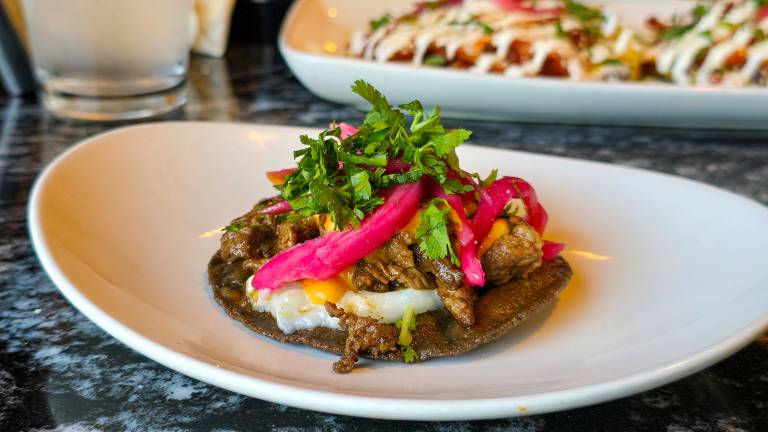
"caption": "The beef shawarma tostadita is one of several dishes at San Jose's Así Mexican Fusion Bistro that combine Mexican and Middle Eastern influences. ",
"credit": "Octavio Peña",
"altTag": "Beef shawarma and pickled red onion, serve on a blue corn tostada.",
"description": null,
"imgSizes": {
"thumbnail": {
"file": "https://cdn.kqed.org/wp-content/uploads/sites/2/2025/08/Beef-Shawarma-Tostadita-160x90.jpg",
"width": 160,
"height": 90,
"mimeType": "image/jpeg"
},
"medium_large": {
"file": "https://cdn.kqed.org/wp-content/uploads/sites/2/2025/08/Beef-Shawarma-Tostadita-768x432.jpg",
"width": 768,
"height": 432,
"mimeType": "image/jpeg"
},
"1536x1536": {
"file": "https://cdn.kqed.org/wp-content/uploads/sites/2/2025/08/Beef-Shawarma-Tostadita-1536x865.jpg",
"width": 1536,
"height": 865,
"mimeType": "image/jpeg"
},
"post-thumbnail": {
"file": "https://cdn.kqed.org/wp-content/uploads/sites/2/2025/08/Beef-Shawarma-Tostadita-672x372.jpg",
"width": 672,
"height": 372,
"mimeType": "image/jpeg"
},
"twentyfourteen-full-width": {
"file": "https://cdn.kqed.org/wp-content/uploads/sites/2/2025/08/Beef-Shawarma-Tostadita-1038x576.jpg",
"width": 1038,
"height": 576,
"mimeType": "image/jpeg"
},
"kqedFullSize": {
"file": "https://cdn.kqed.org/wp-content/uploads/sites/2/2025/08/Beef-Shawarma-Tostadita.jpg",
"width": 2000,
"height": 1126
}
},
"isLoading": false,
"fetchFailed": false
},
"arts_13977346": {
"type": "attachments",
"id": "arts_13977346",
"meta": {
"index": "attachments_1716263798",
"site": "arts",
"id": "13977346",
"found": true
},
"title": "tegu",
"publishDate": 1749494949,
"status": "inherit",
"parent": 13977340,
"modified": 1749495095,
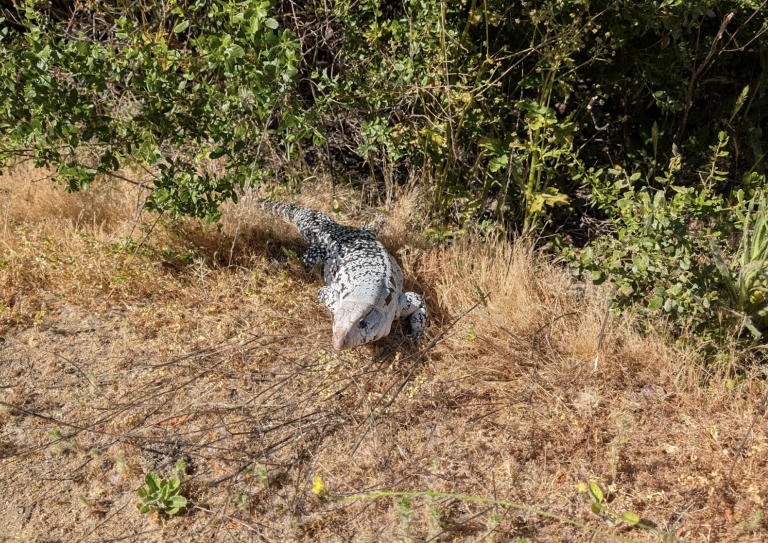
"caption": "The roving black and white tegu, out and about in Joseph D. Grant County Park.",
"credit": "Courtesy of Santa Clara County Parks",
"altTag": null,
"description": null,
"imgSizes": {
"thumbnail": {
"file": "https://cdn.kqed.org/wp-content/uploads/sites/2/2025/06/tegu-160x113.png",
"width": 160,
"height": 113,
"mimeType": "image/png"
},
"medium_large": {
"file": "https://cdn.kqed.org/wp-content/uploads/sites/2/2025/06/tegu-768x543.png",
"width": 768,
"height": 543,
"mimeType": "image/png"
},
"1536x1536": {
"file": "https://cdn.kqed.org/wp-content/uploads/sites/2/2025/06/tegu-1536x1086.png",
"width": 1536,
"height": 1086,
"mimeType": "image/png"
},
"post-thumbnail": {
"file": "https://cdn.kqed.org/wp-content/uploads/sites/2/2025/06/tegu-672x372.png",
"width": 672,
"height": 372,
"mimeType": "image/png"
},
"twentyfourteen-full-width": {
"file": "https://cdn.kqed.org/wp-content/uploads/sites/2/2025/06/tegu-1038x576.png",
"width": 1038,
"height": 576,
"mimeType": "image/png"
},
"kqedFullSize": {
"file": "https://cdn.kqed.org/wp-content/uploads/sites/2/2025/06/tegu.png",
"width": 2000,
"height": 1414
}
},
"isLoading": false,
"fetchFailed": false
},
"arts_13977042": {
"type": "attachments",
"id": "arts_13977042",
"meta": {
"index": "attachments_1716263798",
"site": "arts",
"id": "13977042",
"found": true
},
"title": "Hamburger Arepa",
"publishDate": 1748984710,
"status": "inherit",
"parent": 13977033,
"modified": 1748984938,
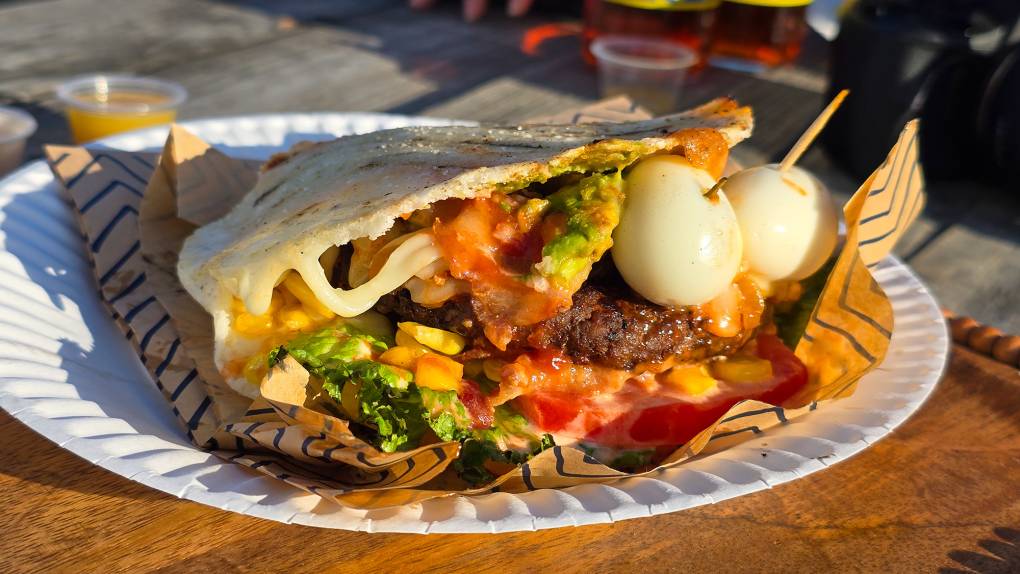
"caption": "Salpikitos' menu includes cross-cultural items like this burger-inspired arepa. The food stand is located on Alum Rock Avenue in East San Jose.",
"credit": "Octavio Peña",
"altTag": "An overstuffed arepa, filled with beef patty, quail eggs and more, served on a paper plate.",
"description": null,
"imgSizes": {
"medium": {
"file": "https://cdn.kqed.org/wp-content/uploads/sites/2/2025/06/Hamburger-Arepa-800x450.jpg",
"width": 800,
"height": 450,
"mimeType": "image/jpeg"
},
"large": {
"file": "https://cdn.kqed.org/wp-content/uploads/sites/2/2025/06/Hamburger-Arepa-1020x574.jpg",
"width": 1020,
"height": 574,
"mimeType": "image/jpeg"
},
"thumbnail": {
"file": "https://cdn.kqed.org/wp-content/uploads/sites/2/2025/06/Hamburger-Arepa-160x90.jpg",
"width": 160,
"height": 90,
"mimeType": "image/jpeg"
},
"medium_large": {
"file": "https://cdn.kqed.org/wp-content/uploads/sites/2/2025/06/Hamburger-Arepa-768x432.jpg",
"width": 768,
"height": 432,
"mimeType": "image/jpeg"
},
"1536x1536": {
"file": "https://cdn.kqed.org/wp-content/uploads/sites/2/2025/06/Hamburger-Arepa-1536x865.jpg",
"width": 1536,
"height": 865,
"mimeType": "image/jpeg"
},
"post-thumbnail": {
"file": "https://cdn.kqed.org/wp-content/uploads/sites/2/2025/06/Hamburger-Arepa-672x372.jpg",
"width": 672,
"height": 372,
"mimeType": "image/jpeg"
},
"twentyfourteen-full-width": {
"file": "https://cdn.kqed.org/wp-content/uploads/sites/2/2025/06/Hamburger-Arepa-1038x576.jpg",
"width": 1038,
"height": 576,
"mimeType": "image/jpeg"
},
"full-width": {
"file": "https://cdn.kqed.org/wp-content/uploads/sites/2/2025/06/Hamburger-Arepa-1920x1081.jpg",
"width": 1920,
"height": 1081,
"mimeType": "image/jpeg"
},
"kqedFullSize": {
"file": "https://cdn.kqed.org/wp-content/uploads/sites/2/2025/06/Hamburger-Arepa.jpg",
"width": 2000,
"height": 1126
}
},
"isLoading": false,
"fetchFailed": false
},
"arts_13976642": {
"type": "attachments",
"id": "arts_13976642",
"meta": {
"index": "attachments_1716263798",
"site": "arts",
"id": "13976642",
"found": true
},
"title": "_37A1674",
"publishDate": 1747932159,
"status": "inherit",
"parent": 13976634,
"modified": 1747935363,
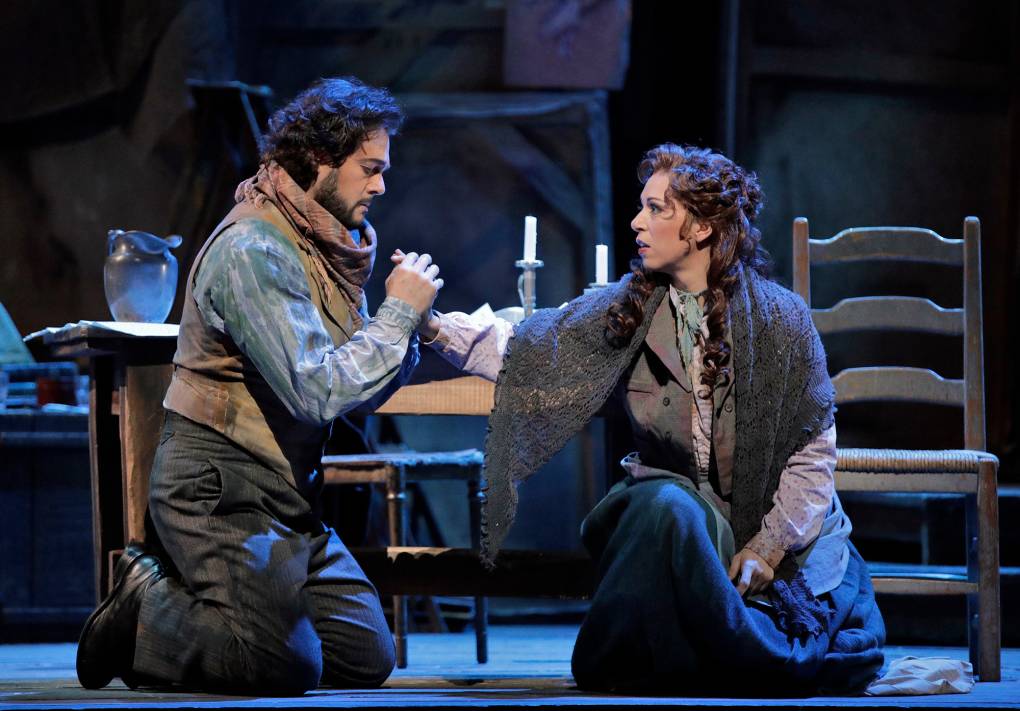
"caption": "‘La bohème’ comes to San Francisco Opera in June.",
"credit": "Cory Weaver/SF Opera",
"altTag": "A man in a scarf and ragged clothing holds the hand of a woman, similarly dressed, both kneeling on the ground",
"description": null,
"imgSizes": {
"medium": {
"file": "https://cdn.kqed.org/wp-content/uploads/sites/2/2025/05/37A1674-800x558.jpg",
"width": 800,
"height": 558,
"mimeType": "image/jpeg"
},
"large": {
"file": "https://cdn.kqed.org/wp-content/uploads/sites/2/2025/05/37A1674-1020x711.jpg",
"width": 1020,
"height": 711,
"mimeType": "image/jpeg"
},
"thumbnail": {
"file": "https://cdn.kqed.org/wp-content/uploads/sites/2/2025/05/37A1674-160x112.jpg",
"width": 160,
"height": 112,
"mimeType": "image/jpeg"
},
"medium_large": {
"file": "https://cdn.kqed.org/wp-content/uploads/sites/2/2025/05/37A1674-768x536.jpg",
"width": 768,
"height": 536,
"mimeType": "image/jpeg"
},
"1536x1536": {
"file": "https://cdn.kqed.org/wp-content/uploads/sites/2/2025/05/37A1674-1536x1071.jpg",
"width": 1536,
"height": 1071,
"mimeType": "image/jpeg"
},
"post-thumbnail": {
"file": "https://cdn.kqed.org/wp-content/uploads/sites/2/2025/05/37A1674-672x372.jpg",
"width": 672,
"height": 372,
"mimeType": "image/jpeg"
},
"twentyfourteen-full-width": {
"file": "https://cdn.kqed.org/wp-content/uploads/sites/2/2025/05/37A1674-1038x576.jpg",
"width": 1038,
"height": 576,
"mimeType": "image/jpeg"
},
"full-width": {
"file": "https://cdn.kqed.org/wp-content/uploads/sites/2/2025/05/37A1674-1920x1339.jpg",
"width": 1920,
"height": 1339,
"mimeType": "image/jpeg"
},
"kqedFullSize": {
"file": "https://cdn.kqed.org/wp-content/uploads/sites/2/2025/05/37A1674.jpg",
"width": 2000,
"height": 1395
}
},
"isLoading": false,
"fetchFailed": false
},
"arts_13976352": {
"type": "attachments",
"id": "arts_13976352",
"meta": {
"index": "attachments_1716263798",
"site": "arts",
"id": "13976352",
"found": true
},
"title": "ambolley",
"publishDate": 1747324262,
"status": "inherit",
"parent": 13976324,
"modified": 1747324274,
"caption": "Gyedu-Blay Ambolley.",
"credit": "Artist photo",
"altTag": null,
"description": null,
"imgSizes": {
"medium": {
"file": "https://cdn.kqed.org/wp-content/uploads/sites/2/2025/05/ambolley-800x534.jpg",
"width": 800,
"height": 534,
"mimeType": "image/jpeg"
},
"thumbnail": {
"file": "https://cdn.kqed.org/wp-content/uploads/sites/2/2025/05/ambolley-160x107.jpg",
"width": 160,
"height": 107,
"mimeType": "image/jpeg"
},
"medium_large": {
"file": "https://cdn.kqed.org/wp-content/uploads/sites/2/2025/05/ambolley-768x512.jpg",
"width": 768,
"height": 512,
"mimeType": "image/jpeg"
},
"post-thumbnail": {
"file": "https://cdn.kqed.org/wp-content/uploads/sites/2/2025/05/ambolley-672x372.jpg",
"width": 672,
"height": 372,
"mimeType": "image/jpeg"
},
"twentyfourteen-full-width": {
"file": "https://cdn.kqed.org/wp-content/uploads/sites/2/2025/05/ambolley-1000x576.jpg",
"width": 1000,
"height": 576,
"mimeType": "image/jpeg"
},
"kqedFullSize": {
"file": "https://cdn.kqed.org/wp-content/uploads/sites/2/2025/05/ambolley.jpg",
"width": 1000,
"height": 667
}
},
"isLoading": false,
"fetchFailed": false
},
"arts_13976091": {
"type": "attachments",
"id": "arts_13976091",
"meta": {
"index": "attachments_1716263798",
"site": "arts",
"id": "13976091",
"found": true
},
"title": "Tyson Amir",
"publishDate": 1747093806,
"status": "inherit",
"parent": 13976063,
"modified": 1747093907,
"caption": "San Jose-raised educator and author, Tyson Amir.",
"credit": "Courtesy of Tyson Amir",
"altTag": "An African-American man in a black hat and black leather jacket sits at a desk talking directly into the camera.",
"description": null,
"imgSizes": {
"medium": {
"file": "https://cdn.kqed.org/wp-content/uploads/sites/2/2025/05/Screenshot-2025-05-10-at-2.21.10 PM-1-800x450.png",
"width": 800,
"height": 450,
"mimeType": "image/png"
},
"large": {
"file": "https://cdn.kqed.org/wp-content/uploads/sites/2/2025/05/Screenshot-2025-05-10-at-2.21.10 PM-1-1020x573.png",
"width": 1020,
"height": 573,
"mimeType": "image/png"
},
"thumbnail": {
"file": "https://cdn.kqed.org/wp-content/uploads/sites/2/2025/05/Screenshot-2025-05-10-at-2.21.10 PM-1-160x90.png",
"width": 160,
"height": 90,
"mimeType": "image/png"
},
"medium_large": {
"file": "https://cdn.kqed.org/wp-content/uploads/sites/2/2025/05/Screenshot-2025-05-10-at-2.21.10 PM-1-768x432.png",
"width": 768,
"height": 432,
"mimeType": "image/png"
},
"1536x1536": {
"file": "https://cdn.kqed.org/wp-content/uploads/sites/2/2025/05/Screenshot-2025-05-10-at-2.21.10 PM-1-1536x863.png",
"width": 1536,
"height": 863,
"mimeType": "image/png"
},
"post-thumbnail": {
"file": "https://cdn.kqed.org/wp-content/uploads/sites/2/2025/05/Screenshot-2025-05-10-at-2.21.10 PM-1-672x372.png",
"width": 672,
"height": 372,
"mimeType": "image/png"
},
"twentyfourteen-full-width": {
"file": "https://cdn.kqed.org/wp-content/uploads/sites/2/2025/05/Screenshot-2025-05-10-at-2.21.10 PM-1-1038x576.png",
"width": 1038,
"height": 576,
"mimeType": "image/png"
},
"kqedFullSize": {
"file": "https://cdn.kqed.org/wp-content/uploads/sites/2/2025/05/Screenshot-2025-05-10-at-2.21.10 PM-1.png",
"width": 1856,
"height": 1043
}
},
"isLoading": false,
"fetchFailed": false
},
"arts_13975436": {
"type": "attachments",
"id": "arts_13975436",
"meta": {
"index": "attachments_1716263798",
"site": "arts",
"id": "13975436",
"found": true
},
"title": "viet thanh nguyen featured",
"publishDate": 1745886498,
"status": "inherit",
"parent": 13975429,
"modified": 1745944402,
"caption": "Novelist Viet Thanh Nguyen holds up a photograph of his parents' old grocery store, Sàigòn Mới, in front of the sleek apartment complex that replaced it in downtown San Jose.",
"credit": "Alex Tran/KQED",
"altTag": "Portrait of Asian man holding an old photograph in front of a sleek apartment building.",
"description": null,
"imgSizes": {
"medium": {
"file": "https://cdn.kqed.org/wp-content/uploads/sites/2/2025/04/viet-thanh-nguyen-featured-800x450.jpg",
"width": 800,
"height": 450,
"mimeType": "image/jpeg"
},
"large": {
"file": "https://cdn.kqed.org/wp-content/uploads/sites/2/2025/04/viet-thanh-nguyen-featured-1020x574.jpg",
"width": 1020,
"height": 574,
"mimeType": "image/jpeg"
},
"thumbnail": {
"file": "https://cdn.kqed.org/wp-content/uploads/sites/2/2025/04/viet-thanh-nguyen-featured-160x90.jpg",
"width": 160,
"height": 90,
"mimeType": "image/jpeg"
},
"medium_large": {
"file": "https://cdn.kqed.org/wp-content/uploads/sites/2/2025/04/viet-thanh-nguyen-featured-768x432.jpg",
"width": 768,
"height": 432,
"mimeType": "image/jpeg"
},
"1536x1536": {
"file": "https://cdn.kqed.org/wp-content/uploads/sites/2/2025/04/viet-thanh-nguyen-featured-1536x864.jpg",
"width": 1536,
"height": 864,
"mimeType": "image/jpeg"
},
"post-thumbnail": {
"file": "https://cdn.kqed.org/wp-content/uploads/sites/2/2025/04/viet-thanh-nguyen-featured-672x372.jpg",
"width": 672,
"height": 372,
"mimeType": "image/jpeg"
},
"twentyfourteen-full-width": {
"file": "https://cdn.kqed.org/wp-content/uploads/sites/2/2025/04/viet-thanh-nguyen-featured-1038x576.jpg",
"width": 1038,
"height": 576,
"mimeType": "image/jpeg"
},
"full-width": {
"file": "https://cdn.kqed.org/wp-content/uploads/sites/2/2025/04/viet-thanh-nguyen-featured-1920x1080.jpg",
"width": 1920,
"height": 1080,
"mimeType": "image/jpeg"
},
"kqedFullSize": {
"file": "https://cdn.kqed.org/wp-content/uploads/sites/2/2025/04/viet-thanh-nguyen-featured.jpg",
"width": 2000,
"height": 1125
}
},
"isLoading": false,
"fetchFailed": false
},
"arts_13975034": {
"type": "attachments",
"id": "arts_13975034",
"meta": {
"index": "attachments_1716263798",
"site": "arts",
"id": "13975034",
"found": true
},
"title": "20250420_YTPALESTINIANFOOD_GC-8-KQED",
"publishDate": 1745330507,
"status": "inherit",
"parent": 0,
"modified": 1745435319,
"caption": "Feras AbuGhaben prepares a za’atar flatbread at Manakish Oven & Grill in San Jose on April 20, 2025. Manakish is one of several Bay Area Palestinian restaurants whose popularity has soared in the past year.",
"credit": "Gina Castro/KQED",
"altTag": "Bright green za'atar spice blend being spread on a round of dough.",
"description": null,
"imgSizes": {
"medium": {
"file": "https://cdn.kqed.org/wp-content/uploads/sites/2/2025/04/20250420_YTPALESTINIANFOOD_GC-8-KQED-800x533.jpg",
"width": 800,
"height": 533,
"mimeType": "image/jpeg"
},
"large": {
"file": "https://cdn.kqed.org/wp-content/uploads/sites/2/2025/04/20250420_YTPALESTINIANFOOD_GC-8-KQED-1020x680.jpg",
"width": 1020,
"height": 680,
"mimeType": "image/jpeg"
},
"thumbnail": {
"file": "https://cdn.kqed.org/wp-content/uploads/sites/2/2025/04/20250420_YTPALESTINIANFOOD_GC-8-KQED-160x107.jpg",
"width": 160,
"height": 107,
"mimeType": "image/jpeg"
},
"medium_large": {
"file": "https://cdn.kqed.org/wp-content/uploads/sites/2/2025/04/20250420_YTPALESTINIANFOOD_GC-8-KQED-768x512.jpg",
"width": 768,
"height": 512,
"mimeType": "image/jpeg"
},
"1536x1536": {
"file": "https://cdn.kqed.org/wp-content/uploads/sites/2/2025/04/20250420_YTPALESTINIANFOOD_GC-8-KQED-1536x1024.jpg",
"width": 1536,
"height": 1024,
"mimeType": "image/jpeg"
},
"post-thumbnail": {
"file": "https://cdn.kqed.org/wp-content/uploads/sites/2/2025/04/20250420_YTPALESTINIANFOOD_GC-8-KQED-672x372.jpg",
"width": 672,
"height": 372,
"mimeType": "image/jpeg"
},
"twentyfourteen-full-width": {
"file": "https://cdn.kqed.org/wp-content/uploads/sites/2/2025/04/20250420_YTPALESTINIANFOOD_GC-8-KQED-1038x576.jpg",
"width": 1038,
"height": 576,
"mimeType": "image/jpeg"
},
"full-width": {
"file": "https://cdn.kqed.org/wp-content/uploads/sites/2/2025/04/20250420_YTPALESTINIANFOOD_GC-8-KQED-1920x1280.jpg",
"width": 1920,
"height": 1280,
"mimeType": "image/jpeg"
},
"kqedFullSize": {
"file": "https://cdn.kqed.org/wp-content/uploads/sites/2/2025/04/20250420_YTPALESTINIANFOOD_GC-8-KQED.jpg",
"width": 2000,
"height": 1333
}
},
"isLoading": false,
"fetchFailed": false
},
"arts_13975024": {
"type": "attachments",
"id": "arts_13975024",
"meta": {
"index": "attachments_1716263798",
"site": "arts",
"id": "13975024",
"found": true
},
"title": "Char Kway Teow 2",
"publishDate": 1745280189,
"status": "inherit",
"parent": 13974974,
"modified": 1745280339,
"caption": "Chicken Licious' smoky char kway teow features a heavy dose of wok hei. The San Jose restaurant specializes in Malaysian bento boxes.",
"credit": "Octavio Peña",
"altTag": "A plate of stir-fried rice noodles on a banana leaf–lined plate.",
"description": null,
"imgSizes": {
"medium": {
"file": "https://cdn.kqed.org/wp-content/uploads/sites/2/2025/04/Char-Kway-Teow-2-800x450.jpg",
"width": 800,
"height": 450,
"mimeType": "image/jpeg"
},
"large": {
"file": "https://cdn.kqed.org/wp-content/uploads/sites/2/2025/04/Char-Kway-Teow-2-1020x574.jpg",
"width": 1020,
"height": 574,
"mimeType": "image/jpeg"
},
"thumbnail": {
"file": "https://cdn.kqed.org/wp-content/uploads/sites/2/2025/04/Char-Kway-Teow-2-160x90.jpg",
"width": 160,
"height": 90,
"mimeType": "image/jpeg"
},
"medium_large": {
"file": "https://cdn.kqed.org/wp-content/uploads/sites/2/2025/04/Char-Kway-Teow-2-768x432.jpg",
"width": 768,
"height": 432,
"mimeType": "image/jpeg"
},
"1536x1536": {
"file": "https://cdn.kqed.org/wp-content/uploads/sites/2/2025/04/Char-Kway-Teow-2-1536x865.jpg",
"width": 1536,
"height": 865,
"mimeType": "image/jpeg"
},
"post-thumbnail": {
"file": "https://cdn.kqed.org/wp-content/uploads/sites/2/2025/04/Char-Kway-Teow-2-672x372.jpg",
"width": 672,
"height": 372,
"mimeType": "image/jpeg"
},
"twentyfourteen-full-width": {
"file": "https://cdn.kqed.org/wp-content/uploads/sites/2/2025/04/Char-Kway-Teow-2-1038x576.jpg",
"width": 1038,
"height": 576,
"mimeType": "image/jpeg"
},
"full-width": {
"file": "https://cdn.kqed.org/wp-content/uploads/sites/2/2025/04/Char-Kway-Teow-2-1920x1081.jpg",
"width": 1920,
"height": 1081,
"mimeType": "image/jpeg"
},
"kqedFullSize": {
"file": "https://cdn.kqed.org/wp-content/uploads/sites/2/2025/04/Char-Kway-Teow-2.jpg",
"width": 2000,
"height": 1126
}
},
"isLoading": false,
"fetchFailed": false
},
"arts_13973700": {
"type": "attachments",
"id": "arts_13973700",
"meta": {
"index": "attachments_1716263798",
"site": "arts",
"id": "13973700",
"found": true
},
"title": "nuyorican empanadas",
"publishDate": 1743120259,
"status": "inherit",
"parent": 0,
"modified": 1743120495,
"caption": "A typical plate from Nuyorican Empanadas, one of the featured vendors at San Jose's inaugural Afro-Latino Festival.",
"credit": "Courtesy of Nuyorican Empanadas",
"altTag": "A takeout container with rice, beans, and skewered meat.",
"description": null,
"imgSizes": {
"medium": {
"file": "https://cdn.kqed.org/wp-content/uploads/sites/2/2025/03/nuyorican-empanadas-800x800.jpg",
"width": 800,
"height": 800,
"mimeType": "image/jpeg"
},
"large": {
"file": "https://cdn.kqed.org/wp-content/uploads/sites/2/2025/03/nuyorican-empanadas-1020x1020.jpg",
"width": 1020,
"height": 1020,
"mimeType": "image/jpeg"
},
"thumbnail": {
"file": "https://cdn.kqed.org/wp-content/uploads/sites/2/2025/03/nuyorican-empanadas-160x160.jpg",
"width": 160,
"height": 160,
"mimeType": "image/jpeg"
},
"medium_large": {
"file": "https://cdn.kqed.org/wp-content/uploads/sites/2/2025/03/nuyorican-empanadas-768x768.jpg",
"width": 768,
"height": 768,
"mimeType": "image/jpeg"
},
"1536x1536": {
"file": "https://cdn.kqed.org/wp-content/uploads/sites/2/2025/03/nuyorican-empanadas-1536x1536.jpg",
"width": 1536,
"height": 1536,
"mimeType": "image/jpeg"
},
"post-thumbnail": {
"file": "https://cdn.kqed.org/wp-content/uploads/sites/2/2025/03/nuyorican-empanadas-672x372.jpg",
"width": 672,
"height": 372,
"mimeType": "image/jpeg"
},
"twentyfourteen-full-width": {
"file": "https://cdn.kqed.org/wp-content/uploads/sites/2/2025/03/nuyorican-empanadas-1038x576.jpg",
"width": 1038,
"height": 576,
"mimeType": "image/jpeg"
},
"kqedFullSize": {
"file": "https://cdn.kqed.org/wp-content/uploads/sites/2/2025/03/nuyorican-empanadas.jpg",
"width": 1920,
"height": 1920
}
},
"isLoading": false,
"fetchFailed": false
},
"arts_13973064": {
"type": "attachments",
"id": "arts_13973064",
"meta": {
"index": "attachments_1716263798",
"site": "arts",
"id": "13973064",
"found": true
},
"title": "Guava Cheesecake pie",
"publishDate": 1741890122,
"status": "inherit",
"parent": 13973046,
"modified": 1741891491,
"caption": "San Jose bakeshop Sweetdragon Baking Company's popular Pi Day pie has a guava cheesecake filling. It's available for preorder for all of March.",
"credit": "Courtesy of Sweetdragon Baking Company",
"altTag": "Pie with a pi symbol in the center made of crust, on a marble countertop.",
"description": null,
"imgSizes": {
"medium": {
"file": "https://cdn.kqed.org/wp-content/uploads/sites/2/2025/03/Guava-Cheesecake-pie-800x450.jpg",
"width": 800,
"height": 450,
"mimeType": "image/jpeg"
},
"large": {
"file": "https://cdn.kqed.org/wp-content/uploads/sites/2/2025/03/Guava-Cheesecake-pie-1020x574.jpg",
"width": 1020,
"height": 574,
"mimeType": "image/jpeg"
},
"thumbnail": {
"file": "https://cdn.kqed.org/wp-content/uploads/sites/2/2025/03/Guava-Cheesecake-pie-160x90.jpg",
"width": 160,
"height": 90,
"mimeType": "image/jpeg"
},
"medium_large": {
"file": "https://cdn.kqed.org/wp-content/uploads/sites/2/2025/03/Guava-Cheesecake-pie-768x432.jpg",
"width": 768,
"height": 432,
"mimeType": "image/jpeg"
},
"1536x1536": {
"file": "https://cdn.kqed.org/wp-content/uploads/sites/2/2025/03/Guava-Cheesecake-pie-1536x864.jpg",
"width": 1536,
"height": 864,
"mimeType": "image/jpeg"
},
"post-thumbnail": {
"file": "https://cdn.kqed.org/wp-content/uploads/sites/2/2025/03/Guava-Cheesecake-pie-672x372.jpg",
"width": 672,
"height": 372,
"mimeType": "image/jpeg"
},
"twentyfourteen-full-width": {
"file": "https://cdn.kqed.org/wp-content/uploads/sites/2/2025/03/Guava-Cheesecake-pie-1038x576.jpg",
"width": 1038,
"height": 576,
"mimeType": "image/jpeg"
},
"kqedFullSize": {
"file": "https://cdn.kqed.org/wp-content/uploads/sites/2/2025/03/Guava-Cheesecake-pie.jpg",
"width": 1920,
"height": 1080
}
},
"isLoading": false,
"fetchFailed": false
},
"arts_13972863": {
"type": "attachments",
"id": "arts_13972863",
"meta": {
"index": "attachments_1716263798",
"site": "arts",
"id": "13972863",
"found": true
},
"title": "Esteban Raheem Abdul Raheem Samayoa",
"publishDate": 1741630592,
"status": "inherit",
"parent": 13972783,
"modified": 1741712050,
"caption": "Esteban Raheem Abdul Raheem Samayoa poses in front of his artwork.",
"credit": "Cinque Mubarak",
"altTag": "black-and-white image of man with shaved head in all white in front of detailed figurative artwork",
"description": null,
"imgSizes": {
"medium": {
"file": "https://cdn.kqed.org/wp-content/uploads/sites/2/2025/03/48da2cfe-064d-4c57-89a4-cc9a0c355e00-800x555.jpg",
"width": 800,
"height": 555,
"mimeType": "image/jpeg"
},
"large": {
"file": "https://cdn.kqed.org/wp-content/uploads/sites/2/2025/03/48da2cfe-064d-4c57-89a4-cc9a0c355e00-1020x708.jpg",
"width": 1020,
"height": 708,
"mimeType": "image/jpeg"
},
"thumbnail": {
"file": "https://cdn.kqed.org/wp-content/uploads/sites/2/2025/03/48da2cfe-064d-4c57-89a4-cc9a0c355e00-160x111.jpg",
"width": 160,
"height": 111,
"mimeType": "image/jpeg"
},
"medium_large": {
"file": "https://cdn.kqed.org/wp-content/uploads/sites/2/2025/03/48da2cfe-064d-4c57-89a4-cc9a0c355e00-768x533.jpg",
"width": 768,
"height": 533,
"mimeType": "image/jpeg"
},
"1536x1536": {
"file": "https://cdn.kqed.org/wp-content/uploads/sites/2/2025/03/48da2cfe-064d-4c57-89a4-cc9a0c355e00-1536x1066.jpg",
"width": 1536,
"height": 1066,
"mimeType": "image/jpeg"
},
"2048x2048": {
"file": "https://cdn.kqed.org/wp-content/uploads/sites/2/2025/03/48da2cfe-064d-4c57-89a4-cc9a0c355e00-2048x1421.jpg",
"width": 2048,
"height": 1421,
"mimeType": "image/jpeg"
},
"post-thumbnail": {
"file": "https://cdn.kqed.org/wp-content/uploads/sites/2/2025/03/48da2cfe-064d-4c57-89a4-cc9a0c355e00-672x372.jpg",
"width": 672,
"height": 372,
"mimeType": "image/jpeg"
},
"twentyfourteen-full-width": {
"file": "https://cdn.kqed.org/wp-content/uploads/sites/2/2025/03/48da2cfe-064d-4c57-89a4-cc9a0c355e00-1038x576.jpg",
"width": 1038,
"height": 576,
"mimeType": "image/jpeg"
},
"full-width": {
"file": "https://cdn.kqed.org/wp-content/uploads/sites/2/2025/03/48da2cfe-064d-4c57-89a4-cc9a0c355e00-1920x1332.jpg",
"width": 1920,
"height": 1332,
"mimeType": "image/jpeg"
},
"kqedFullSize": {
"file": "https://cdn.kqed.org/wp-content/uploads/sites/2/2025/03/48da2cfe-064d-4c57-89a4-cc9a0c355e00-scaled.jpg",
"width": 2560,
"height": 1776
}
},
"isLoading": false,
"fetchFailed": false
}
},
"audioPlayerReducer": {
"postId": "stream_live",
"isPaused": true,
"isPlaying": false,
"pfsActive": false,
"pledgeModalIsOpen": true,
"playerDrawerIsOpen": false,
"liveAudioPlayStartedAt": 0,
"liveAudioPlayContext": ""
},
"authorsReducer": {
"byline_arts_13975160": {
"type": "authors",
"id": "byline_arts_13975160",
"meta": {
"override": true
},
"slug": "byline_arts_13975160",
"name": "Khadijah Ismail",
"isLoading": false
},
"gmeline": {
"type": "authors",
"id": "185",
"meta": {
"index": "authors_1716337520",
"id": "185",
"found": true
},
"name": "Gabe Meline",
"firstName": "Gabe",
"lastName": "Meline",
"slug": "gmeline",
"email": "gmeline@kqed.org",
"display_author_email": true,
"staff_mastheads": [
"arts"
],
"title": "Senior Editor, KQED Arts & Culture",
"bio": "Gabe Meline entered journalism at age 15 making photocopied zines, and has since earned awards from the Edward R. Murrow Awards, the Society for Professional Journalists, the Online Journalism Awards, the Association of Alternative Newsweeklies and the California Newspaper Publishers Association. Prior to KQED, he was the editor of the \u003cem>North Bay Bohemian\u003c/em> and a touring musician. He lives with his wife and daughter in his hometown of Santa Rosa, CA.",
"avatar": "https://secure.gravatar.com/avatar/5bebe57be0d8bc2dd318934feb47299e2d2d10cba28d09d8d7afb389a2ce2bdd?s=600&d=blank&r=g",
"twitter": null,
"bluesky": null,
"facebook": null,
"instagram": null,
"linkedin": null,
"sites": [
{
"site": "",
"roles": [
"editor"
]
},
{
"site": "arts",
"roles": [
"administrator"
]
},
{
"site": "artschool",
"roles": [
"editor"
]
},
{
"site": "news",
"roles": [
"author"
]
},
{
"site": "pop",
"roles": [
"editor"
]
},
{
"site": "bayareabites",
"roles": [
"editor"
]
},
{
"site": "food",
"roles": [
"editor"
]
},
{
"site": "forum",
"roles": [
"administrator"
]
},
{
"site": "liveblog",
"roles": [
"editor"
]
},
{
"site": "hiphop",
"roles": [
"editor"
]
}
],
"headData": {
"title": "Gabe Meline | KQED",
"description": "Senior Editor, KQED Arts & Culture",
"ogImgSrc": "https://secure.gravatar.com/avatar/5bebe57be0d8bc2dd318934feb47299e2d2d10cba28d09d8d7afb389a2ce2bdd?s=600&d=blank&r=g",
"twImgSrc": "https://secure.gravatar.com/avatar/5bebe57be0d8bc2dd318934feb47299e2d2d10cba28d09d8d7afb389a2ce2bdd?s=600&d=blank&r=g"
},
"isLoading": false,
"link": "/author/gmeline"
},
"ralexandra": {
"type": "authors",
"id": "11242",
"meta": {
"index": "authors_1716337520",
"id": "11242",
"found": true
},
"name": "Rae Alexandra",
"firstName": "Rae",
"lastName": "Alexandra",
"slug": "ralexandra",
"email": "ralexandra@kqed.org",
"display_author_email": true,
"staff_mastheads": [],
"title": "Reporter/Producer",
"bio": "Rae Alexandra is a Reporter/Producer for KQED Arts & Culture, and the creator/author of the \u003ca href=\"https://www.kqed.org/arts/program/rebel-girls-from-bay-area-history\">Rebel Girls From Bay Area History\u003c/a> and \u003ca href=\"https://www.kqed.org/bizarrebayarea\">Bizarre Bay Area\u003c/a> series. Her debut book, \u003ca href=\"https://citylights.com/politics-current-events-history/unsung-heroines35-women-who-changed/\">Unsung Heroines: 35 Women Who Changed the Bay Area\u003c/a> was published by City Lights in March 2026. In 2023, Rae was awarded an SPJ Excellence in Journalism Award for Arts & Culture. Rae was born and raised in Wales and subsequently — even after two decades in Northern California — still uses phrases that regularly baffle her coworkers.",
"avatar": "https://secure.gravatar.com/avatar/edfee8176c80cc0a382b051190f5341997df378a934a5774dcb0977732dfd401?s=600&d=blank&r=g",
"twitter": null,
"bluesky": null,
"facebook": null,
"instagram": null,
"linkedin": null,
"sites": [
{
"site": "arts",
"roles": [
"subscriber"
]
},
{
"site": "news",
"roles": [
"subscriber"
]
},
{
"site": "pop",
"roles": [
"subscriber"
]
},
{
"site": "bayareabites",
"roles": [
"subscriber"
]
},
{
"site": "science",
"roles": [
"subscriber"
]
}
],
"headData": {
"title": "Rae Alexandra | KQED",
"description": "Reporter/Producer",
"ogImgSrc": "https://secure.gravatar.com/avatar/edfee8176c80cc0a382b051190f5341997df378a934a5774dcb0977732dfd401?s=600&d=blank&r=g",
"twImgSrc": "https://secure.gravatar.com/avatar/edfee8176c80cc0a382b051190f5341997df378a934a5774dcb0977732dfd401?s=600&d=blank&r=g"
},
"isLoading": false,
"link": "/author/ralexandra"
},
"ogpenn": {
"type": "authors",
"id": "11491",
"meta": {
"index": "authors_1716337520",
"id": "11491",
"found": true
},
"name": "Pendarvis Harshaw",
"firstName": "Pendarvis",
"lastName": "Harshaw",
"slug": "ogpenn",
"email": "ogpenn@gmail.com",
"display_author_email": false,
"staff_mastheads": [
"arts"
],
"title": "Community Engagement Reporter",
"bio": "Pendarvis Harshaw is an educator, host and writer with KQED Arts.",
"avatar": "https://secure.gravatar.com/avatar/972b77ee8e3f346ae2b00622661187fbfabd059b5693bbdc1475ea7a722fd4cd?s=600&d=blank&r=g",
"twitter": null,
"bluesky": null,
"facebook": null,
"instagram": "ogpenn",
"linkedin": null,
"sites": [
{
"site": "arts",
"roles": [
"administrator"
]
},
{
"site": "news",
"roles": [
"editor"
]
},
{
"site": "bayareabites",
"roles": [
"author"
]
},
{
"site": "hiphop",
"roles": [
"editor"
]
}
],
"headData": {
"title": "Pendarvis Harshaw | KQED",
"description": "Community Engagement Reporter",
"ogImgSrc": "https://secure.gravatar.com/avatar/972b77ee8e3f346ae2b00622661187fbfabd059b5693bbdc1475ea7a722fd4cd?s=600&d=blank&r=g",
"twImgSrc": "https://secure.gravatar.com/avatar/972b77ee8e3f346ae2b00622661187fbfabd059b5693bbdc1475ea7a722fd4cd?s=600&d=blank&r=g"
},
"isLoading": false,
"link": "/author/ogpenn"
},
"ltsai": {
"type": "authors",
"id": "11743",
"meta": {
"index": "authors_1716337520",
"id": "11743",
"found": true
},
"name": "Luke Tsai",
"firstName": "Luke",
"lastName": "Tsai",
"slug": "ltsai",
"email": "ltsai@kqed.org",
"display_author_email": true,
"staff_mastheads": [
"arts"
],
"title": "Food Editor",
"bio": "Luke Tsai is KQED's food editor and resident stinky tofu connoisseur. Prior to KQED, he was an editor at Eater SF, \u003cem>San Francisco \u003c/em>magazine, and the \u003cem>East Bay Express\u003c/em>, and his work has also appeared in TASTE, the \u003cem>San Francisco Chronicle\u003c/em>, and the \u003cem>Best Food Writing\u003c/em> anthology. When he isn't writing or editing, you'll find him eating most everything he can get his hands on.",
"avatar": "https://secure.gravatar.com/avatar/1e59b45bf191526e7339d6ba46e33a57b2030d25c27660ecc64ea3cb863e34f7?s=600&d=blank&r=g",
"twitter": "theluketsai",
"bluesky": null,
"facebook": null,
"instagram": null,
"linkedin": null,
"sites": [
{
"site": "",
"roles": [
"editor"
]
},
{
"site": "arts",
"roles": [
"administrator"
]
},
{
"site": "news",
"roles": [
"editor",
"contributor"
]
},
{
"site": "bayareabites",
"roles": [
"editor"
]
},
{
"site": "food",
"roles": [
"editor"
]
}
],
"headData": {
"title": "Luke Tsai | KQED",
"description": "Food Editor",
"ogImgSrc": "https://secure.gravatar.com/avatar/1e59b45bf191526e7339d6ba46e33a57b2030d25c27660ecc64ea3cb863e34f7?s=600&d=blank&r=g",
"twImgSrc": "https://secure.gravatar.com/avatar/1e59b45bf191526e7339d6ba46e33a57b2030d25c27660ecc64ea3cb863e34f7?s=600&d=blank&r=g"
},
"isLoading": false,
"link": "/author/ltsai"
},
"opena": {
"type": "authors",
"id": "11903",
"meta": {
"index": "authors_1716337520",
"id": "11903",
"found": true
},
"name": "Octavio Peña",
"firstName": "Octavio",
"lastName": "Peña",
"slug": "opena",
"email": "octaviopenagutierrez@gmail.com",
"display_author_email": false,
"staff_mastheads": [],
"title": "KQED Contributor",
"bio": null,
"avatar": "https://secure.gravatar.com/avatar/62850791380238ea3945ee72a3d56056477904792b41daaf11effa8780bab75d?s=600&d=blank&r=g",
"twitter": null,
"bluesky": null,
"facebook": null,
"instagram": null,
"linkedin": null,
"sites": [
{
"site": "arts",
"roles": [
"contributor"
]
}
],
"headData": {
"title": "Octavio Peña | KQED",
"description": "KQED Contributor",
"ogImgSrc": "https://secure.gravatar.com/avatar/62850791380238ea3945ee72a3d56056477904792b41daaf11effa8780bab75d?s=600&d=blank&r=g",
"twImgSrc": "https://secure.gravatar.com/avatar/62850791380238ea3945ee72a3d56056477904792b41daaf11effa8780bab75d?s=600&d=blank&r=g"
},
"isLoading": false,
"link": "/author/opena"
}
},
"pagesReducer": {
"arts_tag_san-jose": {
"type": "terms",
"id": "arts_1084",
"meta": {
"index": "terms_1716263798",
"site": "arts",
"id": "1084",
"score": 8.005498
},
"featImg": null,
"name": "San Jose",
"description": null,
"taxonomy": "tag",
"headData": {
"twImgId": null,
"twTitle": null,
"ogTitle": null,
"ogImgId": null,
"twDescription": null,
"description": null,
"title": "San Jose Archives | KQED Arts",
"ogDescription": null
},
"ttid": 1101,
"slug": "san-jose",
"isLoading": false,
"title": "San Jose",
"pageMeta": {
"site": "arts",
"WpPageTemplate": "page-topic-editorial",
"currentPage": 4
},
"blocks": [
{
"blockName": "kqed/post-list",
"attrs": {
"layout": "cardArticle2",
"query": "posts/arts?tag=san-jose",
"seeMore": false,
"paginated": true,
"page": 4
}
},
{
"blockName": "kqed/ad"
}
]
}
},
"pfsSessionReducer": {},
"postsReducer": {
"stream_live": {
"type": "live",
"id": "stream_live",
"audioUrl": "https://streams.kqed.org/kqedradio",
"title": "Live Stream",
"excerpt": "Live Stream information currently unavailable.",
"link": "/radio",
"featImg": "",
"label": {
"name": "KQED Live",
"link": "/"
}
},
"stream_kqedNewscast": {
"type": "posts",
"id": "stream_kqedNewscast",
"audioUrl": "https://www.kqed.org/.stream/anon/radio/RDnews/newscast.mp3?_=1",
"title": "KQED Newscast",
"featImg": "",
"label": {
"name": "88.5 FM",
"link": "/"
}
},
"arts_13979641": {
"type": "posts",
"id": "arts_13979641",
"meta": {
"index": "posts_1716263798",
"site": "arts",
"id": "13979641",
"score": null,
"sort": [
1754578800000
]
},
"guestAuthors": [],
"slug": "asi-mexican-middle-eastern-fusion-restaurant-san-jose-halal",
"title": "At This San Jose Fusion Restaurant, Mexican and Jordanian Flavors Collide",
"publishDate": 1754578800,
"format": "standard",
"headTitle": "At This San Jose Fusion Restaurant, Mexican and Jordanian Flavors Collide | KQED",
"labelTerm": {},
"content": "\u003cp>Located on a quiet corner of South \u003ca href=\"https://www.kqed.org/arts/tag/san-jose\">San Jose\u003c/a>, \u003ca href=\"https://www.instagram.com/asimexicanfusion/?hl=en\">Así Mexican Fusion Bistro\u003c/a> would be easy to miss if it weren’t for the vibrant butterfly mural on the wall — one of the butterfly’s wings is a Mexican flag, and the other is a Jordanian flag. Inside, where customers sip on micheladas and catch sports on the TV, the restaurant feels like a standard Mexican spot until the basket of pita chips and tortilla chips arrives at the table: Instead of guacamole, you dip the chips in hummus topped with salsa macha.\u003c/p>\n\u003cp>The dip is typical of Así’s hybrid approach, which supplements the restaurant’s traditional Mexican menu with dishes that incorporate Middle Eastern ingredients in surprisingly delicious ways. Mini blue tostadas come topped with ribbons of beef shawarma, toum (garlic sauce) and sumac pickled onions. The shakshuka a la Mexicana, meanwhile, is a cross between traditional shakshuka and huevos rancheros, combining eggs, salty cheese, cilantro and a sumac-spiced tomato sauce — again, all on top of a tostada.\u003c/p>\n\u003cp>Owner Lourdes Barraza quit her job as a Group Supervisor at Santa Cruz Juvenile Hall to start a taco catering business in August 2018. “I’m a mom of three girls,” says Barraza, noting that catering allowed her to keep a flexible schedule. “For me, having my career was important, but being a mom was always number one.” Six years later, in January 2024, Barraza opened Así Mexican Fusion Bistro along with her eldest daughter, Isabella Astorga, who manages the restaurant.\u003c/p>\n\u003cfigure id=\"attachment_13979657\" class=\"wp-caption alignnone\" style=\"max-width: 2000px\">\u003cimg loading=\"lazy\" decoding=\"async\" class=\"size-full wp-image-13979657\" src=\"https://cdn.kqed.org/wp-content/uploads/sites/2/2025/08/Lourdes-Barraza-Isabella-Astorga-Ana-Colin-and-Sophia-Gallo%CC%81n-Left-to-right.jpg\" alt=\"Four women pose for a portrait in front of a mural.\" width=\"2000\" height=\"1125\" srcset=\"https://cdn.kqed.org/wp-content/uploads/sites/2/2025/08/Lourdes-Barraza-Isabella-Astorga-Ana-Colin-and-Sophia-Gallón-Left-to-right.jpg 2000w, https://cdn.kqed.org/wp-content/uploads/sites/2/2025/08/Lourdes-Barraza-Isabella-Astorga-Ana-Colin-and-Sophia-Gallón-Left-to-right-160x90.jpg 160w, https://cdn.kqed.org/wp-content/uploads/sites/2/2025/08/Lourdes-Barraza-Isabella-Astorga-Ana-Colin-and-Sophia-Gallón-Left-to-right-768x432.jpg 768w, https://cdn.kqed.org/wp-content/uploads/sites/2/2025/08/Lourdes-Barraza-Isabella-Astorga-Ana-Colin-and-Sophia-Gallón-Left-to-right-1536x864.jpg 1536w\" sizes=\"auto, (max-width: 2000px) 100vw, 2000px\">\u003cfigcaption class=\"wp-caption-text\">From left to right: Lourdes Barraza and her daughters Isabella Astorga, Sophia Gallón and Ana Colin. \u003ccite>(Courtesy of Así Mexican Fusion Bistro)\u003c/cite>\u003c/figcaption>\u003c/figure>\n\u003cp>For the brick-and-mortar, the mother and daughter wanted to go beyond traditional Mexican food. “We thought, ‘Let’s do Middle Eastern fusion,’” says Barraza. As it turns out, Astorga’s partner is from Jordan, and as she became more familiar with that country’s cuisine, she was intrigued by how similar it was to Mexican food — and how well the two cuisines’ spices and cooking techniques blended together. The fusion dishes at Así don’t come across as a gimmick, then, but rather a love letter to both cultures.\u003c/p>\n\u003cp>They’re also a lot of fun. Some of the restaurant’s most creative fusion creations include a falafel-stuffed burrito and fries loaded with chicken shawarma, black beans, feta and pickled turnips.\u003c/p>\n\u003cp>[ad fullwidth]\u003c/p>\n\u003cp>Recipe development starts by breaking dishes down into their components and examining potential twists. For example, if a Mexican dish has oregano, the chefs consider fortifying that earthy flavor by adding Middle Eastern spices like za’atar or sumac. “It’s trial and error,” says Barraza. “As we go, we make changes we feel necessary. It seems to be working, people seem to love it.” One of their greatest hits is the tahini-chipotle crema, which serves as a nutty, smoky complement to grilled meats.\u003c/p>\n\u003cfigure id=\"attachment_13979658\" class=\"wp-caption alignnone\" style=\"max-width: 2000px\">\u003cimg loading=\"lazy\" decoding=\"async\" class=\"size-full wp-image-13979658\" src=\"https://cdn.kqed.org/wp-content/uploads/sites/2/2025/08/Pollo-Al-Pastor-Kebab-Plate.jpg\" alt=\"Chicken kebab, grilled tomatoes, cucumber salad and various sauces on a plate.\" width=\"2000\" height=\"1126\" srcset=\"https://cdn.kqed.org/wp-content/uploads/sites/2/2025/08/Pollo-Al-Pastor-Kebab-Plate.jpg 2000w, https://cdn.kqed.org/wp-content/uploads/sites/2/2025/08/Pollo-Al-Pastor-Kebab-Plate-160x90.jpg 160w, https://cdn.kqed.org/wp-content/uploads/sites/2/2025/08/Pollo-Al-Pastor-Kebab-Plate-768x432.jpg 768w, https://cdn.kqed.org/wp-content/uploads/sites/2/2025/08/Pollo-Al-Pastor-Kebab-Plate-1536x865.jpg 1536w\" sizes=\"auto, (max-width: 2000px) 100vw, 2000px\">\u003cfigcaption class=\"wp-caption-text\">Así’s take on al pastor is like a deconstructed chicken kebab skewer. \u003ccite>(Octavio Peña)\u003c/cite>\u003c/figcaption>\u003c/figure>\n\u003cp>It’s worth noting that there’s a long history of Mediterranean and Mexican fusion. Al pastor was created thanks to Lebanese immigrants who \u003ca href=\"https://www.npr.org/sections/thesalt/2018/02/08/584057034/building-a-latino-muslim-coalition-with-tacotrucksateverymosque\">introduced spit-roasted meat to Mexico in the 1930s\u003c/a>. Así shakes things up a bit by serving both chicken shawarma (cooked on a traditional vertical spit) and a pollo al pastor plate that’s essentially a deconstructed kebab: big, kebab-like chunks of spiced chicken paired with charred tomatoes, onion and a heaping pile of cucumber salad. The experience of loading up a freshly made corn tortilla with chicken kebab, tzatziki, toum and salsa verde is something you’re unlikely to find anywhere else in the Bay Area.\u003c/p>\n\u003cp>\u003cspan style=\"font-weight: 400\">\u003cspan style=\"color: #2b2b2b;font-weight: 400\">[aside postID='arts_13977033,arts_13971280,arts_13976236']\u003c/span>\u003c/span>Así is also a fusion of the family’s experiences and skills. Barraza brings her cooking experience as well as knowledge of family recipes — Así’s salsas are the same ones her father served at his taqueria in Southern California. Meanwhile, Astorga puts her communications degree to use by running an efficient floor and creating a strong sense of community with customers. Barraza’s youngest daughter helps out as a server and makes \u003ca href=\"https://www.instagram.com/p/DAl2EuYSxlV/?hl=en\">social media videos\u003c/a> for the restaurant.\u003c/p>\n\u003cp>Although Así is relatively new, it has already earned a dedicated following, with some customers stopping in as many as five times a week. “We’ve become a pillar in the short time we’ve been in the community,” Astorga says.\u003c/p>\n\u003cfigure id=\"attachment_13979656\" class=\"wp-caption alignnone\" style=\"max-width: 2000px\">\u003cimg loading=\"lazy\" decoding=\"async\" class=\"size-full wp-image-13979656\" src=\"https://cdn.kqed.org/wp-content/uploads/sites/2/2025/08/Shakshuka-a-la-Mexicana-tostada.jpg\" alt=\"Tostada topped with egg cooked in tomato sauce.\" width=\"2000\" height=\"1126\" srcset=\"https://cdn.kqed.org/wp-content/uploads/sites/2/2025/08/Shakshuka-a-la-Mexicana-tostada.jpg 2000w, https://cdn.kqed.org/wp-content/uploads/sites/2/2025/08/Shakshuka-a-la-Mexicana-tostada-160x90.jpg 160w, https://cdn.kqed.org/wp-content/uploads/sites/2/2025/08/Shakshuka-a-la-Mexicana-tostada-768x432.jpg 768w, https://cdn.kqed.org/wp-content/uploads/sites/2/2025/08/Shakshuka-a-la-Mexicana-tostada-1536x865.jpg 1536w\" sizes=\"auto, (max-width: 2000px) 100vw, 2000px\">\u003cfigcaption class=\"wp-caption-text\">‘Shakshuka a la Mexicana’ is a cross between traditional shakshuka and huevos rancheros. \u003ccite>(Octavio Peña)\u003c/cite>\u003c/figcaption>\u003c/figure>\n\u003cp>The success can be attributed in part to Barraza’s willingness to adapt. When she noticed that a majority of Así’s customers were Muslims who had concerns about cross-contamination from pork, she decided to remove it from the menu. Now, all of the food they serve is halal. Meanwhile, Barraza says many Latino customers have been hesitant to try the restaurant’s Middle Eastern–influenced dishes. She hopes to entice them by pairing those items with more familiar Mexican dishes.\u003c/p>\n\u003cp>The family has bright hopes for the restaurant’s future, with plans to eventually open a nicer sit-down location with full table service. However, they’re in no rush to expand.\u003c/p>\n\u003cp>“The restaurant is in its toddler stages,” Barraza says. “Before we open another location, I need it walking on its own.”\u003c/p>\n\u003chr>\n\u003cp>\u003c/p>\n\u003cp>\u003ca href=\"https://www.instagram.com/asimexicanfusion/?hl=en\">\u003ci>Así Mexican Fusion Bistro\u003c/i>\u003c/a>\u003ci> is located at 6239 Santa Teresa Blvd. in San Jose.\u003c/i>\u003c/p>\n\n",
"blocks": [],
"excerpt": "Así Mexican Fusion Bistro serves beef shawarma tostadas and al pastor chicken kebabs.",
"status": "publish",
"parent": 0,
"modified": 1754585564,
"stats": {
"hasAudio": false,
"hasVideo": false,
"hasChartOrMap": false,
"iframeSrcs": [],
"hasGoogleForm": false,
"hasGallery": false,
"hasHearkenModule": false,
"hasPolis": false,
"paragraphCount": 15,
"wordCount": 973
},
"headData": {
"title": "A Mexican-Jordanian Fusion Restaurant Opens in San Jose | KQED",
"description": "Así Mexican Fusion Bistro serves beef shawarma tostadas and al pastor chicken kebabs.",
"ogTitle": "At This San Jose Fusion Restaurant, Mexican and Jordanian Flavors Collide",
"ogDescription": "",
"ogImgId": "",
"twTitle": "At This San Jose Fusion Restaurant, Mexican and Jordanian Flavors Collide",
"twDescription": "",
"twImgId": "",
"socialTitle": "A Mexican-Jordanian Fusion Restaurant Opens in San Jose%%page%% %%sep%% KQED",
"schema": {
"@context": "https://schema.org",
"@type": "Article",
"headline": "At This San Jose Fusion Restaurant, Mexican and Jordanian Flavors Collide",
"datePublished": "2025-08-07T08:00:00-07:00",
"dateModified": "2025-08-07T09:52:44-07:00",
"image": "https://cdn.kqed.org/wp-content/uploads/2020/02/KQED-OG-Image@1x.png"
}
},
"primaryCategory": {
"termId": 12276,
"slug": "food",
"name": "Food"
},
"source": "Food",
"sourceUrl": "https://www.kqed.org/food",
"sticky": false,
"nprStoryId": "kqed-13979641",
"templateType": "standard",
"featuredImageType": "standard",
"excludeFromSiteSearch": "Include",
"articleAge": "0",
"path": "/arts/13979641/asi-mexican-middle-eastern-fusion-restaurant-san-jose-halal",
"audioTrackLength": null,
"parsedContent": [
{
"type": "contentString",
"content": "\u003cdiv class=\"post-body\">\u003cp>\u003cp>Located on a quiet corner of South \u003ca href=\"https://www.kqed.org/arts/tag/san-jose\">San Jose\u003c/a>, \u003ca href=\"https://www.instagram.com/asimexicanfusion/?hl=en\">Así Mexican Fusion Bistro\u003c/a> would be easy to miss if it weren’t for the vibrant butterfly mural on the wall — one of the butterfly’s wings is a Mexican flag, and the other is a Jordanian flag. Inside, where customers sip on micheladas and catch sports on the TV, the restaurant feels like a standard Mexican spot until the basket of pita chips and tortilla chips arrives at the table: Instead of guacamole, you dip the chips in hummus topped with salsa macha.\u003c/p>\n\u003cp>The dip is typical of Así’s hybrid approach, which supplements the restaurant’s traditional Mexican menu with dishes that incorporate Middle Eastern ingredients in surprisingly delicious ways. Mini blue tostadas come topped with ribbons of beef shawarma, toum (garlic sauce) and sumac pickled onions. The shakshuka a la Mexicana, meanwhile, is a cross between traditional shakshuka and huevos rancheros, combining eggs, salty cheese, cilantro and a sumac-spiced tomato sauce — again, all on top of a tostada.\u003c/p>\n\u003cp>Owner Lourdes Barraza quit her job as a Group Supervisor at Santa Cruz Juvenile Hall to start a taco catering business in August 2018. “I’m a mom of three girls,” says Barraza, noting that catering allowed her to keep a flexible schedule. “For me, having my career was important, but being a mom was always number one.” Six years later, in January 2024, Barraza opened Así Mexican Fusion Bistro along with her eldest daughter, Isabella Astorga, who manages the restaurant.\u003c/p>\n\u003cfigure id=\"attachment_13979657\" class=\"wp-caption alignnone\" style=\"max-width: 2000px\">\u003cimg loading=\"lazy\" decoding=\"async\" class=\"size-full wp-image-13979657\" src=\"https://cdn.kqed.org/wp-content/uploads/sites/2/2025/08/Lourdes-Barraza-Isabella-Astorga-Ana-Colin-and-Sophia-Gallo%CC%81n-Left-to-right.jpg\" alt=\"Four women pose for a portrait in front of a mural.\" width=\"2000\" height=\"1125\" srcset=\"https://cdn.kqed.org/wp-content/uploads/sites/2/2025/08/Lourdes-Barraza-Isabella-Astorga-Ana-Colin-and-Sophia-Gallón-Left-to-right.jpg 2000w, https://cdn.kqed.org/wp-content/uploads/sites/2/2025/08/Lourdes-Barraza-Isabella-Astorga-Ana-Colin-and-Sophia-Gallón-Left-to-right-160x90.jpg 160w, https://cdn.kqed.org/wp-content/uploads/sites/2/2025/08/Lourdes-Barraza-Isabella-Astorga-Ana-Colin-and-Sophia-Gallón-Left-to-right-768x432.jpg 768w, https://cdn.kqed.org/wp-content/uploads/sites/2/2025/08/Lourdes-Barraza-Isabella-Astorga-Ana-Colin-and-Sophia-Gallón-Left-to-right-1536x864.jpg 1536w\" sizes=\"auto, (max-width: 2000px) 100vw, 2000px\">\u003cfigcaption class=\"wp-caption-text\">From left to right: Lourdes Barraza and her daughters Isabella Astorga, Sophia Gallón and Ana Colin. \u003ccite>(Courtesy of Así Mexican Fusion Bistro)\u003c/cite>\u003c/figcaption>\u003c/figure>\n\u003cp>For the brick-and-mortar, the mother and daughter wanted to go beyond traditional Mexican food. “We thought, ‘Let’s do Middle Eastern fusion,’” says Barraza. As it turns out, Astorga’s partner is from Jordan, and as she became more familiar with that country’s cuisine, she was intrigued by how similar it was to Mexican food — and how well the two cuisines’ spices and cooking techniques blended together. The fusion dishes at Así don’t come across as a gimmick, then, but rather a love letter to both cultures.\u003c/p>\n\u003cp>They’re also a lot of fun. Some of the restaurant’s most creative fusion creations include a falafel-stuffed burrito and fries loaded with chicken shawarma, black beans, feta and pickled turnips.\u003c/p>\n\u003cp>\u003c/p>\u003c/div>",
"attributes": {
"named": {},
"numeric": []
}
},
{
"type": "component",
"content": "",
"name": "ad",
"attributes": {
"named": {
"label": "fullwidth"
},
"numeric": [
"fullwidth"
]
}
},
{
"type": "contentString",
"content": "\u003cdiv class=\"post-body\">\u003cp>\u003c/p>\n\u003cp>Recipe development starts by breaking dishes down into their components and examining potential twists. For example, if a Mexican dish has oregano, the chefs consider fortifying that earthy flavor by adding Middle Eastern spices like za’atar or sumac. “It’s trial and error,” says Barraza. “As we go, we make changes we feel necessary. It seems to be working, people seem to love it.” One of their greatest hits is the tahini-chipotle crema, which serves as a nutty, smoky complement to grilled meats.\u003c/p>\n\u003cfigure id=\"attachment_13979658\" class=\"wp-caption alignnone\" style=\"max-width: 2000px\">\u003cimg loading=\"lazy\" decoding=\"async\" class=\"size-full wp-image-13979658\" src=\"https://cdn.kqed.org/wp-content/uploads/sites/2/2025/08/Pollo-Al-Pastor-Kebab-Plate.jpg\" alt=\"Chicken kebab, grilled tomatoes, cucumber salad and various sauces on a plate.\" width=\"2000\" height=\"1126\" srcset=\"https://cdn.kqed.org/wp-content/uploads/sites/2/2025/08/Pollo-Al-Pastor-Kebab-Plate.jpg 2000w, https://cdn.kqed.org/wp-content/uploads/sites/2/2025/08/Pollo-Al-Pastor-Kebab-Plate-160x90.jpg 160w, https://cdn.kqed.org/wp-content/uploads/sites/2/2025/08/Pollo-Al-Pastor-Kebab-Plate-768x432.jpg 768w, https://cdn.kqed.org/wp-content/uploads/sites/2/2025/08/Pollo-Al-Pastor-Kebab-Plate-1536x865.jpg 1536w\" sizes=\"auto, (max-width: 2000px) 100vw, 2000px\">\u003cfigcaption class=\"wp-caption-text\">Así’s take on al pastor is like a deconstructed chicken kebab skewer. \u003ccite>(Octavio Peña)\u003c/cite>\u003c/figcaption>\u003c/figure>\n\u003cp>It’s worth noting that there’s a long history of Mediterranean and Mexican fusion. Al pastor was created thanks to Lebanese immigrants who \u003ca href=\"https://www.npr.org/sections/thesalt/2018/02/08/584057034/building-a-latino-muslim-coalition-with-tacotrucksateverymosque\">introduced spit-roasted meat to Mexico in the 1930s\u003c/a>. Así shakes things up a bit by serving both chicken shawarma (cooked on a traditional vertical spit) and a pollo al pastor plate that’s essentially a deconstructed kebab: big, kebab-like chunks of spiced chicken paired with charred tomatoes, onion and a heaping pile of cucumber salad. The experience of loading up a freshly made corn tortilla with chicken kebab, tzatziki, toum and salsa verde is something you’re unlikely to find anywhere else in the Bay Area.\u003c/p>\n\u003cp>\u003cspan style=\"font-weight: 400\">\u003cspan style=\"color: #2b2b2b;font-weight: 400\">\u003c/p>\u003c/div>",
"attributes": {
"named": {},
"numeric": []
}
},
{
"type": "component",
"content": "",
"name": "aside",
"attributes": {
"named": {
"postid": "arts_13977033,arts_13971280,arts_13976236",
"label": ""
},
"numeric": []
}
},
{
"type": "contentString",
"content": "\u003cdiv class=\"post-body\">\u003cp>\u003c/span>\u003c/span>Así is also a fusion of the family’s experiences and skills. Barraza brings her cooking experience as well as knowledge of family recipes — Así’s salsas are the same ones her father served at his taqueria in Southern California. Meanwhile, Astorga puts her communications degree to use by running an efficient floor and creating a strong sense of community with customers. Barraza’s youngest daughter helps out as a server and makes \u003ca href=\"https://www.instagram.com/p/DAl2EuYSxlV/?hl=en\">social media videos\u003c/a> for the restaurant.\u003c/p>\n\u003cp>Although Así is relatively new, it has already earned a dedicated following, with some customers stopping in as many as five times a week. “We’ve become a pillar in the short time we’ve been in the community,” Astorga says.\u003c/p>\n\u003cfigure id=\"attachment_13979656\" class=\"wp-caption alignnone\" style=\"max-width: 2000px\">\u003cimg loading=\"lazy\" decoding=\"async\" class=\"size-full wp-image-13979656\" src=\"https://cdn.kqed.org/wp-content/uploads/sites/2/2025/08/Shakshuka-a-la-Mexicana-tostada.jpg\" alt=\"Tostada topped with egg cooked in tomato sauce.\" width=\"2000\" height=\"1126\" srcset=\"https://cdn.kqed.org/wp-content/uploads/sites/2/2025/08/Shakshuka-a-la-Mexicana-tostada.jpg 2000w, https://cdn.kqed.org/wp-content/uploads/sites/2/2025/08/Shakshuka-a-la-Mexicana-tostada-160x90.jpg 160w, https://cdn.kqed.org/wp-content/uploads/sites/2/2025/08/Shakshuka-a-la-Mexicana-tostada-768x432.jpg 768w, https://cdn.kqed.org/wp-content/uploads/sites/2/2025/08/Shakshuka-a-la-Mexicana-tostada-1536x865.jpg 1536w\" sizes=\"auto, (max-width: 2000px) 100vw, 2000px\">\u003cfigcaption class=\"wp-caption-text\">‘Shakshuka a la Mexicana’ is a cross between traditional shakshuka and huevos rancheros. \u003ccite>(Octavio Peña)\u003c/cite>\u003c/figcaption>\u003c/figure>\n\u003cp>The success can be attributed in part to Barraza’s willingness to adapt. When she noticed that a majority of Así’s customers were Muslims who had concerns about cross-contamination from pork, she decided to remove it from the menu. Now, all of the food they serve is halal. Meanwhile, Barraza says many Latino customers have been hesitant to try the restaurant’s Middle Eastern–influenced dishes. She hopes to entice them by pairing those items with more familiar Mexican dishes.\u003c/p>\n\u003cp>The family has bright hopes for the restaurant’s future, with plans to eventually open a nicer sit-down location with full table service. However, they’re in no rush to expand.\u003c/p>\n\u003cp>“The restaurant is in its toddler stages,” Barraza says. “Before we open another location, I need it walking on its own.”\u003c/p>\n\u003chr>\n\u003cp>\u003c/p>\n\u003cp>\u003ca href=\"https://www.instagram.com/asimexicanfusion/?hl=en\">\u003ci>Así Mexican Fusion Bistro\u003c/i>\u003c/a>\u003ci> is located at 6239 Santa Teresa Blvd. in San Jose.\u003c/i>\u003c/p>\n\n\u003c/div>\u003c/p>",
"attributes": {
"named": {},
"numeric": []
}
}
],
"link": "/arts/13979641/asi-mexican-middle-eastern-fusion-restaurant-san-jose-halal",
"authors": [
"11903"
],
"categories": [
"arts_1",
"arts_12276"
],
"tags": [
"arts_10278",
"arts_1297",
"arts_15129",
"arts_14985",
"arts_1084"
],
"featImg": "arts_13979654",
"label": "source_arts_13979641"
},
"arts_13977340": {
"type": "posts",
"id": "arts_13977340",
"meta": {
"index": "posts_1716263798",
"site": "arts",
"id": "13977340",
"score": null,
"sort": [
1749500198000
]
},
"guestAuthors": [],
"slug": "escaped-black-and-white-tegu-lizard-loose-santa-clara-county-san-jose",
"title": "There’s a Black and White Tegu on the Loose in Santa Clara County",
"publishDate": 1749500198,
"format": "standard",
"headTitle": "There’s a Black and White Tegu on the Loose in Santa Clara County | KQED",
"labelTerm": {
"site": "arts"
},
"content": "\u003cp>When someone told me over the weekend that a black and white tegu was loose in Joseph D. Grant County Park, I initially thought one of those boxy little driverless robotaxis had gone rogue. Turns out that tegus are, in fact, massive lizards native to Central and South America that like nothing more than gobbling up eggs, small mammals and fruit — and being pretty darn cute while they’re at it.\u003c/p>\n\u003cp>The black and white tegu was spotted last week by hikers who reported their sighting to the Santa Clara County Parks department. Rangers have been searching for the tegu near Grant Lake ever since, and are encouraging hikers to immediately report any sightings of the little guy to them.\u003c/p>\n\u003cfigure id=\"attachment_13977344\" class=\"wp-caption aligncenter\" style=\"max-width: 2000px\">\u003cimg loading=\"lazy\" decoding=\"async\" class=\"size-full wp-image-13977344\" src=\"https://cdn.kqed.org/wp-content/uploads/sites/2/2025/06/santa-clara-fb.png\" alt=\"A large white lizard with black markings peers out of shrubbery.\" width=\"2000\" height=\"1551\" srcset=\"https://cdn.kqed.org/wp-content/uploads/sites/2/2025/06/santa-clara-fb.png 2000w, https://cdn.kqed.org/wp-content/uploads/sites/2/2025/06/santa-clara-fb-160x124.png 160w, https://cdn.kqed.org/wp-content/uploads/sites/2/2025/06/santa-clara-fb-768x596.png 768w, https://cdn.kqed.org/wp-content/uploads/sites/2/2025/06/santa-clara-fb-1536x1191.png 1536w\" sizes=\"auto, (max-width: 2000px) 100vw, 2000px\">\u003cfigcaption class=\"wp-caption-text\">Santa Clara County Parks posted this alert to Facebook on Friday. \u003ccite>(Facebook/Santa Clara County Parks)\u003c/cite>\u003c/figcaption>\u003c/figure>\n\u003cp>Where the heck did this lizard come from? Well, tegus are smart and usually docile, which means people like keeping them as pets. It’s perfectly legal to do so in California, even though they can grow up to four feet long and live up to 20 years.\u003c/p>\n\u003cp>Here’s a pet tegu named Winston who has his own TikTok account:\u003c/p>\n\u003cblockquote class=\"tiktok-embed\" style=\"max-width: 605px;min-width: 325px\" cite=\"https://www.tiktok.com/@winstonthetegu/video/7129275873358040366\" data-video-id=\"7129275873358040366\">\n\u003csection>\u003ca title=\"@winstonthetegu\" href=\"https://www.tiktok.com/@winstonthetegu?refer=embed\" target=\"_blank\" rel=\"noopener\">@winstonthetegu\u003c/a> \u003ca title=\"winstonthetegu\" href=\"https://www.tiktok.com/tag/winstonthetegu?refer=embed\" target=\"_blank\" rel=\"noopener\">#winstonthetegu\u003c/a> \u003ca title=\"tegu\" href=\"https://www.tiktok.com/tag/tegu?refer=embed\" target=\"_blank\" rel=\"noopener\">#TEGU\u003c/a> \u003ca title=\"argentine\" href=\"https://www.tiktok.com/tag/argentine?refer=embed\" target=\"_blank\" rel=\"noopener\">#argentine\u003c/a> \u003ca title=\"blackandwhite\" href=\"https://www.tiktok.com/tag/blackandwhite?refer=embed\" target=\"_blank\" rel=\"noopener\">#blackandwhite\u003c/a> \u003ca title=\"tegus\" href=\"https://www.tiktok.com/tag/tegus?refer=embed\" target=\"_blank\" rel=\"noopener\">#Tegus\u003c/a> \u003ca title=\"argentinetegu\" href=\"https://www.tiktok.com/tag/argentinetegu?refer=embed\" target=\"_blank\" rel=\"noopener\">#argentinetegu\u003c/a> \u003ca title=\"lizard\" href=\"https://www.tiktok.com/tag/lizard?refer=embed\" target=\"_blank\" rel=\"noopener\">#lizard\u003c/a> \u003ca title=\"lizardlife\" href=\"https://www.tiktok.com/tag/lizardlife?refer=embed\" target=\"_blank\" rel=\"noopener\">#lizardlife\u003c/a> \u003ca title=\"reptile\" href=\"https://www.tiktok.com/tag/reptile?refer=embed\" target=\"_blank\" rel=\"noopener\">#reptile\u003c/a> \u003ca title=\"reptiles\" href=\"https://www.tiktok.com/tag/reptiles?refer=embed\" target=\"_blank\" rel=\"noopener\">#reptiles\u003c/a> \u003ca title=\"fyp\" href=\"https://www.tiktok.com/tag/fyp?refer=embed\" target=\"_blank\" rel=\"noopener\">#fyp\u003c/a> \u003ca title=\"foryoupage\" href=\"https://www.tiktok.com/tag/foryoupage?refer=embed\" target=\"_blank\" rel=\"noopener\">#foryoupage\u003c/a> \u003ca title=\"fypシ\" href=\"https://www.tiktok.com/tag/fyp%E3%82%B7?refer=embed\" target=\"_blank\" rel=\"noopener\">#fypシ\u003c/a> \u003ca title=\"cute\" href=\"https://www.tiktok.com/tag/cute?refer=embed\" target=\"_blank\" rel=\"noopener\">#cute\u003c/a> \u003ca title=\"lizardsofinstagram\" href=\"https://www.tiktok.com/tag/lizardsofinstagram?refer=embed\" target=\"_blank\" rel=\"noopener\">#lizardsofinstagram\u003c/a> \u003ca title=\"tegulizard\" href=\"https://www.tiktok.com/tag/tegulizard?refer=embed\" target=\"_blank\" rel=\"noopener\">#tegulizard\u003c/a> \u003ca title=\"reptilesofinstagram\" href=\"https://www.tiktok.com/tag/reptilesofinstagram?refer=embed\" target=\"_blank\" rel=\"noopener\">#reptilesofinstagram\u003c/a> \u003ca title=\"happy\" href=\"https://www.tiktok.com/tag/happy?refer=embed\" target=\"_blank\" rel=\"noopener\">#happy\u003c/a> \u003ca title=\"♬ original sound - winstonthetegu\" href=\"https://www.tiktok.com/music/original-sound-7129275857436396334?refer=embed\" target=\"_blank\" rel=\"noopener\">♬ original sound – winstonthetegu\u003c/a>\u003c/section>\n\u003c/blockquote>\n\u003cp>[tiktok]\u003c/p>\n\u003cp>Unfortunately, when tegus get out into American nature, they can be destructive little so-and-sos who wreak havoc on native bird populations and other small creatures. They are also speedy and fond of burrowing, making them tricky to find and catch.\u003c/p>\n\u003cblockquote class=\"tiktok-embed\" style=\"max-width: 605px;min-width: 325px\" cite=\"https://www.tiktok.com/@seasexotics/video/7345949940624969006\" data-video-id=\"7345949940624969006\">\n\u003csection>\u003ca title=\"@seasexotics\" href=\"https://www.tiktok.com/@seasexotics?refer=embed\" target=\"_blank\" rel=\"noopener\">@seasexotics\u003c/a> He stole my shoes \u003ca title=\"animal\" href=\"https://www.tiktok.com/tag/animal?refer=embed\" target=\"_blank\" rel=\"noopener\">#animal\u003c/a> \u003ca title=\"animals\" href=\"https://www.tiktok.com/tag/animals?refer=embed\" target=\"_blank\" rel=\"noopener\">#animals\u003c/a> \u003ca title=\"pet\" href=\"https://www.tiktok.com/tag/pet?refer=embed\" target=\"_blank\" rel=\"noopener\">#pet\u003c/a> \u003ca title=\"pets\" href=\"https://www.tiktok.com/tag/pets?refer=embed\" target=\"_blank\" rel=\"noopener\">#pets\u003c/a> \u003ca title=\"cuteanimals\" href=\"https://www.tiktok.com/tag/cuteanimals?refer=embed\" target=\"_blank\" rel=\"noopener\">#cuteanimals\u003c/a> \u003ca title=\"interesting\" href=\"https://www.tiktok.com/tag/interesting?refer=embed\" target=\"_blank\" rel=\"noopener\">#interesting\u003c/a> \u003ca title=\"reptiles\" href=\"https://www.tiktok.com/tag/reptiles?refer=embed\" target=\"_blank\" rel=\"noopener\">#reptiles\u003c/a> \u003ca title=\"cute\" href=\"https://www.tiktok.com/tag/cute?refer=embed\" target=\"_blank\" rel=\"noopener\">#cute\u003c/a> \u003ca title=\"reptile\" href=\"https://www.tiktok.com/tag/reptile?refer=embed\" target=\"_blank\" rel=\"noopener\">#reptile\u003c/a> \u003ca title=\"aww\" href=\"https://www.tiktok.com/tag/aww?refer=embed\" target=\"_blank\" rel=\"noopener\">#aww\u003c/a> \u003ca title=\"tegu\" href=\"https://www.tiktok.com/tag/tegu?refer=embed\" target=\"_blank\" rel=\"noopener\">#tegu\u003c/a> \u003ca title=\"blackandwhite\" href=\"https://www.tiktok.com/tag/blackandwhite?refer=embed\" target=\"_blank\" rel=\"noopener\">#blackandwhite\u003c/a> \u003ca title=\"blackandwhitetegu\" href=\"https://www.tiktok.com/tag/blackandwhitetegu?refer=embed\" target=\"_blank\" rel=\"noopener\">#blackandwhitetegu\u003c/a> \u003ca title=\"lizard\" href=\"https://www.tiktok.com/tag/lizard?refer=embed\" target=\"_blank\" rel=\"noopener\">#lizard\u003c/a> \u003ca title=\"lizards\" href=\"https://www.tiktok.com/tag/lizards?refer=embed\" target=\"_blank\" rel=\"noopener\">#lizards\u003c/a> \u003ca title=\"♬ original sound - Sea’s Exotics\" href=\"https://www.tiktok.com/music/original-sound-7345950029963643694?refer=embed\" target=\"_blank\" rel=\"noopener\">♬ original sound – Sea’s Exotics\u003c/a>\u003c/section>\n\u003c/blockquote>\n\u003cp>Exacerbating matters, female tegus will lay up to 35 eggs each year; populations of the escaped reptiles can grow quickly. Both Florida and Georgia have such out-of-control tegu problems that both states recently introduced bans on breeding and selling the animals. One tegu owner, known as \u003ca href=\"https://www.tiktok.com/@thatteacherwiththelizard/video/7236761514924051758\">@thatteacherwiththelizard on TikTok\u003c/a>, notes that “Tegus are on the same level as cats when it comes to intelligence … They’re escape artists, they’re cunning, they’re super sweet. If you have a cat, you know.”\u003c/p>\n\u003cp>[ad fullwidth]\u003c/p>\n\u003cp>\u003c/p>\n\u003cp>Keep your eyes peeled if you’re in Joseph D. Grant County Park. The local birds will thank you for it.\u003c/p>\n\n",
"blocks": [],
"excerpt": "Tegus are giant, egg-gobbling lizards who have no business roaming Silicon Valley willy-nilly.",
"status": "publish",
"parent": 0,
"modified": 1749500198,
"stats": {
"hasAudio": false,
"hasVideo": false,
"hasChartOrMap": false,
"iframeSrcs": [],
"hasGoogleForm": false,
"hasGallery": false,
"hasHearkenModule": false,
"hasPolis": false,
"paragraphCount": 10,
"wordCount": 411
},
"headData": {
"title": "Giant Lizard Spotted in South Bay Park, Near San José | KQED",
"description": "Tegus are giant, egg-gobbling lizards who have no business roaming Silicon Valley willy-nilly.",
"ogTitle": "There’s a Black and White Tegu on the Loose in Santa Clara County",
"ogDescription": "",
"ogImgId": "",
"twTitle": "There’s a Black and White Tegu on the Loose in Santa Clara County",
"twDescription": "",
"twImgId": "",
"socialTitle": "Giant Lizard Spotted in South Bay Park, Near San José %%page%% %%sep%% KQED",
"schema": {
"@context": "https://schema.org",
"@type": "Article",
"headline": "There’s a Black and White Tegu on the Loose in Santa Clara County",
"datePublished": "2025-06-09T13:16:38-07:00",
"dateModified": "2025-06-09T13:16:38-07:00",
"image": "https://cdn.kqed.org/wp-content/uploads/2020/02/KQED-OG-Image@1x.png"
}
},
"sticky": false,
"nprStoryId": "kqed-13977340",
"templateType": "standard",
"featuredImageType": "standard",
"excludeFromSiteSearch": "Include",
"articleAge": "0",
"path": "/arts/13977340/escaped-black-and-white-tegu-lizard-loose-santa-clara-county-san-jose",
"audioTrackLength": null,
"parsedContent": [
{
"type": "contentString",
"content": "\u003cdiv class=\"post-body\">\u003cp>\u003cp>When someone told me over the weekend that a black and white tegu was loose in Joseph D. Grant County Park, I initially thought one of those boxy little driverless robotaxis had gone rogue. Turns out that tegus are, in fact, massive lizards native to Central and South America that like nothing more than gobbling up eggs, small mammals and fruit — and being pretty darn cute while they’re at it.\u003c/p>\n\u003cp>The black and white tegu was spotted last week by hikers who reported their sighting to the Santa Clara County Parks department. Rangers have been searching for the tegu near Grant Lake ever since, and are encouraging hikers to immediately report any sightings of the little guy to them.\u003c/p>\n\u003cfigure id=\"attachment_13977344\" class=\"wp-caption aligncenter\" style=\"max-width: 2000px\">\u003cimg loading=\"lazy\" decoding=\"async\" class=\"size-full wp-image-13977344\" src=\"https://cdn.kqed.org/wp-content/uploads/sites/2/2025/06/santa-clara-fb.png\" alt=\"A large white lizard with black markings peers out of shrubbery.\" width=\"2000\" height=\"1551\" srcset=\"https://cdn.kqed.org/wp-content/uploads/sites/2/2025/06/santa-clara-fb.png 2000w, https://cdn.kqed.org/wp-content/uploads/sites/2/2025/06/santa-clara-fb-160x124.png 160w, https://cdn.kqed.org/wp-content/uploads/sites/2/2025/06/santa-clara-fb-768x596.png 768w, https://cdn.kqed.org/wp-content/uploads/sites/2/2025/06/santa-clara-fb-1536x1191.png 1536w\" sizes=\"auto, (max-width: 2000px) 100vw, 2000px\">\u003cfigcaption class=\"wp-caption-text\">Santa Clara County Parks posted this alert to Facebook on Friday. \u003ccite>(Facebook/Santa Clara County Parks)\u003c/cite>\u003c/figcaption>\u003c/figure>\n\u003cp>Where the heck did this lizard come from? Well, tegus are smart and usually docile, which means people like keeping them as pets. It’s perfectly legal to do so in California, even though they can grow up to four feet long and live up to 20 years.\u003c/p>\n\u003cp>Here’s a pet tegu named Winston who has his own TikTok account:\u003c/p>\n\u003cblockquote class=\"tiktok-embed\" style=\"max-width: 605px;min-width: 325px\" cite=\"https://www.tiktok.com/@winstonthetegu/video/7129275873358040366\" data-video-id=\"7129275873358040366\">\n\u003csection>\u003ca title=\"@winstonthetegu\" href=\"https://www.tiktok.com/@winstonthetegu?refer=embed\" target=\"_blank\" rel=\"noopener\">@winstonthetegu\u003c/a> \u003ca title=\"winstonthetegu\" href=\"https://www.tiktok.com/tag/winstonthetegu?refer=embed\" target=\"_blank\" rel=\"noopener\">#winstonthetegu\u003c/a> \u003ca title=\"tegu\" href=\"https://www.tiktok.com/tag/tegu?refer=embed\" target=\"_blank\" rel=\"noopener\">#TEGU\u003c/a> \u003ca title=\"argentine\" href=\"https://www.tiktok.com/tag/argentine?refer=embed\" target=\"_blank\" rel=\"noopener\">#argentine\u003c/a> \u003ca title=\"blackandwhite\" href=\"https://www.tiktok.com/tag/blackandwhite?refer=embed\" target=\"_blank\" rel=\"noopener\">#blackandwhite\u003c/a> \u003ca title=\"tegus\" href=\"https://www.tiktok.com/tag/tegus?refer=embed\" target=\"_blank\" rel=\"noopener\">#Tegus\u003c/a> \u003ca title=\"argentinetegu\" href=\"https://www.tiktok.com/tag/argentinetegu?refer=embed\" target=\"_blank\" rel=\"noopener\">#argentinetegu\u003c/a> \u003ca title=\"lizard\" href=\"https://www.tiktok.com/tag/lizard?refer=embed\" target=\"_blank\" rel=\"noopener\">#lizard\u003c/a> \u003ca title=\"lizardlife\" href=\"https://www.tiktok.com/tag/lizardlife?refer=embed\" target=\"_blank\" rel=\"noopener\">#lizardlife\u003c/a> \u003ca title=\"reptile\" href=\"https://www.tiktok.com/tag/reptile?refer=embed\" target=\"_blank\" rel=\"noopener\">#reptile\u003c/a> \u003ca title=\"reptiles\" href=\"https://www.tiktok.com/tag/reptiles?refer=embed\" target=\"_blank\" rel=\"noopener\">#reptiles\u003c/a> \u003ca title=\"fyp\" href=\"https://www.tiktok.com/tag/fyp?refer=embed\" target=\"_blank\" rel=\"noopener\">#fyp\u003c/a> \u003ca title=\"foryoupage\" href=\"https://www.tiktok.com/tag/foryoupage?refer=embed\" target=\"_blank\" rel=\"noopener\">#foryoupage\u003c/a> \u003ca title=\"fypシ\" href=\"https://www.tiktok.com/tag/fyp%E3%82%B7?refer=embed\" target=\"_blank\" rel=\"noopener\">#fypシ\u003c/a> \u003ca title=\"cute\" href=\"https://www.tiktok.com/tag/cute?refer=embed\" target=\"_blank\" rel=\"noopener\">#cute\u003c/a> \u003ca title=\"lizardsofinstagram\" href=\"https://www.tiktok.com/tag/lizardsofinstagram?refer=embed\" target=\"_blank\" rel=\"noopener\">#lizardsofinstagram\u003c/a> \u003ca title=\"tegulizard\" href=\"https://www.tiktok.com/tag/tegulizard?refer=embed\" target=\"_blank\" rel=\"noopener\">#tegulizard\u003c/a> \u003ca title=\"reptilesofinstagram\" href=\"https://www.tiktok.com/tag/reptilesofinstagram?refer=embed\" target=\"_blank\" rel=\"noopener\">#reptilesofinstagram\u003c/a> \u003ca title=\"happy\" href=\"https://www.tiktok.com/tag/happy?refer=embed\" target=\"_blank\" rel=\"noopener\">#happy\u003c/a> \u003ca title=\"♬ original sound - winstonthetegu\" href=\"https://www.tiktok.com/music/original-sound-7129275857436396334?refer=embed\" target=\"_blank\" rel=\"noopener\">♬ original sound – winstonthetegu\u003c/a>\u003c/section>\n\u003c/blockquote>\n\u003cp>\u003c/p>\u003c/div>",
"attributes": {
"named": {},
"numeric": []
}
},
{
"type": "component",
"content": "",
"name": "tiktok",
"attributes": {
"named": {
"label": ""
},
"numeric": []
}
},
{
"type": "contentString",
"content": "\u003cdiv class=\"post-body\">\u003cp>\u003c/p>\n\u003cp>Unfortunately, when tegus get out into American nature, they can be destructive little so-and-sos who wreak havoc on native bird populations and other small creatures. They are also speedy and fond of burrowing, making them tricky to find and catch.\u003c/p>\n\u003cblockquote class=\"tiktok-embed\" style=\"max-width: 605px;min-width: 325px\" cite=\"https://www.tiktok.com/@seasexotics/video/7345949940624969006\" data-video-id=\"7345949940624969006\">\n\u003csection>\u003ca title=\"@seasexotics\" href=\"https://www.tiktok.com/@seasexotics?refer=embed\" target=\"_blank\" rel=\"noopener\">@seasexotics\u003c/a> He stole my shoes \u003ca title=\"animal\" href=\"https://www.tiktok.com/tag/animal?refer=embed\" target=\"_blank\" rel=\"noopener\">#animal\u003c/a> \u003ca title=\"animals\" href=\"https://www.tiktok.com/tag/animals?refer=embed\" target=\"_blank\" rel=\"noopener\">#animals\u003c/a> \u003ca title=\"pet\" href=\"https://www.tiktok.com/tag/pet?refer=embed\" target=\"_blank\" rel=\"noopener\">#pet\u003c/a> \u003ca title=\"pets\" href=\"https://www.tiktok.com/tag/pets?refer=embed\" target=\"_blank\" rel=\"noopener\">#pets\u003c/a> \u003ca title=\"cuteanimals\" href=\"https://www.tiktok.com/tag/cuteanimals?refer=embed\" target=\"_blank\" rel=\"noopener\">#cuteanimals\u003c/a> \u003ca title=\"interesting\" href=\"https://www.tiktok.com/tag/interesting?refer=embed\" target=\"_blank\" rel=\"noopener\">#interesting\u003c/a> \u003ca title=\"reptiles\" href=\"https://www.tiktok.com/tag/reptiles?refer=embed\" target=\"_blank\" rel=\"noopener\">#reptiles\u003c/a> \u003ca title=\"cute\" href=\"https://www.tiktok.com/tag/cute?refer=embed\" target=\"_blank\" rel=\"noopener\">#cute\u003c/a> \u003ca title=\"reptile\" href=\"https://www.tiktok.com/tag/reptile?refer=embed\" target=\"_blank\" rel=\"noopener\">#reptile\u003c/a> \u003ca title=\"aww\" href=\"https://www.tiktok.com/tag/aww?refer=embed\" target=\"_blank\" rel=\"noopener\">#aww\u003c/a> \u003ca title=\"tegu\" href=\"https://www.tiktok.com/tag/tegu?refer=embed\" target=\"_blank\" rel=\"noopener\">#tegu\u003c/a> \u003ca title=\"blackandwhite\" href=\"https://www.tiktok.com/tag/blackandwhite?refer=embed\" target=\"_blank\" rel=\"noopener\">#blackandwhite\u003c/a> \u003ca title=\"blackandwhitetegu\" href=\"https://www.tiktok.com/tag/blackandwhitetegu?refer=embed\" target=\"_blank\" rel=\"noopener\">#blackandwhitetegu\u003c/a> \u003ca title=\"lizard\" href=\"https://www.tiktok.com/tag/lizard?refer=embed\" target=\"_blank\" rel=\"noopener\">#lizard\u003c/a> \u003ca title=\"lizards\" href=\"https://www.tiktok.com/tag/lizards?refer=embed\" target=\"_blank\" rel=\"noopener\">#lizards\u003c/a> \u003ca title=\"♬ original sound - Sea’s Exotics\" href=\"https://www.tiktok.com/music/original-sound-7345950029963643694?refer=embed\" target=\"_blank\" rel=\"noopener\">♬ original sound – Sea’s Exotics\u003c/a>\u003c/section>\n\u003c/blockquote>\n\u003cp>Exacerbating matters, female tegus will lay up to 35 eggs each year; populations of the escaped reptiles can grow quickly. Both Florida and Georgia have such out-of-control tegu problems that both states recently introduced bans on breeding and selling the animals. One tegu owner, known as \u003ca href=\"https://www.tiktok.com/@thatteacherwiththelizard/video/7236761514924051758\">@thatteacherwiththelizard on TikTok\u003c/a>, notes that “Tegus are on the same level as cats when it comes to intelligence … They’re escape artists, they’re cunning, they’re super sweet. If you have a cat, you know.”\u003c/p>\n\u003cp>\u003c/p>\u003c/div>",
"attributes": {
"named": {},
"numeric": []
}
},
{
"type": "component",
"content": "",
"name": "ad",
"attributes": {
"named": {
"label": "fullwidth"
},
"numeric": [
"fullwidth"
]
}
},
{
"type": "contentString",
"content": "\u003cdiv class=\"post-body\">\u003cp>\u003c/p>\n\u003cp>\u003c/p>\n\u003cp>Keep your eyes peeled if you’re in Joseph D. Grant County Park. The local birds will thank you for it.\u003c/p>\n\n\u003c/div>\u003c/p>",
"attributes": {
"named": {},
"numeric": []
}
}
],
"link": "/arts/13977340/escaped-black-and-white-tegu-lizard-loose-santa-clara-county-san-jose",
"authors": [
"11242"
],
"categories": [
"arts_1",
"arts_75"
],
"tags": [
"arts_9124",
"arts_2832",
"arts_1084",
"arts_2475"
],
"featImg": "arts_13977346",
"label": "arts"
},
"arts_13977033": {
"type": "posts",
"id": "arts_13977033",
"meta": {
"index": "posts_1716263798",
"site": "arts",
"id": "13977033",
"score": null,
"sort": [
1748985708000
]
},
"guestAuthors": [],
"slug": "salpikitos-arepas-san-jose-charcoal-grill-late-night",
"title": "San Jose’s New Late-Night Hot Spot Serves Smoky, Charcoal-Grilled Arepas",
"publishDate": 1748985708,
"format": "standard",
"headTitle": "San Jose’s New Late-Night Hot Spot Serves Smoky, Charcoal-Grilled Arepas | KQED",
"labelTerm": {},
"content": "\u003cp>On a recent Saturday night, I was food-truck-hopping in East \u003ca href=\"https://www.kqed.org/arts/tag/san-jose\">San Jose\u003c/a> when the aroma of charcoal lured me to a small food stand on Alum Rock — a Colombian arepa joint called \u003ca href=\"https://www.instagram.com/salpikitos.usa24/?hl=en\">Salpikitos\u003c/a>, it turned out. I felt like I had stumbled into a family’s backyard barbecue. There was an assembly line of cooks. One tended to a simmering pot of speckled quail eggs; another fanned the flames while searing a batch of arepas on the grill. It was nearly midnight and every table was packed with customers chowing down on charred masa cakes and sipping bottles of Colombiana cola.\u003c/p>\n\u003cp>For research purposes, I ordered the fattest arepa on the menu, the desgranada, which overflowed with beef, corn, plantain, avocado, chicharron and quail eggs skewered on toothpicks. I loved the contrast between the crisp, brittle masa and the creamy filling. It was one of the tastiest arepas I’ve come across in the Bay Area.\u003c/p>\n\u003cp>Edward Tovar and Vivian Sanchez opened the San Jose location of Salpikitos last December, but the business was born in Villavicencio, Colombia, in 2008. Tovar’s brother, Carlos Kaleet, started out selling arepas from a street stall and eventually expanded to a brick-and-mortar location in Villavicencio and another in Bogota. Tovar and Sanchez worked alongside Kaleet back in Colombia and got his blessing to continue the family business when they moved to the United States three years ago. Over the last six months, they’ve transformed Salpikitos from a simple food stall that had a few scattered tables to something more like an outdoor restaurant, complete with a walled-off, fully built-out kitchen.\u003c/p>\n\u003cfigure id=\"attachment_13977046\" class=\"wp-caption alignnone\" style=\"max-width: 2000px\">\u003cimg loading=\"lazy\" decoding=\"async\" class=\"size-full wp-image-13977046\" src=\"https://cdn.kqed.org/wp-content/uploads/sites/2/2025/06/Choripin%CC%83a-on-Grill.jpg\" alt=\"An arepa topped with shredded cheese and pinapples cooking over a charcoal grill, alongside a sausage link.\" width=\"2000\" height=\"1333\" srcset=\"https://cdn.kqed.org/wp-content/uploads/sites/2/2025/06/Choripiña-on-Grill.jpg 2000w, https://cdn.kqed.org/wp-content/uploads/sites/2/2025/06/Choripiña-on-Grill-800x533.jpg 800w, https://cdn.kqed.org/wp-content/uploads/sites/2/2025/06/Choripiña-on-Grill-1020x680.jpg 1020w, https://cdn.kqed.org/wp-content/uploads/sites/2/2025/06/Choripiña-on-Grill-160x107.jpg 160w, https://cdn.kqed.org/wp-content/uploads/sites/2/2025/06/Choripiña-on-Grill-768x512.jpg 768w, https://cdn.kqed.org/wp-content/uploads/sites/2/2025/06/Choripiña-on-Grill-1536x1024.jpg 1536w, https://cdn.kqed.org/wp-content/uploads/sites/2/2025/06/Choripiña-on-Grill-1920x1280.jpg 1920w\" sizes=\"auto, (max-width: 2000px) 100vw, 2000px\">\u003cfigcaption class=\"wp-caption-text\">Salpikitos’ calling card is that it cooks its arepas on a charcoal grill, imparting the corn cakes with a smoky flavor. Pictured here are the components of the choripiña. \u003ccite>(Octavio Peña)\u003c/cite>\u003c/figcaption>\u003c/figure>\n\u003cp>\u003cspan style=\"font-weight: 400\">\u003cspan style=\"color: #2b2b2b;font-weight: 400\">[aside postID='arts_13971280,arts_13954112,arts_13939388']\u003c/span>\u003c/span>Of course, the food stand’s specialty is its arepas, which are a kind of masa cake that originated in Colombia and Venezuela. There’s a growing number of Colombian and Venezuelan food businesses in San Jose that make these stuffed corn cakes, but almost always on an indoor griddle. What makes the arepas at Salpikitos special is that they’re grilled over charcoal to impart a smoky flavor and a light char. Plus, the cooks make the masa from scratch using white corn kernels. “Before we had an electric machine,” says Sanchez, “but right now, we’re grinding it by hand. It takes about two and a half hours for the thirty pounds of masa we make per day.” The arepas are sturdy enough to encase an incredible amount of filling and have a subtle corn flavor that serves as a blank slate for a diverse cast of ingredients.\u003c/p>\n\u003cp>The couple spent years studying the recipes at the original Salpikitos to replicate the flavors as precisely as possible. “The spices, amounts and ingredients are all the same we used in Colombia,” says Sanchez. There are over a dozen varieties of stuffed arepas on the menu. The top seller is the aforementioned desgranada. Sanchez’s personal favorite is the shrimp arepa filled with gooey cheese, tomatoes, red onions, avocado and paprika.\u003c/p>\n\u003cfigure id=\"attachment_13977043\" class=\"wp-caption alignnone\" style=\"max-width: 2000px\">\u003cimg loading=\"lazy\" decoding=\"async\" class=\"size-full wp-image-13977043\" src=\"https://cdn.kqed.org/wp-content/uploads/sites/2/2025/06/Edward-Tovar-and-Vivian-Sanchez.jpg\" alt=\"A man and woman, both dressed in black, pose for a portrait next to a fence.\" width=\"2000\" height=\"1126\" srcset=\"https://cdn.kqed.org/wp-content/uploads/sites/2/2025/06/Edward-Tovar-and-Vivian-Sanchez.jpg 2000w, https://cdn.kqed.org/wp-content/uploads/sites/2/2025/06/Edward-Tovar-and-Vivian-Sanchez-800x450.jpg 800w, https://cdn.kqed.org/wp-content/uploads/sites/2/2025/06/Edward-Tovar-and-Vivian-Sanchez-1020x574.jpg 1020w, https://cdn.kqed.org/wp-content/uploads/sites/2/2025/06/Edward-Tovar-and-Vivian-Sanchez-160x90.jpg 160w, https://cdn.kqed.org/wp-content/uploads/sites/2/2025/06/Edward-Tovar-and-Vivian-Sanchez-768x432.jpg 768w, https://cdn.kqed.org/wp-content/uploads/sites/2/2025/06/Edward-Tovar-and-Vivian-Sanchez-1536x865.jpg 1536w, https://cdn.kqed.org/wp-content/uploads/sites/2/2025/06/Edward-Tovar-and-Vivian-Sanchez-1920x1081.jpg 1920w\" sizes=\"auto, (max-width: 2000px) 100vw, 2000px\">\u003cfigcaption class=\"wp-caption-text\">Owners Edward Tovar and Vivian Sanchez. \u003ccite>(Octavio Peña)\u003c/cite>\u003c/figcaption>\u003c/figure>\n\u003cp>On the other hand, Tovar says his favorite dish isn’t a stuffed arepa at all. It’s the choripiña — a plain, unstuffed arepa topped with melted cheese and chunks of macerated pineapple, and served with a grilled Colombian chorizo link on top. All of the flavors come together incredibly well — the smoke-infused corn flavor of the grilled masa, the tart sweetness of the pineapple, the richness of the cheese, and the savoriness of the spice-infused chorizo. It’s also just a fun eating experience, since you can wrap the arepa around the sausage and bite into the whole thing as if it were a large stuffed taco.\u003c/p>\n\u003cp>[ad fullwidth]\u003c/p>\n\u003cp>Tovar and Sanchez say their menu is identical to the one at the Salpikitos locations in Colombia, so I was surprised to see dishes inspired by American and Mexican cuisine. The rancher burger arepa is filled with traditional burger toppings along with the addition of corn and quail eggs. Those two aren’t ingredients I would ever typically consider adding to my burger, but I can confirm that the combination works exceptionally well, especially with the hard sear the beef patty gets on the grill. The Mexicana, on the other hand, features beans, jalapeño, tomato, avocado, cheese and meat with a tangy red salsa.\u003c/p>\n\u003cfigure id=\"attachment_13977044\" class=\"wp-caption alignnone\" style=\"max-width: 2000px\">\u003cimg loading=\"lazy\" decoding=\"async\" class=\"size-full wp-image-13977044\" src=\"https://cdn.kqed.org/wp-content/uploads/sites/2/2025/06/Desgranada.jpg\" alt=\"A cheesy, overstuffed arepa on a paper plate.\" width=\"2000\" height=\"1333\" srcset=\"https://cdn.kqed.org/wp-content/uploads/sites/2/2025/06/Desgranada.jpg 2000w, https://cdn.kqed.org/wp-content/uploads/sites/2/2025/06/Desgranada-800x533.jpg 800w, https://cdn.kqed.org/wp-content/uploads/sites/2/2025/06/Desgranada-1020x680.jpg 1020w, https://cdn.kqed.org/wp-content/uploads/sites/2/2025/06/Desgranada-160x107.jpg 160w, https://cdn.kqed.org/wp-content/uploads/sites/2/2025/06/Desgranada-768x512.jpg 768w, https://cdn.kqed.org/wp-content/uploads/sites/2/2025/06/Desgranada-1536x1024.jpg 1536w, https://cdn.kqed.org/wp-content/uploads/sites/2/2025/06/Desgranada-1920x1280.jpg 1920w\" sizes=\"auto, (max-width: 2000px) 100vw, 2000px\">\u003cfigcaption class=\"wp-caption-text\">The fat, overstuffed desgranada is the bestseller. \u003ccite>(Octavio Peña)\u003c/cite>\u003c/figcaption>\u003c/figure>\n\u003cfigure id=\"attachment_13977045\" class=\"wp-caption alignnone\" style=\"max-width: 2000px\">\u003cimg loading=\"lazy\" decoding=\"async\" class=\"size-full wp-image-13977045\" src=\"https://cdn.kqed.org/wp-content/uploads/sites/2/2025/06/Choripin%CC%83a.jpg\" alt=\"Arepa topped with chopped pineapple and a sausage link.\" width=\"2000\" height=\"1333\" srcset=\"https://cdn.kqed.org/wp-content/uploads/sites/2/2025/06/Choripiña.jpg 2000w, https://cdn.kqed.org/wp-content/uploads/sites/2/2025/06/Choripiña-800x533.jpg 800w, https://cdn.kqed.org/wp-content/uploads/sites/2/2025/06/Choripiña-1020x680.jpg 1020w, https://cdn.kqed.org/wp-content/uploads/sites/2/2025/06/Choripiña-160x107.jpg 160w, https://cdn.kqed.org/wp-content/uploads/sites/2/2025/06/Choripiña-768x512.jpg 768w, https://cdn.kqed.org/wp-content/uploads/sites/2/2025/06/Choripiña-1536x1024.jpg 1536w, https://cdn.kqed.org/wp-content/uploads/sites/2/2025/06/Choripiña-1920x1280.jpg 1920w\" sizes=\"auto, (max-width: 2000px) 100vw, 2000px\">\u003cfigcaption class=\"wp-caption-text\">The choripiña isn’t stuffed — instead, chopped pineapple and a grilled chorizo link are placed on top. \u003ccite>(Octavio Peña)\u003c/cite>\u003c/figcaption>\u003c/figure>\n\u003cp>When asked about their favorite menu item, every Salpikitos employee recommended something different. In other words, it’s the type of place where there’s something for everyone.\u003c/p>\n\u003cp>Salpikitos isn’t visible from the street, and it’s tucked directly in the middle of the food truck park. Which is to say, the place isn’t easy to come across accidentally, yet the tables fill up nearly every night of the week, and the owners say they sell around 150 arepas a day. It’s become a popular late-night spot for diners in the mood for Colombian barbecue who gather near the fire as the cold night air fills with smoke and chatter.\u003c/p>\n\u003cp>“We feel customers come here because of the flavor of the arepa,” says Sanchez. “Customers tell us the flavor is unique because of the charcoal. It’s the essence of the arepa.”\u003c/p>\n\u003chr>\n\u003cp>\u003c/p>\n\u003cp>\u003ca href=\"https://www.instagram.com/salpikitos.usa24/?hl=en\">\u003ci>Salpikitos\u003c/i>\u003c/a>\u003ci> is open Monday through Friday 7 p.m.–12 a.m. and Saturday to Sunday 5 p.m.–midnight at 1948 Alum Rock Ave. in San Jose.\u003c/i>\u003c/p>\n\n",
"blocks": [],
"excerpt": "Salpikitos is the first U.S. location for a family business born in Colombia.",
"status": "publish",
"parent": 0,
"modified": 1749193221,
"stats": {
"hasAudio": false,
"hasVideo": false,
"hasChartOrMap": false,
"iframeSrcs": [],
"hasGoogleForm": false,
"hasGallery": false,
"hasHearkenModule": false,
"hasPolis": false,
"paragraphCount": 13,
"wordCount": 1012
},
"headData": {
"title": "San Jose’s New Late-Night Hot Spot Serves Smoky, Charcoal-Grilled Arepas | KQED",
"description": "Salpikitos is the first U.S. location for a family business born in Colombia.",
"ogTitle": "",
"ogDescription": "",
"ogImgId": "",
"twTitle": "",
"twDescription": "",
"twImgId": "",
"schema": {
"@context": "https://schema.org",
"@type": "Article",
"headline": "San Jose’s New Late-Night Hot Spot Serves Smoky, Charcoal-Grilled Arepas",
"datePublished": "2025-06-03T14:21:48-07:00",
"dateModified": "2025-06-06T00:00:21-07:00",
"image": "https://cdn.kqed.org/wp-content/uploads/2020/02/KQED-OG-Image@1x.png"
}
},
"source": "Food",
"sourceUrl": "https://www.kqed.org/food",
"sticky": false,
"nprStoryId": "kqed-13977033",
"templateType": "standard",
"featuredImageType": "standard",
"excludeFromSiteSearch": "Include",
"articleAge": "0",
"path": "/arts/13977033/salpikitos-arepas-san-jose-charcoal-grill-late-night",
"audioTrackLength": null,
"parsedContent": [
{
"type": "contentString",
"content": "\u003cdiv class=\"post-body\">\u003cp>\u003cp>On a recent Saturday night, I was food-truck-hopping in East \u003ca href=\"https://www.kqed.org/arts/tag/san-jose\">San Jose\u003c/a> when the aroma of charcoal lured me to a small food stand on Alum Rock — a Colombian arepa joint called \u003ca href=\"https://www.instagram.com/salpikitos.usa24/?hl=en\">Salpikitos\u003c/a>, it turned out. I felt like I had stumbled into a family’s backyard barbecue. There was an assembly line of cooks. One tended to a simmering pot of speckled quail eggs; another fanned the flames while searing a batch of arepas on the grill. It was nearly midnight and every table was packed with customers chowing down on charred masa cakes and sipping bottles of Colombiana cola.\u003c/p>\n\u003cp>For research purposes, I ordered the fattest arepa on the menu, the desgranada, which overflowed with beef, corn, plantain, avocado, chicharron and quail eggs skewered on toothpicks. I loved the contrast between the crisp, brittle masa and the creamy filling. It was one of the tastiest arepas I’ve come across in the Bay Area.\u003c/p>\n\u003cp>Edward Tovar and Vivian Sanchez opened the San Jose location of Salpikitos last December, but the business was born in Villavicencio, Colombia, in 2008. Tovar’s brother, Carlos Kaleet, started out selling arepas from a street stall and eventually expanded to a brick-and-mortar location in Villavicencio and another in Bogota. Tovar and Sanchez worked alongside Kaleet back in Colombia and got his blessing to continue the family business when they moved to the United States three years ago. Over the last six months, they’ve transformed Salpikitos from a simple food stall that had a few scattered tables to something more like an outdoor restaurant, complete with a walled-off, fully built-out kitchen.\u003c/p>\n\u003cfigure id=\"attachment_13977046\" class=\"wp-caption alignnone\" style=\"max-width: 2000px\">\u003cimg loading=\"lazy\" decoding=\"async\" class=\"size-full wp-image-13977046\" src=\"https://cdn.kqed.org/wp-content/uploads/sites/2/2025/06/Choripin%CC%83a-on-Grill.jpg\" alt=\"An arepa topped with shredded cheese and pinapples cooking over a charcoal grill, alongside a sausage link.\" width=\"2000\" height=\"1333\" srcset=\"https://cdn.kqed.org/wp-content/uploads/sites/2/2025/06/Choripiña-on-Grill.jpg 2000w, https://cdn.kqed.org/wp-content/uploads/sites/2/2025/06/Choripiña-on-Grill-800x533.jpg 800w, https://cdn.kqed.org/wp-content/uploads/sites/2/2025/06/Choripiña-on-Grill-1020x680.jpg 1020w, https://cdn.kqed.org/wp-content/uploads/sites/2/2025/06/Choripiña-on-Grill-160x107.jpg 160w, https://cdn.kqed.org/wp-content/uploads/sites/2/2025/06/Choripiña-on-Grill-768x512.jpg 768w, https://cdn.kqed.org/wp-content/uploads/sites/2/2025/06/Choripiña-on-Grill-1536x1024.jpg 1536w, https://cdn.kqed.org/wp-content/uploads/sites/2/2025/06/Choripiña-on-Grill-1920x1280.jpg 1920w\" sizes=\"auto, (max-width: 2000px) 100vw, 2000px\">\u003cfigcaption class=\"wp-caption-text\">Salpikitos’ calling card is that it cooks its arepas on a charcoal grill, imparting the corn cakes with a smoky flavor. Pictured here are the components of the choripiña. \u003ccite>(Octavio Peña)\u003c/cite>\u003c/figcaption>\u003c/figure>\n\u003cp>\u003cspan style=\"font-weight: 400\">\u003cspan style=\"color: #2b2b2b;font-weight: 400\">\u003c/p>\u003c/div>",
"attributes": {
"named": {},
"numeric": []
}
},
{
"type": "component",
"content": "",
"name": "aside",
"attributes": {
"named": {
"postid": "arts_13971280,arts_13954112,arts_13939388",
"label": ""
},
"numeric": []
}
},
{
"type": "contentString",
"content": "\u003cdiv class=\"post-body\">\u003cp>\u003c/span>\u003c/span>Of course, the food stand’s specialty is its arepas, which are a kind of masa cake that originated in Colombia and Venezuela. There’s a growing number of Colombian and Venezuelan food businesses in San Jose that make these stuffed corn cakes, but almost always on an indoor griddle. What makes the arepas at Salpikitos special is that they’re grilled over charcoal to impart a smoky flavor and a light char. Plus, the cooks make the masa from scratch using white corn kernels. “Before we had an electric machine,” says Sanchez, “but right now, we’re grinding it by hand. It takes about two and a half hours for the thirty pounds of masa we make per day.” The arepas are sturdy enough to encase an incredible amount of filling and have a subtle corn flavor that serves as a blank slate for a diverse cast of ingredients.\u003c/p>\n\u003cp>The couple spent years studying the recipes at the original Salpikitos to replicate the flavors as precisely as possible. “The spices, amounts and ingredients are all the same we used in Colombia,” says Sanchez. There are over a dozen varieties of stuffed arepas on the menu. The top seller is the aforementioned desgranada. Sanchez’s personal favorite is the shrimp arepa filled with gooey cheese, tomatoes, red onions, avocado and paprika.\u003c/p>\n\u003cfigure id=\"attachment_13977043\" class=\"wp-caption alignnone\" style=\"max-width: 2000px\">\u003cimg loading=\"lazy\" decoding=\"async\" class=\"size-full wp-image-13977043\" src=\"https://cdn.kqed.org/wp-content/uploads/sites/2/2025/06/Edward-Tovar-and-Vivian-Sanchez.jpg\" alt=\"A man and woman, both dressed in black, pose for a portrait next to a fence.\" width=\"2000\" height=\"1126\" srcset=\"https://cdn.kqed.org/wp-content/uploads/sites/2/2025/06/Edward-Tovar-and-Vivian-Sanchez.jpg 2000w, https://cdn.kqed.org/wp-content/uploads/sites/2/2025/06/Edward-Tovar-and-Vivian-Sanchez-800x450.jpg 800w, https://cdn.kqed.org/wp-content/uploads/sites/2/2025/06/Edward-Tovar-and-Vivian-Sanchez-1020x574.jpg 1020w, https://cdn.kqed.org/wp-content/uploads/sites/2/2025/06/Edward-Tovar-and-Vivian-Sanchez-160x90.jpg 160w, https://cdn.kqed.org/wp-content/uploads/sites/2/2025/06/Edward-Tovar-and-Vivian-Sanchez-768x432.jpg 768w, https://cdn.kqed.org/wp-content/uploads/sites/2/2025/06/Edward-Tovar-and-Vivian-Sanchez-1536x865.jpg 1536w, https://cdn.kqed.org/wp-content/uploads/sites/2/2025/06/Edward-Tovar-and-Vivian-Sanchez-1920x1081.jpg 1920w\" sizes=\"auto, (max-width: 2000px) 100vw, 2000px\">\u003cfigcaption class=\"wp-caption-text\">Owners Edward Tovar and Vivian Sanchez. \u003ccite>(Octavio Peña)\u003c/cite>\u003c/figcaption>\u003c/figure>\n\u003cp>On the other hand, Tovar says his favorite dish isn’t a stuffed arepa at all. It’s the choripiña — a plain, unstuffed arepa topped with melted cheese and chunks of macerated pineapple, and served with a grilled Colombian chorizo link on top. All of the flavors come together incredibly well — the smoke-infused corn flavor of the grilled masa, the tart sweetness of the pineapple, the richness of the cheese, and the savoriness of the spice-infused chorizo. It’s also just a fun eating experience, since you can wrap the arepa around the sausage and bite into the whole thing as if it were a large stuffed taco.\u003c/p>\n\u003cp>\u003c/p>\u003c/div>",
"attributes": {
"named": {},
"numeric": []
}
},
{
"type": "component",
"content": "",
"name": "ad",
"attributes": {
"named": {
"label": "fullwidth"
},
"numeric": [
"fullwidth"
]
}
},
{
"type": "contentString",
"content": "\u003cdiv class=\"post-body\">\u003cp>\u003c/p>\n\u003cp>Tovar and Sanchez say their menu is identical to the one at the Salpikitos locations in Colombia, so I was surprised to see dishes inspired by American and Mexican cuisine. The rancher burger arepa is filled with traditional burger toppings along with the addition of corn and quail eggs. Those two aren’t ingredients I would ever typically consider adding to my burger, but I can confirm that the combination works exceptionally well, especially with the hard sear the beef patty gets on the grill. The Mexicana, on the other hand, features beans, jalapeño, tomato, avocado, cheese and meat with a tangy red salsa.\u003c/p>\n\u003cfigure id=\"attachment_13977044\" class=\"wp-caption alignnone\" style=\"max-width: 2000px\">\u003cimg loading=\"lazy\" decoding=\"async\" class=\"size-full wp-image-13977044\" src=\"https://cdn.kqed.org/wp-content/uploads/sites/2/2025/06/Desgranada.jpg\" alt=\"A cheesy, overstuffed arepa on a paper plate.\" width=\"2000\" height=\"1333\" srcset=\"https://cdn.kqed.org/wp-content/uploads/sites/2/2025/06/Desgranada.jpg 2000w, https://cdn.kqed.org/wp-content/uploads/sites/2/2025/06/Desgranada-800x533.jpg 800w, https://cdn.kqed.org/wp-content/uploads/sites/2/2025/06/Desgranada-1020x680.jpg 1020w, https://cdn.kqed.org/wp-content/uploads/sites/2/2025/06/Desgranada-160x107.jpg 160w, https://cdn.kqed.org/wp-content/uploads/sites/2/2025/06/Desgranada-768x512.jpg 768w, https://cdn.kqed.org/wp-content/uploads/sites/2/2025/06/Desgranada-1536x1024.jpg 1536w, https://cdn.kqed.org/wp-content/uploads/sites/2/2025/06/Desgranada-1920x1280.jpg 1920w\" sizes=\"auto, (max-width: 2000px) 100vw, 2000px\">\u003cfigcaption class=\"wp-caption-text\">The fat, overstuffed desgranada is the bestseller. \u003ccite>(Octavio Peña)\u003c/cite>\u003c/figcaption>\u003c/figure>\n\u003cfigure id=\"attachment_13977045\" class=\"wp-caption alignnone\" style=\"max-width: 2000px\">\u003cimg loading=\"lazy\" decoding=\"async\" class=\"size-full wp-image-13977045\" src=\"https://cdn.kqed.org/wp-content/uploads/sites/2/2025/06/Choripin%CC%83a.jpg\" alt=\"Arepa topped with chopped pineapple and a sausage link.\" width=\"2000\" height=\"1333\" srcset=\"https://cdn.kqed.org/wp-content/uploads/sites/2/2025/06/Choripiña.jpg 2000w, https://cdn.kqed.org/wp-content/uploads/sites/2/2025/06/Choripiña-800x533.jpg 800w, https://cdn.kqed.org/wp-content/uploads/sites/2/2025/06/Choripiña-1020x680.jpg 1020w, https://cdn.kqed.org/wp-content/uploads/sites/2/2025/06/Choripiña-160x107.jpg 160w, https://cdn.kqed.org/wp-content/uploads/sites/2/2025/06/Choripiña-768x512.jpg 768w, https://cdn.kqed.org/wp-content/uploads/sites/2/2025/06/Choripiña-1536x1024.jpg 1536w, https://cdn.kqed.org/wp-content/uploads/sites/2/2025/06/Choripiña-1920x1280.jpg 1920w\" sizes=\"auto, (max-width: 2000px) 100vw, 2000px\">\u003cfigcaption class=\"wp-caption-text\">The choripiña isn’t stuffed — instead, chopped pineapple and a grilled chorizo link are placed on top. \u003ccite>(Octavio Peña)\u003c/cite>\u003c/figcaption>\u003c/figure>\n\u003cp>When asked about their favorite menu item, every Salpikitos employee recommended something different. In other words, it’s the type of place where there’s something for everyone.\u003c/p>\n\u003cp>Salpikitos isn’t visible from the street, and it’s tucked directly in the middle of the food truck park. Which is to say, the place isn’t easy to come across accidentally, yet the tables fill up nearly every night of the week, and the owners say they sell around 150 arepas a day. It’s become a popular late-night spot for diners in the mood for Colombian barbecue who gather near the fire as the cold night air fills with smoke and chatter.\u003c/p>\n\u003cp>“We feel customers come here because of the flavor of the arepa,” says Sanchez. “Customers tell us the flavor is unique because of the charcoal. It’s the essence of the arepa.”\u003c/p>\n\u003chr>\n\u003cp>\u003c/p>\n\u003cp>\u003ca href=\"https://www.instagram.com/salpikitos.usa24/?hl=en\">\u003ci>Salpikitos\u003c/i>\u003c/a>\u003ci> is open Monday through Friday 7 p.m.–12 a.m. and Saturday to Sunday 5 p.m.–midnight at 1948 Alum Rock Ave. in San Jose.\u003c/i>\u003c/p>\n\n\u003c/div>\u003c/p>",
"attributes": {
"named": {},
"numeric": []
}
}
],
"link": "/arts/13977033/salpikitos-arepas-san-jose-charcoal-grill-late-night",
"authors": [
"11903"
],
"categories": [
"arts_1",
"arts_12276"
],
"tags": [
"arts_10278",
"arts_1297",
"arts_8805",
"arts_14801",
"arts_1084"
],
"featImg": "arts_13977042",
"label": "source_arts_13977033"
},
"arts_13976634": {
"type": "posts",
"id": "arts_13976634",
"meta": {
"index": "posts_1716263798",
"site": "arts",
"id": "13976634",
"score": null,
"sort": [
1747937149000
]
},
"guestAuthors": [],
"slug": "best-classical-music-concerts-opera-bay-area-summer-2025",
"title": "8 Great Classical Music Experiences in the Bay Area This Summer",
"publishDate": 1747937149,
"format": "aside",
"headTitle": "8 Great Classical Music Experiences in the Bay Area This Summer | KQED",
"labelTerm": {},
"content": "\u003cp>\u003cstrong>\u003cem>Be sure to check out our full \u003ca href=\"https://www.kqed.org/arts/tag/summer-guide-2025\">2025 Summer Arts Guide to live music, movies, art, theater, festivals and more\u003c/a> in the Bay Area.\u003c/em>\u003c/strong>\u003c/p>\n\u003cp>When it comes to \u003ca href=\"https://www.kqed.org/arts/tag/classical-music\">classical music\u003c/a>, for most of the year, I tend to be a champion of new works and rarely performed obscurities. But in the summertime, something about the season invites popular chestnuts of the repertoire — and helps my ear hear them in new ways. Luckily, this summer in the Bay Area, there’s a healthy mix of both. \u003c/p>\n\u003cfigure id=\"attachment_13976640\" class=\"wp-caption aligncenter\" style=\"max-width: 800px\">\u003cimg loading=\"lazy\" decoding=\"async\" src=\"https://cdn.kqed.org/wp-content/uploads/sites/2/2025/05/HarveyMilkReimagined.jpg\" alt=\"\" width=\"800\" height=\"600\" class=\"size-full wp-image-13976640\" srcset=\"https://cdn.kqed.org/wp-content/uploads/sites/2/2025/05/HarveyMilkReimagined.jpg 800w, https://cdn.kqed.org/wp-content/uploads/sites/2/2025/05/HarveyMilkReimagined-160x120.jpg 160w, https://cdn.kqed.org/wp-content/uploads/sites/2/2025/05/HarveyMilkReimagined-768x576.jpg 768w\" sizes=\"auto, (max-width: 800px) 100vw, 800px\">\u003cfigcaption class=\"wp-caption-text\">Michael Kelly is Harvey Milk in ‘Harvey Milk Reimagined.’ \u003ccite>(Matt Simpkins Photography)\u003c/cite>\u003c/figcaption>\u003c/figure>\n\u003ch2>‘\u003ca href=\"https://ybca.org/event/harvey-milk-reimagined/\">Harvey Milk Reimagined\u003c/a>’\u003c/h2>\n\u003cp>\u003cem>May 31–June 7, 2025\u003c/em>\u003cbr>\n\u003cem>YBCA Theater, San Francisco\u003c/em>\u003c/p>\n\u003cp>Thirty years after its debut, the opera \u003cem>Harvey Milk\u003c/em> has been “reimagined” by Stewart Wallace and Michael Korie, its original composer and librettist. In this anticipated production by Opera Parallèle, it’s now two acts instead of three, but the emotional core of Milk’s inspiring life and tragic assassination remains. In St. Louis, this reworked, two-hour version was \u003ca href=\"https://www.riverfronttimes.com/arts/review-harvey-milk-at-opera-theatre-of-saint-louis-is-a-triumph-37902678\">hailed\u003c/a> as “nothing short of a triumph.”\u003c/p>\n\u003cfigure id=\"attachment_13976641\" class=\"wp-caption aligncenter\" style=\"max-width: 2000px\">\u003cimg loading=\"lazy\" decoding=\"async\" src=\"https://cdn.kqed.org/wp-content/uploads/sites/2/2025/05/MarcOlivierLeBlanc-3606.jpg\" alt=\"\" width=\"2000\" height=\"1334\" class=\"size-full wp-image-13976641\" srcset=\"https://cdn.kqed.org/wp-content/uploads/sites/2/2025/05/MarcOlivierLeBlanc-3606.jpg 2000w, https://cdn.kqed.org/wp-content/uploads/sites/2/2025/05/MarcOlivierLeBlanc-3606-800x534.jpg 800w, https://cdn.kqed.org/wp-content/uploads/sites/2/2025/05/MarcOlivierLeBlanc-3606-1020x680.jpg 1020w, https://cdn.kqed.org/wp-content/uploads/sites/2/2025/05/MarcOlivierLeBlanc-3606-160x107.jpg 160w, https://cdn.kqed.org/wp-content/uploads/sites/2/2025/05/MarcOlivierLeBlanc-3606-768x512.jpg 768w, https://cdn.kqed.org/wp-content/uploads/sites/2/2025/05/MarcOlivierLeBlanc-3606-1536x1025.jpg 1536w, https://cdn.kqed.org/wp-content/uploads/sites/2/2025/05/MarcOlivierLeBlanc-3606-1920x1281.jpg 1920w\" sizes=\"auto, (max-width: 2000px) 100vw, 2000px\">\u003cfigcaption class=\"wp-caption-text\">Heidi Moss Erickson. \u003ccite>(Marc Olivier LeBlanc)\u003c/cite>\u003c/figcaption>\u003c/figure>\n\u003ch2>‘\u003ca href=\"https://www.livermoreamadorsymphony.org/nextconcert.html\">Celestial Sounds\u003c/a>’\u003c/h2>\n\u003cp>\u003cem>May 31, 2025\u003c/em>\u003cbr>\n\u003cem>Bankhead Theater, Livermore\u003c/em>\u003c/p>\n\u003cp>[ad fullwidth]\u003c/p>\n\u003cp>We all have that friend who’s trepidatious about classical music, or even downright positive that they hate it. The cure? This outer space–themed program at the Livermore-Amador Symphony, with works they’ll recognize (Debussy’s \u003cem>Clair de Lune\u003c/em>; Richard Strauss’ \u003cem>Also Sprach Zarathustra\u003c/em> opening, used in the film \u003cem>2001\u003c/em>) alongside pieces featuring soprano (and \u003ca href=\"https://www.heidimosserickson.com/scientist\">scientist\u003c/a>) Heidi Moss Erickson. Holst’s \u003cem>The Planets\u003c/em> and John Williams’ rugged \u003cem>Star Wars\u003c/em> Suite, perfect for kids, round out the evening. \u003c/p>\n\u003cfigure id=\"attachment_13976642\" class=\"wp-caption aligncenter\" style=\"max-width: 2000px\">\u003cimg loading=\"lazy\" decoding=\"async\" src=\"https://cdn.kqed.org/wp-content/uploads/sites/2/2025/05/37A1674.jpg\" alt=\"A man in a scarf and ragged clothing holds the hand of a woman, similarly dressed, both kneeling on the ground\" width=\"2000\" height=\"1395\" class=\"size-full wp-image-13976642\" srcset=\"https://cdn.kqed.org/wp-content/uploads/sites/2/2025/05/37A1674.jpg 2000w, https://cdn.kqed.org/wp-content/uploads/sites/2/2025/05/37A1674-800x558.jpg 800w, https://cdn.kqed.org/wp-content/uploads/sites/2/2025/05/37A1674-1020x711.jpg 1020w, https://cdn.kqed.org/wp-content/uploads/sites/2/2025/05/37A1674-160x112.jpg 160w, https://cdn.kqed.org/wp-content/uploads/sites/2/2025/05/37A1674-768x536.jpg 768w, https://cdn.kqed.org/wp-content/uploads/sites/2/2025/05/37A1674-1536x1071.jpg 1536w, https://cdn.kqed.org/wp-content/uploads/sites/2/2025/05/37A1674-1920x1339.jpg 1920w\" sizes=\"auto, (max-width: 2000px) 100vw, 2000px\">\u003cfigcaption class=\"wp-caption-text\">‘La bohème’ comes to San Francisco Opera in June. \u003ccite>(Cory Weaver/SF Opera)\u003c/cite>\u003c/figcaption>\u003c/figure>\n\u003ch2>‘\u003ca href=\"https://www.sfopera.com/operas/la-boheme/\">La bohème\u003c/a>’\u003c/h2>\n\u003cp>\u003cem>June 3–21, 2025\u003c/em>\u003cbr>\n\u003cem>War Memorial Opera House, San Francisco\u003c/em>\u003c/p>\n\u003cp>I’ll grant you this: Once upon a time, this tale of starving artists in 19th-century Paris might have felt more relevant in San Francisco, now wealthy with tech money. But as the city’s few remaining artists get \u003ca href=\"https://www.kqed.org/arts/13975661/national-endowment-for-the-arts-grants-canceled-nonprofits\">defunded\u003c/a> by forces of fascism, it’s time to watch Puccini’s masterpiece in a new light. If you want just a taste, SF Opera’s “\u003ca href=\"https://www.sfopera.com/press/press-releases/Boheme-Out-of-the-Box-2025/\">Bohème Out of the Box\u003c/a>” mini-tour concludes in Hayward on June 28 and 29.\u003c/p>\n\u003cfigure id=\"attachment_13976644\" class=\"wp-caption aligncenter\" style=\"max-width: 2000px\">\u003cimg loading=\"lazy\" decoding=\"async\" src=\"https://cdn.kqed.org/wp-content/uploads/sites/2/2025/05/hannahkendall.jpg\" alt=\"\" width=\"2000\" height=\"1112\" class=\"size-full wp-image-13976644\" srcset=\"https://cdn.kqed.org/wp-content/uploads/sites/2/2025/05/hannahkendall.jpg 2000w, https://cdn.kqed.org/wp-content/uploads/sites/2/2025/05/hannahkendall-800x445.jpg 800w, https://cdn.kqed.org/wp-content/uploads/sites/2/2025/05/hannahkendall-1020x567.jpg 1020w, https://cdn.kqed.org/wp-content/uploads/sites/2/2025/05/hannahkendall-160x89.jpg 160w, https://cdn.kqed.org/wp-content/uploads/sites/2/2025/05/hannahkendall-768x427.jpg 768w, https://cdn.kqed.org/wp-content/uploads/sites/2/2025/05/hannahkendall-1536x854.jpg 1536w, https://cdn.kqed.org/wp-content/uploads/sites/2/2025/05/hannahkendall-1038x576.jpg 1038w, https://cdn.kqed.org/wp-content/uploads/sites/2/2025/05/hannahkendall-1920x1068.jpg 1920w\" sizes=\"auto, (max-width: 2000px) 100vw, 2000px\">\u003cfigcaption class=\"wp-caption-text\">Hannah Kendall. \u003ccite>(Artist photo)\u003c/cite>\u003c/figcaption>\u003c/figure>\n\u003ch2>‘\u003ca href=\"https://www.leftcoastensemble.org/spring-contrasts\">Spring Contrasts\u003c/a>’\u003c/h2>\n\u003cp>\u003cem>June 7, 2025, Piedmont Center for the Arts, Piedmont\u003c/em>\u003cbr>\n\u003cem>June 9, 2025, Noe Valley Ministry, San Francisco\u003c/em>\u003c/p>\n\u003cp>In this inspired program for piano, clarinet and violin, the sturdy Left Coast Chamber Ensemble performs newer works by two Black composers: Kevin Day’s thrilling \u003cem>\u003ca href=\"https://www.youtube.com/watch?v=xVSGnN3Gf_8\">Unquiet Waters\u003c/a>\u003c/em> and Hannah Kendall’s magnificent \u003cem>Processional\u003c/em>. Pieces by Puerto Rico’s Roberto Sierra and 19th-century Parisian Mel Bonis provide contrasts, thematically threaded by Bartók’s \u003ca href=\"https://www.youtube.com/watch?v=lg_Ss2tmhFw\">1938 composition\u003c/a> of the same name.\u003c/p>\n\u003cfigure id=\"attachment_13918983\" class=\"wp-caption aligncenter\" style=\"max-width: 1994px\">\u003cimg loading=\"lazy\" decoding=\"async\" src=\"https://cdn.kqed.org/wp-content/uploads/sites/2/2022/09/Screen-Shot-2022-09-09-at-1.54.12-PM.png\" alt=\"A conductor in action, arm flexed out before him, before a black background. He is wearing a casual black t-shirt, rather than a suit.\" width=\"1994\" height=\"1398\" class=\"size-full wp-image-13918983\" srcset=\"https://cdn.kqed.org/wp-content/uploads/sites/2/2022/09/Screen-Shot-2022-09-09-at-1.54.12-PM.png 1994w, https://cdn.kqed.org/wp-content/uploads/sites/2/2022/09/Screen-Shot-2022-09-09-at-1.54.12-PM-800x561.png 800w, https://cdn.kqed.org/wp-content/uploads/sites/2/2022/09/Screen-Shot-2022-09-09-at-1.54.12-PM-1020x715.png 1020w, https://cdn.kqed.org/wp-content/uploads/sites/2/2022/09/Screen-Shot-2022-09-09-at-1.54.12-PM-160x112.png 160w, https://cdn.kqed.org/wp-content/uploads/sites/2/2022/09/Screen-Shot-2022-09-09-at-1.54.12-PM-768x538.png 768w, https://cdn.kqed.org/wp-content/uploads/sites/2/2022/09/Screen-Shot-2022-09-09-at-1.54.12-PM-1536x1077.png 1536w, https://cdn.kqed.org/wp-content/uploads/sites/2/2022/09/Screen-Shot-2022-09-09-at-1.54.12-PM-1920x1346.png 1920w\" sizes=\"auto, (max-width: 1994px) 100vw, 1994px\">\u003cfigcaption class=\"wp-caption-text\">San Francisco Symphony’s music director Esa-Pekka Salonen, in action. \u003ccite>(Minna Hatinen)\u003c/cite>\u003c/figcaption>\u003c/figure>\n\u003ch2>\u003ca href=\"https://www.sfsymphony.org/Buy-Tickets/2024-25/salonen-mahler2\">Salonen conducts Mahler’s second\u003c/a>\u003c/h2>\n\u003cp>\u003cem>June 12–14, 2025\u003c/em>\u003cbr>\n\u003cem>Davies Symphony Hall, San Francisco\u003c/em> \u003c/p>\n\u003cp>And so Esa-Pekka Salonen’s time in San Francisco comes to an end. (Did he ever \u003ca href=\"https://www.kqed.org/arts/13846535/its-esa-pekkas-city-eventually\">go to a Giants game or get a Mission burrito\u003c/a>?) The maestro’s final concerts as the San Francisco Symphony’s Music Director seem pretty dang final — he didn’t appear at \u003ca href=\"https://www.kqed.org/arts/13975328/michael-tilson-thomas-80th-birthday-concert-symphony-review\">Michael Tilson Thomas’ 80th birthday concert\u003c/a>, nor is he part of the symphony’s \u003ca href=\"https://www.kqed.org/arts/13973375/san-francisco-symphony-new-season-2025-2026\">upcoming season\u003c/a>. Catch him conducting Mahler’s second — with Heidi Stober, Sasha Cooke and the symphony chorus — before he shoves off. \u003c/p>\n\u003cfigure id=\"attachment_13955628\" class=\"wp-caption aligncenter\" style=\"max-width: 2560px\">\u003cimg loading=\"lazy\" decoding=\"async\" src=\"https://cdn.kqed.org/wp-content/uploads/sites/2/2024/04/Kedrick-Armstrong-conducts-Oakland-Symphony-credit-Scott-Chernis-scaled.jpg\" alt=\"A conductor waves his baton as orchestra musicians look on,\" width=\"2560\" height=\"1707\" class=\"size-full wp-image-13955628\" srcset=\"https://cdn.kqed.org/wp-content/uploads/sites/2/2024/04/Kedrick-Armstrong-conducts-Oakland-Symphony-credit-Scott-Chernis-scaled.jpg 2560w, https://cdn.kqed.org/wp-content/uploads/sites/2/2024/04/Kedrick-Armstrong-conducts-Oakland-Symphony-credit-Scott-Chernis-800x533.jpg 800w, https://cdn.kqed.org/wp-content/uploads/sites/2/2024/04/Kedrick-Armstrong-conducts-Oakland-Symphony-credit-Scott-Chernis-1020x680.jpg 1020w, https://cdn.kqed.org/wp-content/uploads/sites/2/2024/04/Kedrick-Armstrong-conducts-Oakland-Symphony-credit-Scott-Chernis-160x107.jpg 160w, https://cdn.kqed.org/wp-content/uploads/sites/2/2024/04/Kedrick-Armstrong-conducts-Oakland-Symphony-credit-Scott-Chernis-768x512.jpg 768w, https://cdn.kqed.org/wp-content/uploads/sites/2/2024/04/Kedrick-Armstrong-conducts-Oakland-Symphony-credit-Scott-Chernis-1536x1024.jpg 1536w, https://cdn.kqed.org/wp-content/uploads/sites/2/2024/04/Kedrick-Armstrong-conducts-Oakland-Symphony-credit-Scott-Chernis-2048x1365.jpg 2048w, https://cdn.kqed.org/wp-content/uploads/sites/2/2024/04/Kedrick-Armstrong-conducts-Oakland-Symphony-credit-Scott-Chernis-1920x1280.jpg 1920w\" sizes=\"auto, (max-width: 2560px) 100vw, 2560px\">\u003cfigcaption class=\"wp-caption-text\">Kedrick Armstrong conducts the Oakland Symphony in February 2024. \u003ccite>(Scott Chernis)\u003c/cite>\u003c/figcaption>\u003c/figure>\n\u003ch2>\u003ca href=\"https://www.oaklandsymphony.org/event-category/tickets-available/\">Kedrick Armstrong conducts Beethoven’s ninth\u003c/a>\u003c/h2>\n\u003cp>\u003cem>June 13, 2025\u003c/em>\u003cbr>\n\u003cem>Paramount Theatre, Oakland\u003c/em>\u003c/p>\n\u003cp>Beethoven’s warhorse, complete with the Oakland Symphony Chorus and vocalists Hope Briggs, Zoie Reams, Ashley Faatoalia and Adam Lau, will be the main draw here. But \u003cem>Mighty River\u003c/em>, by Belize-born composer Errollyn Wallen, is sure to be a highlight of not only this program but the entire summer season. Interweaving musical themes from spirituals and gospel, the piece meditates on the British slave trade, delivering a deeply poignant listening experience. \u003c/p>\n\u003cfigure id=\"attachment_13961162\" class=\"wp-caption aligncenter\" style=\"max-width: 1920px\">\u003cimg loading=\"lazy\" decoding=\"async\" src=\"https://cdn.kqed.org/wp-content/uploads/sites/2/2024/07/9400-fnv-opening-240712.jpg\" alt=\"\" width=\"1920\" height=\"1280\" class=\"size-full wp-image-13961162\" srcset=\"https://cdn.kqed.org/wp-content/uploads/sites/2/2024/07/9400-fnv-opening-240712.jpg 1920w, https://cdn.kqed.org/wp-content/uploads/sites/2/2024/07/9400-fnv-opening-240712-800x533.jpg 800w, https://cdn.kqed.org/wp-content/uploads/sites/2/2024/07/9400-fnv-opening-240712-1020x680.jpg 1020w, https://cdn.kqed.org/wp-content/uploads/sites/2/2024/07/9400-fnv-opening-240712-160x107.jpg 160w, https://cdn.kqed.org/wp-content/uploads/sites/2/2024/07/9400-fnv-opening-240712-768x512.jpg 768w, https://cdn.kqed.org/wp-content/uploads/sites/2/2024/07/9400-fnv-opening-240712-1536x1024.jpg 1536w\" sizes=\"auto, (max-width: 1920px) 100vw, 1920px\">\u003cfigcaption class=\"wp-caption-text\">Soprano Pretty Yende sings at Charles Krug Winery in St. Helena for the opening night of Festival Napa Valley, July 12, 2024. \u003ccite>(Drew Alitzer Photography)\u003c/cite>\u003c/figcaption>\u003c/figure>\n\u003ch2>\u003ca href=\"https://festivalnapavalley.org/\">Festival Napa Valley\u003c/a>\u003c/h2>\n\u003cp>\u003cem>July 5–20, 2025\u003c/em>\u003cbr>\n\u003cem>Various venues, Napa County\u003c/em>\u003c/p>\n\u003cp>You could try to pigeonhole this wine country festival as a hotbed of wealth — opening night at Charles Krug Winery features songs by Gordon Getty and a tribute to the late venture capitalist Richard Kramlich. But you’d be overlooking its many free and choose-your-own-price events accessible to locals, including the U.S. debut of the Versailles Royal Opera performing Donizetti’s \u003cem>La fille du régiment\u003c/em>. \u003c/p>\n\u003cfigure id=\"attachment_13976646\" class=\"wp-caption aligncenter\" style=\"max-width: 2000px\">\u003cimg loading=\"lazy\" decoding=\"async\" src=\"https://cdn.kqed.org/wp-content/uploads/sites/2/2025/05/RafaelAguirre.jpg\" alt=\"\" width=\"2000\" height=\"1239\" class=\"size-full wp-image-13976646\" srcset=\"https://cdn.kqed.org/wp-content/uploads/sites/2/2025/05/RafaelAguirre.jpg 2000w, https://cdn.kqed.org/wp-content/uploads/sites/2/2025/05/RafaelAguirre-800x496.jpg 800w, https://cdn.kqed.org/wp-content/uploads/sites/2/2025/05/RafaelAguirre-1020x632.jpg 1020w, https://cdn.kqed.org/wp-content/uploads/sites/2/2025/05/RafaelAguirre-160x99.jpg 160w, https://cdn.kqed.org/wp-content/uploads/sites/2/2025/05/RafaelAguirre-768x476.jpg 768w, https://cdn.kqed.org/wp-content/uploads/sites/2/2025/05/RafaelAguirre-1536x952.jpg 1536w, https://cdn.kqed.org/wp-content/uploads/sites/2/2025/05/RafaelAguirre-1920x1189.jpg 1920w\" sizes=\"auto, (max-width: 2000px) 100vw, 2000px\">\u003cfigcaption class=\"wp-caption-text\">Rafael Aguirre. \u003ccite>(Liz Isles)\u003c/cite>\u003c/figcaption>\u003c/figure>\n\u003ch2>\u003ca href=\"https://www.symphonysanjose.org/attend/2024-2025-season/concerts/espana/\">España\u003c/a>\u003c/h2>\n\u003cp>\u003cem>June 7 and 8, 2025\u003c/em>\u003cbr>\n\u003cem>California Theatre, San Jose\u003c/em>\u003c/p>\n\u003cp>\u003c/p>\n\u003cp>The Latin American-tinged \u003cem>Escaramuza\u003c/em> by Berkeley-born composer Gabriela Lena Frank kicks off this program, which includes pieces by Ravel and Rimsky-Korsakov that explore the rhythms and influence of Spain. But the centerpiece here, with guitarist Rafael Aguirre, is Rodrigo’s \u003cem>Concierto de Aranjuez\u003c/em>, the very definition of an oft-performed classic that deserves the renewed ear of summertime.\u003c/p>\n\n",
"blocks": [],
"excerpt": "With new works and reappraised classics, this summer’s opera and orchestral offerings are rich. ",
"status": "publish",
"parent": 0,
"modified": 1747967056,
"stats": {
"hasAudio": false,
"hasVideo": false,
"hasChartOrMap": false,
"iframeSrcs": [],
"hasGoogleForm": false,
"hasGallery": false,
"hasHearkenModule": false,
"hasPolis": false,
"paragraphCount": 20,
"wordCount": 921
},
"headData": {
"title": "Your Guide to Classical Music in the Bay Area This Summer | KQED",
"description": "With new works and reappraised classics, this summer’s opera and orchestral offerings are rich. ",
"ogTitle": "8 Great Classical Music Experiences in the Bay Area This Summer",
"ogDescription": "",
"ogImgId": "",
"twTitle": "8 Great Classical Music Experiences in the Bay Area This Summer",
"twDescription": "",
"twImgId": "",
"socialTitle": "Your Guide to Classical Music in the Bay Area This Summer %%page%% %%sep%% KQED",
"schema": {
"@context": "https://schema.org",
"@type": "Article",
"headline": "8 Great Classical Music Experiences in the Bay Area This Summer",
"datePublished": "2025-05-22T11:05:49-07:00",
"dateModified": "2025-05-22T19:24:16-07:00",
"image": "https://cdn.kqed.org/wp-content/uploads/2020/02/KQED-OG-Image@1x.png"
}
},
"source": "Summer Guide 2025",
"sourceUrl": "https://www.kqed.org/arts/tag/summer-guide-2025",
"sticky": false,
"nprStoryId": "kqed-13976634",
"templateType": "standard",
"featuredImageType": "standard",
"excludeFromSiteSearch": "Include",
"articleAge": "0",
"path": "/arts/13976634/best-classical-music-concerts-opera-bay-area-summer-2025",
"audioTrackLength": null,
"parsedContent": [
{
"type": "contentString",
"content": "\u003cdiv class=\"post-body\">\u003cp>\u003cp>\u003cstrong>\u003cem>Be sure to check out our full \u003ca href=\"https://www.kqed.org/arts/tag/summer-guide-2025\">2025 Summer Arts Guide to live music, movies, art, theater, festivals and more\u003c/a> in the Bay Area.\u003c/em>\u003c/strong>\u003c/p>\n\u003cp>When it comes to \u003ca href=\"https://www.kqed.org/arts/tag/classical-music\">classical music\u003c/a>, for most of the year, I tend to be a champion of new works and rarely performed obscurities. But in the summertime, something about the season invites popular chestnuts of the repertoire — and helps my ear hear them in new ways. Luckily, this summer in the Bay Area, there’s a healthy mix of both. \u003c/p>\n\u003cfigure id=\"attachment_13976640\" class=\"wp-caption aligncenter\" style=\"max-width: 800px\">\u003cimg loading=\"lazy\" decoding=\"async\" src=\"https://cdn.kqed.org/wp-content/uploads/sites/2/2025/05/HarveyMilkReimagined.jpg\" alt=\"\" width=\"800\" height=\"600\" class=\"size-full wp-image-13976640\" srcset=\"https://cdn.kqed.org/wp-content/uploads/sites/2/2025/05/HarveyMilkReimagined.jpg 800w, https://cdn.kqed.org/wp-content/uploads/sites/2/2025/05/HarveyMilkReimagined-160x120.jpg 160w, https://cdn.kqed.org/wp-content/uploads/sites/2/2025/05/HarveyMilkReimagined-768x576.jpg 768w\" sizes=\"auto, (max-width: 800px) 100vw, 800px\">\u003cfigcaption class=\"wp-caption-text\">Michael Kelly is Harvey Milk in ‘Harvey Milk Reimagined.’ \u003ccite>(Matt Simpkins Photography)\u003c/cite>\u003c/figcaption>\u003c/figure>\n\u003ch2>‘\u003ca href=\"https://ybca.org/event/harvey-milk-reimagined/\">Harvey Milk Reimagined\u003c/a>’\u003c/h2>\n\u003cp>\u003cem>May 31–June 7, 2025\u003c/em>\u003cbr>\n\u003cem>YBCA Theater, San Francisco\u003c/em>\u003c/p>\n\u003cp>Thirty years after its debut, the opera \u003cem>Harvey Milk\u003c/em> has been “reimagined” by Stewart Wallace and Michael Korie, its original composer and librettist. In this anticipated production by Opera Parallèle, it’s now two acts instead of three, but the emotional core of Milk’s inspiring life and tragic assassination remains. In St. Louis, this reworked, two-hour version was \u003ca href=\"https://www.riverfronttimes.com/arts/review-harvey-milk-at-opera-theatre-of-saint-louis-is-a-triumph-37902678\">hailed\u003c/a> as “nothing short of a triumph.”\u003c/p>\n\u003cfigure id=\"attachment_13976641\" class=\"wp-caption aligncenter\" style=\"max-width: 2000px\">\u003cimg loading=\"lazy\" decoding=\"async\" src=\"https://cdn.kqed.org/wp-content/uploads/sites/2/2025/05/MarcOlivierLeBlanc-3606.jpg\" alt=\"\" width=\"2000\" height=\"1334\" class=\"size-full wp-image-13976641\" srcset=\"https://cdn.kqed.org/wp-content/uploads/sites/2/2025/05/MarcOlivierLeBlanc-3606.jpg 2000w, https://cdn.kqed.org/wp-content/uploads/sites/2/2025/05/MarcOlivierLeBlanc-3606-800x534.jpg 800w, https://cdn.kqed.org/wp-content/uploads/sites/2/2025/05/MarcOlivierLeBlanc-3606-1020x680.jpg 1020w, https://cdn.kqed.org/wp-content/uploads/sites/2/2025/05/MarcOlivierLeBlanc-3606-160x107.jpg 160w, https://cdn.kqed.org/wp-content/uploads/sites/2/2025/05/MarcOlivierLeBlanc-3606-768x512.jpg 768w, https://cdn.kqed.org/wp-content/uploads/sites/2/2025/05/MarcOlivierLeBlanc-3606-1536x1025.jpg 1536w, https://cdn.kqed.org/wp-content/uploads/sites/2/2025/05/MarcOlivierLeBlanc-3606-1920x1281.jpg 1920w\" sizes=\"auto, (max-width: 2000px) 100vw, 2000px\">\u003cfigcaption class=\"wp-caption-text\">Heidi Moss Erickson. \u003ccite>(Marc Olivier LeBlanc)\u003c/cite>\u003c/figcaption>\u003c/figure>\n\u003ch2>‘\u003ca href=\"https://www.livermoreamadorsymphony.org/nextconcert.html\">Celestial Sounds\u003c/a>’\u003c/h2>\n\u003cp>\u003cem>May 31, 2025\u003c/em>\u003cbr>\n\u003cem>Bankhead Theater, Livermore\u003c/em>\u003c/p>\n\u003cp>\u003c/p>\u003c/div>",
"attributes": {
"named": {},
"numeric": []
}
},
{
"type": "component",
"content": "",
"name": "ad",
"attributes": {
"named": {
"label": "fullwidth"
},
"numeric": [
"fullwidth"
]
}
},
{
"type": "contentString",
"content": "\u003cdiv class=\"post-body\">\u003cp>\u003c/p>\n\u003cp>We all have that friend who’s trepidatious about classical music, or even downright positive that they hate it. The cure? This outer space–themed program at the Livermore-Amador Symphony, with works they’ll recognize (Debussy’s \u003cem>Clair de Lune\u003c/em>; Richard Strauss’ \u003cem>Also Sprach Zarathustra\u003c/em> opening, used in the film \u003cem>2001\u003c/em>) alongside pieces featuring soprano (and \u003ca href=\"https://www.heidimosserickson.com/scientist\">scientist\u003c/a>) Heidi Moss Erickson. Holst’s \u003cem>The Planets\u003c/em> and John Williams’ rugged \u003cem>Star Wars\u003c/em> Suite, perfect for kids, round out the evening. \u003c/p>\n\u003cfigure id=\"attachment_13976642\" class=\"wp-caption aligncenter\" style=\"max-width: 2000px\">\u003cimg loading=\"lazy\" decoding=\"async\" src=\"https://cdn.kqed.org/wp-content/uploads/sites/2/2025/05/37A1674.jpg\" alt=\"A man in a scarf and ragged clothing holds the hand of a woman, similarly dressed, both kneeling on the ground\" width=\"2000\" height=\"1395\" class=\"size-full wp-image-13976642\" srcset=\"https://cdn.kqed.org/wp-content/uploads/sites/2/2025/05/37A1674.jpg 2000w, https://cdn.kqed.org/wp-content/uploads/sites/2/2025/05/37A1674-800x558.jpg 800w, https://cdn.kqed.org/wp-content/uploads/sites/2/2025/05/37A1674-1020x711.jpg 1020w, https://cdn.kqed.org/wp-content/uploads/sites/2/2025/05/37A1674-160x112.jpg 160w, https://cdn.kqed.org/wp-content/uploads/sites/2/2025/05/37A1674-768x536.jpg 768w, https://cdn.kqed.org/wp-content/uploads/sites/2/2025/05/37A1674-1536x1071.jpg 1536w, https://cdn.kqed.org/wp-content/uploads/sites/2/2025/05/37A1674-1920x1339.jpg 1920w\" sizes=\"auto, (max-width: 2000px) 100vw, 2000px\">\u003cfigcaption class=\"wp-caption-text\">‘La bohème’ comes to San Francisco Opera in June. \u003ccite>(Cory Weaver/SF Opera)\u003c/cite>\u003c/figcaption>\u003c/figure>\n\u003ch2>‘\u003ca href=\"https://www.sfopera.com/operas/la-boheme/\">La bohème\u003c/a>’\u003c/h2>\n\u003cp>\u003cem>June 3–21, 2025\u003c/em>\u003cbr>\n\u003cem>War Memorial Opera House, San Francisco\u003c/em>\u003c/p>\n\u003cp>I’ll grant you this: Once upon a time, this tale of starving artists in 19th-century Paris might have felt more relevant in San Francisco, now wealthy with tech money. But as the city’s few remaining artists get \u003ca href=\"https://www.kqed.org/arts/13975661/national-endowment-for-the-arts-grants-canceled-nonprofits\">defunded\u003c/a> by forces of fascism, it’s time to watch Puccini’s masterpiece in a new light. If you want just a taste, SF Opera’s “\u003ca href=\"https://www.sfopera.com/press/press-releases/Boheme-Out-of-the-Box-2025/\">Bohème Out of the Box\u003c/a>” mini-tour concludes in Hayward on June 28 and 29.\u003c/p>\n\u003cfigure id=\"attachment_13976644\" class=\"wp-caption aligncenter\" style=\"max-width: 2000px\">\u003cimg loading=\"lazy\" decoding=\"async\" src=\"https://cdn.kqed.org/wp-content/uploads/sites/2/2025/05/hannahkendall.jpg\" alt=\"\" width=\"2000\" height=\"1112\" class=\"size-full wp-image-13976644\" srcset=\"https://cdn.kqed.org/wp-content/uploads/sites/2/2025/05/hannahkendall.jpg 2000w, https://cdn.kqed.org/wp-content/uploads/sites/2/2025/05/hannahkendall-800x445.jpg 800w, https://cdn.kqed.org/wp-content/uploads/sites/2/2025/05/hannahkendall-1020x567.jpg 1020w, https://cdn.kqed.org/wp-content/uploads/sites/2/2025/05/hannahkendall-160x89.jpg 160w, https://cdn.kqed.org/wp-content/uploads/sites/2/2025/05/hannahkendall-768x427.jpg 768w, https://cdn.kqed.org/wp-content/uploads/sites/2/2025/05/hannahkendall-1536x854.jpg 1536w, https://cdn.kqed.org/wp-content/uploads/sites/2/2025/05/hannahkendall-1038x576.jpg 1038w, https://cdn.kqed.org/wp-content/uploads/sites/2/2025/05/hannahkendall-1920x1068.jpg 1920w\" sizes=\"auto, (max-width: 2000px) 100vw, 2000px\">\u003cfigcaption class=\"wp-caption-text\">Hannah Kendall. \u003ccite>(Artist photo)\u003c/cite>\u003c/figcaption>\u003c/figure>\n\u003ch2>‘\u003ca href=\"https://www.leftcoastensemble.org/spring-contrasts\">Spring Contrasts\u003c/a>’\u003c/h2>\n\u003cp>\u003cem>June 7, 2025, Piedmont Center for the Arts, Piedmont\u003c/em>\u003cbr>\n\u003cem>June 9, 2025, Noe Valley Ministry, San Francisco\u003c/em>\u003c/p>\n\u003cp>In this inspired program for piano, clarinet and violin, the sturdy Left Coast Chamber Ensemble performs newer works by two Black composers: Kevin Day’s thrilling \u003cem>\u003ca href=\"https://www.youtube.com/watch?v=xVSGnN3Gf_8\">Unquiet Waters\u003c/a>\u003c/em> and Hannah Kendall’s magnificent \u003cem>Processional\u003c/em>. Pieces by Puerto Rico’s Roberto Sierra and 19th-century Parisian Mel Bonis provide contrasts, thematically threaded by Bartók’s \u003ca href=\"https://www.youtube.com/watch?v=lg_Ss2tmhFw\">1938 composition\u003c/a> of the same name.\u003c/p>\n\u003cfigure id=\"attachment_13918983\" class=\"wp-caption aligncenter\" style=\"max-width: 1994px\">\u003cimg loading=\"lazy\" decoding=\"async\" src=\"https://cdn.kqed.org/wp-content/uploads/sites/2/2022/09/Screen-Shot-2022-09-09-at-1.54.12-PM.png\" alt=\"A conductor in action, arm flexed out before him, before a black background. He is wearing a casual black t-shirt, rather than a suit.\" width=\"1994\" height=\"1398\" class=\"size-full wp-image-13918983\" srcset=\"https://cdn.kqed.org/wp-content/uploads/sites/2/2022/09/Screen-Shot-2022-09-09-at-1.54.12-PM.png 1994w, https://cdn.kqed.org/wp-content/uploads/sites/2/2022/09/Screen-Shot-2022-09-09-at-1.54.12-PM-800x561.png 800w, https://cdn.kqed.org/wp-content/uploads/sites/2/2022/09/Screen-Shot-2022-09-09-at-1.54.12-PM-1020x715.png 1020w, https://cdn.kqed.org/wp-content/uploads/sites/2/2022/09/Screen-Shot-2022-09-09-at-1.54.12-PM-160x112.png 160w, https://cdn.kqed.org/wp-content/uploads/sites/2/2022/09/Screen-Shot-2022-09-09-at-1.54.12-PM-768x538.png 768w, https://cdn.kqed.org/wp-content/uploads/sites/2/2022/09/Screen-Shot-2022-09-09-at-1.54.12-PM-1536x1077.png 1536w, https://cdn.kqed.org/wp-content/uploads/sites/2/2022/09/Screen-Shot-2022-09-09-at-1.54.12-PM-1920x1346.png 1920w\" sizes=\"auto, (max-width: 1994px) 100vw, 1994px\">\u003cfigcaption class=\"wp-caption-text\">San Francisco Symphony’s music director Esa-Pekka Salonen, in action. \u003ccite>(Minna Hatinen)\u003c/cite>\u003c/figcaption>\u003c/figure>\n\u003ch2>\u003ca href=\"https://www.sfsymphony.org/Buy-Tickets/2024-25/salonen-mahler2\">Salonen conducts Mahler’s second\u003c/a>\u003c/h2>\n\u003cp>\u003cem>June 12–14, 2025\u003c/em>\u003cbr>\n\u003cem>Davies Symphony Hall, San Francisco\u003c/em> \u003c/p>\n\u003cp>And so Esa-Pekka Salonen’s time in San Francisco comes to an end. (Did he ever \u003ca href=\"https://www.kqed.org/arts/13846535/its-esa-pekkas-city-eventually\">go to a Giants game or get a Mission burrito\u003c/a>?) The maestro’s final concerts as the San Francisco Symphony’s Music Director seem pretty dang final — he didn’t appear at \u003ca href=\"https://www.kqed.org/arts/13975328/michael-tilson-thomas-80th-birthday-concert-symphony-review\">Michael Tilson Thomas’ 80th birthday concert\u003c/a>, nor is he part of the symphony’s \u003ca href=\"https://www.kqed.org/arts/13973375/san-francisco-symphony-new-season-2025-2026\">upcoming season\u003c/a>. Catch him conducting Mahler’s second — with Heidi Stober, Sasha Cooke and the symphony chorus — before he shoves off. \u003c/p>\n\u003cfigure id=\"attachment_13955628\" class=\"wp-caption aligncenter\" style=\"max-width: 2560px\">\u003cimg loading=\"lazy\" decoding=\"async\" src=\"https://cdn.kqed.org/wp-content/uploads/sites/2/2024/04/Kedrick-Armstrong-conducts-Oakland-Symphony-credit-Scott-Chernis-scaled.jpg\" alt=\"A conductor waves his baton as orchestra musicians look on,\" width=\"2560\" height=\"1707\" class=\"size-full wp-image-13955628\" srcset=\"https://cdn.kqed.org/wp-content/uploads/sites/2/2024/04/Kedrick-Armstrong-conducts-Oakland-Symphony-credit-Scott-Chernis-scaled.jpg 2560w, https://cdn.kqed.org/wp-content/uploads/sites/2/2024/04/Kedrick-Armstrong-conducts-Oakland-Symphony-credit-Scott-Chernis-800x533.jpg 800w, https://cdn.kqed.org/wp-content/uploads/sites/2/2024/04/Kedrick-Armstrong-conducts-Oakland-Symphony-credit-Scott-Chernis-1020x680.jpg 1020w, https://cdn.kqed.org/wp-content/uploads/sites/2/2024/04/Kedrick-Armstrong-conducts-Oakland-Symphony-credit-Scott-Chernis-160x107.jpg 160w, https://cdn.kqed.org/wp-content/uploads/sites/2/2024/04/Kedrick-Armstrong-conducts-Oakland-Symphony-credit-Scott-Chernis-768x512.jpg 768w, https://cdn.kqed.org/wp-content/uploads/sites/2/2024/04/Kedrick-Armstrong-conducts-Oakland-Symphony-credit-Scott-Chernis-1536x1024.jpg 1536w, https://cdn.kqed.org/wp-content/uploads/sites/2/2024/04/Kedrick-Armstrong-conducts-Oakland-Symphony-credit-Scott-Chernis-2048x1365.jpg 2048w, https://cdn.kqed.org/wp-content/uploads/sites/2/2024/04/Kedrick-Armstrong-conducts-Oakland-Symphony-credit-Scott-Chernis-1920x1280.jpg 1920w\" sizes=\"auto, (max-width: 2560px) 100vw, 2560px\">\u003cfigcaption class=\"wp-caption-text\">Kedrick Armstrong conducts the Oakland Symphony in February 2024. \u003ccite>(Scott Chernis)\u003c/cite>\u003c/figcaption>\u003c/figure>\n\u003ch2>\u003ca href=\"https://www.oaklandsymphony.org/event-category/tickets-available/\">Kedrick Armstrong conducts Beethoven’s ninth\u003c/a>\u003c/h2>\n\u003cp>\u003cem>June 13, 2025\u003c/em>\u003cbr>\n\u003cem>Paramount Theatre, Oakland\u003c/em>\u003c/p>\n\u003cp>Beethoven’s warhorse, complete with the Oakland Symphony Chorus and vocalists Hope Briggs, Zoie Reams, Ashley Faatoalia and Adam Lau, will be the main draw here. But \u003cem>Mighty River\u003c/em>, by Belize-born composer Errollyn Wallen, is sure to be a highlight of not only this program but the entire summer season. Interweaving musical themes from spirituals and gospel, the piece meditates on the British slave trade, delivering a deeply poignant listening experience. \u003c/p>\n\u003cfigure id=\"attachment_13961162\" class=\"wp-caption aligncenter\" style=\"max-width: 1920px\">\u003cimg loading=\"lazy\" decoding=\"async\" src=\"https://cdn.kqed.org/wp-content/uploads/sites/2/2024/07/9400-fnv-opening-240712.jpg\" alt=\"\" width=\"1920\" height=\"1280\" class=\"size-full wp-image-13961162\" srcset=\"https://cdn.kqed.org/wp-content/uploads/sites/2/2024/07/9400-fnv-opening-240712.jpg 1920w, https://cdn.kqed.org/wp-content/uploads/sites/2/2024/07/9400-fnv-opening-240712-800x533.jpg 800w, https://cdn.kqed.org/wp-content/uploads/sites/2/2024/07/9400-fnv-opening-240712-1020x680.jpg 1020w, https://cdn.kqed.org/wp-content/uploads/sites/2/2024/07/9400-fnv-opening-240712-160x107.jpg 160w, https://cdn.kqed.org/wp-content/uploads/sites/2/2024/07/9400-fnv-opening-240712-768x512.jpg 768w, https://cdn.kqed.org/wp-content/uploads/sites/2/2024/07/9400-fnv-opening-240712-1536x1024.jpg 1536w\" sizes=\"auto, (max-width: 1920px) 100vw, 1920px\">\u003cfigcaption class=\"wp-caption-text\">Soprano Pretty Yende sings at Charles Krug Winery in St. Helena for the opening night of Festival Napa Valley, July 12, 2024. \u003ccite>(Drew Alitzer Photography)\u003c/cite>\u003c/figcaption>\u003c/figure>\n\u003ch2>\u003ca href=\"https://festivalnapavalley.org/\">Festival Napa Valley\u003c/a>\u003c/h2>\n\u003cp>\u003cem>July 5–20, 2025\u003c/em>\u003cbr>\n\u003cem>Various venues, Napa County\u003c/em>\u003c/p>\n\u003cp>You could try to pigeonhole this wine country festival as a hotbed of wealth — opening night at Charles Krug Winery features songs by Gordon Getty and a tribute to the late venture capitalist Richard Kramlich. But you’d be overlooking its many free and choose-your-own-price events accessible to locals, including the U.S. debut of the Versailles Royal Opera performing Donizetti’s \u003cem>La fille du régiment\u003c/em>. \u003c/p>\n\u003cfigure id=\"attachment_13976646\" class=\"wp-caption aligncenter\" style=\"max-width: 2000px\">\u003cimg loading=\"lazy\" decoding=\"async\" src=\"https://cdn.kqed.org/wp-content/uploads/sites/2/2025/05/RafaelAguirre.jpg\" alt=\"\" width=\"2000\" height=\"1239\" class=\"size-full wp-image-13976646\" srcset=\"https://cdn.kqed.org/wp-content/uploads/sites/2/2025/05/RafaelAguirre.jpg 2000w, https://cdn.kqed.org/wp-content/uploads/sites/2/2025/05/RafaelAguirre-800x496.jpg 800w, https://cdn.kqed.org/wp-content/uploads/sites/2/2025/05/RafaelAguirre-1020x632.jpg 1020w, https://cdn.kqed.org/wp-content/uploads/sites/2/2025/05/RafaelAguirre-160x99.jpg 160w, https://cdn.kqed.org/wp-content/uploads/sites/2/2025/05/RafaelAguirre-768x476.jpg 768w, https://cdn.kqed.org/wp-content/uploads/sites/2/2025/05/RafaelAguirre-1536x952.jpg 1536w, https://cdn.kqed.org/wp-content/uploads/sites/2/2025/05/RafaelAguirre-1920x1189.jpg 1920w\" sizes=\"auto, (max-width: 2000px) 100vw, 2000px\">\u003cfigcaption class=\"wp-caption-text\">Rafael Aguirre. \u003ccite>(Liz Isles)\u003c/cite>\u003c/figcaption>\u003c/figure>\n\u003ch2>\u003ca href=\"https://www.symphonysanjose.org/attend/2024-2025-season/concerts/espana/\">España\u003c/a>\u003c/h2>\n\u003cp>\u003cem>June 7 and 8, 2025\u003c/em>\u003cbr>\n\u003cem>California Theatre, San Jose\u003c/em>\u003c/p>\n\u003cp>\u003c/p>\n\u003cp>The Latin American-tinged \u003cem>Escaramuza\u003c/em> by Berkeley-born composer Gabriela Lena Frank kicks off this program, which includes pieces by Ravel and Rimsky-Korsakov that explore the rhythms and influence of Spain. But the centerpiece here, with guitarist Rafael Aguirre, is Rodrigo’s \u003cem>Concierto de Aranjuez\u003c/em>, the very definition of an oft-performed classic that deserves the renewed ear of summertime.\u003c/p>\n\n\u003c/div>\u003c/p>",
"attributes": {
"named": {},
"numeric": []
}
}
],
"link": "/arts/13976634/best-classical-music-concerts-opera-bay-area-summer-2025",
"authors": [
"185"
],
"programs": [
"arts_140"
],
"categories": [
"arts_1",
"arts_69",
"arts_235"
],
"tags": [
"arts_1312",
"arts_6180",
"arts_10278",
"arts_22076",
"arts_22490",
"arts_1071",
"arts_1367",
"arts_1084",
"arts_22483",
"arts_585",
"arts_1040"
],
"featImg": "arts_13976642",
"label": "source_arts_13976634"
},
"arts_13976324": {
"type": "posts",
"id": "arts_13976324",
"meta": {
"index": "posts_1716263798",
"site": "arts",
"id": "13976324",
"score": null,
"sort": [
1747335646000
]
},
"guestAuthors": [],
"slug": "best-jazz-bay-area-summer-concerts-festivals",
"title": "10 of the Best Jazz Shows in the Bay Area This Summer",
"publishDate": 1747335646,
"format": "aside",
"headTitle": "10 of the Best Jazz Shows in the Bay Area This Summer | KQED",
"labelTerm": {},
"content": "\u003cp>\u003cb>\u003ci>Be sure to check out our full \u003ca href=\"https://www.kqed.org/arts/tag/summer-guide-2025\">2025 Summer Arts Guide to live music, movies, art, theater, festivals and more\u003c/a> in the Bay Area.\u003c/i>\u003c/b>\u003c/p>\n\u003cp>It’s an unpredictable summer, folks. Some find escape in \u003ca href=\"https://www.kqed.org/arts/13975778/summer-concerts-music-festivals-bay-area-san-francisco-napa-oakland\">music festivals\u003c/a> or \u003ca href=\"https://www.kqed.org/arts/13976207/bay-area-summer-djing-glass-blowing-ceramics-sewing-gardening\">hands-on diversions\u003c/a>, while I’ve always gotten lost in jazz — especially live jazz, and its beautiful reshaping of the world and one’s self in it. \u003c/p>\n\u003cp>Here are 10 excellent jazz shows in the Bay Area this summer.\u003c/p>\n\u003cfigure id=\"attachment_13976346\" class=\"wp-caption aligncenter\" style=\"max-width: 1920px\">\u003cimg loading=\"lazy\" decoding=\"async\" src=\"https://cdn.kqed.org/wp-content/uploads/sites/2/2025/05/howardwiley.courtesy.jpg\" alt=\"\" width=\"1920\" height=\"1081\" class=\"size-full wp-image-13976346\" srcset=\"https://cdn.kqed.org/wp-content/uploads/sites/2/2025/05/howardwiley.courtesy.jpg 1920w, https://cdn.kqed.org/wp-content/uploads/sites/2/2025/05/howardwiley.courtesy-800x450.jpg 800w, https://cdn.kqed.org/wp-content/uploads/sites/2/2025/05/howardwiley.courtesy-1020x574.jpg 1020w, https://cdn.kqed.org/wp-content/uploads/sites/2/2025/05/howardwiley.courtesy-160x90.jpg 160w, https://cdn.kqed.org/wp-content/uploads/sites/2/2025/05/howardwiley.courtesy-768x432.jpg 768w, https://cdn.kqed.org/wp-content/uploads/sites/2/2025/05/howardwiley.courtesy-1536x865.jpg 1536w\" sizes=\"auto, (max-width: 1920px) 100vw, 1920px\">\u003cfigcaption class=\"wp-caption-text\">Howard Wiley. \u003ccite>(Artist photo)\u003c/cite>\u003c/figcaption>\u003c/figure>\n\u003ch2>\u003ca href=\"https://www.sfjazz.org/tickets/productions/24-25/howard-wiley/\">Howard Wiley’s ‘California Love Pt. II’\u003c/a>\u003c/h2>\n\u003cp>\u003cem>May 24, 2025\u003c/em>\u003cbr>\n\u003cem>SFJAZZ Center, San Francisco\u003c/em>\u003c/p>\n\u003cp>Last year, Oakland tenor saxophonist and SFJAZZ resident artistic director Howard Wiley brought a sold-out crowd to its feet in a concert celebrating the music of the Golden State. (A medley of “Hotel California” and “California Love”? Check.) This year he brings that beat back with its sequel, subtitled “Love, Kale, Pride and Revolution,” with a group including organist Lionel “LJ” Holoman and trombonist Robin Eubanks, plus a handful of Bay Area all-stars. If you’ve been meaning to introduce a date to the thrill and energy of live jazz, you can’t go wrong here.\u003c/p>\n\u003cfigure id=\"attachment_13976347\" class=\"wp-caption aligncenter\" style=\"max-width: 963px\">\u003cimg loading=\"lazy\" decoding=\"async\" src=\"https://cdn.kqed.org/wp-content/uploads/sites/2/2025/05/trio.jpg\" alt=\"\" width=\"963\" height=\"542\" class=\"size-full wp-image-13976347\" srcset=\"https://cdn.kqed.org/wp-content/uploads/sites/2/2025/05/trio.jpg 963w, https://cdn.kqed.org/wp-content/uploads/sites/2/2025/05/trio-800x450.jpg 800w, https://cdn.kqed.org/wp-content/uploads/sites/2/2025/05/trio-160x90.jpg 160w, https://cdn.kqed.org/wp-content/uploads/sites/2/2025/05/trio-768x432.jpg 768w\" sizes=\"auto, (max-width: 963px) 100vw, 963px\">\u003cfigcaption class=\"wp-caption-text\">LMNts Trio. \u003ccite>(Center for New Music)\u003c/cite>\u003c/figcaption>\u003c/figure>\n\u003ch2>\u003ca href=\"https://centerfornewmusic.com/event/lmnts-trio-aaron-bennett/\">LMNts Trio with Aaron Bennett\u003c/a>\u003c/h2>\n\u003cp>\u003cem>May 31, 2025\u003c/em>\u003cbr>\n\u003cem>Center for New Music, San Francisco\u003c/em>\u003c/p>\n\u003cp>[ad fullwidth]\u003c/p>\n\u003cp>If you’re feeling adventurous with $15 in your pocket, here’s your opportunity for radical exploration. The LMNts Trio evokes the form-fluid free jazz of labels like ESP-Disk with Scott R. Looney on prepared piano and electronics, Lisa Mezzacapa on bass and Kjell Nordeson on percussion. Add into the mix saxophonist Aaron Bennett, steeped in jazz standards and Thelonious Monk, and there’s no telling what could happen. That’s the fun of it, isn’t it? \u003c/p>\n\u003cfigure id=\"attachment_13976348\" class=\"wp-caption aligncenter\" style=\"max-width: 872px\">\u003cimg loading=\"lazy\" decoding=\"async\" src=\"https://cdn.kqed.org/wp-content/uploads/sites/2/2025/05/63_Original.png\" alt=\"\" width=\"872\" height=\"584\" class=\"size-full wp-image-13976348\" srcset=\"https://cdn.kqed.org/wp-content/uploads/sites/2/2025/05/63_Original.png 872w, https://cdn.kqed.org/wp-content/uploads/sites/2/2025/05/63_Original-800x536.png 800w, https://cdn.kqed.org/wp-content/uploads/sites/2/2025/05/63_Original-160x107.png 160w, https://cdn.kqed.org/wp-content/uploads/sites/2/2025/05/63_Original-768x514.png 768w\" sizes=\"auto, (max-width: 872px) 100vw, 872px\">\u003cfigcaption class=\"wp-caption-text\">Takuya Koroda. \u003ccite>(Artist photo)\u003c/cite>\u003c/figcaption>\u003c/figure>\n\u003ch2>\u003ca href=\"https://thenewparish.com/tm-event/takuya-kuroda/\">Takuya Koroda\u003c/a>\u003c/h2>\n\u003cp>\u003cem>June 6, 2025\u003c/em>\u003cbr>\n\u003cem>The New Parish, Oakland \u003c/em>\u003c/p>\n\u003cp>Born in Kobe and now living in Brooklyn, Takuya Koroda is Japan’s answer to Roy Hargrove: a little bit of fusion, a little bit of post-bop, a little bit of hip-hop and a lot of invention. Having made a name for himself backing vocalist José James, Koroda has since recorded albums for Blue Note, Concord and Universal; his newest, \u003cem>Everyday\u003c/em>, is alive in all the right ways.\u003c/p>\n\u003cfigure id=\"attachment_13976349\" class=\"wp-caption aligncenter\" style=\"max-width: 2000px\">\u003cimg loading=\"lazy\" decoding=\"async\" src=\"https://cdn.kqed.org/wp-content/uploads/sites/2/2025/05/Sky-Quartet_2.jpg\" alt=\"\" width=\"2000\" height=\"1125\" class=\"size-full wp-image-13976349\" srcset=\"https://cdn.kqed.org/wp-content/uploads/sites/2/2025/05/Sky-Quartet_2.jpg 2000w, https://cdn.kqed.org/wp-content/uploads/sites/2/2025/05/Sky-Quartet_2-800x450.jpg 800w, https://cdn.kqed.org/wp-content/uploads/sites/2/2025/05/Sky-Quartet_2-1020x574.jpg 1020w, https://cdn.kqed.org/wp-content/uploads/sites/2/2025/05/Sky-Quartet_2-160x90.jpg 160w, https://cdn.kqed.org/wp-content/uploads/sites/2/2025/05/Sky-Quartet_2-768x432.jpg 768w, https://cdn.kqed.org/wp-content/uploads/sites/2/2025/05/Sky-Quartet_2-1536x864.jpg 1536w, https://cdn.kqed.org/wp-content/uploads/sites/2/2025/05/Sky-Quartet_2-1920x1080.jpg 1920w\" sizes=\"auto, (max-width: 2000px) 100vw, 2000px\">\u003cfigcaption class=\"wp-caption-text\">The Charles Lloyd Sky Quartet, with Eric Harland, Larry Grenadier and Jason Moran. \u003ccite>(D. Darr)\u003c/cite>\u003c/figcaption>\u003c/figure>\n\u003ch2>\u003ca href=\"https://www.sfjazz.org/tickets/productions/2025-summer/festival/overview/\">San Francisco Jazz Festival\u003c/a>\u003c/h2>\n\u003cp>\u003cem>June 13–15, 2025\u003c/em>\u003cbr>\n\u003cem>SFJAZZ Center and surrounding streets, San Francisco\u003c/em>\u003c/p>\n\u003cp>Charles Lloyd alone makes this first-year festival at SFJAZZ worth attending, but the rest of this completely bananas lineup is so exciting, it had no choice but to spill out onto the streets for a three-day block party — complete with food trucks, local DJs and wine and beer. With bona fide jazz legends (Patrice Rushen, Stanley Clarke, Gonzalo Rubalcaba, Dave Holland), hot, new up-and-comers (Lakecia Benjamin, Kassa Overall) and local stars (Ambrose Akinmusire, Salami Rose Joe Louis, Idris Ackamoor), it’s the must-see jazz event of the summer in San Francisco.\u003c/p>\n\u003cfigure id=\"attachment_13976350\" class=\"wp-caption aligncenter\" style=\"max-width: 2000px\">\u003cimg loading=\"lazy\" decoding=\"async\" src=\"https://cdn.kqed.org/wp-content/uploads/sites/2/2025/05/MG_1388croppedV2.jpg\" alt=\"\" width=\"2000\" height=\"1409\" class=\"size-full wp-image-13976350\" srcset=\"https://cdn.kqed.org/wp-content/uploads/sites/2/2025/05/MG_1388croppedV2.jpg 2000w, https://cdn.kqed.org/wp-content/uploads/sites/2/2025/05/MG_1388croppedV2-800x564.jpg 800w, https://cdn.kqed.org/wp-content/uploads/sites/2/2025/05/MG_1388croppedV2-1020x719.jpg 1020w, https://cdn.kqed.org/wp-content/uploads/sites/2/2025/05/MG_1388croppedV2-160x113.jpg 160w, https://cdn.kqed.org/wp-content/uploads/sites/2/2025/05/MG_1388croppedV2-768x541.jpg 768w, https://cdn.kqed.org/wp-content/uploads/sites/2/2025/05/MG_1388croppedV2-1536x1082.jpg 1536w, https://cdn.kqed.org/wp-content/uploads/sites/2/2025/05/MG_1388croppedV2-1920x1353.jpg 1920w\" sizes=\"auto, (max-width: 2000px) 100vw, 2000px\">\u003cfigcaption class=\"wp-caption-text\">Diane Reeves. \u003ccite>(Artist photo)\u003c/cite>\u003c/figcaption>\u003c/figure>\n\u003ch2>\u003ca href=\"https://healdsburgjazz.org/\">Healdsburg Jazz Festival\u003c/a>\u003c/h2>\n\u003cp>\u003cem>June 13–22, 2025\u003c/em>\u003cbr>\n\u003cem>Various venues, Healdsburg\u003c/em>\u003c/p>\n\u003cp>The best of the Bay Area’s small-town jazz festivals hosts big names in intimate environs. This year it’s vocalist Diane Reeves, pianist Kenny Barron, drummer Terri Lynne Carrington, trumpeter Nicholas Payton and more. Under the direction of Marcus Shelby, regional artists get plenty of time in the wine country sunshine as well. Pro tip: The free Juneteenth concert in the town plaza couldn’t embody the festival spirit more, and Jason Moran’s tribute to Ellington — with Shelby and his orchestra — is essential.\u003c/p>\n\u003cfigure id=\"attachment_13976351\" class=\"wp-caption aligncenter\" style=\"max-width: 2560px\">\u003cimg loading=\"lazy\" decoding=\"async\" src=\"https://cdn.kqed.org/wp-content/uploads/sites/2/2025/05/Jovino-Santos-Neto-by-Daniel-Sheehan-scaled.jpg\" alt=\"\" width=\"2560\" height=\"1707\" class=\"size-full wp-image-13976351\" srcset=\"https://cdn.kqed.org/wp-content/uploads/sites/2/2025/05/Jovino-Santos-Neto-by-Daniel-Sheehan-scaled.jpg 2560w, https://cdn.kqed.org/wp-content/uploads/sites/2/2025/05/Jovino-Santos-Neto-by-Daniel-Sheehan-800x533.jpg 800w, https://cdn.kqed.org/wp-content/uploads/sites/2/2025/05/Jovino-Santos-Neto-by-Daniel-Sheehan-1020x680.jpg 1020w, https://cdn.kqed.org/wp-content/uploads/sites/2/2025/05/Jovino-Santos-Neto-by-Daniel-Sheehan-160x107.jpg 160w, https://cdn.kqed.org/wp-content/uploads/sites/2/2025/05/Jovino-Santos-Neto-by-Daniel-Sheehan-768x512.jpg 768w, https://cdn.kqed.org/wp-content/uploads/sites/2/2025/05/Jovino-Santos-Neto-by-Daniel-Sheehan-1536x1024.jpg 1536w, https://cdn.kqed.org/wp-content/uploads/sites/2/2025/05/Jovino-Santos-Neto-by-Daniel-Sheehan-2048x1365.jpg 2048w, https://cdn.kqed.org/wp-content/uploads/sites/2/2025/05/Jovino-Santos-Neto-by-Daniel-Sheehan-1920x1280.jpg 1920w\" sizes=\"auto, (max-width: 2560px) 100vw, 2560px\">\u003cfigcaption class=\"wp-caption-text\">Jovino Santos Neto. \u003ccite>(Daniel Sheehan)\u003c/cite>\u003c/figcaption>\u003c/figure>\n\u003ch2>\u003ca href=\"https://tickets.blackcatsf.com/r/jovino-santos-neto\">Jovino Santos Neto\u003c/a>\u003c/h2>\n\u003cp>\u003cem>June 26–29, 2025\u003c/em>\u003cbr>\n\u003cem>The Black Cat, San Francisco\u003c/em>\u003c/p>\n\u003cp>Now 70 years old, Jovino Santos Neto is playing as well as ever, and the basement confines of San Francisco’s classic, straight-out-of-the-movies jazz club should caress something special out of the Brazilian musician for this four-night residency. The multi-instrumentalist began performing at age 16 before a long run with Hermeto Pascal’s band; his talent and experience both emanate from his rarified music. \u003c/p>\n\u003cfigure id=\"attachment_13976352\" class=\"wp-caption aligncenter\" style=\"max-width: 1000px\">\u003cimg loading=\"lazy\" decoding=\"async\" src=\"https://cdn.kqed.org/wp-content/uploads/sites/2/2025/05/ambolley.jpg\" alt=\"\" width=\"1000\" height=\"667\" class=\"size-full wp-image-13976352\" srcset=\"https://cdn.kqed.org/wp-content/uploads/sites/2/2025/05/ambolley.jpg 1000w, https://cdn.kqed.org/wp-content/uploads/sites/2/2025/05/ambolley-800x534.jpg 800w, https://cdn.kqed.org/wp-content/uploads/sites/2/2025/05/ambolley-160x107.jpg 160w, https://cdn.kqed.org/wp-content/uploads/sites/2/2025/05/ambolley-768x512.jpg 768w\" sizes=\"auto, (max-width: 1000px) 100vw, 1000px\">\u003cfigcaption class=\"wp-caption-text\">Gyedu-Blay Ambolley. \u003ccite>(Artist photo)\u003c/cite>\u003c/figcaption>\u003c/figure>\n\u003ch2>\u003ca href=\"https://www.jazzisdead.com/uploadevents/gyedu-blay-ambolley\">Gyedu-Blay Ambolley\u003c/a>\u003c/h2>\n\u003cp>\u003cem>July 18, 2025\u003c/em>\u003cbr>\n\u003cem>Cornerstone, Berkeley\u003c/em>\u003c/p>\n\u003cp>Hailing from Ghana, Gyedu-Bley Ambolly has released nearly 30 albums — but none so revered as his 1975 debut \u003cem>Simigiwa\u003c/em>. Mixing West African highlife with James Brown, Ambolley offered a Fela Kuti-esque vision of the world and, in the process, inadvertently created a roadmap for hip-hop. For its 50th anniversary, Ambolley plays the album in its entirety in Berkeley with an eight-piece band.\u003c/p>\n\u003cfigure id=\"attachment_13976353\" class=\"wp-caption aligncenter\" style=\"max-width: 2000px\">\u003cimg loading=\"lazy\" decoding=\"async\" src=\"https://cdn.kqed.org/wp-content/uploads/sites/2/2025/05/peteescovedo.jpg\" alt=\"\" width=\"2000\" height=\"1553\" class=\"size-full wp-image-13976353\" srcset=\"https://cdn.kqed.org/wp-content/uploads/sites/2/2025/05/peteescovedo.jpg 2000w, https://cdn.kqed.org/wp-content/uploads/sites/2/2025/05/peteescovedo-800x621.jpg 800w, https://cdn.kqed.org/wp-content/uploads/sites/2/2025/05/peteescovedo-1020x792.jpg 1020w, https://cdn.kqed.org/wp-content/uploads/sites/2/2025/05/peteescovedo-160x124.jpg 160w, https://cdn.kqed.org/wp-content/uploads/sites/2/2025/05/peteescovedo-768x596.jpg 768w, https://cdn.kqed.org/wp-content/uploads/sites/2/2025/05/peteescovedo-1536x1193.jpg 1536w, https://cdn.kqed.org/wp-content/uploads/sites/2/2025/05/peteescovedo-1920x1491.jpg 1920w\" sizes=\"auto, (max-width: 2000px) 100vw, 2000px\">\u003cfigcaption class=\"wp-caption-text\">Pete Escovedo. \u003ccite>(Courtesy Yoshi's)\u003c/cite>\u003c/figcaption>\u003c/figure>\n\u003ch2>\u003ca href=\"https://yoshis.com/events/buy-tickets/pete-escovedo-orchestra-birthday-celebration-5/detail\">Pete Escovedo 90th Birthday Celebration\u003c/a>\u003c/h2>\n\u003cp>\u003cem>July 25–27, 2025\u003c/em>\u003cbr>\n\u003cem>Yoshi’s, Oakland \u003c/em>\u003c/p>\n\u003cp>Between his own music, his time in the groups Santana and Azteca, and his running of the 1990s jazz club Mr. E’s, there’s no underestimating the contributions of Pete Escovedo to Latin jazz. There’s also no underestimating the stature of the percussionist’s family, either, who’ll be on hand to give their patriarch a much-deserved musical celebration in their hometown. Though no lineup for the six-show residency has been formally announced, daughter Sheila E. and sons Juan and Peter III would be natural special guests for this family affair. \u003c/p>\n\u003cfigure id=\"attachment_13976355\" class=\"wp-caption aligncenter\" style=\"max-width: 1374px\">\u003cimg loading=\"lazy\" decoding=\"async\" src=\"https://cdn.kqed.org/wp-content/uploads/sites/2/2025/05/RichieRich.MacMall.jpg\" alt=\"\" width=\"1374\" height=\"1028\" class=\"size-full wp-image-13976355\" srcset=\"https://cdn.kqed.org/wp-content/uploads/sites/2/2025/05/RichieRich.MacMall.jpg 1374w, https://cdn.kqed.org/wp-content/uploads/sites/2/2025/05/RichieRich.MacMall-800x599.jpg 800w, https://cdn.kqed.org/wp-content/uploads/sites/2/2025/05/RichieRich.MacMall-1020x763.jpg 1020w, https://cdn.kqed.org/wp-content/uploads/sites/2/2025/05/RichieRich.MacMall-160x120.jpg 160w, https://cdn.kqed.org/wp-content/uploads/sites/2/2025/05/RichieRich.MacMall-768x575.jpg 768w\" sizes=\"auto, (max-width: 1374px) 100vw, 1374px\">\u003cfigcaption class=\"wp-caption-text\">(L–R) Richie Rich and Mac Mall. \u003ccite>(Jason Hayes (\u003ca href=\"https://www.instagram.com/j.castae/\">J.Castae\u003c/a> / Artist photo)\u003c/cite>\u003c/figcaption>\u003c/figure>\n\u003ch2>\u003ca href=\"https://yoshis.com/events/buy-tickets/richie-rich-2/detail\">Richie Rich\u003c/a>\u003c/h2>\n\u003cp>\u003cem>Aug. 1 and 2, 2025\u003c/em>\u003c/p>\n\u003ch2>\u003ca href=\"https://yoshis.com/events/buy-tickets/mac-mall/detail\">Mac Mall\u003c/a>\u003c/h2>\n\u003cp>\u003cem>Aug. 10, 2025\u003c/em>\u003cbr>\n\u003cem>Yoshi’s, Oakland\u003c/em>\u003c/p>\n\u003cp>Among the more welcome developments in jazz clubs is the gradual migration of jazz’s natural lineage onto the stage: rap artists, performing with a live band. Yoshi’s in Oakland has been at the forefront of this trend, hosting thrilling shows with national artists like Scarface, Rakim and DJ Quik. This summer, local rap icons Richie Rich and Mac Mall both hit the club with a live band for a week of shows to remind you just how skilled and charismatic these two Bay legends are.\u003c/p>\n\u003cfigure id=\"attachment_13903773\" class=\"wp-caption aligncenter\" style=\"max-width: 1024px\">\u003cimg loading=\"lazy\" decoding=\"async\" src=\"https://cdn.kqed.org/wp-content/uploads/sites/2/2021/09/GettyImages-1166270592.jpg\" alt=\"\" width=\"1024\" height=\"683\" class=\"size-full wp-image-13903773\" srcset=\"https://cdn.kqed.org/wp-content/uploads/sites/2/2021/09/GettyImages-1166270592.jpg 1024w, https://cdn.kqed.org/wp-content/uploads/sites/2/2021/09/GettyImages-1166270592-800x534.jpg 800w, https://cdn.kqed.org/wp-content/uploads/sites/2/2021/09/GettyImages-1166270592-1020x680.jpg 1020w, https://cdn.kqed.org/wp-content/uploads/sites/2/2021/09/GettyImages-1166270592-160x107.jpg 160w, https://cdn.kqed.org/wp-content/uploads/sites/2/2021/09/GettyImages-1166270592-768x512.jpg 768w\" sizes=\"auto, (max-width: 1024px) 100vw, 1024px\">\u003cfigcaption class=\"wp-caption-text\">Mavis Staples in 2019. \u003ccite>(Mike Lawrie/Getty Images)\u003c/cite>\u003c/figcaption>\u003c/figure>\n\u003ch2>\u003ca href=\"https://summerfest.sanjosejazz.org/\">San Jose Jazz Summer Fest\u003c/a>\u003c/h2>\n\u003cp>\u003cem>Aug 8–10, 2025\u003c/em>\u003cbr>\n\u003cem>Downtown San Jose \u003c/em>\u003c/p>\n\u003cp>[ad floatright]\u003c/p>\n\u003cp>It’s not summer in San Jose without this fantastic weekend festival, an annual tradition which takes over downtown San Jose and its scenic César Chávez Plaza. With headliners Mavis Staples, Common, Femi Kuti, Butcher Brown and Bilal — and over 100 artists total — the festival sprawls across nine stages to fill the downtown air with top-notch music and vibes that, sare we say, are immaculate. \u003c/p>\n\n",
"blocks": [],
"excerpt": "A new street festival, international touring acts and local favorites round out a syncopated summer.",
"status": "publish",
"parent": 0,
"modified": 1748967522,
"stats": {
"hasAudio": false,
"hasVideo": false,
"hasChartOrMap": false,
"iframeSrcs": [],
"hasGoogleForm": false,
"hasGallery": false,
"hasHearkenModule": false,
"hasPolis": false,
"paragraphCount": 26,
"wordCount": 1141
},
"headData": {
"title": "10 of the Best Jazz Shows in the Bay Area This Summer | KQED",
"description": "A new street festival, international touring acts and local favorites round out a syncopated summer.",
"ogTitle": "",
"ogDescription": "",
"ogImgId": "",
"twTitle": "",
"twDescription": "",
"twImgId": "",
"schema": {
"@context": "https://schema.org",
"@type": "Article",
"headline": "10 of the Best Jazz Shows in the Bay Area This Summer",
"datePublished": "2025-05-15T12:00:46-07:00",
"dateModified": "2025-06-03T09:18:42-07:00",
"image": "https://cdn.kqed.org/wp-content/uploads/2020/02/KQED-OG-Image@1x.png"
}
},
"source": "Summer Guide 2025",
"sourceUrl": "https://www.kqed.org/arts/tag/summer-guide-2025",
"audioUrl": "https://traffic.omny.fm/d/clips/0af137ef-751e-4b19-a055-aaef00d2d578/ffca7e9f-6831-41c5-bcaf-aaef00f5a073/02fa822a-892c-4c00-90e7-b2e5017b2cdf/audio.mp3",
"sticky": false,
"nprStoryId": "kqed-13976324",
"templateType": "standard",
"featuredImageType": "standard",
"excludeFromSiteSearch": "Include",
"articleAge": "0",
"path": "/arts/13976324/best-jazz-bay-area-summer-concerts-festivals",
"audioTrackLength": null,
"parsedContent": [
{
"type": "contentString",
"content": "\u003cdiv class=\"post-body\">\u003cp>\u003cp>\u003cb>\u003ci>Be sure to check out our full \u003ca href=\"https://www.kqed.org/arts/tag/summer-guide-2025\">2025 Summer Arts Guide to live music, movies, art, theater, festivals and more\u003c/a> in the Bay Area.\u003c/i>\u003c/b>\u003c/p>\n\u003cp>It’s an unpredictable summer, folks. Some find escape in \u003ca href=\"https://www.kqed.org/arts/13975778/summer-concerts-music-festivals-bay-area-san-francisco-napa-oakland\">music festivals\u003c/a> or \u003ca href=\"https://www.kqed.org/arts/13976207/bay-area-summer-djing-glass-blowing-ceramics-sewing-gardening\">hands-on diversions\u003c/a>, while I’ve always gotten lost in jazz — especially live jazz, and its beautiful reshaping of the world and one’s self in it. \u003c/p>\n\u003cp>Here are 10 excellent jazz shows in the Bay Area this summer.\u003c/p>\n\u003cfigure id=\"attachment_13976346\" class=\"wp-caption aligncenter\" style=\"max-width: 1920px\">\u003cimg loading=\"lazy\" decoding=\"async\" src=\"https://cdn.kqed.org/wp-content/uploads/sites/2/2025/05/howardwiley.courtesy.jpg\" alt=\"\" width=\"1920\" height=\"1081\" class=\"size-full wp-image-13976346\" srcset=\"https://cdn.kqed.org/wp-content/uploads/sites/2/2025/05/howardwiley.courtesy.jpg 1920w, https://cdn.kqed.org/wp-content/uploads/sites/2/2025/05/howardwiley.courtesy-800x450.jpg 800w, https://cdn.kqed.org/wp-content/uploads/sites/2/2025/05/howardwiley.courtesy-1020x574.jpg 1020w, https://cdn.kqed.org/wp-content/uploads/sites/2/2025/05/howardwiley.courtesy-160x90.jpg 160w, https://cdn.kqed.org/wp-content/uploads/sites/2/2025/05/howardwiley.courtesy-768x432.jpg 768w, https://cdn.kqed.org/wp-content/uploads/sites/2/2025/05/howardwiley.courtesy-1536x865.jpg 1536w\" sizes=\"auto, (max-width: 1920px) 100vw, 1920px\">\u003cfigcaption class=\"wp-caption-text\">Howard Wiley. \u003ccite>(Artist photo)\u003c/cite>\u003c/figcaption>\u003c/figure>\n\u003ch2>\u003ca href=\"https://www.sfjazz.org/tickets/productions/24-25/howard-wiley/\">Howard Wiley’s ‘California Love Pt. II’\u003c/a>\u003c/h2>\n\u003cp>\u003cem>May 24, 2025\u003c/em>\u003cbr>\n\u003cem>SFJAZZ Center, San Francisco\u003c/em>\u003c/p>\n\u003cp>Last year, Oakland tenor saxophonist and SFJAZZ resident artistic director Howard Wiley brought a sold-out crowd to its feet in a concert celebrating the music of the Golden State. (A medley of “Hotel California” and “California Love”? Check.) This year he brings that beat back with its sequel, subtitled “Love, Kale, Pride and Revolution,” with a group including organist Lionel “LJ” Holoman and trombonist Robin Eubanks, plus a handful of Bay Area all-stars. If you’ve been meaning to introduce a date to the thrill and energy of live jazz, you can’t go wrong here.\u003c/p>\n\u003cfigure id=\"attachment_13976347\" class=\"wp-caption aligncenter\" style=\"max-width: 963px\">\u003cimg loading=\"lazy\" decoding=\"async\" src=\"https://cdn.kqed.org/wp-content/uploads/sites/2/2025/05/trio.jpg\" alt=\"\" width=\"963\" height=\"542\" class=\"size-full wp-image-13976347\" srcset=\"https://cdn.kqed.org/wp-content/uploads/sites/2/2025/05/trio.jpg 963w, https://cdn.kqed.org/wp-content/uploads/sites/2/2025/05/trio-800x450.jpg 800w, https://cdn.kqed.org/wp-content/uploads/sites/2/2025/05/trio-160x90.jpg 160w, https://cdn.kqed.org/wp-content/uploads/sites/2/2025/05/trio-768x432.jpg 768w\" sizes=\"auto, (max-width: 963px) 100vw, 963px\">\u003cfigcaption class=\"wp-caption-text\">LMNts Trio. \u003ccite>(Center for New Music)\u003c/cite>\u003c/figcaption>\u003c/figure>\n\u003ch2>\u003ca href=\"https://centerfornewmusic.com/event/lmnts-trio-aaron-bennett/\">LMNts Trio with Aaron Bennett\u003c/a>\u003c/h2>\n\u003cp>\u003cem>May 31, 2025\u003c/em>\u003cbr>\n\u003cem>Center for New Music, San Francisco\u003c/em>\u003c/p>\n\u003cp>\u003c/p>\u003c/div>",
"attributes": {
"named": {},
"numeric": []
}
},
{
"type": "component",
"content": "",
"name": "ad",
"attributes": {
"named": {
"label": "fullwidth"
},
"numeric": [
"fullwidth"
]
}
},
{
"type": "contentString",
"content": "\u003cdiv class=\"post-body\">\u003cp>\u003c/p>\n\u003cp>If you’re feeling adventurous with $15 in your pocket, here’s your opportunity for radical exploration. The LMNts Trio evokes the form-fluid free jazz of labels like ESP-Disk with Scott R. Looney on prepared piano and electronics, Lisa Mezzacapa on bass and Kjell Nordeson on percussion. Add into the mix saxophonist Aaron Bennett, steeped in jazz standards and Thelonious Monk, and there’s no telling what could happen. That’s the fun of it, isn’t it? \u003c/p>\n\u003cfigure id=\"attachment_13976348\" class=\"wp-caption aligncenter\" style=\"max-width: 872px\">\u003cimg loading=\"lazy\" decoding=\"async\" src=\"https://cdn.kqed.org/wp-content/uploads/sites/2/2025/05/63_Original.png\" alt=\"\" width=\"872\" height=\"584\" class=\"size-full wp-image-13976348\" srcset=\"https://cdn.kqed.org/wp-content/uploads/sites/2/2025/05/63_Original.png 872w, https://cdn.kqed.org/wp-content/uploads/sites/2/2025/05/63_Original-800x536.png 800w, https://cdn.kqed.org/wp-content/uploads/sites/2/2025/05/63_Original-160x107.png 160w, https://cdn.kqed.org/wp-content/uploads/sites/2/2025/05/63_Original-768x514.png 768w\" sizes=\"auto, (max-width: 872px) 100vw, 872px\">\u003cfigcaption class=\"wp-caption-text\">Takuya Koroda. \u003ccite>(Artist photo)\u003c/cite>\u003c/figcaption>\u003c/figure>\n\u003ch2>\u003ca href=\"https://thenewparish.com/tm-event/takuya-kuroda/\">Takuya Koroda\u003c/a>\u003c/h2>\n\u003cp>\u003cem>June 6, 2025\u003c/em>\u003cbr>\n\u003cem>The New Parish, Oakland \u003c/em>\u003c/p>\n\u003cp>Born in Kobe and now living in Brooklyn, Takuya Koroda is Japan’s answer to Roy Hargrove: a little bit of fusion, a little bit of post-bop, a little bit of hip-hop and a lot of invention. Having made a name for himself backing vocalist José James, Koroda has since recorded albums for Blue Note, Concord and Universal; his newest, \u003cem>Everyday\u003c/em>, is alive in all the right ways.\u003c/p>\n\u003cfigure id=\"attachment_13976349\" class=\"wp-caption aligncenter\" style=\"max-width: 2000px\">\u003cimg loading=\"lazy\" decoding=\"async\" src=\"https://cdn.kqed.org/wp-content/uploads/sites/2/2025/05/Sky-Quartet_2.jpg\" alt=\"\" width=\"2000\" height=\"1125\" class=\"size-full wp-image-13976349\" srcset=\"https://cdn.kqed.org/wp-content/uploads/sites/2/2025/05/Sky-Quartet_2.jpg 2000w, https://cdn.kqed.org/wp-content/uploads/sites/2/2025/05/Sky-Quartet_2-800x450.jpg 800w, https://cdn.kqed.org/wp-content/uploads/sites/2/2025/05/Sky-Quartet_2-1020x574.jpg 1020w, https://cdn.kqed.org/wp-content/uploads/sites/2/2025/05/Sky-Quartet_2-160x90.jpg 160w, https://cdn.kqed.org/wp-content/uploads/sites/2/2025/05/Sky-Quartet_2-768x432.jpg 768w, https://cdn.kqed.org/wp-content/uploads/sites/2/2025/05/Sky-Quartet_2-1536x864.jpg 1536w, https://cdn.kqed.org/wp-content/uploads/sites/2/2025/05/Sky-Quartet_2-1920x1080.jpg 1920w\" sizes=\"auto, (max-width: 2000px) 100vw, 2000px\">\u003cfigcaption class=\"wp-caption-text\">The Charles Lloyd Sky Quartet, with Eric Harland, Larry Grenadier and Jason Moran. \u003ccite>(D. Darr)\u003c/cite>\u003c/figcaption>\u003c/figure>\n\u003ch2>\u003ca href=\"https://www.sfjazz.org/tickets/productions/2025-summer/festival/overview/\">San Francisco Jazz Festival\u003c/a>\u003c/h2>\n\u003cp>\u003cem>June 13–15, 2025\u003c/em>\u003cbr>\n\u003cem>SFJAZZ Center and surrounding streets, San Francisco\u003c/em>\u003c/p>\n\u003cp>Charles Lloyd alone makes this first-year festival at SFJAZZ worth attending, but the rest of this completely bananas lineup is so exciting, it had no choice but to spill out onto the streets for a three-day block party — complete with food trucks, local DJs and wine and beer. With bona fide jazz legends (Patrice Rushen, Stanley Clarke, Gonzalo Rubalcaba, Dave Holland), hot, new up-and-comers (Lakecia Benjamin, Kassa Overall) and local stars (Ambrose Akinmusire, Salami Rose Joe Louis, Idris Ackamoor), it’s the must-see jazz event of the summer in San Francisco.\u003c/p>\n\u003cfigure id=\"attachment_13976350\" class=\"wp-caption aligncenter\" style=\"max-width: 2000px\">\u003cimg loading=\"lazy\" decoding=\"async\" src=\"https://cdn.kqed.org/wp-content/uploads/sites/2/2025/05/MG_1388croppedV2.jpg\" alt=\"\" width=\"2000\" height=\"1409\" class=\"size-full wp-image-13976350\" srcset=\"https://cdn.kqed.org/wp-content/uploads/sites/2/2025/05/MG_1388croppedV2.jpg 2000w, https://cdn.kqed.org/wp-content/uploads/sites/2/2025/05/MG_1388croppedV2-800x564.jpg 800w, https://cdn.kqed.org/wp-content/uploads/sites/2/2025/05/MG_1388croppedV2-1020x719.jpg 1020w, https://cdn.kqed.org/wp-content/uploads/sites/2/2025/05/MG_1388croppedV2-160x113.jpg 160w, https://cdn.kqed.org/wp-content/uploads/sites/2/2025/05/MG_1388croppedV2-768x541.jpg 768w, https://cdn.kqed.org/wp-content/uploads/sites/2/2025/05/MG_1388croppedV2-1536x1082.jpg 1536w, https://cdn.kqed.org/wp-content/uploads/sites/2/2025/05/MG_1388croppedV2-1920x1353.jpg 1920w\" sizes=\"auto, (max-width: 2000px) 100vw, 2000px\">\u003cfigcaption class=\"wp-caption-text\">Diane Reeves. \u003ccite>(Artist photo)\u003c/cite>\u003c/figcaption>\u003c/figure>\n\u003ch2>\u003ca href=\"https://healdsburgjazz.org/\">Healdsburg Jazz Festival\u003c/a>\u003c/h2>\n\u003cp>\u003cem>June 13–22, 2025\u003c/em>\u003cbr>\n\u003cem>Various venues, Healdsburg\u003c/em>\u003c/p>\n\u003cp>The best of the Bay Area’s small-town jazz festivals hosts big names in intimate environs. This year it’s vocalist Diane Reeves, pianist Kenny Barron, drummer Terri Lynne Carrington, trumpeter Nicholas Payton and more. Under the direction of Marcus Shelby, regional artists get plenty of time in the wine country sunshine as well. Pro tip: The free Juneteenth concert in the town plaza couldn’t embody the festival spirit more, and Jason Moran’s tribute to Ellington — with Shelby and his orchestra — is essential.\u003c/p>\n\u003cfigure id=\"attachment_13976351\" class=\"wp-caption aligncenter\" style=\"max-width: 2560px\">\u003cimg loading=\"lazy\" decoding=\"async\" src=\"https://cdn.kqed.org/wp-content/uploads/sites/2/2025/05/Jovino-Santos-Neto-by-Daniel-Sheehan-scaled.jpg\" alt=\"\" width=\"2560\" height=\"1707\" class=\"size-full wp-image-13976351\" srcset=\"https://cdn.kqed.org/wp-content/uploads/sites/2/2025/05/Jovino-Santos-Neto-by-Daniel-Sheehan-scaled.jpg 2560w, https://cdn.kqed.org/wp-content/uploads/sites/2/2025/05/Jovino-Santos-Neto-by-Daniel-Sheehan-800x533.jpg 800w, https://cdn.kqed.org/wp-content/uploads/sites/2/2025/05/Jovino-Santos-Neto-by-Daniel-Sheehan-1020x680.jpg 1020w, https://cdn.kqed.org/wp-content/uploads/sites/2/2025/05/Jovino-Santos-Neto-by-Daniel-Sheehan-160x107.jpg 160w, https://cdn.kqed.org/wp-content/uploads/sites/2/2025/05/Jovino-Santos-Neto-by-Daniel-Sheehan-768x512.jpg 768w, https://cdn.kqed.org/wp-content/uploads/sites/2/2025/05/Jovino-Santos-Neto-by-Daniel-Sheehan-1536x1024.jpg 1536w, https://cdn.kqed.org/wp-content/uploads/sites/2/2025/05/Jovino-Santos-Neto-by-Daniel-Sheehan-2048x1365.jpg 2048w, https://cdn.kqed.org/wp-content/uploads/sites/2/2025/05/Jovino-Santos-Neto-by-Daniel-Sheehan-1920x1280.jpg 1920w\" sizes=\"auto, (max-width: 2560px) 100vw, 2560px\">\u003cfigcaption class=\"wp-caption-text\">Jovino Santos Neto. \u003ccite>(Daniel Sheehan)\u003c/cite>\u003c/figcaption>\u003c/figure>\n\u003ch2>\u003ca href=\"https://tickets.blackcatsf.com/r/jovino-santos-neto\">Jovino Santos Neto\u003c/a>\u003c/h2>\n\u003cp>\u003cem>June 26–29, 2025\u003c/em>\u003cbr>\n\u003cem>The Black Cat, San Francisco\u003c/em>\u003c/p>\n\u003cp>Now 70 years old, Jovino Santos Neto is playing as well as ever, and the basement confines of San Francisco’s classic, straight-out-of-the-movies jazz club should caress something special out of the Brazilian musician for this four-night residency. The multi-instrumentalist began performing at age 16 before a long run with Hermeto Pascal’s band; his talent and experience both emanate from his rarified music. \u003c/p>\n\u003cfigure id=\"attachment_13976352\" class=\"wp-caption aligncenter\" style=\"max-width: 1000px\">\u003cimg loading=\"lazy\" decoding=\"async\" src=\"https://cdn.kqed.org/wp-content/uploads/sites/2/2025/05/ambolley.jpg\" alt=\"\" width=\"1000\" height=\"667\" class=\"size-full wp-image-13976352\" srcset=\"https://cdn.kqed.org/wp-content/uploads/sites/2/2025/05/ambolley.jpg 1000w, https://cdn.kqed.org/wp-content/uploads/sites/2/2025/05/ambolley-800x534.jpg 800w, https://cdn.kqed.org/wp-content/uploads/sites/2/2025/05/ambolley-160x107.jpg 160w, https://cdn.kqed.org/wp-content/uploads/sites/2/2025/05/ambolley-768x512.jpg 768w\" sizes=\"auto, (max-width: 1000px) 100vw, 1000px\">\u003cfigcaption class=\"wp-caption-text\">Gyedu-Blay Ambolley. \u003ccite>(Artist photo)\u003c/cite>\u003c/figcaption>\u003c/figure>\n\u003ch2>\u003ca href=\"https://www.jazzisdead.com/uploadevents/gyedu-blay-ambolley\">Gyedu-Blay Ambolley\u003c/a>\u003c/h2>\n\u003cp>\u003cem>July 18, 2025\u003c/em>\u003cbr>\n\u003cem>Cornerstone, Berkeley\u003c/em>\u003c/p>\n\u003cp>Hailing from Ghana, Gyedu-Bley Ambolly has released nearly 30 albums — but none so revered as his 1975 debut \u003cem>Simigiwa\u003c/em>. Mixing West African highlife with James Brown, Ambolley offered a Fela Kuti-esque vision of the world and, in the process, inadvertently created a roadmap for hip-hop. For its 50th anniversary, Ambolley plays the album in its entirety in Berkeley with an eight-piece band.\u003c/p>\n\u003cfigure id=\"attachment_13976353\" class=\"wp-caption aligncenter\" style=\"max-width: 2000px\">\u003cimg loading=\"lazy\" decoding=\"async\" src=\"https://cdn.kqed.org/wp-content/uploads/sites/2/2025/05/peteescovedo.jpg\" alt=\"\" width=\"2000\" height=\"1553\" class=\"size-full wp-image-13976353\" srcset=\"https://cdn.kqed.org/wp-content/uploads/sites/2/2025/05/peteescovedo.jpg 2000w, https://cdn.kqed.org/wp-content/uploads/sites/2/2025/05/peteescovedo-800x621.jpg 800w, https://cdn.kqed.org/wp-content/uploads/sites/2/2025/05/peteescovedo-1020x792.jpg 1020w, https://cdn.kqed.org/wp-content/uploads/sites/2/2025/05/peteescovedo-160x124.jpg 160w, https://cdn.kqed.org/wp-content/uploads/sites/2/2025/05/peteescovedo-768x596.jpg 768w, https://cdn.kqed.org/wp-content/uploads/sites/2/2025/05/peteescovedo-1536x1193.jpg 1536w, https://cdn.kqed.org/wp-content/uploads/sites/2/2025/05/peteescovedo-1920x1491.jpg 1920w\" sizes=\"auto, (max-width: 2000px) 100vw, 2000px\">\u003cfigcaption class=\"wp-caption-text\">Pete Escovedo. \u003ccite>(Courtesy Yoshi's)\u003c/cite>\u003c/figcaption>\u003c/figure>\n\u003ch2>\u003ca href=\"https://yoshis.com/events/buy-tickets/pete-escovedo-orchestra-birthday-celebration-5/detail\">Pete Escovedo 90th Birthday Celebration\u003c/a>\u003c/h2>\n\u003cp>\u003cem>July 25–27, 2025\u003c/em>\u003cbr>\n\u003cem>Yoshi’s, Oakland \u003c/em>\u003c/p>\n\u003cp>Between his own music, his time in the groups Santana and Azteca, and his running of the 1990s jazz club Mr. E’s, there’s no underestimating the contributions of Pete Escovedo to Latin jazz. There’s also no underestimating the stature of the percussionist’s family, either, who’ll be on hand to give their patriarch a much-deserved musical celebration in their hometown. Though no lineup for the six-show residency has been formally announced, daughter Sheila E. and sons Juan and Peter III would be natural special guests for this family affair. \u003c/p>\n\u003cfigure id=\"attachment_13976355\" class=\"wp-caption aligncenter\" style=\"max-width: 1374px\">\u003cimg loading=\"lazy\" decoding=\"async\" src=\"https://cdn.kqed.org/wp-content/uploads/sites/2/2025/05/RichieRich.MacMall.jpg\" alt=\"\" width=\"1374\" height=\"1028\" class=\"size-full wp-image-13976355\" srcset=\"https://cdn.kqed.org/wp-content/uploads/sites/2/2025/05/RichieRich.MacMall.jpg 1374w, https://cdn.kqed.org/wp-content/uploads/sites/2/2025/05/RichieRich.MacMall-800x599.jpg 800w, https://cdn.kqed.org/wp-content/uploads/sites/2/2025/05/RichieRich.MacMall-1020x763.jpg 1020w, https://cdn.kqed.org/wp-content/uploads/sites/2/2025/05/RichieRich.MacMall-160x120.jpg 160w, https://cdn.kqed.org/wp-content/uploads/sites/2/2025/05/RichieRich.MacMall-768x575.jpg 768w\" sizes=\"auto, (max-width: 1374px) 100vw, 1374px\">\u003cfigcaption class=\"wp-caption-text\">(L–R) Richie Rich and Mac Mall. \u003ccite>(Jason Hayes (\u003ca href=\"https://www.instagram.com/j.castae/\">J.Castae\u003c/a> / Artist photo)\u003c/cite>\u003c/figcaption>\u003c/figure>\n\u003ch2>\u003ca href=\"https://yoshis.com/events/buy-tickets/richie-rich-2/detail\">Richie Rich\u003c/a>\u003c/h2>\n\u003cp>\u003cem>Aug. 1 and 2, 2025\u003c/em>\u003c/p>\n\u003ch2>\u003ca href=\"https://yoshis.com/events/buy-tickets/mac-mall/detail\">Mac Mall\u003c/a>\u003c/h2>\n\u003cp>\u003cem>Aug. 10, 2025\u003c/em>\u003cbr>\n\u003cem>Yoshi’s, Oakland\u003c/em>\u003c/p>\n\u003cp>Among the more welcome developments in jazz clubs is the gradual migration of jazz’s natural lineage onto the stage: rap artists, performing with a live band. Yoshi’s in Oakland has been at the forefront of this trend, hosting thrilling shows with national artists like Scarface, Rakim and DJ Quik. This summer, local rap icons Richie Rich and Mac Mall both hit the club with a live band for a week of shows to remind you just how skilled and charismatic these two Bay legends are.\u003c/p>\n\u003cfigure id=\"attachment_13903773\" class=\"wp-caption aligncenter\" style=\"max-width: 1024px\">\u003cimg loading=\"lazy\" decoding=\"async\" src=\"https://cdn.kqed.org/wp-content/uploads/sites/2/2021/09/GettyImages-1166270592.jpg\" alt=\"\" width=\"1024\" height=\"683\" class=\"size-full wp-image-13903773\" srcset=\"https://cdn.kqed.org/wp-content/uploads/sites/2/2021/09/GettyImages-1166270592.jpg 1024w, https://cdn.kqed.org/wp-content/uploads/sites/2/2021/09/GettyImages-1166270592-800x534.jpg 800w, https://cdn.kqed.org/wp-content/uploads/sites/2/2021/09/GettyImages-1166270592-1020x680.jpg 1020w, https://cdn.kqed.org/wp-content/uploads/sites/2/2021/09/GettyImages-1166270592-160x107.jpg 160w, https://cdn.kqed.org/wp-content/uploads/sites/2/2021/09/GettyImages-1166270592-768x512.jpg 768w\" sizes=\"auto, (max-width: 1024px) 100vw, 1024px\">\u003cfigcaption class=\"wp-caption-text\">Mavis Staples in 2019. \u003ccite>(Mike Lawrie/Getty Images)\u003c/cite>\u003c/figcaption>\u003c/figure>\n\u003ch2>\u003ca href=\"https://summerfest.sanjosejazz.org/\">San Jose Jazz Summer Fest\u003c/a>\u003c/h2>\n\u003cp>\u003cem>Aug 8–10, 2025\u003c/em>\u003cbr>\n\u003cem>Downtown San Jose \u003c/em>\u003c/p>\n\u003cp>\u003c/p>\u003c/div>",
"attributes": {
"named": {},
"numeric": []
}
},
{
"type": "component",
"content": "",
"name": "ad",
"attributes": {
"named": {
"label": "floatright"
},
"numeric": [
"floatright"
]
}
},
{
"type": "contentString",
"content": "\u003cdiv class=\"post-body\">\u003cp>\u003c/p>\n\u003cp>It’s not summer in San Jose without this fantastic weekend festival, an annual tradition which takes over downtown San Jose and its scenic César Chávez Plaza. With headliners Mavis Staples, Common, Femi Kuti, Butcher Brown and Bilal — and over 100 artists total — the festival sprawls across nine stages to fill the downtown air with top-notch music and vibes that, sare we say, are immaculate. \u003c/p>\n\n\u003c/div>\u003c/p>",
"attributes": {
"named": {},
"numeric": []
}
}
],
"link": "/arts/13976324/best-jazz-bay-area-summer-concerts-festivals",
"authors": [
"185"
],
"programs": [
"arts_140"
],
"categories": [
"arts_1",
"arts_69",
"arts_235"
],
"tags": [
"arts_10278",
"arts_6786",
"arts_1420",
"arts_1220",
"arts_1084",
"arts_2048",
"arts_22483",
"arts_585",
"arts_4107"
],
"featImg": "arts_13976352",
"label": "source_arts_13976324"
},
"arts_13976063": {
"type": "posts",
"id": "arts_13976063",
"meta": {
"index": "posts_1716263798",
"site": "arts",
"id": "13976063",
"score": null,
"sort": [
1747242009000
]
},
"guestAuthors": [],
"slug": "documentary-tyson-amir-racism-california-schools",
"title": "A Double Feature Confronts Racism in California Schools",
"publishDate": 1747242009,
"format": "standard",
"headTitle": "A Double Feature Confronts Racism in California Schools | KQED",
"labelTerm": {},
"content": "\u003cp>When \u003ca href=\"https://www.tysonamir.com/\" target=\"_blank\" rel=\"noopener\">Tyson Amir\u003c/a> wrote his 2016 book \u003ca href=\"https://www.tysonamir.com/product-page/black-boy-poems-by-tyson-amir\" target=\"_blank\" rel=\"noopener\">\u003cem>Black Boy Poems\u003c/em>\u003c/a>, he did so with the intention of assisting African American kids in their pursuit of education.\u003c/p>\n\u003cp>It’s the same reason he started leading classroom workshops in the South Bay, discussing current events and history alike. And on the heels of the pandemic, as students returned to the classroom, teachers and administrators in several school districts noticed an increase in racist behavior, specifically directed at African American students.\u003c/p>\n\u003cp>Now, Amir is the subject of a short film about his work, \u003cem>Black Impact: The Leaders We Build\u003c/em>, which screens Friday, May 16 at the New Parkway in Oakland as a part of \u003ca href=\"https://www.fsmei.org/event-details/revolutionary-visions-film-festival\" target=\"_blank\" rel=\"noopener\">The Revolutionary Visions Film Festival\u003c/a>.\u003c/p>\n\u003cp>Directed by \u003ca href=\"https://www.instagram.com/am1creates/\" target=\"_blank\" rel=\"noopener\">AM1\u003c/a>, the film centers on \u003ca href=\"https://www.fsmei.org/_files/ugd/d695b3_a4edf48b9e9f466fa8d5ba3788043fbf.pdf\" target=\"_blank\" rel=\"noopener\">a 2023 anti-racist resolution\u003c/a> at Bernal Intermediate School in San Jose. After it was implemented, it spread across San Jose’s Oak Grove School District and around the Bay Area.\u003c/p>\n\u003cp>Amir believes this work is a model response to an nationwide issue. Last year the \u003ca href=\"https://www.justice.gov/hatecrimes/reported-hate-crimes-schools/dl\" target=\"_blank\" rel=\"noopener\">Department of Justice reported\u003c/a> that, from 2018–2022, Black students were the most likely to be victims of hate crimes in schools.\u003c/p>\n\u003cfigure id=\"attachment_13976277\" class=\"wp-caption aligncenter\" style=\"max-width: 1683px\">\u003cimg loading=\"lazy\" decoding=\"async\" class=\"size-full wp-image-13976277\" src=\"https://cdn.kqed.org/wp-content/uploads/sites/2/2025/05/Screenshot-2025-05-10-at-2.20.41%E2%80%AFPM.png\" alt=\"\" width=\"1683\" height=\"1046\" srcset=\"https://cdn.kqed.org/wp-content/uploads/sites/2/2025/05/Screenshot-2025-05-10-at-2.20.41 PM.png 1683w, https://cdn.kqed.org/wp-content/uploads/sites/2/2025/05/Screenshot-2025-05-10-at-2.20.41 PM-800x497.png 800w, https://cdn.kqed.org/wp-content/uploads/sites/2/2025/05/Screenshot-2025-05-10-at-2.20.41 PM-1020x634.png 1020w, https://cdn.kqed.org/wp-content/uploads/sites/2/2025/05/Screenshot-2025-05-10-at-2.20.41 PM-160x99.png 160w, https://cdn.kqed.org/wp-content/uploads/sites/2/2025/05/Screenshot-2025-05-10-at-2.20.41 PM-768x477.png 768w, https://cdn.kqed.org/wp-content/uploads/sites/2/2025/05/Screenshot-2025-05-10-at-2.20.41 PM-1536x955.png 1536w\" sizes=\"auto, (max-width: 1683px) 100vw, 1683px\">\u003cfigcaption class=\"wp-caption-text\">Amir Tyson speaks with a classroom in a scene from ‘Black Impact: The Leaders We Build.’ \u003ccite>(Courtesy Tyson Amir)\u003c/cite>\u003c/figcaption>\u003c/figure>\n\u003cp>The year before, \u003ca href=\"https://idea.gseis.ucla.edu/publications/files/diverse-democracy-ca-report\" target=\"_blank\" rel=\"noopener\">a UCLA survey\u003c/a> of 150 California principals showed that two-thirds reported instances of racist statements being directed at Black students — more than any other racial demographic by far, despite making up just five percent of all California public school students.\u003c/p>\n\u003cp>[ad fullwidth]\u003c/p>\n\u003cp>Recently, \u003ca href=\"https://aclucalaction.org/state-of-black-education-2024-california-report-card/\" target=\"_blank\" rel=\"noopener\">the ACLU looked at the state’s education system\u003c/a> to see what, if any, fundamental changes have occurred in the 70 years since the landmark Civil Rights case Brown v. Board of Education. “California is the third most segregated state for Black students,” read one finding. “Enrollment for Black students in CA decreased by 47% from 2003 to 2023,” read another.\u003c/p>\n\u003cp>“And that’s the stuff that’s being reported,” says Amir via phone. “We know a whole bunch of stuff doesn’t get reported.”\u003c/p>\n\u003cp>Amir has witnessed students calling their Black classmates monkeys, the N-word and chicken munchers; one invoked picking cotton in demanding another pick up a ball of wadded notebook paper. “And this is in the elementary and middle schools,” Amir explains.\u003c/p>\n\u003cp>[aside postID='arts_13974210']In response, he worked with teachers and administrators to create and implement a contract for students. It outlined how to treat people of all races and ethnicities, and established a set of guidelines for educators handling racist remarks and actions.\u003c/p>\n\u003cp>Partway through the 19-minute film, Amir speaks a plain truth about his efforts. “Just because you put something on paper doesn’t mean it’s going to solve the problems that it’s addressing,” he says.\u003c/p>\n\u003cp>What follows is faculty and students admitting that the contract is a starting point. One that’s brought about \u003cem>some\u003c/em> change, but that also requires further work and education.\u003c/p>\n\u003cp>Nonetheless, in subsequent years the contract’s framework has spread around the Bay Area.\u003c/p>\n\u003cfigure id=\"attachment_13976278\" class=\"wp-caption aligncenter\" style=\"max-width: 1862px\">\u003cimg loading=\"lazy\" decoding=\"async\" class=\"size-full wp-image-13976278\" src=\"https://cdn.kqed.org/wp-content/uploads/sites/2/2025/05/Screenshot-2025-05-10-at-2.24.46%E2%80%AFPM.png\" alt=\"\" width=\"1862\" height=\"1039\" srcset=\"https://cdn.kqed.org/wp-content/uploads/sites/2/2025/05/Screenshot-2025-05-10-at-2.24.46 PM.png 1862w, https://cdn.kqed.org/wp-content/uploads/sites/2/2025/05/Screenshot-2025-05-10-at-2.24.46 PM-800x446.png 800w, https://cdn.kqed.org/wp-content/uploads/sites/2/2025/05/Screenshot-2025-05-10-at-2.24.46 PM-1020x569.png 1020w, https://cdn.kqed.org/wp-content/uploads/sites/2/2025/05/Screenshot-2025-05-10-at-2.24.46 PM-160x89.png 160w, https://cdn.kqed.org/wp-content/uploads/sites/2/2025/05/Screenshot-2025-05-10-at-2.24.46 PM-768x429.png 768w, https://cdn.kqed.org/wp-content/uploads/sites/2/2025/05/Screenshot-2025-05-10-at-2.24.46 PM-1536x857.png 1536w\" sizes=\"auto, (max-width: 1862px) 100vw, 1862px\">\u003cfigcaption class=\"wp-caption-text\">Amir Tyson speaks with a classroom in a scene from ‘Black Impact: The Leaders We Build.’ \u003ccite>(Courtesy Tyson Amir)\u003c/cite>\u003c/figcaption>\u003c/figure>\n\u003cp>“Hayward Unified School District passed a \u003ca href=\"https://mtedenmonarch.com/1414/news/husd-passes-n-word-policy/\" target=\"_blank\" rel=\"noopener\">no N-word policy\u003c/a> based on the Oak Grove School District anti-hate speech policy,” says Amir, who adds that Castro Valley Unified School District and New Haven Unified School District in Union City have passed similar resolutions.\u003c/p>\n\u003cp>The next step is supporting students outside of school, Amir says. That’s where his nonprofit, \u003ca href=\"https://www.livingmanuals.org/\" target=\"_blank\" rel=\"noopener\">Living Manuals\u003c/a>, comes in.\u003c/p>\n\u003cp>After noticing students’ progress receding during the summer months, he began organizing trips for students to visit a Wellness Retreat Center just outside the United States in Baja California, complete with meals, history lessons and self-defense classes. It’s an extension, Amir says, of what his colleague in education, \u003ca href=\"https://jsassociates.org/?fbclid=PAZXh0bgNhZW0CMTEAAad7oL_r8vqbvosQt7n0F9dDUiUgAWxcA7pRej5O8l6r90KzYLWJOkwxPHoxGg_aem_xoJnqFhZaj2sYsht567Jpw\" target=\"_blank\" rel=\"noopener\">Professor Jason Seals\u003c/a>, calls “a community of care.” (Professor Seals will also screen a film at The New Parkway on May 16 titled \u003ca href=\"https://www.linkedin.com/posts/jason-seals-96b39035_through-their-eyes-stories-of-anti-blackness-activity-7287250470568443904-iSbK/\" target=\"_blank\" rel=\"noopener\">\u003cem>Through Their Eyes: Stories of Anti-Blackness\u003c/em>.\u003c/a>)\u003c/p>\n\u003cp>[aside postID='arts_13971701']While working with the young people can bring incremental change, Amir believes real solutions will have to come from adults. “Teachers are mandated reporters,” Amir says, citing the California Education Code. Racism that students encounter is technically abuse, and Amir says in certain instances, teachers have witnessed it and said nothing.\u003c/p>\n\u003cp>“You’re trained to step in when you’re seeing a child being harmed,” Amir attests. “Don’t allow these children to be harmed,” Amir continues, “that’s your job as an educator, as an adult.”\u003c/p>\n\u003cp>All of this work is in effort to give students three key tools that create a healthy educational experience.\u003c/p>\n\u003cp>One where “you can think, you can learn,” Amir says, “and you can build better relationships.”\u003c/p>\n\u003chr>\n\u003cp>\u003c/p>\n\u003cp>\u003cem>‘Black Impact: The Leaders We Build’ screens Friday, May 16 at the New Parkway in Oakland. \u003ca href=\"https://www.fsmei.org/event-details/revolutionary-visions-film-festival\" target=\"_blank\" rel=\"noopener\">Details here\u003c/a>. \u003c/em>\u003c/p>\n\n",
"blocks": [],
"excerpt": "‘Black Impact: The Leaders We Build’ chronicles an anti-racist resolution in San Jose schools that spread regionwide.",
"status": "publish",
"parent": 0,
"modified": 1747245908,
"stats": {
"hasAudio": false,
"hasVideo": false,
"hasChartOrMap": false,
"iframeSrcs": [],
"hasGoogleForm": false,
"hasGallery": false,
"hasHearkenModule": false,
"hasPolis": false,
"paragraphCount": 23,
"wordCount": 866
},
"headData": {
"title": "Tyson Amir and ‘Black Impact: The Leaders We Build’ | KQED",
"description": "‘Black Impact: The Leaders We Build’ chronicles an anti-racist resolution in San Jose schools that spread regionwide.",
"ogTitle": "A Double Feature Confronts Racism in California Schools",
"ogDescription": "",
"ogImgId": "",
"twTitle": "A Double Feature Confronts Racism in California Schools",
"twDescription": "",
"twImgId": "",
"socialTitle": "Tyson Amir and ‘Black Impact: The Leaders We Build’ %%page%% %%sep%% KQED",
"schema": {
"@context": "https://schema.org",
"@type": "Article",
"headline": "A Double Feature Confronts Racism in California Schools",
"datePublished": "2025-05-14T10:00:09-07:00",
"dateModified": "2025-05-14T11:05:08-07:00",
"image": "https://cdn.kqed.org/wp-content/uploads/2020/02/KQED-OG-Image@1x.png"
}
},
"source": "The Do List",
"sourceUrl": "https://www.kqed.org/thedolist",
"sticky": false,
"nprStoryId": "kqed-13976063",
"templateType": "standard",
"featuredImageType": "standard",
"excludeFromSiteSearch": "Include",
"articleAge": "0",
"path": "/arts/13976063/documentary-tyson-amir-racism-california-schools",
"audioTrackLength": null,
"parsedContent": [
{
"type": "contentString",
"content": "\u003cdiv class=\"post-body\">\u003cp>\u003cp>When \u003ca href=\"https://www.tysonamir.com/\" target=\"_blank\" rel=\"noopener\">Tyson Amir\u003c/a> wrote his 2016 book \u003ca href=\"https://www.tysonamir.com/product-page/black-boy-poems-by-tyson-amir\" target=\"_blank\" rel=\"noopener\">\u003cem>Black Boy Poems\u003c/em>\u003c/a>, he did so with the intention of assisting African American kids in their pursuit of education.\u003c/p>\n\u003cp>It’s the same reason he started leading classroom workshops in the South Bay, discussing current events and history alike. And on the heels of the pandemic, as students returned to the classroom, teachers and administrators in several school districts noticed an increase in racist behavior, specifically directed at African American students.\u003c/p>\n\u003cp>Now, Amir is the subject of a short film about his work, \u003cem>Black Impact: The Leaders We Build\u003c/em>, which screens Friday, May 16 at the New Parkway in Oakland as a part of \u003ca href=\"https://www.fsmei.org/event-details/revolutionary-visions-film-festival\" target=\"_blank\" rel=\"noopener\">The Revolutionary Visions Film Festival\u003c/a>.\u003c/p>\n\u003cp>Directed by \u003ca href=\"https://www.instagram.com/am1creates/\" target=\"_blank\" rel=\"noopener\">AM1\u003c/a>, the film centers on \u003ca href=\"https://www.fsmei.org/_files/ugd/d695b3_a4edf48b9e9f466fa8d5ba3788043fbf.pdf\" target=\"_blank\" rel=\"noopener\">a 2023 anti-racist resolution\u003c/a> at Bernal Intermediate School in San Jose. After it was implemented, it spread across San Jose’s Oak Grove School District and around the Bay Area.\u003c/p>\n\u003cp>Amir believes this work is a model response to an nationwide issue. Last year the \u003ca href=\"https://www.justice.gov/hatecrimes/reported-hate-crimes-schools/dl\" target=\"_blank\" rel=\"noopener\">Department of Justice reported\u003c/a> that, from 2018–2022, Black students were the most likely to be victims of hate crimes in schools.\u003c/p>\n\u003cfigure id=\"attachment_13976277\" class=\"wp-caption aligncenter\" style=\"max-width: 1683px\">\u003cimg loading=\"lazy\" decoding=\"async\" class=\"size-full wp-image-13976277\" src=\"https://cdn.kqed.org/wp-content/uploads/sites/2/2025/05/Screenshot-2025-05-10-at-2.20.41%E2%80%AFPM.png\" alt=\"\" width=\"1683\" height=\"1046\" srcset=\"https://cdn.kqed.org/wp-content/uploads/sites/2/2025/05/Screenshot-2025-05-10-at-2.20.41 PM.png 1683w, https://cdn.kqed.org/wp-content/uploads/sites/2/2025/05/Screenshot-2025-05-10-at-2.20.41 PM-800x497.png 800w, https://cdn.kqed.org/wp-content/uploads/sites/2/2025/05/Screenshot-2025-05-10-at-2.20.41 PM-1020x634.png 1020w, https://cdn.kqed.org/wp-content/uploads/sites/2/2025/05/Screenshot-2025-05-10-at-2.20.41 PM-160x99.png 160w, https://cdn.kqed.org/wp-content/uploads/sites/2/2025/05/Screenshot-2025-05-10-at-2.20.41 PM-768x477.png 768w, https://cdn.kqed.org/wp-content/uploads/sites/2/2025/05/Screenshot-2025-05-10-at-2.20.41 PM-1536x955.png 1536w\" sizes=\"auto, (max-width: 1683px) 100vw, 1683px\">\u003cfigcaption class=\"wp-caption-text\">Amir Tyson speaks with a classroom in a scene from ‘Black Impact: The Leaders We Build.’ \u003ccite>(Courtesy Tyson Amir)\u003c/cite>\u003c/figcaption>\u003c/figure>\n\u003cp>The year before, \u003ca href=\"https://idea.gseis.ucla.edu/publications/files/diverse-democracy-ca-report\" target=\"_blank\" rel=\"noopener\">a UCLA survey\u003c/a> of 150 California principals showed that two-thirds reported instances of racist statements being directed at Black students — more than any other racial demographic by far, despite making up just five percent of all California public school students.\u003c/p>\n\u003cp>\u003c/p>\u003c/div>",
"attributes": {
"named": {},
"numeric": []
}
},
{
"type": "component",
"content": "",
"name": "ad",
"attributes": {
"named": {
"label": "fullwidth"
},
"numeric": [
"fullwidth"
]
}
},
{
"type": "contentString",
"content": "\u003cdiv class=\"post-body\">\u003cp>\u003c/p>\n\u003cp>Recently, \u003ca href=\"https://aclucalaction.org/state-of-black-education-2024-california-report-card/\" target=\"_blank\" rel=\"noopener\">the ACLU looked at the state’s education system\u003c/a> to see what, if any, fundamental changes have occurred in the 70 years since the landmark Civil Rights case Brown v. Board of Education. “California is the third most segregated state for Black students,” read one finding. “Enrollment for Black students in CA decreased by 47% from 2003 to 2023,” read another.\u003c/p>\n\u003cp>“And that’s the stuff that’s being reported,” says Amir via phone. “We know a whole bunch of stuff doesn’t get reported.”\u003c/p>\n\u003cp>Amir has witnessed students calling their Black classmates monkeys, the N-word and chicken munchers; one invoked picking cotton in demanding another pick up a ball of wadded notebook paper. “And this is in the elementary and middle schools,” Amir explains.\u003c/p>\n\u003cp>\u003c/p>\u003c/div>",
"attributes": {
"named": {},
"numeric": []
}
},
{
"type": "component",
"content": "",
"name": "aside",
"attributes": {
"named": {
"postid": "arts_13974210",
"label": ""
},
"numeric": []
}
},
{
"type": "contentString",
"content": "\u003cdiv class=\"post-body\">\u003cp>In response, he worked with teachers and administrators to create and implement a contract for students. It outlined how to treat people of all races and ethnicities, and established a set of guidelines for educators handling racist remarks and actions.\u003c/p>\n\u003cp>Partway through the 19-minute film, Amir speaks a plain truth about his efforts. “Just because you put something on paper doesn’t mean it’s going to solve the problems that it’s addressing,” he says.\u003c/p>\n\u003cp>What follows is faculty and students admitting that the contract is a starting point. One that’s brought about \u003cem>some\u003c/em> change, but that also requires further work and education.\u003c/p>\n\u003cp>Nonetheless, in subsequent years the contract’s framework has spread around the Bay Area.\u003c/p>\n\u003cfigure id=\"attachment_13976278\" class=\"wp-caption aligncenter\" style=\"max-width: 1862px\">\u003cimg loading=\"lazy\" decoding=\"async\" class=\"size-full wp-image-13976278\" src=\"https://cdn.kqed.org/wp-content/uploads/sites/2/2025/05/Screenshot-2025-05-10-at-2.24.46%E2%80%AFPM.png\" alt=\"\" width=\"1862\" height=\"1039\" srcset=\"https://cdn.kqed.org/wp-content/uploads/sites/2/2025/05/Screenshot-2025-05-10-at-2.24.46 PM.png 1862w, https://cdn.kqed.org/wp-content/uploads/sites/2/2025/05/Screenshot-2025-05-10-at-2.24.46 PM-800x446.png 800w, https://cdn.kqed.org/wp-content/uploads/sites/2/2025/05/Screenshot-2025-05-10-at-2.24.46 PM-1020x569.png 1020w, https://cdn.kqed.org/wp-content/uploads/sites/2/2025/05/Screenshot-2025-05-10-at-2.24.46 PM-160x89.png 160w, https://cdn.kqed.org/wp-content/uploads/sites/2/2025/05/Screenshot-2025-05-10-at-2.24.46 PM-768x429.png 768w, https://cdn.kqed.org/wp-content/uploads/sites/2/2025/05/Screenshot-2025-05-10-at-2.24.46 PM-1536x857.png 1536w\" sizes=\"auto, (max-width: 1862px) 100vw, 1862px\">\u003cfigcaption class=\"wp-caption-text\">Amir Tyson speaks with a classroom in a scene from ‘Black Impact: The Leaders We Build.’ \u003ccite>(Courtesy Tyson Amir)\u003c/cite>\u003c/figcaption>\u003c/figure>\n\u003cp>“Hayward Unified School District passed a \u003ca href=\"https://mtedenmonarch.com/1414/news/husd-passes-n-word-policy/\" target=\"_blank\" rel=\"noopener\">no N-word policy\u003c/a> based on the Oak Grove School District anti-hate speech policy,” says Amir, who adds that Castro Valley Unified School District and New Haven Unified School District in Union City have passed similar resolutions.\u003c/p>\n\u003cp>The next step is supporting students outside of school, Amir says. That’s where his nonprofit, \u003ca href=\"https://www.livingmanuals.org/\" target=\"_blank\" rel=\"noopener\">Living Manuals\u003c/a>, comes in.\u003c/p>\n\u003cp>After noticing students’ progress receding during the summer months, he began organizing trips for students to visit a Wellness Retreat Center just outside the United States in Baja California, complete with meals, history lessons and self-defense classes. It’s an extension, Amir says, of what his colleague in education, \u003ca href=\"https://jsassociates.org/?fbclid=PAZXh0bgNhZW0CMTEAAad7oL_r8vqbvosQt7n0F9dDUiUgAWxcA7pRej5O8l6r90KzYLWJOkwxPHoxGg_aem_xoJnqFhZaj2sYsht567Jpw\" target=\"_blank\" rel=\"noopener\">Professor Jason Seals\u003c/a>, calls “a community of care.” (Professor Seals will also screen a film at The New Parkway on May 16 titled \u003ca href=\"https://www.linkedin.com/posts/jason-seals-96b39035_through-their-eyes-stories-of-anti-blackness-activity-7287250470568443904-iSbK/\" target=\"_blank\" rel=\"noopener\">\u003cem>Through Their Eyes: Stories of Anti-Blackness\u003c/em>.\u003c/a>)\u003c/p>\n\u003cp>\u003c/p>\u003c/div>",
"attributes": {
"named": {},
"numeric": []
}
},
{
"type": "component",
"content": "",
"name": "aside",
"attributes": {
"named": {
"postid": "arts_13971701",
"label": ""
},
"numeric": []
}
},
{
"type": "contentString",
"content": "\u003cdiv class=\"post-body\">\u003cp>While working with the young people can bring incremental change, Amir believes real solutions will have to come from adults. “Teachers are mandated reporters,” Amir says, citing the California Education Code. Racism that students encounter is technically abuse, and Amir says in certain instances, teachers have witnessed it and said nothing.\u003c/p>\n\u003cp>“You’re trained to step in when you’re seeing a child being harmed,” Amir attests. “Don’t allow these children to be harmed,” Amir continues, “that’s your job as an educator, as an adult.”\u003c/p>\n\u003cp>All of this work is in effort to give students three key tools that create a healthy educational experience.\u003c/p>\n\u003cp>One where “you can think, you can learn,” Amir says, “and you can build better relationships.”\u003c/p>\n\u003chr>\n\u003cp>\u003c/p>\n\u003cp>\u003cem>‘Black Impact: The Leaders We Build’ screens Friday, May 16 at the New Parkway in Oakland. \u003ca href=\"https://www.fsmei.org/event-details/revolutionary-visions-film-festival\" target=\"_blank\" rel=\"noopener\">Details here\u003c/a>. \u003c/em>\u003c/p>\n\n\u003c/div>\u003c/p>",
"attributes": {
"named": {},
"numeric": []
}
}
],
"link": "/arts/13976063/documentary-tyson-amir-racism-california-schools",
"authors": [
"11491"
],
"categories": [
"arts_1",
"arts_74",
"arts_22313"
],
"tags": [
"arts_13672",
"arts_2196",
"arts_1143",
"arts_3652",
"arts_1084"
],
"featImg": "arts_13976091",
"label": "source_arts_13976063"
},
"arts_13975429": {
"type": "posts",
"id": "arts_13975429",
"meta": {
"index": "posts_1716263798",
"site": "arts",
"id": "13975429",
"score": null,
"sort": [
1745935223000
]
},
"guestAuthors": [],
"slug": "viet-thanh-nguyen-vietnamese-grocery-store-san-jose",
"title": "Viet Thanh Nguyen on Growing Up at His Parents’ Grocery Store in San José",
"publishDate": 1745935223,
"format": "standard",
"headTitle": "Viet Thanh Nguyen on Growing Up at His Parents’ Grocery Store in San José | KQED",
"labelTerm": {},
"content": "\u003cp>Long before Viet Thanh Nguyen became a Pulitzer Prize–winning novelist, he was one of \u003ca href=\"https://www.kqed.org/news/12037680/san-jose-became-home-betty-duong-vietnamese-americans\">thousands of Vietnamese refugee kids\u003c/a> who grew up in \u003ca href=\"https://www.kqed.org/arts/tag/san-jose\">San José\u003c/a> during the 1970s and ’80s. On evenings and weekends, he’d help out at his parents’ grocery store in downtown San José, where his family moved in 1978 when he was seven years old. It was reportedly the second-ever Vietnamese grocery store in the city, and Nguyen’s experiences there helped inform his debut novel, \u003ci>The Sympathizer\u003c/i>, and subsequent works.\u003c/p>\n\u003cp>A few weeks before the anniversary of the end of the Vietnam War, KQED met with Nguyen — who now lives in Southern California — at the site of his parents’ old shop, currently occupied by an upscale apartment building across the street from City Hall. He reflected on the impact of his family’s store, his favorite childhood treats, and his memories of those early years for San José’s burgeoning Vietnamese community — decades before the flashy all-Vietnamese mega-malls and \u003ca href=\"https://www.kqed.org/sanjosefood\">nationally recognized food scene\u003c/a> the city is known for today.\u003c/p>\n\u003cp>\u003ci>This interview has been edited for length and clarity.\u003c/i>\u003c/p>\n\u003cp>\u003cb>KQED: Can you tell us about a little bit about your parents’ store in San José? \u003cspan style=\"font-weight: 400\">[aside postID='news_12037680']\u003c/span>\u003c/b>\u003c/p>\n\u003cp>\u003cb>Viet Thanh Nguyen:\u003c/b> My parents opened a grocery store on East Santa Clara Street in 1978 or 1979. That whole corner there, underneath [what’s now a] very big apartment complex, was the Sàigòn Mới. It was not much to look at: a single-story grocery store, perhaps the second Vietnamese grocery store in San José, California. My parents ran it for about a decade. It was one of the centers of Vietnamese life because people could go, speak Vietnamese, buy rice, buy all of the kinds of things Vietnamese people needed to cook. I still meet people today, four decades later, who remember coming to my parents’ store.\u003c/p>\n\u003cfigure id=\"attachment_13975437\" class=\"wp-caption alignnone\" style=\"max-width: 2000px\">\u003cimg loading=\"lazy\" decoding=\"async\" class=\"size-full wp-image-13975437\" src=\"https://cdn.kqed.org/wp-content/uploads/sites/2/2025/04/New-Saigon-Market-early-1980s.jpg\" alt=\"Old 1980s photograph of a Vietnamese grocery store with cars parked outside. The sign reads, 'Sàigòn Mới'. \" width=\"2000\" height=\"1358\" srcset=\"https://cdn.kqed.org/wp-content/uploads/sites/2/2025/04/New-Saigon-Market-early-1980s.jpg 2000w, https://cdn.kqed.org/wp-content/uploads/sites/2/2025/04/New-Saigon-Market-early-1980s-800x543.jpg 800w, https://cdn.kqed.org/wp-content/uploads/sites/2/2025/04/New-Saigon-Market-early-1980s-1020x693.jpg 1020w, https://cdn.kqed.org/wp-content/uploads/sites/2/2025/04/New-Saigon-Market-early-1980s-160x109.jpg 160w, https://cdn.kqed.org/wp-content/uploads/sites/2/2025/04/New-Saigon-Market-early-1980s-768x521.jpg 768w, https://cdn.kqed.org/wp-content/uploads/sites/2/2025/04/New-Saigon-Market-early-1980s-1536x1043.jpg 1536w, https://cdn.kqed.org/wp-content/uploads/sites/2/2025/04/New-Saigon-Market-early-1980s-1920x1304.jpg 1920w\" sizes=\"auto, (max-width: 2000px) 100vw, 2000px\">\u003cfigcaption class=\"wp-caption-text\">Nguyen’s parents opened the store in the late ’70s and ran it for about a decade. \u003ccite>(Courtesy of Viet Thanh Nguyen)\u003c/cite>\u003c/figcaption>\u003c/figure>\n\u003cp>Eventually, of course, what happened is that San José got so successful that the city forced all these Vietnamese businesses on Santa Clara Street to sell to them under eminent domain. So everything you see there now didn’t exist in the 1970s and 1980s. Now the new San José City Hall [is here], but way back then it was Winchell’s Donuts and the Kragen Auto Parts. On Sundays, we would go to Vietnamese mass down the street at St. Patrick’s, and then I would go help my parents at the store, buy a dozen donuts at Winchell’s and read the \u003ci>San Jose Mercury News\u003c/i>. And that’s how I spent my weekends.\u003c/p>\n\u003cp>[ad fullwidth]\u003c/p>\n\u003cp>Running a grocery store was not easy. My parents were working 12- to 14-hour days almost every day of the year, except for the Catholic holidays. \u003ca href=\"https://www.instagram.com/p/CEuckOVBcgf/\">They were shot in that store on Christmas Eve\u003c/a>. It was a hard life. And so the last thing I wanted to do was to work in a grocery store. And one way that we actually deviated from stereotype is that my parents didn’t make my brother and me work in the store very much. What I did is that after they got home from their long day, after dinner, I would help them do the accounting. I would stamp the checks, count the money, stamp the food stamps and the Aid to Families with Dependent Children coupons. This is how I knew that life was hard for the Vietnamese in San José because I think half my parents’ revenue was from food stamps. Vietnamese people really needed the social welfare.\u003c/p>\n\u003cp>My way of coping with this was to go to the Martin Luther King Jr. Public Library, and I just read a lot. That was how I escaped from the pressures of refugee life.\u003c/p>\n\u003cfigure id=\"attachment_13975439\" class=\"wp-caption alignnone\" style=\"max-width: 2000px\">\u003cimg loading=\"lazy\" decoding=\"async\" class=\"size-full wp-image-13975439\" src=\"https://cdn.kqed.org/wp-content/uploads/sites/2/2025/04/viet-car.jpg\" alt=\"Asian American teenager leans against a sporty white coupe in a photo taken during the 1980s.\" width=\"2000\" height=\"926\" srcset=\"https://cdn.kqed.org/wp-content/uploads/sites/2/2025/04/viet-car.jpg 2000w, https://cdn.kqed.org/wp-content/uploads/sites/2/2025/04/viet-car-800x370.jpg 800w, https://cdn.kqed.org/wp-content/uploads/sites/2/2025/04/viet-car-1020x472.jpg 1020w, https://cdn.kqed.org/wp-content/uploads/sites/2/2025/04/viet-car-160x74.jpg 160w, https://cdn.kqed.org/wp-content/uploads/sites/2/2025/04/viet-car-768x356.jpg 768w, https://cdn.kqed.org/wp-content/uploads/sites/2/2025/04/viet-car-1536x711.jpg 1536w, https://cdn.kqed.org/wp-content/uploads/sites/2/2025/04/viet-car-1920x889.jpg 1920w\" sizes=\"auto, (max-width: 2000px) 100vw, 2000px\">\u003cfigcaption class=\"wp-caption-text\">Nguyen as a teenager in the late ’80s, posing in front of his car. \u003ccite>(Courtesy of Viet Thanh Nguyen)\u003c/cite>\u003c/figcaption>\u003c/figure>\n\u003cp>\u003cb>KQED: Do you have any favorite memories of the store from when you were a kid?\u003c/b>\u003c/p>\n\u003cp>\u003cb>Nguyen: \u003c/b>The grocery store sold all kinds of things. Obviously it sold nuoc mam. There was a butcher in the back, so there was meat and fish. There were all kinds of canned goods, like canned lychees, and every kind of ingredient you would need to make Vietnamese food. Lots of rice — 20-pound sacks, 50-pound sacks of rice. We also had baked goods, Vietnamese pastries and lots of candy. Being the son of a grocery store owner, what that meant is I could eat all that as much as I wanted. So some of my best memories were ladyfinger cookies, Lu Petit Ecolier chocolate biscuits and, especially, chocolate-covered cherries.\u003c/p>\n\u003cp>\u003cb>KQED: How would you say Vietnamese refugees like your parents change San José and America as a whole?\u003c/b>\u003c/p>\n\u003cp>\u003cb>Nguyen: \u003c/b>You can drive through many streets here, see the Vietnamese businesses, and see how the Vietnamese have made themselves into a part of San José. And this is how immigrants and refugees stake their claim to this country: They buy property and they put their name on it, so that people know there are people of a particular group here. My parents, when they opened their store, they had a big sign [that said] “Sàigòn Mới.” But they never translated that, which I never understood. Why didn’t they just call it the New Saigon?\u003c/p>\n\u003cp>I think they called it the Sàigòn Mới because they weren’t trying to appeal to other Americans. They were trying to create a Vietnamese community — but because they and others created that Vietnamese community, they also created a Vietnamese American community. I’m not sure that was their ambition, but that’s what happened.\u003c/p>\n\u003cfigure id=\"attachment_13975442\" class=\"wp-caption alignnone\" style=\"max-width: 1828px\">\u003cimg loading=\"lazy\" decoding=\"async\" class=\"size-full wp-image-13975442\" src=\"https://cdn.kqed.org/wp-content/uploads/sites/2/2025/04/Tungs-family-1981-scaled.jpg\" alt=\"Photo of an Asian family — mother, father, and two sons — posing for a portrait.\" width=\"1828\" height=\"2560\" srcset=\"https://cdn.kqed.org/wp-content/uploads/sites/2/2025/04/Tungs-family-1981-scaled.jpg 1828w, https://cdn.kqed.org/wp-content/uploads/sites/2/2025/04/Tungs-family-1981-800x1120.jpg 800w, https://cdn.kqed.org/wp-content/uploads/sites/2/2025/04/Tungs-family-1981-1020x1429.jpg 1020w, https://cdn.kqed.org/wp-content/uploads/sites/2/2025/04/Tungs-family-1981-160x224.jpg 160w, https://cdn.kqed.org/wp-content/uploads/sites/2/2025/04/Tungs-family-1981-768x1076.jpg 768w, https://cdn.kqed.org/wp-content/uploads/sites/2/2025/04/Tungs-family-1981-1097x1536.jpg 1097w, https://cdn.kqed.org/wp-content/uploads/sites/2/2025/04/Tungs-family-1981-1462x2048.jpg 1462w, https://cdn.kqed.org/wp-content/uploads/sites/2/2025/04/Tungs-family-1981-1920x2689.jpg 1920w\" sizes=\"auto, (max-width: 1828px) 100vw, 1828px\">\u003cfigcaption class=\"wp-caption-text\">The Nguyen family in 1981. \u003ccite>(Courtesy of Viet Thanh Nguyen)\u003c/cite>\u003c/figcaption>\u003c/figure>\n\u003cp>\u003cb>KQED: During those early years for San José’s Vietnamese community, were there Vietnamese restaurants in the city that you would go to with your family?\u003c/b>\u003c/p>\n\u003cp>There was a whole Vietnamese restaurant scene in San José. Every Sunday we would go to Vietnamese Sunday mass at St. Patrick’s Church right down the street on Santa Clara Street, and then we’d go to Phở Hòa. This was a very important part of being Vietnamese. I learned how to use chopsticks and eat phở with both hands and all this kind of stuff.\u003c/p>\n\u003cp>Only later would I hear \u003ca href=\"https://www.latimes.com/archives/la-xpm-1991-04-24-mn-691-story.html\">the rumors\u003c/a> that Phở Hòa was supposedly part of this international phở chain where the profits were being used to support efforts to take Vietnam back through military measures. I have no idea if it was true, but this was the rumor, and I put it into my novel, \u003ci>The Sympathizer\u003c/i>.\u003c/p>\n\u003cp>\u003cb>KQED: Besides the pho, was there a favorite treat that you remember from when you were little that you would crave and that you seek out in the city?\u003c/b>\u003c/p>\n\u003cp>\u003cspan style=\"font-weight: 400\">[aside postID='arts_13904913,arts_13930458,arts_13905293']\u003c/span>The sweet treats were the chè and flan. Vietnamese flan is different from Mexican flan or Spanish flan. There’s no butter or cheese or goat’s milk or anything like that — just eggs and sugar. It was really, really sweet. My cousin would make some terrific flan.\u003c/p>\n\u003cp>And my parents would make chè at home. Unfortunately, they made the kinds I didn’t like because \u003ca href=\"https://www.kqed.org/arts/13904913/vietnamese-drinks-boba-che-guide-san-jose\">there are many different varieties\u003c/a>. But going to the restaurants, you could get stuff like sương sa hạt lựu, which was my favorite chè. That was our version of Baskin-Robbins’ 31 flavors, except we had maybe seven or eight.\u003c/p>\n\u003cp>\u003cb>KQED: What else do you think is important for people to know or remember about your family’s experiences as Vietnamese refugees living in San José?\u003c/b>\u003c/p>\n\u003cp>I have a very personal relationship to this area of downtown San José because I grew up here. And so I remember the way it was in the 1970s and the 1980s. Vietnamese Americans today, if they were born after that time period, won’t know that. So you can come here as a Vietnamese American, and you can see City Hall, you see Starbucks, you see this big apartment complex, and that’s just the way things are for you. But I can see what used to be here. And so, for me, there’s a personal sense of loss of what used to be that was where I spent my childhood, where my parents had worked and suffered so much, along with so many other Vietnamese people.\u003c/p>\n\u003cfigure id=\"attachment_13975441\" class=\"wp-caption alignnone\" style=\"max-width: 2000px\">\u003cimg loading=\"lazy\" decoding=\"async\" class=\"size-full wp-image-13975441\" src=\"https://cdn.kqed.org/wp-content/uploads/sites/2/2025/04/Mom-and-Dad.jpg\" alt=\"Black and white photo of an Asian couple.\" width=\"2000\" height=\"1423\" srcset=\"https://cdn.kqed.org/wp-content/uploads/sites/2/2025/04/Mom-and-Dad.jpg 2000w, https://cdn.kqed.org/wp-content/uploads/sites/2/2025/04/Mom-and-Dad-800x569.jpg 800w, https://cdn.kqed.org/wp-content/uploads/sites/2/2025/04/Mom-and-Dad-1020x726.jpg 1020w, https://cdn.kqed.org/wp-content/uploads/sites/2/2025/04/Mom-and-Dad-160x114.jpg 160w, https://cdn.kqed.org/wp-content/uploads/sites/2/2025/04/Mom-and-Dad-768x546.jpg 768w, https://cdn.kqed.org/wp-content/uploads/sites/2/2025/04/Mom-and-Dad-1536x1093.jpg 1536w, https://cdn.kqed.org/wp-content/uploads/sites/2/2025/04/Mom-and-Dad-1920x1366.jpg 1920w\" sizes=\"auto, (max-width: 2000px) 100vw, 2000px\">\u003cfigcaption class=\"wp-caption-text\">An early photo of Nguyen’s parents, who came to the United States as refugees in 1975. \u003ccite>(Courtesy of Viet Thanh Nguyen)\u003c/cite>\u003c/figcaption>\u003c/figure>\n\u003cp>Every country, including the United States, goes through historical change, goes through gentrification, and we are all stricken in different ways with amnesia. But for those of us who remember the way things used to be, I think there is an obligation to remember, to tell stories about that, to try to make sure other people know the history. And so that’s not just about the Sàigòn Mới, but it’s a metaphor for our relationship to history in general. If you grew up here as a Vietnamese American in San José, you may not have a sense of what your parents and your grandparents and your great-grandparents went through to provide you with this opportunity to go shopping in these \u003ca href=\"https://www.kqed.org/news/12009871/an-evening-at-san-joses-story-road-night-market\">sleek Vietnamese malls\u003c/a> and to have a good time in \u003ca href=\"https://www.kqed.org/arts/13904913/vietnamese-drinks-boba-che-guide-san-jose\">Vietnamese cafes\u003c/a>, but there was a lot of turmoil, a lot of suffering, a lot of angst and melancholy that goes into the making of the Vietnamese community, all of which has faded and is fading away.\u003c/p>\n\u003cp>That’s why it’s so crucial for those of us who were there to hang onto those feelings and to continue telling those stories for future generations.\u003c/p>\n\u003chr>\n\u003cblockquote class=\"tiktok-embed\" style=\"max-width: 605px;min-width: 325px\" cite=\"https://www.tiktok.com/@kqednews/video/7499231197927656750\" data-video-id=\"7499231197927656750\">\n\u003csection>\u003ca title=\"@kqednews\" href=\"https://www.tiktok.com/@kqednews?refer=embed\" target=\"_blank\" rel=\"noopener\">@kqednews\u003c/a>Long before Viet Thanh Nguyen became a Pulitzer Prize–winning novelist, he was one of thousands of Vietnamese refugee kids who grew up in San Jose during the 1970s and ’80s. On evenings and weekends, he’d help out at his parents’ grocery store in downtown San Jose, the second-ever Vietnamese grocery store in the city. Nguyen’s experiences there helped inform his debut novel, The Sympathizer, and subsequent works.\u003ca title=\"♬ original sound - KQED News\" href=\"https://www.tiktok.com/music/original-sound-7499231276847598379?refer=embed\" target=\"_blank\" rel=\"noopener\">♬ original sound – KQED News\u003c/a>\u003c/section>\n\u003c/blockquote>\n\u003cp>[ad floatright]\u003c/p>\n\u003cp>[tiktok]\u003c/p>\n\n",
"blocks": [],
"excerpt": "The Pulitzer Prize–winning novelist was one of thousands of Vietnamese refugee kids who grew up in SJ the ’70s and ’80s.",
"status": "publish",
"parent": 0,
"modified": 1746060238,
"stats": {
"hasAudio": false,
"hasVideo": false,
"hasChartOrMap": false,
"iframeSrcs": [],
"hasGoogleForm": false,
"hasGallery": false,
"hasHearkenModule": false,
"hasPolis": false,
"paragraphCount": 26,
"wordCount": 1829
},
"headData": {
"title": "Viet Thanh Nguyen on His Parents' Vietnamese Grocery Store in San Jose | KQED",
"description": "The Pulitzer Prize–winning novelist was one of thousands of Vietnamese refugee kids who grew up in SJ the ’70s and ’80s.",
"ogTitle": "Viet Thanh Nguyen on Growing Up at His Parents’ Grocery Store in San Jose",
"ogDescription": "",
"ogImgId": "",
"twTitle": "Viet Thanh Nguyen on Growing Up at His Parents’ Grocery Store in San Jose",
"twDescription": "",
"twImgId": "",
"socialTitle": "Viet Thanh Nguyen on His Parents' Vietnamese Grocery Store in San Jose %%page%% %%sep%% KQED",
"schema": {
"@context": "https://schema.org",
"@type": "Article",
"headline": "Viet Thanh Nguyen on Growing Up at His Parents’ Grocery Store in San José",
"datePublished": "2025-04-29T07:00:23-07:00",
"dateModified": "2025-04-30T17:43:58-07:00",
"image": "https://cdn.kqed.org/wp-content/uploads/2020/02/KQED-OG-Image@1x.png"
}
},
"source": "Food",
"sourceUrl": "https://www.kqed.org/food",
"sticky": false,
"nprStoryId": "kqed-13975429",
"templateType": "standard",
"featuredImageType": "standard",
"excludeFromSiteSearch": "Include",
"articleAge": "0",
"path": "/arts/13975429/viet-thanh-nguyen-vietnamese-grocery-store-san-jose",
"audioTrackLength": null,
"parsedContent": [
{
"type": "contentString",
"content": "\u003cdiv class=\"post-body\">\u003cp>\u003cp>Long before Viet Thanh Nguyen became a Pulitzer Prize–winning novelist, he was one of \u003ca href=\"https://www.kqed.org/news/12037680/san-jose-became-home-betty-duong-vietnamese-americans\">thousands of Vietnamese refugee kids\u003c/a> who grew up in \u003ca href=\"https://www.kqed.org/arts/tag/san-jose\">San José\u003c/a> during the 1970s and ’80s. On evenings and weekends, he’d help out at his parents’ grocery store in downtown San José, where his family moved in 1978 when he was seven years old. It was reportedly the second-ever Vietnamese grocery store in the city, and Nguyen’s experiences there helped inform his debut novel, \u003ci>The Sympathizer\u003c/i>, and subsequent works.\u003c/p>\n\u003cp>A few weeks before the anniversary of the end of the Vietnam War, KQED met with Nguyen — who now lives in Southern California — at the site of his parents’ old shop, currently occupied by an upscale apartment building across the street from City Hall. He reflected on the impact of his family’s store, his favorite childhood treats, and his memories of those early years for San José’s burgeoning Vietnamese community — decades before the flashy all-Vietnamese mega-malls and \u003ca href=\"https://www.kqed.org/sanjosefood\">nationally recognized food scene\u003c/a> the city is known for today.\u003c/p>\n\u003cp>\u003ci>This interview has been edited for length and clarity.\u003c/i>\u003c/p>\n\u003cp>\u003cb>KQED: Can you tell us about a little bit about your parents’ store in San José? \u003cspan style=\"font-weight: 400\">\u003c/p>\u003c/div>",
"attributes": {
"named": {},
"numeric": []
}
},
{
"type": "component",
"content": "",
"name": "aside",
"attributes": {
"named": {
"postid": "news_12037680",
"label": ""
},
"numeric": []
}
},
{
"type": "contentString",
"content": "\u003cdiv class=\"post-body\">\u003cp>\u003c/span>\u003c/b>\u003c/p>\n\u003cp>\u003cb>Viet Thanh Nguyen:\u003c/b> My parents opened a grocery store on East Santa Clara Street in 1978 or 1979. That whole corner there, underneath [what’s now a] very big apartment complex, was the Sàigòn Mới. It was not much to look at: a single-story grocery store, perhaps the second Vietnamese grocery store in San José, California. My parents ran it for about a decade. It was one of the centers of Vietnamese life because people could go, speak Vietnamese, buy rice, buy all of the kinds of things Vietnamese people needed to cook. I still meet people today, four decades later, who remember coming to my parents’ store.\u003c/p>\n\u003cfigure id=\"attachment_13975437\" class=\"wp-caption alignnone\" style=\"max-width: 2000px\">\u003cimg loading=\"lazy\" decoding=\"async\" class=\"size-full wp-image-13975437\" src=\"https://cdn.kqed.org/wp-content/uploads/sites/2/2025/04/New-Saigon-Market-early-1980s.jpg\" alt=\"Old 1980s photograph of a Vietnamese grocery store with cars parked outside. The sign reads, 'Sàigòn Mới'. \" width=\"2000\" height=\"1358\" srcset=\"https://cdn.kqed.org/wp-content/uploads/sites/2/2025/04/New-Saigon-Market-early-1980s.jpg 2000w, https://cdn.kqed.org/wp-content/uploads/sites/2/2025/04/New-Saigon-Market-early-1980s-800x543.jpg 800w, https://cdn.kqed.org/wp-content/uploads/sites/2/2025/04/New-Saigon-Market-early-1980s-1020x693.jpg 1020w, https://cdn.kqed.org/wp-content/uploads/sites/2/2025/04/New-Saigon-Market-early-1980s-160x109.jpg 160w, https://cdn.kqed.org/wp-content/uploads/sites/2/2025/04/New-Saigon-Market-early-1980s-768x521.jpg 768w, https://cdn.kqed.org/wp-content/uploads/sites/2/2025/04/New-Saigon-Market-early-1980s-1536x1043.jpg 1536w, https://cdn.kqed.org/wp-content/uploads/sites/2/2025/04/New-Saigon-Market-early-1980s-1920x1304.jpg 1920w\" sizes=\"auto, (max-width: 2000px) 100vw, 2000px\">\u003cfigcaption class=\"wp-caption-text\">Nguyen’s parents opened the store in the late ’70s and ran it for about a decade. \u003ccite>(Courtesy of Viet Thanh Nguyen)\u003c/cite>\u003c/figcaption>\u003c/figure>\n\u003cp>Eventually, of course, what happened is that San José got so successful that the city forced all these Vietnamese businesses on Santa Clara Street to sell to them under eminent domain. So everything you see there now didn’t exist in the 1970s and 1980s. Now the new San José City Hall [is here], but way back then it was Winchell’s Donuts and the Kragen Auto Parts. On Sundays, we would go to Vietnamese mass down the street at St. Patrick’s, and then I would go help my parents at the store, buy a dozen donuts at Winchell’s and read the \u003ci>San Jose Mercury News\u003c/i>. And that’s how I spent my weekends.\u003c/p>\n\u003cp>\u003c/p>\u003c/div>",
"attributes": {
"named": {},
"numeric": []
}
},
{
"type": "component",
"content": "",
"name": "ad",
"attributes": {
"named": {
"label": "fullwidth"
},
"numeric": [
"fullwidth"
]
}
},
{
"type": "contentString",
"content": "\u003cdiv class=\"post-body\">\u003cp>\u003c/p>\n\u003cp>Running a grocery store was not easy. My parents were working 12- to 14-hour days almost every day of the year, except for the Catholic holidays. \u003ca href=\"https://www.instagram.com/p/CEuckOVBcgf/\">They were shot in that store on Christmas Eve\u003c/a>. It was a hard life. And so the last thing I wanted to do was to work in a grocery store. And one way that we actually deviated from stereotype is that my parents didn’t make my brother and me work in the store very much. What I did is that after they got home from their long day, after dinner, I would help them do the accounting. I would stamp the checks, count the money, stamp the food stamps and the Aid to Families with Dependent Children coupons. This is how I knew that life was hard for the Vietnamese in San José because I think half my parents’ revenue was from food stamps. Vietnamese people really needed the social welfare.\u003c/p>\n\u003cp>My way of coping with this was to go to the Martin Luther King Jr. Public Library, and I just read a lot. That was how I escaped from the pressures of refugee life.\u003c/p>\n\u003cfigure id=\"attachment_13975439\" class=\"wp-caption alignnone\" style=\"max-width: 2000px\">\u003cimg loading=\"lazy\" decoding=\"async\" class=\"size-full wp-image-13975439\" src=\"https://cdn.kqed.org/wp-content/uploads/sites/2/2025/04/viet-car.jpg\" alt=\"Asian American teenager leans against a sporty white coupe in a photo taken during the 1980s.\" width=\"2000\" height=\"926\" srcset=\"https://cdn.kqed.org/wp-content/uploads/sites/2/2025/04/viet-car.jpg 2000w, https://cdn.kqed.org/wp-content/uploads/sites/2/2025/04/viet-car-800x370.jpg 800w, https://cdn.kqed.org/wp-content/uploads/sites/2/2025/04/viet-car-1020x472.jpg 1020w, https://cdn.kqed.org/wp-content/uploads/sites/2/2025/04/viet-car-160x74.jpg 160w, https://cdn.kqed.org/wp-content/uploads/sites/2/2025/04/viet-car-768x356.jpg 768w, https://cdn.kqed.org/wp-content/uploads/sites/2/2025/04/viet-car-1536x711.jpg 1536w, https://cdn.kqed.org/wp-content/uploads/sites/2/2025/04/viet-car-1920x889.jpg 1920w\" sizes=\"auto, (max-width: 2000px) 100vw, 2000px\">\u003cfigcaption class=\"wp-caption-text\">Nguyen as a teenager in the late ’80s, posing in front of his car. \u003ccite>(Courtesy of Viet Thanh Nguyen)\u003c/cite>\u003c/figcaption>\u003c/figure>\n\u003cp>\u003cb>KQED: Do you have any favorite memories of the store from when you were a kid?\u003c/b>\u003c/p>\n\u003cp>\u003cb>Nguyen: \u003c/b>The grocery store sold all kinds of things. Obviously it sold nuoc mam. There was a butcher in the back, so there was meat and fish. There were all kinds of canned goods, like canned lychees, and every kind of ingredient you would need to make Vietnamese food. Lots of rice — 20-pound sacks, 50-pound sacks of rice. We also had baked goods, Vietnamese pastries and lots of candy. Being the son of a grocery store owner, what that meant is I could eat all that as much as I wanted. So some of my best memories were ladyfinger cookies, Lu Petit Ecolier chocolate biscuits and, especially, chocolate-covered cherries.\u003c/p>\n\u003cp>\u003cb>KQED: How would you say Vietnamese refugees like your parents change San José and America as a whole?\u003c/b>\u003c/p>\n\u003cp>\u003cb>Nguyen: \u003c/b>You can drive through many streets here, see the Vietnamese businesses, and see how the Vietnamese have made themselves into a part of San José. And this is how immigrants and refugees stake their claim to this country: They buy property and they put their name on it, so that people know there are people of a particular group here. My parents, when they opened their store, they had a big sign [that said] “Sàigòn Mới.” But they never translated that, which I never understood. Why didn’t they just call it the New Saigon?\u003c/p>\n\u003cp>I think they called it the Sàigòn Mới because they weren’t trying to appeal to other Americans. They were trying to create a Vietnamese community — but because they and others created that Vietnamese community, they also created a Vietnamese American community. I’m not sure that was their ambition, but that’s what happened.\u003c/p>\n\u003cfigure id=\"attachment_13975442\" class=\"wp-caption alignnone\" style=\"max-width: 1828px\">\u003cimg loading=\"lazy\" decoding=\"async\" class=\"size-full wp-image-13975442\" src=\"https://cdn.kqed.org/wp-content/uploads/sites/2/2025/04/Tungs-family-1981-scaled.jpg\" alt=\"Photo of an Asian family — mother, father, and two sons — posing for a portrait.\" width=\"1828\" height=\"2560\" srcset=\"https://cdn.kqed.org/wp-content/uploads/sites/2/2025/04/Tungs-family-1981-scaled.jpg 1828w, https://cdn.kqed.org/wp-content/uploads/sites/2/2025/04/Tungs-family-1981-800x1120.jpg 800w, https://cdn.kqed.org/wp-content/uploads/sites/2/2025/04/Tungs-family-1981-1020x1429.jpg 1020w, https://cdn.kqed.org/wp-content/uploads/sites/2/2025/04/Tungs-family-1981-160x224.jpg 160w, https://cdn.kqed.org/wp-content/uploads/sites/2/2025/04/Tungs-family-1981-768x1076.jpg 768w, https://cdn.kqed.org/wp-content/uploads/sites/2/2025/04/Tungs-family-1981-1097x1536.jpg 1097w, https://cdn.kqed.org/wp-content/uploads/sites/2/2025/04/Tungs-family-1981-1462x2048.jpg 1462w, https://cdn.kqed.org/wp-content/uploads/sites/2/2025/04/Tungs-family-1981-1920x2689.jpg 1920w\" sizes=\"auto, (max-width: 1828px) 100vw, 1828px\">\u003cfigcaption class=\"wp-caption-text\">The Nguyen family in 1981. \u003ccite>(Courtesy of Viet Thanh Nguyen)\u003c/cite>\u003c/figcaption>\u003c/figure>\n\u003cp>\u003cb>KQED: During those early years for San José’s Vietnamese community, were there Vietnamese restaurants in the city that you would go to with your family?\u003c/b>\u003c/p>\n\u003cp>There was a whole Vietnamese restaurant scene in San José. Every Sunday we would go to Vietnamese Sunday mass at St. Patrick’s Church right down the street on Santa Clara Street, and then we’d go to Phở Hòa. This was a very important part of being Vietnamese. I learned how to use chopsticks and eat phở with both hands and all this kind of stuff.\u003c/p>\n\u003cp>Only later would I hear \u003ca href=\"https://www.latimes.com/archives/la-xpm-1991-04-24-mn-691-story.html\">the rumors\u003c/a> that Phở Hòa was supposedly part of this international phở chain where the profits were being used to support efforts to take Vietnam back through military measures. I have no idea if it was true, but this was the rumor, and I put it into my novel, \u003ci>The Sympathizer\u003c/i>.\u003c/p>\n\u003cp>\u003cb>KQED: Besides the pho, was there a favorite treat that you remember from when you were little that you would crave and that you seek out in the city?\u003c/b>\u003c/p>\n\u003cp>\u003cspan style=\"font-weight: 400\">\u003c/p>\u003c/div>",
"attributes": {
"named": {},
"numeric": []
}
},
{
"type": "component",
"content": "",
"name": "aside",
"attributes": {
"named": {
"postid": "arts_13904913,arts_13930458,arts_13905293",
"label": ""
},
"numeric": []
}
},
{
"type": "contentString",
"content": "\u003cdiv class=\"post-body\">\u003cp>\u003c/span>The sweet treats were the chè and flan. Vietnamese flan is different from Mexican flan or Spanish flan. There’s no butter or cheese or goat’s milk or anything like that — just eggs and sugar. It was really, really sweet. My cousin would make some terrific flan.\u003c/p>\n\u003cp>And my parents would make chè at home. Unfortunately, they made the kinds I didn’t like because \u003ca href=\"https://www.kqed.org/arts/13904913/vietnamese-drinks-boba-che-guide-san-jose\">there are many different varieties\u003c/a>. But going to the restaurants, you could get stuff like sương sa hạt lựu, which was my favorite chè. That was our version of Baskin-Robbins’ 31 flavors, except we had maybe seven or eight.\u003c/p>\n\u003cp>\u003cb>KQED: What else do you think is important for people to know or remember about your family’s experiences as Vietnamese refugees living in San José?\u003c/b>\u003c/p>\n\u003cp>I have a very personal relationship to this area of downtown San José because I grew up here. And so I remember the way it was in the 1970s and the 1980s. Vietnamese Americans today, if they were born after that time period, won’t know that. So you can come here as a Vietnamese American, and you can see City Hall, you see Starbucks, you see this big apartment complex, and that’s just the way things are for you. But I can see what used to be here. And so, for me, there’s a personal sense of loss of what used to be that was where I spent my childhood, where my parents had worked and suffered so much, along with so many other Vietnamese people.\u003c/p>\n\u003cfigure id=\"attachment_13975441\" class=\"wp-caption alignnone\" style=\"max-width: 2000px\">\u003cimg loading=\"lazy\" decoding=\"async\" class=\"size-full wp-image-13975441\" src=\"https://cdn.kqed.org/wp-content/uploads/sites/2/2025/04/Mom-and-Dad.jpg\" alt=\"Black and white photo of an Asian couple.\" width=\"2000\" height=\"1423\" srcset=\"https://cdn.kqed.org/wp-content/uploads/sites/2/2025/04/Mom-and-Dad.jpg 2000w, https://cdn.kqed.org/wp-content/uploads/sites/2/2025/04/Mom-and-Dad-800x569.jpg 800w, https://cdn.kqed.org/wp-content/uploads/sites/2/2025/04/Mom-and-Dad-1020x726.jpg 1020w, https://cdn.kqed.org/wp-content/uploads/sites/2/2025/04/Mom-and-Dad-160x114.jpg 160w, https://cdn.kqed.org/wp-content/uploads/sites/2/2025/04/Mom-and-Dad-768x546.jpg 768w, https://cdn.kqed.org/wp-content/uploads/sites/2/2025/04/Mom-and-Dad-1536x1093.jpg 1536w, https://cdn.kqed.org/wp-content/uploads/sites/2/2025/04/Mom-and-Dad-1920x1366.jpg 1920w\" sizes=\"auto, (max-width: 2000px) 100vw, 2000px\">\u003cfigcaption class=\"wp-caption-text\">An early photo of Nguyen’s parents, who came to the United States as refugees in 1975. \u003ccite>(Courtesy of Viet Thanh Nguyen)\u003c/cite>\u003c/figcaption>\u003c/figure>\n\u003cp>Every country, including the United States, goes through historical change, goes through gentrification, and we are all stricken in different ways with amnesia. But for those of us who remember the way things used to be, I think there is an obligation to remember, to tell stories about that, to try to make sure other people know the history. And so that’s not just about the Sàigòn Mới, but it’s a metaphor for our relationship to history in general. If you grew up here as a Vietnamese American in San José, you may not have a sense of what your parents and your grandparents and your great-grandparents went through to provide you with this opportunity to go shopping in these \u003ca href=\"https://www.kqed.org/news/12009871/an-evening-at-san-joses-story-road-night-market\">sleek Vietnamese malls\u003c/a> and to have a good time in \u003ca href=\"https://www.kqed.org/arts/13904913/vietnamese-drinks-boba-che-guide-san-jose\">Vietnamese cafes\u003c/a>, but there was a lot of turmoil, a lot of suffering, a lot of angst and melancholy that goes into the making of the Vietnamese community, all of which has faded and is fading away.\u003c/p>\n\u003cp>That’s why it’s so crucial for those of us who were there to hang onto those feelings and to continue telling those stories for future generations.\u003c/p>\n\u003chr>\n\u003cblockquote class=\"tiktok-embed\" style=\"max-width: 605px;min-width: 325px\" cite=\"https://www.tiktok.com/@kqednews/video/7499231197927656750\" data-video-id=\"7499231197927656750\">\n\u003csection>\u003ca title=\"@kqednews\" href=\"https://www.tiktok.com/@kqednews?refer=embed\" target=\"_blank\" rel=\"noopener\">@kqednews\u003c/a>Long before Viet Thanh Nguyen became a Pulitzer Prize–winning novelist, he was one of thousands of Vietnamese refugee kids who grew up in San Jose during the 1970s and ’80s. On evenings and weekends, he’d help out at his parents’ grocery store in downtown San Jose, the second-ever Vietnamese grocery store in the city. Nguyen’s experiences there helped inform his debut novel, The Sympathizer, and subsequent works.\u003ca title=\"♬ original sound - KQED News\" href=\"https://www.tiktok.com/music/original-sound-7499231276847598379?refer=embed\" target=\"_blank\" rel=\"noopener\">♬ original sound – KQED News\u003c/a>\u003c/section>\n\u003c/blockquote>\n\u003cp>\u003c/p>\u003c/div>",
"attributes": {
"named": {},
"numeric": []
}
},
{
"type": "component",
"content": "",
"name": "ad",
"attributes": {
"named": {
"label": "floatright"
},
"numeric": [
"floatright"
]
}
},
{
"type": "contentString",
"content": "\u003cdiv class=\"post-body\">\u003cp>\u003c/p>\n\u003cp>\u003c/p>\u003c/div>",
"attributes": {
"named": {},
"numeric": []
}
},
{
"type": "component",
"content": "",
"name": "tiktok",
"attributes": {
"named": {
"label": ""
},
"numeric": []
}
},
{
"type": "contentString",
"content": "\u003cdiv class=\"post-body\">\u003cp>\u003c/p>\n\n\u003c/div>\u003c/p>",
"attributes": {
"named": {},
"numeric": []
}
}
],
"link": "/arts/13975429/viet-thanh-nguyen-vietnamese-grocery-store-san-jose",
"authors": [
"11743"
],
"categories": [
"arts_1",
"arts_12276",
"arts_235"
],
"tags": [
"arts_10278",
"arts_1297",
"arts_1050",
"arts_746",
"arts_989",
"arts_1084",
"arts_4385",
"arts_15126"
],
"featImg": "arts_13975436",
"label": "source_arts_13975429"
},
"arts_13975160": {
"type": "posts",
"id": "arts_13975160",
"meta": {
"index": "posts_1716263798",
"site": "arts",
"id": "13975160",
"score": null,
"sort": [
1745438430000
]
},
"guestAuthors": [],
"slug": "palestinian-food-bay-area-gaza-activism-manakish-shawarmaji-azukar",
"title": "These Bay Area Chefs Are Preserving Palestinian Culture One Dish at a Time",
"publishDate": 1745438430,
"format": "standard",
"headTitle": "These Bay Area Chefs Are Preserving Palestinian Culture One Dish at a Time | KQED",
"labelTerm": {},
"content": "\u003cp>\u003cem>\u003cstrong>Editor’s note\u003c/strong>: This story is part of KQED’s \u003ca href=\"https://www.kqed.org/youthtakeover\">Youth Takeover\u003c/a>. Throughout the week of April 21–25, we’re publishing content by high school students from all over the Bay Area.\u003c/em>\u003c/p>\n\u003cp>[dropcap]A[/dropcap]s soon as I step into the Saba Center parking lot in San Jose, I’m hit by the bustling and lively environment of teens rushing towards concession stands with their friends, hand in hand. The traditional drumming of \u003ca href=\"https://www.kqed.org/arts/tag/islam\">Muslim\u003c/a> nasheeds (spiritual songs) and other Arabic music echoes all around. A line of food trucks sells everything from halal barbecue beef ribs to the trending Dubai chocolate cups. Most of the men all gather in one section of the parking lot, chai in hand, while the women congregate at the colorful hijab and abaya stands.\u003c/p>\n\u003cp>It’s a late Saturday night in mid-March during the holy month of Ramadan, when Muslims observe “suhoor” each day, eating one pre-dawn meal before they begin their day of fasting — usually alone in their own homes. But for one night each year, HalalFest hosts a giant, all-night, communal suhoor called “\u003ca href=\"https://www.kqed.org/arts/13972704/suhoor-fest-ramadan-san-jose-halal-food-festival-2025\">Suhoor Fest\u003c/a>,” where the Muslim communities from all over the Bay Area can come together with a spirit of joy and laughter. This year, I’ve come with my family to get a taste of the foods trending among Bay Area Muslims.\u003c/p>\n\u003cp>At one of the festival’s most popular food trucks, Manakish, the earthy fragrance of za’atar fills the air. The truck’s vibrant blue and yellow logo pulls the attention of visitors, and the line is so long it extends to the festival parking lot. Named after a kind of flatbread that’s central to Palestinian food culture, Manakish is one of the many Palestinian food businesses at this year’s Suhoor Fest that are proudly owning their cultural identity. Popular items such as Manakish’s za’atar-and-cheese flatbread and shawarma fries quickly begin to sell out — evidence of how much the flavors of Palestine have taken center stage.\u003c/p>\n\u003cfigure id=\"attachment_13975036\" class=\"wp-caption alignnone\" style=\"max-width: 2000px\">\u003cimg loading=\"lazy\" decoding=\"async\" class=\"size-full wp-image-13975036\" src=\"https://cdn.kqed.org/wp-content/uploads/sites/2/2025/04/20250420_YTPALESTINIANFOOD_GC-11-KQED.jpg\" alt=\"A cheesy za'atar flatbread on a pizza peel.\" width=\"2000\" height=\"1333\" srcset=\"https://cdn.kqed.org/wp-content/uploads/sites/2/2025/04/20250420_YTPALESTINIANFOOD_GC-11-KQED.jpg 2000w, https://cdn.kqed.org/wp-content/uploads/sites/2/2025/04/20250420_YTPALESTINIANFOOD_GC-11-KQED-800x533.jpg 800w, https://cdn.kqed.org/wp-content/uploads/sites/2/2025/04/20250420_YTPALESTINIANFOOD_GC-11-KQED-1020x680.jpg 1020w, https://cdn.kqed.org/wp-content/uploads/sites/2/2025/04/20250420_YTPALESTINIANFOOD_GC-11-KQED-160x107.jpg 160w, https://cdn.kqed.org/wp-content/uploads/sites/2/2025/04/20250420_YTPALESTINIANFOOD_GC-11-KQED-768x512.jpg 768w, https://cdn.kqed.org/wp-content/uploads/sites/2/2025/04/20250420_YTPALESTINIANFOOD_GC-11-KQED-1536x1024.jpg 1536w, https://cdn.kqed.org/wp-content/uploads/sites/2/2025/04/20250420_YTPALESTINIANFOOD_GC-11-KQED-1920x1280.jpg 1920w\" sizes=\"auto, (max-width: 2000px) 100vw, 2000px\">\u003cfigcaption class=\"wp-caption-text\">Manakish’s za’atar-and-cheese flatbread is one of its most popular dishes. \u003ccite>(Gina Castro/KQED)\u003c/cite>\u003c/figcaption>\u003c/figure>\n\u003cp>In fact, it appeared that around two-thirds of the stands at Suhoor Fest were either Palestinian-owned or at least showed some visible sign of solidarity with Palestine, like flags or stickers, even if the food wasn’t explicitly Palestinian. All of this comes at a time when Israel’s ongoing assault on Gaza has brought the Palestinian people into the public eye more than ever. To date, \u003ca href=\"https://news.un.org/en/story/2025/04/1162356\">more than 51,000 Palestinians\u003c/a>, mostly women and children, are reported to have been killed in the aftermath of Hamas’ attack on Israel on October 7, 2023.\u003c/p>\n\u003cp>[ad fullwidth]\u003c/p>\n\u003cp>At the heart of this Palestinian food movement is a deeper mission beyond the food itself: protecting Palestine’s cultural legacy. During a time when Palestinian American chefs across the Bay Area feel their people and their culture are under attack, both here and overseas, they’re using the preservation of traditional flavors as a form of resistance, embracing and speaking out about their Palestinian heritage more prominently than before. At Manakish, this resistance is expressed, in part, through its dedication to za’atar seasoning. Oakland’s Shawarmaji shows a similar commitment, using its traditional shawarma cooking techniques to reclaim and revive Palestinian food. And at Asúkar’s Palestinian-Cuban fusion pop-ups in Oakland, the chef is redoubling her efforts to ensure the Palestinian roots of her cooking are never overlooked.\u003c/p>\n\u003cdiv class=\"mceTemp\">\u003c/div>\n\u003cfigure id=\"attachment_13975038\" class=\"wp-caption alignnone\" style=\"max-width: 2000px\">\u003cimg loading=\"lazy\" decoding=\"async\" class=\"size-full wp-image-13975038\" src=\"https://cdn.kqed.org/wp-content/uploads/sites/2/2025/04/20250420_YTPALESTINIANFOOD_GC-17-KQED.jpg\" alt=\"Kebabs cooking over a smoky charcoal grill.\" width=\"2000\" height=\"1333\" srcset=\"https://cdn.kqed.org/wp-content/uploads/sites/2/2025/04/20250420_YTPALESTINIANFOOD_GC-17-KQED.jpg 2000w, https://cdn.kqed.org/wp-content/uploads/sites/2/2025/04/20250420_YTPALESTINIANFOOD_GC-17-KQED-800x533.jpg 800w, https://cdn.kqed.org/wp-content/uploads/sites/2/2025/04/20250420_YTPALESTINIANFOOD_GC-17-KQED-1020x680.jpg 1020w, https://cdn.kqed.org/wp-content/uploads/sites/2/2025/04/20250420_YTPALESTINIANFOOD_GC-17-KQED-160x107.jpg 160w, https://cdn.kqed.org/wp-content/uploads/sites/2/2025/04/20250420_YTPALESTINIANFOOD_GC-17-KQED-768x512.jpg 768w, https://cdn.kqed.org/wp-content/uploads/sites/2/2025/04/20250420_YTPALESTINIANFOOD_GC-17-KQED-1536x1024.jpg 1536w, https://cdn.kqed.org/wp-content/uploads/sites/2/2025/04/20250420_YTPALESTINIANFOOD_GC-17-KQED-1920x1280.jpg 1920w\" sizes=\"auto, (max-width: 2000px) 100vw, 2000px\">\u003cfigcaption class=\"wp-caption-text\">Kebabs cooking over a charcoal grill outside of Manakish. \u003ccite>(Gina Castro/KQED)\u003c/cite>\u003c/figcaption>\u003c/figure>\n\u003cp>[dropcap]A[/dropcap]part from the food truck, \u003ca href=\"https://www.instagram.com/manakishsanjose/\">Manakish Oven & Grill\u003c/a> is a Levantine-inspired restaurant with locations in San Jose and Walnut Creek. Nabila Salem and her husband Feras AbuGhaben created the business as a way to reconnect with their Palestinian roots and share a piece of home with others. Alongside its traditional Palestinian dishes, the restaurant also offers creative spin-offs like its shawarma fries and pizza-inspired manakish.\u003c/p>\n\u003cp>Salem says she longed for the tastes and smells of Palestine — something to remind her of home and keep the nostalgic smell of her teta’s, or grandmother’s, kitchen alive. At the restaurant, she hopes to preserve her culture by using authentic, Palestinian-sourced ingredients. “The spices we use in the shawarma — we get them from Palestine. Even the za’atar and olive oil, we get them all from there,” she says.\u003c/p>\n\u003cp>For Salem, the za’atar is especially important. It isn’t just a spice blend, but a representation of her heritage, a connection to her land, and a symbol of the strength of her culture. The process of making it — by combining thyme, sesame seeds, sumac and other spices — is an important Palestinian tradition dating back to the 12th century. “We show resistance through our food, how we make olive oil, how we make za’atar, how long it takes to make za’atar — it all shows our resistance,” Salem says. “We’re here. We’re strong. We’re not going anywhere.”\u003c/p>\n\u003cfigure id=\"attachment_13975039\" class=\"wp-caption alignnone\" style=\"max-width: 1333px\">\u003cimg loading=\"lazy\" decoding=\"async\" class=\"size-full wp-image-13975039\" src=\"https://cdn.kqed.org/wp-content/uploads/sites/2/2025/04/20250420_YTPALESTINIANFOOD_GC-22-KQED.jpg\" alt=\"A mother and child pose for a portrait, seated inside a restaurant with a cheese-topped flatbread in front of them.\" width=\"1333\" height=\"2000\" srcset=\"https://cdn.kqed.org/wp-content/uploads/sites/2/2025/04/20250420_YTPALESTINIANFOOD_GC-22-KQED.jpg 1333w, https://cdn.kqed.org/wp-content/uploads/sites/2/2025/04/20250420_YTPALESTINIANFOOD_GC-22-KQED-800x1200.jpg 800w, https://cdn.kqed.org/wp-content/uploads/sites/2/2025/04/20250420_YTPALESTINIANFOOD_GC-22-KQED-1020x1530.jpg 1020w, https://cdn.kqed.org/wp-content/uploads/sites/2/2025/04/20250420_YTPALESTINIANFOOD_GC-22-KQED-160x240.jpg 160w, https://cdn.kqed.org/wp-content/uploads/sites/2/2025/04/20250420_YTPALESTINIANFOOD_GC-22-KQED-768x1152.jpg 768w, https://cdn.kqed.org/wp-content/uploads/sites/2/2025/04/20250420_YTPALESTINIANFOOD_GC-22-KQED-1024x1536.jpg 1024w\" sizes=\"auto, (max-width: 1333px) 100vw, 1333px\">\u003cfigcaption class=\"wp-caption-text\">Nabila Salem, founder and owner of Manakish Oven & Grill, and her daughter Layla, 5, pose for a photo. \u003ccite>(Gina Castro/KQED)\u003c/cite>\u003c/figcaption>\u003c/figure>\n\u003cp>With what’s happening in Gaza today, Salem says she believes it’s extremely important to be louder than ever — both through their food and on \u003ca href=\"https://www.instagram.com/manakishsanjose/\">social media\u003c/a>. When she opened the original Manakish in Walnut Creek in 2019, the restaurant was less outspoken about its Palestinian roots, mostly advertising itself as a “Mediterranean” restaurant. Now, she feels an obligation to speak up and be more bold.\u003c/p>\n\u003cp>“I feel like our food now is more popular than it was two or even three years ago. People now want to try za’atar. They now want to communicate — they want to learn more about Palestine,” Salem says.\u003c/p>\n\u003cp>Most diners probably think of Oakland’s \u003ca href=\"https://www.instagram.com/theshawarmaji/?hl=en\">Shawarmaji\u003c/a> strictly as a Jordanian restaurant, with its focus on serving shawarma like it’s made on the streets of Amman, Jordan: layers of marinated meat stacked on a tall rotating spit, cooked slowly until tender, then sliced off and wrapped in warm pita with garlic sauce and pickles.\u003c/p>\n\u003cfigure id=\"attachment_13975217\" class=\"wp-caption alignnone\" style=\"max-width: 1920px\">\u003cimg loading=\"lazy\" decoding=\"async\" class=\"size-full wp-image-13975217\" src=\"https://cdn.kqed.org/wp-content/uploads/sites/2/2025/04/Copy-of-IMG_8835-scaled.jpg\" alt=\"A chef slices meat off of a shawarma spit.\" width=\"1920\" height=\"2560\" srcset=\"https://cdn.kqed.org/wp-content/uploads/sites/2/2025/04/Copy-of-IMG_8835-scaled.jpg 1920w, https://cdn.kqed.org/wp-content/uploads/sites/2/2025/04/Copy-of-IMG_8835-800x1067.jpg 800w, https://cdn.kqed.org/wp-content/uploads/sites/2/2025/04/Copy-of-IMG_8835-1020x1360.jpg 1020w, https://cdn.kqed.org/wp-content/uploads/sites/2/2025/04/Copy-of-IMG_8835-160x213.jpg 160w, https://cdn.kqed.org/wp-content/uploads/sites/2/2025/04/Copy-of-IMG_8835-768x1024.jpg 768w, https://cdn.kqed.org/wp-content/uploads/sites/2/2025/04/Copy-of-IMG_8835-1152x1536.jpg 1152w, https://cdn.kqed.org/wp-content/uploads/sites/2/2025/04/Copy-of-IMG_8835-1536x2048.jpg 1536w\" sizes=\"auto, (max-width: 1920px) 100vw, 1920px\">\u003cfigcaption class=\"wp-caption-text\">Shawarmaji chef Mohammad Abutaha slices shawarma off the vertical spit at his Oakland restaurant. \u003ccite>(Courtesy of Shawarmaji)\u003c/cite>\u003c/figcaption>\u003c/figure>\n\u003cp>But chef-owner Mohammad Abutaha explains that he’s actually of Palestinian descent. His grandparents were born in Yaffa, while he was raised in Amman, where his dad was born. And in the past year and a half, in particular, Abutaha has put his Palestinian identity front and center at both Shawarmaji locations, in Oakland and Santa Clara, and Teta Nalah, his new “Arab soul food” restaurant, as well as on social media, where he shares \u003ca href=\"https://www.instagram.com/p/DHZp0SfSpWZ/?hl=en&img_index=1\">traditional Palestinian recipes\u003c/a> and information about \u003ca href=\"https://www.instagram.com/p/DHd8QX_JpTL/?hl=en\">fundraisers\u003c/a> and protests related to Gaza.\u003c/p>\n\u003cp>\u003cspan style=\"font-weight: 400\">\u003cspan style=\"color: #2b2b2b;font-weight: 400\">[aside postID='arts_13972704,arts_13962355,arts_13894684']\u003c/span>\u003c/span>For Abutaha, keeping his food “authentic” isn’t just about holding on to traditions, but also using them as a way to spark conversation about each dish’s Palestinian origins. On the surface, Shawarmaji has a typical shawarma spot menu: falafel, chicken and beef shawarma, and a range of Levantine salads. “My path is more about recreating the food I grew up eating, preserving the culture and the original food,” Abutaha explains. His food reclaims the flavors of Palestine and Jordan, even if it’s just by simply preserving the original spices and cooking methods, resisting the need for it to be “whitewashed” or “catered to a certain audience.”\u003c/p>\n\u003cp>However, this approach isn’t always met with positive reviews. He acknowledges, “You know, people aren’t gonna like the garlic sauce — ‘\u003ca href=\"https://www.kqed.org/arts/13894684/toum-shawarmaji-jordanian-restaurant-oakland-garlic-sauce\">it’s too garlicky\u003c/a>, blah, blah, blah,’ — but that’s something I didn’t wanna compromise on because that’s how I ate it.” By keeping the garlic sauce authentic to how it’s served in Jordan, Abutaha hopes to preserve all the hard work that went into creating shawarma — the years of his ancestors’ labor that ought to be remembered. His refusal to compromise on those flavors is his way of standing up for his Palestinian heritage.\u003c/p>\n\u003cp>Meanwhile, chef Nicole Garcia blends both her husband’s Cuban roots and her own Palestinian heritage at her Oakland-based Palestinian-Cuban fusion pop-up \u003ca href=\"https://www.instagram.com/palestinian_cuban_fusion/?hl=en\">Asúkar\u003c/a>. The name is a combination of the Spanish word “azúcar” and the Arabic “sukkar.” She uses the term “mezze tapas” to describe the dining experience, which includes a combination of hybrid dishes — such as ropa vieja (a Cuban shredded meat dish) served over hummus — and more traditional Palestinian dishes like mujadara, which is made with lentils, rice and caramelized onions.\u003c/p>\n\u003cfigure id=\"attachment_13963734\" class=\"wp-caption alignnone\" style=\"max-width: 2000px\">\u003cimg loading=\"lazy\" decoding=\"async\" class=\"size-full wp-image-13963734\" src=\"https://cdn.kqed.org/wp-content/uploads/sites/2/2024/09/azucar-fusion.jpg\" alt=\"A tostone slider on a plate.\" width=\"2000\" height=\"1500\" srcset=\"https://cdn.kqed.org/wp-content/uploads/sites/2/2024/09/azucar-fusion.jpg 2000w, https://cdn.kqed.org/wp-content/uploads/sites/2/2024/09/azucar-fusion-800x600.jpg 800w, https://cdn.kqed.org/wp-content/uploads/sites/2/2024/09/azucar-fusion-1020x765.jpg 1020w, https://cdn.kqed.org/wp-content/uploads/sites/2/2024/09/azucar-fusion-160x120.jpg 160w, https://cdn.kqed.org/wp-content/uploads/sites/2/2024/09/azucar-fusion-768x576.jpg 768w, https://cdn.kqed.org/wp-content/uploads/sites/2/2024/09/azucar-fusion-1536x1152.jpg 1536w, https://cdn.kqed.org/wp-content/uploads/sites/2/2024/09/azucar-fusion-1920x1440.jpg 1920w\" sizes=\"auto, (max-width: 2000px) 100vw, 2000px\">\u003cfigcaption class=\"wp-caption-text\">Tostones sliders — one of Asúkar’s Palestian-Cuban fusion dishes. \u003ccite>(Courtesy of Oakland Bloom)\u003c/cite>\u003c/figcaption>\u003c/figure>\n\u003cp>Through her cooking, Garcia aims to advocate for the struggles of both the Cuban \u003ci>and\u003c/i> Palestinian cultures. “Food brings people together to recognize there are more similarities amongst all of us than differences,” she says. Since the events of October 7, Garcia says she has felt an even stronger responsibility to represent the Palestinian side of her identity. “When I’m at pop-ups, a lot of people will just overlook the Palestinian part and say, ‘Oh look, it’s a Cuban fusion,’” she says. “They’ll just totally overlook the Palestinian part.”\u003c/p>\n\u003cp>Part of her standing up for the Palestinian struggle has been through direct activism, like a screening of the documentary \u003ci>Israelism\u003c/i>, where attendees ate Asúkar’s mezze tapas and discussed the rise in Jewish solidarity with the Palestinian people, and the pro-Palestine tags on all of Garcia’s food posts.\u003c/p>\n\u003cp>Garcia also recognizes that, especially in the Bay Area’s crowded Arab food scene, it’s important to offer something distinct — to show the richness of Palestinian culture through every dish. By sourcing ingredients such as her somak and olive oil \u003ca href=\"https://www.instagram.com/p/CUcpiSylLtL/?hl=en\">directly from Palestine\u003c/a>, she actively resists the overlooking of her heritage. But Garcia stresses that she’s \u003ci>always\u003c/i> made sure to represent her Palestinian identity — it isn’t just something she’s doing now because people are talking about it on social media: “This is not a trend. This is humanity,” she says.\u003c/p>\n\u003cp>“Food is culture, food is identity. It’s a celebration,” Garcia continues. “And my people’s culture and identity is … beautiful and has every right to exist and thrive.”\u003c/p>\n\u003cfigure id=\"attachment_13975042\" class=\"wp-caption alignnone\" style=\"max-width: 2000px\">\u003cimg loading=\"lazy\" decoding=\"async\" class=\"size-full wp-image-13975042\" src=\"https://cdn.kqed.org/wp-content/uploads/sites/2/2025/04/20250420_YTPALESTINIANFOOD_GC-25-KQED.jpg\" alt=\"Bright, casual restaurant dining room decorated with Palestinian artwork.\" width=\"2000\" height=\"1333\" srcset=\"https://cdn.kqed.org/wp-content/uploads/sites/2/2025/04/20250420_YTPALESTINIANFOOD_GC-25-KQED.jpg 2000w, https://cdn.kqed.org/wp-content/uploads/sites/2/2025/04/20250420_YTPALESTINIANFOOD_GC-25-KQED-800x533.jpg 800w, https://cdn.kqed.org/wp-content/uploads/sites/2/2025/04/20250420_YTPALESTINIANFOOD_GC-25-KQED-1020x680.jpg 1020w, https://cdn.kqed.org/wp-content/uploads/sites/2/2025/04/20250420_YTPALESTINIANFOOD_GC-25-KQED-160x107.jpg 160w, https://cdn.kqed.org/wp-content/uploads/sites/2/2025/04/20250420_YTPALESTINIANFOOD_GC-25-KQED-768x512.jpg 768w, https://cdn.kqed.org/wp-content/uploads/sites/2/2025/04/20250420_YTPALESTINIANFOOD_GC-25-KQED-1536x1024.jpg 1536w, https://cdn.kqed.org/wp-content/uploads/sites/2/2025/04/20250420_YTPALESTINIANFOOD_GC-25-KQED-1920x1280.jpg 1920w\" sizes=\"auto, (max-width: 2000px) 100vw, 2000px\">\u003cfigcaption class=\"wp-caption-text\">Manakish’s bright, airy San Jose dining room is decorated with Palestinian-inspired artwork and light fixtures. \u003ccite>(Gina Castro/KQED)\u003c/cite>\u003c/figcaption>\u003c/figure>\n\u003cfigure id=\"attachment_13975040\" class=\"wp-caption alignnone\" style=\"max-width: 2000px\">\u003cimg loading=\"lazy\" decoding=\"async\" class=\"size-full wp-image-13975040\" src=\"https://cdn.kqed.org/wp-content/uploads/sites/2/2025/04/20250420_YTPALESTINIANFOOD_GC-23-KQED.jpg\" alt=\"Overhead view of a kefta kebab plate with rice and flatbread.\" width=\"2000\" height=\"1333\" srcset=\"https://cdn.kqed.org/wp-content/uploads/sites/2/2025/04/20250420_YTPALESTINIANFOOD_GC-23-KQED.jpg 2000w, https://cdn.kqed.org/wp-content/uploads/sites/2/2025/04/20250420_YTPALESTINIANFOOD_GC-23-KQED-800x533.jpg 800w, https://cdn.kqed.org/wp-content/uploads/sites/2/2025/04/20250420_YTPALESTINIANFOOD_GC-23-KQED-1020x680.jpg 1020w, https://cdn.kqed.org/wp-content/uploads/sites/2/2025/04/20250420_YTPALESTINIANFOOD_GC-23-KQED-160x107.jpg 160w, https://cdn.kqed.org/wp-content/uploads/sites/2/2025/04/20250420_YTPALESTINIANFOOD_GC-23-KQED-768x512.jpg 768w, https://cdn.kqed.org/wp-content/uploads/sites/2/2025/04/20250420_YTPALESTINIANFOOD_GC-23-KQED-1536x1024.jpg 1536w, https://cdn.kqed.org/wp-content/uploads/sites/2/2025/04/20250420_YTPALESTINIANFOOD_GC-23-KQED-1920x1280.jpg 1920w\" sizes=\"auto, (max-width: 2000px) 100vw, 2000px\">\u003cfigcaption class=\"wp-caption-text\">A kefta kebab plate at Manakish. \u003ccite>(Gina Castro/KQED)\u003c/cite>\u003c/figcaption>\u003c/figure>\n\u003cp>[dropcap]W[/dropcap]hen I finally visit Manakish’s new location in San Jose, I’m greeted by the soft glow of the colorful Moroccan lamps and the gentle hum of conversation amongst families looking at the menus. The za’atar flatbread comes fresh out of the oven, hot and crispy. As I tear off a piece, still steaming, the combination of cheese, earthiness and slight bitterness fills my mouth.\u003c/p>\n\u003cp>At that moment, I feel like I’m not just tasting any regular flatbread. I’m tasting the history behind it — the farmers who harvested the spices, the people who ground the spices by hand, and the families who passed the recipes down, maintaining the true flavors of the dish. And I’m overcome with admiration for the history and resilience these Palestinian dishes carry, and for the people who continue to keep it alive.\u003c/p>\n\u003cp>I take one more bite of the hot, soul-warming bread and think to myself, this is what resistance tastes like. And it tastes delicious.\u003c/p>\n\u003chr>\n\u003cp>[ad floatright]\u003c/p>\n\u003cp>\u003ci>Khadijah Ismail is a freshman at Notre Dame San Jose, a food enthusiast and a member of KQED’s Youth Advisory Board.\u003c/i>\u003c/p>\n\n",
"blocks": [],
"excerpt": "In the aftermath of Oct. 7, chefs at Manakish, Shawarmaji and Asúkar are representing their Palestinian roots more than ever. ",
"status": "publish",
"parent": 0,
"modified": 1745725017,
"stats": {
"hasAudio": false,
"hasVideo": false,
"hasChartOrMap": false,
"iframeSrcs": [],
"hasGoogleForm": false,
"hasGallery": false,
"hasHearkenModule": false,
"hasPolis": false,
"paragraphCount": 26,
"wordCount": 2089
},
"headData": {
"title": "Bay Area Palestinian Chefs Are Representing Their Culture More Than Ever | KQED",
"description": "In the aftermath of Oct. 7, chefs at Manakish, Shawarmaji and Asúkar are representing their Palestinian roots more than ever. ",
"ogTitle": "These Bay Area Chefs Are Preserving Palestinian Culture One Dish at a Time",
"ogDescription": "",
"ogImgId": "",
"twTitle": "These Bay Area Chefs Are Preserving Palestinian Culture One Dish at a Time",
"twDescription": "",
"twImgId": "",
"socialTitle": "Bay Area Palestinian Chefs Are Representing Their Culture More Than Ever %%page%% %%sep%% KQED",
"schema": {
"@context": "https://schema.org",
"@type": "Article",
"headline": "These Bay Area Chefs Are Preserving Palestinian Culture One Dish at a Time",
"datePublished": "2025-04-23T13:00:30-07:00",
"dateModified": "2025-04-26T20:36:57-07:00",
"image": "https://cdn.kqed.org/wp-content/uploads/2020/02/KQED-OG-Image@1x.png"
}
},
"source": "Food",
"sourceUrl": "https://www.kqed.org/food",
"sticky": false,
"nprByline": "Khadijah Ismail",
"nprStoryId": "kqed-13975160",
"templateType": "standard",
"featuredImageType": "standard",
"excludeFromSiteSearch": "Include",
"showOnAuthorArchivePages": "No",
"articleAge": "0",
"path": "/arts/13975160/palestinian-food-bay-area-gaza-activism-manakish-shawarmaji-azukar",
"audioTrackLength": null,
"parsedContent": [
{
"type": "contentString",
"content": "\u003cdiv class=\"post-body\">\u003cp>\u003cp>\u003cem>\u003cstrong>Editor’s note\u003c/strong>: This story is part of KQED’s \u003ca href=\"https://www.kqed.org/youthtakeover\">Youth Takeover\u003c/a>. Throughout the week of April 21–25, we’re publishing content by high school students from all over the Bay Area.\u003c/em>\u003c/p>\n\u003cp>\u003c/p>\u003cp>\u003cspan class=\"utils-parseShortcode-shortcodes-__dropcapShortcode__dropcap\">A\u003c/span>\u003c/p>\u003cp>s soon as I step into the Saba Center parking lot in San Jose, I’m hit by the bustling and lively environment of teens rushing towards concession stands with their friends, hand in hand. The traditional drumming of \u003ca href=\"https://www.kqed.org/arts/tag/islam\">Muslim\u003c/a> nasheeds (spiritual songs) and other Arabic music echoes all around. A line of food trucks sells everything from halal barbecue beef ribs to the trending Dubai chocolate cups. Most of the men all gather in one section of the parking lot, chai in hand, while the women congregate at the colorful hijab and abaya stands.\u003c/p>\n\u003cp>It’s a late Saturday night in mid-March during the holy month of Ramadan, when Muslims observe “suhoor” each day, eating one pre-dawn meal before they begin their day of fasting — usually alone in their own homes. But for one night each year, HalalFest hosts a giant, all-night, communal suhoor called “\u003ca href=\"https://www.kqed.org/arts/13972704/suhoor-fest-ramadan-san-jose-halal-food-festival-2025\">Suhoor Fest\u003c/a>,” where the Muslim communities from all over the Bay Area can come together with a spirit of joy and laughter. This year, I’ve come with my family to get a taste of the foods trending among Bay Area Muslims.\u003c/p>\n\u003cp>At one of the festival’s most popular food trucks, Manakish, the earthy fragrance of za’atar fills the air. The truck’s vibrant blue and yellow logo pulls the attention of visitors, and the line is so long it extends to the festival parking lot. Named after a kind of flatbread that’s central to Palestinian food culture, Manakish is one of the many Palestinian food businesses at this year’s Suhoor Fest that are proudly owning their cultural identity. Popular items such as Manakish’s za’atar-and-cheese flatbread and shawarma fries quickly begin to sell out — evidence of how much the flavors of Palestine have taken center stage.\u003c/p>\n\u003cfigure id=\"attachment_13975036\" class=\"wp-caption alignnone\" style=\"max-width: 2000px\">\u003cimg loading=\"lazy\" decoding=\"async\" class=\"size-full wp-image-13975036\" src=\"https://cdn.kqed.org/wp-content/uploads/sites/2/2025/04/20250420_YTPALESTINIANFOOD_GC-11-KQED.jpg\" alt=\"A cheesy za'atar flatbread on a pizza peel.\" width=\"2000\" height=\"1333\" srcset=\"https://cdn.kqed.org/wp-content/uploads/sites/2/2025/04/20250420_YTPALESTINIANFOOD_GC-11-KQED.jpg 2000w, https://cdn.kqed.org/wp-content/uploads/sites/2/2025/04/20250420_YTPALESTINIANFOOD_GC-11-KQED-800x533.jpg 800w, https://cdn.kqed.org/wp-content/uploads/sites/2/2025/04/20250420_YTPALESTINIANFOOD_GC-11-KQED-1020x680.jpg 1020w, https://cdn.kqed.org/wp-content/uploads/sites/2/2025/04/20250420_YTPALESTINIANFOOD_GC-11-KQED-160x107.jpg 160w, https://cdn.kqed.org/wp-content/uploads/sites/2/2025/04/20250420_YTPALESTINIANFOOD_GC-11-KQED-768x512.jpg 768w, https://cdn.kqed.org/wp-content/uploads/sites/2/2025/04/20250420_YTPALESTINIANFOOD_GC-11-KQED-1536x1024.jpg 1536w, https://cdn.kqed.org/wp-content/uploads/sites/2/2025/04/20250420_YTPALESTINIANFOOD_GC-11-KQED-1920x1280.jpg 1920w\" sizes=\"auto, (max-width: 2000px) 100vw, 2000px\">\u003cfigcaption class=\"wp-caption-text\">Manakish’s za’atar-and-cheese flatbread is one of its most popular dishes. \u003ccite>(Gina Castro/KQED)\u003c/cite>\u003c/figcaption>\u003c/figure>\n\u003cp>In fact, it appeared that around two-thirds of the stands at Suhoor Fest were either Palestinian-owned or at least showed some visible sign of solidarity with Palestine, like flags or stickers, even if the food wasn’t explicitly Palestinian. All of this comes at a time when Israel’s ongoing assault on Gaza has brought the Palestinian people into the public eye more than ever. To date, \u003ca href=\"https://news.un.org/en/story/2025/04/1162356\">more than 51,000 Palestinians\u003c/a>, mostly women and children, are reported to have been killed in the aftermath of Hamas’ attack on Israel on October 7, 2023.\u003c/p>\n\u003cp>\u003c/p>\u003c/div>",
"attributes": {
"named": {},
"numeric": []
}
},
{
"type": "component",
"content": "",
"name": "ad",
"attributes": {
"named": {
"label": "fullwidth"
},
"numeric": [
"fullwidth"
]
}
},
{
"type": "contentString",
"content": "\u003cdiv class=\"post-body\">\u003cp>\u003c/p>\n\u003cp>At the heart of this Palestinian food movement is a deeper mission beyond the food itself: protecting Palestine’s cultural legacy. During a time when Palestinian American chefs across the Bay Area feel their people and their culture are under attack, both here and overseas, they’re using the preservation of traditional flavors as a form of resistance, embracing and speaking out about their Palestinian heritage more prominently than before. At Manakish, this resistance is expressed, in part, through its dedication to za’atar seasoning. Oakland’s Shawarmaji shows a similar commitment, using its traditional shawarma cooking techniques to reclaim and revive Palestinian food. And at Asúkar’s Palestinian-Cuban fusion pop-ups in Oakland, the chef is redoubling her efforts to ensure the Palestinian roots of her cooking are never overlooked.\u003c/p>\n\u003cdiv class=\"mceTemp\">\u003c/div>\n\u003cfigure id=\"attachment_13975038\" class=\"wp-caption alignnone\" style=\"max-width: 2000px\">\u003cimg loading=\"lazy\" decoding=\"async\" class=\"size-full wp-image-13975038\" src=\"https://cdn.kqed.org/wp-content/uploads/sites/2/2025/04/20250420_YTPALESTINIANFOOD_GC-17-KQED.jpg\" alt=\"Kebabs cooking over a smoky charcoal grill.\" width=\"2000\" height=\"1333\" srcset=\"https://cdn.kqed.org/wp-content/uploads/sites/2/2025/04/20250420_YTPALESTINIANFOOD_GC-17-KQED.jpg 2000w, https://cdn.kqed.org/wp-content/uploads/sites/2/2025/04/20250420_YTPALESTINIANFOOD_GC-17-KQED-800x533.jpg 800w, https://cdn.kqed.org/wp-content/uploads/sites/2/2025/04/20250420_YTPALESTINIANFOOD_GC-17-KQED-1020x680.jpg 1020w, https://cdn.kqed.org/wp-content/uploads/sites/2/2025/04/20250420_YTPALESTINIANFOOD_GC-17-KQED-160x107.jpg 160w, https://cdn.kqed.org/wp-content/uploads/sites/2/2025/04/20250420_YTPALESTINIANFOOD_GC-17-KQED-768x512.jpg 768w, https://cdn.kqed.org/wp-content/uploads/sites/2/2025/04/20250420_YTPALESTINIANFOOD_GC-17-KQED-1536x1024.jpg 1536w, https://cdn.kqed.org/wp-content/uploads/sites/2/2025/04/20250420_YTPALESTINIANFOOD_GC-17-KQED-1920x1280.jpg 1920w\" sizes=\"auto, (max-width: 2000px) 100vw, 2000px\">\u003cfigcaption class=\"wp-caption-text\">Kebabs cooking over a charcoal grill outside of Manakish. \u003ccite>(Gina Castro/KQED)\u003c/cite>\u003c/figcaption>\u003c/figure>\n\u003cp>\u003c/p>\u003cp>\u003cspan class=\"utils-parseShortcode-shortcodes-__dropcapShortcode__dropcap\">A\u003c/span>\u003c/p>\u003cp>part from the food truck, \u003ca href=\"https://www.instagram.com/manakishsanjose/\">Manakish Oven & Grill\u003c/a> is a Levantine-inspired restaurant with locations in San Jose and Walnut Creek. Nabila Salem and her husband Feras AbuGhaben created the business as a way to reconnect with their Palestinian roots and share a piece of home with others. Alongside its traditional Palestinian dishes, the restaurant also offers creative spin-offs like its shawarma fries and pizza-inspired manakish.\u003c/p>\n\u003cp>Salem says she longed for the tastes and smells of Palestine — something to remind her of home and keep the nostalgic smell of her teta’s, or grandmother’s, kitchen alive. At the restaurant, she hopes to preserve her culture by using authentic, Palestinian-sourced ingredients. “The spices we use in the shawarma — we get them from Palestine. Even the za’atar and olive oil, we get them all from there,” she says.\u003c/p>\n\u003cp>For Salem, the za’atar is especially important. It isn’t just a spice blend, but a representation of her heritage, a connection to her land, and a symbol of the strength of her culture. The process of making it — by combining thyme, sesame seeds, sumac and other spices — is an important Palestinian tradition dating back to the 12th century. “We show resistance through our food, how we make olive oil, how we make za’atar, how long it takes to make za’atar — it all shows our resistance,” Salem says. “We’re here. We’re strong. We’re not going anywhere.”\u003c/p>\n\u003cfigure id=\"attachment_13975039\" class=\"wp-caption alignnone\" style=\"max-width: 1333px\">\u003cimg loading=\"lazy\" decoding=\"async\" class=\"size-full wp-image-13975039\" src=\"https://cdn.kqed.org/wp-content/uploads/sites/2/2025/04/20250420_YTPALESTINIANFOOD_GC-22-KQED.jpg\" alt=\"A mother and child pose for a portrait, seated inside a restaurant with a cheese-topped flatbread in front of them.\" width=\"1333\" height=\"2000\" srcset=\"https://cdn.kqed.org/wp-content/uploads/sites/2/2025/04/20250420_YTPALESTINIANFOOD_GC-22-KQED.jpg 1333w, https://cdn.kqed.org/wp-content/uploads/sites/2/2025/04/20250420_YTPALESTINIANFOOD_GC-22-KQED-800x1200.jpg 800w, https://cdn.kqed.org/wp-content/uploads/sites/2/2025/04/20250420_YTPALESTINIANFOOD_GC-22-KQED-1020x1530.jpg 1020w, https://cdn.kqed.org/wp-content/uploads/sites/2/2025/04/20250420_YTPALESTINIANFOOD_GC-22-KQED-160x240.jpg 160w, https://cdn.kqed.org/wp-content/uploads/sites/2/2025/04/20250420_YTPALESTINIANFOOD_GC-22-KQED-768x1152.jpg 768w, https://cdn.kqed.org/wp-content/uploads/sites/2/2025/04/20250420_YTPALESTINIANFOOD_GC-22-KQED-1024x1536.jpg 1024w\" sizes=\"auto, (max-width: 1333px) 100vw, 1333px\">\u003cfigcaption class=\"wp-caption-text\">Nabila Salem, founder and owner of Manakish Oven & Grill, and her daughter Layla, 5, pose for a photo. \u003ccite>(Gina Castro/KQED)\u003c/cite>\u003c/figcaption>\u003c/figure>\n\u003cp>With what’s happening in Gaza today, Salem says she believes it’s extremely important to be louder than ever — both through their food and on \u003ca href=\"https://www.instagram.com/manakishsanjose/\">social media\u003c/a>. When she opened the original Manakish in Walnut Creek in 2019, the restaurant was less outspoken about its Palestinian roots, mostly advertising itself as a “Mediterranean” restaurant. Now, she feels an obligation to speak up and be more bold.\u003c/p>\n\u003cp>“I feel like our food now is more popular than it was two or even three years ago. People now want to try za’atar. They now want to communicate — they want to learn more about Palestine,” Salem says.\u003c/p>\n\u003cp>Most diners probably think of Oakland’s \u003ca href=\"https://www.instagram.com/theshawarmaji/?hl=en\">Shawarmaji\u003c/a> strictly as a Jordanian restaurant, with its focus on serving shawarma like it’s made on the streets of Amman, Jordan: layers of marinated meat stacked on a tall rotating spit, cooked slowly until tender, then sliced off and wrapped in warm pita with garlic sauce and pickles.\u003c/p>\n\u003cfigure id=\"attachment_13975217\" class=\"wp-caption alignnone\" style=\"max-width: 1920px\">\u003cimg loading=\"lazy\" decoding=\"async\" class=\"size-full wp-image-13975217\" src=\"https://cdn.kqed.org/wp-content/uploads/sites/2/2025/04/Copy-of-IMG_8835-scaled.jpg\" alt=\"A chef slices meat off of a shawarma spit.\" width=\"1920\" height=\"2560\" srcset=\"https://cdn.kqed.org/wp-content/uploads/sites/2/2025/04/Copy-of-IMG_8835-scaled.jpg 1920w, https://cdn.kqed.org/wp-content/uploads/sites/2/2025/04/Copy-of-IMG_8835-800x1067.jpg 800w, https://cdn.kqed.org/wp-content/uploads/sites/2/2025/04/Copy-of-IMG_8835-1020x1360.jpg 1020w, https://cdn.kqed.org/wp-content/uploads/sites/2/2025/04/Copy-of-IMG_8835-160x213.jpg 160w, https://cdn.kqed.org/wp-content/uploads/sites/2/2025/04/Copy-of-IMG_8835-768x1024.jpg 768w, https://cdn.kqed.org/wp-content/uploads/sites/2/2025/04/Copy-of-IMG_8835-1152x1536.jpg 1152w, https://cdn.kqed.org/wp-content/uploads/sites/2/2025/04/Copy-of-IMG_8835-1536x2048.jpg 1536w\" sizes=\"auto, (max-width: 1920px) 100vw, 1920px\">\u003cfigcaption class=\"wp-caption-text\">Shawarmaji chef Mohammad Abutaha slices shawarma off the vertical spit at his Oakland restaurant. \u003ccite>(Courtesy of Shawarmaji)\u003c/cite>\u003c/figcaption>\u003c/figure>\n\u003cp>But chef-owner Mohammad Abutaha explains that he’s actually of Palestinian descent. His grandparents were born in Yaffa, while he was raised in Amman, where his dad was born. And in the past year and a half, in particular, Abutaha has put his Palestinian identity front and center at both Shawarmaji locations, in Oakland and Santa Clara, and Teta Nalah, his new “Arab soul food” restaurant, as well as on social media, where he shares \u003ca href=\"https://www.instagram.com/p/DHZp0SfSpWZ/?hl=en&img_index=1\">traditional Palestinian recipes\u003c/a> and information about \u003ca href=\"https://www.instagram.com/p/DHd8QX_JpTL/?hl=en\">fundraisers\u003c/a> and protests related to Gaza.\u003c/p>\n\u003cp>\u003cspan style=\"font-weight: 400\">\u003cspan style=\"color: #2b2b2b;font-weight: 400\">\u003c/p>\u003c/div>",
"attributes": {
"named": {},
"numeric": []
}
},
{
"type": "component",
"content": "",
"name": "aside",
"attributes": {
"named": {
"postid": "arts_13972704,arts_13962355,arts_13894684",
"label": ""
},
"numeric": []
}
},
{
"type": "contentString",
"content": "\u003cdiv class=\"post-body\">\u003cp>\u003c/span>\u003c/span>For Abutaha, keeping his food “authentic” isn’t just about holding on to traditions, but also using them as a way to spark conversation about each dish’s Palestinian origins. On the surface, Shawarmaji has a typical shawarma spot menu: falafel, chicken and beef shawarma, and a range of Levantine salads. “My path is more about recreating the food I grew up eating, preserving the culture and the original food,” Abutaha explains. His food reclaims the flavors of Palestine and Jordan, even if it’s just by simply preserving the original spices and cooking methods, resisting the need for it to be “whitewashed” or “catered to a certain audience.”\u003c/p>\n\u003cp>However, this approach isn’t always met with positive reviews. He acknowledges, “You know, people aren’t gonna like the garlic sauce — ‘\u003ca href=\"https://www.kqed.org/arts/13894684/toum-shawarmaji-jordanian-restaurant-oakland-garlic-sauce\">it’s too garlicky\u003c/a>, blah, blah, blah,’ — but that’s something I didn’t wanna compromise on because that’s how I ate it.” By keeping the garlic sauce authentic to how it’s served in Jordan, Abutaha hopes to preserve all the hard work that went into creating shawarma — the years of his ancestors’ labor that ought to be remembered. His refusal to compromise on those flavors is his way of standing up for his Palestinian heritage.\u003c/p>\n\u003cp>Meanwhile, chef Nicole Garcia blends both her husband’s Cuban roots and her own Palestinian heritage at her Oakland-based Palestinian-Cuban fusion pop-up \u003ca href=\"https://www.instagram.com/palestinian_cuban_fusion/?hl=en\">Asúkar\u003c/a>. The name is a combination of the Spanish word “azúcar” and the Arabic “sukkar.” She uses the term “mezze tapas” to describe the dining experience, which includes a combination of hybrid dishes — such as ropa vieja (a Cuban shredded meat dish) served over hummus — and more traditional Palestinian dishes like mujadara, which is made with lentils, rice and caramelized onions.\u003c/p>\n\u003cfigure id=\"attachment_13963734\" class=\"wp-caption alignnone\" style=\"max-width: 2000px\">\u003cimg loading=\"lazy\" decoding=\"async\" class=\"size-full wp-image-13963734\" src=\"https://cdn.kqed.org/wp-content/uploads/sites/2/2024/09/azucar-fusion.jpg\" alt=\"A tostone slider on a plate.\" width=\"2000\" height=\"1500\" srcset=\"https://cdn.kqed.org/wp-content/uploads/sites/2/2024/09/azucar-fusion.jpg 2000w, https://cdn.kqed.org/wp-content/uploads/sites/2/2024/09/azucar-fusion-800x600.jpg 800w, https://cdn.kqed.org/wp-content/uploads/sites/2/2024/09/azucar-fusion-1020x765.jpg 1020w, https://cdn.kqed.org/wp-content/uploads/sites/2/2024/09/azucar-fusion-160x120.jpg 160w, https://cdn.kqed.org/wp-content/uploads/sites/2/2024/09/azucar-fusion-768x576.jpg 768w, https://cdn.kqed.org/wp-content/uploads/sites/2/2024/09/azucar-fusion-1536x1152.jpg 1536w, https://cdn.kqed.org/wp-content/uploads/sites/2/2024/09/azucar-fusion-1920x1440.jpg 1920w\" sizes=\"auto, (max-width: 2000px) 100vw, 2000px\">\u003cfigcaption class=\"wp-caption-text\">Tostones sliders — one of Asúkar’s Palestian-Cuban fusion dishes. \u003ccite>(Courtesy of Oakland Bloom)\u003c/cite>\u003c/figcaption>\u003c/figure>\n\u003cp>Through her cooking, Garcia aims to advocate for the struggles of both the Cuban \u003ci>and\u003c/i> Palestinian cultures. “Food brings people together to recognize there are more similarities amongst all of us than differences,” she says. Since the events of October 7, Garcia says she has felt an even stronger responsibility to represent the Palestinian side of her identity. “When I’m at pop-ups, a lot of people will just overlook the Palestinian part and say, ‘Oh look, it’s a Cuban fusion,’” she says. “They’ll just totally overlook the Palestinian part.”\u003c/p>\n\u003cp>Part of her standing up for the Palestinian struggle has been through direct activism, like a screening of the documentary \u003ci>Israelism\u003c/i>, where attendees ate Asúkar’s mezze tapas and discussed the rise in Jewish solidarity with the Palestinian people, and the pro-Palestine tags on all of Garcia’s food posts.\u003c/p>\n\u003cp>Garcia also recognizes that, especially in the Bay Area’s crowded Arab food scene, it’s important to offer something distinct — to show the richness of Palestinian culture through every dish. By sourcing ingredients such as her somak and olive oil \u003ca href=\"https://www.instagram.com/p/CUcpiSylLtL/?hl=en\">directly from Palestine\u003c/a>, she actively resists the overlooking of her heritage. But Garcia stresses that she’s \u003ci>always\u003c/i> made sure to represent her Palestinian identity — it isn’t just something she’s doing now because people are talking about it on social media: “This is not a trend. This is humanity,” she says.\u003c/p>\n\u003cp>“Food is culture, food is identity. It’s a celebration,” Garcia continues. “And my people’s culture and identity is … beautiful and has every right to exist and thrive.”\u003c/p>\n\u003cfigure id=\"attachment_13975042\" class=\"wp-caption alignnone\" style=\"max-width: 2000px\">\u003cimg loading=\"lazy\" decoding=\"async\" class=\"size-full wp-image-13975042\" src=\"https://cdn.kqed.org/wp-content/uploads/sites/2/2025/04/20250420_YTPALESTINIANFOOD_GC-25-KQED.jpg\" alt=\"Bright, casual restaurant dining room decorated with Palestinian artwork.\" width=\"2000\" height=\"1333\" srcset=\"https://cdn.kqed.org/wp-content/uploads/sites/2/2025/04/20250420_YTPALESTINIANFOOD_GC-25-KQED.jpg 2000w, https://cdn.kqed.org/wp-content/uploads/sites/2/2025/04/20250420_YTPALESTINIANFOOD_GC-25-KQED-800x533.jpg 800w, https://cdn.kqed.org/wp-content/uploads/sites/2/2025/04/20250420_YTPALESTINIANFOOD_GC-25-KQED-1020x680.jpg 1020w, https://cdn.kqed.org/wp-content/uploads/sites/2/2025/04/20250420_YTPALESTINIANFOOD_GC-25-KQED-160x107.jpg 160w, https://cdn.kqed.org/wp-content/uploads/sites/2/2025/04/20250420_YTPALESTINIANFOOD_GC-25-KQED-768x512.jpg 768w, https://cdn.kqed.org/wp-content/uploads/sites/2/2025/04/20250420_YTPALESTINIANFOOD_GC-25-KQED-1536x1024.jpg 1536w, https://cdn.kqed.org/wp-content/uploads/sites/2/2025/04/20250420_YTPALESTINIANFOOD_GC-25-KQED-1920x1280.jpg 1920w\" sizes=\"auto, (max-width: 2000px) 100vw, 2000px\">\u003cfigcaption class=\"wp-caption-text\">Manakish’s bright, airy San Jose dining room is decorated with Palestinian-inspired artwork and light fixtures. \u003ccite>(Gina Castro/KQED)\u003c/cite>\u003c/figcaption>\u003c/figure>\n\u003cfigure id=\"attachment_13975040\" class=\"wp-caption alignnone\" style=\"max-width: 2000px\">\u003cimg loading=\"lazy\" decoding=\"async\" class=\"size-full wp-image-13975040\" src=\"https://cdn.kqed.org/wp-content/uploads/sites/2/2025/04/20250420_YTPALESTINIANFOOD_GC-23-KQED.jpg\" alt=\"Overhead view of a kefta kebab plate with rice and flatbread.\" width=\"2000\" height=\"1333\" srcset=\"https://cdn.kqed.org/wp-content/uploads/sites/2/2025/04/20250420_YTPALESTINIANFOOD_GC-23-KQED.jpg 2000w, https://cdn.kqed.org/wp-content/uploads/sites/2/2025/04/20250420_YTPALESTINIANFOOD_GC-23-KQED-800x533.jpg 800w, https://cdn.kqed.org/wp-content/uploads/sites/2/2025/04/20250420_YTPALESTINIANFOOD_GC-23-KQED-1020x680.jpg 1020w, https://cdn.kqed.org/wp-content/uploads/sites/2/2025/04/20250420_YTPALESTINIANFOOD_GC-23-KQED-160x107.jpg 160w, https://cdn.kqed.org/wp-content/uploads/sites/2/2025/04/20250420_YTPALESTINIANFOOD_GC-23-KQED-768x512.jpg 768w, https://cdn.kqed.org/wp-content/uploads/sites/2/2025/04/20250420_YTPALESTINIANFOOD_GC-23-KQED-1536x1024.jpg 1536w, https://cdn.kqed.org/wp-content/uploads/sites/2/2025/04/20250420_YTPALESTINIANFOOD_GC-23-KQED-1920x1280.jpg 1920w\" sizes=\"auto, (max-width: 2000px) 100vw, 2000px\">\u003cfigcaption class=\"wp-caption-text\">A kefta kebab plate at Manakish. \u003ccite>(Gina Castro/KQED)\u003c/cite>\u003c/figcaption>\u003c/figure>\n\u003cp>\u003c/p>\u003cp>\u003cspan class=\"utils-parseShortcode-shortcodes-__dropcapShortcode__dropcap\">W\u003c/span>\u003c/p>\u003cp>hen I finally visit Manakish’s new location in San Jose, I’m greeted by the soft glow of the colorful Moroccan lamps and the gentle hum of conversation amongst families looking at the menus. The za’atar flatbread comes fresh out of the oven, hot and crispy. As I tear off a piece, still steaming, the combination of cheese, earthiness and slight bitterness fills my mouth.\u003c/p>\n\u003cp>At that moment, I feel like I’m not just tasting any regular flatbread. I’m tasting the history behind it — the farmers who harvested the spices, the people who ground the spices by hand, and the families who passed the recipes down, maintaining the true flavors of the dish. And I’m overcome with admiration for the history and resilience these Palestinian dishes carry, and for the people who continue to keep it alive.\u003c/p>\n\u003cp>I take one more bite of the hot, soul-warming bread and think to myself, this is what resistance tastes like. And it tastes delicious.\u003c/p>\n\u003chr>\n\u003cp>\u003c/p>\u003c/div>",
"attributes": {
"named": {},
"numeric": []
}
},
{
"type": "component",
"content": "",
"name": "ad",
"attributes": {
"named": {
"label": "floatright"
},
"numeric": [
"floatright"
]
}
},
{
"type": "contentString",
"content": "\u003cdiv class=\"post-body\">\u003cp>\u003c/p>\n\u003cp>\u003ci>Khadijah Ismail is a freshman at Notre Dame San Jose, a food enthusiast and a member of KQED’s Youth Advisory Board.\u003c/i>\u003c/p>\n\n\u003c/div>\u003c/p>",
"attributes": {
"named": {},
"numeric": []
}
}
],
"link": "/arts/13975160/palestinian-food-bay-area-gaza-activism-manakish-shawarmaji-azukar",
"authors": [
"byline_arts_13975160"
],
"categories": [
"arts_1",
"arts_12276",
"arts_235"
],
"tags": [
"arts_10278",
"arts_10422",
"arts_1297",
"arts_21762",
"arts_1143",
"arts_21682",
"arts_22422",
"arts_1084",
"arts_4533"
],
"featImg": "arts_13975034",
"label": "source_arts_13975160"
},
"arts_13974974": {
"type": "posts",
"id": "arts_13974974",
"meta": {
"index": "posts_1716263798",
"site": "arts",
"id": "13974974",
"score": null,
"sort": [
1745341240000
]
},
"guestAuthors": [],
"slug": "malaysian-food-san-jose-hainan-chicken-licious",
"title": "This Malaysian Bento Box Restaurant Is One Family’s Legacy in San Jose",
"publishDate": 1745341240,
"format": "standard",
"headTitle": "This Malaysian Bento Box Restaurant Is One Family’s Legacy in San Jose | KQED",
"labelTerm": {},
"content": "\u003cp>I was driving by a strip mall in South \u003ca href=\"https://www.kqed.org/arts/tag/san-jose\">San Jose\u003c/a> when a window portrait of a cartoon chicken in a Hawaiian shirt and Comme des Garçons shoes caught my eye. What I assumed would be a fried chicken spot turned out to be a Malaysian restaurant, a rarity in the South Bay. Inside \u003ca href=\"https://www.instagram.com/chickenliciousyummy/\">Chicken Licious\u003c/a>’ homey dining room, you’ll find a vibrant menu featuring curry puffs, nasi lemak and asam laksa. While you wait for your order, you can sip on a cup of chicken broth and prepare for your feast by loading up on sambal anchovies, pickled chiles and chili garlic sauce.\u003c/p>\n\u003cp>Kevin and Shen Yong opened Chicken Licious in 2022. But it isn’t the first time they’ve shared a kitchen — 15 years ago, the brothers worked together at Langkawi Malaysian Island Restaurant, their parents’ restaurant in San Mateo. After the restaurant closed down during the 2009 economic crisis, Kevin owned a \u003ca href=\"https://www.kqed.org/arts/13911062/hawaiian-barbecue-bay-area-multicultural-oakland-ilava\">Hawaiian barbecue\u003c/a> restaurant in Sacramento for five years. He returned to the Bay because he wanted his son to grow up around his family. Shen proposed they partner up for a bento box catering business, which they started by selling cartons of silky, slow-poached Hainan chicken, exclusively. The success of that venture encouraged them to open Chicken Licious, a restaurant where they could share more of their favorite Malaysian dishes.\u003c/p>\n\u003cp>Opening a restaurant seems to be a family tradition. “I have five uncles in Malaysia,” says Shen. “They all opened restaurants. My mom’s older brother owns a restaurant in Milpitas — Lyang Lyang.” The approach at Chicken Licious differs from other popular Malaysian restaurants in the Bay in the sense that it’s focused on street food and based on the flavors of their hometown, Cameron Highlands, which is known for its fresh produce. They’ve expanded their bento box concept to include ayam penyet (smashed fried chicken), ayam bakar (grilled chicken), chicken redang and pork stir-fry. Each dish comes with a side of peanuts, nyonya acar (a pickled vegetable mixture), and rice infused with pandan and coconut milk or chicken stock. The meals are fun to eat because each element hits you with a bold dose of acidity, sweetness or heat, and harmonizes into something unique. There’s always some element of freshness and textural contrast.\u003c/p>\n\u003cfigure id=\"attachment_13975025\" class=\"wp-caption alignnone\" style=\"max-width: 2000px\">\u003cimg loading=\"lazy\" decoding=\"async\" class=\"size-full wp-image-13975025\" src=\"https://cdn.kqed.org/wp-content/uploads/sites/2/2025/04/Ayam-Penyet-Indonesian-smashed-fried-chicken.jpg\" alt=\"A fried chicken bento box with pickled vegetables, rice and sambal.\" width=\"2000\" height=\"1126\" srcset=\"https://cdn.kqed.org/wp-content/uploads/sites/2/2025/04/Ayam-Penyet-Indonesian-smashed-fried-chicken.jpg 2000w, https://cdn.kqed.org/wp-content/uploads/sites/2/2025/04/Ayam-Penyet-Indonesian-smashed-fried-chicken-800x450.jpg 800w, https://cdn.kqed.org/wp-content/uploads/sites/2/2025/04/Ayam-Penyet-Indonesian-smashed-fried-chicken-1020x574.jpg 1020w, https://cdn.kqed.org/wp-content/uploads/sites/2/2025/04/Ayam-Penyet-Indonesian-smashed-fried-chicken-160x90.jpg 160w, https://cdn.kqed.org/wp-content/uploads/sites/2/2025/04/Ayam-Penyet-Indonesian-smashed-fried-chicken-768x432.jpg 768w, https://cdn.kqed.org/wp-content/uploads/sites/2/2025/04/Ayam-Penyet-Indonesian-smashed-fried-chicken-1536x865.jpg 1536w, https://cdn.kqed.org/wp-content/uploads/sites/2/2025/04/Ayam-Penyet-Indonesian-smashed-fried-chicken-1920x1081.jpg 1920w\" sizes=\"auto, (max-width: 2000px) 100vw, 2000px\">\u003cfigcaption class=\"wp-caption-text\">The ayam penyet (smashed friend chicken) bento comes with pickles, peanuts, chili garlic sauce and rice. \u003ccite>(Octavio Peña)\u003c/cite>\u003c/figcaption>\u003c/figure>\n\u003cp>\u003cspan style=\"font-weight: 400\">\u003cspan style=\"color: #2b2b2b;font-weight: 400\">[aside postID='arts_13953078,arts_13969923,arts_13967902']\u003c/span>\u003c/span>The Yongs say they wanted to replicate the food they grew up eating in Malaysia as closely as possible. “Most of our recipes are family recipes,” says Shen, “They came from my grandma.” (The word “family” is literally written on the dining room wall.) The brothers are against toning down or compromising any of the flavors, going as far as not allowing the heat level to be adjusted on any dish. They also have high standards. Shen poaches each batch of Hainan chicken for two and a half hours, meticulously maintaining the temperature the whole time. They say they’ll simply close the restaurant on days that they can’t find quality ingredients or when their chicken doesn’t meet expectations.\u003c/p>\n\u003cp>On my first visit, I slurped through an entire plate of char kway teow, a stir-fried flat rice noodle dish with shrimp, lap cheong, eggs, bean sprouts and pork cracklings that’s heavy on the wok hei. I loved the side of funky, spicy shrimp paste that cuts through the richness of the dish while amplifying its shrimpiness. The ayam bakar is another hit — it’s marinated in a mixture of bay leaves, galangal, palm sugar and a variety of sweet soy sauce traditionally used for grilled chicken. Here, the chicken is fried to produce a light, crisp exterior that gives way to a juicy, subtly aromatic interior.\u003c/p>\n\u003cfigure id=\"attachment_13975029\" class=\"wp-caption alignnone\" style=\"max-width: 2000px\">\u003cimg loading=\"lazy\" decoding=\"async\" class=\"size-full wp-image-13975029\" src=\"https://cdn.kqed.org/wp-content/uploads/sites/2/2025/04/Bah-kuh-teh.jpg\" alt=\"A bowl of pork rib soup.\" width=\"2000\" height=\"1126\" srcset=\"https://cdn.kqed.org/wp-content/uploads/sites/2/2025/04/Bah-kuh-teh.jpg 2000w, https://cdn.kqed.org/wp-content/uploads/sites/2/2025/04/Bah-kuh-teh-800x450.jpg 800w, https://cdn.kqed.org/wp-content/uploads/sites/2/2025/04/Bah-kuh-teh-1020x574.jpg 1020w, https://cdn.kqed.org/wp-content/uploads/sites/2/2025/04/Bah-kuh-teh-160x90.jpg 160w, https://cdn.kqed.org/wp-content/uploads/sites/2/2025/04/Bah-kuh-teh-768x432.jpg 768w, https://cdn.kqed.org/wp-content/uploads/sites/2/2025/04/Bah-kuh-teh-1536x865.jpg 1536w, https://cdn.kqed.org/wp-content/uploads/sites/2/2025/04/Bah-kuh-teh-1920x1081.jpg 1920w\" sizes=\"auto, (max-width: 2000px) 100vw, 2000px\">\u003cfigcaption class=\"wp-caption-text\">Bah kuh teh, a pork soup made with the ribs, belly and intestine. \u003ccite>(Octavio Peña)\u003c/cite>\u003c/figcaption>\u003c/figure>\n\u003cp>The brothers were concerned about opening a Malaysian restaurant in an area of San Jose that is predominantly Vietnamese because they thought it would be hard to establish a customer base with people who don’t know the cuisine. But the \u003ca href=\"https://www.instagram.com/p/ClCmw-RvfiF/\">Hainan chicken\u003c/a>, which remains the most popular item on their menu, is a familiar dish throughout Southeast Asia that gets people through the door. Once inside, they might be enticed by the aromas of that smoky char kway teow, or the fragrant herbiness of the bah kuh teh, a pork soup made with the ribs, belly and intestines.\u003c/p>\n\u003cp>[ad fullwidth]\u003c/p>\n\u003cp>“For most people, it’s their first try,” says Kevin, “If they come back, it means they like it.”\u003c/p>\n\u003cp>It appears that a lot of people do. Already, Chicken Licious has gained a cult following, with customers from as far as Walnut Creek, Marin and San Francisco, who make the trip to San Jose at least once a month when they feel homesick. “A lot of our customers are Malaysian,” says Shen. “Once they eat it, they say, ‘It brings me back to my hometown.’” The Yongs take pride in their ability to replicate these flavors and love to share the history and techniques behind dishes with customers.\u003c/p>\n\u003cfigure id=\"attachment_13975027\" class=\"wp-caption alignnone\" style=\"max-width: 2000px\">\u003cimg loading=\"lazy\" decoding=\"async\" class=\"size-full wp-image-13975027\" src=\"https://cdn.kqed.org/wp-content/uploads/sites/2/2025/04/Kevin-Long-red-shirt-and-Shen-Long-blue-shirt.jpg\" alt=\"Two brothers, one in a red t-shirt and the other in red, pose for a portrait inside their restaurant.\" width=\"2000\" height=\"1333\" srcset=\"https://cdn.kqed.org/wp-content/uploads/sites/2/2025/04/Kevin-Long-red-shirt-and-Shen-Long-blue-shirt.jpg 2000w, https://cdn.kqed.org/wp-content/uploads/sites/2/2025/04/Kevin-Long-red-shirt-and-Shen-Long-blue-shirt-800x533.jpg 800w, https://cdn.kqed.org/wp-content/uploads/sites/2/2025/04/Kevin-Long-red-shirt-and-Shen-Long-blue-shirt-1020x680.jpg 1020w, https://cdn.kqed.org/wp-content/uploads/sites/2/2025/04/Kevin-Long-red-shirt-and-Shen-Long-blue-shirt-160x107.jpg 160w, https://cdn.kqed.org/wp-content/uploads/sites/2/2025/04/Kevin-Long-red-shirt-and-Shen-Long-blue-shirt-768x512.jpg 768w, https://cdn.kqed.org/wp-content/uploads/sites/2/2025/04/Kevin-Long-red-shirt-and-Shen-Long-blue-shirt-1536x1024.jpg 1536w, https://cdn.kqed.org/wp-content/uploads/sites/2/2025/04/Kevin-Long-red-shirt-and-Shen-Long-blue-shirt-1920x1280.jpg 1920w\" sizes=\"auto, (max-width: 2000px) 100vw, 2000px\">\u003cfigcaption class=\"wp-caption-text\">Brothers Kevin (left) and Shen Yong started Chicken Licious as a bento catering business. \u003ccite>(Octavio Peña)\u003c/cite>\u003c/figcaption>\u003c/figure>\n\u003cp>As well as they’ve done in introducing more people to the cuisine, the two brothers have opposing ideas on what lies ahead for the restaurant. “I’m a businessman,” says Kevin. “If we can handle it, I hope we can expand to Sunnyvale.” He acknowledges the importance of quality control when growing a business, but wants each of them to have their own restaurant. Shen, on the other hand, says he’d like to grow more slowly. “People want to make big money right away — I want to do it too, but once you want that your quality will go down,” he says.\u003c/p>\n\u003cp>Ultimately, though, the brothers both want the same thing — to hook people on the sour, funky, herbal flavors of their family’s recipes. And they’re already well on their way.\u003c/p>\n\u003chr>\n\u003cp>[ad floatright]\u003c/p>\n\u003cp>\u003ci>\u003ca href=\"https://www.chickenliciousbento.com/\">Chicken Licious\u003c/a> is open 11 a.m.–7 p.m. daily except for Sundays, when it closes at 3 p.m. The restaurant is located at 2863 Senter Rd. in San Jose.\u003c/i>\u003c/p>\n\n",
"blocks": [],
"excerpt": "Chicken Licious serves street food–inspired bento boxes based on family recipes.",
"status": "publish",
"parent": 0,
"modified": 1745342874,
"stats": {
"hasAudio": false,
"hasVideo": false,
"hasChartOrMap": false,
"iframeSrcs": [],
"hasGoogleForm": false,
"hasGallery": false,
"hasHearkenModule": false,
"hasPolis": false,
"paragraphCount": 13,
"wordCount": 1110
},
"headData": {
"title": "Malaysian Restaurant's Hainan Chicken Bentos Are a Hit in San Jose | KQED",
"description": "Chicken Licious serves street food–inspired bento boxes based on family recipes.",
"ogTitle": "This Malaysian Bento Box Restaurant Is One Family’s Legacy in San Jose",
"ogDescription": "",
"ogImgId": "",
"twTitle": "This Malaysian Bento Box Restaurant Is One Family’s Legacy in San Jose",
"twDescription": "",
"twImgId": "",
"socialTitle": "Malaysian Restaurant's Hainan Chicken Bentos Are a Hit in San Jose %%page%% %%sep%% KQED",
"schema": {
"@context": "https://schema.org",
"@type": "Article",
"headline": "This Malaysian Bento Box Restaurant Is One Family’s Legacy in San Jose",
"datePublished": "2025-04-22T10:00:40-07:00",
"dateModified": "2025-04-22T10:27:54-07:00",
"image": "https://cdn.kqed.org/wp-content/uploads/2020/02/KQED-OG-Image@1x.png"
}
},
"source": "Food",
"sticky": false,
"nprStoryId": "kqed-13974974",
"templateType": "standard",
"featuredImageType": "standard",
"excludeFromSiteSearch": "Include",
"articleAge": "0",
"path": "/arts/13974974/malaysian-food-san-jose-hainan-chicken-licious",
"audioTrackLength": null,
"parsedContent": [
{
"type": "contentString",
"content": "\u003cdiv class=\"post-body\">\u003cp>\u003cp>I was driving by a strip mall in South \u003ca href=\"https://www.kqed.org/arts/tag/san-jose\">San Jose\u003c/a> when a window portrait of a cartoon chicken in a Hawaiian shirt and Comme des Garçons shoes caught my eye. What I assumed would be a fried chicken spot turned out to be a Malaysian restaurant, a rarity in the South Bay. Inside \u003ca href=\"https://www.instagram.com/chickenliciousyummy/\">Chicken Licious\u003c/a>’ homey dining room, you’ll find a vibrant menu featuring curry puffs, nasi lemak and asam laksa. While you wait for your order, you can sip on a cup of chicken broth and prepare for your feast by loading up on sambal anchovies, pickled chiles and chili garlic sauce.\u003c/p>\n\u003cp>Kevin and Shen Yong opened Chicken Licious in 2022. But it isn’t the first time they’ve shared a kitchen — 15 years ago, the brothers worked together at Langkawi Malaysian Island Restaurant, their parents’ restaurant in San Mateo. After the restaurant closed down during the 2009 economic crisis, Kevin owned a \u003ca href=\"https://www.kqed.org/arts/13911062/hawaiian-barbecue-bay-area-multicultural-oakland-ilava\">Hawaiian barbecue\u003c/a> restaurant in Sacramento for five years. He returned to the Bay because he wanted his son to grow up around his family. Shen proposed they partner up for a bento box catering business, which they started by selling cartons of silky, slow-poached Hainan chicken, exclusively. The success of that venture encouraged them to open Chicken Licious, a restaurant where they could share more of their favorite Malaysian dishes.\u003c/p>\n\u003cp>Opening a restaurant seems to be a family tradition. “I have five uncles in Malaysia,” says Shen. “They all opened restaurants. My mom’s older brother owns a restaurant in Milpitas — Lyang Lyang.” The approach at Chicken Licious differs from other popular Malaysian restaurants in the Bay in the sense that it’s focused on street food and based on the flavors of their hometown, Cameron Highlands, which is known for its fresh produce. They’ve expanded their bento box concept to include ayam penyet (smashed fried chicken), ayam bakar (grilled chicken), chicken redang and pork stir-fry. Each dish comes with a side of peanuts, nyonya acar (a pickled vegetable mixture), and rice infused with pandan and coconut milk or chicken stock. The meals are fun to eat because each element hits you with a bold dose of acidity, sweetness or heat, and harmonizes into something unique. There’s always some element of freshness and textural contrast.\u003c/p>\n\u003cfigure id=\"attachment_13975025\" class=\"wp-caption alignnone\" style=\"max-width: 2000px\">\u003cimg loading=\"lazy\" decoding=\"async\" class=\"size-full wp-image-13975025\" src=\"https://cdn.kqed.org/wp-content/uploads/sites/2/2025/04/Ayam-Penyet-Indonesian-smashed-fried-chicken.jpg\" alt=\"A fried chicken bento box with pickled vegetables, rice and sambal.\" width=\"2000\" height=\"1126\" srcset=\"https://cdn.kqed.org/wp-content/uploads/sites/2/2025/04/Ayam-Penyet-Indonesian-smashed-fried-chicken.jpg 2000w, https://cdn.kqed.org/wp-content/uploads/sites/2/2025/04/Ayam-Penyet-Indonesian-smashed-fried-chicken-800x450.jpg 800w, https://cdn.kqed.org/wp-content/uploads/sites/2/2025/04/Ayam-Penyet-Indonesian-smashed-fried-chicken-1020x574.jpg 1020w, https://cdn.kqed.org/wp-content/uploads/sites/2/2025/04/Ayam-Penyet-Indonesian-smashed-fried-chicken-160x90.jpg 160w, https://cdn.kqed.org/wp-content/uploads/sites/2/2025/04/Ayam-Penyet-Indonesian-smashed-fried-chicken-768x432.jpg 768w, https://cdn.kqed.org/wp-content/uploads/sites/2/2025/04/Ayam-Penyet-Indonesian-smashed-fried-chicken-1536x865.jpg 1536w, https://cdn.kqed.org/wp-content/uploads/sites/2/2025/04/Ayam-Penyet-Indonesian-smashed-fried-chicken-1920x1081.jpg 1920w\" sizes=\"auto, (max-width: 2000px) 100vw, 2000px\">\u003cfigcaption class=\"wp-caption-text\">The ayam penyet (smashed friend chicken) bento comes with pickles, peanuts, chili garlic sauce and rice. \u003ccite>(Octavio Peña)\u003c/cite>\u003c/figcaption>\u003c/figure>\n\u003cp>\u003cspan style=\"font-weight: 400\">\u003cspan style=\"color: #2b2b2b;font-weight: 400\">\u003c/p>\u003c/div>",
"attributes": {
"named": {},
"numeric": []
}
},
{
"type": "component",
"content": "",
"name": "aside",
"attributes": {
"named": {
"postid": "arts_13953078,arts_13969923,arts_13967902",
"label": ""
},
"numeric": []
}
},
{
"type": "contentString",
"content": "\u003cdiv class=\"post-body\">\u003cp>\u003c/span>\u003c/span>The Yongs say they wanted to replicate the food they grew up eating in Malaysia as closely as possible. “Most of our recipes are family recipes,” says Shen, “They came from my grandma.” (The word “family” is literally written on the dining room wall.) The brothers are against toning down or compromising any of the flavors, going as far as not allowing the heat level to be adjusted on any dish. They also have high standards. Shen poaches each batch of Hainan chicken for two and a half hours, meticulously maintaining the temperature the whole time. They say they’ll simply close the restaurant on days that they can’t find quality ingredients or when their chicken doesn’t meet expectations.\u003c/p>\n\u003cp>On my first visit, I slurped through an entire plate of char kway teow, a stir-fried flat rice noodle dish with shrimp, lap cheong, eggs, bean sprouts and pork cracklings that’s heavy on the wok hei. I loved the side of funky, spicy shrimp paste that cuts through the richness of the dish while amplifying its shrimpiness. The ayam bakar is another hit — it’s marinated in a mixture of bay leaves, galangal, palm sugar and a variety of sweet soy sauce traditionally used for grilled chicken. Here, the chicken is fried to produce a light, crisp exterior that gives way to a juicy, subtly aromatic interior.\u003c/p>\n\u003cfigure id=\"attachment_13975029\" class=\"wp-caption alignnone\" style=\"max-width: 2000px\">\u003cimg loading=\"lazy\" decoding=\"async\" class=\"size-full wp-image-13975029\" src=\"https://cdn.kqed.org/wp-content/uploads/sites/2/2025/04/Bah-kuh-teh.jpg\" alt=\"A bowl of pork rib soup.\" width=\"2000\" height=\"1126\" srcset=\"https://cdn.kqed.org/wp-content/uploads/sites/2/2025/04/Bah-kuh-teh.jpg 2000w, https://cdn.kqed.org/wp-content/uploads/sites/2/2025/04/Bah-kuh-teh-800x450.jpg 800w, https://cdn.kqed.org/wp-content/uploads/sites/2/2025/04/Bah-kuh-teh-1020x574.jpg 1020w, https://cdn.kqed.org/wp-content/uploads/sites/2/2025/04/Bah-kuh-teh-160x90.jpg 160w, https://cdn.kqed.org/wp-content/uploads/sites/2/2025/04/Bah-kuh-teh-768x432.jpg 768w, https://cdn.kqed.org/wp-content/uploads/sites/2/2025/04/Bah-kuh-teh-1536x865.jpg 1536w, https://cdn.kqed.org/wp-content/uploads/sites/2/2025/04/Bah-kuh-teh-1920x1081.jpg 1920w\" sizes=\"auto, (max-width: 2000px) 100vw, 2000px\">\u003cfigcaption class=\"wp-caption-text\">Bah kuh teh, a pork soup made with the ribs, belly and intestine. \u003ccite>(Octavio Peña)\u003c/cite>\u003c/figcaption>\u003c/figure>\n\u003cp>The brothers were concerned about opening a Malaysian restaurant in an area of San Jose that is predominantly Vietnamese because they thought it would be hard to establish a customer base with people who don’t know the cuisine. But the \u003ca href=\"https://www.instagram.com/p/ClCmw-RvfiF/\">Hainan chicken\u003c/a>, which remains the most popular item on their menu, is a familiar dish throughout Southeast Asia that gets people through the door. Once inside, they might be enticed by the aromas of that smoky char kway teow, or the fragrant herbiness of the bah kuh teh, a pork soup made with the ribs, belly and intestines.\u003c/p>\n\u003cp>\u003c/p>\u003c/div>",
"attributes": {
"named": {},
"numeric": []
}
},
{
"type": "component",
"content": "",
"name": "ad",
"attributes": {
"named": {
"label": "fullwidth"
},
"numeric": [
"fullwidth"
]
}
},
{
"type": "contentString",
"content": "\u003cdiv class=\"post-body\">\u003cp>\u003c/p>\n\u003cp>“For most people, it’s their first try,” says Kevin, “If they come back, it means they like it.”\u003c/p>\n\u003cp>It appears that a lot of people do. Already, Chicken Licious has gained a cult following, with customers from as far as Walnut Creek, Marin and San Francisco, who make the trip to San Jose at least once a month when they feel homesick. “A lot of our customers are Malaysian,” says Shen. “Once they eat it, they say, ‘It brings me back to my hometown.’” The Yongs take pride in their ability to replicate these flavors and love to share the history and techniques behind dishes with customers.\u003c/p>\n\u003cfigure id=\"attachment_13975027\" class=\"wp-caption alignnone\" style=\"max-width: 2000px\">\u003cimg loading=\"lazy\" decoding=\"async\" class=\"size-full wp-image-13975027\" src=\"https://cdn.kqed.org/wp-content/uploads/sites/2/2025/04/Kevin-Long-red-shirt-and-Shen-Long-blue-shirt.jpg\" alt=\"Two brothers, one in a red t-shirt and the other in red, pose for a portrait inside their restaurant.\" width=\"2000\" height=\"1333\" srcset=\"https://cdn.kqed.org/wp-content/uploads/sites/2/2025/04/Kevin-Long-red-shirt-and-Shen-Long-blue-shirt.jpg 2000w, https://cdn.kqed.org/wp-content/uploads/sites/2/2025/04/Kevin-Long-red-shirt-and-Shen-Long-blue-shirt-800x533.jpg 800w, https://cdn.kqed.org/wp-content/uploads/sites/2/2025/04/Kevin-Long-red-shirt-and-Shen-Long-blue-shirt-1020x680.jpg 1020w, https://cdn.kqed.org/wp-content/uploads/sites/2/2025/04/Kevin-Long-red-shirt-and-Shen-Long-blue-shirt-160x107.jpg 160w, https://cdn.kqed.org/wp-content/uploads/sites/2/2025/04/Kevin-Long-red-shirt-and-Shen-Long-blue-shirt-768x512.jpg 768w, https://cdn.kqed.org/wp-content/uploads/sites/2/2025/04/Kevin-Long-red-shirt-and-Shen-Long-blue-shirt-1536x1024.jpg 1536w, https://cdn.kqed.org/wp-content/uploads/sites/2/2025/04/Kevin-Long-red-shirt-and-Shen-Long-blue-shirt-1920x1280.jpg 1920w\" sizes=\"auto, (max-width: 2000px) 100vw, 2000px\">\u003cfigcaption class=\"wp-caption-text\">Brothers Kevin (left) and Shen Yong started Chicken Licious as a bento catering business. \u003ccite>(Octavio Peña)\u003c/cite>\u003c/figcaption>\u003c/figure>\n\u003cp>As well as they’ve done in introducing more people to the cuisine, the two brothers have opposing ideas on what lies ahead for the restaurant. “I’m a businessman,” says Kevin. “If we can handle it, I hope we can expand to Sunnyvale.” He acknowledges the importance of quality control when growing a business, but wants each of them to have their own restaurant. Shen, on the other hand, says he’d like to grow more slowly. “People want to make big money right away — I want to do it too, but once you want that your quality will go down,” he says.\u003c/p>\n\u003cp>Ultimately, though, the brothers both want the same thing — to hook people on the sour, funky, herbal flavors of their family’s recipes. And they’re already well on their way.\u003c/p>\n\u003chr>\n\u003cp>\u003c/p>\u003c/div>",
"attributes": {
"named": {},
"numeric": []
}
},
{
"type": "component",
"content": "",
"name": "ad",
"attributes": {
"named": {
"label": "floatright"
},
"numeric": [
"floatright"
]
}
},
{
"type": "contentString",
"content": "\u003cdiv class=\"post-body\">\u003cp>\u003c/p>\n\u003cp>\u003ci>\u003ca href=\"https://www.chickenliciousbento.com/\">Chicken Licious\u003c/a> is open 11 a.m.–7 p.m. daily except for Sundays, when it closes at 3 p.m. The restaurant is located at 2863 Senter Rd. in San Jose.\u003c/i>\u003c/p>\n\n\u003c/div>\u003c/p>",
"attributes": {
"named": {},
"numeric": []
}
}
],
"link": "/arts/13974974/malaysian-food-san-jose-hainan-chicken-licious",
"authors": [
"11903"
],
"categories": [
"arts_1",
"arts_12276"
],
"tags": [
"arts_10278",
"arts_1297",
"arts_1084"
],
"featImg": "arts_13975024",
"label": "source_arts_13974974"
},
"arts_13973701": {
"type": "posts",
"id": "arts_13973701",
"meta": {
"index": "posts_1716263798",
"site": "arts",
"id": "13973701",
"score": null,
"sort": [
1743121865000
]
},
"guestAuthors": [],
"slug": "afro-latino-festival-san-jose-puerto-rican-cuban-food-empanadas",
"title": "A Celebration of San Jose’s Afro-Latino Roots — With Empanadas",
"publishDate": 1743121865,
"format": "standard",
"headTitle": "A Celebration of San Jose’s Afro-Latino Roots — With Empanadas | KQED",
"labelTerm": {},
"content": "\u003cp>This weekend, \u003ca href=\"https://www.kqed.org/arts/tag/san-jose\">San Jose’s\u003c/a> History Park will waft with salsa music and the intoxicating smell of deep-fried empanadas. But while food will be abundant, Saturday’s inaugural \u003ca href=\"https://www.africanamericanheritagehouseinc.org/events-1/afro-latino-festival\">Afro-Latino Festival\u003c/a> also aspires to go beyond the usual fun and games associated with this kind of cultural celebration. It wants to teach visitors how Afro Latinos have been part of the city’s fabric since its earliest colonial days.\u003c/p>\n\u003cp>All in all, it’s one more reminder that \u003ca href=\"https://www.kqed.org/arts/13964538/silicon-valley-unseen-san-jose-south-bay-locals\">Silicon Valley is so much more\u003c/a> than just the home to our region’s high-tech overlords.\u003c/p>\n\u003cp>The festival is being organized and hosted by San Jose’s African American Heritage House (AAHH), a nonprofit community center dedicated to educating the public about the history of African Americans in Santa Clara County — an often overlooked history that goes back nearly 250 years. And so, in addition to celebrating Afro-Latino culture through lively music and delicious food, the goal of the festival is to make visitors aware of how much of that history is \u003ci>specifically \u003c/i>Afro-Latino: When El Pueblo de San José de Guadalupe was founded in 1777, the first batch of settlers included \u003ca href=\"https://www.kqed.org/news/11860455/since-before-the-beginning-the-black-pioneers-of-the-south-bay\">five families of mixed Mexican and African descent\u003c/a>.\u003c/p>\n\u003cp>“It really goes back to just what we were taught in school and what we were not taught. Everyone knows about the transatlantic slave trade, to an extent, but they think in terms of where we are in the USA, right? But before those slave ships came here, they went to Cuba first,” AAHH president Susan Rigmaiden explains. “[The festival is] just to raise awareness on that. There’s a lot of cultural diversity within what people see as African or Black descent.”\u003c/p>\n\u003cp>Rigmaiden says she’s actually not certain herself of the exact size or scope of the Afro-Latino and Afro-Caribbean communities in Silicon Valley today. Santa Clara County’s Black population, on the whole, sits at around just \u003ca href=\"https://www.census.gov/quickfacts/santaclaracountycalifornia\">2.9%\u003c/a>, and the readily available data doesn’t break down how many of those folks also identify as Latino. As Rigmaiden notes, a city like San Jose doesn’t really have a “Black side of town” these days, much less a specific Puerto Rican or Afro-Dominican neighborhood.\u003c/p>\n\u003cp>[ad fullwidth]\u003c/p>\n\u003cp>Part of the hope in launching this festival, then, is just to see who actually comes. “This is like a call to all people of Caribbean and Latin descent to come and join with us,” Rigmaiden says. “The South Bay community is just so interested in the whole diaspora of African descendants.”\u003c/p>\n\u003cfigure id=\"attachment_13973699\" class=\"wp-caption alignnone\" style=\"max-width: 1920px\">\u003cimg loading=\"lazy\" decoding=\"async\" class=\"size-full wp-image-13973699\" src=\"https://cdn.kqed.org/wp-content/uploads/sites/2/2025/03/dona-aida.jpg\" alt=\"A tray of crispy fried empanadas.\" width=\"1920\" height=\"1920\" srcset=\"https://cdn.kqed.org/wp-content/uploads/sites/2/2025/03/dona-aida.jpg 1920w, https://cdn.kqed.org/wp-content/uploads/sites/2/2025/03/dona-aida-800x800.jpg 800w, https://cdn.kqed.org/wp-content/uploads/sites/2/2025/03/dona-aida-1020x1020.jpg 1020w, https://cdn.kqed.org/wp-content/uploads/sites/2/2025/03/dona-aida-160x160.jpg 160w, https://cdn.kqed.org/wp-content/uploads/sites/2/2025/03/dona-aida-768x768.jpg 768w, https://cdn.kqed.org/wp-content/uploads/sites/2/2025/03/dona-aida-1536x1536.jpg 1536w\" sizes=\"auto, (max-width: 1920px) 100vw, 1920px\">\u003cfigcaption class=\"wp-caption-text\">A tray of Cuban-Puerto Rican empanadas from Doña Aida’s. \u003ccite>(Courtesy of Doña Aida's Empanadas)\u003c/cite>\u003c/figcaption>\u003c/figure>\n\u003cp>\u003cspan style=\"font-weight: 400\">\u003cspan style=\"color: #2b2b2b;font-weight: 400\">[aside postID='arts_13960344,arts_13965475']\u003c/span>\u003c/span>Of course, the Afro-Latino Festival will boast no shortage of fun and games too — and, especially, of good food. Confirmed vendors, most of which are run by folks of Afro-Latino descent, include Nuyorican Empanadas, a Vallejo-based Puerto Rican food business known for its arroz con gandules plates. \u003ca href=\"https://www.instagram.com/donaaidasempanadas/?hl=en\">Doña Aida’s Empanadas\u003c/a>, a Cuban-Puerto Rican pop-up based out of San Leandro, will be on hand to sell its trademark array of crispy crab, cheese and beef empanadas. There will also be a taco truck and a churro vendor, and Rigmaiden says she’s in the process of trying to add a Guatemalan food truck and a Salvadoran food truck to the lineup as well.\u003c/p>\n\u003cp>The festival will also feature the mix of clothing and jewelry vendors typical for this kind of cultural event, and a musical lineup headlined by Mio Flores’ SalSazz AllStars. Meanwhile, inside the Heritage House, an array of art exhibits and short films will allow visitors to delve more deeply into the region’s Afro Latino history — as well as more current topics, like one film that addresses the challenges that Blaxicans (Americans of Black and Mexican descent) still face today.\u003c/p>\n\u003chr>\n\u003cp>\u003c/p>\n\u003cp>\u003ci>The Afro-Latino Festival will take place on Saturday, March 29, noon–6 p.m., at History Park (635 Phelan Rd.) in San Jose. Admission is free, but organizers are asking visitors to \u003c/i>\u003ca href=\"https://www.eventbrite.com/e/afro-latino-festival-in-san-jose-family-friendly-tickets-1280917050379\">\u003ci>pre-register online\u003c/i>\u003c/a>\u003ci>. \u003c/i>\u003c/p>\n\n",
"blocks": [],
"excerpt": "The inaugural Afro-Latino Festival will feature some of the region’s most popular Puerto Rican and Cuban food trucks. \r\n",
"status": "publish",
"parent": 0,
"modified": 1743122621,
"stats": {
"hasAudio": false,
"hasVideo": false,
"hasChartOrMap": false,
"iframeSrcs": [],
"hasGoogleForm": false,
"hasGallery": false,
"hasHearkenModule": false,
"hasPolis": false,
"paragraphCount": 11,
"wordCount": 719
},
"headData": {
"title": "New San Jose Festival Celebrates Afro-Latino Food, History | KQED",
"description": "The inaugural Afro-Latino Festival will feature some of the region’s most popular Puerto Rican and Cuban food trucks. \r\n",
"ogTitle": "A Celebration of San Jose’s Afro-Latino Roots — With Empanadas",
"ogDescription": "",
"ogImgId": "",
"twTitle": "A Celebration of San Jose’s Afro-Latino Roots — With Empanadas",
"twDescription": "",
"twImgId": "",
"socialTitle": "New San Jose Festival Celebrates Afro-Latino Food, History %%page%% %%sep%% KQED",
"schema": {
"@context": "https://schema.org",
"@type": "Article",
"headline": "A Celebration of San Jose’s Afro-Latino Roots — With Empanadas",
"datePublished": "2025-03-27T17:31:05-07:00",
"dateModified": "2025-03-27T17:43:41-07:00",
"image": "https://cdn.kqed.org/wp-content/uploads/2020/02/KQED-OG-Image@1x.png"
}
},
"source": "The Do List",
"sourceUrl": "https://www.kqed.org/thedolist",
"sticky": false,
"nprStoryId": "kqed-13973701",
"templateType": "standard",
"featuredImageType": "standard",
"excludeFromSiteSearch": "Include",
"articleAge": "0",
"path": "/arts/13973701/afro-latino-festival-san-jose-puerto-rican-cuban-food-empanadas",
"audioTrackLength": null,
"parsedContent": [
{
"type": "contentString",
"content": "\u003cdiv class=\"post-body\">\u003cp>\u003cp>This weekend, \u003ca href=\"https://www.kqed.org/arts/tag/san-jose\">San Jose’s\u003c/a> History Park will waft with salsa music and the intoxicating smell of deep-fried empanadas. But while food will be abundant, Saturday’s inaugural \u003ca href=\"https://www.africanamericanheritagehouseinc.org/events-1/afro-latino-festival\">Afro-Latino Festival\u003c/a> also aspires to go beyond the usual fun and games associated with this kind of cultural celebration. It wants to teach visitors how Afro Latinos have been part of the city’s fabric since its earliest colonial days.\u003c/p>\n\u003cp>All in all, it’s one more reminder that \u003ca href=\"https://www.kqed.org/arts/13964538/silicon-valley-unseen-san-jose-south-bay-locals\">Silicon Valley is so much more\u003c/a> than just the home to our region’s high-tech overlords.\u003c/p>\n\u003cp>The festival is being organized and hosted by San Jose’s African American Heritage House (AAHH), a nonprofit community center dedicated to educating the public about the history of African Americans in Santa Clara County — an often overlooked history that goes back nearly 250 years. And so, in addition to celebrating Afro-Latino culture through lively music and delicious food, the goal of the festival is to make visitors aware of how much of that history is \u003ci>specifically \u003c/i>Afro-Latino: When El Pueblo de San José de Guadalupe was founded in 1777, the first batch of settlers included \u003ca href=\"https://www.kqed.org/news/11860455/since-before-the-beginning-the-black-pioneers-of-the-south-bay\">five families of mixed Mexican and African descent\u003c/a>.\u003c/p>\n\u003cp>“It really goes back to just what we were taught in school and what we were not taught. Everyone knows about the transatlantic slave trade, to an extent, but they think in terms of where we are in the USA, right? But before those slave ships came here, they went to Cuba first,” AAHH president Susan Rigmaiden explains. “[The festival is] just to raise awareness on that. There’s a lot of cultural diversity within what people see as African or Black descent.”\u003c/p>\n\u003cp>Rigmaiden says she’s actually not certain herself of the exact size or scope of the Afro-Latino and Afro-Caribbean communities in Silicon Valley today. Santa Clara County’s Black population, on the whole, sits at around just \u003ca href=\"https://www.census.gov/quickfacts/santaclaracountycalifornia\">2.9%\u003c/a>, and the readily available data doesn’t break down how many of those folks also identify as Latino. As Rigmaiden notes, a city like San Jose doesn’t really have a “Black side of town” these days, much less a specific Puerto Rican or Afro-Dominican neighborhood.\u003c/p>\n\u003cp>\u003c/p>\u003c/div>",
"attributes": {
"named": {},
"numeric": []
}
},
{
"type": "component",
"content": "",
"name": "ad",
"attributes": {
"named": {
"label": "fullwidth"
},
"numeric": [
"fullwidth"
]
}
},
{
"type": "contentString",
"content": "\u003cdiv class=\"post-body\">\u003cp>\u003c/p>\n\u003cp>Part of the hope in launching this festival, then, is just to see who actually comes. “This is like a call to all people of Caribbean and Latin descent to come and join with us,” Rigmaiden says. “The South Bay community is just so interested in the whole diaspora of African descendants.”\u003c/p>\n\u003cfigure id=\"attachment_13973699\" class=\"wp-caption alignnone\" style=\"max-width: 1920px\">\u003cimg loading=\"lazy\" decoding=\"async\" class=\"size-full wp-image-13973699\" src=\"https://cdn.kqed.org/wp-content/uploads/sites/2/2025/03/dona-aida.jpg\" alt=\"A tray of crispy fried empanadas.\" width=\"1920\" height=\"1920\" srcset=\"https://cdn.kqed.org/wp-content/uploads/sites/2/2025/03/dona-aida.jpg 1920w, https://cdn.kqed.org/wp-content/uploads/sites/2/2025/03/dona-aida-800x800.jpg 800w, https://cdn.kqed.org/wp-content/uploads/sites/2/2025/03/dona-aida-1020x1020.jpg 1020w, https://cdn.kqed.org/wp-content/uploads/sites/2/2025/03/dona-aida-160x160.jpg 160w, https://cdn.kqed.org/wp-content/uploads/sites/2/2025/03/dona-aida-768x768.jpg 768w, https://cdn.kqed.org/wp-content/uploads/sites/2/2025/03/dona-aida-1536x1536.jpg 1536w\" sizes=\"auto, (max-width: 1920px) 100vw, 1920px\">\u003cfigcaption class=\"wp-caption-text\">A tray of Cuban-Puerto Rican empanadas from Doña Aida’s. \u003ccite>(Courtesy of Doña Aida's Empanadas)\u003c/cite>\u003c/figcaption>\u003c/figure>\n\u003cp>\u003cspan style=\"font-weight: 400\">\u003cspan style=\"color: #2b2b2b;font-weight: 400\">\u003c/p>\u003c/div>",
"attributes": {
"named": {},
"numeric": []
}
},
{
"type": "component",
"content": "",
"name": "aside",
"attributes": {
"named": {
"postid": "arts_13960344,arts_13965475",
"label": ""
},
"numeric": []
}
},
{
"type": "contentString",
"content": "\u003cdiv class=\"post-body\">\u003cp>\u003c/span>\u003c/span>Of course, the Afro-Latino Festival will boast no shortage of fun and games too — and, especially, of good food. Confirmed vendors, most of which are run by folks of Afro-Latino descent, include Nuyorican Empanadas, a Vallejo-based Puerto Rican food business known for its arroz con gandules plates. \u003ca href=\"https://www.instagram.com/donaaidasempanadas/?hl=en\">Doña Aida’s Empanadas\u003c/a>, a Cuban-Puerto Rican pop-up based out of San Leandro, will be on hand to sell its trademark array of crispy crab, cheese and beef empanadas. There will also be a taco truck and a churro vendor, and Rigmaiden says she’s in the process of trying to add a Guatemalan food truck and a Salvadoran food truck to the lineup as well.\u003c/p>\n\u003cp>The festival will also feature the mix of clothing and jewelry vendors typical for this kind of cultural event, and a musical lineup headlined by Mio Flores’ SalSazz AllStars. Meanwhile, inside the Heritage House, an array of art exhibits and short films will allow visitors to delve more deeply into the region’s Afro Latino history — as well as more current topics, like one film that addresses the challenges that Blaxicans (Americans of Black and Mexican descent) still face today.\u003c/p>\n\u003chr>\n\u003cp>\u003c/p>\n\u003cp>\u003ci>The Afro-Latino Festival will take place on Saturday, March 29, noon–6 p.m., at History Park (635 Phelan Rd.) in San Jose. Admission is free, but organizers are asking visitors to \u003c/i>\u003ca href=\"https://www.eventbrite.com/e/afro-latino-festival-in-san-jose-family-friendly-tickets-1280917050379\">\u003ci>pre-register online\u003c/i>\u003c/a>\u003ci>. \u003c/i>\u003c/p>\n\n\u003c/div>\u003c/p>",
"attributes": {
"named": {},
"numeric": []
}
}
],
"link": "/arts/13973701/afro-latino-festival-san-jose-puerto-rican-cuban-food-empanadas",
"authors": [
"11743"
],
"programs": [
"arts_140"
],
"categories": [
"arts_1",
"arts_12276",
"arts_22313"
],
"tags": [
"arts_7875",
"arts_22040",
"arts_10278",
"arts_1297",
"arts_4244",
"arts_1084",
"arts_585"
],
"featImg": "arts_13973700",
"label": "source_arts_13973701"
},
"arts_13973046": {
"type": "posts",
"id": "arts_13973046",
"meta": {
"index": "posts_1716263798",
"site": "arts",
"id": "13973046",
"score": null,
"sort": [
1741891841000
]
},
"guestAuthors": [],
"slug": "sweetdragon-best-pies-san-jose-pi-day",
"title": "A Tiny Takeout Window Sells Some of the Tastiest Pies in San Jose",
"publishDate": 1741891841,
"format": "standard",
"headTitle": "A Tiny Takeout Window Sells Some of the Tastiest Pies in San Jose | KQED",
"labelTerm": {},
"content": "\u003cp>A small red building in \u003ca href=\"https://www.kqed.org/arts/tag/san-jose\">San Jose’s\u003c/a> Willow Glen neighborhood is a laboratory for unbridled culinary experimentation. At \u003ca href=\"https://sweetdragonbaking.com/\">Sweetdragon Baking Company\u003c/a>, nut brittles are filled with potato chips, pies are loaded with Japanese curry, and sweet-and-savory bacon cookies are spiked with Jack Daniels.\u003c/p>\n\u003cp>\u003ca href=\"https://www.instagram.com/p/C8DhvIvvSJh/\">A mural\u003c/a> in front of the building provides a sneak peek into the bakery’s whimsical approach to recipe development: A dragon in a white chef’s toque whisks a bowl of batter while several animal friends bustle about measuring out ingredients for some unknown masterpiece.\u003c/p>\n\u003cp>Hway-ling Hsu started Sweetdragon in 2010 after over a decade of working as a lawyer in New York and San Jose. “After my youngest was finished with high school, I thought I should see if anyone will buy something I cook,” Hsu recalls. As it turns out, a lot of people were interested, and in 2020 she started selling her pies and brittles out of a pickup window she refers to as “the pie hole.” What started as a COVID safety precaution remains today: The window is a quick, fun way to get customers their baked goods.\u003c/p>\n\u003cfigure id=\"attachment_13973067\" class=\"wp-caption alignnone\" style=\"max-width: 2000px\">\u003cimg loading=\"lazy\" decoding=\"async\" class=\"size-full wp-image-13973067\" src=\"https://cdn.kqed.org/wp-content/uploads/sites/2/2025/03/sweetdragon-hsu.jpg\" alt=\"A woman in an orange apron stands in front of a mural of colorful cartoon animals baking.\" width=\"2000\" height=\"1126\" srcset=\"https://cdn.kqed.org/wp-content/uploads/sites/2/2025/03/sweetdragon-hsu.jpg 2000w, https://cdn.kqed.org/wp-content/uploads/sites/2/2025/03/sweetdragon-hsu-800x450.jpg 800w, https://cdn.kqed.org/wp-content/uploads/sites/2/2025/03/sweetdragon-hsu-1020x574.jpg 1020w, https://cdn.kqed.org/wp-content/uploads/sites/2/2025/03/sweetdragon-hsu-160x90.jpg 160w, https://cdn.kqed.org/wp-content/uploads/sites/2/2025/03/sweetdragon-hsu-768x432.jpg 768w, https://cdn.kqed.org/wp-content/uploads/sites/2/2025/03/sweetdragon-hsu-1536x865.jpg 1536w, https://cdn.kqed.org/wp-content/uploads/sites/2/2025/03/sweetdragon-hsu-1920x1081.jpg 1920w\" sizes=\"auto, (max-width: 2000px) 100vw, 2000px\">\u003cfigcaption class=\"wp-caption-text\">Sweetdragon founder Hway-ling Hsu poses for a portrait in front of a mural by local artist Jennifer Lay. \u003ccite>(Octavio Peña)\u003c/cite>\u003c/figcaption>\u003c/figure>\n\u003cp>These days, Hsu bakes 700 pies a week. One of Sweetdragon’s busiest days of the year is Pi Day (March 14), when foodies and math enthusiasts celebrate the ratio of a circle’s circumference to its diameter by increasing the width of their waistline — through the act of gobbling down some pie, of course. Hsu says it’s like a mini Thanksgiving, with customers lining up before the bakery opens.\u003c/p>\n\u003cp>Sweetdragon’s signature Pi Day special is a guava cheesecake pie with a pi symbol made out of crust in the center. That pie is already sold out for Friday, but it’s still available for preorder (with or without the pi symbol) for the rest of March. For customers just walking up to the window on Pi Day, other available specials will include pistachio-vanilla brittle cookies, flourless orange tortes and, hopefully, a brand new orange cream pie Hsu is hoping she’ll have ready in time to debut.\u003c/p>\n\u003cp>[ad fullwidth]\u003c/p>\n\u003cp>Sweetdragon’s most popular pies are its chicken pot pie and seasonal fruit options such as apple, cherry and strawberry. But the real fun is trying all the new, experimental flavors that pop up on the menu.\u003c/p>\n\u003cp>“Someone will say, ‘Oh, I wonder if this would taste good. Or, look at that thing over there — would that be good for pie? And then we try it,” says Hsu.\u003c/p>\n\u003cfigure id=\"attachment_13973069\" class=\"wp-caption alignnone\" style=\"max-width: 2000px\">\u003cimg loading=\"lazy\" decoding=\"async\" class=\"size-full wp-image-13973069\" src=\"https://cdn.kqed.org/wp-content/uploads/sites/2/2025/03/savory-pies.jpg\" alt=\"Four small pies inside a to-go box.\" width=\"2000\" height=\"1126\" srcset=\"https://cdn.kqed.org/wp-content/uploads/sites/2/2025/03/savory-pies.jpg 2000w, https://cdn.kqed.org/wp-content/uploads/sites/2/2025/03/savory-pies-800x450.jpg 800w, https://cdn.kqed.org/wp-content/uploads/sites/2/2025/03/savory-pies-1020x574.jpg 1020w, https://cdn.kqed.org/wp-content/uploads/sites/2/2025/03/savory-pies-160x90.jpg 160w, https://cdn.kqed.org/wp-content/uploads/sites/2/2025/03/savory-pies-768x432.jpg 768w, https://cdn.kqed.org/wp-content/uploads/sites/2/2025/03/savory-pies-1536x865.jpg 1536w, https://cdn.kqed.org/wp-content/uploads/sites/2/2025/03/savory-pies-1920x1081.jpg 1920w\" sizes=\"auto, (max-width: 2000px) 100vw, 2000px\">\u003cfigcaption class=\"wp-caption-text\">A sampling of Sweetdragon’s creative savory pies. \u003ccite>(Octavio Peña)\u003c/cite>\u003c/figcaption>\u003c/figure>\n\u003cp>Through trial and error, she discovered that strawberry pies work best when made using a blend of dried and fresh strawberries. “This keeps pies from exploding, intensifies the flavor and does not create big pools of starchy goo,” says Hsu. “Win-win!” She also remedied an overly beige taro pie by adding a touch of purple yam. The brighter color wound up boosting sales.\u003c/p>\n\u003cp>\u003cspan style=\"font-weight: 400\">\u003cspan style=\"color: #2b2b2b;font-weight: 400\">[aside postID='arts_13969923,arts_13958926,arts_13967902']\u003c/span>\u003c/span>Of course, not all experiments are a success. “I didn’t seem able to make the almond brittle without burning it,” says Hsu. “I’m not a professional cook, and it took me a while to figure out that a lower flame would work better.” To her surprise, people loved the flavor of burnt almond, so she kept it as a permanent item. She’s learned to lean into the risks associated with experimentation and even found a way to share the baked goods that don’t quite make the cut: “Now, when we do experiments, if something comes out a little bit exploded or the wrong shape, we’ll just have that for our ‘oops box.’” Everything in the box is sold at a discounted price.\u003c/p>\n\u003cp>Sweetdragon also makes pies in collaboration with other South Bay food businesses. The filling for the Japanese chicken curry pie, for example, is made by \u003ca href=\"https://www.instagram.com/mogu.curry/\">Mogu Curry\u003c/a>, a local popup. She has also featured fillings from San Jose favorites \u003ca href=\"https://www.instagram.com/baryakitchen/\">Barya Kitchen\u003c/a> and \u003ca href=\"https://www.instagram.com/_hetsay_/\">Hết Sẩy\u003c/a>.\u003c/p>\n\u003cp>Meanwhile, Hsu’s brittle recipe development is even more impressive than the pies. When she started, she had no idea how to make this confection and consulted a PhD chemical engineer — her husband — for advice. Brittle-making is finicky and involves breaking down table sugar (sucrose) into fructose and glucose before adding baking soda to make tiny bubbles. Those bubbles become the pores in the candy, providing its characteristic brittle texture.\u003c/p>\n\u003cfigure id=\"attachment_13973070\" class=\"wp-caption alignnone\" style=\"max-width: 2000px\">\u003cimg loading=\"lazy\" decoding=\"async\" class=\"size-full wp-image-13973070\" src=\"https://cdn.kqed.org/wp-content/uploads/sites/2/2025/03/brittle.jpg\" alt=\"Three shards of nut brittle on a white plate.\" width=\"2000\" height=\"1126\" srcset=\"https://cdn.kqed.org/wp-content/uploads/sites/2/2025/03/brittle.jpg 2000w, https://cdn.kqed.org/wp-content/uploads/sites/2/2025/03/brittle-800x450.jpg 800w, https://cdn.kqed.org/wp-content/uploads/sites/2/2025/03/brittle-1020x574.jpg 1020w, https://cdn.kqed.org/wp-content/uploads/sites/2/2025/03/brittle-160x90.jpg 160w, https://cdn.kqed.org/wp-content/uploads/sites/2/2025/03/brittle-768x432.jpg 768w, https://cdn.kqed.org/wp-content/uploads/sites/2/2025/03/brittle-1536x865.jpg 1536w, https://cdn.kqed.org/wp-content/uploads/sites/2/2025/03/brittle-1920x1081.jpg 1920w\" sizes=\"auto, (max-width: 2000px) 100vw, 2000px\">\u003cfigcaption class=\"wp-caption-text\">Sweetdragon’s nut brittles are shatteringly crisp. \u003ccite>(Octavio Peña)\u003c/cite>\u003c/figcaption>\u003c/figure>\n\u003cp>“Making brittle is still tricky,” says Hsu. “I think it’s because there’s a lot of variables. Even if you have the same amount in the pot every time, the ambient air temperature, the humidity, whether there’s a little breeze — all those things seem to have an effect.” Now that she’s mastered the technique, she’s able to get funky with it, conjuring brittles filled with nontraditional ingredients like \u003ca href=\"https://sweetdragonbaking.com/collections/brittle/products/day-at-the-stadium\">potato chips\u003c/a>, pretzels, beer, serrano chiles and chicharron.\u003c/p>\n\u003cp>Hsu’s brittle doesn’t stick to the crevices of your teeth or bind your mouth shut; instead, it shatters with even the gentlest bite. Each variety has its own unique texture dependent on its fillings, and an idiosyncratic quality that comes from making each small batch by hand. And Hsu makes constant adjustments too. She recalls a pharmaceutical-engineer-turned-cake-baker who told her that in both medicine and baking, you can’t just make indefinitely larger batches without changing the formula.\u003c/p>\n\u003cp>It seems, then, that the secret formula at Sweetdragon is that there isn’t one. But if something has the potential to taste delicious encased in brittle, you can be certain that Hsu will find a way to make it happen.\u003c/p>\n\u003chr>\n\u003cp>\u003c/p>\n\u003cp>\u003ca href=\"https://www.instagram.com/sweetdragonbaking\">\u003ci>Sweetdragon\u003c/i>\u003c/a>\u003ci> is open Wednesday to Saturday 9 a.m.–5 p.m. at 898 Lincoln Ave. in San Jose. Pi Day 2025 is Friday, March 14.\u003c/i>\u003c/p>\n\n",
"blocks": [],
"excerpt": "Sweetdragon Baking Company's sweet and savory pies and brittles make it a popular Pi Day destination.",
"status": "publish",
"parent": 0,
"modified": 1741891841,
"stats": {
"hasAudio": false,
"hasVideo": false,
"hasChartOrMap": false,
"iframeSrcs": [],
"hasGoogleForm": false,
"hasGallery": false,
"hasHearkenModule": false,
"hasPolis": false,
"paragraphCount": 17,
"wordCount": 1069
},
"headData": {
"title": "Sweetdragon Sells Some of the Best Pies in San Jose | KQED",
"description": "Sweetdragon Baking Company's sweet and savory pies and brittles make it a popular Pi Day destination.",
"ogTitle": "A Tiny Takeout Window Sells Some of the Tastiest Pies in San Jose",
"ogDescription": "",
"ogImgId": "",
"twTitle": "A Tiny Takeout Window Sells Some of the Tastiest Pies in San Jose",
"twDescription": "",
"twImgId": "",
"socialTitle": "Sweetdragon Sells Some of the Best Pies in San Jose %%page%% %%sep%% KQED",
"schema": {
"@context": "https://schema.org",
"@type": "Article",
"headline": "A Tiny Takeout Window Sells Some of the Tastiest Pies in San Jose",
"datePublished": "2025-03-13T11:50:41-07:00",
"dateModified": "2025-03-13T11:50:41-07:00",
"image": "https://cdn.kqed.org/wp-content/uploads/2020/02/KQED-OG-Image@1x.png"
}
},
"source": "Food",
"sourceUrl": "https://www.kqed.org/food",
"sticky": false,
"nprStoryId": "kqed-13973046",
"templateType": "standard",
"featuredImageType": "standard",
"excludeFromSiteSearch": "Include",
"articleAge": "0",
"path": "/arts/13973046/sweetdragon-best-pies-san-jose-pi-day",
"audioTrackLength": null,
"parsedContent": [
{
"type": "contentString",
"content": "\u003cdiv class=\"post-body\">\u003cp>\u003cp>A small red building in \u003ca href=\"https://www.kqed.org/arts/tag/san-jose\">San Jose’s\u003c/a> Willow Glen neighborhood is a laboratory for unbridled culinary experimentation. At \u003ca href=\"https://sweetdragonbaking.com/\">Sweetdragon Baking Company\u003c/a>, nut brittles are filled with potato chips, pies are loaded with Japanese curry, and sweet-and-savory bacon cookies are spiked with Jack Daniels.\u003c/p>\n\u003cp>\u003ca href=\"https://www.instagram.com/p/C8DhvIvvSJh/\">A mural\u003c/a> in front of the building provides a sneak peek into the bakery’s whimsical approach to recipe development: A dragon in a white chef’s toque whisks a bowl of batter while several animal friends bustle about measuring out ingredients for some unknown masterpiece.\u003c/p>\n\u003cp>Hway-ling Hsu started Sweetdragon in 2010 after over a decade of working as a lawyer in New York and San Jose. “After my youngest was finished with high school, I thought I should see if anyone will buy something I cook,” Hsu recalls. As it turns out, a lot of people were interested, and in 2020 she started selling her pies and brittles out of a pickup window she refers to as “the pie hole.” What started as a COVID safety precaution remains today: The window is a quick, fun way to get customers their baked goods.\u003c/p>\n\u003cfigure id=\"attachment_13973067\" class=\"wp-caption alignnone\" style=\"max-width: 2000px\">\u003cimg loading=\"lazy\" decoding=\"async\" class=\"size-full wp-image-13973067\" src=\"https://cdn.kqed.org/wp-content/uploads/sites/2/2025/03/sweetdragon-hsu.jpg\" alt=\"A woman in an orange apron stands in front of a mural of colorful cartoon animals baking.\" width=\"2000\" height=\"1126\" srcset=\"https://cdn.kqed.org/wp-content/uploads/sites/2/2025/03/sweetdragon-hsu.jpg 2000w, https://cdn.kqed.org/wp-content/uploads/sites/2/2025/03/sweetdragon-hsu-800x450.jpg 800w, https://cdn.kqed.org/wp-content/uploads/sites/2/2025/03/sweetdragon-hsu-1020x574.jpg 1020w, https://cdn.kqed.org/wp-content/uploads/sites/2/2025/03/sweetdragon-hsu-160x90.jpg 160w, https://cdn.kqed.org/wp-content/uploads/sites/2/2025/03/sweetdragon-hsu-768x432.jpg 768w, https://cdn.kqed.org/wp-content/uploads/sites/2/2025/03/sweetdragon-hsu-1536x865.jpg 1536w, https://cdn.kqed.org/wp-content/uploads/sites/2/2025/03/sweetdragon-hsu-1920x1081.jpg 1920w\" sizes=\"auto, (max-width: 2000px) 100vw, 2000px\">\u003cfigcaption class=\"wp-caption-text\">Sweetdragon founder Hway-ling Hsu poses for a portrait in front of a mural by local artist Jennifer Lay. \u003ccite>(Octavio Peña)\u003c/cite>\u003c/figcaption>\u003c/figure>\n\u003cp>These days, Hsu bakes 700 pies a week. One of Sweetdragon’s busiest days of the year is Pi Day (March 14), when foodies and math enthusiasts celebrate the ratio of a circle’s circumference to its diameter by increasing the width of their waistline — through the act of gobbling down some pie, of course. Hsu says it’s like a mini Thanksgiving, with customers lining up before the bakery opens.\u003c/p>\n\u003cp>Sweetdragon’s signature Pi Day special is a guava cheesecake pie with a pi symbol made out of crust in the center. That pie is already sold out for Friday, but it’s still available for preorder (with or without the pi symbol) for the rest of March. For customers just walking up to the window on Pi Day, other available specials will include pistachio-vanilla brittle cookies, flourless orange tortes and, hopefully, a brand new orange cream pie Hsu is hoping she’ll have ready in time to debut.\u003c/p>\n\u003cp>\u003c/p>\u003c/div>",
"attributes": {
"named": {},
"numeric": []
}
},
{
"type": "component",
"content": "",
"name": "ad",
"attributes": {
"named": {
"label": "fullwidth"
},
"numeric": [
"fullwidth"
]
}
},
{
"type": "contentString",
"content": "\u003cdiv class=\"post-body\">\u003cp>\u003c/p>\n\u003cp>Sweetdragon’s most popular pies are its chicken pot pie and seasonal fruit options such as apple, cherry and strawberry. But the real fun is trying all the new, experimental flavors that pop up on the menu.\u003c/p>\n\u003cp>“Someone will say, ‘Oh, I wonder if this would taste good. Or, look at that thing over there — would that be good for pie? And then we try it,” says Hsu.\u003c/p>\n\u003cfigure id=\"attachment_13973069\" class=\"wp-caption alignnone\" style=\"max-width: 2000px\">\u003cimg loading=\"lazy\" decoding=\"async\" class=\"size-full wp-image-13973069\" src=\"https://cdn.kqed.org/wp-content/uploads/sites/2/2025/03/savory-pies.jpg\" alt=\"Four small pies inside a to-go box.\" width=\"2000\" height=\"1126\" srcset=\"https://cdn.kqed.org/wp-content/uploads/sites/2/2025/03/savory-pies.jpg 2000w, https://cdn.kqed.org/wp-content/uploads/sites/2/2025/03/savory-pies-800x450.jpg 800w, https://cdn.kqed.org/wp-content/uploads/sites/2/2025/03/savory-pies-1020x574.jpg 1020w, https://cdn.kqed.org/wp-content/uploads/sites/2/2025/03/savory-pies-160x90.jpg 160w, https://cdn.kqed.org/wp-content/uploads/sites/2/2025/03/savory-pies-768x432.jpg 768w, https://cdn.kqed.org/wp-content/uploads/sites/2/2025/03/savory-pies-1536x865.jpg 1536w, https://cdn.kqed.org/wp-content/uploads/sites/2/2025/03/savory-pies-1920x1081.jpg 1920w\" sizes=\"auto, (max-width: 2000px) 100vw, 2000px\">\u003cfigcaption class=\"wp-caption-text\">A sampling of Sweetdragon’s creative savory pies. \u003ccite>(Octavio Peña)\u003c/cite>\u003c/figcaption>\u003c/figure>\n\u003cp>Through trial and error, she discovered that strawberry pies work best when made using a blend of dried and fresh strawberries. “This keeps pies from exploding, intensifies the flavor and does not create big pools of starchy goo,” says Hsu. “Win-win!” She also remedied an overly beige taro pie by adding a touch of purple yam. The brighter color wound up boosting sales.\u003c/p>\n\u003cp>\u003cspan style=\"font-weight: 400\">\u003cspan style=\"color: #2b2b2b;font-weight: 400\">\u003c/p>\u003c/div>",
"attributes": {
"named": {},
"numeric": []
}
},
{
"type": "component",
"content": "",
"name": "aside",
"attributes": {
"named": {
"postid": "arts_13969923,arts_13958926,arts_13967902",
"label": ""
},
"numeric": []
}
},
{
"type": "contentString",
"content": "\u003cdiv class=\"post-body\">\u003cp>\u003c/span>\u003c/span>Of course, not all experiments are a success. “I didn’t seem able to make the almond brittle without burning it,” says Hsu. “I’m not a professional cook, and it took me a while to figure out that a lower flame would work better.” To her surprise, people loved the flavor of burnt almond, so she kept it as a permanent item. She’s learned to lean into the risks associated with experimentation and even found a way to share the baked goods that don’t quite make the cut: “Now, when we do experiments, if something comes out a little bit exploded or the wrong shape, we’ll just have that for our ‘oops box.’” Everything in the box is sold at a discounted price.\u003c/p>\n\u003cp>Sweetdragon also makes pies in collaboration with other South Bay food businesses. The filling for the Japanese chicken curry pie, for example, is made by \u003ca href=\"https://www.instagram.com/mogu.curry/\">Mogu Curry\u003c/a>, a local popup. She has also featured fillings from San Jose favorites \u003ca href=\"https://www.instagram.com/baryakitchen/\">Barya Kitchen\u003c/a> and \u003ca href=\"https://www.instagram.com/_hetsay_/\">Hết Sẩy\u003c/a>.\u003c/p>\n\u003cp>Meanwhile, Hsu’s brittle recipe development is even more impressive than the pies. When she started, she had no idea how to make this confection and consulted a PhD chemical engineer — her husband — for advice. Brittle-making is finicky and involves breaking down table sugar (sucrose) into fructose and glucose before adding baking soda to make tiny bubbles. Those bubbles become the pores in the candy, providing its characteristic brittle texture.\u003c/p>\n\u003cfigure id=\"attachment_13973070\" class=\"wp-caption alignnone\" style=\"max-width: 2000px\">\u003cimg loading=\"lazy\" decoding=\"async\" class=\"size-full wp-image-13973070\" src=\"https://cdn.kqed.org/wp-content/uploads/sites/2/2025/03/brittle.jpg\" alt=\"Three shards of nut brittle on a white plate.\" width=\"2000\" height=\"1126\" srcset=\"https://cdn.kqed.org/wp-content/uploads/sites/2/2025/03/brittle.jpg 2000w, https://cdn.kqed.org/wp-content/uploads/sites/2/2025/03/brittle-800x450.jpg 800w, https://cdn.kqed.org/wp-content/uploads/sites/2/2025/03/brittle-1020x574.jpg 1020w, https://cdn.kqed.org/wp-content/uploads/sites/2/2025/03/brittle-160x90.jpg 160w, https://cdn.kqed.org/wp-content/uploads/sites/2/2025/03/brittle-768x432.jpg 768w, https://cdn.kqed.org/wp-content/uploads/sites/2/2025/03/brittle-1536x865.jpg 1536w, https://cdn.kqed.org/wp-content/uploads/sites/2/2025/03/brittle-1920x1081.jpg 1920w\" sizes=\"auto, (max-width: 2000px) 100vw, 2000px\">\u003cfigcaption class=\"wp-caption-text\">Sweetdragon’s nut brittles are shatteringly crisp. \u003ccite>(Octavio Peña)\u003c/cite>\u003c/figcaption>\u003c/figure>\n\u003cp>“Making brittle is still tricky,” says Hsu. “I think it’s because there’s a lot of variables. Even if you have the same amount in the pot every time, the ambient air temperature, the humidity, whether there’s a little breeze — all those things seem to have an effect.” Now that she’s mastered the technique, she’s able to get funky with it, conjuring brittles filled with nontraditional ingredients like \u003ca href=\"https://sweetdragonbaking.com/collections/brittle/products/day-at-the-stadium\">potato chips\u003c/a>, pretzels, beer, serrano chiles and chicharron.\u003c/p>\n\u003cp>Hsu’s brittle doesn’t stick to the crevices of your teeth or bind your mouth shut; instead, it shatters with even the gentlest bite. Each variety has its own unique texture dependent on its fillings, and an idiosyncratic quality that comes from making each small batch by hand. And Hsu makes constant adjustments too. She recalls a pharmaceutical-engineer-turned-cake-baker who told her that in both medicine and baking, you can’t just make indefinitely larger batches without changing the formula.\u003c/p>\n\u003cp>It seems, then, that the secret formula at Sweetdragon is that there isn’t one. But if something has the potential to taste delicious encased in brittle, you can be certain that Hsu will find a way to make it happen.\u003c/p>\n\u003chr>\n\u003cp>\u003c/p>\n\u003cp>\u003ca href=\"https://www.instagram.com/sweetdragonbaking\">\u003ci>Sweetdragon\u003c/i>\u003c/a>\u003ci> is open Wednesday to Saturday 9 a.m.–5 p.m. at 898 Lincoln Ave. in San Jose. Pi Day 2025 is Friday, March 14.\u003c/i>\u003c/p>\n\n\u003c/div>\u003c/p>",
"attributes": {
"named": {},
"numeric": []
}
}
],
"link": "/arts/13973046/sweetdragon-best-pies-san-jose-pi-day",
"authors": [
"11903"
],
"programs": [
"arts_140"
],
"categories": [
"arts_1",
"arts_12276"
],
"tags": [
"arts_8796",
"arts_22144",
"arts_10278",
"arts_1297",
"arts_1084",
"arts_585"
],
"featImg": "arts_13973064",
"label": "source_arts_13973046"
},
"arts_13972783": {
"type": "posts",
"id": "arts_13972783",
"meta": {
"index": "posts_1716263798",
"site": "arts",
"id": "13972783",
"score": null,
"sort": [
1741644607000
]
},
"guestAuthors": [],
"slug": "esteban-samayoa-painter-ica-san-jose",
"title": "Esteban Samayoa Paints the Art of Surviving",
"publishDate": 1741644607,
"format": "standard",
"headTitle": "Esteban Samayoa Paints the Art of Surviving | KQED",
"labelTerm": {
"term": 140,
"site": "arts"
},
"content": "\u003cp>Though not every artist is from “the struggle,” anyone who’s ever survived tough times is inherently a creative person.\u003c/p>\n\u003cp>That notion is at the heart of \u003ca href=\"https://www.instagram.com/wulffvnky/\">Esteban Raheem Abdul Raheem Samayoa\u003c/a>’s artwork. A visual artist from Sacramento who lives in Oakland, Samayoa’s pieces depict ethereal images of lowriders on Daytons, dogs barking, tatted homies, smiling kids, Black revolutionaries and Brown pride.\u003c/p>\n\u003cp>On March 22, a solo exhibition of Samayoa’s work, titled \u003ca href=\"https://www.icasanjose.org/uncategorized/bloodbewater/\">\u003cem>Blood Be Water\u003c/em>\u003c/a>, opens at the \u003ca href=\"https://www.icasanjose.org/\">Institute of Contemporary Art San José\u003c/a>.\u003c/p>\n\u003cp>“It’s a lot of storytelling,” Samayoa says about his art. “And the beautiful thing about it is, it’s not just my story.”\u003c/p>\n\u003cp>A quiet kid who didn’t have much family support growing up, Samayoa leaned on neighbors and community members for structure. Those relationships broadened his perspective on life. “So I often tell a lot of these stories within my paintings that seem a little like nostalgic, and even have a spiritual presence,” he tells me during a recent phone conversation. “But it’s very universal, you know, something that a lot of people can relate to.”\u003c/p>\n\u003cfigure id=\"attachment_13972803\" class=\"wp-caption aligncenter\" style=\"max-width: 1500px\">\u003cimg loading=\"lazy\" decoding=\"async\" src=\"https://cdn.kqed.org/wp-content/uploads/sites/2/2025/03/0.jpg\" alt=\"complex grayscale artwork with airbrushed images of people\" width=\"1500\" height=\"1125\" class=\"size-full wp-image-13972803\" srcset=\"https://cdn.kqed.org/wp-content/uploads/sites/2/2025/03/0.jpg 1500w, https://cdn.kqed.org/wp-content/uploads/sites/2/2025/03/0-800x600.jpg 800w, https://cdn.kqed.org/wp-content/uploads/sites/2/2025/03/0-1020x765.jpg 1020w, https://cdn.kqed.org/wp-content/uploads/sites/2/2025/03/0-160x120.jpg 160w, https://cdn.kqed.org/wp-content/uploads/sites/2/2025/03/0-768x576.jpg 768w\" sizes=\"auto, (max-width: 1500px) 100vw, 1500px\">\u003cfigcaption class=\"wp-caption-text\">Esteban Raheem Abdul Raheem Samayoa’s work started with charcoal and airbrush, and has since expanded to many different mediums. \u003ccite>(Courtesy of the artist)\u003c/cite>\u003c/figcaption>\u003c/figure>\n\u003cp>What’s more relatable than creating out of necessity?\u003c/p>\n\u003cp>[ad fullwidth]\u003c/p>\n\u003cp>As a kid, Samayoa learned to make do with whatever he had. This resourcefulness, along with the influence of his community, formed his central philosophy. “Life in general is tough,” says Samayoa. “I always say that all people who survive anything… they’re all artists, because you have to think creatively to get to the next day or create something that will help you in the future.”\u003c/p>\n\u003cp>[aside postID='arts_13972152']Lately, Samayoa’s work has grown from a means of survival to a mechanism for exploring his roots.\u003c/p>\n\u003cp>“I ventured off into doing a lot of oil and pastels on different surfaces like burlap, soil and plaster,” he says.\u003c/p>\n\u003cp>As a person of Mexican and Guatemalan ancestry, Samayoa sees using coffee sacks as a canvas — a nod to the robust coffee industry in Guatemala — as a way to further tap into his heritage.\u003c/p>\n\u003cp>The exhibition will feature 55 new original pieces, made of airbrush, charcoal and ceramics. Outside the gallery will be a night market with food trucks and vendors, and a prayer area for people observing the holy month of Ramadan.\u003c/p>\n\u003cp>Inside the building, one side of the gallery will show an assortment of black-and-white works, with a wall of color pieces on the other. A short documentary on Samayoa’s creative process will also be shown.\u003c/p>\n\u003cp>Samayoa’s hope is that folks pull up to the event, enjoy the art, soak up the stories and leave with a little more compassion for each other.\u003c/p>\n\u003cp>“I want people to open themselves up to one another. Because by doing that, you can see the possibilities that we all can do together,” Samayoa says.\u003c/p>\n\u003cp>“It’s not artists against artists,” he adds. “It’s artists against the world.”\u003c/p>\n\u003chr>\n\u003cp>\u003c/p>\n\u003cp>\u003cem>Esteban Raheem Abdul Raheem Samayoa’s ‘\u003ca href=\"https://www.icasanjose.org/upcoming-events/bloodbewateropeningreception/\">Blood Be Water\u003c/a>’ is on view at the Institute of Contemporary Art San José March 22–Aug. 24, 2025, with an opening reception on March 22.\u003c/em>\u003c/p>\n\n",
"blocks": [],
"excerpt": "The Sacramento-born visual artist prepares for his ICA San José exhibition.",
"status": "publish",
"parent": 0,
"modified": 1741712528,
"stats": {
"hasAudio": false,
"hasVideo": false,
"hasChartOrMap": false,
"iframeSrcs": [],
"hasGoogleForm": false,
"hasGallery": false,
"hasHearkenModule": false,
"hasPolis": false,
"paragraphCount": 18,
"wordCount": 591
},
"headData": {
"title": "Esteban Samayoa Paints the Art of Surviving | KQED",
"description": "The Sacramento-born visual artist prepares for his ICA San José exhibition.",
"ogTitle": "",
"ogDescription": "",
"ogImgId": "",
"twTitle": "",
"twDescription": "",
"twImgId": "",
"schema": {
"@context": "https://schema.org",
"@type": "Article",
"headline": "Esteban Samayoa Paints the Art of Surviving",
"datePublished": "2025-03-10T15:10:07-07:00",
"dateModified": "2025-03-11T10:02:08-07:00",
"image": "https://cdn.kqed.org/wp-content/uploads/2020/02/KQED-OG-Image@1x.png"
}
},
"sticky": false,
"nprStoryId": "kqed-13972783",
"templateType": "standard",
"featuredImageType": "standard",
"excludeFromSiteSearch": "Include",
"articleAge": "0",
"path": "/arts/13972783/esteban-samayoa-painter-ica-san-jose",
"audioTrackLength": null,
"parsedContent": [
{
"type": "contentString",
"content": "\u003cdiv class=\"post-body\">\u003cp>\u003cp>Though not every artist is from “the struggle,” anyone who’s ever survived tough times is inherently a creative person.\u003c/p>\n\u003cp>That notion is at the heart of \u003ca href=\"https://www.instagram.com/wulffvnky/\">Esteban Raheem Abdul Raheem Samayoa\u003c/a>’s artwork. A visual artist from Sacramento who lives in Oakland, Samayoa’s pieces depict ethereal images of lowriders on Daytons, dogs barking, tatted homies, smiling kids, Black revolutionaries and Brown pride.\u003c/p>\n\u003cp>On March 22, a solo exhibition of Samayoa’s work, titled \u003ca href=\"https://www.icasanjose.org/uncategorized/bloodbewater/\">\u003cem>Blood Be Water\u003c/em>\u003c/a>, opens at the \u003ca href=\"https://www.icasanjose.org/\">Institute of Contemporary Art San José\u003c/a>.\u003c/p>\n\u003cp>“It’s a lot of storytelling,” Samayoa says about his art. “And the beautiful thing about it is, it’s not just my story.”\u003c/p>\n\u003cp>A quiet kid who didn’t have much family support growing up, Samayoa leaned on neighbors and community members for structure. Those relationships broadened his perspective on life. “So I often tell a lot of these stories within my paintings that seem a little like nostalgic, and even have a spiritual presence,” he tells me during a recent phone conversation. “But it’s very universal, you know, something that a lot of people can relate to.”\u003c/p>\n\u003cfigure id=\"attachment_13972803\" class=\"wp-caption aligncenter\" style=\"max-width: 1500px\">\u003cimg loading=\"lazy\" decoding=\"async\" src=\"https://cdn.kqed.org/wp-content/uploads/sites/2/2025/03/0.jpg\" alt=\"complex grayscale artwork with airbrushed images of people\" width=\"1500\" height=\"1125\" class=\"size-full wp-image-13972803\" srcset=\"https://cdn.kqed.org/wp-content/uploads/sites/2/2025/03/0.jpg 1500w, https://cdn.kqed.org/wp-content/uploads/sites/2/2025/03/0-800x600.jpg 800w, https://cdn.kqed.org/wp-content/uploads/sites/2/2025/03/0-1020x765.jpg 1020w, https://cdn.kqed.org/wp-content/uploads/sites/2/2025/03/0-160x120.jpg 160w, https://cdn.kqed.org/wp-content/uploads/sites/2/2025/03/0-768x576.jpg 768w\" sizes=\"auto, (max-width: 1500px) 100vw, 1500px\">\u003cfigcaption class=\"wp-caption-text\">Esteban Raheem Abdul Raheem Samayoa’s work started with charcoal and airbrush, and has since expanded to many different mediums. \u003ccite>(Courtesy of the artist)\u003c/cite>\u003c/figcaption>\u003c/figure>\n\u003cp>What’s more relatable than creating out of necessity?\u003c/p>\n\u003cp>\u003c/p>\u003c/div>",
"attributes": {
"named": {},
"numeric": []
}
},
{
"type": "component",
"content": "",
"name": "ad",
"attributes": {
"named": {
"label": "fullwidth"
},
"numeric": [
"fullwidth"
]
}
},
{
"type": "contentString",
"content": "\u003cdiv class=\"post-body\">\u003cp>\u003c/p>\n\u003cp>As a kid, Samayoa learned to make do with whatever he had. This resourcefulness, along with the influence of his community, formed his central philosophy. “Life in general is tough,” says Samayoa. “I always say that all people who survive anything… they’re all artists, because you have to think creatively to get to the next day or create something that will help you in the future.”\u003c/p>\n\u003cp>\u003c/p>\u003c/div>",
"attributes": {
"named": {},
"numeric": []
}
},
{
"type": "component",
"content": "",
"name": "aside",
"attributes": {
"named": {
"postid": "arts_13972152",
"label": ""
},
"numeric": []
}
},
{
"type": "contentString",
"content": "\u003cdiv class=\"post-body\">\u003cp>Lately, Samayoa’s work has grown from a means of survival to a mechanism for exploring his roots.\u003c/p>\n\u003cp>“I ventured off into doing a lot of oil and pastels on different surfaces like burlap, soil and plaster,” he says.\u003c/p>\n\u003cp>As a person of Mexican and Guatemalan ancestry, Samayoa sees using coffee sacks as a canvas — a nod to the robust coffee industry in Guatemala — as a way to further tap into his heritage.\u003c/p>\n\u003cp>The exhibition will feature 55 new original pieces, made of airbrush, charcoal and ceramics. Outside the gallery will be a night market with food trucks and vendors, and a prayer area for people observing the holy month of Ramadan.\u003c/p>\n\u003cp>Inside the building, one side of the gallery will show an assortment of black-and-white works, with a wall of color pieces on the other. A short documentary on Samayoa’s creative process will also be shown.\u003c/p>\n\u003cp>Samayoa’s hope is that folks pull up to the event, enjoy the art, soak up the stories and leave with a little more compassion for each other.\u003c/p>\n\u003cp>“I want people to open themselves up to one another. Because by doing that, you can see the possibilities that we all can do together,” Samayoa says.\u003c/p>\n\u003cp>“It’s not artists against artists,” he adds. “It’s artists against the world.”\u003c/p>\n\u003chr>\n\u003cp>\u003c/p>\n\u003cp>\u003cem>Esteban Raheem Abdul Raheem Samayoa’s ‘\u003ca href=\"https://www.icasanjose.org/upcoming-events/bloodbewateropeningreception/\">Blood Be Water\u003c/a>’ is on view at the Institute of Contemporary Art San José March 22–Aug. 24, 2025, with an opening reception on March 22.\u003c/em>\u003c/p>\n\n\u003c/div>\u003c/p>",
"attributes": {
"named": {},
"numeric": []
}
}
],
"link": "/arts/13972783/esteban-samayoa-painter-ica-san-jose",
"authors": [
"11491"
],
"programs": [
"arts_140"
],
"categories": [
"arts_1",
"arts_22313",
"arts_70"
],
"tags": [
"arts_877",
"arts_1084",
"arts_585",
"arts_901"
],
"featImg": "arts_13972863",
"label": "arts_140"
}
},
"podcastsReducer": {
"isFetching": false,
"fetchFailed": false,
"hasFetched": false,
"podcasts": {}
},
"radioProgramsReducer": {
"isFetching": false,
"fetchFailed": false,
"hasFetched": false,
"radioPrograms": {}
},
"radioSearchSegmentsReducer": {},
"programsReducer": {
"all-things-considered": {
"id": "all-things-considered",
"title": "All Things Considered",
"info": "Every weekday, \u003cem>All Things Considered\u003c/em> hosts Robert Siegel, Audie Cornish, Ari Shapiro, and Kelly McEvers present the program's trademark mix of news, interviews, commentaries, reviews, and offbeat features. Michel Martin hosts on the weekends.",
"airtime": "MON-FRI 1pm-2pm, 4:30pm-6:30pm\u003cbr />SAT-SUN 5pm-6pm",
"imageSrc": "https://cdn.kqed.org/wp-content/uploads/2024/04/All-Things-Considered-Podcast-Tile-360x360-1.jpg",
"officialWebsiteLink": "https://www.npr.org/programs/all-things-considered/",
"meta": {
"site": "news",
"source": "npr"
},
"link": "/radio/program/all-things-considered"
},
"american-suburb-podcast": {
"id": "american-suburb-podcast",
"title": "American Suburb: The Podcast",
"tagline": "The flip side of gentrification, told through one town",
"info": "Gentrification is changing cities across America, forcing people from neighborhoods they have long called home. Call them the displaced. Now those priced out of the Bay Area are looking for a better life in an unlikely place. American Suburb follows this migration to one California town along the Delta, 45 miles from San Francisco. But is this once sleepy suburb ready for them?",
"imageSrc": "https://cdn.kqed.org/wp-content/uploads/2024/04/American-Suburb-Podcast-Tile-703x703-1.jpg",
"officialWebsiteLink": "/news/series/american-suburb-podcast",
"meta": {
"site": "news",
"source": "kqed",
"order": 19
},
"link": "/news/series/american-suburb-podcast/",
"subscribe": {
"npr": "https://rpb3r.app.goo.gl/RBrW",
"apple": "https://itunes.apple.com/WebObjects/MZStore.woa/wa/viewPodcast?mt=2&id=1287748328",
"tuneIn": "https://tunein.com/radio/American-Suburb-p1086805/",
"rss": "https://ww2.kqed.org/news/series/american-suburb-podcast/feed/podcast",
"google": "https://podcasts.google.com/feed/aHR0cHM6Ly9mZWVkcy5tZWdhcGhvbmUuZm0vS1FJTkMzMDExODgxNjA5"
}
},
"baycurious": {
"id": "baycurious",
"title": "Bay Curious",
"tagline": "Exploring the Bay Area, one question at a time",
"info": "KQED’s new podcast, Bay Curious, gets to the bottom of the mysteries — both profound and peculiar — that give the Bay Area its unique identity. And we’ll do it with your help! You ask the questions. You decide what Bay Curious investigates. And you join us on the journey to find the answers.",
"imageSrc": "https://cdn.kqed.org/wp-content/uploads/2024/04/Bay-Curious-Podcast-Tile-703x703-1.jpg",
"imageAlt": "KQED Bay Curious",
"officialWebsiteLink": "/news/series/baycurious",
"meta": {
"site": "news",
"source": "kqed",
"order": 3
},
"link": "/podcasts/baycurious",
"subscribe": {
"apple": "https://podcasts.apple.com/us/podcast/bay-curious/id1172473406",
"npr": "https://www.npr.org/podcasts/500557090/bay-curious",
"rss": "https://ww2.kqed.org/news/category/bay-curious-podcast/feed/podcast",
"amazon": "https://music.amazon.com/podcasts/9a90d476-aa04-455d-9a4c-0871ed6216d4/bay-curious",
"stitcher": "https://www.stitcher.com/podcast/kqed/bay-curious",
"spotify": "https://open.spotify.com/show/6O76IdmhixfijmhTZLIJ8k"
}
},
"bbc-world-service": {
"id": "bbc-world-service",
"title": "BBC World Service",
"info": "The day's top stories from BBC News compiled twice daily in the week, once at weekends.",
"airtime": "MON-FRI 9pm-10pm, TUE-FRI 1am-2am",
"imageSrc": "https://cdn.kqed.org/wp-content/uploads/2024/04/BBC-World-Service-Podcast-Tile-360x360-1.jpg",
"officialWebsiteLink": "https://www.bbc.co.uk/sounds/play/live:bbc_world_service",
"meta": {
"site": "news",
"source": "BBC World Service"
},
"link": "/radio/program/bbc-world-service",
"subscribe": {
"apple": "https://itunes.apple.com/us/podcast/global-news-podcast/id135067274?mt=2",
"tuneIn": "https://tunein.com/radio/BBC-World-Service-p455581/",
"rss": "https://podcasts.files.bbci.co.uk/p02nq0gn.rss"
}
},
"californiareport": {
"id": "californiareport",
"title": "The California Report",
"tagline": "California, day by day",
"info": "KQED’s statewide radio news program providing daily coverage of issues, trends and public policy decisions.",
"imageSrc": "https://cdn.kqed.org/wp-content/uploads/2024/04/The-California-Report-Podcast-Tile-703x703-1.jpg",
"imageAlt": "KQED The California Report",
"officialWebsiteLink": "/californiareport",
"meta": {
"site": "news",
"source": "kqed",
"order": 8
},
"link": "/californiareport",
"subscribe": {
"apple": "https://podcasts.apple.com/us/podcast/kqeds-the-california-report/id79681292",
"amazon": "https://music.amazon.com/podcasts/26099305-72af-4542-9dde-ac1807fe36d5/kqed-s-the-california-report",
"npr": "https://www.npr.org/podcasts/432285393/the-california-report",
"stitcher": "https://www.stitcher.com/podcast/kqedfm-kqeds-the-california-report-podcast-8838",
"rss": "https://ww2.kqed.org/news/tag/tcram/feed/podcast"
}
},
"californiareportmagazine": {
"id": "californiareportmagazine",
"title": "The California Report Magazine",
"tagline": "Your state, your stories",
"info": "Every week, The California Report Magazine takes you on a road trip for the ears: to visit the places and meet the people who make California unique. The in-depth storytelling podcast from the California Report.",
"airtime": "FRI 4:30pm-5pm, 6:30pm-7pm, 11pm-11:30pm",
"imageSrc": "https://cdn.kqed.org/wp-content/uploads/2024/04/The-California-Report-Magazine-Podcast-Tile-703x703-1.jpg",
"imageAlt": "KQED The California Report Magazine",
"officialWebsiteLink": "/californiareportmagazine",
"meta": {
"site": "news",
"source": "kqed",
"order": 10
},
"link": "/californiareportmagazine",
"subscribe": {
"apple": "https://podcasts.apple.com/us/podcast/the-california-report-magazine/id1314750545",
"google": "https://podcasts.google.com/feed/aHR0cHM6Ly9mZWVkcy5tZWdhcGhvbmUuZm0vS1FJTkM3NjkwNjk1OTAz",
"npr": "https://www.npr.org/podcasts/564733126/the-california-report-magazine",
"stitcher": "https://www.stitcher.com/podcast/kqed/the-california-report-magazine",
"rss": "https://ww2.kqed.org/news/tag/tcrmag/feed/podcast"
}
},
"city-arts": {
"id": "city-arts",
"title": "City Arts & Lectures",
"info": "A one-hour radio program to hear celebrated writers, artists and thinkers address contemporary ideas and values, often discussing the creative process. Please note: tapes or transcripts are not available",
"imageSrc": "https://ww2.kqed.org/radio/wp-content/uploads/sites/50/2018/05/cityartsandlecture-300x300.jpg",
"officialWebsiteLink": "https://www.cityarts.net/",
"airtime": "SUN 1pm-2pm, TUE 10pm, WED 1am",
"meta": {
"site": "news",
"source": "City Arts & Lectures"
},
"link": "https://www.cityarts.net",
"subscribe": {
"tuneIn": "https://tunein.com/radio/City-Arts-and-Lectures-p692/",
"rss": "https://www.cityarts.net/feed/"
}
},
"closealltabs": {
"id": "closealltabs",
"title": "Close All Tabs",
"tagline": "Your irreverent guide to the trends redefining our world",
"info": "Close All Tabs breaks down how digital culture shapes our world through thoughtful insights and irreverent humor.",
"imageSrc": "https://cdn.kqed.org/wp-content/uploads/2025/02/CAT_2_Tile-scaled.jpg",
"imageAlt": "KQED Close All Tabs",
"officialWebsiteLink": "/podcasts/closealltabs",
"meta": {
"site": "news",
"source": "kqed",
"order": 1
},
"link": "/podcasts/closealltabs",
"subscribe": {
"apple": "https://podcasts.apple.com/us/podcast/close-all-tabs/id214663465",
"rss": "https://feeds.megaphone.fm/KQINC6993880386",
"amazon": "https://music.amazon.com/podcasts/92d9d4ac-67a3-4eed-b10a-fb45d45b1ef2/close-all-tabs",
"spotify": "https://open.spotify.com/show/6LAJFHnGK1pYXYzv6SIol6?si=deb0cae19813417c"
}
},
"code-switch-life-kit": {
"id": "code-switch-life-kit",
"title": "Code Switch / Life Kit",
"info": "\u003cem>Code Switch\u003c/em>, which listeners will hear in the first part of the hour, has fearless and much-needed conversations about race. Hosted by journalists of color, the show tackles the subject of race head-on, exploring how it impacts every part of society — from politics and pop culture to history, sports and more.\u003cbr />\u003cbr />\u003cem>Life Kit\u003c/em>, which will be in the second part of the hour, guides you through spaces and feelings no one prepares you for — from finances to mental health, from workplace microaggressions to imposter syndrome, from relationships to parenting. The show features experts with real world experience and shares their knowledge. Because everyone needs a little help being human.\u003cbr />\u003cbr />\u003ca href=\"https://www.npr.org/podcasts/510312/codeswitch\">\u003cem>Code Switch\u003c/em> offical site and podcast\u003c/a>\u003cbr />\u003ca href=\"https://www.npr.org/lifekit\">\u003cem>Life Kit\u003c/em> offical site and podcast\u003c/a>\u003cbr />",
"airtime": "SUN 9pm-10pm",
"imageSrc": "https://cdn.kqed.org/wp-content/uploads/2024/04/Code-Switch-Life-Kit-Podcast-Tile-360x360-1.jpg",
"meta": {
"site": "radio",
"source": "npr"
},
"link": "/radio/program/code-switch-life-kit",
"subscribe": {
"apple": "https://podcasts.apple.com/podcast/1112190608?mt=2&at=11l79Y&ct=nprdirectory",
"google": "https://podcasts.google.com/feed/aHR0cHM6Ly93d3cubnByLm9yZy9yc3MvcG9kY2FzdC5waHA_aWQ9NTEwMzEy",
"spotify": "https://open.spotify.com/show/3bExJ9JQpkwNhoHvaIIuyV",
"rss": "https://feeds.npr.org/510312/podcast.xml"
}
},
"commonwealth-club": {
"id": "commonwealth-club",
"title": "Commonwealth Club of California Podcast",
"info": "The Commonwealth Club of California is the nation's oldest and largest public affairs forum. As a non-partisan forum, The Club brings to the public airwaves diverse viewpoints on important topics. The Club's weekly radio broadcast - the oldest in the U.S., dating back to 1924 - is carried across the nation on public radio stations and is now podcasting. Our website archive features audio of our recent programs, as well as selected speeches from our long and distinguished history. This podcast feed is usually updated twice a week and is always un-edited.",
"airtime": "THU 10pm, FRI 1am",
"imageSrc": "https://cdn.kqed.org/wp-content/uploads/2024/04/Commonwealth-Club-Podcast-Tile-360x360-1.jpg",
"officialWebsiteLink": "https://www.commonwealthclub.org/podcasts",
"meta": {
"site": "news",
"source": "Commonwealth Club of California"
},
"link": "/radio/program/commonwealth-club",
"subscribe": {
"apple": "https://itunes.apple.com/us/podcast/commonwealth-club-of-california-podcast/id976334034?mt=2",
"google": "https://podcasts.google.com/feed/aHR0cDovL3d3dy5jb21tb253ZWFsdGhjbHViLm9yZy9hdWRpby9wb2RjYXN0L3dlZWtseS54bWw",
"tuneIn": "https://tunein.com/radio/Commonwealth-Club-of-California-p1060/"
}
},
"forum": {
"id": "forum",
"title": "Forum",
"tagline": "The conversation starts here",
"info": "KQED’s live call-in program discussing local, state, national and international issues, as well as in-depth interviews.",
"airtime": "MON-FRI 9am-11am, 10pm-11pm",
"imageSrc": "https://cdn.kqed.org/wp-content/uploads/2024/04/Forum-Podcast-Tile-703x703-1.jpg",
"imageAlt": "KQED Forum with Mina Kim and Alexis Madrigal",
"officialWebsiteLink": "/forum",
"meta": {
"site": "news",
"source": "kqed",
"order": 9
},
"link": "/forum",
"subscribe": {
"apple": "https://podcasts.apple.com/us/podcast/kqeds-forum/id73329719",
"google": "https://podcasts.google.com/feed/aHR0cHM6Ly9mZWVkcy5tZWdhcGhvbmUuZm0vS1FJTkM5NTU3MzgxNjMz",
"npr": "https://www.npr.org/podcasts/432307980/forum",
"stitcher": "https://www.stitcher.com/podcast/kqedfm-kqeds-forum-podcast",
"rss": "https://feeds.megaphone.fm/KQINC9557381633"
}
},
"freakonomics-radio": {
"id": "freakonomics-radio",
"title": "Freakonomics Radio",
"info": "Freakonomics Radio is a one-hour award-winning podcast and public-radio project hosted by Stephen Dubner, with co-author Steve Levitt as a regular guest. It is produced in partnership with WNYC.",
"imageSrc": "https://ww2.kqed.org/news/wp-content/uploads/sites/10/2018/05/freakonomicsRadio.png",
"officialWebsiteLink": "http://freakonomics.com/",
"airtime": "SUN 1am-2am, SAT 3pm-4pm",
"meta": {
"site": "radio",
"source": "WNYC"
},
"link": "/radio/program/freakonomics-radio",
"subscribe": {
"npr": "https://rpb3r.app.goo.gl/4s8b",
"apple": "https://itunes.apple.com/us/podcast/freakonomics-radio/id354668519",
"tuneIn": "https://tunein.com/podcasts/WNYC-Podcasts/Freakonomics-Radio-p272293/",
"rss": "https://feeds.feedburner.com/freakonomicsradio"
}
},
"fresh-air": {
"id": "fresh-air",
"title": "Fresh Air",
"info": "Hosted by Terry Gross, \u003cem>Fresh Air from WHYY\u003c/em> is the Peabody Award-winning weekday magazine of contemporary arts and issues. One of public radio's most popular programs, Fresh Air features intimate conversations with today's biggest luminaries.",
"airtime": "MON-FRI 7pm-8pm",
"imageSrc": "https://cdn.kqed.org/wp-content/uploads/2024/04/Fresh-Air-Podcast-Tile-360x360-1.jpg",
"officialWebsiteLink": "https://www.npr.org/programs/fresh-air/",
"meta": {
"site": "radio",
"source": "npr"
},
"link": "/radio/program/fresh-air",
"subscribe": {
"npr": "https://rpb3r.app.goo.gl/4s8b",
"apple": "https://itunes.apple.com/WebObjects/MZStore.woa/wa/viewPodcast?s=143441&mt=2&id=214089682&at=11l79Y&ct=nprdirectory",
"tuneIn": "https://tunein.com/radio/Fresh-Air-p17/",
"rss": "https://feeds.npr.org/381444908/podcast.xml"
}
},
"here-and-now": {
"id": "here-and-now",
"title": "Here & Now",
"info": "A live production of NPR and WBUR Boston, in collaboration with stations across the country, Here & Now reflects the fluid world of news as it's happening in the middle of the day, with timely, in-depth news, interviews and conversation. Hosted by Robin Young, Jeremy Hobson and Tonya Mosley.",
"airtime": "MON-THU 11am-12pm",
"imageSrc": "https://cdn.kqed.org/wp-content/uploads/2024/04/Here-And-Now-Podcast-Tile-360x360-1.jpg",
"officialWebsiteLink": "http://www.wbur.org/hereandnow",
"meta": {
"site": "news",
"source": "npr"
},
"link": "/radio/program/here-and-now",
"subsdcribe": {
"apple": "https://itunes.apple.com/WebObjects/MZStore.woa/wa/viewPodcast?mt=2&id=426698661",
"tuneIn": "https://tunein.com/radio/Here--Now-p211/",
"rss": "https://feeds.npr.org/510051/podcast.xml"
}
},
"hidden-brain": {
"id": "hidden-brain",
"title": "Hidden Brain",
"info": "Shankar Vedantam uses science and storytelling to reveal the unconscious patterns that drive human behavior, shape our choices and direct our relationships.",
"imageSrc": "https://ww2.kqed.org/radio/wp-content/uploads/sites/50/2018/05/hiddenbrain.jpg",
"officialWebsiteLink": "https://www.npr.org/series/423302056/hidden-brain",
"airtime": "SUN 7pm-8pm",
"meta": {
"site": "news",
"source": "NPR"
},
"link": "/radio/program/hidden-brain",
"subscribe": {
"apple": "https://itunes.apple.com/us/podcast/hidden-brain/id1028908750?mt=2",
"tuneIn": "https://tunein.com/podcasts/Science-Podcasts/Hidden-Brain-p787503/",
"rss": "https://feeds.npr.org/510308/podcast.xml"
}
},
"how-i-built-this": {
"id": "how-i-built-this",
"title": "How I Built This with Guy Raz",
"info": "Guy Raz dives into the stories behind some of the world's best known companies. How I Built This weaves a narrative journey about innovators, entrepreneurs and idealists—and the movements they built.",
"imageSrc": "https://ww2.kqed.org/news/wp-content/uploads/sites/10/2018/05/howIBuiltThis.png",
"officialWebsiteLink": "https://www.npr.org/podcasts/510313/how-i-built-this",
"airtime": "SUN 7:30pm-8pm",
"meta": {
"site": "news",
"source": "npr"
},
"link": "/radio/program/how-i-built-this",
"subscribe": {
"npr": "https://rpb3r.app.goo.gl/3zxy",
"apple": "https://itunes.apple.com/us/podcast/how-i-built-this-with-guy-raz/id1150510297?mt=2",
"tuneIn": "https://tunein.com/podcasts/Arts--Culture-Podcasts/How-I-Built-This-p910896/",
"rss": "https://feeds.npr.org/510313/podcast.xml"
}
},
"hyphenacion": {
"id": "hyphenacion",
"title": "Hyphenación",
"tagline": "Where conversation and cultura meet",
"info": "What kind of no sabo word is Hyphenación? For us, it’s about living within a hyphenation. Like being a third-gen Mexican-American from the Texas border now living that Bay Area Chicano life. Like Xorje! Each week we bring together a couple of hyphenated Latinos to talk all about personal life choices: family, careers, relationships, belonging … everything is on the table. ",
"imageSrc": "https://cdn.kqed.org/wp-content/uploads/2025/03/Hyphenacion_FinalAssets_PodcastTile.png",
"imageAlt": "KQED Hyphenación",
"officialWebsiteLink": "/podcasts/hyphenacion",
"meta": {
"site": "news",
"source": "kqed",
"order": 15
},
"link": "/podcasts/hyphenacion",
"subscribe": {
"apple": "https://podcasts.apple.com/us/podcast/hyphenaci%C3%B3n/id1191591838",
"spotify": "https://open.spotify.com/show/2p3Fifq96nw9BPcmFdIq0o?si=39209f7b25774f38",
"youtube": "https://www.youtube.com/c/kqedarts",
"amazon": "https://music.amazon.com/podcasts/6c3dd23c-93fb-4aab-97ba-1725fa6315f1/hyphenaci%C3%B3n",
"rss": "https://feeds.megaphone.fm/KQINC2275451163"
}
},
"jerrybrown": {
"id": "jerrybrown",
"title": "The Political Mind of Jerry Brown",
"tagline": "Lessons from a lifetime in politics",
"info": "The Political Mind of Jerry Brown brings listeners the wisdom of the former Governor, Mayor, and presidential candidate. Scott Shafer interviewed Brown for more than 40 hours, covering the former governor's life and half-century in the political game – and Brown has some lessons he'd like to share. ",
"imageSrc": "https://cdn.kqed.org/wp-content/uploads/2024/04/The-Political-Mind-of-Jerry-Brown-Podcast-Tile-703x703-1.jpg",
"imageAlt": "KQED The Political Mind of Jerry Brown",
"officialWebsiteLink": "/podcasts/jerrybrown",
"meta": {
"site": "news",
"source": "kqed",
"order": 18
},
"link": "/podcasts/jerrybrown",
"subscribe": {
"npr": "https://www.npr.org/podcasts/790253322/the-political-mind-of-jerry-brown",
"apple": "https://itunes.apple.com/us/podcast/id1492194549",
"rss": "https://ww2.kqed.org/news/series/jerrybrown/feed/podcast/",
"tuneIn": "http://tun.in/pjGcK",
"stitcher": "https://www.stitcher.com/podcast/kqed/the-political-mind-of-jerry-brown",
"spotify": "https://open.spotify.com/show/54C1dmuyFyKMFttY6X2j6r?si=K8SgRCoISNK6ZbjpXrX5-w",
"amazon": "https://music.amazon.com/podcasts/44420f75-3b0e-4301-ab3b-16da6b09e543/the-political-mind-of-jerry-brown"
}
},
"latino-usa": {
"id": "latino-usa",
"title": "Latino USA",
"airtime": "MON 1am-2am, SUN 6pm-7pm",
"info": "Latino USA, the radio journal of news and culture, is the only national, English-language radio program produced from a Latino perspective.",
"imageSrc": "https://ww2.kqed.org/radio/wp-content/uploads/sites/50/2018/04/latinoUsa.jpg",
"officialWebsiteLink": "http://latinousa.org/",
"meta": {
"site": "news",
"source": "npr"
},
"link": "/radio/program/latino-usa",
"subscribe": {
"npr": "https://rpb3r.app.goo.gl/xtTd",
"apple": "https://itunes.apple.com/WebObjects/MZStore.woa/wa/viewPodcast?s=143441&mt=2&id=79681317&at=11l79Y&ct=nprdirectory",
"tuneIn": "https://tunein.com/radio/Latino-USA-p621/",
"rss": "https://feeds.npr.org/510016/podcast.xml"
}
},
"marketplace": {
"id": "marketplace",
"title": "Marketplace",
"info": "Our flagship program, helmed by Kai Ryssdal, examines what the day in money delivered, through stories, conversations, newsworthy numbers and more. Updated Monday through Friday at about 3:30 p.m. PT.",
"airtime": "MON-FRI 4pm-4:30pm, MON-WED 6:30pm-7pm",
"imageSrc": "https://cdn.kqed.org/wp-content/uploads/2024/04/Marketplace-Podcast-Tile-360x360-1.jpg",
"officialWebsiteLink": "https://www.marketplace.org/",
"meta": {
"site": "news",
"source": "American Public Media"
},
"link": "/radio/program/marketplace",
"subscribe": {
"apple": "https://itunes.apple.com/WebObjects/MZStore.woa/wa/viewPodcast?s=143441&mt=2&id=201853034&at=11l79Y&ct=nprdirectory",
"tuneIn": "https://tunein.com/radio/APM-Marketplace-p88/",
"rss": "https://feeds.publicradio.org/public_feeds/marketplace-pm/rss/rss"
}
},
"masters-of-scale": {
"id": "masters-of-scale",
"title": "Masters of Scale",
"info": "Masters of Scale is an original podcast in which LinkedIn co-founder and Greylock Partner Reid Hoffman sets out to describe and prove theories that explain how great entrepreneurs take their companies from zero to a gazillion in ingenious fashion.",
"airtime": "Every other Wednesday June 12 through October 16 at 8pm (repeats Thursdays at 2am)",
"imageSrc": "https://cdn.kqed.org/wp-content/uploads/2024/04/Masters-of-Scale-Podcast-Tile-360x360-1.jpg",
"officialWebsiteLink": "https://mastersofscale.com/",
"meta": {
"site": "radio",
"source": "WaitWhat"
},
"link": "/radio/program/masters-of-scale",
"subscribe": {
"apple": "http://mastersofscale.app.link/",
"rss": "https://rss.art19.com/masters-of-scale"
}
},
"mindshift": {
"id": "mindshift",
"title": "MindShift",
"tagline": "A podcast about the future of learning and how we raise our kids",
"info": "The MindShift podcast explores the innovations in education that are shaping how kids learn. Hosts Ki Sung and Katrina Schwartz introduce listeners to educators, researchers, parents and students who are developing effective ways to improve how kids learn. We cover topics like how fed-up administrators are developing surprising tactics to deal with classroom disruptions; how listening to podcasts are helping kids develop reading skills; the consequences of overparenting; and why interdisciplinary learning can engage students on all ends of the traditional achievement spectrum. This podcast is part of the MindShift education site, a division of KQED News. KQED is an NPR/PBS member station based in San Francisco. You can also visit the MindShift website for episodes and supplemental blog posts or tweet us \u003ca href=\"https://twitter.com/MindShiftKQED\">@MindShiftKQED\u003c/a> or visit us at \u003ca href=\"/mindshift\">MindShift.KQED.org\u003c/a>",
"imageSrc": "https://cdn.kqed.org/wp-content/uploads/2024/04/Mindshift-Podcast-Tile-703x703-1.jpg",
"imageAlt": "KQED MindShift: How We Will Learn",
"officialWebsiteLink": "/mindshift/",
"meta": {
"site": "news",
"source": "kqed",
"order": 12
},
"link": "/podcasts/mindshift",
"subscribe": {
"apple": "https://podcasts.apple.com/us/podcast/mindshift-podcast/id1078765985",
"google": "https://podcasts.google.com/feed/aHR0cHM6Ly9mZWVkcy5tZWdhcGhvbmUuZm0vS1FJTkM1NzY0NjAwNDI5",
"npr": "https://www.npr.org/podcasts/464615685/mind-shift-podcast",
"stitcher": "https://www.stitcher.com/podcast/kqed/stories-teachers-share",
"spotify": "https://open.spotify.com/show/0MxSpNYZKNprFLCl7eEtyx"
}
},
"morning-edition": {
"id": "morning-edition",
"title": "Morning Edition",
"info": "\u003cem>Morning Edition\u003c/em> takes listeners around the country and the world with multi-faceted stories and commentaries every weekday. Hosts Steve Inskeep, David Greene and Rachel Martin bring you the latest breaking news and features to prepare you for the day.",
"airtime": "MON-FRI 3am-9am",
"imageSrc": "https://cdn.kqed.org/wp-content/uploads/2024/04/Morning-Edition-Podcast-Tile-360x360-1.jpg",
"officialWebsiteLink": "https://www.npr.org/programs/morning-edition/",
"meta": {
"site": "news",
"source": "npr"
},
"link": "/radio/program/morning-edition"
},
"onourwatch": {
"id": "onourwatch",
"title": "On Our Watch",
"tagline": "Deeply-reported investigative journalism",
"info": "For decades, the process for how police police themselves has been inconsistent – if not opaque. In some states, like California, these proceedings were completely hidden. After a new police transparency law unsealed scores of internal affairs files, our reporters set out to examine these cases and the shadow world of police discipline. On Our Watch brings listeners into the rooms where officers are questioned and witnesses are interrogated to find out who this system is really protecting. Is it the officers, or the public they've sworn to serve?",
"imageSrc": "https://cdn.kqed.org/wp-content/uploads/2024/04/On-Our-Watch-Podcast-Tile-703x703-1.jpg",
"imageAlt": "On Our Watch from NPR and KQED",
"officialWebsiteLink": "/podcasts/onourwatch",
"meta": {
"site": "news",
"source": "kqed",
"order": 11
},
"link": "/podcasts/onourwatch",
"subscribe": {
"apple": "https://podcasts.apple.com/podcast/id1567098962",
"google": "https://podcasts.google.com/feed/aHR0cHM6Ly9mZWVkcy5ucHIub3JnLzUxMDM2MC9wb2RjYXN0LnhtbD9zYz1nb29nbGVwb2RjYXN0cw",
"npr": "https://rpb3r.app.goo.gl/onourwatch",
"spotify": "https://open.spotify.com/show/0OLWoyizopu6tY1XiuX70x",
"tuneIn": "https://tunein.com/radio/On-Our-Watch-p1436229/",
"stitcher": "https://www.stitcher.com/show/on-our-watch",
"rss": "https://feeds.npr.org/510360/podcast.xml"
}
},
"on-the-media": {
"id": "on-the-media",
"title": "On The Media",
"info": "Our weekly podcast explores how the media 'sausage' is made, casts an incisive eye on fluctuations in the marketplace of ideas, and examines threats to the freedom of information and expression in America and abroad. For one hour a week, the show tries to lift the veil from the process of \"making media,\" especially news media, because it's through that lens that we see the world and the world sees us",
"airtime": "SUN 2pm-3pm, MON 12am-1am",
"imageSrc": "https://ww2.kqed.org/radio/wp-content/uploads/sites/50/2018/04/onTheMedia.png",
"officialWebsiteLink": "https://www.wnycstudios.org/shows/otm",
"meta": {
"site": "news",
"source": "wnyc"
},
"link": "/radio/program/on-the-media",
"subscribe": {
"apple": "https://itunes.apple.com/us/podcast/on-the-media/id73330715?mt=2",
"tuneIn": "https://tunein.com/radio/On-the-Media-p69/",
"rss": "http://feeds.wnyc.org/onthemedia"
}
},
"pbs-newshour": {
"id": "pbs-newshour",
"title": "PBS NewsHour",
"info": "Analysis, background reports and updates from the PBS NewsHour putting today's news in context.",
"airtime": "MON-FRI 3pm-4pm",
"imageSrc": "https://cdn.kqed.org/wp-content/uploads/2024/04/PBS-News-Hour-Podcast-Tile-360x360-1.jpg",
"officialWebsiteLink": "https://www.pbs.org/newshour/",
"meta": {
"site": "news",
"source": "pbs"
},
"link": "/radio/program/pbs-newshour",
"subscribe": {
"apple": "https://itunes.apple.com/us/podcast/pbs-newshour-full-show/id394432287?mt=2",
"tuneIn": "https://tunein.com/radio/PBS-NewsHour---Full-Show-p425698/",
"rss": "https://www.pbs.org/newshour/feeds/rss/podcasts/show"
}
},
"perspectives": {
"id": "perspectives",
"title": "Perspectives",
"tagline": "KQED's series of daily listener commentaries since 1991",
"info": "KQED's series of daily listener commentaries since 1991.",
"imageSrc": "https://cdn.kqed.org/wp-content/uploads/2025/01/Perspectives_Tile_Final.jpg",
"imageAlt": "KQED Perspectives",
"officialWebsiteLink": "/perspectives/",
"meta": {
"site": "radio",
"source": "kqed",
"order": 14
},
"link": "/perspectives",
"subscribe": {
"apple": "https://podcasts.apple.com/us/podcast/id73801135",
"npr": "https://www.npr.org/podcasts/432309616/perspectives",
"rss": "https://ww2.kqed.org/perspectives/category/perspectives/feed/",
"google": "https://podcasts.google.com/feed/aHR0cHM6Ly93dzIua3FlZC5vcmcvcGVyc3BlY3RpdmVzL2NhdGVnb3J5L3BlcnNwZWN0aXZlcy9mZWVkLw"
}
},
"planet-money": {
"id": "planet-money",
"title": "Planet Money",
"info": "The economy explained. Imagine you could call up a friend and say, Meet me at the bar and tell me what's going on with the economy. Now imagine that's actually a fun evening.",
"airtime": "SUN 3pm-4pm",
"imageSrc": "https://ww2.kqed.org/radio/wp-content/uploads/sites/50/2018/04/planetmoney.jpg",
"officialWebsiteLink": "https://www.npr.org/sections/money/",
"meta": {
"site": "news",
"source": "npr"
},
"link": "/radio/program/planet-money",
"subscribe": {
"npr": "https://rpb3r.app.goo.gl/M4f5",
"apple": "https://itunes.apple.com/us/podcast/planet-money/id290783428?mt=2",
"tuneIn": "https://tunein.com/podcasts/Business--Economics-Podcasts/Planet-Money-p164680/",
"rss": "https://feeds.npr.org/510289/podcast.xml"
}
},
"politicalbreakdown": {
"id": "politicalbreakdown",
"title": "Political Breakdown",
"tagline": "Politics from a personal perspective",
"info": "Political Breakdown is a new series that explores the political intersection of California and the nation. Each week hosts Scott Shafer and Marisa Lagos are joined with a new special guest to unpack politics -- with personality — and offer an insider’s glimpse at how politics happens.",
"airtime": "THU 6:30pm-7pm",
"imageSrc": "https://cdn.kqed.org/wp-content/uploads/2024/04/Political-Breakdown-2024-Podcast-Tile-703x703-1.jpg",
"imageAlt": "KQED Political Breakdown",
"officialWebsiteLink": "/podcasts/politicalbreakdown",
"meta": {
"site": "radio",
"source": "kqed",
"order": 5
},
"link": "/podcasts/politicalbreakdown",
"subscribe": {
"apple": "https://podcasts.apple.com/us/podcast/political-breakdown/id1327641087",
"amazon": "https://music.amazon.com/podcasts/e0c2d153-ad36-4c8d-901d-f1da6a724824/political-breakdown",
"npr": "https://www.npr.org/podcasts/572155894/political-breakdown",
"stitcher": "https://www.stitcher.com/podcast/kqed/political-breakdown",
"spotify": "https://open.spotify.com/show/07RVyIjIdk2WDuVehvBMoN",
"rss": "https://ww2.kqed.org/news/tag/political-breakdown/feed/podcast"
}
},
"possible": {
"id": "possible",
"title": "Possible",
"info": "Possible is hosted by entrepreneur Reid Hoffman and writer Aria Finger. Together in Possible, Hoffman and Finger lead enlightening discussions about building a brighter collective future. The show features interviews with visionary guests like Trevor Noah, Sam Altman and Janette Sadik-Khan. Possible paints an optimistic portrait of the world we can create through science, policy, business, art and our shared humanity. It asks: What if everything goes right for once? How can we get there? Each episode also includes a short fiction story generated by advanced AI GPT-4, serving as a thought-provoking springboard to speculate how humanity could leverage technology for good.",
"airtime": "SUN 2pm",
"imageSrc": "https://cdn.kqed.org/wp-content/uploads/2024/04/Possible-Podcast-Tile-360x360-1.jpg",
"officialWebsiteLink": "https://www.possible.fm/",
"meta": {
"site": "news",
"source": "Possible"
},
"link": "/radio/program/possible",
"subscribe": {
"apple": "https://podcasts.apple.com/us/podcast/possible/id1677184070",
"spotify": "https://open.spotify.com/show/730YpdUSNlMyPQwNnyjp4k"
}
},
"pri-the-world": {
"id": "pri-the-world",
"title": "PRI's The World: Latest Edition",
"info": "Each weekday, host Marco Werman and his team of producers bring you the world's most interesting stories in an hour of radio that reminds us just how small our planet really is.",
"airtime": "MON-FRI 2pm-3pm",
"imageSrc": "https://cdn.kqed.org/wp-content/uploads/2024/04/The-World-Podcast-Tile-360x360-1.jpg",
"officialWebsiteLink": "https://www.pri.org/programs/the-world",
"meta": {
"site": "news",
"source": "PRI"
},
"link": "/radio/program/pri-the-world",
"subscribe": {
"apple": "https://itunes.apple.com/us/podcast/pris-the-world-latest-edition/id278196007?mt=2",
"tuneIn": "https://tunein.com/podcasts/News--Politics-Podcasts/PRIs-The-World-p24/",
"rss": "http://feeds.feedburner.com/pri/theworld"
}
},
"radiolab": {
"id": "radiolab",
"title": "Radiolab",
"info": "A two-time Peabody Award-winner, Radiolab is an investigation told through sounds and stories, and centered around one big idea. In the Radiolab world, information sounds like music and science and culture collide. Hosted by Jad Abumrad and Robert Krulwich, the show is designed for listeners who demand skepticism, but appreciate wonder. WNYC Studios is the producer of other leading podcasts including Freakonomics Radio, Death, Sex & Money, On the Media and many more.",
"airtime": "SUN 12am-1am, SAT 2pm-3pm",
"imageSrc": "https://ww2.kqed.org/radio/wp-content/uploads/sites/50/2018/04/radiolab1400.png",
"officialWebsiteLink": "https://www.wnycstudios.org/shows/radiolab/",
"meta": {
"site": "science",
"source": "WNYC"
},
"link": "/radio/program/radiolab",
"subscribe": {
"apple": "https://itunes.apple.com/us/podcast/radiolab/id152249110?mt=2",
"tuneIn": "https://tunein.com/radio/RadioLab-p68032/",
"rss": "https://feeds.wnyc.org/radiolab"
}
},
"reveal": {
"id": "reveal",
"title": "Reveal",
"info": "Created by The Center for Investigative Reporting and PRX, Reveal is public radios first one-hour weekly radio show and podcast dedicated to investigative reporting. Credible, fact based and without a partisan agenda, Reveal combines the power and artistry of driveway moment storytelling with data-rich reporting on critically important issues. The result is stories that inform and inspire, arming our listeners with information to right injustices, hold the powerful accountable and improve lives.Reveal is hosted by Al Letson and showcases the award-winning work of CIR and newsrooms large and small across the nation. In a radio and podcast market crowded with choices, Reveal focuses on important and often surprising stories that illuminate the world for our listeners.",
"airtime": "SAT 4pm-5pm",
"imageSrc": "https://ww2.kqed.org/radio/wp-content/uploads/sites/50/2018/04/reveal300px.png",
"officialWebsiteLink": "https://www.revealnews.org/episodes/",
"meta": {
"site": "news",
"source": "npr"
},
"link": "/radio/program/reveal",
"subscribe": {
"apple": "https://itunes.apple.com/us/podcast/reveal/id886009669",
"tuneIn": "https://tunein.com/radio/Reveal-p679597/",
"rss": "http://feeds.revealradio.org/revealpodcast"
}
},
"rightnowish": {
"id": "rightnowish",
"title": "Rightnowish",
"tagline": "Art is where you find it",
"info": "Rightnowish digs into life in the Bay Area right now… ish. Journalist Pendarvis Harshaw takes us to galleries painted on the sides of liquor stores in West Oakland. We'll dance in warehouses in the Bayview, make smoothies with kids in South Berkeley, and listen to classical music in a 1984 Cutlass Supreme in Richmond. Every week, Pen talks to movers and shakers about how the Bay Area shapes what they create, and how they shape the place we call home.",
"imageSrc": "https://cdn.kqed.org/wp-content/uploads/2024/04/Rightnowish-Podcast-Tile-500x500-1.jpg",
"imageAlt": "KQED Rightnowish with Pendarvis Harshaw",
"officialWebsiteLink": "/podcasts/rightnowish",
"meta": {
"site": "arts",
"source": "kqed",
"order": 16
},
"link": "/podcasts/rightnowish",
"subscribe": {
"npr": "https://www.npr.org/podcasts/721590300/rightnowish",
"rss": "https://ww2.kqed.org/arts/programs/rightnowish/feed/podcast",
"apple": "https://podcasts.apple.com/us/podcast/rightnowish/id1482187648",
"stitcher": "https://www.stitcher.com/podcast/kqed/rightnowish",
"google": "https://podcasts.google.com/feed/aHR0cHM6Ly9mZWVkcy5tZWdhcGhvbmUuZm0vS1FJTkMxMjU5MTY3NDc4",
"spotify": "https://open.spotify.com/show/7kEJuafTzTVan7B78ttz1I"
}
},
"science-friday": {
"id": "science-friday",
"title": "Science Friday",
"info": "Science Friday is a weekly science talk show, broadcast live over public radio stations nationwide. Each week, the show focuses on science topics that are in the news and tries to bring an educated, balanced discussion to bear on the scientific issues at hand. Panels of expert guests join host Ira Flatow, a veteran science journalist, to discuss science and to take questions from listeners during the call-in portion of the program.",
"airtime": "FRI 11am-1pm",
"imageSrc": "https://cdn.kqed.org/wp-content/uploads/2024/04/Science-Friday-Podcast-Tile-360x360-1.jpg",
"officialWebsiteLink": "https://www.wnycstudios.org/shows/science-friday",
"meta": {
"site": "news",
"source": "npr"
},
"link": "/radio/program/science-friday",
"subscribe": {
"apple": "https://itunes.apple.com/WebObjects/MZStore.woa/wa/viewPodcast?s=143441&mt=2&id=73329284&at=11l79Y&ct=nprdirectory",
"tuneIn": "https://tunein.com/radio/Science-Friday-p394/",
"rss": "http://feeds.wnyc.org/science-friday"
}
},
"snap-judgment": {
"id": "snap-judgment",
"title": "Snap Judgment",
"tagline": "Real stories with killer beats",
"info": "The Snap Judgment radio show and podcast mixes real stories with killer beats to produce cinematic, dramatic radio. Snap's musical brand of storytelling dares listeners to see the world through the eyes of another. This is storytelling... with a BEAT!! Snap first aired on public radio stations nationwide in July 2010. Today, Snap Judgment airs on over 450 public radio stations and is brought to the airwaves by KQED & PRX.",
"airtime": "SAT 1pm-2pm, 9pm-10pm",
"imageSrc": "https://cdn.kqed.org/wp-content/uploads/2024/05/Snap-Judgment-Podcast-Tile-703x703-1.jpg",
"imageAlt": "KQED Snap Judgment",
"officialWebsiteLink": "https://snapjudgment.org",
"meta": {
"site": "arts",
"source": "kqed",
"order": 4
},
"link": "https://snapjudgment.org",
"subscribe": {
"apple": "https://podcasts.apple.com/us/podcast/snap-judgment/id283657561",
"npr": "https://www.npr.org/podcasts/449018144/snap-judgment",
"stitcher": "https://www.pandora.com/podcast/snap-judgment/PC:241?source=stitcher-sunset",
"spotify": "https://open.spotify.com/show/3Cct7ZWmxHNAtLgBTqjC5v",
"rss": "https://snap.feed.snapjudgment.org/"
}
},
"soldout": {
"id": "soldout",
"title": "SOLD OUT: Rethinking Housing in America",
"tagline": "A new future for housing",
"info": "Sold Out: Rethinking Housing in America",
"imageSrc": "https://cdn.kqed.org/wp-content/uploads/2024/04/Sold-Out-Podcast-Tile-703x703-1.jpg",
"imageAlt": "KQED Sold Out: Rethinking Housing in America",
"officialWebsiteLink": "/podcasts/soldout",
"meta": {
"site": "news",
"source": "kqed",
"order": 13
},
"link": "/podcasts/soldout",
"subscribe": {
"npr": "https://www.npr.org/podcasts/911586047/s-o-l-d-o-u-t-a-new-future-for-housing",
"apple": "https://podcasts.apple.com/us/podcast/introducing-sold-out-rethinking-housing-in-america/id1531354937",
"rss": "https://feeds.megaphone.fm/soldout",
"spotify": "https://open.spotify.com/show/38dTBSk2ISFoPiyYNoKn1X",
"stitcher": "https://www.stitcher.com/podcast/kqed/sold-out-rethinking-housing-in-america",
"tunein": "https://tunein.com/radio/SOLD-OUT-Rethinking-Housing-in-America-p1365871/"
}
},
"spooked": {
"id": "spooked",
"title": "Spooked",
"tagline": "True-life supernatural stories",
"info": "",
"imageSrc": "https://cdn.kqed.org/wp-content/uploads/2024/10/Spooked-Podcast-Tile-703x703-1.jpg",
"imageAlt": "KQED Spooked",
"officialWebsiteLink": "https://spookedpodcast.org/",
"meta": {
"site": "news",
"source": "kqed",
"order": 7
},
"link": "https://spookedpodcast.org/",
"subscribe": {
"apple": "https://podcasts.apple.com/us/podcast/spooked/id1279361017",
"npr": "https://www.npr.org/podcasts/549547848/snap-judgment-presents-spooked",
"spotify": "https://open.spotify.com/show/76571Rfl3m7PLJQZKQIGCT",
"rss": "https://feeds.simplecast.com/TBotaapn"
}
},
"tech-nation": {
"id": "tech-nation",
"title": "Tech Nation Radio Podcast",
"info": "Tech Nation is a weekly public radio program, hosted by Dr. Moira Gunn. Founded in 1993, it has grown from a simple interview show to a multi-faceted production, featuring conversations with noted technology and science leaders, and a weekly science and technology-related commentary.",
"airtime": "FRI 10pm",
"imageSrc": "https://cdn.kqed.org/wp-content/uploads/2024/04/Tech-Nation-Radio-Podcast-Tile-360x360-1.jpg",
"officialWebsiteLink": "http://technation.podomatic.com/",
"meta": {
"site": "science",
"source": "Tech Nation Media"
},
"link": "/radio/program/tech-nation",
"subscribe": {
"rss": "https://technation.podomatic.com/rss2.xml"
}
},
"ted-radio-hour": {
"id": "ted-radio-hour",
"title": "TED Radio Hour",
"info": "The TED Radio Hour is a journey through fascinating ideas, astonishing inventions, fresh approaches to old problems, and new ways to think and create.",
"airtime": "SUN 3pm-4pm, SAT 10pm-11pm",
"imageSrc": "https://ww2.kqed.org/radio/wp-content/uploads/sites/50/2018/04/tedRadioHour.jpg",
"officialWebsiteLink": "https://www.npr.org/programs/ted-radio-hour/?showDate=2018-06-22",
"meta": {
"site": "news",
"source": "npr"
},
"link": "/radio/program/ted-radio-hour",
"subscribe": {
"npr": "https://rpb3r.app.goo.gl/8vsS",
"apple": "https://itunes.apple.com/WebObjects/MZStore.woa/wa/viewPodcast?s=143441&mt=2&id=523121474&at=11l79Y&ct=nprdirectory",
"tuneIn": "https://tunein.com/radio/TED-Radio-Hour-p418021/",
"rss": "https://feeds.npr.org/510298/podcast.xml"
}
},
"thebay": {
"id": "thebay",
"title": "The Bay",
"tagline": "Local news to keep you rooted",
"info": "Host Devin Katayama walks you through the biggest story of the day with reporters and newsmakers.",
"imageSrc": "https://cdn.kqed.org/wp-content/uploads/2024/04/The-Bay-Podcast-Tile-703x703-1.jpg",
"imageAlt": "KQED The Bay",
"officialWebsiteLink": "/podcasts/thebay",
"meta": {
"site": "radio",
"source": "kqed",
"order": 2
},
"link": "/podcasts/thebay",
"subscribe": {
"apple": "https://podcasts.apple.com/us/podcast/the-bay/id1350043452",
"amazon": "https://music.amazon.com/podcasts/d800ea4c-7a2c-42f2-b861-edaf78a5db0b/the-bay",
"npr": "https://www.npr.org/podcasts/586725995/the-bay",
"stitcher": "https://www.stitcher.com/podcast/kqed/the-bay",
"spotify": "https://open.spotify.com/show/4BIKBKIujizLHlIlBNaAqQ",
"rss": "https://feeds.megaphone.fm/KQINC8259786327"
}
},
"thelatest": {
"id": "thelatest",
"title": "The Latest",
"tagline": "Trusted local news in real time",
"info": "",
"imageSrc": "https://cdn.kqed.org/wp-content/uploads/2025/05/The-Latest-2025-Podcast-Tile-703x703-1.jpg",
"imageAlt": "KQED The Latest",
"officialWebsiteLink": "/thelatest",
"meta": {
"site": "news",
"source": "kqed",
"order": 6
},
"link": "/thelatest",
"subscribe": {
"apple": "https://podcasts.apple.com/us/podcast/the-latest-from-kqed/id1197721799",
"npr": "https://www.npr.org/podcasts/1257949365/the-latest-from-k-q-e-d",
"spotify": "https://open.spotify.com/show/5KIIXMgM9GTi5AepwOYvIZ?si=bd3053fec7244dba",
"rss": "https://feeds.megaphone.fm/KQINC9137121918"
}
},
"theleap": {
"id": "theleap",
"title": "The Leap",
"tagline": "What if you closed your eyes, and jumped?",
"info": "Stories about people making dramatic, risky changes, told by award-winning public radio reporter Judy Campbell.",
"imageSrc": "https://cdn.kqed.org/wp-content/uploads/2024/04/The-Leap-Podcast-Tile-703x703-1.jpg",
"imageAlt": "KQED The Leap",
"officialWebsiteLink": "/podcasts/theleap",
"meta": {
"site": "news",
"source": "kqed",
"order": 17
},
"link": "/podcasts/theleap",
"subscribe": {
"apple": "https://podcasts.apple.com/us/podcast/the-leap/id1046668171",
"npr": "https://www.npr.org/podcasts/447248267/the-leap",
"stitcher": "https://www.stitcher.com/podcast/kqed/the-leap",
"spotify": "https://open.spotify.com/show/3sSlVHHzU0ytLwuGs1SD1U",
"rss": "https://ww2.kqed.org/news/programs/the-leap/feed/podcast"
}
},
"the-moth-radio-hour": {
"id": "the-moth-radio-hour",
"title": "The Moth Radio Hour",
"info": "Since its launch in 1997, The Moth has presented thousands of true stories, told live and without notes, to standing-room-only crowds worldwide. Moth storytellers stand alone, under a spotlight, with only a microphone and a roomful of strangers. The storyteller and the audience embark on a high-wire act of shared experience which is both terrifying and exhilarating. Since 2008, The Moth podcast has featured many of our favorite stories told live on Moth stages around the country. For information on all of our programs and live events, visit themoth.org.",
"airtime": "SAT 8pm-9pm and SUN 11am-12pm",
"imageSrc": "https://ww2.kqed.org/radio/wp-content/uploads/sites/50/2018/04/theMoth.jpg",
"officialWebsiteLink": "https://themoth.org/",
"meta": {
"site": "arts",
"source": "prx"
},
"link": "/radio/program/the-moth-radio-hour",
"subscribe": {
"apple": "https://itunes.apple.com/us/podcast/the-moth-podcast/id275699983?mt=2",
"tuneIn": "https://tunein.com/radio/The-Moth-p273888/",
"rss": "http://feeds.themoth.org/themothpodcast"
}
},
"the-new-yorker-radio-hour": {
"id": "the-new-yorker-radio-hour",
"title": "The New Yorker Radio Hour",
"info": "The New Yorker Radio Hour is a weekly program presented by the magazine's editor, David Remnick, and produced by WNYC Studios and The New Yorker. Each episode features a diverse mix of interviews, profiles, storytelling, and an occasional burst of humor inspired by the magazine, and shaped by its writers, artists, and editors. This isn't a radio version of a magazine, but something all its own, reflecting the rich possibilities of audio storytelling and conversation. Theme music for the show was composed and performed by Merrill Garbus of tUnE-YArDs.",
"airtime": "SAT 10am-11am",
"imageSrc": "https://cdn.kqed.org/wp-content/uploads/2024/04/The-New-Yorker-Podcast-Tile-360x360-1.jpg",
"officialWebsiteLink": "https://www.wnycstudios.org/shows/tnyradiohour",
"meta": {
"site": "arts",
"source": "WNYC"
},
"link": "/radio/program/the-new-yorker-radio-hour",
"subscribe": {
"apple": "https://itunes.apple.com/us/podcast/id1050430296",
"tuneIn": "https://tunein.com/podcasts/WNYC-Podcasts/New-Yorker-Radio-Hour-p803804/",
"rss": "https://feeds.feedburner.com/newyorkerradiohour"
}
},
"the-sam-sanders-show": {
"id": "the-sam-sanders-show",
"title": "The Sam Sanders Show",
"info": "One of public radio's most dynamic voices, Sam Sanders helped launch The NPR Politics Podcast and hosted NPR's hit show It's Been A Minute. Now, the award-winning host returns with something brand new, The Sam Sanders Show. Every week, Sam Sanders and friends dig into the culture that shapes our lives: what's driving the biggest trends, how artists really think, and even the memes you can't stop scrolling past. Sam is beloved for his way of unpacking the world and bringing you up close to fresh currents and engaging conversations. The Sam Sanders Show is smart, funny and always a good time.",
"airtime": "FRI 12-1pm AND SAT 11am-12pm",
"imageSrc": "https://cdn.kqed.org/wp-content/uploads/2025/11/The-Sam-Sanders-Show-Podcast-Tile-400x400-1.jpg",
"officialWebsiteLink": "https://www.kcrw.com/shows/the-sam-sanders-show/latest",
"meta": {
"site": "arts",
"source": "KCRW"
},
"link": "https://www.kcrw.com/shows/the-sam-sanders-show/latest",
"subscribe": {
"rss": "https://feed.cdnstream1.com/zjb/feed/download/ac/28/59/ac28594c-e1d0-4231-8728-61865cdc80e8.xml"
}
},
"the-splendid-table": {
"id": "the-splendid-table",
"title": "The Splendid Table",
"info": "\u003cem>The Splendid Table\u003c/em> hosts our nation's conversations about cooking, sustainability and food culture.",
"imageSrc": "https://cdn.kqed.org/wp-content/uploads/2024/04/The-Splendid-Table-Podcast-Tile-360x360-1.jpg",
"officialWebsiteLink": "https://www.splendidtable.org/",
"airtime": "SUN 10-11 pm",
"meta": {
"site": "radio",
"source": "npr"
},
"link": "/radio/program/the-splendid-table"
},
"this-american-life": {
"id": "this-american-life",
"title": "This American Life",
"info": "This American Life is a weekly public radio show, heard by 2.2 million people on more than 500 stations. Another 2.5 million people download the weekly podcast. It is hosted by Ira Glass, produced in collaboration with Chicago Public Media, delivered to stations by PRX The Public Radio Exchange, and has won all of the major broadcasting awards.",
"airtime": "SAT 12pm-1pm, 7pm-8pm",
"imageSrc": "https://ww2.kqed.org/radio/wp-content/uploads/sites/50/2018/04/thisAmericanLife.png",
"officialWebsiteLink": "https://www.thisamericanlife.org/",
"meta": {
"site": "news",
"source": "wbez"
},
"link": "/radio/program/this-american-life",
"subscribe": {
"apple": "https://itunes.apple.com/WebObjects/MZStore.woa/wa/viewPodcast?s=143441&mt=2&id=201671138&at=11l79Y&ct=nprdirectory",
"rss": "https://www.thisamericanlife.org/podcast/rss.xml"
}
},
"tinydeskradio": {
"id": "tinydeskradio",
"title": "Tiny Desk Radio",
"info": "We're bringing the best of Tiny Desk to the airwaves, only on public radio.",
"airtime": "SUN 8pm and SAT 9pm",
"imageSrc": "https://cdn.kqed.org/wp-content/uploads/2025/04/300x300-For-Member-Station-Logo-Tiny-Desk-Radio-@2x.png",
"officialWebsiteLink": "https://www.npr.org/series/g-s1-52030/tiny-desk-radio",
"meta": {
"site": "news",
"source": "npr"
},
"link": "/radio/program/tinydeskradio",
"subscribe": {
"rss": "https://feeds.npr.org/g-s1-52030/rss.xml"
}
},
"wait-wait-dont-tell-me": {
"id": "wait-wait-dont-tell-me",
"title": "Wait Wait... Don't Tell Me!",
"info": "Peter Sagal and Bill Kurtis host the weekly NPR News quiz show alongside some of the best and brightest news and entertainment personalities.",
"airtime": "SUN 10am-11am, SAT 11am-12pm, SAT 6pm-7pm",
"imageSrc": "https://cdn.kqed.org/wp-content/uploads/2024/04/Wait-Wait-Podcast-Tile-300x300-1.jpg",
"officialWebsiteLink": "https://www.npr.org/programs/wait-wait-dont-tell-me/",
"meta": {
"site": "news",
"source": "npr"
},
"link": "/radio/program/wait-wait-dont-tell-me",
"subscribe": {
"npr": "https://rpb3r.app.goo.gl/Xogv",
"apple": "https://itunes.apple.com/WebObjects/MZStore.woa/wa/viewPodcast?s=143441&mt=2&id=121493804&at=11l79Y&ct=nprdirectory",
"tuneIn": "https://tunein.com/radio/Wait-Wait-Dont-Tell-Me-p46/",
"rss": "https://feeds.npr.org/344098539/podcast.xml"
}
},
"weekend-edition-saturday": {
"id": "weekend-edition-saturday",
"title": "Weekend Edition Saturday",
"info": "Weekend Edition Saturday wraps up the week's news and offers a mix of analysis and features on a wide range of topics, including arts, sports, entertainment, and human interest stories. The two-hour program is hosted by NPR's Peabody Award-winning Scott Simon.",
"airtime": "SAT 5am-10am",
"imageSrc": "https://cdn.kqed.org/wp-content/uploads/2024/04/Weekend-Edition-Podcast-Tile-360x360-1.jpg",
"officialWebsiteLink": "https://www.npr.org/programs/weekend-edition-saturday/",
"meta": {
"site": "news",
"source": "npr"
},
"link": "/radio/program/weekend-edition-saturday"
},
"weekend-edition-sunday": {
"id": "weekend-edition-sunday",
"title": "Weekend Edition Sunday",
"info": "Weekend Edition Sunday features interviews with newsmakers, artists, scientists, politicians, musicians, writers, theologians and historians. The program has covered news events from Nelson Mandela's 1990 release from a South African prison to the capture of Saddam Hussein.",
"airtime": "SUN 5am-10am",
"imageSrc": "https://cdn.kqed.org/wp-content/uploads/2024/04/Weekend-Edition-Podcast-Tile-360x360-1.jpg",
"officialWebsiteLink": "https://www.npr.org/programs/weekend-edition-sunday/",
"meta": {
"site": "news",
"source": "npr"
},
"link": "/radio/program/weekend-edition-sunday"
}
},
"racesReducer": {},
"racesGenElectionReducer": {},
"racesGenElection2026Reducer": {},
"radioSchedulesReducer": {},
"listsReducer": {
"posts/arts?tag=san-jose": {
"isFetching": false,
"latestQuery": {
"from": 36,
"size": 12
},
"vitalsOnly": false,
"totalRequested": 12,
"isLoading": false,
"isLoadingMore": true,
"total": {
"value": 193,
"relation": "eq"
},
"items": [
"arts_13979641",
"arts_13977340",
"arts_13977033",
"arts_13976634",
"arts_13976324",
"arts_13976063",
"arts_13975429",
"arts_13975160",
"arts_13974974",
"arts_13973701",
"arts_13973046",
"arts_13972783"
],
"complete": true
}
},
"recallGuideReducer": {
"intros": {},
"policy": {},
"candidates": {}
},
"savedArticleReducer": {
"articles": [],
"status": {}
},
"newslettersReducer": {
"isFetching": false,
"fetchFailed": false,
"hasFetched": false,
"newsletters": {},
"isSubscribing": false,
"isUnsubscribing": false,
"subscribedNewsletters": {}
},
"termsReducer": {
"about": {
"name": "About",
"type": "terms",
"id": "about",
"slug": "about",
"link": "/about",
"taxonomy": "site"
},
"arts": {
"name": "Arts & Culture",
"grouping": [
"arts",
"pop",
"trulyca"
],
"description": "KQED Arts provides daily in-depth coverage of the Bay Area's music, art, film, performing arts, literature and arts news, as well as cultural commentary and criticism.",
"type": "terms",
"id": "arts",
"slug": "arts",
"link": "/arts",
"taxonomy": "site"
},
"artschool": {
"name": "Art School",
"parent": "arts",
"type": "terms",
"id": "artschool",
"slug": "artschool",
"link": "/artschool",
"taxonomy": "site"
},
"bayareabites": {
"name": "KQED food",
"grouping": [
"food",
"bayareabites",
"checkplease"
],
"parent": "food",
"type": "terms",
"id": "bayareabites",
"slug": "bayareabites",
"link": "/food",
"taxonomy": "site"
},
"bayareahiphop": {
"name": "Bay Area Hiphop",
"type": "terms",
"id": "bayareahiphop",
"slug": "bayareahiphop",
"link": "/bayareahiphop",
"taxonomy": "site"
},
"campaign21": {
"name": "Campaign 21",
"type": "terms",
"id": "campaign21",
"slug": "campaign21",
"link": "/campaign21",
"taxonomy": "site"
},
"careers": {
"name": "Careers",
"type": "terms",
"id": "careers",
"slug": "careers",
"link": "/careers",
"taxonomy": "site"
},
"checkplease": {
"name": "KQED food",
"grouping": [
"food",
"bayareabites",
"checkplease"
],
"parent": "food",
"type": "terms",
"id": "checkplease",
"slug": "checkplease",
"link": "/food",
"taxonomy": "site"
},
"education": {
"name": "Education",
"grouping": [
"education"
],
"type": "terms",
"id": "education",
"slug": "education",
"link": "/education",
"taxonomy": "site"
},
"elections": {
"name": "Elections",
"type": "terms",
"id": "elections",
"slug": "elections",
"link": "/elections",
"taxonomy": "site"
},
"events": {
"name": "Events",
"type": "terms",
"id": "events",
"slug": "events",
"link": "/events",
"taxonomy": "site"
},
"event": {
"name": "Event",
"alias": "events",
"type": "terms",
"id": "event",
"slug": "event",
"link": "/event",
"taxonomy": "site"
},
"filmschoolshorts": {
"name": "Film School Shorts",
"type": "terms",
"id": "filmschoolshorts",
"slug": "filmschoolshorts",
"link": "/filmschoolshorts",
"taxonomy": "site"
},
"food": {
"name": "KQED food",
"grouping": [
"food",
"bayareabites",
"checkplease"
],
"type": "terms",
"id": "food",
"slug": "food",
"link": "/food",
"taxonomy": "site"
},
"forum": {
"name": "Forum",
"relatedContentQuery": "posts/forum?",
"parent": "news",
"type": "terms",
"id": "forum",
"slug": "forum",
"link": "/forum",
"taxonomy": "site"
},
"futureofyou": {
"name": "Future of You",
"grouping": [
"science",
"futureofyou"
],
"parent": "science",
"type": "terms",
"id": "futureofyou",
"slug": "futureofyou",
"link": "/futureofyou",
"taxonomy": "site"
},
"jpepinheart": {
"name": "KQED food",
"relatedContentQuery": "posts/food,bayareabites,checkplease",
"parent": "food",
"type": "terms",
"id": "jpepinheart",
"slug": "jpepinheart",
"link": "/food",
"taxonomy": "site"
},
"liveblog": {
"name": "Live Blog",
"type": "terms",
"id": "liveblog",
"slug": "liveblog",
"link": "/liveblog",
"taxonomy": "site"
},
"livetv": {
"name": "Live TV",
"parent": "tv",
"type": "terms",
"id": "livetv",
"slug": "livetv",
"link": "/livetv",
"taxonomy": "site"
},
"lowdown": {
"name": "The Lowdown",
"relatedContentQuery": "posts/lowdown?",
"parent": "news",
"type": "terms",
"id": "lowdown",
"slug": "lowdown",
"link": "/lowdown",
"taxonomy": "site"
},
"mindshift": {
"name": "Mindshift",
"parent": "news",
"description": "MindShift explores the future of education by highlighting the innovative – and sometimes counterintuitive – ways educators and parents are helping all children succeed.",
"type": "terms",
"id": "mindshift",
"slug": "mindshift",
"link": "/mindshift",
"taxonomy": "site"
},
"news": {
"name": "News",
"grouping": [
"news",
"forum"
],
"type": "terms",
"id": "news",
"slug": "news",
"link": "/news",
"taxonomy": "site"
},
"newsletters": {
"name": "newsletters",
"type": "terms",
"id": "newsletters",
"slug": "newsletters",
"link": "/newsletters",
"taxonomy": "site"
},
"perspectives": {
"name": "Perspectives",
"parent": "radio",
"type": "terms",
"id": "perspectives",
"slug": "perspectives",
"link": "/perspectives",
"taxonomy": "site"
},
"podcasts": {
"name": "Podcasts",
"type": "terms",
"id": "podcasts",
"slug": "podcasts",
"link": "/podcasts",
"taxonomy": "site"
},
"pop": {
"name": "Pop",
"parent": "arts",
"type": "terms",
"id": "pop",
"slug": "pop",
"link": "/pop",
"taxonomy": "site"
},
"pressroom": {
"name": "Pressroom",
"type": "terms",
"id": "pressroom",
"slug": "pressroom",
"link": "/pressroom",
"taxonomy": "site"
},
"quest": {
"name": "Quest",
"parent": "science",
"type": "terms",
"id": "quest",
"slug": "quest",
"link": "/quest",
"taxonomy": "site"
},
"radio": {
"name": "Radio",
"grouping": [
"forum",
"perspectives"
],
"description": "Listen to KQED Public Radio – home of Forum and The California Report – on 88.5 FM in San Francisco, 89.3 FM in Sacramento, 88.3 FM in Santa Rosa and 88.1 FM in Martinez.",
"type": "terms",
"id": "radio",
"slug": "radio",
"link": "/radio",
"taxonomy": "site"
},
"root": {
"name": "KQED",
"image": "https://ww2.kqed.org/app/uploads/2020/02/KQED-OG-Image@1x.png",
"imageWidth": 1200,
"imageHeight": 630,
"headData": {
"title": "KQED | News, Radio, Podcasts, TV | Public Media for Northern California",
"description": "KQED provides public radio, television, and independent reporting on issues that matter to the Bay Area. We’re the NPR and PBS member station for Northern California."
},
"type": "terms",
"id": "root",
"slug": "root",
"link": "/root",
"taxonomy": "site"
},
"science": {
"name": "Science",
"grouping": [
"science",
"futureofyou"
],
"description": "KQED Science brings you award-winning science and environment coverage from the Bay Area and beyond.",
"type": "terms",
"id": "science",
"slug": "science",
"link": "/science",
"taxonomy": "site"
},
"stateofhealth": {
"name": "State of Health",
"parent": "science",
"type": "terms",
"id": "stateofhealth",
"slug": "stateofhealth",
"link": "/stateofhealth",
"taxonomy": "site"
},
"support": {
"name": "Support",
"type": "terms",
"id": "support",
"slug": "support",
"link": "/support",
"taxonomy": "site"
},
"thedolist": {
"name": "The Do List",
"parent": "arts",
"type": "terms",
"id": "thedolist",
"slug": "thedolist",
"link": "/thedolist",
"taxonomy": "site"
},
"trulyca": {
"name": "Truly CA",
"grouping": [
"arts",
"pop",
"trulyca"
],
"parent": "arts",
"type": "terms",
"id": "trulyca",
"slug": "trulyca",
"link": "/trulyca",
"taxonomy": "site"
},
"tv": {
"name": "TV",
"type": "terms",
"id": "tv",
"slug": "tv",
"link": "/tv",
"taxonomy": "site"
},
"voterguide": {
"name": "Voter Guide",
"parent": "elections",
"alias": "elections",
"type": "terms",
"id": "voterguide",
"slug": "voterguide",
"link": "/voterguide",
"taxonomy": "site"
},
"guiaelectoral": {
"name": "Guia Electoral",
"parent": "elections",
"alias": "elections",
"type": "terms",
"id": "guiaelectoral",
"slug": "guiaelectoral",
"link": "/guiaelectoral",
"taxonomy": "site"
},
"arts_tag_san-jose": {
"isLoading": true
},
"arts_1084": {
"type": "terms",
"id": "arts_1084",
"meta": {
"index": "terms_1716263798",
"site": "arts",
"id": "1084",
"found": true
},
"relationships": {},
"featImg": null,
"name": "San Jose",
"description": null,
"taxonomy": "tag",
"headData": {
"twImgId": null,
"twTitle": null,
"ogTitle": null,
"ogImgId": null,
"twDescription": null,
"description": null,
"title": "San Jose Archives | KQED Arts",
"ogDescription": null
},
"ttid": 1101,
"slug": "san-jose",
"isLoading": false,
"link": "/arts/tag/san-jose"
},
"source_arts_13979641": {
"type": "terms",
"id": "source_arts_13979641",
"meta": {
"override": true
},
"name": "Food",
"link": "https://www.kqed.org/food",
"isLoading": false
},
"source_arts_13977033": {
"type": "terms",
"id": "source_arts_13977033",
"meta": {
"override": true
},
"name": "Food",
"link": "https://www.kqed.org/food",
"isLoading": false
},
"source_arts_13976634": {
"type": "terms",
"id": "source_arts_13976634",
"meta": {
"override": true
},
"name": "Summer Guide 2025",
"link": "https://www.kqed.org/arts/tag/summer-guide-2025",
"isLoading": false
},
"source_arts_13976324": {
"type": "terms",
"id": "source_arts_13976324",
"meta": {
"override": true
},
"name": "Summer Guide 2025",
"link": "https://www.kqed.org/arts/tag/summer-guide-2025",
"isLoading": false
},
"source_arts_13976063": {
"type": "terms",
"id": "source_arts_13976063",
"meta": {
"override": true
},
"name": "The Do List",
"link": "https://www.kqed.org/thedolist",
"isLoading": false
},
"source_arts_13975429": {
"type": "terms",
"id": "source_arts_13975429",
"meta": {
"override": true
},
"name": "Food",
"link": "https://www.kqed.org/food",
"isLoading": false
},
"source_arts_13975160": {
"type": "terms",
"id": "source_arts_13975160",
"meta": {
"override": true
},
"name": "Food",
"link": "https://www.kqed.org/food",
"isLoading": false
},
"source_arts_13974974": {
"type": "terms",
"id": "source_arts_13974974",
"meta": {
"override": true
},
"name": "Food",
"isLoading": false
},
"source_arts_13973701": {
"type": "terms",
"id": "source_arts_13973701",
"meta": {
"override": true
},
"name": "The Do List",
"link": "https://www.kqed.org/thedolist",
"isLoading": false
},
"source_arts_13973046": {
"type": "terms",
"id": "source_arts_13973046",
"meta": {
"override": true
},
"name": "Food",
"link": "https://www.kqed.org/food",
"isLoading": false
},
"arts_1": {
"type": "terms",
"id": "arts_1",
"meta": {
"index": "terms_1716263798",
"site": "arts",
"id": "1",
"found": true
},
"relationships": {},
"featImg": null,
"name": "Arts",
"description": null,
"taxonomy": "category",
"headData": {
"twImgId": null,
"twTitle": null,
"ogTitle": null,
"ogImgId": null,
"twDescription": null,
"description": null,
"title": "Arts Archives | KQED Arts",
"ogDescription": null
},
"ttid": 1,
"slug": "arts",
"isLoading": false,
"link": "/arts/category/arts"
},
"arts_12276": {
"type": "terms",
"id": "arts_12276",
"meta": {
"index": "terms_1716263798",
"site": "arts",
"id": "12276",
"found": true
},
"relationships": {},
"featImg": null,
"name": "Food",
"description": null,
"taxonomy": "category",
"headData": {
"twImgId": null,
"twTitle": null,
"ogTitle": null,
"ogImgId": null,
"twDescription": null,
"description": "Explore the Bay Area culinary scene through KQED's food stories, recipes, dining experiences, and stories from the diverse tastemakers that define the Bay's cuisines.",
"title": "Bay Area Food Archives, Articles, News, and Reviews | KQED",
"ogDescription": null
},
"ttid": 12288,
"slug": "food",
"isLoading": false,
"link": "/arts/category/food"
},
"arts_10278": {
"type": "terms",
"id": "arts_10278",
"meta": {
"index": "terms_1716263798",
"site": "arts",
"id": "10278",
"found": true
},
"relationships": {},
"featImg": null,
"name": "featured-arts",
"description": null,
"taxonomy": "tag",
"headData": {
"twImgId": null,
"twTitle": null,
"ogTitle": null,
"ogImgId": null,
"twDescription": null,
"description": null,
"title": "featured-arts Archives | KQED Arts",
"ogDescription": null
},
"ttid": 10290,
"slug": "featured-arts",
"isLoading": false,
"link": "/arts/tag/featured-arts"
},
"arts_1297": {
"type": "terms",
"id": "arts_1297",
"meta": {
"index": "terms_1716263798",
"site": "arts",
"id": "1297",
"found": true
},
"relationships": {},
"featImg": null,
"name": "food",
"description": null,
"taxonomy": "tag",
"headData": {
"twImgId": null,
"twTitle": null,
"ogTitle": null,
"ogImgId": null,
"twDescription": null,
"description": null,
"title": "food Archives | KQED Arts",
"ogDescription": null
},
"ttid": 1309,
"slug": "food",
"isLoading": false,
"link": "/arts/tag/food"
},
"arts_15129": {
"type": "terms",
"id": "arts_15129",
"meta": {
"index": "terms_1716263798",
"site": "arts",
"id": "15129",
"found": true
},
"relationships": {},
"featImg": null,
"name": "fusion",
"description": null,
"taxonomy": "tag",
"headData": {
"twImgId": null,
"twTitle": null,
"ogTitle": null,
"ogImgId": null,
"twDescription": null,
"description": null,
"title": "fusion Archives | KQED Arts",
"ogDescription": null
},
"ttid": 15141,
"slug": "fusion",
"isLoading": false,
"link": "/arts/tag/fusion"
},
"arts_14985": {
"type": "terms",
"id": "arts_14985",
"meta": {
"index": "terms_1716263798",
"site": "arts",
"id": "14985",
"found": true
},
"relationships": {},
"featImg": null,
"name": "mexican food",
"description": null,
"taxonomy": "tag",
"headData": {
"twImgId": null,
"twTitle": null,
"ogTitle": null,
"ogImgId": null,
"twDescription": null,
"description": null,
"title": "mexican food Archives | KQED Arts",
"ogDescription": null
},
"ttid": 14997,
"slug": "mexican-food",
"isLoading": false,
"link": "/arts/tag/mexican-food"
},
"arts_21866": {
"type": "terms",
"id": "arts_21866",
"meta": {
"index": "terms_1716263798",
"site": "arts",
"id": "21866",
"found": true
},
"relationships": {},
"featImg": null,
"name": "Arts and Culture",
"description": null,
"taxonomy": "interest",
"headData": {
"twImgId": null,
"twTitle": null,
"ogTitle": null,
"ogImgId": null,
"twDescription": null,
"description": null,
"title": "Arts and Culture Archives | KQED Arts",
"ogDescription": null
},
"ttid": 21878,
"slug": "arts-and-culture",
"isLoading": false,
"link": "/arts/interest/arts-and-culture"
},
"arts_21865": {
"type": "terms",
"id": "arts_21865",
"meta": {
"index": "terms_1716263798",
"site": "arts",
"id": "21865",
"found": true
},
"relationships": {},
"featImg": null,
"name": "Food and Drink",
"description": null,
"taxonomy": "interest",
"headData": {
"twImgId": null,
"twTitle": null,
"ogTitle": null,
"ogImgId": null,
"twDescription": null,
"description": null,
"title": "Food and Drink Archives | KQED Arts",
"ogDescription": null
},
"ttid": 21877,
"slug": "food-and-drink",
"isLoading": false,
"link": "/arts/interest/food-and-drink"
},
"arts_21861": {
"type": "terms",
"id": "arts_21861",
"meta": {
"index": "terms_1716263798",
"site": "arts",
"id": "21861",
"found": true
},
"relationships": {},
"featImg": null,
"name": "South Bay",
"description": null,
"taxonomy": "interest",
"headData": {
"twImgId": null,
"twTitle": null,
"ogTitle": null,
"ogImgId": null,
"twDescription": null,
"description": null,
"title": "South Bay Archives | KQED Arts",
"ogDescription": null
},
"ttid": 21873,
"slug": "south-bay",
"isLoading": false,
"link": "/arts/interest/south-bay"
},
"arts_75": {
"type": "terms",
"id": "arts_75",
"meta": {
"index": "terms_1716263798",
"site": "arts",
"id": "75",
"found": true
},
"relationships": {},
"featImg": null,
"name": "Pop Culture",
"description": null,
"taxonomy": "category",
"headData": {
"twImgId": null,
"twTitle": null,
"ogTitle": null,
"ogImgId": null,
"twDescription": null,
"description": null,
"title": "Pop Culture Archives | KQED Arts",
"ogDescription": null
},
"ttid": 76,
"slug": "popculture",
"isLoading": false,
"link": "/arts/category/popculture"
},
"arts_9124": {
"type": "terms",
"id": "arts_9124",
"meta": {
"index": "terms_1716263798",
"site": "arts",
"id": "9124",
"found": true
},
"relationships": {},
"name": "Animals",
"slug": "animals",
"taxonomy": "tag",
"description": null,
"featImg": null,
"headData": {
"title": "Animals | KQED Arts",
"description": null,
"ogTitle": null,
"ogDescription": null,
"ogImgId": null,
"twTitle": null,
"twDescription": null,
"twImgId": null
},
"ttid": 9136,
"isLoading": false,
"link": "/arts/tag/animals"
},
"arts_2832": {
"type": "terms",
"id": "arts_2832",
"meta": {
"index": "terms_1716263798",
"site": "arts",
"id": "2832",
"found": true
},
"relationships": {},
"featImg": null,
"name": "nature",
"description": null,
"taxonomy": "tag",
"headData": {
"twImgId": null,
"twTitle": null,
"ogTitle": null,
"ogImgId": null,
"twDescription": null,
"description": null,
"title": "nature Archives | KQED Arts",
"ogDescription": null
},
"ttid": 2844,
"slug": "nature",
"isLoading": false,
"link": "/arts/tag/nature"
},
"arts_2475": {
"type": "terms",
"id": "arts_2475",
"meta": {
"index": "terms_1716263798",
"site": "arts",
"id": "2475",
"found": true
},
"relationships": {},
"featImg": null,
"name": "South Bay",
"description": null,
"taxonomy": "tag",
"headData": {
"twImgId": null,
"twTitle": null,
"ogTitle": null,
"ogImgId": null,
"twDescription": null,
"description": null,
"title": "South Bay Archives | KQED Arts",
"ogDescription": null
},
"ttid": 2487,
"slug": "south-bay",
"isLoading": false,
"link": "/arts/tag/south-bay"
},
"arts_21868": {
"type": "terms",
"id": "arts_21868",
"meta": {
"index": "terms_1716263798",
"site": "arts",
"id": "21868",
"found": true
},
"relationships": {},
"featImg": null,
"name": "California",
"description": null,
"taxonomy": "interest",
"headData": {
"twImgId": null,
"twTitle": null,
"ogTitle": null,
"ogImgId": null,
"twDescription": null,
"description": null,
"title": "California Archives | KQED Arts",
"ogDescription": null
},
"ttid": 21880,
"slug": "california",
"isLoading": false,
"link": "/arts/interest/california"
},
"arts_8805": {
"type": "terms",
"id": "arts_8805",
"meta": {
"index": "terms_1716263798",
"site": "arts",
"id": "8805",
"found": true
},
"relationships": {},
"featImg": null,
"name": "late night",
"description": null,
"taxonomy": "tag",
"headData": {
"twImgId": null,
"twTitle": null,
"ogTitle": null,
"ogImgId": null,
"twDescription": null,
"description": null,
"title": "late night Archives | KQED Arts",
"ogDescription": null
},
"ttid": 8817,
"slug": "late-night",
"isLoading": false,
"link": "/arts/tag/late-night"
},
"arts_14801": {
"type": "terms",
"id": "arts_14801",
"meta": {
"index": "terms_1716263798",
"site": "arts",
"id": "14801",
"found": true
},
"relationships": {},
"featImg": null,
"name": "latin america",
"description": null,
"taxonomy": "tag",
"headData": {
"twImgId": null,
"twTitle": null,
"ogTitle": null,
"ogImgId": null,
"twDescription": null,
"description": null,
"title": "latin america Archives | KQED Arts",
"ogDescription": null
},
"ttid": 14813,
"slug": "latin-america",
"isLoading": false,
"link": "/arts/tag/latin-america"
},
"arts_140": {
"type": "terms",
"id": "arts_140",
"meta": {
"index": "terms_1716263798",
"site": "arts",
"id": "140",
"found": true
},
"relationships": {},
"name": "The Do List",
"slug": "the-do-list",
"taxonomy": "program",
"description": null,
"featImg": "https://cdn.kqed.org/wp-content/uploads/sites/2/2015/11/The-Do-LIst-logo-2014-horizontal-015.png",
"headData": {
"title": "The Do List Archives | KQED Arts",
"description": null,
"ogTitle": null,
"ogDescription": null,
"ogImgId": null,
"twTitle": null,
"twDescription": null,
"twImgId": null
},
"ttid": 141,
"isLoading": false,
"link": "/arts/program/the-do-list"
},
"arts_69": {
"type": "terms",
"id": "arts_69",
"meta": {
"index": "terms_1716263798",
"site": "arts",
"id": "69",
"found": true
},
"relationships": {},
"featImg": null,
"name": "Music",
"description": null,
"taxonomy": "category",
"headData": {
"twImgId": null,
"twTitle": null,
"ogTitle": null,
"ogImgId": null,
"twDescription": null,
"description": null,
"title": "Music Archives | KQED Arts",
"ogDescription": null
},
"ttid": 70,
"slug": "music",
"isLoading": false,
"link": "/arts/category/music"
},
"arts_235": {
"type": "terms",
"id": "arts_235",
"meta": {
"index": "terms_1716263798",
"site": "arts",
"id": "235",
"found": true
},
"relationships": {},
"featImg": null,
"name": "News",
"description": null,
"taxonomy": "category",
"headData": {
"twImgId": null,
"twTitle": null,
"ogTitle": null,
"ogImgId": null,
"twDescription": null,
"description": null,
"title": "News Archives | KQED Arts",
"ogDescription": null
},
"ttid": 236,
"slug": "news",
"isLoading": false,
"link": "/arts/category/news"
},
"arts_1312": {
"type": "terms",
"id": "arts_1312",
"meta": {
"index": "terms_1716263798",
"site": "arts",
"id": "1312",
"found": true
},
"relationships": {},
"featImg": null,
"name": "classical music",
"description": null,
"taxonomy": "tag",
"headData": {
"twImgId": null,
"twTitle": null,
"socialTitle": "From Symphony Hall to Hidden Gems: Bay Area's Classical Music Stories",
"ogTitle": null,
"ogImgId": null,
"twDescription": null,
"description": "Immerse yourself in the Bay Area's rich classical music world! KQED brings you news, educational resources, and event listings.",
"metaRobotsNoIndex": "index",
"title": "From Symphony Hall to Hidden Gems: Bay Area's Classical Music Stories",
"ogDescription": null
},
"ttid": 1324,
"slug": "classical-music",
"isLoading": false,
"link": "/arts/tag/classical-music"
},
"arts_6180": {
"type": "terms",
"id": "arts_6180",
"meta": {
"index": "terms_1716263798",
"site": "arts",
"id": "6180",
"found": true
},
"relationships": {},
"featImg": null,
"name": "esa-pekka salonen",
"description": null,
"taxonomy": "tag",
"headData": {
"twImgId": null,
"twTitle": null,
"ogTitle": null,
"ogImgId": null,
"twDescription": null,
"description": null,
"title": "esa-pekka salonen Archives | KQED Arts",
"ogDescription": null
},
"ttid": 6192,
"slug": "esa-pekka-salonen",
"isLoading": false,
"link": "/arts/tag/esa-pekka-salonen"
},
"arts_22076": {
"type": "terms",
"id": "arts_22076",
"meta": {
"index": "terms_1716263798",
"site": "arts",
"id": "22076",
"found": true
},
"relationships": {},
"featImg": null,
"name": "napa county",
"description": null,
"taxonomy": "tag",
"headData": {
"twImgId": null,
"twTitle": null,
"ogTitle": null,
"ogImgId": null,
"twDescription": null,
"description": null,
"title": "napa county Archives | KQED Arts",
"ogDescription": null
},
"ttid": 22088,
"slug": "napa-county",
"isLoading": false,
"link": "/arts/tag/napa-county"
},
"arts_22490": {
"type": "terms",
"id": "arts_22490",
"meta": {
"index": "terms_1716263798",
"site": "arts",
"id": "22490",
"found": true
},
"relationships": {},
"name": "opera parallele",
"slug": "opera-parallele",
"taxonomy": "tag",
"description": null,
"featImg": null,
"headData": {
"title": "opera parallele | KQED Arts",
"description": null,
"ogTitle": null,
"ogDescription": null,
"ogImgId": null,
"twTitle": null,
"twDescription": null,
"twImgId": null
},
"ttid": 22502,
"isLoading": false,
"link": "/arts/tag/opera-parallele"
},
"arts_1071": {
"type": "terms",
"id": "arts_1071",
"meta": {
"index": "terms_1716263798",
"site": "arts",
"id": "1071",
"found": true
},
"relationships": {},
"featImg": null,
"name": "San Francisco Opera",
"description": null,
"taxonomy": "tag",
"headData": {
"twImgId": null,
"twTitle": null,
"ogTitle": null,
"ogImgId": null,
"twDescription": null,
"description": null,
"title": "San Francisco Opera Archives | KQED Arts",
"ogDescription": null
},
"ttid": 1088,
"slug": "san-francisco-opera",
"isLoading": false,
"link": "/arts/tag/san-francisco-opera"
},
"arts_1367": {
"type": "terms",
"id": "arts_1367",
"meta": {
"index": "terms_1716263798",
"site": "arts",
"id": "1367",
"found": true
},
"relationships": {},
"featImg": null,
"name": "San Francisco Symphony",
"description": null,
"taxonomy": "tag",
"headData": {
"twImgId": null,
"twTitle": null,
"ogTitle": null,
"ogImgId": null,
"twDescription": null,
"description": null,
"title": "San Francisco Symphony Archives | KQED Arts",
"ogDescription": null
},
"ttid": 1379,
"slug": "san-francisco-symphony",
"isLoading": false,
"link": "/arts/tag/san-francisco-symphony"
},
"arts_22483": {
"type": "terms",
"id": "arts_22483",
"meta": {
"index": "terms_1716263798",
"site": "arts",
"id": "22483",
"found": true
},
"relationships": {},
"name": "Bay Area Summer Guide 2025",
"slug": "summer-guide-2025",
"taxonomy": "tag",
"description": "Browse our 2025 Bay Area summer guides, including:\r\n\u003cul>\r\n \t\u003cli>\u003ca href=\"https://www.kqed.org/arts/13975778/summer-concerts-music-festivals-bay-area-san-francisco-napa-oakland\">Concerts and music festivals\u003c/a>\u003c/li>\r\n \t\u003cli>\u003ca href=\"https://www.kqed.org/arts/13976029/summer-movie-guide-2025-film-festivals\">Film festivals and the best movies\u003c/a>\u003c/li>\r\n \t\u003cli>\u003ca href=\"https://www.kqed.org/arts/13976079/best-plays-musicals-summer-bay-area\">Best plays and musicals\u003c/a>\u003c/li>\r\n \t\u003cli>\u003ca href=\"https://www.kqed.org/arts/13976229/visual-art-summer-2025-guide-museums-galleries-shows\">Museum and gallery shows\u003c/a>\u003c/li>\r\n \t\u003cli>\u003ca href=\"https://www.kqed.org/arts/13963258/best-bay-area-night-markets-summer-2025\">Night markets\u003c/a>\u003c/li>\r\n\u003c/ul>\r\nSee below for even more ways to enjoy and enrich your summer.",
"featImg": null,
"headData": {
"title": "Bay Area Summer Guide 2025 | KQED Arts",
"description": "Browse our 2025 Bay Area summer guides, including: summer concerts and music festivals, film festivals and the best movies, plays and musicals & night markets",
"ogTitle": null,
"ogDescription": null,
"ogImgId": null,
"twTitle": null,
"twDescription": null,
"twImgId": null
},
"ttid": 22495,
"isLoading": false,
"link": "/arts/tag/summer-guide-2025"
},
"arts_585": {
"type": "terms",
"id": "arts_585",
"meta": {
"index": "terms_1716263798",
"site": "arts",
"id": "585",
"found": true
},
"relationships": {},
"featImg": null,
"name": "thedolist",
"description": null,
"taxonomy": "tag",
"headData": {
"twImgId": null,
"twTitle": null,
"ogTitle": null,
"ogImgId": null,
"twDescription": null,
"description": null,
"title": "thedolist Archives | KQED Arts",
"ogDescription": null
},
"ttid": 590,
"slug": "thedolist",
"isLoading": false,
"link": "/arts/tag/thedolist"
},
"arts_1040": {
"type": "terms",
"id": "arts_1040",
"meta": {
"index": "terms_1716263798",
"site": "arts",
"id": "1040",
"found": true
},
"relationships": {},
"featImg": null,
"name": "YBCA",
"description": null,
"taxonomy": "tag",
"headData": {
"twImgId": null,
"twTitle": null,
"ogTitle": null,
"ogImgId": null,
"twDescription": null,
"description": null,
"title": "YBCA Archives | KQED Arts",
"ogDescription": null
},
"ttid": 1057,
"slug": "ybca",
"isLoading": false,
"link": "/arts/tag/ybca"
},
"arts_21879": {
"type": "terms",
"id": "arts_21879",
"meta": {
"index": "terms_1716263798",
"site": "arts",
"id": "21879",
"found": true
},
"relationships": {},
"featImg": null,
"name": "Entertainment",
"description": null,
"taxonomy": "interest",
"headData": {
"twImgId": null,
"twTitle": null,
"ogTitle": null,
"ogImgId": null,
"twDescription": null,
"description": null,
"title": "Entertainment Archives | KQED Arts",
"ogDescription": null
},
"ttid": 21891,
"slug": "entertainment",
"isLoading": false,
"link": "/arts/interest/entertainment"
},
"arts_21870": {
"type": "terms",
"id": "arts_21870",
"meta": {
"index": "terms_1716263798",
"site": "arts",
"id": "21870",
"found": true
},
"relationships": {},
"featImg": null,
"name": "Events",
"description": null,
"taxonomy": "interest",
"headData": {
"twImgId": null,
"twTitle": null,
"ogTitle": null,
"ogImgId": null,
"twDescription": null,
"description": null,
"title": "Events Archives | KQED Arts",
"ogDescription": null
},
"ttid": 21882,
"slug": "events",
"isLoading": false,
"link": "/arts/interest/events"
},
"arts_21873": {
"type": "terms",
"id": "arts_21873",
"meta": {
"index": "terms_1716263798",
"site": "arts",
"id": "21873",
"found": true
},
"relationships": {},
"featImg": null,
"name": "North Bay",
"description": null,
"taxonomy": "interest",
"headData": {
"twImgId": null,
"twTitle": null,
"ogTitle": null,
"ogImgId": null,
"twDescription": null,
"description": null,
"title": "North Bay Archives | KQED Arts",
"ogDescription": null
},
"ttid": 21885,
"slug": "north-bay",
"isLoading": false,
"link": "/arts/interest/north-bay"
},
"arts_21859": {
"type": "terms",
"id": "arts_21859",
"meta": {
"index": "terms_1716263798",
"site": "arts",
"id": "21859",
"found": true
},
"relationships": {},
"featImg": null,
"name": "San Francisco",
"description": null,
"taxonomy": "interest",
"headData": {
"twImgId": null,
"twTitle": null,
"ogTitle": null,
"ogImgId": null,
"twDescription": null,
"description": null,
"title": "San Francisco Archives | KQED Arts",
"ogDescription": null
},
"ttid": 21871,
"slug": "san-francisco",
"isLoading": false,
"link": "/arts/interest/san-francisco"
},
"arts_6786": {
"type": "terms",
"id": "arts_6786",
"meta": {
"index": "terms_1716263798",
"site": "arts",
"id": "6786",
"found": true
},
"relationships": {},
"featImg": null,
"name": "healdsburg",
"description": null,
"taxonomy": "tag",
"headData": {
"twImgId": null,
"twTitle": null,
"ogTitle": null,
"ogImgId": null,
"twDescription": null,
"description": null,
"title": "healdsburg Archives | KQED Arts",
"ogDescription": null
},
"ttid": 6798,
"slug": "healdsburg",
"isLoading": false,
"link": "/arts/tag/healdsburg"
},
"arts_1420": {
"type": "terms",
"id": "arts_1420",
"meta": {
"index": "terms_1716263798",
"site": "arts",
"id": "1420",
"found": true
},
"relationships": {},
"featImg": null,
"name": "jazz",
"description": null,
"taxonomy": "tag",
"headData": {
"twImgId": null,
"twTitle": null,
"ogTitle": null,
"ogImgId": null,
"twDescription": null,
"description": null,
"title": "jazz Archives | KQED Arts",
"ogDescription": null
},
"ttid": 1432,
"slug": "jazz",
"isLoading": false,
"link": "/arts/tag/jazz"
},
"arts_1220": {
"type": "terms",
"id": "arts_1220",
"meta": {
"index": "terms_1716263798",
"site": "arts",
"id": "1220",
"found": true
},
"relationships": {},
"featImg": null,
"name": "New Parish",
"description": null,
"taxonomy": "tag",
"headData": {
"twImgId": null,
"twTitle": null,
"ogTitle": null,
"ogImgId": null,
"twDescription": null,
"description": null,
"title": "New Parish Archives | KQED Arts",
"ogDescription": null
},
"ttid": 1232,
"slug": "new-parish",
"isLoading": false,
"link": "/arts/tag/new-parish"
},
"arts_2048": {
"type": "terms",
"id": "arts_2048",
"meta": {
"index": "terms_1716263798",
"site": "arts",
"id": "2048",
"found": true
},
"relationships": {},
"featImg": null,
"name": "SFJAZZ",
"description": null,
"taxonomy": "tag",
"headData": {
"twImgId": null,
"twTitle": null,
"ogTitle": null,
"ogImgId": null,
"twDescription": null,
"description": null,
"title": "SFJAZZ Archives | KQED Arts",
"ogDescription": null
},
"ttid": 2060,
"slug": "sfjazz",
"isLoading": false,
"link": "/arts/tag/sfjazz"
},
"arts_4107": {
"type": "terms",
"id": "arts_4107",
"meta": {
"index": "terms_1716263798",
"site": "arts",
"id": "4107",
"found": true
},
"relationships": {},
"featImg": null,
"name": "Yoshis",
"description": null,
"taxonomy": "tag",
"headData": {
"twImgId": null,
"twTitle": null,
"ogTitle": null,
"ogImgId": null,
"twDescription": null,
"description": null,
"title": "Yoshis Archives | KQED Arts",
"ogDescription": null
},
"ttid": 4119,
"slug": "yoshis",
"isLoading": false,
"link": "/arts/tag/yoshis"
},
"arts_21872": {
"type": "terms",
"id": "arts_21872",
"meta": {
"index": "terms_1716263798",
"site": "arts",
"id": "21872",
"found": true
},
"relationships": {},
"featImg": null,
"name": "Berkeley",
"description": null,
"taxonomy": "interest",
"headData": {
"twImgId": null,
"twTitle": null,
"ogTitle": null,
"ogImgId": null,
"twDescription": null,
"description": null,
"title": "Berkeley Archives | KQED Arts",
"ogDescription": null
},
"ttid": 21884,
"slug": "berkeley",
"isLoading": false,
"link": "/arts/interest/berkeley"
},
"arts_21871": {
"type": "terms",
"id": "arts_21871",
"meta": {
"index": "terms_1716263798",
"site": "arts",
"id": "21871",
"found": true
},
"relationships": {},
"featImg": null,
"name": "East Bay",
"description": null,
"taxonomy": "interest",
"headData": {
"twImgId": null,
"twTitle": null,
"ogTitle": null,
"ogImgId": null,
"twDescription": null,
"description": null,
"title": "East Bay Archives | KQED Arts",
"ogDescription": null
},
"ttid": 21883,
"slug": "east-bay",
"isLoading": false,
"link": "/arts/interest/east-bay"
},
"arts_21860": {
"type": "terms",
"id": "arts_21860",
"meta": {
"index": "terms_1716263798",
"site": "arts",
"id": "21860",
"found": true
},
"relationships": {},
"featImg": null,
"name": "Oakland",
"description": null,
"taxonomy": "interest",
"headData": {
"twImgId": null,
"twTitle": null,
"ogTitle": null,
"ogImgId": null,
"twDescription": null,
"description": null,
"title": "Oakland Archives | KQED Arts",
"ogDescription": null
},
"ttid": 21872,
"slug": "oakland",
"isLoading": false,
"link": "/arts/interest/oakland"
},
"arts_74": {
"type": "terms",
"id": "arts_74",
"meta": {
"index": "terms_1716263798",
"site": "arts",
"id": "74",
"found": true
},
"relationships": {},
"featImg": null,
"name": "Movies",
"description": null,
"taxonomy": "category",
"headData": {
"twImgId": null,
"twTitle": null,
"ogTitle": null,
"ogImgId": null,
"twDescription": null,
"description": null,
"title": "Movies Archives | KQED Arts",
"ogDescription": null
},
"ttid": 75,
"slug": "movies",
"isLoading": false,
"link": "/arts/category/movies"
},
"arts_22313": {
"type": "terms",
"id": "arts_22313",
"meta": {
"index": "terms_1716263798",
"site": "arts",
"id": "22313",
"found": true
},
"relationships": {},
"name": "The Do List",
"slug": "the-do-list",
"taxonomy": "category",
"description": null,
"featImg": null,
"headData": {
"title": "The Do List | KQED Arts",
"description": null,
"ogTitle": null,
"ogDescription": null,
"ogImgId": null,
"twTitle": null,
"twDescription": null,
"twImgId": null
},
"ttid": 22325,
"isLoading": false,
"link": "/arts/category/the-do-list"
},
"arts_13672": {
"type": "terms",
"id": "arts_13672",
"meta": {
"index": "terms_1716263798",
"site": "arts",
"id": "13672",
"found": true
},
"relationships": {},
"name": "Documentaries",
"slug": "documentaries",
"taxonomy": "tag",
"description": null,
"featImg": null,
"headData": {
"title": "Documentaries | KQED Arts",
"description": null,
"ogTitle": null,
"ogDescription": null,
"ogImgId": null,
"twTitle": null,
"twDescription": null,
"twImgId": null
},
"ttid": 13684,
"isLoading": false,
"link": "/arts/tag/documentaries"
},
"arts_2196": {
"type": "terms",
"id": "arts_2196",
"meta": {
"index": "terms_1716263798",
"site": "arts",
"id": "2196",
"found": true
},
"relationships": {},
"featImg": null,
"name": "New Parkway",
"description": null,
"taxonomy": "tag",
"headData": {
"twImgId": null,
"twTitle": null,
"ogTitle": null,
"ogImgId": null,
"twDescription": null,
"description": null,
"title": "New Parkway Archives | KQED Arts",
"ogDescription": null
},
"ttid": 2208,
"slug": "new-parkway",
"isLoading": false,
"link": "/arts/tag/new-parkway"
},
"arts_1143": {
"type": "terms",
"id": "arts_1143",
"meta": {
"index": "terms_1716263798",
"site": "arts",
"id": "1143",
"found": true
},
"relationships": {},
"featImg": null,
"name": "Oakland",
"description": null,
"taxonomy": "tag",
"headData": {
"twImgId": null,
"twTitle": null,
"ogTitle": null,
"ogImgId": null,
"twDescription": null,
"description": null,
"title": "Oakland Archives | KQED Arts",
"ogDescription": null
},
"ttid": 692,
"slug": "oakland",
"isLoading": false,
"link": "/arts/tag/oakland"
},
"arts_3652": {
"type": "terms",
"id": "arts_3652",
"meta": {
"index": "terms_1716263798",
"site": "arts",
"id": "3652",
"found": true
},
"relationships": {},
"featImg": null,
"name": "racism",
"description": null,
"taxonomy": "tag",
"headData": {
"twImgId": null,
"twTitle": null,
"ogTitle": null,
"ogImgId": null,
"twDescription": null,
"description": null,
"title": "racism Archives | KQED Arts",
"ogDescription": null
},
"ttid": 3664,
"slug": "racism",
"isLoading": false,
"link": "/arts/tag/racism"
},
"arts_21876": {
"type": "terms",
"id": "arts_21876",
"meta": {
"index": "terms_1716263798",
"site": "arts",
"id": "21876",
"found": true
},
"relationships": {},
"featImg": null,
"name": "Education",
"description": null,
"taxonomy": "interest",
"headData": {
"twImgId": null,
"twTitle": null,
"ogTitle": null,
"ogImgId": null,
"twDescription": null,
"description": null,
"title": "Education Archives | KQED Arts",
"ogDescription": null
},
"ttid": 21888,
"slug": "education",
"isLoading": false,
"link": "/arts/interest/education"
},
"arts_1050": {
"type": "terms",
"id": "arts_1050",
"meta": {
"index": "terms_1716263798",
"site": "arts",
"id": "1050",
"found": true
},
"relationships": {},
"featImg": null,
"name": "interview",
"description": null,
"taxonomy": "tag",
"headData": {
"twImgId": null,
"twTitle": null,
"ogTitle": null,
"ogImgId": null,
"twDescription": null,
"description": null,
"title": "interview Archives | KQED Arts",
"ogDescription": null
},
"ttid": 1067,
"slug": "interview",
"isLoading": false,
"link": "/arts/tag/interview"
},
"arts_746": {
"type": "terms",
"id": "arts_746",
"meta": {
"index": "terms_1716263798",
"site": "arts",
"id": "746",
"found": true
},
"relationships": {},
"featImg": null,
"name": "news",
"description": null,
"taxonomy": "tag",
"headData": {
"twImgId": null,
"twTitle": null,
"ogTitle": null,
"ogImgId": null,
"twDescription": null,
"description": null,
"title": "news Archives | KQED Arts",
"ogDescription": null
},
"ttid": 764,
"slug": "news-2",
"isLoading": false,
"link": "/arts/tag/news-2"
},
"arts_989": {
"type": "terms",
"id": "arts_989",
"meta": {
"index": "terms_1716263798",
"site": "arts",
"id": "989",
"found": true
},
"relationships": {},
"featImg": null,
"name": "Q&A",
"description": null,
"taxonomy": "tag",
"headData": {
"twImgId": null,
"twTitle": null,
"ogTitle": null,
"ogImgId": null,
"twDescription": null,
"description": null,
"title": "Q&A Archives | KQED Arts",
"ogDescription": null
},
"ttid": 1007,
"slug": "qa",
"isLoading": false,
"link": "/arts/tag/qa"
},
"arts_4385": {
"type": "terms",
"id": "arts_4385",
"meta": {
"index": "terms_1716263798",
"site": "arts",
"id": "4385",
"found": true
},
"relationships": {},
"featImg": null,
"name": "Vietnamese",
"description": null,
"taxonomy": "tag",
"headData": {
"twImgId": null,
"twTitle": null,
"ogTitle": null,
"ogImgId": null,
"twDescription": null,
"description": null,
"title": "Vietnamese Archives | KQED Arts",
"ogDescription": null
},
"ttid": 4397,
"slug": "vietnamese",
"isLoading": false,
"link": "/arts/tag/vietnamese"
},
"arts_15126": {
"type": "terms",
"id": "arts_15126",
"meta": {
"index": "terms_1716263798",
"site": "arts",
"id": "15126",
"found": true
},
"relationships": {},
"featImg": null,
"name": "vietnamese food",
"description": null,
"taxonomy": "tag",
"headData": {
"twImgId": null,
"twTitle": null,
"ogTitle": null,
"ogImgId": null,
"twDescription": null,
"description": null,
"title": "vietnamese food Archives | KQED Arts",
"ogDescription": null
},
"ttid": 15138,
"slug": "vietnamese-food",
"isLoading": false,
"link": "/arts/tag/vietnamese-food"
},
"arts_21878": {
"type": "terms",
"id": "arts_21878",
"meta": {
"index": "terms_1716263798",
"site": "arts",
"id": "21878",
"found": true
},
"relationships": {},
"featImg": null,
"name": "Immigration",
"description": null,
"taxonomy": "interest",
"headData": {
"twImgId": null,
"twTitle": null,
"ogTitle": null,
"ogImgId": null,
"twDescription": null,
"description": null,
"title": "Immigration Archives | KQED Arts",
"ogDescription": null
},
"ttid": 21890,
"slug": "immigration",
"isLoading": false,
"link": "/arts/interest/immigration"
},
"arts_21863": {
"type": "terms",
"id": "arts_21863",
"meta": {
"index": "terms_1716263798",
"site": "arts",
"id": "21863",
"found": true
},
"relationships": {},
"featImg": null,
"name": "News",
"description": null,
"taxonomy": "interest",
"headData": {
"twImgId": null,
"twTitle": null,
"ogTitle": null,
"ogImgId": null,
"twDescription": null,
"description": null,
"title": "News Archives | KQED Arts",
"ogDescription": null
},
"ttid": 21875,
"slug": "news",
"isLoading": false,
"link": "/arts/interest/news"
},
"arts_10422": {
"type": "terms",
"id": "arts_10422",
"meta": {
"index": "terms_1716263798",
"site": "arts",
"id": "10422",
"found": true
},
"relationships": {},
"featImg": null,
"name": "featured-news",
"description": null,
"taxonomy": "tag",
"headData": {
"twImgId": null,
"twTitle": null,
"ogTitle": null,
"ogImgId": null,
"twDescription": null,
"description": null,
"title": "featured-news Archives | KQED Arts",
"ogDescription": null
},
"ttid": 10434,
"slug": "featured-news",
"isLoading": false,
"link": "/arts/tag/featured-news"
},
"arts_21762": {
"type": "terms",
"id": "arts_21762",
"meta": {
"index": "terms_1716263798",
"site": "arts",
"id": "21762",
"found": true
},
"relationships": {},
"featImg": null,
"name": "Islam",
"description": null,
"taxonomy": "tag",
"headData": {
"twImgId": null,
"twTitle": null,
"ogTitle": null,
"ogImgId": null,
"twDescription": null,
"description": null,
"title": "Islam Archives | KQED Arts",
"ogDescription": null
},
"ttid": 21774,
"slug": "islam",
"isLoading": false,
"link": "/arts/tag/islam"
},
"arts_21682": {
"type": "terms",
"id": "arts_21682",
"meta": {
"index": "terms_1716263798",
"site": "arts",
"id": "21682",
"found": true
},
"relationships": {},
"featImg": null,
"name": "palestine",
"description": null,
"taxonomy": "tag",
"headData": {
"twImgId": null,
"twTitle": null,
"ogTitle": null,
"ogImgId": null,
"twDescription": null,
"description": null,
"title": "palestine Archives | KQED Arts",
"ogDescription": null
},
"ttid": 21694,
"slug": "palestine",
"isLoading": false,
"link": "/arts/tag/palestine"
},
"arts_22422": {
"type": "terms",
"id": "arts_22422",
"meta": {
"index": "terms_1716263798",
"site": "arts",
"id": "22422",
"found": true
},
"relationships": {},
"name": "Palestinians",
"slug": "palestinians",
"taxonomy": "tag",
"description": null,
"featImg": null,
"headData": {
"title": "Palestinians | KQED Arts",
"description": null,
"ogTitle": null,
"ogDescription": null,
"ogImgId": null,
"twTitle": null,
"twDescription": null,
"twImgId": null
},
"ttid": 22434,
"isLoading": false,
"link": "/arts/tag/palestinians"
},
"arts_4533": {
"type": "terms",
"id": "arts_4533",
"meta": {
"index": "terms_1716263798",
"site": "arts",
"id": "4533",
"found": true
},
"relationships": {},
"featImg": null,
"name": "Youth Takeover",
"description": null,
"taxonomy": "tag",
"headData": {
"twImgId": null,
"twTitle": null,
"ogTitle": null,
"ogImgId": null,
"twDescription": null,
"description": null,
"title": "Youth Takeover Archives | KQED Arts",
"ogDescription": null
},
"ttid": 4545,
"slug": "youth-takeover",
"isLoading": false,
"link": "/arts/tag/youth-takeover"
},
"arts_7875": {
"type": "terms",
"id": "arts_7875",
"meta": {
"index": "terms_1716263798",
"site": "arts",
"id": "7875",
"found": true
},
"relationships": {},
"featImg": null,
"name": "afro-latinx representation",
"description": null,
"taxonomy": "tag",
"headData": {
"twImgId": null,
"twTitle": null,
"ogTitle": null,
"ogImgId": null,
"twDescription": null,
"description": null,
"title": "afro-latinx representation Archives | KQED Arts",
"ogDescription": null
},
"ttid": 7887,
"slug": "afro-latinx-representation",
"isLoading": false,
"link": "/arts/tag/afro-latinx-representation"
},
"arts_22040": {
"type": "terms",
"id": "arts_22040",
"meta": {
"index": "terms_1716263798",
"site": "arts",
"id": "22040",
"found": true
},
"relationships": {},
"featImg": null,
"name": "arts",
"description": null,
"taxonomy": "tag",
"headData": {
"twImgId": null,
"twTitle": null,
"ogTitle": null,
"ogImgId": null,
"twDescription": null,
"description": null,
"title": "arts Archives | KQED Arts",
"ogDescription": null
},
"ttid": 22052,
"slug": "arts",
"isLoading": false,
"link": "/arts/tag/arts"
},
"arts_4244": {
"type": "terms",
"id": "arts_4244",
"meta": {
"index": "terms_1716263798",
"site": "arts",
"id": "4244",
"found": true
},
"relationships": {},
"featImg": null,
"name": "Puerto Rico",
"description": null,
"taxonomy": "tag",
"headData": {
"twImgId": null,
"twTitle": null,
"ogTitle": null,
"ogImgId": null,
"twDescription": null,
"description": null,
"title": "Puerto Rico Archives | KQED Arts",
"ogDescription": null
},
"ttid": 4256,
"slug": "puerto-rico",
"isLoading": false,
"link": "/arts/tag/puerto-rico"
},
"arts_8796": {
"type": "terms",
"id": "arts_8796",
"meta": {
"index": "terms_1716263798",
"site": "arts",
"id": "8796",
"found": true
},
"relationships": {},
"featImg": null,
"name": "candy",
"description": null,
"taxonomy": "tag",
"headData": {
"twImgId": null,
"twTitle": null,
"ogTitle": null,
"ogImgId": null,
"twDescription": null,
"description": null,
"title": "candy Archives | KQED Arts",
"ogDescription": null
},
"ttid": 8808,
"slug": "candy",
"isLoading": false,
"link": "/arts/tag/candy"
},
"arts_22144": {
"type": "terms",
"id": "arts_22144",
"meta": {
"index": "terms_1716263798",
"site": "arts",
"id": "22144",
"found": true
},
"relationships": {},
"featImg": null,
"name": "dessert",
"description": null,
"taxonomy": "tag",
"headData": {
"twImgId": null,
"twTitle": null,
"ogTitle": null,
"ogImgId": null,
"twDescription": null,
"description": null,
"title": "dessert Archives | KQED Arts",
"ogDescription": null
},
"ttid": 22156,
"slug": "dessert",
"isLoading": false,
"link": "/arts/tag/dessert"
},
"arts_70": {
"type": "terms",
"id": "arts_70",
"meta": {
"index": "terms_1716263798",
"site": "arts",
"id": "70",
"found": true
},
"relationships": {},
"featImg": null,
"name": "Visual Arts",
"description": null,
"taxonomy": "category",
"headData": {
"twImgId": null,
"twTitle": null,
"ogTitle": null,
"ogImgId": null,
"twDescription": null,
"description": null,
"title": "Visual Arts Archives | KQED Arts",
"ogDescription": null
},
"ttid": 71,
"slug": "visualarts",
"isLoading": false,
"link": "/arts/category/visualarts"
},
"arts_877": {
"type": "terms",
"id": "arts_877",
"meta": {
"index": "terms_1716263798",
"site": "arts",
"id": "877",
"found": true
},
"relationships": {},
"featImg": null,
"name": "Mexican American",
"description": null,
"taxonomy": "tag",
"headData": {
"twImgId": null,
"twTitle": null,
"ogTitle": null,
"ogImgId": null,
"twDescription": null,
"description": null,
"title": "Mexican American Archives | KQED Arts",
"ogDescription": null
},
"ttid": 895,
"slug": "mexican-american",
"isLoading": false,
"link": "/arts/tag/mexican-american"
},
"arts_901": {
"type": "terms",
"id": "arts_901",
"meta": {
"index": "terms_1716263798",
"site": "arts",
"id": "901",
"found": true
},
"relationships": {},
"featImg": null,
"name": "visual art",
"description": null,
"taxonomy": "tag",
"headData": {
"twImgId": null,
"twTitle": null,
"ogTitle": null,
"ogImgId": null,
"twDescription": null,
"description": null,
"title": "visual art Archives | KQED Arts",
"ogDescription": null
},
"ttid": 919,
"slug": "visual-art",
"isLoading": false,
"link": "/arts/tag/visual-art"
}
},
"userPermissionsReducer": {
"wpLoggedIn": false
},
"eventsReducer": {},
"fssReducer": {},
"tvDailyScheduleReducer": {},
"tvWeeklyScheduleReducer": {},
"tvPrimetimeScheduleReducer": {},
"tvMonthlyScheduleReducer": {},
"userAccountReducer": {
"user": {
"email": null,
"emailStatus": "EMAIL_UNVALIDATED",
"loggedStatus": "LOGGED_OUT",
"loggingChecked": false,
"articles": [],
"firstName": null,
"lastName": null,
"phoneNumber": null,
"fetchingMembership": false,
"membershipError": false,
"memberships": [
{
"id": null,
"startDate": null,
"firstName": null,
"lastName": null,
"familyNumber": null,
"memberNumber": null,
"memberSince": null,
"expirationDate": null,
"pfsEligible": false,
"isSustaining": false,
"membershipLevel": "Prospect",
"membershipStatus": "Non Member",
"lastGiftDate": null,
"renewalDate": null,
"lastDonationAmount": null
}
]
},
"authModal": {
"isOpen": false,
"view": "LANDING_VIEW"
},
"error": null
},
"youthMediaReducer": {},
"checkPleaseReducer": {
"filterData": {
"region": {
"key": "Restaurant Region",
"filters": [
"Any Region"
]
},
"cuisine": {
"key": "Restaurant Cuisine",
"filters": [
"Any Cuisine"
]
}
},
"restaurantDataById": {},
"restaurantIdsSorted": [],
"error": null
},
"userAgentReducer": {
"userAgent": "Mozilla/5.0 AppleWebKit/537.36 (KHTML, like Gecko; compatible; ClaudeBot/1.0; +claudebot@anthropic.com)",
"isBot": true
},
"requestOutcomesReducer": {
"notFound": []
}
}