window.__IS_SSR__=true
window.__INITIAL_STATE__={
"attachmentsReducer": {
"audio_0": {
"type": "attachments",
"id": "audio_0",
"imgSizes": {
"kqedFullSize": {
"file": "https://ww2.kqed.org/news/wp-content/themes/KQED-unified/img/audio_bgs/background0.jpg"
}
}
},
"audio_1": {
"type": "attachments",
"id": "audio_1",
"imgSizes": {
"kqedFullSize": {
"file": "https://ww2.kqed.org/news/wp-content/themes/KQED-unified/img/audio_bgs/background1.jpg"
}
}
},
"audio_2": {
"type": "attachments",
"id": "audio_2",
"imgSizes": {
"kqedFullSize": {
"file": "https://ww2.kqed.org/news/wp-content/themes/KQED-unified/img/audio_bgs/background2.jpg"
}
}
},
"audio_3": {
"type": "attachments",
"id": "audio_3",
"imgSizes": {
"kqedFullSize": {
"file": "https://ww2.kqed.org/news/wp-content/themes/KQED-unified/img/audio_bgs/background3.jpg"
}
}
},
"audio_4": {
"type": "attachments",
"id": "audio_4",
"imgSizes": {
"kqedFullSize": {
"file": "https://ww2.kqed.org/news/wp-content/themes/KQED-unified/img/audio_bgs/background4.jpg"
}
}
},
"placeholder": {
"type": "attachments",
"id": "placeholder",
"imgSizes": {
"thumbnail": {
"file": "https://cdn.kqed.org/wp-content/uploads/2024/12/KQED-Default-Image-816638274-2000x1333-1-160x107.jpg",
"width": 160,
"height": 107,
"mimeType": "image/jpeg"
},
"medium": {
"file": "https://cdn.kqed.org/wp-content/uploads/2024/12/KQED-Default-Image-816638274-2000x1333-1-800x533.jpg",
"width": 800,
"height": 533,
"mimeType": "image/jpeg"
},
"medium_large": {
"file": "https://cdn.kqed.org/wp-content/uploads/2024/12/KQED-Default-Image-816638274-2000x1333-1-768x512.jpg",
"width": 768,
"height": 512,
"mimeType": "image/jpeg"
},
"large": {
"file": "https://cdn.kqed.org/wp-content/uploads/2024/12/KQED-Default-Image-816638274-2000x1333-1-1020x680.jpg",
"width": 1020,
"height": 680,
"mimeType": "image/jpeg"
},
"1536x1536": {
"file": "https://cdn.kqed.org/wp-content/uploads/2024/12/KQED-Default-Image-816638274-2000x1333-1-1536x1024.jpg",
"width": 1536,
"height": 1024,
"mimeType": "image/jpeg"
},
"fd-lrg": {
"file": "https://cdn.kqed.org/wp-content/uploads/2024/12/KQED-Default-Image-816638274-2000x1333-1-1536x1024.jpg",
"width": 1536,
"height": 1024,
"mimeType": "image/jpeg"
},
"fd-med": {
"file": "https://cdn.kqed.org/wp-content/uploads/2024/12/KQED-Default-Image-816638274-2000x1333-1-1020x680.jpg",
"width": 1020,
"height": 680,
"mimeType": "image/jpeg"
},
"fd-sm": {
"file": "https://cdn.kqed.org/wp-content/uploads/2024/12/KQED-Default-Image-816638274-2000x1333-1-800x533.jpg",
"width": 800,
"height": 533,
"mimeType": "image/jpeg"
},
"post-thumbnail": {
"file": "https://cdn.kqed.org/wp-content/uploads/2024/12/KQED-Default-Image-816638274-2000x1333-1-672x372.jpg",
"width": 672,
"height": 372,
"mimeType": "image/jpeg"
},
"twentyfourteen-full-width": {
"file": "https://cdn.kqed.org/wp-content/uploads/2024/12/KQED-Default-Image-816638274-2000x1333-1-1038x576.jpg",
"width": 1038,
"height": 576,
"mimeType": "image/jpeg"
},
"xxsmall": {
"file": "https://cdn.kqed.org/wp-content/uploads/2024/12/KQED-Default-Image-816638274-2000x1333-1-160x107.jpg",
"width": 160,
"height": 107,
"mimeType": "image/jpeg"
},
"xsmall": {
"file": "https://cdn.kqed.org/wp-content/uploads/2024/12/KQED-Default-Image-816638274-2000x1333-1-672x372.jpg",
"width": 672,
"height": 372,
"mimeType": "image/jpeg"
},
"small": {
"file": "https://cdn.kqed.org/wp-content/uploads/2024/12/KQED-Default-Image-816638274-2000x1333-1-672x372.jpg",
"width": 672,
"height": 372,
"mimeType": "image/jpeg"
},
"xlarge": {
"file": "https://cdn.kqed.org/wp-content/uploads/2024/12/KQED-Default-Image-816638274-2000x1333-1-1020x680.jpg",
"width": 1020,
"height": 680,
"mimeType": "image/jpeg"
},
"full-width": {
"file": "https://cdn.kqed.org/wp-content/uploads/2024/12/KQED-Default-Image-816638274-2000x1333-1-1920x1280.jpg",
"width": 1920,
"height": 1280,
"mimeType": "image/jpeg"
},
"guest-author-32": {
"file": "https://cdn.kqed.org/wp-content/uploads/2025/01/KQED-Default-Image-816638274-1333x1333-1-160x160.jpg",
"width": 32,
"height": 32,
"mimeType": "image/jpeg"
},
"guest-author-50": {
"file": "https://cdn.kqed.org/wp-content/uploads/2025/01/KQED-Default-Image-816638274-1333x1333-1-160x160.jpg",
"width": 50,
"height": 50,
"mimeType": "image/jpeg"
},
"guest-author-64": {
"file": "https://cdn.kqed.org/wp-content/uploads/2025/01/KQED-Default-Image-816638274-1333x1333-1-160x160.jpg",
"width": 64,
"height": 64,
"mimeType": "image/jpeg"
},
"guest-author-96": {
"file": "https://cdn.kqed.org/wp-content/uploads/2025/01/KQED-Default-Image-816638274-1333x1333-1-160x160.jpg",
"width": 96,
"height": 96,
"mimeType": "image/jpeg"
},
"guest-author-128": {
"file": "https://cdn.kqed.org/wp-content/uploads/2025/01/KQED-Default-Image-816638274-1333x1333-1-160x160.jpg",
"width": 128,
"height": 128,
"mimeType": "image/jpeg"
},
"detail": {
"file": "https://cdn.kqed.org/wp-content/uploads/2025/01/KQED-Default-Image-816638274-1333x1333-1-160x160.jpg",
"width": 160,
"height": 160,
"mimeType": "image/jpeg"
},
"kqedFullSize": {
"file": "https://cdn.kqed.org/wp-content/uploads/2024/12/KQED-Default-Image-816638274-2000x1333-1.jpg",
"width": 2000,
"height": 1333
}
}
},
"arts_13917510": {
"type": "attachments",
"id": "arts_13917510",
"meta": {
"index": "attachments_1716263798",
"site": "arts",
"id": "13917510",
"found": true
},
"parent": 13917509,
"imgSizes": {
"twentyfourteen-full-width": {
"file": "https://ww2.kqed.org/app/uploads/sites/2/2022/08/RS57405_006_KQED_TongoEisenMartin_07272022-qut-1038x576.jpg",
"width": 1038,
"mimeType": "image/jpeg",
"height": 576
},
"thumbnail": {
"file": "https://ww2.kqed.org/app/uploads/sites/2/2022/08/RS57405_006_KQED_TongoEisenMartin_07272022-qut-160x107.jpg",
"width": 160,
"mimeType": "image/jpeg",
"height": 107
},
"post-thumbnail": {
"file": "https://ww2.kqed.org/app/uploads/sites/2/2022/08/RS57405_006_KQED_TongoEisenMartin_07272022-qut-672x372.jpg",
"width": 672,
"mimeType": "image/jpeg",
"height": 372
},
"kqedFullSize": {
"file": "https://ww2.kqed.org/app/uploads/sites/2/2022/08/RS57405_006_KQED_TongoEisenMartin_07272022-qut.jpg",
"width": 1920,
"height": 1280
},
"large": {
"file": "https://ww2.kqed.org/app/uploads/sites/2/2022/08/RS57405_006_KQED_TongoEisenMartin_07272022-qut-1020x680.jpg",
"width": 1020,
"mimeType": "image/jpeg",
"height": 680
},
"1536x1536": {
"file": "https://ww2.kqed.org/app/uploads/sites/2/2022/08/RS57405_006_KQED_TongoEisenMartin_07272022-qut-1536x1024.jpg",
"width": 1536,
"mimeType": "image/jpeg",
"height": 1024
},
"medium": {
"file": "https://ww2.kqed.org/app/uploads/sites/2/2022/08/RS57405_006_KQED_TongoEisenMartin_07272022-qut-800x533.jpg",
"width": 800,
"mimeType": "image/jpeg",
"height": 533
},
"medium_large": {
"file": "https://ww2.kqed.org/app/uploads/sites/2/2022/08/RS57405_006_KQED_TongoEisenMartin_07272022-qut-768x512.jpg",
"width": 768,
"mimeType": "image/jpeg",
"height": 512
}
},
"publishDate": 1660256318,
"modified": 1660262458,
"caption": "Tongo Eisen-Martin, a poet, educator and organizer, poses for a portrait at Parker Elementary School in Oakland on July 27, 2022.",
"description": "Tongo Eisen-Martin, a poet, educator and organizer, poses for a portrait at Parker Elementary School in Oakland on July 27, 2022.",
"title": "Tongo Eisen-Martin stands in the hallway of Parker Elementary School in East Oakland.",
"credit": "Beth LaBerge ",
"status": "inherit",
"altTag": "Tongo Eisen-Martin stands in the hallway of Parker Elementary School in East Oakland.",
"isLoading": false,
"fetchFailed": false
},
"arts_13916566": {
"type": "attachments",
"id": "arts_13916566",
"meta": {
"index": "attachments_1716263798",
"site": "arts",
"id": "13916566",
"found": true
},
"parent": 13916301,
"imgSizes": {
"twentyfourteen-full-width": {
"file": "https://ww2.kqed.org/app/uploads/sites/2/2022/07/stix_crop_achazaro-1038x576.jpg",
"width": 1038,
"mimeType": "image/jpeg",
"height": 576
},
"thumbnail": {
"file": "https://ww2.kqed.org/app/uploads/sites/2/2022/07/stix_crop_achazaro-160x90.jpg",
"width": 160,
"mimeType": "image/jpeg",
"height": 90
},
"post-thumbnail": {
"file": "https://ww2.kqed.org/app/uploads/sites/2/2022/07/stix_crop_achazaro-672x372.jpg",
"width": 672,
"mimeType": "image/jpeg",
"height": 372
},
"kqedFullSize": {
"file": "https://ww2.kqed.org/app/uploads/sites/2/2022/07/stix_crop_achazaro.jpg",
"width": 1920,
"height": 1080
},
"large": {
"file": "https://ww2.kqed.org/app/uploads/sites/2/2022/07/stix_crop_achazaro-1020x574.jpg",
"width": 1020,
"mimeType": "image/jpeg",
"height": 574
},
"1536x1536": {
"file": "https://ww2.kqed.org/app/uploads/sites/2/2022/07/stix_crop_achazaro-1536x864.jpg",
"width": 1536,
"mimeType": "image/jpeg",
"height": 864
},
"medium": {
"file": "https://ww2.kqed.org/app/uploads/sites/2/2022/07/stix_crop_achazaro-800x450.jpg",
"width": 800,
"mimeType": "image/jpeg",
"height": 450
},
"medium_large": {
"file": "https://ww2.kqed.org/app/uploads/sites/2/2022/07/stix_crop_achazaro-768x432.jpg",
"width": 768,
"mimeType": "image/jpeg",
"height": 432
}
},
"publishDate": 1658510454,
"modified": 1658510491,
"caption": "STIX owners, Michael and Emily Hui (center) at their Burlingame location, with two employees by their sides.",
"description": null,
"title": "stix_crop_achazaro",
"credit": "Alan Chazaro",
"status": "inherit",
"altTag": "the owners of STIX hold two Korean corn dogs in their store, with two of their employees standing by their sides; behind them, STIX is printed on the wall",
"isLoading": false,
"fetchFailed": false
},
"arts_13916270": {
"type": "attachments",
"id": "arts_13916270",
"meta": {
"index": "attachments_1716263798",
"site": "arts",
"id": "13916270",
"found": true
},
"parent": 13916267,
"imgSizes": {
"twentyfourteen-full-width": {
"file": "https://ww2.kqed.org/app/uploads/sites/2/2022/07/Raney-Beres-1038x576.png",
"width": 1038,
"mimeType": "image/png",
"height": 576
},
"thumbnail": {
"file": "https://ww2.kqed.org/app/uploads/sites/2/2022/07/Raney-Beres-160x99.png",
"width": 160,
"mimeType": "image/png",
"height": 99
},
"post-thumbnail": {
"file": "https://ww2.kqed.org/app/uploads/sites/2/2022/07/Raney-Beres-672x372.png",
"width": 672,
"mimeType": "image/png",
"height": 372
},
"kqedFullSize": {
"file": "https://ww2.kqed.org/app/uploads/sites/2/2022/07/Raney-Beres-e1658212529701.png",
"width": 1920,
"height": 1191
},
"2048x2048": {
"file": "https://ww2.kqed.org/app/uploads/sites/2/2022/07/Raney-Beres-2048x1270.png",
"width": 2048,
"mimeType": "image/png",
"height": 1270
},
"large": {
"file": "https://ww2.kqed.org/app/uploads/sites/2/2022/07/Raney-Beres-1020x633.png",
"width": 1020,
"mimeType": "image/png",
"height": 633
},
"1536x1536": {
"file": "https://ww2.kqed.org/app/uploads/sites/2/2022/07/Raney-Beres-1536x953.png",
"width": 1536,
"mimeType": "image/png",
"height": 953
},
"full-width": {
"file": "https://ww2.kqed.org/app/uploads/sites/2/2022/07/Raney-Beres-1920x1191.png",
"width": 1920,
"mimeType": "image/png",
"height": 1191
},
"medium": {
"file": "https://ww2.kqed.org/app/uploads/sites/2/2022/07/Raney-Beres-800x496.png",
"width": 800,
"mimeType": "image/png",
"height": 496
},
"medium_large": {
"file": "https://ww2.kqed.org/app/uploads/sites/2/2022/07/Raney-Beres-768x476.png",
"width": 768,
"mimeType": "image/png",
"height": 476
}
},
"publishDate": 1658212403,
"modified": 1658257440,
"caption": "Raney Beres, as seen in the new 'Thrasher' video, 'The Story of China Banks.'",
"description": null,
"title": "Raney Beres, as seen in new Thrasher video, 'The Story of China Banks.'",
"credit": "YouTube/ ThrasherMagazine",
"status": "inherit",
"altTag": "A skateboarder slides his board along the top edge of a slanted brick wall, a concrete tower behind him.",
"isLoading": false,
"fetchFailed": false
},
"arts_13916070": {
"type": "attachments",
"id": "arts_13916070",
"meta": {
"index": "attachments_1716263798",
"site": "arts",
"id": "13916070",
"found": true
},
"parent": 13916044,
"imgSizes": {
"twentyfourteen-full-width": {
"file": "https://ww2.kqed.org/app/uploads/sites/2/2022/07/IMG_1445-1-1038x576.jpg",
"width": 1038,
"mimeType": "image/jpeg",
"height": 576
},
"thumbnail": {
"file": "https://ww2.kqed.org/app/uploads/sites/2/2022/07/IMG_1445-1-160x107.jpg",
"width": 160,
"mimeType": "image/jpeg",
"height": 107
},
"post-thumbnail": {
"file": "https://ww2.kqed.org/app/uploads/sites/2/2022/07/IMG_1445-1-672x372.jpg",
"width": 672,
"mimeType": "image/jpeg",
"height": 372
},
"kqedFullSize": {
"file": "https://ww2.kqed.org/app/uploads/sites/2/2022/07/IMG_1445-1-scaled-e1657741392430.jpg",
"width": 1920,
"height": 1280
},
"2048x2048": {
"file": "https://ww2.kqed.org/app/uploads/sites/2/2022/07/IMG_1445-1-2048x1365.jpg",
"width": 2048,
"mimeType": "image/jpeg",
"height": 1365
},
"large": {
"file": "https://ww2.kqed.org/app/uploads/sites/2/2022/07/IMG_1445-1-1020x680.jpg",
"width": 1020,
"mimeType": "image/jpeg",
"height": 680
},
"1536x1536": {
"file": "https://ww2.kqed.org/app/uploads/sites/2/2022/07/IMG_1445-1-1536x1024.jpg",
"width": 1536,
"mimeType": "image/jpeg",
"height": 1024
},
"full-width": {
"file": "https://ww2.kqed.org/app/uploads/sites/2/2022/07/IMG_1445-1-1920x1280.jpg",
"width": 1920,
"mimeType": "image/jpeg",
"height": 1280
},
"medium": {
"file": "https://ww2.kqed.org/app/uploads/sites/2/2022/07/IMG_1445-1-800x533.jpg",
"width": 800,
"mimeType": "image/jpeg",
"height": 533
},
"medium_large": {
"file": "https://ww2.kqed.org/app/uploads/sites/2/2022/07/IMG_1445-1-768x512.jpg",
"width": 768,
"mimeType": "image/jpeg",
"height": 512
}
},
"publishDate": 1657741266,
"modified": 1657825951,
"caption": "Rheema Calloway, left, and Ronnishia Johnson-Hasan, right, hug it out in front of their food truck.",
"description": null,
"title": "IMG_1445",
"credit": "Briana Chazaro",
"status": "inherit",
"altTag": "two women, known as the Vegan Hood Chefs, hugging in front of a food truck with the logo \"The Vegan Hood Chefs\"",
"isLoading": false,
"fetchFailed": false
},
"arts_13915187": {
"type": "attachments",
"id": "arts_13915187",
"meta": {
"index": "attachments_1716263798",
"site": "arts",
"id": "13915187",
"found": true
},
"parent": 13914487,
"imgSizes": {
"twentyfourteen-full-width": {
"file": "https://ww2.kqed.org/app/uploads/sites/2/2022/06/June2022MaryMammon-1038x576.jpg",
"width": 1038,
"mimeType": "image/jpeg",
"height": 576
},
"thumbnail": {
"file": "https://ww2.kqed.org/app/uploads/sites/2/2022/06/June2022MaryMammon-160x90.jpg",
"width": 160,
"mimeType": "image/jpeg",
"height": 90
},
"post-thumbnail": {
"file": "https://ww2.kqed.org/app/uploads/sites/2/2022/06/June2022MaryMammon-672x372.jpg",
"width": 672,
"mimeType": "image/jpeg",
"height": 372
},
"kqedFullSize": {
"file": "https://ww2.kqed.org/app/uploads/sites/2/2022/06/June2022MaryMammon.jpg",
"width": 1920,
"height": 1080
},
"large": {
"file": "https://ww2.kqed.org/app/uploads/sites/2/2022/06/June2022MaryMammon-1020x574.jpg",
"width": 1020,
"mimeType": "image/jpeg",
"height": 574
},
"1536x1536": {
"file": "https://ww2.kqed.org/app/uploads/sites/2/2022/06/June2022MaryMammon-1536x864.jpg",
"width": 1536,
"mimeType": "image/jpeg",
"height": 864
},
"medium": {
"file": "https://ww2.kqed.org/app/uploads/sites/2/2022/06/June2022MaryMammon-800x450.jpg",
"width": 800,
"mimeType": "image/jpeg",
"height": 450
},
"medium_large": {
"file": "https://ww2.kqed.org/app/uploads/sites/2/2022/06/June2022MaryMammon-768x432.jpg",
"width": 768,
"mimeType": "image/jpeg",
"height": 432
}
},
"publishDate": 1656024255,
"modified": 1656024361,
"caption": null,
"description": null,
"title": "June2022MaryMammon",
"credit": null,
"status": "inherit",
"altTag": "An attractive young Asian-American woman poses seductively, lying on her front, with manicured hands folded across her chest.",
"isLoading": false,
"fetchFailed": false
},
"arts_13915529": {
"type": "attachments",
"id": "arts_13915529",
"meta": {
"index": "attachments_1716263798",
"site": "arts",
"id": "13915529",
"found": true
},
"parent": 13915486,
"imgSizes": {
"twentyfourteen-full-width": {
"file": "https://ww2.kqed.org/app/uploads/sites/2/2022/06/SDforWP-1038x576.jpg",
"width": 1038,
"mimeType": "image/jpeg",
"height": 576
},
"thumbnail": {
"file": "https://ww2.kqed.org/app/uploads/sites/2/2022/06/SDforWP-160x90.jpg",
"width": 160,
"mimeType": "image/jpeg",
"height": 90
},
"post-thumbnail": {
"file": "https://ww2.kqed.org/app/uploads/sites/2/2022/06/SDforWP-672x372.jpg",
"width": 672,
"mimeType": "image/jpeg",
"height": 372
},
"kqedFullSize": {
"file": "https://ww2.kqed.org/app/uploads/sites/2/2022/06/SDforWP.jpg",
"width": 1920,
"height": 1080
},
"large": {
"file": "https://ww2.kqed.org/app/uploads/sites/2/2022/06/SDforWP-1020x574.jpg",
"width": 1020,
"mimeType": "image/jpeg",
"height": 574
},
"1536x1536": {
"file": "https://ww2.kqed.org/app/uploads/sites/2/2022/06/SDforWP-1536x864.jpg",
"width": 1536,
"mimeType": "image/jpeg",
"height": 864
},
"medium": {
"file": "https://ww2.kqed.org/app/uploads/sites/2/2022/06/SDforWP-800x450.jpg",
"width": 800,
"mimeType": "image/jpeg",
"height": 450
},
"medium_large": {
"file": "https://ww2.kqed.org/app/uploads/sites/2/2022/06/SDforWP-768x432.jpg",
"width": 768,
"mimeType": "image/jpeg",
"height": 432
}
},
"publishDate": 1656530676,
"modified": 1656530785,
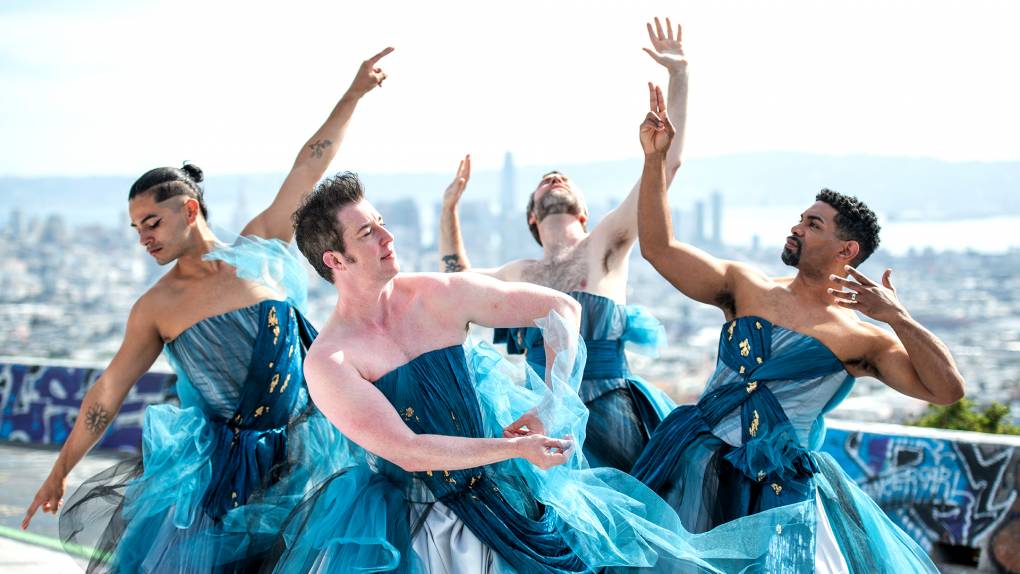
"caption": "Sean Dorsey Dance (from left to right): Héctor Jaime, Sean Dorsey, Nol Simonse, Will Woodward",
"description": "Sean Dorsey Dance (from left to right): Héctor Jaime, Sean Dorsey, Nol Simonse, Will Woodward",
"title": "SDforWP",
"credit": "Beth LaBerge",
"status": "inherit",
"altTag": "Four dancers in blue gowns are posing against a wide shot of San Franciso's skyline",
"isLoading": false,
"fetchFailed": false
},
"arts_13915201": {
"type": "attachments",
"id": "arts_13915201",
"meta": {
"index": "attachments_1716263798",
"site": "arts",
"id": "13915201",
"found": true
},
"parent": 13915069,
"imgSizes": {
"twentyfourteen-full-width": {
"file": "https://ww2.kqed.org/app/uploads/sites/2/2022/06/Rightnowish-Series-Banners-10-1038x576.png",
"width": 1038,
"mimeType": "image/png",
"height": 576
},
"thumbnail": {
"file": "https://ww2.kqed.org/app/uploads/sites/2/2022/06/Rightnowish-Series-Banners-10-160x90.png",
"width": 160,
"mimeType": "image/png",
"height": 90
},
"post-thumbnail": {
"file": "https://ww2.kqed.org/app/uploads/sites/2/2022/06/Rightnowish-Series-Banners-10-672x372.png",
"width": 672,
"mimeType": "image/png",
"height": 372
},
"kqedFullSize": {
"file": "https://ww2.kqed.org/app/uploads/sites/2/2022/06/Rightnowish-Series-Banners-10.png",
"width": 1920,
"height": 1080
},
"large": {
"file": "https://ww2.kqed.org/app/uploads/sites/2/2022/06/Rightnowish-Series-Banners-10-1020x574.png",
"width": 1020,
"mimeType": "image/png",
"height": 574
},
"1536x1536": {
"file": "https://ww2.kqed.org/app/uploads/sites/2/2022/06/Rightnowish-Series-Banners-10-1536x864.png",
"width": 1536,
"mimeType": "image/png",
"height": 864
},
"medium": {
"file": "https://ww2.kqed.org/app/uploads/sites/2/2022/06/Rightnowish-Series-Banners-10-800x450.png",
"width": 800,
"mimeType": "image/png",
"height": 450
},
"medium_large": {
"file": "https://ww2.kqed.org/app/uploads/sites/2/2022/06/Rightnowish-Series-Banners-10-768x432.png",
"width": 768,
"mimeType": "image/png",
"height": 432
}
},
"publishDate": 1656029236,
"modified": 1656029254,
"caption": "Nenna Joiner, owner of Feelmore Adult Gallery and the upcoming Feelmore Social Club in Downtown Oakland. ",
"description": null,
"title": "Rightnowish Series Banners (10)",
"credit": "Courtesy of Nenna Joiner",
"status": "inherit",
"altTag": null,
"isLoading": false,
"fetchFailed": false
},
"arts_13915085": {
"type": "attachments",
"id": "arts_13915085",
"meta": {
"index": "attachments_1716263798",
"site": "arts",
"id": "13915085",
"found": true
},
"parent": 13915084,
"imgSizes": {
"twentyfourteen-full-width": {
"file": "https://ww2.kqed.org/app/uploads/sites/2/2022/06/Screen-Shot-2022-06-21-at-2.40.35-PM-1038x576.png",
"width": 1038,
"mimeType": "image/png",
"height": 576
},
"thumbnail": {
"file": "https://ww2.kqed.org/app/uploads/sites/2/2022/06/Screen-Shot-2022-06-21-at-2.40.35-PM-160x96.png",
"width": 160,
"mimeType": "image/png",
"height": 96
},
"post-thumbnail": {
"file": "https://ww2.kqed.org/app/uploads/sites/2/2022/06/Screen-Shot-2022-06-21-at-2.40.35-PM-672x372.png",
"width": 672,
"mimeType": "image/png",
"height": 372
},
"kqedFullSize": {
"file": "https://ww2.kqed.org/app/uploads/sites/2/2022/06/Screen-Shot-2022-06-21-at-2.40.35-PM.png",
"width": 1594,
"height": 952
},
"large": {
"file": "https://ww2.kqed.org/app/uploads/sites/2/2022/06/Screen-Shot-2022-06-21-at-2.40.35-PM-1020x609.png",
"width": 1020,
"mimeType": "image/png",
"height": 609
},
"1536x1536": {
"file": "https://ww2.kqed.org/app/uploads/sites/2/2022/06/Screen-Shot-2022-06-21-at-2.40.35-PM-1536x917.png",
"width": 1536,
"mimeType": "image/png",
"height": 917
},
"medium": {
"file": "https://ww2.kqed.org/app/uploads/sites/2/2022/06/Screen-Shot-2022-06-21-at-2.40.35-PM-800x478.png",
"width": 800,
"mimeType": "image/png",
"height": 478
},
"medium_large": {
"file": "https://ww2.kqed.org/app/uploads/sites/2/2022/06/Screen-Shot-2022-06-21-at-2.40.35-PM-768x459.png",
"width": 768,
"mimeType": "image/png",
"height": 459
}
},
"publishDate": 1655847663,
"modified": 1655854171,
"caption": "Chloe Sherman, 'View from the backseat,' 1997.",
"description": null,
"title": "View from the backseat, 1997.",
"credit": "Courtesy the artist",
"status": "inherit",
"altTag": "A person with braided chin hair looks into the back seat of a vintage car.",
"isLoading": false,
"fetchFailed": false
},
"arts_13914460": {
"type": "attachments",
"id": "arts_13914460",
"meta": {
"index": "attachments_1716263798",
"site": "arts",
"id": "13914460",
"found": true
},
"parent": 13914459,
"imgSizes": {
"twentyfourteen-full-width": {
"file": "https://ww2.kqed.org/app/uploads/sites/2/2022/06/Screen-Shot-2022-06-06-at-2.58.31-PM-1038x576.png",
"width": 1038,
"mimeType": "image/png",
"height": 576
},
"thumbnail": {
"file": "https://ww2.kqed.org/app/uploads/sites/2/2022/06/Screen-Shot-2022-06-06-at-2.58.31-PM-160x115.png",
"width": 160,
"mimeType": "image/png",
"height": 115
},
"post-thumbnail": {
"file": "https://ww2.kqed.org/app/uploads/sites/2/2022/06/Screen-Shot-2022-06-06-at-2.58.31-PM-672x372.png",
"width": 672,
"mimeType": "image/png",
"height": 372
},
"kqedFullSize": {
"file": "https://ww2.kqed.org/app/uploads/sites/2/2022/06/Screen-Shot-2022-06-06-at-2.58.31-PM.png",
"width": 1946,
"height": 1394
},
"large": {
"file": "https://ww2.kqed.org/app/uploads/sites/2/2022/06/Screen-Shot-2022-06-06-at-2.58.31-PM-1020x731.png",
"width": 1020,
"mimeType": "image/png",
"height": 731
},
"1536x1536": {
"file": "https://ww2.kqed.org/app/uploads/sites/2/2022/06/Screen-Shot-2022-06-06-at-2.58.31-PM-1536x1100.png",
"width": 1536,
"mimeType": "image/png",
"height": 1100
},
"full-width": {
"file": "https://ww2.kqed.org/app/uploads/sites/2/2022/06/Screen-Shot-2022-06-06-at-2.58.31-PM-1920x1375.png",
"width": 1920,
"mimeType": "image/png",
"height": 1375
},
"medium": {
"file": "https://ww2.kqed.org/app/uploads/sites/2/2022/06/Screen-Shot-2022-06-06-at-2.58.31-PM-800x573.png",
"width": 800,
"mimeType": "image/png",
"height": 573
},
"medium_large": {
"file": "https://ww2.kqed.org/app/uploads/sites/2/2022/06/Screen-Shot-2022-06-06-at-2.58.31-PM-768x550.png",
"width": 768,
"mimeType": "image/png",
"height": 550
}
},
"publishDate": 1654552760,
"modified": 1654552803,
"caption": null,
"description": null,
"title": "Screen Shot 2022-06-06 at 2.58.31 PM",
"credit": "Courtesy of West Margin Press",
"status": "inherit",
"altTag": null,
"isLoading": false,
"fetchFailed": false
},
"arts_13914630": {
"type": "attachments",
"id": "arts_13914630",
"meta": {
"index": "attachments_1716263798",
"site": "arts",
"id": "13914630",
"found": true
},
"parent": 13914457,
"imgSizes": {
"twentyfourteen-full-width": {
"file": "https://ww2.kqed.org/app/uploads/sites/2/2022/06/Rightnowish-Series-Banners-7-1038x576.png",
"width": 1038,
"mimeType": "image/png",
"height": 576
},
"thumbnail": {
"file": "https://ww2.kqed.org/app/uploads/sites/2/2022/06/Rightnowish-Series-Banners-7-160x90.png",
"width": 160,
"mimeType": "image/png",
"height": 90
},
"post-thumbnail": {
"file": "https://ww2.kqed.org/app/uploads/sites/2/2022/06/Rightnowish-Series-Banners-7-672x372.png",
"width": 672,
"mimeType": "image/png",
"height": 372
},
"kqedFullSize": {
"file": "https://ww2.kqed.org/app/uploads/sites/2/2022/06/Rightnowish-Series-Banners-7.png",
"width": 1920,
"height": 1080
},
"large": {
"file": "https://ww2.kqed.org/app/uploads/sites/2/2022/06/Rightnowish-Series-Banners-7-1020x574.png",
"width": 1020,
"mimeType": "image/png",
"height": 574
},
"1536x1536": {
"file": "https://ww2.kqed.org/app/uploads/sites/2/2022/06/Rightnowish-Series-Banners-7-1536x864.png",
"width": 1536,
"mimeType": "image/png",
"height": 864
},
"medium": {
"file": "https://ww2.kqed.org/app/uploads/sites/2/2022/06/Rightnowish-Series-Banners-7-800x450.png",
"width": 800,
"mimeType": "image/png",
"height": 450
},
"medium_large": {
"file": "https://ww2.kqed.org/app/uploads/sites/2/2022/06/Rightnowish-Series-Banners-7-768x432.png",
"width": 768,
"mimeType": "image/png",
"height": 432
}
},
"publishDate": 1654803115,
"modified": 1654803470,
"caption": "Rodney Barnette, owner of The New Eagle Creek Saloon",
"description": null,
"title": "Rightnowish Series Banners (7)",
"credit": "Courtesy Rodney Barnette",
"status": "inherit",
"altTag": "Photo portrait of Rodney Barnette, owner of The New Eagle Creek Saloon, against colorful background",
"isLoading": false,
"fetchFailed": false
},
"arts_13914043": {
"type": "attachments",
"id": "arts_13914043",
"meta": {
"index": "attachments_1716263798",
"site": "arts",
"id": "13914043",
"found": true
},
"parent": 13914042,
"imgSizes": {
"twentyfourteen-full-width": {
"file": "https://ww2.kqed.org/app/uploads/sites/2/2022/05/smax-okonomiyaki-1038x576.jpg",
"width": 1038,
"mimeType": "image/jpeg",
"height": 576
},
"thumbnail": {
"file": "https://ww2.kqed.org/app/uploads/sites/2/2022/05/smax-okonomiyaki-160x90.jpg",
"width": 160,
"mimeType": "image/jpeg",
"height": 90
},
"post-thumbnail": {
"file": "https://ww2.kqed.org/app/uploads/sites/2/2022/05/smax-okonomiyaki-672x372.jpg",
"width": 672,
"mimeType": "image/jpeg",
"height": 372
},
"kqedFullSize": {
"file": "https://ww2.kqed.org/app/uploads/sites/2/2022/05/smax-okonomiyaki-scaled.jpg",
"width": 2560,
"height": 1440
},
"2048x2048": {
"file": "https://ww2.kqed.org/app/uploads/sites/2/2022/05/smax-okonomiyaki-2048x1152.jpg",
"width": 2048,
"mimeType": "image/jpeg",
"height": 1152
},
"large": {
"file": "https://ww2.kqed.org/app/uploads/sites/2/2022/05/smax-okonomiyaki-1020x574.jpg",
"width": 1020,
"mimeType": "image/jpeg",
"height": 574
},
"1536x1536": {
"file": "https://ww2.kqed.org/app/uploads/sites/2/2022/05/smax-okonomiyaki-1536x864.jpg",
"width": 1536,
"mimeType": "image/jpeg",
"height": 864
},
"full-width": {
"file": "https://ww2.kqed.org/app/uploads/sites/2/2022/05/smax-okonomiyaki-1920x1080.jpg",
"width": 1920,
"mimeType": "image/jpeg",
"height": 1080
},
"medium": {
"file": "https://ww2.kqed.org/app/uploads/sites/2/2022/05/smax-okonomiyaki-800x450.jpg",
"width": 800,
"mimeType": "image/jpeg",
"height": 450
},
"medium_large": {
"file": "https://ww2.kqed.org/app/uploads/sites/2/2022/05/smax-okonomiyaki-768x432.jpg",
"width": 768,
"mimeType": "image/jpeg",
"height": 432
}
},
"publishDate": 1653588620,
"modified": 1653591155,
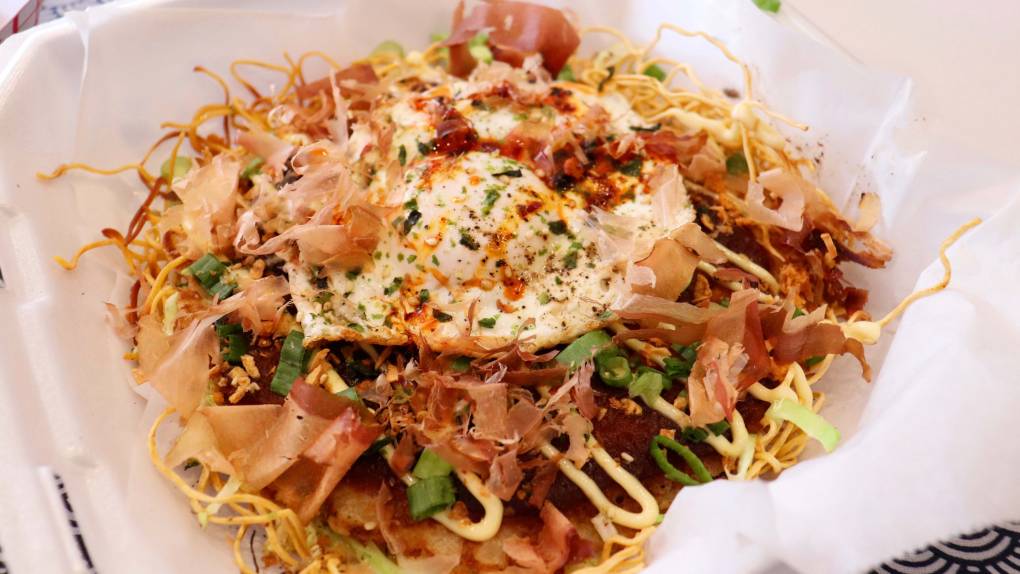
"caption": "The signature \"Animal Style\" okonomiyaki at SMAX—a veggie pancake with crispy noodles, secret sauce, bacon and more.",
"description": null,
"title": "smax-okonomiyaki",
"credit": "Alan Chazaro",
"status": "inherit",
"altTag": "A plate of okonomiyaki, which is a Japanese style pancake. The ingredients include a fried egg, dried fish, mayonnaise, and scallions, all drizzled on top.",
"isLoading": false,
"fetchFailed": false
},
"arts_13913206": {
"type": "attachments",
"id": "arts_13913206",
"meta": {
"index": "attachments_1716263798",
"site": "arts",
"id": "13913206",
"found": true
},
"parent": 13913188,
"imgSizes": {
"twentyfourteen-full-width": {
"file": "https://ww2.kqed.org/app/uploads/sites/2/2022/05/20220510_154817-1038x576.jpg",
"width": 1038,
"mimeType": "image/jpeg",
"height": 576
},
"thumbnail": {
"file": "https://ww2.kqed.org/app/uploads/sites/2/2022/05/20220510_154817-160x120.jpg",
"width": 160,
"mimeType": "image/jpeg",
"height": 120
},
"post-thumbnail": {
"file": "https://ww2.kqed.org/app/uploads/sites/2/2022/05/20220510_154817-672x372.jpg",
"width": 672,
"mimeType": "image/jpeg",
"height": 372
},
"kqedFullSize": {
"file": "https://ww2.kqed.org/app/uploads/sites/2/2022/05/20220510_154817-scaled-e1652302507360.jpg",
"width": 1920,
"height": 1440
},
"2048x2048": {
"file": "https://ww2.kqed.org/app/uploads/sites/2/2022/05/20220510_154817-2048x1536.jpg",
"width": 2048,
"mimeType": "image/jpeg",
"height": 1536
},
"large": {
"file": "https://ww2.kqed.org/app/uploads/sites/2/2022/05/20220510_154817-1020x765.jpg",
"width": 1020,
"mimeType": "image/jpeg",
"height": 765
},
"1536x1536": {
"file": "https://ww2.kqed.org/app/uploads/sites/2/2022/05/20220510_154817-1536x1152.jpg",
"width": 1536,
"mimeType": "image/jpeg",
"height": 1152
},
"full-width": {
"file": "https://ww2.kqed.org/app/uploads/sites/2/2022/05/20220510_154817-1920x1440.jpg",
"width": 1920,
"mimeType": "image/jpeg",
"height": 1440
},
"medium": {
"file": "https://ww2.kqed.org/app/uploads/sites/2/2022/05/20220510_154817-800x600.jpg",
"width": 800,
"mimeType": "image/jpeg",
"height": 600
},
"medium_large": {
"file": "https://ww2.kqed.org/app/uploads/sites/2/2022/05/20220510_154817-768x576.jpg",
"width": 768,
"mimeType": "image/jpeg",
"height": 576
}
},
"publishDate": 1652302368,
"modified": 1652302690,
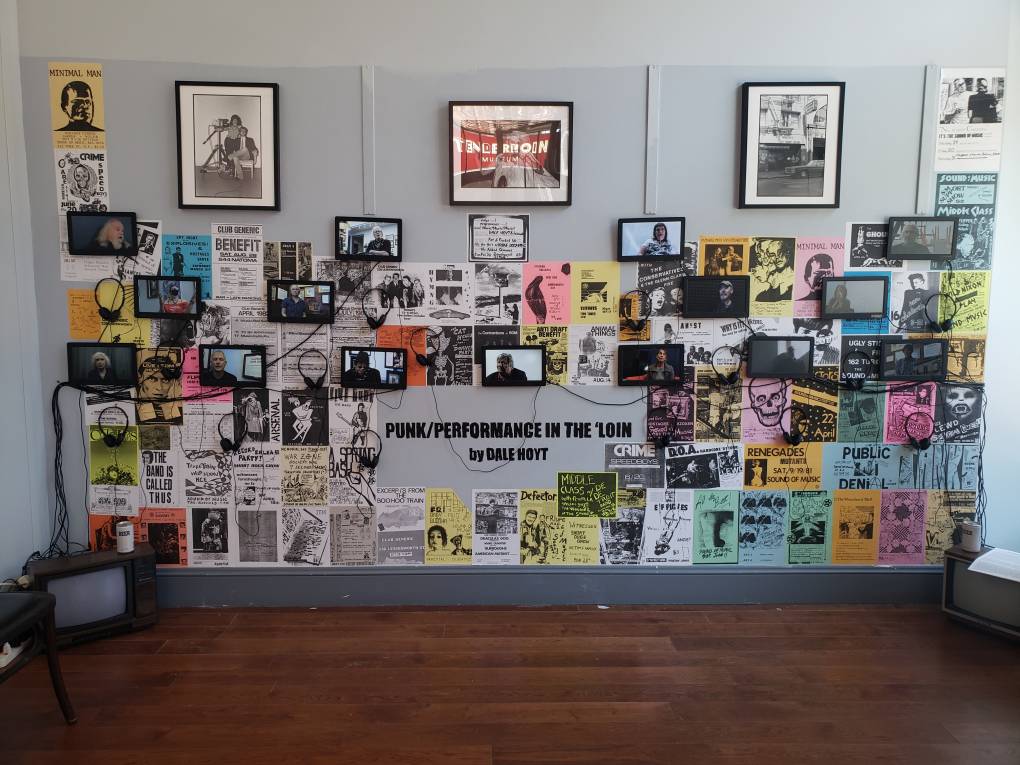
"caption": "'Punk/Performance in the 'Loin' by Dale Hoyt offers glimpses of San Francisco's punk rock history told by 15 subjects who lived it.",
"description": null,
"title": "'Punk/Performance in the 'Loin' by Dale Hoyt offers glimpses of San Francisco's punk rock history told by 15 subjects who lived it.",
"credit": "Rae Alexandra",
"status": "inherit",
"altTag": "A chaotic looking museum wall, covered in scattered flyers, three large portraits and 15 small TV screens with attached headphones.",
"isLoading": false,
"fetchFailed": false
}
},
"audioPlayerReducer": {
"postId": "stream_live",
"isPaused": true,
"isPlaying": false,
"pfsActive": false,
"pledgeModalIsOpen": true,
"playerDrawerIsOpen": false,
"liveAudioPlayStartedAt": 0,
"liveAudioPlayContext": ""
},
"authorsReducer": {
"byline_arts_13915486": {
"type": "authors",
"id": "byline_arts_13915486",
"meta": {
"override": true
},
"slug": "byline_arts_13915486",
"name": "Lindsay Gauthier",
"isLoading": false
},
"ralexandra": {
"type": "authors",
"id": "11242",
"meta": {
"index": "authors_1716337520",
"id": "11242",
"found": true
},
"name": "Rae Alexandra",
"firstName": "Rae",
"lastName": "Alexandra",
"slug": "ralexandra",
"email": "ralexandra@kqed.org",
"display_author_email": true,
"staff_mastheads": [],
"title": "Reporter/Producer",
"bio": "Rae Alexandra is a Reporter/Producer for KQED Arts & Culture, and the creator/author of the \u003ca href=\"https://www.kqed.org/arts/program/rebel-girls-from-bay-area-history\">Rebel Girls From Bay Area History\u003c/a> and \u003ca href=\"https://www.kqed.org/bizarrebayarea\">Bizarre Bay Area\u003c/a> series. Her debut book, \u003ca href=\"https://citylights.com/politics-current-events-history/unsung-heroines35-women-who-changed/\">Unsung Heroines: 35 Women Who Changed the Bay Area\u003c/a> was published by City Lights in March 2026. In 2023, Rae was awarded an SPJ Excellence in Journalism Award for Arts & Culture. Rae was born and raised in Wales and subsequently — even after two decades in Northern California — still uses phrases that regularly baffle her coworkers.",
"avatar": "https://secure.gravatar.com/avatar/edfee8176c80cc0a382b051190f5341997df378a934a5774dcb0977732dfd401?s=600&d=blank&r=g",
"twitter": null,
"bluesky": null,
"facebook": null,
"instagram": null,
"linkedin": null,
"sites": [
{
"site": "arts",
"roles": [
"subscriber"
]
},
{
"site": "news",
"roles": [
"subscriber"
]
},
{
"site": "pop",
"roles": [
"subscriber"
]
},
{
"site": "bayareabites",
"roles": [
"subscriber"
]
},
{
"site": "science",
"roles": [
"subscriber"
]
}
],
"headData": {
"title": "Rae Alexandra | KQED",
"description": "Reporter/Producer",
"ogImgSrc": "https://secure.gravatar.com/avatar/edfee8176c80cc0a382b051190f5341997df378a934a5774dcb0977732dfd401?s=600&d=blank&r=g",
"twImgSrc": "https://secure.gravatar.com/avatar/edfee8176c80cc0a382b051190f5341997df378a934a5774dcb0977732dfd401?s=600&d=blank&r=g"
},
"isLoading": false,
"link": "/author/ralexandra"
},
"ogpenn": {
"type": "authors",
"id": "11491",
"meta": {
"index": "authors_1716337520",
"id": "11491",
"found": true
},
"name": "Pendarvis Harshaw",
"firstName": "Pendarvis",
"lastName": "Harshaw",
"slug": "ogpenn",
"email": "ogpenn@gmail.com",
"display_author_email": false,
"staff_mastheads": [
"arts"
],
"title": "Community Engagement Reporter",
"bio": "Pendarvis Harshaw is an educator, host and writer with KQED Arts.",
"avatar": "https://secure.gravatar.com/avatar/972b77ee8e3f346ae2b00622661187fbfabd059b5693bbdc1475ea7a722fd4cd?s=600&d=blank&r=g",
"twitter": null,
"bluesky": null,
"facebook": null,
"instagram": "ogpenn",
"linkedin": null,
"sites": [
{
"site": "arts",
"roles": [
"administrator"
]
},
{
"site": "news",
"roles": [
"editor"
]
},
{
"site": "bayareabites",
"roles": [
"author"
]
},
{
"site": "hiphop",
"roles": [
"editor"
]
}
],
"headData": {
"title": "Pendarvis Harshaw | KQED",
"description": "Community Engagement Reporter",
"ogImgSrc": "https://secure.gravatar.com/avatar/972b77ee8e3f346ae2b00622661187fbfabd059b5693bbdc1475ea7a722fd4cd?s=600&d=blank&r=g",
"twImgSrc": "https://secure.gravatar.com/avatar/972b77ee8e3f346ae2b00622661187fbfabd059b5693bbdc1475ea7a722fd4cd?s=600&d=blank&r=g"
},
"isLoading": false,
"link": "/author/ogpenn"
},
"mmedina": {
"type": "authors",
"id": "11528",
"meta": {
"index": "authors_1716337520",
"id": "11528",
"found": true
},
"name": "Marisol Medina-Cadena",
"firstName": "Marisol",
"lastName": "Medina-Cadena",
"slug": "mmedina",
"email": "mmedina@KQED.org",
"display_author_email": true,
"staff_mastheads": [],
"title": "Producer, Rightnowish Podcast",
"bio": "Marisol Medina-Cadena is a radio reporter and podcast producer. Before working at KQED, she produced for PBS member station, KCET, in Los Angeles. In 2017, Marisol won an Emmy Award for her work on the televised documentary, \u003cem>City Rising\u003c/em>, examining California's affordable housing crisis and the historical roots of gentrification.",
"avatar": "https://secure.gravatar.com/avatar/6c3db46a1cabb5e1fe9a365b5f4e681e?s=600&d=blank&r=g",
"twitter": "marisolreports",
"facebook": null,
"instagram": null,
"linkedin": null,
"sites": [
{
"site": "arts",
"roles": []
},
{
"site": "news",
"roles": [
"edit_others_posts"
]
}
],
"headData": {
"title": "Marisol Medina-Cadena | KQED",
"description": "Producer, Rightnowish Podcast",
"ogImgSrc": "https://secure.gravatar.com/avatar/6c3db46a1cabb5e1fe9a365b5f4e681e?s=600&d=blank&r=g",
"twImgSrc": "https://secure.gravatar.com/avatar/6c3db46a1cabb5e1fe9a365b5f4e681e?s=600&d=blank&r=g"
},
"isLoading": false,
"link": "/author/mmedina"
},
"achazaro": {
"type": "authors",
"id": "11748",
"meta": {
"index": "authors_1716337520",
"id": "11748",
"found": true
},
"name": "Alan Chazaro",
"firstName": "Alan",
"lastName": "Chazaro",
"slug": "achazaro",
"email": "agchazaro@gmail.com",
"display_author_email": true,
"staff_mastheads": [],
"title": "Food Writer and Reporter",
"bio": "Alan Chazaro is the author of \u003cem>This Is Not a Frank Ocean Cover Album\u003c/em> (Black Lawrence Press, 2019), \u003cem>Piñata Theory\u003c/em> (Black Lawrence Press, 2020), and \u003cem>Notes from the Eastern Span of the Bay Bridge\u003c/em> (Ghost City Press, 2021). He is a graduate of June Jordan’s Poetry for the People program at UC Berkeley and a former Lawrence Ferlinghetti Fellow at the University of San Francisco. He writes about sports, food, art, music, education, and culture while repping the Bay on \u003ca href=\"https://twitter.com/alan_chazaro\">Twitter\u003c/a> and \u003ca href=\"https://www.instagram.com/alan_chazaro/?hl=en\">Instagram\u003c/a> at @alan_chazaro.",
"avatar": "https://secure.gravatar.com/avatar/ea8b6dd970fc5c29e7a188e7d5861df7?s=600&d=blank&r=g",
"twitter": "alan_chazaro",
"facebook": null,
"instagram": null,
"linkedin": null,
"sites": [
{
"site": "arts",
"roles": [
"contributor"
]
},
{
"site": "news",
"roles": [
"editor"
]
}
],
"headData": {
"title": "Alan Chazaro | KQED",
"description": "Food Writer and Reporter",
"ogImgSrc": "https://secure.gravatar.com/avatar/ea8b6dd970fc5c29e7a188e7d5861df7?s=600&d=blank&r=g",
"twImgSrc": "https://secure.gravatar.com/avatar/ea8b6dd970fc5c29e7a188e7d5861df7?s=600&d=blank&r=g"
},
"isLoading": false,
"link": "/author/achazaro"
},
"crose": {
"type": "authors",
"id": "11808",
"meta": {
"index": "authors_1716337520",
"id": "11808",
"found": true
},
"name": "Corey Antonio Rose",
"firstName": "Corey Antonio",
"lastName": "Rose",
"slug": "crose",
"email": "crose@kqed.org",
"display_author_email": false,
"staff_mastheads": [],
"title": "KQED Contributor",
"bio": "Corey Antonio Rose (he/him/his) is an audio producer, reporter, and storyteller from Jacksonville, Florida. His work explores the intersections of Public Health, Culture, Education, and Race/Gender Justice. He’s produced content for KQED, The Poynter Institute, University of California Berkeley, and the Commonwealth Club of California.\r\n@CoreyARose",
"avatar": "https://secure.gravatar.com/avatar/83cdeb0866f12c5eb609d6283e9cc8da?s=600&d=blank&r=g",
"twitter": "CoreyARose",
"facebook": null,
"instagram": null,
"linkedin": null,
"sites": [
{
"site": "arts",
"roles": []
}
],
"headData": {
"title": "Corey Antonio Rose | KQED",
"description": "KQED Contributor",
"ogImgSrc": "https://secure.gravatar.com/avatar/83cdeb0866f12c5eb609d6283e9cc8da?s=600&d=blank&r=g",
"twImgSrc": "https://secure.gravatar.com/avatar/83cdeb0866f12c5eb609d6283e9cc8da?s=600&d=blank&r=g"
},
"isLoading": false,
"link": "/author/crose"
}
},
"pagesReducer": {
"arts_tag_san-francisco": {
"type": "terms",
"id": "arts_1146",
"meta": {
"index": "terms_1716263798",
"site": "arts",
"id": "1146",
"score": 6.722821
},
"featImg": null,
"name": "San Francisco",
"description": null,
"taxonomy": "tag",
"headData": {
"twImgId": null,
"twTitle": null,
"ogTitle": null,
"ogImgId": null,
"twDescription": null,
"description": null,
"title": "San Francisco Archives | KQED Arts",
"ogDescription": null
},
"ttid": 701,
"slug": "san-francisco",
"isLoading": false,
"title": "San Francisco",
"pageMeta": {
"site": "arts",
"WpPageTemplate": "page-topic-editorial",
"currentPage": 40
},
"blocks": [
{
"blockName": "kqed/post-list",
"attrs": {
"layout": "cardArticle2",
"query": "posts/arts?tag=san-francisco",
"seeMore": false,
"paginated": true,
"page": 40
}
},
{
"blockName": "kqed/ad"
}
]
}
},
"pfsSessionReducer": {},
"postsReducer": {
"stream_live": {
"type": "live",
"id": "stream_live",
"audioUrl": "https://streams.kqed.org/kqedradio",
"title": "Live Stream",
"excerpt": "Live Stream information currently unavailable.",
"link": "/radio",
"featImg": "",
"label": {
"name": "KQED Live",
"link": "/"
}
},
"stream_kqedNewscast": {
"type": "posts",
"id": "stream_kqedNewscast",
"audioUrl": "https://www.kqed.org/.stream/anon/radio/RDnews/newscast.mp3?_=1",
"title": "KQED Newscast",
"featImg": "",
"label": {
"name": "88.5 FM",
"link": "/"
}
},
"arts_13917509": {
"type": "posts",
"id": "arts_13917509",
"meta": {
"index": "posts_1716263798",
"site": "arts",
"id": "13917509",
"score": null,
"sort": [
1660298436000
]
},
"guestAuthors": [],
"slug": "dispatch-from-parker-elementary-with-tongo-eisen-martin",
"title": "Dispatch From Parker Elementary with Tongo Eisen-Martin",
"publishDate": 1660298436,
"format": "audio",
"headTitle": "Dispatch From Parker Elementary with Tongo Eisen-Martin | KQED",
"labelTerm": {
"term": 8720,
"site": "arts"
},
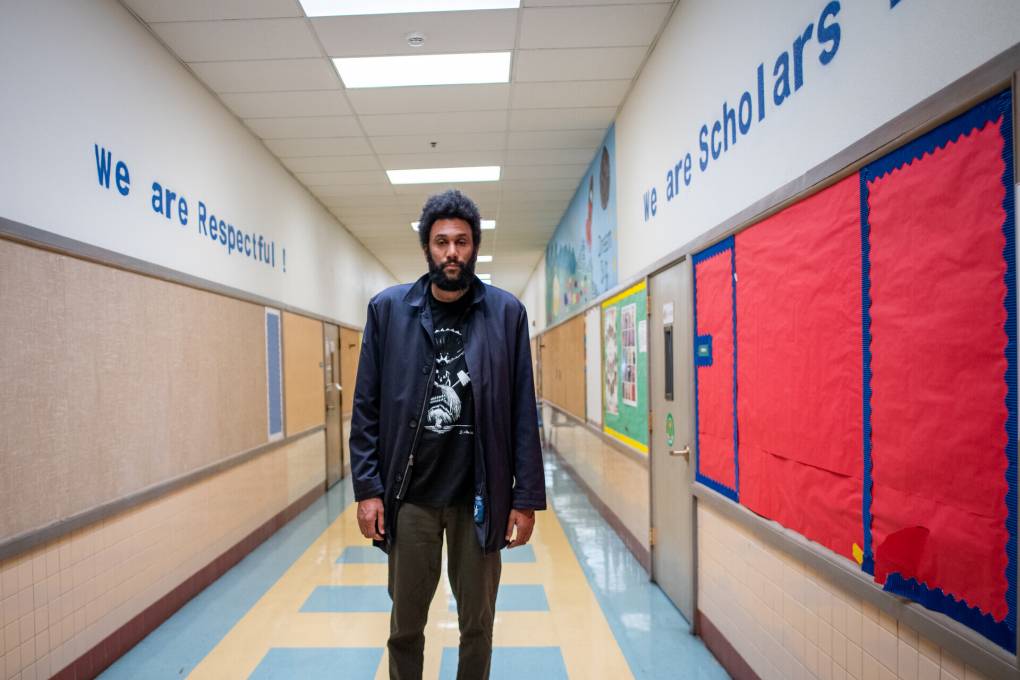
"content": "\u003cp id=\"embed-code\" class=\"inconsolata\">\u003cem>\u003cstrong>Hey Rightnowish listeners, you can help shape the future of the podcast! \u003cb data-stringify-type=\"bold\">\u003ci data-stringify-type=\"italic\">Just \u003c/i>\u003c/b>\u003cb data-stringify-type=\"bold\">\u003ci data-stringify-type=\"italic\">\u003ca class=\"c-link\" href=\"https://survey.alchemer.com/s3/6838454/2e522245cbb6\" target=\"_blank\" rel=\"noopener noreferrer\" data-stringify-link=\"https://survey.alchemer.com/s3/6838454/2e522245cbb6\" data-sk=\"tooltip_parent\" data-remove-tab-index=\"true\">fill out a short survey\u003c/a>\u003c/i>\u003c/b>\u003cb data-stringify-type=\"bold\">\u003ci data-stringify-type=\"italic\">.\u003c/i>\u003c/b>\u003c/strong>\u003c/em>\u003c/p>\n\u003cp class=\"inconsolata\">\n\u003c!-- iframe plugin v.4.3 wordpress.org/plugins/iframe/ -->\u003cbr>\n\u003ciframe loading=\"lazy\" frameborder=\"0\" height=\"200\" scrolling=\"no\" src=\"https://playlist.megaphone.fm?e=KQINC6941179634&light=true\" width=\"100%\" class=\"iframe-class\">\u003c/iframe>\n\u003c/p>\n\u003cp class=\"inconsolata\">Last year, renowned writer and San Francisco Poet Laureate, \u003ca href=\"https://www.instagram.com/_tongogara_/\" target=\"_blank\" rel=\"noopener noreferrer\">Tongo Eisen-Martin\u003c/a>, told us that it’s not enough to simply be a poet. “The poet needs to just come on down to the trenches,” he said, explaining that quality writing comes from the lived experience of participating in community activism.\u003c/p>\n\u003cp>In direct application of his own philosophy, Tongo has been involved with the occupation of Parker Elementary School, where organizers are fighting against the latest round of school closures in Oakland Unified School District — schools that are located in communities that are largely populated by Black and brown students.\u003c/p>\n\u003cp>Tongo has been a part of the group’s Freedom Friday events, where artists of all sorts are invited to show up and perform.\u003c/p>\n\u003cp>\u003cb>“We have poets and (an) open mic,” Tongo says during a recent phone call. “We also intersperse political dialogue in between the poets, making sure that everyone knows what we doing here.”\u003c/b>\u003c/p>\n\u003cp>\u003ca href=\"https://www.kqed.org/arts/13916674/tongo-eisen-martin-poet-laureate-parker-occupied-school-city-lights\" target=\"_blank\" rel=\"noopener noreferrer\">The ongoing fight against school closures\u003c/a> has resulted in physical altercations, as well as legal actions. KQED will continue to share updates as the \u003ca href=\"https://www.kqed.org/news/11921807/parker-elementary-activists-demand-investigation-after-clash-with-ousd-security\">story progresses\u003c/a>.\u003c/p>\n\u003cp>In the meantime, we’re going into the archives this week to share Tongo’s poem, “A Sketch of Genocide.” The piece was included in his book, \u003cspan id=\"productTitle\" class=\"a-size-extra-large\">\u003cem>Heaven Is All Goodbyes\u003c/em>, which won a 2018 American Book Award. \u003c/span>\u003c/p>\n\u003cp>\u003cimg loading=\"lazy\" decoding=\"async\" class=\"aligncenter size-full wp-image-12127869\" src=\"https://ww2.kqed.org/app/uploads/sites/2/2016/09/Q.Logo_.Break_.jpg\" alt=\"\" width=\"800\" height=\"78\" srcset=\"https://cdn.kqed.org/wp-content/uploads/sites/2/2016/09/Q.Logo_.Break_.jpg 800w, https://cdn.kqed.org/wp-content/uploads/sites/2/2016/09/Q.Logo_.Break_-400x39.jpg 400w, https://cdn.kqed.org/wp-content/uploads/sites/2/2016/09/Q.Logo_.Break_-768x75.jpg 768w\" sizes=\"(max-width: 800px) 100vw, 800px\">\u003c/p>\n\u003cp>\u003cstrong>\u003cem>Rightnowish is an arts and culture podcast produced at KQED. Listen to it wherever you get your podcasts or click the play button at the top of this page and subscribe to the show on \u003ca href=\"https://www.npr.org/podcasts/721590300/rightnowish\">NPR One\u003c/a>, \u003ca href=\"https://open.spotify.com/show/7kEJuafTzTVan7B78ttz1I\">Spotify\u003c/a>, \u003ca href=\"https://podcasts.apple.com/us/podcast/rightnowish/id1482187648\">Apple Podcasts\u003c/a>, \u003ca href=\"https://tunein.com/podcasts/Arts--Culture-Podcasts/Rightnowish-p1258245/\">TuneIn\u003c/a>, \u003ca href=\"https://www.stitcher.com/podcast/kqed/rightnowish\">Stitcher\u003c/a> or wherever you get your podcasts. \u003c/em>\u003c/strong>\u003c/p>\n\u003cp>[ad fullwidth]\u003c/p>\n\u003cp>\u003c/p>\n",
"blocks": [],
"excerpt": null,
"status": "publish",
"parent": 0,
"modified": 1726759352,
"stats": {
"hasAudio": true,
"hasVideo": false,
"hasChartOrMap": false,
"iframeSrcs": [],
"hasGoogleForm": false,
"hasGallery": false,
"hasHearkenModule": false,
"hasPolis": false,
"paragraphCount": 9,
"wordCount": 305
},
"headData": {
"title": "Dispatch From Parker Elementary with Tongo Eisen-Martin | KQED",
"description": "Hey Rightnowish listeners, you can help shape the future of the podcast! Just fill out a short survey. Last year, renowned writer and San Francisco Poet Laureate, Tongo Eisen-Martin, told us that it's not enough to simply be a poet. "The poet needs to just come on down to the trenches," he said, explaining that quality writing comes from the lived experience of participating in community activism. In direct application of his own philosophy, Tongo has been involved with the occupation of Parker Elementary School, where organizers are fighting against the latest round of school closures in Oakland Unified School District",
"ogTitle": "",
"ogDescription": "",
"ogImgId": "",
"twTitle": "",
"twDescription": "",
"twImgId": "",
"schema": {
"@context": "https://schema.org",
"@type": "Article",
"headline": "Dispatch From Parker Elementary with Tongo Eisen-Martin",
"datePublished": "2022-08-12T03:00:36-07:00",
"dateModified": "2024-09-19T08:22:32-07:00",
"image": "https://cdn.kqed.org/wp-content/uploads/2020/02/KQED-OG-Image@1x.png"
}
},
"audioUrl": "https://www.podtrac.com/pts/redirect.mp3/traffic.megaphone.fm/KQINC6941179634.mp3?updated=1660272981",
"sticky": false,
"excludeFromSiteSearch": "Include",
"path": "/arts/13917509/dispatch-from-parker-elementary-with-tongo-eisen-martin",
"audioTrackLength": null,
"parsedContent": [
{
"type": "contentString",
"content": "\u003cdiv class=\"post-body\">\u003cp>\u003cp id=\"embed-code\" class=\"inconsolata\">\u003cem>\u003cstrong>Hey Rightnowish listeners, you can help shape the future of the podcast! \u003cb data-stringify-type=\"bold\">\u003ci data-stringify-type=\"italic\">Just \u003c/i>\u003c/b>\u003cb data-stringify-type=\"bold\">\u003ci data-stringify-type=\"italic\">\u003ca class=\"c-link\" href=\"https://survey.alchemer.com/s3/6838454/2e522245cbb6\" target=\"_blank\" rel=\"noopener noreferrer\" data-stringify-link=\"https://survey.alchemer.com/s3/6838454/2e522245cbb6\" data-sk=\"tooltip_parent\" data-remove-tab-index=\"true\">fill out a short survey\u003c/a>\u003c/i>\u003c/b>\u003cb data-stringify-type=\"bold\">\u003ci data-stringify-type=\"italic\">.\u003c/i>\u003c/b>\u003c/strong>\u003c/em>\u003c/p>\n\u003cp class=\"inconsolata\">\n\u003c!-- iframe plugin v.4.3 wordpress.org/plugins/iframe/ -->\u003cbr>\n\u003ciframe loading=\"lazy\" frameborder=\"0\" height=\"200\" scrolling=\"no\" src=\"https://playlist.megaphone.fm?e=KQINC6941179634&light=true\" width=\"100%\" class=\"iframe-class\">\u003c/iframe>\n\u003c/p>\n\u003cp class=\"inconsolata\">Last year, renowned writer and San Francisco Poet Laureate, \u003ca href=\"https://www.instagram.com/_tongogara_/\" target=\"_blank\" rel=\"noopener noreferrer\">Tongo Eisen-Martin\u003c/a>, told us that it’s not enough to simply be a poet. “The poet needs to just come on down to the trenches,” he said, explaining that quality writing comes from the lived experience of participating in community activism.\u003c/p>\n\u003cp>In direct application of his own philosophy, Tongo has been involved with the occupation of Parker Elementary School, where organizers are fighting against the latest round of school closures in Oakland Unified School District — schools that are located in communities that are largely populated by Black and brown students.\u003c/p>\n\u003cp>Tongo has been a part of the group’s Freedom Friday events, where artists of all sorts are invited to show up and perform.\u003c/p>\n\u003cp>\u003cb>“We have poets and (an) open mic,” Tongo says during a recent phone call. “We also intersperse political dialogue in between the poets, making sure that everyone knows what we doing here.”\u003c/b>\u003c/p>\n\u003cp>\u003ca href=\"https://www.kqed.org/arts/13916674/tongo-eisen-martin-poet-laureate-parker-occupied-school-city-lights\" target=\"_blank\" rel=\"noopener noreferrer\">The ongoing fight against school closures\u003c/a> has resulted in physical altercations, as well as legal actions. KQED will continue to share updates as the \u003ca href=\"https://www.kqed.org/news/11921807/parker-elementary-activists-demand-investigation-after-clash-with-ousd-security\">story progresses\u003c/a>.\u003c/p>\n\u003cp>In the meantime, we’re going into the archives this week to share Tongo’s poem, “A Sketch of Genocide.” The piece was included in his book, \u003cspan id=\"productTitle\" class=\"a-size-extra-large\">\u003cem>Heaven Is All Goodbyes\u003c/em>, which won a 2018 American Book Award. \u003c/span>\u003c/p>\n\u003cp>\u003cimg loading=\"lazy\" decoding=\"async\" class=\"aligncenter size-full wp-image-12127869\" src=\"https://ww2.kqed.org/app/uploads/sites/2/2016/09/Q.Logo_.Break_.jpg\" alt=\"\" width=\"800\" height=\"78\" srcset=\"https://cdn.kqed.org/wp-content/uploads/sites/2/2016/09/Q.Logo_.Break_.jpg 800w, https://cdn.kqed.org/wp-content/uploads/sites/2/2016/09/Q.Logo_.Break_-400x39.jpg 400w, https://cdn.kqed.org/wp-content/uploads/sites/2/2016/09/Q.Logo_.Break_-768x75.jpg 768w\" sizes=\"(max-width: 800px) 100vw, 800px\">\u003c/p>\n\u003cp>\u003cstrong>\u003cem>Rightnowish is an arts and culture podcast produced at KQED. Listen to it wherever you get your podcasts or click the play button at the top of this page and subscribe to the show on \u003ca href=\"https://www.npr.org/podcasts/721590300/rightnowish\">NPR One\u003c/a>, \u003ca href=\"https://open.spotify.com/show/7kEJuafTzTVan7B78ttz1I\">Spotify\u003c/a>, \u003ca href=\"https://podcasts.apple.com/us/podcast/rightnowish/id1482187648\">Apple Podcasts\u003c/a>, \u003ca href=\"https://tunein.com/podcasts/Arts--Culture-Podcasts/Rightnowish-p1258245/\">TuneIn\u003c/a>, \u003ca href=\"https://www.stitcher.com/podcast/kqed/rightnowish\">Stitcher\u003c/a> or wherever you get your podcasts. \u003c/em>\u003c/strong>\u003c/p>\n\u003cp>\u003c/p>\u003c/div>",
"attributes": {
"named": {},
"numeric": []
}
},
{
"type": "component",
"content": "",
"name": "ad",
"attributes": {
"named": {
"label": "fullwidth"
},
"numeric": [
"fullwidth"
]
}
},
{
"type": "contentString",
"content": "\u003cdiv class=\"post-body\">\u003cp>\u003c/p>\n\u003cp>\u003c/p>\n\u003c/div>\u003c/p>",
"attributes": {
"named": {},
"numeric": []
}
}
],
"link": "/arts/13917509/dispatch-from-parker-elementary-with-tongo-eisen-martin",
"authors": [
"11491",
"11528"
],
"programs": [
"arts_8720"
],
"categories": [
"arts_1",
"arts_73",
"arts_21759"
],
"tags": [
"arts_820",
"arts_8167",
"arts_1143",
"arts_1496",
"arts_1756",
"arts_6764",
"arts_1146",
"arts_2209"
],
"featImg": "arts_13917510",
"label": "arts_8720"
},
"arts_13916301": {
"type": "posts",
"id": "arts_13916301",
"meta": {
"index": "posts_1716263798",
"site": "arts",
"id": "13916301",
"score": null,
"sort": [
1658513350000
]
},
"guestAuthors": [],
"slug": "enter-the-wildly-cheesy-world-of-korean-corn-dogs-at-stix",
"title": "Enter the Wildly Cheesy World of Korean Corn Dogs at STIX",
"publishDate": 1658513350,
"format": "standard",
"headTitle": "Enter the Wildly Cheesy World of Korean Corn Dogs at STIX | KQED",
"labelTerm": {},
"content": "\u003cp>\u003cb>\u003ci>¡Hella Hungry! is a column about Bay Area foodmakers, exploring the region’s culinary cultures through the mouth of a first-generation local.\u003c/i>\u003c/b>\u003c/p>\n\u003cp>\u003cspan style=\"font-weight: 400\">Korean corn dogs are not for the faint of stomach. With eye-popping size and a multitude of customizable ingredients, the show-stopping dogs on a stick have earned their keep among Instagrammers and TikTokers from Seoul to San Francisco with their fun geometric shapes and extra-stretchy cheese fillings. \u003c/span>\u003ci>\u003cspan style=\"font-weight: 400\">Bon Appétit \u003c/span>\u003c/i>\u003cspan style=\"font-weight: 400\">even officially named 2021 “\u003c/span>\u003ca href=\"https://www.bonappetit.com/story/korean-corn-dogs\">\u003cspan style=\"font-weight: 400\">the Year of the Korean Corn Dog.\u003c/span>\u003c/a>\u003cspan style=\"font-weight: 400\">” \u003c/span>\u003c/p>\n\u003cp>\u003cspan style=\"font-weight: 400\">Popularized on social media through videos of the \u003ca href=\"https://www.instagram.com/p/B0BXjLZBq2j/\">slow-motion pull of cheese\u003c/a> with each bite, these corn dogs are a hyperized version of the American corn dog, with bigger, bolder and chewier options. You might get a ramen dog coated in panko with mozzarella cheese and wasabi mayo. Or, you can try a sugar-dusted fried-potato version with a beef wiener that’s drizzled with mustard. You can also mix up your options, like adding a half-beef, half-cheese filling, with Hot Cheetos crumbs and spicy mayo as dressing. There are no limits to the culinary imagination you can fit into your stomach. \u003c/span>\u003c/p>\n\u003cp>https://www.instagram.com/p/CUVm_upPL9Q/\u003c/p>\n\u003cp>\u003cspan style=\"font-weight: 400\">These stylized takes on the corn dog have been a staple in South Korea since 2016, but until recently they’ve been relatively elusive in the Bay. \u003ca href=\"https://www.instagram.com/myungranghotdogcupertino/?hl=en\">The Korean originator of these corn dogs, the Myungrang Hot Dog\u003c/a> chain, opened its first Bay Area location in Cupertino last summer, but \u003ca href=\"https://www.stixcorndogs.com/\">STIX\u003c/a>—a locally-owned take on the doggies—was the first to bring the craze to San Francisco proper in 2019. Between massive bites of a cornflake-and-sugar crusted corn dog, I caught up with STIX co-founder Emily Hui at her new shop in Burlingame to chat about how she brought one of social media’s biggest food trends to our region.\u003c/span>\u003c/p>\n\u003cp>[ad fullwidth]\u003c/p>\n\u003cp>\u003ci>\u003cspan style=\"font-weight: 400\">This interview has been edited for length and clarity.\u003c/span>\u003c/i>\u003c/p>\n\u003cp>\u003cspan style=\"font-weight: 400\">********\u003c/span>\u003c/p>\n\u003cp>\u003cb>KQED: How would you describe a Korean corn dog to someone who doesn’t know what it is?\u003c/b>\u003c/p>\n\u003cp>\u003cspan style=\"font-weight: 400\">We get a lot of customers who don’t know what it is, actually—but afterwards they love it. American corn dogs use cornmeal for batter, but Korean uses regular flour and primarily rice flour. With rice flour, it gives the dough a really light, crispy and slightly chewy texture that is similar to mochi. For the interior we use all-beef hot dogs or mozzarella cheese. We serve a combo dog as well, which is half and half. But what makes Korean corn dogs special is that after skewering the hot dogs and cheese, the corn dogs are rolled in different toppings. Depending on what the customer wants, we have panko, french fries, Hot Cheetos, cornflakes, sugar and various other toppings to add to the texture and flavor. \u003c/span>\u003c/p>\n\u003cp>\u003c/p>\u003ccenter>\u003ciframe loading=\"lazy\" width=\"981\" height=\"557\" src=\"https://www.youtube.com/embed/7hzzap33Bhs\" title=\"Best Sandwich in San Francisco\" frameborder=\"0\" allow=\"accelerometer; clipboard-write; encrypted-media; gyroscope; picture-in-picture\" allowfullscreen>\u003c/iframe>\u003c/center>\n\u003cp>\u003cb>When did the original STIX in the Sunset District open, and when did you add the Burlingame location? \u003c/b>\u003c/p>\n\u003cp>\u003cspan style=\"font-weight: 400\">My husband [Michael] and I opened the Sunset location in 2019. My husband grew up in San Francisco and went to high school right up the street, at Lincoln. There are a lot of mom-and-pop shops around here. When we first visualized starting a business, we wanted to do something together, just for us. We wanted to create something that was all our own. The Sunset was the perfect location. It’s very family oriented and neighborhood friendly—it feels personal. We only do to-go orders from there, since it’s a smaller storefront. \u003c/span>\u003c/p>\n\u003cp>\u003cspan style=\"font-weight: 400\">We opened the Burlingame location in February [2022]. Downtown Burlingame is more high-end, and there’s big chains there. You can dine in at that location and the interior is remodeled. It seems like less people know what Korean corn dogs are, but they come in surprised and leave loving our food. It makes me feel really happy when we can introduce people to them.\u003c/span>\u003c/p>\n\u003cfigure id=\"attachment_13916486\" class=\"wp-caption alignnone\" style=\"max-width: 800px\">\u003cimg loading=\"lazy\" decoding=\"async\" class=\"wp-image-13916486 size-medium\" src=\"https://ww2.kqed.org/app/uploads/sites/2/2022/07/IMG_0946-800x1299.jpg\" alt=\"menu displaying the many food and drink options available at STIX in Burlingame\" width=\"800\" height=\"1299\" srcset=\"https://cdn.kqed.org/wp-content/uploads/sites/2/2022/07/IMG_0946-800x1299.jpg 800w, https://cdn.kqed.org/wp-content/uploads/sites/2/2022/07/IMG_0946-1020x1656.jpg 1020w, https://cdn.kqed.org/wp-content/uploads/sites/2/2022/07/IMG_0946-160x260.jpg 160w, https://cdn.kqed.org/wp-content/uploads/sites/2/2022/07/IMG_0946-768x1247.jpg 768w, https://cdn.kqed.org/wp-content/uploads/sites/2/2022/07/IMG_0946-946x1536.jpg 946w, https://cdn.kqed.org/wp-content/uploads/sites/2/2022/07/IMG_0946-1262x2048.jpg 1262w, https://cdn.kqed.org/wp-content/uploads/sites/2/2022/07/IMG_0946-1920x3117.jpg 1920w, https://cdn.kqed.org/wp-content/uploads/sites/2/2022/07/IMG_0946-scaled.jpg 1577w\" sizes=\"(max-width: 800px) 100vw, 800px\">\u003cfigcaption class=\"wp-caption-text\">STIX menu is a choose-your-own-adventure experience for adventurous foodies. \u003ccite>(Alan Chazaro)\u003c/cite>\u003c/figcaption>\u003c/figure>\n\u003cp>\u003cb>What inspired you to bring Korean corn dogs to the Bay Area?\u003c/b>\u003c/p>\n\u003cp>\u003cspan style=\"font-weight: 400\">I always wanted to open a restaurant but wasn’t sure what food to serve. I’m a foodie, so I’m on Instagram checking out the food trends and what new restaurants are out there. In 2018, the Korean corn dog was already starting to trend in the U.S. There were a few spots in LA but there wasn’t much in the Bay Area—and it was only in the South Bay. It’s funny because you think of San Francisco having a diverse foodie scene, but I was surprised that no one had opened a Korean corn dog restaurant. That’s when we decided to just do it ourselves. We had to bring it to San Francisco, and we did. It took trial and error to get the recipe right—the batter and the amount of it. But we eventually figured it out. \u003c/span>\u003c/p>\n\u003cp>\u003cb>Do you know the origin of the Korean corn dog?\u003c/b>\u003c/p>\n\u003cp>\u003cspan style=\"font-weight: 400\">It’s originally from South Korea’s night market scene. Street food [in Asia] is just big—lots of fun, creative foods. The first time we tried the corn dog was actually on a trip to Asia in 2019. It was all over in Taiwan, Japan, Hong Kong. We ate one in Japan. It was wow, just really delicious and I wanted more.\u003c/span>\u003c/p>\n\u003cp>\u003cb>You also serve boba and french fries, in addition to corn dogs. What are some of your most popular side items?\u003c/b>\u003c/p>\n\u003cp>\u003cspan style=\"font-weight: 400\">[aside postID='arts_13916044,arts_13914585,arts_13913985']We serve curly fries. The deluxe version has nacho cheese and Hot Cheetos crumbs. That’s on the menu because I just like curly fries a lot (laughs). I also love nacho cheese and Hot Cheetos. People really love it as well. For our drinks, we have varieties of lemonades like mango, strawberry, and the pink guava cooler, which is popular. It’s just a sweet and refreshing juice. We also have typical milk teas that are flavored. The house special is the banana milk. It’s blended with a fresh banana and milk; it’s very creamy and fresh. We added it to the menu because corn dogs are heavy, fried foods. So it’s nice to have a refreshing drink with it.\u003c/span>\u003c/p>\n\u003cp>\u003cb>What’s your personal favorite combo to order?\u003c/b>\u003c/p>\n\u003cp>\u003cspan style=\"font-weight: 400\">Potato is our best seller. It’s just a fun crust option and goes with anything. But I surprisingly like the regular. It’s panko covered. It’s crispy and not too heavy when you eat it. My husband likes the Flamin’ Hot Dog. It’s a Flamin’ Hot Cheetos corn dog. You can’t go wrong with that. \u003c/span>\u003c/p>\n\u003cp>\u003cb>Whenever you’re not eating Korean corn dogs, what are some of your favorite places for other Asian-inspired foods in the Bay Area?\u003c/b>\u003c/p>\n\u003cp>We really love ramen\u003cspan style=\"font-weight: 400\">—we go to HiroNori in San Mateo for that. There’s also a really good \u003ca href=\"https://www.kqed.org/checkplease/21299/check-please-you-gotta-try-this-reviews-swedish-pancakes-kalbijjim-lamb-beef-shawarma\">Korean braised beef dish at Daeho Kalbijjim & Beef Soup\u003c/a>. And for Japanese curry, we go to Volcano Kitchen. We try to support small, independent businesses in the area as much as we can.\u003c/span>\u003c/p>\n\u003cfigure id=\"attachment_13916487\" class=\"wp-caption alignnone\" style=\"max-width: 800px\">\u003cimg loading=\"lazy\" decoding=\"async\" class=\"wp-image-13916487 size-medium\" src=\"https://ww2.kqed.org/app/uploads/sites/2/2022/07/IMG_0983-800x533.jpg\" alt=\"neon signage displayed on the restaurant's wall that reads: "That's what cheese said!"\" width=\"800\" height=\"533\" srcset=\"https://cdn.kqed.org/wp-content/uploads/sites/2/2022/07/IMG_0983-800x533.jpg 800w, https://cdn.kqed.org/wp-content/uploads/sites/2/2022/07/IMG_0983-1020x680.jpg 1020w, https://cdn.kqed.org/wp-content/uploads/sites/2/2022/07/IMG_0983-160x107.jpg 160w, https://cdn.kqed.org/wp-content/uploads/sites/2/2022/07/IMG_0983-768x512.jpg 768w, https://cdn.kqed.org/wp-content/uploads/sites/2/2022/07/IMG_0983-1536x1024.jpg 1536w, https://cdn.kqed.org/wp-content/uploads/sites/2/2022/07/IMG_0983-2048x1365.jpg 2048w, https://cdn.kqed.org/wp-content/uploads/sites/2/2022/07/IMG_0983-1920x1280.jpg 1920w\" sizes=\"(max-width: 800px) 100vw, 800px\">\u003cfigcaption class=\"wp-caption-text\">Decorations inside the shop. \u003ccite>(Alan Chazaro)\u003c/cite>\u003c/figcaption>\u003c/figure>\n\u003cp>[ad floatright]\u003c/p>\n\u003cp>\u003cimg loading=\"lazy\" decoding=\"async\" class=\"size-full wp-image-12904247 aligncenter\" src=\"https://ww2.kqed.org/app/uploads/sites/2/2017/03/Q.Logo_.Break_-400x39.jpg\" alt=\"\" width=\"400\" height=\"39\" srcset=\"https://cdn.kqed.org/wp-content/uploads/sites/2/2017/03/Q.Logo_.Break_-400x39.jpg 400w, https://cdn.kqed.org/wp-content/uploads/sites/2/2017/03/Q.Logo_.Break_-400x39-160x16.jpg 160w, https://cdn.kqed.org/wp-content/uploads/sites/2/2017/03/Q.Logo_.Break_-400x39-240x23.jpg 240w, https://cdn.kqed.org/wp-content/uploads/sites/2/2017/03/Q.Logo_.Break_-400x39-375x37.jpg 375w\" sizes=\"(max-width: 400px) 100vw, 400px\">\u003c/p>\n\u003carticle class=\"routes-Site-routes-Post-components-Post-components-PostMinisite-___PostMinisite__mpost\">\n\u003cdiv class=\"post-body\">\n\u003cp style=\"text-align: left\">\u003cem>\u003ca href=\"https://www.instagram.com/stixsf/?hl=en\">STIX\u003c/a> San Francisco (\u003cspan class=\"LrzXr\">1353 Taraval St.) \u003c/span>is open every day except Wednesday; STIX Burlingame (\u003cspan class=\"LrzXr\">355 Broadway)\u003c/span> is open every day except Tuesday. Check their page for specific hours, which vary from noon to 6:30 or 7 pm closing.\u003c/em>\u003c/p>\n\u003c/div>\n\u003c/article>\n\n",
"blocks": [],
"excerpt": "The Instagram and TikTok sensation has found a home in the Bay Area.",
"status": "publish",
"parent": 0,
"modified": 1727131950,
"stats": {
"hasAudio": false,
"hasVideo": true,
"hasChartOrMap": false,
"iframeSrcs": [],
"hasGoogleForm": false,
"hasGallery": false,
"hasHearkenModule": false,
"hasPolis": false,
"paragraphCount": 25,
"wordCount": 1292
},
"headData": {
"title": "Enter the Wildly Cheesy World of Korean Corn Dogs at STIX | KQED",
"description": "The Instagram and TikTok sensation has found a home in the Bay Area.",
"ogTitle": "",
"ogDescription": "",
"ogImgId": "",
"twTitle": "",
"twDescription": "",
"twImgId": "",
"schema": {
"@context": "https://schema.org",
"@type": "Article",
"headline": "Enter the Wildly Cheesy World of Korean Corn Dogs at STIX",
"datePublished": "2022-07-22T11:09:10-07:00",
"dateModified": "2024-09-23T15:52:30-07:00",
"image": "https://cdn.kqed.org/wp-content/uploads/2020/02/KQED-OG-Image@1x.png"
}
},
"source": "Food",
"sourceUrl": "https://www.kqed.org/food",
"sticky": false,
"templateType": "standard",
"featuredImageType": "standard",
"excludeFromSiteSearch": "Include",
"path": "/arts/13916301/enter-the-wildly-cheesy-world-of-korean-corn-dogs-at-stix",
"audioTrackLength": null,
"parsedContent": [
{
"type": "contentString",
"content": "\u003cdiv class=\"post-body\">\u003cp>\u003cp>\u003cb>\u003ci>¡Hella Hungry! is a column about Bay Area foodmakers, exploring the region’s culinary cultures through the mouth of a first-generation local.\u003c/i>\u003c/b>\u003c/p>\n\u003cp>\u003cspan style=\"font-weight: 400\">Korean corn dogs are not for the faint of stomach. With eye-popping size and a multitude of customizable ingredients, the show-stopping dogs on a stick have earned their keep among Instagrammers and TikTokers from Seoul to San Francisco with their fun geometric shapes and extra-stretchy cheese fillings. \u003c/span>\u003ci>\u003cspan style=\"font-weight: 400\">Bon Appétit \u003c/span>\u003c/i>\u003cspan style=\"font-weight: 400\">even officially named 2021 “\u003c/span>\u003ca href=\"https://www.bonappetit.com/story/korean-corn-dogs\">\u003cspan style=\"font-weight: 400\">the Year of the Korean Corn Dog.\u003c/span>\u003c/a>\u003cspan style=\"font-weight: 400\">” \u003c/span>\u003c/p>\n\u003cp>\u003cspan style=\"font-weight: 400\">Popularized on social media through videos of the \u003ca href=\"https://www.instagram.com/p/B0BXjLZBq2j/\">slow-motion pull of cheese\u003c/a> with each bite, these corn dogs are a hyperized version of the American corn dog, with bigger, bolder and chewier options. You might get a ramen dog coated in panko with mozzarella cheese and wasabi mayo. Or, you can try a sugar-dusted fried-potato version with a beef wiener that’s drizzled with mustard. You can also mix up your options, like adding a half-beef, half-cheese filling, with Hot Cheetos crumbs and spicy mayo as dressing. There are no limits to the culinary imagination you can fit into your stomach. \u003c/span>\u003c/p>\u003c/p>\u003c/div>",
"attributes": {
"named": {},
"numeric": []
}
},
{
"type": "component",
"content": "",
"name": "instagramLink",
"attributes": {
"named": {
"instagramUrl": "https://www.instagram.com/p/CUVm_upPL9Q/"
},
"numeric": []
}
},
{
"type": "contentString",
"content": "\u003cdiv class=\"post-body\">\u003cp>\u003cp>\u003cspan style=\"font-weight: 400\">These stylized takes on the corn dog have been a staple in South Korea since 2016, but until recently they’ve been relatively elusive in the Bay. \u003ca href=\"https://www.instagram.com/myungranghotdogcupertino/?hl=en\">The Korean originator of these corn dogs, the Myungrang Hot Dog\u003c/a> chain, opened its first Bay Area location in Cupertino last summer, but \u003ca href=\"https://www.stixcorndogs.com/\">STIX\u003c/a>—a locally-owned take on the doggies—was the first to bring the craze to San Francisco proper in 2019. Between massive bites of a cornflake-and-sugar crusted corn dog, I caught up with STIX co-founder Emily Hui at her new shop in Burlingame to chat about how she brought one of social media’s biggest food trends to our region.\u003c/span>\u003c/p>\n\u003cp>\u003c/p>\u003c/div>",
"attributes": {
"named": {},
"numeric": []
}
},
{
"type": "component",
"content": "",
"name": "ad",
"attributes": {
"named": {
"label": "fullwidth"
},
"numeric": [
"fullwidth"
]
}
},
{
"type": "contentString",
"content": "\u003cdiv class=\"post-body\">\u003cp>\u003c/p>\n\u003cp>\u003ci>\u003cspan style=\"font-weight: 400\">This interview has been edited for length and clarity.\u003c/span>\u003c/i>\u003c/p>\n\u003cp>\u003cspan style=\"font-weight: 400\">********\u003c/span>\u003c/p>\n\u003cp>\u003cb>KQED: How would you describe a Korean corn dog to someone who doesn’t know what it is?\u003c/b>\u003c/p>\n\u003cp>\u003cspan style=\"font-weight: 400\">We get a lot of customers who don’t know what it is, actually—but afterwards they love it. American corn dogs use cornmeal for batter, but Korean uses regular flour and primarily rice flour. With rice flour, it gives the dough a really light, crispy and slightly chewy texture that is similar to mochi. For the interior we use all-beef hot dogs or mozzarella cheese. We serve a combo dog as well, which is half and half. But what makes Korean corn dogs special is that after skewering the hot dogs and cheese, the corn dogs are rolled in different toppings. Depending on what the customer wants, we have panko, french fries, Hot Cheetos, cornflakes, sugar and various other toppings to add to the texture and flavor. \u003c/span>\u003c/p>\n\u003cp>\u003c/p>\u003ccenter>\u003ciframe loading=\"lazy\" width=\"981\" height=\"557\" src=\"https://www.youtube.com/embed/7hzzap33Bhs\" title=\"Best Sandwich in San Francisco\" frameborder=\"0\" allow=\"accelerometer; clipboard-write; encrypted-media; gyroscope; picture-in-picture\" allowfullscreen>\u003c/iframe>\u003c/center>\n\u003cp>\u003cb>When did the original STIX in the Sunset District open, and when did you add the Burlingame location? \u003c/b>\u003c/p>\n\u003cp>\u003cspan style=\"font-weight: 400\">My husband [Michael] and I opened the Sunset location in 2019. My husband grew up in San Francisco and went to high school right up the street, at Lincoln. There are a lot of mom-and-pop shops around here. When we first visualized starting a business, we wanted to do something together, just for us. We wanted to create something that was all our own. The Sunset was the perfect location. It’s very family oriented and neighborhood friendly—it feels personal. We only do to-go orders from there, since it’s a smaller storefront. \u003c/span>\u003c/p>\n\u003cp>\u003cspan style=\"font-weight: 400\">We opened the Burlingame location in February [2022]. Downtown Burlingame is more high-end, and there’s big chains there. You can dine in at that location and the interior is remodeled. It seems like less people know what Korean corn dogs are, but they come in surprised and leave loving our food. It makes me feel really happy when we can introduce people to them.\u003c/span>\u003c/p>\n\u003cfigure id=\"attachment_13916486\" class=\"wp-caption alignnone\" style=\"max-width: 800px\">\u003cimg loading=\"lazy\" decoding=\"async\" class=\"wp-image-13916486 size-medium\" src=\"https://ww2.kqed.org/app/uploads/sites/2/2022/07/IMG_0946-800x1299.jpg\" alt=\"menu displaying the many food and drink options available at STIX in Burlingame\" width=\"800\" height=\"1299\" srcset=\"https://cdn.kqed.org/wp-content/uploads/sites/2/2022/07/IMG_0946-800x1299.jpg 800w, https://cdn.kqed.org/wp-content/uploads/sites/2/2022/07/IMG_0946-1020x1656.jpg 1020w, https://cdn.kqed.org/wp-content/uploads/sites/2/2022/07/IMG_0946-160x260.jpg 160w, https://cdn.kqed.org/wp-content/uploads/sites/2/2022/07/IMG_0946-768x1247.jpg 768w, https://cdn.kqed.org/wp-content/uploads/sites/2/2022/07/IMG_0946-946x1536.jpg 946w, https://cdn.kqed.org/wp-content/uploads/sites/2/2022/07/IMG_0946-1262x2048.jpg 1262w, https://cdn.kqed.org/wp-content/uploads/sites/2/2022/07/IMG_0946-1920x3117.jpg 1920w, https://cdn.kqed.org/wp-content/uploads/sites/2/2022/07/IMG_0946-scaled.jpg 1577w\" sizes=\"(max-width: 800px) 100vw, 800px\">\u003cfigcaption class=\"wp-caption-text\">STIX menu is a choose-your-own-adventure experience for adventurous foodies. \u003ccite>(Alan Chazaro)\u003c/cite>\u003c/figcaption>\u003c/figure>\n\u003cp>\u003cb>What inspired you to bring Korean corn dogs to the Bay Area?\u003c/b>\u003c/p>\n\u003cp>\u003cspan style=\"font-weight: 400\">I always wanted to open a restaurant but wasn’t sure what food to serve. I’m a foodie, so I’m on Instagram checking out the food trends and what new restaurants are out there. In 2018, the Korean corn dog was already starting to trend in the U.S. There were a few spots in LA but there wasn’t much in the Bay Area—and it was only in the South Bay. It’s funny because you think of San Francisco having a diverse foodie scene, but I was surprised that no one had opened a Korean corn dog restaurant. That’s when we decided to just do it ourselves. We had to bring it to San Francisco, and we did. It took trial and error to get the recipe right—the batter and the amount of it. But we eventually figured it out. \u003c/span>\u003c/p>\n\u003cp>\u003cb>Do you know the origin of the Korean corn dog?\u003c/b>\u003c/p>\n\u003cp>\u003cspan style=\"font-weight: 400\">It’s originally from South Korea’s night market scene. Street food [in Asia] is just big—lots of fun, creative foods. The first time we tried the corn dog was actually on a trip to Asia in 2019. It was all over in Taiwan, Japan, Hong Kong. We ate one in Japan. It was wow, just really delicious and I wanted more.\u003c/span>\u003c/p>\n\u003cp>\u003cb>You also serve boba and french fries, in addition to corn dogs. What are some of your most popular side items?\u003c/b>\u003c/p>\n\u003cp>\u003cspan style=\"font-weight: 400\">\u003c/p>\u003c/div>",
"attributes": {
"named": {},
"numeric": []
}
},
{
"type": "component",
"content": "",
"name": "aside",
"attributes": {
"named": {
"postid": "arts_13916044,arts_13914585,arts_13913985",
"label": ""
},
"numeric": []
}
},
{
"type": "contentString",
"content": "\u003cdiv class=\"post-body\">\u003cp>We serve curly fries. The deluxe version has nacho cheese and Hot Cheetos crumbs. That’s on the menu because I just like curly fries a lot (laughs). I also love nacho cheese and Hot Cheetos. People really love it as well. For our drinks, we have varieties of lemonades like mango, strawberry, and the pink guava cooler, which is popular. It’s just a sweet and refreshing juice. We also have typical milk teas that are flavored. The house special is the banana milk. It’s blended with a fresh banana and milk; it’s very creamy and fresh. We added it to the menu because corn dogs are heavy, fried foods. So it’s nice to have a refreshing drink with it.\u003c/span>\u003c/p>\n\u003cp>\u003cb>What’s your personal favorite combo to order?\u003c/b>\u003c/p>\n\u003cp>\u003cspan style=\"font-weight: 400\">Potato is our best seller. It’s just a fun crust option and goes with anything. But I surprisingly like the regular. It’s panko covered. It’s crispy and not too heavy when you eat it. My husband likes the Flamin’ Hot Dog. It’s a Flamin’ Hot Cheetos corn dog. You can’t go wrong with that. \u003c/span>\u003c/p>\n\u003cp>\u003cb>Whenever you’re not eating Korean corn dogs, what are some of your favorite places for other Asian-inspired foods in the Bay Area?\u003c/b>\u003c/p>\n\u003cp>We really love ramen\u003cspan style=\"font-weight: 400\">—we go to HiroNori in San Mateo for that. There’s also a really good \u003ca href=\"https://www.kqed.org/checkplease/21299/check-please-you-gotta-try-this-reviews-swedish-pancakes-kalbijjim-lamb-beef-shawarma\">Korean braised beef dish at Daeho Kalbijjim & Beef Soup\u003c/a>. And for Japanese curry, we go to Volcano Kitchen. We try to support small, independent businesses in the area as much as we can.\u003c/span>\u003c/p>\n\u003cfigure id=\"attachment_13916487\" class=\"wp-caption alignnone\" style=\"max-width: 800px\">\u003cimg loading=\"lazy\" decoding=\"async\" class=\"wp-image-13916487 size-medium\" src=\"https://ww2.kqed.org/app/uploads/sites/2/2022/07/IMG_0983-800x533.jpg\" alt=\"neon signage displayed on the restaurant's wall that reads: "That's what cheese said!"\" width=\"800\" height=\"533\" srcset=\"https://cdn.kqed.org/wp-content/uploads/sites/2/2022/07/IMG_0983-800x533.jpg 800w, https://cdn.kqed.org/wp-content/uploads/sites/2/2022/07/IMG_0983-1020x680.jpg 1020w, https://cdn.kqed.org/wp-content/uploads/sites/2/2022/07/IMG_0983-160x107.jpg 160w, https://cdn.kqed.org/wp-content/uploads/sites/2/2022/07/IMG_0983-768x512.jpg 768w, https://cdn.kqed.org/wp-content/uploads/sites/2/2022/07/IMG_0983-1536x1024.jpg 1536w, https://cdn.kqed.org/wp-content/uploads/sites/2/2022/07/IMG_0983-2048x1365.jpg 2048w, https://cdn.kqed.org/wp-content/uploads/sites/2/2022/07/IMG_0983-1920x1280.jpg 1920w\" sizes=\"(max-width: 800px) 100vw, 800px\">\u003cfigcaption class=\"wp-caption-text\">Decorations inside the shop. \u003ccite>(Alan Chazaro)\u003c/cite>\u003c/figcaption>\u003c/figure>\n\u003cp>\u003c/p>\u003c/div>",
"attributes": {
"named": {},
"numeric": []
}
},
{
"type": "component",
"content": "",
"name": "ad",
"attributes": {
"named": {
"label": "floatright"
},
"numeric": [
"floatright"
]
}
},
{
"type": "contentString",
"content": "\u003cdiv class=\"post-body\">\u003cp>\u003c/p>\n\u003cp>\u003cimg loading=\"lazy\" decoding=\"async\" class=\"size-full wp-image-12904247 aligncenter\" src=\"https://ww2.kqed.org/app/uploads/sites/2/2017/03/Q.Logo_.Break_-400x39.jpg\" alt=\"\" width=\"400\" height=\"39\" srcset=\"https://cdn.kqed.org/wp-content/uploads/sites/2/2017/03/Q.Logo_.Break_-400x39.jpg 400w, https://cdn.kqed.org/wp-content/uploads/sites/2/2017/03/Q.Logo_.Break_-400x39-160x16.jpg 160w, https://cdn.kqed.org/wp-content/uploads/sites/2/2017/03/Q.Logo_.Break_-400x39-240x23.jpg 240w, https://cdn.kqed.org/wp-content/uploads/sites/2/2017/03/Q.Logo_.Break_-400x39-375x37.jpg 375w\" sizes=\"(max-width: 400px) 100vw, 400px\">\u003c/p>\n\u003carticle class=\"routes-Site-routes-Post-components-Post-components-PostMinisite-___PostMinisite__mpost\">\n\u003cdiv class=\"post-body\">\n\u003cp style=\"text-align: left\">\u003cem>\u003ca href=\"https://www.instagram.com/stixsf/?hl=en\">STIX\u003c/a> San Francisco (\u003cspan class=\"LrzXr\">1353 Taraval St.) \u003c/span>is open every day except Wednesday; STIX Burlingame (\u003cspan class=\"LrzXr\">355 Broadway)\u003c/span> is open every day except Tuesday. Check their page for specific hours, which vary from noon to 6:30 or 7 pm closing.\u003c/em>\u003c/p>\n\u003c/div>\n\u003c/article>\n\n\u003c/div>\u003c/p>",
"attributes": {
"named": {},
"numeric": []
}
}
],
"link": "/arts/13916301/enter-the-wildly-cheesy-world-of-korean-corn-dogs-at-stix",
"authors": [
"11748"
],
"series": [
"arts_22307"
],
"categories": [
"arts_1",
"arts_12276"
],
"tags": [
"arts_14423",
"arts_5400",
"arts_10278",
"arts_1297",
"arts_17573",
"arts_2098",
"arts_1146"
],
"featImg": "arts_13916566",
"label": "source_arts_13916301"
},
"arts_13916267": {
"type": "posts",
"id": "arts_13916267",
"meta": {
"index": "posts_1716263798",
"site": "arts",
"id": "13916267",
"score": null,
"sort": [
1658258294000
]
},
"parent": 0,
"labelTerm": {
"site": "arts"
},
"blocks": [],
"publishDate": 1658258294,
"format": "standard",
"title": "Learn the Story of San Francisco's Toughest Skate Spot in New 'Thrasher' Video",
"headTitle": "Learn the Story of San Francisco’s Toughest Skate Spot in New ‘Thrasher’ Video | KQED",
"content": "\u003cp>There are a handful of San Francisco locations that every visiting skateboarder should check off their list. Embarcadero (or \u003ca href=\"https://www.kqed.org/news/11871628/teen-rediscovers-san-franciscos-enduring-skate-spot-emb\" target=\"_blank\" rel=\"noopener noreferrer\">“EMB” if you wanna be a real skater about it\u003c/a>). \u003ca href=\"https://findskatespots.com/spots/sf-ca/tulare-street-3rd-and-army\" target=\"_blank\" rel=\"noopener noreferrer\">Third and Army\u003c/a>. \u003ca href=\"https://www.jenkemmag.com/home/2021/10/06/resurrection-san-franciscos-pier-7/\" target=\"_blank\" rel=\"noopener noreferrer\">Pier 7\u003c/a>. \u003ca href=\"https://findskatespots.com/spots/sf-ca/point-lobos-avenue-fort-miley\" target=\"_blank\" rel=\"noopener noreferrer\">Fort Miley\u003c/a>. And—best and most frustrating of all—\u003ca href=\"https://findskatespots.com/spots/sf-ca/kearny-street-chinatown-banks\" target=\"_blank\" rel=\"noopener noreferrer\">China Banks\u003c/a>.\u003c/p>\n\u003cp>Just off Portsmouth Square, about 35 feet above Kearny Street, this pedestrian overpass is the stuff of legend. There’s an ornate red gate at one end, the Chinese Culture Center and Hilton Hotel at the other, and in between is nothing but brick, concrete slab benches, and steep banks. The spot is notoriously difficult to skate—because of short transitions, tight security and, oh yeah, the risk of falling over the edge—which is exactly why it has been so alluring to skaters for decades.\u003c/p>\n\u003cp>[aside postid='arts_13891248'] A new short film from San Francisco skateboard magazine \u003cem>Thrasher\u003c/em> breaks down the history of skating at the legendary location. It’s an interesting local history and urban geography lesson—even if skate videos aren’t normally your thing. \u003ca href=\"https://www.thrashermagazine.com/articles/videos/the-story-of-china-banks/\" target=\"_blank\" rel=\"noopener noreferrer\">\u003cem>The Story of China Banks\u003c/em>\u003c/a> starts with Mike “Arco” Archimedes discovering the spot’s potential in 1979, then charts the progression of tricks there via the skills of skate heroes including Ken Takeda, Coco Santiago, Tommy Guerrero, Steve Caballero, Mark “Gonz” Gonzales, Natas Kaupas, John Cardiel and Phil Shao.\u003c/p>\n\u003cp>Interviews with the skaters who figured out how to push this little corner of Chinatown to its fullest potential explain the whys, hows and who-got-hurts. One of the best is with Joe Valdez, the first skater to transfer ledge to ledge, successfully ollieing over the long drop to Kearny. Valdez talks about his time at China Banks with an almost spiritual regard. “I had a dream of San Francisco. I came with just a skateboard, $700, two friends beside me, and we lived in Golden Gate Park,” he says. “I time traveled here.”\u003c/p>\n\u003cp>The film finishes with contemporary skaters putting their own mark on the Banks. (Rowan Zorilla and Evan Smith note that some of the tricks they’re talking about happened at China Banks before they were even born.) Most triumphantly, Tristan Funkhouser pulls off a move that even Cardiel says he had “no idea was even possible.”\u003c/p>\n\u003cp>[ad fullwidth]\u003c/p>\n\u003cp>With \u003ca href=\"https://sfrecpark.org/1166/Portsmouth-Square-Improvement-Project\" target=\"_blank\" rel=\"noopener noreferrer\">redevelopment plans currently threatening China Banks\u003c/a>, \u003cem>Thrashe\u003c/em>r’s video couldn’t be better timed. As Tommy Guerrero wisely advises here, “Get your licks quick.”\u003c/p>\n\u003cp>You can watch \u003cem>Thrasher\u003c/em>‘s \u003cem>The Story of China Banks\u003c/em> in full below:\u003c/p>\n\u003cp>\u003c/p>\n\u003cp>https://www.youtube.com/watch?v=2LBv3XFwHG4\u003c/p>\n\n",
"stats": {
"hasVideo": true,
"hasChartOrMap": false,
"hasAudio": false,
"hasPolis": false,
"wordCount": 447,
"hasGoogleForm": false,
"hasGallery": false,
"hasHearkenModule": false,
"iframeSrcs": [],
"paragraphCount": 9
},
"modified": 1705006597,
"excerpt": "A new mini-documentary captures the history of the legendary, notoriously difficult China Banks. ",
"headData": {
"twImgId": "",
"twTitle": "Learn the Story of San Francisco's Toughest Skate Spot in New 'Thrasher' Video",
"socialTitle": "Watch: Thrasher Magazine's 'The Story of China Banks' %%page%% %%sep%% KQED",
"ogTitle": "Learn the Story of San Francisco's Toughest Skate Spot in New 'Thrasher' Video",
"ogImgId": "",
"twDescription": "",
"description": "A new mini-documentary captures the history of the legendary, notoriously difficult China Banks. ",
"title": "Watch: Thrasher Magazine's 'The Story of China Banks' | KQED",
"ogDescription": "",
"schema": {
"@context": "https://schema.org",
"@type": "Article",
"headline": "Learn the Story of San Francisco's Toughest Skate Spot in New 'Thrasher' Video",
"datePublished": "2022-07-19T12:18:14-07:00",
"dateModified": "2024-01-11T12:56:37-08:00",
"image": "https://cdn.kqed.org/wp-content/uploads/2020/02/KQED-OG-Image@1x.png"
}
},
"guestAuthors": [],
"slug": "learn-the-story-of-san-franciscos-toughest-skate-spot-in-new-thrasher-video",
"status": "publish",
"templateType": "standard",
"excludeFromSiteSearch": "Include",
"featuredImageType": "standard",
"sticky": false,
"path": "/arts/13916267/learn-the-story-of-san-franciscos-toughest-skate-spot-in-new-thrasher-video",
"audioTrackLength": null,
"parsedContent": [
{
"type": "contentString",
"content": "\u003cdiv class=\"post-body\">\u003cp>\u003cp>There are a handful of San Francisco locations that every visiting skateboarder should check off their list. Embarcadero (or \u003ca href=\"https://www.kqed.org/news/11871628/teen-rediscovers-san-franciscos-enduring-skate-spot-emb\" target=\"_blank\" rel=\"noopener noreferrer\">“EMB” if you wanna be a real skater about it\u003c/a>). \u003ca href=\"https://findskatespots.com/spots/sf-ca/tulare-street-3rd-and-army\" target=\"_blank\" rel=\"noopener noreferrer\">Third and Army\u003c/a>. \u003ca href=\"https://www.jenkemmag.com/home/2021/10/06/resurrection-san-franciscos-pier-7/\" target=\"_blank\" rel=\"noopener noreferrer\">Pier 7\u003c/a>. \u003ca href=\"https://findskatespots.com/spots/sf-ca/point-lobos-avenue-fort-miley\" target=\"_blank\" rel=\"noopener noreferrer\">Fort Miley\u003c/a>. And—best and most frustrating of all—\u003ca href=\"https://findskatespots.com/spots/sf-ca/kearny-street-chinatown-banks\" target=\"_blank\" rel=\"noopener noreferrer\">China Banks\u003c/a>.\u003c/p>\n\u003cp>Just off Portsmouth Square, about 35 feet above Kearny Street, this pedestrian overpass is the stuff of legend. There’s an ornate red gate at one end, the Chinese Culture Center and Hilton Hotel at the other, and in between is nothing but brick, concrete slab benches, and steep banks. The spot is notoriously difficult to skate—because of short transitions, tight security and, oh yeah, the risk of falling over the edge—which is exactly why it has been so alluring to skaters for decades.\u003c/p>\n\u003cp>\u003c/p>\u003c/div>",
"attributes": {
"named": {},
"numeric": []
}
},
{
"type": "component",
"content": "",
"name": "aside",
"attributes": {
"named": {
"postid": "arts_13891248",
"label": ""
},
"numeric": []
}
},
{
"type": "contentString",
"content": "\u003cdiv class=\"post-body\">\u003cp> A new short film from San Francisco skateboard magazine \u003cem>Thrasher\u003c/em> breaks down the history of skating at the legendary location. It’s an interesting local history and urban geography lesson—even if skate videos aren’t normally your thing. \u003ca href=\"https://www.thrashermagazine.com/articles/videos/the-story-of-china-banks/\" target=\"_blank\" rel=\"noopener noreferrer\">\u003cem>The Story of China Banks\u003c/em>\u003c/a> starts with Mike “Arco” Archimedes discovering the spot’s potential in 1979, then charts the progression of tricks there via the skills of skate heroes including Ken Takeda, Coco Santiago, Tommy Guerrero, Steve Caballero, Mark “Gonz” Gonzales, Natas Kaupas, John Cardiel and Phil Shao.\u003c/p>\n\u003cp>Interviews with the skaters who figured out how to push this little corner of Chinatown to its fullest potential explain the whys, hows and who-got-hurts. One of the best is with Joe Valdez, the first skater to transfer ledge to ledge, successfully ollieing over the long drop to Kearny. Valdez talks about his time at China Banks with an almost spiritual regard. “I had a dream of San Francisco. I came with just a skateboard, $700, two friends beside me, and we lived in Golden Gate Park,” he says. “I time traveled here.”\u003c/p>\n\u003cp>The film finishes with contemporary skaters putting their own mark on the Banks. (Rowan Zorilla and Evan Smith note that some of the tricks they’re talking about happened at China Banks before they were even born.) Most triumphantly, Tristan Funkhouser pulls off a move that even Cardiel says he had “no idea was even possible.”\u003c/p>\n\u003cp>\u003c/p>\u003c/div>",
"attributes": {
"named": {},
"numeric": []
}
},
{
"type": "component",
"content": "",
"name": "ad",
"attributes": {
"named": {
"label": "fullwidth"
},
"numeric": [
"fullwidth"
]
}
},
{
"type": "contentString",
"content": "\u003cdiv class=\"post-body\">\u003cp>\u003c/p>\n\u003cp>With \u003ca href=\"https://sfrecpark.org/1166/Portsmouth-Square-Improvement-Project\" target=\"_blank\" rel=\"noopener noreferrer\">redevelopment plans currently threatening China Banks\u003c/a>, \u003cem>Thrashe\u003c/em>r’s video couldn’t be better timed. As Tommy Guerrero wisely advises here, “Get your licks quick.”\u003c/p>\n\u003cp>You can watch \u003cem>Thrasher\u003c/em>‘s \u003cem>The Story of China Banks\u003c/em> in full below:\u003c/p>\n\u003cp>\u003c/p>\u003c/p>\u003cp>\u003cspan class='utils-parseShortcode-shortcodes-__youtubeShortcode__embedYoutube'>\n \u003cspan class='utils-parseShortcode-shortcodes-__youtubeShortcode__embedYoutubeInside'>\n \u003ciframe\n loading='lazy'\n class='utils-parseShortcode-shortcodes-__youtubeShortcode__youtubePlayer'\n type='text/html'\n src='//www.youtube.com/embed/2LBv3XFwHG4'\n title='//www.youtube.com/embed/2LBv3XFwHG4'\n allowfullscreen='true'\n style='border:0;'>\u003c/iframe>\n \u003c/span>\n \u003c/span>\u003c/p>\u003cp>\n\u003c/div>\u003c/p>",
"attributes": {
"named": {},
"numeric": []
}
}
],
"link": "/arts/13916267/learn-the-story-of-san-franciscos-toughest-skate-spot-in-new-thrasher-video",
"authors": [
"11242"
],
"categories": [
"arts_1",
"arts_13238",
"arts_990"
],
"tags": [
"arts_10278",
"arts_13132",
"arts_1146",
"arts_1442"
],
"featImg": "arts_13916270",
"label": "arts"
},
"arts_13916044": {
"type": "posts",
"id": "arts_13916044",
"meta": {
"index": "posts_1716263798",
"site": "arts",
"id": "13916044",
"score": null,
"sort": [
1657821557000
]
},
"guestAuthors": [],
"slug": "sucka-free-soul-the-vegan-hood-chefs-honor-southern-heritage-with-a-frisco-twist",
"title": "Sucka Free Soul: The Vegan Hood Chefs Honor Southern Heritage With a Frisco Twist",
"publishDate": 1657821557,
"format": "standard",
"headTitle": "Sucka Free Soul: The Vegan Hood Chefs Honor Southern Heritage With a Frisco Twist | KQED",
"labelTerm": {},
"content": "\u003cp>\u003cb>\u003ci>¡Hella Hungry! is a column about Bay Area foodmakers, exploring the region’s culinary cultures through the mouth of a first-generation local.\u003c/i>\u003c/b>\u003c/p>\n\u003cp>I’ve been on a vegan kick lately. Maybe after visiting my family in Mexico—a trip that began with tacos al pastor, continued with tacos al pastor and ended with tacos al pastor—I subconsciously reverted to a cleaner, lighter diet upon my return to California. Luckily, the Bay Area is one of the country’s leading regions for vegan options, as evidenced by events like \u003ca href=\"https://www.kqed.org/arts/13915889/berkeley-vegan-food-festival-bizerkeley-vegan\">The Bizerkeley Food Festival\u003c/a> later this summer.\u003c/p>\n\u003cp>This week I linked up with \u003ca href=\"https://www.instagram.com/theveganhoodchefs/?hl=en\">The Vegan Hood Chefs\u003c/a>, a popular duo from San Francisco who serve bomb, Southern-inspired comfort foods while “revolutionizing hood nutrition.” They are part of a larger wave of Black vegan entrepreneurs in the Bay Area, including \u003ca href=\"https://souleyvegan.com/\">Souley Vegan\u003c/a> and \u003ca href=\"https://veganmob.biz/\">Vegan Mob\u003c/a>, who are redefining what vegan food can be for diverse communities.\u003c/p>\n\u003cp>Plant-based po’ boys with oyster mushrooms? Giant plates of jambalaya using vegan sausage, bell peppers, onions, garlic, rice and celery? Marinated chunks of breaded jackfruit fried in Cajun spices? The Vegan Hood Chefs have got it all. And like any true Bay Area hustlers, they’re everywhere with it, posting up in the Mission, Stockton, Oakland and beyond—anywhere they can serve their flavorful heritage to hungry folks who might not yet know the pleasures of veganism.\u003c/p>\n\u003cfigure id=\"attachment_13916056\" class=\"wp-caption alignnone\" style=\"max-width: 800px\">\u003cimg loading=\"lazy\" decoding=\"async\" class=\"wp-image-13916056 size-medium\" src=\"https://ww2.kqed.org/app/uploads/sites/2/2022/07/IMG_1388-800x533.jpg\" alt='two plates of vegan french fries on a table outside in front of the Vegan Hood Chefs food truck. A printed slogan on the side of the truck says \"revolutionizing hood nutrition\"' width=\"800\" height=\"533\" srcset=\"https://cdn.kqed.org/wp-content/uploads/sites/2/2022/07/IMG_1388-800x533.jpg 800w, https://cdn.kqed.org/wp-content/uploads/sites/2/2022/07/IMG_1388-1020x680.jpg 1020w, https://cdn.kqed.org/wp-content/uploads/sites/2/2022/07/IMG_1388-160x107.jpg 160w, https://cdn.kqed.org/wp-content/uploads/sites/2/2022/07/IMG_1388-768x512.jpg 768w, https://cdn.kqed.org/wp-content/uploads/sites/2/2022/07/IMG_1388-1536x1024.jpg 1536w, https://cdn.kqed.org/wp-content/uploads/sites/2/2022/07/IMG_1388-2048x1365.jpg 2048w, https://cdn.kqed.org/wp-content/uploads/sites/2/2022/07/IMG_1388-1920x1280.jpg 1920w\" sizes=\"(max-width: 800px) 100vw, 800px\">\u003cfigcaption class=\"wp-caption-text\">Jambalaya fries, left, and birria fries, right, served by the Vegan Hood Chefs \u003ccite>(Briana Chazaro)\u003c/cite>\u003c/figcaption>\u003c/figure>\n\u003cp>When I met them in a parking lot on 18th and Valencia, \u003cspan style=\"font-weight: 400\">Ronnishia Johnson-Hasan \u003c/span>(a licensed clinical social worker, mother and family caretaker from Hunters Point) and her business partner, Rheema Calloway (chef, caretaker and community organizer from Lakeview), were blasting Bay Area anthems from a sound system and dishing up mounds of vegan goodies, including four varieties of “loaded” french fries: Jackfruit Birria (spiced jackfruit, cilantro, diced onions, and vegan cheese sauce), Surf and Turf (Konjac Root Skrimp and Lions Maine “steak” with creamy Alfredo sauce), Jambalaya (vegan parmesan garlic butter and vegan jambalaya) and Poke (coconut-marinated papaya, seaweed, wasabi mayo and hearts of palm “Krab”).\u003c/p>\n\u003cp>[ad fullwidth]\u003c/p>\n\u003cp>It was more than enough to excite any vegan eater—whether full-time, part-time, or first-time. I took a seat with them to hear about how it all started.\u003c/p>\n\u003cp>\u003ci>This interview has been edited for length and clarity.\u003c/i>\u003c/p>\n\u003cp style=\"text-align: center\">*****\u003c/p>\n\u003cp>\u003cb>KQED: When did you each begin your individual journeys as vegans?\u003c/b>\u003c/p>\n\u003cp>Ronnishia: I started my transition into veganism in 2010, 2011. I was an undergrad at Texas Southern University, and we were roommates. I had hypertension blood pressure, so my boyfriend at the time educated me on a plant-based diet, my weight and overall health. I did more research and I started the process. I cut out red meat, and eventually over 10 to 12 years I became full vegan.\u003c/p>\n\u003cp>Rheema: We were best friends. When she started her transition in college I thought she was crazy—she was eating differently and cut all her hair off. But when we graduated and came home [to San Francisco], we started to learn more about food justice. She challenged me to do a fast with her, so we did it for 30 days. I realized how much energy I had and how good I felt afterward. I was a struggling pescatarian at first, and then around 2012 I transitioned to being vegan.\u003c/p>\n\u003cp>\u003cb>How did The Vegan Hood Chefs start?\u003c/b>\u003c/p>\n\u003cp>Ronnishia: It started in 2017. We started this journey by wanting to eat healthy. We lived in a food desert as Black folks. Most of our work is in our own communities, which are food deserts, where people aren’t having conversations around veganism in a culturally connected way. We wanted our families and folks we love to join the conversation about food justice. And we didn’t see people like us leading those conversations.\u003c/p>\n\u003cp>At first, we started a food page on Instagram to raise awareness on what we were eating and cooking. We didn’t plan to start a business at all. Then, one of our friends at the time was hosting an event and their caterer backed out at the last minute, so she asked us to do it instead. At the time, we had a partner in culinary school—my cousin—and we figured we could try to do it together. My day job used a kitchen whenever we needed to cook for kids, so we used that. [That first event] we cooked for 200 people and it sold out. That spread through word of mouth and online and it took off from there. It just filled a need in the community around veganism and eating healthy as a healing practice in Black and Brown communities.\u003c/p>\n\u003cp>\u003cb>What’s an example of a dish on your menu that is popular?\u003c/b>\u003c/p>\n\u003cp>Rheema: The Sucka Free Poboy is special. We’re intentional about naming our items. It’s based on San Francisco [“Sucka Free City”] and how we speak here, but inspired by our grandmothers, who are both from Louisiana. We grew up eating this. Our Po’boy uses oyster mushrooms battered in the way our grandmothers would do it. It’s fried, with lettuce, tomatoes, purple cabbage, green onions and topped with our house sauce.\u003c/p>\n\u003cp>Ronnishia: Also, the bread we use is super awesome. It’s from Acme, a local bakery. \u003cspan style=\"font-weight: 400\">Our mushrooms are sourced by Far West Fungi!\u003c/span>\u003c/p>\n\u003cp>\u003cb>How does your food reflect your connection to the Bay Area?\u003c/b>\u003c/p>\n\u003cp>Ronnishia: I’m from Hunters Point and Rheema is from Lakeview. It’s printed on our truck. We have a deep connection to our heritage and culture, but also to The City. A lot of families migrated here from the South to work in the shipyards, so there’s a deep relationship to places like Louisiana and Texas. We bring that out in our food with the names and ingredients we choose. We want you to get our experience as Black folks living in San Francisco.\u003c/p>\n\u003cp>Rheema: We’re all over the Bay, too. The beauty of the truck is that we get to honor who we are, but also meet people where they’re at. We’ve been from S.F. to Richmond to Oakland to Stockton to Sacramento to Santa Cruz to San Ramon to Sonoma County and back. It’s dope. We’re popping up everywhere. We also did that when we didn’t have the truck, but now it’s about giving more accessibility in our communities. We’ve also been partnering with Bay Area businesses like \u003cspan style=\"font-weight: 400\">Natrully Herbs\u003c/span> in Richmond, a Black-owned collaborative space with smoothies and alkaline foods, which is a step above vegan.\u003c/p>\n\u003cp>\u003cb>What challenges have you overcome with running an independent business?\u003c/b>\u003c/p>\n\u003cp>Ronnishia: Lack of representation. We started off in this industry without any real knowledge around how to run a food business. Fortunately, we picked that up along the way. But it’s often difficult for communities of color to have the capital to start a business, even when we’re being innovative. It makes you doubt yourself. Lacking access to mentorship and support, we had to figure out how we do it all as we go.\u003c/p>\n\u003cp>Also, it’s difficult to be a Black woman in a male-dominated industry. It feels like we have to work 10 times as hard to be taken seriously and have the same opportunities. The food industry is fast-paced and changing, so there’s always a need to pivot and keep your business sustainable. During the pandemic we were affected—before we had a food truck—and we had to completely revamp our model from pop-ups and home events to using social media more and engaging our audience. It’s hard to find good, reliable staff too. That’s happening all over the food industry right now.\u003c/p>\n\u003cfigure id=\"attachment_13916057\" class=\"wp-caption alignnone\" style=\"max-width: 800px\">\u003cimg loading=\"lazy\" decoding=\"async\" class=\"wp-image-13916057 size-medium\" src=\"https://ww2.kqed.org/app/uploads/sites/2/2022/07/IMG_1412-800x533.jpg\" alt=\"one side of the Vegan Hood Chefs' truck shares their mission, which is to honor the heritage, sacredness and practices of cultural foods\" width=\"800\" height=\"533\" srcset=\"https://cdn.kqed.org/wp-content/uploads/sites/2/2022/07/IMG_1412-800x533.jpg 800w, https://cdn.kqed.org/wp-content/uploads/sites/2/2022/07/IMG_1412-1020x680.jpg 1020w, https://cdn.kqed.org/wp-content/uploads/sites/2/2022/07/IMG_1412-160x107.jpg 160w, https://cdn.kqed.org/wp-content/uploads/sites/2/2022/07/IMG_1412-768x512.jpg 768w, https://cdn.kqed.org/wp-content/uploads/sites/2/2022/07/IMG_1412-1536x1024.jpg 1536w, https://cdn.kqed.org/wp-content/uploads/sites/2/2022/07/IMG_1412-2048x1365.jpg 2048w, https://cdn.kqed.org/wp-content/uploads/sites/2/2022/07/IMG_1412-1920x1280.jpg 1920w\" sizes=\"(max-width: 800px) 100vw, 800px\">\u003cfigcaption class=\"wp-caption-text\">The Vegan Hood Chefs are on a mission to “honor the heritage, sacredness, and practices of cultural foods.” \u003ccite>(Briana Chazaro)\u003c/cite>\u003c/figcaption>\u003c/figure>\n\u003cp>\u003cb>When you’re not eating your own food, where do you go to grub on vegan dishes?\u003c/b>\u003c/p>\n\u003cp>Rheema: Our top favorite is Om Sabor, on Grove Street [in San Francisco]. It’s Latinx inspired and influenced. They make the best muthafuckin’ \u003cspan style=\"font-weight: 400\">krab sushi and food fusions\u003c/span>. The enchiladas there are hella good. They do vegan plates that you can share in groups. Golden Lotus, in Oakland. Comidadejen, Casa Borinqueña and \u003cspan style=\"font-weight: 400\">Koquito\u003c/span>, Puerto Rican-infused places.\u003c/p>\n\u003cp>Ronnishia: Malibu Burgers in Piedmont is good. We go to Wildseed a lot; they have a delicious mushroom pizza we love. There’s great Ethiopian food like Oasis Cafe in Fillmore. \u003ca href=\"https://www.caferomanat.com/\">\u003cspan style=\"font-weight: 400\">Café Romanat\u003c/span>\u003c/a> in Oakland. Vegan Solstice in Stockton, which hosts pop-ups. Vegan Heat, Black-owned, that’s a pop-up.\u003c/p>\n\u003cp>Rheema: Oh, what’s our favorite ice cream place called? \u003cspan style=\"font-weight: 400\">Kubè Nice Cream in Oakland\u003c/span>. They have this coconut and key lime ice cream. Oh my gosh. It’s hella good. Makes you wanna slap your momma.\u003c/p>\n\u003cp>\u003cb>What are you cooking up next?\u003c/b>\u003c/p>\n\u003cp>Ronnishia: We’re working on a cookbook that should be coming out towards the end of this year. We’re working on more online content as well—we want to tap into creating more video content, to provide resources around how to shop and where to start being vegan. This work is something we really enjoy, and these are the conversations we have with people from our communities who visit our truck. We have a blog we utilize somewhat—which the Bizerkeley Vegan used to write for—but we haven’t been able to do that as much lately. Our main mission is to just keep connecting and educating our community, and to cook in as many ways as possible.\u003c/p>\n\u003cp>Rheema: We’re in the Mission a lot. You can’t miss us.\u003c/p>\n\u003cp>\u003cspan style=\"font-weight: 400\">\u003cimg loading=\"lazy\" decoding=\"async\" class=\"alignnone size-full wp-image-12904247\" src=\"https://ww2.kqed.org/app/uploads/sites/2/2017/03/Q.Logo_.Break_-400x39.jpg\" alt=\"\" width=\"400\" height=\"39\" srcset=\"https://cdn.kqed.org/wp-content/uploads/sites/2/2017/03/Q.Logo_.Break_-400x39.jpg 400w, https://cdn.kqed.org/wp-content/uploads/sites/2/2017/03/Q.Logo_.Break_-400x39-160x16.jpg 160w, https://cdn.kqed.org/wp-content/uploads/sites/2/2017/03/Q.Logo_.Break_-400x39-240x23.jpg 240w, https://cdn.kqed.org/wp-content/uploads/sites/2/2017/03/Q.Logo_.Break_-400x39-375x37.jpg 375w\" sizes=\"(max-width: 400px) 100vw, 400px\">\u003c/span>\u003c/p>\n\u003cp>[ad floatright]\u003c/p>\n\u003cp>\u003cem>\u003ca href=\"https://www.instagram.com/theveganhoodchefs/\">\u003cspan style=\"font-weight: 400\">The Vegan Hood Chefs\u003c/span>\u003c/a>\u003cspan style=\"font-weight: 400\"> regularly rotate menus and locations. Check their social media pages for updates on where they’ll be next.\u003c/span>\u003c/em>\u003c/p>\n\n",
"blocks": [],
"excerpt": "The owners of the cult-favorite vegan food truck draw inspiration from their Louisiana grandmothers—while bringing healthy fare to food deserts. ",
"status": "publish",
"parent": 0,
"modified": 1727131958,
"stats": {
"hasAudio": false,
"hasVideo": false,
"hasChartOrMap": false,
"iframeSrcs": [],
"hasGoogleForm": false,
"hasGallery": false,
"hasHearkenModule": false,
"hasPolis": false,
"paragraphCount": 33,
"wordCount": 1737
},
"headData": {
"title": "Sucka Free Soul: The Vegan Hood Chefs Honor Southern Heritage With a Frisco Twist | KQED",
"description": "The owners of the cult-favorite vegan food truck draw inspiration from their Louisiana grandmothers—while bringing healthy fare to food deserts. ",
"ogTitle": "",
"ogDescription": "",
"ogImgId": "",
"twTitle": "",
"twDescription": "",
"twImgId": "",
"schema": {
"@context": "https://schema.org",
"@type": "Article",
"headline": "Sucka Free Soul: The Vegan Hood Chefs Honor Southern Heritage With a Frisco Twist",
"datePublished": "2022-07-14T10:59:17-07:00",
"dateModified": "2024-09-23T15:52:38-07:00",
"image": "https://cdn.kqed.org/wp-content/uploads/2020/02/KQED-OG-Image@1x.png"
}
},
"source": "Food",
"sourceUrl": "https://www.kqed.org/food",
"sticky": false,
"excludeFromSiteSearch": "Include",
"path": "/arts/13916044/sucka-free-soul-the-vegan-hood-chefs-honor-southern-heritage-with-a-frisco-twist",
"audioTrackLength": null,
"parsedContent": [
{
"type": "contentString",
"content": "\u003cdiv class=\"post-body\">\u003cp>\u003cp>\u003cb>\u003ci>¡Hella Hungry! is a column about Bay Area foodmakers, exploring the region’s culinary cultures through the mouth of a first-generation local.\u003c/i>\u003c/b>\u003c/p>\n\u003cp>I’ve been on a vegan kick lately. Maybe after visiting my family in Mexico—a trip that began with tacos al pastor, continued with tacos al pastor and ended with tacos al pastor—I subconsciously reverted to a cleaner, lighter diet upon my return to California. Luckily, the Bay Area is one of the country’s leading regions for vegan options, as evidenced by events like \u003ca href=\"https://www.kqed.org/arts/13915889/berkeley-vegan-food-festival-bizerkeley-vegan\">The Bizerkeley Food Festival\u003c/a> later this summer.\u003c/p>\n\u003cp>This week I linked up with \u003ca href=\"https://www.instagram.com/theveganhoodchefs/?hl=en\">The Vegan Hood Chefs\u003c/a>, a popular duo from San Francisco who serve bomb, Southern-inspired comfort foods while “revolutionizing hood nutrition.” They are part of a larger wave of Black vegan entrepreneurs in the Bay Area, including \u003ca href=\"https://souleyvegan.com/\">Souley Vegan\u003c/a> and \u003ca href=\"https://veganmob.biz/\">Vegan Mob\u003c/a>, who are redefining what vegan food can be for diverse communities.\u003c/p>\n\u003cp>Plant-based po’ boys with oyster mushrooms? Giant plates of jambalaya using vegan sausage, bell peppers, onions, garlic, rice and celery? Marinated chunks of breaded jackfruit fried in Cajun spices? The Vegan Hood Chefs have got it all. And like any true Bay Area hustlers, they’re everywhere with it, posting up in the Mission, Stockton, Oakland and beyond—anywhere they can serve their flavorful heritage to hungry folks who might not yet know the pleasures of veganism.\u003c/p>\n\u003cfigure id=\"attachment_13916056\" class=\"wp-caption alignnone\" style=\"max-width: 800px\">\u003cimg loading=\"lazy\" decoding=\"async\" class=\"wp-image-13916056 size-medium\" src=\"https://ww2.kqed.org/app/uploads/sites/2/2022/07/IMG_1388-800x533.jpg\" alt='two plates of vegan french fries on a table outside in front of the Vegan Hood Chefs food truck. A printed slogan on the side of the truck says \"revolutionizing hood nutrition\"' width=\"800\" height=\"533\" srcset=\"https://cdn.kqed.org/wp-content/uploads/sites/2/2022/07/IMG_1388-800x533.jpg 800w, https://cdn.kqed.org/wp-content/uploads/sites/2/2022/07/IMG_1388-1020x680.jpg 1020w, https://cdn.kqed.org/wp-content/uploads/sites/2/2022/07/IMG_1388-160x107.jpg 160w, https://cdn.kqed.org/wp-content/uploads/sites/2/2022/07/IMG_1388-768x512.jpg 768w, https://cdn.kqed.org/wp-content/uploads/sites/2/2022/07/IMG_1388-1536x1024.jpg 1536w, https://cdn.kqed.org/wp-content/uploads/sites/2/2022/07/IMG_1388-2048x1365.jpg 2048w, https://cdn.kqed.org/wp-content/uploads/sites/2/2022/07/IMG_1388-1920x1280.jpg 1920w\" sizes=\"(max-width: 800px) 100vw, 800px\">\u003cfigcaption class=\"wp-caption-text\">Jambalaya fries, left, and birria fries, right, served by the Vegan Hood Chefs \u003ccite>(Briana Chazaro)\u003c/cite>\u003c/figcaption>\u003c/figure>\n\u003cp>When I met them in a parking lot on 18th and Valencia, \u003cspan style=\"font-weight: 400\">Ronnishia Johnson-Hasan \u003c/span>(a licensed clinical social worker, mother and family caretaker from Hunters Point) and her business partner, Rheema Calloway (chef, caretaker and community organizer from Lakeview), were blasting Bay Area anthems from a sound system and dishing up mounds of vegan goodies, including four varieties of “loaded” french fries: Jackfruit Birria (spiced jackfruit, cilantro, diced onions, and vegan cheese sauce), Surf and Turf (Konjac Root Skrimp and Lions Maine “steak” with creamy Alfredo sauce), Jambalaya (vegan parmesan garlic butter and vegan jambalaya) and Poke (coconut-marinated papaya, seaweed, wasabi mayo and hearts of palm “Krab”).\u003c/p>\n\u003cp>\u003c/p>\u003c/div>",
"attributes": {
"named": {},
"numeric": []
}
},
{
"type": "component",
"content": "",
"name": "ad",
"attributes": {
"named": {
"label": "fullwidth"
},
"numeric": [
"fullwidth"
]
}
},
{
"type": "contentString",
"content": "\u003cdiv class=\"post-body\">\u003cp>\u003c/p>\n\u003cp>It was more than enough to excite any vegan eater—whether full-time, part-time, or first-time. I took a seat with them to hear about how it all started.\u003c/p>\n\u003cp>\u003ci>This interview has been edited for length and clarity.\u003c/i>\u003c/p>\n\u003cp style=\"text-align: center\">*****\u003c/p>\n\u003cp>\u003cb>KQED: When did you each begin your individual journeys as vegans?\u003c/b>\u003c/p>\n\u003cp>Ronnishia: I started my transition into veganism in 2010, 2011. I was an undergrad at Texas Southern University, and we were roommates. I had hypertension blood pressure, so my boyfriend at the time educated me on a plant-based diet, my weight and overall health. I did more research and I started the process. I cut out red meat, and eventually over 10 to 12 years I became full vegan.\u003c/p>\n\u003cp>Rheema: We were best friends. When she started her transition in college I thought she was crazy—she was eating differently and cut all her hair off. But when we graduated and came home [to San Francisco], we started to learn more about food justice. She challenged me to do a fast with her, so we did it for 30 days. I realized how much energy I had and how good I felt afterward. I was a struggling pescatarian at first, and then around 2012 I transitioned to being vegan.\u003c/p>\n\u003cp>\u003cb>How did The Vegan Hood Chefs start?\u003c/b>\u003c/p>\n\u003cp>Ronnishia: It started in 2017. We started this journey by wanting to eat healthy. We lived in a food desert as Black folks. Most of our work is in our own communities, which are food deserts, where people aren’t having conversations around veganism in a culturally connected way. We wanted our families and folks we love to join the conversation about food justice. And we didn’t see people like us leading those conversations.\u003c/p>\n\u003cp>At first, we started a food page on Instagram to raise awareness on what we were eating and cooking. We didn’t plan to start a business at all. Then, one of our friends at the time was hosting an event and their caterer backed out at the last minute, so she asked us to do it instead. At the time, we had a partner in culinary school—my cousin—and we figured we could try to do it together. My day job used a kitchen whenever we needed to cook for kids, so we used that. [That first event] we cooked for 200 people and it sold out. That spread through word of mouth and online and it took off from there. It just filled a need in the community around veganism and eating healthy as a healing practice in Black and Brown communities.\u003c/p>\n\u003cp>\u003cb>What’s an example of a dish on your menu that is popular?\u003c/b>\u003c/p>\n\u003cp>Rheema: The Sucka Free Poboy is special. We’re intentional about naming our items. It’s based on San Francisco [“Sucka Free City”] and how we speak here, but inspired by our grandmothers, who are both from Louisiana. We grew up eating this. Our Po’boy uses oyster mushrooms battered in the way our grandmothers would do it. It’s fried, with lettuce, tomatoes, purple cabbage, green onions and topped with our house sauce.\u003c/p>\n\u003cp>Ronnishia: Also, the bread we use is super awesome. It’s from Acme, a local bakery. \u003cspan style=\"font-weight: 400\">Our mushrooms are sourced by Far West Fungi!\u003c/span>\u003c/p>\n\u003cp>\u003cb>How does your food reflect your connection to the Bay Area?\u003c/b>\u003c/p>\n\u003cp>Ronnishia: I’m from Hunters Point and Rheema is from Lakeview. It’s printed on our truck. We have a deep connection to our heritage and culture, but also to The City. A lot of families migrated here from the South to work in the shipyards, so there’s a deep relationship to places like Louisiana and Texas. We bring that out in our food with the names and ingredients we choose. We want you to get our experience as Black folks living in San Francisco.\u003c/p>\n\u003cp>Rheema: We’re all over the Bay, too. The beauty of the truck is that we get to honor who we are, but also meet people where they’re at. We’ve been from S.F. to Richmond to Oakland to Stockton to Sacramento to Santa Cruz to San Ramon to Sonoma County and back. It’s dope. We’re popping up everywhere. We also did that when we didn’t have the truck, but now it’s about giving more accessibility in our communities. We’ve also been partnering with Bay Area businesses like \u003cspan style=\"font-weight: 400\">Natrully Herbs\u003c/span> in Richmond, a Black-owned collaborative space with smoothies and alkaline foods, which is a step above vegan.\u003c/p>\n\u003cp>\u003cb>What challenges have you overcome with running an independent business?\u003c/b>\u003c/p>\n\u003cp>Ronnishia: Lack of representation. We started off in this industry without any real knowledge around how to run a food business. Fortunately, we picked that up along the way. But it’s often difficult for communities of color to have the capital to start a business, even when we’re being innovative. It makes you doubt yourself. Lacking access to mentorship and support, we had to figure out how we do it all as we go.\u003c/p>\n\u003cp>Also, it’s difficult to be a Black woman in a male-dominated industry. It feels like we have to work 10 times as hard to be taken seriously and have the same opportunities. The food industry is fast-paced and changing, so there’s always a need to pivot and keep your business sustainable. During the pandemic we were affected—before we had a food truck—and we had to completely revamp our model from pop-ups and home events to using social media more and engaging our audience. It’s hard to find good, reliable staff too. That’s happening all over the food industry right now.\u003c/p>\n\u003cfigure id=\"attachment_13916057\" class=\"wp-caption alignnone\" style=\"max-width: 800px\">\u003cimg loading=\"lazy\" decoding=\"async\" class=\"wp-image-13916057 size-medium\" src=\"https://ww2.kqed.org/app/uploads/sites/2/2022/07/IMG_1412-800x533.jpg\" alt=\"one side of the Vegan Hood Chefs' truck shares their mission, which is to honor the heritage, sacredness and practices of cultural foods\" width=\"800\" height=\"533\" srcset=\"https://cdn.kqed.org/wp-content/uploads/sites/2/2022/07/IMG_1412-800x533.jpg 800w, https://cdn.kqed.org/wp-content/uploads/sites/2/2022/07/IMG_1412-1020x680.jpg 1020w, https://cdn.kqed.org/wp-content/uploads/sites/2/2022/07/IMG_1412-160x107.jpg 160w, https://cdn.kqed.org/wp-content/uploads/sites/2/2022/07/IMG_1412-768x512.jpg 768w, https://cdn.kqed.org/wp-content/uploads/sites/2/2022/07/IMG_1412-1536x1024.jpg 1536w, https://cdn.kqed.org/wp-content/uploads/sites/2/2022/07/IMG_1412-2048x1365.jpg 2048w, https://cdn.kqed.org/wp-content/uploads/sites/2/2022/07/IMG_1412-1920x1280.jpg 1920w\" sizes=\"(max-width: 800px) 100vw, 800px\">\u003cfigcaption class=\"wp-caption-text\">The Vegan Hood Chefs are on a mission to “honor the heritage, sacredness, and practices of cultural foods.” \u003ccite>(Briana Chazaro)\u003c/cite>\u003c/figcaption>\u003c/figure>\n\u003cp>\u003cb>When you’re not eating your own food, where do you go to grub on vegan dishes?\u003c/b>\u003c/p>\n\u003cp>Rheema: Our top favorite is Om Sabor, on Grove Street [in San Francisco]. It’s Latinx inspired and influenced. They make the best muthafuckin’ \u003cspan style=\"font-weight: 400\">krab sushi and food fusions\u003c/span>. The enchiladas there are hella good. They do vegan plates that you can share in groups. Golden Lotus, in Oakland. Comidadejen, Casa Borinqueña and \u003cspan style=\"font-weight: 400\">Koquito\u003c/span>, Puerto Rican-infused places.\u003c/p>\n\u003cp>Ronnishia: Malibu Burgers in Piedmont is good. We go to Wildseed a lot; they have a delicious mushroom pizza we love. There’s great Ethiopian food like Oasis Cafe in Fillmore. \u003ca href=\"https://www.caferomanat.com/\">\u003cspan style=\"font-weight: 400\">Café Romanat\u003c/span>\u003c/a> in Oakland. Vegan Solstice in Stockton, which hosts pop-ups. Vegan Heat, Black-owned, that’s a pop-up.\u003c/p>\n\u003cp>Rheema: Oh, what’s our favorite ice cream place called? \u003cspan style=\"font-weight: 400\">Kubè Nice Cream in Oakland\u003c/span>. They have this coconut and key lime ice cream. Oh my gosh. It’s hella good. Makes you wanna slap your momma.\u003c/p>\n\u003cp>\u003cb>What are you cooking up next?\u003c/b>\u003c/p>\n\u003cp>Ronnishia: We’re working on a cookbook that should be coming out towards the end of this year. We’re working on more online content as well—we want to tap into creating more video content, to provide resources around how to shop and where to start being vegan. This work is something we really enjoy, and these are the conversations we have with people from our communities who visit our truck. We have a blog we utilize somewhat—which the Bizerkeley Vegan used to write for—but we haven’t been able to do that as much lately. Our main mission is to just keep connecting and educating our community, and to cook in as many ways as possible.\u003c/p>\n\u003cp>Rheema: We’re in the Mission a lot. You can’t miss us.\u003c/p>\n\u003cp>\u003cspan style=\"font-weight: 400\">\u003cimg loading=\"lazy\" decoding=\"async\" class=\"alignnone size-full wp-image-12904247\" src=\"https://ww2.kqed.org/app/uploads/sites/2/2017/03/Q.Logo_.Break_-400x39.jpg\" alt=\"\" width=\"400\" height=\"39\" srcset=\"https://cdn.kqed.org/wp-content/uploads/sites/2/2017/03/Q.Logo_.Break_-400x39.jpg 400w, https://cdn.kqed.org/wp-content/uploads/sites/2/2017/03/Q.Logo_.Break_-400x39-160x16.jpg 160w, https://cdn.kqed.org/wp-content/uploads/sites/2/2017/03/Q.Logo_.Break_-400x39-240x23.jpg 240w, https://cdn.kqed.org/wp-content/uploads/sites/2/2017/03/Q.Logo_.Break_-400x39-375x37.jpg 375w\" sizes=\"(max-width: 400px) 100vw, 400px\">\u003c/span>\u003c/p>\n\u003cp>\u003c/p>\u003c/div>",
"attributes": {
"named": {},
"numeric": []
}
},
{
"type": "component",
"content": "",
"name": "ad",
"attributes": {
"named": {
"label": "floatright"
},
"numeric": [
"floatright"
]
}
},
{
"type": "contentString",
"content": "\u003cdiv class=\"post-body\">\u003cp>\u003c/p>\n\u003cp>\u003cem>\u003ca href=\"https://www.instagram.com/theveganhoodchefs/\">\u003cspan style=\"font-weight: 400\">The Vegan Hood Chefs\u003c/span>\u003c/a>\u003cspan style=\"font-weight: 400\"> regularly rotate menus and locations. Check their social media pages for updates on where they’ll be next.\u003c/span>\u003c/em>\u003c/p>\n\n\u003c/div>\u003c/p>",
"attributes": {
"named": {},
"numeric": []
}
}
],
"link": "/arts/13916044/sucka-free-soul-the-vegan-hood-chefs-honor-southern-heritage-with-a-frisco-twist",
"authors": [
"11748"
],
"series": [
"arts_22307"
],
"categories": [
"arts_1",
"arts_12276"
],
"tags": [
"arts_10278",
"arts_1297",
"arts_17573",
"arts_1146",
"arts_14729",
"arts_14087"
],
"featImg": "arts_13916070",
"label": "source_arts_13916044"
},
"arts_13914487": {
"type": "posts",
"id": "arts_13914487",
"meta": {
"index": "posts_1716263798",
"site": "arts",
"id": "13914487",
"score": null,
"sort": [
1656652020000
]
},
"guestAuthors": [],
"slug": "the-chinatown-nightclub-dancer-who-helped-squash-asian-stereotypes",
"title": "The Chinatown Nightclub Dancer Who Helped Squash Asian Stereotypes",
"publishDate": 1656652020,
"format": "standard",
"headTitle": "The Chinatown Nightclub Dancer Who Helped Squash Asian Stereotypes | KQED",
"labelTerm": {},
"content": "\u003cp>[dropcap]I[/dropcap]n the 1930s, young Asian American women living in San Francisco didn’t have a lot of job prospects. At home, these women often faced limiting cultural expectations. And in the wider non-Asian community, discrimination against them was rife. Secretarial and administration positions were off limits, and even the most beautiful and talented girls couldn’t find regular work as models or actors. For those unwilling to rush into marriage or work manual labor jobs, employment options were few and far between.\u003c/p>\n\u003cp>After prohibition ended in 1933, however, new opportunities arose. For those brave enough to embrace the thrills and spills of city nightlife, the new bars and nightclubs that began opening all over Chinatown offered jobs. Bold young Asian American women became singers, dancers and showgirls, and entertained packed rooms of diverse audiences. In the process, they helped buck racist stereotypes about Asian Americans common in the Bay Area at the time.\u003c/p>\n\u003cp>One of these women was Mary Mammon.\u003c/p>\n\u003cp>[aside postid='arts_13895374']For the first 16 years of her life, Mammon lived in Clifton, Arizona—a small town that was overwhelmingly white, but still welcoming to her family. When Mammon’s grandmother got sick, her mom—originally from San Francisco—moved Mammon and her five older siblings to the city by the bay. Mammon was immediately struck by how segregated it was.\u003c/p>\n\u003cp>“At one time,” she told Arthur Dong for his \u003ca href=\"https://www.goodreads.com/book/show/28958446-forbidden-city-usa?from_search=true&from_srp=true&qid=y4gDuKbP6M&rank=1\" target=\"_blank\" rel=\"noopener noreferrer\">\u003cem>Forbidden City USA\u003c/em>\u003c/a> book, “the boundary line was Broadway. The Italians didn’t cross over to the Chinese side and the Chinese didn’t cross over to that side without causing some sort of fracas … [At] one time, the parks had signs that said ‘No Chinese or dogs allowed.'”\u003c/p>\n\u003cp>[ad fullwidth]\u003c/p>\n\u003cp>Faced with few other options, in 1936 Mammon tried her hand as a cocktail waitress at the Chinese Pagoda, situated at 830 Grant Ave. (The bar makes a very brief appearance in the 1960 film \u003ca href=\"https://www.imdb.com/title/tt0054197/?ref_=fn_al_tt_1\" target=\"_blank\" rel=\"noopener noreferrer\">\u003cem>Portrait in Black\u003c/em>\u003c/a>.) A popular trend at the time was to have singing wait staff, so Mammon quickly became accustomed to performing. Though never formally trained, she had gravitated towards singing and dancing since she was a little girl. In high school, she was a member of the Glee Club, and a huge fan of Fred Astaire, Ginger Rogers, Dick Powell and Ruby Keeler. Mammon jumped at the opportunity to perform for an audience.\u003c/p>\n\u003cp>One of Mammon’s most popular numbers at the Pagoda was “\u003ca href=\"https://www.youtube.com/watch?v=fJcdNr-WIvA\" target=\"_blank\" rel=\"noopener noreferrer\">A-Tisket-A-Tasket\u003c/a>,” the jazz standard popularized by Ella Fitzgerald. Legend has it that, after seeing Mammon perform it one night, Herb Caen expressed confusion in his \u003cem>Chronicle\u003c/em> column over why an Asian girl would perform such a song. At the time, most Americans had simply never seen people of Asian descent singing anything other than traditional Chinese opera.\u003c/p>\n\u003cp>Mammon actively looked for performing gigs that wouldn’t require her to also wait tables. She reached out to chorus lines across San Francisco and was turned down by all of them. “They didn’t think a Chinese could do it,” she told the \u003cem>Sydney Morning Herald\u003c/em> in 1992. “Most people thought that Blacks had a lot of rhythm and Orientals had none.”\u003c/p>\n\u003cfigure id=\"attachment_13915033\" class=\"wp-caption aligncenter\" style=\"max-width: 800px\">\u003cimg loading=\"lazy\" decoding=\"async\" class=\"size-medium wp-image-13915033\" src=\"https://ww2.kqed.org/app/uploads/sites/2/2022/06/Mary-Mammon-C-800x479.png\" alt=\"\" width=\"800\" height=\"479\" srcset=\"https://cdn.kqed.org/wp-content/uploads/sites/2/2022/06/Mary-Mammon-C-800x479.png 800w, https://cdn.kqed.org/wp-content/uploads/sites/2/2022/06/Mary-Mammon-C-1020x610.png 1020w, https://cdn.kqed.org/wp-content/uploads/sites/2/2022/06/Mary-Mammon-C-160x96.png 160w, https://cdn.kqed.org/wp-content/uploads/sites/2/2022/06/Mary-Mammon-C-768x459.png 768w, https://cdn.kqed.org/wp-content/uploads/sites/2/2022/06/Mary-Mammon-C-1536x919.png 1536w, https://cdn.kqed.org/wp-content/uploads/sites/2/2022/06/Mary-Mammon-C-2048x1225.png 2048w, https://cdn.kqed.org/wp-content/uploads/sites/2/2022/06/Mary-Mammon-C-1920x1149.png 1920w\" sizes=\"auto, (max-width: 800px) 100vw, 800px\">\u003cfigcaption class=\"wp-caption-text\">A fashion-forward Mary Mammon is seen at the center of a Forbidden City table in the 1940s. To her right is her friend and dance partner Dottie Sun. On either side of them sit two servicemen and another friend. \u003ccite>('Forbidden City USA' documentary)\u003c/cite>\u003c/figcaption>\u003c/figure>\n\u003cp>In December of 1938, Mammon was finally given the chance to expand her skills when the first Chinese nightclub in America opened at 363 Sutter Street. Its name was Forbidden City, and it was the brainchild of Charlie Low, a bar owner originally from Nevada. Low was encouraged to open the club by his second wife Li Tei Ming—a singer who was looking for stages to perform on. When Mammon auditioned for the second-floor club, she was welcomed with open arms—she was one of the few chorus girls there with any experience at all.\u003c/p>\n\u003cp>“I shared the tastes of middle America,” Mary said in 1992. “The nightclubs were not a cultural shock to me. They were quite nice. The days of the speakeasy were gone. I mainly remember that we had a lot of fun at Charlie Low’s club, doing what we wanted to do. People were curious about us.”\u003c/p>\n\u003cp>The club limped through its first year, struggling to find its tone and audience. But once it did, it inspired a rash of copycats in Chinatown. The Chinese Skyroom, Club Shanghai, Kubla Khan and Lion’s Den all swiftly followed in Forbidden City’s footsteps, offering the same joyful blend of Asian and American cultures. The change in the neighborhood was not welcomed by everyone—and the female performers were judged most harshly of all.\u003c/p>\n\u003cp>[aside postid='arts_13902628']“The Chinese families in San Francisco looked down on such things,” Mammon explained in \u003cem>Forbidden City USA\u003c/em>. “Show your legs out there for people to see? It was unheard of! Girls were taught to grow up and keep house, and we were supposed to get married at a certain time, and we were supposed to know how to take care of a house, and take of the children, and take care of your husband. This was just not part of the Chinese culture.”\u003c/p>\n\u003cp>In Arthur Dong’s \u003ca href=\"https://www.imdb.com/title/tt0121292/?ref_=fn_al_tt_1\" target=\"_blank\" rel=\"noopener noreferrer\">1989 documentary, \u003cem>Forbidden City USA\u003c/em>\u003c/a>, Jadin Wong, one of Mammon’s fellow dancers, recalled: “We used to get letters from Chinese people telling us that we should be ashamed of ourselves doing what we do for a living, dancing in a nightclub.” Singer Frances Chun added: “[It] was shocking for the Chinese community, and confusing for the Caucasian people.” One former patron named Gladys Hu explained that “it was quite a scandalous place to be going, because you had showgirls in skimpy costumes.”\u003c/p>\n\u003cp>In the midst of it all, Mammon and her friends remained impervious to the criticism and, for the most part, had a ball—despite being underpaid for their labor.\u003c/p>\n\u003cp>[dropcap]B[/dropcap]y the 1940s, Mammon and her Forbidden City cohorts were nationwide sensations. \u003cem>Life\u003c/em> magazine had garnered the club national attention in 1938 with an article outlining the ways it filled “a local cultural need” in San Francisco. But it was during World War II when word really began to spread, thanks to the servicemen who visited Forbidden City whenever granted leave in the Bay. Once word spread throughout the military, the press was quick to follow.\u003c/p>\n\u003cp>One newsreel of the time introduced Forbidden City’s chorus girls in a beach setting. Wearing traditional Chinese dresses, the women begin the segment with what the newscaster describes as an “age-old dance” in order to “welcome Springtime.” After a few moments, the seemingly demure women run behind a screen, fling off their clothes and emerge gleefully in modern swimsuits for a dance routine on the sand. Each of the Forbidden City dancers looks thrilled to play into, and then flip, the common Asian American stereotypes of the day.\u003c/p>\n\u003cfigure id=\"attachment_13915135\" class=\"wp-caption aligncenter\" style=\"max-width: 800px\">\u003cimg loading=\"lazy\" decoding=\"async\" class=\"size-medium wp-image-13915135\" src=\"https://ww2.kqed.org/app/uploads/sites/2/2022/06/Screen-Shot-2022-06-22-at-3.30.17-PM-800x922.png\" alt=\"\" width=\"800\" height=\"922\" srcset=\"https://cdn.kqed.org/wp-content/uploads/sites/2/2022/06/Screen-Shot-2022-06-22-at-3.30.17-PM-800x922.png 800w, https://cdn.kqed.org/wp-content/uploads/sites/2/2022/06/Screen-Shot-2022-06-22-at-3.30.17-PM-160x184.png 160w, https://cdn.kqed.org/wp-content/uploads/sites/2/2022/06/Screen-Shot-2022-06-22-at-3.30.17-PM-768x886.png 768w, https://cdn.kqed.org/wp-content/uploads/sites/2/2022/06/Screen-Shot-2022-06-22-at-3.30.17-PM.png 836w\" sizes=\"auto, (max-width: 800px) 100vw, 800px\">\u003cfigcaption class=\"wp-caption-text\">The Associated Press picture story about Mary Mammon, titled “Chinatown Girl,” as seen in the Bangor Daily News, July 4, 1941. \u003ccite>(Bangor Daily News)\u003c/cite>\u003c/figcaption>\u003c/figure>\n\u003cp>In June of 1941, a syndicated Associated Press article presented a day in the life of Mammon. Chinatown, the report said, “once was reputed to hold all the sins and exotic charms of Old China, but a new generation, modern and American, has sprung up.” After a series of fluffy and frivolous photos of Mammon performing, shopping, eating, studying, sunbathing, and walking through Chinatown in fashionable garb, the story concluded with a salient point.\u003c/p>\n\u003cp>“Tourists may mourn the passing of the old Chinatown customs and fixtures,” it said, “but for Mary and girls like her it has meant emancipation.”\u003c/p>\n\u003cp>[aside postid='arts_13897608']The coverage gave Forbidden City yet another boost, and it began attracting celebrities. Bing Crosby, Bob Hope, Alfred Hitchcock, John Wayne and Ronald Reagan all paid the club a visit. Now and again, Mammon and other dancers, including Hazel Jay and Dottie Sun, hit the road to show audiences across America what they could do. The \u003cem>Chinese Follies\u003c/em> tour was one such jaunt.\u003c/p>\n\u003cp>With the 1950s came a new wave of pop culture icons and a cultural shift that left Forbidden City and other nightclubs like it looking increasingly dated. Low finally sold the club in 1962. By that time, Mammon was a single mom of two sons, having married in 1947 and divorced in 1955. When the club closed, she hung up her dancing shoes and took a grocery clerk job at Safeway. Mammon never lost her love of music, though. In retirement, she sang in choirs and danced at the Berkeley Chinese Senior Center, where she was an active volunteer.\u003c/p>\n\u003cp>Mary Mammon died in 2002 at the age of 84, a beloved great-grandmother who never forgot her nightclub days. The determination she showed in her younger years to live life on her own terms was not only an inspiration to other women at the time—it also transformed how white America saw a new generation of Asian Americans. That everyone had such a good time in the process is just the cherry on top.\u003c/p>\n\u003cp>\u003cimg loading=\"lazy\" decoding=\"async\" class=\"aligncenter size-medium wp-image-12127869\" src=\"https://ww2.kqed.org/arts/wp-content/uploads/sites/2/2016/09/Q.Logo_.Break_-800x78.jpg\" alt=\"\" width=\"800\" height=\"78\" srcset=\"https://cdn.kqed.org/wp-content/uploads/sites/2/2016/09/Q.Logo_.Break_.jpg 800w, https://cdn.kqed.org/wp-content/uploads/sites/2/2016/09/Q.Logo_.Break_-400x39.jpg 400w, https://cdn.kqed.org/wp-content/uploads/sites/2/2016/09/Q.Logo_.Break_-768x75.jpg 768w\" sizes=\"auto, (max-width: 800px) 100vw, 800px\">\u003c/p>\n\u003cp>\u003cem>To learn about other Rebel Girls from Bay Area History, visit the \u003ca href=\"https://www.kqed.org/rebelgirls\" target=\"_blank\" rel=\"noopener noreferrer\">Rebel Girls homepage\u003c/a>.\u003c/em>\u003c/p>\n\u003cp>[ad floatright]\u003c/p>\n\u003cp>\u003cem>A book celebrating women from the Rebel Girls series, \u003ca href=\"https://citylights.com/politics-current-events-history/unsung-heroines35-women-who-changed/\">‘Unsung Heroines: 35 Women Who Changed the Bay Area,’\u003c/a> is available now from City Lights.\u003c/em>\u003c/p>\n\n",
"blocks": [],
"excerpt": "Mary Mammon worked as one of the first chorus girls at Forbidden City, America's first Chinese nightclub.",
"status": "publish",
"parent": 0,
"modified": 1769719991,
"stats": {
"hasAudio": false,
"hasVideo": false,
"hasChartOrMap": false,
"iframeSrcs": [],
"hasGoogleForm": false,
"hasGallery": false,
"hasHearkenModule": false,
"hasPolis": false,
"paragraphCount": 26,
"wordCount": 1644
},
"headData": {
"title": "The Chinatown Nightclub Dancer Who Helped Squash Asian Stereotypes | KQED",
"description": "Mary Mammon worked as one of the first chorus girls at Forbidden City, America's first Chinese nightclub.",
"ogTitle": "",
"ogDescription": "",
"ogImgId": "",
"twTitle": "",
"twDescription": "",
"twImgId": "",
"schema": {
"@context": "https://schema.org",
"@type": "Article",
"headline": "The Chinatown Nightclub Dancer Who Helped Squash Asian Stereotypes",
"datePublished": "2022-06-30T22:07:00-07:00",
"dateModified": "2026-01-29T12:53:11-08:00",
"image": "https://cdn.kqed.org/wp-content/uploads/2020/02/KQED-OG-Image@1x.png"
}
},
"primaryCategory": {
"termId": 1,
"slug": "arts",
"name": "Arts"
},
"source": "Rebel Girls",
"sourceUrl": "https://www.kqed.org/rebelgirls",
"audioUrl": "https://traffic.omny.fm/d/clips/0af137ef-751e-4b19-a055-aaef00d2d578/ffca7e9f-6831-4[…]f-aaef00f5a073/06db166f-4e06-46d8-acc6-aee60166a408/audio.mp3",
"sticky": false,
"templateType": "standard",
"featuredImageType": "standard",
"excludeFromSiteSearch": "Include",
"articleAge": "0",
"path": "/arts/13914487/the-chinatown-nightclub-dancer-who-helped-squash-asian-stereotypes",
"audioTrackLength": null,
"parsedContent": [
{
"type": "contentString",
"content": "\u003cdiv class=\"post-body\">\u003cp>\u003cp>\u003c/p>\u003cp>\u003cspan class=\"utils-parseShortcode-shortcodes-__dropcapShortcode__dropcap\">I\u003c/span>\u003c/p>\u003cp>n the 1930s, young Asian American women living in San Francisco didn’t have a lot of job prospects. At home, these women often faced limiting cultural expectations. And in the wider non-Asian community, discrimination against them was rife. Secretarial and administration positions were off limits, and even the most beautiful and talented girls couldn’t find regular work as models or actors. For those unwilling to rush into marriage or work manual labor jobs, employment options were few and far between.\u003c/p>\n\u003cp>After prohibition ended in 1933, however, new opportunities arose. For those brave enough to embrace the thrills and spills of city nightlife, the new bars and nightclubs that began opening all over Chinatown offered jobs. Bold young Asian American women became singers, dancers and showgirls, and entertained packed rooms of diverse audiences. In the process, they helped buck racist stereotypes about Asian Americans common in the Bay Area at the time.\u003c/p>\n\u003cp>One of these women was Mary Mammon.\u003c/p>\n\u003cp>\u003c/p>\u003c/div>",
"attributes": {
"named": {},
"numeric": []
}
},
{
"type": "component",
"content": "",
"name": "aside",
"attributes": {
"named": {
"postid": "arts_13895374",
"label": ""
},
"numeric": []
}
},
{
"type": "contentString",
"content": "\u003cdiv class=\"post-body\">\u003cp>For the first 16 years of her life, Mammon lived in Clifton, Arizona—a small town that was overwhelmingly white, but still welcoming to her family. When Mammon’s grandmother got sick, her mom—originally from San Francisco—moved Mammon and her five older siblings to the city by the bay. Mammon was immediately struck by how segregated it was.\u003c/p>\n\u003cp>“At one time,” she told Arthur Dong for his \u003ca href=\"https://www.goodreads.com/book/show/28958446-forbidden-city-usa?from_search=true&from_srp=true&qid=y4gDuKbP6M&rank=1\" target=\"_blank\" rel=\"noopener noreferrer\">\u003cem>Forbidden City USA\u003c/em>\u003c/a> book, “the boundary line was Broadway. The Italians didn’t cross over to the Chinese side and the Chinese didn’t cross over to that side without causing some sort of fracas … [At] one time, the parks had signs that said ‘No Chinese or dogs allowed.'”\u003c/p>\n\u003cp>\u003c/p>\u003c/div>",
"attributes": {
"named": {},
"numeric": []
}
},
{
"type": "component",
"content": "",
"name": "ad",
"attributes": {
"named": {
"label": "fullwidth"
},
"numeric": [
"fullwidth"
]
}
},
{
"type": "contentString",
"content": "\u003cdiv class=\"post-body\">\u003cp>\u003c/p>\n\u003cp>Faced with few other options, in 1936 Mammon tried her hand as a cocktail waitress at the Chinese Pagoda, situated at 830 Grant Ave. (The bar makes a very brief appearance in the 1960 film \u003ca href=\"https://www.imdb.com/title/tt0054197/?ref_=fn_al_tt_1\" target=\"_blank\" rel=\"noopener noreferrer\">\u003cem>Portrait in Black\u003c/em>\u003c/a>.) A popular trend at the time was to have singing wait staff, so Mammon quickly became accustomed to performing. Though never formally trained, she had gravitated towards singing and dancing since she was a little girl. In high school, she was a member of the Glee Club, and a huge fan of Fred Astaire, Ginger Rogers, Dick Powell and Ruby Keeler. Mammon jumped at the opportunity to perform for an audience.\u003c/p>\n\u003cp>One of Mammon’s most popular numbers at the Pagoda was “\u003ca href=\"https://www.youtube.com/watch?v=fJcdNr-WIvA\" target=\"_blank\" rel=\"noopener noreferrer\">A-Tisket-A-Tasket\u003c/a>,” the jazz standard popularized by Ella Fitzgerald. Legend has it that, after seeing Mammon perform it one night, Herb Caen expressed confusion in his \u003cem>Chronicle\u003c/em> column over why an Asian girl would perform such a song. At the time, most Americans had simply never seen people of Asian descent singing anything other than traditional Chinese opera.\u003c/p>\n\u003cp>Mammon actively looked for performing gigs that wouldn’t require her to also wait tables. She reached out to chorus lines across San Francisco and was turned down by all of them. “They didn’t think a Chinese could do it,” she told the \u003cem>Sydney Morning Herald\u003c/em> in 1992. “Most people thought that Blacks had a lot of rhythm and Orientals had none.”\u003c/p>\n\u003cfigure id=\"attachment_13915033\" class=\"wp-caption aligncenter\" style=\"max-width: 800px\">\u003cimg loading=\"lazy\" decoding=\"async\" class=\"size-medium wp-image-13915033\" src=\"https://ww2.kqed.org/app/uploads/sites/2/2022/06/Mary-Mammon-C-800x479.png\" alt=\"\" width=\"800\" height=\"479\" srcset=\"https://cdn.kqed.org/wp-content/uploads/sites/2/2022/06/Mary-Mammon-C-800x479.png 800w, https://cdn.kqed.org/wp-content/uploads/sites/2/2022/06/Mary-Mammon-C-1020x610.png 1020w, https://cdn.kqed.org/wp-content/uploads/sites/2/2022/06/Mary-Mammon-C-160x96.png 160w, https://cdn.kqed.org/wp-content/uploads/sites/2/2022/06/Mary-Mammon-C-768x459.png 768w, https://cdn.kqed.org/wp-content/uploads/sites/2/2022/06/Mary-Mammon-C-1536x919.png 1536w, https://cdn.kqed.org/wp-content/uploads/sites/2/2022/06/Mary-Mammon-C-2048x1225.png 2048w, https://cdn.kqed.org/wp-content/uploads/sites/2/2022/06/Mary-Mammon-C-1920x1149.png 1920w\" sizes=\"auto, (max-width: 800px) 100vw, 800px\">\u003cfigcaption class=\"wp-caption-text\">A fashion-forward Mary Mammon is seen at the center of a Forbidden City table in the 1940s. To her right is her friend and dance partner Dottie Sun. On either side of them sit two servicemen and another friend. \u003ccite>('Forbidden City USA' documentary)\u003c/cite>\u003c/figcaption>\u003c/figure>\n\u003cp>In December of 1938, Mammon was finally given the chance to expand her skills when the first Chinese nightclub in America opened at 363 Sutter Street. Its name was Forbidden City, and it was the brainchild of Charlie Low, a bar owner originally from Nevada. Low was encouraged to open the club by his second wife Li Tei Ming—a singer who was looking for stages to perform on. When Mammon auditioned for the second-floor club, she was welcomed with open arms—she was one of the few chorus girls there with any experience at all.\u003c/p>\n\u003cp>“I shared the tastes of middle America,” Mary said in 1992. “The nightclubs were not a cultural shock to me. They were quite nice. The days of the speakeasy were gone. I mainly remember that we had a lot of fun at Charlie Low’s club, doing what we wanted to do. People were curious about us.”\u003c/p>\n\u003cp>The club limped through its first year, struggling to find its tone and audience. But once it did, it inspired a rash of copycats in Chinatown. The Chinese Skyroom, Club Shanghai, Kubla Khan and Lion’s Den all swiftly followed in Forbidden City’s footsteps, offering the same joyful blend of Asian and American cultures. The change in the neighborhood was not welcomed by everyone—and the female performers were judged most harshly of all.\u003c/p>\n\u003cp>\u003c/p>\u003c/div>",
"attributes": {
"named": {},
"numeric": []
}
},
{
"type": "component",
"content": "",
"name": "aside",
"attributes": {
"named": {
"postid": "arts_13902628",
"label": ""
},
"numeric": []
}
},
{
"type": "contentString",
"content": "\u003cdiv class=\"post-body\">\u003cp>“The Chinese families in San Francisco looked down on such things,” Mammon explained in \u003cem>Forbidden City USA\u003c/em>. “Show your legs out there for people to see? It was unheard of! Girls were taught to grow up and keep house, and we were supposed to get married at a certain time, and we were supposed to know how to take care of a house, and take of the children, and take care of your husband. This was just not part of the Chinese culture.”\u003c/p>\n\u003cp>In Arthur Dong’s \u003ca href=\"https://www.imdb.com/title/tt0121292/?ref_=fn_al_tt_1\" target=\"_blank\" rel=\"noopener noreferrer\">1989 documentary, \u003cem>Forbidden City USA\u003c/em>\u003c/a>, Jadin Wong, one of Mammon’s fellow dancers, recalled: “We used to get letters from Chinese people telling us that we should be ashamed of ourselves doing what we do for a living, dancing in a nightclub.” Singer Frances Chun added: “[It] was shocking for the Chinese community, and confusing for the Caucasian people.” One former patron named Gladys Hu explained that “it was quite a scandalous place to be going, because you had showgirls in skimpy costumes.”\u003c/p>\n\u003cp>In the midst of it all, Mammon and her friends remained impervious to the criticism and, for the most part, had a ball—despite being underpaid for their labor.\u003c/p>\n\u003cp>\u003c/p>\u003cp>\u003cspan class=\"utils-parseShortcode-shortcodes-__dropcapShortcode__dropcap\">B\u003c/span>\u003c/p>\u003cp>y the 1940s, Mammon and her Forbidden City cohorts were nationwide sensations. \u003cem>Life\u003c/em> magazine had garnered the club national attention in 1938 with an article outlining the ways it filled “a local cultural need” in San Francisco. But it was during World War II when word really began to spread, thanks to the servicemen who visited Forbidden City whenever granted leave in the Bay. Once word spread throughout the military, the press was quick to follow.\u003c/p>\n\u003cp>One newsreel of the time introduced Forbidden City’s chorus girls in a beach setting. Wearing traditional Chinese dresses, the women begin the segment with what the newscaster describes as an “age-old dance” in order to “welcome Springtime.” After a few moments, the seemingly demure women run behind a screen, fling off their clothes and emerge gleefully in modern swimsuits for a dance routine on the sand. Each of the Forbidden City dancers looks thrilled to play into, and then flip, the common Asian American stereotypes of the day.\u003c/p>\n\u003cfigure id=\"attachment_13915135\" class=\"wp-caption aligncenter\" style=\"max-width: 800px\">\u003cimg loading=\"lazy\" decoding=\"async\" class=\"size-medium wp-image-13915135\" src=\"https://ww2.kqed.org/app/uploads/sites/2/2022/06/Screen-Shot-2022-06-22-at-3.30.17-PM-800x922.png\" alt=\"\" width=\"800\" height=\"922\" srcset=\"https://cdn.kqed.org/wp-content/uploads/sites/2/2022/06/Screen-Shot-2022-06-22-at-3.30.17-PM-800x922.png 800w, https://cdn.kqed.org/wp-content/uploads/sites/2/2022/06/Screen-Shot-2022-06-22-at-3.30.17-PM-160x184.png 160w, https://cdn.kqed.org/wp-content/uploads/sites/2/2022/06/Screen-Shot-2022-06-22-at-3.30.17-PM-768x886.png 768w, https://cdn.kqed.org/wp-content/uploads/sites/2/2022/06/Screen-Shot-2022-06-22-at-3.30.17-PM.png 836w\" sizes=\"auto, (max-width: 800px) 100vw, 800px\">\u003cfigcaption class=\"wp-caption-text\">The Associated Press picture story about Mary Mammon, titled “Chinatown Girl,” as seen in the Bangor Daily News, July 4, 1941. \u003ccite>(Bangor Daily News)\u003c/cite>\u003c/figcaption>\u003c/figure>\n\u003cp>In June of 1941, a syndicated Associated Press article presented a day in the life of Mammon. Chinatown, the report said, “once was reputed to hold all the sins and exotic charms of Old China, but a new generation, modern and American, has sprung up.” After a series of fluffy and frivolous photos of Mammon performing, shopping, eating, studying, sunbathing, and walking through Chinatown in fashionable garb, the story concluded with a salient point.\u003c/p>\n\u003cp>“Tourists may mourn the passing of the old Chinatown customs and fixtures,” it said, “but for Mary and girls like her it has meant emancipation.”\u003c/p>\n\u003cp>\u003c/p>\u003c/div>",
"attributes": {
"named": {},
"numeric": []
}
},
{
"type": "component",
"content": "",
"name": "aside",
"attributes": {
"named": {
"postid": "arts_13897608",
"label": ""
},
"numeric": []
}
},
{
"type": "contentString",
"content": "\u003cdiv class=\"post-body\">\u003cp>The coverage gave Forbidden City yet another boost, and it began attracting celebrities. Bing Crosby, Bob Hope, Alfred Hitchcock, John Wayne and Ronald Reagan all paid the club a visit. Now and again, Mammon and other dancers, including Hazel Jay and Dottie Sun, hit the road to show audiences across America what they could do. The \u003cem>Chinese Follies\u003c/em> tour was one such jaunt.\u003c/p>\n\u003cp>With the 1950s came a new wave of pop culture icons and a cultural shift that left Forbidden City and other nightclubs like it looking increasingly dated. Low finally sold the club in 1962. By that time, Mammon was a single mom of two sons, having married in 1947 and divorced in 1955. When the club closed, she hung up her dancing shoes and took a grocery clerk job at Safeway. Mammon never lost her love of music, though. In retirement, she sang in choirs and danced at the Berkeley Chinese Senior Center, where she was an active volunteer.\u003c/p>\n\u003cp>Mary Mammon died in 2002 at the age of 84, a beloved great-grandmother who never forgot her nightclub days. The determination she showed in her younger years to live life on her own terms was not only an inspiration to other women at the time—it also transformed how white America saw a new generation of Asian Americans. That everyone had such a good time in the process is just the cherry on top.\u003c/p>\n\u003cp>\u003cimg loading=\"lazy\" decoding=\"async\" class=\"aligncenter size-medium wp-image-12127869\" src=\"https://ww2.kqed.org/arts/wp-content/uploads/sites/2/2016/09/Q.Logo_.Break_-800x78.jpg\" alt=\"\" width=\"800\" height=\"78\" srcset=\"https://cdn.kqed.org/wp-content/uploads/sites/2/2016/09/Q.Logo_.Break_.jpg 800w, https://cdn.kqed.org/wp-content/uploads/sites/2/2016/09/Q.Logo_.Break_-400x39.jpg 400w, https://cdn.kqed.org/wp-content/uploads/sites/2/2016/09/Q.Logo_.Break_-768x75.jpg 768w\" sizes=\"auto, (max-width: 800px) 100vw, 800px\">\u003c/p>\n\u003cp>\u003cem>To learn about other Rebel Girls from Bay Area History, visit the \u003ca href=\"https://www.kqed.org/rebelgirls\" target=\"_blank\" rel=\"noopener noreferrer\">Rebel Girls homepage\u003c/a>.\u003c/em>\u003c/p>\n\u003cp>\u003c/p>\u003c/div>",
"attributes": {
"named": {},
"numeric": []
}
},
{
"type": "component",
"content": "",
"name": "ad",
"attributes": {
"named": {
"label": "floatright"
},
"numeric": [
"floatright"
]
}
},
{
"type": "contentString",
"content": "\u003cdiv class=\"post-body\">\u003cp>\u003c/p>\n\u003cp>\u003cem>A book celebrating women from the Rebel Girls series, \u003ca href=\"https://citylights.com/politics-current-events-history/unsung-heroines35-women-who-changed/\">‘Unsung Heroines: 35 Women Who Changed the Bay Area,’\u003c/a> is available now from City Lights.\u003c/em>\u003c/p>\n\n\u003c/div>\u003c/p>",
"attributes": {
"named": {},
"numeric": []
}
}
],
"link": "/arts/13914487/the-chinatown-nightclub-dancer-who-helped-squash-asian-stereotypes",
"authors": [
"11242"
],
"series": [
"arts_22303"
],
"categories": [
"arts_1",
"arts_7862"
],
"tags": [
"arts_2654",
"arts_10278",
"arts_6387",
"arts_21841",
"arts_1146"
],
"featImg": "arts_13915187",
"label": "source_arts_13914487"
},
"arts_13915486": {
"type": "posts",
"id": "arts_13915486",
"meta": {
"index": "posts_1716263798",
"site": "arts",
"id": "13915486",
"score": null,
"sort": [
1656531968000
]
},
"guestAuthors": [],
"slug": "seandorseydance",
"title": "Transgender Dancer Sean Dorsey Dreams of a Limitless Future for Trans and Queer Communities",
"publishDate": 1656531968,
"format": "video",
"headTitle": "Transgender Dancer Sean Dorsey Dreams of a Limitless Future for Trans and Queer Communities | KQED",
"labelTerm": {
"term": 4422,
"site": "arts"
},
"content": "\u003cp>\u003cem>\u003ca href=\"https://youtube.com/playlist?list=PLeGdTT0--8KhbKEVbBBpeaZd9fAznBzz9\" target=\"_blank\" rel=\"noopener noreferrer\">If Cities Could Dance\u003c/a> is KQED Arts and Culture’s award-winning video series featuring dancers across the country who represent their city’s signature moves. \u003ca href=\"https://www.youtube.com/user/KQEDart\" target=\"_blank\" rel=\"noopener noreferrer\">Subscribe to our YouTube Channel\u003c/a> to never miss a new episode.\u003c/em>\u003c/p>\n\u003cp>As a choreographer and as a trans person, Sean Dorsey felt irresistibly drawn to San Francisco. “It was this deep gut calling,” he says. “For so many trans and queer folks, San Francisco is the only place that we can live.” And yet, the city he moved to in the early 2000s was not the city he had envisioned.\u003c/p>\n\u003cp>“I thought, ‘This is it, I’m finally going to live in this city and meet the hundreds of other \u003cspan style=\"font-weight: 400\">transgender modern dance choreographers \u003c/span>\u003cspan style=\"font-weight: 400\">who must be living here,’” he recalls. “And there were none. There were trans hip-hop artists, visual artists, musicians, playwrights and writers. But when it came to trans modern dance choreographers or dancers, it was like crickets. And nobody was putting trans artists onstage.”\u003c/span>\u003c/p>\n\u003cfigure id=\"attachment_13915530\" class=\"wp-caption aligncenter\" style=\"max-width: 800px\">\u003cimg loading=\"lazy\" decoding=\"async\" class=\"size-medium wp-image-13915530\" src=\"https://ww2.kqed.org/app/uploads/sites/2/2022/06/KQED_SDD_2022-766-800x533.jpg\" alt=\"Four dancers in magenta gowns perform modern dance choreography against pillars at a cliff overlooking the Pacific ocean in San Francisco, CA\" width=\"800\" height=\"533\" srcset=\"https://cdn.kqed.org/wp-content/uploads/sites/2/2022/06/KQED_SDD_2022-766-800x533.jpg 800w, https://cdn.kqed.org/wp-content/uploads/sites/2/2022/06/KQED_SDD_2022-766-1020x680.jpg 1020w, https://cdn.kqed.org/wp-content/uploads/sites/2/2022/06/KQED_SDD_2022-766-160x107.jpg 160w, https://cdn.kqed.org/wp-content/uploads/sites/2/2022/06/KQED_SDD_2022-766-768x512.jpg 768w, https://cdn.kqed.org/wp-content/uploads/sites/2/2022/06/KQED_SDD_2022-766-1536x1024.jpg 1536w, https://cdn.kqed.org/wp-content/uploads/sites/2/2022/06/KQED_SDD_2022-766-2048x1365.jpg 2048w, https://cdn.kqed.org/wp-content/uploads/sites/2/2022/06/KQED_SDD_2022-766-1920x1280.jpg 1920w\" sizes=\"auto, (max-width: 800px) 100vw, 800px\">\u003cfigcaption class=\"wp-caption-text\">Sean Dorsey Dance (from left to right): Sean Dorsey, Héctor Jaime, Will Woodward, Nol Simonse \u003ccite>(Lydia Daniller)\u003c/cite>\u003c/figcaption>\u003c/figure>\n\u003cp>Dorsey spent the next two decades championing trans and queer performing arts in the city, hand in hand with his life partner, the musician, filmmaker and transgender activist Shawna Virago. Their \u003ca href=\"https://www.freshmeatfest.com\" target=\"_blank\" rel=\"noopener noreferrer\">Fresh Meat Festival\u003c/a> is in its 21st season of showcasing trans and queer performance; Sean Dorsey Dance has toured innovative modern dance to more than 30 cities in the U.S. and abroad; and accolades have arrived in the form of prestigious national awards, commissions and grants.\u003c/p>\n\u003cp>And while San Francisco has offered Dorsey fertile ground for artmaking, and a community hungry to see itself represented onstage, he has returned the favor by enriching the city’s awareness of itself. “San Francisco is this incredible epicenter of trans and queer history of resistance,” he says. New York City’s Stonewall gets all the glory, but it was in the Tenderloin at \u003ca href=\"https://www.youtube.com/watch?v=G-WASW9dRBU\" target=\"_blank\" rel=\"noopener noreferrer\">Compton’s Cafeteria \u003c/a>where drag queens and trans women of color first resisted police harassment and rioted for their rights, in August 1966—nearly three years before Stonewall.\u003c/p>\n\u003cp>[ad fullwidth]\u003c/p>\n\u003cp>Dorsey unearthed the city’s deep, rich, influential legacy of trans and queer lives in an epic dance-theater trilogy of \u003ci>\u003cspan style=\"font-weight: 400\">Uncovered: The Diary Project\u003c/span>\u003c/i>\u003cspan style=\"font-weight: 400\">, \u003c/span>\u003ci>\u003cspan style=\"font-weight: 400\">The Secret History of Love\u003c/span>\u003c/i>\u003cspan style=\"font-weight: 400\"> and \u003c/span>\u003ci>\u003cspan style=\"font-weight: 400\">The Missing Generation\u003c/span>\u003c/i>\u003cspan style=\"font-weight: 400\">. Theatrical, humorous, deeply compassionate and beautifully danced, those works made space for people of all identities to gather and truly see each other. “My goal is to make dances that people can relate to deeply and are transformed by in some way,” he says. “I want all of us to be breathing together, dreaming together, sharing compassion and story and embodiment.”\u003c/span>\u003c/p>\n\u003cp>That sense of hope is at the heart of Dorsey’s new work, \u003ca href=\"https://seandorseydance.com/works/the-lost-art-of-dreaming/\" target=\"_blank\" rel=\"noopener noreferrer\">\u003ci>\u003cspan style=\"font-weight: 400\">The Lost Art of Dreaming\u003c/span>\u003c/i>\u003c/a>\u003cspan style=\"font-weight: 400\">. It’s also the impetus for a new, forward-looking phase of Dorsey’s artistic life, focused on encouraging trans and nonbinary people to claim their right to a life they love. “So many trans people are told that we won’t have a future,” Dorsey says. “So many of us are discouraged from dreaming, are discouraged from imagining, finding love, finding community. \u003c/span>\u003ci>\u003cspan style=\"font-weight: 400\">Dreaming\u003c/span>\u003c/i>\u003cspan style=\"font-weight: 400\"> invites us all to imagine expansive futures that are joyful and liberated, and in which we lift each other up with love.”\u003c/span>\u003c/p>\n\u003cfigure id=\"attachment_13915524\" class=\"wp-caption aligncenter\" style=\"max-width: 800px\">\u003cimg loading=\"lazy\" decoding=\"async\" class=\"size-medium wp-image-13915524\" src=\"https://ww2.kqed.org/app/uploads/sites/2/2022/06/KQED_SDD_2022-169-800x533.jpg\" alt=\"Four dancers in blue and white gowns pose on a concrete sculpture resembling a bed on a grassy lawn situated near the San Francisco Bay\" width=\"800\" height=\"533\" srcset=\"https://cdn.kqed.org/wp-content/uploads/sites/2/2022/06/KQED_SDD_2022-169-800x533.jpg 800w, https://cdn.kqed.org/wp-content/uploads/sites/2/2022/06/KQED_SDD_2022-169-1020x680.jpg 1020w, https://cdn.kqed.org/wp-content/uploads/sites/2/2022/06/KQED_SDD_2022-169-160x107.jpg 160w, https://cdn.kqed.org/wp-content/uploads/sites/2/2022/06/KQED_SDD_2022-169-768x512.jpg 768w, https://cdn.kqed.org/wp-content/uploads/sites/2/2022/06/KQED_SDD_2022-169-1536x1024.jpg 1536w, https://cdn.kqed.org/wp-content/uploads/sites/2/2022/06/KQED_SDD_2022-169-2048x1365.jpg 2048w, https://cdn.kqed.org/wp-content/uploads/sites/2/2022/06/KQED_SDD_2022-169-1920x1280.jpg 1920w\" sizes=\"auto, (max-width: 800px) 100vw, 800px\">\u003cfigcaption class=\"wp-caption-text\">Sean Dorsey Dance (from left to right): Sean Dorsey, Héctor Jaime, Will Woodward, Nol SImonse \u003ccite>(Lydia Daniller)\u003c/cite>\u003c/figcaption>\u003c/figure>\n\u003cp>\u003ci>\u003cem>The Lost Art of\u003c/em> Dreaming\u003c/i>\u003cspan style=\"font-weight: 400\"> proposes a new paradigm through the embodied, kinesthetic art of dance. Dorsey’s modern choreography melds with the expressive dancers, spectacular couture costumes and an uninhibited, enthusiastic embrace of joy. Watching, you can sense the connection among the artists and between them and the city itself. “San Francisco is like a magical sanctuary,” Dorsey says. “It whispers to us from all across the country and around the world. Sean Dorsey Dance is by, of and for San Francisco. In this city, I stand on the shoulders of my Transcestors.”\u003c/span>\u003c/p>\n\u003cfigure id=\"attachment_13915541\" class=\"wp-caption aligncenter\" style=\"max-width: 800px\">\u003cimg loading=\"lazy\" decoding=\"async\" class=\"size-medium wp-image-13915541\" src=\"https://ww2.kqed.org/app/uploads/sites/2/2022/06/083_KQEDArts_IfCitiesCouldDance_05122022-Beth-LaBerge-800x533.jpg\" alt=\"Four members of Sean Dorsey Dance are smiling and posing with filmmaker Lindsay Gauthier at the top of Twin Peaks with San Francisco's skyline behind them\" width=\"800\" height=\"533\" srcset=\"https://cdn.kqed.org/wp-content/uploads/sites/2/2022/06/083_KQEDArts_IfCitiesCouldDance_05122022-Beth-LaBerge-800x533.jpg 800w, https://cdn.kqed.org/wp-content/uploads/sites/2/2022/06/083_KQEDArts_IfCitiesCouldDance_05122022-Beth-LaBerge-1020x679.jpg 1020w, https://cdn.kqed.org/wp-content/uploads/sites/2/2022/06/083_KQEDArts_IfCitiesCouldDance_05122022-Beth-LaBerge-160x107.jpg 160w, https://cdn.kqed.org/wp-content/uploads/sites/2/2022/06/083_KQEDArts_IfCitiesCouldDance_05122022-Beth-LaBerge-768x511.jpg 768w, https://cdn.kqed.org/wp-content/uploads/sites/2/2022/06/083_KQEDArts_IfCitiesCouldDance_05122022-Beth-LaBerge-1536x1022.jpg 1536w, https://cdn.kqed.org/wp-content/uploads/sites/2/2022/06/083_KQEDArts_IfCitiesCouldDance_05122022-Beth-LaBerge-2048x1363.jpg 2048w, https://cdn.kqed.org/wp-content/uploads/sites/2/2022/06/083_KQEDArts_IfCitiesCouldDance_05122022-Beth-LaBerge-1920x1278.jpg 1920w\" sizes=\"auto, (max-width: 800px) 100vw, 800px\">\u003cfigcaption class=\"wp-caption-text\">Sean Dorsey and his dance company pose with filmmaker Lindsay Gauthier at Twin Peaks in San Francisco on May 12, 2022. \u003ccite>(Beth LaBerge)\u003c/cite>\u003c/figcaption>\u003c/figure>\n\u003cp>\u003c/p>\n\u003cp>Experience Dorsey and members of Sean Dorsey Dance perform excerpts from \u003ci>\u003cspan style=\"font-weight: 400\">The Lost Art of Dreaming\u003c/span>\u003c/i>\u003cspan style=\"font-weight: 400\"> in some of San Francisco’s most inspiring settings—\u003c/span>\u003cspan style=\"font-weight: 400\">Twin Peaks, Hillpoint Park, and the Cliff House above Ocean Beach– \u003c/span>\u003cspan style=\"font-weight: 400\">then go see them in person! \u003c/span>\u003ci>\u003cspan style=\"font-weight: 400\">The Lost Art of Dreaming\u003c/span>\u003c/i> \u003ca href=\"https://seandorseydance.com/calendar/upcoming-events/\">\u003cspan style=\"font-weight: 400\">premieres\u003c/span>\u003c/a>\u003cspan style=\"font-weight: 400\"> November 17–20 at Z Space. \u003cem>– Written by Claudia Bauer\u003c/em>\u003cbr>\n\u003c/span>\u003c/p>\n\n",
"blocks": [],
"excerpt": "As anti-trans attacks escalate, an audacious dance work encourages LGBTQ+ people to claim their right to a life they love.",
"status": "publish",
"parent": 0,
"modified": 1741366450,
"stats": {
"hasAudio": false,
"hasVideo": false,
"hasChartOrMap": false,
"iframeSrcs": [],
"hasGoogleForm": false,
"hasGallery": false,
"hasHearkenModule": false,
"hasPolis": false,
"paragraphCount": 11,
"wordCount": 792
},
"headData": {
"title": "Transgender Dancer Sean Dorsey Dreams of a Limitless Future for Trans and Queer Communities | KQED",
"description": "Sean Dorsey has spent the last two decades championing trans and queer performing arts in San Francisco, with the Fresh Meat Festival he founded, showcasing trans and queer performance. And he has toured his own innovative modern dance to more than 30 cities in the U.S. and abroad.",
"ogTitle": "",
"ogDescription": "",
"ogImgId": "",
"twTitle": "",
"twDescription": "",
"twImgId": "",
"socialDescription": "Sean Dorsey has spent the last two decades championing trans and queer performing arts in San Francisco, with the Fresh Meat Festival he founded, showcasing trans and queer performance. And he has toured his own innovative modern dance to more than 30 cities in the U.S. and abroad.",
"schema": {
"@context": "https://schema.org",
"@type": "Article",
"headline": "Transgender Dancer Sean Dorsey Dreams of a Limitless Future for Trans and Queer Communities",
"datePublished": "2022-06-29T12:46:08-07:00",
"dateModified": "2025-03-07T08:54:10-08:00",
"image": "https://cdn.kqed.org/wp-content/uploads/2020/02/KQED-OG-Image@1x.png"
}
},
"videoEmbed": "https://youtu.be/HnP2yjqrZDg",
"pbsMediaId": "3071277360",
"sticky": false,
"nprByline": "Lindsay Gauthier",
"templateType": "standard",
"featuredImageType": "standard",
"excludeFromSiteSearch": "Include",
"showOnAuthorArchivePages": "No",
"articleAge": "0",
"path": "/arts/13915486/seandorseydance",
"audioTrackLength": null,
"parsedContent": [
{
"type": "contentString",
"content": "\u003cdiv class=\"post-body\">\u003cp>\u003cp>\u003cem>\u003ca href=\"https://youtube.com/playlist?list=PLeGdTT0--8KhbKEVbBBpeaZd9fAznBzz9\" target=\"_blank\" rel=\"noopener noreferrer\">If Cities Could Dance\u003c/a> is KQED Arts and Culture’s award-winning video series featuring dancers across the country who represent their city’s signature moves. \u003ca href=\"https://www.youtube.com/user/KQEDart\" target=\"_blank\" rel=\"noopener noreferrer\">Subscribe to our YouTube Channel\u003c/a> to never miss a new episode.\u003c/em>\u003c/p>\n\u003cp>As a choreographer and as a trans person, Sean Dorsey felt irresistibly drawn to San Francisco. “It was this deep gut calling,” he says. “For so many trans and queer folks, San Francisco is the only place that we can live.” And yet, the city he moved to in the early 2000s was not the city he had envisioned.\u003c/p>\n\u003cp>“I thought, ‘This is it, I’m finally going to live in this city and meet the hundreds of other \u003cspan style=\"font-weight: 400\">transgender modern dance choreographers \u003c/span>\u003cspan style=\"font-weight: 400\">who must be living here,’” he recalls. “And there were none. There were trans hip-hop artists, visual artists, musicians, playwrights and writers. But when it came to trans modern dance choreographers or dancers, it was like crickets. And nobody was putting trans artists onstage.”\u003c/span>\u003c/p>\n\u003cfigure id=\"attachment_13915530\" class=\"wp-caption aligncenter\" style=\"max-width: 800px\">\u003cimg loading=\"lazy\" decoding=\"async\" class=\"size-medium wp-image-13915530\" src=\"https://ww2.kqed.org/app/uploads/sites/2/2022/06/KQED_SDD_2022-766-800x533.jpg\" alt=\"Four dancers in magenta gowns perform modern dance choreography against pillars at a cliff overlooking the Pacific ocean in San Francisco, CA\" width=\"800\" height=\"533\" srcset=\"https://cdn.kqed.org/wp-content/uploads/sites/2/2022/06/KQED_SDD_2022-766-800x533.jpg 800w, https://cdn.kqed.org/wp-content/uploads/sites/2/2022/06/KQED_SDD_2022-766-1020x680.jpg 1020w, https://cdn.kqed.org/wp-content/uploads/sites/2/2022/06/KQED_SDD_2022-766-160x107.jpg 160w, https://cdn.kqed.org/wp-content/uploads/sites/2/2022/06/KQED_SDD_2022-766-768x512.jpg 768w, https://cdn.kqed.org/wp-content/uploads/sites/2/2022/06/KQED_SDD_2022-766-1536x1024.jpg 1536w, https://cdn.kqed.org/wp-content/uploads/sites/2/2022/06/KQED_SDD_2022-766-2048x1365.jpg 2048w, https://cdn.kqed.org/wp-content/uploads/sites/2/2022/06/KQED_SDD_2022-766-1920x1280.jpg 1920w\" sizes=\"auto, (max-width: 800px) 100vw, 800px\">\u003cfigcaption class=\"wp-caption-text\">Sean Dorsey Dance (from left to right): Sean Dorsey, Héctor Jaime, Will Woodward, Nol Simonse \u003ccite>(Lydia Daniller)\u003c/cite>\u003c/figcaption>\u003c/figure>\n\u003cp>Dorsey spent the next two decades championing trans and queer performing arts in the city, hand in hand with his life partner, the musician, filmmaker and transgender activist Shawna Virago. Their \u003ca href=\"https://www.freshmeatfest.com\" target=\"_blank\" rel=\"noopener noreferrer\">Fresh Meat Festival\u003c/a> is in its 21st season of showcasing trans and queer performance; Sean Dorsey Dance has toured innovative modern dance to more than 30 cities in the U.S. and abroad; and accolades have arrived in the form of prestigious national awards, commissions and grants.\u003c/p>\n\u003cp>And while San Francisco has offered Dorsey fertile ground for artmaking, and a community hungry to see itself represented onstage, he has returned the favor by enriching the city’s awareness of itself. “San Francisco is this incredible epicenter of trans and queer history of resistance,” he says. New York City’s Stonewall gets all the glory, but it was in the Tenderloin at \u003ca href=\"https://www.youtube.com/watch?v=G-WASW9dRBU\" target=\"_blank\" rel=\"noopener noreferrer\">Compton’s Cafeteria \u003c/a>where drag queens and trans women of color first resisted police harassment and rioted for their rights, in August 1966—nearly three years before Stonewall.\u003c/p>\n\u003cp>\u003c/p>\u003c/div>",
"attributes": {
"named": {},
"numeric": []
}
},
{
"type": "component",
"content": "",
"name": "ad",
"attributes": {
"named": {
"label": "fullwidth"
},
"numeric": [
"fullwidth"
]
}
},
{
"type": "contentString",
"content": "\u003cdiv class=\"post-body\">\u003cp>\u003c/p>\n\u003cp>Dorsey unearthed the city’s deep, rich, influential legacy of trans and queer lives in an epic dance-theater trilogy of \u003ci>\u003cspan style=\"font-weight: 400\">Uncovered: The Diary Project\u003c/span>\u003c/i>\u003cspan style=\"font-weight: 400\">, \u003c/span>\u003ci>\u003cspan style=\"font-weight: 400\">The Secret History of Love\u003c/span>\u003c/i>\u003cspan style=\"font-weight: 400\"> and \u003c/span>\u003ci>\u003cspan style=\"font-weight: 400\">The Missing Generation\u003c/span>\u003c/i>\u003cspan style=\"font-weight: 400\">. Theatrical, humorous, deeply compassionate and beautifully danced, those works made space for people of all identities to gather and truly see each other. “My goal is to make dances that people can relate to deeply and are transformed by in some way,” he says. “I want all of us to be breathing together, dreaming together, sharing compassion and story and embodiment.”\u003c/span>\u003c/p>\n\u003cp>That sense of hope is at the heart of Dorsey’s new work, \u003ca href=\"https://seandorseydance.com/works/the-lost-art-of-dreaming/\" target=\"_blank\" rel=\"noopener noreferrer\">\u003ci>\u003cspan style=\"font-weight: 400\">The Lost Art of Dreaming\u003c/span>\u003c/i>\u003c/a>\u003cspan style=\"font-weight: 400\">. It’s also the impetus for a new, forward-looking phase of Dorsey’s artistic life, focused on encouraging trans and nonbinary people to claim their right to a life they love. “So many trans people are told that we won’t have a future,” Dorsey says. “So many of us are discouraged from dreaming, are discouraged from imagining, finding love, finding community. \u003c/span>\u003ci>\u003cspan style=\"font-weight: 400\">Dreaming\u003c/span>\u003c/i>\u003cspan style=\"font-weight: 400\"> invites us all to imagine expansive futures that are joyful and liberated, and in which we lift each other up with love.”\u003c/span>\u003c/p>\n\u003cfigure id=\"attachment_13915524\" class=\"wp-caption aligncenter\" style=\"max-width: 800px\">\u003cimg loading=\"lazy\" decoding=\"async\" class=\"size-medium wp-image-13915524\" src=\"https://ww2.kqed.org/app/uploads/sites/2/2022/06/KQED_SDD_2022-169-800x533.jpg\" alt=\"Four dancers in blue and white gowns pose on a concrete sculpture resembling a bed on a grassy lawn situated near the San Francisco Bay\" width=\"800\" height=\"533\" srcset=\"https://cdn.kqed.org/wp-content/uploads/sites/2/2022/06/KQED_SDD_2022-169-800x533.jpg 800w, https://cdn.kqed.org/wp-content/uploads/sites/2/2022/06/KQED_SDD_2022-169-1020x680.jpg 1020w, https://cdn.kqed.org/wp-content/uploads/sites/2/2022/06/KQED_SDD_2022-169-160x107.jpg 160w, https://cdn.kqed.org/wp-content/uploads/sites/2/2022/06/KQED_SDD_2022-169-768x512.jpg 768w, https://cdn.kqed.org/wp-content/uploads/sites/2/2022/06/KQED_SDD_2022-169-1536x1024.jpg 1536w, https://cdn.kqed.org/wp-content/uploads/sites/2/2022/06/KQED_SDD_2022-169-2048x1365.jpg 2048w, https://cdn.kqed.org/wp-content/uploads/sites/2/2022/06/KQED_SDD_2022-169-1920x1280.jpg 1920w\" sizes=\"auto, (max-width: 800px) 100vw, 800px\">\u003cfigcaption class=\"wp-caption-text\">Sean Dorsey Dance (from left to right): Sean Dorsey, Héctor Jaime, Will Woodward, Nol SImonse \u003ccite>(Lydia Daniller)\u003c/cite>\u003c/figcaption>\u003c/figure>\n\u003cp>\u003ci>\u003cem>The Lost Art of\u003c/em> Dreaming\u003c/i>\u003cspan style=\"font-weight: 400\"> proposes a new paradigm through the embodied, kinesthetic art of dance. Dorsey’s modern choreography melds with the expressive dancers, spectacular couture costumes and an uninhibited, enthusiastic embrace of joy. Watching, you can sense the connection among the artists and between them and the city itself. “San Francisco is like a magical sanctuary,” Dorsey says. “It whispers to us from all across the country and around the world. Sean Dorsey Dance is by, of and for San Francisco. In this city, I stand on the shoulders of my Transcestors.”\u003c/span>\u003c/p>\n\u003cfigure id=\"attachment_13915541\" class=\"wp-caption aligncenter\" style=\"max-width: 800px\">\u003cimg loading=\"lazy\" decoding=\"async\" class=\"size-medium wp-image-13915541\" src=\"https://ww2.kqed.org/app/uploads/sites/2/2022/06/083_KQEDArts_IfCitiesCouldDance_05122022-Beth-LaBerge-800x533.jpg\" alt=\"Four members of Sean Dorsey Dance are smiling and posing with filmmaker Lindsay Gauthier at the top of Twin Peaks with San Francisco's skyline behind them\" width=\"800\" height=\"533\" srcset=\"https://cdn.kqed.org/wp-content/uploads/sites/2/2022/06/083_KQEDArts_IfCitiesCouldDance_05122022-Beth-LaBerge-800x533.jpg 800w, https://cdn.kqed.org/wp-content/uploads/sites/2/2022/06/083_KQEDArts_IfCitiesCouldDance_05122022-Beth-LaBerge-1020x679.jpg 1020w, https://cdn.kqed.org/wp-content/uploads/sites/2/2022/06/083_KQEDArts_IfCitiesCouldDance_05122022-Beth-LaBerge-160x107.jpg 160w, https://cdn.kqed.org/wp-content/uploads/sites/2/2022/06/083_KQEDArts_IfCitiesCouldDance_05122022-Beth-LaBerge-768x511.jpg 768w, https://cdn.kqed.org/wp-content/uploads/sites/2/2022/06/083_KQEDArts_IfCitiesCouldDance_05122022-Beth-LaBerge-1536x1022.jpg 1536w, https://cdn.kqed.org/wp-content/uploads/sites/2/2022/06/083_KQEDArts_IfCitiesCouldDance_05122022-Beth-LaBerge-2048x1363.jpg 2048w, https://cdn.kqed.org/wp-content/uploads/sites/2/2022/06/083_KQEDArts_IfCitiesCouldDance_05122022-Beth-LaBerge-1920x1278.jpg 1920w\" sizes=\"auto, (max-width: 800px) 100vw, 800px\">\u003cfigcaption class=\"wp-caption-text\">Sean Dorsey and his dance company pose with filmmaker Lindsay Gauthier at Twin Peaks in San Francisco on May 12, 2022. \u003ccite>(Beth LaBerge)\u003c/cite>\u003c/figcaption>\u003c/figure>\n\u003cp>\u003c/p>\n\u003cp>Experience Dorsey and members of Sean Dorsey Dance perform excerpts from \u003ci>\u003cspan style=\"font-weight: 400\">The Lost Art of Dreaming\u003c/span>\u003c/i>\u003cspan style=\"font-weight: 400\"> in some of San Francisco’s most inspiring settings—\u003c/span>\u003cspan style=\"font-weight: 400\">Twin Peaks, Hillpoint Park, and the Cliff House above Ocean Beach– \u003c/span>\u003cspan style=\"font-weight: 400\">then go see them in person! \u003c/span>\u003ci>\u003cspan style=\"font-weight: 400\">The Lost Art of Dreaming\u003c/span>\u003c/i> \u003ca href=\"https://seandorseydance.com/calendar/upcoming-events/\">\u003cspan style=\"font-weight: 400\">premieres\u003c/span>\u003c/a>\u003cspan style=\"font-weight: 400\"> November 17–20 at Z Space. \u003cem>– Written by Claudia Bauer\u003c/em>\u003cbr>\n\u003c/span>\u003c/p>\n\n\u003c/div>\u003c/p>",
"attributes": {
"named": {},
"numeric": []
}
}
],
"link": "/arts/13915486/seandorseydance",
"authors": [
"byline_arts_13915486"
],
"series": [
"arts_4422"
],
"categories": [
"arts_1",
"arts_22189"
],
"tags": [
"arts_11374",
"arts_2944",
"arts_7409",
"arts_5142",
"arts_879",
"arts_11238",
"arts_10278",
"arts_13515",
"arts_2640",
"arts_4522",
"arts_4524",
"arts_3226",
"arts_7408",
"arts_5158",
"arts_12080",
"arts_1146",
"arts_1020",
"arts_4204",
"arts_702",
"arts_1007"
],
"featImg": "arts_13915529",
"label": "arts_4422"
},
"arts_13915069": {
"type": "posts",
"id": "arts_13915069",
"meta": {
"index": "posts_1716263798",
"site": "arts",
"id": "13915069",
"score": null,
"sort": [
1656064853000
]
},
"parent": 0,
"labelTerm": {},
"blocks": [],
"publishDate": 1656064853,
"format": "standard",
"title": "Searching For A Kiki: The Next Generation of Black and Queer Bars",
"headTitle": "Searching For A Kiki: The Next Generation of Black and Queer Bars | KQED",
"content": "\u003cp>Nenna Joiner owns Feelmore, a queer-friendly sex toy shop with locations in Berkeley and Oakland. Noticing the lack of Black queer spaces beyond the monthly “RnB nights” at many local clubs, they decided to open the Feelmore Social Club in Downtown Oakland, a bar slated to open in 2022. “This energy that they feel in Feelmore is akin to the energy that they’re going to feel here,” Joiner assures, “We want to be open a long time.”\u003c/p>\n\u003cp>In the final episode of “Searching for a Kiki”, Joiner speaks about re-imagining the Black queer space, and the role of the Black queer dollar in the community.\u003c/p>\n\u003cp>\u003c!-- iframe plugin v.4.3 wordpress.org/plugins/iframe/ -->\u003cbr>\n\u003ciframe loading=\"lazy\" frameborder=\"0\" height=\"200\" scrolling=\"no\" src=\"https://playlist.megaphone.fm?e=KQINC1281318740\" width=\"100%\" class=\"iframe-class\">\u003c/iframe>\u003c/p>\n\u003cp>\u003cstrong>Below are some lightly edited excerpts of the episode with Nenna Joiner. \u003c/strong>\u003c/p>\n\u003cp>\u003cem>\u003cstrong>Corey Antonio Rose:\u003c/strong> So you came [to the Bay Area in 1994], what were you looking for when you came here?\u003c/em>\u003c/p>\n\u003cp>\u003cstrong>Nenna Joiner:\u003c/strong> I was looking for people and culture. Las Vegas didn’t have it at the time, but Oakland definitely had it. The stories that came out of here with rap music, with the Black Panthers, just with everything was going on, even HIV and AIDS actually… to hear their officials responding to this national crisis.\u003c/p>\n\u003cp>\u003cem>\u003cstrong>Corey Antonio:\u003c/strong> And so once you moved here and you started to discover the Bay Area nightlife… what did you find? What did you experience?\u003c/em>\u003c/p>\n\u003cp>\u003cstrong>Nenna:\u003c/strong> Well, I started riding the AC transit and I went into places they told you not to go. Because in Vegas, I lived in those places that they told us not to go. And so I was like, ‘Oh, that’s nothing!’… Finding the queer spaces, which were at the time Bellas and Cables Reef… You could go to San Francisco and get the the white queer crowds, or you can go to Oakland and you can get all the Black that you wanted to. It was just beautiful.\u003c/p>\n\u003cp>\u003cem>\u003cstrong>Corey Antonio:\u003c/strong> I’m hurting. I moved to the Bay in August, and I have not gotten yet to experience a Black queer-owned bar, but there is a difference.\u003c/em>\u003c/p>\n\u003cp>\u003cstrong>Nenna:\u003c/strong> Mm-Hmm.\u003c/p>\n\u003cp>\u003cem>\u003cstrong>Corey Antonio:\u003c/strong> And you feel that difference. What does it feel like once you’re in a space and you know that you are centered in the experience?\u003c/em>\u003c/p>\n\u003cp>\u003cstrong>Nenna:\u003c/strong> I didn’t have to watch my back. You know, my feelings were protected. Everyone was there to have fun, to live the next day to celebrate life. And a lot of those people in those clubs, because they were much older than me, lost a lot of people because of AIDS… so really celebrating life was key, like it was like night and day. You can go in the club, come out the club, and feel a different way.\u003c/p>\n\u003cp>It started to change when downtown Oakland started to change. When they started to rename the neighborhoods, when they started to bring different businesses in and you were able to call the police and say, ‘Hey, there’s a commotion, end their liquor license’. Or they would have a stain against them with the city, which would ultimately lead them to fight to keep their business open, versus the stories of other businesses that didn’t have to go through that same experience.\u003c/p>\n\u003cp>\u003cem>\u003cstrong>Corey Antonio (narration):\u003c/strong> Bars and lounges that held the community down for years — Club 21, Diva’s, Club BnB, Este Noche and so many others were forced to close their doors for good. Gentrification wasn’t the only thing stacked against these bars. As tech forced Black queer people away from the city, they turned to apps to find each other. This meant the bars were no longer the oases they’d once been — you don’t need to go to a bar if you can order a man online — which brings us to today. Where you’re hard pressed to find a queer bar owned by a Black person. No tea no shade, there are a few gay bars in Oakland. I can count them on one hand, but that’s not a lot of options.\u003c/em>\u003c/p>\n\u003cp>\u003cstrong>Nenna:\u003c/strong> Oakland. Oakland ain’t got no gay clubs, you know what I mean? You know that queer people ain’t gonna go spend all the money. You know lesbians, as soon as we get in a relationship, we ain’t going nowhere. We staying home, and that’s just in the first week after we met at the club. And so you don’t want to pigeonhole yourself and to say that this is a gay club because the dollars that come along with that are very few, then saying we’re very accepting of everyone. But being a queer business owner, I do key in ways to encourage those that look like me: being brown and being queer.\u003c/p>\n\u003cp>\u003cem>\u003cstrong>Corey Antonio:\u003c/strong> You already had the Feelmore in Berkeley and Oakland? What made you want to open a bar during the pandemic?\u003c/em>\u003c/p>\n\u003cp>\u003cstrong>Nenna:\u003c/strong> Honey, let me tell you — it was lonely selling sex toys in downtown Oakland. Not many things were open. Not anything was open. Maybe the bodega across the street, but nothing else. I can remember a couple of times that I cried outside. I wasn’t crying because I didn’t have customers, that wasn’t the problem, I was crying because there is a culture that comes with protection when you have more than one business that’s open on the street. You want to make sure that you have this shared reason to keep your door open, that you’re open at the same hours. And that wasn’t happening. Bars were closing and not just closing their doors for the meantime, they were closing for the long term.\u003c/p>\n\u003cp>And I said, I think it’s time that we take this opportunity to turn it into something because someone else is going to come into that space. Why not us? And I think in a bar space, just as we’ve done with the sex shop, we’ve been very intentional and respectful in supporting people. [Because] we want to be open for a long time.\u003c/p>\n\u003cp>\u003cem>\u003cstrong>Corey Antonio:\u003c/strong> I wanted to explore the role of sobriety within the queer community. How do you see your responsibility as a bar owner?\u003c/em>\u003c/p>\n\u003cp>\u003cstrong>Nenna:\u003c/strong> That’s what it’s about: Making sure that people don’t have to go to another room to experience life. That they can experience life with everyone. It’s also about people who want to be at a bar experience without having to be forced upon, ‘Oh, why aren’t you drinking?’ Like, no, I get to have the same kind of fun. You’re having just less alcohol or no alcohol.\u003c/p>\n\u003cp>\u003cem>\u003cstrong>Corey Antonio: \u003c/strong>How does the experience of opening the Feelmore Social club compare to when you started your first business?\u003c/em>\u003c/p>\n\u003cp>\u003cstrong>Nenna:\u003c/strong> I started at the Ashby Bart station, selling out the trunk of my car on the street corners. I wanted to start this business. And I was going to use the rap music I listened to when I first started learning about Oakland to infuse in me that you can start this out in the trunk of your car. Like, look at all these rappers like E-40. I’ve never met him. But he started out the trunk of his car in Vallejo. Now look at him. We can do this with the little bit of what we have.\u003c/p>\n\u003cp>When I first started Feelmore, I started with my own money. I would call all these places and look for someone to rent to me. I got about 50 no’s, and a woman picked up the phone one day, she was like, ‘Don’t you know who I am?’ ‘I don’t know who you are. Like you a white lady.’ And she says, ‘Well, I’m Joani Blank. I actually started good vibrations.’ And so she and I became friends. That was somebody who said, “I’ll invest in you.” She invested in Feelmore.\u003c/p>\n\u003cp>Getting money is not easy. Not on your first business. Especially if you’re brown and queer. What does that mean? Do you get met with that every day? No, you don’t get met with that challenge. But the historical nature of it is that people will look at you as “not bankable.” [You’re fighting the stereotypes of] what kind of business can brown people do? They can do hair. They can clean up somebody’s home. You have to be very adamant about what you want to do — you’re going to have to show that you’ve done it in your own life with little bit of money. I won’t say my bank’s name, but I’ve had to like, lay in and be like, ‘Look, I feel that you’re not respecting me. You’re not taking me seriously’ like having to go to history lessons with banks like? I’ve had to do that because I’m fighting. I’m fighting against knowing that you just gave a million dollars to someone else, knowing that you just showed up at the planning commission to support another client. But you can’t even show up for me, and I’ve been with you for over 13 years. And reminding them.\u003c/p>\n\u003cp>But also what has been in my favor is the same people who were at the bank when I started, are the same people who are at the bank now. Those relationships really matter. So I tell any entrepreneur out there, do not go big, don’t go to Wells Fargo. Don’t go to Chase — unless you don’t SBA loan — go to small businesses, small banks who have been there and also find out how long their people have been there. It’s people who actually push that pen and push that paper and get you to the finish line.\u003c/p>\n\u003cp>\u003cem>\u003cstrong>Corey Antonio:\u003c/strong> Where do you draw your inspiration from and how do you make sure that history is not lost as you move forward?\u003c/em>\u003c/p>\n\u003cp>\u003cstrong>Nenna: \u003c/strong>What I’m giving is making sure that my nieces and nephews who couldn’t come in the store for 13 years, get an opportunity to be a part of my business. But also, when I die, because we all die, when I die, they can go to the internet and click a button and they’re going to see my name everywhere on there. And when I have talks like this, they’re documented. That’s a way for those in the future to know that I did my work. I did. I understood the assignment. You know what I’m saying?\u003c/p>\n\u003cp>\u003cstrong>Corey Antonio:\u003c/strong> You understood the assignment.\u003c/p>\n\u003cp>\u003cimg loading=\"lazy\" decoding=\"async\" class=\"aligncenter size-full wp-image-12127869\" src=\"https://ww2.kqed.org/app/uploads/sites/2/2016/09/Q.Logo_.Break_.jpg\" alt=\"\" width=\"800\" height=\"78\" srcset=\"https://cdn.kqed.org/wp-content/uploads/sites/2/2016/09/Q.Logo_.Break_.jpg 800w, https://cdn.kqed.org/wp-content/uploads/sites/2/2016/09/Q.Logo_.Break_-400x39.jpg 400w, https://cdn.kqed.org/wp-content/uploads/sites/2/2016/09/Q.Logo_.Break_-768x75.jpg 768w\" sizes=\"(max-width: 800px) 100vw, 800px\">\u003c/p>\n\u003cp>\u003cstrong>\u003cem>Rightnowish is an arts and culture podcast produced at KQED. Listen to it wherever you get your podcasts or click the play button at the top of this page and subscribe to the show on \u003ca href=\"https://www.npr.org/podcasts/721590300/rightnowish\">NPR One\u003c/a>, \u003ca href=\"https://open.spotify.com/show/7kEJuafTzTVan7B78ttz1I\">Spotify\u003c/a>, \u003ca href=\"https://podcasts.apple.com/us/podcast/rightnowish/id1482187648\">Apple Podcasts\u003c/a>, \u003ca href=\"https://tunein.com/podcasts/Arts--Culture-Podcasts/Rightnowish-p1258245/\">TuneIn\u003c/a>, \u003ca href=\"https://www.stitcher.com/podcast/kqed/rightnowish\">Stitcher\u003c/a> or wherever you get your podcasts. \u003c/em>\u003c/strong>\u003c/p>\n\u003cp>[ad fullwidth]\u003c/p>\n\u003cp>[ad floatright]\u003c/p>\n",
"stats": {
"hasVideo": false,
"hasChartOrMap": false,
"hasAudio": true,
"hasPolis": false,
"wordCount": 1942,
"hasGoogleForm": false,
"hasGallery": false,
"hasHearkenModule": false,
"iframeSrcs": [],
"paragraphCount": 32
},
"modified": 1705006689,
"excerpt": null,
"headData": {
"twImgId": "",
"twTitle": "",
"ogTitle": "",
"ogImgId": "",
"twDescription": "",
"description": "Nenna Joiner owns Feelmore, a queer-friendly sex toy shop with locations in Berkeley and Oakland. Noticing the lack of Black queer spaces beyond the monthly “RnB nights” at many local clubs, they decided to open the Feelmore Social Club in Downtown Oakland, a bar slated to open in 2022. “This energy that they feel in",
"title": "Searching For A Kiki: The Next Generation of Black and Queer Bars | KQED",
"ogDescription": "",
"schema": {
"@context": "https://schema.org",
"@type": "Article",
"headline": "Searching For A Kiki: The Next Generation of Black and Queer Bars",
"datePublished": "2022-06-24T03:00:53-07:00",
"dateModified": "2024-01-11T12:58:09-08:00",
"image": "https://cdn.kqed.org/wp-content/uploads/2020/02/KQED-OG-Image@1x.png"
}
},
"guestAuthors": [],
"slug": "searching-for-a-kiki-the-next-generation-of-black-and-queer-bars",
"status": "publish",
"sourceUrl": "/food/",
"templateType": "standard",
"audioUrl": "https://www.podtrac.com/pts/redirect.mp3/traffic.megaphone.fm/KQINC1281318740.mp3?updated=1656027416",
"excludeFromSiteSearch": "Include",
"featuredImageType": "standard",
"sticky": false,
"source": "Food",
"path": "/arts/13915069/searching-for-a-kiki-the-next-generation-of-black-and-queer-bars",
"audioTrackLength": null,
"parsedContent": [
{
"type": "contentString",
"content": "\u003cdiv class=\"post-body\">\u003cp>\u003cp>Nenna Joiner owns Feelmore, a queer-friendly sex toy shop with locations in Berkeley and Oakland. Noticing the lack of Black queer spaces beyond the monthly “RnB nights” at many local clubs, they decided to open the Feelmore Social Club in Downtown Oakland, a bar slated to open in 2022. “This energy that they feel in Feelmore is akin to the energy that they’re going to feel here,” Joiner assures, “We want to be open a long time.”\u003c/p>\n\u003cp>In the final episode of “Searching for a Kiki”, Joiner speaks about re-imagining the Black queer space, and the role of the Black queer dollar in the community.\u003c/p>\n\u003cp>\u003c!-- iframe plugin v.4.3 wordpress.org/plugins/iframe/ -->\u003cbr>\n\u003ciframe loading=\"lazy\" frameborder=\"0\" height=\"200\" scrolling=\"no\" src=\"https://playlist.megaphone.fm?e=KQINC1281318740\" width=\"100%\" class=\"iframe-class\">\u003c/iframe>\u003c/p>\n\u003cp>\u003cstrong>Below are some lightly edited excerpts of the episode with Nenna Joiner. \u003c/strong>\u003c/p>\n\u003cp>\u003cem>\u003cstrong>Corey Antonio Rose:\u003c/strong> So you came [to the Bay Area in 1994], what were you looking for when you came here?\u003c/em>\u003c/p>\n\u003cp>\u003cstrong>Nenna Joiner:\u003c/strong> I was looking for people and culture. Las Vegas didn’t have it at the time, but Oakland definitely had it. The stories that came out of here with rap music, with the Black Panthers, just with everything was going on, even HIV and AIDS actually… to hear their officials responding to this national crisis.\u003c/p>\n\u003cp>\u003cem>\u003cstrong>Corey Antonio:\u003c/strong> And so once you moved here and you started to discover the Bay Area nightlife… what did you find? What did you experience?\u003c/em>\u003c/p>\n\u003cp>\u003cstrong>Nenna:\u003c/strong> Well, I started riding the AC transit and I went into places they told you not to go. Because in Vegas, I lived in those places that they told us not to go. And so I was like, ‘Oh, that’s nothing!’… Finding the queer spaces, which were at the time Bellas and Cables Reef… You could go to San Francisco and get the the white queer crowds, or you can go to Oakland and you can get all the Black that you wanted to. It was just beautiful.\u003c/p>\n\u003cp>\u003cem>\u003cstrong>Corey Antonio:\u003c/strong> I’m hurting. I moved to the Bay in August, and I have not gotten yet to experience a Black queer-owned bar, but there is a difference.\u003c/em>\u003c/p>\n\u003cp>\u003cstrong>Nenna:\u003c/strong> Mm-Hmm.\u003c/p>\n\u003cp>\u003cem>\u003cstrong>Corey Antonio:\u003c/strong> And you feel that difference. What does it feel like once you’re in a space and you know that you are centered in the experience?\u003c/em>\u003c/p>\n\u003cp>\u003cstrong>Nenna:\u003c/strong> I didn’t have to watch my back. You know, my feelings were protected. Everyone was there to have fun, to live the next day to celebrate life. And a lot of those people in those clubs, because they were much older than me, lost a lot of people because of AIDS… so really celebrating life was key, like it was like night and day. You can go in the club, come out the club, and feel a different way.\u003c/p>\n\u003cp>It started to change when downtown Oakland started to change. When they started to rename the neighborhoods, when they started to bring different businesses in and you were able to call the police and say, ‘Hey, there’s a commotion, end their liquor license’. Or they would have a stain against them with the city, which would ultimately lead them to fight to keep their business open, versus the stories of other businesses that didn’t have to go through that same experience.\u003c/p>\n\u003cp>\u003cem>\u003cstrong>Corey Antonio (narration):\u003c/strong> Bars and lounges that held the community down for years — Club 21, Diva’s, Club BnB, Este Noche and so many others were forced to close their doors for good. Gentrification wasn’t the only thing stacked against these bars. As tech forced Black queer people away from the city, they turned to apps to find each other. This meant the bars were no longer the oases they’d once been — you don’t need to go to a bar if you can order a man online — which brings us to today. Where you’re hard pressed to find a queer bar owned by a Black person. No tea no shade, there are a few gay bars in Oakland. I can count them on one hand, but that’s not a lot of options.\u003c/em>\u003c/p>\n\u003cp>\u003cstrong>Nenna:\u003c/strong> Oakland. Oakland ain’t got no gay clubs, you know what I mean? You know that queer people ain’t gonna go spend all the money. You know lesbians, as soon as we get in a relationship, we ain’t going nowhere. We staying home, and that’s just in the first week after we met at the club. And so you don’t want to pigeonhole yourself and to say that this is a gay club because the dollars that come along with that are very few, then saying we’re very accepting of everyone. But being a queer business owner, I do key in ways to encourage those that look like me: being brown and being queer.\u003c/p>\n\u003cp>\u003cem>\u003cstrong>Corey Antonio:\u003c/strong> You already had the Feelmore in Berkeley and Oakland? What made you want to open a bar during the pandemic?\u003c/em>\u003c/p>\n\u003cp>\u003cstrong>Nenna:\u003c/strong> Honey, let me tell you — it was lonely selling sex toys in downtown Oakland. Not many things were open. Not anything was open. Maybe the bodega across the street, but nothing else. I can remember a couple of times that I cried outside. I wasn’t crying because I didn’t have customers, that wasn’t the problem, I was crying because there is a culture that comes with protection when you have more than one business that’s open on the street. You want to make sure that you have this shared reason to keep your door open, that you’re open at the same hours. And that wasn’t happening. Bars were closing and not just closing their doors for the meantime, they were closing for the long term.\u003c/p>\n\u003cp>And I said, I think it’s time that we take this opportunity to turn it into something because someone else is going to come into that space. Why not us? And I think in a bar space, just as we’ve done with the sex shop, we’ve been very intentional and respectful in supporting people. [Because] we want to be open for a long time.\u003c/p>\n\u003cp>\u003cem>\u003cstrong>Corey Antonio:\u003c/strong> I wanted to explore the role of sobriety within the queer community. How do you see your responsibility as a bar owner?\u003c/em>\u003c/p>\n\u003cp>\u003cstrong>Nenna:\u003c/strong> That’s what it’s about: Making sure that people don’t have to go to another room to experience life. That they can experience life with everyone. It’s also about people who want to be at a bar experience without having to be forced upon, ‘Oh, why aren’t you drinking?’ Like, no, I get to have the same kind of fun. You’re having just less alcohol or no alcohol.\u003c/p>\n\u003cp>\u003cem>\u003cstrong>Corey Antonio: \u003c/strong>How does the experience of opening the Feelmore Social club compare to when you started your first business?\u003c/em>\u003c/p>\n\u003cp>\u003cstrong>Nenna:\u003c/strong> I started at the Ashby Bart station, selling out the trunk of my car on the street corners. I wanted to start this business. And I was going to use the rap music I listened to when I first started learning about Oakland to infuse in me that you can start this out in the trunk of your car. Like, look at all these rappers like E-40. I’ve never met him. But he started out the trunk of his car in Vallejo. Now look at him. We can do this with the little bit of what we have.\u003c/p>\n\u003cp>When I first started Feelmore, I started with my own money. I would call all these places and look for someone to rent to me. I got about 50 no’s, and a woman picked up the phone one day, she was like, ‘Don’t you know who I am?’ ‘I don’t know who you are. Like you a white lady.’ And she says, ‘Well, I’m Joani Blank. I actually started good vibrations.’ And so she and I became friends. That was somebody who said, “I’ll invest in you.” She invested in Feelmore.\u003c/p>\n\u003cp>Getting money is not easy. Not on your first business. Especially if you’re brown and queer. What does that mean? Do you get met with that every day? No, you don’t get met with that challenge. But the historical nature of it is that people will look at you as “not bankable.” [You’re fighting the stereotypes of] what kind of business can brown people do? They can do hair. They can clean up somebody’s home. You have to be very adamant about what you want to do — you’re going to have to show that you’ve done it in your own life with little bit of money. I won’t say my bank’s name, but I’ve had to like, lay in and be like, ‘Look, I feel that you’re not respecting me. You’re not taking me seriously’ like having to go to history lessons with banks like? I’ve had to do that because I’m fighting. I’m fighting against knowing that you just gave a million dollars to someone else, knowing that you just showed up at the planning commission to support another client. But you can’t even show up for me, and I’ve been with you for over 13 years. And reminding them.\u003c/p>\n\u003cp>But also what has been in my favor is the same people who were at the bank when I started, are the same people who are at the bank now. Those relationships really matter. So I tell any entrepreneur out there, do not go big, don’t go to Wells Fargo. Don’t go to Chase — unless you don’t SBA loan — go to small businesses, small banks who have been there and also find out how long their people have been there. It’s people who actually push that pen and push that paper and get you to the finish line.\u003c/p>\n\u003cp>\u003cem>\u003cstrong>Corey Antonio:\u003c/strong> Where do you draw your inspiration from and how do you make sure that history is not lost as you move forward?\u003c/em>\u003c/p>\n\u003cp>\u003cstrong>Nenna: \u003c/strong>What I’m giving is making sure that my nieces and nephews who couldn’t come in the store for 13 years, get an opportunity to be a part of my business. But also, when I die, because we all die, when I die, they can go to the internet and click a button and they’re going to see my name everywhere on there. And when I have talks like this, they’re documented. That’s a way for those in the future to know that I did my work. I did. I understood the assignment. You know what I’m saying?\u003c/p>\n\u003cp>\u003cstrong>Corey Antonio:\u003c/strong> You understood the assignment.\u003c/p>\n\u003cp>\u003cimg loading=\"lazy\" decoding=\"async\" class=\"aligncenter size-full wp-image-12127869\" src=\"https://ww2.kqed.org/app/uploads/sites/2/2016/09/Q.Logo_.Break_.jpg\" alt=\"\" width=\"800\" height=\"78\" srcset=\"https://cdn.kqed.org/wp-content/uploads/sites/2/2016/09/Q.Logo_.Break_.jpg 800w, https://cdn.kqed.org/wp-content/uploads/sites/2/2016/09/Q.Logo_.Break_-400x39.jpg 400w, https://cdn.kqed.org/wp-content/uploads/sites/2/2016/09/Q.Logo_.Break_-768x75.jpg 768w\" sizes=\"(max-width: 800px) 100vw, 800px\">\u003c/p>\n\u003cp>\u003cstrong>\u003cem>Rightnowish is an arts and culture podcast produced at KQED. Listen to it wherever you get your podcasts or click the play button at the top of this page and subscribe to the show on \u003ca href=\"https://www.npr.org/podcasts/721590300/rightnowish\">NPR One\u003c/a>, \u003ca href=\"https://open.spotify.com/show/7kEJuafTzTVan7B78ttz1I\">Spotify\u003c/a>, \u003ca href=\"https://podcasts.apple.com/us/podcast/rightnowish/id1482187648\">Apple Podcasts\u003c/a>, \u003ca href=\"https://tunein.com/podcasts/Arts--Culture-Podcasts/Rightnowish-p1258245/\">TuneIn\u003c/a>, \u003ca href=\"https://www.stitcher.com/podcast/kqed/rightnowish\">Stitcher\u003c/a> or wherever you get your podcasts. \u003c/em>\u003c/strong>\u003c/p>\n\u003cp>\u003c/p>\u003c/div>",
"attributes": {
"named": {},
"numeric": []
}
},
{
"type": "component",
"content": "",
"name": "ad",
"attributes": {
"named": {
"label": "fullwidth"
},
"numeric": [
"fullwidth"
]
}
},
{
"type": "contentString",
"content": "\u003cdiv class=\"post-body\">\u003cp>\u003c/p>\n\u003cp>\u003c/p>\u003c/div>",
"attributes": {
"named": {},
"numeric": []
}
},
{
"type": "component",
"content": "",
"name": "ad",
"attributes": {
"named": {
"label": "floatright"
},
"numeric": [
"floatright"
]
}
},
{
"type": "contentString",
"content": "\u003cdiv class=\"post-body\">\u003cp>\u003c/p>\n\u003c/div>\u003c/p>",
"attributes": {
"named": {},
"numeric": []
}
}
],
"link": "/arts/13915069/searching-for-a-kiki-the-next-generation-of-black-and-queer-bars",
"authors": [
"11808"
],
"programs": [
"arts_8720"
],
"categories": [
"arts_1",
"arts_21759"
],
"tags": [
"arts_1331",
"arts_10278",
"arts_2696",
"arts_3226",
"arts_7520",
"arts_1143",
"arts_4640",
"arts_6764",
"arts_1146"
],
"featImg": "arts_13915201",
"label": "source_arts_13915069"
},
"arts_13915084": {
"type": "posts",
"id": "arts_13915084",
"meta": {
"index": "posts_1716263798",
"site": "arts",
"id": "13915084",
"score": null,
"sort": [
1655854491000
]
},
"guestAuthors": [],
"slug": "chloe-sherman-renegade-san-francisco-1990s-schlomer-haus",
"title": "Chloe Sherman’s ‘Renegade’ Photography Captures ’90s Queer Culture in SF",
"publishDate": 1655854491,
"format": "standard",
"headTitle": "Chloe Sherman’s ‘Renegade’ Photography Captures ’90s Queer Culture in SF | KQED",
"labelTerm": {
"term": 140,
"site": "arts"
},
"content": "\u003cp>Thirty years ago, San Francisco was a place where people who were misfits everywhere else—queers, punks and artists alike—could come and find their chosen families regardless of how much money they had. \u003ca href=\"https://www.chloeshermanphotography.com/\" target=\"_blank\" rel=\"noopener noreferrer\">Chloe Sherman\u003c/a>’s new exhibit at Schlomer Haus Gallery, \u003cem>Renegade San Francisco: The 1990s\u003c/em>, is a vibrant snapshot of what happened after they got here.\u003c/p>\n\u003cp>With her camera’s lens focused primarily on the lesbian community, Sherman captured the sticky dive bars, messy bedrooms and freewheeling couples of the era who lived unapologetically on their own terms.\u003c/p>\n\u003cfigure id=\"attachment_13915086\" class=\"wp-caption aligncenter\" style=\"max-width: 800px\">\u003cimg loading=\"lazy\" decoding=\"async\" class=\"size-medium wp-image-13915086\" src=\"https://ww2.kqed.org/app/uploads/sites/2/2022/06/Screen-Shot-2022-06-21-at-2.44.34-PM-800x532.png\" alt=\"Five butch women with short hair and leather accessories stand at a lunch counter, casually waiting to be served.\" width=\"800\" height=\"532\" srcset=\"https://cdn.kqed.org/wp-content/uploads/sites/2/2022/06/Screen-Shot-2022-06-21-at-2.44.34-PM-800x532.png 800w, https://cdn.kqed.org/wp-content/uploads/sites/2/2022/06/Screen-Shot-2022-06-21-at-2.44.34-PM-1020x679.png 1020w, https://cdn.kqed.org/wp-content/uploads/sites/2/2022/06/Screen-Shot-2022-06-21-at-2.44.34-PM-160x106.png 160w, https://cdn.kqed.org/wp-content/uploads/sites/2/2022/06/Screen-Shot-2022-06-21-at-2.44.34-PM-768x511.png 768w, https://cdn.kqed.org/wp-content/uploads/sites/2/2022/06/Screen-Shot-2022-06-21-at-2.44.34-PM-1536x1022.png 1536w, https://cdn.kqed.org/wp-content/uploads/sites/2/2022/06/Screen-Shot-2022-06-21-at-2.44.34-PM.png 1590w\" sizes=\"(max-width: 800px) 100vw, 800px\">\u003cfigcaption class=\"wp-caption-text\">Chloe Sherman, ‘Folsom St Fair,’ 1994. \u003ccite>(Courtesy the artist)\u003c/cite>\u003c/figcaption>\u003c/figure>\n\u003cp>The freedom \u003cem>Renegade\u003c/em>’s photos capture is still a joy to behold. It’s a journey through the Mission District, Castro and SoMa; through parties, street corner hangouts and car rides. The locations—the Lexington, Hole in the Wall and Folsom Street Fair included—remain secondary, however, to the characters on show and the tight-knit community they represented.\u003c/p>\n\u003cp>Whether they were lounging at home in silk gowns or donning duct tape bustiers to hit the town, these butch and femme rebels were clearly having the time of their lives. Their closeness and casual elation in that feeling of community is palpable throughout. And the things that were incidental to them at the time—talking on landlines, smoking cigarettes indoors and embodying a relentlessly thrifty fashion sensibility—are a delight to look back on.\u003c/p>\n\u003cfigure id=\"attachment_13915096\" class=\"wp-caption aligncenter\" style=\"max-width: 800px\">\u003cimg loading=\"lazy\" decoding=\"async\" class=\"size-medium wp-image-13915096\" src=\"https://ww2.kqed.org/app/uploads/sites/2/2022/06/Screen-Shot-2022-06-21-at-3.07.38-PM-800x532.png\" alt=\"A woman in a red halter neck maxi dress sweeps her long hair behind her neck, while standing next to an old red car in San Francisco. In front of the woman stands a butch person in a black and red cowboy shirt. A friend crouches next to them on the sidewalk, almost out of shot. \" width=\"800\" height=\"532\" srcset=\"https://cdn.kqed.org/wp-content/uploads/sites/2/2022/06/Screen-Shot-2022-06-21-at-3.07.38-PM-800x532.png 800w, https://cdn.kqed.org/wp-content/uploads/sites/2/2022/06/Screen-Shot-2022-06-21-at-3.07.38-PM-1020x678.png 1020w, https://cdn.kqed.org/wp-content/uploads/sites/2/2022/06/Screen-Shot-2022-06-21-at-3.07.38-PM-160x106.png 160w, https://cdn.kqed.org/wp-content/uploads/sites/2/2022/06/Screen-Shot-2022-06-21-at-3.07.38-PM-768x511.png 768w, https://cdn.kqed.org/wp-content/uploads/sites/2/2022/06/Screen-Shot-2022-06-21-at-3.07.38-PM-1536x1021.png 1536w, https://cdn.kqed.org/wp-content/uploads/sites/2/2022/06/Screen-Shot-2022-06-21-at-3.07.38-PM.png 1594w\" sizes=\"(max-width: 800px) 100vw, 800px\">\u003cfigcaption class=\"wp-caption-text\">Chloe Sherman, ‘The Heist,’ 1996. \u003ccite>(Courtesy the artist)\u003c/cite>\u003c/figcaption>\u003c/figure>\n\u003cp>Chloe Sherman first moved to the city in 1991, before studying fine art photography at the \u003ca href=\"https://www.kqed.org/arts/13892120/the-san-francisco-art-institute-that-could-have-been\" target=\"_blank\" rel=\"noopener noreferrer\">San Francisco Art Institute\u003c/a>. That she had the foresight to document her community at the time is fortunate. That she’s sharing those images with the world now is a gift.\u003c/p>\n\u003cp>[ad fullwidth]\u003c/p>\n\u003cp>\u003cimg loading=\"lazy\" decoding=\"async\" class=\"aligncenter size-medium wp-image-12127869\" src=\"https://ww2.kqed.org/arts/wp-content/uploads/sites/2/2016/09/Q.Logo_.Break_-800x78.jpg\" alt=\"\" width=\"800\" height=\"78\" srcset=\"https://cdn.kqed.org/wp-content/uploads/sites/2/2016/09/Q.Logo_.Break_.jpg 800w, https://cdn.kqed.org/wp-content/uploads/sites/2/2016/09/Q.Logo_.Break_-400x39.jpg 400w, https://cdn.kqed.org/wp-content/uploads/sites/2/2016/09/Q.Logo_.Break_-768x75.jpg 768w\" sizes=\"(max-width: 800px) 100vw, 800px\">\u003c/p>\n\u003cp>\u003c/p>\n\u003cp>\u003cem>Chloe Sherman’s ‘Renegade San Francisco: The 1990s’ is on view at Schlomer Haus Gallery (2128 Market St., San Francisco) through July 30, 2022. \u003ca href=\"https://schlomerhaus.com/chloe-sherman\" target=\"_blank\" rel=\"noopener noreferrer\">Exhibition details here\u003c/a>.\u003c/em>\u003c/p>\n\n",
"blocks": [],
"excerpt": "Thirty years ago, Chloe Sherman photographed queer nightlife. A new exhibit shares what she saw. ",
"status": "publish",
"parent": 0,
"modified": 1726771195,
"stats": {
"hasAudio": false,
"hasVideo": false,
"hasChartOrMap": false,
"iframeSrcs": [],
"hasGoogleForm": false,
"hasGallery": false,
"hasHearkenModule": false,
"hasPolis": false,
"paragraphCount": 9,
"wordCount": 336
},
"headData": {
"title": "‘Renegade’: Chloe Sherman Photographed Queer SF in the ’90s | KQED",
"description": "Thirty years ago, Chloe Sherman photographed queer nightlife. A new exhibit shares what she saw. ",
"ogTitle": "Chloe Sherman’s ‘Renegade’ Photography Captures ’90s Queer Culture in SF",
"ogDescription": "",
"ogImgId": "",
"twTitle": "Chloe Sherman’s ‘Renegade’ Photography Captures ’90s Queer Culture in SF",
"twDescription": "",
"twImgId": "",
"socialTitle": "‘Renegade’: Chloe Sherman Photographed Queer SF in the ’90s %%page%% %%sep%% KQED",
"schema": {
"@context": "https://schema.org",
"@type": "Article",
"headline": "Chloe Sherman’s ‘Renegade’ Photography Captures ’90s Queer Culture in SF",
"datePublished": "2022-06-21T16:34:51-07:00",
"dateModified": "2024-09-19T11:39:55-07:00",
"image": "https://cdn.kqed.org/wp-content/uploads/2020/02/KQED-OG-Image@1x.png"
}
},
"sticky": false,
"templateType": "standard",
"featuredImageType": "standard",
"excludeFromSiteSearch": "Include",
"articleAge": "0",
"path": "/arts/13915084/chloe-sherman-renegade-san-francisco-1990s-schlomer-haus",
"audioTrackLength": null,
"parsedContent": [
{
"type": "contentString",
"content": "\u003cdiv class=\"post-body\">\u003cp>\u003cp>Thirty years ago, San Francisco was a place where people who were misfits everywhere else—queers, punks and artists alike—could come and find their chosen families regardless of how much money they had. \u003ca href=\"https://www.chloeshermanphotography.com/\" target=\"_blank\" rel=\"noopener noreferrer\">Chloe Sherman\u003c/a>’s new exhibit at Schlomer Haus Gallery, \u003cem>Renegade San Francisco: The 1990s\u003c/em>, is a vibrant snapshot of what happened after they got here.\u003c/p>\n\u003cp>With her camera’s lens focused primarily on the lesbian community, Sherman captured the sticky dive bars, messy bedrooms and freewheeling couples of the era who lived unapologetically on their own terms.\u003c/p>\n\u003cfigure id=\"attachment_13915086\" class=\"wp-caption aligncenter\" style=\"max-width: 800px\">\u003cimg loading=\"lazy\" decoding=\"async\" class=\"size-medium wp-image-13915086\" src=\"https://ww2.kqed.org/app/uploads/sites/2/2022/06/Screen-Shot-2022-06-21-at-2.44.34-PM-800x532.png\" alt=\"Five butch women with short hair and leather accessories stand at a lunch counter, casually waiting to be served.\" width=\"800\" height=\"532\" srcset=\"https://cdn.kqed.org/wp-content/uploads/sites/2/2022/06/Screen-Shot-2022-06-21-at-2.44.34-PM-800x532.png 800w, https://cdn.kqed.org/wp-content/uploads/sites/2/2022/06/Screen-Shot-2022-06-21-at-2.44.34-PM-1020x679.png 1020w, https://cdn.kqed.org/wp-content/uploads/sites/2/2022/06/Screen-Shot-2022-06-21-at-2.44.34-PM-160x106.png 160w, https://cdn.kqed.org/wp-content/uploads/sites/2/2022/06/Screen-Shot-2022-06-21-at-2.44.34-PM-768x511.png 768w, https://cdn.kqed.org/wp-content/uploads/sites/2/2022/06/Screen-Shot-2022-06-21-at-2.44.34-PM-1536x1022.png 1536w, https://cdn.kqed.org/wp-content/uploads/sites/2/2022/06/Screen-Shot-2022-06-21-at-2.44.34-PM.png 1590w\" sizes=\"(max-width: 800px) 100vw, 800px\">\u003cfigcaption class=\"wp-caption-text\">Chloe Sherman, ‘Folsom St Fair,’ 1994. \u003ccite>(Courtesy the artist)\u003c/cite>\u003c/figcaption>\u003c/figure>\n\u003cp>The freedom \u003cem>Renegade\u003c/em>’s photos capture is still a joy to behold. It’s a journey through the Mission District, Castro and SoMa; through parties, street corner hangouts and car rides. The locations—the Lexington, Hole in the Wall and Folsom Street Fair included—remain secondary, however, to the characters on show and the tight-knit community they represented.\u003c/p>\n\u003cp>Whether they were lounging at home in silk gowns or donning duct tape bustiers to hit the town, these butch and femme rebels were clearly having the time of their lives. Their closeness and casual elation in that feeling of community is palpable throughout. And the things that were incidental to them at the time—talking on landlines, smoking cigarettes indoors and embodying a relentlessly thrifty fashion sensibility—are a delight to look back on.\u003c/p>\n\u003cfigure id=\"attachment_13915096\" class=\"wp-caption aligncenter\" style=\"max-width: 800px\">\u003cimg loading=\"lazy\" decoding=\"async\" class=\"size-medium wp-image-13915096\" src=\"https://ww2.kqed.org/app/uploads/sites/2/2022/06/Screen-Shot-2022-06-21-at-3.07.38-PM-800x532.png\" alt=\"A woman in a red halter neck maxi dress sweeps her long hair behind her neck, while standing next to an old red car in San Francisco. In front of the woman stands a butch person in a black and red cowboy shirt. A friend crouches next to them on the sidewalk, almost out of shot. \" width=\"800\" height=\"532\" srcset=\"https://cdn.kqed.org/wp-content/uploads/sites/2/2022/06/Screen-Shot-2022-06-21-at-3.07.38-PM-800x532.png 800w, https://cdn.kqed.org/wp-content/uploads/sites/2/2022/06/Screen-Shot-2022-06-21-at-3.07.38-PM-1020x678.png 1020w, https://cdn.kqed.org/wp-content/uploads/sites/2/2022/06/Screen-Shot-2022-06-21-at-3.07.38-PM-160x106.png 160w, https://cdn.kqed.org/wp-content/uploads/sites/2/2022/06/Screen-Shot-2022-06-21-at-3.07.38-PM-768x511.png 768w, https://cdn.kqed.org/wp-content/uploads/sites/2/2022/06/Screen-Shot-2022-06-21-at-3.07.38-PM-1536x1021.png 1536w, https://cdn.kqed.org/wp-content/uploads/sites/2/2022/06/Screen-Shot-2022-06-21-at-3.07.38-PM.png 1594w\" sizes=\"(max-width: 800px) 100vw, 800px\">\u003cfigcaption class=\"wp-caption-text\">Chloe Sherman, ‘The Heist,’ 1996. \u003ccite>(Courtesy the artist)\u003c/cite>\u003c/figcaption>\u003c/figure>\n\u003cp>Chloe Sherman first moved to the city in 1991, before studying fine art photography at the \u003ca href=\"https://www.kqed.org/arts/13892120/the-san-francisco-art-institute-that-could-have-been\" target=\"_blank\" rel=\"noopener noreferrer\">San Francisco Art Institute\u003c/a>. That she had the foresight to document her community at the time is fortunate. That she’s sharing those images with the world now is a gift.\u003c/p>\n\u003cp>\u003c/p>\u003c/div>",
"attributes": {
"named": {},
"numeric": []
}
},
{
"type": "component",
"content": "",
"name": "ad",
"attributes": {
"named": {
"label": "fullwidth"
},
"numeric": [
"fullwidth"
]
}
},
{
"type": "contentString",
"content": "\u003cdiv class=\"post-body\">\u003cp>\u003c/p>\n\u003cp>\u003cimg loading=\"lazy\" decoding=\"async\" class=\"aligncenter size-medium wp-image-12127869\" src=\"https://ww2.kqed.org/arts/wp-content/uploads/sites/2/2016/09/Q.Logo_.Break_-800x78.jpg\" alt=\"\" width=\"800\" height=\"78\" srcset=\"https://cdn.kqed.org/wp-content/uploads/sites/2/2016/09/Q.Logo_.Break_.jpg 800w, https://cdn.kqed.org/wp-content/uploads/sites/2/2016/09/Q.Logo_.Break_-400x39.jpg 400w, https://cdn.kqed.org/wp-content/uploads/sites/2/2016/09/Q.Logo_.Break_-768x75.jpg 768w\" sizes=\"(max-width: 800px) 100vw, 800px\">\u003c/p>\n\u003cp>\u003c/p>\n\u003cp>\u003cem>Chloe Sherman’s ‘Renegade San Francisco: The 1990s’ is on view at Schlomer Haus Gallery (2128 Market St., San Francisco) through July 30, 2022. \u003ca href=\"https://schlomerhaus.com/chloe-sherman\" target=\"_blank\" rel=\"noopener noreferrer\">Exhibition details here\u003c/a>.\u003c/em>\u003c/p>\n\n\u003c/div>\u003c/p>",
"attributes": {
"named": {},
"numeric": []
}
}
],
"link": "/arts/13915084/chloe-sherman-renegade-san-francisco-1990s-schlomer-haus",
"authors": [
"11242"
],
"programs": [
"arts_140"
],
"categories": [
"arts_1"
],
"tags": [
"arts_8054",
"arts_6222",
"arts_17868",
"arts_10278",
"arts_3226",
"arts_822",
"arts_1146",
"arts_8291",
"arts_585"
],
"featImg": "arts_13915085",
"label": "arts_140"
},
"arts_13914459": {
"type": "posts",
"id": "arts_13914459",
"meta": {
"index": "posts_1716263798",
"site": "arts",
"id": "13914459",
"score": null,
"sort": [
1655479054000
]
},
"guestAuthors": [],
"slug": "paul-madonna-interview-all-over-coffee-san-francisco-you-know-exactly-review",
"title": "Paul Madonna's Latest 'All Over Coffee' Collection Hits Close to Home—Literally",
"publishDate": 1655479054,
"format": "standard",
"headTitle": "Paul Madonna’s Latest ‘All Over Coffee’ Collection Hits Close to Home—Literally | KQED",
"labelTerm": {
"site": "arts"
},
"content": "\u003cp>A weird thing happened when I sat down to review Paul Madonna’s latest book. \u003cem>You Know Exactly\u003c/em> is Madonna’s third and final collection of art and musings gathered from the \u003cem>All Over Coffee\u003c/em> series he made for the \u003cem>San Francisco Chronicle \u003c/em>between 2004 and 2015. And as I flicked through the beautifully rendered, hyper-detailed depictions of quiet corners of San Francisco, a house appeared that was immediately familiar. It took my brain a second to process.\u003c/p>\n\u003cp>There, staring back at me, were the front gates of a building I moved into in 2005 and didn’t leave until 2013. It was a two-bedroom that, at any given time, had five to ten people staying there. The apartment had so many roommates, so many couch surfers and so many impromptu parties, it seemed entirely feasible to me that Madonna might have passed through at some point.\u003c/p>\n\u003cfigure id=\"attachment_13914821\" class=\"wp-caption aligncenter\" style=\"max-width: 800px\">\u003cimg loading=\"lazy\" decoding=\"async\" class=\"size-medium wp-image-13914821\" src=\"https://ww2.kqed.org/app/uploads/sites/2/2022/06/Screen-Shot-2022-06-14-at-4.38.43-PM-800x561.png\" alt=\"A painting and line drawing of the front gates, garage door, and first floor windows of a classic Mission District San Francisco home. On the sidewalk sits a coin-operated ride for children, in the shape of a pink elephant.\" width=\"800\" height=\"561\" srcset=\"https://cdn.kqed.org/wp-content/uploads/sites/2/2022/06/Screen-Shot-2022-06-14-at-4.38.43-PM-800x561.png 800w, https://cdn.kqed.org/wp-content/uploads/sites/2/2022/06/Screen-Shot-2022-06-14-at-4.38.43-PM-1020x716.png 1020w, https://cdn.kqed.org/wp-content/uploads/sites/2/2022/06/Screen-Shot-2022-06-14-at-4.38.43-PM-160x112.png 160w, https://cdn.kqed.org/wp-content/uploads/sites/2/2022/06/Screen-Shot-2022-06-14-at-4.38.43-PM-768x539.png 768w, https://cdn.kqed.org/wp-content/uploads/sites/2/2022/06/Screen-Shot-2022-06-14-at-4.38.43-PM-1536x1078.png 1536w, https://cdn.kqed.org/wp-content/uploads/sites/2/2022/06/Screen-Shot-2022-06-14-at-4.38.43-PM-1920x1347.png 1920w, https://cdn.kqed.org/wp-content/uploads/sites/2/2022/06/Screen-Shot-2022-06-14-at-4.38.43-PM.png 1964w\" sizes=\"(max-width: 800px) 100vw, 800px\">\u003cfigcaption class=\"wp-caption-text\">The 18th Street home, as depicted in Paul Madonna’s ‘You Know Exactly, the Third Collection of All Over Coffee.’ \u003ccite>(West Margin Press)\u003c/cite>\u003c/figcaption>\u003c/figure>\n\u003cfigure id=\"attachment_13914820\" class=\"wp-caption aligncenter\" style=\"max-width: 800px\">\u003cimg loading=\"lazy\" decoding=\"async\" class=\"size-medium wp-image-13914820\" src=\"https://ww2.kqed.org/app/uploads/sites/2/2022/06/Screen-Shot-2022-06-14-at-3.34.35-PM-800x557.png\" alt=\"The front gates, garage door, and first floor windows of a classic Mission District San Francisco home.\" width=\"800\" height=\"557\" srcset=\"https://cdn.kqed.org/wp-content/uploads/sites/2/2022/06/Screen-Shot-2022-06-14-at-3.34.35-PM-800x557.png 800w, https://cdn.kqed.org/wp-content/uploads/sites/2/2022/06/Screen-Shot-2022-06-14-at-3.34.35-PM-1020x711.png 1020w, https://cdn.kqed.org/wp-content/uploads/sites/2/2022/06/Screen-Shot-2022-06-14-at-3.34.35-PM-160x111.png 160w, https://cdn.kqed.org/wp-content/uploads/sites/2/2022/06/Screen-Shot-2022-06-14-at-3.34.35-PM-768x535.png 768w, https://cdn.kqed.org/wp-content/uploads/sites/2/2022/06/Screen-Shot-2022-06-14-at-3.34.35-PM-1536x1070.png 1536w, https://cdn.kqed.org/wp-content/uploads/sites/2/2022/06/Screen-Shot-2022-06-14-at-3.34.35-PM-2048x1427.png 2048w, https://cdn.kqed.org/wp-content/uploads/sites/2/2022/06/Screen-Shot-2022-06-14-at-3.34.35-PM-1920x1338.png 1920w\" sizes=\"(max-width: 800px) 100vw, 800px\">\u003cfigcaption class=\"wp-caption-text\">The 18th Street home, as it looks in June 2022. The brown paint arrived after Paul Madonna’s original rendering. \u003ccite>(Rae Alexandra)\u003c/cite>\u003c/figcaption>\u003c/figure>\n\u003cp>The pink elephant pictured on the sidewalk out front was a bit of creative license. It must have been a reference, I deduced, not only to the copious amounts of alcohol consumed in the apartment, but also to the fact that a few of its occupants had worked at the Mission dive bar \u003ca href=\"https://www.kqed.org/bayareabites/137547/how-zeitgeist-helped-me-understand-the-new-normal\" target=\"_blank\" rel=\"noopener noreferrer\">Zeitgeist\u003c/a>. (A pink elephant mural is featured prominently the bar’s backyard.) I started spiraling—Paul Madonna had almost certainly been in my apartment, and I needed to track him down to talk about it immediately.\u003c/p>\n\u003cp>The next day, we connected via Facetime.\u003c/p>\n\u003cp>“That’s definitely your old building,” Madonna told me. “I used to live at 15th and Guerrero so that was my ‘hood.”\u003c/p>\n\u003cp>[ad fullwidth]\u003c/p>\n\u003cp>I asked if the elephant was a reference to Zeitgeist.\u003c/p>\n\u003cp>“No,” Paul responded, sounding a little confused. “No correlation. The ride was part of a series of pieces I was doing, drawing amusement park rides and the like. I saw that one in Pennsylvania.”\u003c/p>\n\u003cp>Madonna hadn’t been in my building. He didn’t know anyone from my apartment. This was not the great story I’d been hoping for. But surely he had another reason to choose this particular location?\u003c/p>\n\u003cp>“The building is almost secondary,” Madonna shrugged. “For me, it’s really about light and shadow and composition. With your building, if it had been the morning and the sun was behind it, it wouldn’t have caught my eye. I’ll be walking down the street and the light will be hitting the corner of a building in a certain way… I see the geometry.”\u003c/p>\n\u003cfigure id=\"attachment_13914885\" class=\"wp-caption aligncenter\" style=\"max-width: 800px\">\u003cimg loading=\"lazy\" decoding=\"async\" class=\"size-medium wp-image-13914885\" src=\"https://ww2.kqed.org/app/uploads/sites/2/2022/06/Screen-Shot-2022-06-15-at-4.00.31-PM-800x531.png\" alt='A painting of a classic San Francisco home next to the wall of another home. On the wall is written in block capitals: \"You know exactly what you need to do.\"' width=\"800\" height=\"531\" srcset=\"https://cdn.kqed.org/wp-content/uploads/sites/2/2022/06/Screen-Shot-2022-06-15-at-4.00.31-PM-800x531.png 800w, https://cdn.kqed.org/wp-content/uploads/sites/2/2022/06/Screen-Shot-2022-06-15-at-4.00.31-PM-1020x677.png 1020w, https://cdn.kqed.org/wp-content/uploads/sites/2/2022/06/Screen-Shot-2022-06-15-at-4.00.31-PM-160x106.png 160w, https://cdn.kqed.org/wp-content/uploads/sites/2/2022/06/Screen-Shot-2022-06-15-at-4.00.31-PM-768x510.png 768w, https://cdn.kqed.org/wp-content/uploads/sites/2/2022/06/Screen-Shot-2022-06-15-at-4.00.31-PM-1536x1019.png 1536w, https://cdn.kqed.org/wp-content/uploads/sites/2/2022/06/Screen-Shot-2022-06-15-at-4.00.31-PM.png 1700w\" sizes=\"(max-width: 800px) 100vw, 800px\">\u003cfigcaption class=\"wp-caption-text\">The cover art for ‘You Know Exactly, the Third Collection of All Over Coffee’ by Paul Madonna. \u003ccite>(West Margin Press)\u003c/cite>\u003c/figcaption>\u003c/figure>\n\u003cp>Here, then, is a central reason why Madonna’s San Francisco depictions are so timeless and popular. The artist makes renditions that capture the city in its (literal) best light, and then it’s left to the viewer to insert meaning. And that meaning, Madonna told me, almost never has anything to do with his original reasons for picking a particular view or structure to immortalize.\u003c/p>\n\u003cp>“They’re all random,” Madonna said. “When I used to talk about that years ago, when I first started \u003cem>All Over Coffee\u003c/em>, it annoyed people! Especially if it was their block. They want me to say, ‘Oh my God, that building is important because that’s where I kissed…’ You know? The truth is, I was probably just looking at a shadow!”\u003c/p>\n\u003cp>[aside postid='arts_13905423']I felt a little foolish to have inserted my personal history all over Madonna’s randomly chosen location, but the artist assured me that it happened all the time—occasionally with bizarre results.\u003c/p>\n\u003cp>When \u003cem>All Over Coffee\u003c/em> was still running, Madonna had painted a wide view of San Francisco from somebody’s back porch. After one man saw it in \u003cem>The Chronicle\u003c/em>, he recognized the view as being similar to the one from his girlfriend’s apartment, and immediately accused her of having an affair with the artist. The woman emailed Madonna to tell him about the bizarre situation she found herself in.\u003c/p>\n\u003cp>Two years later, Madonna and the woman happened to attend the same party. The artwork and the accusation that followed, she told him, had ended her former relationship. Now she was dating one of Madonna’s friends—and it’s a partnership that has endured to this day. “She’s part of my family-friend set now,” he says disbelievingly. “But how many stories like that are there that I don’t even know?”\u003c/p>\n\u003cfigure id=\"attachment_13914924\" class=\"wp-caption aligncenter\" style=\"max-width: 800px\">\u003cimg loading=\"lazy\" decoding=\"async\" class=\"size-medium wp-image-13914924\" src=\"https://ww2.kqed.org/app/uploads/sites/2/2022/06/20220616_122942-800x568.jpg\" alt=\"A painting, rendered in sepia tones, of a grand old building with four columns at its entrance and a triangular roof. On the side of the building in large block capitals is the phrase: 'TAKE YOUR OWN ADVICE.'\" width=\"800\" height=\"568\" srcset=\"https://cdn.kqed.org/wp-content/uploads/sites/2/2022/06/20220616_122942-800x568.jpg 800w, https://cdn.kqed.org/wp-content/uploads/sites/2/2022/06/20220616_122942-1020x725.jpg 1020w, https://cdn.kqed.org/wp-content/uploads/sites/2/2022/06/20220616_122942-160x114.jpg 160w, https://cdn.kqed.org/wp-content/uploads/sites/2/2022/06/20220616_122942-768x546.jpg 768w, https://cdn.kqed.org/wp-content/uploads/sites/2/2022/06/20220616_122942-1536x1091.jpg 1536w, https://cdn.kqed.org/wp-content/uploads/sites/2/2022/06/20220616_122942-2048x1455.jpg 2048w, https://cdn.kqed.org/wp-content/uploads/sites/2/2022/06/20220616_122942-1920x1364.jpg 1920w\" sizes=\"(max-width: 800px) 100vw, 800px\">\u003cfigcaption class=\"wp-caption-text\">A moment from ‘You Know Exactly, the Third Collection of All Over Coffee’ by Paul Madonna. \u003ccite>(West Margin Press)\u003c/cite>\u003c/figcaption>\u003c/figure>\n\u003cp>Other fans of \u003cem>All Over Coffee\u003c/em> have found great meaning in the short phrases Madonna often incorporates into his work.\u003c/p>\n\u003cp>As captured in \u003cem>You Know Exactly\u003c/em>, they are by turns confrontational (“You think it’s a secret but everybody knows”), reassuring (“There’s really only so much you can do”), inspiring (“Use what you have”) and silly (“Let’s get drunk and go on vacation”). The name of the book came from Madonna’s favorite: “You know exactly what you have to do.” When it was first published, the artwork prompted a public outpouring. One reader told Madonna the piece finally gave her the courage to file for a divorce.\u003c/p>\n\u003cp>[aside postid='arts_13912500']The longer short stories featured in the book send readers on a different, often delightfully droll journey. “After waking from what he’d believed would be only a short nap,” one reads, “a confused Chet Bradley finds himself seemingly the last man alive. A fervent activist, he releases all the animals from a nearby zoo, and is promptly eaten by a tiger.”\u003c/p>\n\u003cp>\u003cem>All Over Coffee\u003c/em> was in many ways a gift to the city. It immortalized the San Francisco that locals see every day; not the one most commonly depicted in movies and on TV. Because of its grounding in familiar corners, sidewalks and liquor stores, Madonna’s art can also ask viewers to explore their own psyche, or to suspend their disbelief, or to go on a journey with him they weren’t expecting. And sometimes, just sometimes, it’ll be so close to home, you’ll think he’s made a personal visit.\u003c/p>\n\u003cp>\u003cimg loading=\"lazy\" decoding=\"async\" class=\"aligncenter size-medium wp-image-12127869\" src=\"https://ww2.kqed.org/arts/wp-content/uploads/sites/2/2016/09/Q.Logo_.Break_-800x78.jpg\" alt=\"\" width=\"800\" height=\"78\" srcset=\"https://cdn.kqed.org/wp-content/uploads/sites/2/2016/09/Q.Logo_.Break_.jpg 800w, https://cdn.kqed.org/wp-content/uploads/sites/2/2016/09/Q.Logo_.Break_-400x39.jpg 400w, https://cdn.kqed.org/wp-content/uploads/sites/2/2016/09/Q.Logo_.Break_-768x75.jpg 768w\" sizes=\"(max-width: 800px) 100vw, 800px\">\u003c/p>\n\u003cp>[ad floatright]\u003c/p>\n\u003cp>\u003cem>‘You Know Exactly, the Third Collection of All Over Coffee’ by Paul Madonna comes out on Tues. June 21, via West Margin Press. \u003ca href=\"https://www.westmarginpress.com/book-details/9781513134819/you-know-exactly-the-third-collection-of-all-over-coffee/\" target=\"_blank\" rel=\"noopener noreferrer\">Details here\u003c/a>.\u003c/em>\u003c/p>\n\n",
"blocks": [],
"excerpt": "The San Francisco artist's new book, 'You Know Exactly,' is out June 21.",
"status": "publish",
"parent": 0,
"modified": 1726771196,
"stats": {
"hasAudio": false,
"hasVideo": false,
"hasChartOrMap": false,
"iframeSrcs": [],
"hasGoogleForm": false,
"hasGallery": false,
"hasHearkenModule": false,
"hasPolis": false,
"paragraphCount": 22,
"wordCount": 1188
},
"headData": {
"title": "Book Review: Paul Madonna's 'You Know Exactly' | KQED",
"description": "The San Francisco artist's new book, 'You Know Exactly,' is out June 21.",
"ogTitle": "Paul Madonna's Latest 'All Over Coffee' Collection Hits Close to Home—Literally",
"ogDescription": "",
"ogImgId": "",
"twTitle": "Paul Madonna's Latest 'All Over Coffee' Collection Hits Close to Home—Literally",
"twDescription": "",
"twImgId": "",
"socialTitle": "Book Review: Paul Madonna's 'You Know Exactly' %%page%% %%sep%% KQED",
"schema": {
"@context": "https://schema.org",
"@type": "Article",
"headline": "Paul Madonna's Latest 'All Over Coffee' Collection Hits Close to Home—Literally",
"datePublished": "2022-06-17T08:17:34-07:00",
"dateModified": "2024-09-19T11:39:56-07:00",
"image": "https://cdn.kqed.org/wp-content/uploads/2020/02/KQED-OG-Image@1x.png"
}
},
"sticky": false,
"templateType": "standard",
"featuredImageType": "standard",
"excludeFromSiteSearch": "Include",
"path": "/arts/13914459/paul-madonna-interview-all-over-coffee-san-francisco-you-know-exactly-review",
"audioTrackLength": null,
"parsedContent": [
{
"type": "contentString",
"content": "\u003cdiv class=\"post-body\">\u003cp>\u003cp>A weird thing happened when I sat down to review Paul Madonna’s latest book. \u003cem>You Know Exactly\u003c/em> is Madonna’s third and final collection of art and musings gathered from the \u003cem>All Over Coffee\u003c/em> series he made for the \u003cem>San Francisco Chronicle \u003c/em>between 2004 and 2015. And as I flicked through the beautifully rendered, hyper-detailed depictions of quiet corners of San Francisco, a house appeared that was immediately familiar. It took my brain a second to process.\u003c/p>\n\u003cp>There, staring back at me, were the front gates of a building I moved into in 2005 and didn’t leave until 2013. It was a two-bedroom that, at any given time, had five to ten people staying there. The apartment had so many roommates, so many couch surfers and so many impromptu parties, it seemed entirely feasible to me that Madonna might have passed through at some point.\u003c/p>\n\u003cfigure id=\"attachment_13914821\" class=\"wp-caption aligncenter\" style=\"max-width: 800px\">\u003cimg loading=\"lazy\" decoding=\"async\" class=\"size-medium wp-image-13914821\" src=\"https://ww2.kqed.org/app/uploads/sites/2/2022/06/Screen-Shot-2022-06-14-at-4.38.43-PM-800x561.png\" alt=\"A painting and line drawing of the front gates, garage door, and first floor windows of a classic Mission District San Francisco home. On the sidewalk sits a coin-operated ride for children, in the shape of a pink elephant.\" width=\"800\" height=\"561\" srcset=\"https://cdn.kqed.org/wp-content/uploads/sites/2/2022/06/Screen-Shot-2022-06-14-at-4.38.43-PM-800x561.png 800w, https://cdn.kqed.org/wp-content/uploads/sites/2/2022/06/Screen-Shot-2022-06-14-at-4.38.43-PM-1020x716.png 1020w, https://cdn.kqed.org/wp-content/uploads/sites/2/2022/06/Screen-Shot-2022-06-14-at-4.38.43-PM-160x112.png 160w, https://cdn.kqed.org/wp-content/uploads/sites/2/2022/06/Screen-Shot-2022-06-14-at-4.38.43-PM-768x539.png 768w, https://cdn.kqed.org/wp-content/uploads/sites/2/2022/06/Screen-Shot-2022-06-14-at-4.38.43-PM-1536x1078.png 1536w, https://cdn.kqed.org/wp-content/uploads/sites/2/2022/06/Screen-Shot-2022-06-14-at-4.38.43-PM-1920x1347.png 1920w, https://cdn.kqed.org/wp-content/uploads/sites/2/2022/06/Screen-Shot-2022-06-14-at-4.38.43-PM.png 1964w\" sizes=\"(max-width: 800px) 100vw, 800px\">\u003cfigcaption class=\"wp-caption-text\">The 18th Street home, as depicted in Paul Madonna’s ‘You Know Exactly, the Third Collection of All Over Coffee.’ \u003ccite>(West Margin Press)\u003c/cite>\u003c/figcaption>\u003c/figure>\n\u003cfigure id=\"attachment_13914820\" class=\"wp-caption aligncenter\" style=\"max-width: 800px\">\u003cimg loading=\"lazy\" decoding=\"async\" class=\"size-medium wp-image-13914820\" src=\"https://ww2.kqed.org/app/uploads/sites/2/2022/06/Screen-Shot-2022-06-14-at-3.34.35-PM-800x557.png\" alt=\"The front gates, garage door, and first floor windows of a classic Mission District San Francisco home.\" width=\"800\" height=\"557\" srcset=\"https://cdn.kqed.org/wp-content/uploads/sites/2/2022/06/Screen-Shot-2022-06-14-at-3.34.35-PM-800x557.png 800w, https://cdn.kqed.org/wp-content/uploads/sites/2/2022/06/Screen-Shot-2022-06-14-at-3.34.35-PM-1020x711.png 1020w, https://cdn.kqed.org/wp-content/uploads/sites/2/2022/06/Screen-Shot-2022-06-14-at-3.34.35-PM-160x111.png 160w, https://cdn.kqed.org/wp-content/uploads/sites/2/2022/06/Screen-Shot-2022-06-14-at-3.34.35-PM-768x535.png 768w, https://cdn.kqed.org/wp-content/uploads/sites/2/2022/06/Screen-Shot-2022-06-14-at-3.34.35-PM-1536x1070.png 1536w, https://cdn.kqed.org/wp-content/uploads/sites/2/2022/06/Screen-Shot-2022-06-14-at-3.34.35-PM-2048x1427.png 2048w, https://cdn.kqed.org/wp-content/uploads/sites/2/2022/06/Screen-Shot-2022-06-14-at-3.34.35-PM-1920x1338.png 1920w\" sizes=\"(max-width: 800px) 100vw, 800px\">\u003cfigcaption class=\"wp-caption-text\">The 18th Street home, as it looks in June 2022. The brown paint arrived after Paul Madonna’s original rendering. \u003ccite>(Rae Alexandra)\u003c/cite>\u003c/figcaption>\u003c/figure>\n\u003cp>The pink elephant pictured on the sidewalk out front was a bit of creative license. It must have been a reference, I deduced, not only to the copious amounts of alcohol consumed in the apartment, but also to the fact that a few of its occupants had worked at the Mission dive bar \u003ca href=\"https://www.kqed.org/bayareabites/137547/how-zeitgeist-helped-me-understand-the-new-normal\" target=\"_blank\" rel=\"noopener noreferrer\">Zeitgeist\u003c/a>. (A pink elephant mural is featured prominently the bar’s backyard.) I started spiraling—Paul Madonna had almost certainly been in my apartment, and I needed to track him down to talk about it immediately.\u003c/p>\n\u003cp>The next day, we connected via Facetime.\u003c/p>\n\u003cp>“That’s definitely your old building,” Madonna told me. “I used to live at 15th and Guerrero so that was my ‘hood.”\u003c/p>\n\u003cp>\u003c/p>\u003c/div>",
"attributes": {
"named": {},
"numeric": []
}
},
{
"type": "component",
"content": "",
"name": "ad",
"attributes": {
"named": {
"label": "fullwidth"
},
"numeric": [
"fullwidth"
]
}
},
{
"type": "contentString",
"content": "\u003cdiv class=\"post-body\">\u003cp>\u003c/p>\n\u003cp>I asked if the elephant was a reference to Zeitgeist.\u003c/p>\n\u003cp>“No,” Paul responded, sounding a little confused. “No correlation. The ride was part of a series of pieces I was doing, drawing amusement park rides and the like. I saw that one in Pennsylvania.”\u003c/p>\n\u003cp>Madonna hadn’t been in my building. He didn’t know anyone from my apartment. This was not the great story I’d been hoping for. But surely he had another reason to choose this particular location?\u003c/p>\n\u003cp>“The building is almost secondary,” Madonna shrugged. “For me, it’s really about light and shadow and composition. With your building, if it had been the morning and the sun was behind it, it wouldn’t have caught my eye. I’ll be walking down the street and the light will be hitting the corner of a building in a certain way… I see the geometry.”\u003c/p>\n\u003cfigure id=\"attachment_13914885\" class=\"wp-caption aligncenter\" style=\"max-width: 800px\">\u003cimg loading=\"lazy\" decoding=\"async\" class=\"size-medium wp-image-13914885\" src=\"https://ww2.kqed.org/app/uploads/sites/2/2022/06/Screen-Shot-2022-06-15-at-4.00.31-PM-800x531.png\" alt='A painting of a classic San Francisco home next to the wall of another home. On the wall is written in block capitals: \"You know exactly what you need to do.\"' width=\"800\" height=\"531\" srcset=\"https://cdn.kqed.org/wp-content/uploads/sites/2/2022/06/Screen-Shot-2022-06-15-at-4.00.31-PM-800x531.png 800w, https://cdn.kqed.org/wp-content/uploads/sites/2/2022/06/Screen-Shot-2022-06-15-at-4.00.31-PM-1020x677.png 1020w, https://cdn.kqed.org/wp-content/uploads/sites/2/2022/06/Screen-Shot-2022-06-15-at-4.00.31-PM-160x106.png 160w, https://cdn.kqed.org/wp-content/uploads/sites/2/2022/06/Screen-Shot-2022-06-15-at-4.00.31-PM-768x510.png 768w, https://cdn.kqed.org/wp-content/uploads/sites/2/2022/06/Screen-Shot-2022-06-15-at-4.00.31-PM-1536x1019.png 1536w, https://cdn.kqed.org/wp-content/uploads/sites/2/2022/06/Screen-Shot-2022-06-15-at-4.00.31-PM.png 1700w\" sizes=\"(max-width: 800px) 100vw, 800px\">\u003cfigcaption class=\"wp-caption-text\">The cover art for ‘You Know Exactly, the Third Collection of All Over Coffee’ by Paul Madonna. \u003ccite>(West Margin Press)\u003c/cite>\u003c/figcaption>\u003c/figure>\n\u003cp>Here, then, is a central reason why Madonna’s San Francisco depictions are so timeless and popular. The artist makes renditions that capture the city in its (literal) best light, and then it’s left to the viewer to insert meaning. And that meaning, Madonna told me, almost never has anything to do with his original reasons for picking a particular view or structure to immortalize.\u003c/p>\n\u003cp>“They’re all random,” Madonna said. “When I used to talk about that years ago, when I first started \u003cem>All Over Coffee\u003c/em>, it annoyed people! Especially if it was their block. They want me to say, ‘Oh my God, that building is important because that’s where I kissed…’ You know? The truth is, I was probably just looking at a shadow!”\u003c/p>\n\u003cp>\u003c/p>\u003c/div>",
"attributes": {
"named": {},
"numeric": []
}
},
{
"type": "component",
"content": "",
"name": "aside",
"attributes": {
"named": {
"postid": "arts_13905423",
"label": ""
},
"numeric": []
}
},
{
"type": "contentString",
"content": "\u003cdiv class=\"post-body\">\u003cp>I felt a little foolish to have inserted my personal history all over Madonna’s randomly chosen location, but the artist assured me that it happened all the time—occasionally with bizarre results.\u003c/p>\n\u003cp>When \u003cem>All Over Coffee\u003c/em> was still running, Madonna had painted a wide view of San Francisco from somebody’s back porch. After one man saw it in \u003cem>The Chronicle\u003c/em>, he recognized the view as being similar to the one from his girlfriend’s apartment, and immediately accused her of having an affair with the artist. The woman emailed Madonna to tell him about the bizarre situation she found herself in.\u003c/p>\n\u003cp>Two years later, Madonna and the woman happened to attend the same party. The artwork and the accusation that followed, she told him, had ended her former relationship. Now she was dating one of Madonna’s friends—and it’s a partnership that has endured to this day. “She’s part of my family-friend set now,” he says disbelievingly. “But how many stories like that are there that I don’t even know?”\u003c/p>\n\u003cfigure id=\"attachment_13914924\" class=\"wp-caption aligncenter\" style=\"max-width: 800px\">\u003cimg loading=\"lazy\" decoding=\"async\" class=\"size-medium wp-image-13914924\" src=\"https://ww2.kqed.org/app/uploads/sites/2/2022/06/20220616_122942-800x568.jpg\" alt=\"A painting, rendered in sepia tones, of a grand old building with four columns at its entrance and a triangular roof. On the side of the building in large block capitals is the phrase: 'TAKE YOUR OWN ADVICE.'\" width=\"800\" height=\"568\" srcset=\"https://cdn.kqed.org/wp-content/uploads/sites/2/2022/06/20220616_122942-800x568.jpg 800w, https://cdn.kqed.org/wp-content/uploads/sites/2/2022/06/20220616_122942-1020x725.jpg 1020w, https://cdn.kqed.org/wp-content/uploads/sites/2/2022/06/20220616_122942-160x114.jpg 160w, https://cdn.kqed.org/wp-content/uploads/sites/2/2022/06/20220616_122942-768x546.jpg 768w, https://cdn.kqed.org/wp-content/uploads/sites/2/2022/06/20220616_122942-1536x1091.jpg 1536w, https://cdn.kqed.org/wp-content/uploads/sites/2/2022/06/20220616_122942-2048x1455.jpg 2048w, https://cdn.kqed.org/wp-content/uploads/sites/2/2022/06/20220616_122942-1920x1364.jpg 1920w\" sizes=\"(max-width: 800px) 100vw, 800px\">\u003cfigcaption class=\"wp-caption-text\">A moment from ‘You Know Exactly, the Third Collection of All Over Coffee’ by Paul Madonna. \u003ccite>(West Margin Press)\u003c/cite>\u003c/figcaption>\u003c/figure>\n\u003cp>Other fans of \u003cem>All Over Coffee\u003c/em> have found great meaning in the short phrases Madonna often incorporates into his work.\u003c/p>\n\u003cp>As captured in \u003cem>You Know Exactly\u003c/em>, they are by turns confrontational (“You think it’s a secret but everybody knows”), reassuring (“There’s really only so much you can do”), inspiring (“Use what you have”) and silly (“Let’s get drunk and go on vacation”). The name of the book came from Madonna’s favorite: “You know exactly what you have to do.” When it was first published, the artwork prompted a public outpouring. One reader told Madonna the piece finally gave her the courage to file for a divorce.\u003c/p>\n\u003cp>\u003c/p>\u003c/div>",
"attributes": {
"named": {},
"numeric": []
}
},
{
"type": "component",
"content": "",
"name": "aside",
"attributes": {
"named": {
"postid": "arts_13912500",
"label": ""
},
"numeric": []
}
},
{
"type": "contentString",
"content": "\u003cdiv class=\"post-body\">\u003cp>The longer short stories featured in the book send readers on a different, often delightfully droll journey. “After waking from what he’d believed would be only a short nap,” one reads, “a confused Chet Bradley finds himself seemingly the last man alive. A fervent activist, he releases all the animals from a nearby zoo, and is promptly eaten by a tiger.”\u003c/p>\n\u003cp>\u003cem>All Over Coffee\u003c/em> was in many ways a gift to the city. It immortalized the San Francisco that locals see every day; not the one most commonly depicted in movies and on TV. Because of its grounding in familiar corners, sidewalks and liquor stores, Madonna’s art can also ask viewers to explore their own psyche, or to suspend their disbelief, or to go on a journey with him they weren’t expecting. And sometimes, just sometimes, it’ll be so close to home, you’ll think he’s made a personal visit.\u003c/p>\n\u003cp>\u003cimg loading=\"lazy\" decoding=\"async\" class=\"aligncenter size-medium wp-image-12127869\" src=\"https://ww2.kqed.org/arts/wp-content/uploads/sites/2/2016/09/Q.Logo_.Break_-800x78.jpg\" alt=\"\" width=\"800\" height=\"78\" srcset=\"https://cdn.kqed.org/wp-content/uploads/sites/2/2016/09/Q.Logo_.Break_.jpg 800w, https://cdn.kqed.org/wp-content/uploads/sites/2/2016/09/Q.Logo_.Break_-400x39.jpg 400w, https://cdn.kqed.org/wp-content/uploads/sites/2/2016/09/Q.Logo_.Break_-768x75.jpg 768w\" sizes=\"(max-width: 800px) 100vw, 800px\">\u003c/p>\n\u003cp>\u003c/p>\u003c/div>",
"attributes": {
"named": {},
"numeric": []
}
},
{
"type": "component",
"content": "",
"name": "ad",
"attributes": {
"named": {
"label": "floatright"
},
"numeric": [
"floatright"
]
}
},
{
"type": "contentString",
"content": "\u003cdiv class=\"post-body\">\u003cp>\u003c/p>\n\u003cp>\u003cem>‘You Know Exactly, the Third Collection of All Over Coffee’ by Paul Madonna comes out on Tues. June 21, via West Margin Press. \u003ca href=\"https://www.westmarginpress.com/book-details/9781513134819/you-know-exactly-the-third-collection-of-all-over-coffee/\" target=\"_blank\" rel=\"noopener noreferrer\">Details here\u003c/a>.\u003c/em>\u003c/p>\n\n\u003c/div>\u003c/p>",
"attributes": {
"named": {},
"numeric": []
}
}
],
"link": "/arts/13914459/paul-madonna-interview-all-over-coffee-san-francisco-you-know-exactly-review",
"authors": [
"11242"
],
"categories": [
"arts_1",
"arts_73"
],
"tags": [
"arts_928",
"arts_1942",
"arts_10278",
"arts_1146"
],
"featImg": "arts_13914460",
"label": "arts"
},
"arts_13914457": {
"type": "posts",
"id": "arts_13914457",
"meta": {
"index": "posts_1716263798",
"site": "arts",
"id": "13914457",
"score": null,
"sort": [
1654855238000
]
},
"guestAuthors": [],
"slug": "rightnowish-searching-for-a-kiki-sfs-first-black-owned-gay-bar",
"title": "Searching for a Kiki: SF's First Black-Owned Gay Bar",
"publishDate": 1654855238,
"format": "standard",
"headTitle": "Searching for a Kiki: SF’s First Black-Owned Gay Bar | KQED",
"labelTerm": {},
"content": "\u003cp>When Rodney Barnette first moved to San Francisco in 1969, he noticed that “it wasn’t all rah rah gay capital of the world.” His experiences with racism in San Francisco’s historic gay community led him to open the New Eagle Creek Saloon, the city’s first Black-owned gay bar, in 1990. Over 30 years later, Barnette speaks about why Black-affirming queer spaces are still needed, and what he took away from his experience operating one.\u003c/p>\n\u003cp>\u003c!-- iframe plugin v.4.3 wordpress.org/plugins/iframe/ -->\u003cbr>\n\u003ciframe loading=\"lazy\" frameborder=\"0\" height=\"200\" scrolling=\"no\" src=\"https://playlist.megaphone.fm?e=KQINC5125278989\" width=\"100%\" class=\"iframe-class\">\u003c/iframe>\u003c/p>\n\u003cp>\u003cstrong>Below are lightly edited excerpts of the episode with Rodney Barnette and his daughter Sadie Barnette.\u003c/strong>\u003c/p>\n\u003cp>\u003cem>Corey Antonio Rose: Tell me about your first time getting adjusted to the gay community here in San Francisco.\u003c/em>\u003c/p>\n\u003cp>Rodney Barnette: When I first moved here, it wasn’t known as the gay capital of the United States. Most of the activity was on Polk Street, but eventually things shifted to the Castro district. They started opening more restaurants … and the more white gay men that came, the more racist it got. That’s when we started getting carded, three pieces of I.D. to go in these bars. The bartender, they were always white and they would bypass you. Some of them had goons as security guards. There were fights that broke out at places that I went to that got so humiliating that I swore I would not go back because it can be dangerous for me or somebody else to be there.\u003c/p>\n\u003cp>You know, things were so bad that they even created racist language to depict if a white gay guy had Black gay friends or was attracted to Black people. They came up with the term Dinge queen—Dinge means dirty. That’s how thorough the racism was.\u003c/p>\n\u003cp>\u003cem>Corey Antonio Rose: (narration) We brunch now, but back in the day, the bars were the cornerstone of the queer social scene … How are you supposed to feel welcome in a community if you have to defend your humanity every time you go out? \u003c/em>\u003c/p>\n\u003cp>\u003cem>Corey Antonio Rose: Eventually you got the impetus to start to own a bar, to start a bar. But where did it come from?\u003c/em>\u003c/p>\n\u003cp>Rodney Barnette: There was a bar back in the 70s that Black people felt comfortable going to. It was not in the Castro, It was called Bojangles. But … when we left the bar, the San Francisco Police Department was waiting outside with paddy wagons and arresting Black gay people who were standing around talking, trying to exchange numbers. So you always felt like you had to almost run to get away from being arrested.\u003c/p>\n\u003cp>\u003cem>Corey Antonio Rose: You told me a story earlier about Deniece Williams at a bar.\u003c/em>\u003c/p>\n\u003cp>Rodney Barnette: She had a new album out, and it was so beautiful. It turned out that she was going to be performing at one of these bars up in North Beach. And we had already had bad experiences trying to get in there, carding us with three pieces of I.D. and dress codes, so we never really went there. But we said, OK, we’re going to go see Deniece Williams. Deniece Williams came out and she started performing and singing beautiful songs, and we started clapping and cheering and then between songs, she said, ‘Wow, you guys really liked the music. I can see that you’re responding. How come there aren’t more people here?’ And almost in unison we all said, ‘Because it’s a racist gay bar.’ It’s not that she wasn’t popular, there were things restricting access to her performance.\u003c/p>\n\u003cp>Rodney Barnette: I felt like we had an opportunity to make a difference in the community. I always knew that there weren’t any Black-owned gay bars in San Francisco. This was in the late 80s, like 1989. There was a bar. It was actually called the Eagle Creek Saloon. And the owner was selling the bar. The white man’s name was John, and I knew him, and he approached me and he said, ‘Rodney, do you want to buy my bar?’ I said, ‘Wow, I’d love to, but I don’t have money.’ So he said, ‘I want to sell this bar to a Black man.’ I said, ‘Wow, OK, I’mma figure on how to get money together and buy this bar.’ We got enough money to buy the bar and my family was active in every way to get it going. And finally, when it got transferred into my name, my brothers came up, I had one brother who was a contractor, another brother who was an electrician.\u003c/p>\n\u003cp>My brothers always knew that I was gay and I never tried to hide it, but they got a lot closer and understood every aspect of being gay. They became friends with other gay customers and so forth, and they weren’t gay. But you know, it was a good experience, a good family venture that we went into.\u003c/p>\n\u003cp>And I never expected the bar would be just for Black people. I wanted everybody to be welcome there. And when it finally got turned over into my name, it was a big relief because something could have happened along the way. The neighbors could have contested a liquor license being transferred in that building and so forth, so it was a big relief.\u003c/p>\n\u003cp>I changed the name to the New Eagle Creek Saloon instead of just the Eagle Creek. The idea is that you keep the old name because people from different countries come looking for it and so forth. So it was great cause for a great celebration. We wound up having eight bartenders. We had women DJs, which they didn’t have at that time in any of these gay bars. They didn’t have any Black DJs. So we were able to provide the entertainment that people wanted and provide employment for talented Black people that weren’t able to express themselves in other establishments in San Francisco.\u003c/p>\n\u003cp>\u003cem>Corey Antonio Rose: And in that way, I guess it was sort of like, yes, it’s a bar, but then it sort of functions as a community center.\u003c/em>\u003c/p>\n\u003cp>Rodney Barnette: Exactly. And that’s what we would call it, a community center that served alcohol … We celebrated people’s birthdays when they had a birthday, we had food and cakes and champagne … Our customers were able to get involved and somebody came up and said, ‘Well, here’s a slogan Rodney: A friendly place with a funky bass for every race.’ And that was perfect because we wanted to let people know everybody was invited and welcomed there.\u003c/p>\n\u003cp>\u003cem>Corey Antonio Rose (narration): The New Eagle Creek Saloon had the formula for success: a dedicated clientele, a passionate owner, and a catchy slogan. It was also everything they needed to attract haters. Soon after the bar opened, the Bay Area Reporter ran a story that tried to scare other people from going.\u003c/em>\u003c/p>\n\u003cp>Rodney Barnette: [The article was] pretty much implying that somebody got killed one time for hanging around with Black people or rough trade or whatever. So, you know, they were advising people to be leery of going to places like the New Eagle Creek Saloon. So our customers once again were outraged at that, and we sat down with a couple of our customers and wrote up a reply, demanding that they retract that article. And they actually did.\u003c/p>\n\u003cp>\u003cem>Corey Antonio Rose (narration): This was 1991 in San Francisco. The same year Magic Johnson publicly announced that he was HIV-positive, a year before AIDS would become a leading cause of death for young American men and several years after Rodney lost a brother to AIDS. \u003c/em>\u003c/p>\n\u003cp>Rodney Barnette: I saw how badly he suffered with the illness, but that was one of the things that drove me to want to do something about the AIDS epidemic… So we did fundraisers, and eventually there were marches and candlelight vigils that took place right on Market Street. So we would shut the bar down when people were marching by and participate in the march to City Hall demanding that they fund AIDS research. We had a group of people that put in an interactive video game that showed people what safe sex was. And that might sound crazy, or anybody should know it, but it showed people a safe way to have safe sex. It was interactive and it was the first of its kind and we were honored to have it in our bar. It wasn’t put anywhere else before it was put in the Eagle Creek.\u003c/p>\n\u003cp>\u003cem>Corey Antonio Rose (narration): It was an arcade-style machine, where the goal was to pick the safest sexual option, a sort of choose your own adventure. And while a video game that teaches safe sex may sound obsolete now, most of the government-sponsored campaigns advertising safe sex as a way to prevent AIDS weren’t really aimed at Black people. So Rodney giving his patrons a lil’ education with the libation is community activism at its core. \u003c/em>\u003c/p>\n\u003cp>Rodney Barnette: One of the things that people wanted, they said, ‘Rodney, we never had representation in the gay pride parade.’ So we figured out, well, maybe we can raise money – because it’s expensive. We sold 50 cent plastic cups of beer on Sunday. And a lot of people would come out. So we raised money that way and we got an actual committee together to get the float in the parade. We had one guy whose name was Mario. He designed all these costumes for people that were going to be on the float. We had a Black lesbian woman as the DJ. She played music in the bar a lot. And my daughter was six years old and she had a special costume made for her. And we dressed reflecting different generations of Black people.\u003c/p>\n\u003cp>\u003cem>Corey Antonio Rose: And we’re actually also joined by Rodney’s daughter, Sadie Barnette, who is an amazing artist in her own right… What do you remember about this parade?\u003c/em>\u003c/p>\n\u003cp>Sadie Barnette: I would have been, yes, six or seven years old, and I definitely remember it almost as a fairy tale. I remember going to the bar to try on my costume and just feeling so special and like a princess. I can’t remember the name on the float … I call it like Black people through the ages because it was like Egyptian costumes, Victorian costumes … throughout the arc of human history…\u003c/p>\n\u003cp>Rodney Barnette: When we turned the corner, there was a roar that went out the entire length of the parade. People were cheering us because it’s clearly a different float from everybody else’s float. We’re not just observers, people standing on the sideline watching gay pride. We’re part of it.\u003c/p>\n\u003cp>Rodney Barnette: … Something happened to the economy and all the bars were kind of suffering. I didn’t own the property, or the building that the bar was in. And rent skyrocketed. It was on Market Street, one of the most expensive rental places in the city, and I couldn’t keep paying the rent; the bar closed at the end of 1993.\u003c/p>\n\u003cp>What’s so ironic is some of these bars came out with Black Night, right? You could come on a Wednesday night and that’s when we play Black music and we won’t ask you for three pieces of I.D. So that’s what they had to resort to to stay in business.\u003c/p>\n\u003cp>Any time I would run into somebody that went to the [New Eagle Creek Saloon], they had this feeling of, ‘Wow, I wish it was still here.’\u003c/p>\n\u003cp>To tell you the truth, last night I ran into somebody I hadn’t seen in many years, and he realized it was me that I had owned the bar. He came there and we had a birthday party for him. And he came up and hugged me and just started crying and talked about the need for us to get together because there’s never been a place like that since then. So it touched people in a real meaningful way.\u003c/p>\n\u003cp>\u003cem>Corey Antonio Rose (narration): And Sadie commemorates that place—the beauty, history, and resistance—in dope art installations. Since making exhibits featuring the FBI files on her father and photos from his time with the Black Panthers, she was also commissioned [by \u003ca href=\"https://www.thelab.org/commissions\">The Lab]\u003c/a> to build a re-imagined version of the New Eagle Creek Saloon’s bar, a recreation that you can actually step inside.\u003c/em>\u003c/p>\n\u003cp>Sadie Barnette: The name of the Eagle Creek Saloon, while it was in people’s hearts and meant so much to people who were there, it wasn’t something that was referenced in Netflix’s documentaries. It wasn’t something that grad students were studying. There was not a big paper trail of the Eagle Creek Saloon. And so for me, it was important to make sure that the name wasn’t lost and to do that through having really fun parties seemed like a great way to do it.\u003c/p>\n\u003cp>\u003cimg loading=\"lazy\" decoding=\"async\" class=\"aligncenter size-full wp-image-12127869\" src=\"https://ww2.kqed.org/app/uploads/sites/2/2016/09/Q.Logo_.Break_.jpg\" alt=\"\" width=\"800\" height=\"78\" srcset=\"https://cdn.kqed.org/wp-content/uploads/sites/2/2016/09/Q.Logo_.Break_.jpg 800w, https://cdn.kqed.org/wp-content/uploads/sites/2/2016/09/Q.Logo_.Break_-400x39.jpg 400w, https://cdn.kqed.org/wp-content/uploads/sites/2/2016/09/Q.Logo_.Break_-768x75.jpg 768w\" sizes=\"(max-width: 800px) 100vw, 800px\">\u003c/p>\n\u003cp>\u003cstrong>\u003cem>Rightnowish is an arts and culture podcast produced at KQED. Listen to it wherever you get your podcasts or click the play button at the top of this page and subscribe to the show on \u003ca href=\"https://www.npr.org/podcasts/721590300/rightnowish\">NPR One\u003c/a>, \u003ca href=\"https://open.spotify.com/show/7kEJuafTzTVan7B78ttz1I\">Spotify\u003c/a>, \u003ca href=\"https://podcasts.apple.com/us/podcast/rightnowish/id1482187648\">Apple Podcasts\u003c/a>, \u003ca href=\"https://tunein.com/podcasts/Arts--Culture-Podcasts/Rightnowish-p1258245/\">TuneIn\u003c/a>, \u003ca href=\"https://www.stitcher.com/podcast/kqed/rightnowish\">Stitcher\u003c/a> or wherever you get your podcasts. \u003c/em>\u003c/strong>\u003c/p>\n\u003cp>[ad fullwidth]\u003c/p>\n\u003cp>[ad floatright]\u003c/p>\n",
"blocks": [],
"excerpt": "The New Eagle Creek Saloon, long known as the city’s first Black-owned gay bar, opened in 1990.",
"status": "publish",
"parent": 0,
"modified": 1726759461,
"stats": {
"hasAudio": true,
"hasVideo": false,
"hasChartOrMap": false,
"iframeSrcs": [],
"hasGoogleForm": false,
"hasGallery": false,
"hasHearkenModule": false,
"hasPolis": false,
"paragraphCount": 36,
"wordCount": 2333
},
"headData": {
"title": "Searching for a Kiki: SF's First Black-Owned Gay Bar | KQED",
"description": "The New Eagle Creek Saloon, long known as the city’s first Black-owned gay bar, opened in 1990.",
"ogTitle": "",
"ogDescription": "",
"ogImgId": "",
"twTitle": "",
"twDescription": "",
"twImgId": "",
"schema": {
"@context": "https://schema.org",
"@type": "Article",
"headline": "Searching for a Kiki: SF's First Black-Owned Gay Bar",
"datePublished": "2022-06-10T03:00:38-07:00",
"dateModified": "2024-09-19T08:24:21-07:00",
"image": "https://cdn.kqed.org/wp-content/uploads/2020/02/KQED-OG-Image@1x.png"
}
},
"source": "Rightnowish",
"sourceUrl": "https://www.kqed.org/podcasts/rightnowish",
"audioUrl": "https://www.podtrac.com/pts/redirect.mp3/traffic.megaphone.fm/KQINC5125278989.mp3?updated=1654561416",
"sticky": false,
"excludeFromSiteSearch": "Include",
"path": "/arts/13914457/rightnowish-searching-for-a-kiki-sfs-first-black-owned-gay-bar",
"audioTrackLength": null,
"parsedContent": [
{
"type": "contentString",
"content": "\u003cdiv class=\"post-body\">\u003cp>\u003cp>When Rodney Barnette first moved to San Francisco in 1969, he noticed that “it wasn’t all rah rah gay capital of the world.” His experiences with racism in San Francisco’s historic gay community led him to open the New Eagle Creek Saloon, the city’s first Black-owned gay bar, in 1990. Over 30 years later, Barnette speaks about why Black-affirming queer spaces are still needed, and what he took away from his experience operating one.\u003c/p>\n\u003cp>\u003c!-- iframe plugin v.4.3 wordpress.org/plugins/iframe/ -->\u003cbr>\n\u003ciframe loading=\"lazy\" frameborder=\"0\" height=\"200\" scrolling=\"no\" src=\"https://playlist.megaphone.fm?e=KQINC5125278989\" width=\"100%\" class=\"iframe-class\">\u003c/iframe>\u003c/p>\n\u003cp>\u003cstrong>Below are lightly edited excerpts of the episode with Rodney Barnette and his daughter Sadie Barnette.\u003c/strong>\u003c/p>\n\u003cp>\u003cem>Corey Antonio Rose: Tell me about your first time getting adjusted to the gay community here in San Francisco.\u003c/em>\u003c/p>\n\u003cp>Rodney Barnette: When I first moved here, it wasn’t known as the gay capital of the United States. Most of the activity was on Polk Street, but eventually things shifted to the Castro district. They started opening more restaurants … and the more white gay men that came, the more racist it got. That’s when we started getting carded, three pieces of I.D. to go in these bars. The bartender, they were always white and they would bypass you. Some of them had goons as security guards. There were fights that broke out at places that I went to that got so humiliating that I swore I would not go back because it can be dangerous for me or somebody else to be there.\u003c/p>\n\u003cp>You know, things were so bad that they even created racist language to depict if a white gay guy had Black gay friends or was attracted to Black people. They came up with the term Dinge queen—Dinge means dirty. That’s how thorough the racism was.\u003c/p>\n\u003cp>\u003cem>Corey Antonio Rose: (narration) We brunch now, but back in the day, the bars were the cornerstone of the queer social scene … How are you supposed to feel welcome in a community if you have to defend your humanity every time you go out? \u003c/em>\u003c/p>\n\u003cp>\u003cem>Corey Antonio Rose: Eventually you got the impetus to start to own a bar, to start a bar. But where did it come from?\u003c/em>\u003c/p>\n\u003cp>Rodney Barnette: There was a bar back in the 70s that Black people felt comfortable going to. It was not in the Castro, It was called Bojangles. But … when we left the bar, the San Francisco Police Department was waiting outside with paddy wagons and arresting Black gay people who were standing around talking, trying to exchange numbers. So you always felt like you had to almost run to get away from being arrested.\u003c/p>\n\u003cp>\u003cem>Corey Antonio Rose: You told me a story earlier about Deniece Williams at a bar.\u003c/em>\u003c/p>\n\u003cp>Rodney Barnette: She had a new album out, and it was so beautiful. It turned out that she was going to be performing at one of these bars up in North Beach. And we had already had bad experiences trying to get in there, carding us with three pieces of I.D. and dress codes, so we never really went there. But we said, OK, we’re going to go see Deniece Williams. Deniece Williams came out and she started performing and singing beautiful songs, and we started clapping and cheering and then between songs, she said, ‘Wow, you guys really liked the music. I can see that you’re responding. How come there aren’t more people here?’ And almost in unison we all said, ‘Because it’s a racist gay bar.’ It’s not that she wasn’t popular, there were things restricting access to her performance.\u003c/p>\n\u003cp>Rodney Barnette: I felt like we had an opportunity to make a difference in the community. I always knew that there weren’t any Black-owned gay bars in San Francisco. This was in the late 80s, like 1989. There was a bar. It was actually called the Eagle Creek Saloon. And the owner was selling the bar. The white man’s name was John, and I knew him, and he approached me and he said, ‘Rodney, do you want to buy my bar?’ I said, ‘Wow, I’d love to, but I don’t have money.’ So he said, ‘I want to sell this bar to a Black man.’ I said, ‘Wow, OK, I’mma figure on how to get money together and buy this bar.’ We got enough money to buy the bar and my family was active in every way to get it going. And finally, when it got transferred into my name, my brothers came up, I had one brother who was a contractor, another brother who was an electrician.\u003c/p>\n\u003cp>My brothers always knew that I was gay and I never tried to hide it, but they got a lot closer and understood every aspect of being gay. They became friends with other gay customers and so forth, and they weren’t gay. But you know, it was a good experience, a good family venture that we went into.\u003c/p>\n\u003cp>And I never expected the bar would be just for Black people. I wanted everybody to be welcome there. And when it finally got turned over into my name, it was a big relief because something could have happened along the way. The neighbors could have contested a liquor license being transferred in that building and so forth, so it was a big relief.\u003c/p>\n\u003cp>I changed the name to the New Eagle Creek Saloon instead of just the Eagle Creek. The idea is that you keep the old name because people from different countries come looking for it and so forth. So it was great cause for a great celebration. We wound up having eight bartenders. We had women DJs, which they didn’t have at that time in any of these gay bars. They didn’t have any Black DJs. So we were able to provide the entertainment that people wanted and provide employment for talented Black people that weren’t able to express themselves in other establishments in San Francisco.\u003c/p>\n\u003cp>\u003cem>Corey Antonio Rose: And in that way, I guess it was sort of like, yes, it’s a bar, but then it sort of functions as a community center.\u003c/em>\u003c/p>\n\u003cp>Rodney Barnette: Exactly. And that’s what we would call it, a community center that served alcohol … We celebrated people’s birthdays when they had a birthday, we had food and cakes and champagne … Our customers were able to get involved and somebody came up and said, ‘Well, here’s a slogan Rodney: A friendly place with a funky bass for every race.’ And that was perfect because we wanted to let people know everybody was invited and welcomed there.\u003c/p>\n\u003cp>\u003cem>Corey Antonio Rose (narration): The New Eagle Creek Saloon had the formula for success: a dedicated clientele, a passionate owner, and a catchy slogan. It was also everything they needed to attract haters. Soon after the bar opened, the Bay Area Reporter ran a story that tried to scare other people from going.\u003c/em>\u003c/p>\n\u003cp>Rodney Barnette: [The article was] pretty much implying that somebody got killed one time for hanging around with Black people or rough trade or whatever. So, you know, they were advising people to be leery of going to places like the New Eagle Creek Saloon. So our customers once again were outraged at that, and we sat down with a couple of our customers and wrote up a reply, demanding that they retract that article. And they actually did.\u003c/p>\n\u003cp>\u003cem>Corey Antonio Rose (narration): This was 1991 in San Francisco. The same year Magic Johnson publicly announced that he was HIV-positive, a year before AIDS would become a leading cause of death for young American men and several years after Rodney lost a brother to AIDS. \u003c/em>\u003c/p>\n\u003cp>Rodney Barnette: I saw how badly he suffered with the illness, but that was one of the things that drove me to want to do something about the AIDS epidemic… So we did fundraisers, and eventually there were marches and candlelight vigils that took place right on Market Street. So we would shut the bar down when people were marching by and participate in the march to City Hall demanding that they fund AIDS research. We had a group of people that put in an interactive video game that showed people what safe sex was. And that might sound crazy, or anybody should know it, but it showed people a safe way to have safe sex. It was interactive and it was the first of its kind and we were honored to have it in our bar. It wasn’t put anywhere else before it was put in the Eagle Creek.\u003c/p>\n\u003cp>\u003cem>Corey Antonio Rose (narration): It was an arcade-style machine, where the goal was to pick the safest sexual option, a sort of choose your own adventure. And while a video game that teaches safe sex may sound obsolete now, most of the government-sponsored campaigns advertising safe sex as a way to prevent AIDS weren’t really aimed at Black people. So Rodney giving his patrons a lil’ education with the libation is community activism at its core. \u003c/em>\u003c/p>\n\u003cp>Rodney Barnette: One of the things that people wanted, they said, ‘Rodney, we never had representation in the gay pride parade.’ So we figured out, well, maybe we can raise money – because it’s expensive. We sold 50 cent plastic cups of beer on Sunday. And a lot of people would come out. So we raised money that way and we got an actual committee together to get the float in the parade. We had one guy whose name was Mario. He designed all these costumes for people that were going to be on the float. We had a Black lesbian woman as the DJ. She played music in the bar a lot. And my daughter was six years old and she had a special costume made for her. And we dressed reflecting different generations of Black people.\u003c/p>\n\u003cp>\u003cem>Corey Antonio Rose: And we’re actually also joined by Rodney’s daughter, Sadie Barnette, who is an amazing artist in her own right… What do you remember about this parade?\u003c/em>\u003c/p>\n\u003cp>Sadie Barnette: I would have been, yes, six or seven years old, and I definitely remember it almost as a fairy tale. I remember going to the bar to try on my costume and just feeling so special and like a princess. I can’t remember the name on the float … I call it like Black people through the ages because it was like Egyptian costumes, Victorian costumes … throughout the arc of human history…\u003c/p>\n\u003cp>Rodney Barnette: When we turned the corner, there was a roar that went out the entire length of the parade. People were cheering us because it’s clearly a different float from everybody else’s float. We’re not just observers, people standing on the sideline watching gay pride. We’re part of it.\u003c/p>\n\u003cp>Rodney Barnette: … Something happened to the economy and all the bars were kind of suffering. I didn’t own the property, or the building that the bar was in. And rent skyrocketed. It was on Market Street, one of the most expensive rental places in the city, and I couldn’t keep paying the rent; the bar closed at the end of 1993.\u003c/p>\n\u003cp>What’s so ironic is some of these bars came out with Black Night, right? You could come on a Wednesday night and that’s when we play Black music and we won’t ask you for three pieces of I.D. So that’s what they had to resort to to stay in business.\u003c/p>\n\u003cp>Any time I would run into somebody that went to the [New Eagle Creek Saloon], they had this feeling of, ‘Wow, I wish it was still here.’\u003c/p>\n\u003cp>To tell you the truth, last night I ran into somebody I hadn’t seen in many years, and he realized it was me that I had owned the bar. He came there and we had a birthday party for him. And he came up and hugged me and just started crying and talked about the need for us to get together because there’s never been a place like that since then. So it touched people in a real meaningful way.\u003c/p>\n\u003cp>\u003cem>Corey Antonio Rose (narration): And Sadie commemorates that place—the beauty, history, and resistance—in dope art installations. Since making exhibits featuring the FBI files on her father and photos from his time with the Black Panthers, she was also commissioned [by \u003ca href=\"https://www.thelab.org/commissions\">The Lab]\u003c/a> to build a re-imagined version of the New Eagle Creek Saloon’s bar, a recreation that you can actually step inside.\u003c/em>\u003c/p>\n\u003cp>Sadie Barnette: The name of the Eagle Creek Saloon, while it was in people’s hearts and meant so much to people who were there, it wasn’t something that was referenced in Netflix’s documentaries. It wasn’t something that grad students were studying. There was not a big paper trail of the Eagle Creek Saloon. And so for me, it was important to make sure that the name wasn’t lost and to do that through having really fun parties seemed like a great way to do it.\u003c/p>\n\u003cp>\u003cimg loading=\"lazy\" decoding=\"async\" class=\"aligncenter size-full wp-image-12127869\" src=\"https://ww2.kqed.org/app/uploads/sites/2/2016/09/Q.Logo_.Break_.jpg\" alt=\"\" width=\"800\" height=\"78\" srcset=\"https://cdn.kqed.org/wp-content/uploads/sites/2/2016/09/Q.Logo_.Break_.jpg 800w, https://cdn.kqed.org/wp-content/uploads/sites/2/2016/09/Q.Logo_.Break_-400x39.jpg 400w, https://cdn.kqed.org/wp-content/uploads/sites/2/2016/09/Q.Logo_.Break_-768x75.jpg 768w\" sizes=\"(max-width: 800px) 100vw, 800px\">\u003c/p>\n\u003cp>\u003cstrong>\u003cem>Rightnowish is an arts and culture podcast produced at KQED. Listen to it wherever you get your podcasts or click the play button at the top of this page and subscribe to the show on \u003ca href=\"https://www.npr.org/podcasts/721590300/rightnowish\">NPR One\u003c/a>, \u003ca href=\"https://open.spotify.com/show/7kEJuafTzTVan7B78ttz1I\">Spotify\u003c/a>, \u003ca href=\"https://podcasts.apple.com/us/podcast/rightnowish/id1482187648\">Apple Podcasts\u003c/a>, \u003ca href=\"https://tunein.com/podcasts/Arts--Culture-Podcasts/Rightnowish-p1258245/\">TuneIn\u003c/a>, \u003ca href=\"https://www.stitcher.com/podcast/kqed/rightnowish\">Stitcher\u003c/a> or wherever you get your podcasts. \u003c/em>\u003c/strong>\u003c/p>\n\u003cp>\u003c/p>\u003c/div>",
"attributes": {
"named": {},
"numeric": []
}
},
{
"type": "component",
"content": "",
"name": "ad",
"attributes": {
"named": {
"label": "fullwidth"
},
"numeric": [
"fullwidth"
]
}
},
{
"type": "contentString",
"content": "\u003cdiv class=\"post-body\">\u003cp>\u003c/p>\n\u003cp>\u003c/p>\u003c/div>",
"attributes": {
"named": {},
"numeric": []
}
},
{
"type": "component",
"content": "",
"name": "ad",
"attributes": {
"named": {
"label": "floatright"
},
"numeric": [
"floatright"
]
}
},
{
"type": "contentString",
"content": "\u003cdiv class=\"post-body\">\u003cp>\u003c/p>\n\u003c/div>\u003c/p>",
"attributes": {
"named": {},
"numeric": []
}
}
],
"link": "/arts/13914457/rightnowish-searching-for-a-kiki-sfs-first-black-owned-gay-bar",
"authors": [
"11808"
],
"programs": [
"arts_8720"
],
"categories": [
"arts_21759"
],
"tags": [
"arts_1118",
"arts_3226",
"arts_5351",
"arts_3837",
"arts_5158",
"arts_4640",
"arts_6764",
"arts_1146",
"arts_6680",
"arts_901"
],
"featImg": "arts_13914630",
"label": "source_arts_13914457"
},
"arts_13914042": {
"type": "posts",
"id": "arts_13914042",
"meta": {
"index": "posts_1716263798",
"site": "arts",
"id": "13914042",
"score": null,
"sort": [
1653591793000
]
},
"guestAuthors": [],
"slug": "smax-okonomiyaki-chopped-cheese-asian-american-pop-up-vallejo-san-francisco",
"title": "At Roving Pop-Up SMAX, the Okonomiyaki Comes Animal Style—and Yes, It Smacks",
"publishDate": 1653591793,
"format": "standard",
"headTitle": "At Roving Pop-Up SMAX, the Okonomiyaki Comes Animal Style—and Yes, It Smacks | KQED",
"labelTerm": {},
"content": "\u003cp>\u003cb>\u003ci>¡Hella Hungry! is a weekly conversation with Bay Area foodmakers, exploring the region’s culinary culture through the mouth of a first-generation local.\u003c/i>\u003c/b>\u003c/p>\n\u003cp>\u003cspan style=\"font-weight: 400\">When it comes to local food and culture, there are certain rules and codes that Baydestrians abide by.\u003c/span>\u003c/p>\n\u003cp>\u003cspan style=\"font-weight: 400\">The DO’s: Share the love. In the words of rising Vallejo rapper, LaRussell, the Bay is a place where we \u003c/span>\u003ca href=\"https://eastbayexpress.com/cook-together-eat-together-larussels-latest-album-harkens-back-to-bay-area-tradition-while-shining-a-light-on-the-future-with-a-passed-torch/\">\u003ci>\u003cspan style=\"font-weight: 400\">Cook Together, Eat Together\u003c/span>\u003c/i>\u003c/a>\u003cspan style=\"font-weight: 400\">. Around here, it’s all about breaking bread with your folks and feeding your kin.\u003c/span>\u003c/p>\n\u003cp>\u003cspan style=\"font-weight: 400\">The DON’T’s: Do not say “food slaps.” As the Yay Area’s leading chef, E-40, made clear on his Verzuz appearance with Too $hort, \u003c/span>\u003ca href=\"https://www.kqed.org/arts/13908052/food-doesnt-slap\">\u003cspan style=\"font-weight: 400\">“food don’t slap”\u003c/span>\u003c/a>\u003cspan style=\"font-weight: 400\">—a mantra which \u003c/span>\u003ca href=\"https://www.kqed.org/arts/13908052/food-doesnt-slap\">\u003cspan style=\"font-weight: 400\">fellow KQED writer Pendarvis Harshaw\u003c/span>\u003c/a>\u003cspan style=\"font-weight: 400\"> emphatically supports.\u003c/span>\u003c/p>\n\u003cp>\u003cspan style=\"font-weight: 400\">Instead, Bay Area food “smacks,” “shhhhmacks” or “SMAX.” And when done right, it’s something we can all appreciate.\u003c/span>\u003c/p>\n\u003cp>[ad fullwidth]\u003c/p>\n\u003cp>\u003cspan style=\"font-weight: 400\">Such is the art of delivering delicious cuisine—and teaching proper Bay Area slanguage—at \u003c/span>\u003ca href=\"https://www.instagram.com/that_smax/?hl=en\">\u003cspan style=\"font-weight: 400\">SMAX, a pop-up and test kitchen\u003c/span>\u003c/a>\u003cspan style=\"font-weight: 400\"> that focuses on creatively assembled sandwiches and treats served by Paris and Joog, two friends from San Francisco and Vallejo, respectively. Usually posted up at events like \u003c/span>\u003ca href=\"https://www.kqed.org/arts/13911888/415-day-san-francisco-rap-rbl-posse-stunnaman02-fillmore-hunters-point\">\u003cspan style=\"font-weight: 400\">District Six’s 415 Day\u003c/span>\u003c/a>\u003cspan style=\"font-weight: 400\">, you’ll find P running the kitchen and Joog overseeing operations and management.\u003c/span>\u003c/p>\n\u003cp>\u003cspan style=\"font-weight: 400\">Together, the duo draws from their Asian American upbringing and nostalgia to provide a rotating menu of wildly reimagined flavors. Their foods are artfully expressive creations in which identity, dreams, culture, friendship and flavor mingle in each bite.\u003c/span>\u003c/p>\n\u003cp>\u003cspan style=\"font-weight: 400\">A beefy, bodega-certified chopped cheese? Got that. Guava BBQ chicken banh mi made with freshly whipped fruits? You already know. And perhaps the most inventive of their ideas, honey walnut shrimp like you can only find at your neighborhood Chinese joint, now reincarnated as a katsu sandwich? Smackin’.\u003c/span>\u003c/p>\n\u003cfigure id=\"attachment_13914044\" class=\"wp-caption alignnone\" style=\"max-width: 800px\">\u003cimg loading=\"lazy\" decoding=\"async\" class=\"size-medium wp-image-13914044\" src=\"https://ww2.kqed.org/app/uploads/sites/2/2022/05/smax_islandboi2-800x533.jpg\" alt=\"A sandwich with spam, American cheese, egg, and mac salad, being served on a food tray\" width=\"800\" height=\"533\" srcset=\"https://cdn.kqed.org/wp-content/uploads/sites/2/2022/05/smax_islandboi2-800x533.jpg 800w, https://cdn.kqed.org/wp-content/uploads/sites/2/2022/05/smax_islandboi2-1020x680.jpg 1020w, https://cdn.kqed.org/wp-content/uploads/sites/2/2022/05/smax_islandboi2-160x107.jpg 160w, https://cdn.kqed.org/wp-content/uploads/sites/2/2022/05/smax_islandboi2-768x512.jpg 768w, https://cdn.kqed.org/wp-content/uploads/sites/2/2022/05/smax_islandboi2-1536x1024.jpg 1536w, https://cdn.kqed.org/wp-content/uploads/sites/2/2022/05/smax_islandboi2.jpg 1920w\" sizes=\"(max-width: 800px) 100vw, 800px\">\u003cfigcaption class=\"wp-caption-text\">The Island Boi features house-made spam, American cheese and mac salad on a sweet pineapple bun. \u003ccite>(Alan Chazaro)\u003c/cite>\u003c/figcaption>\u003c/figure>\n\u003cp>\u003cspan style=\"font-weight: 400\">If you’re looking for more than a flavorful sando, they don’t just stack bread at this roving pop-up; they also dish up savory plates and sugary desserts while providing \u003c/span>\u003ca href=\"https://thatsmax.bigcartel.com/product/smax-chili-oil-og-not-spicy\">\u003cspan style=\"font-weight: 400\">take-home sauces\u003c/span>\u003c/a>\u003cspan style=\"font-weight: 400\"> and \u003c/span>\u003ca href=\"https://thatsmax.bigcartel.com/product/fooddontslap\">\u003cspan style=\"font-weight: 400\">merch\u003c/span>\u003c/a>\u003cspan style=\"font-weight: 400\">.\u003c/span>\u003c/p>\n\u003cp>\u003cspan style=\"font-weight: 400\">They’ve experimented with an “Oko scallion pancake”—a Chinese-style green onion pancake topped with Japanese okonomiyaki ingredients such as cabbage, thick-cut bacon, mayonnaise and a fried egg.\u003c/span>\u003c/p>\n\u003cp>\u003cspan style=\"font-weight: 400\">They’ve also messed around with pastrami fried rice—a New York City twist on the Chinese food staple, fueled by their summer trips to the East Coast after late-night DJ runs at the club. (In true Bay fashion, \u003c/span>\u003ca href=\"https://soundcloud.com/djjoog\">\u003cspan style=\"font-weight: 400\">DJ Joog has a music side hustle\u003c/span>\u003c/a>\u003cspan style=\"font-weight: 400\">.) Oh, and you can’t forget their orange creamsicle cookies to cap off your culinary nostalgia, like a late-night liquor store run.\u003c/span>\u003c/p>\n\u003cp>\u003cspan style=\"font-weight: 400\">Personally, I came for the “Animal Style” okonomiyaki—a version of the traditional Japanese hotcakes made with In-N-Out style dressing and bacon—and “The Island Boi”—a Hawaiian-inspired sandwich with house-made Spam, melted American cheese, egg and mac salad between chewy Hong Kong-style pineapple buns. I paired that with a sweet, sesame-filled ube mochi.\u003c/span>\u003c/p>\n\u003cp>\u003cspan style=\"font-weight: 400\">I slid by \u003c/span>\u003ca href=\"https://www.instagram.com/thisisbabas.house/?hl=en\">\u003cspan style=\"font-weight: 400\">Baba’s House\u003c/span>\u003c/a>\u003cspan style=\"font-weight: 400\">—a restaurant and specialty Asian snack store that doubles as one of SMAX’s temporary locations in the East Bay—where I had the privilege to taste these delicacies that the friends have been offering for the past five years.\u003c/span>\u003c/p>\n\u003cp>\u003ci>\u003cspan style=\"font-weight: 400\">This interview has been edited for length and clarity.\u003c/span>\u003c/i>\u003c/p>\n\u003cp>\u003cspan style=\"font-weight: 400\">********\u003c/span>\u003c/p>\n\u003cp>\u003cb>KQED: How would you describe the food at SMAX?\u003c/b>\u003c/p>\n\u003cp>\u003cspan style=\"font-weight: 400\">PARIS: We make specialty sandwiches that are rooted in the nostalgic dishes we really enjoy eating or that we grew up on. We talk about what we used to eat around the neighborhood, and that inspires us for our new dishes. We want to bring folks back to better times, when we were all younger, and we just package that all in our food with new ideas.\u003c/span>\u003c/p>\n\u003cfigure id=\"attachment_13914045\" class=\"wp-caption alignnone\" style=\"max-width: 800px\">\u003cimg loading=\"lazy\" decoding=\"async\" class=\"size-medium wp-image-13914045\" src=\"https://ww2.kqed.org/app/uploads/sites/2/2022/05/smax_chefs-800x533.jpg\" alt=\"Two young men, Paris and Joog, stand in front of Baba's House Kitchen. Joog is wearing a shirt that says "food don't slap" while P is beside him, pointing at the shirt.\" width=\"800\" height=\"533\" srcset=\"https://cdn.kqed.org/wp-content/uploads/sites/2/2022/05/smax_chefs-800x533.jpg 800w, https://cdn.kqed.org/wp-content/uploads/sites/2/2022/05/smax_chefs-1020x680.jpg 1020w, https://cdn.kqed.org/wp-content/uploads/sites/2/2022/05/smax_chefs-160x107.jpg 160w, https://cdn.kqed.org/wp-content/uploads/sites/2/2022/05/smax_chefs-768x512.jpg 768w, https://cdn.kqed.org/wp-content/uploads/sites/2/2022/05/smax_chefs-1536x1024.jpg 1536w, https://cdn.kqed.org/wp-content/uploads/sites/2/2022/05/smax_chefs.jpg 1920w\" sizes=\"(max-width: 800px) 100vw, 800px\">\u003cfigcaption class=\"wp-caption-text\">Joog (left) and P (right) stand in front of Baba’s House, rocking a “Food Don’t Slap” tee available on their site. \u003ccite>(Alan Chazaro)\u003c/cite>\u003c/figcaption>\u003c/figure>\n\u003cp>\u003cb>With such a vast rotating menu, what’s been your most popular item?\u003c/b>\u003c/p>\n\u003cp>\u003cspan style=\"font-weight: 400\">JOOG: We’re constantly shifting and experimenting. One [item] that got the best reviews is the “chopped cheese.” We plan to do that more regularly with rotating specials. It was a new way to present a New York burger that people in the Bay haven’t seen before. We love that sandwich.\u003c/span>\u003c/p>\n\u003cp>\u003cspan style=\"font-weight: 400\">P: Chopped cheese, for sure. But all around, people have been fucking with all our crazy creations. People get excited for the new things we create. We like to get feedback and see how people interact with a new sandwich, but then we might only do it once and keep inventing new things.\u003c/span>\u003c/p>\n\u003cp>\u003cb>How does your food reflect the Bay Area you grew up in?\u003c/b>\u003c/p>\n\u003cp>\u003cspan style=\"font-weight: 400\">J: I’m from Vallejo. We always want it to be accessible to our folks, to serve the communities that we care about. That shows up in our food because we’re always looking to serve other creative independent people, anyone trying to just do something on their own. It’s hard to be financially independent in the Bay. But we want to provide that community and good feeling for folks without ever seeming exclusive. Whoever is doing their own hustle and doing their thing, that’s inspiring. Whether it’s art, music or organizing the community. Those are all valid and influence how we cook because those are the people we serve.\u003c/span>\u003c/p>\n\u003cp>\u003cspan style=\"font-weight: 400\">P: I’m from San Francisco. It’s just about looking out for others here. We might not be available for a pop up, but we’ll hook someone up with another person who is. Artists, vendors, DJs, it’s all a big community of putting each other on so we can all eat. Meeting new creatives and finding new products that local people sell is dope, and we strive to make those connections with others, especially since we’re all from the same soil here.\u003c/span>\u003c/p>\n\u003cp>https://www.instagram.com/p/CbDSCMll08O/\u003c/p>\n\u003cp>\u003cb>What’s been the biggest challenge in being a pop-up over the past half decade?\u003c/b>\u003c/p>\n\u003cp>\u003cspan style=\"font-weight: 400\">J: It’s hard to keep up with overhead and set our roots down as an independent business in the Bay. It’s almost impossible to buy a house or have property. We’ve always wanted a place to permanently be in, but it’s really hard to make that transition from mobile to having our own spot. We’ve been in this for so long and have hella experience, but [running a business like this] is a lot harder because we’re in the Bay Area. \u003c/span>\u003c/p>\n\u003cp>\u003cspan style=\"font-weight: 400\">P: Our food menus are a form of creative expression. That’s why we switch it up. If you miss an item, you might not see it again. It’s our artistic expression in the moment. But we also realize we need to have some idea or main menu item that folks can hold on to as well. We need to provide consistent service but express ourselves as chefs. It’s a slower route for us to convince folks because we might switch it up. It’s a challenge, but people seem to enjoy trying our new stuff.\u003c/span>\u003c/p>\n\u003cp>\u003cb>What are your thoughts on the whole “slaps” versus “smacks” food war?\u003c/b>\u003c/p>\n\u003cp>\u003cspan style=\"font-weight: 400\">[aside postID='arts_13913592,arts_13908052']P: Food definitely smacks. We wanted a name that was fun and encapsulated our energy and the vibe we were going for. What’s a word that people out here really connect with, especially with food? Smacks. The funny thing is that at first we were actually called “Slaps and Smacks” because we did events with DJs at first, too.\u003c/span>\u003c/p>\n\u003cp>\u003cspan style=\"font-weight: 400\">J: We broke away from the “Slaps” part and stopped having DJs, and we just became “Smacks.” After a few years, we wanted our own personality to stand out so we changed the spelling to “SMAX.” \u003c/span>\u003c/p>\n\u003cp>\u003cspan style=\"font-weight: 400\">P: Now, we see more and more pop-ups with smacks in the name, so I’m kinda glad we pivoted and changed up the spelling early on.\u003c/span>\u003c/p>\n\u003cp>\u003cspan style=\"font-weight: 400\">J: At the end of the day, we want our food to be rooted in the Bay. We can do that because we’re from out here, and we will always push that culture. \u003c/span>\u003c/p>\n\u003cfigure id=\"attachment_13914046\" class=\"wp-caption alignnone\" style=\"max-width: 800px\">\u003cimg loading=\"lazy\" decoding=\"async\" class=\"size-medium wp-image-13914046\" src=\"https://ww2.kqed.org/app/uploads/sites/2/2022/05/smax-yee-800x533.jpg\" alt=\"A cartoon mural of an Asian cat wearing a beanie, sunglasses, and holding chopsticks. The mural is located inside Baba's House Kitchen restuarant.\" width=\"800\" height=\"533\" srcset=\"https://cdn.kqed.org/wp-content/uploads/sites/2/2022/05/smax-yee-800x533.jpg 800w, https://cdn.kqed.org/wp-content/uploads/sites/2/2022/05/smax-yee-1020x680.jpg 1020w, https://cdn.kqed.org/wp-content/uploads/sites/2/2022/05/smax-yee-160x107.jpg 160w, https://cdn.kqed.org/wp-content/uploads/sites/2/2022/05/smax-yee-768x512.jpg 768w, https://cdn.kqed.org/wp-content/uploads/sites/2/2022/05/smax-yee-1536x1024.jpg 1536w, https://cdn.kqed.org/wp-content/uploads/sites/2/2022/05/smax-yee.jpg 1920w\" sizes=\"(max-width: 800px) 100vw, 800px\">\u003cfigcaption class=\"wp-caption-text\">An Illuminaries mural provides authentic Bay vibes inside Baba’s House. \u003ccite>(Alan Chazaro)\u003c/cite>\u003c/figcaption>\u003c/figure>\n\u003cp>\u003cimg loading=\"lazy\" decoding=\"async\" class=\"aligncenter size-full wp-image-12904247\" src=\"https://ww2.kqed.org/app/uploads/sites/2/2017/03/Q.Logo_.Break_-400x39.jpg\" alt=\"\" width=\"400\" height=\"39\" srcset=\"https://cdn.kqed.org/wp-content/uploads/sites/2/2017/03/Q.Logo_.Break_-400x39.jpg 400w, https://cdn.kqed.org/wp-content/uploads/sites/2/2017/03/Q.Logo_.Break_-400x39-160x16.jpg 160w, https://cdn.kqed.org/wp-content/uploads/sites/2/2017/03/Q.Logo_.Break_-400x39-240x23.jpg 240w, https://cdn.kqed.org/wp-content/uploads/sites/2/2017/03/Q.Logo_.Break_-400x39-375x37.jpg 375w\" sizes=\"(max-width: 400px) 100vw, 400px\">\u003c/p>\n\u003cp>[ad floatright]\u003c/p>\n\u003cp>\u003ci>\u003cspan style=\"font-weight: 400\">Upcoming events: June 5 at \u003ca href=\"https://www.instagram.com/birdhausbeergarden/?hl=en\">Birdhaus Beer Garden\u003c/a>, 3821 Smith St., Union City from 11 am to 4 pm. June 12th at \u003ca href=\"https://www.instagram.com/p/CdJT4stFZOB/\">Grow Off Market\u003c/a>, 400 Contra Costa St., Vallejo from 10 am to 4 pm. For future updates, follow \u003c/span>\u003c/i>\u003ca href=\"https://www.instagram.com/that_smax/?hl=en\">\u003ci>\u003cspan style=\"font-weight: 400\">SMAX on Instagram\u003c/span>\u003c/i>\u003c/a>\u003ci>\u003cspan style=\"font-weight: 400\">. \u003c/span>\u003c/i>\u003c/p>\n\n",
"blocks": [],
"excerpt": "The wildly creative menu draws on Asian American nostalgia.",
"status": "publish",
"parent": 0,
"modified": 1727131969,
"stats": {
"hasAudio": false,
"hasVideo": false,
"hasChartOrMap": false,
"iframeSrcs": [],
"hasGoogleForm": false,
"hasGallery": false,
"hasHearkenModule": false,
"hasPolis": false,
"paragraphCount": 35,
"wordCount": 1533
},
"headData": {
"title": "At Roving Pop-Up SMAX, the Okonomiyaki Comes Animal Style—and Yes, It Smacks | KQED",
"description": "The wildly creative menu draws on Asian American nostalgia.",
"ogTitle": "",
"ogDescription": "",
"ogImgId": "",
"twTitle": "",
"twDescription": "",
"twImgId": "",
"schema": {
"@context": "https://schema.org",
"@type": "Article",
"headline": "At Roving Pop-Up SMAX, the Okonomiyaki Comes Animal Style—and Yes, It Smacks",
"datePublished": "2022-05-26T12:03:13-07:00",
"dateModified": "2024-09-23T15:52:49-07:00",
"image": "https://cdn.kqed.org/wp-content/uploads/2020/02/KQED-OG-Image@1x.png"
}
},
"source": "Food",
"sourceUrl": "https://www.kqed.org/food",
"sticky": false,
"excludeFromSiteSearch": "Include",
"path": "/arts/13914042/smax-okonomiyaki-chopped-cheese-asian-american-pop-up-vallejo-san-francisco",
"audioTrackLength": null,
"parsedContent": [
{
"type": "contentString",
"content": "\u003cdiv class=\"post-body\">\u003cp>\u003cp>\u003cb>\u003ci>¡Hella Hungry! is a weekly conversation with Bay Area foodmakers, exploring the region’s culinary culture through the mouth of a first-generation local.\u003c/i>\u003c/b>\u003c/p>\n\u003cp>\u003cspan style=\"font-weight: 400\">When it comes to local food and culture, there are certain rules and codes that Baydestrians abide by.\u003c/span>\u003c/p>\n\u003cp>\u003cspan style=\"font-weight: 400\">The DO’s: Share the love. In the words of rising Vallejo rapper, LaRussell, the Bay is a place where we \u003c/span>\u003ca href=\"https://eastbayexpress.com/cook-together-eat-together-larussels-latest-album-harkens-back-to-bay-area-tradition-while-shining-a-light-on-the-future-with-a-passed-torch/\">\u003ci>\u003cspan style=\"font-weight: 400\">Cook Together, Eat Together\u003c/span>\u003c/i>\u003c/a>\u003cspan style=\"font-weight: 400\">. Around here, it’s all about breaking bread with your folks and feeding your kin.\u003c/span>\u003c/p>\n\u003cp>\u003cspan style=\"font-weight: 400\">The DON’T’s: Do not say “food slaps.” As the Yay Area’s leading chef, E-40, made clear on his Verzuz appearance with Too $hort, \u003c/span>\u003ca href=\"https://www.kqed.org/arts/13908052/food-doesnt-slap\">\u003cspan style=\"font-weight: 400\">“food don’t slap”\u003c/span>\u003c/a>\u003cspan style=\"font-weight: 400\">—a mantra which \u003c/span>\u003ca href=\"https://www.kqed.org/arts/13908052/food-doesnt-slap\">\u003cspan style=\"font-weight: 400\">fellow KQED writer Pendarvis Harshaw\u003c/span>\u003c/a>\u003cspan style=\"font-weight: 400\"> emphatically supports.\u003c/span>\u003c/p>\n\u003cp>\u003cspan style=\"font-weight: 400\">Instead, Bay Area food “smacks,” “shhhhmacks” or “SMAX.” And when done right, it’s something we can all appreciate.\u003c/span>\u003c/p>\n\u003cp>\u003c/p>\u003c/div>",
"attributes": {
"named": {},
"numeric": []
}
},
{
"type": "component",
"content": "",
"name": "ad",
"attributes": {
"named": {
"label": "fullwidth"
},
"numeric": [
"fullwidth"
]
}
},
{
"type": "contentString",
"content": "\u003cdiv class=\"post-body\">\u003cp>\u003c/p>\n\u003cp>\u003cspan style=\"font-weight: 400\">Such is the art of delivering delicious cuisine—and teaching proper Bay Area slanguage—at \u003c/span>\u003ca href=\"https://www.instagram.com/that_smax/?hl=en\">\u003cspan style=\"font-weight: 400\">SMAX, a pop-up and test kitchen\u003c/span>\u003c/a>\u003cspan style=\"font-weight: 400\"> that focuses on creatively assembled sandwiches and treats served by Paris and Joog, two friends from San Francisco and Vallejo, respectively. Usually posted up at events like \u003c/span>\u003ca href=\"https://www.kqed.org/arts/13911888/415-day-san-francisco-rap-rbl-posse-stunnaman02-fillmore-hunters-point\">\u003cspan style=\"font-weight: 400\">District Six’s 415 Day\u003c/span>\u003c/a>\u003cspan style=\"font-weight: 400\">, you’ll find P running the kitchen and Joog overseeing operations and management.\u003c/span>\u003c/p>\n\u003cp>\u003cspan style=\"font-weight: 400\">Together, the duo draws from their Asian American upbringing and nostalgia to provide a rotating menu of wildly reimagined flavors. Their foods are artfully expressive creations in which identity, dreams, culture, friendship and flavor mingle in each bite.\u003c/span>\u003c/p>\n\u003cp>\u003cspan style=\"font-weight: 400\">A beefy, bodega-certified chopped cheese? Got that. Guava BBQ chicken banh mi made with freshly whipped fruits? You already know. And perhaps the most inventive of their ideas, honey walnut shrimp like you can only find at your neighborhood Chinese joint, now reincarnated as a katsu sandwich? Smackin’.\u003c/span>\u003c/p>\n\u003cfigure id=\"attachment_13914044\" class=\"wp-caption alignnone\" style=\"max-width: 800px\">\u003cimg loading=\"lazy\" decoding=\"async\" class=\"size-medium wp-image-13914044\" src=\"https://ww2.kqed.org/app/uploads/sites/2/2022/05/smax_islandboi2-800x533.jpg\" alt=\"A sandwich with spam, American cheese, egg, and mac salad, being served on a food tray\" width=\"800\" height=\"533\" srcset=\"https://cdn.kqed.org/wp-content/uploads/sites/2/2022/05/smax_islandboi2-800x533.jpg 800w, https://cdn.kqed.org/wp-content/uploads/sites/2/2022/05/smax_islandboi2-1020x680.jpg 1020w, https://cdn.kqed.org/wp-content/uploads/sites/2/2022/05/smax_islandboi2-160x107.jpg 160w, https://cdn.kqed.org/wp-content/uploads/sites/2/2022/05/smax_islandboi2-768x512.jpg 768w, https://cdn.kqed.org/wp-content/uploads/sites/2/2022/05/smax_islandboi2-1536x1024.jpg 1536w, https://cdn.kqed.org/wp-content/uploads/sites/2/2022/05/smax_islandboi2.jpg 1920w\" sizes=\"(max-width: 800px) 100vw, 800px\">\u003cfigcaption class=\"wp-caption-text\">The Island Boi features house-made spam, American cheese and mac salad on a sweet pineapple bun. \u003ccite>(Alan Chazaro)\u003c/cite>\u003c/figcaption>\u003c/figure>\n\u003cp>\u003cspan style=\"font-weight: 400\">If you’re looking for more than a flavorful sando, they don’t just stack bread at this roving pop-up; they also dish up savory plates and sugary desserts while providing \u003c/span>\u003ca href=\"https://thatsmax.bigcartel.com/product/smax-chili-oil-og-not-spicy\">\u003cspan style=\"font-weight: 400\">take-home sauces\u003c/span>\u003c/a>\u003cspan style=\"font-weight: 400\"> and \u003c/span>\u003ca href=\"https://thatsmax.bigcartel.com/product/fooddontslap\">\u003cspan style=\"font-weight: 400\">merch\u003c/span>\u003c/a>\u003cspan style=\"font-weight: 400\">.\u003c/span>\u003c/p>\n\u003cp>\u003cspan style=\"font-weight: 400\">They’ve experimented with an “Oko scallion pancake”—a Chinese-style green onion pancake topped with Japanese okonomiyaki ingredients such as cabbage, thick-cut bacon, mayonnaise and a fried egg.\u003c/span>\u003c/p>\n\u003cp>\u003cspan style=\"font-weight: 400\">They’ve also messed around with pastrami fried rice—a New York City twist on the Chinese food staple, fueled by their summer trips to the East Coast after late-night DJ runs at the club. (In true Bay fashion, \u003c/span>\u003ca href=\"https://soundcloud.com/djjoog\">\u003cspan style=\"font-weight: 400\">DJ Joog has a music side hustle\u003c/span>\u003c/a>\u003cspan style=\"font-weight: 400\">.) Oh, and you can’t forget their orange creamsicle cookies to cap off your culinary nostalgia, like a late-night liquor store run.\u003c/span>\u003c/p>\n\u003cp>\u003cspan style=\"font-weight: 400\">Personally, I came for the “Animal Style” okonomiyaki—a version of the traditional Japanese hotcakes made with In-N-Out style dressing and bacon—and “The Island Boi”—a Hawaiian-inspired sandwich with house-made Spam, melted American cheese, egg and mac salad between chewy Hong Kong-style pineapple buns. I paired that with a sweet, sesame-filled ube mochi.\u003c/span>\u003c/p>\n\u003cp>\u003cspan style=\"font-weight: 400\">I slid by \u003c/span>\u003ca href=\"https://www.instagram.com/thisisbabas.house/?hl=en\">\u003cspan style=\"font-weight: 400\">Baba’s House\u003c/span>\u003c/a>\u003cspan style=\"font-weight: 400\">—a restaurant and specialty Asian snack store that doubles as one of SMAX’s temporary locations in the East Bay—where I had the privilege to taste these delicacies that the friends have been offering for the past five years.\u003c/span>\u003c/p>\n\u003cp>\u003ci>\u003cspan style=\"font-weight: 400\">This interview has been edited for length and clarity.\u003c/span>\u003c/i>\u003c/p>\n\u003cp>\u003cspan style=\"font-weight: 400\">********\u003c/span>\u003c/p>\n\u003cp>\u003cb>KQED: How would you describe the food at SMAX?\u003c/b>\u003c/p>\n\u003cp>\u003cspan style=\"font-weight: 400\">PARIS: We make specialty sandwiches that are rooted in the nostalgic dishes we really enjoy eating or that we grew up on. We talk about what we used to eat around the neighborhood, and that inspires us for our new dishes. We want to bring folks back to better times, when we were all younger, and we just package that all in our food with new ideas.\u003c/span>\u003c/p>\n\u003cfigure id=\"attachment_13914045\" class=\"wp-caption alignnone\" style=\"max-width: 800px\">\u003cimg loading=\"lazy\" decoding=\"async\" class=\"size-medium wp-image-13914045\" src=\"https://ww2.kqed.org/app/uploads/sites/2/2022/05/smax_chefs-800x533.jpg\" alt=\"Two young men, Paris and Joog, stand in front of Baba's House Kitchen. Joog is wearing a shirt that says "food don't slap" while P is beside him, pointing at the shirt.\" width=\"800\" height=\"533\" srcset=\"https://cdn.kqed.org/wp-content/uploads/sites/2/2022/05/smax_chefs-800x533.jpg 800w, https://cdn.kqed.org/wp-content/uploads/sites/2/2022/05/smax_chefs-1020x680.jpg 1020w, https://cdn.kqed.org/wp-content/uploads/sites/2/2022/05/smax_chefs-160x107.jpg 160w, https://cdn.kqed.org/wp-content/uploads/sites/2/2022/05/smax_chefs-768x512.jpg 768w, https://cdn.kqed.org/wp-content/uploads/sites/2/2022/05/smax_chefs-1536x1024.jpg 1536w, https://cdn.kqed.org/wp-content/uploads/sites/2/2022/05/smax_chefs.jpg 1920w\" sizes=\"(max-width: 800px) 100vw, 800px\">\u003cfigcaption class=\"wp-caption-text\">Joog (left) and P (right) stand in front of Baba’s House, rocking a “Food Don’t Slap” tee available on their site. \u003ccite>(Alan Chazaro)\u003c/cite>\u003c/figcaption>\u003c/figure>\n\u003cp>\u003cb>With such a vast rotating menu, what’s been your most popular item?\u003c/b>\u003c/p>\n\u003cp>\u003cspan style=\"font-weight: 400\">JOOG: We’re constantly shifting and experimenting. One [item] that got the best reviews is the “chopped cheese.” We plan to do that more regularly with rotating specials. It was a new way to present a New York burger that people in the Bay haven’t seen before. We love that sandwich.\u003c/span>\u003c/p>\n\u003cp>\u003cspan style=\"font-weight: 400\">P: Chopped cheese, for sure. But all around, people have been fucking with all our crazy creations. People get excited for the new things we create. We like to get feedback and see how people interact with a new sandwich, but then we might only do it once and keep inventing new things.\u003c/span>\u003c/p>\n\u003cp>\u003cb>How does your food reflect the Bay Area you grew up in?\u003c/b>\u003c/p>\n\u003cp>\u003cspan style=\"font-weight: 400\">J: I’m from Vallejo. We always want it to be accessible to our folks, to serve the communities that we care about. That shows up in our food because we’re always looking to serve other creative independent people, anyone trying to just do something on their own. It’s hard to be financially independent in the Bay. But we want to provide that community and good feeling for folks without ever seeming exclusive. Whoever is doing their own hustle and doing their thing, that’s inspiring. Whether it’s art, music or organizing the community. Those are all valid and influence how we cook because those are the people we serve.\u003c/span>\u003c/p>\n\u003cp>\u003cspan style=\"font-weight: 400\">P: I’m from San Francisco. It’s just about looking out for others here. We might not be available for a pop up, but we’ll hook someone up with another person who is. Artists, vendors, DJs, it’s all a big community of putting each other on so we can all eat. Meeting new creatives and finding new products that local people sell is dope, and we strive to make those connections with others, especially since we’re all from the same soil here.\u003c/span>\u003c/p>\u003c/p>\u003c/div>",
"attributes": {
"named": {},
"numeric": []
}
},
{
"type": "component",
"content": "",
"name": "instagramLink",
"attributes": {
"named": {
"instagramUrl": "https://www.instagram.com/p/CbDSCMll08O/"
},
"numeric": []
}
},
{
"type": "contentString",
"content": "\u003cdiv class=\"post-body\">\u003cp>\u003cp>\u003cb>What’s been the biggest challenge in being a pop-up over the past half decade?\u003c/b>\u003c/p>\n\u003cp>\u003cspan style=\"font-weight: 400\">J: It’s hard to keep up with overhead and set our roots down as an independent business in the Bay. It’s almost impossible to buy a house or have property. We’ve always wanted a place to permanently be in, but it’s really hard to make that transition from mobile to having our own spot. We’ve been in this for so long and have hella experience, but [running a business like this] is a lot harder because we’re in the Bay Area. \u003c/span>\u003c/p>\n\u003cp>\u003cspan style=\"font-weight: 400\">P: Our food menus are a form of creative expression. That’s why we switch it up. If you miss an item, you might not see it again. It’s our artistic expression in the moment. But we also realize we need to have some idea or main menu item that folks can hold on to as well. We need to provide consistent service but express ourselves as chefs. It’s a slower route for us to convince folks because we might switch it up. It’s a challenge, but people seem to enjoy trying our new stuff.\u003c/span>\u003c/p>\n\u003cp>\u003cb>What are your thoughts on the whole “slaps” versus “smacks” food war?\u003c/b>\u003c/p>\n\u003cp>\u003cspan style=\"font-weight: 400\">\u003c/p>\u003c/div>",
"attributes": {
"named": {},
"numeric": []
}
},
{
"type": "component",
"content": "",
"name": "aside",
"attributes": {
"named": {
"postid": "arts_13913592,arts_13908052",
"label": ""
},
"numeric": []
}
},
{
"type": "contentString",
"content": "\u003cdiv class=\"post-body\">\u003cp>P: Food definitely smacks. We wanted a name that was fun and encapsulated our energy and the vibe we were going for. What’s a word that people out here really connect with, especially with food? Smacks. The funny thing is that at first we were actually called “Slaps and Smacks” because we did events with DJs at first, too.\u003c/span>\u003c/p>\n\u003cp>\u003cspan style=\"font-weight: 400\">J: We broke away from the “Slaps” part and stopped having DJs, and we just became “Smacks.” After a few years, we wanted our own personality to stand out so we changed the spelling to “SMAX.” \u003c/span>\u003c/p>\n\u003cp>\u003cspan style=\"font-weight: 400\">P: Now, we see more and more pop-ups with smacks in the name, so I’m kinda glad we pivoted and changed up the spelling early on.\u003c/span>\u003c/p>\n\u003cp>\u003cspan style=\"font-weight: 400\">J: At the end of the day, we want our food to be rooted in the Bay. We can do that because we’re from out here, and we will always push that culture. \u003c/span>\u003c/p>\n\u003cfigure id=\"attachment_13914046\" class=\"wp-caption alignnone\" style=\"max-width: 800px\">\u003cimg loading=\"lazy\" decoding=\"async\" class=\"size-medium wp-image-13914046\" src=\"https://ww2.kqed.org/app/uploads/sites/2/2022/05/smax-yee-800x533.jpg\" alt=\"A cartoon mural of an Asian cat wearing a beanie, sunglasses, and holding chopsticks. The mural is located inside Baba's House Kitchen restuarant.\" width=\"800\" height=\"533\" srcset=\"https://cdn.kqed.org/wp-content/uploads/sites/2/2022/05/smax-yee-800x533.jpg 800w, https://cdn.kqed.org/wp-content/uploads/sites/2/2022/05/smax-yee-1020x680.jpg 1020w, https://cdn.kqed.org/wp-content/uploads/sites/2/2022/05/smax-yee-160x107.jpg 160w, https://cdn.kqed.org/wp-content/uploads/sites/2/2022/05/smax-yee-768x512.jpg 768w, https://cdn.kqed.org/wp-content/uploads/sites/2/2022/05/smax-yee-1536x1024.jpg 1536w, https://cdn.kqed.org/wp-content/uploads/sites/2/2022/05/smax-yee.jpg 1920w\" sizes=\"(max-width: 800px) 100vw, 800px\">\u003cfigcaption class=\"wp-caption-text\">An Illuminaries mural provides authentic Bay vibes inside Baba’s House. \u003ccite>(Alan Chazaro)\u003c/cite>\u003c/figcaption>\u003c/figure>\n\u003cp>\u003cimg loading=\"lazy\" decoding=\"async\" class=\"aligncenter size-full wp-image-12904247\" src=\"https://ww2.kqed.org/app/uploads/sites/2/2017/03/Q.Logo_.Break_-400x39.jpg\" alt=\"\" width=\"400\" height=\"39\" srcset=\"https://cdn.kqed.org/wp-content/uploads/sites/2/2017/03/Q.Logo_.Break_-400x39.jpg 400w, https://cdn.kqed.org/wp-content/uploads/sites/2/2017/03/Q.Logo_.Break_-400x39-160x16.jpg 160w, https://cdn.kqed.org/wp-content/uploads/sites/2/2017/03/Q.Logo_.Break_-400x39-240x23.jpg 240w, https://cdn.kqed.org/wp-content/uploads/sites/2/2017/03/Q.Logo_.Break_-400x39-375x37.jpg 375w\" sizes=\"(max-width: 400px) 100vw, 400px\">\u003c/p>\n\u003cp>\u003c/p>\u003c/div>",
"attributes": {
"named": {},
"numeric": []
}
},
{
"type": "component",
"content": "",
"name": "ad",
"attributes": {
"named": {
"label": "floatright"
},
"numeric": [
"floatright"
]
}
},
{
"type": "contentString",
"content": "\u003cdiv class=\"post-body\">\u003cp>\u003c/p>\n\u003cp>\u003ci>\u003cspan style=\"font-weight: 400\">Upcoming events: June 5 at \u003ca href=\"https://www.instagram.com/birdhausbeergarden/?hl=en\">Birdhaus Beer Garden\u003c/a>, 3821 Smith St., Union City from 11 am to 4 pm. June 12th at \u003ca href=\"https://www.instagram.com/p/CdJT4stFZOB/\">Grow Off Market\u003c/a>, 400 Contra Costa St., Vallejo from 10 am to 4 pm. For future updates, follow \u003c/span>\u003c/i>\u003ca href=\"https://www.instagram.com/that_smax/?hl=en\">\u003ci>\u003cspan style=\"font-weight: 400\">SMAX on Instagram\u003c/span>\u003c/i>\u003c/a>\u003ci>\u003cspan style=\"font-weight: 400\">. \u003c/span>\u003c/i>\u003c/p>\n\n\u003c/div>\u003c/p>",
"attributes": {
"named": {},
"numeric": []
}
}
],
"link": "/arts/13914042/smax-okonomiyaki-chopped-cheese-asian-american-pop-up-vallejo-san-francisco",
"authors": [
"11748"
],
"series": [
"arts_22307"
],
"categories": [
"arts_1",
"arts_12276"
],
"tags": [
"arts_4672",
"arts_16433",
"arts_17573",
"arts_14089",
"arts_1146",
"arts_3800"
],
"featImg": "arts_13914043",
"label": "source_arts_13914042"
},
"arts_13913188": {
"type": "posts",
"id": "arts_13913188",
"meta": {
"index": "posts_1716263798",
"site": "arts",
"id": "13913188",
"score": null,
"sort": [
1652316133000
]
},
"guestAuthors": [],
"slug": "tenderloin-museum-dale-hoyt-punk-performance-in-the-loin-80s-scene",
"title": "‘Punk/Performance in the ’Loin’ is as Chaotic as the Scene it Seeks to Document",
"publishDate": 1652316133,
"format": "standard",
"headTitle": "‘Punk/Performance in the ’Loin’ is as Chaotic as the Scene it Seeks to Document | KQED",
"labelTerm": {
"term": 140,
"site": "arts"
},
"content": "\u003cp>The \u003cem>Punk/Performance in the ’Loin\u003c/em> exhibit carries the unusual trait of being simultaneously far too much and not nearly enough.\u003c/p>\n\u003cp>Not nearly enough, because, aside from a small collection of flyers and three (wonderful as usual) \u003ca href=\"https://www.jeannemhansen.com/\" target=\"_blank\" rel=\"noopener noreferrer\">Jeanne Hansen\u003c/a> photos, there’s not much to look at. (Four screens playing experimental clips on a loop are alluring for only a matter of minutes.)\u003c/p>\n\u003cp>[aside postid='arts_13902953']Far too much because the core of the show is 13 hours of uncut video interviews, which would be a challenge to watch even from the comfort of one’s own living room. In the Tenderloin Museum, that task is even more herculean due to the format: small wall-mounted screens attached to very basic headphones with fairly short cords. The couple of chairs made available to viewers are as uninviting as the headwear.\u003c/p>\n\u003cp>That’s not to say that these interviews—all conducted by videographer Dale Hoyt—aren’t worth your time. Subjects include 15 musicians and rabble-rousers from San Francisco’s often overlooked ’80s underground punk scene. Each one is a character. All have anecdotes of the grime and danger and joy and rebellion they witnessed in the city during the period.\u003c/p>\n\u003cp>Interested parties might be tempted to expedite their visit by focusing on only one or two subjects—Ted Falcone from Flipper, say, or Connie Champagne from The Mutants. Winston Tong from Tuxedomoon perhaps. But honestly, some of the most compelling content comes from the lesser-known interviewees.\u003c/p>\n\u003cfigure id=\"attachment_13913219\" class=\"wp-caption aligncenter\" style=\"max-width: 800px\">\u003cimg loading=\"lazy\" decoding=\"async\" class=\"size-medium wp-image-13913219\" src=\"https://ww2.kqed.org/app/uploads/sites/2/2022/05/20220510_154521-scaled-e1652306163659-800x1067.jpg\" alt=\"Three small flat screens mounted on a wall covered haphazardly with old punk flyers. Wires dangle from the screens.\" width=\"800\" height=\"1067\" srcset=\"https://cdn.kqed.org/wp-content/uploads/sites/2/2022/05/20220510_154521-scaled-e1652306163659-800x1067.jpg 800w, https://cdn.kqed.org/wp-content/uploads/sites/2/2022/05/20220510_154521-scaled-e1652306163659-1020x1360.jpg 1020w, https://cdn.kqed.org/wp-content/uploads/sites/2/2022/05/20220510_154521-scaled-e1652306163659-160x213.jpg 160w, https://cdn.kqed.org/wp-content/uploads/sites/2/2022/05/20220510_154521-scaled-e1652306163659-768x1024.jpg 768w, https://cdn.kqed.org/wp-content/uploads/sites/2/2022/05/20220510_154521-scaled-e1652306163659-1152x1536.jpg 1152w, https://cdn.kqed.org/wp-content/uploads/sites/2/2022/05/20220510_154521-scaled-e1652306163659-1536x2048.jpg 1536w, https://cdn.kqed.org/wp-content/uploads/sites/2/2022/05/20220510_154521-scaled-e1652306163659.jpg 1920w\" sizes=\"(max-width: 800px) 100vw, 800px\">\u003cfigcaption class=\"wp-caption-text\">(Top) Ted Falcone of Flipper, (Middle) Connie Champagne of the Mutants, (Bottom) Dave ‘Dog’ Swan of Longshoremen all appear on separate small screens at ‘Punk/Performance in the ‘Loin’ at the Tenderloin Museum. \u003ccite>(Rae Alexandra)\u003c/cite>\u003c/figcaption>\u003c/figure>\n\u003cp>Record producer John Coon shares tales of filth from the DNA Lounge. Frightwig’s Mia d’Bruzzi talks poignantly about addiction in the punk scene, and how she grappled with her own. Dominique Leslie from Animal Things shares her great love of the Tenderloin—back in the day and now. (Leslie’s anecdotes about lovable oddballs in the neighborhood are a reminder of what still makes the TL special.)\u003c/p>\n\u003cp>[ad fullwidth]\u003c/p>\n\u003cp>In the end, the best approach to \u003cem>Punk/Performance in the ’Loin\u003c/em> is to treat the video interviews as you would eavesdropping at a party. You’re never going to understand every element of the conversation you’re dipping into, and not everyone is going to hold your interest. But now and again, you’ll strike gold and pick up a conversational thread at just the right time. Luck out, and you’ll find yourself enthralled.\u003c/p>\n\u003cp>[aside postid='arts_13894169']Does the formatting of these videos sound unfinished? It is. Dale Hoyt—who himself is the subject of one of the videos in the exhibit—fell terminally ill very soon after completing all the interviews for \u003cem>Punk/Performance in the ’Loin\u003c/em>. Not well enough to give them the editing treatment himself, he asked that the interviews be presented in their raw, unedited form. The Tenderloin Museum is honoring that last wish. Hoyt died just three weeks before the exhibit went up, and its opening reception more closely resembled a celebration of life than an art show.\u003c/p>\n\u003cp>If hearing each interview in its entirety feels like a necessity—or the best way to remember Hoyt—sit tight. Each of them will be available after the exhibit, on the Tenderloin Museum’s \u003ca href=\"https://www.youtube.com/channel/UCAXQnYBYED9UxY8A_VMZGmA\" target=\"_blank\" rel=\"noopener noreferrer\">YouTube page\u003c/a>. In the meantime, try and enjoy \u003cem>Punk/Performance in the ’Loin\u003c/em> as a reflection of San Francisco’s ’80s punk scene as it was—chaotic, messy, and a labor of love for everyone involved.\u003c/p>\n\u003cp>\u003cimg loading=\"lazy\" decoding=\"async\" class=\"aligncenter size-medium wp-image-12127869\" src=\"https://ww2.kqed.org/arts/wp-content/uploads/sites/2/2016/09/Q.Logo_.Break_-800x78.jpg\" alt=\"\" width=\"800\" height=\"78\" srcset=\"https://cdn.kqed.org/wp-content/uploads/sites/2/2016/09/Q.Logo_.Break_.jpg 800w, https://cdn.kqed.org/wp-content/uploads/sites/2/2016/09/Q.Logo_.Break_-400x39.jpg 400w, https://cdn.kqed.org/wp-content/uploads/sites/2/2016/09/Q.Logo_.Break_-768x75.jpg 768w\" sizes=\"(max-width: 800px) 100vw, 800px\">\u003cem>‘Punk/Performance in the ’Loin’ is on display at the Tenderloin Museum through July 2. \u003ca href=\"http://www.tenderloinmuseum.org/tlm-art-gallery-on-view\" target=\"_blank\" rel=\"noopener noreferrer\">Exhibition details here\u003c/a>. \u003c/em>\u003c/p>\n\u003cp>\u003cem>In collaboration with the exhibit, Flipper, The Mutants and Longshoremen are performing at Great American Music Hall on Thursday, May 26 at 8pm. \u003ca href=\"https://wl.seetickets.us/event/Flipper-withFletcherofTheGarden/471968?afflky=GreatAmericanMusicHall\" target=\"_blank\" rel=\"noopener noreferrer\">Concert details here\u003c/a>.\u003c/em>\u003c/p>\n\u003cp>\u003c/p>\n\u003cp>\u003cem>The Tenderloin Museum is also holding a screening of Dale Hoyt’s work, titled ‘Once Upon a Time in the TL: Punk/Performance on Screen’ on Thursday, June 23, starting at 6:30pm. \u003ca href=\"http://www.tenderloinmuseum.org/public-programs-2022-1/2022/6/23/once-upon-a-time-sfcinematheque\" target=\"_blank\" rel=\"noopener noreferrer\">Screening details here\u003c/a>.\u003c/em>\u003c/p>\n\n",
"blocks": [],
"excerpt": "Dale Hoyt’s final project—15 long-form interviews with ’80s punk rock characters—is on display at the Tenderloin Museum.",
"status": "publish",
"parent": 0,
"modified": 1726771205,
"stats": {
"hasAudio": false,
"hasVideo": false,
"hasChartOrMap": false,
"iframeSrcs": [],
"hasGoogleForm": false,
"hasGallery": false,
"hasHearkenModule": false,
"hasPolis": false,
"paragraphCount": 14,
"wordCount": 721
},
"headData": {
"title": "‘Punk/Performance in the ’Loin’ is as Chaotic as the Scene it Seeks to Document | KQED",
"description": "Dale Hoyt’s final project—15 long-form interviews with ’80s punk rock characters—is on display at the Tenderloin Museum.",
"ogTitle": "",
"ogDescription": "",
"ogImgId": "",
"twTitle": "",
"twDescription": "",
"twImgId": "",
"schema": {
"@context": "https://schema.org",
"@type": "Article",
"headline": "‘Punk/Performance in the ’Loin’ is as Chaotic as the Scene it Seeks to Document",
"datePublished": "2022-05-11T17:42:13-07:00",
"dateModified": "2024-09-19T11:40:05-07:00",
"image": "https://cdn.kqed.org/wp-content/uploads/2020/02/KQED-OG-Image@1x.png"
}
},
"sticky": false,
"templateType": "standard",
"featuredImageType": "standard",
"excludeFromSiteSearch": "Include",
"path": "/arts/13913188/tenderloin-museum-dale-hoyt-punk-performance-in-the-loin-80s-scene",
"audioTrackLength": null,
"parsedContent": [
{
"type": "contentString",
"content": "\u003cdiv class=\"post-body\">\u003cp>\u003cp>The \u003cem>Punk/Performance in the ’Loin\u003c/em> exhibit carries the unusual trait of being simultaneously far too much and not nearly enough.\u003c/p>\n\u003cp>Not nearly enough, because, aside from a small collection of flyers and three (wonderful as usual) \u003ca href=\"https://www.jeannemhansen.com/\" target=\"_blank\" rel=\"noopener noreferrer\">Jeanne Hansen\u003c/a> photos, there’s not much to look at. (Four screens playing experimental clips on a loop are alluring for only a matter of minutes.)\u003c/p>\n\u003cp>\u003c/p>\u003c/div>",
"attributes": {
"named": {},
"numeric": []
}
},
{
"type": "component",
"content": "",
"name": "aside",
"attributes": {
"named": {
"postid": "arts_13902953",
"label": ""
},
"numeric": []
}
},
{
"type": "contentString",
"content": "\u003cdiv class=\"post-body\">\u003cp>Far too much because the core of the show is 13 hours of uncut video interviews, which would be a challenge to watch even from the comfort of one’s own living room. In the Tenderloin Museum, that task is even more herculean due to the format: small wall-mounted screens attached to very basic headphones with fairly short cords. The couple of chairs made available to viewers are as uninviting as the headwear.\u003c/p>\n\u003cp>That’s not to say that these interviews—all conducted by videographer Dale Hoyt—aren’t worth your time. Subjects include 15 musicians and rabble-rousers from San Francisco’s often overlooked ’80s underground punk scene. Each one is a character. All have anecdotes of the grime and danger and joy and rebellion they witnessed in the city during the period.\u003c/p>\n\u003cp>Interested parties might be tempted to expedite their visit by focusing on only one or two subjects—Ted Falcone from Flipper, say, or Connie Champagne from The Mutants. Winston Tong from Tuxedomoon perhaps. But honestly, some of the most compelling content comes from the lesser-known interviewees.\u003c/p>\n\u003cfigure id=\"attachment_13913219\" class=\"wp-caption aligncenter\" style=\"max-width: 800px\">\u003cimg loading=\"lazy\" decoding=\"async\" class=\"size-medium wp-image-13913219\" src=\"https://ww2.kqed.org/app/uploads/sites/2/2022/05/20220510_154521-scaled-e1652306163659-800x1067.jpg\" alt=\"Three small flat screens mounted on a wall covered haphazardly with old punk flyers. Wires dangle from the screens.\" width=\"800\" height=\"1067\" srcset=\"https://cdn.kqed.org/wp-content/uploads/sites/2/2022/05/20220510_154521-scaled-e1652306163659-800x1067.jpg 800w, https://cdn.kqed.org/wp-content/uploads/sites/2/2022/05/20220510_154521-scaled-e1652306163659-1020x1360.jpg 1020w, https://cdn.kqed.org/wp-content/uploads/sites/2/2022/05/20220510_154521-scaled-e1652306163659-160x213.jpg 160w, https://cdn.kqed.org/wp-content/uploads/sites/2/2022/05/20220510_154521-scaled-e1652306163659-768x1024.jpg 768w, https://cdn.kqed.org/wp-content/uploads/sites/2/2022/05/20220510_154521-scaled-e1652306163659-1152x1536.jpg 1152w, https://cdn.kqed.org/wp-content/uploads/sites/2/2022/05/20220510_154521-scaled-e1652306163659-1536x2048.jpg 1536w, https://cdn.kqed.org/wp-content/uploads/sites/2/2022/05/20220510_154521-scaled-e1652306163659.jpg 1920w\" sizes=\"(max-width: 800px) 100vw, 800px\">\u003cfigcaption class=\"wp-caption-text\">(Top) Ted Falcone of Flipper, (Middle) Connie Champagne of the Mutants, (Bottom) Dave ‘Dog’ Swan of Longshoremen all appear on separate small screens at ‘Punk/Performance in the ‘Loin’ at the Tenderloin Museum. \u003ccite>(Rae Alexandra)\u003c/cite>\u003c/figcaption>\u003c/figure>\n\u003cp>Record producer John Coon shares tales of filth from the DNA Lounge. Frightwig’s Mia d’Bruzzi talks poignantly about addiction in the punk scene, and how she grappled with her own. Dominique Leslie from Animal Things shares her great love of the Tenderloin—back in the day and now. (Leslie’s anecdotes about lovable oddballs in the neighborhood are a reminder of what still makes the TL special.)\u003c/p>\n\u003cp>\u003c/p>\u003c/div>",
"attributes": {
"named": {},
"numeric": []
}
},
{
"type": "component",
"content": "",
"name": "ad",
"attributes": {
"named": {
"label": "fullwidth"
},
"numeric": [
"fullwidth"
]
}
},
{
"type": "contentString",
"content": "\u003cdiv class=\"post-body\">\u003cp>\u003c/p>\n\u003cp>In the end, the best approach to \u003cem>Punk/Performance in the ’Loin\u003c/em> is to treat the video interviews as you would eavesdropping at a party. You’re never going to understand every element of the conversation you’re dipping into, and not everyone is going to hold your interest. But now and again, you’ll strike gold and pick up a conversational thread at just the right time. Luck out, and you’ll find yourself enthralled.\u003c/p>\n\u003cp>\u003c/p>\u003c/div>",
"attributes": {
"named": {},
"numeric": []
}
},
{
"type": "component",
"content": "",
"name": "aside",
"attributes": {
"named": {
"postid": "arts_13894169",
"label": ""
},
"numeric": []
}
},
{
"type": "contentString",
"content": "\u003cdiv class=\"post-body\">\u003cp>Does the formatting of these videos sound unfinished? It is. Dale Hoyt—who himself is the subject of one of the videos in the exhibit—fell terminally ill very soon after completing all the interviews for \u003cem>Punk/Performance in the ’Loin\u003c/em>. Not well enough to give them the editing treatment himself, he asked that the interviews be presented in their raw, unedited form. The Tenderloin Museum is honoring that last wish. Hoyt died just three weeks before the exhibit went up, and its opening reception more closely resembled a celebration of life than an art show.\u003c/p>\n\u003cp>If hearing each interview in its entirety feels like a necessity—or the best way to remember Hoyt—sit tight. Each of them will be available after the exhibit, on the Tenderloin Museum’s \u003ca href=\"https://www.youtube.com/channel/UCAXQnYBYED9UxY8A_VMZGmA\" target=\"_blank\" rel=\"noopener noreferrer\">YouTube page\u003c/a>. In the meantime, try and enjoy \u003cem>Punk/Performance in the ’Loin\u003c/em> as a reflection of San Francisco’s ’80s punk scene as it was—chaotic, messy, and a labor of love for everyone involved.\u003c/p>\n\u003cp>\u003cimg loading=\"lazy\" decoding=\"async\" class=\"aligncenter size-medium wp-image-12127869\" src=\"https://ww2.kqed.org/arts/wp-content/uploads/sites/2/2016/09/Q.Logo_.Break_-800x78.jpg\" alt=\"\" width=\"800\" height=\"78\" srcset=\"https://cdn.kqed.org/wp-content/uploads/sites/2/2016/09/Q.Logo_.Break_.jpg 800w, https://cdn.kqed.org/wp-content/uploads/sites/2/2016/09/Q.Logo_.Break_-400x39.jpg 400w, https://cdn.kqed.org/wp-content/uploads/sites/2/2016/09/Q.Logo_.Break_-768x75.jpg 768w\" sizes=\"(max-width: 800px) 100vw, 800px\">\u003cem>‘Punk/Performance in the ’Loin’ is on display at the Tenderloin Museum through July 2. \u003ca href=\"http://www.tenderloinmuseum.org/tlm-art-gallery-on-view\" target=\"_blank\" rel=\"noopener noreferrer\">Exhibition details here\u003c/a>. \u003c/em>\u003c/p>\n\u003cp>\u003cem>In collaboration with the exhibit, Flipper, The Mutants and Longshoremen are performing at Great American Music Hall on Thursday, May 26 at 8pm. \u003ca href=\"https://wl.seetickets.us/event/Flipper-withFletcherofTheGarden/471968?afflky=GreatAmericanMusicHall\" target=\"_blank\" rel=\"noopener noreferrer\">Concert details here\u003c/a>.\u003c/em>\u003c/p>\n\u003cp>\u003c/p>\n\u003cp>\u003cem>The Tenderloin Museum is also holding a screening of Dale Hoyt’s work, titled ‘Once Upon a Time in the TL: Punk/Performance on Screen’ on Thursday, June 23, starting at 6:30pm. \u003ca href=\"http://www.tenderloinmuseum.org/public-programs-2022-1/2022/6/23/once-upon-a-time-sfcinematheque\" target=\"_blank\" rel=\"noopener noreferrer\">Screening details here\u003c/a>.\u003c/em>\u003c/p>\n\n\u003c/div>\u003c/p>",
"attributes": {
"named": {},
"numeric": []
}
}
],
"link": "/arts/13913188/tenderloin-museum-dale-hoyt-punk-performance-in-the-loin-80s-scene",
"authors": [
"11242"
],
"programs": [
"arts_140"
],
"categories": [
"arts_1",
"arts_69"
],
"tags": [
"arts_10493",
"arts_9964",
"arts_913",
"arts_1146",
"arts_1020",
"arts_5066",
"arts_585"
],
"featImg": "arts_13913206",
"label": "arts_140"
}
},
"podcastsReducer": {
"isFetching": false,
"fetchFailed": false,
"hasFetched": false,
"podcasts": {}
},
"radioProgramsReducer": {
"isFetching": false,
"fetchFailed": false,
"hasFetched": false,
"radioPrograms": {}
},
"radioSearchSegmentsReducer": {},
"programsReducer": {
"all-things-considered": {
"id": "all-things-considered",
"title": "All Things Considered",
"info": "Every weekday, \u003cem>All Things Considered\u003c/em> hosts Robert Siegel, Audie Cornish, Ari Shapiro, and Kelly McEvers present the program's trademark mix of news, interviews, commentaries, reviews, and offbeat features. Michel Martin hosts on the weekends.",
"airtime": "MON-FRI 1pm-2pm, 4:30pm-6:30pm\u003cbr />SAT-SUN 5pm-6pm",
"imageSrc": "https://cdn.kqed.org/wp-content/uploads/2024/04/All-Things-Considered-Podcast-Tile-360x360-1.jpg",
"officialWebsiteLink": "https://www.npr.org/programs/all-things-considered/",
"meta": {
"site": "news",
"source": "npr"
},
"link": "/radio/program/all-things-considered"
},
"american-suburb-podcast": {
"id": "american-suburb-podcast",
"title": "American Suburb: The Podcast",
"tagline": "The flip side of gentrification, told through one town",
"info": "Gentrification is changing cities across America, forcing people from neighborhoods they have long called home. Call them the displaced. Now those priced out of the Bay Area are looking for a better life in an unlikely place. American Suburb follows this migration to one California town along the Delta, 45 miles from San Francisco. But is this once sleepy suburb ready for them?",
"imageSrc": "https://cdn.kqed.org/wp-content/uploads/2024/04/American-Suburb-Podcast-Tile-703x703-1.jpg",
"officialWebsiteLink": "/news/series/american-suburb-podcast",
"meta": {
"site": "news",
"source": "kqed",
"order": 19
},
"link": "/news/series/american-suburb-podcast/",
"subscribe": {
"npr": "https://rpb3r.app.goo.gl/RBrW",
"apple": "https://itunes.apple.com/WebObjects/MZStore.woa/wa/viewPodcast?mt=2&id=1287748328",
"tuneIn": "https://tunein.com/radio/American-Suburb-p1086805/",
"rss": "https://ww2.kqed.org/news/series/american-suburb-podcast/feed/podcast",
"google": "https://podcasts.google.com/feed/aHR0cHM6Ly9mZWVkcy5tZWdhcGhvbmUuZm0vS1FJTkMzMDExODgxNjA5"
}
},
"baycurious": {
"id": "baycurious",
"title": "Bay Curious",
"tagline": "Exploring the Bay Area, one question at a time",
"info": "KQED’s new podcast, Bay Curious, gets to the bottom of the mysteries — both profound and peculiar — that give the Bay Area its unique identity. And we’ll do it with your help! You ask the questions. You decide what Bay Curious investigates. And you join us on the journey to find the answers.",
"imageSrc": "https://cdn.kqed.org/wp-content/uploads/2024/04/Bay-Curious-Podcast-Tile-703x703-1.jpg",
"imageAlt": "KQED Bay Curious",
"officialWebsiteLink": "/news/series/baycurious",
"meta": {
"site": "news",
"source": "kqed",
"order": 3
},
"link": "/podcasts/baycurious",
"subscribe": {
"apple": "https://podcasts.apple.com/us/podcast/bay-curious/id1172473406",
"npr": "https://www.npr.org/podcasts/500557090/bay-curious",
"rss": "https://ww2.kqed.org/news/category/bay-curious-podcast/feed/podcast",
"amazon": "https://music.amazon.com/podcasts/9a90d476-aa04-455d-9a4c-0871ed6216d4/bay-curious",
"stitcher": "https://www.stitcher.com/podcast/kqed/bay-curious",
"spotify": "https://open.spotify.com/show/6O76IdmhixfijmhTZLIJ8k"
}
},
"bbc-world-service": {
"id": "bbc-world-service",
"title": "BBC World Service",
"info": "The day's top stories from BBC News compiled twice daily in the week, once at weekends.",
"airtime": "MON-FRI 9pm-10pm, TUE-FRI 1am-2am",
"imageSrc": "https://cdn.kqed.org/wp-content/uploads/2024/04/BBC-World-Service-Podcast-Tile-360x360-1.jpg",
"officialWebsiteLink": "https://www.bbc.co.uk/sounds/play/live:bbc_world_service",
"meta": {
"site": "news",
"source": "BBC World Service"
},
"link": "/radio/program/bbc-world-service",
"subscribe": {
"apple": "https://itunes.apple.com/us/podcast/global-news-podcast/id135067274?mt=2",
"tuneIn": "https://tunein.com/radio/BBC-World-Service-p455581/",
"rss": "https://podcasts.files.bbci.co.uk/p02nq0gn.rss"
}
},
"californiareport": {
"id": "californiareport",
"title": "The California Report",
"tagline": "California, day by day",
"info": "KQED’s statewide radio news program providing daily coverage of issues, trends and public policy decisions.",
"imageSrc": "https://cdn.kqed.org/wp-content/uploads/2024/04/The-California-Report-Podcast-Tile-703x703-1.jpg",
"imageAlt": "KQED The California Report",
"officialWebsiteLink": "/californiareport",
"meta": {
"site": "news",
"source": "kqed",
"order": 8
},
"link": "/californiareport",
"subscribe": {
"apple": "https://podcasts.apple.com/us/podcast/kqeds-the-california-report/id79681292",
"amazon": "https://music.amazon.com/podcasts/26099305-72af-4542-9dde-ac1807fe36d5/kqed-s-the-california-report",
"npr": "https://www.npr.org/podcasts/432285393/the-california-report",
"stitcher": "https://www.stitcher.com/podcast/kqedfm-kqeds-the-california-report-podcast-8838",
"rss": "https://ww2.kqed.org/news/tag/tcram/feed/podcast"
}
},
"californiareportmagazine": {
"id": "californiareportmagazine",
"title": "The California Report Magazine",
"tagline": "Your state, your stories",
"info": "Every week, The California Report Magazine takes you on a road trip for the ears: to visit the places and meet the people who make California unique. The in-depth storytelling podcast from the California Report.",
"airtime": "FRI 4:30pm-5pm, 6:30pm-7pm, 11pm-11:30pm",
"imageSrc": "https://cdn.kqed.org/wp-content/uploads/2024/04/The-California-Report-Magazine-Podcast-Tile-703x703-1.jpg",
"imageAlt": "KQED The California Report Magazine",
"officialWebsiteLink": "/californiareportmagazine",
"meta": {
"site": "news",
"source": "kqed",
"order": 10
},
"link": "/californiareportmagazine",
"subscribe": {
"apple": "https://podcasts.apple.com/us/podcast/the-california-report-magazine/id1314750545",
"google": "https://podcasts.google.com/feed/aHR0cHM6Ly9mZWVkcy5tZWdhcGhvbmUuZm0vS1FJTkM3NjkwNjk1OTAz",
"npr": "https://www.npr.org/podcasts/564733126/the-california-report-magazine",
"stitcher": "https://www.stitcher.com/podcast/kqed/the-california-report-magazine",
"rss": "https://ww2.kqed.org/news/tag/tcrmag/feed/podcast"
}
},
"city-arts": {
"id": "city-arts",
"title": "City Arts & Lectures",
"info": "A one-hour radio program to hear celebrated writers, artists and thinkers address contemporary ideas and values, often discussing the creative process. Please note: tapes or transcripts are not available",
"imageSrc": "https://ww2.kqed.org/radio/wp-content/uploads/sites/50/2018/05/cityartsandlecture-300x300.jpg",
"officialWebsiteLink": "https://www.cityarts.net/",
"airtime": "SUN 1pm-2pm, TUE 10pm, WED 1am",
"meta": {
"site": "news",
"source": "City Arts & Lectures"
},
"link": "https://www.cityarts.net",
"subscribe": {
"tuneIn": "https://tunein.com/radio/City-Arts-and-Lectures-p692/",
"rss": "https://www.cityarts.net/feed/"
}
},
"closealltabs": {
"id": "closealltabs",
"title": "Close All Tabs",
"tagline": "Your irreverent guide to the trends redefining our world",
"info": "Close All Tabs breaks down how digital culture shapes our world through thoughtful insights and irreverent humor.",
"imageSrc": "https://cdn.kqed.org/wp-content/uploads/2025/02/CAT_2_Tile-scaled.jpg",
"imageAlt": "KQED Close All Tabs",
"officialWebsiteLink": "/podcasts/closealltabs",
"meta": {
"site": "news",
"source": "kqed",
"order": 1
},
"link": "/podcasts/closealltabs",
"subscribe": {
"apple": "https://podcasts.apple.com/us/podcast/close-all-tabs/id214663465",
"rss": "https://feeds.megaphone.fm/KQINC6993880386",
"amazon": "https://music.amazon.com/podcasts/92d9d4ac-67a3-4eed-b10a-fb45d45b1ef2/close-all-tabs",
"spotify": "https://open.spotify.com/show/6LAJFHnGK1pYXYzv6SIol6?si=deb0cae19813417c"
}
},
"code-switch-life-kit": {
"id": "code-switch-life-kit",
"title": "Code Switch / Life Kit",
"info": "\u003cem>Code Switch\u003c/em>, which listeners will hear in the first part of the hour, has fearless and much-needed conversations about race. Hosted by journalists of color, the show tackles the subject of race head-on, exploring how it impacts every part of society — from politics and pop culture to history, sports and more.\u003cbr />\u003cbr />\u003cem>Life Kit\u003c/em>, which will be in the second part of the hour, guides you through spaces and feelings no one prepares you for — from finances to mental health, from workplace microaggressions to imposter syndrome, from relationships to parenting. The show features experts with real world experience and shares their knowledge. Because everyone needs a little help being human.\u003cbr />\u003cbr />\u003ca href=\"https://www.npr.org/podcasts/510312/codeswitch\">\u003cem>Code Switch\u003c/em> offical site and podcast\u003c/a>\u003cbr />\u003ca href=\"https://www.npr.org/lifekit\">\u003cem>Life Kit\u003c/em> offical site and podcast\u003c/a>\u003cbr />",
"airtime": "SUN 9pm-10pm",
"imageSrc": "https://cdn.kqed.org/wp-content/uploads/2024/04/Code-Switch-Life-Kit-Podcast-Tile-360x360-1.jpg",
"meta": {
"site": "radio",
"source": "npr"
},
"link": "/radio/program/code-switch-life-kit",
"subscribe": {
"apple": "https://podcasts.apple.com/podcast/1112190608?mt=2&at=11l79Y&ct=nprdirectory",
"google": "https://podcasts.google.com/feed/aHR0cHM6Ly93d3cubnByLm9yZy9yc3MvcG9kY2FzdC5waHA_aWQ9NTEwMzEy",
"spotify": "https://open.spotify.com/show/3bExJ9JQpkwNhoHvaIIuyV",
"rss": "https://feeds.npr.org/510312/podcast.xml"
}
},
"commonwealth-club": {
"id": "commonwealth-club",
"title": "Commonwealth Club of California Podcast",
"info": "The Commonwealth Club of California is the nation's oldest and largest public affairs forum. As a non-partisan forum, The Club brings to the public airwaves diverse viewpoints on important topics. The Club's weekly radio broadcast - the oldest in the U.S., dating back to 1924 - is carried across the nation on public radio stations and is now podcasting. Our website archive features audio of our recent programs, as well as selected speeches from our long and distinguished history. This podcast feed is usually updated twice a week and is always un-edited.",
"airtime": "THU 10pm, FRI 1am",
"imageSrc": "https://cdn.kqed.org/wp-content/uploads/2024/04/Commonwealth-Club-Podcast-Tile-360x360-1.jpg",
"officialWebsiteLink": "https://www.commonwealthclub.org/podcasts",
"meta": {
"site": "news",
"source": "Commonwealth Club of California"
},
"link": "/radio/program/commonwealth-club",
"subscribe": {
"apple": "https://itunes.apple.com/us/podcast/commonwealth-club-of-california-podcast/id976334034?mt=2",
"google": "https://podcasts.google.com/feed/aHR0cDovL3d3dy5jb21tb253ZWFsdGhjbHViLm9yZy9hdWRpby9wb2RjYXN0L3dlZWtseS54bWw",
"tuneIn": "https://tunein.com/radio/Commonwealth-Club-of-California-p1060/"
}
},
"forum": {
"id": "forum",
"title": "Forum",
"tagline": "The conversation starts here",
"info": "KQED’s live call-in program discussing local, state, national and international issues, as well as in-depth interviews.",
"airtime": "MON-FRI 9am-11am, 10pm-11pm",
"imageSrc": "https://cdn.kqed.org/wp-content/uploads/2024/04/Forum-Podcast-Tile-703x703-1.jpg",
"imageAlt": "KQED Forum with Mina Kim and Alexis Madrigal",
"officialWebsiteLink": "/forum",
"meta": {
"site": "news",
"source": "kqed",
"order": 9
},
"link": "/forum",
"subscribe": {
"apple": "https://podcasts.apple.com/us/podcast/kqeds-forum/id73329719",
"google": "https://podcasts.google.com/feed/aHR0cHM6Ly9mZWVkcy5tZWdhcGhvbmUuZm0vS1FJTkM5NTU3MzgxNjMz",
"npr": "https://www.npr.org/podcasts/432307980/forum",
"stitcher": "https://www.stitcher.com/podcast/kqedfm-kqeds-forum-podcast",
"rss": "https://feeds.megaphone.fm/KQINC9557381633"
}
},
"freakonomics-radio": {
"id": "freakonomics-radio",
"title": "Freakonomics Radio",
"info": "Freakonomics Radio is a one-hour award-winning podcast and public-radio project hosted by Stephen Dubner, with co-author Steve Levitt as a regular guest. It is produced in partnership with WNYC.",
"imageSrc": "https://ww2.kqed.org/news/wp-content/uploads/sites/10/2018/05/freakonomicsRadio.png",
"officialWebsiteLink": "http://freakonomics.com/",
"airtime": "SUN 1am-2am, SAT 3pm-4pm",
"meta": {
"site": "radio",
"source": "WNYC"
},
"link": "/radio/program/freakonomics-radio",
"subscribe": {
"npr": "https://rpb3r.app.goo.gl/4s8b",
"apple": "https://itunes.apple.com/us/podcast/freakonomics-radio/id354668519",
"tuneIn": "https://tunein.com/podcasts/WNYC-Podcasts/Freakonomics-Radio-p272293/",
"rss": "https://feeds.feedburner.com/freakonomicsradio"
}
},
"fresh-air": {
"id": "fresh-air",
"title": "Fresh Air",
"info": "Hosted by Terry Gross, \u003cem>Fresh Air from WHYY\u003c/em> is the Peabody Award-winning weekday magazine of contemporary arts and issues. One of public radio's most popular programs, Fresh Air features intimate conversations with today's biggest luminaries.",
"airtime": "MON-FRI 7pm-8pm",
"imageSrc": "https://cdn.kqed.org/wp-content/uploads/2024/04/Fresh-Air-Podcast-Tile-360x360-1.jpg",
"officialWebsiteLink": "https://www.npr.org/programs/fresh-air/",
"meta": {
"site": "radio",
"source": "npr"
},
"link": "/radio/program/fresh-air",
"subscribe": {
"npr": "https://rpb3r.app.goo.gl/4s8b",
"apple": "https://itunes.apple.com/WebObjects/MZStore.woa/wa/viewPodcast?s=143441&mt=2&id=214089682&at=11l79Y&ct=nprdirectory",
"tuneIn": "https://tunein.com/radio/Fresh-Air-p17/",
"rss": "https://feeds.npr.org/381444908/podcast.xml"
}
},
"here-and-now": {
"id": "here-and-now",
"title": "Here & Now",
"info": "A live production of NPR and WBUR Boston, in collaboration with stations across the country, Here & Now reflects the fluid world of news as it's happening in the middle of the day, with timely, in-depth news, interviews and conversation. Hosted by Robin Young, Jeremy Hobson and Tonya Mosley.",
"airtime": "MON-THU 11am-12pm",
"imageSrc": "https://cdn.kqed.org/wp-content/uploads/2024/04/Here-And-Now-Podcast-Tile-360x360-1.jpg",
"officialWebsiteLink": "http://www.wbur.org/hereandnow",
"meta": {
"site": "news",
"source": "npr"
},
"link": "/radio/program/here-and-now",
"subsdcribe": {
"apple": "https://itunes.apple.com/WebObjects/MZStore.woa/wa/viewPodcast?mt=2&id=426698661",
"tuneIn": "https://tunein.com/radio/Here--Now-p211/",
"rss": "https://feeds.npr.org/510051/podcast.xml"
}
},
"hidden-brain": {
"id": "hidden-brain",
"title": "Hidden Brain",
"info": "Shankar Vedantam uses science and storytelling to reveal the unconscious patterns that drive human behavior, shape our choices and direct our relationships.",
"imageSrc": "https://ww2.kqed.org/radio/wp-content/uploads/sites/50/2018/05/hiddenbrain.jpg",
"officialWebsiteLink": "https://www.npr.org/series/423302056/hidden-brain",
"airtime": "SUN 7pm-8pm",
"meta": {
"site": "news",
"source": "NPR"
},
"link": "/radio/program/hidden-brain",
"subscribe": {
"apple": "https://itunes.apple.com/us/podcast/hidden-brain/id1028908750?mt=2",
"tuneIn": "https://tunein.com/podcasts/Science-Podcasts/Hidden-Brain-p787503/",
"rss": "https://feeds.npr.org/510308/podcast.xml"
}
},
"how-i-built-this": {
"id": "how-i-built-this",
"title": "How I Built This with Guy Raz",
"info": "Guy Raz dives into the stories behind some of the world's best known companies. How I Built This weaves a narrative journey about innovators, entrepreneurs and idealists—and the movements they built.",
"imageSrc": "https://ww2.kqed.org/news/wp-content/uploads/sites/10/2018/05/howIBuiltThis.png",
"officialWebsiteLink": "https://www.npr.org/podcasts/510313/how-i-built-this",
"airtime": "SUN 7:30pm-8pm",
"meta": {
"site": "news",
"source": "npr"
},
"link": "/radio/program/how-i-built-this",
"subscribe": {
"npr": "https://rpb3r.app.goo.gl/3zxy",
"apple": "https://itunes.apple.com/us/podcast/how-i-built-this-with-guy-raz/id1150510297?mt=2",
"tuneIn": "https://tunein.com/podcasts/Arts--Culture-Podcasts/How-I-Built-This-p910896/",
"rss": "https://feeds.npr.org/510313/podcast.xml"
}
},
"hyphenacion": {
"id": "hyphenacion",
"title": "Hyphenación",
"tagline": "Where conversation and cultura meet",
"info": "What kind of no sabo word is Hyphenación? For us, it’s about living within a hyphenation. Like being a third-gen Mexican-American from the Texas border now living that Bay Area Chicano life. Like Xorje! Each week we bring together a couple of hyphenated Latinos to talk all about personal life choices: family, careers, relationships, belonging … everything is on the table. ",
"imageSrc": "https://cdn.kqed.org/wp-content/uploads/2025/03/Hyphenacion_FinalAssets_PodcastTile.png",
"imageAlt": "KQED Hyphenación",
"officialWebsiteLink": "/podcasts/hyphenacion",
"meta": {
"site": "news",
"source": "kqed",
"order": 15
},
"link": "/podcasts/hyphenacion",
"subscribe": {
"apple": "https://podcasts.apple.com/us/podcast/hyphenaci%C3%B3n/id1191591838",
"spotify": "https://open.spotify.com/show/2p3Fifq96nw9BPcmFdIq0o?si=39209f7b25774f38",
"youtube": "https://www.youtube.com/c/kqedarts",
"amazon": "https://music.amazon.com/podcasts/6c3dd23c-93fb-4aab-97ba-1725fa6315f1/hyphenaci%C3%B3n",
"rss": "https://feeds.megaphone.fm/KQINC2275451163"
}
},
"jerrybrown": {
"id": "jerrybrown",
"title": "The Political Mind of Jerry Brown",
"tagline": "Lessons from a lifetime in politics",
"info": "The Political Mind of Jerry Brown brings listeners the wisdom of the former Governor, Mayor, and presidential candidate. Scott Shafer interviewed Brown for more than 40 hours, covering the former governor's life and half-century in the political game – and Brown has some lessons he'd like to share. ",
"imageSrc": "https://cdn.kqed.org/wp-content/uploads/2024/04/The-Political-Mind-of-Jerry-Brown-Podcast-Tile-703x703-1.jpg",
"imageAlt": "KQED The Political Mind of Jerry Brown",
"officialWebsiteLink": "/podcasts/jerrybrown",
"meta": {
"site": "news",
"source": "kqed",
"order": 18
},
"link": "/podcasts/jerrybrown",
"subscribe": {
"npr": "https://www.npr.org/podcasts/790253322/the-political-mind-of-jerry-brown",
"apple": "https://itunes.apple.com/us/podcast/id1492194549",
"rss": "https://ww2.kqed.org/news/series/jerrybrown/feed/podcast/",
"tuneIn": "http://tun.in/pjGcK",
"stitcher": "https://www.stitcher.com/podcast/kqed/the-political-mind-of-jerry-brown",
"spotify": "https://open.spotify.com/show/54C1dmuyFyKMFttY6X2j6r?si=K8SgRCoISNK6ZbjpXrX5-w",
"amazon": "https://music.amazon.com/podcasts/44420f75-3b0e-4301-ab3b-16da6b09e543/the-political-mind-of-jerry-brown"
}
},
"latino-usa": {
"id": "latino-usa",
"title": "Latino USA",
"airtime": "MON 1am-2am, SUN 6pm-7pm",
"info": "Latino USA, the radio journal of news and culture, is the only national, English-language radio program produced from a Latino perspective.",
"imageSrc": "https://ww2.kqed.org/radio/wp-content/uploads/sites/50/2018/04/latinoUsa.jpg",
"officialWebsiteLink": "http://latinousa.org/",
"meta": {
"site": "news",
"source": "npr"
},
"link": "/radio/program/latino-usa",
"subscribe": {
"npr": "https://rpb3r.app.goo.gl/xtTd",
"apple": "https://itunes.apple.com/WebObjects/MZStore.woa/wa/viewPodcast?s=143441&mt=2&id=79681317&at=11l79Y&ct=nprdirectory",
"tuneIn": "https://tunein.com/radio/Latino-USA-p621/",
"rss": "https://feeds.npr.org/510016/podcast.xml"
}
},
"marketplace": {
"id": "marketplace",
"title": "Marketplace",
"info": "Our flagship program, helmed by Kai Ryssdal, examines what the day in money delivered, through stories, conversations, newsworthy numbers and more. Updated Monday through Friday at about 3:30 p.m. PT.",
"airtime": "MON-FRI 4pm-4:30pm, MON-WED 6:30pm-7pm",
"imageSrc": "https://cdn.kqed.org/wp-content/uploads/2024/04/Marketplace-Podcast-Tile-360x360-1.jpg",
"officialWebsiteLink": "https://www.marketplace.org/",
"meta": {
"site": "news",
"source": "American Public Media"
},
"link": "/radio/program/marketplace",
"subscribe": {
"apple": "https://itunes.apple.com/WebObjects/MZStore.woa/wa/viewPodcast?s=143441&mt=2&id=201853034&at=11l79Y&ct=nprdirectory",
"tuneIn": "https://tunein.com/radio/APM-Marketplace-p88/",
"rss": "https://feeds.publicradio.org/public_feeds/marketplace-pm/rss/rss"
}
},
"masters-of-scale": {
"id": "masters-of-scale",
"title": "Masters of Scale",
"info": "Masters of Scale is an original podcast in which LinkedIn co-founder and Greylock Partner Reid Hoffman sets out to describe and prove theories that explain how great entrepreneurs take their companies from zero to a gazillion in ingenious fashion.",
"airtime": "Every other Wednesday June 12 through October 16 at 8pm (repeats Thursdays at 2am)",
"imageSrc": "https://cdn.kqed.org/wp-content/uploads/2024/04/Masters-of-Scale-Podcast-Tile-360x360-1.jpg",
"officialWebsiteLink": "https://mastersofscale.com/",
"meta": {
"site": "radio",
"source": "WaitWhat"
},
"link": "/radio/program/masters-of-scale",
"subscribe": {
"apple": "http://mastersofscale.app.link/",
"rss": "https://rss.art19.com/masters-of-scale"
}
},
"mindshift": {
"id": "mindshift",
"title": "MindShift",
"tagline": "A podcast about the future of learning and how we raise our kids",
"info": "The MindShift podcast explores the innovations in education that are shaping how kids learn. Hosts Ki Sung and Katrina Schwartz introduce listeners to educators, researchers, parents and students who are developing effective ways to improve how kids learn. We cover topics like how fed-up administrators are developing surprising tactics to deal with classroom disruptions; how listening to podcasts are helping kids develop reading skills; the consequences of overparenting; and why interdisciplinary learning can engage students on all ends of the traditional achievement spectrum. This podcast is part of the MindShift education site, a division of KQED News. KQED is an NPR/PBS member station based in San Francisco. You can also visit the MindShift website for episodes and supplemental blog posts or tweet us \u003ca href=\"https://twitter.com/MindShiftKQED\">@MindShiftKQED\u003c/a> or visit us at \u003ca href=\"/mindshift\">MindShift.KQED.org\u003c/a>",
"imageSrc": "https://cdn.kqed.org/wp-content/uploads/2024/04/Mindshift-Podcast-Tile-703x703-1.jpg",
"imageAlt": "KQED MindShift: How We Will Learn",
"officialWebsiteLink": "/mindshift/",
"meta": {
"site": "news",
"source": "kqed",
"order": 12
},
"link": "/podcasts/mindshift",
"subscribe": {
"apple": "https://podcasts.apple.com/us/podcast/mindshift-podcast/id1078765985",
"google": "https://podcasts.google.com/feed/aHR0cHM6Ly9mZWVkcy5tZWdhcGhvbmUuZm0vS1FJTkM1NzY0NjAwNDI5",
"npr": "https://www.npr.org/podcasts/464615685/mind-shift-podcast",
"stitcher": "https://www.stitcher.com/podcast/kqed/stories-teachers-share",
"spotify": "https://open.spotify.com/show/0MxSpNYZKNprFLCl7eEtyx"
}
},
"morning-edition": {
"id": "morning-edition",
"title": "Morning Edition",
"info": "\u003cem>Morning Edition\u003c/em> takes listeners around the country and the world with multi-faceted stories and commentaries every weekday. Hosts Steve Inskeep, David Greene and Rachel Martin bring you the latest breaking news and features to prepare you for the day.",
"airtime": "MON-FRI 3am-9am",
"imageSrc": "https://cdn.kqed.org/wp-content/uploads/2024/04/Morning-Edition-Podcast-Tile-360x360-1.jpg",
"officialWebsiteLink": "https://www.npr.org/programs/morning-edition/",
"meta": {
"site": "news",
"source": "npr"
},
"link": "/radio/program/morning-edition"
},
"onourwatch": {
"id": "onourwatch",
"title": "On Our Watch",
"tagline": "Deeply-reported investigative journalism",
"info": "For decades, the process for how police police themselves has been inconsistent – if not opaque. In some states, like California, these proceedings were completely hidden. After a new police transparency law unsealed scores of internal affairs files, our reporters set out to examine these cases and the shadow world of police discipline. On Our Watch brings listeners into the rooms where officers are questioned and witnesses are interrogated to find out who this system is really protecting. Is it the officers, or the public they've sworn to serve?",
"imageSrc": "https://cdn.kqed.org/wp-content/uploads/2024/04/On-Our-Watch-Podcast-Tile-703x703-1.jpg",
"imageAlt": "On Our Watch from NPR and KQED",
"officialWebsiteLink": "/podcasts/onourwatch",
"meta": {
"site": "news",
"source": "kqed",
"order": 11
},
"link": "/podcasts/onourwatch",
"subscribe": {
"apple": "https://podcasts.apple.com/podcast/id1567098962",
"google": "https://podcasts.google.com/feed/aHR0cHM6Ly9mZWVkcy5ucHIub3JnLzUxMDM2MC9wb2RjYXN0LnhtbD9zYz1nb29nbGVwb2RjYXN0cw",
"npr": "https://rpb3r.app.goo.gl/onourwatch",
"spotify": "https://open.spotify.com/show/0OLWoyizopu6tY1XiuX70x",
"tuneIn": "https://tunein.com/radio/On-Our-Watch-p1436229/",
"stitcher": "https://www.stitcher.com/show/on-our-watch",
"rss": "https://feeds.npr.org/510360/podcast.xml"
}
},
"on-the-media": {
"id": "on-the-media",
"title": "On The Media",
"info": "Our weekly podcast explores how the media 'sausage' is made, casts an incisive eye on fluctuations in the marketplace of ideas, and examines threats to the freedom of information and expression in America and abroad. For one hour a week, the show tries to lift the veil from the process of \"making media,\" especially news media, because it's through that lens that we see the world and the world sees us",
"airtime": "SUN 2pm-3pm, MON 12am-1am",
"imageSrc": "https://ww2.kqed.org/radio/wp-content/uploads/sites/50/2018/04/onTheMedia.png",
"officialWebsiteLink": "https://www.wnycstudios.org/shows/otm",
"meta": {
"site": "news",
"source": "wnyc"
},
"link": "/radio/program/on-the-media",
"subscribe": {
"apple": "https://itunes.apple.com/us/podcast/on-the-media/id73330715?mt=2",
"tuneIn": "https://tunein.com/radio/On-the-Media-p69/",
"rss": "http://feeds.wnyc.org/onthemedia"
}
},
"pbs-newshour": {
"id": "pbs-newshour",
"title": "PBS NewsHour",
"info": "Analysis, background reports and updates from the PBS NewsHour putting today's news in context.",
"airtime": "MON-FRI 3pm-4pm",
"imageSrc": "https://cdn.kqed.org/wp-content/uploads/2024/04/PBS-News-Hour-Podcast-Tile-360x360-1.jpg",
"officialWebsiteLink": "https://www.pbs.org/newshour/",
"meta": {
"site": "news",
"source": "pbs"
},
"link": "/radio/program/pbs-newshour",
"subscribe": {
"apple": "https://itunes.apple.com/us/podcast/pbs-newshour-full-show/id394432287?mt=2",
"tuneIn": "https://tunein.com/radio/PBS-NewsHour---Full-Show-p425698/",
"rss": "https://www.pbs.org/newshour/feeds/rss/podcasts/show"
}
},
"perspectives": {
"id": "perspectives",
"title": "Perspectives",
"tagline": "KQED's series of daily listener commentaries since 1991",
"info": "KQED's series of daily listener commentaries since 1991.",
"imageSrc": "https://cdn.kqed.org/wp-content/uploads/2025/01/Perspectives_Tile_Final.jpg",
"imageAlt": "KQED Perspectives",
"officialWebsiteLink": "/perspectives/",
"meta": {
"site": "radio",
"source": "kqed",
"order": 14
},
"link": "/perspectives",
"subscribe": {
"apple": "https://podcasts.apple.com/us/podcast/id73801135",
"npr": "https://www.npr.org/podcasts/432309616/perspectives",
"rss": "https://ww2.kqed.org/perspectives/category/perspectives/feed/",
"google": "https://podcasts.google.com/feed/aHR0cHM6Ly93dzIua3FlZC5vcmcvcGVyc3BlY3RpdmVzL2NhdGVnb3J5L3BlcnNwZWN0aXZlcy9mZWVkLw"
}
},
"planet-money": {
"id": "planet-money",
"title": "Planet Money",
"info": "The economy explained. Imagine you could call up a friend and say, Meet me at the bar and tell me what's going on with the economy. Now imagine that's actually a fun evening.",
"airtime": "SUN 3pm-4pm",
"imageSrc": "https://ww2.kqed.org/radio/wp-content/uploads/sites/50/2018/04/planetmoney.jpg",
"officialWebsiteLink": "https://www.npr.org/sections/money/",
"meta": {
"site": "news",
"source": "npr"
},
"link": "/radio/program/planet-money",
"subscribe": {
"npr": "https://rpb3r.app.goo.gl/M4f5",
"apple": "https://itunes.apple.com/us/podcast/planet-money/id290783428?mt=2",
"tuneIn": "https://tunein.com/podcasts/Business--Economics-Podcasts/Planet-Money-p164680/",
"rss": "https://feeds.npr.org/510289/podcast.xml"
}
},
"politicalbreakdown": {
"id": "politicalbreakdown",
"title": "Political Breakdown",
"tagline": "Politics from a personal perspective",
"info": "Political Breakdown is a new series that explores the political intersection of California and the nation. Each week hosts Scott Shafer and Marisa Lagos are joined with a new special guest to unpack politics -- with personality — and offer an insider’s glimpse at how politics happens.",
"airtime": "THU 6:30pm-7pm",
"imageSrc": "https://cdn.kqed.org/wp-content/uploads/2024/04/Political-Breakdown-2024-Podcast-Tile-703x703-1.jpg",
"imageAlt": "KQED Political Breakdown",
"officialWebsiteLink": "/podcasts/politicalbreakdown",
"meta": {
"site": "radio",
"source": "kqed",
"order": 5
},
"link": "/podcasts/politicalbreakdown",
"subscribe": {
"apple": "https://podcasts.apple.com/us/podcast/political-breakdown/id1327641087",
"amazon": "https://music.amazon.com/podcasts/e0c2d153-ad36-4c8d-901d-f1da6a724824/political-breakdown",
"npr": "https://www.npr.org/podcasts/572155894/political-breakdown",
"stitcher": "https://www.stitcher.com/podcast/kqed/political-breakdown",
"spotify": "https://open.spotify.com/show/07RVyIjIdk2WDuVehvBMoN",
"rss": "https://ww2.kqed.org/news/tag/political-breakdown/feed/podcast"
}
},
"possible": {
"id": "possible",
"title": "Possible",
"info": "Possible is hosted by entrepreneur Reid Hoffman and writer Aria Finger. Together in Possible, Hoffman and Finger lead enlightening discussions about building a brighter collective future. The show features interviews with visionary guests like Trevor Noah, Sam Altman and Janette Sadik-Khan. Possible paints an optimistic portrait of the world we can create through science, policy, business, art and our shared humanity. It asks: What if everything goes right for once? How can we get there? Each episode also includes a short fiction story generated by advanced AI GPT-4, serving as a thought-provoking springboard to speculate how humanity could leverage technology for good.",
"airtime": "SUN 2pm",
"imageSrc": "https://cdn.kqed.org/wp-content/uploads/2024/04/Possible-Podcast-Tile-360x360-1.jpg",
"officialWebsiteLink": "https://www.possible.fm/",
"meta": {
"site": "news",
"source": "Possible"
},
"link": "/radio/program/possible",
"subscribe": {
"apple": "https://podcasts.apple.com/us/podcast/possible/id1677184070",
"spotify": "https://open.spotify.com/show/730YpdUSNlMyPQwNnyjp4k"
}
},
"pri-the-world": {
"id": "pri-the-world",
"title": "PRI's The World: Latest Edition",
"info": "Each weekday, host Marco Werman and his team of producers bring you the world's most interesting stories in an hour of radio that reminds us just how small our planet really is.",
"airtime": "MON-FRI 2pm-3pm",
"imageSrc": "https://cdn.kqed.org/wp-content/uploads/2024/04/The-World-Podcast-Tile-360x360-1.jpg",
"officialWebsiteLink": "https://www.pri.org/programs/the-world",
"meta": {
"site": "news",
"source": "PRI"
},
"link": "/radio/program/pri-the-world",
"subscribe": {
"apple": "https://itunes.apple.com/us/podcast/pris-the-world-latest-edition/id278196007?mt=2",
"tuneIn": "https://tunein.com/podcasts/News--Politics-Podcasts/PRIs-The-World-p24/",
"rss": "http://feeds.feedburner.com/pri/theworld"
}
},
"radiolab": {
"id": "radiolab",
"title": "Radiolab",
"info": "A two-time Peabody Award-winner, Radiolab is an investigation told through sounds and stories, and centered around one big idea. In the Radiolab world, information sounds like music and science and culture collide. Hosted by Jad Abumrad and Robert Krulwich, the show is designed for listeners who demand skepticism, but appreciate wonder. WNYC Studios is the producer of other leading podcasts including Freakonomics Radio, Death, Sex & Money, On the Media and many more.",
"airtime": "SUN 12am-1am, SAT 2pm-3pm",
"imageSrc": "https://ww2.kqed.org/radio/wp-content/uploads/sites/50/2018/04/radiolab1400.png",
"officialWebsiteLink": "https://www.wnycstudios.org/shows/radiolab/",
"meta": {
"site": "science",
"source": "WNYC"
},
"link": "/radio/program/radiolab",
"subscribe": {
"apple": "https://itunes.apple.com/us/podcast/radiolab/id152249110?mt=2",
"tuneIn": "https://tunein.com/radio/RadioLab-p68032/",
"rss": "https://feeds.wnyc.org/radiolab"
}
},
"reveal": {
"id": "reveal",
"title": "Reveal",
"info": "Created by The Center for Investigative Reporting and PRX, Reveal is public radios first one-hour weekly radio show and podcast dedicated to investigative reporting. Credible, fact based and without a partisan agenda, Reveal combines the power and artistry of driveway moment storytelling with data-rich reporting on critically important issues. The result is stories that inform and inspire, arming our listeners with information to right injustices, hold the powerful accountable and improve lives.Reveal is hosted by Al Letson and showcases the award-winning work of CIR and newsrooms large and small across the nation. In a radio and podcast market crowded with choices, Reveal focuses on important and often surprising stories that illuminate the world for our listeners.",
"airtime": "SAT 4pm-5pm",
"imageSrc": "https://ww2.kqed.org/radio/wp-content/uploads/sites/50/2018/04/reveal300px.png",
"officialWebsiteLink": "https://www.revealnews.org/episodes/",
"meta": {
"site": "news",
"source": "npr"
},
"link": "/radio/program/reveal",
"subscribe": {
"apple": "https://itunes.apple.com/us/podcast/reveal/id886009669",
"tuneIn": "https://tunein.com/radio/Reveal-p679597/",
"rss": "http://feeds.revealradio.org/revealpodcast"
}
},
"rightnowish": {
"id": "rightnowish",
"title": "Rightnowish",
"tagline": "Art is where you find it",
"info": "Rightnowish digs into life in the Bay Area right now… ish. Journalist Pendarvis Harshaw takes us to galleries painted on the sides of liquor stores in West Oakland. We'll dance in warehouses in the Bayview, make smoothies with kids in South Berkeley, and listen to classical music in a 1984 Cutlass Supreme in Richmond. Every week, Pen talks to movers and shakers about how the Bay Area shapes what they create, and how they shape the place we call home.",
"imageSrc": "https://cdn.kqed.org/wp-content/uploads/2024/04/Rightnowish-Podcast-Tile-500x500-1.jpg",
"imageAlt": "KQED Rightnowish with Pendarvis Harshaw",
"officialWebsiteLink": "/podcasts/rightnowish",
"meta": {
"site": "arts",
"source": "kqed",
"order": 16
},
"link": "/podcasts/rightnowish",
"subscribe": {
"npr": "https://www.npr.org/podcasts/721590300/rightnowish",
"rss": "https://ww2.kqed.org/arts/programs/rightnowish/feed/podcast",
"apple": "https://podcasts.apple.com/us/podcast/rightnowish/id1482187648",
"stitcher": "https://www.stitcher.com/podcast/kqed/rightnowish",
"google": "https://podcasts.google.com/feed/aHR0cHM6Ly9mZWVkcy5tZWdhcGhvbmUuZm0vS1FJTkMxMjU5MTY3NDc4",
"spotify": "https://open.spotify.com/show/7kEJuafTzTVan7B78ttz1I"
}
},
"science-friday": {
"id": "science-friday",
"title": "Science Friday",
"info": "Science Friday is a weekly science talk show, broadcast live over public radio stations nationwide. Each week, the show focuses on science topics that are in the news and tries to bring an educated, balanced discussion to bear on the scientific issues at hand. Panels of expert guests join host Ira Flatow, a veteran science journalist, to discuss science and to take questions from listeners during the call-in portion of the program.",
"airtime": "FRI 11am-1pm",
"imageSrc": "https://cdn.kqed.org/wp-content/uploads/2024/04/Science-Friday-Podcast-Tile-360x360-1.jpg",
"officialWebsiteLink": "https://www.wnycstudios.org/shows/science-friday",
"meta": {
"site": "news",
"source": "npr"
},
"link": "/radio/program/science-friday",
"subscribe": {
"apple": "https://itunes.apple.com/WebObjects/MZStore.woa/wa/viewPodcast?s=143441&mt=2&id=73329284&at=11l79Y&ct=nprdirectory",
"tuneIn": "https://tunein.com/radio/Science-Friday-p394/",
"rss": "http://feeds.wnyc.org/science-friday"
}
},
"snap-judgment": {
"id": "snap-judgment",
"title": "Snap Judgment",
"tagline": "Real stories with killer beats",
"info": "The Snap Judgment radio show and podcast mixes real stories with killer beats to produce cinematic, dramatic radio. Snap's musical brand of storytelling dares listeners to see the world through the eyes of another. This is storytelling... with a BEAT!! Snap first aired on public radio stations nationwide in July 2010. Today, Snap Judgment airs on over 450 public radio stations and is brought to the airwaves by KQED & PRX.",
"airtime": "SAT 1pm-2pm, 9pm-10pm",
"imageSrc": "https://cdn.kqed.org/wp-content/uploads/2024/05/Snap-Judgment-Podcast-Tile-703x703-1.jpg",
"imageAlt": "KQED Snap Judgment",
"officialWebsiteLink": "https://snapjudgment.org",
"meta": {
"site": "arts",
"source": "kqed",
"order": 4
},
"link": "https://snapjudgment.org",
"subscribe": {
"apple": "https://podcasts.apple.com/us/podcast/snap-judgment/id283657561",
"npr": "https://www.npr.org/podcasts/449018144/snap-judgment",
"stitcher": "https://www.pandora.com/podcast/snap-judgment/PC:241?source=stitcher-sunset",
"spotify": "https://open.spotify.com/show/3Cct7ZWmxHNAtLgBTqjC5v",
"rss": "https://snap.feed.snapjudgment.org/"
}
},
"soldout": {
"id": "soldout",
"title": "SOLD OUT: Rethinking Housing in America",
"tagline": "A new future for housing",
"info": "Sold Out: Rethinking Housing in America",
"imageSrc": "https://cdn.kqed.org/wp-content/uploads/2024/04/Sold-Out-Podcast-Tile-703x703-1.jpg",
"imageAlt": "KQED Sold Out: Rethinking Housing in America",
"officialWebsiteLink": "/podcasts/soldout",
"meta": {
"site": "news",
"source": "kqed",
"order": 13
},
"link": "/podcasts/soldout",
"subscribe": {
"npr": "https://www.npr.org/podcasts/911586047/s-o-l-d-o-u-t-a-new-future-for-housing",
"apple": "https://podcasts.apple.com/us/podcast/introducing-sold-out-rethinking-housing-in-america/id1531354937",
"rss": "https://feeds.megaphone.fm/soldout",
"spotify": "https://open.spotify.com/show/38dTBSk2ISFoPiyYNoKn1X",
"stitcher": "https://www.stitcher.com/podcast/kqed/sold-out-rethinking-housing-in-america",
"tunein": "https://tunein.com/radio/SOLD-OUT-Rethinking-Housing-in-America-p1365871/"
}
},
"spooked": {
"id": "spooked",
"title": "Spooked",
"tagline": "True-life supernatural stories",
"info": "",
"imageSrc": "https://cdn.kqed.org/wp-content/uploads/2024/10/Spooked-Podcast-Tile-703x703-1.jpg",
"imageAlt": "KQED Spooked",
"officialWebsiteLink": "https://spookedpodcast.org/",
"meta": {
"site": "news",
"source": "kqed",
"order": 7
},
"link": "https://spookedpodcast.org/",
"subscribe": {
"apple": "https://podcasts.apple.com/us/podcast/spooked/id1279361017",
"npr": "https://www.npr.org/podcasts/549547848/snap-judgment-presents-spooked",
"spotify": "https://open.spotify.com/show/76571Rfl3m7PLJQZKQIGCT",
"rss": "https://feeds.simplecast.com/TBotaapn"
}
},
"tech-nation": {
"id": "tech-nation",
"title": "Tech Nation Radio Podcast",
"info": "Tech Nation is a weekly public radio program, hosted by Dr. Moira Gunn. Founded in 1993, it has grown from a simple interview show to a multi-faceted production, featuring conversations with noted technology and science leaders, and a weekly science and technology-related commentary.",
"airtime": "FRI 10pm",
"imageSrc": "https://cdn.kqed.org/wp-content/uploads/2024/04/Tech-Nation-Radio-Podcast-Tile-360x360-1.jpg",
"officialWebsiteLink": "http://technation.podomatic.com/",
"meta": {
"site": "science",
"source": "Tech Nation Media"
},
"link": "/radio/program/tech-nation",
"subscribe": {
"rss": "https://technation.podomatic.com/rss2.xml"
}
},
"ted-radio-hour": {
"id": "ted-radio-hour",
"title": "TED Radio Hour",
"info": "The TED Radio Hour is a journey through fascinating ideas, astonishing inventions, fresh approaches to old problems, and new ways to think and create.",
"airtime": "SUN 3pm-4pm, SAT 10pm-11pm",
"imageSrc": "https://ww2.kqed.org/radio/wp-content/uploads/sites/50/2018/04/tedRadioHour.jpg",
"officialWebsiteLink": "https://www.npr.org/programs/ted-radio-hour/?showDate=2018-06-22",
"meta": {
"site": "news",
"source": "npr"
},
"link": "/radio/program/ted-radio-hour",
"subscribe": {
"npr": "https://rpb3r.app.goo.gl/8vsS",
"apple": "https://itunes.apple.com/WebObjects/MZStore.woa/wa/viewPodcast?s=143441&mt=2&id=523121474&at=11l79Y&ct=nprdirectory",
"tuneIn": "https://tunein.com/radio/TED-Radio-Hour-p418021/",
"rss": "https://feeds.npr.org/510298/podcast.xml"
}
},
"thebay": {
"id": "thebay",
"title": "The Bay",
"tagline": "Local news to keep you rooted",
"info": "Host Devin Katayama walks you through the biggest story of the day with reporters and newsmakers.",
"imageSrc": "https://cdn.kqed.org/wp-content/uploads/2024/04/The-Bay-Podcast-Tile-703x703-1.jpg",
"imageAlt": "KQED The Bay",
"officialWebsiteLink": "/podcasts/thebay",
"meta": {
"site": "radio",
"source": "kqed",
"order": 2
},
"link": "/podcasts/thebay",
"subscribe": {
"apple": "https://podcasts.apple.com/us/podcast/the-bay/id1350043452",
"amazon": "https://music.amazon.com/podcasts/d800ea4c-7a2c-42f2-b861-edaf78a5db0b/the-bay",
"npr": "https://www.npr.org/podcasts/586725995/the-bay",
"stitcher": "https://www.stitcher.com/podcast/kqed/the-bay",
"spotify": "https://open.spotify.com/show/4BIKBKIujizLHlIlBNaAqQ",
"rss": "https://feeds.megaphone.fm/KQINC8259786327"
}
},
"thelatest": {
"id": "thelatest",
"title": "The Latest",
"tagline": "Trusted local news in real time",
"info": "",
"imageSrc": "https://cdn.kqed.org/wp-content/uploads/2025/05/The-Latest-2025-Podcast-Tile-703x703-1.jpg",
"imageAlt": "KQED The Latest",
"officialWebsiteLink": "/thelatest",
"meta": {
"site": "news",
"source": "kqed",
"order": 6
},
"link": "/thelatest",
"subscribe": {
"apple": "https://podcasts.apple.com/us/podcast/the-latest-from-kqed/id1197721799",
"npr": "https://www.npr.org/podcasts/1257949365/the-latest-from-k-q-e-d",
"spotify": "https://open.spotify.com/show/5KIIXMgM9GTi5AepwOYvIZ?si=bd3053fec7244dba",
"rss": "https://feeds.megaphone.fm/KQINC9137121918"
}
},
"theleap": {
"id": "theleap",
"title": "The Leap",
"tagline": "What if you closed your eyes, and jumped?",
"info": "Stories about people making dramatic, risky changes, told by award-winning public radio reporter Judy Campbell.",
"imageSrc": "https://cdn.kqed.org/wp-content/uploads/2024/04/The-Leap-Podcast-Tile-703x703-1.jpg",
"imageAlt": "KQED The Leap",
"officialWebsiteLink": "/podcasts/theleap",
"meta": {
"site": "news",
"source": "kqed",
"order": 17
},
"link": "/podcasts/theleap",
"subscribe": {
"apple": "https://podcasts.apple.com/us/podcast/the-leap/id1046668171",
"npr": "https://www.npr.org/podcasts/447248267/the-leap",
"stitcher": "https://www.stitcher.com/podcast/kqed/the-leap",
"spotify": "https://open.spotify.com/show/3sSlVHHzU0ytLwuGs1SD1U",
"rss": "https://ww2.kqed.org/news/programs/the-leap/feed/podcast"
}
},
"the-moth-radio-hour": {
"id": "the-moth-radio-hour",
"title": "The Moth Radio Hour",
"info": "Since its launch in 1997, The Moth has presented thousands of true stories, told live and without notes, to standing-room-only crowds worldwide. Moth storytellers stand alone, under a spotlight, with only a microphone and a roomful of strangers. The storyteller and the audience embark on a high-wire act of shared experience which is both terrifying and exhilarating. Since 2008, The Moth podcast has featured many of our favorite stories told live on Moth stages around the country. For information on all of our programs and live events, visit themoth.org.",
"airtime": "SAT 8pm-9pm and SUN 11am-12pm",
"imageSrc": "https://ww2.kqed.org/radio/wp-content/uploads/sites/50/2018/04/theMoth.jpg",
"officialWebsiteLink": "https://themoth.org/",
"meta": {
"site": "arts",
"source": "prx"
},
"link": "/radio/program/the-moth-radio-hour",
"subscribe": {
"apple": "https://itunes.apple.com/us/podcast/the-moth-podcast/id275699983?mt=2",
"tuneIn": "https://tunein.com/radio/The-Moth-p273888/",
"rss": "http://feeds.themoth.org/themothpodcast"
}
},
"the-new-yorker-radio-hour": {
"id": "the-new-yorker-radio-hour",
"title": "The New Yorker Radio Hour",
"info": "The New Yorker Radio Hour is a weekly program presented by the magazine's editor, David Remnick, and produced by WNYC Studios and The New Yorker. Each episode features a diverse mix of interviews, profiles, storytelling, and an occasional burst of humor inspired by the magazine, and shaped by its writers, artists, and editors. This isn't a radio version of a magazine, but something all its own, reflecting the rich possibilities of audio storytelling and conversation. Theme music for the show was composed and performed by Merrill Garbus of tUnE-YArDs.",
"airtime": "SAT 10am-11am",
"imageSrc": "https://cdn.kqed.org/wp-content/uploads/2024/04/The-New-Yorker-Podcast-Tile-360x360-1.jpg",
"officialWebsiteLink": "https://www.wnycstudios.org/shows/tnyradiohour",
"meta": {
"site": "arts",
"source": "WNYC"
},
"link": "/radio/program/the-new-yorker-radio-hour",
"subscribe": {
"apple": "https://itunes.apple.com/us/podcast/id1050430296",
"tuneIn": "https://tunein.com/podcasts/WNYC-Podcasts/New-Yorker-Radio-Hour-p803804/",
"rss": "https://feeds.feedburner.com/newyorkerradiohour"
}
},
"the-sam-sanders-show": {
"id": "the-sam-sanders-show",
"title": "The Sam Sanders Show",
"info": "One of public radio's most dynamic voices, Sam Sanders helped launch The NPR Politics Podcast and hosted NPR's hit show It's Been A Minute. Now, the award-winning host returns with something brand new, The Sam Sanders Show. Every week, Sam Sanders and friends dig into the culture that shapes our lives: what's driving the biggest trends, how artists really think, and even the memes you can't stop scrolling past. Sam is beloved for his way of unpacking the world and bringing you up close to fresh currents and engaging conversations. The Sam Sanders Show is smart, funny and always a good time.",
"airtime": "FRI 12-1pm AND SAT 11am-12pm",
"imageSrc": "https://cdn.kqed.org/wp-content/uploads/2025/11/The-Sam-Sanders-Show-Podcast-Tile-400x400-1.jpg",
"officialWebsiteLink": "https://www.kcrw.com/shows/the-sam-sanders-show/latest",
"meta": {
"site": "arts",
"source": "KCRW"
},
"link": "https://www.kcrw.com/shows/the-sam-sanders-show/latest",
"subscribe": {
"rss": "https://feed.cdnstream1.com/zjb/feed/download/ac/28/59/ac28594c-e1d0-4231-8728-61865cdc80e8.xml"
}
},
"the-splendid-table": {
"id": "the-splendid-table",
"title": "The Splendid Table",
"info": "\u003cem>The Splendid Table\u003c/em> hosts our nation's conversations about cooking, sustainability and food culture.",
"imageSrc": "https://cdn.kqed.org/wp-content/uploads/2024/04/The-Splendid-Table-Podcast-Tile-360x360-1.jpg",
"officialWebsiteLink": "https://www.splendidtable.org/",
"airtime": "SUN 10-11 pm",
"meta": {
"site": "radio",
"source": "npr"
},
"link": "/radio/program/the-splendid-table"
},
"this-american-life": {
"id": "this-american-life",
"title": "This American Life",
"info": "This American Life is a weekly public radio show, heard by 2.2 million people on more than 500 stations. Another 2.5 million people download the weekly podcast. It is hosted by Ira Glass, produced in collaboration with Chicago Public Media, delivered to stations by PRX The Public Radio Exchange, and has won all of the major broadcasting awards.",
"airtime": "SAT 12pm-1pm, 7pm-8pm",
"imageSrc": "https://ww2.kqed.org/radio/wp-content/uploads/sites/50/2018/04/thisAmericanLife.png",
"officialWebsiteLink": "https://www.thisamericanlife.org/",
"meta": {
"site": "news",
"source": "wbez"
},
"link": "/radio/program/this-american-life",
"subscribe": {
"apple": "https://itunes.apple.com/WebObjects/MZStore.woa/wa/viewPodcast?s=143441&mt=2&id=201671138&at=11l79Y&ct=nprdirectory",
"rss": "https://www.thisamericanlife.org/podcast/rss.xml"
}
},
"tinydeskradio": {
"id": "tinydeskradio",
"title": "Tiny Desk Radio",
"info": "We're bringing the best of Tiny Desk to the airwaves, only on public radio.",
"airtime": "SUN 8pm and SAT 9pm",
"imageSrc": "https://cdn.kqed.org/wp-content/uploads/2025/04/300x300-For-Member-Station-Logo-Tiny-Desk-Radio-@2x.png",
"officialWebsiteLink": "https://www.npr.org/series/g-s1-52030/tiny-desk-radio",
"meta": {
"site": "news",
"source": "npr"
},
"link": "/radio/program/tinydeskradio",
"subscribe": {
"rss": "https://feeds.npr.org/g-s1-52030/rss.xml"
}
},
"wait-wait-dont-tell-me": {
"id": "wait-wait-dont-tell-me",
"title": "Wait Wait... Don't Tell Me!",
"info": "Peter Sagal and Bill Kurtis host the weekly NPR News quiz show alongside some of the best and brightest news and entertainment personalities.",
"airtime": "SUN 10am-11am, SAT 11am-12pm, SAT 6pm-7pm",
"imageSrc": "https://cdn.kqed.org/wp-content/uploads/2024/04/Wait-Wait-Podcast-Tile-300x300-1.jpg",
"officialWebsiteLink": "https://www.npr.org/programs/wait-wait-dont-tell-me/",
"meta": {
"site": "news",
"source": "npr"
},
"link": "/radio/program/wait-wait-dont-tell-me",
"subscribe": {
"npr": "https://rpb3r.app.goo.gl/Xogv",
"apple": "https://itunes.apple.com/WebObjects/MZStore.woa/wa/viewPodcast?s=143441&mt=2&id=121493804&at=11l79Y&ct=nprdirectory",
"tuneIn": "https://tunein.com/radio/Wait-Wait-Dont-Tell-Me-p46/",
"rss": "https://feeds.npr.org/344098539/podcast.xml"
}
},
"weekend-edition-saturday": {
"id": "weekend-edition-saturday",
"title": "Weekend Edition Saturday",
"info": "Weekend Edition Saturday wraps up the week's news and offers a mix of analysis and features on a wide range of topics, including arts, sports, entertainment, and human interest stories. The two-hour program is hosted by NPR's Peabody Award-winning Scott Simon.",
"airtime": "SAT 5am-10am",
"imageSrc": "https://cdn.kqed.org/wp-content/uploads/2024/04/Weekend-Edition-Podcast-Tile-360x360-1.jpg",
"officialWebsiteLink": "https://www.npr.org/programs/weekend-edition-saturday/",
"meta": {
"site": "news",
"source": "npr"
},
"link": "/radio/program/weekend-edition-saturday"
},
"weekend-edition-sunday": {
"id": "weekend-edition-sunday",
"title": "Weekend Edition Sunday",
"info": "Weekend Edition Sunday features interviews with newsmakers, artists, scientists, politicians, musicians, writers, theologians and historians. The program has covered news events from Nelson Mandela's 1990 release from a South African prison to the capture of Saddam Hussein.",
"airtime": "SUN 5am-10am",
"imageSrc": "https://cdn.kqed.org/wp-content/uploads/2024/04/Weekend-Edition-Podcast-Tile-360x360-1.jpg",
"officialWebsiteLink": "https://www.npr.org/programs/weekend-edition-sunday/",
"meta": {
"site": "news",
"source": "npr"
},
"link": "/radio/program/weekend-edition-sunday"
}
},
"racesReducer": {},
"racesGenElectionReducer": {},
"racesGenElection2026Reducer": {},
"radioSchedulesReducer": {},
"listsReducer": {
"posts/arts?tag=san-francisco": {
"isFetching": false,
"latestQuery": {
"from": 468,
"size": 12
},
"vitalsOnly": false,
"totalRequested": 12,
"isLoading": false,
"isLoadingMore": true,
"total": {
"value": 616,
"relation": "eq"
},
"items": [
"arts_13917509",
"arts_13916301",
"arts_13916267",
"arts_13916044",
"arts_13914487",
"arts_13915486",
"arts_13915069",
"arts_13915084",
"arts_13914459",
"arts_13914457",
"arts_13914042",
"arts_13913188"
],
"complete": true
}
},
"recallGuideReducer": {
"intros": {},
"policy": {},
"candidates": {}
},
"savedArticleReducer": {
"articles": [],
"status": {}
},
"newslettersReducer": {
"isFetching": false,
"fetchFailed": false,
"hasFetched": false,
"newsletters": {},
"isSubscribing": false,
"isUnsubscribing": false,
"subscribedNewsletters": {}
},
"termsReducer": {
"about": {
"name": "About",
"type": "terms",
"id": "about",
"slug": "about",
"link": "/about",
"taxonomy": "site"
},
"arts": {
"name": "Arts & Culture",
"grouping": [
"arts",
"pop",
"trulyca"
],
"description": "KQED Arts provides daily in-depth coverage of the Bay Area's music, art, film, performing arts, literature and arts news, as well as cultural commentary and criticism.",
"type": "terms",
"id": "arts",
"slug": "arts",
"link": "/arts",
"taxonomy": "site"
},
"artschool": {
"name": "Art School",
"parent": "arts",
"type": "terms",
"id": "artschool",
"slug": "artschool",
"link": "/artschool",
"taxonomy": "site"
},
"bayareabites": {
"name": "KQED food",
"grouping": [
"food",
"bayareabites",
"checkplease"
],
"parent": "food",
"type": "terms",
"id": "bayareabites",
"slug": "bayareabites",
"link": "/food",
"taxonomy": "site"
},
"bayareahiphop": {
"name": "Bay Area Hiphop",
"type": "terms",
"id": "bayareahiphop",
"slug": "bayareahiphop",
"link": "/bayareahiphop",
"taxonomy": "site"
},
"campaign21": {
"name": "Campaign 21",
"type": "terms",
"id": "campaign21",
"slug": "campaign21",
"link": "/campaign21",
"taxonomy": "site"
},
"careers": {
"name": "Careers",
"type": "terms",
"id": "careers",
"slug": "careers",
"link": "/careers",
"taxonomy": "site"
},
"checkplease": {
"name": "KQED food",
"grouping": [
"food",
"bayareabites",
"checkplease"
],
"parent": "food",
"type": "terms",
"id": "checkplease",
"slug": "checkplease",
"link": "/food",
"taxonomy": "site"
},
"education": {
"name": "Education",
"grouping": [
"education"
],
"type": "terms",
"id": "education",
"slug": "education",
"link": "/education",
"taxonomy": "site"
},
"elections": {
"name": "Elections",
"type": "terms",
"id": "elections",
"slug": "elections",
"link": "/elections",
"taxonomy": "site"
},
"events": {
"name": "Events",
"type": "terms",
"id": "events",
"slug": "events",
"link": "/events",
"taxonomy": "site"
},
"event": {
"name": "Event",
"alias": "events",
"type": "terms",
"id": "event",
"slug": "event",
"link": "/event",
"taxonomy": "site"
},
"filmschoolshorts": {
"name": "Film School Shorts",
"type": "terms",
"id": "filmschoolshorts",
"slug": "filmschoolshorts",
"link": "/filmschoolshorts",
"taxonomy": "site"
},
"food": {
"name": "KQED food",
"grouping": [
"food",
"bayareabites",
"checkplease"
],
"type": "terms",
"id": "food",
"slug": "food",
"link": "/food",
"taxonomy": "site"
},
"forum": {
"name": "Forum",
"relatedContentQuery": "posts/forum?",
"parent": "news",
"type": "terms",
"id": "forum",
"slug": "forum",
"link": "/forum",
"taxonomy": "site"
},
"futureofyou": {
"name": "Future of You",
"grouping": [
"science",
"futureofyou"
],
"parent": "science",
"type": "terms",
"id": "futureofyou",
"slug": "futureofyou",
"link": "/futureofyou",
"taxonomy": "site"
},
"jpepinheart": {
"name": "KQED food",
"relatedContentQuery": "posts/food,bayareabites,checkplease",
"parent": "food",
"type": "terms",
"id": "jpepinheart",
"slug": "jpepinheart",
"link": "/food",
"taxonomy": "site"
},
"liveblog": {
"name": "Live Blog",
"type": "terms",
"id": "liveblog",
"slug": "liveblog",
"link": "/liveblog",
"taxonomy": "site"
},
"livetv": {
"name": "Live TV",
"parent": "tv",
"type": "terms",
"id": "livetv",
"slug": "livetv",
"link": "/livetv",
"taxonomy": "site"
},
"lowdown": {
"name": "The Lowdown",
"relatedContentQuery": "posts/lowdown?",
"parent": "news",
"type": "terms",
"id": "lowdown",
"slug": "lowdown",
"link": "/lowdown",
"taxonomy": "site"
},
"mindshift": {
"name": "Mindshift",
"parent": "news",
"description": "MindShift explores the future of education by highlighting the innovative – and sometimes counterintuitive – ways educators and parents are helping all children succeed.",
"type": "terms",
"id": "mindshift",
"slug": "mindshift",
"link": "/mindshift",
"taxonomy": "site"
},
"news": {
"name": "News",
"grouping": [
"news",
"forum"
],
"type": "terms",
"id": "news",
"slug": "news",
"link": "/news",
"taxonomy": "site"
},
"newsletters": {
"name": "newsletters",
"type": "terms",
"id": "newsletters",
"slug": "newsletters",
"link": "/newsletters",
"taxonomy": "site"
},
"perspectives": {
"name": "Perspectives",
"parent": "radio",
"type": "terms",
"id": "perspectives",
"slug": "perspectives",
"link": "/perspectives",
"taxonomy": "site"
},
"podcasts": {
"name": "Podcasts",
"type": "terms",
"id": "podcasts",
"slug": "podcasts",
"link": "/podcasts",
"taxonomy": "site"
},
"pop": {
"name": "Pop",
"parent": "arts",
"type": "terms",
"id": "pop",
"slug": "pop",
"link": "/pop",
"taxonomy": "site"
},
"pressroom": {
"name": "Pressroom",
"type": "terms",
"id": "pressroom",
"slug": "pressroom",
"link": "/pressroom",
"taxonomy": "site"
},
"quest": {
"name": "Quest",
"parent": "science",
"type": "terms",
"id": "quest",
"slug": "quest",
"link": "/quest",
"taxonomy": "site"
},
"radio": {
"name": "Radio",
"grouping": [
"forum",
"perspectives"
],
"description": "Listen to KQED Public Radio – home of Forum and The California Report – on 88.5 FM in San Francisco, 89.3 FM in Sacramento, 88.3 FM in Santa Rosa and 88.1 FM in Martinez.",
"type": "terms",
"id": "radio",
"slug": "radio",
"link": "/radio",
"taxonomy": "site"
},
"root": {
"name": "KQED",
"image": "https://ww2.kqed.org/app/uploads/2020/02/KQED-OG-Image@1x.png",
"imageWidth": 1200,
"imageHeight": 630,
"headData": {
"title": "KQED | News, Radio, Podcasts, TV | Public Media for Northern California",
"description": "KQED provides public radio, television, and independent reporting on issues that matter to the Bay Area. We’re the NPR and PBS member station for Northern California."
},
"type": "terms",
"id": "root",
"slug": "root",
"link": "/root",
"taxonomy": "site"
},
"science": {
"name": "Science",
"grouping": [
"science",
"futureofyou"
],
"description": "KQED Science brings you award-winning science and environment coverage from the Bay Area and beyond.",
"type": "terms",
"id": "science",
"slug": "science",
"link": "/science",
"taxonomy": "site"
},
"stateofhealth": {
"name": "State of Health",
"parent": "science",
"type": "terms",
"id": "stateofhealth",
"slug": "stateofhealth",
"link": "/stateofhealth",
"taxonomy": "site"
},
"support": {
"name": "Support",
"type": "terms",
"id": "support",
"slug": "support",
"link": "/support",
"taxonomy": "site"
},
"thedolist": {
"name": "The Do List",
"parent": "arts",
"type": "terms",
"id": "thedolist",
"slug": "thedolist",
"link": "/thedolist",
"taxonomy": "site"
},
"trulyca": {
"name": "Truly CA",
"grouping": [
"arts",
"pop",
"trulyca"
],
"parent": "arts",
"type": "terms",
"id": "trulyca",
"slug": "trulyca",
"link": "/trulyca",
"taxonomy": "site"
},
"tv": {
"name": "TV",
"type": "terms",
"id": "tv",
"slug": "tv",
"link": "/tv",
"taxonomy": "site"
},
"voterguide": {
"name": "Voter Guide",
"parent": "elections",
"alias": "elections",
"type": "terms",
"id": "voterguide",
"slug": "voterguide",
"link": "/voterguide",
"taxonomy": "site"
},
"guiaelectoral": {
"name": "Guia Electoral",
"parent": "elections",
"alias": "elections",
"type": "terms",
"id": "guiaelectoral",
"slug": "guiaelectoral",
"link": "/guiaelectoral",
"taxonomy": "site"
},
"arts_tag_san-francisco": {
"isLoading": true
},
"arts_1146": {
"type": "terms",
"id": "arts_1146",
"meta": {
"index": "terms_1716263798",
"site": "arts",
"id": "1146",
"found": true
},
"relationships": {},
"featImg": null,
"name": "San Francisco",
"description": null,
"taxonomy": "tag",
"headData": {
"twImgId": null,
"twTitle": null,
"ogTitle": null,
"ogImgId": null,
"twDescription": null,
"description": null,
"title": "San Francisco Archives | KQED Arts",
"ogDescription": null
},
"ttid": 701,
"slug": "san-francisco",
"isLoading": false,
"link": "/arts/tag/san-francisco"
},
"source_arts_13916301": {
"type": "terms",
"id": "source_arts_13916301",
"meta": {
"override": true
},
"name": "Food",
"link": "https://www.kqed.org/food",
"isLoading": false
},
"source_arts_13916044": {
"type": "terms",
"id": "source_arts_13916044",
"meta": {
"override": true
},
"name": "Food",
"link": "https://www.kqed.org/food",
"isLoading": false
},
"source_arts_13914487": {
"type": "terms",
"id": "source_arts_13914487",
"meta": {
"override": true
},
"name": "Rebel Girls",
"link": "https://www.kqed.org/rebelgirls",
"isLoading": false
},
"source_arts_13915069": {
"type": "terms",
"id": "source_arts_13915069",
"meta": {
"override": true
},
"name": "Food",
"link": "/food/",
"isLoading": false
},
"source_arts_13914457": {
"type": "terms",
"id": "source_arts_13914457",
"meta": {
"override": true
},
"name": "Rightnowish",
"link": "https://www.kqed.org/podcasts/rightnowish",
"isLoading": false
},
"source_arts_13914042": {
"type": "terms",
"id": "source_arts_13914042",
"meta": {
"override": true
},
"name": "Food",
"link": "https://www.kqed.org/food",
"isLoading": false
},
"arts_8720": {
"type": "terms",
"id": "arts_8720",
"meta": {
"index": "terms_1716263798",
"site": "arts",
"id": "8720",
"found": true
},
"relationships": {},
"featImg": null,
"name": "Rightnowish",
"description": null,
"taxonomy": "program",
"headData": {
"twImgId": null,
"twTitle": null,
"ogTitle": null,
"ogImgId": null,
"twDescription": null,
"description": null,
"title": "Rightnowish Archives | KQED Arts",
"ogDescription": null
},
"ttid": 8732,
"slug": "rightnowish",
"isLoading": false,
"link": "/arts/program/rightnowish"
},
"arts_1": {
"type": "terms",
"id": "arts_1",
"meta": {
"index": "terms_1716263798",
"site": "arts",
"id": "1",
"found": true
},
"relationships": {},
"featImg": null,
"name": "Arts",
"description": null,
"taxonomy": "category",
"headData": {
"twImgId": null,
"twTitle": null,
"ogTitle": null,
"ogImgId": null,
"twDescription": null,
"description": null,
"title": "Arts Archives | KQED Arts",
"ogDescription": null
},
"ttid": 1,
"slug": "arts",
"isLoading": false,
"link": "/arts/category/arts"
},
"arts_73": {
"type": "terms",
"id": "arts_73",
"meta": {
"index": "terms_1716263798",
"site": "arts",
"id": "73",
"found": true
},
"relationships": {},
"featImg": null,
"name": "Books",
"description": null,
"taxonomy": "category",
"headData": {
"twImgId": null,
"twTitle": null,
"ogTitle": null,
"ogImgId": null,
"twDescription": null,
"description": null,
"title": "Books Archives | KQED Arts",
"ogDescription": null
},
"ttid": 74,
"slug": "literature",
"isLoading": false,
"link": "/arts/category/literature"
},
"arts_21759": {
"type": "terms",
"id": "arts_21759",
"meta": {
"index": "terms_1716263798",
"site": "arts",
"id": "21759",
"found": true
},
"relationships": {},
"featImg": null,
"name": "Podcast",
"description": null,
"taxonomy": "category",
"headData": {
"twImgId": null,
"twTitle": null,
"ogTitle": null,
"ogImgId": null,
"twDescription": null,
"description": null,
"title": "Podcast Archives | KQED Arts",
"ogDescription": null
},
"ttid": 21771,
"slug": "podcast",
"isLoading": false,
"link": "/arts/category/podcast"
},
"arts_820": {
"type": "terms",
"id": "arts_820",
"meta": {
"index": "terms_1716263798",
"site": "arts",
"id": "820",
"found": true
},
"relationships": {},
"featImg": null,
"name": "art",
"description": null,
"taxonomy": "tag",
"headData": {
"twImgId": null,
"twTitle": null,
"ogTitle": null,
"ogImgId": null,
"twDescription": null,
"description": null,
"title": "art Archives | KQED Arts",
"ogDescription": null
},
"ttid": 838,
"slug": "art",
"isLoading": false,
"link": "/arts/tag/art"
},
"arts_8167": {
"type": "terms",
"id": "arts_8167",
"meta": {
"index": "terms_1716263798",
"site": "arts",
"id": "8167",
"found": true
},
"relationships": {},
"featImg": null,
"name": "community",
"description": null,
"taxonomy": "tag",
"headData": {
"twImgId": null,
"twTitle": null,
"ogTitle": null,
"ogImgId": null,
"twDescription": null,
"description": null,
"title": "community Archives | KQED Arts",
"ogDescription": null
},
"ttid": 8179,
"slug": "community",
"isLoading": false,
"link": "/arts/tag/community"
},
"arts_1143": {
"type": "terms",
"id": "arts_1143",
"meta": {
"index": "terms_1716263798",
"site": "arts",
"id": "1143",
"found": true
},
"relationships": {},
"featImg": null,
"name": "Oakland",
"description": null,
"taxonomy": "tag",
"headData": {
"twImgId": null,
"twTitle": null,
"ogTitle": null,
"ogImgId": null,
"twDescription": null,
"description": null,
"title": "Oakland Archives | KQED Arts",
"ogDescription": null
},
"ttid": 692,
"slug": "oakland",
"isLoading": false,
"link": "/arts/tag/oakland"
},
"arts_1496": {
"type": "terms",
"id": "arts_1496",
"meta": {
"index": "terms_1716263798",
"site": "arts",
"id": "1496",
"found": true
},
"relationships": {},
"featImg": null,
"name": "Poetry",
"description": null,
"taxonomy": "tag",
"headData": {
"twImgId": null,
"twTitle": null,
"ogTitle": null,
"ogImgId": null,
"twDescription": null,
"description": null,
"title": "Poetry Archives | KQED Arts",
"ogDescription": null
},
"ttid": 1508,
"slug": "poetry",
"isLoading": false,
"link": "/arts/tag/poetry"
},
"arts_1756": {
"type": "terms",
"id": "arts_1756",
"meta": {
"index": "terms_1716263798",
"site": "arts",
"id": "1756",
"found": true
},
"relationships": {},
"featImg": null,
"name": "protest",
"description": null,
"taxonomy": "tag",
"headData": {
"twImgId": null,
"twTitle": null,
"ogTitle": null,
"ogImgId": null,
"twDescription": null,
"description": null,
"title": "protest Archives | KQED Arts",
"ogDescription": null
},
"ttid": 1768,
"slug": "protest",
"isLoading": false,
"link": "/arts/tag/protest"
},
"arts_6764": {
"type": "terms",
"id": "arts_6764",
"meta": {
"index": "terms_1716263798",
"site": "arts",
"id": "6764",
"found": true
},
"relationships": {},
"featImg": "https://ww2.kqed.org/app/uploads/sites/2/2019/02/Rightnowish-Link-for-Social.jpg",
"name": "Rightnowish",
"description": "Art is where you find it. Each week, follow lifelong Oaklander, Pendarvis Harshaw, on a brief but memorable trip through the Bay Area’s creative hubs. ",
"taxonomy": "tag",
"headData": {
"twImgId": null,
"twTitle": null,
"ogTitle": null,
"ogImgId": null,
"twDescription": null,
"description": "Art is where you find it. Each week, follow lifelong Oaklander, Pendarvis Harshaw, on a brief but memorable trip through the Bay Area’s creative hubs.",
"title": "Rightnowish Archives | KQED Arts",
"ogDescription": null
},
"ttid": 6776,
"slug": "rightnowish",
"isLoading": false,
"link": "/arts/tag/rightnowish"
},
"arts_2209": {
"type": "terms",
"id": "arts_2209",
"meta": {
"index": "terms_1716263798",
"site": "arts",
"id": "2209",
"found": true
},
"relationships": {},
"featImg": null,
"name": "Tongo Eisen-Martin",
"description": null,
"taxonomy": "tag",
"headData": {
"twImgId": null,
"twTitle": null,
"ogTitle": null,
"ogImgId": null,
"twDescription": null,
"description": null,
"title": "Tongo Eisen-Martin Archives | KQED Arts",
"ogDescription": null
},
"ttid": 2221,
"slug": "tongo-eisen-martin",
"isLoading": false,
"link": "/arts/tag/tongo-eisen-martin"
},
"arts_22307": {
"type": "terms",
"id": "arts_22307",
"meta": {
"index": "terms_1716263798",
"site": "arts",
"id": "22307",
"found": true
},
"relationships": {},
"name": "¡Hella Hungry!",
"slug": "hella-hungry",
"taxonomy": "series",
"description": null,
"featImg": null,
"headData": {
"title": "¡Hella Hungry! | KQED Arts",
"description": null,
"ogTitle": null,
"ogDescription": null,
"ogImgId": null,
"twTitle": null,
"twDescription": null,
"twImgId": null
},
"ttid": 22319,
"isLoading": false,
"link": "/arts/series/hella-hungry"
},
"arts_12276": {
"type": "terms",
"id": "arts_12276",
"meta": {
"index": "terms_1716263798",
"site": "arts",
"id": "12276",
"found": true
},
"relationships": {},
"featImg": null,
"name": "Food",
"description": null,
"taxonomy": "category",
"headData": {
"twImgId": null,
"twTitle": null,
"ogTitle": null,
"ogImgId": null,
"twDescription": null,
"description": "Explore the Bay Area culinary scene through KQED's food stories, recipes, dining experiences, and stories from the diverse tastemakers that define the Bay's cuisines.",
"title": "Bay Area Food Archives, Articles, News, and Reviews | KQED",
"ogDescription": null
},
"ttid": 12288,
"slug": "food",
"isLoading": false,
"link": "/arts/category/food"
},
"arts_14423": {
"type": "terms",
"id": "arts_14423",
"meta": {
"index": "terms_1716263798",
"site": "arts",
"id": "14423",
"found": true
},
"relationships": {},
"featImg": null,
"name": "boba",
"description": null,
"taxonomy": "tag",
"headData": {
"twImgId": null,
"twTitle": null,
"ogTitle": null,
"ogImgId": null,
"twDescription": null,
"description": null,
"title": "boba Archives | KQED Arts",
"ogDescription": null
},
"ttid": 14435,
"slug": "boba",
"isLoading": false,
"link": "/arts/tag/boba"
},
"arts_5400": {
"type": "terms",
"id": "arts_5400",
"meta": {
"index": "terms_1716263798",
"site": "arts",
"id": "5400",
"found": true
},
"relationships": {},
"featImg": null,
"name": "Burlingame",
"description": null,
"taxonomy": "tag",
"headData": {
"twImgId": null,
"twTitle": null,
"ogTitle": null,
"ogImgId": null,
"twDescription": null,
"description": null,
"title": "Burlingame Archives | KQED Arts",
"ogDescription": null
},
"ttid": 5412,
"slug": "burlingame",
"isLoading": false,
"link": "/arts/tag/burlingame"
},
"arts_10278": {
"type": "terms",
"id": "arts_10278",
"meta": {
"index": "terms_1716263798",
"site": "arts",
"id": "10278",
"found": true
},
"relationships": {},
"featImg": null,
"name": "featured-arts",
"description": null,
"taxonomy": "tag",
"headData": {
"twImgId": null,
"twTitle": null,
"ogTitle": null,
"ogImgId": null,
"twDescription": null,
"description": null,
"title": "featured-arts Archives | KQED Arts",
"ogDescription": null
},
"ttid": 10290,
"slug": "featured-arts",
"isLoading": false,
"link": "/arts/tag/featured-arts"
},
"arts_1297": {
"type": "terms",
"id": "arts_1297",
"meta": {
"index": "terms_1716263798",
"site": "arts",
"id": "1297",
"found": true
},
"relationships": {},
"featImg": null,
"name": "food",
"description": null,
"taxonomy": "tag",
"headData": {
"twImgId": null,
"twTitle": null,
"ogTitle": null,
"ogImgId": null,
"twDescription": null,
"description": null,
"title": "food Archives | KQED Arts",
"ogDescription": null
},
"ttid": 1309,
"slug": "food",
"isLoading": false,
"link": "/arts/tag/food"
},
"arts_17573": {
"type": "terms",
"id": "arts_17573",
"meta": {
"index": "terms_1716263798",
"site": "arts",
"id": "17573",
"found": true
},
"relationships": {},
"featImg": null,
"name": "hella hungry",
"description": null,
"taxonomy": "tag",
"headData": {
"twImgId": null,
"twTitle": null,
"socialTitle": "From Tamales to Trendy Toasts: Hella Hungry Tours Bay Area Flavors",
"ogTitle": null,
"ogImgId": null,
"twDescription": null,
"description": "KQED's food blog, Hella Hungry, dives into the Bay Area's diverse culinary scene. Discover hidden gems, meet passionate chefs, and explore the stories behind the flavors.",
"metaRobotsNoIndex": "index",
"title": "From Tamales to Trendy Toasts: Hella Hungry Tours Bay Area Flavors",
"ogDescription": null
},
"ttid": 17585,
"slug": "hella-hungry",
"isLoading": false,
"link": "/arts/tag/hella-hungry"
},
"arts_2098": {
"type": "terms",
"id": "arts_2098",
"meta": {
"index": "terms_1716263798",
"site": "arts",
"id": "2098",
"found": true
},
"relationships": {},
"featImg": null,
"name": "instagram",
"description": null,
"taxonomy": "tag",
"headData": {
"twImgId": null,
"twTitle": null,
"ogTitle": null,
"ogImgId": null,
"twDescription": null,
"description": null,
"title": "instagram Archives | KQED Arts",
"ogDescription": null
},
"ttid": 2110,
"slug": "instagram",
"isLoading": false,
"link": "/arts/tag/instagram"
},
"arts_13238": {
"type": "terms",
"id": "arts_13238",
"meta": {
"index": "terms_1716263798",
"site": "arts",
"id": "13238",
"found": true
},
"relationships": {},
"featImg": null,
"name": "Sports",
"description": null,
"taxonomy": "category",
"headData": {
"twImgId": null,
"twTitle": null,
"ogTitle": null,
"ogImgId": null,
"twDescription": null,
"description": null,
"title": "Sports Archives | KQED Arts",
"ogDescription": null
},
"ttid": 13250,
"slug": "sports",
"isLoading": false,
"link": "/arts/category/sports"
},
"arts_990": {
"type": "terms",
"id": "arts_990",
"meta": {
"index": "terms_1716263798",
"site": "arts",
"id": "990",
"found": true
},
"relationships": {},
"featImg": null,
"name": "TV",
"description": null,
"taxonomy": "category",
"headData": {
"twImgId": null,
"twTitle": null,
"ogTitle": null,
"ogImgId": null,
"twDescription": null,
"description": null,
"title": "TV Archives | KQED Arts",
"ogDescription": null
},
"ttid": 1008,
"slug": "tv",
"isLoading": false,
"link": "/arts/category/tv"
},
"arts_13132": {
"type": "terms",
"id": "arts_13132",
"meta": {
"index": "terms_1716263798",
"site": "arts",
"id": "13132",
"found": true
},
"relationships": {},
"featImg": null,
"name": "Jake Phelps",
"description": null,
"taxonomy": "tag",
"headData": {
"twImgId": null,
"twTitle": null,
"ogTitle": null,
"ogImgId": null,
"twDescription": null,
"description": null,
"title": "Jake Phelps Archives | KQED Arts",
"ogDescription": null
},
"ttid": 13144,
"slug": "jake-phelps",
"isLoading": false,
"link": "/arts/tag/jake-phelps"
},
"arts_1442": {
"type": "terms",
"id": "arts_1442",
"meta": {
"index": "terms_1716263798",
"site": "arts",
"id": "1442",
"found": true
},
"relationships": {},
"featImg": null,
"name": "skateboarding",
"description": null,
"taxonomy": "tag",
"headData": {
"twImgId": null,
"twTitle": null,
"ogTitle": null,
"ogImgId": null,
"twDescription": null,
"description": null,
"title": "skateboarding Archives | KQED Arts",
"ogDescription": null
},
"ttid": 1454,
"slug": "skateboarding",
"isLoading": false,
"link": "/arts/tag/skateboarding"
},
"arts_14729": {
"type": "terms",
"id": "arts_14729",
"meta": {
"index": "terms_1716263798",
"site": "arts",
"id": "14729",
"found": true
},
"relationships": {},
"featImg": null,
"name": "soul food",
"description": null,
"taxonomy": "tag",
"headData": {
"twImgId": null,
"twTitle": null,
"ogTitle": null,
"ogImgId": null,
"twDescription": null,
"description": null,
"title": "soul food Archives | KQED Arts",
"ogDescription": null
},
"ttid": 14741,
"slug": "soul-food",
"isLoading": false,
"link": "/arts/tag/soul-food"
},
"arts_14087": {
"type": "terms",
"id": "arts_14087",
"meta": {
"index": "terms_1716263798",
"site": "arts",
"id": "14087",
"found": true
},
"relationships": {},
"featImg": null,
"name": "vegan",
"description": null,
"taxonomy": "tag",
"headData": {
"twImgId": null,
"twTitle": null,
"ogTitle": null,
"ogImgId": null,
"twDescription": null,
"description": null,
"title": "vegan Archives | KQED Arts",
"ogDescription": null
},
"ttid": 14099,
"slug": "vegan",
"isLoading": false,
"link": "/arts/tag/vegan"
},
"arts_22303": {
"type": "terms",
"id": "arts_22303",
"meta": {
"index": "terms_1716263798",
"site": "arts",
"id": "22303",
"found": true
},
"relationships": {},
"name": "Rebel Girls from Bay Area History",
"slug": "rebelgirls",
"taxonomy": "series",
"description": null,
"featImg": null,
"headData": {
"title": "Rebel Girls from Bay Area History | KQED Arts",
"description": null,
"ogTitle": null,
"ogDescription": null,
"ogImgId": null,
"twTitle": null,
"twDescription": null,
"twImgId": null
},
"ttid": 22315,
"isLoading": false,
"link": "/arts/series/rebelgirls"
},
"arts_7862": {
"type": "terms",
"id": "arts_7862",
"meta": {
"index": "terms_1716263798",
"site": "arts",
"id": "7862",
"found": true
},
"relationships": {},
"featImg": null,
"name": "History",
"description": null,
"taxonomy": "category",
"headData": {
"twImgId": null,
"twTitle": null,
"ogTitle": null,
"ogImgId": null,
"twDescription": null,
"description": null,
"title": "History Archives | KQED Arts",
"ogDescription": null
},
"ttid": 7874,
"slug": "history",
"isLoading": false,
"link": "/arts/category/history"
},
"arts_2654": {
"type": "terms",
"id": "arts_2654",
"meta": {
"index": "terms_1716263798",
"site": "arts",
"id": "2654",
"found": true
},
"relationships": {},
"featImg": null,
"name": "chinatown",
"description": null,
"taxonomy": "tag",
"headData": {
"twImgId": null,
"twTitle": null,
"ogTitle": null,
"ogImgId": null,
"twDescription": null,
"description": null,
"title": "chinatown Archives | KQED Arts",
"ogDescription": null
},
"ttid": 2666,
"slug": "chinatown",
"isLoading": false,
"link": "/arts/tag/chinatown"
},
"arts_6387": {
"type": "terms",
"id": "arts_6387",
"meta": {
"index": "terms_1716263798",
"site": "arts",
"id": "6387",
"found": true
},
"relationships": {},
"featImg": null,
"name": "music venues",
"description": null,
"taxonomy": "tag",
"headData": {
"twImgId": null,
"twTitle": null,
"ogTitle": null,
"ogImgId": null,
"twDescription": null,
"description": null,
"title": "music venues Archives | KQED Arts",
"ogDescription": null
},
"ttid": 6399,
"slug": "music-venues",
"isLoading": false,
"link": "/arts/tag/music-venues"
},
"arts_21841": {
"type": "terms",
"id": "arts_21841",
"meta": {
"index": "terms_1716263798",
"site": "arts",
"id": "21841",
"found": true
},
"relationships": {},
"featImg": null,
"name": "rebelgirls",
"description": null,
"taxonomy": "tag",
"headData": {
"twImgId": null,
"twTitle": null,
"ogTitle": null,
"ogImgId": null,
"twDescription": null,
"description": null,
"title": "rebelgirls Archives | KQED Arts",
"ogDescription": null
},
"ttid": 21853,
"slug": "rebelgirls",
"isLoading": false,
"link": "/arts/tag/rebelgirls"
},
"arts_4422": {
"type": "terms",
"id": "arts_4422",
"meta": {
"index": "terms_1716263798",
"site": "arts",
"id": "4422",
"found": true
},
"relationships": {},
"featImg": null,
"name": "If Cities Could Dance: A Video Series",
"description": null,
"taxonomy": "series",
"headData": {
"twImgId": null,
"twTitle": null,
"ogTitle": null,
"ogImgId": null,
"twDescription": null,
"description": null,
"title": "If Cities Could Dance: A Video Series Archives | KQED Arts",
"ogDescription": null
},
"ttid": 4434,
"slug": "ifcitiescoulddance",
"isLoading": false,
"link": "/arts/series/ifcitiescoulddance"
},
"arts_22189": {
"type": "terms",
"id": "arts_22189",
"meta": {
"index": "terms_1716263798",
"site": "arts",
"id": "22189",
"found": true
},
"relationships": {},
"name": "Video",
"slug": "video",
"taxonomy": "category",
"description": null,
"featImg": null,
"headData": {
"title": "Video Archives | KQED Arts",
"description": null,
"ogTitle": null,
"ogDescription": null,
"ogImgId": null,
"twTitle": null,
"twDescription": null,
"twImgId": null
},
"ttid": 22201,
"isLoading": false,
"link": "/arts/category/video"
},
"arts_11374": {
"type": "terms",
"id": "arts_11374",
"meta": {
"index": "terms_1716263798",
"site": "arts",
"id": "11374",
"found": true
},
"relationships": {},
"featImg": null,
"name": "arts-featured",
"description": null,
"taxonomy": "tag",
"headData": {
"twImgId": null,
"twTitle": null,
"ogTitle": null,
"ogImgId": null,
"twDescription": null,
"description": null,
"title": "arts-featured Archives | KQED Arts",
"ogDescription": null
},
"ttid": 11386,
"slug": "arts-featured",
"isLoading": false,
"link": "/arts/tag/arts-featured"
},
"arts_2944": {
"type": "terms",
"id": "arts_2944",
"meta": {
"index": "terms_1716263798",
"site": "arts",
"id": "2944",
"found": true
},
"relationships": {},
"featImg": null,
"name": "arts-video",
"description": null,
"taxonomy": "tag",
"headData": {
"twImgId": null,
"twTitle": null,
"ogTitle": null,
"ogImgId": null,
"twDescription": null,
"description": null,
"title": "arts-video Archives | KQED Arts",
"ogDescription": null
},
"ttid": 2956,
"slug": "arts-video",
"isLoading": false,
"link": "/arts/tag/arts-video"
},
"arts_7409": {
"type": "terms",
"id": "arts_7409",
"meta": {
"index": "terms_1716263798",
"site": "arts",
"id": "7409",
"found": true
},
"relationships": {},
"featImg": null,
"name": "choreography",
"description": null,
"taxonomy": "tag",
"headData": {
"twImgId": null,
"twTitle": null,
"ogTitle": null,
"ogImgId": null,
"twDescription": null,
"description": null,
"title": "choreography Archives | KQED Arts",
"ogDescription": null
},
"ttid": 7421,
"slug": "choreography",
"isLoading": false,
"link": "/arts/tag/choreography"
},
"arts_5142": {
"type": "terms",
"id": "arts_5142",
"meta": {
"index": "terms_1716263798",
"site": "arts",
"id": "5142",
"found": true
},
"relationships": {},
"featImg": null,
"name": "compton's cafeteria riot",
"description": null,
"taxonomy": "tag",
"headData": {
"twImgId": null,
"twTitle": null,
"ogTitle": null,
"ogImgId": null,
"twDescription": null,
"description": null,
"title": "compton's cafeteria riot Archives | KQED Arts",
"ogDescription": null
},
"ttid": 5154,
"slug": "comptons-cafeteria-riot",
"isLoading": false,
"link": "/arts/tag/comptons-cafeteria-riot"
},
"arts_879": {
"type": "terms",
"id": "arts_879",
"meta": {
"index": "terms_1716263798",
"site": "arts",
"id": "879",
"found": true
},
"relationships": {},
"featImg": null,
"name": "dance",
"description": "Covering dance events in the Bay Area and more.",
"taxonomy": "tag",
"headData": {
"twImgId": null,
"twTitle": null,
"ogTitle": null,
"ogImgId": null,
"twDescription": null,
"description": "Covering dance events in the Bay Area and more.",
"title": "dance Archives | KQED Arts",
"ogDescription": null
},
"ttid": 897,
"slug": "dance",
"isLoading": false,
"link": "/arts/tag/dance"
},
"arts_11238": {
"type": "terms",
"id": "arts_11238",
"meta": {
"index": "terms_1716263798",
"site": "arts",
"id": "11238",
"found": true
},
"relationships": {},
"featImg": null,
"name": "dance video",
"description": null,
"taxonomy": "tag",
"headData": {
"twImgId": null,
"twTitle": null,
"ogTitle": null,
"ogImgId": null,
"twDescription": null,
"description": null,
"title": "dance video Archives | KQED Arts",
"ogDescription": null
},
"ttid": 11250,
"slug": "dance-video",
"isLoading": false,
"link": "/arts/tag/dance-video"
},
"arts_13515": {
"type": "terms",
"id": "arts_13515",
"meta": {
"index": "terms_1716263798",
"site": "arts",
"id": "13515",
"found": true
},
"relationships": {},
"featImg": null,
"name": "Gender Nonconforming",
"description": null,
"taxonomy": "tag",
"headData": {
"twImgId": null,
"twTitle": null,
"ogTitle": null,
"ogImgId": null,
"twDescription": null,
"description": null,
"title": "Gender Nonconforming Archives | KQED Arts",
"ogDescription": null
},
"ttid": 13527,
"slug": "gender-nonconforming",
"isLoading": false,
"link": "/arts/tag/gender-nonconforming"
},
"arts_2640": {
"type": "terms",
"id": "arts_2640",
"meta": {
"index": "terms_1716263798",
"site": "arts",
"id": "2640",
"found": true
},
"relationships": {},
"featImg": null,
"name": "history",
"description": null,
"taxonomy": "tag",
"headData": {
"twImgId": null,
"twTitle": null,
"ogTitle": null,
"ogImgId": null,
"twDescription": null,
"description": null,
"title": "history Archives | KQED Arts",
"ogDescription": null
},
"ttid": 2652,
"slug": "history",
"isLoading": false,
"link": "/arts/tag/history"
},
"arts_4522": {
"type": "terms",
"id": "arts_4522",
"meta": {
"index": "terms_1716263798",
"site": "arts",
"id": "4522",
"found": true
},
"relationships": {},
"featImg": null,
"name": "if cities could dance",
"description": null,
"taxonomy": "tag",
"headData": {
"twImgId": null,
"twTitle": null,
"ogTitle": null,
"ogImgId": null,
"twDescription": null,
"description": null,
"title": "if cities could dance Archives | KQED Arts",
"ogDescription": null
},
"ttid": 4534,
"slug": "if-cities-could-dance",
"isLoading": false,
"link": "/arts/tag/if-cities-could-dance"
},
"arts_4524": {
"type": "terms",
"id": "arts_4524",
"meta": {
"index": "terms_1716263798",
"site": "arts",
"id": "4524",
"found": true
},
"relationships": {},
"featImg": null,
"name": "if-cities-could-dance-featured",
"description": null,
"taxonomy": "tag",
"headData": {
"twImgId": null,
"twTitle": null,
"ogTitle": null,
"ogImgId": null,
"twDescription": null,
"description": null,
"title": "if-cities-could-dance-featured Archives | KQED Arts",
"ogDescription": null
},
"ttid": 4536,
"slug": "if-cities-could-dance-featured",
"isLoading": false,
"link": "/arts/tag/if-cities-could-dance-featured"
},
"arts_3226": {
"type": "terms",
"id": "arts_3226",
"meta": {
"index": "terms_1716263798",
"site": "arts",
"id": "3226",
"found": true
},
"relationships": {},
"name": "LGBTQ+",
"slug": "lgbtq",
"taxonomy": "tag",
"description": null,
"featImg": null,
"headData": {
"title": "LGBTQ+ | KQED Arts",
"description": null,
"ogTitle": null,
"ogDescription": null,
"ogImgId": null,
"twTitle": null,
"twDescription": null,
"twImgId": null
},
"ttid": 3238,
"isLoading": false,
"link": "/arts/tag/lgbtq"
},
"arts_7408": {
"type": "terms",
"id": "arts_7408",
"meta": {
"index": "terms_1716263798",
"site": "arts",
"id": "7408",
"found": true
},
"relationships": {},
"featImg": null,
"name": "modern dance",
"description": null,
"taxonomy": "tag",
"headData": {
"twImgId": null,
"twTitle": null,
"ogTitle": null,
"ogImgId": null,
"twDescription": null,
"description": null,
"title": "modern dance Archives | KQED Arts",
"ogDescription": null
},
"ttid": 7420,
"slug": "modern-dance",
"isLoading": false,
"link": "/arts/tag/modern-dance"
},
"arts_5158": {
"type": "terms",
"id": "arts_5158",
"meta": {
"index": "terms_1716263798",
"site": "arts",
"id": "5158",
"found": true
},
"relationships": {},
"name": "Pride",
"slug": "pride",
"taxonomy": "tag",
"description": null,
"featImg": null,
"headData": {
"title": "Pride | KQED Arts",
"description": null,
"ogTitle": null,
"ogDescription": null,
"ogImgId": null,
"twTitle": null,
"twDescription": null,
"twImgId": null
},
"ttid": 5170,
"isLoading": false,
"link": "/arts/tag/pride"
},
"arts_12080": {
"type": "terms",
"id": "arts_12080",
"meta": {
"index": "terms_1716263798",
"site": "arts",
"id": "12080",
"found": true
},
"relationships": {},
"featImg": null,
"name": "queer culture",
"description": null,
"taxonomy": "tag",
"headData": {
"twImgId": null,
"twTitle": null,
"ogTitle": null,
"ogImgId": null,
"twDescription": null,
"description": null,
"title": "queer culture Archives | KQED Arts",
"ogDescription": null
},
"ttid": 12092,
"slug": "queer-culture",
"isLoading": false,
"link": "/arts/tag/queer-culture"
},
"arts_1020": {
"type": "terms",
"id": "arts_1020",
"meta": {
"index": "terms_1716263798",
"site": "arts",
"id": "1020",
"found": true
},
"relationships": {},
"featImg": null,
"name": "Tenderloin",
"description": null,
"taxonomy": "tag",
"headData": {
"twImgId": null,
"twTitle": null,
"ogTitle": null,
"ogImgId": null,
"twDescription": null,
"description": null,
"title": "Tenderloin Archives | KQED Arts",
"ogDescription": null
},
"ttid": 1037,
"slug": "tenderloin",
"isLoading": false,
"link": "/arts/tag/tenderloin"
},
"arts_4204": {
"type": "terms",
"id": "arts_4204",
"meta": {
"index": "terms_1716263798",
"site": "arts",
"id": "4204",
"found": true
},
"relationships": {},
"featImg": null,
"name": "top video",
"description": null,
"taxonomy": "tag",
"headData": {
"twImgId": null,
"twTitle": null,
"ogTitle": null,
"ogImgId": null,
"twDescription": null,
"description": null,
"title": "top video Archives | KQED Arts",
"ogDescription": null
},
"ttid": 4216,
"slug": "top-video",
"isLoading": false,
"link": "/arts/tag/top-video"
},
"arts_702": {
"type": "terms",
"id": "arts_702",
"meta": {
"index": "terms_1716263798",
"site": "arts",
"id": "702",
"found": true
},
"relationships": {},
"featImg": null,
"name": "transgender",
"description": null,
"taxonomy": "tag",
"headData": {
"twImgId": null,
"twTitle": null,
"ogTitle": null,
"ogImgId": null,
"twDescription": null,
"description": null,
"title": "transgender Archives | KQED Arts",
"ogDescription": null
},
"ttid": 713,
"slug": "transgender",
"isLoading": false,
"link": "/arts/tag/transgender"
},
"arts_1007": {
"type": "terms",
"id": "arts_1007",
"meta": {
"index": "terms_1716263798",
"site": "arts",
"id": "1007",
"found": true
},
"relationships": {},
"featImg": null,
"name": "video",
"description": null,
"taxonomy": "tag",
"headData": {
"twImgId": null,
"twTitle": null,
"ogTitle": null,
"ogImgId": null,
"twDescription": null,
"description": null,
"title": "video Archives | KQED Arts",
"ogDescription": null
},
"ttid": 1024,
"slug": "video",
"isLoading": false,
"link": "/arts/tag/video"
},
"arts_1331": {
"type": "terms",
"id": "arts_1331",
"meta": {
"index": "terms_1716263798",
"site": "arts",
"id": "1331",
"found": true
},
"relationships": {},
"featImg": null,
"name": "bay area",
"description": null,
"taxonomy": "tag",
"headData": {
"twImgId": null,
"twTitle": null,
"ogTitle": null,
"ogImgId": null,
"twDescription": null,
"description": null,
"title": "bay area Archives | KQED Arts",
"ogDescription": null
},
"ttid": 1343,
"slug": "bay-area",
"isLoading": false,
"link": "/arts/tag/bay-area"
},
"arts_2696": {
"type": "terms",
"id": "arts_2696",
"meta": {
"index": "terms_1716263798",
"site": "arts",
"id": "2696",
"found": true
},
"relationships": {},
"featImg": null,
"name": "KQED",
"description": null,
"taxonomy": "tag",
"headData": {
"twImgId": null,
"twTitle": null,
"ogTitle": null,
"ogImgId": null,
"twDescription": null,
"description": null,
"title": "KQED Archives | KQED Arts",
"ogDescription": null
},
"ttid": 2708,
"slug": "kqed",
"isLoading": false,
"link": "/arts/tag/kqed"
},
"arts_7520": {
"type": "terms",
"id": "arts_7520",
"meta": {
"index": "terms_1716263798",
"site": "arts",
"id": "7520",
"found": true
},
"relationships": {},
"featImg": null,
"name": "nenna joiner",
"description": null,
"taxonomy": "tag",
"headData": {
"twImgId": null,
"twTitle": null,
"ogTitle": null,
"ogImgId": null,
"twDescription": null,
"description": null,
"title": "nenna joiner Archives | KQED Arts",
"ogDescription": null
},
"ttid": 7532,
"slug": "nenna-joiner",
"isLoading": false,
"link": "/arts/tag/nenna-joiner"
},
"arts_4640": {
"type": "terms",
"id": "arts_4640",
"meta": {
"index": "terms_1716263798",
"site": "arts",
"id": "4640",
"found": true
},
"relationships": {},
"featImg": null,
"name": "queer",
"description": null,
"taxonomy": "tag",
"headData": {
"twImgId": null,
"twTitle": null,
"ogTitle": null,
"ogImgId": null,
"twDescription": null,
"description": null,
"title": "queer Archives | KQED Arts",
"ogDescription": null
},
"ttid": 4652,
"slug": "queer",
"isLoading": false,
"link": "/arts/tag/queer"
},
"arts_140": {
"type": "terms",
"id": "arts_140",
"meta": {
"index": "terms_1716263798",
"site": "arts",
"id": "140",
"found": true
},
"relationships": {},
"name": "The Do List",
"slug": "the-do-list",
"taxonomy": "program",
"description": null,
"featImg": "https://cdn.kqed.org/wp-content/uploads/sites/2/2015/11/The-Do-LIst-logo-2014-horizontal-015.png",
"headData": {
"title": "The Do List Archives | KQED Arts",
"description": null,
"ogTitle": null,
"ogDescription": null,
"ogImgId": null,
"twTitle": null,
"twDescription": null,
"twImgId": null
},
"ttid": 141,
"isLoading": false,
"link": "/arts/program/the-do-list"
},
"arts_8054": {
"type": "terms",
"id": "arts_8054",
"meta": {
"index": "terms_1716263798",
"site": "arts",
"id": "8054",
"found": true
},
"relationships": {},
"featImg": null,
"name": "1990s",
"description": null,
"taxonomy": "tag",
"headData": {
"twImgId": null,
"twTitle": null,
"ogTitle": null,
"ogImgId": null,
"twDescription": null,
"description": null,
"title": "1990s Archives | KQED Arts",
"ogDescription": null
},
"ttid": 8066,
"slug": "1990s",
"isLoading": false,
"link": "/arts/tag/1990s"
},
"arts_6222": {
"type": "terms",
"id": "arts_6222",
"meta": {
"index": "terms_1716263798",
"site": "arts",
"id": "6222",
"found": true
},
"relationships": {},
"featImg": null,
"name": "90s",
"description": null,
"taxonomy": "tag",
"headData": {
"twImgId": null,
"twTitle": null,
"ogTitle": null,
"ogImgId": null,
"twDescription": null,
"description": null,
"title": "90s Archives | KQED Arts",
"ogDescription": null
},
"ttid": 6234,
"slug": "90s",
"isLoading": false,
"link": "/arts/tag/90s"
},
"arts_17868": {
"type": "terms",
"id": "arts_17868",
"meta": {
"index": "terms_1716263798",
"site": "arts",
"id": "17868",
"found": true
},
"relationships": {},
"featImg": null,
"name": "Chloe Sherman",
"description": null,
"taxonomy": "tag",
"headData": {
"twImgId": null,
"twTitle": null,
"ogTitle": null,
"ogImgId": null,
"twDescription": null,
"description": null,
"title": "Chloe Sherman Archives | KQED Arts",
"ogDescription": null
},
"ttid": 17880,
"slug": "chloe-sherman",
"isLoading": false,
"link": "/arts/tag/chloe-sherman"
},
"arts_822": {
"type": "terms",
"id": "arts_822",
"meta": {
"index": "terms_1716263798",
"site": "arts",
"id": "822",
"found": true
},
"relationships": {},
"featImg": null,
"name": "photography",
"description": null,
"taxonomy": "tag",
"headData": {
"twImgId": null,
"twTitle": null,
"ogTitle": null,
"ogImgId": null,
"twDescription": null,
"description": null,
"title": "photography Archives | KQED Arts",
"ogDescription": null
},
"ttid": 840,
"slug": "photography",
"isLoading": false,
"link": "/arts/tag/photography"
},
"arts_8291": {
"type": "terms",
"id": "arts_8291",
"meta": {
"index": "terms_1716263798",
"site": "arts",
"id": "8291",
"found": true
},
"relationships": {},
"featImg": null,
"name": "subculture",
"description": null,
"taxonomy": "tag",
"headData": {
"twImgId": null,
"twTitle": null,
"ogTitle": null,
"ogImgId": null,
"twDescription": null,
"description": null,
"title": "subculture Archives | KQED Arts",
"ogDescription": null
},
"ttid": 8303,
"slug": "subculture",
"isLoading": false,
"link": "/arts/tag/subculture"
},
"arts_585": {
"type": "terms",
"id": "arts_585",
"meta": {
"index": "terms_1716263798",
"site": "arts",
"id": "585",
"found": true
},
"relationships": {},
"featImg": null,
"name": "thedolist",
"description": null,
"taxonomy": "tag",
"headData": {
"twImgId": null,
"twTitle": null,
"ogTitle": null,
"ogImgId": null,
"twDescription": null,
"description": null,
"title": "thedolist Archives | KQED Arts",
"ogDescription": null
},
"ttid": 590,
"slug": "thedolist",
"isLoading": false,
"link": "/arts/tag/thedolist"
},
"arts_928": {
"type": "terms",
"id": "arts_928",
"meta": {
"index": "terms_1716263798",
"site": "arts",
"id": "928",
"found": true
},
"relationships": {},
"featImg": null,
"name": "books",
"description": null,
"taxonomy": "tag",
"headData": {
"twImgId": null,
"twTitle": null,
"ogTitle": null,
"ogImgId": null,
"twDescription": null,
"description": null,
"title": "books Archives | KQED Arts",
"ogDescription": null
},
"ttid": 946,
"slug": "books",
"isLoading": false,
"link": "/arts/tag/books"
},
"arts_1942": {
"type": "terms",
"id": "arts_1942",
"meta": {
"index": "terms_1716263798",
"site": "arts",
"id": "1942",
"found": true
},
"relationships": {},
"featImg": null,
"name": "comics",
"description": null,
"taxonomy": "tag",
"headData": {
"twImgId": null,
"twTitle": null,
"ogTitle": null,
"ogImgId": null,
"twDescription": null,
"description": null,
"title": "comics Archives | KQED Arts",
"ogDescription": null
},
"ttid": 1954,
"slug": "comics",
"isLoading": false,
"link": "/arts/tag/comics"
},
"arts_1118": {
"type": "terms",
"id": "arts_1118",
"meta": {
"index": "terms_1716263798",
"site": "arts",
"id": "1118",
"found": true
},
"relationships": {},
"featImg": null,
"name": "featured",
"description": null,
"taxonomy": "tag",
"headData": {
"twImgId": null,
"twTitle": null,
"ogTitle": null,
"ogImgId": null,
"twDescription": null,
"description": null,
"title": "featured Archives | KQED Arts",
"ogDescription": null
},
"ttid": 1135,
"slug": "featured",
"isLoading": false,
"link": "/arts/tag/featured"
},
"arts_5351": {
"type": "terms",
"id": "arts_5351",
"meta": {
"index": "terms_1716263798",
"site": "arts",
"id": "5351",
"found": true
},
"relationships": {},
"featImg": null,
"name": "nightlife",
"description": null,
"taxonomy": "tag",
"headData": {
"twImgId": null,
"twTitle": null,
"ogTitle": null,
"ogImgId": null,
"twDescription": null,
"description": null,
"title": "nightlife Archives | KQED Arts",
"ogDescription": null
},
"ttid": 5363,
"slug": "nightlife",
"isLoading": false,
"link": "/arts/tag/nightlife"
},
"arts_3837": {
"type": "terms",
"id": "arts_3837",
"meta": {
"index": "terms_1716263798",
"site": "arts",
"id": "3837",
"found": true
},
"relationships": {},
"featImg": null,
"name": "podcasts",
"description": null,
"taxonomy": "tag",
"headData": {
"twImgId": null,
"twTitle": null,
"ogTitle": null,
"ogImgId": null,
"twDescription": null,
"description": null,
"title": "podcasts Archives | KQED Arts",
"ogDescription": null
},
"ttid": 3849,
"slug": "podcasts",
"isLoading": false,
"link": "/arts/tag/podcasts"
},
"arts_6680": {
"type": "terms",
"id": "arts_6680",
"meta": {
"index": "terms_1716263798",
"site": "arts",
"id": "6680",
"found": true
},
"relationships": {},
"featImg": null,
"name": "san francisco gay nightlife",
"description": null,
"taxonomy": "tag",
"headData": {
"twImgId": null,
"twTitle": null,
"ogTitle": null,
"ogImgId": null,
"twDescription": null,
"description": null,
"title": "san francisco gay nightlife Archives | KQED Arts",
"ogDescription": null
},
"ttid": 6692,
"slug": "san-francisco-gay-nightlife",
"isLoading": false,
"link": "/arts/tag/san-francisco-gay-nightlife"
},
"arts_901": {
"type": "terms",
"id": "arts_901",
"meta": {
"index": "terms_1716263798",
"site": "arts",
"id": "901",
"found": true
},
"relationships": {},
"featImg": null,
"name": "visual art",
"description": null,
"taxonomy": "tag",
"headData": {
"twImgId": null,
"twTitle": null,
"ogTitle": null,
"ogImgId": null,
"twDescription": null,
"description": null,
"title": "visual art Archives | KQED Arts",
"ogDescription": null
},
"ttid": 919,
"slug": "visual-art",
"isLoading": false,
"link": "/arts/tag/visual-art"
},
"arts_4672": {
"type": "terms",
"id": "arts_4672",
"meta": {
"index": "terms_1716263798",
"site": "arts",
"id": "4672",
"found": true
},
"relationships": {},
"featImg": null,
"name": "Asian American",
"description": null,
"taxonomy": "tag",
"headData": {
"twImgId": null,
"twTitle": null,
"ogTitle": null,
"ogImgId": null,
"twDescription": null,
"description": null,
"title": "Asian American Archives | KQED Arts",
"ogDescription": null
},
"ttid": 4684,
"slug": "asian-american",
"isLoading": false,
"link": "/arts/tag/asian-american"
},
"arts_16433": {
"type": "terms",
"id": "arts_16433",
"meta": {
"index": "terms_1716263798",
"site": "arts",
"id": "16433",
"found": true
},
"relationships": {},
"featImg": null,
"name": "food doesn't slap",
"description": null,
"taxonomy": "tag",
"headData": {
"twImgId": null,
"twTitle": null,
"ogTitle": null,
"ogImgId": null,
"twDescription": null,
"description": null,
"title": "food doesn't slap Archives | KQED Arts",
"ogDescription": null
},
"ttid": 16445,
"slug": "food-doesnt-slap",
"isLoading": false,
"link": "/arts/tag/food-doesnt-slap"
},
"arts_14089": {
"type": "terms",
"id": "arts_14089",
"meta": {
"index": "terms_1716263798",
"site": "arts",
"id": "14089",
"found": true
},
"relationships": {},
"featImg": null,
"name": "pop-up",
"description": null,
"taxonomy": "tag",
"headData": {
"twImgId": null,
"twTitle": null,
"ogTitle": null,
"ogImgId": null,
"twDescription": null,
"description": null,
"title": "pop-up Archives | KQED Arts",
"ogDescription": null
},
"ttid": 14101,
"slug": "pop-up",
"isLoading": false,
"link": "/arts/tag/pop-up"
},
"arts_3800": {
"type": "terms",
"id": "arts_3800",
"meta": {
"index": "terms_1716263798",
"site": "arts",
"id": "3800",
"found": true
},
"relationships": {},
"featImg": null,
"name": "vallejo",
"description": null,
"taxonomy": "tag",
"headData": {
"twImgId": null,
"twTitle": null,
"ogTitle": null,
"ogImgId": null,
"twDescription": null,
"description": null,
"title": "vallejo Archives | KQED Arts",
"ogDescription": null
},
"ttid": 3812,
"slug": "vallejo",
"isLoading": false,
"link": "/arts/tag/vallejo"
},
"arts_69": {
"type": "terms",
"id": "arts_69",
"meta": {
"index": "terms_1716263798",
"site": "arts",
"id": "69",
"found": true
},
"relationships": {},
"featImg": null,
"name": "Music",
"description": null,
"taxonomy": "category",
"headData": {
"twImgId": null,
"twTitle": null,
"ogTitle": null,
"ogImgId": null,
"twDescription": null,
"description": null,
"title": "Music Archives | KQED Arts",
"ogDescription": null
},
"ttid": 70,
"slug": "music",
"isLoading": false,
"link": "/arts/category/music"
},
"arts_10493": {
"type": "terms",
"id": "arts_10493",
"meta": {
"index": "terms_1716263798",
"site": "arts",
"id": "10493",
"found": true
},
"relationships": {},
"featImg": null,
"name": "1980s",
"description": null,
"taxonomy": "tag",
"headData": {
"twImgId": null,
"twTitle": null,
"ogTitle": null,
"ogImgId": null,
"twDescription": null,
"description": null,
"title": "1980s Archives | KQED Arts",
"ogDescription": null
},
"ttid": 10505,
"slug": "1980s",
"isLoading": false,
"link": "/arts/tag/1980s"
},
"arts_9964": {
"type": "terms",
"id": "arts_9964",
"meta": {
"index": "terms_1716263798",
"site": "arts",
"id": "9964",
"found": true
},
"relationships": {},
"featImg": null,
"name": "bay area punk",
"description": null,
"taxonomy": "tag",
"headData": {
"twImgId": null,
"twTitle": null,
"ogTitle": null,
"ogImgId": null,
"twDescription": null,
"description": null,
"title": "bay area punk Archives | KQED Arts",
"ogDescription": null
},
"ttid": 9976,
"slug": "bay-area-punk",
"isLoading": false,
"link": "/arts/tag/bay-area-punk"
},
"arts_913": {
"type": "terms",
"id": "arts_913",
"meta": {
"index": "terms_1716263798",
"site": "arts",
"id": "913",
"found": true
},
"relationships": {},
"featImg": null,
"name": "punk",
"description": null,
"taxonomy": "tag",
"headData": {
"twImgId": null,
"twTitle": null,
"ogTitle": null,
"ogImgId": null,
"twDescription": null,
"description": null,
"title": "punk Archives | KQED Arts",
"ogDescription": null
},
"ttid": 931,
"slug": "punk",
"isLoading": false,
"link": "/arts/tag/punk"
},
"arts_5066": {
"type": "terms",
"id": "arts_5066",
"meta": {
"index": "terms_1716263798",
"site": "arts",
"id": "5066",
"found": true
},
"relationships": {},
"featImg": null,
"name": "Tenderloin Museum",
"description": null,
"taxonomy": "tag",
"headData": {
"twImgId": null,
"twTitle": null,
"ogTitle": null,
"ogImgId": null,
"twDescription": null,
"description": null,
"title": "Tenderloin Museum Archives | KQED Arts",
"ogDescription": null
},
"ttid": 5078,
"slug": "tenderloin-museum",
"isLoading": false,
"link": "/arts/tag/tenderloin-museum"
}
},
"userPermissionsReducer": {
"wpLoggedIn": false
},
"eventsReducer": {},
"fssReducer": {},
"tvDailyScheduleReducer": {},
"tvWeeklyScheduleReducer": {},
"tvPrimetimeScheduleReducer": {},
"tvMonthlyScheduleReducer": {},
"userAccountReducer": {
"user": {
"email": null,
"emailStatus": "EMAIL_UNVALIDATED",
"loggedStatus": "LOGGED_OUT",
"loggingChecked": false,
"articles": [],
"firstName": null,
"lastName": null,
"phoneNumber": null,
"fetchingMembership": false,
"membershipError": false,
"memberships": [
{
"id": null,
"startDate": null,
"firstName": null,
"lastName": null,
"familyNumber": null,
"memberNumber": null,
"memberSince": null,
"expirationDate": null,
"pfsEligible": false,
"isSustaining": false,
"membershipLevel": "Prospect",
"membershipStatus": "Non Member",
"lastGiftDate": null,
"renewalDate": null,
"lastDonationAmount": null
}
]
},
"authModal": {
"isOpen": false,
"view": "LANDING_VIEW"
},
"error": null
},
"youthMediaReducer": {},
"checkPleaseReducer": {
"filterData": {
"region": {
"key": "Restaurant Region",
"filters": [
"Any Region"
]
},
"cuisine": {
"key": "Restaurant Cuisine",
"filters": [
"Any Cuisine"
]
}
},
"restaurantDataById": {},
"restaurantIdsSorted": [],
"error": null
},
"userAgentReducer": {
"userAgent": "Mozilla/5.0 AppleWebKit/537.36 (KHTML, like Gecko; compatible; ClaudeBot/1.0; +claudebot@anthropic.com)",
"isBot": true
},
"requestOutcomesReducer": {
"notFound": []
}
}