window.__IS_SSR__=true
window.__INITIAL_STATE__={
"attachmentsReducer": {
"audio_0": {
"type": "attachments",
"id": "audio_0",
"imgSizes": {
"kqedFullSize": {
"file": "https://ww2.kqed.org/news/wp-content/themes/KQED-unified/img/audio_bgs/background0.jpg"
}
}
},
"audio_1": {
"type": "attachments",
"id": "audio_1",
"imgSizes": {
"kqedFullSize": {
"file": "https://ww2.kqed.org/news/wp-content/themes/KQED-unified/img/audio_bgs/background1.jpg"
}
}
},
"audio_2": {
"type": "attachments",
"id": "audio_2",
"imgSizes": {
"kqedFullSize": {
"file": "https://ww2.kqed.org/news/wp-content/themes/KQED-unified/img/audio_bgs/background2.jpg"
}
}
},
"audio_3": {
"type": "attachments",
"id": "audio_3",
"imgSizes": {
"kqedFullSize": {
"file": "https://ww2.kqed.org/news/wp-content/themes/KQED-unified/img/audio_bgs/background3.jpg"
}
}
},
"audio_4": {
"type": "attachments",
"id": "audio_4",
"imgSizes": {
"kqedFullSize": {
"file": "https://ww2.kqed.org/news/wp-content/themes/KQED-unified/img/audio_bgs/background4.jpg"
}
}
},
"placeholder": {
"type": "attachments",
"id": "placeholder",
"imgSizes": {
"thumbnail": {
"file": "https://cdn.kqed.org/wp-content/uploads/2024/12/KQED-Default-Image-816638274-2000x1333-1-160x107.jpg",
"width": 160,
"height": 107,
"mimeType": "image/jpeg"
},
"medium": {
"file": "https://cdn.kqed.org/wp-content/uploads/2024/12/KQED-Default-Image-816638274-2000x1333-1-800x533.jpg",
"width": 800,
"height": 533,
"mimeType": "image/jpeg"
},
"medium_large": {
"file": "https://cdn.kqed.org/wp-content/uploads/2024/12/KQED-Default-Image-816638274-2000x1333-1-768x512.jpg",
"width": 768,
"height": 512,
"mimeType": "image/jpeg"
},
"large": {
"file": "https://cdn.kqed.org/wp-content/uploads/2024/12/KQED-Default-Image-816638274-2000x1333-1-1020x680.jpg",
"width": 1020,
"height": 680,
"mimeType": "image/jpeg"
},
"1536x1536": {
"file": "https://cdn.kqed.org/wp-content/uploads/2024/12/KQED-Default-Image-816638274-2000x1333-1-1536x1024.jpg",
"width": 1536,
"height": 1024,
"mimeType": "image/jpeg"
},
"fd-lrg": {
"file": "https://cdn.kqed.org/wp-content/uploads/2024/12/KQED-Default-Image-816638274-2000x1333-1-1536x1024.jpg",
"width": 1536,
"height": 1024,
"mimeType": "image/jpeg"
},
"fd-med": {
"file": "https://cdn.kqed.org/wp-content/uploads/2024/12/KQED-Default-Image-816638274-2000x1333-1-1020x680.jpg",
"width": 1020,
"height": 680,
"mimeType": "image/jpeg"
},
"fd-sm": {
"file": "https://cdn.kqed.org/wp-content/uploads/2024/12/KQED-Default-Image-816638274-2000x1333-1-800x533.jpg",
"width": 800,
"height": 533,
"mimeType": "image/jpeg"
},
"post-thumbnail": {
"file": "https://cdn.kqed.org/wp-content/uploads/2024/12/KQED-Default-Image-816638274-2000x1333-1-672x372.jpg",
"width": 672,
"height": 372,
"mimeType": "image/jpeg"
},
"twentyfourteen-full-width": {
"file": "https://cdn.kqed.org/wp-content/uploads/2024/12/KQED-Default-Image-816638274-2000x1333-1-1038x576.jpg",
"width": 1038,
"height": 576,
"mimeType": "image/jpeg"
},
"xxsmall": {
"file": "https://cdn.kqed.org/wp-content/uploads/2024/12/KQED-Default-Image-816638274-2000x1333-1-160x107.jpg",
"width": 160,
"height": 107,
"mimeType": "image/jpeg"
},
"xsmall": {
"file": "https://cdn.kqed.org/wp-content/uploads/2024/12/KQED-Default-Image-816638274-2000x1333-1-672x372.jpg",
"width": 672,
"height": 372,
"mimeType": "image/jpeg"
},
"small": {
"file": "https://cdn.kqed.org/wp-content/uploads/2024/12/KQED-Default-Image-816638274-2000x1333-1-672x372.jpg",
"width": 672,
"height": 372,
"mimeType": "image/jpeg"
},
"xlarge": {
"file": "https://cdn.kqed.org/wp-content/uploads/2024/12/KQED-Default-Image-816638274-2000x1333-1-1020x680.jpg",
"width": 1020,
"height": 680,
"mimeType": "image/jpeg"
},
"full-width": {
"file": "https://cdn.kqed.org/wp-content/uploads/2024/12/KQED-Default-Image-816638274-2000x1333-1-1920x1280.jpg",
"width": 1920,
"height": 1280,
"mimeType": "image/jpeg"
},
"guest-author-32": {
"file": "https://cdn.kqed.org/wp-content/uploads/2025/01/KQED-Default-Image-816638274-1333x1333-1-160x160.jpg",
"width": 32,
"height": 32,
"mimeType": "image/jpeg"
},
"guest-author-50": {
"file": "https://cdn.kqed.org/wp-content/uploads/2025/01/KQED-Default-Image-816638274-1333x1333-1-160x160.jpg",
"width": 50,
"height": 50,
"mimeType": "image/jpeg"
},
"guest-author-64": {
"file": "https://cdn.kqed.org/wp-content/uploads/2025/01/KQED-Default-Image-816638274-1333x1333-1-160x160.jpg",
"width": 64,
"height": 64,
"mimeType": "image/jpeg"
},
"guest-author-96": {
"file": "https://cdn.kqed.org/wp-content/uploads/2025/01/KQED-Default-Image-816638274-1333x1333-1-160x160.jpg",
"width": 96,
"height": 96,
"mimeType": "image/jpeg"
},
"guest-author-128": {
"file": "https://cdn.kqed.org/wp-content/uploads/2025/01/KQED-Default-Image-816638274-1333x1333-1-160x160.jpg",
"width": 128,
"height": 128,
"mimeType": "image/jpeg"
},
"detail": {
"file": "https://cdn.kqed.org/wp-content/uploads/2025/01/KQED-Default-Image-816638274-1333x1333-1-160x160.jpg",
"width": 160,
"height": 160,
"mimeType": "image/jpeg"
},
"kqedFullSize": {
"file": "https://cdn.kqed.org/wp-content/uploads/2024/12/KQED-Default-Image-816638274-2000x1333-1.jpg",
"width": 2000,
"height": 1333
}
}
},
"arts_13974081": {
"type": "attachments",
"id": "arts_13974081",
"meta": {
"index": "attachments_1716263798",
"site": "arts",
"id": "13974081",
"found": true
},
"title": "Tombo Tuna Kinilaw 2",
"publishDate": 1743720997,
"status": "inherit",
"parent": 13974071,
"modified": 1743721208,
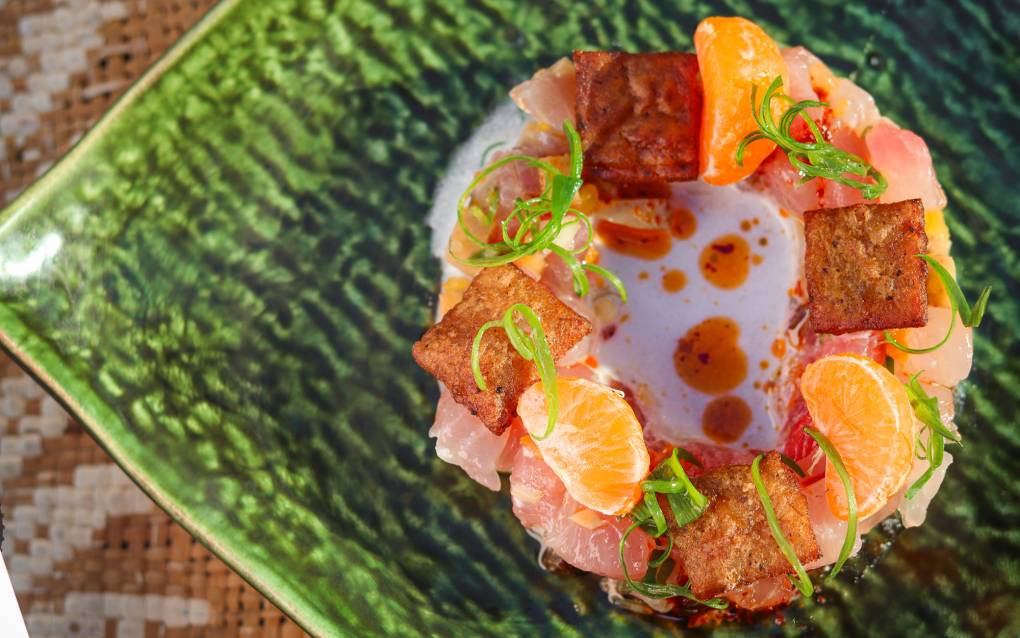
"caption": "Abacá's tombo tuna kinilaw, topped with satsuma and plantain crisps. It's one of the dishes featured on the upscale Filipino spot's Restaurant Week menu. SF Restaurant Week runs April 4–13.",
"credit": "Courtesy of Abacá",
"altTag": "Intricately plated raw tuna dish topped with slices of satsuma orange and plantain crisps.",
"description": null,
"imgSizes": {
"medium": {
"file": "https://cdn.kqed.org/wp-content/uploads/sites/2/2025/04/Tombo-Tuna-Kinilaw-2-800x500.jpg",
"width": 800,
"height": 500,
"mimeType": "image/jpeg"
},
"large": {
"file": "https://cdn.kqed.org/wp-content/uploads/sites/2/2025/04/Tombo-Tuna-Kinilaw-2-1020x638.jpg",
"width": 1020,
"height": 638,
"mimeType": "image/jpeg"
},
"thumbnail": {
"file": "https://cdn.kqed.org/wp-content/uploads/sites/2/2025/04/Tombo-Tuna-Kinilaw-2-160x100.jpg",
"width": 160,
"height": 100,
"mimeType": "image/jpeg"
},
"medium_large": {
"file": "https://cdn.kqed.org/wp-content/uploads/sites/2/2025/04/Tombo-Tuna-Kinilaw-2-768x480.jpg",
"width": 768,
"height": 480,
"mimeType": "image/jpeg"
},
"1536x1536": {
"file": "https://cdn.kqed.org/wp-content/uploads/sites/2/2025/04/Tombo-Tuna-Kinilaw-2-1536x960.jpg",
"width": 1536,
"height": 960,
"mimeType": "image/jpeg"
},
"post-thumbnail": {
"file": "https://cdn.kqed.org/wp-content/uploads/sites/2/2025/04/Tombo-Tuna-Kinilaw-2-672x372.jpg",
"width": 672,
"height": 372,
"mimeType": "image/jpeg"
},
"twentyfourteen-full-width": {
"file": "https://cdn.kqed.org/wp-content/uploads/sites/2/2025/04/Tombo-Tuna-Kinilaw-2-1038x576.jpg",
"width": 1038,
"height": 576,
"mimeType": "image/jpeg"
},
"full-width": {
"file": "https://cdn.kqed.org/wp-content/uploads/sites/2/2025/04/Tombo-Tuna-Kinilaw-2-1920x1200.jpg",
"width": 1920,
"height": 1200,
"mimeType": "image/jpeg"
},
"kqedFullSize": {
"file": "https://cdn.kqed.org/wp-content/uploads/sites/2/2025/04/Tombo-Tuna-Kinilaw-2.jpg",
"width": 2000,
"height": 1250
}
},
"isLoading": false,
"fetchFailed": false
},
"arts_13973951": {
"type": "attachments",
"id": "arts_13973951",
"meta": {
"index": "attachments_1716263798",
"site": "arts",
"id": "13973951",
"found": true
},
"title": "khantrast-crop",
"publishDate": 1743551276,
"status": "inherit",
"parent": 13973938,
"modified": 1743551419,
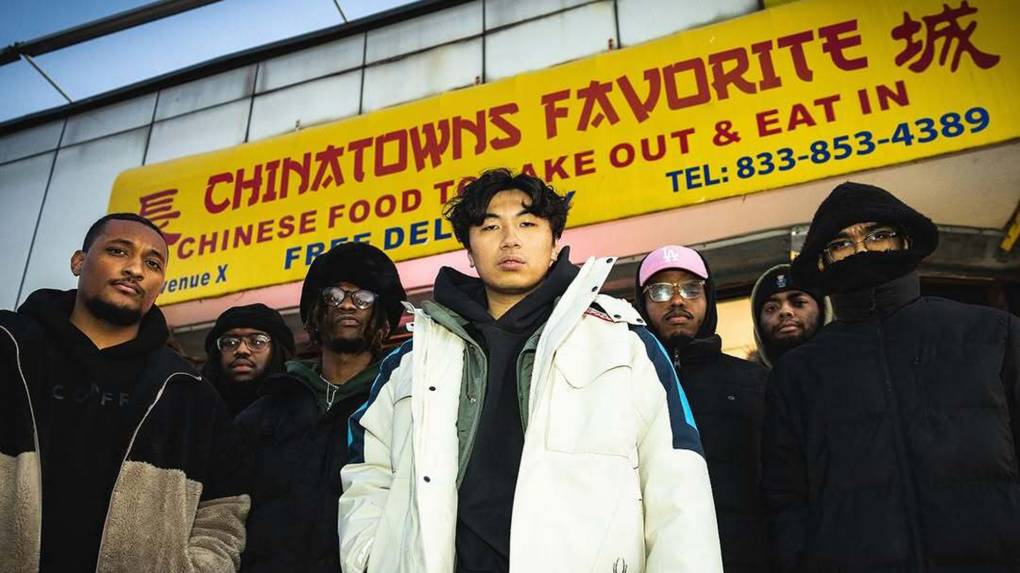
"caption": "'Chinatown's Favorite' is Khantrast's first full-length album. The Brooklyn rapper will perform at San Francisco's Brick and Mortar Music Hall on April 26.",
"credit": "Courtesy of New 11",
"altTag": "An Asian man and his friends stand in front of a Chinese restaurant. The sign reads, \"Chinatown's Favorite.\"",
"description": null,
"imgSizes": {
"medium": {
"file": "https://cdn.kqed.org/wp-content/uploads/sites/2/2025/04/khantrast-crop-800x450.jpg",
"width": 800,
"height": 450,
"mimeType": "image/jpeg"
},
"large": {
"file": "https://cdn.kqed.org/wp-content/uploads/sites/2/2025/04/khantrast-crop-1020x573.jpg",
"width": 1020,
"height": 573,
"mimeType": "image/jpeg"
},
"thumbnail": {
"file": "https://cdn.kqed.org/wp-content/uploads/sites/2/2025/04/khantrast-crop-160x90.jpg",
"width": 160,
"height": 90,
"mimeType": "image/jpeg"
},
"medium_large": {
"file": "https://cdn.kqed.org/wp-content/uploads/sites/2/2025/04/khantrast-crop-768x432.jpg",
"width": 768,
"height": 432,
"mimeType": "image/jpeg"
},
"1536x1536": {
"file": "https://cdn.kqed.org/wp-content/uploads/sites/2/2025/04/khantrast-crop-1536x863.jpg",
"width": 1536,
"height": 863,
"mimeType": "image/jpeg"
},
"post-thumbnail": {
"file": "https://cdn.kqed.org/wp-content/uploads/sites/2/2025/04/khantrast-crop-672x372.jpg",
"width": 672,
"height": 372,
"mimeType": "image/jpeg"
},
"twentyfourteen-full-width": {
"file": "https://cdn.kqed.org/wp-content/uploads/sites/2/2025/04/khantrast-crop-1038x576.jpg",
"width": 1038,
"height": 576,
"mimeType": "image/jpeg"
},
"full-width": {
"file": "https://cdn.kqed.org/wp-content/uploads/sites/2/2025/04/khantrast-crop-1920x1079.jpg",
"width": 1920,
"height": 1079,
"mimeType": "image/jpeg"
},
"kqedFullSize": {
"file": "https://cdn.kqed.org/wp-content/uploads/sites/2/2025/04/khantrast-crop.jpg",
"width": 2000,
"height": 1124
}
},
"isLoading": false,
"fetchFailed": false
},
"arts_13973713": {
"type": "attachments",
"id": "arts_13973713",
"meta": {
"index": "attachments_1716263798",
"site": "arts",
"id": "13973713",
"found": true
},
"title": "elegy_2_2000",
"publishDate": 1743123462,
"status": "inherit",
"parent": 13973704,
"modified": 1743123626,
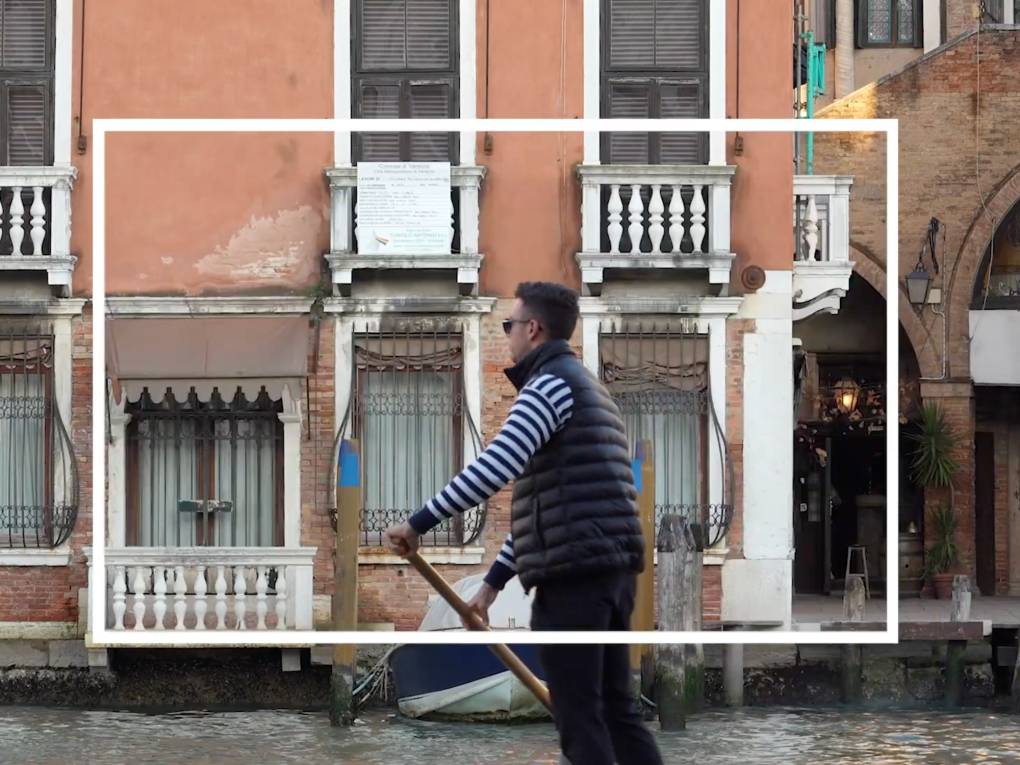
"caption": "A still from Lynn Marie Kirby's film 'Eulogy,' 2025, playing as part of 'the insufficient frame' at the Roxie on March 30, 2025. ",
"credit": "Courtesy of the artist",
"altTag": "gondolier framed within a white rectangle",
"description": null,
"imgSizes": {
"medium": {
"file": "https://cdn.kqed.org/wp-content/uploads/sites/2/2025/03/elegy_2_2000-800x600.jpg",
"width": 800,
"height": 600,
"mimeType": "image/jpeg"
},
"large": {
"file": "https://cdn.kqed.org/wp-content/uploads/sites/2/2025/03/elegy_2_2000-1020x765.jpg",
"width": 1020,
"height": 765,
"mimeType": "image/jpeg"
},
"thumbnail": {
"file": "https://cdn.kqed.org/wp-content/uploads/sites/2/2025/03/elegy_2_2000-160x120.jpg",
"width": 160,
"height": 120,
"mimeType": "image/jpeg"
},
"medium_large": {
"file": "https://cdn.kqed.org/wp-content/uploads/sites/2/2025/03/elegy_2_2000-768x576.jpg",
"width": 768,
"height": 576,
"mimeType": "image/jpeg"
},
"1536x1536": {
"file": "https://cdn.kqed.org/wp-content/uploads/sites/2/2025/03/elegy_2_2000-1536x1152.jpg",
"width": 1536,
"height": 1152,
"mimeType": "image/jpeg"
},
"post-thumbnail": {
"file": "https://cdn.kqed.org/wp-content/uploads/sites/2/2025/03/elegy_2_2000-672x372.jpg",
"width": 672,
"height": 372,
"mimeType": "image/jpeg"
},
"twentyfourteen-full-width": {
"file": "https://cdn.kqed.org/wp-content/uploads/sites/2/2025/03/elegy_2_2000-1038x576.jpg",
"width": 1038,
"height": 576,
"mimeType": "image/jpeg"
},
"full-width": {
"file": "https://cdn.kqed.org/wp-content/uploads/sites/2/2025/03/elegy_2_2000-1920x1440.jpg",
"width": 1920,
"height": 1440,
"mimeType": "image/jpeg"
},
"kqedFullSize": {
"file": "https://cdn.kqed.org/wp-content/uploads/sites/2/2025/03/elegy_2_2000.jpg",
"width": 2000,
"height": 1500
}
},
"isLoading": false,
"fetchFailed": false
},
"arts_13973392": {
"type": "attachments",
"id": "arts_13973392",
"meta": {
"index": "attachments_1716263798",
"site": "arts",
"id": "13973392",
"found": true
},
"title": "iStock-1283505083",
"publishDate": 1742497865,
"status": "inherit",
"parent": 13973390,
"modified": 1742497938,
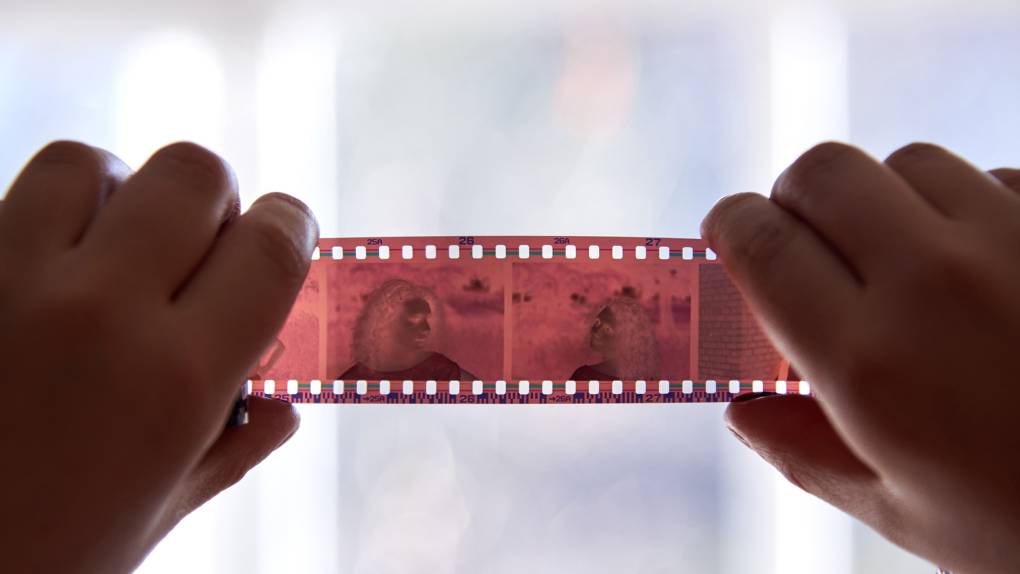
"caption": "Low Light Darkroom, a nonprofit, volunteer-led lab for photo developing, is opening soon in San Francisco.",
"credit": "iStock",
"altTag": null,
"description": null,
"imgSizes": {
"medium": {
"file": "https://cdn.kqed.org/wp-content/uploads/sites/2/2025/03/iStock-1283505083-800x450.jpg",
"width": 800,
"height": 450,
"mimeType": "image/jpeg"
},
"large": {
"file": "https://cdn.kqed.org/wp-content/uploads/sites/2/2025/03/iStock-1283505083-1020x574.jpg",
"width": 1020,
"height": 574,
"mimeType": "image/jpeg"
},
"thumbnail": {
"file": "https://cdn.kqed.org/wp-content/uploads/sites/2/2025/03/iStock-1283505083-160x90.jpg",
"width": 160,
"height": 90,
"mimeType": "image/jpeg"
},
"medium_large": {
"file": "https://cdn.kqed.org/wp-content/uploads/sites/2/2025/03/iStock-1283505083-768x432.jpg",
"width": 768,
"height": 432,
"mimeType": "image/jpeg"
},
"1536x1536": {
"file": "https://cdn.kqed.org/wp-content/uploads/sites/2/2025/03/iStock-1283505083-1536x864.jpg",
"width": 1536,
"height": 864,
"mimeType": "image/jpeg"
},
"post-thumbnail": {
"file": "https://cdn.kqed.org/wp-content/uploads/sites/2/2025/03/iStock-1283505083-672x372.jpg",
"width": 672,
"height": 372,
"mimeType": "image/jpeg"
},
"twentyfourteen-full-width": {
"file": "https://cdn.kqed.org/wp-content/uploads/sites/2/2025/03/iStock-1283505083-1038x576.jpg",
"width": 1038,
"height": 576,
"mimeType": "image/jpeg"
},
"full-width": {
"file": "https://cdn.kqed.org/wp-content/uploads/sites/2/2025/03/iStock-1283505083-1920x1080.jpg",
"width": 1920,
"height": 1080,
"mimeType": "image/jpeg"
},
"kqedFullSize": {
"file": "https://cdn.kqed.org/wp-content/uploads/sites/2/2025/03/iStock-1283505083.jpg",
"width": 2000,
"height": 1125
}
},
"isLoading": false,
"fetchFailed": false
},
"arts_13970488": {
"type": "attachments",
"id": "arts_13970488",
"meta": {
"index": "attachments_1716263798",
"site": "arts",
"id": "13970488",
"found": true
},
"title": "2425-Concerts-JohnAdamsCarminaBurana-Brandon-Patoc_0075",
"publishDate": 1737143345,
"status": "inherit",
"parent": 13970454,
"modified": 1737144173,
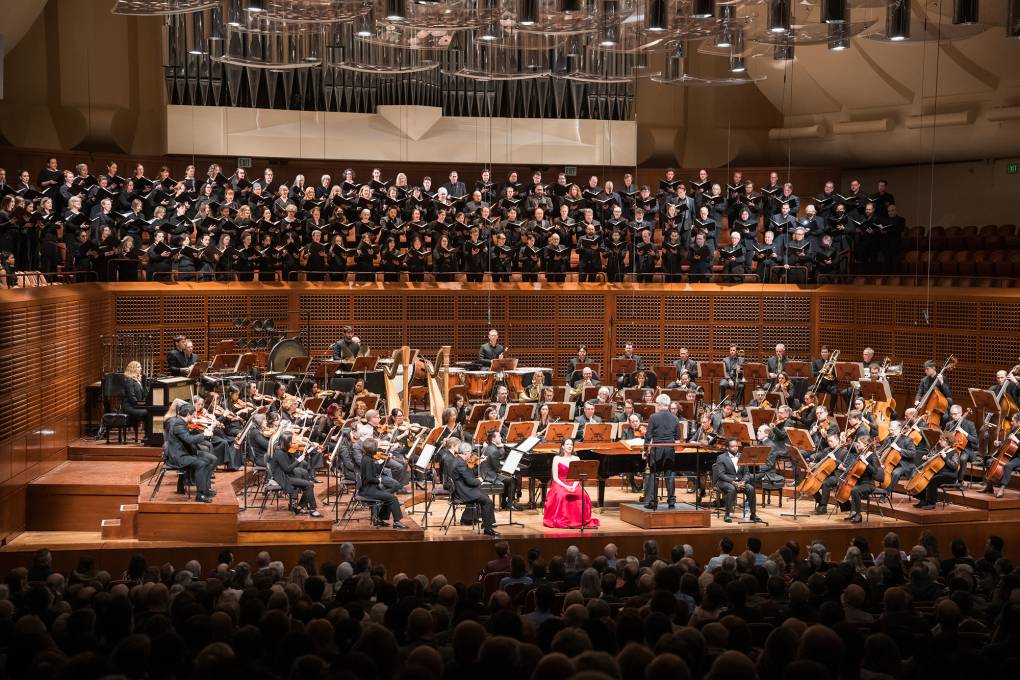
"caption": "The San Francisco Symphony Chorus joins the orchestra, with soloists Will Liverman and Susanna Phillips seated, for a performace of Carl Orff's 'Carmina Burana' at Davies Symphony Hall on Jan. 16, 2025.",
"credit": "Brandon Patoc/San Francisco Symphony",
"altTag": null,
"description": null,
"imgSizes": {
"medium": {
"file": "https://cdn.kqed.org/wp-content/uploads/sites/2/2025/01/2425-Concerts-JohnAdamsCarminaBurana-Brandon-Patoc_0075-800x533.jpg",
"width": 800,
"height": 533,
"mimeType": "image/jpeg"
},
"large": {
"file": "https://cdn.kqed.org/wp-content/uploads/sites/2/2025/01/2425-Concerts-JohnAdamsCarminaBurana-Brandon-Patoc_0075-1020x680.jpg",
"width": 1020,
"height": 680,
"mimeType": "image/jpeg"
},
"thumbnail": {
"file": "https://cdn.kqed.org/wp-content/uploads/sites/2/2025/01/2425-Concerts-JohnAdamsCarminaBurana-Brandon-Patoc_0075-160x107.jpg",
"width": 160,
"height": 107,
"mimeType": "image/jpeg"
},
"medium_large": {
"file": "https://cdn.kqed.org/wp-content/uploads/sites/2/2025/01/2425-Concerts-JohnAdamsCarminaBurana-Brandon-Patoc_0075-768x512.jpg",
"width": 768,
"height": 512,
"mimeType": "image/jpeg"
},
"1536x1536": {
"file": "https://cdn.kqed.org/wp-content/uploads/sites/2/2025/01/2425-Concerts-JohnAdamsCarminaBurana-Brandon-Patoc_0075-1536x1024.jpg",
"width": 1536,
"height": 1024,
"mimeType": "image/jpeg"
},
"post-thumbnail": {
"file": "https://cdn.kqed.org/wp-content/uploads/sites/2/2025/01/2425-Concerts-JohnAdamsCarminaBurana-Brandon-Patoc_0075-672x372.jpg",
"width": 672,
"height": 372,
"mimeType": "image/jpeg"
},
"twentyfourteen-full-width": {
"file": "https://cdn.kqed.org/wp-content/uploads/sites/2/2025/01/2425-Concerts-JohnAdamsCarminaBurana-Brandon-Patoc_0075-1038x576.jpg",
"width": 1038,
"height": 576,
"mimeType": "image/jpeg"
},
"full-width": {
"file": "https://cdn.kqed.org/wp-content/uploads/sites/2/2025/01/2425-Concerts-JohnAdamsCarminaBurana-Brandon-Patoc_0075-1920x1280.jpg",
"width": 1920,
"height": 1280,
"mimeType": "image/jpeg"
},
"kqedFullSize": {
"file": "https://cdn.kqed.org/wp-content/uploads/sites/2/2025/01/2425-Concerts-JohnAdamsCarminaBurana-Brandon-Patoc_0075.jpg",
"width": 2000,
"height": 1333
}
},
"isLoading": false,
"fetchFailed": false
},
"arts_13848449": {
"type": "attachments",
"id": "arts_13848449",
"meta": {
"index": "attachments_1716263798",
"site": "arts",
"id": "13848449",
"found": true
},
"parent": 0,
"imgSizes": {
"twentyfourteen-full-width": {
"file": "https://ww2.kqed.org/app/uploads/sites/2/2019/01/FillmoreCenter.FEATURED-1038x576.jpg",
"width": 1038,
"mimeType": "image/jpeg",
"height": 576
},
"thumbnail": {
"file": "https://ww2.kqed.org/app/uploads/sites/2/2019/01/FillmoreCenter.FEATURED-160x90.jpg",
"width": 160,
"mimeType": "image/jpeg",
"height": 90
},
"post-thumbnail": {
"file": "https://ww2.kqed.org/app/uploads/sites/2/2019/01/FillmoreCenter.FEATURED-672x372.jpg",
"width": 672,
"mimeType": "image/jpeg",
"height": 372
},
"kqedFullSize": {
"file": "https://ww2.kqed.org/app/uploads/sites/2/2019/01/FillmoreCenter.FEATURED.jpg",
"width": 1920,
"height": 1080
},
"large": {
"file": "https://ww2.kqed.org/app/uploads/sites/2/2019/01/FillmoreCenter.FEATURED-1020x574.jpg",
"width": 1020,
"mimeType": "image/jpeg",
"height": 574
},
"complete_open_graph": {
"file": "https://ww2.kqed.org/app/uploads/sites/2/2019/01/FillmoreCenter.FEATURED-1200x675.jpg",
"width": 1200,
"mimeType": "image/jpeg",
"height": 675
},
"guest-author-50": {
"file": "https://ww2.kqed.org/app/uploads/sites/2/2019/01/FillmoreCenter.FEATURED-50x50.jpg",
"width": 50,
"mimeType": "image/jpeg",
"height": 50
},
"guest-author-96": {
"file": "https://ww2.kqed.org/app/uploads/sites/2/2019/01/FillmoreCenter.FEATURED-96x96.jpg",
"width": 96,
"mimeType": "image/jpeg",
"height": 96
},
"medium": {
"file": "https://ww2.kqed.org/app/uploads/sites/2/2019/01/FillmoreCenter.FEATURED-800x450.jpg",
"width": 800,
"mimeType": "image/jpeg",
"height": 450
},
"guest-author-64": {
"file": "https://ww2.kqed.org/app/uploads/sites/2/2019/01/FillmoreCenter.FEATURED-64x64.jpg",
"width": 64,
"mimeType": "image/jpeg",
"height": 64
},
"guest-author-32": {
"file": "https://ww2.kqed.org/app/uploads/sites/2/2019/01/FillmoreCenter.FEATURED-32x32.jpg",
"width": 32,
"mimeType": "image/jpeg",
"height": 32
},
"full-width": {
"file": "https://ww2.kqed.org/app/uploads/sites/2/2019/01/FillmoreCenter.FEATURED-1920x1080.jpg",
"width": 1920,
"mimeType": "image/jpeg",
"height": 1080
},
"detail": {
"file": "https://ww2.kqed.org/app/uploads/sites/2/2019/01/FillmoreCenter.FEATURED-150x150.jpg",
"width": 150,
"mimeType": "image/jpeg",
"height": 150
},
"medium_large": {
"file": "https://ww2.kqed.org/app/uploads/sites/2/2019/01/FillmoreCenter.FEATURED-768x432.jpg",
"width": 768,
"mimeType": "image/jpeg",
"height": 432
},
"guest-author-128": {
"file": "https://ww2.kqed.org/app/uploads/sites/2/2019/01/FillmoreCenter.FEATURED-128x128.jpg",
"width": 128,
"mimeType": "image/jpeg",
"height": 128
}
},
"publishDate": 1547073980,
"modified": 1547074360,
"caption": "The Fillmore Heritage Center opened in 2007, promising the neighborhood economic stimulation and cultural renewal.",
"description": "The Fillmore Heritage Center opened in 2007, promising the neighborhood economic stimulation and cultural renewal.",
"title": "FillmoreCenter.FEATURED",
"credit": "Gabe Meline/KQED",
"status": "inherit",
"isLoading": false,
"fetchFailed": false
},
"arts_13973184": {
"type": "attachments",
"id": "arts_13973184",
"meta": {
"index": "attachments_1716263798",
"site": "arts",
"id": "13973184",
"found": true
},
"title": "NLY.MAIN",
"publishDate": 1742251406,
"status": "inherit",
"parent": 0,
"modified": 1742251941,
"caption": "Jason Veasey (far right) with Ana Yi Puig, Seth Hanson, Molly Hager, A.J. Holmes and John-Michael Lyles (background, L–R) in ‘Nobody Loves You’ at ACT. ",
"credit": "Kevin Berne",
"altTag": "A slender Black man in a yellow suit points to the right while young contestants in colorful clothes stand against a blue wall",
"description": null,
"imgSizes": {
"medium": {
"file": "https://cdn.kqed.org/wp-content/uploads/sites/2/2025/03/NLY.MAIN_-800x450.jpg",
"width": 800,
"height": 450,
"mimeType": "image/jpeg"
},
"large": {
"file": "https://cdn.kqed.org/wp-content/uploads/sites/2/2025/03/NLY.MAIN_-1020x574.jpg",
"width": 1020,
"height": 574,
"mimeType": "image/jpeg"
},
"thumbnail": {
"file": "https://cdn.kqed.org/wp-content/uploads/sites/2/2025/03/NLY.MAIN_-160x90.jpg",
"width": 160,
"height": 90,
"mimeType": "image/jpeg"
},
"medium_large": {
"file": "https://cdn.kqed.org/wp-content/uploads/sites/2/2025/03/NLY.MAIN_-768x432.jpg",
"width": 768,
"height": 432,
"mimeType": "image/jpeg"
},
"1536x1536": {
"file": "https://cdn.kqed.org/wp-content/uploads/sites/2/2025/03/NLY.MAIN_-1536x864.jpg",
"width": 1536,
"height": 864,
"mimeType": "image/jpeg"
},
"post-thumbnail": {
"file": "https://cdn.kqed.org/wp-content/uploads/sites/2/2025/03/NLY.MAIN_-672x372.jpg",
"width": 672,
"height": 372,
"mimeType": "image/jpeg"
},
"twentyfourteen-full-width": {
"file": "https://cdn.kqed.org/wp-content/uploads/sites/2/2025/03/NLY.MAIN_-1038x576.jpg",
"width": 1038,
"height": 576,
"mimeType": "image/jpeg"
},
"full-width": {
"file": "https://cdn.kqed.org/wp-content/uploads/sites/2/2025/03/NLY.MAIN_-1920x1080.jpg",
"width": 1920,
"height": 1080,
"mimeType": "image/jpeg"
},
"kqedFullSize": {
"file": "https://cdn.kqed.org/wp-content/uploads/sites/2/2025/03/NLY.MAIN_.jpg",
"width": 2000,
"height": 1125
}
},
"isLoading": false,
"fetchFailed": false
},
"arts_13973043": {
"type": "attachments",
"id": "arts_13973043",
"meta": {
"index": "attachments_1716263798",
"site": "arts",
"id": "13973043",
"found": true
},
"title": "IMG_2886-e1741724727939",
"publishDate": 1741885592,
"status": "inherit",
"parent": 13972732,
"modified": 1741885645,
"caption": "San Francisco's So Vicious and her mother, the late Loretta S. Wilcher, pose for a photo.",
"credit": "Courtesy of So Vicious",
"altTag": "Two women at a formal gathering pose for a photo, arms around each other",
"description": null,
"imgSizes": {
"medium": {
"file": "https://cdn.kqed.org/wp-content/uploads/sites/2/2025/03/IMG_2886-e1741724727939-1-800x450.jpg",
"width": 800,
"height": 450,
"mimeType": "image/jpeg"
},
"large": {
"file": "https://cdn.kqed.org/wp-content/uploads/sites/2/2025/03/IMG_2886-e1741724727939-1-1020x573.jpg",
"width": 1020,
"height": 573,
"mimeType": "image/jpeg"
},
"thumbnail": {
"file": "https://cdn.kqed.org/wp-content/uploads/sites/2/2025/03/IMG_2886-e1741724727939-1-160x90.jpg",
"width": 160,
"height": 90,
"mimeType": "image/jpeg"
},
"medium_large": {
"file": "https://cdn.kqed.org/wp-content/uploads/sites/2/2025/03/IMG_2886-e1741724727939-1-768x432.jpg",
"width": 768,
"height": 432,
"mimeType": "image/jpeg"
},
"1536x1536": {
"file": "https://cdn.kqed.org/wp-content/uploads/sites/2/2025/03/IMG_2886-e1741724727939-1-1536x863.jpg",
"width": 1536,
"height": 863,
"mimeType": "image/jpeg"
},
"post-thumbnail": {
"file": "https://cdn.kqed.org/wp-content/uploads/sites/2/2025/03/IMG_2886-e1741724727939-1-672x372.jpg",
"width": 672,
"height": 372,
"mimeType": "image/jpeg"
},
"twentyfourteen-full-width": {
"file": "https://cdn.kqed.org/wp-content/uploads/sites/2/2025/03/IMG_2886-e1741724727939-1-1038x576.jpg",
"width": 1038,
"height": 576,
"mimeType": "image/jpeg"
},
"full-width": {
"file": "https://cdn.kqed.org/wp-content/uploads/sites/2/2025/03/IMG_2886-e1741724727939-1-1920x1079.jpg",
"width": 1920,
"height": 1079,
"mimeType": "image/jpeg"
},
"kqedFullSize": {
"file": "https://cdn.kqed.org/wp-content/uploads/sites/2/2025/03/IMG_2886-e1741724727939-1.jpg",
"width": 2000,
"height": 1124
}
},
"isLoading": false,
"fetchFailed": false
},
"arts_13973024": {
"type": "attachments",
"id": "arts_13973024",
"meta": {
"index": "attachments_1716263798",
"site": "arts",
"id": "13973024",
"found": true
},
"title": "TAAU.LANZ-9049-3",
"publishDate": 1741803827,
"status": "inherit",
"parent": 0,
"modified": 1741804173,
"caption": "Poppy performs at The Fillmore in San Francisco on March 11, 2025, for the first show of her They’re All Around Us tour. ",
"credit": "Alana Lopez",
"altTag": "A young woman with long brown hair in a red military-style coat crouches on a white riser, singing into a microphone",
"description": null,
"imgSizes": {
"medium": {
"file": "https://cdn.kqed.org/wp-content/uploads/sites/2/2025/03/TAAU.LANZ-9049-3-800x562.jpg",
"width": 800,
"height": 562,
"mimeType": "image/jpeg"
},
"large": {
"file": "https://cdn.kqed.org/wp-content/uploads/sites/2/2025/03/TAAU.LANZ-9049-3-1020x717.jpg",
"width": 1020,
"height": 717,
"mimeType": "image/jpeg"
},
"thumbnail": {
"file": "https://cdn.kqed.org/wp-content/uploads/sites/2/2025/03/TAAU.LANZ-9049-3-160x112.jpg",
"width": 160,
"height": 112,
"mimeType": "image/jpeg"
},
"medium_large": {
"file": "https://cdn.kqed.org/wp-content/uploads/sites/2/2025/03/TAAU.LANZ-9049-3-768x540.jpg",
"width": 768,
"height": 540,
"mimeType": "image/jpeg"
},
"1536x1536": {
"file": "https://cdn.kqed.org/wp-content/uploads/sites/2/2025/03/TAAU.LANZ-9049-3-1536x1080.jpg",
"width": 1536,
"height": 1080,
"mimeType": "image/jpeg"
},
"post-thumbnail": {
"file": "https://cdn.kqed.org/wp-content/uploads/sites/2/2025/03/TAAU.LANZ-9049-3-672x372.jpg",
"width": 672,
"height": 372,
"mimeType": "image/jpeg"
},
"twentyfourteen-full-width": {
"file": "https://cdn.kqed.org/wp-content/uploads/sites/2/2025/03/TAAU.LANZ-9049-3-1038x576.jpg",
"width": 1038,
"height": 576,
"mimeType": "image/jpeg"
},
"full-width": {
"file": "https://cdn.kqed.org/wp-content/uploads/sites/2/2025/03/TAAU.LANZ-9049-3-1920x1350.jpg",
"width": 1920,
"height": 1350,
"mimeType": "image/jpeg"
},
"kqedFullSize": {
"file": "https://cdn.kqed.org/wp-content/uploads/sites/2/2025/03/TAAU.LANZ-9049-3.jpg",
"width": 2000,
"height": 1406
}
},
"isLoading": false,
"fetchFailed": false
},
"arts_13972999": {
"type": "attachments",
"id": "arts_13972999",
"meta": {
"index": "attachments_1716263798",
"site": "arts",
"id": "13972999",
"found": true
},
"title": "20250226_ROBERTMOSES_GC-30-KQED",
"publishDate": 1741788256,
"status": "inherit",
"parent": 0,
"modified": 1741804678,
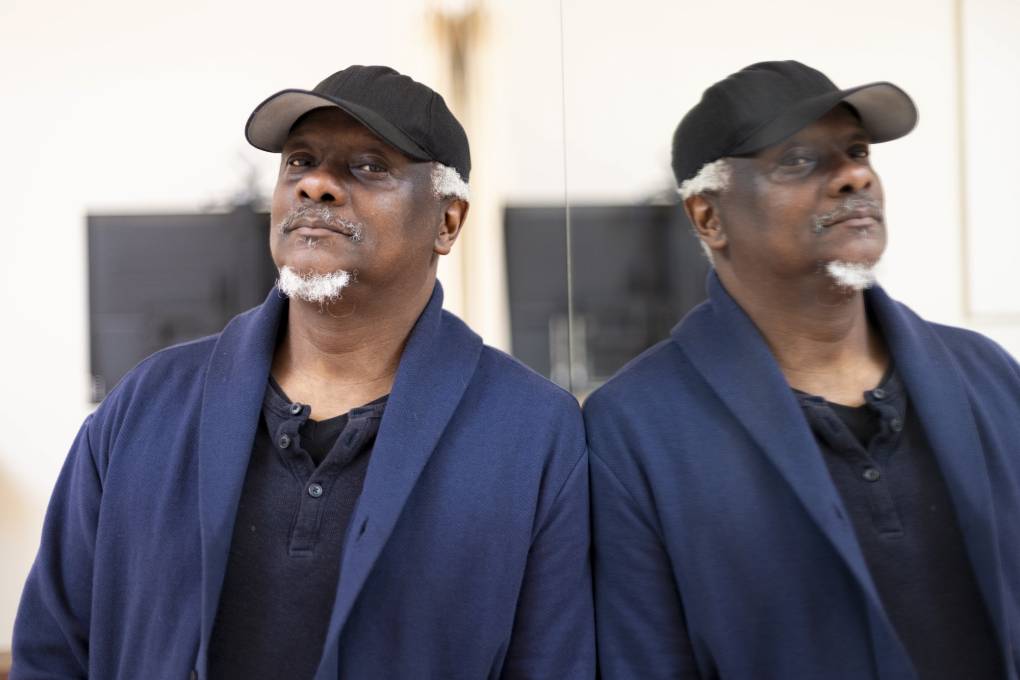
"caption": "Robert Moses, choreographer, writer and composer, poses for a photo at ODC Dance Commons in San Francisco on Feb. 26, 2025. His latest work, ‘The Kennings,’ explores themes of race, gender, war and human rights, also blends dance, theater and music.",
"credit": "Gina Castro/KQED",
"altTag": null,
"description": null,
"imgSizes": {
"medium": {
"file": "https://cdn.kqed.org/wp-content/uploads/sites/2/2025/03/20250226_ROBERTMOSES_GC-30-KQED-800x533.jpg",
"width": 800,
"height": 533,
"mimeType": "image/jpeg"
},
"large": {
"file": "https://cdn.kqed.org/wp-content/uploads/sites/2/2025/03/20250226_ROBERTMOSES_GC-30-KQED-1020x680.jpg",
"width": 1020,
"height": 680,
"mimeType": "image/jpeg"
},
"thumbnail": {
"file": "https://cdn.kqed.org/wp-content/uploads/sites/2/2025/03/20250226_ROBERTMOSES_GC-30-KQED-160x107.jpg",
"width": 160,
"height": 107,
"mimeType": "image/jpeg"
},
"medium_large": {
"file": "https://cdn.kqed.org/wp-content/uploads/sites/2/2025/03/20250226_ROBERTMOSES_GC-30-KQED-768x512.jpg",
"width": 768,
"height": 512,
"mimeType": "image/jpeg"
},
"1536x1536": {
"file": "https://cdn.kqed.org/wp-content/uploads/sites/2/2025/03/20250226_ROBERTMOSES_GC-30-KQED-1536x1024.jpg",
"width": 1536,
"height": 1024,
"mimeType": "image/jpeg"
},
"post-thumbnail": {
"file": "https://cdn.kqed.org/wp-content/uploads/sites/2/2025/03/20250226_ROBERTMOSES_GC-30-KQED-672x372.jpg",
"width": 672,
"height": 372,
"mimeType": "image/jpeg"
},
"twentyfourteen-full-width": {
"file": "https://cdn.kqed.org/wp-content/uploads/sites/2/2025/03/20250226_ROBERTMOSES_GC-30-KQED-1038x576.jpg",
"width": 1038,
"height": 576,
"mimeType": "image/jpeg"
},
"full-width": {
"file": "https://cdn.kqed.org/wp-content/uploads/sites/2/2025/03/20250226_ROBERTMOSES_GC-30-KQED-1920x1280.jpg",
"width": 1920,
"height": 1280,
"mimeType": "image/jpeg"
},
"kqedFullSize": {
"file": "https://cdn.kqed.org/wp-content/uploads/sites/2/2025/03/20250226_ROBERTMOSES_GC-30-KQED.jpg",
"width": 2000,
"height": 1333
}
},
"isLoading": false,
"fetchFailed": false
},
"arts_13972951": {
"type": "attachments",
"id": "arts_13972951",
"meta": {
"index": "attachments_1716263798",
"site": "arts",
"id": "13972951",
"found": true
},
"title": "Selena At The Houston Astrodome",
"publishDate": 1741730503,
"status": "inherit",
"parent": 13972946,
"modified": 1741730534,
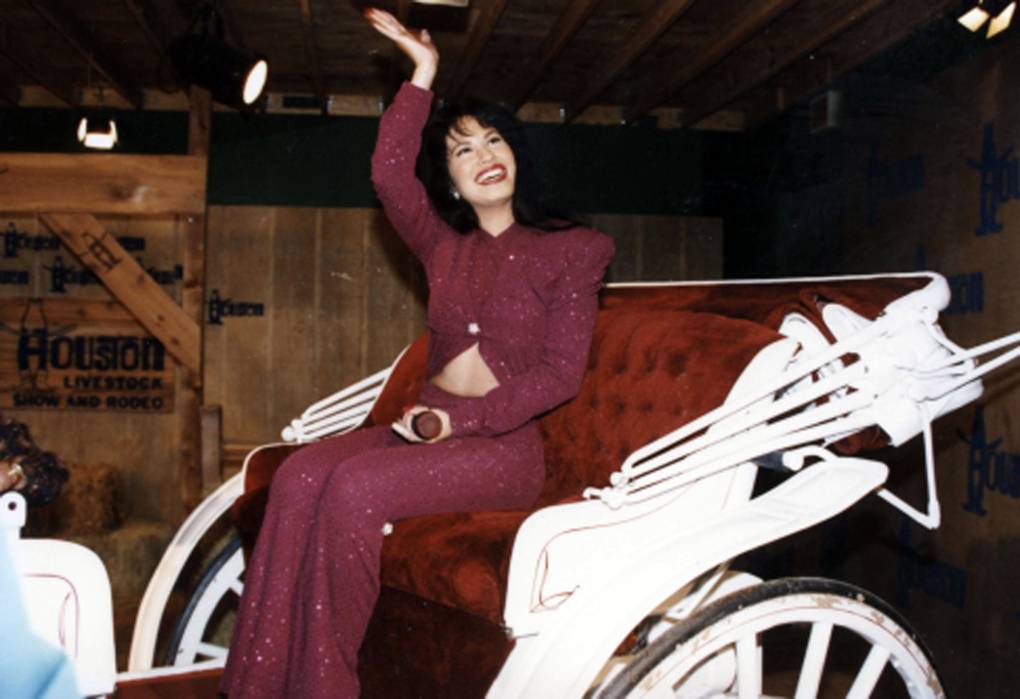
"caption": "Selena rides in a carriage during a performance at the Houston Livestock Show & Rodeo at the Houston Astrodome, Houston, Texas, February 26, 1995.",
"credit": "Arlene Richie/Getty Images",
"altTag": null,
"description": null,
"imgSizes": {
"medium": {
"file": "https://cdn.kqed.org/wp-content/uploads/sites/2/2025/03/GettyImages-1339333471-800x548.jpg",
"width": 800,
"height": 548,
"mimeType": "image/jpeg"
},
"large": {
"file": "https://cdn.kqed.org/wp-content/uploads/sites/2/2025/03/GettyImages-1339333471-1020x699.jpg",
"width": 1020,
"height": 699,
"mimeType": "image/jpeg"
},
"thumbnail": {
"file": "https://cdn.kqed.org/wp-content/uploads/sites/2/2025/03/GettyImages-1339333471-160x110.jpg",
"width": 160,
"height": 110,
"mimeType": "image/jpeg"
},
"medium_large": {
"file": "https://cdn.kqed.org/wp-content/uploads/sites/2/2025/03/GettyImages-1339333471-768x526.jpg",
"width": 768,
"height": 526,
"mimeType": "image/jpeg"
},
"1536x1536": {
"file": "https://cdn.kqed.org/wp-content/uploads/sites/2/2025/03/GettyImages-1339333471-1536x1052.jpg",
"width": 1536,
"height": 1052,
"mimeType": "image/jpeg"
},
"2048x2048": {
"file": "https://cdn.kqed.org/wp-content/uploads/sites/2/2025/03/GettyImages-1339333471-2048x1403.jpg",
"width": 2048,
"height": 1403,
"mimeType": "image/jpeg"
},
"post-thumbnail": {
"file": "https://cdn.kqed.org/wp-content/uploads/sites/2/2025/03/GettyImages-1339333471-672x372.jpg",
"width": 672,
"height": 372,
"mimeType": "image/jpeg"
},
"twentyfourteen-full-width": {
"file": "https://cdn.kqed.org/wp-content/uploads/sites/2/2025/03/GettyImages-1339333471-1038x576.jpg",
"width": 1038,
"height": 576,
"mimeType": "image/jpeg"
},
"full-width": {
"file": "https://cdn.kqed.org/wp-content/uploads/sites/2/2025/03/GettyImages-1339333471-1920x1315.jpg",
"width": 1920,
"height": 1315,
"mimeType": "image/jpeg"
},
"kqedFullSize": {
"file": "https://cdn.kqed.org/wp-content/uploads/sites/2/2025/03/GettyImages-1339333471.jpg",
"width": 2400,
"height": 1644
}
},
"isLoading": false,
"fetchFailed": false
},
"arts_13972573": {
"type": "attachments",
"id": "arts_13972573",
"meta": {
"index": "attachments_1716263798",
"site": "arts",
"id": "13972573",
"found": true
},
"title": "Ramon Abad",
"publishDate": 1741047031,
"status": "inherit",
"parent": 13972547,
"modified": 1741059966,
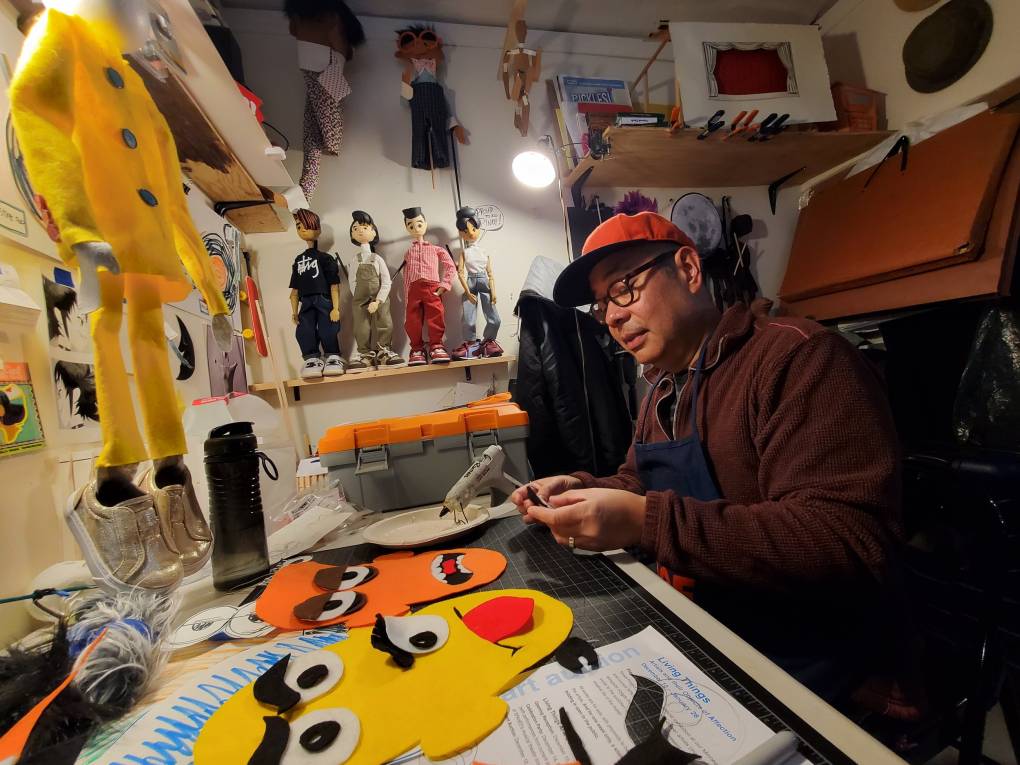
"caption": "A glimpse of Ramon Abad, a puppeteer who has worked with Balay Kreative. ",
"credit": "Courtesy of Balay Kreative ",
"altTag": null,
"description": null,
"imgSizes": {
"medium": {
"file": "https://cdn.kqed.org/wp-content/uploads/sites/2/2025/03/20230317_162201-800x600.jpg",
"width": 800,
"height": 600,
"mimeType": "image/jpeg"
},
"large": {
"file": "https://cdn.kqed.org/wp-content/uploads/sites/2/2025/03/20230317_162201-1020x765.jpg",
"width": 1020,
"height": 765,
"mimeType": "image/jpeg"
},
"thumbnail": {
"file": "https://cdn.kqed.org/wp-content/uploads/sites/2/2025/03/20230317_162201-160x120.jpg",
"width": 160,
"height": 120,
"mimeType": "image/jpeg"
},
"medium_large": {
"file": "https://cdn.kqed.org/wp-content/uploads/sites/2/2025/03/20230317_162201-768x576.jpg",
"width": 768,
"height": 576,
"mimeType": "image/jpeg"
},
"1536x1536": {
"file": "https://cdn.kqed.org/wp-content/uploads/sites/2/2025/03/20230317_162201-1536x1152.jpg",
"width": 1536,
"height": 1152,
"mimeType": "image/jpeg"
},
"2048x2048": {
"file": "https://cdn.kqed.org/wp-content/uploads/sites/2/2025/03/20230317_162201-2048x1536.jpg",
"width": 2048,
"height": 1536,
"mimeType": "image/jpeg"
},
"post-thumbnail": {
"file": "https://cdn.kqed.org/wp-content/uploads/sites/2/2025/03/20230317_162201-672x372.jpg",
"width": 672,
"height": 372,
"mimeType": "image/jpeg"
},
"twentyfourteen-full-width": {
"file": "https://cdn.kqed.org/wp-content/uploads/sites/2/2025/03/20230317_162201-1038x576.jpg",
"width": 1038,
"height": 576,
"mimeType": "image/jpeg"
},
"full-width": {
"file": "https://cdn.kqed.org/wp-content/uploads/sites/2/2025/03/20230317_162201-1920x1440.jpg",
"width": 1920,
"height": 1440,
"mimeType": "image/jpeg"
},
"kqedFullSize": {
"file": "https://cdn.kqed.org/wp-content/uploads/sites/2/2025/03/20230317_162201.jpg",
"width": 2500,
"height": 1875
}
},
"isLoading": false,
"fetchFailed": false
}
},
"audioPlayerReducer": {
"postId": "stream_live",
"isPaused": true,
"isPlaying": false,
"pfsActive": false,
"pledgeModalIsOpen": true,
"playerDrawerIsOpen": false,
"liveAudioPlayStartedAt": 0,
"liveAudioPlayContext": ""
},
"authorsReducer": {
"shotchkiss": {
"type": "authors",
"id": "61",
"meta": {
"index": "authors_1716337520",
"id": "61",
"found": true
},
"name": "Sarah Hotchkiss",
"firstName": "Sarah",
"lastName": "Hotchkiss",
"slug": "shotchkiss",
"email": "shotchkiss@kqed.org",
"display_author_email": true,
"staff_mastheads": [
"arts"
],
"title": "Senior Editor",
"bio": "Sarah Hotchkiss is a San Francisco \u003ca href=\"http://www.sarahhotchkiss.com\">artist\u003c/a> and arts writer. In 2019, she received the Dorothea & Leo Rabkin Foundation grant for visual art journalism and in 2020 she received a Society of Professional Journalists, Northern California award for excellence in arts and culture reporting.",
"avatar": "https://secure.gravatar.com/avatar/bc662df144b3d27fd8b1b6f1c2a420d34e91e53154d411bb7ad353cc8b6cea8d?s=600&d=blank&r=g",
"twitter": null,
"bluesky": null,
"facebook": null,
"instagram": null,
"linkedin": null,
"sites": [
{
"site": "",
"roles": [
"editor"
]
},
{
"site": "arts",
"roles": [
"Contributor",
"administrator"
]
},
{
"site": "artschool",
"roles": [
"administrator"
]
},
{
"site": "news",
"roles": [
"editor"
]
},
{
"site": "pop",
"roles": [
"administrator"
]
},
{
"site": "bayareabites",
"roles": [
"editor"
]
},
{
"site": "spark",
"roles": [
"editor"
]
},
{
"site": "checkplease",
"roles": [
"editor"
]
}
],
"headData": {
"title": "Sarah Hotchkiss | KQED",
"description": "Senior Editor",
"ogImgSrc": "https://secure.gravatar.com/avatar/bc662df144b3d27fd8b1b6f1c2a420d34e91e53154d411bb7ad353cc8b6cea8d?s=600&d=blank&r=g",
"twImgSrc": "https://secure.gravatar.com/avatar/bc662df144b3d27fd8b1b6f1c2a420d34e91e53154d411bb7ad353cc8b6cea8d?s=600&d=blank&r=g"
},
"isLoading": false,
"link": "/author/shotchkiss"
},
"gmeline": {
"type": "authors",
"id": "185",
"meta": {
"index": "authors_1716337520",
"id": "185",
"found": true
},
"name": "Gabe Meline",
"firstName": "Gabe",
"lastName": "Meline",
"slug": "gmeline",
"email": "gmeline@kqed.org",
"display_author_email": true,
"staff_mastheads": [
"arts"
],
"title": "Senior Editor, KQED Arts & Culture",
"bio": "Gabe Meline entered journalism at age 15 making photocopied zines, and has since earned awards from the Edward R. Murrow Awards, the Society for Professional Journalists, the Online Journalism Awards, the Association of Alternative Newsweeklies and the California Newspaper Publishers Association. Prior to KQED, he was the editor of the \u003cem>North Bay Bohemian\u003c/em> and a touring musician. He lives with his wife and daughter in his hometown of Santa Rosa, CA.",
"avatar": "https://secure.gravatar.com/avatar/5bebe57be0d8bc2dd318934feb47299e2d2d10cba28d09d8d7afb389a2ce2bdd?s=600&d=blank&r=g",
"twitter": null,
"bluesky": null,
"facebook": null,
"instagram": null,
"linkedin": null,
"sites": [
{
"site": "",
"roles": [
"editor"
]
},
{
"site": "arts",
"roles": [
"administrator"
]
},
{
"site": "artschool",
"roles": [
"editor"
]
},
{
"site": "news",
"roles": [
"author"
]
},
{
"site": "pop",
"roles": [
"editor"
]
},
{
"site": "bayareabites",
"roles": [
"editor"
]
},
{
"site": "food",
"roles": [
"editor"
]
},
{
"site": "forum",
"roles": [
"administrator"
]
},
{
"site": "liveblog",
"roles": [
"editor"
]
},
{
"site": "hiphop",
"roles": [
"editor"
]
}
],
"headData": {
"title": "Gabe Meline | KQED",
"description": "Senior Editor, KQED Arts & Culture",
"ogImgSrc": "https://secure.gravatar.com/avatar/5bebe57be0d8bc2dd318934feb47299e2d2d10cba28d09d8d7afb389a2ce2bdd?s=600&d=blank&r=g",
"twImgSrc": "https://secure.gravatar.com/avatar/5bebe57be0d8bc2dd318934feb47299e2d2d10cba28d09d8d7afb389a2ce2bdd?s=600&d=blank&r=g"
},
"isLoading": false,
"link": "/author/gmeline"
},
"bwatt": {
"type": "authors",
"id": "11238",
"meta": {
"index": "authors_1716337520",
"id": "11238",
"found": true
},
"name": "Brian Watt",
"firstName": "Brian",
"lastName": "Watt",
"slug": "bwatt",
"email": "bwatt@KQED.org",
"display_author_email": false,
"staff_mastheads": [
"news"
],
"title": "Morning News Anchor",
"bio": "Brian Watt is KQED's morning radio news anchor. He joined the KQED News team in April of 2016. Prior to that, he worked as a Reporter for KPCC in Los Angeles and a producer at \u003cem>Marketplace.\u003c/em>\r\n\r\nDuring eight years at KPCC, Brian covered business and economics, and his work won several awards. In 2008, he won the Los Angeles Press Club’s first-place award for Business and Financial Reporting, Broadcast. He’s also received honorable mention and been first runner up for the Press Club’s Radio Journalist of the Year. He won two Golden Mike awards from the Radio and TV News Association of Southern California.\r\n\r\nBrian holds degrees in theater from Yale University and the Sorbonne, and has worked as an actor in France, Italy, Brazil, Hungary and . . . Hollywood. He appeared in a few television shows, including \u003cem>The West Wing, Judging Amy\u003c/em> and \u003cem>The District.\u003c/em>\r\n\r\nEmail: bwatt@KQED.org Twitter: @RadioBWatt",
"avatar": "https://secure.gravatar.com/avatar/55393ff57ed34e2be773ba4789dd6a19?s=600&d=blank&r=g",
"twitter": "@RadioBWatt",
"facebook": null,
"instagram": null,
"linkedin": null,
"sites": [
{
"site": "arts",
"roles": [
"contributor"
]
},
{
"site": "news",
"roles": [
"editor"
]
}
],
"headData": {
"title": "Brian Watt | KQED",
"description": "Morning News Anchor",
"ogImgSrc": "https://secure.gravatar.com/avatar/55393ff57ed34e2be773ba4789dd6a19?s=600&d=blank&r=g",
"twImgSrc": "https://secure.gravatar.com/avatar/55393ff57ed34e2be773ba4789dd6a19?s=600&d=blank&r=g"
},
"isLoading": false,
"link": "/author/bwatt"
},
"nvoynovskaya": {
"type": "authors",
"id": "11387",
"meta": {
"index": "authors_1716337520",
"id": "11387",
"found": true
},
"name": "Nastia Voynovskaya",
"firstName": "Nastia",
"lastName": "Voynovskaya",
"slug": "nvoynovskaya",
"email": "nvoynovskaya@kqed.org",
"display_author_email": false,
"staff_mastheads": [
"arts"
],
"title": "Editor and reporter",
"bio": "Nastia Voynovskaya is a reporter, editor and host at KQED Arts & Culture. She's been covering the arts in the Bay Area for over a decade, with a focus on music, queer culture, labor issues and grassroots organizing. She has edited KQED story series such as Trans Bay: A History of San Francisco's Gender-Diverse Community, and co-created KQED's Bay Area hip-hop history project, That's My Word. Nastia's work has been recognized by the Society of Professional Journalists and San Francisco Press Club. She regularly appears on podcasts and radio programs, including NPR's All Songs Considered, and hosts live events where music, culture and conversation meet.",
"avatar": "https://secure.gravatar.com/avatar/5025ee460e5a85d69ca20ea6c6f2f80d7e17795c828f61ea3aecfcd924e9042e?s=600&d=blank&r=g",
"twitter": null,
"bluesky": null,
"facebook": null,
"instagram": "https://www.instagram.com/nananastia/",
"linkedin": null,
"sites": [
{
"site": "",
"roles": [
"editor"
]
},
{
"site": "arts",
"roles": [
"administrator"
]
},
{
"site": "news",
"roles": [
"editor"
]
},
{
"site": "pop",
"roles": [
"administrator"
]
},
{
"site": "bayareabites",
"roles": [
"editor"
]
},
{
"site": "podcasts",
"roles": [
"editor"
]
},
{
"site": "hiphop",
"roles": [
"editor"
]
}
],
"headData": {
"title": "Nastia Voynovskaya | KQED",
"description": "Editor and reporter",
"ogImgSrc": "https://secure.gravatar.com/avatar/5025ee460e5a85d69ca20ea6c6f2f80d7e17795c828f61ea3aecfcd924e9042e?s=600&d=blank&r=g",
"twImgSrc": "https://secure.gravatar.com/avatar/5025ee460e5a85d69ca20ea6c6f2f80d7e17795c828f61ea3aecfcd924e9042e?s=600&d=blank&r=g"
},
"isLoading": false,
"link": "/author/nvoynovskaya"
},
"ogpenn": {
"type": "authors",
"id": "11491",
"meta": {
"index": "authors_1716337520",
"id": "11491",
"found": true
},
"name": "Pendarvis Harshaw",
"firstName": "Pendarvis",
"lastName": "Harshaw",
"slug": "ogpenn",
"email": "ogpenn@gmail.com",
"display_author_email": false,
"staff_mastheads": [
"arts"
],
"title": "Community Engagement Reporter",
"bio": "Pendarvis Harshaw is an educator, host and writer with KQED Arts.",
"avatar": "https://secure.gravatar.com/avatar/972b77ee8e3f346ae2b00622661187fbfabd059b5693bbdc1475ea7a722fd4cd?s=600&d=blank&r=g",
"twitter": null,
"bluesky": null,
"facebook": null,
"instagram": "ogpenn",
"linkedin": null,
"sites": [
{
"site": "arts",
"roles": [
"administrator"
]
},
{
"site": "news",
"roles": [
"editor"
]
},
{
"site": "bayareabites",
"roles": [
"author"
]
},
{
"site": "hiphop",
"roles": [
"editor"
]
}
],
"headData": {
"title": "Pendarvis Harshaw | KQED",
"description": "Community Engagement Reporter",
"ogImgSrc": "https://secure.gravatar.com/avatar/972b77ee8e3f346ae2b00622661187fbfabd059b5693bbdc1475ea7a722fd4cd?s=600&d=blank&r=g",
"twImgSrc": "https://secure.gravatar.com/avatar/972b77ee8e3f346ae2b00622661187fbfabd059b5693bbdc1475ea7a722fd4cd?s=600&d=blank&r=g"
},
"isLoading": false,
"link": "/author/ogpenn"
},
"agonzalez": {
"type": "authors",
"id": "11724",
"meta": {
"index": "authors_1716337520",
"id": "11724",
"found": true
},
"name": "Alexander Gonzalez",
"firstName": "Alexander",
"lastName": "Gonzalez",
"slug": "agonzalez",
"email": "AlexanderGonzalez@KQED.org",
"display_author_email": false,
"staff_mastheads": [
"news"
],
"title": "KQED Contributor",
"bio": null,
"avatar": "https://secure.gravatar.com/avatar/9e291ed34e154df4c662edf858b641d70b4859939bfe40be478408f9dfd057d2?s=600&d=blank&r=g",
"twitter": null,
"bluesky": null,
"facebook": null,
"instagram": null,
"linkedin": null,
"sites": [
{
"site": "arts",
"roles": [
"editor"
]
},
{
"site": "news",
"roles": [
"editor"
]
},
{
"site": "science",
"roles": [
"editor"
]
}
],
"headData": {
"title": "Alexander Gonzalez | KQED",
"description": "KQED Contributor",
"ogImgSrc": "https://secure.gravatar.com/avatar/9e291ed34e154df4c662edf858b641d70b4859939bfe40be478408f9dfd057d2?s=600&d=blank&r=g",
"twImgSrc": "https://secure.gravatar.com/avatar/9e291ed34e154df4c662edf858b641d70b4859939bfe40be478408f9dfd057d2?s=600&d=blank&r=g"
},
"isLoading": false,
"link": "/author/agonzalez"
},
"ltsai": {
"type": "authors",
"id": "11743",
"meta": {
"index": "authors_1716337520",
"id": "11743",
"found": true
},
"name": "Luke Tsai",
"firstName": "Luke",
"lastName": "Tsai",
"slug": "ltsai",
"email": "ltsai@kqed.org",
"display_author_email": true,
"staff_mastheads": [
"arts"
],
"title": "Food Editor",
"bio": "Luke Tsai is KQED's food editor and resident stinky tofu connoisseur. Prior to KQED, he was an editor at Eater SF, \u003cem>San Francisco \u003c/em>magazine, and the \u003cem>East Bay Express\u003c/em>, and his work has also appeared in TASTE, the \u003cem>San Francisco Chronicle\u003c/em>, and the \u003cem>Best Food Writing\u003c/em> anthology. When he isn't writing or editing, you'll find him eating most everything he can get his hands on.",
"avatar": "https://secure.gravatar.com/avatar/1e59b45bf191526e7339d6ba46e33a57b2030d25c27660ecc64ea3cb863e34f7?s=600&d=blank&r=g",
"twitter": "theluketsai",
"bluesky": null,
"facebook": null,
"instagram": null,
"linkedin": null,
"sites": [
{
"site": "",
"roles": [
"editor"
]
},
{
"site": "arts",
"roles": [
"administrator"
]
},
{
"site": "news",
"roles": [
"editor",
"contributor"
]
},
{
"site": "bayareabites",
"roles": [
"editor"
]
},
{
"site": "food",
"roles": [
"editor"
]
}
],
"headData": {
"title": "Luke Tsai | KQED",
"description": "Food Editor",
"ogImgSrc": "https://secure.gravatar.com/avatar/1e59b45bf191526e7339d6ba46e33a57b2030d25c27660ecc64ea3cb863e34f7?s=600&d=blank&r=g",
"twImgSrc": "https://secure.gravatar.com/avatar/1e59b45bf191526e7339d6ba46e33a57b2030d25c27660ecc64ea3cb863e34f7?s=600&d=blank&r=g"
},
"isLoading": false,
"link": "/author/ltsai"
},
"djchavez": {
"type": "authors",
"id": "11905",
"meta": {
"index": "authors_1716337520",
"id": "11905",
"found": true
},
"name": "David John Chávez",
"firstName": "David John",
"lastName": "Chávez",
"slug": "djchavez",
"email": "theatrechavez@gmail.com",
"display_author_email": false,
"staff_mastheads": [],
"title": "KQED Contributor",
"bio": "Based in San José, David is a theater critic and reporter who who served as Executive Chair of the American Theatre Critics/Journalists Association (’22-’25), as well as a regular theater contributor to The Mercury News, San Francisco Chronicle, American Theatre Magazine and KQED, among other publications. He is a two-time juror for the Pulitzer Prize for Drama (’22-’23) and a 2020 fellow of the Eugene O'Neill National Critics Institute.",
"avatar": "https://secure.gravatar.com/avatar/5eaa3ce994228213820907c390795c28f7b97165c2b575f46d15fc9273a132b7?s=600&d=blank&r=g",
"twitter": null,
"bluesky": null,
"facebook": "https://www.facebook.com/bydavidjchavez",
"instagram": "https://www.instagram.com/davidjchavez/",
"linkedin": null,
"sites": [
{
"site": "arts",
"roles": [
"contributor"
]
}
],
"headData": {
"title": "David John Chávez | KQED",
"description": "KQED Contributor",
"ogImgSrc": "https://secure.gravatar.com/avatar/5eaa3ce994228213820907c390795c28f7b97165c2b575f46d15fc9273a132b7?s=600&d=blank&r=g",
"twImgSrc": "https://secure.gravatar.com/avatar/5eaa3ce994228213820907c390795c28f7b97165c2b575f46d15fc9273a132b7?s=600&d=blank&r=g"
},
"isLoading": false,
"link": "/author/djchavez"
},
"sfaulise": {
"type": "authors",
"id": "11919",
"meta": {
"index": "authors_1716337520",
"id": "11919",
"found": true
},
"name": "Shannon Faulise",
"firstName": "Shannon",
"lastName": "Faulise",
"slug": "sfaulise",
"email": "sfaulise@kqed.org",
"display_author_email": false,
"staff_mastheads": [],
"title": "Contributor, KQED Arts & Culture",
"bio": "Shannon Faulise is a graduate of the UC Berkeley Graduate School of Journalism, where she concentrated on photojournalism and feature writing. Shannon's photos, audio pieces and written stories have appeared in The Oaklandside, The Redwood City Pulse and KALX. Outside of reporting, Shannon loves kpop, women's sports and concerts. She served as an intern for KQED Arts & Culture in 2024–25.",
"avatar": "https://secure.gravatar.com/avatar/76449df2627a603d6b02f0534ec3c913007029bff4f1c0572071401f9a293a02?s=600&d=blank&r=g",
"twitter": null,
"bluesky": null,
"facebook": null,
"instagram": null,
"linkedin": null,
"sites": [
{
"site": "arts",
"roles": [
"subscriber"
]
}
],
"headData": {
"title": "Shannon Faulise | KQED",
"description": "Contributor, KQED Arts & Culture",
"ogImgSrc": "https://secure.gravatar.com/avatar/76449df2627a603d6b02f0534ec3c913007029bff4f1c0572071401f9a293a02?s=600&d=blank&r=g",
"twImgSrc": "https://secure.gravatar.com/avatar/76449df2627a603d6b02f0534ec3c913007029bff4f1c0572071401f9a293a02?s=600&d=blank&r=g"
},
"isLoading": false,
"link": "/author/sfaulise"
}
},
"pagesReducer": {
"arts_tag_san-francisco": {
"type": "terms",
"id": "arts_1146",
"meta": {
"index": "terms_1716263798",
"site": "arts",
"id": "1146",
"score": 6.7228413
},
"featImg": null,
"name": "San Francisco",
"description": null,
"taxonomy": "tag",
"headData": {
"twImgId": null,
"twTitle": null,
"ogTitle": null,
"ogImgId": null,
"twDescription": null,
"description": null,
"title": "San Francisco Archives | KQED Arts",
"ogDescription": null
},
"ttid": 701,
"slug": "san-francisco",
"isLoading": false,
"title": "San Francisco",
"pageMeta": {
"site": "arts",
"WpPageTemplate": "page-topic-editorial",
"currentPage": 18
},
"blocks": [
{
"blockName": "kqed/post-list",
"attrs": {
"layout": "cardArticle2",
"query": "posts/arts?tag=san-francisco",
"seeMore": false,
"paginated": true,
"page": 18
}
},
{
"blockName": "kqed/ad"
}
]
}
},
"pfsSessionReducer": {},
"postsReducer": {
"stream_live": {
"type": "live",
"id": "stream_live",
"audioUrl": "https://streams.kqed.org/kqedradio",
"title": "Live Stream",
"excerpt": "Live Stream information currently unavailable.",
"link": "/radio",
"featImg": "",
"label": {
"name": "KQED Live",
"link": "/"
}
},
"stream_kqedNewscast": {
"type": "posts",
"id": "stream_kqedNewscast",
"audioUrl": "https://www.kqed.org/.stream/anon/radio/RDnews/newscast.mp3?_=1",
"title": "KQED Newscast",
"featImg": "",
"label": {
"name": "88.5 FM",
"link": "/"
}
},
"arts_13974071": {
"type": "posts",
"id": "arts_13974071",
"meta": {
"index": "posts_1716263798",
"site": "arts",
"id": "13974071",
"score": null,
"sort": [
1743721316000
]
},
"guestAuthors": [],
"slug": "best-deals-san-francisco-restaurant-week-2025",
"title": "The 10 Best Deals of San Francisco Restaurant Week",
"publishDate": 1743721316,
"format": "standard",
"headTitle": "The 10 Best Deals of San Francisco Restaurant Week | KQED",
"labelTerm": {},
"content": "\u003cp>\u003ca href=\"https://www.sfrestaurantweek.com/\">San Francisco Restaurant Week\u003c/a>, the city’s now \u003ci>twice\u003c/i>-yearly celebration of its must-vaunted restaurant scene, is upon us once again. Right on the heels of \u003ca href=\"https://www.kqed.org/arts/13973275/best-deals-oakland-berkeley-restaurant-week-2025\">Oakland and Berkeley’s respective Restaurant Weeks\u003c/a>, the spring edition of SF’s event runs from April 4–13. And so bargain hunters once again find themselves sifting through the hundreds of prix-fixe meal deals that are on offer from a dizzying 227 restaurants.\u003c/p>\n\u003cp>Luckily, I’ve already scoured the menus and even busted out my graphing calculator. I’ve done the hard work of identifying the best values and the most interesting specials. Here, then, are 10 of my favorite SF Restaurant Week deals this year.\u003c/p>\n\u003ch2>\u003ca href=\"https://www.menumodo.com/app.php/viewer/fullwidthmenu/232035/SF_RESTAURANT_WEEK?lang=en\">Abacá\u003c/a>\u003cbr>\n\u003cem>2700 Jones St.\u003c/em>\u003c/h2>\n\u003cp>With its fine dining sensibilities and hyper-focus on little-known regional dishes, Abacá is easily the Bay Area’s \u003ca href=\"https://www.kqed.org/arts/13901303/the-face-of-sfs-modern-filipino-food-movement-finally-has-a-restaurant-of-his-own\">swankiest, most ambitious Filipino restaurant\u003c/a>. While the Fisherman’s Wharf spot is running both a brunch deal and a dinner deal for Restaurant Week, for the best value you might as well go whole hog with the $75 dinner tasting menu — a $10 savings off the usual price. It’s a splurge, but Abacá is known to go all out with its tasting menus: Highlights from this version include Dungeness crab hot and sour soup, sisig fried rice (a signature going back to chef Francis Ang’s early pop-up days) and a zhuzhed-up version of beef pares featuring a big marrow bone.\u003c/p>\n\u003ch2>Azalina’s\u003cbr>\n\u003cem>499 Ellis St.\u003c/em>\u003c/h2>\n\u003cp>In a similar vein, the Bay Area’s only Malaysian tasting menu restaurant will stay true to its usual five-course pre-fixe format, but at a discounted rate: $75 per person instead of the usual $89. In keeping with Azalina’s typical approach, \u003ca href=\"https://www.azalinas.com/current-menu/\">this month’s menu\u003c/a> takes the diner on a tour of Malaysian cuisine’s various cultural roots — an Indian-inspired tamarind venison chop, a spicy Mamak fish dish and a pandan egg tart that nods to Malaysia’s Chinese influences.\u003c/p>\n\u003ch2>\u003ca href=\"https://www.menumodo.com/app.php/viewer/fullwidthmenu/231816/SF_RESTAURANT_WEEK?lang=en\">Chao Pescao\u003c/a>\u003cbr>\n\u003cem>272 McAllister St.\u003c/em>\u003c/h2>\n\u003cp>This colorful Cuban-Colombian spot is running a couple of different specials, but I’m especially fond of the $35 lunch deal, which includes a crescent-shaped fried empanada, a choice of entree and a dessert. For a $5 upcharge, the ropa vieja plate — normally $27.50 by itself — seems like a particularly good value.\u003c/p>\n\u003ch2>\u003ca href=\"https://www.menumodo.com/app.php/viewer/fullwidthmenu/231678/SF_RESTAURANT_WEEK?lang=en\">China Live\u003c/a>\u003cbr>\n\u003cem>644 Broadway\u003c/em>\u003c/h2>\n\u003cp>I love the idea behind China Live’s $25 bian dang (like a Chinese bento box), which it’s offering as a lunch special exclusively for Restaurant Week. I always appreciate a meal that lets me sample a little bit of this and that instead of forcing me to commit to one big entree. These “boxes” do come with a choice of main dishes like sweet-and-sour pork ribs or claypot mapo tofu, which normally sell for just under $25 by themselves. But they also include a sampler of small bites — a long potsticker, a couple of different vegetable sides and a Mandarin brownie for dessert — and a choice of beverage.\u003c/p>\n\u003cfigure id=\"attachment_13953089\" class=\"wp-caption alignnone\" style=\"max-width: 2000px\">\u003cimg loading=\"lazy\" decoding=\"async\" class=\"size-full wp-image-13953089\" src=\"https://cdn.kqed.org/wp-content/uploads/sites/2/2024/02/currypuff-hands.jpg\" alt=\"Two hands break apart a curry puff.\" width=\"2000\" height=\"1333\" srcset=\"https://cdn.kqed.org/wp-content/uploads/sites/2/2024/02/currypuff-hands.jpg 2000w, https://cdn.kqed.org/wp-content/uploads/sites/2/2024/02/currypuff-hands-800x533.jpg 800w, https://cdn.kqed.org/wp-content/uploads/sites/2/2024/02/currypuff-hands-1020x680.jpg 1020w, https://cdn.kqed.org/wp-content/uploads/sites/2/2024/02/currypuff-hands-160x107.jpg 160w, https://cdn.kqed.org/wp-content/uploads/sites/2/2024/02/currypuff-hands-768x512.jpg 768w, https://cdn.kqed.org/wp-content/uploads/sites/2/2024/02/currypuff-hands-1536x1024.jpg 1536w, https://cdn.kqed.org/wp-content/uploads/sites/2/2024/02/currypuff-hands-1920x1280.jpg 1920w\" sizes=\"auto, (max-width: 2000px) 100vw, 2000px\">\u003cfigcaption class=\"wp-caption-text\">Curry puffs at Damansara, one of the 227 restaurants offering discounted menus for SF Restaurant Week . \u003ccite>(Aron Pruiett/Limitless Media, Inc.)\u003c/cite>\u003c/figcaption>\u003c/figure>\n\u003ch2>\u003ca href=\"https://www.menumodo.com/app.php/viewer/fullwidthmenu/232034/SF_RESTAURANT_WEEK?lang=en\">Damansara\u003c/a>\u003cbr>\n\u003cem>1781 Church St.\u003c/em>\u003c/h2>\n\u003cp>I’d gladly swing by this \u003ca href=\"https://www.kqed.org/arts/13953078/curry-puff-malaysian-damansara-sf-noe-valley\">cozy Malaysian spot\u003c/a> in Noe Valley for a $35 solo dinner of laksa and crispy pork belly — a $40 value. But if I were coming with a group? I would 100% splurge on the $90 dinner for two, which includes the saucy, spicy whole chili crab dish the \u003ci>Chronicle’s \u003c/i>food critic just named “\u003ca href=\"https://www.sfchronicle.com/food/restaurants/article/dungeness-crab-damansara-20158843.php\">one of the best in SF\u003c/a>.”\u003c/p>\n\u003ch2>\u003ca href=\"https://www.menumodo.com/app.php/viewer/fullwidthmenu/231713/SF_RESTAURANT_WEEK?lang=en\">Gumbo Social\u003c/a>\u003cbr>\n\u003cem>5176 3rd St.\u003c/em>\u003c/h2>\n\u003cp>Let’s keep this simple: $15 for a cup of gumbo \u003ci>and \u003c/i>half a po’boy? Yes, please!\u003c/p>\n\u003ch2>\u003ca href=\"https://www.menumodo.com/app.php/viewer/fullwidthmenu/233306/SF_RESTAURANT_WEEK?lang=en\">Lily\u003c/a>\u003cbr>\n\u003cem>225 Clement St.\u003c/em>\u003c/h2>\n\u003cp>In terms of pure value, this upscale modern Vietnamese spot in the Richmond District is offering one of the best $35 lunch deals if you maximize your order — say, the duck confit egg rolls and the heritage BBQ pork noodle bowl, with a mango sinh-to to drink. According to my back-of-the-napkin math, that’s a $53 value.\u003c/p>\n\u003cfigure id=\"attachment_13974076\" class=\"wp-caption alignnone\" style=\"max-width: 2000px\">\u003cimg loading=\"lazy\" decoding=\"async\" class=\"size-full wp-image-13974076\" src=\"https://cdn.kqed.org/wp-content/uploads/sites/2/2025/04/Nippon-katsu-curry.jpg\" alt=\"Plate of Japanese curry over rice with a fried pork cutlet.\" width=\"2000\" height=\"1500\" srcset=\"https://cdn.kqed.org/wp-content/uploads/sites/2/2025/04/Nippon-katsu-curry.jpg 2000w, https://cdn.kqed.org/wp-content/uploads/sites/2/2025/04/Nippon-katsu-curry-800x600.jpg 800w, https://cdn.kqed.org/wp-content/uploads/sites/2/2025/04/Nippon-katsu-curry-1020x765.jpg 1020w, https://cdn.kqed.org/wp-content/uploads/sites/2/2025/04/Nippon-katsu-curry-160x120.jpg 160w, https://cdn.kqed.org/wp-content/uploads/sites/2/2025/04/Nippon-katsu-curry-768x576.jpg 768w, https://cdn.kqed.org/wp-content/uploads/sites/2/2025/04/Nippon-katsu-curry-1536x1152.jpg 1536w, https://cdn.kqed.org/wp-content/uploads/sites/2/2025/04/Nippon-katsu-curry-1920x1440.jpg 1920w\" sizes=\"auto, (max-width: 2000px) 100vw, 2000px\">\u003cfigcaption class=\"wp-caption-text\">The pork katsu curry at Nippon’s Berkeley location. \u003ccite>(Luke Tsai/KQED)\u003c/cite>\u003c/figcaption>\u003c/figure>\n\u003ch2>Nippon Curry\u003cbr>\n\u003cem>3347 Fillmore St.\u003c/em>\u003c/h2>\n\u003cp>One of my favorite local Japanese curry chains, \u003ca href=\"https://www.nipponcurry.com/\">Nippon\u003c/a> is offering a $15 lunch deal during weekdays only: $15 for a curry plate with katsu, chicken katsu, karaage or potato croquettes, plus a free side of veggies. (Any one of those curry plates normally sell for $19 on their own.)\u003c/p>\n\u003ch2>\u003ca href=\"https://www.menumodo.com/app.php/viewer/fullwidthmenu/231807/SF_RESTAURANT_WEEK?lang=en\">Palette Tea House\u003c/a>\u003cbr>\n\u003cem>900 North Point St.\u003c/em>\u003c/h2>\n\u003cp>This Ghirardelli Square dim sum house has a sweet three-course lunch deal for Restaurant Week: $35 for a “treasure basket” of some of its most popular dim sum items, including the “typhoon”-style crispy har gow, your choice of main course and a Portuguese egg tart for dessert. If you choose, say, the Iberico pork cha siu entree, that would normally run you $30 all by itself.\u003c/p>\n\u003cfigure id=\"attachment_13974078\" class=\"wp-caption alignnone\" style=\"max-width: 2000px\">\u003cimg loading=\"lazy\" decoding=\"async\" class=\"size-full wp-image-13974078\" src=\"https://cdn.kqed.org/wp-content/uploads/sites/2/2025/04/piglet-spread.jpg\" alt=\"A spread of dishes on a bar counter, including slices of roast pork belly and tomato egg rice.\" width=\"2000\" height=\"1499\" srcset=\"https://cdn.kqed.org/wp-content/uploads/sites/2/2025/04/piglet-spread.jpg 2000w, https://cdn.kqed.org/wp-content/uploads/sites/2/2025/04/piglet-spread-800x600.jpg 800w, https://cdn.kqed.org/wp-content/uploads/sites/2/2025/04/piglet-spread-1020x764.jpg 1020w, https://cdn.kqed.org/wp-content/uploads/sites/2/2025/04/piglet-spread-160x120.jpg 160w, https://cdn.kqed.org/wp-content/uploads/sites/2/2025/04/piglet-spread-768x576.jpg 768w, https://cdn.kqed.org/wp-content/uploads/sites/2/2025/04/piglet-spread-1536x1151.jpg 1536w, https://cdn.kqed.org/wp-content/uploads/sites/2/2025/04/piglet-spread-1920x1439.jpg 1920w\" sizes=\"auto, (max-width: 2000px) 100vw, 2000px\">\u003cfigcaption class=\"wp-caption-text\">A spread of dishes at Piglet & Co, a Taiwanese fusion spot in the Mission. \u003ccite>(Luke Tsai/KQED)\u003c/cite>\u003c/figcaption>\u003c/figure>\n\u003ch2>\u003ca href=\"https://www.menumodo.com/app.php/viewer/fullwidthmenu/232423/SF_RESTAURANT_WEEK?lang=en\">Piglet & Co\u003c/a>\u003cbr>\n\u003cem>2170 Mission St.\u003c/em>\u003c/h2>\n\u003cp>For Restaurant Week, this sleek Taiwanese fusion spot in the Mission has put together a $75 tasting menu that features several of its greatest hits: the luo buo gao salad, the charred savoy cabbage and the confit pork belly. Personally, I’m most excited about the Hawai’ian butter mochi–inspired nian gao for dessert. Add it all up, and this is probably a $95 meal at full regular menu prices.\u003c/p>\n\u003cp>[ad fullwidth]\u003c/p>\u003cp>\u003c/p>\n",
"blocks": [],
"excerpt": "This year’s selection of prix-fixe menus includes some incredible bargains.",
"status": "publish",
"parent": 0,
"modified": 1743798571,
"stats": {
"hasAudio": false,
"hasVideo": false,
"hasChartOrMap": false,
"iframeSrcs": [],
"hasGoogleForm": false,
"hasGallery": false,
"hasHearkenModule": false,
"hasPolis": false,
"paragraphCount": 14,
"wordCount": 973
},
"headData": {
"title": "The Best Deals of San Francisco Restaurant Week | KQED",
"description": "This year’s selection of prix-fixe menus includes some incredible bargains.",
"ogTitle": "The 10 Best Deals of San Francisco Restaurant Week",
"ogDescription": "",
"ogImgId": "",
"twTitle": "The 10 Best Deals of San Francisco Restaurant Week",
"twDescription": "",
"twImgId": "",
"socialTitle": "The Best Deals of San Francisco Restaurant Week %%page%% %%sep%% KQED",
"schema": {
"@context": "https://schema.org",
"@type": "Article",
"headline": "The 10 Best Deals of San Francisco Restaurant Week",
"datePublished": "2025-04-03T16:01:56-07:00",
"dateModified": "2025-04-04T13:29:31-07:00",
"image": "https://cdn.kqed.org/wp-content/uploads/2020/02/KQED-OG-Image@1x.png"
}
},
"source": "The Do List",
"sourceUrl": "https://www.kqed.org/thedolist",
"sticky": false,
"nprStoryId": "kqed-13974071",
"templateType": "standard",
"featuredImageType": "standard",
"excludeFromSiteSearch": "Include",
"articleAge": "0",
"path": "/arts/13974071/best-deals-san-francisco-restaurant-week-2025",
"audioTrackLength": null,
"parsedContent": [
{
"type": "contentString",
"content": "\u003cdiv class=\"post-body\">\u003cp>\u003cp>\u003ca href=\"https://www.sfrestaurantweek.com/\">San Francisco Restaurant Week\u003c/a>, the city’s now \u003ci>twice\u003c/i>-yearly celebration of its must-vaunted restaurant scene, is upon us once again. Right on the heels of \u003ca href=\"https://www.kqed.org/arts/13973275/best-deals-oakland-berkeley-restaurant-week-2025\">Oakland and Berkeley’s respective Restaurant Weeks\u003c/a>, the spring edition of SF’s event runs from April 4–13. And so bargain hunters once again find themselves sifting through the hundreds of prix-fixe meal deals that are on offer from a dizzying 227 restaurants.\u003c/p>\n\u003cp>Luckily, I’ve already scoured the menus and even busted out my graphing calculator. I’ve done the hard work of identifying the best values and the most interesting specials. Here, then, are 10 of my favorite SF Restaurant Week deals this year.\u003c/p>\n\u003ch2>\u003ca href=\"https://www.menumodo.com/app.php/viewer/fullwidthmenu/232035/SF_RESTAURANT_WEEK?lang=en\">Abacá\u003c/a>\u003cbr>\n\u003cem>2700 Jones St.\u003c/em>\u003c/h2>\n\u003cp>With its fine dining sensibilities and hyper-focus on little-known regional dishes, Abacá is easily the Bay Area’s \u003ca href=\"https://www.kqed.org/arts/13901303/the-face-of-sfs-modern-filipino-food-movement-finally-has-a-restaurant-of-his-own\">swankiest, most ambitious Filipino restaurant\u003c/a>. While the Fisherman’s Wharf spot is running both a brunch deal and a dinner deal for Restaurant Week, for the best value you might as well go whole hog with the $75 dinner tasting menu — a $10 savings off the usual price. It’s a splurge, but Abacá is known to go all out with its tasting menus: Highlights from this version include Dungeness crab hot and sour soup, sisig fried rice (a signature going back to chef Francis Ang’s early pop-up days) and a zhuzhed-up version of beef pares featuring a big marrow bone.\u003c/p>\n\u003ch2>Azalina’s\u003cbr>\n\u003cem>499 Ellis St.\u003c/em>\u003c/h2>\n\u003cp>In a similar vein, the Bay Area’s only Malaysian tasting menu restaurant will stay true to its usual five-course pre-fixe format, but at a discounted rate: $75 per person instead of the usual $89. In keeping with Azalina’s typical approach, \u003ca href=\"https://www.azalinas.com/current-menu/\">this month’s menu\u003c/a> takes the diner on a tour of Malaysian cuisine’s various cultural roots — an Indian-inspired tamarind venison chop, a spicy Mamak fish dish and a pandan egg tart that nods to Malaysia’s Chinese influences.\u003c/p>\n\u003ch2>\u003ca href=\"https://www.menumodo.com/app.php/viewer/fullwidthmenu/231816/SF_RESTAURANT_WEEK?lang=en\">Chao Pescao\u003c/a>\u003cbr>\n\u003cem>272 McAllister St.\u003c/em>\u003c/h2>\n\u003cp>This colorful Cuban-Colombian spot is running a couple of different specials, but I’m especially fond of the $35 lunch deal, which includes a crescent-shaped fried empanada, a choice of entree and a dessert. For a $5 upcharge, the ropa vieja plate — normally $27.50 by itself — seems like a particularly good value.\u003c/p>\n\u003ch2>\u003ca href=\"https://www.menumodo.com/app.php/viewer/fullwidthmenu/231678/SF_RESTAURANT_WEEK?lang=en\">China Live\u003c/a>\u003cbr>\n\u003cem>644 Broadway\u003c/em>\u003c/h2>\n\u003cp>I love the idea behind China Live’s $25 bian dang (like a Chinese bento box), which it’s offering as a lunch special exclusively for Restaurant Week. I always appreciate a meal that lets me sample a little bit of this and that instead of forcing me to commit to one big entree. These “boxes” do come with a choice of main dishes like sweet-and-sour pork ribs or claypot mapo tofu, which normally sell for just under $25 by themselves. But they also include a sampler of small bites — a long potsticker, a couple of different vegetable sides and a Mandarin brownie for dessert — and a choice of beverage.\u003c/p>\n\u003cfigure id=\"attachment_13953089\" class=\"wp-caption alignnone\" style=\"max-width: 2000px\">\u003cimg loading=\"lazy\" decoding=\"async\" class=\"size-full wp-image-13953089\" src=\"https://cdn.kqed.org/wp-content/uploads/sites/2/2024/02/currypuff-hands.jpg\" alt=\"Two hands break apart a curry puff.\" width=\"2000\" height=\"1333\" srcset=\"https://cdn.kqed.org/wp-content/uploads/sites/2/2024/02/currypuff-hands.jpg 2000w, https://cdn.kqed.org/wp-content/uploads/sites/2/2024/02/currypuff-hands-800x533.jpg 800w, https://cdn.kqed.org/wp-content/uploads/sites/2/2024/02/currypuff-hands-1020x680.jpg 1020w, https://cdn.kqed.org/wp-content/uploads/sites/2/2024/02/currypuff-hands-160x107.jpg 160w, https://cdn.kqed.org/wp-content/uploads/sites/2/2024/02/currypuff-hands-768x512.jpg 768w, https://cdn.kqed.org/wp-content/uploads/sites/2/2024/02/currypuff-hands-1536x1024.jpg 1536w, https://cdn.kqed.org/wp-content/uploads/sites/2/2024/02/currypuff-hands-1920x1280.jpg 1920w\" sizes=\"auto, (max-width: 2000px) 100vw, 2000px\">\u003cfigcaption class=\"wp-caption-text\">Curry puffs at Damansara, one of the 227 restaurants offering discounted menus for SF Restaurant Week . \u003ccite>(Aron Pruiett/Limitless Media, Inc.)\u003c/cite>\u003c/figcaption>\u003c/figure>\n\u003ch2>\u003ca href=\"https://www.menumodo.com/app.php/viewer/fullwidthmenu/232034/SF_RESTAURANT_WEEK?lang=en\">Damansara\u003c/a>\u003cbr>\n\u003cem>1781 Church St.\u003c/em>\u003c/h2>\n\u003cp>I’d gladly swing by this \u003ca href=\"https://www.kqed.org/arts/13953078/curry-puff-malaysian-damansara-sf-noe-valley\">cozy Malaysian spot\u003c/a> in Noe Valley for a $35 solo dinner of laksa and crispy pork belly — a $40 value. But if I were coming with a group? I would 100% splurge on the $90 dinner for two, which includes the saucy, spicy whole chili crab dish the \u003ci>Chronicle’s \u003c/i>food critic just named “\u003ca href=\"https://www.sfchronicle.com/food/restaurants/article/dungeness-crab-damansara-20158843.php\">one of the best in SF\u003c/a>.”\u003c/p>\n\u003ch2>\u003ca href=\"https://www.menumodo.com/app.php/viewer/fullwidthmenu/231713/SF_RESTAURANT_WEEK?lang=en\">Gumbo Social\u003c/a>\u003cbr>\n\u003cem>5176 3rd St.\u003c/em>\u003c/h2>\n\u003cp>Let’s keep this simple: $15 for a cup of gumbo \u003ci>and \u003c/i>half a po’boy? Yes, please!\u003c/p>\n\u003ch2>\u003ca href=\"https://www.menumodo.com/app.php/viewer/fullwidthmenu/233306/SF_RESTAURANT_WEEK?lang=en\">Lily\u003c/a>\u003cbr>\n\u003cem>225 Clement St.\u003c/em>\u003c/h2>\n\u003cp>In terms of pure value, this upscale modern Vietnamese spot in the Richmond District is offering one of the best $35 lunch deals if you maximize your order — say, the duck confit egg rolls and the heritage BBQ pork noodle bowl, with a mango sinh-to to drink. According to my back-of-the-napkin math, that’s a $53 value.\u003c/p>\n\u003cfigure id=\"attachment_13974076\" class=\"wp-caption alignnone\" style=\"max-width: 2000px\">\u003cimg loading=\"lazy\" decoding=\"async\" class=\"size-full wp-image-13974076\" src=\"https://cdn.kqed.org/wp-content/uploads/sites/2/2025/04/Nippon-katsu-curry.jpg\" alt=\"Plate of Japanese curry over rice with a fried pork cutlet.\" width=\"2000\" height=\"1500\" srcset=\"https://cdn.kqed.org/wp-content/uploads/sites/2/2025/04/Nippon-katsu-curry.jpg 2000w, https://cdn.kqed.org/wp-content/uploads/sites/2/2025/04/Nippon-katsu-curry-800x600.jpg 800w, https://cdn.kqed.org/wp-content/uploads/sites/2/2025/04/Nippon-katsu-curry-1020x765.jpg 1020w, https://cdn.kqed.org/wp-content/uploads/sites/2/2025/04/Nippon-katsu-curry-160x120.jpg 160w, https://cdn.kqed.org/wp-content/uploads/sites/2/2025/04/Nippon-katsu-curry-768x576.jpg 768w, https://cdn.kqed.org/wp-content/uploads/sites/2/2025/04/Nippon-katsu-curry-1536x1152.jpg 1536w, https://cdn.kqed.org/wp-content/uploads/sites/2/2025/04/Nippon-katsu-curry-1920x1440.jpg 1920w\" sizes=\"auto, (max-width: 2000px) 100vw, 2000px\">\u003cfigcaption class=\"wp-caption-text\">The pork katsu curry at Nippon’s Berkeley location. \u003ccite>(Luke Tsai/KQED)\u003c/cite>\u003c/figcaption>\u003c/figure>\n\u003ch2>Nippon Curry\u003cbr>\n\u003cem>3347 Fillmore St.\u003c/em>\u003c/h2>\n\u003cp>One of my favorite local Japanese curry chains, \u003ca href=\"https://www.nipponcurry.com/\">Nippon\u003c/a> is offering a $15 lunch deal during weekdays only: $15 for a curry plate with katsu, chicken katsu, karaage or potato croquettes, plus a free side of veggies. (Any one of those curry plates normally sell for $19 on their own.)\u003c/p>\n\u003ch2>\u003ca href=\"https://www.menumodo.com/app.php/viewer/fullwidthmenu/231807/SF_RESTAURANT_WEEK?lang=en\">Palette Tea House\u003c/a>\u003cbr>\n\u003cem>900 North Point St.\u003c/em>\u003c/h2>\n\u003cp>This Ghirardelli Square dim sum house has a sweet three-course lunch deal for Restaurant Week: $35 for a “treasure basket” of some of its most popular dim sum items, including the “typhoon”-style crispy har gow, your choice of main course and a Portuguese egg tart for dessert. If you choose, say, the Iberico pork cha siu entree, that would normally run you $30 all by itself.\u003c/p>\n\u003cfigure id=\"attachment_13974078\" class=\"wp-caption alignnone\" style=\"max-width: 2000px\">\u003cimg loading=\"lazy\" decoding=\"async\" class=\"size-full wp-image-13974078\" src=\"https://cdn.kqed.org/wp-content/uploads/sites/2/2025/04/piglet-spread.jpg\" alt=\"A spread of dishes on a bar counter, including slices of roast pork belly and tomato egg rice.\" width=\"2000\" height=\"1499\" srcset=\"https://cdn.kqed.org/wp-content/uploads/sites/2/2025/04/piglet-spread.jpg 2000w, https://cdn.kqed.org/wp-content/uploads/sites/2/2025/04/piglet-spread-800x600.jpg 800w, https://cdn.kqed.org/wp-content/uploads/sites/2/2025/04/piglet-spread-1020x764.jpg 1020w, https://cdn.kqed.org/wp-content/uploads/sites/2/2025/04/piglet-spread-160x120.jpg 160w, https://cdn.kqed.org/wp-content/uploads/sites/2/2025/04/piglet-spread-768x576.jpg 768w, https://cdn.kqed.org/wp-content/uploads/sites/2/2025/04/piglet-spread-1536x1151.jpg 1536w, https://cdn.kqed.org/wp-content/uploads/sites/2/2025/04/piglet-spread-1920x1439.jpg 1920w\" sizes=\"auto, (max-width: 2000px) 100vw, 2000px\">\u003cfigcaption class=\"wp-caption-text\">A spread of dishes at Piglet & Co, a Taiwanese fusion spot in the Mission. \u003ccite>(Luke Tsai/KQED)\u003c/cite>\u003c/figcaption>\u003c/figure>\n\u003ch2>\u003ca href=\"https://www.menumodo.com/app.php/viewer/fullwidthmenu/232423/SF_RESTAURANT_WEEK?lang=en\">Piglet & Co\u003c/a>\u003cbr>\n\u003cem>2170 Mission St.\u003c/em>\u003c/h2>\n\u003cp>For Restaurant Week, this sleek Taiwanese fusion spot in the Mission has put together a $75 tasting menu that features several of its greatest hits: the luo buo gao salad, the charred savoy cabbage and the confit pork belly. Personally, I’m most excited about the Hawai’ian butter mochi–inspired nian gao for dessert. Add it all up, and this is probably a $95 meal at full regular menu prices.\u003c/p>\n\u003cp>\u003c/p>\u003c/div>",
"attributes": {
"named": {},
"numeric": []
}
},
{
"type": "component",
"content": "",
"name": "ad",
"attributes": {
"named": {
"label": "fullwidth"
},
"numeric": [
"fullwidth"
]
}
},
{
"type": "contentString",
"content": "\u003cdiv class=\"post-body\">\u003cp>\u003c/p>\u003cp>\u003c/p>\n\u003c/div>\u003c/p>",
"attributes": {
"named": {},
"numeric": []
}
}
],
"link": "/arts/13974071/best-deals-san-francisco-restaurant-week-2025",
"authors": [
"11743"
],
"programs": [
"arts_140"
],
"categories": [
"arts_1",
"arts_12276",
"arts_22313"
],
"tags": [
"arts_10278",
"arts_1297",
"arts_1146",
"arts_18250",
"arts_585"
],
"featImg": "arts_13974081",
"label": "source_arts_13974071"
},
"arts_13973938": {
"type": "posts",
"id": "arts_13973938",
"meta": {
"index": "posts_1716263798",
"site": "arts",
"id": "13973938",
"score": null,
"sort": [
1743551954000
]
},
"guestAuthors": [],
"slug": "khantrast-asian-american-rapper-landed-in-brooklyn-tour-san-francisco-ticket-alert",
"title": "Khantrast, the Internet-Famous Asian American Rapper, Kicks off Tour in SF",
"publishDate": 1743551954,
"format": "aside",
"headTitle": "Khantrast, the Internet-Famous Asian American Rapper, Kicks off Tour in SF | KQED",
"labelTerm": {},
"content": "\u003cfigure id=\"attachment_13973952\" class=\"wp-caption alignnone\" style=\"max-width: 2000px\">\u003cimg loading=\"lazy\" decoding=\"async\" class=\"size-full wp-image-13973952\" src=\"https://cdn.kqed.org/wp-content/uploads/sites/2/2025/04/khantrast-album-cover.jpg\" alt=\"An Asian man and his friends stand in front of a Chinese restaurant. The sign reads, "Chinatown's Favorite."\" width=\"2000\" height=\"2000\" srcset=\"https://cdn.kqed.org/wp-content/uploads/sites/2/2025/04/khantrast-album-cover.jpg 2000w, https://cdn.kqed.org/wp-content/uploads/sites/2/2025/04/khantrast-album-cover-800x800.jpg 800w, https://cdn.kqed.org/wp-content/uploads/sites/2/2025/04/khantrast-album-cover-1020x1020.jpg 1020w, https://cdn.kqed.org/wp-content/uploads/sites/2/2025/04/khantrast-album-cover-160x160.jpg 160w, https://cdn.kqed.org/wp-content/uploads/sites/2/2025/04/khantrast-album-cover-768x768.jpg 768w, https://cdn.kqed.org/wp-content/uploads/sites/2/2025/04/khantrast-album-cover-1536x1536.jpg 1536w, https://cdn.kqed.org/wp-content/uploads/sites/2/2025/04/khantrast-album-cover-1920x1920.jpg 1920w\" sizes=\"auto, (max-width: 2000px) 100vw, 2000px\">\u003cfigcaption class=\"wp-caption-text\">‘Chinatown’s Favorite’ is Khantrast’s first full-length album. The Brooklyn rapper will perform at San Francisco’s Brick and Mortar Music Hall on April 26. \u003ccite>(Courtesy of New 11)\u003c/cite>\u003c/figcaption>\u003c/figure>\n\u003cp>The conversation about the “next great \u003ca href=\"https://www.kqed.org/arts/tag/asian-american\">Asian American\u003c/a> rapper” is one that’s been hashed and rehashed dozens of times since the heyday of \u003ca href=\"https://www.nbcnews.com/news/asian-america/return-mc-jin-n324236\">MC Jin\u003c/a>, the Chinese American battle rapper whose \u003ca href=\"https://freedarko.blogspot.com/2010/01/lives-of-others.html\">Jeremy Lin–like ascension\u003c/a> became an object of obsession for Asian American hip-hop heads in the early aughts. And, in truth, that framing doesn’t do justice to the seemingly bottomless well of talent we have even just here \u003ca href=\"https://www.kqed.org/arts/13957194/seiji-oda-bay-area-rap-lo-fi-minimalist-hyphy\">in the Bay\u003c/a> \u003ca href=\"https://www.kqed.org/arts/13905208/a-new-generation-of-filipino-hip-hop-builds-on-a-deep-bay-area-legacy\">Area rap\u003c/a> \u003ca href=\"https://www.kqed.org/arts/13938479/p-lo-filipino-food-bay-area-hella-hungry\">scene alone\u003c/a>.\u003c/p>\n\u003cp>But when a young Chinese American rapper from New York named \u003ca href=\"https://www.instagram.com/khantrast/?hl=en\">Khantrast\u003c/a>, aka Anthony Zhang, dropped the video for his single “Landed in Brooklyn” last July, at the very least it made hip-hop fans sit up and pay attention.\u003c/p>\n\u003cp>https://www.youtube.com/watch?v=Hre1L9hFDvg\u003c/p>\n\u003cp>With a plate of chicken wings in one hand and a pair of chopsticks in the other, Khantrast drops braggadocious bars about “oolong and liquor” and immigrant hustle — all with a growly, infectious drill-rap flow. “… And I could bet I’m the only ch-nk that could say / This for the homies I broke bread with, split a fifty when we was still on EBT,” he raps. “I’m tryna move the whole gang out the hood. / ‘Til the family good, whole team gon’ eat.”\u003c/p>\n\u003cp>“Landed in Brooklyn” propelled the 26-year-old to instant viral fame, booked him an appearance on the popular music video platform \u003ca href=\"https://www.instagram.com/ontheradarradio/reel/DBe1X4oxJyh/?hl=en\">On the Radar\u003c/a>, and grew his already burgeoning online cult following. For a certain segment of Instagram rap fans, it was the song of the summer.\u003c/p>\n\u003cp>[ad fullwidth]\u003c/p>\n\u003cp>Now, fresh off the release of his first full album, \u003ca href=\"https://open.spotify.com/album/5g2AwtqtS6U6ZgHzRuRr2d\">\u003ci>Chinatown’s Favorite\u003c/i>\u003c/a>, Khantrast is going on his first tour — a four-city swing that kicks off in San Francisco with an \u003ca href=\"https://www.brickandmortarmusic.com/tm-event/khantrast/\">April 26 show\u003c/a> at Brick and Mortar Music Hall.\u003c/p>\n\u003cp>The tour is something of a coming out party for Khantrast, who up until last year was mainly known for his reference-laden anime freestyles and videos inspired by \u003ca href=\"https://www.youtube.com/watch?v=HTtIN8zP8Bg\">\u003ci>Naruto\u003c/i>\u003c/a> and \u003cem>\u003ca href=\"https://www.youtube.com/watch?v=r5AmHfCcUM4\">Kakegurui\u003c/a>.\u003c/em>\u003c/p>\n\u003cp>\u003cspan style=\"font-weight: 400\">[aside postID='arts_13934248,arts_13957194,arts_13952322']\u003c/span>His recent rise hasn’t come without its share of detractors, though. In a provocatively titled podcast video, “\u003ca href=\"https://youtu.be/_IoYf9sH8JU?t=952\">Why the Clickbait Asian Rapper Trend Needs to Stop\u003c/a>,” the Korean American rapper Dumbfoundead, an elder of the Asian American hip-hop scene, took a not-so-subtle \u003ca href=\"https://liftedasia.com/article/is-asian-hip-hop-becoming-a-caricature-of-itself\">swipe\u003c/a> at Khantrast and his ilk, noting how every young Asian rapper posting videos on social media these days seems to use multiple Asian “props” (a samurai sword, a straw hat, a bowl of noodles) and drop the word “ch-nk” or “g–k” in every other bar. “I feel like we’re taking one step forward — because these are talented individuals — and two steps back because of how much they’re doubling down on these Asian stereotypes,” he said.\u003c/p>\n\u003cp>Khantrast doubles down on this kind of imagery more than most. He wears a straw rice-paddy hat in several of his videos, including one where he, for some reason, \u003ca href=\"https://www.instagram.com/p/C_BTpVhOGeS/?hl=en\">feeds a herd of small goats\u003c/a>. In another, he drizzles oyster sauce on a \u003ca href=\"https://www.instagram.com/p/DCr-zeAScbJ/?hl=en\">plate of stir-fried pea sprouts\u003c/a>.\u003c/p>\n\u003cp>https://www.youtube.com/watch?v=ZSQzldfVaxM\u003c/p>\n\u003cp>For Khantrast, though, all of the tropes seem to come from a place of pride. In “Valedictorian,” for instance, he doesn’t just brag about being high school valedictorian (“whole class had a pass ‘cause of me”), he also boasts about his bilingual skills — then proceeds to rap an \u003ca href=\"https://www.instagram.com/p/CzoeZk2MFhK/?hl=en\">entire verse in Mandarin\u003c/a>, dropping references to oral sex AND \u003ca href=\"https://en.wikipedia.org/wiki/Journey_to_the_West\">\u003ci>Journey to the West\u003c/i>\u003c/a> in one breath.\u003c/p>\n\u003cp>It remains to be seen, then, whether Khantrast will be the next Asian American rap star to achieve mainstream crossover success, but his sense of swagger is tremendously appealing. And just as immigrant kids felt an exquisite thrill when Jin won \u003ca href=\"https://www.youtube.com/watch?v=GRIX1AcCckY\">seven weeks in a row on \u003ci>106 & Park\u003c/i>\u003c/a> back in the day, you can be certain the next generation of young Asian American rap fans will come out in force this spring to watch Khantrast do his thing.\u003c/p>\n\u003chr>\n\u003cp>\u003c/p>\n\u003cp>\u003ci>Khantrast’s \u003c/i>Chinatown’s Favorite \u003ci>tour will open at Brick and Mortar Music Hall (1710 Mission St., San Francisco) on Saturday, April 26, at 9 p.m. \u003c/i>\u003ca href=\"https://www.brickandmortarmusic.com/tm-event/khantrast/\">\u003ci>Tickets\u003c/i>\u003c/a>\u003ci> for the all-ages show are $20 plus fees, with an additional $5 charge at the door for anyone under 21.\u003c/i>\u003c/p>\n\n",
"blocks": [],
"excerpt": "The rapper behind viral sensation 'Landed in Brooklyn' will play the Brick and Mortar Music Hall on April 26.",
"status": "publish",
"parent": 0,
"modified": 1744675241,
"stats": {
"hasAudio": false,
"hasVideo": true,
"hasChartOrMap": false,
"iframeSrcs": [],
"hasGoogleForm": false,
"hasGallery": false,
"hasHearkenModule": false,
"hasPolis": false,
"paragraphCount": 13,
"wordCount": 802
},
"headData": {
"title": "Khantrast, the Internet-Famous Asian American Rapper, Kicks off Tour in SF | KQED",
"description": "The rapper behind viral sensation 'Landed in Brooklyn' will play the Brick and Mortar Music Hall on April 26.",
"ogTitle": "",
"ogDescription": "",
"ogImgId": "",
"twTitle": "",
"twDescription": "",
"twImgId": "",
"schema": {
"@context": "https://schema.org",
"@type": "Article",
"headline": "Khantrast, the Internet-Famous Asian American Rapper, Kicks off Tour in SF",
"datePublished": "2025-04-01T16:59:14-07:00",
"dateModified": "2025-04-14T17:00:41-07:00",
"image": "https://cdn.kqed.org/wp-content/uploads/2020/02/KQED-OG-Image@1x.png"
}
},
"source": "The Do List",
"sourceUrl": "https://www.kqed.org/thedolist",
"audioUrl": "https://traffic.omny.fm/d/clips/0af137ef-751e-4b19-a055-aaef00d2d578/ffca7e9f-6831-41c5-bcaf-aaef00f5a073/05deb492-4479-49ca-9040-b2b4015e5f9a/audio.mp3",
"sticky": false,
"nprStoryId": "kqed-13973938",
"templateType": "standard",
"featuredImageType": "standard",
"excludeFromSiteSearch": "Include",
"articleAge": "0",
"path": "/arts/13973938/khantrast-asian-american-rapper-landed-in-brooklyn-tour-san-francisco-ticket-alert",
"audioTrackLength": null,
"parsedContent": [
{
"type": "contentString",
"content": "\u003cdiv class=\"post-body\">\u003cp>\u003cfigure id=\"attachment_13973952\" class=\"wp-caption alignnone\" style=\"max-width: 2000px\">\u003cimg loading=\"lazy\" decoding=\"async\" class=\"size-full wp-image-13973952\" src=\"https://cdn.kqed.org/wp-content/uploads/sites/2/2025/04/khantrast-album-cover.jpg\" alt=\"An Asian man and his friends stand in front of a Chinese restaurant. The sign reads, "Chinatown's Favorite."\" width=\"2000\" height=\"2000\" srcset=\"https://cdn.kqed.org/wp-content/uploads/sites/2/2025/04/khantrast-album-cover.jpg 2000w, https://cdn.kqed.org/wp-content/uploads/sites/2/2025/04/khantrast-album-cover-800x800.jpg 800w, https://cdn.kqed.org/wp-content/uploads/sites/2/2025/04/khantrast-album-cover-1020x1020.jpg 1020w, https://cdn.kqed.org/wp-content/uploads/sites/2/2025/04/khantrast-album-cover-160x160.jpg 160w, https://cdn.kqed.org/wp-content/uploads/sites/2/2025/04/khantrast-album-cover-768x768.jpg 768w, https://cdn.kqed.org/wp-content/uploads/sites/2/2025/04/khantrast-album-cover-1536x1536.jpg 1536w, https://cdn.kqed.org/wp-content/uploads/sites/2/2025/04/khantrast-album-cover-1920x1920.jpg 1920w\" sizes=\"auto, (max-width: 2000px) 100vw, 2000px\">\u003cfigcaption class=\"wp-caption-text\">‘Chinatown’s Favorite’ is Khantrast’s first full-length album. The Brooklyn rapper will perform at San Francisco’s Brick and Mortar Music Hall on April 26. \u003ccite>(Courtesy of New 11)\u003c/cite>\u003c/figcaption>\u003c/figure>\n\u003cp>The conversation about the “next great \u003ca href=\"https://www.kqed.org/arts/tag/asian-american\">Asian American\u003c/a> rapper” is one that’s been hashed and rehashed dozens of times since the heyday of \u003ca href=\"https://www.nbcnews.com/news/asian-america/return-mc-jin-n324236\">MC Jin\u003c/a>, the Chinese American battle rapper whose \u003ca href=\"https://freedarko.blogspot.com/2010/01/lives-of-others.html\">Jeremy Lin–like ascension\u003c/a> became an object of obsession for Asian American hip-hop heads in the early aughts. And, in truth, that framing doesn’t do justice to the seemingly bottomless well of talent we have even just here \u003ca href=\"https://www.kqed.org/arts/13957194/seiji-oda-bay-area-rap-lo-fi-minimalist-hyphy\">in the Bay\u003c/a> \u003ca href=\"https://www.kqed.org/arts/13905208/a-new-generation-of-filipino-hip-hop-builds-on-a-deep-bay-area-legacy\">Area rap\u003c/a> \u003ca href=\"https://www.kqed.org/arts/13938479/p-lo-filipino-food-bay-area-hella-hungry\">scene alone\u003c/a>.\u003c/p>\n\u003cp>But when a young Chinese American rapper from New York named \u003ca href=\"https://www.instagram.com/khantrast/?hl=en\">Khantrast\u003c/a>, aka Anthony Zhang, dropped the video for his single “Landed in Brooklyn” last July, at the very least it made hip-hop fans sit up and pay attention.\u003c/p>\u003c/p>\u003cp>\u003cspan class='utils-parseShortcode-shortcodes-__youtubeShortcode__embedYoutube'>\n \u003cspan class='utils-parseShortcode-shortcodes-__youtubeShortcode__embedYoutubeInside'>\n \u003ciframe\n loading='lazy'\n class='utils-parseShortcode-shortcodes-__youtubeShortcode__youtubePlayer'\n type='text/html'\n src='//www.youtube.com/embed/Hre1L9hFDvg'\n title='//www.youtube.com/embed/Hre1L9hFDvg'\n allowfullscreen='true'\n style='border:0;'>\u003c/iframe>\n \u003c/span>\n \u003c/span>\u003c/p>\u003cp>\u003cp>With a plate of chicken wings in one hand and a pair of chopsticks in the other, Khantrast drops braggadocious bars about “oolong and liquor” and immigrant hustle — all with a growly, infectious drill-rap flow. “… And I could bet I’m the only ch-nk that could say / This for the homies I broke bread with, split a fifty when we was still on EBT,” he raps. “I’m tryna move the whole gang out the hood. / ‘Til the family good, whole team gon’ eat.”\u003c/p>\n\u003cp>“Landed in Brooklyn” propelled the 26-year-old to instant viral fame, booked him an appearance on the popular music video platform \u003ca href=\"https://www.instagram.com/ontheradarradio/reel/DBe1X4oxJyh/?hl=en\">On the Radar\u003c/a>, and grew his already burgeoning online cult following. For a certain segment of Instagram rap fans, it was the song of the summer.\u003c/p>\n\u003cp>\u003c/p>\u003c/div>",
"attributes": {
"named": {},
"numeric": []
}
},
{
"type": "component",
"content": "",
"name": "ad",
"attributes": {
"named": {
"label": "fullwidth"
},
"numeric": [
"fullwidth"
]
}
},
{
"type": "contentString",
"content": "\u003cdiv class=\"post-body\">\u003cp>\u003c/p>\n\u003cp>Now, fresh off the release of his first full album, \u003ca href=\"https://open.spotify.com/album/5g2AwtqtS6U6ZgHzRuRr2d\">\u003ci>Chinatown’s Favorite\u003c/i>\u003c/a>, Khantrast is going on his first tour — a four-city swing that kicks off in San Francisco with an \u003ca href=\"https://www.brickandmortarmusic.com/tm-event/khantrast/\">April 26 show\u003c/a> at Brick and Mortar Music Hall.\u003c/p>\n\u003cp>The tour is something of a coming out party for Khantrast, who up until last year was mainly known for his reference-laden anime freestyles and videos inspired by \u003ca href=\"https://www.youtube.com/watch?v=HTtIN8zP8Bg\">\u003ci>Naruto\u003c/i>\u003c/a> and \u003cem>\u003ca href=\"https://www.youtube.com/watch?v=r5AmHfCcUM4\">Kakegurui\u003c/a>.\u003c/em>\u003c/p>\n\u003cp>\u003cspan style=\"font-weight: 400\">\u003c/p>\u003c/div>",
"attributes": {
"named": {},
"numeric": []
}
},
{
"type": "component",
"content": "",
"name": "aside",
"attributes": {
"named": {
"postid": "arts_13934248,arts_13957194,arts_13952322",
"label": ""
},
"numeric": []
}
},
{
"type": "contentString",
"content": "\u003cdiv class=\"post-body\">\u003cp>\u003c/span>His recent rise hasn’t come without its share of detractors, though. In a provocatively titled podcast video, “\u003ca href=\"https://youtu.be/_IoYf9sH8JU?t=952\">Why the Clickbait Asian Rapper Trend Needs to Stop\u003c/a>,” the Korean American rapper Dumbfoundead, an elder of the Asian American hip-hop scene, took a not-so-subtle \u003ca href=\"https://liftedasia.com/article/is-asian-hip-hop-becoming-a-caricature-of-itself\">swipe\u003c/a> at Khantrast and his ilk, noting how every young Asian rapper posting videos on social media these days seems to use multiple Asian “props” (a samurai sword, a straw hat, a bowl of noodles) and drop the word “ch-nk” or “g–k” in every other bar. “I feel like we’re taking one step forward — because these are talented individuals — and two steps back because of how much they’re doubling down on these Asian stereotypes,” he said.\u003c/p>\n\u003cp>Khantrast doubles down on this kind of imagery more than most. He wears a straw rice-paddy hat in several of his videos, including one where he, for some reason, \u003ca href=\"https://www.instagram.com/p/C_BTpVhOGeS/?hl=en\">feeds a herd of small goats\u003c/a>. In another, he drizzles oyster sauce on a \u003ca href=\"https://www.instagram.com/p/DCr-zeAScbJ/?hl=en\">plate of stir-fried pea sprouts\u003c/a>.\u003c/p>\u003c/p>\u003cp>\u003cspan class='utils-parseShortcode-shortcodes-__youtubeShortcode__embedYoutube'>\n \u003cspan class='utils-parseShortcode-shortcodes-__youtubeShortcode__embedYoutubeInside'>\n \u003ciframe\n loading='lazy'\n class='utils-parseShortcode-shortcodes-__youtubeShortcode__youtubePlayer'\n type='text/html'\n src='//www.youtube.com/embed/ZSQzldfVaxM'\n title='//www.youtube.com/embed/ZSQzldfVaxM'\n allowfullscreen='true'\n style='border:0;'>\u003c/iframe>\n \u003c/span>\n \u003c/span>\u003c/p>\u003cp>\u003cp>For Khantrast, though, all of the tropes seem to come from a place of pride. In “Valedictorian,” for instance, he doesn’t just brag about being high school valedictorian (“whole class had a pass ‘cause of me”), he also boasts about his bilingual skills — then proceeds to rap an \u003ca href=\"https://www.instagram.com/p/CzoeZk2MFhK/?hl=en\">entire verse in Mandarin\u003c/a>, dropping references to oral sex AND \u003ca href=\"https://en.wikipedia.org/wiki/Journey_to_the_West\">\u003ci>Journey to the West\u003c/i>\u003c/a> in one breath.\u003c/p>\n\u003cp>It remains to be seen, then, whether Khantrast will be the next Asian American rap star to achieve mainstream crossover success, but his sense of swagger is tremendously appealing. And just as immigrant kids felt an exquisite thrill when Jin won \u003ca href=\"https://www.youtube.com/watch?v=GRIX1AcCckY\">seven weeks in a row on \u003ci>106 & Park\u003c/i>\u003c/a> back in the day, you can be certain the next generation of young Asian American rap fans will come out in force this spring to watch Khantrast do his thing.\u003c/p>\n\u003chr>\n\u003cp>\u003c/p>\n\u003cp>\u003ci>Khantrast’s \u003c/i>Chinatown’s Favorite \u003ci>tour will open at Brick and Mortar Music Hall (1710 Mission St., San Francisco) on Saturday, April 26, at 9 p.m. \u003c/i>\u003ca href=\"https://www.brickandmortarmusic.com/tm-event/khantrast/\">\u003ci>Tickets\u003c/i>\u003c/a>\u003ci> for the all-ages show are $20 plus fees, with an additional $5 charge at the door for anyone under 21.\u003c/i>\u003c/p>\n\n\u003c/div>\u003c/p>",
"attributes": {
"named": {},
"numeric": []
}
}
],
"link": "/arts/13973938/khantrast-asian-american-rapper-landed-in-brooklyn-tour-san-francisco-ticket-alert",
"authors": [
"11743"
],
"programs": [
"arts_140"
],
"categories": [
"arts_1",
"arts_69",
"arts_22313"
],
"tags": [
"arts_4672",
"arts_10278",
"arts_974",
"arts_1146",
"arts_585",
"arts_700"
],
"featImg": "arts_13973951",
"label": "source_arts_13973938"
},
"arts_13973704": {
"type": "posts",
"id": "arts_13973704",
"meta": {
"index": "posts_1716263798",
"site": "arts",
"id": "13973704",
"score": null,
"sort": [
1743171802000
]
},
"guestAuthors": [],
"slug": "lynn-marie-kirby-canyon-cinema-roxie",
"title": "The Roxie Screens 40-Plus Years of Films by Lynn Marie Kirby",
"publishDate": 1743171802,
"format": "standard",
"headTitle": "The Roxie Screens 40-Plus Years of Films by Lynn Marie Kirby | KQED",
"labelTerm": {},
"content": "\u003cp>For decades, \u003ca href=\"https://www.kqed.org/arts/tag/san-francisco\">San Francisco\u003c/a> artist Lynn Marie Kirby has created artwork that defies easy classification. In part, this is because she is a natural collaborator, and her work shifts and grows in complexity with the addition of each new voice. \u003c/p>\n\u003cp>One of my first encounters with Kirby’s work was \u003ci>\u003ca href=\"https://www.kqed.org/arts/107962/a_walk_through_the_mission\">The 24th Street Listening Project\u003c/a>\u003c/i>, a 2012 experimental walking tour she created in collaboration with Alexis Petty. The roundabout and sensitive neighborhood portrait culminated in a potted plant giveaway. \u003c/p>\n\u003cp>A few years later, Kirby and Cristoph Steger temporarily took over the former Alhambra Theater on Polk Street (now a Crunch Gym) for \u003ci>\u003ca href=\"http://thealhambraproject.com/\">The Alhambra Project\u003c/a>\u003c/i>, a piece that similarly engaged a cast of collaborators and spilled out into the surrounding neighborhood. Again and again, Kirby’s poetic and abstracted approach to art-making draws lines between disparate things: bodybuilding and tile patterns, fortune cookies and paint colors. \u003c/p>\n\u003cp>On Sunday, March 30, \u003ca href=\"https://canyoncinema.com/\">Canyon Cinema\u003c/a> presents “\u003ca href=\"https://roxie.com/film/lynn-marie-kirby-the-insufficient-frame/\">the insufficient frame\u003c/a>,” a program of Kirby’s film, video and performance work at the Roxie Theater. More collaborations and improvisations are on view here, along with a wide variety of material approaches to filmmaking (including live singing!). \u003c/p>\n\u003cfigure id=\"attachment_13973712\" class=\"wp-caption aligncenter\" style=\"max-width: 1374px\">\u003cimg loading=\"lazy\" decoding=\"async\" src=\"https://cdn.kqed.org/wp-content/uploads/sites/2/2025/03/Requiescat_2.png\" alt=\"white ragged X on black background, horizontal glitch line\" width=\"1374\" height=\"1031\" class=\"size-full wp-image-13973712\" srcset=\"https://cdn.kqed.org/wp-content/uploads/sites/2/2025/03/Requiescat_2.png 1374w, https://cdn.kqed.org/wp-content/uploads/sites/2/2025/03/Requiescat_2-800x600.png 800w, https://cdn.kqed.org/wp-content/uploads/sites/2/2025/03/Requiescat_2-1020x765.png 1020w, https://cdn.kqed.org/wp-content/uploads/sites/2/2025/03/Requiescat_2-160x120.png 160w, https://cdn.kqed.org/wp-content/uploads/sites/2/2025/03/Requiescat_2-768x576.png 768w\" sizes=\"auto, (max-width: 1374px) 100vw, 1374px\">\u003cfigcaption class=\"wp-caption-text\">A still from Lynn Marie Kirby’s ‘Requiescat,’ 2006. \u003ccite>(Courtesy of the artist)\u003c/cite>\u003c/figcaption>\u003c/figure>\n\u003cp>Highlighting a selection from the 1980s to the present, the screening is followed by a conversation between Kirby and filmmaker and scholar Jeffrey Skoller (who contributed an essay to the recent publication from X Artists’ Books, \u003ci>\u003ca href=\"https://www.xartistsbooks.com/books/time-and-place\">Time & Place: on the work of Lynn Marie Kirby\u003c/a>\u003c/i>).\u003c/p>\n\u003cp>[ad fullwidth]\u003c/p>\n\u003cp>[aside postID='arts_13973675']The Roxie program includes 11 pieces, ranging in length from one minute to 22. In one of the earliest films, Kirby’s 1987 \u003ci>Sharon and the Birds on the Way to the Wedding\u003c/i>, a woman talks about the fading appeal of marriage and her pet birds, while a narrator describes the discovery of “a magazine kind of love.” There’s no sense here of what’s real and what’s staged. The whole thing is interspersed with images of firefighters hosing down a blaze — is it marriage itself that’s the dumpster fire? \u003c/p>\n\u003cp>A more recent digital video returns us to the confusing, claustrophobic days of 2021, when Kirby made \u003ci>Listen to the World Waking\u003c/i> over a period of six months with the San Francisco Girls Chorus. Drawn from objects, images and notes gathered by members of the chorus, the resulting video captures a distorted, ghostly time in the girls’ lives. Their sweet voices sing a haunting libretto written by Kirby and longtime collaborator Denise Newman. \u003c/p>\n\u003cp>Kirby’s program is part of Canyon Cinema’s \u003ca href=\"https://roxie.com/category/canyon-at-the-roxie/\">ongoing series of monographic screenings\u003c/a> of “classic, overlooked, new and restored films.” (Last year they programmed the Toney W. Merrit mini-retrospective “\u003ca href=\"https://roxie.com/film/toney-w-merritt-as-i-am/\">As I Am\u003c/a>.”) Take this rare chance to peer into Canyon Cinema’s incredible vault, see a local artist’s work in depth, and hear from Kirby directly about that work. Such opportunities don’t come around often.\u003c/p>\n\u003chr>\n\u003cp>\u003c/p>\n\u003cp>\u003ci>‘\u003ca href=\"https://roxie.com/film/lynn-marie-kirby-the-insufficient-frame/\">Lynn Marie Kirby: the insufficient frame\u003c/a>’ plays at 3:40 p.m. on March 30, 2025 at the Roxie Theater. \u003ca href=\"https://roxie.com/film/lynn-marie-kirby-the-insufficient-frame/\">Details here\u003c/a>.\u003c/i> \u003c/p>\n\n",
"blocks": [],
"excerpt": "Eleven pieces from the 1980s to the present showcase the artist’s poetic film, video and performance work.",
"status": "publish",
"parent": 0,
"modified": 1743171944,
"stats": {
"hasAudio": false,
"hasVideo": false,
"hasChartOrMap": false,
"iframeSrcs": [],
"hasGoogleForm": false,
"hasGallery": false,
"hasHearkenModule": false,
"hasPolis": false,
"paragraphCount": 11,
"wordCount": 542
},
"headData": {
"title": "The Roxie Screens Lynn Marie Kirby’s Poetic Films | KQED",
"description": "Eleven pieces from the 1980s to the present showcase the artist’s poetic film, video and performance work.",
"ogTitle": "The Roxie Screens 40-Plus Years of Films by Lynn Marie Kirby",
"ogDescription": "",
"ogImgId": "",
"twTitle": "The Roxie Screens 40-Plus Years of Films by Lynn Marie Kirby",
"twDescription": "",
"twImgId": "",
"socialTitle": "The Roxie Screens Lynn Marie Kirby’s Poetic Films %%page%% %%sep%% KQED",
"schema": {
"@context": "https://schema.org",
"@type": "Article",
"headline": "The Roxie Screens 40-Plus Years of Films by Lynn Marie Kirby",
"datePublished": "2025-03-28T07:23:22-07:00",
"dateModified": "2025-03-28T07:25:44-07:00",
"image": "https://cdn.kqed.org/wp-content/uploads/2020/02/KQED-OG-Image@1x.png"
}
},
"source": "The Do List",
"sourceUrl": "https://www.kqed.org/thedolist",
"sticky": false,
"nprStoryId": "kqed-13973704",
"templateType": "standard",
"featuredImageType": "standard",
"excludeFromSiteSearch": "Include",
"articleAge": "0",
"path": "/arts/13973704/lynn-marie-kirby-canyon-cinema-roxie",
"audioTrackLength": null,
"parsedContent": [
{
"type": "contentString",
"content": "\u003cdiv class=\"post-body\">\u003cp>\u003cp>For decades, \u003ca href=\"https://www.kqed.org/arts/tag/san-francisco\">San Francisco\u003c/a> artist Lynn Marie Kirby has created artwork that defies easy classification. In part, this is because she is a natural collaborator, and her work shifts and grows in complexity with the addition of each new voice. \u003c/p>\n\u003cp>One of my first encounters with Kirby’s work was \u003ci>\u003ca href=\"https://www.kqed.org/arts/107962/a_walk_through_the_mission\">The 24th Street Listening Project\u003c/a>\u003c/i>, a 2012 experimental walking tour she created in collaboration with Alexis Petty. The roundabout and sensitive neighborhood portrait culminated in a potted plant giveaway. \u003c/p>\n\u003cp>A few years later, Kirby and Cristoph Steger temporarily took over the former Alhambra Theater on Polk Street (now a Crunch Gym) for \u003ci>\u003ca href=\"http://thealhambraproject.com/\">The Alhambra Project\u003c/a>\u003c/i>, a piece that similarly engaged a cast of collaborators and spilled out into the surrounding neighborhood. Again and again, Kirby’s poetic and abstracted approach to art-making draws lines between disparate things: bodybuilding and tile patterns, fortune cookies and paint colors. \u003c/p>\n\u003cp>On Sunday, March 30, \u003ca href=\"https://canyoncinema.com/\">Canyon Cinema\u003c/a> presents “\u003ca href=\"https://roxie.com/film/lynn-marie-kirby-the-insufficient-frame/\">the insufficient frame\u003c/a>,” a program of Kirby’s film, video and performance work at the Roxie Theater. More collaborations and improvisations are on view here, along with a wide variety of material approaches to filmmaking (including live singing!). \u003c/p>\n\u003cfigure id=\"attachment_13973712\" class=\"wp-caption aligncenter\" style=\"max-width: 1374px\">\u003cimg loading=\"lazy\" decoding=\"async\" src=\"https://cdn.kqed.org/wp-content/uploads/sites/2/2025/03/Requiescat_2.png\" alt=\"white ragged X on black background, horizontal glitch line\" width=\"1374\" height=\"1031\" class=\"size-full wp-image-13973712\" srcset=\"https://cdn.kqed.org/wp-content/uploads/sites/2/2025/03/Requiescat_2.png 1374w, https://cdn.kqed.org/wp-content/uploads/sites/2/2025/03/Requiescat_2-800x600.png 800w, https://cdn.kqed.org/wp-content/uploads/sites/2/2025/03/Requiescat_2-1020x765.png 1020w, https://cdn.kqed.org/wp-content/uploads/sites/2/2025/03/Requiescat_2-160x120.png 160w, https://cdn.kqed.org/wp-content/uploads/sites/2/2025/03/Requiescat_2-768x576.png 768w\" sizes=\"auto, (max-width: 1374px) 100vw, 1374px\">\u003cfigcaption class=\"wp-caption-text\">A still from Lynn Marie Kirby’s ‘Requiescat,’ 2006. \u003ccite>(Courtesy of the artist)\u003c/cite>\u003c/figcaption>\u003c/figure>\n\u003cp>Highlighting a selection from the 1980s to the present, the screening is followed by a conversation between Kirby and filmmaker and scholar Jeffrey Skoller (who contributed an essay to the recent publication from X Artists’ Books, \u003ci>\u003ca href=\"https://www.xartistsbooks.com/books/time-and-place\">Time & Place: on the work of Lynn Marie Kirby\u003c/a>\u003c/i>).\u003c/p>\n\u003cp>\u003c/p>\u003c/div>",
"attributes": {
"named": {},
"numeric": []
}
},
{
"type": "component",
"content": "",
"name": "ad",
"attributes": {
"named": {
"label": "fullwidth"
},
"numeric": [
"fullwidth"
]
}
},
{
"type": "contentString",
"content": "\u003cdiv class=\"post-body\">\u003cp>\u003c/p>\n\u003cp>\u003c/p>\u003c/div>",
"attributes": {
"named": {},
"numeric": []
}
},
{
"type": "component",
"content": "",
"name": "aside",
"attributes": {
"named": {
"postid": "arts_13973675",
"label": ""
},
"numeric": []
}
},
{
"type": "contentString",
"content": "\u003cdiv class=\"post-body\">\u003cp>The Roxie program includes 11 pieces, ranging in length from one minute to 22. In one of the earliest films, Kirby’s 1987 \u003ci>Sharon and the Birds on the Way to the Wedding\u003c/i>, a woman talks about the fading appeal of marriage and her pet birds, while a narrator describes the discovery of “a magazine kind of love.” There’s no sense here of what’s real and what’s staged. The whole thing is interspersed with images of firefighters hosing down a blaze — is it marriage itself that’s the dumpster fire? \u003c/p>\n\u003cp>A more recent digital video returns us to the confusing, claustrophobic days of 2021, when Kirby made \u003ci>Listen to the World Waking\u003c/i> over a period of six months with the San Francisco Girls Chorus. Drawn from objects, images and notes gathered by members of the chorus, the resulting video captures a distorted, ghostly time in the girls’ lives. Their sweet voices sing a haunting libretto written by Kirby and longtime collaborator Denise Newman. \u003c/p>\n\u003cp>Kirby’s program is part of Canyon Cinema’s \u003ca href=\"https://roxie.com/category/canyon-at-the-roxie/\">ongoing series of monographic screenings\u003c/a> of “classic, overlooked, new and restored films.” (Last year they programmed the Toney W. Merrit mini-retrospective “\u003ca href=\"https://roxie.com/film/toney-w-merritt-as-i-am/\">As I Am\u003c/a>.”) Take this rare chance to peer into Canyon Cinema’s incredible vault, see a local artist’s work in depth, and hear from Kirby directly about that work. Such opportunities don’t come around often.\u003c/p>\n\u003chr>\n\u003cp>\u003c/p>\n\u003cp>\u003ci>‘\u003ca href=\"https://roxie.com/film/lynn-marie-kirby-the-insufficient-frame/\">Lynn Marie Kirby: the insufficient frame\u003c/a>’ plays at 3:40 p.m. on March 30, 2025 at the Roxie Theater. \u003ca href=\"https://roxie.com/film/lynn-marie-kirby-the-insufficient-frame/\">Details here\u003c/a>.\u003c/i> \u003c/p>\n\n\u003c/div>\u003c/p>",
"attributes": {
"named": {},
"numeric": []
}
}
],
"link": "/arts/13973704/lynn-marie-kirby-canyon-cinema-roxie",
"authors": [
"61"
],
"categories": [
"arts_1",
"arts_74",
"arts_22313",
"arts_70"
],
"tags": [
"arts_10278",
"arts_3163",
"arts_1146"
],
"featImg": "arts_13973713",
"label": "source_arts_13973704"
},
"arts_13973390": {
"type": "posts",
"id": "arts_13973390",
"meta": {
"index": "posts_1716263798",
"site": "arts",
"id": "13973390",
"score": null,
"sort": [
1742498204000
]
},
"guestAuthors": [],
"slug": "low-light-darkroom-photography-lab",
"title": "Low Light Darkroom Wants to Be San Francisco’s Hub for DIY Photography",
"publishDate": 1742498204,
"format": "standard",
"headTitle": "Low Light Darkroom Wants to Be San Francisco’s Hub for DIY Photography | KQED",
"labelTerm": {},
"content": "\u003cp>Aficionados of film \u003ca href=\"https://www.kqed.org/arts/tag/photography\">photography\u003c/a> will soon be able to access a new photo lab opening in San Francisco. Low Light Darkroom, a nonprofit, volunteer-led lab opening in Union Square, will offer studio time for emerging and seasoned photographers to develop their own film and make their own black-and-white or color prints.\u003c/p>\n\u003cp>The darkroom is part of Moongazer Collective, a new community hub that includes a vintage clothing store from The Sunshine Prophecy and art shows put together by Orphan Gallery. The collective’s grand opening, on March 22, includes music sets by local DJs, libations by Madre Mezcal and art by Bay Area painter Charlie Ertola. Low Light Darkroom will showcase photography by San Francisco artist Minnette Lehmann. \u003c/p>\n\u003cp>[aside postID='arts_13970148']Low Light Darkroom hopes to meet the needs of photographers familiar with developing film and making prints, and are ready for a more hands-on approach. Producing one’s own color prints is easier said than done these days; only a few photo labs in the Bay Area provide public access to color darkroom printing, like Photo Laundry in the Mission. (For off-site developing, Low Light recommends full-service film labs like Underdog, which has drop-offs at San Francisco’s Glass Key.)\u003c/p>\n\u003cp>Lor O’Connor, a founding member of Low Light Darkroom and a self-taught film photographer, said she’s been working for 13 years to bring her vision of a Bay Area collective darkroom to life. “There just aren’t a lot of color darkrooms left,” said O’Connor. “We hope to serve people who are looking for that — for a working studio.” \u003c/p>\n\u003cp>Visitors to Saturday’s grand opening will be able to explore the darkroom and collective space, which will operate on a membership model. Memberships to the darkroom are currently priced in tiers based on how many hours photographers anticipate using the space. O’Connor also hopes to start a residency program in the summer.\u003c/p>\n\u003cp>[ad fullwidth]\u003c/p>\n\u003cp>“We encourage people to experiment and learn from their mistakes, and learn from others,” said O’Connor. “I think that’s kind of the beauty of film … sometimes mistakes become the thing you want to pursue.” \u003c/p>\n\u003chr>\n\u003cp>\u003c/p>\n\u003cp>\u003cem>Low Light Darkroom’s open house takes place Saturday, March 22, from 2–10 p.m. \u003ca href=\"https://www.instagram.com/p/DHOuafBSxkQ/?img_index=1\">Details here\u003c/a>.\u003c/em>\u003c/p>\n\n",
"blocks": [],
"excerpt": "The nonprofit, volunteer-led lab for DIY photo developing will open soon near Union Square.",
"status": "publish",
"parent": 0,
"modified": 1742498204,
"stats": {
"hasAudio": false,
"hasVideo": false,
"hasChartOrMap": false,
"iframeSrcs": [],
"hasGoogleForm": false,
"hasGallery": false,
"hasHearkenModule": false,
"hasPolis": false,
"paragraphCount": 9,
"wordCount": 404
},
"headData": {
"title": "Low Light Darkroom Wants to Be San Francisco’s Hub for DIY Photography | KQED",
"description": "The nonprofit, volunteer-led lab for DIY photo developing will open soon near Union Square.",
"ogTitle": "",
"ogDescription": "",
"ogImgId": "",
"twTitle": "",
"twDescription": "",
"twImgId": "",
"schema": {
"@context": "https://schema.org",
"@type": "Article",
"headline": "Low Light Darkroom Wants to Be San Francisco’s Hub for DIY Photography",
"datePublished": "2025-03-20T12:16:44-07:00",
"dateModified": "2025-03-20T12:16:44-07:00",
"image": "https://cdn.kqed.org/wp-content/uploads/2020/02/KQED-OG-Image@1x.png"
}
},
"source": "The Do List",
"sourceUrl": "https://www.kqed.org/thedolist",
"sticky": false,
"nprStoryId": "kqed-13973390",
"templateType": "standard",
"featuredImageType": "standard",
"excludeFromSiteSearch": "Include",
"articleAge": "0",
"path": "/arts/13973390/low-light-darkroom-photography-lab",
"audioTrackLength": null,
"parsedContent": [
{
"type": "contentString",
"content": "\u003cdiv class=\"post-body\">\u003cp>\u003cp>Aficionados of film \u003ca href=\"https://www.kqed.org/arts/tag/photography\">photography\u003c/a> will soon be able to access a new photo lab opening in San Francisco. Low Light Darkroom, a nonprofit, volunteer-led lab opening in Union Square, will offer studio time for emerging and seasoned photographers to develop their own film and make their own black-and-white or color prints.\u003c/p>\n\u003cp>The darkroom is part of Moongazer Collective, a new community hub that includes a vintage clothing store from The Sunshine Prophecy and art shows put together by Orphan Gallery. The collective’s grand opening, on March 22, includes music sets by local DJs, libations by Madre Mezcal and art by Bay Area painter Charlie Ertola. Low Light Darkroom will showcase photography by San Francisco artist Minnette Lehmann. \u003c/p>\n\u003cp>\u003c/p>\u003c/div>",
"attributes": {
"named": {},
"numeric": []
}
},
{
"type": "component",
"content": "",
"name": "aside",
"attributes": {
"named": {
"postid": "arts_13970148",
"label": ""
},
"numeric": []
}
},
{
"type": "contentString",
"content": "\u003cdiv class=\"post-body\">\u003cp>Low Light Darkroom hopes to meet the needs of photographers familiar with developing film and making prints, and are ready for a more hands-on approach. Producing one’s own color prints is easier said than done these days; only a few photo labs in the Bay Area provide public access to color darkroom printing, like Photo Laundry in the Mission. (For off-site developing, Low Light recommends full-service film labs like Underdog, which has drop-offs at San Francisco’s Glass Key.)\u003c/p>\n\u003cp>Lor O’Connor, a founding member of Low Light Darkroom and a self-taught film photographer, said she’s been working for 13 years to bring her vision of a Bay Area collective darkroom to life. “There just aren’t a lot of color darkrooms left,” said O’Connor. “We hope to serve people who are looking for that — for a working studio.” \u003c/p>\n\u003cp>Visitors to Saturday’s grand opening will be able to explore the darkroom and collective space, which will operate on a membership model. Memberships to the darkroom are currently priced in tiers based on how many hours photographers anticipate using the space. O’Connor also hopes to start a residency program in the summer.\u003c/p>\n\u003cp>\u003c/p>\u003c/div>",
"attributes": {
"named": {},
"numeric": []
}
},
{
"type": "component",
"content": "",
"name": "ad",
"attributes": {
"named": {
"label": "fullwidth"
},
"numeric": [
"fullwidth"
]
}
},
{
"type": "contentString",
"content": "\u003cdiv class=\"post-body\">\u003cp>\u003c/p>\n\u003cp>“We encourage people to experiment and learn from their mistakes, and learn from others,” said O’Connor. “I think that’s kind of the beauty of film … sometimes mistakes become the thing you want to pursue.” \u003c/p>\n\u003chr>\n\u003cp>\u003c/p>\n\u003cp>\u003cem>Low Light Darkroom’s open house takes place Saturday, March 22, from 2–10 p.m. \u003ca href=\"https://www.instagram.com/p/DHOuafBSxkQ/?img_index=1\">Details here\u003c/a>.\u003c/em>\u003c/p>\n\n\u003c/div>\u003c/p>",
"attributes": {
"named": {},
"numeric": []
}
}
],
"link": "/arts/13973390/low-light-darkroom-photography-lab",
"authors": [
"11919"
],
"programs": [
"arts_140"
],
"categories": [
"arts_1",
"arts_22313",
"arts_70"
],
"tags": [
"arts_822",
"arts_1146",
"arts_585"
],
"featImg": "arts_13973392",
"label": "source_arts_13973390"
},
"arts_13973375": {
"type": "posts",
"id": "arts_13973375",
"meta": {
"index": "posts_1716263798",
"site": "arts",
"id": "13973375",
"score": null,
"sort": [
1742495015000
]
},
"guestAuthors": [],
"slug": "san-francisco-symphony-new-season-2025-2026",
"title": "San Francisco Symphony Announces 2025–26 Season of ‘Just Play the Hits’",
"publishDate": 1742495015,
"format": "standard",
"headTitle": "San Francisco Symphony Announces 2025–26 Season of ‘Just Play the Hits’ | KQED",
"labelTerm": {
"site": "arts"
},
"content": "\u003cp>The \u003ca href=\"https://www.kqed.org/arts/tag/san-francisco-symphony\">San Francisco Symphony\u003c/a> announced its \u003ca href=\"https://www.sfsymphony.org/Calendar/Season-Overview\">2025–26 season\u003c/a> Thursday, with a lineup of programs heavy on well-known, well-loved classics.\u003c/p>\n\u003cp>Among the pieces in the season: Beethoven’s Fifth. Vivaldi’s \u003cem>Four Seasons\u003c/em>. Holst’s \u003cem>The Planets\u003c/em>. Mozart’s Requiem. Berlioz’s \u003cem>Symphonie Fantastique\u003c/em>. Dvořák’s \u003cem>New World\u003c/em> symphony. Tchaikovsky’s Piano Concerto No. 1. Rimsky-Korsakov’s \u003cem>Scheherazade\u003c/em>. Respighi’s \u003cem>Pines of Rome\u003c/em>.\u003c/p>\n\u003cp>The season comes during a \u003ca href=\"https://www.kqed.org/arts/13954764/sf-symphony-leadership-esa-pekka-salonen-musicians-protest\">precarious time financially\u003c/a> for the Symphony, which is looking to turn things around as it announces a season of tried-and-true favorites seemingly curated from a Reader’s Digest box set of \u003cem>Classical Music’s Greatest Hits\u003c/em>. It also marks the first season since \u003ca href=\"https://www.kqed.org/arts/13954083/esa-pekka-salonen-steps-down-sf-symphony\">the departure of Music Director Esa-Pekka Salonen\u003c/a>, known for his advocacy for more modern works and cross-disciplinary collaborations.\u003c/p>\n\u003cp>[aside postID='arts_13972538']To be clear, the season includes world premieres (by the Symphony’s Principal Trombone Timothy Higgins, and Tyler Taylor, winner of the Emerging Black Composers Project), and lesser-performed composers like Jimmy López, Outi Tarkiainen and Olli Mustonen. The Symphony’s adventurous Soundbox programming — scaled back in 2024 — will be curated by Alexi Kenney and Gabriella Smith.\u003c/p>\n\u003cp>But the overall tone of the season appears to be: \u003cem>play the hits and sell tickets\u003c/em>.\u003c/p>\n\u003cp>[ad fullwidth]\u003c/p>\n\u003cp>In Salonen’s absence, 23 guest conductors will take the podium, including Jaap van Zweden, who conducts a total of four programs, including the Symphony’s opening gala with Yuja Wang on Sept. 12. He also kicks off a three-season cycle of Beethoven’s nine symphonies. Other guest conductors include James Gaffigan, Donald Runnicles and Simone Young.\u003c/p>\n\u003cp>As for a new Music Director, whose programming vision shapes a season’s themes and musical arc, the Symphony formed a search committee last summer. The process of hiring a Music Director for a major symphony orchestra can take years, and occurs in private; the eventual successor is often the subject of much speculation and rumor.\u003c/p>\n\u003cp>[aside postID='arts_13970454']“Most importantly, we’re looking for someone with exceptional talent and a strong artistic vision who will inspire our musicians, audiences and community,” Symphony CEO Matt Spivey told KQED on Wednesday. “We can’t share more specifics while the search is underway, but we’re looking forward to sharing more when we’re ready to make an official announcement.”\u003c/p>\n\u003cp>Among the season’s roster of guest artists are Yo-Yo Ma, Itzhak Perlman, Nicola Benedetti, Joshua Bell, Hélène Grimaud and Emmanuel Ax. Five programs will feature principal musicians with the Symphony, including Timothy Higgins (trombone), Mark Inouye (trumpet) and Yubeen Kim (flute).\u003c/p>\n\u003cp>Annual standbys like Handel’s \u003cem>Messiah\u003c/em>, Prokofiev’s \u003cem>Peter and the Wolf\u003c/em> and a film series all make their return as well.\u003c/p>\n\u003chr>\n\u003cp>\u003c/p>\n\u003cp>\u003cem>Find the \u003ca href=\"https://www.sfsymphony.org/Calendar/Season-Overview\">full 2025–26 San Francisco Symphony season here\u003c/a>. \u003c/em>\u003c/p>\n\n",
"blocks": [],
"excerpt": "The season, heavy on well-loved classics, is the first since director Esa-Pekka Salonen's departure.",
"status": "publish",
"parent": 0,
"modified": 1742506098,
"stats": {
"hasAudio": false,
"hasVideo": false,
"hasChartOrMap": false,
"iframeSrcs": [],
"hasGoogleForm": false,
"hasGallery": false,
"hasHearkenModule": false,
"hasPolis": false,
"paragraphCount": 13,
"wordCount": 506
},
"headData": {
"title": "San Francisco Symphony Announces 2025–26 Season of ‘Just Play the Hits’ | KQED",
"description": "The season, heavy on well-loved classics, is the first since director Esa-Pekka Salonen's departure.",
"ogTitle": "",
"ogDescription": "",
"ogImgId": "",
"twTitle": "",
"twDescription": "",
"twImgId": "",
"schema": {
"@context": "https://schema.org",
"@type": "Article",
"headline": "San Francisco Symphony Announces 2025–26 Season of ‘Just Play the Hits’",
"datePublished": "2025-03-20T11:23:35-07:00",
"dateModified": "2025-03-20T14:28:18-07:00",
"image": "https://cdn.kqed.org/wp-content/uploads/2020/02/KQED-OG-Image@1x.png"
}
},
"sticky": false,
"nprStoryId": "kqed-13973375",
"templateType": "standard",
"featuredImageType": "standard",
"excludeFromSiteSearch": "Include",
"articleAge": "0",
"path": "/arts/13973375/san-francisco-symphony-new-season-2025-2026",
"audioTrackLength": null,
"parsedContent": [
{
"type": "contentString",
"content": "\u003cdiv class=\"post-body\">\u003cp>\u003cp>The \u003ca href=\"https://www.kqed.org/arts/tag/san-francisco-symphony\">San Francisco Symphony\u003c/a> announced its \u003ca href=\"https://www.sfsymphony.org/Calendar/Season-Overview\">2025–26 season\u003c/a> Thursday, with a lineup of programs heavy on well-known, well-loved classics.\u003c/p>\n\u003cp>Among the pieces in the season: Beethoven’s Fifth. Vivaldi’s \u003cem>Four Seasons\u003c/em>. Holst’s \u003cem>The Planets\u003c/em>. Mozart’s Requiem. Berlioz’s \u003cem>Symphonie Fantastique\u003c/em>. Dvořák’s \u003cem>New World\u003c/em> symphony. Tchaikovsky’s Piano Concerto No. 1. Rimsky-Korsakov’s \u003cem>Scheherazade\u003c/em>. Respighi’s \u003cem>Pines of Rome\u003c/em>.\u003c/p>\n\u003cp>The season comes during a \u003ca href=\"https://www.kqed.org/arts/13954764/sf-symphony-leadership-esa-pekka-salonen-musicians-protest\">precarious time financially\u003c/a> for the Symphony, which is looking to turn things around as it announces a season of tried-and-true favorites seemingly curated from a Reader’s Digest box set of \u003cem>Classical Music’s Greatest Hits\u003c/em>. It also marks the first season since \u003ca href=\"https://www.kqed.org/arts/13954083/esa-pekka-salonen-steps-down-sf-symphony\">the departure of Music Director Esa-Pekka Salonen\u003c/a>, known for his advocacy for more modern works and cross-disciplinary collaborations.\u003c/p>\n\u003cp>\u003c/p>\u003c/div>",
"attributes": {
"named": {},
"numeric": []
}
},
{
"type": "component",
"content": "",
"name": "aside",
"attributes": {
"named": {
"postid": "arts_13972538",
"label": ""
},
"numeric": []
}
},
{
"type": "contentString",
"content": "\u003cdiv class=\"post-body\">\u003cp>To be clear, the season includes world premieres (by the Symphony’s Principal Trombone Timothy Higgins, and Tyler Taylor, winner of the Emerging Black Composers Project), and lesser-performed composers like Jimmy López, Outi Tarkiainen and Olli Mustonen. The Symphony’s adventurous Soundbox programming — scaled back in 2024 — will be curated by Alexi Kenney and Gabriella Smith.\u003c/p>\n\u003cp>But the overall tone of the season appears to be: \u003cem>play the hits and sell tickets\u003c/em>.\u003c/p>\n\u003cp>\u003c/p>\u003c/div>",
"attributes": {
"named": {},
"numeric": []
}
},
{
"type": "component",
"content": "",
"name": "ad",
"attributes": {
"named": {
"label": "fullwidth"
},
"numeric": [
"fullwidth"
]
}
},
{
"type": "contentString",
"content": "\u003cdiv class=\"post-body\">\u003cp>\u003c/p>\n\u003cp>In Salonen’s absence, 23 guest conductors will take the podium, including Jaap van Zweden, who conducts a total of four programs, including the Symphony’s opening gala with Yuja Wang on Sept. 12. He also kicks off a three-season cycle of Beethoven’s nine symphonies. Other guest conductors include James Gaffigan, Donald Runnicles and Simone Young.\u003c/p>\n\u003cp>As for a new Music Director, whose programming vision shapes a season’s themes and musical arc, the Symphony formed a search committee last summer. The process of hiring a Music Director for a major symphony orchestra can take years, and occurs in private; the eventual successor is often the subject of much speculation and rumor.\u003c/p>\n\u003cp>\u003c/p>\u003c/div>",
"attributes": {
"named": {},
"numeric": []
}
},
{
"type": "component",
"content": "",
"name": "aside",
"attributes": {
"named": {
"postid": "arts_13970454",
"label": ""
},
"numeric": []
}
},
{
"type": "contentString",
"content": "\u003cdiv class=\"post-body\">\u003cp>“Most importantly, we’re looking for someone with exceptional talent and a strong artistic vision who will inspire our musicians, audiences and community,” Symphony CEO Matt Spivey told KQED on Wednesday. “We can’t share more specifics while the search is underway, but we’re looking forward to sharing more when we’re ready to make an official announcement.”\u003c/p>\n\u003cp>Among the season’s roster of guest artists are Yo-Yo Ma, Itzhak Perlman, Nicola Benedetti, Joshua Bell, Hélène Grimaud and Emmanuel Ax. Five programs will feature principal musicians with the Symphony, including Timothy Higgins (trombone), Mark Inouye (trumpet) and Yubeen Kim (flute).\u003c/p>\n\u003cp>Annual standbys like Handel’s \u003cem>Messiah\u003c/em>, Prokofiev’s \u003cem>Peter and the Wolf\u003c/em> and a film series all make their return as well.\u003c/p>\n\u003chr>\n\u003cp>\u003c/p>\n\u003cp>\u003cem>Find the \u003ca href=\"https://www.sfsymphony.org/Calendar/Season-Overview\">full 2025–26 San Francisco Symphony season here\u003c/a>. \u003c/em>\u003c/p>\n\n\u003c/div>\u003c/p>",
"attributes": {
"named": {},
"numeric": []
}
}
],
"link": "/arts/13973375/san-francisco-symphony-new-season-2025-2026",
"authors": [
"185"
],
"categories": [
"arts_1",
"arts_69",
"arts_235"
],
"tags": [
"arts_4058",
"arts_6180",
"arts_1146",
"arts_1367"
],
"featImg": "arts_13970488",
"label": "arts"
},
"arts_13973221": {
"type": "posts",
"id": "arts_13973221",
"meta": {
"index": "posts_1716263798",
"site": "arts",
"id": "13973221",
"score": null,
"sort": [
1742314835000
]
},
"guestAuthors": [],
"slug": "fillmore-heritage-center-michael-johnson-settlement",
"title": "Fillmore Developer Who Owed City $5.5 Million to Pay Just $100,000",
"publishDate": 1742314835,
"format": "standard",
"headTitle": "Fillmore Developer Who Owed City $5.5 Million to Pay Just $100,000 | KQED",
"labelTerm": {
"site": "arts"
},
"content": "\u003cp>The city of San Francisco has reached a tentative settlement in \u003ca href=\"https://www.kqed.org/arts/13848442/fillmore-heritage-center-attracts-another-lawsuit\">a 2018 lawsuit against the developer of the Fillmore Heritage Center\u003c/a>, the complex at 1330 Fillmore Street which once housed an iteration of the jazz nightclub Yoshi’s.\u003c/p>\n\u003cp>The city had sought to recover $5.5 million that was borrowed by Heritage Center developer Michael Johnson. The \u003ca href=\"https://sfbos.org/sites/default/files/GAO_032025_250179.pdf\">proposed settlement [PDF]\u003c/a> requires Johnson to pay just $100,000, a fraction of the original loan.\u003c/p>\n\u003cp>[aside postID='arts_13848442']The settlement, negotiated by the City Attorney’s office of David Chiu, would also bar Johnson from doing business with the city of San Francisco for five years. The Board of Supervisors is scheduled to vote on the settlement on Thursday, March 20.\u003c/p>\n\u003cp>“We believe the proposed settlement is the best outcome for the city,” said Jen Kwart, spokesperson for the City Attorney’s office, “and we are pleased the defendants and their affiliated businesses have agreed not to do business with the city for five years.”\u003c/p>\n\u003cfigure id=\"attachment_10297719\" class=\"wp-caption aligncenter\" style=\"max-width: 800px\">\u003cimg loading=\"lazy\" decoding=\"async\" class=\"size-full wp-image-10297719\" src=\"https://cdn.kqed.org/wp-content/uploads/sites/2/2015/01/Yoshis.jpg\" alt=\"view inside music venue with stage and balcony seating\" width=\"800\" height=\"492\" srcset=\"https://cdn.kqed.org/wp-content/uploads/sites/2/2015/01/Yoshis.jpg 800w, https://cdn.kqed.org/wp-content/uploads/sites/2/2015/01/Yoshis-400x246.jpg 400w\" sizes=\"auto, (max-width: 800px) 100vw, 800px\">\u003cfigcaption class=\"wp-caption-text\">Yoshi’s, the Fillmore Heritage Center’s anchor tenant, closed in 2014. \u003ccite>(Yoshi's SF)\u003c/cite>\u003c/figcaption>\u003c/figure>\n\u003cp>The city had hoped the Heritage Center would revive the Fillmore neighborhood, once known as the “Harlem of the West” for its bustling corridor of Black-owned jazz clubs, restaurants and businesses. (\u003ca href=\"https://www.kqed.org/news/11825401/how-urban-renewal-decimated-the-fillmore-district-and-took-jazz-with-it\">The neighborhood was decimated and its population was displaced by San Francisco’s Redevelopment Agency\u003c/a>, led by director Justin Herman, in the 1960s.)\u003c/p>\n\u003cp>[ad fullwidth]\u003c/p>\n\u003cp>But the Heritage Center, a 50,000-square-foot space which has sat unoccupied since 2019, has over the past decade become a visible symbol of mismanagement and neglect.\u003c/p>\n\u003cp>[aside postID='news_11825401']Johnson and his partners in the Fillmore Heritage Center declared bankruptcy in 2014. He soon afterward pursued a new development near Lake Merritt involving land owned by the city of Oakland.\u003c/p>\n\u003cp>Johnson, who countersued the city in 2018 for breach of contract, had additionally owed $4.8 million in loans from the Redevelopment Agency. That debt, like many others in the wake of the dissolution of California’s redevelopment agencies in 2011, was written off.\u003c/p>\n\u003cp>\u003c/p>\n\u003cp>Johnson also owed smaller debts. In 2015, the jazz musician Christian McBride contacted KQED about a $9,300 check from Johnson that had bounced after his residency at The Addition, the Heritage Center’s short-lived reincarnation of Yoshi’s. Days after an inquiry from KQED to Johnson about the bounced check, McBride was suddenly paid the full amount.\u003c/p>\n\n",
"blocks": [],
"excerpt": "Michael Johnson developed the ill-fated Fillmore Heritage Center, which once housed the jazz club Yoshi's.",
"status": "publish",
"parent": 0,
"modified": 1742321079,
"stats": {
"hasAudio": false,
"hasVideo": false,
"hasChartOrMap": false,
"iframeSrcs": [],
"hasGoogleForm": false,
"hasGallery": false,
"hasHearkenModule": false,
"hasPolis": false,
"paragraphCount": 11,
"wordCount": 417
},
"headData": {
"title": "Fillmore Developer Who Owed SF $5.5 Million to Pay Just $100K | KQED",
"description": "Michael Johnson developed the ill-fated Fillmore Heritage Center, which once housed the jazz club Yoshi's.",
"ogTitle": "Fillmore Developer Who Owed City $5.5 Million to Pay Just $100,000",
"ogDescription": "",
"ogImgId": "",
"twTitle": "Fillmore Developer Who Owed City $5.5 Million to Pay Just $100,000",
"twDescription": "",
"twImgId": "",
"socialTitle": "Fillmore Developer Who Owed SF $5.5 Million to Pay Just $100K %%page%% %%sep%% KQED",
"schema": {
"@context": "https://schema.org",
"@type": "Article",
"headline": "Fillmore Developer Who Owed City $5.5 Million to Pay Just $100,000",
"datePublished": "2025-03-18T09:20:35-07:00",
"dateModified": "2025-03-18T11:04:39-07:00",
"image": "https://cdn.kqed.org/wp-content/uploads/2020/02/KQED-OG-Image@1x.png"
}
},
"sticky": false,
"nprStoryId": "kqed-13973221",
"templateType": "standard",
"featuredImageType": "standard",
"excludeFromSiteSearch": "Include",
"articleAge": "0",
"path": "/arts/13973221/fillmore-heritage-center-michael-johnson-settlement",
"audioTrackLength": null,
"parsedContent": [
{
"type": "contentString",
"content": "\u003cdiv class=\"post-body\">\u003cp>\u003cp>The city of San Francisco has reached a tentative settlement in \u003ca href=\"https://www.kqed.org/arts/13848442/fillmore-heritage-center-attracts-another-lawsuit\">a 2018 lawsuit against the developer of the Fillmore Heritage Center\u003c/a>, the complex at 1330 Fillmore Street which once housed an iteration of the jazz nightclub Yoshi’s.\u003c/p>\n\u003cp>The city had sought to recover $5.5 million that was borrowed by Heritage Center developer Michael Johnson. The \u003ca href=\"https://sfbos.org/sites/default/files/GAO_032025_250179.pdf\">proposed settlement [PDF]\u003c/a> requires Johnson to pay just $100,000, a fraction of the original loan.\u003c/p>\n\u003cp>\u003c/p>\u003c/div>",
"attributes": {
"named": {},
"numeric": []
}
},
{
"type": "component",
"content": "",
"name": "aside",
"attributes": {
"named": {
"postid": "arts_13848442",
"label": ""
},
"numeric": []
}
},
{
"type": "contentString",
"content": "\u003cdiv class=\"post-body\">\u003cp>The settlement, negotiated by the City Attorney’s office of David Chiu, would also bar Johnson from doing business with the city of San Francisco for five years. The Board of Supervisors is scheduled to vote on the settlement on Thursday, March 20.\u003c/p>\n\u003cp>“We believe the proposed settlement is the best outcome for the city,” said Jen Kwart, spokesperson for the City Attorney’s office, “and we are pleased the defendants and their affiliated businesses have agreed not to do business with the city for five years.”\u003c/p>\n\u003cfigure id=\"attachment_10297719\" class=\"wp-caption aligncenter\" style=\"max-width: 800px\">\u003cimg loading=\"lazy\" decoding=\"async\" class=\"size-full wp-image-10297719\" src=\"https://cdn.kqed.org/wp-content/uploads/sites/2/2015/01/Yoshis.jpg\" alt=\"view inside music venue with stage and balcony seating\" width=\"800\" height=\"492\" srcset=\"https://cdn.kqed.org/wp-content/uploads/sites/2/2015/01/Yoshis.jpg 800w, https://cdn.kqed.org/wp-content/uploads/sites/2/2015/01/Yoshis-400x246.jpg 400w\" sizes=\"auto, (max-width: 800px) 100vw, 800px\">\u003cfigcaption class=\"wp-caption-text\">Yoshi’s, the Fillmore Heritage Center’s anchor tenant, closed in 2014. \u003ccite>(Yoshi's SF)\u003c/cite>\u003c/figcaption>\u003c/figure>\n\u003cp>The city had hoped the Heritage Center would revive the Fillmore neighborhood, once known as the “Harlem of the West” for its bustling corridor of Black-owned jazz clubs, restaurants and businesses. (\u003ca href=\"https://www.kqed.org/news/11825401/how-urban-renewal-decimated-the-fillmore-district-and-took-jazz-with-it\">The neighborhood was decimated and its population was displaced by San Francisco’s Redevelopment Agency\u003c/a>, led by director Justin Herman, in the 1960s.)\u003c/p>\n\u003cp>\u003c/p>\u003c/div>",
"attributes": {
"named": {},
"numeric": []
}
},
{
"type": "component",
"content": "",
"name": "ad",
"attributes": {
"named": {
"label": "fullwidth"
},
"numeric": [
"fullwidth"
]
}
},
{
"type": "contentString",
"content": "\u003cdiv class=\"post-body\">\u003cp>\u003c/p>\n\u003cp>But the Heritage Center, a 50,000-square-foot space which has sat unoccupied since 2019, has over the past decade become a visible symbol of mismanagement and neglect.\u003c/p>\n\u003cp>\u003c/p>\u003c/div>",
"attributes": {
"named": {},
"numeric": []
}
},
{
"type": "component",
"content": "",
"name": "aside",
"attributes": {
"named": {
"postid": "news_11825401",
"label": ""
},
"numeric": []
}
},
{
"type": "contentString",
"content": "\u003cdiv class=\"post-body\">\u003cp>Johnson and his partners in the Fillmore Heritage Center declared bankruptcy in 2014. He soon afterward pursued a new development near Lake Merritt involving land owned by the city of Oakland.\u003c/p>\n\u003cp>Johnson, who countersued the city in 2018 for breach of contract, had additionally owed $4.8 million in loans from the Redevelopment Agency. That debt, like many others in the wake of the dissolution of California’s redevelopment agencies in 2011, was written off.\u003c/p>\n\u003cp>\u003c/p>\n\u003cp>Johnson also owed smaller debts. In 2015, the jazz musician Christian McBride contacted KQED about a $9,300 check from Johnson that had bounced after his residency at The Addition, the Heritage Center’s short-lived reincarnation of Yoshi’s. Days after an inquiry from KQED to Johnson about the bounced check, McBride was suddenly paid the full amount.\u003c/p>\n\n\u003c/div>\u003c/p>",
"attributes": {
"named": {},
"numeric": []
}
}
],
"link": "/arts/13973221/fillmore-heritage-center-michael-johnson-settlement",
"authors": [
"185"
],
"categories": [
"arts_1",
"arts_69",
"arts_235"
],
"tags": [
"arts_10278",
"arts_10422",
"arts_1806",
"arts_1420",
"arts_1146",
"arts_4107"
],
"featImg": "arts_13848449",
"label": "arts"
},
"arts_13973162": {
"type": "posts",
"id": "arts_13973162",
"meta": {
"index": "posts_1716263798",
"site": "arts",
"id": "13973162",
"score": null,
"sort": [
1742253594000
]
},
"guestAuthors": [],
"slug": "review-nobody-loves-you-act-san-francisco",
"title": "Don’t Change the Channel on ACT’s Witty, Potent ‘Nobody Loves You’",
"publishDate": 1742253594,
"format": "aside",
"headTitle": "Don’t Change the Channel on ACT’s Witty, Potent ‘Nobody Loves You’ | KQED",
"labelTerm": {},
"content": "\u003cfigure id=\"attachment_13973179\" class=\"wp-caption aligncenter\" style=\"max-width: 2000px\">\u003cimg loading=\"lazy\" decoding=\"async\" src=\"https://cdn.kqed.org/wp-content/uploads/sites/2/2025/03/NLY_036.jpg\" alt=\"A slender Black man in a yellow suit points to the right while young contestants in colorful clothes stand against a blue wall\" width=\"2000\" height=\"1331\" class=\"size-full wp-image-13973179\" srcset=\"https://cdn.kqed.org/wp-content/uploads/sites/2/2025/03/NLY_036.jpg 2000w, https://cdn.kqed.org/wp-content/uploads/sites/2/2025/03/NLY_036-800x532.jpg 800w, https://cdn.kqed.org/wp-content/uploads/sites/2/2025/03/NLY_036-1020x679.jpg 1020w, https://cdn.kqed.org/wp-content/uploads/sites/2/2025/03/NLY_036-160x106.jpg 160w, https://cdn.kqed.org/wp-content/uploads/sites/2/2025/03/NLY_036-768x511.jpg 768w, https://cdn.kqed.org/wp-content/uploads/sites/2/2025/03/NLY_036-1536x1022.jpg 1536w, https://cdn.kqed.org/wp-content/uploads/sites/2/2025/03/NLY_036-1920x1278.jpg 1920w\" sizes=\"auto, (max-width: 2000px) 100vw, 2000px\">\u003cfigcaption class=\"wp-caption-text\">Jason Veasey (far right) with Ana Yi Puig, Seth Hanson, Molly Hager, A.J. Holmes and John-Michael Lyles (background, L–R) in ‘Nobody Loves You’ at ACT. \u003ccite>(Kevin Berne)\u003c/cite>\u003c/figcaption>\u003c/figure>\n\u003cp>Are there any bigger losers than winners of a dating show?\u003c/p>\n\u003cp>In \u003ca href=\"https://www.kqed.org/arts/tag/american-conservatory-theater\">American Conservatory Theater\u003c/a>’s stupendous production of \u003cem>Nobody Loves You\u003c/em>, the answer is a resounding yes. As in, yes, everyone involved with reality dating shows are gluttons for embarrassment on a national level.\u003c/p>\n\u003cp>The action revolves around Jeff (A.J. Holmes), whose bouncy girlfriend Tanya (Ashley D. Williams, in multiple roles) locks in with the rest of the country to see who will be told “nobody loves you,” the popular sign-off where losers of the same-named reality dating show are reminded just how undesirable they are.\u003c/p>\n\u003cfigure id=\"attachment_13973182\" class=\"wp-caption aligncenter\" style=\"max-width: 2000px\">\u003cimg loading=\"lazy\" decoding=\"async\" src=\"https://cdn.kqed.org/wp-content/uploads/sites/2/2025/03/NLY_186.jpg\" alt=\"\" width=\"2000\" height=\"1331\" class=\"size-full wp-image-13973182\" srcset=\"https://cdn.kqed.org/wp-content/uploads/sites/2/2025/03/NLY_186.jpg 2000w, https://cdn.kqed.org/wp-content/uploads/sites/2/2025/03/NLY_186-800x532.jpg 800w, https://cdn.kqed.org/wp-content/uploads/sites/2/2025/03/NLY_186-1020x679.jpg 1020w, https://cdn.kqed.org/wp-content/uploads/sites/2/2025/03/NLY_186-160x106.jpg 160w, https://cdn.kqed.org/wp-content/uploads/sites/2/2025/03/NLY_186-768x511.jpg 768w, https://cdn.kqed.org/wp-content/uploads/sites/2/2025/03/NLY_186-1536x1022.jpg 1536w, https://cdn.kqed.org/wp-content/uploads/sites/2/2025/03/NLY_186-1920x1278.jpg 1920w\" sizes=\"auto, (max-width: 2000px) 100vw, 2000px\">\u003cfigcaption class=\"wp-caption-text\">(L–R) Ana Yi Puig, Molly Hager, A.J. Holmes, Seth Hanson, and John-Michael Lyles in ‘Nobody Loves You’ at ACT. \u003ccite>(Kevin Berne)\u003c/cite>\u003c/figcaption>\u003c/figure>\n\u003cp>Jeff, who is much more consumed with trying to find a philosophy dissertation focus, soon realizes that he can explore the sociological impact of reality dating, where spontaneous meet cutes are impromptu only until a director asks for a re-shoot with a new camera angle. And if he can infiltrate the operation as a covert contestant, he can not only win back Tanya, but expose the rot within the genre, allowing grateful citizens to someday welcome him as their great liberator. \u003c/p>\n\u003cp>But how does one with only a Ph.D mandate and dreams of destruction take down a billion-dollar entertainment juggernaut? What awaits Jeff is a societal microcosm, a merry band of narcissists ready for inane competitions to obtain sweet, sweet lovin’. The capricious nature of what plays well for the millions of fans who hang on every vapidity make this level of “reality” as truthful as a three-dollar bill.\u003c/p>\n\u003cp>[ad fullwidth]\u003c/p>\n\u003cp>\u003cem>Nobody Loves You\u003c/em> is created by two Berkeley natives and childhood friends – Tony-winning playwright Itamar Moses and composer Gaby Alter, who clearly understand what makes reality shows tick. There are opposites who attract when they really don’t, such as the Jesus-loving, aptly named Christian (Seth Hanson), paired with party girl Megan (Molly Hager), who does what she can to bring sexy back when a sauna is her dance partner.\u003c/p>\n\u003cfigure id=\"attachment_13973180\" class=\"wp-caption aligncenter\" style=\"max-width: 2000px\">\u003cimg loading=\"lazy\" decoding=\"async\" src=\"https://cdn.kqed.org/wp-content/uploads/sites/2/2025/03/NLY_075.jpg\" alt=\"\" width=\"2000\" height=\"1331\" class=\"size-full wp-image-13973180\" srcset=\"https://cdn.kqed.org/wp-content/uploads/sites/2/2025/03/NLY_075.jpg 2000w, https://cdn.kqed.org/wp-content/uploads/sites/2/2025/03/NLY_075-800x532.jpg 800w, https://cdn.kqed.org/wp-content/uploads/sites/2/2025/03/NLY_075-1020x679.jpg 1020w, https://cdn.kqed.org/wp-content/uploads/sites/2/2025/03/NLY_075-160x106.jpg 160w, https://cdn.kqed.org/wp-content/uploads/sites/2/2025/03/NLY_075-768x511.jpg 768w, https://cdn.kqed.org/wp-content/uploads/sites/2/2025/03/NLY_075-1536x1022.jpg 1536w, https://cdn.kqed.org/wp-content/uploads/sites/2/2025/03/NLY_075-1920x1278.jpg 1920w\" sizes=\"auto, (max-width: 2000px) 100vw, 2000px\">\u003cfigcaption class=\"wp-caption-text\">Molly Hager and Seth Hanson in ‘Nobody Loves You’ at ACT. \u003ccite>(Kevin Berne)\u003c/cite>\u003c/figcaption>\u003c/figure>\n\u003cp>A third complication comes aboard in the form of Samantha (Ana Yi Puig), a third grade teacher looking for love and validation. But just like smarmy, silky-smooth soul singer and vacuous show host Byron (Jason Veasey) clearly states, triangles and love make for poor bedfellows, a dazzling soul tune accompanying the point.\u003c/p>\n\u003cp>[aside postID='arts_13971920']What makes the show especially delightful is the way it both handles and exploits the minutiae of the reality-TV world under Pam MacKinnon’s assured direction. Whether it’s doing the tango while trying to avoid a truth mine, embarking on an “Intense Crush Ceremony” or watching the grand finale two-hour special the day before the actual grand finale two-hour special, Moses’ script goes wild with wit. \u003c/p>\n\u003cp>Those witticisms spill towards a different kind of tango when the freshly-freed Jeff meets the show’s assistant producer, who feels the same about the reality genre. Jenny (Kuhoo Verma) has big plans to lean into her unapologetic femininity as a documentarian, a dream most definitely deferred. Can both of these curious, pensive souls avoid the pitfalls of this plastic world of Crush Ceremony Mix CDs?\u003c/p>\n\u003cfigure id=\"attachment_13973178\" class=\"wp-caption aligncenter\" style=\"max-width: 2000px\">\u003cimg loading=\"lazy\" decoding=\"async\" src=\"https://cdn.kqed.org/wp-content/uploads/sites/2/2025/03/NLY_126.jpg\" alt=\"\" width=\"2000\" height=\"1331\" class=\"size-full wp-image-13973178\" srcset=\"https://cdn.kqed.org/wp-content/uploads/sites/2/2025/03/NLY_126.jpg 2000w, https://cdn.kqed.org/wp-content/uploads/sites/2/2025/03/NLY_126-800x532.jpg 800w, https://cdn.kqed.org/wp-content/uploads/sites/2/2025/03/NLY_126-1020x679.jpg 1020w, https://cdn.kqed.org/wp-content/uploads/sites/2/2025/03/NLY_126-160x106.jpg 160w, https://cdn.kqed.org/wp-content/uploads/sites/2/2025/03/NLY_126-768x511.jpg 768w, https://cdn.kqed.org/wp-content/uploads/sites/2/2025/03/NLY_126-1536x1022.jpg 1536w, https://cdn.kqed.org/wp-content/uploads/sites/2/2025/03/NLY_126-1920x1278.jpg 1920w\" sizes=\"auto, (max-width: 2000px) 100vw, 2000px\">\u003cfigcaption class=\"wp-caption-text\">(L-R) Molly Hager, John-Michael Lyles, Ana Yi Puig and Seth Hanson in ‘Nobody Loves\u003cbr>You’ at ACT. \u003ccite>(Kevin Berne)\u003c/cite>\u003c/figcaption>\u003c/figure>\n\u003cp>The magic of MacKinnon’s succinct pacing alongside Steph Paul’s snazzy choreography make this story tight and compact. It doesn’t hurt that the cast is full of of triple-threat talent that doesn’t let up. Hanson, Hager and Puig are terrific at playing the sacrificial lambs for mass entertainment, hoofing and bleating as the chaos unfolds. Holmes excels at divvying up Jeff’s own inner torture and conflicted feelings, and Williams plays well with the audience, providing a nod and a wink to let them in on inside jokes.\u003c/p>\n\u003cp>As the host, Veasey channels James Ingram, with dashes of Barry White and Luther Vandross; his costumes (designed by Sarita Fellows) seem to indicate that the sequin store is missing most of its stash. The frenetically hilarious John-Michael Lyles, and his turn as Evan, reveals a joyous dance with this genre in the show’s waning moments. \u003c/p>\n\u003cp>Yet the most potent number belongs to Verma, who rattles off “Jenny’s Song” within a moment of personal tragedy, and drills into every ounce of the tune’s pure intentions with assured gravitas. Sure, the job sucked, but when you’re young, and connections that’ve taken years to build go poof, it’s a tough thing to reckon with.\u003c/p>\n\u003cfigure id=\"attachment_13973181\" class=\"wp-caption aligncenter\" style=\"max-width: 2000px\">\u003cimg loading=\"lazy\" decoding=\"async\" src=\"https://cdn.kqed.org/wp-content/uploads/sites/2/2025/03/NLY_157.jpg\" alt=\"\" width=\"2000\" height=\"1331\" class=\"size-full wp-image-13973181\" srcset=\"https://cdn.kqed.org/wp-content/uploads/sites/2/2025/03/NLY_157.jpg 2000w, https://cdn.kqed.org/wp-content/uploads/sites/2/2025/03/NLY_157-800x532.jpg 800w, https://cdn.kqed.org/wp-content/uploads/sites/2/2025/03/NLY_157-1020x679.jpg 1020w, https://cdn.kqed.org/wp-content/uploads/sites/2/2025/03/NLY_157-160x106.jpg 160w, https://cdn.kqed.org/wp-content/uploads/sites/2/2025/03/NLY_157-768x511.jpg 768w, https://cdn.kqed.org/wp-content/uploads/sites/2/2025/03/NLY_157-1536x1022.jpg 1536w, https://cdn.kqed.org/wp-content/uploads/sites/2/2025/03/NLY_157-1920x1278.jpg 1920w\" sizes=\"auto, (max-width: 2000px) 100vw, 2000px\">\u003cfigcaption class=\"wp-caption-text\">John-Michael Lyles and Kuhoo Verma in ‘Nobody Loves You’ at ACT. \u003ccite>(Kevin Berne)\u003c/cite>\u003c/figcaption>\u003c/figure>\n\u003cp>Mindless entertainment is a necessary evil. With perceived triumphs and consequences in every episode, reality television appeals to our inner voyeur and allows our own placement atop the societal pyramid. \u003c/p>\n\u003cp>While \u003cem>Nobody Loves You\u003c/em> can offer pure laughs — and reality shows may lead the league in unintentional comedy — there’s a hint of melancholia in watching folks debase themselves in pursuit of love, the thing we all strive to obtain. As Jenny says with potency, “You can perform or you can connect, but you can’t do both at the same time.”\u003c/p>\n\u003cp>Whether or not there’s truth in that sentiment, rest assured that the 15 seniors looking for love in “Golden Nobody Loves You” will be trying to prove Jenny wrong.\u003c/p>\n\u003chr>\n\u003cp>\u003c/p>\n\u003cp>\u003cem>‘Nobody Loves You’ runs through March 30 at the Toni Rembe Theater in San Francisco. \u003ca href=\"https://www.act-sf.org/whats-on/2024-25-season/nobody-loves-you/\">Details here\u003c/a>. \u003c/em>\u003c/p>\n\n",
"blocks": [],
"excerpt": "Set on a reality TV dating show, ‘Nobody Loves You’ has excellent performances and a rich modern setting.",
"status": "publish",
"parent": 0,
"modified": 1742316218,
"stats": {
"hasAudio": false,
"hasVideo": false,
"hasChartOrMap": false,
"iframeSrcs": [],
"hasGoogleForm": false,
"hasGallery": false,
"hasHearkenModule": false,
"hasPolis": false,
"paragraphCount": 18,
"wordCount": 1021
},
"headData": {
"title": "Review: ‘Nobody Loves You’ at ACT is a Witty Exploration of Dating Shows | KQED",
"description": "Set on a reality TV dating show, ‘Nobody Loves You’ has excellent performances and a rich modern setting.",
"ogTitle": "",
"ogDescription": "",
"ogImgId": "",
"twTitle": "",
"twDescription": "",
"twImgId": "",
"socialTitle": "Review: ‘Nobody Loves You’ at ACT is a Witty Exploration of Dating Shows %%page%% %%sep%% KQED",
"schema": {
"@context": "https://schema.org",
"@type": "Article",
"headline": "Don’t Change the Channel on ACT’s Witty, Potent ‘Nobody Loves You’",
"datePublished": "2025-03-17T16:19:54-07:00",
"dateModified": "2025-03-18T09:43:38-07:00",
"image": "https://cdn.kqed.org/wp-content/uploads/2020/02/KQED-OG-Image@1x.png"
}
},
"source": "The Do List",
"sourceUrl": "https://www.kqed.org/thedolist",
"sticky": false,
"nprStoryId": "kqed-13973162",
"templateType": "standard",
"featuredImageType": "standard",
"excludeFromSiteSearch": "Include",
"articleAge": "0",
"path": "/arts/13973162/review-nobody-loves-you-act-san-francisco",
"audioTrackLength": null,
"parsedContent": [
{
"type": "contentString",
"content": "\u003cdiv class=\"post-body\">\u003cp>\u003cfigure id=\"attachment_13973179\" class=\"wp-caption aligncenter\" style=\"max-width: 2000px\">\u003cimg loading=\"lazy\" decoding=\"async\" src=\"https://cdn.kqed.org/wp-content/uploads/sites/2/2025/03/NLY_036.jpg\" alt=\"A slender Black man in a yellow suit points to the right while young contestants in colorful clothes stand against a blue wall\" width=\"2000\" height=\"1331\" class=\"size-full wp-image-13973179\" srcset=\"https://cdn.kqed.org/wp-content/uploads/sites/2/2025/03/NLY_036.jpg 2000w, https://cdn.kqed.org/wp-content/uploads/sites/2/2025/03/NLY_036-800x532.jpg 800w, https://cdn.kqed.org/wp-content/uploads/sites/2/2025/03/NLY_036-1020x679.jpg 1020w, https://cdn.kqed.org/wp-content/uploads/sites/2/2025/03/NLY_036-160x106.jpg 160w, https://cdn.kqed.org/wp-content/uploads/sites/2/2025/03/NLY_036-768x511.jpg 768w, https://cdn.kqed.org/wp-content/uploads/sites/2/2025/03/NLY_036-1536x1022.jpg 1536w, https://cdn.kqed.org/wp-content/uploads/sites/2/2025/03/NLY_036-1920x1278.jpg 1920w\" sizes=\"auto, (max-width: 2000px) 100vw, 2000px\">\u003cfigcaption class=\"wp-caption-text\">Jason Veasey (far right) with Ana Yi Puig, Seth Hanson, Molly Hager, A.J. Holmes and John-Michael Lyles (background, L–R) in ‘Nobody Loves You’ at ACT. \u003ccite>(Kevin Berne)\u003c/cite>\u003c/figcaption>\u003c/figure>\n\u003cp>Are there any bigger losers than winners of a dating show?\u003c/p>\n\u003cp>In \u003ca href=\"https://www.kqed.org/arts/tag/american-conservatory-theater\">American Conservatory Theater\u003c/a>’s stupendous production of \u003cem>Nobody Loves You\u003c/em>, the answer is a resounding yes. As in, yes, everyone involved with reality dating shows are gluttons for embarrassment on a national level.\u003c/p>\n\u003cp>The action revolves around Jeff (A.J. Holmes), whose bouncy girlfriend Tanya (Ashley D. Williams, in multiple roles) locks in with the rest of the country to see who will be told “nobody loves you,” the popular sign-off where losers of the same-named reality dating show are reminded just how undesirable they are.\u003c/p>\n\u003cfigure id=\"attachment_13973182\" class=\"wp-caption aligncenter\" style=\"max-width: 2000px\">\u003cimg loading=\"lazy\" decoding=\"async\" src=\"https://cdn.kqed.org/wp-content/uploads/sites/2/2025/03/NLY_186.jpg\" alt=\"\" width=\"2000\" height=\"1331\" class=\"size-full wp-image-13973182\" srcset=\"https://cdn.kqed.org/wp-content/uploads/sites/2/2025/03/NLY_186.jpg 2000w, https://cdn.kqed.org/wp-content/uploads/sites/2/2025/03/NLY_186-800x532.jpg 800w, https://cdn.kqed.org/wp-content/uploads/sites/2/2025/03/NLY_186-1020x679.jpg 1020w, https://cdn.kqed.org/wp-content/uploads/sites/2/2025/03/NLY_186-160x106.jpg 160w, https://cdn.kqed.org/wp-content/uploads/sites/2/2025/03/NLY_186-768x511.jpg 768w, https://cdn.kqed.org/wp-content/uploads/sites/2/2025/03/NLY_186-1536x1022.jpg 1536w, https://cdn.kqed.org/wp-content/uploads/sites/2/2025/03/NLY_186-1920x1278.jpg 1920w\" sizes=\"auto, (max-width: 2000px) 100vw, 2000px\">\u003cfigcaption class=\"wp-caption-text\">(L–R) Ana Yi Puig, Molly Hager, A.J. Holmes, Seth Hanson, and John-Michael Lyles in ‘Nobody Loves You’ at ACT. \u003ccite>(Kevin Berne)\u003c/cite>\u003c/figcaption>\u003c/figure>\n\u003cp>Jeff, who is much more consumed with trying to find a philosophy dissertation focus, soon realizes that he can explore the sociological impact of reality dating, where spontaneous meet cutes are impromptu only until a director asks for a re-shoot with a new camera angle. And if he can infiltrate the operation as a covert contestant, he can not only win back Tanya, but expose the rot within the genre, allowing grateful citizens to someday welcome him as their great liberator. \u003c/p>\n\u003cp>But how does one with only a Ph.D mandate and dreams of destruction take down a billion-dollar entertainment juggernaut? What awaits Jeff is a societal microcosm, a merry band of narcissists ready for inane competitions to obtain sweet, sweet lovin’. The capricious nature of what plays well for the millions of fans who hang on every vapidity make this level of “reality” as truthful as a three-dollar bill.\u003c/p>\n\u003cp>\u003c/p>\u003c/div>",
"attributes": {
"named": {},
"numeric": []
}
},
{
"type": "component",
"content": "",
"name": "ad",
"attributes": {
"named": {
"label": "fullwidth"
},
"numeric": [
"fullwidth"
]
}
},
{
"type": "contentString",
"content": "\u003cdiv class=\"post-body\">\u003cp>\u003c/p>\n\u003cp>\u003cem>Nobody Loves You\u003c/em> is created by two Berkeley natives and childhood friends – Tony-winning playwright Itamar Moses and composer Gaby Alter, who clearly understand what makes reality shows tick. There are opposites who attract when they really don’t, such as the Jesus-loving, aptly named Christian (Seth Hanson), paired with party girl Megan (Molly Hager), who does what she can to bring sexy back when a sauna is her dance partner.\u003c/p>\n\u003cfigure id=\"attachment_13973180\" class=\"wp-caption aligncenter\" style=\"max-width: 2000px\">\u003cimg loading=\"lazy\" decoding=\"async\" src=\"https://cdn.kqed.org/wp-content/uploads/sites/2/2025/03/NLY_075.jpg\" alt=\"\" width=\"2000\" height=\"1331\" class=\"size-full wp-image-13973180\" srcset=\"https://cdn.kqed.org/wp-content/uploads/sites/2/2025/03/NLY_075.jpg 2000w, https://cdn.kqed.org/wp-content/uploads/sites/2/2025/03/NLY_075-800x532.jpg 800w, https://cdn.kqed.org/wp-content/uploads/sites/2/2025/03/NLY_075-1020x679.jpg 1020w, https://cdn.kqed.org/wp-content/uploads/sites/2/2025/03/NLY_075-160x106.jpg 160w, https://cdn.kqed.org/wp-content/uploads/sites/2/2025/03/NLY_075-768x511.jpg 768w, https://cdn.kqed.org/wp-content/uploads/sites/2/2025/03/NLY_075-1536x1022.jpg 1536w, https://cdn.kqed.org/wp-content/uploads/sites/2/2025/03/NLY_075-1920x1278.jpg 1920w\" sizes=\"auto, (max-width: 2000px) 100vw, 2000px\">\u003cfigcaption class=\"wp-caption-text\">Molly Hager and Seth Hanson in ‘Nobody Loves You’ at ACT. \u003ccite>(Kevin Berne)\u003c/cite>\u003c/figcaption>\u003c/figure>\n\u003cp>A third complication comes aboard in the form of Samantha (Ana Yi Puig), a third grade teacher looking for love and validation. But just like smarmy, silky-smooth soul singer and vacuous show host Byron (Jason Veasey) clearly states, triangles and love make for poor bedfellows, a dazzling soul tune accompanying the point.\u003c/p>\n\u003cp>\u003c/p>\u003c/div>",
"attributes": {
"named": {},
"numeric": []
}
},
{
"type": "component",
"content": "",
"name": "aside",
"attributes": {
"named": {
"postid": "arts_13971920",
"label": ""
},
"numeric": []
}
},
{
"type": "contentString",
"content": "\u003cdiv class=\"post-body\">\u003cp>What makes the show especially delightful is the way it both handles and exploits the minutiae of the reality-TV world under Pam MacKinnon’s assured direction. Whether it’s doing the tango while trying to avoid a truth mine, embarking on an “Intense Crush Ceremony” or watching the grand finale two-hour special the day before the actual grand finale two-hour special, Moses’ script goes wild with wit. \u003c/p>\n\u003cp>Those witticisms spill towards a different kind of tango when the freshly-freed Jeff meets the show’s assistant producer, who feels the same about the reality genre. Jenny (Kuhoo Verma) has big plans to lean into her unapologetic femininity as a documentarian, a dream most definitely deferred. Can both of these curious, pensive souls avoid the pitfalls of this plastic world of Crush Ceremony Mix CDs?\u003c/p>\n\u003cfigure id=\"attachment_13973178\" class=\"wp-caption aligncenter\" style=\"max-width: 2000px\">\u003cimg loading=\"lazy\" decoding=\"async\" src=\"https://cdn.kqed.org/wp-content/uploads/sites/2/2025/03/NLY_126.jpg\" alt=\"\" width=\"2000\" height=\"1331\" class=\"size-full wp-image-13973178\" srcset=\"https://cdn.kqed.org/wp-content/uploads/sites/2/2025/03/NLY_126.jpg 2000w, https://cdn.kqed.org/wp-content/uploads/sites/2/2025/03/NLY_126-800x532.jpg 800w, https://cdn.kqed.org/wp-content/uploads/sites/2/2025/03/NLY_126-1020x679.jpg 1020w, https://cdn.kqed.org/wp-content/uploads/sites/2/2025/03/NLY_126-160x106.jpg 160w, https://cdn.kqed.org/wp-content/uploads/sites/2/2025/03/NLY_126-768x511.jpg 768w, https://cdn.kqed.org/wp-content/uploads/sites/2/2025/03/NLY_126-1536x1022.jpg 1536w, https://cdn.kqed.org/wp-content/uploads/sites/2/2025/03/NLY_126-1920x1278.jpg 1920w\" sizes=\"auto, (max-width: 2000px) 100vw, 2000px\">\u003cfigcaption class=\"wp-caption-text\">(L-R) Molly Hager, John-Michael Lyles, Ana Yi Puig and Seth Hanson in ‘Nobody Loves\u003cbr>You’ at ACT. \u003ccite>(Kevin Berne)\u003c/cite>\u003c/figcaption>\u003c/figure>\n\u003cp>The magic of MacKinnon’s succinct pacing alongside Steph Paul’s snazzy choreography make this story tight and compact. It doesn’t hurt that the cast is full of of triple-threat talent that doesn’t let up. Hanson, Hager and Puig are terrific at playing the sacrificial lambs for mass entertainment, hoofing and bleating as the chaos unfolds. Holmes excels at divvying up Jeff’s own inner torture and conflicted feelings, and Williams plays well with the audience, providing a nod and a wink to let them in on inside jokes.\u003c/p>\n\u003cp>As the host, Veasey channels James Ingram, with dashes of Barry White and Luther Vandross; his costumes (designed by Sarita Fellows) seem to indicate that the sequin store is missing most of its stash. The frenetically hilarious John-Michael Lyles, and his turn as Evan, reveals a joyous dance with this genre in the show’s waning moments. \u003c/p>\n\u003cp>Yet the most potent number belongs to Verma, who rattles off “Jenny’s Song” within a moment of personal tragedy, and drills into every ounce of the tune’s pure intentions with assured gravitas. Sure, the job sucked, but when you’re young, and connections that’ve taken years to build go poof, it’s a tough thing to reckon with.\u003c/p>\n\u003cfigure id=\"attachment_13973181\" class=\"wp-caption aligncenter\" style=\"max-width: 2000px\">\u003cimg loading=\"lazy\" decoding=\"async\" src=\"https://cdn.kqed.org/wp-content/uploads/sites/2/2025/03/NLY_157.jpg\" alt=\"\" width=\"2000\" height=\"1331\" class=\"size-full wp-image-13973181\" srcset=\"https://cdn.kqed.org/wp-content/uploads/sites/2/2025/03/NLY_157.jpg 2000w, https://cdn.kqed.org/wp-content/uploads/sites/2/2025/03/NLY_157-800x532.jpg 800w, https://cdn.kqed.org/wp-content/uploads/sites/2/2025/03/NLY_157-1020x679.jpg 1020w, https://cdn.kqed.org/wp-content/uploads/sites/2/2025/03/NLY_157-160x106.jpg 160w, https://cdn.kqed.org/wp-content/uploads/sites/2/2025/03/NLY_157-768x511.jpg 768w, https://cdn.kqed.org/wp-content/uploads/sites/2/2025/03/NLY_157-1536x1022.jpg 1536w, https://cdn.kqed.org/wp-content/uploads/sites/2/2025/03/NLY_157-1920x1278.jpg 1920w\" sizes=\"auto, (max-width: 2000px) 100vw, 2000px\">\u003cfigcaption class=\"wp-caption-text\">John-Michael Lyles and Kuhoo Verma in ‘Nobody Loves You’ at ACT. \u003ccite>(Kevin Berne)\u003c/cite>\u003c/figcaption>\u003c/figure>\n\u003cp>Mindless entertainment is a necessary evil. With perceived triumphs and consequences in every episode, reality television appeals to our inner voyeur and allows our own placement atop the societal pyramid. \u003c/p>\n\u003cp>While \u003cem>Nobody Loves You\u003c/em> can offer pure laughs — and reality shows may lead the league in unintentional comedy — there’s a hint of melancholia in watching folks debase themselves in pursuit of love, the thing we all strive to obtain. As Jenny says with potency, “You can perform or you can connect, but you can’t do both at the same time.”\u003c/p>\n\u003cp>Whether or not there’s truth in that sentiment, rest assured that the 15 seniors looking for love in “Golden Nobody Loves You” will be trying to prove Jenny wrong.\u003c/p>\n\u003chr>\n\u003cp>\u003c/p>\n\u003cp>\u003cem>‘Nobody Loves You’ runs through March 30 at the Toni Rembe Theater in San Francisco. \u003ca href=\"https://www.act-sf.org/whats-on/2024-25-season/nobody-loves-you/\">Details here\u003c/a>. \u003c/em>\u003c/p>\n\n\u003c/div>\u003c/p>",
"attributes": {
"named": {},
"numeric": []
}
}
],
"link": "/arts/13973162/review-nobody-loves-you-act-san-francisco",
"authors": [
"11905"
],
"programs": [
"arts_140"
],
"categories": [
"arts_1",
"arts_22313",
"arts_967",
"arts_990"
],
"tags": [
"arts_1238",
"arts_1175",
"arts_21951",
"arts_10278",
"arts_769",
"arts_1146",
"arts_5422",
"arts_585"
],
"featImg": "arts_13973184",
"label": "source_arts_13973162"
},
"arts_13972732": {
"type": "posts",
"id": "arts_13972732",
"meta": {
"index": "posts_1716263798",
"site": "arts",
"id": "13972732",
"score": null,
"sort": [
1741889353000
]
},
"guestAuthors": [],
"slug": "san-francisco-rap-so-vicious-loretta-wilcher-bayview",
"title": "San Francisco Rapper So Vicious Carries on Her Mother’s Legacy",
"publishDate": 1741889353,
"format": "aside",
"headTitle": "San Francisco Rapper So Vicious Carries on Her Mother’s Legacy | KQED",
"labelTerm": {
"site": "arts"
},
"content": "\u003cfigure id=\"attachment_13972927\" class=\"wp-caption aligncenter\" style=\"max-width: 1167px\">\u003cimg loading=\"lazy\" decoding=\"async\" src=\"https://cdn.kqed.org/wp-content/uploads/sites/2/2025/03/IMG_2886-e1741724727939.jpg\" alt=\"Two women at a formal gathering pose for a photo.\" width=\"1167\" height=\"1078\" class=\"size-full wp-image-13972927\" srcset=\"https://cdn.kqed.org/wp-content/uploads/sites/2/2025/03/IMG_2886-e1741724727939.jpg 1167w, https://cdn.kqed.org/wp-content/uploads/sites/2/2025/03/IMG_2886-e1741724727939-800x739.jpg 800w, https://cdn.kqed.org/wp-content/uploads/sites/2/2025/03/IMG_2886-e1741724727939-1020x942.jpg 1020w, https://cdn.kqed.org/wp-content/uploads/sites/2/2025/03/IMG_2886-e1741724727939-160x148.jpg 160w, https://cdn.kqed.org/wp-content/uploads/sites/2/2025/03/IMG_2886-e1741724727939-768x709.jpg 768w\" sizes=\"auto, (max-width: 1167px) 100vw, 1167px\">\u003cfigcaption class=\"wp-caption-text\">San Francisco’s So Vicious and her mother, the late Loretta S. Wilcher, pose for a photo. \u003ccite>(Courtesy of So Vicious)\u003c/cite>\u003c/figcaption>\u003c/figure>\n\u003cp>In early February, as Bayview-Hunters Point rapper \u003ca href=\"https://www.instagram.com/soviciousofficial/\" target=\"_blank\" rel=\"noopener\">So Vicious\u003c/a> was busy recording a follow-up to her 2024 album \u003ca href=\"https://open.spotify.com/album/2RimAPKIydm4Jcx9Sy0wrd\" target=\"_blank\" rel=\"noopener\">\u003cem>Verbal Gymnastics\u003c/em>\u003c/a>, she left the studio, called her mom and decided to pay her a visit.\u003c/p>\n\u003cp>It would be the last time the two would see each other.\u003c/p>\n\u003cp>Her mother, \u003ca href=\"https://www.gofundme.com/f/honor-loretta-s-wilcher-support-her-memorial\" target=\"_blank\" rel=\"noopener\">Loretta S. Wilcher\u003c/a>, who’d suffered from heart complications, unexpectedly passed in her sleep on Feb. 9. With her mother’s passing, So Vicious is postponing her next release and taking some time off before taking over her mother’s business and furthering her legacy.\u003c/p>\n\u003cp>[aside postID='arts_13928057']So Vicious also plans to use her art to honor the legacy of women like her mother, starting with the upcoming \u003ca href=\"https://www.eventbrite.com/e/women-of-legacy-a-day-to-honor-herstory-tickets-1250248530009\" target=\"_blank\" rel=\"noopener\">Women of Legacy | A Day To Honor Herstory\u003c/a> event in Oakland, where she’ll perform alongside \u003ca href=\"https://www.instagram.com/alienmackitty/\" target=\"_blank\" rel=\"noopener\">Alien Mac Kitty\u003c/a>, the \u003ca href=\"https://www.kqed.org/arts/13925177/the-conscious-daughters-raps-sucka-free-thelma-and-louise-rewrote-the-rules\" target=\"_blank\" rel=\"noopener\">Conscious Daughters\u003c/a> and more.\u003c/p>\n\u003ch2>Inheriting a work ethic\u003c/h2>\n\u003cp>A proud representative for her city, So Vicious is a versatile lyrical artist who can recite gangsta bars, make party songs and drop introspective rhymes. She came on the scene a decade ago with the back-to-back releases \u003ca href=\"https://open.spotify.com/album/0YVe2oi4XuPqi0mghBonah\" target=\"_blank\" rel=\"noopener\">\u003cem>Vicious Lessons\u003c/em>\u003c/a> and \u003ca href=\"https://open.spotify.com/album/1XlqrDOGBW8WYLlskNkcrI\" target=\"_blank\" rel=\"noopener\">\u003cem>Couples Therapy\u003c/em>\u003c/a>.\u003c/p>\n\u003cp>[ad fullwidth]\u003c/p>\n\u003cp>Over the course of her career, she’s worked with hometown artists like \u003ca href=\"https://www.youtube.com/watch?v=JUTcqkCo75w\" target=\"_blank\" rel=\"noopener\">RBL Posse’s Black C\u003c/a> and\u003ca href=\"https://open.spotify.com/track/3gIyHABjDFaYvqPfWHrhUi?si=7903a28396594905\" target=\"_blank\" rel=\"noopener\"> Lil Kayla\u003c/a>. Last year, So Vicious dropped \u003ca href=\"https://open.spotify.com/track/4rSrBkMRDz2rfF2OX74QDo\" target=\"_blank\" rel=\"noopener\">a standout verse\u003c/a> on \u003ca href=\"https://www.instagram.com/yunglott_flood/\">Yung Lott\u003c/a>’s innovative album \u003cem>F.l.o.o.d Project\u003c/em>, which revises classic songs with uplifting messages from Frisco artists.\u003c/p>\n\u003cfigure id=\"attachment_13972930\" class=\"wp-caption aligncenter\" style=\"max-width: 800px\">\u003cimg loading=\"lazy\" decoding=\"async\" class=\"size-medium wp-image-13972930\" src=\"https://cdn.kqed.org/wp-content/uploads/sites/2/2025/03/IMG_2887-800x903.jpg\" alt=\"A woman wearing a white shirt and posing for a photo. \" width=\"800\" height=\"903\" srcset=\"https://cdn.kqed.org/wp-content/uploads/sites/2/2025/03/IMG_2887-800x903.jpg 800w, https://cdn.kqed.org/wp-content/uploads/sites/2/2025/03/IMG_2887-1020x1152.jpg 1020w, https://cdn.kqed.org/wp-content/uploads/sites/2/2025/03/IMG_2887-160x181.jpg 160w, https://cdn.kqed.org/wp-content/uploads/sites/2/2025/03/IMG_2887-768x867.jpg 768w, https://cdn.kqed.org/wp-content/uploads/sites/2/2025/03/IMG_2887.jpg 1170w\" sizes=\"auto, (max-width: 800px) 100vw, 800px\">\u003cfigcaption class=\"wp-caption-text\">San Francisco lyricist So Vicious says she owes her work ethic to her mother. \u003ccite>(Courtesy of So Vicious)\u003c/cite>\u003c/figcaption>\u003c/figure>\n\u003cp>Constantly working, over the past few months So Vicious has performed in Santa Cruz with Kamaiyah, in Modesto with ALLBLACK and in San Francisco during NBA All-Star Weekend.\u003c/p>\n\u003cp>“I learned my work ethic from my mom,” says the rapper, who started working with her mother at the age of 12.\u003c/p>\n\u003cp>One of two children, So Vicious saw her mother work for the Department of Justice up until retirement, and later as a \u003ca href=\"https://missionlocal.org/2022/06/nba-finals-people-we-meet-loretta-wilcher/\" target=\"_blank\" rel=\"noopener\">Chase Center security guard\u003c/a>. Her mother was also an entrepreneur, a certified notary and the owner of \u003ca href=\"https://www.instagram.com/love_shoe_boutique/?hl=en\" target=\"_blank\" rel=\"noopener\">Love Shoe Boutique\u003c/a>.\u003c/p>\n\u003cp>“Seeing her get up every day, going to work and coming back with the fly clothes, it motivated me,” says So Vicious. “I wanted to be like that.”\u003c/p>\n\u003cp>[aside postID='arts_13923766']\u003c/p>\n\u003ch2>‘I’ve got to make her proud’\u003c/h2>\n\u003cp>A pillar of the community, “Ms. Wilcher” or “Momma Vicious” (as she was known by some) was born and raised in San Francisco. Living between Bayview-Hunters Point, Double Rock and Potrero Hill, Wilcher would often attend Board of Supervisors meetings to speak on behalf of the community.\u003c/p>\n\u003cp>Initially a piano player and poet, So Vicious says her mother would listen as she put her lyrics to beats. As the artist grew, so did her mother’s support.\u003c/p>\n\u003cp>During one of her recent shows, her mother, standing stageside, was pushed by a fan who was excited to see So Vicious perform. “It made her feel good that somebody was that excited to see her daughter,” she reflects.\u003c/p>\n\u003cp>https://www.youtube.com/watch?v=Z5lAC9n3kEE\u003c/p>\n\u003cp>As humans we learn from everybody, but women bring life into the world, says So Vicious. “We say this is a man’s world,” she tells me, considering what it means to carry on her mother’s legacy, “but literally, I think it’s a woman’s world.”\u003c/p>\n\u003cp>The event in Oakland later this month will be an example of what it looks like when women to come together in a world — specifically, an entertainment industry — which often pits women against one another. “I feel like it’s strength in numbers,” says So Vicious of the lineup for the upcoming show. “You could do more and accomplish so much more when everybody comes together.”\u003c/p>\n\u003cp>And she’s personally committed to holding down her end of the bargain, especially for her mother.\u003c/p>\n\u003cp>“God must be showing me something,” So Vicious says, adding that she was also in a car accident at the start of this year. “Where I’m at emotionally and just in my grieving process, I just plan to even go even harder now. You know what I’m saying? I’ve got to make her proud.”\u003c/p>\n\u003chr>\n\u003cp>\u003c/p>\n\u003cp>\u003cem>So Vicious appears at ‘Women of Legacy | A Day to Honor Herstory’ on Sunday, March 30, from 3 p.m.–8 p.m. at Lux Oakland (1100 Franklin St., Oakland). \u003ca href=\"https://www.eventbrite.com/e/women-of-legacy-a-day-to-honor-herstory-tickets-1250248530009\">Details here\u003c/a>. \u003c/em>\u003c/p>\n\n",
"blocks": [],
"excerpt": "After losing her mom, ‘I just plan to even go even harder now,’ the Bayview-Hunters Point artist says.",
"status": "publish",
"parent": 0,
"modified": 1741891725,
"stats": {
"hasAudio": false,
"hasVideo": true,
"hasChartOrMap": false,
"iframeSrcs": [],
"hasGoogleForm": false,
"hasGallery": false,
"hasHearkenModule": false,
"hasPolis": false,
"paragraphCount": 21,
"wordCount": 809
},
"headData": {
"title": "San Francisco Rapper So Vicious Carries on Her Mother’s Legacy | KQED",
"description": "After losing her mom, ‘I just plan to even go even harder now,’ the Bayview-Hunters Point artist says.",
"ogTitle": "",
"ogDescription": "",
"ogImgId": "",
"twTitle": "",
"twDescription": "",
"twImgId": "",
"schema": {
"@context": "https://schema.org",
"@type": "Article",
"headline": "San Francisco Rapper So Vicious Carries on Her Mother’s Legacy",
"datePublished": "2025-03-13T11:09:13-07:00",
"dateModified": "2025-03-13T11:48:45-07:00",
"image": "https://cdn.kqed.org/wp-content/uploads/2020/02/KQED-OG-Image@1x.png"
}
},
"sticky": false,
"nprStoryId": "kqed-13972732",
"templateType": "standard",
"featuredImageType": "standard",
"excludeFromSiteSearch": "Include",
"articleAge": "0",
"path": "/arts/13972732/san-francisco-rap-so-vicious-loretta-wilcher-bayview",
"audioTrackLength": null,
"parsedContent": [
{
"type": "contentString",
"content": "\u003cdiv class=\"post-body\">\u003cp>\u003cfigure id=\"attachment_13972927\" class=\"wp-caption aligncenter\" style=\"max-width: 1167px\">\u003cimg loading=\"lazy\" decoding=\"async\" src=\"https://cdn.kqed.org/wp-content/uploads/sites/2/2025/03/IMG_2886-e1741724727939.jpg\" alt=\"Two women at a formal gathering pose for a photo.\" width=\"1167\" height=\"1078\" class=\"size-full wp-image-13972927\" srcset=\"https://cdn.kqed.org/wp-content/uploads/sites/2/2025/03/IMG_2886-e1741724727939.jpg 1167w, https://cdn.kqed.org/wp-content/uploads/sites/2/2025/03/IMG_2886-e1741724727939-800x739.jpg 800w, https://cdn.kqed.org/wp-content/uploads/sites/2/2025/03/IMG_2886-e1741724727939-1020x942.jpg 1020w, https://cdn.kqed.org/wp-content/uploads/sites/2/2025/03/IMG_2886-e1741724727939-160x148.jpg 160w, https://cdn.kqed.org/wp-content/uploads/sites/2/2025/03/IMG_2886-e1741724727939-768x709.jpg 768w\" sizes=\"auto, (max-width: 1167px) 100vw, 1167px\">\u003cfigcaption class=\"wp-caption-text\">San Francisco’s So Vicious and her mother, the late Loretta S. Wilcher, pose for a photo. \u003ccite>(Courtesy of So Vicious)\u003c/cite>\u003c/figcaption>\u003c/figure>\n\u003cp>In early February, as Bayview-Hunters Point rapper \u003ca href=\"https://www.instagram.com/soviciousofficial/\" target=\"_blank\" rel=\"noopener\">So Vicious\u003c/a> was busy recording a follow-up to her 2024 album \u003ca href=\"https://open.spotify.com/album/2RimAPKIydm4Jcx9Sy0wrd\" target=\"_blank\" rel=\"noopener\">\u003cem>Verbal Gymnastics\u003c/em>\u003c/a>, she left the studio, called her mom and decided to pay her a visit.\u003c/p>\n\u003cp>It would be the last time the two would see each other.\u003c/p>\n\u003cp>Her mother, \u003ca href=\"https://www.gofundme.com/f/honor-loretta-s-wilcher-support-her-memorial\" target=\"_blank\" rel=\"noopener\">Loretta S. Wilcher\u003c/a>, who’d suffered from heart complications, unexpectedly passed in her sleep on Feb. 9. With her mother’s passing, So Vicious is postponing her next release and taking some time off before taking over her mother’s business and furthering her legacy.\u003c/p>\n\u003cp>\u003c/p>\u003c/div>",
"attributes": {
"named": {},
"numeric": []
}
},
{
"type": "component",
"content": "",
"name": "aside",
"attributes": {
"named": {
"postid": "arts_13928057",
"label": ""
},
"numeric": []
}
},
{
"type": "contentString",
"content": "\u003cdiv class=\"post-body\">\u003cp>So Vicious also plans to use her art to honor the legacy of women like her mother, starting with the upcoming \u003ca href=\"https://www.eventbrite.com/e/women-of-legacy-a-day-to-honor-herstory-tickets-1250248530009\" target=\"_blank\" rel=\"noopener\">Women of Legacy | A Day To Honor Herstory\u003c/a> event in Oakland, where she’ll perform alongside \u003ca href=\"https://www.instagram.com/alienmackitty/\" target=\"_blank\" rel=\"noopener\">Alien Mac Kitty\u003c/a>, the \u003ca href=\"https://www.kqed.org/arts/13925177/the-conscious-daughters-raps-sucka-free-thelma-and-louise-rewrote-the-rules\" target=\"_blank\" rel=\"noopener\">Conscious Daughters\u003c/a> and more.\u003c/p>\n\u003ch2>Inheriting a work ethic\u003c/h2>\n\u003cp>A proud representative for her city, So Vicious is a versatile lyrical artist who can recite gangsta bars, make party songs and drop introspective rhymes. She came on the scene a decade ago with the back-to-back releases \u003ca href=\"https://open.spotify.com/album/0YVe2oi4XuPqi0mghBonah\" target=\"_blank\" rel=\"noopener\">\u003cem>Vicious Lessons\u003c/em>\u003c/a> and \u003ca href=\"https://open.spotify.com/album/1XlqrDOGBW8WYLlskNkcrI\" target=\"_blank\" rel=\"noopener\">\u003cem>Couples Therapy\u003c/em>\u003c/a>.\u003c/p>\n\u003cp>\u003c/p>\u003c/div>",
"attributes": {
"named": {},
"numeric": []
}
},
{
"type": "component",
"content": "",
"name": "ad",
"attributes": {
"named": {
"label": "fullwidth"
},
"numeric": [
"fullwidth"
]
}
},
{
"type": "contentString",
"content": "\u003cdiv class=\"post-body\">\u003cp>\u003c/p>\n\u003cp>Over the course of her career, she’s worked with hometown artists like \u003ca href=\"https://www.youtube.com/watch?v=JUTcqkCo75w\" target=\"_blank\" rel=\"noopener\">RBL Posse’s Black C\u003c/a> and\u003ca href=\"https://open.spotify.com/track/3gIyHABjDFaYvqPfWHrhUi?si=7903a28396594905\" target=\"_blank\" rel=\"noopener\"> Lil Kayla\u003c/a>. Last year, So Vicious dropped \u003ca href=\"https://open.spotify.com/track/4rSrBkMRDz2rfF2OX74QDo\" target=\"_blank\" rel=\"noopener\">a standout verse\u003c/a> on \u003ca href=\"https://www.instagram.com/yunglott_flood/\">Yung Lott\u003c/a>’s innovative album \u003cem>F.l.o.o.d Project\u003c/em>, which revises classic songs with uplifting messages from Frisco artists.\u003c/p>\n\u003cfigure id=\"attachment_13972930\" class=\"wp-caption aligncenter\" style=\"max-width: 800px\">\u003cimg loading=\"lazy\" decoding=\"async\" class=\"size-medium wp-image-13972930\" src=\"https://cdn.kqed.org/wp-content/uploads/sites/2/2025/03/IMG_2887-800x903.jpg\" alt=\"A woman wearing a white shirt and posing for a photo. \" width=\"800\" height=\"903\" srcset=\"https://cdn.kqed.org/wp-content/uploads/sites/2/2025/03/IMG_2887-800x903.jpg 800w, https://cdn.kqed.org/wp-content/uploads/sites/2/2025/03/IMG_2887-1020x1152.jpg 1020w, https://cdn.kqed.org/wp-content/uploads/sites/2/2025/03/IMG_2887-160x181.jpg 160w, https://cdn.kqed.org/wp-content/uploads/sites/2/2025/03/IMG_2887-768x867.jpg 768w, https://cdn.kqed.org/wp-content/uploads/sites/2/2025/03/IMG_2887.jpg 1170w\" sizes=\"auto, (max-width: 800px) 100vw, 800px\">\u003cfigcaption class=\"wp-caption-text\">San Francisco lyricist So Vicious says she owes her work ethic to her mother. \u003ccite>(Courtesy of So Vicious)\u003c/cite>\u003c/figcaption>\u003c/figure>\n\u003cp>Constantly working, over the past few months So Vicious has performed in Santa Cruz with Kamaiyah, in Modesto with ALLBLACK and in San Francisco during NBA All-Star Weekend.\u003c/p>\n\u003cp>“I learned my work ethic from my mom,” says the rapper, who started working with her mother at the age of 12.\u003c/p>\n\u003cp>One of two children, So Vicious saw her mother work for the Department of Justice up until retirement, and later as a \u003ca href=\"https://missionlocal.org/2022/06/nba-finals-people-we-meet-loretta-wilcher/\" target=\"_blank\" rel=\"noopener\">Chase Center security guard\u003c/a>. Her mother was also an entrepreneur, a certified notary and the owner of \u003ca href=\"https://www.instagram.com/love_shoe_boutique/?hl=en\" target=\"_blank\" rel=\"noopener\">Love Shoe Boutique\u003c/a>.\u003c/p>\n\u003cp>“Seeing her get up every day, going to work and coming back with the fly clothes, it motivated me,” says So Vicious. “I wanted to be like that.”\u003c/p>\n\u003cp>\u003c/p>\u003c/div>",
"attributes": {
"named": {},
"numeric": []
}
},
{
"type": "component",
"content": "",
"name": "aside",
"attributes": {
"named": {
"postid": "arts_13923766",
"label": ""
},
"numeric": []
}
},
{
"type": "contentString",
"content": "\u003cdiv class=\"post-body\">\u003cp>\u003c/p>\n\u003ch2>‘I’ve got to make her proud’\u003c/h2>\n\u003cp>A pillar of the community, “Ms. Wilcher” or “Momma Vicious” (as she was known by some) was born and raised in San Francisco. Living between Bayview-Hunters Point, Double Rock and Potrero Hill, Wilcher would often attend Board of Supervisors meetings to speak on behalf of the community.\u003c/p>\n\u003cp>Initially a piano player and poet, So Vicious says her mother would listen as she put her lyrics to beats. As the artist grew, so did her mother’s support.\u003c/p>\n\u003cp>During one of her recent shows, her mother, standing stageside, was pushed by a fan who was excited to see So Vicious perform. “It made her feel good that somebody was that excited to see her daughter,” she reflects.\u003c/p>\u003c/p>\u003cp>\u003cspan class='utils-parseShortcode-shortcodes-__youtubeShortcode__embedYoutube'>\n \u003cspan class='utils-parseShortcode-shortcodes-__youtubeShortcode__embedYoutubeInside'>\n \u003ciframe\n loading='lazy'\n class='utils-parseShortcode-shortcodes-__youtubeShortcode__youtubePlayer'\n type='text/html'\n src='//www.youtube.com/embed/Z5lAC9n3kEE'\n title='//www.youtube.com/embed/Z5lAC9n3kEE'\n allowfullscreen='true'\n style='border:0;'>\u003c/iframe>\n \u003c/span>\n \u003c/span>\u003c/p>\u003cp>\u003cp>As humans we learn from everybody, but women bring life into the world, says So Vicious. “We say this is a man’s world,” she tells me, considering what it means to carry on her mother’s legacy, “but literally, I think it’s a woman’s world.”\u003c/p>\n\u003cp>The event in Oakland later this month will be an example of what it looks like when women to come together in a world — specifically, an entertainment industry — which often pits women against one another. “I feel like it’s strength in numbers,” says So Vicious of the lineup for the upcoming show. “You could do more and accomplish so much more when everybody comes together.”\u003c/p>\n\u003cp>And she’s personally committed to holding down her end of the bargain, especially for her mother.\u003c/p>\n\u003cp>“God must be showing me something,” So Vicious says, adding that she was also in a car accident at the start of this year. “Where I’m at emotionally and just in my grieving process, I just plan to even go even harder now. You know what I’m saying? I’ve got to make her proud.”\u003c/p>\n\u003chr>\n\u003cp>\u003c/p>\n\u003cp>\u003cem>So Vicious appears at ‘Women of Legacy | A Day to Honor Herstory’ on Sunday, March 30, from 3 p.m.–8 p.m. at Lux Oakland (1100 Franklin St., Oakland). \u003ca href=\"https://www.eventbrite.com/e/women-of-legacy-a-day-to-honor-herstory-tickets-1250248530009\">Details here\u003c/a>. \u003c/em>\u003c/p>\n\n\u003c/div>\u003c/p>",
"attributes": {
"named": {},
"numeric": []
}
}
],
"link": "/arts/13972732/san-francisco-rap-so-vicious-loretta-wilcher-bayview",
"authors": [
"11491"
],
"categories": [
"arts_1",
"arts_69"
],
"tags": [
"arts_4018",
"arts_10278",
"arts_831",
"arts_4017",
"arts_22382",
"arts_4355",
"arts_1146"
],
"featImg": "arts_13973043",
"label": "arts"
},
"arts_13973004": {
"type": "posts",
"id": "arts_13973004",
"meta": {
"index": "posts_1716263798",
"site": "arts",
"id": "13973004",
"score": null,
"sort": [
1741804529000
]
},
"guestAuthors": [],
"slug": "review-poppy-tour-kickoff-san-francisco-fillmore-theyre-all-around-us",
"title": "Poppy’s Tour Kickoff in San Francisco Was Beautiful Chaos",
"publishDate": 1741804529,
"format": "standard",
"headTitle": "Poppy’s Tour Kickoff in San Francisco Was Beautiful Chaos | KQED",
"labelTerm": {
"site": "arts"
},
"content": "\u003cp>Poppy has a habit of kicking off her tours in the Bay Area; she’s played at Cornerstone, the Great American Music Hall and the UC Theatre. Last night, the viral-video star turned experimental metal artist began her \u003ca href=\"https://impoppy.com/pages/tour?srsltid=AfmBOor5Gwgv3gh3iNSDJz8xAJCUhLT_kNbmZflIo6-Bg-ejyUwu0x5c\">new tour\u003c/a>, ‘They’re All Around Us,’ with a sold-out show at \u003ca href=\"https://www.kqed.org/arts/tag/the-fillmore\">The Fillmore\u003c/a> in San Francisco. \u003c/p>\n\u003cp>Attendees dressed accordingly: black lipstick, dark eyeshadow, fishnets, tights, spiked silver collars, a variety of facial piercings and hand tattoos, and plenty of Poppy T-shirts from tours past. The occasion summoned a range of ages, from undergrads to graying metalheads, lining up against the barricade at the front of the stage. \u003c/p>\n\u003cfigure id=\"attachment_13973023\" class=\"wp-caption aligncenter\" style=\"max-width: 2000px\">\u003cimg loading=\"lazy\" decoding=\"async\" src=\"https://cdn.kqed.org/wp-content/uploads/sites/2/2025/03/TAAU.LANZ-8780.jpg\" alt=\"\" width=\"2000\" height=\"1333\" class=\"size-full wp-image-13973023\" srcset=\"https://cdn.kqed.org/wp-content/uploads/sites/2/2025/03/TAAU.LANZ-8780.jpg 2000w, https://cdn.kqed.org/wp-content/uploads/sites/2/2025/03/TAAU.LANZ-8780-800x533.jpg 800w, https://cdn.kqed.org/wp-content/uploads/sites/2/2025/03/TAAU.LANZ-8780-1020x680.jpg 1020w, https://cdn.kqed.org/wp-content/uploads/sites/2/2025/03/TAAU.LANZ-8780-160x107.jpg 160w, https://cdn.kqed.org/wp-content/uploads/sites/2/2025/03/TAAU.LANZ-8780-768x512.jpg 768w, https://cdn.kqed.org/wp-content/uploads/sites/2/2025/03/TAAU.LANZ-8780-1536x1024.jpg 1536w, https://cdn.kqed.org/wp-content/uploads/sites/2/2025/03/TAAU.LANZ-8780-1920x1280.jpg 1920w\" sizes=\"auto, (max-width: 2000px) 100vw, 2000px\">\u003cfigcaption class=\"wp-caption-text\">Poppy performs at The Fillmore in San Francisco on March 11, 2025, for the first show of her They’re All Around Us tour. \u003ccite>(Alana Lopez)\u003c/cite>\u003c/figcaption>\u003c/figure>\n\u003cp>Poppy’s 2025 tour comes amid a flurry of activity for the 30-year-old. The night before the San Francisco show, she performed “the cost of giving up,” from her new album Negative Spaces, on Jimmy Kimmel Live! In Los Angeles. Just a few months ago, she received \u003ca href=\"https://www.billboard.com/music/awards/grammy-nominations-2025-full-list-1235823165/\">her second Grammy nomination\u003c/a> for best metal performance for her feature on the Knocked Loose song “Suffocate.” (She may not have won that Grammy, but she went viral when \u003ca href=\"https://www.youtube.com/watch?v=oGi843XWcNA\">a reporter mistook a vocalist from Spiritbox for her on the red carpet\u003c/a>.) \u003c/p>\n\u003cp>At the show, Poppy’s set design was simple, with white risers and a screen that showed occasional black-and-white VCR clips, but her apparel was anything but. Poppy took the stage wearing a piece from Selkie’s Fall/Winter 2025 collection: a \u003ca href=\"https://selkiecollection.com/collections/nyfw-fall-2025-libertine/products/the-dark-red-drama-military-coat\">deep red, floor-length military style jacket\u003c/a> with gold embroidery. For the first half of the show, she paired the jacket with a short layered skirt, switching out of it by the end to wear the jacket on its own with a matching pair of red shoes. Her mic stand, too, sparkled with red stones, while her guitarists wore all black, including matching ski masks that sparkled as they shredded. \u003c/p>\n\u003cfigure id=\"attachment_13973021\" class=\"wp-caption aligncenter\" style=\"max-width: 2000px\">\u003cimg loading=\"lazy\" decoding=\"async\" src=\"https://cdn.kqed.org/wp-content/uploads/sites/2/2025/03/TAAU.LANZ-8686.jpg\" alt=\"\" width=\"2000\" height=\"2500\" class=\"size-full wp-image-13973021\" srcset=\"https://cdn.kqed.org/wp-content/uploads/sites/2/2025/03/TAAU.LANZ-8686.jpg 2000w, https://cdn.kqed.org/wp-content/uploads/sites/2/2025/03/TAAU.LANZ-8686-800x1000.jpg 800w, https://cdn.kqed.org/wp-content/uploads/sites/2/2025/03/TAAU.LANZ-8686-1020x1275.jpg 1020w, https://cdn.kqed.org/wp-content/uploads/sites/2/2025/03/TAAU.LANZ-8686-160x200.jpg 160w, https://cdn.kqed.org/wp-content/uploads/sites/2/2025/03/TAAU.LANZ-8686-768x960.jpg 768w, https://cdn.kqed.org/wp-content/uploads/sites/2/2025/03/TAAU.LANZ-8686-1229x1536.jpg 1229w, https://cdn.kqed.org/wp-content/uploads/sites/2/2025/03/TAAU.LANZ-8686-1638x2048.jpg 1638w, https://cdn.kqed.org/wp-content/uploads/sites/2/2025/03/TAAU.LANZ-8686-1920x2400.jpg 1920w\" sizes=\"auto, (max-width: 2000px) 100vw, 2000px\">\u003cfigcaption class=\"wp-caption-text\">Poppy performs at The Fillmore in San Francisco on March 11, 2025, for the first show of her They’re All Around Us tour. \u003ccite>(Alana Lopez)\u003c/cite>\u003c/figcaption>\u003c/figure>\n\u003cp>From the opening bars of set opener “have you had enough?,” the crowd came alive, singing along while Poppy worked the stage, using every square inch available to get low and close to fans. I found myself screaming and thrashing right along with them when she transitioned into “BLOODMONEY,” a track from her 2020 album “I Disagree.” \u003c/p>\n\u003cp>[ad fullwidth]\u003c/p>\n\u003cp>It wasn’t long before the Fillmore floorboards beneath our feet were creaking and bending for the entirety of her song “crystallized.” The \u003ca href=\"https://www.setlist.fm/setlist/poppy/2025/the-fillmore-san-francisco-ca-635e2237.html\">ensuing setlist\u003c/a> included older songs, like “Anything Like Me,” while newer fans were able to bang their heads along to recent tracks like “push go.” \u003c/p>\n\u003cfigure id=\"attachment_13973018\" class=\"wp-caption aligncenter\" style=\"max-width: 2000px\">\u003cimg loading=\"lazy\" decoding=\"async\" src=\"https://cdn.kqed.org/wp-content/uploads/sites/2/2025/03/TAAU.LANZ-8945-2.jpg\" alt=\"\" width=\"2000\" height=\"1333\" class=\"size-full wp-image-13973018\" srcset=\"https://cdn.kqed.org/wp-content/uploads/sites/2/2025/03/TAAU.LANZ-8945-2.jpg 2000w, https://cdn.kqed.org/wp-content/uploads/sites/2/2025/03/TAAU.LANZ-8945-2-800x533.jpg 800w, https://cdn.kqed.org/wp-content/uploads/sites/2/2025/03/TAAU.LANZ-8945-2-1020x680.jpg 1020w, https://cdn.kqed.org/wp-content/uploads/sites/2/2025/03/TAAU.LANZ-8945-2-160x107.jpg 160w, https://cdn.kqed.org/wp-content/uploads/sites/2/2025/03/TAAU.LANZ-8945-2-768x512.jpg 768w, https://cdn.kqed.org/wp-content/uploads/sites/2/2025/03/TAAU.LANZ-8945-2-1536x1024.jpg 1536w, https://cdn.kqed.org/wp-content/uploads/sites/2/2025/03/TAAU.LANZ-8945-2-1920x1280.jpg 1920w\" sizes=\"auto, (max-width: 2000px) 100vw, 2000px\">\u003cfigcaption class=\"wp-caption-text\">Poppy performs at The Fillmore in San Francisco on March 11, 2025, for the first show of her They’re All Around Us tour. \u003ccite>(Alana Lopez)\u003c/cite>\u003c/figcaption>\u003c/figure>\n\u003cp>At one point Poppy asked the crowd to split into two sides. Immediately the temperature in the venue rose as we crammed together to accommodate a mosh pit. At one point, after a sudden, sharp pain on my shoulder, I turned around to survey the chaos. Whether the sudden siege against those of us up front came from a rogue wave of moshers or a fallen crowdsurfer, I couldn’t tell. But I at least fared better than the person behind me, who was hit in the head so hard that their hair clip broke into pieces. \u003c/p>\n\u003cp>“I wanna see a really fast circle pit!” Poppy exhorted toward the end of the show. “Can you do that for me?” Everyone scrambled to comply, a freshly formed pit gaining more people as concertgoers from the back moved up to participate. “Faster…” she said, watching the mayhem. “Faster!” Another wave of heat moved through the crowd as the pit picked up speed. When she was satisfied, her band kicked off “Bite Your Teeth,” making the audience roar. The energy remained high for the next song, “Concrete,” giving crowdsurfers the perfect opportunity to rise above the rest of us and be passed forward until collapsing at the foot of the stage. \u003c/p>\n\u003cfigure id=\"attachment_13973022\" class=\"wp-caption aligncenter\" style=\"max-width: 2000px\">\u003cimg loading=\"lazy\" decoding=\"async\" src=\"https://cdn.kqed.org/wp-content/uploads/sites/2/2025/03/TAAU.LANZ-8559.jpg\" alt=\"\" width=\"2000\" height=\"1333\" class=\"size-full wp-image-13973022\" srcset=\"https://cdn.kqed.org/wp-content/uploads/sites/2/2025/03/TAAU.LANZ-8559.jpg 2000w, https://cdn.kqed.org/wp-content/uploads/sites/2/2025/03/TAAU.LANZ-8559-800x533.jpg 800w, https://cdn.kqed.org/wp-content/uploads/sites/2/2025/03/TAAU.LANZ-8559-1020x680.jpg 1020w, https://cdn.kqed.org/wp-content/uploads/sites/2/2025/03/TAAU.LANZ-8559-160x107.jpg 160w, https://cdn.kqed.org/wp-content/uploads/sites/2/2025/03/TAAU.LANZ-8559-768x512.jpg 768w, https://cdn.kqed.org/wp-content/uploads/sites/2/2025/03/TAAU.LANZ-8559-1536x1024.jpg 1536w, https://cdn.kqed.org/wp-content/uploads/sites/2/2025/03/TAAU.LANZ-8559-1920x1280.jpg 1920w\" sizes=\"auto, (max-width: 2000px) 100vw, 2000px\">\u003cfigcaption class=\"wp-caption-text\">Poppy performs at The Fillmore in San Francisco on March 11, 2025, for the first show of her They’re All Around Us tour. \u003ccite>(Alana Lopez)\u003c/cite>\u003c/figcaption>\u003c/figure>\n\u003cp>As concert goers decompressed before the encore, Poppy’s voice floated out to the crowd from backstage. “Was it real?” she asked the audience. “Or all a dream?” She paused. “I think I liked it,” she decided.\u003c/p>\n\u003cp>\u003c/p>\n\u003cp>We did, too. \u003c/p>\n\n",
"blocks": [],
"excerpt": "The first show of the metal singer's They’re All Around Us tour energized a sold-out Fillmore crowd.",
"status": "publish",
"parent": 0,
"modified": 1741804529,
"stats": {
"hasAudio": false,
"hasVideo": false,
"hasChartOrMap": false,
"iframeSrcs": [],
"hasGoogleForm": false,
"hasGallery": false,
"hasHearkenModule": false,
"hasPolis": false,
"paragraphCount": 12,
"wordCount": 822
},
"headData": {
"title": "Review: Poppy's Tour Kickoff in SF Was Beautiful Chaos | KQED",
"description": "The first show of the metal singer's They’re All Around Us tour energized a sold-out Fillmore crowd.",
"ogTitle": "",
"ogDescription": "",
"ogImgId": "",
"twTitle": "",
"twDescription": "",
"twImgId": "",
"socialTitle": "Review: Poppy's Tour Kickoff in SF Was Beautiful Chaos %%page%% %%sep%% KQED",
"schema": {
"@context": "https://schema.org",
"@type": "Article",
"headline": "Poppy’s Tour Kickoff in San Francisco Was Beautiful Chaos",
"datePublished": "2025-03-12T11:35:29-07:00",
"dateModified": "2025-03-12T11:35:29-07:00",
"image": "https://cdn.kqed.org/wp-content/uploads/2020/02/KQED-OG-Image@1x.png"
}
},
"sticky": false,
"nprStoryId": "kqed-13973004",
"templateType": "standard",
"featuredImageType": "standard",
"excludeFromSiteSearch": "Include",
"articleAge": "0",
"path": "/arts/13973004/review-poppy-tour-kickoff-san-francisco-fillmore-theyre-all-around-us",
"audioTrackLength": null,
"parsedContent": [
{
"type": "contentString",
"content": "\u003cdiv class=\"post-body\">\u003cp>\u003cp>Poppy has a habit of kicking off her tours in the Bay Area; she’s played at Cornerstone, the Great American Music Hall and the UC Theatre. Last night, the viral-video star turned experimental metal artist began her \u003ca href=\"https://impoppy.com/pages/tour?srsltid=AfmBOor5Gwgv3gh3iNSDJz8xAJCUhLT_kNbmZflIo6-Bg-ejyUwu0x5c\">new tour\u003c/a>, ‘They’re All Around Us,’ with a sold-out show at \u003ca href=\"https://www.kqed.org/arts/tag/the-fillmore\">The Fillmore\u003c/a> in San Francisco. \u003c/p>\n\u003cp>Attendees dressed accordingly: black lipstick, dark eyeshadow, fishnets, tights, spiked silver collars, a variety of facial piercings and hand tattoos, and plenty of Poppy T-shirts from tours past. The occasion summoned a range of ages, from undergrads to graying metalheads, lining up against the barricade at the front of the stage. \u003c/p>\n\u003cfigure id=\"attachment_13973023\" class=\"wp-caption aligncenter\" style=\"max-width: 2000px\">\u003cimg loading=\"lazy\" decoding=\"async\" src=\"https://cdn.kqed.org/wp-content/uploads/sites/2/2025/03/TAAU.LANZ-8780.jpg\" alt=\"\" width=\"2000\" height=\"1333\" class=\"size-full wp-image-13973023\" srcset=\"https://cdn.kqed.org/wp-content/uploads/sites/2/2025/03/TAAU.LANZ-8780.jpg 2000w, https://cdn.kqed.org/wp-content/uploads/sites/2/2025/03/TAAU.LANZ-8780-800x533.jpg 800w, https://cdn.kqed.org/wp-content/uploads/sites/2/2025/03/TAAU.LANZ-8780-1020x680.jpg 1020w, https://cdn.kqed.org/wp-content/uploads/sites/2/2025/03/TAAU.LANZ-8780-160x107.jpg 160w, https://cdn.kqed.org/wp-content/uploads/sites/2/2025/03/TAAU.LANZ-8780-768x512.jpg 768w, https://cdn.kqed.org/wp-content/uploads/sites/2/2025/03/TAAU.LANZ-8780-1536x1024.jpg 1536w, https://cdn.kqed.org/wp-content/uploads/sites/2/2025/03/TAAU.LANZ-8780-1920x1280.jpg 1920w\" sizes=\"auto, (max-width: 2000px) 100vw, 2000px\">\u003cfigcaption class=\"wp-caption-text\">Poppy performs at The Fillmore in San Francisco on March 11, 2025, for the first show of her They’re All Around Us tour. \u003ccite>(Alana Lopez)\u003c/cite>\u003c/figcaption>\u003c/figure>\n\u003cp>Poppy’s 2025 tour comes amid a flurry of activity for the 30-year-old. The night before the San Francisco show, she performed “the cost of giving up,” from her new album Negative Spaces, on Jimmy Kimmel Live! In Los Angeles. Just a few months ago, she received \u003ca href=\"https://www.billboard.com/music/awards/grammy-nominations-2025-full-list-1235823165/\">her second Grammy nomination\u003c/a> for best metal performance for her feature on the Knocked Loose song “Suffocate.” (She may not have won that Grammy, but she went viral when \u003ca href=\"https://www.youtube.com/watch?v=oGi843XWcNA\">a reporter mistook a vocalist from Spiritbox for her on the red carpet\u003c/a>.) \u003c/p>\n\u003cp>At the show, Poppy’s set design was simple, with white risers and a screen that showed occasional black-and-white VCR clips, but her apparel was anything but. Poppy took the stage wearing a piece from Selkie’s Fall/Winter 2025 collection: a \u003ca href=\"https://selkiecollection.com/collections/nyfw-fall-2025-libertine/products/the-dark-red-drama-military-coat\">deep red, floor-length military style jacket\u003c/a> with gold embroidery. For the first half of the show, she paired the jacket with a short layered skirt, switching out of it by the end to wear the jacket on its own with a matching pair of red shoes. Her mic stand, too, sparkled with red stones, while her guitarists wore all black, including matching ski masks that sparkled as they shredded. \u003c/p>\n\u003cfigure id=\"attachment_13973021\" class=\"wp-caption aligncenter\" style=\"max-width: 2000px\">\u003cimg loading=\"lazy\" decoding=\"async\" src=\"https://cdn.kqed.org/wp-content/uploads/sites/2/2025/03/TAAU.LANZ-8686.jpg\" alt=\"\" width=\"2000\" height=\"2500\" class=\"size-full wp-image-13973021\" srcset=\"https://cdn.kqed.org/wp-content/uploads/sites/2/2025/03/TAAU.LANZ-8686.jpg 2000w, https://cdn.kqed.org/wp-content/uploads/sites/2/2025/03/TAAU.LANZ-8686-800x1000.jpg 800w, https://cdn.kqed.org/wp-content/uploads/sites/2/2025/03/TAAU.LANZ-8686-1020x1275.jpg 1020w, https://cdn.kqed.org/wp-content/uploads/sites/2/2025/03/TAAU.LANZ-8686-160x200.jpg 160w, https://cdn.kqed.org/wp-content/uploads/sites/2/2025/03/TAAU.LANZ-8686-768x960.jpg 768w, https://cdn.kqed.org/wp-content/uploads/sites/2/2025/03/TAAU.LANZ-8686-1229x1536.jpg 1229w, https://cdn.kqed.org/wp-content/uploads/sites/2/2025/03/TAAU.LANZ-8686-1638x2048.jpg 1638w, https://cdn.kqed.org/wp-content/uploads/sites/2/2025/03/TAAU.LANZ-8686-1920x2400.jpg 1920w\" sizes=\"auto, (max-width: 2000px) 100vw, 2000px\">\u003cfigcaption class=\"wp-caption-text\">Poppy performs at The Fillmore in San Francisco on March 11, 2025, for the first show of her They’re All Around Us tour. \u003ccite>(Alana Lopez)\u003c/cite>\u003c/figcaption>\u003c/figure>\n\u003cp>From the opening bars of set opener “have you had enough?,” the crowd came alive, singing along while Poppy worked the stage, using every square inch available to get low and close to fans. I found myself screaming and thrashing right along with them when she transitioned into “BLOODMONEY,” a track from her 2020 album “I Disagree.” \u003c/p>\n\u003cp>\u003c/p>\u003c/div>",
"attributes": {
"named": {},
"numeric": []
}
},
{
"type": "component",
"content": "",
"name": "ad",
"attributes": {
"named": {
"label": "fullwidth"
},
"numeric": [
"fullwidth"
]
}
},
{
"type": "contentString",
"content": "\u003cdiv class=\"post-body\">\u003cp>\u003c/p>\n\u003cp>It wasn’t long before the Fillmore floorboards beneath our feet were creaking and bending for the entirety of her song “crystallized.” The \u003ca href=\"https://www.setlist.fm/setlist/poppy/2025/the-fillmore-san-francisco-ca-635e2237.html\">ensuing setlist\u003c/a> included older songs, like “Anything Like Me,” while newer fans were able to bang their heads along to recent tracks like “push go.” \u003c/p>\n\u003cfigure id=\"attachment_13973018\" class=\"wp-caption aligncenter\" style=\"max-width: 2000px\">\u003cimg loading=\"lazy\" decoding=\"async\" src=\"https://cdn.kqed.org/wp-content/uploads/sites/2/2025/03/TAAU.LANZ-8945-2.jpg\" alt=\"\" width=\"2000\" height=\"1333\" class=\"size-full wp-image-13973018\" srcset=\"https://cdn.kqed.org/wp-content/uploads/sites/2/2025/03/TAAU.LANZ-8945-2.jpg 2000w, https://cdn.kqed.org/wp-content/uploads/sites/2/2025/03/TAAU.LANZ-8945-2-800x533.jpg 800w, https://cdn.kqed.org/wp-content/uploads/sites/2/2025/03/TAAU.LANZ-8945-2-1020x680.jpg 1020w, https://cdn.kqed.org/wp-content/uploads/sites/2/2025/03/TAAU.LANZ-8945-2-160x107.jpg 160w, https://cdn.kqed.org/wp-content/uploads/sites/2/2025/03/TAAU.LANZ-8945-2-768x512.jpg 768w, https://cdn.kqed.org/wp-content/uploads/sites/2/2025/03/TAAU.LANZ-8945-2-1536x1024.jpg 1536w, https://cdn.kqed.org/wp-content/uploads/sites/2/2025/03/TAAU.LANZ-8945-2-1920x1280.jpg 1920w\" sizes=\"auto, (max-width: 2000px) 100vw, 2000px\">\u003cfigcaption class=\"wp-caption-text\">Poppy performs at The Fillmore in San Francisco on March 11, 2025, for the first show of her They’re All Around Us tour. \u003ccite>(Alana Lopez)\u003c/cite>\u003c/figcaption>\u003c/figure>\n\u003cp>At one point Poppy asked the crowd to split into two sides. Immediately the temperature in the venue rose as we crammed together to accommodate a mosh pit. At one point, after a sudden, sharp pain on my shoulder, I turned around to survey the chaos. Whether the sudden siege against those of us up front came from a rogue wave of moshers or a fallen crowdsurfer, I couldn’t tell. But I at least fared better than the person behind me, who was hit in the head so hard that their hair clip broke into pieces. \u003c/p>\n\u003cp>“I wanna see a really fast circle pit!” Poppy exhorted toward the end of the show. “Can you do that for me?” Everyone scrambled to comply, a freshly formed pit gaining more people as concertgoers from the back moved up to participate. “Faster…” she said, watching the mayhem. “Faster!” Another wave of heat moved through the crowd as the pit picked up speed. When she was satisfied, her band kicked off “Bite Your Teeth,” making the audience roar. The energy remained high for the next song, “Concrete,” giving crowdsurfers the perfect opportunity to rise above the rest of us and be passed forward until collapsing at the foot of the stage. \u003c/p>\n\u003cfigure id=\"attachment_13973022\" class=\"wp-caption aligncenter\" style=\"max-width: 2000px\">\u003cimg loading=\"lazy\" decoding=\"async\" src=\"https://cdn.kqed.org/wp-content/uploads/sites/2/2025/03/TAAU.LANZ-8559.jpg\" alt=\"\" width=\"2000\" height=\"1333\" class=\"size-full wp-image-13973022\" srcset=\"https://cdn.kqed.org/wp-content/uploads/sites/2/2025/03/TAAU.LANZ-8559.jpg 2000w, https://cdn.kqed.org/wp-content/uploads/sites/2/2025/03/TAAU.LANZ-8559-800x533.jpg 800w, https://cdn.kqed.org/wp-content/uploads/sites/2/2025/03/TAAU.LANZ-8559-1020x680.jpg 1020w, https://cdn.kqed.org/wp-content/uploads/sites/2/2025/03/TAAU.LANZ-8559-160x107.jpg 160w, https://cdn.kqed.org/wp-content/uploads/sites/2/2025/03/TAAU.LANZ-8559-768x512.jpg 768w, https://cdn.kqed.org/wp-content/uploads/sites/2/2025/03/TAAU.LANZ-8559-1536x1024.jpg 1536w, https://cdn.kqed.org/wp-content/uploads/sites/2/2025/03/TAAU.LANZ-8559-1920x1280.jpg 1920w\" sizes=\"auto, (max-width: 2000px) 100vw, 2000px\">\u003cfigcaption class=\"wp-caption-text\">Poppy performs at The Fillmore in San Francisco on March 11, 2025, for the first show of her They’re All Around Us tour. \u003ccite>(Alana Lopez)\u003c/cite>\u003c/figcaption>\u003c/figure>\n\u003cp>As concert goers decompressed before the encore, Poppy’s voice floated out to the crowd from backstage. “Was it real?” she asked the audience. “Or all a dream?” She paused. “I think I liked it,” she decided.\u003c/p>\n\u003cp>\u003c/p>\n\u003cp>We did, too. \u003c/p>\n\n\u003c/div>\u003c/p>",
"attributes": {
"named": {},
"numeric": []
}
}
],
"link": "/arts/13973004/review-poppy-tour-kickoff-san-francisco-fillmore-theyre-all-around-us",
"authors": [
"11919"
],
"categories": [
"arts_1",
"arts_69"
],
"tags": [
"arts_10278",
"arts_994",
"arts_769",
"arts_1146",
"arts_2996",
"arts_4554"
],
"featImg": "arts_13973024",
"label": "arts"
},
"arts_13972949": {
"type": "posts",
"id": "arts_13972949",
"meta": {
"index": "posts_1716263798",
"site": "arts",
"id": "13972949",
"score": null,
"sort": [
1741803296000
]
},
"guestAuthors": [],
"slug": "robert-moses-kin-30th-anniversary-the-kennings",
"title": "After 30 Years, Robert Moses Still Believes in San Francisco’s Creative Potential",
"publishDate": 1741803296,
"format": "standard",
"headTitle": "After 30 Years, Robert Moses Still Believes in San Francisco’s Creative Potential | KQED",
"labelTerm": {},
"content": "\u003cp>When \u003ca href=\"https://ww2.kqed.org/spark/robert-moses-kin/\">Robert Moses\u003c/a> founded the dance company KIN in San Francisco in 1995, he sought to create art inspiring social change — with pieces exploring contemporary issues of class, gender and race.\u003c/p>\n\u003cp>Now celebrating its 30th anniversary, Robert Moses’ KIN finds itself looking back for inspiration. Moses’ new work “The Kennings,” which premieres Friday, draws, in part, from “A Woman in Berlin: Eight Weeks in the Conquered City,” a memoir published anonymously that chronicles Berlin’s fall to the Russian army in 1945. Moses, a skilled multi-hyphenate, combines dance with music and theater to poetically bridge the old world – and whatever this new world has in store.\u003c/p>\n\u003cfigure id=\"attachment_13972994\" class=\"wp-caption aligncenter\" style=\"max-width: 2000px\">\u003cimg loading=\"lazy\" decoding=\"async\" class=\"size-full wp-image-13972994\" src=\"https://cdn.kqed.org/wp-content/uploads/sites/2/2025/03/20250226_ROBERTMOSES_GC-16-KQED.jpg\" alt=\"\" width=\"2000\" height=\"1333\" srcset=\"https://cdn.kqed.org/wp-content/uploads/sites/2/2025/03/20250226_ROBERTMOSES_GC-16-KQED.jpg 2000w, https://cdn.kqed.org/wp-content/uploads/sites/2/2025/03/20250226_ROBERTMOSES_GC-16-KQED-800x533.jpg 800w, https://cdn.kqed.org/wp-content/uploads/sites/2/2025/03/20250226_ROBERTMOSES_GC-16-KQED-1020x680.jpg 1020w, https://cdn.kqed.org/wp-content/uploads/sites/2/2025/03/20250226_ROBERTMOSES_GC-16-KQED-160x107.jpg 160w, https://cdn.kqed.org/wp-content/uploads/sites/2/2025/03/20250226_ROBERTMOSES_GC-16-KQED-768x512.jpg 768w, https://cdn.kqed.org/wp-content/uploads/sites/2/2025/03/20250226_ROBERTMOSES_GC-16-KQED-1536x1024.jpg 1536w, https://cdn.kqed.org/wp-content/uploads/sites/2/2025/03/20250226_ROBERTMOSES_GC-16-KQED-1920x1280.jpg 1920w\" sizes=\"auto, (max-width: 2000px) 100vw, 2000px\">\u003cfigcaption class=\"wp-caption-text\">Dancers place their hands on Giovanna Sales’ head during a rehearsal for Robert Moses’ latest work, ‘The Kennings,’ at ODC Dance Commons in San Francisco on Feb. 26, 2025. \u003ccite>(Gina Castro/KQED)\u003c/cite>\u003c/figcaption>\u003c/figure>\n\u003cp>During a recent rehearsal for “The Kennings,” Moses talked with KQED’s Brian Watt about the show, its message to audiences and San Francisco’s enduring creative spirit.\u003c/p>\n\u003cp>\u003cem>This interview has been edited for length and clarity.\u003c/em>\u003c/p>\n\u003cp>\u003cstrong>Brian Watt: Tell us more about “The Kennings.” \u003c/strong>\u003c/p>\n\u003cp>[ad fullwidth]\u003c/p>\n\u003cp>\u003cstrong>Robert Moses:\u003c/strong> The idea of that work is that a “Kenning” is sort of the bringing together of two unlikely things to create a new meaning. The conceit is that these actions, and the readings that we find in these works, are left over from a time when artists had forgotten who they were or had betrayed their charge of honesty and trust and then were put into camps, for lack of a better term. It’s a journey through what was found and what’s sort of left over after you betray your charge as an artist.\u003c/p>\n\u003cp>\u003cstrong>There was a section where there was a lot of finger-pointing. It looked like accusations, or almost other-ing, and it kept changing who was being pointed at. What are you trying to convey?\u003c/strong>\u003c/p>\n\u003cp>It’s always someone else. It’s not me, it’s always you. “It’s me, it’s me.” That’s a refrain that comes up in the work. That finger that gets pointed is about in some ways wanting that attention, that wanting to be seen in what you will do for it, but then what happens when all of that turns around, and the kind of attention you’re getting is not the kind of attention that you want. Or in the way that you want it.\u003c/p>\n\u003cfigure id=\"attachment_13973001\" class=\"wp-caption aligncenter\" style=\"max-width: 2000px\">\u003cimg loading=\"lazy\" decoding=\"async\" class=\"size-full wp-image-13973001\" src=\"https://cdn.kqed.org/wp-content/uploads/sites/2/2025/03/20250226_ROBERTMOSES_GC-39-KQED.jpg\" alt=\"\" width=\"2000\" height=\"1333\" srcset=\"https://cdn.kqed.org/wp-content/uploads/sites/2/2025/03/20250226_ROBERTMOSES_GC-39-KQED.jpg 2000w, https://cdn.kqed.org/wp-content/uploads/sites/2/2025/03/20250226_ROBERTMOSES_GC-39-KQED-800x533.jpg 800w, https://cdn.kqed.org/wp-content/uploads/sites/2/2025/03/20250226_ROBERTMOSES_GC-39-KQED-1020x680.jpg 1020w, https://cdn.kqed.org/wp-content/uploads/sites/2/2025/03/20250226_ROBERTMOSES_GC-39-KQED-160x107.jpg 160w, https://cdn.kqed.org/wp-content/uploads/sites/2/2025/03/20250226_ROBERTMOSES_GC-39-KQED-768x512.jpg 768w, https://cdn.kqed.org/wp-content/uploads/sites/2/2025/03/20250226_ROBERTMOSES_GC-39-KQED-1536x1024.jpg 1536w, https://cdn.kqed.org/wp-content/uploads/sites/2/2025/03/20250226_ROBERTMOSES_GC-39-KQED-1920x1280.jpg 1920w\" sizes=\"auto, (max-width: 2000px) 100vw, 2000px\">\u003cfigcaption class=\"wp-caption-text\">Robert Moses watches as Giovanna Sales climbs on other dancers, during a rehearsal for his latest work, ‘The Kennings,’ at ODC Dance Commons in San Francisco on Feb. 26, 2025. \u003ccite>(Gina Castro/KQED)\u003c/cite>\u003c/figcaption>\u003c/figure>\n\u003cp>\u003cstrong>Are you creating this work based on the societal and political moment that we’re in?\u003c/strong>\u003c/p>\n\u003cp>Artists are fascist. And again, in this moment, if you’re going to hold me down and tell me that I’d have to give you a dictionary definition of fascism, it’s too slippery to do that.\u003c/p>\n\u003cp>The idea that you can be in control, the idea that your idea is your motivation, your needs, your desires, the end for you is what we should all be moving towards. In my mind, those are fascist things. So, in a weird way, the artists have a lot in common with fascists.\u003c/p>\n\u003cp>There’s a portion of the writing, and not sure everything’s gonna get in, where I’m talking about Picasso, Leni Riefenstahl and P. Diddy, and that those impulses are the same impulses that we’re seeing in our government. Picasso, in a way, was a thief. [Riefenstahl] was a propagandist. [Diddy] is a rapist.\u003c/p>\n\u003cp>[aside postID='arts_13244123'] \u003cstrong>You also write the texts and compose sounds. Have you always worked this way?\u003c/strong>\u003c/p>\n\u003cp>No, it’s only been in the last 25 years or so that I’ve done this. When I was coming up, if you were a dancer, then that’s what you did. And then you let everybody else do everything else. That fell away from me because I felt like I needed the voice to be more personal. I had to reconsider how it is that my life might get onto a page. And after that gets onto a page, where someone’s life as I see their life might get onto a page, and then how I might breathe life into that and get that onto stage and then how I might get what’s in this body onto that body — which is always a challenge because we all translate in different ways.\u003c/p>\n\u003cp>I always say that dance is lyric, but it’s not literary. Not in the same way that words are. And it doesn’t communicate in the same way that music does. So we can’t expect it to communicate in the same way.\u003c/p>\n\u003cfigure id=\"attachment_13972993\" class=\"wp-caption aligncenter\" style=\"max-width: 2000px\">\u003cimg loading=\"lazy\" decoding=\"async\" class=\"size-full wp-image-13972993\" src=\"https://cdn.kqed.org/wp-content/uploads/sites/2/2025/03/20250226_ROBERTMOSES_GC-2-KQED.jpg\" alt=\"\" width=\"2000\" height=\"1333\" srcset=\"https://cdn.kqed.org/wp-content/uploads/sites/2/2025/03/20250226_ROBERTMOSES_GC-2-KQED.jpg 2000w, https://cdn.kqed.org/wp-content/uploads/sites/2/2025/03/20250226_ROBERTMOSES_GC-2-KQED-800x533.jpg 800w, https://cdn.kqed.org/wp-content/uploads/sites/2/2025/03/20250226_ROBERTMOSES_GC-2-KQED-1020x680.jpg 1020w, https://cdn.kqed.org/wp-content/uploads/sites/2/2025/03/20250226_ROBERTMOSES_GC-2-KQED-160x107.jpg 160w, https://cdn.kqed.org/wp-content/uploads/sites/2/2025/03/20250226_ROBERTMOSES_GC-2-KQED-768x512.jpg 768w, https://cdn.kqed.org/wp-content/uploads/sites/2/2025/03/20250226_ROBERTMOSES_GC-2-KQED-1536x1024.jpg 1536w, https://cdn.kqed.org/wp-content/uploads/sites/2/2025/03/20250226_ROBERTMOSES_GC-2-KQED-1920x1280.jpg 1920w\" sizes=\"auto, (max-width: 2000px) 100vw, 2000px\">\u003cfigcaption class=\"wp-caption-text\">Dancers rehearse for Robert Moses’ latest work, ‘The Kennings,’ at ODC Dance Commons in San Francisco on Feb. 26, 2025. \u003ccite>(Gina Castro/KQED)\u003c/cite>\u003c/figcaption>\u003c/figure>\n\u003cp>\u003cstrong>Why did you name your company KIN?\u003c/strong>\u003c/p>\n\u003cp>We’ve always sort of been a pluralistic amalgam of so many kinds of people. It was never going to be the Robert Moses Dance Company or something like that. It’s idea of the family of man, of humanity, of all of us. That allows me the breadth and the wherewithal to create from any direction that I might want to, or I might be able to. But there’s also “ken,” which means the understanding that this is how I understand the world in this moment, and it’s not the same understanding always at any one time.\u003c/p>\n\u003cp>\u003cem>• \u003ca href=\"https://ww2.kqed.org/spark/robert-moses-kin/\">Watch an episode of KQED ‘Spark’ featuring Robert Moses here\u003c/a>. \u003c/em>\u003c/p>\n\u003cp>\u003cstrong>What has being based in San Francisco meant to you and your work over the past 30 years?\u003c/strong>\u003c/p>\n\u003cp>I don’t think that I could have had a happier home anywhere than San Francisco. When I got here, I thought, “This is the weirdest fucking city I’ve ever seen in my entire life, and I am completely at home here.”\u003c/p>\n\u003cp>The arts community has been that way all of this time. Now we have gone through different evolutions, and things are changing again. But the important thing is that the spirit of the art world, of creators here, is one of, ideally, of acceptance, even when it gets a little tight around what’s proper to create about.\u003c/p>\n\u003cp>It still fights to make sure that there’s breath left in that weird little guy or gal, who comes into town and wants to do something that they don’t understand themselves, and nobody where they came from has seen. But you get here and people go, “Oh all right. Cool!” It will always be a creative city, because there’s something about the city that loves the earth that grows fruit that doesn’t come up anywhere else.\u003c/p>\n\u003cp> \u003c/p>\n\u003cp>[ad floatright]\u003c/p>\n\u003cp>\u003cem>Robert Moses’ “The Kennings” premieres Friday, March 14, at Z Space in San Francisco. \u003ca href=\"https://www.zspace.org/kennings\">Details here\u003c/a>.\u003c/em>\u003c/p>\n\n",
"blocks": [],
"excerpt": "With a bold new work, ‘The Kennings,’ the choreographer and founder of Robert Moses KIN isn't resting on his laurels.",
"status": "publish",
"parent": 0,
"modified": 1741889880,
"stats": {
"hasAudio": false,
"hasVideo": false,
"hasChartOrMap": false,
"iframeSrcs": [],
"hasGoogleForm": false,
"hasGallery": false,
"hasHearkenModule": false,
"hasPolis": false,
"paragraphCount": 25,
"wordCount": 1235
},
"headData": {
"title": "After 30 Years, Robert Moses Still Believes in San Francisco’s Creative Potential | KQED",
"description": "With a bold new work, ‘The Kennings,’ the choreographer and founder of Robert Moses KIN isn't resting on his laurels.",
"ogTitle": "",
"ogDescription": "",
"ogImgId": "",
"twTitle": "",
"twDescription": "",
"twImgId": "",
"schema": {
"@context": "https://schema.org",
"@type": "Article",
"headline": "After 30 Years, Robert Moses Still Believes in San Francisco’s Creative Potential",
"datePublished": "2025-03-12T11:14:56-07:00",
"dateModified": "2025-03-13T11:18:00-07:00",
"image": "https://cdn.kqed.org/wp-content/uploads/2020/02/KQED-OG-Image@1x.png"
}
},
"source": "The Do List",
"sourceUrl": "https://www.kqed.org/thedolist",
"audioUrl": "https://traffic.omny.fm/d/clips/0af137ef-751e-4b19-a055-aaef00d2d578/ffca7e9f-6831-41c5-bcaf-aaef00f5a073/550d31fd-a79e-4d9f-85bb-b29f010a0ffa/audio.mp3",
"sticky": false,
"nprStoryId": "kqed-13972949",
"templateType": "standard",
"featuredImageType": "standard",
"excludeFromSiteSearch": "Include",
"articleAge": "0",
"path": "/arts/13972949/robert-moses-kin-30th-anniversary-the-kennings",
"audioTrackLength": null,
"parsedContent": [
{
"type": "contentString",
"content": "\u003cdiv class=\"post-body\">\u003cp>\u003cp>When \u003ca href=\"https://ww2.kqed.org/spark/robert-moses-kin/\">Robert Moses\u003c/a> founded the dance company KIN in San Francisco in 1995, he sought to create art inspiring social change — with pieces exploring contemporary issues of class, gender and race.\u003c/p>\n\u003cp>Now celebrating its 30th anniversary, Robert Moses’ KIN finds itself looking back for inspiration. Moses’ new work “The Kennings,” which premieres Friday, draws, in part, from “A Woman in Berlin: Eight Weeks in the Conquered City,” a memoir published anonymously that chronicles Berlin’s fall to the Russian army in 1945. Moses, a skilled multi-hyphenate, combines dance with music and theater to poetically bridge the old world – and whatever this new world has in store.\u003c/p>\n\u003cfigure id=\"attachment_13972994\" class=\"wp-caption aligncenter\" style=\"max-width: 2000px\">\u003cimg loading=\"lazy\" decoding=\"async\" class=\"size-full wp-image-13972994\" src=\"https://cdn.kqed.org/wp-content/uploads/sites/2/2025/03/20250226_ROBERTMOSES_GC-16-KQED.jpg\" alt=\"\" width=\"2000\" height=\"1333\" srcset=\"https://cdn.kqed.org/wp-content/uploads/sites/2/2025/03/20250226_ROBERTMOSES_GC-16-KQED.jpg 2000w, https://cdn.kqed.org/wp-content/uploads/sites/2/2025/03/20250226_ROBERTMOSES_GC-16-KQED-800x533.jpg 800w, https://cdn.kqed.org/wp-content/uploads/sites/2/2025/03/20250226_ROBERTMOSES_GC-16-KQED-1020x680.jpg 1020w, https://cdn.kqed.org/wp-content/uploads/sites/2/2025/03/20250226_ROBERTMOSES_GC-16-KQED-160x107.jpg 160w, https://cdn.kqed.org/wp-content/uploads/sites/2/2025/03/20250226_ROBERTMOSES_GC-16-KQED-768x512.jpg 768w, https://cdn.kqed.org/wp-content/uploads/sites/2/2025/03/20250226_ROBERTMOSES_GC-16-KQED-1536x1024.jpg 1536w, https://cdn.kqed.org/wp-content/uploads/sites/2/2025/03/20250226_ROBERTMOSES_GC-16-KQED-1920x1280.jpg 1920w\" sizes=\"auto, (max-width: 2000px) 100vw, 2000px\">\u003cfigcaption class=\"wp-caption-text\">Dancers place their hands on Giovanna Sales’ head during a rehearsal for Robert Moses’ latest work, ‘The Kennings,’ at ODC Dance Commons in San Francisco on Feb. 26, 2025. \u003ccite>(Gina Castro/KQED)\u003c/cite>\u003c/figcaption>\u003c/figure>\n\u003cp>During a recent rehearsal for “The Kennings,” Moses talked with KQED’s Brian Watt about the show, its message to audiences and San Francisco’s enduring creative spirit.\u003c/p>\n\u003cp>\u003cem>This interview has been edited for length and clarity.\u003c/em>\u003c/p>\n\u003cp>\u003cstrong>Brian Watt: Tell us more about “The Kennings.” \u003c/strong>\u003c/p>\n\u003cp>\u003c/p>\u003c/div>",
"attributes": {
"named": {},
"numeric": []
}
},
{
"type": "component",
"content": "",
"name": "ad",
"attributes": {
"named": {
"label": "fullwidth"
},
"numeric": [
"fullwidth"
]
}
},
{
"type": "contentString",
"content": "\u003cdiv class=\"post-body\">\u003cp>\u003c/p>\n\u003cp>\u003cstrong>Robert Moses:\u003c/strong> The idea of that work is that a “Kenning” is sort of the bringing together of two unlikely things to create a new meaning. The conceit is that these actions, and the readings that we find in these works, are left over from a time when artists had forgotten who they were or had betrayed their charge of honesty and trust and then were put into camps, for lack of a better term. It’s a journey through what was found and what’s sort of left over after you betray your charge as an artist.\u003c/p>\n\u003cp>\u003cstrong>There was a section where there was a lot of finger-pointing. It looked like accusations, or almost other-ing, and it kept changing who was being pointed at. What are you trying to convey?\u003c/strong>\u003c/p>\n\u003cp>It’s always someone else. It’s not me, it’s always you. “It’s me, it’s me.” That’s a refrain that comes up in the work. That finger that gets pointed is about in some ways wanting that attention, that wanting to be seen in what you will do for it, but then what happens when all of that turns around, and the kind of attention you’re getting is not the kind of attention that you want. Or in the way that you want it.\u003c/p>\n\u003cfigure id=\"attachment_13973001\" class=\"wp-caption aligncenter\" style=\"max-width: 2000px\">\u003cimg loading=\"lazy\" decoding=\"async\" class=\"size-full wp-image-13973001\" src=\"https://cdn.kqed.org/wp-content/uploads/sites/2/2025/03/20250226_ROBERTMOSES_GC-39-KQED.jpg\" alt=\"\" width=\"2000\" height=\"1333\" srcset=\"https://cdn.kqed.org/wp-content/uploads/sites/2/2025/03/20250226_ROBERTMOSES_GC-39-KQED.jpg 2000w, https://cdn.kqed.org/wp-content/uploads/sites/2/2025/03/20250226_ROBERTMOSES_GC-39-KQED-800x533.jpg 800w, https://cdn.kqed.org/wp-content/uploads/sites/2/2025/03/20250226_ROBERTMOSES_GC-39-KQED-1020x680.jpg 1020w, https://cdn.kqed.org/wp-content/uploads/sites/2/2025/03/20250226_ROBERTMOSES_GC-39-KQED-160x107.jpg 160w, https://cdn.kqed.org/wp-content/uploads/sites/2/2025/03/20250226_ROBERTMOSES_GC-39-KQED-768x512.jpg 768w, https://cdn.kqed.org/wp-content/uploads/sites/2/2025/03/20250226_ROBERTMOSES_GC-39-KQED-1536x1024.jpg 1536w, https://cdn.kqed.org/wp-content/uploads/sites/2/2025/03/20250226_ROBERTMOSES_GC-39-KQED-1920x1280.jpg 1920w\" sizes=\"auto, (max-width: 2000px) 100vw, 2000px\">\u003cfigcaption class=\"wp-caption-text\">Robert Moses watches as Giovanna Sales climbs on other dancers, during a rehearsal for his latest work, ‘The Kennings,’ at ODC Dance Commons in San Francisco on Feb. 26, 2025. \u003ccite>(Gina Castro/KQED)\u003c/cite>\u003c/figcaption>\u003c/figure>\n\u003cp>\u003cstrong>Are you creating this work based on the societal and political moment that we’re in?\u003c/strong>\u003c/p>\n\u003cp>Artists are fascist. And again, in this moment, if you’re going to hold me down and tell me that I’d have to give you a dictionary definition of fascism, it’s too slippery to do that.\u003c/p>\n\u003cp>The idea that you can be in control, the idea that your idea is your motivation, your needs, your desires, the end for you is what we should all be moving towards. In my mind, those are fascist things. So, in a weird way, the artists have a lot in common with fascists.\u003c/p>\n\u003cp>There’s a portion of the writing, and not sure everything’s gonna get in, where I’m talking about Picasso, Leni Riefenstahl and P. Diddy, and that those impulses are the same impulses that we’re seeing in our government. Picasso, in a way, was a thief. [Riefenstahl] was a propagandist. [Diddy] is a rapist.\u003c/p>\n\u003cp>\u003c/p>\u003c/div>",
"attributes": {
"named": {},
"numeric": []
}
},
{
"type": "component",
"content": "",
"name": "aside",
"attributes": {
"named": {
"postid": "arts_13244123",
"label": ""
},
"numeric": []
}
},
{
"type": "contentString",
"content": "\u003cdiv class=\"post-body\">\u003cp> \u003cstrong>You also write the texts and compose sounds. Have you always worked this way?\u003c/strong>\u003c/p>\n\u003cp>No, it’s only been in the last 25 years or so that I’ve done this. When I was coming up, if you were a dancer, then that’s what you did. And then you let everybody else do everything else. That fell away from me because I felt like I needed the voice to be more personal. I had to reconsider how it is that my life might get onto a page. And after that gets onto a page, where someone’s life as I see their life might get onto a page, and then how I might breathe life into that and get that onto stage and then how I might get what’s in this body onto that body — which is always a challenge because we all translate in different ways.\u003c/p>\n\u003cp>I always say that dance is lyric, but it’s not literary. Not in the same way that words are. And it doesn’t communicate in the same way that music does. So we can’t expect it to communicate in the same way.\u003c/p>\n\u003cfigure id=\"attachment_13972993\" class=\"wp-caption aligncenter\" style=\"max-width: 2000px\">\u003cimg loading=\"lazy\" decoding=\"async\" class=\"size-full wp-image-13972993\" src=\"https://cdn.kqed.org/wp-content/uploads/sites/2/2025/03/20250226_ROBERTMOSES_GC-2-KQED.jpg\" alt=\"\" width=\"2000\" height=\"1333\" srcset=\"https://cdn.kqed.org/wp-content/uploads/sites/2/2025/03/20250226_ROBERTMOSES_GC-2-KQED.jpg 2000w, https://cdn.kqed.org/wp-content/uploads/sites/2/2025/03/20250226_ROBERTMOSES_GC-2-KQED-800x533.jpg 800w, https://cdn.kqed.org/wp-content/uploads/sites/2/2025/03/20250226_ROBERTMOSES_GC-2-KQED-1020x680.jpg 1020w, https://cdn.kqed.org/wp-content/uploads/sites/2/2025/03/20250226_ROBERTMOSES_GC-2-KQED-160x107.jpg 160w, https://cdn.kqed.org/wp-content/uploads/sites/2/2025/03/20250226_ROBERTMOSES_GC-2-KQED-768x512.jpg 768w, https://cdn.kqed.org/wp-content/uploads/sites/2/2025/03/20250226_ROBERTMOSES_GC-2-KQED-1536x1024.jpg 1536w, https://cdn.kqed.org/wp-content/uploads/sites/2/2025/03/20250226_ROBERTMOSES_GC-2-KQED-1920x1280.jpg 1920w\" sizes=\"auto, (max-width: 2000px) 100vw, 2000px\">\u003cfigcaption class=\"wp-caption-text\">Dancers rehearse for Robert Moses’ latest work, ‘The Kennings,’ at ODC Dance Commons in San Francisco on Feb. 26, 2025. \u003ccite>(Gina Castro/KQED)\u003c/cite>\u003c/figcaption>\u003c/figure>\n\u003cp>\u003cstrong>Why did you name your company KIN?\u003c/strong>\u003c/p>\n\u003cp>We’ve always sort of been a pluralistic amalgam of so many kinds of people. It was never going to be the Robert Moses Dance Company or something like that. It’s idea of the family of man, of humanity, of all of us. That allows me the breadth and the wherewithal to create from any direction that I might want to, or I might be able to. But there’s also “ken,” which means the understanding that this is how I understand the world in this moment, and it’s not the same understanding always at any one time.\u003c/p>\n\u003cp>\u003cem>• \u003ca href=\"https://ww2.kqed.org/spark/robert-moses-kin/\">Watch an episode of KQED ‘Spark’ featuring Robert Moses here\u003c/a>. \u003c/em>\u003c/p>\n\u003cp>\u003cstrong>What has being based in San Francisco meant to you and your work over the past 30 years?\u003c/strong>\u003c/p>\n\u003cp>I don’t think that I could have had a happier home anywhere than San Francisco. When I got here, I thought, “This is the weirdest fucking city I’ve ever seen in my entire life, and I am completely at home here.”\u003c/p>\n\u003cp>The arts community has been that way all of this time. Now we have gone through different evolutions, and things are changing again. But the important thing is that the spirit of the art world, of creators here, is one of, ideally, of acceptance, even when it gets a little tight around what’s proper to create about.\u003c/p>\n\u003cp>It still fights to make sure that there’s breath left in that weird little guy or gal, who comes into town and wants to do something that they don’t understand themselves, and nobody where they came from has seen. But you get here and people go, “Oh all right. Cool!” It will always be a creative city, because there’s something about the city that loves the earth that grows fruit that doesn’t come up anywhere else.\u003c/p>\n\u003cp> \u003c/p>\n\u003cp>\u003c/p>\u003c/div>",
"attributes": {
"named": {},
"numeric": []
}
},
{
"type": "component",
"content": "",
"name": "ad",
"attributes": {
"named": {
"label": "floatright"
},
"numeric": [
"floatright"
]
}
},
{
"type": "contentString",
"content": "\u003cdiv class=\"post-body\">\u003cp>\u003c/p>\n\u003cp>\u003cem>Robert Moses’ “The Kennings” premieres Friday, March 14, at Z Space in San Francisco. \u003ca href=\"https://www.zspace.org/kennings\">Details here\u003c/a>.\u003c/em>\u003c/p>\n\n\u003c/div>\u003c/p>",
"attributes": {
"named": {},
"numeric": []
}
}
],
"link": "/arts/13972949/robert-moses-kin-30th-anniversary-the-kennings",
"authors": [
"11238",
"11724"
],
"programs": [
"arts_140"
],
"categories": [
"arts_1",
"arts_966",
"arts_22313"
],
"tags": [
"arts_10278",
"arts_1406",
"arts_22444",
"arts_1146"
],
"featImg": "arts_13972999",
"label": "source_arts_13972949"
},
"arts_13972946": {
"type": "posts",
"id": "arts_13972946",
"meta": {
"index": "posts_1716263798",
"site": "arts",
"id": "13972946",
"score": null,
"sort": [
1741733966000
]
},
"guestAuthors": [],
"slug": "selena-look-alike-contest-pub-crawl-mission-loteria-san-francisco",
"title": "A Selena Look-Alike Contest in the Mission Pays Homage to the Tejano Queen",
"publishDate": 1741733966,
"format": "standard",
"headTitle": "A Selena Look-Alike Contest in the Mission Pays Homage to the Tejano Queen | KQED",
"labelTerm": {
"term": 140,
"site": "arts"
},
"content": "\u003cp>During the Great Depression, 24-hour dance marathons became a craze; in today’s political climate, we go to \u003ca href=\"https://www.kqed.org/arts/13968413/zendaya-look-alike-contest-oakland-winner\">celebrity look-alike contests\u003c/a> for a little bit of levity.\u003c/p>\n\u003cp>The trend has been going strong since Timothée Chalamet famously showed up at the search for his doppelgänger in New York last October. Since then, these sorts of organic meet-ups have brought different fandoms together around the nation. The latest one in San Francisco? A \u003ca href=\"https://www.instagram.com/p/DGUDx8fyk3w/?igsh=NTc4MTIwNjQ2YQ%3D%3D&img_index=1\">Selena look-alike contest\u003c/a> this Saturday, March 15 at 2 p.m. in Dolores Park.\u003c/p>\n\u003cp>[aside postID='arts_13968413,arts_13968233' label='doppelgänger news']The queen of Tejano music has a massive fanbase in the Bay Area. Each year, the San Francisco Lowrider Council honors her with a special cruise down Mission Street, where they bring out their flyest cars and finest fits in memory of the “Como La Flor” songstress.\u003c/p>\n\u003cp>When the Lowrider Council canceled this year’s cruise, Luis Quiroz knew Selena fans still needed a place to get together. Quiroz is the community manager of \u003ca href=\"https://www.instagram.com/missionloteria/\">Mission Lotería\u003c/a>, a local group that organizes events that promote the neighborhood’s Latinx-owned small businesses, like their recent Cafecito Tour of 24th Street.\u003c/p>\n\u003cp>“Selena is such an icon in music, but also in Latino culture in particular,” says Quiroz. “She’s cross-generational. So our mission is really to bring families together, bring different groups of people together. … Everyone has a core memory of Selena.”\u003c/p>\n\u003cfigure id=\"attachment_13972975\" class=\"wp-caption aligncenter\" style=\"max-width: 2560px\">\u003cimg loading=\"lazy\" decoding=\"async\" class=\"size-full wp-image-13972975\" src=\"https://cdn.kqed.org/wp-content/uploads/sites/2/2025/03/DSCF1347-scaled.jpg\" alt=\"\" width=\"2560\" height=\"1707\" srcset=\"https://cdn.kqed.org/wp-content/uploads/sites/2/2025/03/DSCF1347-scaled.jpg 2560w, https://cdn.kqed.org/wp-content/uploads/sites/2/2025/03/DSCF1347-800x533.jpg 800w, https://cdn.kqed.org/wp-content/uploads/sites/2/2025/03/DSCF1347-1020x680.jpg 1020w, https://cdn.kqed.org/wp-content/uploads/sites/2/2025/03/DSCF1347-160x107.jpg 160w, https://cdn.kqed.org/wp-content/uploads/sites/2/2025/03/DSCF1347-768x512.jpg 768w, https://cdn.kqed.org/wp-content/uploads/sites/2/2025/03/DSCF1347-1536x1024.jpg 1536w, https://cdn.kqed.org/wp-content/uploads/sites/2/2025/03/DSCF1347-2048x1365.jpg 2048w, https://cdn.kqed.org/wp-content/uploads/sites/2/2025/03/DSCF1347-1920x1280.jpg 1920w\" sizes=\"auto, (max-width: 2560px) 100vw, 2560px\">\u003cfigcaption class=\"wp-caption-text\">Mission Lotería, which organized the Selena look-alike contest, puts on social events and tours in the neighborhood. \u003ccite>(Courtesy of Mission Lotería)\u003c/cite>\u003c/figcaption>\u003c/figure>\n\u003cp>Indeed, as journalist Maria Garcia pointed out in her \u003ca href=\"https://www.wbur.org/podcasts/anythingforselena\">Selena podcast\u003c/a>, the singer’s career took off in the early ’90s just as Latinos started to become recognized as a major U.S. demographic with political power. And with her affable stage presence and imperfect Spanish in interviews, Selena validated the experience of first-, second- and third-generation immigrants who grew up between two cultures. When “Bidi Bidi Bom Bom” or “Amor Prohibido” climbed the charts, millions of people felt like they were winning, too. When Selena was murdered in 1995, she became a symbol of unity.\u003c/p>\n\u003cp>[ad fullwidth]\u003c/p>\n\u003cp>“I think at the core, Selena fans — the first thing that comes [to mind] is ‘\u003ca href=\"https://www.youtube.com/watch?v=Kkl4-30oHVU\">anything for Selenas\u003c/a>,’” says Quiroz, quoting a popular line from the 1997 biopic about the star. “Like that just shows that you’re just \u003ci>down\u003c/i>. You’re down for the cause, you’re down for the people, you’re down for community.”\u003c/p>\n\u003cp>In addition to her musical talent, Selena was a \u003ca href=\"https://people.com/style/selena-quintanilla-best-fashion-moments/\">fashion icon\u003c/a>. Whether it’s her bedazzled bustiers and matching hats or the plum-colored bell-bottom jumpsuit she wore in her final televised performance, fans entering the lookalike contest will have plenty of material to work with as they practice their cumbia steps and finalize their outfits.\u003c/p>\n\u003cp>The winner of the look-alike contest gets a $100 prize — not a major payday, but that’s not really the point of these events. There’s an opportunity to make new friends (or even find love) while bonding with fellow fans over a favorite star. To foster that sense of connection, after the contest Quiroz will take everyone on a Selena-themed bar crawl through the Mission, which will make stops at Mission Bowling Club, the plant-filled wine bar Arcana, Senegalese restaurant Bissap Baobab and more.\u003c/p>\n\u003chr>\n\u003cp>\u003c/p>\n\u003cp>\u003cem>The \u003ca href=\"https://lu.ma/4t17con7\">Selena look-alike contest\u003c/a> takes place March 15, 2 p.m. at Dolores Park, in front of the Miguel Hidalgo statue. The \u003ca href=\"https://lu.ma/4720m94h\">Selena pub crawl\u003c/a> departs from the park at 5 p.m.\u003c/em>\u003c/p>\n\n",
"blocks": [],
"excerpt": "Fans are encouraged to rock their bedazzled bustiers and purple bell-bottoms to Dolores Park on March 15. ",
"status": "publish",
"parent": 0,
"modified": 1741802884,
"stats": {
"hasAudio": false,
"hasVideo": false,
"hasChartOrMap": false,
"iframeSrcs": [],
"hasGoogleForm": false,
"hasGallery": false,
"hasHearkenModule": false,
"hasPolis": false,
"paragraphCount": 12,
"wordCount": 639
},
"headData": {
"title": "A Selena Look-Alike Contest Is Coming to the Mission | KQED",
"description": "Fans are encouraged to rock their bedazzled bustiers and purple bell-bottoms to Dolores Park on March 15. ",
"ogTitle": "A Selena Look-Alike Contest in the Mission Pays Homage to the Tejano Queen",
"ogDescription": "",
"ogImgId": "",
"twTitle": "A Selena Look-Alike Contest in the Mission Pays Homage to the Tejano Queen",
"twDescription": "",
"twImgId": "",
"socialTitle": "A Selena Look-Alike Contest Is Coming to the Mission %%page%% %%sep%% KQED",
"schema": {
"@context": "https://schema.org",
"@type": "Article",
"headline": "A Selena Look-Alike Contest in the Mission Pays Homage to the Tejano Queen",
"datePublished": "2025-03-11T15:59:26-07:00",
"dateModified": "2025-03-12T11:08:04-07:00",
"image": "https://cdn.kqed.org/wp-content/uploads/2020/02/KQED-OG-Image@1x.png"
}
},
"sticky": false,
"nprStoryId": "kqed-13972946",
"templateType": "standard",
"featuredImageType": "standard",
"excludeFromSiteSearch": "Include",
"articleAge": "0",
"path": "/arts/13972946/selena-look-alike-contest-pub-crawl-mission-loteria-san-francisco",
"audioTrackLength": null,
"parsedContent": [
{
"type": "contentString",
"content": "\u003cdiv class=\"post-body\">\u003cp>\u003cp>During the Great Depression, 24-hour dance marathons became a craze; in today’s political climate, we go to \u003ca href=\"https://www.kqed.org/arts/13968413/zendaya-look-alike-contest-oakland-winner\">celebrity look-alike contests\u003c/a> for a little bit of levity.\u003c/p>\n\u003cp>The trend has been going strong since Timothée Chalamet famously showed up at the search for his doppelgänger in New York last October. Since then, these sorts of organic meet-ups have brought different fandoms together around the nation. The latest one in San Francisco? A \u003ca href=\"https://www.instagram.com/p/DGUDx8fyk3w/?igsh=NTc4MTIwNjQ2YQ%3D%3D&img_index=1\">Selena look-alike contest\u003c/a> this Saturday, March 15 at 2 p.m. in Dolores Park.\u003c/p>\n\u003cp>\u003c/p>\u003c/div>",
"attributes": {
"named": {},
"numeric": []
}
},
{
"type": "component",
"content": "",
"name": "aside",
"attributes": {
"named": {
"postid": "arts_13968413,arts_13968233",
"label": "doppelgänger news "
},
"numeric": []
}
},
{
"type": "contentString",
"content": "\u003cdiv class=\"post-body\">\u003cp>The queen of Tejano music has a massive fanbase in the Bay Area. Each year, the San Francisco Lowrider Council honors her with a special cruise down Mission Street, where they bring out their flyest cars and finest fits in memory of the “Como La Flor” songstress.\u003c/p>\n\u003cp>When the Lowrider Council canceled this year’s cruise, Luis Quiroz knew Selena fans still needed a place to get together. Quiroz is the community manager of \u003ca href=\"https://www.instagram.com/missionloteria/\">Mission Lotería\u003c/a>, a local group that organizes events that promote the neighborhood’s Latinx-owned small businesses, like their recent Cafecito Tour of 24th Street.\u003c/p>\n\u003cp>“Selena is such an icon in music, but also in Latino culture in particular,” says Quiroz. “She’s cross-generational. So our mission is really to bring families together, bring different groups of people together. … Everyone has a core memory of Selena.”\u003c/p>\n\u003cfigure id=\"attachment_13972975\" class=\"wp-caption aligncenter\" style=\"max-width: 2560px\">\u003cimg loading=\"lazy\" decoding=\"async\" class=\"size-full wp-image-13972975\" src=\"https://cdn.kqed.org/wp-content/uploads/sites/2/2025/03/DSCF1347-scaled.jpg\" alt=\"\" width=\"2560\" height=\"1707\" srcset=\"https://cdn.kqed.org/wp-content/uploads/sites/2/2025/03/DSCF1347-scaled.jpg 2560w, https://cdn.kqed.org/wp-content/uploads/sites/2/2025/03/DSCF1347-800x533.jpg 800w, https://cdn.kqed.org/wp-content/uploads/sites/2/2025/03/DSCF1347-1020x680.jpg 1020w, https://cdn.kqed.org/wp-content/uploads/sites/2/2025/03/DSCF1347-160x107.jpg 160w, https://cdn.kqed.org/wp-content/uploads/sites/2/2025/03/DSCF1347-768x512.jpg 768w, https://cdn.kqed.org/wp-content/uploads/sites/2/2025/03/DSCF1347-1536x1024.jpg 1536w, https://cdn.kqed.org/wp-content/uploads/sites/2/2025/03/DSCF1347-2048x1365.jpg 2048w, https://cdn.kqed.org/wp-content/uploads/sites/2/2025/03/DSCF1347-1920x1280.jpg 1920w\" sizes=\"auto, (max-width: 2560px) 100vw, 2560px\">\u003cfigcaption class=\"wp-caption-text\">Mission Lotería, which organized the Selena look-alike contest, puts on social events and tours in the neighborhood. \u003ccite>(Courtesy of Mission Lotería)\u003c/cite>\u003c/figcaption>\u003c/figure>\n\u003cp>Indeed, as journalist Maria Garcia pointed out in her \u003ca href=\"https://www.wbur.org/podcasts/anythingforselena\">Selena podcast\u003c/a>, the singer’s career took off in the early ’90s just as Latinos started to become recognized as a major U.S. demographic with political power. And with her affable stage presence and imperfect Spanish in interviews, Selena validated the experience of first-, second- and third-generation immigrants who grew up between two cultures. When “Bidi Bidi Bom Bom” or “Amor Prohibido” climbed the charts, millions of people felt like they were winning, too. When Selena was murdered in 1995, she became a symbol of unity.\u003c/p>\n\u003cp>\u003c/p>\u003c/div>",
"attributes": {
"named": {},
"numeric": []
}
},
{
"type": "component",
"content": "",
"name": "ad",
"attributes": {
"named": {
"label": "fullwidth"
},
"numeric": [
"fullwidth"
]
}
},
{
"type": "contentString",
"content": "\u003cdiv class=\"post-body\">\u003cp>\u003c/p>\n\u003cp>“I think at the core, Selena fans — the first thing that comes [to mind] is ‘\u003ca href=\"https://www.youtube.com/watch?v=Kkl4-30oHVU\">anything for Selenas\u003c/a>,’” says Quiroz, quoting a popular line from the 1997 biopic about the star. “Like that just shows that you’re just \u003ci>down\u003c/i>. You’re down for the cause, you’re down for the people, you’re down for community.”\u003c/p>\n\u003cp>In addition to her musical talent, Selena was a \u003ca href=\"https://people.com/style/selena-quintanilla-best-fashion-moments/\">fashion icon\u003c/a>. Whether it’s her bedazzled bustiers and matching hats or the plum-colored bell-bottom jumpsuit she wore in her final televised performance, fans entering the lookalike contest will have plenty of material to work with as they practice their cumbia steps and finalize their outfits.\u003c/p>\n\u003cp>The winner of the look-alike contest gets a $100 prize — not a major payday, but that’s not really the point of these events. There’s an opportunity to make new friends (or even find love) while bonding with fellow fans over a favorite star. To foster that sense of connection, after the contest Quiroz will take everyone on a Selena-themed bar crawl through the Mission, which will make stops at Mission Bowling Club, the plant-filled wine bar Arcana, Senegalese restaurant Bissap Baobab and more.\u003c/p>\n\u003chr>\n\u003cp>\u003c/p>\n\u003cp>\u003cem>The \u003ca href=\"https://lu.ma/4t17con7\">Selena look-alike contest\u003c/a> takes place March 15, 2 p.m. at Dolores Park, in front of the Miguel Hidalgo statue. The \u003ca href=\"https://lu.ma/4720m94h\">Selena pub crawl\u003c/a> departs from the park at 5 p.m.\u003c/em>\u003c/p>\n\n\u003c/div>\u003c/p>",
"attributes": {
"named": {},
"numeric": []
}
}
],
"link": "/arts/13972946/selena-look-alike-contest-pub-crawl-mission-loteria-san-francisco",
"authors": [
"11387"
],
"programs": [
"arts_140"
],
"categories": [
"arts_1",
"arts_69",
"arts_75",
"arts_22313"
],
"tags": [
"arts_10278",
"arts_1146",
"arts_585"
],
"featImg": "arts_13972951",
"label": "arts_140"
},
"arts_13972547": {
"type": "posts",
"id": "arts_13972547",
"meta": {
"index": "posts_1716263798",
"site": "arts",
"id": "13972547",
"score": null,
"sort": [
1741117572000
]
},
"guestAuthors": [],
"slug": "balay-kreative-pauses-operations-san-francisco-filipino-arts",
"title": "Filipino Arts Accelerator Balay Kreative Pauses Operations in SF, Citing Funding",
"publishDate": 1741117572,
"format": "standard",
"headTitle": "Filipino Arts Accelerator Balay Kreative Pauses Operations in SF, Citing Funding | KQED",
"labelTerm": {
"site": "arts"
},
"content": "\u003cp>As the federal government makes huge cuts to arts funding, local organizations like Balay Kreative are feeling the pressure from Washington, D.C. all the way down to the city level.\u003c/p>\n\u003cp>Last week, the San Francisco-based Filipino arts accelerator \u003ca href=\"https://balaykreative.org/stories-content/balay-kreative-is-pressing-pause\">announced a pause on its operations\u003c/a>.\u003c/p>\n\u003cp>Desi Danganan, executive director of Balay Kreative’s umbrella organization \u003ca href=\"https://www.kultivatelabs.org/\">Kultivate Labs\u003c/a>, explained in a post on the organization’s website that the decision was due to funding. Over the past two years, the organization has had to lay off staff and cut their budget by more than $500,000, while from 2024 to 2025, funding dropped by 80%, according to Danganan.\u003c/p>\n\u003cp>[aside postID='arts_13913947']“We can no longer operate as if it’s business as usual,” he wrote.\u003c/p>\n\u003cp>Located on Mission Street in the retail floor level of a city parking garage, where it receives free rent from SFMTA, \u003ca href=\"https://www.kqed.org/arts/13913947/balay-kreative-soma-pilipinas-filipino-heritage-district\">Balay Kreative provides pop-up studio space\u003c/a> to Filipino American artists, designers and small businesses in the SOMA Pilipinas Filipino Heritage District. It has also dispersed grants to individual artists. \u003c/p>\n\u003cp>[ad fullwidth]\u003c/p>\n\u003cp>Kultivate Labs will work on repurposing the Balay Kreative space on Mission Street for Republika, an artisan marketplace and art gallery, which is fully funded, Danganan said.\u003c/p>\n\u003cfigure id=\"attachment_13972582\" class=\"wp-caption aligncenter\" style=\"max-width: 800px\">\u003cimg loading=\"lazy\" decoding=\"async\" class=\"wp-image-13972582 size-medium\" src=\"https://cdn.kqed.org/wp-content/uploads/sites/2/2025/03/Balay-Open-Studios-27-800x449.jpg\" alt=\"An audience of people sit, gathered at an open studio at Balay Kreative in San Francisco. \" width=\"800\" height=\"449\" srcset=\"https://cdn.kqed.org/wp-content/uploads/sites/2/2025/03/Balay-Open-Studios-27-800x449.jpg 800w, https://cdn.kqed.org/wp-content/uploads/sites/2/2025/03/Balay-Open-Studios-27-1020x572.jpg 1020w, https://cdn.kqed.org/wp-content/uploads/sites/2/2025/03/Balay-Open-Studios-27-160x90.jpg 160w, https://cdn.kqed.org/wp-content/uploads/sites/2/2025/03/Balay-Open-Studios-27-768x431.jpg 768w, https://cdn.kqed.org/wp-content/uploads/sites/2/2025/03/Balay-Open-Studios-27-1536x862.jpg 1536w, https://cdn.kqed.org/wp-content/uploads/sites/2/2025/03/Balay-Open-Studios-27-2048x1149.jpg 2048w, https://cdn.kqed.org/wp-content/uploads/sites/2/2025/03/Balay-Open-Studios-27-1920x1078.jpg 1920w\" sizes=\"auto, (max-width: 800px) 100vw, 800px\">\u003cfigcaption class=\"wp-caption-text\">An audience of people gather at an open studio at Balay Kreative in San Francisco. \u003ccite>(Courtesy of Balay Kreative)\u003c/cite>\u003c/figcaption>\u003c/figure>\n\u003cp>Danganan explained that future funding for Balay Kreative has been jeopardized by the NEA’s \u003ca href=\"https://www.kqed.org/arts/13971749/nea-arts-funding-canceled-dei-trump\">cancellation of the Challenge America grant\u003c/a>, and its announcement to \u003ca href=\"https://www.kqed.org/arts/13971749/nea-arts-funding-canceled-dei-trump\">no longer support organizations grounded in diversity, equity and inclusion\u003c/a>. In the \u003ca href=\"https://www.kqed.org/arts/13970297/nea-grants-list-of-sf-bay-area-organizations-receiving-grants-in-2025\">latest round of NEA grants\u003c/a>, Balay Kreative received $15,000 to support the Balay Kreative Growth Masterclass Series.\u003c/p>\n\u003cp>Over the phone Danganan called the NEA announcement “salt in the wound,” and illustrative of the federal government’s priorities as a whole. “They want to dismantle anything that is for marginalized communities,” Danganan said of the current administration. \u003c/p>\n\u003cp>[aside postID='arts_13971749']Locally, in San Francisco, he sees a systematic problem in which the city is promoting itself as an arts and culture hub but not providing enough resources.\u003c/p>\n\u003cp>“We were one of those organizations that they highlighted,” Danganan said of the city. He noted that Kultivate Labs has a few “arms,” which allows the organization to generate revenue for programs like Kapwa Gardens and Undiscovered SF. “We were the ones doing really well,” said Danganan, “and we’re still getting a 60% cut.”\u003c/p>\n\u003cp>\u003ca href=\"https://www.kqed.org/arts/tag/grants-for-the-arts\">Grants for the Arts\u003c/a>, funded by a hotel tax, has seen reduced revenue in the wake of the COVID pandemic and a “doom loop” narrative about San Francisco, both of which have kept tourists away from the city. \u003c/p>\n\u003cp>[aside postID='arts_13970297']While the city has been \u003ca href=\"https://www.kqed.org/arts/13967182/svane-family-foundation-culture-forward-grant\">encouraging artists and organizations to move back downtown\u003c/a>, Danganan has seen several recent closures on his organization’s block in SoMa.\u003c/p>\n\u003cp>“There \u003cem>was\u003c/em> a restaurant next to us,” he said. “SF Pizza closed. The T-Mobile store on our block closed.” He adds to the list the upcoming closure of department store Bloomingdales, across the street from Balay Kreative, and a recently closed Starbucks at the end of the block (another Starbucks, directly across the street from it, remains open).\u003c/p>\n\u003cp>\u003c/p>\n\u003cp>“Are they going to have to bring in arts and culture from the outside,” Danganan said, “instead of incubating the arts and culture that we have here?”\u003c/p>\n\n",
"blocks": [],
"excerpt": "Anti-DEI changes at the National Endowment for the Arts and reduced city funding led to the decision. ",
"status": "publish",
"parent": 0,
"modified": 1741128307,
"stats": {
"hasAudio": false,
"hasVideo": false,
"hasChartOrMap": false,
"iframeSrcs": [],
"hasGoogleForm": false,
"hasGallery": false,
"hasHearkenModule": false,
"hasPolis": false,
"paragraphCount": 16,
"wordCount": 588
},
"headData": {
"title": "Filipino Arts Accelerator Balay Kreative Pauses Operations in SF, Citing Funding | KQED",
"description": "Anti-DEI changes at the National Endowment for the Arts and reduced city funding led to the decision. ",
"ogTitle": "",
"ogDescription": "",
"ogImgId": "",
"twTitle": "",
"twDescription": "",
"twImgId": "",
"schema": {
"@context": "https://schema.org",
"@type": "Article",
"headline": "Filipino Arts Accelerator Balay Kreative Pauses Operations in SF, Citing Funding",
"datePublished": "2025-03-04T11:46:12-08:00",
"dateModified": "2025-03-04T14:45:07-08:00",
"image": "https://cdn.kqed.org/wp-content/uploads/2020/02/KQED-OG-Image@1x.png"
}
},
"sticky": false,
"nprStoryId": "kqed-13972547",
"templateType": "standard",
"featuredImageType": "standard",
"excludeFromSiteSearch": "Include",
"articleAge": "0",
"path": "/arts/13972547/balay-kreative-pauses-operations-san-francisco-filipino-arts",
"audioTrackLength": null,
"parsedContent": [
{
"type": "contentString",
"content": "\u003cdiv class=\"post-body\">\u003cp>\u003cp>As the federal government makes huge cuts to arts funding, local organizations like Balay Kreative are feeling the pressure from Washington, D.C. all the way down to the city level.\u003c/p>\n\u003cp>Last week, the San Francisco-based Filipino arts accelerator \u003ca href=\"https://balaykreative.org/stories-content/balay-kreative-is-pressing-pause\">announced a pause on its operations\u003c/a>.\u003c/p>\n\u003cp>Desi Danganan, executive director of Balay Kreative’s umbrella organization \u003ca href=\"https://www.kultivatelabs.org/\">Kultivate Labs\u003c/a>, explained in a post on the organization’s website that the decision was due to funding. Over the past two years, the organization has had to lay off staff and cut their budget by more than $500,000, while from 2024 to 2025, funding dropped by 80%, according to Danganan.\u003c/p>\n\u003cp>\u003c/p>\u003c/div>",
"attributes": {
"named": {},
"numeric": []
}
},
{
"type": "component",
"content": "",
"name": "aside",
"attributes": {
"named": {
"postid": "arts_13913947",
"label": ""
},
"numeric": []
}
},
{
"type": "contentString",
"content": "\u003cdiv class=\"post-body\">\u003cp>“We can no longer operate as if it’s business as usual,” he wrote.\u003c/p>\n\u003cp>Located on Mission Street in the retail floor level of a city parking garage, where it receives free rent from SFMTA, \u003ca href=\"https://www.kqed.org/arts/13913947/balay-kreative-soma-pilipinas-filipino-heritage-district\">Balay Kreative provides pop-up studio space\u003c/a> to Filipino American artists, designers and small businesses in the SOMA Pilipinas Filipino Heritage District. It has also dispersed grants to individual artists. \u003c/p>\n\u003cp>\u003c/p>\u003c/div>",
"attributes": {
"named": {},
"numeric": []
}
},
{
"type": "component",
"content": "",
"name": "ad",
"attributes": {
"named": {
"label": "fullwidth"
},
"numeric": [
"fullwidth"
]
}
},
{
"type": "contentString",
"content": "\u003cdiv class=\"post-body\">\u003cp>\u003c/p>\n\u003cp>Kultivate Labs will work on repurposing the Balay Kreative space on Mission Street for Republika, an artisan marketplace and art gallery, which is fully funded, Danganan said.\u003c/p>\n\u003cfigure id=\"attachment_13972582\" class=\"wp-caption aligncenter\" style=\"max-width: 800px\">\u003cimg loading=\"lazy\" decoding=\"async\" class=\"wp-image-13972582 size-medium\" src=\"https://cdn.kqed.org/wp-content/uploads/sites/2/2025/03/Balay-Open-Studios-27-800x449.jpg\" alt=\"An audience of people sit, gathered at an open studio at Balay Kreative in San Francisco. \" width=\"800\" height=\"449\" srcset=\"https://cdn.kqed.org/wp-content/uploads/sites/2/2025/03/Balay-Open-Studios-27-800x449.jpg 800w, https://cdn.kqed.org/wp-content/uploads/sites/2/2025/03/Balay-Open-Studios-27-1020x572.jpg 1020w, https://cdn.kqed.org/wp-content/uploads/sites/2/2025/03/Balay-Open-Studios-27-160x90.jpg 160w, https://cdn.kqed.org/wp-content/uploads/sites/2/2025/03/Balay-Open-Studios-27-768x431.jpg 768w, https://cdn.kqed.org/wp-content/uploads/sites/2/2025/03/Balay-Open-Studios-27-1536x862.jpg 1536w, https://cdn.kqed.org/wp-content/uploads/sites/2/2025/03/Balay-Open-Studios-27-2048x1149.jpg 2048w, https://cdn.kqed.org/wp-content/uploads/sites/2/2025/03/Balay-Open-Studios-27-1920x1078.jpg 1920w\" sizes=\"auto, (max-width: 800px) 100vw, 800px\">\u003cfigcaption class=\"wp-caption-text\">An audience of people gather at an open studio at Balay Kreative in San Francisco. \u003ccite>(Courtesy of Balay Kreative)\u003c/cite>\u003c/figcaption>\u003c/figure>\n\u003cp>Danganan explained that future funding for Balay Kreative has been jeopardized by the NEA’s \u003ca href=\"https://www.kqed.org/arts/13971749/nea-arts-funding-canceled-dei-trump\">cancellation of the Challenge America grant\u003c/a>, and its announcement to \u003ca href=\"https://www.kqed.org/arts/13971749/nea-arts-funding-canceled-dei-trump\">no longer support organizations grounded in diversity, equity and inclusion\u003c/a>. In the \u003ca href=\"https://www.kqed.org/arts/13970297/nea-grants-list-of-sf-bay-area-organizations-receiving-grants-in-2025\">latest round of NEA grants\u003c/a>, Balay Kreative received $15,000 to support the Balay Kreative Growth Masterclass Series.\u003c/p>\n\u003cp>Over the phone Danganan called the NEA announcement “salt in the wound,” and illustrative of the federal government’s priorities as a whole. “They want to dismantle anything that is for marginalized communities,” Danganan said of the current administration. \u003c/p>\n\u003cp>\u003c/p>\u003c/div>",
"attributes": {
"named": {},
"numeric": []
}
},
{
"type": "component",
"content": "",
"name": "aside",
"attributes": {
"named": {
"postid": "arts_13971749",
"label": ""
},
"numeric": []
}
},
{
"type": "contentString",
"content": "\u003cdiv class=\"post-body\">\u003cp>Locally, in San Francisco, he sees a systematic problem in which the city is promoting itself as an arts and culture hub but not providing enough resources.\u003c/p>\n\u003cp>“We were one of those organizations that they highlighted,” Danganan said of the city. He noted that Kultivate Labs has a few “arms,” which allows the organization to generate revenue for programs like Kapwa Gardens and Undiscovered SF. “We were the ones doing really well,” said Danganan, “and we’re still getting a 60% cut.”\u003c/p>\n\u003cp>\u003ca href=\"https://www.kqed.org/arts/tag/grants-for-the-arts\">Grants for the Arts\u003c/a>, funded by a hotel tax, has seen reduced revenue in the wake of the COVID pandemic and a “doom loop” narrative about San Francisco, both of which have kept tourists away from the city. \u003c/p>\n\u003cp>\u003c/p>\u003c/div>",
"attributes": {
"named": {},
"numeric": []
}
},
{
"type": "component",
"content": "",
"name": "aside",
"attributes": {
"named": {
"postid": "arts_13970297",
"label": ""
},
"numeric": []
}
},
{
"type": "contentString",
"content": "\u003cdiv class=\"post-body\">\u003cp>While the city has been \u003ca href=\"https://www.kqed.org/arts/13967182/svane-family-foundation-culture-forward-grant\">encouraging artists and organizations to move back downtown\u003c/a>, Danganan has seen several recent closures on his organization’s block in SoMa.\u003c/p>\n\u003cp>“There \u003cem>was\u003c/em> a restaurant next to us,” he said. “SF Pizza closed. The T-Mobile store on our block closed.” He adds to the list the upcoming closure of department store Bloomingdales, across the street from Balay Kreative, and a recently closed Starbucks at the end of the block (another Starbucks, directly across the street from it, remains open).\u003c/p>\n\u003cp>\u003c/p>\n\u003cp>“Are they going to have to bring in arts and culture from the outside,” Danganan said, “instead of incubating the arts and culture that we have here?”\u003c/p>\n\n\u003c/div>\u003c/p>",
"attributes": {
"named": {},
"numeric": []
}
}
],
"link": "/arts/13972547/balay-kreative-pauses-operations-san-francisco-filipino-arts",
"authors": [
"11491"
],
"categories": [
"arts_1",
"arts_235"
],
"tags": [
"arts_10278",
"arts_2855",
"arts_3590",
"arts_2555",
"arts_1146",
"arts_8836"
],
"featImg": "arts_13972573",
"label": "arts"
}
},
"podcastsReducer": {
"isFetching": false,
"fetchFailed": false,
"hasFetched": false,
"podcasts": {}
},
"radioProgramsReducer": {
"isFetching": false,
"fetchFailed": false,
"hasFetched": false,
"radioPrograms": {}
},
"radioSearchSegmentsReducer": {},
"programsReducer": {
"all-things-considered": {
"id": "all-things-considered",
"title": "All Things Considered",
"info": "Every weekday, \u003cem>All Things Considered\u003c/em> hosts Robert Siegel, Audie Cornish, Ari Shapiro, and Kelly McEvers present the program's trademark mix of news, interviews, commentaries, reviews, and offbeat features. Michel Martin hosts on the weekends.",
"airtime": "MON-FRI 1pm-2pm, 4:30pm-6:30pm\u003cbr />SAT-SUN 5pm-6pm",
"imageSrc": "https://cdn.kqed.org/wp-content/uploads/2024/04/All-Things-Considered-Podcast-Tile-360x360-1.jpg",
"officialWebsiteLink": "https://www.npr.org/programs/all-things-considered/",
"meta": {
"site": "news",
"source": "npr"
},
"link": "/radio/program/all-things-considered"
},
"american-suburb-podcast": {
"id": "american-suburb-podcast",
"title": "American Suburb: The Podcast",
"tagline": "The flip side of gentrification, told through one town",
"info": "Gentrification is changing cities across America, forcing people from neighborhoods they have long called home. Call them the displaced. Now those priced out of the Bay Area are looking for a better life in an unlikely place. American Suburb follows this migration to one California town along the Delta, 45 miles from San Francisco. But is this once sleepy suburb ready for them?",
"imageSrc": "https://cdn.kqed.org/wp-content/uploads/2024/04/American-Suburb-Podcast-Tile-703x703-1.jpg",
"officialWebsiteLink": "/news/series/american-suburb-podcast",
"meta": {
"site": "news",
"source": "kqed",
"order": 19
},
"link": "/news/series/american-suburb-podcast/",
"subscribe": {
"npr": "https://rpb3r.app.goo.gl/RBrW",
"apple": "https://itunes.apple.com/WebObjects/MZStore.woa/wa/viewPodcast?mt=2&id=1287748328",
"tuneIn": "https://tunein.com/radio/American-Suburb-p1086805/",
"rss": "https://ww2.kqed.org/news/series/american-suburb-podcast/feed/podcast",
"google": "https://podcasts.google.com/feed/aHR0cHM6Ly9mZWVkcy5tZWdhcGhvbmUuZm0vS1FJTkMzMDExODgxNjA5"
}
},
"baycurious": {
"id": "baycurious",
"title": "Bay Curious",
"tagline": "Exploring the Bay Area, one question at a time",
"info": "KQED’s new podcast, Bay Curious, gets to the bottom of the mysteries — both profound and peculiar — that give the Bay Area its unique identity. And we’ll do it with your help! You ask the questions. You decide what Bay Curious investigates. And you join us on the journey to find the answers.",
"imageSrc": "https://cdn.kqed.org/wp-content/uploads/2024/04/Bay-Curious-Podcast-Tile-703x703-1.jpg",
"imageAlt": "KQED Bay Curious",
"officialWebsiteLink": "/news/series/baycurious",
"meta": {
"site": "news",
"source": "kqed",
"order": 3
},
"link": "/podcasts/baycurious",
"subscribe": {
"apple": "https://podcasts.apple.com/us/podcast/bay-curious/id1172473406",
"npr": "https://www.npr.org/podcasts/500557090/bay-curious",
"rss": "https://ww2.kqed.org/news/category/bay-curious-podcast/feed/podcast",
"amazon": "https://music.amazon.com/podcasts/9a90d476-aa04-455d-9a4c-0871ed6216d4/bay-curious",
"stitcher": "https://www.stitcher.com/podcast/kqed/bay-curious",
"spotify": "https://open.spotify.com/show/6O76IdmhixfijmhTZLIJ8k"
}
},
"bbc-world-service": {
"id": "bbc-world-service",
"title": "BBC World Service",
"info": "The day's top stories from BBC News compiled twice daily in the week, once at weekends.",
"airtime": "MON-FRI 9pm-10pm, TUE-FRI 1am-2am",
"imageSrc": "https://cdn.kqed.org/wp-content/uploads/2024/04/BBC-World-Service-Podcast-Tile-360x360-1.jpg",
"officialWebsiteLink": "https://www.bbc.co.uk/sounds/play/live:bbc_world_service",
"meta": {
"site": "news",
"source": "BBC World Service"
},
"link": "/radio/program/bbc-world-service",
"subscribe": {
"apple": "https://itunes.apple.com/us/podcast/global-news-podcast/id135067274?mt=2",
"tuneIn": "https://tunein.com/radio/BBC-World-Service-p455581/",
"rss": "https://podcasts.files.bbci.co.uk/p02nq0gn.rss"
}
},
"californiareport": {
"id": "californiareport",
"title": "The California Report",
"tagline": "California, day by day",
"info": "KQED’s statewide radio news program providing daily coverage of issues, trends and public policy decisions.",
"imageSrc": "https://cdn.kqed.org/wp-content/uploads/2024/04/The-California-Report-Podcast-Tile-703x703-1.jpg",
"imageAlt": "KQED The California Report",
"officialWebsiteLink": "/californiareport",
"meta": {
"site": "news",
"source": "kqed",
"order": 8
},
"link": "/californiareport",
"subscribe": {
"apple": "https://podcasts.apple.com/us/podcast/kqeds-the-california-report/id79681292",
"amazon": "https://music.amazon.com/podcasts/26099305-72af-4542-9dde-ac1807fe36d5/kqed-s-the-california-report",
"npr": "https://www.npr.org/podcasts/432285393/the-california-report",
"stitcher": "https://www.stitcher.com/podcast/kqedfm-kqeds-the-california-report-podcast-8838",
"rss": "https://ww2.kqed.org/news/tag/tcram/feed/podcast"
}
},
"californiareportmagazine": {
"id": "californiareportmagazine",
"title": "The California Report Magazine",
"tagline": "Your state, your stories",
"info": "Every week, The California Report Magazine takes you on a road trip for the ears: to visit the places and meet the people who make California unique. The in-depth storytelling podcast from the California Report.",
"airtime": "FRI 4:30pm-5pm, 6:30pm-7pm, 11pm-11:30pm",
"imageSrc": "https://cdn.kqed.org/wp-content/uploads/2024/04/The-California-Report-Magazine-Podcast-Tile-703x703-1.jpg",
"imageAlt": "KQED The California Report Magazine",
"officialWebsiteLink": "/californiareportmagazine",
"meta": {
"site": "news",
"source": "kqed",
"order": 10
},
"link": "/californiareportmagazine",
"subscribe": {
"apple": "https://podcasts.apple.com/us/podcast/the-california-report-magazine/id1314750545",
"google": "https://podcasts.google.com/feed/aHR0cHM6Ly9mZWVkcy5tZWdhcGhvbmUuZm0vS1FJTkM3NjkwNjk1OTAz",
"npr": "https://www.npr.org/podcasts/564733126/the-california-report-magazine",
"stitcher": "https://www.stitcher.com/podcast/kqed/the-california-report-magazine",
"rss": "https://ww2.kqed.org/news/tag/tcrmag/feed/podcast"
}
},
"city-arts": {
"id": "city-arts",
"title": "City Arts & Lectures",
"info": "A one-hour radio program to hear celebrated writers, artists and thinkers address contemporary ideas and values, often discussing the creative process. Please note: tapes or transcripts are not available",
"imageSrc": "https://ww2.kqed.org/radio/wp-content/uploads/sites/50/2018/05/cityartsandlecture-300x300.jpg",
"officialWebsiteLink": "https://www.cityarts.net/",
"airtime": "SUN 1pm-2pm, TUE 10pm, WED 1am",
"meta": {
"site": "news",
"source": "City Arts & Lectures"
},
"link": "https://www.cityarts.net",
"subscribe": {
"tuneIn": "https://tunein.com/radio/City-Arts-and-Lectures-p692/",
"rss": "https://www.cityarts.net/feed/"
}
},
"closealltabs": {
"id": "closealltabs",
"title": "Close All Tabs",
"tagline": "Your irreverent guide to the trends redefining our world",
"info": "Close All Tabs breaks down how digital culture shapes our world through thoughtful insights and irreverent humor.",
"imageSrc": "https://cdn.kqed.org/wp-content/uploads/2025/02/CAT_2_Tile-scaled.jpg",
"imageAlt": "KQED Close All Tabs",
"officialWebsiteLink": "/podcasts/closealltabs",
"meta": {
"site": "news",
"source": "kqed",
"order": 1
},
"link": "/podcasts/closealltabs",
"subscribe": {
"apple": "https://podcasts.apple.com/us/podcast/close-all-tabs/id214663465",
"rss": "https://feeds.megaphone.fm/KQINC6993880386",
"amazon": "https://music.amazon.com/podcasts/92d9d4ac-67a3-4eed-b10a-fb45d45b1ef2/close-all-tabs",
"spotify": "https://open.spotify.com/show/6LAJFHnGK1pYXYzv6SIol6?si=deb0cae19813417c"
}
},
"code-switch-life-kit": {
"id": "code-switch-life-kit",
"title": "Code Switch / Life Kit",
"info": "\u003cem>Code Switch\u003c/em>, which listeners will hear in the first part of the hour, has fearless and much-needed conversations about race. Hosted by journalists of color, the show tackles the subject of race head-on, exploring how it impacts every part of society — from politics and pop culture to history, sports and more.\u003cbr />\u003cbr />\u003cem>Life Kit\u003c/em>, which will be in the second part of the hour, guides you through spaces and feelings no one prepares you for — from finances to mental health, from workplace microaggressions to imposter syndrome, from relationships to parenting. The show features experts with real world experience and shares their knowledge. Because everyone needs a little help being human.\u003cbr />\u003cbr />\u003ca href=\"https://www.npr.org/podcasts/510312/codeswitch\">\u003cem>Code Switch\u003c/em> offical site and podcast\u003c/a>\u003cbr />\u003ca href=\"https://www.npr.org/lifekit\">\u003cem>Life Kit\u003c/em> offical site and podcast\u003c/a>\u003cbr />",
"airtime": "SUN 9pm-10pm",
"imageSrc": "https://cdn.kqed.org/wp-content/uploads/2024/04/Code-Switch-Life-Kit-Podcast-Tile-360x360-1.jpg",
"meta": {
"site": "radio",
"source": "npr"
},
"link": "/radio/program/code-switch-life-kit",
"subscribe": {
"apple": "https://podcasts.apple.com/podcast/1112190608?mt=2&at=11l79Y&ct=nprdirectory",
"google": "https://podcasts.google.com/feed/aHR0cHM6Ly93d3cubnByLm9yZy9yc3MvcG9kY2FzdC5waHA_aWQ9NTEwMzEy",
"spotify": "https://open.spotify.com/show/3bExJ9JQpkwNhoHvaIIuyV",
"rss": "https://feeds.npr.org/510312/podcast.xml"
}
},
"commonwealth-club": {
"id": "commonwealth-club",
"title": "Commonwealth Club of California Podcast",
"info": "The Commonwealth Club of California is the nation's oldest and largest public affairs forum. As a non-partisan forum, The Club brings to the public airwaves diverse viewpoints on important topics. The Club's weekly radio broadcast - the oldest in the U.S., dating back to 1924 - is carried across the nation on public radio stations and is now podcasting. Our website archive features audio of our recent programs, as well as selected speeches from our long and distinguished history. This podcast feed is usually updated twice a week and is always un-edited.",
"airtime": "THU 10pm, FRI 1am",
"imageSrc": "https://cdn.kqed.org/wp-content/uploads/2024/04/Commonwealth-Club-Podcast-Tile-360x360-1.jpg",
"officialWebsiteLink": "https://www.commonwealthclub.org/podcasts",
"meta": {
"site": "news",
"source": "Commonwealth Club of California"
},
"link": "/radio/program/commonwealth-club",
"subscribe": {
"apple": "https://itunes.apple.com/us/podcast/commonwealth-club-of-california-podcast/id976334034?mt=2",
"google": "https://podcasts.google.com/feed/aHR0cDovL3d3dy5jb21tb253ZWFsdGhjbHViLm9yZy9hdWRpby9wb2RjYXN0L3dlZWtseS54bWw",
"tuneIn": "https://tunein.com/radio/Commonwealth-Club-of-California-p1060/"
}
},
"forum": {
"id": "forum",
"title": "Forum",
"tagline": "The conversation starts here",
"info": "KQED’s live call-in program discussing local, state, national and international issues, as well as in-depth interviews.",
"airtime": "MON-FRI 9am-11am, 10pm-11pm",
"imageSrc": "https://cdn.kqed.org/wp-content/uploads/2024/04/Forum-Podcast-Tile-703x703-1.jpg",
"imageAlt": "KQED Forum with Mina Kim and Alexis Madrigal",
"officialWebsiteLink": "/forum",
"meta": {
"site": "news",
"source": "kqed",
"order": 9
},
"link": "/forum",
"subscribe": {
"apple": "https://podcasts.apple.com/us/podcast/kqeds-forum/id73329719",
"google": "https://podcasts.google.com/feed/aHR0cHM6Ly9mZWVkcy5tZWdhcGhvbmUuZm0vS1FJTkM5NTU3MzgxNjMz",
"npr": "https://www.npr.org/podcasts/432307980/forum",
"stitcher": "https://www.stitcher.com/podcast/kqedfm-kqeds-forum-podcast",
"rss": "https://feeds.megaphone.fm/KQINC9557381633"
}
},
"freakonomics-radio": {
"id": "freakonomics-radio",
"title": "Freakonomics Radio",
"info": "Freakonomics Radio is a one-hour award-winning podcast and public-radio project hosted by Stephen Dubner, with co-author Steve Levitt as a regular guest. It is produced in partnership with WNYC.",
"imageSrc": "https://ww2.kqed.org/news/wp-content/uploads/sites/10/2018/05/freakonomicsRadio.png",
"officialWebsiteLink": "http://freakonomics.com/",
"airtime": "SUN 1am-2am, SAT 3pm-4pm",
"meta": {
"site": "radio",
"source": "WNYC"
},
"link": "/radio/program/freakonomics-radio",
"subscribe": {
"npr": "https://rpb3r.app.goo.gl/4s8b",
"apple": "https://itunes.apple.com/us/podcast/freakonomics-radio/id354668519",
"tuneIn": "https://tunein.com/podcasts/WNYC-Podcasts/Freakonomics-Radio-p272293/",
"rss": "https://feeds.feedburner.com/freakonomicsradio"
}
},
"fresh-air": {
"id": "fresh-air",
"title": "Fresh Air",
"info": "Hosted by Terry Gross, \u003cem>Fresh Air from WHYY\u003c/em> is the Peabody Award-winning weekday magazine of contemporary arts and issues. One of public radio's most popular programs, Fresh Air features intimate conversations with today's biggest luminaries.",
"airtime": "MON-FRI 7pm-8pm",
"imageSrc": "https://cdn.kqed.org/wp-content/uploads/2024/04/Fresh-Air-Podcast-Tile-360x360-1.jpg",
"officialWebsiteLink": "https://www.npr.org/programs/fresh-air/",
"meta": {
"site": "radio",
"source": "npr"
},
"link": "/radio/program/fresh-air",
"subscribe": {
"npr": "https://rpb3r.app.goo.gl/4s8b",
"apple": "https://itunes.apple.com/WebObjects/MZStore.woa/wa/viewPodcast?s=143441&mt=2&id=214089682&at=11l79Y&ct=nprdirectory",
"tuneIn": "https://tunein.com/radio/Fresh-Air-p17/",
"rss": "https://feeds.npr.org/381444908/podcast.xml"
}
},
"here-and-now": {
"id": "here-and-now",
"title": "Here & Now",
"info": "A live production of NPR and WBUR Boston, in collaboration with stations across the country, Here & Now reflects the fluid world of news as it's happening in the middle of the day, with timely, in-depth news, interviews and conversation. Hosted by Robin Young, Jeremy Hobson and Tonya Mosley.",
"airtime": "MON-THU 11am-12pm",
"imageSrc": "https://cdn.kqed.org/wp-content/uploads/2024/04/Here-And-Now-Podcast-Tile-360x360-1.jpg",
"officialWebsiteLink": "http://www.wbur.org/hereandnow",
"meta": {
"site": "news",
"source": "npr"
},
"link": "/radio/program/here-and-now",
"subsdcribe": {
"apple": "https://itunes.apple.com/WebObjects/MZStore.woa/wa/viewPodcast?mt=2&id=426698661",
"tuneIn": "https://tunein.com/radio/Here--Now-p211/",
"rss": "https://feeds.npr.org/510051/podcast.xml"
}
},
"hidden-brain": {
"id": "hidden-brain",
"title": "Hidden Brain",
"info": "Shankar Vedantam uses science and storytelling to reveal the unconscious patterns that drive human behavior, shape our choices and direct our relationships.",
"imageSrc": "https://ww2.kqed.org/radio/wp-content/uploads/sites/50/2018/05/hiddenbrain.jpg",
"officialWebsiteLink": "https://www.npr.org/series/423302056/hidden-brain",
"airtime": "SUN 7pm-8pm",
"meta": {
"site": "news",
"source": "NPR"
},
"link": "/radio/program/hidden-brain",
"subscribe": {
"apple": "https://itunes.apple.com/us/podcast/hidden-brain/id1028908750?mt=2",
"tuneIn": "https://tunein.com/podcasts/Science-Podcasts/Hidden-Brain-p787503/",
"rss": "https://feeds.npr.org/510308/podcast.xml"
}
},
"how-i-built-this": {
"id": "how-i-built-this",
"title": "How I Built This with Guy Raz",
"info": "Guy Raz dives into the stories behind some of the world's best known companies. How I Built This weaves a narrative journey about innovators, entrepreneurs and idealists—and the movements they built.",
"imageSrc": "https://ww2.kqed.org/news/wp-content/uploads/sites/10/2018/05/howIBuiltThis.png",
"officialWebsiteLink": "https://www.npr.org/podcasts/510313/how-i-built-this",
"airtime": "SUN 7:30pm-8pm",
"meta": {
"site": "news",
"source": "npr"
},
"link": "/radio/program/how-i-built-this",
"subscribe": {
"npr": "https://rpb3r.app.goo.gl/3zxy",
"apple": "https://itunes.apple.com/us/podcast/how-i-built-this-with-guy-raz/id1150510297?mt=2",
"tuneIn": "https://tunein.com/podcasts/Arts--Culture-Podcasts/How-I-Built-This-p910896/",
"rss": "https://feeds.npr.org/510313/podcast.xml"
}
},
"hyphenacion": {
"id": "hyphenacion",
"title": "Hyphenación",
"tagline": "Where conversation and cultura meet",
"info": "What kind of no sabo word is Hyphenación? For us, it’s about living within a hyphenation. Like being a third-gen Mexican-American from the Texas border now living that Bay Area Chicano life. Like Xorje! Each week we bring together a couple of hyphenated Latinos to talk all about personal life choices: family, careers, relationships, belonging … everything is on the table. ",
"imageSrc": "https://cdn.kqed.org/wp-content/uploads/2025/03/Hyphenacion_FinalAssets_PodcastTile.png",
"imageAlt": "KQED Hyphenación",
"officialWebsiteLink": "/podcasts/hyphenacion",
"meta": {
"site": "news",
"source": "kqed",
"order": 15
},
"link": "/podcasts/hyphenacion",
"subscribe": {
"apple": "https://podcasts.apple.com/us/podcast/hyphenaci%C3%B3n/id1191591838",
"spotify": "https://open.spotify.com/show/2p3Fifq96nw9BPcmFdIq0o?si=39209f7b25774f38",
"youtube": "https://www.youtube.com/c/kqedarts",
"amazon": "https://music.amazon.com/podcasts/6c3dd23c-93fb-4aab-97ba-1725fa6315f1/hyphenaci%C3%B3n",
"rss": "https://feeds.megaphone.fm/KQINC2275451163"
}
},
"jerrybrown": {
"id": "jerrybrown",
"title": "The Political Mind of Jerry Brown",
"tagline": "Lessons from a lifetime in politics",
"info": "The Political Mind of Jerry Brown brings listeners the wisdom of the former Governor, Mayor, and presidential candidate. Scott Shafer interviewed Brown for more than 40 hours, covering the former governor's life and half-century in the political game – and Brown has some lessons he'd like to share. ",
"imageSrc": "https://cdn.kqed.org/wp-content/uploads/2024/04/The-Political-Mind-of-Jerry-Brown-Podcast-Tile-703x703-1.jpg",
"imageAlt": "KQED The Political Mind of Jerry Brown",
"officialWebsiteLink": "/podcasts/jerrybrown",
"meta": {
"site": "news",
"source": "kqed",
"order": 18
},
"link": "/podcasts/jerrybrown",
"subscribe": {
"npr": "https://www.npr.org/podcasts/790253322/the-political-mind-of-jerry-brown",
"apple": "https://itunes.apple.com/us/podcast/id1492194549",
"rss": "https://ww2.kqed.org/news/series/jerrybrown/feed/podcast/",
"tuneIn": "http://tun.in/pjGcK",
"stitcher": "https://www.stitcher.com/podcast/kqed/the-political-mind-of-jerry-brown",
"spotify": "https://open.spotify.com/show/54C1dmuyFyKMFttY6X2j6r?si=K8SgRCoISNK6ZbjpXrX5-w",
"amazon": "https://music.amazon.com/podcasts/44420f75-3b0e-4301-ab3b-16da6b09e543/the-political-mind-of-jerry-brown"
}
},
"latino-usa": {
"id": "latino-usa",
"title": "Latino USA",
"airtime": "MON 1am-2am, SUN 6pm-7pm",
"info": "Latino USA, the radio journal of news and culture, is the only national, English-language radio program produced from a Latino perspective.",
"imageSrc": "https://ww2.kqed.org/radio/wp-content/uploads/sites/50/2018/04/latinoUsa.jpg",
"officialWebsiteLink": "http://latinousa.org/",
"meta": {
"site": "news",
"source": "npr"
},
"link": "/radio/program/latino-usa",
"subscribe": {
"npr": "https://rpb3r.app.goo.gl/xtTd",
"apple": "https://itunes.apple.com/WebObjects/MZStore.woa/wa/viewPodcast?s=143441&mt=2&id=79681317&at=11l79Y&ct=nprdirectory",
"tuneIn": "https://tunein.com/radio/Latino-USA-p621/",
"rss": "https://feeds.npr.org/510016/podcast.xml"
}
},
"marketplace": {
"id": "marketplace",
"title": "Marketplace",
"info": "Our flagship program, helmed by Kai Ryssdal, examines what the day in money delivered, through stories, conversations, newsworthy numbers and more. Updated Monday through Friday at about 3:30 p.m. PT.",
"airtime": "MON-FRI 4pm-4:30pm, MON-WED 6:30pm-7pm",
"imageSrc": "https://cdn.kqed.org/wp-content/uploads/2024/04/Marketplace-Podcast-Tile-360x360-1.jpg",
"officialWebsiteLink": "https://www.marketplace.org/",
"meta": {
"site": "news",
"source": "American Public Media"
},
"link": "/radio/program/marketplace",
"subscribe": {
"apple": "https://itunes.apple.com/WebObjects/MZStore.woa/wa/viewPodcast?s=143441&mt=2&id=201853034&at=11l79Y&ct=nprdirectory",
"tuneIn": "https://tunein.com/radio/APM-Marketplace-p88/",
"rss": "https://feeds.publicradio.org/public_feeds/marketplace-pm/rss/rss"
}
},
"masters-of-scale": {
"id": "masters-of-scale",
"title": "Masters of Scale",
"info": "Masters of Scale is an original podcast in which LinkedIn co-founder and Greylock Partner Reid Hoffman sets out to describe and prove theories that explain how great entrepreneurs take their companies from zero to a gazillion in ingenious fashion.",
"airtime": "Every other Wednesday June 12 through October 16 at 8pm (repeats Thursdays at 2am)",
"imageSrc": "https://cdn.kqed.org/wp-content/uploads/2024/04/Masters-of-Scale-Podcast-Tile-360x360-1.jpg",
"officialWebsiteLink": "https://mastersofscale.com/",
"meta": {
"site": "radio",
"source": "WaitWhat"
},
"link": "/radio/program/masters-of-scale",
"subscribe": {
"apple": "http://mastersofscale.app.link/",
"rss": "https://rss.art19.com/masters-of-scale"
}
},
"mindshift": {
"id": "mindshift",
"title": "MindShift",
"tagline": "A podcast about the future of learning and how we raise our kids",
"info": "The MindShift podcast explores the innovations in education that are shaping how kids learn. Hosts Ki Sung and Katrina Schwartz introduce listeners to educators, researchers, parents and students who are developing effective ways to improve how kids learn. We cover topics like how fed-up administrators are developing surprising tactics to deal with classroom disruptions; how listening to podcasts are helping kids develop reading skills; the consequences of overparenting; and why interdisciplinary learning can engage students on all ends of the traditional achievement spectrum. This podcast is part of the MindShift education site, a division of KQED News. KQED is an NPR/PBS member station based in San Francisco. You can also visit the MindShift website for episodes and supplemental blog posts or tweet us \u003ca href=\"https://twitter.com/MindShiftKQED\">@MindShiftKQED\u003c/a> or visit us at \u003ca href=\"/mindshift\">MindShift.KQED.org\u003c/a>",
"imageSrc": "https://cdn.kqed.org/wp-content/uploads/2024/04/Mindshift-Podcast-Tile-703x703-1.jpg",
"imageAlt": "KQED MindShift: How We Will Learn",
"officialWebsiteLink": "/mindshift/",
"meta": {
"site": "news",
"source": "kqed",
"order": 12
},
"link": "/podcasts/mindshift",
"subscribe": {
"apple": "https://podcasts.apple.com/us/podcast/mindshift-podcast/id1078765985",
"google": "https://podcasts.google.com/feed/aHR0cHM6Ly9mZWVkcy5tZWdhcGhvbmUuZm0vS1FJTkM1NzY0NjAwNDI5",
"npr": "https://www.npr.org/podcasts/464615685/mind-shift-podcast",
"stitcher": "https://www.stitcher.com/podcast/kqed/stories-teachers-share",
"spotify": "https://open.spotify.com/show/0MxSpNYZKNprFLCl7eEtyx"
}
},
"morning-edition": {
"id": "morning-edition",
"title": "Morning Edition",
"info": "\u003cem>Morning Edition\u003c/em> takes listeners around the country and the world with multi-faceted stories and commentaries every weekday. Hosts Steve Inskeep, David Greene and Rachel Martin bring you the latest breaking news and features to prepare you for the day.",
"airtime": "MON-FRI 3am-9am",
"imageSrc": "https://cdn.kqed.org/wp-content/uploads/2024/04/Morning-Edition-Podcast-Tile-360x360-1.jpg",
"officialWebsiteLink": "https://www.npr.org/programs/morning-edition/",
"meta": {
"site": "news",
"source": "npr"
},
"link": "/radio/program/morning-edition"
},
"onourwatch": {
"id": "onourwatch",
"title": "On Our Watch",
"tagline": "Deeply-reported investigative journalism",
"info": "For decades, the process for how police police themselves has been inconsistent – if not opaque. In some states, like California, these proceedings were completely hidden. After a new police transparency law unsealed scores of internal affairs files, our reporters set out to examine these cases and the shadow world of police discipline. On Our Watch brings listeners into the rooms where officers are questioned and witnesses are interrogated to find out who this system is really protecting. Is it the officers, or the public they've sworn to serve?",
"imageSrc": "https://cdn.kqed.org/wp-content/uploads/2024/04/On-Our-Watch-Podcast-Tile-703x703-1.jpg",
"imageAlt": "On Our Watch from NPR and KQED",
"officialWebsiteLink": "/podcasts/onourwatch",
"meta": {
"site": "news",
"source": "kqed",
"order": 11
},
"link": "/podcasts/onourwatch",
"subscribe": {
"apple": "https://podcasts.apple.com/podcast/id1567098962",
"google": "https://podcasts.google.com/feed/aHR0cHM6Ly9mZWVkcy5ucHIub3JnLzUxMDM2MC9wb2RjYXN0LnhtbD9zYz1nb29nbGVwb2RjYXN0cw",
"npr": "https://rpb3r.app.goo.gl/onourwatch",
"spotify": "https://open.spotify.com/show/0OLWoyizopu6tY1XiuX70x",
"tuneIn": "https://tunein.com/radio/On-Our-Watch-p1436229/",
"stitcher": "https://www.stitcher.com/show/on-our-watch",
"rss": "https://feeds.npr.org/510360/podcast.xml"
}
},
"on-the-media": {
"id": "on-the-media",
"title": "On The Media",
"info": "Our weekly podcast explores how the media 'sausage' is made, casts an incisive eye on fluctuations in the marketplace of ideas, and examines threats to the freedom of information and expression in America and abroad. For one hour a week, the show tries to lift the veil from the process of \"making media,\" especially news media, because it's through that lens that we see the world and the world sees us",
"airtime": "SUN 2pm-3pm, MON 12am-1am",
"imageSrc": "https://ww2.kqed.org/radio/wp-content/uploads/sites/50/2018/04/onTheMedia.png",
"officialWebsiteLink": "https://www.wnycstudios.org/shows/otm",
"meta": {
"site": "news",
"source": "wnyc"
},
"link": "/radio/program/on-the-media",
"subscribe": {
"apple": "https://itunes.apple.com/us/podcast/on-the-media/id73330715?mt=2",
"tuneIn": "https://tunein.com/radio/On-the-Media-p69/",
"rss": "http://feeds.wnyc.org/onthemedia"
}
},
"pbs-newshour": {
"id": "pbs-newshour",
"title": "PBS NewsHour",
"info": "Analysis, background reports and updates from the PBS NewsHour putting today's news in context.",
"airtime": "MON-FRI 3pm-4pm",
"imageSrc": "https://cdn.kqed.org/wp-content/uploads/2024/04/PBS-News-Hour-Podcast-Tile-360x360-1.jpg",
"officialWebsiteLink": "https://www.pbs.org/newshour/",
"meta": {
"site": "news",
"source": "pbs"
},
"link": "/radio/program/pbs-newshour",
"subscribe": {
"apple": "https://itunes.apple.com/us/podcast/pbs-newshour-full-show/id394432287?mt=2",
"tuneIn": "https://tunein.com/radio/PBS-NewsHour---Full-Show-p425698/",
"rss": "https://www.pbs.org/newshour/feeds/rss/podcasts/show"
}
},
"perspectives": {
"id": "perspectives",
"title": "Perspectives",
"tagline": "KQED's series of daily listener commentaries since 1991",
"info": "KQED's series of daily listener commentaries since 1991.",
"imageSrc": "https://cdn.kqed.org/wp-content/uploads/2025/01/Perspectives_Tile_Final.jpg",
"imageAlt": "KQED Perspectives",
"officialWebsiteLink": "/perspectives/",
"meta": {
"site": "radio",
"source": "kqed",
"order": 14
},
"link": "/perspectives",
"subscribe": {
"apple": "https://podcasts.apple.com/us/podcast/id73801135",
"npr": "https://www.npr.org/podcasts/432309616/perspectives",
"rss": "https://ww2.kqed.org/perspectives/category/perspectives/feed/",
"google": "https://podcasts.google.com/feed/aHR0cHM6Ly93dzIua3FlZC5vcmcvcGVyc3BlY3RpdmVzL2NhdGVnb3J5L3BlcnNwZWN0aXZlcy9mZWVkLw"
}
},
"planet-money": {
"id": "planet-money",
"title": "Planet Money",
"info": "The economy explained. Imagine you could call up a friend and say, Meet me at the bar and tell me what's going on with the economy. Now imagine that's actually a fun evening.",
"airtime": "SUN 3pm-4pm",
"imageSrc": "https://ww2.kqed.org/radio/wp-content/uploads/sites/50/2018/04/planetmoney.jpg",
"officialWebsiteLink": "https://www.npr.org/sections/money/",
"meta": {
"site": "news",
"source": "npr"
},
"link": "/radio/program/planet-money",
"subscribe": {
"npr": "https://rpb3r.app.goo.gl/M4f5",
"apple": "https://itunes.apple.com/us/podcast/planet-money/id290783428?mt=2",
"tuneIn": "https://tunein.com/podcasts/Business--Economics-Podcasts/Planet-Money-p164680/",
"rss": "https://feeds.npr.org/510289/podcast.xml"
}
},
"politicalbreakdown": {
"id": "politicalbreakdown",
"title": "Political Breakdown",
"tagline": "Politics from a personal perspective",
"info": "Political Breakdown is a new series that explores the political intersection of California and the nation. Each week hosts Scott Shafer and Marisa Lagos are joined with a new special guest to unpack politics -- with personality — and offer an insider’s glimpse at how politics happens.",
"airtime": "THU 6:30pm-7pm",
"imageSrc": "https://cdn.kqed.org/wp-content/uploads/2024/04/Political-Breakdown-2024-Podcast-Tile-703x703-1.jpg",
"imageAlt": "KQED Political Breakdown",
"officialWebsiteLink": "/podcasts/politicalbreakdown",
"meta": {
"site": "radio",
"source": "kqed",
"order": 5
},
"link": "/podcasts/politicalbreakdown",
"subscribe": {
"apple": "https://podcasts.apple.com/us/podcast/political-breakdown/id1327641087",
"amazon": "https://music.amazon.com/podcasts/e0c2d153-ad36-4c8d-901d-f1da6a724824/political-breakdown",
"npr": "https://www.npr.org/podcasts/572155894/political-breakdown",
"stitcher": "https://www.stitcher.com/podcast/kqed/political-breakdown",
"spotify": "https://open.spotify.com/show/07RVyIjIdk2WDuVehvBMoN",
"rss": "https://ww2.kqed.org/news/tag/political-breakdown/feed/podcast"
}
},
"possible": {
"id": "possible",
"title": "Possible",
"info": "Possible is hosted by entrepreneur Reid Hoffman and writer Aria Finger. Together in Possible, Hoffman and Finger lead enlightening discussions about building a brighter collective future. The show features interviews with visionary guests like Trevor Noah, Sam Altman and Janette Sadik-Khan. Possible paints an optimistic portrait of the world we can create through science, policy, business, art and our shared humanity. It asks: What if everything goes right for once? How can we get there? Each episode also includes a short fiction story generated by advanced AI GPT-4, serving as a thought-provoking springboard to speculate how humanity could leverage technology for good.",
"airtime": "SUN 2pm",
"imageSrc": "https://cdn.kqed.org/wp-content/uploads/2024/04/Possible-Podcast-Tile-360x360-1.jpg",
"officialWebsiteLink": "https://www.possible.fm/",
"meta": {
"site": "news",
"source": "Possible"
},
"link": "/radio/program/possible",
"subscribe": {
"apple": "https://podcasts.apple.com/us/podcast/possible/id1677184070",
"spotify": "https://open.spotify.com/show/730YpdUSNlMyPQwNnyjp4k"
}
},
"pri-the-world": {
"id": "pri-the-world",
"title": "PRI's The World: Latest Edition",
"info": "Each weekday, host Marco Werman and his team of producers bring you the world's most interesting stories in an hour of radio that reminds us just how small our planet really is.",
"airtime": "MON-FRI 2pm-3pm",
"imageSrc": "https://cdn.kqed.org/wp-content/uploads/2024/04/The-World-Podcast-Tile-360x360-1.jpg",
"officialWebsiteLink": "https://www.pri.org/programs/the-world",
"meta": {
"site": "news",
"source": "PRI"
},
"link": "/radio/program/pri-the-world",
"subscribe": {
"apple": "https://itunes.apple.com/us/podcast/pris-the-world-latest-edition/id278196007?mt=2",
"tuneIn": "https://tunein.com/podcasts/News--Politics-Podcasts/PRIs-The-World-p24/",
"rss": "http://feeds.feedburner.com/pri/theworld"
}
},
"radiolab": {
"id": "radiolab",
"title": "Radiolab",
"info": "A two-time Peabody Award-winner, Radiolab is an investigation told through sounds and stories, and centered around one big idea. In the Radiolab world, information sounds like music and science and culture collide. Hosted by Jad Abumrad and Robert Krulwich, the show is designed for listeners who demand skepticism, but appreciate wonder. WNYC Studios is the producer of other leading podcasts including Freakonomics Radio, Death, Sex & Money, On the Media and many more.",
"airtime": "SUN 12am-1am, SAT 2pm-3pm",
"imageSrc": "https://ww2.kqed.org/radio/wp-content/uploads/sites/50/2018/04/radiolab1400.png",
"officialWebsiteLink": "https://www.wnycstudios.org/shows/radiolab/",
"meta": {
"site": "science",
"source": "WNYC"
},
"link": "/radio/program/radiolab",
"subscribe": {
"apple": "https://itunes.apple.com/us/podcast/radiolab/id152249110?mt=2",
"tuneIn": "https://tunein.com/radio/RadioLab-p68032/",
"rss": "https://feeds.wnyc.org/radiolab"
}
},
"reveal": {
"id": "reveal",
"title": "Reveal",
"info": "Created by The Center for Investigative Reporting and PRX, Reveal is public radios first one-hour weekly radio show and podcast dedicated to investigative reporting. Credible, fact based and without a partisan agenda, Reveal combines the power and artistry of driveway moment storytelling with data-rich reporting on critically important issues. The result is stories that inform and inspire, arming our listeners with information to right injustices, hold the powerful accountable and improve lives.Reveal is hosted by Al Letson and showcases the award-winning work of CIR and newsrooms large and small across the nation. In a radio and podcast market crowded with choices, Reveal focuses on important and often surprising stories that illuminate the world for our listeners.",
"airtime": "SAT 4pm-5pm",
"imageSrc": "https://ww2.kqed.org/radio/wp-content/uploads/sites/50/2018/04/reveal300px.png",
"officialWebsiteLink": "https://www.revealnews.org/episodes/",
"meta": {
"site": "news",
"source": "npr"
},
"link": "/radio/program/reveal",
"subscribe": {
"apple": "https://itunes.apple.com/us/podcast/reveal/id886009669",
"tuneIn": "https://tunein.com/radio/Reveal-p679597/",
"rss": "http://feeds.revealradio.org/revealpodcast"
}
},
"rightnowish": {
"id": "rightnowish",
"title": "Rightnowish",
"tagline": "Art is where you find it",
"info": "Rightnowish digs into life in the Bay Area right now… ish. Journalist Pendarvis Harshaw takes us to galleries painted on the sides of liquor stores in West Oakland. We'll dance in warehouses in the Bayview, make smoothies with kids in South Berkeley, and listen to classical music in a 1984 Cutlass Supreme in Richmond. Every week, Pen talks to movers and shakers about how the Bay Area shapes what they create, and how they shape the place we call home.",
"imageSrc": "https://cdn.kqed.org/wp-content/uploads/2024/04/Rightnowish-Podcast-Tile-500x500-1.jpg",
"imageAlt": "KQED Rightnowish with Pendarvis Harshaw",
"officialWebsiteLink": "/podcasts/rightnowish",
"meta": {
"site": "arts",
"source": "kqed",
"order": 16
},
"link": "/podcasts/rightnowish",
"subscribe": {
"npr": "https://www.npr.org/podcasts/721590300/rightnowish",
"rss": "https://ww2.kqed.org/arts/programs/rightnowish/feed/podcast",
"apple": "https://podcasts.apple.com/us/podcast/rightnowish/id1482187648",
"stitcher": "https://www.stitcher.com/podcast/kqed/rightnowish",
"google": "https://podcasts.google.com/feed/aHR0cHM6Ly9mZWVkcy5tZWdhcGhvbmUuZm0vS1FJTkMxMjU5MTY3NDc4",
"spotify": "https://open.spotify.com/show/7kEJuafTzTVan7B78ttz1I"
}
},
"science-friday": {
"id": "science-friday",
"title": "Science Friday",
"info": "Science Friday is a weekly science talk show, broadcast live over public radio stations nationwide. Each week, the show focuses on science topics that are in the news and tries to bring an educated, balanced discussion to bear on the scientific issues at hand. Panels of expert guests join host Ira Flatow, a veteran science journalist, to discuss science and to take questions from listeners during the call-in portion of the program.",
"airtime": "FRI 11am-1pm",
"imageSrc": "https://cdn.kqed.org/wp-content/uploads/2024/04/Science-Friday-Podcast-Tile-360x360-1.jpg",
"officialWebsiteLink": "https://www.wnycstudios.org/shows/science-friday",
"meta": {
"site": "news",
"source": "npr"
},
"link": "/radio/program/science-friday",
"subscribe": {
"apple": "https://itunes.apple.com/WebObjects/MZStore.woa/wa/viewPodcast?s=143441&mt=2&id=73329284&at=11l79Y&ct=nprdirectory",
"tuneIn": "https://tunein.com/radio/Science-Friday-p394/",
"rss": "http://feeds.wnyc.org/science-friday"
}
},
"snap-judgment": {
"id": "snap-judgment",
"title": "Snap Judgment",
"tagline": "Real stories with killer beats",
"info": "The Snap Judgment radio show and podcast mixes real stories with killer beats to produce cinematic, dramatic radio. Snap's musical brand of storytelling dares listeners to see the world through the eyes of another. This is storytelling... with a BEAT!! Snap first aired on public radio stations nationwide in July 2010. Today, Snap Judgment airs on over 450 public radio stations and is brought to the airwaves by KQED & PRX.",
"airtime": "SAT 1pm-2pm, 9pm-10pm",
"imageSrc": "https://cdn.kqed.org/wp-content/uploads/2024/05/Snap-Judgment-Podcast-Tile-703x703-1.jpg",
"imageAlt": "KQED Snap Judgment",
"officialWebsiteLink": "https://snapjudgment.org",
"meta": {
"site": "arts",
"source": "kqed",
"order": 4
},
"link": "https://snapjudgment.org",
"subscribe": {
"apple": "https://podcasts.apple.com/us/podcast/snap-judgment/id283657561",
"npr": "https://www.npr.org/podcasts/449018144/snap-judgment",
"stitcher": "https://www.pandora.com/podcast/snap-judgment/PC:241?source=stitcher-sunset",
"spotify": "https://open.spotify.com/show/3Cct7ZWmxHNAtLgBTqjC5v",
"rss": "https://snap.feed.snapjudgment.org/"
}
},
"soldout": {
"id": "soldout",
"title": "SOLD OUT: Rethinking Housing in America",
"tagline": "A new future for housing",
"info": "Sold Out: Rethinking Housing in America",
"imageSrc": "https://cdn.kqed.org/wp-content/uploads/2024/04/Sold-Out-Podcast-Tile-703x703-1.jpg",
"imageAlt": "KQED Sold Out: Rethinking Housing in America",
"officialWebsiteLink": "/podcasts/soldout",
"meta": {
"site": "news",
"source": "kqed",
"order": 13
},
"link": "/podcasts/soldout",
"subscribe": {
"npr": "https://www.npr.org/podcasts/911586047/s-o-l-d-o-u-t-a-new-future-for-housing",
"apple": "https://podcasts.apple.com/us/podcast/introducing-sold-out-rethinking-housing-in-america/id1531354937",
"rss": "https://feeds.megaphone.fm/soldout",
"spotify": "https://open.spotify.com/show/38dTBSk2ISFoPiyYNoKn1X",
"stitcher": "https://www.stitcher.com/podcast/kqed/sold-out-rethinking-housing-in-america",
"tunein": "https://tunein.com/radio/SOLD-OUT-Rethinking-Housing-in-America-p1365871/"
}
},
"spooked": {
"id": "spooked",
"title": "Spooked",
"tagline": "True-life supernatural stories",
"info": "",
"imageSrc": "https://cdn.kqed.org/wp-content/uploads/2024/10/Spooked-Podcast-Tile-703x703-1.jpg",
"imageAlt": "KQED Spooked",
"officialWebsiteLink": "https://spookedpodcast.org/",
"meta": {
"site": "news",
"source": "kqed",
"order": 7
},
"link": "https://spookedpodcast.org/",
"subscribe": {
"apple": "https://podcasts.apple.com/us/podcast/spooked/id1279361017",
"npr": "https://www.npr.org/podcasts/549547848/snap-judgment-presents-spooked",
"spotify": "https://open.spotify.com/show/76571Rfl3m7PLJQZKQIGCT",
"rss": "https://feeds.simplecast.com/TBotaapn"
}
},
"tech-nation": {
"id": "tech-nation",
"title": "Tech Nation Radio Podcast",
"info": "Tech Nation is a weekly public radio program, hosted by Dr. Moira Gunn. Founded in 1993, it has grown from a simple interview show to a multi-faceted production, featuring conversations with noted technology and science leaders, and a weekly science and technology-related commentary.",
"airtime": "FRI 10pm",
"imageSrc": "https://cdn.kqed.org/wp-content/uploads/2024/04/Tech-Nation-Radio-Podcast-Tile-360x360-1.jpg",
"officialWebsiteLink": "http://technation.podomatic.com/",
"meta": {
"site": "science",
"source": "Tech Nation Media"
},
"link": "/radio/program/tech-nation",
"subscribe": {
"rss": "https://technation.podomatic.com/rss2.xml"
}
},
"ted-radio-hour": {
"id": "ted-radio-hour",
"title": "TED Radio Hour",
"info": "The TED Radio Hour is a journey through fascinating ideas, astonishing inventions, fresh approaches to old problems, and new ways to think and create.",
"airtime": "SUN 3pm-4pm, SAT 10pm-11pm",
"imageSrc": "https://ww2.kqed.org/radio/wp-content/uploads/sites/50/2018/04/tedRadioHour.jpg",
"officialWebsiteLink": "https://www.npr.org/programs/ted-radio-hour/?showDate=2018-06-22",
"meta": {
"site": "news",
"source": "npr"
},
"link": "/radio/program/ted-radio-hour",
"subscribe": {
"npr": "https://rpb3r.app.goo.gl/8vsS",
"apple": "https://itunes.apple.com/WebObjects/MZStore.woa/wa/viewPodcast?s=143441&mt=2&id=523121474&at=11l79Y&ct=nprdirectory",
"tuneIn": "https://tunein.com/radio/TED-Radio-Hour-p418021/",
"rss": "https://feeds.npr.org/510298/podcast.xml"
}
},
"thebay": {
"id": "thebay",
"title": "The Bay",
"tagline": "Local news to keep you rooted",
"info": "Host Devin Katayama walks you through the biggest story of the day with reporters and newsmakers.",
"imageSrc": "https://cdn.kqed.org/wp-content/uploads/2024/04/The-Bay-Podcast-Tile-703x703-1.jpg",
"imageAlt": "KQED The Bay",
"officialWebsiteLink": "/podcasts/thebay",
"meta": {
"site": "radio",
"source": "kqed",
"order": 2
},
"link": "/podcasts/thebay",
"subscribe": {
"apple": "https://podcasts.apple.com/us/podcast/the-bay/id1350043452",
"amazon": "https://music.amazon.com/podcasts/d800ea4c-7a2c-42f2-b861-edaf78a5db0b/the-bay",
"npr": "https://www.npr.org/podcasts/586725995/the-bay",
"stitcher": "https://www.stitcher.com/podcast/kqed/the-bay",
"spotify": "https://open.spotify.com/show/4BIKBKIujizLHlIlBNaAqQ",
"rss": "https://feeds.megaphone.fm/KQINC8259786327"
}
},
"thelatest": {
"id": "thelatest",
"title": "The Latest",
"tagline": "Trusted local news in real time",
"info": "",
"imageSrc": "https://cdn.kqed.org/wp-content/uploads/2025/05/The-Latest-2025-Podcast-Tile-703x703-1.jpg",
"imageAlt": "KQED The Latest",
"officialWebsiteLink": "/thelatest",
"meta": {
"site": "news",
"source": "kqed",
"order": 6
},
"link": "/thelatest",
"subscribe": {
"apple": "https://podcasts.apple.com/us/podcast/the-latest-from-kqed/id1197721799",
"npr": "https://www.npr.org/podcasts/1257949365/the-latest-from-k-q-e-d",
"spotify": "https://open.spotify.com/show/5KIIXMgM9GTi5AepwOYvIZ?si=bd3053fec7244dba",
"rss": "https://feeds.megaphone.fm/KQINC9137121918"
}
},
"theleap": {
"id": "theleap",
"title": "The Leap",
"tagline": "What if you closed your eyes, and jumped?",
"info": "Stories about people making dramatic, risky changes, told by award-winning public radio reporter Judy Campbell.",
"imageSrc": "https://cdn.kqed.org/wp-content/uploads/2024/04/The-Leap-Podcast-Tile-703x703-1.jpg",
"imageAlt": "KQED The Leap",
"officialWebsiteLink": "/podcasts/theleap",
"meta": {
"site": "news",
"source": "kqed",
"order": 17
},
"link": "/podcasts/theleap",
"subscribe": {
"apple": "https://podcasts.apple.com/us/podcast/the-leap/id1046668171",
"npr": "https://www.npr.org/podcasts/447248267/the-leap",
"stitcher": "https://www.stitcher.com/podcast/kqed/the-leap",
"spotify": "https://open.spotify.com/show/3sSlVHHzU0ytLwuGs1SD1U",
"rss": "https://ww2.kqed.org/news/programs/the-leap/feed/podcast"
}
},
"the-moth-radio-hour": {
"id": "the-moth-radio-hour",
"title": "The Moth Radio Hour",
"info": "Since its launch in 1997, The Moth has presented thousands of true stories, told live and without notes, to standing-room-only crowds worldwide. Moth storytellers stand alone, under a spotlight, with only a microphone and a roomful of strangers. The storyteller and the audience embark on a high-wire act of shared experience which is both terrifying and exhilarating. Since 2008, The Moth podcast has featured many of our favorite stories told live on Moth stages around the country. For information on all of our programs and live events, visit themoth.org.",
"airtime": "SAT 8pm-9pm and SUN 11am-12pm",
"imageSrc": "https://ww2.kqed.org/radio/wp-content/uploads/sites/50/2018/04/theMoth.jpg",
"officialWebsiteLink": "https://themoth.org/",
"meta": {
"site": "arts",
"source": "prx"
},
"link": "/radio/program/the-moth-radio-hour",
"subscribe": {
"apple": "https://itunes.apple.com/us/podcast/the-moth-podcast/id275699983?mt=2",
"tuneIn": "https://tunein.com/radio/The-Moth-p273888/",
"rss": "http://feeds.themoth.org/themothpodcast"
}
},
"the-new-yorker-radio-hour": {
"id": "the-new-yorker-radio-hour",
"title": "The New Yorker Radio Hour",
"info": "The New Yorker Radio Hour is a weekly program presented by the magazine's editor, David Remnick, and produced by WNYC Studios and The New Yorker. Each episode features a diverse mix of interviews, profiles, storytelling, and an occasional burst of humor inspired by the magazine, and shaped by its writers, artists, and editors. This isn't a radio version of a magazine, but something all its own, reflecting the rich possibilities of audio storytelling and conversation. Theme music for the show was composed and performed by Merrill Garbus of tUnE-YArDs.",
"airtime": "SAT 10am-11am",
"imageSrc": "https://cdn.kqed.org/wp-content/uploads/2024/04/The-New-Yorker-Podcast-Tile-360x360-1.jpg",
"officialWebsiteLink": "https://www.wnycstudios.org/shows/tnyradiohour",
"meta": {
"site": "arts",
"source": "WNYC"
},
"link": "/radio/program/the-new-yorker-radio-hour",
"subscribe": {
"apple": "https://itunes.apple.com/us/podcast/id1050430296",
"tuneIn": "https://tunein.com/podcasts/WNYC-Podcasts/New-Yorker-Radio-Hour-p803804/",
"rss": "https://feeds.feedburner.com/newyorkerradiohour"
}
},
"the-sam-sanders-show": {
"id": "the-sam-sanders-show",
"title": "The Sam Sanders Show",
"info": "One of public radio's most dynamic voices, Sam Sanders helped launch The NPR Politics Podcast and hosted NPR's hit show It's Been A Minute. Now, the award-winning host returns with something brand new, The Sam Sanders Show. Every week, Sam Sanders and friends dig into the culture that shapes our lives: what's driving the biggest trends, how artists really think, and even the memes you can't stop scrolling past. Sam is beloved for his way of unpacking the world and bringing you up close to fresh currents and engaging conversations. The Sam Sanders Show is smart, funny and always a good time.",
"airtime": "FRI 12-1pm AND SAT 11am-12pm",
"imageSrc": "https://cdn.kqed.org/wp-content/uploads/2025/11/The-Sam-Sanders-Show-Podcast-Tile-400x400-1.jpg",
"officialWebsiteLink": "https://www.kcrw.com/shows/the-sam-sanders-show/latest",
"meta": {
"site": "arts",
"source": "KCRW"
},
"link": "https://www.kcrw.com/shows/the-sam-sanders-show/latest",
"subscribe": {
"rss": "https://feed.cdnstream1.com/zjb/feed/download/ac/28/59/ac28594c-e1d0-4231-8728-61865cdc80e8.xml"
}
},
"the-splendid-table": {
"id": "the-splendid-table",
"title": "The Splendid Table",
"info": "\u003cem>The Splendid Table\u003c/em> hosts our nation's conversations about cooking, sustainability and food culture.",
"imageSrc": "https://cdn.kqed.org/wp-content/uploads/2024/04/The-Splendid-Table-Podcast-Tile-360x360-1.jpg",
"officialWebsiteLink": "https://www.splendidtable.org/",
"airtime": "SUN 10-11 pm",
"meta": {
"site": "radio",
"source": "npr"
},
"link": "/radio/program/the-splendid-table"
},
"this-american-life": {
"id": "this-american-life",
"title": "This American Life",
"info": "This American Life is a weekly public radio show, heard by 2.2 million people on more than 500 stations. Another 2.5 million people download the weekly podcast. It is hosted by Ira Glass, produced in collaboration with Chicago Public Media, delivered to stations by PRX The Public Radio Exchange, and has won all of the major broadcasting awards.",
"airtime": "SAT 12pm-1pm, 7pm-8pm",
"imageSrc": "https://ww2.kqed.org/radio/wp-content/uploads/sites/50/2018/04/thisAmericanLife.png",
"officialWebsiteLink": "https://www.thisamericanlife.org/",
"meta": {
"site": "news",
"source": "wbez"
},
"link": "/radio/program/this-american-life",
"subscribe": {
"apple": "https://itunes.apple.com/WebObjects/MZStore.woa/wa/viewPodcast?s=143441&mt=2&id=201671138&at=11l79Y&ct=nprdirectory",
"rss": "https://www.thisamericanlife.org/podcast/rss.xml"
}
},
"tinydeskradio": {
"id": "tinydeskradio",
"title": "Tiny Desk Radio",
"info": "We're bringing the best of Tiny Desk to the airwaves, only on public radio.",
"airtime": "SUN 8pm and SAT 9pm",
"imageSrc": "https://cdn.kqed.org/wp-content/uploads/2025/04/300x300-For-Member-Station-Logo-Tiny-Desk-Radio-@2x.png",
"officialWebsiteLink": "https://www.npr.org/series/g-s1-52030/tiny-desk-radio",
"meta": {
"site": "news",
"source": "npr"
},
"link": "/radio/program/tinydeskradio",
"subscribe": {
"rss": "https://feeds.npr.org/g-s1-52030/rss.xml"
}
},
"wait-wait-dont-tell-me": {
"id": "wait-wait-dont-tell-me",
"title": "Wait Wait... Don't Tell Me!",
"info": "Peter Sagal and Bill Kurtis host the weekly NPR News quiz show alongside some of the best and brightest news and entertainment personalities.",
"airtime": "SUN 10am-11am, SAT 11am-12pm, SAT 6pm-7pm",
"imageSrc": "https://cdn.kqed.org/wp-content/uploads/2024/04/Wait-Wait-Podcast-Tile-300x300-1.jpg",
"officialWebsiteLink": "https://www.npr.org/programs/wait-wait-dont-tell-me/",
"meta": {
"site": "news",
"source": "npr"
},
"link": "/radio/program/wait-wait-dont-tell-me",
"subscribe": {
"npr": "https://rpb3r.app.goo.gl/Xogv",
"apple": "https://itunes.apple.com/WebObjects/MZStore.woa/wa/viewPodcast?s=143441&mt=2&id=121493804&at=11l79Y&ct=nprdirectory",
"tuneIn": "https://tunein.com/radio/Wait-Wait-Dont-Tell-Me-p46/",
"rss": "https://feeds.npr.org/344098539/podcast.xml"
}
},
"weekend-edition-saturday": {
"id": "weekend-edition-saturday",
"title": "Weekend Edition Saturday",
"info": "Weekend Edition Saturday wraps up the week's news and offers a mix of analysis and features on a wide range of topics, including arts, sports, entertainment, and human interest stories. The two-hour program is hosted by NPR's Peabody Award-winning Scott Simon.",
"airtime": "SAT 5am-10am",
"imageSrc": "https://cdn.kqed.org/wp-content/uploads/2024/04/Weekend-Edition-Podcast-Tile-360x360-1.jpg",
"officialWebsiteLink": "https://www.npr.org/programs/weekend-edition-saturday/",
"meta": {
"site": "news",
"source": "npr"
},
"link": "/radio/program/weekend-edition-saturday"
},
"weekend-edition-sunday": {
"id": "weekend-edition-sunday",
"title": "Weekend Edition Sunday",
"info": "Weekend Edition Sunday features interviews with newsmakers, artists, scientists, politicians, musicians, writers, theologians and historians. The program has covered news events from Nelson Mandela's 1990 release from a South African prison to the capture of Saddam Hussein.",
"airtime": "SUN 5am-10am",
"imageSrc": "https://cdn.kqed.org/wp-content/uploads/2024/04/Weekend-Edition-Podcast-Tile-360x360-1.jpg",
"officialWebsiteLink": "https://www.npr.org/programs/weekend-edition-sunday/",
"meta": {
"site": "news",
"source": "npr"
},
"link": "/radio/program/weekend-edition-sunday"
}
},
"racesReducer": {},
"racesGenElectionReducer": {},
"racesGenElection2026Reducer": {},
"radioSchedulesReducer": {},
"listsReducer": {
"posts/arts?tag=san-francisco": {
"isFetching": false,
"latestQuery": {
"from": 204,
"size": 12
},
"vitalsOnly": false,
"totalRequested": 12,
"isLoading": false,
"isLoadingMore": true,
"total": {
"value": 616,
"relation": "eq"
},
"items": [
"arts_13974071",
"arts_13973938",
"arts_13973704",
"arts_13973390",
"arts_13973375",
"arts_13973221",
"arts_13973162",
"arts_13972732",
"arts_13973004",
"arts_13972949",
"arts_13972946",
"arts_13972547"
],
"complete": true
}
},
"recallGuideReducer": {
"intros": {},
"policy": {},
"candidates": {}
},
"savedArticleReducer": {
"articles": [],
"status": {}
},
"newslettersReducer": {
"isFetching": false,
"fetchFailed": false,
"hasFetched": false,
"newsletters": {},
"isSubscribing": false,
"isUnsubscribing": false,
"subscribedNewsletters": {}
},
"termsReducer": {
"about": {
"name": "About",
"type": "terms",
"id": "about",
"slug": "about",
"link": "/about",
"taxonomy": "site"
},
"arts": {
"name": "Arts & Culture",
"grouping": [
"arts",
"pop",
"trulyca"
],
"description": "KQED Arts provides daily in-depth coverage of the Bay Area's music, art, film, performing arts, literature and arts news, as well as cultural commentary and criticism.",
"type": "terms",
"id": "arts",
"slug": "arts",
"link": "/arts",
"taxonomy": "site"
},
"artschool": {
"name": "Art School",
"parent": "arts",
"type": "terms",
"id": "artschool",
"slug": "artschool",
"link": "/artschool",
"taxonomy": "site"
},
"bayareabites": {
"name": "KQED food",
"grouping": [
"food",
"bayareabites",
"checkplease"
],
"parent": "food",
"type": "terms",
"id": "bayareabites",
"slug": "bayareabites",
"link": "/food",
"taxonomy": "site"
},
"bayareahiphop": {
"name": "Bay Area Hiphop",
"type": "terms",
"id": "bayareahiphop",
"slug": "bayareahiphop",
"link": "/bayareahiphop",
"taxonomy": "site"
},
"campaign21": {
"name": "Campaign 21",
"type": "terms",
"id": "campaign21",
"slug": "campaign21",
"link": "/campaign21",
"taxonomy": "site"
},
"careers": {
"name": "Careers",
"type": "terms",
"id": "careers",
"slug": "careers",
"link": "/careers",
"taxonomy": "site"
},
"checkplease": {
"name": "KQED food",
"grouping": [
"food",
"bayareabites",
"checkplease"
],
"parent": "food",
"type": "terms",
"id": "checkplease",
"slug": "checkplease",
"link": "/food",
"taxonomy": "site"
},
"education": {
"name": "Education",
"grouping": [
"education"
],
"type": "terms",
"id": "education",
"slug": "education",
"link": "/education",
"taxonomy": "site"
},
"elections": {
"name": "Elections",
"type": "terms",
"id": "elections",
"slug": "elections",
"link": "/elections",
"taxonomy": "site"
},
"events": {
"name": "Events",
"type": "terms",
"id": "events",
"slug": "events",
"link": "/events",
"taxonomy": "site"
},
"event": {
"name": "Event",
"alias": "events",
"type": "terms",
"id": "event",
"slug": "event",
"link": "/event",
"taxonomy": "site"
},
"filmschoolshorts": {
"name": "Film School Shorts",
"type": "terms",
"id": "filmschoolshorts",
"slug": "filmschoolshorts",
"link": "/filmschoolshorts",
"taxonomy": "site"
},
"food": {
"name": "KQED food",
"grouping": [
"food",
"bayareabites",
"checkplease"
],
"type": "terms",
"id": "food",
"slug": "food",
"link": "/food",
"taxonomy": "site"
},
"forum": {
"name": "Forum",
"relatedContentQuery": "posts/forum?",
"parent": "news",
"type": "terms",
"id": "forum",
"slug": "forum",
"link": "/forum",
"taxonomy": "site"
},
"futureofyou": {
"name": "Future of You",
"grouping": [
"science",
"futureofyou"
],
"parent": "science",
"type": "terms",
"id": "futureofyou",
"slug": "futureofyou",
"link": "/futureofyou",
"taxonomy": "site"
},
"jpepinheart": {
"name": "KQED food",
"relatedContentQuery": "posts/food,bayareabites,checkplease",
"parent": "food",
"type": "terms",
"id": "jpepinheart",
"slug": "jpepinheart",
"link": "/food",
"taxonomy": "site"
},
"liveblog": {
"name": "Live Blog",
"type": "terms",
"id": "liveblog",
"slug": "liveblog",
"link": "/liveblog",
"taxonomy": "site"
},
"livetv": {
"name": "Live TV",
"parent": "tv",
"type": "terms",
"id": "livetv",
"slug": "livetv",
"link": "/livetv",
"taxonomy": "site"
},
"lowdown": {
"name": "The Lowdown",
"relatedContentQuery": "posts/lowdown?",
"parent": "news",
"type": "terms",
"id": "lowdown",
"slug": "lowdown",
"link": "/lowdown",
"taxonomy": "site"
},
"mindshift": {
"name": "Mindshift",
"parent": "news",
"description": "MindShift explores the future of education by highlighting the innovative – and sometimes counterintuitive – ways educators and parents are helping all children succeed.",
"type": "terms",
"id": "mindshift",
"slug": "mindshift",
"link": "/mindshift",
"taxonomy": "site"
},
"news": {
"name": "News",
"grouping": [
"news",
"forum"
],
"type": "terms",
"id": "news",
"slug": "news",
"link": "/news",
"taxonomy": "site"
},
"newsletters": {
"name": "newsletters",
"type": "terms",
"id": "newsletters",
"slug": "newsletters",
"link": "/newsletters",
"taxonomy": "site"
},
"perspectives": {
"name": "Perspectives",
"parent": "radio",
"type": "terms",
"id": "perspectives",
"slug": "perspectives",
"link": "/perspectives",
"taxonomy": "site"
},
"podcasts": {
"name": "Podcasts",
"type": "terms",
"id": "podcasts",
"slug": "podcasts",
"link": "/podcasts",
"taxonomy": "site"
},
"pop": {
"name": "Pop",
"parent": "arts",
"type": "terms",
"id": "pop",
"slug": "pop",
"link": "/pop",
"taxonomy": "site"
},
"pressroom": {
"name": "Pressroom",
"type": "terms",
"id": "pressroom",
"slug": "pressroom",
"link": "/pressroom",
"taxonomy": "site"
},
"quest": {
"name": "Quest",
"parent": "science",
"type": "terms",
"id": "quest",
"slug": "quest",
"link": "/quest",
"taxonomy": "site"
},
"radio": {
"name": "Radio",
"grouping": [
"forum",
"perspectives"
],
"description": "Listen to KQED Public Radio – home of Forum and The California Report – on 88.5 FM in San Francisco, 89.3 FM in Sacramento, 88.3 FM in Santa Rosa and 88.1 FM in Martinez.",
"type": "terms",
"id": "radio",
"slug": "radio",
"link": "/radio",
"taxonomy": "site"
},
"root": {
"name": "KQED",
"image": "https://ww2.kqed.org/app/uploads/2020/02/KQED-OG-Image@1x.png",
"imageWidth": 1200,
"imageHeight": 630,
"headData": {
"title": "KQED | News, Radio, Podcasts, TV | Public Media for Northern California",
"description": "KQED provides public radio, television, and independent reporting on issues that matter to the Bay Area. We’re the NPR and PBS member station for Northern California."
},
"type": "terms",
"id": "root",
"slug": "root",
"link": "/root",
"taxonomy": "site"
},
"science": {
"name": "Science",
"grouping": [
"science",
"futureofyou"
],
"description": "KQED Science brings you award-winning science and environment coverage from the Bay Area and beyond.",
"type": "terms",
"id": "science",
"slug": "science",
"link": "/science",
"taxonomy": "site"
},
"stateofhealth": {
"name": "State of Health",
"parent": "science",
"type": "terms",
"id": "stateofhealth",
"slug": "stateofhealth",
"link": "/stateofhealth",
"taxonomy": "site"
},
"support": {
"name": "Support",
"type": "terms",
"id": "support",
"slug": "support",
"link": "/support",
"taxonomy": "site"
},
"thedolist": {
"name": "The Do List",
"parent": "arts",
"type": "terms",
"id": "thedolist",
"slug": "thedolist",
"link": "/thedolist",
"taxonomy": "site"
},
"trulyca": {
"name": "Truly CA",
"grouping": [
"arts",
"pop",
"trulyca"
],
"parent": "arts",
"type": "terms",
"id": "trulyca",
"slug": "trulyca",
"link": "/trulyca",
"taxonomy": "site"
},
"tv": {
"name": "TV",
"type": "terms",
"id": "tv",
"slug": "tv",
"link": "/tv",
"taxonomy": "site"
},
"voterguide": {
"name": "Voter Guide",
"parent": "elections",
"alias": "elections",
"type": "terms",
"id": "voterguide",
"slug": "voterguide",
"link": "/voterguide",
"taxonomy": "site"
},
"guiaelectoral": {
"name": "Guia Electoral",
"parent": "elections",
"alias": "elections",
"type": "terms",
"id": "guiaelectoral",
"slug": "guiaelectoral",
"link": "/guiaelectoral",
"taxonomy": "site"
},
"arts_tag_san-francisco": {
"isLoading": true
},
"arts_1146": {
"type": "terms",
"id": "arts_1146",
"meta": {
"index": "terms_1716263798",
"site": "arts",
"id": "1146",
"found": true
},
"relationships": {},
"featImg": null,
"name": "San Francisco",
"description": null,
"taxonomy": "tag",
"headData": {
"twImgId": null,
"twTitle": null,
"ogTitle": null,
"ogImgId": null,
"twDescription": null,
"description": null,
"title": "San Francisco Archives | KQED Arts",
"ogDescription": null
},
"ttid": 701,
"slug": "san-francisco",
"isLoading": false,
"link": "/arts/tag/san-francisco"
},
"source_arts_13974071": {
"type": "terms",
"id": "source_arts_13974071",
"meta": {
"override": true
},
"name": "The Do List",
"link": "https://www.kqed.org/thedolist",
"isLoading": false
},
"source_arts_13973938": {
"type": "terms",
"id": "source_arts_13973938",
"meta": {
"override": true
},
"name": "The Do List",
"link": "https://www.kqed.org/thedolist",
"isLoading": false
},
"source_arts_13973704": {
"type": "terms",
"id": "source_arts_13973704",
"meta": {
"override": true
},
"name": "The Do List",
"link": "https://www.kqed.org/thedolist",
"isLoading": false
},
"source_arts_13973390": {
"type": "terms",
"id": "source_arts_13973390",
"meta": {
"override": true
},
"name": "The Do List",
"link": "https://www.kqed.org/thedolist",
"isLoading": false
},
"source_arts_13973162": {
"type": "terms",
"id": "source_arts_13973162",
"meta": {
"override": true
},
"name": "The Do List",
"link": "https://www.kqed.org/thedolist",
"isLoading": false
},
"source_arts_13972949": {
"type": "terms",
"id": "source_arts_13972949",
"meta": {
"override": true
},
"name": "The Do List",
"link": "https://www.kqed.org/thedolist",
"isLoading": false
},
"arts_140": {
"type": "terms",
"id": "arts_140",
"meta": {
"index": "terms_1716263798",
"site": "arts",
"id": "140",
"found": true
},
"relationships": {},
"name": "The Do List",
"slug": "the-do-list",
"taxonomy": "program",
"description": null,
"featImg": "https://cdn.kqed.org/wp-content/uploads/sites/2/2015/11/The-Do-LIst-logo-2014-horizontal-015.png",
"headData": {
"title": "The Do List Archives | KQED Arts",
"description": null,
"ogTitle": null,
"ogDescription": null,
"ogImgId": null,
"twTitle": null,
"twDescription": null,
"twImgId": null
},
"ttid": 141,
"isLoading": false,
"link": "/arts/program/the-do-list"
},
"arts_1": {
"type": "terms",
"id": "arts_1",
"meta": {
"index": "terms_1716263798",
"site": "arts",
"id": "1",
"found": true
},
"relationships": {},
"featImg": null,
"name": "Arts",
"description": null,
"taxonomy": "category",
"headData": {
"twImgId": null,
"twTitle": null,
"ogTitle": null,
"ogImgId": null,
"twDescription": null,
"description": null,
"title": "Arts Archives | KQED Arts",
"ogDescription": null
},
"ttid": 1,
"slug": "arts",
"isLoading": false,
"link": "/arts/category/arts"
},
"arts_12276": {
"type": "terms",
"id": "arts_12276",
"meta": {
"index": "terms_1716263798",
"site": "arts",
"id": "12276",
"found": true
},
"relationships": {},
"featImg": null,
"name": "Food",
"description": null,
"taxonomy": "category",
"headData": {
"twImgId": null,
"twTitle": null,
"ogTitle": null,
"ogImgId": null,
"twDescription": null,
"description": "Explore the Bay Area culinary scene through KQED's food stories, recipes, dining experiences, and stories from the diverse tastemakers that define the Bay's cuisines.",
"title": "Bay Area Food Archives, Articles, News, and Reviews | KQED",
"ogDescription": null
},
"ttid": 12288,
"slug": "food",
"isLoading": false,
"link": "/arts/category/food"
},
"arts_22313": {
"type": "terms",
"id": "arts_22313",
"meta": {
"index": "terms_1716263798",
"site": "arts",
"id": "22313",
"found": true
},
"relationships": {},
"name": "The Do List",
"slug": "the-do-list",
"taxonomy": "category",
"description": null,
"featImg": null,
"headData": {
"title": "The Do List | KQED Arts",
"description": null,
"ogTitle": null,
"ogDescription": null,
"ogImgId": null,
"twTitle": null,
"twDescription": null,
"twImgId": null
},
"ttid": 22325,
"isLoading": false,
"link": "/arts/category/the-do-list"
},
"arts_10278": {
"type": "terms",
"id": "arts_10278",
"meta": {
"index": "terms_1716263798",
"site": "arts",
"id": "10278",
"found": true
},
"relationships": {},
"featImg": null,
"name": "featured-arts",
"description": null,
"taxonomy": "tag",
"headData": {
"twImgId": null,
"twTitle": null,
"ogTitle": null,
"ogImgId": null,
"twDescription": null,
"description": null,
"title": "featured-arts Archives | KQED Arts",
"ogDescription": null
},
"ttid": 10290,
"slug": "featured-arts",
"isLoading": false,
"link": "/arts/tag/featured-arts"
},
"arts_1297": {
"type": "terms",
"id": "arts_1297",
"meta": {
"index": "terms_1716263798",
"site": "arts",
"id": "1297",
"found": true
},
"relationships": {},
"featImg": null,
"name": "food",
"description": null,
"taxonomy": "tag",
"headData": {
"twImgId": null,
"twTitle": null,
"ogTitle": null,
"ogImgId": null,
"twDescription": null,
"description": null,
"title": "food Archives | KQED Arts",
"ogDescription": null
},
"ttid": 1309,
"slug": "food",
"isLoading": false,
"link": "/arts/tag/food"
},
"arts_18250": {
"type": "terms",
"id": "arts_18250",
"meta": {
"index": "terms_1716263798",
"site": "arts",
"id": "18250",
"found": true
},
"relationships": {},
"featImg": null,
"name": "tasting menu",
"description": null,
"taxonomy": "tag",
"headData": {
"twImgId": null,
"twTitle": null,
"ogTitle": null,
"ogImgId": null,
"twDescription": null,
"description": null,
"title": "tasting menu Archives | KQED Arts",
"ogDescription": null
},
"ttid": 18262,
"slug": "tasting-menu",
"isLoading": false,
"link": "/arts/tag/tasting-menu"
},
"arts_585": {
"type": "terms",
"id": "arts_585",
"meta": {
"index": "terms_1716263798",
"site": "arts",
"id": "585",
"found": true
},
"relationships": {},
"featImg": null,
"name": "thedolist",
"description": null,
"taxonomy": "tag",
"headData": {
"twImgId": null,
"twTitle": null,
"ogTitle": null,
"ogImgId": null,
"twDescription": null,
"description": null,
"title": "thedolist Archives | KQED Arts",
"ogDescription": null
},
"ttid": 590,
"slug": "thedolist",
"isLoading": false,
"link": "/arts/tag/thedolist"
},
"arts_21866": {
"type": "terms",
"id": "arts_21866",
"meta": {
"index": "terms_1716263798",
"site": "arts",
"id": "21866",
"found": true
},
"relationships": {},
"featImg": null,
"name": "Arts and Culture",
"description": null,
"taxonomy": "interest",
"headData": {
"twImgId": null,
"twTitle": null,
"ogTitle": null,
"ogImgId": null,
"twDescription": null,
"description": null,
"title": "Arts and Culture Archives | KQED Arts",
"ogDescription": null
},
"ttid": 21878,
"slug": "arts-and-culture",
"isLoading": false,
"link": "/arts/interest/arts-and-culture"
},
"arts_21870": {
"type": "terms",
"id": "arts_21870",
"meta": {
"index": "terms_1716263798",
"site": "arts",
"id": "21870",
"found": true
},
"relationships": {},
"featImg": null,
"name": "Events",
"description": null,
"taxonomy": "interest",
"headData": {
"twImgId": null,
"twTitle": null,
"ogTitle": null,
"ogImgId": null,
"twDescription": null,
"description": null,
"title": "Events Archives | KQED Arts",
"ogDescription": null
},
"ttid": 21882,
"slug": "events",
"isLoading": false,
"link": "/arts/interest/events"
},
"arts_21865": {
"type": "terms",
"id": "arts_21865",
"meta": {
"index": "terms_1716263798",
"site": "arts",
"id": "21865",
"found": true
},
"relationships": {},
"featImg": null,
"name": "Food and Drink",
"description": null,
"taxonomy": "interest",
"headData": {
"twImgId": null,
"twTitle": null,
"ogTitle": null,
"ogImgId": null,
"twDescription": null,
"description": null,
"title": "Food and Drink Archives | KQED Arts",
"ogDescription": null
},
"ttid": 21877,
"slug": "food-and-drink",
"isLoading": false,
"link": "/arts/interest/food-and-drink"
},
"arts_21859": {
"type": "terms",
"id": "arts_21859",
"meta": {
"index": "terms_1716263798",
"site": "arts",
"id": "21859",
"found": true
},
"relationships": {},
"featImg": null,
"name": "San Francisco",
"description": null,
"taxonomy": "interest",
"headData": {
"twImgId": null,
"twTitle": null,
"ogTitle": null,
"ogImgId": null,
"twDescription": null,
"description": null,
"title": "San Francisco Archives | KQED Arts",
"ogDescription": null
},
"ttid": 21871,
"slug": "san-francisco",
"isLoading": false,
"link": "/arts/interest/san-francisco"
},
"arts_69": {
"type": "terms",
"id": "arts_69",
"meta": {
"index": "terms_1716263798",
"site": "arts",
"id": "69",
"found": true
},
"relationships": {},
"featImg": null,
"name": "Music",
"description": null,
"taxonomy": "category",
"headData": {
"twImgId": null,
"twTitle": null,
"ogTitle": null,
"ogImgId": null,
"twDescription": null,
"description": null,
"title": "Music Archives | KQED Arts",
"ogDescription": null
},
"ttid": 70,
"slug": "music",
"isLoading": false,
"link": "/arts/category/music"
},
"arts_4672": {
"type": "terms",
"id": "arts_4672",
"meta": {
"index": "terms_1716263798",
"site": "arts",
"id": "4672",
"found": true
},
"relationships": {},
"featImg": null,
"name": "Asian American",
"description": null,
"taxonomy": "tag",
"headData": {
"twImgId": null,
"twTitle": null,
"ogTitle": null,
"ogImgId": null,
"twDescription": null,
"description": null,
"title": "Asian American Archives | KQED Arts",
"ogDescription": null
},
"ttid": 4684,
"slug": "asian-american",
"isLoading": false,
"link": "/arts/tag/asian-american"
},
"arts_974": {
"type": "terms",
"id": "arts_974",
"meta": {
"index": "terms_1716263798",
"site": "arts",
"id": "974",
"found": true
},
"relationships": {},
"featImg": null,
"name": "rap",
"description": null,
"taxonomy": "tag",
"headData": {
"twImgId": null,
"twTitle": null,
"ogTitle": null,
"ogImgId": null,
"twDescription": null,
"description": null,
"title": "rap Archives | KQED Arts",
"ogDescription": null
},
"ttid": 992,
"slug": "rap",
"isLoading": false,
"link": "/arts/tag/rap"
},
"arts_700": {
"type": "terms",
"id": "arts_700",
"meta": {
"index": "terms_1716263798",
"site": "arts",
"id": "700",
"found": true
},
"relationships": {},
"featImg": null,
"name": "ticket alert",
"description": null,
"taxonomy": "tag",
"headData": {
"twImgId": null,
"twTitle": null,
"ogTitle": null,
"ogImgId": null,
"twDescription": null,
"description": null,
"title": "ticket alert Archives | KQED Arts",
"ogDescription": null
},
"ttid": 711,
"slug": "ticket-alert",
"isLoading": false,
"link": "/arts/tag/ticket-alert"
},
"arts_21879": {
"type": "terms",
"id": "arts_21879",
"meta": {
"index": "terms_1716263798",
"site": "arts",
"id": "21879",
"found": true
},
"relationships": {},
"featImg": null,
"name": "Entertainment",
"description": null,
"taxonomy": "interest",
"headData": {
"twImgId": null,
"twTitle": null,
"ogTitle": null,
"ogImgId": null,
"twDescription": null,
"description": null,
"title": "Entertainment Archives | KQED Arts",
"ogDescription": null
},
"ttid": 21891,
"slug": "entertainment",
"isLoading": false,
"link": "/arts/interest/entertainment"
},
"arts_74": {
"type": "terms",
"id": "arts_74",
"meta": {
"index": "terms_1716263798",
"site": "arts",
"id": "74",
"found": true
},
"relationships": {},
"featImg": null,
"name": "Movies",
"description": null,
"taxonomy": "category",
"headData": {
"twImgId": null,
"twTitle": null,
"ogTitle": null,
"ogImgId": null,
"twDescription": null,
"description": null,
"title": "Movies Archives | KQED Arts",
"ogDescription": null
},
"ttid": 75,
"slug": "movies",
"isLoading": false,
"link": "/arts/category/movies"
},
"arts_70": {
"type": "terms",
"id": "arts_70",
"meta": {
"index": "terms_1716263798",
"site": "arts",
"id": "70",
"found": true
},
"relationships": {},
"featImg": null,
"name": "Visual Arts",
"description": null,
"taxonomy": "category",
"headData": {
"twImgId": null,
"twTitle": null,
"ogTitle": null,
"ogImgId": null,
"twDescription": null,
"description": null,
"title": "Visual Arts Archives | KQED Arts",
"ogDescription": null
},
"ttid": 71,
"slug": "visualarts",
"isLoading": false,
"link": "/arts/category/visualarts"
},
"arts_3163": {
"type": "terms",
"id": "arts_3163",
"meta": {
"index": "terms_1716263798",
"site": "arts",
"id": "3163",
"found": true
},
"relationships": {},
"featImg": null,
"name": "Roxie Theater",
"description": null,
"taxonomy": "tag",
"headData": {
"twImgId": null,
"twTitle": null,
"ogTitle": null,
"ogImgId": null,
"twDescription": null,
"description": null,
"title": "Roxie Theater Archives | KQED Arts",
"ogDescription": null
},
"ttid": 3175,
"slug": "roxie-theater",
"isLoading": false,
"link": "/arts/tag/roxie-theater"
},
"arts_822": {
"type": "terms",
"id": "arts_822",
"meta": {
"index": "terms_1716263798",
"site": "arts",
"id": "822",
"found": true
},
"relationships": {},
"featImg": null,
"name": "photography",
"description": null,
"taxonomy": "tag",
"headData": {
"twImgId": null,
"twTitle": null,
"ogTitle": null,
"ogImgId": null,
"twDescription": null,
"description": null,
"title": "photography Archives | KQED Arts",
"ogDescription": null
},
"ttid": 840,
"slug": "photography",
"isLoading": false,
"link": "/arts/tag/photography"
},
"arts_235": {
"type": "terms",
"id": "arts_235",
"meta": {
"index": "terms_1716263798",
"site": "arts",
"id": "235",
"found": true
},
"relationships": {},
"featImg": null,
"name": "News",
"description": null,
"taxonomy": "category",
"headData": {
"twImgId": null,
"twTitle": null,
"ogTitle": null,
"ogImgId": null,
"twDescription": null,
"description": null,
"title": "News Archives | KQED Arts",
"ogDescription": null
},
"ttid": 236,
"slug": "news",
"isLoading": false,
"link": "/arts/category/news"
},
"arts_4058": {
"type": "terms",
"id": "arts_4058",
"meta": {
"index": "terms_1716263798",
"site": "arts",
"id": "4058",
"found": true
},
"relationships": {},
"featImg": null,
"name": "davies symphony hall",
"description": null,
"taxonomy": "tag",
"headData": {
"twImgId": null,
"twTitle": null,
"ogTitle": null,
"ogImgId": null,
"twDescription": null,
"description": null,
"title": "davies symphony hall Archives | KQED Arts",
"ogDescription": null
},
"ttid": 4070,
"slug": "davies-symphony-hall",
"isLoading": false,
"link": "/arts/tag/davies-symphony-hall"
},
"arts_6180": {
"type": "terms",
"id": "arts_6180",
"meta": {
"index": "terms_1716263798",
"site": "arts",
"id": "6180",
"found": true
},
"relationships": {},
"featImg": null,
"name": "esa-pekka salonen",
"description": null,
"taxonomy": "tag",
"headData": {
"twImgId": null,
"twTitle": null,
"ogTitle": null,
"ogImgId": null,
"twDescription": null,
"description": null,
"title": "esa-pekka salonen Archives | KQED Arts",
"ogDescription": null
},
"ttid": 6192,
"slug": "esa-pekka-salonen",
"isLoading": false,
"link": "/arts/tag/esa-pekka-salonen"
},
"arts_1367": {
"type": "terms",
"id": "arts_1367",
"meta": {
"index": "terms_1716263798",
"site": "arts",
"id": "1367",
"found": true
},
"relationships": {},
"featImg": null,
"name": "San Francisco Symphony",
"description": null,
"taxonomy": "tag",
"headData": {
"twImgId": null,
"twTitle": null,
"ogTitle": null,
"ogImgId": null,
"twDescription": null,
"description": null,
"title": "San Francisco Symphony Archives | KQED Arts",
"ogDescription": null
},
"ttid": 1379,
"slug": "san-francisco-symphony",
"isLoading": false,
"link": "/arts/tag/san-francisco-symphony"
},
"arts_10422": {
"type": "terms",
"id": "arts_10422",
"meta": {
"index": "terms_1716263798",
"site": "arts",
"id": "10422",
"found": true
},
"relationships": {},
"featImg": null,
"name": "featured-news",
"description": null,
"taxonomy": "tag",
"headData": {
"twImgId": null,
"twTitle": null,
"ogTitle": null,
"ogImgId": null,
"twDescription": null,
"description": null,
"title": "featured-news Archives | KQED Arts",
"ogDescription": null
},
"ttid": 10434,
"slug": "featured-news",
"isLoading": false,
"link": "/arts/tag/featured-news"
},
"arts_1806": {
"type": "terms",
"id": "arts_1806",
"meta": {
"index": "terms_1716263798",
"site": "arts",
"id": "1806",
"found": true
},
"relationships": {},
"featImg": null,
"name": "fillmore",
"description": null,
"taxonomy": "tag",
"headData": {
"twImgId": null,
"twTitle": null,
"ogTitle": null,
"ogImgId": null,
"twDescription": null,
"description": null,
"title": "fillmore Archives | KQED Arts",
"ogDescription": null
},
"ttid": 1818,
"slug": "fillmore",
"isLoading": false,
"link": "/arts/tag/fillmore"
},
"arts_1420": {
"type": "terms",
"id": "arts_1420",
"meta": {
"index": "terms_1716263798",
"site": "arts",
"id": "1420",
"found": true
},
"relationships": {},
"featImg": null,
"name": "jazz",
"description": null,
"taxonomy": "tag",
"headData": {
"twImgId": null,
"twTitle": null,
"ogTitle": null,
"ogImgId": null,
"twDescription": null,
"description": null,
"title": "jazz Archives | KQED Arts",
"ogDescription": null
},
"ttid": 1432,
"slug": "jazz",
"isLoading": false,
"link": "/arts/tag/jazz"
},
"arts_4107": {
"type": "terms",
"id": "arts_4107",
"meta": {
"index": "terms_1716263798",
"site": "arts",
"id": "4107",
"found": true
},
"relationships": {},
"featImg": null,
"name": "Yoshis",
"description": null,
"taxonomy": "tag",
"headData": {
"twImgId": null,
"twTitle": null,
"ogTitle": null,
"ogImgId": null,
"twDescription": null,
"description": null,
"title": "Yoshis Archives | KQED Arts",
"ogDescription": null
},
"ttid": 4119,
"slug": "yoshis",
"isLoading": false,
"link": "/arts/tag/yoshis"
},
"arts_21863": {
"type": "terms",
"id": "arts_21863",
"meta": {
"index": "terms_1716263798",
"site": "arts",
"id": "21863",
"found": true
},
"relationships": {},
"featImg": null,
"name": "News",
"description": null,
"taxonomy": "interest",
"headData": {
"twImgId": null,
"twTitle": null,
"ogTitle": null,
"ogImgId": null,
"twDescription": null,
"description": null,
"title": "News Archives | KQED Arts",
"ogDescription": null
},
"ttid": 21875,
"slug": "news",
"isLoading": false,
"link": "/arts/interest/news"
},
"arts_967": {
"type": "terms",
"id": "arts_967",
"meta": {
"index": "terms_1716263798",
"site": "arts",
"id": "967",
"found": true
},
"relationships": {},
"featImg": null,
"name": "Theater",
"description": null,
"taxonomy": "category",
"headData": {
"twImgId": null,
"twTitle": null,
"ogTitle": null,
"ogImgId": null,
"twDescription": null,
"description": null,
"title": "Theater Archives | KQED Arts",
"ogDescription": null
},
"ttid": 985,
"slug": "theater",
"isLoading": false,
"link": "/arts/category/theater"
},
"arts_990": {
"type": "terms",
"id": "arts_990",
"meta": {
"index": "terms_1716263798",
"site": "arts",
"id": "990",
"found": true
},
"relationships": {},
"featImg": null,
"name": "TV",
"description": null,
"taxonomy": "category",
"headData": {
"twImgId": null,
"twTitle": null,
"ogTitle": null,
"ogImgId": null,
"twDescription": null,
"description": null,
"title": "TV Archives | KQED Arts",
"ogDescription": null
},
"ttid": 1008,
"slug": "tv",
"isLoading": false,
"link": "/arts/category/tv"
},
"arts_1238": {
"type": "terms",
"id": "arts_1238",
"meta": {
"index": "terms_1716263798",
"site": "arts",
"id": "1238",
"found": true
},
"relationships": {},
"featImg": null,
"name": "ACT",
"description": null,
"taxonomy": "tag",
"headData": {
"twImgId": null,
"twTitle": null,
"ogTitle": null,
"ogImgId": null,
"twDescription": null,
"description": null,
"title": "ACT Archives | KQED Arts",
"ogDescription": null
},
"ttid": 1250,
"slug": "act",
"isLoading": false,
"link": "/arts/tag/act"
},
"arts_1175": {
"type": "terms",
"id": "arts_1175",
"meta": {
"index": "terms_1716263798",
"site": "arts",
"id": "1175",
"found": true
},
"relationships": {},
"featImg": null,
"name": "American Conservatory Theater",
"description": null,
"taxonomy": "tag",
"headData": {
"twImgId": null,
"twTitle": null,
"ogTitle": null,
"ogImgId": null,
"twDescription": null,
"description": null,
"title": "American Conservatory Theater Archives | KQED Arts",
"ogDescription": null
},
"ttid": 1187,
"slug": "american-conservatory-theater",
"isLoading": false,
"link": "/arts/tag/american-conservatory-theater"
},
"arts_21951": {
"type": "terms",
"id": "arts_21951",
"meta": {
"index": "terms_1716263798",
"site": "arts",
"id": "21951",
"found": true
},
"relationships": {},
"featImg": null,
"name": "dating",
"description": null,
"taxonomy": "tag",
"headData": {
"twImgId": null,
"twTitle": null,
"ogTitle": null,
"ogImgId": null,
"twDescription": null,
"description": null,
"title": "dating Archives | KQED Arts",
"ogDescription": null
},
"ttid": 21963,
"slug": "dating",
"isLoading": false,
"link": "/arts/tag/dating"
},
"arts_769": {
"type": "terms",
"id": "arts_769",
"meta": {
"index": "terms_1716263798",
"site": "arts",
"id": "769",
"found": true
},
"relationships": {},
"featImg": null,
"name": "review",
"description": null,
"taxonomy": "tag",
"headData": {
"twImgId": null,
"twTitle": null,
"ogTitle": null,
"ogImgId": null,
"twDescription": null,
"description": null,
"title": "review Archives | KQED Arts",
"ogDescription": null
},
"ttid": 787,
"slug": "review",
"isLoading": false,
"link": "/arts/tag/review"
},
"arts_5422": {
"type": "terms",
"id": "arts_5422",
"meta": {
"index": "terms_1716263798",
"site": "arts",
"id": "5422",
"found": true
},
"relationships": {},
"featImg": null,
"name": "television",
"description": null,
"taxonomy": "tag",
"headData": {
"twImgId": null,
"twTitle": null,
"ogTitle": null,
"ogImgId": null,
"twDescription": null,
"description": null,
"title": "television Archives | KQED Arts",
"ogDescription": null
},
"ttid": 5434,
"slug": "television",
"isLoading": false,
"link": "/arts/tag/television"
},
"arts_4018": {
"type": "terms",
"id": "arts_4018",
"meta": {
"index": "terms_1716263798",
"site": "arts",
"id": "4018",
"found": true
},
"relationships": {},
"featImg": null,
"name": "bayview",
"description": null,
"taxonomy": "tag",
"headData": {
"twImgId": null,
"twTitle": null,
"ogTitle": null,
"ogImgId": null,
"twDescription": null,
"description": null,
"title": "bayview Archives | KQED Arts",
"ogDescription": null
},
"ttid": 4030,
"slug": "bayview",
"isLoading": false,
"link": "/arts/tag/bayview"
},
"arts_831": {
"type": "terms",
"id": "arts_831",
"meta": {
"index": "terms_1716263798",
"site": "arts",
"id": "831",
"found": true
},
"relationships": {},
"featImg": null,
"name": "Hip Hop",
"description": null,
"taxonomy": "tag",
"headData": {
"twImgId": null,
"twTitle": null,
"socialTitle": "Fresh Off the Streets: Get Amped by the Bay's Hottest Hip-Hop Stories",
"ogTitle": null,
"ogImgId": null,
"twDescription": null,
"description": "Discover rising stars, hidden gems, and live events that'll keep your head nodding. Find your next favorite local hip hop artist right here.",
"metaRobotsNoIndex": "index",
"title": "Fresh Off the Streets: Get Amped by the Bay's Hottest Hip-Hop Stories",
"ogDescription": null
},
"ttid": 849,
"slug": "hip-hop",
"isLoading": false,
"link": "/arts/tag/hip-hop"
},
"arts_4017": {
"type": "terms",
"id": "arts_4017",
"meta": {
"index": "terms_1716263798",
"site": "arts",
"id": "4017",
"found": true
},
"relationships": {},
"featImg": null,
"name": "hunters point",
"description": null,
"taxonomy": "tag",
"headData": {
"twImgId": null,
"twTitle": null,
"ogTitle": null,
"ogImgId": null,
"twDescription": null,
"description": null,
"title": "hunters point Archives | KQED Arts",
"ogDescription": null
},
"ttid": 4029,
"slug": "hunters-point",
"isLoading": false,
"link": "/arts/tag/hunters-point"
},
"arts_22382": {
"type": "terms",
"id": "arts_22382",
"meta": {
"index": "terms_1716263798",
"site": "arts",
"id": "22382",
"found": true
},
"relationships": {},
"name": "rap music",
"slug": "rap-music",
"taxonomy": "tag",
"description": null,
"featImg": null,
"headData": {
"title": "rap music | KQED Arts",
"description": null,
"ogTitle": null,
"ogDescription": null,
"ogImgId": null,
"twTitle": null,
"twDescription": null,
"twImgId": null
},
"ttid": 22394,
"isLoading": false,
"link": "/arts/tag/rap-music"
},
"arts_4355": {
"type": "terms",
"id": "arts_4355",
"meta": {
"index": "terms_1716263798",
"site": "arts",
"id": "4355",
"found": true
},
"relationships": {},
"featImg": null,
"name": "rbl posse",
"description": null,
"taxonomy": "tag",
"headData": {
"twImgId": null,
"twTitle": null,
"ogTitle": null,
"ogImgId": null,
"twDescription": null,
"description": null,
"title": "rbl posse Archives | KQED Arts",
"ogDescription": null
},
"ttid": 4367,
"slug": "rbl-posse",
"isLoading": false,
"link": "/arts/tag/rbl-posse"
},
"arts_994": {
"type": "terms",
"id": "arts_994",
"meta": {
"index": "terms_1716263798",
"site": "arts",
"id": "994",
"found": true
},
"relationships": {},
"featImg": null,
"name": "metal",
"description": null,
"taxonomy": "tag",
"headData": {
"twImgId": null,
"twTitle": null,
"ogTitle": null,
"ogImgId": null,
"twDescription": null,
"description": null,
"title": "metal Archives | KQED Arts",
"ogDescription": null
},
"ttid": 1012,
"slug": "metal",
"isLoading": false,
"link": "/arts/tag/metal"
},
"arts_2996": {
"type": "terms",
"id": "arts_2996",
"meta": {
"index": "terms_1716263798",
"site": "arts",
"id": "2996",
"found": true
},
"relationships": {},
"featImg": null,
"name": "the fillmore",
"description": null,
"taxonomy": "tag",
"headData": {
"twImgId": null,
"twTitle": null,
"ogTitle": null,
"ogImgId": null,
"twDescription": null,
"description": null,
"title": "the fillmore Archives | KQED Arts",
"ogDescription": null
},
"ttid": 3008,
"slug": "the-fillmore",
"isLoading": false,
"link": "/arts/tag/the-fillmore"
},
"arts_4554": {
"type": "terms",
"id": "arts_4554",
"meta": {
"index": "terms_1716263798",
"site": "arts",
"id": "4554",
"found": true
},
"relationships": {},
"featImg": null,
"name": "youtube",
"description": null,
"taxonomy": "tag",
"headData": {
"twImgId": null,
"twTitle": null,
"ogTitle": null,
"ogImgId": null,
"twDescription": null,
"description": null,
"title": "youtube Archives | KQED Arts",
"ogDescription": null
},
"ttid": 4566,
"slug": "youtube",
"isLoading": false,
"link": "/arts/tag/youtube"
},
"arts_966": {
"type": "terms",
"id": "arts_966",
"meta": {
"index": "terms_1716263798",
"site": "arts",
"id": "966",
"found": true
},
"relationships": {},
"featImg": null,
"name": "Dance",
"description": null,
"taxonomy": "category",
"headData": {
"twImgId": null,
"twTitle": null,
"ogTitle": null,
"ogImgId": null,
"twDescription": null,
"description": null,
"title": "Dance Archives | KQED Arts",
"ogDescription": null
},
"ttid": 984,
"slug": "dance",
"isLoading": false,
"link": "/arts/category/dance"
},
"arts_1406": {
"type": "terms",
"id": "arts_1406",
"meta": {
"index": "terms_1716263798",
"site": "arts",
"id": "1406",
"found": true
},
"relationships": {},
"featImg": null,
"name": "ODC",
"description": null,
"taxonomy": "tag",
"headData": {
"twImgId": null,
"twTitle": null,
"ogTitle": null,
"ogImgId": null,
"twDescription": null,
"description": null,
"title": "ODC Archives | KQED Arts",
"ogDescription": null
},
"ttid": 1418,
"slug": "odc",
"isLoading": false,
"link": "/arts/tag/odc"
},
"arts_22444": {
"type": "terms",
"id": "arts_22444",
"meta": {
"index": "terms_1716263798",
"site": "arts",
"id": "22444",
"found": true
},
"relationships": {},
"name": "robert moses",
"slug": "robert-moses",
"taxonomy": "tag",
"description": null,
"featImg": null,
"headData": {
"title": "robert moses | KQED Arts",
"description": null,
"ogTitle": null,
"ogDescription": null,
"ogImgId": null,
"twTitle": null,
"twDescription": null,
"twImgId": null
},
"ttid": 22456,
"isLoading": false,
"link": "/arts/tag/robert-moses"
},
"arts_75": {
"type": "terms",
"id": "arts_75",
"meta": {
"index": "terms_1716263798",
"site": "arts",
"id": "75",
"found": true
},
"relationships": {},
"featImg": null,
"name": "Pop Culture",
"description": null,
"taxonomy": "category",
"headData": {
"twImgId": null,
"twTitle": null,
"ogTitle": null,
"ogImgId": null,
"twDescription": null,
"description": null,
"title": "Pop Culture Archives | KQED Arts",
"ogDescription": null
},
"ttid": 76,
"slug": "popculture",
"isLoading": false,
"link": "/arts/category/popculture"
},
"arts_2855": {
"type": "terms",
"id": "arts_2855",
"meta": {
"index": "terms_1716263798",
"site": "arts",
"id": "2855",
"found": true
},
"relationships": {},
"featImg": null,
"name": "Filipino",
"description": null,
"taxonomy": "tag",
"headData": {
"twImgId": null,
"twTitle": null,
"ogTitle": null,
"ogImgId": null,
"twDescription": null,
"description": null,
"title": "Filipino Archives | KQED Arts",
"ogDescription": null
},
"ttid": 2867,
"slug": "filipino",
"isLoading": false,
"link": "/arts/tag/filipino"
},
"arts_3590": {
"type": "terms",
"id": "arts_3590",
"meta": {
"index": "terms_1716263798",
"site": "arts",
"id": "3590",
"found": true
},
"relationships": {},
"featImg": null,
"name": "grants",
"description": null,
"taxonomy": "tag",
"headData": {
"twImgId": null,
"twTitle": null,
"ogTitle": null,
"ogImgId": null,
"twDescription": null,
"description": null,
"title": "grants Archives | KQED Arts",
"ogDescription": null
},
"ttid": 3602,
"slug": "grants",
"isLoading": false,
"link": "/arts/tag/grants"
},
"arts_2555": {
"type": "terms",
"id": "arts_2555",
"meta": {
"index": "terms_1716263798",
"site": "arts",
"id": "2555",
"found": true
},
"relationships": {},
"featImg": null,
"name": "Grants for the Arts",
"description": null,
"taxonomy": "tag",
"headData": {
"twImgId": null,
"twTitle": null,
"ogTitle": null,
"ogImgId": null,
"twDescription": null,
"description": null,
"title": "Grants for the Arts Archives | KQED Arts",
"ogDescription": null
},
"ttid": 2567,
"slug": "grants-for-the-arts",
"isLoading": false,
"link": "/arts/tag/grants-for-the-arts"
},
"arts_8836": {
"type": "terms",
"id": "arts_8836",
"meta": {
"index": "terms_1716263798",
"site": "arts",
"id": "8836",
"found": true
},
"relationships": {},
"featImg": null,
"name": "SOMA Pilipinas",
"description": null,
"taxonomy": "tag",
"headData": {
"twImgId": null,
"twTitle": null,
"ogTitle": null,
"ogImgId": null,
"twDescription": null,
"description": null,
"title": "SOMA Pilipinas Archives | KQED Arts",
"ogDescription": null
},
"ttid": 8848,
"slug": "soma-pilipinas",
"isLoading": false,
"link": "/arts/tag/soma-pilipinas"
}
},
"userPermissionsReducer": {
"wpLoggedIn": false
},
"eventsReducer": {},
"fssReducer": {},
"tvDailyScheduleReducer": {},
"tvWeeklyScheduleReducer": {},
"tvPrimetimeScheduleReducer": {},
"tvMonthlyScheduleReducer": {},
"userAccountReducer": {
"user": {
"email": null,
"emailStatus": "EMAIL_UNVALIDATED",
"loggedStatus": "LOGGED_OUT",
"loggingChecked": false,
"articles": [],
"firstName": null,
"lastName": null,
"phoneNumber": null,
"fetchingMembership": false,
"membershipError": false,
"memberships": [
{
"id": null,
"startDate": null,
"firstName": null,
"lastName": null,
"familyNumber": null,
"memberNumber": null,
"memberSince": null,
"expirationDate": null,
"pfsEligible": false,
"isSustaining": false,
"membershipLevel": "Prospect",
"membershipStatus": "Non Member",
"lastGiftDate": null,
"renewalDate": null,
"lastDonationAmount": null
}
]
},
"authModal": {
"isOpen": false,
"view": "LANDING_VIEW"
},
"error": null
},
"youthMediaReducer": {},
"checkPleaseReducer": {
"filterData": {
"region": {
"key": "Restaurant Region",
"filters": [
"Any Region"
]
},
"cuisine": {
"key": "Restaurant Cuisine",
"filters": [
"Any Cuisine"
]
}
},
"restaurantDataById": {},
"restaurantIdsSorted": [],
"error": null
},
"userAgentReducer": {
"userAgent": "Mozilla/5.0 AppleWebKit/537.36 (KHTML, like Gecko; compatible; ClaudeBot/1.0; +claudebot@anthropic.com)",
"isBot": true
},
"requestOutcomesReducer": {
"notFound": []
}
}