window.__IS_SSR__=true
window.__INITIAL_STATE__={
"attachmentsReducer": {
"audio_0": {
"type": "attachments",
"id": "audio_0",
"imgSizes": {
"kqedFullSize": {
"file": "https://ww2.kqed.org/news/wp-content/themes/KQED-unified/img/audio_bgs/background0.jpg"
}
}
},
"audio_1": {
"type": "attachments",
"id": "audio_1",
"imgSizes": {
"kqedFullSize": {
"file": "https://ww2.kqed.org/news/wp-content/themes/KQED-unified/img/audio_bgs/background1.jpg"
}
}
},
"audio_2": {
"type": "attachments",
"id": "audio_2",
"imgSizes": {
"kqedFullSize": {
"file": "https://ww2.kqed.org/news/wp-content/themes/KQED-unified/img/audio_bgs/background2.jpg"
}
}
},
"audio_3": {
"type": "attachments",
"id": "audio_3",
"imgSizes": {
"kqedFullSize": {
"file": "https://ww2.kqed.org/news/wp-content/themes/KQED-unified/img/audio_bgs/background3.jpg"
}
}
},
"audio_4": {
"type": "attachments",
"id": "audio_4",
"imgSizes": {
"kqedFullSize": {
"file": "https://ww2.kqed.org/news/wp-content/themes/KQED-unified/img/audio_bgs/background4.jpg"
}
}
},
"placeholder": {
"type": "attachments",
"id": "placeholder",
"imgSizes": {
"thumbnail": {
"file": "https://cdn.kqed.org/wp-content/uploads/2024/12/KQED-Default-Image-816638274-2000x1333-1-160x107.jpg",
"width": 160,
"height": 107,
"mimeType": "image/jpeg"
},
"medium": {
"file": "https://cdn.kqed.org/wp-content/uploads/2024/12/KQED-Default-Image-816638274-2000x1333-1-800x533.jpg",
"width": 800,
"height": 533,
"mimeType": "image/jpeg"
},
"medium_large": {
"file": "https://cdn.kqed.org/wp-content/uploads/2024/12/KQED-Default-Image-816638274-2000x1333-1-768x512.jpg",
"width": 768,
"height": 512,
"mimeType": "image/jpeg"
},
"large": {
"file": "https://cdn.kqed.org/wp-content/uploads/2024/12/KQED-Default-Image-816638274-2000x1333-1-1020x680.jpg",
"width": 1020,
"height": 680,
"mimeType": "image/jpeg"
},
"1536x1536": {
"file": "https://cdn.kqed.org/wp-content/uploads/2024/12/KQED-Default-Image-816638274-2000x1333-1-1536x1024.jpg",
"width": 1536,
"height": 1024,
"mimeType": "image/jpeg"
},
"fd-lrg": {
"file": "https://cdn.kqed.org/wp-content/uploads/2024/12/KQED-Default-Image-816638274-2000x1333-1-1536x1024.jpg",
"width": 1536,
"height": 1024,
"mimeType": "image/jpeg"
},
"fd-med": {
"file": "https://cdn.kqed.org/wp-content/uploads/2024/12/KQED-Default-Image-816638274-2000x1333-1-1020x680.jpg",
"width": 1020,
"height": 680,
"mimeType": "image/jpeg"
},
"fd-sm": {
"file": "https://cdn.kqed.org/wp-content/uploads/2024/12/KQED-Default-Image-816638274-2000x1333-1-800x533.jpg",
"width": 800,
"height": 533,
"mimeType": "image/jpeg"
},
"post-thumbnail": {
"file": "https://cdn.kqed.org/wp-content/uploads/2024/12/KQED-Default-Image-816638274-2000x1333-1-672x372.jpg",
"width": 672,
"height": 372,
"mimeType": "image/jpeg"
},
"twentyfourteen-full-width": {
"file": "https://cdn.kqed.org/wp-content/uploads/2024/12/KQED-Default-Image-816638274-2000x1333-1-1038x576.jpg",
"width": 1038,
"height": 576,
"mimeType": "image/jpeg"
},
"xxsmall": {
"file": "https://cdn.kqed.org/wp-content/uploads/2024/12/KQED-Default-Image-816638274-2000x1333-1-160x107.jpg",
"width": 160,
"height": 107,
"mimeType": "image/jpeg"
},
"xsmall": {
"file": "https://cdn.kqed.org/wp-content/uploads/2024/12/KQED-Default-Image-816638274-2000x1333-1-672x372.jpg",
"width": 672,
"height": 372,
"mimeType": "image/jpeg"
},
"small": {
"file": "https://cdn.kqed.org/wp-content/uploads/2024/12/KQED-Default-Image-816638274-2000x1333-1-672x372.jpg",
"width": 672,
"height": 372,
"mimeType": "image/jpeg"
},
"xlarge": {
"file": "https://cdn.kqed.org/wp-content/uploads/2024/12/KQED-Default-Image-816638274-2000x1333-1-1020x680.jpg",
"width": 1020,
"height": 680,
"mimeType": "image/jpeg"
},
"full-width": {
"file": "https://cdn.kqed.org/wp-content/uploads/2024/12/KQED-Default-Image-816638274-2000x1333-1-1920x1280.jpg",
"width": 1920,
"height": 1280,
"mimeType": "image/jpeg"
},
"guest-author-32": {
"file": "https://cdn.kqed.org/wp-content/uploads/2025/01/KQED-Default-Image-816638274-1333x1333-1-160x160.jpg",
"width": 32,
"height": 32,
"mimeType": "image/jpeg"
},
"guest-author-50": {
"file": "https://cdn.kqed.org/wp-content/uploads/2025/01/KQED-Default-Image-816638274-1333x1333-1-160x160.jpg",
"width": 50,
"height": 50,
"mimeType": "image/jpeg"
},
"guest-author-64": {
"file": "https://cdn.kqed.org/wp-content/uploads/2025/01/KQED-Default-Image-816638274-1333x1333-1-160x160.jpg",
"width": 64,
"height": 64,
"mimeType": "image/jpeg"
},
"guest-author-96": {
"file": "https://cdn.kqed.org/wp-content/uploads/2025/01/KQED-Default-Image-816638274-1333x1333-1-160x160.jpg",
"width": 96,
"height": 96,
"mimeType": "image/jpeg"
},
"guest-author-128": {
"file": "https://cdn.kqed.org/wp-content/uploads/2025/01/KQED-Default-Image-816638274-1333x1333-1-160x160.jpg",
"width": 128,
"height": 128,
"mimeType": "image/jpeg"
},
"detail": {
"file": "https://cdn.kqed.org/wp-content/uploads/2025/01/KQED-Default-Image-816638274-1333x1333-1-160x160.jpg",
"width": 160,
"height": 160,
"mimeType": "image/jpeg"
},
"kqedFullSize": {
"file": "https://cdn.kqed.org/wp-content/uploads/2024/12/KQED-Default-Image-816638274-2000x1333-1.jpg",
"width": 2000,
"height": 1333
}
}
},
"arts_13895510": {
"type": "attachments",
"id": "arts_13895510",
"meta": {
"index": "attachments_1716263798",
"site": "arts",
"id": "13895510",
"found": true
},
"parent": 13895509,
"imgSizes": {
"twentyfourteen-full-width": {
"file": "https://ww2.kqed.org/app/uploads/sites/2/2021/04/minari_prores_01_09_04_21.still710_wide-c99367ded756cc6c5cb2bdf0a54ab85486aaa08a-1038x576.jpg",
"width": 1038,
"mimeType": "image/jpeg",
"height": 576
},
"thumbnail": {
"file": "https://ww2.kqed.org/app/uploads/sites/2/2021/04/minari_prores_01_09_04_21.still710_wide-c99367ded756cc6c5cb2bdf0a54ab85486aaa08a-160x90.jpg",
"width": 160,
"mimeType": "image/jpeg",
"height": 90
},
"post-thumbnail": {
"file": "https://ww2.kqed.org/app/uploads/sites/2/2021/04/minari_prores_01_09_04_21.still710_wide-c99367ded756cc6c5cb2bdf0a54ab85486aaa08a-672x372.jpg",
"width": 672,
"mimeType": "image/jpeg",
"height": 372
},
"kqedFullSize": {
"file": "https://ww2.kqed.org/app/uploads/sites/2/2021/04/minari_prores_01_09_04_21.still710_wide-c99367ded756cc6c5cb2bdf0a54ab85486aaa08a.jpg",
"width": 1424,
"height": 801
},
"large": {
"file": "https://ww2.kqed.org/app/uploads/sites/2/2021/04/minari_prores_01_09_04_21.still710_wide-c99367ded756cc6c5cb2bdf0a54ab85486aaa08a-1020x574.jpg",
"width": 1020,
"mimeType": "image/jpeg",
"height": 574
},
"medium": {
"file": "https://ww2.kqed.org/app/uploads/sites/2/2021/04/minari_prores_01_09_04_21.still710_wide-c99367ded756cc6c5cb2bdf0a54ab85486aaa08a-800x450.jpg",
"width": 800,
"mimeType": "image/jpeg",
"height": 450
},
"medium_large": {
"file": "https://ww2.kqed.org/app/uploads/sites/2/2021/04/minari_prores_01_09_04_21.still710_wide-c99367ded756cc6c5cb2bdf0a54ab85486aaa08a-768x432.jpg",
"width": 768,
"mimeType": "image/jpeg",
"height": 432
}
},
"publishDate": 1617993727,
"modified": 1617995422,
"caption": "Youn Yuh-jung plays a grandmother in the Oscar-nominated film 'Minari.' She's the first Korean actor to be nominated for Best Supporting Actress.",
"description": "Youn Yuh-jung plays a grandmother in the Oscar-nominated film 'Minari.' She's the first Korean actor to be nominated for Best Supporting Actress.",
"title": "Youn Yuh-jung plays a grandmother in the Oscar-nominated film 'Minari.' She's the first Korean actor to be nominated for Best Supporting Actress.",
"credit": "Courtesy of A24",
"status": "inherit",
"altTag": "Youn Yuh-jung plays a grandmother in the Oscar-nominated film 'Minari.' She's the first Korean actor to be nominated for Best Supporting Actress.",
"isLoading": false,
"fetchFailed": false
},
"arts_13893986": {
"type": "attachments",
"id": "arts_13893986",
"meta": {
"index": "attachments_1716263798",
"site": "arts",
"id": "13893986",
"found": true
},
"parent": 13893985,
"imgSizes": {
"twentyfourteen-full-width": {
"file": "https://ww2.kqed.org/app/uploads/sites/2/2021/03/mank-1753ed74fd342c25ac50c4dc2d1244b9aeeccdb2-1038x576.jpg",
"width": 1038,
"mimeType": "image/jpeg",
"height": 576
},
"thumbnail": {
"file": "https://ww2.kqed.org/app/uploads/sites/2/2021/03/mank-1753ed74fd342c25ac50c4dc2d1244b9aeeccdb2-160x120.jpg",
"width": 160,
"mimeType": "image/jpeg",
"height": 120
},
"post-thumbnail": {
"file": "https://ww2.kqed.org/app/uploads/sites/2/2021/03/mank-1753ed74fd342c25ac50c4dc2d1244b9aeeccdb2-672x372.jpg",
"width": 672,
"mimeType": "image/jpeg",
"height": 372
},
"kqedFullSize": {
"file": "https://ww2.kqed.org/app/uploads/sites/2/2021/03/mank-1753ed74fd342c25ac50c4dc2d1244b9aeeccdb2-scaled.jpg",
"width": 2560,
"height": 1920
},
"2048x2048": {
"file": "https://ww2.kqed.org/app/uploads/sites/2/2021/03/mank-1753ed74fd342c25ac50c4dc2d1244b9aeeccdb2-2048x1536.jpg",
"width": 2048,
"mimeType": "image/jpeg",
"height": 1536
},
"large": {
"file": "https://ww2.kqed.org/app/uploads/sites/2/2021/03/mank-1753ed74fd342c25ac50c4dc2d1244b9aeeccdb2-1020x765.jpg",
"width": 1020,
"mimeType": "image/jpeg",
"height": 765
},
"1536x1536": {
"file": "https://ww2.kqed.org/app/uploads/sites/2/2021/03/mank-1753ed74fd342c25ac50c4dc2d1244b9aeeccdb2-1536x1152.jpg",
"width": 1536,
"mimeType": "image/jpeg",
"height": 1152
},
"full-width": {
"file": "https://ww2.kqed.org/app/uploads/sites/2/2021/03/mank-1753ed74fd342c25ac50c4dc2d1244b9aeeccdb2-1920x1440.jpg",
"width": 1920,
"mimeType": "image/jpeg",
"height": 1440
},
"medium": {
"file": "https://ww2.kqed.org/app/uploads/sites/2/2021/03/mank-1753ed74fd342c25ac50c4dc2d1244b9aeeccdb2-800x600.jpg",
"width": 800,
"mimeType": "image/jpeg",
"height": 600
},
"medium_large": {
"file": "https://ww2.kqed.org/app/uploads/sites/2/2021/03/mank-1753ed74fd342c25ac50c4dc2d1244b9aeeccdb2-768x576.jpg",
"width": 768,
"mimeType": "image/jpeg",
"height": 576
}
},
"publishDate": 1615825807,
"modified": 1615826511,
"caption": "Amanda Seyfried as Marion Davies and Gary Oldman in David Fincher's 'Mank,' which led Monday's Oscar nominations.",
"description": "Amanda Seyfried as Marion Davies and Gary Oldman in David Fincher's 'Mank,' which led Monday's Oscar nominations.",
"title": "Amanda Seyfried as Marion Davies and Gary Oldman in David Fincher's 'Mank,' which led Monday's Oscar nominations.",
"credit": "Netflix",
"status": "inherit",
"altTag": null,
"isLoading": false,
"fetchFailed": false
},
"arts_13892407": {
"type": "attachments",
"id": "arts_13892407",
"meta": {
"index": "attachments_1716263798",
"site": "arts",
"id": "13892407",
"found": true
},
"parent": 13892406,
"imgSizes": {
"twentyfourteen-full-width": {
"file": "https://ww2.kqed.org/app/uploads/sites/2/2021/02/tu-mourras-a-20ans-photo_custom-31d2c46c38b1fadcd02a516cb961c1f760d60a4d-1038x576.jpg",
"width": 1038,
"mimeType": "image/jpeg",
"height": 576
},
"thumbnail": {
"file": "https://ww2.kqed.org/app/uploads/sites/2/2021/02/tu-mourras-a-20ans-photo_custom-31d2c46c38b1fadcd02a516cb961c1f760d60a4d-160x67.jpg",
"width": 160,
"mimeType": "image/jpeg",
"height": 67
},
"post-thumbnail": {
"file": "https://ww2.kqed.org/app/uploads/sites/2/2021/02/tu-mourras-a-20ans-photo_custom-31d2c46c38b1fadcd02a516cb961c1f760d60a4d-672x372.jpg",
"width": 672,
"mimeType": "image/jpeg",
"height": 372
},
"kqedFullSize": {
"file": "https://ww2.kqed.org/app/uploads/sites/2/2021/02/tu-mourras-a-20ans-photo_custom-31d2c46c38b1fadcd02a516cb961c1f760d60a4d.jpg",
"width": 1920,
"height": 801
},
"large": {
"file": "https://ww2.kqed.org/app/uploads/sites/2/2021/02/tu-mourras-a-20ans-photo_custom-31d2c46c38b1fadcd02a516cb961c1f760d60a4d-1020x426.jpg",
"width": 1020,
"mimeType": "image/jpeg",
"height": 426
},
"1536x1536": {
"file": "https://ww2.kqed.org/app/uploads/sites/2/2021/02/tu-mourras-a-20ans-photo_custom-31d2c46c38b1fadcd02a516cb961c1f760d60a4d-1536x641.jpg",
"width": 1536,
"mimeType": "image/jpeg",
"height": 641
},
"medium": {
"file": "https://ww2.kqed.org/app/uploads/sites/2/2021/02/tu-mourras-a-20ans-photo_custom-31d2c46c38b1fadcd02a516cb961c1f760d60a4d-800x334.jpg",
"width": 800,
"mimeType": "image/jpeg",
"height": 334
},
"medium_large": {
"file": "https://ww2.kqed.org/app/uploads/sites/2/2021/02/tu-mourras-a-20ans-photo_custom-31d2c46c38b1fadcd02a516cb961c1f760d60a4d-768x320.jpg",
"width": 768,
"mimeType": "image/jpeg",
"height": 320
}
},
"publishDate": 1612823393,
"modified": 1612825240,
"caption": "Islam Mubarak as Sakina in 'You Will Die at Twenty,' the first Sudanese film submitted for an Academy Award.",
"description": "Islam Mubarak as Sakina in 'You Will Die at Twenty,' the first Sudanese film submitted for an Academy Award.",
"title": "Islam Mubarak as Sakina in 'You Will Die at Twenty,' the first Sudanese film submitted for an Academy Award.",
"credit": "Film Movement",
"status": "inherit",
"altTag": "Islam Mubarak as Sakina in 'You Will Die at Twenty,' the first Sudanese film submitted for an Academy Award.",
"isLoading": false,
"fetchFailed": false
},
"arts_13882799": {
"type": "attachments",
"id": "arts_13882799",
"meta": {
"index": "attachments_1716263798",
"site": "arts",
"id": "13882799",
"found": true
},
"parent": 13882796,
"imgSizes": {
"twentyfourteen-full-width": {
"file": "https://ww2.kqed.org/app/uploads/sites/2/2020/07/GettyImages-1205162211-1024x576.jpg",
"width": 1024,
"mimeType": "image/jpeg",
"height": 576
},
"thumbnail": {
"file": "https://ww2.kqed.org/app/uploads/sites/2/2020/07/GettyImages-1205162211-160x107.jpg",
"width": 160,
"mimeType": "image/jpeg",
"height": 107
},
"post-thumbnail": {
"file": "https://ww2.kqed.org/app/uploads/sites/2/2020/07/GettyImages-1205162211-672x372.jpg",
"width": 672,
"mimeType": "image/jpeg",
"height": 372
},
"kqedFullSize": {
"file": "https://ww2.kqed.org/app/uploads/sites/2/2020/07/GettyImages-1205162211.jpg",
"width": 1024,
"height": 682
},
"large": {
"file": "https://ww2.kqed.org/app/uploads/sites/2/2020/07/GettyImages-1205162211-1020x679.jpg",
"width": 1020,
"mimeType": "image/jpeg",
"height": 679
},
"medium": {
"file": "https://ww2.kqed.org/app/uploads/sites/2/2020/07/GettyImages-1205162211-800x533.jpg",
"width": 800,
"mimeType": "image/jpeg",
"height": 533
},
"medium_large": {
"file": "https://ww2.kqed.org/app/uploads/sites/2/2020/07/GettyImages-1205162211-768x512.jpg",
"width": 768,
"mimeType": "image/jpeg",
"height": 512
}
},
"publishDate": 1593629566,
"modified": 1593629647,
"caption": "Oscars statuettes on display backstage during the 92nd Annual Academy Awards, February 09, 2020. ",
"description": "Oscars statuettes on display backstage during the 92nd Annual Academy Awards, February 09, 2020. ",
"title": "Oscars statuettes on display backstage during the 92nd Annual Academy Awards, February 09, 2020.",
"credit": "Matt Petit - Handout/A.M.P.A.S. via Getty Images",
"status": "inherit",
"isLoading": false,
"fetchFailed": false
},
"arts_13875184": {
"type": "attachments",
"id": "arts_13875184",
"meta": {
"index": "attachments_1716263798",
"site": "arts",
"id": "13875184",
"found": true
},
"parent": 13875165,
"imgSizes": {
"twentyfourteen-full-width": {
"file": "https://ww2.kqed.org/app/uploads/sites/2/2020/02/LenaWaithe_COVER-1038x576.jpg",
"width": 1038,
"mimeType": "image/jpeg",
"height": 576
},
"thumbnail": {
"file": "https://ww2.kqed.org/app/uploads/sites/2/2020/02/LenaWaithe_COVER-160x90.jpg",
"width": 160,
"mimeType": "image/jpeg",
"height": 90
},
"post-thumbnail": {
"file": "https://ww2.kqed.org/app/uploads/sites/2/2020/02/LenaWaithe_COVER-672x372.jpg",
"width": 672,
"mimeType": "image/jpeg",
"height": 372
},
"kqedFullSize": {
"file": "https://ww2.kqed.org/app/uploads/sites/2/2020/02/LenaWaithe_COVER.jpg",
"width": 1920,
"height": 1080
},
"large": {
"file": "https://ww2.kqed.org/app/uploads/sites/2/2020/02/LenaWaithe_COVER-1020x574.jpg",
"width": 1020,
"mimeType": "image/jpeg",
"height": 574
},
"full-width": {
"file": "https://ww2.kqed.org/app/uploads/sites/2/2020/02/LenaWaithe_COVER-1920x1080.jpg",
"width": 1920,
"mimeType": "image/jpeg",
"height": 1080
},
"medium": {
"file": "https://ww2.kqed.org/app/uploads/sites/2/2020/02/LenaWaithe_COVER-800x450.jpg",
"width": 800,
"mimeType": "image/jpeg",
"height": 450
},
"medium_large": {
"file": "https://ww2.kqed.org/app/uploads/sites/2/2020/02/LenaWaithe_COVER-768x432.jpg",
"width": 768,
"mimeType": "image/jpeg",
"height": 432
}
},
"publishDate": 1582157431,
"modified": 1582157650,
"caption": "Actor Lena Waithe attends the 'Heavenly Bodies: Fashion & The Catholic Imagination Costume Institute Gala' at The Metropolitan Museum of Art on May 7, 2018.",
"description": "Actor Lena Waithe attends the 'Heavenly Bodies: Fashion & The Catholic Imagination Costume Institute Gala' at The Metropolitan Museum of Art on May 7, 2018.",
"title": "LenaWaithe_COVER",
"credit": "Photo by Jason Kempin/Getty Images",
"status": "inherit",
"isLoading": false,
"fetchFailed": false
},
"arts_13874637": {
"type": "attachments",
"id": "arts_13874637",
"meta": {
"index": "attachments_1716263798",
"site": "arts",
"id": "13874637",
"found": true
},
"parent": 13874634,
"imgSizes": {
"twentyfourteen-full-width": {
"file": "https://ww2.kqed.org/app/uploads/sites/2/2020/02/Parasite.Bong_-1038x576.jpg",
"width": 1038,
"mimeType": "image/jpeg",
"height": 576
},
"thumbnail": {
"file": "https://ww2.kqed.org/app/uploads/sites/2/2020/02/Parasite.Bong_-160x90.jpg",
"width": 160,
"mimeType": "image/jpeg",
"height": 90
},
"post-thumbnail": {
"file": "https://ww2.kqed.org/app/uploads/sites/2/2020/02/Parasite.Bong_-672x372.jpg",
"width": 672,
"mimeType": "image/jpeg",
"height": 372
},
"kqedFullSize": {
"file": "https://ww2.kqed.org/app/uploads/sites/2/2020/02/Parasite.Bong_.jpg",
"width": 1500,
"height": 843
},
"large": {
"file": "https://ww2.kqed.org/app/uploads/sites/2/2020/02/Parasite.Bong_-1020x573.jpg",
"width": 1020,
"mimeType": "image/jpeg",
"height": 573
},
"medium": {
"file": "https://ww2.kqed.org/app/uploads/sites/2/2020/02/Parasite.Bong_-800x450.jpg",
"width": 800,
"mimeType": "image/jpeg",
"height": 450
},
"medium_large": {
"file": "https://ww2.kqed.org/app/uploads/sites/2/2020/02/Parasite.Bong_-768x432.jpg",
"width": 768,
"mimeType": "image/jpeg",
"height": 432
}
},
"publishDate": 1581350589,
"modified": 1581350639,
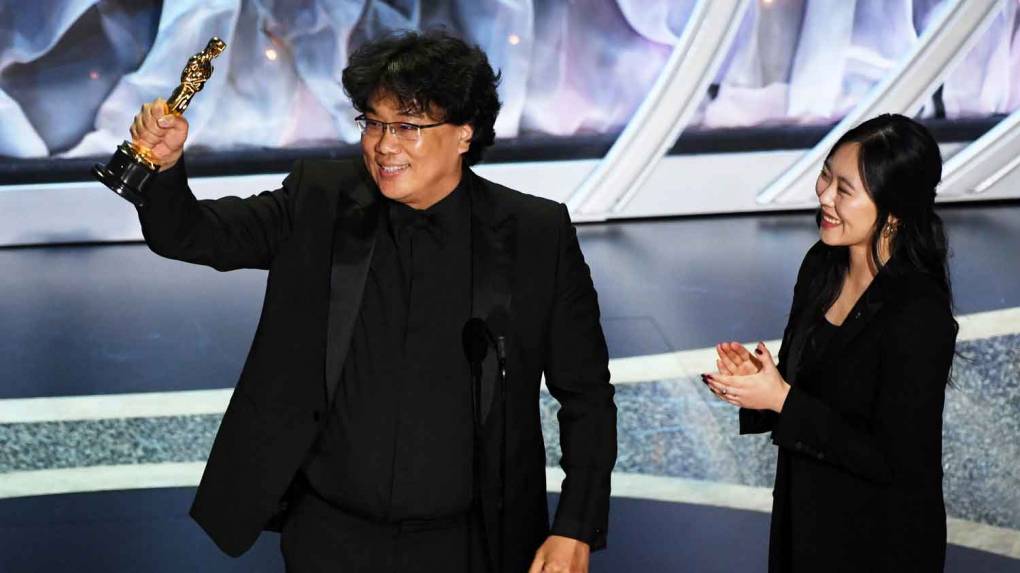
"caption": "Bong Joon-ho, here with interpreter Sharon Choi, won big at Sunday's Oscars. His film \u003cem>Parasite\u003c/em> took best international feature and best picture, and he was recognized for his direction and writing.",
"description": "Bong Joon-ho, here with interpreter Sharon Choi, won big at Sunday's Oscars. His film \u003cem>Parasite\u003c/em> took best international feature and best picture, and he was recognized for his direction and writing.",
"title": "Parasite.Bong",
"credit": "Kevin Winter/Getty Images",
"status": "inherit",
"isLoading": false,
"fetchFailed": false
},
"arts_13874544": {
"type": "attachments",
"id": "arts_13874544",
"meta": {
"index": "attachments_1716263798",
"site": "arts",
"id": "13874544",
"found": true
},
"parent": 13874517,
"imgSizes": {
"twentyfourteen-full-width": {
"file": "https://ww2.kqed.org/app/uploads/sites/2/2020/02/Frida-Mom-1038x576.png",
"width": 1038,
"mimeType": "image/png",
"height": 576
},
"thumbnail": {
"file": "https://ww2.kqed.org/app/uploads/sites/2/2020/02/Frida-Mom-160x84.png",
"width": 160,
"mimeType": "image/png",
"height": 84
},
"post-thumbnail": {
"file": "https://ww2.kqed.org/app/uploads/sites/2/2020/02/Frida-Mom-672x372.png",
"width": 672,
"mimeType": "image/png",
"height": 372
},
"kqedFullSize": {
"file": "https://ww2.kqed.org/app/uploads/sites/2/2020/02/Frida-Mom.png",
"width": 1366,
"height": 720
},
"large": {
"file": "https://ww2.kqed.org/app/uploads/sites/2/2020/02/Frida-Mom-1020x538.png",
"width": 1020,
"mimeType": "image/png",
"height": 538
},
"medium": {
"file": "https://ww2.kqed.org/app/uploads/sites/2/2020/02/Frida-Mom-800x422.png",
"width": 800,
"mimeType": "image/png",
"height": 422
},
"medium_large": {
"file": "https://ww2.kqed.org/app/uploads/sites/2/2020/02/Frida-Mom-768x405.png",
"width": 768,
"mimeType": "image/png",
"height": 405
}
},
"publishDate": 1581028868,
"modified": 1581028959,
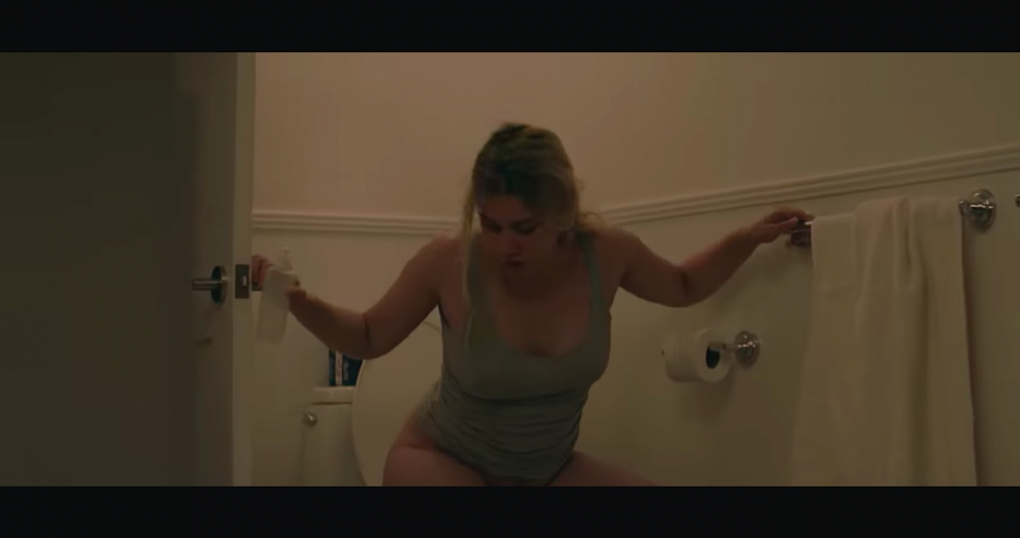
"caption": "This commercial for Frida Mom postpartum products was denied airspace by ABC during the Oscars broadcast.",
"description": "This commercial for Frida Mom postpartum products was denied airspace by ABC during the Oscars broadcast.",
"title": "This commercial for Frida Mom postpartum products was denied airspace by ABC during the Oscars broadcast.",
"credit": "YouTube",
"status": "inherit",
"isLoading": false,
"fetchFailed": false
},
"arts_13873128": {
"type": "attachments",
"id": "arts_13873128",
"meta": {
"index": "attachments_1716263798",
"site": "arts",
"id": "13873128",
"found": true
},
"parent": 13873125,
"imgSizes": {
"thumbnail": {
"file": "https://ww2.kqed.org/app/uploads/sites/2/2020/01/Parasite-160x90.jpg",
"width": 160,
"mimeType": "image/jpeg",
"height": 90
},
"post-thumbnail": {
"file": "https://ww2.kqed.org/app/uploads/sites/2/2020/01/Parasite-672x372.jpg",
"width": 672,
"mimeType": "image/jpeg",
"height": 372
},
"kqedFullSize": {
"file": "https://ww2.kqed.org/app/uploads/sites/2/2020/01/Parasite.jpg",
"width": 800,
"height": 449
},
"medium": {
"file": "https://ww2.kqed.org/app/uploads/sites/2/2020/01/Parasite-800x449.jpg",
"width": 800,
"mimeType": "image/jpeg",
"height": 449
},
"medium_large": {
"file": "https://ww2.kqed.org/app/uploads/sites/2/2020/01/Parasite-768x431.jpg",
"width": 768,
"mimeType": "image/jpeg",
"height": 431
}
},
"publishDate": 1578936674,
"modified": 1578936704,
"caption": "Cho Yeo-jeong stars in 'Parasite,' which earned six Oscar nominations, including best picture.",
"description": "Cho Yeo-jeong stars in 'Parasite,' which earned six Oscar nominations, including best picture.",
"title": "Parasite",
"credit": "NEON",
"status": "inherit",
"isLoading": false,
"fetchFailed": false
},
"arts_13870035": {
"type": "attachments",
"id": "arts_13870035",
"meta": {
"index": "attachments_1716263798",
"site": "arts",
"id": "13870035",
"found": true
},
"parent": 13869074,
"imgSizes": {
"twentyfourteen-full-width": {
"file": "https://ww2.kqed.org/app/uploads/sites/2/2019/11/GettyImages-515575596-1020x683_Resized-1020x576.jpg",
"width": 1020,
"mimeType": "image/jpeg",
"height": 576
},
"thumbnail": {
"file": "https://ww2.kqed.org/app/uploads/sites/2/2019/11/GettyImages-515575596-1020x683_Resized-160x101.jpg",
"width": 160,
"mimeType": "image/jpeg",
"height": 101
},
"post-thumbnail": {
"file": "https://ww2.kqed.org/app/uploads/sites/2/2019/11/GettyImages-515575596-1020x683_Resized-672x372.jpg",
"width": 672,
"mimeType": "image/jpeg",
"height": 372
},
"kqedFullSize": {
"file": "https://ww2.kqed.org/app/uploads/sites/2/2019/11/GettyImages-515575596-1020x683_Resized.jpg",
"width": 1020,
"height": 644
},
"large": {
"file": "https://ww2.kqed.org/app/uploads/sites/2/2019/11/GettyImages-515575596-1020x683_Resized-1020x644.jpg",
"width": 1020,
"mimeType": "image/jpeg",
"height": 644
},
"medium": {
"file": "https://ww2.kqed.org/app/uploads/sites/2/2019/11/GettyImages-515575596-1020x683_Resized-800x505.jpg",
"width": 800,
"mimeType": "image/jpeg",
"height": 505
},
"medium_large": {
"file": "https://ww2.kqed.org/app/uploads/sites/2/2019/11/GettyImages-515575596-1020x683_Resized-768x485.jpg",
"width": 768,
"mimeType": "image/jpeg",
"height": 485
}
},
"publishDate": 1574119448,
"modified": 1574119465,
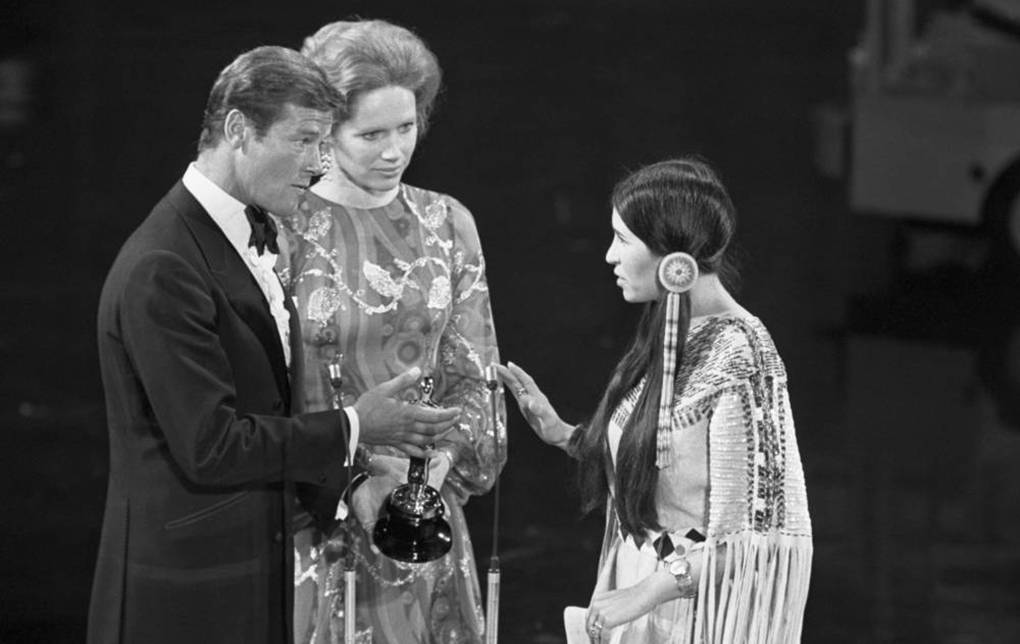
"caption": "At the 1973 Academy Awards, Sacheen Littlefeather refuses the Academy Award for Best Actor on behalf of Marlon Brando who won for his role in The Godfather. She carries a letter from Brando in which he explains he refused the award in protest of American treatment of the Native Americans.",
"description": "Sacheen Littlefeather turns down an Academy Award on behalf of Marlon Brando, 1973.",
"title": "Sacheen Littlefeather Refuses Marlon Brando's Academy Award",
"credit": null,
"status": "inherit",
"isLoading": false,
"fetchFailed": false
},
"arts_13858928": {
"type": "attachments",
"id": "arts_13858928",
"meta": {
"index": "attachments_1716263798",
"site": "arts",
"id": "13858928",
"found": true
},
"parent": 13858916,
"imgSizes": {
"twentyfourteen-full-width": {
"file": "https://ww2.kqed.org/app/uploads/sites/2/2019/06/honoraryemmys-featured-2020-1038x576.jpg",
"width": 1038,
"mimeType": "image/jpeg",
"height": 576
},
"thumbnail": {
"file": "https://ww2.kqed.org/app/uploads/sites/2/2019/06/honoraryemmys-featured-2020-160x90.jpg",
"width": 160,
"mimeType": "image/jpeg",
"height": 90
},
"post-thumbnail": {
"file": "https://ww2.kqed.org/app/uploads/sites/2/2019/06/honoraryemmys-featured-2020-672x372.jpg",
"width": 672,
"mimeType": "image/jpeg",
"height": 372
},
"kqedFullSize": {
"file": "https://ww2.kqed.org/app/uploads/sites/2/2019/06/honoraryemmys-featured-2020.jpg",
"width": 1920,
"height": 1080
},
"large": {
"file": "https://ww2.kqed.org/app/uploads/sites/2/2019/06/honoraryemmys-featured-2020-1020x574.jpg",
"width": 1020,
"mimeType": "image/jpeg",
"height": 574
},
"complete_open_graph": {
"file": "https://ww2.kqed.org/app/uploads/sites/2/2019/06/honoraryemmys-featured-2020-1200x675.jpg",
"width": 1200,
"mimeType": "image/jpeg",
"height": 675
},
"full-width": {
"file": "https://ww2.kqed.org/app/uploads/sites/2/2019/06/honoraryemmys-featured-2020-1920x1080.jpg",
"width": 1920,
"mimeType": "image/jpeg",
"height": 1080
},
"medium": {
"file": "https://ww2.kqed.org/app/uploads/sites/2/2019/06/honoraryemmys-featured-2020-800x450.jpg",
"width": 800,
"mimeType": "image/jpeg",
"height": 450
},
"medium_large": {
"file": "https://ww2.kqed.org/app/uploads/sites/2/2019/06/honoraryemmys-featured-2020-768x432.jpg",
"width": 768,
"mimeType": "image/jpeg",
"height": 432
}
},
"publishDate": 1559681975,
"modified": 1559682127,
"caption": "From L-R: Wes Studi (Charley Gallay), Lina Lina Wertmüller (Vittorio Zunino Celotto), Geena Davis (Phillip Faraone).",
"description": "From L-R: Wes Studi (Charley Gallay), Lina Lina Wertmüller (Vittorio Zunino Celotto), Geena Davis (Phillip Faraone).",
"title": "honoraryemmys-featured-2020",
"credit": null,
"status": "inherit",
"isLoading": false,
"fetchFailed": false
},
"arts_13855734": {
"type": "attachments",
"id": "arts_13855734",
"meta": {
"index": "attachments_1716263798",
"site": "arts",
"id": "13855734",
"found": true
},
"parent": 13855728,
"imgSizes": {
"twentyfourteen-full-width": {
"file": "https://ww2.kqed.org/app/uploads/sites/2/2019/04/GettyImages-57001380-1038x576.jpg",
"width": 1038,
"mimeType": "image/jpeg",
"height": 576
},
"thumbnail": {
"file": "https://ww2.kqed.org/app/uploads/sites/2/2019/04/GettyImages-57001380-160x120.jpg",
"width": 160,
"mimeType": "image/jpeg",
"height": 120
},
"post-thumbnail": {
"file": "https://ww2.kqed.org/app/uploads/sites/2/2019/04/GettyImages-57001380-672x372.jpg",
"width": 672,
"mimeType": "image/jpeg",
"height": 372
},
"kqedFullSize": {
"file": "https://ww2.kqed.org/app/uploads/sites/2/2019/04/GettyImages-57001380-e1556129904838.jpg",
"width": 1920,
"height": 1446
},
"large": {
"file": "https://ww2.kqed.org/app/uploads/sites/2/2019/04/GettyImages-57001380-1020x768.jpg",
"width": 1020,
"mimeType": "image/jpeg",
"height": 768
},
"complete_open_graph": {
"file": "https://ww2.kqed.org/app/uploads/sites/2/2019/04/GettyImages-57001380-1200x904.jpg",
"width": 1200,
"mimeType": "image/jpeg",
"height": 904
},
"full-width": {
"file": "https://ww2.kqed.org/app/uploads/sites/2/2019/04/GettyImages-57001380-1920x1446.jpg",
"width": 1920,
"mimeType": "image/jpeg",
"height": 1446
},
"medium": {
"file": "https://ww2.kqed.org/app/uploads/sites/2/2019/04/GettyImages-57001380-800x602.jpg",
"width": 800,
"mimeType": "image/jpeg",
"height": 602
},
"medium_large": {
"file": "https://ww2.kqed.org/app/uploads/sites/2/2019/04/GettyImages-57001380-768x578.jpg",
"width": 768,
"mimeType": "image/jpeg",
"height": 578
}
},
"publishDate": 1556129864,
"modified": 1556129999,
"caption": "Large display statue of the Oscar statuette wait to be painted on the red carpet outside the Kodak Theatre in Hollywood 04 March 2006 as the area is prepared for the 78th Academy Awards that will be held 05 March.",
"description": "Large display statue of the Oscar statuette wait to be painted on the red carpet outside the Kodak Theatre in Hollywood 04 March 2006 as the area is prepared for the 78th Academy Awards that will be held 05 March.",
"title": "Large display statue of the Oscar statue",
"credit": "TIMOTHY A. CLARY/AFP/Getty Images",
"status": "inherit",
"isLoading": false,
"fetchFailed": false
},
"arts_13849164": {
"type": "attachments",
"id": "arts_13849164",
"meta": {
"index": "attachments_1716263798",
"site": "arts",
"id": "13849164",
"found": true
},
"title": "82nd Annual Academy Awards - \"Meet The Oscars\" New York",
"publishDate": 1548173305,
"status": "inherit",
"parent": 13849161,
"modified": 1773354937,
"caption": "Oscar statuettes on the 82nd Annual Academy Awards in New York.",
"credit": "Andrew H. Walker/Getty Images",
"altTag": "82nd Annual Academy Awards - \"Meet The Oscars\" New York",
"description": "82nd Annual Academy Awards - \"Meet The Oscars\" New York",
"imgSizes": {
"thumbnail": {
"file": "https://cdn.kqed.org/wp-content/uploads/sites/2/2019/01/GettyImages-97052777-e1548173362651-160x119.jpg",
"width": 160,
"height": 119,
"mimeType": "image/jpeg"
},
"medium": {
"file": "https://cdn.kqed.org/wp-content/uploads/sites/2/2019/01/GettyImages-97052777-e1548173362651-800x593.jpg",
"width": 800,
"height": 593,
"mimeType": "image/jpeg"
},
"medium_large": {
"file": "https://cdn.kqed.org/wp-content/uploads/sites/2/2019/01/GettyImages-97052777-e1548173362651-768x570.jpg",
"width": 768,
"height": 570,
"mimeType": "image/jpeg"
},
"large": {
"file": "https://cdn.kqed.org/wp-content/uploads/sites/2/2019/01/GettyImages-97052777-e1548173362651-1020x757.jpg",
"width": 1020,
"height": 757,
"mimeType": "image/jpeg"
},
"complete_open_graph": {
"file": "https://cdn.kqed.org/wp-content/uploads/sites/2/2019/01/GettyImages-97052777-e1548173362651-1200x890.jpg",
"width": 1200,
"height": 890,
"mimeType": "image/jpeg"
},
"post-thumbnail": {
"file": "https://cdn.kqed.org/wp-content/uploads/sites/2/2019/01/GettyImages-97052777-e1548173362651-672x372.jpg",
"width": 672,
"height": 372,
"mimeType": "image/jpeg"
},
"twentyfourteen-full-width": {
"file": "https://cdn.kqed.org/wp-content/uploads/sites/2/2019/01/GettyImages-97052777-e1548173362651-1038x576.jpg",
"width": 1038,
"height": 576,
"mimeType": "image/jpeg"
},
"full-width": {
"file": "https://cdn.kqed.org/wp-content/uploads/sites/2/2019/01/GettyImages-97052777-e1548173362651-1920x1424.jpg",
"width": 1920,
"height": 1424,
"mimeType": "image/jpeg"
},
"guest-author-32": {
"file": "https://cdn.kqed.org/wp-content/uploads/sites/2/2019/01/GettyImages-97052777-e1548173362651-32x32.jpg",
"width": 32,
"height": 32,
"mimeType": "image/jpeg"
},
"guest-author-50": {
"file": "https://cdn.kqed.org/wp-content/uploads/sites/2/2019/01/GettyImages-97052777-e1548173362651-50x50.jpg",
"width": 50,
"height": 50,
"mimeType": "image/jpeg"
},
"guest-author-64": {
"file": "https://cdn.kqed.org/wp-content/uploads/sites/2/2019/01/GettyImages-97052777-e1548173362651-64x64.jpg",
"width": 64,
"height": 64,
"mimeType": "image/jpeg"
},
"guest-author-96": {
"file": "https://cdn.kqed.org/wp-content/uploads/sites/2/2019/01/GettyImages-97052777-e1548173362651-96x96.jpg",
"width": 96,
"height": 96,
"mimeType": "image/jpeg"
},
"guest-author-128": {
"file": "https://cdn.kqed.org/wp-content/uploads/sites/2/2019/01/GettyImages-97052777-e1548173362651-128x128.jpg",
"width": 128,
"height": 128,
"mimeType": "image/jpeg"
},
"detail": {
"file": "https://cdn.kqed.org/wp-content/uploads/sites/2/2019/01/GettyImages-97052777-e1548173362651-150x150.jpg",
"width": 150,
"height": 150,
"mimeType": "image/jpeg"
},
"kqedFullSize": {
"file": "https://cdn.kqed.org/wp-content/uploads/sites/2/2019/01/GettyImages-97052777-e1548173362651.jpg",
"width": 1920,
"height": 1424
}
},
"isLoading": false,
"fetchFailed": false
}
},
"audioPlayerReducer": {
"postId": "stream_live",
"isPaused": true,
"isPlaying": false,
"pfsActive": false,
"pledgeModalIsOpen": true,
"playerDrawerIsOpen": false,
"liveAudioPlayStartedAt": 0,
"liveAudioPlayContext": ""
},
"authorsReducer": {
"byline_arts_13895509": {
"type": "authors",
"id": "byline_arts_13895509",
"meta": {
"override": true
},
"slug": "byline_arts_13895509",
"name": "Rachel Martin",
"isLoading": false
},
"byline_arts_13893985": {
"type": "authors",
"id": "byline_arts_13893985",
"meta": {
"override": true
},
"slug": "byline_arts_13893985",
"name": "Linda Holmes",
"isLoading": false
},
"byline_arts_13892406": {
"type": "authors",
"id": "byline_arts_13892406",
"meta": {
"override": true
},
"slug": "byline_arts_13892406",
"name": "Neda Ulaby",
"isLoading": false
},
"byline_arts_13882796": {
"type": "authors",
"id": "byline_arts_13882796",
"meta": {
"override": true
},
"slug": "byline_arts_13882796",
"name": "Elizabeth Blair",
"isLoading": false
},
"byline_arts_13874634": {
"type": "authors",
"id": "byline_arts_13874634",
"meta": {
"override": true
},
"slug": "byline_arts_13874634",
"name": "Linda Holmes",
"isLoading": false
},
"byline_arts_13873125": {
"type": "authors",
"id": "byline_arts_13873125",
"meta": {
"override": true
},
"slug": "byline_arts_13873125",
"name": "Linda Holmes",
"isLoading": false
},
"byline_arts_13858916": {
"type": "authors",
"id": "byline_arts_13858916",
"meta": {
"override": true
},
"slug": "byline_arts_13858916",
"name": "Lindsey Bahr, Associated Press",
"isLoading": false
},
"byline_arts_13855728": {
"type": "authors",
"id": "byline_arts_13855728",
"meta": {
"override": true
},
"slug": "byline_arts_13855728",
"name": "Colin Dwyer",
"isLoading": false
},
"byline_arts_13849161": {
"type": "authors",
"id": "byline_arts_13849161",
"meta": {
"override": true
},
"slug": "byline_arts_13849161",
"name": "Linda Holmes",
"isLoading": false
},
"ralexandra": {
"type": "authors",
"id": "11242",
"meta": {
"index": "authors_1716337520",
"id": "11242",
"found": true
},
"name": "Rae Alexandra",
"firstName": "Rae",
"lastName": "Alexandra",
"slug": "ralexandra",
"email": "ralexandra@kqed.org",
"display_author_email": true,
"staff_mastheads": [],
"title": "Reporter/Producer",
"bio": "Rae Alexandra is a Reporter/Producer for KQED Arts & Culture, and the creator/author of the \u003ca href=\"https://www.kqed.org/arts/program/rebel-girls-from-bay-area-history\">Rebel Girls From Bay Area History\u003c/a> and \u003ca href=\"https://www.kqed.org/bizarrebayarea\">Bizarre Bay Area\u003c/a> series. Her debut book, \u003ca href=\"https://citylights.com/politics-current-events-history/unsung-heroines35-women-who-changed/\">Unsung Heroines: 35 Women Who Changed the Bay Area\u003c/a> was published by City Lights in March 2026. In 2023, Rae was awarded an SPJ Excellence in Journalism Award for Arts & Culture. Rae was born and raised in Wales and subsequently — even after two decades in Northern California — still uses phrases that regularly baffle her coworkers.",
"avatar": "https://secure.gravatar.com/avatar/edfee8176c80cc0a382b051190f5341997df378a934a5774dcb0977732dfd401?s=600&d=blank&r=g",
"twitter": null,
"bluesky": null,
"facebook": null,
"instagram": null,
"linkedin": null,
"sites": [
{
"site": "arts",
"roles": [
"subscriber"
]
},
{
"site": "news",
"roles": [
"subscriber"
]
},
{
"site": "pop",
"roles": [
"subscriber"
]
},
{
"site": "bayareabites",
"roles": [
"subscriber"
]
},
{
"site": "science",
"roles": [
"subscriber"
]
}
],
"headData": {
"title": "Rae Alexandra | KQED",
"description": "Reporter/Producer",
"ogImgSrc": "https://secure.gravatar.com/avatar/edfee8176c80cc0a382b051190f5341997df378a934a5774dcb0977732dfd401?s=600&d=blank&r=g",
"twImgSrc": "https://secure.gravatar.com/avatar/edfee8176c80cc0a382b051190f5341997df378a934a5774dcb0977732dfd401?s=600&d=blank&r=g"
},
"isLoading": false,
"link": "/author/ralexandra"
},
"jasminegarnett": {
"type": "authors",
"id": "11530",
"meta": {
"index": "authors_1716337520",
"id": "11530",
"found": true
},
"name": "Jasmine Garnett",
"firstName": "Jasmine",
"lastName": "Garnett",
"slug": "jasminegarnett",
"email": "JGarnett@KQED.org",
"display_author_email": false,
"staff_mastheads": [
"news"
],
"title": "Senior Engagement Platforms Producer",
"bio": "Jasmine is a Senior Engagement Platforms Producer on the KQED News team. She is also a freelance writer, with work appearing in KQED, Bitch Media, and Kotaku among others. Jasmine graduated from UC Berkeley with a degree in Media Studies, where she was also an Arts and Entertainment reporter at the Daily Californian.",
"avatar": "https://secure.gravatar.com/avatar/a6ea8b0641874311533b7401bee15c8e?s=600&d=blank&r=g",
"twitter": "JFLGarnett",
"facebook": null,
"instagram": null,
"linkedin": null,
"sites": [
{
"site": "arts",
"roles": [
"author"
]
},
{
"site": "news",
"roles": [
"editor"
]
},
{
"site": "about",
"roles": [
"editor"
]
},
{
"site": "science",
"roles": [
"editor"
]
},
{
"site": "forum",
"roles": [
"editor"
]
},
{
"site": "pressroom",
"roles": [
"editor"
]
}
],
"headData": {
"title": "Jasmine Garnett | KQED",
"description": "Senior Engagement Platforms Producer",
"ogImgSrc": "https://secure.gravatar.com/avatar/a6ea8b0641874311533b7401bee15c8e?s=600&d=blank&r=g",
"twImgSrc": "https://secure.gravatar.com/avatar/a6ea8b0641874311533b7401bee15c8e?s=600&d=blank&r=g"
},
"isLoading": false,
"link": "/author/jasminegarnett"
}
},
"pagesReducer": {
"arts_tag_oscars": {
"type": "terms",
"id": "arts_3698",
"meta": {
"index": "terms_1716263798",
"site": "arts",
"id": "3698",
"score": 8.937804
},
"featImg": null,
"name": "oscars",
"description": null,
"taxonomy": "tag",
"headData": {
"twImgId": null,
"twTitle": null,
"ogTitle": null,
"ogImgId": null,
"twDescription": null,
"description": null,
"title": "oscars Archives | KQED Arts",
"ogDescription": null
},
"ttid": 3710,
"slug": "oscars",
"isLoading": false,
"title": "oscars",
"pageMeta": {
"site": "arts",
"WpPageTemplate": "page-topic-editorial",
"currentPage": 4
},
"blocks": [
{
"blockName": "kqed/post-list",
"attrs": {
"layout": "cardArticle2",
"query": "posts/arts?tag=oscars",
"seeMore": false,
"paginated": true,
"page": 4
}
},
{
"blockName": "kqed/ad"
}
]
}
},
"pfsSessionReducer": {},
"postsReducer": {
"stream_live": {
"type": "live",
"id": "stream_live",
"audioUrl": "https://streams.kqed.org/kqedradio",
"title": "Live Stream",
"excerpt": "Live Stream information currently unavailable.",
"link": "/radio",
"featImg": "",
"label": {
"name": "KQED Live",
"link": "/"
}
},
"stream_kqedNewscast": {
"type": "posts",
"id": "stream_kqedNewscast",
"audioUrl": "https://www.kqed.org/.stream/anon/radio/RDnews/newscast.mp3?_=1",
"title": "KQED Newscast",
"featImg": "",
"label": {
"name": "88.5 FM",
"link": "/"
}
},
"arts_13895509": {
"type": "posts",
"id": "arts_13895509",
"meta": {
"index": "posts_1716263798",
"site": "arts",
"id": "13895509",
"score": null,
"sort": [
1618003572000
]
},
"parent": 0,
"labelTerm": {
"site": "arts",
"term": 137
},
"blocks": [],
"publishDate": 1618003572,
"format": "standard",
"title": "'I Feel Like I'm an Olympian': Youn Yuh-jung on Her Historic Oscar Nomination",
"headTitle": "‘I Feel Like I’m an Olympian’: Youn Yuh-jung on Her Historic Oscar Nomination | KQED",
"content": "\u003cp>Youn Yuh-jung is an institution in Korean cinema. Her career spans five decades and includes starring roles in classic Korean films and famous TV dramas. Now, at 73, she has newfound fame in the U.S. for her role in the Oscar-nominated film \u003cem>Minari\u003c/em>.\u003c/p>\n\u003cp>Youn is nominated for Best Supporting Actress, making her the first South Korean woman ever to be nominated for an Academy Award in an acting category.\u003c/p>\n\u003cp>“This has never happened in Korea, and I feel like I’m an Olympian competing for my country,” Youn tells NPR in a call from her home in Seoul. “It’s very stressful,” she says with a laugh. [aside postid='arts_13893138']\u003c/p>\n\u003cp>The film \u003cem>Minari\u003c/em> centers around a Korean-American family that moves to rural Arkansas to start a new life on a farm. Youn plays Soonja, the grandmother who travels from South Korea to watch over her two young grandchildren.\u003c/p>\n\u003cp>“That character Soonja—she’s not a typical grandmother,” Youn says. Soonja is loving and lighthearted, but mischievous, too. She swears, watches pro wrestling, drinks Mountain Dew and shows her grandkids how to gamble.\u003c/p>\n\u003cp>[ad fullwidth]\u003c/p>\n\u003cp>“She was a widow—a Korean War widow, a single mother and a working mother,” Youn says of her character. “She likes to have some fun because she’s been through a lot. She tries to comfort [her family].”\u003c/p>\n\u003cp>Soonja develops a special bond with her young grandson David, played by Alan Kim. But cultivating a relationship with him takes patience. In David’s mind, Soonja isn’t a “real” grandmother—she shares a room with him and never bakes him cookies. He accuses her of wearing men’s underwear. Soonja is unfazed. In one scene, she embraces him and looks into his eyes, saying, “Pretty boy, pretty boy.”\u003c/p>\n\u003cp>David interjects: “I’m not pretty, I’m good looking!” as he storms off into his bedroom. Soonja laughs, then turns back to the TV to watch the wrestling match.\u003c/p>\n\u003cp>https://www.youtube.com/watch?v=KQ0gFidlro8\u003c/p>\n\u003cp>Youn says the character Soonja holds a deeper meaning in her own life. While filming, she often thought about childhood memories of her great-grandmother.\u003c/p>\n\u003cp>“It’s a heartbreaking story,” Youn says. “I was born in 1947, so I was maybe 3 when the Korean War started. And after the war, we didn’t have enough water, enough rice, nothing. My grandmother passed away during the wartime, and my great-grandmother happened to be alive until I was 9.”\u003c/p>\n\u003cp>Youn says her family had to ration supplies, and her great-grandmother would often re-use the family’s water. “To me, she was very dirty, or not hygienic. So, I didn’t like her at all. What a stupid thing [to think],” Youn says. “I didn’t like her because she’s not clean and she’d always say she’s not hungry. She would always skip lunch.” [aside postid='arts_13874634']\u003c/p>\n\u003cp>As a child, Youn didn’t understand that her great-grandmother was skipping meals so her family could have more food. “I didn’t know that,” Youn says. “She never said, ‘I love you,’ but I realized, after I become 60 years old, all of a sudden I thought about my great-grandmother. Then I realized, ‘Oh, she was saving all the food and all the water for us. Every night, I prayed for her because I felt terrible,” she says. “I ask her for forgiveness, I was very ignorant.”\u003c/p>\n\u003cp>\u003c/p>\n\u003cp>Youn says she still lives with that guilt, but says playing the role of Soonja offered a chance to come to terms with her painful memories. “I really understood this script, deeply. It connected me. The script was very authentic and very real to me, and a very genuine story to me. It was very touching. So, I said, ‘OK, I’ll do it—without any condition.’ ”\u003c/p>\n\u003cdiv class=\"fullattribution\">\u003cem>Copyright 2021 NPR. To see more, visit \u003ca href=\"https://www.npr.org\" target=\"_blank\" rel=\"noopener noreferrer\">NPR\u003c/a>.\u003cimg decoding=\"async\" src=\"https://www.google-analytics.com/__utm.gif?utmac=UA-5828686-4&utmdt=%27I+Feel+Like+I%27m+An+Olympian%27%3A+Youn+Yuh-jung+On+Her+Historic+Oscar+Nomination&utme=8(APIKey)9(MDAxOTAwOTE4MDEyMTkxMDAzNjczZDljZA004)\">\u003c/em>\u003c/div>\n\n",
"stats": {
"hasVideo": true,
"hasChartOrMap": false,
"hasAudio": false,
"hasPolis": false,
"wordCount": 711,
"hasGoogleForm": false,
"hasGallery": false,
"hasHearkenModule": false,
"iframeSrcs": [],
"paragraphCount": 15
},
"modified": 1705019189,
"excerpt": "The celebrated 'Minari' actor is the first Korean to ever be nominated for Best Supporting Actress.",
"headData": {
"twImgId": "",
"twTitle": "",
"ogTitle": "",
"ogImgId": "",
"twDescription": "",
"description": "The celebrated 'Minari' actor is the first Korean to ever be nominated for Best Supporting Actress.",
"title": "'I Feel Like I'm an Olympian': Youn Yuh-jung on Her Historic Oscar Nomination | KQED",
"ogDescription": "",
"schema": {
"@context": "https://schema.org",
"@type": "Article",
"headline": "'I Feel Like I'm an Olympian': Youn Yuh-jung on Her Historic Oscar Nomination",
"datePublished": "2021-04-09T14:26:12-07:00",
"dateModified": "2024-01-11T16:26:29-08:00",
"image": "https://cdn.kqed.org/wp-content/uploads/2020/02/KQED-OG-Image@1x.png"
}
},
"guestAuthors": [],
"slug": "i-feel-like-im-an-olympian-youn-yuh-jung-on-her-historic-oscar-nomination",
"status": "publish",
"nprApiLink": "http://api.npr.org/query?id=985344296&apiKey=MDAxOTAwOTE4MDEyMTkxMDAzNjczZDljZA004",
"templateType": "standard",
"nprStoryDate": "Fri, 09 Apr 2021 05:03:00 -0400",
"nprLastModifiedDate": "Fri, 09 Apr 2021 05:57:02 -0400",
"featuredImageType": "standard",
"nprHtmlLink": "https://www.npr.org/2021/04/09/985344296/i-feel-like-im-an-olympian-youn-yuh-jung-on-her-historic-oscar-nomination?ft=nprml&f=985344296",
"nprAudio": "https://ondemand.npr.org/anon.npr-mp3/npr/me/2021/04/20210409_me_i_feel_like_im_an_olympian_youn_yuh-jung_on_her_historic_oscar_nomination.mp3?orgId=1&topicId=1137&d=435&p=3&story=985344296&ft=nprml&f=985344296",
"nprImageAgency": "Courtesy of A24",
"nprAudioM3u": "http://api.npr.org/m3u/1985660354-094ae6.m3u?orgId=1&topicId=1137&d=435&p=3&story=985344296&ft=nprml&f=985344296",
"nprStoryId": "985344296",
"nprByline": "Rachel Martin",
"sticky": false,
"nprRetrievedStory": "1",
"nprPubDate": "Fri, 09 Apr 2021 11:37:00 -0400",
"path": "/arts/13895509/i-feel-like-im-an-olympian-youn-yuh-jung-on-her-historic-oscar-nomination",
"audioUrl": "https://ondemand.npr.org/anon.npr-mp3/npr/me/2021/04/20210409_me_i_feel_like_im_an_olympian_youn_yuh-jung_on_her_historic_oscar_nomination.mp3?orgId=1&topicId=1137&d=435&p=3&story=985344296&ft=nprml&f=985344296",
"audioTrackLength": null,
"parsedContent": [
{
"type": "contentString",
"content": "\u003cdiv class=\"post-body\">\u003cp>\u003cp>Youn Yuh-jung is an institution in Korean cinema. Her career spans five decades and includes starring roles in classic Korean films and famous TV dramas. Now, at 73, she has newfound fame in the U.S. for her role in the Oscar-nominated film \u003cem>Minari\u003c/em>.\u003c/p>\n\u003cp>Youn is nominated for Best Supporting Actress, making her the first South Korean woman ever to be nominated for an Academy Award in an acting category.\u003c/p>\n\u003cp>“This has never happened in Korea, and I feel like I’m an Olympian competing for my country,” Youn tells NPR in a call from her home in Seoul. “It’s very stressful,” she says with a laugh. \u003c/p>\u003c/div>",
"attributes": {
"named": {},
"numeric": []
}
},
{
"type": "component",
"content": "",
"name": "aside",
"attributes": {
"named": {
"postid": "arts_13893138",
"label": ""
},
"numeric": []
}
},
{
"type": "contentString",
"content": "\u003cdiv class=\"post-body\">\u003cp>\u003c/p>\n\u003cp>The film \u003cem>Minari\u003c/em> centers around a Korean-American family that moves to rural Arkansas to start a new life on a farm. Youn plays Soonja, the grandmother who travels from South Korea to watch over her two young grandchildren.\u003c/p>\n\u003cp>“That character Soonja—she’s not a typical grandmother,” Youn says. Soonja is loving and lighthearted, but mischievous, too. She swears, watches pro wrestling, drinks Mountain Dew and shows her grandkids how to gamble.\u003c/p>\n\u003cp>\u003c/p>\u003c/div>",
"attributes": {
"named": {},
"numeric": []
}
},
{
"type": "component",
"content": "",
"name": "ad",
"attributes": {
"named": {
"label": "fullwidth"
},
"numeric": [
"fullwidth"
]
}
},
{
"type": "contentString",
"content": "\u003cdiv class=\"post-body\">\u003cp>\u003c/p>\n\u003cp>“She was a widow—a Korean War widow, a single mother and a working mother,” Youn says of her character. “She likes to have some fun because she’s been through a lot. She tries to comfort [her family].”\u003c/p>\n\u003cp>Soonja develops a special bond with her young grandson David, played by Alan Kim. But cultivating a relationship with him takes patience. In David’s mind, Soonja isn’t a “real” grandmother—she shares a room with him and never bakes him cookies. He accuses her of wearing men’s underwear. Soonja is unfazed. In one scene, she embraces him and looks into his eyes, saying, “Pretty boy, pretty boy.”\u003c/p>\n\u003cp>David interjects: “I’m not pretty, I’m good looking!” as he storms off into his bedroom. Soonja laughs, then turns back to the TV to watch the wrestling match.\u003c/p>\u003c/p>\u003cp>\u003cspan class='utils-parseShortcode-shortcodes-__youtubeShortcode__embedYoutube'>\n \u003cspan class='utils-parseShortcode-shortcodes-__youtubeShortcode__embedYoutubeInside'>\n \u003ciframe\n loading='lazy'\n class='utils-parseShortcode-shortcodes-__youtubeShortcode__youtubePlayer'\n type='text/html'\n src='//www.youtube.com/embed/KQ0gFidlro8'\n title='//www.youtube.com/embed/KQ0gFidlro8'\n allowfullscreen='true'\n style='border:0;'>\u003c/iframe>\n \u003c/span>\n \u003c/span>\u003c/p>\u003cp>\u003cp>Youn says the character Soonja holds a deeper meaning in her own life. While filming, she often thought about childhood memories of her great-grandmother.\u003c/p>\n\u003cp>“It’s a heartbreaking story,” Youn says. “I was born in 1947, so I was maybe 3 when the Korean War started. And after the war, we didn’t have enough water, enough rice, nothing. My grandmother passed away during the wartime, and my great-grandmother happened to be alive until I was 9.”\u003c/p>\n\u003cp>Youn says her family had to ration supplies, and her great-grandmother would often re-use the family’s water. “To me, she was very dirty, or not hygienic. So, I didn’t like her at all. What a stupid thing [to think],” Youn says. “I didn’t like her because she’s not clean and she’d always say she’s not hungry. She would always skip lunch.” \u003c/p>\u003c/div>",
"attributes": {
"named": {},
"numeric": []
}
},
{
"type": "component",
"content": "",
"name": "aside",
"attributes": {
"named": {
"postid": "arts_13874634",
"label": ""
},
"numeric": []
}
},
{
"type": "contentString",
"content": "\u003cdiv class=\"post-body\">\u003cp>\u003c/p>\n\u003cp>As a child, Youn didn’t understand that her great-grandmother was skipping meals so her family could have more food. “I didn’t know that,” Youn says. “She never said, ‘I love you,’ but I realized, after I become 60 years old, all of a sudden I thought about my great-grandmother. Then I realized, ‘Oh, she was saving all the food and all the water for us. Every night, I prayed for her because I felt terrible,” she says. “I ask her for forgiveness, I was very ignorant.”\u003c/p>\n\u003cp>\u003c/p>\n\u003cp>Youn says she still lives with that guilt, but says playing the role of Soonja offered a chance to come to terms with her painful memories. “I really understood this script, deeply. It connected me. The script was very authentic and very real to me, and a very genuine story to me. It was very touching. So, I said, ‘OK, I’ll do it—without any condition.’ ”\u003c/p>\n\u003cdiv class=\"fullattribution\">\u003cem>Copyright 2021 NPR. To see more, visit \u003ca href=\"https://www.npr.org\" target=\"_blank\" rel=\"noopener noreferrer\">NPR\u003c/a>.\u003cimg decoding=\"async\" src=\"https://www.google-analytics.com/__utm.gif?utmac=UA-5828686-4&utmdt=%27I+Feel+Like+I%27m+An+Olympian%27%3A+Youn+Yuh-jung+On+Her+Historic+Oscar+Nomination&utme=8(APIKey)9(MDAxOTAwOTE4MDEyMTkxMDAzNjczZDljZA004)\">\u003c/em>\u003c/div>\n\n\u003c/div>\u003c/p>",
"attributes": {
"named": {},
"numeric": []
}
}
],
"link": "/arts/13895509/i-feel-like-im-an-olympian-youn-yuh-jung-on-her-historic-oscar-nomination",
"authors": [
"byline_arts_13895509"
],
"categories": [
"arts_1",
"arts_74"
],
"tags": [
"arts_3701",
"arts_3698"
],
"affiliates": [
"arts_137"
],
"featImg": "arts_13895510",
"label": "arts_137"
},
"arts_13893985": {
"type": "posts",
"id": "arts_13893985",
"meta": {
"index": "posts_1716263798",
"site": "arts",
"id": "13893985",
"score": null,
"sort": [
1615826514000
]
},
"parent": 0,
"labelTerm": {
"site": "arts",
"term": 137
},
"blocks": [],
"publishDate": 1615826514,
"format": "standard",
"title": "‘Mank’ Leads Oscar Nominations in a Year When it's Easy to Judge For Yourself",
"headTitle": "‘Mank’ Leads Oscar Nominations in a Year When it’s Easy to Judge For Yourself | KQED",
"content": "\u003cp>Hollywood loves a movie about Hollywood, so it’s no real surprise that the Oscar nominations on Monday morning were led by \u003cem>Mank\u003c/em>, director David Fincher’s story about the writing of \u003cem>Citizen Kane\u003c/em>. It landed 10 nominations: best picture, actor (Gary Oldman), supporting actress (Amanda Seyfried), directing, cinematography, costume design, makeup, sound, production design and score.\u003c/p>\n\u003cp>Including \u003cem>Mank\u003c/em>, there are a total of eight best picture contenders: \u003cem>The Trial of the Chicago 7\u003c/em>, \u003cem>Minari\u003c/em>, \u003cem>The Father\u003c/em>, \u003cem>Judas and the Black Messiah\u003c/em>, \u003cem>Nomadland\u003c/em> and \u003cem>Sound of Metal\u003c/em>, all of which had six nominations total; and \u003cem>Promising Young Woman\u003c/em>, which had five. (See the full \u003ca href=\"https://www.oscars.org/oscars/ceremonies/2021\" target=\"_blank\" rel=\"noopener noreferrer\">nominations list for the 93rd Academy Awards here\u003c/a>.) [aside postid='arts_13890020']\u003c/p>\n\u003cp>And among the top films, there are certainly firsts. It’s the first year two women—Chloé Zhao for \u003cem>Nomadland\u003c/em> and Emerald Fennell for \u003cem>Promising Young Woman\u003c/em>—have been nominated for best director, and Zhao is the first woman of color nominated and the first woman to have four nominations in one year. (Her other nominations are for writing, editing and producing the film.) Steven Yeun in \u003cem>Minari\u003c/em> is the first Asian American actor, and Riz Ahmed the first actor of Pakistani heritage, to be nominated as leads.\u003c/p>\n\u003cp>Many expect the lead actor Oscar to be awarded posthumously to Chadwick Boseman, who died in August, for his final film role in \u003cem>Ma Rainey’s Black Bottom\u003c/em>; Viola Davis was also nominated for her work in that film. Rounding out the best actor category is Anthony Hopkins, who plays a man dealing with the onset of dementia in the unusually structured film \u003cem>The Father\u003c/em>. (Note: Daniel Kaluuya and LaKeith Stanfield were both nominated for \u003cem>Judas and the Black Messiah\u003c/em>, in the supporting actor category.)\u003c/p>\n\u003cp>In the lead actress race, Davis will face Andra Day in \u003cem>The United States vs. Billie Holiday\u003c/em>, Frances McDormand in \u003cem>Nomadland\u003c/em>, Vanessa Kirby in \u003cem>Pieces of a Woman\u003c/em>, and Carey Mulligan in \u003cem>Promising Young Woman\u003c/em>.\u003c/p>\n\u003cp>[ad fullwidth]\u003c/p>\n\u003cp>Other nominations are certainly more conventional, such as the recognition of the somewhat dutiful \u003cem>The Trial of the Chicago 7\u003c/em>, written and directed by Aaron Sorkin, for which Sacha Baron Cohen was nominated for his portrayal of Abbie Hoffman. (Great men, check. Historical figures, check. Courtroom drama, check.) Glenn Close was nominated for her heavily disguised work in the poorly reviewed \u003cem>Hillbilly Elegy\u003c/em>, which perhaps tellingly got its only other nomination for makeup.\u003c/p>\n\u003cp>As happens every year, this crop of nominees has a lot of delights: The strong showing for \u003cem>Minari\u003c/em>—including nominations for lead actor Steven Yeun, supporting actress Yuh-jung Youn, and director Lee Isaac Chung—follows its disappointing and somewhat baffling move to the foreign language film category at the Golden Globes. (It is an American-made and American-set film.) The academy doesn’t often recognize a purely, truly comedic performance—especially an extravagantly silly one—in the acting categories, but Maria Bakalova grabbed a nomination for \u003cem>Borat Subsequent Moviefilm\u003c/em>. And it’s lovely to see a nomination for \u003cem>Wolfwalkers\u003c/em>, an animated feature that’s nothing like the style of Pixar or Disney, and which sits over on Apple TV+, just waiting to be watched. [aside postid='arts_13893976']\u003c/p>\n\u003cp>But as always, there are nominations that were expected or hoped for that didn’t come through, probably none more noted this year than Delroy Lindo, who was absent for his work in Spike Lee’s \u003cem>Da 5 Bloods\u003c/em>. Regina King, who made her feature directing debut with \u003cem>One Night In Miami\u003c/em>, wasn’t nominated, and the film missed out on best picture, although Leslie Odom Jr. was nominated as a supporting actor for playing Sam Cooke.\u003c/p>\n\u003cp>Another first that’s likely to set the tone for the awards is directly related to the pandemic that shut down theaters in many places for much of 2020: It’s the first year most of the best picture nominees, and most of the other major nominees as well, have been widely available to watch at home for at least some period of time prior to the nominations. The one exception in the best picture category is \u003cem>The Father\u003c/em>, starring nominee Anthony Hopkins, which won’t hit streaming until March 26—which is still well before the ceremony on April 25. It’s possible that by Oscar night, a lot more people than ever before will have seen all (or nearly all) of the nominees, at least in the feature categories.\u003c/p>\n\u003cp>Whether these nods please you or not, you’re probably in a better position to have strong opinions than you’ve been in past years. How pleased you’ll be with the outcomes remains to be seen.\u003c/p>\n\u003cp>\u003c/p>\n\u003cp>\u003ci>Copyright 2021 \u003ca href=\"https://www.npr.org\" target=\"_blank\" rel=\"noopener noreferrer\">NPR\u003c/a>.\u003c/i>\u003c/p>\n\n",
"stats": {
"hasVideo": false,
"hasChartOrMap": false,
"hasAudio": false,
"hasPolis": false,
"wordCount": 800,
"hasGoogleForm": false,
"hasGallery": false,
"hasHearkenModule": false,
"iframeSrcs": [],
"paragraphCount": 13
},
"modified": 1705019354,
"excerpt": "Thanks to streaming services, if you want to pick your own favorites, this is the year to do it.",
"headData": {
"twImgId": "",
"twTitle": "",
"ogTitle": "",
"ogImgId": "",
"twDescription": "",
"description": "Thanks to streaming services, if you want to pick your own favorites, this is the year to do it.",
"title": "‘Mank’ Leads Oscar Nominations in a Year When it's Easy to Judge For Yourself | KQED",
"ogDescription": "",
"schema": {
"@context": "https://schema.org",
"@type": "Article",
"headline": "‘Mank’ Leads Oscar Nominations in a Year When it's Easy to Judge For Yourself",
"datePublished": "2021-03-15T09:41:54-07:00",
"dateModified": "2024-01-11T16:29:14-08:00",
"image": "https://cdn.kqed.org/wp-content/uploads/2020/02/KQED-OG-Image@1x.png"
}
},
"guestAuthors": [],
"slug": "mank-leads-oscar-nominations-in-a-year-when-its-easy-to-judge-for-yourself",
"status": "publish",
"nprApiLink": "http://api.npr.org/query?id=977429961&apiKey=MDAxOTAwOTE4MDEyMTkxMDAzNjczZDljZA004",
"templateType": "standard",
"nprByline": "Linda Holmes",
"nprStoryDate": "Mon, 15 Mar 2021 10:57:53 -0400",
"nprLastModifiedDate": "Mon, 15 Mar 2021 12:28:41 -0400",
"featuredImageType": "standard",
"sticky": false,
"nprHtmlLink": "https://www.npr.org/2021/03/15/977429961/mank-leads-oscar-nominations-in-a-year-when-its-easy-to-judge-for-yourself?ft=nprml&f=977429961",
"nprImageAgency": "Netflix",
"nprStoryId": "977429961",
"nprRetrievedStory": "1",
"nprPubDate": "Mon, 15 Mar 2021 12:28:00 -0400",
"path": "/arts/13893985/mank-leads-oscar-nominations-in-a-year-when-its-easy-to-judge-for-yourself",
"audioTrackLength": null,
"parsedContent": [
{
"type": "contentString",
"content": "\u003cdiv class=\"post-body\">\u003cp>\u003cp>Hollywood loves a movie about Hollywood, so it’s no real surprise that the Oscar nominations on Monday morning were led by \u003cem>Mank\u003c/em>, director David Fincher’s story about the writing of \u003cem>Citizen Kane\u003c/em>. It landed 10 nominations: best picture, actor (Gary Oldman), supporting actress (Amanda Seyfried), directing, cinematography, costume design, makeup, sound, production design and score.\u003c/p>\n\u003cp>Including \u003cem>Mank\u003c/em>, there are a total of eight best picture contenders: \u003cem>The Trial of the Chicago 7\u003c/em>, \u003cem>Minari\u003c/em>, \u003cem>The Father\u003c/em>, \u003cem>Judas and the Black Messiah\u003c/em>, \u003cem>Nomadland\u003c/em> and \u003cem>Sound of Metal\u003c/em>, all of which had six nominations total; and \u003cem>Promising Young Woman\u003c/em>, which had five. (See the full \u003ca href=\"https://www.oscars.org/oscars/ceremonies/2021\" target=\"_blank\" rel=\"noopener noreferrer\">nominations list for the 93rd Academy Awards here\u003c/a>.) \u003c/p>\u003c/div>",
"attributes": {
"named": {},
"numeric": []
}
},
{
"type": "component",
"content": "",
"name": "aside",
"attributes": {
"named": {
"postid": "arts_13890020",
"label": ""
},
"numeric": []
}
},
{
"type": "contentString",
"content": "\u003cdiv class=\"post-body\">\u003cp>\u003c/p>\n\u003cp>And among the top films, there are certainly firsts. It’s the first year two women—Chloé Zhao for \u003cem>Nomadland\u003c/em> and Emerald Fennell for \u003cem>Promising Young Woman\u003c/em>—have been nominated for best director, and Zhao is the first woman of color nominated and the first woman to have four nominations in one year. (Her other nominations are for writing, editing and producing the film.) Steven Yeun in \u003cem>Minari\u003c/em> is the first Asian American actor, and Riz Ahmed the first actor of Pakistani heritage, to be nominated as leads.\u003c/p>\n\u003cp>Many expect the lead actor Oscar to be awarded posthumously to Chadwick Boseman, who died in August, for his final film role in \u003cem>Ma Rainey’s Black Bottom\u003c/em>; Viola Davis was also nominated for her work in that film. Rounding out the best actor category is Anthony Hopkins, who plays a man dealing with the onset of dementia in the unusually structured film \u003cem>The Father\u003c/em>. (Note: Daniel Kaluuya and LaKeith Stanfield were both nominated for \u003cem>Judas and the Black Messiah\u003c/em>, in the supporting actor category.)\u003c/p>\n\u003cp>In the lead actress race, Davis will face Andra Day in \u003cem>The United States vs. Billie Holiday\u003c/em>, Frances McDormand in \u003cem>Nomadland\u003c/em>, Vanessa Kirby in \u003cem>Pieces of a Woman\u003c/em>, and Carey Mulligan in \u003cem>Promising Young Woman\u003c/em>.\u003c/p>\n\u003cp>\u003c/p>\u003c/div>",
"attributes": {
"named": {},
"numeric": []
}
},
{
"type": "component",
"content": "",
"name": "ad",
"attributes": {
"named": {
"label": "fullwidth"
},
"numeric": [
"fullwidth"
]
}
},
{
"type": "contentString",
"content": "\u003cdiv class=\"post-body\">\u003cp>\u003c/p>\n\u003cp>Other nominations are certainly more conventional, such as the recognition of the somewhat dutiful \u003cem>The Trial of the Chicago 7\u003c/em>, written and directed by Aaron Sorkin, for which Sacha Baron Cohen was nominated for his portrayal of Abbie Hoffman. (Great men, check. Historical figures, check. Courtroom drama, check.) Glenn Close was nominated for her heavily disguised work in the poorly reviewed \u003cem>Hillbilly Elegy\u003c/em>, which perhaps tellingly got its only other nomination for makeup.\u003c/p>\n\u003cp>As happens every year, this crop of nominees has a lot of delights: The strong showing for \u003cem>Minari\u003c/em>—including nominations for lead actor Steven Yeun, supporting actress Yuh-jung Youn, and director Lee Isaac Chung—follows its disappointing and somewhat baffling move to the foreign language film category at the Golden Globes. (It is an American-made and American-set film.) The academy doesn’t often recognize a purely, truly comedic performance—especially an extravagantly silly one—in the acting categories, but Maria Bakalova grabbed a nomination for \u003cem>Borat Subsequent Moviefilm\u003c/em>. And it’s lovely to see a nomination for \u003cem>Wolfwalkers\u003c/em>, an animated feature that’s nothing like the style of Pixar or Disney, and which sits over on Apple TV+, just waiting to be watched. \u003c/p>\u003c/div>",
"attributes": {
"named": {},
"numeric": []
}
},
{
"type": "component",
"content": "",
"name": "aside",
"attributes": {
"named": {
"postid": "arts_13893976",
"label": ""
},
"numeric": []
}
},
{
"type": "contentString",
"content": "\u003cdiv class=\"post-body\">\u003cp>\u003c/p>\n\u003cp>But as always, there are nominations that were expected or hoped for that didn’t come through, probably none more noted this year than Delroy Lindo, who was absent for his work in Spike Lee’s \u003cem>Da 5 Bloods\u003c/em>. Regina King, who made her feature directing debut with \u003cem>One Night In Miami\u003c/em>, wasn’t nominated, and the film missed out on best picture, although Leslie Odom Jr. was nominated as a supporting actor for playing Sam Cooke.\u003c/p>\n\u003cp>Another first that’s likely to set the tone for the awards is directly related to the pandemic that shut down theaters in many places for much of 2020: It’s the first year most of the best picture nominees, and most of the other major nominees as well, have been widely available to watch at home for at least some period of time prior to the nominations. The one exception in the best picture category is \u003cem>The Father\u003c/em>, starring nominee Anthony Hopkins, which won’t hit streaming until March 26—which is still well before the ceremony on April 25. It’s possible that by Oscar night, a lot more people than ever before will have seen all (or nearly all) of the nominees, at least in the feature categories.\u003c/p>\n\u003cp>Whether these nods please you or not, you’re probably in a better position to have strong opinions than you’ve been in past years. How pleased you’ll be with the outcomes remains to be seen.\u003c/p>\n\u003cp>\u003c/p>\n\u003cp>\u003ci>Copyright 2021 \u003ca href=\"https://www.npr.org\" target=\"_blank\" rel=\"noopener noreferrer\">NPR\u003c/a>.\u003c/i>\u003c/p>\n\n\u003c/div>\u003c/p>",
"attributes": {
"named": {},
"numeric": []
}
}
],
"link": "/arts/13893985/mank-leads-oscar-nominations-in-a-year-when-its-easy-to-judge-for-yourself",
"authors": [
"byline_arts_13893985"
],
"categories": [
"arts_1",
"arts_74"
],
"tags": [
"arts_3701",
"arts_10278",
"arts_3698"
],
"affiliates": [
"arts_137"
],
"featImg": "arts_13893986",
"label": "arts_137"
},
"arts_13892406": {
"type": "posts",
"id": "arts_13892406",
"meta": {
"index": "posts_1716263798",
"site": "arts",
"id": "13892406",
"score": null,
"sort": [
1612825635000
]
},
"parent": 0,
"labelTerm": {
"site": "arts",
"term": 137
},
"blocks": [],
"publishDate": 1612825635,
"format": "standard",
"title": "'You Will Die at Twenty' is Sudan's First Ever Academy Awards Entry",
"headTitle": "‘You Will Die at Twenty’ is Sudan’s First Ever Academy Awards Entry | KQED",
"content": "\u003cp>What do Mexico, Malaysia, Morocco and Montenegro have in common? They’re among the 93 countries hoping for Oscar consideration this year.\u003c/p>\n\u003cp>For the first time, a movie from Sudan is also in the running for Best International Feature Film. \u003cem>You Will Die at Twenty\u003c/em> is also notably the first feature film made in Sudan in 20 years—and only the seventh to come from the country.\u003c/p>\n\u003cp>“I wanted to see how stories can be told in Sudan,” explains director Amjad Abu Alala. Dressed in a brown suede jacket, the 38-year-old radiates upbeat energy on a Zoom call from Cairo. “Because it’s a very unique country and Sudan is the heart of Africa.”\u003c/p>\n\u003cp>The grim title—\u003cem>You Will Die at Twenty\u003c/em>—suggests it’s about war or conflict. Neither is true. It’s a tenderhearted fable that starts with a couple proudly presenting a newborn to a village leader for blessings. But a guest at the ritual unexpectedly keels over and dies. The startled sheik utters a prophecy: this child will die at 20. From birth, the boy is already almost a ghost.\u003c/p>\n\u003cp>Alala adapted his script from Hammour Ziada’s short story “Sleeping at the Foot of the Mountain.” It’s about a child growing up under a cloud of dread and diminished expectations. It’s a meditation on mortality rife with exorcisms, dervishes and a thwarted romance with a confident girl.\u003c/p>\n\u003cp>[ad fullwidth]\u003c/p>\n\u003cp>The director, who was born in Dubai to Sudanese parents, moved back to Sudan when he was 6 and spent much of his childhood there. Alala’s mother worked in a Sudanese public library, and her bookworm son remembers devouring novels by Isabel Allende, Gabriel García Márquez and Naguib Mahfouz. Magical realism inspired this film, from a country where Arab and African worlds swirl together.\u003c/p>\n\u003cp>“The Arabic language, the African faces,” says Alala. “Islamic but very African roots and ceremonies. I just feel like it’s the land of untold stories, unseen faces.”\u003c/p>\n\u003cp>Telling those stories and showing those faces is partly why Film Movement decided to distribute \u003cem>You Will Die at Twenty\u003c/em> in North America.\u003c/p>\n\u003cp>https://www.youtube.com/watch?v=fGO7jgOUQ00\u003c/p>\n\u003cp>“It puts you in a very different place than Americans are used to being,” says Film Movement’s president, Michael Rosenberg. While he admits there are challenges to any small, subtitled arthouse film—from a developing country—with a depressing title, Rosenberg says it didn’t hurt that the movie has been picking up awards at film festivals around the world, including Best Debut at the Venice Film Festival, and enrapturing critics.\u003c/p>\n\u003cp>“We got \u003ca href=\"https://www.nytimes.com/2021/01/21/movies/you-will-die-at-twenty-review.html\" target=\"_blank\" rel=\"noopener noreferrer\">a review in \u003cem>The New York Times\u003c/em>\u003c/a> and it was a critics’ pick,” Rosenberg notes. “And we got a critics’ pick \u003ca href=\"https://variety.com/2019/film/reviews/you-will-die-at-twenty-review-1203322894/\" target=\"_blank\" rel=\"noopener noreferrer\">review from\u003cem> Variety\u003c/em>\u003c/a> and we got \u003ca href=\"https://www.latimes.com/entertainment-arts/movies/story/2021-01-22/you-will-die-at-20-review-amjad-abu-alala-sudan\" target=\"_blank\" rel=\"noopener noreferrer\">a rave review from the\u003cem> Los Angeles Times\u003c/em>\u003c/a>\u003cem>.\u003c/em>”\u003c/p>\n\u003cp>For now, \u003cem>You Will Die at Twenty\u003c/em> can be watched through Film Movement’s website, which links through to the websites of numerous art house cinemas. In April, it’s scheduled to be on Amazon and Apple. The challenges of making it, says director Amjad Abu Alala ranged from arranging financing to filming in a country with virtually no infrastructure to a production schedule unfortunately timed to December 2018.\u003c/p>\n\u003cp>“That happened to be when the revolution was starting,” Alala says, calmly. “I had mixed feelings.”\u003c/p>\n\u003cp>Mixed because right when he started filming his dream passion project, the movement for democracy—which he ardently supports—created complications. The fighting never came close to his set, but Alala was unable to pick up four tons of equipment he’d shipped from Egypt for 10 of the 24 days he had budgeted to film. So he shot all of his exterior daytime scenes, the ones less dependent on technical lighting, first. “It was hit and run, hit and run,” he recalls, chuckling. “I could never know what would happen.”\u003c/p>\n\u003cp>He could not know the authoritarian Islamic government would get paranoid about his script, even though they’d approved it. To be fair, Alala had given them a fake version, leaving out the kissing and the alcohol.\u003c/p>\n\u003cp>“They started sending spies on the set,” he grins. “And we know them. We can see them. That one’s a spy, that one’s a spy and we actually found a way to deal with them by getting them involved in the film.”\u003c/p>\n\u003cp>He bursts out laughing. Some of the spies became extras, he says, and even helped cast other spies.\u003c/p>\n\u003cp>These days, Alala has much to feel good about. He just signed with the top Hollywood agency—CAA—that also represents Steven Spielberg and Tom Cruise. Not bad for a guy representing a country that was banned by the Trump administration until two weeks ago. For Alala, a revolution is just beginning.\u003c/p>\n\u003cp>“A revolution on closed minds,” he says. “A revolution for artists’ freedom. Freedom of art.”\u003c/p>\n\u003cp>The Academy announces its shortlist of 15 movies for Best International Feature on Tue., Feb. 9. Even if his film is not on it, director Amjad Abu Alala feels he’s won.\u003c/p>\n\u003cp>\u003c/p>\n\u003cp>\u003cem>Nina Gregory edited this story.\u003c/em>\u003c/p>\n\u003cdiv class=\"fullattribution\">\u003cem>Copyright 2021 NPR. To see more, visit \u003ca href=\"https://www.npr.org\" target=\"_blank\" rel=\"noopener noreferrer\">NPR\u003c/a>.\u003cimg decoding=\"async\" src=\"https://www.google-analytics.com/__utm.gif?utmac=UA-5828686-4&utmdt=%27You+Will+Die+At+Twenty%27+Is+Sudan%27s+First+Ever+Academy+Awards+Entry&utme=8(APIKey)9(MDAxOTAwOTE4MDEyMTkxMDAzNjczZDljZA004)\">\u003c/em>\u003c/div>\n\n",
"stats": {
"hasVideo": true,
"hasChartOrMap": false,
"hasAudio": false,
"hasPolis": false,
"wordCount": 923,
"hasGoogleForm": false,
"hasGallery": false,
"hasHearkenModule": false,
"iframeSrcs": [],
"paragraphCount": 22
},
"modified": 1705019516,
"excerpt": "The film is the first Sudanese feature made in 20 years, and only the seventh ever to come from the country. ",
"headData": {
"twImgId": "",
"twTitle": "",
"ogTitle": "",
"ogImgId": "",
"twDescription": "",
"description": "The film is the first Sudanese feature made in 20 years, and only the seventh ever to come from the country. ",
"title": "'You Will Die at Twenty' is Sudan's First Ever Academy Awards Entry | KQED",
"ogDescription": "",
"schema": {
"@context": "https://schema.org",
"@type": "Article",
"headline": "'You Will Die at Twenty' is Sudan's First Ever Academy Awards Entry",
"datePublished": "2021-02-08T15:07:15-08:00",
"dateModified": "2024-01-11T16:31:56-08:00",
"image": "https://cdn.kqed.org/wp-content/uploads/2020/02/KQED-OG-Image@1x.png"
}
},
"guestAuthors": [],
"slug": "you-will-die-at-twenty-is-sudans-first-ever-academy-awards-entry",
"status": "publish",
"nprApiLink": "http://api.npr.org/query?id=963286387&apiKey=MDAxOTAwOTE4MDEyMTkxMDAzNjczZDljZA004",
"templateType": "standard",
"nprStoryDate": "Mon, 08 Feb 2021 05:00:00 -0500",
"nprLastModifiedDate": "Mon, 08 Feb 2021 06:50:29 -0500",
"featuredImageType": "standard",
"nprHtmlLink": "https://www.npr.org/2021/02/08/963286387/you-will-die-at-twenty-is-sudans-first-ever-academy-awards-entry?ft=nprml&f=963286387",
"nprAudio": "https://ondemand.npr.org/anon.npr-mp3/npr/me/2021/02/20210208_me_you_will_die_at_twenty_is_sudans_first_ever_academy_awards_entry.mp3?orgId=1&topicId=1045&d=224&p=3&story=963286387&ft=nprml&f=963286387",
"nprImageAgency": "Film Movement",
"nprAudioM3u": "http://api.npr.org/m3u/1965261789-adf5c2.m3u?orgId=1&topicId=1045&d=224&p=3&story=963286387&ft=nprml&f=963286387",
"nprStoryId": "963286387",
"nprByline": "Neda Ulaby",
"sticky": false,
"nprRetrievedStory": "1",
"nprPubDate": "Mon, 08 Feb 2021 06:55:00 -0500",
"path": "/arts/13892406/you-will-die-at-twenty-is-sudans-first-ever-academy-awards-entry",
"audioUrl": "https://ondemand.npr.org/anon.npr-mp3/npr/me/2021/02/20210208_me_you_will_die_at_twenty_is_sudans_first_ever_academy_awards_entry.mp3?orgId=1&topicId=1045&d=224&p=3&story=963286387&ft=nprml&f=963286387",
"audioTrackLength": null,
"parsedContent": [
{
"type": "contentString",
"content": "\u003cdiv class=\"post-body\">\u003cp>\u003cp>What do Mexico, Malaysia, Morocco and Montenegro have in common? They’re among the 93 countries hoping for Oscar consideration this year.\u003c/p>\n\u003cp>For the first time, a movie from Sudan is also in the running for Best International Feature Film. \u003cem>You Will Die at Twenty\u003c/em> is also notably the first feature film made in Sudan in 20 years—and only the seventh to come from the country.\u003c/p>\n\u003cp>“I wanted to see how stories can be told in Sudan,” explains director Amjad Abu Alala. Dressed in a brown suede jacket, the 38-year-old radiates upbeat energy on a Zoom call from Cairo. “Because it’s a very unique country and Sudan is the heart of Africa.”\u003c/p>\n\u003cp>The grim title—\u003cem>You Will Die at Twenty\u003c/em>—suggests it’s about war or conflict. Neither is true. It’s a tenderhearted fable that starts with a couple proudly presenting a newborn to a village leader for blessings. But a guest at the ritual unexpectedly keels over and dies. The startled sheik utters a prophecy: this child will die at 20. From birth, the boy is already almost a ghost.\u003c/p>\n\u003cp>Alala adapted his script from Hammour Ziada’s short story “Sleeping at the Foot of the Mountain.” It’s about a child growing up under a cloud of dread and diminished expectations. It’s a meditation on mortality rife with exorcisms, dervishes and a thwarted romance with a confident girl.\u003c/p>\n\u003cp>\u003c/p>\u003c/div>",
"attributes": {
"named": {},
"numeric": []
}
},
{
"type": "component",
"content": "",
"name": "ad",
"attributes": {
"named": {
"label": "fullwidth"
},
"numeric": [
"fullwidth"
]
}
},
{
"type": "contentString",
"content": "\u003cdiv class=\"post-body\">\u003cp>\u003c/p>\n\u003cp>The director, who was born in Dubai to Sudanese parents, moved back to Sudan when he was 6 and spent much of his childhood there. Alala’s mother worked in a Sudanese public library, and her bookworm son remembers devouring novels by Isabel Allende, Gabriel García Márquez and Naguib Mahfouz. Magical realism inspired this film, from a country where Arab and African worlds swirl together.\u003c/p>\n\u003cp>“The Arabic language, the African faces,” says Alala. “Islamic but very African roots and ceremonies. I just feel like it’s the land of untold stories, unseen faces.”\u003c/p>\n\u003cp>Telling those stories and showing those faces is partly why Film Movement decided to distribute \u003cem>You Will Die at Twenty\u003c/em> in North America.\u003c/p>\u003c/p>\u003cp>\u003cspan class='utils-parseShortcode-shortcodes-__youtubeShortcode__embedYoutube'>\n \u003cspan class='utils-parseShortcode-shortcodes-__youtubeShortcode__embedYoutubeInside'>\n \u003ciframe\n loading='lazy'\n class='utils-parseShortcode-shortcodes-__youtubeShortcode__youtubePlayer'\n type='text/html'\n src='//www.youtube.com/embed/fGO7jgOUQ00'\n title='//www.youtube.com/embed/fGO7jgOUQ00'\n allowfullscreen='true'\n style='border:0;'>\u003c/iframe>\n \u003c/span>\n \u003c/span>\u003c/p>\u003cp>\u003cp>“It puts you in a very different place than Americans are used to being,” says Film Movement’s president, Michael Rosenberg. While he admits there are challenges to any small, subtitled arthouse film—from a developing country—with a depressing title, Rosenberg says it didn’t hurt that the movie has been picking up awards at film festivals around the world, including Best Debut at the Venice Film Festival, and enrapturing critics.\u003c/p>\n\u003cp>“We got \u003ca href=\"https://www.nytimes.com/2021/01/21/movies/you-will-die-at-twenty-review.html\" target=\"_blank\" rel=\"noopener noreferrer\">a review in \u003cem>The New York Times\u003c/em>\u003c/a> and it was a critics’ pick,” Rosenberg notes. “And we got a critics’ pick \u003ca href=\"https://variety.com/2019/film/reviews/you-will-die-at-twenty-review-1203322894/\" target=\"_blank\" rel=\"noopener noreferrer\">review from\u003cem> Variety\u003c/em>\u003c/a> and we got \u003ca href=\"https://www.latimes.com/entertainment-arts/movies/story/2021-01-22/you-will-die-at-20-review-amjad-abu-alala-sudan\" target=\"_blank\" rel=\"noopener noreferrer\">a rave review from the\u003cem> Los Angeles Times\u003c/em>\u003c/a>\u003cem>.\u003c/em>”\u003c/p>\n\u003cp>For now, \u003cem>You Will Die at Twenty\u003c/em> can be watched through Film Movement’s website, which links through to the websites of numerous art house cinemas. In April, it’s scheduled to be on Amazon and Apple. The challenges of making it, says director Amjad Abu Alala ranged from arranging financing to filming in a country with virtually no infrastructure to a production schedule unfortunately timed to December 2018.\u003c/p>\n\u003cp>“That happened to be when the revolution was starting,” Alala says, calmly. “I had mixed feelings.”\u003c/p>\n\u003cp>Mixed because right when he started filming his dream passion project, the movement for democracy—which he ardently supports—created complications. The fighting never came close to his set, but Alala was unable to pick up four tons of equipment he’d shipped from Egypt for 10 of the 24 days he had budgeted to film. So he shot all of his exterior daytime scenes, the ones less dependent on technical lighting, first. “It was hit and run, hit and run,” he recalls, chuckling. “I could never know what would happen.”\u003c/p>\n\u003cp>He could not know the authoritarian Islamic government would get paranoid about his script, even though they’d approved it. To be fair, Alala had given them a fake version, leaving out the kissing and the alcohol.\u003c/p>\n\u003cp>“They started sending spies on the set,” he grins. “And we know them. We can see them. That one’s a spy, that one’s a spy and we actually found a way to deal with them by getting them involved in the film.”\u003c/p>\n\u003cp>He bursts out laughing. Some of the spies became extras, he says, and even helped cast other spies.\u003c/p>\n\u003cp>These days, Alala has much to feel good about. He just signed with the top Hollywood agency—CAA—that also represents Steven Spielberg and Tom Cruise. Not bad for a guy representing a country that was banned by the Trump administration until two weeks ago. For Alala, a revolution is just beginning.\u003c/p>\n\u003cp>“A revolution on closed minds,” he says. “A revolution for artists’ freedom. Freedom of art.”\u003c/p>\n\u003cp>The Academy announces its shortlist of 15 movies for Best International Feature on Tue., Feb. 9. Even if his film is not on it, director Amjad Abu Alala feels he’s won.\u003c/p>\n\u003cp>\u003c/p>\n\u003cp>\u003cem>Nina Gregory edited this story.\u003c/em>\u003c/p>\n\u003cdiv class=\"fullattribution\">\u003cem>Copyright 2021 NPR. To see more, visit \u003ca href=\"https://www.npr.org\" target=\"_blank\" rel=\"noopener noreferrer\">NPR\u003c/a>.\u003cimg decoding=\"async\" src=\"https://www.google-analytics.com/__utm.gif?utmac=UA-5828686-4&utmdt=%27You+Will+Die+At+Twenty%27+Is+Sudan%27s+First+Ever+Academy+Awards+Entry&utme=8(APIKey)9(MDAxOTAwOTE4MDEyMTkxMDAzNjczZDljZA004)\">\u003c/em>\u003c/div>\n\n\u003c/div>\u003c/p>",
"attributes": {
"named": {},
"numeric": []
}
}
],
"link": "/arts/13892406/you-will-die-at-twenty-is-sudans-first-ever-academy-awards-entry",
"authors": [
"byline_arts_13892406"
],
"categories": [
"arts_1",
"arts_74"
],
"tags": [
"arts_3701",
"arts_4976",
"arts_977",
"arts_3698"
],
"affiliates": [
"arts_137"
],
"featImg": "arts_13892407",
"label": "arts_137"
},
"arts_13882796": {
"type": "posts",
"id": "arts_13882796",
"meta": {
"index": "posts_1716263798",
"site": "arts",
"id": "13882796",
"score": null,
"sort": [
1593629716000
]
},
"parent": 0,
"labelTerm": {
"site": "arts",
"term": 137
},
"blocks": [],
"publishDate": 1593629716,
"format": "standard",
"title": "The Academy of Motion Picture Arts and Sciences Invites More Women, Minorities",
"headTitle": "The Academy of Motion Picture Arts and Sciences Invites More Women, Minorities | KQED",
"content": "\u003cp>After longstanding criticism over its lack of diversity, The Academy of Motion Picture Arts and Sciences is continuing to invite more women and minorities to its membership.\u003c/p>\n\u003cp>Of the 819 artists and executives invited to join in 2020, the Academy says 45 percent are women and 36 percent are from underrepresented ethnic and racial communities. Among those invited to join are actors Awkwafina, Cynthia Erivo and Eva Longoria, Native American director Sterlin Harjo and executive Ozzie Areu who, along with his brother Will, are the \u003ca href=\"https://www.gpbnews.org/post/atlantas-areu-bros-open-first-latinx-owned-studios-us\" target=\"_blank\" rel=\"noopener noreferrer\">first\u003c/a> Latinxs to own and operate a film and TV studio in the United States.\u003c/p>\n\u003cp>In 2019, of the 842 invited to join the Academy, 50 percent were women and 29 percent were minorities.\u003c/p>\n\u003cp>In a statement, Academy President David Rubin says, “The Academy is delighted to welcome these distinguished fellow travelers in the motion picture arts and sciences. We have always embraced extraordinary talent that reflects the rich variety of our global film community, and never more so than now.”\u003c/p>\n\u003cp>“Always” is a bit of a stretch. Eddie Murphy joked about the Oscars’ lack of recognition of Black people as far back as 1988. Kim Basinger called it out in 1990. Halle Berry in 2002. In 2012, the \u003cem>Los Angeles Times\u003c/em> surveyed some 5,000 Academy members and \u003ca href=\"https://www.latimes.com/entertainment/movies/moviesnow/la-et-mn-diversity-oscar-academy-members-20131221-story.html#ixzz2uqvZKl10\" target=\"_blank\" rel=\"noopener noreferrer\">discovered\u003c/a> that 93 percent were white, 76 percent were male and the average age was 63 years old.\u003c/p>\n\u003cp>[ad fullwidth]\u003c/p>\n\u003cp>Five years ago, calls to boycott the Oscars and the #OscarsSoWhite campaign seemed to be the tipping point for the Academy to face the glaring disparity. In 2016, the Hollywood institution announced an initiative to double the number of women and underrepresented ethnic/racial communities by 2020. While this week’s announcement moves the Academy closer to that goal, it remains largely white and male overall. According to the \u003ca href=\"https://www.nytimes.com/2020/06/30/movies/academy-oscars-new-members.html\" target=\"_blank\" rel=\"noopener noreferrer\">\u003cem>New York Times\u003c/em>\u003c/a>, “only 19 percent of the current members are people of color while just 33 percent of Oscar voters are female.”\u003c/p>\n\u003cp>April Reign, the founder of #OscarsSoWhite, says that despite having five years “to show meaningful commitment to issues of inclusion and diversity, the Oscars nomination and voting process still results in little more than a popularity contest amongst older white men.”\u003c/p>\n\u003cp>\u003c/p>\n\u003cp>One of the Academy’s new members, writer, director and producer Lulu Wang \u003ca href=\"https://twitter.com/thumbelulu/status/1278092929072951296?s=20\" target=\"_blank\" rel=\"noopener noreferrer\">tweeted\u003c/a> that she is “honored” to join the Academy. “Though there is still much work to be done,” Wang writes, “this class looks more like an actual jury of our PEERS than ever before.”\u003c/p>\n\u003cdiv class=\"fullattribution\">\u003cem>Copyright 2020 NPR. To see more, visit \u003ca href=\"https://www.npr.org\" target=\"_blank\" rel=\"noopener noreferrer\">NPR\u003c/a>.\u003cimg decoding=\"async\" src=\"https://www.google-analytics.com/__utm.gif?utmac=UA-5828686-4&utmdt=The+Academy+Of+Motion+Picture+Arts+And+Sciences+Invites+More+Women%2C+Minorities&utme=8(APIKey)9(MDAxOTAwOTE4MDEyMTkxMDAzNjczZDljZA004)\">\u003c/em>\u003c/div>\n\n",
"stats": {
"hasVideo": false,
"hasChartOrMap": false,
"hasAudio": false,
"hasPolis": false,
"wordCount": 439,
"hasGoogleForm": false,
"hasGallery": false,
"hasHearkenModule": false,
"iframeSrcs": [],
"paragraphCount": 10
},
"modified": 1705020491,
"excerpt": "Among those invited to join are actors Awkwafina, Cynthia Erivo and Eva Longoria, and Native American director Sterlin Harjo.",
"headData": {
"twImgId": "",
"twTitle": "",
"ogTitle": "",
"ogImgId": "",
"twDescription": "",
"description": "Among those invited to join are actors Awkwafina, Cynthia Erivo and Eva Longoria, and Native American director Sterlin Harjo.",
"title": "The Academy of Motion Picture Arts and Sciences Invites More Women, Minorities | KQED",
"ogDescription": "",
"schema": {
"@context": "https://schema.org",
"@type": "Article",
"headline": "The Academy of Motion Picture Arts and Sciences Invites More Women, Minorities",
"datePublished": "2020-07-01T11:55:16-07:00",
"dateModified": "2024-01-11T16:48:11-08:00",
"image": "https://cdn.kqed.org/wp-content/uploads/2020/02/KQED-OG-Image@1x.png"
}
},
"guestAuthors": [],
"slug": "the-academy-of-motion-picture-arts-and-sciences-invites-more-women-minorities",
"status": "publish",
"nprApiLink": "http://api.npr.org/query?id=886025141&apiKey=MDAxOTAwOTE4MDEyMTkxMDAzNjczZDljZA004",
"templateType": "standard",
"nprStoryDate": "Wed, 01 Jul 2020 13:22:00 -0400",
"nprLastModifiedDate": "Wed, 01 Jul 2020 13:46:06 -0400",
"featuredImageType": "standard",
"nprHtmlLink": "https://www.npr.org/sections/live-updates-protests-for-racial-justice/2020/07/01/886025141/the-academy-of-motion-picture-arts-and-sciences-invites-more-women-minorities?ft=nprml&f=886025141",
"nprImageAgency": "Getty Images",
"nprStoryId": "886025141",
"nprByline": "Elizabeth Blair",
"sticky": false,
"nprImageCredit": "Kevin Winter",
"nprRetrievedStory": "1",
"nprPubDate": "Wed, 01 Jul 2020 13:46:00 -0400",
"path": "/arts/13882796/the-academy-of-motion-picture-arts-and-sciences-invites-more-women-minorities",
"audioTrackLength": null,
"parsedContent": [
{
"type": "contentString",
"content": "\u003cdiv class=\"post-body\">\u003cp>\u003cp>After longstanding criticism over its lack of diversity, The Academy of Motion Picture Arts and Sciences is continuing to invite more women and minorities to its membership.\u003c/p>\n\u003cp>Of the 819 artists and executives invited to join in 2020, the Academy says 45 percent are women and 36 percent are from underrepresented ethnic and racial communities. Among those invited to join are actors Awkwafina, Cynthia Erivo and Eva Longoria, Native American director Sterlin Harjo and executive Ozzie Areu who, along with his brother Will, are the \u003ca href=\"https://www.gpbnews.org/post/atlantas-areu-bros-open-first-latinx-owned-studios-us\" target=\"_blank\" rel=\"noopener noreferrer\">first\u003c/a> Latinxs to own and operate a film and TV studio in the United States.\u003c/p>\n\u003cp>In 2019, of the 842 invited to join the Academy, 50 percent were women and 29 percent were minorities.\u003c/p>\n\u003cp>In a statement, Academy President David Rubin says, “The Academy is delighted to welcome these distinguished fellow travelers in the motion picture arts and sciences. We have always embraced extraordinary talent that reflects the rich variety of our global film community, and never more so than now.”\u003c/p>\n\u003cp>“Always” is a bit of a stretch. Eddie Murphy joked about the Oscars’ lack of recognition of Black people as far back as 1988. Kim Basinger called it out in 1990. Halle Berry in 2002. In 2012, the \u003cem>Los Angeles Times\u003c/em> surveyed some 5,000 Academy members and \u003ca href=\"https://www.latimes.com/entertainment/movies/moviesnow/la-et-mn-diversity-oscar-academy-members-20131221-story.html#ixzz2uqvZKl10\" target=\"_blank\" rel=\"noopener noreferrer\">discovered\u003c/a> that 93 percent were white, 76 percent were male and the average age was 63 years old.\u003c/p>\n\u003cp>\u003c/p>\u003c/div>",
"attributes": {
"named": {},
"numeric": []
}
},
{
"type": "component",
"content": "",
"name": "ad",
"attributes": {
"named": {
"label": "fullwidth"
},
"numeric": [
"fullwidth"
]
}
},
{
"type": "contentString",
"content": "\u003cdiv class=\"post-body\">\u003cp>\u003c/p>\n\u003cp>Five years ago, calls to boycott the Oscars and the #OscarsSoWhite campaign seemed to be the tipping point for the Academy to face the glaring disparity. In 2016, the Hollywood institution announced an initiative to double the number of women and underrepresented ethnic/racial communities by 2020. While this week’s announcement moves the Academy closer to that goal, it remains largely white and male overall. According to the \u003ca href=\"https://www.nytimes.com/2020/06/30/movies/academy-oscars-new-members.html\" target=\"_blank\" rel=\"noopener noreferrer\">\u003cem>New York Times\u003c/em>\u003c/a>, “only 19 percent of the current members are people of color while just 33 percent of Oscar voters are female.”\u003c/p>\n\u003cp>April Reign, the founder of #OscarsSoWhite, says that despite having five years “to show meaningful commitment to issues of inclusion and diversity, the Oscars nomination and voting process still results in little more than a popularity contest amongst older white men.”\u003c/p>\n\u003cp>\u003c/p>\n\u003cp>One of the Academy’s new members, writer, director and producer Lulu Wang \u003ca href=\"https://twitter.com/thumbelulu/status/1278092929072951296?s=20\" target=\"_blank\" rel=\"noopener noreferrer\">tweeted\u003c/a> that she is “honored” to join the Academy. “Though there is still much work to be done,” Wang writes, “this class looks more like an actual jury of our PEERS than ever before.”\u003c/p>\n\u003cdiv class=\"fullattribution\">\u003cem>Copyright 2020 NPR. To see more, visit \u003ca href=\"https://www.npr.org\" target=\"_blank\" rel=\"noopener noreferrer\">NPR\u003c/a>.\u003cimg decoding=\"async\" src=\"https://www.google-analytics.com/__utm.gif?utmac=UA-5828686-4&utmdt=The+Academy+Of+Motion+Picture+Arts+And+Sciences+Invites+More+Women%2C+Minorities&utme=8(APIKey)9(MDAxOTAwOTE4MDEyMTkxMDAzNjczZDljZA004)\">\u003c/em>\u003c/div>\n\n\u003c/div>\u003c/p>",
"attributes": {
"named": {},
"numeric": []
}
}
],
"link": "/arts/13882796/the-academy-of-motion-picture-arts-and-sciences-invites-more-women-minorities",
"authors": [
"byline_arts_13882796"
],
"categories": [
"arts_1",
"arts_74"
],
"tags": [
"arts_3701",
"arts_3698"
],
"affiliates": [
"arts_137"
],
"featImg": "arts_13882799",
"label": "arts_137"
},
"arts_13875165": {
"type": "posts",
"id": "arts_13875165",
"meta": {
"index": "posts_1716263798",
"site": "arts",
"id": "13875165",
"score": null,
"sort": [
1582158851000
]
},
"guestAuthors": [],
"slug": "why-subtle-red-carpet-looks-wont-start-the-revolution",
"title": "Why Subtle Red Carpet Looks Won’t Start the Revolution",
"publishDate": 1582158851,
"format": "standard",
"headTitle": "Why Subtle Red Carpet Looks Won’t Start the Revolution | KQED",
"labelTerm": {
"site": "arts"
},
"content": "\u003cp>When the movie of the year is about class struggle, what are the most effective ways to communicate a socially conscious message in Hollywood? At this year’s Academy Awards, Natalie Portman showed up in a Dior cape with the names of female directors snubbed by the Academy embroidered in the lining as a “subtle” way of honoring her cause. While she was trying to add to an existing conversation about gender inequality in Hollywood, the statement itself didn’t quite land.\u003c/p>\n\u003cp>https://twitter.com/AmyKinLA/status/1226661824994480131\u003c/p>\n\u003cp>Initially lauded as a tasteful nod to all the women whose work was passed over for best picture, the conversation quickly changed once people turned the spotlight on Portman’s own working history in the film industry. Critics were quick to point out that in her own career, Portman has only worked with a handful of female directors. To those commentators, the embroidered gown was an attention-seeking virtue-signal rather than a sign of solidarity.\u003c/p>\n\u003cp>In this vein, actress Rose McGowan called the dress “\u003ca href=\"https://www.theguardian.com/film/2020/feb/12/rose-mcgowan-natalie-portman-oscars-dress-protest-female-directors\" rel=\"noopener noreferrer\" target=\"_blank\">deeply offensive\u003c/a>.” Portman responded in a statement, saying that her attempts to work with more women throughout her career never came to fruition, which she described as an invisible “ghost history.” McGowan \u003ca href=\"https://www.theguardian.com/film/2020/feb/18/rose-mcgowan-natalie-portman-oscars-dress-protest\" rel=\"noopener noreferrer\" target=\"_blank\">later apologized\u003c/a> for her initial criticism, saying she “lost sight of the bigger picture.”\u003c/p>\n\u003cp>Buried in the past week-and-a-half of breathless coverage about two disagreeing celebrities is the real story: subtle gestures are no match for unsubtle problems. Best picture winner \u003cem>Parasite\u003c/em>, a thriller that was as politically charged as it was entertaining, proved that audiences and critics alike want to see social issues addressed in pop culture.\u003c/p>\n\u003cfigure id=\"attachment_13875186\" class=\"wp-caption aligncenter\" style=\"max-width: 1200px\">\u003cimg loading=\"lazy\" decoding=\"async\" src=\"https://ww2.kqed.org/app/uploads/sites/2/2020/02/parasite-The-Kim-Family-Woo-sik-Choi-Kang-ho-Song-Hye-jin-Jang-So-dam-Park-in-Parasite_1200.jpg\" alt=\"\" width=\"1200\" height=\"800\" class=\"size-full wp-image-13875186\" srcset=\"https://cdn.kqed.org/wp-content/uploads/sites/2/2020/02/parasite-The-Kim-Family-Woo-sik-Choi-Kang-ho-Song-Hye-jin-Jang-So-dam-Park-in-Parasite_1200.jpg 1200w, https://cdn.kqed.org/wp-content/uploads/sites/2/2020/02/parasite-The-Kim-Family-Woo-sik-Choi-Kang-ho-Song-Hye-jin-Jang-So-dam-Park-in-Parasite_1200-160x107.jpg 160w, https://cdn.kqed.org/wp-content/uploads/sites/2/2020/02/parasite-The-Kim-Family-Woo-sik-Choi-Kang-ho-Song-Hye-jin-Jang-So-dam-Park-in-Parasite_1200-800x533.jpg 800w, https://cdn.kqed.org/wp-content/uploads/sites/2/2020/02/parasite-The-Kim-Family-Woo-sik-Choi-Kang-ho-Song-Hye-jin-Jang-So-dam-Park-in-Parasite_1200-768x512.jpg 768w, https://cdn.kqed.org/wp-content/uploads/sites/2/2020/02/parasite-The-Kim-Family-Woo-sik-Choi-Kang-ho-Song-Hye-jin-Jang-So-dam-Park-in-Parasite_1200-1020x680.jpg 1020w\" sizes=\"(max-width: 1200px) 100vw, 1200px\">\u003cfigcaption class=\"wp-caption-text\">The Kim Family (Woo-sik Choi, Kang-ho Song, Hye-jin Jang, So-dam Park) in a still from ‘Parasite.’ \u003ccite>(Courtesy of NEON CJ Entertainment)\u003c/cite>\u003c/figcaption>\u003c/figure>\n\u003cp>And yet, how effective are political statements at awards ceremonies themselves? The Academy Awards are an anachronistic celebration of wealth, privilege and institutional tradition at a time when income inequality in the United States is the \u003ca href=\"https://markets.businessinsider.com/news/stocks/income-inequality-reached-highest-level-ever-recorded-in-2018-2019-9-1028559996\" rel=\"noopener noreferrer\" target=\"_blank\">highest it’s been in over 50 years\u003c/a>. A \u003ca href=\"https://www.theguardian.com/film/2017/feb/25/oscars-2017-how-much-does-hollywood-biggest-party-cost-earn\" rel=\"noopener noreferrer\" target=\"_blank\">financial report\u003c/a> reveals that $44 million was spent on the 2017 Oscars “and related activities.” That’s not to mention other expenses, like the infamous “goodie bags” \u003ca href=\"https://www.forbes.com/sites/hayleycuccinello/2020/02/01/215000-oscars-2020-gift-bag/#5f8a4163be7d\" rel=\"noopener noreferrer\" target=\"_blank\">estimated\u003c/a> to cost about $255,000 each this year.\u003c/p>\n\u003cp>[ad fullwidth]\u003c/p>\n\u003cp>But stars can’t help themselves. In part as a way to direct a portion of those vast resources to something other than self-celebration, actors have occasionally used the visibility of the Oscars as a platform to champion personal causes or make political statements, to varying degrees of success. Joaquin Phoenix talked about climate change and veganism in his best actor \u003ca href=\"https://www.hollywoodreporter.com/news/transcript-joaquin-phoenixs-speech-at-2020-oscars-1278278\" rel=\"noopener noreferrer\" target=\"_blank\">acceptance speech\u003c/a>; Brad Pitt \u003ca href=\"https://oscar.go.com/news/2020/brad-pitt-is-the-2020-oscar-winner-for-actor-in-a-supporting-role\" rel=\"noopener noreferrer\" target=\"_blank\">criticized\u003c/a> the Senate Republicans for not letting John Bolton testify.\u003c/p>\n\u003cp>Politics aren’t only confined to award winners. On the red carpet, stars take stands on myriad issues, where fashion can turn paparazzi shots into powerful images. In solidarity with sexual assault victims at the \u003ca href=\"https://www.vanityfair.com/style/2018/01/golden-globes-2018-red-carpet-times-up\" rel=\"noopener noreferrer\" target=\"_blank\">2018 Golden Globes\u003c/a>, female celebrities rejected the tradition of red-carpet fashion by wearing exclusively black gowns. They turned an event typically centered around scrutinizing women’s bodies and clothing choices into a political statement.\u003c/p>\n\u003cfigure id=\"attachment_13875181\" class=\"wp-caption aligncenter\" style=\"max-width: 1920px\">\u003cimg loading=\"lazy\" decoding=\"async\" src=\"https://ww2.kqed.org/app/uploads/sites/2/2020/02/GoldenGlobes2018_1200.jpg\" alt=\"\" width=\"1920\" height=\"1280\" class=\"size-full wp-image-13875181\" srcset=\"https://cdn.kqed.org/wp-content/uploads/sites/2/2020/02/GoldenGlobes2018_1200.jpg 1920w, https://cdn.kqed.org/wp-content/uploads/sites/2/2020/02/GoldenGlobes2018_1200-160x107.jpg 160w, https://cdn.kqed.org/wp-content/uploads/sites/2/2020/02/GoldenGlobes2018_1200-800x533.jpg 800w, https://cdn.kqed.org/wp-content/uploads/sites/2/2020/02/GoldenGlobes2018_1200-768x512.jpg 768w, https://cdn.kqed.org/wp-content/uploads/sites/2/2020/02/GoldenGlobes2018_1200-1020x680.jpg 1020w\" sizes=\"(max-width: 1920px) 100vw, 1920px\">\u003cfigcaption class=\"wp-caption-text\">Actor Meryl Streep, activist Ai-jen Poo, actor Natalie Portman, activist Tarana Burke, actor Michelle Williams, actor America Ferrera, actor Jessica Chastain, actor Amy Poehler, and activist Saru Jayaraman attend 19th Annual Post-Golden Globes Party at The Beverly Hilton Hotel on Jan. 7, 2018. \u003ccite>(Photo by Frazer Harrison/Getty Images)\u003c/cite>\u003c/figcaption>\u003c/figure>\n\u003cp>Director Bong Joon Ho’s \u003cem>Parasite\u003c/em> brought extra scrutiny to the optics of class and celebrity at this year’s Oscars. The film, about the wealth inequality between two South Korean families, took four categories, including the first best picture awarded to a non-English language film. About the uncomfortable lengths a poor family will go to for a chance at a better life, \u003cem>Parasite\u003c/em> highlights the way money protects people from making morally questionable decisions (by rendering them oblivious to others’ needs). \u003c/p>\n\u003cp>Just as a well-made film doesn’t necessarily undermine its socially conscious message, a flashy designer garment can still speak volumes. Communicating through clothing takes advantage of the scrutiny red carpet outfits typically attract. But the most effective arguments are attention-grabbing, loud and impossible to misunderstand. \u003c/p>\n\u003cp>When Lena Waithe wore a trailing rainbow cape to the “Heavenly Bodies: Fashion at and the Catholic Imagination” Met Gala in 2018, it was a bold statement that resonated with people all over the world. A custom \u003ca href=\"https://www.vogue.com/article/lena-waithe-pride-cape-met-gala-story-behind\" rel=\"noopener noreferrer\" target=\"_blank\">Carolina Herrera\u003c/a> suit isn’t a form of protest accessible to everyone (or anyone, really). But that doesn’t make the photos of a woman defiantly representing her identity in the midst of its complicated relationship with the Catholic church any less powerful. \u003c/p>\n\u003cp>Waithe’s outfit wasn’t merely improved by its message; it was the message. The cohesion of her argument and its visual execution made the outfit a resounding statement. In contrast, Natalie Portman relegated her feminist argument to the edge of a cape. The women directors’ names appeared as a stitched-on afterthought, as though the cause wasn’t worth the dedication of an entire outfit. To many, it seemed like the feminist message was secondary to Portman’s desire to wear a nice dress.\u003c/p>\n\u003cp>\u003c/p>\n\u003cp>\u003cem>Parasite\u003c/em>’s win is not only big because it’s the first non-English language picture, but because it proves great movies can be darkly funny, satirical, dramatic and heartfelt while also dealing in pressing issues of the day. It shows that social critique has a place in Hollywood, and that even if there are occasional missteps, the spotlight is a worthwhile place for continuing important conversations. \u003c/p>\n\n",
"blocks": [],
"excerpt": "The most effective statements are attention-grabbing, loud and impossible to ignore.",
"status": "publish",
"parent": 0,
"modified": 1726764271,
"stats": {
"hasAudio": false,
"hasVideo": false,
"hasChartOrMap": false,
"iframeSrcs": [],
"hasGoogleForm": false,
"hasGallery": false,
"hasHearkenModule": false,
"hasPolis": false,
"paragraphCount": 14,
"wordCount": 981
},
"headData": {
"title": "Why Subtle Red Carpet Looks Won’t Start the Revolution | KQED",
"description": "The most effective statements are attention-grabbing, loud and impossible to ignore.",
"ogTitle": "",
"ogDescription": "",
"ogImgId": "",
"twTitle": "",
"twDescription": "",
"twImgId": "",
"schema": {
"@context": "https://schema.org",
"@type": "Article",
"headline": "Why Subtle Red Carpet Looks Won’t Start the Revolution",
"datePublished": "2020-02-19T16:34:11-08:00",
"dateModified": "2024-09-19T09:44:31-07:00",
"image": "https://cdn.kqed.org/wp-content/uploads/2020/02/KQED-OG-Image@1x.png"
}
},
"sticky": false,
"templateType": "standard",
"featuredImageType": "standard",
"path": "/arts/13875165/why-subtle-red-carpet-looks-wont-start-the-revolution",
"audioTrackLength": null,
"parsedContent": [
{
"type": "contentString",
"content": "\u003cdiv class=\"post-body\">\u003cp>\u003cp>When the movie of the year is about class struggle, what are the most effective ways to communicate a socially conscious message in Hollywood? At this year’s Academy Awards, Natalie Portman showed up in a Dior cape with the names of female directors snubbed by the Academy embroidered in the lining as a “subtle” way of honoring her cause. While she was trying to add to an existing conversation about gender inequality in Hollywood, the statement itself didn’t quite land.\u003c/p>\u003c/p>\u003c/div>",
"attributes": {
"named": {},
"numeric": []
}
},
{
"type": "component",
"content": "",
"name": "singleTwitterStatus",
"attributes": {
"named": {
"id": "1226661824994480131"
},
"numeric": []
}
},
{
"type": "contentString",
"content": "\u003cdiv class=\"post-body\">\u003cp>\n\u003cp>Initially lauded as a tasteful nod to all the women whose work was passed over for best picture, the conversation quickly changed once people turned the spotlight on Portman’s own working history in the film industry. Critics were quick to point out that in her own career, Portman has only worked with a handful of female directors. To those commentators, the embroidered gown was an attention-seeking virtue-signal rather than a sign of solidarity.\u003c/p>\n\u003cp>In this vein, actress Rose McGowan called the dress “\u003ca href=\"https://www.theguardian.com/film/2020/feb/12/rose-mcgowan-natalie-portman-oscars-dress-protest-female-directors\" rel=\"noopener noreferrer\" target=\"_blank\">deeply offensive\u003c/a>.” Portman responded in a statement, saying that her attempts to work with more women throughout her career never came to fruition, which she described as an invisible “ghost history.” McGowan \u003ca href=\"https://www.theguardian.com/film/2020/feb/18/rose-mcgowan-natalie-portman-oscars-dress-protest\" rel=\"noopener noreferrer\" target=\"_blank\">later apologized\u003c/a> for her initial criticism, saying she “lost sight of the bigger picture.”\u003c/p>\n\u003cp>Buried in the past week-and-a-half of breathless coverage about two disagreeing celebrities is the real story: subtle gestures are no match for unsubtle problems. Best picture winner \u003cem>Parasite\u003c/em>, a thriller that was as politically charged as it was entertaining, proved that audiences and critics alike want to see social issues addressed in pop culture.\u003c/p>\n\u003cfigure id=\"attachment_13875186\" class=\"wp-caption aligncenter\" style=\"max-width: 1200px\">\u003cimg loading=\"lazy\" decoding=\"async\" src=\"https://ww2.kqed.org/app/uploads/sites/2/2020/02/parasite-The-Kim-Family-Woo-sik-Choi-Kang-ho-Song-Hye-jin-Jang-So-dam-Park-in-Parasite_1200.jpg\" alt=\"\" width=\"1200\" height=\"800\" class=\"size-full wp-image-13875186\" srcset=\"https://cdn.kqed.org/wp-content/uploads/sites/2/2020/02/parasite-The-Kim-Family-Woo-sik-Choi-Kang-ho-Song-Hye-jin-Jang-So-dam-Park-in-Parasite_1200.jpg 1200w, https://cdn.kqed.org/wp-content/uploads/sites/2/2020/02/parasite-The-Kim-Family-Woo-sik-Choi-Kang-ho-Song-Hye-jin-Jang-So-dam-Park-in-Parasite_1200-160x107.jpg 160w, https://cdn.kqed.org/wp-content/uploads/sites/2/2020/02/parasite-The-Kim-Family-Woo-sik-Choi-Kang-ho-Song-Hye-jin-Jang-So-dam-Park-in-Parasite_1200-800x533.jpg 800w, https://cdn.kqed.org/wp-content/uploads/sites/2/2020/02/parasite-The-Kim-Family-Woo-sik-Choi-Kang-ho-Song-Hye-jin-Jang-So-dam-Park-in-Parasite_1200-768x512.jpg 768w, https://cdn.kqed.org/wp-content/uploads/sites/2/2020/02/parasite-The-Kim-Family-Woo-sik-Choi-Kang-ho-Song-Hye-jin-Jang-So-dam-Park-in-Parasite_1200-1020x680.jpg 1020w\" sizes=\"(max-width: 1200px) 100vw, 1200px\">\u003cfigcaption class=\"wp-caption-text\">The Kim Family (Woo-sik Choi, Kang-ho Song, Hye-jin Jang, So-dam Park) in a still from ‘Parasite.’ \u003ccite>(Courtesy of NEON CJ Entertainment)\u003c/cite>\u003c/figcaption>\u003c/figure>\n\u003cp>And yet, how effective are political statements at awards ceremonies themselves? The Academy Awards are an anachronistic celebration of wealth, privilege and institutional tradition at a time when income inequality in the United States is the \u003ca href=\"https://markets.businessinsider.com/news/stocks/income-inequality-reached-highest-level-ever-recorded-in-2018-2019-9-1028559996\" rel=\"noopener noreferrer\" target=\"_blank\">highest it’s been in over 50 years\u003c/a>. A \u003ca href=\"https://www.theguardian.com/film/2017/feb/25/oscars-2017-how-much-does-hollywood-biggest-party-cost-earn\" rel=\"noopener noreferrer\" target=\"_blank\">financial report\u003c/a> reveals that $44 million was spent on the 2017 Oscars “and related activities.” That’s not to mention other expenses, like the infamous “goodie bags” \u003ca href=\"https://www.forbes.com/sites/hayleycuccinello/2020/02/01/215000-oscars-2020-gift-bag/#5f8a4163be7d\" rel=\"noopener noreferrer\" target=\"_blank\">estimated\u003c/a> to cost about $255,000 each this year.\u003c/p>\n\u003cp>\u003c/p>\u003c/div>",
"attributes": {
"named": {},
"numeric": []
}
},
{
"type": "component",
"content": "",
"name": "ad",
"attributes": {
"named": {
"label": "fullwidth"
},
"numeric": [
"fullwidth"
]
}
},
{
"type": "contentString",
"content": "\u003cdiv class=\"post-body\">\u003cp>\u003c/p>\n\u003cp>But stars can’t help themselves. In part as a way to direct a portion of those vast resources to something other than self-celebration, actors have occasionally used the visibility of the Oscars as a platform to champion personal causes or make political statements, to varying degrees of success. Joaquin Phoenix talked about climate change and veganism in his best actor \u003ca href=\"https://www.hollywoodreporter.com/news/transcript-joaquin-phoenixs-speech-at-2020-oscars-1278278\" rel=\"noopener noreferrer\" target=\"_blank\">acceptance speech\u003c/a>; Brad Pitt \u003ca href=\"https://oscar.go.com/news/2020/brad-pitt-is-the-2020-oscar-winner-for-actor-in-a-supporting-role\" rel=\"noopener noreferrer\" target=\"_blank\">criticized\u003c/a> the Senate Republicans for not letting John Bolton testify.\u003c/p>\n\u003cp>Politics aren’t only confined to award winners. On the red carpet, stars take stands on myriad issues, where fashion can turn paparazzi shots into powerful images. In solidarity with sexual assault victims at the \u003ca href=\"https://www.vanityfair.com/style/2018/01/golden-globes-2018-red-carpet-times-up\" rel=\"noopener noreferrer\" target=\"_blank\">2018 Golden Globes\u003c/a>, female celebrities rejected the tradition of red-carpet fashion by wearing exclusively black gowns. They turned an event typically centered around scrutinizing women’s bodies and clothing choices into a political statement.\u003c/p>\n\u003cfigure id=\"attachment_13875181\" class=\"wp-caption aligncenter\" style=\"max-width: 1920px\">\u003cimg loading=\"lazy\" decoding=\"async\" src=\"https://ww2.kqed.org/app/uploads/sites/2/2020/02/GoldenGlobes2018_1200.jpg\" alt=\"\" width=\"1920\" height=\"1280\" class=\"size-full wp-image-13875181\" srcset=\"https://cdn.kqed.org/wp-content/uploads/sites/2/2020/02/GoldenGlobes2018_1200.jpg 1920w, https://cdn.kqed.org/wp-content/uploads/sites/2/2020/02/GoldenGlobes2018_1200-160x107.jpg 160w, https://cdn.kqed.org/wp-content/uploads/sites/2/2020/02/GoldenGlobes2018_1200-800x533.jpg 800w, https://cdn.kqed.org/wp-content/uploads/sites/2/2020/02/GoldenGlobes2018_1200-768x512.jpg 768w, https://cdn.kqed.org/wp-content/uploads/sites/2/2020/02/GoldenGlobes2018_1200-1020x680.jpg 1020w\" sizes=\"(max-width: 1920px) 100vw, 1920px\">\u003cfigcaption class=\"wp-caption-text\">Actor Meryl Streep, activist Ai-jen Poo, actor Natalie Portman, activist Tarana Burke, actor Michelle Williams, actor America Ferrera, actor Jessica Chastain, actor Amy Poehler, and activist Saru Jayaraman attend 19th Annual Post-Golden Globes Party at The Beverly Hilton Hotel on Jan. 7, 2018. \u003ccite>(Photo by Frazer Harrison/Getty Images)\u003c/cite>\u003c/figcaption>\u003c/figure>\n\u003cp>Director Bong Joon Ho’s \u003cem>Parasite\u003c/em> brought extra scrutiny to the optics of class and celebrity at this year’s Oscars. The film, about the wealth inequality between two South Korean families, took four categories, including the first best picture awarded to a non-English language film. About the uncomfortable lengths a poor family will go to for a chance at a better life, \u003cem>Parasite\u003c/em> highlights the way money protects people from making morally questionable decisions (by rendering them oblivious to others’ needs). \u003c/p>\n\u003cp>Just as a well-made film doesn’t necessarily undermine its socially conscious message, a flashy designer garment can still speak volumes. Communicating through clothing takes advantage of the scrutiny red carpet outfits typically attract. But the most effective arguments are attention-grabbing, loud and impossible to misunderstand. \u003c/p>\n\u003cp>When Lena Waithe wore a trailing rainbow cape to the “Heavenly Bodies: Fashion at and the Catholic Imagination” Met Gala in 2018, it was a bold statement that resonated with people all over the world. A custom \u003ca href=\"https://www.vogue.com/article/lena-waithe-pride-cape-met-gala-story-behind\" rel=\"noopener noreferrer\" target=\"_blank\">Carolina Herrera\u003c/a> suit isn’t a form of protest accessible to everyone (or anyone, really). But that doesn’t make the photos of a woman defiantly representing her identity in the midst of its complicated relationship with the Catholic church any less powerful. \u003c/p>\n\u003cp>Waithe’s outfit wasn’t merely improved by its message; it was the message. The cohesion of her argument and its visual execution made the outfit a resounding statement. In contrast, Natalie Portman relegated her feminist argument to the edge of a cape. The women directors’ names appeared as a stitched-on afterthought, as though the cause wasn’t worth the dedication of an entire outfit. To many, it seemed like the feminist message was secondary to Portman’s desire to wear a nice dress.\u003c/p>\n\u003cp>\u003c/p>\n\u003cp>\u003cem>Parasite\u003c/em>’s win is not only big because it’s the first non-English language picture, but because it proves great movies can be darkly funny, satirical, dramatic and heartfelt while also dealing in pressing issues of the day. It shows that social critique has a place in Hollywood, and that even if there are occasional missteps, the spotlight is a worthwhile place for continuing important conversations. \u003c/p>\n\n\u003c/div>\u003c/p>",
"attributes": {
"named": {},
"numeric": []
}
}
],
"link": "/arts/13875165/why-subtle-red-carpet-looks-wont-start-the-revolution",
"authors": [
"11530"
],
"categories": [
"arts_76",
"arts_74",
"arts_75"
],
"tags": [
"arts_3701",
"arts_1118",
"arts_977",
"arts_6186",
"arts_596",
"arts_3698"
],
"featImg": "arts_13875184",
"label": "arts"
},
"arts_13874634": {
"type": "posts",
"id": "arts_13874634",
"meta": {
"index": "posts_1716263798",
"site": "arts",
"id": "13874634",
"score": null,
"sort": [
1581350862000
]
},
"guestAuthors": [],
"slug": "at-the-oscars-parasite-makes-best-picture-history",
"title": "At The Oscars, 'Parasite' Makes Best Picture History",
"publishDate": 1581350862,
"format": "standard",
"headTitle": "At The Oscars, ‘Parasite’ Makes Best Picture History | KQED",
"labelTerm": {
"term": 137,
"site": "arts"
},
"content": "\u003cp>At Sunday’s Oscars, on a night when almost everything went as planned and as usual, the one true surprise came in the biggest moment of all.\u003c/p>\n\u003cp>For the first time ever, a film in a foreign language won best picture when Bong Joon-ho’s \u003ca href=\"https://www.npr.org/2019/10/10/768638368/parasite-hooks-you-with-its-emotional-power-and-extraordinary-cunning\">\u003cem>Parasite\u003c/em>,\u003c/a> a comedy-drama-thriller about class and secrets, took the big prize. \u003ca href=\"https://www.npr.org/2019/12/10/785090210/parasite-director-bong-joon-ho-wanted-to-reflect-the-truth-of-current-times\">Bong\u003c/a> also won the awards for best director and best original screenplay. He delivered three warm and generous speeches, including one when he won for his directing and thanked fellow nominees Martin Scorsese and Quentin Tarantino for inspiring him and boosting his career, respectively. (He acknowledged Sam Mendes and Todd Phillips, too.)\u003c/p>\n\u003cp>And, while he gave most of his speeches in Korean with interpreter Sharon Choi, when he won the first one, he stopped and noted in English: “This is very first Oscar to South Korea.” The affection in the room for the film was evident every time it was mentioned, as well as in its strong haul of awards (though it absurdly landed not a single nomination for its uniformly excellent cast).\u003c/p>\n\u003cp>The evening began three and a half hours earlier with a combination of the old and the new: the kind of themed singing-dancing number that used to be the typical Oscars opening, but in the absence of a traditional host, it was performed by the thoroughly modern Janelle Monáe. A version of her own song “Come Alive” was accompanied by dancers dressed in costumes saluting not just nominated films like \u003ca href=\"https://www.npr.org/2019/10/03/765082771/joker-is-wild-ly-dull\">\u003cem>Joker\u003c/em>,\u003c/a> but also conspicuously snubbed ones — several of them, but not all, from black filmmakers — including \u003ca href=\"https://www.npr.org/2019/03/21/705470655/when-you-meet-the-enemy-and-it-is-us\">\u003cem>Us\u003c/em>,\u003c/a> \u003ca href=\"https://www.npr.org/2019/11/27/782574993/a-first-date-turns-into-a-stylish-nightmare-in-queen-slim\">\u003cem>Queen and Slim\u003c/em>,\u003c/a> \u003ca href=\"https://www.npr.org/2019/10/06/765150318/a-breezy-look-at-the-making-of-a-blaxploitation-classic-dolemite-is-my-name\">\u003cem>Dolemite Is My Name\u003c/em>\u003c/a> and \u003ca href=\"https://www.npr.org/2019/07/03/738422258/midsommar-shines-a-solstice-nightmare-unfolds-in-broad-daylight\">\u003cem>Midsommar\u003c/em>.\u003c/a> The monologue that followed, however, was much more creaky and awkward, despite the best efforts of Chris Rock and Steve Martin (the latter of whom regrettably blew the name of best actress nominee Cynthia Erivo).\u003c/p>\n\u003cp>The awards in general, and the ones this season in general, have been heavily criticized for how white the nominees are, the failure to nominate any women directors in a year when several made highly regarded films, and plenty of other shortfalls in inclusivity. The Academy’s discomfort with that criticism seemed evident: There may not have been a lot of performers of color among the nominees, but there were a lot among the presenters and speakers and performers. Several presenters — as well as Monáe in her opening number — made mention of the limitations at issue, which is the kind of thing that happens when people are placed in a situation they don’t want to ignore but also aren’t there to challenge \u003cem>too\u003c/em> much.\u003c/p>\n\u003cp>[ad fullwidth]\u003c/p>\n\u003cp>One new inclusion was a land acknowledgment — a custom that’s commonly observed in other places, including Canada, at cultural events (I’ve personally seen them at the Toronto International Film Festival). In this case, it was writer-director \u003ca href=\"https://www.npr.org/2019/10/18/771219868/director-taika-waititi-on-jojo-rabbit\">Taika Waititi,\u003c/a> nominated for\u003ca href=\"https://www.npr.org/2019/10/17/770262214/jojo-rabbit-your-reich-is-calling\"> \u003cem>Jojo Rabbit\u003c/em>,\u003c/a> who read an acknowledgment of the indigenous people who have lived on the land where the event — in this case, the Academy Awards — takes place. Whether this gesture will be followed up by any action as to the broadening of the Academy’s taste remains, of course, to be seen.\u003c/p>\n\u003cp>\u003cem>Parasite\u003c/em>‘s win for best picture stood out particularly because almost all of the other awards that had seemed likely to go a particular way did: Legendary cinematographer \u003ca href=\"https://www.wbur.org/hereandnow/2019/12/26/1917-world-war-i-cinematography\">Roger Deakins\u003c/a> won for his work on \u003ca href=\"https://www.npr.org/2019/12/24/790207374/1917-is-gripping-visceral-and-strangely-beautiful\">\u003cem>1917\u003c/em>,\u003c/a> the WWI film engineered to look like a \u003ca href=\"https://www.npr.org/2020/02/09/802248145/who-needs-high-tech-film-editing-when-theres-the-thrill-of-the-single-shot\">continuous shot. \u003c/a>Film editing is often a precursor to other big awards, and this year the winners were the editors of racing drama \u003ca href=\"https://www.npr.org/2019/11/14/777254954/ford-v-ferrari-will-get-your-heart-racing\">\u003cem>Ford v. Ferrari\u003c/em>.\u003c/a> \u003cem>Parasite \u003c/em>had been expected to win (or at least to contend strongly) in the categories of best international feature film and for Bong Joon-ho’s original screenplay. Waititi was a favorite for best adapted screenplay, which he won.\u003c/p>\n\u003cp>The acting awards this year had heavy favorites going into the ceremony: Joaquin Phoenix as best actor in \u003ca href=\"https://www.npr.org/2019/10/02/766529122/in-joker-joaquin-phoenix-gives-a-big-performance-in-a-flat-film\">\u003cem>Joker\u003c/em>, \u003c/a>Renée Zellweger as best actress in \u003ca href=\"https://www.npr.org/2019/09/26/764642573/ren-e-zellweger-dazzles-in-a-go-for-broke-portrayal-of-judy-garland\">\u003cem>Judy\u003c/em>,\u003c/a> Brad Pitt as best supporting actor in \u003ca href=\"https://www.npr.org/2019/07/25/744189964/tarantinos-turned-on-tuned-in-tinseltown-once-upon-a-time-in-hollywood\">\u003cem>Once Upon a Time in Hollywood\u003c/em> \u003c/a>and Laura Dern as best supporting actress in \u003ca href=\"https://www.npr.org/2019/11/14/775397877/a-couple-faces-the-painful-end-of-the-line-in-marriage-story\">\u003cem>Marriage Story.\u003c/em>\u003c/a> They all won. Most of them said about what you might expect (although Phoenix surprised many of us by adding to his speech about fighting injustice a mention of the cruelty of artificially inseminating cows and then stealing their offspring, while Zellweger listed many of her heroes in a speech that matched his, meander for meander).\u003c/p>\n\u003cp>The lower-profile (but critical) behind-the-scenes awards were spread across a bunch of films. Best production design went to Quentin Tarantino’s \u003cem>Once Upon a Time in Hollywood\u003c/em>, which re-created the late-’70s L.A. landscape and aesthetic with a lot of loving attention. \u003ca href=\"https://www.npr.org/2019/12/20/789740628/little-women-again-greta-gerwig-s-adaptation-is-both-faithful-and-radical\">\u003cem>Little Women\u003c/em>\u003c/a>\u003cem> \u003c/em>won its only award of the night for Jacqueline Durran’s costume design, full of beautiful dresses both fancy and not. The transformation of actors into familiar faces from the news won an award for the hair and makeup team from \u003ca href=\"https://www.npr.org/2019/12/12/787112042/bombshell-imitates-but-fails-to-enlighten\">\u003cem>Bombshell\u003c/em>.\u003c/a> The sound editing award went to \u003cem>Ford v. Ferrari\u003c/em> and both sound mixing and visual effects went to \u003cem>1917\u003c/em>.\u003c/p>\n\u003cp>The non-surprises kept coming: \u003ca href=\"https://www.npr.org/2019/06/19/733908788/to-infinity-and-be-done-after-4-films-have-we-finally-outgrown-toy-story\">\u003cem>Toy Story 4\u003c/em>\u003c/a>\u003cem> \u003c/em>won best animated feature. Best documentary feature was awarded to \u003ca href=\"https://www.npr.org/2019/08/23/753109643/work-cultures-clash-when-a-chinese-company-reopens-an-american-factory\">\u003cem>American Factory\u003c/em>,\u003c/a> which boasts Barack and Michelle Obama as producers and which comes from Netflix. \u003ca href=\"https://www.npr.org/local/309/2020/02/06/802739449/animated-short-hair-love-brings-diverse-storytelling-to-the-oscars\">\u003cem>Hair Love\u003c/em>,\u003c/a> a lovely film about a father learning to do his daughter’s hair for the first time, written and directed by Matthew A. Cherry, won best animated short, and Cherry dedicated the award to Kobe Bryant: “May we all have a second act as great as his was.” Best live action short film went to \u003cem>The Neighbor’s Window\u003c/em>, and best documentary short subject went to \u003cem>Learning to Skateboard in a Warzone (If You’re a Girl)\u003c/em>.\u003c/p>\n\u003cp>The nominated \u003ca href=\"https://www.npr.org/2020/02/07/803636380/the-2020-oscars-best-original-song-nominees-cruelly-ranked\">best original songs\u003c/a> were performed on stage as usual. Introducer Josh Gad had some fun pointing out that Idina Menzel’s name is “pronounced exactly as it’s spelled” (take that, John Travolta) before she performed “Into the Unknown” from\u003ca href=\"https://www.npr.org/2019/11/20/779284364/frozen-ii-lets-it-go-darker\"> \u003cem>Frozen 2\u003c/em>\u003c/a>. Menzel was joined by some of the singers who have performed the song in other languages in one of the evening’s better innovations. Chrissy Metz performed “I’m Standing With You” from \u003cem>Breakthrough\u003c/em>, accompanied by the choir that’s nearly obligatory. Randy Newman performed “I Can’t Let You Throw Yourself Away” from \u003cem>Toy Story 4\u003c/em>, and Cynthia Erivo (also nominated for best actress) performed the song “Stand Up (From \u003cem>Harriet\u003c/em>),” which, as its title suggests, is from \u003cem>Harriet\u003c/em>. Elton John performed “(I’m Gonna) Love Me Again” from\u003ca href=\"https://www.npr.org/2019/05/31/728226594/elton-john-biopic-rocketman-is-a-surprising-song-and-dance-spectacular\"> \u003cem>Rocketman\u003c/em>,\u003c/a> seemingly hamstrung by a bad sound mix.\u003c/p>\n\u003cp>When they’d all been heard, “I’m Gonna Love Me Again” was victorious. Hildur Guðnadóttir won best original score for her work on \u003cem>Joker\u003c/em>.\u003c/p>\n\u003cp>The musical moment you probably would not have expected — because, really, who could? — was that actor Anthony Ramos introduced Lin-Manuel Miranda; Lin-Manuel Miranda introduced a montage saluting the music used in movies over many decades; and that montage led to Eminem performing the Oscar-winning “Lose Yourself” from \u003cem>8 Mile\u003c/em>, to which the audience responded rapturously. It wasn’t an obvious move to throw in that performance, given that it’s not celebrating any kind of round-numbered anniversary; it won at the 2003 ceremony, though Eminem didn’t perform it then. But it made people happy and got the crowd going like nothing else did all evening except \u003cem>Parasite \u003c/em>winning awards, and there’s something to be said for that. Not long after, there was a recap rap from Utkarsh Ambudkar, an actor who appeared this year in \u003ca href=\"https://www.npr.org/2019/08/22/752755460/a-fun-but-familiar-story-of-making-yourself-over-in-brittany-runs-a-marathon\">\u003cem>Brittany Runs a Marathon\u003c/em>,\u003c/a> reminding everyone what had happened so far. That’s a lot of rap for an Oscars ceremony.\u003c/p>\n\u003cp>[ad floatright]\u003c/p>\n\u003cp>Last year’s ceremony also went without a host, and it wound up being dominated by the actual wins and losses. That made big nights for \u003ca href=\"https://www.npr.org/2018/11/21/669234619/green-book-offers-by-the-book-uplift\">\u003cem>Green Book \u003c/em>\u003c/a>and \u003ca href=\"https://www.npr.org/2018/11/01/660969118/no-bed-of-roses-no-pleasure-cruise-bohemian-rhapsody\">\u003cem>Bohemian Rhapsody\u003c/em>, \u003c/a>neither of which seemed to excite the crowd, very disappointing. But this year, the fact that there’s good feeling around so many different films — and enormous respect and love for both \u003cem>Parasite \u003c/em>and Bong Joon-ho — means that this ceremony fared much better. \u003c/p>\n\u003cdiv class=\"fullattribution\">Copyright 2020 NPR. To see more, visit https://www.npr.org.\u003cimg decoding=\"async\" src=\"https://www.google-analytics.com/__utm.gif?utmac=UA-5828686-4&utmdt=At+The+Oscars%2C+%27Parasite%27+Makes+Best+Picture+History&utme=8(APIKey)9(MDAxOTAwOTE4MDEyMTkxMDAzNjczZDljZA004)\">\u003c/div>\n\n",
"blocks": [],
"excerpt": "Bong Joon-ho's film about families, class and keeping secrets won best picture. It's the first time a film in a language other than English has won the top prize.",
"status": "publish",
"parent": 0,
"modified": 1721113640,
"stats": {
"hasAudio": false,
"hasVideo": false,
"hasChartOrMap": false,
"iframeSrcs": [],
"hasGoogleForm": false,
"hasGallery": false,
"hasHearkenModule": false,
"hasPolis": false,
"paragraphCount": 16,
"wordCount": 1465
},
"headData": {
"title": "At The Oscars, 'Parasite' Makes Best Picture History | KQED",
"description": "Bong Joon-ho's film about families, class and keeping secrets won best picture. It's the first time a film in a language other than English has won the top prize.",
"ogTitle": "",
"ogDescription": "",
"ogImgId": "",
"twTitle": "",
"twDescription": "",
"twImgId": "",
"schema": {
"@context": "https://schema.org",
"@type": "Article",
"headline": "At The Oscars, 'Parasite' Makes Best Picture History",
"datePublished": "2020-02-10T08:07:42-08:00",
"dateModified": "2024-07-16T00:07:20-07:00",
"image": "https://cdn.kqed.org/wp-content/uploads/2020/02/KQED-OG-Image@1x.png"
}
},
"sticky": false,
"nprImageCredit": "Kevin Winter",
"nprByline": "Linda Holmes",
"nprImageAgency": "Getty Images",
"nprStoryId": "804373857",
"nprApiLink": "http://api.npr.org/query?id=804373857&apiKey=MDAxOTAwOTE4MDEyMTkxMDAzNjczZDljZA004",
"nprHtmlLink": "https://www.npr.org/2020/02/10/804373857/at-the-oscars-parasite-makes-best-picture-history?ft=nprml&f=804373857",
"nprRetrievedStory": "1",
"nprPubDate": "Mon, 10 Feb 2020 10:57:00 -0500",
"nprStoryDate": "Mon, 10 Feb 2020 00:34:00 -0500",
"nprLastModifiedDate": "Mon, 10 Feb 2020 10:57:00 -0500",
"templateType": "standard",
"featuredImageType": "standard",
"path": "/arts/13874634/at-the-oscars-parasite-makes-best-picture-history",
"audioTrackLength": null,
"parsedContent": [
{
"type": "contentString",
"content": "\u003cdiv class=\"post-body\">\u003cp>\u003cp>At Sunday’s Oscars, on a night when almost everything went as planned and as usual, the one true surprise came in the biggest moment of all.\u003c/p>\n\u003cp>For the first time ever, a film in a foreign language won best picture when Bong Joon-ho’s \u003ca href=\"https://www.npr.org/2019/10/10/768638368/parasite-hooks-you-with-its-emotional-power-and-extraordinary-cunning\">\u003cem>Parasite\u003c/em>,\u003c/a> a comedy-drama-thriller about class and secrets, took the big prize. \u003ca href=\"https://www.npr.org/2019/12/10/785090210/parasite-director-bong-joon-ho-wanted-to-reflect-the-truth-of-current-times\">Bong\u003c/a> also won the awards for best director and best original screenplay. He delivered three warm and generous speeches, including one when he won for his directing and thanked fellow nominees Martin Scorsese and Quentin Tarantino for inspiring him and boosting his career, respectively. (He acknowledged Sam Mendes and Todd Phillips, too.)\u003c/p>\n\u003cp>And, while he gave most of his speeches in Korean with interpreter Sharon Choi, when he won the first one, he stopped and noted in English: “This is very first Oscar to South Korea.” The affection in the room for the film was evident every time it was mentioned, as well as in its strong haul of awards (though it absurdly landed not a single nomination for its uniformly excellent cast).\u003c/p>\n\u003cp>The evening began three and a half hours earlier with a combination of the old and the new: the kind of themed singing-dancing number that used to be the typical Oscars opening, but in the absence of a traditional host, it was performed by the thoroughly modern Janelle Monáe. A version of her own song “Come Alive” was accompanied by dancers dressed in costumes saluting not just nominated films like \u003ca href=\"https://www.npr.org/2019/10/03/765082771/joker-is-wild-ly-dull\">\u003cem>Joker\u003c/em>,\u003c/a> but also conspicuously snubbed ones — several of them, but not all, from black filmmakers — including \u003ca href=\"https://www.npr.org/2019/03/21/705470655/when-you-meet-the-enemy-and-it-is-us\">\u003cem>Us\u003c/em>,\u003c/a> \u003ca href=\"https://www.npr.org/2019/11/27/782574993/a-first-date-turns-into-a-stylish-nightmare-in-queen-slim\">\u003cem>Queen and Slim\u003c/em>,\u003c/a> \u003ca href=\"https://www.npr.org/2019/10/06/765150318/a-breezy-look-at-the-making-of-a-blaxploitation-classic-dolemite-is-my-name\">\u003cem>Dolemite Is My Name\u003c/em>\u003c/a> and \u003ca href=\"https://www.npr.org/2019/07/03/738422258/midsommar-shines-a-solstice-nightmare-unfolds-in-broad-daylight\">\u003cem>Midsommar\u003c/em>.\u003c/a> The monologue that followed, however, was much more creaky and awkward, despite the best efforts of Chris Rock and Steve Martin (the latter of whom regrettably blew the name of best actress nominee Cynthia Erivo).\u003c/p>\n\u003cp>The awards in general, and the ones this season in general, have been heavily criticized for how white the nominees are, the failure to nominate any women directors in a year when several made highly regarded films, and plenty of other shortfalls in inclusivity. The Academy’s discomfort with that criticism seemed evident: There may not have been a lot of performers of color among the nominees, but there were a lot among the presenters and speakers and performers. Several presenters — as well as Monáe in her opening number — made mention of the limitations at issue, which is the kind of thing that happens when people are placed in a situation they don’t want to ignore but also aren’t there to challenge \u003cem>too\u003c/em> much.\u003c/p>\n\u003cp>\u003c/p>\u003c/div>",
"attributes": {
"named": {},
"numeric": []
}
},
{
"type": "component",
"content": "",
"name": "ad",
"attributes": {
"named": {
"label": "fullwidth"
},
"numeric": [
"fullwidth"
]
}
},
{
"type": "contentString",
"content": "\u003cdiv class=\"post-body\">\u003cp>\u003c/p>\n\u003cp>One new inclusion was a land acknowledgment — a custom that’s commonly observed in other places, including Canada, at cultural events (I’ve personally seen them at the Toronto International Film Festival). In this case, it was writer-director \u003ca href=\"https://www.npr.org/2019/10/18/771219868/director-taika-waititi-on-jojo-rabbit\">Taika Waititi,\u003c/a> nominated for\u003ca href=\"https://www.npr.org/2019/10/17/770262214/jojo-rabbit-your-reich-is-calling\"> \u003cem>Jojo Rabbit\u003c/em>,\u003c/a> who read an acknowledgment of the indigenous people who have lived on the land where the event — in this case, the Academy Awards — takes place. Whether this gesture will be followed up by any action as to the broadening of the Academy’s taste remains, of course, to be seen.\u003c/p>\n\u003cp>\u003cem>Parasite\u003c/em>‘s win for best picture stood out particularly because almost all of the other awards that had seemed likely to go a particular way did: Legendary cinematographer \u003ca href=\"https://www.wbur.org/hereandnow/2019/12/26/1917-world-war-i-cinematography\">Roger Deakins\u003c/a> won for his work on \u003ca href=\"https://www.npr.org/2019/12/24/790207374/1917-is-gripping-visceral-and-strangely-beautiful\">\u003cem>1917\u003c/em>,\u003c/a> the WWI film engineered to look like a \u003ca href=\"https://www.npr.org/2020/02/09/802248145/who-needs-high-tech-film-editing-when-theres-the-thrill-of-the-single-shot\">continuous shot. \u003c/a>Film editing is often a precursor to other big awards, and this year the winners were the editors of racing drama \u003ca href=\"https://www.npr.org/2019/11/14/777254954/ford-v-ferrari-will-get-your-heart-racing\">\u003cem>Ford v. Ferrari\u003c/em>.\u003c/a> \u003cem>Parasite \u003c/em>had been expected to win (or at least to contend strongly) in the categories of best international feature film and for Bong Joon-ho’s original screenplay. Waititi was a favorite for best adapted screenplay, which he won.\u003c/p>\n\u003cp>The acting awards this year had heavy favorites going into the ceremony: Joaquin Phoenix as best actor in \u003ca href=\"https://www.npr.org/2019/10/02/766529122/in-joker-joaquin-phoenix-gives-a-big-performance-in-a-flat-film\">\u003cem>Joker\u003c/em>, \u003c/a>Renée Zellweger as best actress in \u003ca href=\"https://www.npr.org/2019/09/26/764642573/ren-e-zellweger-dazzles-in-a-go-for-broke-portrayal-of-judy-garland\">\u003cem>Judy\u003c/em>,\u003c/a> Brad Pitt as best supporting actor in \u003ca href=\"https://www.npr.org/2019/07/25/744189964/tarantinos-turned-on-tuned-in-tinseltown-once-upon-a-time-in-hollywood\">\u003cem>Once Upon a Time in Hollywood\u003c/em> \u003c/a>and Laura Dern as best supporting actress in \u003ca href=\"https://www.npr.org/2019/11/14/775397877/a-couple-faces-the-painful-end-of-the-line-in-marriage-story\">\u003cem>Marriage Story.\u003c/em>\u003c/a> They all won. Most of them said about what you might expect (although Phoenix surprised many of us by adding to his speech about fighting injustice a mention of the cruelty of artificially inseminating cows and then stealing their offspring, while Zellweger listed many of her heroes in a speech that matched his, meander for meander).\u003c/p>\n\u003cp>The lower-profile (but critical) behind-the-scenes awards were spread across a bunch of films. Best production design went to Quentin Tarantino’s \u003cem>Once Upon a Time in Hollywood\u003c/em>, which re-created the late-’70s L.A. landscape and aesthetic with a lot of loving attention. \u003ca href=\"https://www.npr.org/2019/12/20/789740628/little-women-again-greta-gerwig-s-adaptation-is-both-faithful-and-radical\">\u003cem>Little Women\u003c/em>\u003c/a>\u003cem> \u003c/em>won its only award of the night for Jacqueline Durran’s costume design, full of beautiful dresses both fancy and not. The transformation of actors into familiar faces from the news won an award for the hair and makeup team from \u003ca href=\"https://www.npr.org/2019/12/12/787112042/bombshell-imitates-but-fails-to-enlighten\">\u003cem>Bombshell\u003c/em>.\u003c/a> The sound editing award went to \u003cem>Ford v. Ferrari\u003c/em> and both sound mixing and visual effects went to \u003cem>1917\u003c/em>.\u003c/p>\n\u003cp>The non-surprises kept coming: \u003ca href=\"https://www.npr.org/2019/06/19/733908788/to-infinity-and-be-done-after-4-films-have-we-finally-outgrown-toy-story\">\u003cem>Toy Story 4\u003c/em>\u003c/a>\u003cem> \u003c/em>won best animated feature. Best documentary feature was awarded to \u003ca href=\"https://www.npr.org/2019/08/23/753109643/work-cultures-clash-when-a-chinese-company-reopens-an-american-factory\">\u003cem>American Factory\u003c/em>,\u003c/a> which boasts Barack and Michelle Obama as producers and which comes from Netflix. \u003ca href=\"https://www.npr.org/local/309/2020/02/06/802739449/animated-short-hair-love-brings-diverse-storytelling-to-the-oscars\">\u003cem>Hair Love\u003c/em>,\u003c/a> a lovely film about a father learning to do his daughter’s hair for the first time, written and directed by Matthew A. Cherry, won best animated short, and Cherry dedicated the award to Kobe Bryant: “May we all have a second act as great as his was.” Best live action short film went to \u003cem>The Neighbor’s Window\u003c/em>, and best documentary short subject went to \u003cem>Learning to Skateboard in a Warzone (If You’re a Girl)\u003c/em>.\u003c/p>\n\u003cp>The nominated \u003ca href=\"https://www.npr.org/2020/02/07/803636380/the-2020-oscars-best-original-song-nominees-cruelly-ranked\">best original songs\u003c/a> were performed on stage as usual. Introducer Josh Gad had some fun pointing out that Idina Menzel’s name is “pronounced exactly as it’s spelled” (take that, John Travolta) before she performed “Into the Unknown” from\u003ca href=\"https://www.npr.org/2019/11/20/779284364/frozen-ii-lets-it-go-darker\"> \u003cem>Frozen 2\u003c/em>\u003c/a>. Menzel was joined by some of the singers who have performed the song in other languages in one of the evening’s better innovations. Chrissy Metz performed “I’m Standing With You” from \u003cem>Breakthrough\u003c/em>, accompanied by the choir that’s nearly obligatory. Randy Newman performed “I Can’t Let You Throw Yourself Away” from \u003cem>Toy Story 4\u003c/em>, and Cynthia Erivo (also nominated for best actress) performed the song “Stand Up (From \u003cem>Harriet\u003c/em>),” which, as its title suggests, is from \u003cem>Harriet\u003c/em>. Elton John performed “(I’m Gonna) Love Me Again” from\u003ca href=\"https://www.npr.org/2019/05/31/728226594/elton-john-biopic-rocketman-is-a-surprising-song-and-dance-spectacular\"> \u003cem>Rocketman\u003c/em>,\u003c/a> seemingly hamstrung by a bad sound mix.\u003c/p>\n\u003cp>When they’d all been heard, “I’m Gonna Love Me Again” was victorious. Hildur Guðnadóttir won best original score for her work on \u003cem>Joker\u003c/em>.\u003c/p>\n\u003cp>The musical moment you probably would not have expected — because, really, who could? — was that actor Anthony Ramos introduced Lin-Manuel Miranda; Lin-Manuel Miranda introduced a montage saluting the music used in movies over many decades; and that montage led to Eminem performing the Oscar-winning “Lose Yourself” from \u003cem>8 Mile\u003c/em>, to which the audience responded rapturously. It wasn’t an obvious move to throw in that performance, given that it’s not celebrating any kind of round-numbered anniversary; it won at the 2003 ceremony, though Eminem didn’t perform it then. But it made people happy and got the crowd going like nothing else did all evening except \u003cem>Parasite \u003c/em>winning awards, and there’s something to be said for that. Not long after, there was a recap rap from Utkarsh Ambudkar, an actor who appeared this year in \u003ca href=\"https://www.npr.org/2019/08/22/752755460/a-fun-but-familiar-story-of-making-yourself-over-in-brittany-runs-a-marathon\">\u003cem>Brittany Runs a Marathon\u003c/em>,\u003c/a> reminding everyone what had happened so far. That’s a lot of rap for an Oscars ceremony.\u003c/p>\n\u003cp>\u003c/p>\u003c/div>",
"attributes": {
"named": {},
"numeric": []
}
},
{
"type": "component",
"content": "",
"name": "ad",
"attributes": {
"named": {
"label": "floatright"
},
"numeric": [
"floatright"
]
}
},
{
"type": "contentString",
"content": "\u003cdiv class=\"post-body\">\u003cp>\u003c/p>\n\u003cp>Last year’s ceremony also went without a host, and it wound up being dominated by the actual wins and losses. That made big nights for \u003ca href=\"https://www.npr.org/2018/11/21/669234619/green-book-offers-by-the-book-uplift\">\u003cem>Green Book \u003c/em>\u003c/a>and \u003ca href=\"https://www.npr.org/2018/11/01/660969118/no-bed-of-roses-no-pleasure-cruise-bohemian-rhapsody\">\u003cem>Bohemian Rhapsody\u003c/em>, \u003c/a>neither of which seemed to excite the crowd, very disappointing. But this year, the fact that there’s good feeling around so many different films — and enormous respect and love for both \u003cem>Parasite \u003c/em>and Bong Joon-ho — means that this ceremony fared much better. \u003c/p>\n\u003cdiv class=\"fullattribution\">Copyright 2020 NPR. To see more, visit https://www.npr.org.\u003cimg decoding=\"async\" src=\"https://www.google-analytics.com/__utm.gif?utmac=UA-5828686-4&utmdt=At+The+Oscars%2C+%27Parasite%27+Makes+Best+Picture+History&utme=8(APIKey)9(MDAxOTAwOTE4MDEyMTkxMDAzNjczZDljZA004)\">\u003c/div>\n\n\u003c/div>\u003c/p>",
"attributes": {
"named": {},
"numeric": []
}
}
],
"link": "/arts/13874634/at-the-oscars-parasite-makes-best-picture-history",
"authors": [
"byline_arts_13874634"
],
"categories": [
"arts_74",
"arts_235",
"arts_75",
"arts_990"
],
"tags": [
"arts_3701",
"arts_9943",
"arts_1118",
"arts_977",
"arts_3698"
],
"affiliates": [
"arts_137"
],
"featImg": "arts_13874637",
"label": "arts_137"
},
"arts_13874517": {
"type": "posts",
"id": "arts_13874517",
"meta": {
"index": "posts_1716263798",
"site": "arts",
"id": "13874517",
"score": null,
"sort": [
1581116444000
]
},
"parent": 0,
"labelTerm": {
"site": "arts"
},
"blocks": [],
"publishDate": 1581116444,
"format": "standard",
"title": "Moms Speak Up After ABC Refuses to Air Ad About Postpartum Products",
"headTitle": "Moms Speak Up After ABC Refuses to Air Ad About Postpartum Products | KQED",
"content": "\u003cp>\u003ca href=\"https://fridababy.com/collections/mom\" target=\"_blank\" rel=\"noopener noreferrer\">Frida\u003c/a>, a mother and baby retailer, released a commercial this week in support of its range of postpartum recovery products. In the one-minute ad, a new mom is seen struggling to walk, use the bathroom and deal with cumbersome pads. Frida says it released the commercial on YouTube because the ABC network refused to air it during Sunday’s Oscars. “It’s just a new mom,” the new intro to the ad states, “home with her baby and her new body for the first time. Yet it was rejected.”\u003c/p>\n\u003cp>https://www.youtube.com/watch?v=3GePXGfRP04&feature=emb_logo\u003c/p>\n\u003cp>The clip is an unflinching look at what new mothers physically cope with in the days and weeks following vaginal birth—something that remains taboo in American media. While television and movies have become more honest in recent decades about the realities of \u003ca href=\"https://www.pbs.org/call-the-midwife/home/\" target=\"_blank\" rel=\"noopener noreferrer\">birth\u003c/a>, \u003ca href=\"https://www.kqed.org/pop/106974/a-brief-history-of-terrible-menstruation-education-videos\" target=\"_blank\" rel=\"noopener noreferrer\">menstruation\u003c/a> and \u003ca href=\"https://filmdaily.co/obsessions/postpartum-depression-tv-and-movies/\" target=\"_blank\" rel=\"noopener noreferrer\">postpartum depression\u003c/a>, the physically messy and painful aftermath of childbirth remains absent from our screens.\u003c/p>\n\u003cp>[aside postid='arts_13912860']We caught up with seven moms to find out how they feel about the Frida Mom commercial, as well as ABC’s decision. They had a lot to say.\u003c/p>\n\u003cp>\u003cstrong>Renee Pickup, mother of one\u003c/strong>\u003cbr>\n“I think for the most part we don’t show this stuff because we want to exalt motherhood and the newborn time as this super positive, beautiful thing—without realizing how disenfranchising and dehumanizing that is for women. We’re not supposed to matter—not even to ourselves. We pretend it’s all beautiful, and not painful or lonely. Motherhood as martyrhood.”\u003c/p>\n\u003cp>[ad fullwidth]\u003c/p>\n\u003cp>\u003cstrong>Stephanie Reeder, brand new mom\u003c/strong>\u003cbr>\n“I’m pissed that they would ban this ad because the recovery is never talked about and it’s been the very worst part for me. The ad is totally accurate. Not only are you exhausted and sleep-deprived, but the pain is unreal—every bone and muscle in your whole body is trashed. Then the stinging of pee and the absolute terror of trying to poop—which is still an issue for me, five weeks postpartum, by the way. Honestly, once baby is here, no one really cares about what mom is going through. No one wants to talk about the nitty gritty of childbirth. It’s always been that way. This ad wasn’t refused airtime because of nudity, it was refused broadcast because of patriarchal ideas of what women should look like.”\u003c/p>\n\u003cp>\u003cstrong>Rhiannon, mother of three kids under 4\u003c/strong>\u003cbr>\n“Wow. That ad actually made me feel happy-sad! Just the rawness and honesty! I totally felt like that lady looks after birth. I couldn’t close my legs as I walked, so I shared her waddle. I bled \u003cem>a lot\u003c/em>. I’m guessing she has hemorrhoids too. All I had were maternity pads and big [panties]. I thought I was ruined down there forever because it’s not something people talk about. I haven’t seen or heard of these products she’s using, which is probably because the adverts are banned and nobody talks about this! It’s certainly not sexy, but I don’t really understand why they’d stop someone from advertising these products. Probably because it makes men feel uncomfortable? It’s ridiculous. I suppose a network might think it would make its viewers uncomfortable and that might affect its ratings. But it wouldn’t make me feel that way—I find it strangely comforting.”\u003c/p>\n\u003cp>\u003cstrong>Rachel Eling, mother of two\u003c/strong>\u003cbr>\n[aside postid='arts_13915669']“In the first few days, going to the [bathroom] is terrifying. If you have stitches, or a small tear that’s left to heal naturally, or even if things are just a bit—I don’t know—\u003cem>sore\u003c/em> because you just passed an eight-pound person through a very small passage, urinating feels like pouring acid on an open wound. Because essentially you’re pouring acid on an open wound! \u003cem>And\u003c/em> you’re bleeding heavily for at least 6 weeks. Motherhood on screen is either dysfunctional and abusive, or nurturing and idyllic. On film—mainstream film and TV anyway—women’s bodies are for sex, looking at and for killing. When Margot Robbie gets an Oscar nom for a film where she barely has any lines, we know that a woman’s body is the most important thing about her—and that body had better not be leaking. Of course this isn’t for Hollywood!”\u003c/p>\n\u003cp>\u003cstrong>Alexis Brooks, mother of one\u003c/strong>\u003cbr>\n“That ad is \u003cem>super\u003c/em> accurate. I still have those mesh panties! I also bought Depends, based on recommendations. I have no idea why this ad would be refused airtime, other than the fact that she doesn’t look perfect. American society is obsessed with sex but entirely unwilling to see a version of a woman in a minor state of undress that doesn’t fit with what is broadly considered attractive. This amount of nudity is only considered vulgar if the woman doesn’t look the way we want her to.”\u003c/p>\n\u003cp>\u003cstrong>Rachel Roberts, mother of one.\u003c/strong>\u003cbr>\n“This is very realistic—the stitches and the feeling that your insides are about to drop right out through your vagina at any point. No one tells you about it. After birth, the nurse made me go and have a bath and I felt like I was going to die. I was just lying in this hospital bath bleeding, without my baby and terrified. Nothing can prepare you for that feeling of being scared to walk because of the pain, and the amount of blood loss. The truth is, it’s actually really f–king messy and not cute in any way. I think it isn’t put out there because it ruins the ‘romantic’ newborn baby thing.”\u003c/p>\n\u003cp>[ad floatright]\u003c/p>\n\u003cp>\u003cstrong>Lucy Walters, mother of two.\u003c/strong>\u003cbr>\n“I related to all of that clip. Honestly you can go to all the midwife appointments, and all the anti-natal classes, yet no one tells you how awful it is afterwards. Not to mention that first pee after having a baby. You’re there trying to work it out, thinking ‘Maybe it will be easier if I sit this way, or aim this way?’ Or the fact that everyone acts like your vagina might be a bit sore, but the reality is that even sitting up in bed is a challenge. This ad is great because it actually shows people the reality: ‘This is how you will feel, but there are things that will help. You’re going to feel ruined, but don’t worry, it’s normal.’ We need that because when it happens to you the first time, you don’t think it is. We deserve the honesty of seeing what it’s really like before we have to do it.”\u003c/p>\n\n",
"stats": {
"hasVideo": true,
"hasChartOrMap": false,
"hasAudio": false,
"hasPolis": false,
"wordCount": 1198,
"hasGoogleForm": false,
"hasGallery": false,
"hasHearkenModule": false,
"iframeSrcs": [],
"paragraphCount": 12
},
"modified": 1705021327,
"excerpt": "Frida Mom claims that ABC refused to air their ad for postpartum products during the Academy Awards. We caught up with seven moms who had something to say about it. ",
"headData": {
"twImgId": "",
"twTitle": "",
"ogTitle": "",
"ogImgId": "",
"twDescription": "",
"description": "Frida Mom claims that ABC refused to air their ad for postpartum products during the Academy Awards. We caught up with seven moms who had something to say about it. ",
"title": "Moms Speak Up After ABC Refuses to Air Ad About Postpartum Products | KQED",
"ogDescription": "",
"schema": {
"@context": "https://schema.org",
"@type": "Article",
"headline": "Moms Speak Up After ABC Refuses to Air Ad About Postpartum Products",
"datePublished": "2020-02-07T15:00:44-08:00",
"dateModified": "2024-01-11T17:02:07-08:00",
"image": "https://cdn.kqed.org/wp-content/uploads/2020/02/KQED-OG-Image@1x.png"
}
},
"guestAuthors": [],
"slug": "moms-speak-up-after-abc-refuses-to-air-ad-about-postpartum-products",
"status": "publish",
"templateType": "standard",
"excludeFromSiteSearch": "Include",
"featuredImageType": "standard",
"sticky": false,
"path": "/arts/13874517/moms-speak-up-after-abc-refuses-to-air-ad-about-postpartum-products",
"audioTrackLength": null,
"parsedContent": [
{
"type": "contentString",
"content": "\u003cdiv class=\"post-body\">\u003cp>\u003cp>\u003ca href=\"https://fridababy.com/collections/mom\" target=\"_blank\" rel=\"noopener noreferrer\">Frida\u003c/a>, a mother and baby retailer, released a commercial this week in support of its range of postpartum recovery products. In the one-minute ad, a new mom is seen struggling to walk, use the bathroom and deal with cumbersome pads. Frida says it released the commercial on YouTube because the ABC network refused to air it during Sunday’s Oscars. “It’s just a new mom,” the new intro to the ad states, “home with her baby and her new body for the first time. Yet it was rejected.”\u003c/p>\u003c/p>\u003cp>\u003cspan class='utils-parseShortcode-shortcodes-__youtubeShortcode__embedYoutube'>\n \u003cspan class='utils-parseShortcode-shortcodes-__youtubeShortcode__embedYoutubeInside'>\n \u003ciframe\n loading='lazy'\n class='utils-parseShortcode-shortcodes-__youtubeShortcode__youtubePlayer'\n type='text/html'\n src='//www.youtube.com/embed/3GePXGfRP04'\n title='//www.youtube.com/embed/3GePXGfRP04'\n allowfullscreen='true'\n style='border:0;'>\u003c/iframe>\n \u003c/span>\n \u003c/span>\u003c/p>\u003cp>\u003cp>The clip is an unflinching look at what new mothers physically cope with in the days and weeks following vaginal birth—something that remains taboo in American media. While television and movies have become more honest in recent decades about the realities of \u003ca href=\"https://www.pbs.org/call-the-midwife/home/\" target=\"_blank\" rel=\"noopener noreferrer\">birth\u003c/a>, \u003ca href=\"https://www.kqed.org/pop/106974/a-brief-history-of-terrible-menstruation-education-videos\" target=\"_blank\" rel=\"noopener noreferrer\">menstruation\u003c/a> and \u003ca href=\"https://filmdaily.co/obsessions/postpartum-depression-tv-and-movies/\" target=\"_blank\" rel=\"noopener noreferrer\">postpartum depression\u003c/a>, the physically messy and painful aftermath of childbirth remains absent from our screens.\u003c/p>\n\u003cp>\u003c/p>\u003c/div>",
"attributes": {
"named": {},
"numeric": []
}
},
{
"type": "component",
"content": "",
"name": "aside",
"attributes": {
"named": {
"postid": "arts_13912860",
"label": ""
},
"numeric": []
}
},
{
"type": "contentString",
"content": "\u003cdiv class=\"post-body\">\u003cp>We caught up with seven moms to find out how they feel about the Frida Mom commercial, as well as ABC’s decision. They had a lot to say.\u003c/p>\n\u003cp>\u003cstrong>Renee Pickup, mother of one\u003c/strong>\u003cbr>\n“I think for the most part we don’t show this stuff because we want to exalt motherhood and the newborn time as this super positive, beautiful thing—without realizing how disenfranchising and dehumanizing that is for women. We’re not supposed to matter—not even to ourselves. We pretend it’s all beautiful, and not painful or lonely. Motherhood as martyrhood.”\u003c/p>\n\u003cp>\u003c/p>\u003c/div>",
"attributes": {
"named": {},
"numeric": []
}
},
{
"type": "component",
"content": "",
"name": "ad",
"attributes": {
"named": {
"label": "fullwidth"
},
"numeric": [
"fullwidth"
]
}
},
{
"type": "contentString",
"content": "\u003cdiv class=\"post-body\">\u003cp>\u003c/p>\n\u003cp>\u003cstrong>Stephanie Reeder, brand new mom\u003c/strong>\u003cbr>\n“I’m pissed that they would ban this ad because the recovery is never talked about and it’s been the very worst part for me. The ad is totally accurate. Not only are you exhausted and sleep-deprived, but the pain is unreal—every bone and muscle in your whole body is trashed. Then the stinging of pee and the absolute terror of trying to poop—which is still an issue for me, five weeks postpartum, by the way. Honestly, once baby is here, no one really cares about what mom is going through. No one wants to talk about the nitty gritty of childbirth. It’s always been that way. This ad wasn’t refused airtime because of nudity, it was refused broadcast because of patriarchal ideas of what women should look like.”\u003c/p>\n\u003cp>\u003cstrong>Rhiannon, mother of three kids under 4\u003c/strong>\u003cbr>\n“Wow. That ad actually made me feel happy-sad! Just the rawness and honesty! I totally felt like that lady looks after birth. I couldn’t close my legs as I walked, so I shared her waddle. I bled \u003cem>a lot\u003c/em>. I’m guessing she has hemorrhoids too. All I had were maternity pads and big [panties]. I thought I was ruined down there forever because it’s not something people talk about. I haven’t seen or heard of these products she’s using, which is probably because the adverts are banned and nobody talks about this! It’s certainly not sexy, but I don’t really understand why they’d stop someone from advertising these products. Probably because it makes men feel uncomfortable? It’s ridiculous. I suppose a network might think it would make its viewers uncomfortable and that might affect its ratings. But it wouldn’t make me feel that way—I find it strangely comforting.”\u003c/p>\n\u003cp>\u003cstrong>Rachel Eling, mother of two\u003c/strong>\u003cbr>\n\u003c/p>\u003c/div>",
"attributes": {
"named": {},
"numeric": []
}
},
{
"type": "component",
"content": "",
"name": "aside",
"attributes": {
"named": {
"postid": "arts_13915669",
"label": ""
},
"numeric": []
}
},
{
"type": "contentString",
"content": "\u003cdiv class=\"post-body\">\u003cp>“In the first few days, going to the [bathroom] is terrifying. If you have stitches, or a small tear that’s left to heal naturally, or even if things are just a bit—I don’t know—\u003cem>sore\u003c/em> because you just passed an eight-pound person through a very small passage, urinating feels like pouring acid on an open wound. Because essentially you’re pouring acid on an open wound! \u003cem>And\u003c/em> you’re bleeding heavily for at least 6 weeks. Motherhood on screen is either dysfunctional and abusive, or nurturing and idyllic. On film—mainstream film and TV anyway—women’s bodies are for sex, looking at and for killing. When Margot Robbie gets an Oscar nom for a film where she barely has any lines, we know that a woman’s body is the most important thing about her—and that body had better not be leaking. Of course this isn’t for Hollywood!”\u003c/p>\n\u003cp>\u003cstrong>Alexis Brooks, mother of one\u003c/strong>\u003cbr>\n“That ad is \u003cem>super\u003c/em> accurate. I still have those mesh panties! I also bought Depends, based on recommendations. I have no idea why this ad would be refused airtime, other than the fact that she doesn’t look perfect. American society is obsessed with sex but entirely unwilling to see a version of a woman in a minor state of undress that doesn’t fit with what is broadly considered attractive. This amount of nudity is only considered vulgar if the woman doesn’t look the way we want her to.”\u003c/p>\n\u003cp>\u003cstrong>Rachel Roberts, mother of one.\u003c/strong>\u003cbr>\n“This is very realistic—the stitches and the feeling that your insides are about to drop right out through your vagina at any point. No one tells you about it. After birth, the nurse made me go and have a bath and I felt like I was going to die. I was just lying in this hospital bath bleeding, without my baby and terrified. Nothing can prepare you for that feeling of being scared to walk because of the pain, and the amount of blood loss. The truth is, it’s actually really f–king messy and not cute in any way. I think it isn’t put out there because it ruins the ‘romantic’ newborn baby thing.”\u003c/p>\n\u003cp>\u003c/p>\u003c/div>",
"attributes": {
"named": {},
"numeric": []
}
},
{
"type": "component",
"content": "",
"name": "ad",
"attributes": {
"named": {
"label": "floatright"
},
"numeric": [
"floatright"
]
}
},
{
"type": "contentString",
"content": "\u003cdiv class=\"post-body\">\u003cp>\u003c/p>\n\u003cp>\u003cstrong>Lucy Walters, mother of two.\u003c/strong>\u003cbr>\n“I related to all of that clip. Honestly you can go to all the midwife appointments, and all the anti-natal classes, yet no one tells you how awful it is afterwards. Not to mention that first pee after having a baby. You’re there trying to work it out, thinking ‘Maybe it will be easier if I sit this way, or aim this way?’ Or the fact that everyone acts like your vagina might be a bit sore, but the reality is that even sitting up in bed is a challenge. This ad is great because it actually shows people the reality: ‘This is how you will feel, but there are things that will help. You’re going to feel ruined, but don’t worry, it’s normal.’ We need that because when it happens to you the first time, you don’t think it is. We deserve the honesty of seeing what it’s really like before we have to do it.”\u003c/p>\n\n\u003c/div>\u003c/p>",
"attributes": {
"named": {},
"numeric": []
}
}
],
"link": "/arts/13874517/moms-speak-up-after-abc-refuses-to-air-ad-about-postpartum-products",
"authors": [
"11242"
],
"categories": [
"arts_2303",
"arts_990"
],
"tags": [
"arts_3701",
"arts_2767",
"arts_1962",
"arts_6298",
"arts_3698",
"arts_6285"
],
"featImg": "arts_13874544",
"label": "arts"
},
"arts_13873125": {
"type": "posts",
"id": "arts_13873125",
"meta": {
"index": "posts_1716263798",
"site": "arts",
"id": "13873125",
"score": null,
"sort": [
1578937078000
]
},
"parent": 0,
"labelTerm": {
"site": "arts"
},
"blocks": [],
"publishDate": 1578937078,
"format": "standard",
"title": "The Oscar Nominations: In With The Old, And 'Congratulations To Those Men'",
"headTitle": "The Oscar Nominations: In With The Old, And ‘Congratulations To Those Men’ | KQED",
"content": "\u003cp>The headline out of this morning’s Oscar nominations could have been newness. There was the arrival of Netflix’s two best picture contenders (\u003cem>Marriage Story \u003c/em>with six nominations\u003cem> \u003c/em>and \u003cem>The Irishman \u003c/em>with 10). There was the huge showing for Bong Joon-ho’s remarkable \u003cem>Parasite \u003c/em>(six nominations) out of South Korea, the extraordinarily rare foreign-language film to make the leap to best picture and the first from South Korea. These glimpses of the future, along with strong showings for genuinely oddball films like Taika Waititi’s World War II dark comedy \u003cem>Jojo Rabbit \u003c/em>(six nominations) and even for Sam Mendes’ inventively shot (if narratively familiar) \u003cem>1917 \u003c/em>could have made the thing feel a little fresher than usual. \u003c/p>\n\u003cp>But instead, the nominations outside of \u003cem>Parasite \u003c/em>are overwhelmingly familiar, as if you could have based them on the descriptions of movies on paper without seeing any of them. (This isn’t a comprehensive list of nominations, of course — for that, \u003ca href=\"https://www.oscars.org/oscars/ceremonies/2020\">read the full rundown\u003c/a>.)\u003c/p>\n\u003cp>Both Martin Scorsese (for \u003cem>The Irishman\u003c/em>) and Todd Phillips pretending to be Martin Scorsese (for \u003cem>Joker\u003c/em>) were nominated for best director, along with past winner Mendes (who won in 2000 for \u003cem>American Beauty\u003c/em>), past nominee Quentin Tarantino (nominated for both \u003cem>Pulp Fiction \u003c/em>in 1995 and \u003cem>Inglourious Basterds \u003c/em>in 2009) and Bong Joon-ho. Not a female director in the group, despite strong films this year from Lulu Wang (\u003cem>The Farewell\u003c/em>), Greta Gerwig (\u003cem>Little Women\u003c/em>), Lorene Scafaria (\u003cem>Hustlers\u003c/em>) and others. (Don’t shrug off \u003cem>Hustlers\u003c/em>, by the way. That film is crafted and perfected to within an inch of its life.)\u003c/p>\n\u003cp>Gerwig’s film landed nominations for acting, screenplay, costumes, music and best picture — but its direction was left out. Issa Rae, who announced the nominations with John Cho, paused at the end of the list of nominated directors and pointedly said, “Congratulations to those men.”\u003c/p>\n\u003cfigure id=\"attachment_13873131\" class=\"wp-caption aligncenter\" style=\"max-width: 800px\">\u003cimg loading=\"lazy\" decoding=\"async\" src=\"https://ww2.kqed.org/app/uploads/sites/2/2020/01/onceuponatime-800x449.jpg\" alt=\"Cliff (Brad Pitt), Rick (Leonardo DiCaprio) and Marvin (Al Pacino) meet at Musso & Frank in 'Once Upon a Time in ... Hollywood.'\" width=\"800\" height=\"449\" class=\"size-medium wp-image-13873131\" srcset=\"https://cdn.kqed.org/wp-content/uploads/sites/2/2020/01/onceuponatime.jpg 800w, https://cdn.kqed.org/wp-content/uploads/sites/2/2020/01/onceuponatime-160x90.jpg 160w, https://cdn.kqed.org/wp-content/uploads/sites/2/2020/01/onceuponatime-768x431.jpg 768w\" sizes=\"(max-width: 800px) 100vw, 800px\">\u003cfigcaption class=\"wp-caption-text\">Cliff (Brad Pitt), Rick (Leonardo DiCaprio) and Marvin (Al Pacino) meet at Musso & Frank in ‘Once Upon a Time in … Hollywood.’ \u003ccite>(Andrew Cooper/Columbia Pictures)\u003c/cite>\u003c/figcaption>\u003c/figure>\n\u003cp>The acting nominations were overwhelmingly white English speakers (\u003ca href=\"https://www.npr.org/2016/01/15/463224137/oscars-still-so-white-academy-nominates-nearly-all-white-actors-again\">again\u003c/a>), with only Cynthia Erivo (for \u003cem>Harriet\u003c/em>) and Antonio Banderas (\u003cem>Pain and Glory\u003c/em>) breaking that pattern. Not only that, but some of the most praised performances that were not nominated were prominent actors of color: Eddie Murphy in \u003cem>Dolemite Is My Name\u003c/em>, Jennifer Lopez in \u003cem>Hustlers\u003c/em>, Awkwafina in \u003cem>The Farewell\u003c/em>, Alfre Woodard in \u003cem>Clemency\u003c/em>, Lupita Nyong’o in \u003cem>Us. \u003c/em>Notably, Erivo was nominated for playing Harriet Tubman, precisely the kind of role the Academy seems most inclined to reward black actors (and especially black women) for playing: noble, in pain and comfortably set back in history. Multiple opportunities to recognize black actors and other actors of color in vivid, nuanced, contemporary stories were missed — including the entire cast of \u003cem>Parasite\u003c/em>, a film that was nominated for directing, screenplay, editing, international feature, production design and best picture — but for not one of its remarkable performances. \u003c/p>\n\u003cp>[ad fullwidth]\u003c/p>\n\u003cp>Lots of nods for the Tarantino movie. Lots of nods for the Scorsese movie and the quasi-Scorsese movie. A supporting actor category that’s perfectly defensible but seems unmoored in time (Al Pacino, Joe Pesci, Brad Pitt, Tom Hanks and Anthony Hopkins, all of whom got their first nominations between 1973 and 1996). A nomination for Charlize Theron playing Megyn Kelly in \u003cem>Bombshell\u003c/em>, more of an uncanny impersonation than the kind of interesting performance Theron has done in other films. \u003c/p>\n\u003cp>Nothing at all for \u003cem>The Farewell\u003c/em>, or for the divisive but electric \u003cem>Uncut Gems\u003c/em>. \u003c/p>\n\u003cp>There were, as always, some nominations that were broadly welcomed: The terrific short film \u003cem>Hair Love\u003c/em> from Matthew A. Cherry, Florence Pugh for playing a very different Amy March in \u003cem>Little Women\u003c/em>, Rian Johnson for his screenplay of the true comedy \u003cem>Knives Out. Jojo Rabbit\u003c/em>, arguably the most unconventional film to perform as well as it did, has plenty of enthusiasts, and Waititi is an exciting and offbeat voice. \u003c/p>\n\u003cp>\u003c/p>\n\u003cp>But anyone who was expecting a bold step forward into the future of cinema, or a chance to salute the fresh and interesting talent that will take us all there, is likely to be disappointed. Once more through most of the same dances as always. Ah, well. We’ll always have \u003cem>Parasite\u003c/em>. \u003c/p>\n\u003cdiv class=\"fullattribution\">\u003cem>Copyright 2020 NPR. To see more, visit \u003ca href=\"https://www.npr.org\" rel=\"noopener noreferrer\" target=\"_blank\">NPR\u003c/a>.\u003c/em>\u003cimg decoding=\"async\" src=\"https://www.google-analytics.com/__utm.gif?utmac=UA-5828686-4&utmdt=The+Oscar+Nominations%3A+In+With+The+Old%2C+And+%27Congratulations+To+Those+Men%27&utme=8(APIKey)9(MDAxOTAwOTE4MDEyMTkxMDAzNjczZDljZA004)\">\u003c/div>\n\n",
"stats": {
"hasVideo": false,
"hasChartOrMap": false,
"hasAudio": false,
"hasPolis": false,
"wordCount": 733,
"hasGoogleForm": false,
"hasGallery": false,
"hasHearkenModule": false,
"iframeSrcs": [],
"paragraphCount": 11
},
"modified": 1705021517,
"excerpt": "Plenty of men, and stories about men, cleaned up at this morning's Oscar nominations. ",
"headData": {
"twImgId": "",
"twTitle": "",
"ogTitle": "",
"ogImgId": "",
"twDescription": "",
"description": "Plenty of men, and stories about men, cleaned up at this morning's Oscar nominations. ",
"title": "The Oscar Nominations: In With The Old, And 'Congratulations To Those Men' | KQED",
"ogDescription": "",
"schema": {
"@context": "https://schema.org",
"@type": "Article",
"headline": "The Oscar Nominations: In With The Old, And 'Congratulations To Those Men'",
"datePublished": "2020-01-13T09:37:58-08:00",
"dateModified": "2024-01-11T17:05:17-08:00",
"image": "https://cdn.kqed.org/wp-content/uploads/2020/02/KQED-OG-Image@1x.png"
}
},
"guestAuthors": [],
"slug": "the-oscar-nominations-in-with-the-old-and-congratulations-to-those-men",
"status": "publish",
"nprApiLink": "http://api.npr.org/query?id=795858128&apiKey=MDAxOTAwOTE4MDEyMTkxMDAzNjczZDljZA004",
"templateType": "standard",
"nprByline": "Linda Holmes",
"nprStoryDate": "Mon, 13 Jan 2020 10:19:39 -0500",
"nprLastModifiedDate": "Mon, 13 Jan 2020 11:24:52 -0500",
"featuredImageType": "standard",
"sticky": false,
"nprHtmlLink": "https://www.npr.org/2020/01/13/795858128/the-oscar-nominations-in-with-the-old-and-congratulations-to-those-men?ft=nprml&f=795858128",
"nprImageAgency": "NEON",
"nprStoryId": "795858128",
"nprRetrievedStory": "1",
"nprPubDate": "Mon, 13 Jan 2020 11:24:00 -0500",
"path": "/arts/13873125/the-oscar-nominations-in-with-the-old-and-congratulations-to-those-men",
"audioTrackLength": null,
"parsedContent": [
{
"type": "contentString",
"content": "\u003cdiv class=\"post-body\">\u003cp>\u003cp>The headline out of this morning’s Oscar nominations could have been newness. There was the arrival of Netflix’s two best picture contenders (\u003cem>Marriage Story \u003c/em>with six nominations\u003cem> \u003c/em>and \u003cem>The Irishman \u003c/em>with 10). There was the huge showing for Bong Joon-ho’s remarkable \u003cem>Parasite \u003c/em>(six nominations) out of South Korea, the extraordinarily rare foreign-language film to make the leap to best picture and the first from South Korea. These glimpses of the future, along with strong showings for genuinely oddball films like Taika Waititi’s World War II dark comedy \u003cem>Jojo Rabbit \u003c/em>(six nominations) and even for Sam Mendes’ inventively shot (if narratively familiar) \u003cem>1917 \u003c/em>could have made the thing feel a little fresher than usual. \u003c/p>\n\u003cp>But instead, the nominations outside of \u003cem>Parasite \u003c/em>are overwhelmingly familiar, as if you could have based them on the descriptions of movies on paper without seeing any of them. (This isn’t a comprehensive list of nominations, of course — for that, \u003ca href=\"https://www.oscars.org/oscars/ceremonies/2020\">read the full rundown\u003c/a>.)\u003c/p>\n\u003cp>Both Martin Scorsese (for \u003cem>The Irishman\u003c/em>) and Todd Phillips pretending to be Martin Scorsese (for \u003cem>Joker\u003c/em>) were nominated for best director, along with past winner Mendes (who won in 2000 for \u003cem>American Beauty\u003c/em>), past nominee Quentin Tarantino (nominated for both \u003cem>Pulp Fiction \u003c/em>in 1995 and \u003cem>Inglourious Basterds \u003c/em>in 2009) and Bong Joon-ho. Not a female director in the group, despite strong films this year from Lulu Wang (\u003cem>The Farewell\u003c/em>), Greta Gerwig (\u003cem>Little Women\u003c/em>), Lorene Scafaria (\u003cem>Hustlers\u003c/em>) and others. (Don’t shrug off \u003cem>Hustlers\u003c/em>, by the way. That film is crafted and perfected to within an inch of its life.)\u003c/p>\n\u003cp>Gerwig’s film landed nominations for acting, screenplay, costumes, music and best picture — but its direction was left out. Issa Rae, who announced the nominations with John Cho, paused at the end of the list of nominated directors and pointedly said, “Congratulations to those men.”\u003c/p>\n\u003cfigure id=\"attachment_13873131\" class=\"wp-caption aligncenter\" style=\"max-width: 800px\">\u003cimg loading=\"lazy\" decoding=\"async\" src=\"https://ww2.kqed.org/app/uploads/sites/2/2020/01/onceuponatime-800x449.jpg\" alt=\"Cliff (Brad Pitt), Rick (Leonardo DiCaprio) and Marvin (Al Pacino) meet at Musso & Frank in 'Once Upon a Time in ... Hollywood.'\" width=\"800\" height=\"449\" class=\"size-medium wp-image-13873131\" srcset=\"https://cdn.kqed.org/wp-content/uploads/sites/2/2020/01/onceuponatime.jpg 800w, https://cdn.kqed.org/wp-content/uploads/sites/2/2020/01/onceuponatime-160x90.jpg 160w, https://cdn.kqed.org/wp-content/uploads/sites/2/2020/01/onceuponatime-768x431.jpg 768w\" sizes=\"(max-width: 800px) 100vw, 800px\">\u003cfigcaption class=\"wp-caption-text\">Cliff (Brad Pitt), Rick (Leonardo DiCaprio) and Marvin (Al Pacino) meet at Musso & Frank in ‘Once Upon a Time in … Hollywood.’ \u003ccite>(Andrew Cooper/Columbia Pictures)\u003c/cite>\u003c/figcaption>\u003c/figure>\n\u003cp>The acting nominations were overwhelmingly white English speakers (\u003ca href=\"https://www.npr.org/2016/01/15/463224137/oscars-still-so-white-academy-nominates-nearly-all-white-actors-again\">again\u003c/a>), with only Cynthia Erivo (for \u003cem>Harriet\u003c/em>) and Antonio Banderas (\u003cem>Pain and Glory\u003c/em>) breaking that pattern. Not only that, but some of the most praised performances that were not nominated were prominent actors of color: Eddie Murphy in \u003cem>Dolemite Is My Name\u003c/em>, Jennifer Lopez in \u003cem>Hustlers\u003c/em>, Awkwafina in \u003cem>The Farewell\u003c/em>, Alfre Woodard in \u003cem>Clemency\u003c/em>, Lupita Nyong’o in \u003cem>Us. \u003c/em>Notably, Erivo was nominated for playing Harriet Tubman, precisely the kind of role the Academy seems most inclined to reward black actors (and especially black women) for playing: noble, in pain and comfortably set back in history. Multiple opportunities to recognize black actors and other actors of color in vivid, nuanced, contemporary stories were missed — including the entire cast of \u003cem>Parasite\u003c/em>, a film that was nominated for directing, screenplay, editing, international feature, production design and best picture — but for not one of its remarkable performances. \u003c/p>\n\u003cp>\u003c/p>\u003c/div>",
"attributes": {
"named": {},
"numeric": []
}
},
{
"type": "component",
"content": "",
"name": "ad",
"attributes": {
"named": {
"label": "fullwidth"
},
"numeric": [
"fullwidth"
]
}
},
{
"type": "contentString",
"content": "\u003cdiv class=\"post-body\">\u003cp>\u003c/p>\n\u003cp>Lots of nods for the Tarantino movie. Lots of nods for the Scorsese movie and the quasi-Scorsese movie. A supporting actor category that’s perfectly defensible but seems unmoored in time (Al Pacino, Joe Pesci, Brad Pitt, Tom Hanks and Anthony Hopkins, all of whom got their first nominations between 1973 and 1996). A nomination for Charlize Theron playing Megyn Kelly in \u003cem>Bombshell\u003c/em>, more of an uncanny impersonation than the kind of interesting performance Theron has done in other films. \u003c/p>\n\u003cp>Nothing at all for \u003cem>The Farewell\u003c/em>, or for the divisive but electric \u003cem>Uncut Gems\u003c/em>. \u003c/p>\n\u003cp>There were, as always, some nominations that were broadly welcomed: The terrific short film \u003cem>Hair Love\u003c/em> from Matthew A. Cherry, Florence Pugh for playing a very different Amy March in \u003cem>Little Women\u003c/em>, Rian Johnson for his screenplay of the true comedy \u003cem>Knives Out. Jojo Rabbit\u003c/em>, arguably the most unconventional film to perform as well as it did, has plenty of enthusiasts, and Waititi is an exciting and offbeat voice. \u003c/p>\n\u003cp>\u003c/p>\n\u003cp>But anyone who was expecting a bold step forward into the future of cinema, or a chance to salute the fresh and interesting talent that will take us all there, is likely to be disappointed. Once more through most of the same dances as always. Ah, well. We’ll always have \u003cem>Parasite\u003c/em>. \u003c/p>\n\u003cdiv class=\"fullattribution\">\u003cem>Copyright 2020 NPR. To see more, visit \u003ca href=\"https://www.npr.org\" rel=\"noopener noreferrer\" target=\"_blank\">NPR\u003c/a>.\u003c/em>\u003cimg decoding=\"async\" src=\"https://www.google-analytics.com/__utm.gif?utmac=UA-5828686-4&utmdt=The+Oscar+Nominations%3A+In+With+The+Old%2C+And+%27Congratulations+To+Those+Men%27&utme=8(APIKey)9(MDAxOTAwOTE4MDEyMTkxMDAzNjczZDljZA004)\">\u003c/div>\n\n\u003c/div>\u003c/p>",
"attributes": {
"named": {},
"numeric": []
}
}
],
"link": "/arts/13873125/the-oscar-nominations-in-with-the-old-and-congratulations-to-those-men",
"authors": [
"byline_arts_13873125"
],
"categories": [
"arts_2303",
"arts_74",
"arts_75"
],
"tags": [
"arts_3701",
"arts_2767",
"arts_977",
"arts_3698"
],
"featImg": "arts_13873128",
"label": "arts"
},
"arts_13869074": {
"type": "posts",
"id": "arts_13869074",
"meta": {
"index": "posts_1716263798",
"site": "arts",
"id": "13869074",
"score": null,
"sort": [
1574118010000
]
},
"parent": 0,
"labelTerm": {
"site": "arts"
},
"blocks": [],
"publishDate": 1574118010,
"format": "standard",
"title": "Brando, Fonda and Beyond: How Celebs Rallied Around the Alcatraz Occupation",
"headTitle": "Brando, Fonda and Beyond: How Celebs Rallied Around the Alcatraz Occupation | KQED",
"content": "\u003cp>It was a moment that would become seared into American cultural history. Sacheen Littlefeather, an Apache and the President of the National Native American Affirmative Image Committee, stepped onto the 1973 Academy Awards stage, and very politely refused to take Marlon Brando’s Best Actor Oscar for \u003cem>The Godfather\u003c/em>, from a bemused-looking Roger Moore.\u003c/p>\n\u003cp>When Littlefeather calmly explained that Brando was unable to “accept this very generous award” because of “the treatment of American Indians today by the film industry and on television in movie re-runs,” boos immediately erupted in some corners of the room. Littlefeather stayed calm, offering a simple “Excuse me,” before audience cheers drowned out the objections.\u003c/p>\n\u003cp>https://www.youtube.com/watch?v=2QUacU0I4yU\u003c/p>\n\u003cp>It had been two years since the “\u003ca href=\"https://www.history.com/news/native-american-activists-occupy-alcatraz-island-45-years-ago\" target=\"_blank\" rel=\"noopener noreferrer\">Indians of All Tribes\u003c/a>” had ceased their 19-month occupation of Alcatraz, but Brando had visited the island during that period and become so deeply concerned about the Native American cause, he remained outspoken on their behalf for the rest of his life.\u003c/p>\n\u003cp>[aside postid='arts_13889944']“I don’t think that people generally realize what the motion picture industry has done to the American Indian,” \u003ca href=\"https://www.youtube.com/watch?v=LAPDQ5MlLxE\" target=\"_blank\" rel=\"noopener noreferrer\">Brando told Dick Cavett\u003c/a> in 1973. “How deeply these people are injured… Children… seeing Indians represented as savage, vicious, ugly, nasty, treacherous, drunken. They grow up with only a negative image of themselves and it lasts a lifetime.”\u003c/p>\n\u003cp>[ad fullwidth]\u003c/p>\n\u003cp>Brando’s engagement was a perfect example of how support for Indigenous rights underwent a momentous and visible shift during one of the most socially turbulent times in recent American history. “For centuries, most Americans and their government believed Indians were an obstacle to national progress or, by the mid-twentieth century, anachronisms which had no place in the modern world,” writes Sherry L. Smith in \u003ca href=\"https://www.amazon.com/Hippies-Indians-Fight-Red-Power/dp/0199855595\" target=\"_blank\" rel=\"noopener noreferrer\">\u003cem>Hippies, Indians and the Fight For Red Power\u003c/em>\u003c/a>. “Extinguishing all remnants of native life characterized federal policy by the 1950s. By the 1960s, they found support outside their communities.”\u003c/p>\n\u003cp>A major factor in garnering that support was the Alcatraz occupation and the celebrities who went out of their way to draw attention to it and offer financial support. Creedence Clearwater Revival, for example, donated $10,000 that, among other things, enabled activists to buy a boat (reportedly dubbed “\u003ca href=\"https://www.history.com/news/native-american-activists-occupy-alcatraz-island-45-years-ago\" target=\"_blank\" rel=\"noopener noreferrer\">The Clearwater\u003c/a>“) to get supplies to and from the island.\u003c/p>\n\u003cp>Jane Fonda also \u003ca href=\"https://books.google.com/books?id=vHHbsjThmKAC&pg=PA258&lpg=PA258&dq=jane+fonda+donated+generators+to+alcatraz&source=bl&ots=_LWUGlGHM8&sig=ACfU3U1cVED2zNFNKWvXfFauMLAX_i_kcA&hl=en&sa=X&ved=2ahUKEwjzwfrkpdnlAhXJGDQIHbuuBA8Q6AEwDnoECAoQAQ#v=onepage&q=jane%20fonda%20donated%20generators%20to%20alcatraz&f=false\" target=\"_blank\" rel=\"noopener noreferrer\">spent a night on Alcatraz\u003c/a>, reportedly bringing her own sleeping bag, smoking weed with the occupiers, and donating a rototiller for gardening, as well as six generators—much needed at the time, after Alcatraz’s power was cut by the \u003ca href=\"https://www.gsa.gov/blog/2016/06/17/Celebrating-67-Years-of-American-Service\" target=\"_blank\" rel=\"noopener noreferrer\">General Services Administration\u003c/a>.\u003c/p>\n\u003cp>[aside postid='arts_13882943']“She got on the Indian bandwagon, but did not come to Alcatraz empty-handed like a lot of big shots,” a Blackfoot activist named \u003ca href=\"https://books.google.com/books?id=vHHbsjThmKAC&pg=PA258&lpg=PA258&dq=jane+fonda+donated+generators+to+alcatraz&source=bl&ots=_LWUGlGHM8&sig=ACfU3U1cVED2zNFNKWvXfFauMLAX_i_kcA&hl=en&sa=X&ved=2ahUKEwjzwfrkpdnlAhXJGDQIHbuuBA8Q6AEwDnoECAoQAQ#v=onepage&q=jane%20fonda%20donated%20generators%20to%20alcatraz&f=false\" target=\"_blank\" rel=\"noopener noreferrer\">Morris later noted\u003c/a> of Fonda. “She was an answer to the Alcatraz Indian prayers, giving us some light and refrigeration.”\u003c/p>\n\u003cp>Fonda subsequently visited Sacramento’s State Assembly to support a resolution to turn Alcatraz into a Native American cultural center. The measure passed but was later defeated in the Senate.\u003c/p>\n\u003cp>Because of this kind of celebrity involvement, prominent talk shows got on board too. Dick Cavett talked about the occupation, and Grace Thorpe, the negotiator and PR person for the Alcatraz protesters was a guest on the \u003cem>Merv Griffin Show\u003c/em>. Griffin also filmed a short segment on the island.\u003c/p>\n\u003cp>While most of the occupation’s famous supporters made perfect sense—a visit from comedian and civil rights activist Dick Gregory shocked no-one, Gregory having previously gone to jail for supporting \u003ca href=\"https://newsmaven.io/indiancountrytoday/archive/dick-gregory-friend-of-indian-country-walks-on-cBcL_NPYfkWwoLtcs7wMOg/\" target=\"_blank\" rel=\"noopener noreferrer\">“fish-in” protests\u003c/a> by Pacific-Northwest tribes—others were more surprising.\u003c/p>\n\u003cfigure id=\"attachment_13869598\" class=\"wp-caption alignright\" style=\"max-width: 300px\">\u003cimg loading=\"lazy\" decoding=\"async\" class=\"size-full wp-image-13869598\" src=\"https://ww2.kqed.org/arts/wp-content/uploads/sites/2/2019/11/MPW-92135.jpg\" alt=\"'Flap' starred Anthony Quinn and referenced the Alcatraz occupation in its promotional materials.\" width=\"300\" height=\"589\" srcset=\"https://cdn.kqed.org/wp-content/uploads/sites/2/2019/11/MPW-92135.jpg 300w, https://cdn.kqed.org/wp-content/uploads/sites/2/2019/11/MPW-92135-160x314.jpg 160w\" sizes=\"(max-width: 300px) 100vw, 300px\">\u003cfigcaption class=\"wp-caption-text\">‘Flap’ starred Anthony Quinn and referenced the Alcatraz occupation in its promotional materials.\u003c/figcaption>\u003c/figure>\n\u003cp>\u003ca href=\"https://www.imdb.com/name/nm0000063/?ref_=nv_sr_1?ref_=nv_sr_1\" target=\"_blank\" rel=\"noopener noreferrer\">Anthony Quinn \u003c/a>took a break from filming \u003cem>Flap \u003c/em>near Stockton, to make a high profile visit to the island. As an actor of Mexican-Irish descent who played Indigenous people throughout his movie career, Quinn’s position was, by 2019 standards, a problematic one. \u003cem>Flap\u003c/em> itself was based on a book titled \u003cem>Nobody Loves a Drunken Indian, \u003c/em>written by \u003ca href=\"https://www.fantasticfiction.com/h/clair-huffaker/\" target=\"_blank\" rel=\"noopener noreferrer\">Clair Huffaker\u003c/a>, a white man who traditionally wrote about the Old West.\u003c/p>\n\u003cp>But the movie took major steps to sympathize with the plight of marginalized Native people and set Quinn’s Flapping Eagle character up as a hero facing impossible odds. Promotion for the movie capitalized on the Alcatraz occupation, with posters that read: “A warning to the Mayor: \u003cem>Flap\u003c/em> is here! The Indians have already claimed Alcatraz. City Hall may be next. You have been warned.”\u003c/p>\n\u003cp>After his Alcatraz visit, Quinn, who financially contributed to Native American causes, \u003ca href=\"https://books.google.com/books?id=ovASzp51gmcC&pg=PA96&lpg=PA96&dq=Hippies,+Indians+and+the+Fight+For+Red+Power+anthony+quinn&source=bl&ots=3p9I_pi8uS&sig=ACfU3U065XJCFs0ntmTWH5gjCqcyHkN8tA&hl=en&sa=X&ved=2ahUKEwiDx8GhyOXlAhWVvJ4KHYuyD8gQ6AEwCXoECAkQAQ#v=onepage&q=Hippies%2C%20Indians%20and%20the%20Fight%20For%20Red%20Power%20anthony%20quinn&f=false\" target=\"_blank\" rel=\"noopener noreferrer\">told a press conference\u003c/a> he was \u003ca href=\"https://cdnc.ucr.edu/?a=d&d=DS19691215.2.39&e=-------en--20--1--txt-txIN--------1\" target=\"_blank\" rel=\"noopener noreferrer\">impressed\u003c/a> by the occupiers’ aims. “Alcatraz is a small price,” he said, “for all the sins we committed and indignities we forced on the Indians.”\u003c/p>\n\u003cp>Back on the mainland, the counterculture was rallying too. On December 12, 1969, a benefit for the occupiers took place at Stanford’s Memorial Chapel, headlined by \u003ca href=\"https://en.wikipedia.org/wiki/Buffy_Sainte-Marie\" target=\"_blank\" rel=\"noopener noreferrer\">Buffy Sainte-Marie\u003c/a>. (The singer went on to be the first Indigenous person to win an Academy Award, for writing 1982’s “\u003ca href=\"https://www.youtube.com/watch?v=rLCk066o9sU\" target=\"_blank\" rel=\"noopener noreferrer\">Up Where We Belong\u003c/a>.”)\u003c/p>\n\u003cp>In addition, Berkeley’s Malvina Reynolds (most famous for writing the hit “\u003ca href=\"https://www.youtube.com/watch?v=XUwUp-D_VV0\" target=\"_blank\" rel=\"noopener noreferrer\">Little Boxes\u003c/a>“) donated $1,000 in royalties from her song “Alcatraz (Pelican Island)” towards the San Francisco American Indian Center, which had \u003ca href=\"https://news.sfsu.edu/news-story/professor-lead-re-establishment-american-indian-cultural-center\" target=\"_blank\" rel=\"noopener noreferrer\">burned down\u003c/a> shortly before the occupation began. “Alcatraz isn’t good enough for them,” Reynolds noted at the time, “but it certainly is a first step.”\u003c/p>\n\u003cp>https://www.youtube.com/watch?v=1FPjQbXvazY\u003c/p>\n\u003cp>As noted in \u003cem>Hippies, Indians and the Fight For Red Power, \u003c/em>much of the progress made for Native visibility in the ’70s may not have occurred without the protesters’ time on the island, and the high profile support it prompted. “In terms of capturing national and even international attention,” the book states. “Alcatraz stands out as a critical turning point for Indian reform. It provided the opportunity and the focus for non-Indian supporters to find a place and a purpose to which they could contribute.”\u003c/p>\n\u003cp>\u003c/p>\n\u003cp>For both activists and progressively-minded celebrities, it stands as a rousing and inspiring example to this day.\u003c/p>\n\n",
"stats": {
"hasVideo": true,
"hasChartOrMap": false,
"hasAudio": false,
"hasPolis": false,
"wordCount": 1099,
"hasGoogleForm": false,
"hasGallery": false,
"hasHearkenModule": false,
"iframeSrcs": [],
"paragraphCount": 20
},
"modified": 1705021808,
"excerpt": "The Alcatraz occupation marked a major turning point in the public perception of Native American activism—and support from actors like Marlon Brando, Jane Fonda and Anthony Quinn was a factor in that.",
"headData": {
"twImgId": "",
"twTitle": "",
"ogTitle": "",
"ogImgId": "",
"twDescription": "",
"description": "The Alcatraz occupation marked a major turning point in the public perception of Native American activism—and support from actors like Marlon Brando, Jane Fonda and Anthony Quinn was a factor in that.",
"title": "Brando, Fonda and Beyond: How Celebs Rallied Around the Alcatraz Occupation | KQED",
"ogDescription": "",
"schema": {
"@context": "https://schema.org",
"@type": "Article",
"headline": "Brando, Fonda and Beyond: How Celebs Rallied Around the Alcatraz Occupation",
"datePublished": "2019-11-18T15:00:10-08:00",
"dateModified": "2024-01-11T17:10:08-08:00",
"image": "https://cdn.kqed.org/wp-content/uploads/2020/02/KQED-OG-Image@1x.png"
}
},
"guestAuthors": [],
"slug": "brando-fonda-and-beyond-how-celebs-rallied-around-the-alcatraz-occupation",
"status": "publish",
"templateType": "standard",
"excludeFromSiteSearch": "Include",
"featuredImageType": "standard",
"sticky": false,
"path": "/arts/13869074/brando-fonda-and-beyond-how-celebs-rallied-around-the-alcatraz-occupation",
"audioTrackLength": null,
"parsedContent": [
{
"type": "contentString",
"content": "\u003cdiv class=\"post-body\">\u003cp>\u003cp>It was a moment that would become seared into American cultural history. Sacheen Littlefeather, an Apache and the President of the National Native American Affirmative Image Committee, stepped onto the 1973 Academy Awards stage, and very politely refused to take Marlon Brando’s Best Actor Oscar for \u003cem>The Godfather\u003c/em>, from a bemused-looking Roger Moore.\u003c/p>\n\u003cp>When Littlefeather calmly explained that Brando was unable to “accept this very generous award” because of “the treatment of American Indians today by the film industry and on television in movie re-runs,” boos immediately erupted in some corners of the room. Littlefeather stayed calm, offering a simple “Excuse me,” before audience cheers drowned out the objections.\u003c/p>\u003c/p>\u003cp>\u003cspan class='utils-parseShortcode-shortcodes-__youtubeShortcode__embedYoutube'>\n \u003cspan class='utils-parseShortcode-shortcodes-__youtubeShortcode__embedYoutubeInside'>\n \u003ciframe\n loading='lazy'\n class='utils-parseShortcode-shortcodes-__youtubeShortcode__youtubePlayer'\n type='text/html'\n src='//www.youtube.com/embed/2QUacU0I4yU'\n title='//www.youtube.com/embed/2QUacU0I4yU'\n allowfullscreen='true'\n style='border:0;'>\u003c/iframe>\n \u003c/span>\n \u003c/span>\u003c/p>\u003cp>\u003cp>It had been two years since the “\u003ca href=\"https://www.history.com/news/native-american-activists-occupy-alcatraz-island-45-years-ago\" target=\"_blank\" rel=\"noopener noreferrer\">Indians of All Tribes\u003c/a>” had ceased their 19-month occupation of Alcatraz, but Brando had visited the island during that period and become so deeply concerned about the Native American cause, he remained outspoken on their behalf for the rest of his life.\u003c/p>\n\u003cp>\u003c/p>\u003c/div>",
"attributes": {
"named": {},
"numeric": []
}
},
{
"type": "component",
"content": "",
"name": "aside",
"attributes": {
"named": {
"postid": "arts_13889944",
"label": ""
},
"numeric": []
}
},
{
"type": "contentString",
"content": "\u003cdiv class=\"post-body\">\u003cp>“I don’t think that people generally realize what the motion picture industry has done to the American Indian,” \u003ca href=\"https://www.youtube.com/watch?v=LAPDQ5MlLxE\" target=\"_blank\" rel=\"noopener noreferrer\">Brando told Dick Cavett\u003c/a> in 1973. “How deeply these people are injured… Children… seeing Indians represented as savage, vicious, ugly, nasty, treacherous, drunken. They grow up with only a negative image of themselves and it lasts a lifetime.”\u003c/p>\n\u003cp>\u003c/p>\u003c/div>",
"attributes": {
"named": {},
"numeric": []
}
},
{
"type": "component",
"content": "",
"name": "ad",
"attributes": {
"named": {
"label": "fullwidth"
},
"numeric": [
"fullwidth"
]
}
},
{
"type": "contentString",
"content": "\u003cdiv class=\"post-body\">\u003cp>\u003c/p>\n\u003cp>Brando’s engagement was a perfect example of how support for Indigenous rights underwent a momentous and visible shift during one of the most socially turbulent times in recent American history. “For centuries, most Americans and their government believed Indians were an obstacle to national progress or, by the mid-twentieth century, anachronisms which had no place in the modern world,” writes Sherry L. Smith in \u003ca href=\"https://www.amazon.com/Hippies-Indians-Fight-Red-Power/dp/0199855595\" target=\"_blank\" rel=\"noopener noreferrer\">\u003cem>Hippies, Indians and the Fight For Red Power\u003c/em>\u003c/a>. “Extinguishing all remnants of native life characterized federal policy by the 1950s. By the 1960s, they found support outside their communities.”\u003c/p>\n\u003cp>A major factor in garnering that support was the Alcatraz occupation and the celebrities who went out of their way to draw attention to it and offer financial support. Creedence Clearwater Revival, for example, donated $10,000 that, among other things, enabled activists to buy a boat (reportedly dubbed “\u003ca href=\"https://www.history.com/news/native-american-activists-occupy-alcatraz-island-45-years-ago\" target=\"_blank\" rel=\"noopener noreferrer\">The Clearwater\u003c/a>“) to get supplies to and from the island.\u003c/p>\n\u003cp>Jane Fonda also \u003ca href=\"https://books.google.com/books?id=vHHbsjThmKAC&pg=PA258&lpg=PA258&dq=jane+fonda+donated+generators+to+alcatraz&source=bl&ots=_LWUGlGHM8&sig=ACfU3U1cVED2zNFNKWvXfFauMLAX_i_kcA&hl=en&sa=X&ved=2ahUKEwjzwfrkpdnlAhXJGDQIHbuuBA8Q6AEwDnoECAoQAQ#v=onepage&q=jane%20fonda%20donated%20generators%20to%20alcatraz&f=false\" target=\"_blank\" rel=\"noopener noreferrer\">spent a night on Alcatraz\u003c/a>, reportedly bringing her own sleeping bag, smoking weed with the occupiers, and donating a rototiller for gardening, as well as six generators—much needed at the time, after Alcatraz’s power was cut by the \u003ca href=\"https://www.gsa.gov/blog/2016/06/17/Celebrating-67-Years-of-American-Service\" target=\"_blank\" rel=\"noopener noreferrer\">General Services Administration\u003c/a>.\u003c/p>\n\u003cp>\u003c/p>\u003c/div>",
"attributes": {
"named": {},
"numeric": []
}
},
{
"type": "component",
"content": "",
"name": "aside",
"attributes": {
"named": {
"postid": "arts_13882943",
"label": ""
},
"numeric": []
}
},
{
"type": "contentString",
"content": "\u003cdiv class=\"post-body\">\u003cp>“She got on the Indian bandwagon, but did not come to Alcatraz empty-handed like a lot of big shots,” a Blackfoot activist named \u003ca href=\"https://books.google.com/books?id=vHHbsjThmKAC&pg=PA258&lpg=PA258&dq=jane+fonda+donated+generators+to+alcatraz&source=bl&ots=_LWUGlGHM8&sig=ACfU3U1cVED2zNFNKWvXfFauMLAX_i_kcA&hl=en&sa=X&ved=2ahUKEwjzwfrkpdnlAhXJGDQIHbuuBA8Q6AEwDnoECAoQAQ#v=onepage&q=jane%20fonda%20donated%20generators%20to%20alcatraz&f=false\" target=\"_blank\" rel=\"noopener noreferrer\">Morris later noted\u003c/a> of Fonda. “She was an answer to the Alcatraz Indian prayers, giving us some light and refrigeration.”\u003c/p>\n\u003cp>Fonda subsequently visited Sacramento’s State Assembly to support a resolution to turn Alcatraz into a Native American cultural center. The measure passed but was later defeated in the Senate.\u003c/p>\n\u003cp>Because of this kind of celebrity involvement, prominent talk shows got on board too. Dick Cavett talked about the occupation, and Grace Thorpe, the negotiator and PR person for the Alcatraz protesters was a guest on the \u003cem>Merv Griffin Show\u003c/em>. Griffin also filmed a short segment on the island.\u003c/p>\n\u003cp>While most of the occupation’s famous supporters made perfect sense—a visit from comedian and civil rights activist Dick Gregory shocked no-one, Gregory having previously gone to jail for supporting \u003ca href=\"https://newsmaven.io/indiancountrytoday/archive/dick-gregory-friend-of-indian-country-walks-on-cBcL_NPYfkWwoLtcs7wMOg/\" target=\"_blank\" rel=\"noopener noreferrer\">“fish-in” protests\u003c/a> by Pacific-Northwest tribes—others were more surprising.\u003c/p>\n\u003cfigure id=\"attachment_13869598\" class=\"wp-caption alignright\" style=\"max-width: 300px\">\u003cimg loading=\"lazy\" decoding=\"async\" class=\"size-full wp-image-13869598\" src=\"https://ww2.kqed.org/arts/wp-content/uploads/sites/2/2019/11/MPW-92135.jpg\" alt=\"'Flap' starred Anthony Quinn and referenced the Alcatraz occupation in its promotional materials.\" width=\"300\" height=\"589\" srcset=\"https://cdn.kqed.org/wp-content/uploads/sites/2/2019/11/MPW-92135.jpg 300w, https://cdn.kqed.org/wp-content/uploads/sites/2/2019/11/MPW-92135-160x314.jpg 160w\" sizes=\"(max-width: 300px) 100vw, 300px\">\u003cfigcaption class=\"wp-caption-text\">‘Flap’ starred Anthony Quinn and referenced the Alcatraz occupation in its promotional materials.\u003c/figcaption>\u003c/figure>\n\u003cp>\u003ca href=\"https://www.imdb.com/name/nm0000063/?ref_=nv_sr_1?ref_=nv_sr_1\" target=\"_blank\" rel=\"noopener noreferrer\">Anthony Quinn \u003c/a>took a break from filming \u003cem>Flap \u003c/em>near Stockton, to make a high profile visit to the island. As an actor of Mexican-Irish descent who played Indigenous people throughout his movie career, Quinn’s position was, by 2019 standards, a problematic one. \u003cem>Flap\u003c/em> itself was based on a book titled \u003cem>Nobody Loves a Drunken Indian, \u003c/em>written by \u003ca href=\"https://www.fantasticfiction.com/h/clair-huffaker/\" target=\"_blank\" rel=\"noopener noreferrer\">Clair Huffaker\u003c/a>, a white man who traditionally wrote about the Old West.\u003c/p>\n\u003cp>But the movie took major steps to sympathize with the plight of marginalized Native people and set Quinn’s Flapping Eagle character up as a hero facing impossible odds. Promotion for the movie capitalized on the Alcatraz occupation, with posters that read: “A warning to the Mayor: \u003cem>Flap\u003c/em> is here! The Indians have already claimed Alcatraz. City Hall may be next. You have been warned.”\u003c/p>\n\u003cp>After his Alcatraz visit, Quinn, who financially contributed to Native American causes, \u003ca href=\"https://books.google.com/books?id=ovASzp51gmcC&pg=PA96&lpg=PA96&dq=Hippies,+Indians+and+the+Fight+For+Red+Power+anthony+quinn&source=bl&ots=3p9I_pi8uS&sig=ACfU3U065XJCFs0ntmTWH5gjCqcyHkN8tA&hl=en&sa=X&ved=2ahUKEwiDx8GhyOXlAhWVvJ4KHYuyD8gQ6AEwCXoECAkQAQ#v=onepage&q=Hippies%2C%20Indians%20and%20the%20Fight%20For%20Red%20Power%20anthony%20quinn&f=false\" target=\"_blank\" rel=\"noopener noreferrer\">told a press conference\u003c/a> he was \u003ca href=\"https://cdnc.ucr.edu/?a=d&d=DS19691215.2.39&e=-------en--20--1--txt-txIN--------1\" target=\"_blank\" rel=\"noopener noreferrer\">impressed\u003c/a> by the occupiers’ aims. “Alcatraz is a small price,” he said, “for all the sins we committed and indignities we forced on the Indians.”\u003c/p>\n\u003cp>Back on the mainland, the counterculture was rallying too. On December 12, 1969, a benefit for the occupiers took place at Stanford’s Memorial Chapel, headlined by \u003ca href=\"https://en.wikipedia.org/wiki/Buffy_Sainte-Marie\" target=\"_blank\" rel=\"noopener noreferrer\">Buffy Sainte-Marie\u003c/a>. (The singer went on to be the first Indigenous person to win an Academy Award, for writing 1982’s “\u003ca href=\"https://www.youtube.com/watch?v=rLCk066o9sU\" target=\"_blank\" rel=\"noopener noreferrer\">Up Where We Belong\u003c/a>.”)\u003c/p>\n\u003cp>In addition, Berkeley’s Malvina Reynolds (most famous for writing the hit “\u003ca href=\"https://www.youtube.com/watch?v=XUwUp-D_VV0\" target=\"_blank\" rel=\"noopener noreferrer\">Little Boxes\u003c/a>“) donated $1,000 in royalties from her song “Alcatraz (Pelican Island)” towards the San Francisco American Indian Center, which had \u003ca href=\"https://news.sfsu.edu/news-story/professor-lead-re-establishment-american-indian-cultural-center\" target=\"_blank\" rel=\"noopener noreferrer\">burned down\u003c/a> shortly before the occupation began. “Alcatraz isn’t good enough for them,” Reynolds noted at the time, “but it certainly is a first step.”\u003c/p>\u003c/p>\u003cp>\u003cspan class='utils-parseShortcode-shortcodes-__youtubeShortcode__embedYoutube'>\n \u003cspan class='utils-parseShortcode-shortcodes-__youtubeShortcode__embedYoutubeInside'>\n \u003ciframe\n loading='lazy'\n class='utils-parseShortcode-shortcodes-__youtubeShortcode__youtubePlayer'\n type='text/html'\n src='//www.youtube.com/embed/1FPjQbXvazY'\n title='//www.youtube.com/embed/1FPjQbXvazY'\n allowfullscreen='true'\n style='border:0;'>\u003c/iframe>\n \u003c/span>\n \u003c/span>\u003c/p>\u003cp>\u003cp>As noted in \u003cem>Hippies, Indians and the Fight For Red Power, \u003c/em>much of the progress made for Native visibility in the ’70s may not have occurred without the protesters’ time on the island, and the high profile support it prompted. “In terms of capturing national and even international attention,” the book states. “Alcatraz stands out as a critical turning point for Indian reform. It provided the opportunity and the focus for non-Indian supporters to find a place and a purpose to which they could contribute.”\u003c/p>\n\u003cp>\u003c/p>\n\u003cp>For both activists and progressively-minded celebrities, it stands as a rousing and inspiring example to this day.\u003c/p>\n\n\u003c/div>\u003c/p>",
"attributes": {
"named": {},
"numeric": []
}
}
],
"link": "/arts/13869074/brando-fonda-and-beyond-how-celebs-rallied-around-the-alcatraz-occupation",
"authors": [
"11242"
],
"categories": [
"arts_7862",
"arts_74",
"arts_235",
"arts_75"
],
"tags": [
"arts_3701",
"arts_1118",
"arts_2388",
"arts_9200",
"arts_3178",
"arts_3698"
],
"featImg": "arts_13870035",
"label": "arts"
},
"arts_13858916": {
"type": "posts",
"id": "arts_13858916",
"meta": {
"index": "posts_1716263798",
"site": "arts",
"id": "13858916",
"score": null,
"sort": [
1559682145000
]
},
"parent": 0,
"labelTerm": {
"site": "arts"
},
"blocks": [],
"publishDate": 1559682145,
"format": "standard",
"title": "Wes Studi, Lina Wertmüller, Geena Davis and David Lynch Among Honorary Oscar Recipients",
"headTitle": "Wes Studi, Lina Wertmüller, Geena Davis and David Lynch Among Honorary Oscar Recipients | KQED",
"content": "\u003cp>LOS ANGELES (AP) — The first Oscar winners of the season are already here. Filmmaker David Lynch, actor Wes Studi, director Lina Wertmüller and actress Geena Davis will all be receiving honorary Oscar statuettes at the Governors Awards in October, the Academy of Motion Picture Arts and Sciences said Monday.\u003c/p>\n\u003cp>Davis will receive the Jean Hersholt Humanitarian Award for her work advocating for gender equality in media as the founder of a non-profit organization, the Geena Davis Institute on Gender in Media, and the female-focused Bentonville Film Festival. The 63-year-old actually has won an Oscar before, for her supporting performance in “The Accidental Tourist,” and was also nominated for “Thelma & Louise.”\u003c/p>\n\u003cp>[aside postID='arts_13855728' hero='https://ww2.kqed.org/wp-content/uploads/sites/2/2019/04/GettyImages-57001380-1020x768.jpg' target='_blank']\u003c/p>\n\u003cp>The three other honorary Oscars are intended to recognize individuals who have made significant contributions to the industry but have not yet taken home Oscar gold.\u003c/p>\n\u003cp>Lynch, 73, is a four-time Oscar nominee for “The Elephant Man,” in which he was nominated for what is now known as an adapted screenplay and best director. His other nominations are for best director for “Blue Velvet” and “Mulholland Dr.”\u003c/p>\n\u003cp>Studi, 71, has never received an Oscar nomination, but has been part of a number of Oscar-nominated and winning films like “Dances with Wolves,” ″The Last of the Mohicans,” ″The New World,” and “Geronimo: An American Legend.”\u003c/p>\n\u003cp>At 90, Wertmüller is perhaps unfairly the least famous of the recipients, but broke enormous ground for women in the industry when she became the first woman to get a best director nomination for the film “Seven Beauties” in 1976. Wertmüller lost out to John G. Avildsen, who won for “Rocky.” Only four other women have followed in getting that best director nomination: Jane Campion, Sofia Coppola, Kathryn Bigelow and Greta Gerwig, and Bigelow is the only woman who has won.\u003c/p>\n\u003cp>The film academy’s board of governors voted on this year’s recipients Saturday, months earlier than usual to accommodate the shortened awards calendar this year.\u003c/p>\n\u003cp>“These Governors Awards given by the Academy each year recognize individuals who have devoted themselves to a lifetime of artistic accomplishment and brought outstanding contributions to our industry, and beyond,” said film academy President John Bailey in a statement.\u003c/p>\n\u003cp>The 11th annual ceremony will be held on Oct. 27, a month earlier than usual, at the Ray Dolby Ballroom in Hollywood just steps away from where the Oscars will take place on Feb. 9, 2020.\u003c/p>\n\u003cp>[ad fullwidth]\u003c/p>\n\u003cp>\u003c/p>\n",
"stats": {
"hasVideo": false,
"hasChartOrMap": false,
"hasAudio": false,
"hasPolis": false,
"wordCount": 459,
"hasGoogleForm": false,
"hasGallery": false,
"hasHearkenModule": false,
"iframeSrcs": [],
"paragraphCount": 12
},
"modified": 1705026092,
"excerpt": null,
"headData": {
"twImgId": "",
"twTitle": "",
"ogTitle": "",
"ogImgId": "",
"twDescription": "",
"description": "LOS ANGELES (AP) — The first Oscar winners of the season are already here. Filmmaker David Lynch, actor Wes Studi, director Lina Wertmüller and actress Geena Davis will all be receiving honorary Oscar statuettes at the Governors Awards in October, the Academy of Motion Picture Arts and Sciences said Monday. Davis will receive the Jean",
"title": "Wes Studi, Lina Wertmüller, Geena Davis and David Lynch Among Honorary Oscar Recipients | KQED",
"ogDescription": "",
"schema": {
"@context": "https://schema.org",
"@type": "Article",
"headline": "Wes Studi, Lina Wertmüller, Geena Davis and David Lynch Among Honorary Oscar Recipients",
"datePublished": "2019-06-04T14:02:25-07:00",
"dateModified": "2024-01-11T18:21:32-08:00",
"image": "https://cdn.kqed.org/wp-content/uploads/2020/02/KQED-OG-Image@1x.png"
}
},
"guestAuthors": [],
"slug": "wes-studi-lina-wertmuller-geena-davis-and-david-lynch-among-honorary-oscar-recipients",
"status": "publish",
"nprByline": "Lindsey Bahr, Associated Press",
"sticky": false,
"path": "/arts/13858916/wes-studi-lina-wertmuller-geena-davis-and-david-lynch-among-honorary-oscar-recipients",
"audioTrackLength": null,
"parsedContent": [
{
"type": "contentString",
"content": "\u003cdiv class=\"post-body\">\u003cp>\u003cp>LOS ANGELES (AP) — The first Oscar winners of the season are already here. Filmmaker David Lynch, actor Wes Studi, director Lina Wertmüller and actress Geena Davis will all be receiving honorary Oscar statuettes at the Governors Awards in October, the Academy of Motion Picture Arts and Sciences said Monday.\u003c/p>\n\u003cp>Davis will receive the Jean Hersholt Humanitarian Award for her work advocating for gender equality in media as the founder of a non-profit organization, the Geena Davis Institute on Gender in Media, and the female-focused Bentonville Film Festival. The 63-year-old actually has won an Oscar before, for her supporting performance in “The Accidental Tourist,” and was also nominated for “Thelma & Louise.”\u003c/p>\n\u003cp>\u003c/p>\u003c/div>",
"attributes": {
"named": {},
"numeric": []
}
},
{
"type": "component",
"content": "",
"name": "aside",
"attributes": {
"named": {
"postid": "arts_13855728",
"hero": "https://ww2.kqed.org/wp-content/uploads/sites/2/2019/04/GettyImages-57001380-1020x768.jpg",
"target": "_blank",
"label": ""
},
"numeric": []
}
},
{
"type": "contentString",
"content": "\u003cdiv class=\"post-body\">\u003cp>\u003c/p>\n\u003cp>The three other honorary Oscars are intended to recognize individuals who have made significant contributions to the industry but have not yet taken home Oscar gold.\u003c/p>\n\u003cp>Lynch, 73, is a four-time Oscar nominee for “The Elephant Man,” in which he was nominated for what is now known as an adapted screenplay and best director. His other nominations are for best director for “Blue Velvet” and “Mulholland Dr.”\u003c/p>\n\u003cp>Studi, 71, has never received an Oscar nomination, but has been part of a number of Oscar-nominated and winning films like “Dances with Wolves,” ″The Last of the Mohicans,” ″The New World,” and “Geronimo: An American Legend.”\u003c/p>\n\u003cp>At 90, Wertmüller is perhaps unfairly the least famous of the recipients, but broke enormous ground for women in the industry when she became the first woman to get a best director nomination for the film “Seven Beauties” in 1976. Wertmüller lost out to John G. Avildsen, who won for “Rocky.” Only four other women have followed in getting that best director nomination: Jane Campion, Sofia Coppola, Kathryn Bigelow and Greta Gerwig, and Bigelow is the only woman who has won.\u003c/p>\n\u003cp>The film academy’s board of governors voted on this year’s recipients Saturday, months earlier than usual to accommodate the shortened awards calendar this year.\u003c/p>\n\u003cp>“These Governors Awards given by the Academy each year recognize individuals who have devoted themselves to a lifetime of artistic accomplishment and brought outstanding contributions to our industry, and beyond,” said film academy President John Bailey in a statement.\u003c/p>\n\u003cp>The 11th annual ceremony will be held on Oct. 27, a month earlier than usual, at the Ray Dolby Ballroom in Hollywood just steps away from where the Oscars will take place on Feb. 9, 2020.\u003c/p>\n\u003cp>\u003c/p>\u003c/div>",
"attributes": {
"named": {},
"numeric": []
}
},
{
"type": "component",
"content": "",
"name": "ad",
"attributes": {
"named": {
"label": "fullwidth"
},
"numeric": [
"fullwidth"
]
}
},
{
"type": "contentString",
"content": "\u003cdiv class=\"post-body\">\u003cp>\u003c/p>\n\u003cp>\u003c/p>\n\u003c/div>\u003c/p>",
"attributes": {
"named": {},
"numeric": []
}
}
],
"link": "/arts/13858916/wes-studi-lina-wertmuller-geena-davis-and-david-lynch-among-honorary-oscar-recipients",
"authors": [
"byline_arts_13858916"
],
"categories": [
"arts_74",
"arts_235"
],
"tags": [
"arts_977",
"arts_12322",
"arts_3698",
"arts_5422"
],
"featImg": "arts_13858928",
"label": "arts"
},
"arts_13855728": {
"type": "posts",
"id": "arts_13855728",
"meta": {
"index": "posts_1716263798",
"site": "arts",
"id": "13855728",
"score": null,
"sort": [
1556130690000
]
},
"guestAuthors": [],
"slug": "academy-leaves-door-open-to-netflix-after-tussle-over-oscars-eligibility-rules",
"title": "Academy Leaves Door Open To Netflix After Tussle Over Oscars Eligibility Rules",
"publishDate": 1556130690,
"format": "standard",
"headTitle": "Academy Leaves Door Open To Netflix After Tussle Over Oscars Eligibility Rules | KQED",
"labelTerm": {
"term": 137,
"site": "arts"
},
"content": "\u003cp>After weeks of hand-wringing, vote-wrangling and even some stern finger-wagging from the Department of Justice, the Academy of Motion Picture Arts and Sciences has declined to pursue a controversial proposal to change the Oscars’ eligibility rules.\u003c/p>\n\u003cp>That proposal, \u003ca href=\"https://variety.com/2019/film/news/steven-spielberg-academy-netflix-oscar-competition-1203153872/\">reportedly pushed by\u003c/a> megadirector Steven Spielberg, would have made it difficult for streaming services such as Netflix to compete for the academy’s big prizes by restricting eligibility to just films that got a significant run in theaters. Films that debuted online and only got a limited theatrical release simply would be out of luck.\u003c/p>\n\u003cp>But when the academy’s \u003ca href=\"https://www.oscars.org/about/board-of-governors\">board of governors\u003c/a> released its rules for next year’s prize — a book that runs to 35 pages, all told — the would-be changes were not among them.\u003c/p>\n\u003cp>[documentcloud url=”https://www.documentcloud.org/documents/5977147-92aa-Rules.html” responsive=true]\u003c/p>\n\u003cp>“We support the theatrical experience as integral to the art of motion pictures, and this weighed heavily in our discussions,” John Bailey, president of the academy, said in a statement \u003ca href=\"https://www.oscars.org/news/academy-announces-rules-92nd-oscars\">released Tuesday night\u003c/a>. “Our rules currently require theatrical exhibition, and also allow for a broad selection of films to be submitted for Oscars consideration.”\u003c/p>\n\u003cp>[ad fullwidth]\u003c/p>\n\u003cp>The updates that \u003cem>did \u003c/em>make their way into the rulebook were rather more innocuous.\u003c/p>\n\u003cp>The animated feature category was placed on surer footing. It used to be the case that the category’s prize would only be given out if at least eight eligible films were released that year. That caveat now has been stripped from the record.\u003c/p>\n\u003cp>And the foreign language film category has gotten a name change. Just call it the international feature film category now.\u003c/p>\n\u003cp>“We have noted that the reference to ‘Foreign’ is outdated within the global filmmaking community,” said Larry Karaszewski and Diane Weyermann, the co-chairs of the category’s committee. “We believe that International Feature Film better represents this category, and promotes a positive and inclusive view of filmmaking, and the art of film as a universal experience.”\u003c/p>\n\u003cp>There were a few other changes too, of course, which you can check out in the full text of \u003ca href=\"https://assets.documentcloud.org/documents/5976684/92aa-Rules.pdf\">the rulebook\u003c/a> below. But none made nearly the impact as the change that never was.\u003c/p>\n\u003cp>Not long after the idea to restrict eligibility surfaced publicly, the objections arrived in a deluge. Netflix, which has leaped enthusiastically into the arena of prestige films, with efforts such as its 2019 \u003ca href=\"https://www.npr.org/2018/12/13/676190124/in-roma-a-director-recreates-the-city-and-the-caretaker-of-his-youth\">best picture nominee\u003c/a>, \u003cem>Roma\u003c/em>, pointedly \u003ca href=\"https://twitter.com/NetflixFilm/status/1102418557760024578\">subtweeted the proposal\u003c/a>. The company said it supports broadening access to films and “giving filmmakers more ways to share art” — and that “these things are not mutually exclusive.”\u003c/p>\n\u003cfigure id=\"attachment_13855735\" class=\"wp-caption aligncenter\" style=\"max-width: 800px\">\u003cimg loading=\"lazy\" decoding=\"async\" class=\"size-medium wp-image-13855735\" src=\"https://ww2.kqed.org/arts/wp-content/uploads/sites/2/2019/04/GettyImages-1131936201-800x540.jpg\" alt=\": Alfonso Cuaron, winner of Best Foreign Language Film, Best Director and Best Cinematography for 'Roma,' poses in the press room during the 91st Annual Academy Awards at Hollywood and Highland on February 24, 2019 in Hollywood, California. \" width=\"800\" height=\"540\" srcset=\"https://cdn.kqed.org/wp-content/uploads/sites/2/2019/04/GettyImages-1131936201-800x540.jpg 800w, https://cdn.kqed.org/wp-content/uploads/sites/2/2019/04/GettyImages-1131936201-160x108.jpg 160w, https://cdn.kqed.org/wp-content/uploads/sites/2/2019/04/GettyImages-1131936201-768x518.jpg 768w, https://cdn.kqed.org/wp-content/uploads/sites/2/2019/04/GettyImages-1131936201-1020x688.jpg 1020w, https://cdn.kqed.org/wp-content/uploads/sites/2/2019/04/GettyImages-1131936201.jpg 1024w\" sizes=\"(max-width: 800px) 100vw, 800px\">\u003cfigcaption class=\"wp-caption-text\">: Alfonso Cuaron, winner of Best Foreign Language Film, Best Director and Best Cinematography for ‘Roma,’ poses in the press room during the 91st Annual Academy Awards at Hollywood and Highland on February 24, 2019 in Hollywood, California. \u003ccite>(Frazer Harrison/Getty Images)\u003c/cite>\u003c/figcaption>\u003c/figure>\n\u003cp>Federal authorities got involved in the dust-up as well. Justice Department official \u003ca href=\"https://www.justice.gov/atr/staff-profile/meet-assistant-attorney-general\">Makan Delrahim\u003c/a> warned the academy that the proposed restrictions \u003ca href=\"https://www.npr.org/2019/04/03/709429778/justice-department-warns-academy-new-oscar-rules-may-raise-antitrust-concerns\">“may raise antitrust concerns”\u003c/a> if they serve to eliminate competition and hurt the sales of certain movies.\u003c/p>\n\u003cp>Given the notable financial boost offered by Oscars recognition — which, in the case of at least one \u003ca href=\"https://deadline.com/2017/03/moonlight-table-19-love-taxes-specialty-box-office-1202037156/\">recent best picture winner\u003c/a>, represented 10% of its total box office gross — the Justice Department may have had a reasonable argument if it decided to bring a lawsuit.\u003c/p>\n\u003cp>\u003c/p>\n\u003cp>Bailey suggested that the decision Tuesday doesn’t exactly mean the conversation is over, however: “We plan to further study the profound changes occurring in our industry and continue discussions with our members about these issues.”\u003c/p>\n\u003cdiv class=\"fullattribution\">Copyright 2019 \u003ca href=\"https://www.npr.org\">NPR\u003c/a>.\u003c/div>\n\n",
"blocks": [],
"excerpt": "A controversial proposal would have limited the ability of streaming services to compete for Oscars. But after a dust-up that even included the Justice Department, the academy decided against it.",
"status": "publish",
"parent": 0,
"modified": 1726704700,
"stats": {
"hasAudio": false,
"hasVideo": false,
"hasChartOrMap": false,
"iframeSrcs": [],
"hasGoogleForm": false,
"hasGallery": false,
"hasHearkenModule": false,
"hasPolis": false,
"paragraphCount": 16,
"wordCount": 631
},
"headData": {
"title": "Academy Leaves Door Open To Netflix After Tussle Over Oscars Eligibility Rules | KQED",
"description": "A controversial proposal would have limited the ability of streaming services to compete for Oscars. But after a dust-up that even included the Justice Department, the academy decided against it.",
"ogTitle": "",
"ogDescription": "",
"ogImgId": "",
"twTitle": "",
"twDescription": "",
"twImgId": "",
"schema": {
"@context": "https://schema.org",
"@type": "Article",
"headline": "Academy Leaves Door Open To Netflix After Tussle Over Oscars Eligibility Rules",
"datePublished": "2019-04-24T11:31:30-07:00",
"dateModified": "2024-09-18T17:11:40-07:00",
"image": "https://cdn.kqed.org/wp-content/uploads/2020/02/KQED-OG-Image@1x.png"
}
},
"sticky": false,
"nprImageCredit": "Kevork Djansezian",
"nprByline": "Colin Dwyer",
"nprImageAgency": "Getty Images",
"nprStoryId": "716690870",
"nprApiLink": "http://api.npr.org/query?id=716690870&apiKey=MDAxOTAwOTE4MDEyMTkxMDAzNjczZDljZA004",
"nprHtmlLink": "https://www.npr.org/2019/04/24/716690870/academy-leaves-door-open-to-netflix-others-after-tussle-over-eligibility-rules?ft=nprml&f=716690870",
"nprRetrievedStory": "1",
"nprPubDate": "Wed, 24 Apr 2019 13:56:00 -0400",
"nprStoryDate": "Wed, 24 Apr 2019 12:04:21 -0400",
"nprLastModifiedDate": "Wed, 24 Apr 2019 13:56:06 -0400",
"path": "/arts/13855728/academy-leaves-door-open-to-netflix-after-tussle-over-oscars-eligibility-rules",
"audioTrackLength": null,
"parsedContent": [
{
"type": "contentString",
"content": "\u003cdiv class=\"post-body\">\u003cp>\u003cp>After weeks of hand-wringing, vote-wrangling and even some stern finger-wagging from the Department of Justice, the Academy of Motion Picture Arts and Sciences has declined to pursue a controversial proposal to change the Oscars’ eligibility rules.\u003c/p>\n\u003cp>That proposal, \u003ca href=\"https://variety.com/2019/film/news/steven-spielberg-academy-netflix-oscar-competition-1203153872/\">reportedly pushed by\u003c/a> megadirector Steven Spielberg, would have made it difficult for streaming services such as Netflix to compete for the academy’s big prizes by restricting eligibility to just films that got a significant run in theaters. Films that debuted online and only got a limited theatrical release simply would be out of luck.\u003c/p>\n\u003cp>But when the academy’s \u003ca href=\"https://www.oscars.org/about/board-of-governors\">board of governors\u003c/a> released its rules for next year’s prize — a book that runs to 35 pages, all told — the would-be changes were not among them.\u003c/p>\n\u003cp>\u003c/p>\u003c/div>",
"attributes": {
"named": {},
"numeric": []
}
},
{
"type": "component",
"content": "",
"name": "documentcloud",
"attributes": {
"named": {
"url": "”https://www.documentcloud.org/documents/5977147-92aa-Rules.html”",
"responsive": "true",
"label": ""
},
"numeric": []
}
},
{
"type": "contentString",
"content": "\u003cdiv class=\"post-body\">\u003cp>\u003c/p>\n\u003cp>“We support the theatrical experience as integral to the art of motion pictures, and this weighed heavily in our discussions,” John Bailey, president of the academy, said in a statement \u003ca href=\"https://www.oscars.org/news/academy-announces-rules-92nd-oscars\">released Tuesday night\u003c/a>. “Our rules currently require theatrical exhibition, and also allow for a broad selection of films to be submitted for Oscars consideration.”\u003c/p>\n\u003cp>\u003c/p>\u003c/div>",
"attributes": {
"named": {},
"numeric": []
}
},
{
"type": "component",
"content": "",
"name": "ad",
"attributes": {
"named": {
"label": "fullwidth"
},
"numeric": [
"fullwidth"
]
}
},
{
"type": "contentString",
"content": "\u003cdiv class=\"post-body\">\u003cp>\u003c/p>\n\u003cp>The updates that \u003cem>did \u003c/em>make their way into the rulebook were rather more innocuous.\u003c/p>\n\u003cp>The animated feature category was placed on surer footing. It used to be the case that the category’s prize would only be given out if at least eight eligible films were released that year. That caveat now has been stripped from the record.\u003c/p>\n\u003cp>And the foreign language film category has gotten a name change. Just call it the international feature film category now.\u003c/p>\n\u003cp>“We have noted that the reference to ‘Foreign’ is outdated within the global filmmaking community,” said Larry Karaszewski and Diane Weyermann, the co-chairs of the category’s committee. “We believe that International Feature Film better represents this category, and promotes a positive and inclusive view of filmmaking, and the art of film as a universal experience.”\u003c/p>\n\u003cp>There were a few other changes too, of course, which you can check out in the full text of \u003ca href=\"https://assets.documentcloud.org/documents/5976684/92aa-Rules.pdf\">the rulebook\u003c/a> below. But none made nearly the impact as the change that never was.\u003c/p>\n\u003cp>Not long after the idea to restrict eligibility surfaced publicly, the objections arrived in a deluge. Netflix, which has leaped enthusiastically into the arena of prestige films, with efforts such as its 2019 \u003ca href=\"https://www.npr.org/2018/12/13/676190124/in-roma-a-director-recreates-the-city-and-the-caretaker-of-his-youth\">best picture nominee\u003c/a>, \u003cem>Roma\u003c/em>, pointedly \u003ca href=\"https://twitter.com/NetflixFilm/status/1102418557760024578\">subtweeted the proposal\u003c/a>. The company said it supports broadening access to films and “giving filmmakers more ways to share art” — and that “these things are not mutually exclusive.”\u003c/p>\n\u003cfigure id=\"attachment_13855735\" class=\"wp-caption aligncenter\" style=\"max-width: 800px\">\u003cimg loading=\"lazy\" decoding=\"async\" class=\"size-medium wp-image-13855735\" src=\"https://ww2.kqed.org/arts/wp-content/uploads/sites/2/2019/04/GettyImages-1131936201-800x540.jpg\" alt=\": Alfonso Cuaron, winner of Best Foreign Language Film, Best Director and Best Cinematography for 'Roma,' poses in the press room during the 91st Annual Academy Awards at Hollywood and Highland on February 24, 2019 in Hollywood, California. \" width=\"800\" height=\"540\" srcset=\"https://cdn.kqed.org/wp-content/uploads/sites/2/2019/04/GettyImages-1131936201-800x540.jpg 800w, https://cdn.kqed.org/wp-content/uploads/sites/2/2019/04/GettyImages-1131936201-160x108.jpg 160w, https://cdn.kqed.org/wp-content/uploads/sites/2/2019/04/GettyImages-1131936201-768x518.jpg 768w, https://cdn.kqed.org/wp-content/uploads/sites/2/2019/04/GettyImages-1131936201-1020x688.jpg 1020w, https://cdn.kqed.org/wp-content/uploads/sites/2/2019/04/GettyImages-1131936201.jpg 1024w\" sizes=\"(max-width: 800px) 100vw, 800px\">\u003cfigcaption class=\"wp-caption-text\">: Alfonso Cuaron, winner of Best Foreign Language Film, Best Director and Best Cinematography for ‘Roma,’ poses in the press room during the 91st Annual Academy Awards at Hollywood and Highland on February 24, 2019 in Hollywood, California. \u003ccite>(Frazer Harrison/Getty Images)\u003c/cite>\u003c/figcaption>\u003c/figure>\n\u003cp>Federal authorities got involved in the dust-up as well. Justice Department official \u003ca href=\"https://www.justice.gov/atr/staff-profile/meet-assistant-attorney-general\">Makan Delrahim\u003c/a> warned the academy that the proposed restrictions \u003ca href=\"https://www.npr.org/2019/04/03/709429778/justice-department-warns-academy-new-oscar-rules-may-raise-antitrust-concerns\">“may raise antitrust concerns”\u003c/a> if they serve to eliminate competition and hurt the sales of certain movies.\u003c/p>\n\u003cp>Given the notable financial boost offered by Oscars recognition — which, in the case of at least one \u003ca href=\"https://deadline.com/2017/03/moonlight-table-19-love-taxes-specialty-box-office-1202037156/\">recent best picture winner\u003c/a>, represented 10% of its total box office gross — the Justice Department may have had a reasonable argument if it decided to bring a lawsuit.\u003c/p>\n\u003cp>\u003c/p>\n\u003cp>Bailey suggested that the decision Tuesday doesn’t exactly mean the conversation is over, however: “We plan to further study the profound changes occurring in our industry and continue discussions with our members about these issues.”\u003c/p>\n\u003cdiv class=\"fullattribution\">Copyright 2019 \u003ca href=\"https://www.npr.org\">NPR\u003c/a>.\u003c/div>\n\n\u003c/div>\u003c/p>",
"attributes": {
"named": {},
"numeric": []
}
}
],
"link": "/arts/13855728/academy-leaves-door-open-to-netflix-after-tussle-over-oscars-eligibility-rules",
"authors": [
"byline_arts_13855728"
],
"categories": [
"arts_1",
"arts_235",
"arts_75"
],
"tags": [
"arts_6475",
"arts_3324",
"arts_3698",
"arts_6427"
],
"affiliates": [
"arts_137"
],
"featImg": "arts_13855734",
"label": "arts_137"
},
"arts_13849161": {
"type": "posts",
"id": "arts_13849161",
"meta": {
"index": "posts_1716263798",
"site": "arts",
"id": "13849161",
"score": null,
"sort": [
1548173509000
]
},
"parent": 0,
"labelTerm": {
"site": "arts",
"term": 137
},
"blocks": [],
"publishDate": 1548173509,
"format": "standard",
"title": "'Roma' And 'The Favourite' Lead Oscar Nominations",
"headTitle": "‘Roma’ And ‘The Favourite’ Lead Oscar Nominations | KQED",
"content": "\u003cp>Eight best picture nominations emerged on Tuesday morning: \u003cem>Black Panther\u003c/em>, \u003cem>BlacKkKlansman\u003c/em>, \u003cem>The Favourite\u003c/em>, \u003cem>Vice\u003c/em>, \u003cem>Green Book\u003c/em>, \u003cem>Bohemian Rhapsody\u003c/em>, \u003cem>Roma\u003c/em> and \u003cem>A Star Is Born\u003c/em>. They are comedic and dramatic, based on real events and conjured from the pages of comics, in color and in black and white.\u003c/p>\n\u003cp>If you wanted to take the nominations as a whole as a sign of the exciting year that 2018 was, you might focus on the best actress nomination for Yalitza Aparicio, the first-time actress who anchors Alfonso Cuaron’s beautiful \u003cem>Roma\u003c/em>, a black-and-white subtitled film widely available on Netflix. You might focus on the seven nominations for \u003cem>Black Panther\u003c/em>, the best director nomination for Paweł Pawlikowski for Poland’s \u003cem>Cold War\u003c/em>, or the fact that both of the most-nominated films with ten nods apiece, \u003cem>Roma \u003c/em>and \u003cem>The Favourite\u003c/em>, are stories of women not oriented around their relationships to men. You might thrill to the best animated feature nomination for \u003cem>Spider-Man: Into The Spider-Verse\u003c/em>, which reimagined the superhero film — narratively, visually and culturally.\u003c/p>\n\u003cp>On the other hand, if you wanted to see those nominations through the lens of their considerable disappointments, you might note the lack of best picture or best director nominations for Barry Jenkins’ beautiful and unforgettable \u003cem>If Beale Street Could Talk\u003c/em>; the failure to nominate Ryan Coogler, one of Hollywood’s best rising directors, for the triumph of \u003cem>Black Panther\u003c/em>; the failure to nominate any women directors at all \u003cem>again\u003c/em> and very few women screenwriters \u003cem>again\u003c/em>; or the complete shutout of spectacular achievements like Bo Burnham’s \u003cem>Eighth Grade \u003c/em>and Debra Granik’s \u003cem>Leave No Trace. \u003c/em>It would have been lovely to see a nod for Michelle Yeoh for \u003cem>Crazy Rich Asians\u003c/em> in a year in which the film was such a powerful force.\u003c/p>\n\u003cp>There are always delights and there is always dismay. It’s lovely to see Melissa McCarthy and Richard E. Grant nominated for their work in \u003cem>Can You Ever Forgive Me?\u003c/em>, and to see the script from Nicole Holofcener and Jeff Whitty nominated. But where is the director, Marielle Heller? Where is the film’s best picture nomination? It’s thrilling to see \u003cem>Free Solo\u003c/em>, an exciting and unconventional rock-climbing documentary, nominated for best documentary feature. But nothing for \u003cem>Won’t You Be My Neighbor\u003c/em>, a fine film that also \u003ca href=\"https://www.hollywoodreporter.com/news/wont-you-be-my-neighbor-is-top-grossing-biodoc-all-time-1130122\">resonated beautifully with audiences\u003c/a>?\u003c/p>\n\u003cp>The eye of the beholder is a tricky thing.\u003c/p>\n\u003cp>[ad fullwidth]\u003c/p>\n\u003cp>Nominations rarely come as a big surprise. There were some genuine upsets (or reverse upsets) on this day, like the lack of a best director nomination for Bradley Cooper for \u003cem>A Star Is Born\u003c/em>, despite the film’s best picture nomination and nominations for acting, cinematography, original song, sound mixing and adapted screenplay. There was not even a nomination for Justin Hurwitz’s original score for \u003cem>First Man\u003c/em>, which just won the Golden Globe. But for the most part, it went as expected: big hauls for Adam McKay’s \u003cem>Vice \u003c/em>(eight nominations), \u003cem>Black Panther \u003c/em>(seven nominations), Spike Lee’s \u003cem>BlacKkKlansman \u003c/em>(six nominations), and \u003cem>Bohemian Rhapsody\u003c/em> and \u003cem>Green Book\u003c/em> — the two recent Golden Globe best film winners in drama and comedy respectively — with five.\u003c/p>\n\u003cp>Now and again, the Oscars are legitimately exciting. It may take a misread best picture envelope to make it so, but it does happen. Whether it happened on Tuesday morning may depend on just how many advances and retreats in a given year you have come to expect from the Academy.\u003c/p>\n\u003cp>\u003cstrong>Updated 10:15 a.m. ET \u003c/strong>\u003c/p>\n\u003cp>This year’s Academy Award nominations were announced Tuesday morning. Below is the complete list.\u003c/p>\n\u003cp>\u003cstrong>Best picture\u003c/strong>\u003c/p>\n\u003cp>\u003cem>BlacKkKlansman\u003c/em>\u003c/p>\n\u003cp>\u003cem>Black Panther\u003c/em>\u003c/p>\n\u003cp>\u003cem>Bohemian Rhapsody\u003c/em>\u003c/p>\n\u003cp>\u003cem>The Favourite\u003c/em>\u003c/p>\n\u003cp>\u003cem>Green Book\u003c/em>\u003c/p>\n\u003cp>\u003cem>Roma\u003c/em>\u003c/p>\n\u003cp>\u003cem>A Star Is Born\u003c/em>\u003c/p>\n\u003cp>\u003cem>Vice\u003c/em>\u003c/p>\n\u003cp>\u003cstrong>Directing\u003c/strong>\u003c/p>\n\u003cp>Spike Lee (\u003cem>BlacKkKlansman\u003c/em>)\u003c/p>\n\u003cp>Paweł Pawlikowski (\u003cem>Cold War\u003c/em>)\u003c/p>\n\u003cp>Yorgos Lanthimos (\u003cem>The Favourite\u003c/em>)\u003c/p>\n\u003cp>Alfonso Cuarón (\u003cem>Roma\u003c/em>)\u003c/p>\n\u003cp>Adam McKay (\u003cem>Vice\u003c/em>)\u003c/p>\n\u003cp>\u003cstrong>Actress in a leading role\u003c/strong>\u003c/p>\n\u003cp>Yalitza Aparicio (\u003cem>Roma\u003c/em>)\u003c/p>\n\u003cp>Glenn Close (\u003cem>The Wife\u003c/em>)\u003c/p>\n\u003cp>Olivia Colman (\u003cem>The Favourite\u003c/em>)\u003c/p>\n\u003cp>Lady Gaga (\u003cem>A Star Is Born\u003c/em>)\u003c/p>\n\u003cp>Melissa McCarthy (\u003cem>Can You Ever Forgive Me?\u003c/em>)\u003c/p>\n\u003cp>\u003cstrong>Actor in a leading role\u003c/strong>\u003c/p>\n\u003cp>Christian Bale (\u003cem>Vice\u003c/em>)\u003c/p>\n\u003cp>Bradley Cooper (\u003cem>A Star Is Born\u003c/em>)\u003c/p>\n\u003cp>Willem Dafoe (\u003cem>At Eternity’s Gate\u003c/em>)\u003c/p>\n\u003cp>Rami Malek (\u003cem>Bohemian Rhapsody\u003c/em>)\u003c/p>\n\u003cp>Viggo Mortensen (\u003cem>Green Book\u003c/em>)\u003c/p>\n\u003cp>\u003cstrong>Actress in a supporting role\u003c/strong>\u003c/p>\n\u003cp>Amy Adams (\u003cem>Vice\u003c/em>)\u003c/p>\n\u003cp>Marina de Tavira (\u003cem>Roma\u003c/em>)\u003c/p>\n\u003cp>Regina King (\u003cem>If Beale Street Could Talk\u003c/em>)\u003c/p>\n\u003cp>Emma Stone (\u003cem>The Favourite\u003c/em>)\u003c/p>\n\u003cp>Rachel Weisz (\u003cem>The Favourite\u003c/em>)\u003c/p>\n\u003cp>\u003cstrong>Actor in a supporting role\u003c/strong>\u003c/p>\n\u003cp>Mahershala Ali (\u003cem>Green Book\u003c/em>)\u003c/p>\n\u003cp>Adam Driver (\u003cem>BlacKkKlansman\u003c/em>)\u003c/p>\n\u003cp>Sam Elliott (\u003cem>A Star Is Born\u003c/em>)\u003c/p>\n\u003cp>Richard E. Grant (\u003cem>Can You Ever Forgive Me?\u003c/em>)\u003c/p>\n\u003cp>Sam Rockwell (\u003cem>Vice\u003c/em>)\u003c/p>\n\u003cp>\u003cstrong>Animated feature film\u003c/strong>\u003c/p>\n\u003cp>\u003cem>Incredibles 2\u003c/em>\u003c/p>\n\u003cp>\u003cem>Isle Of Dogs\u003c/em>\u003c/p>\n\u003cp>\u003cem>Mirai\u003c/em>\u003c/p>\n\u003cp>\u003cem>Ralph Breaks The Internet\u003c/em>\u003c/p>\n\u003cp>\u003cem>Spider-Man: Into The Spider-Verse\u003c/em>\u003c/p>\n\u003cp>\u003cstrong>Cinematography\u003c/strong>\u003c/p>\n\u003cp>\u003cem>Cold War\u003c/em>\u003c/p>\n\u003cp>\u003cem>The Favourite\u003c/em>\u003c/p>\n\u003cp>\u003cem>Never Look Away\u003c/em>\u003c/p>\n\u003cp>\u003cem>Roma\u003c/em>\u003c/p>\n\u003cp>\u003cem>A Star Is Born\u003c/em>\u003c/p>\n\u003cp>\u003cstrong>Costume design\u003c/strong>\u003c/p>\n\u003cp>\u003cem>The Ballad Of Buster Scruggs \u003c/em>\u003c/p>\n\u003cp>\u003cem>Black Panther\u003c/em>\u003c/p>\n\u003cp>\u003cem>The Favourite\u003c/em>\u003c/p>\n\u003cp>\u003cem>Mary Poppins Returns\u003c/em>\u003c/p>\n\u003cp>\u003cem>Mary Queen Of Scots\u003c/em>\u003c/p>\n\u003cp>\u003cstrong>Documentary (feature)\u003c/strong>\u003c/p>\n\u003cp>\u003cem>Free Solo\u003c/em>\u003c/p>\n\u003cp>\u003cem>Hale County This Morning, This Evening\u003c/em>\u003c/p>\n\u003cp>\u003cem>Minding The Gap\u003c/em>\u003c/p>\n\u003cp>\u003cem>Of Fathers And Sons\u003c/em>\u003c/p>\n\u003cp>\u003cem>RBG\u003c/em>\u003c/p>\n\u003cp>\u003cstrong>Documentary (short subject)\u003c/strong>\u003c/p>\n\u003cp>\u003cem>Black Sheep\u003c/em>\u003c/p>\n\u003cp>\u003cem>End Game\u003c/em>\u003c/p>\n\u003cp>\u003cem>Lifeboat\u003c/em>\u003c/p>\n\u003cp>\u003cem>A Night At The Garden\u003c/em>\u003c/p>\n\u003cp>\u003cem>Period. End of Sentence.\u003c/em>\u003c/p>\n\u003cp>\u003cstrong>Film editing\u003c/strong>\u003c/p>\n\u003cp>\u003cem>BlacKkKlansman\u003c/em>\u003c/p>\n\u003cp>\u003cem>Bohemian Rhapsody\u003c/em>\u003c/p>\n\u003cp>\u003cem>The Favourite\u003c/em>\u003c/p>\n\u003cp>\u003cem>Green Book\u003c/em>\u003c/p>\n\u003cp>\u003cem>Vice\u003c/em>\u003c/p>\n\u003cp>\u003cstrong>Foreign language film\u003c/strong>\u003c/p>\n\u003cp>\u003cem>Capernaum \u003c/em>(Lebanon)\u003c/p>\n\u003cp>\u003cem>Cold War\u003c/em> (Poland)\u003c/p>\n\u003cp>\u003cem>Never Look Away\u003c/em> (Germany)\u003c/p>\n\u003cp>\u003cem>Roma \u003c/em>(Mexico)\u003c/p>\n\u003cp>\u003cem>Shoplifters \u003c/em>(Japan)\u003c/p>\n\u003cp>\u003cstrong>Makeup and hairstyling\u003c/strong>\u003c/p>\n\u003cp>\u003cem>Border\u003c/em>\u003c/p>\n\u003cp>\u003cem>Mary Queen Of Scots\u003c/em>\u003c/p>\n\u003cp>\u003cem>Vice\u003c/em>\u003c/p>\n\u003cp>\u003cstrong>Music (original score)\u003c/strong>\u003c/p>\n\u003cp>\u003cem>Black Panther\u003c/em>\u003c/p>\n\u003cp>\u003cem>BlacKkKlansman\u003c/em>\u003c/p>\n\u003cp>\u003cem>If Beale Street Could Talk\u003c/em>\u003c/p>\n\u003cp>\u003cem>Isle of Dogs\u003c/em>\u003c/p>\n\u003cp>\u003cem>Mary Poppins Returns\u003c/em>\u003c/p>\n\u003cp>\u003cstrong>Music (original song)\u003c/strong>\u003c/p>\n\u003cp>“When A Cowboy Trades His Spurs For Wings” (\u003cem>The Ballad Of Buster Scruggs\u003c/em>)\u003c/p>\n\u003cp>“All The Stars” (\u003cem>Black Panther\u003c/em>)\u003c/p>\n\u003cp>“The Place Where Lost Things Go” (\u003cem>Mary Poppins Returns\u003c/em>)\u003c/p>\n\u003cp>“I’ll Fight” (\u003cem>RBG\u003c/em>)\u003c/p>\n\u003cp>“Shallow” (\u003cem>A Star Is Born\u003c/em>)\u003c/p>\n\u003cp>\u003cstrong>Production design\u003c/strong>\u003c/p>\n\u003cp>\u003cem>Black Panther\u003c/em>\u003c/p>\n\u003cp>\u003cem>The Favourite\u003c/em>\u003c/p>\n\u003cp>\u003cem>First Man\u003c/em>\u003c/p>\n\u003cp>\u003cem>Mary Poppins Returns\u003c/em>\u003c/p>\n\u003cp>\u003cem>Roma\u003c/em>\u003c/p>\n\u003cp>\u003cstrong>Short film (animated)\u003c/strong>\u003c/p>\n\u003cp>\u003cem>Animal Behaviour\u003c/em>\u003c/p>\n\u003cp>\u003cem>Bao\u003c/em>\u003c/p>\n\u003cp>\u003cem>Late Afternoon\u003c/em>\u003c/p>\n\u003cp>\u003cem>One Small Step\u003c/em>\u003c/p>\n\u003cp>\u003cem>Weekends\u003c/em>\u003c/p>\n\u003cp>\u003cstrong>Short film (live action)\u003c/strong>\u003c/p>\n\u003cp>\u003cem>Detainment\u003c/em>\u003c/p>\n\u003cp>\u003cem>Fauve\u003c/em>\u003c/p>\n\u003cp>\u003cem>Marguerite\u003c/em>\u003c/p>\n\u003cp>\u003cem>Mother\u003c/em>\u003c/p>\n\u003cp>\u003cem>Skin\u003c/em>\u003c/p>\n\u003cp>\u003cstrong>Sound editing\u003c/strong>\u003c/p>\n\u003cp>\u003cem>First Man\u003c/em>\u003c/p>\n\u003cp>\u003cem>Black Panther\u003c/em>\u003c/p>\n\u003cp>\u003cem>Bohemian Rhapsody\u003c/em>\u003c/p>\n\u003cp>\u003cem>A Quiet Place\u003c/em>\u003c/p>\n\u003cp>\u003cem>Roma\u003c/em>\u003c/p>\n\u003cp>\u003cstrong>Sound mixing\u003c/strong>\u003c/p>\n\u003cp>\u003cem>Black Panther\u003c/em>\u003c/p>\n\u003cp>\u003cem>Bohemian Rhapsody\u003c/em>\u003c/p>\n\u003cp>\u003cem>First Man\u003c/em>\u003c/p>\n\u003cp>\u003cem>Roma\u003c/em>\u003c/p>\n\u003cp>\u003cem>A Star Is Born\u003c/em>\u003c/p>\n\u003cp>\u003cstrong>Visual effects\u003c/strong>\u003c/p>\n\u003cp>\u003cem>Avengers: Infinity War\u003c/em>\u003c/p>\n\u003cp>\u003cem>Christopher Robin\u003c/em>\u003c/p>\n\u003cp>\u003cem>First Man\u003c/em>\u003c/p>\n\u003cp>\u003cem>Ready Player One\u003c/em>\u003c/p>\n\u003cp>\u003cem>Solo: A Star Wars Story\u003c/em>\u003c/p>\n\u003cp>\u003cstrong>Writing (adapted screenplay)\u003c/strong>\u003c/p>\n\u003cp>\u003cem>The Ballad Of Buster Scruggs\u003c/em>\u003c/p>\n\u003cp>\u003cem>BlacKkKlansman\u003c/em>\u003c/p>\n\u003cp>\u003cem>Can You Ever Forgive Me?\u003c/em>\u003c/p>\n\u003cp>\u003cem>If Beale Street Could Talk\u003c/em>\u003c/p>\n\u003cp>\u003cem>A Star Is Born\u003c/em>\u003c/p>\n\u003cp>\u003cstrong>Writing (original screenplay)\u003c/strong>\u003c/p>\n\u003cp>\u003cem>The Favourite\u003c/em>\u003c/p>\n\u003cp>\u003cem>First Reformed\u003c/em>\u003c/p>\n\u003cp>\u003cem>Green Book\u003c/em>\u003c/p>\n\u003cp>\u003cem>Roma\u003c/em>\u003c/p>\n\u003cp>[ad floatright]\u003c/p>\n\u003cp>\u003cem>Vice\u003c/em>\u003c/p>\n\u003cdiv class=\"fullattribution\">Copyright 2019 NPR. To see more, visit https://www.npr.org.\u003cimg decoding=\"async\" src=\"https://www.google-analytics.com/__utm.gif?utmac=UA-5828686-4&utmdt=%27Roma%27+And+%27The+Favourite%27+Lead+Oscar+Nominations&utme=8(APIKey)9(MDAxOTAwOTE4MDEyMTkxMDAzNjczZDljZA004)\">\u003c/div>\n\n",
"stats": {
"hasVideo": false,
"hasChartOrMap": false,
"hasAudio": false,
"hasPolis": false,
"wordCount": 1079,
"hasGoogleForm": false,
"hasGallery": false,
"hasHearkenModule": false,
"iframeSrcs": [],
"paragraphCount": 156
},
"modified": 1705026722,
"excerpt": "Linda Holmes takes a look at the list of this year's nominees, which includes some heartening nods and surprising snubs.",
"headData": {
"twImgId": "",
"twTitle": "",
"ogTitle": "",
"ogImgId": "",
"twDescription": "",
"description": "Linda Holmes takes a look at the list of this year's nominees, which includes some heartening nods and surprising snubs.",
"title": "'Roma' And 'The Favourite' Lead Oscar Nominations | KQED",
"ogDescription": "",
"schema": {
"@context": "https://schema.org",
"@type": "Article",
"headline": "'Roma' And 'The Favourite' Lead Oscar Nominations",
"datePublished": "2019-01-22T08:11:49-08:00",
"dateModified": "2024-01-11T18:32:02-08:00",
"image": "https://cdn.kqed.org/wp-content/uploads/2020/02/KQED-OG-Image@1x.png"
}
},
"guestAuthors": [],
"slug": "roma-and-the-favourite-lead-oscar-nominations",
"status": "publish",
"nprApiLink": "http://api.npr.org/query?id=685468984&apiKey=MDAxOTAwOTE4MDEyMTkxMDAzNjczZDljZA004",
"nprByline": "Linda Holmes",
"nprStoryDate": "Tue, 22 Jan 2019 08:31:49 -0500",
"nprLastModifiedDate": "Tue, 22 Jan 2019 10:18:03 -0500",
"sticky": false,
"nprHtmlLink": "https://www.npr.org/2019/01/22/685468984/2019-oscar-nominations-the-complete-list?ft=nprml&f=685468984",
"nprImageAgency": "A.M.P.A.S. via Getty Images",
"nprImageCredit": "Matt Sayles",
"nprStoryId": "685468984",
"nprRetrievedStory": "1",
"nprPubDate": "Tue, 22 Jan 2019 10:18:00 -0500",
"path": "/arts/13849161/roma-and-the-favourite-lead-oscar-nominations",
"audioTrackLength": null,
"parsedContent": [
{
"type": "contentString",
"content": "\u003cdiv class=\"post-body\">\u003cp>\u003cp>Eight best picture nominations emerged on Tuesday morning: \u003cem>Black Panther\u003c/em>, \u003cem>BlacKkKlansman\u003c/em>, \u003cem>The Favourite\u003c/em>, \u003cem>Vice\u003c/em>, \u003cem>Green Book\u003c/em>, \u003cem>Bohemian Rhapsody\u003c/em>, \u003cem>Roma\u003c/em> and \u003cem>A Star Is Born\u003c/em>. They are comedic and dramatic, based on real events and conjured from the pages of comics, in color and in black and white.\u003c/p>\n\u003cp>If you wanted to take the nominations as a whole as a sign of the exciting year that 2018 was, you might focus on the best actress nomination for Yalitza Aparicio, the first-time actress who anchors Alfonso Cuaron’s beautiful \u003cem>Roma\u003c/em>, a black-and-white subtitled film widely available on Netflix. You might focus on the seven nominations for \u003cem>Black Panther\u003c/em>, the best director nomination for Paweł Pawlikowski for Poland’s \u003cem>Cold War\u003c/em>, or the fact that both of the most-nominated films with ten nods apiece, \u003cem>Roma \u003c/em>and \u003cem>The Favourite\u003c/em>, are stories of women not oriented around their relationships to men. You might thrill to the best animated feature nomination for \u003cem>Spider-Man: Into The Spider-Verse\u003c/em>, which reimagined the superhero film — narratively, visually and culturally.\u003c/p>\n\u003cp>On the other hand, if you wanted to see those nominations through the lens of their considerable disappointments, you might note the lack of best picture or best director nominations for Barry Jenkins’ beautiful and unforgettable \u003cem>If Beale Street Could Talk\u003c/em>; the failure to nominate Ryan Coogler, one of Hollywood’s best rising directors, for the triumph of \u003cem>Black Panther\u003c/em>; the failure to nominate any women directors at all \u003cem>again\u003c/em> and very few women screenwriters \u003cem>again\u003c/em>; or the complete shutout of spectacular achievements like Bo Burnham’s \u003cem>Eighth Grade \u003c/em>and Debra Granik’s \u003cem>Leave No Trace. \u003c/em>It would have been lovely to see a nod for Michelle Yeoh for \u003cem>Crazy Rich Asians\u003c/em> in a year in which the film was such a powerful force.\u003c/p>\n\u003cp>There are always delights and there is always dismay. It’s lovely to see Melissa McCarthy and Richard E. Grant nominated for their work in \u003cem>Can You Ever Forgive Me?\u003c/em>, and to see the script from Nicole Holofcener and Jeff Whitty nominated. But where is the director, Marielle Heller? Where is the film’s best picture nomination? It’s thrilling to see \u003cem>Free Solo\u003c/em>, an exciting and unconventional rock-climbing documentary, nominated for best documentary feature. But nothing for \u003cem>Won’t You Be My Neighbor\u003c/em>, a fine film that also \u003ca href=\"https://www.hollywoodreporter.com/news/wont-you-be-my-neighbor-is-top-grossing-biodoc-all-time-1130122\">resonated beautifully with audiences\u003c/a>?\u003c/p>\n\u003cp>The eye of the beholder is a tricky thing.\u003c/p>\n\u003cp>\u003c/p>\u003c/div>",
"attributes": {
"named": {},
"numeric": []
}
},
{
"type": "component",
"content": "",
"name": "ad",
"attributes": {
"named": {
"label": "fullwidth"
},
"numeric": [
"fullwidth"
]
}
},
{
"type": "contentString",
"content": "\u003cdiv class=\"post-body\">\u003cp>\u003c/p>\n\u003cp>Nominations rarely come as a big surprise. There were some genuine upsets (or reverse upsets) on this day, like the lack of a best director nomination for Bradley Cooper for \u003cem>A Star Is Born\u003c/em>, despite the film’s best picture nomination and nominations for acting, cinematography, original song, sound mixing and adapted screenplay. There was not even a nomination for Justin Hurwitz’s original score for \u003cem>First Man\u003c/em>, which just won the Golden Globe. But for the most part, it went as expected: big hauls for Adam McKay’s \u003cem>Vice \u003c/em>(eight nominations), \u003cem>Black Panther \u003c/em>(seven nominations), Spike Lee’s \u003cem>BlacKkKlansman \u003c/em>(six nominations), and \u003cem>Bohemian Rhapsody\u003c/em> and \u003cem>Green Book\u003c/em> — the two recent Golden Globe best film winners in drama and comedy respectively — with five.\u003c/p>\n\u003cp>Now and again, the Oscars are legitimately exciting. It may take a misread best picture envelope to make it so, but it does happen. Whether it happened on Tuesday morning may depend on just how many advances and retreats in a given year you have come to expect from the Academy.\u003c/p>\n\u003cp>\u003cstrong>Updated 10:15 a.m. ET \u003c/strong>\u003c/p>\n\u003cp>This year’s Academy Award nominations were announced Tuesday morning. Below is the complete list.\u003c/p>\n\u003cp>\u003cstrong>Best picture\u003c/strong>\u003c/p>\n\u003cp>\u003cem>BlacKkKlansman\u003c/em>\u003c/p>\n\u003cp>\u003cem>Black Panther\u003c/em>\u003c/p>\n\u003cp>\u003cem>Bohemian Rhapsody\u003c/em>\u003c/p>\n\u003cp>\u003cem>The Favourite\u003c/em>\u003c/p>\n\u003cp>\u003cem>Green Book\u003c/em>\u003c/p>\n\u003cp>\u003cem>Roma\u003c/em>\u003c/p>\n\u003cp>\u003cem>A Star Is Born\u003c/em>\u003c/p>\n\u003cp>\u003cem>Vice\u003c/em>\u003c/p>\n\u003cp>\u003cstrong>Directing\u003c/strong>\u003c/p>\n\u003cp>Spike Lee (\u003cem>BlacKkKlansman\u003c/em>)\u003c/p>\n\u003cp>Paweł Pawlikowski (\u003cem>Cold War\u003c/em>)\u003c/p>\n\u003cp>Yorgos Lanthimos (\u003cem>The Favourite\u003c/em>)\u003c/p>\n\u003cp>Alfonso Cuarón (\u003cem>Roma\u003c/em>)\u003c/p>\n\u003cp>Adam McKay (\u003cem>Vice\u003c/em>)\u003c/p>\n\u003cp>\u003cstrong>Actress in a leading role\u003c/strong>\u003c/p>\n\u003cp>Yalitza Aparicio (\u003cem>Roma\u003c/em>)\u003c/p>\n\u003cp>Glenn Close (\u003cem>The Wife\u003c/em>)\u003c/p>\n\u003cp>Olivia Colman (\u003cem>The Favourite\u003c/em>)\u003c/p>\n\u003cp>Lady Gaga (\u003cem>A Star Is Born\u003c/em>)\u003c/p>\n\u003cp>Melissa McCarthy (\u003cem>Can You Ever Forgive Me?\u003c/em>)\u003c/p>\n\u003cp>\u003cstrong>Actor in a leading role\u003c/strong>\u003c/p>\n\u003cp>Christian Bale (\u003cem>Vice\u003c/em>)\u003c/p>\n\u003cp>Bradley Cooper (\u003cem>A Star Is Born\u003c/em>)\u003c/p>\n\u003cp>Willem Dafoe (\u003cem>At Eternity’s Gate\u003c/em>)\u003c/p>\n\u003cp>Rami Malek (\u003cem>Bohemian Rhapsody\u003c/em>)\u003c/p>\n\u003cp>Viggo Mortensen (\u003cem>Green Book\u003c/em>)\u003c/p>\n\u003cp>\u003cstrong>Actress in a supporting role\u003c/strong>\u003c/p>\n\u003cp>Amy Adams (\u003cem>Vice\u003c/em>)\u003c/p>\n\u003cp>Marina de Tavira (\u003cem>Roma\u003c/em>)\u003c/p>\n\u003cp>Regina King (\u003cem>If Beale Street Could Talk\u003c/em>)\u003c/p>\n\u003cp>Emma Stone (\u003cem>The Favourite\u003c/em>)\u003c/p>\n\u003cp>Rachel Weisz (\u003cem>The Favourite\u003c/em>)\u003c/p>\n\u003cp>\u003cstrong>Actor in a supporting role\u003c/strong>\u003c/p>\n\u003cp>Mahershala Ali (\u003cem>Green Book\u003c/em>)\u003c/p>\n\u003cp>Adam Driver (\u003cem>BlacKkKlansman\u003c/em>)\u003c/p>\n\u003cp>Sam Elliott (\u003cem>A Star Is Born\u003c/em>)\u003c/p>\n\u003cp>Richard E. Grant (\u003cem>Can You Ever Forgive Me?\u003c/em>)\u003c/p>\n\u003cp>Sam Rockwell (\u003cem>Vice\u003c/em>)\u003c/p>\n\u003cp>\u003cstrong>Animated feature film\u003c/strong>\u003c/p>\n\u003cp>\u003cem>Incredibles 2\u003c/em>\u003c/p>\n\u003cp>\u003cem>Isle Of Dogs\u003c/em>\u003c/p>\n\u003cp>\u003cem>Mirai\u003c/em>\u003c/p>\n\u003cp>\u003cem>Ralph Breaks The Internet\u003c/em>\u003c/p>\n\u003cp>\u003cem>Spider-Man: Into The Spider-Verse\u003c/em>\u003c/p>\n\u003cp>\u003cstrong>Cinematography\u003c/strong>\u003c/p>\n\u003cp>\u003cem>Cold War\u003c/em>\u003c/p>\n\u003cp>\u003cem>The Favourite\u003c/em>\u003c/p>\n\u003cp>\u003cem>Never Look Away\u003c/em>\u003c/p>\n\u003cp>\u003cem>Roma\u003c/em>\u003c/p>\n\u003cp>\u003cem>A Star Is Born\u003c/em>\u003c/p>\n\u003cp>\u003cstrong>Costume design\u003c/strong>\u003c/p>\n\u003cp>\u003cem>The Ballad Of Buster Scruggs \u003c/em>\u003c/p>\n\u003cp>\u003cem>Black Panther\u003c/em>\u003c/p>\n\u003cp>\u003cem>The Favourite\u003c/em>\u003c/p>\n\u003cp>\u003cem>Mary Poppins Returns\u003c/em>\u003c/p>\n\u003cp>\u003cem>Mary Queen Of Scots\u003c/em>\u003c/p>\n\u003cp>\u003cstrong>Documentary (feature)\u003c/strong>\u003c/p>\n\u003cp>\u003cem>Free Solo\u003c/em>\u003c/p>\n\u003cp>\u003cem>Hale County This Morning, This Evening\u003c/em>\u003c/p>\n\u003cp>\u003cem>Minding The Gap\u003c/em>\u003c/p>\n\u003cp>\u003cem>Of Fathers And Sons\u003c/em>\u003c/p>\n\u003cp>\u003cem>RBG\u003c/em>\u003c/p>\n\u003cp>\u003cstrong>Documentary (short subject)\u003c/strong>\u003c/p>\n\u003cp>\u003cem>Black Sheep\u003c/em>\u003c/p>\n\u003cp>\u003cem>End Game\u003c/em>\u003c/p>\n\u003cp>\u003cem>Lifeboat\u003c/em>\u003c/p>\n\u003cp>\u003cem>A Night At The Garden\u003c/em>\u003c/p>\n\u003cp>\u003cem>Period. End of Sentence.\u003c/em>\u003c/p>\n\u003cp>\u003cstrong>Film editing\u003c/strong>\u003c/p>\n\u003cp>\u003cem>BlacKkKlansman\u003c/em>\u003c/p>\n\u003cp>\u003cem>Bohemian Rhapsody\u003c/em>\u003c/p>\n\u003cp>\u003cem>The Favourite\u003c/em>\u003c/p>\n\u003cp>\u003cem>Green Book\u003c/em>\u003c/p>\n\u003cp>\u003cem>Vice\u003c/em>\u003c/p>\n\u003cp>\u003cstrong>Foreign language film\u003c/strong>\u003c/p>\n\u003cp>\u003cem>Capernaum \u003c/em>(Lebanon)\u003c/p>\n\u003cp>\u003cem>Cold War\u003c/em> (Poland)\u003c/p>\n\u003cp>\u003cem>Never Look Away\u003c/em> (Germany)\u003c/p>\n\u003cp>\u003cem>Roma \u003c/em>(Mexico)\u003c/p>\n\u003cp>\u003cem>Shoplifters \u003c/em>(Japan)\u003c/p>\n\u003cp>\u003cstrong>Makeup and hairstyling\u003c/strong>\u003c/p>\n\u003cp>\u003cem>Border\u003c/em>\u003c/p>\n\u003cp>\u003cem>Mary Queen Of Scots\u003c/em>\u003c/p>\n\u003cp>\u003cem>Vice\u003c/em>\u003c/p>\n\u003cp>\u003cstrong>Music (original score)\u003c/strong>\u003c/p>\n\u003cp>\u003cem>Black Panther\u003c/em>\u003c/p>\n\u003cp>\u003cem>BlacKkKlansman\u003c/em>\u003c/p>\n\u003cp>\u003cem>If Beale Street Could Talk\u003c/em>\u003c/p>\n\u003cp>\u003cem>Isle of Dogs\u003c/em>\u003c/p>\n\u003cp>\u003cem>Mary Poppins Returns\u003c/em>\u003c/p>\n\u003cp>\u003cstrong>Music (original song)\u003c/strong>\u003c/p>\n\u003cp>“When A Cowboy Trades His Spurs For Wings” (\u003cem>The Ballad Of Buster Scruggs\u003c/em>)\u003c/p>\n\u003cp>“All The Stars” (\u003cem>Black Panther\u003c/em>)\u003c/p>\n\u003cp>“The Place Where Lost Things Go” (\u003cem>Mary Poppins Returns\u003c/em>)\u003c/p>\n\u003cp>“I’ll Fight” (\u003cem>RBG\u003c/em>)\u003c/p>\n\u003cp>“Shallow” (\u003cem>A Star Is Born\u003c/em>)\u003c/p>\n\u003cp>\u003cstrong>Production design\u003c/strong>\u003c/p>\n\u003cp>\u003cem>Black Panther\u003c/em>\u003c/p>\n\u003cp>\u003cem>The Favourite\u003c/em>\u003c/p>\n\u003cp>\u003cem>First Man\u003c/em>\u003c/p>\n\u003cp>\u003cem>Mary Poppins Returns\u003c/em>\u003c/p>\n\u003cp>\u003cem>Roma\u003c/em>\u003c/p>\n\u003cp>\u003cstrong>Short film (animated)\u003c/strong>\u003c/p>\n\u003cp>\u003cem>Animal Behaviour\u003c/em>\u003c/p>\n\u003cp>\u003cem>Bao\u003c/em>\u003c/p>\n\u003cp>\u003cem>Late Afternoon\u003c/em>\u003c/p>\n\u003cp>\u003cem>One Small Step\u003c/em>\u003c/p>\n\u003cp>\u003cem>Weekends\u003c/em>\u003c/p>\n\u003cp>\u003cstrong>Short film (live action)\u003c/strong>\u003c/p>\n\u003cp>\u003cem>Detainment\u003c/em>\u003c/p>\n\u003cp>\u003cem>Fauve\u003c/em>\u003c/p>\n\u003cp>\u003cem>Marguerite\u003c/em>\u003c/p>\n\u003cp>\u003cem>Mother\u003c/em>\u003c/p>\n\u003cp>\u003cem>Skin\u003c/em>\u003c/p>\n\u003cp>\u003cstrong>Sound editing\u003c/strong>\u003c/p>\n\u003cp>\u003cem>First Man\u003c/em>\u003c/p>\n\u003cp>\u003cem>Black Panther\u003c/em>\u003c/p>\n\u003cp>\u003cem>Bohemian Rhapsody\u003c/em>\u003c/p>\n\u003cp>\u003cem>A Quiet Place\u003c/em>\u003c/p>\n\u003cp>\u003cem>Roma\u003c/em>\u003c/p>\n\u003cp>\u003cstrong>Sound mixing\u003c/strong>\u003c/p>\n\u003cp>\u003cem>Black Panther\u003c/em>\u003c/p>\n\u003cp>\u003cem>Bohemian Rhapsody\u003c/em>\u003c/p>\n\u003cp>\u003cem>First Man\u003c/em>\u003c/p>\n\u003cp>\u003cem>Roma\u003c/em>\u003c/p>\n\u003cp>\u003cem>A Star Is Born\u003c/em>\u003c/p>\n\u003cp>\u003cstrong>Visual effects\u003c/strong>\u003c/p>\n\u003cp>\u003cem>Avengers: Infinity War\u003c/em>\u003c/p>\n\u003cp>\u003cem>Christopher Robin\u003c/em>\u003c/p>\n\u003cp>\u003cem>First Man\u003c/em>\u003c/p>\n\u003cp>\u003cem>Ready Player One\u003c/em>\u003c/p>\n\u003cp>\u003cem>Solo: A Star Wars Story\u003c/em>\u003c/p>\n\u003cp>\u003cstrong>Writing (adapted screenplay)\u003c/strong>\u003c/p>\n\u003cp>\u003cem>The Ballad Of Buster Scruggs\u003c/em>\u003c/p>\n\u003cp>\u003cem>BlacKkKlansman\u003c/em>\u003c/p>\n\u003cp>\u003cem>Can You Ever Forgive Me?\u003c/em>\u003c/p>\n\u003cp>\u003cem>If Beale Street Could Talk\u003c/em>\u003c/p>\n\u003cp>\u003cem>A Star Is Born\u003c/em>\u003c/p>\n\u003cp>\u003cstrong>Writing (original screenplay)\u003c/strong>\u003c/p>\n\u003cp>\u003cem>The Favourite\u003c/em>\u003c/p>\n\u003cp>\u003cem>First Reformed\u003c/em>\u003c/p>\n\u003cp>\u003cem>Green Book\u003c/em>\u003c/p>\n\u003cp>\u003cem>Roma\u003c/em>\u003c/p>\n\u003cp>\u003c/p>\u003c/div>",
"attributes": {
"named": {},
"numeric": []
}
},
{
"type": "component",
"content": "",
"name": "ad",
"attributes": {
"named": {
"label": "floatright"
},
"numeric": [
"floatright"
]
}
},
{
"type": "contentString",
"content": "\u003cdiv class=\"post-body\">\u003cp>\u003c/p>\n\u003cp>\u003cem>Vice\u003c/em>\u003c/p>\n\u003cdiv class=\"fullattribution\">Copyright 2019 NPR. To see more, visit https://www.npr.org.\u003cimg decoding=\"async\" src=\"https://www.google-analytics.com/__utm.gif?utmac=UA-5828686-4&utmdt=%27Roma%27+And+%27The+Favourite%27+Lead+Oscar+Nominations&utme=8(APIKey)9(MDAxOTAwOTE4MDEyMTkxMDAzNjczZDljZA004)\">\u003c/div>\n\n\u003c/div>\u003c/p>",
"attributes": {
"named": {},
"numeric": []
}
}
],
"link": "/arts/13849161/roma-and-the-favourite-lead-oscar-nominations",
"authors": [
"byline_arts_13849161"
],
"categories": [
"arts_74",
"arts_235"
],
"tags": [
"arts_977",
"arts_3698",
"arts_6463"
],
"affiliates": [
"arts_137"
],
"featImg": "arts_13849164",
"label": "arts_137"
}
},
"podcastsReducer": {
"isFetching": false,
"fetchFailed": false,
"hasFetched": false,
"podcasts": {}
},
"radioProgramsReducer": {
"isFetching": false,
"fetchFailed": false,
"hasFetched": false,
"radioPrograms": {}
},
"radioSearchSegmentsReducer": {},
"programsReducer": {
"all-things-considered": {
"id": "all-things-considered",
"title": "All Things Considered",
"info": "Every weekday, \u003cem>All Things Considered\u003c/em> hosts Robert Siegel, Audie Cornish, Ari Shapiro, and Kelly McEvers present the program's trademark mix of news, interviews, commentaries, reviews, and offbeat features. Michel Martin hosts on the weekends.",
"airtime": "MON-FRI 1pm-2pm, 4:30pm-6:30pm\u003cbr />SAT-SUN 5pm-6pm",
"imageSrc": "https://cdn.kqed.org/wp-content/uploads/2024/04/All-Things-Considered-Podcast-Tile-360x360-1.jpg",
"officialWebsiteLink": "https://www.npr.org/programs/all-things-considered/",
"meta": {
"site": "news",
"source": "npr"
},
"link": "/radio/program/all-things-considered"
},
"american-suburb-podcast": {
"id": "american-suburb-podcast",
"title": "American Suburb: The Podcast",
"tagline": "The flip side of gentrification, told through one town",
"info": "Gentrification is changing cities across America, forcing people from neighborhoods they have long called home. Call them the displaced. Now those priced out of the Bay Area are looking for a better life in an unlikely place. American Suburb follows this migration to one California town along the Delta, 45 miles from San Francisco. But is this once sleepy suburb ready for them?",
"imageSrc": "https://cdn.kqed.org/wp-content/uploads/2024/04/American-Suburb-Podcast-Tile-703x703-1.jpg",
"officialWebsiteLink": "/news/series/american-suburb-podcast",
"meta": {
"site": "news",
"source": "kqed",
"order": 19
},
"link": "/news/series/american-suburb-podcast/",
"subscribe": {
"npr": "https://rpb3r.app.goo.gl/RBrW",
"apple": "https://itunes.apple.com/WebObjects/MZStore.woa/wa/viewPodcast?mt=2&id=1287748328",
"tuneIn": "https://tunein.com/radio/American-Suburb-p1086805/",
"rss": "https://ww2.kqed.org/news/series/american-suburb-podcast/feed/podcast",
"google": "https://podcasts.google.com/feed/aHR0cHM6Ly9mZWVkcy5tZWdhcGhvbmUuZm0vS1FJTkMzMDExODgxNjA5"
}
},
"baycurious": {
"id": "baycurious",
"title": "Bay Curious",
"tagline": "Exploring the Bay Area, one question at a time",
"info": "KQED’s new podcast, Bay Curious, gets to the bottom of the mysteries — both profound and peculiar — that give the Bay Area its unique identity. And we’ll do it with your help! You ask the questions. You decide what Bay Curious investigates. And you join us on the journey to find the answers.",
"imageSrc": "https://cdn.kqed.org/wp-content/uploads/2024/04/Bay-Curious-Podcast-Tile-703x703-1.jpg",
"imageAlt": "KQED Bay Curious",
"officialWebsiteLink": "/news/series/baycurious",
"meta": {
"site": "news",
"source": "kqed",
"order": 3
},
"link": "/podcasts/baycurious",
"subscribe": {
"apple": "https://podcasts.apple.com/us/podcast/bay-curious/id1172473406",
"npr": "https://www.npr.org/podcasts/500557090/bay-curious",
"rss": "https://ww2.kqed.org/news/category/bay-curious-podcast/feed/podcast",
"amazon": "https://music.amazon.com/podcasts/9a90d476-aa04-455d-9a4c-0871ed6216d4/bay-curious",
"stitcher": "https://www.stitcher.com/podcast/kqed/bay-curious",
"spotify": "https://open.spotify.com/show/6O76IdmhixfijmhTZLIJ8k"
}
},
"bbc-world-service": {
"id": "bbc-world-service",
"title": "BBC World Service",
"info": "The day's top stories from BBC News compiled twice daily in the week, once at weekends.",
"airtime": "MON-FRI 9pm-10pm, TUE-FRI 1am-2am",
"imageSrc": "https://cdn.kqed.org/wp-content/uploads/2024/04/BBC-World-Service-Podcast-Tile-360x360-1.jpg",
"officialWebsiteLink": "https://www.bbc.co.uk/sounds/play/live:bbc_world_service",
"meta": {
"site": "news",
"source": "BBC World Service"
},
"link": "/radio/program/bbc-world-service",
"subscribe": {
"apple": "https://itunes.apple.com/us/podcast/global-news-podcast/id135067274?mt=2",
"tuneIn": "https://tunein.com/radio/BBC-World-Service-p455581/",
"rss": "https://podcasts.files.bbci.co.uk/p02nq0gn.rss"
}
},
"californiareport": {
"id": "californiareport",
"title": "The California Report",
"tagline": "California, day by day",
"info": "KQED’s statewide radio news program providing daily coverage of issues, trends and public policy decisions.",
"imageSrc": "https://cdn.kqed.org/wp-content/uploads/2024/04/The-California-Report-Podcast-Tile-703x703-1.jpg",
"imageAlt": "KQED The California Report",
"officialWebsiteLink": "/californiareport",
"meta": {
"site": "news",
"source": "kqed",
"order": 8
},
"link": "/californiareport",
"subscribe": {
"apple": "https://podcasts.apple.com/us/podcast/kqeds-the-california-report/id79681292",
"amazon": "https://music.amazon.com/podcasts/26099305-72af-4542-9dde-ac1807fe36d5/kqed-s-the-california-report",
"npr": "https://www.npr.org/podcasts/432285393/the-california-report",
"stitcher": "https://www.stitcher.com/podcast/kqedfm-kqeds-the-california-report-podcast-8838",
"rss": "https://ww2.kqed.org/news/tag/tcram/feed/podcast"
}
},
"californiareportmagazine": {
"id": "californiareportmagazine",
"title": "The California Report Magazine",
"tagline": "Your state, your stories",
"info": "Every week, The California Report Magazine takes you on a road trip for the ears: to visit the places and meet the people who make California unique. The in-depth storytelling podcast from the California Report.",
"airtime": "FRI 4:30pm-5pm, 6:30pm-7pm, 11pm-11:30pm",
"imageSrc": "https://cdn.kqed.org/wp-content/uploads/2024/04/The-California-Report-Magazine-Podcast-Tile-703x703-1.jpg",
"imageAlt": "KQED The California Report Magazine",
"officialWebsiteLink": "/californiareportmagazine",
"meta": {
"site": "news",
"source": "kqed",
"order": 10
},
"link": "/californiareportmagazine",
"subscribe": {
"apple": "https://podcasts.apple.com/us/podcast/the-california-report-magazine/id1314750545",
"google": "https://podcasts.google.com/feed/aHR0cHM6Ly9mZWVkcy5tZWdhcGhvbmUuZm0vS1FJTkM3NjkwNjk1OTAz",
"npr": "https://www.npr.org/podcasts/564733126/the-california-report-magazine",
"stitcher": "https://www.stitcher.com/podcast/kqed/the-california-report-magazine",
"rss": "https://ww2.kqed.org/news/tag/tcrmag/feed/podcast"
}
},
"city-arts": {
"id": "city-arts",
"title": "City Arts & Lectures",
"info": "A one-hour radio program to hear celebrated writers, artists and thinkers address contemporary ideas and values, often discussing the creative process. Please note: tapes or transcripts are not available",
"imageSrc": "https://ww2.kqed.org/radio/wp-content/uploads/sites/50/2018/05/cityartsandlecture-300x300.jpg",
"officialWebsiteLink": "https://www.cityarts.net/",
"airtime": "SUN 1pm-2pm, TUE 10pm, WED 1am",
"meta": {
"site": "news",
"source": "City Arts & Lectures"
},
"link": "https://www.cityarts.net",
"subscribe": {
"tuneIn": "https://tunein.com/radio/City-Arts-and-Lectures-p692/",
"rss": "https://www.cityarts.net/feed/"
}
},
"closealltabs": {
"id": "closealltabs",
"title": "Close All Tabs",
"tagline": "Your irreverent guide to the trends redefining our world",
"info": "Close All Tabs breaks down how digital culture shapes our world through thoughtful insights and irreverent humor.",
"imageSrc": "https://cdn.kqed.org/wp-content/uploads/2025/02/CAT_2_Tile-scaled.jpg",
"imageAlt": "KQED Close All Tabs",
"officialWebsiteLink": "/podcasts/closealltabs",
"meta": {
"site": "news",
"source": "kqed",
"order": 1
},
"link": "/podcasts/closealltabs",
"subscribe": {
"apple": "https://podcasts.apple.com/us/podcast/close-all-tabs/id214663465",
"rss": "https://feeds.megaphone.fm/KQINC6993880386",
"amazon": "https://music.amazon.com/podcasts/92d9d4ac-67a3-4eed-b10a-fb45d45b1ef2/close-all-tabs",
"spotify": "https://open.spotify.com/show/6LAJFHnGK1pYXYzv6SIol6?si=deb0cae19813417c"
}
},
"code-switch-life-kit": {
"id": "code-switch-life-kit",
"title": "Code Switch / Life Kit",
"info": "\u003cem>Code Switch\u003c/em>, which listeners will hear in the first part of the hour, has fearless and much-needed conversations about race. Hosted by journalists of color, the show tackles the subject of race head-on, exploring how it impacts every part of society — from politics and pop culture to history, sports and more.\u003cbr />\u003cbr />\u003cem>Life Kit\u003c/em>, which will be in the second part of the hour, guides you through spaces and feelings no one prepares you for — from finances to mental health, from workplace microaggressions to imposter syndrome, from relationships to parenting. The show features experts with real world experience and shares their knowledge. Because everyone needs a little help being human.\u003cbr />\u003cbr />\u003ca href=\"https://www.npr.org/podcasts/510312/codeswitch\">\u003cem>Code Switch\u003c/em> offical site and podcast\u003c/a>\u003cbr />\u003ca href=\"https://www.npr.org/lifekit\">\u003cem>Life Kit\u003c/em> offical site and podcast\u003c/a>\u003cbr />",
"airtime": "SUN 9pm-10pm",
"imageSrc": "https://cdn.kqed.org/wp-content/uploads/2024/04/Code-Switch-Life-Kit-Podcast-Tile-360x360-1.jpg",
"meta": {
"site": "radio",
"source": "npr"
},
"link": "/radio/program/code-switch-life-kit",
"subscribe": {
"apple": "https://podcasts.apple.com/podcast/1112190608?mt=2&at=11l79Y&ct=nprdirectory",
"google": "https://podcasts.google.com/feed/aHR0cHM6Ly93d3cubnByLm9yZy9yc3MvcG9kY2FzdC5waHA_aWQ9NTEwMzEy",
"spotify": "https://open.spotify.com/show/3bExJ9JQpkwNhoHvaIIuyV",
"rss": "https://feeds.npr.org/510312/podcast.xml"
}
},
"commonwealth-club": {
"id": "commonwealth-club",
"title": "Commonwealth Club of California Podcast",
"info": "The Commonwealth Club of California is the nation's oldest and largest public affairs forum. As a non-partisan forum, The Club brings to the public airwaves diverse viewpoints on important topics. The Club's weekly radio broadcast - the oldest in the U.S., dating back to 1924 - is carried across the nation on public radio stations and is now podcasting. Our website archive features audio of our recent programs, as well as selected speeches from our long and distinguished history. This podcast feed is usually updated twice a week and is always un-edited.",
"airtime": "THU 10pm, FRI 1am",
"imageSrc": "https://cdn.kqed.org/wp-content/uploads/2024/04/Commonwealth-Club-Podcast-Tile-360x360-1.jpg",
"officialWebsiteLink": "https://www.commonwealthclub.org/podcasts",
"meta": {
"site": "news",
"source": "Commonwealth Club of California"
},
"link": "/radio/program/commonwealth-club",
"subscribe": {
"apple": "https://itunes.apple.com/us/podcast/commonwealth-club-of-california-podcast/id976334034?mt=2",
"google": "https://podcasts.google.com/feed/aHR0cDovL3d3dy5jb21tb253ZWFsdGhjbHViLm9yZy9hdWRpby9wb2RjYXN0L3dlZWtseS54bWw",
"tuneIn": "https://tunein.com/radio/Commonwealth-Club-of-California-p1060/"
}
},
"forum": {
"id": "forum",
"title": "Forum",
"tagline": "The conversation starts here",
"info": "KQED’s live call-in program discussing local, state, national and international issues, as well as in-depth interviews.",
"airtime": "MON-FRI 9am-11am, 10pm-11pm",
"imageSrc": "https://cdn.kqed.org/wp-content/uploads/2024/04/Forum-Podcast-Tile-703x703-1.jpg",
"imageAlt": "KQED Forum with Mina Kim and Alexis Madrigal",
"officialWebsiteLink": "/forum",
"meta": {
"site": "news",
"source": "kqed",
"order": 9
},
"link": "/forum",
"subscribe": {
"apple": "https://podcasts.apple.com/us/podcast/kqeds-forum/id73329719",
"google": "https://podcasts.google.com/feed/aHR0cHM6Ly9mZWVkcy5tZWdhcGhvbmUuZm0vS1FJTkM5NTU3MzgxNjMz",
"npr": "https://www.npr.org/podcasts/432307980/forum",
"stitcher": "https://www.stitcher.com/podcast/kqedfm-kqeds-forum-podcast",
"rss": "https://feeds.megaphone.fm/KQINC9557381633"
}
},
"freakonomics-radio": {
"id": "freakonomics-radio",
"title": "Freakonomics Radio",
"info": "Freakonomics Radio is a one-hour award-winning podcast and public-radio project hosted by Stephen Dubner, with co-author Steve Levitt as a regular guest. It is produced in partnership with WNYC.",
"imageSrc": "https://ww2.kqed.org/news/wp-content/uploads/sites/10/2018/05/freakonomicsRadio.png",
"officialWebsiteLink": "http://freakonomics.com/",
"airtime": "SUN 1am-2am, SAT 3pm-4pm",
"meta": {
"site": "radio",
"source": "WNYC"
},
"link": "/radio/program/freakonomics-radio",
"subscribe": {
"npr": "https://rpb3r.app.goo.gl/4s8b",
"apple": "https://itunes.apple.com/us/podcast/freakonomics-radio/id354668519",
"tuneIn": "https://tunein.com/podcasts/WNYC-Podcasts/Freakonomics-Radio-p272293/",
"rss": "https://feeds.feedburner.com/freakonomicsradio"
}
},
"fresh-air": {
"id": "fresh-air",
"title": "Fresh Air",
"info": "Hosted by Terry Gross, \u003cem>Fresh Air from WHYY\u003c/em> is the Peabody Award-winning weekday magazine of contemporary arts and issues. One of public radio's most popular programs, Fresh Air features intimate conversations with today's biggest luminaries.",
"airtime": "MON-FRI 7pm-8pm",
"imageSrc": "https://cdn.kqed.org/wp-content/uploads/2024/04/Fresh-Air-Podcast-Tile-360x360-1.jpg",
"officialWebsiteLink": "https://www.npr.org/programs/fresh-air/",
"meta": {
"site": "radio",
"source": "npr"
},
"link": "/radio/program/fresh-air",
"subscribe": {
"npr": "https://rpb3r.app.goo.gl/4s8b",
"apple": "https://itunes.apple.com/WebObjects/MZStore.woa/wa/viewPodcast?s=143441&mt=2&id=214089682&at=11l79Y&ct=nprdirectory",
"tuneIn": "https://tunein.com/radio/Fresh-Air-p17/",
"rss": "https://feeds.npr.org/381444908/podcast.xml"
}
},
"here-and-now": {
"id": "here-and-now",
"title": "Here & Now",
"info": "A live production of NPR and WBUR Boston, in collaboration with stations across the country, Here & Now reflects the fluid world of news as it's happening in the middle of the day, with timely, in-depth news, interviews and conversation. Hosted by Robin Young, Jeremy Hobson and Tonya Mosley.",
"airtime": "MON-THU 11am-12pm",
"imageSrc": "https://cdn.kqed.org/wp-content/uploads/2024/04/Here-And-Now-Podcast-Tile-360x360-1.jpg",
"officialWebsiteLink": "http://www.wbur.org/hereandnow",
"meta": {
"site": "news",
"source": "npr"
},
"link": "/radio/program/here-and-now",
"subsdcribe": {
"apple": "https://itunes.apple.com/WebObjects/MZStore.woa/wa/viewPodcast?mt=2&id=426698661",
"tuneIn": "https://tunein.com/radio/Here--Now-p211/",
"rss": "https://feeds.npr.org/510051/podcast.xml"
}
},
"hidden-brain": {
"id": "hidden-brain",
"title": "Hidden Brain",
"info": "Shankar Vedantam uses science and storytelling to reveal the unconscious patterns that drive human behavior, shape our choices and direct our relationships.",
"imageSrc": "https://ww2.kqed.org/radio/wp-content/uploads/sites/50/2018/05/hiddenbrain.jpg",
"officialWebsiteLink": "https://www.npr.org/series/423302056/hidden-brain",
"airtime": "SUN 7pm-8pm",
"meta": {
"site": "news",
"source": "NPR"
},
"link": "/radio/program/hidden-brain",
"subscribe": {
"apple": "https://itunes.apple.com/us/podcast/hidden-brain/id1028908750?mt=2",
"tuneIn": "https://tunein.com/podcasts/Science-Podcasts/Hidden-Brain-p787503/",
"rss": "https://feeds.npr.org/510308/podcast.xml"
}
},
"how-i-built-this": {
"id": "how-i-built-this",
"title": "How I Built This with Guy Raz",
"info": "Guy Raz dives into the stories behind some of the world's best known companies. How I Built This weaves a narrative journey about innovators, entrepreneurs and idealists—and the movements they built.",
"imageSrc": "https://ww2.kqed.org/news/wp-content/uploads/sites/10/2018/05/howIBuiltThis.png",
"officialWebsiteLink": "https://www.npr.org/podcasts/510313/how-i-built-this",
"airtime": "SUN 7:30pm-8pm",
"meta": {
"site": "news",
"source": "npr"
},
"link": "/radio/program/how-i-built-this",
"subscribe": {
"npr": "https://rpb3r.app.goo.gl/3zxy",
"apple": "https://itunes.apple.com/us/podcast/how-i-built-this-with-guy-raz/id1150510297?mt=2",
"tuneIn": "https://tunein.com/podcasts/Arts--Culture-Podcasts/How-I-Built-This-p910896/",
"rss": "https://feeds.npr.org/510313/podcast.xml"
}
},
"hyphenacion": {
"id": "hyphenacion",
"title": "Hyphenación",
"tagline": "Where conversation and cultura meet",
"info": "What kind of no sabo word is Hyphenación? For us, it’s about living within a hyphenation. Like being a third-gen Mexican-American from the Texas border now living that Bay Area Chicano life. Like Xorje! Each week we bring together a couple of hyphenated Latinos to talk all about personal life choices: family, careers, relationships, belonging … everything is on the table. ",
"imageSrc": "https://cdn.kqed.org/wp-content/uploads/2025/03/Hyphenacion_FinalAssets_PodcastTile.png",
"imageAlt": "KQED Hyphenación",
"officialWebsiteLink": "/podcasts/hyphenacion",
"meta": {
"site": "news",
"source": "kqed",
"order": 15
},
"link": "/podcasts/hyphenacion",
"subscribe": {
"apple": "https://podcasts.apple.com/us/podcast/hyphenaci%C3%B3n/id1191591838",
"spotify": "https://open.spotify.com/show/2p3Fifq96nw9BPcmFdIq0o?si=39209f7b25774f38",
"youtube": "https://www.youtube.com/c/kqedarts",
"amazon": "https://music.amazon.com/podcasts/6c3dd23c-93fb-4aab-97ba-1725fa6315f1/hyphenaci%C3%B3n",
"rss": "https://feeds.megaphone.fm/KQINC2275451163"
}
},
"jerrybrown": {
"id": "jerrybrown",
"title": "The Political Mind of Jerry Brown",
"tagline": "Lessons from a lifetime in politics",
"info": "The Political Mind of Jerry Brown brings listeners the wisdom of the former Governor, Mayor, and presidential candidate. Scott Shafer interviewed Brown for more than 40 hours, covering the former governor's life and half-century in the political game – and Brown has some lessons he'd like to share. ",
"imageSrc": "https://cdn.kqed.org/wp-content/uploads/2024/04/The-Political-Mind-of-Jerry-Brown-Podcast-Tile-703x703-1.jpg",
"imageAlt": "KQED The Political Mind of Jerry Brown",
"officialWebsiteLink": "/podcasts/jerrybrown",
"meta": {
"site": "news",
"source": "kqed",
"order": 18
},
"link": "/podcasts/jerrybrown",
"subscribe": {
"npr": "https://www.npr.org/podcasts/790253322/the-political-mind-of-jerry-brown",
"apple": "https://itunes.apple.com/us/podcast/id1492194549",
"rss": "https://ww2.kqed.org/news/series/jerrybrown/feed/podcast/",
"tuneIn": "http://tun.in/pjGcK",
"stitcher": "https://www.stitcher.com/podcast/kqed/the-political-mind-of-jerry-brown",
"spotify": "https://open.spotify.com/show/54C1dmuyFyKMFttY6X2j6r?si=K8SgRCoISNK6ZbjpXrX5-w",
"amazon": "https://music.amazon.com/podcasts/44420f75-3b0e-4301-ab3b-16da6b09e543/the-political-mind-of-jerry-brown"
}
},
"latino-usa": {
"id": "latino-usa",
"title": "Latino USA",
"airtime": "MON 1am-2am, SUN 6pm-7pm",
"info": "Latino USA, the radio journal of news and culture, is the only national, English-language radio program produced from a Latino perspective.",
"imageSrc": "https://ww2.kqed.org/radio/wp-content/uploads/sites/50/2018/04/latinoUsa.jpg",
"officialWebsiteLink": "http://latinousa.org/",
"meta": {
"site": "news",
"source": "npr"
},
"link": "/radio/program/latino-usa",
"subscribe": {
"npr": "https://rpb3r.app.goo.gl/xtTd",
"apple": "https://itunes.apple.com/WebObjects/MZStore.woa/wa/viewPodcast?s=143441&mt=2&id=79681317&at=11l79Y&ct=nprdirectory",
"tuneIn": "https://tunein.com/radio/Latino-USA-p621/",
"rss": "https://feeds.npr.org/510016/podcast.xml"
}
},
"marketplace": {
"id": "marketplace",
"title": "Marketplace",
"info": "Our flagship program, helmed by Kai Ryssdal, examines what the day in money delivered, through stories, conversations, newsworthy numbers and more. Updated Monday through Friday at about 3:30 p.m. PT.",
"airtime": "MON-FRI 4pm-4:30pm, MON-WED 6:30pm-7pm",
"imageSrc": "https://cdn.kqed.org/wp-content/uploads/2024/04/Marketplace-Podcast-Tile-360x360-1.jpg",
"officialWebsiteLink": "https://www.marketplace.org/",
"meta": {
"site": "news",
"source": "American Public Media"
},
"link": "/radio/program/marketplace",
"subscribe": {
"apple": "https://itunes.apple.com/WebObjects/MZStore.woa/wa/viewPodcast?s=143441&mt=2&id=201853034&at=11l79Y&ct=nprdirectory",
"tuneIn": "https://tunein.com/radio/APM-Marketplace-p88/",
"rss": "https://feeds.publicradio.org/public_feeds/marketplace-pm/rss/rss"
}
},
"masters-of-scale": {
"id": "masters-of-scale",
"title": "Masters of Scale",
"info": "Masters of Scale is an original podcast in which LinkedIn co-founder and Greylock Partner Reid Hoffman sets out to describe and prove theories that explain how great entrepreneurs take their companies from zero to a gazillion in ingenious fashion.",
"airtime": "Every other Wednesday June 12 through October 16 at 8pm (repeats Thursdays at 2am)",
"imageSrc": "https://cdn.kqed.org/wp-content/uploads/2024/04/Masters-of-Scale-Podcast-Tile-360x360-1.jpg",
"officialWebsiteLink": "https://mastersofscale.com/",
"meta": {
"site": "radio",
"source": "WaitWhat"
},
"link": "/radio/program/masters-of-scale",
"subscribe": {
"apple": "http://mastersofscale.app.link/",
"rss": "https://rss.art19.com/masters-of-scale"
}
},
"mindshift": {
"id": "mindshift",
"title": "MindShift",
"tagline": "A podcast about the future of learning and how we raise our kids",
"info": "The MindShift podcast explores the innovations in education that are shaping how kids learn. Hosts Ki Sung and Katrina Schwartz introduce listeners to educators, researchers, parents and students who are developing effective ways to improve how kids learn. We cover topics like how fed-up administrators are developing surprising tactics to deal with classroom disruptions; how listening to podcasts are helping kids develop reading skills; the consequences of overparenting; and why interdisciplinary learning can engage students on all ends of the traditional achievement spectrum. This podcast is part of the MindShift education site, a division of KQED News. KQED is an NPR/PBS member station based in San Francisco. You can also visit the MindShift website for episodes and supplemental blog posts or tweet us \u003ca href=\"https://twitter.com/MindShiftKQED\">@MindShiftKQED\u003c/a> or visit us at \u003ca href=\"/mindshift\">MindShift.KQED.org\u003c/a>",
"imageSrc": "https://cdn.kqed.org/wp-content/uploads/2024/04/Mindshift-Podcast-Tile-703x703-1.jpg",
"imageAlt": "KQED MindShift: How We Will Learn",
"officialWebsiteLink": "/mindshift/",
"meta": {
"site": "news",
"source": "kqed",
"order": 12
},
"link": "/podcasts/mindshift",
"subscribe": {
"apple": "https://podcasts.apple.com/us/podcast/mindshift-podcast/id1078765985",
"google": "https://podcasts.google.com/feed/aHR0cHM6Ly9mZWVkcy5tZWdhcGhvbmUuZm0vS1FJTkM1NzY0NjAwNDI5",
"npr": "https://www.npr.org/podcasts/464615685/mind-shift-podcast",
"stitcher": "https://www.stitcher.com/podcast/kqed/stories-teachers-share",
"spotify": "https://open.spotify.com/show/0MxSpNYZKNprFLCl7eEtyx"
}
},
"morning-edition": {
"id": "morning-edition",
"title": "Morning Edition",
"info": "\u003cem>Morning Edition\u003c/em> takes listeners around the country and the world with multi-faceted stories and commentaries every weekday. Hosts Steve Inskeep, David Greene and Rachel Martin bring you the latest breaking news and features to prepare you for the day.",
"airtime": "MON-FRI 3am-9am",
"imageSrc": "https://cdn.kqed.org/wp-content/uploads/2024/04/Morning-Edition-Podcast-Tile-360x360-1.jpg",
"officialWebsiteLink": "https://www.npr.org/programs/morning-edition/",
"meta": {
"site": "news",
"source": "npr"
},
"link": "/radio/program/morning-edition"
},
"onourwatch": {
"id": "onourwatch",
"title": "On Our Watch",
"tagline": "Deeply-reported investigative journalism",
"info": "For decades, the process for how police police themselves has been inconsistent – if not opaque. In some states, like California, these proceedings were completely hidden. After a new police transparency law unsealed scores of internal affairs files, our reporters set out to examine these cases and the shadow world of police discipline. On Our Watch brings listeners into the rooms where officers are questioned and witnesses are interrogated to find out who this system is really protecting. Is it the officers, or the public they've sworn to serve?",
"imageSrc": "https://cdn.kqed.org/wp-content/uploads/2024/04/On-Our-Watch-Podcast-Tile-703x703-1.jpg",
"imageAlt": "On Our Watch from NPR and KQED",
"officialWebsiteLink": "/podcasts/onourwatch",
"meta": {
"site": "news",
"source": "kqed",
"order": 11
},
"link": "/podcasts/onourwatch",
"subscribe": {
"apple": "https://podcasts.apple.com/podcast/id1567098962",
"google": "https://podcasts.google.com/feed/aHR0cHM6Ly9mZWVkcy5ucHIub3JnLzUxMDM2MC9wb2RjYXN0LnhtbD9zYz1nb29nbGVwb2RjYXN0cw",
"npr": "https://rpb3r.app.goo.gl/onourwatch",
"spotify": "https://open.spotify.com/show/0OLWoyizopu6tY1XiuX70x",
"tuneIn": "https://tunein.com/radio/On-Our-Watch-p1436229/",
"stitcher": "https://www.stitcher.com/show/on-our-watch",
"rss": "https://feeds.npr.org/510360/podcast.xml"
}
},
"on-the-media": {
"id": "on-the-media",
"title": "On The Media",
"info": "Our weekly podcast explores how the media 'sausage' is made, casts an incisive eye on fluctuations in the marketplace of ideas, and examines threats to the freedom of information and expression in America and abroad. For one hour a week, the show tries to lift the veil from the process of \"making media,\" especially news media, because it's through that lens that we see the world and the world sees us",
"airtime": "SUN 2pm-3pm, MON 12am-1am",
"imageSrc": "https://ww2.kqed.org/radio/wp-content/uploads/sites/50/2018/04/onTheMedia.png",
"officialWebsiteLink": "https://www.wnycstudios.org/shows/otm",
"meta": {
"site": "news",
"source": "wnyc"
},
"link": "/radio/program/on-the-media",
"subscribe": {
"apple": "https://itunes.apple.com/us/podcast/on-the-media/id73330715?mt=2",
"tuneIn": "https://tunein.com/radio/On-the-Media-p69/",
"rss": "http://feeds.wnyc.org/onthemedia"
}
},
"pbs-newshour": {
"id": "pbs-newshour",
"title": "PBS NewsHour",
"info": "Analysis, background reports and updates from the PBS NewsHour putting today's news in context.",
"airtime": "MON-FRI 3pm-4pm",
"imageSrc": "https://cdn.kqed.org/wp-content/uploads/2024/04/PBS-News-Hour-Podcast-Tile-360x360-1.jpg",
"officialWebsiteLink": "https://www.pbs.org/newshour/",
"meta": {
"site": "news",
"source": "pbs"
},
"link": "/radio/program/pbs-newshour",
"subscribe": {
"apple": "https://itunes.apple.com/us/podcast/pbs-newshour-full-show/id394432287?mt=2",
"tuneIn": "https://tunein.com/radio/PBS-NewsHour---Full-Show-p425698/",
"rss": "https://www.pbs.org/newshour/feeds/rss/podcasts/show"
}
},
"perspectives": {
"id": "perspectives",
"title": "Perspectives",
"tagline": "KQED's series of daily listener commentaries since 1991",
"info": "KQED's series of daily listener commentaries since 1991.",
"imageSrc": "https://cdn.kqed.org/wp-content/uploads/2025/01/Perspectives_Tile_Final.jpg",
"imageAlt": "KQED Perspectives",
"officialWebsiteLink": "/perspectives/",
"meta": {
"site": "radio",
"source": "kqed",
"order": 14
},
"link": "/perspectives",
"subscribe": {
"apple": "https://podcasts.apple.com/us/podcast/id73801135",
"npr": "https://www.npr.org/podcasts/432309616/perspectives",
"rss": "https://ww2.kqed.org/perspectives/category/perspectives/feed/",
"google": "https://podcasts.google.com/feed/aHR0cHM6Ly93dzIua3FlZC5vcmcvcGVyc3BlY3RpdmVzL2NhdGVnb3J5L3BlcnNwZWN0aXZlcy9mZWVkLw"
}
},
"planet-money": {
"id": "planet-money",
"title": "Planet Money",
"info": "The economy explained. Imagine you could call up a friend and say, Meet me at the bar and tell me what's going on with the economy. Now imagine that's actually a fun evening.",
"airtime": "SUN 3pm-4pm",
"imageSrc": "https://ww2.kqed.org/radio/wp-content/uploads/sites/50/2018/04/planetmoney.jpg",
"officialWebsiteLink": "https://www.npr.org/sections/money/",
"meta": {
"site": "news",
"source": "npr"
},
"link": "/radio/program/planet-money",
"subscribe": {
"npr": "https://rpb3r.app.goo.gl/M4f5",
"apple": "https://itunes.apple.com/us/podcast/planet-money/id290783428?mt=2",
"tuneIn": "https://tunein.com/podcasts/Business--Economics-Podcasts/Planet-Money-p164680/",
"rss": "https://feeds.npr.org/510289/podcast.xml"
}
},
"politicalbreakdown": {
"id": "politicalbreakdown",
"title": "Political Breakdown",
"tagline": "Politics from a personal perspective",
"info": "Political Breakdown is a new series that explores the political intersection of California and the nation. Each week hosts Scott Shafer and Marisa Lagos are joined with a new special guest to unpack politics -- with personality — and offer an insider’s glimpse at how politics happens.",
"airtime": "THU 6:30pm-7pm",
"imageSrc": "https://cdn.kqed.org/wp-content/uploads/2024/04/Political-Breakdown-2024-Podcast-Tile-703x703-1.jpg",
"imageAlt": "KQED Political Breakdown",
"officialWebsiteLink": "/podcasts/politicalbreakdown",
"meta": {
"site": "radio",
"source": "kqed",
"order": 5
},
"link": "/podcasts/politicalbreakdown",
"subscribe": {
"apple": "https://podcasts.apple.com/us/podcast/political-breakdown/id1327641087",
"amazon": "https://music.amazon.com/podcasts/e0c2d153-ad36-4c8d-901d-f1da6a724824/political-breakdown",
"npr": "https://www.npr.org/podcasts/572155894/political-breakdown",
"stitcher": "https://www.stitcher.com/podcast/kqed/political-breakdown",
"spotify": "https://open.spotify.com/show/07RVyIjIdk2WDuVehvBMoN",
"rss": "https://ww2.kqed.org/news/tag/political-breakdown/feed/podcast"
}
},
"possible": {
"id": "possible",
"title": "Possible",
"info": "Possible is hosted by entrepreneur Reid Hoffman and writer Aria Finger. Together in Possible, Hoffman and Finger lead enlightening discussions about building a brighter collective future. The show features interviews with visionary guests like Trevor Noah, Sam Altman and Janette Sadik-Khan. Possible paints an optimistic portrait of the world we can create through science, policy, business, art and our shared humanity. It asks: What if everything goes right for once? How can we get there? Each episode also includes a short fiction story generated by advanced AI GPT-4, serving as a thought-provoking springboard to speculate how humanity could leverage technology for good.",
"airtime": "SUN 2pm",
"imageSrc": "https://cdn.kqed.org/wp-content/uploads/2024/04/Possible-Podcast-Tile-360x360-1.jpg",
"officialWebsiteLink": "https://www.possible.fm/",
"meta": {
"site": "news",
"source": "Possible"
},
"link": "/radio/program/possible",
"subscribe": {
"apple": "https://podcasts.apple.com/us/podcast/possible/id1677184070",
"spotify": "https://open.spotify.com/show/730YpdUSNlMyPQwNnyjp4k"
}
},
"pri-the-world": {
"id": "pri-the-world",
"title": "PRI's The World: Latest Edition",
"info": "Each weekday, host Marco Werman and his team of producers bring you the world's most interesting stories in an hour of radio that reminds us just how small our planet really is.",
"airtime": "MON-FRI 2pm-3pm",
"imageSrc": "https://cdn.kqed.org/wp-content/uploads/2024/04/The-World-Podcast-Tile-360x360-1.jpg",
"officialWebsiteLink": "https://www.pri.org/programs/the-world",
"meta": {
"site": "news",
"source": "PRI"
},
"link": "/radio/program/pri-the-world",
"subscribe": {
"apple": "https://itunes.apple.com/us/podcast/pris-the-world-latest-edition/id278196007?mt=2",
"tuneIn": "https://tunein.com/podcasts/News--Politics-Podcasts/PRIs-The-World-p24/",
"rss": "http://feeds.feedburner.com/pri/theworld"
}
},
"radiolab": {
"id": "radiolab",
"title": "Radiolab",
"info": "A two-time Peabody Award-winner, Radiolab is an investigation told through sounds and stories, and centered around one big idea. In the Radiolab world, information sounds like music and science and culture collide. Hosted by Jad Abumrad and Robert Krulwich, the show is designed for listeners who demand skepticism, but appreciate wonder. WNYC Studios is the producer of other leading podcasts including Freakonomics Radio, Death, Sex & Money, On the Media and many more.",
"airtime": "SUN 12am-1am, SAT 2pm-3pm",
"imageSrc": "https://ww2.kqed.org/radio/wp-content/uploads/sites/50/2018/04/radiolab1400.png",
"officialWebsiteLink": "https://www.wnycstudios.org/shows/radiolab/",
"meta": {
"site": "science",
"source": "WNYC"
},
"link": "/radio/program/radiolab",
"subscribe": {
"apple": "https://itunes.apple.com/us/podcast/radiolab/id152249110?mt=2",
"tuneIn": "https://tunein.com/radio/RadioLab-p68032/",
"rss": "https://feeds.wnyc.org/radiolab"
}
},
"reveal": {
"id": "reveal",
"title": "Reveal",
"info": "Created by The Center for Investigative Reporting and PRX, Reveal is public radios first one-hour weekly radio show and podcast dedicated to investigative reporting. Credible, fact based and without a partisan agenda, Reveal combines the power and artistry of driveway moment storytelling with data-rich reporting on critically important issues. The result is stories that inform and inspire, arming our listeners with information to right injustices, hold the powerful accountable and improve lives.Reveal is hosted by Al Letson and showcases the award-winning work of CIR and newsrooms large and small across the nation. In a radio and podcast market crowded with choices, Reveal focuses on important and often surprising stories that illuminate the world for our listeners.",
"airtime": "SAT 4pm-5pm",
"imageSrc": "https://ww2.kqed.org/radio/wp-content/uploads/sites/50/2018/04/reveal300px.png",
"officialWebsiteLink": "https://www.revealnews.org/episodes/",
"meta": {
"site": "news",
"source": "npr"
},
"link": "/radio/program/reveal",
"subscribe": {
"apple": "https://itunes.apple.com/us/podcast/reveal/id886009669",
"tuneIn": "https://tunein.com/radio/Reveal-p679597/",
"rss": "http://feeds.revealradio.org/revealpodcast"
}
},
"rightnowish": {
"id": "rightnowish",
"title": "Rightnowish",
"tagline": "Art is where you find it",
"info": "Rightnowish digs into life in the Bay Area right now… ish. Journalist Pendarvis Harshaw takes us to galleries painted on the sides of liquor stores in West Oakland. We'll dance in warehouses in the Bayview, make smoothies with kids in South Berkeley, and listen to classical music in a 1984 Cutlass Supreme in Richmond. Every week, Pen talks to movers and shakers about how the Bay Area shapes what they create, and how they shape the place we call home.",
"imageSrc": "https://cdn.kqed.org/wp-content/uploads/2024/04/Rightnowish-Podcast-Tile-500x500-1.jpg",
"imageAlt": "KQED Rightnowish with Pendarvis Harshaw",
"officialWebsiteLink": "/podcasts/rightnowish",
"meta": {
"site": "arts",
"source": "kqed",
"order": 16
},
"link": "/podcasts/rightnowish",
"subscribe": {
"npr": "https://www.npr.org/podcasts/721590300/rightnowish",
"rss": "https://ww2.kqed.org/arts/programs/rightnowish/feed/podcast",
"apple": "https://podcasts.apple.com/us/podcast/rightnowish/id1482187648",
"stitcher": "https://www.stitcher.com/podcast/kqed/rightnowish",
"google": "https://podcasts.google.com/feed/aHR0cHM6Ly9mZWVkcy5tZWdhcGhvbmUuZm0vS1FJTkMxMjU5MTY3NDc4",
"spotify": "https://open.spotify.com/show/7kEJuafTzTVan7B78ttz1I"
}
},
"science-friday": {
"id": "science-friday",
"title": "Science Friday",
"info": "Science Friday is a weekly science talk show, broadcast live over public radio stations nationwide. Each week, the show focuses on science topics that are in the news and tries to bring an educated, balanced discussion to bear on the scientific issues at hand. Panels of expert guests join host Ira Flatow, a veteran science journalist, to discuss science and to take questions from listeners during the call-in portion of the program.",
"airtime": "FRI 11am-1pm",
"imageSrc": "https://cdn.kqed.org/wp-content/uploads/2024/04/Science-Friday-Podcast-Tile-360x360-1.jpg",
"officialWebsiteLink": "https://www.wnycstudios.org/shows/science-friday",
"meta": {
"site": "news",
"source": "npr"
},
"link": "/radio/program/science-friday",
"subscribe": {
"apple": "https://itunes.apple.com/WebObjects/MZStore.woa/wa/viewPodcast?s=143441&mt=2&id=73329284&at=11l79Y&ct=nprdirectory",
"tuneIn": "https://tunein.com/radio/Science-Friday-p394/",
"rss": "http://feeds.wnyc.org/science-friday"
}
},
"snap-judgment": {
"id": "snap-judgment",
"title": "Snap Judgment",
"tagline": "Real stories with killer beats",
"info": "The Snap Judgment radio show and podcast mixes real stories with killer beats to produce cinematic, dramatic radio. Snap's musical brand of storytelling dares listeners to see the world through the eyes of another. This is storytelling... with a BEAT!! Snap first aired on public radio stations nationwide in July 2010. Today, Snap Judgment airs on over 450 public radio stations and is brought to the airwaves by KQED & PRX.",
"airtime": "SAT 1pm-2pm, 9pm-10pm",
"imageSrc": "https://cdn.kqed.org/wp-content/uploads/2024/05/Snap-Judgment-Podcast-Tile-703x703-1.jpg",
"imageAlt": "KQED Snap Judgment",
"officialWebsiteLink": "https://snapjudgment.org",
"meta": {
"site": "arts",
"source": "kqed",
"order": 4
},
"link": "https://snapjudgment.org",
"subscribe": {
"apple": "https://podcasts.apple.com/us/podcast/snap-judgment/id283657561",
"npr": "https://www.npr.org/podcasts/449018144/snap-judgment",
"stitcher": "https://www.pandora.com/podcast/snap-judgment/PC:241?source=stitcher-sunset",
"spotify": "https://open.spotify.com/show/3Cct7ZWmxHNAtLgBTqjC5v",
"rss": "https://snap.feed.snapjudgment.org/"
}
},
"soldout": {
"id": "soldout",
"title": "SOLD OUT: Rethinking Housing in America",
"tagline": "A new future for housing",
"info": "Sold Out: Rethinking Housing in America",
"imageSrc": "https://cdn.kqed.org/wp-content/uploads/2024/04/Sold-Out-Podcast-Tile-703x703-1.jpg",
"imageAlt": "KQED Sold Out: Rethinking Housing in America",
"officialWebsiteLink": "/podcasts/soldout",
"meta": {
"site": "news",
"source": "kqed",
"order": 13
},
"link": "/podcasts/soldout",
"subscribe": {
"npr": "https://www.npr.org/podcasts/911586047/s-o-l-d-o-u-t-a-new-future-for-housing",
"apple": "https://podcasts.apple.com/us/podcast/introducing-sold-out-rethinking-housing-in-america/id1531354937",
"rss": "https://feeds.megaphone.fm/soldout",
"spotify": "https://open.spotify.com/show/38dTBSk2ISFoPiyYNoKn1X",
"stitcher": "https://www.stitcher.com/podcast/kqed/sold-out-rethinking-housing-in-america",
"tunein": "https://tunein.com/radio/SOLD-OUT-Rethinking-Housing-in-America-p1365871/"
}
},
"spooked": {
"id": "spooked",
"title": "Spooked",
"tagline": "True-life supernatural stories",
"info": "",
"imageSrc": "https://cdn.kqed.org/wp-content/uploads/2024/10/Spooked-Podcast-Tile-703x703-1.jpg",
"imageAlt": "KQED Spooked",
"officialWebsiteLink": "https://spookedpodcast.org/",
"meta": {
"site": "news",
"source": "kqed",
"order": 7
},
"link": "https://spookedpodcast.org/",
"subscribe": {
"apple": "https://podcasts.apple.com/us/podcast/spooked/id1279361017",
"npr": "https://www.npr.org/podcasts/549547848/snap-judgment-presents-spooked",
"spotify": "https://open.spotify.com/show/76571Rfl3m7PLJQZKQIGCT",
"rss": "https://feeds.simplecast.com/TBotaapn"
}
},
"tech-nation": {
"id": "tech-nation",
"title": "Tech Nation Radio Podcast",
"info": "Tech Nation is a weekly public radio program, hosted by Dr. Moira Gunn. Founded in 1993, it has grown from a simple interview show to a multi-faceted production, featuring conversations with noted technology and science leaders, and a weekly science and technology-related commentary.",
"airtime": "FRI 10pm",
"imageSrc": "https://cdn.kqed.org/wp-content/uploads/2024/04/Tech-Nation-Radio-Podcast-Tile-360x360-1.jpg",
"officialWebsiteLink": "http://technation.podomatic.com/",
"meta": {
"site": "science",
"source": "Tech Nation Media"
},
"link": "/radio/program/tech-nation",
"subscribe": {
"rss": "https://technation.podomatic.com/rss2.xml"
}
},
"ted-radio-hour": {
"id": "ted-radio-hour",
"title": "TED Radio Hour",
"info": "The TED Radio Hour is a journey through fascinating ideas, astonishing inventions, fresh approaches to old problems, and new ways to think and create.",
"airtime": "SUN 3pm-4pm, SAT 10pm-11pm",
"imageSrc": "https://ww2.kqed.org/radio/wp-content/uploads/sites/50/2018/04/tedRadioHour.jpg",
"officialWebsiteLink": "https://www.npr.org/programs/ted-radio-hour/?showDate=2018-06-22",
"meta": {
"site": "news",
"source": "npr"
},
"link": "/radio/program/ted-radio-hour",
"subscribe": {
"npr": "https://rpb3r.app.goo.gl/8vsS",
"apple": "https://itunes.apple.com/WebObjects/MZStore.woa/wa/viewPodcast?s=143441&mt=2&id=523121474&at=11l79Y&ct=nprdirectory",
"tuneIn": "https://tunein.com/radio/TED-Radio-Hour-p418021/",
"rss": "https://feeds.npr.org/510298/podcast.xml"
}
},
"thebay": {
"id": "thebay",
"title": "The Bay",
"tagline": "Local news to keep you rooted",
"info": "Host Devin Katayama walks you through the biggest story of the day with reporters and newsmakers.",
"imageSrc": "https://cdn.kqed.org/wp-content/uploads/2024/04/The-Bay-Podcast-Tile-703x703-1.jpg",
"imageAlt": "KQED The Bay",
"officialWebsiteLink": "/podcasts/thebay",
"meta": {
"site": "radio",
"source": "kqed",
"order": 2
},
"link": "/podcasts/thebay",
"subscribe": {
"apple": "https://podcasts.apple.com/us/podcast/the-bay/id1350043452",
"amazon": "https://music.amazon.com/podcasts/d800ea4c-7a2c-42f2-b861-edaf78a5db0b/the-bay",
"npr": "https://www.npr.org/podcasts/586725995/the-bay",
"stitcher": "https://www.stitcher.com/podcast/kqed/the-bay",
"spotify": "https://open.spotify.com/show/4BIKBKIujizLHlIlBNaAqQ",
"rss": "https://feeds.megaphone.fm/KQINC8259786327"
}
},
"thelatest": {
"id": "thelatest",
"title": "The Latest",
"tagline": "Trusted local news in real time",
"info": "",
"imageSrc": "https://cdn.kqed.org/wp-content/uploads/2025/05/The-Latest-2025-Podcast-Tile-703x703-1.jpg",
"imageAlt": "KQED The Latest",
"officialWebsiteLink": "/thelatest",
"meta": {
"site": "news",
"source": "kqed",
"order": 6
},
"link": "/thelatest",
"subscribe": {
"apple": "https://podcasts.apple.com/us/podcast/the-latest-from-kqed/id1197721799",
"npr": "https://www.npr.org/podcasts/1257949365/the-latest-from-k-q-e-d",
"spotify": "https://open.spotify.com/show/5KIIXMgM9GTi5AepwOYvIZ?si=bd3053fec7244dba",
"rss": "https://feeds.megaphone.fm/KQINC9137121918"
}
},
"theleap": {
"id": "theleap",
"title": "The Leap",
"tagline": "What if you closed your eyes, and jumped?",
"info": "Stories about people making dramatic, risky changes, told by award-winning public radio reporter Judy Campbell.",
"imageSrc": "https://cdn.kqed.org/wp-content/uploads/2024/04/The-Leap-Podcast-Tile-703x703-1.jpg",
"imageAlt": "KQED The Leap",
"officialWebsiteLink": "/podcasts/theleap",
"meta": {
"site": "news",
"source": "kqed",
"order": 17
},
"link": "/podcasts/theleap",
"subscribe": {
"apple": "https://podcasts.apple.com/us/podcast/the-leap/id1046668171",
"npr": "https://www.npr.org/podcasts/447248267/the-leap",
"stitcher": "https://www.stitcher.com/podcast/kqed/the-leap",
"spotify": "https://open.spotify.com/show/3sSlVHHzU0ytLwuGs1SD1U",
"rss": "https://ww2.kqed.org/news/programs/the-leap/feed/podcast"
}
},
"the-moth-radio-hour": {
"id": "the-moth-radio-hour",
"title": "The Moth Radio Hour",
"info": "Since its launch in 1997, The Moth has presented thousands of true stories, told live and without notes, to standing-room-only crowds worldwide. Moth storytellers stand alone, under a spotlight, with only a microphone and a roomful of strangers. The storyteller and the audience embark on a high-wire act of shared experience which is both terrifying and exhilarating. Since 2008, The Moth podcast has featured many of our favorite stories told live on Moth stages around the country. For information on all of our programs and live events, visit themoth.org.",
"airtime": "SAT 8pm-9pm and SUN 11am-12pm",
"imageSrc": "https://ww2.kqed.org/radio/wp-content/uploads/sites/50/2018/04/theMoth.jpg",
"officialWebsiteLink": "https://themoth.org/",
"meta": {
"site": "arts",
"source": "prx"
},
"link": "/radio/program/the-moth-radio-hour",
"subscribe": {
"apple": "https://itunes.apple.com/us/podcast/the-moth-podcast/id275699983?mt=2",
"tuneIn": "https://tunein.com/radio/The-Moth-p273888/",
"rss": "http://feeds.themoth.org/themothpodcast"
}
},
"the-new-yorker-radio-hour": {
"id": "the-new-yorker-radio-hour",
"title": "The New Yorker Radio Hour",
"info": "The New Yorker Radio Hour is a weekly program presented by the magazine's editor, David Remnick, and produced by WNYC Studios and The New Yorker. Each episode features a diverse mix of interviews, profiles, storytelling, and an occasional burst of humor inspired by the magazine, and shaped by its writers, artists, and editors. This isn't a radio version of a magazine, but something all its own, reflecting the rich possibilities of audio storytelling and conversation. Theme music for the show was composed and performed by Merrill Garbus of tUnE-YArDs.",
"airtime": "SAT 10am-11am",
"imageSrc": "https://cdn.kqed.org/wp-content/uploads/2024/04/The-New-Yorker-Podcast-Tile-360x360-1.jpg",
"officialWebsiteLink": "https://www.wnycstudios.org/shows/tnyradiohour",
"meta": {
"site": "arts",
"source": "WNYC"
},
"link": "/radio/program/the-new-yorker-radio-hour",
"subscribe": {
"apple": "https://itunes.apple.com/us/podcast/id1050430296",
"tuneIn": "https://tunein.com/podcasts/WNYC-Podcasts/New-Yorker-Radio-Hour-p803804/",
"rss": "https://feeds.feedburner.com/newyorkerradiohour"
}
},
"the-sam-sanders-show": {
"id": "the-sam-sanders-show",
"title": "The Sam Sanders Show",
"info": "One of public radio's most dynamic voices, Sam Sanders helped launch The NPR Politics Podcast and hosted NPR's hit show It's Been A Minute. Now, the award-winning host returns with something brand new, The Sam Sanders Show. Every week, Sam Sanders and friends dig into the culture that shapes our lives: what's driving the biggest trends, how artists really think, and even the memes you can't stop scrolling past. Sam is beloved for his way of unpacking the world and bringing you up close to fresh currents and engaging conversations. The Sam Sanders Show is smart, funny and always a good time.",
"airtime": "FRI 12-1pm AND SAT 11am-12pm",
"imageSrc": "https://cdn.kqed.org/wp-content/uploads/2025/11/The-Sam-Sanders-Show-Podcast-Tile-400x400-1.jpg",
"officialWebsiteLink": "https://www.kcrw.com/shows/the-sam-sanders-show/latest",
"meta": {
"site": "arts",
"source": "KCRW"
},
"link": "https://www.kcrw.com/shows/the-sam-sanders-show/latest",
"subscribe": {
"rss": "https://feed.cdnstream1.com/zjb/feed/download/ac/28/59/ac28594c-e1d0-4231-8728-61865cdc80e8.xml"
}
},
"the-splendid-table": {
"id": "the-splendid-table",
"title": "The Splendid Table",
"info": "\u003cem>The Splendid Table\u003c/em> hosts our nation's conversations about cooking, sustainability and food culture.",
"imageSrc": "https://cdn.kqed.org/wp-content/uploads/2024/04/The-Splendid-Table-Podcast-Tile-360x360-1.jpg",
"officialWebsiteLink": "https://www.splendidtable.org/",
"airtime": "SUN 10-11 pm",
"meta": {
"site": "radio",
"source": "npr"
},
"link": "/radio/program/the-splendid-table"
},
"this-american-life": {
"id": "this-american-life",
"title": "This American Life",
"info": "This American Life is a weekly public radio show, heard by 2.2 million people on more than 500 stations. Another 2.5 million people download the weekly podcast. It is hosted by Ira Glass, produced in collaboration with Chicago Public Media, delivered to stations by PRX The Public Radio Exchange, and has won all of the major broadcasting awards.",
"airtime": "SAT 12pm-1pm, 7pm-8pm",
"imageSrc": "https://ww2.kqed.org/radio/wp-content/uploads/sites/50/2018/04/thisAmericanLife.png",
"officialWebsiteLink": "https://www.thisamericanlife.org/",
"meta": {
"site": "news",
"source": "wbez"
},
"link": "/radio/program/this-american-life",
"subscribe": {
"apple": "https://itunes.apple.com/WebObjects/MZStore.woa/wa/viewPodcast?s=143441&mt=2&id=201671138&at=11l79Y&ct=nprdirectory",
"rss": "https://www.thisamericanlife.org/podcast/rss.xml"
}
},
"tinydeskradio": {
"id": "tinydeskradio",
"title": "Tiny Desk Radio",
"info": "We're bringing the best of Tiny Desk to the airwaves, only on public radio.",
"airtime": "SUN 8pm and SAT 9pm",
"imageSrc": "https://cdn.kqed.org/wp-content/uploads/2025/04/300x300-For-Member-Station-Logo-Tiny-Desk-Radio-@2x.png",
"officialWebsiteLink": "https://www.npr.org/series/g-s1-52030/tiny-desk-radio",
"meta": {
"site": "news",
"source": "npr"
},
"link": "/radio/program/tinydeskradio",
"subscribe": {
"rss": "https://feeds.npr.org/g-s1-52030/rss.xml"
}
},
"wait-wait-dont-tell-me": {
"id": "wait-wait-dont-tell-me",
"title": "Wait Wait... Don't Tell Me!",
"info": "Peter Sagal and Bill Kurtis host the weekly NPR News quiz show alongside some of the best and brightest news and entertainment personalities.",
"airtime": "SUN 10am-11am, SAT 11am-12pm, SAT 6pm-7pm",
"imageSrc": "https://cdn.kqed.org/wp-content/uploads/2024/04/Wait-Wait-Podcast-Tile-300x300-1.jpg",
"officialWebsiteLink": "https://www.npr.org/programs/wait-wait-dont-tell-me/",
"meta": {
"site": "news",
"source": "npr"
},
"link": "/radio/program/wait-wait-dont-tell-me",
"subscribe": {
"npr": "https://rpb3r.app.goo.gl/Xogv",
"apple": "https://itunes.apple.com/WebObjects/MZStore.woa/wa/viewPodcast?s=143441&mt=2&id=121493804&at=11l79Y&ct=nprdirectory",
"tuneIn": "https://tunein.com/radio/Wait-Wait-Dont-Tell-Me-p46/",
"rss": "https://feeds.npr.org/344098539/podcast.xml"
}
},
"weekend-edition-saturday": {
"id": "weekend-edition-saturday",
"title": "Weekend Edition Saturday",
"info": "Weekend Edition Saturday wraps up the week's news and offers a mix of analysis and features on a wide range of topics, including arts, sports, entertainment, and human interest stories. The two-hour program is hosted by NPR's Peabody Award-winning Scott Simon.",
"airtime": "SAT 5am-10am",
"imageSrc": "https://cdn.kqed.org/wp-content/uploads/2024/04/Weekend-Edition-Podcast-Tile-360x360-1.jpg",
"officialWebsiteLink": "https://www.npr.org/programs/weekend-edition-saturday/",
"meta": {
"site": "news",
"source": "npr"
},
"link": "/radio/program/weekend-edition-saturday"
},
"weekend-edition-sunday": {
"id": "weekend-edition-sunday",
"title": "Weekend Edition Sunday",
"info": "Weekend Edition Sunday features interviews with newsmakers, artists, scientists, politicians, musicians, writers, theologians and historians. The program has covered news events from Nelson Mandela's 1990 release from a South African prison to the capture of Saddam Hussein.",
"airtime": "SUN 5am-10am",
"imageSrc": "https://cdn.kqed.org/wp-content/uploads/2024/04/Weekend-Edition-Podcast-Tile-360x360-1.jpg",
"officialWebsiteLink": "https://www.npr.org/programs/weekend-edition-sunday/",
"meta": {
"site": "news",
"source": "npr"
},
"link": "/radio/program/weekend-edition-sunday"
}
},
"racesReducer": {},
"racesGenElectionReducer": {},
"racesGenElection2026Reducer": {},
"racesGenElection2026PresidentialReducer": {},
"radioSchedulesReducer": {},
"listsReducer": {
"posts/arts?tag=oscars": {
"isFetching": false,
"latestQuery": {
"from": 36,
"size": 12
},
"vitalsOnly": false,
"totalRequested": 12,
"isLoading": false,
"isLoadingMore": true,
"total": {
"value": 55,
"relation": "eq"
},
"items": [
"arts_13895509",
"arts_13893985",
"arts_13892406",
"arts_13882796",
"arts_13875165",
"arts_13874634",
"arts_13874517",
"arts_13873125",
"arts_13869074",
"arts_13858916",
"arts_13855728",
"arts_13849161"
],
"complete": true
}
},
"recallGuideReducer": {
"intros": {},
"policy": {},
"candidates": {}
},
"savedArticleReducer": {
"articles": [],
"status": {}
},
"newslettersReducer": {
"isFetching": false,
"fetchFailed": false,
"hasFetched": false,
"newsletters": {},
"isSubscribing": false,
"isUnsubscribing": false,
"subscribedNewsletters": {}
},
"termsReducer": {
"about": {
"name": "About",
"type": "terms",
"id": "about",
"slug": "about",
"link": "/about",
"taxonomy": "site"
},
"arts": {
"name": "Arts & Culture",
"grouping": [
"arts",
"pop",
"trulyca"
],
"description": "KQED Arts provides daily in-depth coverage of the Bay Area's music, art, film, performing arts, literature and arts news, as well as cultural commentary and criticism.",
"type": "terms",
"id": "arts",
"slug": "arts",
"link": "/arts",
"taxonomy": "site"
},
"artschool": {
"name": "Art School",
"parent": "arts",
"type": "terms",
"id": "artschool",
"slug": "artschool",
"link": "/artschool",
"taxonomy": "site"
},
"bayareabites": {
"name": "KQED food",
"grouping": [
"food",
"bayareabites",
"checkplease"
],
"parent": "food",
"type": "terms",
"id": "bayareabites",
"slug": "bayareabites",
"link": "/food",
"taxonomy": "site"
},
"bayareahiphop": {
"name": "Bay Area Hiphop",
"type": "terms",
"id": "bayareahiphop",
"slug": "bayareahiphop",
"link": "/bayareahiphop",
"taxonomy": "site"
},
"campaign21": {
"name": "Campaign 21",
"type": "terms",
"id": "campaign21",
"slug": "campaign21",
"link": "/campaign21",
"taxonomy": "site"
},
"careers": {
"name": "Careers",
"type": "terms",
"id": "careers",
"slug": "careers",
"link": "/careers",
"taxonomy": "site"
},
"checkplease": {
"name": "KQED food",
"grouping": [
"food",
"bayareabites",
"checkplease"
],
"parent": "food",
"type": "terms",
"id": "checkplease",
"slug": "checkplease",
"link": "/food",
"taxonomy": "site"
},
"education": {
"name": "Education",
"grouping": [
"education"
],
"type": "terms",
"id": "education",
"slug": "education",
"link": "/education",
"taxonomy": "site"
},
"elections": {
"name": "Elections",
"type": "terms",
"id": "elections",
"slug": "elections",
"link": "/elections",
"taxonomy": "site"
},
"events": {
"name": "Events",
"type": "terms",
"id": "events",
"slug": "events",
"link": "/events",
"taxonomy": "site"
},
"event": {
"name": "Event",
"alias": "events",
"type": "terms",
"id": "event",
"slug": "event",
"link": "/event",
"taxonomy": "site"
},
"filmschoolshorts": {
"name": "Film School Shorts",
"type": "terms",
"id": "filmschoolshorts",
"slug": "filmschoolshorts",
"link": "/filmschoolshorts",
"taxonomy": "site"
},
"food": {
"name": "KQED food",
"grouping": [
"food",
"bayareabites",
"checkplease"
],
"type": "terms",
"id": "food",
"slug": "food",
"link": "/food",
"taxonomy": "site"
},
"forum": {
"name": "Forum",
"relatedContentQuery": "posts/forum?",
"parent": "news",
"type": "terms",
"id": "forum",
"slug": "forum",
"link": "/forum",
"taxonomy": "site"
},
"futureofyou": {
"name": "Future of You",
"grouping": [
"science",
"futureofyou"
],
"parent": "science",
"type": "terms",
"id": "futureofyou",
"slug": "futureofyou",
"link": "/futureofyou",
"taxonomy": "site"
},
"jpepinheart": {
"name": "KQED food",
"relatedContentQuery": "posts/food,bayareabites,checkplease",
"parent": "food",
"type": "terms",
"id": "jpepinheart",
"slug": "jpepinheart",
"link": "/food",
"taxonomy": "site"
},
"liveblog": {
"name": "Live Blog",
"type": "terms",
"id": "liveblog",
"slug": "liveblog",
"link": "/liveblog",
"taxonomy": "site"
},
"livetv": {
"name": "Live TV",
"parent": "tv",
"type": "terms",
"id": "livetv",
"slug": "livetv",
"link": "/livetv",
"taxonomy": "site"
},
"lowdown": {
"name": "The Lowdown",
"relatedContentQuery": "posts/lowdown?",
"parent": "news",
"type": "terms",
"id": "lowdown",
"slug": "lowdown",
"link": "/lowdown",
"taxonomy": "site"
},
"mindshift": {
"name": "Mindshift",
"parent": "news",
"description": "MindShift explores the future of education by highlighting the innovative – and sometimes counterintuitive – ways educators and parents are helping all children succeed.",
"type": "terms",
"id": "mindshift",
"slug": "mindshift",
"link": "/mindshift",
"taxonomy": "site"
},
"news": {
"name": "News",
"grouping": [
"news",
"forum"
],
"type": "terms",
"id": "news",
"slug": "news",
"link": "/news",
"taxonomy": "site"
},
"newsletters": {
"name": "newsletters",
"type": "terms",
"id": "newsletters",
"slug": "newsletters",
"link": "/newsletters",
"taxonomy": "site"
},
"perspectives": {
"name": "Perspectives",
"parent": "radio",
"type": "terms",
"id": "perspectives",
"slug": "perspectives",
"link": "/perspectives",
"taxonomy": "site"
},
"podcasts": {
"name": "Podcasts",
"type": "terms",
"id": "podcasts",
"slug": "podcasts",
"link": "/podcasts",
"taxonomy": "site"
},
"pop": {
"name": "Pop",
"parent": "arts",
"type": "terms",
"id": "pop",
"slug": "pop",
"link": "/pop",
"taxonomy": "site"
},
"pressroom": {
"name": "Pressroom",
"type": "terms",
"id": "pressroom",
"slug": "pressroom",
"link": "/pressroom",
"taxonomy": "site"
},
"quest": {
"name": "Quest",
"parent": "science",
"type": "terms",
"id": "quest",
"slug": "quest",
"link": "/quest",
"taxonomy": "site"
},
"radio": {
"name": "Radio",
"grouping": [
"forum",
"perspectives"
],
"description": "Listen to KQED Public Radio – home of Forum and The California Report – on 88.5 FM in San Francisco, 89.3 FM in Sacramento, 88.3 FM in Santa Rosa and 88.1 FM in Martinez.",
"type": "terms",
"id": "radio",
"slug": "radio",
"link": "/radio",
"taxonomy": "site"
},
"root": {
"name": "KQED",
"image": "https://ww2.kqed.org/app/uploads/2020/02/KQED-OG-Image@1x.png",
"imageWidth": 1200,
"imageHeight": 630,
"headData": {
"title": "KQED | News, Radio, Podcasts, TV | Public Media for Northern California",
"description": "KQED provides public radio, television, and independent reporting on issues that matter to the Bay Area. We’re the NPR and PBS member station for Northern California."
},
"type": "terms",
"id": "root",
"slug": "root",
"link": "/root",
"taxonomy": "site"
},
"science": {
"name": "Science",
"grouping": [
"science",
"futureofyou"
],
"description": "KQED Science brings you award-winning science and environment coverage from the Bay Area and beyond.",
"type": "terms",
"id": "science",
"slug": "science",
"link": "/science",
"taxonomy": "site"
},
"stateofhealth": {
"name": "State of Health",
"parent": "science",
"type": "terms",
"id": "stateofhealth",
"slug": "stateofhealth",
"link": "/stateofhealth",
"taxonomy": "site"
},
"support": {
"name": "Support",
"type": "terms",
"id": "support",
"slug": "support",
"link": "/support",
"taxonomy": "site"
},
"thedolist": {
"name": "The Do List",
"parent": "arts",
"type": "terms",
"id": "thedolist",
"slug": "thedolist",
"link": "/thedolist",
"taxonomy": "site"
},
"trulyca": {
"name": "Truly CA",
"grouping": [
"arts",
"pop",
"trulyca"
],
"parent": "arts",
"type": "terms",
"id": "trulyca",
"slug": "trulyca",
"link": "/trulyca",
"taxonomy": "site"
},
"tv": {
"name": "TV",
"type": "terms",
"id": "tv",
"slug": "tv",
"link": "/tv",
"taxonomy": "site"
},
"voterguide": {
"name": "Voter Guide",
"parent": "elections",
"alias": "elections",
"type": "terms",
"id": "voterguide",
"slug": "voterguide",
"link": "/voterguide",
"taxonomy": "site"
},
"guiaelectoral": {
"name": "Guia Electoral",
"parent": "elections",
"alias": "elections",
"type": "terms",
"id": "guiaelectoral",
"slug": "guiaelectoral",
"link": "/guiaelectoral",
"taxonomy": "site"
},
"arts_tag_oscars": {
"isLoading": true
},
"arts_3698": {
"type": "terms",
"id": "arts_3698",
"meta": {
"index": "terms_1716263798",
"site": "arts",
"id": "3698",
"found": true
},
"relationships": {},
"featImg": null,
"name": "oscars",
"description": null,
"taxonomy": "tag",
"headData": {
"twImgId": null,
"twTitle": null,
"ogTitle": null,
"ogImgId": null,
"twDescription": null,
"description": null,
"title": "oscars Archives | KQED Arts",
"ogDescription": null
},
"ttid": 3710,
"slug": "oscars",
"isLoading": false,
"link": "/arts/tag/oscars"
},
"arts_1": {
"type": "terms",
"id": "arts_1",
"meta": {
"index": "terms_1716263798",
"site": "arts",
"id": "1",
"found": true
},
"relationships": {},
"featImg": null,
"name": "Arts",
"description": null,
"taxonomy": "category",
"headData": {
"twImgId": null,
"twTitle": null,
"ogTitle": null,
"ogImgId": null,
"twDescription": null,
"description": null,
"title": "Arts Archives | KQED Arts",
"ogDescription": null
},
"ttid": 1,
"slug": "arts",
"isLoading": false,
"link": "/arts/category/arts"
},
"arts_74": {
"type": "terms",
"id": "arts_74",
"meta": {
"index": "terms_1716263798",
"site": "arts",
"id": "74",
"found": true
},
"relationships": {},
"featImg": null,
"name": "Movies",
"description": null,
"taxonomy": "category",
"headData": {
"twImgId": null,
"twTitle": null,
"ogTitle": null,
"ogImgId": null,
"twDescription": null,
"description": null,
"title": "Movies Archives | KQED Arts",
"ogDescription": null
},
"ttid": 75,
"slug": "movies",
"isLoading": false,
"link": "/arts/category/movies"
},
"arts_3701": {
"type": "terms",
"id": "arts_3701",
"meta": {
"index": "terms_1716263798",
"site": "arts",
"id": "3701",
"found": true
},
"relationships": {},
"featImg": null,
"name": "academy awards",
"description": null,
"taxonomy": "tag",
"headData": {
"twImgId": null,
"twTitle": null,
"ogTitle": null,
"ogImgId": null,
"twDescription": null,
"description": null,
"title": "academy awards Archives | KQED Arts",
"ogDescription": null
},
"ttid": 3713,
"slug": "academy-awards",
"isLoading": false,
"link": "/arts/tag/academy-awards"
},
"arts_137": {
"type": "terms",
"id": "arts_137",
"meta": {
"index": "terms_1716263798",
"site": "arts",
"id": "137",
"found": true
},
"relationships": {},
"featImg": "https://ww2.kqed.org/app/uploads/sites/2/2014/04/logo-npr-lg1.png",
"name": "NPR",
"description": null,
"taxonomy": "affiliate",
"headData": {
"twImgId": null,
"twTitle": null,
"ogTitle": null,
"ogImgId": null,
"twDescription": null,
"description": null,
"title": "NPR Archives | KQED Arts",
"ogDescription": null
},
"ttid": 138,
"slug": "npr",
"isLoading": false,
"link": "/arts/affiliate/npr"
},
"arts_10278": {
"type": "terms",
"id": "arts_10278",
"meta": {
"index": "terms_1716263798",
"site": "arts",
"id": "10278",
"found": true
},
"relationships": {},
"featImg": null,
"name": "featured-arts",
"description": null,
"taxonomy": "tag",
"headData": {
"twImgId": null,
"twTitle": null,
"ogTitle": null,
"ogImgId": null,
"twDescription": null,
"description": null,
"title": "featured-arts Archives | KQED Arts",
"ogDescription": null
},
"ttid": 10290,
"slug": "featured-arts",
"isLoading": false,
"link": "/arts/tag/featured-arts"
},
"arts_4976": {
"type": "terms",
"id": "arts_4976",
"meta": {
"index": "terms_1716263798",
"site": "arts",
"id": "4976",
"found": true
},
"relationships": {},
"featImg": null,
"name": "africa",
"description": null,
"taxonomy": "tag",
"headData": {
"twImgId": null,
"twTitle": null,
"ogTitle": null,
"ogImgId": null,
"twDescription": null,
"description": null,
"title": "africa Archives | KQED Arts",
"ogDescription": null
},
"ttid": 4988,
"slug": "africa",
"isLoading": false,
"link": "/arts/tag/africa"
},
"arts_977": {
"type": "terms",
"id": "arts_977",
"meta": {
"index": "terms_1716263798",
"site": "arts",
"id": "977",
"found": true
},
"relationships": {},
"name": "Film",
"slug": "film",
"taxonomy": "tag",
"description": null,
"featImg": null,
"headData": {
"title": "Film Archives | KQED Arts",
"description": null,
"ogTitle": null,
"ogDescription": null,
"ogImgId": null,
"twTitle": null,
"twDescription": null,
"twImgId": null
},
"ttid": 995,
"isLoading": false,
"link": "/arts/tag/film"
},
"arts_76": {
"type": "terms",
"id": "arts_76",
"meta": {
"index": "terms_1716263798",
"site": "arts",
"id": "76",
"found": true
},
"relationships": {},
"featImg": null,
"name": "Fashion/Design",
"description": null,
"taxonomy": "category",
"headData": {
"twImgId": null,
"twTitle": null,
"ogTitle": null,
"ogImgId": null,
"twDescription": null,
"description": null,
"title": "Fashion/Design Archives | KQED Arts",
"ogDescription": null
},
"ttid": 77,
"slug": "design",
"isLoading": false,
"link": "/arts/category/design"
},
"arts_75": {
"type": "terms",
"id": "arts_75",
"meta": {
"index": "terms_1716263798",
"site": "arts",
"id": "75",
"found": true
},
"relationships": {},
"featImg": null,
"name": "Pop Culture",
"description": null,
"taxonomy": "category",
"headData": {
"twImgId": null,
"twTitle": null,
"ogTitle": null,
"ogImgId": null,
"twDescription": null,
"description": null,
"title": "Pop Culture Archives | KQED Arts",
"ogDescription": null
},
"ttid": 76,
"slug": "popculture",
"isLoading": false,
"link": "/arts/category/popculture"
},
"arts_1118": {
"type": "terms",
"id": "arts_1118",
"meta": {
"index": "terms_1716263798",
"site": "arts",
"id": "1118",
"found": true
},
"relationships": {},
"featImg": null,
"name": "featured",
"description": null,
"taxonomy": "tag",
"headData": {
"twImgId": null,
"twTitle": null,
"ogTitle": null,
"ogImgId": null,
"twDescription": null,
"description": null,
"title": "featured Archives | KQED Arts",
"ogDescription": null
},
"ttid": 1135,
"slug": "featured",
"isLoading": false,
"link": "/arts/tag/featured"
},
"arts_6186": {
"type": "terms",
"id": "arts_6186",
"meta": {
"index": "terms_1716263798",
"site": "arts",
"id": "6186",
"found": true
},
"relationships": {},
"featImg": null,
"name": "natalie portman",
"description": null,
"taxonomy": "tag",
"headData": {
"twImgId": null,
"twTitle": null,
"ogTitle": null,
"ogImgId": null,
"twDescription": null,
"description": null,
"title": "natalie portman Archives | KQED Arts",
"ogDescription": null
},
"ttid": 6198,
"slug": "natalie-portman",
"isLoading": false,
"link": "/arts/tag/natalie-portman"
},
"arts_596": {
"type": "terms",
"id": "arts_596",
"meta": {
"index": "terms_1716263798",
"site": "arts",
"id": "596",
"found": true
},
"relationships": {},
"featImg": null,
"name": "ntv",
"description": null,
"taxonomy": "tag",
"headData": {
"twImgId": null,
"twTitle": null,
"ogTitle": null,
"ogImgId": null,
"twDescription": null,
"description": null,
"title": "ntv Archives | KQED Arts",
"ogDescription": null
},
"ttid": 602,
"slug": "ntv",
"isLoading": false,
"link": "/arts/tag/ntv"
},
"arts_235": {
"type": "terms",
"id": "arts_235",
"meta": {
"index": "terms_1716263798",
"site": "arts",
"id": "235",
"found": true
},
"relationships": {},
"featImg": null,
"name": "News",
"description": null,
"taxonomy": "category",
"headData": {
"twImgId": null,
"twTitle": null,
"ogTitle": null,
"ogImgId": null,
"twDescription": null,
"description": null,
"title": "News Archives | KQED Arts",
"ogDescription": null
},
"ttid": 236,
"slug": "news",
"isLoading": false,
"link": "/arts/category/news"
},
"arts_990": {
"type": "terms",
"id": "arts_990",
"meta": {
"index": "terms_1716263798",
"site": "arts",
"id": "990",
"found": true
},
"relationships": {},
"featImg": null,
"name": "TV",
"description": null,
"taxonomy": "category",
"headData": {
"twImgId": null,
"twTitle": null,
"ogTitle": null,
"ogImgId": null,
"twDescription": null,
"description": null,
"title": "TV Archives | KQED Arts",
"ogDescription": null
},
"ttid": 1008,
"slug": "tv",
"isLoading": false,
"link": "/arts/category/tv"
},
"arts_9943": {
"type": "terms",
"id": "arts_9943",
"meta": {
"index": "terms_1716263798",
"site": "arts",
"id": "9943",
"found": true
},
"relationships": {},
"featImg": null,
"name": "Awards",
"description": null,
"taxonomy": "tag",
"headData": {
"twImgId": null,
"twTitle": null,
"ogTitle": null,
"ogImgId": null,
"twDescription": null,
"description": null,
"title": "Awards Archives | KQED Arts",
"ogDescription": null
},
"ttid": 9955,
"slug": "awards",
"isLoading": false,
"link": "/arts/tag/awards"
},
"arts_2303": {
"type": "terms",
"id": "arts_2303",
"meta": {
"index": "terms_1716263798",
"site": "arts",
"id": "2303",
"found": true
},
"relationships": {},
"featImg": null,
"name": "Commentary",
"description": null,
"taxonomy": "category",
"headData": {
"twImgId": null,
"twTitle": null,
"ogTitle": null,
"ogImgId": null,
"twDescription": null,
"description": null,
"title": "Commentary Archives | KQED Arts",
"ogDescription": null
},
"ttid": 2315,
"slug": "commentary",
"isLoading": false,
"link": "/arts/category/commentary"
},
"arts_2767": {
"type": "terms",
"id": "arts_2767",
"meta": {
"index": "terms_1716263798",
"site": "arts",
"id": "2767",
"found": true
},
"relationships": {},
"featImg": null,
"name": "commentary",
"description": null,
"taxonomy": "tag",
"headData": {
"twImgId": null,
"twTitle": null,
"ogTitle": null,
"ogImgId": null,
"twDescription": null,
"description": null,
"title": "commentary Archives | KQED Arts",
"ogDescription": null
},
"ttid": 2779,
"slug": "commentary",
"isLoading": false,
"link": "/arts/tag/commentary"
},
"arts_1962": {
"type": "terms",
"id": "arts_1962",
"meta": {
"index": "terms_1716263798",
"site": "arts",
"id": "1962",
"found": true
},
"relationships": {},
"featImg": null,
"name": "feminism",
"description": null,
"taxonomy": "tag",
"headData": {
"twImgId": null,
"twTitle": null,
"ogTitle": null,
"ogImgId": null,
"twDescription": null,
"description": null,
"title": "feminism Archives | KQED Arts",
"ogDescription": null
},
"ttid": 1974,
"slug": "feminism",
"isLoading": false,
"link": "/arts/tag/feminism"
},
"arts_6298": {
"type": "terms",
"id": "arts_6298",
"meta": {
"index": "terms_1716263798",
"site": "arts",
"id": "6298",
"found": true
},
"relationships": {},
"featImg": null,
"name": "motherhood",
"description": null,
"taxonomy": "tag",
"headData": {
"twImgId": null,
"twTitle": null,
"ogTitle": null,
"ogImgId": null,
"twDescription": null,
"description": null,
"title": "motherhood Archives | KQED Arts",
"ogDescription": null
},
"ttid": 6310,
"slug": "motherhood",
"isLoading": false,
"link": "/arts/tag/motherhood"
},
"arts_6285": {
"type": "terms",
"id": "arts_6285",
"meta": {
"index": "terms_1716263798",
"site": "arts",
"id": "6285",
"found": true
},
"relationships": {},
"featImg": null,
"name": "Parenthood",
"description": null,
"taxonomy": "tag",
"headData": {
"twImgId": null,
"twTitle": null,
"ogTitle": null,
"ogImgId": null,
"twDescription": null,
"description": null,
"title": "Parenthood Archives | KQED Arts",
"ogDescription": null
},
"ttid": 6297,
"slug": "parenthood",
"isLoading": false,
"link": "/arts/tag/parenthood"
},
"arts_7862": {
"type": "terms",
"id": "arts_7862",
"meta": {
"index": "terms_1716263798",
"site": "arts",
"id": "7862",
"found": true
},
"relationships": {},
"featImg": null,
"name": "History",
"description": null,
"taxonomy": "category",
"headData": {
"twImgId": null,
"twTitle": null,
"ogTitle": null,
"ogImgId": null,
"twDescription": null,
"description": null,
"title": "History Archives | KQED Arts",
"ogDescription": null
},
"ttid": 7874,
"slug": "history",
"isLoading": false,
"link": "/arts/category/history"
},
"arts_2388": {
"type": "terms",
"id": "arts_2388",
"meta": {
"index": "terms_1716263798",
"site": "arts",
"id": "2388",
"found": true
},
"relationships": {},
"featImg": null,
"name": "Jane Fonda",
"description": null,
"taxonomy": "tag",
"headData": {
"twImgId": null,
"twTitle": null,
"ogTitle": null,
"ogImgId": null,
"twDescription": null,
"description": null,
"title": "Jane Fonda Archives | KQED Arts",
"ogDescription": null
},
"ttid": 2400,
"slug": "jane-fonda",
"isLoading": false,
"link": "/arts/tag/jane-fonda"
},
"arts_9200": {
"type": "terms",
"id": "arts_9200",
"meta": {
"index": "terms_1716263798",
"site": "arts",
"id": "9200",
"found": true
},
"relationships": {},
"featImg": null,
"name": "Marlon Brando",
"description": null,
"taxonomy": "tag",
"headData": {
"twImgId": null,
"twTitle": null,
"ogTitle": null,
"ogImgId": null,
"twDescription": null,
"description": null,
"title": "Marlon Brando Archives | KQED Arts",
"ogDescription": null
},
"ttid": 9212,
"slug": "marlon-brando",
"isLoading": false,
"link": "/arts/tag/marlon-brando"
},
"arts_3178": {
"type": "terms",
"id": "arts_3178",
"meta": {
"index": "terms_1716263798",
"site": "arts",
"id": "3178",
"found": true
},
"relationships": {},
"featImg": null,
"name": "native american",
"description": null,
"taxonomy": "tag",
"headData": {
"twImgId": null,
"twTitle": null,
"ogTitle": null,
"ogImgId": null,
"twDescription": null,
"description": null,
"title": "native american Archives | KQED Arts",
"ogDescription": null
},
"ttid": 3190,
"slug": "native-american",
"isLoading": false,
"link": "/arts/tag/native-american"
},
"arts_12322": {
"type": "terms",
"id": "arts_12322",
"meta": {
"index": "terms_1716263798",
"site": "arts",
"id": "12322",
"found": true
},
"relationships": {},
"featImg": null,
"name": "films",
"description": null,
"taxonomy": "tag",
"headData": {
"twImgId": null,
"twTitle": null,
"ogTitle": null,
"ogImgId": null,
"twDescription": null,
"description": null,
"title": "films Archives | KQED Arts",
"ogDescription": null
},
"ttid": 12334,
"slug": "films",
"isLoading": false,
"link": "/arts/tag/films"
},
"arts_5422": {
"type": "terms",
"id": "arts_5422",
"meta": {
"index": "terms_1716263798",
"site": "arts",
"id": "5422",
"found": true
},
"relationships": {},
"featImg": null,
"name": "television",
"description": null,
"taxonomy": "tag",
"headData": {
"twImgId": null,
"twTitle": null,
"ogTitle": null,
"ogImgId": null,
"twDescription": null,
"description": null,
"title": "television Archives | KQED Arts",
"ogDescription": null
},
"ttid": 5434,
"slug": "television",
"isLoading": false,
"link": "/arts/tag/television"
},
"arts_6475": {
"type": "terms",
"id": "arts_6475",
"meta": {
"index": "terms_1716263798",
"site": "arts",
"id": "6475",
"found": true
},
"relationships": {},
"featImg": null,
"name": "artspop",
"description": null,
"taxonomy": "tag",
"headData": {
"twImgId": null,
"twTitle": null,
"ogTitle": null,
"ogImgId": null,
"twDescription": null,
"description": null,
"title": "artspop Archives | KQED Arts",
"ogDescription": null
},
"ttid": 6487,
"slug": "artspop",
"isLoading": false,
"link": "/arts/tag/artspop"
},
"arts_3324": {
"type": "terms",
"id": "arts_3324",
"meta": {
"index": "terms_1716263798",
"site": "arts",
"id": "3324",
"found": true
},
"relationships": {},
"featImg": null,
"name": "Netflix",
"description": null,
"taxonomy": "tag",
"headData": {
"twImgId": null,
"twTitle": null,
"ogTitle": null,
"ogImgId": null,
"twDescription": null,
"description": null,
"title": "Netflix Archives | KQED Arts",
"ogDescription": null
},
"ttid": 3336,
"slug": "netflix",
"isLoading": false,
"link": "/arts/tag/netflix"
},
"arts_6427": {
"type": "terms",
"id": "arts_6427",
"meta": {
"index": "terms_1716263798",
"site": "arts",
"id": "6427",
"found": true
},
"relationships": {},
"featImg": null,
"name": "streaming",
"description": null,
"taxonomy": "tag",
"headData": {
"twImgId": null,
"twTitle": null,
"ogTitle": null,
"ogImgId": null,
"twDescription": null,
"description": null,
"title": "streaming Archives | KQED Arts",
"ogDescription": null
},
"ttid": 6439,
"slug": "streaming",
"isLoading": false,
"link": "/arts/tag/streaming"
},
"arts_6463": {
"type": "terms",
"id": "arts_6463",
"meta": {
"index": "terms_1716263798",
"site": "arts",
"id": "6463",
"found": true
},
"relationships": {},
"featImg": null,
"name": "spike lee",
"description": null,
"taxonomy": "tag",
"headData": {
"twImgId": null,
"twTitle": null,
"ogTitle": null,
"ogImgId": null,
"twDescription": null,
"description": null,
"title": "spike lee Archives | KQED Arts",
"ogDescription": null
},
"ttid": 6475,
"slug": "spike-lee",
"isLoading": false,
"link": "/arts/tag/spike-lee"
}
},
"userPermissionsReducer": {
"wpLoggedIn": false
},
"eventsReducer": {},
"fssReducer": {},
"tvDailyScheduleReducer": {},
"tvWeeklyScheduleReducer": {},
"tvPrimetimeScheduleReducer": {},
"tvMonthlyScheduleReducer": {},
"userAccountReducer": {
"user": {
"email": null,
"emailStatus": "EMAIL_UNVALIDATED",
"loggedStatus": "LOGGED_OUT",
"loggingChecked": false,
"articles": [],
"firstName": null,
"lastName": null,
"phoneNumber": null,
"fetchingMembership": false,
"membershipError": false,
"memberships": [
{
"id": null,
"startDate": null,
"firstName": null,
"lastName": null,
"familyNumber": null,
"memberNumber": null,
"memberSince": null,
"expirationDate": null,
"pfsEligible": false,
"isSustaining": false,
"membershipLevel": "Prospect",
"membershipStatus": "Non Member",
"lastGiftDate": null,
"renewalDate": null,
"lastDonationAmount": null
}
]
},
"authModal": {
"isOpen": false,
"view": "LANDING_VIEW"
},
"error": null
},
"youthMediaReducer": {},
"checkPleaseReducer": {
"filterData": {
"region": {
"key": "Restaurant Region",
"filters": [
"Any Region"
]
},
"cuisine": {
"key": "Restaurant Cuisine",
"filters": [
"Any Cuisine"
]
}
},
"restaurantDataById": {},
"restaurantIdsSorted": [],
"error": null
},
"userAgentReducer": {
"userAgent": "Mozilla/5.0 AppleWebKit/537.36 (KHTML, like Gecko; compatible; ClaudeBot/1.0; +claudebot@anthropic.com)",
"isBot": true
},
"requestOutcomesReducer": {
"notFound": []
}
}