window.__IS_SSR__=true
window.__INITIAL_STATE__={
"attachmentsReducer": {
"audio_0": {
"type": "attachments",
"id": "audio_0",
"imgSizes": {
"kqedFullSize": {
"file": "https://ww2.kqed.org/news/wp-content/themes/KQED-unified/img/audio_bgs/background0.jpg"
}
}
},
"audio_1": {
"type": "attachments",
"id": "audio_1",
"imgSizes": {
"kqedFullSize": {
"file": "https://ww2.kqed.org/news/wp-content/themes/KQED-unified/img/audio_bgs/background1.jpg"
}
}
},
"audio_2": {
"type": "attachments",
"id": "audio_2",
"imgSizes": {
"kqedFullSize": {
"file": "https://ww2.kqed.org/news/wp-content/themes/KQED-unified/img/audio_bgs/background2.jpg"
}
}
},
"audio_3": {
"type": "attachments",
"id": "audio_3",
"imgSizes": {
"kqedFullSize": {
"file": "https://ww2.kqed.org/news/wp-content/themes/KQED-unified/img/audio_bgs/background3.jpg"
}
}
},
"audio_4": {
"type": "attachments",
"id": "audio_4",
"imgSizes": {
"kqedFullSize": {
"file": "https://ww2.kqed.org/news/wp-content/themes/KQED-unified/img/audio_bgs/background4.jpg"
}
}
},
"placeholder": {
"type": "attachments",
"id": "placeholder",
"imgSizes": {
"thumbnail": {
"file": "https://cdn.kqed.org/wp-content/uploads/2024/12/KQED-Default-Image-816638274-2000x1333-1-160x107.jpg",
"width": 160,
"height": 107,
"mimeType": "image/jpeg"
},
"medium": {
"file": "https://cdn.kqed.org/wp-content/uploads/2024/12/KQED-Default-Image-816638274-2000x1333-1-800x533.jpg",
"width": 800,
"height": 533,
"mimeType": "image/jpeg"
},
"medium_large": {
"file": "https://cdn.kqed.org/wp-content/uploads/2024/12/KQED-Default-Image-816638274-2000x1333-1-768x512.jpg",
"width": 768,
"height": 512,
"mimeType": "image/jpeg"
},
"large": {
"file": "https://cdn.kqed.org/wp-content/uploads/2024/12/KQED-Default-Image-816638274-2000x1333-1-1020x680.jpg",
"width": 1020,
"height": 680,
"mimeType": "image/jpeg"
},
"1536x1536": {
"file": "https://cdn.kqed.org/wp-content/uploads/2024/12/KQED-Default-Image-816638274-2000x1333-1-1536x1024.jpg",
"width": 1536,
"height": 1024,
"mimeType": "image/jpeg"
},
"fd-lrg": {
"file": "https://cdn.kqed.org/wp-content/uploads/2024/12/KQED-Default-Image-816638274-2000x1333-1-1536x1024.jpg",
"width": 1536,
"height": 1024,
"mimeType": "image/jpeg"
},
"fd-med": {
"file": "https://cdn.kqed.org/wp-content/uploads/2024/12/KQED-Default-Image-816638274-2000x1333-1-1020x680.jpg",
"width": 1020,
"height": 680,
"mimeType": "image/jpeg"
},
"fd-sm": {
"file": "https://cdn.kqed.org/wp-content/uploads/2024/12/KQED-Default-Image-816638274-2000x1333-1-800x533.jpg",
"width": 800,
"height": 533,
"mimeType": "image/jpeg"
},
"post-thumbnail": {
"file": "https://cdn.kqed.org/wp-content/uploads/2024/12/KQED-Default-Image-816638274-2000x1333-1-672x372.jpg",
"width": 672,
"height": 372,
"mimeType": "image/jpeg"
},
"twentyfourteen-full-width": {
"file": "https://cdn.kqed.org/wp-content/uploads/2024/12/KQED-Default-Image-816638274-2000x1333-1-1038x576.jpg",
"width": 1038,
"height": 576,
"mimeType": "image/jpeg"
},
"xxsmall": {
"file": "https://cdn.kqed.org/wp-content/uploads/2024/12/KQED-Default-Image-816638274-2000x1333-1-160x107.jpg",
"width": 160,
"height": 107,
"mimeType": "image/jpeg"
},
"xsmall": {
"file": "https://cdn.kqed.org/wp-content/uploads/2024/12/KQED-Default-Image-816638274-2000x1333-1-672x372.jpg",
"width": 672,
"height": 372,
"mimeType": "image/jpeg"
},
"small": {
"file": "https://cdn.kqed.org/wp-content/uploads/2024/12/KQED-Default-Image-816638274-2000x1333-1-672x372.jpg",
"width": 672,
"height": 372,
"mimeType": "image/jpeg"
},
"xlarge": {
"file": "https://cdn.kqed.org/wp-content/uploads/2024/12/KQED-Default-Image-816638274-2000x1333-1-1020x680.jpg",
"width": 1020,
"height": 680,
"mimeType": "image/jpeg"
},
"full-width": {
"file": "https://cdn.kqed.org/wp-content/uploads/2024/12/KQED-Default-Image-816638274-2000x1333-1-1920x1280.jpg",
"width": 1920,
"height": 1280,
"mimeType": "image/jpeg"
},
"guest-author-32": {
"file": "https://cdn.kqed.org/wp-content/uploads/2025/01/KQED-Default-Image-816638274-1333x1333-1-160x160.jpg",
"width": 32,
"height": 32,
"mimeType": "image/jpeg"
},
"guest-author-50": {
"file": "https://cdn.kqed.org/wp-content/uploads/2025/01/KQED-Default-Image-816638274-1333x1333-1-160x160.jpg",
"width": 50,
"height": 50,
"mimeType": "image/jpeg"
},
"guest-author-64": {
"file": "https://cdn.kqed.org/wp-content/uploads/2025/01/KQED-Default-Image-816638274-1333x1333-1-160x160.jpg",
"width": 64,
"height": 64,
"mimeType": "image/jpeg"
},
"guest-author-96": {
"file": "https://cdn.kqed.org/wp-content/uploads/2025/01/KQED-Default-Image-816638274-1333x1333-1-160x160.jpg",
"width": 96,
"height": 96,
"mimeType": "image/jpeg"
},
"guest-author-128": {
"file": "https://cdn.kqed.org/wp-content/uploads/2025/01/KQED-Default-Image-816638274-1333x1333-1-160x160.jpg",
"width": 128,
"height": 128,
"mimeType": "image/jpeg"
},
"detail": {
"file": "https://cdn.kqed.org/wp-content/uploads/2025/01/KQED-Default-Image-816638274-1333x1333-1-160x160.jpg",
"width": 160,
"height": 160,
"mimeType": "image/jpeg"
},
"kqedFullSize": {
"file": "https://cdn.kqed.org/wp-content/uploads/2024/12/KQED-Default-Image-816638274-2000x1333-1.jpg",
"width": 2000,
"height": 1333
}
}
},
"arts_13875563": {
"type": "attachments",
"id": "arts_13875563",
"meta": {
"index": "attachments_1716263798",
"site": "arts",
"id": "13875563",
"found": true
},
"parent": 13875501,
"imgSizes": {
"twentyfourteen-full-width": {
"file": "https://ww2.kqed.org/app/uploads/sites/2/2020/02/DSC7910-1038x576.jpg",
"width": 1038,
"mimeType": "image/jpeg",
"height": 576
},
"thumbnail": {
"file": "https://ww2.kqed.org/app/uploads/sites/2/2020/02/DSC7910-160x107.jpg",
"width": 160,
"mimeType": "image/jpeg",
"height": 107
},
"post-thumbnail": {
"file": "https://ww2.kqed.org/app/uploads/sites/2/2020/02/DSC7910-672x372.jpg",
"width": 672,
"mimeType": "image/jpeg",
"height": 372
},
"kqedFullSize": {
"file": "https://ww2.kqed.org/app/uploads/sites/2/2020/02/DSC7910.jpg",
"width": 1616,
"height": 1080
},
"large": {
"file": "https://ww2.kqed.org/app/uploads/sites/2/2020/02/DSC7910-1020x682.jpg",
"width": 1020,
"mimeType": "image/jpeg",
"height": 682
},
"medium": {
"file": "https://ww2.kqed.org/app/uploads/sites/2/2020/02/DSC7910-800x535.jpg",
"width": 800,
"mimeType": "image/jpeg",
"height": 535
},
"medium_large": {
"file": "https://ww2.kqed.org/app/uploads/sites/2/2020/02/DSC7910-768x513.jpg",
"width": 768,
"mimeType": "image/jpeg",
"height": 513
}
},
"publishDate": 1582749218,
"modified": 1582749240,
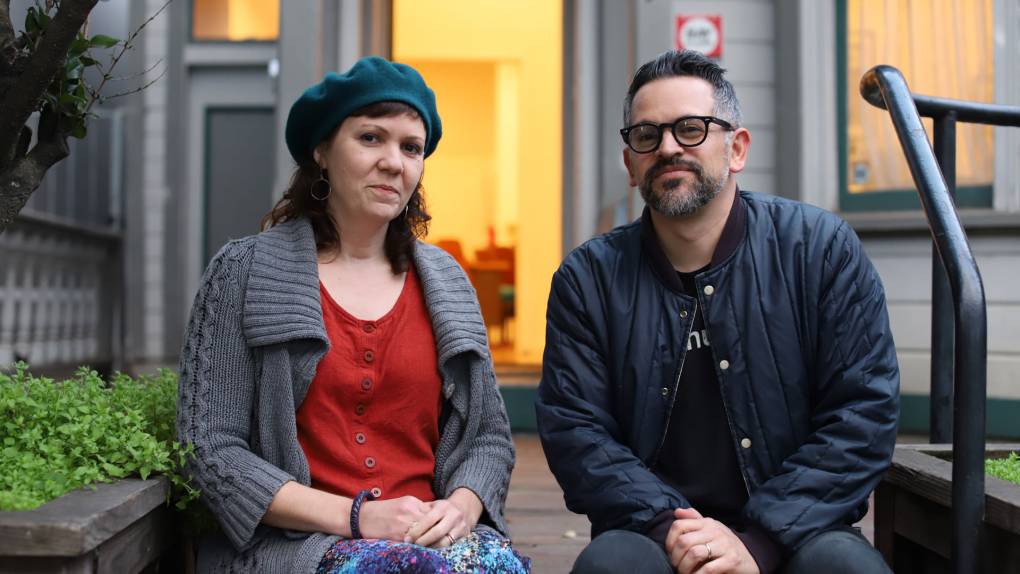
"caption": "Daniel and Yazmin",
"description": "Daniel and Yazmin",
"title": "Daniel and Yazmin",
"credit": "Pendarvis Harshaw",
"status": "inherit",
"isLoading": false,
"fetchFailed": false
},
"arts_13875123": {
"type": "attachments",
"id": "arts_13875123",
"meta": {
"index": "attachments_1716263798",
"site": "arts",
"id": "13875123",
"found": true
},
"parent": 13928445,
"imgSizes": {
"twentyfourteen-full-width": {
"file": "https://ww2.kqed.org/app/uploads/sites/2/2020/02/DSC8425-1038x576.jpg",
"width": 1038,
"mimeType": "image/jpeg",
"height": 576
},
"thumbnail": {
"file": "https://ww2.kqed.org/app/uploads/sites/2/2020/02/DSC8425-160x107.jpg",
"width": 160,
"mimeType": "image/jpeg",
"height": 107
},
"post-thumbnail": {
"file": "https://ww2.kqed.org/app/uploads/sites/2/2020/02/DSC8425-672x372.jpg",
"width": 672,
"mimeType": "image/jpeg",
"height": 372
},
"kqedFullSize": {
"file": "https://ww2.kqed.org/app/uploads/sites/2/2020/02/DSC8425.jpg",
"width": 1616,
"height": 1080
},
"large": {
"file": "https://ww2.kqed.org/app/uploads/sites/2/2020/02/DSC8425-1020x682.jpg",
"width": 1020,
"mimeType": "image/jpeg",
"height": 682
},
"medium": {
"file": "https://ww2.kqed.org/app/uploads/sites/2/2020/02/DSC8425-800x535.jpg",
"width": 800,
"mimeType": "image/jpeg",
"height": 535
},
"medium_large": {
"file": "https://ww2.kqed.org/app/uploads/sites/2/2020/02/DSC8425-768x513.jpg",
"width": 768,
"mimeType": "image/jpeg",
"height": 513
}
},
"publishDate": 1582112214,
"modified": 1682966419,
"caption": "Dorothy Lazard, head librarian in the Oakland Public Library’s History Center.",
"description": "Dorothy Lazard, head librarian in the Oakland Public Library’s History Center.",
"title": "Dorothy Lazard, head librarian in the Oakland Public Library’s History Center.",
"credit": "Pendarvis Harshaw/KQED",
"status": "inherit",
"altTag": "An older Black woman with short hair wears glasses, a pink sweater and a light scarf, smiling in a library",
"isLoading": false,
"fetchFailed": false
},
"arts_13861188": {
"type": "attachments",
"id": "arts_13861188",
"meta": {
"index": "attachments_1716263798",
"site": "arts",
"id": "13861188",
"found": true
},
"parent": 13861153,
"imgSizes": {
"twentyfourteen-full-width": {
"file": "https://ww2.kqed.org/app/uploads/sites/2/2019/07/Universal-Language-Mural-Obscured-by-Development-2-1038x576.jpg",
"width": 1038,
"mimeType": "image/jpeg",
"height": 576
},
"thumbnail": {
"file": "https://ww2.kqed.org/app/uploads/sites/2/2019/07/Universal-Language-Mural-Obscured-by-Development-2-160x90.jpg",
"width": 160,
"mimeType": "image/jpeg",
"height": 90
},
"post-thumbnail": {
"file": "https://ww2.kqed.org/app/uploads/sites/2/2019/07/Universal-Language-Mural-Obscured-by-Development-2-672x372.jpg",
"width": 672,
"mimeType": "image/jpeg",
"height": 372
},
"kqedFullSize": {
"file": "https://ww2.kqed.org/app/uploads/sites/2/2019/07/Universal-Language-Mural-Obscured-by-Development-2.jpg",
"width": 1920,
"height": 1080
},
"large": {
"file": "https://ww2.kqed.org/app/uploads/sites/2/2019/07/Universal-Language-Mural-Obscured-by-Development-2-1020x574.jpg",
"width": 1020,
"mimeType": "image/jpeg",
"height": 574
},
"complete_open_graph": {
"file": "https://ww2.kqed.org/app/uploads/sites/2/2019/07/Universal-Language-Mural-Obscured-by-Development-2-1200x675.jpg",
"width": 1200,
"mimeType": "image/jpeg",
"height": 675
},
"full-width": {
"file": "https://ww2.kqed.org/app/uploads/sites/2/2019/07/Universal-Language-Mural-Obscured-by-Development-2-1920x1080.jpg",
"width": 1920,
"mimeType": "image/jpeg",
"height": 1080
},
"medium": {
"file": "https://ww2.kqed.org/app/uploads/sites/2/2019/07/Universal-Language-Mural-Obscured-by-Development-2-800x450.jpg",
"width": 800,
"mimeType": "image/jpeg",
"height": 450
},
"medium_large": {
"file": "https://ww2.kqed.org/app/uploads/sites/2/2019/07/Universal-Language-Mural-Obscured-by-Development-2-768x432.jpg",
"width": 768,
"mimeType": "image/jpeg",
"height": 432
}
},
"publishDate": 1562869484,
"modified": 1582087448,
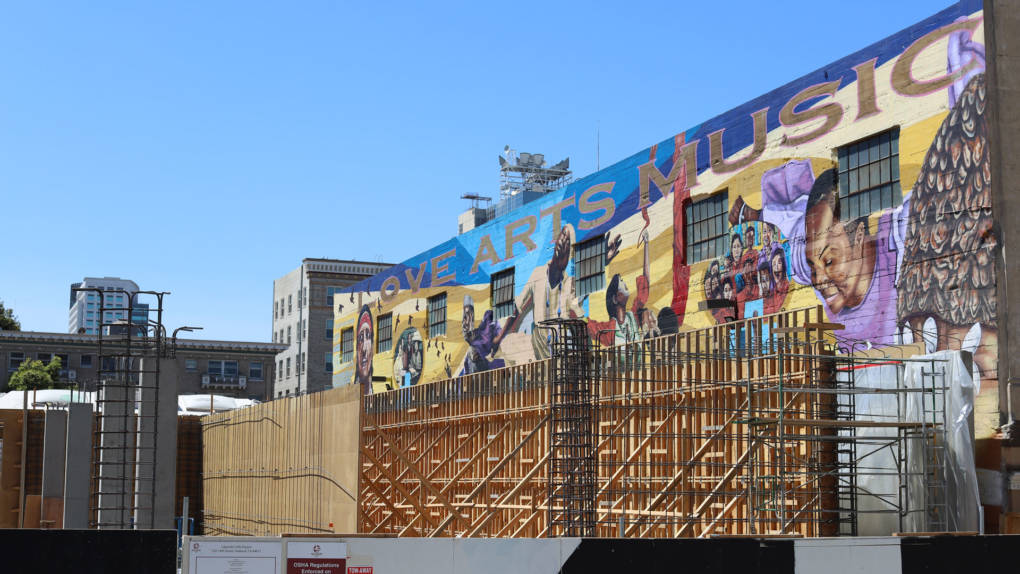
"caption": "The \"Universal Language\" mural, now obscured by a housing development, was created with support from the Cultural Funding Program.",
"description": "The \"Universal Language\" mural, now obscured by a housing development, was created with support from the Cultural Funding Program.",
"title": "Universal-Language-Mural-Obscured-by-Development-2",
"credit": "Sam Lefebvre/KQED",
"status": "inherit",
"isLoading": false,
"fetchFailed": false
},
"arts_13874880": {
"type": "attachments",
"id": "arts_13874880",
"meta": {
"index": "attachments_1716263798",
"site": "arts",
"id": "13874880",
"found": true
},
"parent": 13874735,
"imgSizes": {
"thumbnail": {
"file": "https://ww2.kqed.org/app/uploads/sites/2/2020/02/Love-Story_-Fredrika-Dr1024_4-160x114.jpg",
"width": 160,
"mimeType": "image/jpeg",
"height": 114
},
"post-thumbnail": {
"file": "https://ww2.kqed.org/app/uploads/sites/2/2020/02/Love-Story_-Fredrika-Dr1024_4-605x372.jpg",
"width": 605,
"mimeType": "image/jpeg",
"height": 372
},
"kqedFullSize": {
"file": "https://ww2.kqed.org/app/uploads/sites/2/2020/02/Love-Story_-Fredrika-Dr1024_4.jpg",
"width": 605,
"height": 430
}
},
"publishDate": 1581557053,
"modified": 1581557086,
"caption": "Fredrika and Huey P. Newton on their wedding day.",
"description": null,
"title": "Fredrika and Huey P. Newton on their wedding day.",
"credit": "Courtesy of the De Young Museum",
"status": "inherit",
"isLoading": false,
"fetchFailed": false
},
"arts_13874882": {
"type": "attachments",
"id": "arts_13874882",
"meta": {
"index": "attachments_1716263798",
"site": "arts",
"id": "13874882",
"found": true
},
"parent": 13874738,
"imgSizes": {
"twentyfourteen-full-width": {
"file": "https://ww2.kqed.org/app/uploads/sites/2/2020/02/TooShort.TomHanks-1038x576.jpg",
"width": 1038,
"mimeType": "image/jpeg",
"height": 576
},
"thumbnail": {
"file": "https://ww2.kqed.org/app/uploads/sites/2/2020/02/TooShort.TomHanks-160x90.jpg",
"width": 160,
"mimeType": "image/jpeg",
"height": 90
},
"post-thumbnail": {
"file": "https://ww2.kqed.org/app/uploads/sites/2/2020/02/TooShort.TomHanks-672x372.jpg",
"width": 672,
"mimeType": "image/jpeg",
"height": 372
},
"kqedFullSize": {
"file": "https://ww2.kqed.org/app/uploads/sites/2/2020/02/TooShort.TomHanks.jpg",
"width": 1920,
"height": 1080
},
"large": {
"file": "https://ww2.kqed.org/app/uploads/sites/2/2020/02/TooShort.TomHanks-1020x574.jpg",
"width": 1020,
"mimeType": "image/jpeg",
"height": 574
},
"full-width": {
"file": "https://ww2.kqed.org/app/uploads/sites/2/2020/02/TooShort.TomHanks-1920x1080.jpg",
"width": 1920,
"mimeType": "image/jpeg",
"height": 1080
},
"medium": {
"file": "https://ww2.kqed.org/app/uploads/sites/2/2020/02/TooShort.TomHanks-800x450.jpg",
"width": 800,
"mimeType": "image/jpeg",
"height": 450
},
"medium_large": {
"file": "https://ww2.kqed.org/app/uploads/sites/2/2020/02/TooShort.TomHanks-768x432.jpg",
"width": 768,
"mimeType": "image/jpeg",
"height": 432
}
},
"publishDate": 1581557871,
"modified": 1581557904,
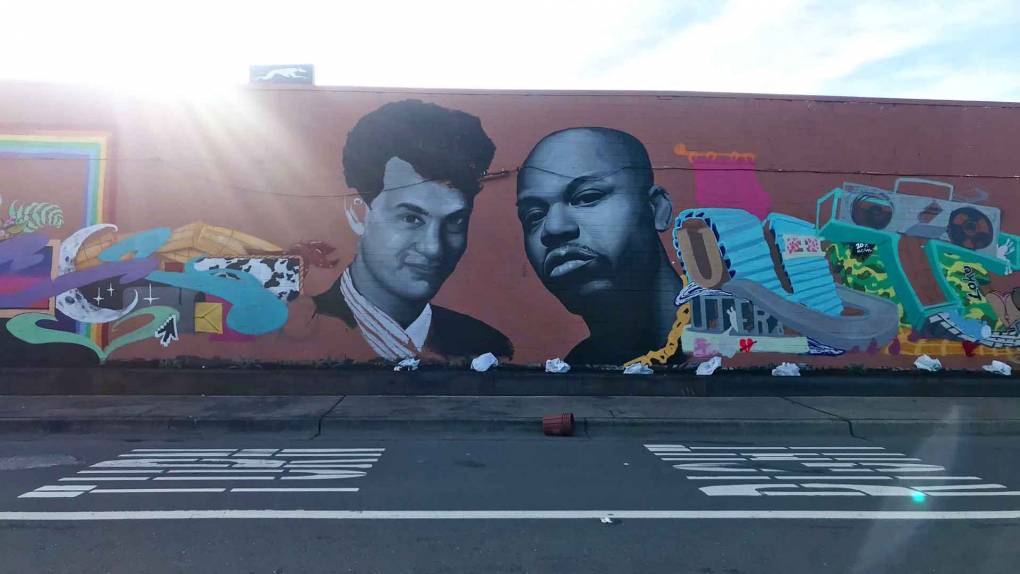
"caption": "A mural of Tom Hanks and Too Short in Oakland.",
"description": null,
"title": "TooShort.TomHanks",
"credit": "Pendarvis Harshaw/KQED",
"status": "inherit",
"isLoading": false,
"fetchFailed": false
},
"arts_13874529": {
"type": "attachments",
"id": "arts_13874529",
"meta": {
"index": "attachments_1716263798",
"site": "arts",
"id": "13874529",
"found": true
},
"parent": 13874528,
"imgSizes": {
"twentyfourteen-full-width": {
"file": "https://ww2.kqed.org/app/uploads/sites/2/2020/02/DSC6268-1-1038x576.jpg",
"width": 1038,
"mimeType": "image/jpeg",
"height": 576
},
"thumbnail": {
"file": "https://ww2.kqed.org/app/uploads/sites/2/2020/02/DSC6268-1-160x107.jpg",
"width": 160,
"mimeType": "image/jpeg",
"height": 107
},
"post-thumbnail": {
"file": "https://ww2.kqed.org/app/uploads/sites/2/2020/02/DSC6268-1-672x372.jpg",
"width": 672,
"mimeType": "image/jpeg",
"height": 372
},
"kqedFullSize": {
"file": "https://ww2.kqed.org/app/uploads/sites/2/2020/02/DSC6268-1.jpg",
"width": 1616,
"height": 1080
},
"large": {
"file": "https://ww2.kqed.org/app/uploads/sites/2/2020/02/DSC6268-1-1020x682.jpg",
"width": 1020,
"mimeType": "image/jpeg",
"height": 682
},
"medium": {
"file": "https://ww2.kqed.org/app/uploads/sites/2/2020/02/DSC6268-1-800x535.jpg",
"width": 800,
"mimeType": "image/jpeg",
"height": 535
},
"medium_large": {
"file": "https://ww2.kqed.org/app/uploads/sites/2/2020/02/DSC6268-1-768x513.jpg",
"width": 768,
"mimeType": "image/jpeg",
"height": 513
}
},
"publishDate": 1581025315,
"modified": 1581025363,
"caption": "Danielle Thompson in front of a computer at Youth Beat.",
"description": "Danielle Thompson in front of a computer at Youth Beat.",
"title": "Danielle Thompson in front of a computer at Youth Beat.",
"credit": "Pendarvis Harshaw/KQED",
"status": "inherit",
"isLoading": false,
"fetchFailed": false
},
"arts_13874403": {
"type": "attachments",
"id": "arts_13874403",
"meta": {
"index": "attachments_1716263798",
"site": "arts",
"id": "13874403",
"found": true
},
"parent": 0,
"imgSizes": {
"twentyfourteen-full-width": {
"file": "https://ww2.kqed.org/app/uploads/sites/2/2020/02/TheCookers-1038x576.jpg",
"width": 1038,
"mimeType": "image/jpeg",
"height": 576
},
"thumbnail": {
"file": "https://ww2.kqed.org/app/uploads/sites/2/2020/02/TheCookers-160x90.jpg",
"width": 160,
"mimeType": "image/jpeg",
"height": 90
},
"post-thumbnail": {
"file": "https://ww2.kqed.org/app/uploads/sites/2/2020/02/TheCookers-672x372.jpg",
"width": 672,
"mimeType": "image/jpeg",
"height": 372
},
"kqedFullSize": {
"file": "https://ww2.kqed.org/app/uploads/sites/2/2020/02/TheCookers.jpg",
"width": 1180,
"height": 664
},
"large": {
"file": "https://ww2.kqed.org/app/uploads/sites/2/2020/02/TheCookers-1020x574.jpg",
"width": 1020,
"mimeType": "image/jpeg",
"height": 574
},
"medium": {
"file": "https://ww2.kqed.org/app/uploads/sites/2/2020/02/TheCookers-800x450.jpg",
"width": 800,
"mimeType": "image/jpeg",
"height": 450
},
"medium_large": {
"file": "https://ww2.kqed.org/app/uploads/sites/2/2020/02/TheCookers-768x432.jpg",
"width": 768,
"mimeType": "image/jpeg",
"height": 432
}
},
"publishDate": 1580919447,
"modified": 1580919578,
"caption": "The Cookers.",
"description": "The Cookers.",
"title": "TheCookers",
"credit": "Artist photo",
"status": "inherit",
"isLoading": false,
"fetchFailed": false
},
"arts_13874385": {
"type": "attachments",
"id": "arts_13874385",
"meta": {
"index": "attachments_1716263798",
"site": "arts",
"id": "13874385",
"found": true
},
"parent": 13874382,
"imgSizes": {
"twentyfourteen-full-width": {
"file": "https://ww2.kqed.org/app/uploads/sites/2/2020/02/GettyImages-627387100-1020x680-1020x576.jpg",
"width": 1020,
"mimeType": "image/jpeg",
"height": 576
},
"thumbnail": {
"file": "https://ww2.kqed.org/app/uploads/sites/2/2020/02/GettyImages-627387100-1020x680-160x107.jpg",
"width": 160,
"mimeType": "image/jpeg",
"height": 107
},
"post-thumbnail": {
"file": "https://ww2.kqed.org/app/uploads/sites/2/2020/02/GettyImages-627387100-1020x680-672x372.jpg",
"width": 672,
"mimeType": "image/jpeg",
"height": 372
},
"kqedFullSize": {
"file": "https://ww2.kqed.org/app/uploads/sites/2/2020/02/GettyImages-627387100-1020x680.jpg",
"width": 1020,
"height": 680
},
"large": {
"file": "https://ww2.kqed.org/app/uploads/sites/2/2020/02/GettyImages-627387100-1020x680-1020x680.jpg",
"width": 1020,
"mimeType": "image/jpeg",
"height": 680
},
"medium": {
"file": "https://ww2.kqed.org/app/uploads/sites/2/2020/02/GettyImages-627387100-1020x680-800x533.jpg",
"width": 800,
"mimeType": "image/jpeg",
"height": 533
},
"medium_large": {
"file": "https://ww2.kqed.org/app/uploads/sites/2/2020/02/GettyImages-627387100-1020x680-768x512.jpg",
"width": 768,
"mimeType": "image/jpeg",
"height": 512
}
},
"publishDate": 1580863580,
"modified": 1580932084,
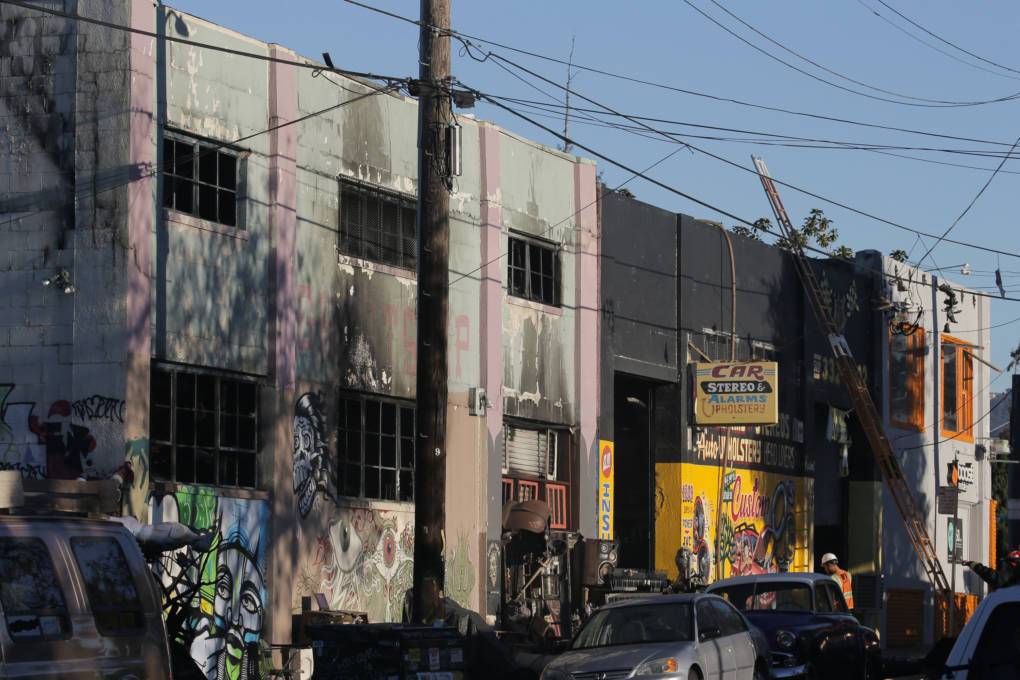
"caption": "The Ghost Ship warehouse in East Oakland where a Dec. 2016 fire killed 36.",
"description": "The Ghost Ship warehouse in East Oakland where a Dec. 2016 fire killed 36.",
"title": "Warehouse Fire Kills Several People At Dance Party In Oakland",
"credit": "Elijah Nouvelage/Getty Images",
"status": "inherit",
"isLoading": false,
"fetchFailed": false
},
"arts_13874350": {
"type": "attachments",
"id": "arts_13874350",
"meta": {
"index": "attachments_1716263798",
"site": "arts",
"id": "13874350",
"found": true
},
"parent": 13874349,
"imgSizes": {
"twentyfourteen-full-width": {
"file": "https://ww2.kqed.org/app/uploads/sites/2/2020/02/use-1-1038x576.jpg",
"width": 1038,
"mimeType": "image/jpeg",
"height": 576
},
"thumbnail": {
"file": "https://ww2.kqed.org/app/uploads/sites/2/2020/02/use-1-160x90.jpg",
"width": 160,
"mimeType": "image/jpeg",
"height": 90
},
"post-thumbnail": {
"file": "https://ww2.kqed.org/app/uploads/sites/2/2020/02/use-1-672x372.jpg",
"width": 672,
"mimeType": "image/jpeg",
"height": 372
},
"kqedFullSize": {
"file": "https://ww2.kqed.org/app/uploads/sites/2/2020/02/use-1.jpg",
"width": 1920,
"height": 1080
},
"large": {
"file": "https://ww2.kqed.org/app/uploads/sites/2/2020/02/use-1-1020x574.jpg",
"width": 1020,
"mimeType": "image/jpeg",
"height": 574
},
"full-width": {
"file": "https://ww2.kqed.org/app/uploads/sites/2/2020/02/use-1-1920x1080.jpg",
"width": 1920,
"mimeType": "image/jpeg",
"height": 1080
},
"medium": {
"file": "https://ww2.kqed.org/app/uploads/sites/2/2020/02/use-1-800x450.jpg",
"width": 800,
"mimeType": "image/jpeg",
"height": 450
},
"medium_large": {
"file": "https://ww2.kqed.org/app/uploads/sites/2/2020/02/use-1-768x432.jpg",
"width": 768,
"mimeType": "image/jpeg",
"height": 432
}
},
"publishDate": 1580856987,
"modified": 1580857026,
"caption": "Kathleen Quillian (L) and Gilbert Guerrero (R) founded Shapeshifters as an experimental film series in 2012.",
"description": "Kathleen Quillian (L) and Gilbert Guerrero (R) founded Shapeshifters as an experimental film series in 2012.",
"title": "Kathleen Quillian (L) and Gilbert Guerrero (R) founded Shapeshifters as an experimental film series in 2012.",
"credit": "Sam Lefebvre/KQED",
"status": "inherit",
"isLoading": false,
"fetchFailed": false
},
"arts_13874155": {
"type": "attachments",
"id": "arts_13874155",
"meta": {
"index": "attachments_1716263798",
"site": "arts",
"id": "13874155",
"found": true
},
"parent": 13874146,
"imgSizes": {
"thumbnail": {
"file": "https://ww2.kqed.org/app/uploads/sites/2/2020/01/RS40989_viora-1-1024x5751-qut-160x90.jpg",
"width": 160,
"mimeType": "image/jpeg",
"height": 90
},
"post-thumbnail": {
"file": "https://ww2.kqed.org/app/uploads/sites/2/2020/01/RS40989_viora-1-1024x5751-qut-672x372.jpg",
"width": 672,
"mimeType": "image/jpeg",
"height": 372
},
"kqedFullSize": {
"file": "https://ww2.kqed.org/app/uploads/sites/2/2020/01/RS40989_viora-1-1024x5751-qut.jpg",
"width": 1000,
"height": 563
},
"medium": {
"file": "https://ww2.kqed.org/app/uploads/sites/2/2020/01/RS40989_viora-1-1024x5751-qut-800x450.jpg",
"width": 800,
"mimeType": "image/jpeg",
"height": 450
},
"medium_large": {
"file": "https://ww2.kqed.org/app/uploads/sites/2/2020/01/RS40989_viora-1-1024x5751-qut-768x432.jpg",
"width": 768,
"mimeType": "image/jpeg",
"height": 432
}
},
"publishDate": 1580431825,
"modified": 1580432214,
"caption": "A sampling of the Holocaust-era violins collected by Israeli luthiers Amnon and Avshalom Weinstein. The men and the violins are on tour throughout the San Francisco Bay Area as part of \"Violins of Hope,\" running through March 15, 2020.",
"description": "A sampling of the Holocaust-era violins collected by Israeli luthiers Amnon and Avshalom Weinstein. The men and the violins are on tour throughout the San Francisco Bay Area as part of \"Violins of Hope,\" running through March 15, 2020.",
"title": "RS40989_viora-1-1024x575+(1)-qut",
"credit": "Courtesy of Amnon Weinstein",
"status": "inherit",
"isLoading": false,
"fetchFailed": false
},
"arts_13874106": {
"type": "attachments",
"id": "arts_13874106",
"meta": {
"index": "attachments_1716263798",
"site": "arts",
"id": "13874106",
"found": true
},
"parent": 13874104,
"imgSizes": {
"thumbnail": {
"file": "https://ww2.kqed.org/app/uploads/sites/2/2020/01/0-160x120.jpg",
"width": 160,
"mimeType": "image/jpeg",
"height": 120
},
"post-thumbnail": {
"file": "https://ww2.kqed.org/app/uploads/sites/2/2020/01/0-600x372.jpg",
"width": 600,
"mimeType": "image/jpeg",
"height": 372
},
"kqedFullSize": {
"file": "https://ww2.kqed.org/app/uploads/sites/2/2020/01/0.jpg",
"width": 600,
"height": 450
}
},
"publishDate": 1580401235,
"modified": 1580401260,
"caption": "PK & The Jacka",
"description": "PK & The Jacka",
"title": "PK & The Jacka",
"credit": "PK",
"status": "inherit",
"isLoading": false,
"fetchFailed": false
},
"arts_13874095": {
"type": "attachments",
"id": "arts_13874095",
"meta": {
"index": "attachments_1716263798",
"site": "arts",
"id": "13874095",
"found": true
},
"parent": 13874090,
"imgSizes": {
"twentyfourteen-full-width": {
"file": "https://ww2.kqed.org/app/uploads/sites/2/2020/01/4-1038x576.jpg",
"width": 1038,
"mimeType": "image/jpeg",
"height": 576
},
"thumbnail": {
"file": "https://ww2.kqed.org/app/uploads/sites/2/2020/01/4-160x90.jpg",
"width": 160,
"mimeType": "image/jpeg",
"height": 90
},
"post-thumbnail": {
"file": "https://ww2.kqed.org/app/uploads/sites/2/2020/01/4-672x372.jpg",
"width": 672,
"mimeType": "image/jpeg",
"height": 372
},
"kqedFullSize": {
"file": "https://ww2.kqed.org/app/uploads/sites/2/2020/01/4.jpg",
"width": 1920,
"height": 1080
},
"large": {
"file": "https://ww2.kqed.org/app/uploads/sites/2/2020/01/4-1020x574.jpg",
"width": 1020,
"mimeType": "image/jpeg",
"height": 574
},
"complete_open_graph": {
"file": "https://ww2.kqed.org/app/uploads/sites/2/2020/01/4-1200x675.jpg",
"width": 1200,
"mimeType": "image/jpeg",
"height": 675
},
"full-width": {
"file": "https://ww2.kqed.org/app/uploads/sites/2/2020/01/4-1920x1080.jpg",
"width": 1920,
"mimeType": "image/jpeg",
"height": 1080
},
"medium": {
"file": "https://ww2.kqed.org/app/uploads/sites/2/2020/01/4-800x450.jpg",
"width": 800,
"mimeType": "image/jpeg",
"height": 450
},
"medium_large": {
"file": "https://ww2.kqed.org/app/uploads/sites/2/2020/01/4-768x432.jpg",
"width": 768,
"mimeType": "image/jpeg",
"height": 432
}
},
"publishDate": 1580347183,
"modified": 1580427736,
"caption": "The new West Oakland location of Aggregate Space Gallery, an artist-run space founded by Conrad and Willis Meyers, more than doubles it exhibition space.",
"description": "The new West Oakland location of Aggregate Space Gallery, an artist-run space founded by Conrad and Willis Meyers, more than doubles it exhibition space.",
"title": "The new West Oakland location of Aggregate Space Gallery, an artist-run space founded by Conrad and Willis Meyer, more than doubles it exhibition space.",
"credit": "Sam Lefebvre/KQED",
"status": "inherit",
"isLoading": false,
"fetchFailed": false
}
},
"audioPlayerReducer": {
"postId": "stream_live",
"isPaused": true,
"isPlaying": false,
"pfsActive": false,
"pledgeModalIsOpen": true,
"playerDrawerIsOpen": false,
"liveAudioPlayStartedAt": 0,
"liveAudioPlayContext": ""
},
"authorsReducer": {
"gmeline": {
"type": "authors",
"id": "185",
"meta": {
"index": "authors_1716337520",
"id": "185",
"found": true
},
"name": "Gabe Meline",
"firstName": "Gabe",
"lastName": "Meline",
"slug": "gmeline",
"email": "gmeline@kqed.org",
"display_author_email": true,
"staff_mastheads": [
"arts"
],
"title": "Senior Editor, KQED Arts & Culture",
"bio": "Gabe Meline entered journalism at age 15 making photocopied zines, and has since earned awards from the Edward R. Murrow Awards, the Society for Professional Journalists, the Online Journalism Awards, the Association of Alternative Newsweeklies and the California Newspaper Publishers Association. Prior to KQED, he was the editor of the \u003cem>North Bay Bohemian\u003c/em> and a touring musician. He lives with his wife and daughter in his hometown of Santa Rosa, CA.",
"avatar": "https://secure.gravatar.com/avatar/5bebe57be0d8bc2dd318934feb47299e2d2d10cba28d09d8d7afb389a2ce2bdd?s=600&d=blank&r=g",
"twitter": null,
"bluesky": null,
"facebook": null,
"instagram": null,
"linkedin": null,
"sites": [
{
"site": "",
"roles": [
"editor"
]
},
{
"site": "arts",
"roles": [
"administrator"
]
},
{
"site": "artschool",
"roles": [
"editor"
]
},
{
"site": "news",
"roles": [
"author"
]
},
{
"site": "pop",
"roles": [
"editor"
]
},
{
"site": "bayareabites",
"roles": [
"editor"
]
},
{
"site": "food",
"roles": [
"editor"
]
},
{
"site": "liveblog",
"roles": [
"editor"
]
},
{
"site": "hiphop",
"roles": [
"editor"
]
}
],
"headData": {
"title": "Gabe Meline | KQED",
"description": "Senior Editor, KQED Arts & Culture",
"ogImgSrc": "https://secure.gravatar.com/avatar/5bebe57be0d8bc2dd318934feb47299e2d2d10cba28d09d8d7afb389a2ce2bdd?s=600&d=blank&r=g",
"twImgSrc": "https://secure.gravatar.com/avatar/5bebe57be0d8bc2dd318934feb47299e2d2d10cba28d09d8d7afb389a2ce2bdd?s=600&d=blank&r=g"
},
"isLoading": false,
"link": "/author/gmeline"
},
"rachael-myrow": {
"type": "authors",
"id": "251",
"meta": {
"index": "authors_1716337520",
"id": "251",
"found": true
},
"name": "Rachael Myrow",
"firstName": "Rachael",
"lastName": "Myrow",
"slug": "rachael-myrow",
"email": "rmyrow@kqed.org",
"display_author_email": true,
"staff_mastheads": [
"news"
],
"title": "Senior Editor of KQED's Silicon Valley News Desk",
"bio": "• I write and edit stories about how Silicon Valley power and policies shape everyday life in California. I’m also passionate about making Bay Area history and culture more accessible to a broad public. • I’ve been a journalist for most of my life, starting in high school with The Franklin Press in Los Angeles, where I grew up. While earning my first degree in English at UC Berkeley, I got my start in public radio at KALX-FM. After completing a second degree in journalism at Cal, I landed my first professional job at Marketplace, then moved on to KPCC (now LAist), and then KQED, where I hosted The California Report for more than seven years. • My reporting has appeared on NPR, The World, WBUR’s \u003ci>Here & Now\u003c/i>, and the BBC. I also guest host for KQED’s \u003ci>Forum\u003c/i>, as well as the Commonwealth Club in San Francisco. • I speak periodically on media, democracy and technology issues, and do voiceover work for documentaries and educational video projects. • Outside of the studio, you'll find me hiking Bay Area trails and whipping up Insta-ready meals in my kitchen. • I do not accept gifts, money, or favors from anyone connected to my reporting, I don't pay people for information, and I do not support or donate to political causes. • I strive to treat the people I report on with fairness, honesty, and respect. I also recognize there are often multiple sides to a story and work to verify information through multiple sources and documentation. If I get something wrong, I correct it.",
"avatar": "https://secure.gravatar.com/avatar/87bf8cb5874e045cdff430523a6d48b1?s=600&d=blank&r=g",
"twitter": "rachaelmyrow",
"facebook": null,
"instagram": null,
"linkedin": "https://www.linkedin.com/in/rachaelmyrow/",
"sites": [
{
"site": "arts",
"roles": [
"administrator"
]
},
{
"site": "news",
"roles": [
"edit_others_posts",
"editor"
]
},
{
"site": "futureofyou",
"roles": [
"editor"
]
},
{
"site": "bayareabites",
"roles": [
"editor"
]
},
{
"site": "stateofhealth",
"roles": [
"editor"
]
},
{
"site": "science",
"roles": [
"editor"
]
},
{
"site": "food",
"roles": [
"editor"
]
},
{
"site": "forum",
"roles": [
"editor"
]
},
{
"site": "liveblog",
"roles": [
"author"
]
}
],
"headData": {
"title": "Rachael Myrow | KQED",
"description": "Senior Editor of KQED's Silicon Valley News Desk",
"ogImgSrc": "https://secure.gravatar.com/avatar/87bf8cb5874e045cdff430523a6d48b1?s=600&d=blank&r=g",
"twImgSrc": "https://secure.gravatar.com/avatar/87bf8cb5874e045cdff430523a6d48b1?s=600&d=blank&r=g"
},
"isLoading": false,
"link": "/author/rachael-myrow"
},
"slefebvre": {
"type": "authors",
"id": "11091",
"meta": {
"index": "authors_1716337520",
"id": "11091",
"found": true
},
"name": "Sam Lefebvre",
"firstName": "Sam",
"lastName": "Lefebvre",
"slug": "slefebvre",
"email": "sdlefebvre@gmail.com",
"display_author_email": false,
"staff_mastheads": [],
"title": null,
"bio": "Sam Lefebvre is an award-winning reporter at KQED Arts. He has worked as an editor and columnist at the \u003cem>East Bay Express\u003c/em>, \u003cem>SF Weekly \u003c/em>and Impose Magazine, and his journalism and criticism has appeared in \u003cem>The New York Times\u003c/em>, the Guardian and Pitchfork.",
"avatar": "https://secure.gravatar.com/avatar/143b570c3dec13ae74c6aa2369b04fc8?s=600&d=blank&r=g",
"twitter": "Lefebvre_Sam",
"facebook": null,
"instagram": null,
"linkedin": null,
"sites": [
{
"site": "arts",
"roles": [
"editor"
]
},
{
"site": "news",
"roles": [
"author"
]
}
],
"headData": {
"title": "Sam Lefebvre | KQED",
"description": null,
"ogImgSrc": "https://secure.gravatar.com/avatar/143b570c3dec13ae74c6aa2369b04fc8?s=600&d=blank&r=g",
"twImgSrc": "https://secure.gravatar.com/avatar/143b570c3dec13ae74c6aa2369b04fc8?s=600&d=blank&r=g"
},
"isLoading": false,
"link": "/author/slefebvre"
},
"ogpenn": {
"type": "authors",
"id": "11491",
"meta": {
"index": "authors_1716337520",
"id": "11491",
"found": true
},
"name": "Pendarvis Harshaw",
"firstName": "Pendarvis",
"lastName": "Harshaw",
"slug": "ogpenn",
"email": "ogpenn@gmail.com",
"display_author_email": false,
"staff_mastheads": [
"arts"
],
"title": "Community Engagement Reporter",
"bio": "Pendarvis Harshaw is an educator, host and writer with KQED Arts.",
"avatar": "https://secure.gravatar.com/avatar/972b77ee8e3f346ae2b00622661187fbfabd059b5693bbdc1475ea7a722fd4cd?s=600&d=blank&r=g",
"twitter": null,
"bluesky": null,
"facebook": null,
"instagram": "ogpenn",
"linkedin": null,
"sites": [
{
"site": "arts",
"roles": [
"administrator"
]
},
{
"site": "news",
"roles": [
"editor"
]
},
{
"site": "bayareabites",
"roles": [
"author"
]
},
{
"site": "hiphop",
"roles": [
"editor"
]
}
],
"headData": {
"title": "Pendarvis Harshaw | KQED",
"description": "Community Engagement Reporter",
"ogImgSrc": "https://secure.gravatar.com/avatar/972b77ee8e3f346ae2b00622661187fbfabd059b5693bbdc1475ea7a722fd4cd?s=600&d=blank&r=g",
"twImgSrc": "https://secure.gravatar.com/avatar/972b77ee8e3f346ae2b00622661187fbfabd059b5693bbdc1475ea7a722fd4cd?s=600&d=blank&r=g"
},
"isLoading": false,
"link": "/author/ogpenn"
}
},
"pagesReducer": {
"arts_tag_oakland": {
"type": "terms",
"id": "arts_1143",
"meta": {
"index": "terms_1716263798",
"site": "arts",
"id": "1143",
"score": 6.883923
},
"featImg": null,
"name": "Oakland",
"description": null,
"taxonomy": "tag",
"headData": {
"twImgId": null,
"twTitle": null,
"ogTitle": null,
"ogImgId": null,
"twDescription": null,
"description": null,
"title": "Oakland Archives | KQED Arts",
"ogDescription": null
},
"ttid": 692,
"slug": "oakland",
"isLoading": false,
"title": "Oakland",
"pageMeta": {
"site": "arts",
"WpPageTemplate": "page-topic-editorial",
"currentPage": 48
},
"blocks": [
{
"blockName": "kqed/post-list",
"attrs": {
"layout": "cardArticle2",
"query": "posts/arts?tag=oakland",
"seeMore": false,
"paginated": true,
"page": 48
}
},
{
"blockName": "kqed/ad"
}
]
}
},
"pfsSessionReducer": {},
"postsReducer": {
"stream_live": {
"type": "live",
"id": "stream_live",
"audioUrl": "https://streams.kqed.org/kqedradio",
"title": "Live Stream",
"excerpt": "Live Stream information currently unavailable.",
"link": "/radio",
"featImg": "",
"label": {
"name": "KQED Live",
"link": "/"
}
},
"stream_kqedNewscast": {
"type": "posts",
"id": "stream_kqedNewscast",
"audioUrl": "https://www.kqed.org/.stream/anon/radio/RDnews/newscast.mp3?_=1",
"title": "KQED Newscast",
"featImg": "",
"label": {
"name": "88.5 FM",
"link": "/"
}
},
"arts_13875501": {
"type": "posts",
"id": "arts_13875501",
"meta": {
"index": "posts_1716263798",
"site": "arts",
"id": "13875501",
"score": null,
"sort": [
1582887657000
]
},
"guestAuthors": [],
"slug": "yazmin-and-daniel-silva",
"title": "Repping Oakland With Tattoos, Sewing and Community Service",
"publishDate": 1582887657,
"format": "audio",
"headTitle": "Repping Oakland With Tattoos, Sewing and Community Service | KQED",
"labelTerm": {},
"content": "\u003cp>\u003cspan style=\"font-weight: 400\">It’s not about being superheroes or even a “power couple.” No, Yasmin Arreola and Daniel Silva are all about being good neighbors in their community. They seem to have figured out a way to do good while doing well.\u003c/span>\u003c/p>\n\u003cp>\u003cspan style=\"font-weight: 400\">For starters, they’re both entrepreneurs who represent Oakland. Yasmin runs a fashion brand, Town Girl, which she promotes on her \u003c/span>\u003ca href=\"https://www.instagram.com/hellacrafty/\">\u003cspan style=\"font-weight: 400\">Instagram\u003c/span>\u003c/a>\u003cspan style=\"font-weight: 400\">. And Daniel celebrates being raised in Oakland with Mexican roots through his brand, \u003c/span>\u003ca href=\"https://www.instagram.com/bestoneproductions/\">\u003cspan style=\"font-weight: 400\">BestOneProductions,\u003c/span>\u003c/a>\u003cspan style=\"font-weight: 400\"> where he produces music, videos and clothing.\u003c/span>\u003c/p>\n\u003cp>\u003cspan style=\"font-weight: 400\">And they’re both educators in their communities. Yasmin teaches sewing at a local high school and Daniel teaches classes for young people who’ve recently immigrated to America.\u003c/span>\u003c/p>\n\u003cp>\u003cspan style=\"font-weight: 400\">They also help the community on the street level. In fact, last year Yasmin led a team of folks in cleaning up the streets of East Oakland after a night of partying left them trashed. As you can tell by\u003c/span>\u003ca href=\"https://www.instagram.com/p/BwSdeorh14L/\"> \u003cspan style=\"font-weight: 400\">the Instagram post,\u003c/span>\u003c/a> \u003cspan style=\"font-weight: 400\">her action caught the eyes of many folks, including myself.\u003c/span>\u003c/p>\n\u003cp>\u003cspan style=\"font-weight: 400\">Ever since I’ve been following Yasmin and Daniel’s work. I’ve seen them sell clothing in front of their house, give out tacos, pass out hygiene kits to those living without houses and I’ve seen them with each other, just chilling being normal people who obviously love each other and their community.\u003c/span>\u003c/p>\n\u003cp>https://www.instagram.com/p/B2nyrr9FnaH/\u003c/p>\n\u003cp> \u003c/p>\n\u003cp>\u003cimg loading=\"lazy\" decoding=\"async\" class=\"aligncenter size-full wp-image-12127869\" src=\"https://ww2.kqed.org/app/uploads/sites/2/2016/09/Q.Logo_.Break_.jpg\" alt=\"\" width=\"800\" height=\"78\" srcset=\"https://cdn.kqed.org/wp-content/uploads/sites/2/2016/09/Q.Logo_.Break_.jpg 800w, https://cdn.kqed.org/wp-content/uploads/sites/2/2016/09/Q.Logo_.Break_-400x39.jpg 400w, https://cdn.kqed.org/wp-content/uploads/sites/2/2016/09/Q.Logo_.Break_-768x75.jpg 768w\" sizes=\"(max-width: 800px) 100vw, 800px\">\u003c/p>\n\u003cp>\u003cem>Rightnowish is an arts and culture podcast produced at KQED. Listen to it wherever you get your podcasts or click the play button at the top of this page.\u003c/em>\u003c/p>\n\u003cp>[ad fullwidth]\u003c/p>\n\u003cp>\u003c/p>\n",
"blocks": [],
"excerpt": "Yasmin and Daniel are educators, volunteers and entrepreneurs who hold Oakland's well being at the center of everything they do. ",
"status": "publish",
"parent": 0,
"modified": 1726764244,
"stats": {
"hasAudio": false,
"hasVideo": false,
"hasChartOrMap": false,
"iframeSrcs": [],
"hasGoogleForm": false,
"hasGallery": false,
"hasHearkenModule": false,
"hasPolis": false,
"paragraphCount": 9,
"wordCount": 268
},
"headData": {
"title": "Repping Oakland With Tattoos, Sewing and Community Service | KQED",
"description": "They're not "superheroes" or a "power couple," just two people who love each other and take pride in loving their community.",
"ogTitle": "",
"ogDescription": "",
"ogImgId": "",
"twTitle": "",
"twDescription": "",
"twImgId": "",
"socialDescription": "They're not "superheroes" or a "power couple," just two people who love each other and take pride in loving their community.",
"schema": {
"@context": "https://schema.org",
"@type": "Article",
"headline": "Repping Oakland With Tattoos, Sewing and Community Service",
"datePublished": "2020-02-28T03:00:57-08:00",
"dateModified": "2024-09-19T09:44:04-07:00",
"image": "https://cdn.kqed.org/wp-content/uploads/2020/02/KQED-OG-Image@1x.png"
}
},
"source": "Rightnowish",
"sourceUrl": "https://www.kqed.org/podcasts/rightnowish",
"audioUrl": "https://www.kqed.org/.stream/anon/radio/rightnowish/2020/02/RightnowishEp19HellaCrafty.mp3",
"sticky": false,
"path": "/arts/13875501/yazmin-and-daniel-silva",
"audioTrackLength": null,
"parsedContent": [
{
"type": "contentString",
"content": "\u003cdiv class=\"post-body\">\u003cp>\u003cp>\u003cspan style=\"font-weight: 400\">It’s not about being superheroes or even a “power couple.” No, Yasmin Arreola and Daniel Silva are all about being good neighbors in their community. They seem to have figured out a way to do good while doing well.\u003c/span>\u003c/p>\n\u003cp>\u003cspan style=\"font-weight: 400\">For starters, they’re both entrepreneurs who represent Oakland. Yasmin runs a fashion brand, Town Girl, which she promotes on her \u003c/span>\u003ca href=\"https://www.instagram.com/hellacrafty/\">\u003cspan style=\"font-weight: 400\">Instagram\u003c/span>\u003c/a>\u003cspan style=\"font-weight: 400\">. And Daniel celebrates being raised in Oakland with Mexican roots through his brand, \u003c/span>\u003ca href=\"https://www.instagram.com/bestoneproductions/\">\u003cspan style=\"font-weight: 400\">BestOneProductions,\u003c/span>\u003c/a>\u003cspan style=\"font-weight: 400\"> where he produces music, videos and clothing.\u003c/span>\u003c/p>\n\u003cp>\u003cspan style=\"font-weight: 400\">And they’re both educators in their communities. Yasmin teaches sewing at a local high school and Daniel teaches classes for young people who’ve recently immigrated to America.\u003c/span>\u003c/p>\n\u003cp>\u003cspan style=\"font-weight: 400\">They also help the community on the street level. In fact, last year Yasmin led a team of folks in cleaning up the streets of East Oakland after a night of partying left them trashed. As you can tell by\u003c/span>\u003ca href=\"https://www.instagram.com/p/BwSdeorh14L/\"> \u003cspan style=\"font-weight: 400\">the Instagram post,\u003c/span>\u003c/a> \u003cspan style=\"font-weight: 400\">her action caught the eyes of many folks, including myself.\u003c/span>\u003c/p>\n\u003cp>\u003cspan style=\"font-weight: 400\">Ever since I’ve been following Yasmin and Daniel’s work. I’ve seen them sell clothing in front of their house, give out tacos, pass out hygiene kits to those living without houses and I’ve seen them with each other, just chilling being normal people who obviously love each other and their community.\u003c/span>\u003c/p>\u003c/p>\u003c/div>",
"attributes": {
"named": {},
"numeric": []
}
},
{
"type": "component",
"content": "",
"name": "instagramLink",
"attributes": {
"named": {
"instagramUrl": "https://www.instagram.com/p/B2nyrr9FnaH/"
},
"numeric": []
}
},
{
"type": "contentString",
"content": "\u003cdiv class=\"post-body\">\u003cp>\u003cp> \u003c/p>\n\u003cp>\u003cimg loading=\"lazy\" decoding=\"async\" class=\"aligncenter size-full wp-image-12127869\" src=\"https://ww2.kqed.org/app/uploads/sites/2/2016/09/Q.Logo_.Break_.jpg\" alt=\"\" width=\"800\" height=\"78\" srcset=\"https://cdn.kqed.org/wp-content/uploads/sites/2/2016/09/Q.Logo_.Break_.jpg 800w, https://cdn.kqed.org/wp-content/uploads/sites/2/2016/09/Q.Logo_.Break_-400x39.jpg 400w, https://cdn.kqed.org/wp-content/uploads/sites/2/2016/09/Q.Logo_.Break_-768x75.jpg 768w\" sizes=\"(max-width: 800px) 100vw, 800px\">\u003c/p>\n\u003cp>\u003cem>Rightnowish is an arts and culture podcast produced at KQED. Listen to it wherever you get your podcasts or click the play button at the top of this page.\u003c/em>\u003c/p>\n\u003cp>\u003c/p>\u003c/div>",
"attributes": {
"named": {},
"numeric": []
}
},
{
"type": "component",
"content": "",
"name": "ad",
"attributes": {
"named": {
"label": "fullwidth"
},
"numeric": [
"fullwidth"
]
}
},
{
"type": "contentString",
"content": "\u003cdiv class=\"post-body\">\u003cp>\u003c/p>\n\u003cp>\u003c/p>\n\u003c/div>\u003c/p>",
"attributes": {
"named": {},
"numeric": []
}
}
],
"link": "/arts/13875501/yazmin-and-daniel-silva",
"authors": [
"11491"
],
"programs": [
"arts_8720"
],
"categories": [
"arts_76",
"arts_21759"
],
"tags": [
"arts_8167",
"arts_1118",
"arts_1143",
"arts_6764"
],
"featImg": "arts_13875563",
"label": "source_arts_13875501"
},
"arts_13875177": {
"type": "posts",
"id": "arts_13875177",
"meta": {
"index": "posts_1716263798",
"site": "arts",
"id": "13875177",
"score": null,
"sort": [
1582282819000
]
},
"guestAuthors": [],
"slug": "dorothy-lazard-rightnowish",
"title": "This Librarian Holds the Keys to Oakland's History",
"publishDate": 1582282819,
"format": "audio",
"headTitle": "This Librarian Holds the Keys to Oakland’s History | KQED",
"labelTerm": {},
"content": "\u003cp>[aside postID='news_11690787,arts_13867337' label='More on Oakland History']\u003c/p>\n\u003cp>Dorothy Lazard is head librarian in the Oakland Public Library’s History Center. She is the gatekeeper to a long list of books, periodicals, photos and other documents that tell the story of this city. Many of these items would be difficult to find anywhere else, such as “Blacks in Oakland 1852-1987,” written by Donald E. Hausler. This important piece of literature documents of a century’s worth of African American life in this major American city; and I wouldn’t have found the book without the help of Lazard.\u003c/p>\n\u003cp>I also appreciate that \u003ca href=\"https://www.kqed.org/arts/13839115/on-fifty-years-of-the-oakland-as\" target=\"_blank\" rel=\"noopener noreferrer\">Lazard\u003c/a> can speak about Oakland history from personal experience. She can tell you firsthand about climbing local fruit trees in the 1970s, skipping school to attend one of the Oakland A’s championship parades and going to star-studded local film festivals.\u003c/p>\n\u003cp>[pullquote size='large' align='right' citation='Dorothy Lazard, head librarian in the Oakland Public Library']‘So much of our history as African-Americans has been lost to history, not written down or recorded, and we’re happily in a period of time where we can reclaim history and share it broadly.’[/pullquote]\u003c/p>\n\u003cp>At a time when the city is in the midst of a changing population and rapid cultural shifts, Lazard plays the important role of a public servant who can supplement historical documentation with knowledge, wisdom and personal stories. Today on \u003cem>Rightnowish\u003c/em>, she shares just a few of her jewels.\u003c/p>\n\u003cp>\u003cimg loading=\"lazy\" decoding=\"async\" class=\"aligncenter size-full wp-image-12127869\" src=\"https://ww2.kqed.org/app/uploads/sites/2/2016/09/Q.Logo_.Break_.jpg\" alt=\"\" width=\"800\" height=\"78\" srcset=\"https://cdn.kqed.org/wp-content/uploads/sites/2/2016/09/Q.Logo_.Break_.jpg 800w, https://cdn.kqed.org/wp-content/uploads/sites/2/2016/09/Q.Logo_.Break_-400x39.jpg 400w, https://cdn.kqed.org/wp-content/uploads/sites/2/2016/09/Q.Logo_.Break_-768x75.jpg 768w\" sizes=\"(max-width: 800px) 100vw, 800px\">\u003c/p>\n\u003cp>\u003cem>Rightnowish is an arts and culture podcast produced at KQED. Listen to it wherever you get your podcasts or click the play button at the top of this page.\u003c/em>\u003c/p>\n\u003cp>[ad fullwidth]\u003c/p>\n\u003cp>\u003c/p>\n",
"blocks": [],
"excerpt": "When you want to research the history of your house, write a paper about a historical figure or make a movie about Oakland-- you go see Dorothy Lazard.",
"status": "publish",
"parent": 0,
"modified": 1726764264,
"stats": {
"hasAudio": false,
"hasVideo": false,
"hasChartOrMap": false,
"iframeSrcs": [],
"hasGoogleForm": false,
"hasGallery": false,
"hasHearkenModule": false,
"hasPolis": false,
"paragraphCount": 9,
"wordCount": 287
},
"headData": {
"title": "This Librarian Holds the Keys to Oakland's History | KQED",
"description": "When you want to research the history of your house, write a paper about a historical figure or make a movie about Oakland-- you go see Dorothy Lazard.",
"ogTitle": "",
"ogDescription": "",
"ogImgId": "",
"twTitle": "",
"twDescription": "",
"twImgId": "",
"schema": {
"@context": "https://schema.org",
"@type": "Article",
"headline": "This Librarian Holds the Keys to Oakland's History",
"datePublished": "2020-02-21T03:00:19-08:00",
"dateModified": "2024-09-19T09:44:24-07:00",
"image": "https://cdn.kqed.org/wp-content/uploads/2020/02/KQED-OG-Image@1x.png"
}
},
"source": "Rightnowish",
"sourceUrl": "https://www.kqed.org/podcasts/rightnowish",
"audioUrl": "https://www.kqed.org/.stream/anon/radio/rightnowish/2020/02/RightnowishEp18DorothyLazard.mp3",
"sticky": false,
"path": "/arts/13875177/dorothy-lazard-rightnowish",
"audioTrackLength": null,
"parsedContent": [
{
"type": "contentString",
"content": "\u003cdiv class=\"post-body\">\u003cp>\u003cp>\u003c/p>\u003c/div>",
"attributes": {
"named": {},
"numeric": []
}
},
{
"type": "component",
"content": "",
"name": "aside",
"attributes": {
"named": {
"postid": "news_11690787,arts_13867337",
"label": "More on Oakland History "
},
"numeric": []
}
},
{
"type": "contentString",
"content": "\u003cdiv class=\"post-body\">\u003cp>\u003c/p>\n\u003cp>Dorothy Lazard is head librarian in the Oakland Public Library’s History Center. She is the gatekeeper to a long list of books, periodicals, photos and other documents that tell the story of this city. Many of these items would be difficult to find anywhere else, such as “Blacks in Oakland 1852-1987,” written by Donald E. Hausler. This important piece of literature documents of a century’s worth of African American life in this major American city; and I wouldn’t have found the book without the help of Lazard.\u003c/p>\n\u003cp>I also appreciate that \u003ca href=\"https://www.kqed.org/arts/13839115/on-fifty-years-of-the-oakland-as\" target=\"_blank\" rel=\"noopener noreferrer\">Lazard\u003c/a> can speak about Oakland history from personal experience. She can tell you firsthand about climbing local fruit trees in the 1970s, skipping school to attend one of the Oakland A’s championship parades and going to star-studded local film festivals.\u003c/p>\n\u003cp>\u003c/p>\u003c/div>",
"attributes": {
"named": {},
"numeric": []
}
},
{
"type": "component",
"content": "‘So much of our history as African-Americans has been lost to history, not written down or recorded, and we’re happily in a period of time where we can reclaim history and share it broadly.’",
"name": "pullquote",
"attributes": {
"named": {
"size": "large",
"align": "right",
"citation": "Dorothy Lazard, head librarian in the Oakland Public Library",
"label": ""
},
"numeric": []
}
},
{
"type": "contentString",
"content": "\u003cdiv class=\"post-body\">\u003cp>\u003c/p>\n\u003cp>At a time when the city is in the midst of a changing population and rapid cultural shifts, Lazard plays the important role of a public servant who can supplement historical documentation with knowledge, wisdom and personal stories. Today on \u003cem>Rightnowish\u003c/em>, she shares just a few of her jewels.\u003c/p>\n\u003cp>\u003cimg loading=\"lazy\" decoding=\"async\" class=\"aligncenter size-full wp-image-12127869\" src=\"https://ww2.kqed.org/app/uploads/sites/2/2016/09/Q.Logo_.Break_.jpg\" alt=\"\" width=\"800\" height=\"78\" srcset=\"https://cdn.kqed.org/wp-content/uploads/sites/2/2016/09/Q.Logo_.Break_.jpg 800w, https://cdn.kqed.org/wp-content/uploads/sites/2/2016/09/Q.Logo_.Break_-400x39.jpg 400w, https://cdn.kqed.org/wp-content/uploads/sites/2/2016/09/Q.Logo_.Break_-768x75.jpg 768w\" sizes=\"(max-width: 800px) 100vw, 800px\">\u003c/p>\n\u003cp>\u003cem>Rightnowish is an arts and culture podcast produced at KQED. Listen to it wherever you get your podcasts or click the play button at the top of this page.\u003c/em>\u003c/p>\n\u003cp>\u003c/p>\u003c/div>",
"attributes": {
"named": {},
"numeric": []
}
},
{
"type": "component",
"content": "",
"name": "ad",
"attributes": {
"named": {
"label": "fullwidth"
},
"numeric": [
"fullwidth"
]
}
},
{
"type": "contentString",
"content": "\u003cdiv class=\"post-body\">\u003cp>\u003c/p>\n\u003cp>\u003c/p>\n\u003c/div>\u003c/p>",
"attributes": {
"named": {},
"numeric": []
}
}
],
"link": "/arts/13875177/dorothy-lazard-rightnowish",
"authors": [
"11491"
],
"programs": [
"arts_8720"
],
"categories": [
"arts_73",
"arts_7862",
"arts_21759"
],
"tags": [
"arts_4097",
"arts_1118",
"arts_2640",
"arts_1143",
"arts_6764"
],
"featImg": "arts_13875123",
"label": "source_arts_13875177"
},
"arts_13875113": {
"type": "posts",
"id": "arts_13875113",
"meta": {
"index": "posts_1716263798",
"site": "arts",
"id": "13875113",
"score": null,
"sort": [
1582138507000
]
},
"guestAuthors": [],
"slug": "oakland-appoints-cultural-affairs-commissioners",
"title": "Oakland Appoints Cultural Affairs Commissioners After Nine-Year Hiatus",
"publishDate": 1582138507,
"format": "standard",
"headTitle": "Oakland Appoints Cultural Affairs Commissioners After Nine-Year Hiatus | KQED",
"labelTerm": {
"site": "arts"
},
"content": "\u003cp>Oakland City Council voted Tuesday to approve the appointment of 11 people to the city’s long-dormant Cultural Affairs Commission. [aside postID=arts_13861153,arts_13873207,arts_13866026]\u003c/p>\n\u003cp>The commission, inactive since 2011, will advise city officials on policy affecting the arts, and advocate for the Cultural Funding Program (CFP), which awards $1 million to local artists and nonprofits annually. Its revival marks another step in the city’s fitful efforts to buoy the arts. \u003c/p>\n\u003cp>The appointees are working artists, nonprofit professionals and policy experts including Theo “Aytchan” Williams, director of Carnaval arts group SambaFunk; Jennifer Easton, public art director at Bay Area Rapid Transit; Diane Sanchez, a philanthropy consultant; and Kevin “Kev” Choice, an educator and musician who’s worked with Goapele and Lauryn Hill. (Full list below.) \u003c/p>\n\u003cp>Oakland Mayor Libby Schaaf praised the new commissioners and their connections to the city. “The importance of arts and culture in creating a vibrant and just city is shown by the breadth of experience of the commission members who are dancers, musicians, curators, cultural strategists, educators, non-profit administrators, lawyers, publishers, writers, storytellers, community organizers and civil engineers,” she said in a statement.\u003c/p>\n\u003cp>Williams of SambaFunk, one of the Afro-diasporic dance and drumming organizations based in the city-owned Malonga Casquelourd Center for the Arts, said he’s pleased to represent performing arts often overlooked next to ballet and the symphony. Like most local arts figures with an eye on City Hall, Williams also sees a gap to close between officials’ praise of Oakland’s cultural life and investment in its perseverance. “So the main thing is more funding,” he said.\u003c/p>\n\u003cp>[ad fullwidth]\u003c/p>\n\u003cp>“This conversation is old,” Williams added. “We have a document from ’98 about the woes of the Malonga, what was then the Alice Arts Center, and they’re almost verbatim the same as now.”\u003c/p>\n\u003cp>The commission is an unpaid one- to three-year position, and appointees are ineligible for CFP grants during their tenure. Commissioner Charmin Roundtree-Baaqee also serves on the Public Art Advisory Committee. A total of 93 people applied for the post, according to a staff report, and council members approved Schaaf’s 11 appointments Tuesday night. \u003c/p>\n\u003cp>Roberto Bedoya, Oakland’s cultural affairs manager since 2016, calls the commissioners “ambassadors and advocates,” describing their role as drumming up support for and illustrating the value of the Cultural Funding Program. In 2018, Oakland \u003ca href=\"https://www.kqed.org/arts/13827589/oakland-releases-draft-of-citys-cultural-plan-its-first-in-30-years\">adopted\u003c/a> a Cultural Plan for alleviating cost-of-living pressures on local artists and sustaining community identity, but city officials have not provided funding significant enough to enact most of its recommendations. \u003c/p>\n\u003cp>CFP staff is struggling under increased demand for grants. The number of applications rose 25 percent between 2018 and 2019 to a total of 171, CFP records show. Partly due to the mounting workload, with only a few staffers administering a multi-step ranking and approval process, this year sees the art-in-schools grant category temporarily suspended. According to the Cultural Plan, Oakland’s inflation-adjusted grant-making budget is half of what it was in 2001. \u003c/p>\n\u003cp>And it’s \u003ca href=\"https://www.kqed.org/arts/13861153/its-criminal-cultural-funding-cuts-frustrate-oakland-artists\">shrinking\u003c/a>: A onetime $230,000 nudge to the CFP budget from 2017 lapses this year, resulting in an expected 17 percent reduction. A $100,000 murals set-aside from 2017 also recently disappeared before it could be spent, Bedoya said at a recent committee hearing, due to anticipated revenue shortfalls after council members reduced cannabis taxes. “If I can have commissioners call up and say, ‘Gimme back that money,’ it would help a lot,” Bedoya said. \u003c/p>\n\u003cp>The Cultural Funding Program regularly supports organizations such as Creative Growth, The Crucible, Oakland Ballet, Ubuntu Theater Project and Pro Arts as well as individual artists such as Karen Smith, the subject of a recent \u003ca href=\"https://www.kqed.org/arts/13873207/the-hustle-karen-smith-metalsmith-oakland\">profile\u003c/a> for \u003ca href=\"https://www.kqed.org/thehustle\" rel=\"noopener noreferrer\" target=\"_blank\">The Hustle\u003c/a>, KQED’s series about artists and money. One storyline in Tommy Orange’s acclaimed 2018 novel \u003cem>There, There\u003c/em> draws on the author’s CFP-supported oral history project. \u003c/p>\n\u003cp>The Cultural Affairs Commission appointees are: \u003c/p>\n\u003cp>Roy Chan, Community planning manager at the Chinatown Community Development Center\u003c/p>\n\u003cp>Jennifer Easton, Public art director at San Francisco Bay Area Rapid Transit \u003c/p>\n\u003cp>Michael Orange, Founding director of Matatu\u003c/p>\n\u003cp>Vanessa Whang, Lead consultant on the Cultural Plan \u003c/p>\n\u003cp>Kevin “Kev” Choice, Music instructor at Oakland School for the Arts \u003c/p>\n\u003cp>JK Fowler, Founder and executive director of Nomadic Press\u003c/p>\n\u003cp>Michelle Lee, Founder of Whole Story Group \u003c/p>\n\u003cp>Diane Sanchez, Philanthropy consultant \u003c/p>\n\u003cp>Richard Raya, Legal educator at Centro Legal de la Raza \u003c/p>\n\u003cp>Charmin Roundtree-Baaqee, Founder of Art is Luv \u003c/p>\n\u003cp>\u003c/p>\n\u003cp>Theo “Aytchan” Williams, Director of SambaFunk \u003c/p>\n\n",
"blocks": [],
"excerpt": "The commission’s revival marks another step in the city’s fitful efforts to support the arts. ",
"status": "publish",
"parent": 0,
"modified": 1726764278,
"stats": {
"hasAudio": false,
"hasVideo": false,
"hasChartOrMap": false,
"iframeSrcs": [],
"hasGoogleForm": false,
"hasGallery": false,
"hasHearkenModule": false,
"hasPolis": false,
"paragraphCount": 25,
"wordCount": 787
},
"headData": {
"title": "Oakland Appoints Cultural Affairs Commissioners After Nine-Year Hiatus | KQED",
"description": "The commission’s revival marks another step in the city’s fitful efforts to support the arts. ",
"ogTitle": "",
"ogDescription": "",
"ogImgId": "",
"twTitle": "",
"twDescription": "",
"twImgId": "",
"schema": {
"@context": "https://schema.org",
"@type": "Article",
"headline": "Oakland Appoints Cultural Affairs Commissioners After Nine-Year Hiatus",
"datePublished": "2020-02-19T10:55:07-08:00",
"dateModified": "2024-09-19T09:44:38-07:00",
"image": "https://cdn.kqed.org/wp-content/uploads/2020/02/KQED-OG-Image@1x.png"
}
},
"sticky": false,
"templateType": "standard",
"featuredImageType": "standard",
"path": "/arts/13875113/oakland-appoints-cultural-affairs-commissioners",
"audioTrackLength": null,
"parsedContent": [
{
"type": "contentString",
"content": "\u003cdiv class=\"post-body\">\u003cp>\u003cp>Oakland City Council voted Tuesday to approve the appointment of 11 people to the city’s long-dormant Cultural Affairs Commission. \u003c/p>\u003c/div>",
"attributes": {
"named": {},
"numeric": []
}
},
{
"type": "component",
"content": "",
"name": "aside",
"attributes": {
"named": {
"postid": "arts_13861153,arts_13873207,arts_13866026",
"label": ""
},
"numeric": []
}
},
{
"type": "contentString",
"content": "\u003cdiv class=\"post-body\">\u003cp>\u003c/p>\n\u003cp>The commission, inactive since 2011, will advise city officials on policy affecting the arts, and advocate for the Cultural Funding Program (CFP), which awards $1 million to local artists and nonprofits annually. Its revival marks another step in the city’s fitful efforts to buoy the arts. \u003c/p>\n\u003cp>The appointees are working artists, nonprofit professionals and policy experts including Theo “Aytchan” Williams, director of Carnaval arts group SambaFunk; Jennifer Easton, public art director at Bay Area Rapid Transit; Diane Sanchez, a philanthropy consultant; and Kevin “Kev” Choice, an educator and musician who’s worked with Goapele and Lauryn Hill. (Full list below.) \u003c/p>\n\u003cp>Oakland Mayor Libby Schaaf praised the new commissioners and their connections to the city. “The importance of arts and culture in creating a vibrant and just city is shown by the breadth of experience of the commission members who are dancers, musicians, curators, cultural strategists, educators, non-profit administrators, lawyers, publishers, writers, storytellers, community organizers and civil engineers,” she said in a statement.\u003c/p>\n\u003cp>Williams of SambaFunk, one of the Afro-diasporic dance and drumming organizations based in the city-owned Malonga Casquelourd Center for the Arts, said he’s pleased to represent performing arts often overlooked next to ballet and the symphony. Like most local arts figures with an eye on City Hall, Williams also sees a gap to close between officials’ praise of Oakland’s cultural life and investment in its perseverance. “So the main thing is more funding,” he said.\u003c/p>\n\u003cp>\u003c/p>\u003c/div>",
"attributes": {
"named": {},
"numeric": []
}
},
{
"type": "component",
"content": "",
"name": "ad",
"attributes": {
"named": {
"label": "fullwidth"
},
"numeric": [
"fullwidth"
]
}
},
{
"type": "contentString",
"content": "\u003cdiv class=\"post-body\">\u003cp>\u003c/p>\n\u003cp>“This conversation is old,” Williams added. “We have a document from ’98 about the woes of the Malonga, what was then the Alice Arts Center, and they’re almost verbatim the same as now.”\u003c/p>\n\u003cp>The commission is an unpaid one- to three-year position, and appointees are ineligible for CFP grants during their tenure. Commissioner Charmin Roundtree-Baaqee also serves on the Public Art Advisory Committee. A total of 93 people applied for the post, according to a staff report, and council members approved Schaaf’s 11 appointments Tuesday night. \u003c/p>\n\u003cp>Roberto Bedoya, Oakland’s cultural affairs manager since 2016, calls the commissioners “ambassadors and advocates,” describing their role as drumming up support for and illustrating the value of the Cultural Funding Program. In 2018, Oakland \u003ca href=\"https://www.kqed.org/arts/13827589/oakland-releases-draft-of-citys-cultural-plan-its-first-in-30-years\">adopted\u003c/a> a Cultural Plan for alleviating cost-of-living pressures on local artists and sustaining community identity, but city officials have not provided funding significant enough to enact most of its recommendations. \u003c/p>\n\u003cp>CFP staff is struggling under increased demand for grants. The number of applications rose 25 percent between 2018 and 2019 to a total of 171, CFP records show. Partly due to the mounting workload, with only a few staffers administering a multi-step ranking and approval process, this year sees the art-in-schools grant category temporarily suspended. According to the Cultural Plan, Oakland’s inflation-adjusted grant-making budget is half of what it was in 2001. \u003c/p>\n\u003cp>And it’s \u003ca href=\"https://www.kqed.org/arts/13861153/its-criminal-cultural-funding-cuts-frustrate-oakland-artists\">shrinking\u003c/a>: A onetime $230,000 nudge to the CFP budget from 2017 lapses this year, resulting in an expected 17 percent reduction. A $100,000 murals set-aside from 2017 also recently disappeared before it could be spent, Bedoya said at a recent committee hearing, due to anticipated revenue shortfalls after council members reduced cannabis taxes. “If I can have commissioners call up and say, ‘Gimme back that money,’ it would help a lot,” Bedoya said. \u003c/p>\n\u003cp>The Cultural Funding Program regularly supports organizations such as Creative Growth, The Crucible, Oakland Ballet, Ubuntu Theater Project and Pro Arts as well as individual artists such as Karen Smith, the subject of a recent \u003ca href=\"https://www.kqed.org/arts/13873207/the-hustle-karen-smith-metalsmith-oakland\">profile\u003c/a> for \u003ca href=\"https://www.kqed.org/thehustle\" rel=\"noopener noreferrer\" target=\"_blank\">The Hustle\u003c/a>, KQED’s series about artists and money. One storyline in Tommy Orange’s acclaimed 2018 novel \u003cem>There, There\u003c/em> draws on the author’s CFP-supported oral history project. \u003c/p>\n\u003cp>The Cultural Affairs Commission appointees are: \u003c/p>\n\u003cp>Roy Chan, Community planning manager at the Chinatown Community Development Center\u003c/p>\n\u003cp>Jennifer Easton, Public art director at San Francisco Bay Area Rapid Transit \u003c/p>\n\u003cp>Michael Orange, Founding director of Matatu\u003c/p>\n\u003cp>Vanessa Whang, Lead consultant on the Cultural Plan \u003c/p>\n\u003cp>Kevin “Kev” Choice, Music instructor at Oakland School for the Arts \u003c/p>\n\u003cp>JK Fowler, Founder and executive director of Nomadic Press\u003c/p>\n\u003cp>Michelle Lee, Founder of Whole Story Group \u003c/p>\n\u003cp>Diane Sanchez, Philanthropy consultant \u003c/p>\n\u003cp>Richard Raya, Legal educator at Centro Legal de la Raza \u003c/p>\n\u003cp>Charmin Roundtree-Baaqee, Founder of Art is Luv \u003c/p>\n\u003cp>\u003c/p>\n\u003cp>Theo “Aytchan” Williams, Director of SambaFunk \u003c/p>\n\n\u003c/div>\u003c/p>",
"attributes": {
"named": {},
"numeric": []
}
}
],
"link": "/arts/13875113/oakland-appoints-cultural-affairs-commissioners",
"authors": [
"11091"
],
"categories": [
"arts_1",
"arts_235"
],
"tags": [
"arts_3560",
"arts_1118",
"arts_746",
"arts_596",
"arts_1143",
"arts_5637"
],
"featImg": "arts_13861188",
"label": "arts"
},
"arts_13874735": {
"type": "posts",
"id": "arts_13874735",
"meta": {
"index": "posts_1716263798",
"site": "arts",
"id": "13874735",
"score": null,
"sort": [
1581678013000
]
},
"guestAuthors": [],
"slug": "fredrika-newton-huey-p-revolutionary-love",
"title": "Fredrika Newton + Huey P. = Revolutionary Love",
"publishDate": 1581678013,
"format": "aside",
"headTitle": "Fredrika Newton + Huey P. = Revolutionary Love | KQED",
"labelTerm": {},
"content": "\u003cfigure id=\"attachment_13874888\" class=\"wp-caption alignnone\" style=\"max-width: 792px\">\u003cimg loading=\"lazy\" decoding=\"async\" class=\"size-full wp-image-13874888\" src=\"https://ww2.kqed.org/app/uploads/sites/2/2020/02/Love-Story_-Fredrika-Dr1024_4-1.jpg\" alt=\"Fredrika and Huey P. Newton on their wedding day.\" width=\"792\" height=\"1024\" srcset=\"https://cdn.kqed.org/wp-content/uploads/sites/2/2020/02/Love-Story_-Fredrika-Dr1024_4-1.jpg 792w, https://cdn.kqed.org/wp-content/uploads/sites/2/2020/02/Love-Story_-Fredrika-Dr1024_4-1-160x207.jpg 160w, https://cdn.kqed.org/wp-content/uploads/sites/2/2020/02/Love-Story_-Fredrika-Dr1024_4-1-768x993.jpg 768w\" sizes=\"(max-width: 792px) 100vw, 792px\">\u003cfigcaption class=\"wp-caption-text\">Fredrika and Huey P. Newton on their wedding day. \u003ccite>(Courtesy of the De Young Museum)\u003c/cite>\u003c/figcaption>\u003c/figure>\n\u003cp>Fredrika Newton met her late husband, Huey P. Newton, co-founder of the Black Panther Party for Self Defense, when she was a college student. From that chance meeting, came a relationship for the history books.\u003c/p>\n\u003cp>\u003cspan style=\"font-weight: 400\">This week Fredrika shares what it’s like to love one of America’s most notable activists and what it’s like to love Huey, the man behind the symbol. \u003c/span>\u003c/p>\n\u003cp>\u003cspan style=\"font-weight: 400\">Fredrika carries Huey’s legacy as the president of the \u003c/span>\u003ca href=\"https://hueypnewtonfoundation.org/\">\u003cspan style=\"font-weight: 400\">Huey P. Newton foundation\u003c/span>\u003c/a>\u003cspan style=\"font-weight: 400\">, which is currently in the process of creating a Black Panther Museum. She’s also working on building a permanent public monument in Oakland dedicated to the legacy of Huey P. Newton. \u003c/span>\u003c/p>\n\u003cp>\u003cspan style=\"font-weight: 400\">In the three decades since Huey’s death, Fredrika has gained lots of wisdom about healing and growth. She also tells us how she’s just learning to love again.\u003c/span>\u003c/p>\n\u003cp>\u003cspan style=\"font-weight: 400\">Here’s to love, revolution and evolution.\u003c/span>\u003c/p>\n\u003cfigure id=\"attachment_13874736\" class=\"wp-caption aligncenter\" style=\"max-width: 800px\">\u003cimg loading=\"lazy\" decoding=\"async\" class=\"size-medium wp-image-13874736\" src=\"https://ww2.kqed.org/app/uploads/sites/2/2020/02/DSC8029-800x535.jpg\" alt=\"Fredrika Newton\" width=\"800\" height=\"535\" srcset=\"https://cdn.kqed.org/wp-content/uploads/sites/2/2020/02/DSC8029-800x535.jpg 800w, https://cdn.kqed.org/wp-content/uploads/sites/2/2020/02/DSC8029-160x107.jpg 160w, https://cdn.kqed.org/wp-content/uploads/sites/2/2020/02/DSC8029-768x513.jpg 768w, https://cdn.kqed.org/wp-content/uploads/sites/2/2020/02/DSC8029-1020x682.jpg 1020w, https://cdn.kqed.org/wp-content/uploads/sites/2/2020/02/DSC8029.jpg 1616w\" sizes=\"(max-width: 800px) 100vw, 800px\">\u003cfigcaption class=\"wp-caption-text\">Fredrika Newton \u003ccite>(Pendarvis Harshaw)\u003c/cite>\u003c/figcaption>\u003c/figure>\n\u003cp>\u003ci data-stringify-type=\"italic\">Portions of this interview have been edited for length and clarity. \u003c/i>\u003c/p>\n\u003cp>[ad fullwidth]\u003c/p>\n\u003cp>\u003cb data-stringify-type=\"bold\">On The Night They Met\u003c/b>\u003cbr>\nI met him at my mother’s house. My mother was a real estate broker for the Black Panther Party. It was packed, full of young students, activists, some Panthers. All these people were asking him a lot of questions about these kinds of deep, intellectual, academic, esoteric questions. It came time for me to ask him a question, I just asked him, “So what was it like in prison?” He put down his fork, and he stopped. And he thought, and he looked at me in the eyes, and he said it was very lonely. And it was something in that connection. His vulnerability and his thoughtfulness and his quietness, that just kind of captivated me. The rest is history.\u003c/p>\n\u003cp>\u003cb data-stringify-type=\"bold\">On Their Song\u003c/b>\u003cbr>\nHuey loved Isaac Hayes. “I Stand Accused.” Are you kidding me? That album. And back then that the speakers were like this big, and he had four of them. They were huge.\u003c/p>\n\u003cp>\u003cb data-stringify-type=\"bold\">On Maintaining a Healthy Relationship While Combating Oppression \u003c/b>\u003cbr>\nIt’s like being in a foxhole together. Everything is intense. Everything is immediate. I think that a lot of relationships were sacrificed. It gave new meaning to stay in the day. You didn’t know if you’d have another day. So relationships were intense.\u003c/p>\n\u003cp>\u003cb data-stringify-type=\"bold\">On Her Definition of Love\u003c/b>\u003cbr>\nI know that love is not just a feeling and that it’s an action in terms of your community. I think that what we did in the Party, was just such a definition of love. It’s just an ultimate example of undying love for their community.\u003c/p>\n\u003cp>\u003cimg loading=\"lazy\" decoding=\"async\" class=\"aligncenter size-full wp-image-12127869\" src=\"https://ww2.kqed.org/app/uploads/sites/2/2016/09/Q.Logo_.Break_.jpg\" alt=\"\" width=\"800\" height=\"78\" srcset=\"https://cdn.kqed.org/wp-content/uploads/sites/2/2016/09/Q.Logo_.Break_.jpg 800w, https://cdn.kqed.org/wp-content/uploads/sites/2/2016/09/Q.Logo_.Break_-400x39.jpg 400w, https://cdn.kqed.org/wp-content/uploads/sites/2/2016/09/Q.Logo_.Break_-768x75.jpg 768w\" sizes=\"(max-width: 800px) 100vw, 800px\">\u003c/p>\n\u003cp>To learn more, \u003ca href=\"https://deyoung.famsf.org/calendar/conversation-fredrika-newton-lynnee-denise-cultural-resonance-dr-huey-p-newton\">join Fredrika Newton at the De Young Museum Saturday, February 15th\u003c/a>. She will be in conversation about Huey, their activism, their life together and his legacy. It’s part of the “Soul of a Nation” show on now at the museum.\u003c/p>\n\u003cp>\u003cem>Rightnowish is an arts and culture podcast produced at KQED. Listen to it wherever you get your podcasts or click the play button at the top of this page.\u003c/em>\u003c/p>\n\u003cp>\u003c/p>\n\u003cp> \u003c/p>\n\n",
"blocks": [],
"excerpt": "How do you maintain a healthy relationship in the midst of combating oppression? ",
"status": "publish",
"parent": 0,
"modified": 1726764282,
"stats": {
"hasAudio": false,
"hasVideo": false,
"hasChartOrMap": false,
"iframeSrcs": [],
"hasGoogleForm": false,
"hasGallery": false,
"hasHearkenModule": false,
"hasPolis": false,
"paragraphCount": 15,
"wordCount": 548
},
"headData": {
"title": "Fredrika Newton + Huey P. = Revolutionary Love | KQED",
"description": "How do you maintain a healthy relationship in the midst of combating oppression? ",
"ogTitle": "",
"ogDescription": "",
"ogImgId": "",
"twTitle": "",
"twDescription": "",
"twImgId": "",
"schema": {
"@context": "https://schema.org",
"@type": "Article",
"headline": "Fredrika Newton + Huey P. = Revolutionary Love",
"datePublished": "2020-02-14T03:00:13-08:00",
"dateModified": "2024-09-19T09:44:42-07:00",
"image": "https://cdn.kqed.org/wp-content/uploads/2020/02/KQED-OG-Image@1x.png"
}
},
"source": "Rightnowish",
"sourceUrl": "https://www.kqed.org/podcasts/rightnowish",
"audioUrl": "https://www.kqed.org/.stream/anon/radio/rightnowish/2020/02/RightnowishEp17FredrikaNewton.mp3",
"sticky": false,
"path": "/arts/13874735/fredrika-newton-huey-p-revolutionary-love",
"audioTrackLength": null,
"parsedContent": [
{
"type": "contentString",
"content": "\u003cdiv class=\"post-body\">\u003cp>\u003cfigure id=\"attachment_13874888\" class=\"wp-caption alignnone\" style=\"max-width: 792px\">\u003cimg loading=\"lazy\" decoding=\"async\" class=\"size-full wp-image-13874888\" src=\"https://ww2.kqed.org/app/uploads/sites/2/2020/02/Love-Story_-Fredrika-Dr1024_4-1.jpg\" alt=\"Fredrika and Huey P. Newton on their wedding day.\" width=\"792\" height=\"1024\" srcset=\"https://cdn.kqed.org/wp-content/uploads/sites/2/2020/02/Love-Story_-Fredrika-Dr1024_4-1.jpg 792w, https://cdn.kqed.org/wp-content/uploads/sites/2/2020/02/Love-Story_-Fredrika-Dr1024_4-1-160x207.jpg 160w, https://cdn.kqed.org/wp-content/uploads/sites/2/2020/02/Love-Story_-Fredrika-Dr1024_4-1-768x993.jpg 768w\" sizes=\"(max-width: 792px) 100vw, 792px\">\u003cfigcaption class=\"wp-caption-text\">Fredrika and Huey P. Newton on their wedding day. \u003ccite>(Courtesy of the De Young Museum)\u003c/cite>\u003c/figcaption>\u003c/figure>\n\u003cp>Fredrika Newton met her late husband, Huey P. Newton, co-founder of the Black Panther Party for Self Defense, when she was a college student. From that chance meeting, came a relationship for the history books.\u003c/p>\n\u003cp>\u003cspan style=\"font-weight: 400\">This week Fredrika shares what it’s like to love one of America’s most notable activists and what it’s like to love Huey, the man behind the symbol. \u003c/span>\u003c/p>\n\u003cp>\u003cspan style=\"font-weight: 400\">Fredrika carries Huey’s legacy as the president of the \u003c/span>\u003ca href=\"https://hueypnewtonfoundation.org/\">\u003cspan style=\"font-weight: 400\">Huey P. Newton foundation\u003c/span>\u003c/a>\u003cspan style=\"font-weight: 400\">, which is currently in the process of creating a Black Panther Museum. She’s also working on building a permanent public monument in Oakland dedicated to the legacy of Huey P. Newton. \u003c/span>\u003c/p>\n\u003cp>\u003cspan style=\"font-weight: 400\">In the three decades since Huey’s death, Fredrika has gained lots of wisdom about healing and growth. She also tells us how she’s just learning to love again.\u003c/span>\u003c/p>\n\u003cp>\u003cspan style=\"font-weight: 400\">Here’s to love, revolution and evolution.\u003c/span>\u003c/p>\n\u003cfigure id=\"attachment_13874736\" class=\"wp-caption aligncenter\" style=\"max-width: 800px\">\u003cimg loading=\"lazy\" decoding=\"async\" class=\"size-medium wp-image-13874736\" src=\"https://ww2.kqed.org/app/uploads/sites/2/2020/02/DSC8029-800x535.jpg\" alt=\"Fredrika Newton\" width=\"800\" height=\"535\" srcset=\"https://cdn.kqed.org/wp-content/uploads/sites/2/2020/02/DSC8029-800x535.jpg 800w, https://cdn.kqed.org/wp-content/uploads/sites/2/2020/02/DSC8029-160x107.jpg 160w, https://cdn.kqed.org/wp-content/uploads/sites/2/2020/02/DSC8029-768x513.jpg 768w, https://cdn.kqed.org/wp-content/uploads/sites/2/2020/02/DSC8029-1020x682.jpg 1020w, https://cdn.kqed.org/wp-content/uploads/sites/2/2020/02/DSC8029.jpg 1616w\" sizes=\"(max-width: 800px) 100vw, 800px\">\u003cfigcaption class=\"wp-caption-text\">Fredrika Newton \u003ccite>(Pendarvis Harshaw)\u003c/cite>\u003c/figcaption>\u003c/figure>\n\u003cp>\u003ci data-stringify-type=\"italic\">Portions of this interview have been edited for length and clarity. \u003c/i>\u003c/p>\n\u003cp>\u003c/p>\u003c/div>",
"attributes": {
"named": {},
"numeric": []
}
},
{
"type": "component",
"content": "",
"name": "ad",
"attributes": {
"named": {
"label": "fullwidth"
},
"numeric": [
"fullwidth"
]
}
},
{
"type": "contentString",
"content": "\u003cdiv class=\"post-body\">\u003cp>\u003c/p>\n\u003cp>\u003cb data-stringify-type=\"bold\">On The Night They Met\u003c/b>\u003cbr>\nI met him at my mother’s house. My mother was a real estate broker for the Black Panther Party. It was packed, full of young students, activists, some Panthers. All these people were asking him a lot of questions about these kinds of deep, intellectual, academic, esoteric questions. It came time for me to ask him a question, I just asked him, “So what was it like in prison?” He put down his fork, and he stopped. And he thought, and he looked at me in the eyes, and he said it was very lonely. And it was something in that connection. His vulnerability and his thoughtfulness and his quietness, that just kind of captivated me. The rest is history.\u003c/p>\n\u003cp>\u003cb data-stringify-type=\"bold\">On Their Song\u003c/b>\u003cbr>\nHuey loved Isaac Hayes. “I Stand Accused.” Are you kidding me? That album. And back then that the speakers were like this big, and he had four of them. They were huge.\u003c/p>\n\u003cp>\u003cb data-stringify-type=\"bold\">On Maintaining a Healthy Relationship While Combating Oppression \u003c/b>\u003cbr>\nIt’s like being in a foxhole together. Everything is intense. Everything is immediate. I think that a lot of relationships were sacrificed. It gave new meaning to stay in the day. You didn’t know if you’d have another day. So relationships were intense.\u003c/p>\n\u003cp>\u003cb data-stringify-type=\"bold\">On Her Definition of Love\u003c/b>\u003cbr>\nI know that love is not just a feeling and that it’s an action in terms of your community. I think that what we did in the Party, was just such a definition of love. It’s just an ultimate example of undying love for their community.\u003c/p>\n\u003cp>\u003cimg loading=\"lazy\" decoding=\"async\" class=\"aligncenter size-full wp-image-12127869\" src=\"https://ww2.kqed.org/app/uploads/sites/2/2016/09/Q.Logo_.Break_.jpg\" alt=\"\" width=\"800\" height=\"78\" srcset=\"https://cdn.kqed.org/wp-content/uploads/sites/2/2016/09/Q.Logo_.Break_.jpg 800w, https://cdn.kqed.org/wp-content/uploads/sites/2/2016/09/Q.Logo_.Break_-400x39.jpg 400w, https://cdn.kqed.org/wp-content/uploads/sites/2/2016/09/Q.Logo_.Break_-768x75.jpg 768w\" sizes=\"(max-width: 800px) 100vw, 800px\">\u003c/p>\n\u003cp>To learn more, \u003ca href=\"https://deyoung.famsf.org/calendar/conversation-fredrika-newton-lynnee-denise-cultural-resonance-dr-huey-p-newton\">join Fredrika Newton at the De Young Museum Saturday, February 15th\u003c/a>. She will be in conversation about Huey, their activism, their life together and his legacy. It’s part of the “Soul of a Nation” show on now at the museum.\u003c/p>\n\u003cp>\u003cem>Rightnowish is an arts and culture podcast produced at KQED. Listen to it wherever you get your podcasts or click the play button at the top of this page.\u003c/em>\u003c/p>\n\u003cp>\u003c/p>\n\u003cp> \u003c/p>\n\n\u003c/div>\u003c/p>",
"attributes": {
"named": {},
"numeric": []
}
}
],
"link": "/arts/13874735/fredrika-newton-huey-p-revolutionary-love",
"authors": [
"11491"
],
"programs": [
"arts_8720"
],
"categories": [
"arts_7862",
"arts_21759",
"arts_1564"
],
"tags": [
"arts_9961",
"arts_1118",
"arts_1143",
"arts_6764"
],
"featImg": "arts_13874880",
"label": "source_arts_13874735"
},
"arts_13874738": {
"type": "posts",
"id": "arts_13874738",
"meta": {
"index": "posts_1716263798",
"site": "arts",
"id": "13874738",
"score": null,
"sort": [
1581559244000
]
},
"guestAuthors": [],
"slug": "a-mural-of-tom-hanks-and-too-short-in-oakland-goes-deeper-than-paint",
"title": "A Mural of Tom Hanks and Too Short in Oakland Goes Deeper Than Paint",
"publishDate": 1581559244,
"format": "standard",
"headTitle": "A Mural of Tom Hanks and Too Short in Oakland Goes Deeper Than Paint | KQED",
"labelTerm": {
"site": "arts"
},
"content": "\u003cp>\u003cspan style=\"font-size: 4.6875em;float: left;line-height: 0.733em;padding: 0.05em 0.1em 0 0;font-family: times, serif, georgia\">I\u003c/span> really thought I was \u003cem>doing\u003c/em> \u003cem>something\u003c/em> when I took a picture of a nearly finished mural of Tom Hanks and Too $hort and then \u003ca href=\"https://twitter.com/OGpenn/status/1222571572185055234\" target=\"_blank\" rel=\"noopener noreferrer\">posted it\u003c/a> to social media. I mean, I really put my phone in my pocket, thinking I actually did something good for people.\u003c/p>\n\u003cp>\u003cimg loading=\"lazy\" decoding=\"async\" class=\"alignright size-thumbnail wp-image-13833985\" src=\"https://ww2.kqed.org/arts/wp-content/uploads/sites/2/2018/05/OGPenn.Cap_-160x184.jpg\" alt=\"\" width=\"160\" height=\"184\" srcset=\"https://cdn.kqed.org/wp-content/uploads/sites/2/2018/05/OGPenn.Cap_-160x184.jpg 160w, https://cdn.kqed.org/wp-content/uploads/sites/2/2018/05/OGPenn.Cap_.jpg 180w\" sizes=\"(max-width: 160px) 100vw, 160px\">\u003c/p>\n\u003cp>My rationale? The mural was a huge street-side tribute to two vastly different hometown luminaries. I figured it would uplift folks, and help take their minds off the deflating news cycle about the unimpeachable president, the spread of an international virus and the dire housing situation in the Bay Area.\u003c/p>\n\u003cp>Instead, that picture put a number of the issues we’re facing into perspective—issues that I didn’t notice until the mural was gone.\u003c/p>\n\u003cp>It took less than three days for the mural to be covered. All of the work from the artists, whose Instagram handles are \u003ca href=\"https://www.instagram.com/pierremadethat/\">@pierremadethat\u003c/a>, \u003ca href=\"https://www.instagram.com/charles.utero.the3rd/\">@charles.utero.the3rd\u003c/a> and \u003ca href=\"https://www.instagram.com/funkysquash/\">@funkysquash\u003c/a>, on the broad side of the building at San Pablo Avenue and Castro Street was erased.\u003c/p>\n\u003cp>[ad fullwidth]\u003c/p>\n\u003cp>What once was a short-lived mural depicting a young and spunky Tom Hanks from the movie \u003cem>Big\u003c/em> and an image of Too $hort from the \u003cem>Life Is… Too $hort\u003c/em> era—big donkey rope chain in tow—was gone. Poof! The details in the photo, all the easter eggs in the illustrations that accompanied Hanks’ image: a computer mouse from \u003cem>You’ve Got Mail\u003c/em>, the Wilson ball from \u003cem>Cast Away\u003c/em>, and a nod to \u003cem>Toy Story\u003c/em> in the form of a cowboy hat. Behind $hort were a number of details, too, including a boom box and some unidentified booties of women in thongs.\u003c/p>\n\u003cp>It was homage to two guys who spent their formative years in Oakland, who made it big in entertainment and who speak highly of their East Bay roots in nearly every interview I’ve ever seen. What could be wrong with that?\u003c/p>\n\u003cp>A lot.\u003c/p>\n\u003cfigure id=\"attachment_13874868\" class=\"wp-caption alignnone\" style=\"max-width: 800px\">\u003cimg loading=\"lazy\" decoding=\"async\" class=\"size-medium wp-image-13874868\" src=\"https://ww2.kqed.org/app/uploads/sites/2/2020/02/83915355_10102711897512530_1065418198855188480_n-1-800x600.jpg\" alt=\"A Work in Progress\" width=\"800\" height=\"600\" srcset=\"https://cdn.kqed.org/wp-content/uploads/sites/2/2020/02/83915355_10102711897512530_1065418198855188480_n-1-800x600.jpg 800w, https://cdn.kqed.org/wp-content/uploads/sites/2/2020/02/83915355_10102711897512530_1065418198855188480_n-1-160x120.jpg 160w, https://cdn.kqed.org/wp-content/uploads/sites/2/2020/02/83915355_10102711897512530_1065418198855188480_n-1-768x576.jpg 768w, https://cdn.kqed.org/wp-content/uploads/sites/2/2020/02/83915355_10102711897512530_1065418198855188480_n-1.jpg 960w\" sizes=\"(max-width: 800px) 100vw, 800px\">\u003cfigcaption class=\"wp-caption-text\">A Work in Progress. \u003ccite>(Pendarvis Harshaw)\u003c/cite>\u003c/figcaption>\u003c/figure>\n\u003cp>\u003cspan style=\"font-size: 4.6875em;float: left;line-height: 0.733em;padding: 0.05em 0.1em 0 0;font-family: times, serif, georgia\">“T\u003c/span>he level (of) keebler cracker and gmo wheat toast fkery in these pictures is ridiculously pitiful,” wrote Refa One, a well-known activist and artist from West Oakland, in \u003ca href=\"https://www.facebook.com/oakmaroons/posts/2665314293585655?__xts__%5B0%5D=68.ARCEiibWYkc0UOEBORd7mld8IUIZ9ij7SpHPEXZzG11yll845j72wqdXYfahW3B5vQsKg4u66WP0-c3XfOpH-hSrebJr3OfEWbyvN3pZI5v5pi8hCf-aXKKQMRxrdBeE5EKT3v5jLwASZZ-k6DWuosGNZ0aDvO90xfR1DCgapXTSNTwVhwT8jyEFmcMMfT4JNa1zWo_y4mvg3hRCRbu-ogjrzryDjcK4wQetfh8_wkHCJtyDYPwLtTPzf7O5PGu00eRkMGwCSEmsfDLfhgxbd6JODOoija6lnbCrm8IlavCqROMHexOYAfkywNzgKowzQ9ZU6SXuYpTKTfc1pM0E09TC7A&__tn__=-R\" target=\"_blank\" rel=\"noopener noreferrer\">a Facebook post\u003c/a> with the image of the mural. “I’m still processing the amount of thirsty accolades this work is receiving from Negropeans that have embraced defeat by the gentrifying colonizers hell bent on mascot iconography of a displaced BLACK people.”\u003c/p>\n\u003cp>Damn man, I hate to admit it, but I was one of those “Negropeans.”\u003c/p>\n\u003cp>Not too long after Refa One made the Facebook post, the mural was covered with a massive blotting of light blue paint—similar to the color the \u003ca href=\"https://exhibits.stanford.edu/fitch/browse/black-panther-party-oakland-california-1968-1972?page=2&view=slideshow\" target=\"_blank\" rel=\"noopener noreferrer\">Black Panther Party’s school uniforms\u003c/a>. “Mural in Progress. Reserved for Black Panther Party,” was the only message left on the elongated wall that parallels the 980 freeway.\u003c/p>\n\u003cp>The next day, I went down to the corner of San Pablo and Castro Street, and took a close photo of the new coat of paint and the message inscribed on the wall. I posted the picture on social media, and in came the questions: “Why’d they cover it?” “Who did it?” “What’s coming next?”\u003c/p>\n\u003cp>So I called Refa One.\u003c/p>\n\u003cp>“This is about African people controlling the visual landscape in their community, particularly against all forms of gentrification,” said Refa One, a longtime Oakland-based creator who heads the international arts collective \u003ca href=\"http://www.aerosoulart.com/\">Aerosoul\u003c/a>, and the son of two Black Panther Party members. He’s also the artist behind numerous murals in Oakland, including one of \u003ca href=\"https://www.kqed.org/arts/13851520/rightnowish-refa-one-spraypaint-in-hand-honors-west-oaklands-history\" target=\"_blank\" rel=\"noopener noreferrer\">Huey P. Newton in West Oakland\u003c/a> and one of \u003ca href=\"https://www.kqed.org/news/11753459/bart-unveils-oscar-grant-mural-and-street-sign-at-fruitvale-station\" target=\"_blank\" rel=\"noopener noreferrer\">Oscar Grant at Fruitvale Station\u003c/a>. “And in this particular situation,” he added, “we’re dealing with visual culture.”\u003c/p>\n\u003cfigure id=\"attachment_13874866\" class=\"wp-caption alignnone\" style=\"max-width: 800px\">\u003cimg loading=\"lazy\" decoding=\"async\" class=\"size-medium wp-image-13874866\" src=\"https://ww2.kqed.org/app/uploads/sites/2/2020/02/EPeCCkKU8AAllIP-800x600.jpg\" alt=\"The image of Tom Hanks and a nod to his movies.\" width=\"800\" height=\"600\" srcset=\"https://cdn.kqed.org/wp-content/uploads/sites/2/2020/02/EPeCCkKU8AAllIP-800x600.jpg 800w, https://cdn.kqed.org/wp-content/uploads/sites/2/2020/02/EPeCCkKU8AAllIP-160x120.jpg 160w, https://cdn.kqed.org/wp-content/uploads/sites/2/2020/02/EPeCCkKU8AAllIP-768x576.jpg 768w, https://cdn.kqed.org/wp-content/uploads/sites/2/2020/02/EPeCCkKU8AAllIP.jpg 900w\" sizes=\"(max-width: 800px) 100vw, 800px\">\u003cfigcaption class=\"wp-caption-text\">The image of Tom Hanks and a nod to his movies. \u003ccite>(Pendarvis Harshaw)\u003c/cite>\u003c/figcaption>\u003c/figure>\n\u003cp>He told me he had a few issues with the mural of Hanks and $hort.\u003c/p>\n\u003cp>For starters, it depicts Tom Hanks, a multimillionaire who speaks proudly of his Oakland roots, but has yet to make a public statement about inequity in Oakland, Refa One said. And that’s for a city where the housing crisis has been noted as an emergency by local, state and international officials; an emergency that has \u003ca href=\"http://www.pbs.org/independentlens/blog/stepping-up-for-homeless-black-people-in-oakland/\" target=\"_blank\" rel=\"noopener noreferrer\">disproportionately impacted black people\u003c/a>.\u003c/p>\n\u003cp>And the image of Too $hort, known for misogynistic lyrics, is an issue too, Refa One added. It’s on the side of a wall that butts up against San Pablo Avenue not too far from the Greyhound Bus Station, which over the decades has been a hot spot for sex trafficking, an issue that’s plagued Oakland for longer than Too $hort has been rapping. And it has disproportionately impacted black women.\u003c/p>\n\u003cp>Then Refa One noted that two of the three artists involved in the mural were white folks, and not from Oakland. He questioned what right they had to paint the walls in a traditionally black community. “Can I go to Chinatown and paint whatever I want? Can I go to Piedmont and paint there?” he asked.\u003c/p>\n\u003cp>Well, when you put it like that, I get it. So did the other artists. They told me that they understood the politics behind Refa’s point and ambition to paint over their work, and deferred any further comment.\u003c/p>\n\u003cp>“It’s a good thing,” one of the artists \u003ca href=\"https://www.instagram.com/p/B8E2hvIp50u/\" target=\"_blank\" rel=\"noopener noreferrer\">wrote\u003c/a> on Instagram. “Excited for what’s going up next.\u003c/p>\n\u003cfigure id=\"attachment_13874867\" class=\"wp-caption alignnone\" style=\"max-width: 800px\">\u003cimg loading=\"lazy\" decoding=\"async\" class=\"size-medium wp-image-13874867\" src=\"https://ww2.kqed.org/app/uploads/sites/2/2020/02/EPeCCmBVAAEqE_w-800x576.jpg\" alt=\"The image of Too $hort and details from aspects of his career.\" width=\"800\" height=\"576\" srcset=\"https://cdn.kqed.org/wp-content/uploads/sites/2/2020/02/EPeCCmBVAAEqE_w-800x576.jpg 800w, https://cdn.kqed.org/wp-content/uploads/sites/2/2020/02/EPeCCmBVAAEqE_w-160x115.jpg 160w, https://cdn.kqed.org/wp-content/uploads/sites/2/2020/02/EPeCCmBVAAEqE_w-768x553.jpg 768w, https://cdn.kqed.org/wp-content/uploads/sites/2/2020/02/EPeCCmBVAAEqE_w.jpg 900w\" sizes=\"(max-width: 800px) 100vw, 800px\">\u003cfigcaption class=\"wp-caption-text\">The image of Too $hort and details from aspects of his career. \u003ccite>(Pendarvis Harshaw)\u003c/cite>\u003c/figcaption>\u003c/figure>\n\u003cp>\u003cspan style=\"font-size: 4.6875em;float: left;line-height: 0.733em;padding: 0.05em 0.1em 0 0;font-family: times, serif, georgia\">T\u003c/span>here’s a long history of African American culture being compromised and remade to fit the palate of white America. Elvis Presley re-recording “Hound Dog” and selling 9.5 million more copies than the original \u003ca href=\"https://www.history.com/this-day-in-history/hound-dog-is-recorded-for-the-first-time-by-big-mama-thornton\" target=\"_blank\" rel=\"noopener noreferrer\">Big Mama Thornton version\u003c/a>. The long-running TV show \u003cem>Friends\u003c/em>, a spinoff of \u003ca href=\"https://www.citylab.com/life/2017/01/the-gentrification-of-city-based-sitcoms/513302/\">Living Single\u003c/a>. Hell, famed slavery abolitionist \u003ca href=\"https://www.loc.gov/exhibits/odyssey/educate/truth.html\">Sojouner Truth\u003c/a>‘s first language was Dutch, and when she learned English, she spoke in a Dutch accent. Yet her famous speech, “Ain’t I A Woman,” is usually thought to have been spoken in “\u003ca href=\"https://www.thesojournertruthproject.com/\" target=\"_blank\" rel=\"noopener noreferrer\">a stereotypical ‘southern black slave accent\u003c/a>,'” because that’s how (white) historians believed all enslaved Africans spoke.\u003c/p>\n\u003cp>It’s deeper than some paint on the walls. It’s about the importance of controlling your story, no matter the medium, because from that comes control over your life.\u003c/p>\n\u003cp>And on that note of self-determination shown through community art, Refa One told me about a time he was painting a piece in Campbell Village, a well-known public housing project in West Oakland.\u003c/p>\n\u003cp>“You know how to do \u003cem>this\u003c/em>?” Refa One said a young man asked, watching him paint while playing with a group of friends. “We thought only white people did this.”\u003c/p>\n\u003cp>Refa One said he talked to the group of children, and told them, “The first people on the planet to ever paint murals, and to express their culture in that fashion, were African people just like us.”\u003c/p>\n\u003cfigure id=\"attachment_13851523\" class=\"wp-caption aligncenter\" style=\"max-width: 800px\">\u003cimg loading=\"lazy\" decoding=\"async\" class=\"size-medium wp-image-13851523\" src=\"https://ww2.kqed.org/app/uploads/sites/2/2019/02/RefaOne.street-800x535.jpg\" alt=\"Refa One in West Oakland.\" width=\"800\" height=\"535\" srcset=\"https://cdn.kqed.org/wp-content/uploads/sites/2/2019/02/RefaOne.street-800x535.jpg 800w, https://cdn.kqed.org/wp-content/uploads/sites/2/2019/02/RefaOne.street-160x107.jpg 160w, https://cdn.kqed.org/wp-content/uploads/sites/2/2019/02/RefaOne.street-768x513.jpg 768w, https://cdn.kqed.org/wp-content/uploads/sites/2/2019/02/RefaOne.street-1020x682.jpg 1020w, https://cdn.kqed.org/wp-content/uploads/sites/2/2019/02/RefaOne.street-1200x802.jpg 1200w, https://cdn.kqed.org/wp-content/uploads/sites/2/2019/02/RefaOne.street.jpg 1920w\" sizes=\"(max-width: 800px) 100vw, 800px\">\u003cfigcaption class=\"wp-caption-text\">Refa One, of \u003ca href=\"https://www.instagram.com/aerosoul_ig/\">@aerosoul_ig\u003c/a>, in West Oakland. \u003ccite>(Pendarvis Harshaw/KQED)\u003c/cite>\u003c/figcaption>\u003c/figure>\n\u003cp>He invited the youngsters to pick up some paint and participate in the production of the piece, giving them “collective ownership of their walls.” Which is especially important in the black community, where we’re constantly combating self-hatred.\u003c/p>\n\u003cp>“We’ve been conditioned to believe that anything happening positively in our community must come from the outside,” said Refa One, in reference to numerous images of African American leaders painted by white artists in Oakland. “Oftentimes the community is ignorant to the fact that we’re being ‘mascotted’ by white folks who consider themselves the ambassador to our culture, and how it should be used and decimated.”\u003c/p>\n\u003cp>He says he can’t simply paint over those walls. It’s a Catch-22. “At that point it becomes difficult to remove those images, because people’s overall thought is that it’s positive.”\u003c/p>\n\u003cp>But in a town where black folks have been disproportionately killed, over-policed, under-educated, sex trafficked and pushed out by the masses, putting up images of black folks \u003cem>is\u003c/em> like sports teams having mascots. Mascots derived from cultural aspects of the natives, who’ve been killed off of the very land where they now toss a pigskin or pitch a four-seam fastball.\u003c/p>\n\u003cp>Damn, it \u003cem>is\u003c/em> just like sports: it’s easy to root for a team because you like their mascot or star players, but you better do your research on who’s really in control.\u003c/p>\n\u003cp>[ad floatright]\u003c/p>\n\u003cp>Otherwise you’ll be cheering for the “Negropeans.”\u003c/p>\n\n",
"blocks": [],
"excerpt": "A mural in Oakland of the actor and rapper together was painted over in a matter of days—and it turns out there's a reason.",
"status": "publish",
"parent": 0,
"modified": 1726764290,
"stats": {
"hasAudio": false,
"hasVideo": false,
"hasChartOrMap": false,
"iframeSrcs": [],
"hasGoogleForm": false,
"hasGallery": false,
"hasHearkenModule": false,
"hasPolis": false,
"paragraphCount": 33,
"wordCount": 1489
},
"headData": {
"title": "A Mural of Tom Hanks and Too Short in Oakland Goes Deeper Than Paint | KQED",
"description": "A mural in Oakland of the actor and rapper together was painted over in a matter of days—and it turns out there's a reason.",
"ogTitle": "",
"ogDescription": "",
"ogImgId": "",
"twTitle": "",
"twDescription": "",
"twImgId": "",
"schema": {
"@context": "https://schema.org",
"@type": "Article",
"headline": "A Mural of Tom Hanks and Too Short in Oakland Goes Deeper Than Paint",
"datePublished": "2020-02-12T18:00:44-08:00",
"dateModified": "2024-09-19T09:44:50-07:00",
"image": "https://cdn.kqed.org/wp-content/uploads/2020/02/KQED-OG-Image@1x.png"
}
},
"sticky": false,
"templateType": "standard",
"featuredImageType": "standard",
"excludeFromSiteSearch": "Include",
"articleAge": "0",
"path": "/arts/13874738/a-mural-of-tom-hanks-and-too-short-in-oakland-goes-deeper-than-paint",
"audioTrackLength": null,
"parsedContent": [
{
"type": "contentString",
"content": "\u003cdiv class=\"post-body\">\u003cp>\u003cp>\u003cspan style=\"font-size: 4.6875em;float: left;line-height: 0.733em;padding: 0.05em 0.1em 0 0;font-family: times, serif, georgia\">I\u003c/span> really thought I was \u003cem>doing\u003c/em> \u003cem>something\u003c/em> when I took a picture of a nearly finished mural of Tom Hanks and Too $hort and then \u003ca href=\"https://twitter.com/OGpenn/status/1222571572185055234\" target=\"_blank\" rel=\"noopener noreferrer\">posted it\u003c/a> to social media. I mean, I really put my phone in my pocket, thinking I actually did something good for people.\u003c/p>\n\u003cp>\u003cimg loading=\"lazy\" decoding=\"async\" class=\"alignright size-thumbnail wp-image-13833985\" src=\"https://ww2.kqed.org/arts/wp-content/uploads/sites/2/2018/05/OGPenn.Cap_-160x184.jpg\" alt=\"\" width=\"160\" height=\"184\" srcset=\"https://cdn.kqed.org/wp-content/uploads/sites/2/2018/05/OGPenn.Cap_-160x184.jpg 160w, https://cdn.kqed.org/wp-content/uploads/sites/2/2018/05/OGPenn.Cap_.jpg 180w\" sizes=\"(max-width: 160px) 100vw, 160px\">\u003c/p>\n\u003cp>My rationale? The mural was a huge street-side tribute to two vastly different hometown luminaries. I figured it would uplift folks, and help take their minds off the deflating news cycle about the unimpeachable president, the spread of an international virus and the dire housing situation in the Bay Area.\u003c/p>\n\u003cp>Instead, that picture put a number of the issues we’re facing into perspective—issues that I didn’t notice until the mural was gone.\u003c/p>\n\u003cp>It took less than three days for the mural to be covered. All of the work from the artists, whose Instagram handles are \u003ca href=\"https://www.instagram.com/pierremadethat/\">@pierremadethat\u003c/a>, \u003ca href=\"https://www.instagram.com/charles.utero.the3rd/\">@charles.utero.the3rd\u003c/a> and \u003ca href=\"https://www.instagram.com/funkysquash/\">@funkysquash\u003c/a>, on the broad side of the building at San Pablo Avenue and Castro Street was erased.\u003c/p>\n\u003cp>\u003c/p>\u003c/div>",
"attributes": {
"named": {},
"numeric": []
}
},
{
"type": "component",
"content": "",
"name": "ad",
"attributes": {
"named": {
"label": "fullwidth"
},
"numeric": [
"fullwidth"
]
}
},
{
"type": "contentString",
"content": "\u003cdiv class=\"post-body\">\u003cp>\u003c/p>\n\u003cp>What once was a short-lived mural depicting a young and spunky Tom Hanks from the movie \u003cem>Big\u003c/em> and an image of Too $hort from the \u003cem>Life Is… Too $hort\u003c/em> era—big donkey rope chain in tow—was gone. Poof! The details in the photo, all the easter eggs in the illustrations that accompanied Hanks’ image: a computer mouse from \u003cem>You’ve Got Mail\u003c/em>, the Wilson ball from \u003cem>Cast Away\u003c/em>, and a nod to \u003cem>Toy Story\u003c/em> in the form of a cowboy hat. Behind $hort were a number of details, too, including a boom box and some unidentified booties of women in thongs.\u003c/p>\n\u003cp>It was homage to two guys who spent their formative years in Oakland, who made it big in entertainment and who speak highly of their East Bay roots in nearly every interview I’ve ever seen. What could be wrong with that?\u003c/p>\n\u003cp>A lot.\u003c/p>\n\u003cfigure id=\"attachment_13874868\" class=\"wp-caption alignnone\" style=\"max-width: 800px\">\u003cimg loading=\"lazy\" decoding=\"async\" class=\"size-medium wp-image-13874868\" src=\"https://ww2.kqed.org/app/uploads/sites/2/2020/02/83915355_10102711897512530_1065418198855188480_n-1-800x600.jpg\" alt=\"A Work in Progress\" width=\"800\" height=\"600\" srcset=\"https://cdn.kqed.org/wp-content/uploads/sites/2/2020/02/83915355_10102711897512530_1065418198855188480_n-1-800x600.jpg 800w, https://cdn.kqed.org/wp-content/uploads/sites/2/2020/02/83915355_10102711897512530_1065418198855188480_n-1-160x120.jpg 160w, https://cdn.kqed.org/wp-content/uploads/sites/2/2020/02/83915355_10102711897512530_1065418198855188480_n-1-768x576.jpg 768w, https://cdn.kqed.org/wp-content/uploads/sites/2/2020/02/83915355_10102711897512530_1065418198855188480_n-1.jpg 960w\" sizes=\"(max-width: 800px) 100vw, 800px\">\u003cfigcaption class=\"wp-caption-text\">A Work in Progress. \u003ccite>(Pendarvis Harshaw)\u003c/cite>\u003c/figcaption>\u003c/figure>\n\u003cp>\u003cspan style=\"font-size: 4.6875em;float: left;line-height: 0.733em;padding: 0.05em 0.1em 0 0;font-family: times, serif, georgia\">“T\u003c/span>he level (of) keebler cracker and gmo wheat toast fkery in these pictures is ridiculously pitiful,” wrote Refa One, a well-known activist and artist from West Oakland, in \u003ca href=\"https://www.facebook.com/oakmaroons/posts/2665314293585655?__xts__%5B0%5D=68.ARCEiibWYkc0UOEBORd7mld8IUIZ9ij7SpHPEXZzG11yll845j72wqdXYfahW3B5vQsKg4u66WP0-c3XfOpH-hSrebJr3OfEWbyvN3pZI5v5pi8hCf-aXKKQMRxrdBeE5EKT3v5jLwASZZ-k6DWuosGNZ0aDvO90xfR1DCgapXTSNTwVhwT8jyEFmcMMfT4JNa1zWo_y4mvg3hRCRbu-ogjrzryDjcK4wQetfh8_wkHCJtyDYPwLtTPzf7O5PGu00eRkMGwCSEmsfDLfhgxbd6JODOoija6lnbCrm8IlavCqROMHexOYAfkywNzgKowzQ9ZU6SXuYpTKTfc1pM0E09TC7A&__tn__=-R\" target=\"_blank\" rel=\"noopener noreferrer\">a Facebook post\u003c/a> with the image of the mural. “I’m still processing the amount of thirsty accolades this work is receiving from Negropeans that have embraced defeat by the gentrifying colonizers hell bent on mascot iconography of a displaced BLACK people.”\u003c/p>\n\u003cp>Damn man, I hate to admit it, but I was one of those “Negropeans.”\u003c/p>\n\u003cp>Not too long after Refa One made the Facebook post, the mural was covered with a massive blotting of light blue paint—similar to the color the \u003ca href=\"https://exhibits.stanford.edu/fitch/browse/black-panther-party-oakland-california-1968-1972?page=2&view=slideshow\" target=\"_blank\" rel=\"noopener noreferrer\">Black Panther Party’s school uniforms\u003c/a>. “Mural in Progress. Reserved for Black Panther Party,” was the only message left on the elongated wall that parallels the 980 freeway.\u003c/p>\n\u003cp>The next day, I went down to the corner of San Pablo and Castro Street, and took a close photo of the new coat of paint and the message inscribed on the wall. I posted the picture on social media, and in came the questions: “Why’d they cover it?” “Who did it?” “What’s coming next?”\u003c/p>\n\u003cp>So I called Refa One.\u003c/p>\n\u003cp>“This is about African people controlling the visual landscape in their community, particularly against all forms of gentrification,” said Refa One, a longtime Oakland-based creator who heads the international arts collective \u003ca href=\"http://www.aerosoulart.com/\">Aerosoul\u003c/a>, and the son of two Black Panther Party members. He’s also the artist behind numerous murals in Oakland, including one of \u003ca href=\"https://www.kqed.org/arts/13851520/rightnowish-refa-one-spraypaint-in-hand-honors-west-oaklands-history\" target=\"_blank\" rel=\"noopener noreferrer\">Huey P. Newton in West Oakland\u003c/a> and one of \u003ca href=\"https://www.kqed.org/news/11753459/bart-unveils-oscar-grant-mural-and-street-sign-at-fruitvale-station\" target=\"_blank\" rel=\"noopener noreferrer\">Oscar Grant at Fruitvale Station\u003c/a>. “And in this particular situation,” he added, “we’re dealing with visual culture.”\u003c/p>\n\u003cfigure id=\"attachment_13874866\" class=\"wp-caption alignnone\" style=\"max-width: 800px\">\u003cimg loading=\"lazy\" decoding=\"async\" class=\"size-medium wp-image-13874866\" src=\"https://ww2.kqed.org/app/uploads/sites/2/2020/02/EPeCCkKU8AAllIP-800x600.jpg\" alt=\"The image of Tom Hanks and a nod to his movies.\" width=\"800\" height=\"600\" srcset=\"https://cdn.kqed.org/wp-content/uploads/sites/2/2020/02/EPeCCkKU8AAllIP-800x600.jpg 800w, https://cdn.kqed.org/wp-content/uploads/sites/2/2020/02/EPeCCkKU8AAllIP-160x120.jpg 160w, https://cdn.kqed.org/wp-content/uploads/sites/2/2020/02/EPeCCkKU8AAllIP-768x576.jpg 768w, https://cdn.kqed.org/wp-content/uploads/sites/2/2020/02/EPeCCkKU8AAllIP.jpg 900w\" sizes=\"(max-width: 800px) 100vw, 800px\">\u003cfigcaption class=\"wp-caption-text\">The image of Tom Hanks and a nod to his movies. \u003ccite>(Pendarvis Harshaw)\u003c/cite>\u003c/figcaption>\u003c/figure>\n\u003cp>He told me he had a few issues with the mural of Hanks and $hort.\u003c/p>\n\u003cp>For starters, it depicts Tom Hanks, a multimillionaire who speaks proudly of his Oakland roots, but has yet to make a public statement about inequity in Oakland, Refa One said. And that’s for a city where the housing crisis has been noted as an emergency by local, state and international officials; an emergency that has \u003ca href=\"http://www.pbs.org/independentlens/blog/stepping-up-for-homeless-black-people-in-oakland/\" target=\"_blank\" rel=\"noopener noreferrer\">disproportionately impacted black people\u003c/a>.\u003c/p>\n\u003cp>And the image of Too $hort, known for misogynistic lyrics, is an issue too, Refa One added. It’s on the side of a wall that butts up against San Pablo Avenue not too far from the Greyhound Bus Station, which over the decades has been a hot spot for sex trafficking, an issue that’s plagued Oakland for longer than Too $hort has been rapping. And it has disproportionately impacted black women.\u003c/p>\n\u003cp>Then Refa One noted that two of the three artists involved in the mural were white folks, and not from Oakland. He questioned what right they had to paint the walls in a traditionally black community. “Can I go to Chinatown and paint whatever I want? Can I go to Piedmont and paint there?” he asked.\u003c/p>\n\u003cp>Well, when you put it like that, I get it. So did the other artists. They told me that they understood the politics behind Refa’s point and ambition to paint over their work, and deferred any further comment.\u003c/p>\n\u003cp>“It’s a good thing,” one of the artists \u003ca href=\"https://www.instagram.com/p/B8E2hvIp50u/\" target=\"_blank\" rel=\"noopener noreferrer\">wrote\u003c/a> on Instagram. “Excited for what’s going up next.\u003c/p>\n\u003cfigure id=\"attachment_13874867\" class=\"wp-caption alignnone\" style=\"max-width: 800px\">\u003cimg loading=\"lazy\" decoding=\"async\" class=\"size-medium wp-image-13874867\" src=\"https://ww2.kqed.org/app/uploads/sites/2/2020/02/EPeCCmBVAAEqE_w-800x576.jpg\" alt=\"The image of Too $hort and details from aspects of his career.\" width=\"800\" height=\"576\" srcset=\"https://cdn.kqed.org/wp-content/uploads/sites/2/2020/02/EPeCCmBVAAEqE_w-800x576.jpg 800w, https://cdn.kqed.org/wp-content/uploads/sites/2/2020/02/EPeCCmBVAAEqE_w-160x115.jpg 160w, https://cdn.kqed.org/wp-content/uploads/sites/2/2020/02/EPeCCmBVAAEqE_w-768x553.jpg 768w, https://cdn.kqed.org/wp-content/uploads/sites/2/2020/02/EPeCCmBVAAEqE_w.jpg 900w\" sizes=\"(max-width: 800px) 100vw, 800px\">\u003cfigcaption class=\"wp-caption-text\">The image of Too $hort and details from aspects of his career. \u003ccite>(Pendarvis Harshaw)\u003c/cite>\u003c/figcaption>\u003c/figure>\n\u003cp>\u003cspan style=\"font-size: 4.6875em;float: left;line-height: 0.733em;padding: 0.05em 0.1em 0 0;font-family: times, serif, georgia\">T\u003c/span>here’s a long history of African American culture being compromised and remade to fit the palate of white America. Elvis Presley re-recording “Hound Dog” and selling 9.5 million more copies than the original \u003ca href=\"https://www.history.com/this-day-in-history/hound-dog-is-recorded-for-the-first-time-by-big-mama-thornton\" target=\"_blank\" rel=\"noopener noreferrer\">Big Mama Thornton version\u003c/a>. The long-running TV show \u003cem>Friends\u003c/em>, a spinoff of \u003ca href=\"https://www.citylab.com/life/2017/01/the-gentrification-of-city-based-sitcoms/513302/\">Living Single\u003c/a>. Hell, famed slavery abolitionist \u003ca href=\"https://www.loc.gov/exhibits/odyssey/educate/truth.html\">Sojouner Truth\u003c/a>‘s first language was Dutch, and when she learned English, she spoke in a Dutch accent. Yet her famous speech, “Ain’t I A Woman,” is usually thought to have been spoken in “\u003ca href=\"https://www.thesojournertruthproject.com/\" target=\"_blank\" rel=\"noopener noreferrer\">a stereotypical ‘southern black slave accent\u003c/a>,'” because that’s how (white) historians believed all enslaved Africans spoke.\u003c/p>\n\u003cp>It’s deeper than some paint on the walls. It’s about the importance of controlling your story, no matter the medium, because from that comes control over your life.\u003c/p>\n\u003cp>And on that note of self-determination shown through community art, Refa One told me about a time he was painting a piece in Campbell Village, a well-known public housing project in West Oakland.\u003c/p>\n\u003cp>“You know how to do \u003cem>this\u003c/em>?” Refa One said a young man asked, watching him paint while playing with a group of friends. “We thought only white people did this.”\u003c/p>\n\u003cp>Refa One said he talked to the group of children, and told them, “The first people on the planet to ever paint murals, and to express their culture in that fashion, were African people just like us.”\u003c/p>\n\u003cfigure id=\"attachment_13851523\" class=\"wp-caption aligncenter\" style=\"max-width: 800px\">\u003cimg loading=\"lazy\" decoding=\"async\" class=\"size-medium wp-image-13851523\" src=\"https://ww2.kqed.org/app/uploads/sites/2/2019/02/RefaOne.street-800x535.jpg\" alt=\"Refa One in West Oakland.\" width=\"800\" height=\"535\" srcset=\"https://cdn.kqed.org/wp-content/uploads/sites/2/2019/02/RefaOne.street-800x535.jpg 800w, https://cdn.kqed.org/wp-content/uploads/sites/2/2019/02/RefaOne.street-160x107.jpg 160w, https://cdn.kqed.org/wp-content/uploads/sites/2/2019/02/RefaOne.street-768x513.jpg 768w, https://cdn.kqed.org/wp-content/uploads/sites/2/2019/02/RefaOne.street-1020x682.jpg 1020w, https://cdn.kqed.org/wp-content/uploads/sites/2/2019/02/RefaOne.street-1200x802.jpg 1200w, https://cdn.kqed.org/wp-content/uploads/sites/2/2019/02/RefaOne.street.jpg 1920w\" sizes=\"(max-width: 800px) 100vw, 800px\">\u003cfigcaption class=\"wp-caption-text\">Refa One, of \u003ca href=\"https://www.instagram.com/aerosoul_ig/\">@aerosoul_ig\u003c/a>, in West Oakland. \u003ccite>(Pendarvis Harshaw/KQED)\u003c/cite>\u003c/figcaption>\u003c/figure>\n\u003cp>He invited the youngsters to pick up some paint and participate in the production of the piece, giving them “collective ownership of their walls.” Which is especially important in the black community, where we’re constantly combating self-hatred.\u003c/p>\n\u003cp>“We’ve been conditioned to believe that anything happening positively in our community must come from the outside,” said Refa One, in reference to numerous images of African American leaders painted by white artists in Oakland. “Oftentimes the community is ignorant to the fact that we’re being ‘mascotted’ by white folks who consider themselves the ambassador to our culture, and how it should be used and decimated.”\u003c/p>\n\u003cp>He says he can’t simply paint over those walls. It’s a Catch-22. “At that point it becomes difficult to remove those images, because people’s overall thought is that it’s positive.”\u003c/p>\n\u003cp>But in a town where black folks have been disproportionately killed, over-policed, under-educated, sex trafficked and pushed out by the masses, putting up images of black folks \u003cem>is\u003c/em> like sports teams having mascots. Mascots derived from cultural aspects of the natives, who’ve been killed off of the very land where they now toss a pigskin or pitch a four-seam fastball.\u003c/p>\n\u003cp>Damn, it \u003cem>is\u003c/em> just like sports: it’s easy to root for a team because you like their mascot or star players, but you better do your research on who’s really in control.\u003c/p>\n\u003cp>\u003c/p>\u003c/div>",
"attributes": {
"named": {},
"numeric": []
}
},
{
"type": "component",
"content": "",
"name": "ad",
"attributes": {
"named": {
"label": "floatright"
},
"numeric": [
"floatright"
]
}
},
{
"type": "contentString",
"content": "\u003cdiv class=\"post-body\">\u003cp>\u003c/p>\n\u003cp>Otherwise you’ll be cheering for the “Negropeans.”\u003c/p>\n\n\u003c/div>\u003c/p>",
"attributes": {
"named": {},
"numeric": []
}
}
],
"link": "/arts/13874738/a-mural-of-tom-hanks-and-too-short-in-oakland-goes-deeper-than-paint",
"authors": [
"11491"
],
"categories": [
"arts_2303",
"arts_70"
],
"tags": [
"arts_1346",
"arts_2767",
"arts_8167",
"arts_903",
"arts_1737",
"arts_1143",
"arts_2356",
"arts_2882",
"arts_9963",
"arts_2533"
],
"featImg": "arts_13874882",
"label": "arts"
},
"arts_13874528": {
"type": "posts",
"id": "arts_13874528",
"meta": {
"index": "posts_1716263798",
"site": "arts",
"id": "13874528",
"score": null,
"sort": [
1581073232000
]
},
"parent": 0,
"labelTerm": {},
"blocks": [],
"publishDate": 1581073232,
"format": "audio",
"title": "Hennessy Pound Cake, Long Commutes and Filmmaking",
"headTitle": "Hennessy Pound Cake, Long Commutes and Filmmaking | KQED",
"content": "\u003cp>A few years ago, filmmaker Danielle Thompson and her family were evicted from their home in Oakland and moved to Pittsburg, a city 40 miles away. Using that experience as fuel, Danielle produced her first documentary film, \u003ca href=\"https://youthbeat.org/displaced\">Displaced\u003c/a>.\u003c/p>\n\u003cp>Danielle spends countless hours commuting each week because she’s working toward a communications degree at Hayward’s Cal State East Bay while holding down a job in Oakland.\u003c/p>\n\u003cp>She’s an instructor at Youth Beat, a nonprofit that shows young people the ropes in the world of media making. Danielle first connected with the program as a teenager, and now she’s working to give back to the organization that introduced her to filmmaking.\u003c/p>\n\u003cp>Inside the studios at Youth Beat’s headquarters, Danielle and I discussed her film, gentrification in Oakland and how she hopes her career will one day bring in enough financial resources to allow her to move back to her hometown.\u003c/p>\n\u003cp>\u003cem>Rightnowish is an arts and culture podcast produced at KQED. Listen to it wherever you get your podcasts or click the play button at the top of this page.\u003c/em>\u003c/p>\n\u003cp>[ad fullwidth]\u003c/p>\u003cp>\u003c/p>\n",
"stats": {
"hasVideo": false,
"hasChartOrMap": false,
"hasAudio": false,
"hasPolis": false,
"wordCount": 189,
"hasGoogleForm": false,
"hasGallery": false,
"hasHearkenModule": false,
"iframeSrcs": [],
"paragraphCount": 7
},
"modified": 1705021332,
"excerpt": "After her family was evicted, Danielle Thompson turned to filmmaking to document the changes in Oakland in the hopes that it might someday bring her back home.",
"headData": {
"twImgId": "",
"twTitle": "",
"ogTitle": "",
"ogImgId": "",
"twDescription": "",
"description": "After her family was evicted, Danielle Thompson turned to filmmaking to document the changes in Oakland in the hopes that it might someday bring her back home.",
"title": "Hennessy Pound Cake, Long Commutes and Filmmaking | KQED",
"ogDescription": "",
"schema": {
"@context": "https://schema.org",
"@type": "Article",
"headline": "Hennessy Pound Cake, Long Commutes and Filmmaking",
"datePublished": "2020-02-07T03:00:32-08:00",
"dateModified": "2024-01-11T17:02:12-08:00",
"image": "https://cdn.kqed.org/wp-content/uploads/2020/02/KQED-OG-Image@1x.png"
}
},
"guestAuthors": [],
"slug": "hennessy-pound-cake-long-commutes-and-filmmaking",
"status": "publish",
"sourceUrl": "https://www.kqed.org/podcasts/rightnowish",
"templateType": "standard",
"audioUrl": "https://www.kqed.org/.stream/anon/radio/rightnowish/2020/02/RightnowishEp16DanielleThompson.mp3",
"featuredImageType": "standard",
"sticky": false,
"source": "Rightnowish",
"path": "/arts/13874528/hennessy-pound-cake-long-commutes-and-filmmaking",
"audioDuration": 681000,
"audioTrackLength": null,
"parsedContent": [
{
"type": "contentString",
"content": "\u003cdiv class=\"post-body\">\u003cp>\u003cp>A few years ago, filmmaker Danielle Thompson and her family were evicted from their home in Oakland and moved to Pittsburg, a city 40 miles away. Using that experience as fuel, Danielle produced her first documentary film, \u003ca href=\"https://youthbeat.org/displaced\">Displaced\u003c/a>.\u003c/p>\n\u003cp>Danielle spends countless hours commuting each week because she’s working toward a communications degree at Hayward’s Cal State East Bay while holding down a job in Oakland.\u003c/p>\n\u003cp>She’s an instructor at Youth Beat, a nonprofit that shows young people the ropes in the world of media making. Danielle first connected with the program as a teenager, and now she’s working to give back to the organization that introduced her to filmmaking.\u003c/p>\n\u003cp>Inside the studios at Youth Beat’s headquarters, Danielle and I discussed her film, gentrification in Oakland and how she hopes her career will one day bring in enough financial resources to allow her to move back to her hometown.\u003c/p>\n\u003cp>\u003cem>Rightnowish is an arts and culture podcast produced at KQED. Listen to it wherever you get your podcasts or click the play button at the top of this page.\u003c/em>\u003c/p>\n\u003cp>\u003c/p>\u003c/div>",
"attributes": {
"named": {},
"numeric": []
}
},
{
"type": "component",
"content": "",
"name": "ad",
"attributes": {
"named": {
"label": "fullwidth"
},
"numeric": [
"fullwidth"
]
}
},
{
"type": "contentString",
"content": "\u003cdiv class=\"post-body\">\u003cp>\u003c/p>\u003cp>\u003c/p>\n\u003c/div>\u003c/p>",
"attributes": {
"named": {},
"numeric": []
}
}
],
"link": "/arts/13874528/hennessy-pound-cake-long-commutes-and-filmmaking",
"authors": [
"11491"
],
"programs": [
"arts_8720"
],
"categories": [
"arts_1",
"arts_74",
"arts_21759"
],
"tags": [
"arts_1118",
"arts_977",
"arts_1143",
"arts_6764"
],
"featImg": "arts_13874529",
"label": "source_arts_13874528"
},
"arts_13874407": {
"type": "posts",
"id": "arts_13874407",
"meta": {
"index": "posts_1716263798",
"site": "arts",
"id": "13874407",
"score": null,
"sort": [
1580920437000
]
},
"parent": 0,
"labelTerm": {
"site": "arts",
"term": 140
},
"blocks": [],
"publishDate": 1580920437,
"format": "standard",
"title": "The Best Hard Bop Supergroup Working Today",
"headTitle": "The Best Hard Bop Supergroup Working Today | KQED",
"content": "\u003cp>The golden age of Blue Note Records produced some of the most enduring jazz styles of the 20th century. Chief among them was a sound known as hard bop—an approach that took the innovations of Charlie Parker and Dizzy Gillespie and gave them a slower but more biting edge. One of the best groups performing this style today comes to Oakland this week: The Cookers, named after a 1965 Blue Note album. This is an all-star lineup of players who’ve straddled the avant-garde, like Billy Harper and Billy Hart, and even New Orleans music, like Donald Harrison. Which is to say they take the music in inspiring new directions every time they perform. I’ve seen them twice and they are simply an incomparable force. The Cookers play on Thursday, Feb. 20, at Yoshi’s in Oakland.—\u003cem>Gabe Meline\u003c/em>\u003c/p>\n\u003cp>[ad fullwidth]\u003c/p>\u003cp>\u003c/p>\n",
"stats": {
"hasVideo": false,
"hasChartOrMap": false,
"hasAudio": false,
"hasPolis": false,
"wordCount": 150,
"hasGoogleForm": false,
"hasGallery": false,
"hasHearkenModule": false,
"iframeSrcs": [],
"paragraphCount": 3
},
"modified": 1705021355,
"excerpt": "The Cookers take the music in inspiring new directions every time they perform.",
"headData": {
"twImgId": "",
"twTitle": "",
"ogTitle": "",
"ogImgId": "",
"twDescription": "",
"description": "The Cookers take the music in inspiring new directions every time they perform.",
"title": "The Best Hard Bop Supergroup Working Today | KQED",
"ogDescription": "",
"schema": {
"@context": "https://schema.org",
"@type": "Article",
"headline": "The Best Hard Bop Supergroup Working Today",
"datePublished": "2020-02-05T08:33:57-08:00",
"dateModified": "2024-01-11T17:02:35-08:00",
"image": "https://cdn.kqed.org/wp-content/uploads/2020/02/KQED-OG-Image@1x.png"
}
},
"guestAuthors": [],
"slug": "the-best-hard-bop-supergroup-working-today",
"status": "publish",
"templateType": "event",
"venueName": "Yoshi's",
"featuredImageType": "standard",
"sticky": false,
"startTime": 1582250400,
"endTime": 1582268400,
"startTimeString": "Feb. 20, 2020",
"venueAddress": "510 Embarcadero West, Oakland",
"eventLink": "https://www.yoshis.com/e/the-cookers-67943580077/",
"path": "/arts/13874407/the-best-hard-bop-supergroup-working-today",
"audioTrackLength": null,
"parsedContent": [
{
"type": "contentString",
"content": "\u003cdiv class=\"post-body\">\u003cp>\u003cp>The golden age of Blue Note Records produced some of the most enduring jazz styles of the 20th century. Chief among them was a sound known as hard bop—an approach that took the innovations of Charlie Parker and Dizzy Gillespie and gave them a slower but more biting edge. One of the best groups performing this style today comes to Oakland this week: The Cookers, named after a 1965 Blue Note album. This is an all-star lineup of players who’ve straddled the avant-garde, like Billy Harper and Billy Hart, and even New Orleans music, like Donald Harrison. Which is to say they take the music in inspiring new directions every time they perform. I’ve seen them twice and they are simply an incomparable force. The Cookers play on Thursday, Feb. 20, at Yoshi’s in Oakland.—\u003cem>Gabe Meline\u003c/em>\u003c/p>\n\u003cp>\u003c/p>\u003c/div>",
"attributes": {
"named": {},
"numeric": []
}
},
{
"type": "component",
"content": "",
"name": "ad",
"attributes": {
"named": {
"label": "fullwidth"
},
"numeric": [
"fullwidth"
]
}
},
{
"type": "contentString",
"content": "\u003cdiv class=\"post-body\">\u003cp>\u003c/p>\u003cp>\u003c/p>\n\u003c/div>\u003c/p>",
"attributes": {
"named": {},
"numeric": []
}
}
],
"link": "/arts/13874407/the-best-hard-bop-supergroup-working-today",
"authors": [
"185"
],
"programs": [
"arts_140"
],
"categories": [
"arts_69"
],
"tags": [
"arts_1420",
"arts_1143",
"arts_4107"
],
"featImg": "arts_13874403",
"label": "arts_140"
},
"arts_13874382": {
"type": "posts",
"id": "arts_13874382",
"meta": {
"index": "posts_1716263798",
"site": "arts",
"id": "13874382",
"score": null,
"sort": [
1580867056000
]
},
"parent": 0,
"labelTerm": {
"site": "arts"
},
"blocks": [],
"publishDate": 1580867056,
"format": "standard",
"title": "State Senator Introduces Legislation to Protect Live-Work and Warehouse Residences",
"headTitle": "State Senator Introduces Legislation to Protect Live-Work and Warehouse Residences | KQED",
"content": "\u003cp>State Sen. Nancy Skinner on Monday introduced legislation designed to promote safety in California live-work and warehouse residences while protecting tenants from displacement. [aside postID=news_11764921]\u003c/p>\n\u003cp>\u003ca href=\"https://leginfo.legislature.ca.gov/faces/billNavClient.xhtml?bill_id=201920200SB906\" target=\"_blank\" rel=\"noopener noreferrer\">Senate Bill 906\u003c/a>, co-sponsored by the City of Oakland, would give property owners more time to correct non-life-threatening violations that could otherwise motivate them to evict tenants, and also update state live-work code that effectively outlaws many communal residences.\u003c/p>\n\u003cp>The legislation aims to support live-work and warehouse residences popular among artists and musicians. The Dec. 2016 Ghost Ship fire that killed 36 at an unpermitted warehouse venue and residence in East Oakland brought intense scrutiny to such alternative cohousing spaces, prompting many property owners to displace tenants instead of addressing substandard conditions.\u003c/p>\n\u003cp>Skinner, who represents the 9th Senate District in the East Bay, said in a statement that current law gives California cities little flexibility to work with property owners and tenants in such situations. Officials often have a difficult choice between red-tagging buildings, forcing eviction; mandating upgrades that render the housing unaffordable for current tenants; or ignoring potentially hazardous conditions. \u003c/p>\n\u003cp>“California’s housing crisis demands that we give cities the tools they need to protect existing housing while making it safer, especially live-work and warehouse spaces,” Skinner said. “SB 906 is a necessary tool to protect and retain live-work and warehouse residences.” \u003c/p>\n\u003cp>[ad fullwidth]\u003c/p>\n\u003cp>Oakland Mayor Libby Schaaf and Oakland City Council President Rebecca Kaplan also offered statements supporting the legislation for fostering collaboration between city officials and property owners. This legislation, if passed, could help continue Oakland’s legacy of communal artist housing and workspace. \u003c/p>\n\u003cp>The proposed bill amends one section of California’s health and safety code and adds another. \u003c/p>\n\u003cp>The amendment removes what Skinner and live-work advocates call a woefully outdated restriction on the number of residents allowed to share “joint living and working quarters” (currently, four unrelated persons). The addition allows owners of buildings deemed code-deficient to request an enforcement delay of as many as seven years if the violations don’t threaten building occupants’ health and safety.\u003c/p>\n\u003cp>Oakland live-work architect Thomas Dolan, who co-founded the advocacy group \u003ca href=\"https://saferdiyspaces.org/\" rel=\"noopener noreferrer\" target=\"_blank\">Safer DIY Spaces\u003c/a> after the Ghost Ship fire, said in an interview that removing the state limit on live-work residents would help clear a path to legalization for many spaces he’s visited as a consultant. \u003c/p>\n\u003cp>However, Dolan also urged Oakland city officials to reinstate a more comprehensive municipal live-work code they removed after the Ghost Ship fire; Dolan helped author the code. “That’s putting a dead stop on DIY’s ability to do its job,” he said of its removal. \u003c/p>\n\u003cp>[aside link1='https://www.kqed.org/ourturbulentdecade/2016-evictions-and-the-ghost-ship-fire-pushed-oakland-artists-into-the-margins,Evictions, Ghost Ship Fire Pushed Oakland Artists to Margins']\u003c/p>\n\u003cp>Currently any live-work space with more than four residents must pursue a conditional-use permit to exceed the state limit, an expensive and costly process with no guarantee of success. Safer DIY Spaces director David Keenan said such a permit should be unnecessary: “It should be by-right, if we believe housing is a human right.” \u003c/p>\n\u003cp>Dolan also supports SB 906’s efforts to ease the way for property owners to correct non-life-threatening building violations for the sake of retaining affordable housing for current tenants. Oakland already has a similarly aimed “compliance plan” program, he pointed out, that would be strengthened in tenants’ favor by increasing the amount of time property owners have to address violations.\u003c/p>\n\u003cp>Dolan points out that the legislation doesn’t draw a clear distinction between habitability issues, for example, a window slightly narrower than modern building standards require, and immediate life-safety risks. “Life safety no one should compromise on—that needs immediate addressing,” Dolan said. “But the nuance between that and a habitability shortcoming is being overlooked here.”\u003c/p>\n\u003cp>Oakland is recognized as a hub of commercial and warehouse property adapted by artists for residential, performance and fabrication purposes. But climbing rent and competition for commercial space have in recent years threatened the often unspoken agreements between landlords and residential tenants of buildings not technically approved or suitable for residential habitation. \u003c/p>\n\u003cp>The Dec. 2016 Ghost Ship warehouse fire, which broke out during an electronic music event, intensified pressure on unpermitted live-work and warehouse residences. Oakland officials identified unpermitted residences and instructed many owners to “discontinue residential use,” even in the absence of life-threatening conditions. Other property owners moved to evict warehouse tenants proactively amid the possibility of civil liability for Ghost Ship’s landlord, Chor Ng.\u003c/p>\n\u003cp>\u003c/p>\n\u003cp>“Oakland has a long and proud history of fostering affordable joint living and work spaces, especially for our vibrant arts and maker communities,” Schaaf, the mayor of Oakland, said in a statement. “But as a city, we must also ensure that people have safe, affordable housing, and are not forced onto the streets and into homelessness.” \u003c/p>\n\n",
"stats": {
"hasVideo": false,
"hasChartOrMap": false,
"hasAudio": false,
"hasPolis": false,
"wordCount": 861,
"hasGoogleForm": false,
"hasGallery": false,
"hasHearkenModule": false,
"iframeSrcs": [],
"paragraphCount": 19
},
"modified": 1705021358,
"excerpt": "Senate Bill 906, co-sponsored by the City of Oakland, promotes safety in live-work and warehouse residences while protecting tenants from displacement. ",
"headData": {
"twImgId": "",
"twTitle": "",
"ogTitle": "",
"ogImgId": "",
"twDescription": "",
"description": "Senate Bill 906, co-sponsored by the City of Oakland, promotes safety in live-work and warehouse residences while protecting tenants from displacement. ",
"title": "State Senator Introduces Legislation to Protect Live-Work and Warehouse Residences | KQED",
"ogDescription": "",
"schema": {
"@context": "https://schema.org",
"@type": "Article",
"headline": "State Senator Introduces Legislation to Protect Live-Work and Warehouse Residences",
"datePublished": "2020-02-04T17:44:16-08:00",
"dateModified": "2024-01-11T17:02:38-08:00",
"image": "https://cdn.kqed.org/wp-content/uploads/2020/02/KQED-OG-Image@1x.png"
}
},
"guestAuthors": [],
"slug": "state-senator-introduces-legislation-to-protect-live-work-and-warehouse-residences",
"status": "publish",
"templateType": "standard",
"featuredImageType": "standard",
"sticky": false,
"path": "/arts/13874382/state-senator-introduces-legislation-to-protect-live-work-and-warehouse-residences",
"audioTrackLength": null,
"parsedContent": [
{
"type": "contentString",
"content": "\u003cdiv class=\"post-body\">\u003cp>\u003cp>State Sen. Nancy Skinner on Monday introduced legislation designed to promote safety in California live-work and warehouse residences while protecting tenants from displacement. \u003c/p>\u003c/div>",
"attributes": {
"named": {},
"numeric": []
}
},
{
"type": "component",
"content": "",
"name": "aside",
"attributes": {
"named": {
"postid": "news_11764921",
"label": ""
},
"numeric": []
}
},
{
"type": "contentString",
"content": "\u003cdiv class=\"post-body\">\u003cp>\u003c/p>\n\u003cp>\u003ca href=\"https://leginfo.legislature.ca.gov/faces/billNavClient.xhtml?bill_id=201920200SB906\" target=\"_blank\" rel=\"noopener noreferrer\">Senate Bill 906\u003c/a>, co-sponsored by the City of Oakland, would give property owners more time to correct non-life-threatening violations that could otherwise motivate them to evict tenants, and also update state live-work code that effectively outlaws many communal residences.\u003c/p>\n\u003cp>The legislation aims to support live-work and warehouse residences popular among artists and musicians. The Dec. 2016 Ghost Ship fire that killed 36 at an unpermitted warehouse venue and residence in East Oakland brought intense scrutiny to such alternative cohousing spaces, prompting many property owners to displace tenants instead of addressing substandard conditions.\u003c/p>\n\u003cp>Skinner, who represents the 9th Senate District in the East Bay, said in a statement that current law gives California cities little flexibility to work with property owners and tenants in such situations. Officials often have a difficult choice between red-tagging buildings, forcing eviction; mandating upgrades that render the housing unaffordable for current tenants; or ignoring potentially hazardous conditions. \u003c/p>\n\u003cp>“California’s housing crisis demands that we give cities the tools they need to protect existing housing while making it safer, especially live-work and warehouse spaces,” Skinner said. “SB 906 is a necessary tool to protect and retain live-work and warehouse residences.” \u003c/p>\n\u003cp>\u003c/p>\u003c/div>",
"attributes": {
"named": {},
"numeric": []
}
},
{
"type": "component",
"content": "",
"name": "ad",
"attributes": {
"named": {
"label": "fullwidth"
},
"numeric": [
"fullwidth"
]
}
},
{
"type": "contentString",
"content": "\u003cdiv class=\"post-body\">\u003cp>\u003c/p>\n\u003cp>Oakland Mayor Libby Schaaf and Oakland City Council President Rebecca Kaplan also offered statements supporting the legislation for fostering collaboration between city officials and property owners. This legislation, if passed, could help continue Oakland’s legacy of communal artist housing and workspace. \u003c/p>\n\u003cp>The proposed bill amends one section of California’s health and safety code and adds another. \u003c/p>\n\u003cp>The amendment removes what Skinner and live-work advocates call a woefully outdated restriction on the number of residents allowed to share “joint living and working quarters” (currently, four unrelated persons). The addition allows owners of buildings deemed code-deficient to request an enforcement delay of as many as seven years if the violations don’t threaten building occupants’ health and safety.\u003c/p>\n\u003cp>Oakland live-work architect Thomas Dolan, who co-founded the advocacy group \u003ca href=\"https://saferdiyspaces.org/\" rel=\"noopener noreferrer\" target=\"_blank\">Safer DIY Spaces\u003c/a> after the Ghost Ship fire, said in an interview that removing the state limit on live-work residents would help clear a path to legalization for many spaces he’s visited as a consultant. \u003c/p>\n\u003cp>However, Dolan also urged Oakland city officials to reinstate a more comprehensive municipal live-work code they removed after the Ghost Ship fire; Dolan helped author the code. “That’s putting a dead stop on DIY’s ability to do its job,” he said of its removal. \u003c/p>\n\u003cp>\u003c/p>\u003c/div>",
"attributes": {
"named": {},
"numeric": []
}
},
{
"type": "component",
"content": "",
"name": "aside",
"attributes": {
"named": {
"link1": "https://www.kqed.org/ourturbulentdecade/2016-evictions-and-the-ghost-ship-fire-pushed-oakland-artists-into-the-margins,Evictions, Ghost Ship Fire Pushed Oakland Artists to Margins",
"label": ""
},
"numeric": []
}
},
{
"type": "contentString",
"content": "\u003cdiv class=\"post-body\">\u003cp>\u003c/p>\n\u003cp>Currently any live-work space with more than four residents must pursue a conditional-use permit to exceed the state limit, an expensive and costly process with no guarantee of success. Safer DIY Spaces director David Keenan said such a permit should be unnecessary: “It should be by-right, if we believe housing is a human right.” \u003c/p>\n\u003cp>Dolan also supports SB 906’s efforts to ease the way for property owners to correct non-life-threatening building violations for the sake of retaining affordable housing for current tenants. Oakland already has a similarly aimed “compliance plan” program, he pointed out, that would be strengthened in tenants’ favor by increasing the amount of time property owners have to address violations.\u003c/p>\n\u003cp>Dolan points out that the legislation doesn’t draw a clear distinction between habitability issues, for example, a window slightly narrower than modern building standards require, and immediate life-safety risks. “Life safety no one should compromise on—that needs immediate addressing,” Dolan said. “But the nuance between that and a habitability shortcoming is being overlooked here.”\u003c/p>\n\u003cp>Oakland is recognized as a hub of commercial and warehouse property adapted by artists for residential, performance and fabrication purposes. But climbing rent and competition for commercial space have in recent years threatened the often unspoken agreements between landlords and residential tenants of buildings not technically approved or suitable for residential habitation. \u003c/p>\n\u003cp>The Dec. 2016 Ghost Ship warehouse fire, which broke out during an electronic music event, intensified pressure on unpermitted live-work and warehouse residences. Oakland officials identified unpermitted residences and instructed many owners to “discontinue residential use,” even in the absence of life-threatening conditions. Other property owners moved to evict warehouse tenants proactively amid the possibility of civil liability for Ghost Ship’s landlord, Chor Ng.\u003c/p>\n\u003cp>\u003c/p>\n\u003cp>“Oakland has a long and proud history of fostering affordable joint living and work spaces, especially for our vibrant arts and maker communities,” Schaaf, the mayor of Oakland, said in a statement. “But as a city, we must also ensure that people have safe, affordable housing, and are not forced onto the streets and into homelessness.” \u003c/p>\n\n\u003c/div>\u003c/p>",
"attributes": {
"named": {},
"numeric": []
}
}
],
"link": "/arts/13874382/state-senator-introduces-legislation-to-protect-live-work-and-warehouse-residences",
"authors": [
"11091"
],
"categories": [
"arts_1",
"arts_235"
],
"tags": [
"arts_1118",
"arts_1559",
"arts_1627",
"arts_746",
"arts_596",
"arts_1143"
],
"featImg": "arts_13874385",
"label": "arts"
},
"arts_13874349": {
"type": "posts",
"id": "arts_13874349",
"meta": {
"index": "posts_1716263798",
"site": "arts",
"id": "13874349",
"score": null,
"sort": [
1580857633000
]
},
"guestAuthors": [],
"slug": "shapeshifters-cinema-and-brewery-promises-art-film-refuge-in-an-oakland-victorian",
"title": "Shapeshifters Cinema and Brewery Promises Art Film Refuge in an Oakland Victorian",
"publishDate": 1580857633,
"format": "standard",
"headTitle": "Shapeshifters Cinema and Brewery Promises Art Film Refuge in an Oakland Victorian | KQED",
"labelTerm": {
"site": "arts"
},
"content": "\u003cp>In the Bay Area, alternative exhibition spaces for experimental film and video have long provided artists of the moving image a sense of community and interdisciplinary collaboration. In the early 1960s, filmmaker Bruce Baillie established Canyon Cinema as a screening series in the wooded East Bay hamlet of Canyon for avant-garde and family fare alike. Canyon filmmakers made inroads with composers at the San Francisco Tape Music Center, and published freewheeling newsletters that evinced a natural rapport with painters and poets. Instead of an indie studio system, Canyon inspired or anticipated other local artist-run organizations central to local developments in abstract, personal, vernacular and queer cinema. \u003c/p>\n\u003cp>Canyon endures as a distributor of 16mm avant-garde film prints, and its programming spinoff, San Francisco Cinematheque, curates the CROSSROADS film festival—this year at the San Francisco Museum of Modern Art. Artists Television Access on Valencia Street is another visible example of its legacy. Like other noncommercial art forms, however, rising cost of living seriously threatens the scene: Eviction last year \u003ca href=\"https://www.kqed.org/ourturbulentdecade/2016-evictions-and-the-ghost-ship-fire-pushed-oakland-artists-into-the-margins\">ended Black Hole\u003c/a>, an Oakland screening series that carried forward Canyon’s anti-institutional origins, but not before spawning the Light Field film festival. Challenges aside, the Bay Area remains a destination for filmmakers “ill at ease with cinema as entertainment but rather fondly fixated on the apparatus, the alchemy of light,” as curator Steve Seid described local postwar celluloid artists in the 2010 book \u003cem>Radical Light\u003c/em>. \u003c/p>\n\u003cp>Now, a renovated Victorian below Interstate 880 near Oakland’s Jack London District promises a sustainable, brick-and-mortar refuge for a community rooted in homespun exhibitions and collaborative intimacy. Gilbert Guerrero and Kathleen Quillian, founders of the \u003ca href=\"http://shapeshifterscinema.com/\">Shapeshifters\u003c/a> series at Temescal Arts Center (TAC), quietly opened the 1,200-square-foot space at 567 5th Street last year as a 40-seat microcinema, and they’re building an on-site nanobrewery with plans for a small taproom to subsidize film programming. Guerrero, an award-winning homebrewer, described the model as a response to diminishing grants funding for small arts organizations. “Shapeshifters has been a series,” he said. “We want this to be an institution.”\u003c/p>\n\u003cfigure id=\"attachment_13874351\" class=\"wp-caption aligncenter\" style=\"max-width: 1920px\">\u003cimg loading=\"lazy\" decoding=\"async\" src=\"https://ww2.kqed.org/app/uploads/sites/2/2020/02/2.jpg\" alt=\"The 40-seat microcinema will accommodate various projector configurations for experimental film screenings. \" width=\"1920\" height=\"1080\" class=\"size-full wp-image-13874351\" srcset=\"https://cdn.kqed.org/wp-content/uploads/sites/2/2020/02/2.jpg 1920w, https://cdn.kqed.org/wp-content/uploads/sites/2/2020/02/2-160x90.jpg 160w, https://cdn.kqed.org/wp-content/uploads/sites/2/2020/02/2-800x450.jpg 800w, https://cdn.kqed.org/wp-content/uploads/sites/2/2020/02/2-768x432.jpg 768w, https://cdn.kqed.org/wp-content/uploads/sites/2/2020/02/2-1020x574.jpg 1020w\" sizes=\"(max-width: 1920px) 100vw, 1920px\">\u003cfigcaption class=\"wp-caption-text\">The 40-seat microcinema will accommodate various projector configurations for experimental film screenings. \u003ccite>(Sam Lefebvre/KQED)\u003c/cite>\u003c/figcaption>\u003c/figure>\n\u003cp>Founded in 2012 as a free monthly event, Shapeshifters showcases “expanded cinema,” film generally involving live performance, for instance multi-projector work or sound-image collaboration. “It was at capacity almost immediately,” said TAC director and curator Leyya Tawil. Steve Polta, filmmaker and director of the \u003ca href=\"http://www.sfcinematheque.org/\">San Francisco Cinematheque\u003c/a>, called Shapeshifters a “space to workshop and experiment,” noting the evolution in programming fixtures such as Kit Young and Lori Varga. Other artists who’ve been featured in the series include Other Cinema founder Craig Baldwin, Sofía Córdova with Las Sucias, Greg Pope with Voicehandler, Kerry Laitala, Oracle Plus, Tommy Becker, Suki O’Kane and the late Paul Clipson. \u003c/p>\n\u003cp>Shapeshifters Cinema and Brewery will house Shapeshifters programming and events brought by other curators, filling a deep need for film exhibition space in Oakland. According to Polta, half of San Francisco Cinematheque attendees live in the East Bay. “So there’s a filmmaker community and also an audience community,” he said. And the microcinema is small and nimble enough for esoteric or technically-challenging work. For example, Polta hopes to bring Bruce Elder. The Canadian filmmaker’s shorter pieces run upwards of three hours, making them cost-prohibitive to show at many rental venues. As the head of a nonprofit, Polta also said he understands Shapeshifters’ transition to earned income: “Less grants and more competition.”\u003c/p>\n\u003cp>[ad fullwidth]\u003c/p>\n\u003cp>Guerrero and Quillian met some 20 years ago as volunteers at Artists Television Access, where Guerrero is now on the board of directors, and founded Shapeshifters at first at the now-defunct Arbor cafe as a hub for the experimental film community closer to their home in Oakland. “One day I brought a chest of Tecate and thought, ‘I have way better beer at home,’” Guerrero said. He started Temescal Homebrewing in 2013, and in 2018 won first prize in the World Cup of Beer competition for his Synesthesia Pale Ale. A few years ago he took a small business course while considering launching a brewery, and then thought to combine the enterprise with Shapeshifters. Guerrero and Quillian signed a five-year lease on 567 5th St. in late 2018.\u003c/p>\n\u003cfigure id=\"attachment_13874353\" class=\"wp-caption aligncenter\" style=\"max-width: 1920px\">\u003cimg loading=\"lazy\" decoding=\"async\" src=\"https://ww2.kqed.org/app/uploads/sites/2/2020/02/use-4.jpg\" alt=\"Kathleen Quillian (L) and Gilbert Guerrero (R) are fundraising to complete construction on Shapeshifters Cinema and Brewery.\" width=\"1920\" height=\"1080\" class=\"size-full wp-image-13874353\" srcset=\"https://cdn.kqed.org/wp-content/uploads/sites/2/2020/02/use-4.jpg 1920w, https://cdn.kqed.org/wp-content/uploads/sites/2/2020/02/use-4-160x90.jpg 160w, https://cdn.kqed.org/wp-content/uploads/sites/2/2020/02/use-4-800x450.jpg 800w, https://cdn.kqed.org/wp-content/uploads/sites/2/2020/02/use-4-768x432.jpg 768w, https://cdn.kqed.org/wp-content/uploads/sites/2/2020/02/use-4-1020x574.jpg 1020w\" sizes=\"(max-width: 1920px) 100vw, 1920px\">\u003cfigcaption class=\"wp-caption-text\">Kathleen Quillian (L) and Gilbert Guerrero (R) are fundraising to complete construction on Shapeshifters Cinema and Brewery. \u003ccite>(Sam Lefebvre/KQED)\u003c/cite>\u003c/figcaption>\u003c/figure>\n\u003cp>Visitors enter the space, which looks residential from the street, through what Guerrero and Quillian envision as a small taproom with regular evening hours, and then proceed to a venue already outfitted with a large screen and dozens of salvaged church chairs. The seats are on rearrangeable wooden bases, and an additional screen is planned to accommodate various projector configurations. Guerrero, a homebrewing workshop leader in addition to his day job in user-experience design, plans to create the 3.5 barrel “nanobrewery” in the back room, with a fermenter built into a large outdoor deck. Guerrero and Quillian have spent more than $100,000 on permitting and other pre-construction costs, and are currently \u003ca href=\"https://www.indiegogo.com/projects/shapeshifters-cinema-and-brewery#/\">raising\u003c/a> $30,000 on Indiegogo. \u003c/p>\n\u003cp>\u003c/p>\n\u003cp>Meanwhile, Shapeshifters programming in the space is ongoing: A party and screening in association with Canyon Cinema for Shapeshifters “members,” a new category of ongoing financial supporters of the project, takes place on Saturday, Feb. 15, followed by a free presentation of Tommy Becker’s visual concept album \u003cem>Emotions in Metal\u003c/em> on Saturday, Mar. 14. Black Hole founder Tooth, who presented drawings and his film \u003cem>Broken Symmetry\u003c/em> at the space last year, and who now lives in New York, described Shapeshifters as a “luminous bright spot on the continuum of community-based, noncommercial artistic traditions.” He continued, “[It’s] one of the things that gives me hope that the Bay Area will weather the storm it finds itself in.” \u003c/p>\n\n",
"blocks": [],
"excerpt": "The team behind the Shapeshifters film series plots a microcinema and nanobrewery.",
"status": "publish",
"parent": 0,
"modified": 1726764331,
"stats": {
"hasAudio": false,
"hasVideo": false,
"hasChartOrMap": false,
"iframeSrcs": [],
"hasGoogleForm": false,
"hasGallery": false,
"hasHearkenModule": false,
"hasPolis": false,
"paragraphCount": 10,
"wordCount": 1026
},
"headData": {
"title": "Shapeshifters Cinema and Brewery Promises Art Film Refuge in an Oakland Victorian | KQED",
"description": "The team behind the Shapeshifters film series plots a microcinema and nanobrewery.",
"ogTitle": "",
"ogDescription": "",
"ogImgId": "",
"twTitle": "",
"twDescription": "",
"twImgId": "",
"schema": {
"@context": "https://schema.org",
"@type": "Article",
"headline": "Shapeshifters Cinema and Brewery Promises Art Film Refuge in an Oakland Victorian",
"datePublished": "2020-02-04T15:07:13-08:00",
"dateModified": "2024-09-19T09:45:31-07:00",
"image": "https://cdn.kqed.org/wp-content/uploads/2020/02/KQED-OG-Image@1x.png"
}
},
"sticky": false,
"templateType": "standard",
"featuredImageType": "standard",
"path": "/arts/13874349/shapeshifters-cinema-and-brewery-promises-art-film-refuge-in-an-oakland-victorian",
"audioTrackLength": null,
"parsedContent": [
{
"type": "contentString",
"content": "\u003cdiv class=\"post-body\">\u003cp>\u003cp>In the Bay Area, alternative exhibition spaces for experimental film and video have long provided artists of the moving image a sense of community and interdisciplinary collaboration. In the early 1960s, filmmaker Bruce Baillie established Canyon Cinema as a screening series in the wooded East Bay hamlet of Canyon for avant-garde and family fare alike. Canyon filmmakers made inroads with composers at the San Francisco Tape Music Center, and published freewheeling newsletters that evinced a natural rapport with painters and poets. Instead of an indie studio system, Canyon inspired or anticipated other local artist-run organizations central to local developments in abstract, personal, vernacular and queer cinema. \u003c/p>\n\u003cp>Canyon endures as a distributor of 16mm avant-garde film prints, and its programming spinoff, San Francisco Cinematheque, curates the CROSSROADS film festival—this year at the San Francisco Museum of Modern Art. Artists Television Access on Valencia Street is another visible example of its legacy. Like other noncommercial art forms, however, rising cost of living seriously threatens the scene: Eviction last year \u003ca href=\"https://www.kqed.org/ourturbulentdecade/2016-evictions-and-the-ghost-ship-fire-pushed-oakland-artists-into-the-margins\">ended Black Hole\u003c/a>, an Oakland screening series that carried forward Canyon’s anti-institutional origins, but not before spawning the Light Field film festival. Challenges aside, the Bay Area remains a destination for filmmakers “ill at ease with cinema as entertainment but rather fondly fixated on the apparatus, the alchemy of light,” as curator Steve Seid described local postwar celluloid artists in the 2010 book \u003cem>Radical Light\u003c/em>. \u003c/p>\n\u003cp>Now, a renovated Victorian below Interstate 880 near Oakland’s Jack London District promises a sustainable, brick-and-mortar refuge for a community rooted in homespun exhibitions and collaborative intimacy. Gilbert Guerrero and Kathleen Quillian, founders of the \u003ca href=\"http://shapeshifterscinema.com/\">Shapeshifters\u003c/a> series at Temescal Arts Center (TAC), quietly opened the 1,200-square-foot space at 567 5th Street last year as a 40-seat microcinema, and they’re building an on-site nanobrewery with plans for a small taproom to subsidize film programming. Guerrero, an award-winning homebrewer, described the model as a response to diminishing grants funding for small arts organizations. “Shapeshifters has been a series,” he said. “We want this to be an institution.”\u003c/p>\n\u003cfigure id=\"attachment_13874351\" class=\"wp-caption aligncenter\" style=\"max-width: 1920px\">\u003cimg loading=\"lazy\" decoding=\"async\" src=\"https://ww2.kqed.org/app/uploads/sites/2/2020/02/2.jpg\" alt=\"The 40-seat microcinema will accommodate various projector configurations for experimental film screenings. \" width=\"1920\" height=\"1080\" class=\"size-full wp-image-13874351\" srcset=\"https://cdn.kqed.org/wp-content/uploads/sites/2/2020/02/2.jpg 1920w, https://cdn.kqed.org/wp-content/uploads/sites/2/2020/02/2-160x90.jpg 160w, https://cdn.kqed.org/wp-content/uploads/sites/2/2020/02/2-800x450.jpg 800w, https://cdn.kqed.org/wp-content/uploads/sites/2/2020/02/2-768x432.jpg 768w, https://cdn.kqed.org/wp-content/uploads/sites/2/2020/02/2-1020x574.jpg 1020w\" sizes=\"(max-width: 1920px) 100vw, 1920px\">\u003cfigcaption class=\"wp-caption-text\">The 40-seat microcinema will accommodate various projector configurations for experimental film screenings. \u003ccite>(Sam Lefebvre/KQED)\u003c/cite>\u003c/figcaption>\u003c/figure>\n\u003cp>Founded in 2012 as a free monthly event, Shapeshifters showcases “expanded cinema,” film generally involving live performance, for instance multi-projector work or sound-image collaboration. “It was at capacity almost immediately,” said TAC director and curator Leyya Tawil. Steve Polta, filmmaker and director of the \u003ca href=\"http://www.sfcinematheque.org/\">San Francisco Cinematheque\u003c/a>, called Shapeshifters a “space to workshop and experiment,” noting the evolution in programming fixtures such as Kit Young and Lori Varga. Other artists who’ve been featured in the series include Other Cinema founder Craig Baldwin, Sofía Córdova with Las Sucias, Greg Pope with Voicehandler, Kerry Laitala, Oracle Plus, Tommy Becker, Suki O’Kane and the late Paul Clipson. \u003c/p>\n\u003cp>Shapeshifters Cinema and Brewery will house Shapeshifters programming and events brought by other curators, filling a deep need for film exhibition space in Oakland. According to Polta, half of San Francisco Cinematheque attendees live in the East Bay. “So there’s a filmmaker community and also an audience community,” he said. And the microcinema is small and nimble enough for esoteric or technically-challenging work. For example, Polta hopes to bring Bruce Elder. The Canadian filmmaker’s shorter pieces run upwards of three hours, making them cost-prohibitive to show at many rental venues. As the head of a nonprofit, Polta also said he understands Shapeshifters’ transition to earned income: “Less grants and more competition.”\u003c/p>\n\u003cp>\u003c/p>\u003c/div>",
"attributes": {
"named": {},
"numeric": []
}
},
{
"type": "component",
"content": "",
"name": "ad",
"attributes": {
"named": {
"label": "fullwidth"
},
"numeric": [
"fullwidth"
]
}
},
{
"type": "contentString",
"content": "\u003cdiv class=\"post-body\">\u003cp>\u003c/p>\n\u003cp>Guerrero and Quillian met some 20 years ago as volunteers at Artists Television Access, where Guerrero is now on the board of directors, and founded Shapeshifters at first at the now-defunct Arbor cafe as a hub for the experimental film community closer to their home in Oakland. “One day I brought a chest of Tecate and thought, ‘I have way better beer at home,’” Guerrero said. He started Temescal Homebrewing in 2013, and in 2018 won first prize in the World Cup of Beer competition for his Synesthesia Pale Ale. A few years ago he took a small business course while considering launching a brewery, and then thought to combine the enterprise with Shapeshifters. Guerrero and Quillian signed a five-year lease on 567 5th St. in late 2018.\u003c/p>\n\u003cfigure id=\"attachment_13874353\" class=\"wp-caption aligncenter\" style=\"max-width: 1920px\">\u003cimg loading=\"lazy\" decoding=\"async\" src=\"https://ww2.kqed.org/app/uploads/sites/2/2020/02/use-4.jpg\" alt=\"Kathleen Quillian (L) and Gilbert Guerrero (R) are fundraising to complete construction on Shapeshifters Cinema and Brewery.\" width=\"1920\" height=\"1080\" class=\"size-full wp-image-13874353\" srcset=\"https://cdn.kqed.org/wp-content/uploads/sites/2/2020/02/use-4.jpg 1920w, https://cdn.kqed.org/wp-content/uploads/sites/2/2020/02/use-4-160x90.jpg 160w, https://cdn.kqed.org/wp-content/uploads/sites/2/2020/02/use-4-800x450.jpg 800w, https://cdn.kqed.org/wp-content/uploads/sites/2/2020/02/use-4-768x432.jpg 768w, https://cdn.kqed.org/wp-content/uploads/sites/2/2020/02/use-4-1020x574.jpg 1020w\" sizes=\"(max-width: 1920px) 100vw, 1920px\">\u003cfigcaption class=\"wp-caption-text\">Kathleen Quillian (L) and Gilbert Guerrero (R) are fundraising to complete construction on Shapeshifters Cinema and Brewery. \u003ccite>(Sam Lefebvre/KQED)\u003c/cite>\u003c/figcaption>\u003c/figure>\n\u003cp>Visitors enter the space, which looks residential from the street, through what Guerrero and Quillian envision as a small taproom with regular evening hours, and then proceed to a venue already outfitted with a large screen and dozens of salvaged church chairs. The seats are on rearrangeable wooden bases, and an additional screen is planned to accommodate various projector configurations. Guerrero, a homebrewing workshop leader in addition to his day job in user-experience design, plans to create the 3.5 barrel “nanobrewery” in the back room, with a fermenter built into a large outdoor deck. Guerrero and Quillian have spent more than $100,000 on permitting and other pre-construction costs, and are currently \u003ca href=\"https://www.indiegogo.com/projects/shapeshifters-cinema-and-brewery#/\">raising\u003c/a> $30,000 on Indiegogo. \u003c/p>\n\u003cp>\u003c/p>\n\u003cp>Meanwhile, Shapeshifters programming in the space is ongoing: A party and screening in association with Canyon Cinema for Shapeshifters “members,” a new category of ongoing financial supporters of the project, takes place on Saturday, Feb. 15, followed by a free presentation of Tommy Becker’s visual concept album \u003cem>Emotions in Metal\u003c/em> on Saturday, Mar. 14. Black Hole founder Tooth, who presented drawings and his film \u003cem>Broken Symmetry\u003c/em> at the space last year, and who now lives in New York, described Shapeshifters as a “luminous bright spot on the continuum of community-based, noncommercial artistic traditions.” He continued, “[It’s] one of the things that gives me hope that the Bay Area will weather the storm it finds itself in.” \u003c/p>\n\n\u003c/div>\u003c/p>",
"attributes": {
"named": {},
"numeric": []
}
}
],
"link": "/arts/13874349/shapeshifters-cinema-and-brewery-promises-art-film-refuge-in-an-oakland-victorian",
"authors": [
"11091"
],
"categories": [
"arts_1",
"arts_74",
"arts_235",
"arts_70"
],
"tags": [
"arts_6216",
"arts_5053",
"arts_1118",
"arts_977",
"arts_746",
"arts_596",
"arts_1143",
"arts_9882",
"arts_9879"
],
"featImg": "arts_13874350",
"label": "arts"
},
"arts_13874146": {
"type": "posts",
"id": "arts_13874146",
"meta": {
"index": "posts_1716263798",
"site": "arts",
"id": "13874146",
"score": null,
"sort": [
1580566536000
]
},
"guestAuthors": [],
"slug": "violins-of-hope-survived-the-holocaust-now-they-tour-the-bay-area",
"title": "‘Violins of Hope’ Survived the Holocaust, Now They Tour the Bay Area",
"publishDate": 1580566536,
"format": "standard",
"headTitle": "‘Violins of Hope’ Survived the Holocaust, Now They Tour the Bay Area | KQED",
"labelTerm": {
"site": "arts"
},
"content": "\u003cp>Ask a musician: every instrument has a story behind it. Who played it, where, why and how. One father and son team in Israel has built a collection of 87 violins (and counting) that survived the Holocaust. Now they’re in the San Francisco Bay Area through mid-March, sharing those violins and their stories.\u003c/p>\n\u003cp>Most of the violins have been restored: revarnished, restrung, the bridge, chin rest and other parts replaced. But some have been left untouched, so you can see they’ve been to hell and back, literally. Violins are light enough to carry, even on a death march; valuable enough to bury in the backyard, or sell, if you’re starving.\u003c/p>\n\u003cp>Many musicians in the concentration camps could lengthen their lives by playing in orchestras there, because many Nazis liked to listen to classical music and forced their prisoners to entertain them. A surprising number of violins survived the Holocaust, even though their owners didn’t.\u003c/p>\n\u003cp>Tel Aviv luthier Amnon Weinstein, himself a son of Holocaust survivors from Lithuania, began collecting these violins after another Holocaust survivor brought him one to restore. When Weinstein opened up the man’s violin, he found ashes inside from the concentration camp the man had once played in.\u003c/p>\n\u003cp>Initially appalled, Weinsten began to lovingly restore them as vehicles for the transmission of history. His collection expanded on that of his father’s, who held on to instruments other Holocaust survivors were desperate to discard as they sloughed off all things German to start life anew in Israel.\u003c/p>\n\u003cfigure id=\"attachment_13874165\" class=\"wp-caption aligncenter\" style=\"max-width: 1024px\">\u003cimg loading=\"lazy\" decoding=\"async\" class=\"size-full wp-image-13874165\" src=\"https://ww2.kqed.org/app/uploads/sites/2/2020/02/RS40988_Music-at-Kohl-Amnon-Weinstein-working-on-Violins-of-Hope-photo-courtesy-Amnon-Weinstein-qut.jpg\" alt=\"Amnon Weinstein repairing a violin in his Tel Aviv workshop.\" width=\"1024\" height=\"683\" srcset=\"https://cdn.kqed.org/wp-content/uploads/sites/2/2020/02/RS40988_Music-at-Kohl-Amnon-Weinstein-working-on-Violins-of-Hope-photo-courtesy-Amnon-Weinstein-qut.jpg 1024w, https://cdn.kqed.org/wp-content/uploads/sites/2/2020/02/RS40988_Music-at-Kohl-Amnon-Weinstein-working-on-Violins-of-Hope-photo-courtesy-Amnon-Weinstein-qut-160x107.jpg 160w, https://cdn.kqed.org/wp-content/uploads/sites/2/2020/02/RS40988_Music-at-Kohl-Amnon-Weinstein-working-on-Violins-of-Hope-photo-courtesy-Amnon-Weinstein-qut-800x534.jpg 800w, https://cdn.kqed.org/wp-content/uploads/sites/2/2020/02/RS40988_Music-at-Kohl-Amnon-Weinstein-working-on-Violins-of-Hope-photo-courtesy-Amnon-Weinstein-qut-768x512.jpg 768w, https://cdn.kqed.org/wp-content/uploads/sites/2/2020/02/RS40988_Music-at-Kohl-Amnon-Weinstein-working-on-Violins-of-Hope-photo-courtesy-Amnon-Weinstein-qut-1020x680.jpg 1020w\" sizes=\"(max-width: 1024px) 100vw, 1024px\">\u003cfigcaption class=\"wp-caption-text\">Amnon Weinstein repairing a violin in his Tel Aviv workshop. \u003ccite>(Courtesy of Amnon Weinstein)\u003c/cite>\u003c/figcaption>\u003c/figure>\n\u003cp>Weinstein’s son Avshalom inherited his father’s love of violin-making, as well as his passion for keeping the memory of the Holocaust alive as the world’s collective memory of it fades with passing of the last generation of survivors. “There was music everywhere. Every camp had at least one orchestra,” he said.\u003c/p>\n\u003cp>[ad fullwidth]\u003c/p>\n\u003cp>Now they have 87 violins, a viola and a cello. That may seem like a lot, but consider that almost every Jewish household in Europe owned one or more violin before World War II. Each violin has a story, though not all the violins come with family members who know of it. Sometimes, the story is one of resilience and survival against the odds. Sometimes, the story is one of inevitable tragedy.\u003c/p>\n\u003cp>When the Weinsteins don’t know who the violin belonged to, they name it after a survivor they do know. One restored violin is named, for instance after Amnon’s wife’s grandfather, one of the three brothers who formed the Bielski brigade in Belarus who inspired the movie \u003ca href=\"https://www.youtube.com/watch?v=yw6Rwum7zcU\" target=\"_blank\" rel=\"noopener noreferrer\">\u003cem>Defiance\u003c/em>\u003c/a>.\u003c/p>\n\u003cp>Father and son began touring in 2008, combining stories they know of with performances by local musicians. Both Weinsteins feel these violins must be played, not just put on display.\u003c/p>\n\u003cp>So it was this past week at \u003ca href=\"https://www.numulosgatos.org/exhibitions-2/voh\" target=\"_blank\" rel=\"noopener noreferrer\">New Museum Los Gatos\u003c/a>, that violinist \u003ca href=\"https://hannahtarley.weebly.com\" target=\"_blank\" rel=\"noopener noreferrer\">Hannah Tarley\u003c/a>, whose ancestors hailed from Belarus, picked up one of these surviving violins to play a Yiddish song from the 19th century called \u003cem>Oyfn Pripetshik\u003c/em>. It’s considered one of the most poignant musical memories of pre-holocaust Europe.\u003c/p>\n\u003cp>[soundcloud url=”https://api.soundcloud.com/tracks/752423227″ params=”color=#ff5500&auto_play=false&hide_related=false&show_comments=true&show_user=true&show_reposts=false&show_teaser=true&visual=true” width=”100%” height=”300″ iframe=”true” /]\u003c/p>\n\u003cp>As Tarley played before an audience full of members of \u003ca href=\"https://www.shirhadash.org\" target=\"_blank\" rel=\"noopener noreferrer\">Congregation Shir Hadash\u003c/a> in Los Gatos, many of them began to hum along, haunting proof of the way music has the capacity to survive the loss of so much cultural memory.\u003c/p>\n\u003cp>The lyrics of the fourth stanza reference the long history of persecution of Jews in Europe, but today, they eerily seem to prophesy worse horrors to come:\u003c/p>\n\u003cp>\u003cem>Ir vet, kinder, elter vern,\u003c/em>\u003cbr>\n\u003cem>Vet ir aleyn farshteyn,\u003c/em>\u003cbr>\n\u003cem>Vifl in di oysyes lign trern,\u003c/em>\u003cbr>\n\u003cem>Un vi fil geveyn.\u003c/em>\u003c/p>\n\u003cp>\u003cem>When you grow older, children,\u003c/em>\u003cbr>\n\u003cem>You will understand by yourselves,\u003c/em>\u003cbr>\n\u003cem>How many tears lie in these letters,\u003c/em>\u003cbr>\n\u003cem>And how much lament.\u003c/em>\u003c/p>\n\u003cp>\u003ca href=\"https://violinsofhopesfba.org/\" target=\"_blank\" rel=\"noopener noreferrer\">Violins of Hope San Francisco Bay Area Project\u003c/a> has something — a concert, an exhibition, a classroom visit — planned for eight Bay Area counties. The two-month residency, involving more than 40 local arts, educational, community and religious institutions, is the brainchild of Patricia Kristof Moy, the executive director of \u003ca href=\"https://musicatkohl.org/violins-of-hope-2/\" target=\"_blank\" rel=\"noopener noreferrer\">Music at Kohl Mansion\u003c/a> in Burlingame.\u003c/p>\n\u003cfigure id=\"attachment_13874157\" class=\"wp-caption aligncenter\" style=\"max-width: 1045px\">\u003cimg loading=\"lazy\" decoding=\"async\" class=\"size-full wp-image-13874157\" src=\"https://ww2.kqed.org/app/uploads/sites/2/2020/01/RS40992_Bielski-ViolinWEB.jpeg\" alt=\"Detail of an affordably priced German model circa 1870s, designed for an unknown Klezmer musician, hence the inlaid mother of pearl Star of David.\" width=\"1045\" height=\"695\" srcset=\"https://cdn.kqed.org/wp-content/uploads/sites/2/2020/01/RS40992_Bielski-ViolinWEB.jpeg 1045w, https://cdn.kqed.org/wp-content/uploads/sites/2/2020/01/RS40992_Bielski-ViolinWEB-160x106.jpeg 160w, https://cdn.kqed.org/wp-content/uploads/sites/2/2020/01/RS40992_Bielski-ViolinWEB-800x532.jpeg 800w, https://cdn.kqed.org/wp-content/uploads/sites/2/2020/01/RS40992_Bielski-ViolinWEB-768x511.jpeg 768w, https://cdn.kqed.org/wp-content/uploads/sites/2/2020/01/RS40992_Bielski-ViolinWEB-1020x678.jpeg 1020w\" sizes=\"(max-width: 1045px) 100vw, 1045px\">\u003cfigcaption class=\"wp-caption-text\">Detail of an affordably priced German model circa 1870s, designed for an unknown Klezmer musician, hence the inlaid mother of pearl Star of David. \u003ccite>(Courtesy of Amnon Weinstein)\u003c/cite>\u003c/figcaption>\u003c/figure>\n\u003cp id=\"yui_3_17_2_1_1580435548622_162\">Moy, also the descendent of Holocaust survivors, saw the Weinsteins in Cleveland several years ago and committed herself to lining up the funding and organizational support to bring them to the Bay Area.\u003c/p>\n\u003cp>“We really had no idea when we started planning this five years ago that our world would be in the state of turmoil that it’s in,” she said. “This extraordinary project is more timely than we ever knew. It’s the violins of hope. It’s not the violins of despair. To hope is to be human.”\u003c/p>\n\u003cp>\u003cimg loading=\"lazy\" decoding=\"async\" class=\"aligncenter size-full wp-image-12127869\" src=\"https://ww2.kqed.org/app/uploads/sites/2/2016/09/Q.Logo_.Break_.jpg\" alt=\"\" width=\"800\" height=\"78\" srcset=\"https://cdn.kqed.org/wp-content/uploads/sites/2/2016/09/Q.Logo_.Break_.jpg 800w, https://cdn.kqed.org/wp-content/uploads/sites/2/2016/09/Q.Logo_.Break_-400x39.jpg 400w, https://cdn.kqed.org/wp-content/uploads/sites/2/2016/09/Q.Logo_.Break_-768x75.jpg 768w\" sizes=\"(max-width: 800px) 100vw, 800px\">\u003c/p>\n\u003cp>\u003c/p>\n\u003cp>\u003cem>\u003cstrong>Violins of Hope San Francisco Bay Area Project \u003c/strong>runs through March 15, 2020, featuring more than 70 events region-wide including concerts, lectures, exhibits, films, community forums, ecumenical services, interfaith dialogues and educational workshops. For more information click \u003cstrong>\u003ca href=\"http://violinsofhopesfba.org/events\" target=\"_blank\" rel=\"noopener noreferrer\">here\u003c/a>\u003c/strong>.\u003c/em>\u003c/p>\n\n",
"blocks": [],
"excerpt": "Violins of Hope San Francisco Bay Area Project runs through March 15, 2020, featuring more than 70 events region-wide.",
"status": "publish",
"parent": 0,
"modified": 1726764338,
"stats": {
"hasAudio": false,
"hasVideo": false,
"hasChartOrMap": false,
"iframeSrcs": [],
"hasGoogleForm": false,
"hasGallery": false,
"hasHearkenModule": false,
"hasPolis": false,
"paragraphCount": 21,
"wordCount": 928
},
"headData": {
"title": "‘Violins of Hope’ Survived the Holocaust, Now They Tour the Bay Area | KQED",
"description": "Violins of Hope San Francisco Bay Area Project runs through March 15, 2020, featuring more than 70 events region-wide.",
"ogTitle": "",
"ogDescription": "",
"ogImgId": "",
"twTitle": "",
"twDescription": "",
"twImgId": "",
"schema": {
"@context": "https://schema.org",
"@type": "Article",
"headline": "‘Violins of Hope’ Survived the Holocaust, Now They Tour the Bay Area",
"datePublished": "2020-02-01T06:15:36-08:00",
"dateModified": "2024-09-19T09:45:38-07:00",
"image": "https://cdn.kqed.org/wp-content/uploads/2020/02/KQED-OG-Image@1x.png"
}
},
"sticky": false,
"path": "/arts/13874146/violins-of-hope-survived-the-holocaust-now-they-tour-the-bay-area",
"audioTrackLength": null,
"parsedContent": [
{
"type": "contentString",
"content": "\u003cdiv class=\"post-body\">\u003cp>\u003cp>Ask a musician: every instrument has a story behind it. Who played it, where, why and how. One father and son team in Israel has built a collection of 87 violins (and counting) that survived the Holocaust. Now they’re in the San Francisco Bay Area through mid-March, sharing those violins and their stories.\u003c/p>\n\u003cp>Most of the violins have been restored: revarnished, restrung, the bridge, chin rest and other parts replaced. But some have been left untouched, so you can see they’ve been to hell and back, literally. Violins are light enough to carry, even on a death march; valuable enough to bury in the backyard, or sell, if you’re starving.\u003c/p>\n\u003cp>Many musicians in the concentration camps could lengthen their lives by playing in orchestras there, because many Nazis liked to listen to classical music and forced their prisoners to entertain them. A surprising number of violins survived the Holocaust, even though their owners didn’t.\u003c/p>\n\u003cp>Tel Aviv luthier Amnon Weinstein, himself a son of Holocaust survivors from Lithuania, began collecting these violins after another Holocaust survivor brought him one to restore. When Weinstein opened up the man’s violin, he found ashes inside from the concentration camp the man had once played in.\u003c/p>\n\u003cp>Initially appalled, Weinsten began to lovingly restore them as vehicles for the transmission of history. His collection expanded on that of his father’s, who held on to instruments other Holocaust survivors were desperate to discard as they sloughed off all things German to start life anew in Israel.\u003c/p>\n\u003cfigure id=\"attachment_13874165\" class=\"wp-caption aligncenter\" style=\"max-width: 1024px\">\u003cimg loading=\"lazy\" decoding=\"async\" class=\"size-full wp-image-13874165\" src=\"https://ww2.kqed.org/app/uploads/sites/2/2020/02/RS40988_Music-at-Kohl-Amnon-Weinstein-working-on-Violins-of-Hope-photo-courtesy-Amnon-Weinstein-qut.jpg\" alt=\"Amnon Weinstein repairing a violin in his Tel Aviv workshop.\" width=\"1024\" height=\"683\" srcset=\"https://cdn.kqed.org/wp-content/uploads/sites/2/2020/02/RS40988_Music-at-Kohl-Amnon-Weinstein-working-on-Violins-of-Hope-photo-courtesy-Amnon-Weinstein-qut.jpg 1024w, https://cdn.kqed.org/wp-content/uploads/sites/2/2020/02/RS40988_Music-at-Kohl-Amnon-Weinstein-working-on-Violins-of-Hope-photo-courtesy-Amnon-Weinstein-qut-160x107.jpg 160w, https://cdn.kqed.org/wp-content/uploads/sites/2/2020/02/RS40988_Music-at-Kohl-Amnon-Weinstein-working-on-Violins-of-Hope-photo-courtesy-Amnon-Weinstein-qut-800x534.jpg 800w, https://cdn.kqed.org/wp-content/uploads/sites/2/2020/02/RS40988_Music-at-Kohl-Amnon-Weinstein-working-on-Violins-of-Hope-photo-courtesy-Amnon-Weinstein-qut-768x512.jpg 768w, https://cdn.kqed.org/wp-content/uploads/sites/2/2020/02/RS40988_Music-at-Kohl-Amnon-Weinstein-working-on-Violins-of-Hope-photo-courtesy-Amnon-Weinstein-qut-1020x680.jpg 1020w\" sizes=\"(max-width: 1024px) 100vw, 1024px\">\u003cfigcaption class=\"wp-caption-text\">Amnon Weinstein repairing a violin in his Tel Aviv workshop. \u003ccite>(Courtesy of Amnon Weinstein)\u003c/cite>\u003c/figcaption>\u003c/figure>\n\u003cp>Weinstein’s son Avshalom inherited his father’s love of violin-making, as well as his passion for keeping the memory of the Holocaust alive as the world’s collective memory of it fades with passing of the last generation of survivors. “There was music everywhere. Every camp had at least one orchestra,” he said.\u003c/p>\n\u003cp>\u003c/p>\u003c/div>",
"attributes": {
"named": {},
"numeric": []
}
},
{
"type": "component",
"content": "",
"name": "ad",
"attributes": {
"named": {
"label": "fullwidth"
},
"numeric": [
"fullwidth"
]
}
},
{
"type": "contentString",
"content": "\u003cdiv class=\"post-body\">\u003cp>\u003c/p>\n\u003cp>Now they have 87 violins, a viola and a cello. That may seem like a lot, but consider that almost every Jewish household in Europe owned one or more violin before World War II. Each violin has a story, though not all the violins come with family members who know of it. Sometimes, the story is one of resilience and survival against the odds. Sometimes, the story is one of inevitable tragedy.\u003c/p>\n\u003cp>When the Weinsteins don’t know who the violin belonged to, they name it after a survivor they do know. One restored violin is named, for instance after Amnon’s wife’s grandfather, one of the three brothers who formed the Bielski brigade in Belarus who inspired the movie \u003ca href=\"https://www.youtube.com/watch?v=yw6Rwum7zcU\" target=\"_blank\" rel=\"noopener noreferrer\">\u003cem>Defiance\u003c/em>\u003c/a>.\u003c/p>\n\u003cp>Father and son began touring in 2008, combining stories they know of with performances by local musicians. Both Weinsteins feel these violins must be played, not just put on display.\u003c/p>\n\u003cp>So it was this past week at \u003ca href=\"https://www.numulosgatos.org/exhibitions-2/voh\" target=\"_blank\" rel=\"noopener noreferrer\">New Museum Los Gatos\u003c/a>, that violinist \u003ca href=\"https://hannahtarley.weebly.com\" target=\"_blank\" rel=\"noopener noreferrer\">Hannah Tarley\u003c/a>, whose ancestors hailed from Belarus, picked up one of these surviving violins to play a Yiddish song from the 19th century called \u003cem>Oyfn Pripetshik\u003c/em>. It’s considered one of the most poignant musical memories of pre-holocaust Europe.\u003c/p>\n\u003cp>\u003c/p>\u003cp>\u003cdiv class='utils-parseShortcode-shortcodes-__shortcodes__shortcodeWrapper'>\n \u003ciframe width='”100%”' height='”300″'\n scrolling='no' frameborder='no'\n src='https://w.soundcloud.com/player/?url=”https://api.soundcloud.com/tracks/752423227″&visual=true&”color=#ff5500&auto_play=false&hide_related=false&show_comments=true&show_user=true&show_reposts=false&show_teaser=true&visual=true”'\n title='”https://api.soundcloud.com/tracks/752423227″'>\n \u003c/iframe>\n \u003c/div>\u003c/p>\u003cp>\u003c/p>\n\u003cp>As Tarley played before an audience full of members of \u003ca href=\"https://www.shirhadash.org\" target=\"_blank\" rel=\"noopener noreferrer\">Congregation Shir Hadash\u003c/a> in Los Gatos, many of them began to hum along, haunting proof of the way music has the capacity to survive the loss of so much cultural memory.\u003c/p>\n\u003cp>The lyrics of the fourth stanza reference the long history of persecution of Jews in Europe, but today, they eerily seem to prophesy worse horrors to come:\u003c/p>\n\u003cp>\u003cem>Ir vet, kinder, elter vern,\u003c/em>\u003cbr>\n\u003cem>Vet ir aleyn farshteyn,\u003c/em>\u003cbr>\n\u003cem>Vifl in di oysyes lign trern,\u003c/em>\u003cbr>\n\u003cem>Un vi fil geveyn.\u003c/em>\u003c/p>\n\u003cp>\u003cem>When you grow older, children,\u003c/em>\u003cbr>\n\u003cem>You will understand by yourselves,\u003c/em>\u003cbr>\n\u003cem>How many tears lie in these letters,\u003c/em>\u003cbr>\n\u003cem>And how much lament.\u003c/em>\u003c/p>\n\u003cp>\u003ca href=\"https://violinsofhopesfba.org/\" target=\"_blank\" rel=\"noopener noreferrer\">Violins of Hope San Francisco Bay Area Project\u003c/a> has something — a concert, an exhibition, a classroom visit — planned for eight Bay Area counties. The two-month residency, involving more than 40 local arts, educational, community and religious institutions, is the brainchild of Patricia Kristof Moy, the executive director of \u003ca href=\"https://musicatkohl.org/violins-of-hope-2/\" target=\"_blank\" rel=\"noopener noreferrer\">Music at Kohl Mansion\u003c/a> in Burlingame.\u003c/p>\n\u003cfigure id=\"attachment_13874157\" class=\"wp-caption aligncenter\" style=\"max-width: 1045px\">\u003cimg loading=\"lazy\" decoding=\"async\" class=\"size-full wp-image-13874157\" src=\"https://ww2.kqed.org/app/uploads/sites/2/2020/01/RS40992_Bielski-ViolinWEB.jpeg\" alt=\"Detail of an affordably priced German model circa 1870s, designed for an unknown Klezmer musician, hence the inlaid mother of pearl Star of David.\" width=\"1045\" height=\"695\" srcset=\"https://cdn.kqed.org/wp-content/uploads/sites/2/2020/01/RS40992_Bielski-ViolinWEB.jpeg 1045w, https://cdn.kqed.org/wp-content/uploads/sites/2/2020/01/RS40992_Bielski-ViolinWEB-160x106.jpeg 160w, https://cdn.kqed.org/wp-content/uploads/sites/2/2020/01/RS40992_Bielski-ViolinWEB-800x532.jpeg 800w, https://cdn.kqed.org/wp-content/uploads/sites/2/2020/01/RS40992_Bielski-ViolinWEB-768x511.jpeg 768w, https://cdn.kqed.org/wp-content/uploads/sites/2/2020/01/RS40992_Bielski-ViolinWEB-1020x678.jpeg 1020w\" sizes=\"(max-width: 1045px) 100vw, 1045px\">\u003cfigcaption class=\"wp-caption-text\">Detail of an affordably priced German model circa 1870s, designed for an unknown Klezmer musician, hence the inlaid mother of pearl Star of David. \u003ccite>(Courtesy of Amnon Weinstein)\u003c/cite>\u003c/figcaption>\u003c/figure>\n\u003cp id=\"yui_3_17_2_1_1580435548622_162\">Moy, also the descendent of Holocaust survivors, saw the Weinsteins in Cleveland several years ago and committed herself to lining up the funding and organizational support to bring them to the Bay Area.\u003c/p>\n\u003cp>“We really had no idea when we started planning this five years ago that our world would be in the state of turmoil that it’s in,” she said. “This extraordinary project is more timely than we ever knew. It’s the violins of hope. It’s not the violins of despair. To hope is to be human.”\u003c/p>\n\u003cp>\u003cimg loading=\"lazy\" decoding=\"async\" class=\"aligncenter size-full wp-image-12127869\" src=\"https://ww2.kqed.org/app/uploads/sites/2/2016/09/Q.Logo_.Break_.jpg\" alt=\"\" width=\"800\" height=\"78\" srcset=\"https://cdn.kqed.org/wp-content/uploads/sites/2/2016/09/Q.Logo_.Break_.jpg 800w, https://cdn.kqed.org/wp-content/uploads/sites/2/2016/09/Q.Logo_.Break_-400x39.jpg 400w, https://cdn.kqed.org/wp-content/uploads/sites/2/2016/09/Q.Logo_.Break_-768x75.jpg 768w\" sizes=\"(max-width: 800px) 100vw, 800px\">\u003c/p>\n\u003cp>\u003c/p>\n\u003cp>\u003cem>\u003cstrong>Violins of Hope San Francisco Bay Area Project \u003c/strong>runs through March 15, 2020, featuring more than 70 events region-wide including concerts, lectures, exhibits, films, community forums, ecumenical services, interfaith dialogues and educational workshops. For more information click \u003cstrong>\u003ca href=\"http://violinsofhopesfba.org/events\" target=\"_blank\" rel=\"noopener noreferrer\">here\u003c/a>\u003c/strong>.\u003c/em>\u003c/p>\n\n\u003c/div>\u003c/p>",
"attributes": {
"named": {},
"numeric": []
}
}
],
"link": "/arts/13874146/violins-of-hope-survived-the-holocaust-now-they-tour-the-bay-area",
"authors": [
"251"
],
"categories": [
"arts_1",
"arts_7862",
"arts_69",
"arts_235"
],
"tags": [
"arts_1312",
"arts_1118",
"arts_9830",
"arts_5792",
"arts_596",
"arts_1143",
"arts_4642",
"arts_1146"
],
"featImg": "arts_13874155",
"label": "arts"
},
"arts_13874104": {
"type": "posts",
"id": "arts_13874104",
"meta": {
"index": "posts_1716263798",
"site": "arts",
"id": "13874104",
"score": null,
"sort": [
1580468406000
]
},
"guestAuthors": [],
"slug": "the-jackas-manager-talks-life-legacy-and-friendship",
"title": "The Jacka’s Manager Talks Life, Legacy and Friendship",
"publishDate": 1580468406,
"format": "audio",
"headTitle": "The Jacka’s Manager Talks Life, Legacy and Friendship | KQED",
"labelTerm": {
"term": 8720,
"site": "arts"
},
"content": "\u003cp>\u003cspan style=\"font-weight: 400\">Beloved Bay Area rapper The Jacka was shot and killed exactly five years ago this Sunday. Carrying on his legacy are his family, friends, fans and former manager, PK, who is working diligently to release a new album of work from the late artist. \u003c/span>\u003c/p>\n\u003cp>\u003cspan style=\"font-weight: 400\">On top of that, PK is continuing to work with a number of other Bay Area based musicians, like Prezi from San Francisco, Philthy Rich from Oakland and producer Traxamillion from San Jose. \u003c/span>\u003c/p>\n\u003cp>\u003cspan style=\"font-weight: 400\">As was the case with The Jacka, PK works to connect these orators of Bay Area culture with crowds from all around the world who appreciate their artwork. The question is: what is it about Bay Area culture that allows it to flourish in other places?\u003c/span>\u003c/p>\n\u003cp>\u003cspan style=\"font-weight: 400\">From doing shows in places like Akron, Ohio to performing in the East African country of Djibouti, I talk to PK about what it means to take Bay Area culture around the world now, and what it was like to do so with The Jacka.\u003c/span>\u003c/p>\n\u003cp>\u003cem>Rightnowish is an arts and culture podcast produced at KQED. Listen to it wherever you get your podcasts or click the play button at the top of this page.\u003c/em>\u003c/p>\n\u003cp>[ad fullwidth]\u003c/p>\u003cp>\u003c/p>\n",
"blocks": [],
"excerpt": "Touring with The Jacka gave manager PK a front row seat to seeing how Bay Area culture is loved around the world.",
"status": "publish",
"parent": 0,
"modified": 1726764345,
"stats": {
"hasAudio": false,
"hasVideo": false,
"hasChartOrMap": false,
"iframeSrcs": [],
"hasGoogleForm": false,
"hasGallery": false,
"hasHearkenModule": false,
"hasPolis": false,
"paragraphCount": 7,
"wordCount": 201
},
"headData": {
"title": "The Jacka’s Manager Talks Life, Legacy and Friendship | KQED",
"description": "Touring with The Jacka gave manager PK a front row seat to seeing how Bay Area culture is loved around the world.",
"ogTitle": "",
"ogDescription": "",
"ogImgId": "",
"twTitle": "",
"twDescription": "",
"twImgId": "",
"schema": {
"@context": "https://schema.org",
"@type": "Article",
"headline": "The Jacka’s Manager Talks Life, Legacy and Friendship",
"datePublished": "2020-01-31T03:00:06-08:00",
"dateModified": "2024-09-19T09:45:45-07:00",
"image": "https://cdn.kqed.org/wp-content/uploads/2020/02/KQED-OG-Image@1x.png"
}
},
"audioUrl": "https://www.kqed.org/.stream/anon/radio/rightnowish/2020/01/RightnowishEp15PK.mp3",
"sticky": false,
"path": "/arts/13874104/the-jackas-manager-talks-life-legacy-and-friendship",
"audioTrackLength": null,
"parsedContent": [
{
"type": "contentString",
"content": "\u003cdiv class=\"post-body\">\u003cp>\u003cp>\u003cspan style=\"font-weight: 400\">Beloved Bay Area rapper The Jacka was shot and killed exactly five years ago this Sunday. Carrying on his legacy are his family, friends, fans and former manager, PK, who is working diligently to release a new album of work from the late artist. \u003c/span>\u003c/p>\n\u003cp>\u003cspan style=\"font-weight: 400\">On top of that, PK is continuing to work with a number of other Bay Area based musicians, like Prezi from San Francisco, Philthy Rich from Oakland and producer Traxamillion from San Jose. \u003c/span>\u003c/p>\n\u003cp>\u003cspan style=\"font-weight: 400\">As was the case with The Jacka, PK works to connect these orators of Bay Area culture with crowds from all around the world who appreciate their artwork. The question is: what is it about Bay Area culture that allows it to flourish in other places?\u003c/span>\u003c/p>\n\u003cp>\u003cspan style=\"font-weight: 400\">From doing shows in places like Akron, Ohio to performing in the East African country of Djibouti, I talk to PK about what it means to take Bay Area culture around the world now, and what it was like to do so with The Jacka.\u003c/span>\u003c/p>\n\u003cp>\u003cem>Rightnowish is an arts and culture podcast produced at KQED. Listen to it wherever you get your podcasts or click the play button at the top of this page.\u003c/em>\u003c/p>\n\u003cp>\u003c/p>\u003c/div>",
"attributes": {
"named": {},
"numeric": []
}
},
{
"type": "component",
"content": "",
"name": "ad",
"attributes": {
"named": {
"label": "fullwidth"
},
"numeric": [
"fullwidth"
]
}
},
{
"type": "contentString",
"content": "\u003cdiv class=\"post-body\">\u003cp>\u003c/p>\u003cp>\u003c/p>\n\u003c/div>\u003c/p>",
"attributes": {
"named": {},
"numeric": []
}
}
],
"link": "/arts/13874104/the-jackas-manager-talks-life-legacy-and-friendship",
"authors": [
"11491"
],
"programs": [
"arts_8720"
],
"categories": [
"arts_1",
"arts_69",
"arts_21759"
],
"tags": [
"arts_1118",
"arts_831",
"arts_1143",
"arts_6764"
],
"featImg": "arts_13874106",
"label": "arts_8720"
},
"arts_13874090": {
"type": "posts",
"id": "arts_13874090",
"meta": {
"index": "posts_1716263798",
"site": "arts",
"id": "13874090",
"score": null,
"sort": [
1580425207000
]
},
"guestAuthors": [],
"slug": "aggregate-space-gallery-displaced-last-year-to-reopen-blocks-away-in-west-oakland",
"title": "Aggregate Space Gallery, Displaced Last Year, to Reopen Blocks Away in West Oakland",
"publishDate": 1580425207,
"format": "standard",
"headTitle": "Aggregate Space Gallery, Displaced Last Year, to Reopen Blocks Away in West Oakland | KQED",
"labelTerm": {
"site": "arts"
},
"content": "\u003cp>\u003ca href=\"https://aggregatespacegallery.org/\">Aggregate Space Gallery\u003c/a>, the artist-run gallery displaced from its Oakland warehouse location of seven years last July, will reopen blocks away in a two-story unit previously occupied by a circus company in a move that promises stability and more than doubles its exhibition space. [aside postID=arts_13851268,arts_13847646,arts_13851209]\u003c/p>\n\u003cp>Aggregate founders Conrad and Willis Meyers, whose video and installation curating and museum-quality exhibitions made ASG a standout Oakland gallery, called the 3,500 square-foot commercial space at 1255 26th Street a lifeline in a forbidding rental market. “We can do everything we used to, plus the things we’ve dreamed of—and not be so cold,” Conrad said.\u003c/p>\n\u003cp>During a tour, the Meyers described the possibilities of an anticipated $150,000 buildout: A screening room upstairs in what was originally a performance venue with 20-foot high ceilings, and workspace for a residency program in one of the rooms along the mezzanine. Conrad, who’s also a contractor, was relieved to point out fire sprinklers and a wheelchair-accessible elevator.\u003c/p>\n\u003cfigure id=\"attachment_13874092\" class=\"wp-caption aligncenter\" style=\"max-width: 1920px\">\u003cimg loading=\"lazy\" decoding=\"async\" class=\"size-full wp-image-13874092\" src=\"https://ww2.kqed.org/app/uploads/sites/2/2020/01/1.jpg\" alt=\"Aggregate Space Gallery was displaced from its West Oakland location of nine years in 2018.\" width=\"1920\" height=\"1169\" srcset=\"https://cdn.kqed.org/wp-content/uploads/sites/2/2020/01/1.jpg 1920w, https://cdn.kqed.org/wp-content/uploads/sites/2/2020/01/1-160x97.jpg 160w, https://cdn.kqed.org/wp-content/uploads/sites/2/2020/01/1-800x487.jpg 800w, https://cdn.kqed.org/wp-content/uploads/sites/2/2020/01/1-768x468.jpg 768w, https://cdn.kqed.org/wp-content/uploads/sites/2/2020/01/1-1020x621.jpg 1020w, https://cdn.kqed.org/wp-content/uploads/sites/2/2020/01/1-1200x731.jpg 1200w\" sizes=\"(max-width: 1920px) 100vw, 1920px\">\u003cfigcaption class=\"wp-caption-text\">Aggregate Space Gallery was displaced from its West Oakland location of nine years in 2018. \u003ccite>(Sam Lefebvre/KQED)\u003c/cite>\u003c/figcaption>\u003c/figure>\n\u003cp>Downstairs is a large storefront with additional rooms for office or studio space. There the Meyers see an opportunity for both earned income and community engagement: Before opening, they plan to host neighbors to learn what kind of subtenant could fill the needs of the immediate area. “We want to involve neighbors in this process from the beginning,” Willis said.\u003c/p>\n\u003cp>New works by Nasim Moghadam, a Bay Area photographer and multimedia artist, will mark Aggregate’s first solo show in the new space, and 68th exhibition overall, come Friday, Apr. 3.\u003c/p>\n\u003cp>[ad fullwidth]\u003c/p>\n\u003cp>The downstairs portion opens Friday, Feb. 7 to show \u003cem>Invulnerable Routes\u003c/em>, a month-long exhibition derived from the gallery’s annual open call for video. The selections, curated by Conrad and Shaghayegh Cyrous, address relationships to society outside patriarchal structures.\u003c/p>\n\u003cp>The landlords, Jacqueline Jackson and her daughter Shannon, a scholar of art and social change at UC Berkeley, will provide the Meyers a decreasing rent subsidy over five years. The deal allows Aggregate, a nonprofit organization, to recover the fundraising momentum lost with its former home. The Jacksons “get Aggregate,” Willis said. “They’re officially our biggest donors.”\u003c/p>\n\u003cfigure id=\"attachment_13874094\" class=\"wp-caption aligncenter\" style=\"max-width: 1920px\">\u003cimg loading=\"lazy\" decoding=\"async\" class=\"size-full wp-image-13874094\" src=\"https://ww2.kqed.org/app/uploads/sites/2/2020/01/3.jpg\" alt=\"The mezzanine-lined upstairs portion of Aggregate Space Gallery's new 1255 26th Street location was originally build as a performance venue.\" width=\"1920\" height=\"1080\" srcset=\"https://cdn.kqed.org/wp-content/uploads/sites/2/2020/01/3.jpg 1920w, https://cdn.kqed.org/wp-content/uploads/sites/2/2020/01/3-160x90.jpg 160w, https://cdn.kqed.org/wp-content/uploads/sites/2/2020/01/3-800x450.jpg 800w, https://cdn.kqed.org/wp-content/uploads/sites/2/2020/01/3-768x432.jpg 768w, https://cdn.kqed.org/wp-content/uploads/sites/2/2020/01/3-1020x574.jpg 1020w, https://cdn.kqed.org/wp-content/uploads/sites/2/2020/01/3-1200x675.jpg 1200w\" sizes=\"(max-width: 1920px) 100vw, 1920px\">\u003cfigcaption class=\"wp-caption-text\">The mezzanine-lined upstairs portion of Aggregate Space Gallery’s new 1255 26th Street location was originally build as a performance venue. \u003ccite>(Sam Lefebvre/KQED)\u003c/cite>\u003c/figcaption>\u003c/figure>\n\u003cp>\u003cstrong>A Storied Location\u003c/strong>\u003c/p>\n\u003cp>Still, the Meyers hesitated. As KQED\u003ca href=\"https://www.kqed.org/arts/13847646/uc-berkeley-art-professor-displaces-dance-studio-to-create-new-art-space\"> previously reported\u003c/a>, the Jacksons displaced Skyhigh Odditorium, a circus arts studio in the space since 2012, after buying the property in 2017, a move seen as hypocritical given their mission to buoy the arts. “We’ve also struggled with a landlord, so we related,” Conrad said. “Whatever happens in our old place, I’ll probably be pissed.”\u003c/p>\n\u003cp>Shannon Jackson, a prominent figure in the local arts funding establishment, earlier declined to address displacing Skyhigh Odditorium in 2017. In a recent interview, she said she declined to renew the lease for Skyhigh and another tenant, an unpermitted cannabis cultivator, due to “all kinds of health and safety violations,” and that she restored the units to code compliance at “significant expense.”\u003c/p>\n\u003cp>Skyhigh Odditorium founder Madamn Burnz, a circus performer and teacher, said that she’s pleased to learn another arts organization is taking over the space. But she bristled at Jackson’s assertion of safety shortcomings. “That’s bullshit—the place was a dump and we remodeled it,” she said. “If that was her concern why didn’t she say so? … I never even met her before she evicted us.” (Jackson disputes this.)\u003c/p>\n\u003cfigure id=\"attachment_13847696\" class=\"wp-caption aligncenter\" style=\"max-width: 2048px\">\u003cimg loading=\"lazy\" decoding=\"async\" class=\"size-full wp-image-13847696\" src=\"https://ww2.kqed.org/app/uploads/sites/2/2018/12/Madamn-Burnz-1.jpg\" alt=\"Madamn Burnz founded dance studio and events space Skyhigh Odditorium in 2012.\" width=\"2048\" height=\"1152\" srcset=\"https://cdn.kqed.org/wp-content/uploads/sites/2/2018/12/Madamn-Burnz-1.jpg 2048w, https://cdn.kqed.org/wp-content/uploads/sites/2/2018/12/Madamn-Burnz-1-160x90.jpg 160w, https://cdn.kqed.org/wp-content/uploads/sites/2/2018/12/Madamn-Burnz-1-800x450.jpg 800w, https://cdn.kqed.org/wp-content/uploads/sites/2/2018/12/Madamn-Burnz-1-768x432.jpg 768w, https://cdn.kqed.org/wp-content/uploads/sites/2/2018/12/Madamn-Burnz-1-1020x574.jpg 1020w, https://cdn.kqed.org/wp-content/uploads/sites/2/2018/12/Madamn-Burnz-1-1200x675.jpg 1200w, https://cdn.kqed.org/wp-content/uploads/sites/2/2018/12/Madamn-Burnz-1-1920x1080.jpg 1920w, https://cdn.kqed.org/wp-content/uploads/sites/2/2018/12/Madamn-Burnz-1-1180x664.jpg 1180w, https://cdn.kqed.org/wp-content/uploads/sites/2/2018/12/Madamn-Burnz-1-960x540.jpg 960w, https://cdn.kqed.org/wp-content/uploads/sites/2/2018/12/Madamn-Burnz-1-240x135.jpg 240w, https://cdn.kqed.org/wp-content/uploads/sites/2/2018/12/Madamn-Burnz-1-375x211.jpg 375w, https://cdn.kqed.org/wp-content/uploads/sites/2/2018/12/Madamn-Burnz-1-520x293.jpg 520w\" sizes=\"(max-width: 2048px) 100vw, 2048px\">\u003cfigcaption class=\"wp-caption-text\">Madamn Burnz founded dance studio and events space Skyhigh Odditorium in 2012. \u003ccite>(Sam Lefebvre/KQED)\u003c/cite>\u003c/figcaption>\u003c/figure>\n\u003cp>Although she has a sideline in Oakland real estate investment, Jackson said she acquired the $3.7 million property, which has 11 live-work units in addition to the commercial space, to create the conditions for an “adventurous aesthetic experiment while also adhering to codes for health and safety.” She continued, “We needed a partner who would be transparent and work with us.”\u003c/p>\n\u003cp>\u003cstrong>Keeping up Momentum\u003c/strong>\u003c/p>\n\u003cp>Aggregate was displaced from its Grand Avenue location last year after the owner insisted on a $1,500 monthly rent hike and for the Meyers to absorb the cost of an estimated $50,000 in code compliance work. The gallery had doubled its annual operating budget every year for the four years prior, in 2018 reaching $142,000, and was beginning to win grants from national funders such as the Andy Warhol Foundation for the Arts and the National Endowment for the Arts.\u003c/p>\n\u003cp>The closure, like \u003ca href=\"https://www.kqed.org/arts/13870004/flight-deck-oaklands-only-black-box-theater-to-close-in-march\" rel=\"noopener noreferrer\" target=\"_blank\">Flight Deck theater’s displacement\u003c/a>, showed the difficulties for Oakland’s growing and creatively rich but not yet institutional arts organizations. In the interim, Aggregate relocated \u003cem>Flash Point\u003c/em>, a video exhibition by Chicago artist Jefferson Pinder, to the San Francisco Art Institute. Oakland artist Leila Weefur sold an edition of \u003cem>Between Beauty & Horror\u003c/em>, which debuted at one of ASG’s \u003ca href=\"https://www.kqed.org/arts/13851209/leila-weefur-positions-black-experience-between-beauty-horror\">final shows\u003c/a> in the old gallery, to Kadist gallery in San Francisco.\u003c/p>\n\u003cfigure id=\"attachment_13851534\" class=\"wp-caption aligncenter\" style=\"max-width: 1920px\">\u003cimg loading=\"lazy\" decoding=\"async\" class=\"size-full wp-image-13851534\" src=\"https://ww2.kqed.org/app/uploads/sites/2/2019/02/seated-5-e1580347958946.jpg\" alt=\"Conrad and Willis Meyers sit in the workshop at Aggregate Space Gallerys original location on Grand Avenue.\" width=\"1920\" height=\"1080\" srcset=\"https://cdn.kqed.org/wp-content/uploads/sites/2/2019/02/seated-5-e1580347958946.jpg 1920w, https://cdn.kqed.org/wp-content/uploads/sites/2/2019/02/seated-5-e1580347958946-160x90.jpg 160w, https://cdn.kqed.org/wp-content/uploads/sites/2/2019/02/seated-5-e1580347958946-800x450.jpg 800w, https://cdn.kqed.org/wp-content/uploads/sites/2/2019/02/seated-5-e1580347958946-768x432.jpg 768w, https://cdn.kqed.org/wp-content/uploads/sites/2/2019/02/seated-5-e1580347958946-1020x574.jpg 1020w, https://cdn.kqed.org/wp-content/uploads/sites/2/2019/02/seated-5-e1580347958946-1200x675.jpg 1200w\" sizes=\"(max-width: 1920px) 100vw, 1920px\">\u003cfigcaption class=\"wp-caption-text\">Conrad and Willis Meyers sit in the workshop at Aggregate Space Gallery’s original location on Grand Avenue. \u003ccite>(Sam Lefebvre/KQED)\u003c/cite>\u003c/figcaption>\u003c/figure>\n\u003cp>Before settling on the 26th St. location, the Meyers toured the Henry J. Kaiser Convention Center, which Orton Development is marketing \u003ca href=\"https://www.kqed.org/arts/13861121/kaiser-auditorium-redevelopment-proceeds-with-permanent-affordability-for-arts-groups\" rel=\"noopener noreferrer\" target=\"_blank\">partly to nonprofits\u003c/a>, and met with other real estate developers seeking commercial tenants below new housing. At the previous location in early 2019, Conrad \u003ca href=\"https://www.kqed.org/arts/13851268/despite-doubling-budget-aggregate-space-gallery-faces-displacement\">said\u003c/a> Aggregate wouldn’t move into “the all-windows bottom-floor of condos that’ll be a Gap by 2024.” As it turned out, Aggregate couldn’t afford the opportunity.\u003c/p>\n\u003cp>“Our pitch was a five-year partnership where we meet fundraising benchmarks and then accept rent increases,” Conrad said. “No one was receptive until the Jacksons.”\u003c/p>\n\u003cp>Aggregate struck Shannon Jackson as an organization with proven fundraising and curatorial abilities that needed a runway to fiscal stability, and developed the unique lease terms as an experiment. The rent subsidy is also intended to nudge other property owners “to figure out what we can do to sustain the Bay Area cultural life that we all say we adore,” Jackson said.\u003c/p>\n\u003cp>\u003cstrong>‘Reimagining’ the Space\u003c/strong>\u003c/p>\n\u003cp>The property is the site of earlier experiments: In the 2000s, the Northern California Land Trust spent millions creating the solar-powered live-work units and performance space on what was previously an underground venue called the “Noodle Factory,” keeping the name. The plan excited the local performing arts community, but the land trust’s project floundered amid the 2008 financial crisis, and an investment firm bought the property out of foreclosure in 2011.\u003c/p>\n\u003cp>When Burnz leased the space in 2012, it’d been neglected for years. She redid the floors and walls, and treated the place for bedbugs. The landlord at the time, Urban Green Investments, installed a since-removed kitchen and shower. Skyhigh offered classes in pole and aerial dancing, and subleased workspace to other artists. “We brought it back to life,” Burnz said. Since being displaced, Skyhigh has operated out of a nearby studio and a Richmond fitness facility.\u003c/p>\n\u003cfigure id=\"attachment_13847686\" class=\"wp-caption aligncenter\" style=\"max-width: 1920px\">\u003cimg loading=\"lazy\" decoding=\"async\" class=\"size-full wp-image-13847686\" src=\"https://ww2.kqed.org/app/uploads/sites/2/2018/12/Noodle-Factory-e1580348117675.jpg\" alt=\"The Northern California Land Trust spent millions creating 11 live-work units and the performance and rehearsal space at what was known as the Noodle Factory.\" width=\"1920\" height=\"1080\" srcset=\"https://cdn.kqed.org/wp-content/uploads/sites/2/2018/12/Noodle-Factory-e1580348117675.jpg 1920w, https://cdn.kqed.org/wp-content/uploads/sites/2/2018/12/Noodle-Factory-e1580348117675-160x90.jpg 160w, https://cdn.kqed.org/wp-content/uploads/sites/2/2018/12/Noodle-Factory-e1580348117675-800x450.jpg 800w, https://cdn.kqed.org/wp-content/uploads/sites/2/2018/12/Noodle-Factory-e1580348117675-768x432.jpg 768w, https://cdn.kqed.org/wp-content/uploads/sites/2/2018/12/Noodle-Factory-e1580348117675-1020x574.jpg 1020w, https://cdn.kqed.org/wp-content/uploads/sites/2/2018/12/Noodle-Factory-e1580348117675-1200x675.jpg 1200w\" sizes=\"(max-width: 1920px) 100vw, 1920px\">\u003cfigcaption class=\"wp-caption-text\">The Northern California Land Trust spent millions creating 11 live-work units and the performance and rehearsal space at what was known as the Noodle Factory. \u003ccite>(Sam Lefebvre/KQED)\u003c/cite>\u003c/figcaption>\u003c/figure>\n\u003cp>The land trust planned affordable live-work condominiums occupied by working artists who could also use the performance and rehearsal space. Jackson revived the Noodle Factory moniker in a nod to the vision, and said she’s interested in integrating the various tenants. In November, 2018 Jackson and the San Francisco nonprofit Community Arts Stabilization Trust hosted an event attended by local artists and gallerists billed “Reimagining the Noodle Factory.”\u003c/p>\n\u003cp>Jackson, who last fall joined Oakland city officials in an “empowering artists” delegation to France, said that when the Noodle Factory came on the market, she sensed an opportunity. “My mother and I wanted to use our connection to the field of real estate to support a space that could be the embodiment of our values,” she said. Other bidders, she said, wanted to redevelop the whole site. “So we saw it was about to become another story in the gentrification chronicle.”\u003c/p>\n\u003cp>When the Meyers poured their personal resources into the Grand Avenue warehouse in 2011 without a long-term plan for sustainability they were “overconfident and naive,” Conrad said. Now, though, he feels the gallery is fortunate to have a financial partner in the Jacksons who also appreciate Aggregate’s mission. “I want people to have the feeling here that nothing like this will ever happen again,” Conrad said. “And come back in four weeks to feel like that again.”\u003c/p>\n\u003cp> \u003c/p>\n\u003cp>[ad floatright]\u003c/p>\n\u003cp>\u003cem>Update: This article has been updated to clarify that Skyhigh Odditorium was not legally evicted, but that its lease was not renewed.\u003c/em>\u003c/p>\n\n",
"blocks": [],
"excerpt": "The artist-run Oakland gallery known for video and installation work will more than double its exhibition space. ",
"status": "publish",
"parent": 0,
"modified": 1726764350,
"stats": {
"hasAudio": false,
"hasVideo": false,
"hasChartOrMap": false,
"iframeSrcs": [],
"hasGoogleForm": false,
"hasGallery": false,
"hasHearkenModule": false,
"hasPolis": false,
"paragraphCount": 27,
"wordCount": 1550
},
"headData": {
"title": "Aggregate Space Gallery, Displaced Last Year, to Reopen Blocks Away in West Oakland | KQED",
"description": "The artist-run Oakland gallery known for video and installation work will more than double its exhibition space. ",
"ogTitle": "",
"ogDescription": "",
"ogImgId": "",
"twTitle": "",
"twDescription": "",
"twImgId": "",
"schema": {
"@context": "https://schema.org",
"@type": "Article",
"headline": "Aggregate Space Gallery, Displaced Last Year, to Reopen Blocks Away in West Oakland",
"datePublished": "2020-01-30T15:00:07-08:00",
"dateModified": "2024-09-19T09:45:50-07:00",
"image": "https://cdn.kqed.org/wp-content/uploads/2020/02/KQED-OG-Image@1x.png"
}
},
"sticky": false,
"templateType": "standard",
"featuredImageType": "standard",
"path": "/arts/13874090/aggregate-space-gallery-displaced-last-year-to-reopen-blocks-away-in-west-oakland",
"audioTrackLength": null,
"parsedContent": [
{
"type": "contentString",
"content": "\u003cdiv class=\"post-body\">\u003cp>\u003cp>\u003ca href=\"https://aggregatespacegallery.org/\">Aggregate Space Gallery\u003c/a>, the artist-run gallery displaced from its Oakland warehouse location of seven years last July, will reopen blocks away in a two-story unit previously occupied by a circus company in a move that promises stability and more than doubles its exhibition space. \u003c/p>\u003c/div>",
"attributes": {
"named": {},
"numeric": []
}
},
{
"type": "component",
"content": "",
"name": "aside",
"attributes": {
"named": {
"postid": "arts_13851268,arts_13847646,arts_13851209",
"label": ""
},
"numeric": []
}
},
{
"type": "contentString",
"content": "\u003cdiv class=\"post-body\">\u003cp>\u003c/p>\n\u003cp>Aggregate founders Conrad and Willis Meyers, whose video and installation curating and museum-quality exhibitions made ASG a standout Oakland gallery, called the 3,500 square-foot commercial space at 1255 26th Street a lifeline in a forbidding rental market. “We can do everything we used to, plus the things we’ve dreamed of—and not be so cold,” Conrad said.\u003c/p>\n\u003cp>During a tour, the Meyers described the possibilities of an anticipated $150,000 buildout: A screening room upstairs in what was originally a performance venue with 20-foot high ceilings, and workspace for a residency program in one of the rooms along the mezzanine. Conrad, who’s also a contractor, was relieved to point out fire sprinklers and a wheelchair-accessible elevator.\u003c/p>\n\u003cfigure id=\"attachment_13874092\" class=\"wp-caption aligncenter\" style=\"max-width: 1920px\">\u003cimg loading=\"lazy\" decoding=\"async\" class=\"size-full wp-image-13874092\" src=\"https://ww2.kqed.org/app/uploads/sites/2/2020/01/1.jpg\" alt=\"Aggregate Space Gallery was displaced from its West Oakland location of nine years in 2018.\" width=\"1920\" height=\"1169\" srcset=\"https://cdn.kqed.org/wp-content/uploads/sites/2/2020/01/1.jpg 1920w, https://cdn.kqed.org/wp-content/uploads/sites/2/2020/01/1-160x97.jpg 160w, https://cdn.kqed.org/wp-content/uploads/sites/2/2020/01/1-800x487.jpg 800w, https://cdn.kqed.org/wp-content/uploads/sites/2/2020/01/1-768x468.jpg 768w, https://cdn.kqed.org/wp-content/uploads/sites/2/2020/01/1-1020x621.jpg 1020w, https://cdn.kqed.org/wp-content/uploads/sites/2/2020/01/1-1200x731.jpg 1200w\" sizes=\"(max-width: 1920px) 100vw, 1920px\">\u003cfigcaption class=\"wp-caption-text\">Aggregate Space Gallery was displaced from its West Oakland location of nine years in 2018. \u003ccite>(Sam Lefebvre/KQED)\u003c/cite>\u003c/figcaption>\u003c/figure>\n\u003cp>Downstairs is a large storefront with additional rooms for office or studio space. There the Meyers see an opportunity for both earned income and community engagement: Before opening, they plan to host neighbors to learn what kind of subtenant could fill the needs of the immediate area. “We want to involve neighbors in this process from the beginning,” Willis said.\u003c/p>\n\u003cp>New works by Nasim Moghadam, a Bay Area photographer and multimedia artist, will mark Aggregate’s first solo show in the new space, and 68th exhibition overall, come Friday, Apr. 3.\u003c/p>\n\u003cp>\u003c/p>\u003c/div>",
"attributes": {
"named": {},
"numeric": []
}
},
{
"type": "component",
"content": "",
"name": "ad",
"attributes": {
"named": {
"label": "fullwidth"
},
"numeric": [
"fullwidth"
]
}
},
{
"type": "contentString",
"content": "\u003cdiv class=\"post-body\">\u003cp>\u003c/p>\n\u003cp>The downstairs portion opens Friday, Feb. 7 to show \u003cem>Invulnerable Routes\u003c/em>, a month-long exhibition derived from the gallery’s annual open call for video. The selections, curated by Conrad and Shaghayegh Cyrous, address relationships to society outside patriarchal structures.\u003c/p>\n\u003cp>The landlords, Jacqueline Jackson and her daughter Shannon, a scholar of art and social change at UC Berkeley, will provide the Meyers a decreasing rent subsidy over five years. The deal allows Aggregate, a nonprofit organization, to recover the fundraising momentum lost with its former home. The Jacksons “get Aggregate,” Willis said. “They’re officially our biggest donors.”\u003c/p>\n\u003cfigure id=\"attachment_13874094\" class=\"wp-caption aligncenter\" style=\"max-width: 1920px\">\u003cimg loading=\"lazy\" decoding=\"async\" class=\"size-full wp-image-13874094\" src=\"https://ww2.kqed.org/app/uploads/sites/2/2020/01/3.jpg\" alt=\"The mezzanine-lined upstairs portion of Aggregate Space Gallery's new 1255 26th Street location was originally build as a performance venue.\" width=\"1920\" height=\"1080\" srcset=\"https://cdn.kqed.org/wp-content/uploads/sites/2/2020/01/3.jpg 1920w, https://cdn.kqed.org/wp-content/uploads/sites/2/2020/01/3-160x90.jpg 160w, https://cdn.kqed.org/wp-content/uploads/sites/2/2020/01/3-800x450.jpg 800w, https://cdn.kqed.org/wp-content/uploads/sites/2/2020/01/3-768x432.jpg 768w, https://cdn.kqed.org/wp-content/uploads/sites/2/2020/01/3-1020x574.jpg 1020w, https://cdn.kqed.org/wp-content/uploads/sites/2/2020/01/3-1200x675.jpg 1200w\" sizes=\"(max-width: 1920px) 100vw, 1920px\">\u003cfigcaption class=\"wp-caption-text\">The mezzanine-lined upstairs portion of Aggregate Space Gallery’s new 1255 26th Street location was originally build as a performance venue. \u003ccite>(Sam Lefebvre/KQED)\u003c/cite>\u003c/figcaption>\u003c/figure>\n\u003cp>\u003cstrong>A Storied Location\u003c/strong>\u003c/p>\n\u003cp>Still, the Meyers hesitated. As KQED\u003ca href=\"https://www.kqed.org/arts/13847646/uc-berkeley-art-professor-displaces-dance-studio-to-create-new-art-space\"> previously reported\u003c/a>, the Jacksons displaced Skyhigh Odditorium, a circus arts studio in the space since 2012, after buying the property in 2017, a move seen as hypocritical given their mission to buoy the arts. “We’ve also struggled with a landlord, so we related,” Conrad said. “Whatever happens in our old place, I’ll probably be pissed.”\u003c/p>\n\u003cp>Shannon Jackson, a prominent figure in the local arts funding establishment, earlier declined to address displacing Skyhigh Odditorium in 2017. In a recent interview, she said she declined to renew the lease for Skyhigh and another tenant, an unpermitted cannabis cultivator, due to “all kinds of health and safety violations,” and that she restored the units to code compliance at “significant expense.”\u003c/p>\n\u003cp>Skyhigh Odditorium founder Madamn Burnz, a circus performer and teacher, said that she’s pleased to learn another arts organization is taking over the space. But she bristled at Jackson’s assertion of safety shortcomings. “That’s bullshit—the place was a dump and we remodeled it,” she said. “If that was her concern why didn’t she say so? … I never even met her before she evicted us.” (Jackson disputes this.)\u003c/p>\n\u003cfigure id=\"attachment_13847696\" class=\"wp-caption aligncenter\" style=\"max-width: 2048px\">\u003cimg loading=\"lazy\" decoding=\"async\" class=\"size-full wp-image-13847696\" src=\"https://ww2.kqed.org/app/uploads/sites/2/2018/12/Madamn-Burnz-1.jpg\" alt=\"Madamn Burnz founded dance studio and events space Skyhigh Odditorium in 2012.\" width=\"2048\" height=\"1152\" srcset=\"https://cdn.kqed.org/wp-content/uploads/sites/2/2018/12/Madamn-Burnz-1.jpg 2048w, https://cdn.kqed.org/wp-content/uploads/sites/2/2018/12/Madamn-Burnz-1-160x90.jpg 160w, https://cdn.kqed.org/wp-content/uploads/sites/2/2018/12/Madamn-Burnz-1-800x450.jpg 800w, https://cdn.kqed.org/wp-content/uploads/sites/2/2018/12/Madamn-Burnz-1-768x432.jpg 768w, https://cdn.kqed.org/wp-content/uploads/sites/2/2018/12/Madamn-Burnz-1-1020x574.jpg 1020w, https://cdn.kqed.org/wp-content/uploads/sites/2/2018/12/Madamn-Burnz-1-1200x675.jpg 1200w, https://cdn.kqed.org/wp-content/uploads/sites/2/2018/12/Madamn-Burnz-1-1920x1080.jpg 1920w, https://cdn.kqed.org/wp-content/uploads/sites/2/2018/12/Madamn-Burnz-1-1180x664.jpg 1180w, https://cdn.kqed.org/wp-content/uploads/sites/2/2018/12/Madamn-Burnz-1-960x540.jpg 960w, https://cdn.kqed.org/wp-content/uploads/sites/2/2018/12/Madamn-Burnz-1-240x135.jpg 240w, https://cdn.kqed.org/wp-content/uploads/sites/2/2018/12/Madamn-Burnz-1-375x211.jpg 375w, https://cdn.kqed.org/wp-content/uploads/sites/2/2018/12/Madamn-Burnz-1-520x293.jpg 520w\" sizes=\"(max-width: 2048px) 100vw, 2048px\">\u003cfigcaption class=\"wp-caption-text\">Madamn Burnz founded dance studio and events space Skyhigh Odditorium in 2012. \u003ccite>(Sam Lefebvre/KQED)\u003c/cite>\u003c/figcaption>\u003c/figure>\n\u003cp>Although she has a sideline in Oakland real estate investment, Jackson said she acquired the $3.7 million property, which has 11 live-work units in addition to the commercial space, to create the conditions for an “adventurous aesthetic experiment while also adhering to codes for health and safety.” She continued, “We needed a partner who would be transparent and work with us.”\u003c/p>\n\u003cp>\u003cstrong>Keeping up Momentum\u003c/strong>\u003c/p>\n\u003cp>Aggregate was displaced from its Grand Avenue location last year after the owner insisted on a $1,500 monthly rent hike and for the Meyers to absorb the cost of an estimated $50,000 in code compliance work. The gallery had doubled its annual operating budget every year for the four years prior, in 2018 reaching $142,000, and was beginning to win grants from national funders such as the Andy Warhol Foundation for the Arts and the National Endowment for the Arts.\u003c/p>\n\u003cp>The closure, like \u003ca href=\"https://www.kqed.org/arts/13870004/flight-deck-oaklands-only-black-box-theater-to-close-in-march\" rel=\"noopener noreferrer\" target=\"_blank\">Flight Deck theater’s displacement\u003c/a>, showed the difficulties for Oakland’s growing and creatively rich but not yet institutional arts organizations. In the interim, Aggregate relocated \u003cem>Flash Point\u003c/em>, a video exhibition by Chicago artist Jefferson Pinder, to the San Francisco Art Institute. Oakland artist Leila Weefur sold an edition of \u003cem>Between Beauty & Horror\u003c/em>, which debuted at one of ASG’s \u003ca href=\"https://www.kqed.org/arts/13851209/leila-weefur-positions-black-experience-between-beauty-horror\">final shows\u003c/a> in the old gallery, to Kadist gallery in San Francisco.\u003c/p>\n\u003cfigure id=\"attachment_13851534\" class=\"wp-caption aligncenter\" style=\"max-width: 1920px\">\u003cimg loading=\"lazy\" decoding=\"async\" class=\"size-full wp-image-13851534\" src=\"https://ww2.kqed.org/app/uploads/sites/2/2019/02/seated-5-e1580347958946.jpg\" alt=\"Conrad and Willis Meyers sit in the workshop at Aggregate Space Gallerys original location on Grand Avenue.\" width=\"1920\" height=\"1080\" srcset=\"https://cdn.kqed.org/wp-content/uploads/sites/2/2019/02/seated-5-e1580347958946.jpg 1920w, https://cdn.kqed.org/wp-content/uploads/sites/2/2019/02/seated-5-e1580347958946-160x90.jpg 160w, https://cdn.kqed.org/wp-content/uploads/sites/2/2019/02/seated-5-e1580347958946-800x450.jpg 800w, https://cdn.kqed.org/wp-content/uploads/sites/2/2019/02/seated-5-e1580347958946-768x432.jpg 768w, https://cdn.kqed.org/wp-content/uploads/sites/2/2019/02/seated-5-e1580347958946-1020x574.jpg 1020w, https://cdn.kqed.org/wp-content/uploads/sites/2/2019/02/seated-5-e1580347958946-1200x675.jpg 1200w\" sizes=\"(max-width: 1920px) 100vw, 1920px\">\u003cfigcaption class=\"wp-caption-text\">Conrad and Willis Meyers sit in the workshop at Aggregate Space Gallery’s original location on Grand Avenue. \u003ccite>(Sam Lefebvre/KQED)\u003c/cite>\u003c/figcaption>\u003c/figure>\n\u003cp>Before settling on the 26th St. location, the Meyers toured the Henry J. Kaiser Convention Center, which Orton Development is marketing \u003ca href=\"https://www.kqed.org/arts/13861121/kaiser-auditorium-redevelopment-proceeds-with-permanent-affordability-for-arts-groups\" rel=\"noopener noreferrer\" target=\"_blank\">partly to nonprofits\u003c/a>, and met with other real estate developers seeking commercial tenants below new housing. At the previous location in early 2019, Conrad \u003ca href=\"https://www.kqed.org/arts/13851268/despite-doubling-budget-aggregate-space-gallery-faces-displacement\">said\u003c/a> Aggregate wouldn’t move into “the all-windows bottom-floor of condos that’ll be a Gap by 2024.” As it turned out, Aggregate couldn’t afford the opportunity.\u003c/p>\n\u003cp>“Our pitch was a five-year partnership where we meet fundraising benchmarks and then accept rent increases,” Conrad said. “No one was receptive until the Jacksons.”\u003c/p>\n\u003cp>Aggregate struck Shannon Jackson as an organization with proven fundraising and curatorial abilities that needed a runway to fiscal stability, and developed the unique lease terms as an experiment. The rent subsidy is also intended to nudge other property owners “to figure out what we can do to sustain the Bay Area cultural life that we all say we adore,” Jackson said.\u003c/p>\n\u003cp>\u003cstrong>‘Reimagining’ the Space\u003c/strong>\u003c/p>\n\u003cp>The property is the site of earlier experiments: In the 2000s, the Northern California Land Trust spent millions creating the solar-powered live-work units and performance space on what was previously an underground venue called the “Noodle Factory,” keeping the name. The plan excited the local performing arts community, but the land trust’s project floundered amid the 2008 financial crisis, and an investment firm bought the property out of foreclosure in 2011.\u003c/p>\n\u003cp>When Burnz leased the space in 2012, it’d been neglected for years. She redid the floors and walls, and treated the place for bedbugs. The landlord at the time, Urban Green Investments, installed a since-removed kitchen and shower. Skyhigh offered classes in pole and aerial dancing, and subleased workspace to other artists. “We brought it back to life,” Burnz said. Since being displaced, Skyhigh has operated out of a nearby studio and a Richmond fitness facility.\u003c/p>\n\u003cfigure id=\"attachment_13847686\" class=\"wp-caption aligncenter\" style=\"max-width: 1920px\">\u003cimg loading=\"lazy\" decoding=\"async\" class=\"size-full wp-image-13847686\" src=\"https://ww2.kqed.org/app/uploads/sites/2/2018/12/Noodle-Factory-e1580348117675.jpg\" alt=\"The Northern California Land Trust spent millions creating 11 live-work units and the performance and rehearsal space at what was known as the Noodle Factory.\" width=\"1920\" height=\"1080\" srcset=\"https://cdn.kqed.org/wp-content/uploads/sites/2/2018/12/Noodle-Factory-e1580348117675.jpg 1920w, https://cdn.kqed.org/wp-content/uploads/sites/2/2018/12/Noodle-Factory-e1580348117675-160x90.jpg 160w, https://cdn.kqed.org/wp-content/uploads/sites/2/2018/12/Noodle-Factory-e1580348117675-800x450.jpg 800w, https://cdn.kqed.org/wp-content/uploads/sites/2/2018/12/Noodle-Factory-e1580348117675-768x432.jpg 768w, https://cdn.kqed.org/wp-content/uploads/sites/2/2018/12/Noodle-Factory-e1580348117675-1020x574.jpg 1020w, https://cdn.kqed.org/wp-content/uploads/sites/2/2018/12/Noodle-Factory-e1580348117675-1200x675.jpg 1200w\" sizes=\"(max-width: 1920px) 100vw, 1920px\">\u003cfigcaption class=\"wp-caption-text\">The Northern California Land Trust spent millions creating 11 live-work units and the performance and rehearsal space at what was known as the Noodle Factory. \u003ccite>(Sam Lefebvre/KQED)\u003c/cite>\u003c/figcaption>\u003c/figure>\n\u003cp>The land trust planned affordable live-work condominiums occupied by working artists who could also use the performance and rehearsal space. Jackson revived the Noodle Factory moniker in a nod to the vision, and said she’s interested in integrating the various tenants. In November, 2018 Jackson and the San Francisco nonprofit Community Arts Stabilization Trust hosted an event attended by local artists and gallerists billed “Reimagining the Noodle Factory.”\u003c/p>\n\u003cp>Jackson, who last fall joined Oakland city officials in an “empowering artists” delegation to France, said that when the Noodle Factory came on the market, she sensed an opportunity. “My mother and I wanted to use our connection to the field of real estate to support a space that could be the embodiment of our values,” she said. Other bidders, she said, wanted to redevelop the whole site. “So we saw it was about to become another story in the gentrification chronicle.”\u003c/p>\n\u003cp>When the Meyers poured their personal resources into the Grand Avenue warehouse in 2011 without a long-term plan for sustainability they were “overconfident and naive,” Conrad said. Now, though, he feels the gallery is fortunate to have a financial partner in the Jacksons who also appreciate Aggregate’s mission. “I want people to have the feeling here that nothing like this will ever happen again,” Conrad said. “And come back in four weeks to feel like that again.”\u003c/p>\n\u003cp> \u003c/p>\n\u003cp>\u003c/p>\u003c/div>",
"attributes": {
"named": {},
"numeric": []
}
},
{
"type": "component",
"content": "",
"name": "ad",
"attributes": {
"named": {
"label": "floatright"
},
"numeric": [
"floatright"
]
}
},
{
"type": "contentString",
"content": "\u003cdiv class=\"post-body\">\u003cp>\u003c/p>\n\u003cp>\u003cem>Update: This article has been updated to clarify that Skyhigh Odditorium was not legally evicted, but that its lease was not renewed.\u003c/em>\u003c/p>\n\n\u003c/div>\u003c/p>",
"attributes": {
"named": {},
"numeric": []
}
}
],
"link": "/arts/13874090/aggregate-space-gallery-displaced-last-year-to-reopen-blocks-away-in-west-oakland",
"authors": [
"11091"
],
"categories": [
"arts_1",
"arts_235",
"arts_70"
],
"tags": [
"arts_2402",
"arts_1118",
"arts_746",
"arts_596",
"arts_1143"
],
"featImg": "arts_13874095",
"label": "arts"
}
},
"podcastsReducer": {
"isFetching": false,
"fetchFailed": false,
"hasFetched": false,
"podcasts": {}
},
"radioProgramsReducer": {
"isFetching": false,
"fetchFailed": false,
"hasFetched": false,
"radioPrograms": {}
},
"programsReducer": {
"all-things-considered": {
"id": "all-things-considered",
"title": "All Things Considered",
"info": "Every weekday, \u003cem>All Things Considered\u003c/em> hosts Robert Siegel, Audie Cornish, Ari Shapiro, and Kelly McEvers present the program's trademark mix of news, interviews, commentaries, reviews, and offbeat features. Michel Martin hosts on the weekends.",
"airtime": "MON-FRI 1pm-2pm, 4:30pm-6:30pm\u003cbr />SAT-SUN 5pm-6pm",
"imageSrc": "https://cdn.kqed.org/wp-content/uploads/2024/04/All-Things-Considered-Podcast-Tile-360x360-1.jpg",
"officialWebsiteLink": "https://www.npr.org/programs/all-things-considered/",
"meta": {
"site": "news",
"source": "npr"
},
"link": "/radio/program/all-things-considered"
},
"american-suburb-podcast": {
"id": "american-suburb-podcast",
"title": "American Suburb: The Podcast",
"tagline": "The flip side of gentrification, told through one town",
"info": "Gentrification is changing cities across America, forcing people from neighborhoods they have long called home. Call them the displaced. Now those priced out of the Bay Area are looking for a better life in an unlikely place. American Suburb follows this migration to one California town along the Delta, 45 miles from San Francisco. But is this once sleepy suburb ready for them?",
"imageSrc": "https://cdn.kqed.org/wp-content/uploads/2024/04/American-Suburb-Podcast-Tile-703x703-1.jpg",
"officialWebsiteLink": "/news/series/american-suburb-podcast",
"meta": {
"site": "news",
"source": "kqed",
"order": 19
},
"link": "/news/series/american-suburb-podcast/",
"subscribe": {
"npr": "https://rpb3r.app.goo.gl/RBrW",
"apple": "https://itunes.apple.com/WebObjects/MZStore.woa/wa/viewPodcast?mt=2&id=1287748328",
"tuneIn": "https://tunein.com/radio/American-Suburb-p1086805/",
"rss": "https://ww2.kqed.org/news/series/american-suburb-podcast/feed/podcast",
"google": "https://podcasts.google.com/feed/aHR0cHM6Ly9mZWVkcy5tZWdhcGhvbmUuZm0vS1FJTkMzMDExODgxNjA5"
}
},
"baycurious": {
"id": "baycurious",
"title": "Bay Curious",
"tagline": "Exploring the Bay Area, one question at a time",
"info": "KQED’s new podcast, Bay Curious, gets to the bottom of the mysteries — both profound and peculiar — that give the Bay Area its unique identity. And we’ll do it with your help! You ask the questions. You decide what Bay Curious investigates. And you join us on the journey to find the answers.",
"imageSrc": "https://cdn.kqed.org/wp-content/uploads/2024/04/Bay-Curious-Podcast-Tile-703x703-1.jpg",
"imageAlt": "KQED Bay Curious",
"officialWebsiteLink": "/news/series/baycurious",
"meta": {
"site": "news",
"source": "kqed",
"order": 3
},
"link": "/podcasts/baycurious",
"subscribe": {
"apple": "https://podcasts.apple.com/us/podcast/bay-curious/id1172473406",
"npr": "https://www.npr.org/podcasts/500557090/bay-curious",
"rss": "https://ww2.kqed.org/news/category/bay-curious-podcast/feed/podcast",
"amazon": "https://music.amazon.com/podcasts/9a90d476-aa04-455d-9a4c-0871ed6216d4/bay-curious",
"stitcher": "https://www.stitcher.com/podcast/kqed/bay-curious",
"spotify": "https://open.spotify.com/show/6O76IdmhixfijmhTZLIJ8k"
}
},
"bbc-world-service": {
"id": "bbc-world-service",
"title": "BBC World Service",
"info": "The day's top stories from BBC News compiled twice daily in the week, once at weekends.",
"airtime": "MON-FRI 9pm-10pm, TUE-FRI 1am-2am",
"imageSrc": "https://cdn.kqed.org/wp-content/uploads/2024/04/BBC-World-Service-Podcast-Tile-360x360-1.jpg",
"officialWebsiteLink": "https://www.bbc.co.uk/sounds/play/live:bbc_world_service",
"meta": {
"site": "news",
"source": "BBC World Service"
},
"link": "/radio/program/bbc-world-service",
"subscribe": {
"apple": "https://itunes.apple.com/us/podcast/global-news-podcast/id135067274?mt=2",
"tuneIn": "https://tunein.com/radio/BBC-World-Service-p455581/",
"rss": "https://podcasts.files.bbci.co.uk/p02nq0gn.rss"
}
},
"californiareport": {
"id": "californiareport",
"title": "The California Report",
"tagline": "California, day by day",
"info": "KQED’s statewide radio news program providing daily coverage of issues, trends and public policy decisions.",
"imageSrc": "https://cdn.kqed.org/wp-content/uploads/2024/04/The-California-Report-Podcast-Tile-703x703-1.jpg",
"imageAlt": "KQED The California Report",
"officialWebsiteLink": "/californiareport",
"meta": {
"site": "news",
"source": "kqed",
"order": 8
},
"link": "/californiareport",
"subscribe": {
"apple": "https://podcasts.apple.com/us/podcast/kqeds-the-california-report/id79681292",
"amazon": "https://music.amazon.com/podcasts/26099305-72af-4542-9dde-ac1807fe36d5/kqed-s-the-california-report",
"npr": "https://www.npr.org/podcasts/432285393/the-california-report",
"stitcher": "https://www.stitcher.com/podcast/kqedfm-kqeds-the-california-report-podcast-8838",
"rss": "https://ww2.kqed.org/news/tag/tcram/feed/podcast"
}
},
"californiareportmagazine": {
"id": "californiareportmagazine",
"title": "The California Report Magazine",
"tagline": "Your state, your stories",
"info": "Every week, The California Report Magazine takes you on a road trip for the ears: to visit the places and meet the people who make California unique. The in-depth storytelling podcast from the California Report.",
"airtime": "FRI 4:30pm-5pm, 6:30pm-7pm, 11pm-11:30pm",
"imageSrc": "https://cdn.kqed.org/wp-content/uploads/2024/04/The-California-Report-Magazine-Podcast-Tile-703x703-1.jpg",
"imageAlt": "KQED The California Report Magazine",
"officialWebsiteLink": "/californiareportmagazine",
"meta": {
"site": "news",
"source": "kqed",
"order": 10
},
"link": "/californiareportmagazine",
"subscribe": {
"apple": "https://podcasts.apple.com/us/podcast/the-california-report-magazine/id1314750545",
"google": "https://podcasts.google.com/feed/aHR0cHM6Ly9mZWVkcy5tZWdhcGhvbmUuZm0vS1FJTkM3NjkwNjk1OTAz",
"npr": "https://www.npr.org/podcasts/564733126/the-california-report-magazine",
"stitcher": "https://www.stitcher.com/podcast/kqed/the-california-report-magazine",
"rss": "https://ww2.kqed.org/news/tag/tcrmag/feed/podcast"
}
},
"city-arts": {
"id": "city-arts",
"title": "City Arts & Lectures",
"info": "A one-hour radio program to hear celebrated writers, artists and thinkers address contemporary ideas and values, often discussing the creative process. Please note: tapes or transcripts are not available",
"imageSrc": "https://ww2.kqed.org/radio/wp-content/uploads/sites/50/2018/05/cityartsandlecture-300x300.jpg",
"officialWebsiteLink": "https://www.cityarts.net/",
"airtime": "SUN 1pm-2pm, TUE 10pm, WED 1am",
"meta": {
"site": "news",
"source": "City Arts & Lectures"
},
"link": "https://www.cityarts.net",
"subscribe": {
"tuneIn": "https://tunein.com/radio/City-Arts-and-Lectures-p692/",
"rss": "https://www.cityarts.net/feed/"
}
},
"closealltabs": {
"id": "closealltabs",
"title": "Close All Tabs",
"tagline": "Your irreverent guide to the trends redefining our world",
"info": "Close All Tabs breaks down how digital culture shapes our world through thoughtful insights and irreverent humor.",
"imageSrc": "https://cdn.kqed.org/wp-content/uploads/2025/02/CAT_2_Tile-scaled.jpg",
"imageAlt": "KQED Close All Tabs",
"officialWebsiteLink": "/podcasts/closealltabs",
"meta": {
"site": "news",
"source": "kqed",
"order": 1
},
"link": "/podcasts/closealltabs",
"subscribe": {
"apple": "https://podcasts.apple.com/us/podcast/close-all-tabs/id214663465",
"rss": "https://feeds.megaphone.fm/KQINC6993880386",
"amazon": "https://music.amazon.com/podcasts/92d9d4ac-67a3-4eed-b10a-fb45d45b1ef2/close-all-tabs",
"spotify": "https://open.spotify.com/show/6LAJFHnGK1pYXYzv6SIol6?si=deb0cae19813417c"
}
},
"code-switch-life-kit": {
"id": "code-switch-life-kit",
"title": "Code Switch / Life Kit",
"info": "\u003cem>Code Switch\u003c/em>, which listeners will hear in the first part of the hour, has fearless and much-needed conversations about race. Hosted by journalists of color, the show tackles the subject of race head-on, exploring how it impacts every part of society — from politics and pop culture to history, sports and more.\u003cbr />\u003cbr />\u003cem>Life Kit\u003c/em>, which will be in the second part of the hour, guides you through spaces and feelings no one prepares you for — from finances to mental health, from workplace microaggressions to imposter syndrome, from relationships to parenting. The show features experts with real world experience and shares their knowledge. Because everyone needs a little help being human.\u003cbr />\u003cbr />\u003ca href=\"https://www.npr.org/podcasts/510312/codeswitch\">\u003cem>Code Switch\u003c/em> offical site and podcast\u003c/a>\u003cbr />\u003ca href=\"https://www.npr.org/lifekit\">\u003cem>Life Kit\u003c/em> offical site and podcast\u003c/a>\u003cbr />",
"airtime": "SUN 9pm-10pm",
"imageSrc": "https://cdn.kqed.org/wp-content/uploads/2024/04/Code-Switch-Life-Kit-Podcast-Tile-360x360-1.jpg",
"meta": {
"site": "radio",
"source": "npr"
},
"link": "/radio/program/code-switch-life-kit",
"subscribe": {
"apple": "https://podcasts.apple.com/podcast/1112190608?mt=2&at=11l79Y&ct=nprdirectory",
"google": "https://podcasts.google.com/feed/aHR0cHM6Ly93d3cubnByLm9yZy9yc3MvcG9kY2FzdC5waHA_aWQ9NTEwMzEy",
"spotify": "https://open.spotify.com/show/3bExJ9JQpkwNhoHvaIIuyV",
"rss": "https://feeds.npr.org/510312/podcast.xml"
}
},
"commonwealth-club": {
"id": "commonwealth-club",
"title": "Commonwealth Club of California Podcast",
"info": "The Commonwealth Club of California is the nation's oldest and largest public affairs forum. As a non-partisan forum, The Club brings to the public airwaves diverse viewpoints on important topics. The Club's weekly radio broadcast - the oldest in the U.S., dating back to 1924 - is carried across the nation on public radio stations and is now podcasting. Our website archive features audio of our recent programs, as well as selected speeches from our long and distinguished history. This podcast feed is usually updated twice a week and is always un-edited.",
"airtime": "THU 10pm, FRI 1am",
"imageSrc": "https://cdn.kqed.org/wp-content/uploads/2024/04/Commonwealth-Club-Podcast-Tile-360x360-1.jpg",
"officialWebsiteLink": "https://www.commonwealthclub.org/podcasts",
"meta": {
"site": "news",
"source": "Commonwealth Club of California"
},
"link": "/radio/program/commonwealth-club",
"subscribe": {
"apple": "https://itunes.apple.com/us/podcast/commonwealth-club-of-california-podcast/id976334034?mt=2",
"google": "https://podcasts.google.com/feed/aHR0cDovL3d3dy5jb21tb253ZWFsdGhjbHViLm9yZy9hdWRpby9wb2RjYXN0L3dlZWtseS54bWw",
"tuneIn": "https://tunein.com/radio/Commonwealth-Club-of-California-p1060/"
}
},
"forum": {
"id": "forum",
"title": "Forum",
"tagline": "The conversation starts here",
"info": "KQED’s live call-in program discussing local, state, national and international issues, as well as in-depth interviews.",
"airtime": "MON-FRI 9am-11am, 10pm-11pm",
"imageSrc": "https://cdn.kqed.org/wp-content/uploads/2024/04/Forum-Podcast-Tile-703x703-1.jpg",
"imageAlt": "KQED Forum with Mina Kim and Alexis Madrigal",
"officialWebsiteLink": "/forum",
"meta": {
"site": "news",
"source": "kqed",
"order": 9
},
"link": "/forum",
"subscribe": {
"apple": "https://podcasts.apple.com/us/podcast/kqeds-forum/id73329719",
"google": "https://podcasts.google.com/feed/aHR0cHM6Ly9mZWVkcy5tZWdhcGhvbmUuZm0vS1FJTkM5NTU3MzgxNjMz",
"npr": "https://www.npr.org/podcasts/432307980/forum",
"stitcher": "https://www.stitcher.com/podcast/kqedfm-kqeds-forum-podcast",
"rss": "https://feeds.megaphone.fm/KQINC9557381633"
}
},
"freakonomics-radio": {
"id": "freakonomics-radio",
"title": "Freakonomics Radio",
"info": "Freakonomics Radio is a one-hour award-winning podcast and public-radio project hosted by Stephen Dubner, with co-author Steve Levitt as a regular guest. It is produced in partnership with WNYC.",
"imageSrc": "https://ww2.kqed.org/news/wp-content/uploads/sites/10/2018/05/freakonomicsRadio.png",
"officialWebsiteLink": "http://freakonomics.com/",
"airtime": "SUN 1am-2am, SAT 3pm-4pm",
"meta": {
"site": "radio",
"source": "WNYC"
},
"link": "/radio/program/freakonomics-radio",
"subscribe": {
"npr": "https://rpb3r.app.goo.gl/4s8b",
"apple": "https://itunes.apple.com/us/podcast/freakonomics-radio/id354668519",
"tuneIn": "https://tunein.com/podcasts/WNYC-Podcasts/Freakonomics-Radio-p272293/",
"rss": "https://feeds.feedburner.com/freakonomicsradio"
}
},
"fresh-air": {
"id": "fresh-air",
"title": "Fresh Air",
"info": "Hosted by Terry Gross, \u003cem>Fresh Air from WHYY\u003c/em> is the Peabody Award-winning weekday magazine of contemporary arts and issues. One of public radio's most popular programs, Fresh Air features intimate conversations with today's biggest luminaries.",
"airtime": "MON-FRI 7pm-8pm",
"imageSrc": "https://cdn.kqed.org/wp-content/uploads/2024/04/Fresh-Air-Podcast-Tile-360x360-1.jpg",
"officialWebsiteLink": "https://www.npr.org/programs/fresh-air/",
"meta": {
"site": "radio",
"source": "npr"
},
"link": "/radio/program/fresh-air",
"subscribe": {
"npr": "https://rpb3r.app.goo.gl/4s8b",
"apple": "https://itunes.apple.com/WebObjects/MZStore.woa/wa/viewPodcast?s=143441&mt=2&id=214089682&at=11l79Y&ct=nprdirectory",
"tuneIn": "https://tunein.com/radio/Fresh-Air-p17/",
"rss": "https://feeds.npr.org/381444908/podcast.xml"
}
},
"here-and-now": {
"id": "here-and-now",
"title": "Here & Now",
"info": "A live production of NPR and WBUR Boston, in collaboration with stations across the country, Here & Now reflects the fluid world of news as it's happening in the middle of the day, with timely, in-depth news, interviews and conversation. Hosted by Robin Young, Jeremy Hobson and Tonya Mosley.",
"airtime": "MON-THU 11am-12pm",
"imageSrc": "https://cdn.kqed.org/wp-content/uploads/2024/04/Here-And-Now-Podcast-Tile-360x360-1.jpg",
"officialWebsiteLink": "http://www.wbur.org/hereandnow",
"meta": {
"site": "news",
"source": "npr"
},
"link": "/radio/program/here-and-now",
"subsdcribe": {
"apple": "https://itunes.apple.com/WebObjects/MZStore.woa/wa/viewPodcast?mt=2&id=426698661",
"tuneIn": "https://tunein.com/radio/Here--Now-p211/",
"rss": "https://feeds.npr.org/510051/podcast.xml"
}
},
"hidden-brain": {
"id": "hidden-brain",
"title": "Hidden Brain",
"info": "Shankar Vedantam uses science and storytelling to reveal the unconscious patterns that drive human behavior, shape our choices and direct our relationships.",
"imageSrc": "https://ww2.kqed.org/radio/wp-content/uploads/sites/50/2018/05/hiddenbrain.jpg",
"officialWebsiteLink": "https://www.npr.org/series/423302056/hidden-brain",
"airtime": "SUN 7pm-8pm",
"meta": {
"site": "news",
"source": "NPR"
},
"link": "/radio/program/hidden-brain",
"subscribe": {
"apple": "https://itunes.apple.com/us/podcast/hidden-brain/id1028908750?mt=2",
"tuneIn": "https://tunein.com/podcasts/Science-Podcasts/Hidden-Brain-p787503/",
"rss": "https://feeds.npr.org/510308/podcast.xml"
}
},
"how-i-built-this": {
"id": "how-i-built-this",
"title": "How I Built This with Guy Raz",
"info": "Guy Raz dives into the stories behind some of the world's best known companies. How I Built This weaves a narrative journey about innovators, entrepreneurs and idealists—and the movements they built.",
"imageSrc": "https://ww2.kqed.org/news/wp-content/uploads/sites/10/2018/05/howIBuiltThis.png",
"officialWebsiteLink": "https://www.npr.org/podcasts/510313/how-i-built-this",
"airtime": "SUN 7:30pm-8pm",
"meta": {
"site": "news",
"source": "npr"
},
"link": "/radio/program/how-i-built-this",
"subscribe": {
"npr": "https://rpb3r.app.goo.gl/3zxy",
"apple": "https://itunes.apple.com/us/podcast/how-i-built-this-with-guy-raz/id1150510297?mt=2",
"tuneIn": "https://tunein.com/podcasts/Arts--Culture-Podcasts/How-I-Built-This-p910896/",
"rss": "https://feeds.npr.org/510313/podcast.xml"
}
},
"hyphenacion": {
"id": "hyphenacion",
"title": "Hyphenación",
"tagline": "Where conversation and cultura meet",
"info": "What kind of no sabo word is Hyphenación? For us, it’s about living within a hyphenation. Like being a third-gen Mexican-American from the Texas border now living that Bay Area Chicano life. Like Xorje! Each week we bring together a couple of hyphenated Latinos to talk all about personal life choices: family, careers, relationships, belonging … everything is on the table. ",
"imageSrc": "https://cdn.kqed.org/wp-content/uploads/2025/03/Hyphenacion_FinalAssets_PodcastTile.png",
"imageAlt": "KQED Hyphenación",
"officialWebsiteLink": "/podcasts/hyphenacion",
"meta": {
"site": "news",
"source": "kqed",
"order": 15
},
"link": "/podcasts/hyphenacion",
"subscribe": {
"apple": "https://podcasts.apple.com/us/podcast/hyphenaci%C3%B3n/id1191591838",
"spotify": "https://open.spotify.com/show/2p3Fifq96nw9BPcmFdIq0o?si=39209f7b25774f38",
"youtube": "https://www.youtube.com/c/kqedarts",
"amazon": "https://music.amazon.com/podcasts/6c3dd23c-93fb-4aab-97ba-1725fa6315f1/hyphenaci%C3%B3n",
"rss": "https://feeds.megaphone.fm/KQINC2275451163"
}
},
"jerrybrown": {
"id": "jerrybrown",
"title": "The Political Mind of Jerry Brown",
"tagline": "Lessons from a lifetime in politics",
"info": "The Political Mind of Jerry Brown brings listeners the wisdom of the former Governor, Mayor, and presidential candidate. Scott Shafer interviewed Brown for more than 40 hours, covering the former governor's life and half-century in the political game – and Brown has some lessons he'd like to share. ",
"imageSrc": "https://cdn.kqed.org/wp-content/uploads/2024/04/The-Political-Mind-of-Jerry-Brown-Podcast-Tile-703x703-1.jpg",
"imageAlt": "KQED The Political Mind of Jerry Brown",
"officialWebsiteLink": "/podcasts/jerrybrown",
"meta": {
"site": "news",
"source": "kqed",
"order": 18
},
"link": "/podcasts/jerrybrown",
"subscribe": {
"npr": "https://www.npr.org/podcasts/790253322/the-political-mind-of-jerry-brown",
"apple": "https://itunes.apple.com/us/podcast/id1492194549",
"rss": "https://ww2.kqed.org/news/series/jerrybrown/feed/podcast/",
"tuneIn": "http://tun.in/pjGcK",
"stitcher": "https://www.stitcher.com/podcast/kqed/the-political-mind-of-jerry-brown",
"spotify": "https://open.spotify.com/show/54C1dmuyFyKMFttY6X2j6r?si=K8SgRCoISNK6ZbjpXrX5-w",
"amazon": "https://music.amazon.com/podcasts/44420f75-3b0e-4301-ab3b-16da6b09e543/the-political-mind-of-jerry-brown"
}
},
"latino-usa": {
"id": "latino-usa",
"title": "Latino USA",
"airtime": "MON 1am-2am, SUN 6pm-7pm",
"info": "Latino USA, the radio journal of news and culture, is the only national, English-language radio program produced from a Latino perspective.",
"imageSrc": "https://ww2.kqed.org/radio/wp-content/uploads/sites/50/2018/04/latinoUsa.jpg",
"officialWebsiteLink": "http://latinousa.org/",
"meta": {
"site": "news",
"source": "npr"
},
"link": "/radio/program/latino-usa",
"subscribe": {
"npr": "https://rpb3r.app.goo.gl/xtTd",
"apple": "https://itunes.apple.com/WebObjects/MZStore.woa/wa/viewPodcast?s=143441&mt=2&id=79681317&at=11l79Y&ct=nprdirectory",
"tuneIn": "https://tunein.com/radio/Latino-USA-p621/",
"rss": "https://feeds.npr.org/510016/podcast.xml"
}
},
"marketplace": {
"id": "marketplace",
"title": "Marketplace",
"info": "Our flagship program, helmed by Kai Ryssdal, examines what the day in money delivered, through stories, conversations, newsworthy numbers and more. Updated Monday through Friday at about 3:30 p.m. PT.",
"airtime": "MON-FRI 4pm-4:30pm, MON-WED 6:30pm-7pm",
"imageSrc": "https://cdn.kqed.org/wp-content/uploads/2024/04/Marketplace-Podcast-Tile-360x360-1.jpg",
"officialWebsiteLink": "https://www.marketplace.org/",
"meta": {
"site": "news",
"source": "American Public Media"
},
"link": "/radio/program/marketplace",
"subscribe": {
"apple": "https://itunes.apple.com/WebObjects/MZStore.woa/wa/viewPodcast?s=143441&mt=2&id=201853034&at=11l79Y&ct=nprdirectory",
"tuneIn": "https://tunein.com/radio/APM-Marketplace-p88/",
"rss": "https://feeds.publicradio.org/public_feeds/marketplace-pm/rss/rss"
}
},
"masters-of-scale": {
"id": "masters-of-scale",
"title": "Masters of Scale",
"info": "Masters of Scale is an original podcast in which LinkedIn co-founder and Greylock Partner Reid Hoffman sets out to describe and prove theories that explain how great entrepreneurs take their companies from zero to a gazillion in ingenious fashion.",
"airtime": "Every other Wednesday June 12 through October 16 at 8pm (repeats Thursdays at 2am)",
"imageSrc": "https://cdn.kqed.org/wp-content/uploads/2024/04/Masters-of-Scale-Podcast-Tile-360x360-1.jpg",
"officialWebsiteLink": "https://mastersofscale.com/",
"meta": {
"site": "radio",
"source": "WaitWhat"
},
"link": "/radio/program/masters-of-scale",
"subscribe": {
"apple": "http://mastersofscale.app.link/",
"rss": "https://rss.art19.com/masters-of-scale"
}
},
"mindshift": {
"id": "mindshift",
"title": "MindShift",
"tagline": "A podcast about the future of learning and how we raise our kids",
"info": "The MindShift podcast explores the innovations in education that are shaping how kids learn. Hosts Ki Sung and Katrina Schwartz introduce listeners to educators, researchers, parents and students who are developing effective ways to improve how kids learn. We cover topics like how fed-up administrators are developing surprising tactics to deal with classroom disruptions; how listening to podcasts are helping kids develop reading skills; the consequences of overparenting; and why interdisciplinary learning can engage students on all ends of the traditional achievement spectrum. This podcast is part of the MindShift education site, a division of KQED News. KQED is an NPR/PBS member station based in San Francisco. You can also visit the MindShift website for episodes and supplemental blog posts or tweet us \u003ca href=\"https://twitter.com/MindShiftKQED\">@MindShiftKQED\u003c/a> or visit us at \u003ca href=\"/mindshift\">MindShift.KQED.org\u003c/a>",
"imageSrc": "https://cdn.kqed.org/wp-content/uploads/2024/04/Mindshift-Podcast-Tile-703x703-1.jpg",
"imageAlt": "KQED MindShift: How We Will Learn",
"officialWebsiteLink": "/mindshift/",
"meta": {
"site": "news",
"source": "kqed",
"order": 12
},
"link": "/podcasts/mindshift",
"subscribe": {
"apple": "https://podcasts.apple.com/us/podcast/mindshift-podcast/id1078765985",
"google": "https://podcasts.google.com/feed/aHR0cHM6Ly9mZWVkcy5tZWdhcGhvbmUuZm0vS1FJTkM1NzY0NjAwNDI5",
"npr": "https://www.npr.org/podcasts/464615685/mind-shift-podcast",
"stitcher": "https://www.stitcher.com/podcast/kqed/stories-teachers-share",
"spotify": "https://open.spotify.com/show/0MxSpNYZKNprFLCl7eEtyx"
}
},
"morning-edition": {
"id": "morning-edition",
"title": "Morning Edition",
"info": "\u003cem>Morning Edition\u003c/em> takes listeners around the country and the world with multi-faceted stories and commentaries every weekday. Hosts Steve Inskeep, David Greene and Rachel Martin bring you the latest breaking news and features to prepare you for the day.",
"airtime": "MON-FRI 3am-9am",
"imageSrc": "https://cdn.kqed.org/wp-content/uploads/2024/04/Morning-Edition-Podcast-Tile-360x360-1.jpg",
"officialWebsiteLink": "https://www.npr.org/programs/morning-edition/",
"meta": {
"site": "news",
"source": "npr"
},
"link": "/radio/program/morning-edition"
},
"onourwatch": {
"id": "onourwatch",
"title": "On Our Watch",
"tagline": "Deeply-reported investigative journalism",
"info": "For decades, the process for how police police themselves has been inconsistent – if not opaque. In some states, like California, these proceedings were completely hidden. After a new police transparency law unsealed scores of internal affairs files, our reporters set out to examine these cases and the shadow world of police discipline. On Our Watch brings listeners into the rooms where officers are questioned and witnesses are interrogated to find out who this system is really protecting. Is it the officers, or the public they've sworn to serve?",
"imageSrc": "https://cdn.kqed.org/wp-content/uploads/2024/04/On-Our-Watch-Podcast-Tile-703x703-1.jpg",
"imageAlt": "On Our Watch from NPR and KQED",
"officialWebsiteLink": "/podcasts/onourwatch",
"meta": {
"site": "news",
"source": "kqed",
"order": 11
},
"link": "/podcasts/onourwatch",
"subscribe": {
"apple": "https://podcasts.apple.com/podcast/id1567098962",
"google": "https://podcasts.google.com/feed/aHR0cHM6Ly9mZWVkcy5ucHIub3JnLzUxMDM2MC9wb2RjYXN0LnhtbD9zYz1nb29nbGVwb2RjYXN0cw",
"npr": "https://rpb3r.app.goo.gl/onourwatch",
"spotify": "https://open.spotify.com/show/0OLWoyizopu6tY1XiuX70x",
"tuneIn": "https://tunein.com/radio/On-Our-Watch-p1436229/",
"stitcher": "https://www.stitcher.com/show/on-our-watch",
"rss": "https://feeds.npr.org/510360/podcast.xml"
}
},
"on-the-media": {
"id": "on-the-media",
"title": "On The Media",
"info": "Our weekly podcast explores how the media 'sausage' is made, casts an incisive eye on fluctuations in the marketplace of ideas, and examines threats to the freedom of information and expression in America and abroad. For one hour a week, the show tries to lift the veil from the process of \"making media,\" especially news media, because it's through that lens that we see the world and the world sees us",
"airtime": "SUN 2pm-3pm, MON 12am-1am",
"imageSrc": "https://ww2.kqed.org/radio/wp-content/uploads/sites/50/2018/04/onTheMedia.png",
"officialWebsiteLink": "https://www.wnycstudios.org/shows/otm",
"meta": {
"site": "news",
"source": "wnyc"
},
"link": "/radio/program/on-the-media",
"subscribe": {
"apple": "https://itunes.apple.com/us/podcast/on-the-media/id73330715?mt=2",
"tuneIn": "https://tunein.com/radio/On-the-Media-p69/",
"rss": "http://feeds.wnyc.org/onthemedia"
}
},
"pbs-newshour": {
"id": "pbs-newshour",
"title": "PBS NewsHour",
"info": "Analysis, background reports and updates from the PBS NewsHour putting today's news in context.",
"airtime": "MON-FRI 3pm-4pm",
"imageSrc": "https://cdn.kqed.org/wp-content/uploads/2024/04/PBS-News-Hour-Podcast-Tile-360x360-1.jpg",
"officialWebsiteLink": "https://www.pbs.org/newshour/",
"meta": {
"site": "news",
"source": "pbs"
},
"link": "/radio/program/pbs-newshour",
"subscribe": {
"apple": "https://itunes.apple.com/us/podcast/pbs-newshour-full-show/id394432287?mt=2",
"tuneIn": "https://tunein.com/radio/PBS-NewsHour---Full-Show-p425698/",
"rss": "https://www.pbs.org/newshour/feeds/rss/podcasts/show"
}
},
"perspectives": {
"id": "perspectives",
"title": "Perspectives",
"tagline": "KQED's series of daily listener commentaries since 1991",
"info": "KQED's series of daily listener commentaries since 1991.",
"imageSrc": "https://cdn.kqed.org/wp-content/uploads/2025/01/Perspectives_Tile_Final.jpg",
"imageAlt": "KQED Perspectives",
"officialWebsiteLink": "/perspectives/",
"meta": {
"site": "radio",
"source": "kqed",
"order": 14
},
"link": "/perspectives",
"subscribe": {
"apple": "https://podcasts.apple.com/us/podcast/id73801135",
"npr": "https://www.npr.org/podcasts/432309616/perspectives",
"rss": "https://ww2.kqed.org/perspectives/category/perspectives/feed/",
"google": "https://podcasts.google.com/feed/aHR0cHM6Ly93dzIua3FlZC5vcmcvcGVyc3BlY3RpdmVzL2NhdGVnb3J5L3BlcnNwZWN0aXZlcy9mZWVkLw"
}
},
"planet-money": {
"id": "planet-money",
"title": "Planet Money",
"info": "The economy explained. Imagine you could call up a friend and say, Meet me at the bar and tell me what's going on with the economy. Now imagine that's actually a fun evening.",
"airtime": "SUN 3pm-4pm",
"imageSrc": "https://ww2.kqed.org/radio/wp-content/uploads/sites/50/2018/04/planetmoney.jpg",
"officialWebsiteLink": "https://www.npr.org/sections/money/",
"meta": {
"site": "news",
"source": "npr"
},
"link": "/radio/program/planet-money",
"subscribe": {
"npr": "https://rpb3r.app.goo.gl/M4f5",
"apple": "https://itunes.apple.com/us/podcast/planet-money/id290783428?mt=2",
"tuneIn": "https://tunein.com/podcasts/Business--Economics-Podcasts/Planet-Money-p164680/",
"rss": "https://feeds.npr.org/510289/podcast.xml"
}
},
"politicalbreakdown": {
"id": "politicalbreakdown",
"title": "Political Breakdown",
"tagline": "Politics from a personal perspective",
"info": "Political Breakdown is a new series that explores the political intersection of California and the nation. Each week hosts Scott Shafer and Marisa Lagos are joined with a new special guest to unpack politics -- with personality — and offer an insider’s glimpse at how politics happens.",
"airtime": "THU 6:30pm-7pm",
"imageSrc": "https://cdn.kqed.org/wp-content/uploads/2024/04/Political-Breakdown-2024-Podcast-Tile-703x703-1.jpg",
"imageAlt": "KQED Political Breakdown",
"officialWebsiteLink": "/podcasts/politicalbreakdown",
"meta": {
"site": "radio",
"source": "kqed",
"order": 5
},
"link": "/podcasts/politicalbreakdown",
"subscribe": {
"apple": "https://podcasts.apple.com/us/podcast/political-breakdown/id1327641087",
"amazon": "https://music.amazon.com/podcasts/e0c2d153-ad36-4c8d-901d-f1da6a724824/political-breakdown",
"npr": "https://www.npr.org/podcasts/572155894/political-breakdown",
"stitcher": "https://www.stitcher.com/podcast/kqed/political-breakdown",
"spotify": "https://open.spotify.com/show/07RVyIjIdk2WDuVehvBMoN",
"rss": "https://ww2.kqed.org/news/tag/political-breakdown/feed/podcast"
}
},
"possible": {
"id": "possible",
"title": "Possible",
"info": "Possible is hosted by entrepreneur Reid Hoffman and writer Aria Finger. Together in Possible, Hoffman and Finger lead enlightening discussions about building a brighter collective future. The show features interviews with visionary guests like Trevor Noah, Sam Altman and Janette Sadik-Khan. Possible paints an optimistic portrait of the world we can create through science, policy, business, art and our shared humanity. It asks: What if everything goes right for once? How can we get there? Each episode also includes a short fiction story generated by advanced AI GPT-4, serving as a thought-provoking springboard to speculate how humanity could leverage technology for good.",
"airtime": "SUN 2pm",
"imageSrc": "https://cdn.kqed.org/wp-content/uploads/2024/04/Possible-Podcast-Tile-360x360-1.jpg",
"officialWebsiteLink": "https://www.possible.fm/",
"meta": {
"site": "news",
"source": "Possible"
},
"link": "/radio/program/possible",
"subscribe": {
"apple": "https://podcasts.apple.com/us/podcast/possible/id1677184070",
"spotify": "https://open.spotify.com/show/730YpdUSNlMyPQwNnyjp4k"
}
},
"pri-the-world": {
"id": "pri-the-world",
"title": "PRI's The World: Latest Edition",
"info": "Each weekday, host Marco Werman and his team of producers bring you the world's most interesting stories in an hour of radio that reminds us just how small our planet really is.",
"airtime": "MON-FRI 2pm-3pm",
"imageSrc": "https://cdn.kqed.org/wp-content/uploads/2024/04/The-World-Podcast-Tile-360x360-1.jpg",
"officialWebsiteLink": "https://www.pri.org/programs/the-world",
"meta": {
"site": "news",
"source": "PRI"
},
"link": "/radio/program/pri-the-world",
"subscribe": {
"apple": "https://itunes.apple.com/us/podcast/pris-the-world-latest-edition/id278196007?mt=2",
"tuneIn": "https://tunein.com/podcasts/News--Politics-Podcasts/PRIs-The-World-p24/",
"rss": "http://feeds.feedburner.com/pri/theworld"
}
},
"radiolab": {
"id": "radiolab",
"title": "Radiolab",
"info": "A two-time Peabody Award-winner, Radiolab is an investigation told through sounds and stories, and centered around one big idea. In the Radiolab world, information sounds like music and science and culture collide. Hosted by Jad Abumrad and Robert Krulwich, the show is designed for listeners who demand skepticism, but appreciate wonder. WNYC Studios is the producer of other leading podcasts including Freakonomics Radio, Death, Sex & Money, On the Media and many more.",
"airtime": "SUN 12am-1am, SAT 2pm-3pm",
"imageSrc": "https://ww2.kqed.org/radio/wp-content/uploads/sites/50/2018/04/radiolab1400.png",
"officialWebsiteLink": "https://www.wnycstudios.org/shows/radiolab/",
"meta": {
"site": "science",
"source": "WNYC"
},
"link": "/radio/program/radiolab",
"subscribe": {
"apple": "https://itunes.apple.com/us/podcast/radiolab/id152249110?mt=2",
"tuneIn": "https://tunein.com/radio/RadioLab-p68032/",
"rss": "https://feeds.wnyc.org/radiolab"
}
},
"reveal": {
"id": "reveal",
"title": "Reveal",
"info": "Created by The Center for Investigative Reporting and PRX, Reveal is public radios first one-hour weekly radio show and podcast dedicated to investigative reporting. Credible, fact based and without a partisan agenda, Reveal combines the power and artistry of driveway moment storytelling with data-rich reporting on critically important issues. The result is stories that inform and inspire, arming our listeners with information to right injustices, hold the powerful accountable and improve lives.Reveal is hosted by Al Letson and showcases the award-winning work of CIR and newsrooms large and small across the nation. In a radio and podcast market crowded with choices, Reveal focuses on important and often surprising stories that illuminate the world for our listeners.",
"airtime": "SAT 4pm-5pm",
"imageSrc": "https://ww2.kqed.org/radio/wp-content/uploads/sites/50/2018/04/reveal300px.png",
"officialWebsiteLink": "https://www.revealnews.org/episodes/",
"meta": {
"site": "news",
"source": "npr"
},
"link": "/radio/program/reveal",
"subscribe": {
"apple": "https://itunes.apple.com/us/podcast/reveal/id886009669",
"tuneIn": "https://tunein.com/radio/Reveal-p679597/",
"rss": "http://feeds.revealradio.org/revealpodcast"
}
},
"rightnowish": {
"id": "rightnowish",
"title": "Rightnowish",
"tagline": "Art is where you find it",
"info": "Rightnowish digs into life in the Bay Area right now… ish. Journalist Pendarvis Harshaw takes us to galleries painted on the sides of liquor stores in West Oakland. We'll dance in warehouses in the Bayview, make smoothies with kids in South Berkeley, and listen to classical music in a 1984 Cutlass Supreme in Richmond. Every week, Pen talks to movers and shakers about how the Bay Area shapes what they create, and how they shape the place we call home.",
"imageSrc": "https://cdn.kqed.org/wp-content/uploads/2024/04/Rightnowish-Podcast-Tile-500x500-1.jpg",
"imageAlt": "KQED Rightnowish with Pendarvis Harshaw",
"officialWebsiteLink": "/podcasts/rightnowish",
"meta": {
"site": "arts",
"source": "kqed",
"order": 16
},
"link": "/podcasts/rightnowish",
"subscribe": {
"npr": "https://www.npr.org/podcasts/721590300/rightnowish",
"rss": "https://ww2.kqed.org/arts/programs/rightnowish/feed/podcast",
"apple": "https://podcasts.apple.com/us/podcast/rightnowish/id1482187648",
"stitcher": "https://www.stitcher.com/podcast/kqed/rightnowish",
"google": "https://podcasts.google.com/feed/aHR0cHM6Ly9mZWVkcy5tZWdhcGhvbmUuZm0vS1FJTkMxMjU5MTY3NDc4",
"spotify": "https://open.spotify.com/show/7kEJuafTzTVan7B78ttz1I"
}
},
"science-friday": {
"id": "science-friday",
"title": "Science Friday",
"info": "Science Friday is a weekly science talk show, broadcast live over public radio stations nationwide. Each week, the show focuses on science topics that are in the news and tries to bring an educated, balanced discussion to bear on the scientific issues at hand. Panels of expert guests join host Ira Flatow, a veteran science journalist, to discuss science and to take questions from listeners during the call-in portion of the program.",
"airtime": "FRI 11am-1pm",
"imageSrc": "https://cdn.kqed.org/wp-content/uploads/2024/04/Science-Friday-Podcast-Tile-360x360-1.jpg",
"officialWebsiteLink": "https://www.wnycstudios.org/shows/science-friday",
"meta": {
"site": "news",
"source": "npr"
},
"link": "/radio/program/science-friday",
"subscribe": {
"apple": "https://itunes.apple.com/WebObjects/MZStore.woa/wa/viewPodcast?s=143441&mt=2&id=73329284&at=11l79Y&ct=nprdirectory",
"tuneIn": "https://tunein.com/radio/Science-Friday-p394/",
"rss": "http://feeds.wnyc.org/science-friday"
}
},
"snap-judgment": {
"id": "snap-judgment",
"title": "Snap Judgment",
"tagline": "Real stories with killer beats",
"info": "The Snap Judgment radio show and podcast mixes real stories with killer beats to produce cinematic, dramatic radio. Snap's musical brand of storytelling dares listeners to see the world through the eyes of another. This is storytelling... with a BEAT!! Snap first aired on public radio stations nationwide in July 2010. Today, Snap Judgment airs on over 450 public radio stations and is brought to the airwaves by KQED & PRX.",
"airtime": "SAT 1pm-2pm, 9pm-10pm",
"imageSrc": "https://cdn.kqed.org/wp-content/uploads/2024/05/Snap-Judgment-Podcast-Tile-703x703-1.jpg",
"imageAlt": "KQED Snap Judgment",
"officialWebsiteLink": "https://snapjudgment.org",
"meta": {
"site": "arts",
"source": "kqed",
"order": 4
},
"link": "https://snapjudgment.org",
"subscribe": {
"apple": "https://podcasts.apple.com/us/podcast/snap-judgment/id283657561",
"npr": "https://www.npr.org/podcasts/449018144/snap-judgment",
"stitcher": "https://www.pandora.com/podcast/snap-judgment/PC:241?source=stitcher-sunset",
"spotify": "https://open.spotify.com/show/3Cct7ZWmxHNAtLgBTqjC5v",
"rss": "https://snap.feed.snapjudgment.org/"
}
},
"soldout": {
"id": "soldout",
"title": "SOLD OUT: Rethinking Housing in America",
"tagline": "A new future for housing",
"info": "Sold Out: Rethinking Housing in America",
"imageSrc": "https://cdn.kqed.org/wp-content/uploads/2024/04/Sold-Out-Podcast-Tile-703x703-1.jpg",
"imageAlt": "KQED Sold Out: Rethinking Housing in America",
"officialWebsiteLink": "/podcasts/soldout",
"meta": {
"site": "news",
"source": "kqed",
"order": 13
},
"link": "/podcasts/soldout",
"subscribe": {
"npr": "https://www.npr.org/podcasts/911586047/s-o-l-d-o-u-t-a-new-future-for-housing",
"apple": "https://podcasts.apple.com/us/podcast/introducing-sold-out-rethinking-housing-in-america/id1531354937",
"rss": "https://feeds.megaphone.fm/soldout",
"spotify": "https://open.spotify.com/show/38dTBSk2ISFoPiyYNoKn1X",
"stitcher": "https://www.stitcher.com/podcast/kqed/sold-out-rethinking-housing-in-america",
"tunein": "https://tunein.com/radio/SOLD-OUT-Rethinking-Housing-in-America-p1365871/"
}
},
"spooked": {
"id": "spooked",
"title": "Spooked",
"tagline": "True-life supernatural stories",
"info": "",
"imageSrc": "https://cdn.kqed.org/wp-content/uploads/2024/10/Spooked-Podcast-Tile-703x703-1.jpg",
"imageAlt": "KQED Spooked",
"officialWebsiteLink": "https://spookedpodcast.org/",
"meta": {
"site": "news",
"source": "kqed",
"order": 7
},
"link": "https://spookedpodcast.org/",
"subscribe": {
"apple": "https://podcasts.apple.com/us/podcast/spooked/id1279361017",
"npr": "https://www.npr.org/podcasts/549547848/snap-judgment-presents-spooked",
"spotify": "https://open.spotify.com/show/76571Rfl3m7PLJQZKQIGCT",
"rss": "https://feeds.simplecast.com/TBotaapn"
}
},
"tech-nation": {
"id": "tech-nation",
"title": "Tech Nation Radio Podcast",
"info": "Tech Nation is a weekly public radio program, hosted by Dr. Moira Gunn. Founded in 1993, it has grown from a simple interview show to a multi-faceted production, featuring conversations with noted technology and science leaders, and a weekly science and technology-related commentary.",
"airtime": "FRI 10pm",
"imageSrc": "https://cdn.kqed.org/wp-content/uploads/2024/04/Tech-Nation-Radio-Podcast-Tile-360x360-1.jpg",
"officialWebsiteLink": "http://technation.podomatic.com/",
"meta": {
"site": "science",
"source": "Tech Nation Media"
},
"link": "/radio/program/tech-nation",
"subscribe": {
"rss": "https://technation.podomatic.com/rss2.xml"
}
},
"ted-radio-hour": {
"id": "ted-radio-hour",
"title": "TED Radio Hour",
"info": "The TED Radio Hour is a journey through fascinating ideas, astonishing inventions, fresh approaches to old problems, and new ways to think and create.",
"airtime": "SUN 3pm-4pm, SAT 10pm-11pm",
"imageSrc": "https://ww2.kqed.org/radio/wp-content/uploads/sites/50/2018/04/tedRadioHour.jpg",
"officialWebsiteLink": "https://www.npr.org/programs/ted-radio-hour/?showDate=2018-06-22",
"meta": {
"site": "news",
"source": "npr"
},
"link": "/radio/program/ted-radio-hour",
"subscribe": {
"npr": "https://rpb3r.app.goo.gl/8vsS",
"apple": "https://itunes.apple.com/WebObjects/MZStore.woa/wa/viewPodcast?s=143441&mt=2&id=523121474&at=11l79Y&ct=nprdirectory",
"tuneIn": "https://tunein.com/radio/TED-Radio-Hour-p418021/",
"rss": "https://feeds.npr.org/510298/podcast.xml"
}
},
"thebay": {
"id": "thebay",
"title": "The Bay",
"tagline": "Local news to keep you rooted",
"info": "Host Devin Katayama walks you through the biggest story of the day with reporters and newsmakers.",
"imageSrc": "https://cdn.kqed.org/wp-content/uploads/2024/04/The-Bay-Podcast-Tile-703x703-1.jpg",
"imageAlt": "KQED The Bay",
"officialWebsiteLink": "/podcasts/thebay",
"meta": {
"site": "radio",
"source": "kqed",
"order": 2
},
"link": "/podcasts/thebay",
"subscribe": {
"apple": "https://podcasts.apple.com/us/podcast/the-bay/id1350043452",
"amazon": "https://music.amazon.com/podcasts/d800ea4c-7a2c-42f2-b861-edaf78a5db0b/the-bay",
"npr": "https://www.npr.org/podcasts/586725995/the-bay",
"stitcher": "https://www.stitcher.com/podcast/kqed/the-bay",
"spotify": "https://open.spotify.com/show/4BIKBKIujizLHlIlBNaAqQ",
"rss": "https://feeds.megaphone.fm/KQINC8259786327"
}
},
"thelatest": {
"id": "thelatest",
"title": "The Latest",
"tagline": "Trusted local news in real time",
"info": "",
"imageSrc": "https://cdn.kqed.org/wp-content/uploads/2025/05/The-Latest-2025-Podcast-Tile-703x703-1.jpg",
"imageAlt": "KQED The Latest",
"officialWebsiteLink": "/thelatest",
"meta": {
"site": "news",
"source": "kqed",
"order": 6
},
"link": "/thelatest",
"subscribe": {
"apple": "https://podcasts.apple.com/us/podcast/the-latest-from-kqed/id1197721799",
"npr": "https://www.npr.org/podcasts/1257949365/the-latest-from-k-q-e-d",
"spotify": "https://open.spotify.com/show/5KIIXMgM9GTi5AepwOYvIZ?si=bd3053fec7244dba",
"rss": "https://feeds.megaphone.fm/KQINC9137121918"
}
},
"theleap": {
"id": "theleap",
"title": "The Leap",
"tagline": "What if you closed your eyes, and jumped?",
"info": "Stories about people making dramatic, risky changes, told by award-winning public radio reporter Judy Campbell.",
"imageSrc": "https://cdn.kqed.org/wp-content/uploads/2024/04/The-Leap-Podcast-Tile-703x703-1.jpg",
"imageAlt": "KQED The Leap",
"officialWebsiteLink": "/podcasts/theleap",
"meta": {
"site": "news",
"source": "kqed",
"order": 17
},
"link": "/podcasts/theleap",
"subscribe": {
"apple": "https://podcasts.apple.com/us/podcast/the-leap/id1046668171",
"npr": "https://www.npr.org/podcasts/447248267/the-leap",
"stitcher": "https://www.stitcher.com/podcast/kqed/the-leap",
"spotify": "https://open.spotify.com/show/3sSlVHHzU0ytLwuGs1SD1U",
"rss": "https://ww2.kqed.org/news/programs/the-leap/feed/podcast"
}
},
"the-moth-radio-hour": {
"id": "the-moth-radio-hour",
"title": "The Moth Radio Hour",
"info": "Since its launch in 1997, The Moth has presented thousands of true stories, told live and without notes, to standing-room-only crowds worldwide. Moth storytellers stand alone, under a spotlight, with only a microphone and a roomful of strangers. The storyteller and the audience embark on a high-wire act of shared experience which is both terrifying and exhilarating. Since 2008, The Moth podcast has featured many of our favorite stories told live on Moth stages around the country. For information on all of our programs and live events, visit themoth.org.",
"airtime": "SAT 8pm-9pm and SUN 11am-12pm",
"imageSrc": "https://ww2.kqed.org/radio/wp-content/uploads/sites/50/2018/04/theMoth.jpg",
"officialWebsiteLink": "https://themoth.org/",
"meta": {
"site": "arts",
"source": "prx"
},
"link": "/radio/program/the-moth-radio-hour",
"subscribe": {
"apple": "https://itunes.apple.com/us/podcast/the-moth-podcast/id275699983?mt=2",
"tuneIn": "https://tunein.com/radio/The-Moth-p273888/",
"rss": "http://feeds.themoth.org/themothpodcast"
}
},
"the-new-yorker-radio-hour": {
"id": "the-new-yorker-radio-hour",
"title": "The New Yorker Radio Hour",
"info": "The New Yorker Radio Hour is a weekly program presented by the magazine's editor, David Remnick, and produced by WNYC Studios and The New Yorker. Each episode features a diverse mix of interviews, profiles, storytelling, and an occasional burst of humor inspired by the magazine, and shaped by its writers, artists, and editors. This isn't a radio version of a magazine, but something all its own, reflecting the rich possibilities of audio storytelling and conversation. Theme music for the show was composed and performed by Merrill Garbus of tUnE-YArDs.",
"airtime": "SAT 10am-11am",
"imageSrc": "https://cdn.kqed.org/wp-content/uploads/2024/04/The-New-Yorker-Podcast-Tile-360x360-1.jpg",
"officialWebsiteLink": "https://www.wnycstudios.org/shows/tnyradiohour",
"meta": {
"site": "arts",
"source": "WNYC"
},
"link": "/radio/program/the-new-yorker-radio-hour",
"subscribe": {
"apple": "https://itunes.apple.com/us/podcast/id1050430296",
"tuneIn": "https://tunein.com/podcasts/WNYC-Podcasts/New-Yorker-Radio-Hour-p803804/",
"rss": "https://feeds.feedburner.com/newyorkerradiohour"
}
},
"the-sam-sanders-show": {
"id": "the-sam-sanders-show",
"title": "The Sam Sanders Show",
"info": "One of public radio's most dynamic voices, Sam Sanders helped launch The NPR Politics Podcast and hosted NPR's hit show It's Been A Minute. Now, the award-winning host returns with something brand new, The Sam Sanders Show. Every week, Sam Sanders and friends dig into the culture that shapes our lives: what's driving the biggest trends, how artists really think, and even the memes you can't stop scrolling past. Sam is beloved for his way of unpacking the world and bringing you up close to fresh currents and engaging conversations. The Sam Sanders Show is smart, funny and always a good time.",
"airtime": "FRI 12-1pm AND SAT 11am-12pm",
"imageSrc": "https://cdn.kqed.org/wp-content/uploads/2025/11/The-Sam-Sanders-Show-Podcast-Tile-400x400-1.jpg",
"officialWebsiteLink": "https://www.kcrw.com/shows/the-sam-sanders-show/latest",
"meta": {
"site": "arts",
"source": "KCRW"
},
"link": "https://www.kcrw.com/shows/the-sam-sanders-show/latest",
"subscribe": {
"rss": "https://feed.cdnstream1.com/zjb/feed/download/ac/28/59/ac28594c-e1d0-4231-8728-61865cdc80e8.xml"
}
},
"the-splendid-table": {
"id": "the-splendid-table",
"title": "The Splendid Table",
"info": "\u003cem>The Splendid Table\u003c/em> hosts our nation's conversations about cooking, sustainability and food culture.",
"imageSrc": "https://cdn.kqed.org/wp-content/uploads/2024/04/The-Splendid-Table-Podcast-Tile-360x360-1.jpg",
"officialWebsiteLink": "https://www.splendidtable.org/",
"airtime": "SUN 10-11 pm",
"meta": {
"site": "radio",
"source": "npr"
},
"link": "/radio/program/the-splendid-table"
},
"this-american-life": {
"id": "this-american-life",
"title": "This American Life",
"info": "This American Life is a weekly public radio show, heard by 2.2 million people on more than 500 stations. Another 2.5 million people download the weekly podcast. It is hosted by Ira Glass, produced in collaboration with Chicago Public Media, delivered to stations by PRX The Public Radio Exchange, and has won all of the major broadcasting awards.",
"airtime": "SAT 12pm-1pm, 7pm-8pm",
"imageSrc": "https://ww2.kqed.org/radio/wp-content/uploads/sites/50/2018/04/thisAmericanLife.png",
"officialWebsiteLink": "https://www.thisamericanlife.org/",
"meta": {
"site": "news",
"source": "wbez"
},
"link": "/radio/program/this-american-life",
"subscribe": {
"apple": "https://itunes.apple.com/WebObjects/MZStore.woa/wa/viewPodcast?s=143441&mt=2&id=201671138&at=11l79Y&ct=nprdirectory",
"rss": "https://www.thisamericanlife.org/podcast/rss.xml"
}
},
"tinydeskradio": {
"id": "tinydeskradio",
"title": "Tiny Desk Radio",
"info": "We're bringing the best of Tiny Desk to the airwaves, only on public radio.",
"airtime": "SUN 8pm and SAT 9pm",
"imageSrc": "https://cdn.kqed.org/wp-content/uploads/2025/04/300x300-For-Member-Station-Logo-Tiny-Desk-Radio-@2x.png",
"officialWebsiteLink": "https://www.npr.org/series/g-s1-52030/tiny-desk-radio",
"meta": {
"site": "news",
"source": "npr"
},
"link": "/radio/program/tinydeskradio",
"subscribe": {
"rss": "https://feeds.npr.org/g-s1-52030/rss.xml"
}
},
"wait-wait-dont-tell-me": {
"id": "wait-wait-dont-tell-me",
"title": "Wait Wait... Don't Tell Me!",
"info": "Peter Sagal and Bill Kurtis host the weekly NPR News quiz show alongside some of the best and brightest news and entertainment personalities.",
"airtime": "SUN 10am-11am, SAT 11am-12pm, SAT 6pm-7pm",
"imageSrc": "https://cdn.kqed.org/wp-content/uploads/2024/04/Wait-Wait-Podcast-Tile-300x300-1.jpg",
"officialWebsiteLink": "https://www.npr.org/programs/wait-wait-dont-tell-me/",
"meta": {
"site": "news",
"source": "npr"
},
"link": "/radio/program/wait-wait-dont-tell-me",
"subscribe": {
"npr": "https://rpb3r.app.goo.gl/Xogv",
"apple": "https://itunes.apple.com/WebObjects/MZStore.woa/wa/viewPodcast?s=143441&mt=2&id=121493804&at=11l79Y&ct=nprdirectory",
"tuneIn": "https://tunein.com/radio/Wait-Wait-Dont-Tell-Me-p46/",
"rss": "https://feeds.npr.org/344098539/podcast.xml"
}
},
"weekend-edition-saturday": {
"id": "weekend-edition-saturday",
"title": "Weekend Edition Saturday",
"info": "Weekend Edition Saturday wraps up the week's news and offers a mix of analysis and features on a wide range of topics, including arts, sports, entertainment, and human interest stories. The two-hour program is hosted by NPR's Peabody Award-winning Scott Simon.",
"airtime": "SAT 5am-10am",
"imageSrc": "https://cdn.kqed.org/wp-content/uploads/2024/04/Weekend-Edition-Podcast-Tile-360x360-1.jpg",
"officialWebsiteLink": "https://www.npr.org/programs/weekend-edition-saturday/",
"meta": {
"site": "news",
"source": "npr"
},
"link": "/radio/program/weekend-edition-saturday"
},
"weekend-edition-sunday": {
"id": "weekend-edition-sunday",
"title": "Weekend Edition Sunday",
"info": "Weekend Edition Sunday features interviews with newsmakers, artists, scientists, politicians, musicians, writers, theologians and historians. The program has covered news events from Nelson Mandela's 1990 release from a South African prison to the capture of Saddam Hussein.",
"airtime": "SUN 5am-10am",
"imageSrc": "https://cdn.kqed.org/wp-content/uploads/2024/04/Weekend-Edition-Podcast-Tile-360x360-1.jpg",
"officialWebsiteLink": "https://www.npr.org/programs/weekend-edition-sunday/",
"meta": {
"site": "news",
"source": "npr"
},
"link": "/radio/program/weekend-edition-sunday"
}
},
"racesReducer": {},
"racesGenElectionReducer": {},
"racesGenElection2026Reducer": {},
"radioSchedulesReducer": {},
"listsReducer": {
"posts/arts?tag=oakland": {
"isFetching": false,
"latestQuery": {
"from": 564,
"size": 12
},
"vitalsOnly": false,
"totalRequested": 12,
"isLoading": false,
"isLoadingMore": true,
"total": {
"value": 791,
"relation": "eq"
},
"items": [
"arts_13875501",
"arts_13875177",
"arts_13875113",
"arts_13874735",
"arts_13874738",
"arts_13874528",
"arts_13874407",
"arts_13874382",
"arts_13874349",
"arts_13874146",
"arts_13874104",
"arts_13874090"
],
"complete": true
}
},
"recallGuideReducer": {
"intros": {},
"policy": {},
"candidates": {}
},
"savedArticleReducer": {
"articles": [],
"status": {}
},
"newslettersReducer": {
"isFetching": false,
"fetchFailed": false,
"hasFetched": false,
"newsletters": {},
"isSubscribing": false,
"isUnsubscribing": false,
"subscribedNewsletters": {}
},
"termsReducer": {
"about": {
"name": "About",
"type": "terms",
"id": "about",
"slug": "about",
"link": "/about",
"taxonomy": "site"
},
"arts": {
"name": "Arts & Culture",
"grouping": [
"arts",
"pop",
"trulyca"
],
"description": "KQED Arts provides daily in-depth coverage of the Bay Area's music, art, film, performing arts, literature and arts news, as well as cultural commentary and criticism.",
"type": "terms",
"id": "arts",
"slug": "arts",
"link": "/arts",
"taxonomy": "site"
},
"artschool": {
"name": "Art School",
"parent": "arts",
"type": "terms",
"id": "artschool",
"slug": "artschool",
"link": "/artschool",
"taxonomy": "site"
},
"bayareabites": {
"name": "KQED food",
"grouping": [
"food",
"bayareabites",
"checkplease"
],
"parent": "food",
"type": "terms",
"id": "bayareabites",
"slug": "bayareabites",
"link": "/food",
"taxonomy": "site"
},
"bayareahiphop": {
"name": "Bay Area Hiphop",
"type": "terms",
"id": "bayareahiphop",
"slug": "bayareahiphop",
"link": "/bayareahiphop",
"taxonomy": "site"
},
"campaign21": {
"name": "Campaign 21",
"type": "terms",
"id": "campaign21",
"slug": "campaign21",
"link": "/campaign21",
"taxonomy": "site"
},
"careers": {
"name": "Careers",
"type": "terms",
"id": "careers",
"slug": "careers",
"link": "/careers",
"taxonomy": "site"
},
"checkplease": {
"name": "KQED food",
"grouping": [
"food",
"bayareabites",
"checkplease"
],
"parent": "food",
"type": "terms",
"id": "checkplease",
"slug": "checkplease",
"link": "/food",
"taxonomy": "site"
},
"education": {
"name": "Education",
"grouping": [
"education"
],
"type": "terms",
"id": "education",
"slug": "education",
"link": "/education",
"taxonomy": "site"
},
"elections": {
"name": "Elections",
"type": "terms",
"id": "elections",
"slug": "elections",
"link": "/elections",
"taxonomy": "site"
},
"events": {
"name": "Events",
"type": "terms",
"id": "events",
"slug": "events",
"link": "/events",
"taxonomy": "site"
},
"event": {
"name": "Event",
"alias": "events",
"type": "terms",
"id": "event",
"slug": "event",
"link": "/event",
"taxonomy": "site"
},
"filmschoolshorts": {
"name": "Film School Shorts",
"type": "terms",
"id": "filmschoolshorts",
"slug": "filmschoolshorts",
"link": "/filmschoolshorts",
"taxonomy": "site"
},
"food": {
"name": "KQED food",
"grouping": [
"food",
"bayareabites",
"checkplease"
],
"type": "terms",
"id": "food",
"slug": "food",
"link": "/food",
"taxonomy": "site"
},
"forum": {
"name": "Forum",
"relatedContentQuery": "posts/forum?",
"parent": "news",
"type": "terms",
"id": "forum",
"slug": "forum",
"link": "/forum",
"taxonomy": "site"
},
"futureofyou": {
"name": "Future of You",
"grouping": [
"science",
"futureofyou"
],
"parent": "science",
"type": "terms",
"id": "futureofyou",
"slug": "futureofyou",
"link": "/futureofyou",
"taxonomy": "site"
},
"jpepinheart": {
"name": "KQED food",
"relatedContentQuery": "posts/food,bayareabites,checkplease",
"parent": "food",
"type": "terms",
"id": "jpepinheart",
"slug": "jpepinheart",
"link": "/food",
"taxonomy": "site"
},
"liveblog": {
"name": "Live Blog",
"type": "terms",
"id": "liveblog",
"slug": "liveblog",
"link": "/liveblog",
"taxonomy": "site"
},
"livetv": {
"name": "Live TV",
"parent": "tv",
"type": "terms",
"id": "livetv",
"slug": "livetv",
"link": "/livetv",
"taxonomy": "site"
},
"lowdown": {
"name": "The Lowdown",
"relatedContentQuery": "posts/lowdown?",
"parent": "news",
"type": "terms",
"id": "lowdown",
"slug": "lowdown",
"link": "/lowdown",
"taxonomy": "site"
},
"mindshift": {
"name": "Mindshift",
"parent": "news",
"description": "MindShift explores the future of education by highlighting the innovative – and sometimes counterintuitive – ways educators and parents are helping all children succeed.",
"type": "terms",
"id": "mindshift",
"slug": "mindshift",
"link": "/mindshift",
"taxonomy": "site"
},
"news": {
"name": "News",
"grouping": [
"news",
"forum"
],
"type": "terms",
"id": "news",
"slug": "news",
"link": "/news",
"taxonomy": "site"
},
"newsletters": {
"name": "newsletters",
"type": "terms",
"id": "newsletters",
"slug": "newsletters",
"link": "/newsletters",
"taxonomy": "site"
},
"perspectives": {
"name": "Perspectives",
"parent": "radio",
"type": "terms",
"id": "perspectives",
"slug": "perspectives",
"link": "/perspectives",
"taxonomy": "site"
},
"podcasts": {
"name": "Podcasts",
"type": "terms",
"id": "podcasts",
"slug": "podcasts",
"link": "/podcasts",
"taxonomy": "site"
},
"pop": {
"name": "Pop",
"parent": "arts",
"type": "terms",
"id": "pop",
"slug": "pop",
"link": "/pop",
"taxonomy": "site"
},
"pressroom": {
"name": "Pressroom",
"type": "terms",
"id": "pressroom",
"slug": "pressroom",
"link": "/pressroom",
"taxonomy": "site"
},
"quest": {
"name": "Quest",
"parent": "science",
"type": "terms",
"id": "quest",
"slug": "quest",
"link": "/quest",
"taxonomy": "site"
},
"radio": {
"name": "Radio",
"grouping": [
"forum",
"perspectives"
],
"description": "Listen to KQED Public Radio – home of Forum and The California Report – on 88.5 FM in San Francisco, 89.3 FM in Sacramento, 88.3 FM in Santa Rosa and 88.1 FM in Martinez.",
"type": "terms",
"id": "radio",
"slug": "radio",
"link": "/radio",
"taxonomy": "site"
},
"root": {
"name": "KQED",
"image": "https://ww2.kqed.org/app/uploads/2020/02/KQED-OG-Image@1x.png",
"imageWidth": 1200,
"imageHeight": 630,
"headData": {
"title": "KQED | News, Radio, Podcasts, TV | Public Media for Northern California",
"description": "KQED provides public radio, television, and independent reporting on issues that matter to the Bay Area. We’re the NPR and PBS member station for Northern California."
},
"type": "terms",
"id": "root",
"slug": "root",
"link": "/root",
"taxonomy": "site"
},
"science": {
"name": "Science",
"grouping": [
"science",
"futureofyou"
],
"description": "KQED Science brings you award-winning science and environment coverage from the Bay Area and beyond.",
"type": "terms",
"id": "science",
"slug": "science",
"link": "/science",
"taxonomy": "site"
},
"stateofhealth": {
"name": "State of Health",
"parent": "science",
"type": "terms",
"id": "stateofhealth",
"slug": "stateofhealth",
"link": "/stateofhealth",
"taxonomy": "site"
},
"support": {
"name": "Support",
"type": "terms",
"id": "support",
"slug": "support",
"link": "/support",
"taxonomy": "site"
},
"thedolist": {
"name": "The Do List",
"parent": "arts",
"type": "terms",
"id": "thedolist",
"slug": "thedolist",
"link": "/thedolist",
"taxonomy": "site"
},
"trulyca": {
"name": "Truly CA",
"grouping": [
"arts",
"pop",
"trulyca"
],
"parent": "arts",
"type": "terms",
"id": "trulyca",
"slug": "trulyca",
"link": "/trulyca",
"taxonomy": "site"
},
"tv": {
"name": "TV",
"type": "terms",
"id": "tv",
"slug": "tv",
"link": "/tv",
"taxonomy": "site"
},
"voterguide": {
"name": "Voter Guide",
"parent": "elections",
"alias": "elections",
"type": "terms",
"id": "voterguide",
"slug": "voterguide",
"link": "/voterguide",
"taxonomy": "site"
},
"guiaelectoral": {
"name": "Guia Electoral",
"parent": "elections",
"alias": "elections",
"type": "terms",
"id": "guiaelectoral",
"slug": "guiaelectoral",
"link": "/guiaelectoral",
"taxonomy": "site"
},
"arts_tag_oakland": {
"isLoading": true
},
"arts_1143": {
"type": "terms",
"id": "arts_1143",
"meta": {
"index": "terms_1716263798",
"site": "arts",
"id": "1143",
"found": true
},
"relationships": {},
"featImg": null,
"name": "Oakland",
"description": null,
"taxonomy": "tag",
"headData": {
"twImgId": null,
"twTitle": null,
"ogTitle": null,
"ogImgId": null,
"twDescription": null,
"description": null,
"title": "Oakland Archives | KQED Arts",
"ogDescription": null
},
"ttid": 692,
"slug": "oakland",
"isLoading": false,
"link": "/arts/tag/oakland"
},
"source_arts_13875501": {
"type": "terms",
"id": "source_arts_13875501",
"meta": {
"override": true
},
"name": "Rightnowish",
"link": "https://www.kqed.org/podcasts/rightnowish",
"isLoading": false
},
"source_arts_13875177": {
"type": "terms",
"id": "source_arts_13875177",
"meta": {
"override": true
},
"name": "Rightnowish",
"link": "https://www.kqed.org/podcasts/rightnowish",
"isLoading": false
},
"source_arts_13874735": {
"type": "terms",
"id": "source_arts_13874735",
"meta": {
"override": true
},
"name": "Rightnowish",
"link": "https://www.kqed.org/podcasts/rightnowish",
"isLoading": false
},
"source_arts_13874528": {
"type": "terms",
"id": "source_arts_13874528",
"meta": {
"override": true
},
"name": "Rightnowish",
"link": "https://www.kqed.org/podcasts/rightnowish",
"isLoading": false
},
"arts_8720": {
"type": "terms",
"id": "arts_8720",
"meta": {
"index": "terms_1716263798",
"site": "arts",
"id": "8720",
"found": true
},
"relationships": {},
"featImg": null,
"name": "Rightnowish",
"description": null,
"taxonomy": "program",
"headData": {
"twImgId": null,
"twTitle": null,
"ogTitle": null,
"ogImgId": null,
"twDescription": null,
"description": null,
"title": "Rightnowish Archives | KQED Arts",
"ogDescription": null
},
"ttid": 8732,
"slug": "rightnowish",
"isLoading": false,
"link": "/arts/program/rightnowish"
},
"arts_76": {
"type": "terms",
"id": "arts_76",
"meta": {
"index": "terms_1716263798",
"site": "arts",
"id": "76",
"found": true
},
"relationships": {},
"featImg": null,
"name": "Fashion/Design",
"description": null,
"taxonomy": "category",
"headData": {
"twImgId": null,
"twTitle": null,
"ogTitle": null,
"ogImgId": null,
"twDescription": null,
"description": null,
"title": "Fashion/Design Archives | KQED Arts",
"ogDescription": null
},
"ttid": 77,
"slug": "design",
"isLoading": false,
"link": "/arts/category/design"
},
"arts_21759": {
"type": "terms",
"id": "arts_21759",
"meta": {
"index": "terms_1716263798",
"site": "arts",
"id": "21759",
"found": true
},
"relationships": {},
"featImg": null,
"name": "Podcast",
"description": null,
"taxonomy": "category",
"headData": {
"twImgId": null,
"twTitle": null,
"ogTitle": null,
"ogImgId": null,
"twDescription": null,
"description": null,
"title": "Podcast Archives | KQED Arts",
"ogDescription": null
},
"ttid": 21771,
"slug": "podcast",
"isLoading": false,
"link": "/arts/category/podcast"
},
"arts_8167": {
"type": "terms",
"id": "arts_8167",
"meta": {
"index": "terms_1716263798",
"site": "arts",
"id": "8167",
"found": true
},
"relationships": {},
"featImg": null,
"name": "community",
"description": null,
"taxonomy": "tag",
"headData": {
"twImgId": null,
"twTitle": null,
"ogTitle": null,
"ogImgId": null,
"twDescription": null,
"description": null,
"title": "community Archives | KQED Arts",
"ogDescription": null
},
"ttid": 8179,
"slug": "community",
"isLoading": false,
"link": "/arts/tag/community"
},
"arts_1118": {
"type": "terms",
"id": "arts_1118",
"meta": {
"index": "terms_1716263798",
"site": "arts",
"id": "1118",
"found": true
},
"relationships": {},
"featImg": null,
"name": "featured",
"description": null,
"taxonomy": "tag",
"headData": {
"twImgId": null,
"twTitle": null,
"ogTitle": null,
"ogImgId": null,
"twDescription": null,
"description": null,
"title": "featured Archives | KQED Arts",
"ogDescription": null
},
"ttid": 1135,
"slug": "featured",
"isLoading": false,
"link": "/arts/tag/featured"
},
"arts_6764": {
"type": "terms",
"id": "arts_6764",
"meta": {
"index": "terms_1716263798",
"site": "arts",
"id": "6764",
"found": true
},
"relationships": {},
"featImg": "https://ww2.kqed.org/app/uploads/sites/2/2019/02/Rightnowish-Link-for-Social.jpg",
"name": "Rightnowish",
"description": "Art is where you find it. Each week, follow lifelong Oaklander, Pendarvis Harshaw, on a brief but memorable trip through the Bay Area’s creative hubs. ",
"taxonomy": "tag",
"headData": {
"twImgId": null,
"twTitle": null,
"ogTitle": null,
"ogImgId": null,
"twDescription": null,
"description": "Art is where you find it. Each week, follow lifelong Oaklander, Pendarvis Harshaw, on a brief but memorable trip through the Bay Area’s creative hubs.",
"title": "Rightnowish Archives | KQED Arts",
"ogDescription": null
},
"ttid": 6776,
"slug": "rightnowish",
"isLoading": false,
"link": "/arts/tag/rightnowish"
},
"arts_73": {
"type": "terms",
"id": "arts_73",
"meta": {
"index": "terms_1716263798",
"site": "arts",
"id": "73",
"found": true
},
"relationships": {},
"featImg": null,
"name": "Books",
"description": null,
"taxonomy": "category",
"headData": {
"twImgId": null,
"twTitle": null,
"ogTitle": null,
"ogImgId": null,
"twDescription": null,
"description": null,
"title": "Books Archives | KQED Arts",
"ogDescription": null
},
"ttid": 74,
"slug": "literature",
"isLoading": false,
"link": "/arts/category/literature"
},
"arts_7862": {
"type": "terms",
"id": "arts_7862",
"meta": {
"index": "terms_1716263798",
"site": "arts",
"id": "7862",
"found": true
},
"relationships": {},
"featImg": null,
"name": "History",
"description": null,
"taxonomy": "category",
"headData": {
"twImgId": null,
"twTitle": null,
"ogTitle": null,
"ogImgId": null,
"twDescription": null,
"description": null,
"title": "History Archives | KQED Arts",
"ogDescription": null
},
"ttid": 7874,
"slug": "history",
"isLoading": false,
"link": "/arts/category/history"
},
"arts_4097": {
"type": "terms",
"id": "arts_4097",
"meta": {
"index": "terms_1716263798",
"site": "arts",
"id": "4097",
"found": true
},
"relationships": {},
"featImg": null,
"name": "black history",
"description": null,
"taxonomy": "tag",
"headData": {
"twImgId": null,
"twTitle": null,
"ogTitle": null,
"ogImgId": null,
"twDescription": null,
"description": null,
"title": "black history Archives | KQED Arts",
"ogDescription": null
},
"ttid": 4109,
"slug": "black-history",
"isLoading": false,
"link": "/arts/tag/black-history"
},
"arts_2640": {
"type": "terms",
"id": "arts_2640",
"meta": {
"index": "terms_1716263798",
"site": "arts",
"id": "2640",
"found": true
},
"relationships": {},
"featImg": null,
"name": "history",
"description": null,
"taxonomy": "tag",
"headData": {
"twImgId": null,
"twTitle": null,
"ogTitle": null,
"ogImgId": null,
"twDescription": null,
"description": null,
"title": "history Archives | KQED Arts",
"ogDescription": null
},
"ttid": 2652,
"slug": "history",
"isLoading": false,
"link": "/arts/tag/history"
},
"arts_1": {
"type": "terms",
"id": "arts_1",
"meta": {
"index": "terms_1716263798",
"site": "arts",
"id": "1",
"found": true
},
"relationships": {},
"featImg": null,
"name": "Arts",
"description": null,
"taxonomy": "category",
"headData": {
"twImgId": null,
"twTitle": null,
"ogTitle": null,
"ogImgId": null,
"twDescription": null,
"description": null,
"title": "Arts Archives | KQED Arts",
"ogDescription": null
},
"ttid": 1,
"slug": "arts",
"isLoading": false,
"link": "/arts/category/arts"
},
"arts_235": {
"type": "terms",
"id": "arts_235",
"meta": {
"index": "terms_1716263798",
"site": "arts",
"id": "235",
"found": true
},
"relationships": {},
"featImg": null,
"name": "News",
"description": null,
"taxonomy": "category",
"headData": {
"twImgId": null,
"twTitle": null,
"ogTitle": null,
"ogImgId": null,
"twDescription": null,
"description": null,
"title": "News Archives | KQED Arts",
"ogDescription": null
},
"ttid": 236,
"slug": "news",
"isLoading": false,
"link": "/arts/category/news"
},
"arts_3560": {
"type": "terms",
"id": "arts_3560",
"meta": {
"index": "terms_1716263798",
"site": "arts",
"id": "3560",
"found": true
},
"relationships": {},
"featImg": null,
"name": "art grants",
"description": null,
"taxonomy": "tag",
"headData": {
"twImgId": null,
"twTitle": null,
"ogTitle": null,
"ogImgId": null,
"twDescription": null,
"description": null,
"title": "art grants Archives | KQED Arts",
"ogDescription": null
},
"ttid": 3572,
"slug": "art-grants",
"isLoading": false,
"link": "/arts/tag/art-grants"
},
"arts_746": {
"type": "terms",
"id": "arts_746",
"meta": {
"index": "terms_1716263798",
"site": "arts",
"id": "746",
"found": true
},
"relationships": {},
"featImg": null,
"name": "news",
"description": null,
"taxonomy": "tag",
"headData": {
"twImgId": null,
"twTitle": null,
"ogTitle": null,
"ogImgId": null,
"twDescription": null,
"description": null,
"title": "news Archives | KQED Arts",
"ogDescription": null
},
"ttid": 764,
"slug": "news-2",
"isLoading": false,
"link": "/arts/tag/news-2"
},
"arts_596": {
"type": "terms",
"id": "arts_596",
"meta": {
"index": "terms_1716263798",
"site": "arts",
"id": "596",
"found": true
},
"relationships": {},
"featImg": null,
"name": "ntv",
"description": null,
"taxonomy": "tag",
"headData": {
"twImgId": null,
"twTitle": null,
"ogTitle": null,
"ogImgId": null,
"twDescription": null,
"description": null,
"title": "ntv Archives | KQED Arts",
"ogDescription": null
},
"ttid": 602,
"slug": "ntv",
"isLoading": false,
"link": "/arts/tag/ntv"
},
"arts_5637": {
"type": "terms",
"id": "arts_5637",
"meta": {
"index": "terms_1716263798",
"site": "arts",
"id": "5637",
"found": true
},
"relationships": {},
"featImg": null,
"name": "roberto bedoya",
"description": null,
"taxonomy": "tag",
"headData": {
"twImgId": null,
"twTitle": null,
"ogTitle": null,
"ogImgId": null,
"twDescription": null,
"description": null,
"title": "roberto bedoya Archives | KQED Arts",
"ogDescription": null
},
"ttid": 5649,
"slug": "roberto-bedoya",
"isLoading": false,
"link": "/arts/tag/roberto-bedoya"
},
"arts_1564": {
"type": "terms",
"id": "arts_1564",
"meta": {
"index": "terms_1716263798",
"site": "arts",
"id": "1564",
"found": true
},
"relationships": {},
"featImg": null,
"name": "Remembrance",
"description": null,
"taxonomy": "category",
"headData": {
"twImgId": null,
"twTitle": null,
"ogTitle": null,
"ogImgId": null,
"twDescription": null,
"description": null,
"title": "Remembrance Archives | KQED Arts",
"ogDescription": null
},
"ttid": 1576,
"slug": "remembrance",
"isLoading": false,
"link": "/arts/category/remembrance"
},
"arts_9961": {
"type": "terms",
"id": "arts_9961",
"meta": {
"index": "terms_1716263798",
"site": "arts",
"id": "9961",
"found": true
},
"relationships": {},
"featImg": null,
"name": "Black Love",
"description": null,
"taxonomy": "tag",
"headData": {
"twImgId": null,
"twTitle": null,
"ogTitle": null,
"ogImgId": null,
"twDescription": null,
"description": null,
"title": "Black Love Archives | KQED Arts",
"ogDescription": null
},
"ttid": 9973,
"slug": "black-love",
"isLoading": false,
"link": "/arts/tag/black-love"
},
"arts_2303": {
"type": "terms",
"id": "arts_2303",
"meta": {
"index": "terms_1716263798",
"site": "arts",
"id": "2303",
"found": true
},
"relationships": {},
"featImg": null,
"name": "Commentary",
"description": null,
"taxonomy": "category",
"headData": {
"twImgId": null,
"twTitle": null,
"ogTitle": null,
"ogImgId": null,
"twDescription": null,
"description": null,
"title": "Commentary Archives | KQED Arts",
"ogDescription": null
},
"ttid": 2315,
"slug": "commentary",
"isLoading": false,
"link": "/arts/category/commentary"
},
"arts_70": {
"type": "terms",
"id": "arts_70",
"meta": {
"index": "terms_1716263798",
"site": "arts",
"id": "70",
"found": true
},
"relationships": {},
"featImg": null,
"name": "Visual Arts",
"description": null,
"taxonomy": "category",
"headData": {
"twImgId": null,
"twTitle": null,
"ogTitle": null,
"ogImgId": null,
"twDescription": null,
"description": null,
"title": "Visual Arts Archives | KQED Arts",
"ogDescription": null
},
"ttid": 71,
"slug": "visualarts",
"isLoading": false,
"link": "/arts/category/visualarts"
},
"arts_1346": {
"type": "terms",
"id": "arts_1346",
"meta": {
"index": "terms_1716263798",
"site": "arts",
"id": "1346",
"found": true
},
"relationships": {},
"featImg": null,
"name": "Black Panthers",
"description": null,
"taxonomy": "tag",
"headData": {
"twImgId": null,
"twTitle": null,
"ogTitle": null,
"ogImgId": null,
"twDescription": null,
"description": null,
"title": "Black Panthers Archives | KQED Arts",
"ogDescription": null
},
"ttid": 1358,
"slug": "black-panthers",
"isLoading": false,
"link": "/arts/tag/black-panthers"
},
"arts_2767": {
"type": "terms",
"id": "arts_2767",
"meta": {
"index": "terms_1716263798",
"site": "arts",
"id": "2767",
"found": true
},
"relationships": {},
"featImg": null,
"name": "commentary",
"description": null,
"taxonomy": "tag",
"headData": {
"twImgId": null,
"twTitle": null,
"ogTitle": null,
"ogImgId": null,
"twDescription": null,
"description": null,
"title": "commentary Archives | KQED Arts",
"ogDescription": null
},
"ttid": 2779,
"slug": "commentary",
"isLoading": false,
"link": "/arts/tag/commentary"
},
"arts_903": {
"type": "terms",
"id": "arts_903",
"meta": {
"index": "terms_1716263798",
"site": "arts",
"id": "903",
"found": true
},
"relationships": {},
"featImg": null,
"name": "graffiti",
"description": null,
"taxonomy": "tag",
"headData": {
"twImgId": null,
"twTitle": null,
"ogTitle": null,
"ogImgId": null,
"twDescription": null,
"description": null,
"title": "graffiti Archives | KQED Arts",
"ogDescription": null
},
"ttid": 921,
"slug": "graffiti",
"isLoading": false,
"link": "/arts/tag/graffiti"
},
"arts_1737": {
"type": "terms",
"id": "arts_1737",
"meta": {
"index": "terms_1716263798",
"site": "arts",
"id": "1737",
"found": true
},
"relationships": {},
"featImg": null,
"name": "murals",
"description": null,
"taxonomy": "tag",
"headData": {
"twImgId": null,
"twTitle": null,
"ogTitle": null,
"ogImgId": null,
"twDescription": null,
"description": null,
"title": "murals Archives | KQED Arts",
"ogDescription": null
},
"ttid": 1749,
"slug": "murals",
"isLoading": false,
"link": "/arts/tag/murals"
},
"arts_2356": {
"type": "terms",
"id": "arts_2356",
"meta": {
"index": "terms_1716263798",
"site": "arts",
"id": "2356",
"found": true
},
"relationships": {},
"featImg": null,
"name": "ogpenn",
"description": null,
"taxonomy": "tag",
"headData": {
"twImgId": null,
"twTitle": null,
"ogTitle": null,
"ogImgId": null,
"twDescription": null,
"description": null,
"title": "ogpenn Archives | KQED Arts",
"ogDescription": null
},
"ttid": 2368,
"slug": "ogpenn",
"isLoading": false,
"link": "/arts/tag/ogpenn"
},
"arts_2882": {
"type": "terms",
"id": "arts_2882",
"meta": {
"index": "terms_1716263798",
"site": "arts",
"id": "2882",
"found": true
},
"relationships": {},
"featImg": null,
"name": "tom hanks",
"description": null,
"taxonomy": "tag",
"headData": {
"twImgId": null,
"twTitle": null,
"ogTitle": null,
"ogImgId": null,
"twDescription": null,
"description": null,
"title": "tom hanks Archives | KQED Arts",
"ogDescription": null
},
"ttid": 2894,
"slug": "tom-hanks",
"isLoading": false,
"link": "/arts/tag/tom-hanks"
},
"arts_9963": {
"type": "terms",
"id": "arts_9963",
"meta": {
"index": "terms_1716263798",
"site": "arts",
"id": "9963",
"found": true
},
"relationships": {},
"featImg": null,
"name": "Too $hort",
"description": null,
"taxonomy": "tag",
"headData": {
"twImgId": null,
"twTitle": null,
"ogTitle": null,
"ogImgId": null,
"twDescription": null,
"description": null,
"title": "Too $hort Archives | KQED Arts",
"ogDescription": null
},
"ttid": 9975,
"slug": "too-hort",
"isLoading": false,
"link": "/arts/tag/too-hort"
},
"arts_2533": {
"type": "terms",
"id": "arts_2533",
"meta": {
"index": "terms_1716263798",
"site": "arts",
"id": "2533",
"found": true
},
"relationships": {},
"featImg": null,
"name": "West Oakland",
"description": null,
"taxonomy": "tag",
"headData": {
"twImgId": null,
"twTitle": null,
"ogTitle": null,
"ogImgId": null,
"twDescription": null,
"description": null,
"title": "West Oakland Archives | KQED Arts",
"ogDescription": null
},
"ttid": 2545,
"slug": "west-oakland",
"isLoading": false,
"link": "/arts/tag/west-oakland"
},
"arts_74": {
"type": "terms",
"id": "arts_74",
"meta": {
"index": "terms_1716263798",
"site": "arts",
"id": "74",
"found": true
},
"relationships": {},
"featImg": null,
"name": "Movies",
"description": null,
"taxonomy": "category",
"headData": {
"twImgId": null,
"twTitle": null,
"ogTitle": null,
"ogImgId": null,
"twDescription": null,
"description": null,
"title": "Movies Archives | KQED Arts",
"ogDescription": null
},
"ttid": 75,
"slug": "movies",
"isLoading": false,
"link": "/arts/category/movies"
},
"arts_977": {
"type": "terms",
"id": "arts_977",
"meta": {
"index": "terms_1716263798",
"site": "arts",
"id": "977",
"found": true
},
"relationships": {},
"name": "Film",
"slug": "film",
"taxonomy": "tag",
"description": null,
"featImg": null,
"headData": {
"title": "Film Archives | KQED Arts",
"description": null,
"ogTitle": null,
"ogDescription": null,
"ogImgId": null,
"twTitle": null,
"twDescription": null,
"twImgId": null
},
"ttid": 995,
"isLoading": false,
"link": "/arts/tag/film"
},
"arts_140": {
"type": "terms",
"id": "arts_140",
"meta": {
"index": "terms_1716263798",
"site": "arts",
"id": "140",
"found": true
},
"relationships": {},
"name": "The Do List",
"slug": "the-do-list",
"taxonomy": "program",
"description": null,
"featImg": "https://cdn.kqed.org/wp-content/uploads/sites/2/2015/11/The-Do-LIst-logo-2014-horizontal-015.png",
"headData": {
"title": "The Do List Archives | KQED Arts",
"description": null,
"ogTitle": null,
"ogDescription": null,
"ogImgId": null,
"twTitle": null,
"twDescription": null,
"twImgId": null
},
"ttid": 141,
"isLoading": false,
"link": "/arts/program/the-do-list"
},
"arts_69": {
"type": "terms",
"id": "arts_69",
"meta": {
"index": "terms_1716263798",
"site": "arts",
"id": "69",
"found": true
},
"relationships": {},
"featImg": null,
"name": "Music",
"description": null,
"taxonomy": "category",
"headData": {
"twImgId": null,
"twTitle": null,
"ogTitle": null,
"ogImgId": null,
"twDescription": null,
"description": null,
"title": "Music Archives | KQED Arts",
"ogDescription": null
},
"ttid": 70,
"slug": "music",
"isLoading": false,
"link": "/arts/category/music"
},
"arts_1420": {
"type": "terms",
"id": "arts_1420",
"meta": {
"index": "terms_1716263798",
"site": "arts",
"id": "1420",
"found": true
},
"relationships": {},
"featImg": null,
"name": "jazz",
"description": null,
"taxonomy": "tag",
"headData": {
"twImgId": null,
"twTitle": null,
"ogTitle": null,
"ogImgId": null,
"twDescription": null,
"description": null,
"title": "jazz Archives | KQED Arts",
"ogDescription": null
},
"ttid": 1432,
"slug": "jazz",
"isLoading": false,
"link": "/arts/tag/jazz"
},
"arts_4107": {
"type": "terms",
"id": "arts_4107",
"meta": {
"index": "terms_1716263798",
"site": "arts",
"id": "4107",
"found": true
},
"relationships": {},
"featImg": null,
"name": "Yoshis",
"description": null,
"taxonomy": "tag",
"headData": {
"twImgId": null,
"twTitle": null,
"ogTitle": null,
"ogImgId": null,
"twDescription": null,
"description": null,
"title": "Yoshis Archives | KQED Arts",
"ogDescription": null
},
"ttid": 4119,
"slug": "yoshis",
"isLoading": false,
"link": "/arts/tag/yoshis"
},
"arts_1559": {
"type": "terms",
"id": "arts_1559",
"meta": {
"index": "terms_1716263798",
"site": "arts",
"id": "1559",
"found": true
},
"relationships": {},
"featImg": null,
"name": "ghost ship",
"description": null,
"taxonomy": "tag",
"headData": {
"twImgId": null,
"twTitle": null,
"ogTitle": null,
"ogImgId": null,
"twDescription": null,
"description": null,
"title": "ghost ship Archives | KQED Arts",
"ogDescription": null
},
"ttid": 1571,
"slug": "ghost-ship",
"isLoading": false,
"link": "/arts/tag/ghost-ship"
},
"arts_1627": {
"type": "terms",
"id": "arts_1627",
"meta": {
"index": "terms_1716263798",
"site": "arts",
"id": "1627",
"found": true
},
"relationships": {},
"featImg": null,
"name": "Ghost Ship fire",
"description": null,
"taxonomy": "tag",
"headData": {
"twImgId": null,
"twTitle": null,
"ogTitle": null,
"ogImgId": null,
"twDescription": null,
"description": null,
"title": "Ghost Ship fire Archives | KQED Arts",
"ogDescription": null
},
"ttid": 1639,
"slug": "ghost-ship-fire",
"isLoading": false,
"link": "/arts/tag/ghost-ship-fire"
},
"arts_6216": {
"type": "terms",
"id": "arts_6216",
"meta": {
"index": "terms_1716263798",
"site": "arts",
"id": "6216",
"found": true
},
"relationships": {},
"featImg": null,
"name": "canyon cinema",
"description": null,
"taxonomy": "tag",
"headData": {
"twImgId": null,
"twTitle": null,
"ogTitle": null,
"ogImgId": null,
"twDescription": null,
"description": null,
"title": "canyon cinema Archives | KQED Arts",
"ogDescription": null
},
"ttid": 6228,
"slug": "canyon-cinema",
"isLoading": false,
"link": "/arts/tag/canyon-cinema"
},
"arts_5053": {
"type": "terms",
"id": "arts_5053",
"meta": {
"index": "terms_1716263798",
"site": "arts",
"id": "5053",
"found": true
},
"relationships": {},
"featImg": null,
"name": "experimental film",
"description": null,
"taxonomy": "tag",
"headData": {
"twImgId": null,
"twTitle": null,
"ogTitle": null,
"ogImgId": null,
"twDescription": null,
"description": null,
"title": "experimental film Archives | KQED Arts",
"ogDescription": null
},
"ttid": 5065,
"slug": "experimental-film",
"isLoading": false,
"link": "/arts/tag/experimental-film"
},
"arts_9882": {
"type": "terms",
"id": "arts_9882",
"meta": {
"index": "terms_1716263798",
"site": "arts",
"id": "9882",
"found": true
},
"relationships": {},
"featImg": null,
"name": "san francisco cinematheque",
"description": null,
"taxonomy": "tag",
"headData": {
"twImgId": null,
"twTitle": null,
"ogTitle": null,
"ogImgId": null,
"twDescription": null,
"description": null,
"title": "san francisco cinematheque Archives | KQED Arts",
"ogDescription": null
},
"ttid": 9894,
"slug": "san-francisco-cinematheque",
"isLoading": false,
"link": "/arts/tag/san-francisco-cinematheque"
},
"arts_9879": {
"type": "terms",
"id": "arts_9879",
"meta": {
"index": "terms_1716263798",
"site": "arts",
"id": "9879",
"found": true
},
"relationships": {},
"featImg": null,
"name": "steve polta",
"description": null,
"taxonomy": "tag",
"headData": {
"twImgId": null,
"twTitle": null,
"ogTitle": null,
"ogImgId": null,
"twDescription": null,
"description": null,
"title": "steve polta Archives | KQED Arts",
"ogDescription": null
},
"ttid": 9891,
"slug": "steve-polta",
"isLoading": false,
"link": "/arts/tag/steve-polta"
},
"arts_1312": {
"type": "terms",
"id": "arts_1312",
"meta": {
"index": "terms_1716263798",
"site": "arts",
"id": "1312",
"found": true
},
"relationships": {},
"featImg": null,
"name": "classical music",
"description": null,
"taxonomy": "tag",
"headData": {
"twImgId": null,
"twTitle": null,
"socialTitle": "From Symphony Hall to Hidden Gems: Bay Area's Classical Music Stories",
"ogTitle": null,
"ogImgId": null,
"twDescription": null,
"description": "Immerse yourself in the Bay Area's rich classical music world! KQED brings you news, educational resources, and event listings.",
"metaRobotsNoIndex": "index",
"title": "From Symphony Hall to Hidden Gems: Bay Area's Classical Music Stories",
"ogDescription": null
},
"ttid": 1324,
"slug": "classical-music",
"isLoading": false,
"link": "/arts/tag/classical-music"
},
"arts_9830": {
"type": "terms",
"id": "arts_9830",
"meta": {
"index": "terms_1716263798",
"site": "arts",
"id": "9830",
"found": true
},
"relationships": {},
"featImg": null,
"name": "Holocaust",
"description": null,
"taxonomy": "tag",
"headData": {
"twImgId": null,
"twTitle": null,
"ogTitle": null,
"ogImgId": null,
"twDescription": null,
"description": null,
"title": "Holocaust Archives | KQED Arts",
"ogDescription": null
},
"ttid": 9842,
"slug": "holocaust",
"isLoading": false,
"link": "/arts/tag/holocaust"
},
"arts_5792": {
"type": "terms",
"id": "arts_5792",
"meta": {
"index": "terms_1716263798",
"site": "arts",
"id": "5792",
"found": true
},
"relationships": {},
"featImg": null,
"name": "Los Gatos",
"description": null,
"taxonomy": "tag",
"headData": {
"twImgId": null,
"twTitle": null,
"ogTitle": null,
"ogImgId": null,
"twDescription": null,
"description": null,
"title": "Los Gatos Archives | KQED Arts",
"ogDescription": null
},
"ttid": 5804,
"slug": "los-gatos",
"isLoading": false,
"link": "/arts/tag/los-gatos"
},
"arts_4642": {
"type": "terms",
"id": "arts_4642",
"meta": {
"index": "terms_1716263798",
"site": "arts",
"id": "4642",
"found": true
},
"relationships": {},
"featImg": null,
"name": "Rachael Myrow",
"description": null,
"taxonomy": "tag",
"headData": {
"twImgId": null,
"twTitle": null,
"ogTitle": null,
"ogImgId": null,
"twDescription": null,
"description": null,
"title": "Rachael Myrow Archives | KQED Arts",
"ogDescription": null
},
"ttid": 4654,
"slug": "rachael-myrow",
"isLoading": false,
"link": "/arts/tag/rachael-myrow"
},
"arts_1146": {
"type": "terms",
"id": "arts_1146",
"meta": {
"index": "terms_1716263798",
"site": "arts",
"id": "1146",
"found": true
},
"relationships": {},
"featImg": null,
"name": "San Francisco",
"description": null,
"taxonomy": "tag",
"headData": {
"twImgId": null,
"twTitle": null,
"ogTitle": null,
"ogImgId": null,
"twDescription": null,
"description": null,
"title": "San Francisco Archives | KQED Arts",
"ogDescription": null
},
"ttid": 701,
"slug": "san-francisco",
"isLoading": false,
"link": "/arts/tag/san-francisco"
},
"arts_831": {
"type": "terms",
"id": "arts_831",
"meta": {
"index": "terms_1716263798",
"site": "arts",
"id": "831",
"found": true
},
"relationships": {},
"featImg": null,
"name": "Hip Hop",
"description": null,
"taxonomy": "tag",
"headData": {
"twImgId": null,
"twTitle": null,
"socialTitle": "Fresh Off the Streets: Get Amped by the Bay's Hottest Hip-Hop Stories",
"ogTitle": null,
"ogImgId": null,
"twDescription": null,
"description": "Discover rising stars, hidden gems, and live events that'll keep your head nodding. Find your next favorite local hip hop artist right here.",
"metaRobotsNoIndex": "index",
"title": "Fresh Off the Streets: Get Amped by the Bay's Hottest Hip-Hop Stories",
"ogDescription": null
},
"ttid": 849,
"slug": "hip-hop",
"isLoading": false,
"link": "/arts/tag/hip-hop"
},
"arts_2402": {
"type": "terms",
"id": "arts_2402",
"meta": {
"index": "terms_1716263798",
"site": "arts",
"id": "2402",
"found": true
},
"relationships": {},
"featImg": null,
"name": "aggregate space gallery",
"description": null,
"taxonomy": "tag",
"headData": {
"twImgId": null,
"twTitle": null,
"ogTitle": null,
"ogImgId": null,
"twDescription": null,
"description": null,
"title": "aggregate space gallery Archives | KQED Arts",
"ogDescription": null
},
"ttid": 2414,
"slug": "aggregate-space-gallery",
"isLoading": false,
"link": "/arts/tag/aggregate-space-gallery"
}
},
"userPermissionsReducer": {
"wpLoggedIn": false
},
"eventsReducer": {},
"fssReducer": {},
"tvDailyScheduleReducer": {},
"tvWeeklyScheduleReducer": {},
"tvPrimetimeScheduleReducer": {},
"tvMonthlyScheduleReducer": {},
"userAccountReducer": {
"user": {
"email": null,
"emailStatus": "EMAIL_UNVALIDATED",
"loggedStatus": "LOGGED_OUT",
"loggingChecked": false,
"articles": [],
"firstName": null,
"lastName": null,
"phoneNumber": null,
"fetchingMembership": false,
"membershipError": false,
"memberships": [
{
"id": null,
"startDate": null,
"firstName": null,
"lastName": null,
"familyNumber": null,
"memberNumber": null,
"memberSince": null,
"expirationDate": null,
"pfsEligible": false,
"isSustaining": false,
"membershipLevel": "Prospect",
"membershipStatus": "Non Member",
"lastGiftDate": null,
"renewalDate": null,
"lastDonationAmount": null
}
]
},
"authModal": {
"isOpen": false,
"view": "LANDING_VIEW"
},
"error": null
},
"youthMediaReducer": {},
"checkPleaseReducer": {
"filterData": {
"region": {
"key": "Restaurant Region",
"filters": [
"Any Region"
]
},
"cuisine": {
"key": "Restaurant Cuisine",
"filters": [
"Any Cuisine"
]
}
},
"restaurantDataById": {},
"restaurantIdsSorted": [],
"error": null
},
"userAgentReducer": {
"userAgent": "Mozilla/5.0 AppleWebKit/537.36 (KHTML, like Gecko; compatible; ClaudeBot/1.0; +claudebot@anthropic.com)",
"isBot": true
}
}