window.__IS_SSR__=true
window.__INITIAL_STATE__={
"attachmentsReducer": {
"audio_0": {
"type": "attachments",
"id": "audio_0",
"imgSizes": {
"kqedFullSize": {
"file": "https://ww2.kqed.org/news/wp-content/themes/KQED-unified/img/audio_bgs/background0.jpg"
}
}
},
"audio_1": {
"type": "attachments",
"id": "audio_1",
"imgSizes": {
"kqedFullSize": {
"file": "https://ww2.kqed.org/news/wp-content/themes/KQED-unified/img/audio_bgs/background1.jpg"
}
}
},
"audio_2": {
"type": "attachments",
"id": "audio_2",
"imgSizes": {
"kqedFullSize": {
"file": "https://ww2.kqed.org/news/wp-content/themes/KQED-unified/img/audio_bgs/background2.jpg"
}
}
},
"audio_3": {
"type": "attachments",
"id": "audio_3",
"imgSizes": {
"kqedFullSize": {
"file": "https://ww2.kqed.org/news/wp-content/themes/KQED-unified/img/audio_bgs/background3.jpg"
}
}
},
"audio_4": {
"type": "attachments",
"id": "audio_4",
"imgSizes": {
"kqedFullSize": {
"file": "https://ww2.kqed.org/news/wp-content/themes/KQED-unified/img/audio_bgs/background4.jpg"
}
}
},
"placeholder": {
"type": "attachments",
"id": "placeholder",
"imgSizes": {
"thumbnail": {
"file": "https://cdn.kqed.org/wp-content/uploads/2024/12/KQED-Default-Image-816638274-2000x1333-1-160x107.jpg",
"width": 160,
"height": 107,
"mimeType": "image/jpeg"
},
"medium": {
"file": "https://cdn.kqed.org/wp-content/uploads/2024/12/KQED-Default-Image-816638274-2000x1333-1-800x533.jpg",
"width": 800,
"height": 533,
"mimeType": "image/jpeg"
},
"medium_large": {
"file": "https://cdn.kqed.org/wp-content/uploads/2024/12/KQED-Default-Image-816638274-2000x1333-1-768x512.jpg",
"width": 768,
"height": 512,
"mimeType": "image/jpeg"
},
"large": {
"file": "https://cdn.kqed.org/wp-content/uploads/2024/12/KQED-Default-Image-816638274-2000x1333-1-1020x680.jpg",
"width": 1020,
"height": 680,
"mimeType": "image/jpeg"
},
"1536x1536": {
"file": "https://cdn.kqed.org/wp-content/uploads/2024/12/KQED-Default-Image-816638274-2000x1333-1-1536x1024.jpg",
"width": 1536,
"height": 1024,
"mimeType": "image/jpeg"
},
"fd-lrg": {
"file": "https://cdn.kqed.org/wp-content/uploads/2024/12/KQED-Default-Image-816638274-2000x1333-1-1536x1024.jpg",
"width": 1536,
"height": 1024,
"mimeType": "image/jpeg"
},
"fd-med": {
"file": "https://cdn.kqed.org/wp-content/uploads/2024/12/KQED-Default-Image-816638274-2000x1333-1-1020x680.jpg",
"width": 1020,
"height": 680,
"mimeType": "image/jpeg"
},
"fd-sm": {
"file": "https://cdn.kqed.org/wp-content/uploads/2024/12/KQED-Default-Image-816638274-2000x1333-1-800x533.jpg",
"width": 800,
"height": 533,
"mimeType": "image/jpeg"
},
"post-thumbnail": {
"file": "https://cdn.kqed.org/wp-content/uploads/2024/12/KQED-Default-Image-816638274-2000x1333-1-672x372.jpg",
"width": 672,
"height": 372,
"mimeType": "image/jpeg"
},
"twentyfourteen-full-width": {
"file": "https://cdn.kqed.org/wp-content/uploads/2024/12/KQED-Default-Image-816638274-2000x1333-1-1038x576.jpg",
"width": 1038,
"height": 576,
"mimeType": "image/jpeg"
},
"xxsmall": {
"file": "https://cdn.kqed.org/wp-content/uploads/2024/12/KQED-Default-Image-816638274-2000x1333-1-160x107.jpg",
"width": 160,
"height": 107,
"mimeType": "image/jpeg"
},
"xsmall": {
"file": "https://cdn.kqed.org/wp-content/uploads/2024/12/KQED-Default-Image-816638274-2000x1333-1-672x372.jpg",
"width": 672,
"height": 372,
"mimeType": "image/jpeg"
},
"small": {
"file": "https://cdn.kqed.org/wp-content/uploads/2024/12/KQED-Default-Image-816638274-2000x1333-1-672x372.jpg",
"width": 672,
"height": 372,
"mimeType": "image/jpeg"
},
"xlarge": {
"file": "https://cdn.kqed.org/wp-content/uploads/2024/12/KQED-Default-Image-816638274-2000x1333-1-1020x680.jpg",
"width": 1020,
"height": 680,
"mimeType": "image/jpeg"
},
"full-width": {
"file": "https://cdn.kqed.org/wp-content/uploads/2024/12/KQED-Default-Image-816638274-2000x1333-1-1920x1280.jpg",
"width": 1920,
"height": 1280,
"mimeType": "image/jpeg"
},
"guest-author-32": {
"file": "https://cdn.kqed.org/wp-content/uploads/2025/01/KQED-Default-Image-816638274-1333x1333-1-160x160.jpg",
"width": 32,
"height": 32,
"mimeType": "image/jpeg"
},
"guest-author-50": {
"file": "https://cdn.kqed.org/wp-content/uploads/2025/01/KQED-Default-Image-816638274-1333x1333-1-160x160.jpg",
"width": 50,
"height": 50,
"mimeType": "image/jpeg"
},
"guest-author-64": {
"file": "https://cdn.kqed.org/wp-content/uploads/2025/01/KQED-Default-Image-816638274-1333x1333-1-160x160.jpg",
"width": 64,
"height": 64,
"mimeType": "image/jpeg"
},
"guest-author-96": {
"file": "https://cdn.kqed.org/wp-content/uploads/2025/01/KQED-Default-Image-816638274-1333x1333-1-160x160.jpg",
"width": 96,
"height": 96,
"mimeType": "image/jpeg"
},
"guest-author-128": {
"file": "https://cdn.kqed.org/wp-content/uploads/2025/01/KQED-Default-Image-816638274-1333x1333-1-160x160.jpg",
"width": 128,
"height": 128,
"mimeType": "image/jpeg"
},
"detail": {
"file": "https://cdn.kqed.org/wp-content/uploads/2025/01/KQED-Default-Image-816638274-1333x1333-1-160x160.jpg",
"width": 160,
"height": 160,
"mimeType": "image/jpeg"
},
"kqedFullSize": {
"file": "https://cdn.kqed.org/wp-content/uploads/2024/12/KQED-Default-Image-816638274-2000x1333-1.jpg",
"width": 2000,
"height": 1333
}
}
},
"arts_13818822": {
"type": "attachments",
"id": "arts_13818822",
"meta": {
"index": "attachments_1716263798",
"site": "arts",
"id": "13818822",
"found": true
},
"parent": 13818821,
"imgSizes": {
"small": {
"file": "https://ww2.kqed.org/app/uploads/sites/2/2018/01/Michael-Morgan-leads-the-Oakland-Symphony-in-a-concert-curated-by-W.-Kamau-Bell-e1515621900776-520x286.jpg",
"width": 520,
"mimeType": "image/jpeg",
"height": 286
},
"twentyfourteen-full-width": {
"file": "https://ww2.kqed.org/app/uploads/sites/2/2018/01/Michael-Morgan-leads-the-Oakland-Symphony-in-a-concert-curated-by-W.-Kamau-Bell-1000x576.jpg",
"width": 1000,
"mimeType": "image/jpeg",
"height": 576
},
"thumbnail": {
"file": "https://ww2.kqed.org/app/uploads/sites/2/2018/01/Michael-Morgan-leads-the-Oakland-Symphony-in-a-concert-curated-by-W.-Kamau-Bell-e1515621900776-160x88.jpg",
"width": 160,
"mimeType": "image/jpeg",
"height": 88
},
"fd-sm": {
"file": "https://ww2.kqed.org/app/uploads/sites/2/2018/01/Michael-Morgan-leads-the-Oakland-Symphony-in-a-concert-curated-by-W.-Kamau-Bell-e1515621900776-960x528.jpg",
"width": 960,
"mimeType": "image/jpeg",
"height": 528
},
"post-thumbnail": {
"file": "https://ww2.kqed.org/app/uploads/sites/2/2018/01/Michael-Morgan-leads-the-Oakland-Symphony-in-a-concert-curated-by-W.-Kamau-Bell-e1515621900776-672x372.jpg",
"width": 672,
"mimeType": "image/jpeg",
"height": 372
},
"xsmall": {
"file": "https://ww2.kqed.org/app/uploads/sites/2/2018/01/Michael-Morgan-leads-the-Oakland-Symphony-in-a-concert-curated-by-W.-Kamau-Bell-e1515621900776-375x206.jpg",
"width": 375,
"mimeType": "image/jpeg",
"height": 206
},
"kqedFullSize": {
"file": "https://ww2.kqed.org/app/uploads/sites/2/2018/01/Michael-Morgan-leads-the-Oakland-Symphony-in-a-concert-curated-by-W.-Kamau-Bell-e1515621900776.jpg",
"width": 1000,
"height": 550
},
"guest-author-50": {
"file": "https://ww2.kqed.org/app/uploads/sites/2/2018/01/Michael-Morgan-leads-the-Oakland-Symphony-in-a-concert-curated-by-W.-Kamau-Bell-e1515621900776-50x50.jpg",
"width": 50,
"mimeType": "image/jpeg",
"height": 50
},
"guest-author-96": {
"file": "https://ww2.kqed.org/app/uploads/sites/2/2018/01/Michael-Morgan-leads-the-Oakland-Symphony-in-a-concert-curated-by-W.-Kamau-Bell-e1515621900776-96x96.jpg",
"width": 96,
"mimeType": "image/jpeg",
"height": 96
},
"medium": {
"file": "https://ww2.kqed.org/app/uploads/sites/2/2018/01/Michael-Morgan-leads-the-Oakland-Symphony-in-a-concert-curated-by-W.-Kamau-Bell-e1515621900776-800x440.jpg",
"width": 800,
"mimeType": "image/jpeg",
"height": 440
},
"guest-author-64": {
"file": "https://ww2.kqed.org/app/uploads/sites/2/2018/01/Michael-Morgan-leads-the-Oakland-Symphony-in-a-concert-curated-by-W.-Kamau-Bell-e1515621900776-64x64.jpg",
"width": 64,
"mimeType": "image/jpeg",
"height": 64
},
"guest-author-32": {
"file": "https://ww2.kqed.org/app/uploads/sites/2/2018/01/Michael-Morgan-leads-the-Oakland-Symphony-in-a-concert-curated-by-W.-Kamau-Bell-e1515621900776-32x32.jpg",
"width": 32,
"mimeType": "image/jpeg",
"height": 32
},
"detail": {
"file": "https://ww2.kqed.org/app/uploads/sites/2/2018/01/Michael-Morgan-leads-the-Oakland-Symphony-in-a-concert-curated-by-W.-Kamau-Bell-e1515621900776-150x150.jpg",
"width": 150,
"mimeType": "image/jpeg",
"height": 150
},
"medium_large": {
"file": "https://ww2.kqed.org/app/uploads/sites/2/2018/01/Michael-Morgan-leads-the-Oakland-Symphony-in-a-concert-curated-by-W.-Kamau-Bell-e1515621900776-768x422.jpg",
"width": 768,
"mimeType": "image/jpeg",
"height": 422
},
"guest-author-128": {
"file": "https://ww2.kqed.org/app/uploads/sites/2/2018/01/Michael-Morgan-leads-the-Oakland-Symphony-in-a-concert-curated-by-W.-Kamau-Bell-e1515621900776-128x128.jpg",
"width": 128,
"mimeType": "image/jpeg",
"height": 128
},
"xxsmall": {
"file": "https://ww2.kqed.org/app/uploads/sites/2/2018/01/Michael-Morgan-leads-the-Oakland-Symphony-in-a-concert-curated-by-W.-Kamau-Bell-e1515621900776-240x132.jpg",
"width": 240,
"mimeType": "image/jpeg",
"height": 132
}
},
"publishDate": 1515621591,
"modified": 1629516891,
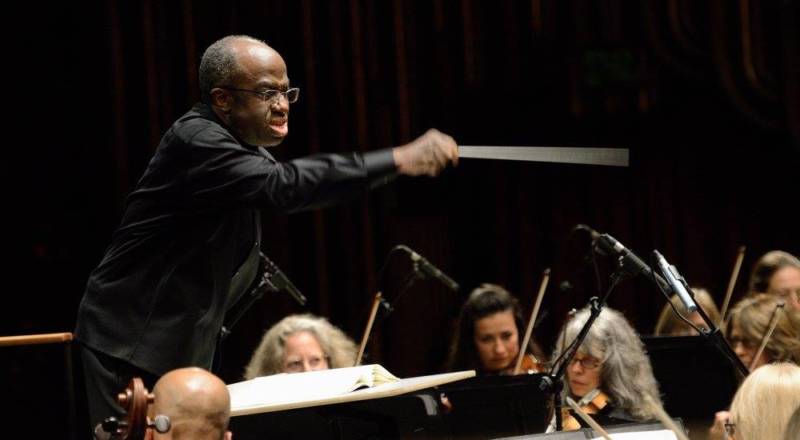
"caption": "Michael Morgan leads the Oakland Symphony Jan. 19, 2018 in a concert curated by W. Kamau Bell.",
"description": "Michael Morgan leads the Oakland Symphony Jan. 19 in a concert curated by W. Kamau Bell.",
"title": "Michael Morgan leads the Oakland Symphony in a concert curated by W. Kamau Bell",
"credit": "Photo: Courtesy of Oakland Symphony",
"status": "inherit",
"altTag": "Michael Morgan leads the Oakland Symphony Jan. 19 in a concert curated by W. Kamau Bell.",
"isLoading": false,
"fetchFailed": false
},
"arts_13901312": {
"type": "attachments",
"id": "arts_13901312",
"meta": {
"index": "attachments_1716263798",
"site": "arts",
"id": "13901312",
"found": true
},
"parent": 13901310,
"imgSizes": {
"twentyfourteen-full-width": {
"file": "https://ww2.kqed.org/app/uploads/sites/2/2021/08/Zumbi.ZionI_-1038x576.jpg",
"width": 1038,
"mimeType": "image/jpeg",
"height": 576
},
"thumbnail": {
"file": "https://ww2.kqed.org/app/uploads/sites/2/2021/08/Zumbi.ZionI_-160x90.jpg",
"width": 160,
"mimeType": "image/jpeg",
"height": 90
},
"post-thumbnail": {
"file": "https://ww2.kqed.org/app/uploads/sites/2/2021/08/Zumbi.ZionI_-672x372.jpg",
"width": 672,
"mimeType": "image/jpeg",
"height": 372
},
"kqedFullSize": {
"file": "https://ww2.kqed.org/app/uploads/sites/2/2021/08/Zumbi.ZionI_.jpg",
"width": 1171,
"height": 659
},
"large": {
"file": "https://ww2.kqed.org/app/uploads/sites/2/2021/08/Zumbi.ZionI_-1020x574.jpg",
"width": 1020,
"mimeType": "image/jpeg",
"height": 574
},
"medium": {
"file": "https://ww2.kqed.org/app/uploads/sites/2/2021/08/Zumbi.ZionI_-800x450.jpg",
"width": 800,
"mimeType": "image/jpeg",
"height": 450
},
"medium_large": {
"file": "https://ww2.kqed.org/app/uploads/sites/2/2021/08/Zumbi.ZionI_-768x432.jpg",
"width": 768,
"mimeType": "image/jpeg",
"height": 432
}
},
"publishDate": 1628901550,
"modified": 1628901583,
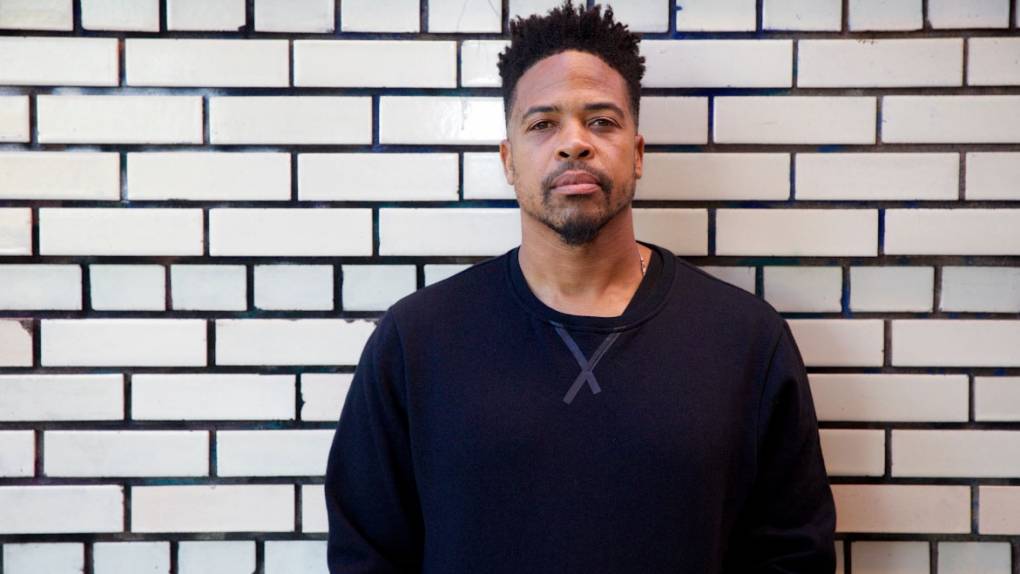
"caption": "MC Baba Zumbi from the hip-hop group Zion I.",
"description": "MC Baba Zumbi from the hip-hop group Zion I.",
"title": "Zumbi.ZionI",
"credit": "Marc Fong",
"status": "inherit",
"altTag": "MC Baba Zumbi from the hip-hop group Zion I.",
"isLoading": false,
"fetchFailed": false
},
"arts_13901226": {
"type": "attachments",
"id": "arts_13901226",
"meta": {
"index": "attachments_1716263798",
"site": "arts",
"id": "13901226",
"found": true
},
"parent": 13901157,
"imgSizes": {
"twentyfourteen-full-width": {
"file": "https://ww2.kqed.org/app/uploads/sites/2/2021/08/Homeroom_081121_030-1038x576.jpg",
"width": 1038,
"mimeType": "image/jpeg",
"height": 576
},
"thumbnail": {
"file": "https://ww2.kqed.org/app/uploads/sites/2/2021/08/Homeroom_081121_030-160x115.jpg",
"width": 160,
"mimeType": "image/jpeg",
"height": 115
},
"post-thumbnail": {
"file": "https://ww2.kqed.org/app/uploads/sites/2/2021/08/Homeroom_081121_030-672x372.jpg",
"width": 672,
"mimeType": "image/jpeg",
"height": 372
},
"kqedFullSize": {
"file": "https://ww2.kqed.org/app/uploads/sites/2/2021/08/Homeroom_081121_030.jpg",
"width": 2400,
"height": 1723
},
"2048x2048": {
"file": "https://ww2.kqed.org/app/uploads/sites/2/2021/08/Homeroom_081121_030-2048x1470.jpg",
"width": 2048,
"mimeType": "image/jpeg",
"height": 1470
},
"large": {
"file": "https://ww2.kqed.org/app/uploads/sites/2/2021/08/Homeroom_081121_030-1020x732.jpg",
"width": 1020,
"mimeType": "image/jpeg",
"height": 732
},
"1536x1536": {
"file": "https://ww2.kqed.org/app/uploads/sites/2/2021/08/Homeroom_081121_030-1536x1103.jpg",
"width": 1536,
"mimeType": "image/jpeg",
"height": 1103
},
"full-width": {
"file": "https://ww2.kqed.org/app/uploads/sites/2/2021/08/Homeroom_081121_030-1920x1378.jpg",
"width": 1920,
"mimeType": "image/jpeg",
"height": 1378
},
"medium": {
"file": "https://ww2.kqed.org/app/uploads/sites/2/2021/08/Homeroom_081121_030-800x574.jpg",
"width": 800,
"mimeType": "image/jpeg",
"height": 574
},
"medium_large": {
"file": "https://ww2.kqed.org/app/uploads/sites/2/2021/08/Homeroom_081121_030-768x551.jpg",
"width": 768,
"mimeType": "image/jpeg",
"height": 551
}
},
"publishDate": 1628809310,
"modified": 1628809400,
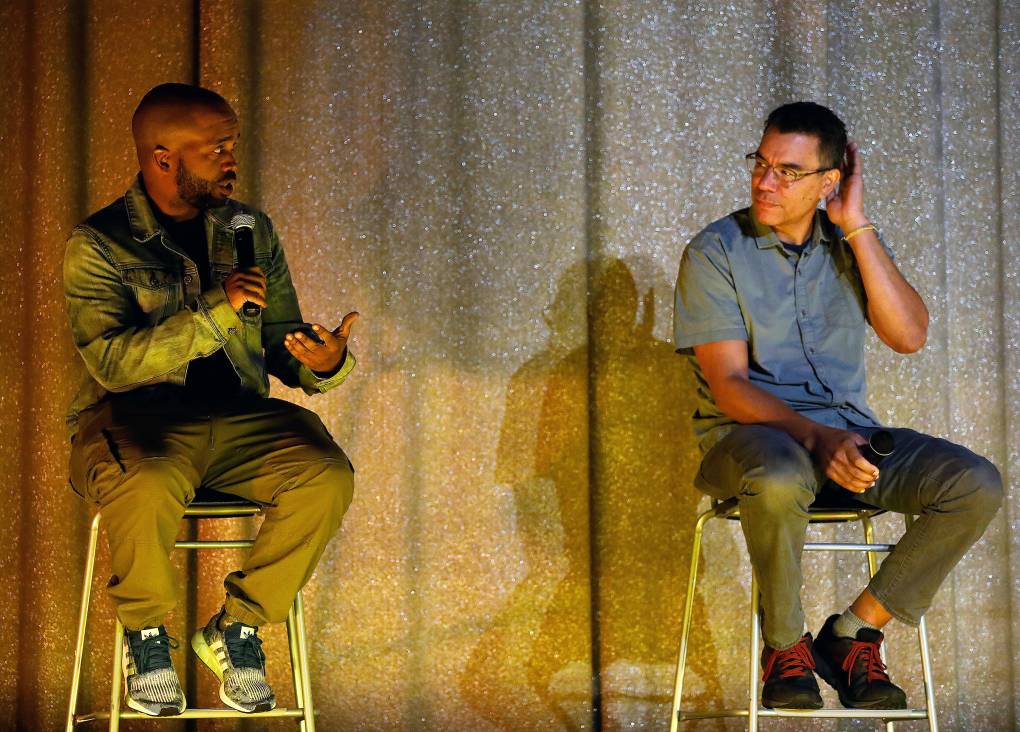
"caption": "Pendarvis Harshaw and Pete Nicks sit in chairs on stage at Oakland's Grand Lake Theatre discussing the film Homeroom.",
"description": "Pendarvis Harshaw and Pete Nicks sit in chairs on stage at Oakland's Grand Lake Theatre discussing the film Homeroom.",
"title": "Pendarvis Harshaw and Pete Nicks sit in chairs on stage at Oakland's Grand Lake Theatre discussing the film Homeroom.",
"credit": "Craig Lee/Hulu",
"status": "inherit",
"altTag": "Pendarvis Harshaw and Pete Nicks sit in chairs on stage at Oakland's Grand Lake Theatre discussing the film Homeroom.",
"isLoading": false,
"fetchFailed": false
},
"arts_13900716": {
"type": "attachments",
"id": "arts_13900716",
"meta": {
"index": "attachments_1716263798",
"site": "arts",
"id": "13900716",
"found": true
},
"parent": 13900685,
"imgSizes": {
"twentyfourteen-full-width": {
"file": "https://ww2.kqed.org/app/uploads/sites/2/2021/08/L1002721-3-1038x576.jpeg",
"width": 1038,
"mimeType": "image/jpeg",
"height": 576
},
"thumbnail": {
"file": "https://ww2.kqed.org/app/uploads/sites/2/2021/08/L1002721-3-160x107.jpeg",
"width": 160,
"mimeType": "image/jpeg",
"height": 107
},
"post-thumbnail": {
"file": "https://ww2.kqed.org/app/uploads/sites/2/2021/08/L1002721-3-672x372.jpeg",
"width": 672,
"mimeType": "image/jpeg",
"height": 372
},
"kqedFullSize": {
"file": "https://ww2.kqed.org/app/uploads/sites/2/2021/08/L1002721-3.jpeg",
"width": 1600,
"height": 1067
},
"large": {
"file": "https://ww2.kqed.org/app/uploads/sites/2/2021/08/L1002721-3-1020x680.jpeg",
"width": 1020,
"mimeType": "image/jpeg",
"height": 680
},
"1536x1536": {
"file": "https://ww2.kqed.org/app/uploads/sites/2/2021/08/L1002721-3-1536x1024.jpeg",
"width": 1536,
"mimeType": "image/jpeg",
"height": 1024
},
"medium": {
"file": "https://ww2.kqed.org/app/uploads/sites/2/2021/08/L1002721-3-800x534.jpeg",
"width": 800,
"mimeType": "image/jpeg",
"height": 534
},
"medium_large": {
"file": "https://ww2.kqed.org/app/uploads/sites/2/2021/08/L1002721-3-768x512.jpeg",
"width": 768,
"mimeType": "image/jpeg",
"height": 512
}
},
"publishDate": 1628182402,
"modified": 1628182421,
"caption": "Writer DeMareon Gipson wears a tan hat and a blue jean jacket as he poses with his book, Annalise's Cough.",
"description": "Writer DeMareon Gipson wears a tan hat and a blue jean jacket as he poses with his book, Annalise's Cough.",
"title": "Writer DeMareon Gipson wears a tan hat and a blue jean jacket as he poses with his book, Annalise's Cough.",
"credit": "Amir Aziz",
"status": "inherit",
"altTag": "Writer DeMareon Gipson wears a tan hat and a blue jean jacket as he poses with his book, Annalise's Cough.",
"isLoading": false,
"fetchFailed": false
},
"arts_13900299": {
"type": "attachments",
"id": "arts_13900299",
"meta": {
"index": "attachments_1716263798",
"site": "arts",
"id": "13900299",
"found": true
},
"parent": 13900292,
"imgSizes": {
"twentyfourteen-full-width": {
"file": "https://ww2.kqed.org/app/uploads/sites/2/2021/07/PianoFightSF_Party_photocredit_PianoFight-1038x576.jpg",
"width": 1038,
"mimeType": "image/jpeg",
"height": 576
},
"thumbnail": {
"file": "https://ww2.kqed.org/app/uploads/sites/2/2021/07/PianoFightSF_Party_photocredit_PianoFight-160x107.jpg",
"width": 160,
"mimeType": "image/jpeg",
"height": 107
},
"post-thumbnail": {
"file": "https://ww2.kqed.org/app/uploads/sites/2/2021/07/PianoFightSF_Party_photocredit_PianoFight-672x372.jpg",
"width": 672,
"mimeType": "image/jpeg",
"height": 372
},
"kqedFullSize": {
"file": "https://ww2.kqed.org/app/uploads/sites/2/2021/07/PianoFightSF_Party_photocredit_PianoFight.jpg",
"width": 2000,
"height": 1333
},
"large": {
"file": "https://ww2.kqed.org/app/uploads/sites/2/2021/07/PianoFightSF_Party_photocredit_PianoFight-1020x680.jpg",
"width": 1020,
"mimeType": "image/jpeg",
"height": 680
},
"1536x1536": {
"file": "https://ww2.kqed.org/app/uploads/sites/2/2021/07/PianoFightSF_Party_photocredit_PianoFight-1536x1024.jpg",
"width": 1536,
"mimeType": "image/jpeg",
"height": 1024
},
"full-width": {
"file": "https://ww2.kqed.org/app/uploads/sites/2/2021/07/PianoFightSF_Party_photocredit_PianoFight-1920x1280.jpg",
"width": 1920,
"mimeType": "image/jpeg",
"height": 1280
},
"medium": {
"file": "https://ww2.kqed.org/app/uploads/sites/2/2021/07/PianoFightSF_Party_photocredit_PianoFight-800x533.jpg",
"width": 800,
"mimeType": "image/jpeg",
"height": 533
},
"medium_large": {
"file": "https://ww2.kqed.org/app/uploads/sites/2/2021/07/PianoFightSF_Party_photocredit_PianoFight-768x512.jpg",
"width": 768,
"mimeType": "image/jpeg",
"height": 512
}
},
"publishDate": 1627331952,
"modified": 1674680011,
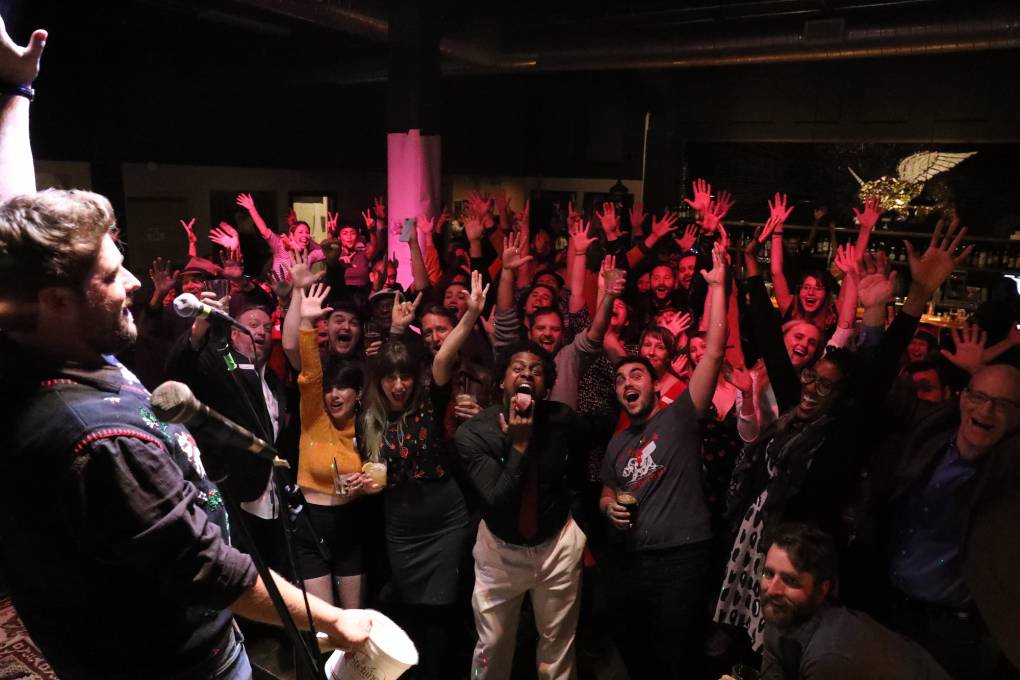
"caption": "Party-goers revel at PianoFight in San Francisco, with co-founder and artistic director Rob Ready presiding onstage. The venue announced its permanent closure this week. ",
"description": "Party-goers revel at PianoFight in San Francisco, with Rob Ready presiding onstage",
"title": "PianoFightSF_Party_photocredit_PianoFight",
"credit": "courtesy of PianoFight",
"status": "inherit",
"altTag": "a white man speaks into a microphone on stage in a darkly lit room while the audience cheers, lit by pink light",
"isLoading": false,
"fetchFailed": false
},
"arts_13900171": {
"type": "attachments",
"id": "arts_13900171",
"meta": {
"index": "attachments_1716263798",
"site": "arts",
"id": "13900171",
"found": true
},
"parent": 0,
"imgSizes": {
"twentyfourteen-full-width": {
"file": "https://ww2.kqed.org/app/uploads/sites/2/2021/07/018_KQEDArts_Oakland_AyodeleNzinga_07192021-1-1038x576.jpg",
"width": 1038,
"mimeType": "image/jpeg",
"height": 576
},
"thumbnail": {
"file": "https://ww2.kqed.org/app/uploads/sites/2/2021/07/018_KQEDArts_Oakland_AyodeleNzinga_07192021-1-160x107.jpg",
"width": 160,
"mimeType": "image/jpeg",
"height": 107
},
"post-thumbnail": {
"file": "https://ww2.kqed.org/app/uploads/sites/2/2021/07/018_KQEDArts_Oakland_AyodeleNzinga_07192021-1-672x372.jpg",
"width": 672,
"mimeType": "image/jpeg",
"height": 372
},
"kqedFullSize": {
"file": "https://ww2.kqed.org/app/uploads/sites/2/2021/07/018_KQEDArts_Oakland_AyodeleNzinga_07192021-1.jpg",
"width": 1920,
"height": 1280
},
"large": {
"file": "https://ww2.kqed.org/app/uploads/sites/2/2021/07/018_KQEDArts_Oakland_AyodeleNzinga_07192021-1-1020x680.jpg",
"width": 1020,
"mimeType": "image/jpeg",
"height": 680
},
"1536x1536": {
"file": "https://ww2.kqed.org/app/uploads/sites/2/2021/07/018_KQEDArts_Oakland_AyodeleNzinga_07192021-1-1536x1024.jpg",
"width": 1536,
"mimeType": "image/jpeg",
"height": 1024
},
"medium": {
"file": "https://ww2.kqed.org/app/uploads/sites/2/2021/07/018_KQEDArts_Oakland_AyodeleNzinga_07192021-1-800x533.jpg",
"width": 800,
"mimeType": "image/jpeg",
"height": 533
},
"medium_large": {
"file": "https://ww2.kqed.org/app/uploads/sites/2/2021/07/018_KQEDArts_Oakland_AyodeleNzinga_07192021-1-768x512.jpg",
"width": 768,
"mimeType": "image/jpeg",
"height": 512
}
},
"publishDate": 1626979294,
"modified": 1626979591,
"caption": "Ayodele Nzinga raises her fist in front of a mural that says, \"We Got Us\" by the organization AeroSoul in Oakland on July 19, 2021.",
"description": "Ayodele Nzinga raises her fist in front of a mural that says, \"We Got Us\" by the organization AeroSoul in Oakland on July 19, 2021.",
"title": "018_KQEDArts_Oakland_AyodeleNzinga_07192021 (1)",
"credit": "Beth LaBerge/KQED",
"status": "inherit",
"altTag": "Ayodele Nzinga raises her fist in front of a mural that says, \"We Got Us\" by the organization AeroSoul in Oakland on July 19, 2021.",
"isLoading": false,
"fetchFailed": false
},
"arts_13899911": {
"type": "attachments",
"id": "arts_13899911",
"meta": {
"index": "attachments_1716263798",
"site": "arts",
"id": "13899911",
"found": true
},
"parent": 13899907,
"imgSizes": {
"twentyfourteen-full-width": {
"file": "https://ww2.kqed.org/app/uploads/sites/2/2021/07/SpacesOakland_MacioPayomo_SarahCrowell_RashidiOmari-photocredit_LaurenStevenson-1038x576.jpg",
"width": 1038,
"mimeType": "image/jpeg",
"height": 576
},
"thumbnail": {
"file": "https://ww2.kqed.org/app/uploads/sites/2/2021/07/SpacesOakland_MacioPayomo_SarahCrowell_RashidiOmari-photocredit_LaurenStevenson-160x106.jpg",
"width": 160,
"mimeType": "image/jpeg",
"height": 106
},
"post-thumbnail": {
"file": "https://ww2.kqed.org/app/uploads/sites/2/2021/07/SpacesOakland_MacioPayomo_SarahCrowell_RashidiOmari-photocredit_LaurenStevenson-672x372.jpg",
"width": 672,
"mimeType": "image/jpeg",
"height": 372
},
"kqedFullSize": {
"file": "https://ww2.kqed.org/app/uploads/sites/2/2021/07/SpacesOakland_MacioPayomo_SarahCrowell_RashidiOmari-photocredit_LaurenStevenson.jpg",
"width": 2000,
"height": 1331
},
"large": {
"file": "https://ww2.kqed.org/app/uploads/sites/2/2021/07/SpacesOakland_MacioPayomo_SarahCrowell_RashidiOmari-photocredit_LaurenStevenson-1020x679.jpg",
"width": 1020,
"mimeType": "image/jpeg",
"height": 679
},
"1536x1536": {
"file": "https://ww2.kqed.org/app/uploads/sites/2/2021/07/SpacesOakland_MacioPayomo_SarahCrowell_RashidiOmari-photocredit_LaurenStevenson-1536x1022.jpg",
"width": 1536,
"mimeType": "image/jpeg",
"height": 1022
},
"full-width": {
"file": "https://ww2.kqed.org/app/uploads/sites/2/2021/07/SpacesOakland_MacioPayomo_SarahCrowell_RashidiOmari-photocredit_LaurenStevenson-1920x1278.jpg",
"width": 1920,
"mimeType": "image/jpeg",
"height": 1278
},
"medium": {
"file": "https://ww2.kqed.org/app/uploads/sites/2/2021/07/SpacesOakland_MacioPayomo_SarahCrowell_RashidiOmari-photocredit_LaurenStevenson-800x532.jpg",
"width": 800,
"mimeType": "image/jpeg",
"height": 532
},
"medium_large": {
"file": "https://ww2.kqed.org/app/uploads/sites/2/2021/07/SpacesOakland_MacioPayomo_SarahCrowell_RashidiOmari-photocredit_LaurenStevenson-768x511.jpg",
"width": 768,
"mimeType": "image/jpeg",
"height": 511
}
},
"publishDate": 1626121556,
"modified": 1626285405,
"caption": "Macio Payomo, Sarah Crowell, and Rashidi Omari perform outside Oakland's City Hall for the grand finale of 'SPACES: Oakland.'",
"description": "Macio Payomo, Sarah Crowell, and Rashidi Omari perform outside Oakland's City Hall for the grand finale of 'SPACES: Oakland.'",
"title": "SpacesOakland_MacioPayomo_SarahCrowell_RashidiOmari-photocredit_LaurenStevenson",
"credit": "Lauren Stevenson",
"status": "inherit",
"altTag": "Macio Payomo, Sarah Crowell, and Rashidi Omari perform outside Oakland's City Hall for the grand finale of 'SPACES: Oakland.'",
"isLoading": false,
"fetchFailed": false
},
"arts_13899642": {
"type": "attachments",
"id": "arts_13899642",
"meta": {
"index": "attachments_1716263798",
"site": "arts",
"id": "13899642",
"found": true
},
"parent": 13899431,
"imgSizes": {
"twentyfourteen-full-width": {
"file": "https://ww2.kqed.org/app/uploads/sites/2/2021/06/201906-oakff-ScottHaney030-1038x576.jpg",
"width": 1038,
"mimeType": "image/jpeg",
"height": 576
},
"thumbnail": {
"file": "https://ww2.kqed.org/app/uploads/sites/2/2021/06/201906-oakff-ScottHaney030-160x106.jpg",
"width": 160,
"mimeType": "image/jpeg",
"height": 106
},
"post-thumbnail": {
"file": "https://ww2.kqed.org/app/uploads/sites/2/2021/06/201906-oakff-ScottHaney030-672x372.jpg",
"width": 672,
"mimeType": "image/jpeg",
"height": 372
},
"kqedFullSize": {
"file": "https://ww2.kqed.org/app/uploads/sites/2/2021/06/201906-oakff-ScottHaney030.jpg",
"width": 1200,
"height": 795
},
"large": {
"file": "https://ww2.kqed.org/app/uploads/sites/2/2021/06/201906-oakff-ScottHaney030-1020x676.jpg",
"width": 1020,
"mimeType": "image/jpeg",
"height": 676
},
"medium": {
"file": "https://ww2.kqed.org/app/uploads/sites/2/2021/06/201906-oakff-ScottHaney030-800x530.jpg",
"width": 800,
"mimeType": "image/jpeg",
"height": 530
},
"medium_large": {
"file": "https://ww2.kqed.org/app/uploads/sites/2/2021/06/201906-oakff-ScottHaney030-768x509.jpg",
"width": 768,
"mimeType": "image/jpeg",
"height": 509
}
},
"publishDate": 1625079370,
"modified": 1625079470,
"caption": "Festival attendees shop at a booth at First Friday in June 2019. Festival organizers are unsure when the event will be able to return because of lack of city funds.",
"description": "Festival attendees shop at a booth at First Friday in June 2019. Festival organizers are unsure when the event will be able to return because of lack of city funds.",
"title": "201906-oakff-ScottHaney030",
"credit": "Scott Haney",
"status": "inherit",
"altTag": "Women look at clothing in a festival booth filled with African fabrics.",
"isLoading": false,
"fetchFailed": false
},
"arts_13899292": {
"type": "attachments",
"id": "arts_13899292",
"meta": {
"index": "attachments_1716263798",
"site": "arts",
"id": "13899292",
"found": true
},
"parent": 13899291,
"imgSizes": {
"twentyfourteen-full-width": {
"file": "https://ww2.kqed.org/app/uploads/sites/2/2021/02/stone_eden_rgb_custom-b4ef35b1d4babeef97d5a7bc91d86175f63786fd-1038x576.jpg",
"width": 1038,
"mimeType": "image/jpeg",
"height": 576
},
"thumbnail": {
"file": "https://ww2.kqed.org/app/uploads/sites/2/2021/02/stone_eden_rgb_custom-b4ef35b1d4babeef97d5a7bc91d86175f63786fd-160x125.jpg",
"width": 160,
"mimeType": "image/jpeg",
"height": 125
},
"post-thumbnail": {
"file": "https://ww2.kqed.org/app/uploads/sites/2/2021/02/stone_eden_rgb_custom-b4ef35b1d4babeef97d5a7bc91d86175f63786fd-672x372.jpg",
"width": 672,
"mimeType": "image/jpeg",
"height": 372
},
"kqedFullSize": {
"file": "https://ww2.kqed.org/app/uploads/sites/2/2021/02/stone_eden_rgb_custom-b4ef35b1d4babeef97d5a7bc91d86175f63786fd-scaled.jpg",
"width": 2560,
"height": 2008
},
"2048x2048": {
"file": "https://ww2.kqed.org/app/uploads/sites/2/2021/02/stone_eden_rgb_custom-b4ef35b1d4babeef97d5a7bc91d86175f63786fd-2048x1606.jpg",
"width": 2048,
"mimeType": "image/jpeg",
"height": 1606
},
"large": {
"file": "https://ww2.kqed.org/app/uploads/sites/2/2021/02/stone_eden_rgb_custom-b4ef35b1d4babeef97d5a7bc91d86175f63786fd-1020x800.jpg",
"width": 1020,
"mimeType": "image/jpeg",
"height": 800
},
"1536x1536": {
"file": "https://ww2.kqed.org/app/uploads/sites/2/2021/02/stone_eden_rgb_custom-b4ef35b1d4babeef97d5a7bc91d86175f63786fd-1536x1205.jpg",
"width": 1536,
"mimeType": "image/jpeg",
"height": 1205
},
"full-width": {
"file": "https://ww2.kqed.org/app/uploads/sites/2/2021/02/stone_eden_rgb_custom-b4ef35b1d4babeef97d5a7bc91d86175f63786fd-1920x1506.jpg",
"width": 1920,
"mimeType": "image/jpeg",
"height": 1506
},
"medium": {
"file": "https://ww2.kqed.org/app/uploads/sites/2/2021/02/stone_eden_rgb_custom-b4ef35b1d4babeef97d5a7bc91d86175f63786fd-800x627.jpg",
"width": 800,
"mimeType": "image/jpeg",
"height": 627
},
"medium_large": {
"file": "https://ww2.kqed.org/app/uploads/sites/2/2021/02/stone_eden_rgb_custom-b4ef35b1d4babeef97d5a7bc91d86175f63786fd-768x602.jpg",
"width": 768,
"mimeType": "image/jpeg",
"height": 602
}
},
"publishDate": 1624550549,
"modified": 1624551745,
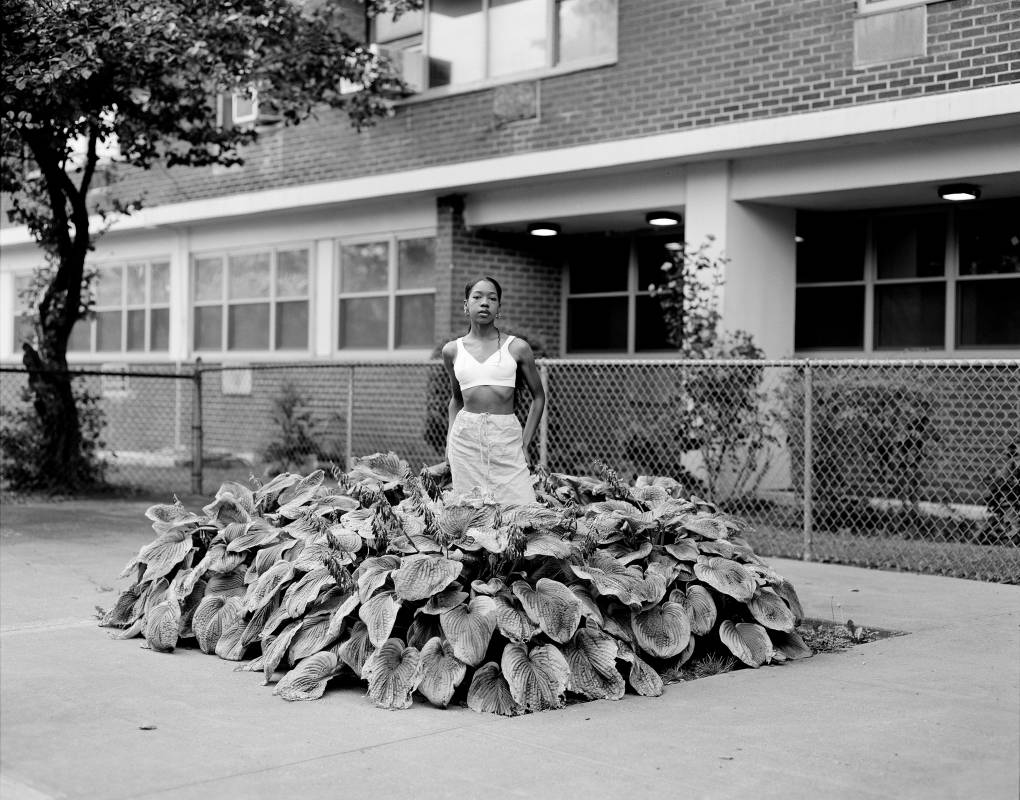
"caption": "Chanell Stone photographs places like overgrown lots and green spaces at public housing projects, often including herself in the frame. Above, \"In search of a certain Eden,\" 2019, Brooklyn.",
"description": null,
"title": "Chanell Stone photographs places like overgrown lots and green spaces at public housing projects, often including herself in the frame. Above, \"In search of a certain Eden,\" 2019, Brooklyn.",
"credit": "Chanell Stone",
"status": "inherit",
"altTag": null,
"isLoading": false,
"fetchFailed": false
},
"arts_13899120": {
"type": "attachments",
"id": "arts_13899120",
"meta": {
"index": "attachments_1716263798",
"site": "arts",
"id": "13899120",
"found": true
},
"parent": 13899115,
"imgSizes": {
"twentyfourteen-full-width": {
"file": "https://ww2.kqed.org/app/uploads/sites/2/2021/06/DSC01103-1038x576.jpg",
"width": 1038,
"mimeType": "image/jpeg",
"height": 576
},
"thumbnail": {
"file": "https://ww2.kqed.org/app/uploads/sites/2/2021/06/DSC01103-160x107.jpg",
"width": 160,
"mimeType": "image/jpeg",
"height": 107
},
"post-thumbnail": {
"file": "https://ww2.kqed.org/app/uploads/sites/2/2021/06/DSC01103-672x372.jpg",
"width": 672,
"mimeType": "image/jpeg",
"height": 372
},
"kqedFullSize": {
"file": "https://ww2.kqed.org/app/uploads/sites/2/2021/06/DSC01103.jpg",
"width": 1616,
"height": 1080
},
"large": {
"file": "https://ww2.kqed.org/app/uploads/sites/2/2021/06/DSC01103-1020x682.jpg",
"width": 1020,
"mimeType": "image/jpeg",
"height": 682
},
"1536x1536": {
"file": "https://ww2.kqed.org/app/uploads/sites/2/2021/06/DSC01103-1536x1027.jpg",
"width": 1536,
"mimeType": "image/jpeg",
"height": 1027
},
"medium": {
"file": "https://ww2.kqed.org/app/uploads/sites/2/2021/06/DSC01103-800x535.jpg",
"width": 800,
"mimeType": "image/jpeg",
"height": 535
},
"medium_large": {
"file": "https://ww2.kqed.org/app/uploads/sites/2/2021/06/DSC01103-768x513.jpg",
"width": 768,
"mimeType": "image/jpeg",
"height": 513
}
},
"publishDate": 1624350877,
"modified": 1624404726,
"caption": "Travis Watts, organizer of Oakland's official Juneteenth celebration at Lake Merritt's amphitheater, is pictured with festival goers in the background as he holds his daughter Zaya.",
"description": "Travis Watts, organizer of Oakland's official Juneteenth celebration at Lake Merritt's amphitheater, is pictured with festival goers in the background as he holds his daughter Zaya.",
"title": "Travis Watts, organizer of Oakland's official Juneteenth celebration at Lake Merritt's amphitheater, is pictured with festival goers in the background as he holds his daughter Zaya",
"credit": "Pendarvis Harshaw",
"status": "inherit",
"altTag": "Travis Watts, organizer of Oakland's official Juneteenth celebration at Lake Merritt's amphitheater, is pictured with festival goers in the background as he holds his daughter Zaya.",
"isLoading": false,
"fetchFailed": false
},
"arts_13899086": {
"type": "attachments",
"id": "arts_13899086",
"meta": {
"index": "attachments_1716263798",
"site": "arts",
"id": "13899086",
"found": true
},
"parent": 13899062,
"imgSizes": {
"twentyfourteen-full-width": {
"file": "https://ww2.kqed.org/app/uploads/sites/2/2021/06/Pass-The-Aux-template-1038x576.jpg",
"width": 1038,
"mimeType": "image/jpeg",
"height": 576
},
"thumbnail": {
"file": "https://ww2.kqed.org/app/uploads/sites/2/2021/06/Pass-The-Aux-template-160x90.jpg",
"width": 160,
"mimeType": "image/jpeg",
"height": 90
},
"post-thumbnail": {
"file": "https://ww2.kqed.org/app/uploads/sites/2/2021/06/Pass-The-Aux-template-672x372.jpg",
"width": 672,
"mimeType": "image/jpeg",
"height": 372
},
"kqedFullSize": {
"file": "https://ww2.kqed.org/app/uploads/sites/2/2021/06/Pass-The-Aux-template.jpg",
"width": 1920,
"height": 1080
},
"large": {
"file": "https://ww2.kqed.org/app/uploads/sites/2/2021/06/Pass-The-Aux-template-1020x574.jpg",
"width": 1020,
"mimeType": "image/jpeg",
"height": 574
},
"1536x1536": {
"file": "https://ww2.kqed.org/app/uploads/sites/2/2021/06/Pass-The-Aux-template-1536x864.jpg",
"width": 1536,
"mimeType": "image/jpeg",
"height": 864
},
"medium": {
"file": "https://ww2.kqed.org/app/uploads/sites/2/2021/06/Pass-The-Aux-template-800x450.jpg",
"width": 800,
"mimeType": "image/jpeg",
"height": 450
},
"medium_large": {
"file": "https://ww2.kqed.org/app/uploads/sites/2/2021/06/Pass-The-Aux-template-768x432.jpg",
"width": 768,
"mimeType": "image/jpeg",
"height": 432
}
},
"publishDate": 1624304111,
"modified": 1624304158,
"caption": "Stoney Creation.",
"description": "Stoney Creation.",
"title": "Pass The Aux template",
"credit": "Photo: courtesy of the artist. Illustration: Kelly Heigert/KQED",
"status": "inherit",
"altTag": null,
"isLoading": false,
"fetchFailed": false
},
"arts_13898860": {
"type": "attachments",
"id": "arts_13898860",
"meta": {
"index": "attachments_1716263798",
"site": "arts",
"id": "13898860",
"found": true
},
"parent": 13898854,
"imgSizes": {
"twentyfourteen-full-width": {
"file": "https://ww2.kqed.org/app/uploads/sites/2/2021/06/iStock-1263692018-1038x576.jpg",
"width": 1038,
"mimeType": "image/jpeg",
"height": 576
},
"thumbnail": {
"file": "https://ww2.kqed.org/app/uploads/sites/2/2021/06/iStock-1263692018-160x107.jpg",
"width": 160,
"mimeType": "image/jpeg",
"height": 107
},
"post-thumbnail": {
"file": "https://ww2.kqed.org/app/uploads/sites/2/2021/06/iStock-1263692018-672x372.jpg",
"width": 672,
"mimeType": "image/jpeg",
"height": 372
},
"kqedFullSize": {
"file": "https://ww2.kqed.org/app/uploads/sites/2/2021/06/iStock-1263692018.jpg",
"width": 1254,
"height": 836
},
"large": {
"file": "https://ww2.kqed.org/app/uploads/sites/2/2021/06/iStock-1263692018-1020x680.jpg",
"width": 1020,
"mimeType": "image/jpeg",
"height": 680
},
"medium": {
"file": "https://ww2.kqed.org/app/uploads/sites/2/2021/06/iStock-1263692018-800x533.jpg",
"width": 800,
"mimeType": "image/jpeg",
"height": 533
},
"medium_large": {
"file": "https://ww2.kqed.org/app/uploads/sites/2/2021/06/iStock-1263692018-768x512.jpg",
"width": 768,
"mimeType": "image/jpeg",
"height": 512
}
},
"publishDate": 1623803964,
"modified": 1623804079,
"caption": "Frontline workers have been hardest hit by the pandemic, and there are still racial disparities in vaccine rates. As a result, some artists and workers say it's too soon to remove mask mandates.",
"description": null,
"title": null,
"credit": "iStock",
"status": "inherit",
"altTag": null,
"isLoading": false,
"fetchFailed": false
}
},
"audioPlayerReducer": {
"postId": "stream_live",
"isPaused": true,
"isPlaying": false,
"pfsActive": false,
"pledgeModalIsOpen": true,
"playerDrawerIsOpen": false,
"liveAudioPlayStartedAt": 0,
"liveAudioPlayContext": ""
},
"authorsReducer": {
"byline_arts_13899291": {
"type": "authors",
"id": "byline_arts_13899291",
"meta": {
"override": true
},
"slug": "byline_arts_13899291",
"name": "Will Matsuda",
"isLoading": false
},
"gmeline": {
"type": "authors",
"id": "185",
"meta": {
"index": "authors_1716337520",
"id": "185",
"found": true
},
"name": "Gabe Meline",
"firstName": "Gabe",
"lastName": "Meline",
"slug": "gmeline",
"email": "gmeline@kqed.org",
"display_author_email": true,
"staff_mastheads": [
"arts"
],
"title": "Senior Editor, KQED Arts & Culture",
"bio": "Gabe Meline entered journalism at age 15 making photocopied zines, and has since earned awards from the Edward R. Murrow Awards, the Society for Professional Journalists, the Online Journalism Awards, the Association of Alternative Newsweeklies and the California Newspaper Publishers Association. Prior to KQED, he was the editor of the \u003cem>North Bay Bohemian\u003c/em> and a touring musician. He lives with his wife and daughter in his hometown of Santa Rosa, CA.",
"avatar": "https://secure.gravatar.com/avatar/5bebe57be0d8bc2dd318934feb47299e2d2d10cba28d09d8d7afb389a2ce2bdd?s=600&d=blank&r=g",
"twitter": null,
"bluesky": null,
"facebook": null,
"instagram": null,
"linkedin": null,
"sites": [
{
"site": "",
"roles": [
"editor"
]
},
{
"site": "arts",
"roles": [
"administrator"
]
},
{
"site": "artschool",
"roles": [
"editor"
]
},
{
"site": "news",
"roles": [
"author"
]
},
{
"site": "pop",
"roles": [
"editor"
]
},
{
"site": "bayareabites",
"roles": [
"editor"
]
},
{
"site": "food",
"roles": [
"editor"
]
},
{
"site": "liveblog",
"roles": [
"editor"
]
},
{
"site": "hiphop",
"roles": [
"editor"
]
}
],
"headData": {
"title": "Gabe Meline | KQED",
"description": "Senior Editor, KQED Arts & Culture",
"ogImgSrc": "https://secure.gravatar.com/avatar/5bebe57be0d8bc2dd318934feb47299e2d2d10cba28d09d8d7afb389a2ce2bdd?s=600&d=blank&r=g",
"twImgSrc": "https://secure.gravatar.com/avatar/5bebe57be0d8bc2dd318934feb47299e2d2d10cba28d09d8d7afb389a2ce2bdd?s=600&d=blank&r=g"
},
"isLoading": false,
"link": "/author/gmeline"
},
"nvoynovskaya": {
"type": "authors",
"id": "11387",
"meta": {
"index": "authors_1716337520",
"id": "11387",
"found": true
},
"name": "Nastia Voynovskaya",
"firstName": "Nastia",
"lastName": "Voynovskaya",
"slug": "nvoynovskaya",
"email": "nvoynovskaya@kqed.org",
"display_author_email": false,
"staff_mastheads": [
"arts"
],
"title": "Editor and reporter",
"bio": "Nastia Voynovskaya is a reporter and editor at KQED Arts & Culture. She's been covering the arts in the Bay Area for over a decade, with a focus on music, queer culture, labor issues and grassroots organizing. She has edited KQED story series such as Trans Bay: A History of San Francisco's Gender-Diverse Community, and co-created KQED's Bay Area hip-hop history project, That's My Word. Nastia's work has been recognized by the Society of Professional Journalists and San Francisco Press Club. She holds a BA in comparative literature from UC Berkeley.",
"avatar": "https://secure.gravatar.com/avatar/5025ee460e5a85d69ca20ea6c6f2f80d7e17795c828f61ea3aecfcd924e9042e?s=600&d=blank&r=g",
"twitter": null,
"bluesky": null,
"facebook": null,
"instagram": "https://www.instagram.com/nananastia/",
"linkedin": null,
"sites": [
{
"site": "arts",
"roles": [
"administrator"
]
},
{
"site": "news",
"roles": [
"editor"
]
},
{
"site": "pop",
"roles": [
"administrator"
]
},
{
"site": "bayareabites",
"roles": [
"editor"
]
},
{
"site": "podcasts",
"roles": [
"editor"
]
},
{
"site": "hiphop",
"roles": [
"editor"
]
}
],
"headData": {
"title": "Nastia Voynovskaya | KQED",
"description": "Editor and reporter",
"ogImgSrc": "https://secure.gravatar.com/avatar/5025ee460e5a85d69ca20ea6c6f2f80d7e17795c828f61ea3aecfcd924e9042e?s=600&d=blank&r=g",
"twImgSrc": "https://secure.gravatar.com/avatar/5025ee460e5a85d69ca20ea6c6f2f80d7e17795c828f61ea3aecfcd924e9042e?s=600&d=blank&r=g"
},
"isLoading": false,
"link": "/author/nvoynovskaya"
},
"ogpenn": {
"type": "authors",
"id": "11491",
"meta": {
"index": "authors_1716337520",
"id": "11491",
"found": true
},
"name": "Pendarvis Harshaw",
"firstName": "Pendarvis",
"lastName": "Harshaw",
"slug": "ogpenn",
"email": "ogpenn@gmail.com",
"display_author_email": false,
"staff_mastheads": [
"arts"
],
"title": "Community Engagement Reporter",
"bio": "Pendarvis Harshaw is an educator, host and writer with KQED Arts.",
"avatar": "https://secure.gravatar.com/avatar/972b77ee8e3f346ae2b00622661187fbfabd059b5693bbdc1475ea7a722fd4cd?s=600&d=blank&r=g",
"twitter": null,
"bluesky": null,
"facebook": null,
"instagram": "ogpenn",
"linkedin": null,
"sites": [
{
"site": "arts",
"roles": [
"administrator"
]
},
{
"site": "news",
"roles": [
"editor"
]
},
{
"site": "bayareabites",
"roles": [
"author"
]
},
{
"site": "hiphop",
"roles": [
"editor"
]
}
],
"headData": {
"title": "Pendarvis Harshaw | KQED",
"description": "Community Engagement Reporter",
"ogImgSrc": "https://secure.gravatar.com/avatar/972b77ee8e3f346ae2b00622661187fbfabd059b5693bbdc1475ea7a722fd4cd?s=600&d=blank&r=g",
"twImgSrc": "https://secure.gravatar.com/avatar/972b77ee8e3f346ae2b00622661187fbfabd059b5693bbdc1475ea7a722fd4cd?s=600&d=blank&r=g"
},
"isLoading": false,
"link": "/author/ogpenn"
},
"ngluckstern": {
"type": "authors",
"id": "11497",
"meta": {
"index": "authors_1716337520",
"id": "11497",
"found": true
},
"name": "Nicole Gluckstern",
"firstName": "Nicole",
"lastName": "Gluckstern",
"slug": "ngluckstern",
"email": "gluckstern.nicole@gmail.com",
"display_author_email": false,
"staff_mastheads": [],
"title": null,
"bio": null,
"avatar": "https://secure.gravatar.com/avatar/4fa7e0128404fc3d06ce5f9e27ab9e5a?s=600&d=blank&r=g",
"twitter": null,
"facebook": null,
"instagram": null,
"linkedin": null,
"sites": [
{
"site": "arts",
"roles": [
"author"
]
}
],
"headData": {
"title": "Nicole Gluckstern | KQED",
"description": null,
"ogImgSrc": "https://secure.gravatar.com/avatar/4fa7e0128404fc3d06ce5f9e27ab9e5a?s=600&d=blank&r=g",
"twImgSrc": "https://secure.gravatar.com/avatar/4fa7e0128404fc3d06ce5f9e27ab9e5a?s=600&d=blank&r=g"
},
"isLoading": false,
"link": "/author/ngluckstern"
},
"achazaro": {
"type": "authors",
"id": "11748",
"meta": {
"index": "authors_1716337520",
"id": "11748",
"found": true
},
"name": "Alan Chazaro",
"firstName": "Alan",
"lastName": "Chazaro",
"slug": "achazaro",
"email": "agchazaro@gmail.com",
"display_author_email": true,
"staff_mastheads": [],
"title": "Food Writer and Reporter",
"bio": "Alan Chazaro is the author of \u003cem>This Is Not a Frank Ocean Cover Album\u003c/em> (Black Lawrence Press, 2019), \u003cem>Piñata Theory\u003c/em> (Black Lawrence Press, 2020), and \u003cem>Notes from the Eastern Span of the Bay Bridge\u003c/em> (Ghost City Press, 2021). He is a graduate of June Jordan’s Poetry for the People program at UC Berkeley and a former Lawrence Ferlinghetti Fellow at the University of San Francisco. He writes about sports, food, art, music, education, and culture while repping the Bay on \u003ca href=\"https://twitter.com/alan_chazaro\">Twitter\u003c/a> and \u003ca href=\"https://www.instagram.com/alan_chazaro/?hl=en\">Instagram\u003c/a> at @alan_chazaro.",
"avatar": "https://secure.gravatar.com/avatar/ea8b6dd970fc5c29e7a188e7d5861df7?s=600&d=blank&r=g",
"twitter": "alan_chazaro",
"facebook": null,
"instagram": null,
"linkedin": null,
"sites": [
{
"site": "arts",
"roles": [
"contributor"
]
},
{
"site": "news",
"roles": [
"editor"
]
}
],
"headData": {
"title": "Alan Chazaro | KQED",
"description": "Food Writer and Reporter",
"ogImgSrc": "https://secure.gravatar.com/avatar/ea8b6dd970fc5c29e7a188e7d5861df7?s=600&d=blank&r=g",
"twImgSrc": "https://secure.gravatar.com/avatar/ea8b6dd970fc5c29e7a188e7d5861df7?s=600&d=blank&r=g"
},
"isLoading": false,
"link": "/author/achazaro"
}
},
"pagesReducer": {
"arts_tag_oakland": {
"type": "terms",
"id": "arts_1143",
"meta": {
"index": "terms_1716263798",
"site": "arts",
"id": "1143",
"score": 6.8845096
},
"featImg": null,
"name": "Oakland",
"description": null,
"taxonomy": "tag",
"headData": {
"twImgId": null,
"twTitle": null,
"ogTitle": null,
"ogImgId": null,
"twDescription": null,
"description": null,
"title": "Oakland Archives | KQED Arts",
"ogDescription": null
},
"ttid": 692,
"slug": "oakland",
"isLoading": false,
"title": "Oakland",
"pageMeta": {
"site": "arts",
"WpPageTemplate": "page-topic-editorial",
"currentPage": 39
},
"blocks": [
{
"blockName": "kqed/post-list",
"attrs": {
"layout": "cardArticle2",
"query": "posts/arts?tag=oakland",
"seeMore": false,
"paginated": true,
"page": 39
}
},
{
"blockName": "kqed/ad"
}
]
}
},
"pfsSessionReducer": {},
"postsReducer": {
"stream_live": {
"type": "live",
"id": "stream_live",
"audioUrl": "https://streams.kqed.org/kqedradio",
"title": "Live Stream",
"excerpt": "Live Stream information currently unavailable.",
"link": "/radio",
"featImg": "",
"label": {
"name": "KQED Live",
"link": "/"
}
},
"stream_kqedNewscast": {
"type": "posts",
"id": "stream_kqedNewscast",
"audioUrl": "https://www.kqed.org/.stream/anon/radio/RDnews/newscast.mp3?_=1",
"title": "KQED Newscast",
"featImg": "",
"label": {
"name": "88.5 FM",
"link": "/"
}
},
"arts_13901635": {
"type": "posts",
"id": "arts_13901635",
"meta": {
"index": "posts_1716263798",
"site": "arts",
"id": "13901635",
"score": null,
"sort": [
1629517758000
]
},
"parent": 0,
"labelTerm": {
"site": "arts"
},
"blocks": [],
"publishDate": 1629517758,
"format": "standard",
"title": "Michael Morgan, Visionary Oakland Symphony Conductor, Dies at Age 63",
"headTitle": "Michael Morgan, Visionary Oakland Symphony Conductor, Dies at Age 63 | KQED",
"content": "\u003cp>Michael Morgan, the longtime music director and conductor of the Oakland Symphony, died on Aug. 20 at age 63, his publicist announced today. He passed away at Kaiser Permanente hospital after being admitted last week for an infection, three months after undergoing a successful kidney transplant.\u003c/p>\n\u003cp>Morgan made his mark on the Oakland Symphony with his boundary-pushing programming and passion for education and outreach. Always one to make classical music accessible to new audiences, he invited comedian W. Kamau Bell and activist Dolores Huerta to curate “playlists” for the orchestra to perform, interjecting the canon with songs by John Coltrane and Jimi Hendrix.\u003c/p>\n\u003cp>As one of the few Black and openly gay conductors in the country, Morgan made inclusive programming standard at the Oakland Symphony—well before other orchestras began to grapple with racism in the wake of last year’s protests. His “Notes From…” concert series celebrated the music of Native American, Korean, Vietnamese and LGBTQ+ composers. And as the host of the \u003ca href=\"https://www.sfsymphony.org/CURRENTS\" target=\"_blank\" rel=\"noopener noreferrer\">\u003cem>Currents\u003c/em>\u003c/a> video and podcast series from the San Francisco Symphony, he examined the cross-pollination of classical music with genres as varied as hip-hop and traditional Chinese music.\u003c/p>\n\u003cp>“Our primary question is ‘who’s not here?’ And we look around the room, and see who is not there,” Morgan told \u003ca href=\"https://oaklandside.org/2021/03/24/oakland-symphony-classical-music-race-social-justice-michael-morgan/\" target=\"_blank\" rel=\"noopener noreferrer\">Oaklandside\u003c/a> earlier this year, describing his vision.\u003c/p>\n\u003cp>One of Morgan’s last public appearances was as guest conductor of the San Francisco Symphony at Davies Symphony Hall on July 23. He led the orchestra through a performance of works by overlooked French composer Louise Farrenc and the 1920s jazz classic “Charleston” by James P. Johnson. “He’s made [the Oakland Symphony] a vibrant hotbed for innovative programming, combining a judicious helping of the standard repertoire with music from a wide array of less familiar sources—including, in recent seasons particularly, works by female composers who have too often been left out of the historical narrative,” wrote \u003cem>San Francisco Chronicle\u003c/em> music critic Joshua Kosman in his \u003ca href=\"https://datebook.sfchronicle.com/music/review-conductor-michael-morgan-jazzes-up-a-guest-appearance-with-s-f-symphony\" target=\"_blank\" rel=\"noopener noreferrer\">review\u003c/a> of the concert.\u003c/p>\n\u003cp>[ad fullwidth]\u003c/p>\n\u003cp>Morgan was born in Washington D.C. and began conducting at age 12. In addition to his duties with the Oakland Symphony, he also held the titles of artistic director of Oakland Symphony Youth Orchestra, music director at Bear Valley Music Festival and music director of Gateways Music Festival. He was music director emeritus of the Sacramento Philharmonic and Opera, and sat on the boards of Oaktown Jazz Workshops and the Purple Silk Music Education Foundation.\u003c/p>\n\u003cp>\u003cspan class=\"\">“This is a terribly sad moment for everyone in the Oakland Symphony family.\u003c/span>\u003cspan class=\"\"> \u003c/span>\u003cspan class=\"\">We have lost our guiding father,” said executive director Mieko Hatano in a statement.\u003c/span> \u003cspan class=\"\">“Michael’s plans and ambitions were set for several seasons to come.\u003c/span>\u003cspan class=\"\"> \u003c/span>\u003cspan class=\"\">He made his Orchestra socially authentic, demanded equality, and he made his Orchestra our orchestra.\u003c/span>\u003cspan class=\"\"> \u003c/span>\u003cspan class=\"\">He fashioned a unique, informed artistic profile that attracted one of the most diverse audiences in the nation.\u003c/span>\u003cspan class=\"\"> \u003c/span>\u003cspan class=\"\">His music reflected his beliefs:\u003c/span>\u003cspan class=\"\"> \u003c/span>\u003cspan class=\"\">reverence for the past, attuned to the future, rooted in his adopted home of Oakland.\u003c/span> \u003cspan class=\"\">His spirit will always guide the enduring future of the Oakland Symphony.” \u003c/span>\u003c/p>\n\u003cp>\u003c/p>\n\u003cp>\u003cem>\u003cstrong>Correction: \u003c/strong>\u003c/em>\u003cem>This story originally stated that Michael Morgan’s final performance was with the San Francisco Symphony on July 23 when it was actually at the Bear Valley Music Festival on July 29-Aug. 1.\u003c/em>\u003c/p>\n\n",
"stats": {
"hasVideo": false,
"hasChartOrMap": false,
"hasAudio": false,
"hasPolis": false,
"wordCount": 586,
"hasGoogleForm": false,
"hasGallery": false,
"hasHearkenModule": false,
"iframeSrcs": [],
"paragraphCount": 10
},
"modified": 1705007922,
"excerpt": "Morgan made a lasting mark in classical music with boundary-pushing programming and an inclusive vision. ",
"headData": {
"twImgId": "",
"twTitle": "",
"ogTitle": "",
"ogImgId": "",
"twDescription": "",
"description": "Morgan made a lasting mark in classical music with boundary-pushing programming and an inclusive vision. ",
"title": "Michael Morgan, Visionary Oakland Symphony Conductor, Dies at Age 63 | KQED",
"ogDescription": "",
"schema": {
"@context": "https://schema.org",
"@type": "Article",
"headline": "Michael Morgan, Visionary Oakland Symphony Conductor, Dies at Age 63",
"datePublished": "2021-08-20T20:49:18-07:00",
"dateModified": "2024-01-11T13:18:42-08:00",
"image": "https://cdn.kqed.org/wp-content/uploads/2020/02/KQED-OG-Image@1x.png"
}
},
"guestAuthors": [],
"slug": "michael-morgan-visionary-oakland-symphony-conductor-dies-at-age-63",
"status": "publish",
"templateType": "standard",
"featuredImageType": "standard",
"sticky": false,
"path": "/arts/13901635/michael-morgan-visionary-oakland-symphony-conductor-dies-at-age-63",
"audioTrackLength": null,
"parsedContent": [
{
"type": "contentString",
"content": "\u003cdiv class=\"post-body\">\u003cp>\u003cp>Michael Morgan, the longtime music director and conductor of the Oakland Symphony, died on Aug. 20 at age 63, his publicist announced today. He passed away at Kaiser Permanente hospital after being admitted last week for an infection, three months after undergoing a successful kidney transplant.\u003c/p>\n\u003cp>Morgan made his mark on the Oakland Symphony with his boundary-pushing programming and passion for education and outreach. Always one to make classical music accessible to new audiences, he invited comedian W. Kamau Bell and activist Dolores Huerta to curate “playlists” for the orchestra to perform, interjecting the canon with songs by John Coltrane and Jimi Hendrix.\u003c/p>\n\u003cp>As one of the few Black and openly gay conductors in the country, Morgan made inclusive programming standard at the Oakland Symphony—well before other orchestras began to grapple with racism in the wake of last year’s protests. His “Notes From…” concert series celebrated the music of Native American, Korean, Vietnamese and LGBTQ+ composers. And as the host of the \u003ca href=\"https://www.sfsymphony.org/CURRENTS\" target=\"_blank\" rel=\"noopener noreferrer\">\u003cem>Currents\u003c/em>\u003c/a> video and podcast series from the San Francisco Symphony, he examined the cross-pollination of classical music with genres as varied as hip-hop and traditional Chinese music.\u003c/p>\n\u003cp>“Our primary question is ‘who’s not here?’ And we look around the room, and see who is not there,” Morgan told \u003ca href=\"https://oaklandside.org/2021/03/24/oakland-symphony-classical-music-race-social-justice-michael-morgan/\" target=\"_blank\" rel=\"noopener noreferrer\">Oaklandside\u003c/a> earlier this year, describing his vision.\u003c/p>\n\u003cp>One of Morgan’s last public appearances was as guest conductor of the San Francisco Symphony at Davies Symphony Hall on July 23. He led the orchestra through a performance of works by overlooked French composer Louise Farrenc and the 1920s jazz classic “Charleston” by James P. Johnson. “He’s made [the Oakland Symphony] a vibrant hotbed for innovative programming, combining a judicious helping of the standard repertoire with music from a wide array of less familiar sources—including, in recent seasons particularly, works by female composers who have too often been left out of the historical narrative,” wrote \u003cem>San Francisco Chronicle\u003c/em> music critic Joshua Kosman in his \u003ca href=\"https://datebook.sfchronicle.com/music/review-conductor-michael-morgan-jazzes-up-a-guest-appearance-with-s-f-symphony\" target=\"_blank\" rel=\"noopener noreferrer\">review\u003c/a> of the concert.\u003c/p>\n\u003cp>\u003c/p>\u003c/div>",
"attributes": {
"named": {},
"numeric": []
}
},
{
"type": "component",
"content": "",
"name": "ad",
"attributes": {
"named": {
"label": "fullwidth"
},
"numeric": [
"fullwidth"
]
}
},
{
"type": "contentString",
"content": "\u003cdiv class=\"post-body\">\u003cp>\u003c/p>\n\u003cp>Morgan was born in Washington D.C. and began conducting at age 12. In addition to his duties with the Oakland Symphony, he also held the titles of artistic director of Oakland Symphony Youth Orchestra, music director at Bear Valley Music Festival and music director of Gateways Music Festival. He was music director emeritus of the Sacramento Philharmonic and Opera, and sat on the boards of Oaktown Jazz Workshops and the Purple Silk Music Education Foundation.\u003c/p>\n\u003cp>\u003cspan class=\"\">“This is a terribly sad moment for everyone in the Oakland Symphony family.\u003c/span>\u003cspan class=\"\"> \u003c/span>\u003cspan class=\"\">We have lost our guiding father,” said executive director Mieko Hatano in a statement.\u003c/span> \u003cspan class=\"\">“Michael’s plans and ambitions were set for several seasons to come.\u003c/span>\u003cspan class=\"\"> \u003c/span>\u003cspan class=\"\">He made his Orchestra socially authentic, demanded equality, and he made his Orchestra our orchestra.\u003c/span>\u003cspan class=\"\"> \u003c/span>\u003cspan class=\"\">He fashioned a unique, informed artistic profile that attracted one of the most diverse audiences in the nation.\u003c/span>\u003cspan class=\"\"> \u003c/span>\u003cspan class=\"\">His music reflected his beliefs:\u003c/span>\u003cspan class=\"\"> \u003c/span>\u003cspan class=\"\">reverence for the past, attuned to the future, rooted in his adopted home of Oakland.\u003c/span> \u003cspan class=\"\">His spirit will always guide the enduring future of the Oakland Symphony.” \u003c/span>\u003c/p>\n\u003cp>\u003c/p>\n\u003cp>\u003cem>\u003cstrong>Correction: \u003c/strong>\u003c/em>\u003cem>This story originally stated that Michael Morgan’s final performance was with the San Francisco Symphony on July 23 when it was actually at the Bear Valley Music Festival on July 29-Aug. 1.\u003c/em>\u003c/p>\n\n\u003c/div>\u003c/p>",
"attributes": {
"named": {},
"numeric": []
}
}
],
"link": "/arts/13901635/michael-morgan-visionary-oakland-symphony-conductor-dies-at-age-63",
"authors": [
"11387"
],
"categories": [
"arts_1",
"arts_69",
"arts_235",
"arts_1564"
],
"tags": [
"arts_1312",
"arts_10342",
"arts_10278",
"arts_1143",
"arts_3281"
],
"featImg": "arts_13818822",
"label": "arts"
},
"arts_13901310": {
"type": "posts",
"id": "arts_13901310",
"meta": {
"index": "posts_1716263798",
"site": "arts",
"id": "13901310",
"score": null,
"sort": [
1628910441000
]
},
"guestAuthors": [],
"slug": "baba-zumbi-zion-i-dies",
"title": "Steve 'Zumbi' Gaines, Prolific Bay Area MC from Zion I, Dies at Age 49",
"publishDate": 1628910441,
"format": "standard",
"headTitle": "Steve ‘Zumbi’ Gaines, Prolific Bay Area MC from Zion I, Dies at Age 49 | KQED",
"labelTerm": {
"site": "arts"
},
"content": "\u003cp>\u003cem>This story has been updated. Zumbi’s death has been \u003ca href=\"https://www.kqed.org/arts/13901531/lawyers-investigate-death-of-steve-zumbi-gaines-zion-i-mc\">investigated as a homicide\u003c/a>.\u003c/em>\u003c/p>\n\u003cp>Steve Gaines, the MC known as Baba Zumbi from Bay Area hip-hop group Zion I, has died. KQED spoke with Zumbi’s family and confirmed his death on Friday afternoon.\u003c/p>\n\u003cp>The family shared a statement with KQED Friday evening:\u003c/p>\n\u003cp>\u003cem>It is with utter disbelief and great sadness that the Gaines family shares the news of the passing of Steve “Zumbi” Gaines on Friday, August 13, 2021. Gaines, 49 and the MC of the critically acclaimed hip-hop group Zion I, passed away at Alta Bates Hospital today in the early morning from unknown causes. The family requests privacy in this very challenging time while they await further details.\u003c/em>\u003c/p>\n\u003cp>[aside postID='arts_13962689']\u003cem>Steve is survived by three sons, his mother and his brother. He was working on a Zion I reunion tour with longtime producer and collaborator, Amp Live, to honor the legacy of their musical endeavors for their fans.\u003c/em>\u003c/p>\n\u003cp>Neither Zumbi’s family nor his publicist addressed early reports that he died from complications related to COVID, as initially told to KQED by close friends. Zumbi was said to be hesitant about receiving the COVID vaccine.\u003c/p>\n\u003cp>Earlier Friday, the Los Angeles hip-hop collective Project Blowed \u003ca href=\"https://www.instagram.com/p/CSig6tTrDyH/\" rel=\"noopener noreferrer\" target=\"_blank\">posted a statement\u003c/a> from DJ True Justice, a touring DJ for Zion I, saying that Zumbi had been recovering from COVID when “he had a severe asthma attack and his heart stopped. He died in the hospital. They were unable to revive him.” \u003c/p>\n\u003cp>[aside postID='arts_13936095']But Berkeley police, who responded to a physical altercation between a patient and hospital staff shortly after 5am on Friday, are now investigating Zumbi’s death. A spokesperson for the Berkeley Police Department \u003ca href=\"https://www.sfchronicle.com/bayarea/article/Police-investigating-death-of-well-known-Bay-Area-16388574.php\" rel=\"noopener noreferrer\" target=\"_blank\">told the \u003cem>San Francisco Chronicle\u003c/em>\u003c/a> that the involved patient was eventually pinned down by hospital security. The spokesperson added that, upon arrival, officers began handcuffing the patient when they determined that he needed immediate medical assistance.\u003c/p>\n\u003cp>Police and hospital staff performed livesaving measures, but the patient was unresponsive and pronounced dead at the scene, the spokesperson said. Police dispatch recordings reviewed by KQED identify the patient as Steven Gaines. \u003c/p>\n\u003cfigure id=\"attachment_13901318\" class=\"wp-caption aligncenter\" style=\"max-width: 640px\">\u003cimg loading=\"lazy\" decoding=\"async\" src=\"https://ww2.kqed.org/app/uploads/sites/2/2021/08/Zumbi.WEB_.Vertical-1020x1427.jpg\" alt=\"Baba Zumbi of Zion I in 2012. \" width=\"640\" height=\"895\" class=\"size-large wp-image-13901318\" srcset=\"https://cdn.kqed.org/wp-content/uploads/sites/2/2021/08/Zumbi.WEB_.Vertical-1020x1427.jpg 1020w, https://cdn.kqed.org/wp-content/uploads/sites/2/2021/08/Zumbi.WEB_.Vertical-800x1120.jpg 800w, https://cdn.kqed.org/wp-content/uploads/sites/2/2021/08/Zumbi.WEB_.Vertical-160x224.jpg 160w, https://cdn.kqed.org/wp-content/uploads/sites/2/2021/08/Zumbi.WEB_.Vertical-768x1075.jpg 768w, https://cdn.kqed.org/wp-content/uploads/sites/2/2021/08/Zumbi.WEB_.Vertical-1098x1536.jpg 1098w, https://cdn.kqed.org/wp-content/uploads/sites/2/2021/08/Zumbi.WEB_.Vertical.jpg 1372w\" sizes=\"auto, (max-width: 640px) 100vw, 640px\" />\u003cfigcaption class=\"wp-caption-text\">Baba Zumbi of Zion I in 2012. \u003ccite>(Pendarvis Harshaw)\u003c/cite>\u003c/figcaption>\u003c/figure>\n\u003cp>Zumbi began releasing music under the Zion I name in 2000 together with DJ and producer Amp Live. Over the next decade and a half, the group released nine full-length albums, plus several mixtapes and collaborations. Amp Live left Zion I in 2015, but the two had reunited this year for an anniversary tour together, scheduled for October. \u003c/p>\n\u003cp>Zumbi was known for weaving a spiritual approach into hip-hop, reflected in his searching, mystical lyrics, and in the title of Zion I’s debut album \u003cem>Mind Over Matter\u003c/em>, which \u003cem>The Source\u003c/em> nominated for Independent Album of the Year in 2000.\u003c/p>\n\u003cp>[aside postID='pop_28324']Yet Zumbi also understood the streets, as evidenced by \u003cem>Heroes in the City of Dope\u003c/em>, Zion I’s hoodwise 2006 collaboration with The Grouch. Stridently creative and uncomfortable in any box, Zumbi strove for blending different musical styles, notably on the widely varied 2008 album \u003cem>The Take Over\u003c/em>.\u003c/p>\n\u003cp>Zumbi was no stranger to the social issues in his music. In 2016, he became a victim of the Bay Area’s housing crisis when he was evicted from his Oakland home, and \u003ca href=\"https://www.kqed.org/pop/28324/on-zion-is-tech-a-housing-crisis-turns-personal\" rel=\"noopener noreferrer\" target=\"_blank\">filmed the video for the song “Tech $” inside his house\u003c/a> as his family packed up belongings into moving boxes. \u003c/p>\n\u003cp>“I wrote the song out of frustration with trying to find something affordable and being abruptly introduced to skyrocketing rent prices and hordes of people eager to pay,” he told KQED at the time. \u003c/p>\n\u003cfigure id=\"attachment_13901317\" class=\"wp-caption aligncenter\" style=\"max-width: 800px\">\u003cimg loading=\"lazy\" decoding=\"async\" src=\"https://ww2.kqed.org/app/uploads/sites/2/2021/08/Zunbi.Videoshoot.Horiz_-800x500.jpg\" alt=\"Zumbi of Zion I performs at the video shoot for 'Human Being,' in 2012.\" width=\"800\" height=\"500\" class=\"size-medium wp-image-13901317\" srcset=\"https://cdn.kqed.org/wp-content/uploads/sites/2/2021/08/Zunbi.Videoshoot.Horiz_-800x500.jpg 800w, https://cdn.kqed.org/wp-content/uploads/sites/2/2021/08/Zunbi.Videoshoot.Horiz_-1020x638.jpg 1020w, https://cdn.kqed.org/wp-content/uploads/sites/2/2021/08/Zunbi.Videoshoot.Horiz_-160x100.jpg 160w, https://cdn.kqed.org/wp-content/uploads/sites/2/2021/08/Zunbi.Videoshoot.Horiz_-768x480.jpg 768w, https://cdn.kqed.org/wp-content/uploads/sites/2/2021/08/Zunbi.Videoshoot.Horiz_-1536x960.jpg 1536w, https://cdn.kqed.org/wp-content/uploads/sites/2/2021/08/Zunbi.Videoshoot.Horiz_.jpg 1920w\" sizes=\"auto, (max-width: 800px) 100vw, 800px\" />\u003cfigcaption class=\"wp-caption-text\">Zumbi of Zion I performs at the video shoot for ‘Human Being,’ in 2012. \u003ccite>(Pendarvis Harshaw)\u003c/cite>\u003c/figcaption>\u003c/figure>\n\u003cp>Two years later, while wrestling with the deaths of his father, his grandmother and a close friend, Zumbi \u003ca href=\"https://eastbayexpress.com/the-reawakening-of-zion-is-baba-zumbi-2-1/\" rel=\"noopener noreferrer\" target=\"_blank\">told the \u003cem>East Bay Express\u003c/em>\u003c/a> that he found strength in tai chi and inspiration from his family, including his three kids. In the recording studio, he said, he’d had an epiphany that his deceased loved ones were there in spirit, supporting him. “Now I can never deny the fact that I know that the spirit world is always present,” he said, “and I always have to acknowledge it from here on out.\u003c/p>\n\u003cp>Zumbi loved the Bay Area so much that he wrote an ode to the region, “\u003ca href=\"https://www.youtube.com/watch?v=DMmZuKUzeXE\" rel=\"noopener noreferrer\" target=\"_blank\">The Bay\u003c/a>,” and he performed with, collaborated with, and recorded with countless other Bay Area musicians up until his death. In April, he released “\u003ca href=\"https://www.youtube.com/watch?v=KKzKKxnWX5w\" rel=\"noopener noreferrer\" target=\"_blank\">Try & Try\u003c/a>,” a collaboration with Fantastic Negrito, and over the past summer had played shows with Mac Mall, San Quinn and Equipto.\u003c/p>\n\u003cp>https://www.youtube.com/watch?v=KKzKKxnWX5w\u003c/p>\n\u003cp>A prolific live performer who toured regularly, Zumbi had also performed with Shock G from Digital Underground, upon whose death Zumbi \u003ca href=\"https://www.instagram.com/p/CN_WWgwLmu1/\" rel=\"noopener noreferrer\" target=\"_blank\">wrote\u003c/a>: “hip-hop is getting rocked left and right… tears stream down my face as I write this.”\u003c/p>\n\u003cp>In an Instagram post after the death of Biz Markie last month, Zumbi sounded a more somber tone.\u003c/p>\n\u003cp>“Feels like an entire generation is leaving us as of late,” he wrote.\u003c/p>\n\u003cp>\u003cimg loading=\"lazy\" decoding=\"async\" src=\"https://ww2.kqed.org/app/uploads/sites/2/2017/03/Q.Logo_.Break_-400x39.jpg\" alt=\"\" width=\"400\" height=\"39\" class=\"aligncenter size-full wp-image-12904247\" srcset=\"https://cdn.kqed.org/wp-content/uploads/sites/2/2017/03/Q.Logo_.Break_-400x39.jpg 400w, https://cdn.kqed.org/wp-content/uploads/sites/2/2017/03/Q.Logo_.Break_-400x39-160x16.jpg 160w, https://cdn.kqed.org/wp-content/uploads/sites/2/2017/03/Q.Logo_.Break_-400x39-240x23.jpg 240w, https://cdn.kqed.org/wp-content/uploads/sites/2/2017/03/Q.Logo_.Break_-400x39-375x37.jpg 375w\" sizes=\"auto, (max-width: 400px) 100vw, 400px\" />\u003c/p>\n\u003cp>\u003cem>Pendarvis Harshaw contributed reporting.\u003c/em>\u003c/p>\n",
"blocks": [],
"excerpt": "The well-loved rapper died Friday morning, leaving behind a huge catalog of Bay Area hip-hop.",
"status": "publish",
"parent": 0,
"modified": 1744851805,
"stats": {
"hasAudio": false,
"hasVideo": true,
"hasChartOrMap": false,
"iframeSrcs": [],
"hasGoogleForm": false,
"hasGallery": false,
"hasHearkenModule": false,
"hasPolis": false,
"paragraphCount": 21,
"wordCount": 884
},
"headData": {
"title": "Steve 'Zumbi' Gaines, Prolific Bay Area MC from Zion I, Dies at Age 49 | KQED",
"description": "The well-loved rapper died Friday morning, leaving behind a huge catalog of Bay Area hip-hop.",
"ogTitle": "",
"ogDescription": "",
"ogImgId": "",
"twTitle": "",
"twDescription": "",
"twImgId": "",
"schema": {
"@context": "https://schema.org",
"@type": "Article",
"headline": "Steve 'Zumbi' Gaines, Prolific Bay Area MC from Zion I, Dies at Age 49",
"datePublished": "2021-08-13T20:07:21-07:00",
"dateModified": "2025-04-16T18:03:25-07:00",
"image": "https://cdn.kqed.org/wp-content/uploads/2020/02/KQED-OG-Image@1x.png"
}
},
"sticky": false,
"templateType": "standard",
"featuredImageType": "standard",
"excludeFromSiteSearch": "Include",
"articleAge": "0",
"path": "/arts/13901310/baba-zumbi-zion-i-dies",
"audioTrackLength": null,
"parsedContent": [
{
"type": "contentString",
"content": "\u003cdiv class=\"post-body\">\u003cp>\u003cp>\u003cem>This story has been updated. Zumbi’s death has been \u003ca href=\"https://www.kqed.org/arts/13901531/lawyers-investigate-death-of-steve-zumbi-gaines-zion-i-mc\">investigated as a homicide\u003c/a>.\u003c/em>\u003c/p>\n\u003cp>Steve Gaines, the MC known as Baba Zumbi from Bay Area hip-hop group Zion I, has died. KQED spoke with Zumbi’s family and confirmed his death on Friday afternoon.\u003c/p>\n\u003cp>The family shared a statement with KQED Friday evening:\u003c/p>\n\u003cp>\u003cem>It is with utter disbelief and great sadness that the Gaines family shares the news of the passing of Steve “Zumbi” Gaines on Friday, August 13, 2021. Gaines, 49 and the MC of the critically acclaimed hip-hop group Zion I, passed away at Alta Bates Hospital today in the early morning from unknown causes. The family requests privacy in this very challenging time while they await further details.\u003c/em>\u003c/p>\n\u003cp>\u003c/p>\u003c/div>",
"attributes": {
"named": {},
"numeric": []
}
},
{
"type": "component",
"content": "",
"name": "aside",
"attributes": {
"named": {
"postid": "arts_13962689",
"label": ""
},
"numeric": []
}
},
{
"type": "contentString",
"content": "\u003cdiv class=\"post-body\">\u003cp>\u003cem>Steve is survived by three sons, his mother and his brother. He was working on a Zion I reunion tour with longtime producer and collaborator, Amp Live, to honor the legacy of their musical endeavors for their fans.\u003c/em>\u003c/p>\n\u003cp>Neither Zumbi’s family nor his publicist addressed early reports that he died from complications related to COVID, as initially told to KQED by close friends. Zumbi was said to be hesitant about receiving the COVID vaccine.\u003c/p>\n\u003cp>Earlier Friday, the Los Angeles hip-hop collective Project Blowed \u003ca href=\"https://www.instagram.com/p/CSig6tTrDyH/\" rel=\"noopener noreferrer\" target=\"_blank\">posted a statement\u003c/a> from DJ True Justice, a touring DJ for Zion I, saying that Zumbi had been recovering from COVID when “he had a severe asthma attack and his heart stopped. He died in the hospital. They were unable to revive him.” \u003c/p>\n\u003cp>\u003c/p>\u003c/div>",
"attributes": {
"named": {},
"numeric": []
}
},
{
"type": "component",
"content": "",
"name": "aside",
"attributes": {
"named": {
"postid": "arts_13936095",
"label": ""
},
"numeric": []
}
},
{
"type": "contentString",
"content": "\u003cdiv class=\"post-body\">\u003cp>But Berkeley police, who responded to a physical altercation between a patient and hospital staff shortly after 5am on Friday, are now investigating Zumbi’s death. A spokesperson for the Berkeley Police Department \u003ca href=\"https://www.sfchronicle.com/bayarea/article/Police-investigating-death-of-well-known-Bay-Area-16388574.php\" rel=\"noopener noreferrer\" target=\"_blank\">told the \u003cem>San Francisco Chronicle\u003c/em>\u003c/a> that the involved patient was eventually pinned down by hospital security. The spokesperson added that, upon arrival, officers began handcuffing the patient when they determined that he needed immediate medical assistance.\u003c/p>\n\u003cp>Police and hospital staff performed livesaving measures, but the patient was unresponsive and pronounced dead at the scene, the spokesperson said. Police dispatch recordings reviewed by KQED identify the patient as Steven Gaines. \u003c/p>\n\u003cfigure id=\"attachment_13901318\" class=\"wp-caption aligncenter\" style=\"max-width: 640px\">\u003cimg loading=\"lazy\" decoding=\"async\" src=\"https://ww2.kqed.org/app/uploads/sites/2/2021/08/Zumbi.WEB_.Vertical-1020x1427.jpg\" alt=\"Baba Zumbi of Zion I in 2012. \" width=\"640\" height=\"895\" class=\"size-large wp-image-13901318\" srcset=\"https://cdn.kqed.org/wp-content/uploads/sites/2/2021/08/Zumbi.WEB_.Vertical-1020x1427.jpg 1020w, https://cdn.kqed.org/wp-content/uploads/sites/2/2021/08/Zumbi.WEB_.Vertical-800x1120.jpg 800w, https://cdn.kqed.org/wp-content/uploads/sites/2/2021/08/Zumbi.WEB_.Vertical-160x224.jpg 160w, https://cdn.kqed.org/wp-content/uploads/sites/2/2021/08/Zumbi.WEB_.Vertical-768x1075.jpg 768w, https://cdn.kqed.org/wp-content/uploads/sites/2/2021/08/Zumbi.WEB_.Vertical-1098x1536.jpg 1098w, https://cdn.kqed.org/wp-content/uploads/sites/2/2021/08/Zumbi.WEB_.Vertical.jpg 1372w\" sizes=\"auto, (max-width: 640px) 100vw, 640px\" />\u003cfigcaption class=\"wp-caption-text\">Baba Zumbi of Zion I in 2012. \u003ccite>(Pendarvis Harshaw)\u003c/cite>\u003c/figcaption>\u003c/figure>\n\u003cp>Zumbi began releasing music under the Zion I name in 2000 together with DJ and producer Amp Live. Over the next decade and a half, the group released nine full-length albums, plus several mixtapes and collaborations. Amp Live left Zion I in 2015, but the two had reunited this year for an anniversary tour together, scheduled for October. \u003c/p>\n\u003cp>Zumbi was known for weaving a spiritual approach into hip-hop, reflected in his searching, mystical lyrics, and in the title of Zion I’s debut album \u003cem>Mind Over Matter\u003c/em>, which \u003cem>The Source\u003c/em> nominated for Independent Album of the Year in 2000.\u003c/p>\n\u003cp>\u003c/p>\u003c/div>",
"attributes": {
"named": {},
"numeric": []
}
},
{
"type": "component",
"content": "",
"name": "aside",
"attributes": {
"named": {
"postid": "pop_28324",
"label": ""
},
"numeric": []
}
},
{
"type": "contentString",
"content": "\u003cdiv class=\"post-body\">\u003cp>Yet Zumbi also understood the streets, as evidenced by \u003cem>Heroes in the City of Dope\u003c/em>, Zion I’s hoodwise 2006 collaboration with The Grouch. Stridently creative and uncomfortable in any box, Zumbi strove for blending different musical styles, notably on the widely varied 2008 album \u003cem>The Take Over\u003c/em>.\u003c/p>\n\u003cp>Zumbi was no stranger to the social issues in his music. In 2016, he became a victim of the Bay Area’s housing crisis when he was evicted from his Oakland home, and \u003ca href=\"https://www.kqed.org/pop/28324/on-zion-is-tech-a-housing-crisis-turns-personal\" rel=\"noopener noreferrer\" target=\"_blank\">filmed the video for the song “Tech $” inside his house\u003c/a> as his family packed up belongings into moving boxes. \u003c/p>\n\u003cp>“I wrote the song out of frustration with trying to find something affordable and being abruptly introduced to skyrocketing rent prices and hordes of people eager to pay,” he told KQED at the time. \u003c/p>\n\u003cfigure id=\"attachment_13901317\" class=\"wp-caption aligncenter\" style=\"max-width: 800px\">\u003cimg loading=\"lazy\" decoding=\"async\" src=\"https://ww2.kqed.org/app/uploads/sites/2/2021/08/Zunbi.Videoshoot.Horiz_-800x500.jpg\" alt=\"Zumbi of Zion I performs at the video shoot for 'Human Being,' in 2012.\" width=\"800\" height=\"500\" class=\"size-medium wp-image-13901317\" srcset=\"https://cdn.kqed.org/wp-content/uploads/sites/2/2021/08/Zunbi.Videoshoot.Horiz_-800x500.jpg 800w, https://cdn.kqed.org/wp-content/uploads/sites/2/2021/08/Zunbi.Videoshoot.Horiz_-1020x638.jpg 1020w, https://cdn.kqed.org/wp-content/uploads/sites/2/2021/08/Zunbi.Videoshoot.Horiz_-160x100.jpg 160w, https://cdn.kqed.org/wp-content/uploads/sites/2/2021/08/Zunbi.Videoshoot.Horiz_-768x480.jpg 768w, https://cdn.kqed.org/wp-content/uploads/sites/2/2021/08/Zunbi.Videoshoot.Horiz_-1536x960.jpg 1536w, https://cdn.kqed.org/wp-content/uploads/sites/2/2021/08/Zunbi.Videoshoot.Horiz_.jpg 1920w\" sizes=\"auto, (max-width: 800px) 100vw, 800px\" />\u003cfigcaption class=\"wp-caption-text\">Zumbi of Zion I performs at the video shoot for ‘Human Being,’ in 2012. \u003ccite>(Pendarvis Harshaw)\u003c/cite>\u003c/figcaption>\u003c/figure>\n\u003cp>Two years later, while wrestling with the deaths of his father, his grandmother and a close friend, Zumbi \u003ca href=\"https://eastbayexpress.com/the-reawakening-of-zion-is-baba-zumbi-2-1/\" rel=\"noopener noreferrer\" target=\"_blank\">told the \u003cem>East Bay Express\u003c/em>\u003c/a> that he found strength in tai chi and inspiration from his family, including his three kids. In the recording studio, he said, he’d had an epiphany that his deceased loved ones were there in spirit, supporting him. “Now I can never deny the fact that I know that the spirit world is always present,” he said, “and I always have to acknowledge it from here on out.\u003c/p>\n\u003cp>Zumbi loved the Bay Area so much that he wrote an ode to the region, “\u003ca href=\"https://www.youtube.com/watch?v=DMmZuKUzeXE\" rel=\"noopener noreferrer\" target=\"_blank\">The Bay\u003c/a>,” and he performed with, collaborated with, and recorded with countless other Bay Area musicians up until his death. In April, he released “\u003ca href=\"https://www.youtube.com/watch?v=KKzKKxnWX5w\" rel=\"noopener noreferrer\" target=\"_blank\">Try & Try\u003c/a>,” a collaboration with Fantastic Negrito, and over the past summer had played shows with Mac Mall, San Quinn and Equipto.\u003c/p>\u003c/p>\u003cp>\u003cspan class='utils-parseShortcode-shortcodes-__youtubeShortcode__embedYoutube'>\n \u003cspan class='utils-parseShortcode-shortcodes-__youtubeShortcode__embedYoutubeInside'>\n \u003ciframe\n loading='lazy'\n class='utils-parseShortcode-shortcodes-__youtubeShortcode__youtubePlayer'\n type='text/html'\n src='//www.youtube.com/embed/KKzKKxnWX5w'\n title='//www.youtube.com/embed/KKzKKxnWX5w'\n allowfullscreen='true'\n style='border:0;'>\u003c/iframe>\n \u003c/span>\n \u003c/span>\u003c/p>\u003cp>\u003cp>A prolific live performer who toured regularly, Zumbi had also performed with Shock G from Digital Underground, upon whose death Zumbi \u003ca href=\"https://www.instagram.com/p/CN_WWgwLmu1/\" rel=\"noopener noreferrer\" target=\"_blank\">wrote\u003c/a>: “hip-hop is getting rocked left and right… tears stream down my face as I write this.”\u003c/p>\n\u003cp>In an Instagram post after the death of Biz Markie last month, Zumbi sounded a more somber tone.\u003c/p>\n\u003cp>“Feels like an entire generation is leaving us as of late,” he wrote.\u003c/p>\n\u003cp>\u003cimg loading=\"lazy\" decoding=\"async\" src=\"https://ww2.kqed.org/app/uploads/sites/2/2017/03/Q.Logo_.Break_-400x39.jpg\" alt=\"\" width=\"400\" height=\"39\" class=\"aligncenter size-full wp-image-12904247\" srcset=\"https://cdn.kqed.org/wp-content/uploads/sites/2/2017/03/Q.Logo_.Break_-400x39.jpg 400w, https://cdn.kqed.org/wp-content/uploads/sites/2/2017/03/Q.Logo_.Break_-400x39-160x16.jpg 160w, https://cdn.kqed.org/wp-content/uploads/sites/2/2017/03/Q.Logo_.Break_-400x39-240x23.jpg 240w, https://cdn.kqed.org/wp-content/uploads/sites/2/2017/03/Q.Logo_.Break_-400x39-375x37.jpg 375w\" sizes=\"auto, (max-width: 400px) 100vw, 400px\" />\u003c/p>\n\u003cp>\u003cem>Pendarvis Harshaw contributed reporting.\u003c/em>\u003c/p>\n\u003c/div>\u003c/p>",
"attributes": {
"named": {},
"numeric": []
}
}
],
"link": "/arts/13901310/baba-zumbi-zion-i-dies",
"authors": [
"185"
],
"categories": [
"arts_1",
"arts_69",
"arts_235",
"arts_1564"
],
"tags": [
"arts_5397",
"arts_11014",
"arts_10342",
"arts_10278",
"arts_831",
"arts_1143",
"arts_15217",
"arts_15215"
],
"featImg": "arts_13901312",
"label": "arts"
},
"arts_13901157": {
"type": "posts",
"id": "arts_13901157",
"meta": {
"index": "posts_1716263798",
"site": "arts",
"id": "13901157",
"score": null,
"sort": [
1628875725000
]
},
"guestAuthors": [],
"slug": "a-grand-lake-homecoming-for-pete-nicks-homeroom",
"title": "A Grand Lake Homecoming for Pete Nicks' 'Homeroom'",
"publishDate": 1628875725,
"format": "standard",
"headTitle": "A Grand Lake Homecoming for Pete Nicks’ ‘Homeroom’ | KQED",
"labelTerm": {
"site": "arts"
},
"content": "\u003cp>On Wednesday night, filmmaker Pete Nicks sat next to me on stage at the Grand Lake Theatre after a screening of his new documentary, \u003cem>Homeroom\u003c/em>, and got personal.\u003c/p>\n\u003cp>\u003ci>Homeroom\u003c/i> is the third in Nicks’ trilogy of films examining how people interface with public institutions, including acclaimed documentaries \u003cem>The Force\u003c/em>, about the Oakland Police Department, and \u003cem>The Waiting Room\u003c/em>, about the public healthcare system as shown through Highland Hospital.\u003c/p>\n\u003cp>Both of those films come from lived experiences, he told me. But his inspiration for completing \u003cem>Homeroom\u003c/em>, about Oakland’s public schools system, was especially close to home.\u003c/p>\n\u003cp>Nicks’ daughter Karina, an OUSD student who loved art, had worked at the very theater where the screening took place. Set to graduate with the class of 2020, she had long suffered from depression. She passed unexpectedly as the production of \u003cem>Homeroom\u003c/em> was getting underway.\u003c/p>\n\u003cfigure id=\"attachment_13901233\" class=\"wp-caption alignnone\" style=\"max-width: 800px\">\u003cimg loading=\"lazy\" decoding=\"async\" class=\"size-medium wp-image-13901233\" src=\"https://ww2.kqed.org/app/uploads/sites/2/2021/08/Homeroom_081121_016-800x503.jpg\" alt=\"Filmmaker Pete Nicks holds the microphone as he discusses his film Homeroom.\" width=\"800\" height=\"503\" srcset=\"https://cdn.kqed.org/wp-content/uploads/sites/2/2021/08/Homeroom_081121_016-800x503.jpg 800w, https://cdn.kqed.org/wp-content/uploads/sites/2/2021/08/Homeroom_081121_016-1020x641.jpg 1020w, https://cdn.kqed.org/wp-content/uploads/sites/2/2021/08/Homeroom_081121_016-160x101.jpg 160w, https://cdn.kqed.org/wp-content/uploads/sites/2/2021/08/Homeroom_081121_016-768x483.jpg 768w, https://cdn.kqed.org/wp-content/uploads/sites/2/2021/08/Homeroom_081121_016-1536x965.jpg 1536w, https://cdn.kqed.org/wp-content/uploads/sites/2/2021/08/Homeroom_081121_016-2048x1287.jpg 2048w, https://cdn.kqed.org/wp-content/uploads/sites/2/2021/08/Homeroom_081121_016-1920x1206.jpg 1920w\" sizes=\"auto, (max-width: 800px) 100vw, 800px\">\u003cfigcaption class=\"wp-caption-text\">Filmmaker Pete Nicks discusses his film ‘Homeroom.’ \u003ccite>(Craig Lee/ Hulu)\u003c/cite>\u003c/figcaption>\u003c/figure>\n\u003cp>Opening the post-screening discussion, Nicks honored his late daughter and pointed out some of Karina’s friends in the audience, letting everyone know that the film is dedicated to her.\u003c/p>\n\u003cp>[ad fullwidth]\u003c/p>\n\u003cp>\u003cem>Homeroom\u003c/em> follows the lives of students at the city’s oldest pubic high school, Oakland High. It focuses in on the class of 2020, and students’ split attention between their phones and their teachers. The news of President Trump’s impeachment is background noise as students aim for higher scores on their SATs, and the celebration of a new year—a year the students had awaited their entire academic careers—is overshadowed by the COVID-19 pandemic.\u003c/p>\n\u003cp>[aside postID='arts_13901197']Between dealing with the impacts of gentrification and participating in mass protests following the extrajudicial executions of George Floyd and Breonna Taylor, the students attend pep rallies, football games and parties where they dance, red cups are lifted high. They take selfies, crack jokes and discuss pop culture during lunch. They live “normal” high school lives—save for all of the historically traumatic events of last year.\u003c/p>\n\u003cp>Along with Nicks, onstage with me were some of those students who star in the film: recent OUSD graduates Denilson Garibo, Jessica Ramos, and Dwayne Davis; as well as another former OUSD student, the musician and filmmaker Boots Riley.\u003c/p>\n\u003cfigure id=\"attachment_13901234\" class=\"wp-caption alignnone\" style=\"max-width: 800px\">\u003cimg loading=\"lazy\" decoding=\"async\" class=\"size-medium wp-image-13901234\" src=\"https://ww2.kqed.org/app/uploads/sites/2/2021/08/Homeroom_081121_022-800x517.jpg\" alt=\"Dwayne Davis holds the microphone as he sits on a panel between Denilson Garibo and Jessica Ramos, discussing the film Homeroom. \" width=\"800\" height=\"517\" srcset=\"https://cdn.kqed.org/wp-content/uploads/sites/2/2021/08/Homeroom_081121_022-800x517.jpg 800w, https://cdn.kqed.org/wp-content/uploads/sites/2/2021/08/Homeroom_081121_022-1020x659.jpg 1020w, https://cdn.kqed.org/wp-content/uploads/sites/2/2021/08/Homeroom_081121_022-160x103.jpg 160w, https://cdn.kqed.org/wp-content/uploads/sites/2/2021/08/Homeroom_081121_022-768x496.jpg 768w, https://cdn.kqed.org/wp-content/uploads/sites/2/2021/08/Homeroom_081121_022-1536x993.jpg 1536w, https://cdn.kqed.org/wp-content/uploads/sites/2/2021/08/Homeroom_081121_022-2048x1324.jpg 2048w, https://cdn.kqed.org/wp-content/uploads/sites/2/2021/08/Homeroom_081121_022-1920x1241.jpg 1920w\" sizes=\"auto, (max-width: 800px) 100vw, 800px\">\u003cfigcaption class=\"wp-caption-text\">Dwayne Davis speaks on a panel, between Denilson Garibo and Jessica Ramos, discussing Pete Nicks’ film ‘Homeroom.’ \u003ccite>(Craig Lee/ Hulu.)\u003c/cite>\u003c/figcaption>\u003c/figure>\n\u003cp>My first question to the young folks on stage was, given how they’ve navigated one of the most memorable years on record, what could they teach other students about healing from the trauma that the educational experience can bring?\u003c/p>\n\u003cp>In one way or another, they all mentioned taking agency, being involved in the decision making process, and taking action \u003cem>right now.\u003c/em>\u003c/p>\n\u003cp>Extrapolating on that idea, Boots suggested that by simply telling your story, you’re offering something that wasn’t there before and inherently shifting the paradigm. Storytelling is a way to take agency and impact a wide audience, he said.\u003c/p>\n\u003cfigure id=\"attachment_13901237\" class=\"wp-caption aligncenter\" style=\"max-width: 640px\">\u003cimg loading=\"lazy\" decoding=\"async\" class=\"size-large wp-image-13901237\" src=\"https://ww2.kqed.org/app/uploads/sites/2/2021/08/Homeroom_081121_027-1020x1295.jpg\" alt=\"Boots Riley, wearing a crochet head piece and glasses, leans forward in his chair to discuss the film Homeroom during a panel discussion at Grand Lake Theatre in Oakland.\" width=\"640\" height=\"813\" srcset=\"https://cdn.kqed.org/wp-content/uploads/sites/2/2021/08/Homeroom_081121_027-1020x1295.jpg 1020w, https://cdn.kqed.org/wp-content/uploads/sites/2/2021/08/Homeroom_081121_027-800x1016.jpg 800w, https://cdn.kqed.org/wp-content/uploads/sites/2/2021/08/Homeroom_081121_027-160x203.jpg 160w, https://cdn.kqed.org/wp-content/uploads/sites/2/2021/08/Homeroom_081121_027-768x975.jpg 768w, https://cdn.kqed.org/wp-content/uploads/sites/2/2021/08/Homeroom_081121_027-1210x1536.jpg 1210w, https://cdn.kqed.org/wp-content/uploads/sites/2/2021/08/Homeroom_081121_027-1613x2048.jpg 1613w, https://cdn.kqed.org/wp-content/uploads/sites/2/2021/08/Homeroom_081121_027.jpg 1890w\" sizes=\"auto, (max-width: 640px) 100vw, 640px\">\u003cfigcaption class=\"wp-caption-text\">Boots Riley discusses the film ‘Homeroom’ during a panel discussion at Grand Lake Theatre in Oakland. \u003ccite>(Craig Lee/ Hulu.)\u003c/cite>\u003c/figcaption>\u003c/figure>\n\u003cp>The film, executive produced by Ryan Coogler’ Proximity Media and debuting on Hulu on Aug. 13, follows Boots’ \u003cem>Sorry To Bother You\u003c/em>as well as \u003cem>Blindspotting\u003c/em> and other productions recently made in Oakland that have reached national audiences.\u003c/p>\n\u003cp>Each of these stories adds to the ongoing saga of this complex town. It never gets old seeing community members, friends, and familiar faces on the big screen, just as it’s always fascinating to watch recent history retold, just months removed, and sitting in a room full of people who lived through it.\u003c/p>\n\u003cp>Take \u003cem>Homeroom\u003c/em>‘s chronicling of June of 2020, when a large group of students and allies \u003ca href=\"https://www.berkeleyside.org/2020/06/11/de-fund-the-police-protesters-march-to-oakland-mayors-house\" target=\"_blank\" rel=\"noopener noreferrer\">marched to Mayor Libby Schaaf’s house\u003c/a> to push for defunding the police and removing police from school campuses. As the film retold the events of that evening, including clips of Denilson Garibo leading a chant in front of the mayor’s house, Mayor Schaaf sat watching from a seat in front of me.\u003c/p>\n\u003cp>When the scene outside her house filled the theater’s large screen, she kind of threw her arms up, palms toward the sky, in a bit of playful gesture of surrender.\u003c/p>\n\u003cfigure id=\"attachment_13901238\" class=\"wp-caption alignnone\" style=\"max-width: 800px\">\u003cimg loading=\"lazy\" decoding=\"async\" class=\"size-medium wp-image-13901238\" src=\"https://ww2.kqed.org/app/uploads/sites/2/2021/08/Homeroom_081121_004-800x533.jpg\" alt=\"Filmmaker Pete Nicks and Oakland Mayor Libby Schaaf, both wear masks as they share a moment in the lobby of Oakland's Grand Lake Theatre.\" width=\"800\" height=\"533\" srcset=\"https://cdn.kqed.org/wp-content/uploads/sites/2/2021/08/Homeroom_081121_004-800x533.jpg 800w, https://cdn.kqed.org/wp-content/uploads/sites/2/2021/08/Homeroom_081121_004-1020x679.jpg 1020w, https://cdn.kqed.org/wp-content/uploads/sites/2/2021/08/Homeroom_081121_004-160x107.jpg 160w, https://cdn.kqed.org/wp-content/uploads/sites/2/2021/08/Homeroom_081121_004-768x511.jpg 768w, https://cdn.kqed.org/wp-content/uploads/sites/2/2021/08/Homeroom_081121_004-1536x1023.jpg 1536w, https://cdn.kqed.org/wp-content/uploads/sites/2/2021/08/Homeroom_081121_004-2048x1364.jpg 2048w, https://cdn.kqed.org/wp-content/uploads/sites/2/2021/08/Homeroom_081121_004-1920x1278.jpg 1920w\" sizes=\"auto, (max-width: 800px) 100vw, 800px\">\u003cfigcaption class=\"wp-caption-text\">Filmmaker Pete Nicks and Oakland Mayor Libby Schaaf both wear masks as they share a moment in the lobby of Oakland’s Grand Lake Theatre. \u003ccite>(Craig Lee/ Hulu. )\u003c/cite>\u003c/figcaption>\u003c/figure>\n\u003cp>As we now know, despite increased spending on alternatives to policing and cuts to a proposed budget increase for police, \u003ca href=\"https://oaklandside.org/2021/06/25/oakland-2021-2023-budget-defund-police-alternatives-violence-prevention/\" target=\"_blank\" rel=\"noopener noreferrer\">the Oakland Police Department has not been defunded\u003c/a>. But the police have been \u003ca href=\"https://www.kqed.org/arts/13893831/oakland-eliminated-its-school-police-force-so-what-happens-now\" target=\"_blank\" rel=\"noopener noreferrer\">removed from the schools\u003c/a>, a decision the school board made in the wake of the killing of George Floyd.\u003c/p>\n\u003cp>By focusing on the battle to remove the police from schools—a presence that students say causes them to be mentally triggered—\u003cem>Homeroom\u003c/em> gives voice to those pushing toward a healthier environment at public schools.\u003c/p>\n\u003cp>And in that, the reason Nicks chose to do a trilogy on a hospital, a police force, and a public school becomes very apparent.\u003c/p>\n\u003cp>\u003c/p>\n\u003cp>Before the conclusion of the panel discussion, Pete Nicks explicitly told the audience that he believes the problems in our society are interconnected, and you can’t fix one without fixing the other. Most importantly, you can’t fix anything without addressing the root causes of the issue—and the best way to do that is through telling the story, in all of its nuances.\u003c/p>\n\n",
"blocks": [],
"excerpt": "A post-screening discussion brings insight into navigating the ups and downs of Oakland's public schools.",
"status": "publish",
"parent": 0,
"modified": 1743394849,
"stats": {
"hasAudio": false,
"hasVideo": false,
"hasChartOrMap": false,
"iframeSrcs": [],
"hasGoogleForm": false,
"hasGallery": false,
"hasHearkenModule": false,
"hasPolis": false,
"paragraphCount": 21,
"wordCount": 943
},
"headData": {
"title": "A Grand Lake Homecoming for Pete Nicks' 'Homeroom' | KQED",
"description": "A post-screening discussion brings insight into navigating the ups and downs of Oakland's public schools.",
"ogTitle": "",
"ogDescription": "",
"ogImgId": "",
"twTitle": "",
"twDescription": "",
"twImgId": "",
"schema": {
"@context": "https://schema.org",
"@type": "Article",
"headline": "A Grand Lake Homecoming for Pete Nicks' 'Homeroom'",
"datePublished": "2021-08-13T10:28:45-07:00",
"dateModified": "2025-03-30T21:20:49-07:00",
"image": "https://cdn.kqed.org/wp-content/uploads/2020/02/KQED-OG-Image@1x.png"
}
},
"sticky": false,
"templateType": "standard",
"featuredImageType": "standard",
"excludeFromSiteSearch": "Include",
"articleAge": "0",
"path": "/arts/13901157/a-grand-lake-homecoming-for-pete-nicks-homeroom",
"audioTrackLength": null,
"parsedContent": [
{
"type": "contentString",
"content": "\u003cdiv class=\"post-body\">\u003cp>\u003cp>On Wednesday night, filmmaker Pete Nicks sat next to me on stage at the Grand Lake Theatre after a screening of his new documentary, \u003cem>Homeroom\u003c/em>, and got personal.\u003c/p>\n\u003cp>\u003ci>Homeroom\u003c/i> is the third in Nicks’ trilogy of films examining how people interface with public institutions, including acclaimed documentaries \u003cem>The Force\u003c/em>, about the Oakland Police Department, and \u003cem>The Waiting Room\u003c/em>, about the public healthcare system as shown through Highland Hospital.\u003c/p>\n\u003cp>Both of those films come from lived experiences, he told me. But his inspiration for completing \u003cem>Homeroom\u003c/em>, about Oakland’s public schools system, was especially close to home.\u003c/p>\n\u003cp>Nicks’ daughter Karina, an OUSD student who loved art, had worked at the very theater where the screening took place. Set to graduate with the class of 2020, she had long suffered from depression. She passed unexpectedly as the production of \u003cem>Homeroom\u003c/em> was getting underway.\u003c/p>\n\u003cfigure id=\"attachment_13901233\" class=\"wp-caption alignnone\" style=\"max-width: 800px\">\u003cimg loading=\"lazy\" decoding=\"async\" class=\"size-medium wp-image-13901233\" src=\"https://ww2.kqed.org/app/uploads/sites/2/2021/08/Homeroom_081121_016-800x503.jpg\" alt=\"Filmmaker Pete Nicks holds the microphone as he discusses his film Homeroom.\" width=\"800\" height=\"503\" srcset=\"https://cdn.kqed.org/wp-content/uploads/sites/2/2021/08/Homeroom_081121_016-800x503.jpg 800w, https://cdn.kqed.org/wp-content/uploads/sites/2/2021/08/Homeroom_081121_016-1020x641.jpg 1020w, https://cdn.kqed.org/wp-content/uploads/sites/2/2021/08/Homeroom_081121_016-160x101.jpg 160w, https://cdn.kqed.org/wp-content/uploads/sites/2/2021/08/Homeroom_081121_016-768x483.jpg 768w, https://cdn.kqed.org/wp-content/uploads/sites/2/2021/08/Homeroom_081121_016-1536x965.jpg 1536w, https://cdn.kqed.org/wp-content/uploads/sites/2/2021/08/Homeroom_081121_016-2048x1287.jpg 2048w, https://cdn.kqed.org/wp-content/uploads/sites/2/2021/08/Homeroom_081121_016-1920x1206.jpg 1920w\" sizes=\"auto, (max-width: 800px) 100vw, 800px\">\u003cfigcaption class=\"wp-caption-text\">Filmmaker Pete Nicks discusses his film ‘Homeroom.’ \u003ccite>(Craig Lee/ Hulu)\u003c/cite>\u003c/figcaption>\u003c/figure>\n\u003cp>Opening the post-screening discussion, Nicks honored his late daughter and pointed out some of Karina’s friends in the audience, letting everyone know that the film is dedicated to her.\u003c/p>\n\u003cp>\u003c/p>\u003c/div>",
"attributes": {
"named": {},
"numeric": []
}
},
{
"type": "component",
"content": "",
"name": "ad",
"attributes": {
"named": {
"label": "fullwidth"
},
"numeric": [
"fullwidth"
]
}
},
{
"type": "contentString",
"content": "\u003cdiv class=\"post-body\">\u003cp>\u003c/p>\n\u003cp>\u003cem>Homeroom\u003c/em> follows the lives of students at the city’s oldest pubic high school, Oakland High. It focuses in on the class of 2020, and students’ split attention between their phones and their teachers. The news of President Trump’s impeachment is background noise as students aim for higher scores on their SATs, and the celebration of a new year—a year the students had awaited their entire academic careers—is overshadowed by the COVID-19 pandemic.\u003c/p>\n\u003cp>\u003c/p>\u003c/div>",
"attributes": {
"named": {},
"numeric": []
}
},
{
"type": "component",
"content": "",
"name": "aside",
"attributes": {
"named": {
"postid": "arts_13901197",
"label": ""
},
"numeric": []
}
},
{
"type": "contentString",
"content": "\u003cdiv class=\"post-body\">\u003cp>Between dealing with the impacts of gentrification and participating in mass protests following the extrajudicial executions of George Floyd and Breonna Taylor, the students attend pep rallies, football games and parties where they dance, red cups are lifted high. They take selfies, crack jokes and discuss pop culture during lunch. They live “normal” high school lives—save for all of the historically traumatic events of last year.\u003c/p>\n\u003cp>Along with Nicks, onstage with me were some of those students who star in the film: recent OUSD graduates Denilson Garibo, Jessica Ramos, and Dwayne Davis; as well as another former OUSD student, the musician and filmmaker Boots Riley.\u003c/p>\n\u003cfigure id=\"attachment_13901234\" class=\"wp-caption alignnone\" style=\"max-width: 800px\">\u003cimg loading=\"lazy\" decoding=\"async\" class=\"size-medium wp-image-13901234\" src=\"https://ww2.kqed.org/app/uploads/sites/2/2021/08/Homeroom_081121_022-800x517.jpg\" alt=\"Dwayne Davis holds the microphone as he sits on a panel between Denilson Garibo and Jessica Ramos, discussing the film Homeroom. \" width=\"800\" height=\"517\" srcset=\"https://cdn.kqed.org/wp-content/uploads/sites/2/2021/08/Homeroom_081121_022-800x517.jpg 800w, https://cdn.kqed.org/wp-content/uploads/sites/2/2021/08/Homeroom_081121_022-1020x659.jpg 1020w, https://cdn.kqed.org/wp-content/uploads/sites/2/2021/08/Homeroom_081121_022-160x103.jpg 160w, https://cdn.kqed.org/wp-content/uploads/sites/2/2021/08/Homeroom_081121_022-768x496.jpg 768w, https://cdn.kqed.org/wp-content/uploads/sites/2/2021/08/Homeroom_081121_022-1536x993.jpg 1536w, https://cdn.kqed.org/wp-content/uploads/sites/2/2021/08/Homeroom_081121_022-2048x1324.jpg 2048w, https://cdn.kqed.org/wp-content/uploads/sites/2/2021/08/Homeroom_081121_022-1920x1241.jpg 1920w\" sizes=\"auto, (max-width: 800px) 100vw, 800px\">\u003cfigcaption class=\"wp-caption-text\">Dwayne Davis speaks on a panel, between Denilson Garibo and Jessica Ramos, discussing Pete Nicks’ film ‘Homeroom.’ \u003ccite>(Craig Lee/ Hulu.)\u003c/cite>\u003c/figcaption>\u003c/figure>\n\u003cp>My first question to the young folks on stage was, given how they’ve navigated one of the most memorable years on record, what could they teach other students about healing from the trauma that the educational experience can bring?\u003c/p>\n\u003cp>In one way or another, they all mentioned taking agency, being involved in the decision making process, and taking action \u003cem>right now.\u003c/em>\u003c/p>\n\u003cp>Extrapolating on that idea, Boots suggested that by simply telling your story, you’re offering something that wasn’t there before and inherently shifting the paradigm. Storytelling is a way to take agency and impact a wide audience, he said.\u003c/p>\n\u003cfigure id=\"attachment_13901237\" class=\"wp-caption aligncenter\" style=\"max-width: 640px\">\u003cimg loading=\"lazy\" decoding=\"async\" class=\"size-large wp-image-13901237\" src=\"https://ww2.kqed.org/app/uploads/sites/2/2021/08/Homeroom_081121_027-1020x1295.jpg\" alt=\"Boots Riley, wearing a crochet head piece and glasses, leans forward in his chair to discuss the film Homeroom during a panel discussion at Grand Lake Theatre in Oakland.\" width=\"640\" height=\"813\" srcset=\"https://cdn.kqed.org/wp-content/uploads/sites/2/2021/08/Homeroom_081121_027-1020x1295.jpg 1020w, https://cdn.kqed.org/wp-content/uploads/sites/2/2021/08/Homeroom_081121_027-800x1016.jpg 800w, https://cdn.kqed.org/wp-content/uploads/sites/2/2021/08/Homeroom_081121_027-160x203.jpg 160w, https://cdn.kqed.org/wp-content/uploads/sites/2/2021/08/Homeroom_081121_027-768x975.jpg 768w, https://cdn.kqed.org/wp-content/uploads/sites/2/2021/08/Homeroom_081121_027-1210x1536.jpg 1210w, https://cdn.kqed.org/wp-content/uploads/sites/2/2021/08/Homeroom_081121_027-1613x2048.jpg 1613w, https://cdn.kqed.org/wp-content/uploads/sites/2/2021/08/Homeroom_081121_027.jpg 1890w\" sizes=\"auto, (max-width: 640px) 100vw, 640px\">\u003cfigcaption class=\"wp-caption-text\">Boots Riley discusses the film ‘Homeroom’ during a panel discussion at Grand Lake Theatre in Oakland. \u003ccite>(Craig Lee/ Hulu.)\u003c/cite>\u003c/figcaption>\u003c/figure>\n\u003cp>The film, executive produced by Ryan Coogler’ Proximity Media and debuting on Hulu on Aug. 13, follows Boots’ \u003cem>Sorry To Bother You\u003c/em>as well as \u003cem>Blindspotting\u003c/em> and other productions recently made in Oakland that have reached national audiences.\u003c/p>\n\u003cp>Each of these stories adds to the ongoing saga of this complex town. It never gets old seeing community members, friends, and familiar faces on the big screen, just as it’s always fascinating to watch recent history retold, just months removed, and sitting in a room full of people who lived through it.\u003c/p>\n\u003cp>Take \u003cem>Homeroom\u003c/em>‘s chronicling of June of 2020, when a large group of students and allies \u003ca href=\"https://www.berkeleyside.org/2020/06/11/de-fund-the-police-protesters-march-to-oakland-mayors-house\" target=\"_blank\" rel=\"noopener noreferrer\">marched to Mayor Libby Schaaf’s house\u003c/a> to push for defunding the police and removing police from school campuses. As the film retold the events of that evening, including clips of Denilson Garibo leading a chant in front of the mayor’s house, Mayor Schaaf sat watching from a seat in front of me.\u003c/p>\n\u003cp>When the scene outside her house filled the theater’s large screen, she kind of threw her arms up, palms toward the sky, in a bit of playful gesture of surrender.\u003c/p>\n\u003cfigure id=\"attachment_13901238\" class=\"wp-caption alignnone\" style=\"max-width: 800px\">\u003cimg loading=\"lazy\" decoding=\"async\" class=\"size-medium wp-image-13901238\" src=\"https://ww2.kqed.org/app/uploads/sites/2/2021/08/Homeroom_081121_004-800x533.jpg\" alt=\"Filmmaker Pete Nicks and Oakland Mayor Libby Schaaf, both wear masks as they share a moment in the lobby of Oakland's Grand Lake Theatre.\" width=\"800\" height=\"533\" srcset=\"https://cdn.kqed.org/wp-content/uploads/sites/2/2021/08/Homeroom_081121_004-800x533.jpg 800w, https://cdn.kqed.org/wp-content/uploads/sites/2/2021/08/Homeroom_081121_004-1020x679.jpg 1020w, https://cdn.kqed.org/wp-content/uploads/sites/2/2021/08/Homeroom_081121_004-160x107.jpg 160w, https://cdn.kqed.org/wp-content/uploads/sites/2/2021/08/Homeroom_081121_004-768x511.jpg 768w, https://cdn.kqed.org/wp-content/uploads/sites/2/2021/08/Homeroom_081121_004-1536x1023.jpg 1536w, https://cdn.kqed.org/wp-content/uploads/sites/2/2021/08/Homeroom_081121_004-2048x1364.jpg 2048w, https://cdn.kqed.org/wp-content/uploads/sites/2/2021/08/Homeroom_081121_004-1920x1278.jpg 1920w\" sizes=\"auto, (max-width: 800px) 100vw, 800px\">\u003cfigcaption class=\"wp-caption-text\">Filmmaker Pete Nicks and Oakland Mayor Libby Schaaf both wear masks as they share a moment in the lobby of Oakland’s Grand Lake Theatre. \u003ccite>(Craig Lee/ Hulu. )\u003c/cite>\u003c/figcaption>\u003c/figure>\n\u003cp>As we now know, despite increased spending on alternatives to policing and cuts to a proposed budget increase for police, \u003ca href=\"https://oaklandside.org/2021/06/25/oakland-2021-2023-budget-defund-police-alternatives-violence-prevention/\" target=\"_blank\" rel=\"noopener noreferrer\">the Oakland Police Department has not been defunded\u003c/a>. But the police have been \u003ca href=\"https://www.kqed.org/arts/13893831/oakland-eliminated-its-school-police-force-so-what-happens-now\" target=\"_blank\" rel=\"noopener noreferrer\">removed from the schools\u003c/a>, a decision the school board made in the wake of the killing of George Floyd.\u003c/p>\n\u003cp>By focusing on the battle to remove the police from schools—a presence that students say causes them to be mentally triggered—\u003cem>Homeroom\u003c/em> gives voice to those pushing toward a healthier environment at public schools.\u003c/p>\n\u003cp>And in that, the reason Nicks chose to do a trilogy on a hospital, a police force, and a public school becomes very apparent.\u003c/p>\n\u003cp>\u003c/p>\n\u003cp>Before the conclusion of the panel discussion, Pete Nicks explicitly told the audience that he believes the problems in our society are interconnected, and you can’t fix one without fixing the other. Most importantly, you can’t fix anything without addressing the root causes of the issue—and the best way to do that is through telling the story, in all of its nuances.\u003c/p>\n\n\u003c/div>\u003c/p>",
"attributes": {
"named": {},
"numeric": []
}
}
],
"link": "/arts/13901157/a-grand-lake-homecoming-for-pete-nicks-homeroom",
"authors": [
"11491"
],
"categories": [
"arts_1",
"arts_74"
],
"tags": [
"arts_1998",
"arts_10278",
"arts_977",
"arts_22117",
"arts_5234",
"arts_1630",
"arts_1143",
"arts_7292",
"arts_4730",
"arts_1072"
],
"featImg": "arts_13901226",
"label": "arts"
},
"arts_13900685": {
"type": "posts",
"id": "arts_13900685",
"meta": {
"index": "posts_1716263798",
"site": "arts",
"id": "13900685",
"score": null,
"sort": [
1628181128000
]
},
"parent": 0,
"labelTerm": {
"site": "arts",
"term": 140
},
"blocks": [],
"publishDate": 1628181128,
"format": "aside",
"title": "A Book to Help Children Understand the Effects of Environmental Racism",
"headTitle": "A Book to Help Children Understand the Effects of Environmental Racism | KQED",
"content": "\u003cfigure id=\"attachment_13900704\" class=\"wp-caption aligncenter\" style=\"max-width: 640px\">\u003cimg loading=\"lazy\" decoding=\"async\" class=\"size-large wp-image-13900704\" src=\"https://ww2.kqed.org/app/uploads/sites/2/2021/08/DeMareonGipson.CRED_.AmirAziz-1020x1529.jpg\" alt=\"Writer DeMareon Gipson wears a tan hat and a blue jean jacket as he poses with his book, Annalise's Cough.\" width=\"640\" height=\"959\">\u003cfigcaption class=\"wp-caption-text\">Vallejo author DeMareon Gipson helps children understand environmental racism with his new book, ‘Annalise’s Cough.’\u003c/figcaption>\u003c/figure>\n\u003cp>In the children’s book \u003cem>\u003ca href=\"http://www.forwardpublishinghouse.com/new-products/annalises-cough-physical-copy\">Annalise’s Cough\u003c/a>\u003c/em>, two young girls grow to understand the impacts of environmental racism and its connections to their personal health.\u003c/p>\n\u003cp>Although the story has touches of fantasy and references to African spirituality, the book speaks to real local issues—like toxic waste in San Francisco’s Hunters Point, harmful chemicals near Mare Island in Vallejo and the pollution of refineries in Richmond.\u003c/p>\n\u003cp>The book, illustrated by \u003ca href=\"https://www.instagram.com/gocosmicninja/\" target=\"_blank\" rel=\"noopener noreferrer\">Jessica Jones\u003c/a>, is written by \u003ca href=\"https://www.instagram.com/brother_gipson/\" target=\"_blank\" rel=\"noopener noreferrer\">DeMareon Gipson\u003c/a>. This weekend, Gipson appears at a \u003ca href=\"https://oaklandlibrary.org/events/online-program/afternoon-demareon-gipson\" target=\"_blank\" rel=\"noopener noreferrer\">virtual presentation of his work\u003c/a> as a part of the Oakland Public Library’s series highlighting local authors.\u003c/p>\n\u003cp>Gipson, a multifaceted writer from Vallejo, says the online event will have something for people of all ages.\u003c/p>\n\u003cp>Along with reading from \u003cem>Annalise’s Cough\u003c/em>, Gipson plans to recite poetry, participate in a question-and-answer session and screen his short film,\u003cem> \u003ca href=\"https://www.instagram.com/tv/CQUDFN_AwF-/?utm_source=ig_web_copy_link\" target=\"_blank\" rel=\"noopener noreferrer\">The Heraldist\u003c/a>,\u003c/em> which he debuted on Juneteenth.\u003c/p>\n\u003cp>[ad fullwidth]\u003c/p>\n\u003cp>“I feel like creativity has no bounds,” says Gipson, rejecting the idea of a creative person being confined to one title or “box.” Gipson, who works for the Oakland Unified School District’s African American Male Achievement Department, says, “I can write a children’s book. I can help people with music. I can do whatever. I think that’s the main thing… to showcase of the range of the work that I’m able to create.”\u003c/p>\n\u003cp>The notion of boundless creativity is what Gipson hopes attendees take away from his presentation, no matter their age.\u003c/p>\n\u003cp>\u003cimg loading=\"lazy\" decoding=\"async\" class=\"aligncenter size-full wp-image-12127869\" src=\"https://ww2.kqed.org/app/uploads/sites/2/2016/09/Q.Logo_.Break_.jpg\" alt=\"\" width=\"800\" height=\"78\" srcset=\"https://cdn.kqed.org/wp-content/uploads/sites/2/2016/09/Q.Logo_.Break_.jpg 800w, https://cdn.kqed.org/wp-content/uploads/sites/2/2016/09/Q.Logo_.Break_-400x39.jpg 400w, https://cdn.kqed.org/wp-content/uploads/sites/2/2016/09/Q.Logo_.Break_-768x75.jpg 768w\" sizes=\"(max-width: 800px) 100vw, 800px\">\u003c/p>\n\u003cp>\u003c/p>\n\u003cp>\u003cem>DeMareon Gipson presents ‘Annalise’s Cough’ in a free online event on Saturday, Aug. 7, from 2:30pm–4:00pm. \u003ca href=\"https://oaklandlibrary.org/events/online-program/afternoon-demareon-gipson\" target=\"_blank\" rel=\"noopener noreferrer\">Details here\u003c/a>.\u003c/em>\u003c/p>\n\n",
"stats": {
"hasVideo": false,
"hasChartOrMap": false,
"hasAudio": false,
"hasPolis": false,
"wordCount": 313,
"hasGoogleForm": false,
"hasGallery": false,
"hasHearkenModule": false,
"iframeSrcs": [],
"paragraphCount": 11
},
"modified": 1705008022,
"excerpt": "'Annalise's Cough,' by DeMareon Gipson and Jessica Jones, gives children the tools to advocate for clean air and healthy neighborhoods. ",
"headData": {
"twImgId": "",
"twTitle": "",
"ogTitle": "",
"ogImgId": "",
"twDescription": "",
"description": "'Annalise's Cough,' by DeMareon Gipson and Jessica Jones, gives children the tools to advocate for clean air and healthy neighborhoods. ",
"title": "A Book to Help Children Understand the Effects of Environmental Racism | KQED",
"ogDescription": "",
"schema": {
"@context": "https://schema.org",
"@type": "Article",
"headline": "A Book to Help Children Understand the Effects of Environmental Racism",
"datePublished": "2021-08-05T09:32:08-07:00",
"dateModified": "2024-01-11T13:20:22-08:00",
"image": "https://cdn.kqed.org/wp-content/uploads/2020/02/KQED-OG-Image@1x.png"
}
},
"guestAuthors": [],
"slug": "a-book-to-help-children-understand-the-effects-of-environmental-racism",
"status": "publish",
"templateType": "standard",
"featuredImageType": "standard",
"sticky": false,
"path": "/arts/13900685/a-book-to-help-children-understand-the-effects-of-environmental-racism",
"audioTrackLength": null,
"parsedContent": [
{
"type": "contentString",
"content": "\u003cdiv class=\"post-body\">\u003cp>\u003cfigure id=\"attachment_13900704\" class=\"wp-caption aligncenter\" style=\"max-width: 640px\">\u003cimg loading=\"lazy\" decoding=\"async\" class=\"size-large wp-image-13900704\" src=\"https://ww2.kqed.org/app/uploads/sites/2/2021/08/DeMareonGipson.CRED_.AmirAziz-1020x1529.jpg\" alt=\"Writer DeMareon Gipson wears a tan hat and a blue jean jacket as he poses with his book, Annalise's Cough.\" width=\"640\" height=\"959\">\u003cfigcaption class=\"wp-caption-text\">Vallejo author DeMareon Gipson helps children understand environmental racism with his new book, ‘Annalise’s Cough.’\u003c/figcaption>\u003c/figure>\n\u003cp>In the children’s book \u003cem>\u003ca href=\"http://www.forwardpublishinghouse.com/new-products/annalises-cough-physical-copy\">Annalise’s Cough\u003c/a>\u003c/em>, two young girls grow to understand the impacts of environmental racism and its connections to their personal health.\u003c/p>\n\u003cp>Although the story has touches of fantasy and references to African spirituality, the book speaks to real local issues—like toxic waste in San Francisco’s Hunters Point, harmful chemicals near Mare Island in Vallejo and the pollution of refineries in Richmond.\u003c/p>\n\u003cp>The book, illustrated by \u003ca href=\"https://www.instagram.com/gocosmicninja/\" target=\"_blank\" rel=\"noopener noreferrer\">Jessica Jones\u003c/a>, is written by \u003ca href=\"https://www.instagram.com/brother_gipson/\" target=\"_blank\" rel=\"noopener noreferrer\">DeMareon Gipson\u003c/a>. This weekend, Gipson appears at a \u003ca href=\"https://oaklandlibrary.org/events/online-program/afternoon-demareon-gipson\" target=\"_blank\" rel=\"noopener noreferrer\">virtual presentation of his work\u003c/a> as a part of the Oakland Public Library’s series highlighting local authors.\u003c/p>\n\u003cp>Gipson, a multifaceted writer from Vallejo, says the online event will have something for people of all ages.\u003c/p>\n\u003cp>Along with reading from \u003cem>Annalise’s Cough\u003c/em>, Gipson plans to recite poetry, participate in a question-and-answer session and screen his short film,\u003cem> \u003ca href=\"https://www.instagram.com/tv/CQUDFN_AwF-/?utm_source=ig_web_copy_link\" target=\"_blank\" rel=\"noopener noreferrer\">The Heraldist\u003c/a>,\u003c/em> which he debuted on Juneteenth.\u003c/p>\n\u003cp>\u003c/p>\u003c/div>",
"attributes": {
"named": {},
"numeric": []
}
},
{
"type": "component",
"content": "",
"name": "ad",
"attributes": {
"named": {
"label": "fullwidth"
},
"numeric": [
"fullwidth"
]
}
},
{
"type": "contentString",
"content": "\u003cdiv class=\"post-body\">\u003cp>\u003c/p>\n\u003cp>“I feel like creativity has no bounds,” says Gipson, rejecting the idea of a creative person being confined to one title or “box.” Gipson, who works for the Oakland Unified School District’s African American Male Achievement Department, says, “I can write a children’s book. I can help people with music. I can do whatever. I think that’s the main thing… to showcase of the range of the work that I’m able to create.”\u003c/p>\n\u003cp>The notion of boundless creativity is what Gipson hopes attendees take away from his presentation, no matter their age.\u003c/p>\n\u003cp>\u003cimg loading=\"lazy\" decoding=\"async\" class=\"aligncenter size-full wp-image-12127869\" src=\"https://ww2.kqed.org/app/uploads/sites/2/2016/09/Q.Logo_.Break_.jpg\" alt=\"\" width=\"800\" height=\"78\" srcset=\"https://cdn.kqed.org/wp-content/uploads/sites/2/2016/09/Q.Logo_.Break_.jpg 800w, https://cdn.kqed.org/wp-content/uploads/sites/2/2016/09/Q.Logo_.Break_-400x39.jpg 400w, https://cdn.kqed.org/wp-content/uploads/sites/2/2016/09/Q.Logo_.Break_-768x75.jpg 768w\" sizes=\"(max-width: 800px) 100vw, 800px\">\u003c/p>\n\u003cp>\u003c/p>\n\u003cp>\u003cem>DeMareon Gipson presents ‘Annalise’s Cough’ in a free online event on Saturday, Aug. 7, from 2:30pm–4:00pm. \u003ca href=\"https://oaklandlibrary.org/events/online-program/afternoon-demareon-gipson\" target=\"_blank\" rel=\"noopener noreferrer\">Details here\u003c/a>.\u003c/em>\u003c/p>\n\n\u003c/div>\u003c/p>",
"attributes": {
"named": {},
"numeric": []
}
}
],
"link": "/arts/13900685/a-book-to-help-children-understand-the-effects-of-environmental-racism",
"authors": [
"11491"
],
"programs": [
"arts_140"
],
"categories": [
"arts_1",
"arts_73"
],
"tags": [
"arts_1143",
"arts_1496",
"arts_3652",
"arts_3800"
],
"featImg": "arts_13900716",
"label": "arts_140"
},
"arts_13900292": {
"type": "posts",
"id": "arts_13900292",
"meta": {
"index": "posts_1716263798",
"site": "arts",
"id": "13900292",
"score": null,
"sort": [
1627494088000
]
},
"parent": 0,
"labelTerm": {
"site": "arts"
},
"blocks": [],
"publishDate": 1627494088,
"format": "standard",
"title": "In the Tenderloin, PianoFight Plans Simultaneous Caution, Expansion",
"headTitle": "In the Tenderloin, PianoFight Plans Simultaneous Caution, Expansion | KQED",
"content": "\u003cp>If there’s one thing that the past year and a half has taught arts organizations, it’s that maximum flexibility will be a key component of producing events for months, perhaps years, to come.\u003c/p>\n\u003cp>Take, for example, PianoFight, the hybrid performing arts space/restaurant/bar located on Taylor Street in San Francisco’s Tenderloin district. After months of planning a highly anticipated welcome-back series of performances by favorite resident acts such as the San Francisco Neo-Futurists, Awesome Theatre, Chardonnay, Killing My Lobster, and jazz pianist Max Chanowitz, PianoFight was forced to pull the plug the day before the show opened, after multiple people tested positive for COVID-19 following a private party held in the space.\u003c/p>\n\u003cp>“We don’t feel like we have protocols that can protect peoples’ health well enough,” PianoFight co-founder Rob Ready says about the last-minute cancellation. Despite requiring proof of vaccination from all patrons and staff, assigning “pod” seating, and enforcing a limited capacity, PianoFight has discovered—as other venues would be wise to note—that there may not yet be a risk-free option for indoor performance.\u003c/p>\n\u003cp>It’s not a decision any company wants to have to admit. But it’s likely to be a familiar one in the coming months.\u003c/p>\n\u003cfigure id=\"attachment_13900297\" class=\"wp-caption aligncenter\" style=\"max-width: 800px\">\u003cimg loading=\"lazy\" decoding=\"async\" class=\"size-medium wp-image-13900297\" src=\"https://ww2.kqed.org/app/uploads/sites/2/2021/07/PianoFightSF_AfterHours_PhotoCredit_DuncanWold-800x533.jpg\" alt=\"\" width=\"800\" height=\"533\" srcset=\"https://cdn.kqed.org/wp-content/uploads/sites/2/2021/07/PianoFightSF_AfterHours_PhotoCredit_DuncanWold-800x533.jpg 800w, https://cdn.kqed.org/wp-content/uploads/sites/2/2021/07/PianoFightSF_AfterHours_PhotoCredit_DuncanWold-1020x680.jpg 1020w, https://cdn.kqed.org/wp-content/uploads/sites/2/2021/07/PianoFightSF_AfterHours_PhotoCredit_DuncanWold-160x107.jpg 160w, https://cdn.kqed.org/wp-content/uploads/sites/2/2021/07/PianoFightSF_AfterHours_PhotoCredit_DuncanWold-768x512.jpg 768w, https://cdn.kqed.org/wp-content/uploads/sites/2/2021/07/PianoFightSF_AfterHours_PhotoCredit_DuncanWold-1536x1024.jpg 1536w, https://cdn.kqed.org/wp-content/uploads/sites/2/2021/07/PianoFightSF_AfterHours_PhotoCredit_DuncanWold-1920x1280.jpg 1920w, https://cdn.kqed.org/wp-content/uploads/sites/2/2021/07/PianoFightSF_AfterHours_PhotoCredit_DuncanWold.jpg 2000w\" sizes=\"(max-width: 800px) 100vw, 800px\">\u003cfigcaption class=\"wp-caption-text\">An empty PianoFight bar in SF awaits the return of in-person performances. \u003ccite>(Duncan Wold)\u003c/cite>\u003c/figcaption>\u003c/figure>\n\u003ch2>Expanding to Oakland\u003c/h2>\n\u003cp>Despite the myriad challenges of operating a performing arts venue during a pandemic, PianoFight has not only weathered the financial storms of running one venue—they’ve actually expanded.\u003c/p>\n\u003cp>[ad fullwidth]\u003c/p>\n\u003cp>When shutdowns arrived in March of 2020, Pianofight had already been in negotiations to take over the lease of Oakland venue the Flight Deck. Founded and operated by Ragged Wing in 2014, the Flight Deck has been an artistic home and host for numerous East Bay companies in an area short on black box theaters but large in talent. When Ragged Wing announced in late 2019 an intention to give up the lease, Ready immediately forwarded the announcement to his business partners, and they threw their collective hat into the ring of contenders. It was the beginning of what Ready describes as “a long process”—even before the pandemic made the process even longer.\u003c/p>\n\u003cp>A couple of financial assists made their proposal viable—even though, as a for-profit LLC, PianoFight was “once again signing our personal names to some very heavy documents,” a daunting detail during a protracted shutdown without a clear ending. The first was a successful fundraising campaign at the beginning of the pandemic that garnered over $100,000, money that helped their San Francisco space survive, particularly before they were able to receive federal and city assistance. The second was being able to garner grant funding—through the fiscal sponsorship of Independent Arts & Media—enough to pay for their first year of operating in Oakland.\u003c/p>\n\u003cp>By early June in 2020, the lease was theirs. The venue was still shut to public performance, but thanks to substantial support from Ragged Wing, PianoFight was able to immediately open the lobby during the height of the George Floyd demonstrations—part of a nationwide movement of arts venues offering refuge and essentials to protesters.\u003c/p>\n\u003cfigure id=\"attachment_13900295\" class=\"wp-caption aligncenter\" style=\"max-width: 800px\">\u003cimg loading=\"lazy\" decoding=\"async\" class=\"size-medium wp-image-13900295\" src=\"https://ww2.kqed.org/app/uploads/sites/2/2021/07/PianoFightOakland_NewSign_Staff_PhotoCredit_RobReady-800x600.jpg\" alt=\"\" width=\"800\" height=\"600\" srcset=\"https://cdn.kqed.org/wp-content/uploads/sites/2/2021/07/PianoFightOakland_NewSign_Staff_PhotoCredit_RobReady-800x600.jpg 800w, https://cdn.kqed.org/wp-content/uploads/sites/2/2021/07/PianoFightOakland_NewSign_Staff_PhotoCredit_RobReady-1020x765.jpg 1020w, https://cdn.kqed.org/wp-content/uploads/sites/2/2021/07/PianoFightOakland_NewSign_Staff_PhotoCredit_RobReady-160x120.jpg 160w, https://cdn.kqed.org/wp-content/uploads/sites/2/2021/07/PianoFightOakland_NewSign_Staff_PhotoCredit_RobReady-768x576.jpg 768w, https://cdn.kqed.org/wp-content/uploads/sites/2/2021/07/PianoFightOakland_NewSign_Staff_PhotoCredit_RobReady-1536x1152.jpg 1536w, https://cdn.kqed.org/wp-content/uploads/sites/2/2021/07/PianoFightOakland_NewSign_Staff_PhotoCredit_RobReady-1920x1440.jpg 1920w, https://cdn.kqed.org/wp-content/uploads/sites/2/2021/07/PianoFightOakland_NewSign_Staff_PhotoCredit_RobReady.jpg 2000w\" sizes=\"(max-width: 800px) 100vw, 800px\">\u003cfigcaption class=\"wp-caption-text\">Entrance to PianoFight Oakland and staff. \u003ccite>(Rob Ready)\u003c/cite>\u003c/figcaption>\u003c/figure>\n\u003cp>Since that time, PianoFight Oakland, like San Francisco, has been mostly closed. Recently, a few community organizations and companies have staged work there in limited capacities—including the \u003ca href=\"https://fippp.org\">Formerly Incarcerated Peoples Performance Project\u003c/a> and \u003ca href=\"https://www.alloutcomedytheater.com\">All Out Comedy Theater\u003c/a>. And while Ready promises that a grand opening bash is in the works, the first priority is to get PianoFight in San Francisco back up and running.\u003c/p>\n\u003cp>Which, ostensibly, was to happen this past weekend. Until it wasn’t.\u003c/p>\n\u003ch2>A Cautious Reopening Plan\u003c/h2>\n\u003cp>With the Delta variant spreading, venues around the Bay Area and the country now face similar decisions and contingency plans as they dance towards the tantalizing prospect of fully reopening. Focused for the past 16-plus months on sheer survival, they must now weigh the continuously shifting public health protocols put in place by their respective cities, counties, states, and unions, while also taking into account the comfort levels and safety of their resident artists and audiences. Should masks be required for all audience and staff? Proof of vaccination? Socially-distanced seating options? What does enforcement look like? But also, how would it look and feel to throw open the doors and welcome people back into the communal spaces that they’ve been missing, while still mitigating the risks of indoor gathering?\u003c/p>\n\u003cfigure id=\"attachment_13900296\" class=\"wp-caption aligncenter\" style=\"max-width: 800px\">\u003cimg loading=\"lazy\" decoding=\"async\" class=\"size-medium wp-image-13900296\" src=\"https://ww2.kqed.org/app/uploads/sites/2/2021/07/PianoFightSF_spaceprom_PhotoCredit_PianoFight-800x533.jpg\" alt=\"\" width=\"800\" height=\"533\" srcset=\"https://cdn.kqed.org/wp-content/uploads/sites/2/2021/07/PianoFightSF_spaceprom_PhotoCredit_PianoFight-800x533.jpg 800w, https://cdn.kqed.org/wp-content/uploads/sites/2/2021/07/PianoFightSF_spaceprom_PhotoCredit_PianoFight-1020x680.jpg 1020w, https://cdn.kqed.org/wp-content/uploads/sites/2/2021/07/PianoFightSF_spaceprom_PhotoCredit_PianoFight-160x107.jpg 160w, https://cdn.kqed.org/wp-content/uploads/sites/2/2021/07/PianoFightSF_spaceprom_PhotoCredit_PianoFight-768x512.jpg 768w, https://cdn.kqed.org/wp-content/uploads/sites/2/2021/07/PianoFightSF_spaceprom_PhotoCredit_PianoFight-1536x1024.jpg 1536w, https://cdn.kqed.org/wp-content/uploads/sites/2/2021/07/PianoFightSF_spaceprom_PhotoCredit_PianoFight-1920x1280.jpg 1920w, https://cdn.kqed.org/wp-content/uploads/sites/2/2021/07/PianoFightSF_spaceprom_PhotoCredit_PianoFight.jpg 2000w\" sizes=\"(max-width: 800px) 100vw, 800px\">\u003cfigcaption class=\"wp-caption-text\">Doesn’t this Space Prom at PianoFight SF look like fun? \u003ccite>(Courtesy of PianoFight)\u003c/cite>\u003c/figcaption>\u003c/figure>\n\u003cp>Still, plans have to be made, even if they wind up changing. That’s why PianoFight—along with a cohort of around 30 fellow members of the Independent Venue Alliance and the San Francisco Venue Coalition—are planning a joint festival for the Fall they’re tentatively calling “SF Rising: Get Up to Get Down.” Participating venues will range in size and scope from the Bill Graham Civic Auditorium to Amado’s—a rare collaborative effort borne in part from their work over the course of the pandemic \u003ca href=\"https://www.kqed.org/arts/13892620/san-franciscos-music-and-entertainment-venue-recovery-fund-is-now-official\">organizing on behalf of their shuttered industry\u003c/a> for government funds.\u003c/p>\n\u003cp>For Ready, personally, what will make the long and unpredictable path towards reopening worthwhile? The moment he gets to go onstage at PianoFight on Taylor Street, he says, and welcome everyone back into the room, in person.\u003c/p>\n\u003cp>“I’m a performer at heart,” Ready confesses. “(So) I really keep imagining that moment… I don’t know what is going to happen after that. But I just know, in that moment, on that first step, it’s gonna feel real real good.”\u003c/p>\n\u003cp>\u003cimg loading=\"lazy\" decoding=\"async\" src=\"https://ww2.kqed.org/app/uploads/sites/2/2016/09/Q.Logo_.Break_-800x78.jpg\" alt=\"\" width=\"800\" height=\"78\" class=\"aligncenter size-medium wp-image-12127869\" srcset=\"https://cdn.kqed.org/wp-content/uploads/sites/2/2016/09/Q.Logo_.Break_.jpg 800w, https://cdn.kqed.org/wp-content/uploads/sites/2/2016/09/Q.Logo_.Break_-400x39.jpg 400w, https://cdn.kqed.org/wp-content/uploads/sites/2/2016/09/Q.Logo_.Break_-768x75.jpg 768w\" sizes=\"(max-width: 800px) 100vw, 800px\">\u003c/p>\n\u003cp>\u003c/p>\n\u003cp>\u003cem>Watch for updates on PianoFight’s reopening and “SF Rising: Get Up to Get Down” \u003ca href=\"https://www.pianofight.com\">here\u003c/a>.\u003c/em>\u003c/p>\n\n",
"stats": {
"hasVideo": false,
"hasChartOrMap": false,
"hasAudio": false,
"hasPolis": false,
"wordCount": 1013,
"hasGoogleForm": false,
"hasGallery": false,
"hasHearkenModule": false,
"iframeSrcs": [],
"paragraphCount": 18
},
"modified": 1705008053,
"excerpt": "As performing arts venues struggle to reopen to the public, PianoFight is both a model and a cautionary tale.",
"headData": {
"twImgId": "",
"twTitle": "",
"ogTitle": "",
"ogImgId": "",
"twDescription": "",
"description": "As performing arts venues struggle to reopen to the public, PianoFight is both a model and a cautionary tale.",
"title": "In the Tenderloin, PianoFight Plans Simultaneous Caution, Expansion | KQED",
"ogDescription": "",
"schema": {
"@context": "https://schema.org",
"@type": "Article",
"headline": "In the Tenderloin, PianoFight Plans Simultaneous Caution, Expansion",
"datePublished": "2021-07-28T10:41:28-07:00",
"dateModified": "2024-01-11T13:20:53-08:00",
"image": "https://cdn.kqed.org/wp-content/uploads/2020/02/KQED-OG-Image@1x.png"
}
},
"guestAuthors": [],
"slug": "in-the-tenderloin-pianofight-plans-simultaneous-caution-expansion",
"status": "publish",
"templateType": "standard",
"featuredImageType": "standard",
"sticky": false,
"path": "/arts/13900292/in-the-tenderloin-pianofight-plans-simultaneous-caution-expansion",
"audioTrackLength": null,
"parsedContent": [
{
"type": "contentString",
"content": "\u003cdiv class=\"post-body\">\u003cp>\u003cp>If there’s one thing that the past year and a half has taught arts organizations, it’s that maximum flexibility will be a key component of producing events for months, perhaps years, to come.\u003c/p>\n\u003cp>Take, for example, PianoFight, the hybrid performing arts space/restaurant/bar located on Taylor Street in San Francisco’s Tenderloin district. After months of planning a highly anticipated welcome-back series of performances by favorite resident acts such as the San Francisco Neo-Futurists, Awesome Theatre, Chardonnay, Killing My Lobster, and jazz pianist Max Chanowitz, PianoFight was forced to pull the plug the day before the show opened, after multiple people tested positive for COVID-19 following a private party held in the space.\u003c/p>\n\u003cp>“We don’t feel like we have protocols that can protect peoples’ health well enough,” PianoFight co-founder Rob Ready says about the last-minute cancellation. Despite requiring proof of vaccination from all patrons and staff, assigning “pod” seating, and enforcing a limited capacity, PianoFight has discovered—as other venues would be wise to note—that there may not yet be a risk-free option for indoor performance.\u003c/p>\n\u003cp>It’s not a decision any company wants to have to admit. But it’s likely to be a familiar one in the coming months.\u003c/p>\n\u003cfigure id=\"attachment_13900297\" class=\"wp-caption aligncenter\" style=\"max-width: 800px\">\u003cimg loading=\"lazy\" decoding=\"async\" class=\"size-medium wp-image-13900297\" src=\"https://ww2.kqed.org/app/uploads/sites/2/2021/07/PianoFightSF_AfterHours_PhotoCredit_DuncanWold-800x533.jpg\" alt=\"\" width=\"800\" height=\"533\" srcset=\"https://cdn.kqed.org/wp-content/uploads/sites/2/2021/07/PianoFightSF_AfterHours_PhotoCredit_DuncanWold-800x533.jpg 800w, https://cdn.kqed.org/wp-content/uploads/sites/2/2021/07/PianoFightSF_AfterHours_PhotoCredit_DuncanWold-1020x680.jpg 1020w, https://cdn.kqed.org/wp-content/uploads/sites/2/2021/07/PianoFightSF_AfterHours_PhotoCredit_DuncanWold-160x107.jpg 160w, https://cdn.kqed.org/wp-content/uploads/sites/2/2021/07/PianoFightSF_AfterHours_PhotoCredit_DuncanWold-768x512.jpg 768w, https://cdn.kqed.org/wp-content/uploads/sites/2/2021/07/PianoFightSF_AfterHours_PhotoCredit_DuncanWold-1536x1024.jpg 1536w, https://cdn.kqed.org/wp-content/uploads/sites/2/2021/07/PianoFightSF_AfterHours_PhotoCredit_DuncanWold-1920x1280.jpg 1920w, https://cdn.kqed.org/wp-content/uploads/sites/2/2021/07/PianoFightSF_AfterHours_PhotoCredit_DuncanWold.jpg 2000w\" sizes=\"(max-width: 800px) 100vw, 800px\">\u003cfigcaption class=\"wp-caption-text\">An empty PianoFight bar in SF awaits the return of in-person performances. \u003ccite>(Duncan Wold)\u003c/cite>\u003c/figcaption>\u003c/figure>\n\u003ch2>Expanding to Oakland\u003c/h2>\n\u003cp>Despite the myriad challenges of operating a performing arts venue during a pandemic, PianoFight has not only weathered the financial storms of running one venue—they’ve actually expanded.\u003c/p>\n\u003cp>\u003c/p>\u003c/div>",
"attributes": {
"named": {},
"numeric": []
}
},
{
"type": "component",
"content": "",
"name": "ad",
"attributes": {
"named": {
"label": "fullwidth"
},
"numeric": [
"fullwidth"
]
}
},
{
"type": "contentString",
"content": "\u003cdiv class=\"post-body\">\u003cp>\u003c/p>\n\u003cp>When shutdowns arrived in March of 2020, Pianofight had already been in negotiations to take over the lease of Oakland venue the Flight Deck. Founded and operated by Ragged Wing in 2014, the Flight Deck has been an artistic home and host for numerous East Bay companies in an area short on black box theaters but large in talent. When Ragged Wing announced in late 2019 an intention to give up the lease, Ready immediately forwarded the announcement to his business partners, and they threw their collective hat into the ring of contenders. It was the beginning of what Ready describes as “a long process”—even before the pandemic made the process even longer.\u003c/p>\n\u003cp>A couple of financial assists made their proposal viable—even though, as a for-profit LLC, PianoFight was “once again signing our personal names to some very heavy documents,” a daunting detail during a protracted shutdown without a clear ending. The first was a successful fundraising campaign at the beginning of the pandemic that garnered over $100,000, money that helped their San Francisco space survive, particularly before they were able to receive federal and city assistance. The second was being able to garner grant funding—through the fiscal sponsorship of Independent Arts & Media—enough to pay for their first year of operating in Oakland.\u003c/p>\n\u003cp>By early June in 2020, the lease was theirs. The venue was still shut to public performance, but thanks to substantial support from Ragged Wing, PianoFight was able to immediately open the lobby during the height of the George Floyd demonstrations—part of a nationwide movement of arts venues offering refuge and essentials to protesters.\u003c/p>\n\u003cfigure id=\"attachment_13900295\" class=\"wp-caption aligncenter\" style=\"max-width: 800px\">\u003cimg loading=\"lazy\" decoding=\"async\" class=\"size-medium wp-image-13900295\" src=\"https://ww2.kqed.org/app/uploads/sites/2/2021/07/PianoFightOakland_NewSign_Staff_PhotoCredit_RobReady-800x600.jpg\" alt=\"\" width=\"800\" height=\"600\" srcset=\"https://cdn.kqed.org/wp-content/uploads/sites/2/2021/07/PianoFightOakland_NewSign_Staff_PhotoCredit_RobReady-800x600.jpg 800w, https://cdn.kqed.org/wp-content/uploads/sites/2/2021/07/PianoFightOakland_NewSign_Staff_PhotoCredit_RobReady-1020x765.jpg 1020w, https://cdn.kqed.org/wp-content/uploads/sites/2/2021/07/PianoFightOakland_NewSign_Staff_PhotoCredit_RobReady-160x120.jpg 160w, https://cdn.kqed.org/wp-content/uploads/sites/2/2021/07/PianoFightOakland_NewSign_Staff_PhotoCredit_RobReady-768x576.jpg 768w, https://cdn.kqed.org/wp-content/uploads/sites/2/2021/07/PianoFightOakland_NewSign_Staff_PhotoCredit_RobReady-1536x1152.jpg 1536w, https://cdn.kqed.org/wp-content/uploads/sites/2/2021/07/PianoFightOakland_NewSign_Staff_PhotoCredit_RobReady-1920x1440.jpg 1920w, https://cdn.kqed.org/wp-content/uploads/sites/2/2021/07/PianoFightOakland_NewSign_Staff_PhotoCredit_RobReady.jpg 2000w\" sizes=\"(max-width: 800px) 100vw, 800px\">\u003cfigcaption class=\"wp-caption-text\">Entrance to PianoFight Oakland and staff. \u003ccite>(Rob Ready)\u003c/cite>\u003c/figcaption>\u003c/figure>\n\u003cp>Since that time, PianoFight Oakland, like San Francisco, has been mostly closed. Recently, a few community organizations and companies have staged work there in limited capacities—including the \u003ca href=\"https://fippp.org\">Formerly Incarcerated Peoples Performance Project\u003c/a> and \u003ca href=\"https://www.alloutcomedytheater.com\">All Out Comedy Theater\u003c/a>. And while Ready promises that a grand opening bash is in the works, the first priority is to get PianoFight in San Francisco back up and running.\u003c/p>\n\u003cp>Which, ostensibly, was to happen this past weekend. Until it wasn’t.\u003c/p>\n\u003ch2>A Cautious Reopening Plan\u003c/h2>\n\u003cp>With the Delta variant spreading, venues around the Bay Area and the country now face similar decisions and contingency plans as they dance towards the tantalizing prospect of fully reopening. Focused for the past 16-plus months on sheer survival, they must now weigh the continuously shifting public health protocols put in place by their respective cities, counties, states, and unions, while also taking into account the comfort levels and safety of their resident artists and audiences. Should masks be required for all audience and staff? Proof of vaccination? Socially-distanced seating options? What does enforcement look like? But also, how would it look and feel to throw open the doors and welcome people back into the communal spaces that they’ve been missing, while still mitigating the risks of indoor gathering?\u003c/p>\n\u003cfigure id=\"attachment_13900296\" class=\"wp-caption aligncenter\" style=\"max-width: 800px\">\u003cimg loading=\"lazy\" decoding=\"async\" class=\"size-medium wp-image-13900296\" src=\"https://ww2.kqed.org/app/uploads/sites/2/2021/07/PianoFightSF_spaceprom_PhotoCredit_PianoFight-800x533.jpg\" alt=\"\" width=\"800\" height=\"533\" srcset=\"https://cdn.kqed.org/wp-content/uploads/sites/2/2021/07/PianoFightSF_spaceprom_PhotoCredit_PianoFight-800x533.jpg 800w, https://cdn.kqed.org/wp-content/uploads/sites/2/2021/07/PianoFightSF_spaceprom_PhotoCredit_PianoFight-1020x680.jpg 1020w, https://cdn.kqed.org/wp-content/uploads/sites/2/2021/07/PianoFightSF_spaceprom_PhotoCredit_PianoFight-160x107.jpg 160w, https://cdn.kqed.org/wp-content/uploads/sites/2/2021/07/PianoFightSF_spaceprom_PhotoCredit_PianoFight-768x512.jpg 768w, https://cdn.kqed.org/wp-content/uploads/sites/2/2021/07/PianoFightSF_spaceprom_PhotoCredit_PianoFight-1536x1024.jpg 1536w, https://cdn.kqed.org/wp-content/uploads/sites/2/2021/07/PianoFightSF_spaceprom_PhotoCredit_PianoFight-1920x1280.jpg 1920w, https://cdn.kqed.org/wp-content/uploads/sites/2/2021/07/PianoFightSF_spaceprom_PhotoCredit_PianoFight.jpg 2000w\" sizes=\"(max-width: 800px) 100vw, 800px\">\u003cfigcaption class=\"wp-caption-text\">Doesn’t this Space Prom at PianoFight SF look like fun? \u003ccite>(Courtesy of PianoFight)\u003c/cite>\u003c/figcaption>\u003c/figure>\n\u003cp>Still, plans have to be made, even if they wind up changing. That’s why PianoFight—along with a cohort of around 30 fellow members of the Independent Venue Alliance and the San Francisco Venue Coalition—are planning a joint festival for the Fall they’re tentatively calling “SF Rising: Get Up to Get Down.” Participating venues will range in size and scope from the Bill Graham Civic Auditorium to Amado’s—a rare collaborative effort borne in part from their work over the course of the pandemic \u003ca href=\"https://www.kqed.org/arts/13892620/san-franciscos-music-and-entertainment-venue-recovery-fund-is-now-official\">organizing on behalf of their shuttered industry\u003c/a> for government funds.\u003c/p>\n\u003cp>For Ready, personally, what will make the long and unpredictable path towards reopening worthwhile? The moment he gets to go onstage at PianoFight on Taylor Street, he says, and welcome everyone back into the room, in person.\u003c/p>\n\u003cp>“I’m a performer at heart,” Ready confesses. “(So) I really keep imagining that moment… I don’t know what is going to happen after that. But I just know, in that moment, on that first step, it’s gonna feel real real good.”\u003c/p>\n\u003cp>\u003cimg loading=\"lazy\" decoding=\"async\" src=\"https://ww2.kqed.org/app/uploads/sites/2/2016/09/Q.Logo_.Break_-800x78.jpg\" alt=\"\" width=\"800\" height=\"78\" class=\"aligncenter size-medium wp-image-12127869\" srcset=\"https://cdn.kqed.org/wp-content/uploads/sites/2/2016/09/Q.Logo_.Break_.jpg 800w, https://cdn.kqed.org/wp-content/uploads/sites/2/2016/09/Q.Logo_.Break_-400x39.jpg 400w, https://cdn.kqed.org/wp-content/uploads/sites/2/2016/09/Q.Logo_.Break_-768x75.jpg 768w\" sizes=\"(max-width: 800px) 100vw, 800px\">\u003c/p>\n\u003cp>\u003c/p>\n\u003cp>\u003cem>Watch for updates on PianoFight’s reopening and “SF Rising: Get Up to Get Down” \u003ca href=\"https://www.pianofight.com\">here\u003c/a>.\u003c/em>\u003c/p>\n\n\u003c/div>\u003c/p>",
"attributes": {
"named": {},
"numeric": []
}
}
],
"link": "/arts/13900292/in-the-tenderloin-pianofight-plans-simultaneous-caution-expansion",
"authors": [
"11497"
],
"categories": [
"arts_1",
"arts_235",
"arts_967"
],
"tags": [
"arts_1143",
"arts_10902",
"arts_1146",
"arts_1020",
"arts_1072"
],
"featImg": "arts_13900299",
"label": "arts"
},
"arts_13900077": {
"type": "posts",
"id": "arts_13900077",
"meta": {
"index": "posts_1716263798",
"site": "arts",
"id": "13900077",
"score": null,
"sort": [
1627056022000
]
},
"parent": 0,
"labelTerm": {
"site": "arts"
},
"blocks": [],
"publishDate": 1627056022,
"format": "standard",
"title": "Ayodele Nzinga, Oakland’s First Poet Laureate, Is Here for the People",
"headTitle": "Ayodele Nzinga, Oakland’s First Poet Laureate, Is Here for the People | KQED",
"content": "\u003cp>\u003cspan style=\"font-weight: 400\">[dropcap]P[/dropcap]oets often exaggerate and embellish to make their points. Well, here’s something that may seem hyperbolic but isn’t: Oakland is currently undergoing some of its most significant changes in recent years, by and for the people. \u003c/span>\u003c/p>\n\u003cp>\u003cspan style=\"font-weight: 400\">Whether it’s \u003c/span>\u003ca href=\"https://www.kqed.org/news/11842392/how-moms-4-housing-changed-laws-and-inspired-a-movement\" target=\"_blank\" rel=\"noopener noreferrer\">\u003cspan style=\"font-weight: 400\">a group of mothers resisting displacement\u003c/span>\u003c/a>\u003cspan style=\"font-weight: 400\"> or artists \u003c/span>\u003ca href=\"https://www.kqed.org/arts/13897823/nft-artists-bay-area\" target=\"_blank\" rel=\"noopener noreferrer\">\u003cspan style=\"font-weight: 400\">turning the empty fifth floor of the Tribune Tower into an art installation\u003c/span>\u003c/a>\u003cspan style=\"font-weight: 400\">, you only need to look around to appreciate the work happening here. \u003c/span>\u003ca href=\"https://www.kqed.org/news/11858928/west-oakland-mural-honors-women-of-black-panther-party\" target=\"_blank\" rel=\"noopener noreferrer\">\u003cspan style=\"font-weight: 400\">Muralists\u003c/span>\u003c/a>\u003cspan style=\"font-weight: 400\">, \u003c/span>\u003ca href=\"https://www.kqed.org/podcasts/rightnowish\" target=\"_blank\" rel=\"noopener noreferrer\">\u003cspan style=\"font-weight: 400\">journalists\u003c/span>\u003c/a>\u003cspan style=\"font-weight: 400\">, \u003c/span>\u003ca href=\"https://www.kqed.org/arts/13897246/with-j-dillas-help-rapper-seti-x-launches-a-new-music-program-for-sf-youth\" target=\"_blank\" rel=\"noopener noreferrer\">\u003cspan style=\"font-weight: 400\">educators\u003c/span>\u003c/a>\u003cspan style=\"font-weight: 400\">, \u003c/span>\u003ca href=\"https://www.kqed.org/arts/13885918/grand-nationxl-a-wolf-pack-of-artists\" target=\"_blank\" rel=\"noopener noreferrer\">\u003cspan style=\"font-weight: 400\">rappers\u003c/span>\u003c/a>\u003cspan style=\"font-weight: 400\">, \u003c/span>\u003ca href=\"https://thebolditalic.com/bay-area-mural-program-on-full-display-at-oaklands-art-clash-d9ea1b5a46b8\" target=\"_blank\" rel=\"noopener noreferrer\">\u003cspan style=\"font-weight: 400\">community organizations\u003c/span>\u003c/a>\u003cspan style=\"font-weight: 400\">, \u003c/span>\u003ca href=\"https://www.kqed.org/news/11854487/by-the-people-youve-protested-voted-donated-cat-brooks-on-whats-next\" target=\"_blank\" rel=\"noopener noreferrer\">\u003cspan style=\"font-weight: 400\">activists\u003c/span>\u003c/a>\u003cspan style=\"font-weight: 400\"> and everyday Oaklanders are united on the front lines of change, and making visible progress.\u003c/span>\u003c/p>\n\u003cp>\u003cspan style=\"font-weight: 400\">Now, thanks to their collective efforts, we can finally add a Poet Laureate of Oakland to that list. For the first time in the Town’s 169-year history, the city has announced an official literary arts representative—a designated wordsmith who will not only capture Oakland on the page, but share it throughout the world’s literary circuit. The champion selected for this tremendous task? \u003c/span>\u003c/p>\n\u003cp>\u003ca href=\"https://www.ayodelenzinga.com/\" target=\"_blank\" rel=\"noopener noreferrer\">\u003cspan style=\"font-weight: 400\">Ayodele Nzinga\u003c/span>\u003c/a>\u003cspan style=\"font-weight: 400\">.\u003c/span>\u003c/p>\n\u003cp>\u003cspan style=\"font-weight: 400\">You might’ve heard of Dr. Nzinga before. She’s a longtime West Oakland resident who founded and directs the Lower Bottom Playaz, a local theater company that centers Black stories, established in 1999. In addition to being a respected community playwright and poet, she’s also an educator and activist who was most recently involved in the city’s massive \u003ca href=\"https://oaklandvoices.us/2021/03/29/oakland-reimagining-public-safety/\" target=\"_blank\" rel=\"noopener noreferrer\">Refund movement\u003c/a>, the campaign to reallocate resources from the police budget to community programs.\u003c/span>\u003c/p>\n\u003cp>\u003cspan style=\"font-weight: 400\">“I hate politics. It’s the art of compromise,” Nzinga tells me. “But some things cannot be compromised, and if there’s any hope for politics, it’s local. I couldn’t just be an artist anymore.” \u003c/span>\u003c/p>\n\u003cp>\u003cspan style=\"font-weight: 400\">In addition to her creative efforts, she has attended countless meetings and hearings with local officials, delivering messages on behalf of her people. The collective efforts of Nzinga, Cat Brooks, the Anti Police-Terror Project, the Oakland Progressive Alliance and many others helped ensure \u003c/span>\u003ca href=\"https://www.kqed.org/news/11879404/oakland-just-redirected-18-million-away-from-police-into-violence-prevention-programs\">\u003cspan style=\"font-weight: 400\">a victory for the Refund movement\u003c/span>\u003c/a>. In June, Oakland C\u003cspan style=\"font-weight: 400\">ity Council voted to redirect $18 million away from the mayor’s proposed police budget into alternative methods for community crime prevention.\u003c/span>\u003c/p>\n\u003cp>\u003cspan style=\"font-weight: 400\">As Nzinga’s collaborator, Brooks, wrote in her piece \u003c/span>\u003ca href=\"https://oaklandvoices.us/2021/03/29/oakland-reimagining-public-safety/\" target=\"_blank\" rel=\"noopener noreferrer\">\u003cspan style=\"font-weight: 400\">“Oakland can ‘Defund the Police’ and ‘Refund the Community,’”\u003c/span>\u003c/a>\u003cspan style=\"font-weight: 400\"> “‘all violence is state violence’ [and] it is the state that creates the conditions under which tragic realities play out.” If that’s true, then it must mean that our poets and artists are fostering the conditions in which the possibilities for healing can occur.\u003c/span>\u003c/p>\n\u003cp>\u003cspan style=\"font-weight: 400\">And healing is what Nzinga knows best; it’s her chosen form of poetry.\u003c/span>\u003c/p>\n\u003cp>\u003cspan style=\"font-weight: 400\">“I have lived in every segment of Oakland,” she tells me during our phone conversation. “I appreciate the slightly different flavors, and I am interested in every little nuance.” \u003c/span>\u003c/p>\n\u003cfigure id=\"attachment_13900172\" class=\"wp-caption aligncenter\" style=\"max-width: 800px\">\u003cimg loading=\"lazy\" decoding=\"async\" class=\"size-medium wp-image-13900172\" src=\"https://ww2.kqed.org/app/uploads/sites/2/2021/07/005_KQEDArts_Oakland_AyodeleNzinga_07192021-800x533.jpg\" alt=\"\" width=\"800\" height=\"533\" srcset=\"https://cdn.kqed.org/wp-content/uploads/sites/2/2021/07/005_KQEDArts_Oakland_AyodeleNzinga_07192021-800x533.jpg 800w, https://cdn.kqed.org/wp-content/uploads/sites/2/2021/07/005_KQEDArts_Oakland_AyodeleNzinga_07192021-1020x680.jpg 1020w, https://cdn.kqed.org/wp-content/uploads/sites/2/2021/07/005_KQEDArts_Oakland_AyodeleNzinga_07192021-160x107.jpg 160w, https://cdn.kqed.org/wp-content/uploads/sites/2/2021/07/005_KQEDArts_Oakland_AyodeleNzinga_07192021-768x512.jpg 768w, https://cdn.kqed.org/wp-content/uploads/sites/2/2021/07/005_KQEDArts_Oakland_AyodeleNzinga_07192021-1536x1024.jpg 1536w, https://cdn.kqed.org/wp-content/uploads/sites/2/2021/07/005_KQEDArts_Oakland_AyodeleNzinga_07192021.jpg 1920w\" sizes=\"(max-width: 800px) 100vw, 800px\">\u003cfigcaption class=\"wp-caption-text\">Ayodele Nzinga, Oakland poet, playwright, community activist, and the city’s inaugural poet laureate, poses for a portrait in downtown Oakland on July 19, 2021. \u003ccite>(Beth LaBerge/KQED)\u003c/cite>\u003c/figcaption>\u003c/figure>\n\u003cp>\u003cspan style=\"font-weight: 400\">[dropcap]A[/dropcap]s she gets accustomed to her new role, Nzinga is indulging in her desires to build bridges across Oakland’s mosaic of neighborhoods. What poets has she yet to meet in Little Saigon? What writers in Fruitvale will she meet and kick it with? There is a Hmong community in East Oakland, and she \u003c/span>wants to be among them. She will be everywhere “where people want to see a laureate.”\u003c/p>\n\u003cp>\u003cspan style=\"font-weight: 400\">Nzinga has a peaceful aura. But don’t get it twisted: she’s a warrior who is strongly rooted in herself, in her beliefs, in her people. She has demands for city officials and challenges for her audiences, too. \u003c/span>\u003c/p>\n\u003cp>\u003cspan style=\"font-weight: 400\">“If you want this, you also have to listen to the truth,” she says. “The truth can be beautiful. Maybe I won’t get invited back to some of these places after they hear me, and that’s okay.”\u003c/span>\u003c/p>\n\u003cfigure id=\"attachment_13900169\" class=\"wp-caption aligncenter\" style=\"max-width: 800px\">\u003cimg loading=\"lazy\" decoding=\"async\" class=\"size-medium wp-image-13900169\" src=\"https://ww2.kqed.org/app/uploads/sites/2/2021/07/029_KQEDArts_Oakland_AyodeleNzinga_07192021-1-800x533.jpg\" alt=\"\" width=\"800\" height=\"533\" srcset=\"https://cdn.kqed.org/wp-content/uploads/sites/2/2021/07/029_KQEDArts_Oakland_AyodeleNzinga_07192021-1-800x533.jpg 800w, https://cdn.kqed.org/wp-content/uploads/sites/2/2021/07/029_KQEDArts_Oakland_AyodeleNzinga_07192021-1-1020x680.jpg 1020w, https://cdn.kqed.org/wp-content/uploads/sites/2/2021/07/029_KQEDArts_Oakland_AyodeleNzinga_07192021-1-160x107.jpg 160w, https://cdn.kqed.org/wp-content/uploads/sites/2/2021/07/029_KQEDArts_Oakland_AyodeleNzinga_07192021-1-768x512.jpg 768w, https://cdn.kqed.org/wp-content/uploads/sites/2/2021/07/029_KQEDArts_Oakland_AyodeleNzinga_07192021-1-1536x1024.jpg 1536w, https://cdn.kqed.org/wp-content/uploads/sites/2/2021/07/029_KQEDArts_Oakland_AyodeleNzinga_07192021-1.jpg 1920w\" sizes=\"(max-width: 800px) 100vw, 800px\">\u003cfigcaption class=\"wp-caption-text\">Ayodele Nzinga, Oakland poet, playwright, community activist, and the city’s inaugural poet laureate, poses for a portrait in downtown Oakland on July 19, 2021. \u003ccite>(Beth LaBerge/KQED)\u003c/cite>\u003c/figcaption>\u003c/figure>\n\u003cp>\u003cspan style=\"font-weight: 400\">[dropcap]N[/dropcap]zinga holds an MFA in Writing and Consciousness from the New College of California and a Ph.D. in Transformative Education & Change from the California Institute of Integral Studies in San Francisco. She’s fiercely perceptive and resolute, yet tender-eared, as the most generous of poets must be. An afternoon talking to her simultaneously feels like reconnecting with a favorite family member and attending a profound seminar. She is both a communal elder and a judicious scholar; a loving aunt who slips you $5 on a hot day then, later on, asks you to join her as she leads a group of folks on the frontlines of a protest. \u003c/span>\u003c/p>\n\u003cp>\u003cspan style=\"font-weight: 400\">She writes poetry on paper, of course, but it’s her actions that express her highest form of poetic engagement with her surroundings. She breaks lines in our society’s flawed barriers and clarifies ancient truths many of us know to exist but cannot articulate with the same level of candor, intuition and clarity. And she doesn’t merely bury this knowledge inside her books, either.\u003c/span>\u003c/p>\n\u003cp>\u003cspan style=\"font-weight: 400\">“If I want to continue to make art in Oakland, I have to do more than make art,” Nzinga says. “Can you have anything you’re not really willing to roll up your sleeves and work for?”\u003c/span>\u003c/p>\n\u003cfigure id=\"attachment_13900174\" class=\"wp-caption aligncenter\" style=\"max-width: 800px\">\u003cimg loading=\"lazy\" decoding=\"async\" class=\"size-medium wp-image-13900174\" src=\"https://ww2.kqed.org/app/uploads/sites/2/2021/07/009_KQEDArts_Oakland_AyodeleNzinga_07192021-800x533.jpg\" alt=\"\" width=\"800\" height=\"533\" srcset=\"https://cdn.kqed.org/wp-content/uploads/sites/2/2021/07/009_KQEDArts_Oakland_AyodeleNzinga_07192021-800x533.jpg 800w, https://cdn.kqed.org/wp-content/uploads/sites/2/2021/07/009_KQEDArts_Oakland_AyodeleNzinga_07192021-1020x680.jpg 1020w, https://cdn.kqed.org/wp-content/uploads/sites/2/2021/07/009_KQEDArts_Oakland_AyodeleNzinga_07192021-160x107.jpg 160w, https://cdn.kqed.org/wp-content/uploads/sites/2/2021/07/009_KQEDArts_Oakland_AyodeleNzinga_07192021-768x512.jpg 768w, https://cdn.kqed.org/wp-content/uploads/sites/2/2021/07/009_KQEDArts_Oakland_AyodeleNzinga_07192021-1536x1024.jpg 1536w, https://cdn.kqed.org/wp-content/uploads/sites/2/2021/07/009_KQEDArts_Oakland_AyodeleNzinga_07192021.jpg 1920w\" sizes=\"(max-width: 800px) 100vw, 800px\">\u003cfigcaption class=\"wp-caption-text\">Ayodele Nzinga speaks with Oakland’s Cultural Affairs Manager Roberto Bedoya in downtown Oakland on July 19, 2021. \u003ccite>(Beth LaBerge/KQED)\u003c/cite>\u003c/figcaption>\u003c/figure>\n\u003cp>\u003cspan style=\"font-weight: 400\">Over the years, she has worked her way into local political spaces, not for ego’s sake, but with purpose and intention. In receiving a title like poet laureate, she hopes to galvanize more residents to disrupt systemic iniquity. Or, as she poetically puts it, “to educate [the community] that they are already aware of the intersections of inequalities and point them to soft spots in places we can leverage.”\u003c/span>\u003c/p>\n\u003cp>\u003cspan style=\"font-weight: 400\">During our conversation, she speaks of her admiration for Amiri Baraka, the transcendent writer from the Black Arts Movement who became laureate of Newark, New Jersey in 2002. Bakara created a roadmap for how Nzinga envisions her new role, and she speaks of subverting the “top-down model” by favoring a “bottom-up” approach—in both the political and literary sense.\u003c/span>\u003c/p>\n\u003cp>\u003cspan style=\"font-weight: 400\">Inviting children to share a microphone in North Oakland. Hosting celebrations at San Antonio Park in East Oakland. Leading a workshop at a home in West Oakland. Going to a country club and requiring “those in upper places” to pay a fee to listen to poets from the flatlands. These are the sorts of things we can expect from this laureate.\u003c/span>\u003c/p>\n\u003cp>\u003cspan style=\"font-weight: 400\">“There are no boundaries,” she says, with excitement in her tone. “How many places can we illuminate by literature? How many people can we give permission to tell their stories and provide an audience to listen?”\u003c/span>\u003c/p>\n\u003cp>\u003cspan style=\"font-weight: 400\">Nzinga’s term as the Oakland laureate will last two years. The position comes with a $5,000 stipend and additional funding to organize events through the Oakland Public Library. And though Oakland has appointed a youth poet laureate for the past decade (spotlighting young writers such as Leila Mottley, \u003c/span>\u003ca href=\"https://oaklandlibrary.org/blogs/library-community/2020-poem-oaklands-youth-poet-laureate-greer-nakadegawa-lee\" target=\"_blank\" rel=\"noopener noreferrer\">\u003cspan style=\"font-weight: 400\">Greer Nakadegawa-Lee\u003c/span>\u003c/a>\u003cspan style=\"font-weight: 400\">, former KQED Arts intern Samuel Getachew and, most recently, \u003ca href=\"https://www.kalw.org/news/2021-06-10/myra-estrada-named-oaklands-youth-poet-laureate\" target=\"_blank\" rel=\"noopener noreferrer\">Myra Estrada\u003c/a>) the induction of an adult position is nothing short of monumental. \u003c/span>\u003c/p>\n\u003cfigure id=\"attachment_13900173\" class=\"wp-caption aligncenter\" style=\"max-width: 800px\">\u003cimg loading=\"lazy\" decoding=\"async\" class=\"size-medium wp-image-13900173\" src=\"https://ww2.kqed.org/app/uploads/sites/2/2021/07/019_KQEDArts_Oakland_AyodeleNzinga_07192021-800x533.jpg\" alt=\"\" width=\"800\" height=\"533\" srcset=\"https://cdn.kqed.org/wp-content/uploads/sites/2/2021/07/019_KQEDArts_Oakland_AyodeleNzinga_07192021-800x533.jpg 800w, https://cdn.kqed.org/wp-content/uploads/sites/2/2021/07/019_KQEDArts_Oakland_AyodeleNzinga_07192021-1020x680.jpg 1020w, https://cdn.kqed.org/wp-content/uploads/sites/2/2021/07/019_KQEDArts_Oakland_AyodeleNzinga_07192021-160x107.jpg 160w, https://cdn.kqed.org/wp-content/uploads/sites/2/2021/07/019_KQEDArts_Oakland_AyodeleNzinga_07192021-768x512.jpg 768w, https://cdn.kqed.org/wp-content/uploads/sites/2/2021/07/019_KQEDArts_Oakland_AyodeleNzinga_07192021-1536x1024.jpg 1536w, https://cdn.kqed.org/wp-content/uploads/sites/2/2021/07/019_KQEDArts_Oakland_AyodeleNzinga_07192021.jpg 1920w\" sizes=\"(max-width: 800px) 100vw, 800px\">\u003cfigcaption class=\"wp-caption-text\">Ayodele Nzinga points to a mural of Bobby Seale that says “Seize the Time” by Madow Futur and AeroSoul in Oakland on July 19, 2021. \u003ccite>(Beth LaBerge/KQED)\u003c/cite>\u003c/figcaption>\u003c/figure>\n\u003cp>\u003cspan style=\"font-weight: 400\">[dropcap]N[/dropcap]zinga and Cultural Affairs Commissioners Roberto Bedoya and J.K. Fowler, who have long been involved in helping make this position a reality, have plans to expand the laureate’s reach beyond Oakland’s limits. They have already hinted at collaborations across the Bay Bridge and throughout the East Bay, with other poets and laureates in neighboring cities, an act of intentional solidarity that isn’t as common as you might think.\u003c/span>\u003c/p>\n\u003cp>\u003cspan style=\"font-weight: 400\">“How can a poet emblematize community engagement across Oakland, and beyond? Who could best represent the seven districts?” Fowler, the founding executive director of Oakland’s Nomadic Press, says.\u003c/span>\u003c/p>\n\u003cp>\u003cspan style=\"font-weight: 400\">He, Bedoya and others on the commission have spearheaded the launch of Oakland’s inaugural laureateship as a way to deepen the public’s engagement with the literary arts, and to use the literary arts as a form of civic engagement.\u003c/span>\u003c/p>\n\u003cp>\u003cspan style=\"font-weight: 400\">“It seemed silly that Oakland, of all cities, didn’t have this position available,” Fowler says. “We wanted to be sure to bring someone in who was honestly and truly engaged across communities. Who is the people’s poet?”\u003c/span>\u003c/p>\n\u003cp>\u003cspan style=\"font-weight: 400\">Nzinga might be the first to fill that role, but Oakland’s tradition of activism and poetry runs deep. With luminaries like Ishmael Reed and Chinaka Hodge, poetry and activism go hand-in-hand in this city and region. (San Francisco has been going hard with \u003c/span>\u003ca href=\"https://sfpl.org/books-and-media/san-francisco-poet-laureate#:~:text=Breed%20announced%20San%20Francisco's%208th%20Poet%20Laureate%20is%20Tongo%20Eisen%2DMartin.\">\u003cspan style=\"font-weight: 400\">official laureates since 1998\u003c/span>\u003c/a>\u003cspan style=\"font-weight: 400\">.) But Oakland hasn’t officially recognized poetry’s impact in a formalized, financially-supported and keys-to-all-the-libraries kind of way. Not until this year. And that is progress that can lead to future opportunities for more voices to be heard across more platforms. Seeing that finally happen “is dope,” Nzinga says.\u003c/span>\u003c/p>\n\u003cp>\u003cspan style=\"font-weight: 400\">Still, she is aware of her position as the first-ever laureate, and doesn’t plan to just read from behind a dusty podium or hoard clout for herself. \u003c/span>\u003c/p>\n\u003cfigure id=\"attachment_13900168\" class=\"wp-caption aligncenter\" style=\"max-width: 800px\">\u003cimg loading=\"lazy\" decoding=\"async\" class=\"size-medium wp-image-13900168\" src=\"https://ww2.kqed.org/app/uploads/sites/2/2021/07/025_KQEDArts_Oakland_AyodeleNzinga_07192021-800x533.jpg\" alt=\"\" width=\"800\" height=\"533\" srcset=\"https://cdn.kqed.org/wp-content/uploads/sites/2/2021/07/025_KQEDArts_Oakland_AyodeleNzinga_07192021-800x533.jpg 800w, https://cdn.kqed.org/wp-content/uploads/sites/2/2021/07/025_KQEDArts_Oakland_AyodeleNzinga_07192021-1020x680.jpg 1020w, https://cdn.kqed.org/wp-content/uploads/sites/2/2021/07/025_KQEDArts_Oakland_AyodeleNzinga_07192021-160x107.jpg 160w, https://cdn.kqed.org/wp-content/uploads/sites/2/2021/07/025_KQEDArts_Oakland_AyodeleNzinga_07192021-768x512.jpg 768w, https://cdn.kqed.org/wp-content/uploads/sites/2/2021/07/025_KQEDArts_Oakland_AyodeleNzinga_07192021-1536x1024.jpg 1536w, https://cdn.kqed.org/wp-content/uploads/sites/2/2021/07/025_KQEDArts_Oakland_AyodeleNzinga_07192021.jpg 1920w\" sizes=\"(max-width: 800px) 100vw, 800px\">\u003cfigcaption class=\"wp-caption-text\">Ayodele Nzinga stands in front of a photo of herself, a part of the project Story Windows, at PianoFight theater in Oakland on July 19, 2021. \u003ccite>(Beth LaBerge/KQED)\u003c/cite>\u003c/figcaption>\u003c/figure>\n\u003cp>\u003cspan style=\"font-weight: 400\">“My job is to keep that door open, not to let it close,” Nzinga declares. “I got my feet and shoulders in the door, and if I’m successful, there won’t be a door when I’m done. We need to collect all the Black and Brown poets throughout Oakland, and the East Bay, and raise hell.”\u003c/span>\u003c/p>\n\u003cp>\u003cspan style=\"font-weight: 400\">To some, this might seem like a confrontational or aggressive approach. And maybe it is; maybe it has to be, when positions like this have been historically denied to these communities for centuries. But above that, it’s a statement born from undiluted love—a love for her people, a love for her craft, a love for leading the way into what she calls a more “humanist” future. \u003c/span>\u003c/p>\n\u003cp>\u003cspan style=\"font-weight: 400\">“Being a laureate puts me in conversation with more people,” she says. “The message doesn’t change. There is a steadfastness in what I do. I’m just trying to see liberty and good, strong living for humans, for Black people.”\u003c/span>\u003c/p>\n\u003cp>\u003cspan style=\"font-weight: 400\">Poetry may get a bad reputation for being overly complex and inaccessible, but for Nzinga, its purpose is simple: to unite us. Join her in conversation as she reads poems and organizes events throughout the next 24 months. To be sure, Nzinga’s legacy won’t be a fleeting stanza, but an epic.\u003c/span>\u003c/p>\n\u003cp>\u003cem>\u003ca href=\"https://www.ayodelenzinga.com/\" target=\"_blank\" rel=\"noopener noreferrer\">\u003cspan style=\"font-weight: 400\">Ayodele Nzinga\u003c/span>\u003c/a>\u003cspan style=\"font-weight: 400\"> is the author of \u003c/span>\u003c/em>\u003cspan style=\"font-weight: 400\">The Horse Eaters\u003c/span>\u003cem>\u003cspan style=\"font-weight: 400\"> (2017), \u003c/span>\u003c/em>\u003cspan style=\"font-weight: 400\">Sorrowland Oracle\u003c/span>\u003cem>\u003cspan style=\"font-weight: 400\"> (2020), and the forthcoming \u003c/span>\u003c/em>\u003cspan style=\"font-weight: 400\">Incandescent: Poems of Power \u003c/span>\u003cem>\u003cspan style=\"font-weight: 400\">(2021).\u003c/span>\u003c/em>\u003c/p>\n\u003cp>[ad fullwidth]\u003c/p>\n\u003cp>[ad floatright]\u003c/p>\n",
"stats": {
"hasVideo": false,
"hasChartOrMap": false,
"hasAudio": false,
"hasPolis": false,
"wordCount": 1951,
"hasGoogleForm": false,
"hasGallery": false,
"hasHearkenModule": false,
"iframeSrcs": [],
"paragraphCount": 34
},
"modified": 1705008059,
"excerpt": "The poet, playwright and activist is the Town's first official literary representative, and she wants to bring Oakland's Black and Brown poets with her. ",
"headData": {
"twImgId": "",
"twTitle": "",
"ogTitle": "",
"ogImgId": "",
"twDescription": "",
"description": "The poet, playwright and activist is the Town's first official literary representative, and she wants to bring Oakland's Black and Brown poets with her. ",
"title": "Ayodele Nzinga, Oakland’s First Poet Laureate, Is Here for the People | KQED",
"ogDescription": "",
"schema": {
"@context": "https://schema.org",
"@type": "Article",
"headline": "Ayodele Nzinga, Oakland’s First Poet Laureate, Is Here for the People",
"datePublished": "2021-07-23T09:00:22-07:00",
"dateModified": "2024-01-11T13:20:59-08:00",
"image": "https://cdn.kqed.org/wp-content/uploads/2020/02/KQED-OG-Image@1x.png"
}
},
"guestAuthors": [],
"slug": "ayodele-nzinga-oaklands-first-poet-laureate-is-here-for-the-people",
"status": "publish",
"templateType": "standard",
"excludeFromSiteSearch": "Include",
"featuredImageType": "standard",
"sticky": false,
"articleAge": "0",
"path": "/arts/13900077/ayodele-nzinga-oaklands-first-poet-laureate-is-here-for-the-people",
"audioTrackLength": null,
"parsedContent": [
{
"type": "contentString",
"content": "\u003cdiv class=\"post-body\">\u003cp>\u003cp>\u003cspan style=\"font-weight: 400\">\u003c/p>\u003cp>\u003cspan class=\"utils-parseShortcode-shortcodes-__dropcapShortcode__dropcap\">P\u003c/span>\u003c/p>\u003cp>oets often exaggerate and embellish to make their points. Well, here’s something that may seem hyperbolic but isn’t: Oakland is currently undergoing some of its most significant changes in recent years, by and for the people. \u003c/span>\u003c/p>\n\u003cp>\u003cspan style=\"font-weight: 400\">Whether it’s \u003c/span>\u003ca href=\"https://www.kqed.org/news/11842392/how-moms-4-housing-changed-laws-and-inspired-a-movement\" target=\"_blank\" rel=\"noopener noreferrer\">\u003cspan style=\"font-weight: 400\">a group of mothers resisting displacement\u003c/span>\u003c/a>\u003cspan style=\"font-weight: 400\"> or artists \u003c/span>\u003ca href=\"https://www.kqed.org/arts/13897823/nft-artists-bay-area\" target=\"_blank\" rel=\"noopener noreferrer\">\u003cspan style=\"font-weight: 400\">turning the empty fifth floor of the Tribune Tower into an art installation\u003c/span>\u003c/a>\u003cspan style=\"font-weight: 400\">, you only need to look around to appreciate the work happening here. \u003c/span>\u003ca href=\"https://www.kqed.org/news/11858928/west-oakland-mural-honors-women-of-black-panther-party\" target=\"_blank\" rel=\"noopener noreferrer\">\u003cspan style=\"font-weight: 400\">Muralists\u003c/span>\u003c/a>\u003cspan style=\"font-weight: 400\">, \u003c/span>\u003ca href=\"https://www.kqed.org/podcasts/rightnowish\" target=\"_blank\" rel=\"noopener noreferrer\">\u003cspan style=\"font-weight: 400\">journalists\u003c/span>\u003c/a>\u003cspan style=\"font-weight: 400\">, \u003c/span>\u003ca href=\"https://www.kqed.org/arts/13897246/with-j-dillas-help-rapper-seti-x-launches-a-new-music-program-for-sf-youth\" target=\"_blank\" rel=\"noopener noreferrer\">\u003cspan style=\"font-weight: 400\">educators\u003c/span>\u003c/a>\u003cspan style=\"font-weight: 400\">, \u003c/span>\u003ca href=\"https://www.kqed.org/arts/13885918/grand-nationxl-a-wolf-pack-of-artists\" target=\"_blank\" rel=\"noopener noreferrer\">\u003cspan style=\"font-weight: 400\">rappers\u003c/span>\u003c/a>\u003cspan style=\"font-weight: 400\">, \u003c/span>\u003ca href=\"https://thebolditalic.com/bay-area-mural-program-on-full-display-at-oaklands-art-clash-d9ea1b5a46b8\" target=\"_blank\" rel=\"noopener noreferrer\">\u003cspan style=\"font-weight: 400\">community organizations\u003c/span>\u003c/a>\u003cspan style=\"font-weight: 400\">, \u003c/span>\u003ca href=\"https://www.kqed.org/news/11854487/by-the-people-youve-protested-voted-donated-cat-brooks-on-whats-next\" target=\"_blank\" rel=\"noopener noreferrer\">\u003cspan style=\"font-weight: 400\">activists\u003c/span>\u003c/a>\u003cspan style=\"font-weight: 400\"> and everyday Oaklanders are united on the front lines of change, and making visible progress.\u003c/span>\u003c/p>\n\u003cp>\u003cspan style=\"font-weight: 400\">Now, thanks to their collective efforts, we can finally add a Poet Laureate of Oakland to that list. For the first time in the Town’s 169-year history, the city has announced an official literary arts representative—a designated wordsmith who will not only capture Oakland on the page, but share it throughout the world’s literary circuit. The champion selected for this tremendous task? \u003c/span>\u003c/p>\n\u003cp>\u003ca href=\"https://www.ayodelenzinga.com/\" target=\"_blank\" rel=\"noopener noreferrer\">\u003cspan style=\"font-weight: 400\">Ayodele Nzinga\u003c/span>\u003c/a>\u003cspan style=\"font-weight: 400\">.\u003c/span>\u003c/p>\n\u003cp>\u003cspan style=\"font-weight: 400\">You might’ve heard of Dr. Nzinga before. She’s a longtime West Oakland resident who founded and directs the Lower Bottom Playaz, a local theater company that centers Black stories, established in 1999. In addition to being a respected community playwright and poet, she’s also an educator and activist who was most recently involved in the city’s massive \u003ca href=\"https://oaklandvoices.us/2021/03/29/oakland-reimagining-public-safety/\" target=\"_blank\" rel=\"noopener noreferrer\">Refund movement\u003c/a>, the campaign to reallocate resources from the police budget to community programs.\u003c/span>\u003c/p>\n\u003cp>\u003cspan style=\"font-weight: 400\">“I hate politics. It’s the art of compromise,” Nzinga tells me. “But some things cannot be compromised, and if there’s any hope for politics, it’s local. I couldn’t just be an artist anymore.” \u003c/span>\u003c/p>\n\u003cp>\u003cspan style=\"font-weight: 400\">In addition to her creative efforts, she has attended countless meetings and hearings with local officials, delivering messages on behalf of her people. The collective efforts of Nzinga, Cat Brooks, the Anti Police-Terror Project, the Oakland Progressive Alliance and many others helped ensure \u003c/span>\u003ca href=\"https://www.kqed.org/news/11879404/oakland-just-redirected-18-million-away-from-police-into-violence-prevention-programs\">\u003cspan style=\"font-weight: 400\">a victory for the Refund movement\u003c/span>\u003c/a>. In June, Oakland C\u003cspan style=\"font-weight: 400\">ity Council voted to redirect $18 million away from the mayor’s proposed police budget into alternative methods for community crime prevention.\u003c/span>\u003c/p>\n\u003cp>\u003cspan style=\"font-weight: 400\">As Nzinga’s collaborator, Brooks, wrote in her piece \u003c/span>\u003ca href=\"https://oaklandvoices.us/2021/03/29/oakland-reimagining-public-safety/\" target=\"_blank\" rel=\"noopener noreferrer\">\u003cspan style=\"font-weight: 400\">“Oakland can ‘Defund the Police’ and ‘Refund the Community,’”\u003c/span>\u003c/a>\u003cspan style=\"font-weight: 400\"> “‘all violence is state violence’ [and] it is the state that creates the conditions under which tragic realities play out.” If that’s true, then it must mean that our poets and artists are fostering the conditions in which the possibilities for healing can occur.\u003c/span>\u003c/p>\n\u003cp>\u003cspan style=\"font-weight: 400\">And healing is what Nzinga knows best; it’s her chosen form of poetry.\u003c/span>\u003c/p>\n\u003cp>\u003cspan style=\"font-weight: 400\">“I have lived in every segment of Oakland,” she tells me during our phone conversation. “I appreciate the slightly different flavors, and I am interested in every little nuance.” \u003c/span>\u003c/p>\n\u003cfigure id=\"attachment_13900172\" class=\"wp-caption aligncenter\" style=\"max-width: 800px\">\u003cimg loading=\"lazy\" decoding=\"async\" class=\"size-medium wp-image-13900172\" src=\"https://ww2.kqed.org/app/uploads/sites/2/2021/07/005_KQEDArts_Oakland_AyodeleNzinga_07192021-800x533.jpg\" alt=\"\" width=\"800\" height=\"533\" srcset=\"https://cdn.kqed.org/wp-content/uploads/sites/2/2021/07/005_KQEDArts_Oakland_AyodeleNzinga_07192021-800x533.jpg 800w, https://cdn.kqed.org/wp-content/uploads/sites/2/2021/07/005_KQEDArts_Oakland_AyodeleNzinga_07192021-1020x680.jpg 1020w, https://cdn.kqed.org/wp-content/uploads/sites/2/2021/07/005_KQEDArts_Oakland_AyodeleNzinga_07192021-160x107.jpg 160w, https://cdn.kqed.org/wp-content/uploads/sites/2/2021/07/005_KQEDArts_Oakland_AyodeleNzinga_07192021-768x512.jpg 768w, https://cdn.kqed.org/wp-content/uploads/sites/2/2021/07/005_KQEDArts_Oakland_AyodeleNzinga_07192021-1536x1024.jpg 1536w, https://cdn.kqed.org/wp-content/uploads/sites/2/2021/07/005_KQEDArts_Oakland_AyodeleNzinga_07192021.jpg 1920w\" sizes=\"(max-width: 800px) 100vw, 800px\">\u003cfigcaption class=\"wp-caption-text\">Ayodele Nzinga, Oakland poet, playwright, community activist, and the city’s inaugural poet laureate, poses for a portrait in downtown Oakland on July 19, 2021. \u003ccite>(Beth LaBerge/KQED)\u003c/cite>\u003c/figcaption>\u003c/figure>\n\u003cp>\u003cspan style=\"font-weight: 400\">\u003c/p>\u003cp>\u003cspan class=\"utils-parseShortcode-shortcodes-__dropcapShortcode__dropcap\">A\u003c/span>\u003c/p>\u003cp>s she gets accustomed to her new role, Nzinga is indulging in her desires to build bridges across Oakland’s mosaic of neighborhoods. What poets has she yet to meet in Little Saigon? What writers in Fruitvale will she meet and kick it with? There is a Hmong community in East Oakland, and she \u003c/span>wants to be among them. She will be everywhere “where people want to see a laureate.”\u003c/p>\n\u003cp>\u003cspan style=\"font-weight: 400\">Nzinga has a peaceful aura. But don’t get it twisted: she’s a warrior who is strongly rooted in herself, in her beliefs, in her people. She has demands for city officials and challenges for her audiences, too. \u003c/span>\u003c/p>\n\u003cp>\u003cspan style=\"font-weight: 400\">“If you want this, you also have to listen to the truth,” she says. “The truth can be beautiful. Maybe I won’t get invited back to some of these places after they hear me, and that’s okay.”\u003c/span>\u003c/p>\n\u003cfigure id=\"attachment_13900169\" class=\"wp-caption aligncenter\" style=\"max-width: 800px\">\u003cimg loading=\"lazy\" decoding=\"async\" class=\"size-medium wp-image-13900169\" src=\"https://ww2.kqed.org/app/uploads/sites/2/2021/07/029_KQEDArts_Oakland_AyodeleNzinga_07192021-1-800x533.jpg\" alt=\"\" width=\"800\" height=\"533\" srcset=\"https://cdn.kqed.org/wp-content/uploads/sites/2/2021/07/029_KQEDArts_Oakland_AyodeleNzinga_07192021-1-800x533.jpg 800w, https://cdn.kqed.org/wp-content/uploads/sites/2/2021/07/029_KQEDArts_Oakland_AyodeleNzinga_07192021-1-1020x680.jpg 1020w, https://cdn.kqed.org/wp-content/uploads/sites/2/2021/07/029_KQEDArts_Oakland_AyodeleNzinga_07192021-1-160x107.jpg 160w, https://cdn.kqed.org/wp-content/uploads/sites/2/2021/07/029_KQEDArts_Oakland_AyodeleNzinga_07192021-1-768x512.jpg 768w, https://cdn.kqed.org/wp-content/uploads/sites/2/2021/07/029_KQEDArts_Oakland_AyodeleNzinga_07192021-1-1536x1024.jpg 1536w, https://cdn.kqed.org/wp-content/uploads/sites/2/2021/07/029_KQEDArts_Oakland_AyodeleNzinga_07192021-1.jpg 1920w\" sizes=\"(max-width: 800px) 100vw, 800px\">\u003cfigcaption class=\"wp-caption-text\">Ayodele Nzinga, Oakland poet, playwright, community activist, and the city’s inaugural poet laureate, poses for a portrait in downtown Oakland on July 19, 2021. \u003ccite>(Beth LaBerge/KQED)\u003c/cite>\u003c/figcaption>\u003c/figure>\n\u003cp>\u003cspan style=\"font-weight: 400\">\u003c/p>\u003cp>\u003cspan class=\"utils-parseShortcode-shortcodes-__dropcapShortcode__dropcap\">N\u003c/span>\u003c/p>\u003cp>zinga holds an MFA in Writing and Consciousness from the New College of California and a Ph.D. in Transformative Education & Change from the California Institute of Integral Studies in San Francisco. She’s fiercely perceptive and resolute, yet tender-eared, as the most generous of poets must be. An afternoon talking to her simultaneously feels like reconnecting with a favorite family member and attending a profound seminar. She is both a communal elder and a judicious scholar; a loving aunt who slips you $5 on a hot day then, later on, asks you to join her as she leads a group of folks on the frontlines of a protest. \u003c/span>\u003c/p>\n\u003cp>\u003cspan style=\"font-weight: 400\">She writes poetry on paper, of course, but it’s her actions that express her highest form of poetic engagement with her surroundings. She breaks lines in our society’s flawed barriers and clarifies ancient truths many of us know to exist but cannot articulate with the same level of candor, intuition and clarity. And she doesn’t merely bury this knowledge inside her books, either.\u003c/span>\u003c/p>\n\u003cp>\u003cspan style=\"font-weight: 400\">“If I want to continue to make art in Oakland, I have to do more than make art,” Nzinga says. “Can you have anything you’re not really willing to roll up your sleeves and work for?”\u003c/span>\u003c/p>\n\u003cfigure id=\"attachment_13900174\" class=\"wp-caption aligncenter\" style=\"max-width: 800px\">\u003cimg loading=\"lazy\" decoding=\"async\" class=\"size-medium wp-image-13900174\" src=\"https://ww2.kqed.org/app/uploads/sites/2/2021/07/009_KQEDArts_Oakland_AyodeleNzinga_07192021-800x533.jpg\" alt=\"\" width=\"800\" height=\"533\" srcset=\"https://cdn.kqed.org/wp-content/uploads/sites/2/2021/07/009_KQEDArts_Oakland_AyodeleNzinga_07192021-800x533.jpg 800w, https://cdn.kqed.org/wp-content/uploads/sites/2/2021/07/009_KQEDArts_Oakland_AyodeleNzinga_07192021-1020x680.jpg 1020w, https://cdn.kqed.org/wp-content/uploads/sites/2/2021/07/009_KQEDArts_Oakland_AyodeleNzinga_07192021-160x107.jpg 160w, https://cdn.kqed.org/wp-content/uploads/sites/2/2021/07/009_KQEDArts_Oakland_AyodeleNzinga_07192021-768x512.jpg 768w, https://cdn.kqed.org/wp-content/uploads/sites/2/2021/07/009_KQEDArts_Oakland_AyodeleNzinga_07192021-1536x1024.jpg 1536w, https://cdn.kqed.org/wp-content/uploads/sites/2/2021/07/009_KQEDArts_Oakland_AyodeleNzinga_07192021.jpg 1920w\" sizes=\"(max-width: 800px) 100vw, 800px\">\u003cfigcaption class=\"wp-caption-text\">Ayodele Nzinga speaks with Oakland’s Cultural Affairs Manager Roberto Bedoya in downtown Oakland on July 19, 2021. \u003ccite>(Beth LaBerge/KQED)\u003c/cite>\u003c/figcaption>\u003c/figure>\n\u003cp>\u003cspan style=\"font-weight: 400\">Over the years, she has worked her way into local political spaces, not for ego’s sake, but with purpose and intention. In receiving a title like poet laureate, she hopes to galvanize more residents to disrupt systemic iniquity. Or, as she poetically puts it, “to educate [the community] that they are already aware of the intersections of inequalities and point them to soft spots in places we can leverage.”\u003c/span>\u003c/p>\n\u003cp>\u003cspan style=\"font-weight: 400\">During our conversation, she speaks of her admiration for Amiri Baraka, the transcendent writer from the Black Arts Movement who became laureate of Newark, New Jersey in 2002. Bakara created a roadmap for how Nzinga envisions her new role, and she speaks of subverting the “top-down model” by favoring a “bottom-up” approach—in both the political and literary sense.\u003c/span>\u003c/p>\n\u003cp>\u003cspan style=\"font-weight: 400\">Inviting children to share a microphone in North Oakland. Hosting celebrations at San Antonio Park in East Oakland. Leading a workshop at a home in West Oakland. Going to a country club and requiring “those in upper places” to pay a fee to listen to poets from the flatlands. These are the sorts of things we can expect from this laureate.\u003c/span>\u003c/p>\n\u003cp>\u003cspan style=\"font-weight: 400\">“There are no boundaries,” she says, with excitement in her tone. “How many places can we illuminate by literature? How many people can we give permission to tell their stories and provide an audience to listen?”\u003c/span>\u003c/p>\n\u003cp>\u003cspan style=\"font-weight: 400\">Nzinga’s term as the Oakland laureate will last two years. The position comes with a $5,000 stipend and additional funding to organize events through the Oakland Public Library. And though Oakland has appointed a youth poet laureate for the past decade (spotlighting young writers such as Leila Mottley, \u003c/span>\u003ca href=\"https://oaklandlibrary.org/blogs/library-community/2020-poem-oaklands-youth-poet-laureate-greer-nakadegawa-lee\" target=\"_blank\" rel=\"noopener noreferrer\">\u003cspan style=\"font-weight: 400\">Greer Nakadegawa-Lee\u003c/span>\u003c/a>\u003cspan style=\"font-weight: 400\">, former KQED Arts intern Samuel Getachew and, most recently, \u003ca href=\"https://www.kalw.org/news/2021-06-10/myra-estrada-named-oaklands-youth-poet-laureate\" target=\"_blank\" rel=\"noopener noreferrer\">Myra Estrada\u003c/a>) the induction of an adult position is nothing short of monumental. \u003c/span>\u003c/p>\n\u003cfigure id=\"attachment_13900173\" class=\"wp-caption aligncenter\" style=\"max-width: 800px\">\u003cimg loading=\"lazy\" decoding=\"async\" class=\"size-medium wp-image-13900173\" src=\"https://ww2.kqed.org/app/uploads/sites/2/2021/07/019_KQEDArts_Oakland_AyodeleNzinga_07192021-800x533.jpg\" alt=\"\" width=\"800\" height=\"533\" srcset=\"https://cdn.kqed.org/wp-content/uploads/sites/2/2021/07/019_KQEDArts_Oakland_AyodeleNzinga_07192021-800x533.jpg 800w, https://cdn.kqed.org/wp-content/uploads/sites/2/2021/07/019_KQEDArts_Oakland_AyodeleNzinga_07192021-1020x680.jpg 1020w, https://cdn.kqed.org/wp-content/uploads/sites/2/2021/07/019_KQEDArts_Oakland_AyodeleNzinga_07192021-160x107.jpg 160w, https://cdn.kqed.org/wp-content/uploads/sites/2/2021/07/019_KQEDArts_Oakland_AyodeleNzinga_07192021-768x512.jpg 768w, https://cdn.kqed.org/wp-content/uploads/sites/2/2021/07/019_KQEDArts_Oakland_AyodeleNzinga_07192021-1536x1024.jpg 1536w, https://cdn.kqed.org/wp-content/uploads/sites/2/2021/07/019_KQEDArts_Oakland_AyodeleNzinga_07192021.jpg 1920w\" sizes=\"(max-width: 800px) 100vw, 800px\">\u003cfigcaption class=\"wp-caption-text\">Ayodele Nzinga points to a mural of Bobby Seale that says “Seize the Time” by Madow Futur and AeroSoul in Oakland on July 19, 2021. \u003ccite>(Beth LaBerge/KQED)\u003c/cite>\u003c/figcaption>\u003c/figure>\n\u003cp>\u003cspan style=\"font-weight: 400\">\u003c/p>\u003cp>\u003cspan class=\"utils-parseShortcode-shortcodes-__dropcapShortcode__dropcap\">N\u003c/span>\u003c/p>\u003cp>zinga and Cultural Affairs Commissioners Roberto Bedoya and J.K. Fowler, who have long been involved in helping make this position a reality, have plans to expand the laureate’s reach beyond Oakland’s limits. They have already hinted at collaborations across the Bay Bridge and throughout the East Bay, with other poets and laureates in neighboring cities, an act of intentional solidarity that isn’t as common as you might think.\u003c/span>\u003c/p>\n\u003cp>\u003cspan style=\"font-weight: 400\">“How can a poet emblematize community engagement across Oakland, and beyond? Who could best represent the seven districts?” Fowler, the founding executive director of Oakland’s Nomadic Press, says.\u003c/span>\u003c/p>\n\u003cp>\u003cspan style=\"font-weight: 400\">He, Bedoya and others on the commission have spearheaded the launch of Oakland’s inaugural laureateship as a way to deepen the public’s engagement with the literary arts, and to use the literary arts as a form of civic engagement.\u003c/span>\u003c/p>\n\u003cp>\u003cspan style=\"font-weight: 400\">“It seemed silly that Oakland, of all cities, didn’t have this position available,” Fowler says. “We wanted to be sure to bring someone in who was honestly and truly engaged across communities. Who is the people’s poet?”\u003c/span>\u003c/p>\n\u003cp>\u003cspan style=\"font-weight: 400\">Nzinga might be the first to fill that role, but Oakland’s tradition of activism and poetry runs deep. With luminaries like Ishmael Reed and Chinaka Hodge, poetry and activism go hand-in-hand in this city and region. (San Francisco has been going hard with \u003c/span>\u003ca href=\"https://sfpl.org/books-and-media/san-francisco-poet-laureate#:~:text=Breed%20announced%20San%20Francisco's%208th%20Poet%20Laureate%20is%20Tongo%20Eisen%2DMartin.\">\u003cspan style=\"font-weight: 400\">official laureates since 1998\u003c/span>\u003c/a>\u003cspan style=\"font-weight: 400\">.) But Oakland hasn’t officially recognized poetry’s impact in a formalized, financially-supported and keys-to-all-the-libraries kind of way. Not until this year. And that is progress that can lead to future opportunities for more voices to be heard across more platforms. Seeing that finally happen “is dope,” Nzinga says.\u003c/span>\u003c/p>\n\u003cp>\u003cspan style=\"font-weight: 400\">Still, she is aware of her position as the first-ever laureate, and doesn’t plan to just read from behind a dusty podium or hoard clout for herself. \u003c/span>\u003c/p>\n\u003cfigure id=\"attachment_13900168\" class=\"wp-caption aligncenter\" style=\"max-width: 800px\">\u003cimg loading=\"lazy\" decoding=\"async\" class=\"size-medium wp-image-13900168\" src=\"https://ww2.kqed.org/app/uploads/sites/2/2021/07/025_KQEDArts_Oakland_AyodeleNzinga_07192021-800x533.jpg\" alt=\"\" width=\"800\" height=\"533\" srcset=\"https://cdn.kqed.org/wp-content/uploads/sites/2/2021/07/025_KQEDArts_Oakland_AyodeleNzinga_07192021-800x533.jpg 800w, https://cdn.kqed.org/wp-content/uploads/sites/2/2021/07/025_KQEDArts_Oakland_AyodeleNzinga_07192021-1020x680.jpg 1020w, https://cdn.kqed.org/wp-content/uploads/sites/2/2021/07/025_KQEDArts_Oakland_AyodeleNzinga_07192021-160x107.jpg 160w, https://cdn.kqed.org/wp-content/uploads/sites/2/2021/07/025_KQEDArts_Oakland_AyodeleNzinga_07192021-768x512.jpg 768w, https://cdn.kqed.org/wp-content/uploads/sites/2/2021/07/025_KQEDArts_Oakland_AyodeleNzinga_07192021-1536x1024.jpg 1536w, https://cdn.kqed.org/wp-content/uploads/sites/2/2021/07/025_KQEDArts_Oakland_AyodeleNzinga_07192021.jpg 1920w\" sizes=\"(max-width: 800px) 100vw, 800px\">\u003cfigcaption class=\"wp-caption-text\">Ayodele Nzinga stands in front of a photo of herself, a part of the project Story Windows, at PianoFight theater in Oakland on July 19, 2021. \u003ccite>(Beth LaBerge/KQED)\u003c/cite>\u003c/figcaption>\u003c/figure>\n\u003cp>\u003cspan style=\"font-weight: 400\">“My job is to keep that door open, not to let it close,” Nzinga declares. “I got my feet and shoulders in the door, and if I’m successful, there won’t be a door when I’m done. We need to collect all the Black and Brown poets throughout Oakland, and the East Bay, and raise hell.”\u003c/span>\u003c/p>\n\u003cp>\u003cspan style=\"font-weight: 400\">To some, this might seem like a confrontational or aggressive approach. And maybe it is; maybe it has to be, when positions like this have been historically denied to these communities for centuries. But above that, it’s a statement born from undiluted love—a love for her people, a love for her craft, a love for leading the way into what she calls a more “humanist” future. \u003c/span>\u003c/p>\n\u003cp>\u003cspan style=\"font-weight: 400\">“Being a laureate puts me in conversation with more people,” she says. “The message doesn’t change. There is a steadfastness in what I do. I’m just trying to see liberty and good, strong living for humans, for Black people.”\u003c/span>\u003c/p>\n\u003cp>\u003cspan style=\"font-weight: 400\">Poetry may get a bad reputation for being overly complex and inaccessible, but for Nzinga, its purpose is simple: to unite us. Join her in conversation as she reads poems and organizes events throughout the next 24 months. To be sure, Nzinga’s legacy won’t be a fleeting stanza, but an epic.\u003c/span>\u003c/p>\n\u003cp>\u003cem>\u003ca href=\"https://www.ayodelenzinga.com/\" target=\"_blank\" rel=\"noopener noreferrer\">\u003cspan style=\"font-weight: 400\">Ayodele Nzinga\u003c/span>\u003c/a>\u003cspan style=\"font-weight: 400\"> is the author of \u003c/span>\u003c/em>\u003cspan style=\"font-weight: 400\">The Horse Eaters\u003c/span>\u003cem>\u003cspan style=\"font-weight: 400\"> (2017), \u003c/span>\u003c/em>\u003cspan style=\"font-weight: 400\">Sorrowland Oracle\u003c/span>\u003cem>\u003cspan style=\"font-weight: 400\"> (2020), and the forthcoming \u003c/span>\u003c/em>\u003cspan style=\"font-weight: 400\">Incandescent: Poems of Power \u003c/span>\u003cem>\u003cspan style=\"font-weight: 400\">(2021).\u003c/span>\u003c/em>\u003c/p>\n\u003cp>\u003c/p>\u003c/div>",
"attributes": {
"named": {},
"numeric": []
}
},
{
"type": "component",
"content": "",
"name": "ad",
"attributes": {
"named": {
"label": "fullwidth"
},
"numeric": [
"fullwidth"
]
}
},
{
"type": "contentString",
"content": "\u003cdiv class=\"post-body\">\u003cp>\u003c/p>\n\u003cp>\u003c/p>\u003c/div>",
"attributes": {
"named": {},
"numeric": []
}
},
{
"type": "component",
"content": "",
"name": "ad",
"attributes": {
"named": {
"label": "floatright"
},
"numeric": [
"floatright"
]
}
},
{
"type": "contentString",
"content": "\u003cdiv class=\"post-body\">\u003cp>\u003c/p>\n\u003c/div>\u003c/p>",
"attributes": {
"named": {},
"numeric": []
}
}
],
"link": "/arts/13900077/ayodele-nzinga-oaklands-first-poet-laureate-is-here-for-the-people",
"authors": [
"11748"
],
"categories": [
"arts_1"
],
"tags": [
"arts_7624",
"arts_10342",
"arts_1143",
"arts_1496",
"arts_5637",
"arts_1072"
],
"featImg": "arts_13900171",
"label": "arts"
},
"arts_13899907": {
"type": "posts",
"id": "arts_13899907",
"meta": {
"index": "posts_1716263798",
"site": "arts",
"id": "13899907",
"score": null,
"sort": [
1626285516000
]
},
"parent": 0,
"labelTerm": {
"site": "arts",
"term": 140
},
"blocks": [],
"publishDate": 1626285516,
"format": "standard",
"title": "Whose Stories? At City Hall, 'SPACES: Oakland' Hands Over the Mic",
"headTitle": "Whose Stories? At City Hall, ‘SPACES: Oakland’ Hands Over the Mic | KQED",
"content": "\u003cp>What makes a city? Is it the space it inhabits, or the people who inhabit its space? Is it the architecture and infrastructure of today, or the histories of the past culminating in the now? When you encounter the stories of a city, whose voices get to be heard?\u003c/p>\n\u003cp>All these questions are in my mind while attending \u003cem>SPACES: Oakland\u003c/em> on Saturday, July 10, in and outside of Oakland’s City Hall.\u003c/p>\n\u003cp>An imposing Beaux Arts granite “wedding cake” festooned with decorative details—bunches of figs and grapes, a pair of imposing eagles—City Hall becomes decidedly less impressive when I enter its scuffed side doors to see low ceilings, roped-off staircases, and dim corners. But the pre-show energy this weekend is crackling, expectant. This is the first indoors performance I’ve attended since March 2020, and it’s difficult to not feel a certain kind of way about it.\u003c/p>\n\u003cp>Almost immediately, the single line into the entrance becomes a loosely-determined quartet of groups, each assigned a different color and (eventually) a different guide. My group, with black yarn tied around our wrists, stands below the iridescent shimmer of textile artist \u003ca href=\"http://www.infoflow.com/pat/cityhall.jpg\">Patricia Ravarra’s “Vermillion Bird\u003c/a>” while we wait for the show to begin. Music by Oakland artists drifts in from another part of the building while we wait: snatches of Digital Underground and ’60s soul from resident DJ Dion Decibels. Finally we’re whisked up to the third floor and seated along the top of the grand staircase. The green group sits across from us, with red and white down below. The music suddenly ceases, the silence jarring. And then the drumbeats begin.\u003c/p>\n\u003cfigure id=\"attachment_13899910\" class=\"wp-caption aligncenter\" style=\"max-width: 800px\">\u003cimg loading=\"lazy\" decoding=\"async\" class=\"size-medium wp-image-13899910\" src=\"https://ww2.kqed.org/app/uploads/sites/2/2021/07/SPACESOakland_SarahCrowell_audience_photocredit_LaurenStevenson-800x532.jpg\" alt=\"\" width=\"800\" height=\"532\" srcset=\"https://cdn.kqed.org/wp-content/uploads/sites/2/2021/07/SPACESOakland_SarahCrowell_audience_photocredit_LaurenStevenson-800x532.jpg 800w, https://cdn.kqed.org/wp-content/uploads/sites/2/2021/07/SPACESOakland_SarahCrowell_audience_photocredit_LaurenStevenson-160x106.jpg 160w, https://cdn.kqed.org/wp-content/uploads/sites/2/2021/07/SPACESOakland_SarahCrowell_audience_photocredit_LaurenStevenson-768x511.jpg 768w, https://cdn.kqed.org/wp-content/uploads/sites/2/2021/07/SPACESOakland_SarahCrowell_audience_photocredit_LaurenStevenson.jpg 1000w\" sizes=\"(max-width: 800px) 100vw, 800px\">\u003cfigcaption class=\"wp-caption-text\">Sarah Crowell leading a group of audience members to their next destination in ‘SPACES: Oakland.’ \u003ccite>(Lauren Stevenson)\u003c/cite>\u003c/figcaption>\u003c/figure>\n\u003cp>Because there are four different seating arrangements, I can’t say for sure what occurs in view of each. But from my vantage point the first dancer I see is Sarah Crowell, floating in from the south elevator like a fog-edged cloud, dressed in flowing whites and soft grey. Moving with purpose behind the green group and down the grand staircase to inhabit its center, her arms are raised as if in prayer or in welcome, while her clothing blends in with the marble of the stairs and her movements match each thoughtful drumbeat with precision and \u003cem>élan\u003c/em>. As she dances down towards the audience seated on the main level, another dancer—Macio Payomo, dressed in green—begins to ascend, leaping up the stairs exuberantly to take Crowell’s place in the center. In all, four dancers join the ritual, and before they split off into four directions to be our guides, they meet in the middle of the staircase and dance reflections of each other’s joy as the percussion and vocals—provided by Christelle Durandy and Mena Ramos—swell into every corner of the space.\u003c/p>\n\u003cp>[ad fullwidth]\u003c/p>\n\u003cp>Our guide is Rashidi Omari, the current director of Destiny Arts Youth Performance Company (co-founded by Crowell in 1988). Tall, lithe, dressed in black with brick-colored accents, Omari guides us through gestures and hip-hop dance moves to the first of three storytellers we will meet that evening. He is Miguel Binion, a resident of 32nd Street in West Oakland, who sits comfortable in an office chair and folds his clothes right in front of the door to the Mayor’s office. It’s appropriate, he tells us with a smile, that he’s been assigned this spot to sit, because his story is going to be about a friend he calls “the Mayor of Ghost Town.” He has an easy, animated way of conveying his story: both the lighter moments and the culminating grief of it. He owns his story completely, gently. A loving reflection of a friendship. A loving reflection of his small corner in a vast city of stories.\u003c/p>\n\u003cfigure id=\"attachment_13899908\" class=\"wp-caption aligncenter\" style=\"max-width: 800px\">\u003cimg loading=\"lazy\" decoding=\"async\" class=\"size-medium wp-image-13899908\" src=\"https://ww2.kqed.org/app/uploads/sites/2/2021/07/SPACESOakland_RashidiOmari_photocredit_LaurenStevenson-800x532.jpg\" alt=\"\" width=\"800\" height=\"532\" srcset=\"https://cdn.kqed.org/wp-content/uploads/sites/2/2021/07/SPACESOakland_RashidiOmari_photocredit_LaurenStevenson-800x532.jpg 800w, https://cdn.kqed.org/wp-content/uploads/sites/2/2021/07/SPACESOakland_RashidiOmari_photocredit_LaurenStevenson-160x106.jpg 160w, https://cdn.kqed.org/wp-content/uploads/sites/2/2021/07/SPACESOakland_RashidiOmari_photocredit_LaurenStevenson-768x511.jpg 768w, https://cdn.kqed.org/wp-content/uploads/sites/2/2021/07/SPACESOakland_RashidiOmari_photocredit_LaurenStevenson.jpg 1000w\" sizes=\"(max-width: 800px) 100vw, 800px\">\u003cfigcaption class=\"wp-caption-text\">Rashidi Omari in the opening dance number of ‘SPACES: Oakland.’ \u003ccite>(Lauren Stevenson)\u003c/cite>\u003c/figcaption>\u003c/figure>\n\u003cp>In performance, as in writing, there is an almost ubiquitous drive to “tell the stories” that need to be told, presumably on behalf of those who might not have the tools (that is to say the access) to reach as broad or varied an audience. But within that dynamic is a tricky navigation. At the heart of lifting up the stories of others, creatives must constantly negotiate what it means to share vs. explain. To champion vs. exploit.\u003c/p>\n\u003cp>Kaimera Productions—a French and American hybrid founded in 2016—takes a different approach. First by empowering a quartet of fierce local dancers to fully occupy the 100+ year-old architecture of City Hall itself (via choreography by Lauren Cox), from the grand sweep of the marble staircases to the quotidian frames of security gates and hearing room doorways. And secondly by bringing in a cohort of local voices to tell their uniquely personal stories on a rotating schedule, creating a mosaic of what it means to be in and of Oakland, without trying to compress it into a single narrative that strips away the individuality. A project underwritten in part by a years-long artistic conversation between \u003ca href=\"https://www.oaklandsaintdenis.org\">Oakland and Saint-Denis\u003c/a>, Kaimera Productions will launch \u003cem>SPACES: Saint-Denis\u003c/em> in September, and hope to expand out into other cities by 2022.\u003c/p>\n\u003cfigure id=\"attachment_13899909\" class=\"wp-caption aligncenter\" style=\"max-width: 800px\">\u003cimg loading=\"lazy\" decoding=\"async\" class=\"size-medium wp-image-13899909\" src=\"https://ww2.kqed.org/app/uploads/sites/2/2021/07/SPACESOakland_RashidiOmari_window_photocredit_LaurenStevenson-800x532.jpg\" alt=\"\" width=\"800\" height=\"532\" srcset=\"https://cdn.kqed.org/wp-content/uploads/sites/2/2021/07/SPACESOakland_RashidiOmari_window_photocredit_LaurenStevenson-800x532.jpg 800w, https://cdn.kqed.org/wp-content/uploads/sites/2/2021/07/SPACESOakland_RashidiOmari_window_photocredit_LaurenStevenson-160x106.jpg 160w, https://cdn.kqed.org/wp-content/uploads/sites/2/2021/07/SPACESOakland_RashidiOmari_window_photocredit_LaurenStevenson-768x511.jpg 768w, https://cdn.kqed.org/wp-content/uploads/sites/2/2021/07/SPACESOakland_RashidiOmari_window_photocredit_LaurenStevenson.jpg 1000w\" sizes=\"(max-width: 800px) 100vw, 800px\">\u003cfigcaption class=\"wp-caption-text\">Rashidi Omari performs an interstitial dance behind the windowpane of a room located in Oakland’s City Hall. \u003ccite>(Lauren Stevenson)\u003c/cite>\u003c/figcaption>\u003c/figure>\n\u003cp>At its core, \u003cem>SPACES: Oakland \u003c/em>is a journey that each participant—performer and audience member—takes on their own, while still held in community. Because of the variety of featured storytellers, the different configurations of spaces and guides, and the multifarious audience members, no one experience can be said to be definitive. In this way above all, \u003cem>SPACES: Oakland\u003c/em> feels to me like genuine engagement rather than a blandly envisioned diversity experiment. It’s intensely personal, heartbreakingly sincere, and ecstatically joyous all at once.\u003c/p>\n\u003cp>And at the end of the event, watching the death-defying aerials of BANDALOOP swooping weightless against the imposing exterior walls—led by Rose Huey, as Crowell, Payomo, and Omari dance below—it feels not like an homage to an Oakland of the imagination but a celebration of an Oakland very much of the present. If you’re ready to take the leap back into indoor performance, \u003cem>SPACES: Oakland\u003c/em> can make your heart soar.\u003c/p>\n\u003cfigure id=\"attachment_13899913\" class=\"wp-caption aligncenter\" style=\"max-width: 800px\">\u003cimg loading=\"lazy\" decoding=\"async\" class=\"size-medium wp-image-13899913\" src=\"https://ww2.kqed.org/app/uploads/sites/2/2021/07/SPACESOakland_SarahCrowell_BANDALOOP_photocredit_BinhHuynh-800x855.jpg\" alt=\"\" width=\"800\" height=\"855\" srcset=\"https://cdn.kqed.org/wp-content/uploads/sites/2/2021/07/SPACESOakland_SarahCrowell_BANDALOOP_photocredit_BinhHuynh-800x855.jpg 800w, https://cdn.kqed.org/wp-content/uploads/sites/2/2021/07/SPACESOakland_SarahCrowell_BANDALOOP_photocredit_BinhHuynh-160x171.jpg 160w, https://cdn.kqed.org/wp-content/uploads/sites/2/2021/07/SPACESOakland_SarahCrowell_BANDALOOP_photocredit_BinhHuynh-768x821.jpg 768w, https://cdn.kqed.org/wp-content/uploads/sites/2/2021/07/SPACESOakland_SarahCrowell_BANDALOOP_photocredit_BinhHuynh.jpg 1000w\" sizes=\"(max-width: 800px) 100vw, 800px\">\u003cfigcaption class=\"wp-caption-text\">Sarah Crowell (centerstage) and BANDALOOP (aerialists) perform in the finale of ‘SPACES: Oakland,’ with Kaimera Productions. \u003ccite>(Binh Huynh)\u003c/cite>\u003c/figcaption>\u003c/figure>\n\u003cp>[ad floatright]\u003c/p>\n\u003cp>\u003cem>‘SPACES: Oakland’ runs through July 18. \u003ca href=\"https://www.eventbrite.com/e/spaces-oakland-tickets-155638786801\">Details here\u003c/a>.\u003c/em>\u003c/p>\n\n",
"stats": {
"hasVideo": false,
"hasChartOrMap": false,
"hasAudio": false,
"hasPolis": false,
"wordCount": 1129,
"hasGoogleForm": false,
"hasGallery": false,
"hasHearkenModule": false,
"iframeSrcs": [],
"paragraphCount": 13
},
"modified": 1705008091,
"excerpt": "Kaimera Productions' thought-provoking performance of storytelling, movement and dance enlivens Oakland's City Hall.",
"headData": {
"twImgId": "",
"twTitle": "",
"ogTitle": "",
"ogImgId": "",
"twDescription": "",
"description": "Kaimera Productions' thought-provoking performance of storytelling, movement and dance enlivens Oakland's City Hall.",
"title": "Whose Stories? At City Hall, 'SPACES: Oakland' Hands Over the Mic | KQED",
"ogDescription": "",
"schema": {
"@context": "https://schema.org",
"@type": "Article",
"headline": "Whose Stories? At City Hall, 'SPACES: Oakland' Hands Over the Mic",
"datePublished": "2021-07-14T10:58:36-07:00",
"dateModified": "2024-01-11T13:21:31-08:00",
"image": "https://cdn.kqed.org/wp-content/uploads/2020/02/KQED-OG-Image@1x.png"
}
},
"guestAuthors": [],
"slug": "whose-stories-at-city-hall-spaces-oakland-hands-over-the-mic",
"status": "publish",
"templateType": "standard",
"featuredImageType": "standard",
"sticky": false,
"path": "/arts/13899907/whose-stories-at-city-hall-spaces-oakland-hands-over-the-mic",
"audioTrackLength": null,
"parsedContent": [
{
"type": "contentString",
"content": "\u003cdiv class=\"post-body\">\u003cp>\u003cp>What makes a city? Is it the space it inhabits, or the people who inhabit its space? Is it the architecture and infrastructure of today, or the histories of the past culminating in the now? When you encounter the stories of a city, whose voices get to be heard?\u003c/p>\n\u003cp>All these questions are in my mind while attending \u003cem>SPACES: Oakland\u003c/em> on Saturday, July 10, in and outside of Oakland’s City Hall.\u003c/p>\n\u003cp>An imposing Beaux Arts granite “wedding cake” festooned with decorative details—bunches of figs and grapes, a pair of imposing eagles—City Hall becomes decidedly less impressive when I enter its scuffed side doors to see low ceilings, roped-off staircases, and dim corners. But the pre-show energy this weekend is crackling, expectant. This is the first indoors performance I’ve attended since March 2020, and it’s difficult to not feel a certain kind of way about it.\u003c/p>\n\u003cp>Almost immediately, the single line into the entrance becomes a loosely-determined quartet of groups, each assigned a different color and (eventually) a different guide. My group, with black yarn tied around our wrists, stands below the iridescent shimmer of textile artist \u003ca href=\"http://www.infoflow.com/pat/cityhall.jpg\">Patricia Ravarra’s “Vermillion Bird\u003c/a>” while we wait for the show to begin. Music by Oakland artists drifts in from another part of the building while we wait: snatches of Digital Underground and ’60s soul from resident DJ Dion Decibels. Finally we’re whisked up to the third floor and seated along the top of the grand staircase. The green group sits across from us, with red and white down below. The music suddenly ceases, the silence jarring. And then the drumbeats begin.\u003c/p>\n\u003cfigure id=\"attachment_13899910\" class=\"wp-caption aligncenter\" style=\"max-width: 800px\">\u003cimg loading=\"lazy\" decoding=\"async\" class=\"size-medium wp-image-13899910\" src=\"https://ww2.kqed.org/app/uploads/sites/2/2021/07/SPACESOakland_SarahCrowell_audience_photocredit_LaurenStevenson-800x532.jpg\" alt=\"\" width=\"800\" height=\"532\" srcset=\"https://cdn.kqed.org/wp-content/uploads/sites/2/2021/07/SPACESOakland_SarahCrowell_audience_photocredit_LaurenStevenson-800x532.jpg 800w, https://cdn.kqed.org/wp-content/uploads/sites/2/2021/07/SPACESOakland_SarahCrowell_audience_photocredit_LaurenStevenson-160x106.jpg 160w, https://cdn.kqed.org/wp-content/uploads/sites/2/2021/07/SPACESOakland_SarahCrowell_audience_photocredit_LaurenStevenson-768x511.jpg 768w, https://cdn.kqed.org/wp-content/uploads/sites/2/2021/07/SPACESOakland_SarahCrowell_audience_photocredit_LaurenStevenson.jpg 1000w\" sizes=\"(max-width: 800px) 100vw, 800px\">\u003cfigcaption class=\"wp-caption-text\">Sarah Crowell leading a group of audience members to their next destination in ‘SPACES: Oakland.’ \u003ccite>(Lauren Stevenson)\u003c/cite>\u003c/figcaption>\u003c/figure>\n\u003cp>Because there are four different seating arrangements, I can’t say for sure what occurs in view of each. But from my vantage point the first dancer I see is Sarah Crowell, floating in from the south elevator like a fog-edged cloud, dressed in flowing whites and soft grey. Moving with purpose behind the green group and down the grand staircase to inhabit its center, her arms are raised as if in prayer or in welcome, while her clothing blends in with the marble of the stairs and her movements match each thoughtful drumbeat with precision and \u003cem>élan\u003c/em>. As she dances down towards the audience seated on the main level, another dancer—Macio Payomo, dressed in green—begins to ascend, leaping up the stairs exuberantly to take Crowell’s place in the center. In all, four dancers join the ritual, and before they split off into four directions to be our guides, they meet in the middle of the staircase and dance reflections of each other’s joy as the percussion and vocals—provided by Christelle Durandy and Mena Ramos—swell into every corner of the space.\u003c/p>\n\u003cp>\u003c/p>\u003c/div>",
"attributes": {
"named": {},
"numeric": []
}
},
{
"type": "component",
"content": "",
"name": "ad",
"attributes": {
"named": {
"label": "fullwidth"
},
"numeric": [
"fullwidth"
]
}
},
{
"type": "contentString",
"content": "\u003cdiv class=\"post-body\">\u003cp>\u003c/p>\n\u003cp>Our guide is Rashidi Omari, the current director of Destiny Arts Youth Performance Company (co-founded by Crowell in 1988). Tall, lithe, dressed in black with brick-colored accents, Omari guides us through gestures and hip-hop dance moves to the first of three storytellers we will meet that evening. He is Miguel Binion, a resident of 32nd Street in West Oakland, who sits comfortable in an office chair and folds his clothes right in front of the door to the Mayor’s office. It’s appropriate, he tells us with a smile, that he’s been assigned this spot to sit, because his story is going to be about a friend he calls “the Mayor of Ghost Town.” He has an easy, animated way of conveying his story: both the lighter moments and the culminating grief of it. He owns his story completely, gently. A loving reflection of a friendship. A loving reflection of his small corner in a vast city of stories.\u003c/p>\n\u003cfigure id=\"attachment_13899908\" class=\"wp-caption aligncenter\" style=\"max-width: 800px\">\u003cimg loading=\"lazy\" decoding=\"async\" class=\"size-medium wp-image-13899908\" src=\"https://ww2.kqed.org/app/uploads/sites/2/2021/07/SPACESOakland_RashidiOmari_photocredit_LaurenStevenson-800x532.jpg\" alt=\"\" width=\"800\" height=\"532\" srcset=\"https://cdn.kqed.org/wp-content/uploads/sites/2/2021/07/SPACESOakland_RashidiOmari_photocredit_LaurenStevenson-800x532.jpg 800w, https://cdn.kqed.org/wp-content/uploads/sites/2/2021/07/SPACESOakland_RashidiOmari_photocredit_LaurenStevenson-160x106.jpg 160w, https://cdn.kqed.org/wp-content/uploads/sites/2/2021/07/SPACESOakland_RashidiOmari_photocredit_LaurenStevenson-768x511.jpg 768w, https://cdn.kqed.org/wp-content/uploads/sites/2/2021/07/SPACESOakland_RashidiOmari_photocredit_LaurenStevenson.jpg 1000w\" sizes=\"(max-width: 800px) 100vw, 800px\">\u003cfigcaption class=\"wp-caption-text\">Rashidi Omari in the opening dance number of ‘SPACES: Oakland.’ \u003ccite>(Lauren Stevenson)\u003c/cite>\u003c/figcaption>\u003c/figure>\n\u003cp>In performance, as in writing, there is an almost ubiquitous drive to “tell the stories” that need to be told, presumably on behalf of those who might not have the tools (that is to say the access) to reach as broad or varied an audience. But within that dynamic is a tricky navigation. At the heart of lifting up the stories of others, creatives must constantly negotiate what it means to share vs. explain. To champion vs. exploit.\u003c/p>\n\u003cp>Kaimera Productions—a French and American hybrid founded in 2016—takes a different approach. First by empowering a quartet of fierce local dancers to fully occupy the 100+ year-old architecture of City Hall itself (via choreography by Lauren Cox), from the grand sweep of the marble staircases to the quotidian frames of security gates and hearing room doorways. And secondly by bringing in a cohort of local voices to tell their uniquely personal stories on a rotating schedule, creating a mosaic of what it means to be in and of Oakland, without trying to compress it into a single narrative that strips away the individuality. A project underwritten in part by a years-long artistic conversation between \u003ca href=\"https://www.oaklandsaintdenis.org\">Oakland and Saint-Denis\u003c/a>, Kaimera Productions will launch \u003cem>SPACES: Saint-Denis\u003c/em> in September, and hope to expand out into other cities by 2022.\u003c/p>\n\u003cfigure id=\"attachment_13899909\" class=\"wp-caption aligncenter\" style=\"max-width: 800px\">\u003cimg loading=\"lazy\" decoding=\"async\" class=\"size-medium wp-image-13899909\" src=\"https://ww2.kqed.org/app/uploads/sites/2/2021/07/SPACESOakland_RashidiOmari_window_photocredit_LaurenStevenson-800x532.jpg\" alt=\"\" width=\"800\" height=\"532\" srcset=\"https://cdn.kqed.org/wp-content/uploads/sites/2/2021/07/SPACESOakland_RashidiOmari_window_photocredit_LaurenStevenson-800x532.jpg 800w, https://cdn.kqed.org/wp-content/uploads/sites/2/2021/07/SPACESOakland_RashidiOmari_window_photocredit_LaurenStevenson-160x106.jpg 160w, https://cdn.kqed.org/wp-content/uploads/sites/2/2021/07/SPACESOakland_RashidiOmari_window_photocredit_LaurenStevenson-768x511.jpg 768w, https://cdn.kqed.org/wp-content/uploads/sites/2/2021/07/SPACESOakland_RashidiOmari_window_photocredit_LaurenStevenson.jpg 1000w\" sizes=\"(max-width: 800px) 100vw, 800px\">\u003cfigcaption class=\"wp-caption-text\">Rashidi Omari performs an interstitial dance behind the windowpane of a room located in Oakland’s City Hall. \u003ccite>(Lauren Stevenson)\u003c/cite>\u003c/figcaption>\u003c/figure>\n\u003cp>At its core, \u003cem>SPACES: Oakland \u003c/em>is a journey that each participant—performer and audience member—takes on their own, while still held in community. Because of the variety of featured storytellers, the different configurations of spaces and guides, and the multifarious audience members, no one experience can be said to be definitive. In this way above all, \u003cem>SPACES: Oakland\u003c/em> feels to me like genuine engagement rather than a blandly envisioned diversity experiment. It’s intensely personal, heartbreakingly sincere, and ecstatically joyous all at once.\u003c/p>\n\u003cp>And at the end of the event, watching the death-defying aerials of BANDALOOP swooping weightless against the imposing exterior walls—led by Rose Huey, as Crowell, Payomo, and Omari dance below—it feels not like an homage to an Oakland of the imagination but a celebration of an Oakland very much of the present. If you’re ready to take the leap back into indoor performance, \u003cem>SPACES: Oakland\u003c/em> can make your heart soar.\u003c/p>\n\u003cfigure id=\"attachment_13899913\" class=\"wp-caption aligncenter\" style=\"max-width: 800px\">\u003cimg loading=\"lazy\" decoding=\"async\" class=\"size-medium wp-image-13899913\" src=\"https://ww2.kqed.org/app/uploads/sites/2/2021/07/SPACESOakland_SarahCrowell_BANDALOOP_photocredit_BinhHuynh-800x855.jpg\" alt=\"\" width=\"800\" height=\"855\" srcset=\"https://cdn.kqed.org/wp-content/uploads/sites/2/2021/07/SPACESOakland_SarahCrowell_BANDALOOP_photocredit_BinhHuynh-800x855.jpg 800w, https://cdn.kqed.org/wp-content/uploads/sites/2/2021/07/SPACESOakland_SarahCrowell_BANDALOOP_photocredit_BinhHuynh-160x171.jpg 160w, https://cdn.kqed.org/wp-content/uploads/sites/2/2021/07/SPACESOakland_SarahCrowell_BANDALOOP_photocredit_BinhHuynh-768x821.jpg 768w, https://cdn.kqed.org/wp-content/uploads/sites/2/2021/07/SPACESOakland_SarahCrowell_BANDALOOP_photocredit_BinhHuynh.jpg 1000w\" sizes=\"(max-width: 800px) 100vw, 800px\">\u003cfigcaption class=\"wp-caption-text\">Sarah Crowell (centerstage) and BANDALOOP (aerialists) perform in the finale of ‘SPACES: Oakland,’ with Kaimera Productions. \u003ccite>(Binh Huynh)\u003c/cite>\u003c/figcaption>\u003c/figure>\n\u003cp>\u003c/p>\u003c/div>",
"attributes": {
"named": {},
"numeric": []
}
},
{
"type": "component",
"content": "",
"name": "ad",
"attributes": {
"named": {
"label": "floatright"
},
"numeric": [
"floatright"
]
}
},
{
"type": "contentString",
"content": "\u003cdiv class=\"post-body\">\u003cp>\u003c/p>\n\u003cp>\u003cem>‘SPACES: Oakland’ runs through July 18. \u003ca href=\"https://www.eventbrite.com/e/spaces-oakland-tickets-155638786801\">Details here\u003c/a>.\u003c/em>\u003c/p>\n\n\u003c/div>\u003c/p>",
"attributes": {
"named": {},
"numeric": []
}
}
],
"link": "/arts/13899907/whose-stories-at-city-hall-spaces-oakland-hands-over-the-mic",
"authors": [
"11497"
],
"programs": [
"arts_140"
],
"categories": [
"arts_1",
"arts_966",
"arts_967"
],
"tags": [
"arts_10342",
"arts_10278",
"arts_1143"
],
"featImg": "arts_13899911",
"label": "arts_140"
},
"arts_13899431": {
"type": "posts",
"id": "arts_13899431",
"meta": {
"index": "posts_1716263798",
"site": "arts",
"id": "13899431",
"score": null,
"sort": [
1625089998000
]
},
"parent": 0,
"labelTerm": {
"site": "arts"
},
"blocks": [],
"publishDate": 1625089998,
"format": "standard",
"title": "Oakland’s First Fridays Community Festival Is In Jeopardy Due to Police Fees",
"headTitle": "Oakland’s First Fridays Community Festival Is In Jeopardy Due to Police Fees | KQED",
"content": "\u003cp>Since California’s shelter-in-place orders lifted on June 15, arts events have been popping up all over the Bay Area—a welcome sight for people eager to experience some culture and artists who’ve been out of work for the past year-plus.\u003c/p>\n\u003cp>Yet one event that’s notably not making a comeback in the foreseeable future is \u003ca href=\"https://www.oaklandfirstfridays.org/\" target=\"_blank\" rel=\"noopener noreferrer\">Oakland First Fridays\u003c/a>. Organizers say it’s because they can’t afford the Oakland Police Department’s security fees.\u003c/p>\n\u003cp>First Fridays have been a hallmark of Oakland arts and culture for years. Before the COVID-19 shutdown, the monthly art walk brought tens of thousands of attendees to Telegraph Avenue between 27th Street and West Grand Avenue, where dozens of artists, food trucks and performers would set up shop for the evening. First Fridays began as a small, renegade art party in 2006 and expanded in scope and popularity over the years, becoming one of Oakland’s biggest attractions. The monthly street fair also created jobs for security and clean-up crews, and provided an economic boost to the neighborhood’s art galleries, bars and other brick-and-mortar businesses. Organizers estimate that it raised revenues in the area by as much as 250%.\u003c/p>\n\u003cp>But First Fridays’ future is now in jeopardy. Shari Godinez, executive director of the Koreatown Northgate Community Benefit District (KONO), the nonprofit group that puts on First Fridays, found this out when the city told her she couldn’t get a special event permit for the anticipated July 2 relaunch unless she agreed to pay the OPD $24,000 to send 45 officers to the area. What’s more, Godinez said OPD wanted KONO to pay for patrols outside the event’s perimeter, in the nightlife-heavy lower Telegraph area. The Oakland Police Department did not return KQED’s numerous requests for comment.\u003c/p>\n\u003cp>Previously, Oakland’s hotel tax funded arts festivals and grants, including the cost of OPD’s time at First Fridays. But that money was depleted during the pandemic. Still, the scope of the police department’s requirements surprised Godinez. Previously, OPD never had more than five to seven officers within the perimeter of First Fridays, Godinez recalled. She’s unsure how much that would have cost, as KONO never previously had to cover the expense. But the $24,000 appears to be much higher than the security fees previous festivals in Oakland have paid. For context, public records gathered by the \u003ca href=\"https://eastbayexpress.com/blacklisted-how-the-oakland-police-department-discriminates-against-rappers-and-music-venues-2-1/\" target=\"_blank\" rel=\"noopener noreferrer\">\u003cem>East Bay Express\u003c/em>\u003c/a> show that in 2015, OPD charged $5,000 to Burger Boogaloo, a music festival with 10,000 attendees.\u003c/p>\n\u003cp>Godinez says KONO does not have funding to cover the police department’s fees and called off July’s First Friday. She’s unsure if First Fridays will return in August either. She called the turn of events a missed opportunity for Oakland after over a year of shutdowns. “[The pandemic] is the biggest economic crisis in our country, and the industry impacted the most is arts and entertainment,” Godinez said. “And you’re going to say you can’t come back unless we pay $24,000?”\u003c/p>\n\u003cp>https://youtu.be/G3nY3RCQrbg\u003c/p>\n\u003cp>Oakland City Council recently approved its budget for the 2021–2023 fiscal year, which includes $674 million for the police department, or about 18% of the city’s total expenditures. Yet city officials said that, as far as covering OPD expenses at First Fridays, their hands are tied. “Hotel tax revenues were decimated by the collapse of the tourism industry during the pandemic,” Harry Hamilton, spokesperson for the Economic & Workforce Development Department, wrote in an email to KQED.\u003c/p>\n\u003cp>Hamilton said that after Oakland’s midcycle budget adjustment in June 2020, funding was removed from the city’s fairs and festivals account to help balance other pandemic-induced budget shortfalls. In the 2019–2020 fiscal year, that account contained $221,512. But the city’s latest five-year \u003ca href=\"https://cao-94612.s3.amazonaws.com/documents/Five-Year-Financial-Forecast-FY22-26_FINAL-030721.pdf\" target=\"_blank\" rel=\"noopener noreferrer\">financial forecast\u003c/a> projects that hotel tax revenues will not reach pre-pandemic levels for several years to come.\u003c/p>\n\u003cp>Meanwhile, Oakland’s budget for 2021–2023 seeks to add $1.5 million in funding for arts festivals and grants with a focus on underserved areas such as East Oakland, West Oakland, Fruitvale, San Antonio, Chinatown, Little Saigon/Eastlake, Laurel and Brookdale. But it will take months for the city to create a structure to distribute the money, and it’s unclear whether an event in the Uptown neighborhood like First Fridays will qualify.\u003c/p>\n\u003cp>“For these additional funds, staff anticipates returning to City Council through a Life Enrichment Committee in October with a detailed, equitable plan on how to expend these new monies,” Hamilton explained. “The current thinking is a variation of the successful Neighborhood Voices grants program with a mechanism for event and festival organizers to be able to apply for grant funds.” [aside postid='arts_13899557']\u003c/p>\n\u003cp>In the meantime, other challenges have arisen for Godinez, who said the cost of street closures from the private company KONO contracts with have also gone up. She also has less vendor space to work with because of Telegraph Avenue’s new bike lanes, yet city officials have encouraged her to move the event to an even smaller perimeter and change it to a daytime gathering on Saturday or Sunday, she said.\u003c/p>\n\u003cp>If that were to happen, the event would no longer be—by definition—First Friday. “It’s a signature event for the city,” she added. “Why do you want to end that?”\u003c/p>\n\u003cp>For now, Godinez is meeting with other festival producers in Oakland to figure out solutions for the coming months, and is fundraising for the festival on \u003ca href=\"https://www.gofundme.com/f/oakland-first-fridays-support-fund\" target=\"_blank\" rel=\"noopener noreferrer\">GoFundMe\u003c/a>.\u003c/p>\n\u003cp>“We get into contact every day with people asking us when First Friday is going to come back,” Godinez says. “I don’t know what to tell them.”\u003c/p>\n\u003cp>[ad fullwidth]\u003c/p>\n\u003cp>\u003cem>This story was updated to include figures for Oakland’s total police budget.\u003c/em>\u003c/p>\n\u003cp>\u003c/p>\n",
"stats": {
"hasVideo": false,
"hasChartOrMap": false,
"hasAudio": false,
"hasPolis": false,
"wordCount": 1033,
"hasGoogleForm": false,
"hasGallery": false,
"hasHearkenModule": false,
"iframeSrcs": [],
"paragraphCount": 17
},
"modified": 1705008122,
"excerpt": "The festival organizer said the city wouldn’t give her an event permit unless she paid the Oakland Police Department $24,000.",
"headData": {
"twImgId": "",
"twTitle": "",
"ogTitle": "",
"ogImgId": "",
"twDescription": "",
"description": "The festival organizer said the city wouldn’t give her an event permit unless she paid the Oakland Police Department $24,000.",
"title": "Oakland’s First Fridays Community Festival Is In Jeopardy Due to Police Fees | KQED",
"ogDescription": "",
"schema": {
"@context": "https://schema.org",
"@type": "Article",
"headline": "Oakland’s First Fridays Community Festival Is In Jeopardy Due to Police Fees",
"datePublished": "2021-06-30T14:53:18-07:00",
"dateModified": "2024-01-11T13:22:02-08:00",
"image": "https://cdn.kqed.org/wp-content/uploads/2020/02/KQED-OG-Image@1x.png"
}
},
"guestAuthors": [],
"slug": "oaklands-first-fridays-community-festival-is-in-jeopardy-due-to-police-fees",
"status": "publish",
"templateType": "standard",
"featuredImageType": "standard",
"sticky": false,
"path": "/arts/13899431/oaklands-first-fridays-community-festival-is-in-jeopardy-due-to-police-fees",
"audioTrackLength": null,
"parsedContent": [
{
"type": "contentString",
"content": "\u003cdiv class=\"post-body\">\u003cp>\u003cp>Since California’s shelter-in-place orders lifted on June 15, arts events have been popping up all over the Bay Area—a welcome sight for people eager to experience some culture and artists who’ve been out of work for the past year-plus.\u003c/p>\n\u003cp>Yet one event that’s notably not making a comeback in the foreseeable future is \u003ca href=\"https://www.oaklandfirstfridays.org/\" target=\"_blank\" rel=\"noopener noreferrer\">Oakland First Fridays\u003c/a>. Organizers say it’s because they can’t afford the Oakland Police Department’s security fees.\u003c/p>\n\u003cp>First Fridays have been a hallmark of Oakland arts and culture for years. Before the COVID-19 shutdown, the monthly art walk brought tens of thousands of attendees to Telegraph Avenue between 27th Street and West Grand Avenue, where dozens of artists, food trucks and performers would set up shop for the evening. First Fridays began as a small, renegade art party in 2006 and expanded in scope and popularity over the years, becoming one of Oakland’s biggest attractions. The monthly street fair also created jobs for security and clean-up crews, and provided an economic boost to the neighborhood’s art galleries, bars and other brick-and-mortar businesses. Organizers estimate that it raised revenues in the area by as much as 250%.\u003c/p>\n\u003cp>But First Fridays’ future is now in jeopardy. Shari Godinez, executive director of the Koreatown Northgate Community Benefit District (KONO), the nonprofit group that puts on First Fridays, found this out when the city told her she couldn’t get a special event permit for the anticipated July 2 relaunch unless she agreed to pay the OPD $24,000 to send 45 officers to the area. What’s more, Godinez said OPD wanted KONO to pay for patrols outside the event’s perimeter, in the nightlife-heavy lower Telegraph area. The Oakland Police Department did not return KQED’s numerous requests for comment.\u003c/p>\n\u003cp>Previously, Oakland’s hotel tax funded arts festivals and grants, including the cost of OPD’s time at First Fridays. But that money was depleted during the pandemic. Still, the scope of the police department’s requirements surprised Godinez. Previously, OPD never had more than five to seven officers within the perimeter of First Fridays, Godinez recalled. She’s unsure how much that would have cost, as KONO never previously had to cover the expense. But the $24,000 appears to be much higher than the security fees previous festivals in Oakland have paid. For context, public records gathered by the \u003ca href=\"https://eastbayexpress.com/blacklisted-how-the-oakland-police-department-discriminates-against-rappers-and-music-venues-2-1/\" target=\"_blank\" rel=\"noopener noreferrer\">\u003cem>East Bay Express\u003c/em>\u003c/a> show that in 2015, OPD charged $5,000 to Burger Boogaloo, a music festival with 10,000 attendees.\u003c/p>\n\u003cp>Godinez says KONO does not have funding to cover the police department’s fees and called off July’s First Friday. She’s unsure if First Fridays will return in August either. She called the turn of events a missed opportunity for Oakland after over a year of shutdowns. “[The pandemic] is the biggest economic crisis in our country, and the industry impacted the most is arts and entertainment,” Godinez said. “And you’re going to say you can’t come back unless we pay $24,000?”\u003c/p>\u003c/p>\u003cp>\u003cspan class='utils-parseShortcode-shortcodes-__youtubeShortcode__embedYoutube'>\n \u003cspan class='utils-parseShortcode-shortcodes-__youtubeShortcode__embedYoutubeInside'>\n \u003ciframe\n loading='lazy'\n class='utils-parseShortcode-shortcodes-__youtubeShortcode__youtubePlayer'\n type='text/html'\n src='//www.youtube.com/embed/G3nY3RCQrbg'\n title='//www.youtube.com/embed/G3nY3RCQrbg'\n allowfullscreen='true'\n style='border:0;'>\u003c/iframe>\n \u003c/span>\n \u003c/span>\u003c/p>\u003cp>\u003cp>Oakland City Council recently approved its budget for the 2021–2023 fiscal year, which includes $674 million for the police department, or about 18% of the city’s total expenditures. Yet city officials said that, as far as covering OPD expenses at First Fridays, their hands are tied. “Hotel tax revenues were decimated by the collapse of the tourism industry during the pandemic,” Harry Hamilton, spokesperson for the Economic & Workforce Development Department, wrote in an email to KQED.\u003c/p>\n\u003cp>Hamilton said that after Oakland’s midcycle budget adjustment in June 2020, funding was removed from the city’s fairs and festivals account to help balance other pandemic-induced budget shortfalls. In the 2019–2020 fiscal year, that account contained $221,512. But the city’s latest five-year \u003ca href=\"https://cao-94612.s3.amazonaws.com/documents/Five-Year-Financial-Forecast-FY22-26_FINAL-030721.pdf\" target=\"_blank\" rel=\"noopener noreferrer\">financial forecast\u003c/a> projects that hotel tax revenues will not reach pre-pandemic levels for several years to come.\u003c/p>\n\u003cp>Meanwhile, Oakland’s budget for 2021–2023 seeks to add $1.5 million in funding for arts festivals and grants with a focus on underserved areas such as East Oakland, West Oakland, Fruitvale, San Antonio, Chinatown, Little Saigon/Eastlake, Laurel and Brookdale. But it will take months for the city to create a structure to distribute the money, and it’s unclear whether an event in the Uptown neighborhood like First Fridays will qualify.\u003c/p>\n\u003cp>“For these additional funds, staff anticipates returning to City Council through a Life Enrichment Committee in October with a detailed, equitable plan on how to expend these new monies,” Hamilton explained. “The current thinking is a variation of the successful Neighborhood Voices grants program with a mechanism for event and festival organizers to be able to apply for grant funds.” \u003c/p>\u003c/div>",
"attributes": {
"named": {},
"numeric": []
}
},
{
"type": "component",
"content": "",
"name": "aside",
"attributes": {
"named": {
"postid": "arts_13899557",
"label": ""
},
"numeric": []
}
},
{
"type": "contentString",
"content": "\u003cdiv class=\"post-body\">\u003cp>\u003c/p>\n\u003cp>In the meantime, other challenges have arisen for Godinez, who said the cost of street closures from the private company KONO contracts with have also gone up. She also has less vendor space to work with because of Telegraph Avenue’s new bike lanes, yet city officials have encouraged her to move the event to an even smaller perimeter and change it to a daytime gathering on Saturday or Sunday, she said.\u003c/p>\n\u003cp>If that were to happen, the event would no longer be—by definition—First Friday. “It’s a signature event for the city,” she added. “Why do you want to end that?”\u003c/p>\n\u003cp>For now, Godinez is meeting with other festival producers in Oakland to figure out solutions for the coming months, and is fundraising for the festival on \u003ca href=\"https://www.gofundme.com/f/oakland-first-fridays-support-fund\" target=\"_blank\" rel=\"noopener noreferrer\">GoFundMe\u003c/a>.\u003c/p>\n\u003cp>“We get into contact every day with people asking us when First Friday is going to come back,” Godinez says. “I don’t know what to tell them.”\u003c/p>\n\u003cp>\u003c/p>\u003c/div>",
"attributes": {
"named": {},
"numeric": []
}
},
{
"type": "component",
"content": "",
"name": "ad",
"attributes": {
"named": {
"label": "fullwidth"
},
"numeric": [
"fullwidth"
]
}
},
{
"type": "contentString",
"content": "\u003cdiv class=\"post-body\">\u003cp>\u003c/p>\n\u003cp>\u003cem>This story was updated to include figures for Oakland’s total police budget.\u003c/em>\u003c/p>\n\u003cp>\u003c/p>\n\u003c/div>\u003c/p>",
"attributes": {
"named": {},
"numeric": []
}
}
],
"link": "/arts/13899431/oaklands-first-fridays-community-festival-is-in-jeopardy-due-to-police-fees",
"authors": [
"11387"
],
"categories": [
"arts_1",
"arts_235"
],
"tags": [
"arts_10342",
"arts_10278",
"arts_10422",
"arts_1143",
"arts_4730"
],
"featImg": "arts_13899642",
"label": "arts"
},
"arts_13899291": {
"type": "posts",
"id": "arts_13899291",
"meta": {
"index": "posts_1716263798",
"site": "arts",
"id": "13899291",
"score": null,
"sort": [
1624551772000
]
},
"parent": 0,
"labelTerm": {
"site": "arts"
},
"blocks": [],
"publishDate": 1624551772,
"format": "standard",
"title": "Oakland Photographer Chanell Stone on Reaffirming Black Spaces in Nature",
"headTitle": "Oakland Photographer Chanell Stone on Reaffirming Black Spaces in Nature | KQED",
"content": "\u003cp>When most people think about traditional nature photography, black and white images of towering mountains and rushing rivers in the American West are often what comes to mind. It’s a genre that was made popular by men like Ansel Adams and Edward Weston, whose work in the early 1900s often positioned the natural world as something that is remote, wild and untouched.\u003c/p>\n\u003cp>But missing from this tradition is another kind of landscape — the natural beauty found within cities. \u003c/p>\n\u003cfigure id=\"attachment_13899294\" class=\"wp-caption aligncenter\" style=\"max-width: 800px\">\u003cimg loading=\"lazy\" decoding=\"async\" src=\"https://ww2.kqed.org/app/uploads/sites/2/2021/02/stone_imperialcourts_custom-9f62e1bbdcdf72c92768fcc64cf17d2662d8bf58-800x559.jpg\" alt=\"\" width=\"800\" height=\"559\" class=\"size-medium wp-image-13899294\" srcset=\"https://cdn.kqed.org/wp-content/uploads/sites/2/2021/02/stone_imperialcourts_custom-9f62e1bbdcdf72c92768fcc64cf17d2662d8bf58-800x559.jpg 800w, https://cdn.kqed.org/wp-content/uploads/sites/2/2021/02/stone_imperialcourts_custom-9f62e1bbdcdf72c92768fcc64cf17d2662d8bf58-1020x713.jpg 1020w, https://cdn.kqed.org/wp-content/uploads/sites/2/2021/02/stone_imperialcourts_custom-9f62e1bbdcdf72c92768fcc64cf17d2662d8bf58-160x112.jpg 160w, https://cdn.kqed.org/wp-content/uploads/sites/2/2021/02/stone_imperialcourts_custom-9f62e1bbdcdf72c92768fcc64cf17d2662d8bf58-768x537.jpg 768w, https://cdn.kqed.org/wp-content/uploads/sites/2/2021/02/stone_imperialcourts_custom-9f62e1bbdcdf72c92768fcc64cf17d2662d8bf58-1536x1073.jpg 1536w, https://cdn.kqed.org/wp-content/uploads/sites/2/2021/02/stone_imperialcourts_custom-9f62e1bbdcdf72c92768fcc64cf17d2662d8bf58-2048x1431.jpg 2048w, https://cdn.kqed.org/wp-content/uploads/sites/2/2021/02/stone_imperialcourts_custom-9f62e1bbdcdf72c92768fcc64cf17d2662d8bf58-1920x1341.jpg 1920w\" sizes=\"(max-width: 800px) 100vw, 800px\">\u003cfigcaption class=\"wp-caption-text\">“For many Black people, rural nature, places like national parks, aren’t very accessible,” says Chanell Stone. Above, “Imperial Courts,” 2018, Los Angeles. \u003ccite>(Chanell Stone)\u003c/cite>\u003c/figcaption>\u003c/figure>\n\u003cp>It’s in these settings that the California-based photographer Chanell Stone, 29, challenges this genre of photography. Working within predominantly Black neighborhoods in Brooklyn, Los Angeles and her home city of Oakland, Stone photographs locations like overgrown lots and green spaces at public housing projects, often including herself in the frame. \u003c/p>\n\u003cp>“For many Black people, rural nature, places like national parks, aren’t very accessible,” says Stone. “Sometimes it’s the cost, but more often the issue is societal. As Black people, it feels like these rural spaces aren’t for us. I want to turn that idea on its head.”\u003c/p>\n\u003cfigure id=\"attachment_13899293\" class=\"wp-caption aligncenter\" style=\"max-width: 800px\">\u003cimg loading=\"lazy\" decoding=\"async\" src=\"https://ww2.kqed.org/app/uploads/sites/2/2021/02/stone_intheovergrowth_custom-d2dc666709304fc875d0417eab17a2830d601fdb-800x1087.jpg\" alt=\"\" width=\"800\" height=\"1087\" class=\"size-medium wp-image-13899293\" srcset=\"https://cdn.kqed.org/wp-content/uploads/sites/2/2021/02/stone_intheovergrowth_custom-d2dc666709304fc875d0417eab17a2830d601fdb-800x1087.jpg 800w, https://cdn.kqed.org/wp-content/uploads/sites/2/2021/02/stone_intheovergrowth_custom-d2dc666709304fc875d0417eab17a2830d601fdb-1020x1386.jpg 1020w, https://cdn.kqed.org/wp-content/uploads/sites/2/2021/02/stone_intheovergrowth_custom-d2dc666709304fc875d0417eab17a2830d601fdb-160x217.jpg 160w, https://cdn.kqed.org/wp-content/uploads/sites/2/2021/02/stone_intheovergrowth_custom-d2dc666709304fc875d0417eab17a2830d601fdb-768x1043.jpg 768w, https://cdn.kqed.org/wp-content/uploads/sites/2/2021/02/stone_intheovergrowth_custom-d2dc666709304fc875d0417eab17a2830d601fdb-1130x1536.jpg 1130w, https://cdn.kqed.org/wp-content/uploads/sites/2/2021/02/stone_intheovergrowth_custom-d2dc666709304fc875d0417eab17a2830d601fdb-1507x2048.jpg 1507w, https://cdn.kqed.org/wp-content/uploads/sites/2/2021/02/stone_intheovergrowth_custom-d2dc666709304fc875d0417eab17a2830d601fdb-1920x2609.jpg 1920w, https://cdn.kqed.org/wp-content/uploads/sites/2/2021/02/stone_intheovergrowth_custom-d2dc666709304fc875d0417eab17a2830d601fdb-scaled.jpg 1884w\" sizes=\"(max-width: 800px) 100vw, 800px\">\u003cfigcaption class=\"wp-caption-text\">“In the Overgrowth,” 2019, Los Angeles. \u003ccite>(Chanell Stone)\u003c/cite>\u003c/figcaption>\u003c/figure>\n\u003cp>The data seems to back this up. Black Americans account for less than 2% of national park visitors, according to a \u003ca href=\"http://www.georgewright.org/351scott.pdf\">2018 report\u003c/a> published by the George Wright Society.\u003c/p>\n\u003cp>[ad fullwidth]\u003c/p>\n\u003cp>Rather than leave the city in search of natural beauty, Stone heads into it. “It’s important to see the beauty in the most overlooked and mundane urban environments,” she says. “Growing up in a low-income neighborhood, I saw how the area was cast aside compared to other areas of Los Angeles. It made me think about why it was disregarded. But now these same places where I grew up are being gentrified. So apparently there was value there all along.”\u003c/p>\n\u003cfigure id=\"attachment_13899295\" class=\"wp-caption aligncenter\" style=\"max-width: 800px\">\u003cimg loading=\"lazy\" decoding=\"async\" src=\"https://ww2.kqed.org/app/uploads/sites/2/2021/02/stone_fig1_custom-d6448247fc13d0e0870410ad860f71ec7d105ef9-800x541.jpg\" alt='\"Fig,\" 2019, Oakland.' width=\"800\" height=\"541\" class=\"size-medium wp-image-13899295\" srcset=\"https://cdn.kqed.org/wp-content/uploads/sites/2/2021/02/stone_fig1_custom-d6448247fc13d0e0870410ad860f71ec7d105ef9-800x541.jpg 800w, https://cdn.kqed.org/wp-content/uploads/sites/2/2021/02/stone_fig1_custom-d6448247fc13d0e0870410ad860f71ec7d105ef9-1020x690.jpg 1020w, https://cdn.kqed.org/wp-content/uploads/sites/2/2021/02/stone_fig1_custom-d6448247fc13d0e0870410ad860f71ec7d105ef9-160x108.jpg 160w, https://cdn.kqed.org/wp-content/uploads/sites/2/2021/02/stone_fig1_custom-d6448247fc13d0e0870410ad860f71ec7d105ef9-768x519.jpg 768w, https://cdn.kqed.org/wp-content/uploads/sites/2/2021/02/stone_fig1_custom-d6448247fc13d0e0870410ad860f71ec7d105ef9-1536x1039.jpg 1536w, https://cdn.kqed.org/wp-content/uploads/sites/2/2021/02/stone_fig1_custom-d6448247fc13d0e0870410ad860f71ec7d105ef9-2048x1385.jpg 2048w, https://cdn.kqed.org/wp-content/uploads/sites/2/2021/02/stone_fig1_custom-d6448247fc13d0e0870410ad860f71ec7d105ef9-1920x1299.jpg 1920w\" sizes=\"(max-width: 800px) 100vw, 800px\">\u003cfigcaption class=\"wp-caption-text\">“Fig,” 2019, Oakland. \u003ccite>(Chanell Stone)\u003c/cite>\u003c/figcaption>\u003c/figure>\n\u003cp>Stone’s work offers a new take on basic questions about nature photography — questions like where is nature located? Who is the genre for? Who gets to practice nature photography and what even counts as nature anyway?\u003c/p>\n\u003cp>[aside postID='arts_13873630']Stone says the answers to these questions have almost always been seen through a very specific lens — one that is white, male and rooted in a narrative of westward expansion that largely erases Native communities from the landscape. When Stone photographs herself in the middle of a patch of plants at a public housing complex in Brooklyn, she makes these implicit biases clear for the viewer.\u003c/p>\n\u003cp>“Early landscape photography perpetuates a cultural amnesia. There is another kind of forgetting and erasure happening now with gentrification in these Black communities where I am making pictures. That is why I put myself in these places and photos,” she says. “It is important to see a Black body in this space before gentrification erases the history and aesthetics of these neighborhoods. I want to reaffirm my presence, especially as a Black woman.”\u003c/p>\n\u003cfigure id=\"attachment_13899296\" class=\"wp-caption aligncenter\" style=\"max-width: 800px\">\u003cimg loading=\"lazy\" decoding=\"async\" src=\"https://ww2.kqed.org/app/uploads/sites/2/2021/02/stone_balcony_srgb_custom-48a4eb4736746b8725854fa6125e9f50500bb360-800x1115.jpg\" alt=\"\" width=\"800\" height=\"1115\" class=\"size-medium wp-image-13899296\" srcset=\"https://cdn.kqed.org/wp-content/uploads/sites/2/2021/02/stone_balcony_srgb_custom-48a4eb4736746b8725854fa6125e9f50500bb360-800x1115.jpg 800w, https://cdn.kqed.org/wp-content/uploads/sites/2/2021/02/stone_balcony_srgb_custom-48a4eb4736746b8725854fa6125e9f50500bb360-1020x1421.jpg 1020w, https://cdn.kqed.org/wp-content/uploads/sites/2/2021/02/stone_balcony_srgb_custom-48a4eb4736746b8725854fa6125e9f50500bb360-160x223.jpg 160w, https://cdn.kqed.org/wp-content/uploads/sites/2/2021/02/stone_balcony_srgb_custom-48a4eb4736746b8725854fa6125e9f50500bb360-768x1070.jpg 768w, https://cdn.kqed.org/wp-content/uploads/sites/2/2021/02/stone_balcony_srgb_custom-48a4eb4736746b8725854fa6125e9f50500bb360-1102x1536.jpg 1102w, https://cdn.kqed.org/wp-content/uploads/sites/2/2021/02/stone_balcony_srgb_custom-48a4eb4736746b8725854fa6125e9f50500bb360-1470x2048.jpg 1470w, https://cdn.kqed.org/wp-content/uploads/sites/2/2021/02/stone_balcony_srgb_custom-48a4eb4736746b8725854fa6125e9f50500bb360-1920x2675.jpg 1920w, https://cdn.kqed.org/wp-content/uploads/sites/2/2021/02/stone_balcony_srgb_custom-48a4eb4736746b8725854fa6125e9f50500bb360-scaled.jpg 1837w\" sizes=\"(max-width: 800px) 100vw, 800px\">\u003cfigcaption class=\"wp-caption-text\">“It’s important to see the beauty in the most overlooked and mundane urban environments,” says Stone. Above, “Balcony Year,” 2019, Oakland. \u003ccite>(Chanell Stone)\u003c/cite>\u003c/figcaption>\u003c/figure>\n\u003cp>The images are all part of Stone’s series, “\u003ca href=\"https://www.chanellstone.com/natura-negra\">Natura Negra\u003c/a>,” which she describes as an act of reclamation. \u003c/p>\n\u003cp>“Growing up, I only understood Black people’s relationship to nature through slavery. My textbook had two pages of Black history: slavery, the Emancipation Proclamation, and MLK. That’s it.”\u003c/p>\n\u003cp>Stone says she wants to correct this reductionist history, and show that Black people have a relationship with the land beyond one of terror and oppression. In her own family’s photography archive, for example, she found pictures of her grandparents on camping trips.\u003c/p>\n\u003cfigure id=\"attachment_13899297\" class=\"wp-caption aligncenter\" style=\"max-width: 800px\">\u003cimg loading=\"lazy\" decoding=\"async\" src=\"https://ww2.kqed.org/app/uploads/sites/2/2021/02/stone_lorimercourt_custom-da6225a8736aaa15d25bfa9c437c3532e0a7b6dc-800x638.jpg\" alt=\"\" width=\"800\" height=\"638\" class=\"size-medium wp-image-13899297\" srcset=\"https://cdn.kqed.org/wp-content/uploads/sites/2/2021/02/stone_lorimercourt_custom-da6225a8736aaa15d25bfa9c437c3532e0a7b6dc-800x638.jpg 800w, https://cdn.kqed.org/wp-content/uploads/sites/2/2021/02/stone_lorimercourt_custom-da6225a8736aaa15d25bfa9c437c3532e0a7b6dc-1020x814.jpg 1020w, https://cdn.kqed.org/wp-content/uploads/sites/2/2021/02/stone_lorimercourt_custom-da6225a8736aaa15d25bfa9c437c3532e0a7b6dc-160x128.jpg 160w, https://cdn.kqed.org/wp-content/uploads/sites/2/2021/02/stone_lorimercourt_custom-da6225a8736aaa15d25bfa9c437c3532e0a7b6dc-768x613.jpg 768w, https://cdn.kqed.org/wp-content/uploads/sites/2/2021/02/stone_lorimercourt_custom-da6225a8736aaa15d25bfa9c437c3532e0a7b6dc-1536x1226.jpg 1536w, https://cdn.kqed.org/wp-content/uploads/sites/2/2021/02/stone_lorimercourt_custom-da6225a8736aaa15d25bfa9c437c3532e0a7b6dc-2048x1634.jpg 2048w, https://cdn.kqed.org/wp-content/uploads/sites/2/2021/02/stone_lorimercourt_custom-da6225a8736aaa15d25bfa9c437c3532e0a7b6dc-1920x1532.jpg 1920w\" sizes=\"(max-width: 800px) 100vw, 800px\">\u003cfigcaption class=\"wp-caption-text\">“Lorimer Court,” 2019, Brooklyn. \u003ccite>(Chanell Stone)\u003c/cite>\u003c/figcaption>\u003c/figure>\n\u003cp>In one photograph from the Natura Negra series, Stone poses in her grandmother’s backyard, a space filled with aloe and other succulents suited for the Los Angeles sun. She is shirtless, staring directly at the camera. She explained that it is a place where she feels safe.\u003c/p>\n\u003cp>“I want Black people to be able to move within these spaces without worrying about their life being taken,” she says. \u003c/p>\n\u003cfigure id=\"attachment_13899298\" class=\"wp-caption aligncenter\" style=\"max-width: 800px\">\u003cimg loading=\"lazy\" decoding=\"async\" src=\"https://ww2.kqed.org/app/uploads/sites/2/2021/02/stone_pottedearth_custom-a083f121599437df1eae8fa9a867ae04278bb78c-800x1005.jpg\" alt=\"\" width=\"800\" height=\"1005\" class=\"size-medium wp-image-13899298\" srcset=\"https://cdn.kqed.org/wp-content/uploads/sites/2/2021/02/stone_pottedearth_custom-a083f121599437df1eae8fa9a867ae04278bb78c-800x1005.jpg 800w, https://cdn.kqed.org/wp-content/uploads/sites/2/2021/02/stone_pottedearth_custom-a083f121599437df1eae8fa9a867ae04278bb78c-1020x1281.jpg 1020w, https://cdn.kqed.org/wp-content/uploads/sites/2/2021/02/stone_pottedearth_custom-a083f121599437df1eae8fa9a867ae04278bb78c-160x201.jpg 160w, https://cdn.kqed.org/wp-content/uploads/sites/2/2021/02/stone_pottedearth_custom-a083f121599437df1eae8fa9a867ae04278bb78c-768x965.jpg 768w, https://cdn.kqed.org/wp-content/uploads/sites/2/2021/02/stone_pottedearth_custom-a083f121599437df1eae8fa9a867ae04278bb78c-1223x1536.jpg 1223w, https://cdn.kqed.org/wp-content/uploads/sites/2/2021/02/stone_pottedearth_custom-a083f121599437df1eae8fa9a867ae04278bb78c-1630x2048.jpg 1630w, https://cdn.kqed.org/wp-content/uploads/sites/2/2021/02/stone_pottedearth_custom-a083f121599437df1eae8fa9a867ae04278bb78c-1920x2412.jpg 1920w, https://cdn.kqed.org/wp-content/uploads/sites/2/2021/02/stone_pottedearth_custom-a083f121599437df1eae8fa9a867ae04278bb78c-scaled.jpg 2038w\" sizes=\"(max-width: 800px) 100vw, 800px\">\u003cfigcaption class=\"wp-caption-text\">In “Potted Earth,” a 2019 portrait in Los Angeles, Stone poses in her grandmother’s backyard.\u003c/figcaption>\u003c/figure>\n\u003cp>That feeling of safety, she says, starts with reinforcing a sense of closeness to the land. \u003c/p>\n\u003cp>\u003c/p>\n\u003cp>“I want Black people to understand our connections to nature, both urban and rural,” says Stone. “I want to destroy the notion that it isn’t for us.” \u003c/p>\n\u003cdiv class=\"fullattribution\">\u003cem>Copyright 2021 NPR. To see more, visit \u003ca href=\"https://www.npr.org\" rel=\"noopener noreferrer\" target=\"_blank\">NPR\u003c/a>.\u003c/em>\u003cimg decoding=\"async\" src=\"https://www.google-analytics.com/__utm.gif?utmac=UA-5828686-4&utmdt=Housing+Projects+And+Empty+Lots.+How+Chanell+Stone+Is+Reframing+Nature+Photography&utme=8(APIKey)9(MDAxOTAwOTE4MDEyMTkxMDAzNjczZDljZA004)\">\u003c/div>\n\n",
"stats": {
"hasVideo": false,
"hasChartOrMap": false,
"hasAudio": false,
"hasPolis": false,
"wordCount": 828,
"hasGoogleForm": false,
"hasGallery": false,
"hasHearkenModule": false,
"iframeSrcs": [],
"paragraphCount": 18
},
"modified": 1705008163,
"excerpt": "'As Black people, it feels like these rural spaces aren't for us,' Stone says. 'I want to turn that idea on its head.'",
"headData": {
"twImgId": "",
"twTitle": "",
"ogTitle": "",
"ogImgId": "",
"twDescription": "",
"description": "'As Black people, it feels like these rural spaces aren't for us,' Stone says. 'I want to turn that idea on its head.'",
"title": "Oakland Photographer Chanell Stone on Reaffirming Black Spaces in Nature | KQED",
"ogDescription": "",
"schema": {
"@context": "https://schema.org",
"@type": "Article",
"headline": "Oakland Photographer Chanell Stone on Reaffirming Black Spaces in Nature",
"datePublished": "2021-06-24T09:22:52-07:00",
"dateModified": "2024-01-11T13:22:43-08:00",
"image": "https://cdn.kqed.org/wp-content/uploads/2020/02/KQED-OG-Image@1x.png"
}
},
"guestAuthors": [],
"slug": "how-oakland-photographer-chanell-stone-is-reframing-nature-photography",
"status": "publish",
"nprApiLink": "http://api.npr.org/query?id=970992758&apiKey=MDAxOTAwOTE4MDEyMTkxMDAzNjczZDljZA004",
"templateType": "standard",
"nprByline": "Will Matsuda",
"nprStoryDate": "Sat, 27 Feb 2021 07:00:30 -0500",
"nprLastModifiedDate": "Sat, 27 Feb 2021 07:00:30 -0500",
"featuredImageType": "standard",
"sticky": false,
"nprHtmlLink": "https://www.npr.org/sections/pictureshow/2021/02/27/970992758/housing-projects-and-empty-lots-how-chanell-stone-is-reframing-nature-photograph?ft=nprml&f=970992758",
"nprImageAgency": "Chanell Stone",
"nprStoryId": "970992758",
"nprRetrievedStory": "1",
"nprPubDate": "Sat, 27 Feb 2021 07:00:00 -0500",
"path": "/arts/13899291/how-oakland-photographer-chanell-stone-is-reframing-nature-photography",
"audioTrackLength": null,
"parsedContent": [
{
"type": "contentString",
"content": "\u003cdiv class=\"post-body\">\u003cp>\u003cp>When most people think about traditional nature photography, black and white images of towering mountains and rushing rivers in the American West are often what comes to mind. It’s a genre that was made popular by men like Ansel Adams and Edward Weston, whose work in the early 1900s often positioned the natural world as something that is remote, wild and untouched.\u003c/p>\n\u003cp>But missing from this tradition is another kind of landscape — the natural beauty found within cities. \u003c/p>\n\u003cfigure id=\"attachment_13899294\" class=\"wp-caption aligncenter\" style=\"max-width: 800px\">\u003cimg loading=\"lazy\" decoding=\"async\" src=\"https://ww2.kqed.org/app/uploads/sites/2/2021/02/stone_imperialcourts_custom-9f62e1bbdcdf72c92768fcc64cf17d2662d8bf58-800x559.jpg\" alt=\"\" width=\"800\" height=\"559\" class=\"size-medium wp-image-13899294\" srcset=\"https://cdn.kqed.org/wp-content/uploads/sites/2/2021/02/stone_imperialcourts_custom-9f62e1bbdcdf72c92768fcc64cf17d2662d8bf58-800x559.jpg 800w, https://cdn.kqed.org/wp-content/uploads/sites/2/2021/02/stone_imperialcourts_custom-9f62e1bbdcdf72c92768fcc64cf17d2662d8bf58-1020x713.jpg 1020w, https://cdn.kqed.org/wp-content/uploads/sites/2/2021/02/stone_imperialcourts_custom-9f62e1bbdcdf72c92768fcc64cf17d2662d8bf58-160x112.jpg 160w, https://cdn.kqed.org/wp-content/uploads/sites/2/2021/02/stone_imperialcourts_custom-9f62e1bbdcdf72c92768fcc64cf17d2662d8bf58-768x537.jpg 768w, https://cdn.kqed.org/wp-content/uploads/sites/2/2021/02/stone_imperialcourts_custom-9f62e1bbdcdf72c92768fcc64cf17d2662d8bf58-1536x1073.jpg 1536w, https://cdn.kqed.org/wp-content/uploads/sites/2/2021/02/stone_imperialcourts_custom-9f62e1bbdcdf72c92768fcc64cf17d2662d8bf58-2048x1431.jpg 2048w, https://cdn.kqed.org/wp-content/uploads/sites/2/2021/02/stone_imperialcourts_custom-9f62e1bbdcdf72c92768fcc64cf17d2662d8bf58-1920x1341.jpg 1920w\" sizes=\"(max-width: 800px) 100vw, 800px\">\u003cfigcaption class=\"wp-caption-text\">“For many Black people, rural nature, places like national parks, aren’t very accessible,” says Chanell Stone. Above, “Imperial Courts,” 2018, Los Angeles. \u003ccite>(Chanell Stone)\u003c/cite>\u003c/figcaption>\u003c/figure>\n\u003cp>It’s in these settings that the California-based photographer Chanell Stone, 29, challenges this genre of photography. Working within predominantly Black neighborhoods in Brooklyn, Los Angeles and her home city of Oakland, Stone photographs locations like overgrown lots and green spaces at public housing projects, often including herself in the frame. \u003c/p>\n\u003cp>“For many Black people, rural nature, places like national parks, aren’t very accessible,” says Stone. “Sometimes it’s the cost, but more often the issue is societal. As Black people, it feels like these rural spaces aren’t for us. I want to turn that idea on its head.”\u003c/p>\n\u003cfigure id=\"attachment_13899293\" class=\"wp-caption aligncenter\" style=\"max-width: 800px\">\u003cimg loading=\"lazy\" decoding=\"async\" src=\"https://ww2.kqed.org/app/uploads/sites/2/2021/02/stone_intheovergrowth_custom-d2dc666709304fc875d0417eab17a2830d601fdb-800x1087.jpg\" alt=\"\" width=\"800\" height=\"1087\" class=\"size-medium wp-image-13899293\" srcset=\"https://cdn.kqed.org/wp-content/uploads/sites/2/2021/02/stone_intheovergrowth_custom-d2dc666709304fc875d0417eab17a2830d601fdb-800x1087.jpg 800w, https://cdn.kqed.org/wp-content/uploads/sites/2/2021/02/stone_intheovergrowth_custom-d2dc666709304fc875d0417eab17a2830d601fdb-1020x1386.jpg 1020w, https://cdn.kqed.org/wp-content/uploads/sites/2/2021/02/stone_intheovergrowth_custom-d2dc666709304fc875d0417eab17a2830d601fdb-160x217.jpg 160w, https://cdn.kqed.org/wp-content/uploads/sites/2/2021/02/stone_intheovergrowth_custom-d2dc666709304fc875d0417eab17a2830d601fdb-768x1043.jpg 768w, https://cdn.kqed.org/wp-content/uploads/sites/2/2021/02/stone_intheovergrowth_custom-d2dc666709304fc875d0417eab17a2830d601fdb-1130x1536.jpg 1130w, https://cdn.kqed.org/wp-content/uploads/sites/2/2021/02/stone_intheovergrowth_custom-d2dc666709304fc875d0417eab17a2830d601fdb-1507x2048.jpg 1507w, https://cdn.kqed.org/wp-content/uploads/sites/2/2021/02/stone_intheovergrowth_custom-d2dc666709304fc875d0417eab17a2830d601fdb-1920x2609.jpg 1920w, https://cdn.kqed.org/wp-content/uploads/sites/2/2021/02/stone_intheovergrowth_custom-d2dc666709304fc875d0417eab17a2830d601fdb-scaled.jpg 1884w\" sizes=\"(max-width: 800px) 100vw, 800px\">\u003cfigcaption class=\"wp-caption-text\">“In the Overgrowth,” 2019, Los Angeles. \u003ccite>(Chanell Stone)\u003c/cite>\u003c/figcaption>\u003c/figure>\n\u003cp>The data seems to back this up. Black Americans account for less than 2% of national park visitors, according to a \u003ca href=\"http://www.georgewright.org/351scott.pdf\">2018 report\u003c/a> published by the George Wright Society.\u003c/p>\n\u003cp>\u003c/p>\u003c/div>",
"attributes": {
"named": {},
"numeric": []
}
},
{
"type": "component",
"content": "",
"name": "ad",
"attributes": {
"named": {
"label": "fullwidth"
},
"numeric": [
"fullwidth"
]
}
},
{
"type": "contentString",
"content": "\u003cdiv class=\"post-body\">\u003cp>\u003c/p>\n\u003cp>Rather than leave the city in search of natural beauty, Stone heads into it. “It’s important to see the beauty in the most overlooked and mundane urban environments,” she says. “Growing up in a low-income neighborhood, I saw how the area was cast aside compared to other areas of Los Angeles. It made me think about why it was disregarded. But now these same places where I grew up are being gentrified. So apparently there was value there all along.”\u003c/p>\n\u003cfigure id=\"attachment_13899295\" class=\"wp-caption aligncenter\" style=\"max-width: 800px\">\u003cimg loading=\"lazy\" decoding=\"async\" src=\"https://ww2.kqed.org/app/uploads/sites/2/2021/02/stone_fig1_custom-d6448247fc13d0e0870410ad860f71ec7d105ef9-800x541.jpg\" alt='\"Fig,\" 2019, Oakland.' width=\"800\" height=\"541\" class=\"size-medium wp-image-13899295\" srcset=\"https://cdn.kqed.org/wp-content/uploads/sites/2/2021/02/stone_fig1_custom-d6448247fc13d0e0870410ad860f71ec7d105ef9-800x541.jpg 800w, https://cdn.kqed.org/wp-content/uploads/sites/2/2021/02/stone_fig1_custom-d6448247fc13d0e0870410ad860f71ec7d105ef9-1020x690.jpg 1020w, https://cdn.kqed.org/wp-content/uploads/sites/2/2021/02/stone_fig1_custom-d6448247fc13d0e0870410ad860f71ec7d105ef9-160x108.jpg 160w, https://cdn.kqed.org/wp-content/uploads/sites/2/2021/02/stone_fig1_custom-d6448247fc13d0e0870410ad860f71ec7d105ef9-768x519.jpg 768w, https://cdn.kqed.org/wp-content/uploads/sites/2/2021/02/stone_fig1_custom-d6448247fc13d0e0870410ad860f71ec7d105ef9-1536x1039.jpg 1536w, https://cdn.kqed.org/wp-content/uploads/sites/2/2021/02/stone_fig1_custom-d6448247fc13d0e0870410ad860f71ec7d105ef9-2048x1385.jpg 2048w, https://cdn.kqed.org/wp-content/uploads/sites/2/2021/02/stone_fig1_custom-d6448247fc13d0e0870410ad860f71ec7d105ef9-1920x1299.jpg 1920w\" sizes=\"(max-width: 800px) 100vw, 800px\">\u003cfigcaption class=\"wp-caption-text\">“Fig,” 2019, Oakland. \u003ccite>(Chanell Stone)\u003c/cite>\u003c/figcaption>\u003c/figure>\n\u003cp>Stone’s work offers a new take on basic questions about nature photography — questions like where is nature located? Who is the genre for? Who gets to practice nature photography and what even counts as nature anyway?\u003c/p>\n\u003cp>\u003c/p>\u003c/div>",
"attributes": {
"named": {},
"numeric": []
}
},
{
"type": "component",
"content": "",
"name": "aside",
"attributes": {
"named": {
"postid": "arts_13873630",
"label": ""
},
"numeric": []
}
},
{
"type": "contentString",
"content": "\u003cdiv class=\"post-body\">\u003cp>Stone says the answers to these questions have almost always been seen through a very specific lens — one that is white, male and rooted in a narrative of westward expansion that largely erases Native communities from the landscape. When Stone photographs herself in the middle of a patch of plants at a public housing complex in Brooklyn, she makes these implicit biases clear for the viewer.\u003c/p>\n\u003cp>“Early landscape photography perpetuates a cultural amnesia. There is another kind of forgetting and erasure happening now with gentrification in these Black communities where I am making pictures. That is why I put myself in these places and photos,” she says. “It is important to see a Black body in this space before gentrification erases the history and aesthetics of these neighborhoods. I want to reaffirm my presence, especially as a Black woman.”\u003c/p>\n\u003cfigure id=\"attachment_13899296\" class=\"wp-caption aligncenter\" style=\"max-width: 800px\">\u003cimg loading=\"lazy\" decoding=\"async\" src=\"https://ww2.kqed.org/app/uploads/sites/2/2021/02/stone_balcony_srgb_custom-48a4eb4736746b8725854fa6125e9f50500bb360-800x1115.jpg\" alt=\"\" width=\"800\" height=\"1115\" class=\"size-medium wp-image-13899296\" srcset=\"https://cdn.kqed.org/wp-content/uploads/sites/2/2021/02/stone_balcony_srgb_custom-48a4eb4736746b8725854fa6125e9f50500bb360-800x1115.jpg 800w, https://cdn.kqed.org/wp-content/uploads/sites/2/2021/02/stone_balcony_srgb_custom-48a4eb4736746b8725854fa6125e9f50500bb360-1020x1421.jpg 1020w, https://cdn.kqed.org/wp-content/uploads/sites/2/2021/02/stone_balcony_srgb_custom-48a4eb4736746b8725854fa6125e9f50500bb360-160x223.jpg 160w, https://cdn.kqed.org/wp-content/uploads/sites/2/2021/02/stone_balcony_srgb_custom-48a4eb4736746b8725854fa6125e9f50500bb360-768x1070.jpg 768w, https://cdn.kqed.org/wp-content/uploads/sites/2/2021/02/stone_balcony_srgb_custom-48a4eb4736746b8725854fa6125e9f50500bb360-1102x1536.jpg 1102w, https://cdn.kqed.org/wp-content/uploads/sites/2/2021/02/stone_balcony_srgb_custom-48a4eb4736746b8725854fa6125e9f50500bb360-1470x2048.jpg 1470w, https://cdn.kqed.org/wp-content/uploads/sites/2/2021/02/stone_balcony_srgb_custom-48a4eb4736746b8725854fa6125e9f50500bb360-1920x2675.jpg 1920w, https://cdn.kqed.org/wp-content/uploads/sites/2/2021/02/stone_balcony_srgb_custom-48a4eb4736746b8725854fa6125e9f50500bb360-scaled.jpg 1837w\" sizes=\"(max-width: 800px) 100vw, 800px\">\u003cfigcaption class=\"wp-caption-text\">“It’s important to see the beauty in the most overlooked and mundane urban environments,” says Stone. Above, “Balcony Year,” 2019, Oakland. \u003ccite>(Chanell Stone)\u003c/cite>\u003c/figcaption>\u003c/figure>\n\u003cp>The images are all part of Stone’s series, “\u003ca href=\"https://www.chanellstone.com/natura-negra\">Natura Negra\u003c/a>,” which she describes as an act of reclamation. \u003c/p>\n\u003cp>“Growing up, I only understood Black people’s relationship to nature through slavery. My textbook had two pages of Black history: slavery, the Emancipation Proclamation, and MLK. That’s it.”\u003c/p>\n\u003cp>Stone says she wants to correct this reductionist history, and show that Black people have a relationship with the land beyond one of terror and oppression. In her own family’s photography archive, for example, she found pictures of her grandparents on camping trips.\u003c/p>\n\u003cfigure id=\"attachment_13899297\" class=\"wp-caption aligncenter\" style=\"max-width: 800px\">\u003cimg loading=\"lazy\" decoding=\"async\" src=\"https://ww2.kqed.org/app/uploads/sites/2/2021/02/stone_lorimercourt_custom-da6225a8736aaa15d25bfa9c437c3532e0a7b6dc-800x638.jpg\" alt=\"\" width=\"800\" height=\"638\" class=\"size-medium wp-image-13899297\" srcset=\"https://cdn.kqed.org/wp-content/uploads/sites/2/2021/02/stone_lorimercourt_custom-da6225a8736aaa15d25bfa9c437c3532e0a7b6dc-800x638.jpg 800w, https://cdn.kqed.org/wp-content/uploads/sites/2/2021/02/stone_lorimercourt_custom-da6225a8736aaa15d25bfa9c437c3532e0a7b6dc-1020x814.jpg 1020w, https://cdn.kqed.org/wp-content/uploads/sites/2/2021/02/stone_lorimercourt_custom-da6225a8736aaa15d25bfa9c437c3532e0a7b6dc-160x128.jpg 160w, https://cdn.kqed.org/wp-content/uploads/sites/2/2021/02/stone_lorimercourt_custom-da6225a8736aaa15d25bfa9c437c3532e0a7b6dc-768x613.jpg 768w, https://cdn.kqed.org/wp-content/uploads/sites/2/2021/02/stone_lorimercourt_custom-da6225a8736aaa15d25bfa9c437c3532e0a7b6dc-1536x1226.jpg 1536w, https://cdn.kqed.org/wp-content/uploads/sites/2/2021/02/stone_lorimercourt_custom-da6225a8736aaa15d25bfa9c437c3532e0a7b6dc-2048x1634.jpg 2048w, https://cdn.kqed.org/wp-content/uploads/sites/2/2021/02/stone_lorimercourt_custom-da6225a8736aaa15d25bfa9c437c3532e0a7b6dc-1920x1532.jpg 1920w\" sizes=\"(max-width: 800px) 100vw, 800px\">\u003cfigcaption class=\"wp-caption-text\">“Lorimer Court,” 2019, Brooklyn. \u003ccite>(Chanell Stone)\u003c/cite>\u003c/figcaption>\u003c/figure>\n\u003cp>In one photograph from the Natura Negra series, Stone poses in her grandmother’s backyard, a space filled with aloe and other succulents suited for the Los Angeles sun. She is shirtless, staring directly at the camera. She explained that it is a place where she feels safe.\u003c/p>\n\u003cp>“I want Black people to be able to move within these spaces without worrying about their life being taken,” she says. \u003c/p>\n\u003cfigure id=\"attachment_13899298\" class=\"wp-caption aligncenter\" style=\"max-width: 800px\">\u003cimg loading=\"lazy\" decoding=\"async\" src=\"https://ww2.kqed.org/app/uploads/sites/2/2021/02/stone_pottedearth_custom-a083f121599437df1eae8fa9a867ae04278bb78c-800x1005.jpg\" alt=\"\" width=\"800\" height=\"1005\" class=\"size-medium wp-image-13899298\" srcset=\"https://cdn.kqed.org/wp-content/uploads/sites/2/2021/02/stone_pottedearth_custom-a083f121599437df1eae8fa9a867ae04278bb78c-800x1005.jpg 800w, https://cdn.kqed.org/wp-content/uploads/sites/2/2021/02/stone_pottedearth_custom-a083f121599437df1eae8fa9a867ae04278bb78c-1020x1281.jpg 1020w, https://cdn.kqed.org/wp-content/uploads/sites/2/2021/02/stone_pottedearth_custom-a083f121599437df1eae8fa9a867ae04278bb78c-160x201.jpg 160w, https://cdn.kqed.org/wp-content/uploads/sites/2/2021/02/stone_pottedearth_custom-a083f121599437df1eae8fa9a867ae04278bb78c-768x965.jpg 768w, https://cdn.kqed.org/wp-content/uploads/sites/2/2021/02/stone_pottedearth_custom-a083f121599437df1eae8fa9a867ae04278bb78c-1223x1536.jpg 1223w, https://cdn.kqed.org/wp-content/uploads/sites/2/2021/02/stone_pottedearth_custom-a083f121599437df1eae8fa9a867ae04278bb78c-1630x2048.jpg 1630w, https://cdn.kqed.org/wp-content/uploads/sites/2/2021/02/stone_pottedearth_custom-a083f121599437df1eae8fa9a867ae04278bb78c-1920x2412.jpg 1920w, https://cdn.kqed.org/wp-content/uploads/sites/2/2021/02/stone_pottedearth_custom-a083f121599437df1eae8fa9a867ae04278bb78c-scaled.jpg 2038w\" sizes=\"(max-width: 800px) 100vw, 800px\">\u003cfigcaption class=\"wp-caption-text\">In “Potted Earth,” a 2019 portrait in Los Angeles, Stone poses in her grandmother’s backyard.\u003c/figcaption>\u003c/figure>\n\u003cp>That feeling of safety, she says, starts with reinforcing a sense of closeness to the land. \u003c/p>\n\u003cp>\u003c/p>\n\u003cp>“I want Black people to understand our connections to nature, both urban and rural,” says Stone. “I want to destroy the notion that it isn’t for us.” \u003c/p>\n\u003cdiv class=\"fullattribution\">\u003cem>Copyright 2021 NPR. To see more, visit \u003ca href=\"https://www.npr.org\" rel=\"noopener noreferrer\" target=\"_blank\">NPR\u003c/a>.\u003c/em>\u003cimg decoding=\"async\" src=\"https://www.google-analytics.com/__utm.gif?utmac=UA-5828686-4&utmdt=Housing+Projects+And+Empty+Lots.+How+Chanell+Stone+Is+Reframing+Nature+Photography&utme=8(APIKey)9(MDAxOTAwOTE4MDEyMTkxMDAzNjczZDljZA004)\">\u003c/div>\n\n\u003c/div>\u003c/p>",
"attributes": {
"named": {},
"numeric": []
}
}
],
"link": "/arts/13899291/how-oakland-photographer-chanell-stone-is-reframing-nature-photography",
"authors": [
"byline_arts_13899291"
],
"categories": [
"arts_1",
"arts_70"
],
"tags": [
"arts_2832",
"arts_1143",
"arts_901"
],
"featImg": "arts_13899292",
"label": "arts"
},
"arts_13899115": {
"type": "posts",
"id": "arts_13899115",
"meta": {
"index": "posts_1716263798",
"site": "arts",
"id": "13899115",
"score": null,
"sort": [
1624404976000
]
},
"parent": 0,
"labelTerm": {},
"blocks": [],
"publishDate": 1624404976,
"format": "standard",
"title": "No Graves, Only Gardens: On Juneteenth in Oakland",
"headTitle": "No Graves, Only Gardens: On Juneteenth in Oakland | KQED",
"content": "\u003cp>\u003cspan style=\"font-size: 4.6875em;float: left;line-height: 0.733em;padding: 0.05em 0.1em 0 0;font-family: times, serif, georgia\">T\u003c/span>he wide spectrum of experiences that encompass being Black in America were centerstage this past Saturday, and I was there with my camera.\u003c/p>\n\u003cp>The god-like gorgeousness. The impressive use of innovation. The disgust of danger actualizing in the form of death. The different skin tones and distinct accents. The variation of clothing styles, representative of religious affiliations or neighborhood and individual claims.\u003c/p>\n\u003cp>\u003cimg loading=\"lazy\" decoding=\"async\" class=\"alignright size-thumbnail wp-image-13833985\" src=\"https://ww2.kqed.org/arts/wp-content/uploads/sites/2/2018/05/OGPenn.Cap_-160x184.jpg\" alt=\"\" width=\"160\" height=\"184\" srcset=\"https://cdn.kqed.org/wp-content/uploads/sites/2/2018/05/OGPenn.Cap_-160x184.jpg 160w, https://cdn.kqed.org/wp-content/uploads/sites/2/2018/05/OGPenn.Cap_.jpg 180w\" sizes=\"(max-width: 160px) 100vw, 160px\">\u003c/p>\n\u003cp>I saw so much Black life through my camera during the day, I’m lightweight embarrassed to say that I was oblivious to what I observed until later that night. That’s when a few choice words made it all click.\u003c/p>\n\u003cp>That evening, the Blk Girls Green House in West Oakland hosted their first Grooves From the Green House event, with performances by \u003ca href=\"https://www.instagram.com/msjanehandcock/\" target=\"_blank\" rel=\"noopener noreferrer\">Jane Handcock\u003c/a>, \u003ca href=\"https://www.instagram.com/vadiahub/\" target=\"_blank\" rel=\"noopener noreferrer\">Vadia\u003c/a>, \u003ca href=\"https://www.instagram.com/rexxliferaj/\" target=\"_blank\" rel=\"noopener noreferrer\">Rexx Life Raj\u003c/a> and \u003ca href=\"https://www.instagram.com/masego/\" target=\"_blank\" rel=\"noopener noreferrer\">Masego\u003c/a>. The plant nursery had been converted into an intimate venue where potted pothos plants hung over the heads of 60 to 70 attendees vibing to the music in their seats.\u003c/p>\n\u003cfigure id=\"attachment_13899119\" class=\"wp-caption alignnone\" style=\"max-width: 800px\">\u003cimg loading=\"lazy\" decoding=\"async\" class=\"size-medium wp-image-13899119\" src=\"https://ww2.kqed.org/app/uploads/sites/2/2021/06/6C855327-CF65-4AC1-B3B0-819234905F1A-800x535.jpg\" alt=\"Masego plays the saxophone in front of a live audience at Blk Girls Green House in West Oakland \" width=\"800\" height=\"535\" srcset=\"https://cdn.kqed.org/wp-content/uploads/sites/2/2021/06/6C855327-CF65-4AC1-B3B0-819234905F1A-800x535.jpg 800w, https://cdn.kqed.org/wp-content/uploads/sites/2/2021/06/6C855327-CF65-4AC1-B3B0-819234905F1A-1020x682.jpg 1020w, https://cdn.kqed.org/wp-content/uploads/sites/2/2021/06/6C855327-CF65-4AC1-B3B0-819234905F1A-160x107.jpg 160w, https://cdn.kqed.org/wp-content/uploads/sites/2/2021/06/6C855327-CF65-4AC1-B3B0-819234905F1A-768x513.jpg 768w, https://cdn.kqed.org/wp-content/uploads/sites/2/2021/06/6C855327-CF65-4AC1-B3B0-819234905F1A.jpg 1079w\" sizes=\"(max-width: 800px) 100vw, 800px\">\u003cfigcaption class=\"wp-caption-text\">Masego plays the saxophone in front of a live audience at Blk Girls Green House in West Oakland. \u003ccite>(Pendarvis Harshaw)\u003c/cite>\u003c/figcaption>\u003c/figure>\n\u003cp>For many, the show was the first live performance “since the pandemic ended”—or rather, since Governor Newsom \u003ca href=\"https://www.kqed.org/news/11868240/newsom-announces-plan-to-open-up-business-as-usual-in-california-by-june-15\" target=\"_blank\" rel=\"noopener noreferrer\">lifted the requirement\u003c/a> for people to wear masks in public places. It was also just a few days after President Biden signed a bill to make Juneteenth a federal holiday.\u003c/p>\n\u003cp>[ad fullwidth]\u003c/p>\n\u003cp>Recognized by the government or not, Juneteenth was being celebrated all over: inside of that greenhouse, in cities around the country, and on the eastern side of Lake Merritt—where I had been earlier in the day.\u003c/p>\n\u003cfigure id=\"attachment_13899121\" class=\"wp-caption alignnone\" style=\"max-width: 800px\">\u003cimg loading=\"lazy\" decoding=\"async\" class=\"size-medium wp-image-13899121\" src=\"https://ww2.kqed.org/app/uploads/sites/2/2021/06/7153D232-9DF6-45DE-A467-431CC9F865FC-800x535.jpg\" alt=\"Zakiya smiles as she adorns a tree with sunflowers and a red, black and green cloth, as a part of a photo booth installation\" width=\"800\" height=\"535\" srcset=\"https://cdn.kqed.org/wp-content/uploads/sites/2/2021/06/7153D232-9DF6-45DE-A467-431CC9F865FC-800x535.jpg 800w, https://cdn.kqed.org/wp-content/uploads/sites/2/2021/06/7153D232-9DF6-45DE-A467-431CC9F865FC-1020x683.jpg 1020w, https://cdn.kqed.org/wp-content/uploads/sites/2/2021/06/7153D232-9DF6-45DE-A467-431CC9F865FC-160x107.jpg 160w, https://cdn.kqed.org/wp-content/uploads/sites/2/2021/06/7153D232-9DF6-45DE-A467-431CC9F865FC-768x514.jpg 768w, https://cdn.kqed.org/wp-content/uploads/sites/2/2021/06/7153D232-9DF6-45DE-A467-431CC9F865FC.jpg 1082w\" sizes=\"(max-width: 800px) 100vw, 800px\">\u003cfigcaption class=\"wp-caption-text\">Zakiya smiles as she adorns a tree with sunflowers and a red, black and green cloth, as a part of a photo booth installation. \u003ccite>(Pendarvis Harshaw)\u003c/cite>\u003c/figcaption>\u003c/figure>\n\u003cp>\u003cspan style=\"font-size: 4.6875em;float: left;line-height: 0.733em;padding: 0.05em 0.1em 0 0;font-family: times, serif, georgia\">I\u003c/span> got to the lake just before noon, dropping my stuff with some friends at the grassy area across from the Cleveland Cascade staircase. From there I walked south, down Lakeshore Avenue, stopping at the event at Pine Knoll Park on Hanover Avenue, before continuing to the amphitheater on the far southern end of the lake. And then I walked back.\u003c/p>\n\u003cp>I did that loop three times, and the whole time I was taking photos and giving hugs.\u003c/p>\n\u003cp>I saw a newborn child in the arms of its parent, the hands of young a man holding a blunt and gigging, a woman with fingernail polish on her cuticles that perfectly coordinated with her outfit.\u003c/p>\n\u003cp>Tire smoke was being sent from dirt bikes to the clouds, and hands were holding red cups toward the heavens as if trying to cheers with angels.\u003c/p>\n\u003cp>And those are just the photo opportunities that I passed up.\u003c/p>\n\u003cfigure id=\"attachment_13899122\" class=\"wp-caption alignnone\" style=\"max-width: 800px\">\u003cimg loading=\"lazy\" decoding=\"async\" class=\"size-medium wp-image-13899122\" src=\"https://ww2.kqed.org/app/uploads/sites/2/2021/06/52B9D433-7DB9-40FE-A7F5-04AA7A5E0C2B-800x535.jpg\" alt=\"A person in a mask hits a wheelie on an ATV near Lake Merritt over the weekend\" width=\"800\" height=\"535\" srcset=\"https://cdn.kqed.org/wp-content/uploads/sites/2/2021/06/52B9D433-7DB9-40FE-A7F5-04AA7A5E0C2B-800x535.jpg 800w, https://cdn.kqed.org/wp-content/uploads/sites/2/2021/06/52B9D433-7DB9-40FE-A7F5-04AA7A5E0C2B-1020x683.jpg 1020w, https://cdn.kqed.org/wp-content/uploads/sites/2/2021/06/52B9D433-7DB9-40FE-A7F5-04AA7A5E0C2B-160x107.jpg 160w, https://cdn.kqed.org/wp-content/uploads/sites/2/2021/06/52B9D433-7DB9-40FE-A7F5-04AA7A5E0C2B-768x514.jpg 768w, https://cdn.kqed.org/wp-content/uploads/sites/2/2021/06/52B9D433-7DB9-40FE-A7F5-04AA7A5E0C2B.jpg 1082w\" sizes=\"(max-width: 800px) 100vw, 800px\">\u003cfigcaption class=\"wp-caption-text\">A person in a mask hits a wheelie on an ATV near Lake Merritt over the weekend. \u003ccite>(Pendarvis Harshaw)\u003c/cite>\u003c/figcaption>\u003c/figure>\n\u003cp>At one point, inside my head, I played a little game where I tried to see how many seconds I could go without seeing something beautiful. I never made it to double digits.\u003c/p>\n\u003cp>A friend and I tried to estimate how many people were at the lake. We concluded that the official count was somewhere between 5,000 heads and “hella mutha-f…” (reports say 10,000 people were there).\u003c/p>\n\u003cp>It’s common to say it was a “sea of folks,” but to me it was more like a pasture full of people who were planted on this planet and all happened to be in one place. It was a Black garden.\u003c/p>\n\u003cp>People were getting their sun and water, feet planted in healthy soil and exchanging loving communication. That’s how plants grow, right?\u003c/p>\n\u003cp>But despite the nurturing environment, spots of tension arose as the afternoon went on. A round of firecrackers made the crowd jump at one point. At another location, a little later, a fistfight was filmed. At a third spot, a phone call for someone to “air this shit out” was overheard.\u003c/p>\n\u003cp>As I walked back to the car, I heard the gunshots that left \u003ca href=\"https://www.sfchronicle.com/crime/article/One-dead-three-injured-in-shooting-on-Lakeshore-16260117.php\" target=\"_blank\" rel=\"noopener noreferrer\">a reported\u003c/a> six people injured and one person dead.\u003c/p>\n\u003cfigure id=\"attachment_13899123\" class=\"wp-caption alignnone\" style=\"max-width: 800px\">\u003cimg loading=\"lazy\" decoding=\"async\" class=\"size-medium wp-image-13899123\" src=\"https://ww2.kqed.org/app/uploads/sites/2/2021/06/AB4B458E-4E7D-42F7-BAA9-A3FF66BEC3D3-800x535.jpg\" alt=\"Leila Williams, Calvin Williams and their son Malik stop for a photo while standing in front of a sign that reads, "we are each other's medicine."\" width=\"800\" height=\"535\" srcset=\"https://cdn.kqed.org/wp-content/uploads/sites/2/2021/06/AB4B458E-4E7D-42F7-BAA9-A3FF66BEC3D3-800x535.jpg 800w, https://cdn.kqed.org/wp-content/uploads/sites/2/2021/06/AB4B458E-4E7D-42F7-BAA9-A3FF66BEC3D3-1020x683.jpg 1020w, https://cdn.kqed.org/wp-content/uploads/sites/2/2021/06/AB4B458E-4E7D-42F7-BAA9-A3FF66BEC3D3-160x107.jpg 160w, https://cdn.kqed.org/wp-content/uploads/sites/2/2021/06/AB4B458E-4E7D-42F7-BAA9-A3FF66BEC3D3-768x514.jpg 768w, https://cdn.kqed.org/wp-content/uploads/sites/2/2021/06/AB4B458E-4E7D-42F7-BAA9-A3FF66BEC3D3.jpg 1082w\" sizes=\"(max-width: 800px) 100vw, 800px\">\u003cfigcaption class=\"wp-caption-text\">Leila Williams, Calvin Williams and their son Malik stop for a photo. \u003ccite>(Pendarvis Harshaw)\u003c/cite>\u003c/figcaption>\u003c/figure>\n\u003cp>\u003cspan style=\"font-size: 4.6875em;float: left;line-height: 0.733em;padding: 0.05em 0.1em 0 0;font-family: times, serif, georgia\">A\u003c/span>n hour or so later, I sat in the Blk Girls Green House, waiting for the R&B show to start, scrolling through my phone, reading social media posts and reports from news organizations about what happened by the lake.\u003c/p>\n\u003cp>I sent a text asking for updates from a close friend whose cousin was shot, but in stable condition. During a phone call a few minutes prior, when my friend told me the news, I told him to let me know if there was anything I could do—knowing damn well that there was nothing I could do.\u003c/p>\n\u003cfigure id=\"attachment_13899118\" class=\"wp-caption alignnone\" style=\"max-width: 800px\">\u003cimg loading=\"lazy\" decoding=\"async\" class=\"size-medium wp-image-13899118\" src=\"https://ww2.kqed.org/app/uploads/sites/2/2021/06/DSC01133-800x535.jpg\" alt=\"Jane Handcock raises her left arm as she vibes to her music while performing at Blk Girls Green House in West Oakland\" width=\"800\" height=\"535\" srcset=\"https://cdn.kqed.org/wp-content/uploads/sites/2/2021/06/DSC01133-800x535.jpg 800w, https://cdn.kqed.org/wp-content/uploads/sites/2/2021/06/DSC01133-1020x682.jpg 1020w, https://cdn.kqed.org/wp-content/uploads/sites/2/2021/06/DSC01133-160x107.jpg 160w, https://cdn.kqed.org/wp-content/uploads/sites/2/2021/06/DSC01133-768x513.jpg 768w, https://cdn.kqed.org/wp-content/uploads/sites/2/2021/06/DSC01133-1536x1027.jpg 1536w, https://cdn.kqed.org/wp-content/uploads/sites/2/2021/06/DSC01133.jpg 1616w\" sizes=\"(max-width: 800px) 100vw, 800px\">\u003cfigcaption class=\"wp-caption-text\">Jane Handcock vibes to her music while performing at Blk Girls Green House in West Oakland. \u003ccite>(Pendarvis Harshaw)\u003c/cite>\u003c/figcaption>\u003c/figure>\n\u003cp>As I wiggled in my greenhouse seat to tuck my phone into my pocket, I grabbed my camera and focused on the first act, Jane Handcock. She performed a couple of songs, moving the crowd with her original songs, plus her track “Baby,” which is a remake of Alicia Keys’ “You Don’t Know My Name” and the Main Ingredient’s “Let Me Prove My Love to You.” Her cold vocals, fly hair and “don’t be shy, we came here to have a good time” attitude laid the foundation for the night of performances.\u003c/p>\n\u003cp>I turned back to my phone. No text back yet. Damn.\u003c/p>\n\u003cp>This is what I’ve come to understand as the full spectrum of the Black experience in America. I’m used to going from celebrating to mourning, and back again. I know that high-powered love and high-powered weapons are both present in my community, and it’s almost a regular occurrence for life and death to simultaneously occupy the same space.\u003c/p>\n\u003cfigure id=\"attachment_13899124\" class=\"wp-caption alignnone\" style=\"max-width: 800px\">\u003cimg loading=\"lazy\" decoding=\"async\" class=\"size-medium wp-image-13899124\" src=\"https://ww2.kqed.org/app/uploads/sites/2/2021/06/DSC00992-800x535.jpg\" alt=\"A barbecue grill is engulfed in flames near Lake Merritt as people celebrate Juneteenth in Oakland\" width=\"800\" height=\"535\" srcset=\"https://cdn.kqed.org/wp-content/uploads/sites/2/2021/06/DSC00992-800x535.jpg 800w, https://cdn.kqed.org/wp-content/uploads/sites/2/2021/06/DSC00992-1020x682.jpg 1020w, https://cdn.kqed.org/wp-content/uploads/sites/2/2021/06/DSC00992-160x107.jpg 160w, https://cdn.kqed.org/wp-content/uploads/sites/2/2021/06/DSC00992-768x513.jpg 768w, https://cdn.kqed.org/wp-content/uploads/sites/2/2021/06/DSC00992-1536x1027.jpg 1536w, https://cdn.kqed.org/wp-content/uploads/sites/2/2021/06/DSC00992.jpg 1616w\" sizes=\"(max-width: 800px) 100vw, 800px\">\u003cfigcaption class=\"wp-caption-text\">A barbecue grill is engulfed in flames near Lake Merritt as people celebrate Juneteenth in Oakland. \u003ccite>(Pendarvis Harshaw)\u003c/cite>\u003c/figcaption>\u003c/figure>\n\u003cp>\u003cspan style=\"font-size: 4.6875em;float: left;line-height: 0.733em;padding: 0.05em 0.1em 0 0;font-family: times, serif, georgia\">H\u003c/span>ow’d our community grow to be so rife with extreme examples of love and violence? There’s a lot of layers, but the seed was planted by the same heinous American institution that we abolished 150 years ago, and that we just made a holiday about, honoring the delayed message that it had ended.\u003c/p>\n\u003cp>To think: that institution left my great-great aunties and great-great uncles to feed on unwanted scraps. Scraps that they then turned into soul food, a cuisine that’s loved and served at celebrations, despite being tied to heart disease, the leading cause of death amongst Black folks. Violence and love, death and life, all in one meal.\u003c/p>\n\u003cfigure id=\"attachment_13899125\" class=\"wp-caption alignnone\" style=\"max-width: 800px\">\u003cimg loading=\"lazy\" decoding=\"async\" class=\"size-medium wp-image-13899125\" src=\"https://ww2.kqed.org/app/uploads/sites/2/2021/06/A59DA034-1B8D-45C2-B11D-3195DB18710C-800x535.jpg\" alt=\"DJ Mujie on the 1s and 2s\" width=\"800\" height=\"535\" srcset=\"https://cdn.kqed.org/wp-content/uploads/sites/2/2021/06/A59DA034-1B8D-45C2-B11D-3195DB18710C-800x535.jpg 800w, https://cdn.kqed.org/wp-content/uploads/sites/2/2021/06/A59DA034-1B8D-45C2-B11D-3195DB18710C-1020x683.jpg 1020w, https://cdn.kqed.org/wp-content/uploads/sites/2/2021/06/A59DA034-1B8D-45C2-B11D-3195DB18710C-160x107.jpg 160w, https://cdn.kqed.org/wp-content/uploads/sites/2/2021/06/A59DA034-1B8D-45C2-B11D-3195DB18710C-768x514.jpg 768w, https://cdn.kqed.org/wp-content/uploads/sites/2/2021/06/A59DA034-1B8D-45C2-B11D-3195DB18710C.jpg 1082w\" sizes=\"(max-width: 800px) 100vw, 800px\">\u003cfigcaption class=\"wp-caption-text\">DJ Mujie on the ones and twos. \u003ccite>(Pendarvis Harshaw)\u003c/cite>\u003c/figcaption>\u003c/figure>\n\u003cp>At stage right in the greenhouse, \u003ca href=\"https://www.instagram.com/djmujie/\" target=\"_blank\" rel=\"noopener noreferrer\">DJ Mujie\u003c/a> stood behind a laptop and some digital turntables as she spun hits that got people up and dancing. I mingled a bit, cracked some jokes, and checked my phone again—no response.\u003c/p>\n\u003cp>The event continued.\u003c/p>\n\u003cp>Headliner Masego ended the show by singing, playing the keys, and blowing the saxophone; in addition to exercising his sense of humor. He roasted a member of his crew for wearing a durag, something the guy evidently never does. “A black one at that?” Masego asked. “Because it’s Juneteenth, huh?”\u003c/p>\n\u003cp>[aside postID='arts_13832886']Prior to Masego’s music and comedy, Rexx Life Raj performed songs like “Handheld GPS” and “Tesla in a Pandemic,” and also shared some jokes with folks. An artist who was raised in Berkeley and has performed at huge venues around the world, Raj said that he almost “boo-boo’ed” on himself backstage when he realized how intimate the greenhouse venue was.\u003c/p>\n\u003cp>But of all of the words spoken that evening, nothing moved me like the lyrics to Vadia’s hymn-like song “\u003ca href=\"https://www.youtube.com/watch?v=lKmhEzpzgSs\" target=\"_blank\" rel=\"noopener noreferrer\">No Graves\u003c/a>.”\u003c/p>\n\u003cp>“Death does not become me / it don’t rest easy on me / it was never meant for me / it’s not my destiny / always overcoming / there will be no graves,” she sang as she donned black, brown and gold beaded braids as long as the roots of a South African wild fig tree. “No graves, only gardens,” said Vadia to the crowd.\u003c/p>\n\u003cfigure id=\"attachment_13899126\" class=\"wp-caption alignnone\" style=\"max-width: 800px\">\u003cimg loading=\"lazy\" decoding=\"async\" class=\"size-medium wp-image-13899126\" src=\"https://ww2.kqed.org/app/uploads/sites/2/2021/06/194FF7EF-E1CD-49DB-B9B2-1C9E74D33A51-800x535.jpg\" alt=\"Vadia sings in front of a live audience at Blk Girls Green House in West Oakland\" width=\"800\" height=\"535\" srcset=\"https://cdn.kqed.org/wp-content/uploads/sites/2/2021/06/194FF7EF-E1CD-49DB-B9B2-1C9E74D33A51-800x535.jpg 800w, https://cdn.kqed.org/wp-content/uploads/sites/2/2021/06/194FF7EF-E1CD-49DB-B9B2-1C9E74D33A51-1020x683.jpg 1020w, https://cdn.kqed.org/wp-content/uploads/sites/2/2021/06/194FF7EF-E1CD-49DB-B9B2-1C9E74D33A51-160x107.jpg 160w, https://cdn.kqed.org/wp-content/uploads/sites/2/2021/06/194FF7EF-E1CD-49DB-B9B2-1C9E74D33A51-768x514.jpg 768w, https://cdn.kqed.org/wp-content/uploads/sites/2/2021/06/194FF7EF-E1CD-49DB-B9B2-1C9E74D33A51.jpg 1082w\" sizes=\"(max-width: 800px) 100vw, 800px\">\u003cfigcaption class=\"wp-caption-text\">Vadia sings in front of a live audience at Blk Girls Green House in West Oakland. \u003ccite>(Pendarvis)\u003c/cite>\u003c/figcaption>\u003c/figure>\n\u003cp>\u003cspan style=\"font-size: 4.6875em;float: left;line-height: 0.733em;padding: 0.05em 0.1em 0 0;font-family: times, serif, georgia\">T\u003c/span>he juxtaposition of death and life, or love and violence, isn’t a new concept. But I’d never heard it referred to as graves and gardens. And to imagine a day where there are only gardens—places where people can grow, like plants in a greenhouse—that’s a fascinating idea.\u003c/p>\n\u003cp>I took my phone out and put those words in a digital note, and then checked my messages again for an update on the situation.\u003c/p>\n\u003cp>The next morning my friend posted in an Instagram story that her cousin survived and was at home. The bullet was still in her body.\u003c/p>\n\u003cp>They were given another opportunity for growing in the garden, but it comes with a constant reminder of the grave.\u003c/p>\n\u003cp>[ad floatright]\u003c/p>\n\u003cp>\u003cimg loading=\"lazy\" decoding=\"async\" class=\"aligncenter size-medium wp-image-12127869\" src=\"https://ww2.kqed.org/app/uploads/sites/2/2016/09/Q.Logo_.Break_-800x78.jpg\" alt=\"\" width=\"800\" height=\"78\" srcset=\"https://cdn.kqed.org/wp-content/uploads/sites/2/2016/09/Q.Logo_.Break_.jpg 800w, https://cdn.kqed.org/wp-content/uploads/sites/2/2016/09/Q.Logo_.Break_-400x39.jpg 400w, https://cdn.kqed.org/wp-content/uploads/sites/2/2016/09/Q.Logo_.Break_-768x75.jpg 768w\" sizes=\"(max-width: 800px) 100vw, 800px\">\u003c/p>\n\n",
"stats": {
"hasVideo": false,
"hasChartOrMap": false,
"hasAudio": false,
"hasPolis": false,
"wordCount": 1566,
"hasGoogleForm": false,
"hasGallery": false,
"hasHearkenModule": false,
"iframeSrcs": [],
"paragraphCount": 38
},
"modified": 1705008174,
"excerpt": "Pendarvis Harshaw on celebrating, mourning, and the full spectrum of the Black experience in America.",
"headData": {
"twImgId": "",
"twTitle": "",
"ogTitle": "",
"ogImgId": "",
"twDescription": "",
"description": "Pendarvis Harshaw on celebrating, mourning, and the full spectrum of the Black experience in America.",
"title": "No Graves, Only Gardens: On Juneteenth in Oakland | KQED",
"ogDescription": "",
"schema": {
"@context": "https://schema.org",
"@type": "Article",
"headline": "No Graves, Only Gardens: On Juneteenth in Oakland",
"datePublished": "2021-06-22T16:36:16-07:00",
"dateModified": "2024-01-11T13:22:54-08:00",
"image": "https://cdn.kqed.org/wp-content/uploads/2020/02/KQED-OG-Image@1x.png"
}
},
"guestAuthors": [],
"slug": "juneteenth-oakland-lake-merritt-beauty",
"status": "publish",
"sourceUrl": "https://www.kqed.org/artscommentary",
"templateType": "standard",
"featuredImageType": "standard",
"sticky": false,
"subhead": "The beauty of Juneteenth in Oakland and a live musical performance, coupled with community violence. ",
"source": "Commentary",
"path": "/arts/13899115/juneteenth-oakland-lake-merritt-beauty",
"audioTrackLength": null,
"parsedContent": [
{
"type": "contentString",
"content": "\u003cdiv class=\"post-body\">\u003cp>\u003cp>\u003cspan style=\"font-size: 4.6875em;float: left;line-height: 0.733em;padding: 0.05em 0.1em 0 0;font-family: times, serif, georgia\">T\u003c/span>he wide spectrum of experiences that encompass being Black in America were centerstage this past Saturday, and I was there with my camera.\u003c/p>\n\u003cp>The god-like gorgeousness. The impressive use of innovation. The disgust of danger actualizing in the form of death. The different skin tones and distinct accents. The variation of clothing styles, representative of religious affiliations or neighborhood and individual claims.\u003c/p>\n\u003cp>\u003cimg loading=\"lazy\" decoding=\"async\" class=\"alignright size-thumbnail wp-image-13833985\" src=\"https://ww2.kqed.org/arts/wp-content/uploads/sites/2/2018/05/OGPenn.Cap_-160x184.jpg\" alt=\"\" width=\"160\" height=\"184\" srcset=\"https://cdn.kqed.org/wp-content/uploads/sites/2/2018/05/OGPenn.Cap_-160x184.jpg 160w, https://cdn.kqed.org/wp-content/uploads/sites/2/2018/05/OGPenn.Cap_.jpg 180w\" sizes=\"(max-width: 160px) 100vw, 160px\">\u003c/p>\n\u003cp>I saw so much Black life through my camera during the day, I’m lightweight embarrassed to say that I was oblivious to what I observed until later that night. That’s when a few choice words made it all click.\u003c/p>\n\u003cp>That evening, the Blk Girls Green House in West Oakland hosted their first Grooves From the Green House event, with performances by \u003ca href=\"https://www.instagram.com/msjanehandcock/\" target=\"_blank\" rel=\"noopener noreferrer\">Jane Handcock\u003c/a>, \u003ca href=\"https://www.instagram.com/vadiahub/\" target=\"_blank\" rel=\"noopener noreferrer\">Vadia\u003c/a>, \u003ca href=\"https://www.instagram.com/rexxliferaj/\" target=\"_blank\" rel=\"noopener noreferrer\">Rexx Life Raj\u003c/a> and \u003ca href=\"https://www.instagram.com/masego/\" target=\"_blank\" rel=\"noopener noreferrer\">Masego\u003c/a>. The plant nursery had been converted into an intimate venue where potted pothos plants hung over the heads of 60 to 70 attendees vibing to the music in their seats.\u003c/p>\n\u003cfigure id=\"attachment_13899119\" class=\"wp-caption alignnone\" style=\"max-width: 800px\">\u003cimg loading=\"lazy\" decoding=\"async\" class=\"size-medium wp-image-13899119\" src=\"https://ww2.kqed.org/app/uploads/sites/2/2021/06/6C855327-CF65-4AC1-B3B0-819234905F1A-800x535.jpg\" alt=\"Masego plays the saxophone in front of a live audience at Blk Girls Green House in West Oakland \" width=\"800\" height=\"535\" srcset=\"https://cdn.kqed.org/wp-content/uploads/sites/2/2021/06/6C855327-CF65-4AC1-B3B0-819234905F1A-800x535.jpg 800w, https://cdn.kqed.org/wp-content/uploads/sites/2/2021/06/6C855327-CF65-4AC1-B3B0-819234905F1A-1020x682.jpg 1020w, https://cdn.kqed.org/wp-content/uploads/sites/2/2021/06/6C855327-CF65-4AC1-B3B0-819234905F1A-160x107.jpg 160w, https://cdn.kqed.org/wp-content/uploads/sites/2/2021/06/6C855327-CF65-4AC1-B3B0-819234905F1A-768x513.jpg 768w, https://cdn.kqed.org/wp-content/uploads/sites/2/2021/06/6C855327-CF65-4AC1-B3B0-819234905F1A.jpg 1079w\" sizes=\"(max-width: 800px) 100vw, 800px\">\u003cfigcaption class=\"wp-caption-text\">Masego plays the saxophone in front of a live audience at Blk Girls Green House in West Oakland. \u003ccite>(Pendarvis Harshaw)\u003c/cite>\u003c/figcaption>\u003c/figure>\n\u003cp>For many, the show was the first live performance “since the pandemic ended”—or rather, since Governor Newsom \u003ca href=\"https://www.kqed.org/news/11868240/newsom-announces-plan-to-open-up-business-as-usual-in-california-by-june-15\" target=\"_blank\" rel=\"noopener noreferrer\">lifted the requirement\u003c/a> for people to wear masks in public places. It was also just a few days after President Biden signed a bill to make Juneteenth a federal holiday.\u003c/p>\n\u003cp>\u003c/p>\u003c/div>",
"attributes": {
"named": {},
"numeric": []
}
},
{
"type": "component",
"content": "",
"name": "ad",
"attributes": {
"named": {
"label": "fullwidth"
},
"numeric": [
"fullwidth"
]
}
},
{
"type": "contentString",
"content": "\u003cdiv class=\"post-body\">\u003cp>\u003c/p>\n\u003cp>Recognized by the government or not, Juneteenth was being celebrated all over: inside of that greenhouse, in cities around the country, and on the eastern side of Lake Merritt—where I had been earlier in the day.\u003c/p>\n\u003cfigure id=\"attachment_13899121\" class=\"wp-caption alignnone\" style=\"max-width: 800px\">\u003cimg loading=\"lazy\" decoding=\"async\" class=\"size-medium wp-image-13899121\" src=\"https://ww2.kqed.org/app/uploads/sites/2/2021/06/7153D232-9DF6-45DE-A467-431CC9F865FC-800x535.jpg\" alt=\"Zakiya smiles as she adorns a tree with sunflowers and a red, black and green cloth, as a part of a photo booth installation\" width=\"800\" height=\"535\" srcset=\"https://cdn.kqed.org/wp-content/uploads/sites/2/2021/06/7153D232-9DF6-45DE-A467-431CC9F865FC-800x535.jpg 800w, https://cdn.kqed.org/wp-content/uploads/sites/2/2021/06/7153D232-9DF6-45DE-A467-431CC9F865FC-1020x683.jpg 1020w, https://cdn.kqed.org/wp-content/uploads/sites/2/2021/06/7153D232-9DF6-45DE-A467-431CC9F865FC-160x107.jpg 160w, https://cdn.kqed.org/wp-content/uploads/sites/2/2021/06/7153D232-9DF6-45DE-A467-431CC9F865FC-768x514.jpg 768w, https://cdn.kqed.org/wp-content/uploads/sites/2/2021/06/7153D232-9DF6-45DE-A467-431CC9F865FC.jpg 1082w\" sizes=\"(max-width: 800px) 100vw, 800px\">\u003cfigcaption class=\"wp-caption-text\">Zakiya smiles as she adorns a tree with sunflowers and a red, black and green cloth, as a part of a photo booth installation. \u003ccite>(Pendarvis Harshaw)\u003c/cite>\u003c/figcaption>\u003c/figure>\n\u003cp>\u003cspan style=\"font-size: 4.6875em;float: left;line-height: 0.733em;padding: 0.05em 0.1em 0 0;font-family: times, serif, georgia\">I\u003c/span> got to the lake just before noon, dropping my stuff with some friends at the grassy area across from the Cleveland Cascade staircase. From there I walked south, down Lakeshore Avenue, stopping at the event at Pine Knoll Park on Hanover Avenue, before continuing to the amphitheater on the far southern end of the lake. And then I walked back.\u003c/p>\n\u003cp>I did that loop three times, and the whole time I was taking photos and giving hugs.\u003c/p>\n\u003cp>I saw a newborn child in the arms of its parent, the hands of young a man holding a blunt and gigging, a woman with fingernail polish on her cuticles that perfectly coordinated with her outfit.\u003c/p>\n\u003cp>Tire smoke was being sent from dirt bikes to the clouds, and hands were holding red cups toward the heavens as if trying to cheers with angels.\u003c/p>\n\u003cp>And those are just the photo opportunities that I passed up.\u003c/p>\n\u003cfigure id=\"attachment_13899122\" class=\"wp-caption alignnone\" style=\"max-width: 800px\">\u003cimg loading=\"lazy\" decoding=\"async\" class=\"size-medium wp-image-13899122\" src=\"https://ww2.kqed.org/app/uploads/sites/2/2021/06/52B9D433-7DB9-40FE-A7F5-04AA7A5E0C2B-800x535.jpg\" alt=\"A person in a mask hits a wheelie on an ATV near Lake Merritt over the weekend\" width=\"800\" height=\"535\" srcset=\"https://cdn.kqed.org/wp-content/uploads/sites/2/2021/06/52B9D433-7DB9-40FE-A7F5-04AA7A5E0C2B-800x535.jpg 800w, https://cdn.kqed.org/wp-content/uploads/sites/2/2021/06/52B9D433-7DB9-40FE-A7F5-04AA7A5E0C2B-1020x683.jpg 1020w, https://cdn.kqed.org/wp-content/uploads/sites/2/2021/06/52B9D433-7DB9-40FE-A7F5-04AA7A5E0C2B-160x107.jpg 160w, https://cdn.kqed.org/wp-content/uploads/sites/2/2021/06/52B9D433-7DB9-40FE-A7F5-04AA7A5E0C2B-768x514.jpg 768w, https://cdn.kqed.org/wp-content/uploads/sites/2/2021/06/52B9D433-7DB9-40FE-A7F5-04AA7A5E0C2B.jpg 1082w\" sizes=\"(max-width: 800px) 100vw, 800px\">\u003cfigcaption class=\"wp-caption-text\">A person in a mask hits a wheelie on an ATV near Lake Merritt over the weekend. \u003ccite>(Pendarvis Harshaw)\u003c/cite>\u003c/figcaption>\u003c/figure>\n\u003cp>At one point, inside my head, I played a little game where I tried to see how many seconds I could go without seeing something beautiful. I never made it to double digits.\u003c/p>\n\u003cp>A friend and I tried to estimate how many people were at the lake. We concluded that the official count was somewhere between 5,000 heads and “hella mutha-f…” (reports say 10,000 people were there).\u003c/p>\n\u003cp>It’s common to say it was a “sea of folks,” but to me it was more like a pasture full of people who were planted on this planet and all happened to be in one place. It was a Black garden.\u003c/p>\n\u003cp>People were getting their sun and water, feet planted in healthy soil and exchanging loving communication. That’s how plants grow, right?\u003c/p>\n\u003cp>But despite the nurturing environment, spots of tension arose as the afternoon went on. A round of firecrackers made the crowd jump at one point. At another location, a little later, a fistfight was filmed. At a third spot, a phone call for someone to “air this shit out” was overheard.\u003c/p>\n\u003cp>As I walked back to the car, I heard the gunshots that left \u003ca href=\"https://www.sfchronicle.com/crime/article/One-dead-three-injured-in-shooting-on-Lakeshore-16260117.php\" target=\"_blank\" rel=\"noopener noreferrer\">a reported\u003c/a> six people injured and one person dead.\u003c/p>\n\u003cfigure id=\"attachment_13899123\" class=\"wp-caption alignnone\" style=\"max-width: 800px\">\u003cimg loading=\"lazy\" decoding=\"async\" class=\"size-medium wp-image-13899123\" src=\"https://ww2.kqed.org/app/uploads/sites/2/2021/06/AB4B458E-4E7D-42F7-BAA9-A3FF66BEC3D3-800x535.jpg\" alt=\"Leila Williams, Calvin Williams and their son Malik stop for a photo while standing in front of a sign that reads, "we are each other's medicine."\" width=\"800\" height=\"535\" srcset=\"https://cdn.kqed.org/wp-content/uploads/sites/2/2021/06/AB4B458E-4E7D-42F7-BAA9-A3FF66BEC3D3-800x535.jpg 800w, https://cdn.kqed.org/wp-content/uploads/sites/2/2021/06/AB4B458E-4E7D-42F7-BAA9-A3FF66BEC3D3-1020x683.jpg 1020w, https://cdn.kqed.org/wp-content/uploads/sites/2/2021/06/AB4B458E-4E7D-42F7-BAA9-A3FF66BEC3D3-160x107.jpg 160w, https://cdn.kqed.org/wp-content/uploads/sites/2/2021/06/AB4B458E-4E7D-42F7-BAA9-A3FF66BEC3D3-768x514.jpg 768w, https://cdn.kqed.org/wp-content/uploads/sites/2/2021/06/AB4B458E-4E7D-42F7-BAA9-A3FF66BEC3D3.jpg 1082w\" sizes=\"(max-width: 800px) 100vw, 800px\">\u003cfigcaption class=\"wp-caption-text\">Leila Williams, Calvin Williams and their son Malik stop for a photo. \u003ccite>(Pendarvis Harshaw)\u003c/cite>\u003c/figcaption>\u003c/figure>\n\u003cp>\u003cspan style=\"font-size: 4.6875em;float: left;line-height: 0.733em;padding: 0.05em 0.1em 0 0;font-family: times, serif, georgia\">A\u003c/span>n hour or so later, I sat in the Blk Girls Green House, waiting for the R&B show to start, scrolling through my phone, reading social media posts and reports from news organizations about what happened by the lake.\u003c/p>\n\u003cp>I sent a text asking for updates from a close friend whose cousin was shot, but in stable condition. During a phone call a few minutes prior, when my friend told me the news, I told him to let me know if there was anything I could do—knowing damn well that there was nothing I could do.\u003c/p>\n\u003cfigure id=\"attachment_13899118\" class=\"wp-caption alignnone\" style=\"max-width: 800px\">\u003cimg loading=\"lazy\" decoding=\"async\" class=\"size-medium wp-image-13899118\" src=\"https://ww2.kqed.org/app/uploads/sites/2/2021/06/DSC01133-800x535.jpg\" alt=\"Jane Handcock raises her left arm as she vibes to her music while performing at Blk Girls Green House in West Oakland\" width=\"800\" height=\"535\" srcset=\"https://cdn.kqed.org/wp-content/uploads/sites/2/2021/06/DSC01133-800x535.jpg 800w, https://cdn.kqed.org/wp-content/uploads/sites/2/2021/06/DSC01133-1020x682.jpg 1020w, https://cdn.kqed.org/wp-content/uploads/sites/2/2021/06/DSC01133-160x107.jpg 160w, https://cdn.kqed.org/wp-content/uploads/sites/2/2021/06/DSC01133-768x513.jpg 768w, https://cdn.kqed.org/wp-content/uploads/sites/2/2021/06/DSC01133-1536x1027.jpg 1536w, https://cdn.kqed.org/wp-content/uploads/sites/2/2021/06/DSC01133.jpg 1616w\" sizes=\"(max-width: 800px) 100vw, 800px\">\u003cfigcaption class=\"wp-caption-text\">Jane Handcock vibes to her music while performing at Blk Girls Green House in West Oakland. \u003ccite>(Pendarvis Harshaw)\u003c/cite>\u003c/figcaption>\u003c/figure>\n\u003cp>As I wiggled in my greenhouse seat to tuck my phone into my pocket, I grabbed my camera and focused on the first act, Jane Handcock. She performed a couple of songs, moving the crowd with her original songs, plus her track “Baby,” which is a remake of Alicia Keys’ “You Don’t Know My Name” and the Main Ingredient’s “Let Me Prove My Love to You.” Her cold vocals, fly hair and “don’t be shy, we came here to have a good time” attitude laid the foundation for the night of performances.\u003c/p>\n\u003cp>I turned back to my phone. No text back yet. Damn.\u003c/p>\n\u003cp>This is what I’ve come to understand as the full spectrum of the Black experience in America. I’m used to going from celebrating to mourning, and back again. I know that high-powered love and high-powered weapons are both present in my community, and it’s almost a regular occurrence for life and death to simultaneously occupy the same space.\u003c/p>\n\u003cfigure id=\"attachment_13899124\" class=\"wp-caption alignnone\" style=\"max-width: 800px\">\u003cimg loading=\"lazy\" decoding=\"async\" class=\"size-medium wp-image-13899124\" src=\"https://ww2.kqed.org/app/uploads/sites/2/2021/06/DSC00992-800x535.jpg\" alt=\"A barbecue grill is engulfed in flames near Lake Merritt as people celebrate Juneteenth in Oakland\" width=\"800\" height=\"535\" srcset=\"https://cdn.kqed.org/wp-content/uploads/sites/2/2021/06/DSC00992-800x535.jpg 800w, https://cdn.kqed.org/wp-content/uploads/sites/2/2021/06/DSC00992-1020x682.jpg 1020w, https://cdn.kqed.org/wp-content/uploads/sites/2/2021/06/DSC00992-160x107.jpg 160w, https://cdn.kqed.org/wp-content/uploads/sites/2/2021/06/DSC00992-768x513.jpg 768w, https://cdn.kqed.org/wp-content/uploads/sites/2/2021/06/DSC00992-1536x1027.jpg 1536w, https://cdn.kqed.org/wp-content/uploads/sites/2/2021/06/DSC00992.jpg 1616w\" sizes=\"(max-width: 800px) 100vw, 800px\">\u003cfigcaption class=\"wp-caption-text\">A barbecue grill is engulfed in flames near Lake Merritt as people celebrate Juneteenth in Oakland. \u003ccite>(Pendarvis Harshaw)\u003c/cite>\u003c/figcaption>\u003c/figure>\n\u003cp>\u003cspan style=\"font-size: 4.6875em;float: left;line-height: 0.733em;padding: 0.05em 0.1em 0 0;font-family: times, serif, georgia\">H\u003c/span>ow’d our community grow to be so rife with extreme examples of love and violence? There’s a lot of layers, but the seed was planted by the same heinous American institution that we abolished 150 years ago, and that we just made a holiday about, honoring the delayed message that it had ended.\u003c/p>\n\u003cp>To think: that institution left my great-great aunties and great-great uncles to feed on unwanted scraps. Scraps that they then turned into soul food, a cuisine that’s loved and served at celebrations, despite being tied to heart disease, the leading cause of death amongst Black folks. Violence and love, death and life, all in one meal.\u003c/p>\n\u003cfigure id=\"attachment_13899125\" class=\"wp-caption alignnone\" style=\"max-width: 800px\">\u003cimg loading=\"lazy\" decoding=\"async\" class=\"size-medium wp-image-13899125\" src=\"https://ww2.kqed.org/app/uploads/sites/2/2021/06/A59DA034-1B8D-45C2-B11D-3195DB18710C-800x535.jpg\" alt=\"DJ Mujie on the 1s and 2s\" width=\"800\" height=\"535\" srcset=\"https://cdn.kqed.org/wp-content/uploads/sites/2/2021/06/A59DA034-1B8D-45C2-B11D-3195DB18710C-800x535.jpg 800w, https://cdn.kqed.org/wp-content/uploads/sites/2/2021/06/A59DA034-1B8D-45C2-B11D-3195DB18710C-1020x683.jpg 1020w, https://cdn.kqed.org/wp-content/uploads/sites/2/2021/06/A59DA034-1B8D-45C2-B11D-3195DB18710C-160x107.jpg 160w, https://cdn.kqed.org/wp-content/uploads/sites/2/2021/06/A59DA034-1B8D-45C2-B11D-3195DB18710C-768x514.jpg 768w, https://cdn.kqed.org/wp-content/uploads/sites/2/2021/06/A59DA034-1B8D-45C2-B11D-3195DB18710C.jpg 1082w\" sizes=\"(max-width: 800px) 100vw, 800px\">\u003cfigcaption class=\"wp-caption-text\">DJ Mujie on the ones and twos. \u003ccite>(Pendarvis Harshaw)\u003c/cite>\u003c/figcaption>\u003c/figure>\n\u003cp>At stage right in the greenhouse, \u003ca href=\"https://www.instagram.com/djmujie/\" target=\"_blank\" rel=\"noopener noreferrer\">DJ Mujie\u003c/a> stood behind a laptop and some digital turntables as she spun hits that got people up and dancing. I mingled a bit, cracked some jokes, and checked my phone again—no response.\u003c/p>\n\u003cp>The event continued.\u003c/p>\n\u003cp>Headliner Masego ended the show by singing, playing the keys, and blowing the saxophone; in addition to exercising his sense of humor. He roasted a member of his crew for wearing a durag, something the guy evidently never does. “A black one at that?” Masego asked. “Because it’s Juneteenth, huh?”\u003c/p>\n\u003cp>\u003c/p>\u003c/div>",
"attributes": {
"named": {},
"numeric": []
}
},
{
"type": "component",
"content": "",
"name": "aside",
"attributes": {
"named": {
"postid": "arts_13832886",
"label": ""
},
"numeric": []
}
},
{
"type": "contentString",
"content": "\u003cdiv class=\"post-body\">\u003cp>Prior to Masego’s music and comedy, Rexx Life Raj performed songs like “Handheld GPS” and “Tesla in a Pandemic,” and also shared some jokes with folks. An artist who was raised in Berkeley and has performed at huge venues around the world, Raj said that he almost “boo-boo’ed” on himself backstage when he realized how intimate the greenhouse venue was.\u003c/p>\n\u003cp>But of all of the words spoken that evening, nothing moved me like the lyrics to Vadia’s hymn-like song “\u003ca href=\"https://www.youtube.com/watch?v=lKmhEzpzgSs\" target=\"_blank\" rel=\"noopener noreferrer\">No Graves\u003c/a>.”\u003c/p>\n\u003cp>“Death does not become me / it don’t rest easy on me / it was never meant for me / it’s not my destiny / always overcoming / there will be no graves,” she sang as she donned black, brown and gold beaded braids as long as the roots of a South African wild fig tree. “No graves, only gardens,” said Vadia to the crowd.\u003c/p>\n\u003cfigure id=\"attachment_13899126\" class=\"wp-caption alignnone\" style=\"max-width: 800px\">\u003cimg loading=\"lazy\" decoding=\"async\" class=\"size-medium wp-image-13899126\" src=\"https://ww2.kqed.org/app/uploads/sites/2/2021/06/194FF7EF-E1CD-49DB-B9B2-1C9E74D33A51-800x535.jpg\" alt=\"Vadia sings in front of a live audience at Blk Girls Green House in West Oakland\" width=\"800\" height=\"535\" srcset=\"https://cdn.kqed.org/wp-content/uploads/sites/2/2021/06/194FF7EF-E1CD-49DB-B9B2-1C9E74D33A51-800x535.jpg 800w, https://cdn.kqed.org/wp-content/uploads/sites/2/2021/06/194FF7EF-E1CD-49DB-B9B2-1C9E74D33A51-1020x683.jpg 1020w, https://cdn.kqed.org/wp-content/uploads/sites/2/2021/06/194FF7EF-E1CD-49DB-B9B2-1C9E74D33A51-160x107.jpg 160w, https://cdn.kqed.org/wp-content/uploads/sites/2/2021/06/194FF7EF-E1CD-49DB-B9B2-1C9E74D33A51-768x514.jpg 768w, https://cdn.kqed.org/wp-content/uploads/sites/2/2021/06/194FF7EF-E1CD-49DB-B9B2-1C9E74D33A51.jpg 1082w\" sizes=\"(max-width: 800px) 100vw, 800px\">\u003cfigcaption class=\"wp-caption-text\">Vadia sings in front of a live audience at Blk Girls Green House in West Oakland. \u003ccite>(Pendarvis)\u003c/cite>\u003c/figcaption>\u003c/figure>\n\u003cp>\u003cspan style=\"font-size: 4.6875em;float: left;line-height: 0.733em;padding: 0.05em 0.1em 0 0;font-family: times, serif, georgia\">T\u003c/span>he juxtaposition of death and life, or love and violence, isn’t a new concept. But I’d never heard it referred to as graves and gardens. And to imagine a day where there are only gardens—places where people can grow, like plants in a greenhouse—that’s a fascinating idea.\u003c/p>\n\u003cp>I took my phone out and put those words in a digital note, and then checked my messages again for an update on the situation.\u003c/p>\n\u003cp>The next morning my friend posted in an Instagram story that her cousin survived and was at home. The bullet was still in her body.\u003c/p>\n\u003cp>They were given another opportunity for growing in the garden, but it comes with a constant reminder of the grave.\u003c/p>\n\u003cp>\u003c/p>\u003c/div>",
"attributes": {
"named": {},
"numeric": []
}
},
{
"type": "component",
"content": "",
"name": "ad",
"attributes": {
"named": {
"label": "floatright"
},
"numeric": [
"floatright"
]
}
},
{
"type": "contentString",
"content": "\u003cdiv class=\"post-body\">\u003cp>\u003c/p>\n\u003cp>\u003cimg loading=\"lazy\" decoding=\"async\" class=\"aligncenter size-medium wp-image-12127869\" src=\"https://ww2.kqed.org/app/uploads/sites/2/2016/09/Q.Logo_.Break_-800x78.jpg\" alt=\"\" width=\"800\" height=\"78\" srcset=\"https://cdn.kqed.org/wp-content/uploads/sites/2/2016/09/Q.Logo_.Break_.jpg 800w, https://cdn.kqed.org/wp-content/uploads/sites/2/2016/09/Q.Logo_.Break_-400x39.jpg 400w, https://cdn.kqed.org/wp-content/uploads/sites/2/2016/09/Q.Logo_.Break_-768x75.jpg 768w\" sizes=\"(max-width: 800px) 100vw, 800px\">\u003c/p>\n\n\u003c/div>\u003c/p>",
"attributes": {
"named": {},
"numeric": []
}
}
],
"link": "/arts/13899115/juneteenth-oakland-lake-merritt-beauty",
"authors": [
"11491"
],
"categories": [
"arts_1"
],
"tags": [
"arts_11374",
"arts_14452",
"arts_2767",
"arts_10342",
"arts_10278",
"arts_831",
"arts_7465",
"arts_1785",
"arts_1143",
"arts_1983"
],
"featImg": "arts_13899120",
"label": "source_arts_13899115"
},
"arts_13899062": {
"type": "posts",
"id": "arts_13899062",
"meta": {
"index": "posts_1716263798",
"site": "arts",
"id": "13899062",
"score": null,
"sort": [
1624304294000
]
},
"parent": 0,
"labelTerm": {
"site": "arts"
},
"blocks": [],
"publishDate": 1624304294,
"format": "standard",
"title": "Oakland Singer Stoney Creation Finds Herself In ‘Dark Spaces’",
"headTitle": "Oakland Singer Stoney Creation Finds Herself In ‘Dark Spaces’ | KQED",
"content": "\u003cp>\u003ci>Welcome to Pass the Aux, where every week we feature new music by Bay Area artists. Check out past entries and submit a song for future coverage \u003ca href=\"https://www.kqed.org/arts/tag/pass-the-aux\" target=\"_blank\" rel=\"noopener noreferrer\">here\u003c/a>.\u003c/i>\u003c/p>\n\u003cp>“Dark Spaces,” by Oakland singer Stoney Creation, is a world unto itself that opens the door and says “come on in.” A full minute of billowy synthesizers and lush soprano saxophone opens the track—welcoming, promising, expectant—until the first lines finally draw the image: “I found myself, in the dark, waiting for him.”\u003c/p>\n\u003cp>The song is a highlight of Stoney Creation’s new EP, \u003cem>if it resonates…\u003c/em>, a collection of inviting tracks that reflect on the self, and how to more smoothly align it with a jagged world. Much of that inviting nature comes from the sonic quality itself; take the thumps and finger-snaps of “Dark Spaces,” evoking an old-time street corner doo-wop session, the definition of putting oneself out there in a public space. But, \u003ca href=\"https://youtu.be/uxjQ3M_v7xc?t=20\" target=\"_blank\" rel=\"noopener noreferrer\">like the best hits of the doo-wop era\u003c/a>, its songs’ themes aren’t always so light.\u003c/p>\n\u003cp>Hazy, woozy R&B has been in vogue for \u003ca href=\"https://www.youtube.com/watch?v=sX9DgavXiN4\" target=\"_blank\" rel=\"noopener noreferrer\">nearly a decade now\u003c/a>. But Stoney Creation’s approach is less about pills and fame and centered more on reflection and self-love. (If you’ve ever lost yourself in Tweet’s song “\u003ca href=\"https://www.youtube.com/watch?v=4v-f5sMYido\" target=\"_blank\" rel=\"noopener noreferrer\">Drunk\u003c/a>,” from 2002’s \u003cem>Southern Hummingbird\u003c/em>, you’ll recognize “Dark Spaces” as a spiritual descendant.) By the song’s end, the horns become layered in harmony over an ascending piano glissando, suggesting a resolution, or even a rapture. Close your eyes, and you can feel the ancient wisdom: that even though you sometimes gotta go through turmoil to reach it, peace is attainable.\u003c/p>\n\u003cp>\u003c!-- iframe plugin v.4.3 wordpress.org/plugins/iframe/ -->\u003cbr>\n\u003ciframe loading=\"lazy\" style=\"border: 0; width: 100%; height: 120px;\" src=\"https://bandcamp.com/EmbeddedPlayer/album=3414665724/size=large/bgcol=ffffff/linkcol=0687f5/tracklist=false/artwork=small/track=1731517204/transparent=true/\" width=\"100%\" height=\"500\" scrolling=\"yes\" class=\"iframe-class\" frameborder=\"0\">\u003c/iframe>\u003c/p>\n\u003cp>[ad fullwidth]\u003c/p>\u003cp>\u003c/p>\n",
"stats": {
"hasVideo": false,
"hasChartOrMap": true,
"hasAudio": false,
"hasPolis": false,
"wordCount": 307,
"hasGoogleForm": false,
"hasGallery": false,
"hasHearkenModule": false,
"iframeSrcs": [
"https://bandcamp.com/EmbeddedPlayer/album=3414665724/size=large/bgcol=ffffff/linkcol=0687f5/tracklist=false/artwork=small/track=1731517204/transparent=true/"
],
"paragraphCount": 7
},
"modified": 1705008183,
"excerpt": "The lush, saxophone-forward R&B track is an invitation for self-love and reflection. ",
"headData": {
"twImgId": "",
"twTitle": "",
"ogTitle": "",
"ogImgId": "",
"twDescription": "",
"description": "The lush, saxophone-forward R&B track is an invitation for self-love and reflection. ",
"title": "Oakland Singer Stoney Creation Finds Herself In ‘Dark Spaces’ | KQED",
"ogDescription": "",
"schema": {
"@context": "https://schema.org",
"@type": "Article",
"headline": "Oakland Singer Stoney Creation Finds Herself In ‘Dark Spaces’",
"datePublished": "2021-06-21T12:38:14-07:00",
"dateModified": "2024-01-11T13:23:03-08:00",
"image": "https://cdn.kqed.org/wp-content/uploads/2020/02/KQED-OG-Image@1x.png"
}
},
"guestAuthors": [],
"slug": "oakland-singer-stoney-creation-finds-herself-in-dark-spaces",
"status": "publish",
"templateType": "standard",
"featuredImageType": "standard",
"sticky": false,
"path": "/arts/13899062/oakland-singer-stoney-creation-finds-herself-in-dark-spaces",
"audioTrackLength": null,
"parsedContent": [
{
"type": "contentString",
"content": "\u003cdiv class=\"post-body\">\u003cp>\u003cp>\u003ci>Welcome to Pass the Aux, where every week we feature new music by Bay Area artists. Check out past entries and submit a song for future coverage \u003ca href=\"https://www.kqed.org/arts/tag/pass-the-aux\" target=\"_blank\" rel=\"noopener noreferrer\">here\u003c/a>.\u003c/i>\u003c/p>\n\u003cp>“Dark Spaces,” by Oakland singer Stoney Creation, is a world unto itself that opens the door and says “come on in.” A full minute of billowy synthesizers and lush soprano saxophone opens the track—welcoming, promising, expectant—until the first lines finally draw the image: “I found myself, in the dark, waiting for him.”\u003c/p>\n\u003cp>The song is a highlight of Stoney Creation’s new EP, \u003cem>if it resonates…\u003c/em>, a collection of inviting tracks that reflect on the self, and how to more smoothly align it with a jagged world. Much of that inviting nature comes from the sonic quality itself; take the thumps and finger-snaps of “Dark Spaces,” evoking an old-time street corner doo-wop session, the definition of putting oneself out there in a public space. But, \u003ca href=\"https://youtu.be/uxjQ3M_v7xc?t=20\" target=\"_blank\" rel=\"noopener noreferrer\">like the best hits of the doo-wop era\u003c/a>, its songs’ themes aren’t always so light.\u003c/p>\n\u003cp>Hazy, woozy R&B has been in vogue for \u003ca href=\"https://www.youtube.com/watch?v=sX9DgavXiN4\" target=\"_blank\" rel=\"noopener noreferrer\">nearly a decade now\u003c/a>. But Stoney Creation’s approach is less about pills and fame and centered more on reflection and self-love. (If you’ve ever lost yourself in Tweet’s song “\u003ca href=\"https://www.youtube.com/watch?v=4v-f5sMYido\" target=\"_blank\" rel=\"noopener noreferrer\">Drunk\u003c/a>,” from 2002’s \u003cem>Southern Hummingbird\u003c/em>, you’ll recognize “Dark Spaces” as a spiritual descendant.) By the song’s end, the horns become layered in harmony over an ascending piano glissando, suggesting a resolution, or even a rapture. Close your eyes, and you can feel the ancient wisdom: that even though you sometimes gotta go through turmoil to reach it, peace is attainable.\u003c/p>\n\u003cp>\u003c!-- iframe plugin v.4.3 wordpress.org/plugins/iframe/ -->\u003cbr>\n\u003ciframe loading=\"lazy\" style=\"border: 0; width: 100%; height: 120px;\" src=\"https://bandcamp.com/EmbeddedPlayer/album=3414665724/size=large/bgcol=ffffff/linkcol=0687f5/tracklist=false/artwork=small/track=1731517204/transparent=true/\" width=\"100%\" height=\"500\" scrolling=\"yes\" class=\"iframe-class\" frameborder=\"0\">\u003c/iframe>\u003c/p>\n\u003cp>\u003c/p>\u003c/div>",
"attributes": {
"named": {},
"numeric": []
}
},
{
"type": "component",
"content": "",
"name": "ad",
"attributes": {
"named": {
"label": "fullwidth"
},
"numeric": [
"fullwidth"
]
}
},
{
"type": "contentString",
"content": "\u003cdiv class=\"post-body\">\u003cp>\u003c/p>\u003cp>\u003c/p>\n\u003c/div>\u003c/p>",
"attributes": {
"named": {},
"numeric": []
}
}
],
"link": "/arts/13899062/oakland-singer-stoney-creation-finds-herself-in-dark-spaces",
"authors": [
"185"
],
"categories": [
"arts_1",
"arts_69"
],
"tags": [
"arts_10278",
"arts_1143",
"arts_13240"
],
"featImg": "arts_13899086",
"label": "arts"
},
"arts_13898854": {
"type": "posts",
"id": "arts_13898854",
"meta": {
"index": "posts_1716263798",
"site": "arts",
"id": "13898854",
"score": null,
"sort": [
1623804385000
]
},
"parent": 0,
"labelTerm": {
"site": "arts"
},
"blocks": [],
"publishDate": 1623804385,
"format": "standard",
"title": "Some Artists, Workers Say It’s Too Soon To Remove Masks Indoors",
"headTitle": "Some Artists, Workers Say It’s Too Soon To Remove Masks Indoors | KQED",
"content": "\u003cp>With most COVID-19 restrictions lifting on June 15, it’s an optimistic time in California. Performing artists who’ve been out of work for over a year are excited to return to the stage. And eager fans are buying up tickets to concerts, plays and festivals.\u003c/p>\n\u003cp>Yet as much as it may feel like things are back to normal, the pandemic still isn’t over. Nearly 80% of eligible San Franciscans have received at least one dose of the vaccine, but racial disparities remain. Only 56% of Black San Francisco residents have gotten at least one shot, compared to 68% of Latinos, 64% of whites and 75% of Asians. In Alameda County, where 78% of residents have at least one dose, it’s closer to 51% of Black residents and 53% of Latino residents. Experts have linked these lagging rates to difficulties getting time off work for vaccination (especially in working-class jobs), \u003ca href=\"https://www.kqed.org/news/11874756/the-hard-work-to-get-more-people-in-vaccinated-in-south-hayward\" target=\"_blank\" rel=\"noopener noreferrer\">lack of access to information\u003c/a> and \u003ca href=\"https://www.kqed.org/news/11861810/no-the-tuskegee-study-is-not-the-top-reason-some-black-americans-question-the-covid-19-vaccine\" target=\"_blank\" rel=\"noopener noreferrer\">mistrust in the medical system because of racism\u003c/a>. [aside postid='news_11877048']\u003c/p>\n\u003cp>These disparities in vaccine rates also extend to infections and deaths. One University of California study found that line cook was the \u003ca href=\"https://www.cnbc.com/2021/02/02/jobs-where-workers-have-the-highest-risk-of-dying-from-covid-study.html\" target=\"_blank\" rel=\"noopener noreferrer\">deadliest occupation\u003c/a> during the pandemic, and \u003ca href=\"https://laborcenter.berkeley.edu/pdf/2015/racial-gender-occupational-segregation.pdf\" target=\"_blank\" rel=\"noopener noreferrer\">other research\u003c/a> has shown that people of color make up the majority of back-of-house workers in restaurants.\u003c/p>\n\u003cp>So even as California gears up for an arts and nightlife renaissance, some artists and service workers say it’s too soon to remove all COVID-19 precautions, especially requiring masks in indoor spaces. The state’s new rules stipulate that vaccinated people can go without masks in most settings. And although some businesses still require proof of vaccination for patrons, most aren’t checking people’s status. (\u003ca href=\"https://www.kqed.org/news/11877530/in-another-reversal-california-regulators-withdraw-controversial-workplace-mask-rules\" target=\"_blank\" rel=\"noopener noreferrer\">Cal/OSHA\u003c/a>, the state’s workplace regulators, is set to announce new guidelines for workers on June 17.) [aside postid='news_11864473']\u003c/p>\n\u003cp>“We’re vaccinated and we think it’s an important step, but we feel like there need to be multiple preventative measures continuing forward until there are no new cases of COVID whatsoever; until there are no deaths from COVID whatsoever; until we have an understanding and in-depth studies of the efficacy and duration of vaccines and if they’re able to actually prevent infection, versus just symptomatic illness,” says Catalina Xavlena, an artist, former food service worker and organizer with the mutual aid collective \u003ca href=\"https://www.oaklandworkersfund.com/\" target=\"_blank\" rel=\"noopener noreferrer\">Oakland Workers Fund\u003c/a>.\u003c/p>\n\u003cp>[ad fullwidth]\u003c/p>\n\u003cp>Indeed, the CDC says it’s unknown how long \u003ca href=\"https://www.cdc.gov/coronavirus/2019-ncov/vaccines/faq.html?s_cid=10493:vaccine%20recent%20news:sem.ga:p:RG:GM:gen:PTN:FY21\" target=\"_blank\" rel=\"noopener noreferrer\">protection from the COVID-19 vaccine lasts\u003c/a>. And although vaccines are effective in preventing illness and hospitalization, the CDC is \u003ca href=\"https://www.cdc.gov/coronavirus/2019-ncov/vaccines/effectiveness/why-measure-effectiveness/breakthrough-cases.html\" target=\"_blank\" rel=\"noopener noreferrer\">still monitoring\u003c/a> breakthrough cases and asymptomatic infections.\u003c/p>\n\u003cfigure id=\"attachment_13898859\" class=\"wp-caption aligncenter\" style=\"max-width: 800px\">\u003cimg loading=\"lazy\" decoding=\"async\" class=\"size-medium wp-image-13898859\" src=\"https://ww2.kqed.org/app/uploads/sites/2/2021/06/Oakland-Workers-Fund-Core-Organizer-Group-Portrait-800x464.jpg\" alt=\"\" width=\"800\" height=\"464\" srcset=\"https://cdn.kqed.org/wp-content/uploads/sites/2/2021/06/Oakland-Workers-Fund-Core-Organizer-Group-Portrait-800x464.jpg 800w, https://cdn.kqed.org/wp-content/uploads/sites/2/2021/06/Oakland-Workers-Fund-Core-Organizer-Group-Portrait-1020x592.jpg 1020w, https://cdn.kqed.org/wp-content/uploads/sites/2/2021/06/Oakland-Workers-Fund-Core-Organizer-Group-Portrait-160x93.jpg 160w, https://cdn.kqed.org/wp-content/uploads/sites/2/2021/06/Oakland-Workers-Fund-Core-Organizer-Group-Portrait-768x446.jpg 768w, https://cdn.kqed.org/wp-content/uploads/sites/2/2021/06/Oakland-Workers-Fund-Core-Organizer-Group-Portrait.jpg 1132w\" sizes=\"(max-width: 800px) 100vw, 800px\">\u003cfigcaption class=\"wp-caption-text\">Oakland Workers Fund’s four founding core organizers are Mercedes Burke, Catalina Xavlena, Samantha Espinoza and Sophia Rocha (clockwise from top left). With the help of a small network of volunteers, they’ve distributed nearly $170,000 in aid to service workers impacted by the pandemic. \u003ccite>(Oakland Workers Fund)\u003c/cite>\u003c/figcaption>\u003c/figure>\n\u003cp>Since the start of the pandemic, Oakland Workers Fund volunteers have distributed nearly $170,000 in donations to struggling service workers. Their focus is on helping people hit hardest by the pandemic, including undocumented people ineligible for government aid, people who’ve contracted COVID-19 on the job, people who’ve been hospitalized or lost family members, and caretakers with dependents. With the help of volunteers, Xavlena and fellow organizers Sophia Rocha, Samantha Espinoza and Mercedes Burke are \u003ca href=\"https://www.instagram.com/p/CQG-1--BnsD/\" target=\"_blank\" rel=\"noopener noreferrer\">running a campaign\u003c/a> encouraging people to call elected officials to demand that masks still be required indoors. Their other demands include personal protective equipment for workers, a living wage, hazard pay and reparations for those that got sick at work or lost a family member to COVID.\u003c/p>\n\u003cp>The Union of Musicians and Allied Workers, a national group, has a \u003ca href=\"https://www.instagram.com/p/CP3ScB0DCea/\" target=\"_blank\" rel=\"noopener noreferrer\">similar campaign targeted at music venue owners\u003c/a>. They advocate for continued masking, paid sick leave for workers, reduced capacities at shows and upgrading ventilation systems for indoor spaces, a measure the \u003ca href=\"https://www.cdc.gov/coronavirus/2019-ncov/community/ventilation.html\" target=\"_blank\" rel=\"noopener noreferrer\">CDC also recommends\u003c/a>.\u003c/p>\n\u003cp>\u003c/p>\n\u003cp>“We should have learned some things throughout this time as to who our most vulnerable communities are and how to protect them,” says Espinoza, who is also an artist and has spent much of her career working in food service. “What does it say about changing mask mandates and lifting protections for our most vulnerable communities if [they] do not even have the similar protections as white people or people of a more privileged economic status?”\u003c/p>\n\n",
"stats": {
"hasVideo": false,
"hasChartOrMap": false,
"hasAudio": false,
"hasPolis": false,
"wordCount": 754,
"hasGoogleForm": false,
"hasGallery": false,
"hasHearkenModule": false,
"iframeSrcs": [],
"paragraphCount": 11
},
"modified": 1705008208,
"excerpt": "They point to racial disparities in vaccine rates and illnesses, and say removing masks inside could make inequities worse.",
"headData": {
"twImgId": "",
"twTitle": "",
"ogTitle": "",
"ogImgId": "",
"twDescription": "",
"description": "They point to racial disparities in vaccine rates and illnesses, and say removing masks inside could make inequities worse.",
"title": "Some Artists, Workers Say It’s Too Soon To Remove Masks Indoors | KQED",
"ogDescription": "",
"schema": {
"@context": "https://schema.org",
"@type": "Article",
"headline": "Some Artists, Workers Say It’s Too Soon To Remove Masks Indoors",
"datePublished": "2021-06-15T17:46:25-07:00",
"dateModified": "2024-01-11T13:23:28-08:00",
"image": "https://cdn.kqed.org/wp-content/uploads/2020/02/KQED-OG-Image@1x.png"
}
},
"guestAuthors": [],
"slug": "some-artists-workers-say-its-too-soon-to-remove-masks-indoors",
"status": "publish",
"templateType": "standard",
"featuredImageType": "standard",
"sticky": false,
"path": "/arts/13898854/some-artists-workers-say-its-too-soon-to-remove-masks-indoors",
"audioTrackLength": null,
"parsedContent": [
{
"type": "contentString",
"content": "\u003cdiv class=\"post-body\">\u003cp>\u003cp>With most COVID-19 restrictions lifting on June 15, it’s an optimistic time in California. Performing artists who’ve been out of work for over a year are excited to return to the stage. And eager fans are buying up tickets to concerts, plays and festivals.\u003c/p>\n\u003cp>Yet as much as it may feel like things are back to normal, the pandemic still isn’t over. Nearly 80% of eligible San Franciscans have received at least one dose of the vaccine, but racial disparities remain. Only 56% of Black San Francisco residents have gotten at least one shot, compared to 68% of Latinos, 64% of whites and 75% of Asians. In Alameda County, where 78% of residents have at least one dose, it’s closer to 51% of Black residents and 53% of Latino residents. Experts have linked these lagging rates to difficulties getting time off work for vaccination (especially in working-class jobs), \u003ca href=\"https://www.kqed.org/news/11874756/the-hard-work-to-get-more-people-in-vaccinated-in-south-hayward\" target=\"_blank\" rel=\"noopener noreferrer\">lack of access to information\u003c/a> and \u003ca href=\"https://www.kqed.org/news/11861810/no-the-tuskegee-study-is-not-the-top-reason-some-black-americans-question-the-covid-19-vaccine\" target=\"_blank\" rel=\"noopener noreferrer\">mistrust in the medical system because of racism\u003c/a>. \u003c/p>\u003c/div>",
"attributes": {
"named": {},
"numeric": []
}
},
{
"type": "component",
"content": "",
"name": "aside",
"attributes": {
"named": {
"postid": "news_11877048",
"label": ""
},
"numeric": []
}
},
{
"type": "contentString",
"content": "\u003cdiv class=\"post-body\">\u003cp>\u003c/p>\n\u003cp>These disparities in vaccine rates also extend to infections and deaths. One University of California study found that line cook was the \u003ca href=\"https://www.cnbc.com/2021/02/02/jobs-where-workers-have-the-highest-risk-of-dying-from-covid-study.html\" target=\"_blank\" rel=\"noopener noreferrer\">deadliest occupation\u003c/a> during the pandemic, and \u003ca href=\"https://laborcenter.berkeley.edu/pdf/2015/racial-gender-occupational-segregation.pdf\" target=\"_blank\" rel=\"noopener noreferrer\">other research\u003c/a> has shown that people of color make up the majority of back-of-house workers in restaurants.\u003c/p>\n\u003cp>So even as California gears up for an arts and nightlife renaissance, some artists and service workers say it’s too soon to remove all COVID-19 precautions, especially requiring masks in indoor spaces. The state’s new rules stipulate that vaccinated people can go without masks in most settings. And although some businesses still require proof of vaccination for patrons, most aren’t checking people’s status. (\u003ca href=\"https://www.kqed.org/news/11877530/in-another-reversal-california-regulators-withdraw-controversial-workplace-mask-rules\" target=\"_blank\" rel=\"noopener noreferrer\">Cal/OSHA\u003c/a>, the state’s workplace regulators, is set to announce new guidelines for workers on June 17.) \u003c/p>\u003c/div>",
"attributes": {
"named": {},
"numeric": []
}
},
{
"type": "component",
"content": "",
"name": "aside",
"attributes": {
"named": {
"postid": "news_11864473",
"label": ""
},
"numeric": []
}
},
{
"type": "contentString",
"content": "\u003cdiv class=\"post-body\">\u003cp>\u003c/p>\n\u003cp>“We’re vaccinated and we think it’s an important step, but we feel like there need to be multiple preventative measures continuing forward until there are no new cases of COVID whatsoever; until there are no deaths from COVID whatsoever; until we have an understanding and in-depth studies of the efficacy and duration of vaccines and if they’re able to actually prevent infection, versus just symptomatic illness,” says Catalina Xavlena, an artist, former food service worker and organizer with the mutual aid collective \u003ca href=\"https://www.oaklandworkersfund.com/\" target=\"_blank\" rel=\"noopener noreferrer\">Oakland Workers Fund\u003c/a>.\u003c/p>\n\u003cp>\u003c/p>\u003c/div>",
"attributes": {
"named": {},
"numeric": []
}
},
{
"type": "component",
"content": "",
"name": "ad",
"attributes": {
"named": {
"label": "fullwidth"
},
"numeric": [
"fullwidth"
]
}
},
{
"type": "contentString",
"content": "\u003cdiv class=\"post-body\">\u003cp>\u003c/p>\n\u003cp>Indeed, the CDC says it’s unknown how long \u003ca href=\"https://www.cdc.gov/coronavirus/2019-ncov/vaccines/faq.html?s_cid=10493:vaccine%20recent%20news:sem.ga:p:RG:GM:gen:PTN:FY21\" target=\"_blank\" rel=\"noopener noreferrer\">protection from the COVID-19 vaccine lasts\u003c/a>. And although vaccines are effective in preventing illness and hospitalization, the CDC is \u003ca href=\"https://www.cdc.gov/coronavirus/2019-ncov/vaccines/effectiveness/why-measure-effectiveness/breakthrough-cases.html\" target=\"_blank\" rel=\"noopener noreferrer\">still monitoring\u003c/a> breakthrough cases and asymptomatic infections.\u003c/p>\n\u003cfigure id=\"attachment_13898859\" class=\"wp-caption aligncenter\" style=\"max-width: 800px\">\u003cimg loading=\"lazy\" decoding=\"async\" class=\"size-medium wp-image-13898859\" src=\"https://ww2.kqed.org/app/uploads/sites/2/2021/06/Oakland-Workers-Fund-Core-Organizer-Group-Portrait-800x464.jpg\" alt=\"\" width=\"800\" height=\"464\" srcset=\"https://cdn.kqed.org/wp-content/uploads/sites/2/2021/06/Oakland-Workers-Fund-Core-Organizer-Group-Portrait-800x464.jpg 800w, https://cdn.kqed.org/wp-content/uploads/sites/2/2021/06/Oakland-Workers-Fund-Core-Organizer-Group-Portrait-1020x592.jpg 1020w, https://cdn.kqed.org/wp-content/uploads/sites/2/2021/06/Oakland-Workers-Fund-Core-Organizer-Group-Portrait-160x93.jpg 160w, https://cdn.kqed.org/wp-content/uploads/sites/2/2021/06/Oakland-Workers-Fund-Core-Organizer-Group-Portrait-768x446.jpg 768w, https://cdn.kqed.org/wp-content/uploads/sites/2/2021/06/Oakland-Workers-Fund-Core-Organizer-Group-Portrait.jpg 1132w\" sizes=\"(max-width: 800px) 100vw, 800px\">\u003cfigcaption class=\"wp-caption-text\">Oakland Workers Fund’s four founding core organizers are Mercedes Burke, Catalina Xavlena, Samantha Espinoza and Sophia Rocha (clockwise from top left). With the help of a small network of volunteers, they’ve distributed nearly $170,000 in aid to service workers impacted by the pandemic. \u003ccite>(Oakland Workers Fund)\u003c/cite>\u003c/figcaption>\u003c/figure>\n\u003cp>Since the start of the pandemic, Oakland Workers Fund volunteers have distributed nearly $170,000 in donations to struggling service workers. Their focus is on helping people hit hardest by the pandemic, including undocumented people ineligible for government aid, people who’ve contracted COVID-19 on the job, people who’ve been hospitalized or lost family members, and caretakers with dependents. With the help of volunteers, Xavlena and fellow organizers Sophia Rocha, Samantha Espinoza and Mercedes Burke are \u003ca href=\"https://www.instagram.com/p/CQG-1--BnsD/\" target=\"_blank\" rel=\"noopener noreferrer\">running a campaign\u003c/a> encouraging people to call elected officials to demand that masks still be required indoors. Their other demands include personal protective equipment for workers, a living wage, hazard pay and reparations for those that got sick at work or lost a family member to COVID.\u003c/p>\n\u003cp>The Union of Musicians and Allied Workers, a national group, has a \u003ca href=\"https://www.instagram.com/p/CP3ScB0DCea/\" target=\"_blank\" rel=\"noopener noreferrer\">similar campaign targeted at music venue owners\u003c/a>. They advocate for continued masking, paid sick leave for workers, reduced capacities at shows and upgrading ventilation systems for indoor spaces, a measure the \u003ca href=\"https://www.cdc.gov/coronavirus/2019-ncov/community/ventilation.html\" target=\"_blank\" rel=\"noopener noreferrer\">CDC also recommends\u003c/a>.\u003c/p>\n\u003cp>\u003c/p>\n\u003cp>“We should have learned some things throughout this time as to who our most vulnerable communities are and how to protect them,” says Espinoza, who is also an artist and has spent much of her career working in food service. “What does it say about changing mask mandates and lifting protections for our most vulnerable communities if [they] do not even have the similar protections as white people or people of a more privileged economic status?”\u003c/p>\n\n\u003c/div>\u003c/p>",
"attributes": {
"named": {},
"numeric": []
}
}
],
"link": "/arts/13898854/some-artists-workers-say-its-too-soon-to-remove-masks-indoors",
"authors": [
"11387"
],
"categories": [
"arts_1",
"arts_235"
],
"tags": [
"arts_10342",
"arts_10278",
"arts_1143",
"arts_21264"
],
"featImg": "arts_13898860",
"label": "arts"
}
},
"podcastsReducer": {
"isFetching": false,
"fetchFailed": false,
"hasFetched": false,
"podcasts": {}
},
"radioProgramsReducer": {
"isFetching": false,
"fetchFailed": false,
"hasFetched": false,
"radioPrograms": {}
},
"programsReducer": {
"all-things-considered": {
"id": "all-things-considered",
"title": "All Things Considered",
"info": "Every weekday, \u003cem>All Things Considered\u003c/em> hosts Robert Siegel, Audie Cornish, Ari Shapiro, and Kelly McEvers present the program's trademark mix of news, interviews, commentaries, reviews, and offbeat features. Michel Martin hosts on the weekends.",
"airtime": "MON-FRI 1pm-2pm, 4:30pm-6:30pm\u003cbr />SAT-SUN 5pm-6pm",
"imageSrc": "https://cdn.kqed.org/wp-content/uploads/2024/04/All-Things-Considered-Podcast-Tile-360x360-1.jpg",
"officialWebsiteLink": "https://www.npr.org/programs/all-things-considered/",
"meta": {
"site": "news",
"source": "npr"
},
"link": "/radio/program/all-things-considered"
},
"american-suburb-podcast": {
"id": "american-suburb-podcast",
"title": "American Suburb: The Podcast",
"tagline": "The flip side of gentrification, told through one town",
"info": "Gentrification is changing cities across America, forcing people from neighborhoods they have long called home. Call them the displaced. Now those priced out of the Bay Area are looking for a better life in an unlikely place. American Suburb follows this migration to one California town along the Delta, 45 miles from San Francisco. But is this once sleepy suburb ready for them?",
"imageSrc": "https://cdn.kqed.org/wp-content/uploads/2024/04/American-Suburb-Podcast-Tile-703x703-1.jpg",
"officialWebsiteLink": "/news/series/american-suburb-podcast",
"meta": {
"site": "news",
"source": "kqed",
"order": 19
},
"link": "/news/series/american-suburb-podcast/",
"subscribe": {
"npr": "https://rpb3r.app.goo.gl/RBrW",
"apple": "https://itunes.apple.com/WebObjects/MZStore.woa/wa/viewPodcast?mt=2&id=1287748328",
"tuneIn": "https://tunein.com/radio/American-Suburb-p1086805/",
"rss": "https://ww2.kqed.org/news/series/american-suburb-podcast/feed/podcast",
"google": "https://podcasts.google.com/feed/aHR0cHM6Ly9mZWVkcy5tZWdhcGhvbmUuZm0vS1FJTkMzMDExODgxNjA5"
}
},
"baycurious": {
"id": "baycurious",
"title": "Bay Curious",
"tagline": "Exploring the Bay Area, one question at a time",
"info": "KQED’s new podcast, Bay Curious, gets to the bottom of the mysteries — both profound and peculiar — that give the Bay Area its unique identity. And we’ll do it with your help! You ask the questions. You decide what Bay Curious investigates. And you join us on the journey to find the answers.",
"imageSrc": "https://cdn.kqed.org/wp-content/uploads/2024/04/Bay-Curious-Podcast-Tile-703x703-1.jpg",
"imageAlt": "KQED Bay Curious",
"officialWebsiteLink": "/news/series/baycurious",
"meta": {
"site": "news",
"source": "kqed",
"order": 3
},
"link": "/podcasts/baycurious",
"subscribe": {
"apple": "https://podcasts.apple.com/us/podcast/bay-curious/id1172473406",
"npr": "https://www.npr.org/podcasts/500557090/bay-curious",
"rss": "https://ww2.kqed.org/news/category/bay-curious-podcast/feed/podcast",
"amazon": "https://music.amazon.com/podcasts/9a90d476-aa04-455d-9a4c-0871ed6216d4/bay-curious",
"stitcher": "https://www.stitcher.com/podcast/kqed/bay-curious",
"spotify": "https://open.spotify.com/show/6O76IdmhixfijmhTZLIJ8k"
}
},
"bbc-world-service": {
"id": "bbc-world-service",
"title": "BBC World Service",
"info": "The day's top stories from BBC News compiled twice daily in the week, once at weekends.",
"airtime": "MON-FRI 9pm-10pm, TUE-FRI 1am-2am",
"imageSrc": "https://cdn.kqed.org/wp-content/uploads/2024/04/BBC-World-Service-Podcast-Tile-360x360-1.jpg",
"officialWebsiteLink": "https://www.bbc.co.uk/sounds/play/live:bbc_world_service",
"meta": {
"site": "news",
"source": "BBC World Service"
},
"link": "/radio/program/bbc-world-service",
"subscribe": {
"apple": "https://itunes.apple.com/us/podcast/global-news-podcast/id135067274?mt=2",
"tuneIn": "https://tunein.com/radio/BBC-World-Service-p455581/",
"rss": "https://podcasts.files.bbci.co.uk/p02nq0gn.rss"
}
},
"californiareport": {
"id": "californiareport",
"title": "The California Report",
"tagline": "California, day by day",
"info": "KQED’s statewide radio news program providing daily coverage of issues, trends and public policy decisions.",
"imageSrc": "https://cdn.kqed.org/wp-content/uploads/2024/04/The-California-Report-Podcast-Tile-703x703-1.jpg",
"imageAlt": "KQED The California Report",
"officialWebsiteLink": "/californiareport",
"meta": {
"site": "news",
"source": "kqed",
"order": 8
},
"link": "/californiareport",
"subscribe": {
"apple": "https://podcasts.apple.com/us/podcast/kqeds-the-california-report/id79681292",
"amazon": "https://music.amazon.com/podcasts/26099305-72af-4542-9dde-ac1807fe36d5/kqed-s-the-california-report",
"npr": "https://www.npr.org/podcasts/432285393/the-california-report",
"stitcher": "https://www.stitcher.com/podcast/kqedfm-kqeds-the-california-report-podcast-8838",
"rss": "https://ww2.kqed.org/news/tag/tcram/feed/podcast"
}
},
"californiareportmagazine": {
"id": "californiareportmagazine",
"title": "The California Report Magazine",
"tagline": "Your state, your stories",
"info": "Every week, The California Report Magazine takes you on a road trip for the ears: to visit the places and meet the people who make California unique. The in-depth storytelling podcast from the California Report.",
"airtime": "FRI 4:30pm-5pm, 6:30pm-7pm, 11pm-11:30pm",
"imageSrc": "https://cdn.kqed.org/wp-content/uploads/2024/04/The-California-Report-Magazine-Podcast-Tile-703x703-1.jpg",
"imageAlt": "KQED The California Report Magazine",
"officialWebsiteLink": "/californiareportmagazine",
"meta": {
"site": "news",
"source": "kqed",
"order": 10
},
"link": "/californiareportmagazine",
"subscribe": {
"apple": "https://podcasts.apple.com/us/podcast/the-california-report-magazine/id1314750545",
"google": "https://podcasts.google.com/feed/aHR0cHM6Ly9mZWVkcy5tZWdhcGhvbmUuZm0vS1FJTkM3NjkwNjk1OTAz",
"npr": "https://www.npr.org/podcasts/564733126/the-california-report-magazine",
"stitcher": "https://www.stitcher.com/podcast/kqed/the-california-report-magazine",
"rss": "https://ww2.kqed.org/news/tag/tcrmag/feed/podcast"
}
},
"city-arts": {
"id": "city-arts",
"title": "City Arts & Lectures",
"info": "A one-hour radio program to hear celebrated writers, artists and thinkers address contemporary ideas and values, often discussing the creative process. Please note: tapes or transcripts are not available",
"imageSrc": "https://ww2.kqed.org/radio/wp-content/uploads/sites/50/2018/05/cityartsandlecture-300x300.jpg",
"officialWebsiteLink": "https://www.cityarts.net/",
"airtime": "SUN 1pm-2pm, TUE 10pm, WED 1am",
"meta": {
"site": "news",
"source": "City Arts & Lectures"
},
"link": "https://www.cityarts.net",
"subscribe": {
"tuneIn": "https://tunein.com/radio/City-Arts-and-Lectures-p692/",
"rss": "https://www.cityarts.net/feed/"
}
},
"closealltabs": {
"id": "closealltabs",
"title": "Close All Tabs",
"tagline": "Your irreverent guide to the trends redefining our world",
"info": "Close All Tabs breaks down how digital culture shapes our world through thoughtful insights and irreverent humor.",
"imageSrc": "https://cdn.kqed.org/wp-content/uploads/2025/02/CAT_2_Tile-scaled.jpg",
"imageAlt": "KQED Close All Tabs",
"officialWebsiteLink": "/podcasts/closealltabs",
"meta": {
"site": "news",
"source": "kqed",
"order": 1
},
"link": "/podcasts/closealltabs",
"subscribe": {
"apple": "https://podcasts.apple.com/us/podcast/close-all-tabs/id214663465",
"rss": "https://feeds.megaphone.fm/KQINC6993880386",
"amazon": "https://music.amazon.com/podcasts/92d9d4ac-67a3-4eed-b10a-fb45d45b1ef2/close-all-tabs",
"spotify": "https://open.spotify.com/show/6LAJFHnGK1pYXYzv6SIol6?si=deb0cae19813417c"
}
},
"code-switch-life-kit": {
"id": "code-switch-life-kit",
"title": "Code Switch / Life Kit",
"info": "\u003cem>Code Switch\u003c/em>, which listeners will hear in the first part of the hour, has fearless and much-needed conversations about race. Hosted by journalists of color, the show tackles the subject of race head-on, exploring how it impacts every part of society — from politics and pop culture to history, sports and more.\u003cbr />\u003cbr />\u003cem>Life Kit\u003c/em>, which will be in the second part of the hour, guides you through spaces and feelings no one prepares you for — from finances to mental health, from workplace microaggressions to imposter syndrome, from relationships to parenting. The show features experts with real world experience and shares their knowledge. Because everyone needs a little help being human.\u003cbr />\u003cbr />\u003ca href=\"https://www.npr.org/podcasts/510312/codeswitch\">\u003cem>Code Switch\u003c/em> offical site and podcast\u003c/a>\u003cbr />\u003ca href=\"https://www.npr.org/lifekit\">\u003cem>Life Kit\u003c/em> offical site and podcast\u003c/a>\u003cbr />",
"airtime": "SUN 9pm-10pm",
"imageSrc": "https://cdn.kqed.org/wp-content/uploads/2024/04/Code-Switch-Life-Kit-Podcast-Tile-360x360-1.jpg",
"meta": {
"site": "radio",
"source": "npr"
},
"link": "/radio/program/code-switch-life-kit",
"subscribe": {
"apple": "https://podcasts.apple.com/podcast/1112190608?mt=2&at=11l79Y&ct=nprdirectory",
"google": "https://podcasts.google.com/feed/aHR0cHM6Ly93d3cubnByLm9yZy9yc3MvcG9kY2FzdC5waHA_aWQ9NTEwMzEy",
"spotify": "https://open.spotify.com/show/3bExJ9JQpkwNhoHvaIIuyV",
"rss": "https://feeds.npr.org/510312/podcast.xml"
}
},
"commonwealth-club": {
"id": "commonwealth-club",
"title": "Commonwealth Club of California Podcast",
"info": "The Commonwealth Club of California is the nation's oldest and largest public affairs forum. As a non-partisan forum, The Club brings to the public airwaves diverse viewpoints on important topics. The Club's weekly radio broadcast - the oldest in the U.S., dating back to 1924 - is carried across the nation on public radio stations and is now podcasting. Our website archive features audio of our recent programs, as well as selected speeches from our long and distinguished history. This podcast feed is usually updated twice a week and is always un-edited.",
"airtime": "THU 10pm, FRI 1am",
"imageSrc": "https://cdn.kqed.org/wp-content/uploads/2024/04/Commonwealth-Club-Podcast-Tile-360x360-1.jpg",
"officialWebsiteLink": "https://www.commonwealthclub.org/podcasts",
"meta": {
"site": "news",
"source": "Commonwealth Club of California"
},
"link": "/radio/program/commonwealth-club",
"subscribe": {
"apple": "https://itunes.apple.com/us/podcast/commonwealth-club-of-california-podcast/id976334034?mt=2",
"google": "https://podcasts.google.com/feed/aHR0cDovL3d3dy5jb21tb253ZWFsdGhjbHViLm9yZy9hdWRpby9wb2RjYXN0L3dlZWtseS54bWw",
"tuneIn": "https://tunein.com/radio/Commonwealth-Club-of-California-p1060/"
}
},
"forum": {
"id": "forum",
"title": "Forum",
"tagline": "The conversation starts here",
"info": "KQED’s live call-in program discussing local, state, national and international issues, as well as in-depth interviews.",
"airtime": "MON-FRI 9am-11am, 10pm-11pm",
"imageSrc": "https://cdn.kqed.org/wp-content/uploads/2024/04/Forum-Podcast-Tile-703x703-1.jpg",
"imageAlt": "KQED Forum with Mina Kim and Alexis Madrigal",
"officialWebsiteLink": "/forum",
"meta": {
"site": "news",
"source": "kqed",
"order": 9
},
"link": "/forum",
"subscribe": {
"apple": "https://podcasts.apple.com/us/podcast/kqeds-forum/id73329719",
"google": "https://podcasts.google.com/feed/aHR0cHM6Ly9mZWVkcy5tZWdhcGhvbmUuZm0vS1FJTkM5NTU3MzgxNjMz",
"npr": "https://www.npr.org/podcasts/432307980/forum",
"stitcher": "https://www.stitcher.com/podcast/kqedfm-kqeds-forum-podcast",
"rss": "https://feeds.megaphone.fm/KQINC9557381633"
}
},
"freakonomics-radio": {
"id": "freakonomics-radio",
"title": "Freakonomics Radio",
"info": "Freakonomics Radio is a one-hour award-winning podcast and public-radio project hosted by Stephen Dubner, with co-author Steve Levitt as a regular guest. It is produced in partnership with WNYC.",
"imageSrc": "https://ww2.kqed.org/news/wp-content/uploads/sites/10/2018/05/freakonomicsRadio.png",
"officialWebsiteLink": "http://freakonomics.com/",
"airtime": "SUN 1am-2am, SAT 3pm-4pm",
"meta": {
"site": "radio",
"source": "WNYC"
},
"link": "/radio/program/freakonomics-radio",
"subscribe": {
"npr": "https://rpb3r.app.goo.gl/4s8b",
"apple": "https://itunes.apple.com/us/podcast/freakonomics-radio/id354668519",
"tuneIn": "https://tunein.com/podcasts/WNYC-Podcasts/Freakonomics-Radio-p272293/",
"rss": "https://feeds.feedburner.com/freakonomicsradio"
}
},
"fresh-air": {
"id": "fresh-air",
"title": "Fresh Air",
"info": "Hosted by Terry Gross, \u003cem>Fresh Air from WHYY\u003c/em> is the Peabody Award-winning weekday magazine of contemporary arts and issues. One of public radio's most popular programs, Fresh Air features intimate conversations with today's biggest luminaries.",
"airtime": "MON-FRI 7pm-8pm",
"imageSrc": "https://cdn.kqed.org/wp-content/uploads/2024/04/Fresh-Air-Podcast-Tile-360x360-1.jpg",
"officialWebsiteLink": "https://www.npr.org/programs/fresh-air/",
"meta": {
"site": "radio",
"source": "npr"
},
"link": "/radio/program/fresh-air",
"subscribe": {
"npr": "https://rpb3r.app.goo.gl/4s8b",
"apple": "https://itunes.apple.com/WebObjects/MZStore.woa/wa/viewPodcast?s=143441&mt=2&id=214089682&at=11l79Y&ct=nprdirectory",
"tuneIn": "https://tunein.com/radio/Fresh-Air-p17/",
"rss": "https://feeds.npr.org/381444908/podcast.xml"
}
},
"here-and-now": {
"id": "here-and-now",
"title": "Here & Now",
"info": "A live production of NPR and WBUR Boston, in collaboration with stations across the country, Here & Now reflects the fluid world of news as it's happening in the middle of the day, with timely, in-depth news, interviews and conversation. Hosted by Robin Young, Jeremy Hobson and Tonya Mosley.",
"airtime": "MON-THU 11am-12pm",
"imageSrc": "https://cdn.kqed.org/wp-content/uploads/2024/04/Here-And-Now-Podcast-Tile-360x360-1.jpg",
"officialWebsiteLink": "http://www.wbur.org/hereandnow",
"meta": {
"site": "news",
"source": "npr"
},
"link": "/radio/program/here-and-now",
"subsdcribe": {
"apple": "https://itunes.apple.com/WebObjects/MZStore.woa/wa/viewPodcast?mt=2&id=426698661",
"tuneIn": "https://tunein.com/radio/Here--Now-p211/",
"rss": "https://feeds.npr.org/510051/podcast.xml"
}
},
"hidden-brain": {
"id": "hidden-brain",
"title": "Hidden Brain",
"info": "Shankar Vedantam uses science and storytelling to reveal the unconscious patterns that drive human behavior, shape our choices and direct our relationships.",
"imageSrc": "https://ww2.kqed.org/radio/wp-content/uploads/sites/50/2018/05/hiddenbrain.jpg",
"officialWebsiteLink": "https://www.npr.org/series/423302056/hidden-brain",
"airtime": "SUN 7pm-8pm",
"meta": {
"site": "news",
"source": "NPR"
},
"link": "/radio/program/hidden-brain",
"subscribe": {
"apple": "https://itunes.apple.com/us/podcast/hidden-brain/id1028908750?mt=2",
"tuneIn": "https://tunein.com/podcasts/Science-Podcasts/Hidden-Brain-p787503/",
"rss": "https://feeds.npr.org/510308/podcast.xml"
}
},
"how-i-built-this": {
"id": "how-i-built-this",
"title": "How I Built This with Guy Raz",
"info": "Guy Raz dives into the stories behind some of the world's best known companies. How I Built This weaves a narrative journey about innovators, entrepreneurs and idealists—and the movements they built.",
"imageSrc": "https://ww2.kqed.org/news/wp-content/uploads/sites/10/2018/05/howIBuiltThis.png",
"officialWebsiteLink": "https://www.npr.org/podcasts/510313/how-i-built-this",
"airtime": "SUN 7:30pm-8pm",
"meta": {
"site": "news",
"source": "npr"
},
"link": "/radio/program/how-i-built-this",
"subscribe": {
"npr": "https://rpb3r.app.goo.gl/3zxy",
"apple": "https://itunes.apple.com/us/podcast/how-i-built-this-with-guy-raz/id1150510297?mt=2",
"tuneIn": "https://tunein.com/podcasts/Arts--Culture-Podcasts/How-I-Built-This-p910896/",
"rss": "https://feeds.npr.org/510313/podcast.xml"
}
},
"hyphenacion": {
"id": "hyphenacion",
"title": "Hyphenación",
"tagline": "Where conversation and cultura meet",
"info": "What kind of no sabo word is Hyphenación? For us, it’s about living within a hyphenation. Like being a third-gen Mexican-American from the Texas border now living that Bay Area Chicano life. Like Xorje! Each week we bring together a couple of hyphenated Latinos to talk all about personal life choices: family, careers, relationships, belonging … everything is on the table. ",
"imageSrc": "https://cdn.kqed.org/wp-content/uploads/2025/03/Hyphenacion_FinalAssets_PodcastTile.png",
"imageAlt": "KQED Hyphenación",
"officialWebsiteLink": "/podcasts/hyphenacion",
"meta": {
"site": "news",
"source": "kqed",
"order": 15
},
"link": "/podcasts/hyphenacion",
"subscribe": {
"apple": "https://podcasts.apple.com/us/podcast/hyphenaci%C3%B3n/id1191591838",
"spotify": "https://open.spotify.com/show/2p3Fifq96nw9BPcmFdIq0o?si=39209f7b25774f38",
"youtube": "https://www.youtube.com/c/kqedarts",
"amazon": "https://music.amazon.com/podcasts/6c3dd23c-93fb-4aab-97ba-1725fa6315f1/hyphenaci%C3%B3n",
"rss": "https://feeds.megaphone.fm/KQINC2275451163"
}
},
"jerrybrown": {
"id": "jerrybrown",
"title": "The Political Mind of Jerry Brown",
"tagline": "Lessons from a lifetime in politics",
"info": "The Political Mind of Jerry Brown brings listeners the wisdom of the former Governor, Mayor, and presidential candidate. Scott Shafer interviewed Brown for more than 40 hours, covering the former governor's life and half-century in the political game – and Brown has some lessons he'd like to share. ",
"imageSrc": "https://cdn.kqed.org/wp-content/uploads/2024/04/The-Political-Mind-of-Jerry-Brown-Podcast-Tile-703x703-1.jpg",
"imageAlt": "KQED The Political Mind of Jerry Brown",
"officialWebsiteLink": "/podcasts/jerrybrown",
"meta": {
"site": "news",
"source": "kqed",
"order": 18
},
"link": "/podcasts/jerrybrown",
"subscribe": {
"npr": "https://www.npr.org/podcasts/790253322/the-political-mind-of-jerry-brown",
"apple": "https://itunes.apple.com/us/podcast/id1492194549",
"rss": "https://ww2.kqed.org/news/series/jerrybrown/feed/podcast/",
"tuneIn": "http://tun.in/pjGcK",
"stitcher": "https://www.stitcher.com/podcast/kqed/the-political-mind-of-jerry-brown",
"spotify": "https://open.spotify.com/show/54C1dmuyFyKMFttY6X2j6r?si=K8SgRCoISNK6ZbjpXrX5-w",
"amazon": "https://music.amazon.com/podcasts/44420f75-3b0e-4301-ab3b-16da6b09e543/the-political-mind-of-jerry-brown"
}
},
"latino-usa": {
"id": "latino-usa",
"title": "Latino USA",
"airtime": "MON 1am-2am, SUN 6pm-7pm",
"info": "Latino USA, the radio journal of news and culture, is the only national, English-language radio program produced from a Latino perspective.",
"imageSrc": "https://ww2.kqed.org/radio/wp-content/uploads/sites/50/2018/04/latinoUsa.jpg",
"officialWebsiteLink": "http://latinousa.org/",
"meta": {
"site": "news",
"source": "npr"
},
"link": "/radio/program/latino-usa",
"subscribe": {
"npr": "https://rpb3r.app.goo.gl/xtTd",
"apple": "https://itunes.apple.com/WebObjects/MZStore.woa/wa/viewPodcast?s=143441&mt=2&id=79681317&at=11l79Y&ct=nprdirectory",
"tuneIn": "https://tunein.com/radio/Latino-USA-p621/",
"rss": "https://feeds.npr.org/510016/podcast.xml"
}
},
"marketplace": {
"id": "marketplace",
"title": "Marketplace",
"info": "Our flagship program, helmed by Kai Ryssdal, examines what the day in money delivered, through stories, conversations, newsworthy numbers and more. Updated Monday through Friday at about 3:30 p.m. PT.",
"airtime": "MON-FRI 4pm-4:30pm, MON-WED 6:30pm-7pm",
"imageSrc": "https://cdn.kqed.org/wp-content/uploads/2024/04/Marketplace-Podcast-Tile-360x360-1.jpg",
"officialWebsiteLink": "https://www.marketplace.org/",
"meta": {
"site": "news",
"source": "American Public Media"
},
"link": "/radio/program/marketplace",
"subscribe": {
"apple": "https://itunes.apple.com/WebObjects/MZStore.woa/wa/viewPodcast?s=143441&mt=2&id=201853034&at=11l79Y&ct=nprdirectory",
"tuneIn": "https://tunein.com/radio/APM-Marketplace-p88/",
"rss": "https://feeds.publicradio.org/public_feeds/marketplace-pm/rss/rss"
}
},
"masters-of-scale": {
"id": "masters-of-scale",
"title": "Masters of Scale",
"info": "Masters of Scale is an original podcast in which LinkedIn co-founder and Greylock Partner Reid Hoffman sets out to describe and prove theories that explain how great entrepreneurs take their companies from zero to a gazillion in ingenious fashion.",
"airtime": "Every other Wednesday June 12 through October 16 at 8pm (repeats Thursdays at 2am)",
"imageSrc": "https://cdn.kqed.org/wp-content/uploads/2024/04/Masters-of-Scale-Podcast-Tile-360x360-1.jpg",
"officialWebsiteLink": "https://mastersofscale.com/",
"meta": {
"site": "radio",
"source": "WaitWhat"
},
"link": "/radio/program/masters-of-scale",
"subscribe": {
"apple": "http://mastersofscale.app.link/",
"rss": "https://rss.art19.com/masters-of-scale"
}
},
"mindshift": {
"id": "mindshift",
"title": "MindShift",
"tagline": "A podcast about the future of learning and how we raise our kids",
"info": "The MindShift podcast explores the innovations in education that are shaping how kids learn. Hosts Ki Sung and Katrina Schwartz introduce listeners to educators, researchers, parents and students who are developing effective ways to improve how kids learn. We cover topics like how fed-up administrators are developing surprising tactics to deal with classroom disruptions; how listening to podcasts are helping kids develop reading skills; the consequences of overparenting; and why interdisciplinary learning can engage students on all ends of the traditional achievement spectrum. This podcast is part of the MindShift education site, a division of KQED News. KQED is an NPR/PBS member station based in San Francisco. You can also visit the MindShift website for episodes and supplemental blog posts or tweet us \u003ca href=\"https://twitter.com/MindShiftKQED\">@MindShiftKQED\u003c/a> or visit us at \u003ca href=\"/mindshift\">MindShift.KQED.org\u003c/a>",
"imageSrc": "https://cdn.kqed.org/wp-content/uploads/2024/04/Mindshift-Podcast-Tile-703x703-1.jpg",
"imageAlt": "KQED MindShift: How We Will Learn",
"officialWebsiteLink": "/mindshift/",
"meta": {
"site": "news",
"source": "kqed",
"order": 12
},
"link": "/podcasts/mindshift",
"subscribe": {
"apple": "https://podcasts.apple.com/us/podcast/mindshift-podcast/id1078765985",
"google": "https://podcasts.google.com/feed/aHR0cHM6Ly9mZWVkcy5tZWdhcGhvbmUuZm0vS1FJTkM1NzY0NjAwNDI5",
"npr": "https://www.npr.org/podcasts/464615685/mind-shift-podcast",
"stitcher": "https://www.stitcher.com/podcast/kqed/stories-teachers-share",
"spotify": "https://open.spotify.com/show/0MxSpNYZKNprFLCl7eEtyx"
}
},
"morning-edition": {
"id": "morning-edition",
"title": "Morning Edition",
"info": "\u003cem>Morning Edition\u003c/em> takes listeners around the country and the world with multi-faceted stories and commentaries every weekday. Hosts Steve Inskeep, David Greene and Rachel Martin bring you the latest breaking news and features to prepare you for the day.",
"airtime": "MON-FRI 3am-9am",
"imageSrc": "https://cdn.kqed.org/wp-content/uploads/2024/04/Morning-Edition-Podcast-Tile-360x360-1.jpg",
"officialWebsiteLink": "https://www.npr.org/programs/morning-edition/",
"meta": {
"site": "news",
"source": "npr"
},
"link": "/radio/program/morning-edition"
},
"onourwatch": {
"id": "onourwatch",
"title": "On Our Watch",
"tagline": "Deeply-reported investigative journalism",
"info": "For decades, the process for how police police themselves has been inconsistent – if not opaque. In some states, like California, these proceedings were completely hidden. After a new police transparency law unsealed scores of internal affairs files, our reporters set out to examine these cases and the shadow world of police discipline. On Our Watch brings listeners into the rooms where officers are questioned and witnesses are interrogated to find out who this system is really protecting. Is it the officers, or the public they've sworn to serve?",
"imageSrc": "https://cdn.kqed.org/wp-content/uploads/2024/04/On-Our-Watch-Podcast-Tile-703x703-1.jpg",
"imageAlt": "On Our Watch from NPR and KQED",
"officialWebsiteLink": "/podcasts/onourwatch",
"meta": {
"site": "news",
"source": "kqed",
"order": 11
},
"link": "/podcasts/onourwatch",
"subscribe": {
"apple": "https://podcasts.apple.com/podcast/id1567098962",
"google": "https://podcasts.google.com/feed/aHR0cHM6Ly9mZWVkcy5ucHIub3JnLzUxMDM2MC9wb2RjYXN0LnhtbD9zYz1nb29nbGVwb2RjYXN0cw",
"npr": "https://rpb3r.app.goo.gl/onourwatch",
"spotify": "https://open.spotify.com/show/0OLWoyizopu6tY1XiuX70x",
"tuneIn": "https://tunein.com/radio/On-Our-Watch-p1436229/",
"stitcher": "https://www.stitcher.com/show/on-our-watch",
"rss": "https://feeds.npr.org/510360/podcast.xml"
}
},
"on-the-media": {
"id": "on-the-media",
"title": "On The Media",
"info": "Our weekly podcast explores how the media 'sausage' is made, casts an incisive eye on fluctuations in the marketplace of ideas, and examines threats to the freedom of information and expression in America and abroad. For one hour a week, the show tries to lift the veil from the process of \"making media,\" especially news media, because it's through that lens that we see the world and the world sees us",
"airtime": "SUN 2pm-3pm, MON 12am-1am",
"imageSrc": "https://ww2.kqed.org/radio/wp-content/uploads/sites/50/2018/04/onTheMedia.png",
"officialWebsiteLink": "https://www.wnycstudios.org/shows/otm",
"meta": {
"site": "news",
"source": "wnyc"
},
"link": "/radio/program/on-the-media",
"subscribe": {
"apple": "https://itunes.apple.com/us/podcast/on-the-media/id73330715?mt=2",
"tuneIn": "https://tunein.com/radio/On-the-Media-p69/",
"rss": "http://feeds.wnyc.org/onthemedia"
}
},
"pbs-newshour": {
"id": "pbs-newshour",
"title": "PBS NewsHour",
"info": "Analysis, background reports and updates from the PBS NewsHour putting today's news in context.",
"airtime": "MON-FRI 3pm-4pm",
"imageSrc": "https://cdn.kqed.org/wp-content/uploads/2024/04/PBS-News-Hour-Podcast-Tile-360x360-1.jpg",
"officialWebsiteLink": "https://www.pbs.org/newshour/",
"meta": {
"site": "news",
"source": "pbs"
},
"link": "/radio/program/pbs-newshour",
"subscribe": {
"apple": "https://itunes.apple.com/us/podcast/pbs-newshour-full-show/id394432287?mt=2",
"tuneIn": "https://tunein.com/radio/PBS-NewsHour---Full-Show-p425698/",
"rss": "https://www.pbs.org/newshour/feeds/rss/podcasts/show"
}
},
"perspectives": {
"id": "perspectives",
"title": "Perspectives",
"tagline": "KQED's series of daily listener commentaries since 1991",
"info": "KQED's series of daily listener commentaries since 1991.",
"imageSrc": "https://cdn.kqed.org/wp-content/uploads/2025/01/Perspectives_Tile_Final.jpg",
"imageAlt": "KQED Perspectives",
"officialWebsiteLink": "/perspectives/",
"meta": {
"site": "radio",
"source": "kqed",
"order": 14
},
"link": "/perspectives",
"subscribe": {
"apple": "https://podcasts.apple.com/us/podcast/id73801135",
"npr": "https://www.npr.org/podcasts/432309616/perspectives",
"rss": "https://ww2.kqed.org/perspectives/category/perspectives/feed/",
"google": "https://podcasts.google.com/feed/aHR0cHM6Ly93dzIua3FlZC5vcmcvcGVyc3BlY3RpdmVzL2NhdGVnb3J5L3BlcnNwZWN0aXZlcy9mZWVkLw"
}
},
"planet-money": {
"id": "planet-money",
"title": "Planet Money",
"info": "The economy explained. Imagine you could call up a friend and say, Meet me at the bar and tell me what's going on with the economy. Now imagine that's actually a fun evening.",
"airtime": "SUN 3pm-4pm",
"imageSrc": "https://ww2.kqed.org/radio/wp-content/uploads/sites/50/2018/04/planetmoney.jpg",
"officialWebsiteLink": "https://www.npr.org/sections/money/",
"meta": {
"site": "news",
"source": "npr"
},
"link": "/radio/program/planet-money",
"subscribe": {
"npr": "https://rpb3r.app.goo.gl/M4f5",
"apple": "https://itunes.apple.com/us/podcast/planet-money/id290783428?mt=2",
"tuneIn": "https://tunein.com/podcasts/Business--Economics-Podcasts/Planet-Money-p164680/",
"rss": "https://feeds.npr.org/510289/podcast.xml"
}
},
"politicalbreakdown": {
"id": "politicalbreakdown",
"title": "Political Breakdown",
"tagline": "Politics from a personal perspective",
"info": "Political Breakdown is a new series that explores the political intersection of California and the nation. Each week hosts Scott Shafer and Marisa Lagos are joined with a new special guest to unpack politics -- with personality — and offer an insider’s glimpse at how politics happens.",
"airtime": "THU 6:30pm-7pm",
"imageSrc": "https://cdn.kqed.org/wp-content/uploads/2024/04/Political-Breakdown-2024-Podcast-Tile-703x703-1.jpg",
"imageAlt": "KQED Political Breakdown",
"officialWebsiteLink": "/podcasts/politicalbreakdown",
"meta": {
"site": "radio",
"source": "kqed",
"order": 5
},
"link": "/podcasts/politicalbreakdown",
"subscribe": {
"apple": "https://podcasts.apple.com/us/podcast/political-breakdown/id1327641087",
"amazon": "https://music.amazon.com/podcasts/e0c2d153-ad36-4c8d-901d-f1da6a724824/political-breakdown",
"npr": "https://www.npr.org/podcasts/572155894/political-breakdown",
"stitcher": "https://www.stitcher.com/podcast/kqed/political-breakdown",
"spotify": "https://open.spotify.com/show/07RVyIjIdk2WDuVehvBMoN",
"rss": "https://ww2.kqed.org/news/tag/political-breakdown/feed/podcast"
}
},
"possible": {
"id": "possible",
"title": "Possible",
"info": "Possible is hosted by entrepreneur Reid Hoffman and writer Aria Finger. Together in Possible, Hoffman and Finger lead enlightening discussions about building a brighter collective future. The show features interviews with visionary guests like Trevor Noah, Sam Altman and Janette Sadik-Khan. Possible paints an optimistic portrait of the world we can create through science, policy, business, art and our shared humanity. It asks: What if everything goes right for once? How can we get there? Each episode also includes a short fiction story generated by advanced AI GPT-4, serving as a thought-provoking springboard to speculate how humanity could leverage technology for good.",
"airtime": "SUN 2pm",
"imageSrc": "https://cdn.kqed.org/wp-content/uploads/2024/04/Possible-Podcast-Tile-360x360-1.jpg",
"officialWebsiteLink": "https://www.possible.fm/",
"meta": {
"site": "news",
"source": "Possible"
},
"link": "/radio/program/possible",
"subscribe": {
"apple": "https://podcasts.apple.com/us/podcast/possible/id1677184070",
"spotify": "https://open.spotify.com/show/730YpdUSNlMyPQwNnyjp4k"
}
},
"pri-the-world": {
"id": "pri-the-world",
"title": "PRI's The World: Latest Edition",
"info": "Each weekday, host Marco Werman and his team of producers bring you the world's most interesting stories in an hour of radio that reminds us just how small our planet really is.",
"airtime": "MON-FRI 2pm-3pm",
"imageSrc": "https://cdn.kqed.org/wp-content/uploads/2024/04/The-World-Podcast-Tile-360x360-1.jpg",
"officialWebsiteLink": "https://www.pri.org/programs/the-world",
"meta": {
"site": "news",
"source": "PRI"
},
"link": "/radio/program/pri-the-world",
"subscribe": {
"apple": "https://itunes.apple.com/us/podcast/pris-the-world-latest-edition/id278196007?mt=2",
"tuneIn": "https://tunein.com/podcasts/News--Politics-Podcasts/PRIs-The-World-p24/",
"rss": "http://feeds.feedburner.com/pri/theworld"
}
},
"radiolab": {
"id": "radiolab",
"title": "Radiolab",
"info": "A two-time Peabody Award-winner, Radiolab is an investigation told through sounds and stories, and centered around one big idea. In the Radiolab world, information sounds like music and science and culture collide. Hosted by Jad Abumrad and Robert Krulwich, the show is designed for listeners who demand skepticism, but appreciate wonder. WNYC Studios is the producer of other leading podcasts including Freakonomics Radio, Death, Sex & Money, On the Media and many more.",
"airtime": "SUN 12am-1am, SAT 2pm-3pm",
"imageSrc": "https://ww2.kqed.org/radio/wp-content/uploads/sites/50/2018/04/radiolab1400.png",
"officialWebsiteLink": "https://www.wnycstudios.org/shows/radiolab/",
"meta": {
"site": "science",
"source": "WNYC"
},
"link": "/radio/program/radiolab",
"subscribe": {
"apple": "https://itunes.apple.com/us/podcast/radiolab/id152249110?mt=2",
"tuneIn": "https://tunein.com/radio/RadioLab-p68032/",
"rss": "https://feeds.wnyc.org/radiolab"
}
},
"reveal": {
"id": "reveal",
"title": "Reveal",
"info": "Created by The Center for Investigative Reporting and PRX, Reveal is public radios first one-hour weekly radio show and podcast dedicated to investigative reporting. Credible, fact based and without a partisan agenda, Reveal combines the power and artistry of driveway moment storytelling with data-rich reporting on critically important issues. The result is stories that inform and inspire, arming our listeners with information to right injustices, hold the powerful accountable and improve lives.Reveal is hosted by Al Letson and showcases the award-winning work of CIR and newsrooms large and small across the nation. In a radio and podcast market crowded with choices, Reveal focuses on important and often surprising stories that illuminate the world for our listeners.",
"airtime": "SAT 4pm-5pm",
"imageSrc": "https://ww2.kqed.org/radio/wp-content/uploads/sites/50/2018/04/reveal300px.png",
"officialWebsiteLink": "https://www.revealnews.org/episodes/",
"meta": {
"site": "news",
"source": "npr"
},
"link": "/radio/program/reveal",
"subscribe": {
"apple": "https://itunes.apple.com/us/podcast/reveal/id886009669",
"tuneIn": "https://tunein.com/radio/Reveal-p679597/",
"rss": "http://feeds.revealradio.org/revealpodcast"
}
},
"rightnowish": {
"id": "rightnowish",
"title": "Rightnowish",
"tagline": "Art is where you find it",
"info": "Rightnowish digs into life in the Bay Area right now… ish. Journalist Pendarvis Harshaw takes us to galleries painted on the sides of liquor stores in West Oakland. We'll dance in warehouses in the Bayview, make smoothies with kids in South Berkeley, and listen to classical music in a 1984 Cutlass Supreme in Richmond. Every week, Pen talks to movers and shakers about how the Bay Area shapes what they create, and how they shape the place we call home.",
"imageSrc": "https://cdn.kqed.org/wp-content/uploads/2024/04/Rightnowish-Podcast-Tile-500x500-1.jpg",
"imageAlt": "KQED Rightnowish with Pendarvis Harshaw",
"officialWebsiteLink": "/podcasts/rightnowish",
"meta": {
"site": "arts",
"source": "kqed",
"order": 16
},
"link": "/podcasts/rightnowish",
"subscribe": {
"npr": "https://www.npr.org/podcasts/721590300/rightnowish",
"rss": "https://ww2.kqed.org/arts/programs/rightnowish/feed/podcast",
"apple": "https://podcasts.apple.com/us/podcast/rightnowish/id1482187648",
"stitcher": "https://www.stitcher.com/podcast/kqed/rightnowish",
"google": "https://podcasts.google.com/feed/aHR0cHM6Ly9mZWVkcy5tZWdhcGhvbmUuZm0vS1FJTkMxMjU5MTY3NDc4",
"spotify": "https://open.spotify.com/show/7kEJuafTzTVan7B78ttz1I"
}
},
"science-friday": {
"id": "science-friday",
"title": "Science Friday",
"info": "Science Friday is a weekly science talk show, broadcast live over public radio stations nationwide. Each week, the show focuses on science topics that are in the news and tries to bring an educated, balanced discussion to bear on the scientific issues at hand. Panels of expert guests join host Ira Flatow, a veteran science journalist, to discuss science and to take questions from listeners during the call-in portion of the program.",
"airtime": "FRI 11am-1pm",
"imageSrc": "https://cdn.kqed.org/wp-content/uploads/2024/04/Science-Friday-Podcast-Tile-360x360-1.jpg",
"officialWebsiteLink": "https://www.wnycstudios.org/shows/science-friday",
"meta": {
"site": "news",
"source": "npr"
},
"link": "/radio/program/science-friday",
"subscribe": {
"apple": "https://itunes.apple.com/WebObjects/MZStore.woa/wa/viewPodcast?s=143441&mt=2&id=73329284&at=11l79Y&ct=nprdirectory",
"tuneIn": "https://tunein.com/radio/Science-Friday-p394/",
"rss": "http://feeds.wnyc.org/science-friday"
}
},
"snap-judgment": {
"id": "snap-judgment",
"title": "Snap Judgment",
"tagline": "Real stories with killer beats",
"info": "The Snap Judgment radio show and podcast mixes real stories with killer beats to produce cinematic, dramatic radio. Snap's musical brand of storytelling dares listeners to see the world through the eyes of another. This is storytelling... with a BEAT!! Snap first aired on public radio stations nationwide in July 2010. Today, Snap Judgment airs on over 450 public radio stations and is brought to the airwaves by KQED & PRX.",
"airtime": "SAT 1pm-2pm, 9pm-10pm",
"imageSrc": "https://cdn.kqed.org/wp-content/uploads/2024/05/Snap-Judgment-Podcast-Tile-703x703-1.jpg",
"imageAlt": "KQED Snap Judgment",
"officialWebsiteLink": "https://snapjudgment.org",
"meta": {
"site": "arts",
"source": "kqed",
"order": 4
},
"link": "https://snapjudgment.org",
"subscribe": {
"apple": "https://podcasts.apple.com/us/podcast/snap-judgment/id283657561",
"npr": "https://www.npr.org/podcasts/449018144/snap-judgment",
"stitcher": "https://www.pandora.com/podcast/snap-judgment/PC:241?source=stitcher-sunset",
"spotify": "https://open.spotify.com/show/3Cct7ZWmxHNAtLgBTqjC5v",
"rss": "https://snap.feed.snapjudgment.org/"
}
},
"soldout": {
"id": "soldout",
"title": "SOLD OUT: Rethinking Housing in America",
"tagline": "A new future for housing",
"info": "Sold Out: Rethinking Housing in America",
"imageSrc": "https://cdn.kqed.org/wp-content/uploads/2024/04/Sold-Out-Podcast-Tile-703x703-1.jpg",
"imageAlt": "KQED Sold Out: Rethinking Housing in America",
"officialWebsiteLink": "/podcasts/soldout",
"meta": {
"site": "news",
"source": "kqed",
"order": 13
},
"link": "/podcasts/soldout",
"subscribe": {
"npr": "https://www.npr.org/podcasts/911586047/s-o-l-d-o-u-t-a-new-future-for-housing",
"apple": "https://podcasts.apple.com/us/podcast/introducing-sold-out-rethinking-housing-in-america/id1531354937",
"rss": "https://feeds.megaphone.fm/soldout",
"spotify": "https://open.spotify.com/show/38dTBSk2ISFoPiyYNoKn1X",
"stitcher": "https://www.stitcher.com/podcast/kqed/sold-out-rethinking-housing-in-america",
"tunein": "https://tunein.com/radio/SOLD-OUT-Rethinking-Housing-in-America-p1365871/"
}
},
"spooked": {
"id": "spooked",
"title": "Spooked",
"tagline": "True-life supernatural stories",
"info": "",
"imageSrc": "https://cdn.kqed.org/wp-content/uploads/2024/10/Spooked-Podcast-Tile-703x703-1.jpg",
"imageAlt": "KQED Spooked",
"officialWebsiteLink": "https://spookedpodcast.org/",
"meta": {
"site": "news",
"source": "kqed",
"order": 7
},
"link": "https://spookedpodcast.org/",
"subscribe": {
"apple": "https://podcasts.apple.com/us/podcast/spooked/id1279361017",
"npr": "https://www.npr.org/podcasts/549547848/snap-judgment-presents-spooked",
"spotify": "https://open.spotify.com/show/76571Rfl3m7PLJQZKQIGCT",
"rss": "https://feeds.simplecast.com/TBotaapn"
}
},
"tech-nation": {
"id": "tech-nation",
"title": "Tech Nation Radio Podcast",
"info": "Tech Nation is a weekly public radio program, hosted by Dr. Moira Gunn. Founded in 1993, it has grown from a simple interview show to a multi-faceted production, featuring conversations with noted technology and science leaders, and a weekly science and technology-related commentary.",
"airtime": "FRI 10pm",
"imageSrc": "https://cdn.kqed.org/wp-content/uploads/2024/04/Tech-Nation-Radio-Podcast-Tile-360x360-1.jpg",
"officialWebsiteLink": "http://technation.podomatic.com/",
"meta": {
"site": "science",
"source": "Tech Nation Media"
},
"link": "/radio/program/tech-nation",
"subscribe": {
"rss": "https://technation.podomatic.com/rss2.xml"
}
},
"ted-radio-hour": {
"id": "ted-radio-hour",
"title": "TED Radio Hour",
"info": "The TED Radio Hour is a journey through fascinating ideas, astonishing inventions, fresh approaches to old problems, and new ways to think and create.",
"airtime": "SUN 3pm-4pm, SAT 10pm-11pm",
"imageSrc": "https://ww2.kqed.org/radio/wp-content/uploads/sites/50/2018/04/tedRadioHour.jpg",
"officialWebsiteLink": "https://www.npr.org/programs/ted-radio-hour/?showDate=2018-06-22",
"meta": {
"site": "news",
"source": "npr"
},
"link": "/radio/program/ted-radio-hour",
"subscribe": {
"npr": "https://rpb3r.app.goo.gl/8vsS",
"apple": "https://itunes.apple.com/WebObjects/MZStore.woa/wa/viewPodcast?s=143441&mt=2&id=523121474&at=11l79Y&ct=nprdirectory",
"tuneIn": "https://tunein.com/radio/TED-Radio-Hour-p418021/",
"rss": "https://feeds.npr.org/510298/podcast.xml"
}
},
"thebay": {
"id": "thebay",
"title": "The Bay",
"tagline": "Local news to keep you rooted",
"info": "Host Devin Katayama walks you through the biggest story of the day with reporters and newsmakers.",
"imageSrc": "https://cdn.kqed.org/wp-content/uploads/2024/04/The-Bay-Podcast-Tile-703x703-1.jpg",
"imageAlt": "KQED The Bay",
"officialWebsiteLink": "/podcasts/thebay",
"meta": {
"site": "radio",
"source": "kqed",
"order": 2
},
"link": "/podcasts/thebay",
"subscribe": {
"apple": "https://podcasts.apple.com/us/podcast/the-bay/id1350043452",
"amazon": "https://music.amazon.com/podcasts/d800ea4c-7a2c-42f2-b861-edaf78a5db0b/the-bay",
"npr": "https://www.npr.org/podcasts/586725995/the-bay",
"stitcher": "https://www.stitcher.com/podcast/kqed/the-bay",
"spotify": "https://open.spotify.com/show/4BIKBKIujizLHlIlBNaAqQ",
"rss": "https://feeds.megaphone.fm/KQINC8259786327"
}
},
"thelatest": {
"id": "thelatest",
"title": "The Latest",
"tagline": "Trusted local news in real time",
"info": "",
"imageSrc": "https://cdn.kqed.org/wp-content/uploads/2025/05/The-Latest-2025-Podcast-Tile-703x703-1.jpg",
"imageAlt": "KQED The Latest",
"officialWebsiteLink": "/thelatest",
"meta": {
"site": "news",
"source": "kqed",
"order": 6
},
"link": "/thelatest",
"subscribe": {
"apple": "https://podcasts.apple.com/us/podcast/the-latest-from-kqed/id1197721799",
"npr": "https://www.npr.org/podcasts/1257949365/the-latest-from-k-q-e-d",
"spotify": "https://open.spotify.com/show/5KIIXMgM9GTi5AepwOYvIZ?si=bd3053fec7244dba",
"rss": "https://feeds.megaphone.fm/KQINC9137121918"
}
},
"theleap": {
"id": "theleap",
"title": "The Leap",
"tagline": "What if you closed your eyes, and jumped?",
"info": "Stories about people making dramatic, risky changes, told by award-winning public radio reporter Judy Campbell.",
"imageSrc": "https://cdn.kqed.org/wp-content/uploads/2024/04/The-Leap-Podcast-Tile-703x703-1.jpg",
"imageAlt": "KQED The Leap",
"officialWebsiteLink": "/podcasts/theleap",
"meta": {
"site": "news",
"source": "kqed",
"order": 17
},
"link": "/podcasts/theleap",
"subscribe": {
"apple": "https://podcasts.apple.com/us/podcast/the-leap/id1046668171",
"npr": "https://www.npr.org/podcasts/447248267/the-leap",
"stitcher": "https://www.stitcher.com/podcast/kqed/the-leap",
"spotify": "https://open.spotify.com/show/3sSlVHHzU0ytLwuGs1SD1U",
"rss": "https://ww2.kqed.org/news/programs/the-leap/feed/podcast"
}
},
"the-moth-radio-hour": {
"id": "the-moth-radio-hour",
"title": "The Moth Radio Hour",
"info": "Since its launch in 1997, The Moth has presented thousands of true stories, told live and without notes, to standing-room-only crowds worldwide. Moth storytellers stand alone, under a spotlight, with only a microphone and a roomful of strangers. The storyteller and the audience embark on a high-wire act of shared experience which is both terrifying and exhilarating. Since 2008, The Moth podcast has featured many of our favorite stories told live on Moth stages around the country. For information on all of our programs and live events, visit themoth.org.",
"airtime": "SAT 8pm-9pm and SUN 11am-12pm",
"imageSrc": "https://ww2.kqed.org/radio/wp-content/uploads/sites/50/2018/04/theMoth.jpg",
"officialWebsiteLink": "https://themoth.org/",
"meta": {
"site": "arts",
"source": "prx"
},
"link": "/radio/program/the-moth-radio-hour",
"subscribe": {
"apple": "https://itunes.apple.com/us/podcast/the-moth-podcast/id275699983?mt=2",
"tuneIn": "https://tunein.com/radio/The-Moth-p273888/",
"rss": "http://feeds.themoth.org/themothpodcast"
}
},
"the-new-yorker-radio-hour": {
"id": "the-new-yorker-radio-hour",
"title": "The New Yorker Radio Hour",
"info": "The New Yorker Radio Hour is a weekly program presented by the magazine's editor, David Remnick, and produced by WNYC Studios and The New Yorker. Each episode features a diverse mix of interviews, profiles, storytelling, and an occasional burst of humor inspired by the magazine, and shaped by its writers, artists, and editors. This isn't a radio version of a magazine, but something all its own, reflecting the rich possibilities of audio storytelling and conversation. Theme music for the show was composed and performed by Merrill Garbus of tUnE-YArDs.",
"airtime": "SAT 10am-11am",
"imageSrc": "https://cdn.kqed.org/wp-content/uploads/2024/04/The-New-Yorker-Podcast-Tile-360x360-1.jpg",
"officialWebsiteLink": "https://www.wnycstudios.org/shows/tnyradiohour",
"meta": {
"site": "arts",
"source": "WNYC"
},
"link": "/radio/program/the-new-yorker-radio-hour",
"subscribe": {
"apple": "https://itunes.apple.com/us/podcast/id1050430296",
"tuneIn": "https://tunein.com/podcasts/WNYC-Podcasts/New-Yorker-Radio-Hour-p803804/",
"rss": "https://feeds.feedburner.com/newyorkerradiohour"
}
},
"the-sam-sanders-show": {
"id": "the-sam-sanders-show",
"title": "The Sam Sanders Show",
"info": "One of public radio's most dynamic voices, Sam Sanders helped launch The NPR Politics Podcast and hosted NPR's hit show It's Been A Minute. Now, the award-winning host returns with something brand new, The Sam Sanders Show. Every week, Sam Sanders and friends dig into the culture that shapes our lives: what's driving the biggest trends, how artists really think, and even the memes you can't stop scrolling past. Sam is beloved for his way of unpacking the world and bringing you up close to fresh currents and engaging conversations. The Sam Sanders Show is smart, funny and always a good time.",
"airtime": "FRI 12-1pm AND SAT 11am-12pm",
"imageSrc": "https://cdn.kqed.org/wp-content/uploads/2025/11/The-Sam-Sanders-Show-Podcast-Tile-400x400-1.jpg",
"officialWebsiteLink": "https://www.kcrw.com/shows/the-sam-sanders-show/latest",
"meta": {
"site": "arts",
"source": "KCRW"
},
"link": "https://www.kcrw.com/shows/the-sam-sanders-show/latest",
"subscribe": {
"rss": "https://feed.cdnstream1.com/zjb/feed/download/ac/28/59/ac28594c-e1d0-4231-8728-61865cdc80e8.xml"
}
},
"the-splendid-table": {
"id": "the-splendid-table",
"title": "The Splendid Table",
"info": "\u003cem>The Splendid Table\u003c/em> hosts our nation's conversations about cooking, sustainability and food culture.",
"imageSrc": "https://cdn.kqed.org/wp-content/uploads/2024/04/The-Splendid-Table-Podcast-Tile-360x360-1.jpg",
"officialWebsiteLink": "https://www.splendidtable.org/",
"airtime": "SUN 10-11 pm",
"meta": {
"site": "radio",
"source": "npr"
},
"link": "/radio/program/the-splendid-table"
},
"this-american-life": {
"id": "this-american-life",
"title": "This American Life",
"info": "This American Life is a weekly public radio show, heard by 2.2 million people on more than 500 stations. Another 2.5 million people download the weekly podcast. It is hosted by Ira Glass, produced in collaboration with Chicago Public Media, delivered to stations by PRX The Public Radio Exchange, and has won all of the major broadcasting awards.",
"airtime": "SAT 12pm-1pm, 7pm-8pm",
"imageSrc": "https://ww2.kqed.org/radio/wp-content/uploads/sites/50/2018/04/thisAmericanLife.png",
"officialWebsiteLink": "https://www.thisamericanlife.org/",
"meta": {
"site": "news",
"source": "wbez"
},
"link": "/radio/program/this-american-life",
"subscribe": {
"apple": "https://itunes.apple.com/WebObjects/MZStore.woa/wa/viewPodcast?s=143441&mt=2&id=201671138&at=11l79Y&ct=nprdirectory",
"rss": "https://www.thisamericanlife.org/podcast/rss.xml"
}
},
"tinydeskradio": {
"id": "tinydeskradio",
"title": "Tiny Desk Radio",
"info": "We're bringing the best of Tiny Desk to the airwaves, only on public radio.",
"airtime": "SUN 8pm and SAT 9pm",
"imageSrc": "https://cdn.kqed.org/wp-content/uploads/2025/04/300x300-For-Member-Station-Logo-Tiny-Desk-Radio-@2x.png",
"officialWebsiteLink": "https://www.npr.org/series/g-s1-52030/tiny-desk-radio",
"meta": {
"site": "news",
"source": "npr"
},
"link": "/radio/program/tinydeskradio",
"subscribe": {
"rss": "https://feeds.npr.org/g-s1-52030/rss.xml"
}
},
"wait-wait-dont-tell-me": {
"id": "wait-wait-dont-tell-me",
"title": "Wait Wait... Don't Tell Me!",
"info": "Peter Sagal and Bill Kurtis host the weekly NPR News quiz show alongside some of the best and brightest news and entertainment personalities.",
"airtime": "SUN 10am-11am, SAT 11am-12pm, SAT 6pm-7pm",
"imageSrc": "https://cdn.kqed.org/wp-content/uploads/2024/04/Wait-Wait-Podcast-Tile-300x300-1.jpg",
"officialWebsiteLink": "https://www.npr.org/programs/wait-wait-dont-tell-me/",
"meta": {
"site": "news",
"source": "npr"
},
"link": "/radio/program/wait-wait-dont-tell-me",
"subscribe": {
"npr": "https://rpb3r.app.goo.gl/Xogv",
"apple": "https://itunes.apple.com/WebObjects/MZStore.woa/wa/viewPodcast?s=143441&mt=2&id=121493804&at=11l79Y&ct=nprdirectory",
"tuneIn": "https://tunein.com/radio/Wait-Wait-Dont-Tell-Me-p46/",
"rss": "https://feeds.npr.org/344098539/podcast.xml"
}
},
"weekend-edition-saturday": {
"id": "weekend-edition-saturday",
"title": "Weekend Edition Saturday",
"info": "Weekend Edition Saturday wraps up the week's news and offers a mix of analysis and features on a wide range of topics, including arts, sports, entertainment, and human interest stories. The two-hour program is hosted by NPR's Peabody Award-winning Scott Simon.",
"airtime": "SAT 5am-10am",
"imageSrc": "https://cdn.kqed.org/wp-content/uploads/2024/04/Weekend-Edition-Podcast-Tile-360x360-1.jpg",
"officialWebsiteLink": "https://www.npr.org/programs/weekend-edition-saturday/",
"meta": {
"site": "news",
"source": "npr"
},
"link": "/radio/program/weekend-edition-saturday"
},
"weekend-edition-sunday": {
"id": "weekend-edition-sunday",
"title": "Weekend Edition Sunday",
"info": "Weekend Edition Sunday features interviews with newsmakers, artists, scientists, politicians, musicians, writers, theologians and historians. The program has covered news events from Nelson Mandela's 1990 release from a South African prison to the capture of Saddam Hussein.",
"airtime": "SUN 5am-10am",
"imageSrc": "https://cdn.kqed.org/wp-content/uploads/2024/04/Weekend-Edition-Podcast-Tile-360x360-1.jpg",
"officialWebsiteLink": "https://www.npr.org/programs/weekend-edition-sunday/",
"meta": {
"site": "news",
"source": "npr"
},
"link": "/radio/program/weekend-edition-sunday"
}
},
"racesReducer": {},
"racesGenElectionReducer": {},
"racesGenElection2026Reducer": {},
"radioSchedulesReducer": {},
"listsReducer": {
"posts/arts?tag=oakland": {
"isFetching": false,
"latestQuery": {
"from": 456,
"size": 12
},
"vitalsOnly": false,
"totalRequested": 12,
"isLoading": false,
"isLoadingMore": true,
"total": {
"value": 791,
"relation": "eq"
},
"items": [
"arts_13901635",
"arts_13901310",
"arts_13901157",
"arts_13900685",
"arts_13900292",
"arts_13900077",
"arts_13899907",
"arts_13899431",
"arts_13899291",
"arts_13899115",
"arts_13899062",
"arts_13898854"
],
"complete": true
}
},
"recallGuideReducer": {
"intros": {},
"policy": {},
"candidates": {}
},
"savedArticleReducer": {
"articles": [],
"status": {}
},
"newslettersReducer": {
"isFetching": false,
"fetchFailed": false,
"hasFetched": false,
"newsletters": {},
"isSubscribing": false,
"isUnsubscribing": false,
"subscribedNewsletters": {}
},
"termsReducer": {
"about": {
"name": "About",
"type": "terms",
"id": "about",
"slug": "about",
"link": "/about",
"taxonomy": "site"
},
"arts": {
"name": "Arts & Culture",
"grouping": [
"arts",
"pop",
"trulyca"
],
"description": "KQED Arts provides daily in-depth coverage of the Bay Area's music, art, film, performing arts, literature and arts news, as well as cultural commentary and criticism.",
"type": "terms",
"id": "arts",
"slug": "arts",
"link": "/arts",
"taxonomy": "site"
},
"artschool": {
"name": "Art School",
"parent": "arts",
"type": "terms",
"id": "artschool",
"slug": "artschool",
"link": "/artschool",
"taxonomy": "site"
},
"bayareabites": {
"name": "KQED food",
"grouping": [
"food",
"bayareabites",
"checkplease"
],
"parent": "food",
"type": "terms",
"id": "bayareabites",
"slug": "bayareabites",
"link": "/food",
"taxonomy": "site"
},
"bayareahiphop": {
"name": "Bay Area Hiphop",
"type": "terms",
"id": "bayareahiphop",
"slug": "bayareahiphop",
"link": "/bayareahiphop",
"taxonomy": "site"
},
"campaign21": {
"name": "Campaign 21",
"type": "terms",
"id": "campaign21",
"slug": "campaign21",
"link": "/campaign21",
"taxonomy": "site"
},
"careers": {
"name": "Careers",
"type": "terms",
"id": "careers",
"slug": "careers",
"link": "/careers",
"taxonomy": "site"
},
"checkplease": {
"name": "KQED food",
"grouping": [
"food",
"bayareabites",
"checkplease"
],
"parent": "food",
"type": "terms",
"id": "checkplease",
"slug": "checkplease",
"link": "/food",
"taxonomy": "site"
},
"education": {
"name": "Education",
"grouping": [
"education"
],
"type": "terms",
"id": "education",
"slug": "education",
"link": "/education",
"taxonomy": "site"
},
"elections": {
"name": "Elections",
"type": "terms",
"id": "elections",
"slug": "elections",
"link": "/elections",
"taxonomy": "site"
},
"events": {
"name": "Events",
"type": "terms",
"id": "events",
"slug": "events",
"link": "/events",
"taxonomy": "site"
},
"event": {
"name": "Event",
"alias": "events",
"type": "terms",
"id": "event",
"slug": "event",
"link": "/event",
"taxonomy": "site"
},
"filmschoolshorts": {
"name": "Film School Shorts",
"type": "terms",
"id": "filmschoolshorts",
"slug": "filmschoolshorts",
"link": "/filmschoolshorts",
"taxonomy": "site"
},
"food": {
"name": "KQED food",
"grouping": [
"food",
"bayareabites",
"checkplease"
],
"type": "terms",
"id": "food",
"slug": "food",
"link": "/food",
"taxonomy": "site"
},
"forum": {
"name": "Forum",
"relatedContentQuery": "posts/forum?",
"parent": "news",
"type": "terms",
"id": "forum",
"slug": "forum",
"link": "/forum",
"taxonomy": "site"
},
"futureofyou": {
"name": "Future of You",
"grouping": [
"science",
"futureofyou"
],
"parent": "science",
"type": "terms",
"id": "futureofyou",
"slug": "futureofyou",
"link": "/futureofyou",
"taxonomy": "site"
},
"jpepinheart": {
"name": "KQED food",
"relatedContentQuery": "posts/food,bayareabites,checkplease",
"parent": "food",
"type": "terms",
"id": "jpepinheart",
"slug": "jpepinheart",
"link": "/food",
"taxonomy": "site"
},
"liveblog": {
"name": "Live Blog",
"type": "terms",
"id": "liveblog",
"slug": "liveblog",
"link": "/liveblog",
"taxonomy": "site"
},
"livetv": {
"name": "Live TV",
"parent": "tv",
"type": "terms",
"id": "livetv",
"slug": "livetv",
"link": "/livetv",
"taxonomy": "site"
},
"lowdown": {
"name": "The Lowdown",
"relatedContentQuery": "posts/lowdown?",
"parent": "news",
"type": "terms",
"id": "lowdown",
"slug": "lowdown",
"link": "/lowdown",
"taxonomy": "site"
},
"mindshift": {
"name": "Mindshift",
"parent": "news",
"description": "MindShift explores the future of education by highlighting the innovative – and sometimes counterintuitive – ways educators and parents are helping all children succeed.",
"type": "terms",
"id": "mindshift",
"slug": "mindshift",
"link": "/mindshift",
"taxonomy": "site"
},
"news": {
"name": "News",
"grouping": [
"news",
"forum"
],
"type": "terms",
"id": "news",
"slug": "news",
"link": "/news",
"taxonomy": "site"
},
"newsletters": {
"name": "newsletters",
"type": "terms",
"id": "newsletters",
"slug": "newsletters",
"link": "/newsletters",
"taxonomy": "site"
},
"perspectives": {
"name": "Perspectives",
"parent": "radio",
"type": "terms",
"id": "perspectives",
"slug": "perspectives",
"link": "/perspectives",
"taxonomy": "site"
},
"podcasts": {
"name": "Podcasts",
"type": "terms",
"id": "podcasts",
"slug": "podcasts",
"link": "/podcasts",
"taxonomy": "site"
},
"pop": {
"name": "Pop",
"parent": "arts",
"type": "terms",
"id": "pop",
"slug": "pop",
"link": "/pop",
"taxonomy": "site"
},
"pressroom": {
"name": "Pressroom",
"type": "terms",
"id": "pressroom",
"slug": "pressroom",
"link": "/pressroom",
"taxonomy": "site"
},
"quest": {
"name": "Quest",
"parent": "science",
"type": "terms",
"id": "quest",
"slug": "quest",
"link": "/quest",
"taxonomy": "site"
},
"radio": {
"name": "Radio",
"grouping": [
"forum",
"perspectives"
],
"description": "Listen to KQED Public Radio – home of Forum and The California Report – on 88.5 FM in San Francisco, 89.3 FM in Sacramento, 88.3 FM in Santa Rosa and 88.1 FM in Martinez.",
"type": "terms",
"id": "radio",
"slug": "radio",
"link": "/radio",
"taxonomy": "site"
},
"root": {
"name": "KQED",
"image": "https://ww2.kqed.org/app/uploads/2020/02/KQED-OG-Image@1x.png",
"imageWidth": 1200,
"imageHeight": 630,
"headData": {
"title": "KQED | News, Radio, Podcasts, TV | Public Media for Northern California",
"description": "KQED provides public radio, television, and independent reporting on issues that matter to the Bay Area. We’re the NPR and PBS member station for Northern California."
},
"type": "terms",
"id": "root",
"slug": "root",
"link": "/root",
"taxonomy": "site"
},
"science": {
"name": "Science",
"grouping": [
"science",
"futureofyou"
],
"description": "KQED Science brings you award-winning science and environment coverage from the Bay Area and beyond.",
"type": "terms",
"id": "science",
"slug": "science",
"link": "/science",
"taxonomy": "site"
},
"stateofhealth": {
"name": "State of Health",
"parent": "science",
"type": "terms",
"id": "stateofhealth",
"slug": "stateofhealth",
"link": "/stateofhealth",
"taxonomy": "site"
},
"support": {
"name": "Support",
"type": "terms",
"id": "support",
"slug": "support",
"link": "/support",
"taxonomy": "site"
},
"thedolist": {
"name": "The Do List",
"parent": "arts",
"type": "terms",
"id": "thedolist",
"slug": "thedolist",
"link": "/thedolist",
"taxonomy": "site"
},
"trulyca": {
"name": "Truly CA",
"grouping": [
"arts",
"pop",
"trulyca"
],
"parent": "arts",
"type": "terms",
"id": "trulyca",
"slug": "trulyca",
"link": "/trulyca",
"taxonomy": "site"
},
"tv": {
"name": "TV",
"type": "terms",
"id": "tv",
"slug": "tv",
"link": "/tv",
"taxonomy": "site"
},
"voterguide": {
"name": "Voter Guide",
"parent": "elections",
"alias": "elections",
"type": "terms",
"id": "voterguide",
"slug": "voterguide",
"link": "/voterguide",
"taxonomy": "site"
},
"guiaelectoral": {
"name": "Guia Electoral",
"parent": "elections",
"alias": "elections",
"type": "terms",
"id": "guiaelectoral",
"slug": "guiaelectoral",
"link": "/guiaelectoral",
"taxonomy": "site"
},
"arts_tag_oakland": {
"isLoading": true
},
"arts_1143": {
"type": "terms",
"id": "arts_1143",
"meta": {
"index": "terms_1716263798",
"site": "arts",
"id": "1143",
"found": true
},
"relationships": {},
"featImg": null,
"name": "Oakland",
"description": null,
"taxonomy": "tag",
"headData": {
"twImgId": null,
"twTitle": null,
"ogTitle": null,
"ogImgId": null,
"twDescription": null,
"description": null,
"title": "Oakland Archives | KQED Arts",
"ogDescription": null
},
"ttid": 692,
"slug": "oakland",
"isLoading": false,
"link": "/arts/tag/oakland"
},
"source_arts_13899115": {
"type": "terms",
"id": "source_arts_13899115",
"meta": {
"override": true
},
"name": "Commentary",
"link": "https://www.kqed.org/artscommentary",
"isLoading": false
},
"arts_1": {
"type": "terms",
"id": "arts_1",
"meta": {
"index": "terms_1716263798",
"site": "arts",
"id": "1",
"found": true
},
"relationships": {},
"featImg": null,
"name": "Arts",
"description": null,
"taxonomy": "category",
"headData": {
"twImgId": null,
"twTitle": null,
"ogTitle": null,
"ogImgId": null,
"twDescription": null,
"description": null,
"title": "Arts Archives | KQED Arts",
"ogDescription": null
},
"ttid": 1,
"slug": "arts",
"isLoading": false,
"link": "/arts/category/arts"
},
"arts_69": {
"type": "terms",
"id": "arts_69",
"meta": {
"index": "terms_1716263798",
"site": "arts",
"id": "69",
"found": true
},
"relationships": {},
"featImg": null,
"name": "Music",
"description": null,
"taxonomy": "category",
"headData": {
"twImgId": null,
"twTitle": null,
"ogTitle": null,
"ogImgId": null,
"twDescription": null,
"description": null,
"title": "Music Archives | KQED Arts",
"ogDescription": null
},
"ttid": 70,
"slug": "music",
"isLoading": false,
"link": "/arts/category/music"
},
"arts_235": {
"type": "terms",
"id": "arts_235",
"meta": {
"index": "terms_1716263798",
"site": "arts",
"id": "235",
"found": true
},
"relationships": {},
"featImg": null,
"name": "News",
"description": null,
"taxonomy": "category",
"headData": {
"twImgId": null,
"twTitle": null,
"ogTitle": null,
"ogImgId": null,
"twDescription": null,
"description": null,
"title": "News Archives | KQED Arts",
"ogDescription": null
},
"ttid": 236,
"slug": "news",
"isLoading": false,
"link": "/arts/category/news"
},
"arts_1564": {
"type": "terms",
"id": "arts_1564",
"meta": {
"index": "terms_1716263798",
"site": "arts",
"id": "1564",
"found": true
},
"relationships": {},
"featImg": null,
"name": "Remembrance",
"description": null,
"taxonomy": "category",
"headData": {
"twImgId": null,
"twTitle": null,
"ogTitle": null,
"ogImgId": null,
"twDescription": null,
"description": null,
"title": "Remembrance Archives | KQED Arts",
"ogDescription": null
},
"ttid": 1576,
"slug": "remembrance",
"isLoading": false,
"link": "/arts/category/remembrance"
},
"arts_1312": {
"type": "terms",
"id": "arts_1312",
"meta": {
"index": "terms_1716263798",
"site": "arts",
"id": "1312",
"found": true
},
"relationships": {},
"featImg": null,
"name": "classical music",
"description": null,
"taxonomy": "tag",
"headData": {
"twImgId": null,
"twTitle": null,
"socialTitle": "From Symphony Hall to Hidden Gems: Bay Area's Classical Music Stories",
"ogTitle": null,
"ogImgId": null,
"twDescription": null,
"description": "Immerse yourself in the Bay Area's rich classical music world! KQED brings you news, educational resources, and event listings.",
"metaRobotsNoIndex": "index",
"title": "From Symphony Hall to Hidden Gems: Bay Area's Classical Music Stories",
"ogDescription": null
},
"ttid": 1324,
"slug": "classical-music",
"isLoading": false,
"link": "/arts/tag/classical-music"
},
"arts_10342": {
"type": "terms",
"id": "arts_10342",
"meta": {
"index": "terms_1716263798",
"site": "arts",
"id": "10342",
"found": true
},
"relationships": {},
"featImg": null,
"name": "editorspick",
"description": null,
"taxonomy": "tag",
"headData": {
"twImgId": null,
"twTitle": null,
"ogTitle": null,
"ogImgId": null,
"twDescription": null,
"description": null,
"title": "editorspick Archives | KQED Arts",
"ogDescription": null
},
"ttid": 10354,
"slug": "editorspick",
"isLoading": false,
"link": "/arts/tag/editorspick"
},
"arts_10278": {
"type": "terms",
"id": "arts_10278",
"meta": {
"index": "terms_1716263798",
"site": "arts",
"id": "10278",
"found": true
},
"relationships": {},
"featImg": null,
"name": "featured-arts",
"description": null,
"taxonomy": "tag",
"headData": {
"twImgId": null,
"twTitle": null,
"ogTitle": null,
"ogImgId": null,
"twDescription": null,
"description": null,
"title": "featured-arts Archives | KQED Arts",
"ogDescription": null
},
"ttid": 10290,
"slug": "featured-arts",
"isLoading": false,
"link": "/arts/tag/featured-arts"
},
"arts_3281": {
"type": "terms",
"id": "arts_3281",
"meta": {
"index": "terms_1716263798",
"site": "arts",
"id": "3281",
"found": true
},
"relationships": {},
"featImg": null,
"name": "Oakland Symphony",
"description": null,
"taxonomy": "tag",
"headData": {
"twImgId": null,
"twTitle": null,
"ogTitle": null,
"ogImgId": null,
"twDescription": null,
"description": null,
"title": "Oakland Symphony Archives | KQED Arts",
"ogDescription": null
},
"ttid": 3293,
"slug": "oakland-symphony",
"isLoading": false,
"link": "/arts/tag/oakland-symphony"
},
"arts_5397": {
"type": "terms",
"id": "arts_5397",
"meta": {
"index": "terms_1716263798",
"site": "arts",
"id": "5397",
"found": true
},
"relationships": {},
"featImg": null,
"name": "bay area rap",
"description": null,
"taxonomy": "tag",
"headData": {
"twImgId": null,
"twTitle": null,
"ogTitle": null,
"ogImgId": null,
"twDescription": null,
"description": null,
"title": "bay area rap Archives | KQED Arts",
"ogDescription": null
},
"ttid": 5409,
"slug": "bay-area-rap",
"isLoading": false,
"link": "/arts/tag/bay-area-rap"
},
"arts_11014": {
"type": "terms",
"id": "arts_11014",
"meta": {
"index": "terms_1716263798",
"site": "arts",
"id": "11014",
"found": true
},
"relationships": {},
"featImg": null,
"name": "COVID",
"description": null,
"taxonomy": "tag",
"headData": {
"twImgId": null,
"twTitle": null,
"ogTitle": null,
"ogImgId": null,
"twDescription": null,
"description": null,
"title": "COVID Archives | KQED Arts",
"ogDescription": null
},
"ttid": 11026,
"slug": "covid",
"isLoading": false,
"link": "/arts/tag/covid"
},
"arts_831": {
"type": "terms",
"id": "arts_831",
"meta": {
"index": "terms_1716263798",
"site": "arts",
"id": "831",
"found": true
},
"relationships": {},
"featImg": null,
"name": "Hip Hop",
"description": null,
"taxonomy": "tag",
"headData": {
"twImgId": null,
"twTitle": null,
"socialTitle": "Fresh Off the Streets: Get Amped by the Bay's Hottest Hip-Hop Stories",
"ogTitle": null,
"ogImgId": null,
"twDescription": null,
"description": "Discover rising stars, hidden gems, and live events that'll keep your head nodding. Find your next favorite local hip hop artist right here.",
"metaRobotsNoIndex": "index",
"title": "Fresh Off the Streets: Get Amped by the Bay's Hottest Hip-Hop Stories",
"ogDescription": null
},
"ttid": 849,
"slug": "hip-hop",
"isLoading": false,
"link": "/arts/tag/hip-hop"
},
"arts_15217": {
"type": "terms",
"id": "arts_15217",
"meta": {
"index": "terms_1716263798",
"site": "arts",
"id": "15217",
"found": true
},
"relationships": {},
"featImg": null,
"name": "zion i",
"description": null,
"taxonomy": "tag",
"headData": {
"twImgId": null,
"twTitle": null,
"ogTitle": null,
"ogImgId": null,
"twDescription": null,
"description": null,
"title": "zion i Archives | KQED Arts",
"ogDescription": null
},
"ttid": 15229,
"slug": "zion-i",
"isLoading": false,
"link": "/arts/tag/zion-i"
},
"arts_15215": {
"type": "terms",
"id": "arts_15215",
"meta": {
"index": "terms_1716263798",
"site": "arts",
"id": "15215",
"found": true
},
"relationships": {},
"featImg": null,
"name": "zumbi",
"description": null,
"taxonomy": "tag",
"headData": {
"twImgId": null,
"twTitle": null,
"ogTitle": null,
"ogImgId": null,
"twDescription": null,
"description": null,
"title": "zumbi Archives | KQED Arts",
"ogDescription": null
},
"ttid": 15227,
"slug": "zumbi",
"isLoading": false,
"link": "/arts/tag/zumbi"
},
"arts_74": {
"type": "terms",
"id": "arts_74",
"meta": {
"index": "terms_1716263798",
"site": "arts",
"id": "74",
"found": true
},
"relationships": {},
"featImg": null,
"name": "Movies",
"description": null,
"taxonomy": "category",
"headData": {
"twImgId": null,
"twTitle": null,
"ogTitle": null,
"ogImgId": null,
"twDescription": null,
"description": null,
"title": "Movies Archives | KQED Arts",
"ogDescription": null
},
"ttid": 75,
"slug": "movies",
"isLoading": false,
"link": "/arts/category/movies"
},
"arts_1998": {
"type": "terms",
"id": "arts_1998",
"meta": {
"index": "terms_1716263798",
"site": "arts",
"id": "1998",
"found": true
},
"relationships": {},
"featImg": null,
"name": "Boots Riley",
"description": null,
"taxonomy": "tag",
"headData": {
"twImgId": null,
"twTitle": null,
"ogTitle": null,
"ogImgId": null,
"twDescription": null,
"description": null,
"title": "Boots Riley Archives | KQED Arts",
"ogDescription": null
},
"ttid": 2010,
"slug": "boots-riley",
"isLoading": false,
"link": "/arts/tag/boots-riley"
},
"arts_977": {
"type": "terms",
"id": "arts_977",
"meta": {
"index": "terms_1716263798",
"site": "arts",
"id": "977",
"found": true
},
"relationships": {},
"name": "Film",
"slug": "film",
"taxonomy": "tag",
"description": null,
"featImg": null,
"headData": {
"title": "Film Archives | KQED Arts",
"description": null,
"ogTitle": null,
"ogDescription": null,
"ogImgId": null,
"twTitle": null,
"twDescription": null,
"twImgId": null
},
"ttid": 995,
"isLoading": false,
"link": "/arts/tag/film"
},
"arts_22117": {
"type": "terms",
"id": "arts_22117",
"meta": {
"index": "terms_1716263798",
"site": "arts",
"id": "22117",
"found": true
},
"relationships": {},
"featImg": null,
"name": "grand lake theatre",
"description": null,
"taxonomy": "tag",
"headData": {
"twImgId": null,
"twTitle": null,
"ogTitle": null,
"ogImgId": null,
"twDescription": null,
"description": null,
"title": "grand lake theatre Archives | KQED Arts",
"ogDescription": null
},
"ttid": 22129,
"slug": "grand-lake-theatre",
"isLoading": false,
"link": "/arts/tag/grand-lake-theatre"
},
"arts_5234": {
"type": "terms",
"id": "arts_5234",
"meta": {
"index": "terms_1716263798",
"site": "arts",
"id": "5234",
"found": true
},
"relationships": {},
"featImg": null,
"name": "Hulu",
"description": null,
"taxonomy": "tag",
"headData": {
"twImgId": null,
"twTitle": null,
"ogTitle": null,
"ogImgId": null,
"twDescription": null,
"description": null,
"title": "Hulu Archives | KQED Arts",
"ogDescription": null
},
"ttid": 5246,
"slug": "hulu",
"isLoading": false,
"link": "/arts/tag/hulu"
},
"arts_1630": {
"type": "terms",
"id": "arts_1630",
"meta": {
"index": "terms_1716263798",
"site": "arts",
"id": "1630",
"found": true
},
"relationships": {},
"featImg": null,
"name": "Libby Schaaf",
"description": null,
"taxonomy": "tag",
"headData": {
"twImgId": null,
"twTitle": null,
"ogTitle": null,
"ogImgId": null,
"twDescription": null,
"description": null,
"title": "Libby Schaaf Archives | KQED Arts",
"ogDescription": null
},
"ttid": 1642,
"slug": "libby-schaaf",
"isLoading": false,
"link": "/arts/tag/libby-schaaf"
},
"arts_7292": {
"type": "terms",
"id": "arts_7292",
"meta": {
"index": "terms_1716263798",
"site": "arts",
"id": "7292",
"found": true
},
"relationships": {},
"featImg": null,
"name": "OUSD",
"description": null,
"taxonomy": "tag",
"headData": {
"twImgId": null,
"twTitle": null,
"ogTitle": null,
"ogImgId": null,
"twDescription": null,
"description": null,
"title": "OUSD Archives | KQED Arts",
"ogDescription": null
},
"ttid": 7304,
"slug": "ousd",
"isLoading": false,
"link": "/arts/tag/ousd"
},
"arts_4730": {
"type": "terms",
"id": "arts_4730",
"meta": {
"index": "terms_1716263798",
"site": "arts",
"id": "4730",
"found": true
},
"relationships": {},
"featImg": null,
"name": "police",
"description": null,
"taxonomy": "tag",
"headData": {
"twImgId": null,
"twTitle": null,
"ogTitle": null,
"ogImgId": null,
"twDescription": null,
"description": null,
"title": "police Archives | KQED Arts",
"ogDescription": null
},
"ttid": 4742,
"slug": "police",
"isLoading": false,
"link": "/arts/tag/police"
},
"arts_1072": {
"type": "terms",
"id": "arts_1072",
"meta": {
"index": "terms_1716263798",
"site": "arts",
"id": "1072",
"found": true
},
"relationships": {},
"featImg": null,
"name": "theater",
"description": null,
"taxonomy": "tag",
"headData": {
"twImgId": null,
"twTitle": null,
"ogTitle": null,
"ogImgId": null,
"twDescription": null,
"description": null,
"title": "theater Archives | KQED Arts",
"ogDescription": null
},
"ttid": 1089,
"slug": "theater",
"isLoading": false,
"link": "/arts/tag/theater"
},
"arts_140": {
"type": "terms",
"id": "arts_140",
"meta": {
"index": "terms_1716263798",
"site": "arts",
"id": "140",
"found": true
},
"relationships": {},
"name": "The Do List",
"slug": "the-do-list",
"taxonomy": "program",
"description": null,
"featImg": "https://cdn.kqed.org/wp-content/uploads/sites/2/2015/11/The-Do-LIst-logo-2014-horizontal-015.png",
"headData": {
"title": "The Do List Archives | KQED Arts",
"description": null,
"ogTitle": null,
"ogDescription": null,
"ogImgId": null,
"twTitle": null,
"twDescription": null,
"twImgId": null
},
"ttid": 141,
"isLoading": false,
"link": "/arts/program/the-do-list"
},
"arts_73": {
"type": "terms",
"id": "arts_73",
"meta": {
"index": "terms_1716263798",
"site": "arts",
"id": "73",
"found": true
},
"relationships": {},
"featImg": null,
"name": "Books",
"description": null,
"taxonomy": "category",
"headData": {
"twImgId": null,
"twTitle": null,
"ogTitle": null,
"ogImgId": null,
"twDescription": null,
"description": null,
"title": "Books Archives | KQED Arts",
"ogDescription": null
},
"ttid": 74,
"slug": "literature",
"isLoading": false,
"link": "/arts/category/literature"
},
"arts_1496": {
"type": "terms",
"id": "arts_1496",
"meta": {
"index": "terms_1716263798",
"site": "arts",
"id": "1496",
"found": true
},
"relationships": {},
"featImg": null,
"name": "Poetry",
"description": null,
"taxonomy": "tag",
"headData": {
"twImgId": null,
"twTitle": null,
"ogTitle": null,
"ogImgId": null,
"twDescription": null,
"description": null,
"title": "Poetry Archives | KQED Arts",
"ogDescription": null
},
"ttid": 1508,
"slug": "poetry",
"isLoading": false,
"link": "/arts/tag/poetry"
},
"arts_3652": {
"type": "terms",
"id": "arts_3652",
"meta": {
"index": "terms_1716263798",
"site": "arts",
"id": "3652",
"found": true
},
"relationships": {},
"featImg": null,
"name": "racism",
"description": null,
"taxonomy": "tag",
"headData": {
"twImgId": null,
"twTitle": null,
"ogTitle": null,
"ogImgId": null,
"twDescription": null,
"description": null,
"title": "racism Archives | KQED Arts",
"ogDescription": null
},
"ttid": 3664,
"slug": "racism",
"isLoading": false,
"link": "/arts/tag/racism"
},
"arts_3800": {
"type": "terms",
"id": "arts_3800",
"meta": {
"index": "terms_1716263798",
"site": "arts",
"id": "3800",
"found": true
},
"relationships": {},
"featImg": null,
"name": "vallejo",
"description": null,
"taxonomy": "tag",
"headData": {
"twImgId": null,
"twTitle": null,
"ogTitle": null,
"ogImgId": null,
"twDescription": null,
"description": null,
"title": "vallejo Archives | KQED Arts",
"ogDescription": null
},
"ttid": 3812,
"slug": "vallejo",
"isLoading": false,
"link": "/arts/tag/vallejo"
},
"arts_967": {
"type": "terms",
"id": "arts_967",
"meta": {
"index": "terms_1716263798",
"site": "arts",
"id": "967",
"found": true
},
"relationships": {},
"featImg": null,
"name": "Theater",
"description": null,
"taxonomy": "category",
"headData": {
"twImgId": null,
"twTitle": null,
"ogTitle": null,
"ogImgId": null,
"twDescription": null,
"description": null,
"title": "Theater Archives | KQED Arts",
"ogDescription": null
},
"ttid": 985,
"slug": "theater",
"isLoading": false,
"link": "/arts/category/theater"
},
"arts_10902": {
"type": "terms",
"id": "arts_10902",
"meta": {
"index": "terms_1716263798",
"site": "arts",
"id": "10902",
"found": true
},
"relationships": {},
"featImg": null,
"name": "reopening",
"description": null,
"taxonomy": "tag",
"headData": {
"twImgId": null,
"twTitle": null,
"ogTitle": null,
"ogImgId": null,
"twDescription": null,
"description": null,
"title": "reopening Archives | KQED Arts",
"ogDescription": null
},
"ttid": 10914,
"slug": "reopening",
"isLoading": false,
"link": "/arts/tag/reopening"
},
"arts_1146": {
"type": "terms",
"id": "arts_1146",
"meta": {
"index": "terms_1716263798",
"site": "arts",
"id": "1146",
"found": true
},
"relationships": {},
"featImg": null,
"name": "San Francisco",
"description": null,
"taxonomy": "tag",
"headData": {
"twImgId": null,
"twTitle": null,
"ogTitle": null,
"ogImgId": null,
"twDescription": null,
"description": null,
"title": "San Francisco Archives | KQED Arts",
"ogDescription": null
},
"ttid": 701,
"slug": "san-francisco",
"isLoading": false,
"link": "/arts/tag/san-francisco"
},
"arts_1020": {
"type": "terms",
"id": "arts_1020",
"meta": {
"index": "terms_1716263798",
"site": "arts",
"id": "1020",
"found": true
},
"relationships": {},
"featImg": null,
"name": "Tenderloin",
"description": null,
"taxonomy": "tag",
"headData": {
"twImgId": null,
"twTitle": null,
"ogTitle": null,
"ogImgId": null,
"twDescription": null,
"description": null,
"title": "Tenderloin Archives | KQED Arts",
"ogDescription": null
},
"ttid": 1037,
"slug": "tenderloin",
"isLoading": false,
"link": "/arts/tag/tenderloin"
},
"arts_7624": {
"type": "terms",
"id": "arts_7624",
"meta": {
"index": "terms_1716263798",
"site": "arts",
"id": "7624",
"found": true
},
"relationships": {},
"featImg": null,
"name": "ayodele nzinga",
"description": null,
"taxonomy": "tag",
"headData": {
"twImgId": null,
"twTitle": null,
"ogTitle": null,
"ogImgId": null,
"twDescription": null,
"description": null,
"title": "ayodele nzinga Archives | KQED Arts",
"ogDescription": null
},
"ttid": 7636,
"slug": "ayodele-nzinga",
"isLoading": false,
"link": "/arts/tag/ayodele-nzinga"
},
"arts_5637": {
"type": "terms",
"id": "arts_5637",
"meta": {
"index": "terms_1716263798",
"site": "arts",
"id": "5637",
"found": true
},
"relationships": {},
"featImg": null,
"name": "roberto bedoya",
"description": null,
"taxonomy": "tag",
"headData": {
"twImgId": null,
"twTitle": null,
"ogTitle": null,
"ogImgId": null,
"twDescription": null,
"description": null,
"title": "roberto bedoya Archives | KQED Arts",
"ogDescription": null
},
"ttid": 5649,
"slug": "roberto-bedoya",
"isLoading": false,
"link": "/arts/tag/roberto-bedoya"
},
"arts_966": {
"type": "terms",
"id": "arts_966",
"meta": {
"index": "terms_1716263798",
"site": "arts",
"id": "966",
"found": true
},
"relationships": {},
"featImg": null,
"name": "Dance",
"description": null,
"taxonomy": "category",
"headData": {
"twImgId": null,
"twTitle": null,
"ogTitle": null,
"ogImgId": null,
"twDescription": null,
"description": null,
"title": "Dance Archives | KQED Arts",
"ogDescription": null
},
"ttid": 984,
"slug": "dance",
"isLoading": false,
"link": "/arts/category/dance"
},
"arts_10422": {
"type": "terms",
"id": "arts_10422",
"meta": {
"index": "terms_1716263798",
"site": "arts",
"id": "10422",
"found": true
},
"relationships": {},
"featImg": null,
"name": "featured-news",
"description": null,
"taxonomy": "tag",
"headData": {
"twImgId": null,
"twTitle": null,
"ogTitle": null,
"ogImgId": null,
"twDescription": null,
"description": null,
"title": "featured-news Archives | KQED Arts",
"ogDescription": null
},
"ttid": 10434,
"slug": "featured-news",
"isLoading": false,
"link": "/arts/tag/featured-news"
},
"arts_70": {
"type": "terms",
"id": "arts_70",
"meta": {
"index": "terms_1716263798",
"site": "arts",
"id": "70",
"found": true
},
"relationships": {},
"featImg": null,
"name": "Visual Arts",
"description": null,
"taxonomy": "category",
"headData": {
"twImgId": null,
"twTitle": null,
"ogTitle": null,
"ogImgId": null,
"twDescription": null,
"description": null,
"title": "Visual Arts Archives | KQED Arts",
"ogDescription": null
},
"ttid": 71,
"slug": "visualarts",
"isLoading": false,
"link": "/arts/category/visualarts"
},
"arts_2832": {
"type": "terms",
"id": "arts_2832",
"meta": {
"index": "terms_1716263798",
"site": "arts",
"id": "2832",
"found": true
},
"relationships": {},
"featImg": null,
"name": "nature",
"description": null,
"taxonomy": "tag",
"headData": {
"twImgId": null,
"twTitle": null,
"ogTitle": null,
"ogImgId": null,
"twDescription": null,
"description": null,
"title": "nature Archives | KQED Arts",
"ogDescription": null
},
"ttid": 2844,
"slug": "nature",
"isLoading": false,
"link": "/arts/tag/nature"
},
"arts_901": {
"type": "terms",
"id": "arts_901",
"meta": {
"index": "terms_1716263798",
"site": "arts",
"id": "901",
"found": true
},
"relationships": {},
"featImg": null,
"name": "visual art",
"description": null,
"taxonomy": "tag",
"headData": {
"twImgId": null,
"twTitle": null,
"ogTitle": null,
"ogImgId": null,
"twDescription": null,
"description": null,
"title": "visual art Archives | KQED Arts",
"ogDescription": null
},
"ttid": 919,
"slug": "visual-art",
"isLoading": false,
"link": "/arts/tag/visual-art"
},
"arts_11374": {
"type": "terms",
"id": "arts_11374",
"meta": {
"index": "terms_1716263798",
"site": "arts",
"id": "11374",
"found": true
},
"relationships": {},
"featImg": null,
"name": "arts-featured",
"description": null,
"taxonomy": "tag",
"headData": {
"twImgId": null,
"twTitle": null,
"ogTitle": null,
"ogImgId": null,
"twDescription": null,
"description": null,
"title": "arts-featured Archives | KQED Arts",
"ogDescription": null
},
"ttid": 11386,
"slug": "arts-featured",
"isLoading": false,
"link": "/arts/tag/arts-featured"
},
"arts_14452": {
"type": "terms",
"id": "arts_14452",
"meta": {
"index": "terms_1716263798",
"site": "arts",
"id": "14452",
"found": true
},
"relationships": {},
"featImg": null,
"name": "artscommentary",
"description": null,
"taxonomy": "tag",
"headData": {
"twImgId": null,
"twTitle": null,
"ogTitle": null,
"ogImgId": null,
"twDescription": null,
"description": null,
"title": "artscommentary Archives | KQED Arts",
"ogDescription": null
},
"ttid": 14464,
"slug": "artscommentary",
"isLoading": false,
"link": "/arts/tag/artscommentary"
},
"arts_2767": {
"type": "terms",
"id": "arts_2767",
"meta": {
"index": "terms_1716263798",
"site": "arts",
"id": "2767",
"found": true
},
"relationships": {},
"featImg": null,
"name": "commentary",
"description": null,
"taxonomy": "tag",
"headData": {
"twImgId": null,
"twTitle": null,
"ogTitle": null,
"ogImgId": null,
"twDescription": null,
"description": null,
"title": "commentary Archives | KQED Arts",
"ogDescription": null
},
"ttid": 2779,
"slug": "commentary",
"isLoading": false,
"link": "/arts/tag/commentary"
},
"arts_7465": {
"type": "terms",
"id": "arts_7465",
"meta": {
"index": "terms_1716263798",
"site": "arts",
"id": "7465",
"found": true
},
"relationships": {},
"featImg": null,
"name": "juneteenth",
"description": null,
"taxonomy": "tag",
"headData": {
"twImgId": null,
"twTitle": null,
"ogTitle": null,
"ogImgId": null,
"twDescription": null,
"description": null,
"title": "juneteenth Archives | KQED Arts",
"ogDescription": null
},
"ttid": 7477,
"slug": "juneteenth",
"isLoading": false,
"link": "/arts/tag/juneteenth"
},
"arts_1785": {
"type": "terms",
"id": "arts_1785",
"meta": {
"index": "terms_1716263798",
"site": "arts",
"id": "1785",
"found": true
},
"relationships": {},
"featImg": null,
"name": "lake merritt",
"description": null,
"taxonomy": "tag",
"headData": {
"twImgId": null,
"twTitle": null,
"ogTitle": null,
"ogImgId": null,
"twDescription": null,
"description": null,
"title": "lake merritt Archives | KQED Arts",
"ogDescription": null
},
"ttid": 1797,
"slug": "lake-merritt",
"isLoading": false,
"link": "/arts/tag/lake-merritt"
},
"arts_1983": {
"type": "terms",
"id": "arts_1983",
"meta": {
"index": "terms_1716263798",
"site": "arts",
"id": "1983",
"found": true
},
"relationships": {},
"featImg": null,
"name": "rexx life raj",
"description": null,
"taxonomy": "tag",
"headData": {
"twImgId": null,
"twTitle": null,
"ogTitle": null,
"ogImgId": null,
"twDescription": null,
"description": null,
"title": "rexx life raj Archives | KQED Arts",
"ogDescription": null
},
"ttid": 1995,
"slug": "rexx-life-raj",
"isLoading": false,
"link": "/arts/tag/rexx-life-raj"
},
"arts_13240": {
"type": "terms",
"id": "arts_13240",
"meta": {
"index": "terms_1716263798",
"site": "arts",
"id": "13240",
"found": true
},
"relationships": {},
"featImg": null,
"name": "Pass the Aux",
"description": null,
"taxonomy": "tag",
"headData": {
"twImgId": null,
"twTitle": null,
"socialTitle": "Bay Area Beats: Discover New Music with KQED's Pass the Aux",
"ogTitle": null,
"ogImgId": null,
"twDescription": null,
"description": "Discover rising stars, genre-bending gems, and local legends recommended by our music experts. Tune in, crank it up, and find your next musical obsession.",
"metaRobotsNoIndex": "index",
"title": "Bay Area Beats: Discover New Music with KQED's Pass the Aux",
"ogDescription": null
},
"ttid": 13252,
"slug": "pass-the-aux",
"isLoading": false,
"link": "/arts/tag/pass-the-aux"
},
"arts_21264": {
"type": "terms",
"id": "arts_21264",
"meta": {
"index": "terms_1716263798",
"site": "arts",
"id": "21264",
"found": true
},
"relationships": {},
"featImg": null,
"name": "unions",
"description": null,
"taxonomy": "tag",
"headData": {
"twImgId": null,
"twTitle": null,
"ogTitle": null,
"ogImgId": null,
"twDescription": null,
"description": null,
"title": "unions Archives | KQED Arts",
"ogDescription": null
},
"ttid": 21276,
"slug": "unions",
"isLoading": false,
"link": "/arts/tag/unions"
}
},
"userPermissionsReducer": {
"wpLoggedIn": false
},
"eventsReducer": {},
"fssReducer": {},
"tvDailyScheduleReducer": {},
"tvWeeklyScheduleReducer": {},
"tvPrimetimeScheduleReducer": {},
"tvMonthlyScheduleReducer": {},
"userAccountReducer": {
"user": {
"email": null,
"emailStatus": "EMAIL_UNVALIDATED",
"loggedStatus": "LOGGED_OUT",
"loggingChecked": false,
"articles": [],
"firstName": null,
"lastName": null,
"phoneNumber": null,
"fetchingMembership": false,
"membershipError": false,
"memberships": [
{
"id": null,
"startDate": null,
"firstName": null,
"lastName": null,
"familyNumber": null,
"memberNumber": null,
"memberSince": null,
"expirationDate": null,
"pfsEligible": false,
"isSustaining": false,
"membershipLevel": "Prospect",
"membershipStatus": "Non Member",
"lastGiftDate": null,
"renewalDate": null,
"lastDonationAmount": null
}
]
},
"authModal": {
"isOpen": false,
"view": "LANDING_VIEW"
},
"error": null
},
"youthMediaReducer": {},
"checkPleaseReducer": {
"filterData": {
"region": {
"key": "Restaurant Region",
"filters": [
"Any Region"
]
},
"cuisine": {
"key": "Restaurant Cuisine",
"filters": [
"Any Cuisine"
]
}
},
"restaurantDataById": {},
"restaurantIdsSorted": [],
"error": null
},
"userAgentReducer": {
"userAgent": "Mozilla/5.0 AppleWebKit/537.36 (KHTML, like Gecko; compatible; ClaudeBot/1.0; +claudebot@anthropic.com)",
"isBot": true
}
}