window.__IS_SSR__=true
window.__INITIAL_STATE__={
"attachmentsReducer": {
"audio_0": {
"type": "attachments",
"id": "audio_0",
"imgSizes": {
"kqedFullSize": {
"file": "https://ww2.kqed.org/news/wp-content/themes/KQED-unified/img/audio_bgs/background0.jpg"
}
}
},
"audio_1": {
"type": "attachments",
"id": "audio_1",
"imgSizes": {
"kqedFullSize": {
"file": "https://ww2.kqed.org/news/wp-content/themes/KQED-unified/img/audio_bgs/background1.jpg"
}
}
},
"audio_2": {
"type": "attachments",
"id": "audio_2",
"imgSizes": {
"kqedFullSize": {
"file": "https://ww2.kqed.org/news/wp-content/themes/KQED-unified/img/audio_bgs/background2.jpg"
}
}
},
"audio_3": {
"type": "attachments",
"id": "audio_3",
"imgSizes": {
"kqedFullSize": {
"file": "https://ww2.kqed.org/news/wp-content/themes/KQED-unified/img/audio_bgs/background3.jpg"
}
}
},
"audio_4": {
"type": "attachments",
"id": "audio_4",
"imgSizes": {
"kqedFullSize": {
"file": "https://ww2.kqed.org/news/wp-content/themes/KQED-unified/img/audio_bgs/background4.jpg"
}
}
},
"placeholder": {
"type": "attachments",
"id": "placeholder",
"imgSizes": {
"thumbnail": {
"file": "https://cdn.kqed.org/wp-content/uploads/2024/12/KQED-Default-Image-816638274-2000x1333-1-160x107.jpg",
"width": 160,
"height": 107,
"mimeType": "image/jpeg"
},
"medium": {
"file": "https://cdn.kqed.org/wp-content/uploads/2024/12/KQED-Default-Image-816638274-2000x1333-1-800x533.jpg",
"width": 800,
"height": 533,
"mimeType": "image/jpeg"
},
"medium_large": {
"file": "https://cdn.kqed.org/wp-content/uploads/2024/12/KQED-Default-Image-816638274-2000x1333-1-768x512.jpg",
"width": 768,
"height": 512,
"mimeType": "image/jpeg"
},
"large": {
"file": "https://cdn.kqed.org/wp-content/uploads/2024/12/KQED-Default-Image-816638274-2000x1333-1-1020x680.jpg",
"width": 1020,
"height": 680,
"mimeType": "image/jpeg"
},
"1536x1536": {
"file": "https://cdn.kqed.org/wp-content/uploads/2024/12/KQED-Default-Image-816638274-2000x1333-1-1536x1024.jpg",
"width": 1536,
"height": 1024,
"mimeType": "image/jpeg"
},
"fd-lrg": {
"file": "https://cdn.kqed.org/wp-content/uploads/2024/12/KQED-Default-Image-816638274-2000x1333-1-1536x1024.jpg",
"width": 1536,
"height": 1024,
"mimeType": "image/jpeg"
},
"fd-med": {
"file": "https://cdn.kqed.org/wp-content/uploads/2024/12/KQED-Default-Image-816638274-2000x1333-1-1020x680.jpg",
"width": 1020,
"height": 680,
"mimeType": "image/jpeg"
},
"fd-sm": {
"file": "https://cdn.kqed.org/wp-content/uploads/2024/12/KQED-Default-Image-816638274-2000x1333-1-800x533.jpg",
"width": 800,
"height": 533,
"mimeType": "image/jpeg"
},
"post-thumbnail": {
"file": "https://cdn.kqed.org/wp-content/uploads/2024/12/KQED-Default-Image-816638274-2000x1333-1-672x372.jpg",
"width": 672,
"height": 372,
"mimeType": "image/jpeg"
},
"twentyfourteen-full-width": {
"file": "https://cdn.kqed.org/wp-content/uploads/2024/12/KQED-Default-Image-816638274-2000x1333-1-1038x576.jpg",
"width": 1038,
"height": 576,
"mimeType": "image/jpeg"
},
"xxsmall": {
"file": "https://cdn.kqed.org/wp-content/uploads/2024/12/KQED-Default-Image-816638274-2000x1333-1-160x107.jpg",
"width": 160,
"height": 107,
"mimeType": "image/jpeg"
},
"xsmall": {
"file": "https://cdn.kqed.org/wp-content/uploads/2024/12/KQED-Default-Image-816638274-2000x1333-1-672x372.jpg",
"width": 672,
"height": 372,
"mimeType": "image/jpeg"
},
"small": {
"file": "https://cdn.kqed.org/wp-content/uploads/2024/12/KQED-Default-Image-816638274-2000x1333-1-672x372.jpg",
"width": 672,
"height": 372,
"mimeType": "image/jpeg"
},
"xlarge": {
"file": "https://cdn.kqed.org/wp-content/uploads/2024/12/KQED-Default-Image-816638274-2000x1333-1-1020x680.jpg",
"width": 1020,
"height": 680,
"mimeType": "image/jpeg"
},
"full-width": {
"file": "https://cdn.kqed.org/wp-content/uploads/2024/12/KQED-Default-Image-816638274-2000x1333-1-1920x1280.jpg",
"width": 1920,
"height": 1280,
"mimeType": "image/jpeg"
},
"guest-author-32": {
"file": "https://cdn.kqed.org/wp-content/uploads/2025/01/KQED-Default-Image-816638274-1333x1333-1-160x160.jpg",
"width": 32,
"height": 32,
"mimeType": "image/jpeg"
},
"guest-author-50": {
"file": "https://cdn.kqed.org/wp-content/uploads/2025/01/KQED-Default-Image-816638274-1333x1333-1-160x160.jpg",
"width": 50,
"height": 50,
"mimeType": "image/jpeg"
},
"guest-author-64": {
"file": "https://cdn.kqed.org/wp-content/uploads/2025/01/KQED-Default-Image-816638274-1333x1333-1-160x160.jpg",
"width": 64,
"height": 64,
"mimeType": "image/jpeg"
},
"guest-author-96": {
"file": "https://cdn.kqed.org/wp-content/uploads/2025/01/KQED-Default-Image-816638274-1333x1333-1-160x160.jpg",
"width": 96,
"height": 96,
"mimeType": "image/jpeg"
},
"guest-author-128": {
"file": "https://cdn.kqed.org/wp-content/uploads/2025/01/KQED-Default-Image-816638274-1333x1333-1-160x160.jpg",
"width": 128,
"height": 128,
"mimeType": "image/jpeg"
},
"detail": {
"file": "https://cdn.kqed.org/wp-content/uploads/2025/01/KQED-Default-Image-816638274-1333x1333-1-160x160.jpg",
"width": 160,
"height": 160,
"mimeType": "image/jpeg"
},
"kqedFullSize": {
"file": "https://cdn.kqed.org/wp-content/uploads/2024/12/KQED-Default-Image-816638274-2000x1333-1.jpg",
"width": 2000,
"height": 1333
}
}
},
"arts_13904418": {
"type": "attachments",
"id": "arts_13904418",
"meta": {
"index": "attachments_1716263798",
"site": "arts",
"id": "13904418",
"found": true
},
"parent": 13904416,
"imgSizes": {
"twentyfourteen-full-width": {
"file": "https://ww2.kqed.org/app/uploads/sites/2/2021/10/LaGuerrerasKitchen_tamales-1038x576.jpg",
"width": 1038,
"mimeType": "image/jpeg",
"height": 576
},
"thumbnail": {
"file": "https://ww2.kqed.org/app/uploads/sites/2/2021/10/LaGuerrerasKitchen_tamales-160x110.jpg",
"width": 160,
"mimeType": "image/jpeg",
"height": 110
},
"post-thumbnail": {
"file": "https://ww2.kqed.org/app/uploads/sites/2/2021/10/LaGuerrerasKitchen_tamales-672x372.jpg",
"width": 672,
"mimeType": "image/jpeg",
"height": 372
},
"kqedFullSize": {
"file": "https://ww2.kqed.org/app/uploads/sites/2/2021/10/LaGuerrerasKitchen_tamales-scaled.jpg",
"width": 2560,
"height": 1760
},
"2048x2048": {
"file": "https://ww2.kqed.org/app/uploads/sites/2/2021/10/LaGuerrerasKitchen_tamales-2048x1408.jpg",
"width": 2048,
"mimeType": "image/jpeg",
"height": 1408
},
"large": {
"file": "https://ww2.kqed.org/app/uploads/sites/2/2021/10/LaGuerrerasKitchen_tamales-1020x701.jpg",
"width": 1020,
"mimeType": "image/jpeg",
"height": 701
},
"1536x1536": {
"file": "https://ww2.kqed.org/app/uploads/sites/2/2021/10/LaGuerrerasKitchen_tamales-1536x1056.jpg",
"width": 1536,
"mimeType": "image/jpeg",
"height": 1056
},
"full-width": {
"file": "https://ww2.kqed.org/app/uploads/sites/2/2021/10/LaGuerrerasKitchen_tamales-1920x1320.jpg",
"width": 1920,
"mimeType": "image/jpeg",
"height": 1320
},
"medium": {
"file": "https://ww2.kqed.org/app/uploads/sites/2/2021/10/LaGuerrerasKitchen_tamales-800x550.jpg",
"width": 800,
"mimeType": "image/jpeg",
"height": 550
},
"medium_large": {
"file": "https://ww2.kqed.org/app/uploads/sites/2/2021/10/LaGuerrerasKitchen_tamales-768x528.jpg",
"width": 768,
"mimeType": "image/jpeg",
"height": 528
}
},
"publishDate": 1633653069,
"modified": 1633653164,
"caption": "Tamales from La Guerrera's Kitchen will be one of the many international offerings available at the Old Oakland block party.",
"description": null,
"title": "LaGuerrerasKitchen_tamales",
"credit": "La Guerrera's Kitchen",
"status": "inherit",
"altTag": "Two tamales in their corn husk wrappers on a paper plate, with red and green salsas on the side.",
"isLoading": false,
"fetchFailed": false
},
"arts_13904354": {
"type": "attachments",
"id": "arts_13904354",
"meta": {
"index": "attachments_1716263798",
"site": "arts",
"id": "13904354",
"found": true
},
"parent": 13904319,
"imgSizes": {
"twentyfourteen-full-width": {
"file": "https://ww2.kqed.org/app/uploads/sites/2/2021/10/2B4A3262-scaled-e1633649549807-1038x576.jpeg",
"width": 1038,
"mimeType": "image/jpeg",
"height": 576
},
"thumbnail": {
"file": "https://ww2.kqed.org/app/uploads/sites/2/2021/10/2B4A3262-scaled-e1633649549807-160x113.jpeg",
"width": 160,
"mimeType": "image/jpeg",
"height": 113
},
"post-thumbnail": {
"file": "https://ww2.kqed.org/app/uploads/sites/2/2021/10/2B4A3262-scaled-e1633649549807-672x372.jpeg",
"width": 672,
"mimeType": "image/jpeg",
"height": 372
},
"kqedFullSize": {
"file": "https://ww2.kqed.org/app/uploads/sites/2/2021/10/2B4A3262-scaled-e1633649549807.jpeg",
"width": 2035,
"height": 1433
},
"2048x2048": {
"file": "https://ww2.kqed.org/app/uploads/sites/2/2021/10/2B4A3262-1631x2048.jpeg",
"width": 1631,
"mimeType": "image/jpeg",
"height": 2048
},
"large": {
"file": "https://ww2.kqed.org/app/uploads/sites/2/2021/10/2B4A3262-scaled-e1633649549807-1020x718.jpeg",
"width": 1020,
"mimeType": "image/jpeg",
"height": 718
},
"1536x1536": {
"file": "https://ww2.kqed.org/app/uploads/sites/2/2021/10/2B4A3262-scaled-e1633649549807-1536x1082.jpeg",
"width": 1536,
"mimeType": "image/jpeg",
"height": 1082
},
"full-width": {
"file": "https://ww2.kqed.org/app/uploads/sites/2/2021/10/2B4A3262-scaled-e1633649549807-1920x1352.jpeg",
"width": 1920,
"mimeType": "image/jpeg",
"height": 1352
},
"medium": {
"file": "https://ww2.kqed.org/app/uploads/sites/2/2021/10/2B4A3262-scaled-e1633649549807-800x563.jpeg",
"width": 800,
"mimeType": "image/jpeg",
"height": 563
},
"medium_large": {
"file": "https://ww2.kqed.org/app/uploads/sites/2/2021/10/2B4A3262-scaled-e1633649549807-768x541.jpeg",
"width": 768,
"mimeType": "image/jpeg",
"height": 541
}
},
"publishDate": 1633641070,
"modified": 1633650683,
"caption": "Rapper Capolow",
"description": "Capolow",
"title": "Capolow",
"credit": "@lincolnlook",
"status": "inherit",
"altTag": "Capolow shows off his chain as he stands in front of the Cow Palace in Daly City.",
"isLoading": false,
"fetchFailed": false
},
"arts_13903974": {
"type": "attachments",
"id": "arts_13903974",
"meta": {
"index": "attachments_1716263798",
"site": "arts",
"id": "13903974",
"found": true
},
"parent": 13903957,
"imgSizes": {
"twentyfourteen-full-width": {
"file": "https://ww2.kqed.org/app/uploads/sites/2/2021/09/20200318-000048630015-1038x576.jpg",
"width": 1038,
"mimeType": "image/jpeg",
"height": 576
},
"thumbnail": {
"file": "https://ww2.kqed.org/app/uploads/sites/2/2021/09/20200318-000048630015-160x106.jpg",
"width": 160,
"mimeType": "image/jpeg",
"height": 106
},
"post-thumbnail": {
"file": "https://ww2.kqed.org/app/uploads/sites/2/2021/09/20200318-000048630015-672x372.jpg",
"width": 672,
"mimeType": "image/jpeg",
"height": 372
},
"kqedFullSize": {
"file": "https://ww2.kqed.org/app/uploads/sites/2/2021/09/20200318-000048630015-scaled-e1632940185834.jpg",
"width": 1920,
"height": 1272
},
"2048x2048": {
"file": "https://ww2.kqed.org/app/uploads/sites/2/2021/09/20200318-000048630015-2048x1357.jpg",
"width": 2048,
"mimeType": "image/jpeg",
"height": 1357
},
"large": {
"file": "https://ww2.kqed.org/app/uploads/sites/2/2021/09/20200318-000048630015-1020x676.jpg",
"width": 1020,
"mimeType": "image/jpeg",
"height": 676
},
"1536x1536": {
"file": "https://ww2.kqed.org/app/uploads/sites/2/2021/09/20200318-000048630015-1536x1018.jpg",
"width": 1536,
"mimeType": "image/jpeg",
"height": 1018
},
"full-width": {
"file": "https://ww2.kqed.org/app/uploads/sites/2/2021/09/20200318-000048630015-1920x1272.jpg",
"width": 1920,
"mimeType": "image/jpeg",
"height": 1272
},
"medium": {
"file": "https://ww2.kqed.org/app/uploads/sites/2/2021/09/20200318-000048630015-800x530.jpg",
"width": 800,
"mimeType": "image/jpeg",
"height": 530
},
"medium_large": {
"file": "https://ww2.kqed.org/app/uploads/sites/2/2021/09/20200318-000048630015-768x509.jpg",
"width": 768,
"mimeType": "image/jpeg",
"height": 509
}
},
"publishDate": 1632940167,
"modified": 1632940288,
"caption": "Wilbert McAlister, president of the Oakland Black Cowboy Association, at Eli's Mile High Club on set for the documentary 'Cowboy.'",
"description": "Wilbert McAlister, president of the Oakland Black Cowboy Association, at Eli's Mile High Club on set for the documentary 'Cowboy.'",
"title": "20200318-000048630015",
"credit": "Jon W. Harrison",
"status": "inherit",
"altTag": null,
"isLoading": false,
"fetchFailed": false
},
"arts_13903864": {
"type": "attachments",
"id": "arts_13903864",
"meta": {
"index": "attachments_1716263798",
"site": "arts",
"id": "13903864",
"found": true
},
"parent": 13903828,
"imgSizes": {
"twentyfourteen-full-width": {
"file": "https://ww2.kqed.org/app/uploads/sites/2/2021/09/0-2-1038x576.jpg",
"width": 1038,
"mimeType": "image/jpeg",
"height": 576
},
"thumbnail": {
"file": "https://ww2.kqed.org/app/uploads/sites/2/2021/09/0-2-160x100.jpg",
"width": 160,
"mimeType": "image/jpeg",
"height": 100
},
"post-thumbnail": {
"file": "https://ww2.kqed.org/app/uploads/sites/2/2021/09/0-2-672x372.jpg",
"width": 672,
"mimeType": "image/jpeg",
"height": 372
},
"kqedFullSize": {
"file": "https://ww2.kqed.org/app/uploads/sites/2/2021/09/0-2.jpg",
"width": 1500,
"height": 933
},
"large": {
"file": "https://ww2.kqed.org/app/uploads/sites/2/2021/09/0-2-1020x634.jpg",
"width": 1020,
"mimeType": "image/jpeg",
"height": 634
},
"medium": {
"file": "https://ww2.kqed.org/app/uploads/sites/2/2021/09/0-2-800x498.jpg",
"width": 800,
"mimeType": "image/jpeg",
"height": 498
},
"medium_large": {
"file": "https://ww2.kqed.org/app/uploads/sites/2/2021/09/0-2-768x478.jpg",
"width": 768,
"mimeType": "image/jpeg",
"height": 478
}
},
"publishDate": 1632844169,
"modified": 1632844584,
"caption": "Black Panther Alumni gathering and celebrating the 50th anniversary of the founding of the Black Panther Party as they stand on the steps of the Alameda County Court House.",
"description": "Black Panther Alumni gathering and celebrating the 50th anniversary of the founding of the Black Panther Party as they stand on the steps of the Alameda County Court House.",
"title": "Black Panther Alumni gathering and celebrating the 50th anniversary of the founding of the Black Panther Party as they stand on the steps of the Alameda County Court House.",
"credit": "It's About Time Archive",
"status": "inherit",
"altTag": "Black Panther Alumni gathering and celebrating the 50th anniversary of the founding of the Black Panther Party as they stand on the steps of the Alameda County Court House.",
"isLoading": false,
"fetchFailed": false
},
"arts_13903135": {
"type": "attachments",
"id": "arts_13903135",
"meta": {
"index": "attachments_1716263798",
"site": "arts",
"id": "13903135",
"found": true
},
"parent": 13903133,
"imgSizes": {
"twentyfourteen-full-width": {
"file": "https://ww2.kqed.org/app/uploads/sites/2/2021/09/oaklandbloom_nikki-1038x576.jpg",
"width": 1038,
"mimeType": "image/jpeg",
"height": 576
},
"thumbnail": {
"file": "https://ww2.kqed.org/app/uploads/sites/2/2021/09/oaklandbloom_nikki-160x100.jpg",
"width": 160,
"mimeType": "image/jpeg",
"height": 100
},
"post-thumbnail": {
"file": "https://ww2.kqed.org/app/uploads/sites/2/2021/09/oaklandbloom_nikki-672x372.jpg",
"width": 672,
"mimeType": "image/jpeg",
"height": 372
},
"kqedFullSize": {
"file": "https://ww2.kqed.org/app/uploads/sites/2/2021/09/oaklandbloom_nikki-scaled.jpg",
"width": 2560,
"height": 1600
},
"2048x2048": {
"file": "https://ww2.kqed.org/app/uploads/sites/2/2021/09/oaklandbloom_nikki-2048x1280.jpg",
"width": 2048,
"mimeType": "image/jpeg",
"height": 1280
},
"large": {
"file": "https://ww2.kqed.org/app/uploads/sites/2/2021/09/oaklandbloom_nikki-1020x638.jpg",
"width": 1020,
"mimeType": "image/jpeg",
"height": 638
},
"1536x1536": {
"file": "https://ww2.kqed.org/app/uploads/sites/2/2021/09/oaklandbloom_nikki-1536x960.jpg",
"width": 1536,
"mimeType": "image/jpeg",
"height": 960
},
"full-width": {
"file": "https://ww2.kqed.org/app/uploads/sites/2/2021/09/oaklandbloom_nikki-1920x1200.jpg",
"width": 1920,
"mimeType": "image/jpeg",
"height": 1200
},
"medium": {
"file": "https://ww2.kqed.org/app/uploads/sites/2/2021/09/oaklandbloom_nikki-800x500.jpg",
"width": 800,
"mimeType": "image/jpeg",
"height": 500
},
"medium_large": {
"file": "https://ww2.kqed.org/app/uploads/sites/2/2021/09/oaklandbloom_nikki-768x480.jpg",
"width": 768,
"mimeType": "image/jpeg",
"height": 480
}
},
"publishDate": 1631668052,
"modified": 1631668246,
"caption": "Nikki Garcia, one of the chefs in training in Oakland Bloom's kitchen incubator program, specializes in Palestinian-Cuban fusing cooking.",
"description": null,
"title": "oaklandbloom_nikki",
"credit": "Oakland Bloom",
"status": "inherit",
"altTag": "A woman wearing a face mask transfers portions of salad greens into takeout containers lined up on the counter.",
"isLoading": false,
"fetchFailed": false
},
"arts_13902917": {
"type": "attachments",
"id": "arts_13902917",
"meta": {
"index": "attachments_1716263798",
"site": "arts",
"id": "13902917",
"found": true
},
"parent": 13902913,
"imgSizes": {
"twentyfourteen-full-width": {
"file": "https://ww2.kqed.org/app/uploads/sites/2/2021/09/DSC01495-1038x576.jpg",
"width": 1038,
"mimeType": "image/jpeg",
"height": 576
},
"thumbnail": {
"file": "https://ww2.kqed.org/app/uploads/sites/2/2021/09/DSC01495-160x107.jpg",
"width": 160,
"mimeType": "image/jpeg",
"height": 107
},
"post-thumbnail": {
"file": "https://ww2.kqed.org/app/uploads/sites/2/2021/09/DSC01495-672x372.jpg",
"width": 672,
"mimeType": "image/jpeg",
"height": 372
},
"kqedFullSize": {
"file": "https://ww2.kqed.org/app/uploads/sites/2/2021/09/DSC01495-scaled.jpg",
"width": 2560,
"height": 1707
},
"2048x2048": {
"file": "https://ww2.kqed.org/app/uploads/sites/2/2021/09/DSC01495-2048x1365.jpg",
"width": 2048,
"mimeType": "image/jpeg",
"height": 1365
},
"large": {
"file": "https://ww2.kqed.org/app/uploads/sites/2/2021/09/DSC01495-1020x680.jpg",
"width": 1020,
"mimeType": "image/jpeg",
"height": 680
},
"1536x1536": {
"file": "https://ww2.kqed.org/app/uploads/sites/2/2021/09/DSC01495-1536x1024.jpg",
"width": 1536,
"mimeType": "image/jpeg",
"height": 1024
},
"full-width": {
"file": "https://ww2.kqed.org/app/uploads/sites/2/2021/09/DSC01495-1920x1280.jpg",
"width": 1920,
"mimeType": "image/jpeg",
"height": 1280
},
"medium": {
"file": "https://ww2.kqed.org/app/uploads/sites/2/2021/09/DSC01495-800x533.jpg",
"width": 800,
"mimeType": "image/jpeg",
"height": 533
},
"medium_large": {
"file": "https://ww2.kqed.org/app/uploads/sites/2/2021/09/DSC01495-768x512.jpg",
"width": 768,
"mimeType": "image/jpeg",
"height": 512
}
},
"publishDate": 1631552965,
"modified": 1631579904,
"caption": "Los Rakas (L–R, Raka Rich and Raka Dun) on top of the 16th Street Station in West Oakland, circa 2016.",
"description": "Los Rakas (L–R, Raka Rich and Raka Dun) on top of the 16th Street Station in West Oakland, circa 2016.",
"title": "Los Rakas on top of the 16th Street Train Station in West Oakland (circa 2016).",
"credit": "Pendarvis Harshaw",
"status": "inherit",
"altTag": "Los Rakas (L–R, Raka Rich and Raka Dun) on top of the 16th Street Station in West Oakland, circa 2016.",
"isLoading": false,
"fetchFailed": false
},
"arts_13902649": {
"type": "attachments",
"id": "arts_13902649",
"meta": {
"index": "attachments_1716263798",
"site": "arts",
"id": "13902649",
"found": true
},
"parent": 13902507,
"imgSizes": {
"twentyfourteen-full-width": {
"file": "https://ww2.kqed.org/app/uploads/sites/2/2021/09/hella-coastal_founders-crop-1038x576.jpg",
"width": 1038,
"mimeType": "image/jpeg",
"height": 576
},
"thumbnail": {
"file": "https://ww2.kqed.org/app/uploads/sites/2/2021/09/hella-coastal_founders-crop-160x90.jpg",
"width": 160,
"mimeType": "image/jpeg",
"height": 90
},
"post-thumbnail": {
"file": "https://ww2.kqed.org/app/uploads/sites/2/2021/09/hella-coastal_founders-crop-672x372.jpg",
"width": 672,
"mimeType": "image/jpeg",
"height": 372
},
"kqedFullSize": {
"file": "https://ww2.kqed.org/app/uploads/sites/2/2021/09/hella-coastal_founders-crop-scaled.jpg",
"width": 2560,
"height": 1440
},
"2048x2048": {
"file": "https://ww2.kqed.org/app/uploads/sites/2/2021/09/hella-coastal_founders-crop-2048x1152.jpg",
"width": 2048,
"mimeType": "image/jpeg",
"height": 1152
},
"large": {
"file": "https://ww2.kqed.org/app/uploads/sites/2/2021/09/hella-coastal_founders-crop-1020x574.jpg",
"width": 1020,
"mimeType": "image/jpeg",
"height": 574
},
"1536x1536": {
"file": "https://ww2.kqed.org/app/uploads/sites/2/2021/09/hella-coastal_founders-crop-1536x864.jpg",
"width": 1536,
"mimeType": "image/jpeg",
"height": 864
},
"full-width": {
"file": "https://ww2.kqed.org/app/uploads/sites/2/2021/09/hella-coastal_founders-crop-1920x1080.jpg",
"width": 1920,
"mimeType": "image/jpeg",
"height": 1080
},
"medium": {
"file": "https://ww2.kqed.org/app/uploads/sites/2/2021/09/hella-coastal_founders-crop-800x450.jpg",
"width": 800,
"mimeType": "image/jpeg",
"height": 450
},
"medium_large": {
"file": "https://ww2.kqed.org/app/uploads/sites/2/2021/09/hella-coastal_founders-crop-768x432.jpg",
"width": 768,
"mimeType": "image/jpeg",
"height": 432
}
},
"publishDate": 1631043168,
"modified": 1631043289,
"caption": "Hella Coastal founders Mario Benjamin (left) and Chaz Hubbard believe their more diverse approach to craft beer will be a game changer.",
"description": null,
"title": "hella coastal_founders crop",
"credit": "Hella Coastal",
"status": "inherit",
"altTag": "Two men raise cans of beer up as in a toast; the cans' label reads, \"Inclusion.\"",
"isLoading": false,
"fetchFailed": false
},
"arts_13902458": {
"type": "attachments",
"id": "arts_13902458",
"meta": {
"index": "attachments_1716263798",
"site": "arts",
"id": "13902458",
"found": true
},
"parent": 13902383,
"imgSizes": {
"thumbnail": {
"file": "https://ww2.kqed.org/app/uploads/sites/2/2021/09/IMG_3880-160x105.jpg",
"width": 160,
"mimeType": "image/jpeg",
"height": 105
},
"post-thumbnail": {
"file": "https://ww2.kqed.org/app/uploads/sites/2/2021/09/IMG_3880-672x372.jpg",
"width": 672,
"mimeType": "image/jpeg",
"height": 372
},
"kqedFullSize": {
"file": "https://ww2.kqed.org/app/uploads/sites/2/2021/09/IMG_3880.jpg",
"width": 764,
"height": 503
}
},
"publishDate": 1630623761,
"modified": 1630623795,
"caption": "Rapper and architect, Tajai Massey",
"description": "In a black and white photo, Tajai Massey posses in a black hoodie in front of an artistic background that shows what appear to be painted squiggles and designs",
"title": "TajaiMassey",
"credit": "Tajai Massey",
"status": "inherit",
"altTag": "In a black and white photo, Tajai Massey posses in a black hoodie in front of an artistic background that shows what appear to be painted squiggles and designs",
"isLoading": false,
"fetchFailed": false
},
"arts_13902367": {
"type": "attachments",
"id": "arts_13902367",
"meta": {
"index": "attachments_1716263798",
"site": "arts",
"id": "13902367",
"found": true
},
"parent": 13902006,
"imgSizes": {
"twentyfourteen-full-width": {
"file": "https://ww2.kqed.org/app/uploads/sites/2/2021/09/202001-Oakff-AliciaRodriguez-066-1-1038x576.jpg",
"width": 1038,
"mimeType": "image/jpeg",
"height": 576
},
"thumbnail": {
"file": "https://ww2.kqed.org/app/uploads/sites/2/2021/09/202001-Oakff-AliciaRodriguez-066-1-160x109.jpg",
"width": 160,
"mimeType": "image/jpeg",
"height": 109
},
"post-thumbnail": {
"file": "https://ww2.kqed.org/app/uploads/sites/2/2021/09/202001-Oakff-AliciaRodriguez-066-1-672x372.jpg",
"width": 672,
"mimeType": "image/jpeg",
"height": 372
},
"kqedFullSize": {
"file": "https://ww2.kqed.org/app/uploads/sites/2/2021/09/202001-Oakff-AliciaRodriguez-066-1.jpg",
"width": 1571,
"height": 1067
},
"large": {
"file": "https://ww2.kqed.org/app/uploads/sites/2/2021/09/202001-Oakff-AliciaRodriguez-066-1-1020x693.jpg",
"width": 1020,
"mimeType": "image/jpeg",
"height": 693
},
"1536x1536": {
"file": "https://ww2.kqed.org/app/uploads/sites/2/2021/09/202001-Oakff-AliciaRodriguez-066-1-1536x1043.jpg",
"width": 1536,
"mimeType": "image/jpeg",
"height": 1043
},
"medium": {
"file": "https://ww2.kqed.org/app/uploads/sites/2/2021/09/202001-Oakff-AliciaRodriguez-066-1-800x543.jpg",
"width": 800,
"mimeType": "image/jpeg",
"height": 543
},
"medium_large": {
"file": "https://ww2.kqed.org/app/uploads/sites/2/2021/09/202001-Oakff-AliciaRodriguez-066-1-768x522.jpg",
"width": 768,
"mimeType": "image/jpeg",
"height": 522
}
},
"publishDate": 1630544092,
"modified": 1630600939,
"caption": "Prior to the pandemic, First Fridays were some of Oakland's most popular events. The street fair missed its summer season due to high police fees. Now, event organizers, city leaders and artists are calling on the city to change its system.",
"description": null,
"title": "202001-Oakff-AliciaRodriguez-066",
"credit": "Oakland First Fridays/\u003ca href=\"https://www.aliciarphoto.com/\" target=\"_blank\">Alicia Rodriguez\u003c/a>",
"status": "inherit",
"altTag": "A saxophonist plays on the street at a street fair in Oakland.",
"isLoading": false,
"fetchFailed": false
},
"arts_13902133": {
"type": "attachments",
"id": "arts_13902133",
"meta": {
"index": "attachments_1716263798",
"site": "arts",
"id": "13902133",
"found": true
},
"parent": 13901710,
"imgSizes": {
"twentyfourteen-full-width": {
"file": "https://ww2.kqed.org/app/uploads/sites/2/2021/08/dia-display_unitycouncil-1038x576.jpg",
"width": 1038,
"mimeType": "image/jpeg",
"height": 576
},
"thumbnail": {
"file": "https://ww2.kqed.org/app/uploads/sites/2/2021/08/dia-display_unitycouncil-160x120.jpg",
"width": 160,
"mimeType": "image/jpeg",
"height": 120
},
"post-thumbnail": {
"file": "https://ww2.kqed.org/app/uploads/sites/2/2021/08/dia-display_unitycouncil-672x372.jpg",
"width": 672,
"mimeType": "image/jpeg",
"height": 372
},
"kqedFullSize": {
"file": "https://ww2.kqed.org/app/uploads/sites/2/2021/08/dia-display_unitycouncil-scaled.jpg",
"width": 2560,
"height": 1920
},
"2048x2048": {
"file": "https://ww2.kqed.org/app/uploads/sites/2/2021/08/dia-display_unitycouncil-2048x1536.jpg",
"width": 2048,
"mimeType": "image/jpeg",
"height": 1536
},
"large": {
"file": "https://ww2.kqed.org/app/uploads/sites/2/2021/08/dia-display_unitycouncil-1020x765.jpg",
"width": 1020,
"mimeType": "image/jpeg",
"height": 765
},
"1536x1536": {
"file": "https://ww2.kqed.org/app/uploads/sites/2/2021/08/dia-display_unitycouncil-1536x1152.jpg",
"width": 1536,
"mimeType": "image/jpeg",
"height": 1152
},
"full-width": {
"file": "https://ww2.kqed.org/app/uploads/sites/2/2021/08/dia-display_unitycouncil-1920x1440.jpg",
"width": 1920,
"mimeType": "image/jpeg",
"height": 1440
},
"medium": {
"file": "https://ww2.kqed.org/app/uploads/sites/2/2021/08/dia-display_unitycouncil-800x600.jpg",
"width": 800,
"mimeType": "image/jpeg",
"height": 600
},
"medium_large": {
"file": "https://ww2.kqed.org/app/uploads/sites/2/2021/08/dia-display_unitycouncil-768x576.jpg",
"width": 768,
"mimeType": "image/jpeg",
"height": 576
}
},
"publishDate": 1630356424,
"modified": 1630356563,
"caption": "This year's Día de los Muertos Festival will be a socially distanced event.",
"description": "This year's Día de los Muertos Festival will be a socially distanced event.",
"title": "dia display_unitycouncil",
"credit": "The Unity Council",
"status": "inherit",
"altTag": "A Día de los Muertos family altar display featuring a skull wearing a face mask.",
"isLoading": false,
"fetchFailed": false
},
"arts_13901757": {
"type": "attachments",
"id": "arts_13901757",
"meta": {
"index": "attachments_1716263798",
"site": "arts",
"id": "13901757",
"found": true
},
"parent": 13901710,
"imgSizes": {
"twentyfourteen-full-width": {
"file": "https://ww2.kqed.org/app/uploads/sites/2/2021/08/midautumnfestival_goodgoodeatz-1038x576.jpg",
"width": 1038,
"mimeType": "image/jpeg",
"height": 576
},
"thumbnail": {
"file": "https://ww2.kqed.org/app/uploads/sites/2/2021/08/midautumnfestival_goodgoodeatz-160x120.jpg",
"width": 160,
"mimeType": "image/jpeg",
"height": 120
},
"post-thumbnail": {
"file": "https://ww2.kqed.org/app/uploads/sites/2/2021/08/midautumnfestival_goodgoodeatz-672x372.jpg",
"width": 672,
"mimeType": "image/jpeg",
"height": 372
},
"kqedFullSize": {
"file": "https://ww2.kqed.org/app/uploads/sites/2/2021/08/midautumnfestival_goodgoodeatz-scaled.jpg",
"width": 2560,
"height": 1920
},
"2048x2048": {
"file": "https://ww2.kqed.org/app/uploads/sites/2/2021/08/midautumnfestival_goodgoodeatz-2048x1536.jpg",
"width": 2048,
"mimeType": "image/jpeg",
"height": 1536
},
"large": {
"file": "https://ww2.kqed.org/app/uploads/sites/2/2021/08/midautumnfestival_goodgoodeatz-1020x765.jpg",
"width": 1020,
"mimeType": "image/jpeg",
"height": 765
},
"1536x1536": {
"file": "https://ww2.kqed.org/app/uploads/sites/2/2021/08/midautumnfestival_goodgoodeatz-1536x1152.jpg",
"width": 1536,
"mimeType": "image/jpeg",
"height": 1152
},
"full-width": {
"file": "https://ww2.kqed.org/app/uploads/sites/2/2021/08/midautumnfestival_goodgoodeatz-1920x1440.jpg",
"width": 1920,
"mimeType": "image/jpeg",
"height": 1440
},
"medium": {
"file": "https://ww2.kqed.org/app/uploads/sites/2/2021/08/midautumnfestival_goodgoodeatz-800x600.jpg",
"width": 800,
"mimeType": "image/jpeg",
"height": 600
},
"medium_large": {
"file": "https://ww2.kqed.org/app/uploads/sites/2/2021/08/midautumnfestival_goodgoodeatz-768x576.jpg",
"width": 768,
"mimeType": "image/jpeg",
"height": 576
}
},
"publishDate": 1629834144,
"modified": 1629834279,
"caption": "Children string up paper lanterns at Clinton Park during the 2020 edition of the Little Saigon Mid-Autumn Festival.",
"description": "Children string up paper lanterns at Clinton Park during the 2020 edition of the Little Saigon Mid-Autumn Festival.",
"title": "midautumnfestival_goodgoodeatz",
"credit": "Good Good Eatz",
"status": "inherit",
"altTag": "Schoolchildren in face masks stringing up paper lanterns in Clinton Park, Oakland.",
"isLoading": false,
"fetchFailed": false
},
"arts_13901932": {
"type": "attachments",
"id": "arts_13901932",
"meta": {
"index": "attachments_1716263798",
"site": "arts",
"id": "13901932",
"found": true
},
"parent": 13901928,
"imgSizes": {
"twentyfourteen-full-width": {
"file": "https://ww2.kqed.org/app/uploads/sites/2/2021/08/DSC01309-1038x576.jpg",
"width": 1038,
"mimeType": "image/jpeg",
"height": 576
},
"thumbnail": {
"file": "https://ww2.kqed.org/app/uploads/sites/2/2021/08/DSC01309-160x107.jpg",
"width": 160,
"mimeType": "image/jpeg",
"height": 107
},
"post-thumbnail": {
"file": "https://ww2.kqed.org/app/uploads/sites/2/2021/08/DSC01309-672x372.jpg",
"width": 672,
"mimeType": "image/jpeg",
"height": 372
},
"kqedFullSize": {
"file": "https://ww2.kqed.org/app/uploads/sites/2/2021/08/DSC01309.jpg",
"width": 1616,
"height": 1080
},
"large": {
"file": "https://ww2.kqed.org/app/uploads/sites/2/2021/08/DSC01309-1020x682.jpg",
"width": 1020,
"mimeType": "image/jpeg",
"height": 682
},
"1536x1536": {
"file": "https://ww2.kqed.org/app/uploads/sites/2/2021/08/DSC01309-1536x1027.jpg",
"width": 1536,
"mimeType": "image/jpeg",
"height": 1027
},
"medium": {
"file": "https://ww2.kqed.org/app/uploads/sites/2/2021/08/DSC01309-800x535.jpg",
"width": 800,
"mimeType": "image/jpeg",
"height": 535
},
"medium_large": {
"file": "https://ww2.kqed.org/app/uploads/sites/2/2021/08/DSC01309-768x513.jpg",
"width": 768,
"mimeType": "image/jpeg",
"height": 513
}
},
"publishDate": 1629993304,
"modified": 1629993445,
"caption": "A portrait of an artist: Rachel Wolfe-Goldsmith. ",
"description": "A photo of artist Rachel Wolfe-Goldsmith",
"title": "Rachel Wolfe-Goldsmith",
"credit": "Pendarvis Harshaw",
"status": "inherit",
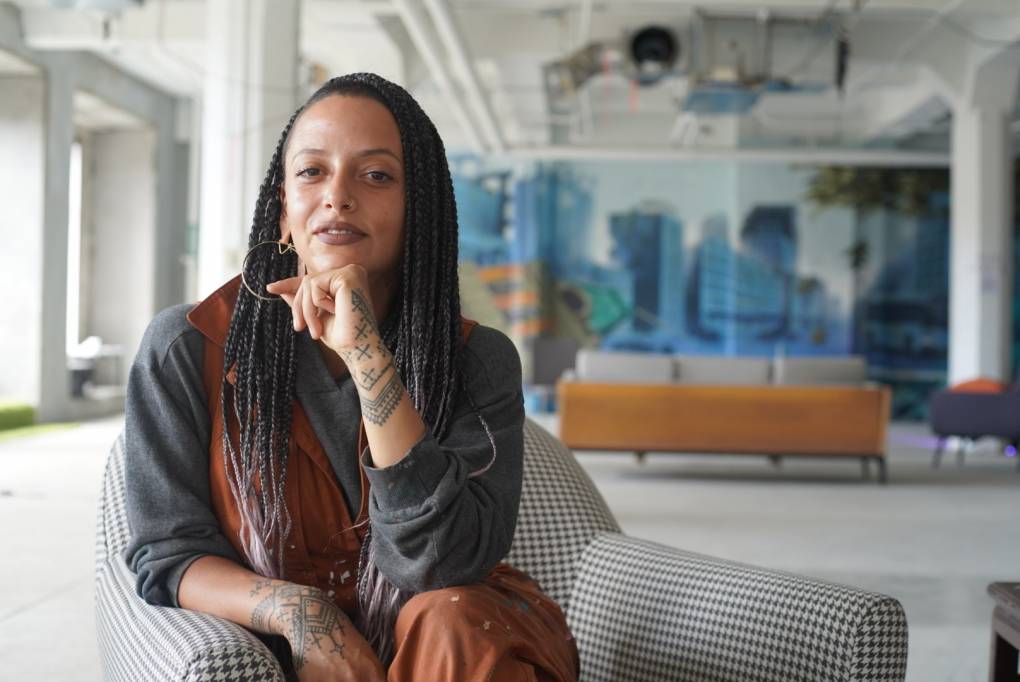
"altTag": "Artist Rachel Wolfe-Goldsmith sits inside of the 5th Floor Gallery space in the Oakland Tribune Tower, looking toward the camera wearing a brown jumpsuit and long braids.",
"isLoading": false,
"fetchFailed": false
}
},
"audioPlayerReducer": {
"postId": "stream_live",
"isPaused": true,
"isPlaying": false,
"pfsActive": false,
"pledgeModalIsOpen": true,
"playerDrawerIsOpen": false,
"liveAudioPlayStartedAt": 0,
"liveAudioPlayContext": ""
},
"authorsReducer": {
"nvoynovskaya": {
"type": "authors",
"id": "11387",
"meta": {
"index": "authors_1716337520",
"id": "11387",
"found": true
},
"name": "Nastia Voynovskaya",
"firstName": "Nastia",
"lastName": "Voynovskaya",
"slug": "nvoynovskaya",
"email": "nvoynovskaya@kqed.org",
"display_author_email": false,
"staff_mastheads": [
"arts"
],
"title": "Editor and reporter",
"bio": "Nastia Voynovskaya is a reporter and editor at KQED Arts & Culture. She's been covering the arts in the Bay Area for over a decade, with a focus on music, queer culture, labor issues and grassroots organizing. She has edited KQED story series such as Trans Bay: A History of San Francisco's Gender-Diverse Community, and co-created KQED's Bay Area hip-hop history project, That's My Word. Nastia's work has been recognized by the Society of Professional Journalists and San Francisco Press Club. She holds a BA in comparative literature from UC Berkeley.",
"avatar": "https://secure.gravatar.com/avatar/5025ee460e5a85d69ca20ea6c6f2f80d7e17795c828f61ea3aecfcd924e9042e?s=600&d=blank&r=g",
"twitter": null,
"bluesky": null,
"facebook": null,
"instagram": "https://www.instagram.com/nananastia/",
"linkedin": null,
"sites": [
{
"site": "arts",
"roles": [
"administrator"
]
},
{
"site": "news",
"roles": [
"editor"
]
},
{
"site": "pop",
"roles": [
"administrator"
]
},
{
"site": "bayareabites",
"roles": [
"editor"
]
},
{
"site": "podcasts",
"roles": [
"editor"
]
},
{
"site": "hiphop",
"roles": [
"editor"
]
}
],
"headData": {
"title": "Nastia Voynovskaya | KQED",
"description": "Editor and reporter",
"ogImgSrc": "https://secure.gravatar.com/avatar/5025ee460e5a85d69ca20ea6c6f2f80d7e17795c828f61ea3aecfcd924e9042e?s=600&d=blank&r=g",
"twImgSrc": "https://secure.gravatar.com/avatar/5025ee460e5a85d69ca20ea6c6f2f80d7e17795c828f61ea3aecfcd924e9042e?s=600&d=blank&r=g"
},
"isLoading": false,
"link": "/author/nvoynovskaya"
},
"ogpenn": {
"type": "authors",
"id": "11491",
"meta": {
"index": "authors_1716337520",
"id": "11491",
"found": true
},
"name": "Pendarvis Harshaw",
"firstName": "Pendarvis",
"lastName": "Harshaw",
"slug": "ogpenn",
"email": "ogpenn@gmail.com",
"display_author_email": false,
"staff_mastheads": [
"arts"
],
"title": "Community Engagement Reporter",
"bio": "Pendarvis Harshaw is an educator, host and writer with KQED Arts.",
"avatar": "https://secure.gravatar.com/avatar/972b77ee8e3f346ae2b00622661187fbfabd059b5693bbdc1475ea7a722fd4cd?s=600&d=blank&r=g",
"twitter": null,
"bluesky": null,
"facebook": null,
"instagram": "ogpenn",
"linkedin": null,
"sites": [
{
"site": "arts",
"roles": [
"administrator"
]
},
{
"site": "news",
"roles": [
"editor"
]
},
{
"site": "bayareabites",
"roles": [
"author"
]
},
{
"site": "hiphop",
"roles": [
"editor"
]
}
],
"headData": {
"title": "Pendarvis Harshaw | KQED",
"description": "Community Engagement Reporter",
"ogImgSrc": "https://secure.gravatar.com/avatar/972b77ee8e3f346ae2b00622661187fbfabd059b5693bbdc1475ea7a722fd4cd?s=600&d=blank&r=g",
"twImgSrc": "https://secure.gravatar.com/avatar/972b77ee8e3f346ae2b00622661187fbfabd059b5693bbdc1475ea7a722fd4cd?s=600&d=blank&r=g"
},
"isLoading": false,
"link": "/author/ogpenn"
},
"mmedina": {
"type": "authors",
"id": "11528",
"meta": {
"index": "authors_1716337520",
"id": "11528",
"found": true
},
"name": "Marisol Medina-Cadena",
"firstName": "Marisol",
"lastName": "Medina-Cadena",
"slug": "mmedina",
"email": "mmedina@KQED.org",
"display_author_email": true,
"staff_mastheads": [],
"title": "Producer, Rightnowish Podcast",
"bio": "Marisol Medina-Cadena is a radio reporter and podcast producer. Before working at KQED, she produced for PBS member station, KCET, in Los Angeles. In 2017, Marisol won an Emmy Award for her work on the televised documentary, \u003cem>City Rising\u003c/em>, examining California's affordable housing crisis and the historical roots of gentrification.",
"avatar": "https://secure.gravatar.com/avatar/6c3db46a1cabb5e1fe9a365b5f4e681e?s=600&d=blank&r=g",
"twitter": "marisolreports",
"facebook": null,
"instagram": null,
"linkedin": null,
"sites": [
{
"site": "arts",
"roles": []
},
{
"site": "news",
"roles": [
"edit_others_posts"
]
}
],
"headData": {
"title": "Marisol Medina-Cadena | KQED",
"description": "Producer, Rightnowish Podcast",
"ogImgSrc": "https://secure.gravatar.com/avatar/6c3db46a1cabb5e1fe9a365b5f4e681e?s=600&d=blank&r=g",
"twImgSrc": "https://secure.gravatar.com/avatar/6c3db46a1cabb5e1fe9a365b5f4e681e?s=600&d=blank&r=g"
},
"isLoading": false,
"link": "/author/mmedina"
},
"ltsai": {
"type": "authors",
"id": "11743",
"meta": {
"index": "authors_1716337520",
"id": "11743",
"found": true
},
"name": "Luke Tsai",
"firstName": "Luke",
"lastName": "Tsai",
"slug": "ltsai",
"email": "ltsai@kqed.org",
"display_author_email": true,
"staff_mastheads": [
"arts"
],
"title": "Food Editor",
"bio": "Luke Tsai is KQED's food editor and resident stinky tofu connoisseur. Prior to KQED, he was an editor at Eater SF, \u003cem>San Francisco \u003c/em>magazine, and the \u003cem>East Bay Express\u003c/em>, and his work has also appeared in TASTE, the \u003cem>San Francisco Chronicle\u003c/em>, and the \u003cem>Best Food Writing\u003c/em> anthology. When he isn't writing or editing, you'll find him eating most everything he can get his hands on.",
"avatar": "https://secure.gravatar.com/avatar/1e59b45bf191526e7339d6ba46e33a57b2030d25c27660ecc64ea3cb863e34f7?s=600&d=blank&r=g",
"twitter": "theluketsai",
"bluesky": null,
"facebook": null,
"instagram": null,
"linkedin": null,
"sites": [
{
"site": "",
"roles": [
"editor"
]
},
{
"site": "arts",
"roles": [
"administrator"
]
},
{
"site": "news",
"roles": [
"editor",
"contributor"
]
},
{
"site": "bayareabites",
"roles": [
"editor"
]
},
{
"site": "food",
"roles": [
"editor"
]
}
],
"headData": {
"title": "Luke Tsai | KQED",
"description": "Food Editor",
"ogImgSrc": "https://secure.gravatar.com/avatar/1e59b45bf191526e7339d6ba46e33a57b2030d25c27660ecc64ea3cb863e34f7?s=600&d=blank&r=g",
"twImgSrc": "https://secure.gravatar.com/avatar/1e59b45bf191526e7339d6ba46e33a57b2030d25c27660ecc64ea3cb863e34f7?s=600&d=blank&r=g"
},
"isLoading": false,
"link": "/author/ltsai"
},
"achazaro": {
"type": "authors",
"id": "11748",
"meta": {
"index": "authors_1716337520",
"id": "11748",
"found": true
},
"name": "Alan Chazaro",
"firstName": "Alan",
"lastName": "Chazaro",
"slug": "achazaro",
"email": "agchazaro@gmail.com",
"display_author_email": true,
"staff_mastheads": [],
"title": "Food Writer and Reporter",
"bio": "Alan Chazaro is the author of \u003cem>This Is Not a Frank Ocean Cover Album\u003c/em> (Black Lawrence Press, 2019), \u003cem>Piñata Theory\u003c/em> (Black Lawrence Press, 2020), and \u003cem>Notes from the Eastern Span of the Bay Bridge\u003c/em> (Ghost City Press, 2021). He is a graduate of June Jordan’s Poetry for the People program at UC Berkeley and a former Lawrence Ferlinghetti Fellow at the University of San Francisco. He writes about sports, food, art, music, education, and culture while repping the Bay on \u003ca href=\"https://twitter.com/alan_chazaro\">Twitter\u003c/a> and \u003ca href=\"https://www.instagram.com/alan_chazaro/?hl=en\">Instagram\u003c/a> at @alan_chazaro.",
"avatar": "https://secure.gravatar.com/avatar/ea8b6dd970fc5c29e7a188e7d5861df7?s=600&d=blank&r=g",
"twitter": "alan_chazaro",
"facebook": null,
"instagram": null,
"linkedin": null,
"sites": [
{
"site": "arts",
"roles": [
"contributor"
]
},
{
"site": "news",
"roles": [
"editor"
]
}
],
"headData": {
"title": "Alan Chazaro | KQED",
"description": "Food Writer and Reporter",
"ogImgSrc": "https://secure.gravatar.com/avatar/ea8b6dd970fc5c29e7a188e7d5861df7?s=600&d=blank&r=g",
"twImgSrc": "https://secure.gravatar.com/avatar/ea8b6dd970fc5c29e7a188e7d5861df7?s=600&d=blank&r=g"
},
"isLoading": false,
"link": "/author/achazaro"
}
},
"pagesReducer": {
"arts_tag_oakland": {
"type": "terms",
"id": "arts_1143",
"meta": {
"index": "terms_1716263798",
"site": "arts",
"id": "1143",
"score": 6.8845096
},
"featImg": null,
"name": "Oakland",
"description": null,
"taxonomy": "tag",
"headData": {
"twImgId": null,
"twTitle": null,
"ogTitle": null,
"ogImgId": null,
"twDescription": null,
"description": null,
"title": "Oakland Archives | KQED Arts",
"ogDescription": null
},
"ttid": 692,
"slug": "oakland",
"isLoading": false,
"title": "Oakland",
"pageMeta": {
"site": "arts",
"WpPageTemplate": "page-topic-editorial",
"currentPage": 38
},
"blocks": [
{
"blockName": "kqed/post-list",
"attrs": {
"layout": "cardArticle2",
"query": "posts/arts?tag=oakland",
"seeMore": false,
"paginated": true,
"page": 38
}
},
{
"blockName": "kqed/ad"
}
]
}
},
"pfsSessionReducer": {},
"postsReducer": {
"stream_live": {
"type": "live",
"id": "stream_live",
"audioUrl": "https://streams.kqed.org/kqedradio",
"title": "Live Stream",
"excerpt": "Live Stream information currently unavailable.",
"link": "/radio",
"featImg": "",
"label": {
"name": "KQED Live",
"link": "/"
}
},
"stream_kqedNewscast": {
"type": "posts",
"id": "stream_kqedNewscast",
"audioUrl": "https://www.kqed.org/.stream/anon/radio/RDnews/newscast.mp3?_=1",
"title": "KQED Newscast",
"featImg": "",
"label": {
"name": "88.5 FM",
"link": "/"
}
},
"arts_13904416": {
"type": "posts",
"id": "arts_13904416",
"meta": {
"index": "posts_1716263798",
"site": "arts",
"id": "13904416",
"score": null,
"sort": [
1633705209000
]
},
"parent": 0,
"labelTerm": {},
"blocks": [],
"publishDate": 1633705209,
"format": "standard",
"title": "Old Oakland Is Quickly Becoming the East Bay’s Most International Food District",
"headTitle": "Old Oakland Is Quickly Becoming the East Bay’s Most International Food District | KQED",
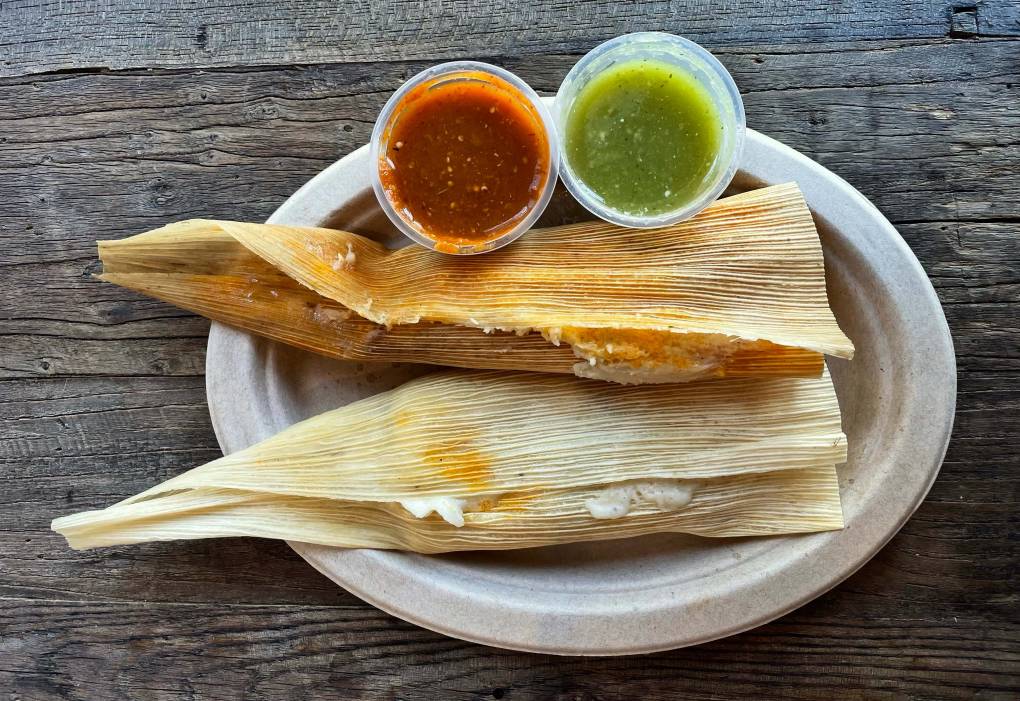
"content": "\u003cp>\u003cspan style=\"font-weight: 400\">It has been a year and a half since pandemic shutdowns wreaked havoc on Bay Area restaurants—about a year since the restaurants in Old Oakland, specifically, parkleted up in the hopes that outdoor dining might keep their businesses afloat. It hasn’t been easy, but \u003c/span>\u003ca href=\"https://eastbayexpress.com/the-year-of-the-food-court-2-1/\">\u003cspan style=\"font-weight: 400\">the neighborhood’s much-vaunted food scene\u003c/span>\u003c/a>\u003cspan style=\"font-weight: 400\">—centered on the \u003c/span>\u003ca href=\"http://swansmarket.com/\">\u003cspan style=\"font-weight: 400\">Swan’s Market\u003c/span>\u003c/a>\u003cspan style=\"font-weight: 400\"> food hall—has largely survived. \u003c/span>\u003c/p>\n\u003cp>\u003cspan style=\"font-weight: 400\">To commemorate this very coronavirus-era anniversary of sorts, Old Oakland’s restaurants, galleries and other businesses are throwing a big block party, dubbed “\u003ca href=\"https://www.instagram.com/p/CUqiwmWpfZZ/\">Old Oakland Celebrates,\u003c/a>” on Saturday, Oct. 9, from noon–6pm. Many of the neighborhood’s restaurants will set up sidewalk tables to show off a deliciously diverse mix of signature menu items and specials only available that day—everything from tamales and birria tacos to sashimi and omurice. \u003c/span>\u003c/p>\n\u003cp>\u003cspan style=\"font-weight: 400\">According to Tommy Wong, co-founder of the Oakland nonprofit Good Good Eatz, which is helping to organize the event, the goal is to highlight the neighborhood’s international flavors. “Old Oakland is a cultural and creative hub,” he says. And a big part of that, Wong notes, is the global character of the local food scene. That has only become more apparent with the new crop of restaurants that have moved into the neighborhood during the pandemic, including handmade noodle specialist \u003c/span>\u003ca href=\"https://sf.eater.com/2021/1/25/22245029/huangcheng-noodle-house-opening-photos-oakland-shanxi-knife-cut-noodles\">\u003cspan style=\"font-weight: 400\">Huangcheng Noodle House\u003c/span>\u003c/a>\u003cspan style=\"font-weight: 400\">; worker-led \u003c/span>\u003ca href=\"https://www.kqed.org/arts/13903133/oakland-bloom-understory-primas-corner-asukar-cuban-palestinian-pop-up\">\u003cspan style=\"font-weight: 400\">Understory\u003c/span>\u003c/a>\u003cspan style=\"font-weight: 400\">, with its focus on spotlighting immigrant and refugee chefs; and, opening soon, \u003c/span>\u003ca href=\"https://www.laguerreraskitchen.com/\">\u003cspan style=\"font-weight: 400\">La Guerrera’s Kitchen\u003c/span>\u003c/a>\u003cspan style=\"font-weight: 400\">, which specializes in masa-based dishes.\u003c/span>\u003c/p>\n\u003cp>\u003cspan style=\"font-weight: 400\">Add those to the existing businesses at Swan’s Market—where you can eat excellent Afro-Caribbean, Indian, Japanese, Ethiopian and more—and Old Oakland is quickly becoming one of the East Bay’s most international food districts.\u003c/span>\u003c/p>\n\u003cfigure id=\"attachment_13904420\" class=\"wp-caption alignnone\" style=\"max-width: 2560px\">\u003cimg loading=\"lazy\" decoding=\"async\" class=\"size-full wp-image-13904420\" src=\"https://ww2.kqed.org/app/uploads/sites/2/2021/10/SwansMarket_GGE-scaled.jpg\" alt=\"Exterior of the Swan's Market food hall with red tables set up outside for outdoor dining.\" width=\"2560\" height=\"1920\" srcset=\"https://cdn.kqed.org/wp-content/uploads/sites/2/2021/10/SwansMarket_GGE-scaled.jpg 2560w, https://cdn.kqed.org/wp-content/uploads/sites/2/2021/10/SwansMarket_GGE-800x600.jpg 800w, https://cdn.kqed.org/wp-content/uploads/sites/2/2021/10/SwansMarket_GGE-1020x765.jpg 1020w, https://cdn.kqed.org/wp-content/uploads/sites/2/2021/10/SwansMarket_GGE-160x120.jpg 160w, https://cdn.kqed.org/wp-content/uploads/sites/2/2021/10/SwansMarket_GGE-768x576.jpg 768w, https://cdn.kqed.org/wp-content/uploads/sites/2/2021/10/SwansMarket_GGE-1536x1152.jpg 1536w, https://cdn.kqed.org/wp-content/uploads/sites/2/2021/10/SwansMarket_GGE-2048x1536.jpg 2048w, https://cdn.kqed.org/wp-content/uploads/sites/2/2021/10/SwansMarket_GGE-1920x1440.jpg 1920w\" sizes=\"(max-width: 2560px) 100vw, 2560px\">\u003cfigcaption class=\"wp-caption-text\">For the past year, outdoor dining has been the dominant feature at Swan’s Market. \u003ccite>(Good Good Eatz)\u003c/cite>\u003c/figcaption>\u003c/figure>\n\u003cp>\u003cspan style=\"font-weight: 400\">For food lovers who aren’t familiar with the neighborhood, the block party will be a great opportunity to try several of the area’s most exciting restaurants at once. La Guerrera’s Kitchen, which is \u003c/span>\u003ca href=\"https://oaklandside.org/2021/07/12/oaklands-beloved-la-guerreras-kitchen-is-moving-to-swans-market/\">\u003cspan style=\"font-weight: 400\">moving into the former Cosecha space\u003c/span>\u003c/a>\u003cspan style=\"font-weight: 400\"> inside Swan’s, will be on hand not only to sell its signature tamales but also several new specials, including a torta de chicharron en salsa verde and a torta de chilaquiles roja (yes, a chilaquiles \u003c/span>\u003ci>\u003cspan style=\"font-weight: 400\">sandwich\u003c/span>\u003c/i>\u003cspan style=\"font-weight: 400\">). Dela Curo, another relative newcomer, will be selling its signature omucurry—Japanese black curry and rice cradled inside an airy omelet—for a discounted price. Meanwhile, neighborhood staples like Annapurna, Sincere Seafood and Yammy’s Cafe will be out on the street slinging Kashmiri lamb rogan josh, sashimi and Ethiopian chicken doro tibs, respectively.\u003c/span>\u003c/p>\n\u003cp>[ad fullwidth]\u003c/p>\n\u003cp>\u003cspan style=\"font-weight: 400\">[aside postID='arts_1390171,arts_13903133']The celebration won’t only\u003c/span>\u003ci>\u003cspan style=\"font-weight: 400\"> \u003c/span>\u003c/i>\u003cspan style=\"font-weight: 400\">be about food, either. As Wong notes, another thing that’s happened over the past few years is that Old Oakland now has a burgeoning art scene, which will be on full display on Saturday, with augmented-reality murals, gallery exhibits and about 20 different vendors selling their art. In fact, the block party is simply building onto an existing artists’ market that \u003c/span>\u003ca href=\"https://www.e14gallery.com/\">\u003cspan style=\"font-weight: 400\">E14 Gallery\u003c/span>\u003c/a>\u003cspan style=\"font-weight: 400\">—another of the event’s co-organizers—puts on the second Saturday of every month. \u003c/span>\u003c/p>\n\u003cp>\u003cspan style=\"font-weight: 400\">If all goes well, then, there’s potential for the block party to turn into a semi-regular event that happens a few times a year. “This is a kickstarter to just get the recognition out about this, and then we’ll see what the merchants want to do beyond that,” Wong says.\u003c/span>\u003c/p>\n\u003cp>\u003cimg loading=\"lazy\" decoding=\"async\" class=\"aligncenter size-full wp-image-12904247\" src=\"https://ww2.kqed.org/app/uploads/sites/2/2017/03/Q.Logo_.Break_-400x39.jpg\" alt=\"\" width=\"400\" height=\"39\" srcset=\"https://cdn.kqed.org/wp-content/uploads/sites/2/2017/03/Q.Logo_.Break_-400x39.jpg 400w, https://cdn.kqed.org/wp-content/uploads/sites/2/2017/03/Q.Logo_.Break_-400x39-160x16.jpg 160w, https://cdn.kqed.org/wp-content/uploads/sites/2/2017/03/Q.Logo_.Break_-400x39-240x23.jpg 240w, https://cdn.kqed.org/wp-content/uploads/sites/2/2017/03/Q.Logo_.Break_-400x39-375x37.jpg 375w\" sizes=\"(max-width: 400px) 100vw, 400px\">\u003c/p>\n\u003cp>\u003c/p>\n\u003cp>\u003ci>\u003cspan style=\"font-weight: 400\">Old Oakland Celebrates takes place on Saturday, Oct. 9, from noon–6pm throughout Old Oakland (from Broadway to Clay Street between 10th and 7th avenues), with many of the outdoor food options concentrated in the area around Swan’s Market (538 9th St.).\u003c/span>\u003c/i>\u003c/p>\n\n",
"stats": {
"hasVideo": false,
"hasChartOrMap": false,
"hasAudio": false,
"hasPolis": false,
"wordCount": 666,
"hasGoogleForm": false,
"hasGallery": false,
"hasHearkenModule": false,
"iframeSrcs": [],
"paragraphCount": 11
},
"modified": 1705007633,
"excerpt": "After surviving a year of parklets and takeout, Old Oakland throws a big block party with deliciously diverse options.",
"headData": {
"twImgId": "",
"twTitle": "Old Oakland Is Quickly Becoming the East Bay’s Most International Food District",
"socialTitle": "Old Oakland Block Party Will Showcase the Neighborhood's International Food Scene %%page%% %%sep%% KQED",
"ogTitle": "Old Oakland Is Quickly Becoming the East Bay’s Most International Food District",
"ogImgId": "",
"twDescription": "",
"description": "After surviving a year of parklets and takeout, Old Oakland throws a big block party with deliciously diverse options.",
"title": "Old Oakland Block Party Will Showcase the Neighborhood's International Food Scene | KQED",
"ogDescription": "",
"schema": {
"@context": "https://schema.org",
"@type": "Article",
"headline": "Old Oakland Is Quickly Becoming the East Bay’s Most International Food District",
"datePublished": "2021-10-08T08:00:09-07:00",
"dateModified": "2024-01-11T13:13:53-08:00",
"image": "https://cdn.kqed.org/wp-content/uploads/2020/02/KQED-OG-Image@1x.png"
}
},
"guestAuthors": [],
"slug": "old-oakland-block-party-international-food-swans-market",
"status": "publish",
"sourceUrl": "/food/",
"templateType": "standard",
"featuredImageType": "standard",
"sticky": false,
"source": "Food",
"path": "/arts/13904416/old-oakland-block-party-international-food-swans-market",
"audioTrackLength": null,
"parsedContent": [
{
"type": "contentString",
"content": "\u003cdiv class=\"post-body\">\u003cp>\u003cp>\u003cspan style=\"font-weight: 400\">It has been a year and a half since pandemic shutdowns wreaked havoc on Bay Area restaurants—about a year since the restaurants in Old Oakland, specifically, parkleted up in the hopes that outdoor dining might keep their businesses afloat. It hasn’t been easy, but \u003c/span>\u003ca href=\"https://eastbayexpress.com/the-year-of-the-food-court-2-1/\">\u003cspan style=\"font-weight: 400\">the neighborhood’s much-vaunted food scene\u003c/span>\u003c/a>\u003cspan style=\"font-weight: 400\">—centered on the \u003c/span>\u003ca href=\"http://swansmarket.com/\">\u003cspan style=\"font-weight: 400\">Swan’s Market\u003c/span>\u003c/a>\u003cspan style=\"font-weight: 400\"> food hall—has largely survived. \u003c/span>\u003c/p>\n\u003cp>\u003cspan style=\"font-weight: 400\">To commemorate this very coronavirus-era anniversary of sorts, Old Oakland’s restaurants, galleries and other businesses are throwing a big block party, dubbed “\u003ca href=\"https://www.instagram.com/p/CUqiwmWpfZZ/\">Old Oakland Celebrates,\u003c/a>” on Saturday, Oct. 9, from noon–6pm. Many of the neighborhood’s restaurants will set up sidewalk tables to show off a deliciously diverse mix of signature menu items and specials only available that day—everything from tamales and birria tacos to sashimi and omurice. \u003c/span>\u003c/p>\n\u003cp>\u003cspan style=\"font-weight: 400\">According to Tommy Wong, co-founder of the Oakland nonprofit Good Good Eatz, which is helping to organize the event, the goal is to highlight the neighborhood’s international flavors. “Old Oakland is a cultural and creative hub,” he says. And a big part of that, Wong notes, is the global character of the local food scene. That has only become more apparent with the new crop of restaurants that have moved into the neighborhood during the pandemic, including handmade noodle specialist \u003c/span>\u003ca href=\"https://sf.eater.com/2021/1/25/22245029/huangcheng-noodle-house-opening-photos-oakland-shanxi-knife-cut-noodles\">\u003cspan style=\"font-weight: 400\">Huangcheng Noodle House\u003c/span>\u003c/a>\u003cspan style=\"font-weight: 400\">; worker-led \u003c/span>\u003ca href=\"https://www.kqed.org/arts/13903133/oakland-bloom-understory-primas-corner-asukar-cuban-palestinian-pop-up\">\u003cspan style=\"font-weight: 400\">Understory\u003c/span>\u003c/a>\u003cspan style=\"font-weight: 400\">, with its focus on spotlighting immigrant and refugee chefs; and, opening soon, \u003c/span>\u003ca href=\"https://www.laguerreraskitchen.com/\">\u003cspan style=\"font-weight: 400\">La Guerrera’s Kitchen\u003c/span>\u003c/a>\u003cspan style=\"font-weight: 400\">, which specializes in masa-based dishes.\u003c/span>\u003c/p>\n\u003cp>\u003cspan style=\"font-weight: 400\">Add those to the existing businesses at Swan’s Market—where you can eat excellent Afro-Caribbean, Indian, Japanese, Ethiopian and more—and Old Oakland is quickly becoming one of the East Bay’s most international food districts.\u003c/span>\u003c/p>\n\u003cfigure id=\"attachment_13904420\" class=\"wp-caption alignnone\" style=\"max-width: 2560px\">\u003cimg loading=\"lazy\" decoding=\"async\" class=\"size-full wp-image-13904420\" src=\"https://ww2.kqed.org/app/uploads/sites/2/2021/10/SwansMarket_GGE-scaled.jpg\" alt=\"Exterior of the Swan's Market food hall with red tables set up outside for outdoor dining.\" width=\"2560\" height=\"1920\" srcset=\"https://cdn.kqed.org/wp-content/uploads/sites/2/2021/10/SwansMarket_GGE-scaled.jpg 2560w, https://cdn.kqed.org/wp-content/uploads/sites/2/2021/10/SwansMarket_GGE-800x600.jpg 800w, https://cdn.kqed.org/wp-content/uploads/sites/2/2021/10/SwansMarket_GGE-1020x765.jpg 1020w, https://cdn.kqed.org/wp-content/uploads/sites/2/2021/10/SwansMarket_GGE-160x120.jpg 160w, https://cdn.kqed.org/wp-content/uploads/sites/2/2021/10/SwansMarket_GGE-768x576.jpg 768w, https://cdn.kqed.org/wp-content/uploads/sites/2/2021/10/SwansMarket_GGE-1536x1152.jpg 1536w, https://cdn.kqed.org/wp-content/uploads/sites/2/2021/10/SwansMarket_GGE-2048x1536.jpg 2048w, https://cdn.kqed.org/wp-content/uploads/sites/2/2021/10/SwansMarket_GGE-1920x1440.jpg 1920w\" sizes=\"(max-width: 2560px) 100vw, 2560px\">\u003cfigcaption class=\"wp-caption-text\">For the past year, outdoor dining has been the dominant feature at Swan’s Market. \u003ccite>(Good Good Eatz)\u003c/cite>\u003c/figcaption>\u003c/figure>\n\u003cp>\u003cspan style=\"font-weight: 400\">For food lovers who aren’t familiar with the neighborhood, the block party will be a great opportunity to try several of the area’s most exciting restaurants at once. La Guerrera’s Kitchen, which is \u003c/span>\u003ca href=\"https://oaklandside.org/2021/07/12/oaklands-beloved-la-guerreras-kitchen-is-moving-to-swans-market/\">\u003cspan style=\"font-weight: 400\">moving into the former Cosecha space\u003c/span>\u003c/a>\u003cspan style=\"font-weight: 400\"> inside Swan’s, will be on hand not only to sell its signature tamales but also several new specials, including a torta de chicharron en salsa verde and a torta de chilaquiles roja (yes, a chilaquiles \u003c/span>\u003ci>\u003cspan style=\"font-weight: 400\">sandwich\u003c/span>\u003c/i>\u003cspan style=\"font-weight: 400\">). Dela Curo, another relative newcomer, will be selling its signature omucurry—Japanese black curry and rice cradled inside an airy omelet—for a discounted price. Meanwhile, neighborhood staples like Annapurna, Sincere Seafood and Yammy’s Cafe will be out on the street slinging Kashmiri lamb rogan josh, sashimi and Ethiopian chicken doro tibs, respectively.\u003c/span>\u003c/p>\n\u003cp>\u003c/p>\u003c/div>",
"attributes": {
"named": {},
"numeric": []
}
},
{
"type": "component",
"content": "",
"name": "ad",
"attributes": {
"named": {
"label": "fullwidth"
},
"numeric": [
"fullwidth"
]
}
},
{
"type": "contentString",
"content": "\u003cdiv class=\"post-body\">\u003cp>\u003c/p>\n\u003cp>\u003cspan style=\"font-weight: 400\">\u003c/p>\u003c/div>",
"attributes": {
"named": {},
"numeric": []
}
},
{
"type": "component",
"content": "",
"name": "aside",
"attributes": {
"named": {
"postid": "arts_1390171,arts_13903133",
"label": ""
},
"numeric": []
}
},
{
"type": "contentString",
"content": "\u003cdiv class=\"post-body\">\u003cp>The celebration won’t only\u003c/span>\u003ci>\u003cspan style=\"font-weight: 400\"> \u003c/span>\u003c/i>\u003cspan style=\"font-weight: 400\">be about food, either. As Wong notes, another thing that’s happened over the past few years is that Old Oakland now has a burgeoning art scene, which will be on full display on Saturday, with augmented-reality murals, gallery exhibits and about 20 different vendors selling their art. In fact, the block party is simply building onto an existing artists’ market that \u003c/span>\u003ca href=\"https://www.e14gallery.com/\">\u003cspan style=\"font-weight: 400\">E14 Gallery\u003c/span>\u003c/a>\u003cspan style=\"font-weight: 400\">—another of the event’s co-organizers—puts on the second Saturday of every month. \u003c/span>\u003c/p>\n\u003cp>\u003cspan style=\"font-weight: 400\">If all goes well, then, there’s potential for the block party to turn into a semi-regular event that happens a few times a year. “This is a kickstarter to just get the recognition out about this, and then we’ll see what the merchants want to do beyond that,” Wong says.\u003c/span>\u003c/p>\n\u003cp>\u003cimg loading=\"lazy\" decoding=\"async\" class=\"aligncenter size-full wp-image-12904247\" src=\"https://ww2.kqed.org/app/uploads/sites/2/2017/03/Q.Logo_.Break_-400x39.jpg\" alt=\"\" width=\"400\" height=\"39\" srcset=\"https://cdn.kqed.org/wp-content/uploads/sites/2/2017/03/Q.Logo_.Break_-400x39.jpg 400w, https://cdn.kqed.org/wp-content/uploads/sites/2/2017/03/Q.Logo_.Break_-400x39-160x16.jpg 160w, https://cdn.kqed.org/wp-content/uploads/sites/2/2017/03/Q.Logo_.Break_-400x39-240x23.jpg 240w, https://cdn.kqed.org/wp-content/uploads/sites/2/2017/03/Q.Logo_.Break_-400x39-375x37.jpg 375w\" sizes=\"(max-width: 400px) 100vw, 400px\">\u003c/p>\n\u003cp>\u003c/p>\n\u003cp>\u003ci>\u003cspan style=\"font-weight: 400\">Old Oakland Celebrates takes place on Saturday, Oct. 9, from noon–6pm throughout Old Oakland (from Broadway to Clay Street between 10th and 7th avenues), with many of the outdoor food options concentrated in the area around Swan’s Market (538 9th St.).\u003c/span>\u003c/i>\u003c/p>\n\n\u003c/div>\u003c/p>",
"attributes": {
"named": {},
"numeric": []
}
}
],
"link": "/arts/13904416/old-oakland-block-party-international-food-swans-market",
"authors": [
"11743"
],
"programs": [
"arts_140"
],
"categories": [
"arts_1",
"arts_12276"
],
"tags": [
"arts_4435",
"arts_10278",
"arts_1297",
"arts_1143",
"arts_15755",
"arts_15752"
],
"featImg": "arts_13904418",
"label": "source_arts_13904416"
},
"arts_13904319": {
"type": "posts",
"id": "arts_13904319",
"meta": {
"index": "posts_1716263798",
"site": "arts",
"id": "13904319",
"score": null,
"sort": [
1633687212000
]
},
"parent": 0,
"labelTerm": {},
"blocks": [],
"publishDate": 1633687212,
"format": "standard",
"title": "Say Aye Aye for the Bay With Oakland Rapper Capolow",
"headTitle": "Say Aye Aye for the Bay With Oakland Rapper Capolow | KQED",
"content": "\u003cp>\u003c!-- iframe plugin v.4.3 wordpress.org/plugins/iframe/ -->\u003cbr>\n\u003ciframe loading=\"lazy\" frameborder=\"0\" height=\"200\" scrolling=\"no\" src=\"https://playlist.megaphone.fm?e=KQINC4118051049\" width=\"100%\" class=\"iframe-class\">\u003c/iframe>\u003c/p>\n\u003cp>East Oakland’s Capolow is a rapper on the rise.\u003c/p>\n\u003cp>Known for his high-energy anthem songs and his catchy “aye-aye!” ad lib, Capolow’s music is ringing bells in the Bay Area and beyond. He made an album called “Oakland Nights” with Kamaiyah, and has made tracks with E-40, ALLBLACK, and Nef The Pharaoh.\u003c/p>\n\u003cp>But before he was a rapper – ten years ago – Capolow was one of the students in my class at Oakland Tech.\u003c/p>\n\u003cp>He was one of 20 students, all African American men. The class was all about brotherhood and developing the critical thinking they’d need as young Black men in America. It was part of Oakland Unified School District’s African American Male Achievement Department (now called \u003ca href=\"https://www.ousd.org/equity\" target=\"_blank\" rel=\"noopener noreferrer\">the Office of Equity\u003c/a>).\u003c/p>\n\u003cp>Since then, my former student Capolow has seen some highs and lows. The once fresh faced kid who rocked a high-top fade and loved dancing is now covered in tattoos, has spent time incarcerated, and is scheduled to perform at Rolling Loud later this year.\u003c/p>\n\u003cp>Between his popular uplifting party anthems, Capolow has some tracks that cut deep; that duality is just part of being a Black man in America.\u003c/p>\n\u003cp>In this episode of Rightnowish, I’m checking in with Capolow on his journey and his music.\u003c/p>\n\u003cp>\u003cimg loading=\"lazy\" decoding=\"async\" class=\"aligncenter size-full wp-image-12127869\" src=\"https://ww2.kqed.org/app/uploads/sites/2/2016/09/Q.Logo_.Break_.jpg\" alt=\"\" width=\"800\" height=\"78\" srcset=\"https://cdn.kqed.org/wp-content/uploads/sites/2/2016/09/Q.Logo_.Break_.jpg 800w, https://cdn.kqed.org/wp-content/uploads/sites/2/2016/09/Q.Logo_.Break_-400x39.jpg 400w, https://cdn.kqed.org/wp-content/uploads/sites/2/2016/09/Q.Logo_.Break_-768x75.jpg 768w\" sizes=\"(max-width: 800px) 100vw, 800px\">\u003c/p>\n\u003cp>\u003cstrong>\u003cem>Rightnowish is an arts and culture podcast produced at KQED. Listen to it wherever you get your podcasts or click the play button at the top of this page and subscribe to the show on \u003ca href=\"https://www.npr.org/podcasts/721590300/rightnowish\">NPR One\u003c/a>, \u003ca href=\"https://open.spotify.com/show/7kEJuafTzTVan7B78ttz1I\">Spotify\u003c/a>, \u003ca href=\"https://podcasts.apple.com/us/podcast/rightnowish/id1482187648\">Apple Podcasts\u003c/a>, \u003ca href=\"https://tunein.com/podcasts/Arts--Culture-Podcasts/Rightnowish-p1258245/\">TuneIn\u003c/a>, \u003ca href=\"https://www.stitcher.com/podcast/kqed/rightnowish\">Stitcher\u003c/a> or wherever you get your podcasts. \u003c/em>\u003c/strong>\u003c/p>\n\u003cp>[ad fullwidth]\u003c/p>\n\u003cp>\u003c/p>\n",
"stats": {
"hasVideo": false,
"hasChartOrMap": false,
"hasAudio": true,
"hasPolis": false,
"wordCount": 277,
"hasGoogleForm": false,
"hasGallery": false,
"hasHearkenModule": false,
"iframeSrcs": [],
"paragraphCount": 12
},
"modified": 1705007637,
"excerpt": "The ups and downs of a rap star on the rise, who happens to be this columnists former student.",
"headData": {
"twImgId": "",
"twTitle": "",
"ogTitle": "",
"ogImgId": "",
"twDescription": "",
"description": "The ups and downs of a rap star on the rise, who happens to be this columnists former student.",
"title": "Say Aye Aye for the Bay With Oakland Rapper Capolow | KQED",
"ogDescription": "",
"schema": {
"@context": "https://schema.org",
"@type": "Article",
"headline": "Say Aye Aye for the Bay With Oakland Rapper Capolow",
"datePublished": "2021-10-08T03:00:12-07:00",
"dateModified": "2024-01-11T13:13:57-08:00",
"image": "https://cdn.kqed.org/wp-content/uploads/2020/02/KQED-OG-Image@1x.png"
}
},
"guestAuthors": [],
"slug": "rightnowish-capolow",
"status": "publish",
"sourceUrl": "https://www.kqed.org/podcasts/rightnowish",
"audioUrl": "https://www.podtrac.com/pts/redirect.mp3/traffic.megaphone.fm/KQINC4118051049.mp3?updated=1633650788",
"sticky": false,
"source": "Rightnowish",
"path": "/arts/13904319/rightnowish-capolow",
"audioTrackLength": null,
"parsedContent": [
{
"type": "contentString",
"content": "\u003cdiv class=\"post-body\">\u003cp>\u003cp>\u003c!-- iframe plugin v.4.3 wordpress.org/plugins/iframe/ -->\u003cbr>\n\u003ciframe loading=\"lazy\" frameborder=\"0\" height=\"200\" scrolling=\"no\" src=\"https://playlist.megaphone.fm?e=KQINC4118051049\" width=\"100%\" class=\"iframe-class\">\u003c/iframe>\u003c/p>\n\u003cp>East Oakland’s Capolow is a rapper on the rise.\u003c/p>\n\u003cp>Known for his high-energy anthem songs and his catchy “aye-aye!” ad lib, Capolow’s music is ringing bells in the Bay Area and beyond. He made an album called “Oakland Nights” with Kamaiyah, and has made tracks with E-40, ALLBLACK, and Nef The Pharaoh.\u003c/p>\n\u003cp>But before he was a rapper – ten years ago – Capolow was one of the students in my class at Oakland Tech.\u003c/p>\n\u003cp>He was one of 20 students, all African American men. The class was all about brotherhood and developing the critical thinking they’d need as young Black men in America. It was part of Oakland Unified School District’s African American Male Achievement Department (now called \u003ca href=\"https://www.ousd.org/equity\" target=\"_blank\" rel=\"noopener noreferrer\">the Office of Equity\u003c/a>).\u003c/p>\n\u003cp>Since then, my former student Capolow has seen some highs and lows. The once fresh faced kid who rocked a high-top fade and loved dancing is now covered in tattoos, has spent time incarcerated, and is scheduled to perform at Rolling Loud later this year.\u003c/p>\n\u003cp>Between his popular uplifting party anthems, Capolow has some tracks that cut deep; that duality is just part of being a Black man in America.\u003c/p>\n\u003cp>In this episode of Rightnowish, I’m checking in with Capolow on his journey and his music.\u003c/p>\n\u003cp>\u003cimg loading=\"lazy\" decoding=\"async\" class=\"aligncenter size-full wp-image-12127869\" src=\"https://ww2.kqed.org/app/uploads/sites/2/2016/09/Q.Logo_.Break_.jpg\" alt=\"\" width=\"800\" height=\"78\" srcset=\"https://cdn.kqed.org/wp-content/uploads/sites/2/2016/09/Q.Logo_.Break_.jpg 800w, https://cdn.kqed.org/wp-content/uploads/sites/2/2016/09/Q.Logo_.Break_-400x39.jpg 400w, https://cdn.kqed.org/wp-content/uploads/sites/2/2016/09/Q.Logo_.Break_-768x75.jpg 768w\" sizes=\"(max-width: 800px) 100vw, 800px\">\u003c/p>\n\u003cp>\u003cstrong>\u003cem>Rightnowish is an arts and culture podcast produced at KQED. Listen to it wherever you get your podcasts or click the play button at the top of this page and subscribe to the show on \u003ca href=\"https://www.npr.org/podcasts/721590300/rightnowish\">NPR One\u003c/a>, \u003ca href=\"https://open.spotify.com/show/7kEJuafTzTVan7B78ttz1I\">Spotify\u003c/a>, \u003ca href=\"https://podcasts.apple.com/us/podcast/rightnowish/id1482187648\">Apple Podcasts\u003c/a>, \u003ca href=\"https://tunein.com/podcasts/Arts--Culture-Podcasts/Rightnowish-p1258245/\">TuneIn\u003c/a>, \u003ca href=\"https://www.stitcher.com/podcast/kqed/rightnowish\">Stitcher\u003c/a> or wherever you get your podcasts. \u003c/em>\u003c/strong>\u003c/p>\n\u003cp>\u003c/p>\u003c/div>",
"attributes": {
"named": {},
"numeric": []
}
},
{
"type": "component",
"content": "",
"name": "ad",
"attributes": {
"named": {
"label": "fullwidth"
},
"numeric": [
"fullwidth"
]
}
},
{
"type": "contentString",
"content": "\u003cdiv class=\"post-body\">\u003cp>\u003c/p>\n\u003cp>\u003c/p>\n\u003c/div>\u003c/p>",
"attributes": {
"named": {},
"numeric": []
}
}
],
"link": "/arts/13904319/rightnowish-capolow",
"authors": [
"11491",
"11528"
],
"programs": [
"arts_8720"
],
"categories": [
"arts_1",
"arts_21759"
],
"tags": [
"arts_1601",
"arts_1118",
"arts_831",
"arts_1143",
"arts_7292",
"arts_1526",
"arts_6764"
],
"featImg": "arts_13904354",
"label": "source_arts_13904319"
},
"arts_13903957": {
"type": "posts",
"id": "arts_13903957",
"meta": {
"index": "posts_1716263798",
"site": "arts",
"id": "13903957",
"score": null,
"sort": [
1632943983000
]
},
"parent": 0,
"labelTerm": {
"site": "arts",
"term": 140
},
"blocks": [],
"publishDate": 1632943983,
"format": "standard",
"title": "A New Doc Shows How Oakland's Black Cowboys Keep History Alive",
"headTitle": "A New Doc Shows How Oakland’s Black Cowboys Keep History Alive | KQED",
"content": "\u003cp>One of the best parts of living in the Bay Area are the people who find magic in their passions and devote themselves to sharing it with others. Wilbert “Cowboy” Freeman McAlister, the longtime president of the \u003ca href=\"http://www.blackcowboyassociation.org/\" target=\"_blank\" rel=\"noopener noreferrer\">Oakland Black Cowboy Association\u003c/a>, certainly fits that description. He’s led the group of urban equestrians for 18 years, and through their \u003ca href=\"https://www.kqed.org/news/11838503/oaklands-black-cowboy-association-wants-you-to-fill-out-the-census\" target=\"_blank\" rel=\"noopener noreferrer\">community service\u003c/a> and annual parade, they’ve kept the Black history of the West alive for nearly five decades.\u003c/p>\n\u003cp>A new, short documentary by director James Manson, \u003cem>Cowboy\u003c/em>, paints a personal portrait of McAlister and allows us to get to know the \u003cem>how\u003c/em> and \u003cem>why\u003c/em> of his unique subculture. Beyond visual opulence of the horses, boots and belts, there’s plenty of wisdom to be shared about how Black cowboys bring generations of Oaklanders together and promote an appreciation and understanding of history.\u003c/p>\n\u003cp>The documentary premieres at \u003ca href=\"http://elismilehigh.com/\" target=\"_blank\" rel=\"noopener noreferrer\">Eli’s Mile High Club\u003c/a> on Saturday, Oct. 2. In fact, many of the interview scenes were shot in the historic Oakland venue, which emerged as a bastion of the local blues scene in the 1970s and eventually became an eclectic hub for all sorts of genres, notably punk and metal. Eli’s talent buyer John Gamiño composed the \u003cem>Cowboy \u003c/em>soundtrack, which adds a sentimental quality to its poetic visuals through an ambient, electronic score. [aside postid='arts_13892809']\u003c/p>\n\u003cp>McAlister himself performs regularly at Eli’s Monday blues night as Cowboy & His Sometimes Blues Band. The group will play at Saturday’s film screening and Q&A, which also doubles as a fundraiser for the Oakland Black Cowboy Association. The cowboys canceled their annual parade for 2020 and 2021 because of COVID, but plan to return to DeFremery Park in October 2022.\u003c/p>\n\u003cp>\u003ca href=\"https://www.eventbrite.com/e/cowboy-documentary-film-premiere-tickets-174278219847\" target=\"_blank\" rel=\"noopener noreferrer\">Tickets and additional details can be found on Eventbrite\u003c/a>. The documentary will be available for streaming at a later date.\u003c/p>\n\u003cp>[ad fullwidth]\u003c/p>\u003cp>\u003c/p>\n",
"stats": {
"hasVideo": false,
"hasChartOrMap": false,
"hasAudio": false,
"hasPolis": false,
"wordCount": 324,
"hasGoogleForm": false,
"hasGallery": false,
"hasHearkenModule": false,
"iframeSrcs": [],
"paragraphCount": 7
},
"modified": 1705007676,
"excerpt": "'Cowboy' premieres at Eli's Mile High Club on Oct. 2. ",
"headData": {
"twImgId": "",
"twTitle": "",
"ogTitle": "",
"ogImgId": "",
"twDescription": "",
"description": "'Cowboy' premieres at Eli's Mile High Club on Oct. 2. ",
"title": "A New Doc Shows How Oakland's Black Cowboys Keep History Alive | KQED",
"ogDescription": "",
"schema": {
"@context": "https://schema.org",
"@type": "Article",
"headline": "A New Doc Shows How Oakland's Black Cowboys Keep History Alive",
"datePublished": "2021-09-29T12:33:03-07:00",
"dateModified": "2024-01-11T13:14:36-08:00",
"image": "https://cdn.kqed.org/wp-content/uploads/2020/02/KQED-OG-Image@1x.png"
}
},
"guestAuthors": [],
"slug": "a-new-doc-shows-how-oaklands-black-cowboys-keep-history-alive",
"status": "publish",
"templateType": "standard",
"featuredImageType": "standard",
"sticky": false,
"path": "/arts/13903957/a-new-doc-shows-how-oaklands-black-cowboys-keep-history-alive",
"audioTrackLength": null,
"parsedContent": [
{
"type": "contentString",
"content": "\u003cdiv class=\"post-body\">\u003cp>\u003cp>One of the best parts of living in the Bay Area are the people who find magic in their passions and devote themselves to sharing it with others. Wilbert “Cowboy” Freeman McAlister, the longtime president of the \u003ca href=\"http://www.blackcowboyassociation.org/\" target=\"_blank\" rel=\"noopener noreferrer\">Oakland Black Cowboy Association\u003c/a>, certainly fits that description. He’s led the group of urban equestrians for 18 years, and through their \u003ca href=\"https://www.kqed.org/news/11838503/oaklands-black-cowboy-association-wants-you-to-fill-out-the-census\" target=\"_blank\" rel=\"noopener noreferrer\">community service\u003c/a> and annual parade, they’ve kept the Black history of the West alive for nearly five decades.\u003c/p>\n\u003cp>A new, short documentary by director James Manson, \u003cem>Cowboy\u003c/em>, paints a personal portrait of McAlister and allows us to get to know the \u003cem>how\u003c/em> and \u003cem>why\u003c/em> of his unique subculture. Beyond visual opulence of the horses, boots and belts, there’s plenty of wisdom to be shared about how Black cowboys bring generations of Oaklanders together and promote an appreciation and understanding of history.\u003c/p>\n\u003cp>The documentary premieres at \u003ca href=\"http://elismilehigh.com/\" target=\"_blank\" rel=\"noopener noreferrer\">Eli’s Mile High Club\u003c/a> on Saturday, Oct. 2. In fact, many of the interview scenes were shot in the historic Oakland venue, which emerged as a bastion of the local blues scene in the 1970s and eventually became an eclectic hub for all sorts of genres, notably punk and metal. Eli’s talent buyer John Gamiño composed the \u003cem>Cowboy \u003c/em>soundtrack, which adds a sentimental quality to its poetic visuals through an ambient, electronic score. \u003c/p>\u003c/div>",
"attributes": {
"named": {},
"numeric": []
}
},
{
"type": "component",
"content": "",
"name": "aside",
"attributes": {
"named": {
"postid": "arts_13892809",
"label": ""
},
"numeric": []
}
},
{
"type": "contentString",
"content": "\u003cdiv class=\"post-body\">\u003cp>\u003c/p>\n\u003cp>McAlister himself performs regularly at Eli’s Monday blues night as Cowboy & His Sometimes Blues Band. The group will play at Saturday’s film screening and Q&A, which also doubles as a fundraiser for the Oakland Black Cowboy Association. The cowboys canceled their annual parade for 2020 and 2021 because of COVID, but plan to return to DeFremery Park in October 2022.\u003c/p>\n\u003cp>\u003ca href=\"https://www.eventbrite.com/e/cowboy-documentary-film-premiere-tickets-174278219847\" target=\"_blank\" rel=\"noopener noreferrer\">Tickets and additional details can be found on Eventbrite\u003c/a>. The documentary will be available for streaming at a later date.\u003c/p>\n\u003cp>\u003c/p>\u003c/div>",
"attributes": {
"named": {},
"numeric": []
}
},
{
"type": "component",
"content": "",
"name": "ad",
"attributes": {
"named": {
"label": "fullwidth"
},
"numeric": [
"fullwidth"
]
}
},
{
"type": "contentString",
"content": "\u003cdiv class=\"post-body\">\u003cp>\u003c/p>\u003cp>\u003c/p>\n\u003c/div>\u003c/p>",
"attributes": {
"named": {},
"numeric": []
}
}
],
"link": "/arts/13903957/a-new-doc-shows-how-oaklands-black-cowboys-keep-history-alive",
"authors": [
"11387"
],
"programs": [
"arts_140"
],
"categories": [
"arts_1",
"arts_74"
],
"tags": [
"arts_2546",
"arts_10278",
"arts_1143"
],
"featImg": "arts_13903974",
"label": "arts_140"
},
"arts_13903828": {
"type": "posts",
"id": "arts_13903828",
"meta": {
"index": "posts_1716263798",
"site": "arts",
"id": "13903828",
"score": null,
"sort": [
1632849475000
]
},
"guestAuthors": [],
"slug": "black-panther-party-55th-anniversary-oakland",
"title": "A Full Month of Events for the Black Panther Party's 55th Anniversary",
"publishDate": 1632849475,
"format": "standard",
"headTitle": "A Full Month of Events for the Black Panther Party’s 55th Anniversary | KQED",
"labelTerm": {
"term": 140,
"site": "arts"
},
"content": "\u003cp>This October marks 55 years since Dr. Huey P. Newton and Bobby Seale co-founded the revolutionary organization known as the Black Panther Party for Self-Defense.\u003c/p>\n\u003cp>In honor of the organization’s contributions to societal change through community activism, \u003ca href=\"https://www.bpp55thyearcelebration.com/\" target=\"_blank\" rel=\"noopener noreferrer\">multiple events\u003c/a> are scheduled throughout the month. The itinerary includes visual arts, social gatherings, live performances and the unveiling of a Dr. Huey P. Newtown bust.\u003c/p>\n\u003cp>The first event, on Friday, Oct. 1, at Oakland’s Joyce Gordon Art Gallery, is the \u003ca href=\"https://www.facebook.com/JoyceGordonGallery/posts/4846888492008400\" target=\"_blank\" rel=\"noopener noreferrer\">opening of a visual art exhibition\u003c/a> featuring the works of Emory Douglas, M. Gayle “Asali” Dickson, Malik Edwards and REFA 1. The four artists are also scheduled for a panel discussion on Oct. 9.\u003c/p>\n\u003cfigure id=\"attachment_13903866\" class=\"wp-caption alignnone\" style=\"max-width: 800px\">\u003cimg loading=\"lazy\" decoding=\"async\" class=\"size-medium wp-image-13903866\" src=\"https://ww2.kqed.org/app/uploads/sites/2/2021/09/0-3-800x538.jpg\" alt=\"People gathered for the 30th anniversary of the founding of the Black Panther Party.\" width=\"800\" height=\"538\" srcset=\"https://cdn.kqed.org/wp-content/uploads/sites/2/2021/09/0-3-800x538.jpg 800w, https://cdn.kqed.org/wp-content/uploads/sites/2/2021/09/0-3-1020x686.jpg 1020w, https://cdn.kqed.org/wp-content/uploads/sites/2/2021/09/0-3-160x108.jpg 160w, https://cdn.kqed.org/wp-content/uploads/sites/2/2021/09/0-3-768x516.jpg 768w, https://cdn.kqed.org/wp-content/uploads/sites/2/2021/09/0-3-1536x1033.jpg 1536w, https://cdn.kqed.org/wp-content/uploads/sites/2/2021/09/0-3.jpg 1746w\" sizes=\"(max-width: 800px) 100vw, 800px\">\u003cfigcaption class=\"wp-caption-text\">A 1996 gathering to mark the 30th anniversary of the founding of the Black Panther Party. \u003ccite>(It's About Time Archive)\u003c/cite>\u003c/figcaption>\u003c/figure>\n\u003cp>Billy X Jennings, Black Panther Party archivist, will also display photos and artwork from his collection. Jennings says attendees can expect to see “historical artwork, as well as artwork from artists who did work in the ’70s, and what they’ve done since that time.” Jennings adds: “Keep in mind a lot of them were artists when they were 18 to 20 years old. This exhibition will show how they’ve grown since then.”\u003c/p>\n\u003cp>The growth of the members of the Party, as well as the evolution of the Party’s principles showing up in popular culture and politics, is a theme in many of the events scheduled throughout Panther History Month.\u003c/p>\n\u003cp>[ad fullwidth]\u003c/p>\n\u003cp>On Thursday, Oct. 21, the New Parkway Theatre will host a Black Panther Party-centric film festival. Among other films and clips, the schedule includes a newly recorded speech from Pete O’Neal, the exiled former chairman of the Kansas City Chapter of the Black Panther Party.\u003c/p>\n\u003cfigure id=\"attachment_13903865\" class=\"wp-caption alignnone\" style=\"max-width: 800px\">\u003cimg loading=\"lazy\" decoding=\"async\" class=\"size-medium wp-image-13903865\" src=\"https://ww2.kqed.org/app/uploads/sites/2/2021/09/0-1-800x730.jpg\" alt=\"Charlotte Hill O'Neal wears sunglasses as she poses, showing her forearm tattoos and jewelry as she stands in front of the Alameda County Court House. \" width=\"800\" height=\"730\" srcset=\"https://cdn.kqed.org/wp-content/uploads/sites/2/2021/09/0-1-800x730.jpg 800w, https://cdn.kqed.org/wp-content/uploads/sites/2/2021/09/0-1-1020x931.jpg 1020w, https://cdn.kqed.org/wp-content/uploads/sites/2/2021/09/0-1-160x146.jpg 160w, https://cdn.kqed.org/wp-content/uploads/sites/2/2021/09/0-1-768x701.jpg 768w, https://cdn.kqed.org/wp-content/uploads/sites/2/2021/09/0-1-1536x1401.jpg 1536w, https://cdn.kqed.org/wp-content/uploads/sites/2/2021/09/0-1.jpg 1564w\" sizes=\"(max-width: 800px) 100vw, 800px\">\u003cfigcaption class=\"wp-caption-text\">Charlotte Hill O’Neal in front of the Alameda County Court House. \u003ccite>(It's About Time Archive)\u003c/cite>\u003c/figcaption>\u003c/figure>\n\u003cp>On Friday, Oct. 22, North Oakland’s It’s All Good Bakery, located at the site of the first Black Panther Party office, will install a plaque to commemorate the historic grounds. Replacing an earlier sign, the new plaque will have a virtual reality component allowing viewers to become more deeply immersed in the story of the Black Panther Party.\u003c/p>\n\u003cp>[aside postID='arts_13884294,arts_13902383']\u003c/p>\n\u003cp>On Saturday, Oct. 23, Black Panther Party alumni and community members will gather at Bobby Hutton Park (also known as DeFremery Park) for the month’s centerpiece celebration. Starting the day’s events will be Black Panther leader and co-founder of Tanzania’s United African Alliance Community Center, Charlotte Hill O’Neal, who will preside over a healing circle where the names of ancestors and the stories of fallen comrades will be acknowledged.\u003c/p>\n\u003cp>The healing circle will be followed by a series of speakers, including former head of the Black Panther Party’s school Ericka Huggins and radio host and author Rickey Vincent. Across the street from the park at the West Oakland Library, a walk-through exhibit will feature archival photos of the Black Panther Party.\u003c/p>\n\u003cp>https://www.instagram.com/p/CO81sx6htMa/\u003c/p>\n\u003cp>The month-long celebration concludes on Sunday, Oct. 24, when the \u003ca href=\"https://hueypnewtonfoundation.org/\" target=\"_blank\" rel=\"noopener noreferrer\">Dr. Huey P. Newton Foundation\u003c/a> will unveil a new bust made in the image of Dr. Huey P. Newton. The sculpture, created by artist Dana King, will be located on the corner of Mandela Parkway and 9th Street—or, as it has recently been renamed, Dr. Huey P. Newtown Way.\u003c/p>\n\u003cp>\u003c/p>\n\u003cp>\u003cem>A full \u003ca href=\"https://www.bpp55thyearcelebration.com/\" target=\"_blank\" rel=\"noopener noreferrer\">schedule for the Black Panther Party’s 55th Anniversary\u003c/a> can be found \u003ca href=\"https://www.bpp55thyearcelebration.com/\" target=\"_blank\" rel=\"noopener noreferrer\">here\u003c/a>.\u003c/em>\u003c/p>\n\n",
"blocks": [],
"excerpt": "Art exhibitions, social gatherings, live performances and the unveiling of a Dr. Huey P. Newtown bust help commemorate the founding of the Black Panther Party for Self-Defense.",
"status": "publish",
"parent": 0,
"modified": 1726759800,
"stats": {
"hasAudio": false,
"hasVideo": false,
"hasChartOrMap": false,
"iframeSrcs": [],
"hasGoogleForm": false,
"hasGallery": false,
"hasHearkenModule": false,
"hasPolis": false,
"paragraphCount": 14,
"wordCount": 612
},
"headData": {
"title": "Black Panther Party's 55th Anniversary Celebrated in Oakland Throughout October | KQED",
"description": "Art exhibitions, social gatherings, live performances and the unveiling of a Dr. Huey P. Newtown bust commemorate the founding of the Black Panther Party for Self-Defense.",
"ogTitle": "A Full Month of Events for the Black Panther Party's 55th Anniversary",
"ogDescription": "",
"ogImgId": "",
"twTitle": "Black Panther Party's 55th Anniversary Celebrated in Oakland Throughout October",
"twDescription": "",
"twImgId": "",
"socialTitle": "Black Panther Party's 55th Anniversary Celebrated in Oakland Throughout October %%page%% %%sep%% KQED",
"socialDescription": "Art exhibitions, social gatherings, live performances and the unveiling of a Dr. Huey P. Newtown bust commemorate the founding of the Black Panther Party for Self-Defense.",
"schema": {
"@context": "https://schema.org",
"@type": "Article",
"headline": "A Full Month of Events for the Black Panther Party's 55th Anniversary",
"datePublished": "2021-09-28T10:17:55-07:00",
"dateModified": "2024-09-19T08:30:00-07:00",
"image": "https://cdn.kqed.org/wp-content/uploads/2020/02/KQED-OG-Image@1x.png"
}
},
"sticky": false,
"WpOldSlug": "a-full-month-of-events-for-the-black-panther-partys-55th-anniversary",
"templateType": "standard",
"featuredImageType": "standard",
"path": "/arts/13903828/black-panther-party-55th-anniversary-oakland",
"audioTrackLength": null,
"parsedContent": [
{
"type": "contentString",
"content": "\u003cdiv class=\"post-body\">\u003cp>\u003cp>This October marks 55 years since Dr. Huey P. Newton and Bobby Seale co-founded the revolutionary organization known as the Black Panther Party for Self-Defense.\u003c/p>\n\u003cp>In honor of the organization’s contributions to societal change through community activism, \u003ca href=\"https://www.bpp55thyearcelebration.com/\" target=\"_blank\" rel=\"noopener noreferrer\">multiple events\u003c/a> are scheduled throughout the month. The itinerary includes visual arts, social gatherings, live performances and the unveiling of a Dr. Huey P. Newtown bust.\u003c/p>\n\u003cp>The first event, on Friday, Oct. 1, at Oakland’s Joyce Gordon Art Gallery, is the \u003ca href=\"https://www.facebook.com/JoyceGordonGallery/posts/4846888492008400\" target=\"_blank\" rel=\"noopener noreferrer\">opening of a visual art exhibition\u003c/a> featuring the works of Emory Douglas, M. Gayle “Asali” Dickson, Malik Edwards and REFA 1. The four artists are also scheduled for a panel discussion on Oct. 9.\u003c/p>\n\u003cfigure id=\"attachment_13903866\" class=\"wp-caption alignnone\" style=\"max-width: 800px\">\u003cimg loading=\"lazy\" decoding=\"async\" class=\"size-medium wp-image-13903866\" src=\"https://ww2.kqed.org/app/uploads/sites/2/2021/09/0-3-800x538.jpg\" alt=\"People gathered for the 30th anniversary of the founding of the Black Panther Party.\" width=\"800\" height=\"538\" srcset=\"https://cdn.kqed.org/wp-content/uploads/sites/2/2021/09/0-3-800x538.jpg 800w, https://cdn.kqed.org/wp-content/uploads/sites/2/2021/09/0-3-1020x686.jpg 1020w, https://cdn.kqed.org/wp-content/uploads/sites/2/2021/09/0-3-160x108.jpg 160w, https://cdn.kqed.org/wp-content/uploads/sites/2/2021/09/0-3-768x516.jpg 768w, https://cdn.kqed.org/wp-content/uploads/sites/2/2021/09/0-3-1536x1033.jpg 1536w, https://cdn.kqed.org/wp-content/uploads/sites/2/2021/09/0-3.jpg 1746w\" sizes=\"(max-width: 800px) 100vw, 800px\">\u003cfigcaption class=\"wp-caption-text\">A 1996 gathering to mark the 30th anniversary of the founding of the Black Panther Party. \u003ccite>(It's About Time Archive)\u003c/cite>\u003c/figcaption>\u003c/figure>\n\u003cp>Billy X Jennings, Black Panther Party archivist, will also display photos and artwork from his collection. Jennings says attendees can expect to see “historical artwork, as well as artwork from artists who did work in the ’70s, and what they’ve done since that time.” Jennings adds: “Keep in mind a lot of them were artists when they were 18 to 20 years old. This exhibition will show how they’ve grown since then.”\u003c/p>\n\u003cp>The growth of the members of the Party, as well as the evolution of the Party’s principles showing up in popular culture and politics, is a theme in many of the events scheduled throughout Panther History Month.\u003c/p>\n\u003cp>\u003c/p>\u003c/div>",
"attributes": {
"named": {},
"numeric": []
}
},
{
"type": "component",
"content": "",
"name": "ad",
"attributes": {
"named": {
"label": "fullwidth"
},
"numeric": [
"fullwidth"
]
}
},
{
"type": "contentString",
"content": "\u003cdiv class=\"post-body\">\u003cp>\u003c/p>\n\u003cp>On Thursday, Oct. 21, the New Parkway Theatre will host a Black Panther Party-centric film festival. Among other films and clips, the schedule includes a newly recorded speech from Pete O’Neal, the exiled former chairman of the Kansas City Chapter of the Black Panther Party.\u003c/p>\n\u003cfigure id=\"attachment_13903865\" class=\"wp-caption alignnone\" style=\"max-width: 800px\">\u003cimg loading=\"lazy\" decoding=\"async\" class=\"size-medium wp-image-13903865\" src=\"https://ww2.kqed.org/app/uploads/sites/2/2021/09/0-1-800x730.jpg\" alt=\"Charlotte Hill O'Neal wears sunglasses as she poses, showing her forearm tattoos and jewelry as she stands in front of the Alameda County Court House. \" width=\"800\" height=\"730\" srcset=\"https://cdn.kqed.org/wp-content/uploads/sites/2/2021/09/0-1-800x730.jpg 800w, https://cdn.kqed.org/wp-content/uploads/sites/2/2021/09/0-1-1020x931.jpg 1020w, https://cdn.kqed.org/wp-content/uploads/sites/2/2021/09/0-1-160x146.jpg 160w, https://cdn.kqed.org/wp-content/uploads/sites/2/2021/09/0-1-768x701.jpg 768w, https://cdn.kqed.org/wp-content/uploads/sites/2/2021/09/0-1-1536x1401.jpg 1536w, https://cdn.kqed.org/wp-content/uploads/sites/2/2021/09/0-1.jpg 1564w\" sizes=\"(max-width: 800px) 100vw, 800px\">\u003cfigcaption class=\"wp-caption-text\">Charlotte Hill O’Neal in front of the Alameda County Court House. \u003ccite>(It's About Time Archive)\u003c/cite>\u003c/figcaption>\u003c/figure>\n\u003cp>On Friday, Oct. 22, North Oakland’s It’s All Good Bakery, located at the site of the first Black Panther Party office, will install a plaque to commemorate the historic grounds. Replacing an earlier sign, the new plaque will have a virtual reality component allowing viewers to become more deeply immersed in the story of the Black Panther Party.\u003c/p>\n\u003cp>\u003c/p>\u003c/div>",
"attributes": {
"named": {},
"numeric": []
}
},
{
"type": "component",
"content": "",
"name": "aside",
"attributes": {
"named": {
"postid": "arts_13884294,arts_13902383",
"label": ""
},
"numeric": []
}
},
{
"type": "contentString",
"content": "\u003cdiv class=\"post-body\">\u003cp>\u003c/p>\n\u003cp>On Saturday, Oct. 23, Black Panther Party alumni and community members will gather at Bobby Hutton Park (also known as DeFremery Park) for the month’s centerpiece celebration. Starting the day’s events will be Black Panther leader and co-founder of Tanzania’s United African Alliance Community Center, Charlotte Hill O’Neal, who will preside over a healing circle where the names of ancestors and the stories of fallen comrades will be acknowledged.\u003c/p>\n\u003cp>The healing circle will be followed by a series of speakers, including former head of the Black Panther Party’s school Ericka Huggins and radio host and author Rickey Vincent. Across the street from the park at the West Oakland Library, a walk-through exhibit will feature archival photos of the Black Panther Party.\u003c/p>\u003c/p>\u003c/div>",
"attributes": {
"named": {},
"numeric": []
}
},
{
"type": "component",
"content": "",
"name": "instagramLink",
"attributes": {
"named": {
"instagramUrl": "https://www.instagram.com/p/CO81sx6htMa/"
},
"numeric": []
}
},
{
"type": "contentString",
"content": "\u003cdiv class=\"post-body\">\u003cp>\u003cp>The month-long celebration concludes on Sunday, Oct. 24, when the \u003ca href=\"https://hueypnewtonfoundation.org/\" target=\"_blank\" rel=\"noopener noreferrer\">Dr. Huey P. Newton Foundation\u003c/a> will unveil a new bust made in the image of Dr. Huey P. Newton. The sculpture, created by artist Dana King, will be located on the corner of Mandela Parkway and 9th Street—or, as it has recently been renamed, Dr. Huey P. Newtown Way.\u003c/p>\n\u003cp>\u003c/p>\n\u003cp>\u003cem>A full \u003ca href=\"https://www.bpp55thyearcelebration.com/\" target=\"_blank\" rel=\"noopener noreferrer\">schedule for the Black Panther Party’s 55th Anniversary\u003c/a> can be found \u003ca href=\"https://www.bpp55thyearcelebration.com/\" target=\"_blank\" rel=\"noopener noreferrer\">here\u003c/a>.\u003c/em>\u003c/p>\n\n\u003c/div>\u003c/p>",
"attributes": {
"named": {},
"numeric": []
}
}
],
"link": "/arts/13903828/black-panther-party-55th-anniversary-oakland",
"authors": [
"11491"
],
"programs": [
"arts_140"
],
"categories": [
"arts_1",
"arts_7862",
"arts_235"
],
"tags": [
"arts_6775",
"arts_12555",
"arts_2640",
"arts_5035",
"arts_1143"
],
"featImg": "arts_13903864",
"label": "arts_140"
},
"arts_13903133": {
"type": "posts",
"id": "arts_13903133",
"meta": {
"index": "posts_1716263798",
"site": "arts",
"id": "13903133",
"score": null,
"sort": [
1631724621000
]
},
"parent": 0,
"labelTerm": {},
"blocks": [],
"publishDate": 1631724621,
"format": "standard",
"title": "Oakland Pop-Up Shines Spotlight on Immigrant and Refugee Chefs in Training",
"headTitle": "Oakland Pop-Up Shines Spotlight on Immigrant and Refugee Chefs in Training | KQED",
"content": "\u003cp>\u003cspan style=\"font-weight: 400\">Wanda Kruda had been selling plantains and rice from her driveway for about a year when she decided that it was time to take her Oakland-based vegan Cuban food business, \u003ca href=\"https://www.instagram.com/primascorner/\">Prima’s Corner\u003c/a> (aka Rincón de la Prima), to the next level. \u003c/span>\u003c/p>\n\u003cp>\u003cspan style=\"font-weight: 400\">Kruda had been cooking almost all her life, including a stint at \u003ca href=\"https://www.reemscalifornia.com/\">Reem’s\u003c/a>, the popular Arab bakery, in 2016. Her driveway pop-ups were ambitious affairs, often featuring live cumbia or hip-hop and even vegan cooking classes for kids. But she’d reached the limit of how far she could carry the business on her own. \u003c/span>\u003c/p>\n\u003cfigure id=\"attachment_13903140\" class=\"wp-caption alignright\" style=\"max-width: 1920px\">\u003cimg loading=\"lazy\" decoding=\"async\" class=\"size-full wp-image-13903140\" src=\"https://ww2.kqed.org/app/uploads/sites/2/2021/09/oaklandbloom_wanda-scaled.jpg\" alt=\"A Black woman wearing a face mask and black apron cuts up orange and red peppers on a small kitchen prep counter.\" width=\"1920\" height=\"2560\" srcset=\"https://cdn.kqed.org/wp-content/uploads/sites/2/2021/09/oaklandbloom_wanda-scaled.jpg 1920w, https://cdn.kqed.org/wp-content/uploads/sites/2/2021/09/oaklandbloom_wanda-800x1067.jpg 800w, https://cdn.kqed.org/wp-content/uploads/sites/2/2021/09/oaklandbloom_wanda-1020x1360.jpg 1020w, https://cdn.kqed.org/wp-content/uploads/sites/2/2021/09/oaklandbloom_wanda-160x213.jpg 160w, https://cdn.kqed.org/wp-content/uploads/sites/2/2021/09/oaklandbloom_wanda-768x1024.jpg 768w, https://cdn.kqed.org/wp-content/uploads/sites/2/2021/09/oaklandbloom_wanda-1152x1536.jpg 1152w, https://cdn.kqed.org/wp-content/uploads/sites/2/2021/09/oaklandbloom_wanda-1536x2048.jpg 1536w\" sizes=\"(max-width: 1920px) 100vw, 1920px\">\u003cfigcaption class=\"wp-caption-text\">Wanda Kruda preps vegetables in preparation for an Oakland Bloom pop-up. \u003ccite>(Oakland Bloom)\u003c/cite>\u003c/figcaption>\u003c/figure>\n\u003cp>\u003cspan style=\"font-weight: 400\">“I tried to do it myself, but it’s a little hard,” Kruda says. “I need to build my relationship with the kitchen.”\u003c/span>\u003c/p>\n\u003cp>\u003cspan style=\"font-weight: 400\">So, Kruda enrolled in the kitchen incubator program run by the nonprofit \u003ca href=\"https://oaklandbloom.org/\">Oakland Bloom\u003c/a>, where she’ll spend the next several months learning about “finances, marketing, cash flow—everything” while also building up her repertoire of recipes. She’ll be one of two Oakland Bloom chefs featured at a pop-up at \u003ca href=\"https://understoryoakland.com/\">Understory\u003c/a>, the incubator program’s partner restaurant, on Wednesday, Sept. 15, serving up a feast of cumin-dusted fried cauliflower “wings,” sweet plantains and lasagna-like Cuban pastelón. \u003c/span>\u003c/p>\n\u003cp>\u003cspan style=\"font-weight: 400\">The pop-up is part of a new beginning for Oakland Bloom, which has taken various forms since the immigrant- and refugee-focused kitchen incubator was founded in 2015, most prominently as a series of \u003c/span>\u003ca href=\"https://www.kqed.org/bayareabites/116328/oakland-bloom-nurtures-refugee-chefs-at-night-market-pop-ups\">\u003cspan style=\"font-weight: 400\">night market–style pop-ups\u003c/span>\u003c/a>\u003cspan style=\"font-weight: 400\"> in 2017. The program was always limited by the fact that it never had a commercial kitchen space of its own, but when the pandemic derailed the restaurant originally slated to open at 528 8th Street in downtown Oakland, one of its majority investors offered to turn the space over to Oakland Bloom. \u003c/span>\u003c/p>\n\u003cp>[ad fullwidth]\u003c/p>\n\u003cp>\u003cspan style=\"font-weight: 400\">The result has been a dream project of sorts for social justice–minded food lovers: There’s Understory, which \u003c/span>\u003ca href=\"https://www.sfchronicle.com/food/restaurants/article/Oakland-has-a-tropical-new-restaurant-where-16048131.php\">\u003cspan style=\"font-weight: 400\">opened in the space\u003c/span>\u003c/a>\u003cspan style=\"font-weight: 400\"> as a worker-led restaurant, with a menu that rotates between the cuisines of its four founding “worker-leaders”—\u003ca href=\"https://www.berkeleyside.org/2021/06/15/understory-oakland-review\">Filipino, Mexican, Moroccan\u003c/a>. Meanwhile, as board member Diana Wu explains, Oakland Bloom now has a permanent home for its Open Test Kitchen incubator program, whose participants have consistent access to the kitchen and can host pop-ups at the restaurant several times a month.\u003c/span>\u003c/p>\n\u003cfigure id=\"attachment_13903137\" class=\"wp-caption alignnone\" style=\"max-width: 2216px\">\u003cimg loading=\"lazy\" decoding=\"async\" class=\"wp-image-13903137 size-full\" src=\"https://ww2.kqed.org/app/uploads/sites/2/2021/09/Understory_interior.jpg\" alt=\"Interior of a restaurant with bright, tropical color, including a pink bar counter.\" width=\"2216\" height=\"1246\" srcset=\"https://cdn.kqed.org/wp-content/uploads/sites/2/2021/09/Understory_interior.jpg 2216w, https://cdn.kqed.org/wp-content/uploads/sites/2/2021/09/Understory_interior-800x450.jpg 800w, https://cdn.kqed.org/wp-content/uploads/sites/2/2021/09/Understory_interior-1020x574.jpg 1020w, https://cdn.kqed.org/wp-content/uploads/sites/2/2021/09/Understory_interior-160x90.jpg 160w, https://cdn.kqed.org/wp-content/uploads/sites/2/2021/09/Understory_interior-768x432.jpg 768w, https://cdn.kqed.org/wp-content/uploads/sites/2/2021/09/Understory_interior-1536x864.jpg 1536w, https://cdn.kqed.org/wp-content/uploads/sites/2/2021/09/Understory_interior-2048x1152.jpg 2048w, https://cdn.kqed.org/wp-content/uploads/sites/2/2021/09/Understory_interior-1920x1080.jpg 1920w\" sizes=\"(max-width: 2216px) 100vw, 2216px\">\u003cfigcaption class=\"wp-caption-text\">The interior of Understory, which serves Filipino, Moroccan and Mexican food on days when it isn’t hosting pop-ups. \u003ccite>(Understory)\u003c/cite>\u003c/figcaption>\u003c/figure>\n\u003cp>\u003cspan style=\"font-weight: 400\">Jenabi Pareja, one of Understory’s worker-leaders, says the incubator program takes roughly nine months to complete, as Oakland Bloom and Understory staff walk the trainees through every aspect of running a food business—recipe development, business plan formation, marketing, logo design and so on. Pop-ups like the one this Wednesday—and every Wednesday and Sunday for at least the next couple of weeks—provide hands-on experience for the chefs to see “the full fledge of what it’s like to run a restaurant,” Pareja says.\u003c/span>\u003c/p>\n\u003cp>\u003cspan style=\"font-weight: 400\">The incubator’s first Understory-era graduating class, which included Hong Kong, Bosnian and Burmese chefs, completed the program earlier this summer, clearing the way for a new cohort of trainees, which includes the two chefs featured in Wednesday’s pop-up: Kruda (the vegan Cuban chef) and Nikki Garcia, who runs a Palestinian-Cuban fusion food business called \u003ca href=\"https://www.instagram.com/palestinian_cuban_fusion/\">Asúkar\u003c/a>.\u003c/span>\u003c/p>\n\u003cp>\u003cspan style=\"font-weight: 400\">Garcia says she started out just serving her food to co-workers at Rainbow Grocery in San Francisco, fusing together flavors and ingredients from from her own Palestinian background and her husband’s Cuban heritage. The response was so enthusiastic that she decided to turn it into a business. She initially reached out to Oakland Bloom just to inquire about kitchen space; when they contacted her earlier this summer, it was to offer her a spot in the incubator program.\u003c/span>\u003c/p>\n\u003cp>\u003cspan style=\"font-weight: 400\">For Garcia, the hands-on training that Oakland Bloom has provided has been a game-changer. “I never worked in a kitchen or sold food in this quantity,” she says. “There were just a lot of things I wasn’t aware of.” \u003c/span>\u003c/p>\n\u003cfigure id=\"attachment_13903141\" class=\"wp-caption alignnone\" style=\"max-width: 2560px\">\u003cimg loading=\"lazy\" decoding=\"async\" class=\"size-full wp-image-13903141\" src=\"https://ww2.kqed.org/app/uploads/sites/2/2021/09/oaklandbloom_wings-scaled.jpg\" alt=\"Close-up of a tray of red, spice-stained chicken wings with a hint of charring.\" width=\"2560\" height=\"1920\" srcset=\"https://cdn.kqed.org/wp-content/uploads/sites/2/2021/09/oaklandbloom_wings-scaled.jpg 2560w, https://cdn.kqed.org/wp-content/uploads/sites/2/2021/09/oaklandbloom_wings-800x600.jpg 800w, https://cdn.kqed.org/wp-content/uploads/sites/2/2021/09/oaklandbloom_wings-1020x765.jpg 1020w, https://cdn.kqed.org/wp-content/uploads/sites/2/2021/09/oaklandbloom_wings-160x120.jpg 160w, https://cdn.kqed.org/wp-content/uploads/sites/2/2021/09/oaklandbloom_wings-768x576.jpg 768w, https://cdn.kqed.org/wp-content/uploads/sites/2/2021/09/oaklandbloom_wings-1536x1152.jpg 1536w, https://cdn.kqed.org/wp-content/uploads/sites/2/2021/09/oaklandbloom_wings-2048x1536.jpg 2048w, https://cdn.kqed.org/wp-content/uploads/sites/2/2021/09/oaklandbloom_wings-1920x1440.jpg 1920w\" sizes=\"(max-width: 2560px) 100vw, 2560px\">\u003cfigcaption class=\"wp-caption-text\">Asúkar’s harissa chicken wings. \u003ccite>(Asúkar)\u003c/cite>\u003c/figcaption>\u003c/figure>\n\u003cp>\u003cspan style=\"font-weight: 400\">For \u003c/span>\u003ca href=\"https://www.instagram.com/p/CTzq15lpy3w/\">\u003cspan style=\"font-weight: 400\">Wednesday’s pop-up\u003c/span>\u003c/a>\u003cspan style=\"font-weight: 400\">, Garcia will be selling several of Asúkar’s greatest Halal-friendly hits, including her harissa chicken wings, falafel salad and Palestinian samboosas filled with Cuban-style beef picadillio. Those offerings join Prima’s Corner’s, which in addition to appetizers like the plantains and the cauliflower wings will also include a full dinner plate featuring a dish that Kruda calls “moros y no cristianos”—her take on the classic black-bean-and-rice dish moros y cristianos, but made with brown rice instead of white.\u003c/span>\u003c/p>\n\u003cp>\u003cspan style=\"font-weight: 400\">One benefit of the regular pop-ups is that they give the chefs a chance to get immediate feedback on any recipe tweaks. At her first pop-up, Kruda says, customers went wild for her pastélon, in which strips of plantain are layered with vegan cheese and plant-based meat. But each time she makes it, it gets better and better. \u003c/span>\u003c/p>\n\u003cp>\u003cspan style=\"font-weight: 400\">[aside postID='arts_13895067,bayareabites_116328']Ultimately, Oakland Bloom’s goal is to help chefs build sustainable businesses for themselves. In fact, Pareja says, one option is for chefs who graduate from the incubator program to have a pathway toward an ownership stake in Understory if they’re interested. At the moment the restaurant is still working out those details and formalizing the business’s status as a cooperative. \u003c/span>\u003c/p>\n\u003cp>\u003cspan style=\"font-weight: 400\">Kruda, for her part, has dreams of starting a Prima’s Corner vegan Cuban food truck. But she says she would also love to have some role at Understory after she completes the training, perhaps as a mentor to a future group of aspiring chefs. \u003c/span>\u003c/p>\n\u003cp>\u003cspan style=\"font-weight: 400\">“It’s awesome to have this kind of program for immigrants, for people who have an idea about their business but don’t know how to start,” Kruda says. “I think I can help other people like me.”\u003c/span>\u003c/p>\n\u003cp>\u003cimg loading=\"lazy\" decoding=\"async\" class=\"aligncenter size-full wp-image-12904247\" src=\"https://ww2.kqed.org/app/uploads/sites/2/2017/03/Q.Logo_.Break_-400x39.jpg\" alt=\"\" width=\"400\" height=\"39\" srcset=\"https://cdn.kqed.org/wp-content/uploads/sites/2/2017/03/Q.Logo_.Break_-400x39.jpg 400w, https://cdn.kqed.org/wp-content/uploads/sites/2/2017/03/Q.Logo_.Break_-400x39-160x16.jpg 160w, https://cdn.kqed.org/wp-content/uploads/sites/2/2017/03/Q.Logo_.Break_-400x39-240x23.jpg 240w, https://cdn.kqed.org/wp-content/uploads/sites/2/2017/03/Q.Logo_.Break_-400x39-375x37.jpg 375w\" sizes=\"(max-width: 400px) 100vw, 400px\">\u003c/p>\n\u003cp>[ad floatright]\u003c/p>\n\u003cp>\u003ci>\u003cspan style=\"font-weight: 400\">The Oakland Bloom and Understory collaborative pop-up will take place at Understory (528 8th Street, Oakland) on Wednesday, Sept. 15, from 4–9pm. Customers can \u003c/span>\u003c/i>\u003ca href=\"https://understoryoakland.square.site/\">\u003ci>\u003cspan style=\"font-weight: 400\">pre-order online\u003c/span>\u003c/i>\u003c/a>\u003ci>\u003cspan style=\"font-weight: 400\"> or walk up to order at the restaurant. Follow \u003c/span>\u003c/i>\u003ca href=\"https://www.instagram.com/p/CTzq15lpy3w/\">\u003ci>\u003cspan style=\"font-weight: 400\">Oakland Bloom\u003c/span>\u003c/i>\u003c/a>\u003ci>\u003cspan style=\"font-weight: 400\"> on Instagram for updates on future pop-ups.\u003c/span>\u003c/i>\u003c/p>\n\n",
"stats": {
"hasVideo": false,
"hasChartOrMap": false,
"hasAudio": false,
"hasPolis": false,
"wordCount": 1125,
"hasGoogleForm": false,
"hasGallery": false,
"hasHearkenModule": false,
"iframeSrcs": [],
"paragraphCount": 19
},
"modified": 1705007750,
"excerpt": "At Oakland Bloom, a new class of chefs cooks up a vegan Cuban and Palestinian-Cuban fusion feast.",
"headData": {
"twImgId": "",
"twTitle": "",
"ogTitle": "",
"ogImgId": "",
"twDescription": "",
"description": "At Oakland Bloom, a new class of chefs cooks up a vegan Cuban and Palestinian-Cuban fusion feast.",
"title": "Oakland Pop-Up Shines Spotlight on Immigrant and Refugee Chefs in Training | KQED",
"ogDescription": "",
"schema": {
"@context": "https://schema.org",
"@type": "Article",
"headline": "Oakland Pop-Up Shines Spotlight on Immigrant and Refugee Chefs in Training",
"datePublished": "2021-09-15T09:50:21-07:00",
"dateModified": "2024-01-11T13:15:50-08:00",
"image": "https://cdn.kqed.org/wp-content/uploads/2020/02/KQED-OG-Image@1x.png"
}
},
"guestAuthors": [],
"slug": "oakland-bloom-understory-primas-corner-asukar-cuban-palestinian-pop-up",
"status": "publish",
"sourceUrl": "/food/",
"templateType": "standard",
"featuredImageType": "standard",
"sticky": false,
"source": "Food",
"path": "/arts/13903133/oakland-bloom-understory-primas-corner-asukar-cuban-palestinian-pop-up",
"audioTrackLength": null,
"parsedContent": [
{
"type": "contentString",
"content": "\u003cdiv class=\"post-body\">\u003cp>\u003cp>\u003cspan style=\"font-weight: 400\">Wanda Kruda had been selling plantains and rice from her driveway for about a year when she decided that it was time to take her Oakland-based vegan Cuban food business, \u003ca href=\"https://www.instagram.com/primascorner/\">Prima’s Corner\u003c/a> (aka Rincón de la Prima), to the next level. \u003c/span>\u003c/p>\n\u003cp>\u003cspan style=\"font-weight: 400\">Kruda had been cooking almost all her life, including a stint at \u003ca href=\"https://www.reemscalifornia.com/\">Reem’s\u003c/a>, the popular Arab bakery, in 2016. Her driveway pop-ups were ambitious affairs, often featuring live cumbia or hip-hop and even vegan cooking classes for kids. But she’d reached the limit of how far she could carry the business on her own. \u003c/span>\u003c/p>\n\u003cfigure id=\"attachment_13903140\" class=\"wp-caption alignright\" style=\"max-width: 1920px\">\u003cimg loading=\"lazy\" decoding=\"async\" class=\"size-full wp-image-13903140\" src=\"https://ww2.kqed.org/app/uploads/sites/2/2021/09/oaklandbloom_wanda-scaled.jpg\" alt=\"A Black woman wearing a face mask and black apron cuts up orange and red peppers on a small kitchen prep counter.\" width=\"1920\" height=\"2560\" srcset=\"https://cdn.kqed.org/wp-content/uploads/sites/2/2021/09/oaklandbloom_wanda-scaled.jpg 1920w, https://cdn.kqed.org/wp-content/uploads/sites/2/2021/09/oaklandbloom_wanda-800x1067.jpg 800w, https://cdn.kqed.org/wp-content/uploads/sites/2/2021/09/oaklandbloom_wanda-1020x1360.jpg 1020w, https://cdn.kqed.org/wp-content/uploads/sites/2/2021/09/oaklandbloom_wanda-160x213.jpg 160w, https://cdn.kqed.org/wp-content/uploads/sites/2/2021/09/oaklandbloom_wanda-768x1024.jpg 768w, https://cdn.kqed.org/wp-content/uploads/sites/2/2021/09/oaklandbloom_wanda-1152x1536.jpg 1152w, https://cdn.kqed.org/wp-content/uploads/sites/2/2021/09/oaklandbloom_wanda-1536x2048.jpg 1536w\" sizes=\"(max-width: 1920px) 100vw, 1920px\">\u003cfigcaption class=\"wp-caption-text\">Wanda Kruda preps vegetables in preparation for an Oakland Bloom pop-up. \u003ccite>(Oakland Bloom)\u003c/cite>\u003c/figcaption>\u003c/figure>\n\u003cp>\u003cspan style=\"font-weight: 400\">“I tried to do it myself, but it’s a little hard,” Kruda says. “I need to build my relationship with the kitchen.”\u003c/span>\u003c/p>\n\u003cp>\u003cspan style=\"font-weight: 400\">So, Kruda enrolled in the kitchen incubator program run by the nonprofit \u003ca href=\"https://oaklandbloom.org/\">Oakland Bloom\u003c/a>, where she’ll spend the next several months learning about “finances, marketing, cash flow—everything” while also building up her repertoire of recipes. She’ll be one of two Oakland Bloom chefs featured at a pop-up at \u003ca href=\"https://understoryoakland.com/\">Understory\u003c/a>, the incubator program’s partner restaurant, on Wednesday, Sept. 15, serving up a feast of cumin-dusted fried cauliflower “wings,” sweet plantains and lasagna-like Cuban pastelón. \u003c/span>\u003c/p>\n\u003cp>\u003cspan style=\"font-weight: 400\">The pop-up is part of a new beginning for Oakland Bloom, which has taken various forms since the immigrant- and refugee-focused kitchen incubator was founded in 2015, most prominently as a series of \u003c/span>\u003ca href=\"https://www.kqed.org/bayareabites/116328/oakland-bloom-nurtures-refugee-chefs-at-night-market-pop-ups\">\u003cspan style=\"font-weight: 400\">night market–style pop-ups\u003c/span>\u003c/a>\u003cspan style=\"font-weight: 400\"> in 2017. The program was always limited by the fact that it never had a commercial kitchen space of its own, but when the pandemic derailed the restaurant originally slated to open at 528 8th Street in downtown Oakland, one of its majority investors offered to turn the space over to Oakland Bloom. \u003c/span>\u003c/p>\n\u003cp>\u003c/p>\u003c/div>",
"attributes": {
"named": {},
"numeric": []
}
},
{
"type": "component",
"content": "",
"name": "ad",
"attributes": {
"named": {
"label": "fullwidth"
},
"numeric": [
"fullwidth"
]
}
},
{
"type": "contentString",
"content": "\u003cdiv class=\"post-body\">\u003cp>\u003c/p>\n\u003cp>\u003cspan style=\"font-weight: 400\">The result has been a dream project of sorts for social justice–minded food lovers: There’s Understory, which \u003c/span>\u003ca href=\"https://www.sfchronicle.com/food/restaurants/article/Oakland-has-a-tropical-new-restaurant-where-16048131.php\">\u003cspan style=\"font-weight: 400\">opened in the space\u003c/span>\u003c/a>\u003cspan style=\"font-weight: 400\"> as a worker-led restaurant, with a menu that rotates between the cuisines of its four founding “worker-leaders”—\u003ca href=\"https://www.berkeleyside.org/2021/06/15/understory-oakland-review\">Filipino, Mexican, Moroccan\u003c/a>. Meanwhile, as board member Diana Wu explains, Oakland Bloom now has a permanent home for its Open Test Kitchen incubator program, whose participants have consistent access to the kitchen and can host pop-ups at the restaurant several times a month.\u003c/span>\u003c/p>\n\u003cfigure id=\"attachment_13903137\" class=\"wp-caption alignnone\" style=\"max-width: 2216px\">\u003cimg loading=\"lazy\" decoding=\"async\" class=\"wp-image-13903137 size-full\" src=\"https://ww2.kqed.org/app/uploads/sites/2/2021/09/Understory_interior.jpg\" alt=\"Interior of a restaurant with bright, tropical color, including a pink bar counter.\" width=\"2216\" height=\"1246\" srcset=\"https://cdn.kqed.org/wp-content/uploads/sites/2/2021/09/Understory_interior.jpg 2216w, https://cdn.kqed.org/wp-content/uploads/sites/2/2021/09/Understory_interior-800x450.jpg 800w, https://cdn.kqed.org/wp-content/uploads/sites/2/2021/09/Understory_interior-1020x574.jpg 1020w, https://cdn.kqed.org/wp-content/uploads/sites/2/2021/09/Understory_interior-160x90.jpg 160w, https://cdn.kqed.org/wp-content/uploads/sites/2/2021/09/Understory_interior-768x432.jpg 768w, https://cdn.kqed.org/wp-content/uploads/sites/2/2021/09/Understory_interior-1536x864.jpg 1536w, https://cdn.kqed.org/wp-content/uploads/sites/2/2021/09/Understory_interior-2048x1152.jpg 2048w, https://cdn.kqed.org/wp-content/uploads/sites/2/2021/09/Understory_interior-1920x1080.jpg 1920w\" sizes=\"(max-width: 2216px) 100vw, 2216px\">\u003cfigcaption class=\"wp-caption-text\">The interior of Understory, which serves Filipino, Moroccan and Mexican food on days when it isn’t hosting pop-ups. \u003ccite>(Understory)\u003c/cite>\u003c/figcaption>\u003c/figure>\n\u003cp>\u003cspan style=\"font-weight: 400\">Jenabi Pareja, one of Understory’s worker-leaders, says the incubator program takes roughly nine months to complete, as Oakland Bloom and Understory staff walk the trainees through every aspect of running a food business—recipe development, business plan formation, marketing, logo design and so on. Pop-ups like the one this Wednesday—and every Wednesday and Sunday for at least the next couple of weeks—provide hands-on experience for the chefs to see “the full fledge of what it’s like to run a restaurant,” Pareja says.\u003c/span>\u003c/p>\n\u003cp>\u003cspan style=\"font-weight: 400\">The incubator’s first Understory-era graduating class, which included Hong Kong, Bosnian and Burmese chefs, completed the program earlier this summer, clearing the way for a new cohort of trainees, which includes the two chefs featured in Wednesday’s pop-up: Kruda (the vegan Cuban chef) and Nikki Garcia, who runs a Palestinian-Cuban fusion food business called \u003ca href=\"https://www.instagram.com/palestinian_cuban_fusion/\">Asúkar\u003c/a>.\u003c/span>\u003c/p>\n\u003cp>\u003cspan style=\"font-weight: 400\">Garcia says she started out just serving her food to co-workers at Rainbow Grocery in San Francisco, fusing together flavors and ingredients from from her own Palestinian background and her husband’s Cuban heritage. The response was so enthusiastic that she decided to turn it into a business. She initially reached out to Oakland Bloom just to inquire about kitchen space; when they contacted her earlier this summer, it was to offer her a spot in the incubator program.\u003c/span>\u003c/p>\n\u003cp>\u003cspan style=\"font-weight: 400\">For Garcia, the hands-on training that Oakland Bloom has provided has been a game-changer. “I never worked in a kitchen or sold food in this quantity,” she says. “There were just a lot of things I wasn’t aware of.” \u003c/span>\u003c/p>\n\u003cfigure id=\"attachment_13903141\" class=\"wp-caption alignnone\" style=\"max-width: 2560px\">\u003cimg loading=\"lazy\" decoding=\"async\" class=\"size-full wp-image-13903141\" src=\"https://ww2.kqed.org/app/uploads/sites/2/2021/09/oaklandbloom_wings-scaled.jpg\" alt=\"Close-up of a tray of red, spice-stained chicken wings with a hint of charring.\" width=\"2560\" height=\"1920\" srcset=\"https://cdn.kqed.org/wp-content/uploads/sites/2/2021/09/oaklandbloom_wings-scaled.jpg 2560w, https://cdn.kqed.org/wp-content/uploads/sites/2/2021/09/oaklandbloom_wings-800x600.jpg 800w, https://cdn.kqed.org/wp-content/uploads/sites/2/2021/09/oaklandbloom_wings-1020x765.jpg 1020w, https://cdn.kqed.org/wp-content/uploads/sites/2/2021/09/oaklandbloom_wings-160x120.jpg 160w, https://cdn.kqed.org/wp-content/uploads/sites/2/2021/09/oaklandbloom_wings-768x576.jpg 768w, https://cdn.kqed.org/wp-content/uploads/sites/2/2021/09/oaklandbloom_wings-1536x1152.jpg 1536w, https://cdn.kqed.org/wp-content/uploads/sites/2/2021/09/oaklandbloom_wings-2048x1536.jpg 2048w, https://cdn.kqed.org/wp-content/uploads/sites/2/2021/09/oaklandbloom_wings-1920x1440.jpg 1920w\" sizes=\"(max-width: 2560px) 100vw, 2560px\">\u003cfigcaption class=\"wp-caption-text\">Asúkar’s harissa chicken wings. \u003ccite>(Asúkar)\u003c/cite>\u003c/figcaption>\u003c/figure>\n\u003cp>\u003cspan style=\"font-weight: 400\">For \u003c/span>\u003ca href=\"https://www.instagram.com/p/CTzq15lpy3w/\">\u003cspan style=\"font-weight: 400\">Wednesday’s pop-up\u003c/span>\u003c/a>\u003cspan style=\"font-weight: 400\">, Garcia will be selling several of Asúkar’s greatest Halal-friendly hits, including her harissa chicken wings, falafel salad and Palestinian samboosas filled with Cuban-style beef picadillio. Those offerings join Prima’s Corner’s, which in addition to appetizers like the plantains and the cauliflower wings will also include a full dinner plate featuring a dish that Kruda calls “moros y no cristianos”—her take on the classic black-bean-and-rice dish moros y cristianos, but made with brown rice instead of white.\u003c/span>\u003c/p>\n\u003cp>\u003cspan style=\"font-weight: 400\">One benefit of the regular pop-ups is that they give the chefs a chance to get immediate feedback on any recipe tweaks. At her first pop-up, Kruda says, customers went wild for her pastélon, in which strips of plantain are layered with vegan cheese and plant-based meat. But each time she makes it, it gets better and better. \u003c/span>\u003c/p>\n\u003cp>\u003cspan style=\"font-weight: 400\">\u003c/p>\u003c/div>",
"attributes": {
"named": {},
"numeric": []
}
},
{
"type": "component",
"content": "",
"name": "aside",
"attributes": {
"named": {
"postid": "arts_13895067,bayareabites_116328",
"label": ""
},
"numeric": []
}
},
{
"type": "contentString",
"content": "\u003cdiv class=\"post-body\">\u003cp>Ultimately, Oakland Bloom’s goal is to help chefs build sustainable businesses for themselves. In fact, Pareja says, one option is for chefs who graduate from the incubator program to have a pathway toward an ownership stake in Understory if they’re interested. At the moment the restaurant is still working out those details and formalizing the business’s status as a cooperative. \u003c/span>\u003c/p>\n\u003cp>\u003cspan style=\"font-weight: 400\">Kruda, for her part, has dreams of starting a Prima’s Corner vegan Cuban food truck. But she says she would also love to have some role at Understory after she completes the training, perhaps as a mentor to a future group of aspiring chefs. \u003c/span>\u003c/p>\n\u003cp>\u003cspan style=\"font-weight: 400\">“It’s awesome to have this kind of program for immigrants, for people who have an idea about their business but don’t know how to start,” Kruda says. “I think I can help other people like me.”\u003c/span>\u003c/p>\n\u003cp>\u003cimg loading=\"lazy\" decoding=\"async\" class=\"aligncenter size-full wp-image-12904247\" src=\"https://ww2.kqed.org/app/uploads/sites/2/2017/03/Q.Logo_.Break_-400x39.jpg\" alt=\"\" width=\"400\" height=\"39\" srcset=\"https://cdn.kqed.org/wp-content/uploads/sites/2/2017/03/Q.Logo_.Break_-400x39.jpg 400w, https://cdn.kqed.org/wp-content/uploads/sites/2/2017/03/Q.Logo_.Break_-400x39-160x16.jpg 160w, https://cdn.kqed.org/wp-content/uploads/sites/2/2017/03/Q.Logo_.Break_-400x39-240x23.jpg 240w, https://cdn.kqed.org/wp-content/uploads/sites/2/2017/03/Q.Logo_.Break_-400x39-375x37.jpg 375w\" sizes=\"(max-width: 400px) 100vw, 400px\">\u003c/p>\n\u003cp>\u003c/p>\u003c/div>",
"attributes": {
"named": {},
"numeric": []
}
},
{
"type": "component",
"content": "",
"name": "ad",
"attributes": {
"named": {
"label": "floatright"
},
"numeric": [
"floatright"
]
}
},
{
"type": "contentString",
"content": "\u003cdiv class=\"post-body\">\u003cp>\u003c/p>\n\u003cp>\u003ci>\u003cspan style=\"font-weight: 400\">The Oakland Bloom and Understory collaborative pop-up will take place at Understory (528 8th Street, Oakland) on Wednesday, Sept. 15, from 4–9pm. Customers can \u003c/span>\u003c/i>\u003ca href=\"https://understoryoakland.square.site/\">\u003ci>\u003cspan style=\"font-weight: 400\">pre-order online\u003c/span>\u003c/i>\u003c/a>\u003ci>\u003cspan style=\"font-weight: 400\"> or walk up to order at the restaurant. Follow \u003c/span>\u003c/i>\u003ca href=\"https://www.instagram.com/p/CTzq15lpy3w/\">\u003ci>\u003cspan style=\"font-weight: 400\">Oakland Bloom\u003c/span>\u003c/i>\u003c/a>\u003ci>\u003cspan style=\"font-weight: 400\"> on Instagram for updates on future pop-ups.\u003c/span>\u003c/i>\u003c/p>\n\n\u003c/div>\u003c/p>",
"attributes": {
"named": {},
"numeric": []
}
}
],
"link": "/arts/13903133/oakland-bloom-understory-primas-corner-asukar-cuban-palestinian-pop-up",
"authors": [
"11743"
],
"programs": [
"arts_140"
],
"categories": [
"arts_1",
"arts_12276"
],
"tags": [
"arts_10342",
"arts_10278",
"arts_1143",
"arts_14089",
"arts_14087"
],
"featImg": "arts_13903135",
"label": "source_arts_13903133"
},
"arts_13902913": {
"type": "posts",
"id": "arts_13902913",
"meta": {
"index": "posts_1716263798",
"site": "arts",
"id": "13902913",
"score": null,
"sort": [
1631580560000
]
},
"guestAuthors": [],
"slug": "10-years-of-soy-raka-a-look-back-with-panamanian-hip-hop-duo-los-rakas",
"title": "10 Years of 'Soy Raka': A Look Back With Panamanian Hip-Hop Duo Los Rakas",
"publishDate": 1631580560,
"format": "standard",
"headTitle": "10 Years of ‘Soy Raka’: A Look Back With Panamanian Hip-Hop Duo Los Rakas | KQED",
"labelTerm": {
"site": "arts"
},
"content": "\u003cp>\u003cspan style=\"font-size: 4.6875em;float: left;line-height: 0.733em;padding: 0.05em 0.1em 0 0;font-family: times, serif, georgia\">A\u003c/span> Los Rakas banner hung above the crowd last Friday night as the Grammy-nominated duo took the stage at the New Parish. It had been two years since Raka Dun and Raka Rich last performed in Oakland, and they were ready for the hometown love.\u003c/p>\n\u003cp>The show celebrated the 10-year anniversary of the release of Los Rakas’ first project, \u003ca href=\"https://losrakas.bandcamp.com/album/chancletas-y-camisetas-bordada\" target=\"_blank\" rel=\"noopener noreferrer\">\u003ci>Chancletas Y Camisetas Bordada\u003c/i>\u003c/a>, which features the anthem “\u003ca href=\"https://www.youtube.com/watch?v=iHsncI2j2fk\" target=\"_blank\" rel=\"noopener noreferrer\">Soy Raka\u003c/a>.”\u003c/p>\n\u003cfigure id=\"attachment_13902918\" class=\"wp-caption alignnone\" style=\"max-width: 800px\">\u003cimg loading=\"lazy\" decoding=\"async\" class=\"size-medium wp-image-13902918\" src=\"https://ww2.kqed.org/app/uploads/sites/2/2021/09/DSC02432-800x535.jpg\" alt=\"Raka Rich wears a turquoise jogging suit and a hat as he performs in front of a crowd at New Parish in Oakland.\" width=\"800\" height=\"535\" srcset=\"https://cdn.kqed.org/wp-content/uploads/sites/2/2021/09/DSC02432-800x535.jpg 800w, https://cdn.kqed.org/wp-content/uploads/sites/2/2021/09/DSC02432-1020x682.jpg 1020w, https://cdn.kqed.org/wp-content/uploads/sites/2/2021/09/DSC02432-160x107.jpg 160w, https://cdn.kqed.org/wp-content/uploads/sites/2/2021/09/DSC02432-768x513.jpg 768w, https://cdn.kqed.org/wp-content/uploads/sites/2/2021/09/DSC02432-1536x1027.jpg 1536w, https://cdn.kqed.org/wp-content/uploads/sites/2/2021/09/DSC02432.jpg 1616w\" sizes=\"(max-width: 800px) 100vw, 800px\">\u003cfigcaption class=\"wp-caption-text\">Raka Rich performs at the New Parish in Oakland. \u003ccite>(Pendarvis Harshaw)\u003c/cite>\u003c/figcaption>\u003c/figure>\n\u003cp>Los Rakas were joined onstage with performances from \u003ca href=\"https://www.instagram.com/babygas/\" target=\"_blank\" rel=\"noopener noreferrer\">Baby Gas,\u003c/a> who celebrated a birthday over the weekend; \u003ca href=\"https://www.instagram.com/cocopeila/\" target=\"_blank\" rel=\"noopener noreferrer\">Coco Peila\u003c/a>, who recently “\u003ca href=\"https://www.youtube.com/watch?v=uIx_7KJV_1Y\" target=\"_blank\" rel=\"noopener noreferrer\">Pretty Girls\u003c/a>“; and \u003ca href=\"https://www.instagram.com/allhailtheqing/\" target=\"_blank\" rel=\"noopener noreferrer\">Qing Qi\u003c/a>, who was joined by members of the \u003ca href=\"https://www.instagram.com/putangclanofficial/\" target=\"_blank\" rel=\"noopener noreferrer\">Pu-Tang Clan\u003c/a>.\u003c/p>\n\u003cp>There were also a bunch of folks in the crowd who’ve followed \u003ca href=\"https://www.instagram.com/losrakas/\" target=\"_blank\" rel=\"noopener noreferrer\">Los Rakas\u003c/a> since before their debut EP. I’m one of them. After meeting Dun and Rico in 2004 through the nonprofit Youth Movement Records, I’ve followed their career, captured photos of them, and watched them grow.\u003c/p>\n\u003cp>The two hungry young creatives I met almost two decades ago, who stood out as Oakland-based Afro-Latino hip-hop artists, have grown to leverage their identity and become widely accepted and appreciated in the Bay Area and beyond. Now in their mid-30s, the hip-hop veterans are even seeing their influence on a new generation coming up.\u003c/p>\n\u003cfigure id=\"attachment_13902919\" class=\"wp-caption alignnone\" style=\"max-width: 800px\">\u003cimg loading=\"lazy\" decoding=\"async\" class=\"size-medium wp-image-13902919\" src=\"https://ww2.kqed.org/app/uploads/sites/2/2021/09/IMG_4114-800x600.jpg\" alt=\"Raka Dun and Do D.A.T. pose for a photo during a performance at SF State (circa 2005). \" width=\"800\" height=\"600\" srcset=\"https://cdn.kqed.org/wp-content/uploads/sites/2/2021/09/IMG_4114-800x600.jpg 800w, https://cdn.kqed.org/wp-content/uploads/sites/2/2021/09/IMG_4114-1020x765.jpg 1020w, https://cdn.kqed.org/wp-content/uploads/sites/2/2021/09/IMG_4114-160x120.jpg 160w, https://cdn.kqed.org/wp-content/uploads/sites/2/2021/09/IMG_4114-768x576.jpg 768w, https://cdn.kqed.org/wp-content/uploads/sites/2/2021/09/IMG_4114-1536x1152.jpg 1536w, https://cdn.kqed.org/wp-content/uploads/sites/2/2021/09/IMG_4114-2048x1536.jpg 2048w, https://cdn.kqed.org/wp-content/uploads/sites/2/2021/09/IMG_4114-1920x1440.jpg 1920w\" sizes=\"(max-width: 800px) 100vw, 800px\">\u003cfigcaption class=\"wp-caption-text\">Raka Dun and Do D.A.T. pose for a photo during a performance at SF State, circa 2005. \u003ccite>(Pendarvis Harshaw)\u003c/cite>\u003c/figcaption>\u003c/figure>\n\u003cp>\u003cspan style=\"font-size: 4.6875em;float: left;line-height: 0.733em;padding: 0.05em 0.1em 0 0;font-family: times, serif, georgia\">L\u003c/span>os Rakas’ story goes further back than the early 2000s. It starts with their family’s roots in Panama, and involves the support of the artistic community of the greater Oakland-Bay Area. Along the way, they’ve been featured on the soundtrack to \u003ca href=\"https://www.ea.com/games/fifa/news/fifa-14-soundtrack\" target=\"_blank\" rel=\"noopener noreferrer\">FIFA 14\u003c/a>, appeared on the popular podcast \u003ci>Loud\u003c/i>, had multiple songs reach the top iTunes charts, \u003ca href=\"https://www.kqed.org/arts/11546388/culture-cue-los-rakas-what-does-it-mean-to-bring-the-raka-party-to-the-white-house\" rel=\"noopener noreferrer\" target=\"_blank\">performed at the White House\u003c/a>, and met Mýa on the red carpet for the Grammys—a career highlight for Rico, who watched her videos on the California Music Channel as a kid. \u003c/p>\n\u003cp>[ad fullwidth]\u003c/p>\n\u003cp>Before traveling the world and letting audiences know “Soy Raka,” they got their start in music working under the tutelage of two late Bay Area luminaries. \u003c/p>\n\u003cfigure id=\"attachment_13902920\" class=\"wp-caption alignnone\" style=\"max-width: 800px\">\u003cimg loading=\"lazy\" decoding=\"async\" class=\"size-medium wp-image-13902920\" src=\"https://ww2.kqed.org/app/uploads/sites/2/2021/09/DSC04535-800x532.jpg\" alt=\"Raka Rich performing at the Life is Living festival in West Oakland (circa 2013). \" width=\"800\" height=\"532\" srcset=\"https://cdn.kqed.org/wp-content/uploads/sites/2/2021/09/DSC04535-800x532.jpg 800w, https://cdn.kqed.org/wp-content/uploads/sites/2/2021/09/DSC04535-1020x679.jpg 1020w, https://cdn.kqed.org/wp-content/uploads/sites/2/2021/09/DSC04535-160x106.jpg 160w, https://cdn.kqed.org/wp-content/uploads/sites/2/2021/09/DSC04535-768x511.jpg 768w, https://cdn.kqed.org/wp-content/uploads/sites/2/2021/09/DSC04535-1536x1022.jpg 1536w, https://cdn.kqed.org/wp-content/uploads/sites/2/2021/09/DSC04535-2048x1363.jpg 2048w, https://cdn.kqed.org/wp-content/uploads/sites/2/2021/09/DSC04535-1920x1278.jpg 1920w\" sizes=\"(max-width: 800px) 100vw, 800px\">\u003cfigcaption class=\"wp-caption-text\">Raka Rich performs at the Life is Living festival in West Oakland, circa 2013. \u003ccite>(Pendarvis Harshaw)\u003c/cite>\u003c/figcaption>\u003c/figure>\n\u003cp>“You remember who was the first artist who gave us a chance in the Bay Area?” Dun asks Rico during a three-way phone call a few weeks ago.\u003c/p>\n\u003cp>“The Jacka,” says Rico, citing a studio session which led to the track “\u003ca href=\"https://www.youtube.com/watch?v=3ldBrEyTn9M\" target=\"_blank\" rel=\"noopener noreferrer\">Gangsta\u003c/a>.” \u003c/p>\n\u003cp>Raka Dun says to think back a little further. “It was Zion-I.”\u003c/p>\n\u003cp>A lot of artists embraced Los Rakas in their early days, despite being somewhat of an anomaly—Black men who speak Spanish as their first language. But it was Zion-I, Dun says, who put them front and center. \u003c/p>\n\u003cp>“Every time Zion-I would perform,” says Raka Dun, “they’d throw us on the stage at the end to freestyle. A lot of people were recognizing us because of that. Zion-I, Steve, Zumbi was our first big collaboration.”\u003c/p>\n\u003cfigure id=\"attachment_13902921\" class=\"wp-caption alignnone\" style=\"max-width: 800px\">\u003cimg loading=\"lazy\" decoding=\"async\" class=\"size-medium wp-image-13902921\" src=\"https://ww2.kqed.org/app/uploads/sites/2/2021/09/DSC01816-800x532.jpg\" alt=\"The late Baba Zumbi of Zion-I with Raka Rich and Raka Dun at a video shoot for 'Human Being,' in 2012. \" width=\"800\" height=\"532\" srcset=\"https://cdn.kqed.org/wp-content/uploads/sites/2/2021/09/DSC01816-800x532.jpg 800w, https://cdn.kqed.org/wp-content/uploads/sites/2/2021/09/DSC01816-1020x679.jpg 1020w, https://cdn.kqed.org/wp-content/uploads/sites/2/2021/09/DSC01816-160x106.jpg 160w, https://cdn.kqed.org/wp-content/uploads/sites/2/2021/09/DSC01816-768x511.jpg 768w, https://cdn.kqed.org/wp-content/uploads/sites/2/2021/09/DSC01816-1536x1022.jpg 1536w, https://cdn.kqed.org/wp-content/uploads/sites/2/2021/09/DSC01816-2048x1363.jpg 2048w, https://cdn.kqed.org/wp-content/uploads/sites/2/2021/09/DSC01816-1920x1278.jpg 1920w\" sizes=\"(max-width: 800px) 100vw, 800px\">\u003cfigcaption class=\"wp-caption-text\">The late Baba Zumbi of Zion-I with Raka Rich and Raka Dun at a video shoot for ‘Human Being’ in 2012. \u003ccite>(Pendarvis Harshaw)\u003c/cite>\u003c/figcaption>\u003c/figure>\n\u003cp>Los Rakas’ first tour was with \u003ca href=\"https://www.instagram.com/thegrouch/\">The Grouch\u003c/a>, \u003ca href=\"https://www.instagram.com/brotheraliisblind/\">Brother Ali\u003c/a>, and \u003ca href=\"https://www.instagram.com/therealeligh/?hl=en\" target=\"_blank\" rel=\"noopener noreferrer\">Eligh\u003c/a>. They soon learned that tour time wasn’t a party—it was work. And their job wasn’t just performing, it was getting to know people and selling merchandise.\u003c/p>\n\u003cp>Now, their logo is arguably more popular than their music. “Sometimes people would miss our shows because we were the opener,” says Raka Dun. “But they’d buy the merch.” \u003c/p>\n\u003cp>The duo’s logo was partially inspired by the \u003ca href=\"https://uproxx.com/music/hieroglyphics-logo-underground-hip-hop/\" rel=\"noopener noreferrer\" target=\"_blank\">Hiero logo\u003c/a>, which they saw everywhere. To develop it, they met with a guy named Daniel Walker at \u003ca href=\"http://filthydripped.com/\" target=\"_blank\" rel=\"noopener noreferrer\">Filthy Dripped\u003c/a> in Berkeley and worked through various iterations, ultimately incorporating Oakland, Panama and a little bit of Mexico. \u003c/p>\n\u003cfigure id=\"attachment_13902922\" class=\"wp-caption alignnone\" style=\"max-width: 800px\">\u003cimg loading=\"lazy\" decoding=\"async\" class=\"size-medium wp-image-13902922\" src=\"https://ww2.kqed.org/app/uploads/sites/2/2021/09/DSC02374-800x535.jpg\" alt=\"A fan flicks a lighter during Raka Dun's performance at the New Parish on Friday evening. \" width=\"800\" height=\"535\" srcset=\"https://cdn.kqed.org/wp-content/uploads/sites/2/2021/09/DSC02374-800x535.jpg 800w, https://cdn.kqed.org/wp-content/uploads/sites/2/2021/09/DSC02374-1020x682.jpg 1020w, https://cdn.kqed.org/wp-content/uploads/sites/2/2021/09/DSC02374-160x107.jpg 160w, https://cdn.kqed.org/wp-content/uploads/sites/2/2021/09/DSC02374-768x513.jpg 768w, https://cdn.kqed.org/wp-content/uploads/sites/2/2021/09/DSC02374-1536x1027.jpg 1536w, https://cdn.kqed.org/wp-content/uploads/sites/2/2021/09/DSC02374.jpg 1616w\" sizes=\"(max-width: 800px) 100vw, 800px\">\u003cfigcaption class=\"wp-caption-text\">A fan flicks a lighter during Raka Dun’s performance at the New Parish on Sept. 10, 2021. \u003ccite>(Pendarvis Harshaw)\u003c/cite>\u003c/figcaption>\u003c/figure>\n\u003cp>“Rico suggested adding the smile to cancel the stereotype about Rakas being from the hood and being angry,” says Dun. Just like their name reclaims the term “Raka” (short for “\u003ca href=\"https://www.kqed.org/arts/11546388/culture-cue-los-rakas-what-does-it-mean-to-bring-the-raka-party-to-the-white-house\" target=\"_blank\" rel=\"noopener noreferrer\">Rakataka\u003c/a>,” a derogatory term for someone from the ghetto), the duo wanted to work the same energy into their logo. “Just because you’re from the ghetto doesn’t mean that you’re always angry,” says Rico. \u003c/p>\n\u003cp>Inside the character’s huge smile is one tiny gold tooth that symbolizes a gigantic cultural connection. \u003c/p>\n\u003cfigure id=\"attachment_13902975\" class=\"wp-caption alignright\" style=\"max-width: 160px\">\u003cimg loading=\"lazy\" decoding=\"async\" src=\"https://ww2.kqed.org/app/uploads/sites/2/2021/09/losrakaslogo-160x141.jpg\" alt=\"\" width=\"160\" height=\"141\" class=\"size-thumbnail wp-image-13902975\" srcset=\"https://cdn.kqed.org/wp-content/uploads/sites/2/2021/09/losrakaslogo-160x141.jpg 160w, https://cdn.kqed.org/wp-content/uploads/sites/2/2021/09/losrakaslogo.jpg 700w\" sizes=\"(max-width: 160px) 100vw, 160px\">\u003cfigcaption class=\"wp-caption-text\">Los Rakas’ logo.\u003c/figcaption>\u003c/figure>\n\u003cp>“It’s a Panamanian thing,” says Dun of the singular gold tooth. “My mom had one, my dad had one, Rico’s mom… Rico’s dad had eight!” he says with a laugh, before Rico picks up where Dun left off. “My grandpa had one, my grandma had one, my great grandmother had two, like Turk, from Cash Money.”\u003c/p>\n\u003cp>When the duo met Tupac’s brother, Mopreme Shakur, he told them that he got his singular gold tooth in Panama. As West Coast American rap fans from the Latin American country, their minds were blown. \u003c/p>\n\u003cp>Reflecting life in the Bay Area during the early years of the 21st century, the group added glasses without the lenses as a nod to Mac Dre. And the final addition: a hat with the ear flaps. \u003c/p>\n\u003cp>“We chose that because it was this Mexican program called \u003ca href=\"https://www.imdb.com/title/tt0229889/\" target=\"_blank\" rel=\"noopener noreferrer\">El Chavo Del Ocho\u003c/a>,” says Rico, noting how the main character would don similar headwear. “So when I came out here to the states and I saw those hats, I’d cop them every time.” When Rico and Dun went back to Panama to promote their single “Mi Barrio,” everyone asked him about the hat, so it was looped in the image of Los Rakas.\u003c/p>\n\u003cfigure id=\"attachment_13902923\" class=\"wp-caption alignnone\" style=\"max-width: 800px\">\u003cimg loading=\"lazy\" decoding=\"async\" class=\"size-medium wp-image-13902923\" src=\"https://ww2.kqed.org/app/uploads/sites/2/2021/09/IMG_4115-800x600.jpg\" alt=\"Raka Rich (center in the grey hoodie) stands with a number of young artists outside of East Oakland's Youth Uprising (circa 2005). \" width=\"800\" height=\"600\" srcset=\"https://cdn.kqed.org/wp-content/uploads/sites/2/2021/09/IMG_4115-800x600.jpg 800w, https://cdn.kqed.org/wp-content/uploads/sites/2/2021/09/IMG_4115-1020x765.jpg 1020w, https://cdn.kqed.org/wp-content/uploads/sites/2/2021/09/IMG_4115-160x120.jpg 160w, https://cdn.kqed.org/wp-content/uploads/sites/2/2021/09/IMG_4115-768x576.jpg 768w, https://cdn.kqed.org/wp-content/uploads/sites/2/2021/09/IMG_4115-1536x1152.jpg 1536w, https://cdn.kqed.org/wp-content/uploads/sites/2/2021/09/IMG_4115-2048x1536.jpg 2048w, https://cdn.kqed.org/wp-content/uploads/sites/2/2021/09/IMG_4115-1920x1440.jpg 1920w\" sizes=\"(max-width: 800px) 100vw, 800px\">\u003cfigcaption class=\"wp-caption-text\">Raka Rich (at center, in the grey hoodie) stands with a number of young artists outside of East Oakland’s Youth Uprising, circa 2005. \u003ccite>(Pendarvis Harshaw)\u003c/cite>\u003c/figcaption>\u003c/figure>\n\u003cp>\u003cspan style=\"font-size: 4.6875em;float: left;line-height: 0.733em;padding: 0.05em 0.1em 0 0;font-family: times, serif, georgia\">I\u003c/span>n many ways the logo speaks to Los Rakas’ balanced identity while beating the pavement and hitting stages with bilingual lyrics about both politics and partying—and performing in front of crowds who largely only speak English. \u003c/p>\n\u003cp>On a recent episode of \u003ca href=\"https://www.kqed.org/forum/2010101885060/loud-podcast-highlights-the-history-of-reggaeton\" target=\"_blank\" rel=\"noopener noreferrer\">KQED Forum\u003c/a>, the duo discussed the popularity of reggaeton and its origins rooted in the children of Jamaican laborers working on the Panama Canal. They also mentioned that English speaking crowds in the states take to their music despite the language barrier, with the prevailing sentiment being “I don’t know what they’re saying, but it sounds good.” \u003c/p>\n\u003cp>Rico tells me that he’s proud of that. After all, he and Dun, blood cousins born in Panama who moved to the states separately during their adolescence, grew up listening to all kinds of music in languages they didn’t speak, too.\u003c/p>\n\u003cfigure id=\"attachment_13902924\" class=\"wp-caption alignright\" style=\"max-width: 160px\">\u003cimg loading=\"lazy\" decoding=\"async\" src=\"https://ww2.kqed.org/app/uploads/sites/2/2021/09/DSC04508-scaled-e1631554228389-160x249.jpg\" alt=\"The Los Rakas medallion sits on Raka Duns white shirt as he performs at the Life Is Living Festival in West Oakland circa 2013)\" width=\"160\" height=\"249\" class=\"size-thumbnail wp-image-13902924\" srcset=\"https://cdn.kqed.org/wp-content/uploads/sites/2/2021/09/DSC04508-scaled-e1631554228389-160x249.jpg 160w, https://cdn.kqed.org/wp-content/uploads/sites/2/2021/09/DSC04508-scaled-e1631554228389-800x1247.jpg 800w, https://cdn.kqed.org/wp-content/uploads/sites/2/2021/09/DSC04508-scaled-e1631554228389-1020x1590.jpg 1020w, https://cdn.kqed.org/wp-content/uploads/sites/2/2021/09/DSC04508-scaled-e1631554228389-768x1197.jpg 768w, https://cdn.kqed.org/wp-content/uploads/sites/2/2021/09/DSC04508-scaled-e1631554228389-986x1536.jpg 986w, https://cdn.kqed.org/wp-content/uploads/sites/2/2021/09/DSC04508-scaled-e1631554228389-1314x2048.jpg 1314w, https://cdn.kqed.org/wp-content/uploads/sites/2/2021/09/DSC04508-scaled-e1631554228389.jpg 1388w\" sizes=\"(max-width: 160px) 100vw, 160px\">\u003cfigcaption class=\"wp-caption-text\">Raka Dun performs at the Life Is Living Festival in West Oakland, circa 2013. \u003ccite>(Pendarvis Harshaw)\u003c/cite>\u003c/figcaption>\u003c/figure>\n\u003cp>When they started on this musical journey, Rico says Oakland’s hip-hop community wasn’t feeling Spanish music. Raka Dun says they had to adapt, especially because they were working with the likes of The Jacka, J. Stalin, and Zumbi from Zion-I.\u003c/p>\n\u003cp>Plus, being in the Bay, they weren’t getting too many reggaeton beats; this, again, was in the thick of the Hyphy era. “We had to hop on whatever we could hop on,” says Rico. “That’s how we became \u003ci>Los Rakas\u003c/i>.” The combination of Panamanian influence and Bay Area energy made them unique. And it resonated with people. \u003c/p>\n\u003cp>“We’d have people that’d come up to us, rap the whole verse, and be like, ‘I don’t even speak Spanish. I’m learning Spanish through your music,’” says Rico.\u003c/p>\n\u003cp>A few weeks ago the group got \u003ca href=\"https://twitter.com/LosRakas/status/1423347834133237762/photo/1\">a message\u003c/a> from a fan who said he used to watch YouTube videos of them as a kid. Over a decade later he was rejoicing in the fact that they’re still rocking. \u003c/p>\n\u003cp>“The tweet, it makes me feel good, man,” says Dun. “That’s what we do it for. That’s the type of message that keeps us motivated. This dude saying that we changed his life, he’s giving us the flowers. We do this first of all because we love it. And then it’s for the people, we want to make sure we give the people good music just like our favorite artists gave us timeless music. And sometimes this shit gets hard. We’re artists who don’t have the numbers, we got the respect, we’ve influenced lots of artists, but we don’t have millions of streams on our music, so stuff like that keeps us really motivated. We’re getting to the people.” \u003c/p>\n\u003cp>Rico adds that they see the success of similar music today, and they know they played a significant part in pioneering the sound that’s popular right now. “To see how far it’s gotten, it’s bittersweet,” says Rico, thinking about how the pioneers of rap aren’t living how they should be living, given what they’ve done for the culture. “We been out here for 16 years. Grinding.”\u003c/p>\n\u003cp>And the grind doesn’t stop. Now it’s time to cultivate the next generation. \u003c/p>\n\u003cp>\u003ca href=\"https://www.youtube.com/watch?v=VxXSOxEV49s\">https://www.youtube.com/watch?v=VxXSOxEV49s\u003c/a>\u003c/p>\n\u003cp>\u003cspan style=\"font-size: 4.6875em;float: left;line-height: 0.733em;padding: 0.05em 0.1em 0 0;font-family: times, serif, georgia\">I\u003c/span>n the time since their 2019 album, \u003cem>\u003ca href=\"https://soundcloud.com/losrakas/sets/manes-de-negocio-1\" target=\"_blank\" rel=\"noopener noreferrer\">Manes De Negocio\u003c/a>, \u003c/em>the duo have released a series of solo tracks. The list includes Raka Dun’s “\u003ca href=\"https://www.youtube.com/watch?v=WbtnB57D5Lg&feature=emb_title\" target=\"_blank\" rel=\"noopener noreferrer\">Como Yo\u003c/a>” and Raka Rich’s “Comuna 13,” which features an 18 year-old emcee named \u003ca href=\"https://www.instagram.com/el_jonky_/\" target=\"_blank\" rel=\"noopener noreferrer\">El Jonky\u003c/a>, who Rico met during a recent trip to Colombia. “I went out there on a two-week trip, and ended up staying three months,” he says.\u003c/p>\n\u003cp>Rico says he was hooked by the food and the vibes, and wasn’t looking to do any music. But after meeting El Jonky and his crew, he saw something familiar in the young artist.\u003c/p>\n\u003cp>“He was hungry. He reminded me of a lil Dun-Dun back when he was with the Black Lion Crew,” he says, referencing Raka Dun’s early days as an artist. After hearing El Jonky rap, Rico followed him on social media and eventually hit him up to stop by the studio. It was a big move for both parties—as Rico points out, studio time in the poverty-stricken community is a rarity.\u003c/p>\n\u003cp>[ad floatright]\u003c/p>\n\u003cp>And in a way, after 17 years, working with El Jonky proved to be a full-circle moment. To be able to make that happen for a younger version of themselves shows Los Rakas’ status as young OGs in the game—giving back to the African diaspora, like Panama and Oakland gave to them.\u003c/p>\n\n",
"blocks": [],
"excerpt": "Los Rakas didn't always fit with prevailing trends, but the Bay Area embraced their cultural differences. ",
"status": "publish",
"parent": 0,
"modified": 1726759815,
"stats": {
"hasAudio": false,
"hasVideo": false,
"hasChartOrMap": false,
"iframeSrcs": [],
"hasGoogleForm": false,
"hasGallery": false,
"hasHearkenModule": false,
"hasPolis": false,
"paragraphCount": 37,
"wordCount": 1947
},
"headData": {
"title": "10 Years of 'Soy Raka': A Look Back With Panamanian Hip-Hop Duo Los Rakas | KQED",
"description": "Los Rakas didn't always fit with prevailing trends, but the Bay Area embraced their cultural differences. ",
"ogTitle": "",
"ogDescription": "",
"ogImgId": "",
"twTitle": "",
"twDescription": "",
"twImgId": "",
"schema": {
"@context": "https://schema.org",
"@type": "Article",
"headline": "10 Years of 'Soy Raka': A Look Back With Panamanian Hip-Hop Duo Los Rakas",
"datePublished": "2021-09-13T17:49:20-07:00",
"dateModified": "2024-09-19T08:30:15-07:00",
"image": "https://cdn.kqed.org/wp-content/uploads/2020/02/KQED-OG-Image@1x.png"
}
},
"sticky": false,
"templateType": "standard",
"featuredImageType": "standard",
"path": "/arts/13902913/10-years-of-soy-raka-a-look-back-with-panamanian-hip-hop-duo-los-rakas",
"audioTrackLength": null,
"parsedContent": [
{
"type": "contentString",
"content": "\u003cdiv class=\"post-body\">\u003cp>\u003cp>\u003cspan style=\"font-size: 4.6875em;float: left;line-height: 0.733em;padding: 0.05em 0.1em 0 0;font-family: times, serif, georgia\">A\u003c/span> Los Rakas banner hung above the crowd last Friday night as the Grammy-nominated duo took the stage at the New Parish. It had been two years since Raka Dun and Raka Rich last performed in Oakland, and they were ready for the hometown love.\u003c/p>\n\u003cp>The show celebrated the 10-year anniversary of the release of Los Rakas’ first project, \u003ca href=\"https://losrakas.bandcamp.com/album/chancletas-y-camisetas-bordada\" target=\"_blank\" rel=\"noopener noreferrer\">\u003ci>Chancletas Y Camisetas Bordada\u003c/i>\u003c/a>, which features the anthem “\u003ca href=\"https://www.youtube.com/watch?v=iHsncI2j2fk\" target=\"_blank\" rel=\"noopener noreferrer\">Soy Raka\u003c/a>.”\u003c/p>\n\u003cfigure id=\"attachment_13902918\" class=\"wp-caption alignnone\" style=\"max-width: 800px\">\u003cimg loading=\"lazy\" decoding=\"async\" class=\"size-medium wp-image-13902918\" src=\"https://ww2.kqed.org/app/uploads/sites/2/2021/09/DSC02432-800x535.jpg\" alt=\"Raka Rich wears a turquoise jogging suit and a hat as he performs in front of a crowd at New Parish in Oakland.\" width=\"800\" height=\"535\" srcset=\"https://cdn.kqed.org/wp-content/uploads/sites/2/2021/09/DSC02432-800x535.jpg 800w, https://cdn.kqed.org/wp-content/uploads/sites/2/2021/09/DSC02432-1020x682.jpg 1020w, https://cdn.kqed.org/wp-content/uploads/sites/2/2021/09/DSC02432-160x107.jpg 160w, https://cdn.kqed.org/wp-content/uploads/sites/2/2021/09/DSC02432-768x513.jpg 768w, https://cdn.kqed.org/wp-content/uploads/sites/2/2021/09/DSC02432-1536x1027.jpg 1536w, https://cdn.kqed.org/wp-content/uploads/sites/2/2021/09/DSC02432.jpg 1616w\" sizes=\"(max-width: 800px) 100vw, 800px\">\u003cfigcaption class=\"wp-caption-text\">Raka Rich performs at the New Parish in Oakland. \u003ccite>(Pendarvis Harshaw)\u003c/cite>\u003c/figcaption>\u003c/figure>\n\u003cp>Los Rakas were joined onstage with performances from \u003ca href=\"https://www.instagram.com/babygas/\" target=\"_blank\" rel=\"noopener noreferrer\">Baby Gas,\u003c/a> who celebrated a birthday over the weekend; \u003ca href=\"https://www.instagram.com/cocopeila/\" target=\"_blank\" rel=\"noopener noreferrer\">Coco Peila\u003c/a>, who recently “\u003ca href=\"https://www.youtube.com/watch?v=uIx_7KJV_1Y\" target=\"_blank\" rel=\"noopener noreferrer\">Pretty Girls\u003c/a>“; and \u003ca href=\"https://www.instagram.com/allhailtheqing/\" target=\"_blank\" rel=\"noopener noreferrer\">Qing Qi\u003c/a>, who was joined by members of the \u003ca href=\"https://www.instagram.com/putangclanofficial/\" target=\"_blank\" rel=\"noopener noreferrer\">Pu-Tang Clan\u003c/a>.\u003c/p>\n\u003cp>There were also a bunch of folks in the crowd who’ve followed \u003ca href=\"https://www.instagram.com/losrakas/\" target=\"_blank\" rel=\"noopener noreferrer\">Los Rakas\u003c/a> since before their debut EP. I’m one of them. After meeting Dun and Rico in 2004 through the nonprofit Youth Movement Records, I’ve followed their career, captured photos of them, and watched them grow.\u003c/p>\n\u003cp>The two hungry young creatives I met almost two decades ago, who stood out as Oakland-based Afro-Latino hip-hop artists, have grown to leverage their identity and become widely accepted and appreciated in the Bay Area and beyond. Now in their mid-30s, the hip-hop veterans are even seeing their influence on a new generation coming up.\u003c/p>\n\u003cfigure id=\"attachment_13902919\" class=\"wp-caption alignnone\" style=\"max-width: 800px\">\u003cimg loading=\"lazy\" decoding=\"async\" class=\"size-medium wp-image-13902919\" src=\"https://ww2.kqed.org/app/uploads/sites/2/2021/09/IMG_4114-800x600.jpg\" alt=\"Raka Dun and Do D.A.T. pose for a photo during a performance at SF State (circa 2005). \" width=\"800\" height=\"600\" srcset=\"https://cdn.kqed.org/wp-content/uploads/sites/2/2021/09/IMG_4114-800x600.jpg 800w, https://cdn.kqed.org/wp-content/uploads/sites/2/2021/09/IMG_4114-1020x765.jpg 1020w, https://cdn.kqed.org/wp-content/uploads/sites/2/2021/09/IMG_4114-160x120.jpg 160w, https://cdn.kqed.org/wp-content/uploads/sites/2/2021/09/IMG_4114-768x576.jpg 768w, https://cdn.kqed.org/wp-content/uploads/sites/2/2021/09/IMG_4114-1536x1152.jpg 1536w, https://cdn.kqed.org/wp-content/uploads/sites/2/2021/09/IMG_4114-2048x1536.jpg 2048w, https://cdn.kqed.org/wp-content/uploads/sites/2/2021/09/IMG_4114-1920x1440.jpg 1920w\" sizes=\"(max-width: 800px) 100vw, 800px\">\u003cfigcaption class=\"wp-caption-text\">Raka Dun and Do D.A.T. pose for a photo during a performance at SF State, circa 2005. \u003ccite>(Pendarvis Harshaw)\u003c/cite>\u003c/figcaption>\u003c/figure>\n\u003cp>\u003cspan style=\"font-size: 4.6875em;float: left;line-height: 0.733em;padding: 0.05em 0.1em 0 0;font-family: times, serif, georgia\">L\u003c/span>os Rakas’ story goes further back than the early 2000s. It starts with their family’s roots in Panama, and involves the support of the artistic community of the greater Oakland-Bay Area. Along the way, they’ve been featured on the soundtrack to \u003ca href=\"https://www.ea.com/games/fifa/news/fifa-14-soundtrack\" target=\"_blank\" rel=\"noopener noreferrer\">FIFA 14\u003c/a>, appeared on the popular podcast \u003ci>Loud\u003c/i>, had multiple songs reach the top iTunes charts, \u003ca href=\"https://www.kqed.org/arts/11546388/culture-cue-los-rakas-what-does-it-mean-to-bring-the-raka-party-to-the-white-house\" rel=\"noopener noreferrer\" target=\"_blank\">performed at the White House\u003c/a>, and met Mýa on the red carpet for the Grammys—a career highlight for Rico, who watched her videos on the California Music Channel as a kid. \u003c/p>\n\u003cp>\u003c/p>\u003c/div>",
"attributes": {
"named": {},
"numeric": []
}
},
{
"type": "component",
"content": "",
"name": "ad",
"attributes": {
"named": {
"label": "fullwidth"
},
"numeric": [
"fullwidth"
]
}
},
{
"type": "contentString",
"content": "\u003cdiv class=\"post-body\">\u003cp>\u003c/p>\n\u003cp>Before traveling the world and letting audiences know “Soy Raka,” they got their start in music working under the tutelage of two late Bay Area luminaries. \u003c/p>\n\u003cfigure id=\"attachment_13902920\" class=\"wp-caption alignnone\" style=\"max-width: 800px\">\u003cimg loading=\"lazy\" decoding=\"async\" class=\"size-medium wp-image-13902920\" src=\"https://ww2.kqed.org/app/uploads/sites/2/2021/09/DSC04535-800x532.jpg\" alt=\"Raka Rich performing at the Life is Living festival in West Oakland (circa 2013). \" width=\"800\" height=\"532\" srcset=\"https://cdn.kqed.org/wp-content/uploads/sites/2/2021/09/DSC04535-800x532.jpg 800w, https://cdn.kqed.org/wp-content/uploads/sites/2/2021/09/DSC04535-1020x679.jpg 1020w, https://cdn.kqed.org/wp-content/uploads/sites/2/2021/09/DSC04535-160x106.jpg 160w, https://cdn.kqed.org/wp-content/uploads/sites/2/2021/09/DSC04535-768x511.jpg 768w, https://cdn.kqed.org/wp-content/uploads/sites/2/2021/09/DSC04535-1536x1022.jpg 1536w, https://cdn.kqed.org/wp-content/uploads/sites/2/2021/09/DSC04535-2048x1363.jpg 2048w, https://cdn.kqed.org/wp-content/uploads/sites/2/2021/09/DSC04535-1920x1278.jpg 1920w\" sizes=\"(max-width: 800px) 100vw, 800px\">\u003cfigcaption class=\"wp-caption-text\">Raka Rich performs at the Life is Living festival in West Oakland, circa 2013. \u003ccite>(Pendarvis Harshaw)\u003c/cite>\u003c/figcaption>\u003c/figure>\n\u003cp>“You remember who was the first artist who gave us a chance in the Bay Area?” Dun asks Rico during a three-way phone call a few weeks ago.\u003c/p>\n\u003cp>“The Jacka,” says Rico, citing a studio session which led to the track “\u003ca href=\"https://www.youtube.com/watch?v=3ldBrEyTn9M\" target=\"_blank\" rel=\"noopener noreferrer\">Gangsta\u003c/a>.” \u003c/p>\n\u003cp>Raka Dun says to think back a little further. “It was Zion-I.”\u003c/p>\n\u003cp>A lot of artists embraced Los Rakas in their early days, despite being somewhat of an anomaly—Black men who speak Spanish as their first language. But it was Zion-I, Dun says, who put them front and center. \u003c/p>\n\u003cp>“Every time Zion-I would perform,” says Raka Dun, “they’d throw us on the stage at the end to freestyle. A lot of people were recognizing us because of that. Zion-I, Steve, Zumbi was our first big collaboration.”\u003c/p>\n\u003cfigure id=\"attachment_13902921\" class=\"wp-caption alignnone\" style=\"max-width: 800px\">\u003cimg loading=\"lazy\" decoding=\"async\" class=\"size-medium wp-image-13902921\" src=\"https://ww2.kqed.org/app/uploads/sites/2/2021/09/DSC01816-800x532.jpg\" alt=\"The late Baba Zumbi of Zion-I with Raka Rich and Raka Dun at a video shoot for 'Human Being,' in 2012. \" width=\"800\" height=\"532\" srcset=\"https://cdn.kqed.org/wp-content/uploads/sites/2/2021/09/DSC01816-800x532.jpg 800w, https://cdn.kqed.org/wp-content/uploads/sites/2/2021/09/DSC01816-1020x679.jpg 1020w, https://cdn.kqed.org/wp-content/uploads/sites/2/2021/09/DSC01816-160x106.jpg 160w, https://cdn.kqed.org/wp-content/uploads/sites/2/2021/09/DSC01816-768x511.jpg 768w, https://cdn.kqed.org/wp-content/uploads/sites/2/2021/09/DSC01816-1536x1022.jpg 1536w, https://cdn.kqed.org/wp-content/uploads/sites/2/2021/09/DSC01816-2048x1363.jpg 2048w, https://cdn.kqed.org/wp-content/uploads/sites/2/2021/09/DSC01816-1920x1278.jpg 1920w\" sizes=\"(max-width: 800px) 100vw, 800px\">\u003cfigcaption class=\"wp-caption-text\">The late Baba Zumbi of Zion-I with Raka Rich and Raka Dun at a video shoot for ‘Human Being’ in 2012. \u003ccite>(Pendarvis Harshaw)\u003c/cite>\u003c/figcaption>\u003c/figure>\n\u003cp>Los Rakas’ first tour was with \u003ca href=\"https://www.instagram.com/thegrouch/\">The Grouch\u003c/a>, \u003ca href=\"https://www.instagram.com/brotheraliisblind/\">Brother Ali\u003c/a>, and \u003ca href=\"https://www.instagram.com/therealeligh/?hl=en\" target=\"_blank\" rel=\"noopener noreferrer\">Eligh\u003c/a>. They soon learned that tour time wasn’t a party—it was work. And their job wasn’t just performing, it was getting to know people and selling merchandise.\u003c/p>\n\u003cp>Now, their logo is arguably more popular than their music. “Sometimes people would miss our shows because we were the opener,” says Raka Dun. “But they’d buy the merch.” \u003c/p>\n\u003cp>The duo’s logo was partially inspired by the \u003ca href=\"https://uproxx.com/music/hieroglyphics-logo-underground-hip-hop/\" rel=\"noopener noreferrer\" target=\"_blank\">Hiero logo\u003c/a>, which they saw everywhere. To develop it, they met with a guy named Daniel Walker at \u003ca href=\"http://filthydripped.com/\" target=\"_blank\" rel=\"noopener noreferrer\">Filthy Dripped\u003c/a> in Berkeley and worked through various iterations, ultimately incorporating Oakland, Panama and a little bit of Mexico. \u003c/p>\n\u003cfigure id=\"attachment_13902922\" class=\"wp-caption alignnone\" style=\"max-width: 800px\">\u003cimg loading=\"lazy\" decoding=\"async\" class=\"size-medium wp-image-13902922\" src=\"https://ww2.kqed.org/app/uploads/sites/2/2021/09/DSC02374-800x535.jpg\" alt=\"A fan flicks a lighter during Raka Dun's performance at the New Parish on Friday evening. \" width=\"800\" height=\"535\" srcset=\"https://cdn.kqed.org/wp-content/uploads/sites/2/2021/09/DSC02374-800x535.jpg 800w, https://cdn.kqed.org/wp-content/uploads/sites/2/2021/09/DSC02374-1020x682.jpg 1020w, https://cdn.kqed.org/wp-content/uploads/sites/2/2021/09/DSC02374-160x107.jpg 160w, https://cdn.kqed.org/wp-content/uploads/sites/2/2021/09/DSC02374-768x513.jpg 768w, https://cdn.kqed.org/wp-content/uploads/sites/2/2021/09/DSC02374-1536x1027.jpg 1536w, https://cdn.kqed.org/wp-content/uploads/sites/2/2021/09/DSC02374.jpg 1616w\" sizes=\"(max-width: 800px) 100vw, 800px\">\u003cfigcaption class=\"wp-caption-text\">A fan flicks a lighter during Raka Dun’s performance at the New Parish on Sept. 10, 2021. \u003ccite>(Pendarvis Harshaw)\u003c/cite>\u003c/figcaption>\u003c/figure>\n\u003cp>“Rico suggested adding the smile to cancel the stereotype about Rakas being from the hood and being angry,” says Dun. Just like their name reclaims the term “Raka” (short for “\u003ca href=\"https://www.kqed.org/arts/11546388/culture-cue-los-rakas-what-does-it-mean-to-bring-the-raka-party-to-the-white-house\" target=\"_blank\" rel=\"noopener noreferrer\">Rakataka\u003c/a>,” a derogatory term for someone from the ghetto), the duo wanted to work the same energy into their logo. “Just because you’re from the ghetto doesn’t mean that you’re always angry,” says Rico. \u003c/p>\n\u003cp>Inside the character’s huge smile is one tiny gold tooth that symbolizes a gigantic cultural connection. \u003c/p>\n\u003cfigure id=\"attachment_13902975\" class=\"wp-caption alignright\" style=\"max-width: 160px\">\u003cimg loading=\"lazy\" decoding=\"async\" src=\"https://ww2.kqed.org/app/uploads/sites/2/2021/09/losrakaslogo-160x141.jpg\" alt=\"\" width=\"160\" height=\"141\" class=\"size-thumbnail wp-image-13902975\" srcset=\"https://cdn.kqed.org/wp-content/uploads/sites/2/2021/09/losrakaslogo-160x141.jpg 160w, https://cdn.kqed.org/wp-content/uploads/sites/2/2021/09/losrakaslogo.jpg 700w\" sizes=\"(max-width: 160px) 100vw, 160px\">\u003cfigcaption class=\"wp-caption-text\">Los Rakas’ logo.\u003c/figcaption>\u003c/figure>\n\u003cp>“It’s a Panamanian thing,” says Dun of the singular gold tooth. “My mom had one, my dad had one, Rico’s mom… Rico’s dad had eight!” he says with a laugh, before Rico picks up where Dun left off. “My grandpa had one, my grandma had one, my great grandmother had two, like Turk, from Cash Money.”\u003c/p>\n\u003cp>When the duo met Tupac’s brother, Mopreme Shakur, he told them that he got his singular gold tooth in Panama. As West Coast American rap fans from the Latin American country, their minds were blown. \u003c/p>\n\u003cp>Reflecting life in the Bay Area during the early years of the 21st century, the group added glasses without the lenses as a nod to Mac Dre. And the final addition: a hat with the ear flaps. \u003c/p>\n\u003cp>“We chose that because it was this Mexican program called \u003ca href=\"https://www.imdb.com/title/tt0229889/\" target=\"_blank\" rel=\"noopener noreferrer\">El Chavo Del Ocho\u003c/a>,” says Rico, noting how the main character would don similar headwear. “So when I came out here to the states and I saw those hats, I’d cop them every time.” When Rico and Dun went back to Panama to promote their single “Mi Barrio,” everyone asked him about the hat, so it was looped in the image of Los Rakas.\u003c/p>\n\u003cfigure id=\"attachment_13902923\" class=\"wp-caption alignnone\" style=\"max-width: 800px\">\u003cimg loading=\"lazy\" decoding=\"async\" class=\"size-medium wp-image-13902923\" src=\"https://ww2.kqed.org/app/uploads/sites/2/2021/09/IMG_4115-800x600.jpg\" alt=\"Raka Rich (center in the grey hoodie) stands with a number of young artists outside of East Oakland's Youth Uprising (circa 2005). \" width=\"800\" height=\"600\" srcset=\"https://cdn.kqed.org/wp-content/uploads/sites/2/2021/09/IMG_4115-800x600.jpg 800w, https://cdn.kqed.org/wp-content/uploads/sites/2/2021/09/IMG_4115-1020x765.jpg 1020w, https://cdn.kqed.org/wp-content/uploads/sites/2/2021/09/IMG_4115-160x120.jpg 160w, https://cdn.kqed.org/wp-content/uploads/sites/2/2021/09/IMG_4115-768x576.jpg 768w, https://cdn.kqed.org/wp-content/uploads/sites/2/2021/09/IMG_4115-1536x1152.jpg 1536w, https://cdn.kqed.org/wp-content/uploads/sites/2/2021/09/IMG_4115-2048x1536.jpg 2048w, https://cdn.kqed.org/wp-content/uploads/sites/2/2021/09/IMG_4115-1920x1440.jpg 1920w\" sizes=\"(max-width: 800px) 100vw, 800px\">\u003cfigcaption class=\"wp-caption-text\">Raka Rich (at center, in the grey hoodie) stands with a number of young artists outside of East Oakland’s Youth Uprising, circa 2005. \u003ccite>(Pendarvis Harshaw)\u003c/cite>\u003c/figcaption>\u003c/figure>\n\u003cp>\u003cspan style=\"font-size: 4.6875em;float: left;line-height: 0.733em;padding: 0.05em 0.1em 0 0;font-family: times, serif, georgia\">I\u003c/span>n many ways the logo speaks to Los Rakas’ balanced identity while beating the pavement and hitting stages with bilingual lyrics about both politics and partying—and performing in front of crowds who largely only speak English. \u003c/p>\n\u003cp>On a recent episode of \u003ca href=\"https://www.kqed.org/forum/2010101885060/loud-podcast-highlights-the-history-of-reggaeton\" target=\"_blank\" rel=\"noopener noreferrer\">KQED Forum\u003c/a>, the duo discussed the popularity of reggaeton and its origins rooted in the children of Jamaican laborers working on the Panama Canal. They also mentioned that English speaking crowds in the states take to their music despite the language barrier, with the prevailing sentiment being “I don’t know what they’re saying, but it sounds good.” \u003c/p>\n\u003cp>Rico tells me that he’s proud of that. After all, he and Dun, blood cousins born in Panama who moved to the states separately during their adolescence, grew up listening to all kinds of music in languages they didn’t speak, too.\u003c/p>\n\u003cfigure id=\"attachment_13902924\" class=\"wp-caption alignright\" style=\"max-width: 160px\">\u003cimg loading=\"lazy\" decoding=\"async\" src=\"https://ww2.kqed.org/app/uploads/sites/2/2021/09/DSC04508-scaled-e1631554228389-160x249.jpg\" alt=\"The Los Rakas medallion sits on Raka Duns white shirt as he performs at the Life Is Living Festival in West Oakland circa 2013)\" width=\"160\" height=\"249\" class=\"size-thumbnail wp-image-13902924\" srcset=\"https://cdn.kqed.org/wp-content/uploads/sites/2/2021/09/DSC04508-scaled-e1631554228389-160x249.jpg 160w, https://cdn.kqed.org/wp-content/uploads/sites/2/2021/09/DSC04508-scaled-e1631554228389-800x1247.jpg 800w, https://cdn.kqed.org/wp-content/uploads/sites/2/2021/09/DSC04508-scaled-e1631554228389-1020x1590.jpg 1020w, https://cdn.kqed.org/wp-content/uploads/sites/2/2021/09/DSC04508-scaled-e1631554228389-768x1197.jpg 768w, https://cdn.kqed.org/wp-content/uploads/sites/2/2021/09/DSC04508-scaled-e1631554228389-986x1536.jpg 986w, https://cdn.kqed.org/wp-content/uploads/sites/2/2021/09/DSC04508-scaled-e1631554228389-1314x2048.jpg 1314w, https://cdn.kqed.org/wp-content/uploads/sites/2/2021/09/DSC04508-scaled-e1631554228389.jpg 1388w\" sizes=\"(max-width: 160px) 100vw, 160px\">\u003cfigcaption class=\"wp-caption-text\">Raka Dun performs at the Life Is Living Festival in West Oakland, circa 2013. \u003ccite>(Pendarvis Harshaw)\u003c/cite>\u003c/figcaption>\u003c/figure>\n\u003cp>When they started on this musical journey, Rico says Oakland’s hip-hop community wasn’t feeling Spanish music. Raka Dun says they had to adapt, especially because they were working with the likes of The Jacka, J. Stalin, and Zumbi from Zion-I.\u003c/p>\n\u003cp>Plus, being in the Bay, they weren’t getting too many reggaeton beats; this, again, was in the thick of the Hyphy era. “We had to hop on whatever we could hop on,” says Rico. “That’s how we became \u003ci>Los Rakas\u003c/i>.” The combination of Panamanian influence and Bay Area energy made them unique. And it resonated with people. \u003c/p>\n\u003cp>“We’d have people that’d come up to us, rap the whole verse, and be like, ‘I don’t even speak Spanish. I’m learning Spanish through your music,’” says Rico.\u003c/p>\n\u003cp>A few weeks ago the group got \u003ca href=\"https://twitter.com/LosRakas/status/1423347834133237762/photo/1\">a message\u003c/a> from a fan who said he used to watch YouTube videos of them as a kid. Over a decade later he was rejoicing in the fact that they’re still rocking. \u003c/p>\n\u003cp>“The tweet, it makes me feel good, man,” says Dun. “That’s what we do it for. That’s the type of message that keeps us motivated. This dude saying that we changed his life, he’s giving us the flowers. We do this first of all because we love it. And then it’s for the people, we want to make sure we give the people good music just like our favorite artists gave us timeless music. And sometimes this shit gets hard. We’re artists who don’t have the numbers, we got the respect, we’ve influenced lots of artists, but we don’t have millions of streams on our music, so stuff like that keeps us really motivated. We’re getting to the people.” \u003c/p>\n\u003cp>Rico adds that they see the success of similar music today, and they know they played a significant part in pioneering the sound that’s popular right now. “To see how far it’s gotten, it’s bittersweet,” says Rico, thinking about how the pioneers of rap aren’t living how they should be living, given what they’ve done for the culture. “We been out here for 16 years. Grinding.”\u003c/p>\n\u003cp>And the grind doesn’t stop. Now it’s time to cultivate the next generation. \u003c/p>\n\u003cp>\u003ca href=\"https://www.youtube.com/watch?v=VxXSOxEV49s\">https://www.youtube.com/watch?v=VxXSOxEV49s\u003c/a>\u003c/p>\n\u003cp>\u003cspan style=\"font-size: 4.6875em;float: left;line-height: 0.733em;padding: 0.05em 0.1em 0 0;font-family: times, serif, georgia\">I\u003c/span>n the time since their 2019 album, \u003cem>\u003ca href=\"https://soundcloud.com/losrakas/sets/manes-de-negocio-1\" target=\"_blank\" rel=\"noopener noreferrer\">Manes De Negocio\u003c/a>, \u003c/em>the duo have released a series of solo tracks. The list includes Raka Dun’s “\u003ca href=\"https://www.youtube.com/watch?v=WbtnB57D5Lg&feature=emb_title\" target=\"_blank\" rel=\"noopener noreferrer\">Como Yo\u003c/a>” and Raka Rich’s “Comuna 13,” which features an 18 year-old emcee named \u003ca href=\"https://www.instagram.com/el_jonky_/\" target=\"_blank\" rel=\"noopener noreferrer\">El Jonky\u003c/a>, who Rico met during a recent trip to Colombia. “I went out there on a two-week trip, and ended up staying three months,” he says.\u003c/p>\n\u003cp>Rico says he was hooked by the food and the vibes, and wasn’t looking to do any music. But after meeting El Jonky and his crew, he saw something familiar in the young artist.\u003c/p>\n\u003cp>“He was hungry. He reminded me of a lil Dun-Dun back when he was with the Black Lion Crew,” he says, referencing Raka Dun’s early days as an artist. After hearing El Jonky rap, Rico followed him on social media and eventually hit him up to stop by the studio. It was a big move for both parties—as Rico points out, studio time in the poverty-stricken community is a rarity.\u003c/p>\n\u003cp>\u003c/p>\u003c/div>",
"attributes": {
"named": {},
"numeric": []
}
},
{
"type": "component",
"content": "",
"name": "ad",
"attributes": {
"named": {
"label": "floatright"
},
"numeric": [
"floatright"
]
}
},
{
"type": "contentString",
"content": "\u003cdiv class=\"post-body\">\u003cp>\u003c/p>\n\u003cp>And in a way, after 17 years, working with El Jonky proved to be a full-circle moment. To be able to make that happen for a younger version of themselves shows Los Rakas’ status as young OGs in the game—giving back to the African diaspora, like Panama and Oakland gave to them.\u003c/p>\n\n\u003c/div>\u003c/p>",
"attributes": {
"named": {},
"numeric": []
}
}
],
"link": "/arts/13902913/10-years-of-soy-raka-a-look-back-with-panamanian-hip-hop-duo-los-rakas",
"authors": [
"11491"
],
"categories": [
"arts_1",
"arts_69"
],
"tags": [
"arts_10342",
"arts_10278",
"arts_831",
"arts_2151",
"arts_1220",
"arts_1143",
"arts_15217",
"arts_15215"
],
"featImg": "arts_13902917",
"label": "arts"
},
"arts_13902507": {
"type": "posts",
"id": "arts_13902507",
"meta": {
"index": "posts_1716263798",
"site": "arts",
"id": "13902507",
"score": null,
"sort": [
1631045924000
]
},
"parent": 0,
"labelTerm": {},
"blocks": [],
"publishDate": 1631045924,
"format": "standard",
"title": "Oakland’s Only Black-Owned Brewing Company Is Diversifying the Craft Beer Scene",
"headTitle": "Oakland’s Only Black-Owned Brewing Company Is Diversifying the Craft Beer Scene | KQED",
"content": "\u003cp>\u003cspan style=\"font-weight: 400\">[dropcap]E[/dropcap]ver seen a scraper bike mob pull up to a brewery in Jack London to get a taste of the latest saison? Up until recently, I hadn’t either. But with the arrival of \u003ca href=\"https://www.instagram.com/hellacoastal/?hl=en\">Hella Coastal\u003c/a>, Oakland’s only Black-owned brewing company, functions like this are bridging over into the region’s beer culture.\u003c/span>\u003c/p>\n\u003cp>\u003cspan style=\"font-weight: 400\">“The whole idea stemmed from what we thought was missing in the community that could bring us all together,” says Mario Benjamin, co-founder of Hella Coastal. “We already enjoy making beer, so we might as well do something bigger than ourselves with it.”\u003c/span>\u003c/p>\n\u003cp>\u003cspan style=\"font-weight: 400\">Benjamin and his homie, Chaz Hubbard, started out brewing in their backyards as young fathers whose sons now attend the same school in Oakland. As the friends started brewing more often, they realized something was missing in the beer industry: Black folks. So, in December 2020, they decided to turn their years-long work into a legitimate brewing company, with the goal of emphasizing their local authenticity as an essential ingredient in their beer-making process.\u003c/span>\u003c/p>\n\u003cp>\u003cspan style=\"font-weight: 400\">And that’s exactly what they’ve done from the jump. \u003c/span>\u003c/p>\n\u003cp>\u003cspan style=\"font-weight: 400\">I discovered Hella Coastal at the start of this summer when they teamed up with Federation Brewing and \u003c/span>\u003ca href=\"https://scraperbiketeam.com/\">\u003cspan style=\"font-weight: 400\">The Original Scraper Bike Team\u003c/span>\u003c/a>\u003cspan style=\"font-weight: 400\"> to launch their Scraper Season Saison. The craft brew, which is made with fresh chamomile flowers to highlight summery notes of peach, citrus and peppercorn, is an ode to East Oakland’s iconic scraper bikes—those colorful and vibrant street bicycles that any true Baydestrian would recognize from the Hyphy Movement. For the first time ever, I felt like a beer was being made for those of us who grew up in Bay Area subcultures as people of color. I was hooked before I even took my first sip.\u003c/span>\u003c/p>\n\u003cp>[ad fullwidth]\u003c/p>\n\u003cp>https://www.instagram.com/p/CO3GYLSM9O8/\u003c/p>\n\u003cp>\u003cspan style=\"font-weight: 400\">The release party featured a live DJ slapping “Blow the Whistle” and “I Got 5 On It” while Baybe Champ—who started the scraper bike movement—and his crew hung around Federation’s outdoor patio in Jack London with their wheels on display, as the buzzed crowd rapped along. Because Hella Coastal doesn’t yet have a brick-and-mortar location of its own, the business has been collaborating with nearby breweries to produce its beers—and to offer events like this one, all themed to promote diversity and cultural accessibility within the majority-white mainstream beer world here in the Bay Area.\u003c/span>\u003c/p>\n\u003cp>\u003cspan style=\"font-weight: 400\">If you’ve spent time in the craft brewery scene, you know there is a glaring absence of Black visibility. In fact, \u003c/span>\u003ca href=\"https://www.gearpatrol.com/food/drinks/a35562233/black-owned-breweries/#:~:text=Less%20than%201%25%20of%20the,That%20needs%20to%20change.&text=In%20the%20Brewers%20Association's%202019,of%20brewery%20owners%20were%20white.\">\u003cspan style=\"font-weight: 400\">less than 1% of breweries in the U.S. are Black-owned and operated\u003c/span>\u003c/a>\u003cspan style=\"font-weight: 400\">. Despite the Town’s much-vaunted diversity—and despite it being home to one of the nation’s first Black-owned beer companies, \u003c/span>\u003ca href=\"https://www.bizjournals.com/sanfrancisco/stories/1999/08/02/editorial1.html\">\u003cspan style=\"font-weight: 400\">Brother’s Brewing Co.\u003c/span>\u003c/a>\u003cspan style=\"font-weight: 400\">, which had a short run during the late ’90s—Oakland is surprisingly no different. \u003c/span>\u003c/p>\n\u003cp>\u003cspan style=\"font-weight: 400\">[pullquote size=\"large\" align=\"right\"]“For the first time ever, I felt like a beer was being made for those of us who grew up in Bay Area subcultures as people of color.”[/pullquote]Historically, craft beer hasn’t been inviting for Black Americans, the owners of Hella Coastal say. Years of systemic racial segregation, economic displacement and practices such as redlining and blockbusting have made it so that white-owned businesses can succeed without even having to consider Black clientele. This feels especially true in the beer industry, which has long been dominated by big corporate names like Budweiser and Miller that have done very little to reach out to non-white beer drinkers. If anything, the artisanal craft beer scene of the past couple of decades has felt even less viable for those who don’t fit the stereotypical image of a European-heritage, flannel wearing, bearded fellow sipping on a pale ale. \u003c/span>\u003c/p>\n\u003cp>\u003cspan style=\"font-weight: 400\">Generally speaking, craft beer just isn’t being made or marketed with Black or brown customers in mind. Today, that might translate into someone from a historically Black West Oakland neighborhood going to the corner store to buy an affordably priced commercial malt liquor rather than driving to an upscale area to purchase a $9 pint of oatmeal stout—especially since those smaller, higher-end craft joints aren’t typically opening in Black neighborhoods. \u003c/span>\u003c/p>\n\u003cp>\u003cspan style=\"font-weight: 400\">This is the blindspot that Hella Coastal is putting into view. And with carefully thought out collaborations, they are addressing this disconnect in creative ways.\u003c/span>\u003c/p>\n\u003cp>\u003cspan style=\"font-weight: 400\">Part of that has to do with their choice of ingredients and niche themes for the beers they produce. But both Benjamin and Hubbard also hold strong convictions about giving back to their community in real ways, especially in light of the social injustices that have long prevented Black families like theirs from pursuing certain business opportunities.\u003c/span>\u003c/p>\n\u003cp>\u003cspan style=\"font-weight: 400\">“As Black men, going to the banks and knowing the history of what our grandparents went through, we have to go all gas and no brakes,” says Benjamin. “We’re not doing this for no trend. We’re coming from a place where a lot of options aren’t guaranteed. We want to change that narrative. We’re building this for our kids, to create generational wealth. And we’re very grateful to be in this position right now.”\u003c/span>\u003c/p>\n\u003cp>\u003cspan style=\"font-weight: 400\">Their gratitude transcends rhetoric and slogans. A portion of the proceeds from Scraper Season Saison, for example, went to the Original Scraper Team’s nonprofit, which “empowers urban youth living in underserved communities through self-expression and creativity” by providing a space for teens and adolescents to build and customize their own scrapers. In addition, the art for the can was designed by a local artist, who was commissioned to paint her rendition of young Oaklanders popping wheelies on rainbow-rimmed bikes around Lake Merritt.\u003c/span>\u003c/p>\n\u003cp>\u003cspan style=\"font-weight: 400\">Despite being around for less than a year, Hella Coastal has already gotten its name out, collaborating with respected local brewers such as Drake’s, Oak Park (a Black-owned brewery in Sacramento), and Hunters Point Brewery (which is the Bay Area’s only other Black-owned brewery at the moment, located in the HP district of San Francisco). It’s how they spread love, the liquid way.\u003c/span>\u003c/p>\n\u003cfigure id=\"attachment_13902654\" class=\"wp-caption alignnone\" style=\"max-width: 1080px\">\u003cimg loading=\"lazy\" decoding=\"async\" class=\"size-full wp-image-13902654\" src=\"https://ww2.kqed.org/app/uploads/sites/2/2021/09/Hella-Coastal_Oak-Park-Brewery.jpg\" alt=\"Two men making beer with professional brewing equipment; one wears a visor for protection.\" width=\"1080\" height=\"909\" srcset=\"https://cdn.kqed.org/wp-content/uploads/sites/2/2021/09/Hella-Coastal_Oak-Park-Brewery.jpg 1080w, https://cdn.kqed.org/wp-content/uploads/sites/2/2021/09/Hella-Coastal_Oak-Park-Brewery-800x673.jpg 800w, https://cdn.kqed.org/wp-content/uploads/sites/2/2021/09/Hella-Coastal_Oak-Park-Brewery-1020x859.jpg 1020w, https://cdn.kqed.org/wp-content/uploads/sites/2/2021/09/Hella-Coastal_Oak-Park-Brewery-160x135.jpg 160w, https://cdn.kqed.org/wp-content/uploads/sites/2/2021/09/Hella-Coastal_Oak-Park-Brewery-768x646.jpg 768w\" sizes=\"(max-width: 1080px) 100vw, 1080px\">\u003cfigcaption class=\"wp-caption-text\">Making beer at Sacramento’s Oak Park Brewing. \u003ccite>(Hella Coastal)\u003c/cite>\u003c/figcaption>\u003c/figure>\n\u003cp>\u003cspan style=\"font-weight: 400\">Their partnership with Berkeley’s Rare Barrel was part of a national \u003c/span>\u003ca href=\"https://www.breathingconversations.com/\">\u003cspan style=\"font-weight: 400\">“Breathing Conversations” series\u003c/span>\u003c/a>\u003cspan style=\"font-weight: 400\">, in which brewers of all backgrounds united to raise awareness for social and racial issues by printing questions on cans and bottles to facilitate dialogues between diverse communities of beer drinkers. In this case, the Rare Barrel took it one step further by offering to donate $10,000 to an organization of Hella Coastal’s choice: Youth Spirit Artworks, a nonprofit that builds tiny homes for unhoused youth in East Oakland. Benjamin and Hubbard say they were happily surprised by the size of the check, and that they’ve been thankful for the support from these larger, more established (and usually white-owned) breweries who appear to be genuinely invested in creating more equity within the beer-making community.\u003c/span>\u003c/p>\n\u003cp>\u003cspan style=\"font-weight: 400\">[pullquote size=\"large\" align=\"right\" citation=\"Mario Benjamin, co-founder Hella Coastal\"]“As Black men, going to the banks and knowing the history of what our grandparents went through, we have to go all gas and no brakes.”[/pullquote]At the moment, Hella Coastal does not have a physical brewery of its own, though they say they’re “one step away” in their licensing process from being able to open one. Once that becomes a reality, Benjamin and Hubbard plan to offer workshops and guest lectures, inspired by the work of Oakland-born groups like the Black Panther Party.\u003c/span>\u003c/p>\n\u003cp>\u003cspan style=\"font-weight: 400\">In the meantime, they’re teaming up with breweries like Federation to help conceptualize, produce and distribute their thoughtful releases. This includes everything from their first-ever beer, “Bomba Nights”—a cinnamony coconut stout inspired by Benjamin’s Puerto Rican abuelita’s holiday coquitos—to their recent drop, “Shock G Forever Golden Ale”—which honored the passing of golden era hip hop legend, Gregory Jacobs, with ingredients that were selected by his Digital Underground partner, Money B. My personal favorite is the Fresh Pils—a smooth pilsner whose label design was inspired by the ’90s staple \u003c/span>\u003ci>\u003cspan style=\"font-weight: 400\">The Fresh Prince of Bel Air. \u003c/span>\u003c/i>\u003c/p>\n\u003cp>\u003cspan style=\"font-weight: 400\">With each release, the intention is clear: to promote the visibility of Black and brown experiences with a California lens, and to give back to marginalized populations. “Bomba Nights” raised money for victims of Hurricane Maria in Puerto Rico, while another collaboration of theirs, “Black is Beautiful,” contributed funds to \u003c/span>\u003ca href=\"https://www.campaignzero.org/\">\u003cspan style=\"font-weight: 400\">Campaign Zero\u003c/span>\u003c/a>\u003cspan style=\"font-weight: 400\">—a movement that aims to end police violence by supporting policy change. \u003c/span>\u003c/p>\n\u003cp>\u003cspan style=\"font-weight: 400\">For Hella Coastal, being socially involved isn’t just about pouring good beers; it’s about pouring resources into positive community actions, and demanding more in an industry with tremendous potential to bring people together.\u003c/span>\u003c/p>\n\u003cp>\u003cspan style=\"font-weight: 400\">“There’s a little over 60 Black-owned breweries out of over 8,500 in the country. That’s a small number,” Hubbard explains. “We don’t only want to diversify the beer industry by producing it and normalizing us in this space, but we also need equity and ownership, that piece of the pie. This is for Black and brown folks. And maybe we can change some minds along the way, too—those who aren’t allies yet, they can become allies.”\u003c/span>\u003c/p>\n\u003cp>\u003cspan style=\"font-weight: 400\">[aside postID='arts_13900311,arts_13899700,arts_13896221']The brewery’s work has already made an impact on the Bay Area craft brew scene. Hella Coastal’s involvement with the \u003c/span>\u003ca href=\"https://drinkbaybeer.com/\">\u003cspan style=\"font-weight: 400\">Bay Area Brewers Guild\u003c/span>\u003c/a>\u003cspan style=\"font-weight: 400\">, for instance, helped local brewers envision the \u003c/span>\u003ca href=\"https://inclusionbeerproject.com/\">\u003cspan style=\"font-weight: 400\">Inclusion Beer project\u003c/span>\u003c/a>\u003cspan style=\"font-weight: 400\">, in which participating breweries “are required to create a DE&I committee within their brewery regardless of size.” Hella Coastal’s work and advocacy with partner breweries has also created a blueprint for new pipelines into the industry. Most notably, they are currently raising funds with the Bay Area Brewers Guild to provide stipends for POC, nonbinary and women brewers to attend UC Davis’s brewing program, in hopes of further diversifying the field. In a profession that has been \u003c/span>\u003ca href=\"https://www.forbes.com/sites/hudsonlindenberger/2021/02/22/a-new-program-aims-to-improve-diversity-in-the-craft-beer-industry/?sh=224957313a8c\">\u003cspan style=\"font-weight: 400\">disproportionately and overwhelmingly white\u003c/span>\u003c/a>\u003cspan style=\"font-weight: 400\">, Hella Coastal is making waves—especially here in the Bay. \u003c/span>\u003c/p>\n\u003cp>\u003cspan style=\"font-weight: 400\">There is much work to be done, but still, this gives hope. Hope that more brewers like Hella Coastal are able to change the beer industry. Hope that more hops will be brewed for various forms of cultural consumption—from \u003c/span>\u003ca href=\"https://www.instagram.com/p/CQRK1wKr-I6/?utm_source=ig_web_copy_link\">\u003cspan style=\"font-weight: 400\">Juneteenth\u003c/span>\u003c/a>\u003cspan style=\"font-weight: 400\"> to Puerto Rican Christmas. Hope that Hennessey and craft beer—a combination that Hella Coastal has already experimented with—are indeed mixable.\u003c/span>\u003c/p>\n\u003cp>\u003cspan style=\"font-weight: 400\">Here’s to raising a glass (and a fist) to more independent craft beers (and revolutionary traditions) in hand.\u003c/span>\u003c/p>\n\u003cp>[ad floatright]\u003c/p>\n\u003cp>\u003cimg loading=\"lazy\" decoding=\"async\" class=\"aligncenter size-full wp-image-12904247\" src=\"https://ww2.kqed.org/app/uploads/sites/2/2017/03/Q.Logo_.Break_-400x39.jpg\" alt=\"\" width=\"400\" height=\"39\" srcset=\"https://cdn.kqed.org/wp-content/uploads/sites/2/2017/03/Q.Logo_.Break_-400x39.jpg 400w, https://cdn.kqed.org/wp-content/uploads/sites/2/2017/03/Q.Logo_.Break_-400x39-160x16.jpg 160w, https://cdn.kqed.org/wp-content/uploads/sites/2/2017/03/Q.Logo_.Break_-400x39-240x23.jpg 240w, https://cdn.kqed.org/wp-content/uploads/sites/2/2017/03/Q.Logo_.Break_-400x39-375x37.jpg 375w\" sizes=\"(max-width: 400px) 100vw, 400px\">\u003c/p>\n\n",
"stats": {
"hasVideo": false,
"hasChartOrMap": false,
"hasAudio": false,
"hasPolis": false,
"wordCount": 1884,
"hasGoogleForm": false,
"hasGallery": false,
"hasHearkenModule": false,
"iframeSrcs": [],
"paragraphCount": 26
},
"modified": 1705007785,
"excerpt": "Hella Coastal brings scraper bikes, Shock G tribute beers to a scene that has historically ignored Black customers",
"headData": {
"twImgId": "",
"twTitle": "",
"ogTitle": "",
"ogImgId": "",
"twDescription": "",
"description": "Hella Coastal brings scraper bikes, Shock G tribute beers to a scene that has historically ignored Black customers",
"title": "Oakland’s Only Black-Owned Brewing Company Is Diversifying the Craft Beer Scene | KQED",
"ogDescription": "",
"schema": {
"@context": "https://schema.org",
"@type": "Article",
"headline": "Oakland’s Only Black-Owned Brewing Company Is Diversifying the Craft Beer Scene",
"datePublished": "2021-09-07T13:18:44-07:00",
"dateModified": "2024-01-11T13:16:25-08:00",
"image": "https://cdn.kqed.org/wp-content/uploads/2020/02/KQED-OG-Image@1x.png"
}
},
"guestAuthors": [],
"slug": "hella-coastal-oakland-only-black-owned-brewery-craft-beer",
"status": "publish",
"sourceUrl": "/food/",
"excludeFromSiteSearch": "Include",
"sticky": false,
"source": "Food",
"articleAge": "0",
"path": "/arts/13902507/hella-coastal-oakland-only-black-owned-brewery-craft-beer",
"audioTrackLength": null,
"parsedContent": [
{
"type": "contentString",
"content": "\u003cdiv class=\"post-body\">\u003cp>\u003cp>\u003cspan style=\"font-weight: 400\">\u003c/p>\u003cp>\u003cspan class=\"utils-parseShortcode-shortcodes-__dropcapShortcode__dropcap\">E\u003c/span>\u003c/p>\u003cp>ver seen a scraper bike mob pull up to a brewery in Jack London to get a taste of the latest saison? Up until recently, I hadn’t either. But with the arrival of \u003ca href=\"https://www.instagram.com/hellacoastal/?hl=en\">Hella Coastal\u003c/a>, Oakland’s only Black-owned brewing company, functions like this are bridging over into the region’s beer culture.\u003c/span>\u003c/p>\n\u003cp>\u003cspan style=\"font-weight: 400\">“The whole idea stemmed from what we thought was missing in the community that could bring us all together,” says Mario Benjamin, co-founder of Hella Coastal. “We already enjoy making beer, so we might as well do something bigger than ourselves with it.”\u003c/span>\u003c/p>\n\u003cp>\u003cspan style=\"font-weight: 400\">Benjamin and his homie, Chaz Hubbard, started out brewing in their backyards as young fathers whose sons now attend the same school in Oakland. As the friends started brewing more often, they realized something was missing in the beer industry: Black folks. So, in December 2020, they decided to turn their years-long work into a legitimate brewing company, with the goal of emphasizing their local authenticity as an essential ingredient in their beer-making process.\u003c/span>\u003c/p>\n\u003cp>\u003cspan style=\"font-weight: 400\">And that’s exactly what they’ve done from the jump. \u003c/span>\u003c/p>\n\u003cp>\u003cspan style=\"font-weight: 400\">I discovered Hella Coastal at the start of this summer when they teamed up with Federation Brewing and \u003c/span>\u003ca href=\"https://scraperbiketeam.com/\">\u003cspan style=\"font-weight: 400\">The Original Scraper Bike Team\u003c/span>\u003c/a>\u003cspan style=\"font-weight: 400\"> to launch their Scraper Season Saison. The craft brew, which is made with fresh chamomile flowers to highlight summery notes of peach, citrus and peppercorn, is an ode to East Oakland’s iconic scraper bikes—those colorful and vibrant street bicycles that any true Baydestrian would recognize from the Hyphy Movement. For the first time ever, I felt like a beer was being made for those of us who grew up in Bay Area subcultures as people of color. I was hooked before I even took my first sip.\u003c/span>\u003c/p>\n\u003cp>\u003c/p>\u003c/div>",
"attributes": {
"named": {},
"numeric": []
}
},
{
"type": "component",
"content": "",
"name": "ad",
"attributes": {
"named": {
"label": "fullwidth"
},
"numeric": [
"fullwidth"
]
}
},
{
"type": "contentString",
"content": "\u003cdiv class=\"post-body\">\u003cp>\u003c/p>\u003c/p>\u003c/div>",
"attributes": {
"named": {},
"numeric": []
}
},
{
"type": "component",
"content": "",
"name": "instagramLink",
"attributes": {
"named": {
"instagramUrl": "https://www.instagram.com/p/CO3GYLSM9O8/"
},
"numeric": []
}
},
{
"type": "contentString",
"content": "\u003cdiv class=\"post-body\">\u003cp>\u003cp>\u003cspan style=\"font-weight: 400\">The release party featured a live DJ slapping “Blow the Whistle” and “I Got 5 On It” while Baybe Champ—who started the scraper bike movement—and his crew hung around Federation’s outdoor patio in Jack London with their wheels on display, as the buzzed crowd rapped along. Because Hella Coastal doesn’t yet have a brick-and-mortar location of its own, the business has been collaborating with nearby breweries to produce its beers—and to offer events like this one, all themed to promote diversity and cultural accessibility within the majority-white mainstream beer world here in the Bay Area.\u003c/span>\u003c/p>\n\u003cp>\u003cspan style=\"font-weight: 400\">If you’ve spent time in the craft brewery scene, you know there is a glaring absence of Black visibility. In fact, \u003c/span>\u003ca href=\"https://www.gearpatrol.com/food/drinks/a35562233/black-owned-breweries/#:~:text=Less%20than%201%25%20of%20the,That%20needs%20to%20change.&text=In%20the%20Brewers%20Association's%202019,of%20brewery%20owners%20were%20white.\">\u003cspan style=\"font-weight: 400\">less than 1% of breweries in the U.S. are Black-owned and operated\u003c/span>\u003c/a>\u003cspan style=\"font-weight: 400\">. Despite the Town’s much-vaunted diversity—and despite it being home to one of the nation’s first Black-owned beer companies, \u003c/span>\u003ca href=\"https://www.bizjournals.com/sanfrancisco/stories/1999/08/02/editorial1.html\">\u003cspan style=\"font-weight: 400\">Brother’s Brewing Co.\u003c/span>\u003c/a>\u003cspan style=\"font-weight: 400\">, which had a short run during the late ’90s—Oakland is surprisingly no different. \u003c/span>\u003c/p>\n\u003cp>\u003cspan style=\"font-weight: 400\">\u003c/p>\u003c/div>",
"attributes": {
"named": {},
"numeric": []
}
},
{
"type": "component",
"content": "“For the first time ever, I felt like a beer was being made for those of us who grew up in Bay Area subcultures as people of color.”",
"name": "pullquote",
"attributes": {
"named": {
"size": "large",
"align": "right",
"label": ""
},
"numeric": []
}
},
{
"type": "contentString",
"content": "\u003cdiv class=\"post-body\">\u003cp>Historically, craft beer hasn’t been inviting for Black Americans, the owners of Hella Coastal say. Years of systemic racial segregation, economic displacement and practices such as redlining and blockbusting have made it so that white-owned businesses can succeed without even having to consider Black clientele. This feels especially true in the beer industry, which has long been dominated by big corporate names like Budweiser and Miller that have done very little to reach out to non-white beer drinkers. If anything, the artisanal craft beer scene of the past couple of decades has felt even less viable for those who don’t fit the stereotypical image of a European-heritage, flannel wearing, bearded fellow sipping on a pale ale. \u003c/span>\u003c/p>\n\u003cp>\u003cspan style=\"font-weight: 400\">Generally speaking, craft beer just isn’t being made or marketed with Black or brown customers in mind. Today, that might translate into someone from a historically Black West Oakland neighborhood going to the corner store to buy an affordably priced commercial malt liquor rather than driving to an upscale area to purchase a $9 pint of oatmeal stout—especially since those smaller, higher-end craft joints aren’t typically opening in Black neighborhoods. \u003c/span>\u003c/p>\n\u003cp>\u003cspan style=\"font-weight: 400\">This is the blindspot that Hella Coastal is putting into view. And with carefully thought out collaborations, they are addressing this disconnect in creative ways.\u003c/span>\u003c/p>\n\u003cp>\u003cspan style=\"font-weight: 400\">Part of that has to do with their choice of ingredients and niche themes for the beers they produce. But both Benjamin and Hubbard also hold strong convictions about giving back to their community in real ways, especially in light of the social injustices that have long prevented Black families like theirs from pursuing certain business opportunities.\u003c/span>\u003c/p>\n\u003cp>\u003cspan style=\"font-weight: 400\">“As Black men, going to the banks and knowing the history of what our grandparents went through, we have to go all gas and no brakes,” says Benjamin. “We’re not doing this for no trend. We’re coming from a place where a lot of options aren’t guaranteed. We want to change that narrative. We’re building this for our kids, to create generational wealth. And we’re very grateful to be in this position right now.”\u003c/span>\u003c/p>\n\u003cp>\u003cspan style=\"font-weight: 400\">Their gratitude transcends rhetoric and slogans. A portion of the proceeds from Scraper Season Saison, for example, went to the Original Scraper Team’s nonprofit, which “empowers urban youth living in underserved communities through self-expression and creativity” by providing a space for teens and adolescents to build and customize their own scrapers. In addition, the art for the can was designed by a local artist, who was commissioned to paint her rendition of young Oaklanders popping wheelies on rainbow-rimmed bikes around Lake Merritt.\u003c/span>\u003c/p>\n\u003cp>\u003cspan style=\"font-weight: 400\">Despite being around for less than a year, Hella Coastal has already gotten its name out, collaborating with respected local brewers such as Drake’s, Oak Park (a Black-owned brewery in Sacramento), and Hunters Point Brewery (which is the Bay Area’s only other Black-owned brewery at the moment, located in the HP district of San Francisco). It’s how they spread love, the liquid way.\u003c/span>\u003c/p>\n\u003cfigure id=\"attachment_13902654\" class=\"wp-caption alignnone\" style=\"max-width: 1080px\">\u003cimg loading=\"lazy\" decoding=\"async\" class=\"size-full wp-image-13902654\" src=\"https://ww2.kqed.org/app/uploads/sites/2/2021/09/Hella-Coastal_Oak-Park-Brewery.jpg\" alt=\"Two men making beer with professional brewing equipment; one wears a visor for protection.\" width=\"1080\" height=\"909\" srcset=\"https://cdn.kqed.org/wp-content/uploads/sites/2/2021/09/Hella-Coastal_Oak-Park-Brewery.jpg 1080w, https://cdn.kqed.org/wp-content/uploads/sites/2/2021/09/Hella-Coastal_Oak-Park-Brewery-800x673.jpg 800w, https://cdn.kqed.org/wp-content/uploads/sites/2/2021/09/Hella-Coastal_Oak-Park-Brewery-1020x859.jpg 1020w, https://cdn.kqed.org/wp-content/uploads/sites/2/2021/09/Hella-Coastal_Oak-Park-Brewery-160x135.jpg 160w, https://cdn.kqed.org/wp-content/uploads/sites/2/2021/09/Hella-Coastal_Oak-Park-Brewery-768x646.jpg 768w\" sizes=\"(max-width: 1080px) 100vw, 1080px\">\u003cfigcaption class=\"wp-caption-text\">Making beer at Sacramento’s Oak Park Brewing. \u003ccite>(Hella Coastal)\u003c/cite>\u003c/figcaption>\u003c/figure>\n\u003cp>\u003cspan style=\"font-weight: 400\">Their partnership with Berkeley’s Rare Barrel was part of a national \u003c/span>\u003ca href=\"https://www.breathingconversations.com/\">\u003cspan style=\"font-weight: 400\">“Breathing Conversations” series\u003c/span>\u003c/a>\u003cspan style=\"font-weight: 400\">, in which brewers of all backgrounds united to raise awareness for social and racial issues by printing questions on cans and bottles to facilitate dialogues between diverse communities of beer drinkers. In this case, the Rare Barrel took it one step further by offering to donate $10,000 to an organization of Hella Coastal’s choice: Youth Spirit Artworks, a nonprofit that builds tiny homes for unhoused youth in East Oakland. Benjamin and Hubbard say they were happily surprised by the size of the check, and that they’ve been thankful for the support from these larger, more established (and usually white-owned) breweries who appear to be genuinely invested in creating more equity within the beer-making community.\u003c/span>\u003c/p>\n\u003cp>\u003cspan style=\"font-weight: 400\">\u003c/p>\u003c/div>",
"attributes": {
"named": {},
"numeric": []
}
},
{
"type": "component",
"content": "“As Black men, going to the banks and knowing the history of what our grandparents went through, we have to go all gas and no brakes.”",
"name": "pullquote",
"attributes": {
"named": {
"size": "large",
"align": "right",
"citation": "Mario Benjamin, co-founder Hella Coastal",
"label": ""
},
"numeric": []
}
},
{
"type": "contentString",
"content": "\u003cdiv class=\"post-body\">\u003cp>At the moment, Hella Coastal does not have a physical brewery of its own, though they say they’re “one step away” in their licensing process from being able to open one. Once that becomes a reality, Benjamin and Hubbard plan to offer workshops and guest lectures, inspired by the work of Oakland-born groups like the Black Panther Party.\u003c/span>\u003c/p>\n\u003cp>\u003cspan style=\"font-weight: 400\">In the meantime, they’re teaming up with breweries like Federation to help conceptualize, produce and distribute their thoughtful releases. This includes everything from their first-ever beer, “Bomba Nights”—a cinnamony coconut stout inspired by Benjamin’s Puerto Rican abuelita’s holiday coquitos—to their recent drop, “Shock G Forever Golden Ale”—which honored the passing of golden era hip hop legend, Gregory Jacobs, with ingredients that were selected by his Digital Underground partner, Money B. My personal favorite is the Fresh Pils—a smooth pilsner whose label design was inspired by the ’90s staple \u003c/span>\u003ci>\u003cspan style=\"font-weight: 400\">The Fresh Prince of Bel Air. \u003c/span>\u003c/i>\u003c/p>\n\u003cp>\u003cspan style=\"font-weight: 400\">With each release, the intention is clear: to promote the visibility of Black and brown experiences with a California lens, and to give back to marginalized populations. “Bomba Nights” raised money for victims of Hurricane Maria in Puerto Rico, while another collaboration of theirs, “Black is Beautiful,” contributed funds to \u003c/span>\u003ca href=\"https://www.campaignzero.org/\">\u003cspan style=\"font-weight: 400\">Campaign Zero\u003c/span>\u003c/a>\u003cspan style=\"font-weight: 400\">—a movement that aims to end police violence by supporting policy change. \u003c/span>\u003c/p>\n\u003cp>\u003cspan style=\"font-weight: 400\">For Hella Coastal, being socially involved isn’t just about pouring good beers; it’s about pouring resources into positive community actions, and demanding more in an industry with tremendous potential to bring people together.\u003c/span>\u003c/p>\n\u003cp>\u003cspan style=\"font-weight: 400\">“There’s a little over 60 Black-owned breweries out of over 8,500 in the country. That’s a small number,” Hubbard explains. “We don’t only want to diversify the beer industry by producing it and normalizing us in this space, but we also need equity and ownership, that piece of the pie. This is for Black and brown folks. And maybe we can change some minds along the way, too—those who aren’t allies yet, they can become allies.”\u003c/span>\u003c/p>\n\u003cp>\u003cspan style=\"font-weight: 400\">\u003c/p>\u003c/div>",
"attributes": {
"named": {},
"numeric": []
}
},
{
"type": "component",
"content": "",
"name": "aside",
"attributes": {
"named": {
"postid": "arts_13900311,arts_13899700,arts_13896221",
"label": ""
},
"numeric": []
}
},
{
"type": "contentString",
"content": "\u003cdiv class=\"post-body\">\u003cp>The brewery’s work has already made an impact on the Bay Area craft brew scene. Hella Coastal’s involvement with the \u003c/span>\u003ca href=\"https://drinkbaybeer.com/\">\u003cspan style=\"font-weight: 400\">Bay Area Brewers Guild\u003c/span>\u003c/a>\u003cspan style=\"font-weight: 400\">, for instance, helped local brewers envision the \u003c/span>\u003ca href=\"https://inclusionbeerproject.com/\">\u003cspan style=\"font-weight: 400\">Inclusion Beer project\u003c/span>\u003c/a>\u003cspan style=\"font-weight: 400\">, in which participating breweries “are required to create a DE&I committee within their brewery regardless of size.” Hella Coastal’s work and advocacy with partner breweries has also created a blueprint for new pipelines into the industry. Most notably, they are currently raising funds with the Bay Area Brewers Guild to provide stipends for POC, nonbinary and women brewers to attend UC Davis’s brewing program, in hopes of further diversifying the field. In a profession that has been \u003c/span>\u003ca href=\"https://www.forbes.com/sites/hudsonlindenberger/2021/02/22/a-new-program-aims-to-improve-diversity-in-the-craft-beer-industry/?sh=224957313a8c\">\u003cspan style=\"font-weight: 400\">disproportionately and overwhelmingly white\u003c/span>\u003c/a>\u003cspan style=\"font-weight: 400\">, Hella Coastal is making waves—especially here in the Bay. \u003c/span>\u003c/p>\n\u003cp>\u003cspan style=\"font-weight: 400\">There is much work to be done, but still, this gives hope. Hope that more brewers like Hella Coastal are able to change the beer industry. Hope that more hops will be brewed for various forms of cultural consumption—from \u003c/span>\u003ca href=\"https://www.instagram.com/p/CQRK1wKr-I6/?utm_source=ig_web_copy_link\">\u003cspan style=\"font-weight: 400\">Juneteenth\u003c/span>\u003c/a>\u003cspan style=\"font-weight: 400\"> to Puerto Rican Christmas. Hope that Hennessey and craft beer—a combination that Hella Coastal has already experimented with—are indeed mixable.\u003c/span>\u003c/p>\n\u003cp>\u003cspan style=\"font-weight: 400\">Here’s to raising a glass (and a fist) to more independent craft beers (and revolutionary traditions) in hand.\u003c/span>\u003c/p>\n\u003cp>\u003c/p>\u003c/div>",
"attributes": {
"named": {},
"numeric": []
}
},
{
"type": "component",
"content": "",
"name": "ad",
"attributes": {
"named": {
"label": "floatright"
},
"numeric": [
"floatright"
]
}
},
{
"type": "contentString",
"content": "\u003cdiv class=\"post-body\">\u003cp>\u003c/p>\n\u003cp>\u003cimg loading=\"lazy\" decoding=\"async\" class=\"aligncenter size-full wp-image-12904247\" src=\"https://ww2.kqed.org/app/uploads/sites/2/2017/03/Q.Logo_.Break_-400x39.jpg\" alt=\"\" width=\"400\" height=\"39\" srcset=\"https://cdn.kqed.org/wp-content/uploads/sites/2/2017/03/Q.Logo_.Break_-400x39.jpg 400w, https://cdn.kqed.org/wp-content/uploads/sites/2/2017/03/Q.Logo_.Break_-400x39-160x16.jpg 160w, https://cdn.kqed.org/wp-content/uploads/sites/2/2017/03/Q.Logo_.Break_-400x39-240x23.jpg 240w, https://cdn.kqed.org/wp-content/uploads/sites/2/2017/03/Q.Logo_.Break_-400x39-375x37.jpg 375w\" sizes=\"(max-width: 400px) 100vw, 400px\">\u003c/p>\n\n\u003c/div>\u003c/p>",
"attributes": {
"named": {},
"numeric": []
}
}
],
"link": "/arts/13902507/hella-coastal-oakland-only-black-owned-brewery-craft-beer",
"authors": [
"11748"
],
"categories": [
"arts_1",
"arts_12276"
],
"tags": [
"arts_15443",
"arts_4027",
"arts_10278",
"arts_1143"
],
"featImg": "arts_13902649",
"label": "source_arts_13902507"
},
"arts_13902383": {
"type": "posts",
"id": "arts_13902383",
"meta": {
"index": "posts_1716263798",
"site": "arts",
"id": "13902383",
"score": null,
"sort": [
1630663205000
]
},
"parent": 0,
"labelTerm": {},
"blocks": [],
"publishDate": 1630663205,
"format": "standard",
"title": "On Hiero Day, Tajai Massey Says Culture Needs Physical Spaces",
"headTitle": "On Hiero Day, Tajai Massey Says Culture Needs Physical Spaces | KQED",
"content": "\u003cp>\u003c!-- iframe plugin v.4.3 wordpress.org/plugins/iframe/ -->\u003cbr>\n\u003ciframe loading=\"lazy\" frameborder=\"0\" height=\"200\" scrolling=\"no\" src=\"https://playlist.megaphone.fm?e=KQINC5483078115\" width=\"100%\" class=\"iframe-class\">\u003c/iframe>\u003c/p>\n\u003cp>One of the most popular music festivals in Oakland, Hiero Day, will look a little different this year. Instead of the one-day blowout we all know and love, it’ll be a series \u003ca href=\"https://twitter.com/RapNoir/status/1432357915608829953?s=20\" target=\"_blank\" rel=\"noopener noreferrer\">smaller events throughout the weekend\u003c/a>. But the elements that matter will still be present: Space and culture.\u003c/p>\n\u003cp>“We made a place where all of our influences: all the people we’ve influenced, all the homies and people who have influenced us… everybody can come together and celebrate,” says Tajai Massey (aka \u003ca href=\"https://www.instagram.com/rapnoir/\" target=\"_blank\" rel=\"noopener noreferrer\">Rap Noir)\u003c/a> of the Hieroglyphic Crew.\u003c/p>\n\u003cp>Tajai sees Hiero Day as a physical manifestation of the Souls of Mischief’s most famous song, “\u003ca href=\"https://www.youtube.com/watch?v=fXJc2NYwHjw\" target=\"_blank\" rel=\"noopener noreferrer\">93 Til Infiinty\u003c/a>,” where he and the other emcees give listeners a taste of life in Oakland and how we chill.\u003c/p>\n\u003cp>https://www.youtube.com/watch?v=fXJc2NYwHjw\u003c/p>\n\u003cp>These days, it’s hard to ignore Oakland’s growing wealth disparities, the massive unsheltered population, and continued gentrification.\u003c/p>\n\u003cp>“A lot of folks I see during Hiero Day, they’ve had to move away, to Stockton, Sac, L.A… anywhere that’s cheaper than here. But we see them on Hiero Day, so it’s like a big family reunion,” says Tajai.\u003c/p>\n\u003cp>Another unfortunate change in the Bay Area: fewer affordable art spaces.\u003c/p>\n\u003cp>“Space is extremely important for [all the arts] to be able to flourish and grow… It becomes very important for you to have a place, not just the time, but a place to actually be creative.”\u003c/p>\n\u003cp>As a young emcee, Tajai remembers recording studios all over the East Bay, including The Onion Lab in Berkeley where an hour of time would cost just five dollars. “That is a direct progenitor of us being able to be in the industry, to have a demo for the world to hear.”\u003c/p>\n\u003cp>Space and culture mean a lot to Tajai, not just as a rapper, but as an architectural designer.\u003c/p>\n\u003cp>\u003cspan style=\"font-weight: 400\">\u003cbr>\n“I know how to build spaces. I know how to generate money. I know how to help people through my music, et cetera. How can I make those three things converge in a way that makes life easier for the people that I see suffering around me? And that’s kind of the crossroads that I’m at now.”\u003c/span>\u003c/p>\n\u003cp>This week on Rightnowish, we talk to Tajai about the intersection of culture and the built environment, and the importance of having access to space in order to share, celebrate and create culture.\u003c/p>\n\u003cp>\u003cimg loading=\"lazy\" decoding=\"async\" class=\"aligncenter size-full wp-image-12127869\" src=\"https://ww2.kqed.org/app/uploads/sites/2/2016/09/Q.Logo_.Break_.jpg\" alt=\"\" width=\"800\" height=\"78\" srcset=\"https://cdn.kqed.org/wp-content/uploads/sites/2/2016/09/Q.Logo_.Break_.jpg 800w, https://cdn.kqed.org/wp-content/uploads/sites/2/2016/09/Q.Logo_.Break_-400x39.jpg 400w, https://cdn.kqed.org/wp-content/uploads/sites/2/2016/09/Q.Logo_.Break_-768x75.jpg 768w\" sizes=\"(max-width: 800px) 100vw, 800px\">\u003c/p>\n\u003cp>\u003cstrong>\u003cem>Rightnowish is an arts and culture podcast produced at KQED. Listen to it wherever you get your podcasts or click the play button at the top of this page and subscribe to the show on \u003ca href=\"https://www.npr.org/podcasts/721590300/rightnowish\">NPR One\u003c/a>, \u003ca href=\"https://open.spotify.com/show/7kEJuafTzTVan7B78ttz1I\">Spotify\u003c/a>, \u003ca href=\"https://podcasts.apple.com/us/podcast/rightnowish/id1482187648\">Apple Podcasts\u003c/a>, \u003ca href=\"https://tunein.com/podcasts/Arts--Culture-Podcasts/Rightnowish-p1258245/\">TuneIn\u003c/a>, \u003ca href=\"https://www.stitcher.com/podcast/kqed/rightnowish\">Stitcher\u003c/a> or wherever you get your podcasts. \u003c/em>\u003c/strong>\u003c/p>\n\u003cp>[ad fullwidth]\u003c/p>\n\u003cp>\u003c/p>\n",
"stats": {
"hasVideo": true,
"hasChartOrMap": false,
"hasAudio": true,
"hasPolis": false,
"wordCount": 483,
"hasGoogleForm": false,
"hasGallery": false,
"hasHearkenModule": false,
"iframeSrcs": [],
"paragraphCount": 16
},
"modified": 1705007796,
"excerpt": "Arts and culture need space to thrive. Who knows that better than a rapper slash architect?",
"headData": {
"twImgId": "",
"twTitle": "",
"ogTitle": "",
"ogImgId": "",
"twDescription": "",
"description": "Arts and culture need space to thrive. Who knows that better than a rapper slash architect?",
"title": "On Hiero Day, Tajai Massey Says Culture Needs Physical Spaces | KQED",
"ogDescription": "",
"schema": {
"@context": "https://schema.org",
"@type": "Article",
"headline": "On Hiero Day, Tajai Massey Says Culture Needs Physical Spaces",
"datePublished": "2021-09-03T03:00:05-07:00",
"dateModified": "2024-01-11T13:16:36-08:00",
"image": "https://cdn.kqed.org/wp-content/uploads/2020/02/KQED-OG-Image@1x.png"
}
},
"guestAuthors": [],
"slug": "culture-and-space-on-hiero-day-with-tajai-massey",
"status": "publish",
"sourceUrl": "https://www.kqed.org/podcasts/rightnowish",
"audioUrl": "https://www.podtrac.com/pts/redirect.mp3/traffic.megaphone.fm/KQINC5483078115.mp3?updated=1630623826",
"sticky": false,
"source": "Rightnowish",
"path": "/arts/13902383/culture-and-space-on-hiero-day-with-tajai-massey",
"audioTrackLength": null,
"parsedContent": [
{
"type": "contentString",
"content": "\u003cdiv class=\"post-body\">\u003cp>\u003cp>\u003c!-- iframe plugin v.4.3 wordpress.org/plugins/iframe/ -->\u003cbr>\n\u003ciframe loading=\"lazy\" frameborder=\"0\" height=\"200\" scrolling=\"no\" src=\"https://playlist.megaphone.fm?e=KQINC5483078115\" width=\"100%\" class=\"iframe-class\">\u003c/iframe>\u003c/p>\n\u003cp>One of the most popular music festivals in Oakland, Hiero Day, will look a little different this year. Instead of the one-day blowout we all know and love, it’ll be a series \u003ca href=\"https://twitter.com/RapNoir/status/1432357915608829953?s=20\" target=\"_blank\" rel=\"noopener noreferrer\">smaller events throughout the weekend\u003c/a>. But the elements that matter will still be present: Space and culture.\u003c/p>\n\u003cp>“We made a place where all of our influences: all the people we’ve influenced, all the homies and people who have influenced us… everybody can come together and celebrate,” says Tajai Massey (aka \u003ca href=\"https://www.instagram.com/rapnoir/\" target=\"_blank\" rel=\"noopener noreferrer\">Rap Noir)\u003c/a> of the Hieroglyphic Crew.\u003c/p>\n\u003cp>Tajai sees Hiero Day as a physical manifestation of the Souls of Mischief’s most famous song, “\u003ca href=\"https://www.youtube.com/watch?v=fXJc2NYwHjw\" target=\"_blank\" rel=\"noopener noreferrer\">93 Til Infiinty\u003c/a>,” where he and the other emcees give listeners a taste of life in Oakland and how we chill.\u003c/p>\u003c/p>\u003cp>\u003cspan class='utils-parseShortcode-shortcodes-__youtubeShortcode__embedYoutube'>\n \u003cspan class='utils-parseShortcode-shortcodes-__youtubeShortcode__embedYoutubeInside'>\n \u003ciframe\n loading='lazy'\n class='utils-parseShortcode-shortcodes-__youtubeShortcode__youtubePlayer'\n type='text/html'\n src='//www.youtube.com/embed/fXJc2NYwHjw'\n title='//www.youtube.com/embed/fXJc2NYwHjw'\n allowfullscreen='true'\n style='border:0;'>\u003c/iframe>\n \u003c/span>\n \u003c/span>\u003c/p>\u003cp>\u003cp>These days, it’s hard to ignore Oakland’s growing wealth disparities, the massive unsheltered population, and continued gentrification.\u003c/p>\n\u003cp>“A lot of folks I see during Hiero Day, they’ve had to move away, to Stockton, Sac, L.A… anywhere that’s cheaper than here. But we see them on Hiero Day, so it’s like a big family reunion,” says Tajai.\u003c/p>\n\u003cp>Another unfortunate change in the Bay Area: fewer affordable art spaces.\u003c/p>\n\u003cp>“Space is extremely important for [all the arts] to be able to flourish and grow… It becomes very important for you to have a place, not just the time, but a place to actually be creative.”\u003c/p>\n\u003cp>As a young emcee, Tajai remembers recording studios all over the East Bay, including The Onion Lab in Berkeley where an hour of time would cost just five dollars. “That is a direct progenitor of us being able to be in the industry, to have a demo for the world to hear.”\u003c/p>\n\u003cp>Space and culture mean a lot to Tajai, not just as a rapper, but as an architectural designer.\u003c/p>\n\u003cp>\u003cspan style=\"font-weight: 400\">\u003cbr>\n“I know how to build spaces. I know how to generate money. I know how to help people through my music, et cetera. How can I make those three things converge in a way that makes life easier for the people that I see suffering around me? And that’s kind of the crossroads that I’m at now.”\u003c/span>\u003c/p>\n\u003cp>This week on Rightnowish, we talk to Tajai about the intersection of culture and the built environment, and the importance of having access to space in order to share, celebrate and create culture.\u003c/p>\n\u003cp>\u003cimg loading=\"lazy\" decoding=\"async\" class=\"aligncenter size-full wp-image-12127869\" src=\"https://ww2.kqed.org/app/uploads/sites/2/2016/09/Q.Logo_.Break_.jpg\" alt=\"\" width=\"800\" height=\"78\" srcset=\"https://cdn.kqed.org/wp-content/uploads/sites/2/2016/09/Q.Logo_.Break_.jpg 800w, https://cdn.kqed.org/wp-content/uploads/sites/2/2016/09/Q.Logo_.Break_-400x39.jpg 400w, https://cdn.kqed.org/wp-content/uploads/sites/2/2016/09/Q.Logo_.Break_-768x75.jpg 768w\" sizes=\"(max-width: 800px) 100vw, 800px\">\u003c/p>\n\u003cp>\u003cstrong>\u003cem>Rightnowish is an arts and culture podcast produced at KQED. Listen to it wherever you get your podcasts or click the play button at the top of this page and subscribe to the show on \u003ca href=\"https://www.npr.org/podcasts/721590300/rightnowish\">NPR One\u003c/a>, \u003ca href=\"https://open.spotify.com/show/7kEJuafTzTVan7B78ttz1I\">Spotify\u003c/a>, \u003ca href=\"https://podcasts.apple.com/us/podcast/rightnowish/id1482187648\">Apple Podcasts\u003c/a>, \u003ca href=\"https://tunein.com/podcasts/Arts--Culture-Podcasts/Rightnowish-p1258245/\">TuneIn\u003c/a>, \u003ca href=\"https://www.stitcher.com/podcast/kqed/rightnowish\">Stitcher\u003c/a> or wherever you get your podcasts. \u003c/em>\u003c/strong>\u003c/p>\n\u003cp>\u003c/p>\u003c/div>",
"attributes": {
"named": {},
"numeric": []
}
},
{
"type": "component",
"content": "",
"name": "ad",
"attributes": {
"named": {
"label": "fullwidth"
},
"numeric": [
"fullwidth"
]
}
},
{
"type": "contentString",
"content": "\u003cdiv class=\"post-body\">\u003cp>\u003c/p>\n\u003cp>\u003c/p>\n\u003c/div>\u003c/p>",
"attributes": {
"named": {},
"numeric": []
}
}
],
"link": "/arts/13902383/culture-and-space-on-hiero-day-with-tajai-massey",
"authors": [
"11491",
"11528"
],
"programs": [
"arts_8720"
],
"categories": [
"arts_1",
"arts_69",
"arts_21759"
],
"tags": [
"arts_4178",
"arts_1118",
"arts_1088",
"arts_2284",
"arts_1143",
"arts_974",
"arts_6764",
"arts_15379"
],
"featImg": "arts_13902458",
"label": "source_arts_13902383"
},
"arts_13902006": {
"type": "posts",
"id": "arts_13902006",
"meta": {
"index": "posts_1716263798",
"site": "arts",
"id": "13902006",
"score": null,
"sort": [
1630607352000
]
},
"guestAuthors": [],
"slug": "oakland-police-security-fees-community-events-canceled",
"title": "How Expensive Police Fees Shut Down Oakland Community Events",
"publishDate": 1630607352,
"format": "standard",
"headTitle": "How Expensive Police Fees Shut Down Oakland Community Events | KQED",
"labelTerm": {
"site": "arts"
},
"content": "\u003cp>Preserving the Plant was set to debut this July as the first cannabis fair of its kind in Oakland. Event organizer Edward Brown, an advocate for making the cannabis industry equitable for Black and brown communities harmed by the War on Drugs, worked for two years to ensure his vendor market and festival would have the proper permits, insurance, security and COVID protocols to make it a success.\u003c/p>\n\u003cp>Greg Minor, head of Oakland’s Special Activity Permit Division, had been in communication with Brown throughout the planning process. But Minor didn’t forewarn him that he’d owe the Oakland Police Department money for security fees, Brown says. Three nights before Preserving the Plant was supposed to take place on July 24, Brown recalls getting a surprise email at around 11pm stating that he’d have to pay OPD $6,634 to get his permit.\u003c/p>\n\u003cp>“There was no way we [could have] come up with that money without somebody taking out a loan,” says Brown. He postponed the event to later this fall because of the high OPD fee; COVID concerns also played a role. “It was extremely frustrating. It felt like we were sabotaged. I followed every single rule that the city asked me to, and the state as well, being compliant and turning in things [on time].”\u003c/p>\n\u003cp>Now, Brown has joined dozens of event presenters calling on the city of Oakland to change its special events policy to eliminate some of these high costs and bureaucratic hurdles. In 2020, the city council unanimously approved a resolution to put the city administrator’s office in charge of special event permits and hiring security instead of police. But city staff, who say they were waylaid by the more pressing needs of the pandemic, still haven’t changed the policy.\u003c/p>\n\u003cp>Critics of the current policy are frustrated: In the years prior to the pandemic, Oakland used as much as 84% of its festivals and fairs fund to pay the police department for security instead of directly supporting artists and cultural institutions. This police-led permitting system is cost-prohibitive and inequitable, critics say. They argue it hurts opportunities for artists and small businesses, hampers Oakland’s tourism industry and slows recovery from pandemic restrictions. Now, government leaders, artists and promoters alike are calling for a more transparent, affordable system for throwing festivals, fairs and block parties, all of which are vital for the city’s culture, economy and community relationships.\u003c/p>\n\u003cp>[ad fullwidth]\u003c/p>\n\u003cp>Preserving the Plant isn’t the only recent event organizers canceled because of high OPD fees. Oakland’s First Fridays art walk had to skip its entire summer season because OPD wanted to charge presenters $24,000 per event.\u003c/p>\n\u003cp>“It’s just disappointing,” says First Friday organizer Shari Godinez, who serves as the executive director of neighborhood merchants association Koreatown Northgate Community Benefit District. “If the city does want to support the arts and culture and revitalizing business in the city, they would support First Friday.” [aside postid='arts_13899431']\u003c/p>\n\u003cp>First Fridays are a big economic driver for Oakland. The street fair typically draws tens of thousands of attendees and boosts revenues in the area by as much as 250%, Godinez says. After its cancellation generated media attention and public outcry, event organizers were able to secure a comeback date in October. Godinez says she met with Oakland Police Chief LeRonne Armstrong, and Armstrong agreed to reduce OPD’s security fees to around $10,000. With the help of City Councilmember At-Large Rebecca Kaplan, Godinez found a corporate sponsor, DoorDash, to cover the cost for October.\u003c/p>\n\u003cp>But this isn’t a sustainable strategy for the long term, nor is it an accessible pathway for less-established event organizers with no connections in city government. “We can’t take that expense on every month, it just isn’t feasible,” Godinez says.\u003c/p>\n\u003cfigure id=\"attachment_13902366\" class=\"wp-caption aligncenter\" style=\"max-width: 1560px\">\u003cimg loading=\"lazy\" decoding=\"async\" src=\"https://ww2.kqed.org/app/uploads/sites/2/2021/09/202001-Oakff-AliciaRodriguez-082-1.jpg\" alt=\"Women laugh and smile at a street fair in Oakland.\" width=\"1560\" height=\"1067\" class=\"size-full wp-image-13902366\" srcset=\"https://cdn.kqed.org/wp-content/uploads/sites/2/2021/09/202001-Oakff-AliciaRodriguez-082-1.jpg 1560w, https://cdn.kqed.org/wp-content/uploads/sites/2/2021/09/202001-Oakff-AliciaRodriguez-082-1-800x547.jpg 800w, https://cdn.kqed.org/wp-content/uploads/sites/2/2021/09/202001-Oakff-AliciaRodriguez-082-1-1020x698.jpg 1020w, https://cdn.kqed.org/wp-content/uploads/sites/2/2021/09/202001-Oakff-AliciaRodriguez-082-1-160x109.jpg 160w, https://cdn.kqed.org/wp-content/uploads/sites/2/2021/09/202001-Oakff-AliciaRodriguez-082-1-768x525.jpg 768w, https://cdn.kqed.org/wp-content/uploads/sites/2/2021/09/202001-Oakff-AliciaRodriguez-082-1-1536x1051.jpg 1536w\" sizes=\"(max-width: 1560px) 100vw, 1560px\">\u003cfigcaption class=\"wp-caption-text\">Festival-goers attend First Friday in January 2020. \u003ccite>(Oakland First Fridays/\u003ca href=\"https://www.aliciarphoto.com/\" target=\"_blank\">Alicia Rodriguez\u003c/a>)\u003c/cite>\u003c/figcaption>\u003c/figure>\n\u003ch2>A Dysfunctional System Shuts Down Community Events\u003c/h2>\n\u003cp>Event presenters and city officials have long argued that Oakland’s current system for special events isn’t working. The Oakland Police Department decides how many officers to send to an event and sets its own price for security fees. It’s impossible for a festival organizer to obtain a permit without paying whatever amount OPD determines, sometimes with only a day’s notice. That means the costs to presenters can seem arbitrary and unpredictable, ranging anywhere from hundreds of dollars to the $24,000 initially required of First Fridays.\u003c/p>\n\u003cp>Many Oakland street fairs and block parties are free to the public and don’t have major corporate sponsors, so surprise fees can force organizers to cancel their events or make difficult decisions, such as not paying performers or taking on debt. Short of reaching out to city councilmembers to intervene, there’s no formal process for appealing OPD’s decisions.\u003c/p>\n\u003cp>[pullquote citation='Shari Godinez, First Fridays organizer' size='large']‘We can’t take that expense on every month, it just isn’t feasible.’[/pullquote]\u003c/p>\n\u003cp>For Brown, postponing Preserving the Plant meant losing hundreds of dollars on top of dealing with complicated logistics. “We had to pay off the band,” says Brown, adding that he had to find a new headliner because the original act couldn’t reschedule.\u003c/p>\n\u003cp>OPD has no publicly available policy that explains how security fees are determined, and did not return KQED’s request for comment.\u003c/p>\n\u003cp>“In order to not reduce resources needed to respond to critical public safety services (i.e., 911 calls, Ceasefire, violent crimes, etc.), these events are staffed with police officers working overtime,” explains Harry Hamilton of Oakland’s Economic & Workforce Development Department.\u003c/p>\n\u003cp>But critics say therein lies the problem. “We are wasting very expensive police officers on duties that have nothing to do with fighting guns or fighting violent crime,” says Councilmember Kaplan, who proposed a 2020 resolution to transfer special events permits from OPD to city staff.\u003c/p>\n\u003cp>Under the current system, officers are tasked with processing paperwork and directing traffic in addition to doing security. “And we are tripling the costs of community events for no benefit,” Kaplan adds.\u003c/p>\n\u003cp>[pullquote citation='Edward Brown, cannabis equity advocate and event organizer' size='large']‘There was no way we [could have] come up with that money without somebody taking out a loan.’[/pullquote]\u003c/p>\n\u003cp>Kaplan says police fees almost forced the city to shut down a voting site at the Oakland Coliseum during the November 2020 election. “It came within minutes of not happening because the Oakland Police Department was trying to shake them down for many, many tens of thousands of dollars under the theory that this was a special event,” she says, adding that OPD reduced costs after some “high-level people intervened.”\u003c/p>\n\u003cp>For years, civil rights advocates, artists and event promoters have accused the Oakland Police Department of deploying its special events policy in racist ways, ramping up costs for events with Black artists and audiences. In 2017, an \u003cem>East Bay Express\u003c/em> report described a pattern of \u003ca href=\"https://eastbayexpress.com/blacklisted-how-the-oakland-police-department-discriminates-against-rappers-and-music-venues-2-1/\" target=\"_blank\" rel=\"noopener noreferrer\">OPD using security fees to effectively shut down rap concerts\u003c/a>. “OPD knows they’re infringing on these artists’ right to perform,” San Francisco attorney John Hamasaki alleged at the time.\u003c/p>\n\u003cp>Kaplan says that pattern has persisted, and that organizers have complained OPD is abusing the system. “There have been complaints that it’s been disproportionately used against Black community events,” she says. “And I think there’s a lot of history that supports that claim. … The system is inherently a setup for failure.”\u003c/p>\n\u003ch2>Funding Earmarked for Arts Goes to Police\u003c/h2>\n\u003cp>While Oakland budgets money in each fiscal year to support the arts, most of its festivals and fairs fund ends up going to the police department instead of artists or cultural organizations, city data shows.\u003c/p>\n\u003cp>A breakdown of Oakland’s festivals and fairs fund, which the Economic & Workforce Development Department provided to KQED, reveals that 84% of the fund went towards covering OPD fees in fiscal year 2017. That figure was 76.1% for fiscal year 2018 and 72.5% in fiscal year 2019.\u003c/p>\n\u003cp>Meanwhile, at the latest Cultural Affairs Commission meeting in July, the organizers of the 11 festivals the fund supports described working with shoestring budgets that left them unable to pay performers in some cases. “We can’t fund a payment for them because we’ve just got so many other costs,” Shifra de Benedictis-Kessner, organizer of the 40th Street Block Party in Temescal, said at the meeting. She added that for the past four years $2,000 of her $5,000 event budget has gone to OPD and fire department costs. “It limits our ability to have a diversity of programing and really support our artists in the city of Oakland.”\u003c/p>\n\u003cp>Oakland’s hotel tax typically subsidizes some of the city’s festivals and fairs. But that fund was used to cover other budget shortfalls during the pandemic, which is why the organizers of First Fridays and other events are now responsible for paying Oakland police out of pocket. But even if that fund were flush with cash, critics say the money should be going to artists instead of police.\u003c/p>\n\u003cp>“It’s a problem because it’s not the intended use of the fund,” says Kaplan. “We need to be supporting our cultural institutions and our artists and these communities that have been incredibly hard hit and are struggling.”\u003c/p>\n\u003cfigure id=\"attachment_13902301\" class=\"wp-caption aligncenter\" style=\"max-width: 800px\">\u003cimg loading=\"lazy\" decoding=\"async\" class=\"size-medium wp-image-13902301\" src=\"https://ww2.kqed.org/app/uploads/sites/2/2021/09/town-experience-800x533.jpg\" alt=\"\" width=\"800\" height=\"533\" srcset=\"https://cdn.kqed.org/wp-content/uploads/sites/2/2021/09/town-experience-800x533.jpg 800w, https://cdn.kqed.org/wp-content/uploads/sites/2/2021/09/town-experience-1020x680.jpg 1020w, https://cdn.kqed.org/wp-content/uploads/sites/2/2021/09/town-experience-160x107.jpg 160w, https://cdn.kqed.org/wp-content/uploads/sites/2/2021/09/town-experience-768x512.jpg 768w, https://cdn.kqed.org/wp-content/uploads/sites/2/2021/09/town-experience.jpg 1500w\" sizes=\"(max-width: 800px) 100vw, 800px\">\u003cfigcaption class=\"wp-caption-text\">Event-goers gather in Oakland’s Liberation Park, part of the city’s Black Cultural Zone, for Outdoor Play Day + The Town Experience Community Photo Shoot in February 2021. Charlese Banks, founder of The Town Experience, says events like these are vital for Oakland’s community and tourism industry. \u003ccite>(Courtesy of The Town Experience)\u003c/cite>\u003c/figcaption>\u003c/figure>\n\u003cp>What’s more, leaders in Oakland’s tourism industry worry that it will be more difficult to replenish Oakland’s hotel tax fund without the attractions that bring people to the city in the first place. “The idea is we get people to fly into Oakland, stay in Oakland. But what are the experiences you give them once they’re here?” asks Charlese Banks of The Town Experience, a marketing firm that promotes Oakland as a “vibrant travel destination.”\u003c/p>\n\u003cp>“Those are very important to their overall stay,” she says. “It’s not just about putting heads in the beds.”\u003c/p>\n\u003ch2>A New Policy Could Help Future Festivals and Parties\u003c/h2>\n\u003cp>In 2020, the Oakland city council unanimously approved Kaplan’s plan to put the city administration in charge of permits instead of OPD. As outlined in the resolution, deploying city staffers and hired security guards for event duties would be significantly cheaper than having police work overtime.\u003c/p>\n\u003cp>[pullquote citation='Oakland City Councilmember Rebecca Kaplan' size='large']‘We are wasting very expensive police officers on duties that have nothing to do with fighting guns or fighting violent crime.’[/pullquote]\u003c/p>\n\u003cp>But the Special Activity Permit Division hasn’t yet implemented this policy, over a year later. Hamilton says that’s because the city council didn’t originally set aside money for the resolution, so there wasn’t enough staffing to implement changes. Oakland’s new budget for fiscal years 2021–2023 provides funding for one new position, which still hasn’t been filled, to support a revised special events process.\u003c/p>\n\u003cp>“During the last year when gatherings were prohibited by local and state public health orders implemented during the height of the COVID-19 pandemic, city staff focused its limited resources on COVID-19 responses,” Hamilton explains via email, “such as the Flex Streets Initiative to help restaurants and retailers operate outdoors in the public rights-of-way, thereby preventing business closures and keeping workers employed, and the Lake Merritt Vending program to support vendors impacted by the pandemic.”\u003c/p>\n\u003cp>Kaplan, on the other hand, doesn’t accept this justification for the delay. “The notion that there wasn’t enough money to do the transfer is frankly insulting,” she says. “First of all, this was the direction to the administrator: to work on it and come back to the council if he needed a new budget allocation. There’s been 20 different opportunities to ask for that at numerous budget hearings. … I think it just reflects a lack of desire to do it.”\u003c/p>\n\u003cp>Currently, a task force of interdepartmental city staff is meeting to come up with a new, more streamlined process for special events, and hopes to present it to the city council in October. “One basic concept we’re hoping to implement is a little bit more transparency on the security requirements just so that there’s consistency,” Minor of the Special Activity Permit Division said at the Cultural Affairs Commission meeting in July, where dozens of event organizers spoke out in favor of the change. \u003c/p>\n\u003cp>It’s unclear whether the final plan will resemble Kaplan and the city council’s original vision; police security fees may still be a factor going forward. “Since the new permitting process is still being developed, the precise roles of each City department (including OPD) has not yet been determined,” Hamilton writes.\u003c/p>\n\u003cp>For Godinez’ part, she doesn’t mind working with OPD. She just doesn’t think First Fridays and other events should have to pay for it. “We’ve never asked them to reduce the [number of] officers,” she says, adding that she has also reached out to the civilian-led Department of Violence Prevention to support October’s event. “We’ve always asked them to do what they think will keep this event safe.”\u003c/p>\n\u003cp>The city task force anticipates presenting its new plan for special events later this fall. But until then, event organizers are left to deal with a confusing, expensive process for the rest of the season. \u003c/p>\n\u003cp>“It’s just unfair,” says Brown of Preserving the Plant. “I think that the city of Oakland can waive the fees. They could have had me pay them later, you know, bill me next year or, ‘OK, you’re doing this for cannabis equity. Well then let’s just figure out a way to wipe the slate.’ Something clever and impactful, because this what you created the equity program for.”\u003c/p>\n\u003cp>\u003cimg loading=\"lazy\" decoding=\"async\" class=\"aligncenter size-medium wp-image-12127869\" src=\"https://ww2.kqed.org/app/uploads/sites/2/2016/09/Q.Logo_.Break_-800x78.jpg\" alt=\"\" width=\"800\" height=\"78\" srcset=\"https://cdn.kqed.org/wp-content/uploads/sites/2/2016/09/Q.Logo_.Break_.jpg 800w, https://cdn.kqed.org/wp-content/uploads/sites/2/2016/09/Q.Logo_.Break_-400x39.jpg 400w, https://cdn.kqed.org/wp-content/uploads/sites/2/2016/09/Q.Logo_.Break_-768x75.jpg 768w\" sizes=\"(max-width: 800px) 100vw, 800px\">\u003c/p>\n\u003cdiv data-tf-widget=\"Ty3UFwaW\" style=\"width:100%;height:400px;color:#FFFFFF;\">\u003c/div>\n\u003cp>[ad floatright]\u003c/p>\n\u003cp>\u003cscript src=\"//embed.typeform.com/next/embed.js\">\u003c/script>\u003c/p>\n\n",
"blocks": [],
"excerpt": "Police overtime pay has forced events like First Fridays to cancel, and drains festivals' ability to pay artists.",
"status": "publish",
"parent": 0,
"modified": 1726759840,
"stats": {
"hasAudio": false,
"hasVideo": false,
"hasChartOrMap": false,
"iframeSrcs": [],
"hasGoogleForm": false,
"hasGallery": false,
"hasHearkenModule": false,
"hasPolis": false,
"paragraphCount": 42,
"wordCount": 2497
},
"headData": {
"title": "How Expensive Police Fees Shut Down Oakland Community Events | KQED",
"description": "Police overtime pay has forced events like First Fridays to cancel, and drains festivals' ability to pay artists.",
"ogTitle": "",
"ogDescription": "",
"ogImgId": "",
"twTitle": "",
"twDescription": "",
"twImgId": "",
"schema": {
"@context": "https://schema.org",
"@type": "Article",
"headline": "How Expensive Police Fees Shut Down Oakland Community Events",
"datePublished": "2021-09-02T11:29:12-07:00",
"dateModified": "2024-09-19T08:30:40-07:00",
"image": "https://cdn.kqed.org/wp-content/uploads/2020/02/KQED-OG-Image@1x.png"
}
},
"sticky": false,
"templateType": "standard",
"featuredImageType": "standard",
"path": "/arts/13902006/oakland-police-security-fees-community-events-canceled",
"audioTrackLength": null,
"parsedContent": [
{
"type": "contentString",
"content": "\u003cdiv class=\"post-body\">\u003cp>\u003cp>Preserving the Plant was set to debut this July as the first cannabis fair of its kind in Oakland. Event organizer Edward Brown, an advocate for making the cannabis industry equitable for Black and brown communities harmed by the War on Drugs, worked for two years to ensure his vendor market and festival would have the proper permits, insurance, security and COVID protocols to make it a success.\u003c/p>\n\u003cp>Greg Minor, head of Oakland’s Special Activity Permit Division, had been in communication with Brown throughout the planning process. But Minor didn’t forewarn him that he’d owe the Oakland Police Department money for security fees, Brown says. Three nights before Preserving the Plant was supposed to take place on July 24, Brown recalls getting a surprise email at around 11pm stating that he’d have to pay OPD $6,634 to get his permit.\u003c/p>\n\u003cp>“There was no way we [could have] come up with that money without somebody taking out a loan,” says Brown. He postponed the event to later this fall because of the high OPD fee; COVID concerns also played a role. “It was extremely frustrating. It felt like we were sabotaged. I followed every single rule that the city asked me to, and the state as well, being compliant and turning in things [on time].”\u003c/p>\n\u003cp>Now, Brown has joined dozens of event presenters calling on the city of Oakland to change its special events policy to eliminate some of these high costs and bureaucratic hurdles. In 2020, the city council unanimously approved a resolution to put the city administrator’s office in charge of special event permits and hiring security instead of police. But city staff, who say they were waylaid by the more pressing needs of the pandemic, still haven’t changed the policy.\u003c/p>\n\u003cp>Critics of the current policy are frustrated: In the years prior to the pandemic, Oakland used as much as 84% of its festivals and fairs fund to pay the police department for security instead of directly supporting artists and cultural institutions. This police-led permitting system is cost-prohibitive and inequitable, critics say. They argue it hurts opportunities for artists and small businesses, hampers Oakland’s tourism industry and slows recovery from pandemic restrictions. Now, government leaders, artists and promoters alike are calling for a more transparent, affordable system for throwing festivals, fairs and block parties, all of which are vital for the city’s culture, economy and community relationships.\u003c/p>\n\u003cp>\u003c/p>\u003c/div>",
"attributes": {
"named": {},
"numeric": []
}
},
{
"type": "component",
"content": "",
"name": "ad",
"attributes": {
"named": {
"label": "fullwidth"
},
"numeric": [
"fullwidth"
]
}
},
{
"type": "contentString",
"content": "\u003cdiv class=\"post-body\">\u003cp>\u003c/p>\n\u003cp>Preserving the Plant isn’t the only recent event organizers canceled because of high OPD fees. Oakland’s First Fridays art walk had to skip its entire summer season because OPD wanted to charge presenters $24,000 per event.\u003c/p>\n\u003cp>“It’s just disappointing,” says First Friday organizer Shari Godinez, who serves as the executive director of neighborhood merchants association Koreatown Northgate Community Benefit District. “If the city does want to support the arts and culture and revitalizing business in the city, they would support First Friday.” \u003c/p>\u003c/div>",
"attributes": {
"named": {},
"numeric": []
}
},
{
"type": "component",
"content": "",
"name": "aside",
"attributes": {
"named": {
"postid": "arts_13899431",
"label": ""
},
"numeric": []
}
},
{
"type": "contentString",
"content": "\u003cdiv class=\"post-body\">\u003cp>\u003c/p>\n\u003cp>First Fridays are a big economic driver for Oakland. The street fair typically draws tens of thousands of attendees and boosts revenues in the area by as much as 250%, Godinez says. After its cancellation generated media attention and public outcry, event organizers were able to secure a comeback date in October. Godinez says she met with Oakland Police Chief LeRonne Armstrong, and Armstrong agreed to reduce OPD’s security fees to around $10,000. With the help of City Councilmember At-Large Rebecca Kaplan, Godinez found a corporate sponsor, DoorDash, to cover the cost for October.\u003c/p>\n\u003cp>But this isn’t a sustainable strategy for the long term, nor is it an accessible pathway for less-established event organizers with no connections in city government. “We can’t take that expense on every month, it just isn’t feasible,” Godinez says.\u003c/p>\n\u003cfigure id=\"attachment_13902366\" class=\"wp-caption aligncenter\" style=\"max-width: 1560px\">\u003cimg loading=\"lazy\" decoding=\"async\" src=\"https://ww2.kqed.org/app/uploads/sites/2/2021/09/202001-Oakff-AliciaRodriguez-082-1.jpg\" alt=\"Women laugh and smile at a street fair in Oakland.\" width=\"1560\" height=\"1067\" class=\"size-full wp-image-13902366\" srcset=\"https://cdn.kqed.org/wp-content/uploads/sites/2/2021/09/202001-Oakff-AliciaRodriguez-082-1.jpg 1560w, https://cdn.kqed.org/wp-content/uploads/sites/2/2021/09/202001-Oakff-AliciaRodriguez-082-1-800x547.jpg 800w, https://cdn.kqed.org/wp-content/uploads/sites/2/2021/09/202001-Oakff-AliciaRodriguez-082-1-1020x698.jpg 1020w, https://cdn.kqed.org/wp-content/uploads/sites/2/2021/09/202001-Oakff-AliciaRodriguez-082-1-160x109.jpg 160w, https://cdn.kqed.org/wp-content/uploads/sites/2/2021/09/202001-Oakff-AliciaRodriguez-082-1-768x525.jpg 768w, https://cdn.kqed.org/wp-content/uploads/sites/2/2021/09/202001-Oakff-AliciaRodriguez-082-1-1536x1051.jpg 1536w\" sizes=\"(max-width: 1560px) 100vw, 1560px\">\u003cfigcaption class=\"wp-caption-text\">Festival-goers attend First Friday in January 2020. \u003ccite>(Oakland First Fridays/\u003ca href=\"https://www.aliciarphoto.com/\" target=\"_blank\">Alicia Rodriguez\u003c/a>)\u003c/cite>\u003c/figcaption>\u003c/figure>\n\u003ch2>A Dysfunctional System Shuts Down Community Events\u003c/h2>\n\u003cp>Event presenters and city officials have long argued that Oakland’s current system for special events isn’t working. The Oakland Police Department decides how many officers to send to an event and sets its own price for security fees. It’s impossible for a festival organizer to obtain a permit without paying whatever amount OPD determines, sometimes with only a day’s notice. That means the costs to presenters can seem arbitrary and unpredictable, ranging anywhere from hundreds of dollars to the $24,000 initially required of First Fridays.\u003c/p>\n\u003cp>Many Oakland street fairs and block parties are free to the public and don’t have major corporate sponsors, so surprise fees can force organizers to cancel their events or make difficult decisions, such as not paying performers or taking on debt. Short of reaching out to city councilmembers to intervene, there’s no formal process for appealing OPD’s decisions.\u003c/p>\n\u003cp>\u003c/p>\u003c/div>",
"attributes": {
"named": {},
"numeric": []
}
},
{
"type": "component",
"content": "‘We can’t take that expense on every month, it just isn’t feasible.’",
"name": "pullquote",
"attributes": {
"named": {
"citation": "Shari Godinez, First Fridays organizer",
"size": "large",
"label": ""
},
"numeric": []
}
},
{
"type": "contentString",
"content": "\u003cdiv class=\"post-body\">\u003cp>\u003c/p>\n\u003cp>For Brown, postponing Preserving the Plant meant losing hundreds of dollars on top of dealing with complicated logistics. “We had to pay off the band,” says Brown, adding that he had to find a new headliner because the original act couldn’t reschedule.\u003c/p>\n\u003cp>OPD has no publicly available policy that explains how security fees are determined, and did not return KQED’s request for comment.\u003c/p>\n\u003cp>“In order to not reduce resources needed to respond to critical public safety services (i.e., 911 calls, Ceasefire, violent crimes, etc.), these events are staffed with police officers working overtime,” explains Harry Hamilton of Oakland’s Economic & Workforce Development Department.\u003c/p>\n\u003cp>But critics say therein lies the problem. “We are wasting very expensive police officers on duties that have nothing to do with fighting guns or fighting violent crime,” says Councilmember Kaplan, who proposed a 2020 resolution to transfer special events permits from OPD to city staff.\u003c/p>\n\u003cp>Under the current system, officers are tasked with processing paperwork and directing traffic in addition to doing security. “And we are tripling the costs of community events for no benefit,” Kaplan adds.\u003c/p>\n\u003cp>\u003c/p>\u003c/div>",
"attributes": {
"named": {},
"numeric": []
}
},
{
"type": "component",
"content": "‘There was no way we [could have] come up with that money without somebody taking out a loan.’",
"name": "pullquote",
"attributes": {
"named": {
"citation": "Edward Brown, cannabis equity advocate and event organizer",
"size": "large",
"label": ""
},
"numeric": []
}
},
{
"type": "contentString",
"content": "\u003cdiv class=\"post-body\">\u003cp>\u003c/p>\n\u003cp>Kaplan says police fees almost forced the city to shut down a voting site at the Oakland Coliseum during the November 2020 election. “It came within minutes of not happening because the Oakland Police Department was trying to shake them down for many, many tens of thousands of dollars under the theory that this was a special event,” she says, adding that OPD reduced costs after some “high-level people intervened.”\u003c/p>\n\u003cp>For years, civil rights advocates, artists and event promoters have accused the Oakland Police Department of deploying its special events policy in racist ways, ramping up costs for events with Black artists and audiences. In 2017, an \u003cem>East Bay Express\u003c/em> report described a pattern of \u003ca href=\"https://eastbayexpress.com/blacklisted-how-the-oakland-police-department-discriminates-against-rappers-and-music-venues-2-1/\" target=\"_blank\" rel=\"noopener noreferrer\">OPD using security fees to effectively shut down rap concerts\u003c/a>. “OPD knows they’re infringing on these artists’ right to perform,” San Francisco attorney John Hamasaki alleged at the time.\u003c/p>\n\u003cp>Kaplan says that pattern has persisted, and that organizers have complained OPD is abusing the system. “There have been complaints that it’s been disproportionately used against Black community events,” she says. “And I think there’s a lot of history that supports that claim. … The system is inherently a setup for failure.”\u003c/p>\n\u003ch2>Funding Earmarked for Arts Goes to Police\u003c/h2>\n\u003cp>While Oakland budgets money in each fiscal year to support the arts, most of its festivals and fairs fund ends up going to the police department instead of artists or cultural organizations, city data shows.\u003c/p>\n\u003cp>A breakdown of Oakland’s festivals and fairs fund, which the Economic & Workforce Development Department provided to KQED, reveals that 84% of the fund went towards covering OPD fees in fiscal year 2017. That figure was 76.1% for fiscal year 2018 and 72.5% in fiscal year 2019.\u003c/p>\n\u003cp>Meanwhile, at the latest Cultural Affairs Commission meeting in July, the organizers of the 11 festivals the fund supports described working with shoestring budgets that left them unable to pay performers in some cases. “We can’t fund a payment for them because we’ve just got so many other costs,” Shifra de Benedictis-Kessner, organizer of the 40th Street Block Party in Temescal, said at the meeting. She added that for the past four years $2,000 of her $5,000 event budget has gone to OPD and fire department costs. “It limits our ability to have a diversity of programing and really support our artists in the city of Oakland.”\u003c/p>\n\u003cp>Oakland’s hotel tax typically subsidizes some of the city’s festivals and fairs. But that fund was used to cover other budget shortfalls during the pandemic, which is why the organizers of First Fridays and other events are now responsible for paying Oakland police out of pocket. But even if that fund were flush with cash, critics say the money should be going to artists instead of police.\u003c/p>\n\u003cp>“It’s a problem because it’s not the intended use of the fund,” says Kaplan. “We need to be supporting our cultural institutions and our artists and these communities that have been incredibly hard hit and are struggling.”\u003c/p>\n\u003cfigure id=\"attachment_13902301\" class=\"wp-caption aligncenter\" style=\"max-width: 800px\">\u003cimg loading=\"lazy\" decoding=\"async\" class=\"size-medium wp-image-13902301\" src=\"https://ww2.kqed.org/app/uploads/sites/2/2021/09/town-experience-800x533.jpg\" alt=\"\" width=\"800\" height=\"533\" srcset=\"https://cdn.kqed.org/wp-content/uploads/sites/2/2021/09/town-experience-800x533.jpg 800w, https://cdn.kqed.org/wp-content/uploads/sites/2/2021/09/town-experience-1020x680.jpg 1020w, https://cdn.kqed.org/wp-content/uploads/sites/2/2021/09/town-experience-160x107.jpg 160w, https://cdn.kqed.org/wp-content/uploads/sites/2/2021/09/town-experience-768x512.jpg 768w, https://cdn.kqed.org/wp-content/uploads/sites/2/2021/09/town-experience.jpg 1500w\" sizes=\"(max-width: 800px) 100vw, 800px\">\u003cfigcaption class=\"wp-caption-text\">Event-goers gather in Oakland’s Liberation Park, part of the city’s Black Cultural Zone, for Outdoor Play Day + The Town Experience Community Photo Shoot in February 2021. Charlese Banks, founder of The Town Experience, says events like these are vital for Oakland’s community and tourism industry. \u003ccite>(Courtesy of The Town Experience)\u003c/cite>\u003c/figcaption>\u003c/figure>\n\u003cp>What’s more, leaders in Oakland’s tourism industry worry that it will be more difficult to replenish Oakland’s hotel tax fund without the attractions that bring people to the city in the first place. “The idea is we get people to fly into Oakland, stay in Oakland. But what are the experiences you give them once they’re here?” asks Charlese Banks of The Town Experience, a marketing firm that promotes Oakland as a “vibrant travel destination.”\u003c/p>\n\u003cp>“Those are very important to their overall stay,” she says. “It’s not just about putting heads in the beds.”\u003c/p>\n\u003ch2>A New Policy Could Help Future Festivals and Parties\u003c/h2>\n\u003cp>In 2020, the Oakland city council unanimously approved Kaplan’s plan to put the city administration in charge of permits instead of OPD. As outlined in the resolution, deploying city staffers and hired security guards for event duties would be significantly cheaper than having police work overtime.\u003c/p>\n\u003cp>\u003c/p>\u003c/div>",
"attributes": {
"named": {},
"numeric": []
}
},
{
"type": "component",
"content": "‘We are wasting very expensive police officers on duties that have nothing to do with fighting guns or fighting violent crime.’",
"name": "pullquote",
"attributes": {
"named": {
"citation": "Oakland City Councilmember Rebecca Kaplan",
"size": "large",
"label": ""
},
"numeric": []
}
},
{
"type": "contentString",
"content": "\u003cdiv class=\"post-body\">\u003cp>\u003c/p>\n\u003cp>But the Special Activity Permit Division hasn’t yet implemented this policy, over a year later. Hamilton says that’s because the city council didn’t originally set aside money for the resolution, so there wasn’t enough staffing to implement changes. Oakland’s new budget for fiscal years 2021–2023 provides funding for one new position, which still hasn’t been filled, to support a revised special events process.\u003c/p>\n\u003cp>“During the last year when gatherings were prohibited by local and state public health orders implemented during the height of the COVID-19 pandemic, city staff focused its limited resources on COVID-19 responses,” Hamilton explains via email, “such as the Flex Streets Initiative to help restaurants and retailers operate outdoors in the public rights-of-way, thereby preventing business closures and keeping workers employed, and the Lake Merritt Vending program to support vendors impacted by the pandemic.”\u003c/p>\n\u003cp>Kaplan, on the other hand, doesn’t accept this justification for the delay. “The notion that there wasn’t enough money to do the transfer is frankly insulting,” she says. “First of all, this was the direction to the administrator: to work on it and come back to the council if he needed a new budget allocation. There’s been 20 different opportunities to ask for that at numerous budget hearings. … I think it just reflects a lack of desire to do it.”\u003c/p>\n\u003cp>Currently, a task force of interdepartmental city staff is meeting to come up with a new, more streamlined process for special events, and hopes to present it to the city council in October. “One basic concept we’re hoping to implement is a little bit more transparency on the security requirements just so that there’s consistency,” Minor of the Special Activity Permit Division said at the Cultural Affairs Commission meeting in July, where dozens of event organizers spoke out in favor of the change. \u003c/p>\n\u003cp>It’s unclear whether the final plan will resemble Kaplan and the city council’s original vision; police security fees may still be a factor going forward. “Since the new permitting process is still being developed, the precise roles of each City department (including OPD) has not yet been determined,” Hamilton writes.\u003c/p>\n\u003cp>For Godinez’ part, she doesn’t mind working with OPD. She just doesn’t think First Fridays and other events should have to pay for it. “We’ve never asked them to reduce the [number of] officers,” she says, adding that she has also reached out to the civilian-led Department of Violence Prevention to support October’s event. “We’ve always asked them to do what they think will keep this event safe.”\u003c/p>\n\u003cp>The city task force anticipates presenting its new plan for special events later this fall. But until then, event organizers are left to deal with a confusing, expensive process for the rest of the season. \u003c/p>\n\u003cp>“It’s just unfair,” says Brown of Preserving the Plant. “I think that the city of Oakland can waive the fees. They could have had me pay them later, you know, bill me next year or, ‘OK, you’re doing this for cannabis equity. Well then let’s just figure out a way to wipe the slate.’ Something clever and impactful, because this what you created the equity program for.”\u003c/p>\n\u003cp>\u003cimg loading=\"lazy\" decoding=\"async\" class=\"aligncenter size-medium wp-image-12127869\" src=\"https://ww2.kqed.org/app/uploads/sites/2/2016/09/Q.Logo_.Break_-800x78.jpg\" alt=\"\" width=\"800\" height=\"78\" srcset=\"https://cdn.kqed.org/wp-content/uploads/sites/2/2016/09/Q.Logo_.Break_.jpg 800w, https://cdn.kqed.org/wp-content/uploads/sites/2/2016/09/Q.Logo_.Break_-400x39.jpg 400w, https://cdn.kqed.org/wp-content/uploads/sites/2/2016/09/Q.Logo_.Break_-768x75.jpg 768w\" sizes=\"(max-width: 800px) 100vw, 800px\">\u003c/p>\n\u003cdiv data-tf-widget=\"Ty3UFwaW\" style=\"width:100%;height:400px;color:#FFFFFF;\">\u003c/div>\n\u003cp>\u003c/p>\u003c/div>",
"attributes": {
"named": {},
"numeric": []
}
},
{
"type": "component",
"content": "",
"name": "ad",
"attributes": {
"named": {
"label": "floatright"
},
"numeric": [
"floatright"
]
}
},
{
"type": "contentString",
"content": "\u003cdiv class=\"post-body\">\u003cp>\u003c/p>\n\u003cp>\u003cscript src=\"//embed.typeform.com/next/embed.js\">\u003c/script>\u003c/p>\n\n\u003c/div>\u003c/p>",
"attributes": {
"named": {},
"numeric": []
}
}
],
"link": "/arts/13902006/oakland-police-security-fees-community-events-canceled",
"authors": [
"11387"
],
"categories": [
"arts_1",
"arts_235"
],
"tags": [
"arts_10342",
"arts_10278",
"arts_1143",
"arts_4730"
],
"featImg": "arts_13902367",
"label": "arts"
},
"arts_13905111": {
"type": "posts",
"id": "arts_13905111",
"meta": {
"index": "posts_1716263798",
"site": "arts",
"id": "13905111",
"score": null,
"sort": [
1630447167000
]
},
"parent": 0,
"labelTerm": {},
"blocks": [],
"publishDate": 1630447167,
"format": "standard",
"title": "This Year, Fruitvale's Annual Día de los Muertos Festival Will Focus on Boosting Local Restaurants",
"headTitle": "This Year, Fruitvale’s Annual Día de los Muertos Festival Will Focus on Boosting Local Restaurants | KQED",
"content": "\u003cp>Normally one of the busiest and most lively days of the year in Oakland’s heavily Mexican and Latin American Fruitvale district, this year’s Día de los Muertos Festival will mark a \u003ci>partial\u003c/i> return to the before-times celebration of this holiday honoring the dead. The jaw-droppingly athletic Aztec dancers, the sleek lowriders and the moving and intricately assembled ofrendas will all be back for this year’s festival, which takes place Oct. 31, says Itzel Diaz-Romo, the Interim Director of Development & Communications for the Unity Council, which is organizing the event. The performances and displays will just be spread out throughout the district to prevent crowds from accumulating at any one place. COVID vaccines and testing will be available on site.\u003c/p>\n\u003cp>The biggest difference, for food lovers, is that there won’t be any street vendors hawking tamales or pupusas this year. Instead, in an effort to support local restaurants, the week leading up to Día de los Muertos has been designated, as it was last year, as Fruitvale Restaurant Week. Details are still being finalized, but it’s likely that all participating restaurants will offer a $20 meal deal that includes a drink.\u003c/p>\n\u003cp>\u003cem>The Día de los Muertos Festival will take place on Oct. 31 throughout the Fruitvale district. Fruitvale Restaurant Week specials will run from Oct. 24–31. Details \u003ca href=\"https://diaoakland.com/?ltclid=77d11583-837a-4d21-90d6-8c9422880804\">here\u003c/a>.\u003c/em>\u003c/p>\n\u003cp>[ad fullwidth]\u003c/p>\u003cp>\u003c/p>\n",
"stats": {
"hasVideo": false,
"hasChartOrMap": false,
"hasAudio": false,
"hasPolis": false,
"wordCount": 246,
"hasGoogleForm": false,
"hasGallery": false,
"hasHearkenModule": false,
"iframeSrcs": [],
"paragraphCount": 5
},
"modified": 1705007830,
"excerpt": "A scaled-back version of the celebration will coincide with Fruitvale Restaurant Week meal deals.",
"headData": {
"twImgId": "",
"twTitle": "",
"ogTitle": "",
"ogImgId": "",
"twDescription": "",
"description": "A scaled-back version of the celebration will coincide with Fruitvale Restaurant Week meal deals.",
"title": "This Year, Fruitvale's Annual Día de los Muertos Festival Will Focus on Boosting Local Restaurants | KQED",
"ogDescription": "",
"schema": {
"@context": "https://schema.org",
"@type": "Article",
"headline": "This Year, Fruitvale's Annual Día de los Muertos Festival Will Focus on Boosting Local Restaurants",
"datePublished": "2021-08-31T14:59:27-07:00",
"dateModified": "2024-01-11T13:17:10-08:00",
"image": "https://cdn.kqed.org/wp-content/uploads/2020/02/KQED-OG-Image@1x.png"
}
},
"guestAuthors": [],
"slug": "this-year-fruitvales-annual-dia-de-los-muertos-festival-will-focus-on-boosting-local-restaurants",
"status": "publish",
"sourceUrl": "/food/",
"sticky": false,
"source": "Food",
"path": "/arts/13905111/this-year-fruitvales-annual-dia-de-los-muertos-festival-will-focus-on-boosting-local-restaurants",
"audioTrackLength": null,
"parsedContent": [
{
"type": "contentString",
"content": "\u003cdiv class=\"post-body\">\u003cp>\u003cp>Normally one of the busiest and most lively days of the year in Oakland’s heavily Mexican and Latin American Fruitvale district, this year’s Día de los Muertos Festival will mark a \u003ci>partial\u003c/i> return to the before-times celebration of this holiday honoring the dead. The jaw-droppingly athletic Aztec dancers, the sleek lowriders and the moving and intricately assembled ofrendas will all be back for this year’s festival, which takes place Oct. 31, says Itzel Diaz-Romo, the Interim Director of Development & Communications for the Unity Council, which is organizing the event. The performances and displays will just be spread out throughout the district to prevent crowds from accumulating at any one place. COVID vaccines and testing will be available on site.\u003c/p>\n\u003cp>The biggest difference, for food lovers, is that there won’t be any street vendors hawking tamales or pupusas this year. Instead, in an effort to support local restaurants, the week leading up to Día de los Muertos has been designated, as it was last year, as Fruitvale Restaurant Week. Details are still being finalized, but it’s likely that all participating restaurants will offer a $20 meal deal that includes a drink.\u003c/p>\n\u003cp>\u003cem>The Día de los Muertos Festival will take place on Oct. 31 throughout the Fruitvale district. Fruitvale Restaurant Week specials will run from Oct. 24–31. Details \u003ca href=\"https://diaoakland.com/?ltclid=77d11583-837a-4d21-90d6-8c9422880804\">here\u003c/a>.\u003c/em>\u003c/p>\n\u003cp>\u003c/p>\u003c/div>",
"attributes": {
"named": {},
"numeric": []
}
},
{
"type": "component",
"content": "",
"name": "ad",
"attributes": {
"named": {
"label": "fullwidth"
},
"numeric": [
"fullwidth"
]
}
},
{
"type": "contentString",
"content": "\u003cdiv class=\"post-body\">\u003cp>\u003c/p>\u003cp>\u003c/p>\n\u003c/div>\u003c/p>",
"attributes": {
"named": {},
"numeric": []
}
}
],
"link": "/arts/13905111/this-year-fruitvales-annual-dia-de-los-muertos-festival-will-focus-on-boosting-local-restaurants",
"authors": [
"11743"
],
"programs": [
"arts_140"
],
"categories": [
"arts_1",
"arts_12276"
],
"tags": [
"arts_2839",
"arts_1297",
"arts_7944",
"arts_1143",
"arts_585"
],
"featImg": "arts_13902133",
"label": "source_arts_13905111"
},
"arts_13903386": {
"type": "posts",
"id": "arts_13903386",
"meta": {
"index": "posts_1716263798",
"site": "arts",
"id": "13903386",
"score": null,
"sort": [
1630436284000
]
},
"parent": 0,
"labelTerm": {},
"blocks": [],
"publishDate": 1630436284,
"format": "standard",
"title": "Celebrate Mid-Autumn Festival With Mooncakes and Paper Lanterns",
"headTitle": "Celebrate Mid-Autumn Festival With Mooncakes and Paper Lanterns | KQED",
"content": "\u003cp>To prepare for Eastlake Little Saigon’s big Mid-Autumn Festival celebration, the nonprofit Good Good Eatz and the Oakland Vietnamese Chamber of Commerce are distributing 2,000 colorful paper lanterns to four local schools so that the students can paint and decorate them. On Sept. 18, the lanterns will light up dozens of restaurants around Eastlake, acting as beacons to draw customers toward delicious pho and banh mi at neighborhood standards like Pho Vy, Pho Mekong and Cam Huong.\u003c/p>\n\u003cp>Continuing an \u003ca href=\"https://www.kqed.org/arts/13900641/pokemon-go-little-saigon-oakland-vietnamese-food\">ongoing cross-promotion with Pokémon Go developer Niantic\u003c/a>, many of the restaurants and markets will be designated as Pokéstops, where players of the augmented reality game can accrue power-ups. In further keeping with the Vietnamese emphasis of Mid-Autumn Festival as a children’s holiday—like Halloween for Americans, Good Good Eatz co-founder Trinh Banh explains—kids will be able to go around and collect miniature mooncakes and other goodies from many of the participating merchants.\u003c/p>\n\u003cp>This will be a masked event, and COVID vaccination and testing will be available at Clinton Park.\u003c/p>\n\u003cp>\u003cimg loading=\"lazy\" decoding=\"async\" class=\"aligncenter size-full wp-image-12904247\" src=\"https://ww2.kqed.org/app/uploads/sites/2/2017/03/Q.Logo_.Break_-400x39.jpg\" alt=\"\" width=\"400\" height=\"39\" srcset=\"https://cdn.kqed.org/wp-content/uploads/sites/2/2017/03/Q.Logo_.Break_-400x39.jpg 400w, https://cdn.kqed.org/wp-content/uploads/sites/2/2017/03/Q.Logo_.Break_-400x39-160x16.jpg 160w, https://cdn.kqed.org/wp-content/uploads/sites/2/2017/03/Q.Logo_.Break_-400x39-240x23.jpg 240w, https://cdn.kqed.org/wp-content/uploads/sites/2/2017/03/Q.Logo_.Break_-400x39-375x37.jpg 375w\" sizes=\"(max-width: 400px) 100vw, 400px\">\u003c/p>\n\u003cp>\u003ci>Eastlake Little Saigon’s Mid-Autumn Festival celebration will take place on Sept. 18, noon–5pm at Clinton Park in Oakland. \u003ca href=\"https://www.instagram.com/p/CTsCJRmJA9C/\" target=\"_blank\" rel=\"noopener noreferrer\">Details here.\u003c/a>\u003c/i>\u003c/p>\n\u003cp>[ad fullwidth]\u003c/p>\u003cp>\u003c/p>\n",
"stats": {
"hasVideo": false,
"hasChartOrMap": false,
"hasAudio": false,
"hasPolis": false,
"wordCount": 213,
"hasGoogleForm": false,
"hasGallery": false,
"hasHearkenModule": false,
"iframeSrcs": [],
"paragraphCount": 7
},
"modified": 1705007844,
"excerpt": "The Oakland event will help promote restaurants and markets in the Eastlake Little Saigon neighborhood.",
"headData": {
"twImgId": "",
"twTitle": "",
"ogTitle": "",
"ogImgId": "",
"twDescription": "",
"description": "The Oakland event will help promote restaurants and markets in the Eastlake Little Saigon neighborhood.",
"title": "Celebrate Mid-Autumn Festival With Mooncakes and Paper Lanterns | KQED",
"ogDescription": "",
"schema": {
"@context": "https://schema.org",
"@type": "Article",
"headline": "Celebrate Mid-Autumn Festival With Mooncakes and Paper Lanterns",
"datePublished": "2021-08-31T11:58:04-07:00",
"dateModified": "2024-01-11T13:17:24-08:00",
"image": "https://cdn.kqed.org/wp-content/uploads/2020/02/KQED-OG-Image@1x.png"
}
},
"guestAuthors": [],
"slug": "celebrate-mid-autumn-festival-with-mooncakes-and-paper-lanterns",
"status": "publish",
"sourceUrl": "/food/",
"sticky": false,
"source": "Food",
"path": "/arts/13903386/celebrate-mid-autumn-festival-with-mooncakes-and-paper-lanterns",
"audioTrackLength": null,
"parsedContent": [
{
"type": "contentString",
"content": "\u003cdiv class=\"post-body\">\u003cp>\u003cp>To prepare for Eastlake Little Saigon’s big Mid-Autumn Festival celebration, the nonprofit Good Good Eatz and the Oakland Vietnamese Chamber of Commerce are distributing 2,000 colorful paper lanterns to four local schools so that the students can paint and decorate them. On Sept. 18, the lanterns will light up dozens of restaurants around Eastlake, acting as beacons to draw customers toward delicious pho and banh mi at neighborhood standards like Pho Vy, Pho Mekong and Cam Huong.\u003c/p>\n\u003cp>Continuing an \u003ca href=\"https://www.kqed.org/arts/13900641/pokemon-go-little-saigon-oakland-vietnamese-food\">ongoing cross-promotion with Pokémon Go developer Niantic\u003c/a>, many of the restaurants and markets will be designated as Pokéstops, where players of the augmented reality game can accrue power-ups. In further keeping with the Vietnamese emphasis of Mid-Autumn Festival as a children’s holiday—like Halloween for Americans, Good Good Eatz co-founder Trinh Banh explains—kids will be able to go around and collect miniature mooncakes and other goodies from many of the participating merchants.\u003c/p>\n\u003cp>This will be a masked event, and COVID vaccination and testing will be available at Clinton Park.\u003c/p>\n\u003cp>\u003cimg loading=\"lazy\" decoding=\"async\" class=\"aligncenter size-full wp-image-12904247\" src=\"https://ww2.kqed.org/app/uploads/sites/2/2017/03/Q.Logo_.Break_-400x39.jpg\" alt=\"\" width=\"400\" height=\"39\" srcset=\"https://cdn.kqed.org/wp-content/uploads/sites/2/2017/03/Q.Logo_.Break_-400x39.jpg 400w, https://cdn.kqed.org/wp-content/uploads/sites/2/2017/03/Q.Logo_.Break_-400x39-160x16.jpg 160w, https://cdn.kqed.org/wp-content/uploads/sites/2/2017/03/Q.Logo_.Break_-400x39-240x23.jpg 240w, https://cdn.kqed.org/wp-content/uploads/sites/2/2017/03/Q.Logo_.Break_-400x39-375x37.jpg 375w\" sizes=\"(max-width: 400px) 100vw, 400px\">\u003c/p>\n\u003cp>\u003ci>Eastlake Little Saigon’s Mid-Autumn Festival celebration will take place on Sept. 18, noon–5pm at Clinton Park in Oakland. \u003ca href=\"https://www.instagram.com/p/CTsCJRmJA9C/\" target=\"_blank\" rel=\"noopener noreferrer\">Details here.\u003c/a>\u003c/i>\u003c/p>\n\u003cp>\u003c/p>\u003c/div>",
"attributes": {
"named": {},
"numeric": []
}
},
{
"type": "component",
"content": "",
"name": "ad",
"attributes": {
"named": {
"label": "fullwidth"
},
"numeric": [
"fullwidth"
]
}
},
{
"type": "contentString",
"content": "\u003cdiv class=\"post-body\">\u003cp>\u003c/p>\u003cp>\u003c/p>\n\u003c/div>\u003c/p>",
"attributes": {
"named": {},
"numeric": []
}
}
],
"link": "/arts/13903386/celebrate-mid-autumn-festival-with-mooncakes-and-paper-lanterns",
"authors": [
"11743"
],
"programs": [
"arts_140"
],
"categories": [
"arts_1",
"arts_12276"
],
"tags": [
"arts_1297",
"arts_1694",
"arts_1143",
"arts_585"
],
"featImg": "arts_13901757",
"label": "source_arts_13903386"
},
"arts_13901928": {
"type": "posts",
"id": "arts_13901928",
"meta": {
"index": "posts_1716263798",
"site": "arts",
"id": "13901928",
"score": null,
"sort": [
1630058406000
]
},
"parent": 0,
"labelTerm": {},
"blocks": [],
"publishDate": 1630058406,
"format": "standard",
"title": "Rachel Wolfe-Goldsmith Is Imagining the Future of Murals",
"headTitle": "Rachel Wolfe-Goldsmith Is Imagining the Future of Murals | KQED",
"content": "\u003cp>\u003c!-- iframe plugin v.4.3 wordpress.org/plugins/iframe/ -->\u003cbr>\n\u003ciframe loading=\"lazy\" frameborder=\"0\" height=\"200\" scrolling=\"no\" src=\"https://playlist.megaphone.fm?e=KQINC4354205075\" width=\"100%\" class=\"iframe-class\">\u003c/iframe>\u003c/p>\n\u003cp>On a vacant floor of Oakland’s Tribune Tower, I stood in front of a mural of turfing legend \u003ca href=\"https://www.instagram.com/icecold3000/\">Ice Cold 3000\u003c/a>. In a series of freeze frames, he gigged across the wall, becoming more digitized and pixelated with each progressive painting.\u003c/p>\n\u003cp>“I was really asking myself the question of how to create that kind of transition to move from the physical body into this digital body,” says muralist \u003ca href=\"https://www.instagram.com/wolfe_.pack/\" target=\"_blank\" rel=\"noopener noreferrer\">Rachel Wolfe-Goldsmith.\u003c/a>\u003c/p>\n\u003cp>And that’s not the only thing that went digital in the show.\u003c/p>\n\u003cp>Wolfe-Goldsmith teamed up with a handful of artists (Jet Martinez, Vogue TDK, Joshua Mays, Bud Snow, Yoram Savion, and Brandon Ruffin aka Ruff Draft) to create the \u003ca href=\"https://5thstorynft.com/?ltclid=fa804baf-86ae-4349-868e-bae1cb9441ca\" target=\"_blank\" rel=\"noopener noreferrer\">5th Story NFT art gallery,\u003c/a> where murals were adapted into augmented reality by\u003ca href=\"https://www.instagram.com/blackterminusar/\" target=\"_blank\" rel=\"noopener noreferrer\"> Black Terminus Labs\u003c/a>. They are also converting the art into three dimensional pieces on the blockchain network that will be sold as \u003ca href=\"https://www.kqed.org/arts/13897823/nft-artists-bay-area\" target=\"_blank\" rel=\"noopener noreferrer\">NFTs.\u003c/a> This will allow the creators to have more control over the revenue generated from their work.\u003c/p>\n\u003cp>https://www.instagram.com/p/CQ1aZ0vBHyL/\u003c/p>\n\u003cp>“I mean, what we’re really asking is just like how do muralists fit into the NFT space. Because a lot of people using it are already 3D designers or digital artists of some kind. And we specialize in, like, an analog style of art. But how do we bring that to the digital space?” says Wolfe-Goldsmith.\u003c/p>\n\u003cp>Wolf-Goldsmith also serves as the Creative Director of the \u003ca href=\"https://www.instagram.com/bayareamuralpro/\" target=\"_blank\" rel=\"noopener noreferrer\">Bay Area Mural Program\u003c/a>. She’s the talented muralist behind some of the largest new pieces of public artwork in Oakland, including the two-story mural of the\u003ca href=\"https://www.kqed.org/arts/13893054/the-black-panther-party-and-the-rev-cheryl-dawson\" target=\"_blank\" rel=\"noopener noreferrer\"> women of the Black Panther Party\u003c/a> in West Oakland, and the huge mural of\u003ca href=\"https://www.instagram.com/stoneycreation/\" target=\"_blank\" rel=\"noopener noreferrer\"> Stoney Creation\u003c/a> and \u003ca href=\"https://www.kqed.org/arts/13887635/yanni-will-eat-you-up-and-make-you-love-yourself\" target=\"_blank\" rel=\"noopener noreferrer\">Yanni Brump\u003c/a> on Telegraph and 17th Avenue. You can also see her “Our Moment” piece, which depicts an African American woman dancing (inspired by the image of \u003ca href=\"https://www.instagram.com/mizzk.o/\" target=\"_blank\" rel=\"noopener noreferrer\">Kendra “K.O” Oyesanya\u003c/a>) on the side of the Oakland Tribune Tower.\u003c/p>\n\u003cfigure id=\"attachment_13901945\" class=\"wp-caption alignnone\" style=\"max-width: 800px\">\u003cimg loading=\"lazy\" decoding=\"async\" class=\"size-medium wp-image-13901945\" src=\"https://ww2.kqed.org/app/uploads/sites/2/2021/08/Image-from-iOS-12-800x1067.jpg\" alt=\"Rachel Wolfe-Goldsmith stands in front of the Tribune Tower in Oakland, which features her large colorful mural of an African American woman dancing\" width=\"800\" height=\"1067\" srcset=\"https://cdn.kqed.org/wp-content/uploads/sites/2/2021/08/Image-from-iOS-12-800x1067.jpg 800w, https://cdn.kqed.org/wp-content/uploads/sites/2/2021/08/Image-from-iOS-12-1020x1360.jpg 1020w, https://cdn.kqed.org/wp-content/uploads/sites/2/2021/08/Image-from-iOS-12-160x213.jpg 160w, https://cdn.kqed.org/wp-content/uploads/sites/2/2021/08/Image-from-iOS-12-768x1024.jpg 768w, https://cdn.kqed.org/wp-content/uploads/sites/2/2021/08/Image-from-iOS-12-1152x1536.jpg 1152w, https://cdn.kqed.org/wp-content/uploads/sites/2/2021/08/Image-from-iOS-12-1536x2048.jpg 1536w, https://cdn.kqed.org/wp-content/uploads/sites/2/2021/08/Image-from-iOS-12-scaled.jpg 1920w\" sizes=\"(max-width: 800px) 100vw, 800px\">\u003cfigcaption class=\"wp-caption-text\">Rachel Wolfe-Goldsmith stands in front of the Tribune Tower in Oakland, which features her large colorful mural of an African American woman dancing \u003ccite>(Pendarvis Harshaw)\u003c/cite>\u003c/figcaption>\u003c/figure>\n\u003cp>But her latest project inside of the building is one she hopes will change the future of murals and hopefully bring more stability into the livelihood of muralists.\u003c/p>\n\u003cp>“Most people never get to collect our works because they just live on this wall. Maybe you make a limited edition print of it or something, this would almost be like that limited edition print. And I think part of it, too, is the idea of collectibles. [The art] gains value over time. So you are also collecting something that you believe will create wealth for you.”\u003c/p>\n\u003cp>This week on the podcast we discuss Wolfe-Goldsmith’s background, how she’s made ends meet, her approach to art making and the future of moving murals from walls to the digital realm.\u003c/p>\n\u003cp>\u003cimg loading=\"lazy\" decoding=\"async\" class=\"aligncenter size-full wp-image-12127869\" src=\"https://ww2.kqed.org/app/uploads/sites/2/2016/09/Q.Logo_.Break_.jpg\" alt=\"\" width=\"800\" height=\"78\" srcset=\"https://cdn.kqed.org/wp-content/uploads/sites/2/2016/09/Q.Logo_.Break_.jpg 800w, https://cdn.kqed.org/wp-content/uploads/sites/2/2016/09/Q.Logo_.Break_-400x39.jpg 400w, https://cdn.kqed.org/wp-content/uploads/sites/2/2016/09/Q.Logo_.Break_-768x75.jpg 768w\" sizes=\"(max-width: 800px) 100vw, 800px\">\u003c/p>\n\u003cp>\u003cstrong>\u003cem>Rightnowish is an arts and culture podcast produced at KQED. Listen to it wherever you get your podcasts or click the play button at the top of this page and subscribe to the show on \u003ca href=\"https://www.npr.org/podcasts/721590300/rightnowish\">NPR One\u003c/a>, \u003ca href=\"https://open.spotify.com/show/7kEJuafTzTVan7B78ttz1I\">Spotify\u003c/a>, \u003ca href=\"https://podcasts.apple.com/us/podcast/rightnowish/id1482187648\">Apple Podcasts\u003c/a>, \u003ca href=\"https://tunein.com/podcasts/Arts--Culture-Podcasts/Rightnowish-p1258245/\">TuneIn\u003c/a>, \u003ca href=\"https://www.stitcher.com/podcast/kqed/rightnowish\">Stitcher\u003c/a> or wherever you get your podcasts. \u003c/em>\u003c/strong>\u003c/p>\n\u003cp>[ad fullwidth]\u003c/p>\n\u003cp>\u003c/p>\n",
"stats": {
"hasVideo": false,
"hasChartOrMap": false,
"hasAudio": true,
"hasPolis": false,
"wordCount": 544,
"hasGoogleForm": false,
"hasGallery": false,
"hasHearkenModule": false,
"iframeSrcs": [],
"paragraphCount": 14
},
"modified": 1705007886,
"excerpt": "The muralist behind some of Oakland's largest new pieces of public artwork wants to bring murals into the digital world using NFTs.",
"headData": {
"twImgId": "",
"twTitle": "",
"ogTitle": "",
"ogImgId": "",
"twDescription": "",
"description": "The muralist behind some of Oakland's largest new pieces of public artwork wants to bring murals into the digital world using NFTs.",
"title": "Rachel Wolfe-Goldsmith Is Imagining the Future of Murals | KQED",
"ogDescription": "",
"schema": {
"@context": "https://schema.org",
"@type": "Article",
"headline": "Rachel Wolfe-Goldsmith Is Imagining the Future of Murals",
"datePublished": "2021-08-27T03:00:06-07:00",
"dateModified": "2024-01-11T13:18:06-08:00",
"image": "https://cdn.kqed.org/wp-content/uploads/2020/02/KQED-OG-Image@1x.png"
}
},
"guestAuthors": [],
"slug": "rightnowish-rachel-wolfe-goldsmith",
"status": "publish",
"sourceUrl": "https://www.kqed.org/podcasts/rightnowish",
"audioUrl": "https://www.podtrac.com/pts/redirect.mp3/traffic.megaphone.fm/KQINC4354205075.mp3?updated=1630007426",
"sticky": false,
"source": "Rightnowish",
"path": "/arts/13901928/rightnowish-rachel-wolfe-goldsmith",
"audioTrackLength": null,
"parsedContent": [
{
"type": "contentString",
"content": "\u003cdiv class=\"post-body\">\u003cp>\u003cp>\u003c!-- iframe plugin v.4.3 wordpress.org/plugins/iframe/ -->\u003cbr>\n\u003ciframe loading=\"lazy\" frameborder=\"0\" height=\"200\" scrolling=\"no\" src=\"https://playlist.megaphone.fm?e=KQINC4354205075\" width=\"100%\" class=\"iframe-class\">\u003c/iframe>\u003c/p>\n\u003cp>On a vacant floor of Oakland’s Tribune Tower, I stood in front of a mural of turfing legend \u003ca href=\"https://www.instagram.com/icecold3000/\">Ice Cold 3000\u003c/a>. In a series of freeze frames, he gigged across the wall, becoming more digitized and pixelated with each progressive painting.\u003c/p>\n\u003cp>“I was really asking myself the question of how to create that kind of transition to move from the physical body into this digital body,” says muralist \u003ca href=\"https://www.instagram.com/wolfe_.pack/\" target=\"_blank\" rel=\"noopener noreferrer\">Rachel Wolfe-Goldsmith.\u003c/a>\u003c/p>\n\u003cp>And that’s not the only thing that went digital in the show.\u003c/p>\n\u003cp>Wolfe-Goldsmith teamed up with a handful of artists (Jet Martinez, Vogue TDK, Joshua Mays, Bud Snow, Yoram Savion, and Brandon Ruffin aka Ruff Draft) to create the \u003ca href=\"https://5thstorynft.com/?ltclid=fa804baf-86ae-4349-868e-bae1cb9441ca\" target=\"_blank\" rel=\"noopener noreferrer\">5th Story NFT art gallery,\u003c/a> where murals were adapted into augmented reality by\u003ca href=\"https://www.instagram.com/blackterminusar/\" target=\"_blank\" rel=\"noopener noreferrer\"> Black Terminus Labs\u003c/a>. They are also converting the art into three dimensional pieces on the blockchain network that will be sold as \u003ca href=\"https://www.kqed.org/arts/13897823/nft-artists-bay-area\" target=\"_blank\" rel=\"noopener noreferrer\">NFTs.\u003c/a> This will allow the creators to have more control over the revenue generated from their work.\u003c/p>\u003c/p>\u003c/div>",
"attributes": {
"named": {},
"numeric": []
}
},
{
"type": "component",
"content": "",
"name": "instagramLink",
"attributes": {
"named": {
"instagramUrl": "https://www.instagram.com/p/CQ1aZ0vBHyL/"
},
"numeric": []
}
},
{
"type": "contentString",
"content": "\u003cdiv class=\"post-body\">\u003cp>\u003cp>“I mean, what we’re really asking is just like how do muralists fit into the NFT space. Because a lot of people using it are already 3D designers or digital artists of some kind. And we specialize in, like, an analog style of art. But how do we bring that to the digital space?” says Wolfe-Goldsmith.\u003c/p>\n\u003cp>Wolf-Goldsmith also serves as the Creative Director of the \u003ca href=\"https://www.instagram.com/bayareamuralpro/\" target=\"_blank\" rel=\"noopener noreferrer\">Bay Area Mural Program\u003c/a>. She’s the talented muralist behind some of the largest new pieces of public artwork in Oakland, including the two-story mural of the\u003ca href=\"https://www.kqed.org/arts/13893054/the-black-panther-party-and-the-rev-cheryl-dawson\" target=\"_blank\" rel=\"noopener noreferrer\"> women of the Black Panther Party\u003c/a> in West Oakland, and the huge mural of\u003ca href=\"https://www.instagram.com/stoneycreation/\" target=\"_blank\" rel=\"noopener noreferrer\"> Stoney Creation\u003c/a> and \u003ca href=\"https://www.kqed.org/arts/13887635/yanni-will-eat-you-up-and-make-you-love-yourself\" target=\"_blank\" rel=\"noopener noreferrer\">Yanni Brump\u003c/a> on Telegraph and 17th Avenue. You can also see her “Our Moment” piece, which depicts an African American woman dancing (inspired by the image of \u003ca href=\"https://www.instagram.com/mizzk.o/\" target=\"_blank\" rel=\"noopener noreferrer\">Kendra “K.O” Oyesanya\u003c/a>) on the side of the Oakland Tribune Tower.\u003c/p>\n\u003cfigure id=\"attachment_13901945\" class=\"wp-caption alignnone\" style=\"max-width: 800px\">\u003cimg loading=\"lazy\" decoding=\"async\" class=\"size-medium wp-image-13901945\" src=\"https://ww2.kqed.org/app/uploads/sites/2/2021/08/Image-from-iOS-12-800x1067.jpg\" alt=\"Rachel Wolfe-Goldsmith stands in front of the Tribune Tower in Oakland, which features her large colorful mural of an African American woman dancing\" width=\"800\" height=\"1067\" srcset=\"https://cdn.kqed.org/wp-content/uploads/sites/2/2021/08/Image-from-iOS-12-800x1067.jpg 800w, https://cdn.kqed.org/wp-content/uploads/sites/2/2021/08/Image-from-iOS-12-1020x1360.jpg 1020w, https://cdn.kqed.org/wp-content/uploads/sites/2/2021/08/Image-from-iOS-12-160x213.jpg 160w, https://cdn.kqed.org/wp-content/uploads/sites/2/2021/08/Image-from-iOS-12-768x1024.jpg 768w, https://cdn.kqed.org/wp-content/uploads/sites/2/2021/08/Image-from-iOS-12-1152x1536.jpg 1152w, https://cdn.kqed.org/wp-content/uploads/sites/2/2021/08/Image-from-iOS-12-1536x2048.jpg 1536w, https://cdn.kqed.org/wp-content/uploads/sites/2/2021/08/Image-from-iOS-12-scaled.jpg 1920w\" sizes=\"(max-width: 800px) 100vw, 800px\">\u003cfigcaption class=\"wp-caption-text\">Rachel Wolfe-Goldsmith stands in front of the Tribune Tower in Oakland, which features her large colorful mural of an African American woman dancing \u003ccite>(Pendarvis Harshaw)\u003c/cite>\u003c/figcaption>\u003c/figure>\n\u003cp>But her latest project inside of the building is one she hopes will change the future of murals and hopefully bring more stability into the livelihood of muralists.\u003c/p>\n\u003cp>“Most people never get to collect our works because they just live on this wall. Maybe you make a limited edition print of it or something, this would almost be like that limited edition print. And I think part of it, too, is the idea of collectibles. [The art] gains value over time. So you are also collecting something that you believe will create wealth for you.”\u003c/p>\n\u003cp>This week on the podcast we discuss Wolfe-Goldsmith’s background, how she’s made ends meet, her approach to art making and the future of moving murals from walls to the digital realm.\u003c/p>\n\u003cp>\u003cimg loading=\"lazy\" decoding=\"async\" class=\"aligncenter size-full wp-image-12127869\" src=\"https://ww2.kqed.org/app/uploads/sites/2/2016/09/Q.Logo_.Break_.jpg\" alt=\"\" width=\"800\" height=\"78\" srcset=\"https://cdn.kqed.org/wp-content/uploads/sites/2/2016/09/Q.Logo_.Break_.jpg 800w, https://cdn.kqed.org/wp-content/uploads/sites/2/2016/09/Q.Logo_.Break_-400x39.jpg 400w, https://cdn.kqed.org/wp-content/uploads/sites/2/2016/09/Q.Logo_.Break_-768x75.jpg 768w\" sizes=\"(max-width: 800px) 100vw, 800px\">\u003c/p>\n\u003cp>\u003cstrong>\u003cem>Rightnowish is an arts and culture podcast produced at KQED. Listen to it wherever you get your podcasts or click the play button at the top of this page and subscribe to the show on \u003ca href=\"https://www.npr.org/podcasts/721590300/rightnowish\">NPR One\u003c/a>, \u003ca href=\"https://open.spotify.com/show/7kEJuafTzTVan7B78ttz1I\">Spotify\u003c/a>, \u003ca href=\"https://podcasts.apple.com/us/podcast/rightnowish/id1482187648\">Apple Podcasts\u003c/a>, \u003ca href=\"https://tunein.com/podcasts/Arts--Culture-Podcasts/Rightnowish-p1258245/\">TuneIn\u003c/a>, \u003ca href=\"https://www.stitcher.com/podcast/kqed/rightnowish\">Stitcher\u003c/a> or wherever you get your podcasts. \u003c/em>\u003c/strong>\u003c/p>\n\u003cp>\u003c/p>\u003c/div>",
"attributes": {
"named": {},
"numeric": []
}
},
{
"type": "component",
"content": "",
"name": "ad",
"attributes": {
"named": {
"label": "fullwidth"
},
"numeric": [
"fullwidth"
]
}
},
{
"type": "contentString",
"content": "\u003cdiv class=\"post-body\">\u003cp>\u003c/p>\n\u003cp>\u003c/p>\n\u003c/div>\u003c/p>",
"attributes": {
"named": {},
"numeric": []
}
}
],
"link": "/arts/13901928/rightnowish-rachel-wolfe-goldsmith",
"authors": [
"11491",
"11528"
],
"programs": [
"arts_8720"
],
"categories": [
"arts_1",
"arts_21759"
],
"tags": [
"arts_820",
"arts_1118",
"arts_1143",
"arts_13556",
"arts_6764"
],
"featImg": "arts_13901932",
"label": "source_arts_13901928"
}
},
"podcastsReducer": {
"isFetching": false,
"fetchFailed": false,
"hasFetched": false,
"podcasts": {}
},
"radioProgramsReducer": {
"isFetching": false,
"fetchFailed": false,
"hasFetched": false,
"radioPrograms": {}
},
"programsReducer": {
"all-things-considered": {
"id": "all-things-considered",
"title": "All Things Considered",
"info": "Every weekday, \u003cem>All Things Considered\u003c/em> hosts Robert Siegel, Audie Cornish, Ari Shapiro, and Kelly McEvers present the program's trademark mix of news, interviews, commentaries, reviews, and offbeat features. Michel Martin hosts on the weekends.",
"airtime": "MON-FRI 1pm-2pm, 4:30pm-6:30pm\u003cbr />SAT-SUN 5pm-6pm",
"imageSrc": "https://cdn.kqed.org/wp-content/uploads/2024/04/All-Things-Considered-Podcast-Tile-360x360-1.jpg",
"officialWebsiteLink": "https://www.npr.org/programs/all-things-considered/",
"meta": {
"site": "news",
"source": "npr"
},
"link": "/radio/program/all-things-considered"
},
"american-suburb-podcast": {
"id": "american-suburb-podcast",
"title": "American Suburb: The Podcast",
"tagline": "The flip side of gentrification, told through one town",
"info": "Gentrification is changing cities across America, forcing people from neighborhoods they have long called home. Call them the displaced. Now those priced out of the Bay Area are looking for a better life in an unlikely place. American Suburb follows this migration to one California town along the Delta, 45 miles from San Francisco. But is this once sleepy suburb ready for them?",
"imageSrc": "https://cdn.kqed.org/wp-content/uploads/2024/04/American-Suburb-Podcast-Tile-703x703-1.jpg",
"officialWebsiteLink": "/news/series/american-suburb-podcast",
"meta": {
"site": "news",
"source": "kqed",
"order": 19
},
"link": "/news/series/american-suburb-podcast/",
"subscribe": {
"npr": "https://rpb3r.app.goo.gl/RBrW",
"apple": "https://itunes.apple.com/WebObjects/MZStore.woa/wa/viewPodcast?mt=2&id=1287748328",
"tuneIn": "https://tunein.com/radio/American-Suburb-p1086805/",
"rss": "https://ww2.kqed.org/news/series/american-suburb-podcast/feed/podcast",
"google": "https://podcasts.google.com/feed/aHR0cHM6Ly9mZWVkcy5tZWdhcGhvbmUuZm0vS1FJTkMzMDExODgxNjA5"
}
},
"baycurious": {
"id": "baycurious",
"title": "Bay Curious",
"tagline": "Exploring the Bay Area, one question at a time",
"info": "KQED’s new podcast, Bay Curious, gets to the bottom of the mysteries — both profound and peculiar — that give the Bay Area its unique identity. And we’ll do it with your help! You ask the questions. You decide what Bay Curious investigates. And you join us on the journey to find the answers.",
"imageSrc": "https://cdn.kqed.org/wp-content/uploads/2024/04/Bay-Curious-Podcast-Tile-703x703-1.jpg",
"imageAlt": "KQED Bay Curious",
"officialWebsiteLink": "/news/series/baycurious",
"meta": {
"site": "news",
"source": "kqed",
"order": 3
},
"link": "/podcasts/baycurious",
"subscribe": {
"apple": "https://podcasts.apple.com/us/podcast/bay-curious/id1172473406",
"npr": "https://www.npr.org/podcasts/500557090/bay-curious",
"rss": "https://ww2.kqed.org/news/category/bay-curious-podcast/feed/podcast",
"amazon": "https://music.amazon.com/podcasts/9a90d476-aa04-455d-9a4c-0871ed6216d4/bay-curious",
"stitcher": "https://www.stitcher.com/podcast/kqed/bay-curious",
"spotify": "https://open.spotify.com/show/6O76IdmhixfijmhTZLIJ8k"
}
},
"bbc-world-service": {
"id": "bbc-world-service",
"title": "BBC World Service",
"info": "The day's top stories from BBC News compiled twice daily in the week, once at weekends.",
"airtime": "MON-FRI 9pm-10pm, TUE-FRI 1am-2am",
"imageSrc": "https://cdn.kqed.org/wp-content/uploads/2024/04/BBC-World-Service-Podcast-Tile-360x360-1.jpg",
"officialWebsiteLink": "https://www.bbc.co.uk/sounds/play/live:bbc_world_service",
"meta": {
"site": "news",
"source": "BBC World Service"
},
"link": "/radio/program/bbc-world-service",
"subscribe": {
"apple": "https://itunes.apple.com/us/podcast/global-news-podcast/id135067274?mt=2",
"tuneIn": "https://tunein.com/radio/BBC-World-Service-p455581/",
"rss": "https://podcasts.files.bbci.co.uk/p02nq0gn.rss"
}
},
"californiareport": {
"id": "californiareport",
"title": "The California Report",
"tagline": "California, day by day",
"info": "KQED’s statewide radio news program providing daily coverage of issues, trends and public policy decisions.",
"imageSrc": "https://cdn.kqed.org/wp-content/uploads/2024/04/The-California-Report-Podcast-Tile-703x703-1.jpg",
"imageAlt": "KQED The California Report",
"officialWebsiteLink": "/californiareport",
"meta": {
"site": "news",
"source": "kqed",
"order": 8
},
"link": "/californiareport",
"subscribe": {
"apple": "https://podcasts.apple.com/us/podcast/kqeds-the-california-report/id79681292",
"amazon": "https://music.amazon.com/podcasts/26099305-72af-4542-9dde-ac1807fe36d5/kqed-s-the-california-report",
"npr": "https://www.npr.org/podcasts/432285393/the-california-report",
"stitcher": "https://www.stitcher.com/podcast/kqedfm-kqeds-the-california-report-podcast-8838",
"rss": "https://ww2.kqed.org/news/tag/tcram/feed/podcast"
}
},
"californiareportmagazine": {
"id": "californiareportmagazine",
"title": "The California Report Magazine",
"tagline": "Your state, your stories",
"info": "Every week, The California Report Magazine takes you on a road trip for the ears: to visit the places and meet the people who make California unique. The in-depth storytelling podcast from the California Report.",
"airtime": "FRI 4:30pm-5pm, 6:30pm-7pm, 11pm-11:30pm",
"imageSrc": "https://cdn.kqed.org/wp-content/uploads/2024/04/The-California-Report-Magazine-Podcast-Tile-703x703-1.jpg",
"imageAlt": "KQED The California Report Magazine",
"officialWebsiteLink": "/californiareportmagazine",
"meta": {
"site": "news",
"source": "kqed",
"order": 10
},
"link": "/californiareportmagazine",
"subscribe": {
"apple": "https://podcasts.apple.com/us/podcast/the-california-report-magazine/id1314750545",
"google": "https://podcasts.google.com/feed/aHR0cHM6Ly9mZWVkcy5tZWdhcGhvbmUuZm0vS1FJTkM3NjkwNjk1OTAz",
"npr": "https://www.npr.org/podcasts/564733126/the-california-report-magazine",
"stitcher": "https://www.stitcher.com/podcast/kqed/the-california-report-magazine",
"rss": "https://ww2.kqed.org/news/tag/tcrmag/feed/podcast"
}
},
"city-arts": {
"id": "city-arts",
"title": "City Arts & Lectures",
"info": "A one-hour radio program to hear celebrated writers, artists and thinkers address contemporary ideas and values, often discussing the creative process. Please note: tapes or transcripts are not available",
"imageSrc": "https://ww2.kqed.org/radio/wp-content/uploads/sites/50/2018/05/cityartsandlecture-300x300.jpg",
"officialWebsiteLink": "https://www.cityarts.net/",
"airtime": "SUN 1pm-2pm, TUE 10pm, WED 1am",
"meta": {
"site": "news",
"source": "City Arts & Lectures"
},
"link": "https://www.cityarts.net",
"subscribe": {
"tuneIn": "https://tunein.com/radio/City-Arts-and-Lectures-p692/",
"rss": "https://www.cityarts.net/feed/"
}
},
"closealltabs": {
"id": "closealltabs",
"title": "Close All Tabs",
"tagline": "Your irreverent guide to the trends redefining our world",
"info": "Close All Tabs breaks down how digital culture shapes our world through thoughtful insights and irreverent humor.",
"imageSrc": "https://cdn.kqed.org/wp-content/uploads/2025/02/CAT_2_Tile-scaled.jpg",
"imageAlt": "KQED Close All Tabs",
"officialWebsiteLink": "/podcasts/closealltabs",
"meta": {
"site": "news",
"source": "kqed",
"order": 1
},
"link": "/podcasts/closealltabs",
"subscribe": {
"apple": "https://podcasts.apple.com/us/podcast/close-all-tabs/id214663465",
"rss": "https://feeds.megaphone.fm/KQINC6993880386",
"amazon": "https://music.amazon.com/podcasts/92d9d4ac-67a3-4eed-b10a-fb45d45b1ef2/close-all-tabs",
"spotify": "https://open.spotify.com/show/6LAJFHnGK1pYXYzv6SIol6?si=deb0cae19813417c"
}
},
"code-switch-life-kit": {
"id": "code-switch-life-kit",
"title": "Code Switch / Life Kit",
"info": "\u003cem>Code Switch\u003c/em>, which listeners will hear in the first part of the hour, has fearless and much-needed conversations about race. Hosted by journalists of color, the show tackles the subject of race head-on, exploring how it impacts every part of society — from politics and pop culture to history, sports and more.\u003cbr />\u003cbr />\u003cem>Life Kit\u003c/em>, which will be in the second part of the hour, guides you through spaces and feelings no one prepares you for — from finances to mental health, from workplace microaggressions to imposter syndrome, from relationships to parenting. The show features experts with real world experience and shares their knowledge. Because everyone needs a little help being human.\u003cbr />\u003cbr />\u003ca href=\"https://www.npr.org/podcasts/510312/codeswitch\">\u003cem>Code Switch\u003c/em> offical site and podcast\u003c/a>\u003cbr />\u003ca href=\"https://www.npr.org/lifekit\">\u003cem>Life Kit\u003c/em> offical site and podcast\u003c/a>\u003cbr />",
"airtime": "SUN 9pm-10pm",
"imageSrc": "https://cdn.kqed.org/wp-content/uploads/2024/04/Code-Switch-Life-Kit-Podcast-Tile-360x360-1.jpg",
"meta": {
"site": "radio",
"source": "npr"
},
"link": "/radio/program/code-switch-life-kit",
"subscribe": {
"apple": "https://podcasts.apple.com/podcast/1112190608?mt=2&at=11l79Y&ct=nprdirectory",
"google": "https://podcasts.google.com/feed/aHR0cHM6Ly93d3cubnByLm9yZy9yc3MvcG9kY2FzdC5waHA_aWQ9NTEwMzEy",
"spotify": "https://open.spotify.com/show/3bExJ9JQpkwNhoHvaIIuyV",
"rss": "https://feeds.npr.org/510312/podcast.xml"
}
},
"commonwealth-club": {
"id": "commonwealth-club",
"title": "Commonwealth Club of California Podcast",
"info": "The Commonwealth Club of California is the nation's oldest and largest public affairs forum. As a non-partisan forum, The Club brings to the public airwaves diverse viewpoints on important topics. The Club's weekly radio broadcast - the oldest in the U.S., dating back to 1924 - is carried across the nation on public radio stations and is now podcasting. Our website archive features audio of our recent programs, as well as selected speeches from our long and distinguished history. This podcast feed is usually updated twice a week and is always un-edited.",
"airtime": "THU 10pm, FRI 1am",
"imageSrc": "https://cdn.kqed.org/wp-content/uploads/2024/04/Commonwealth-Club-Podcast-Tile-360x360-1.jpg",
"officialWebsiteLink": "https://www.commonwealthclub.org/podcasts",
"meta": {
"site": "news",
"source": "Commonwealth Club of California"
},
"link": "/radio/program/commonwealth-club",
"subscribe": {
"apple": "https://itunes.apple.com/us/podcast/commonwealth-club-of-california-podcast/id976334034?mt=2",
"google": "https://podcasts.google.com/feed/aHR0cDovL3d3dy5jb21tb253ZWFsdGhjbHViLm9yZy9hdWRpby9wb2RjYXN0L3dlZWtseS54bWw",
"tuneIn": "https://tunein.com/radio/Commonwealth-Club-of-California-p1060/"
}
},
"forum": {
"id": "forum",
"title": "Forum",
"tagline": "The conversation starts here",
"info": "KQED’s live call-in program discussing local, state, national and international issues, as well as in-depth interviews.",
"airtime": "MON-FRI 9am-11am, 10pm-11pm",
"imageSrc": "https://cdn.kqed.org/wp-content/uploads/2024/04/Forum-Podcast-Tile-703x703-1.jpg",
"imageAlt": "KQED Forum with Mina Kim and Alexis Madrigal",
"officialWebsiteLink": "/forum",
"meta": {
"site": "news",
"source": "kqed",
"order": 9
},
"link": "/forum",
"subscribe": {
"apple": "https://podcasts.apple.com/us/podcast/kqeds-forum/id73329719",
"google": "https://podcasts.google.com/feed/aHR0cHM6Ly9mZWVkcy5tZWdhcGhvbmUuZm0vS1FJTkM5NTU3MzgxNjMz",
"npr": "https://www.npr.org/podcasts/432307980/forum",
"stitcher": "https://www.stitcher.com/podcast/kqedfm-kqeds-forum-podcast",
"rss": "https://feeds.megaphone.fm/KQINC9557381633"
}
},
"freakonomics-radio": {
"id": "freakonomics-radio",
"title": "Freakonomics Radio",
"info": "Freakonomics Radio is a one-hour award-winning podcast and public-radio project hosted by Stephen Dubner, with co-author Steve Levitt as a regular guest. It is produced in partnership with WNYC.",
"imageSrc": "https://ww2.kqed.org/news/wp-content/uploads/sites/10/2018/05/freakonomicsRadio.png",
"officialWebsiteLink": "http://freakonomics.com/",
"airtime": "SUN 1am-2am, SAT 3pm-4pm",
"meta": {
"site": "radio",
"source": "WNYC"
},
"link": "/radio/program/freakonomics-radio",
"subscribe": {
"npr": "https://rpb3r.app.goo.gl/4s8b",
"apple": "https://itunes.apple.com/us/podcast/freakonomics-radio/id354668519",
"tuneIn": "https://tunein.com/podcasts/WNYC-Podcasts/Freakonomics-Radio-p272293/",
"rss": "https://feeds.feedburner.com/freakonomicsradio"
}
},
"fresh-air": {
"id": "fresh-air",
"title": "Fresh Air",
"info": "Hosted by Terry Gross, \u003cem>Fresh Air from WHYY\u003c/em> is the Peabody Award-winning weekday magazine of contemporary arts and issues. One of public radio's most popular programs, Fresh Air features intimate conversations with today's biggest luminaries.",
"airtime": "MON-FRI 7pm-8pm",
"imageSrc": "https://cdn.kqed.org/wp-content/uploads/2024/04/Fresh-Air-Podcast-Tile-360x360-1.jpg",
"officialWebsiteLink": "https://www.npr.org/programs/fresh-air/",
"meta": {
"site": "radio",
"source": "npr"
},
"link": "/radio/program/fresh-air",
"subscribe": {
"npr": "https://rpb3r.app.goo.gl/4s8b",
"apple": "https://itunes.apple.com/WebObjects/MZStore.woa/wa/viewPodcast?s=143441&mt=2&id=214089682&at=11l79Y&ct=nprdirectory",
"tuneIn": "https://tunein.com/radio/Fresh-Air-p17/",
"rss": "https://feeds.npr.org/381444908/podcast.xml"
}
},
"here-and-now": {
"id": "here-and-now",
"title": "Here & Now",
"info": "A live production of NPR and WBUR Boston, in collaboration with stations across the country, Here & Now reflects the fluid world of news as it's happening in the middle of the day, with timely, in-depth news, interviews and conversation. Hosted by Robin Young, Jeremy Hobson and Tonya Mosley.",
"airtime": "MON-THU 11am-12pm",
"imageSrc": "https://cdn.kqed.org/wp-content/uploads/2024/04/Here-And-Now-Podcast-Tile-360x360-1.jpg",
"officialWebsiteLink": "http://www.wbur.org/hereandnow",
"meta": {
"site": "news",
"source": "npr"
},
"link": "/radio/program/here-and-now",
"subsdcribe": {
"apple": "https://itunes.apple.com/WebObjects/MZStore.woa/wa/viewPodcast?mt=2&id=426698661",
"tuneIn": "https://tunein.com/radio/Here--Now-p211/",
"rss": "https://feeds.npr.org/510051/podcast.xml"
}
},
"hidden-brain": {
"id": "hidden-brain",
"title": "Hidden Brain",
"info": "Shankar Vedantam uses science and storytelling to reveal the unconscious patterns that drive human behavior, shape our choices and direct our relationships.",
"imageSrc": "https://ww2.kqed.org/radio/wp-content/uploads/sites/50/2018/05/hiddenbrain.jpg",
"officialWebsiteLink": "https://www.npr.org/series/423302056/hidden-brain",
"airtime": "SUN 7pm-8pm",
"meta": {
"site": "news",
"source": "NPR"
},
"link": "/radio/program/hidden-brain",
"subscribe": {
"apple": "https://itunes.apple.com/us/podcast/hidden-brain/id1028908750?mt=2",
"tuneIn": "https://tunein.com/podcasts/Science-Podcasts/Hidden-Brain-p787503/",
"rss": "https://feeds.npr.org/510308/podcast.xml"
}
},
"how-i-built-this": {
"id": "how-i-built-this",
"title": "How I Built This with Guy Raz",
"info": "Guy Raz dives into the stories behind some of the world's best known companies. How I Built This weaves a narrative journey about innovators, entrepreneurs and idealists—and the movements they built.",
"imageSrc": "https://ww2.kqed.org/news/wp-content/uploads/sites/10/2018/05/howIBuiltThis.png",
"officialWebsiteLink": "https://www.npr.org/podcasts/510313/how-i-built-this",
"airtime": "SUN 7:30pm-8pm",
"meta": {
"site": "news",
"source": "npr"
},
"link": "/radio/program/how-i-built-this",
"subscribe": {
"npr": "https://rpb3r.app.goo.gl/3zxy",
"apple": "https://itunes.apple.com/us/podcast/how-i-built-this-with-guy-raz/id1150510297?mt=2",
"tuneIn": "https://tunein.com/podcasts/Arts--Culture-Podcasts/How-I-Built-This-p910896/",
"rss": "https://feeds.npr.org/510313/podcast.xml"
}
},
"hyphenacion": {
"id": "hyphenacion",
"title": "Hyphenación",
"tagline": "Where conversation and cultura meet",
"info": "What kind of no sabo word is Hyphenación? For us, it’s about living within a hyphenation. Like being a third-gen Mexican-American from the Texas border now living that Bay Area Chicano life. Like Xorje! Each week we bring together a couple of hyphenated Latinos to talk all about personal life choices: family, careers, relationships, belonging … everything is on the table. ",
"imageSrc": "https://cdn.kqed.org/wp-content/uploads/2025/03/Hyphenacion_FinalAssets_PodcastTile.png",
"imageAlt": "KQED Hyphenación",
"officialWebsiteLink": "/podcasts/hyphenacion",
"meta": {
"site": "news",
"source": "kqed",
"order": 15
},
"link": "/podcasts/hyphenacion",
"subscribe": {
"apple": "https://podcasts.apple.com/us/podcast/hyphenaci%C3%B3n/id1191591838",
"spotify": "https://open.spotify.com/show/2p3Fifq96nw9BPcmFdIq0o?si=39209f7b25774f38",
"youtube": "https://www.youtube.com/c/kqedarts",
"amazon": "https://music.amazon.com/podcasts/6c3dd23c-93fb-4aab-97ba-1725fa6315f1/hyphenaci%C3%B3n",
"rss": "https://feeds.megaphone.fm/KQINC2275451163"
}
},
"jerrybrown": {
"id": "jerrybrown",
"title": "The Political Mind of Jerry Brown",
"tagline": "Lessons from a lifetime in politics",
"info": "The Political Mind of Jerry Brown brings listeners the wisdom of the former Governor, Mayor, and presidential candidate. Scott Shafer interviewed Brown for more than 40 hours, covering the former governor's life and half-century in the political game – and Brown has some lessons he'd like to share. ",
"imageSrc": "https://cdn.kqed.org/wp-content/uploads/2024/04/The-Political-Mind-of-Jerry-Brown-Podcast-Tile-703x703-1.jpg",
"imageAlt": "KQED The Political Mind of Jerry Brown",
"officialWebsiteLink": "/podcasts/jerrybrown",
"meta": {
"site": "news",
"source": "kqed",
"order": 18
},
"link": "/podcasts/jerrybrown",
"subscribe": {
"npr": "https://www.npr.org/podcasts/790253322/the-political-mind-of-jerry-brown",
"apple": "https://itunes.apple.com/us/podcast/id1492194549",
"rss": "https://ww2.kqed.org/news/series/jerrybrown/feed/podcast/",
"tuneIn": "http://tun.in/pjGcK",
"stitcher": "https://www.stitcher.com/podcast/kqed/the-political-mind-of-jerry-brown",
"spotify": "https://open.spotify.com/show/54C1dmuyFyKMFttY6X2j6r?si=K8SgRCoISNK6ZbjpXrX5-w",
"amazon": "https://music.amazon.com/podcasts/44420f75-3b0e-4301-ab3b-16da6b09e543/the-political-mind-of-jerry-brown"
}
},
"latino-usa": {
"id": "latino-usa",
"title": "Latino USA",
"airtime": "MON 1am-2am, SUN 6pm-7pm",
"info": "Latino USA, the radio journal of news and culture, is the only national, English-language radio program produced from a Latino perspective.",
"imageSrc": "https://ww2.kqed.org/radio/wp-content/uploads/sites/50/2018/04/latinoUsa.jpg",
"officialWebsiteLink": "http://latinousa.org/",
"meta": {
"site": "news",
"source": "npr"
},
"link": "/radio/program/latino-usa",
"subscribe": {
"npr": "https://rpb3r.app.goo.gl/xtTd",
"apple": "https://itunes.apple.com/WebObjects/MZStore.woa/wa/viewPodcast?s=143441&mt=2&id=79681317&at=11l79Y&ct=nprdirectory",
"tuneIn": "https://tunein.com/radio/Latino-USA-p621/",
"rss": "https://feeds.npr.org/510016/podcast.xml"
}
},
"marketplace": {
"id": "marketplace",
"title": "Marketplace",
"info": "Our flagship program, helmed by Kai Ryssdal, examines what the day in money delivered, through stories, conversations, newsworthy numbers and more. Updated Monday through Friday at about 3:30 p.m. PT.",
"airtime": "MON-FRI 4pm-4:30pm, MON-WED 6:30pm-7pm",
"imageSrc": "https://cdn.kqed.org/wp-content/uploads/2024/04/Marketplace-Podcast-Tile-360x360-1.jpg",
"officialWebsiteLink": "https://www.marketplace.org/",
"meta": {
"site": "news",
"source": "American Public Media"
},
"link": "/radio/program/marketplace",
"subscribe": {
"apple": "https://itunes.apple.com/WebObjects/MZStore.woa/wa/viewPodcast?s=143441&mt=2&id=201853034&at=11l79Y&ct=nprdirectory",
"tuneIn": "https://tunein.com/radio/APM-Marketplace-p88/",
"rss": "https://feeds.publicradio.org/public_feeds/marketplace-pm/rss/rss"
}
},
"masters-of-scale": {
"id": "masters-of-scale",
"title": "Masters of Scale",
"info": "Masters of Scale is an original podcast in which LinkedIn co-founder and Greylock Partner Reid Hoffman sets out to describe and prove theories that explain how great entrepreneurs take their companies from zero to a gazillion in ingenious fashion.",
"airtime": "Every other Wednesday June 12 through October 16 at 8pm (repeats Thursdays at 2am)",
"imageSrc": "https://cdn.kqed.org/wp-content/uploads/2024/04/Masters-of-Scale-Podcast-Tile-360x360-1.jpg",
"officialWebsiteLink": "https://mastersofscale.com/",
"meta": {
"site": "radio",
"source": "WaitWhat"
},
"link": "/radio/program/masters-of-scale",
"subscribe": {
"apple": "http://mastersofscale.app.link/",
"rss": "https://rss.art19.com/masters-of-scale"
}
},
"mindshift": {
"id": "mindshift",
"title": "MindShift",
"tagline": "A podcast about the future of learning and how we raise our kids",
"info": "The MindShift podcast explores the innovations in education that are shaping how kids learn. Hosts Ki Sung and Katrina Schwartz introduce listeners to educators, researchers, parents and students who are developing effective ways to improve how kids learn. We cover topics like how fed-up administrators are developing surprising tactics to deal with classroom disruptions; how listening to podcasts are helping kids develop reading skills; the consequences of overparenting; and why interdisciplinary learning can engage students on all ends of the traditional achievement spectrum. This podcast is part of the MindShift education site, a division of KQED News. KQED is an NPR/PBS member station based in San Francisco. You can also visit the MindShift website for episodes and supplemental blog posts or tweet us \u003ca href=\"https://twitter.com/MindShiftKQED\">@MindShiftKQED\u003c/a> or visit us at \u003ca href=\"/mindshift\">MindShift.KQED.org\u003c/a>",
"imageSrc": "https://cdn.kqed.org/wp-content/uploads/2024/04/Mindshift-Podcast-Tile-703x703-1.jpg",
"imageAlt": "KQED MindShift: How We Will Learn",
"officialWebsiteLink": "/mindshift/",
"meta": {
"site": "news",
"source": "kqed",
"order": 12
},
"link": "/podcasts/mindshift",
"subscribe": {
"apple": "https://podcasts.apple.com/us/podcast/mindshift-podcast/id1078765985",
"google": "https://podcasts.google.com/feed/aHR0cHM6Ly9mZWVkcy5tZWdhcGhvbmUuZm0vS1FJTkM1NzY0NjAwNDI5",
"npr": "https://www.npr.org/podcasts/464615685/mind-shift-podcast",
"stitcher": "https://www.stitcher.com/podcast/kqed/stories-teachers-share",
"spotify": "https://open.spotify.com/show/0MxSpNYZKNprFLCl7eEtyx"
}
},
"morning-edition": {
"id": "morning-edition",
"title": "Morning Edition",
"info": "\u003cem>Morning Edition\u003c/em> takes listeners around the country and the world with multi-faceted stories and commentaries every weekday. Hosts Steve Inskeep, David Greene and Rachel Martin bring you the latest breaking news and features to prepare you for the day.",
"airtime": "MON-FRI 3am-9am",
"imageSrc": "https://cdn.kqed.org/wp-content/uploads/2024/04/Morning-Edition-Podcast-Tile-360x360-1.jpg",
"officialWebsiteLink": "https://www.npr.org/programs/morning-edition/",
"meta": {
"site": "news",
"source": "npr"
},
"link": "/radio/program/morning-edition"
},
"onourwatch": {
"id": "onourwatch",
"title": "On Our Watch",
"tagline": "Deeply-reported investigative journalism",
"info": "For decades, the process for how police police themselves has been inconsistent – if not opaque. In some states, like California, these proceedings were completely hidden. After a new police transparency law unsealed scores of internal affairs files, our reporters set out to examine these cases and the shadow world of police discipline. On Our Watch brings listeners into the rooms where officers are questioned and witnesses are interrogated to find out who this system is really protecting. Is it the officers, or the public they've sworn to serve?",
"imageSrc": "https://cdn.kqed.org/wp-content/uploads/2024/04/On-Our-Watch-Podcast-Tile-703x703-1.jpg",
"imageAlt": "On Our Watch from NPR and KQED",
"officialWebsiteLink": "/podcasts/onourwatch",
"meta": {
"site": "news",
"source": "kqed",
"order": 11
},
"link": "/podcasts/onourwatch",
"subscribe": {
"apple": "https://podcasts.apple.com/podcast/id1567098962",
"google": "https://podcasts.google.com/feed/aHR0cHM6Ly9mZWVkcy5ucHIub3JnLzUxMDM2MC9wb2RjYXN0LnhtbD9zYz1nb29nbGVwb2RjYXN0cw",
"npr": "https://rpb3r.app.goo.gl/onourwatch",
"spotify": "https://open.spotify.com/show/0OLWoyizopu6tY1XiuX70x",
"tuneIn": "https://tunein.com/radio/On-Our-Watch-p1436229/",
"stitcher": "https://www.stitcher.com/show/on-our-watch",
"rss": "https://feeds.npr.org/510360/podcast.xml"
}
},
"on-the-media": {
"id": "on-the-media",
"title": "On The Media",
"info": "Our weekly podcast explores how the media 'sausage' is made, casts an incisive eye on fluctuations in the marketplace of ideas, and examines threats to the freedom of information and expression in America and abroad. For one hour a week, the show tries to lift the veil from the process of \"making media,\" especially news media, because it's through that lens that we see the world and the world sees us",
"airtime": "SUN 2pm-3pm, MON 12am-1am",
"imageSrc": "https://ww2.kqed.org/radio/wp-content/uploads/sites/50/2018/04/onTheMedia.png",
"officialWebsiteLink": "https://www.wnycstudios.org/shows/otm",
"meta": {
"site": "news",
"source": "wnyc"
},
"link": "/radio/program/on-the-media",
"subscribe": {
"apple": "https://itunes.apple.com/us/podcast/on-the-media/id73330715?mt=2",
"tuneIn": "https://tunein.com/radio/On-the-Media-p69/",
"rss": "http://feeds.wnyc.org/onthemedia"
}
},
"pbs-newshour": {
"id": "pbs-newshour",
"title": "PBS NewsHour",
"info": "Analysis, background reports and updates from the PBS NewsHour putting today's news in context.",
"airtime": "MON-FRI 3pm-4pm",
"imageSrc": "https://cdn.kqed.org/wp-content/uploads/2024/04/PBS-News-Hour-Podcast-Tile-360x360-1.jpg",
"officialWebsiteLink": "https://www.pbs.org/newshour/",
"meta": {
"site": "news",
"source": "pbs"
},
"link": "/radio/program/pbs-newshour",
"subscribe": {
"apple": "https://itunes.apple.com/us/podcast/pbs-newshour-full-show/id394432287?mt=2",
"tuneIn": "https://tunein.com/radio/PBS-NewsHour---Full-Show-p425698/",
"rss": "https://www.pbs.org/newshour/feeds/rss/podcasts/show"
}
},
"perspectives": {
"id": "perspectives",
"title": "Perspectives",
"tagline": "KQED's series of daily listener commentaries since 1991",
"info": "KQED's series of daily listener commentaries since 1991.",
"imageSrc": "https://cdn.kqed.org/wp-content/uploads/2025/01/Perspectives_Tile_Final.jpg",
"imageAlt": "KQED Perspectives",
"officialWebsiteLink": "/perspectives/",
"meta": {
"site": "radio",
"source": "kqed",
"order": 14
},
"link": "/perspectives",
"subscribe": {
"apple": "https://podcasts.apple.com/us/podcast/id73801135",
"npr": "https://www.npr.org/podcasts/432309616/perspectives",
"rss": "https://ww2.kqed.org/perspectives/category/perspectives/feed/",
"google": "https://podcasts.google.com/feed/aHR0cHM6Ly93dzIua3FlZC5vcmcvcGVyc3BlY3RpdmVzL2NhdGVnb3J5L3BlcnNwZWN0aXZlcy9mZWVkLw"
}
},
"planet-money": {
"id": "planet-money",
"title": "Planet Money",
"info": "The economy explained. Imagine you could call up a friend and say, Meet me at the bar and tell me what's going on with the economy. Now imagine that's actually a fun evening.",
"airtime": "SUN 3pm-4pm",
"imageSrc": "https://ww2.kqed.org/radio/wp-content/uploads/sites/50/2018/04/planetmoney.jpg",
"officialWebsiteLink": "https://www.npr.org/sections/money/",
"meta": {
"site": "news",
"source": "npr"
},
"link": "/radio/program/planet-money",
"subscribe": {
"npr": "https://rpb3r.app.goo.gl/M4f5",
"apple": "https://itunes.apple.com/us/podcast/planet-money/id290783428?mt=2",
"tuneIn": "https://tunein.com/podcasts/Business--Economics-Podcasts/Planet-Money-p164680/",
"rss": "https://feeds.npr.org/510289/podcast.xml"
}
},
"politicalbreakdown": {
"id": "politicalbreakdown",
"title": "Political Breakdown",
"tagline": "Politics from a personal perspective",
"info": "Political Breakdown is a new series that explores the political intersection of California and the nation. Each week hosts Scott Shafer and Marisa Lagos are joined with a new special guest to unpack politics -- with personality — and offer an insider’s glimpse at how politics happens.",
"airtime": "THU 6:30pm-7pm",
"imageSrc": "https://cdn.kqed.org/wp-content/uploads/2024/04/Political-Breakdown-2024-Podcast-Tile-703x703-1.jpg",
"imageAlt": "KQED Political Breakdown",
"officialWebsiteLink": "/podcasts/politicalbreakdown",
"meta": {
"site": "radio",
"source": "kqed",
"order": 5
},
"link": "/podcasts/politicalbreakdown",
"subscribe": {
"apple": "https://podcasts.apple.com/us/podcast/political-breakdown/id1327641087",
"amazon": "https://music.amazon.com/podcasts/e0c2d153-ad36-4c8d-901d-f1da6a724824/political-breakdown",
"npr": "https://www.npr.org/podcasts/572155894/political-breakdown",
"stitcher": "https://www.stitcher.com/podcast/kqed/political-breakdown",
"spotify": "https://open.spotify.com/show/07RVyIjIdk2WDuVehvBMoN",
"rss": "https://ww2.kqed.org/news/tag/political-breakdown/feed/podcast"
}
},
"possible": {
"id": "possible",
"title": "Possible",
"info": "Possible is hosted by entrepreneur Reid Hoffman and writer Aria Finger. Together in Possible, Hoffman and Finger lead enlightening discussions about building a brighter collective future. The show features interviews with visionary guests like Trevor Noah, Sam Altman and Janette Sadik-Khan. Possible paints an optimistic portrait of the world we can create through science, policy, business, art and our shared humanity. It asks: What if everything goes right for once? How can we get there? Each episode also includes a short fiction story generated by advanced AI GPT-4, serving as a thought-provoking springboard to speculate how humanity could leverage technology for good.",
"airtime": "SUN 2pm",
"imageSrc": "https://cdn.kqed.org/wp-content/uploads/2024/04/Possible-Podcast-Tile-360x360-1.jpg",
"officialWebsiteLink": "https://www.possible.fm/",
"meta": {
"site": "news",
"source": "Possible"
},
"link": "/radio/program/possible",
"subscribe": {
"apple": "https://podcasts.apple.com/us/podcast/possible/id1677184070",
"spotify": "https://open.spotify.com/show/730YpdUSNlMyPQwNnyjp4k"
}
},
"pri-the-world": {
"id": "pri-the-world",
"title": "PRI's The World: Latest Edition",
"info": "Each weekday, host Marco Werman and his team of producers bring you the world's most interesting stories in an hour of radio that reminds us just how small our planet really is.",
"airtime": "MON-FRI 2pm-3pm",
"imageSrc": "https://cdn.kqed.org/wp-content/uploads/2024/04/The-World-Podcast-Tile-360x360-1.jpg",
"officialWebsiteLink": "https://www.pri.org/programs/the-world",
"meta": {
"site": "news",
"source": "PRI"
},
"link": "/radio/program/pri-the-world",
"subscribe": {
"apple": "https://itunes.apple.com/us/podcast/pris-the-world-latest-edition/id278196007?mt=2",
"tuneIn": "https://tunein.com/podcasts/News--Politics-Podcasts/PRIs-The-World-p24/",
"rss": "http://feeds.feedburner.com/pri/theworld"
}
},
"radiolab": {
"id": "radiolab",
"title": "Radiolab",
"info": "A two-time Peabody Award-winner, Radiolab is an investigation told through sounds and stories, and centered around one big idea. In the Radiolab world, information sounds like music and science and culture collide. Hosted by Jad Abumrad and Robert Krulwich, the show is designed for listeners who demand skepticism, but appreciate wonder. WNYC Studios is the producer of other leading podcasts including Freakonomics Radio, Death, Sex & Money, On the Media and many more.",
"airtime": "SUN 12am-1am, SAT 2pm-3pm",
"imageSrc": "https://ww2.kqed.org/radio/wp-content/uploads/sites/50/2018/04/radiolab1400.png",
"officialWebsiteLink": "https://www.wnycstudios.org/shows/radiolab/",
"meta": {
"site": "science",
"source": "WNYC"
},
"link": "/radio/program/radiolab",
"subscribe": {
"apple": "https://itunes.apple.com/us/podcast/radiolab/id152249110?mt=2",
"tuneIn": "https://tunein.com/radio/RadioLab-p68032/",
"rss": "https://feeds.wnyc.org/radiolab"
}
},
"reveal": {
"id": "reveal",
"title": "Reveal",
"info": "Created by The Center for Investigative Reporting and PRX, Reveal is public radios first one-hour weekly radio show and podcast dedicated to investigative reporting. Credible, fact based and without a partisan agenda, Reveal combines the power and artistry of driveway moment storytelling with data-rich reporting on critically important issues. The result is stories that inform and inspire, arming our listeners with information to right injustices, hold the powerful accountable and improve lives.Reveal is hosted by Al Letson and showcases the award-winning work of CIR and newsrooms large and small across the nation. In a radio and podcast market crowded with choices, Reveal focuses on important and often surprising stories that illuminate the world for our listeners.",
"airtime": "SAT 4pm-5pm",
"imageSrc": "https://ww2.kqed.org/radio/wp-content/uploads/sites/50/2018/04/reveal300px.png",
"officialWebsiteLink": "https://www.revealnews.org/episodes/",
"meta": {
"site": "news",
"source": "npr"
},
"link": "/radio/program/reveal",
"subscribe": {
"apple": "https://itunes.apple.com/us/podcast/reveal/id886009669",
"tuneIn": "https://tunein.com/radio/Reveal-p679597/",
"rss": "http://feeds.revealradio.org/revealpodcast"
}
},
"rightnowish": {
"id": "rightnowish",
"title": "Rightnowish",
"tagline": "Art is where you find it",
"info": "Rightnowish digs into life in the Bay Area right now… ish. Journalist Pendarvis Harshaw takes us to galleries painted on the sides of liquor stores in West Oakland. We'll dance in warehouses in the Bayview, make smoothies with kids in South Berkeley, and listen to classical music in a 1984 Cutlass Supreme in Richmond. Every week, Pen talks to movers and shakers about how the Bay Area shapes what they create, and how they shape the place we call home.",
"imageSrc": "https://cdn.kqed.org/wp-content/uploads/2024/04/Rightnowish-Podcast-Tile-500x500-1.jpg",
"imageAlt": "KQED Rightnowish with Pendarvis Harshaw",
"officialWebsiteLink": "/podcasts/rightnowish",
"meta": {
"site": "arts",
"source": "kqed",
"order": 16
},
"link": "/podcasts/rightnowish",
"subscribe": {
"npr": "https://www.npr.org/podcasts/721590300/rightnowish",
"rss": "https://ww2.kqed.org/arts/programs/rightnowish/feed/podcast",
"apple": "https://podcasts.apple.com/us/podcast/rightnowish/id1482187648",
"stitcher": "https://www.stitcher.com/podcast/kqed/rightnowish",
"google": "https://podcasts.google.com/feed/aHR0cHM6Ly9mZWVkcy5tZWdhcGhvbmUuZm0vS1FJTkMxMjU5MTY3NDc4",
"spotify": "https://open.spotify.com/show/7kEJuafTzTVan7B78ttz1I"
}
},
"science-friday": {
"id": "science-friday",
"title": "Science Friday",
"info": "Science Friday is a weekly science talk show, broadcast live over public radio stations nationwide. Each week, the show focuses on science topics that are in the news and tries to bring an educated, balanced discussion to bear on the scientific issues at hand. Panels of expert guests join host Ira Flatow, a veteran science journalist, to discuss science and to take questions from listeners during the call-in portion of the program.",
"airtime": "FRI 11am-1pm",
"imageSrc": "https://cdn.kqed.org/wp-content/uploads/2024/04/Science-Friday-Podcast-Tile-360x360-1.jpg",
"officialWebsiteLink": "https://www.wnycstudios.org/shows/science-friday",
"meta": {
"site": "news",
"source": "npr"
},
"link": "/radio/program/science-friday",
"subscribe": {
"apple": "https://itunes.apple.com/WebObjects/MZStore.woa/wa/viewPodcast?s=143441&mt=2&id=73329284&at=11l79Y&ct=nprdirectory",
"tuneIn": "https://tunein.com/radio/Science-Friday-p394/",
"rss": "http://feeds.wnyc.org/science-friday"
}
},
"snap-judgment": {
"id": "snap-judgment",
"title": "Snap Judgment",
"tagline": "Real stories with killer beats",
"info": "The Snap Judgment radio show and podcast mixes real stories with killer beats to produce cinematic, dramatic radio. Snap's musical brand of storytelling dares listeners to see the world through the eyes of another. This is storytelling... with a BEAT!! Snap first aired on public radio stations nationwide in July 2010. Today, Snap Judgment airs on over 450 public radio stations and is brought to the airwaves by KQED & PRX.",
"airtime": "SAT 1pm-2pm, 9pm-10pm",
"imageSrc": "https://cdn.kqed.org/wp-content/uploads/2024/05/Snap-Judgment-Podcast-Tile-703x703-1.jpg",
"imageAlt": "KQED Snap Judgment",
"officialWebsiteLink": "https://snapjudgment.org",
"meta": {
"site": "arts",
"source": "kqed",
"order": 4
},
"link": "https://snapjudgment.org",
"subscribe": {
"apple": "https://podcasts.apple.com/us/podcast/snap-judgment/id283657561",
"npr": "https://www.npr.org/podcasts/449018144/snap-judgment",
"stitcher": "https://www.pandora.com/podcast/snap-judgment/PC:241?source=stitcher-sunset",
"spotify": "https://open.spotify.com/show/3Cct7ZWmxHNAtLgBTqjC5v",
"rss": "https://snap.feed.snapjudgment.org/"
}
},
"soldout": {
"id": "soldout",
"title": "SOLD OUT: Rethinking Housing in America",
"tagline": "A new future for housing",
"info": "Sold Out: Rethinking Housing in America",
"imageSrc": "https://cdn.kqed.org/wp-content/uploads/2024/04/Sold-Out-Podcast-Tile-703x703-1.jpg",
"imageAlt": "KQED Sold Out: Rethinking Housing in America",
"officialWebsiteLink": "/podcasts/soldout",
"meta": {
"site": "news",
"source": "kqed",
"order": 13
},
"link": "/podcasts/soldout",
"subscribe": {
"npr": "https://www.npr.org/podcasts/911586047/s-o-l-d-o-u-t-a-new-future-for-housing",
"apple": "https://podcasts.apple.com/us/podcast/introducing-sold-out-rethinking-housing-in-america/id1531354937",
"rss": "https://feeds.megaphone.fm/soldout",
"spotify": "https://open.spotify.com/show/38dTBSk2ISFoPiyYNoKn1X",
"stitcher": "https://www.stitcher.com/podcast/kqed/sold-out-rethinking-housing-in-america",
"tunein": "https://tunein.com/radio/SOLD-OUT-Rethinking-Housing-in-America-p1365871/"
}
},
"spooked": {
"id": "spooked",
"title": "Spooked",
"tagline": "True-life supernatural stories",
"info": "",
"imageSrc": "https://cdn.kqed.org/wp-content/uploads/2024/10/Spooked-Podcast-Tile-703x703-1.jpg",
"imageAlt": "KQED Spooked",
"officialWebsiteLink": "https://spookedpodcast.org/",
"meta": {
"site": "news",
"source": "kqed",
"order": 7
},
"link": "https://spookedpodcast.org/",
"subscribe": {
"apple": "https://podcasts.apple.com/us/podcast/spooked/id1279361017",
"npr": "https://www.npr.org/podcasts/549547848/snap-judgment-presents-spooked",
"spotify": "https://open.spotify.com/show/76571Rfl3m7PLJQZKQIGCT",
"rss": "https://feeds.simplecast.com/TBotaapn"
}
},
"tech-nation": {
"id": "tech-nation",
"title": "Tech Nation Radio Podcast",
"info": "Tech Nation is a weekly public radio program, hosted by Dr. Moira Gunn. Founded in 1993, it has grown from a simple interview show to a multi-faceted production, featuring conversations with noted technology and science leaders, and a weekly science and technology-related commentary.",
"airtime": "FRI 10pm",
"imageSrc": "https://cdn.kqed.org/wp-content/uploads/2024/04/Tech-Nation-Radio-Podcast-Tile-360x360-1.jpg",
"officialWebsiteLink": "http://technation.podomatic.com/",
"meta": {
"site": "science",
"source": "Tech Nation Media"
},
"link": "/radio/program/tech-nation",
"subscribe": {
"rss": "https://technation.podomatic.com/rss2.xml"
}
},
"ted-radio-hour": {
"id": "ted-radio-hour",
"title": "TED Radio Hour",
"info": "The TED Radio Hour is a journey through fascinating ideas, astonishing inventions, fresh approaches to old problems, and new ways to think and create.",
"airtime": "SUN 3pm-4pm, SAT 10pm-11pm",
"imageSrc": "https://ww2.kqed.org/radio/wp-content/uploads/sites/50/2018/04/tedRadioHour.jpg",
"officialWebsiteLink": "https://www.npr.org/programs/ted-radio-hour/?showDate=2018-06-22",
"meta": {
"site": "news",
"source": "npr"
},
"link": "/radio/program/ted-radio-hour",
"subscribe": {
"npr": "https://rpb3r.app.goo.gl/8vsS",
"apple": "https://itunes.apple.com/WebObjects/MZStore.woa/wa/viewPodcast?s=143441&mt=2&id=523121474&at=11l79Y&ct=nprdirectory",
"tuneIn": "https://tunein.com/radio/TED-Radio-Hour-p418021/",
"rss": "https://feeds.npr.org/510298/podcast.xml"
}
},
"thebay": {
"id": "thebay",
"title": "The Bay",
"tagline": "Local news to keep you rooted",
"info": "Host Devin Katayama walks you through the biggest story of the day with reporters and newsmakers.",
"imageSrc": "https://cdn.kqed.org/wp-content/uploads/2024/04/The-Bay-Podcast-Tile-703x703-1.jpg",
"imageAlt": "KQED The Bay",
"officialWebsiteLink": "/podcasts/thebay",
"meta": {
"site": "radio",
"source": "kqed",
"order": 2
},
"link": "/podcasts/thebay",
"subscribe": {
"apple": "https://podcasts.apple.com/us/podcast/the-bay/id1350043452",
"amazon": "https://music.amazon.com/podcasts/d800ea4c-7a2c-42f2-b861-edaf78a5db0b/the-bay",
"npr": "https://www.npr.org/podcasts/586725995/the-bay",
"stitcher": "https://www.stitcher.com/podcast/kqed/the-bay",
"spotify": "https://open.spotify.com/show/4BIKBKIujizLHlIlBNaAqQ",
"rss": "https://feeds.megaphone.fm/KQINC8259786327"
}
},
"thelatest": {
"id": "thelatest",
"title": "The Latest",
"tagline": "Trusted local news in real time",
"info": "",
"imageSrc": "https://cdn.kqed.org/wp-content/uploads/2025/05/The-Latest-2025-Podcast-Tile-703x703-1.jpg",
"imageAlt": "KQED The Latest",
"officialWebsiteLink": "/thelatest",
"meta": {
"site": "news",
"source": "kqed",
"order": 6
},
"link": "/thelatest",
"subscribe": {
"apple": "https://podcasts.apple.com/us/podcast/the-latest-from-kqed/id1197721799",
"npr": "https://www.npr.org/podcasts/1257949365/the-latest-from-k-q-e-d",
"spotify": "https://open.spotify.com/show/5KIIXMgM9GTi5AepwOYvIZ?si=bd3053fec7244dba",
"rss": "https://feeds.megaphone.fm/KQINC9137121918"
}
},
"theleap": {
"id": "theleap",
"title": "The Leap",
"tagline": "What if you closed your eyes, and jumped?",
"info": "Stories about people making dramatic, risky changes, told by award-winning public radio reporter Judy Campbell.",
"imageSrc": "https://cdn.kqed.org/wp-content/uploads/2024/04/The-Leap-Podcast-Tile-703x703-1.jpg",
"imageAlt": "KQED The Leap",
"officialWebsiteLink": "/podcasts/theleap",
"meta": {
"site": "news",
"source": "kqed",
"order": 17
},
"link": "/podcasts/theleap",
"subscribe": {
"apple": "https://podcasts.apple.com/us/podcast/the-leap/id1046668171",
"npr": "https://www.npr.org/podcasts/447248267/the-leap",
"stitcher": "https://www.stitcher.com/podcast/kqed/the-leap",
"spotify": "https://open.spotify.com/show/3sSlVHHzU0ytLwuGs1SD1U",
"rss": "https://ww2.kqed.org/news/programs/the-leap/feed/podcast"
}
},
"the-moth-radio-hour": {
"id": "the-moth-radio-hour",
"title": "The Moth Radio Hour",
"info": "Since its launch in 1997, The Moth has presented thousands of true stories, told live and without notes, to standing-room-only crowds worldwide. Moth storytellers stand alone, under a spotlight, with only a microphone and a roomful of strangers. The storyteller and the audience embark on a high-wire act of shared experience which is both terrifying and exhilarating. Since 2008, The Moth podcast has featured many of our favorite stories told live on Moth stages around the country. For information on all of our programs and live events, visit themoth.org.",
"airtime": "SAT 8pm-9pm and SUN 11am-12pm",
"imageSrc": "https://ww2.kqed.org/radio/wp-content/uploads/sites/50/2018/04/theMoth.jpg",
"officialWebsiteLink": "https://themoth.org/",
"meta": {
"site": "arts",
"source": "prx"
},
"link": "/radio/program/the-moth-radio-hour",
"subscribe": {
"apple": "https://itunes.apple.com/us/podcast/the-moth-podcast/id275699983?mt=2",
"tuneIn": "https://tunein.com/radio/The-Moth-p273888/",
"rss": "http://feeds.themoth.org/themothpodcast"
}
},
"the-new-yorker-radio-hour": {
"id": "the-new-yorker-radio-hour",
"title": "The New Yorker Radio Hour",
"info": "The New Yorker Radio Hour is a weekly program presented by the magazine's editor, David Remnick, and produced by WNYC Studios and The New Yorker. Each episode features a diverse mix of interviews, profiles, storytelling, and an occasional burst of humor inspired by the magazine, and shaped by its writers, artists, and editors. This isn't a radio version of a magazine, but something all its own, reflecting the rich possibilities of audio storytelling and conversation. Theme music for the show was composed and performed by Merrill Garbus of tUnE-YArDs.",
"airtime": "SAT 10am-11am",
"imageSrc": "https://cdn.kqed.org/wp-content/uploads/2024/04/The-New-Yorker-Podcast-Tile-360x360-1.jpg",
"officialWebsiteLink": "https://www.wnycstudios.org/shows/tnyradiohour",
"meta": {
"site": "arts",
"source": "WNYC"
},
"link": "/radio/program/the-new-yorker-radio-hour",
"subscribe": {
"apple": "https://itunes.apple.com/us/podcast/id1050430296",
"tuneIn": "https://tunein.com/podcasts/WNYC-Podcasts/New-Yorker-Radio-Hour-p803804/",
"rss": "https://feeds.feedburner.com/newyorkerradiohour"
}
},
"the-sam-sanders-show": {
"id": "the-sam-sanders-show",
"title": "The Sam Sanders Show",
"info": "One of public radio's most dynamic voices, Sam Sanders helped launch The NPR Politics Podcast and hosted NPR's hit show It's Been A Minute. Now, the award-winning host returns with something brand new, The Sam Sanders Show. Every week, Sam Sanders and friends dig into the culture that shapes our lives: what's driving the biggest trends, how artists really think, and even the memes you can't stop scrolling past. Sam is beloved for his way of unpacking the world and bringing you up close to fresh currents and engaging conversations. The Sam Sanders Show is smart, funny and always a good time.",
"airtime": "FRI 12-1pm AND SAT 11am-12pm",
"imageSrc": "https://cdn.kqed.org/wp-content/uploads/2025/11/The-Sam-Sanders-Show-Podcast-Tile-400x400-1.jpg",
"officialWebsiteLink": "https://www.kcrw.com/shows/the-sam-sanders-show/latest",
"meta": {
"site": "arts",
"source": "KCRW"
},
"link": "https://www.kcrw.com/shows/the-sam-sanders-show/latest",
"subscribe": {
"rss": "https://feed.cdnstream1.com/zjb/feed/download/ac/28/59/ac28594c-e1d0-4231-8728-61865cdc80e8.xml"
}
},
"the-splendid-table": {
"id": "the-splendid-table",
"title": "The Splendid Table",
"info": "\u003cem>The Splendid Table\u003c/em> hosts our nation's conversations about cooking, sustainability and food culture.",
"imageSrc": "https://cdn.kqed.org/wp-content/uploads/2024/04/The-Splendid-Table-Podcast-Tile-360x360-1.jpg",
"officialWebsiteLink": "https://www.splendidtable.org/",
"airtime": "SUN 10-11 pm",
"meta": {
"site": "radio",
"source": "npr"
},
"link": "/radio/program/the-splendid-table"
},
"this-american-life": {
"id": "this-american-life",
"title": "This American Life",
"info": "This American Life is a weekly public radio show, heard by 2.2 million people on more than 500 stations. Another 2.5 million people download the weekly podcast. It is hosted by Ira Glass, produced in collaboration with Chicago Public Media, delivered to stations by PRX The Public Radio Exchange, and has won all of the major broadcasting awards.",
"airtime": "SAT 12pm-1pm, 7pm-8pm",
"imageSrc": "https://ww2.kqed.org/radio/wp-content/uploads/sites/50/2018/04/thisAmericanLife.png",
"officialWebsiteLink": "https://www.thisamericanlife.org/",
"meta": {
"site": "news",
"source": "wbez"
},
"link": "/radio/program/this-american-life",
"subscribe": {
"apple": "https://itunes.apple.com/WebObjects/MZStore.woa/wa/viewPodcast?s=143441&mt=2&id=201671138&at=11l79Y&ct=nprdirectory",
"rss": "https://www.thisamericanlife.org/podcast/rss.xml"
}
},
"tinydeskradio": {
"id": "tinydeskradio",
"title": "Tiny Desk Radio",
"info": "We're bringing the best of Tiny Desk to the airwaves, only on public radio.",
"airtime": "SUN 8pm and SAT 9pm",
"imageSrc": "https://cdn.kqed.org/wp-content/uploads/2025/04/300x300-For-Member-Station-Logo-Tiny-Desk-Radio-@2x.png",
"officialWebsiteLink": "https://www.npr.org/series/g-s1-52030/tiny-desk-radio",
"meta": {
"site": "news",
"source": "npr"
},
"link": "/radio/program/tinydeskradio",
"subscribe": {
"rss": "https://feeds.npr.org/g-s1-52030/rss.xml"
}
},
"wait-wait-dont-tell-me": {
"id": "wait-wait-dont-tell-me",
"title": "Wait Wait... Don't Tell Me!",
"info": "Peter Sagal and Bill Kurtis host the weekly NPR News quiz show alongside some of the best and brightest news and entertainment personalities.",
"airtime": "SUN 10am-11am, SAT 11am-12pm, SAT 6pm-7pm",
"imageSrc": "https://cdn.kqed.org/wp-content/uploads/2024/04/Wait-Wait-Podcast-Tile-300x300-1.jpg",
"officialWebsiteLink": "https://www.npr.org/programs/wait-wait-dont-tell-me/",
"meta": {
"site": "news",
"source": "npr"
},
"link": "/radio/program/wait-wait-dont-tell-me",
"subscribe": {
"npr": "https://rpb3r.app.goo.gl/Xogv",
"apple": "https://itunes.apple.com/WebObjects/MZStore.woa/wa/viewPodcast?s=143441&mt=2&id=121493804&at=11l79Y&ct=nprdirectory",
"tuneIn": "https://tunein.com/radio/Wait-Wait-Dont-Tell-Me-p46/",
"rss": "https://feeds.npr.org/344098539/podcast.xml"
}
},
"weekend-edition-saturday": {
"id": "weekend-edition-saturday",
"title": "Weekend Edition Saturday",
"info": "Weekend Edition Saturday wraps up the week's news and offers a mix of analysis and features on a wide range of topics, including arts, sports, entertainment, and human interest stories. The two-hour program is hosted by NPR's Peabody Award-winning Scott Simon.",
"airtime": "SAT 5am-10am",
"imageSrc": "https://cdn.kqed.org/wp-content/uploads/2024/04/Weekend-Edition-Podcast-Tile-360x360-1.jpg",
"officialWebsiteLink": "https://www.npr.org/programs/weekend-edition-saturday/",
"meta": {
"site": "news",
"source": "npr"
},
"link": "/radio/program/weekend-edition-saturday"
},
"weekend-edition-sunday": {
"id": "weekend-edition-sunday",
"title": "Weekend Edition Sunday",
"info": "Weekend Edition Sunday features interviews with newsmakers, artists, scientists, politicians, musicians, writers, theologians and historians. The program has covered news events from Nelson Mandela's 1990 release from a South African prison to the capture of Saddam Hussein.",
"airtime": "SUN 5am-10am",
"imageSrc": "https://cdn.kqed.org/wp-content/uploads/2024/04/Weekend-Edition-Podcast-Tile-360x360-1.jpg",
"officialWebsiteLink": "https://www.npr.org/programs/weekend-edition-sunday/",
"meta": {
"site": "news",
"source": "npr"
},
"link": "/radio/program/weekend-edition-sunday"
}
},
"racesReducer": {},
"racesGenElectionReducer": {},
"racesGenElection2026Reducer": {},
"radioSchedulesReducer": {},
"listsReducer": {
"posts/arts?tag=oakland": {
"isFetching": false,
"latestQuery": {
"from": 444,
"size": 12
},
"vitalsOnly": false,
"totalRequested": 12,
"isLoading": false,
"isLoadingMore": true,
"total": {
"value": 791,
"relation": "eq"
},
"items": [
"arts_13904416",
"arts_13904319",
"arts_13903957",
"arts_13903828",
"arts_13903133",
"arts_13902913",
"arts_13902507",
"arts_13902383",
"arts_13902006",
"arts_13905111",
"arts_13903386",
"arts_13901928"
],
"complete": true
}
},
"recallGuideReducer": {
"intros": {},
"policy": {},
"candidates": {}
},
"savedArticleReducer": {
"articles": [],
"status": {}
},
"newslettersReducer": {
"isFetching": false,
"fetchFailed": false,
"hasFetched": false,
"newsletters": {},
"isSubscribing": false,
"isUnsubscribing": false,
"subscribedNewsletters": {}
},
"termsReducer": {
"about": {
"name": "About",
"type": "terms",
"id": "about",
"slug": "about",
"link": "/about",
"taxonomy": "site"
},
"arts": {
"name": "Arts & Culture",
"grouping": [
"arts",
"pop",
"trulyca"
],
"description": "KQED Arts provides daily in-depth coverage of the Bay Area's music, art, film, performing arts, literature and arts news, as well as cultural commentary and criticism.",
"type": "terms",
"id": "arts",
"slug": "arts",
"link": "/arts",
"taxonomy": "site"
},
"artschool": {
"name": "Art School",
"parent": "arts",
"type": "terms",
"id": "artschool",
"slug": "artschool",
"link": "/artschool",
"taxonomy": "site"
},
"bayareabites": {
"name": "KQED food",
"grouping": [
"food",
"bayareabites",
"checkplease"
],
"parent": "food",
"type": "terms",
"id": "bayareabites",
"slug": "bayareabites",
"link": "/food",
"taxonomy": "site"
},
"bayareahiphop": {
"name": "Bay Area Hiphop",
"type": "terms",
"id": "bayareahiphop",
"slug": "bayareahiphop",
"link": "/bayareahiphop",
"taxonomy": "site"
},
"campaign21": {
"name": "Campaign 21",
"type": "terms",
"id": "campaign21",
"slug": "campaign21",
"link": "/campaign21",
"taxonomy": "site"
},
"careers": {
"name": "Careers",
"type": "terms",
"id": "careers",
"slug": "careers",
"link": "/careers",
"taxonomy": "site"
},
"checkplease": {
"name": "KQED food",
"grouping": [
"food",
"bayareabites",
"checkplease"
],
"parent": "food",
"type": "terms",
"id": "checkplease",
"slug": "checkplease",
"link": "/food",
"taxonomy": "site"
},
"education": {
"name": "Education",
"grouping": [
"education"
],
"type": "terms",
"id": "education",
"slug": "education",
"link": "/education",
"taxonomy": "site"
},
"elections": {
"name": "Elections",
"type": "terms",
"id": "elections",
"slug": "elections",
"link": "/elections",
"taxonomy": "site"
},
"events": {
"name": "Events",
"type": "terms",
"id": "events",
"slug": "events",
"link": "/events",
"taxonomy": "site"
},
"event": {
"name": "Event",
"alias": "events",
"type": "terms",
"id": "event",
"slug": "event",
"link": "/event",
"taxonomy": "site"
},
"filmschoolshorts": {
"name": "Film School Shorts",
"type": "terms",
"id": "filmschoolshorts",
"slug": "filmschoolshorts",
"link": "/filmschoolshorts",
"taxonomy": "site"
},
"food": {
"name": "KQED food",
"grouping": [
"food",
"bayareabites",
"checkplease"
],
"type": "terms",
"id": "food",
"slug": "food",
"link": "/food",
"taxonomy": "site"
},
"forum": {
"name": "Forum",
"relatedContentQuery": "posts/forum?",
"parent": "news",
"type": "terms",
"id": "forum",
"slug": "forum",
"link": "/forum",
"taxonomy": "site"
},
"futureofyou": {
"name": "Future of You",
"grouping": [
"science",
"futureofyou"
],
"parent": "science",
"type": "terms",
"id": "futureofyou",
"slug": "futureofyou",
"link": "/futureofyou",
"taxonomy": "site"
},
"jpepinheart": {
"name": "KQED food",
"relatedContentQuery": "posts/food,bayareabites,checkplease",
"parent": "food",
"type": "terms",
"id": "jpepinheart",
"slug": "jpepinheart",
"link": "/food",
"taxonomy": "site"
},
"liveblog": {
"name": "Live Blog",
"type": "terms",
"id": "liveblog",
"slug": "liveblog",
"link": "/liveblog",
"taxonomy": "site"
},
"livetv": {
"name": "Live TV",
"parent": "tv",
"type": "terms",
"id": "livetv",
"slug": "livetv",
"link": "/livetv",
"taxonomy": "site"
},
"lowdown": {
"name": "The Lowdown",
"relatedContentQuery": "posts/lowdown?",
"parent": "news",
"type": "terms",
"id": "lowdown",
"slug": "lowdown",
"link": "/lowdown",
"taxonomy": "site"
},
"mindshift": {
"name": "Mindshift",
"parent": "news",
"description": "MindShift explores the future of education by highlighting the innovative – and sometimes counterintuitive – ways educators and parents are helping all children succeed.",
"type": "terms",
"id": "mindshift",
"slug": "mindshift",
"link": "/mindshift",
"taxonomy": "site"
},
"news": {
"name": "News",
"grouping": [
"news",
"forum"
],
"type": "terms",
"id": "news",
"slug": "news",
"link": "/news",
"taxonomy": "site"
},
"newsletters": {
"name": "newsletters",
"type": "terms",
"id": "newsletters",
"slug": "newsletters",
"link": "/newsletters",
"taxonomy": "site"
},
"perspectives": {
"name": "Perspectives",
"parent": "radio",
"type": "terms",
"id": "perspectives",
"slug": "perspectives",
"link": "/perspectives",
"taxonomy": "site"
},
"podcasts": {
"name": "Podcasts",
"type": "terms",
"id": "podcasts",
"slug": "podcasts",
"link": "/podcasts",
"taxonomy": "site"
},
"pop": {
"name": "Pop",
"parent": "arts",
"type": "terms",
"id": "pop",
"slug": "pop",
"link": "/pop",
"taxonomy": "site"
},
"pressroom": {
"name": "Pressroom",
"type": "terms",
"id": "pressroom",
"slug": "pressroom",
"link": "/pressroom",
"taxonomy": "site"
},
"quest": {
"name": "Quest",
"parent": "science",
"type": "terms",
"id": "quest",
"slug": "quest",
"link": "/quest",
"taxonomy": "site"
},
"radio": {
"name": "Radio",
"grouping": [
"forum",
"perspectives"
],
"description": "Listen to KQED Public Radio – home of Forum and The California Report – on 88.5 FM in San Francisco, 89.3 FM in Sacramento, 88.3 FM in Santa Rosa and 88.1 FM in Martinez.",
"type": "terms",
"id": "radio",
"slug": "radio",
"link": "/radio",
"taxonomy": "site"
},
"root": {
"name": "KQED",
"image": "https://ww2.kqed.org/app/uploads/2020/02/KQED-OG-Image@1x.png",
"imageWidth": 1200,
"imageHeight": 630,
"headData": {
"title": "KQED | News, Radio, Podcasts, TV | Public Media for Northern California",
"description": "KQED provides public radio, television, and independent reporting on issues that matter to the Bay Area. We’re the NPR and PBS member station for Northern California."
},
"type": "terms",
"id": "root",
"slug": "root",
"link": "/root",
"taxonomy": "site"
},
"science": {
"name": "Science",
"grouping": [
"science",
"futureofyou"
],
"description": "KQED Science brings you award-winning science and environment coverage from the Bay Area and beyond.",
"type": "terms",
"id": "science",
"slug": "science",
"link": "/science",
"taxonomy": "site"
},
"stateofhealth": {
"name": "State of Health",
"parent": "science",
"type": "terms",
"id": "stateofhealth",
"slug": "stateofhealth",
"link": "/stateofhealth",
"taxonomy": "site"
},
"support": {
"name": "Support",
"type": "terms",
"id": "support",
"slug": "support",
"link": "/support",
"taxonomy": "site"
},
"thedolist": {
"name": "The Do List",
"parent": "arts",
"type": "terms",
"id": "thedolist",
"slug": "thedolist",
"link": "/thedolist",
"taxonomy": "site"
},
"trulyca": {
"name": "Truly CA",
"grouping": [
"arts",
"pop",
"trulyca"
],
"parent": "arts",
"type": "terms",
"id": "trulyca",
"slug": "trulyca",
"link": "/trulyca",
"taxonomy": "site"
},
"tv": {
"name": "TV",
"type": "terms",
"id": "tv",
"slug": "tv",
"link": "/tv",
"taxonomy": "site"
},
"voterguide": {
"name": "Voter Guide",
"parent": "elections",
"alias": "elections",
"type": "terms",
"id": "voterguide",
"slug": "voterguide",
"link": "/voterguide",
"taxonomy": "site"
},
"guiaelectoral": {
"name": "Guia Electoral",
"parent": "elections",
"alias": "elections",
"type": "terms",
"id": "guiaelectoral",
"slug": "guiaelectoral",
"link": "/guiaelectoral",
"taxonomy": "site"
},
"arts_tag_oakland": {
"isLoading": true
},
"arts_1143": {
"type": "terms",
"id": "arts_1143",
"meta": {
"index": "terms_1716263798",
"site": "arts",
"id": "1143",
"found": true
},
"relationships": {},
"featImg": null,
"name": "Oakland",
"description": null,
"taxonomy": "tag",
"headData": {
"twImgId": null,
"twTitle": null,
"ogTitle": null,
"ogImgId": null,
"twDescription": null,
"description": null,
"title": "Oakland Archives | KQED Arts",
"ogDescription": null
},
"ttid": 692,
"slug": "oakland",
"isLoading": false,
"link": "/arts/tag/oakland"
},
"source_arts_13904416": {
"type": "terms",
"id": "source_arts_13904416",
"meta": {
"override": true
},
"name": "Food",
"link": "/food/",
"isLoading": false
},
"source_arts_13904319": {
"type": "terms",
"id": "source_arts_13904319",
"meta": {
"override": true
},
"name": "Rightnowish",
"link": "https://www.kqed.org/podcasts/rightnowish",
"isLoading": false
},
"source_arts_13903133": {
"type": "terms",
"id": "source_arts_13903133",
"meta": {
"override": true
},
"name": "Food",
"link": "/food/",
"isLoading": false
},
"source_arts_13902507": {
"type": "terms",
"id": "source_arts_13902507",
"meta": {
"override": true
},
"name": "Food",
"link": "/food/",
"isLoading": false
},
"source_arts_13902383": {
"type": "terms",
"id": "source_arts_13902383",
"meta": {
"override": true
},
"name": "Rightnowish",
"link": "https://www.kqed.org/podcasts/rightnowish",
"isLoading": false
},
"source_arts_13905111": {
"type": "terms",
"id": "source_arts_13905111",
"meta": {
"override": true
},
"name": "Food",
"link": "/food/",
"isLoading": false
},
"source_arts_13903386": {
"type": "terms",
"id": "source_arts_13903386",
"meta": {
"override": true
},
"name": "Food",
"link": "/food/",
"isLoading": false
},
"source_arts_13901928": {
"type": "terms",
"id": "source_arts_13901928",
"meta": {
"override": true
},
"name": "Rightnowish",
"link": "https://www.kqed.org/podcasts/rightnowish",
"isLoading": false
},
"arts_140": {
"type": "terms",
"id": "arts_140",
"meta": {
"index": "terms_1716263798",
"site": "arts",
"id": "140",
"found": true
},
"relationships": {},
"name": "The Do List",
"slug": "the-do-list",
"taxonomy": "program",
"description": null,
"featImg": "https://cdn.kqed.org/wp-content/uploads/sites/2/2015/11/The-Do-LIst-logo-2014-horizontal-015.png",
"headData": {
"title": "The Do List Archives | KQED Arts",
"description": null,
"ogTitle": null,
"ogDescription": null,
"ogImgId": null,
"twTitle": null,
"twDescription": null,
"twImgId": null
},
"ttid": 141,
"isLoading": false,
"link": "/arts/program/the-do-list"
},
"arts_1": {
"type": "terms",
"id": "arts_1",
"meta": {
"index": "terms_1716263798",
"site": "arts",
"id": "1",
"found": true
},
"relationships": {},
"featImg": null,
"name": "Arts",
"description": null,
"taxonomy": "category",
"headData": {
"twImgId": null,
"twTitle": null,
"ogTitle": null,
"ogImgId": null,
"twDescription": null,
"description": null,
"title": "Arts Archives | KQED Arts",
"ogDescription": null
},
"ttid": 1,
"slug": "arts",
"isLoading": false,
"link": "/arts/category/arts"
},
"arts_12276": {
"type": "terms",
"id": "arts_12276",
"meta": {
"index": "terms_1716263798",
"site": "arts",
"id": "12276",
"found": true
},
"relationships": {},
"featImg": null,
"name": "Food",
"description": null,
"taxonomy": "category",
"headData": {
"twImgId": null,
"twTitle": null,
"ogTitle": null,
"ogImgId": null,
"twDescription": null,
"description": "Explore the Bay Area culinary scene through KQED's food stories, recipes, dining experiences, and stories from the diverse tastemakers that define the Bay's cuisines.",
"title": "Bay Area Food Archives, Articles, News, and Reviews | KQED",
"ogDescription": null
},
"ttid": 12288,
"slug": "food",
"isLoading": false,
"link": "/arts/category/food"
},
"arts_4435": {
"type": "terms",
"id": "arts_4435",
"meta": {
"index": "terms_1716263798",
"site": "arts",
"id": "4435",
"found": true
},
"relationships": {},
"featImg": null,
"name": "Do List",
"description": null,
"taxonomy": "tag",
"headData": {
"twImgId": null,
"twTitle": null,
"ogTitle": null,
"ogImgId": null,
"twDescription": null,
"description": null,
"title": "Do List Archives | KQED Arts",
"ogDescription": null
},
"ttid": 4447,
"slug": "do-list",
"isLoading": false,
"link": "/arts/tag/do-list"
},
"arts_10278": {
"type": "terms",
"id": "arts_10278",
"meta": {
"index": "terms_1716263798",
"site": "arts",
"id": "10278",
"found": true
},
"relationships": {},
"featImg": null,
"name": "featured-arts",
"description": null,
"taxonomy": "tag",
"headData": {
"twImgId": null,
"twTitle": null,
"ogTitle": null,
"ogImgId": null,
"twDescription": null,
"description": null,
"title": "featured-arts Archives | KQED Arts",
"ogDescription": null
},
"ttid": 10290,
"slug": "featured-arts",
"isLoading": false,
"link": "/arts/tag/featured-arts"
},
"arts_1297": {
"type": "terms",
"id": "arts_1297",
"meta": {
"index": "terms_1716263798",
"site": "arts",
"id": "1297",
"found": true
},
"relationships": {},
"featImg": null,
"name": "food",
"description": null,
"taxonomy": "tag",
"headData": {
"twImgId": null,
"twTitle": null,
"ogTitle": null,
"ogImgId": null,
"twDescription": null,
"description": null,
"title": "food Archives | KQED Arts",
"ogDescription": null
},
"ttid": 1309,
"slug": "food",
"isLoading": false,
"link": "/arts/tag/food"
},
"arts_15755": {
"type": "terms",
"id": "arts_15755",
"meta": {
"index": "terms_1716263798",
"site": "arts",
"id": "15755",
"found": true
},
"relationships": {},
"featImg": null,
"name": "Old Oakland",
"description": null,
"taxonomy": "tag",
"headData": {
"twImgId": null,
"twTitle": null,
"ogTitle": null,
"ogImgId": null,
"twDescription": null,
"description": null,
"title": "Old Oakland Archives | KQED Arts",
"ogDescription": null
},
"ttid": 15767,
"slug": "old-oakland",
"isLoading": false,
"link": "/arts/tag/old-oakland"
},
"arts_15752": {
"type": "terms",
"id": "arts_15752",
"meta": {
"index": "terms_1716263798",
"site": "arts",
"id": "15752",
"found": true
},
"relationships": {},
"featImg": null,
"name": "Swan's Market",
"description": null,
"taxonomy": "tag",
"headData": {
"twImgId": null,
"twTitle": null,
"ogTitle": null,
"ogImgId": null,
"twDescription": null,
"description": null,
"title": "Swan's Market Archives | KQED Arts",
"ogDescription": null
},
"ttid": 15764,
"slug": "swans-market",
"isLoading": false,
"link": "/arts/tag/swans-market"
},
"arts_8720": {
"type": "terms",
"id": "arts_8720",
"meta": {
"index": "terms_1716263798",
"site": "arts",
"id": "8720",
"found": true
},
"relationships": {},
"featImg": null,
"name": "Rightnowish",
"description": null,
"taxonomy": "program",
"headData": {
"twImgId": null,
"twTitle": null,
"ogTitle": null,
"ogImgId": null,
"twDescription": null,
"description": null,
"title": "Rightnowish Archives | KQED Arts",
"ogDescription": null
},
"ttid": 8732,
"slug": "rightnowish",
"isLoading": false,
"link": "/arts/program/rightnowish"
},
"arts_21759": {
"type": "terms",
"id": "arts_21759",
"meta": {
"index": "terms_1716263798",
"site": "arts",
"id": "21759",
"found": true
},
"relationships": {},
"featImg": null,
"name": "Podcast",
"description": null,
"taxonomy": "category",
"headData": {
"twImgId": null,
"twTitle": null,
"ogTitle": null,
"ogImgId": null,
"twDescription": null,
"description": null,
"title": "Podcast Archives | KQED Arts",
"ogDescription": null
},
"ttid": 21771,
"slug": "podcast",
"isLoading": false,
"link": "/arts/category/podcast"
},
"arts_1601": {
"type": "terms",
"id": "arts_1601",
"meta": {
"index": "terms_1716263798",
"site": "arts",
"id": "1601",
"found": true
},
"relationships": {},
"featImg": null,
"name": "E-40",
"description": null,
"taxonomy": "tag",
"headData": {
"twImgId": null,
"twTitle": null,
"ogTitle": null,
"ogImgId": null,
"twDescription": null,
"description": null,
"title": "E-40 Archives | KQED Arts",
"ogDescription": null
},
"ttid": 1613,
"slug": "e-40",
"isLoading": false,
"link": "/arts/tag/e-40"
},
"arts_1118": {
"type": "terms",
"id": "arts_1118",
"meta": {
"index": "terms_1716263798",
"site": "arts",
"id": "1118",
"found": true
},
"relationships": {},
"featImg": null,
"name": "featured",
"description": null,
"taxonomy": "tag",
"headData": {
"twImgId": null,
"twTitle": null,
"ogTitle": null,
"ogImgId": null,
"twDescription": null,
"description": null,
"title": "featured Archives | KQED Arts",
"ogDescription": null
},
"ttid": 1135,
"slug": "featured",
"isLoading": false,
"link": "/arts/tag/featured"
},
"arts_831": {
"type": "terms",
"id": "arts_831",
"meta": {
"index": "terms_1716263798",
"site": "arts",
"id": "831",
"found": true
},
"relationships": {},
"featImg": null,
"name": "Hip Hop",
"description": null,
"taxonomy": "tag",
"headData": {
"twImgId": null,
"twTitle": null,
"socialTitle": "Fresh Off the Streets: Get Amped by the Bay's Hottest Hip-Hop Stories",
"ogTitle": null,
"ogImgId": null,
"twDescription": null,
"description": "Discover rising stars, hidden gems, and live events that'll keep your head nodding. Find your next favorite local hip hop artist right here.",
"metaRobotsNoIndex": "index",
"title": "Fresh Off the Streets: Get Amped by the Bay's Hottest Hip-Hop Stories",
"ogDescription": null
},
"ttid": 849,
"slug": "hip-hop",
"isLoading": false,
"link": "/arts/tag/hip-hop"
},
"arts_7292": {
"type": "terms",
"id": "arts_7292",
"meta": {
"index": "terms_1716263798",
"site": "arts",
"id": "7292",
"found": true
},
"relationships": {},
"featImg": null,
"name": "OUSD",
"description": null,
"taxonomy": "tag",
"headData": {
"twImgId": null,
"twTitle": null,
"ogTitle": null,
"ogImgId": null,
"twDescription": null,
"description": null,
"title": "OUSD Archives | KQED Arts",
"ogDescription": null
},
"ttid": 7304,
"slug": "ousd",
"isLoading": false,
"link": "/arts/tag/ousd"
},
"arts_1526": {
"type": "terms",
"id": "arts_1526",
"meta": {
"index": "terms_1716263798",
"site": "arts",
"id": "1526",
"found": true
},
"relationships": {},
"featImg": null,
"name": "prison",
"description": null,
"taxonomy": "tag",
"headData": {
"twImgId": null,
"twTitle": null,
"ogTitle": null,
"ogImgId": null,
"twDescription": null,
"description": null,
"title": "prison Archives | KQED Arts",
"ogDescription": null
},
"ttid": 1538,
"slug": "prison",
"isLoading": false,
"link": "/arts/tag/prison"
},
"arts_6764": {
"type": "terms",
"id": "arts_6764",
"meta": {
"index": "terms_1716263798",
"site": "arts",
"id": "6764",
"found": true
},
"relationships": {},
"featImg": "https://ww2.kqed.org/app/uploads/sites/2/2019/02/Rightnowish-Link-for-Social.jpg",
"name": "Rightnowish",
"description": "Art is where you find it. Each week, follow lifelong Oaklander, Pendarvis Harshaw, on a brief but memorable trip through the Bay Area’s creative hubs. ",
"taxonomy": "tag",
"headData": {
"twImgId": null,
"twTitle": null,
"ogTitle": null,
"ogImgId": null,
"twDescription": null,
"description": "Art is where you find it. Each week, follow lifelong Oaklander, Pendarvis Harshaw, on a brief but memorable trip through the Bay Area’s creative hubs.",
"title": "Rightnowish Archives | KQED Arts",
"ogDescription": null
},
"ttid": 6776,
"slug": "rightnowish",
"isLoading": false,
"link": "/arts/tag/rightnowish"
},
"arts_74": {
"type": "terms",
"id": "arts_74",
"meta": {
"index": "terms_1716263798",
"site": "arts",
"id": "74",
"found": true
},
"relationships": {},
"featImg": null,
"name": "Movies",
"description": null,
"taxonomy": "category",
"headData": {
"twImgId": null,
"twTitle": null,
"ogTitle": null,
"ogImgId": null,
"twDescription": null,
"description": null,
"title": "Movies Archives | KQED Arts",
"ogDescription": null
},
"ttid": 75,
"slug": "movies",
"isLoading": false,
"link": "/arts/category/movies"
},
"arts_2546": {
"type": "terms",
"id": "arts_2546",
"meta": {
"index": "terms_1716263798",
"site": "arts",
"id": "2546",
"found": true
},
"relationships": {},
"featImg": null,
"name": "eli's mile high club",
"description": null,
"taxonomy": "tag",
"headData": {
"twImgId": null,
"twTitle": null,
"ogTitle": null,
"ogImgId": null,
"twDescription": null,
"description": null,
"title": "eli's mile high club Archives | KQED Arts",
"ogDescription": null
},
"ttid": 2558,
"slug": "elis-mile-high-club",
"isLoading": false,
"link": "/arts/tag/elis-mile-high-club"
},
"arts_7862": {
"type": "terms",
"id": "arts_7862",
"meta": {
"index": "terms_1716263798",
"site": "arts",
"id": "7862",
"found": true
},
"relationships": {},
"featImg": null,
"name": "History",
"description": null,
"taxonomy": "category",
"headData": {
"twImgId": null,
"twTitle": null,
"ogTitle": null,
"ogImgId": null,
"twDescription": null,
"description": null,
"title": "History Archives | KQED Arts",
"ogDescription": null
},
"ttid": 7874,
"slug": "history",
"isLoading": false,
"link": "/arts/category/history"
},
"arts_235": {
"type": "terms",
"id": "arts_235",
"meta": {
"index": "terms_1716263798",
"site": "arts",
"id": "235",
"found": true
},
"relationships": {},
"featImg": null,
"name": "News",
"description": null,
"taxonomy": "category",
"headData": {
"twImgId": null,
"twTitle": null,
"ogTitle": null,
"ogImgId": null,
"twDescription": null,
"description": null,
"title": "News Archives | KQED Arts",
"ogDescription": null
},
"ttid": 236,
"slug": "news",
"isLoading": false,
"link": "/arts/category/news"
},
"arts_6775": {
"type": "terms",
"id": "arts_6775",
"meta": {
"index": "terms_1716263798",
"site": "arts",
"id": "6775",
"found": true
},
"relationships": {},
"featImg": null,
"name": "black panther party",
"description": null,
"taxonomy": "tag",
"headData": {
"twImgId": null,
"twTitle": null,
"ogTitle": null,
"ogImgId": null,
"twDescription": null,
"description": null,
"title": "black panther party Archives | KQED Arts",
"ogDescription": null
},
"ttid": 6787,
"slug": "black-panther-party",
"isLoading": false,
"link": "/arts/tag/black-panther-party"
},
"arts_12555": {
"type": "terms",
"id": "arts_12555",
"meta": {
"index": "terms_1716263798",
"site": "arts",
"id": "12555",
"found": true
},
"relationships": {},
"featImg": null,
"name": "Bobby Seale",
"description": null,
"taxonomy": "tag",
"headData": {
"twImgId": null,
"twTitle": null,
"ogTitle": null,
"ogImgId": null,
"twDescription": null,
"description": null,
"title": "Bobby Seale Archives | KQED Arts",
"ogDescription": null
},
"ttid": 12567,
"slug": "bobby-seale",
"isLoading": false,
"link": "/arts/tag/bobby-seale"
},
"arts_2640": {
"type": "terms",
"id": "arts_2640",
"meta": {
"index": "terms_1716263798",
"site": "arts",
"id": "2640",
"found": true
},
"relationships": {},
"featImg": null,
"name": "history",
"description": null,
"taxonomy": "tag",
"headData": {
"twImgId": null,
"twTitle": null,
"ogTitle": null,
"ogImgId": null,
"twDescription": null,
"description": null,
"title": "history Archives | KQED Arts",
"ogDescription": null
},
"ttid": 2652,
"slug": "history",
"isLoading": false,
"link": "/arts/tag/history"
},
"arts_5035": {
"type": "terms",
"id": "arts_5035",
"meta": {
"index": "terms_1716263798",
"site": "arts",
"id": "5035",
"found": true
},
"relationships": {},
"featImg": null,
"name": "Huey Newton",
"description": null,
"taxonomy": "tag",
"headData": {
"twImgId": null,
"twTitle": null,
"ogTitle": null,
"ogImgId": null,
"twDescription": null,
"description": null,
"title": "Huey Newton Archives | KQED Arts",
"ogDescription": null
},
"ttid": 5047,
"slug": "huey-newton",
"isLoading": false,
"link": "/arts/tag/huey-newton"
},
"arts_10342": {
"type": "terms",
"id": "arts_10342",
"meta": {
"index": "terms_1716263798",
"site": "arts",
"id": "10342",
"found": true
},
"relationships": {},
"featImg": null,
"name": "editorspick",
"description": null,
"taxonomy": "tag",
"headData": {
"twImgId": null,
"twTitle": null,
"ogTitle": null,
"ogImgId": null,
"twDescription": null,
"description": null,
"title": "editorspick Archives | KQED Arts",
"ogDescription": null
},
"ttid": 10354,
"slug": "editorspick",
"isLoading": false,
"link": "/arts/tag/editorspick"
},
"arts_14089": {
"type": "terms",
"id": "arts_14089",
"meta": {
"index": "terms_1716263798",
"site": "arts",
"id": "14089",
"found": true
},
"relationships": {},
"featImg": null,
"name": "pop-up",
"description": null,
"taxonomy": "tag",
"headData": {
"twImgId": null,
"twTitle": null,
"ogTitle": null,
"ogImgId": null,
"twDescription": null,
"description": null,
"title": "pop-up Archives | KQED Arts",
"ogDescription": null
},
"ttid": 14101,
"slug": "pop-up",
"isLoading": false,
"link": "/arts/tag/pop-up"
},
"arts_14087": {
"type": "terms",
"id": "arts_14087",
"meta": {
"index": "terms_1716263798",
"site": "arts",
"id": "14087",
"found": true
},
"relationships": {},
"featImg": null,
"name": "vegan",
"description": null,
"taxonomy": "tag",
"headData": {
"twImgId": null,
"twTitle": null,
"ogTitle": null,
"ogImgId": null,
"twDescription": null,
"description": null,
"title": "vegan Archives | KQED Arts",
"ogDescription": null
},
"ttid": 14099,
"slug": "vegan",
"isLoading": false,
"link": "/arts/tag/vegan"
},
"arts_69": {
"type": "terms",
"id": "arts_69",
"meta": {
"index": "terms_1716263798",
"site": "arts",
"id": "69",
"found": true
},
"relationships": {},
"featImg": null,
"name": "Music",
"description": null,
"taxonomy": "category",
"headData": {
"twImgId": null,
"twTitle": null,
"ogTitle": null,
"ogImgId": null,
"twDescription": null,
"description": null,
"title": "Music Archives | KQED Arts",
"ogDescription": null
},
"ttid": 70,
"slug": "music",
"isLoading": false,
"link": "/arts/category/music"
},
"arts_2151": {
"type": "terms",
"id": "arts_2151",
"meta": {
"index": "terms_1716263798",
"site": "arts",
"id": "2151",
"found": true
},
"relationships": {},
"featImg": null,
"name": "Los Rakas",
"description": null,
"taxonomy": "tag",
"headData": {
"twImgId": null,
"twTitle": null,
"ogTitle": null,
"ogImgId": null,
"twDescription": null,
"description": null,
"title": "Los Rakas Archives | KQED Arts",
"ogDescription": null
},
"ttid": 2163,
"slug": "los-rakas",
"isLoading": false,
"link": "/arts/tag/los-rakas"
},
"arts_1220": {
"type": "terms",
"id": "arts_1220",
"meta": {
"index": "terms_1716263798",
"site": "arts",
"id": "1220",
"found": true
},
"relationships": {},
"featImg": null,
"name": "New Parish",
"description": null,
"taxonomy": "tag",
"headData": {
"twImgId": null,
"twTitle": null,
"ogTitle": null,
"ogImgId": null,
"twDescription": null,
"description": null,
"title": "New Parish Archives | KQED Arts",
"ogDescription": null
},
"ttid": 1232,
"slug": "new-parish",
"isLoading": false,
"link": "/arts/tag/new-parish"
},
"arts_15217": {
"type": "terms",
"id": "arts_15217",
"meta": {
"index": "terms_1716263798",
"site": "arts",
"id": "15217",
"found": true
},
"relationships": {},
"featImg": null,
"name": "zion i",
"description": null,
"taxonomy": "tag",
"headData": {
"twImgId": null,
"twTitle": null,
"ogTitle": null,
"ogImgId": null,
"twDescription": null,
"description": null,
"title": "zion i Archives | KQED Arts",
"ogDescription": null
},
"ttid": 15229,
"slug": "zion-i",
"isLoading": false,
"link": "/arts/tag/zion-i"
},
"arts_15215": {
"type": "terms",
"id": "arts_15215",
"meta": {
"index": "terms_1716263798",
"site": "arts",
"id": "15215",
"found": true
},
"relationships": {},
"featImg": null,
"name": "zumbi",
"description": null,
"taxonomy": "tag",
"headData": {
"twImgId": null,
"twTitle": null,
"ogTitle": null,
"ogImgId": null,
"twDescription": null,
"description": null,
"title": "zumbi Archives | KQED Arts",
"ogDescription": null
},
"ttid": 15227,
"slug": "zumbi",
"isLoading": false,
"link": "/arts/tag/zumbi"
},
"arts_15443": {
"type": "terms",
"id": "arts_15443",
"meta": {
"index": "terms_1716263798",
"site": "arts",
"id": "15443",
"found": true
},
"relationships": {},
"featImg": null,
"name": "beer",
"description": null,
"taxonomy": "tag",
"headData": {
"twImgId": null,
"twTitle": null,
"ogTitle": null,
"ogImgId": null,
"twDescription": null,
"description": null,
"title": "beer Archives | KQED Arts",
"ogDescription": null
},
"ttid": 15455,
"slug": "beer",
"isLoading": false,
"link": "/arts/tag/beer"
},
"arts_4027": {
"type": "terms",
"id": "arts_4027",
"meta": {
"index": "terms_1716263798",
"site": "arts",
"id": "4027",
"found": true
},
"relationships": {},
"featImg": null,
"name": "diversity",
"description": null,
"taxonomy": "tag",
"headData": {
"twImgId": null,
"twTitle": null,
"ogTitle": null,
"ogImgId": null,
"twDescription": null,
"description": null,
"title": "diversity Archives | KQED Arts",
"ogDescription": null
},
"ttid": 4039,
"slug": "diversity",
"isLoading": false,
"link": "/arts/tag/diversity"
},
"arts_4178": {
"type": "terms",
"id": "arts_4178",
"meta": {
"index": "terms_1716263798",
"site": "arts",
"id": "4178",
"found": true
},
"relationships": {},
"featImg": null,
"name": "architecture",
"description": null,
"taxonomy": "tag",
"headData": {
"twImgId": null,
"twTitle": null,
"ogTitle": null,
"ogImgId": null,
"twDescription": null,
"description": null,
"title": "architecture Archives | KQED Arts",
"ogDescription": null
},
"ttid": 4190,
"slug": "architecture",
"isLoading": false,
"link": "/arts/tag/architecture"
},
"arts_1088": {
"type": "terms",
"id": "arts_1088",
"meta": {
"index": "terms_1716263798",
"site": "arts",
"id": "1088",
"found": true
},
"relationships": {},
"featImg": null,
"name": "Hiero Day",
"description": null,
"taxonomy": "tag",
"headData": {
"twImgId": null,
"twTitle": null,
"ogTitle": null,
"ogImgId": null,
"twDescription": null,
"description": null,
"title": "Hiero Day Archives | KQED Arts",
"ogDescription": null
},
"ttid": 1105,
"slug": "hiero-day",
"isLoading": false,
"link": "/arts/tag/hiero-day"
},
"arts_2284": {
"type": "terms",
"id": "arts_2284",
"meta": {
"index": "terms_1716263798",
"site": "arts",
"id": "2284",
"found": true
},
"relationships": {},
"featImg": null,
"name": "Hieroglyphics",
"description": null,
"taxonomy": "tag",
"headData": {
"twImgId": null,
"twTitle": null,
"ogTitle": null,
"ogImgId": null,
"twDescription": null,
"description": null,
"title": "Hieroglyphics Archives | KQED Arts",
"ogDescription": null
},
"ttid": 2296,
"slug": "hieroglyphics",
"isLoading": false,
"link": "/arts/tag/hieroglyphics"
},
"arts_974": {
"type": "terms",
"id": "arts_974",
"meta": {
"index": "terms_1716263798",
"site": "arts",
"id": "974",
"found": true
},
"relationships": {},
"featImg": null,
"name": "rap",
"description": null,
"taxonomy": "tag",
"headData": {
"twImgId": null,
"twTitle": null,
"ogTitle": null,
"ogImgId": null,
"twDescription": null,
"description": null,
"title": "rap Archives | KQED Arts",
"ogDescription": null
},
"ttid": 992,
"slug": "rap",
"isLoading": false,
"link": "/arts/tag/rap"
},
"arts_15379": {
"type": "terms",
"id": "arts_15379",
"meta": {
"index": "terms_1716263798",
"site": "arts",
"id": "15379",
"found": true
},
"relationships": {},
"featImg": null,
"name": "Tajai Massey",
"description": null,
"taxonomy": "tag",
"headData": {
"twImgId": null,
"twTitle": null,
"ogTitle": null,
"ogImgId": null,
"twDescription": null,
"description": null,
"title": "Tajai Massey Archives | KQED Arts",
"ogDescription": null
},
"ttid": 15391,
"slug": "tajai-massey",
"isLoading": false,
"link": "/arts/tag/tajai-massey"
},
"arts_4730": {
"type": "terms",
"id": "arts_4730",
"meta": {
"index": "terms_1716263798",
"site": "arts",
"id": "4730",
"found": true
},
"relationships": {},
"featImg": null,
"name": "police",
"description": null,
"taxonomy": "tag",
"headData": {
"twImgId": null,
"twTitle": null,
"ogTitle": null,
"ogImgId": null,
"twDescription": null,
"description": null,
"title": "police Archives | KQED Arts",
"ogDescription": null
},
"ttid": 4742,
"slug": "police",
"isLoading": false,
"link": "/arts/tag/police"
},
"arts_2839": {
"type": "terms",
"id": "arts_2839",
"meta": {
"index": "terms_1716263798",
"site": "arts",
"id": "2839",
"found": true
},
"relationships": {},
"featImg": null,
"name": "dia de los muertos",
"description": null,
"taxonomy": "tag",
"headData": {
"twImgId": null,
"twTitle": null,
"ogTitle": null,
"ogImgId": null,
"twDescription": null,
"description": null,
"title": "dia de los muertos Archives | KQED Arts",
"ogDescription": null
},
"ttid": 2851,
"slug": "dia-de-los-muertos",
"isLoading": false,
"link": "/arts/tag/dia-de-los-muertos"
},
"arts_7944": {
"type": "terms",
"id": "arts_7944",
"meta": {
"index": "terms_1716263798",
"site": "arts",
"id": "7944",
"found": true
},
"relationships": {},
"featImg": null,
"name": "fruitvale",
"description": null,
"taxonomy": "tag",
"headData": {
"twImgId": null,
"twTitle": null,
"ogTitle": null,
"ogImgId": null,
"twDescription": null,
"description": null,
"title": "fruitvale Archives | KQED Arts",
"ogDescription": null
},
"ttid": 7956,
"slug": "fruitvale",
"isLoading": false,
"link": "/arts/tag/fruitvale"
},
"arts_585": {
"type": "terms",
"id": "arts_585",
"meta": {
"index": "terms_1716263798",
"site": "arts",
"id": "585",
"found": true
},
"relationships": {},
"featImg": null,
"name": "thedolist",
"description": null,
"taxonomy": "tag",
"headData": {
"twImgId": null,
"twTitle": null,
"ogTitle": null,
"ogImgId": null,
"twDescription": null,
"description": null,
"title": "thedolist Archives | KQED Arts",
"ogDescription": null
},
"ttid": 590,
"slug": "thedolist",
"isLoading": false,
"link": "/arts/tag/thedolist"
},
"arts_1694": {
"type": "terms",
"id": "arts_1694",
"meta": {
"index": "terms_1716263798",
"site": "arts",
"id": "1694",
"found": true
},
"relationships": {},
"featImg": null,
"name": "music festivals",
"description": null,
"taxonomy": "tag",
"headData": {
"twImgId": null,
"twTitle": null,
"ogTitle": null,
"ogImgId": null,
"twDescription": null,
"description": null,
"title": "music festivals Archives | KQED Arts",
"ogDescription": null
},
"ttid": 1706,
"slug": "music-festivals",
"isLoading": false,
"link": "/arts/tag/music-festivals"
},
"arts_820": {
"type": "terms",
"id": "arts_820",
"meta": {
"index": "terms_1716263798",
"site": "arts",
"id": "820",
"found": true
},
"relationships": {},
"featImg": null,
"name": "art",
"description": null,
"taxonomy": "tag",
"headData": {
"twImgId": null,
"twTitle": null,
"ogTitle": null,
"ogImgId": null,
"twDescription": null,
"description": null,
"title": "art Archives | KQED Arts",
"ogDescription": null
},
"ttid": 838,
"slug": "art",
"isLoading": false,
"link": "/arts/tag/art"
},
"arts_13556": {
"type": "terms",
"id": "arts_13556",
"meta": {
"index": "terms_1716263798",
"site": "arts",
"id": "13556",
"found": true
},
"relationships": {},
"featImg": null,
"name": "Rachel Wolfe Goldsmith",
"description": null,
"taxonomy": "tag",
"headData": {
"twImgId": null,
"twTitle": null,
"ogTitle": null,
"ogImgId": null,
"twDescription": null,
"description": null,
"title": "Rachel Wolfe Goldsmith Archives | KQED Arts",
"ogDescription": null
},
"ttid": 13568,
"slug": "rachel-wolfe-goldsmith",
"isLoading": false,
"link": "/arts/tag/rachel-wolfe-goldsmith"
}
},
"userPermissionsReducer": {
"wpLoggedIn": false
},
"eventsReducer": {},
"fssReducer": {},
"tvDailyScheduleReducer": {},
"tvWeeklyScheduleReducer": {},
"tvPrimetimeScheduleReducer": {},
"tvMonthlyScheduleReducer": {},
"userAccountReducer": {
"user": {
"email": null,
"emailStatus": "EMAIL_UNVALIDATED",
"loggedStatus": "LOGGED_OUT",
"loggingChecked": false,
"articles": [],
"firstName": null,
"lastName": null,
"phoneNumber": null,
"fetchingMembership": false,
"membershipError": false,
"memberships": [
{
"id": null,
"startDate": null,
"firstName": null,
"lastName": null,
"familyNumber": null,
"memberNumber": null,
"memberSince": null,
"expirationDate": null,
"pfsEligible": false,
"isSustaining": false,
"membershipLevel": "Prospect",
"membershipStatus": "Non Member",
"lastGiftDate": null,
"renewalDate": null,
"lastDonationAmount": null
}
]
},
"authModal": {
"isOpen": false,
"view": "LANDING_VIEW"
},
"error": null
},
"youthMediaReducer": {},
"checkPleaseReducer": {
"filterData": {
"region": {
"key": "Restaurant Region",
"filters": [
"Any Region"
]
},
"cuisine": {
"key": "Restaurant Cuisine",
"filters": [
"Any Cuisine"
]
}
},
"restaurantDataById": {},
"restaurantIdsSorted": [],
"error": null
},
"userAgentReducer": {
"userAgent": "Mozilla/5.0 AppleWebKit/537.36 (KHTML, like Gecko; compatible; ClaudeBot/1.0; +claudebot@anthropic.com)",
"isBot": true
}
}