window.__IS_SSR__=true
window.__INITIAL_STATE__={
"attachmentsReducer": {
"audio_0": {
"type": "attachments",
"id": "audio_0",
"imgSizes": {
"kqedFullSize": {
"file": "https://ww2.kqed.org/news/wp-content/themes/KQED-unified/img/audio_bgs/background0.jpg"
}
}
},
"audio_1": {
"type": "attachments",
"id": "audio_1",
"imgSizes": {
"kqedFullSize": {
"file": "https://ww2.kqed.org/news/wp-content/themes/KQED-unified/img/audio_bgs/background1.jpg"
}
}
},
"audio_2": {
"type": "attachments",
"id": "audio_2",
"imgSizes": {
"kqedFullSize": {
"file": "https://ww2.kqed.org/news/wp-content/themes/KQED-unified/img/audio_bgs/background2.jpg"
}
}
},
"audio_3": {
"type": "attachments",
"id": "audio_3",
"imgSizes": {
"kqedFullSize": {
"file": "https://ww2.kqed.org/news/wp-content/themes/KQED-unified/img/audio_bgs/background3.jpg"
}
}
},
"audio_4": {
"type": "attachments",
"id": "audio_4",
"imgSizes": {
"kqedFullSize": {
"file": "https://ww2.kqed.org/news/wp-content/themes/KQED-unified/img/audio_bgs/background4.jpg"
}
}
},
"placeholder": {
"type": "attachments",
"id": "placeholder",
"imgSizes": {
"thumbnail": {
"file": "https://cdn.kqed.org/wp-content/uploads/2024/12/KQED-Default-Image-816638274-2000x1333-1-160x107.jpg",
"width": 160,
"height": 107,
"mimeType": "image/jpeg"
},
"medium": {
"file": "https://cdn.kqed.org/wp-content/uploads/2024/12/KQED-Default-Image-816638274-2000x1333-1-800x533.jpg",
"width": 800,
"height": 533,
"mimeType": "image/jpeg"
},
"medium_large": {
"file": "https://cdn.kqed.org/wp-content/uploads/2024/12/KQED-Default-Image-816638274-2000x1333-1-768x512.jpg",
"width": 768,
"height": 512,
"mimeType": "image/jpeg"
},
"large": {
"file": "https://cdn.kqed.org/wp-content/uploads/2024/12/KQED-Default-Image-816638274-2000x1333-1-1020x680.jpg",
"width": 1020,
"height": 680,
"mimeType": "image/jpeg"
},
"1536x1536": {
"file": "https://cdn.kqed.org/wp-content/uploads/2024/12/KQED-Default-Image-816638274-2000x1333-1-1536x1024.jpg",
"width": 1536,
"height": 1024,
"mimeType": "image/jpeg"
},
"fd-lrg": {
"file": "https://cdn.kqed.org/wp-content/uploads/2024/12/KQED-Default-Image-816638274-2000x1333-1-1536x1024.jpg",
"width": 1536,
"height": 1024,
"mimeType": "image/jpeg"
},
"fd-med": {
"file": "https://cdn.kqed.org/wp-content/uploads/2024/12/KQED-Default-Image-816638274-2000x1333-1-1020x680.jpg",
"width": 1020,
"height": 680,
"mimeType": "image/jpeg"
},
"fd-sm": {
"file": "https://cdn.kqed.org/wp-content/uploads/2024/12/KQED-Default-Image-816638274-2000x1333-1-800x533.jpg",
"width": 800,
"height": 533,
"mimeType": "image/jpeg"
},
"post-thumbnail": {
"file": "https://cdn.kqed.org/wp-content/uploads/2024/12/KQED-Default-Image-816638274-2000x1333-1-672x372.jpg",
"width": 672,
"height": 372,
"mimeType": "image/jpeg"
},
"twentyfourteen-full-width": {
"file": "https://cdn.kqed.org/wp-content/uploads/2024/12/KQED-Default-Image-816638274-2000x1333-1-1038x576.jpg",
"width": 1038,
"height": 576,
"mimeType": "image/jpeg"
},
"xxsmall": {
"file": "https://cdn.kqed.org/wp-content/uploads/2024/12/KQED-Default-Image-816638274-2000x1333-1-160x107.jpg",
"width": 160,
"height": 107,
"mimeType": "image/jpeg"
},
"xsmall": {
"file": "https://cdn.kqed.org/wp-content/uploads/2024/12/KQED-Default-Image-816638274-2000x1333-1-672x372.jpg",
"width": 672,
"height": 372,
"mimeType": "image/jpeg"
},
"small": {
"file": "https://cdn.kqed.org/wp-content/uploads/2024/12/KQED-Default-Image-816638274-2000x1333-1-672x372.jpg",
"width": 672,
"height": 372,
"mimeType": "image/jpeg"
},
"xlarge": {
"file": "https://cdn.kqed.org/wp-content/uploads/2024/12/KQED-Default-Image-816638274-2000x1333-1-1020x680.jpg",
"width": 1020,
"height": 680,
"mimeType": "image/jpeg"
},
"full-width": {
"file": "https://cdn.kqed.org/wp-content/uploads/2024/12/KQED-Default-Image-816638274-2000x1333-1-1920x1280.jpg",
"width": 1920,
"height": 1280,
"mimeType": "image/jpeg"
},
"guest-author-32": {
"file": "https://cdn.kqed.org/wp-content/uploads/2025/01/KQED-Default-Image-816638274-1333x1333-1-160x160.jpg",
"width": 32,
"height": 32,
"mimeType": "image/jpeg"
},
"guest-author-50": {
"file": "https://cdn.kqed.org/wp-content/uploads/2025/01/KQED-Default-Image-816638274-1333x1333-1-160x160.jpg",
"width": 50,
"height": 50,
"mimeType": "image/jpeg"
},
"guest-author-64": {
"file": "https://cdn.kqed.org/wp-content/uploads/2025/01/KQED-Default-Image-816638274-1333x1333-1-160x160.jpg",
"width": 64,
"height": 64,
"mimeType": "image/jpeg"
},
"guest-author-96": {
"file": "https://cdn.kqed.org/wp-content/uploads/2025/01/KQED-Default-Image-816638274-1333x1333-1-160x160.jpg",
"width": 96,
"height": 96,
"mimeType": "image/jpeg"
},
"guest-author-128": {
"file": "https://cdn.kqed.org/wp-content/uploads/2025/01/KQED-Default-Image-816638274-1333x1333-1-160x160.jpg",
"width": 128,
"height": 128,
"mimeType": "image/jpeg"
},
"detail": {
"file": "https://cdn.kqed.org/wp-content/uploads/2025/01/KQED-Default-Image-816638274-1333x1333-1-160x160.jpg",
"width": 160,
"height": 160,
"mimeType": "image/jpeg"
},
"kqedFullSize": {
"file": "https://cdn.kqed.org/wp-content/uploads/2024/12/KQED-Default-Image-816638274-2000x1333-1.jpg",
"width": 2000,
"height": 1333
}
}
},
"arts_13926294": {
"type": "attachments",
"id": "arts_13926294",
"meta": {
"index": "attachments_1716263798",
"site": "arts",
"id": "13926294",
"found": true
},
"parent": 13926293,
"imgSizes": {
"twentyfourteen-full-width": {
"file": "https://ww2.kqed.org/app/uploads/sites/2/2023/03/tnm-copy_enl-c5673cf3faf41e89073f1f54a9ea5e85e7fa0f6b-scaled-e1678908681856-1038x576.jpg",
"width": 1038,
"mimeType": "image/jpeg",
"height": 576
},
"thumbnail": {
"file": "https://ww2.kqed.org/app/uploads/sites/2/2023/03/tnm-copy_enl-c5673cf3faf41e89073f1f54a9ea5e85e7fa0f6b-scaled-e1678908681856-160x184.jpg",
"width": 160,
"mimeType": "image/jpeg",
"height": 184
},
"post-thumbnail": {
"file": "https://ww2.kqed.org/app/uploads/sites/2/2023/03/tnm-copy_enl-c5673cf3faf41e89073f1f54a9ea5e85e7fa0f6b-scaled-e1678908681856-672x372.jpg",
"width": 672,
"mimeType": "image/jpeg",
"height": 372
},
"kqedFullSize": {
"file": "https://ww2.kqed.org/app/uploads/sites/2/2023/03/tnm-copy_enl-c5673cf3faf41e89073f1f54a9ea5e85e7fa0f6b-scaled-e1678908681856.jpg",
"width": 1920,
"height": 2202
},
"2048x2048": {
"file": "https://ww2.kqed.org/app/uploads/sites/2/2023/03/tnm-copy_enl-c5673cf3faf41e89073f1f54a9ea5e85e7fa0f6b-scaled-e1678908681856-1786x2048.jpg",
"width": 1786,
"mimeType": "image/jpeg",
"height": 2048
},
"large": {
"file": "https://ww2.kqed.org/app/uploads/sites/2/2023/03/tnm-copy_enl-c5673cf3faf41e89073f1f54a9ea5e85e7fa0f6b-scaled-e1678908681856-1020x1170.jpg",
"width": 1020,
"mimeType": "image/jpeg",
"height": 1170
},
"1536x1536": {
"file": "https://ww2.kqed.org/app/uploads/sites/2/2023/03/tnm-copy_enl-c5673cf3faf41e89073f1f54a9ea5e85e7fa0f6b-scaled-e1678908681856-1339x1536.jpg",
"width": 1339,
"mimeType": "image/jpeg",
"height": 1536
},
"full-width": {
"file": "https://ww2.kqed.org/app/uploads/sites/2/2023/03/tnm-copy_enl-c5673cf3faf41e89073f1f54a9ea5e85e7fa0f6b-1920x2202.jpg",
"width": 1920,
"mimeType": "image/jpeg",
"height": 2202
},
"medium": {
"file": "https://ww2.kqed.org/app/uploads/sites/2/2023/03/tnm-copy_enl-c5673cf3faf41e89073f1f54a9ea5e85e7fa0f6b-scaled-e1678908681856-800x918.jpg",
"width": 800,
"mimeType": "image/jpeg",
"height": 918
},
"medium_large": {
"file": "https://ww2.kqed.org/app/uploads/sites/2/2023/03/tnm-copy_enl-c5673cf3faf41e89073f1f54a9ea5e85e7fa0f6b-scaled-e1678908681856-768x881.jpg",
"width": 768,
"mimeType": "image/jpeg",
"height": 881
}
},
"publishDate": 1678907030,
"modified": 1678908756,
"caption": "A land acknowledgment is a statement before an event recognizing the Indigenous communities that originally inhabited the event space. Above is a detail of a Tribal Nations Map by Aaron Carapella.",
"description": null,
"title": "A land acknowledgment is a statement before an event recognizing the Indigenous communities that originally inhabited the event space. Above is a detail of a Tribal Nations Map by Aaron Carapella.",
"credit": "Aaron Carapella/Tribal Nations Map",
"status": "inherit",
"altTag": null,
"isLoading": false,
"fetchFailed": false
},
"arts_13926048": {
"type": "attachments",
"id": "arts_13926048",
"meta": {
"index": "attachments_1716263798",
"site": "arts",
"id": "13926048",
"found": true
},
"parent": 13926047,
"imgSizes": {
"twentyfourteen-full-width": {
"file": "https://ww2.kqed.org/app/uploads/sites/2/2023/03/banquet2_custom-f20ca080aed9902f80aee627e82f303352386806-scaled-e1678396109842-1038x576.jpg",
"width": 1038,
"mimeType": "image/jpeg",
"height": 576
},
"thumbnail": {
"file": "https://ww2.kqed.org/app/uploads/sites/2/2023/03/banquet2_custom-f20ca080aed9902f80aee627e82f303352386806-scaled-e1678396109842-160x96.jpg",
"width": 160,
"mimeType": "image/jpeg",
"height": 96
},
"post-thumbnail": {
"file": "https://ww2.kqed.org/app/uploads/sites/2/2023/03/banquet2_custom-f20ca080aed9902f80aee627e82f303352386806-scaled-e1678396109842-672x372.jpg",
"width": 672,
"mimeType": "image/jpeg",
"height": 372
},
"kqedFullSize": {
"file": "https://ww2.kqed.org/app/uploads/sites/2/2023/03/banquet2_custom-f20ca080aed9902f80aee627e82f303352386806-scaled-e1678396109842.jpg",
"width": 1920,
"height": 1155
},
"2048x2048": {
"file": "https://ww2.kqed.org/app/uploads/sites/2/2023/03/banquet2_custom-f20ca080aed9902f80aee627e82f303352386806-2048x1232.jpg",
"width": 2048,
"mimeType": "image/jpeg",
"height": 1232
},
"large": {
"file": "https://ww2.kqed.org/app/uploads/sites/2/2023/03/banquet2_custom-f20ca080aed9902f80aee627e82f303352386806-scaled-e1678396109842-1020x614.jpg",
"width": 1020,
"mimeType": "image/jpeg",
"height": 614
},
"1536x1536": {
"file": "https://ww2.kqed.org/app/uploads/sites/2/2023/03/banquet2_custom-f20ca080aed9902f80aee627e82f303352386806-scaled-e1678396109842-1536x924.jpg",
"width": 1536,
"mimeType": "image/jpeg",
"height": 924
},
"full-width": {
"file": "https://ww2.kqed.org/app/uploads/sites/2/2023/03/banquet2_custom-f20ca080aed9902f80aee627e82f303352386806-1920x1155.jpg",
"width": 1920,
"mimeType": "image/jpeg",
"height": 1155
},
"medium": {
"file": "https://ww2.kqed.org/app/uploads/sites/2/2023/03/banquet2_custom-f20ca080aed9902f80aee627e82f303352386806-scaled-e1678396109842-800x481.jpg",
"width": 800,
"mimeType": "image/jpeg",
"height": 481
},
"medium_large": {
"file": "https://ww2.kqed.org/app/uploads/sites/2/2023/03/banquet2_custom-f20ca080aed9902f80aee627e82f303352386806-scaled-e1678396109842-768x462.jpg",
"width": 768,
"mimeType": "image/jpeg",
"height": 462
}
},
"publishDate": 1678391179,
"modified": 1678396237,
"caption": "The first Oscar presentation and banquet was held in the Blossom Room of the Hollywood Roosevelt Hotel in May 1929.",
"description": null,
"title": "The first Oscar presentation and banquet was held in the Blossom Room of the Hollywood Roosevelt Hotel in May 1929.",
"credit": "Academy of Motion Picture Arts and Sciences",
"status": "inherit",
"altTag": "A room of men and women dressed in 1930s evening attire sit at dining tables in a large hall. Festive decorations hang from the ceiling.",
"isLoading": false,
"fetchFailed": false
},
"arts_13926028": {
"type": "attachments",
"id": "arts_13926028",
"meta": {
"index": "attachments_1716263798",
"site": "arts",
"id": "13926028",
"found": true
},
"parent": 13926026,
"imgSizes": {
"twentyfourteen-full-width": {
"file": "https://ww2.kqed.org/app/uploads/sites/2/2023/03/DSC05054-1038x576.jpg",
"width": 1038,
"mimeType": "image/jpeg",
"height": 576
},
"thumbnail": {
"file": "https://ww2.kqed.org/app/uploads/sites/2/2023/03/DSC05054-160x107.jpg",
"width": 160,
"mimeType": "image/jpeg",
"height": 107
},
"post-thumbnail": {
"file": "https://ww2.kqed.org/app/uploads/sites/2/2023/03/DSC05054-672x372.jpg",
"width": 672,
"mimeType": "image/jpeg",
"height": 372
},
"kqedFullSize": {
"file": "https://ww2.kqed.org/app/uploads/sites/2/2023/03/DSC05054-scaled.jpg",
"width": 2560,
"height": 1707
},
"2048x2048": {
"file": "https://ww2.kqed.org/app/uploads/sites/2/2023/03/DSC05054-2048x1365.jpg",
"width": 2048,
"mimeType": "image/jpeg",
"height": 1365
},
"large": {
"file": "https://ww2.kqed.org/app/uploads/sites/2/2023/03/DSC05054-1020x680.jpg",
"width": 1020,
"mimeType": "image/jpeg",
"height": 680
},
"1536x1536": {
"file": "https://ww2.kqed.org/app/uploads/sites/2/2023/03/DSC05054-1536x1024.jpg",
"width": 1536,
"mimeType": "image/jpeg",
"height": 1024
},
"full-width": {
"file": "https://ww2.kqed.org/app/uploads/sites/2/2023/03/DSC05054-1920x1280.jpg",
"width": 1920,
"mimeType": "image/jpeg",
"height": 1280
},
"medium": {
"file": "https://ww2.kqed.org/app/uploads/sites/2/2023/03/DSC05054-800x533.jpg",
"width": 800,
"mimeType": "image/jpeg",
"height": 533
},
"medium_large": {
"file": "https://ww2.kqed.org/app/uploads/sites/2/2023/03/DSC05054-768x512.jpg",
"width": 768,
"mimeType": "image/jpeg",
"height": 512
}
},
"publishDate": 1678387180,
"modified": 1678396359,
"caption": "Tribal Chairman Valentin Lopez looks at Juristac, sacred land for the Amah Mutsun Tribal Band,",
"description": "standing near the fence that separates the road from the historic sacred site known as Juristac in Santa Clara County.",
"title": "standing near the fence that separates the road from the historic sacred site known as Juristac in Santa Clara County.",
"credit": "Pendarvis Harshaw",
"status": "inherit",
"altTag": "Valentin Lopez, tribal chair leader of the Amah Mutsun tribal ban, standing near the fence that separates the road from the historic sacred site known as Juristac in Santa Clara County.",
"isLoading": false,
"fetchFailed": false
},
"arts_13924932": {
"type": "attachments",
"id": "arts_13924932",
"meta": {
"index": "attachments_1716263798",
"site": "arts",
"id": "13924932",
"found": true
},
"parent": 13924924,
"imgSizes": {
"twentyfourteen-full-width": {
"file": "https://ww2.kqed.org/app/uploads/sites/2/2023/02/Champagne-Yellow-Modern-New-Outlet-Location-Announcement-Instagram-Post-1038x576.png",
"width": 1038,
"mimeType": "image/png",
"height": 576
},
"thumbnail": {
"file": "https://ww2.kqed.org/app/uploads/sites/2/2023/02/Champagne-Yellow-Modern-New-Outlet-Location-Announcement-Instagram-Post-160x160.png",
"width": 160,
"mimeType": "image/png",
"height": 160
},
"post-thumbnail": {
"file": "https://ww2.kqed.org/app/uploads/sites/2/2023/02/Champagne-Yellow-Modern-New-Outlet-Location-Announcement-Instagram-Post-672x372.png",
"width": 672,
"mimeType": "image/png",
"height": 372
},
"kqedFullSize": {
"file": "https://ww2.kqed.org/app/uploads/sites/2/2023/02/Champagne-Yellow-Modern-New-Outlet-Location-Announcement-Instagram-Post.png",
"width": 1080,
"height": 1080
},
"large": {
"file": "https://ww2.kqed.org/app/uploads/sites/2/2023/02/Champagne-Yellow-Modern-New-Outlet-Location-Announcement-Instagram-Post-1020x1020.png",
"width": 1020,
"mimeType": "image/png",
"height": 1020
},
"medium": {
"file": "https://ww2.kqed.org/app/uploads/sites/2/2023/02/Champagne-Yellow-Modern-New-Outlet-Location-Announcement-Instagram-Post-800x800.png",
"width": 800,
"mimeType": "image/png",
"height": 800
},
"medium_large": {
"file": "https://ww2.kqed.org/app/uploads/sites/2/2023/02/Champagne-Yellow-Modern-New-Outlet-Location-Announcement-Instagram-Post-768x768.png",
"width": 768,
"mimeType": "image/png",
"height": 768
}
},
"publishDate": 1675984880,
"modified": 1676038377,
"caption": "Rightnowish Presents: From The Soil",
"description": "Rightnowish Presents: From The Soil",
"title": "Rightnowish Presents: From The Soil",
"credit": "Ria Garewal",
"status": "inherit",
"altTag": "Rightnowish Presents: From The Soil",
"isLoading": false,
"fetchFailed": false
},
"arts_13921888": {
"type": "attachments",
"id": "arts_13921888",
"meta": {
"index": "attachments_1716263798",
"site": "arts",
"id": "13921888",
"found": true
},
"parent": 13921886,
"imgSizes": {
"twentyfourteen-full-width": {
"file": "https://ww2.kqed.org/app/uploads/sites/2/2022/11/Marie-Mason-Potts-1038x576.jpg",
"width": 1038,
"mimeType": "image/jpeg",
"height": 576
},
"thumbnail": {
"file": "https://ww2.kqed.org/app/uploads/sites/2/2022/11/Marie-Mason-Potts-160x90.jpg",
"width": 160,
"mimeType": "image/jpeg",
"height": 90
},
"post-thumbnail": {
"file": "https://ww2.kqed.org/app/uploads/sites/2/2022/11/Marie-Mason-Potts-672x372.jpg",
"width": 672,
"mimeType": "image/jpeg",
"height": 372
},
"kqedFullSize": {
"file": "https://ww2.kqed.org/app/uploads/sites/2/2022/11/Marie-Mason-Potts.jpg",
"width": 1920,
"height": 1080
},
"large": {
"file": "https://ww2.kqed.org/app/uploads/sites/2/2022/11/Marie-Mason-Potts-1020x574.jpg",
"width": 1020,
"mimeType": "image/jpeg",
"height": 574
},
"1536x1536": {
"file": "https://ww2.kqed.org/app/uploads/sites/2/2022/11/Marie-Mason-Potts-1536x864.jpg",
"width": 1536,
"mimeType": "image/jpeg",
"height": 864
},
"medium": {
"file": "https://ww2.kqed.org/app/uploads/sites/2/2022/11/Marie-Mason-Potts-800x450.jpg",
"width": 800,
"mimeType": "image/jpeg",
"height": 450
},
"medium_large": {
"file": "https://ww2.kqed.org/app/uploads/sites/2/2022/11/Marie-Mason-Potts-768x432.jpg",
"width": 768,
"mimeType": "image/jpeg",
"height": 432
}
},
"publishDate": 1669158959,
"modified": 1669158959,
"caption": null,
"description": null,
"title": "Marie Mason Potts",
"credit": null,
"status": "inherit",
"altTag": null,
"isLoading": false,
"fetchFailed": false
},
"arts_13920244": {
"type": "attachments",
"id": "arts_13920244",
"meta": {
"index": "attachments_1716263798",
"site": "arts",
"id": "13920244",
"found": true
},
"parent": 13920243,
"imgSizes": {
"twentyfourteen-full-width": {
"file": "https://ww2.kqed.org/app/uploads/sites/2/2022/10/image-1-1-a086aaff058b5cbd9ce9d5231141cffea431d4f3-1001x576.png",
"width": 1001,
"mimeType": "image/png",
"height": 576
},
"thumbnail": {
"file": "https://ww2.kqed.org/app/uploads/sites/2/2022/10/image-1-1-a086aaff058b5cbd9ce9d5231141cffea431d4f3-160x120.png",
"width": 160,
"mimeType": "image/png",
"height": 120
},
"post-thumbnail": {
"file": "https://ww2.kqed.org/app/uploads/sites/2/2022/10/image-1-1-a086aaff058b5cbd9ce9d5231141cffea431d4f3-672x372.png",
"width": 672,
"mimeType": "image/png",
"height": 372
},
"kqedFullSize": {
"file": "https://ww2.kqed.org/app/uploads/sites/2/2022/10/image-1-1-a086aaff058b5cbd9ce9d5231141cffea431d4f3.png",
"width": 1001,
"height": 750
},
"medium": {
"file": "https://ww2.kqed.org/app/uploads/sites/2/2022/10/image-1-1-a086aaff058b5cbd9ce9d5231141cffea431d4f3-800x599.png",
"width": 800,
"mimeType": "image/png",
"height": 599
},
"medium_large": {
"file": "https://ww2.kqed.org/app/uploads/sites/2/2022/10/image-1-1-a086aaff058b5cbd9ce9d5231141cffea431d4f3-768x575.png",
"width": 768,
"mimeType": "image/png",
"height": 575
}
},
"publishDate": 1665424419,
"modified": 1665424536,
"caption": "A screenshot of a portion of the interactive map from Native Land Digital shows which Native territories have inhabited different regions of the Americas, based on a variety of historical and Indigenous sources.\n",
"description": null,
"title": "A screenshot of a portion of the interactive map from Native Land Digital shows which Native territories have inhabited different regions of the Americas, based on a variety of historical and Indigenous sources.",
"credit": "Native Land Digital/Screenshot by NPR",
"status": "inherit",
"altTag": null,
"isLoading": false,
"fetchFailed": false
},
"arts_13919955": {
"type": "attachments",
"id": "arts_13919955",
"meta": {
"index": "attachments_1716263798",
"site": "arts",
"id": "13919955",
"found": true
},
"parent": 13919954,
"imgSizes": {
"twentyfourteen-full-width": {
"file": "https://ww2.kqed.org/app/uploads/sites/2/2022/10/littlefeather.getty-37467f6e8d66e0c73d4fd3c1f2e3bee15b78b907-1038x576.jpg",
"width": 1038,
"mimeType": "image/jpeg",
"height": 576
},
"thumbnail": {
"file": "https://ww2.kqed.org/app/uploads/sites/2/2022/10/littlefeather.getty-37467f6e8d66e0c73d4fd3c1f2e3bee15b78b907-160x120.jpg",
"width": 160,
"mimeType": "image/jpeg",
"height": 120
},
"post-thumbnail": {
"file": "https://ww2.kqed.org/app/uploads/sites/2/2022/10/littlefeather.getty-37467f6e8d66e0c73d4fd3c1f2e3bee15b78b907-672x372.jpg",
"width": 672,
"mimeType": "image/jpeg",
"height": 372
},
"kqedFullSize": {
"file": "https://ww2.kqed.org/app/uploads/sites/2/2022/10/littlefeather.getty-37467f6e8d66e0c73d4fd3c1f2e3bee15b78b907-scaled-e1664820901801.jpg",
"width": 1920,
"height": 1440
},
"2048x2048": {
"file": "https://ww2.kqed.org/app/uploads/sites/2/2022/10/littlefeather.getty-37467f6e8d66e0c73d4fd3c1f2e3bee15b78b907-2048x1536.jpg",
"width": 2048,
"mimeType": "image/jpeg",
"height": 1536
},
"large": {
"file": "https://ww2.kqed.org/app/uploads/sites/2/2022/10/littlefeather.getty-37467f6e8d66e0c73d4fd3c1f2e3bee15b78b907-1020x765.jpg",
"width": 1020,
"mimeType": "image/jpeg",
"height": 765
},
"1536x1536": {
"file": "https://ww2.kqed.org/app/uploads/sites/2/2022/10/littlefeather.getty-37467f6e8d66e0c73d4fd3c1f2e3bee15b78b907-1536x1152.jpg",
"width": 1536,
"mimeType": "image/jpeg",
"height": 1152
},
"full-width": {
"file": "https://ww2.kqed.org/app/uploads/sites/2/2022/10/littlefeather.getty-37467f6e8d66e0c73d4fd3c1f2e3bee15b78b907-1920x1440.jpg",
"width": 1920,
"mimeType": "image/jpeg",
"height": 1440
},
"medium": {
"file": "https://ww2.kqed.org/app/uploads/sites/2/2022/10/littlefeather.getty-37467f6e8d66e0c73d4fd3c1f2e3bee15b78b907-800x600.jpg",
"width": 800,
"mimeType": "image/jpeg",
"height": 600
},
"medium_large": {
"file": "https://ww2.kqed.org/app/uploads/sites/2/2022/10/littlefeather.getty-37467f6e8d66e0c73d4fd3c1f2e3bee15b78b907-768x576.jpg",
"width": 768,
"mimeType": "image/jpeg",
"height": 576
}
},
"publishDate": 1664820762,
"modified": 1664821010,
"caption": "Sacheen Littlefeather on stage at AMPAS Presents 'An Evening with Sacheen Littlefeather,' at the Academy Museum of Motion Pictures on Sept. 17, 2022 in Los Angeles.",
"description": null,
"title": "Sacheen Littlefeather on stage at AMPAS Presents 'An Evening with Sacheen Littlefeather,' at the Academy Museum of Motion Pictures on Sept. 17, 2022 in Los Angeles.",
"credit": "Frazer Harrison/Getty Images",
"status": "inherit",
"altTag": "A senior Indigenous woman points her finger in the air as she talks on stage.",
"isLoading": false,
"fetchFailed": false
},
"arts_13917705": {
"type": "attachments",
"id": "arts_13917705",
"meta": {
"index": "attachments_1716263798",
"site": "arts",
"id": "13917705",
"found": true
},
"parent": 13917695,
"imgSizes": {
"twentyfourteen-full-width": {
"file": "https://ww2.kqed.org/app/uploads/sites/2/2022/08/GettyImages-515575596_1920-1038x576.jpg",
"width": 1038,
"mimeType": "image/jpeg",
"height": 576
},
"thumbnail": {
"file": "https://ww2.kqed.org/app/uploads/sites/2/2022/08/GettyImages-515575596_1920-160x107.jpg",
"width": 160,
"mimeType": "image/jpeg",
"height": 107
},
"post-thumbnail": {
"file": "https://ww2.kqed.org/app/uploads/sites/2/2022/08/GettyImages-515575596_1920-672x372.jpg",
"width": 672,
"mimeType": "image/jpeg",
"height": 372
},
"kqedFullSize": {
"file": "https://ww2.kqed.org/app/uploads/sites/2/2022/08/GettyImages-515575596_1920.jpg",
"width": 1920,
"height": 1285
},
"large": {
"file": "https://ww2.kqed.org/app/uploads/sites/2/2022/08/GettyImages-515575596_1920-1020x683.jpg",
"width": 1020,
"mimeType": "image/jpeg",
"height": 683
},
"1536x1536": {
"file": "https://ww2.kqed.org/app/uploads/sites/2/2022/08/GettyImages-515575596_1920-1536x1028.jpg",
"width": 1536,
"mimeType": "image/jpeg",
"height": 1028
},
"medium": {
"file": "https://ww2.kqed.org/app/uploads/sites/2/2022/08/GettyImages-515575596_1920-800x535.jpg",
"width": 800,
"mimeType": "image/jpeg",
"height": 535
},
"medium_large": {
"file": "https://ww2.kqed.org/app/uploads/sites/2/2022/08/GettyImages-515575596_1920-768x514.jpg",
"width": 768,
"mimeType": "image/jpeg",
"height": 514
}
},
"publishDate": 1660670378,
"modified": 1660670455,
"caption": "At the 1973 Academy Awards, Sacheen Littlefeather refuses the Academy Award for Best Actor on behalf of Marlon Brando who won for his role in 'The Godfather.' She carries a letter from Brando in which he explains he refused the award in protest of American treatment of the Native Americans.",
"description": null,
"title": "GettyImages-515575596_1920",
"credit": "Bettmann / Getty Images",
"status": "inherit",
"altTag": "Woman in Native dress faces white man and woman holding Oscar statue",
"isLoading": false,
"fetchFailed": false
},
"arts_13916466": {
"type": "attachments",
"id": "arts_13916466",
"meta": {
"index": "attachments_1716263798",
"site": "arts",
"id": "13916466",
"found": true
},
"parent": 13916457,
"imgSizes": {
"twentyfourteen-full-width": {
"file": "https://ww2.kqed.org/app/uploads/sites/2/2022/07/take-2-1038x576.jpg",
"width": 1038,
"mimeType": "image/jpeg",
"height": 576
},
"thumbnail": {
"file": "https://ww2.kqed.org/app/uploads/sites/2/2022/07/take-2-160x107.jpg",
"width": 160,
"mimeType": "image/jpeg",
"height": 107
},
"post-thumbnail": {
"file": "https://ww2.kqed.org/app/uploads/sites/2/2022/07/take-2-672x372.jpg",
"width": 672,
"mimeType": "image/jpeg",
"height": 372
},
"kqedFullSize": {
"file": "https://ww2.kqed.org/app/uploads/sites/2/2022/07/take-2.jpg",
"width": 1920,
"height": 1280
},
"large": {
"file": "https://ww2.kqed.org/app/uploads/sites/2/2022/07/take-2-1020x680.jpg",
"width": 1020,
"mimeType": "image/jpeg",
"height": 680
},
"1536x1536": {
"file": "https://ww2.kqed.org/app/uploads/sites/2/2022/07/take-2-1536x1024.jpg",
"width": 1536,
"mimeType": "image/jpeg",
"height": 1024
},
"medium": {
"file": "https://ww2.kqed.org/app/uploads/sites/2/2022/07/take-2-800x533.jpg",
"width": 800,
"mimeType": "image/jpeg",
"height": 533
},
"medium_large": {
"file": "https://ww2.kqed.org/app/uploads/sites/2/2022/07/take-2-768x512.jpg",
"width": 768,
"mimeType": "image/jpeg",
"height": 512
}
},
"publishDate": 1658445139,
"modified": 1658445168,
"caption": "Mary Travis-Allen poses for a portrait in front of Bond Bar in San Francisco, Calif., on Mar. 10, 2022. Travis-Allen remembers Bond Bar, formerly known as Warren Bar, as a gathering hub for Native Americans during the 60s and 70s.",
"description": null,
"title": "take 2",
"credit": "Amaya Edwards",
"status": "inherit",
"altTag": null,
"isLoading": false,
"fetchFailed": false
},
"arts_13914425": {
"type": "attachments",
"id": "arts_13914425",
"meta": {
"index": "attachments_1716263798",
"site": "arts",
"id": "13914425",
"found": true
},
"parent": 13914424,
"imgSizes": {
"thumbnail": {
"file": "https://ww2.kqed.org/app/uploads/sites/2/2022/06/ap22042511003286-d6324bebe43276d7e0853b3ad12839236864c5a4-160x120.jpg",
"width": 160,
"mimeType": "image/jpeg",
"height": 120
},
"post-thumbnail": {
"file": "https://ww2.kqed.org/app/uploads/sites/2/2022/06/ap22042511003286-d6324bebe43276d7e0853b3ad12839236864c5a4-574x372.jpg",
"width": 574,
"mimeType": "image/jpeg",
"height": 372
},
"kqedFullSize": {
"file": "https://ww2.kqed.org/app/uploads/sites/2/2022/06/ap22042511003286-d6324bebe43276d7e0853b3ad12839236864c5a4.jpg",
"width": 574,
"height": 430
}
},
"publishDate": 1654534978,
"modified": 1654535833,
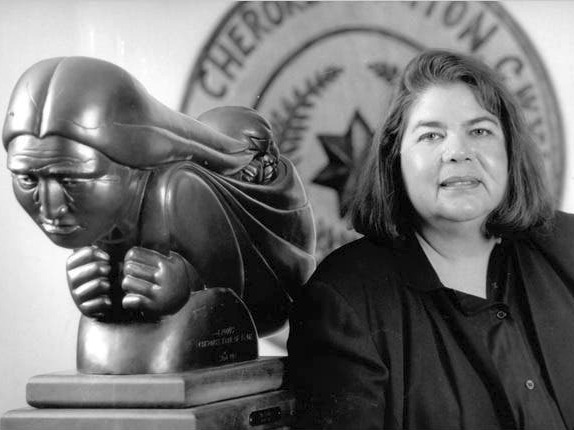
"caption": "Wilma Mankiller is being honored with a new U.S. quarter.",
"description": null,
"title": "Wilma Mankiller is being honored with a new U.S. quarter.",
"credit": "AP Photo/J. Pat Carter",
"status": "inherit",
"altTag": "A middle-aged woman with her hair in a bob stands, half-smiling, next to a statue of a weeping woman huddled with her fists clenched.",
"isLoading": false,
"fetchFailed": false
},
"arts_13913189": {
"type": "attachments",
"id": "arts_13913189",
"meta": {
"index": "attachments_1716263798",
"site": "arts",
"id": "13913189",
"found": true
},
"parent": 13913184,
"imgSizes": {
"twentyfourteen-full-width": {
"file": "https://ww2.kqed.org/app/uploads/sites/2/2022/05/Kenneth_2D-1038x576.jpg",
"width": 1038,
"mimeType": "image/jpeg",
"height": 576
},
"thumbnail": {
"file": "https://ww2.kqed.org/app/uploads/sites/2/2022/05/Kenneth_2D-160x90.jpg",
"width": 160,
"mimeType": "image/jpeg",
"height": 90
},
"post-thumbnail": {
"file": "https://ww2.kqed.org/app/uploads/sites/2/2022/05/Kenneth_2D-672x372.jpg",
"width": 672,
"mimeType": "image/jpeg",
"height": 372
},
"kqedFullSize": {
"file": "https://ww2.kqed.org/app/uploads/sites/2/2022/05/Kenneth_2D-scaled.jpg",
"width": 2560,
"height": 1440
},
"2048x2048": {
"file": "https://ww2.kqed.org/app/uploads/sites/2/2022/05/Kenneth_2D-2048x1152.jpg",
"width": 2048,
"mimeType": "image/jpeg",
"height": 1152
},
"large": {
"file": "https://ww2.kqed.org/app/uploads/sites/2/2022/05/Kenneth_2D-1020x574.jpg",
"width": 1020,
"mimeType": "image/jpeg",
"height": 574
},
"1536x1536": {
"file": "https://ww2.kqed.org/app/uploads/sites/2/2022/05/Kenneth_2D-1536x864.jpg",
"width": 1536,
"mimeType": "image/jpeg",
"height": 864
},
"full-width": {
"file": "https://ww2.kqed.org/app/uploads/sites/2/2022/05/Kenneth_2D-1920x1080.jpg",
"width": 1920,
"mimeType": "image/jpeg",
"height": 1080
},
"medium": {
"file": "https://ww2.kqed.org/app/uploads/sites/2/2022/05/Kenneth_2D-800x450.jpg",
"width": 800,
"mimeType": "image/jpeg",
"height": 450
},
"medium_large": {
"file": "https://ww2.kqed.org/app/uploads/sites/2/2022/05/Kenneth_2D-768x432.jpg",
"width": 768,
"mimeType": "image/jpeg",
"height": 432
}
},
"publishDate": 1652298645,
"modified": 1652298738,
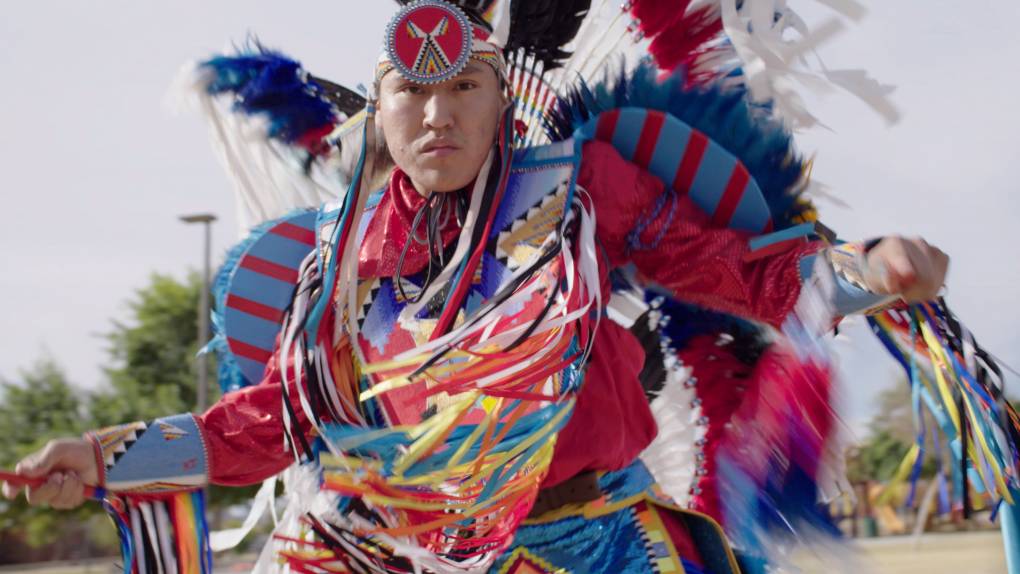
"caption": "Kenneth Shirley (Diné,) founder of Indigenous Enterprise ",
"description": "Dressed in colorful regalia, Shirley looks to camera while dancing",
"title": "Kenneth_2D",
"credit": "Adam Conte",
"status": "inherit",
"altTag": null,
"isLoading": false,
"fetchFailed": false
},
"arts_13911229": {
"type": "attachments",
"id": "arts_13911229",
"meta": {
"index": "attachments_1716263798",
"site": "arts",
"id": "13911229",
"found": true
},
"parent": 13911228,
"imgSizes": {
"twentyfourteen-full-width": {
"file": "https://ww2.kqed.org/app/uploads/sites/2/2022/03/gettyimages-645725528_custom-6ce00fa5f23d730d95f0835abd9e49c7797a73ca-1038x576.jpg",
"width": 1038,
"mimeType": "image/jpeg",
"height": 576
},
"thumbnail": {
"file": "https://ww2.kqed.org/app/uploads/sites/2/2022/03/gettyimages-645725528_custom-6ce00fa5f23d730d95f0835abd9e49c7797a73ca-160x112.jpg",
"width": 160,
"mimeType": "image/jpeg",
"height": 112
},
"post-thumbnail": {
"file": "https://ww2.kqed.org/app/uploads/sites/2/2022/03/gettyimages-645725528_custom-6ce00fa5f23d730d95f0835abd9e49c7797a73ca-672x372.jpg",
"width": 672,
"mimeType": "image/jpeg",
"height": 372
},
"kqedFullSize": {
"file": "https://ww2.kqed.org/app/uploads/sites/2/2022/03/gettyimages-645725528_custom-6ce00fa5f23d730d95f0835abd9e49c7797a73ca-scaled-e1648507265644.jpg",
"width": 1920,
"height": 1343
},
"2048x2048": {
"file": "https://ww2.kqed.org/app/uploads/sites/2/2022/03/gettyimages-645725528_custom-6ce00fa5f23d730d95f0835abd9e49c7797a73ca-2048x1432.jpg",
"width": 2048,
"mimeType": "image/jpeg",
"height": 1432
},
"large": {
"file": "https://ww2.kqed.org/app/uploads/sites/2/2022/03/gettyimages-645725528_custom-6ce00fa5f23d730d95f0835abd9e49c7797a73ca-1020x713.jpg",
"width": 1020,
"mimeType": "image/jpeg",
"height": 713
},
"1536x1536": {
"file": "https://ww2.kqed.org/app/uploads/sites/2/2022/03/gettyimages-645725528_custom-6ce00fa5f23d730d95f0835abd9e49c7797a73ca-1536x1074.jpg",
"width": 1536,
"mimeType": "image/jpeg",
"height": 1074
},
"full-width": {
"file": "https://ww2.kqed.org/app/uploads/sites/2/2022/03/gettyimages-645725528_custom-6ce00fa5f23d730d95f0835abd9e49c7797a73ca-1920x1342.jpg",
"width": 1920,
"mimeType": "image/jpeg",
"height": 1342
},
"medium": {
"file": "https://ww2.kqed.org/app/uploads/sites/2/2022/03/gettyimages-645725528_custom-6ce00fa5f23d730d95f0835abd9e49c7797a73ca-800x559.jpg",
"width": 800,
"mimeType": "image/jpeg",
"height": 559
},
"medium_large": {
"file": "https://ww2.kqed.org/app/uploads/sites/2/2022/03/gettyimages-645725528_custom-6ce00fa5f23d730d95f0835abd9e49c7797a73ca-768x537.jpg",
"width": 768,
"mimeType": "image/jpeg",
"height": 537
}
},
"publishDate": 1648506185,
"modified": 1648507313,
"caption": "'La La Land' producer Jordan Horowitz holds up the winner card reading actual Best Picture winner 'Moonlight' with actor Warren Beatty and host Jimmy Kimmel onstage during the Academy Awards in 2017.",
"description": null,
"title": "'La La Land' producer Jordan Horowitz holds up the winner card reading actual Best Picture winner 'Moonlight' with actor Warren Beatty and host Jimmy Kimmel onstage during the Academy Awards in 2017.",
"credit": "Kevin Winter/Getty Images",
"status": "inherit",
"altTag": null,
"isLoading": false,
"fetchFailed": false
}
},
"audioPlayerReducer": {
"postId": "stream_live",
"isPaused": true,
"isPlaying": false,
"pfsActive": false,
"pledgeModalIsOpen": true,
"playerDrawerIsOpen": false,
"liveAudioPlayStartedAt": 0,
"liveAudioPlayContext": ""
},
"authorsReducer": {
"byline_arts_13926293": {
"type": "authors",
"id": "byline_arts_13926293",
"meta": {
"override": true
},
"slug": "byline_arts_13926293",
"name": "Chloe Veltman",
"isLoading": false
},
"byline_arts_13926047": {
"type": "authors",
"id": "byline_arts_13926047",
"meta": {
"override": true
},
"slug": "byline_arts_13926047",
"name": "Mandalit del Barco",
"isLoading": false
},
"byline_arts_13920243": {
"type": "authors",
"id": "byline_arts_13920243",
"meta": {
"override": true
},
"slug": "byline_arts_13920243",
"name": "Rachel Treisman",
"isLoading": false
},
"byline_arts_13919954": {
"type": "authors",
"id": "byline_arts_13919954",
"meta": {
"override": true
},
"slug": "byline_arts_13919954",
"name": "NPR Staff",
"isLoading": false
},
"byline_arts_13917695": {
"type": "authors",
"id": "byline_arts_13917695",
"meta": {
"override": true
},
"slug": "byline_arts_13917695",
"name": "Jake Coyle, Associated Press",
"isLoading": false
},
"byline_arts_13914424": {
"type": "authors",
"id": "byline_arts_13914424",
"meta": {
"override": true
},
"slug": "byline_arts_13914424",
"name": "Tekella Foster",
"isLoading": false
},
"byline_arts_13913184": {
"type": "authors",
"id": "byline_arts_13913184",
"meta": {
"override": true
},
"slug": "byline_arts_13913184",
"name": "Manjula Varghese, Adam Conte",
"isLoading": false
},
"byline_arts_13911228": {
"type": "authors",
"id": "byline_arts_13911228",
"meta": {
"override": true
},
"slug": "byline_arts_13911228",
"name": "Fi O'Reilly",
"isLoading": false
},
"ralexandra": {
"type": "authors",
"id": "11242",
"meta": {
"index": "authors_1716337520",
"id": "11242",
"found": true
},
"name": "Rae Alexandra",
"firstName": "Rae",
"lastName": "Alexandra",
"slug": "ralexandra",
"email": "ralexandra@kqed.org",
"display_author_email": true,
"staff_mastheads": [],
"title": "Reporter/Producer",
"bio": "Rae Alexandra is a Reporter/Producer for KQED Arts & Culture, and the creator/author of the \u003ca href=\"https://www.kqed.org/arts/program/rebel-girls-from-bay-area-history\">Rebel Girls From Bay Area History\u003c/a> and \u003ca href=\"https://www.kqed.org/bizarrebayarea\">Bizarre Bay Area\u003c/a> series. Her debut book, \u003ca href=\"https://citylights.com/politics-current-events-history/unsung-heroines35-women-who-changed/\">Unsung Heroines: 35 Women Who Changed the Bay Area\u003c/a> was published by City Lights in March 2026. In 2023, Rae was awarded an SPJ Excellence in Journalism Award for Arts & Culture. Rae was born and raised in Wales and subsequently — even after two decades in Northern California — still uses phrases that regularly baffle her coworkers.",
"avatar": "https://secure.gravatar.com/avatar/edfee8176c80cc0a382b051190f5341997df378a934a5774dcb0977732dfd401?s=600&d=blank&r=g",
"twitter": null,
"bluesky": null,
"facebook": null,
"instagram": null,
"linkedin": null,
"sites": [
{
"site": "arts",
"roles": [
"subscriber"
]
},
{
"site": "news",
"roles": [
"subscriber"
]
},
{
"site": "pop",
"roles": [
"subscriber"
]
},
{
"site": "bayareabites",
"roles": [
"subscriber"
]
},
{
"site": "science",
"roles": [
"subscriber"
]
}
],
"headData": {
"title": "Rae Alexandra | KQED",
"description": "Reporter/Producer",
"ogImgSrc": "https://secure.gravatar.com/avatar/edfee8176c80cc0a382b051190f5341997df378a934a5774dcb0977732dfd401?s=600&d=blank&r=g",
"twImgSrc": "https://secure.gravatar.com/avatar/edfee8176c80cc0a382b051190f5341997df378a934a5774dcb0977732dfd401?s=600&d=blank&r=g"
},
"isLoading": false,
"link": "/author/ralexandra"
},
"ogpenn": {
"type": "authors",
"id": "11491",
"meta": {
"index": "authors_1716337520",
"id": "11491",
"found": true
},
"name": "Pendarvis Harshaw",
"firstName": "Pendarvis",
"lastName": "Harshaw",
"slug": "ogpenn",
"email": "ogpenn@gmail.com",
"display_author_email": false,
"staff_mastheads": [
"arts"
],
"title": "Community Engagement Reporter",
"bio": "Pendarvis Harshaw is an educator, host and writer with KQED Arts.",
"avatar": "https://secure.gravatar.com/avatar/972b77ee8e3f346ae2b00622661187fbfabd059b5693bbdc1475ea7a722fd4cd?s=600&d=blank&r=g",
"twitter": null,
"bluesky": null,
"facebook": null,
"instagram": "ogpenn",
"linkedin": null,
"sites": [
{
"site": "arts",
"roles": [
"administrator"
]
},
{
"site": "news",
"roles": [
"editor"
]
},
{
"site": "bayareabites",
"roles": [
"author"
]
},
{
"site": "hiphop",
"roles": [
"editor"
]
}
],
"headData": {
"title": "Pendarvis Harshaw | KQED",
"description": "Community Engagement Reporter",
"ogImgSrc": "https://secure.gravatar.com/avatar/972b77ee8e3f346ae2b00622661187fbfabd059b5693bbdc1475ea7a722fd4cd?s=600&d=blank&r=g",
"twImgSrc": "https://secure.gravatar.com/avatar/972b77ee8e3f346ae2b00622661187fbfabd059b5693bbdc1475ea7a722fd4cd?s=600&d=blank&r=g"
},
"isLoading": false,
"link": "/author/ogpenn"
},
"mmedina": {
"type": "authors",
"id": "11528",
"meta": {
"index": "authors_1716337520",
"id": "11528",
"found": true
},
"name": "Marisol Medina-Cadena",
"firstName": "Marisol",
"lastName": "Medina-Cadena",
"slug": "mmedina",
"email": "mmedina@KQED.org",
"display_author_email": true,
"staff_mastheads": [],
"title": "Producer, Rightnowish Podcast",
"bio": "Marisol Medina-Cadena is a radio reporter and podcast producer. Before working at KQED, she produced for PBS member station, KCET, in Los Angeles. In 2017, Marisol won an Emmy Award for her work on the televised documentary, \u003cem>City Rising\u003c/em>, examining California's affordable housing crisis and the historical roots of gentrification.",
"avatar": "https://secure.gravatar.com/avatar/6c3db46a1cabb5e1fe9a365b5f4e681e?s=600&d=blank&r=g",
"twitter": "marisolreports",
"facebook": null,
"instagram": null,
"linkedin": null,
"sites": [
{
"site": "arts",
"roles": []
},
{
"site": "news",
"roles": [
"edit_others_posts"
]
}
],
"headData": {
"title": "Marisol Medina-Cadena | KQED",
"description": "Producer, Rightnowish Podcast",
"ogImgSrc": "https://secure.gravatar.com/avatar/6c3db46a1cabb5e1fe9a365b5f4e681e?s=600&d=blank&r=g",
"twImgSrc": "https://secure.gravatar.com/avatar/6c3db46a1cabb5e1fe9a365b5f4e681e?s=600&d=blank&r=g"
},
"isLoading": false,
"link": "/author/mmedina"
}
},
"pagesReducer": {
"arts_tag_native-american": {
"type": "terms",
"id": "arts_3178",
"meta": {
"index": "terms_1716263798",
"site": "arts",
"id": "3178",
"score": 8.557362
},
"featImg": null,
"name": "native american",
"description": null,
"taxonomy": "tag",
"headData": {
"twImgId": null,
"twTitle": null,
"ogTitle": null,
"ogImgId": null,
"twDescription": null,
"description": null,
"title": "native american Archives | KQED Arts",
"ogDescription": null
},
"ttid": 3190,
"slug": "native-american",
"isLoading": false,
"title": "native american",
"pageMeta": {
"site": "arts",
"WpPageTemplate": "page-topic-editorial",
"currentPage": 2
},
"blocks": [
{
"blockName": "kqed/post-list",
"attrs": {
"layout": "cardArticle2",
"query": "posts/arts?tag=native-american",
"seeMore": false,
"paginated": true,
"page": 2
}
},
{
"blockName": "kqed/ad"
}
]
}
},
"pfsSessionReducer": {},
"postsReducer": {
"stream_live": {
"type": "live",
"id": "stream_live",
"audioUrl": "https://streams.kqed.org/kqedradio",
"title": "Live Stream",
"excerpt": "Live Stream information currently unavailable.",
"link": "/radio",
"featImg": "",
"label": {
"name": "KQED Live",
"link": "/"
}
},
"stream_kqedNewscast": {
"type": "posts",
"id": "stream_kqedNewscast",
"audioUrl": "https://www.kqed.org/.stream/anon/radio/RDnews/newscast.mp3?_=1",
"title": "KQED Newscast",
"featImg": "",
"label": {
"name": "88.5 FM",
"link": "/"
}
},
"arts_13926293": {
"type": "posts",
"id": "arts_13926293",
"meta": {
"index": "posts_1716263798",
"site": "arts",
"id": "13926293",
"score": null,
"sort": [
1678908992000
]
},
"guestAuthors": [],
"slug": "so-you-began-your-event-with-an-indigenous-land-acknowledgement-now-what",
"title": "So You Began Your Event With an Indigenous Land Acknowledgement. Now What?",
"publishDate": 1678908992,
"format": "standard",
"headTitle": "So You Began Your Event With an Indigenous Land Acknowledgement. Now What? | KQED",
"labelTerm": {
"term": 137,
"site": "arts"
},
"content": "\u003cp>Land acknowledgments have become increasingly common nationwide over the past few years. Many mainstream public events — from soccer games and performing arts productions to city council meetings and corporate conferences — begin with these formal statements recognizing Indigenous communities’ rights to territories seized by colonial powers.\u003c/p>\n\u003cp>Indigenous leaders and activists have mixed feelings about land acknowledgments. While some say they are a waste of time, others are working to make the well-meaning but often empty speeches more useful. The debate is more than a niche issue; the pros and cons of land acknowledgments are the subject of myriad \u003ca href=\"https://www.theatlantic.com/ideas/archive/2021/11/against-land-acknowledgements-native-american/620820/\">mainstream media articles\u003c/a>, \u003ca href=\"https://twitter.com/michellecyca/status/1525198115304636416?lang=en\">social media posts \u003c/a>and \u003ca href=\"https://www.youtube.com/watch?v=Q_3W7KKB-Vc\">online videos\u003c/a>. And they’ve even been parodied on TV, in series like \u003cem>Reservation Dogs, \u003c/em>about the exploits of a group of Oklahoma Indigenous teens.\u003c/p>\n\u003cp>https://www.youtube.com/watch?v=r8UpKVImNcU&t=72s\u003c/p>\n\u003ch3>In one ear and out the other\u003c/h3>\n\u003cp>“If it becomes routine, or worse yet, is strictly performative, then it has no meaning at all,” said \u003ca href=\"https://www.si.edu/about/bios/kevin-gover\">Kevin Gover\u003c/a>, a citizen of the Pawnee Nation of Oklahoma and undersecretary for museums and culture at the \u003ca href=\"https://www.si.edu/\">Smithsonian Institution\u003c/a>. “It goes in one ear and out the other.” (Gover said only one or two Smithsonian museums have land acknowledgments; the \u003ca href=\"https://americanindian.si.edu/\">National Museum of the American Indian\u003c/a> is among those that do, and \u003ca href=\"https://americanindian.si.edu/nk360/informational/land-acknowledgment\">its acknowledgment\u003c/a> is only one sentence long.)\u003c/p>\n\u003cp>[aside postid='arts_13920243']Gover said the statements — which first appeared in Australia back in the 1970s in the push for Aboriginal peoples’ rights and more recently blossomed in Canada with the \u003ca href=\"https://nctr.ca/records/reports/\">Truth and Reconciliation Commission Report\u003c/a>, which brought to light how generations of Indigenous school children had been stripped of their native languages and cultural traditions — can also feel disempowering to the very people they’re supposed to uplift.\u003c/p>\n\u003cp>[ad fullwidth]\u003c/p>\n\u003cp>“If I hear a land acknowledgment, part of what I’m hearing is, ‘There used to be Indians here. But now they’re gone. Isn’t that a shame?’ And I don’t wish to be made to feel that way,” Gover said.\u003c/p>\n\u003ch3>A first step toward positive action\u003c/h3>\n\u003cp>But other Indigenous experts say land acknowledgments do have value. If people are thinking about how they go about crafting and using these statements, they can provide a first step toward action.\u003c/p>\n\u003cp>“The land acknowledgment gets you to that start,” said \u003ca href=\"https://nasp.humboldt.edu/people/dr-cutcha-risling-baldy\">Cutcha Risling Baldy\u003c/a>, a member of the Hoopa Valley Tribe and an associate professor of Native American Studies at \u003ca href=\"https://www.humboldt.edu/\">California State Polytechnic University, Humboldt\u003c/a>. “Now it’s time to think about what that actually means for you or your institution. What are the concrete actions you’re gonna take? What are the ways you’re gonna assist Indigenous peoples in uplifting and upholding their sovereignty and self-determination?”\u003c/p>\n\u003cfigure id=\"attachment_13926295\" class=\"wp-caption aligncenter\" style=\"max-width: 800px\">\u003cimg loading=\"lazy\" decoding=\"async\" class=\"size-medium wp-image-13926295\" src=\"https://ww2.kqed.org/app/uploads/sites/2/2023/03/img_0446-86c59dac84f2d23b473bc6f1d360c2351653ac6d-800x600.jpg\" alt='A poster for an \"Unthanksgiving event\" welcomes visitors in a hallway.' width=\"800\" height=\"600\" srcset=\"https://cdn.kqed.org/wp-content/uploads/sites/2/2023/03/img_0446-86c59dac84f2d23b473bc6f1d360c2351653ac6d-800x600.jpg 800w, https://cdn.kqed.org/wp-content/uploads/sites/2/2023/03/img_0446-86c59dac84f2d23b473bc6f1d360c2351653ac6d-1020x765.jpg 1020w, https://cdn.kqed.org/wp-content/uploads/sites/2/2023/03/img_0446-86c59dac84f2d23b473bc6f1d360c2351653ac6d-160x120.jpg 160w, https://cdn.kqed.org/wp-content/uploads/sites/2/2023/03/img_0446-86c59dac84f2d23b473bc6f1d360c2351653ac6d-768x576.jpg 768w, https://cdn.kqed.org/wp-content/uploads/sites/2/2023/03/img_0446-86c59dac84f2d23b473bc6f1d360c2351653ac6d.jpg 1474w\" sizes=\"(max-width: 800px) 100vw, 800px\">\u003cfigcaption class=\"wp-caption-text\">Flyer advertising Cutcha Risling Baldy’s talk at Dominican University in which she used the land acknowledgment to solicit support for the First Nations Garden in nearby Chicago. \u003ccite>(Fawn Pochel)\u003c/cite>\u003c/figcaption>\u003c/figure>\n\u003cp>Baldy demonstrates how land acknowledgments can be used in talks she gives around the country. For example, she used the land acknowledgment at the start of a lecture at Dominican University in River Forest, Ill., in November 2022 to ask audience members to support an Indigenous community garden nearby Chicago.\u003c/p>\n\u003cp>[aside postid='arts_13916457']“She put up a QR code for people to donate directly to the \u003ca href=\"https://chinations.org/first-nations-garden/\">First Nations Garden\u003c/a>,” said Fawn Pochel, who was in Baldy’s audience that day. “She literally paused so people could take pictures and create donations.”\u003c/p>\n\u003cp>Pochel, who identifies as First Nations Ojibwe and is part of the community organization effort around the First Nations Garden, said her group received more than $200 in unexpected donations within 24 hours due to Baldy’s callout during the land acknowledgment.\u003c/p>\n\u003cp>“That was a direct result of her uplifting our space during her conversation,” Pochel said.\u003c/p>\n\u003ch3>Putting land acknowledgments to further use\u003c/h3>\n\u003cp>Sometimes land acknowledgments can lead to more than one-off donations.\u003c/p>\n\u003cp>[aside postid='arts_13916175']At \u003ca href=\"https://shotgunplayers.org/Online/default.asp\">Shotgun Players\u003c/a>, a theater company in Berkeley, Calif., all performances and staff meetings begin with a 45-second-long statement acknowledging, “that the land beneath our theater and our studios and throughout East Bay is Huichin, the traditional unceded land of the Lisjan Ohlone people.”\u003c/p>\n\u003cp>Artistic director Patrick Dooley, who’s not Native American, said having a land acknowledgment helps remind his theater company and audience of their privileges.\u003c/p>\n\u003cp>“We’re just here for a brief time,” Dooley said. “And the way we can really honor our opportunity to live wherever we live is to acknowledge and honor the people that came before us.”\u003c/p>\n\u003cp>The company developed its land acknowledgment three years ago in collaboration with the \u003ca href=\"https://sogoreate-landtrust.org/\">Sogorea Te’ Land Trust\u003c/a>, a San Francisco Bay Area nonprofit focused on Indigenous land return.\u003c/p>\n\u003cp>“When we work with people around creating land acknowledgments, it really has to be a reciprocal relationship,” said \u003ca href=\"https://sogoreate-landtrust.org/directors/corrina-gould/\">Corrina Gould\u003c/a>, co-director of the land trust and tribal chair of the \u003ca href=\"https://villagesoflisjan.org/\">Confederated Villages of Lisjan-Ohlone\u003c/a>.\u003c/p>\n\u003cp>The theater company takes the reciprocity seriously.\u003c/p>\n\u003cp>[aside postid='arts_13921886']Artistic director Dooley said Shotgun Players pays a voluntary land tax — known as “\u003ca href=\"https://sogoreate-landtrust.org/shuumi-land-tax/\">Shuumi Land Tax\u003c/a>,” incorporating the Chochenyo word for “gift” — of between $3,000 and $6,000 a year to the trust. (Dooley said the amount depends on the company’s annual income). The theater company has also offered the trust tickets to performances and invitations to use its space.\u003c/p>\n\u003cp>Sogorea Te’ Land Trust co-director Gould said she’d like to see Shotgun Players do even more, including hiring Indigenous theater artists.\u003c/p>\n\u003cp>“We’re hoping that it’ll be a long-term relationship that our children will be able to say, ‘Hey, this started a long time ago, but we’re still in this together,’ ” said Gould, who added her organization has been developing deeper relationships with a variety of local organizations including \u003ca href=\"https://www.oaklandrootssc.com/stolen-land/\">Oakland Roots\u003c/a> soccer team and \u003ca href=\"https://www.berkeleyrep.org/about/land-acknowledgement/\">Berkeley Repertory Theatre\u003c/a>.\u003c/p>\n\u003cp>Shotgun’s Dooley said he agrees. But he admits he still needs to do more to seek out Indigenous talent for his theater’s productions.\u003c/p>\n\u003cp>“We have a seasoned selection committee,” the artistic director said. “And one of the priorities that we have is to do that.”\u003c/p>\n\u003cp>[ad floatright]\u003c/p>\n\u003cp>\u003cem>Audio and digital stories edited by \u003c/em>\u003ca href=\"https://www.npr.org/people/881642560/ciera-crawford\">\u003cem>Ciera Crawford\u003c/em>\u003c/a>\u003cem>. Audio produced by \u003c/em>\u003ca href=\"https://www.npr.org/people/766798576/isabella-gomez-sarmiento\">\u003cem>Isabella Gomez-Sarmiento\u003c/em>\u003c/a>\u003cem>. Web copy edited by \u003c/em>\u003ca href=\"https://www.npr.org/people/348743704/beth-novey\">\u003cem>Beth Novey\u003c/em>\u003c/a>\u003cem>. Editorial consultant, \u003c/em>\u003ca href=\"https://www.npr.org/people/933079708/sam-yellowhorse-kesler\">\u003cem>Sam Yellowhorse Kesler\u003c/em>\u003c/a>\u003cem>.\u003c/em>\u003c/p>\n\u003cdiv class=\"fullattribution\">\u003cem>Copyright 2023 NPR. To see more, \u003ca href=\"https://www.npr.org\">visit NPR\u003c/a>.\u003cimg decoding=\"async\" src=\"https://www.google-analytics.com/__utm.gif?utmac=UA-5828686-4&utmdt=So+you+began+your+event+with+an+indigenous+land+acknowledgement.+Now+what%3F&utme=8(APIKey)9(MDAxOTAwOTE4MDEyMTkxMDAzNjczZDljZA004)\">\u003c/em>\u003c/div>\n\n",
"blocks": [],
"excerpt": "Statements recognizing Indigenous territories are well-meaning, but some Native leaders find them performative.",
"status": "publish",
"parent": 0,
"modified": 1726758864,
"stats": {
"hasAudio": false,
"hasVideo": true,
"hasChartOrMap": false,
"iframeSrcs": [],
"hasGoogleForm": false,
"hasGallery": false,
"hasHearkenModule": false,
"hasPolis": false,
"paragraphCount": 26,
"wordCount": 1126
},
"headData": {
"title": "So You Began Your Event With an Indigenous Land Acknowledgement. Now What? | KQED",
"description": "Statements recognizing Indigenous territories are well-meaning, but some Native leaders find them performative.",
"ogTitle": "",
"ogDescription": "",
"ogImgId": "",
"twTitle": "",
"twDescription": "",
"twImgId": "",
"schema": {
"@context": "https://schema.org",
"@type": "Article",
"headline": "So You Began Your Event With an Indigenous Land Acknowledgement. Now What?",
"datePublished": "2023-03-15T12:36:32-07:00",
"dateModified": "2024-09-19T08:14:24-07:00",
"image": "https://cdn.kqed.org/wp-content/uploads/2020/02/KQED-OG-Image@1x.png"
}
},
"sticky": false,
"nprImageCredit": "Aaron Carapella",
"nprByline": "Chloe Veltman",
"nprImageAgency": "Tribal Nations Map",
"nprStoryId": "1160204144",
"nprApiLink": "http://api.npr.org/query?id=1160204144&apiKey=MDAxOTAwOTE4MDEyMTkxMDAzNjczZDljZA004",
"nprHtmlLink": "https://www.npr.org/2023/03/15/1160204144/indigenous-land-acknowledgments?ft=nprml&f=1160204144",
"nprRetrievedStory": "1",
"nprPubDate": "Wed, 15 Mar 2023 10:58:00 -0400",
"nprStoryDate": "Wed, 15 Mar 2023 05:00:52 -0400",
"nprLastModifiedDate": "Wed, 15 Mar 2023 10:58:42 -0400",
"templateType": "standard",
"featuredImageType": "standard",
"excludeFromSiteSearch": "Include",
"showOnAuthorArchivePages": "No",
"articleAge": "0",
"path": "/arts/13926293/so-you-began-your-event-with-an-indigenous-land-acknowledgement-now-what",
"audioTrackLength": null,
"parsedContent": [
{
"type": "contentString",
"content": "\u003cdiv class=\"post-body\">\u003cp>\u003cp>Land acknowledgments have become increasingly common nationwide over the past few years. Many mainstream public events — from soccer games and performing arts productions to city council meetings and corporate conferences — begin with these formal statements recognizing Indigenous communities’ rights to territories seized by colonial powers.\u003c/p>\n\u003cp>Indigenous leaders and activists have mixed feelings about land acknowledgments. While some say they are a waste of time, others are working to make the well-meaning but often empty speeches more useful. The debate is more than a niche issue; the pros and cons of land acknowledgments are the subject of myriad \u003ca href=\"https://www.theatlantic.com/ideas/archive/2021/11/against-land-acknowledgements-native-american/620820/\">mainstream media articles\u003c/a>, \u003ca href=\"https://twitter.com/michellecyca/status/1525198115304636416?lang=en\">social media posts \u003c/a>and \u003ca href=\"https://www.youtube.com/watch?v=Q_3W7KKB-Vc\">online videos\u003c/a>. And they’ve even been parodied on TV, in series like \u003cem>Reservation Dogs, \u003c/em>about the exploits of a group of Oklahoma Indigenous teens.\u003c/p>\u003c/p>\u003cp>\u003cspan class='utils-parseShortcode-shortcodes-__youtubeShortcode__embedYoutube'>\n \u003cspan class='utils-parseShortcode-shortcodes-__youtubeShortcode__embedYoutubeInside'>\n \u003ciframe\n loading='lazy'\n class='utils-parseShortcode-shortcodes-__youtubeShortcode__youtubePlayer'\n type='text/html'\n src='//www.youtube.com/embed/r8UpKVImNcU'\n title='//www.youtube.com/embed/r8UpKVImNcU'\n allowfullscreen='true'\n style='border:0;'>\u003c/iframe>\n \u003c/span>\n \u003c/span>\u003c/p>\u003cp>\u003ch3>In one ear and out the other\u003c/h3>\n\u003cp>“If it becomes routine, or worse yet, is strictly performative, then it has no meaning at all,” said \u003ca href=\"https://www.si.edu/about/bios/kevin-gover\">Kevin Gover\u003c/a>, a citizen of the Pawnee Nation of Oklahoma and undersecretary for museums and culture at the \u003ca href=\"https://www.si.edu/\">Smithsonian Institution\u003c/a>. “It goes in one ear and out the other.” (Gover said only one or two Smithsonian museums have land acknowledgments; the \u003ca href=\"https://americanindian.si.edu/\">National Museum of the American Indian\u003c/a> is among those that do, and \u003ca href=\"https://americanindian.si.edu/nk360/informational/land-acknowledgment\">its acknowledgment\u003c/a> is only one sentence long.)\u003c/p>\n\u003cp>\u003c/p>\u003c/div>",
"attributes": {
"named": {},
"numeric": []
}
},
{
"type": "component",
"content": "",
"name": "aside",
"attributes": {
"named": {
"postid": "arts_13920243",
"label": ""
},
"numeric": []
}
},
{
"type": "contentString",
"content": "\u003cdiv class=\"post-body\">\u003cp>Gover said the statements — which first appeared in Australia back in the 1970s in the push for Aboriginal peoples’ rights and more recently blossomed in Canada with the \u003ca href=\"https://nctr.ca/records/reports/\">Truth and Reconciliation Commission Report\u003c/a>, which brought to light how generations of Indigenous school children had been stripped of their native languages and cultural traditions — can also feel disempowering to the very people they’re supposed to uplift.\u003c/p>\n\u003cp>\u003c/p>\u003c/div>",
"attributes": {
"named": {},
"numeric": []
}
},
{
"type": "component",
"content": "",
"name": "ad",
"attributes": {
"named": {
"label": "fullwidth"
},
"numeric": [
"fullwidth"
]
}
},
{
"type": "contentString",
"content": "\u003cdiv class=\"post-body\">\u003cp>\u003c/p>\n\u003cp>“If I hear a land acknowledgment, part of what I’m hearing is, ‘There used to be Indians here. But now they’re gone. Isn’t that a shame?’ And I don’t wish to be made to feel that way,” Gover said.\u003c/p>\n\u003ch3>A first step toward positive action\u003c/h3>\n\u003cp>But other Indigenous experts say land acknowledgments do have value. If people are thinking about how they go about crafting and using these statements, they can provide a first step toward action.\u003c/p>\n\u003cp>“The land acknowledgment gets you to that start,” said \u003ca href=\"https://nasp.humboldt.edu/people/dr-cutcha-risling-baldy\">Cutcha Risling Baldy\u003c/a>, a member of the Hoopa Valley Tribe and an associate professor of Native American Studies at \u003ca href=\"https://www.humboldt.edu/\">California State Polytechnic University, Humboldt\u003c/a>. “Now it’s time to think about what that actually means for you or your institution. What are the concrete actions you’re gonna take? What are the ways you’re gonna assist Indigenous peoples in uplifting and upholding their sovereignty and self-determination?”\u003c/p>\n\u003cfigure id=\"attachment_13926295\" class=\"wp-caption aligncenter\" style=\"max-width: 800px\">\u003cimg loading=\"lazy\" decoding=\"async\" class=\"size-medium wp-image-13926295\" src=\"https://ww2.kqed.org/app/uploads/sites/2/2023/03/img_0446-86c59dac84f2d23b473bc6f1d360c2351653ac6d-800x600.jpg\" alt='A poster for an \"Unthanksgiving event\" welcomes visitors in a hallway.' width=\"800\" height=\"600\" srcset=\"https://cdn.kqed.org/wp-content/uploads/sites/2/2023/03/img_0446-86c59dac84f2d23b473bc6f1d360c2351653ac6d-800x600.jpg 800w, https://cdn.kqed.org/wp-content/uploads/sites/2/2023/03/img_0446-86c59dac84f2d23b473bc6f1d360c2351653ac6d-1020x765.jpg 1020w, https://cdn.kqed.org/wp-content/uploads/sites/2/2023/03/img_0446-86c59dac84f2d23b473bc6f1d360c2351653ac6d-160x120.jpg 160w, https://cdn.kqed.org/wp-content/uploads/sites/2/2023/03/img_0446-86c59dac84f2d23b473bc6f1d360c2351653ac6d-768x576.jpg 768w, https://cdn.kqed.org/wp-content/uploads/sites/2/2023/03/img_0446-86c59dac84f2d23b473bc6f1d360c2351653ac6d.jpg 1474w\" sizes=\"(max-width: 800px) 100vw, 800px\">\u003cfigcaption class=\"wp-caption-text\">Flyer advertising Cutcha Risling Baldy’s talk at Dominican University in which she used the land acknowledgment to solicit support for the First Nations Garden in nearby Chicago. \u003ccite>(Fawn Pochel)\u003c/cite>\u003c/figcaption>\u003c/figure>\n\u003cp>Baldy demonstrates how land acknowledgments can be used in talks she gives around the country. For example, she used the land acknowledgment at the start of a lecture at Dominican University in River Forest, Ill., in November 2022 to ask audience members to support an Indigenous community garden nearby Chicago.\u003c/p>\n\u003cp>\u003c/p>\u003c/div>",
"attributes": {
"named": {},
"numeric": []
}
},
{
"type": "component",
"content": "",
"name": "aside",
"attributes": {
"named": {
"postid": "arts_13916457",
"label": ""
},
"numeric": []
}
},
{
"type": "contentString",
"content": "\u003cdiv class=\"post-body\">\u003cp>“She put up a QR code for people to donate directly to the \u003ca href=\"https://chinations.org/first-nations-garden/\">First Nations Garden\u003c/a>,” said Fawn Pochel, who was in Baldy’s audience that day. “She literally paused so people could take pictures and create donations.”\u003c/p>\n\u003cp>Pochel, who identifies as First Nations Ojibwe and is part of the community organization effort around the First Nations Garden, said her group received more than $200 in unexpected donations within 24 hours due to Baldy’s callout during the land acknowledgment.\u003c/p>\n\u003cp>“That was a direct result of her uplifting our space during her conversation,” Pochel said.\u003c/p>\n\u003ch3>Putting land acknowledgments to further use\u003c/h3>\n\u003cp>Sometimes land acknowledgments can lead to more than one-off donations.\u003c/p>\n\u003cp>\u003c/p>\u003c/div>",
"attributes": {
"named": {},
"numeric": []
}
},
{
"type": "component",
"content": "",
"name": "aside",
"attributes": {
"named": {
"postid": "arts_13916175",
"label": ""
},
"numeric": []
}
},
{
"type": "contentString",
"content": "\u003cdiv class=\"post-body\">\u003cp>At \u003ca href=\"https://shotgunplayers.org/Online/default.asp\">Shotgun Players\u003c/a>, a theater company in Berkeley, Calif., all performances and staff meetings begin with a 45-second-long statement acknowledging, “that the land beneath our theater and our studios and throughout East Bay is Huichin, the traditional unceded land of the Lisjan Ohlone people.”\u003c/p>\n\u003cp>Artistic director Patrick Dooley, who’s not Native American, said having a land acknowledgment helps remind his theater company and audience of their privileges.\u003c/p>\n\u003cp>“We’re just here for a brief time,” Dooley said. “And the way we can really honor our opportunity to live wherever we live is to acknowledge and honor the people that came before us.”\u003c/p>\n\u003cp>The company developed its land acknowledgment three years ago in collaboration with the \u003ca href=\"https://sogoreate-landtrust.org/\">Sogorea Te’ Land Trust\u003c/a>, a San Francisco Bay Area nonprofit focused on Indigenous land return.\u003c/p>\n\u003cp>“When we work with people around creating land acknowledgments, it really has to be a reciprocal relationship,” said \u003ca href=\"https://sogoreate-landtrust.org/directors/corrina-gould/\">Corrina Gould\u003c/a>, co-director of the land trust and tribal chair of the \u003ca href=\"https://villagesoflisjan.org/\">Confederated Villages of Lisjan-Ohlone\u003c/a>.\u003c/p>\n\u003cp>The theater company takes the reciprocity seriously.\u003c/p>\n\u003cp>\u003c/p>\u003c/div>",
"attributes": {
"named": {},
"numeric": []
}
},
{
"type": "component",
"content": "",
"name": "aside",
"attributes": {
"named": {
"postid": "arts_13921886",
"label": ""
},
"numeric": []
}
},
{
"type": "contentString",
"content": "\u003cdiv class=\"post-body\">\u003cp>Artistic director Dooley said Shotgun Players pays a voluntary land tax — known as “\u003ca href=\"https://sogoreate-landtrust.org/shuumi-land-tax/\">Shuumi Land Tax\u003c/a>,” incorporating the Chochenyo word for “gift” — of between $3,000 and $6,000 a year to the trust. (Dooley said the amount depends on the company’s annual income). The theater company has also offered the trust tickets to performances and invitations to use its space.\u003c/p>\n\u003cp>Sogorea Te’ Land Trust co-director Gould said she’d like to see Shotgun Players do even more, including hiring Indigenous theater artists.\u003c/p>\n\u003cp>“We’re hoping that it’ll be a long-term relationship that our children will be able to say, ‘Hey, this started a long time ago, but we’re still in this together,’ ” said Gould, who added her organization has been developing deeper relationships with a variety of local organizations including \u003ca href=\"https://www.oaklandrootssc.com/stolen-land/\">Oakland Roots\u003c/a> soccer team and \u003ca href=\"https://www.berkeleyrep.org/about/land-acknowledgement/\">Berkeley Repertory Theatre\u003c/a>.\u003c/p>\n\u003cp>Shotgun’s Dooley said he agrees. But he admits he still needs to do more to seek out Indigenous talent for his theater’s productions.\u003c/p>\n\u003cp>“We have a seasoned selection committee,” the artistic director said. “And one of the priorities that we have is to do that.”\u003c/p>\n\u003cp>\u003c/p>\u003c/div>",
"attributes": {
"named": {},
"numeric": []
}
},
{
"type": "component",
"content": "",
"name": "ad",
"attributes": {
"named": {
"label": "floatright"
},
"numeric": [
"floatright"
]
}
},
{
"type": "contentString",
"content": "\u003cdiv class=\"post-body\">\u003cp>\u003c/p>\n\u003cp>\u003cem>Audio and digital stories edited by \u003c/em>\u003ca href=\"https://www.npr.org/people/881642560/ciera-crawford\">\u003cem>Ciera Crawford\u003c/em>\u003c/a>\u003cem>. Audio produced by \u003c/em>\u003ca href=\"https://www.npr.org/people/766798576/isabella-gomez-sarmiento\">\u003cem>Isabella Gomez-Sarmiento\u003c/em>\u003c/a>\u003cem>. Web copy edited by \u003c/em>\u003ca href=\"https://www.npr.org/people/348743704/beth-novey\">\u003cem>Beth Novey\u003c/em>\u003c/a>\u003cem>. Editorial consultant, \u003c/em>\u003ca href=\"https://www.npr.org/people/933079708/sam-yellowhorse-kesler\">\u003cem>Sam Yellowhorse Kesler\u003c/em>\u003c/a>\u003cem>.\u003c/em>\u003c/p>\n\u003cdiv class=\"fullattribution\">\u003cem>Copyright 2023 NPR. To see more, \u003ca href=\"https://www.npr.org\">visit NPR\u003c/a>.\u003cimg decoding=\"async\" src=\"https://www.google-analytics.com/__utm.gif?utmac=UA-5828686-4&utmdt=So+you+began+your+event+with+an+indigenous+land+acknowledgement.+Now+what%3F&utme=8(APIKey)9(MDAxOTAwOTE4MDEyMTkxMDAzNjczZDljZA004)\">\u003c/em>\u003c/div>\n\n\u003c/div>\u003c/p>",
"attributes": {
"named": {},
"numeric": []
}
}
],
"link": "/arts/13926293/so-you-began-your-event-with-an-indigenous-land-acknowledgement-now-what",
"authors": [
"byline_arts_13926293"
],
"categories": [
"arts_1"
],
"tags": [
"arts_7005",
"arts_3178",
"arts_2360"
],
"affiliates": [
"arts_137"
],
"featImg": "arts_13926294",
"label": "arts_137"
},
"arts_13926047": {
"type": "posts",
"id": "arts_13926047",
"meta": {
"index": "posts_1716263798",
"site": "arts",
"id": "13926047",
"score": null,
"sort": [
1678471846000
]
},
"parent": 0,
"labelTerm": {
"site": "arts",
"term": 137
},
"blocks": [],
"publishDate": 1678471846,
"format": "standard",
"title": "The First Oscars Lasted 15 Minutes — Plus Other Surprises From 95 Years of Awards",
"headTitle": "The First Oscars Lasted 15 Minutes — Plus Other Surprises From 95 Years of Awards | KQED",
"content": "\u003cp>You read that right — just 15 minutes. The first Academy Awards ceremony was held on May 1929, in the Blossom Room of the Hollywood Roosevelt Hotel. At the end of a private black-tie banquet, leading man Douglas Fairbanks announced the first ever winners of the golden statuettes.\u003c/p>\n\u003cp>All the recipients that year were silent movies, except one: \u003ca href=\"https://www.youtube.com/watch?v=yFaZOaLTkN0\">\u003cem>The Jazz Singer\u003c/em>\u003c/a>\u003cem>,\u003c/em> starring Al Jolson. \u003ca href=\"https://www.youtube.com/watch?v=zXOlmo943Vc\">The top prize in 1929 \u003c/a>went to \u003cem>Wings\u003c/em>, an airplane film similar to one of this year’s best picture nominees, \u003cem>Top Gun: Maverick\u003c/em>.\u003c/p>\n\u003cp>The following year, the Academy Award for Outstanding Production went to a war movie, \u003ca href=\"https://www.youtube.com/watch?v=grapXipP3fM\">\u003cem>All Quiet on the Western Front\u003c/em>\u003c/a> (a remake of that film is also a contender this year). \u003ca href=\"https://www.youtube.com/watch?v=Kt0mgFtdQwk\">Newsreel footage from 1930\u003c/a> captured the head of MGM, Louis B. Mayer, solemnly congratulating the movie’s producer Carl Laemmle, saying, “Sorry I didn’t win it, Mr. Laemmle. I know of no one I’d rather have beat me than you.”\u003c/p>\n\u003cp>https://www.youtube.com/watch?v=Kt0mgFtdQwk\u003c/p>\n\u003cp>As the silent movie era ended and the talkies began, Mayer had dreamed up the idea of an Academy for \u003ca href=\"https://www.findinglostangeles.com/all-content/2019/1/7/hollywoodland\">Hollywoodland\u003c/a>, as it was first known.\u003c/p>\n\u003cp>[ad fullwidth]\u003c/p>\n\u003cp>“He was afraid of the union movement that was kind of moving across the country, and he didn’t want the film industry to be unionized,” says Bruce Davis, a former CEO of the Academy for 30 years\u003cem>. “\u003c/em>So he thought, ‘Somehow, we’ll have this organization, and we’ll all just come to meetings and talk about our griefs and problems.’”\u003c/p>\n\u003cp>[aside postid='arts_13925866']Davis, author of \u003ca href=\"https://press.uchicago.edu/ucp/books/book/distributed/A/bo184793529.html\">\u003cem>The Academy and the Award\u003c/em>\u003c/a>\u003cem>, \u003c/em>says in the late 1920s, writers, directors, actors and other members of the new Academy didn’t trust Mayer’s group of anti-union studio bigwigs. They soon formed their guilds, and Davis says the Academy nearly folded in 1933.\u003c/p>\n\u003cp>“Finally, the Academy had to agree to get out of the labor business entirely,” says Davis.\u003c/p>\n\u003cp>Instead, the organization focused on handing out Oscars, as the statuettes were later nicknamed. \u003ca href=\"https://www.oldtimeradiodownloads.com/variety/academy-award-ceremonies/academy-award-ceremony-1947\">Radio stations\u003c/a> and newsreels began highlighting the ceremonies to movie fans captivated by Hollywood’s glitz and glamor.\u003c/p>\n\u003cp>In 1939, Hattie McDaniel became the first African American actor to win an Oscar for her role as Mammy in \u003cem>Gone With the Wind\u003c/em>. McDaniel rose from her seat at a segregated table to accept the award for best supporting actress.\u003c/p>\n\u003cp>https://www.youtube.com/watch?v=e7t4pTNZshA&t=3s\u003c/p>\n\u003cp>“I sincerely hope I shall always be a credit to my race and to the motion picture industry,” she said, wiping away her tears.\u003c/p>\n\u003cp>Over the years, the Oscars have included scandals and feuds … like the famous rivalry between sisters Joan Fontaine and Olivia de Havilland, who despised each other and vied for the best actress Oscar in 1942. (\u003ca href=\"https://www.youtube.com/watch?v=4tOZ-IU7izg\">Fontaine won\u003c/a> for her role in the Alfred Hitchcock film \u003cem>Suspicion\u003c/em>.)\u003c/p>\n\u003cp>The ceremonies continued during the infamous McCarthy era when many Hollywood writers were blacklisted as suspected communists. All of that was upended in 1957 when the winner of the best motion picture was announced: \u003ca href=\"https://www.youtube.com/watch?v=c2KdnI1N8AU\">Robert Rich, writer of \u003cem>The Brave One\u003c/em>\u003c/a>, a story about a Mexican boy and his pet bull.\u003c/p>\n\u003cp>[aside postid='arts_13925431']Someone else accepted the award on his behalf. “Then no one could find this guy. And that’s because he did not exist,” says Michael Schulman, a staff writer for the \u003cem>New Yorker \u003c/em>and author of the new book \u003ca href=\"https://www.npr.org/2023/02/22/1158513159/oscar-wars-michael-schulman-academy-awards-controversies\">\u003cem>Oscar Wars: A History of Hollywood in Gold, Sweat, and Tears\u003c/em>.\u003c/a>\u003c/p>\n\u003cp>Robert Rich was a pseudonym for screenwriter \u003ca href=\"https://www.npr.org/2008/06/17/91576667/trumbo-a-blacklisted-writer-in-his-own-words\">Dalton Trumbo\u003c/a>, who was imprisoned for defying the House Un-American Activities Committee.\u003c/p>\n\u003cp>“He realized there was a contradiction, that all of these people — suspected communists — were blacklisted, and yet they were all working,” says Schulman. “They were writing movies under fake names, and now they were winning awards.”\u003c/p>\n\u003cp>Schulman says that was one of the many Hollywood scandals the Oscars have exposed.\u003c/p>\n\u003cp>In \u003ca href=\"https://www.youtube.com/watch?v=iOtp4dli7-4\">1953, the Oscars began being broadcast on television, with host Bob Hope\u003c/a>, who quipped, “Isn’t it exciting to know that a lot of these glamorous stars are going to be in your homes tonight? Television, where movies go to die.”\u003c/p>\n\u003cp>The ceremonies are notorious for running long. But in 1959, the show ended up 20 minutes short. \u003ca href=\"https://www.youtube.com/watch?v=2riKdGOdU3E\">So emcee Jerry Lewis had to ad-lib\u003c/a> with shticks and bits to fill the airtime.\u003c/p>\n\u003cp>https://www.youtube.com/watch?v=2riKdGOdU3E\u003c/p>\n\u003cp>“We would like to now do 300 choruses of ‘There’s No Business Like Show Business,’” he said before taking the baton to lead the orchestra at the Pantages Theatre.\u003c/p>\n\u003cp>“Lewis invited all of the winners and participants from the show back up on stage, and they’re feeling like idiots. So they started dancing with each other,” chuckles Davis. “And still, it wouldn’t go off. Then people start sneaking off the stage.”\u003c/p>\n\u003cp>\u003ca href=\"https://interviews.televisionacademy.com/news/interview-clip-jerry-lewis-discusses-1959s-short-academy-awards-telecast\">For the remaining minutes\u003c/a>, NBC cut to a rerun of a sportscast.\u003c/p>\n\u003cp>Davis says one of the most poignant moments in Oscars history was when \u003ca href=\"https://www.youtube.com/watch?v=J3Pl-qvA1X8\">Charlie Chaplin, who had started in silent movies, won a lifetime achievement award in 1972\u003c/a>.\u003c/p>\n\u003cp>https://www.youtube.com/watch?v=J3Pl-qvA1X8\u003c/p>\n\u003cp>“He had been almost driven out of the country because his politics were seen to be too far left for the American public,” says Davis. “So to have him come back to receive an honorary award and be embraced by the entire industry was clearly a very moving thing.”\u003c/p>\n\u003cp>The audience gave Chaplin a 12-minute standing ovation.\u003c/p>\n\u003cp>The following year, the crowd booed when \u003ca href=\"https://www.youtube.com/watch?v=2QUacU0I4yU\">Marlon Brando sent Sacheen Littlefeather to the stage to decline his best actor award\u003c/a> because of “the treatment of the American Indians” by the film industry.\u003c/p>\n\u003cp>https://www.youtube.com/watch?v=2QUacU0I4yU\u003c/p>\n\u003cp>Years later, \u003ca href=\"https://www.npr.org/2022/10/03/1126515900/sacheen-littlefeather-marlon-brando-dies\">Littlefeather recalled being escorted offstage at the Oscars by security guards\u003c/a>. She said that for years Hollywood boycotted her, calling it being “red-listed.” Finally, nearly 50 years later, the Academy officially apologized to Littlefeather for the abuse she subsequently endured because of her Oscars appearance.\u003c/p>\n\u003cp>In 1974, the Oscars audience shrieked when gay activist \u003ca href=\"https://www.youtube.com/watch?v=EWBc-ir6IFM\">Robert Opel dashed across the stage naked\u003c/a>. The streaker prompted presenter David Niven to quip, “Probably the only laugh that man will ever get in his life is by stripping off and showing his shortcomings.”\u003c/p>\n\u003cp>https://www.youtube.com/watch?v=EWBc-ir6IFM\u003c/p>\n\u003cp>In 1985, \u003ca href=\"https://www.youtube.com/watch?v=u_8nAvU0T5Y\">best actress winner Sally Field\u003c/a> gave one of the Oscars’ most unforgettable speeches. “I can’t deny the fact that you like me,” she gushed. “Right now, you like me!”\u003c/p>\n\u003cp>Schulman says there have been other cringe moments, like the opening number in 1989, which included \u003ca href=\"https://www.youtube.com/watch?v=9mronRVvdmw\">actor Rob Lowe singing a duet with a live-action Snow White\u003c/a>.\u003c/p>\n\u003cp>Schulman says the 11-minute, over-the-top opening was a flop for flamboyant producer Allan Carr, who had previously produced the musicals \u003cem>Grease\u003c/em> and \u003cem>La Cage aux Folles\u003c/em>.\u003c/p>\n\u003cp>“When it went bad, there was a scapegoat effect,” says Schulman. “He was essentially ostracized within days. And he never recovered. It destroyed his career. It destroyed his life.”\u003c/p>\n\u003cp>In the last decade, the Oscars had a racial reckoning after being criticized for not giving awards to actors and filmmakers of color. \u003ca href=\"https://www.npr.org/2016/01/25/464244160/a-conversation-with-the-creator-of-oscarssowhite\">The #OscarsSoWhite movement\u003c/a> led to this \u003ca href=\"https://www.youtube.com/watch?v=GCQn_FkFElI&t=2s\">2017 mixup\u003c/a>:\u003c/p>\n\u003cp>https://www.youtube.com/watch?v=GCQn_FkFElI&t=2s\u003c/p>\n\u003cp>“There was a rookie from Pricewaterhouse that year who was a little too enthusiastic about being backstage with all of the stars and clearly took his mind off his job,” explains Davis. “He handed the presenter the wrong envelope.”\u003c/p>\n\u003cp>[aside postid='arts_13911018']Onstage, presenter Warren Beatty looked at the envelope puzzled. Then Faye Dunaway announced the final winner of the night: \u003cem>La La Land\u003c/em>.\u003c/p>\n\u003cp>Producer Jordan Horowitz accepted the award at first, surrounded by his cast. Then, after much confusion onstage, he returned to the mic.\u003c/p>\n\u003cp>“I’m sorry, no. There’s a mistake: \u003cem>Moonlight\u003c/em>. You guys won best picture,” Horowitz said before showing a card with the correct winner to the cameras. “This is not a joke. \u003cem>Moonlight\u003c/em> has won best picture.”\u003c/p>\n\u003cp>Last year, the winners were overshadowed by a confrontation with best actor nominee \u003ca href=\"https://www.youtube.com/watch?v=myjEoDypUD8\">Will Smith, who strode onstage and smacked presenter Chris Rock \u003c/a>after he had made a joke about Smith’s wife’s hair.\u003c/p>\n\u003cp>https://www.youtube.com/watch?v=myjEoDypUD8\u003c/p>\n\u003cp>After delivering the slap seen and heard around the world, Smith sat down in his seat and roared expletives at Rock. Smith won the best actor award for starring in \u003cem>King Richard\u003c/em>, but \u003ca href=\"https://www.npr.org/2022/04/08/1091681181/the-academy-bans-will-smith-for-10-years-for-chris-rock-slap\">the Academy punished him by banning him from its events for 10 years\u003c/a>.\u003c/p>\n\u003cp>[ad floatright]\u003c/p>\n\u003cp>Schulman says anything can happen during a live event, “Whether it’s a burst of anger with the slap or just something really moving, someone living their dream.” He says so much of the Oscars “are wrapped in this kind of celebrity, like ‘you-like-me’ absurdity, and then boom! Something happens that shocks your system a little bit.”\u003c/p>\n\u003cdiv class=\"fullattribution\">\u003cem>Copyright 2023 NPR. To see more, \u003ca href=\"https://www.npr.org\" target=\"_blank\" rel=\"noopener\">visit NPR\u003c/a>.\u003cimg decoding=\"async\" src=\"https://www.google-analytics.com/__utm.gif?utmac=UA-5828686-4&utmdt=The+first+Oscars+lasted+15+minutes+%E2%80%94+plus+other+surprises+from+95+years+of+awards&utme=8(APIKey)9(MDAxOTAwOTE4MDEyMTkxMDAzNjczZDljZA004)\">\u003c/em>\u003c/div>\n\n",
"stats": {
"hasVideo": true,
"hasChartOrMap": false,
"hasAudio": false,
"hasPolis": false,
"wordCount": 1579,
"hasGoogleForm": false,
"hasGallery": false,
"hasHearkenModule": false,
"iframeSrcs": [],
"paragraphCount": 41
},
"modified": 1705005756,
"excerpt": "Ahead of this Sunday’s Academy Awards, we look back on the surprises, the scandals, the slap and — yes — even the streaker.",
"headData": {
"twImgId": "",
"twTitle": "The First Oscars Lasted 15 Minutes — Plus Other Surprises From 95 Years of Awards",
"socialTitle": "The Oscars’ 10 Most Surprising Moments%%page%% %%sep%% KQED",
"ogTitle": "The First Oscars Lasted 15 Minutes — Plus Other Surprises From 95 Years of Awards",
"ogImgId": "",
"twDescription": "",
"description": "Ahead of this Sunday’s Academy Awards, we look back on the surprises, the scandals, the slap and — yes — even the streaker.",
"title": "The Oscars’ 10 Most Surprising Moments | KQED",
"ogDescription": "",
"schema": {
"@context": "https://schema.org",
"@type": "Article",
"headline": "The First Oscars Lasted 15 Minutes — Plus Other Surprises From 95 Years of Awards",
"datePublished": "2023-03-10T10:10:46-08:00",
"dateModified": "2024-01-11T12:42:36-08:00",
"image": "https://cdn.kqed.org/wp-content/uploads/2020/02/KQED-OG-Image@1x.png"
}
},
"guestAuthors": [],
"slug": "the-first-oscars-lasted-15-minutes-plus-other-surprises-from-95-years-of-awards",
"status": "publish",
"nprApiLink": "http://api.npr.org/query?id=1162052588&apiKey=MDAxOTAwOTE4MDEyMTkxMDAzNjczZDljZA004",
"templateType": "standard",
"nprStoryDate": "Thu, 09 Mar 2023 12:08:22 -0500",
"excludeFromSiteSearch": "Include",
"nprLastModifiedDate": "Thu, 09 Mar 2023 13:16:59 -0500",
"featuredImageType": "standard",
"nprHtmlLink": "https://www.npr.org/2023/03/09/1162052588/oscars-academy-award-scandal-slap?ft=nprml&f=1162052588",
"nprImageAgency": " Academy of Motion Picture Arts and Sciences",
"nprStoryId": "1162052588",
"nprByline": "Mandalit del Barco",
"sticky": false,
"showOnAuthorArchivePages": "No",
"articleAge": "0",
"nprRetrievedStory": "1",
"nprPubDate": "Thu, 09 Mar 2023 13:17:00 -0500",
"path": "/arts/13926047/the-first-oscars-lasted-15-minutes-plus-other-surprises-from-95-years-of-awards",
"audioTrackLength": null,
"parsedContent": [
{
"type": "contentString",
"content": "\u003cdiv class=\"post-body\">\u003cp>\u003cp>You read that right — just 15 minutes. The first Academy Awards ceremony was held on May 1929, in the Blossom Room of the Hollywood Roosevelt Hotel. At the end of a private black-tie banquet, leading man Douglas Fairbanks announced the first ever winners of the golden statuettes.\u003c/p>\n\u003cp>All the recipients that year were silent movies, except one: \u003ca href=\"https://www.youtube.com/watch?v=yFaZOaLTkN0\">\u003cem>The Jazz Singer\u003c/em>\u003c/a>\u003cem>,\u003c/em> starring Al Jolson. \u003ca href=\"https://www.youtube.com/watch?v=zXOlmo943Vc\">The top prize in 1929 \u003c/a>went to \u003cem>Wings\u003c/em>, an airplane film similar to one of this year’s best picture nominees, \u003cem>Top Gun: Maverick\u003c/em>.\u003c/p>\n\u003cp>The following year, the Academy Award for Outstanding Production went to a war movie, \u003ca href=\"https://www.youtube.com/watch?v=grapXipP3fM\">\u003cem>All Quiet on the Western Front\u003c/em>\u003c/a> (a remake of that film is also a contender this year). \u003ca href=\"https://www.youtube.com/watch?v=Kt0mgFtdQwk\">Newsreel footage from 1930\u003c/a> captured the head of MGM, Louis B. Mayer, solemnly congratulating the movie’s producer Carl Laemmle, saying, “Sorry I didn’t win it, Mr. Laemmle. I know of no one I’d rather have beat me than you.”\u003c/p>\u003c/p>\u003cp>\u003cspan class='utils-parseShortcode-shortcodes-__youtubeShortcode__embedYoutube'>\n \u003cspan class='utils-parseShortcode-shortcodes-__youtubeShortcode__embedYoutubeInside'>\n \u003ciframe\n loading='lazy'\n class='utils-parseShortcode-shortcodes-__youtubeShortcode__youtubePlayer'\n type='text/html'\n src='//www.youtube.com/embed/Kt0mgFtdQwk'\n title='//www.youtube.com/embed/Kt0mgFtdQwk'\n allowfullscreen='true'\n style='border:0;'>\u003c/iframe>\n \u003c/span>\n \u003c/span>\u003c/p>\u003cp>\u003cp>As the silent movie era ended and the talkies began, Mayer had dreamed up the idea of an Academy for \u003ca href=\"https://www.findinglostangeles.com/all-content/2019/1/7/hollywoodland\">Hollywoodland\u003c/a>, as it was first known.\u003c/p>\n\u003cp>\u003c/p>\u003c/div>",
"attributes": {
"named": {},
"numeric": []
}
},
{
"type": "component",
"content": "",
"name": "ad",
"attributes": {
"named": {
"label": "fullwidth"
},
"numeric": [
"fullwidth"
]
}
},
{
"type": "contentString",
"content": "\u003cdiv class=\"post-body\">\u003cp>\u003c/p>\n\u003cp>“He was afraid of the union movement that was kind of moving across the country, and he didn’t want the film industry to be unionized,” says Bruce Davis, a former CEO of the Academy for 30 years\u003cem>. “\u003c/em>So he thought, ‘Somehow, we’ll have this organization, and we’ll all just come to meetings and talk about our griefs and problems.’”\u003c/p>\n\u003cp>\u003c/p>\u003c/div>",
"attributes": {
"named": {},
"numeric": []
}
},
{
"type": "component",
"content": "",
"name": "aside",
"attributes": {
"named": {
"postid": "arts_13925866",
"label": ""
},
"numeric": []
}
},
{
"type": "contentString",
"content": "\u003cdiv class=\"post-body\">\u003cp>Davis, author of \u003ca href=\"https://press.uchicago.edu/ucp/books/book/distributed/A/bo184793529.html\">\u003cem>The Academy and the Award\u003c/em>\u003c/a>\u003cem>, \u003c/em>says in the late 1920s, writers, directors, actors and other members of the new Academy didn’t trust Mayer’s group of anti-union studio bigwigs. They soon formed their guilds, and Davis says the Academy nearly folded in 1933.\u003c/p>\n\u003cp>“Finally, the Academy had to agree to get out of the labor business entirely,” says Davis.\u003c/p>\n\u003cp>Instead, the organization focused on handing out Oscars, as the statuettes were later nicknamed. \u003ca href=\"https://www.oldtimeradiodownloads.com/variety/academy-award-ceremonies/academy-award-ceremony-1947\">Radio stations\u003c/a> and newsreels began highlighting the ceremonies to movie fans captivated by Hollywood’s glitz and glamor.\u003c/p>\n\u003cp>In 1939, Hattie McDaniel became the first African American actor to win an Oscar for her role as Mammy in \u003cem>Gone With the Wind\u003c/em>. McDaniel rose from her seat at a segregated table to accept the award for best supporting actress.\u003c/p>\u003c/p>\u003cp>\u003cspan class='utils-parseShortcode-shortcodes-__youtubeShortcode__embedYoutube'>\n \u003cspan class='utils-parseShortcode-shortcodes-__youtubeShortcode__embedYoutubeInside'>\n \u003ciframe\n loading='lazy'\n class='utils-parseShortcode-shortcodes-__youtubeShortcode__youtubePlayer'\n type='text/html'\n src='//www.youtube.com/embed/e7t4pTNZshA'\n title='//www.youtube.com/embed/e7t4pTNZshA'\n allowfullscreen='true'\n style='border:0;'>\u003c/iframe>\n \u003c/span>\n \u003c/span>\u003c/p>\u003cp>\u003cp>“I sincerely hope I shall always be a credit to my race and to the motion picture industry,” she said, wiping away her tears.\u003c/p>\n\u003cp>Over the years, the Oscars have included scandals and feuds … like the famous rivalry between sisters Joan Fontaine and Olivia de Havilland, who despised each other and vied for the best actress Oscar in 1942. (\u003ca href=\"https://www.youtube.com/watch?v=4tOZ-IU7izg\">Fontaine won\u003c/a> for her role in the Alfred Hitchcock film \u003cem>Suspicion\u003c/em>.)\u003c/p>\n\u003cp>The ceremonies continued during the infamous McCarthy era when many Hollywood writers were blacklisted as suspected communists. All of that was upended in 1957 when the winner of the best motion picture was announced: \u003ca href=\"https://www.youtube.com/watch?v=c2KdnI1N8AU\">Robert Rich, writer of \u003cem>The Brave One\u003c/em>\u003c/a>, a story about a Mexican boy and his pet bull.\u003c/p>\n\u003cp>\u003c/p>\u003c/div>",
"attributes": {
"named": {},
"numeric": []
}
},
{
"type": "component",
"content": "",
"name": "aside",
"attributes": {
"named": {
"postid": "arts_13925431",
"label": ""
},
"numeric": []
}
},
{
"type": "contentString",
"content": "\u003cdiv class=\"post-body\">\u003cp>Someone else accepted the award on his behalf. “Then no one could find this guy. And that’s because he did not exist,” says Michael Schulman, a staff writer for the \u003cem>New Yorker \u003c/em>and author of the new book \u003ca href=\"https://www.npr.org/2023/02/22/1158513159/oscar-wars-michael-schulman-academy-awards-controversies\">\u003cem>Oscar Wars: A History of Hollywood in Gold, Sweat, and Tears\u003c/em>.\u003c/a>\u003c/p>\n\u003cp>Robert Rich was a pseudonym for screenwriter \u003ca href=\"https://www.npr.org/2008/06/17/91576667/trumbo-a-blacklisted-writer-in-his-own-words\">Dalton Trumbo\u003c/a>, who was imprisoned for defying the House Un-American Activities Committee.\u003c/p>\n\u003cp>“He realized there was a contradiction, that all of these people — suspected communists — were blacklisted, and yet they were all working,” says Schulman. “They were writing movies under fake names, and now they were winning awards.”\u003c/p>\n\u003cp>Schulman says that was one of the many Hollywood scandals the Oscars have exposed.\u003c/p>\n\u003cp>In \u003ca href=\"https://www.youtube.com/watch?v=iOtp4dli7-4\">1953, the Oscars began being broadcast on television, with host Bob Hope\u003c/a>, who quipped, “Isn’t it exciting to know that a lot of these glamorous stars are going to be in your homes tonight? Television, where movies go to die.”\u003c/p>\n\u003cp>The ceremonies are notorious for running long. But in 1959, the show ended up 20 minutes short. \u003ca href=\"https://www.youtube.com/watch?v=2riKdGOdU3E\">So emcee Jerry Lewis had to ad-lib\u003c/a> with shticks and bits to fill the airtime.\u003c/p>\u003c/p>\u003cp>\u003cspan class='utils-parseShortcode-shortcodes-__youtubeShortcode__embedYoutube'>\n \u003cspan class='utils-parseShortcode-shortcodes-__youtubeShortcode__embedYoutubeInside'>\n \u003ciframe\n loading='lazy'\n class='utils-parseShortcode-shortcodes-__youtubeShortcode__youtubePlayer'\n type='text/html'\n src='//www.youtube.com/embed/2riKdGOdU3E'\n title='//www.youtube.com/embed/2riKdGOdU3E'\n allowfullscreen='true'\n style='border:0;'>\u003c/iframe>\n \u003c/span>\n \u003c/span>\u003c/p>\u003cp>\u003cp>“We would like to now do 300 choruses of ‘There’s No Business Like Show Business,’” he said before taking the baton to lead the orchestra at the Pantages Theatre.\u003c/p>\n\u003cp>“Lewis invited all of the winners and participants from the show back up on stage, and they’re feeling like idiots. So they started dancing with each other,” chuckles Davis. “And still, it wouldn’t go off. Then people start sneaking off the stage.”\u003c/p>\n\u003cp>\u003ca href=\"https://interviews.televisionacademy.com/news/interview-clip-jerry-lewis-discusses-1959s-short-academy-awards-telecast\">For the remaining minutes\u003c/a>, NBC cut to a rerun of a sportscast.\u003c/p>\n\u003cp>Davis says one of the most poignant moments in Oscars history was when \u003ca href=\"https://www.youtube.com/watch?v=J3Pl-qvA1X8\">Charlie Chaplin, who had started in silent movies, won a lifetime achievement award in 1972\u003c/a>.\u003c/p>\u003c/p>\u003cp>\u003cspan class='utils-parseShortcode-shortcodes-__youtubeShortcode__embedYoutube'>\n \u003cspan class='utils-parseShortcode-shortcodes-__youtubeShortcode__embedYoutubeInside'>\n \u003ciframe\n loading='lazy'\n class='utils-parseShortcode-shortcodes-__youtubeShortcode__youtubePlayer'\n type='text/html'\n src='//www.youtube.com/embed/J3Pl-qvA1X8'\n title='//www.youtube.com/embed/J3Pl-qvA1X8'\n allowfullscreen='true'\n style='border:0;'>\u003c/iframe>\n \u003c/span>\n \u003c/span>\u003c/p>\u003cp>\u003cp>“He had been almost driven out of the country because his politics were seen to be too far left for the American public,” says Davis. “So to have him come back to receive an honorary award and be embraced by the entire industry was clearly a very moving thing.”\u003c/p>\n\u003cp>The audience gave Chaplin a 12-minute standing ovation.\u003c/p>\n\u003cp>The following year, the crowd booed when \u003ca href=\"https://www.youtube.com/watch?v=2QUacU0I4yU\">Marlon Brando sent Sacheen Littlefeather to the stage to decline his best actor award\u003c/a> because of “the treatment of the American Indians” by the film industry.\u003c/p>\u003c/p>\u003cp>\u003cspan class='utils-parseShortcode-shortcodes-__youtubeShortcode__embedYoutube'>\n \u003cspan class='utils-parseShortcode-shortcodes-__youtubeShortcode__embedYoutubeInside'>\n \u003ciframe\n loading='lazy'\n class='utils-parseShortcode-shortcodes-__youtubeShortcode__youtubePlayer'\n type='text/html'\n src='//www.youtube.com/embed/2QUacU0I4yU'\n title='//www.youtube.com/embed/2QUacU0I4yU'\n allowfullscreen='true'\n style='border:0;'>\u003c/iframe>\n \u003c/span>\n \u003c/span>\u003c/p>\u003cp>\u003cp>Years later, \u003ca href=\"https://www.npr.org/2022/10/03/1126515900/sacheen-littlefeather-marlon-brando-dies\">Littlefeather recalled being escorted offstage at the Oscars by security guards\u003c/a>. She said that for years Hollywood boycotted her, calling it being “red-listed.” Finally, nearly 50 years later, the Academy officially apologized to Littlefeather for the abuse she subsequently endured because of her Oscars appearance.\u003c/p>\n\u003cp>In 1974, the Oscars audience shrieked when gay activist \u003ca href=\"https://www.youtube.com/watch?v=EWBc-ir6IFM\">Robert Opel dashed across the stage naked\u003c/a>. The streaker prompted presenter David Niven to quip, “Probably the only laugh that man will ever get in his life is by stripping off and showing his shortcomings.”\u003c/p>\u003c/p>\u003cp>\u003cspan class='utils-parseShortcode-shortcodes-__youtubeShortcode__embedYoutube'>\n \u003cspan class='utils-parseShortcode-shortcodes-__youtubeShortcode__embedYoutubeInside'>\n \u003ciframe\n loading='lazy'\n class='utils-parseShortcode-shortcodes-__youtubeShortcode__youtubePlayer'\n type='text/html'\n src='//www.youtube.com/embed/EWBc-ir6IFM'\n title='//www.youtube.com/embed/EWBc-ir6IFM'\n allowfullscreen='true'\n style='border:0;'>\u003c/iframe>\n \u003c/span>\n \u003c/span>\u003c/p>\u003cp>\u003cp>In 1985, \u003ca href=\"https://www.youtube.com/watch?v=u_8nAvU0T5Y\">best actress winner Sally Field\u003c/a> gave one of the Oscars’ most unforgettable speeches. “I can’t deny the fact that you like me,” she gushed. “Right now, you like me!”\u003c/p>\n\u003cp>Schulman says there have been other cringe moments, like the opening number in 1989, which included \u003ca href=\"https://www.youtube.com/watch?v=9mronRVvdmw\">actor Rob Lowe singing a duet with a live-action Snow White\u003c/a>.\u003c/p>\n\u003cp>Schulman says the 11-minute, over-the-top opening was a flop for flamboyant producer Allan Carr, who had previously produced the musicals \u003cem>Grease\u003c/em> and \u003cem>La Cage aux Folles\u003c/em>.\u003c/p>\n\u003cp>“When it went bad, there was a scapegoat effect,” says Schulman. “He was essentially ostracized within days. And he never recovered. It destroyed his career. It destroyed his life.”\u003c/p>\n\u003cp>In the last decade, the Oscars had a racial reckoning after being criticized for not giving awards to actors and filmmakers of color. \u003ca href=\"https://www.npr.org/2016/01/25/464244160/a-conversation-with-the-creator-of-oscarssowhite\">The #OscarsSoWhite movement\u003c/a> led to this \u003ca href=\"https://www.youtube.com/watch?v=GCQn_FkFElI&t=2s\">2017 mixup\u003c/a>:\u003c/p>\u003c/p>\u003cp>\u003cspan class='utils-parseShortcode-shortcodes-__youtubeShortcode__embedYoutube'>\n \u003cspan class='utils-parseShortcode-shortcodes-__youtubeShortcode__embedYoutubeInside'>\n \u003ciframe\n loading='lazy'\n class='utils-parseShortcode-shortcodes-__youtubeShortcode__youtubePlayer'\n type='text/html'\n src='//www.youtube.com/embed/GCQn_FkFElI'\n title='//www.youtube.com/embed/GCQn_FkFElI'\n allowfullscreen='true'\n style='border:0;'>\u003c/iframe>\n \u003c/span>\n \u003c/span>\u003c/p>\u003cp>\u003cp>“There was a rookie from Pricewaterhouse that year who was a little too enthusiastic about being backstage with all of the stars and clearly took his mind off his job,” explains Davis. “He handed the presenter the wrong envelope.”\u003c/p>\n\u003cp>\u003c/p>\u003c/div>",
"attributes": {
"named": {},
"numeric": []
}
},
{
"type": "component",
"content": "",
"name": "aside",
"attributes": {
"named": {
"postid": "arts_13911018",
"label": ""
},
"numeric": []
}
},
{
"type": "contentString",
"content": "\u003cdiv class=\"post-body\">\u003cp>Onstage, presenter Warren Beatty looked at the envelope puzzled. Then Faye Dunaway announced the final winner of the night: \u003cem>La La Land\u003c/em>.\u003c/p>\n\u003cp>Producer Jordan Horowitz accepted the award at first, surrounded by his cast. Then, after much confusion onstage, he returned to the mic.\u003c/p>\n\u003cp>“I’m sorry, no. There’s a mistake: \u003cem>Moonlight\u003c/em>. You guys won best picture,” Horowitz said before showing a card with the correct winner to the cameras. “This is not a joke. \u003cem>Moonlight\u003c/em> has won best picture.”\u003c/p>\n\u003cp>Last year, the winners were overshadowed by a confrontation with best actor nominee \u003ca href=\"https://www.youtube.com/watch?v=myjEoDypUD8\">Will Smith, who strode onstage and smacked presenter Chris Rock \u003c/a>after he had made a joke about Smith’s wife’s hair.\u003c/p>\u003c/p>\u003cp>\u003cspan class='utils-parseShortcode-shortcodes-__youtubeShortcode__embedYoutube'>\n \u003cspan class='utils-parseShortcode-shortcodes-__youtubeShortcode__embedYoutubeInside'>\n \u003ciframe\n loading='lazy'\n class='utils-parseShortcode-shortcodes-__youtubeShortcode__youtubePlayer'\n type='text/html'\n src='//www.youtube.com/embed/myjEoDypUD8'\n title='//www.youtube.com/embed/myjEoDypUD8'\n allowfullscreen='true'\n style='border:0;'>\u003c/iframe>\n \u003c/span>\n \u003c/span>\u003c/p>\u003cp>\u003cp>After delivering the slap seen and heard around the world, Smith sat down in his seat and roared expletives at Rock. Smith won the best actor award for starring in \u003cem>King Richard\u003c/em>, but \u003ca href=\"https://www.npr.org/2022/04/08/1091681181/the-academy-bans-will-smith-for-10-years-for-chris-rock-slap\">the Academy punished him by banning him from its events for 10 years\u003c/a>.\u003c/p>\n\u003cp>\u003c/p>\u003c/div>",
"attributes": {
"named": {},
"numeric": []
}
},
{
"type": "component",
"content": "",
"name": "ad",
"attributes": {
"named": {
"label": "floatright"
},
"numeric": [
"floatright"
]
}
},
{
"type": "contentString",
"content": "\u003cdiv class=\"post-body\">\u003cp>\u003c/p>\n\u003cp>Schulman says anything can happen during a live event, “Whether it’s a burst of anger with the slap or just something really moving, someone living their dream.” He says so much of the Oscars “are wrapped in this kind of celebrity, like ‘you-like-me’ absurdity, and then boom! Something happens that shocks your system a little bit.”\u003c/p>\n\u003cdiv class=\"fullattribution\">\u003cem>Copyright 2023 NPR. To see more, \u003ca href=\"https://www.npr.org\" target=\"_blank\" rel=\"noopener\">visit NPR\u003c/a>.\u003cimg decoding=\"async\" src=\"https://www.google-analytics.com/__utm.gif?utmac=UA-5828686-4&utmdt=The+first+Oscars+lasted+15+minutes+%E2%80%94+plus+other+surprises+from+95+years+of+awards&utme=8(APIKey)9(MDAxOTAwOTE4MDEyMTkxMDAzNjczZDljZA004)\">\u003c/em>\u003c/div>\n\n\u003c/div>\u003c/p>",
"attributes": {
"named": {},
"numeric": []
}
}
],
"link": "/arts/13926047/the-first-oscars-lasted-15-minutes-plus-other-surprises-from-95-years-of-awards",
"authors": [
"byline_arts_13926047"
],
"categories": [
"arts_1",
"arts_74",
"arts_75"
],
"tags": [
"arts_3701",
"arts_11323",
"arts_549",
"arts_977",
"arts_17088",
"arts_9200",
"arts_3178",
"arts_3698"
],
"affiliates": [
"arts_137"
],
"featImg": "arts_13926048",
"label": "arts_137"
},
"arts_13926026": {
"type": "posts",
"id": "arts_13926026",
"meta": {
"index": "posts_1716263798",
"site": "arts",
"id": "13926026",
"score": null,
"sort": [
1678446043000
]
},
"guestAuthors": [],
"slug": "from-the-soil-juristac",
"title": "From The Soil: Protecting Sacred Land In The South Bay",
"publishDate": 1678446043,
"format": "audio",
"headTitle": "From The Soil: Protecting Sacred Land In The South Bay | KQED",
"labelTerm": {
"term": 8720,
"site": "arts"
},
"content": "\u003cp>At the southern edge of the South Bay in Santa Clara County, where the foothills of the Santa Cruz Mountains meet the town of Gilroy, there is a grassy pasture. Here, a small stream runs through acres of land while cattle graze and birds fly above.\u003c/p>\n\u003cp>This piece of land is a proposed mining site—but it’s also traditional ceremonial ground for the \u003ca href=\"https://amahmutsun.org/\" target=\"_blank\" rel=\"noopener\">Amah Mutsun Tribal Band\u003c/a>.\u003c/p>\n\u003cp>For over 200 years, the Amah Mutsun have been unable to access one of their most sacred sites, known as \u003ca href=\"https://www.protectjuristac.org/about/\">Juristac.\u003c/a>\u003c/p>\n\u003cp>\u003cspan style=\"font-weight: 400\">“Juristac translates to the place of the Big Head. \u003c/span>\u003cspan style=\"font-weight: 400\">Our most important ceremonies were Big Head ceremonies. And so this location is where our ancestors, for thousands and thousands of years, held Big Head dances and ceremony,” says Valentin Lopez, chairman of the Amah Mutsun Tribal Band.\u003c/span>\u003c/p>\n\u003cp>For the last seven years the tribal band has organized support from the local community, religious leaders, conservation groups and nearby city councils to stand in support against the development of the Sargent Quarry project, a proposal to use the land for mining purposes.\u003c/p>\n\u003cfigure id=\"attachment_13926062\" class=\"wp-caption alignnone\" style=\"max-width: 800px\">\u003cimg loading=\"lazy\" decoding=\"async\" class=\"wp-image-13926062 size-medium\" src=\"https://ww2.kqed.org/app/uploads/sites/2/2023/03/DSC05038-800x533.jpg\" alt=\"A view of Juristac's grassy fields with a stream running through it and cows grazing amongst rolling hills in the distance.\" width=\"800\" height=\"533\" srcset=\"https://cdn.kqed.org/wp-content/uploads/sites/2/2023/03/DSC05038-800x533.jpg 800w, https://cdn.kqed.org/wp-content/uploads/sites/2/2023/03/DSC05038-1020x680.jpg 1020w, https://cdn.kqed.org/wp-content/uploads/sites/2/2023/03/DSC05038-160x107.jpg 160w, https://cdn.kqed.org/wp-content/uploads/sites/2/2023/03/DSC05038-768x512.jpg 768w, https://cdn.kqed.org/wp-content/uploads/sites/2/2023/03/DSC05038-1536x1024.jpg 1536w, https://cdn.kqed.org/wp-content/uploads/sites/2/2023/03/DSC05038-2048x1365.jpg 2048w, https://cdn.kqed.org/wp-content/uploads/sites/2/2023/03/DSC05038-1920x1280.jpg 1920w\" sizes=\"(max-width: 800px) 100vw, 800px\">\u003cfigcaption class=\"wp-caption-text\">Juristac’s grasslands, oak woodland, freshwater ponds and streams offer vital habitat for an array of species. \u003ccite>(Pendarvis Harshaw)\u003c/cite>\u003c/figcaption>\u003c/figure>\n\u003cp>The Santa Clara Board of Supervisors is currently reviewing the proposed mining project’s \u003ca href=\"https://plandev.sccgov.org/policies-programs/smara/sargent\">environmental impact report\u003c/a>.\u003c/p>\n\u003cp>This week we hear from Valentin Lopez , the tribal chairman of the Amah Mutsun, speak about the historical and spiritual significance of Juristac, and the movement to protect the land for the Amah Mutsun.\u003c/p>\n\u003cp>\u003c!-- iframe plugin v.4.3 wordpress.org/plugins/iframe/ -->\u003cbr>\n\u003ciframe loading=\"lazy\" frameborder=\"0\" height=\"200\" scrolling=\"no\" src=\"https://playlist.megaphone.fm/?e=KQINC1911012959\" width=\"100%\" class=\"iframe-class\">\u003c/iframe>\u003c/p>\n\u003cp>\u003ca href=\"http://bit.ly/3J6DGQJ\">Read the episode transcript.\u003c/a>\u003c/p>\n\u003cp>\u003cem>Below are lightly edited excerpts of our conversation with Valentin Lopez. \u003c/em>\u003c/p>\n\u003cp>\u003cstrong>\u003cem>Marisol: The proposed plans for this mining project include making three open-pit quarries that would extend 250 feet deep in order to remove sand and gravel from this site, for the next 30 years. On a personal level, what did it feel like when you first heard about this private firm wanting to develop a mine? \u003c/em>\u003c/strong>\u003c/p>\n\u003cp>Valentin\u003cspan style=\"font-weight: 400\">: When we see this mining permit come in, we say that this is just the continuation of that brutality, that erasure, that destruction of the Amah Mutsun. \u003c/span>\u003cspan style=\"font-weight: 400\">When you look at our history in those periods of colonization, there were actually three periods of very brutal, brutal colonization in which the populations of our tribe was reduced by 96% to 98%.\u003c/span>\u003c/p>\n\u003cp>\u003cspan style=\"font-weight: 400\">The Spanish mission period, the Mexican period, and then the American California period. You know, all three of those periods wanted to destroy our spirituality. They wanted to destroy our culture. They wanted to destroy our Indigenous knowledge. They wanted to destroy our environments. F\u003c/span>\u003cspan style=\"font-weight: 400\">or example, just to the east of here, there were four natural lakes. We had seven villages at those four lakes and we had large populations at those lakes. But, they drained those lakes for agriculture. \u003c/span>\u003c/p>\n\u003cp>\u003cem>\u003cstrong>Marisol: What is like the ideal scenario to happen here? How do you want this land to be used? \u003c/strong>\u003c/em>\u003c/p>\n\u003cp>\u003cspan style=\"font-weight: 400\">Valentin: Well, the most important thing is to stop the mining permit from being approved. And then after that, finding a way for the conservation organizations to somehow come into possession of the lands so that we can ensure that it’s never again threatened by any development. \u003c/span>\u003c/p>\n\u003cp>\u003cspan style=\"font-weight: 400\">But then beyond that, we would like our tribe to have rights to return to these lands for ceremony, for managing and stewarding the land so that we can bring back our food plants and our medicine plants. But a\u003c/span>\u003cspan style=\"font-weight: 400\">lso education of the public to let them know about the true history of Amah Mutsun and the true history of Native American tribes in California.\u003c/span>\u003c/p>\n\u003cp>\u003cem>\u003cstrong>Marisol: How do you keep motivated to fight this long fight? \u003c/strong>\u003c/em>\u003c/p>\n\u003cp>\u003cspan style=\"font-weight: 400\">Valentin: I see the way that the one, two or three generations before me and what they had to deal with and the conditions they had to live in. \u003c/span>And I see the impact of the historic trauma that resulted from that history has impacted our members.\u003c/p>\n\u003cp>\u003cspan style=\"font-weight: 400\">For us to accept the laws of the county that allow them to destroy our most sacred site with the mining permit, we can’t accept that. \u003c/span>To allow them to have laws that they continue to keep us landless, to keep us in poverty, we can’t accept that.\u003c/p>\n\u003cfigure id=\"attachment_13926029\" class=\"wp-caption aligncenter\" style=\"max-width: 800px\">\u003cimg loading=\"lazy\" decoding=\"async\" class=\"wp-image-13926029 size-medium\" src=\"https://ww2.kqed.org/app/uploads/sites/2/2023/03/DSC05045-800x533.jpg\" alt=\"Amah Mutsun tribal chair leader Valentin Lopez looks at a green pasture where cattle graze on either side of a small stream; this is a sacred site for the tribe known as Juristac. \" width=\"800\" height=\"533\" srcset=\"https://cdn.kqed.org/wp-content/uploads/sites/2/2023/03/DSC05045-800x533.jpg 800w, https://cdn.kqed.org/wp-content/uploads/sites/2/2023/03/DSC05045-1020x680.jpg 1020w, https://cdn.kqed.org/wp-content/uploads/sites/2/2023/03/DSC05045-160x107.jpg 160w, https://cdn.kqed.org/wp-content/uploads/sites/2/2023/03/DSC05045-768x512.jpg 768w, https://cdn.kqed.org/wp-content/uploads/sites/2/2023/03/DSC05045-1536x1024.jpg 1536w, https://cdn.kqed.org/wp-content/uploads/sites/2/2023/03/DSC05045-2048x1365.jpg 2048w, https://cdn.kqed.org/wp-content/uploads/sites/2/2023/03/DSC05045-1920x1280.jpg 1920w\" sizes=\"(max-width: 800px) 100vw, 800px\">\u003cfigcaption class=\"wp-caption-text\">Amah Mutsun tribal chair leader Valentin Lopez looks at a green pasture where cattle graze on either side of a small stream; this is a sacred site known as Juristac. \u003ccite>(Pendarvis Harshaw)\u003c/cite>\u003c/figcaption>\u003c/figure>\n\u003cp> \u003c/p>\n\u003cp> \u003c/p>\n\u003cp>\u003cimg loading=\"lazy\" decoding=\"async\" class=\"aligncenter size-full wp-image-12127869\" src=\"https://ww2.kqed.org/app/uploads/sites/2/2016/09/Q.Logo_.Break_.jpg\" alt=\"\" width=\"800\" height=\"78\" srcset=\"https://cdn.kqed.org/wp-content/uploads/sites/2/2016/09/Q.Logo_.Break_.jpg 800w, https://cdn.kqed.org/wp-content/uploads/sites/2/2016/09/Q.Logo_.Break_-400x39.jpg 400w, https://cdn.kqed.org/wp-content/uploads/sites/2/2016/09/Q.Logo_.Break_-768x75.jpg 768w\" sizes=\"(max-width: 800px) 100vw, 800px\">\u003c/p>\n\u003cp>\u003cstrong>\u003cem>Rightnowish is an arts and culture podcast produced at KQED. Listen to it wherever you get your podcasts or click the play button at the top of this page and subscribe to the show on \u003ca href=\"https://www.npr.org/podcasts/721590300/rightnowish\">NPR One\u003c/a>, \u003ca href=\"https://open.spotify.com/show/7kEJuafTzTVan7B78ttz1I\">Spotify\u003c/a>, \u003ca href=\"https://podcasts.apple.com/us/podcast/rightnowish/id1482187648\">Apple Podcasts\u003c/a>, \u003ca href=\"https://tunein.com/podcasts/Arts--Culture-Podcasts/Rightnowish-p1258245/\">TuneIn\u003c/a>, \u003ca href=\"https://www.stitcher.com/podcast/kqed/rightnowish\">Stitcher\u003c/a> or wherever you get your podcasts. \u003c/em>\u003c/strong>\u003c/p>\n\u003cp>[ad fullwidth]=\u003c/p>\n\u003cp>\u003c/p>\n",
"blocks": [],
"excerpt": "The Amah Mutsun Tribal Band is organizing to protect their sacred ceremonial grounds known as Juristac.",
"status": "publish",
"parent": 0,
"modified": 1726771134,
"stats": {
"hasAudio": true,
"hasVideo": false,
"hasChartOrMap": false,
"iframeSrcs": [],
"hasGoogleForm": false,
"hasGallery": false,
"hasHearkenModule": false,
"hasPolis": false,
"paragraphCount": 23,
"wordCount": 810
},
"headData": {
"title": "From The Soil: Protecting Sacred Land In The South Bay | KQED",
"description": "The Amah Mutsun Tribal Band is organizing to protect their sacred ceremonial grounds known as Juristac.",
"ogTitle": "",
"ogDescription": "",
"ogImgId": "",
"twTitle": "",
"twDescription": "",
"twImgId": "",
"schema": {
"@context": "https://schema.org",
"@type": "Article",
"headline": "From The Soil: Protecting Sacred Land In The South Bay",
"datePublished": "2023-03-10T03:00:43-08:00",
"dateModified": "2024-09-19T11:38:54-07:00",
"image": "https://cdn.kqed.org/wp-content/uploads/2020/02/KQED-OG-Image@1x.png"
}
},
"audioUrl": "https://www.podtrac.com/pts/redirect.mp3/chrt.fm/track/A511B8/traffic.megaphone.fm/KQINC1911012959.mp3?updated=1678408117",
"sticky": false,
"subhead": "The Amah Mutsun Tribal Band is fighting to regain access to its sacred land.",
"excludeFromSiteSearch": "Include",
"articleAge": "0",
"path": "/arts/13926026/from-the-soil-juristac",
"audioTrackLength": null,
"parsedContent": [
{
"type": "contentString",
"content": "\u003cdiv class=\"post-body\">\u003cp>\u003cp>At the southern edge of the South Bay in Santa Clara County, where the foothills of the Santa Cruz Mountains meet the town of Gilroy, there is a grassy pasture. Here, a small stream runs through acres of land while cattle graze and birds fly above.\u003c/p>\n\u003cp>This piece of land is a proposed mining site—but it’s also traditional ceremonial ground for the \u003ca href=\"https://amahmutsun.org/\" target=\"_blank\" rel=\"noopener\">Amah Mutsun Tribal Band\u003c/a>.\u003c/p>\n\u003cp>For over 200 years, the Amah Mutsun have been unable to access one of their most sacred sites, known as \u003ca href=\"https://www.protectjuristac.org/about/\">Juristac.\u003c/a>\u003c/p>\n\u003cp>\u003cspan style=\"font-weight: 400\">“Juristac translates to the place of the Big Head. \u003c/span>\u003cspan style=\"font-weight: 400\">Our most important ceremonies were Big Head ceremonies. And so this location is where our ancestors, for thousands and thousands of years, held Big Head dances and ceremony,” says Valentin Lopez, chairman of the Amah Mutsun Tribal Band.\u003c/span>\u003c/p>\n\u003cp>For the last seven years the tribal band has organized support from the local community, religious leaders, conservation groups and nearby city councils to stand in support against the development of the Sargent Quarry project, a proposal to use the land for mining purposes.\u003c/p>\n\u003cfigure id=\"attachment_13926062\" class=\"wp-caption alignnone\" style=\"max-width: 800px\">\u003cimg loading=\"lazy\" decoding=\"async\" class=\"wp-image-13926062 size-medium\" src=\"https://ww2.kqed.org/app/uploads/sites/2/2023/03/DSC05038-800x533.jpg\" alt=\"A view of Juristac's grassy fields with a stream running through it and cows grazing amongst rolling hills in the distance.\" width=\"800\" height=\"533\" srcset=\"https://cdn.kqed.org/wp-content/uploads/sites/2/2023/03/DSC05038-800x533.jpg 800w, https://cdn.kqed.org/wp-content/uploads/sites/2/2023/03/DSC05038-1020x680.jpg 1020w, https://cdn.kqed.org/wp-content/uploads/sites/2/2023/03/DSC05038-160x107.jpg 160w, https://cdn.kqed.org/wp-content/uploads/sites/2/2023/03/DSC05038-768x512.jpg 768w, https://cdn.kqed.org/wp-content/uploads/sites/2/2023/03/DSC05038-1536x1024.jpg 1536w, https://cdn.kqed.org/wp-content/uploads/sites/2/2023/03/DSC05038-2048x1365.jpg 2048w, https://cdn.kqed.org/wp-content/uploads/sites/2/2023/03/DSC05038-1920x1280.jpg 1920w\" sizes=\"(max-width: 800px) 100vw, 800px\">\u003cfigcaption class=\"wp-caption-text\">Juristac’s grasslands, oak woodland, freshwater ponds and streams offer vital habitat for an array of species. \u003ccite>(Pendarvis Harshaw)\u003c/cite>\u003c/figcaption>\u003c/figure>\n\u003cp>The Santa Clara Board of Supervisors is currently reviewing the proposed mining project’s \u003ca href=\"https://plandev.sccgov.org/policies-programs/smara/sargent\">environmental impact report\u003c/a>.\u003c/p>\n\u003cp>This week we hear from Valentin Lopez , the tribal chairman of the Amah Mutsun, speak about the historical and spiritual significance of Juristac, and the movement to protect the land for the Amah Mutsun.\u003c/p>\n\u003cp>\u003c!-- iframe plugin v.4.3 wordpress.org/plugins/iframe/ -->\u003cbr>\n\u003ciframe loading=\"lazy\" frameborder=\"0\" height=\"200\" scrolling=\"no\" src=\"https://playlist.megaphone.fm/?e=KQINC1911012959\" width=\"100%\" class=\"iframe-class\">\u003c/iframe>\u003c/p>\n\u003cp>\u003ca href=\"http://bit.ly/3J6DGQJ\">Read the episode transcript.\u003c/a>\u003c/p>\n\u003cp>\u003cem>Below are lightly edited excerpts of our conversation with Valentin Lopez. \u003c/em>\u003c/p>\n\u003cp>\u003cstrong>\u003cem>Marisol: The proposed plans for this mining project include making three open-pit quarries that would extend 250 feet deep in order to remove sand and gravel from this site, for the next 30 years. On a personal level, what did it feel like when you first heard about this private firm wanting to develop a mine? \u003c/em>\u003c/strong>\u003c/p>\n\u003cp>Valentin\u003cspan style=\"font-weight: 400\">: When we see this mining permit come in, we say that this is just the continuation of that brutality, that erasure, that destruction of the Amah Mutsun. \u003c/span>\u003cspan style=\"font-weight: 400\">When you look at our history in those periods of colonization, there were actually three periods of very brutal, brutal colonization in which the populations of our tribe was reduced by 96% to 98%.\u003c/span>\u003c/p>\n\u003cp>\u003cspan style=\"font-weight: 400\">The Spanish mission period, the Mexican period, and then the American California period. You know, all three of those periods wanted to destroy our spirituality. They wanted to destroy our culture. They wanted to destroy our Indigenous knowledge. They wanted to destroy our environments. F\u003c/span>\u003cspan style=\"font-weight: 400\">or example, just to the east of here, there were four natural lakes. We had seven villages at those four lakes and we had large populations at those lakes. But, they drained those lakes for agriculture. \u003c/span>\u003c/p>\n\u003cp>\u003cem>\u003cstrong>Marisol: What is like the ideal scenario to happen here? How do you want this land to be used? \u003c/strong>\u003c/em>\u003c/p>\n\u003cp>\u003cspan style=\"font-weight: 400\">Valentin: Well, the most important thing is to stop the mining permit from being approved. And then after that, finding a way for the conservation organizations to somehow come into possession of the lands so that we can ensure that it’s never again threatened by any development. \u003c/span>\u003c/p>\n\u003cp>\u003cspan style=\"font-weight: 400\">But then beyond that, we would like our tribe to have rights to return to these lands for ceremony, for managing and stewarding the land so that we can bring back our food plants and our medicine plants. But a\u003c/span>\u003cspan style=\"font-weight: 400\">lso education of the public to let them know about the true history of Amah Mutsun and the true history of Native American tribes in California.\u003c/span>\u003c/p>\n\u003cp>\u003cem>\u003cstrong>Marisol: How do you keep motivated to fight this long fight? \u003c/strong>\u003c/em>\u003c/p>\n\u003cp>\u003cspan style=\"font-weight: 400\">Valentin: I see the way that the one, two or three generations before me and what they had to deal with and the conditions they had to live in. \u003c/span>And I see the impact of the historic trauma that resulted from that history has impacted our members.\u003c/p>\n\u003cp>\u003cspan style=\"font-weight: 400\">For us to accept the laws of the county that allow them to destroy our most sacred site with the mining permit, we can’t accept that. \u003c/span>To allow them to have laws that they continue to keep us landless, to keep us in poverty, we can’t accept that.\u003c/p>\n\u003cfigure id=\"attachment_13926029\" class=\"wp-caption aligncenter\" style=\"max-width: 800px\">\u003cimg loading=\"lazy\" decoding=\"async\" class=\"wp-image-13926029 size-medium\" src=\"https://ww2.kqed.org/app/uploads/sites/2/2023/03/DSC05045-800x533.jpg\" alt=\"Amah Mutsun tribal chair leader Valentin Lopez looks at a green pasture where cattle graze on either side of a small stream; this is a sacred site for the tribe known as Juristac. \" width=\"800\" height=\"533\" srcset=\"https://cdn.kqed.org/wp-content/uploads/sites/2/2023/03/DSC05045-800x533.jpg 800w, https://cdn.kqed.org/wp-content/uploads/sites/2/2023/03/DSC05045-1020x680.jpg 1020w, https://cdn.kqed.org/wp-content/uploads/sites/2/2023/03/DSC05045-160x107.jpg 160w, https://cdn.kqed.org/wp-content/uploads/sites/2/2023/03/DSC05045-768x512.jpg 768w, https://cdn.kqed.org/wp-content/uploads/sites/2/2023/03/DSC05045-1536x1024.jpg 1536w, https://cdn.kqed.org/wp-content/uploads/sites/2/2023/03/DSC05045-2048x1365.jpg 2048w, https://cdn.kqed.org/wp-content/uploads/sites/2/2023/03/DSC05045-1920x1280.jpg 1920w\" sizes=\"(max-width: 800px) 100vw, 800px\">\u003cfigcaption class=\"wp-caption-text\">Amah Mutsun tribal chair leader Valentin Lopez looks at a green pasture where cattle graze on either side of a small stream; this is a sacred site known as Juristac. \u003ccite>(Pendarvis Harshaw)\u003c/cite>\u003c/figcaption>\u003c/figure>\n\u003cp> \u003c/p>\n\u003cp> \u003c/p>\n\u003cp>\u003cimg loading=\"lazy\" decoding=\"async\" class=\"aligncenter size-full wp-image-12127869\" src=\"https://ww2.kqed.org/app/uploads/sites/2/2016/09/Q.Logo_.Break_.jpg\" alt=\"\" width=\"800\" height=\"78\" srcset=\"https://cdn.kqed.org/wp-content/uploads/sites/2/2016/09/Q.Logo_.Break_.jpg 800w, https://cdn.kqed.org/wp-content/uploads/sites/2/2016/09/Q.Logo_.Break_-400x39.jpg 400w, https://cdn.kqed.org/wp-content/uploads/sites/2/2016/09/Q.Logo_.Break_-768x75.jpg 768w\" sizes=\"(max-width: 800px) 100vw, 800px\">\u003c/p>\n\u003cp>\u003cstrong>\u003cem>Rightnowish is an arts and culture podcast produced at KQED. Listen to it wherever you get your podcasts or click the play button at the top of this page and subscribe to the show on \u003ca href=\"https://www.npr.org/podcasts/721590300/rightnowish\">NPR One\u003c/a>, \u003ca href=\"https://open.spotify.com/show/7kEJuafTzTVan7B78ttz1I\">Spotify\u003c/a>, \u003ca href=\"https://podcasts.apple.com/us/podcast/rightnowish/id1482187648\">Apple Podcasts\u003c/a>, \u003ca href=\"https://tunein.com/podcasts/Arts--Culture-Podcasts/Rightnowish-p1258245/\">TuneIn\u003c/a>, \u003ca href=\"https://www.stitcher.com/podcast/kqed/rightnowish\">Stitcher\u003c/a> or wherever you get your podcasts. \u003c/em>\u003c/strong>\u003c/p>\n\u003cp>\u003c/p>\u003c/div>",
"attributes": {
"named": {},
"numeric": []
}
},
{
"type": "component",
"content": "",
"name": "ad",
"attributes": {
"named": {
"label": "fullwidth"
},
"numeric": [
"fullwidth"
]
}
},
{
"type": "contentString",
"content": "\u003cdiv class=\"post-body\">\u003cp>=\u003c/p>\n\u003cp>\u003c/p>\n\u003c/div>\u003c/p>",
"attributes": {
"named": {},
"numeric": []
}
}
],
"link": "/arts/13926026/from-the-soil-juristac",
"authors": [
"11491",
"11528"
],
"programs": [
"arts_8720"
],
"categories": [
"arts_1",
"arts_7862",
"arts_21759"
],
"tags": [
"arts_19899",
"arts_8019",
"arts_7005",
"arts_3178",
"arts_6764",
"arts_2475"
],
"featImg": "arts_13926028",
"label": "arts_8720"
},
"arts_13924924": {
"type": "posts",
"id": "arts_13924924",
"meta": {
"index": "posts_1716263798",
"site": "arts",
"id": "13924924",
"score": null,
"sort": [
1675076431000
]
},
"parent": 0,
"labelTerm": {
"site": "arts",
"term": 8720
},
"blocks": [],
"publishDate": 1675076431,
"format": "audio",
"title": "Rightnowish Presents: From The Soil",
"headTitle": "Rightnowish Presents: From The Soil | KQED",
"content": "\u003cp>\u003cspan style=\"font-weight: 400\">In California, land is often the subject of debate. The conversations range from the search for simple recreation to the complexities of land reclamation. This is where multimillion-dollar homes are erected around the corner from shelters occupied by a growing population of people experiencing homelessness. These fertile grounds are where crops are cultivated and redwoods reach skyward, the winds blow sands off of desert dunes, and the great ocean to the west provides a constant breeze. The threat of wildfires and earthquakes are ever present. This land is peaceful, but full of conflict. \u003c/span>\u003c/p>\n\u003cp>\u003cspan style=\"font-weight: 400\">Looking for a good story? Look at the ground. \u003c/span>\u003c/p>\n\u003cp>\u003cspan style=\"font-weight: 400\">Over the next six weeks the Rightnowish team will explore some of the tales that this soil holds. \u003c/span>\u003cspan style=\"font-weight: 400\"> \u003c/span>\u003c/p>\n\u003cfigure id=\"attachment_13924933\" class=\"wp-caption aligncenter\" style=\"max-width: 447px\">\u003cimg loading=\"lazy\" decoding=\"async\" class=\" wp-image-13924933\" src=\"https://ww2.kqed.org/app/uploads/sites/2/2023/02/IMG_5087-scaled-e1675986234132-800x1067.jpeg\" alt=\"Black Miners Bar sign painted in summer of 2022.\" width=\"447\" height=\"596\" srcset=\"https://cdn.kqed.org/wp-content/uploads/sites/2/2023/02/IMG_5087-scaled-e1675986234132-800x1067.jpeg 800w, https://cdn.kqed.org/wp-content/uploads/sites/2/2023/02/IMG_5087-scaled-e1675986234132-1020x1360.jpeg 1020w, https://cdn.kqed.org/wp-content/uploads/sites/2/2023/02/IMG_5087-scaled-e1675986234132-160x213.jpeg 160w, https://cdn.kqed.org/wp-content/uploads/sites/2/2023/02/IMG_5087-scaled-e1675986234132-768x1024.jpeg 768w, https://cdn.kqed.org/wp-content/uploads/sites/2/2023/02/IMG_5087-scaled-e1675986234132-1152x1536.jpeg 1152w, https://cdn.kqed.org/wp-content/uploads/sites/2/2023/02/IMG_5087-scaled-e1675986234132-1536x2048.jpeg 1536w, https://cdn.kqed.org/wp-content/uploads/sites/2/2023/02/IMG_5087-scaled-e1675986234132.jpeg 1920w\" sizes=\"(max-width: 447px) 100vw, 447px\">\u003cfigcaption class=\"wp-caption-text\">Black Miners Bar sign painted in summer of 2022. \u003ccite>(Dorean Raye)\u003c/cite>\u003c/figcaption>\u003c/figure>\n\u003cp>\u003c!-- iframe plugin v.4.3 wordpress.org/plugins/iframe/ -->\u003cbr>\n\u003ciframe loading=\"lazy\" frameborder=\"0\" height=\"200\" scrolling=\"no\" src=\"https://playlist.megaphone.fm/?e=KQINC1152334202&light=true\" width=\"100%\" class=\"iframe-class\">\u003c/iframe>\u003c/p>\n\u003cp>We start just a few miles northeast of the California state capital, in the city of Folsom. That’s where a public recreation area has been recently renamed \u003ca href=\"https://www.parks.ca.gov/?page_id=27866\">\u003cspan style=\"font-weight: 400\">Black Miners Bar\u003c/span>\u003c/a>\u003cspan style=\"font-weight: 400\">, after years of being called Negro Bar. Historically, the site is known as a place where African American miners were relegated to panning during California’s Gold Rush of the mid-1800s, but it wasn’t \u003ci data-stringify-type=\"italic\">just\u003c/i> miners who settled there.\u003cbr>\nThere were also people who worked in industries that supported the miners, and those stories are still being explored.\u003c/span>\u003c/p>\n\u003cp>\u003cspan style=\"font-weight: 400\">In the summer of 2022, California State Parks unanimously voted to change the name of Negro Bar to Black Miners Bar temporarily, while the department conducts more research into the true history of the area. \u003c/span>\u003c/p>\n\u003cp>\u003cspan style=\"font-weight: 400\">For more on what actually transpired on this piece of land we talk to one of the lead researchers on the project,\u003c/span>\u003ca href=\"https://caamuseum.org/content/9-about/2-press/caam_2020hires_pressrelease.pdf\">\u003cspan style=\"font-weight: 400\"> Susan D. Anderson\u003c/span>\u003c/a>\u003cspan style=\"font-weight: 400\">, History Curator and Program Manager at the California African American Museum. We also talk to Michael Harris, a historian and chair of the \u003c/span>\u003ca href=\"https://www.facebook.com/people/Friends-of-Negro-Bar-State-Historic-Park/100064839878968/?paipv=0&eav=Afb5Rwklt-QO2INsp5C4bESuCCnMzTvmVZ2568YQDbPh1pUmlu6cDVRk6kFhWHBU54w&_rdr\">\u003cspan style=\"font-weight: 400\">Friends of Negro Bar\u003c/span>\u003c/a>\u003cspan style=\"font-weight: 400\"> community group.\u003c/span>\u003c/p>\n\u003cfigure id=\"attachment_13924940\" class=\"wp-caption aligncenter\" style=\"max-width: 800px\">\u003cimg loading=\"lazy\" decoding=\"async\" class=\"size-medium wp-image-13924940\" src=\"https://ww2.kqed.org/app/uploads/sites/2/2023/02/Screenshot-2023-02-09-at-4.12.13-PM-800x598.png\" alt=\"People training to handle wildfires with North Bay Jobs with Justice \" width=\"800\" height=\"598\" srcset=\"https://cdn.kqed.org/wp-content/uploads/sites/2/2023/02/Screenshot-2023-02-09-at-4.12.13-PM-800x598.png 800w, https://cdn.kqed.org/wp-content/uploads/sites/2/2023/02/Screenshot-2023-02-09-at-4.12.13-PM-1020x762.png 1020w, https://cdn.kqed.org/wp-content/uploads/sites/2/2023/02/Screenshot-2023-02-09-at-4.12.13-PM-160x120.png 160w, https://cdn.kqed.org/wp-content/uploads/sites/2/2023/02/Screenshot-2023-02-09-at-4.12.13-PM-768x574.png 768w, https://cdn.kqed.org/wp-content/uploads/sites/2/2023/02/Screenshot-2023-02-09-at-4.12.13-PM-1536x1147.png 1536w, https://cdn.kqed.org/wp-content/uploads/sites/2/2023/02/Screenshot-2023-02-09-at-4.12.13-PM-2048x1530.png 2048w, https://cdn.kqed.org/wp-content/uploads/sites/2/2023/02/Screenshot-2023-02-09-at-4.12.13-PM-1920x1434.png 1920w\" sizes=\"(max-width: 800px) 100vw, 800px\">\u003cfigcaption class=\"wp-caption-text\">People training to handle wildfires with North Bay Jobs with Justice \u003ccite>(Pendarvis Harshaw)\u003c/cite>\u003c/figcaption>\u003c/figure>\n\u003cp>\u003cspan style=\"font-weight: 400\">\u003cbr>\n\u003c!-- iframe plugin v.4.3 wordpress.org/plugins/iframe/ -->\u003cbr>\n\u003ciframe loading=\"lazy\" frameborder=\"0\" height=\"200\" scrolling=\"no\" src=\"https://playlist.megaphone.fm/?e=KQINC7328567408&light=true\" width=\"100%\" class=\"iframe-class\">\u003c/iframe>\u003cbr>\n \u003c/span>\u003c/p>\n\u003cp>\u003cspan style=\"font-weight: 400\">Next we go to the scenic county of Sonoma, where \u003c/span>\u003ca href=\"https://www.northbayjobswithjustice.org/trabajadores-de-la-tierra\">\u003cspan style=\"font-weight: 400\">North Bay Jobs with Justice\u003c/span>\u003c/a>\u003cspan style=\"font-weight: 400\"> (NBJWJ) and a coalition of organizations are collaborating with immigrant and Indigenous farmworkers, who typically work in the wine fields. As wine harvesting jobs become more precarious in the face of the rampant drought and wildfires, these organizations are providing training to equip workers with climate resilient job skills. Indigenous wisdom isn’t often consulted when addressing our climate crisis, but María Salinas, Crispin López Cruz and Sandra de Leon tell us how they are bringing their ancestral ecological knowledge– such as prescribed burns– to help build a fire resilient landscape in Sonoma. \u003c/span>\u003c/p>\n\u003cfigure id=\"attachment_13924936\" class=\"wp-caption aligncenter\" style=\"max-width: 800px\">\u003cimg loading=\"lazy\" decoding=\"async\" class=\"size-medium wp-image-13924936\" src=\"https://ww2.kqed.org/app/uploads/sites/2/2023/02/Screenshot-2023-02-09-at-3.50.40-PM-800x597.png\" alt=\"Christopher Renfro, co-founder of The 280 Project, standing in front of the vineyard at Alemany Farm.\" width=\"800\" height=\"597\" srcset=\"https://cdn.kqed.org/wp-content/uploads/sites/2/2023/02/Screenshot-2023-02-09-at-3.50.40-PM-800x597.png 800w, https://cdn.kqed.org/wp-content/uploads/sites/2/2023/02/Screenshot-2023-02-09-at-3.50.40-PM-1020x761.png 1020w, https://cdn.kqed.org/wp-content/uploads/sites/2/2023/02/Screenshot-2023-02-09-at-3.50.40-PM-160x119.png 160w, https://cdn.kqed.org/wp-content/uploads/sites/2/2023/02/Screenshot-2023-02-09-at-3.50.40-PM-768x573.png 768w, https://cdn.kqed.org/wp-content/uploads/sites/2/2023/02/Screenshot-2023-02-09-at-3.50.40-PM-1536x1146.png 1536w, https://cdn.kqed.org/wp-content/uploads/sites/2/2023/02/Screenshot-2023-02-09-at-3.50.40-PM-2048x1528.png 2048w, https://cdn.kqed.org/wp-content/uploads/sites/2/2023/02/Screenshot-2023-02-09-at-3.50.40-PM-1920x1433.png 1920w\" sizes=\"(max-width: 800px) 100vw, 800px\">\u003cfigcaption class=\"wp-caption-text\">Christopher Renfro, co-founder of The 280 Project, standing in front of the vineyard at Alemany Farm. \u003ccite>(Pendarvis Harshaw)\u003c/cite>\u003c/figcaption>\u003c/figure>\n\u003cp>\u003c!-- iframe plugin v.4.3 wordpress.org/plugins/iframe/ -->\u003cbr>\n\u003ciframe loading=\"lazy\" frameborder=\"0\" height=\"200\" scrolling=\"no\" src=\"https://playlist.megaphone.fm/?e=KQINC5121346573&light=true\" width=\"100%\" class=\"iframe-class\">\u003c/iframe>\u003c/p>\n\u003cp>\u003cspan style=\"font-weight: 400\">We then go to a hillside in San Francisco’s St. Mary’s Park, where nestled between the Alemany Housing Projects, the 280 Freeway and the Bernal Heights Neighborhood there’s a wine vineyard being used as a teaching tool. A small patch of \u003c/span>\u003ca href=\"https://alemanyfarm.org/\">\u003cspan style=\"font-weight: 400\">Alemany Farm\u003c/span>\u003c/a>\u003cspan style=\"font-weight: 400\"> is being cultivated by Christopher Renfro and Jannea Tschirch, the co-founders of \u003c/span>\u003ca href=\"https://www.280project.com/\">\u003cspan style=\"font-weight: 400\">The 280 Project\u003c/span>\u003c/a>\u003cspan style=\"font-weight: 400\">. Their aim is to use public land to grow crops and introduce people to the world of agriculture, with a specific focus on getting young African-American residents of San Francisco interested in viticulture.\u003c/span>\u003c/p>\n\u003cp> \u003c/p>\n\u003cfigure id=\"attachment_13924941\" class=\"wp-caption aligncenter\" style=\"max-width: 800px\">\u003cimg loading=\"lazy\" decoding=\"async\" class=\"size-medium wp-image-13924941\" src=\"https://ww2.kqed.org/app/uploads/sites/2/2023/02/DSC05028-800x535.jpg\" alt=\"Arieann Harrison, CEO of The Marie Harrison Community Foundation, holds an umbrella in the rain while standing on Third Street in Bayview-Hunters Point. \" width=\"800\" height=\"535\" srcset=\"https://cdn.kqed.org/wp-content/uploads/sites/2/2023/02/DSC05028-800x535.jpg 800w, https://cdn.kqed.org/wp-content/uploads/sites/2/2023/02/DSC05028-1020x682.jpg 1020w, https://cdn.kqed.org/wp-content/uploads/sites/2/2023/02/DSC05028-160x107.jpg 160w, https://cdn.kqed.org/wp-content/uploads/sites/2/2023/02/DSC05028-768x513.jpg 768w, https://cdn.kqed.org/wp-content/uploads/sites/2/2023/02/DSC05028-1536x1027.jpg 1536w, https://cdn.kqed.org/wp-content/uploads/sites/2/2023/02/DSC05028.jpg 1616w\" sizes=\"(max-width: 800px) 100vw, 800px\">\u003cfigcaption class=\"wp-caption-text\">Arieann Harrison, CEO of The Marie Harrison Community Foundation, holds an umbrella in the rain while standing on Third Street in Bayview-Hunters Point. \u003ccite>(Pendarvis Harshaw)\u003c/cite>\u003c/figcaption>\u003c/figure>\n\u003cp>\u003c!-- iframe plugin v.4.3 wordpress.org/plugins/iframe/ -->\u003cbr>\n\u003ciframe loading=\"lazy\" frameborder=\"0\" height=\"200\" scrolling=\"no\" src=\"https://playlist.megaphone.fm/?e=KQINC2310204890&light=true\" width=\"100%\" class=\"iframe-class\">\u003c/iframe>\u003c/p>\n\u003cp>\u003cspan style=\"font-weight: 400\">And then we spend some time on Third Street in San Francisco’s Bayview-Hunters Point neighborhood. That’s where \u003c/span>\u003ca href=\"https://www.canwelive.org/\">\u003cspan style=\"font-weight: 400\">Arieann Harrison\u003c/span>\u003c/a>\u003cspan style=\"font-weight: 400\">, CEO of The Marie Harrison Community Foundation, has her organization headquartered. That same community has been home to her family for multiple generations. It’s also where toxins found in the air, water and soil have impacted a number of her neighbors, friends and family members– including her mother, well-known environmental justice advocate Marie Harrison. Arieann shares about her late mother and how she’s continuing her mother’s activist legacy. \u003c/span>\u003c/p>\n\u003cfigure id=\"attachment_13924944\" class=\"wp-caption aligncenter\" style=\"max-width: 800px\">\u003cimg loading=\"lazy\" decoding=\"async\" class=\"size-medium wp-image-13924944\" src=\"https://ww2.kqed.org/app/uploads/sites/2/2023/02/Screenshot-2023-02-09-at-4.19.22-PM-800x582.png\" alt=\"Valentin Lopez, Amah Mutsun Tribal Band leader, standing not too far from the sacred land of Juristac.\" width=\"800\" height=\"582\" srcset=\"https://cdn.kqed.org/wp-content/uploads/sites/2/2023/02/Screenshot-2023-02-09-at-4.19.22-PM-800x582.png 800w, https://cdn.kqed.org/wp-content/uploads/sites/2/2023/02/Screenshot-2023-02-09-at-4.19.22-PM-1020x742.png 1020w, https://cdn.kqed.org/wp-content/uploads/sites/2/2023/02/Screenshot-2023-02-09-at-4.19.22-PM-160x116.png 160w, https://cdn.kqed.org/wp-content/uploads/sites/2/2023/02/Screenshot-2023-02-09-at-4.19.22-PM-768x559.png 768w, https://cdn.kqed.org/wp-content/uploads/sites/2/2023/02/Screenshot-2023-02-09-at-4.19.22-PM-1536x1118.png 1536w, https://cdn.kqed.org/wp-content/uploads/sites/2/2023/02/Screenshot-2023-02-09-at-4.19.22-PM-2048x1490.png 2048w, https://cdn.kqed.org/wp-content/uploads/sites/2/2023/02/Screenshot-2023-02-09-at-4.19.22-PM-1920x1397.png 1920w\" sizes=\"(max-width: 800px) 100vw, 800px\">\u003cfigcaption class=\"wp-caption-text\">Valentin Lopez, Amah Mutsun Tribal Band leader, standing not too far from the sacred land of Juristac. \u003ccite>(Pendarvis Harshaw)\u003c/cite>\u003c/figcaption>\u003c/figure>\n\u003cp>\u003c!-- iframe plugin v.4.3 wordpress.org/plugins/iframe/ -->\u003cbr>\n\u003ciframe loading=\"lazy\" frameborder=\"0\" height=\"200\" scrolling=\"no\" src=\"https://playlist.megaphone.fm/?e=KQINC1911012959&light=true\" width=\"100%\" class=\"iframe-class\">\u003c/iframe>\u003c/p>\n\u003cp>\u003cspan style=\"font-weight: 400\">Later we make our way to Santa Clara County to visit the site of a proposed mining project, which is also the historic home of the Amah Mutsun Tribal Band. For over 200 years, the Amah Mutsun have not been able to access one of their most sacred sites that they call \u003c/span>\u003ca href=\"https://www.protectjuristac.org/about/\">\u003cspan style=\"font-weight: 400\">Juristac\u003c/span>\u003c/a>\u003cspan style=\"font-weight: 400\">. For the last seven years, the tribal band has organized support from the local community, religious leaders, conservation groups and nearby city councils to stand in support against the mining project. Currently the Santa Clara Board of Supervisors is reviewing the mining project’s \u003c/span>\u003cspan style=\"font-weight: 400\">planned\u003c/span>\u003cspan style=\"font-weight: 400\"> environmental impact report. We hear from tribal chair leader Valentin Lopez about the historical and spiritual significance of Juristac, and the movement to protect the land for the Amah Mutsun. \u003c/span>\u003c/p>\n\u003cp>\u003c!-- iframe plugin v.4.3 wordpress.org/plugins/iframe/ -->\u003cbr>\n\u003ciframe loading=\"lazy\" frameborder=\"0\" height=\"200\" scrolling=\"no\" src=\"https://playlist.megaphone.fm/?e=KQINC1962288407&light=true\" width=\"100%\" class=\"iframe-class\">\u003c/iframe>\u003c/p>\n\u003cp>\u003cspan style=\"font-weight: 400\">After racking up over 1,000 miles while reporting these stories, for the final episode in this series Marisol and Pen take a minute to sit down and discuss all that they’ve seen– from herds of elk grazing near the 101 south bypass to the prevalence of people walking on freeways. This land tells so many stories, so we figured we’d share a few more with you all. \u003c/span>\u003c/p>\n\u003cp>\u003cimg loading=\"lazy\" decoding=\"async\" class=\"aligncenter size-full wp-image-12127869\" src=\"https://ww2.kqed.org/app/uploads/sites/2/2016/09/Q.Logo_.Break_.jpg\" alt=\"\" width=\"800\" height=\"78\" srcset=\"https://cdn.kqed.org/wp-content/uploads/sites/2/2016/09/Q.Logo_.Break_.jpg 800w, https://cdn.kqed.org/wp-content/uploads/sites/2/2016/09/Q.Logo_.Break_-400x39.jpg 400w, https://cdn.kqed.org/wp-content/uploads/sites/2/2016/09/Q.Logo_.Break_-768x75.jpg 768w\" sizes=\"(max-width: 800px) 100vw, 800px\">\u003c/p>\n\u003cp>\u003cstrong>\u003cem>Rightnowish is an arts and culture podcast produced at KQED. Listen to it wherever you get your podcasts or click the play button at the top of this page and subscribe to the show on \u003ca href=\"https://www.npr.org/podcasts/721590300/rightnowish\">NPR One\u003c/a>, \u003ca href=\"https://open.spotify.com/show/7kEJuafTzTVan7B78ttz1I\">Spotify\u003c/a>, \u003ca href=\"https://podcasts.apple.com/us/podcast/rightnowish/id1482187648\">Apple Podcasts\u003c/a>, \u003ca href=\"https://tunein.com/podcasts/Arts--Culture-Podcasts/Rightnowish-p1258245/\">TuneIn\u003c/a>, \u003ca href=\"https://www.stitcher.com/podcast/kqed/rightnowish\">Stitcher\u003c/a> or wherever you get your podcasts. \u003c/em>\u003c/strong>\u003c/p>\n\u003cp>[ad fullwidth]=\u003c/p>\n\u003cp>\u003c/p>\n",
"stats": {
"hasVideo": false,
"hasChartOrMap": false,
"hasAudio": true,
"hasPolis": false,
"wordCount": 973,
"hasGoogleForm": false,
"hasGallery": false,
"hasHearkenModule": false,
"iframeSrcs": [],
"paragraphCount": 21
},
"modified": 1705005924,
"excerpt": "Rightnowish Presents a 6-part story series on how lives, and land are intertwined.",
"headData": {
"twImgId": "",
"twTitle": "",
"ogTitle": "",
"ogImgId": "",
"twDescription": "",
"description": "Rightnowish Presents a 6-part story series on how lives, and land are intertwined.",
"title": "Rightnowish Presents: From The Soil | KQED",
"ogDescription": "",
"schema": {
"@context": "https://schema.org",
"@type": "Article",
"headline": "Rightnowish Presents: From The Soil",
"datePublished": "2023-01-30T03:00:31-08:00",
"dateModified": "2024-01-11T12:45:24-08:00",
"image": "https://cdn.kqed.org/wp-content/uploads/2020/02/KQED-OG-Image@1x.png"
}
},
"guestAuthors": [],
"slug": "rightnowish-presents-from-the-soil",
"status": "publish",
"excludeFromSiteSearch": "Include",
"sticky": false,
"subhead": "Life & Land in Northern California",
"articleAge": "0",
"path": "/arts/13924924/rightnowish-presents-from-the-soil",
"audioTrackLength": null,
"parsedContent": [
{
"type": "contentString",
"content": "\u003cdiv class=\"post-body\">\u003cp>\u003cp>\u003cspan style=\"font-weight: 400\">In California, land is often the subject of debate. The conversations range from the search for simple recreation to the complexities of land reclamation. This is where multimillion-dollar homes are erected around the corner from shelters occupied by a growing population of people experiencing homelessness. These fertile grounds are where crops are cultivated and redwoods reach skyward, the winds blow sands off of desert dunes, and the great ocean to the west provides a constant breeze. The threat of wildfires and earthquakes are ever present. This land is peaceful, but full of conflict. \u003c/span>\u003c/p>\n\u003cp>\u003cspan style=\"font-weight: 400\">Looking for a good story? Look at the ground. \u003c/span>\u003c/p>\n\u003cp>\u003cspan style=\"font-weight: 400\">Over the next six weeks the Rightnowish team will explore some of the tales that this soil holds. \u003c/span>\u003cspan style=\"font-weight: 400\"> \u003c/span>\u003c/p>\n\u003cfigure id=\"attachment_13924933\" class=\"wp-caption aligncenter\" style=\"max-width: 447px\">\u003cimg loading=\"lazy\" decoding=\"async\" class=\" wp-image-13924933\" src=\"https://ww2.kqed.org/app/uploads/sites/2/2023/02/IMG_5087-scaled-e1675986234132-800x1067.jpeg\" alt=\"Black Miners Bar sign painted in summer of 2022.\" width=\"447\" height=\"596\" srcset=\"https://cdn.kqed.org/wp-content/uploads/sites/2/2023/02/IMG_5087-scaled-e1675986234132-800x1067.jpeg 800w, https://cdn.kqed.org/wp-content/uploads/sites/2/2023/02/IMG_5087-scaled-e1675986234132-1020x1360.jpeg 1020w, https://cdn.kqed.org/wp-content/uploads/sites/2/2023/02/IMG_5087-scaled-e1675986234132-160x213.jpeg 160w, https://cdn.kqed.org/wp-content/uploads/sites/2/2023/02/IMG_5087-scaled-e1675986234132-768x1024.jpeg 768w, https://cdn.kqed.org/wp-content/uploads/sites/2/2023/02/IMG_5087-scaled-e1675986234132-1152x1536.jpeg 1152w, https://cdn.kqed.org/wp-content/uploads/sites/2/2023/02/IMG_5087-scaled-e1675986234132-1536x2048.jpeg 1536w, https://cdn.kqed.org/wp-content/uploads/sites/2/2023/02/IMG_5087-scaled-e1675986234132.jpeg 1920w\" sizes=\"(max-width: 447px) 100vw, 447px\">\u003cfigcaption class=\"wp-caption-text\">Black Miners Bar sign painted in summer of 2022. \u003ccite>(Dorean Raye)\u003c/cite>\u003c/figcaption>\u003c/figure>\n\u003cp>\u003c!-- iframe plugin v.4.3 wordpress.org/plugins/iframe/ -->\u003cbr>\n\u003ciframe loading=\"lazy\" frameborder=\"0\" height=\"200\" scrolling=\"no\" src=\"https://playlist.megaphone.fm/?e=KQINC1152334202&light=true\" width=\"100%\" class=\"iframe-class\">\u003c/iframe>\u003c/p>\n\u003cp>We start just a few miles northeast of the California state capital, in the city of Folsom. That’s where a public recreation area has been recently renamed \u003ca href=\"https://www.parks.ca.gov/?page_id=27866\">\u003cspan style=\"font-weight: 400\">Black Miners Bar\u003c/span>\u003c/a>\u003cspan style=\"font-weight: 400\">, after years of being called Negro Bar. Historically, the site is known as a place where African American miners were relegated to panning during California’s Gold Rush of the mid-1800s, but it wasn’t \u003ci data-stringify-type=\"italic\">just\u003c/i> miners who settled there.\u003cbr>\nThere were also people who worked in industries that supported the miners, and those stories are still being explored.\u003c/span>\u003c/p>\n\u003cp>\u003cspan style=\"font-weight: 400\">In the summer of 2022, California State Parks unanimously voted to change the name of Negro Bar to Black Miners Bar temporarily, while the department conducts more research into the true history of the area. \u003c/span>\u003c/p>\n\u003cp>\u003cspan style=\"font-weight: 400\">For more on what actually transpired on this piece of land we talk to one of the lead researchers on the project,\u003c/span>\u003ca href=\"https://caamuseum.org/content/9-about/2-press/caam_2020hires_pressrelease.pdf\">\u003cspan style=\"font-weight: 400\"> Susan D. Anderson\u003c/span>\u003c/a>\u003cspan style=\"font-weight: 400\">, History Curator and Program Manager at the California African American Museum. We also talk to Michael Harris, a historian and chair of the \u003c/span>\u003ca href=\"https://www.facebook.com/people/Friends-of-Negro-Bar-State-Historic-Park/100064839878968/?paipv=0&eav=Afb5Rwklt-QO2INsp5C4bESuCCnMzTvmVZ2568YQDbPh1pUmlu6cDVRk6kFhWHBU54w&_rdr\">\u003cspan style=\"font-weight: 400\">Friends of Negro Bar\u003c/span>\u003c/a>\u003cspan style=\"font-weight: 400\"> community group.\u003c/span>\u003c/p>\n\u003cfigure id=\"attachment_13924940\" class=\"wp-caption aligncenter\" style=\"max-width: 800px\">\u003cimg loading=\"lazy\" decoding=\"async\" class=\"size-medium wp-image-13924940\" src=\"https://ww2.kqed.org/app/uploads/sites/2/2023/02/Screenshot-2023-02-09-at-4.12.13-PM-800x598.png\" alt=\"People training to handle wildfires with North Bay Jobs with Justice \" width=\"800\" height=\"598\" srcset=\"https://cdn.kqed.org/wp-content/uploads/sites/2/2023/02/Screenshot-2023-02-09-at-4.12.13-PM-800x598.png 800w, https://cdn.kqed.org/wp-content/uploads/sites/2/2023/02/Screenshot-2023-02-09-at-4.12.13-PM-1020x762.png 1020w, https://cdn.kqed.org/wp-content/uploads/sites/2/2023/02/Screenshot-2023-02-09-at-4.12.13-PM-160x120.png 160w, https://cdn.kqed.org/wp-content/uploads/sites/2/2023/02/Screenshot-2023-02-09-at-4.12.13-PM-768x574.png 768w, https://cdn.kqed.org/wp-content/uploads/sites/2/2023/02/Screenshot-2023-02-09-at-4.12.13-PM-1536x1147.png 1536w, https://cdn.kqed.org/wp-content/uploads/sites/2/2023/02/Screenshot-2023-02-09-at-4.12.13-PM-2048x1530.png 2048w, https://cdn.kqed.org/wp-content/uploads/sites/2/2023/02/Screenshot-2023-02-09-at-4.12.13-PM-1920x1434.png 1920w\" sizes=\"(max-width: 800px) 100vw, 800px\">\u003cfigcaption class=\"wp-caption-text\">People training to handle wildfires with North Bay Jobs with Justice \u003ccite>(Pendarvis Harshaw)\u003c/cite>\u003c/figcaption>\u003c/figure>\n\u003cp>\u003cspan style=\"font-weight: 400\">\u003cbr>\n\u003c!-- iframe plugin v.4.3 wordpress.org/plugins/iframe/ -->\u003cbr>\n\u003ciframe loading=\"lazy\" frameborder=\"0\" height=\"200\" scrolling=\"no\" src=\"https://playlist.megaphone.fm/?e=KQINC7328567408&light=true\" width=\"100%\" class=\"iframe-class\">\u003c/iframe>\u003cbr>\n \u003c/span>\u003c/p>\n\u003cp>\u003cspan style=\"font-weight: 400\">Next we go to the scenic county of Sonoma, where \u003c/span>\u003ca href=\"https://www.northbayjobswithjustice.org/trabajadores-de-la-tierra\">\u003cspan style=\"font-weight: 400\">North Bay Jobs with Justice\u003c/span>\u003c/a>\u003cspan style=\"font-weight: 400\"> (NBJWJ) and a coalition of organizations are collaborating with immigrant and Indigenous farmworkers, who typically work in the wine fields. As wine harvesting jobs become more precarious in the face of the rampant drought and wildfires, these organizations are providing training to equip workers with climate resilient job skills. Indigenous wisdom isn’t often consulted when addressing our climate crisis, but María Salinas, Crispin López Cruz and Sandra de Leon tell us how they are bringing their ancestral ecological knowledge– such as prescribed burns– to help build a fire resilient landscape in Sonoma. \u003c/span>\u003c/p>\n\u003cfigure id=\"attachment_13924936\" class=\"wp-caption aligncenter\" style=\"max-width: 800px\">\u003cimg loading=\"lazy\" decoding=\"async\" class=\"size-medium wp-image-13924936\" src=\"https://ww2.kqed.org/app/uploads/sites/2/2023/02/Screenshot-2023-02-09-at-3.50.40-PM-800x597.png\" alt=\"Christopher Renfro, co-founder of The 280 Project, standing in front of the vineyard at Alemany Farm.\" width=\"800\" height=\"597\" srcset=\"https://cdn.kqed.org/wp-content/uploads/sites/2/2023/02/Screenshot-2023-02-09-at-3.50.40-PM-800x597.png 800w, https://cdn.kqed.org/wp-content/uploads/sites/2/2023/02/Screenshot-2023-02-09-at-3.50.40-PM-1020x761.png 1020w, https://cdn.kqed.org/wp-content/uploads/sites/2/2023/02/Screenshot-2023-02-09-at-3.50.40-PM-160x119.png 160w, https://cdn.kqed.org/wp-content/uploads/sites/2/2023/02/Screenshot-2023-02-09-at-3.50.40-PM-768x573.png 768w, https://cdn.kqed.org/wp-content/uploads/sites/2/2023/02/Screenshot-2023-02-09-at-3.50.40-PM-1536x1146.png 1536w, https://cdn.kqed.org/wp-content/uploads/sites/2/2023/02/Screenshot-2023-02-09-at-3.50.40-PM-2048x1528.png 2048w, https://cdn.kqed.org/wp-content/uploads/sites/2/2023/02/Screenshot-2023-02-09-at-3.50.40-PM-1920x1433.png 1920w\" sizes=\"(max-width: 800px) 100vw, 800px\">\u003cfigcaption class=\"wp-caption-text\">Christopher Renfro, co-founder of The 280 Project, standing in front of the vineyard at Alemany Farm. \u003ccite>(Pendarvis Harshaw)\u003c/cite>\u003c/figcaption>\u003c/figure>\n\u003cp>\u003c!-- iframe plugin v.4.3 wordpress.org/plugins/iframe/ -->\u003cbr>\n\u003ciframe loading=\"lazy\" frameborder=\"0\" height=\"200\" scrolling=\"no\" src=\"https://playlist.megaphone.fm/?e=KQINC5121346573&light=true\" width=\"100%\" class=\"iframe-class\">\u003c/iframe>\u003c/p>\n\u003cp>\u003cspan style=\"font-weight: 400\">We then go to a hillside in San Francisco’s St. Mary’s Park, where nestled between the Alemany Housing Projects, the 280 Freeway and the Bernal Heights Neighborhood there’s a wine vineyard being used as a teaching tool. A small patch of \u003c/span>\u003ca href=\"https://alemanyfarm.org/\">\u003cspan style=\"font-weight: 400\">Alemany Farm\u003c/span>\u003c/a>\u003cspan style=\"font-weight: 400\"> is being cultivated by Christopher Renfro and Jannea Tschirch, the co-founders of \u003c/span>\u003ca href=\"https://www.280project.com/\">\u003cspan style=\"font-weight: 400\">The 280 Project\u003c/span>\u003c/a>\u003cspan style=\"font-weight: 400\">. Their aim is to use public land to grow crops and introduce people to the world of agriculture, with a specific focus on getting young African-American residents of San Francisco interested in viticulture.\u003c/span>\u003c/p>\n\u003cp> \u003c/p>\n\u003cfigure id=\"attachment_13924941\" class=\"wp-caption aligncenter\" style=\"max-width: 800px\">\u003cimg loading=\"lazy\" decoding=\"async\" class=\"size-medium wp-image-13924941\" src=\"https://ww2.kqed.org/app/uploads/sites/2/2023/02/DSC05028-800x535.jpg\" alt=\"Arieann Harrison, CEO of The Marie Harrison Community Foundation, holds an umbrella in the rain while standing on Third Street in Bayview-Hunters Point. \" width=\"800\" height=\"535\" srcset=\"https://cdn.kqed.org/wp-content/uploads/sites/2/2023/02/DSC05028-800x535.jpg 800w, https://cdn.kqed.org/wp-content/uploads/sites/2/2023/02/DSC05028-1020x682.jpg 1020w, https://cdn.kqed.org/wp-content/uploads/sites/2/2023/02/DSC05028-160x107.jpg 160w, https://cdn.kqed.org/wp-content/uploads/sites/2/2023/02/DSC05028-768x513.jpg 768w, https://cdn.kqed.org/wp-content/uploads/sites/2/2023/02/DSC05028-1536x1027.jpg 1536w, https://cdn.kqed.org/wp-content/uploads/sites/2/2023/02/DSC05028.jpg 1616w\" sizes=\"(max-width: 800px) 100vw, 800px\">\u003cfigcaption class=\"wp-caption-text\">Arieann Harrison, CEO of The Marie Harrison Community Foundation, holds an umbrella in the rain while standing on Third Street in Bayview-Hunters Point. \u003ccite>(Pendarvis Harshaw)\u003c/cite>\u003c/figcaption>\u003c/figure>\n\u003cp>\u003c!-- iframe plugin v.4.3 wordpress.org/plugins/iframe/ -->\u003cbr>\n\u003ciframe loading=\"lazy\" frameborder=\"0\" height=\"200\" scrolling=\"no\" src=\"https://playlist.megaphone.fm/?e=KQINC2310204890&light=true\" width=\"100%\" class=\"iframe-class\">\u003c/iframe>\u003c/p>\n\u003cp>\u003cspan style=\"font-weight: 400\">And then we spend some time on Third Street in San Francisco’s Bayview-Hunters Point neighborhood. That’s where \u003c/span>\u003ca href=\"https://www.canwelive.org/\">\u003cspan style=\"font-weight: 400\">Arieann Harrison\u003c/span>\u003c/a>\u003cspan style=\"font-weight: 400\">, CEO of The Marie Harrison Community Foundation, has her organization headquartered. That same community has been home to her family for multiple generations. It’s also where toxins found in the air, water and soil have impacted a number of her neighbors, friends and family members– including her mother, well-known environmental justice advocate Marie Harrison. Arieann shares about her late mother and how she’s continuing her mother’s activist legacy. \u003c/span>\u003c/p>\n\u003cfigure id=\"attachment_13924944\" class=\"wp-caption aligncenter\" style=\"max-width: 800px\">\u003cimg loading=\"lazy\" decoding=\"async\" class=\"size-medium wp-image-13924944\" src=\"https://ww2.kqed.org/app/uploads/sites/2/2023/02/Screenshot-2023-02-09-at-4.19.22-PM-800x582.png\" alt=\"Valentin Lopez, Amah Mutsun Tribal Band leader, standing not too far from the sacred land of Juristac.\" width=\"800\" height=\"582\" srcset=\"https://cdn.kqed.org/wp-content/uploads/sites/2/2023/02/Screenshot-2023-02-09-at-4.19.22-PM-800x582.png 800w, https://cdn.kqed.org/wp-content/uploads/sites/2/2023/02/Screenshot-2023-02-09-at-4.19.22-PM-1020x742.png 1020w, https://cdn.kqed.org/wp-content/uploads/sites/2/2023/02/Screenshot-2023-02-09-at-4.19.22-PM-160x116.png 160w, https://cdn.kqed.org/wp-content/uploads/sites/2/2023/02/Screenshot-2023-02-09-at-4.19.22-PM-768x559.png 768w, https://cdn.kqed.org/wp-content/uploads/sites/2/2023/02/Screenshot-2023-02-09-at-4.19.22-PM-1536x1118.png 1536w, https://cdn.kqed.org/wp-content/uploads/sites/2/2023/02/Screenshot-2023-02-09-at-4.19.22-PM-2048x1490.png 2048w, https://cdn.kqed.org/wp-content/uploads/sites/2/2023/02/Screenshot-2023-02-09-at-4.19.22-PM-1920x1397.png 1920w\" sizes=\"(max-width: 800px) 100vw, 800px\">\u003cfigcaption class=\"wp-caption-text\">Valentin Lopez, Amah Mutsun Tribal Band leader, standing not too far from the sacred land of Juristac. \u003ccite>(Pendarvis Harshaw)\u003c/cite>\u003c/figcaption>\u003c/figure>\n\u003cp>\u003c!-- iframe plugin v.4.3 wordpress.org/plugins/iframe/ -->\u003cbr>\n\u003ciframe loading=\"lazy\" frameborder=\"0\" height=\"200\" scrolling=\"no\" src=\"https://playlist.megaphone.fm/?e=KQINC1911012959&light=true\" width=\"100%\" class=\"iframe-class\">\u003c/iframe>\u003c/p>\n\u003cp>\u003cspan style=\"font-weight: 400\">Later we make our way to Santa Clara County to visit the site of a proposed mining project, which is also the historic home of the Amah Mutsun Tribal Band. For over 200 years, the Amah Mutsun have not been able to access one of their most sacred sites that they call \u003c/span>\u003ca href=\"https://www.protectjuristac.org/about/\">\u003cspan style=\"font-weight: 400\">Juristac\u003c/span>\u003c/a>\u003cspan style=\"font-weight: 400\">. For the last seven years, the tribal band has organized support from the local community, religious leaders, conservation groups and nearby city councils to stand in support against the mining project. Currently the Santa Clara Board of Supervisors is reviewing the mining project’s \u003c/span>\u003cspan style=\"font-weight: 400\">planned\u003c/span>\u003cspan style=\"font-weight: 400\"> environmental impact report. We hear from tribal chair leader Valentin Lopez about the historical and spiritual significance of Juristac, and the movement to protect the land for the Amah Mutsun. \u003c/span>\u003c/p>\n\u003cp>\u003c!-- iframe plugin v.4.3 wordpress.org/plugins/iframe/ -->\u003cbr>\n\u003ciframe loading=\"lazy\" frameborder=\"0\" height=\"200\" scrolling=\"no\" src=\"https://playlist.megaphone.fm/?e=KQINC1962288407&light=true\" width=\"100%\" class=\"iframe-class\">\u003c/iframe>\u003c/p>\n\u003cp>\u003cspan style=\"font-weight: 400\">After racking up over 1,000 miles while reporting these stories, for the final episode in this series Marisol and Pen take a minute to sit down and discuss all that they’ve seen– from herds of elk grazing near the 101 south bypass to the prevalence of people walking on freeways. This land tells so many stories, so we figured we’d share a few more with you all. \u003c/span>\u003c/p>\n\u003cp>\u003cimg loading=\"lazy\" decoding=\"async\" class=\"aligncenter size-full wp-image-12127869\" src=\"https://ww2.kqed.org/app/uploads/sites/2/2016/09/Q.Logo_.Break_.jpg\" alt=\"\" width=\"800\" height=\"78\" srcset=\"https://cdn.kqed.org/wp-content/uploads/sites/2/2016/09/Q.Logo_.Break_.jpg 800w, https://cdn.kqed.org/wp-content/uploads/sites/2/2016/09/Q.Logo_.Break_-400x39.jpg 400w, https://cdn.kqed.org/wp-content/uploads/sites/2/2016/09/Q.Logo_.Break_-768x75.jpg 768w\" sizes=\"(max-width: 800px) 100vw, 800px\">\u003c/p>\n\u003cp>\u003cstrong>\u003cem>Rightnowish is an arts and culture podcast produced at KQED. Listen to it wherever you get your podcasts or click the play button at the top of this page and subscribe to the show on \u003ca href=\"https://www.npr.org/podcasts/721590300/rightnowish\">NPR One\u003c/a>, \u003ca href=\"https://open.spotify.com/show/7kEJuafTzTVan7B78ttz1I\">Spotify\u003c/a>, \u003ca href=\"https://podcasts.apple.com/us/podcast/rightnowish/id1482187648\">Apple Podcasts\u003c/a>, \u003ca href=\"https://tunein.com/podcasts/Arts--Culture-Podcasts/Rightnowish-p1258245/\">TuneIn\u003c/a>, \u003ca href=\"https://www.stitcher.com/podcast/kqed/rightnowish\">Stitcher\u003c/a> or wherever you get your podcasts. \u003c/em>\u003c/strong>\u003c/p>\n\u003cp>\u003c/p>\u003c/div>",
"attributes": {
"named": {},
"numeric": []
}
},
{
"type": "component",
"content": "",
"name": "ad",
"attributes": {
"named": {
"label": "fullwidth"
},
"numeric": [
"fullwidth"
]
}
},
{
"type": "contentString",
"content": "\u003cdiv class=\"post-body\">\u003cp>=\u003c/p>\n\u003cp>\u003c/p>\n\u003c/div>\u003c/p>",
"attributes": {
"named": {},
"numeric": []
}
}
],
"link": "/arts/13924924/rightnowish-presents-from-the-soil",
"authors": [
"11491",
"11528"
],
"programs": [
"arts_8720"
],
"categories": [
"arts_1",
"arts_21759"
],
"tags": [
"arts_19899",
"arts_1398",
"arts_8700",
"arts_8019",
"arts_3178",
"arts_19685",
"arts_6764",
"arts_1146",
"arts_2822"
],
"featImg": "arts_13924932",
"label": "arts_8720"
},
"arts_13921886": {
"type": "posts",
"id": "arts_13921886",
"meta": {
"index": "posts_1716263798",
"site": "arts",
"id": "13921886",
"score": null,
"sort": [
1669852829000
]
},
"guestAuthors": [],
"slug": "the-indigenous-newspaper-editor-who-galvanized-native-americans",
"title": "The Indigenous Newspaper Editor Who Galvanized Native Americans",
"publishDate": 1669852829,
"format": "standard",
"headTitle": "The Indigenous Newspaper Editor Who Galvanized Native Americans | KQED",
"labelTerm": {},
"content": "\u003cp>[dropcap]I[/dropcap]n 1949, Marie Mason Potts took on a role that would transform the latter half of her life. She became editor of \u003cem>Smoke Signal, \u003c/em>the first newspaper in California to be written, edited and controlled exclusively by Indigenous Americans. Potts took over just as a new, post-war wave of Native American activism was swelling. And what she did with the paper for the next 30 years would indelibly impact the lives of countless Indigenous people all over America.\u003c/p>\n\u003cp>\u003cem>Smoke Signal\u003c/em> was first established by Potts’ youngest daughter, Kitty Flores, on behalf of the Federated Indians of California (FIC). Its first issue published in January 1948, when Flores was just 22. When Flores was forced to relocate for her husband’s job, Potts — who had contributed to the paper for the past 18 months — wasn’t about to let \u003cem>Smoke Signal\u003c/em> fall out of print. She remained dedicated to it, even during times of personal crisis, for the rest of her life.\u003c/p>\n\u003cp>\u003cem>Smoke Signal’\u003c/em>s initial goal was to unify disparate Indigenous communities so that they could work together as one force. “In Unity, There is Strength” its masthead declared, issue after issue. However, the longer Potts worked on the paper, the more embedded she became in every aspect of Indigenous activism — something she had already been involved with since her teens. Potts’ work at the paper ultimately transcended the normal commitments of a reporter or editor, and stretched into the realms of personal advice and legal assistance.\u003c/p>\n\u003cp>[aside postid='arts_13882943']When \u003cem>Smoke Signal’\u003c/em>s readers were struggling to deal with government officials or institutions, Potts sent them the forms they needed, instructions on how to file them and a list of official contacts who might be able to assist with land claims, civil rights issues and other legal battles. Potts’ willingness to be so hands-on provided essential support for Native communities in California — but her impact was much wider.\u003c/p>\n\u003cp>\u003cem>Smoke Signal’\u003c/em>s longevity was due not just to Potts’ knowledge and dedication to its readers, but to how successfully the paper reflected the communities it was serving. Potts recognized that writing about activism alone would not hold a large enough audience’s attention. So alongside news, analysis and regular columns, she made sure there were notices of obituaries, births and events — and, crucially, not a small amount of humor.\u003c/p>\n\u003cp>[ad fullwidth]\u003c/p>\n\u003cp>“An Indian was being interviewed for a position,” one \u003cem>Smoke Signal\u003c/em> joke read. “Among the questions asked was, ‘Do you know a foreign language?’ His reply was: ‘Yes. English.’”\u003c/p>\n\u003cp>[dropcap]P[/dropcap]otts knew the importance of levity during dark times. Indeed, she had endured plenty of her own. Potts was born in Big Meadow, Plumas County, the ancestral lands of the Northern Maidu. Today, we know it as Taylorsville, a name given to the area by white settlers during the Gold Rush. Potts’ birth, in fact, was the result of a rape committed by a white prospector. On the subject of her biological father and others like him, Potts once said, “They called the child a half-breed. I don’t know why they were ashamed of fathering a child. But that’s white society for you. My father was one of those sons o’ bitches.”\u003c/p>\n\u003cp>At five years old, Potts was enrolled — terrified and convinced she would be murdered — at the government-operated Greenville Indian School. She attended alongside several cousins and her older sister and brother. (The three siblings were given the last name Mason while attending.) By the time Potts had graduated from Pennsylvania’s Carlisle Indian Industrial School in 1915, she had no homeland to return to. Big Meadow had been submerged under a new hydroelectric reservoir, \u003ca href=\"https://www.lakealmanorarea.com/\" target=\"_blank\" rel=\"noopener noreferrer\">Lake Almanor\u003c/a>.\u003c/p>\n\u003cp>Potts never recovered from the loss of her homeland. But she captured its splendor in \u003cem>The Northern Maidu\u003c/em>, a book Potts wrote in 1971 to leave a permanent record of how her people had lived.\u003c/p>\n\u003cblockquote>\u003cp>How wonderful it was, lying awake at night sometimes, to hear the coyotes bark and the hoot owls uttering their calls among the trees. Sometimes there would be the running clatter of squirrels on the bark slabs above us; and in spring and summer, just as it grew light before the sun rose, there came the enchantment of the bird chorus, the orchestra of the Great Spirit all around us. That clean pine smell on the morning wind — where can we find it now?\u003c/p>\u003c/blockquote>\n\u003cp>Though Carlisle was an institution founded on ideas of settler colonialism, Potts thoroughly enjoyed her time there. She was an eager student and a social butterfly who thrived because she was able to connect with Indigenous people from all over the country. Her circle of girlfriends included women from the Chippewa, Cherokee, Pomo, Cayuga, Konkow and Pawnee nations. Carlisle was also where Potts cultivated an interest in journalism, while contributing to the school’s two newspapers, the \u003cem>Arrow \u003c/em>and the\u003cem> Red Man.\u003c/em>\u003c/p>\n\u003cp>[aside postid='arts_13889944']Shortly after graduation, Potts married Hensley Henry Potts, of the Konkow nation. (“A branch of the Maidu, but we didn’t speak the same Indian language,” she later explained.) The couple quickly got to work building their family. Raising children would dominate the next two decades for Potts. The couple’s first daughter, Josephine, arrived in 1916. Then came Jeanne in 1918, William in 1920, Nora in 1921, Pansy in 1922 and Kitty in 1924.\u003c/p>\n\u003cp>With the Potts’ large family, however, came much tragedy. William died in infancy, Kitty was killed in a car crash in her mid-twenties, and Josephine passed on before she’d reached the age of 30. Potts found great comfort in her 20 grandchildren and, of course, in fighting to improve the lives of those that remained around her.\u003c/p>\n\u003cp>[dropcap]O[/dropcap]nce her children were grown, Potts had more time to dedicate to her personal passions. She moved to Sacramento in 1942 and went to work lecturing at Sacramento State about her heritage, Native American history and cultural preservation. She gave speeches all over the country about Indigenous issues — and her years raising a family came in handy. That background enabled her to talk to groups of small children and at youth groups, after she’d given speeches at civic organizations and churches.\u003c/p>\n\u003cp>Potts’ commitment to \u003cem>Smoke Signal\u003c/em> spurred on her activism everywhere else. Starting in 1950, she chaired the “Indian exhibit” at the California State Fair. During the Korean and Vietnam Wars, she ensured Native American veterans, and those still fighting overseas, received free copies of the newspaper. In the ‘60s, she was western regional vice president of the California League for American Indians, an organization that helped Indigenous people access higher education. She also assisted the National Congress of American Indians with their community outreach and activism. She planned and attended countless Indigenous conferences, providing detailed summaries of each for \u003cem>Smoke Signal\u003c/em> readers.\u003c/p>\n\u003cp>[aside postid='arts_13870041']When Potts’ grandson (one of Pansy’s children) took part in the occupation of Alcatraz, not only did she spend time on the island with him and his fellow protesters, she actively assisted them. She printed their “\u003ca href=\"https://libguides.uml.edu/c.php?g=945022&p=6878950#:~:text=Proclamation%20to%20the%20Great%20White,Indians%20by%20right%20of%20discovery.\" target=\"_blank\" rel=\"noopener noreferrer\">Proclamation to the Great White Father and All His People\u003c/a>” on the front page of \u003cem>Smoke Signal,\u003c/em> along with a list of supplies and equipment that the occupiers needed. She helped to distribute and collect petitions in support of the occupation.\u003c/p>\n\u003cp>Just as Potts knew the importance of providing humor alongside the news in \u003cem>Smoke Signal\u003c/em>, she also understood that joy and revelry were useful tools in the struggle. In addition to traveling with Maidu dancers to demonstrate traditional dances and explain their significance to others, Potts had also enthusiastically assisted in bringing back the annual Bear Dance.\u003c/p>\n\u003cp>In \u003cem>The Northern Maidu\u003c/em>, Potts explained:\u003c/p>\n\u003cblockquote>\u003cp>From ancient times, the Maidu observed a Spring ceremony which took place when the first edible shoots came through the ground … It was an offering of thanks for having survived the winter, as well as an appeasement, not only to the bear spirits, but to the rattlesnakes … The grizzly bear was a symbol of life to us. If he had survived the winter, so had the tribe.\u003c/p>\u003c/blockquote>\n\u003cp>It was after traveling to the Bear Dance in Janesville in June 1978 that Potts’ spirit took the “no looking back” journey to the great “unknown.” The location felt fated. It was just 25 miles from Potts’ birthplace in Susanville. She was 83. When Potts died, \u003cem>Smoke Signal\u003c/em> died with her. But the paper’s legacy lives on — a testament to a life lived passionately, thoughtfully and in a near-constant state of service.\u003c/p>\n\u003cp>\u003cimg loading=\"lazy\" decoding=\"async\" class=\"aligncenter size-medium wp-image-12127869\" src=\"https://ww2.kqed.org/arts/wp-content/uploads/sites/2/2016/09/Q.Logo_.Break_-800x78.jpg\" alt=\"\" width=\"800\" height=\"78\" srcset=\"https://cdn.kqed.org/wp-content/uploads/sites/2/2016/09/Q.Logo_.Break_.jpg 800w, https://cdn.kqed.org/wp-content/uploads/sites/2/2016/09/Q.Logo_.Break_-400x39.jpg 400w, https://cdn.kqed.org/wp-content/uploads/sites/2/2016/09/Q.Logo_.Break_-768x75.jpg 768w\" sizes=\"auto, (max-width: 800px) 100vw, 800px\">\u003c/p>\n\u003cp>\u003cem>To learn about other Rebel Girls from Bay Area History, visit the \u003ca href=\"https://www.kqed.org/rebelgirls\" target=\"_blank\" rel=\"noopener noreferrer\">Rebel Girls homepage\u003c/a>.\u003c/em>\u003c/p>\n\u003cp>[ad floatright]\u003c/p>\n\u003cp>\u003cem>A book celebrating women from the Rebel Girls series, \u003ca href=\"https://citylights.com/politics-current-events-history/unsung-heroines35-women-who-changed/\">‘Unsung Heroines: 35 Women Who Changed the Bay Area,’\u003c/a> is available now from City Lights.\u003c/em>\u003c/p>\n\n",
"blocks": [],
"excerpt": "Marie Mason Potts blurred the lines between journalism and community organizing — but she knew the importance of humor too. ",
"status": "publish",
"parent": 0,
"modified": 1769719867,
"stats": {
"hasAudio": false,
"hasVideo": false,
"hasChartOrMap": false,
"iframeSrcs": [],
"hasGoogleForm": false,
"hasGallery": false,
"hasHearkenModule": false,
"hasPolis": false,
"paragraphCount": 25,
"wordCount": 1536
},
"headData": {
"title": "The Indigenous Newspaper Editor Who Galvanized Native Americans | KQED",
"description": "Marie Mason Potts blurred the lines between journalism and community organizing — but she knew the importance of humor too. ",
"ogTitle": "",
"ogDescription": "",
"ogImgId": "",
"twTitle": "",
"twDescription": "",
"twImgId": "",
"schema": {
"@context": "https://schema.org",
"@type": "Article",
"headline": "The Indigenous Newspaper Editor Who Galvanized Native Americans",
"datePublished": "2022-11-30T16:00:29-08:00",
"dateModified": "2026-01-29T12:51:07-08:00",
"image": "https://cdn.kqed.org/wp-content/uploads/2020/02/KQED-OG-Image@1x.png"
}
},
"primaryCategory": {
"termId": 1,
"slug": "arts",
"name": "Arts"
},
"source": "Rebel Girls",
"sourceUrl": "https://www.kqed.org/rebelgirls",
"audioUrl": "https://traffic.omny.fm/d/clips/0af137ef-751e-4b19-a055-aaef00d2d578/ffca7e9f-6831-4[…]f-aaef00f5a073/7981c90f-962f-4026-bbcb-af6a016cb5a9/audio.mp3",
"sticky": false,
"templateType": "standard",
"featuredImageType": "standard",
"excludeFromSiteSearch": "Include",
"articleAge": "0",
"path": "/arts/13921886/the-indigenous-newspaper-editor-who-galvanized-native-americans",
"audioTrackLength": null,
"parsedContent": [
{
"type": "contentString",
"content": "\u003cdiv class=\"post-body\">\u003cp>\u003cp>\u003c/p>\u003cp>\u003cspan class=\"utils-parseShortcode-shortcodes-__dropcapShortcode__dropcap\">I\u003c/span>\u003c/p>\u003cp>n 1949, Marie Mason Potts took on a role that would transform the latter half of her life. She became editor of \u003cem>Smoke Signal, \u003c/em>the first newspaper in California to be written, edited and controlled exclusively by Indigenous Americans. Potts took over just as a new, post-war wave of Native American activism was swelling. And what she did with the paper for the next 30 years would indelibly impact the lives of countless Indigenous people all over America.\u003c/p>\n\u003cp>\u003cem>Smoke Signal\u003c/em> was first established by Potts’ youngest daughter, Kitty Flores, on behalf of the Federated Indians of California (FIC). Its first issue published in January 1948, when Flores was just 22. When Flores was forced to relocate for her husband’s job, Potts — who had contributed to the paper for the past 18 months — wasn’t about to let \u003cem>Smoke Signal\u003c/em> fall out of print. She remained dedicated to it, even during times of personal crisis, for the rest of her life.\u003c/p>\n\u003cp>\u003cem>Smoke Signal’\u003c/em>s initial goal was to unify disparate Indigenous communities so that they could work together as one force. “In Unity, There is Strength” its masthead declared, issue after issue. However, the longer Potts worked on the paper, the more embedded she became in every aspect of Indigenous activism — something she had already been involved with since her teens. Potts’ work at the paper ultimately transcended the normal commitments of a reporter or editor, and stretched into the realms of personal advice and legal assistance.\u003c/p>\n\u003cp>\u003c/p>\u003c/div>",
"attributes": {
"named": {},
"numeric": []
}
},
{
"type": "component",
"content": "",
"name": "aside",
"attributes": {
"named": {
"postid": "arts_13882943",
"label": ""
},
"numeric": []
}
},
{
"type": "contentString",
"content": "\u003cdiv class=\"post-body\">\u003cp>When \u003cem>Smoke Signal’\u003c/em>s readers were struggling to deal with government officials or institutions, Potts sent them the forms they needed, instructions on how to file them and a list of official contacts who might be able to assist with land claims, civil rights issues and other legal battles. Potts’ willingness to be so hands-on provided essential support for Native communities in California — but her impact was much wider.\u003c/p>\n\u003cp>\u003cem>Smoke Signal’\u003c/em>s longevity was due not just to Potts’ knowledge and dedication to its readers, but to how successfully the paper reflected the communities it was serving. Potts recognized that writing about activism alone would not hold a large enough audience’s attention. So alongside news, analysis and regular columns, she made sure there were notices of obituaries, births and events — and, crucially, not a small amount of humor.\u003c/p>\n\u003cp>\u003c/p>\u003c/div>",
"attributes": {
"named": {},
"numeric": []
}
},
{
"type": "component",
"content": "",
"name": "ad",
"attributes": {
"named": {
"label": "fullwidth"
},
"numeric": [
"fullwidth"
]
}
},
{
"type": "contentString",
"content": "\u003cdiv class=\"post-body\">\u003cp>\u003c/p>\n\u003cp>“An Indian was being interviewed for a position,” one \u003cem>Smoke Signal\u003c/em> joke read. “Among the questions asked was, ‘Do you know a foreign language?’ His reply was: ‘Yes. English.’”\u003c/p>\n\u003cp>\u003c/p>\u003cp>\u003cspan class=\"utils-parseShortcode-shortcodes-__dropcapShortcode__dropcap\">P\u003c/span>\u003c/p>\u003cp>otts knew the importance of levity during dark times. Indeed, she had endured plenty of her own. Potts was born in Big Meadow, Plumas County, the ancestral lands of the Northern Maidu. Today, we know it as Taylorsville, a name given to the area by white settlers during the Gold Rush. Potts’ birth, in fact, was the result of a rape committed by a white prospector. On the subject of her biological father and others like him, Potts once said, “They called the child a half-breed. I don’t know why they were ashamed of fathering a child. But that’s white society for you. My father was one of those sons o’ bitches.”\u003c/p>\n\u003cp>At five years old, Potts was enrolled — terrified and convinced she would be murdered — at the government-operated Greenville Indian School. She attended alongside several cousins and her older sister and brother. (The three siblings were given the last name Mason while attending.) By the time Potts had graduated from Pennsylvania’s Carlisle Indian Industrial School in 1915, she had no homeland to return to. Big Meadow had been submerged under a new hydroelectric reservoir, \u003ca href=\"https://www.lakealmanorarea.com/\" target=\"_blank\" rel=\"noopener noreferrer\">Lake Almanor\u003c/a>.\u003c/p>\n\u003cp>Potts never recovered from the loss of her homeland. But she captured its splendor in \u003cem>The Northern Maidu\u003c/em>, a book Potts wrote in 1971 to leave a permanent record of how her people had lived.\u003c/p>\n\u003cblockquote>\u003cp>How wonderful it was, lying awake at night sometimes, to hear the coyotes bark and the hoot owls uttering their calls among the trees. Sometimes there would be the running clatter of squirrels on the bark slabs above us; and in spring and summer, just as it grew light before the sun rose, there came the enchantment of the bird chorus, the orchestra of the Great Spirit all around us. That clean pine smell on the morning wind — where can we find it now?\u003c/p>\u003c/blockquote>\n\u003cp>Though Carlisle was an institution founded on ideas of settler colonialism, Potts thoroughly enjoyed her time there. She was an eager student and a social butterfly who thrived because she was able to connect with Indigenous people from all over the country. Her circle of girlfriends included women from the Chippewa, Cherokee, Pomo, Cayuga, Konkow and Pawnee nations. Carlisle was also where Potts cultivated an interest in journalism, while contributing to the school’s two newspapers, the \u003cem>Arrow \u003c/em>and the\u003cem> Red Man.\u003c/em>\u003c/p>\n\u003cp>\u003c/p>\u003c/div>",
"attributes": {
"named": {},
"numeric": []
}
},
{
"type": "component",
"content": "",
"name": "aside",
"attributes": {
"named": {
"postid": "arts_13889944",
"label": ""
},
"numeric": []
}
},
{
"type": "contentString",
"content": "\u003cdiv class=\"post-body\">\u003cp>Shortly after graduation, Potts married Hensley Henry Potts, of the Konkow nation. (“A branch of the Maidu, but we didn’t speak the same Indian language,” she later explained.) The couple quickly got to work building their family. Raising children would dominate the next two decades for Potts. The couple’s first daughter, Josephine, arrived in 1916. Then came Jeanne in 1918, William in 1920, Nora in 1921, Pansy in 1922 and Kitty in 1924.\u003c/p>\n\u003cp>With the Potts’ large family, however, came much tragedy. William died in infancy, Kitty was killed in a car crash in her mid-twenties, and Josephine passed on before she’d reached the age of 30. Potts found great comfort in her 20 grandchildren and, of course, in fighting to improve the lives of those that remained around her.\u003c/p>\n\u003cp>\u003c/p>\u003cp>\u003cspan class=\"utils-parseShortcode-shortcodes-__dropcapShortcode__dropcap\">O\u003c/span>\u003c/p>\u003cp>nce her children were grown, Potts had more time to dedicate to her personal passions. She moved to Sacramento in 1942 and went to work lecturing at Sacramento State about her heritage, Native American history and cultural preservation. She gave speeches all over the country about Indigenous issues — and her years raising a family came in handy. That background enabled her to talk to groups of small children and at youth groups, after she’d given speeches at civic organizations and churches.\u003c/p>\n\u003cp>Potts’ commitment to \u003cem>Smoke Signal\u003c/em> spurred on her activism everywhere else. Starting in 1950, she chaired the “Indian exhibit” at the California State Fair. During the Korean and Vietnam Wars, she ensured Native American veterans, and those still fighting overseas, received free copies of the newspaper. In the ‘60s, she was western regional vice president of the California League for American Indians, an organization that helped Indigenous people access higher education. She also assisted the National Congress of American Indians with their community outreach and activism. She planned and attended countless Indigenous conferences, providing detailed summaries of each for \u003cem>Smoke Signal\u003c/em> readers.\u003c/p>\n\u003cp>\u003c/p>\u003c/div>",
"attributes": {
"named": {},
"numeric": []
}
},
{
"type": "component",
"content": "",
"name": "aside",
"attributes": {
"named": {
"postid": "arts_13870041",
"label": ""
},
"numeric": []
}
},
{
"type": "contentString",
"content": "\u003cdiv class=\"post-body\">\u003cp>When Potts’ grandson (one of Pansy’s children) took part in the occupation of Alcatraz, not only did she spend time on the island with him and his fellow protesters, she actively assisted them. She printed their “\u003ca href=\"https://libguides.uml.edu/c.php?g=945022&p=6878950#:~:text=Proclamation%20to%20the%20Great%20White,Indians%20by%20right%20of%20discovery.\" target=\"_blank\" rel=\"noopener noreferrer\">Proclamation to the Great White Father and All His People\u003c/a>” on the front page of \u003cem>Smoke Signal,\u003c/em> along with a list of supplies and equipment that the occupiers needed. She helped to distribute and collect petitions in support of the occupation.\u003c/p>\n\u003cp>Just as Potts knew the importance of providing humor alongside the news in \u003cem>Smoke Signal\u003c/em>, she also understood that joy and revelry were useful tools in the struggle. In addition to traveling with Maidu dancers to demonstrate traditional dances and explain their significance to others, Potts had also enthusiastically assisted in bringing back the annual Bear Dance.\u003c/p>\n\u003cp>In \u003cem>The Northern Maidu\u003c/em>, Potts explained:\u003c/p>\n\u003cblockquote>\u003cp>From ancient times, the Maidu observed a Spring ceremony which took place when the first edible shoots came through the ground … It was an offering of thanks for having survived the winter, as well as an appeasement, not only to the bear spirits, but to the rattlesnakes … The grizzly bear was a symbol of life to us. If he had survived the winter, so had the tribe.\u003c/p>\u003c/blockquote>\n\u003cp>It was after traveling to the Bear Dance in Janesville in June 1978 that Potts’ spirit took the “no looking back” journey to the great “unknown.” The location felt fated. It was just 25 miles from Potts’ birthplace in Susanville. She was 83. When Potts died, \u003cem>Smoke Signal\u003c/em> died with her. But the paper’s legacy lives on — a testament to a life lived passionately, thoughtfully and in a near-constant state of service.\u003c/p>\n\u003cp>\u003cimg loading=\"lazy\" decoding=\"async\" class=\"aligncenter size-medium wp-image-12127869\" src=\"https://ww2.kqed.org/arts/wp-content/uploads/sites/2/2016/09/Q.Logo_.Break_-800x78.jpg\" alt=\"\" width=\"800\" height=\"78\" srcset=\"https://cdn.kqed.org/wp-content/uploads/sites/2/2016/09/Q.Logo_.Break_.jpg 800w, https://cdn.kqed.org/wp-content/uploads/sites/2/2016/09/Q.Logo_.Break_-400x39.jpg 400w, https://cdn.kqed.org/wp-content/uploads/sites/2/2016/09/Q.Logo_.Break_-768x75.jpg 768w\" sizes=\"auto, (max-width: 800px) 100vw, 800px\">\u003c/p>\n\u003cp>\u003cem>To learn about other Rebel Girls from Bay Area History, visit the \u003ca href=\"https://www.kqed.org/rebelgirls\" target=\"_blank\" rel=\"noopener noreferrer\">Rebel Girls homepage\u003c/a>.\u003c/em>\u003c/p>\n\u003cp>\u003c/p>\u003c/div>",
"attributes": {
"named": {},
"numeric": []
}
},
{
"type": "component",
"content": "",
"name": "ad",
"attributes": {
"named": {
"label": "floatright"
},
"numeric": [
"floatright"
]
}
},
{
"type": "contentString",
"content": "\u003cdiv class=\"post-body\">\u003cp>\u003c/p>\n\u003cp>\u003cem>A book celebrating women from the Rebel Girls series, \u003ca href=\"https://citylights.com/politics-current-events-history/unsung-heroines35-women-who-changed/\">‘Unsung Heroines: 35 Women Who Changed the Bay Area,’\u003c/a> is available now from City Lights.\u003c/em>\u003c/p>\n\n\u003c/div>\u003c/p>",
"attributes": {
"named": {},
"numeric": []
}
}
],
"link": "/arts/13921886/the-indigenous-newspaper-editor-who-galvanized-native-americans",
"authors": [
"11242"
],
"series": [
"arts_22303"
],
"categories": [
"arts_1",
"arts_7862"
],
"tags": [
"arts_10278",
"arts_7005",
"arts_3178",
"arts_1526",
"arts_21841",
"arts_5779"
],
"featImg": "arts_13921888",
"label": "source_arts_13921886"
},
"arts_13920243": {
"type": "posts",
"id": "arts_13920243",
"meta": {
"index": "posts_1716263798",
"site": "arts",
"id": "13920243",
"score": null,
"sort": [
1665424786000
]
},
"parent": 0,
"labelTerm": {
"site": "arts",
"term": 137
},
"blocks": [],
"publishDate": 1665424786,
"format": "standard",
"title": "Which Indigenous Lands Are You On? This Map Will Show You",
"headTitle": "Which Indigenous Lands Are You On? This Map Will Show You | KQED",
"content": "\u003cp>President Biden became the first president to officially recognize Indigenous Peoples’ Day in 2021, and did so again this year. It falls on the same day as Columbus Day, which was established by Italian American groups to celebrate their heritage and to acknowledge the mistreatment of the immigrant group in the U.S.\u003c/p>\n\u003cp>Indigenous Peoples’ Day is a time of reflection, recognition and celebration of the role Native people have played in U.S. history, \u003ca href=\"https://www.npr.org/2021/10/11/1044823626/indigenous-peoples-day-native-americans-columbus\">as NPR has reported\u003c/a>. One way to mark the day — and to learn about Indigenous history year-round — is to learn which Native lands you live on.\u003c/p>\n\u003cp>Acknowledging an area’s original inhabitants and stewards is a valuable process, albeit a complex one, as the \u003ca href=\"https://americanindian.si.edu/nk360/informational/land-acknowledgment#:~:text=Land%20acknowledgment%20is%20a%20traditional,on%20which%20we%20now%20live.\" target=\"_blank\" rel=\"noopener noreferrer\">National Museum of the American Indian\u003c/a> explains. The museum suggests reaching out to local Indigenous communities for guidance involving formal \u003ca href=\"https://nativegov.org/news/a-guide-to-indigenous-land-acknowledgment/\" target=\"_blank\" rel=\"noopener noreferrer\">land acknowledgements\u003c/a>, which can be offered at the start of public and private gatherings.\u003c/p>\n\u003cp>“Many places in the Americas have been home to different Native Nations over time, and many Indigenous people no longer live on lands to which they have ancestral ties,” the museum says. “Even so, Native Nations, communities, families, and individuals today sustain their sense of belonging to ancestral homelands and protect these connections through Indigenous languages, oral traditions, ceremonies, and other forms of cultural expression.”\u003c/p>\n\u003ch3>This map’s creators want it to convey more than borders\u003c/h3>\n\u003cp>Native Land Digital, an Indigenous-led nonprofit based in Canada, is working to facilitate such conversations and document this history including by putting together \u003ca href=\"https://native-land.ca/\" target=\"_blank\" rel=\"noopener noreferrer\">a searchable map of Native territories, languages and treaties\u003c/a>.\u003c/p>\n\u003cp>[ad fullwidth]\u003c/p>\n\u003cp>Users can click on labels across the Americas and around other parts of the globe — or type a specific city, state or zip code into the search box — to see which Indigenous tribes lived where. You can zoom in or out, as well as choose to apply “settler labels” to see how the map corresponds with contemporary state lines. Clicking on the name of each nation brings up links for related reading.\u003c/p>\n\u003cp>The map is available on the \u003ca href=\"https://native-land.ca/\" target=\"_blank\" rel=\"noopener noreferrer\">organization’s website\u003c/a> and on iOS and Android mobile apps. Native Land Digital also publishes resources to go with the map, including a teacher’s guide and a territory acknowledgement generator.\u003c/p>\n\u003cp>The nonprofit says it aims to improve the relationship of people — both Indigenous and non-Indigenous — with the history and sacredness of the land around them. That involves “acknowledging and righting the wrongs of history.”\u003c/p>\n\u003cp>“We hope to inspire people to gain a better understanding of themselves, their ancestors, and the world they live in, so that we can all move forward into a better future,” it says.\u003c/p>\n\u003cp>The map itself is “more than a flat picture,” as the nonprofit explains, pointing out that land is sacred to everyone regardless of how consciously they appreciate it.\u003c/p>\n\u003cp>“In reality, we know that the land is not something to be exploited and ‘owned,’ but something to be honoured and treasured,” it says. “However, because of the complexities of history, the kind of mapping we undertake is an important exercise, insofar as it brings an awareness of the real lived history of Indigenous peoples and nations in a long era of colonialism.”\u003c/p>\n\u003ch3>Mapping tribal lands comes with challenges\u003c/h3>\n\u003cp>The nonprofit acknowledges the many logistical and ethical questions that come with mapping Indigenous territories. Those range from defining “Indigenous” across time and space to engaging with those communities so they can “represent themselves and their histories on their own terms.”\u003c/p>\n\u003cp>Native Land Digital aims to use at least two valid sources (including oral history, written documents or “maps sketched by people deemed to be reasonable authorities”) when updating the map, and says in cases of conflicting maps it generally errs on the side of being “more expansive.”\u003c/p>\n\u003cp>It cautions that the map does not represent definitive or legal boundaries of any Indigenous nations, and is a work in progress with many community contributions.\u003c/p>\n\u003cp>“We … encourage people to treat these maps as a starting point and to do their own research in engaging with communities and history themselves,” the group says.\u003c/p>\n\u003ch3>The map has already made an impact\u003c/h3>\n\u003cp>Native-Land.ca was \u003ca href=\"https://native-land.ca/deprecated-pages/old-about/\" target=\"_blank\" rel=\"noopener noreferrer\">created in 2015\u003c/a>, and the organization was incorporated as a nonprofit in 2018. The group says it’s found over the years that its maps have made a direct impact on peoples’ lives.\u003c/p>\n\u003cp>That’s been true of Indigenous people, who have been glad to see their nation mapped or surprised to see how large their traditional territories look on a standard Western map, as well as non-Indigenous people who may be “for the first time, encountering the depth, breadth and complexity of Indigenous history on the land.”\u003c/p>\n\u003cp>\u003c/p>\n\u003cp>“Some people may be made uncomfortable by the new information and history the map brings forth,” the nonprofit adds. “But we are secure in knowing that truth is the best teacher, and we hope to provide the best information we can to help people come to their own conclusions about themselves and their place in the modern world.”\u003c/p>\n\u003cdiv class=\"fullattribution\">\n\u003cp>\u003cb>\u003ci>Copyright 2022 NPR. To see more, \u003c/i>\u003c/b>\u003ca href=\"https://www.npr.org\">\u003cb>\u003ci>visit NPR\u003c/i>\u003c/b>\u003c/a>\u003cb>\u003ci>.\u003c/i>\u003c/b>\u003c/p>\n\u003cp> \u003c/p>\n\u003c/div>\n\n",
"stats": {
"hasVideo": false,
"hasChartOrMap": false,
"hasAudio": false,
"hasPolis": false,
"wordCount": 897,
"hasGoogleForm": false,
"hasGallery": false,
"hasHearkenModule": false,
"iframeSrcs": [],
"paragraphCount": 21
},
"modified": 1705006286,
"excerpt": "Native Land Digital offers resources for people to learn more about the history of their land.",
"headData": {
"twImgId": "",
"twTitle": "",
"ogTitle": "",
"ogImgId": "",
"twDescription": "",
"description": "Native Land Digital offers resources for people to learn more about the history of their land.",
"title": "Which Indigenous Lands Are You On? This Map Will Show You | KQED",
"ogDescription": "",
"schema": {
"@context": "https://schema.org",
"@type": "Article",
"headline": "Which Indigenous Lands Are You On? This Map Will Show You",
"datePublished": "2022-10-10T10:59:46-07:00",
"dateModified": "2024-01-11T12:51:26-08:00",
"image": "https://cdn.kqed.org/wp-content/uploads/2020/02/KQED-OG-Image@1x.png"
}
},
"guestAuthors": [],
"slug": "which-indigenous-lands-are-you-on-this-map-will-show-you",
"status": "publish",
"nprApiLink": "http://api.npr.org/query?id=1127837659&apiKey=MDAxOTAwOTE4MDEyMTkxMDAzNjczZDljZA004",
"templateType": "standard",
"nprStoryDate": "Mon, 10 Oct 2022 11:20:51 -0400",
"excludeFromSiteSearch": "Include",
"nprLastModifiedDate": "Mon, 10 Oct 2022 13:30:38 -0400",
"featuredImageType": "standard",
"nprHtmlLink": "https://www.npr.org/2022/10/10/1127837659/native-land-map-ancestral-tribal-lands-worldwide?ft=nprml&f=1127837659",
"nprImageAgency": "Screenshot by NPR",
"nprStoryId": "1127837659",
"nprByline": "Rachel Treisman",
"sticky": false,
"nprImageCredit": "Native Land Digital",
"showOnAuthorArchivePages": "No",
"nprRetrievedStory": "1",
"nprPubDate": "Mon, 10 Oct 2022 13:30:00 -0400",
"path": "/arts/13920243/which-indigenous-lands-are-you-on-this-map-will-show-you",
"audioTrackLength": null,
"parsedContent": [
{
"type": "contentString",
"content": "\u003cdiv class=\"post-body\">\u003cp>\u003cp>President Biden became the first president to officially recognize Indigenous Peoples’ Day in 2021, and did so again this year. It falls on the same day as Columbus Day, which was established by Italian American groups to celebrate their heritage and to acknowledge the mistreatment of the immigrant group in the U.S.\u003c/p>\n\u003cp>Indigenous Peoples’ Day is a time of reflection, recognition and celebration of the role Native people have played in U.S. history, \u003ca href=\"https://www.npr.org/2021/10/11/1044823626/indigenous-peoples-day-native-americans-columbus\">as NPR has reported\u003c/a>. One way to mark the day — and to learn about Indigenous history year-round — is to learn which Native lands you live on.\u003c/p>\n\u003cp>Acknowledging an area’s original inhabitants and stewards is a valuable process, albeit a complex one, as the \u003ca href=\"https://americanindian.si.edu/nk360/informational/land-acknowledgment#:~:text=Land%20acknowledgment%20is%20a%20traditional,on%20which%20we%20now%20live.\" target=\"_blank\" rel=\"noopener noreferrer\">National Museum of the American Indian\u003c/a> explains. The museum suggests reaching out to local Indigenous communities for guidance involving formal \u003ca href=\"https://nativegov.org/news/a-guide-to-indigenous-land-acknowledgment/\" target=\"_blank\" rel=\"noopener noreferrer\">land acknowledgements\u003c/a>, which can be offered at the start of public and private gatherings.\u003c/p>\n\u003cp>“Many places in the Americas have been home to different Native Nations over time, and many Indigenous people no longer live on lands to which they have ancestral ties,” the museum says. “Even so, Native Nations, communities, families, and individuals today sustain their sense of belonging to ancestral homelands and protect these connections through Indigenous languages, oral traditions, ceremonies, and other forms of cultural expression.”\u003c/p>\n\u003ch3>This map’s creators want it to convey more than borders\u003c/h3>\n\u003cp>Native Land Digital, an Indigenous-led nonprofit based in Canada, is working to facilitate such conversations and document this history including by putting together \u003ca href=\"https://native-land.ca/\" target=\"_blank\" rel=\"noopener noreferrer\">a searchable map of Native territories, languages and treaties\u003c/a>.\u003c/p>\n\u003cp>\u003c/p>\u003c/div>",
"attributes": {
"named": {},
"numeric": []
}
},
{
"type": "component",
"content": "",
"name": "ad",
"attributes": {
"named": {
"label": "fullwidth"
},
"numeric": [
"fullwidth"
]
}
},
{
"type": "contentString",
"content": "\u003cdiv class=\"post-body\">\u003cp>\u003c/p>\n\u003cp>Users can click on labels across the Americas and around other parts of the globe — or type a specific city, state or zip code into the search box — to see which Indigenous tribes lived where. You can zoom in or out, as well as choose to apply “settler labels” to see how the map corresponds with contemporary state lines. Clicking on the name of each nation brings up links for related reading.\u003c/p>\n\u003cp>The map is available on the \u003ca href=\"https://native-land.ca/\" target=\"_blank\" rel=\"noopener noreferrer\">organization’s website\u003c/a> and on iOS and Android mobile apps. Native Land Digital also publishes resources to go with the map, including a teacher’s guide and a territory acknowledgement generator.\u003c/p>\n\u003cp>The nonprofit says it aims to improve the relationship of people — both Indigenous and non-Indigenous — with the history and sacredness of the land around them. That involves “acknowledging and righting the wrongs of history.”\u003c/p>\n\u003cp>“We hope to inspire people to gain a better understanding of themselves, their ancestors, and the world they live in, so that we can all move forward into a better future,” it says.\u003c/p>\n\u003cp>The map itself is “more than a flat picture,” as the nonprofit explains, pointing out that land is sacred to everyone regardless of how consciously they appreciate it.\u003c/p>\n\u003cp>“In reality, we know that the land is not something to be exploited and ‘owned,’ but something to be honoured and treasured,” it says. “However, because of the complexities of history, the kind of mapping we undertake is an important exercise, insofar as it brings an awareness of the real lived history of Indigenous peoples and nations in a long era of colonialism.”\u003c/p>\n\u003ch3>Mapping tribal lands comes with challenges\u003c/h3>\n\u003cp>The nonprofit acknowledges the many logistical and ethical questions that come with mapping Indigenous territories. Those range from defining “Indigenous” across time and space to engaging with those communities so they can “represent themselves and their histories on their own terms.”\u003c/p>\n\u003cp>Native Land Digital aims to use at least two valid sources (including oral history, written documents or “maps sketched by people deemed to be reasonable authorities”) when updating the map, and says in cases of conflicting maps it generally errs on the side of being “more expansive.”\u003c/p>\n\u003cp>It cautions that the map does not represent definitive or legal boundaries of any Indigenous nations, and is a work in progress with many community contributions.\u003c/p>\n\u003cp>“We … encourage people to treat these maps as a starting point and to do their own research in engaging with communities and history themselves,” the group says.\u003c/p>\n\u003ch3>The map has already made an impact\u003c/h3>\n\u003cp>Native-Land.ca was \u003ca href=\"https://native-land.ca/deprecated-pages/old-about/\" target=\"_blank\" rel=\"noopener noreferrer\">created in 2015\u003c/a>, and the organization was incorporated as a nonprofit in 2018. The group says it’s found over the years that its maps have made a direct impact on peoples’ lives.\u003c/p>\n\u003cp>That’s been true of Indigenous people, who have been glad to see their nation mapped or surprised to see how large their traditional territories look on a standard Western map, as well as non-Indigenous people who may be “for the first time, encountering the depth, breadth and complexity of Indigenous history on the land.”\u003c/p>\n\u003cp>\u003c/p>\n\u003cp>“Some people may be made uncomfortable by the new information and history the map brings forth,” the nonprofit adds. “But we are secure in knowing that truth is the best teacher, and we hope to provide the best information we can to help people come to their own conclusions about themselves and their place in the modern world.”\u003c/p>\n\u003cdiv class=\"fullattribution\">\n\u003cp>\u003cb>\u003ci>Copyright 2022 NPR. To see more, \u003c/i>\u003c/b>\u003ca href=\"https://www.npr.org\">\u003cb>\u003ci>visit NPR\u003c/i>\u003c/b>\u003c/a>\u003cb>\u003ci>.\u003c/i>\u003c/b>\u003c/p>\n\u003cp> \u003c/p>\n\u003c/div>\n\n\u003c/div>\u003c/p>",
"attributes": {
"named": {},
"numeric": []
}
}
],
"link": "/arts/13920243/which-indigenous-lands-are-you-on-this-map-will-show-you",
"authors": [
"byline_arts_13920243"
],
"categories": [
"arts_1",
"arts_235"
],
"tags": [
"arts_7005",
"arts_2793",
"arts_4534",
"arts_3178",
"arts_1377"
],
"affiliates": [
"arts_137"
],
"featImg": "arts_13920244",
"label": "arts_137"
},
"arts_13919954": {
"type": "posts",
"id": "arts_13919954",
"meta": {
"index": "posts_1716263798",
"site": "arts",
"id": "13919954",
"score": null,
"sort": [
1664821380000
]
},
"parent": 0,
"labelTerm": {
"site": "arts",
"term": 137
},
"blocks": [],
"publishDate": 1664821380,
"format": "standard",
"title": "Sacheen Littlefeather, Who Gave Marlon Brando's Oscar Rejection Speech, Dies at 75",
"headTitle": "Sacheen Littlefeather, Who Gave Marlon Brando’s Oscar Rejection Speech, Dies at 75 | KQED",
"content": "\u003cp>Sacheen Littlefeather, the Native American actress and activist who declined Marlon Brando’s best actor Oscar in 1973, has died, the Academy of Motion Picture Arts and Sciences announced Sunday night. She was 75.\u003c/p>\n\u003cp>The academy \u003ca href=\"https://twitter.com/TheAcademy/status/1576750133802303490?cxt=HHwWhICwjZH53uErAAAA\" target=\"_blank\" rel=\"noopener noreferrer\">announced\u003c/a> Littlefeather’s death on its Twitter account. No cause of death was immediately given but multiple news outlets reported that Littlefeather had been suffering from breast cancer.\u003c/p>\n\u003cp>https://twitter.com/TheAcademy/status/1576750133802303490?cxt=HHwWhICwjZH53uErAAAA\u003c/p>\n\u003cp>Born Marie Louise Cruz on Nov. 14, 1946 in Salinas, Calif., Littlefeather later changed her name in her 20s as she explored her Native American heritage and became an activist.\u003c/p>\n\u003cp>[aside postid='arts_13917695']On March 27, 1973, she provided one of the most dramatic moments in Oscar history. As Brando’s name was read for winning best actor for his role in \u003cem>The Godfather\u003c/em>, Littlefeather took to the stage wearing moccasins and a buckskin dress to politely offer Brando’s regrets for refusing the award because of Hollywood’s treatment and portrayal of Native Americans.\u003c/p>\n\u003cp>[ad fullwidth]\u003c/p>\n\u003cp>Her speech to decline the Oscar on behalf of Brando was met by a mixture of boos and cheers. She said she saw the actor John Wayne being restrained from rushing the stage while she was on, \u003ca href=\"https://www.latimes.com/entertainment-arts/movies/story/2022-10-02/sacheen-littlefeather-dies-oscars-the-godfather-marlon-brando-academy\" target=\"_blank\" rel=\"noopener noreferrer\">\u003cem>The Los Angeles Times\u003c/em> reported\u003c/a>.\u003c/p>\n\u003cp>This past August, \u003ca href=\"https://www.npr.org/2022/08/16/1117762253/academy-apologizes-to-sacheen-littlefeather-for-mistreatment-over-1973-oscar-pro\" target=\"_blank\" rel=\"noopener noreferrer\">NPR’s Mandalit Del Barco reported\u003c/a> on an interview that Littlefeather gave to member station KQED in 2020 about the speech and its fallout.\u003c/p>\n\u003cp>“People were making money off of that racism of the Hollywood Indian. Of course, they’re going to boo. They don’t want their evening interrupted.”\u003c/p>\n\u003cp>Littlefeather said she was escorted offstage at the Oscars by a team of security guards. She said that for years Hollywood boycotted her, calling it being red listed.\u003c/p>\n\u003cp>[aside postid='news_11818318']Earlier this year and nearly 50 years later, the academy officially apologized to Littlefeather for the abuse she subsequently endured because of her Oscars appearance. In a June letter from former academy President David Rubin, the academy acknowledged the “unwarranted and unjustified” abuse she experienced.\u003c/p>\n\u003cp>\u003c/p>\n\u003cp>Brando later acknowledged regret for the position he had put Littlefeather in, according to \u003cem>The Los Angeles\u003c/em> \u003cem>Times\u003c/em>. “I was distressed that people should have booed and whistled and stomped, even though perhaps it was directed at myself,” he told then-talk show host Dick Cavett. “They should have at least had the courtesy to listen to her.”\u003c/p>\n\u003cdiv class=\"fullattribution\">\u003cem>Copyright 2022 NPR. To see more, \u003ca href=\"https://www.latimes.com/entertainment-arts/movies/story/2022-10-02/sacheen-littlefeather-dies-oscars-the-godfather-marlon-brando-academy\" target=\"_blank\" rel=\"noopener noreferrer\">visit NPR\u003c/a>.\u003cimg decoding=\"async\" src=\"https://www.google-analytics.com/__utm.gif?utmac=UA-5828686-4&utmdt=Sacheen+Littlefeather%2C+who+gave+Marlon+Brando%27s+Oscar+rejection+speech%2C+dies+at+75&utme=8(APIKey)9(MDAxOTAwOTE4MDEyMTkxMDAzNjczZDljZA004)\">\u003c/em>\u003c/div>\n\n",
"stats": {
"hasVideo": false,
"hasChartOrMap": false,
"hasAudio": false,
"hasPolis": false,
"wordCount": 422,
"hasGoogleForm": false,
"hasGallery": false,
"hasHearkenModule": false,
"iframeSrcs": [],
"paragraphCount": 12
},
"modified": 1705006308,
"excerpt": "In 1973, Littlefeather helped Brando protest Hollywood's treatment of Indigenous people, both onscreen and off.",
"headData": {
"twImgId": "",
"twTitle": "",
"ogTitle": "",
"ogImgId": "",
"twDescription": "",
"description": "In 1973, Littlefeather helped Brando protest Hollywood's treatment of Indigenous people, both onscreen and off.",
"title": "Sacheen Littlefeather, Who Gave Marlon Brando's Oscar Rejection Speech, Dies at 75 | KQED",
"ogDescription": "",
"schema": {
"@context": "https://schema.org",
"@type": "Article",
"headline": "Sacheen Littlefeather, Who Gave Marlon Brando's Oscar Rejection Speech, Dies at 75",
"datePublished": "2022-10-03T11:23:00-07:00",
"dateModified": "2024-01-11T12:51:48-08:00",
"image": "https://cdn.kqed.org/wp-content/uploads/2020/02/KQED-OG-Image@1x.png"
}
},
"guestAuthors": [],
"slug": "sacheen-littlefeather-who-gave-marlon-brandos-oscar-rejection-speech-dies-at-75",
"status": "publish",
"nprApiLink": "http://api.npr.org/query?id=1126515900&apiKey=MDAxOTAwOTE4MDEyMTkxMDAzNjczZDljZA004",
"templateType": "standard",
"nprStoryDate": "Mon, 03 Oct 2022 02:51:00 -0400",
"excludeFromSiteSearch": "Include",
"nprLastModifiedDate": "Mon, 03 Oct 2022 09:57:52 -0400",
"featuredImageType": "standard",
"nprHtmlLink": "https://www.npr.org/2022/10/03/1126515900/sacheen-littlefeather-marlon-brando-dies?ft=nprml&f=1126515900",
"nprImageAgency": "Getty Images",
"nprStoryId": "1126515900",
"nprByline": "NPR Staff",
"sticky": false,
"nprImageCredit": "Frazer Harrison",
"showOnAuthorArchivePages": "No",
"nprRetrievedStory": "1",
"nprPubDate": "Mon, 03 Oct 2022 09:57:00 -0400",
"path": "/arts/13919954/sacheen-littlefeather-who-gave-marlon-brandos-oscar-rejection-speech-dies-at-75",
"audioTrackLength": null,
"parsedContent": [
{
"type": "contentString",
"content": "\u003cdiv class=\"post-body\">\u003cp>\u003cp>Sacheen Littlefeather, the Native American actress and activist who declined Marlon Brando’s best actor Oscar in 1973, has died, the Academy of Motion Picture Arts and Sciences announced Sunday night. She was 75.\u003c/p>\n\u003cp>The academy \u003ca href=\"https://twitter.com/TheAcademy/status/1576750133802303490?cxt=HHwWhICwjZH53uErAAAA\" target=\"_blank\" rel=\"noopener noreferrer\">announced\u003c/a> Littlefeather’s death on its Twitter account. No cause of death was immediately given but multiple news outlets reported that Littlefeather had been suffering from breast cancer.\u003c/p>\u003c/p>\u003c/div>",
"attributes": {
"named": {},
"numeric": []
}
},
{
"type": "component",
"content": "",
"name": "singleTwitterStatus",
"attributes": {
"named": {
"id": "1576750133802303490"
},
"numeric": []
}
},
{
"type": "contentString",
"content": "\u003cdiv class=\"post-body\">\u003cp>\n\u003cp>Born Marie Louise Cruz on Nov. 14, 1946 in Salinas, Calif., Littlefeather later changed her name in her 20s as she explored her Native American heritage and became an activist.\u003c/p>\n\u003cp>\u003c/p>\u003c/div>",
"attributes": {
"named": {},
"numeric": []
}
},
{
"type": "component",
"content": "",
"name": "aside",
"attributes": {
"named": {
"postid": "arts_13917695",
"label": ""
},
"numeric": []
}
},
{
"type": "contentString",
"content": "\u003cdiv class=\"post-body\">\u003cp>On March 27, 1973, she provided one of the most dramatic moments in Oscar history. As Brando’s name was read for winning best actor for his role in \u003cem>The Godfather\u003c/em>, Littlefeather took to the stage wearing moccasins and a buckskin dress to politely offer Brando’s regrets for refusing the award because of Hollywood’s treatment and portrayal of Native Americans.\u003c/p>\n\u003cp>\u003c/p>\u003c/div>",
"attributes": {
"named": {},
"numeric": []
}
},
{
"type": "component",
"content": "",
"name": "ad",
"attributes": {
"named": {
"label": "fullwidth"
},
"numeric": [
"fullwidth"
]
}
},
{
"type": "contentString",
"content": "\u003cdiv class=\"post-body\">\u003cp>\u003c/p>\n\u003cp>Her speech to decline the Oscar on behalf of Brando was met by a mixture of boos and cheers. She said she saw the actor John Wayne being restrained from rushing the stage while she was on, \u003ca href=\"https://www.latimes.com/entertainment-arts/movies/story/2022-10-02/sacheen-littlefeather-dies-oscars-the-godfather-marlon-brando-academy\" target=\"_blank\" rel=\"noopener noreferrer\">\u003cem>The Los Angeles Times\u003c/em> reported\u003c/a>.\u003c/p>\n\u003cp>This past August, \u003ca href=\"https://www.npr.org/2022/08/16/1117762253/academy-apologizes-to-sacheen-littlefeather-for-mistreatment-over-1973-oscar-pro\" target=\"_blank\" rel=\"noopener noreferrer\">NPR’s Mandalit Del Barco reported\u003c/a> on an interview that Littlefeather gave to member station KQED in 2020 about the speech and its fallout.\u003c/p>\n\u003cp>“People were making money off of that racism of the Hollywood Indian. Of course, they’re going to boo. They don’t want their evening interrupted.”\u003c/p>\n\u003cp>Littlefeather said she was escorted offstage at the Oscars by a team of security guards. She said that for years Hollywood boycotted her, calling it being red listed.\u003c/p>\n\u003cp>\u003c/p>\u003c/div>",
"attributes": {
"named": {},
"numeric": []
}
},
{
"type": "component",
"content": "",
"name": "aside",
"attributes": {
"named": {
"postid": "news_11818318",
"label": ""
},
"numeric": []
}
},
{
"type": "contentString",
"content": "\u003cdiv class=\"post-body\">\u003cp>Earlier this year and nearly 50 years later, the academy officially apologized to Littlefeather for the abuse she subsequently endured because of her Oscars appearance. In a June letter from former academy President David Rubin, the academy acknowledged the “unwarranted and unjustified” abuse she experienced.\u003c/p>\n\u003cp>\u003c/p>\n\u003cp>Brando later acknowledged regret for the position he had put Littlefeather in, according to \u003cem>The Los Angeles\u003c/em> \u003cem>Times\u003c/em>. “I was distressed that people should have booed and whistled and stomped, even though perhaps it was directed at myself,” he told then-talk show host Dick Cavett. “They should have at least had the courtesy to listen to her.”\u003c/p>\n\u003cdiv class=\"fullattribution\">\u003cem>Copyright 2022 NPR. To see more, \u003ca href=\"https://www.latimes.com/entertainment-arts/movies/story/2022-10-02/sacheen-littlefeather-dies-oscars-the-godfather-marlon-brando-academy\" target=\"_blank\" rel=\"noopener noreferrer\">visit NPR\u003c/a>.\u003cimg decoding=\"async\" src=\"https://www.google-analytics.com/__utm.gif?utmac=UA-5828686-4&utmdt=Sacheen+Littlefeather%2C+who+gave+Marlon+Brando%27s+Oscar+rejection+speech%2C+dies+at+75&utme=8(APIKey)9(MDAxOTAwOTE4MDEyMTkxMDAzNjczZDljZA004)\">\u003c/em>\u003c/div>\n\n\u003c/div>\u003c/p>",
"attributes": {
"named": {},
"numeric": []
}
}
],
"link": "/arts/13919954/sacheen-littlefeather-who-gave-marlon-brandos-oscar-rejection-speech-dies-at-75",
"authors": [
"byline_arts_13919954"
],
"categories": [
"arts_1",
"arts_235",
"arts_1564"
],
"tags": [
"arts_3701",
"arts_7005",
"arts_9200",
"arts_3178"
],
"affiliates": [
"arts_137"
],
"featImg": "arts_13919955",
"label": "arts_137"
},
"arts_13917695": {
"type": "posts",
"id": "arts_13917695",
"meta": {
"index": "posts_1716263798",
"site": "arts",
"id": "13917695",
"score": null,
"sort": [
1660672736000
]
},
"parent": 0,
"labelTerm": {
"site": "arts"
},
"blocks": [],
"publishDate": 1660672736,
"format": "standard",
"title": "Film Academy Apologizes to Sacheen Littlefeather for Mistreatment at 1973 Oscars",
"headTitle": "Film Academy Apologizes to Sacheen Littlefeather for Mistreatment at 1973 Oscars | KQED",
"content": "\u003cp>Nearly 50 years after Sacheen Littlefeather stood on the Academy Awards stage on behalf of Marlon Brando to speak about the depiction of Native Americans in Hollywood films, the Academy of Motion Pictures Arts and Sciences apologized to her for the abuse she endured.\u003c/p>\n\u003cp>On Aug. 15, the Academy Museum of Motion Pictures said that it will host Littlefeather, now 75, for an evening of “conversation, healing and celebration” on Sept. 17.\u003c/p>\n\u003cp>[aside postID='news_11800021,arts_13869074,news_11897041,news_11788540'] When Brando won best actor for \u003ci>The Godfather\u003c/i>, Littlefeather, wearing buckskin dress and moccasins, took the stage, becoming the first Native American woman ever to do so at the Academy Awards. In a 60-second speech, she explained that Brando could not accept the award due to “the treatment of American Indians today by the film industry.”\u003c/p>\n\u003cp>Some in the audience booed her. John Wayne, who was backstage at the time, was reportedly furious. The 1973 Oscars were held during the American Indian Movement’s \u003ca href=\"https://www.history.com/this-day-in-history/aim-occupation-of-wounded-knee-begins\" target=\"_blank\" rel=\"noopener noreferrer\">two-month occupation of Wounded Knee\u003c/a> in South Dakota. In the years since, Littlefeather has said she’s been mocked, discriminated against and personally attacked for her brief Academy Awards appearance.\u003c/p>\n\u003cp>In making the announcement, the Academy Museum shared a letter sent June 18 to Littlefeather by David Rubin, academy president, about the iconic Oscar moment. Rubin called Littlefeather’s speech “a powerful statement that continues to remind us of the necessity of respect and the importance of human dignity.”\u003c/p>\n\u003cp>[ad fullwidth]\u003c/p>\n\u003cp>“The abuse you endured because of this statement was unwarranted and unjustified,” wrote Rubin. “The emotional burden you have lived through and the cost to your own career in our industry are irreparable. For too long the courage you showed has been unacknowledged. For this, we offer both our deepest apologies and our sincere admiration.”\u003c/p>\n\u003cfigure id=\"attachment_13917706\" class=\"wp-caption aligncenter\" style=\"max-width: 2560px\">\u003cimg loading=\"lazy\" decoding=\"async\" class=\"size-full wp-image-13917706\" src=\"https://ww2.kqed.org/app/uploads/sites/2/2022/08/GettyImages-1408780562-scaled.jpg\" alt=\"People sit on chairs facing left, one has a 'Blackfeet Nation' banner\" width=\"2560\" height=\"1678\" srcset=\"https://cdn.kqed.org/wp-content/uploads/sites/2/2022/08/GettyImages-1408780562-scaled.jpg 2560w, https://cdn.kqed.org/wp-content/uploads/sites/2/2022/08/GettyImages-1408780562-800x524.jpg 800w, https://cdn.kqed.org/wp-content/uploads/sites/2/2022/08/GettyImages-1408780562-1020x669.jpg 1020w, https://cdn.kqed.org/wp-content/uploads/sites/2/2022/08/GettyImages-1408780562-160x105.jpg 160w, https://cdn.kqed.org/wp-content/uploads/sites/2/2022/08/GettyImages-1408780562-768x503.jpg 768w, https://cdn.kqed.org/wp-content/uploads/sites/2/2022/08/GettyImages-1408780562-1536x1007.jpg 1536w, https://cdn.kqed.org/wp-content/uploads/sites/2/2022/08/GettyImages-1408780562-2048x1342.jpg 2048w, https://cdn.kqed.org/wp-content/uploads/sites/2/2022/08/GettyImages-1408780562-1920x1258.jpg 1920w\" sizes=\"(max-width: 2560px) 100vw, 2560px\">\u003cfigcaption class=\"wp-caption-text\">From left, Aurora Mamea, Sacheen Littlefeather and Jonathan Lucero attend a ceremony to commemorate the 50th anniversary of the Native American occupation of Alcatraz Island in San Francisco on Nov. 20, 2019. Littlefeather briefly occupied the island along with Lucero. \u003ccite>(Paul Chinn/The San Francisco Chronicle via Getty Images)\u003c/cite>\u003c/figcaption>\u003c/figure>\n\u003cp>Littlefeather, in a statement, said it is “profoundly heartening to see how much has changed since I did not accept the Academy Award 50 years ago.”\u003c/p>\n\u003cp>“Regarding the Academy’s apology to me, we Indians are very patient people—it’s only been 50 years!” said Littlefeather. “We need to keep our sense of humor about this at all times. It’s our method of survival.”\u003c/p>\n\u003cp>At the Academy Museum event in Los Angeles, Littlefeather will sit for a conversation with producer Bird Runningwater, co-chair of the academy’s Indigenous Alliance.\u003c/p>\n\u003cp>In \u003ca href=\"https://omny.fm/shows/academy/1973-marlon-brando-cannot-accept-this-very-generou\" target=\"_blank\" rel=\"noopener noreferrer\">a podcast\u003c/a> earlier this year with Jacqueline Stewart, a film scholar and director of the Academy Museum, Littlefeather reflected on what compelled her to speak out in 1973.\u003c/p>\n\u003cp>“I felt that there should be Native people, Black people, Asian people, Chicano people—I felt there should be an inclusion of everyone,” said Littlefeather. “A rainbow of people that should be involved in creating their own image.”\u003c/p>\n\u003cp>\u003c/p>\n\u003cp>\u003ci>Copyright 2022 \u003ca href=\"https://apnews.com/\" target=\"_blank\" rel=\"noopener noreferrer\">Associated Press\u003c/a>.\u003c/i>\u003c/p>\n\n",
"stats": {
"hasVideo": false,
"hasChartOrMap": false,
"hasAudio": false,
"hasPolis": false,
"wordCount": 541,
"hasGoogleForm": false,
"hasGallery": false,
"hasHearkenModule": false,
"iframeSrcs": [],
"paragraphCount": 14
},
"modified": 1705006487,
"excerpt": "The apology came nearly 50 years after she spoke out against depictions of Native Americans in Hollywood films.",
"headData": {
"twImgId": "",
"twTitle": "",
"ogTitle": "",
"ogImgId": "",
"twDescription": "",
"description": "The apology came nearly 50 years after she spoke out against depictions of Native Americans in Hollywood films.",
"title": "Film Academy Apologizes to Sacheen Littlefeather for Mistreatment at 1973 Oscars | KQED",
"ogDescription": "",
"schema": {
"@context": "https://schema.org",
"@type": "Article",
"headline": "Film Academy Apologizes to Sacheen Littlefeather for Mistreatment at 1973 Oscars",
"datePublished": "2022-08-16T10:58:56-07:00",
"dateModified": "2024-01-11T12:54:47-08:00",
"image": "https://cdn.kqed.org/wp-content/uploads/2020/02/KQED-OG-Image@1x.png"
}
},
"guestAuthors": [],
"slug": "sacheen-littlefeather-1973-oscars-academy-apology",
"status": "publish",
"templateType": "standard",
"nprByline": "Jake Coyle, Associated Press",
"excludeFromSiteSearch": "Include",
"featuredImageType": "standard",
"sticky": false,
"showOnAuthorArchivePages": "No",
"path": "/arts/13917695/sacheen-littlefeather-1973-oscars-academy-apology",
"audioTrackLength": null,
"parsedContent": [
{
"type": "contentString",
"content": "\u003cdiv class=\"post-body\">\u003cp>\u003cp>Nearly 50 years after Sacheen Littlefeather stood on the Academy Awards stage on behalf of Marlon Brando to speak about the depiction of Native Americans in Hollywood films, the Academy of Motion Pictures Arts and Sciences apologized to her for the abuse she endured.\u003c/p>\n\u003cp>On Aug. 15, the Academy Museum of Motion Pictures said that it will host Littlefeather, now 75, for an evening of “conversation, healing and celebration” on Sept. 17.\u003c/p>\n\u003cp>\u003c/p>\u003c/div>",
"attributes": {
"named": {},
"numeric": []
}
},
{
"type": "component",
"content": "",
"name": "aside",
"attributes": {
"named": {
"postid": "news_11800021,arts_13869074,news_11897041,news_11788540",
"label": ""
},
"numeric": []
}
},
{
"type": "contentString",
"content": "\u003cdiv class=\"post-body\">\u003cp> When Brando won best actor for \u003ci>The Godfather\u003c/i>, Littlefeather, wearing buckskin dress and moccasins, took the stage, becoming the first Native American woman ever to do so at the Academy Awards. In a 60-second speech, she explained that Brando could not accept the award due to “the treatment of American Indians today by the film industry.”\u003c/p>\n\u003cp>Some in the audience booed her. John Wayne, who was backstage at the time, was reportedly furious. The 1973 Oscars were held during the American Indian Movement’s \u003ca href=\"https://www.history.com/this-day-in-history/aim-occupation-of-wounded-knee-begins\" target=\"_blank\" rel=\"noopener noreferrer\">two-month occupation of Wounded Knee\u003c/a> in South Dakota. In the years since, Littlefeather has said she’s been mocked, discriminated against and personally attacked for her brief Academy Awards appearance.\u003c/p>\n\u003cp>In making the announcement, the Academy Museum shared a letter sent June 18 to Littlefeather by David Rubin, academy president, about the iconic Oscar moment. Rubin called Littlefeather’s speech “a powerful statement that continues to remind us of the necessity of respect and the importance of human dignity.”\u003c/p>\n\u003cp>\u003c/p>\u003c/div>",
"attributes": {
"named": {},
"numeric": []
}
},
{
"type": "component",
"content": "",
"name": "ad",
"attributes": {
"named": {
"label": "fullwidth"
},
"numeric": [
"fullwidth"
]
}
},
{
"type": "contentString",
"content": "\u003cdiv class=\"post-body\">\u003cp>\u003c/p>\n\u003cp>“The abuse you endured because of this statement was unwarranted and unjustified,” wrote Rubin. “The emotional burden you have lived through and the cost to your own career in our industry are irreparable. For too long the courage you showed has been unacknowledged. For this, we offer both our deepest apologies and our sincere admiration.”\u003c/p>\n\u003cfigure id=\"attachment_13917706\" class=\"wp-caption aligncenter\" style=\"max-width: 2560px\">\u003cimg loading=\"lazy\" decoding=\"async\" class=\"size-full wp-image-13917706\" src=\"https://ww2.kqed.org/app/uploads/sites/2/2022/08/GettyImages-1408780562-scaled.jpg\" alt=\"People sit on chairs facing left, one has a 'Blackfeet Nation' banner\" width=\"2560\" height=\"1678\" srcset=\"https://cdn.kqed.org/wp-content/uploads/sites/2/2022/08/GettyImages-1408780562-scaled.jpg 2560w, https://cdn.kqed.org/wp-content/uploads/sites/2/2022/08/GettyImages-1408780562-800x524.jpg 800w, https://cdn.kqed.org/wp-content/uploads/sites/2/2022/08/GettyImages-1408780562-1020x669.jpg 1020w, https://cdn.kqed.org/wp-content/uploads/sites/2/2022/08/GettyImages-1408780562-160x105.jpg 160w, https://cdn.kqed.org/wp-content/uploads/sites/2/2022/08/GettyImages-1408780562-768x503.jpg 768w, https://cdn.kqed.org/wp-content/uploads/sites/2/2022/08/GettyImages-1408780562-1536x1007.jpg 1536w, https://cdn.kqed.org/wp-content/uploads/sites/2/2022/08/GettyImages-1408780562-2048x1342.jpg 2048w, https://cdn.kqed.org/wp-content/uploads/sites/2/2022/08/GettyImages-1408780562-1920x1258.jpg 1920w\" sizes=\"(max-width: 2560px) 100vw, 2560px\">\u003cfigcaption class=\"wp-caption-text\">From left, Aurora Mamea, Sacheen Littlefeather and Jonathan Lucero attend a ceremony to commemorate the 50th anniversary of the Native American occupation of Alcatraz Island in San Francisco on Nov. 20, 2019. Littlefeather briefly occupied the island along with Lucero. \u003ccite>(Paul Chinn/The San Francisco Chronicle via Getty Images)\u003c/cite>\u003c/figcaption>\u003c/figure>\n\u003cp>Littlefeather, in a statement, said it is “profoundly heartening to see how much has changed since I did not accept the Academy Award 50 years ago.”\u003c/p>\n\u003cp>“Regarding the Academy’s apology to me, we Indians are very patient people—it’s only been 50 years!” said Littlefeather. “We need to keep our sense of humor about this at all times. It’s our method of survival.”\u003c/p>\n\u003cp>At the Academy Museum event in Los Angeles, Littlefeather will sit for a conversation with producer Bird Runningwater, co-chair of the academy’s Indigenous Alliance.\u003c/p>\n\u003cp>In \u003ca href=\"https://omny.fm/shows/academy/1973-marlon-brando-cannot-accept-this-very-generou\" target=\"_blank\" rel=\"noopener noreferrer\">a podcast\u003c/a> earlier this year with Jacqueline Stewart, a film scholar and director of the Academy Museum, Littlefeather reflected on what compelled her to speak out in 1973.\u003c/p>\n\u003cp>“I felt that there should be Native people, Black people, Asian people, Chicano people—I felt there should be an inclusion of everyone,” said Littlefeather. “A rainbow of people that should be involved in creating their own image.”\u003c/p>\n\u003cp>\u003c/p>\n\u003cp>\u003ci>Copyright 2022 \u003ca href=\"https://apnews.com/\" target=\"_blank\" rel=\"noopener noreferrer\">Associated Press\u003c/a>.\u003c/i>\u003c/p>\n\n\u003c/div>\u003c/p>",
"attributes": {
"named": {},
"numeric": []
}
}
],
"link": "/arts/13917695/sacheen-littlefeather-1973-oscars-academy-apology",
"authors": [
"byline_arts_13917695"
],
"categories": [
"arts_1",
"arts_74"
],
"tags": [
"arts_10278",
"arts_4681",
"arts_9200",
"arts_3178"
],
"featImg": "arts_13917705",
"label": "arts"
},
"arts_13916457": {
"type": "posts",
"id": "arts_13916457",
"meta": {
"index": "posts_1716263798",
"site": "arts",
"id": "13916457",
"score": null,
"sort": [
1658484047000
]
},
"guestAuthors": [],
"slug": "youre-on-native-land-the-cultural-district-honoring-urban-native-history",
"title": "\"You're On Native Land\" : The Cultural District Honoring Urban Native History",
"publishDate": 1658484047,
"format": "audio",
"headTitle": "“You’re On Native Land” : The Cultural District Honoring Urban Native History | KQED",
"labelTerm": {},
"content": "\u003cp>\u003c!-- iframe plugin v.4.3 wordpress.org/plugins/iframe/ -->\u003cbr>\n\u003ciframe loading=\"lazy\" frameborder=\"0\" height=\"200\" scrolling=\"no\" src=\"https://playlist.megaphone.fm?e=KQINC2043491314&light=true\" width=\"100%\" class=\"iframe-class\">\u003c/iframe>\u003c/p>\n\u003cp> \u003c/p>\n\u003cp>In Indigenous protocol, we’re beginning this week’s episode honoring the original stewards of this land that many of us in Frisco now occupy — the ancestral homeland of the \u003ca href=\"https://www.ramaytush.org/terminology.html\">Ramaytush Ohlone\u003c/a>.\u003c/p>\n\u003cp>Now, let’s take a trip down Valencia Street to La Misión.\u003c/p>\n\u003cp>The neighborhood is home to not one, but two rich cultural districts. \u003ca href=\"https://www.calle24sf.org/\">Calle 24\u003c/a> Latino Cultural District was first established in 1999. More recently, in 2020, it was joined by the\u003ca href=\"https://americanindianculturaldistrict.org/\"> American Indian Cultural District —\u003c/a> a home base for the Urban Native community. Its aim is to uplift the culture, history, and continuing contributions of American Indians in San Francisco and beyond.\u003c/p>\n\u003cp>On this week’s Rightnowish, we introduce you to some of the people behind this cultural district that’s the first of its kind in the Golden State.\u003c/p>\n\u003cp>Mary Travis-Allen (Mayagna, Chortega, Seneca) is the President of the District’s Advisory Board and recalls memories of “\u003ca href=\"https://www.sfheritage.org/community/community-voices-preserving-american-indian-culture-in-san-francisco/\">Little Rez\u003c/a>” along 16th Street. Debbie Santiago (\u003cspan style=\"font-weight: 400\">Washoe, Osage) \u003c/span>and her mother, Alberta Snyder (\u003cspan style=\"font-weight: 400\">Washoe) share their memories about the SFUSD’s \u003ca href=\"https://www.sfheritage.org/cultural-districts/the-history-of-the-indian-education-program-in-san-francisco/\">Indian Education Program\u003c/a> that ran out of the \u003ca href=\"https://www.aiccsf.org/\">American Indian Cultural Center\u003c/a> on Valencia Street in the 70s and 80s. \u003c/span>\u003cspan style=\"font-weight: 400\">Karen Waukazoo (Lakota) remembers her late mother and local hero, Helen Waukazoo, who co-founded \u003ca href=\"https://www.friendshiphousesf.org/\">Friendship House,\u003c/a> the oldest social service organization in the United States run by and for American Indians. Last but not least, we venture to the waterfront at Fort Mason to talk with Sharaya Souza (Taos Pueblo, Ute, Kiowa), the Executive Director of the \u003ca href=\"https://americanindianculturaldistrict.org/\">American Indian Cultural District \u003c/a>about the legacy of the Alcatraz occupation. \u003c/span>\u003c/p>\n\u003cp>There are so many Native stories alive in La Misión — we hope this is just the start to more of us hearing about them.\u003c/p>\n\u003cp>\u003cstrong>Below are photos along with some lightly edited excerpts from the episode.\u003c/strong>\u003c/p>\n\u003cfigure id=\"attachment_13916489\" class=\"wp-caption alignnone\" style=\"max-width: 800px\">\u003cimg loading=\"lazy\" decoding=\"async\" class=\"wp-image-13916489 size-medium\" src=\"https://ww2.kqed.org/app/uploads/sites/2/2022/07/RS54254_20220310-IMG_5523-800x576.jpg\" alt=\"\" width=\"800\" height=\"576\" srcset=\"https://cdn.kqed.org/wp-content/uploads/sites/2/2022/07/RS54254_20220310-IMG_5523-800x576.jpg 800w, https://cdn.kqed.org/wp-content/uploads/sites/2/2022/07/RS54254_20220310-IMG_5523-1020x735.jpg 1020w, https://cdn.kqed.org/wp-content/uploads/sites/2/2022/07/RS54254_20220310-IMG_5523-160x115.jpg 160w, https://cdn.kqed.org/wp-content/uploads/sites/2/2022/07/RS54254_20220310-IMG_5523-768x553.jpg 768w, https://cdn.kqed.org/wp-content/uploads/sites/2/2022/07/RS54254_20220310-IMG_5523-1536x1106.jpg 1536w, https://cdn.kqed.org/wp-content/uploads/sites/2/2022/07/RS54254_20220310-IMG_5523-1920x1383.jpg 1920w, https://cdn.kqed.org/wp-content/uploads/sites/2/2022/07/RS54254_20220310-IMG_5523.jpg 2048w\" sizes=\"(max-width: 800px) 100vw, 800px\">\u003cfigcaption class=\"wp-caption-text\">Mary Travis-Allen poses for a portrait in front of Bond Bar in San Francisco, Calif., on Mar. 10, 2022. Travis-Allen remembers Bond Bar, formerly known as Warren’s Slaughterhouse Bar, as a gathering hub for Native Americans during the 60s and 70s. (Amaya Edwards)\u003c/figcaption>\u003c/figure>\n\u003cp>\u003cem>\u003cspan style=\"font-weight: 400\">\u003cstrong>Mary Travis-Allen\u003c/strong>: \u003c/span>\u003cspan style=\"font-weight: 400\">Warren’s Slaughterhouse Bar … was a meeting location for us back in the 60s and 70s, and helped foundationally bring our community together.\u003c/span>\u003c/em>\u003c/p>\n\u003cp>\u003cem>\u003cspan style=\"font-weight: 400\">With people coming from all over the states and different reservations, they were able to socialize — but more importantly, discuss the similarities of the struggles that they were having… \u003c/span>\u003cspan style=\"font-weight: 400\">because what people were experiencing here was a failure of yet another promise by the government to move our communities into the city and assimilate into America. \u003c/span>\u003cspan style=\"font-weight: 400\">They struggled for employment, and they found that there really wasn’t the resource or the realization of this American Dream that had been promised to them.\u003c/span>\u003c/em>\u003c/p>\n\u003cfigure id=\"attachment_13916493\" class=\"wp-caption alignnone\" style=\"max-width: 800px\">\u003cimg loading=\"lazy\" decoding=\"async\" class=\"size-medium wp-image-13916493\" src=\"https://ww2.kqed.org/app/uploads/sites/2/2022/07/RS54229_20220310-IMG_5337-800x561.jpg\" alt=\"\" width=\"800\" height=\"561\" srcset=\"https://cdn.kqed.org/wp-content/uploads/sites/2/2022/07/RS54229_20220310-IMG_5337-800x561.jpg 800w, https://cdn.kqed.org/wp-content/uploads/sites/2/2022/07/RS54229_20220310-IMG_5337-1020x715.jpg 1020w, https://cdn.kqed.org/wp-content/uploads/sites/2/2022/07/RS54229_20220310-IMG_5337-160x112.jpg 160w, https://cdn.kqed.org/wp-content/uploads/sites/2/2022/07/RS54229_20220310-IMG_5337-768x538.jpg 768w, https://cdn.kqed.org/wp-content/uploads/sites/2/2022/07/RS54229_20220310-IMG_5337-1536x1076.jpg 1536w, https://cdn.kqed.org/wp-content/uploads/sites/2/2022/07/RS54229_20220310-IMG_5337-1920x1345.jpg 1920w, https://cdn.kqed.org/wp-content/uploads/sites/2/2022/07/RS54229_20220310-IMG_5337.jpg 2048w\" sizes=\"(max-width: 800px) 100vw, 800px\">\u003cfigcaption class=\"wp-caption-text\">Debbie Santiago poses for a portrait with her mother at the Old American Indian Center in the American Indian Cultural District of San Francisco, Calif., on Mar. 10, 2022. (Amaya Edwards)\u003c/figcaption>\u003c/figure>\n\u003cp>\u003cem>\u003cspan style=\"font-weight: 400\">\u003cstrong>Debbie Santiago\u003c/strong>: \u003c/span>\u003c/em>\u003cem>\u003cspan style=\"font-weight: 400\">Our people … after a long period of time, have been overlooked and unseen. People come up to me and say, “Oh, you don’t exist.”\u003c/span>\u003c/em>\u003c/p>\n\u003cp>\u003cem>\u003cspan style=\"font-weight: 400\">\u003cstrong>Alberta Snyder\u003c/strong>: “I didn’t know there was any American Indian people still living here in the Bay Area …” \u003c/span>\u003c/em>\u003c/p>\n\u003cp>\u003cem>\u003cspan style=\"font-weight: 400\">And so we have to laugh and tell them, “I’m American Indian, number one, and I’ve lived here in the Bay Area all my life.” … There’s a big community of American Indian people from different tribes that was relocated into the Bay Area. So\u003c/span>\u003cspan style=\"font-weight: 400\"> to me, it’s always funny that they’re thinking, you know, that we’re gone, with the cowboys or whatever.\u003c/span>\u003c/em>\u003c/p>\n\u003cfigure id=\"attachment_13916528\" class=\"wp-caption aligncenter\" style=\"max-width: 800px\">\u003cimg loading=\"lazy\" decoding=\"async\" class=\"wp-image-13916528 size-medium\" src=\"https://ww2.kqed.org/app/uploads/sites/2/2022/07/RS54864_20220321-IMG_7446-qut-800x574.jpg\" alt=\"\" width=\"800\" height=\"574\" srcset=\"https://cdn.kqed.org/wp-content/uploads/sites/2/2022/07/RS54864_20220321-IMG_7446-qut-800x574.jpg 800w, https://cdn.kqed.org/wp-content/uploads/sites/2/2022/07/RS54864_20220321-IMG_7446-qut-1020x732.jpg 1020w, https://cdn.kqed.org/wp-content/uploads/sites/2/2022/07/RS54864_20220321-IMG_7446-qut-160x115.jpg 160w, https://cdn.kqed.org/wp-content/uploads/sites/2/2022/07/RS54864_20220321-IMG_7446-qut-768x551.jpg 768w, https://cdn.kqed.org/wp-content/uploads/sites/2/2022/07/RS54864_20220321-IMG_7446-qut-1536x1102.jpg 1536w, https://cdn.kqed.org/wp-content/uploads/sites/2/2022/07/RS54864_20220321-IMG_7446-qut.jpg 1920w\" sizes=\"(max-width: 800px) 100vw, 800px\">\u003cfigcaption class=\"wp-caption-text\">The Old American Indian Center at 225 Valencia St. on Mar. 21 ,2022 \u003ccite>(Amaya Edwards)\u003c/cite>\u003c/figcaption>\u003c/figure>\n\u003cfigure id=\"attachment_13916491\" class=\"wp-caption alignnone\" style=\"max-width: 800px\">\u003cimg loading=\"lazy\" decoding=\"async\" class=\"size-medium wp-image-13916491\" src=\"https://ww2.kqed.org/app/uploads/sites/2/2022/07/RS54242_20220310-IMG_5420-800x520.jpg\" alt=\"\" width=\"800\" height=\"520\" srcset=\"https://cdn.kqed.org/wp-content/uploads/sites/2/2022/07/RS54242_20220310-IMG_5420-800x520.jpg 800w, https://cdn.kqed.org/wp-content/uploads/sites/2/2022/07/RS54242_20220310-IMG_5420-1020x663.jpg 1020w, https://cdn.kqed.org/wp-content/uploads/sites/2/2022/07/RS54242_20220310-IMG_5420-160x104.jpg 160w, https://cdn.kqed.org/wp-content/uploads/sites/2/2022/07/RS54242_20220310-IMG_5420-768x499.jpg 768w, https://cdn.kqed.org/wp-content/uploads/sites/2/2022/07/RS54242_20220310-IMG_5420-1536x998.jpg 1536w, https://cdn.kqed.org/wp-content/uploads/sites/2/2022/07/RS54242_20220310-IMG_5420-1920x1248.jpg 1920w, https://cdn.kqed.org/wp-content/uploads/sites/2/2022/07/RS54242_20220310-IMG_5420.jpg 2048w\" sizes=\"(max-width: 800px) 100vw, 800px\">\u003cfigcaption class=\"wp-caption-text\">The Friendship House American Indian Healing Center on Mar. 10, 2022. (Amaya Edwards)\u003c/figcaption>\u003c/figure>\n\u003cp>\u003cem>\u003cstrong>Karen Waukazoo\u003c/strong>: \u003cspan style=\"font-weight: 400\">My mom came out around early 60s … She was taken from her family by the U.S. government to go to a boarding school. … \u003c/span>\u003cspan style=\"font-weight: 400\">While she was here [in San Francisco] she saw that there was so much alcoholism, and there was no place for Native Americans to go for that. That is when she started this program. \u003c/span>\u003c/em>\u003c/p>\n\u003cfigure id=\"attachment_13916490\" class=\"wp-caption alignnone\" style=\"max-width: 800px\">\u003cimg loading=\"lazy\" decoding=\"async\" class=\"size-medium wp-image-13916490\" src=\"https://ww2.kqed.org/app/uploads/sites/2/2022/07/RS54244_20220310-IMG_5424-800x533.jpg\" alt=\"\" width=\"800\" height=\"533\" srcset=\"https://cdn.kqed.org/wp-content/uploads/sites/2/2022/07/RS54244_20220310-IMG_5424-800x533.jpg 800w, https://cdn.kqed.org/wp-content/uploads/sites/2/2022/07/RS54244_20220310-IMG_5424-1020x680.jpg 1020w, https://cdn.kqed.org/wp-content/uploads/sites/2/2022/07/RS54244_20220310-IMG_5424-160x107.jpg 160w, https://cdn.kqed.org/wp-content/uploads/sites/2/2022/07/RS54244_20220310-IMG_5424-768x512.jpg 768w, https://cdn.kqed.org/wp-content/uploads/sites/2/2022/07/RS54244_20220310-IMG_5424-1536x1024.jpg 1536w, https://cdn.kqed.org/wp-content/uploads/sites/2/2022/07/RS54244_20220310-IMG_5424-1920x1280.jpg 1920w, https://cdn.kqed.org/wp-content/uploads/sites/2/2022/07/RS54244_20220310-IMG_5424.jpg 2048w\" sizes=\"(max-width: 800px) 100vw, 800px\">\u003cfigcaption class=\"wp-caption-text\">Abalone shells and sage lay in a brick shrine at the Friendship House American Indian Healing Center on Mar. 10, 2022. (Amaya Edwards)\u003c/figcaption>\u003c/figure>\n\u003cp>\u003cem>\u003cspan style=\"font-weight: 400\">\u003cstrong>Marisol Medina-Cadena\u003c/strong>: And the alcoholism that your mom was seeing didn’t happen out of nowhere, right? \u003c/span>\u003c/em>\u003c/p>\n\u003cp>\u003cem>\u003cspan style=\"font-weight: 400\">\u003cstrong>Karen Waukazoo\u003c/strong>: Yes, completely! So, Natives face all the same issues as when my mom first came here: housing, jobs, health, mental health care, suicide prevention, substance abuse treatment… \u003c/span>My mom would always say it’s a shame that Natives are homeless on their own land. \u003c/em>\u003c/p>\n\u003cfigure id=\"attachment_13916492\" class=\"wp-caption alignnone\" style=\"max-width: 800px\">\u003cimg loading=\"lazy\" decoding=\"async\" class=\"wp-image-13916492 size-medium\" src=\"https://ww2.kqed.org/app/uploads/sites/2/2022/07/RS54235_20220310-IMG_5380-800x533.jpg\" alt=\"\" width=\"800\" height=\"533\" srcset=\"https://cdn.kqed.org/wp-content/uploads/sites/2/2022/07/RS54235_20220310-IMG_5380-800x533.jpg 800w, https://cdn.kqed.org/wp-content/uploads/sites/2/2022/07/RS54235_20220310-IMG_5380-1020x680.jpg 1020w, https://cdn.kqed.org/wp-content/uploads/sites/2/2022/07/RS54235_20220310-IMG_5380-160x107.jpg 160w, https://cdn.kqed.org/wp-content/uploads/sites/2/2022/07/RS54235_20220310-IMG_5380-768x512.jpg 768w, https://cdn.kqed.org/wp-content/uploads/sites/2/2022/07/RS54235_20220310-IMG_5380-1536x1024.jpg 1536w, https://cdn.kqed.org/wp-content/uploads/sites/2/2022/07/RS54235_20220310-IMG_5380-1920x1280.jpg 1920w, https://cdn.kqed.org/wp-content/uploads/sites/2/2022/07/RS54235_20220310-IMG_5380.jpg 2048w\" sizes=\"(max-width: 800px) 100vw, 800px\">\u003cfigcaption class=\"wp-caption-text\">Karen Waukazoo (right) poses for portraits with Dauwila Harrison at the Friendship House in San Francisco, on Mar. 10, 2022. Waukazoo reminisces on memories of her late mother, Helen Waukazoo, highlighting her mother’s unwavering determination to provide social services for the Native American community in San Francisco. (Amaya Edwards)\u003c/figcaption>\u003c/figure>\n\u003cp>\u003cem>\u003cspan style=\"font-weight: 400\">\u003cstrong>Karen Waukazoo\u003c/strong>: The unique thing about Friendship House is that it provides these services in a very culturally specific way, which is important to our Native people. \u003c/span>\u003cspan style=\"font-weight: 400\">There can be a deep-seated level of distrust in government services because … being separated from your family can cause hurt and pain…\u003c/span>\u003c/em>\u003c/p>\n\u003cfigure id=\"attachment_13916495\" class=\"wp-caption alignnone\" style=\"max-width: 800px\">\u003cimg loading=\"lazy\" decoding=\"async\" class=\"size-medium wp-image-13916495\" src=\"https://ww2.kqed.org/app/uploads/sites/2/2022/07/RS54269_20220310-IMG_5617-800x536.jpg\" alt=\"\" width=\"800\" height=\"536\" srcset=\"https://cdn.kqed.org/wp-content/uploads/sites/2/2022/07/RS54269_20220310-IMG_5617-800x536.jpg 800w, https://cdn.kqed.org/wp-content/uploads/sites/2/2022/07/RS54269_20220310-IMG_5617-1020x683.jpg 1020w, https://cdn.kqed.org/wp-content/uploads/sites/2/2022/07/RS54269_20220310-IMG_5617-160x107.jpg 160w, https://cdn.kqed.org/wp-content/uploads/sites/2/2022/07/RS54269_20220310-IMG_5617-768x515.jpg 768w, https://cdn.kqed.org/wp-content/uploads/sites/2/2022/07/RS54269_20220310-IMG_5617-1536x1029.jpg 1536w, https://cdn.kqed.org/wp-content/uploads/sites/2/2022/07/RS54269_20220310-IMG_5617-1920x1286.jpg 1920w, https://cdn.kqed.org/wp-content/uploads/sites/2/2022/07/RS54269_20220310-IMG_5617.jpg 2048w\" sizes=\"(max-width: 800px) 100vw, 800px\">\u003cfigcaption class=\"wp-caption-text\">Sharaya Souza poses for a portrait at Fort Mason in San Francisco on Mar. 10, 2022. Souza is the Co-founder and Executive Director of the American Indian Cultural District. (Amaya Edwards)\u003c/figcaption>\u003c/figure>\n\u003cp>\u003cem>\u003cspan style=\"font-weight: 400\">\u003cstrong>Sharaya Souza\u003c/strong>: What people don’t know is that at one point, the Mission district was called the “Red Ghetto.” At one point, it was a thriving, bustling area of American Indian businesses, organizations and community members. And today, when we look at the data that comes from a map, we still see many of our members actually reside in the cultural district. …It is a continuing history. It is a living history. \u003c/span>\u003c/em>\u003c/p>\n\u003cp>\u003cem>\u003cspan style=\"font-weight: 400\">One of the biggest things that I’ve noticed coming into San Francisco — aside from the fact that we don’t have tribal liaisons like we do in the governor’s office or at state institutions — is that this city is predicated on equity and racial equity … yet [American Indians] have the lowest graduation rates, the highest suicide rates, the lowest employment rates, the second lowest income, the lowest homeownership rates. Our funding for our youth is completely disproportionate. \u003c/span>\u003cspan style=\"font-weight: 400\">And it’s not about competing with each other for resources. It’s really just understanding how we’ve constantly turned a blind eye to American Indians. \u003c/span>\u003c/em>\u003c/p>\n\u003cfigure id=\"attachment_13916527\" class=\"wp-caption aligncenter\" style=\"max-width: 800px\">\u003cimg loading=\"lazy\" decoding=\"async\" class=\"size-medium wp-image-13916527\" src=\"https://ww2.kqed.org/app/uploads/sites/2/2022/07/RS54256_20220310-IMG_5538-qut-800x533.jpg\" alt=\"\" width=\"800\" height=\"533\" srcset=\"https://cdn.kqed.org/wp-content/uploads/sites/2/2022/07/RS54256_20220310-IMG_5538-qut-800x533.jpg 800w, https://cdn.kqed.org/wp-content/uploads/sites/2/2022/07/RS54256_20220310-IMG_5538-qut-1020x680.jpg 1020w, https://cdn.kqed.org/wp-content/uploads/sites/2/2022/07/RS54256_20220310-IMG_5538-qut-160x107.jpg 160w, https://cdn.kqed.org/wp-content/uploads/sites/2/2022/07/RS54256_20220310-IMG_5538-qut-768x512.jpg 768w, https://cdn.kqed.org/wp-content/uploads/sites/2/2022/07/RS54256_20220310-IMG_5538-qut-1536x1024.jpg 1536w, https://cdn.kqed.org/wp-content/uploads/sites/2/2022/07/RS54256_20220310-IMG_5538-qut.jpg 1920w\" sizes=\"(max-width: 800px) 100vw, 800px\">\u003cfigcaption class=\"wp-caption-text\">A “Visions of the Future” board in the American Indian Cultural District office at Fort Mason in San Francisco, on Mar. 10, 2022. The board is covered in post-it notes with “visions” written on them. \u003ccite>(Amaya Edwards)\u003c/cite>\u003c/figcaption>\u003c/figure>\n\u003cp>\u003cimg loading=\"lazy\" decoding=\"async\" class=\"aligncenter size-full wp-image-12127869\" src=\"https://ww2.kqed.org/app/uploads/sites/2/2016/09/Q.Logo_.Break_.jpg\" alt=\"\" width=\"800\" height=\"78\" srcset=\"https://cdn.kqed.org/wp-content/uploads/sites/2/2016/09/Q.Logo_.Break_.jpg 800w, https://cdn.kqed.org/wp-content/uploads/sites/2/2016/09/Q.Logo_.Break_-400x39.jpg 400w, https://cdn.kqed.org/wp-content/uploads/sites/2/2016/09/Q.Logo_.Break_-768x75.jpg 768w\" sizes=\"(max-width: 800px) 100vw, 800px\">\u003c/p>\n\u003cp>\u003cstrong>\u003cem>Rightnowish is an arts and culture podcast produced at KQED. Listen to it wherever you get your podcasts or click the play button at the top of this page and subscribe to the show on \u003ca href=\"https://www.npr.org/podcasts/721590300/rightnowish\">NPR One\u003c/a>, \u003ca href=\"https://open.spotify.com/show/7kEJuafTzTVan7B78ttz1I\">Spotify\u003c/a>, \u003ca href=\"https://podcasts.apple.com/us/podcast/rightnowish/id1482187648\">Apple Podcasts\u003c/a>, \u003ca href=\"https://tunein.com/podcasts/Arts--Culture-Podcasts/Rightnowish-p1258245/\">TuneIn\u003c/a>, \u003ca href=\"https://www.stitcher.com/podcast/kqed/rightnowish\">Stitcher\u003c/a> or wherever you get your podcasts. \u003c/em>\u003c/strong>\u003c/p>\n\u003cp>[ad fullwidth]\u003c/p>\n\u003cp>[ad floatright]\u003c/p>\n",
"blocks": [],
"excerpt": "It's a hub honoring the multiplicity of urban Native groups that reside in the Bay, in addition to the Ramaytush Ohlone.",
"status": "publish",
"parent": 0,
"modified": 1726771190,
"stats": {
"hasAudio": true,
"hasVideo": false,
"hasChartOrMap": false,
"iframeSrcs": [],
"hasGoogleForm": false,
"hasGallery": false,
"hasHearkenModule": false,
"hasPolis": false,
"paragraphCount": 23,
"wordCount": 1255
},
"headData": {
"title": "\"You're On Native Land\" : The Cultural District Honoring Urban Native History | KQED",
"description": "It's a hub honoring the multiplicity of urban Native groups that reside in the Bay, in addition to the Ramaytush Ohlone.",
"ogTitle": "",
"ogDescription": "",
"ogImgId": "",
"twTitle": "",
"twDescription": "",
"twImgId": "",
"schema": {
"@context": "https://schema.org",
"@type": "Article",
"headline": "\"You're On Native Land\" : The Cultural District Honoring Urban Native History",
"datePublished": "2022-07-22T03:00:47-07:00",
"dateModified": "2024-09-19T11:39:50-07:00",
"image": "https://cdn.kqed.org/wp-content/uploads/2020/02/KQED-OG-Image@1x.png"
}
},
"source": "Rightnowish",
"audioUrl": "https://www.podtrac.com/pts/redirect.mp3/traffic.megaphone.fm/KQINC2043491314.mp3?updated=1658470341",
"sticky": false,
"excludeFromSiteSearch": "Include",
"path": "/arts/13916457/youre-on-native-land-the-cultural-district-honoring-urban-native-history",
"audioTrackLength": null,
"parsedContent": [
{
"type": "contentString",
"content": "\u003cdiv class=\"post-body\">\u003cp>\u003cp>\u003c!-- iframe plugin v.4.3 wordpress.org/plugins/iframe/ -->\u003cbr>\n\u003ciframe loading=\"lazy\" frameborder=\"0\" height=\"200\" scrolling=\"no\" src=\"https://playlist.megaphone.fm?e=KQINC2043491314&light=true\" width=\"100%\" class=\"iframe-class\">\u003c/iframe>\u003c/p>\n\u003cp> \u003c/p>\n\u003cp>In Indigenous protocol, we’re beginning this week’s episode honoring the original stewards of this land that many of us in Frisco now occupy — the ancestral homeland of the \u003ca href=\"https://www.ramaytush.org/terminology.html\">Ramaytush Ohlone\u003c/a>.\u003c/p>\n\u003cp>Now, let’s take a trip down Valencia Street to La Misión.\u003c/p>\n\u003cp>The neighborhood is home to not one, but two rich cultural districts. \u003ca href=\"https://www.calle24sf.org/\">Calle 24\u003c/a> Latino Cultural District was first established in 1999. More recently, in 2020, it was joined by the\u003ca href=\"https://americanindianculturaldistrict.org/\"> American Indian Cultural District —\u003c/a> a home base for the Urban Native community. Its aim is to uplift the culture, history, and continuing contributions of American Indians in San Francisco and beyond.\u003c/p>\n\u003cp>On this week’s Rightnowish, we introduce you to some of the people behind this cultural district that’s the first of its kind in the Golden State.\u003c/p>\n\u003cp>Mary Travis-Allen (Mayagna, Chortega, Seneca) is the President of the District’s Advisory Board and recalls memories of “\u003ca href=\"https://www.sfheritage.org/community/community-voices-preserving-american-indian-culture-in-san-francisco/\">Little Rez\u003c/a>” along 16th Street. Debbie Santiago (\u003cspan style=\"font-weight: 400\">Washoe, Osage) \u003c/span>and her mother, Alberta Snyder (\u003cspan style=\"font-weight: 400\">Washoe) share their memories about the SFUSD’s \u003ca href=\"https://www.sfheritage.org/cultural-districts/the-history-of-the-indian-education-program-in-san-francisco/\">Indian Education Program\u003c/a> that ran out of the \u003ca href=\"https://www.aiccsf.org/\">American Indian Cultural Center\u003c/a> on Valencia Street in the 70s and 80s. \u003c/span>\u003cspan style=\"font-weight: 400\">Karen Waukazoo (Lakota) remembers her late mother and local hero, Helen Waukazoo, who co-founded \u003ca href=\"https://www.friendshiphousesf.org/\">Friendship House,\u003c/a> the oldest social service organization in the United States run by and for American Indians. Last but not least, we venture to the waterfront at Fort Mason to talk with Sharaya Souza (Taos Pueblo, Ute, Kiowa), the Executive Director of the \u003ca href=\"https://americanindianculturaldistrict.org/\">American Indian Cultural District \u003c/a>about the legacy of the Alcatraz occupation. \u003c/span>\u003c/p>\n\u003cp>There are so many Native stories alive in La Misión — we hope this is just the start to more of us hearing about them.\u003c/p>\n\u003cp>\u003cstrong>Below are photos along with some lightly edited excerpts from the episode.\u003c/strong>\u003c/p>\n\u003cfigure id=\"attachment_13916489\" class=\"wp-caption alignnone\" style=\"max-width: 800px\">\u003cimg loading=\"lazy\" decoding=\"async\" class=\"wp-image-13916489 size-medium\" src=\"https://ww2.kqed.org/app/uploads/sites/2/2022/07/RS54254_20220310-IMG_5523-800x576.jpg\" alt=\"\" width=\"800\" height=\"576\" srcset=\"https://cdn.kqed.org/wp-content/uploads/sites/2/2022/07/RS54254_20220310-IMG_5523-800x576.jpg 800w, https://cdn.kqed.org/wp-content/uploads/sites/2/2022/07/RS54254_20220310-IMG_5523-1020x735.jpg 1020w, https://cdn.kqed.org/wp-content/uploads/sites/2/2022/07/RS54254_20220310-IMG_5523-160x115.jpg 160w, https://cdn.kqed.org/wp-content/uploads/sites/2/2022/07/RS54254_20220310-IMG_5523-768x553.jpg 768w, https://cdn.kqed.org/wp-content/uploads/sites/2/2022/07/RS54254_20220310-IMG_5523-1536x1106.jpg 1536w, https://cdn.kqed.org/wp-content/uploads/sites/2/2022/07/RS54254_20220310-IMG_5523-1920x1383.jpg 1920w, https://cdn.kqed.org/wp-content/uploads/sites/2/2022/07/RS54254_20220310-IMG_5523.jpg 2048w\" sizes=\"(max-width: 800px) 100vw, 800px\">\u003cfigcaption class=\"wp-caption-text\">Mary Travis-Allen poses for a portrait in front of Bond Bar in San Francisco, Calif., on Mar. 10, 2022. Travis-Allen remembers Bond Bar, formerly known as Warren’s Slaughterhouse Bar, as a gathering hub for Native Americans during the 60s and 70s. (Amaya Edwards)\u003c/figcaption>\u003c/figure>\n\u003cp>\u003cem>\u003cspan style=\"font-weight: 400\">\u003cstrong>Mary Travis-Allen\u003c/strong>: \u003c/span>\u003cspan style=\"font-weight: 400\">Warren’s Slaughterhouse Bar … was a meeting location for us back in the 60s and 70s, and helped foundationally bring our community together.\u003c/span>\u003c/em>\u003c/p>\n\u003cp>\u003cem>\u003cspan style=\"font-weight: 400\">With people coming from all over the states and different reservations, they were able to socialize — but more importantly, discuss the similarities of the struggles that they were having… \u003c/span>\u003cspan style=\"font-weight: 400\">because what people were experiencing here was a failure of yet another promise by the government to move our communities into the city and assimilate into America. \u003c/span>\u003cspan style=\"font-weight: 400\">They struggled for employment, and they found that there really wasn’t the resource or the realization of this American Dream that had been promised to them.\u003c/span>\u003c/em>\u003c/p>\n\u003cfigure id=\"attachment_13916493\" class=\"wp-caption alignnone\" style=\"max-width: 800px\">\u003cimg loading=\"lazy\" decoding=\"async\" class=\"size-medium wp-image-13916493\" src=\"https://ww2.kqed.org/app/uploads/sites/2/2022/07/RS54229_20220310-IMG_5337-800x561.jpg\" alt=\"\" width=\"800\" height=\"561\" srcset=\"https://cdn.kqed.org/wp-content/uploads/sites/2/2022/07/RS54229_20220310-IMG_5337-800x561.jpg 800w, https://cdn.kqed.org/wp-content/uploads/sites/2/2022/07/RS54229_20220310-IMG_5337-1020x715.jpg 1020w, https://cdn.kqed.org/wp-content/uploads/sites/2/2022/07/RS54229_20220310-IMG_5337-160x112.jpg 160w, https://cdn.kqed.org/wp-content/uploads/sites/2/2022/07/RS54229_20220310-IMG_5337-768x538.jpg 768w, https://cdn.kqed.org/wp-content/uploads/sites/2/2022/07/RS54229_20220310-IMG_5337-1536x1076.jpg 1536w, https://cdn.kqed.org/wp-content/uploads/sites/2/2022/07/RS54229_20220310-IMG_5337-1920x1345.jpg 1920w, https://cdn.kqed.org/wp-content/uploads/sites/2/2022/07/RS54229_20220310-IMG_5337.jpg 2048w\" sizes=\"(max-width: 800px) 100vw, 800px\">\u003cfigcaption class=\"wp-caption-text\">Debbie Santiago poses for a portrait with her mother at the Old American Indian Center in the American Indian Cultural District of San Francisco, Calif., on Mar. 10, 2022. (Amaya Edwards)\u003c/figcaption>\u003c/figure>\n\u003cp>\u003cem>\u003cspan style=\"font-weight: 400\">\u003cstrong>Debbie Santiago\u003c/strong>: \u003c/span>\u003c/em>\u003cem>\u003cspan style=\"font-weight: 400\">Our people … after a long period of time, have been overlooked and unseen. People come up to me and say, “Oh, you don’t exist.”\u003c/span>\u003c/em>\u003c/p>\n\u003cp>\u003cem>\u003cspan style=\"font-weight: 400\">\u003cstrong>Alberta Snyder\u003c/strong>: “I didn’t know there was any American Indian people still living here in the Bay Area …” \u003c/span>\u003c/em>\u003c/p>\n\u003cp>\u003cem>\u003cspan style=\"font-weight: 400\">And so we have to laugh and tell them, “I’m American Indian, number one, and I’ve lived here in the Bay Area all my life.” … There’s a big community of American Indian people from different tribes that was relocated into the Bay Area. So\u003c/span>\u003cspan style=\"font-weight: 400\"> to me, it’s always funny that they’re thinking, you know, that we’re gone, with the cowboys or whatever.\u003c/span>\u003c/em>\u003c/p>\n\u003cfigure id=\"attachment_13916528\" class=\"wp-caption aligncenter\" style=\"max-width: 800px\">\u003cimg loading=\"lazy\" decoding=\"async\" class=\"wp-image-13916528 size-medium\" src=\"https://ww2.kqed.org/app/uploads/sites/2/2022/07/RS54864_20220321-IMG_7446-qut-800x574.jpg\" alt=\"\" width=\"800\" height=\"574\" srcset=\"https://cdn.kqed.org/wp-content/uploads/sites/2/2022/07/RS54864_20220321-IMG_7446-qut-800x574.jpg 800w, https://cdn.kqed.org/wp-content/uploads/sites/2/2022/07/RS54864_20220321-IMG_7446-qut-1020x732.jpg 1020w, https://cdn.kqed.org/wp-content/uploads/sites/2/2022/07/RS54864_20220321-IMG_7446-qut-160x115.jpg 160w, https://cdn.kqed.org/wp-content/uploads/sites/2/2022/07/RS54864_20220321-IMG_7446-qut-768x551.jpg 768w, https://cdn.kqed.org/wp-content/uploads/sites/2/2022/07/RS54864_20220321-IMG_7446-qut-1536x1102.jpg 1536w, https://cdn.kqed.org/wp-content/uploads/sites/2/2022/07/RS54864_20220321-IMG_7446-qut.jpg 1920w\" sizes=\"(max-width: 800px) 100vw, 800px\">\u003cfigcaption class=\"wp-caption-text\">The Old American Indian Center at 225 Valencia St. on Mar. 21 ,2022 \u003ccite>(Amaya Edwards)\u003c/cite>\u003c/figcaption>\u003c/figure>\n\u003cfigure id=\"attachment_13916491\" class=\"wp-caption alignnone\" style=\"max-width: 800px\">\u003cimg loading=\"lazy\" decoding=\"async\" class=\"size-medium wp-image-13916491\" src=\"https://ww2.kqed.org/app/uploads/sites/2/2022/07/RS54242_20220310-IMG_5420-800x520.jpg\" alt=\"\" width=\"800\" height=\"520\" srcset=\"https://cdn.kqed.org/wp-content/uploads/sites/2/2022/07/RS54242_20220310-IMG_5420-800x520.jpg 800w, https://cdn.kqed.org/wp-content/uploads/sites/2/2022/07/RS54242_20220310-IMG_5420-1020x663.jpg 1020w, https://cdn.kqed.org/wp-content/uploads/sites/2/2022/07/RS54242_20220310-IMG_5420-160x104.jpg 160w, https://cdn.kqed.org/wp-content/uploads/sites/2/2022/07/RS54242_20220310-IMG_5420-768x499.jpg 768w, https://cdn.kqed.org/wp-content/uploads/sites/2/2022/07/RS54242_20220310-IMG_5420-1536x998.jpg 1536w, https://cdn.kqed.org/wp-content/uploads/sites/2/2022/07/RS54242_20220310-IMG_5420-1920x1248.jpg 1920w, https://cdn.kqed.org/wp-content/uploads/sites/2/2022/07/RS54242_20220310-IMG_5420.jpg 2048w\" sizes=\"(max-width: 800px) 100vw, 800px\">\u003cfigcaption class=\"wp-caption-text\">The Friendship House American Indian Healing Center on Mar. 10, 2022. (Amaya Edwards)\u003c/figcaption>\u003c/figure>\n\u003cp>\u003cem>\u003cstrong>Karen Waukazoo\u003c/strong>: \u003cspan style=\"font-weight: 400\">My mom came out around early 60s … She was taken from her family by the U.S. government to go to a boarding school. … \u003c/span>\u003cspan style=\"font-weight: 400\">While she was here [in San Francisco] she saw that there was so much alcoholism, and there was no place for Native Americans to go for that. That is when she started this program. \u003c/span>\u003c/em>\u003c/p>\n\u003cfigure id=\"attachment_13916490\" class=\"wp-caption alignnone\" style=\"max-width: 800px\">\u003cimg loading=\"lazy\" decoding=\"async\" class=\"size-medium wp-image-13916490\" src=\"https://ww2.kqed.org/app/uploads/sites/2/2022/07/RS54244_20220310-IMG_5424-800x533.jpg\" alt=\"\" width=\"800\" height=\"533\" srcset=\"https://cdn.kqed.org/wp-content/uploads/sites/2/2022/07/RS54244_20220310-IMG_5424-800x533.jpg 800w, https://cdn.kqed.org/wp-content/uploads/sites/2/2022/07/RS54244_20220310-IMG_5424-1020x680.jpg 1020w, https://cdn.kqed.org/wp-content/uploads/sites/2/2022/07/RS54244_20220310-IMG_5424-160x107.jpg 160w, https://cdn.kqed.org/wp-content/uploads/sites/2/2022/07/RS54244_20220310-IMG_5424-768x512.jpg 768w, https://cdn.kqed.org/wp-content/uploads/sites/2/2022/07/RS54244_20220310-IMG_5424-1536x1024.jpg 1536w, https://cdn.kqed.org/wp-content/uploads/sites/2/2022/07/RS54244_20220310-IMG_5424-1920x1280.jpg 1920w, https://cdn.kqed.org/wp-content/uploads/sites/2/2022/07/RS54244_20220310-IMG_5424.jpg 2048w\" sizes=\"(max-width: 800px) 100vw, 800px\">\u003cfigcaption class=\"wp-caption-text\">Abalone shells and sage lay in a brick shrine at the Friendship House American Indian Healing Center on Mar. 10, 2022. (Amaya Edwards)\u003c/figcaption>\u003c/figure>\n\u003cp>\u003cem>\u003cspan style=\"font-weight: 400\">\u003cstrong>Marisol Medina-Cadena\u003c/strong>: And the alcoholism that your mom was seeing didn’t happen out of nowhere, right? \u003c/span>\u003c/em>\u003c/p>\n\u003cp>\u003cem>\u003cspan style=\"font-weight: 400\">\u003cstrong>Karen Waukazoo\u003c/strong>: Yes, completely! So, Natives face all the same issues as when my mom first came here: housing, jobs, health, mental health care, suicide prevention, substance abuse treatment… \u003c/span>My mom would always say it’s a shame that Natives are homeless on their own land. \u003c/em>\u003c/p>\n\u003cfigure id=\"attachment_13916492\" class=\"wp-caption alignnone\" style=\"max-width: 800px\">\u003cimg loading=\"lazy\" decoding=\"async\" class=\"wp-image-13916492 size-medium\" src=\"https://ww2.kqed.org/app/uploads/sites/2/2022/07/RS54235_20220310-IMG_5380-800x533.jpg\" alt=\"\" width=\"800\" height=\"533\" srcset=\"https://cdn.kqed.org/wp-content/uploads/sites/2/2022/07/RS54235_20220310-IMG_5380-800x533.jpg 800w, https://cdn.kqed.org/wp-content/uploads/sites/2/2022/07/RS54235_20220310-IMG_5380-1020x680.jpg 1020w, https://cdn.kqed.org/wp-content/uploads/sites/2/2022/07/RS54235_20220310-IMG_5380-160x107.jpg 160w, https://cdn.kqed.org/wp-content/uploads/sites/2/2022/07/RS54235_20220310-IMG_5380-768x512.jpg 768w, https://cdn.kqed.org/wp-content/uploads/sites/2/2022/07/RS54235_20220310-IMG_5380-1536x1024.jpg 1536w, https://cdn.kqed.org/wp-content/uploads/sites/2/2022/07/RS54235_20220310-IMG_5380-1920x1280.jpg 1920w, https://cdn.kqed.org/wp-content/uploads/sites/2/2022/07/RS54235_20220310-IMG_5380.jpg 2048w\" sizes=\"(max-width: 800px) 100vw, 800px\">\u003cfigcaption class=\"wp-caption-text\">Karen Waukazoo (right) poses for portraits with Dauwila Harrison at the Friendship House in San Francisco, on Mar. 10, 2022. Waukazoo reminisces on memories of her late mother, Helen Waukazoo, highlighting her mother’s unwavering determination to provide social services for the Native American community in San Francisco. (Amaya Edwards)\u003c/figcaption>\u003c/figure>\n\u003cp>\u003cem>\u003cspan style=\"font-weight: 400\">\u003cstrong>Karen Waukazoo\u003c/strong>: The unique thing about Friendship House is that it provides these services in a very culturally specific way, which is important to our Native people. \u003c/span>\u003cspan style=\"font-weight: 400\">There can be a deep-seated level of distrust in government services because … being separated from your family can cause hurt and pain…\u003c/span>\u003c/em>\u003c/p>\n\u003cfigure id=\"attachment_13916495\" class=\"wp-caption alignnone\" style=\"max-width: 800px\">\u003cimg loading=\"lazy\" decoding=\"async\" class=\"size-medium wp-image-13916495\" src=\"https://ww2.kqed.org/app/uploads/sites/2/2022/07/RS54269_20220310-IMG_5617-800x536.jpg\" alt=\"\" width=\"800\" height=\"536\" srcset=\"https://cdn.kqed.org/wp-content/uploads/sites/2/2022/07/RS54269_20220310-IMG_5617-800x536.jpg 800w, https://cdn.kqed.org/wp-content/uploads/sites/2/2022/07/RS54269_20220310-IMG_5617-1020x683.jpg 1020w, https://cdn.kqed.org/wp-content/uploads/sites/2/2022/07/RS54269_20220310-IMG_5617-160x107.jpg 160w, https://cdn.kqed.org/wp-content/uploads/sites/2/2022/07/RS54269_20220310-IMG_5617-768x515.jpg 768w, https://cdn.kqed.org/wp-content/uploads/sites/2/2022/07/RS54269_20220310-IMG_5617-1536x1029.jpg 1536w, https://cdn.kqed.org/wp-content/uploads/sites/2/2022/07/RS54269_20220310-IMG_5617-1920x1286.jpg 1920w, https://cdn.kqed.org/wp-content/uploads/sites/2/2022/07/RS54269_20220310-IMG_5617.jpg 2048w\" sizes=\"(max-width: 800px) 100vw, 800px\">\u003cfigcaption class=\"wp-caption-text\">Sharaya Souza poses for a portrait at Fort Mason in San Francisco on Mar. 10, 2022. Souza is the Co-founder and Executive Director of the American Indian Cultural District. (Amaya Edwards)\u003c/figcaption>\u003c/figure>\n\u003cp>\u003cem>\u003cspan style=\"font-weight: 400\">\u003cstrong>Sharaya Souza\u003c/strong>: What people don’t know is that at one point, the Mission district was called the “Red Ghetto.” At one point, it was a thriving, bustling area of American Indian businesses, organizations and community members. And today, when we look at the data that comes from a map, we still see many of our members actually reside in the cultural district. …It is a continuing history. It is a living history. \u003c/span>\u003c/em>\u003c/p>\n\u003cp>\u003cem>\u003cspan style=\"font-weight: 400\">One of the biggest things that I’ve noticed coming into San Francisco — aside from the fact that we don’t have tribal liaisons like we do in the governor’s office or at state institutions — is that this city is predicated on equity and racial equity … yet [American Indians] have the lowest graduation rates, the highest suicide rates, the lowest employment rates, the second lowest income, the lowest homeownership rates. Our funding for our youth is completely disproportionate. \u003c/span>\u003cspan style=\"font-weight: 400\">And it’s not about competing with each other for resources. It’s really just understanding how we’ve constantly turned a blind eye to American Indians. \u003c/span>\u003c/em>\u003c/p>\n\u003cfigure id=\"attachment_13916527\" class=\"wp-caption aligncenter\" style=\"max-width: 800px\">\u003cimg loading=\"lazy\" decoding=\"async\" class=\"size-medium wp-image-13916527\" src=\"https://ww2.kqed.org/app/uploads/sites/2/2022/07/RS54256_20220310-IMG_5538-qut-800x533.jpg\" alt=\"\" width=\"800\" height=\"533\" srcset=\"https://cdn.kqed.org/wp-content/uploads/sites/2/2022/07/RS54256_20220310-IMG_5538-qut-800x533.jpg 800w, https://cdn.kqed.org/wp-content/uploads/sites/2/2022/07/RS54256_20220310-IMG_5538-qut-1020x680.jpg 1020w, https://cdn.kqed.org/wp-content/uploads/sites/2/2022/07/RS54256_20220310-IMG_5538-qut-160x107.jpg 160w, https://cdn.kqed.org/wp-content/uploads/sites/2/2022/07/RS54256_20220310-IMG_5538-qut-768x512.jpg 768w, https://cdn.kqed.org/wp-content/uploads/sites/2/2022/07/RS54256_20220310-IMG_5538-qut-1536x1024.jpg 1536w, https://cdn.kqed.org/wp-content/uploads/sites/2/2022/07/RS54256_20220310-IMG_5538-qut.jpg 1920w\" sizes=\"(max-width: 800px) 100vw, 800px\">\u003cfigcaption class=\"wp-caption-text\">A “Visions of the Future” board in the American Indian Cultural District office at Fort Mason in San Francisco, on Mar. 10, 2022. The board is covered in post-it notes with “visions” written on them. \u003ccite>(Amaya Edwards)\u003c/cite>\u003c/figcaption>\u003c/figure>\n\u003cp>\u003cimg loading=\"lazy\" decoding=\"async\" class=\"aligncenter size-full wp-image-12127869\" src=\"https://ww2.kqed.org/app/uploads/sites/2/2016/09/Q.Logo_.Break_.jpg\" alt=\"\" width=\"800\" height=\"78\" srcset=\"https://cdn.kqed.org/wp-content/uploads/sites/2/2016/09/Q.Logo_.Break_.jpg 800w, https://cdn.kqed.org/wp-content/uploads/sites/2/2016/09/Q.Logo_.Break_-400x39.jpg 400w, https://cdn.kqed.org/wp-content/uploads/sites/2/2016/09/Q.Logo_.Break_-768x75.jpg 768w\" sizes=\"(max-width: 800px) 100vw, 800px\">\u003c/p>\n\u003cp>\u003cstrong>\u003cem>Rightnowish is an arts and culture podcast produced at KQED. Listen to it wherever you get your podcasts or click the play button at the top of this page and subscribe to the show on \u003ca href=\"https://www.npr.org/podcasts/721590300/rightnowish\">NPR One\u003c/a>, \u003ca href=\"https://open.spotify.com/show/7kEJuafTzTVan7B78ttz1I\">Spotify\u003c/a>, \u003ca href=\"https://podcasts.apple.com/us/podcast/rightnowish/id1482187648\">Apple Podcasts\u003c/a>, \u003ca href=\"https://tunein.com/podcasts/Arts--Culture-Podcasts/Rightnowish-p1258245/\">TuneIn\u003c/a>, \u003ca href=\"https://www.stitcher.com/podcast/kqed/rightnowish\">Stitcher\u003c/a> or wherever you get your podcasts. \u003c/em>\u003c/strong>\u003c/p>\n\u003cp>\u003c/p>\u003c/div>",
"attributes": {
"named": {},
"numeric": []
}
},
{
"type": "component",
"content": "",
"name": "ad",
"attributes": {
"named": {
"label": "fullwidth"
},
"numeric": [
"fullwidth"
]
}
},
{
"type": "contentString",
"content": "\u003cdiv class=\"post-body\">\u003cp>\u003c/p>\n\u003cp>\u003c/p>\u003c/div>",
"attributes": {
"named": {},
"numeric": []
}
},
{
"type": "component",
"content": "",
"name": "ad",
"attributes": {
"named": {
"label": "floatright"
},
"numeric": [
"floatright"
]
}
},
{
"type": "contentString",
"content": "\u003cdiv class=\"post-body\">\u003cp>\u003c/p>\n\u003c/div>\u003c/p>",
"attributes": {
"named": {},
"numeric": []
}
}
],
"link": "/arts/13916457/youre-on-native-land-the-cultural-district-honoring-urban-native-history",
"authors": [
"11528"
],
"programs": [
"arts_8720"
],
"categories": [
"arts_1",
"arts_7862",
"arts_21759"
],
"tags": [
"arts_1118",
"arts_7005",
"arts_1257",
"arts_3178",
"arts_6764"
],
"featImg": "arts_13916466",
"label": "source_arts_13916457"
},
"arts_13914424": {
"type": "posts",
"id": "arts_13914424",
"meta": {
"index": "posts_1716263798",
"site": "arts",
"id": "13914424",
"score": null,
"sort": [
1654535926000
]
},
"parent": 0,
"labelTerm": {
"site": "arts",
"term": 137
},
"blocks": [],
"publishDate": 1654535926,
"format": "standard",
"title": "A New Quarter Honors Native American Leader and Activist Wilma Mankiller",
"headTitle": "A New Quarter Honors Native American Leader and Activist Wilma Mankiller | KQED",
"content": "\u003cp>Some coin enthusiasts will be able to add a quarter dedicated to the first female principal chief of the Cherokee Nation to their collections on Monday.\u003c/p>\n\u003cp>The Wilma Mankiller quarter is the third coin released under a\u003ca href=\"https://www.usmint.gov/learn/coin-and-medal-programs/american-women-quarters\" target=\"_blank\" rel=\"noopener noreferrer\"> U.S. Mint program\u003c/a> celebrating the achievement of diverse \u003ca href=\"https://www.npr.org/2022/01/10/1071965134/maya-angelou-quarter-mint-shipped-first-black-woman\" target=\"_blank\" rel=\"noopener noreferrer\">prominent women\u003c/a> in American history.\u003c/p>\n\u003cp>[aside postid='arts_13889944']Mankiller led the Cherokee Nation from 1985 to 1995 and is credited with boosting tribal enrollment and employment and reforming the tribe’s programs for health, children and housing.\u003c/p>\n\u003cp>On one side of the quarter there’s a portrait of President George Washington. The other side you’ll find the late chief in a traditional shawl. On her left is the seven-pointed star of the Cherokee Nation.\u003c/p>\n\u003cp>The Cherokee National History Museum in Tahlequah, Okla., will host a launch event and \u003ca href=\"https://www.youtube.com/watch?v=1iY7xT-YKqM\" target=\"_blank\" rel=\"noopener noreferrer\">livestream\u003c/a> Monday morning, where some of the coins will be made available to the public.\u003c/p>\n\u003cfigure id=\"attachment_13914426\" class=\"wp-caption aligncenter\" style=\"max-width: 800px\">\u003cimg loading=\"lazy\" decoding=\"async\" class=\"size-medium wp-image-13914426\" src=\"https://ww2.kqed.org/app/uploads/sites/2/2022/06/gettyimages-1239108983-38754061127417bfa474f39974b5b8f101764c69-800x600.jpg\" alt=\"A quarter depicting a windswept Wilma Mankiller wearing a shawl and depicted in side profile.\" width=\"800\" height=\"600\" srcset=\"https://cdn.kqed.org/wp-content/uploads/sites/2/2022/06/gettyimages-1239108983-38754061127417bfa474f39974b5b8f101764c69-800x600.jpg 800w, https://cdn.kqed.org/wp-content/uploads/sites/2/2022/06/gettyimages-1239108983-38754061127417bfa474f39974b5b8f101764c69-1020x765.jpg 1020w, https://cdn.kqed.org/wp-content/uploads/sites/2/2022/06/gettyimages-1239108983-38754061127417bfa474f39974b5b8f101764c69-160x120.jpg 160w, https://cdn.kqed.org/wp-content/uploads/sites/2/2022/06/gettyimages-1239108983-38754061127417bfa474f39974b5b8f101764c69-768x576.jpg 768w, https://cdn.kqed.org/wp-content/uploads/sites/2/2022/06/gettyimages-1239108983-38754061127417bfa474f39974b5b8f101764c69-1536x1152.jpg 1536w, https://cdn.kqed.org/wp-content/uploads/sites/2/2022/06/gettyimages-1239108983-38754061127417bfa474f39974b5b8f101764c69-2048x1536.jpg 2048w, https://cdn.kqed.org/wp-content/uploads/sites/2/2022/06/gettyimages-1239108983-38754061127417bfa474f39974b5b8f101764c69-1920x1440.jpg 1920w\" sizes=\"(max-width: 800px) 100vw, 800px\">\u003cfigcaption class=\"wp-caption-text\">The Wilma Mankiller quarter is displayed in Denver in March. The Mint is holding a release event on Monday at the Cherokee National History Museum. \u003ccite>(JASON CONNOLLY/POOL/AFP via Getty Images)\u003c/cite>\u003c/figcaption>\u003c/figure>\n\u003cp>Wilma Pearl Mankiller was born in 1945 in Tahlequah. The surname “Mankiller” refers to a traditional Cherokee military rank, like a captain or major.\u003c/p>\n\u003cp>[ad fullwidth]\u003c/p>\n\u003cp>“I’m fairly soft spoken and people, sort of, have an image of what a woman named Mankiller would be like, and I don’t think that I really fit their image,” she told \u003cem>Fresh Air\u003c/em> in 1993. “And I know it’s an unusual name so I, you know, I’m not defensive or offended by people’s reaction to it.”\u003c/p>\n\u003cp>Mankiller became the first woman to head a major Native American nation in the U.S. She served two years as deputy principal chief from 1983-1985, followed by a decade as principal chief.\u003c/p>\n\u003cp>[aside postid='arts_13882943']Under her leadership, tribe enrollment tripled, employment doubled and new housing, health centers and children’s programs were established, according to \u003ca href=\"http://mankiller.org/\" target=\"_blank\" rel=\"noopener noreferrer\">The Wilma Mankiller Foundation\u003c/a>.\u003c/p>\n\u003cp>In 1998, she received the Presidential Medal of Freedom from President Bill Clinton, the highest civilian honor in the U.S.\u003c/p>\n\u003cp>Mankiller nearly died in a severe car accident in 1979. She said the experience was life-changing, in that it led her to accept what she called a Cherokee approach to life.\u003c/p>\n\u003cp>“I think the Cherokee approach to life is being able to continually move forward with kind of a good mind and not focus on the negative things in your life and the negative things you see around you, but focus on the positive things and try to look at the larger picture and keep moving forward,” Mankiller told \u003cem>Fresh Air\u003c/em> in 1993.\u003c/p>\n\u003cp>\u003c/p>\n\u003cp>“[It] also taught me to look at the larger things in life rather than focusing on small things, and it’s also awfully, awfully hard to rattle me after having faced my own mortality … so the things I learned from those experiences actually enabled me to lead. Without those experiences, I don’t think I would have been able to lead. I think I would have gotten caught up in a lot of nonsensical things.”\u003c/p>\n\u003cdiv class=\"fullattribution\">\u003cem>Copyright 2022 NPR. To see more, \u003ca href=\"https://www.npr.org\" target=\"_blank\" rel=\"noopener noreferrer\">visit NPR\u003c/a>.\u003cimg decoding=\"async\" src=\"https://www.google-analytics.com/__utm.gif?utmac=UA-5828686-4&utmdt=A+new+quarter+honors+Native+American+leader+and+activist+Wilma+Mankiller&utme=8(APIKey)9(MDAxOTAwOTE4MDEyMTkxMDAzNjczZDljZA004)\">\u003c/em>\u003c/div>\n\n",
"stats": {
"hasVideo": false,
"hasChartOrMap": false,
"hasAudio": false,
"hasPolis": false,
"wordCount": 553,
"hasGoogleForm": false,
"hasGallery": false,
"hasHearkenModule": false,
"iframeSrcs": [],
"paragraphCount": 15
},
"modified": 1705006765,
"excerpt": "Mankiller was the first woman to head a major Native American nation in the U.S. She boosted tribal enrollment and employment.",
"headData": {
"twImgId": "",
"twTitle": "",
"ogTitle": "",
"ogImgId": "",
"twDescription": "",
"description": "Mankiller was the first woman to head a major Native American nation in the U.S. She boosted tribal enrollment and employment.",
"title": "A New Quarter Honors Native American Leader and Activist Wilma Mankiller | KQED",
"ogDescription": "",
"schema": {
"@context": "https://schema.org",
"@type": "Article",
"headline": "A New Quarter Honors Native American Leader and Activist Wilma Mankiller",
"datePublished": "2022-06-06T10:18:46-07:00",
"dateModified": "2024-01-11T12:59:25-08:00",
"image": "https://cdn.kqed.org/wp-content/uploads/2020/02/KQED-OG-Image@1x.png"
}
},
"guestAuthors": [],
"slug": "new-quarter-wilma-mankiller-native-american-cherokee-leader-and-activist",
"status": "publish",
"nprApiLink": "http://api.npr.org/query?id=1103058335&apiKey=MDAxOTAwOTE4MDEyMTkxMDAzNjczZDljZA004",
"templateType": "standard",
"nprStoryDate": "Mon, 06 Jun 2022 05:00:16 -0400",
"excludeFromSiteSearch": "Include",
"nprLastModifiedDate": "Mon, 06 Jun 2022 05:00:16 -0400",
"featuredImageType": "standard",
"nprHtmlLink": "https://www.npr.org/2022/06/06/1103058335/new-quarter-honors-native-american-leader-wilma-mankiller?ft=nprml&f=1103058335",
"nprImageAgency": "AP",
"nprStoryId": "1103058335",
"nprByline": "Tekella Foster",
"sticky": false,
"nprImageCredit": "J. Pat Carter",
"showOnAuthorArchivePages": "No",
"nprRetrievedStory": "1",
"nprPubDate": "Mon, 06 Jun 2022 05:00:00 -0400",
"path": "/arts/13914424/new-quarter-wilma-mankiller-native-american-cherokee-leader-and-activist",
"audioTrackLength": null,
"parsedContent": [
{
"type": "contentString",
"content": "\u003cdiv class=\"post-body\">\u003cp>\u003cp>Some coin enthusiasts will be able to add a quarter dedicated to the first female principal chief of the Cherokee Nation to their collections on Monday.\u003c/p>\n\u003cp>The Wilma Mankiller quarter is the third coin released under a\u003ca href=\"https://www.usmint.gov/learn/coin-and-medal-programs/american-women-quarters\" target=\"_blank\" rel=\"noopener noreferrer\"> U.S. Mint program\u003c/a> celebrating the achievement of diverse \u003ca href=\"https://www.npr.org/2022/01/10/1071965134/maya-angelou-quarter-mint-shipped-first-black-woman\" target=\"_blank\" rel=\"noopener noreferrer\">prominent women\u003c/a> in American history.\u003c/p>\n\u003cp>\u003c/p>\u003c/div>",
"attributes": {
"named": {},
"numeric": []
}
},
{
"type": "component",
"content": "",
"name": "aside",
"attributes": {
"named": {
"postid": "arts_13889944",
"label": ""
},
"numeric": []
}
},
{
"type": "contentString",
"content": "\u003cdiv class=\"post-body\">\u003cp>Mankiller led the Cherokee Nation from 1985 to 1995 and is credited with boosting tribal enrollment and employment and reforming the tribe’s programs for health, children and housing.\u003c/p>\n\u003cp>On one side of the quarter there’s a portrait of President George Washington. The other side you’ll find the late chief in a traditional shawl. On her left is the seven-pointed star of the Cherokee Nation.\u003c/p>\n\u003cp>The Cherokee National History Museum in Tahlequah, Okla., will host a launch event and \u003ca href=\"https://www.youtube.com/watch?v=1iY7xT-YKqM\" target=\"_blank\" rel=\"noopener noreferrer\">livestream\u003c/a> Monday morning, where some of the coins will be made available to the public.\u003c/p>\n\u003cfigure id=\"attachment_13914426\" class=\"wp-caption aligncenter\" style=\"max-width: 800px\">\u003cimg loading=\"lazy\" decoding=\"async\" class=\"size-medium wp-image-13914426\" src=\"https://ww2.kqed.org/app/uploads/sites/2/2022/06/gettyimages-1239108983-38754061127417bfa474f39974b5b8f101764c69-800x600.jpg\" alt=\"A quarter depicting a windswept Wilma Mankiller wearing a shawl and depicted in side profile.\" width=\"800\" height=\"600\" srcset=\"https://cdn.kqed.org/wp-content/uploads/sites/2/2022/06/gettyimages-1239108983-38754061127417bfa474f39974b5b8f101764c69-800x600.jpg 800w, https://cdn.kqed.org/wp-content/uploads/sites/2/2022/06/gettyimages-1239108983-38754061127417bfa474f39974b5b8f101764c69-1020x765.jpg 1020w, https://cdn.kqed.org/wp-content/uploads/sites/2/2022/06/gettyimages-1239108983-38754061127417bfa474f39974b5b8f101764c69-160x120.jpg 160w, https://cdn.kqed.org/wp-content/uploads/sites/2/2022/06/gettyimages-1239108983-38754061127417bfa474f39974b5b8f101764c69-768x576.jpg 768w, https://cdn.kqed.org/wp-content/uploads/sites/2/2022/06/gettyimages-1239108983-38754061127417bfa474f39974b5b8f101764c69-1536x1152.jpg 1536w, https://cdn.kqed.org/wp-content/uploads/sites/2/2022/06/gettyimages-1239108983-38754061127417bfa474f39974b5b8f101764c69-2048x1536.jpg 2048w, https://cdn.kqed.org/wp-content/uploads/sites/2/2022/06/gettyimages-1239108983-38754061127417bfa474f39974b5b8f101764c69-1920x1440.jpg 1920w\" sizes=\"(max-width: 800px) 100vw, 800px\">\u003cfigcaption class=\"wp-caption-text\">The Wilma Mankiller quarter is displayed in Denver in March. The Mint is holding a release event on Monday at the Cherokee National History Museum. \u003ccite>(JASON CONNOLLY/POOL/AFP via Getty Images)\u003c/cite>\u003c/figcaption>\u003c/figure>\n\u003cp>Wilma Pearl Mankiller was born in 1945 in Tahlequah. The surname “Mankiller” refers to a traditional Cherokee military rank, like a captain or major.\u003c/p>\n\u003cp>\u003c/p>\u003c/div>",
"attributes": {
"named": {},
"numeric": []
}
},
{
"type": "component",
"content": "",
"name": "ad",
"attributes": {
"named": {
"label": "fullwidth"
},
"numeric": [
"fullwidth"
]
}
},
{
"type": "contentString",
"content": "\u003cdiv class=\"post-body\">\u003cp>\u003c/p>\n\u003cp>“I’m fairly soft spoken and people, sort of, have an image of what a woman named Mankiller would be like, and I don’t think that I really fit their image,” she told \u003cem>Fresh Air\u003c/em> in 1993. “And I know it’s an unusual name so I, you know, I’m not defensive or offended by people’s reaction to it.”\u003c/p>\n\u003cp>Mankiller became the first woman to head a major Native American nation in the U.S. She served two years as deputy principal chief from 1983-1985, followed by a decade as principal chief.\u003c/p>\n\u003cp>\u003c/p>\u003c/div>",
"attributes": {
"named": {},
"numeric": []
}
},
{
"type": "component",
"content": "",
"name": "aside",
"attributes": {
"named": {
"postid": "arts_13882943",
"label": ""
},
"numeric": []
}
},
{
"type": "contentString",
"content": "\u003cdiv class=\"post-body\">\u003cp>Under her leadership, tribe enrollment tripled, employment doubled and new housing, health centers and children’s programs were established, according to \u003ca href=\"http://mankiller.org/\" target=\"_blank\" rel=\"noopener noreferrer\">The Wilma Mankiller Foundation\u003c/a>.\u003c/p>\n\u003cp>In 1998, she received the Presidential Medal of Freedom from President Bill Clinton, the highest civilian honor in the U.S.\u003c/p>\n\u003cp>Mankiller nearly died in a severe car accident in 1979. She said the experience was life-changing, in that it led her to accept what she called a Cherokee approach to life.\u003c/p>\n\u003cp>“I think the Cherokee approach to life is being able to continually move forward with kind of a good mind and not focus on the negative things in your life and the negative things you see around you, but focus on the positive things and try to look at the larger picture and keep moving forward,” Mankiller told \u003cem>Fresh Air\u003c/em> in 1993.\u003c/p>\n\u003cp>\u003c/p>\n\u003cp>“[It] also taught me to look at the larger things in life rather than focusing on small things, and it’s also awfully, awfully hard to rattle me after having faced my own mortality … so the things I learned from those experiences actually enabled me to lead. Without those experiences, I don’t think I would have been able to lead. I think I would have gotten caught up in a lot of nonsensical things.”\u003c/p>\n\u003cdiv class=\"fullattribution\">\u003cem>Copyright 2022 NPR. To see more, \u003ca href=\"https://www.npr.org\" target=\"_blank\" rel=\"noopener noreferrer\">visit NPR\u003c/a>.\u003cimg decoding=\"async\" src=\"https://www.google-analytics.com/__utm.gif?utmac=UA-5828686-4&utmdt=A+new+quarter+honors+Native+American+leader+and+activist+Wilma+Mankiller&utme=8(APIKey)9(MDAxOTAwOTE4MDEyMTkxMDAzNjczZDljZA004)\">\u003c/em>\u003c/div>\n\n\u003c/div>\u003c/p>",
"attributes": {
"named": {},
"numeric": []
}
}
],
"link": "/arts/13914424/new-quarter-wilma-mankiller-native-american-cherokee-leader-and-activist",
"authors": [
"byline_arts_13914424"
],
"categories": [
"arts_1"
],
"tags": [
"arts_7005",
"arts_3178"
],
"affiliates": [
"arts_137"
],
"featImg": "arts_13914425",
"label": "arts_137"
},
"arts_13913184": {
"type": "posts",
"id": "arts_13913184",
"meta": {
"index": "posts_1716263798",
"site": "arts",
"id": "13913184",
"score": null,
"sort": [
1652373053000
]
},
"guestAuthors": [],
"slug": "indigenousenterprise",
"title": "Indigenous Enterprise Brings Powwow Dancing to the World Stage",
"publishDate": 1652373053,
"format": "video",
"headTitle": "Indigenous Enterprise Brings Powwow Dancing to the World Stage | KQED",
"labelTerm": {
"term": 4422,
"site": "arts"
},
"content": "\u003cp>\u003cspan style=\"font-weight: 400\">Kenneth Shirley, a \u003c/span>\u003cspan style=\"font-weight: 400\">Diné champion Fancy War dancer from Phoenix, Arizon\u003c/span>\u003cspan style=\"font-weight: 400\">a, grew up immersed in Native culture. He took pride in being from a region that recognized 22 Native tribes. So when he founded the intertribal dance troupe Indigenous Enterprise, and was later given the opportunity to perform at the \u003ca href=\"https://www.youtube.com/shorts/xk6p7SGB8aU\" target=\"_blank\" rel=\"noopener noreferrer\">Sydney Opera House\u003c/a> in Australia in 2018, he was surprised by an audience member’s comment: “I thought you [Native Americans] were extinct.”\u003c/span>\u003c/p>\n\u003cp>\u003cspan style=\"font-weight: 400\">\u003ca href=\"https://indigenousenterprise.wordpress.com\" target=\"_blank\" rel=\"noopener noreferrer\">Indigenous Enterprise,\u003c/a> founded in 2016 and made up of Native dancers from across the U.S. and Canada, is on a missio\u003c/span>\u003cspan style=\"font-weight: 400\">n to increase the visibility of Native culture. By bringing Native dances experienced at powwows to new audiences, Shirley is making sure his community’s very existence will never be called into question again.\u003c/span>\u003c/p>\n\u003cp>\u003cspan style=\"font-weight: 400\">“We’re trying to bring Indigenous representation to new heights,” Shirley explains. He wants to show audiences that Native Americans are “still thriving and the culture is very much still alive.”\u003c/span>\u003c/p>\n\u003cfigure id=\"attachment_13913185\" class=\"wp-caption aligncenter\" style=\"max-width: 800px\">\u003cimg loading=\"lazy\" decoding=\"async\" class=\"size-medium wp-image-13913185\" src=\"https://ww2.kqed.org/app/uploads/sites/2/2022/05/Phoenix_group7-800x450.jpg\" alt=\"\" width=\"800\" height=\"450\" srcset=\"https://cdn.kqed.org/wp-content/uploads/sites/2/2022/05/Phoenix_group7-800x450.jpg 800w, https://cdn.kqed.org/wp-content/uploads/sites/2/2022/05/Phoenix_group7-1020x574.jpg 1020w, https://cdn.kqed.org/wp-content/uploads/sites/2/2022/05/Phoenix_group7-160x90.jpg 160w, https://cdn.kqed.org/wp-content/uploads/sites/2/2022/05/Phoenix_group7-768x432.jpg 768w, https://cdn.kqed.org/wp-content/uploads/sites/2/2022/05/Phoenix_group7-1536x864.jpg 1536w, https://cdn.kqed.org/wp-content/uploads/sites/2/2022/05/Phoenix_group7-2048x1152.jpg 2048w, https://cdn.kqed.org/wp-content/uploads/sites/2/2022/05/Phoenix_group7-1920x1080.jpg 1920w\" sizes=\"(max-width: 800px) 100vw, 800px\">\u003cfigcaption class=\"wp-caption-text\">The members of Indigenous Enterprise \u003ccite>(Adam Conte)\u003c/cite>\u003c/figcaption>\u003c/figure>\n\u003cp>\u003cspan style=\"font-weight: 400\">In just seven years, the troupe has built an international following, competing in the fourth season of NBC’s prime-time show \u003c/span>\u003ci>\u003cspan style=\"font-weight: 400\">World of Dance\u003c/span>\u003c/i>\u003cspan style=\"font-weight: 400\">, performing in a music video with Taboo of the Black Eyed Peas, and dancing for thousands of basketball fans at the NBA finals in 2021. The dancers have been featured in \u003c/span>\u003ci>\u003cspan style=\"font-weight: 400\">Vogue\u003c/span>\u003c/i>\u003cspan style=\"font-weight: 400\"> and the \u003c/span>\u003ci>\u003cspan style=\"font-weight: 400\">New York Times\u003c/span>\u003c/i>\u003cspan style=\"font-weight: 400\">, and recently attended the Met Gala, where Shirley and fellow dancer Dominic Pablo showed up in full regalia.\u003c/span>\u003c/p>\n\u003cp>\u003cspan style=\"font-weight: 400\">“We heard the theme of the Met Gala was America. So we thought we’d pull up and show them what the real America is,” \u003c/span>\u003ca href=\"https://www.instagram.com/p/CdEulCxrXTj/\" target=\"_blank\" rel=\"noopener noreferrer\">\u003cspan style=\"font-weight: 400\">Shirley wrote on social media.\u003c/span>\u003c/a>\u003c/p>\n\u003cp>[ad fullwidth]\u003c/p>\n\u003cp>\u003cspan style=\"font-weight: 400\">The spirit of a powwow drum made a profound impression on Shirley when he was just two years old. “He heard the beat of the drum and he wanted to dance … and he wouldn’t stop,” says Mary White Shirley (Diné), Kenneth’s mother, who also grew up dancing at intertribal gatherings. \u003c/span>\u003c/p>\n\u003cp>\u003cspan style=\"font-weight: 400\">“I’m so amazed, and I’m so proud of my son,” his mother says. “Nizhóní—beautiful! Kenneth is living his prayer. Our people, once upon a time, prayed for [him].”\u003c/span>\u003c/p>\n\u003cfigure id=\"attachment_13913187\" class=\"wp-caption aligncenter\" style=\"max-width: 800px\">\u003cimg loading=\"lazy\" decoding=\"async\" class=\"size-medium wp-image-13913187\" src=\"https://ww2.kqed.org/app/uploads/sites/2/2022/05/Blythe_portrait-800x450.jpg\" alt=\"\" width=\"800\" height=\"450\" srcset=\"https://cdn.kqed.org/wp-content/uploads/sites/2/2022/05/Blythe_portrait-800x450.jpg 800w, https://cdn.kqed.org/wp-content/uploads/sites/2/2022/05/Blythe_portrait-1020x574.jpg 1020w, https://cdn.kqed.org/wp-content/uploads/sites/2/2022/05/Blythe_portrait-160x90.jpg 160w, https://cdn.kqed.org/wp-content/uploads/sites/2/2022/05/Blythe_portrait-768x432.jpg 768w, https://cdn.kqed.org/wp-content/uploads/sites/2/2022/05/Blythe_portrait-1536x864.jpg 1536w, https://cdn.kqed.org/wp-content/uploads/sites/2/2022/05/Blythe_portrait.jpg 1920w\" sizes=\"(max-width: 800px) 100vw, 800px\">\u003cfigcaption class=\"wp-caption-text\">Blythe Norris (Diné, Tsalagi, Catawba) has practiced the Jingle Dress Dance for 10 years. \u003ccite>(Adam Conte)\u003c/cite>\u003c/figcaption>\u003c/figure>\n\u003cp>\u003cspan style=\"font-weight: 400\">Founded on what Shirley calls the “Three Ps”—preservation, performance and progression—Indigenous Enterprise focuses on representation and uplifting sacred dances and rituals. The material they perform has survived various attempts at cultural erasure imposed by both political and religious groups over centuries. “A hundred years ago, Natives were being thrown in prison for what we are doing today,” says Shirley.\u003c/span>\u003c/p>\n\u003cp>\u003cspan style=\"font-weight: 400\">In 1883, the U.S. government passed the Religious Crimes Code, banning Native communities from practicing dances and ceremonies central to their culture. This legislation would pave the way for other forced assimilation programs, including removing Native children from their families to attend residential schools. Shirley’s own grandfather, his namesake, was forced to attend a residential school, where he was beaten for speaking his Native language.\u003c/span>\u003c/p>\n\u003cp>\u003cspan style=\"font-weight: 400\">Like many survivors of the policy, Shirley’s grandfather combatted the impact of forced assimilation by going to powwows and learning the songs, dances and traditions practiced by members of various tribes who would gather across the country. \u003c/span>\u003c/p>\n\u003cfigure id=\"attachment_13913186\" class=\"wp-caption aligncenter\" style=\"max-width: 800px\">\u003cimg loading=\"lazy\" decoding=\"async\" class=\"size-medium wp-image-13913186\" src=\"https://ww2.kqed.org/app/uploads/sites/2/2022/05/Jorge_dancing2-800x450.jpg\" alt=\"\" width=\"800\" height=\"450\" srcset=\"https://cdn.kqed.org/wp-content/uploads/sites/2/2022/05/Jorge_dancing2-800x450.jpg 800w, https://cdn.kqed.org/wp-content/uploads/sites/2/2022/05/Jorge_dancing2-1020x574.jpg 1020w, https://cdn.kqed.org/wp-content/uploads/sites/2/2022/05/Jorge_dancing2-160x90.jpg 160w, https://cdn.kqed.org/wp-content/uploads/sites/2/2022/05/Jorge_dancing2-768x432.jpg 768w, https://cdn.kqed.org/wp-content/uploads/sites/2/2022/05/Jorge_dancing2-1536x864.jpg 1536w, https://cdn.kqed.org/wp-content/uploads/sites/2/2022/05/Jorge_dancing2.jpg 1920w\" sizes=\"(max-width: 800px) 100vw, 800px\">\u003cfigcaption class=\"wp-caption-text\">Dancer Jorge Gonzales (Salt River Pima-Maricopa), a champion hoop dancer, learned the art form from Kevin Dakota Duncan (Arikara, Hidatsa, Mandan San Carlos Apache). \u003ccite>(Adam Conte)\u003c/cite>\u003c/figcaption>\u003c/figure>\n\u003cp>\u003cspan style=\"font-weight: 400\">Powwows have become an integral space for Native communities to teach youth and preserve their culture. Powwow dancer Blythe Norris (Diné, Tsalagi, Iswa) is from Maricopa, Arizona, and has been performing the Jingle Dress Dance for 10 years. “It’s a safe haven … for youth to watch their elders [and] listen to their teachings,” Norris says. \u003c/span>\u003c/p>\n\u003cp>\u003cspan style=\"font-weight: 400\">Indigenous Enterprise dancer Jorge Gonzales (Salt River Pima\u003c/span>\u003cspan style=\"font-weight: 400\">–\u003c/span>\u003cspan style=\"font-weight: 400\">Maricopa), a champion hoop dancer, was introduced to the art at the Boys & Girls Club on his reservation by his mentor, \u003ca href=\"https://www.instagram.com/kevindakotaduncan/?hl=en\" target=\"_blank\" rel=\"noopener noreferrer\">Kevin Dakota Duncan\u003c/a> (Arikara, Hidatsa, Mandan San Carlos Apache). Gonzales, who has been dancing since 2016, has mastered performing with 11 hoops s\u003c/span>\u003cspan style=\"font-weight: 400\">imultaneously\u003c/span>\u003cspan style=\"font-weight: 400\">. Gonzales joined Indigenous Enterprise to not only educate non-Native audiences, but to show Native youth “you can strive to be whatever you want to be.” \u003c/span>\u003c/p>\n\u003cfigure id=\"attachment_13913220\" class=\"wp-caption aligncenter\" style=\"max-width: 800px\">\u003cimg loading=\"lazy\" decoding=\"async\" class=\"size-medium wp-image-13913220\" src=\"https://ww2.kqed.org/app/uploads/sites/2/2022/05/Ty_portrait2-800x450.jpg\" alt=\"\" width=\"800\" height=\"450\" srcset=\"https://cdn.kqed.org/wp-content/uploads/sites/2/2022/05/Ty_portrait2-800x450.jpg 800w, https://cdn.kqed.org/wp-content/uploads/sites/2/2022/05/Ty_portrait2-1020x574.jpg 1020w, https://cdn.kqed.org/wp-content/uploads/sites/2/2022/05/Ty_portrait2-160x90.jpg 160w, https://cdn.kqed.org/wp-content/uploads/sites/2/2022/05/Ty_portrait2-768x432.jpg 768w, https://cdn.kqed.org/wp-content/uploads/sites/2/2022/05/Ty_portrait2-1536x864.jpg 1536w, https://cdn.kqed.org/wp-content/uploads/sites/2/2022/05/Ty_portrait2.jpg 1622w\" sizes=\"(max-width: 800px) 100vw, 800px\">\u003cfigcaption class=\"wp-caption-text\">Ty Lodgepole (Diné) practices the Prairie Chicken dance \u003ccite>(Adam Conte)\u003c/cite>\u003c/figcaption>\u003c/figure>\n\u003cp>\u003cspan style=\"font-weight: 400\">M\u003c/span>\u003cspan style=\"font-weight: 400\">en’s Prairie Chicken dancer and Shirley’s cousin Ty Lodgepole (Diné), who has been with the group since its creation, says he loves being a part of what he sees as a cultural and generational shift. “This is such a renaissance time for Native American culture, and we’ve gotten the okay from elders and mentors to present what we’re presenting,” he says, “to show true, authentic Native American culture.” \u003c/span>\u003c/p>\n\u003cp>\u003cspan style=\"font-weight: 400\">Watch as Indigenous Enterprise takes us on a journey through Phoenix, dancing in front of the Smithsonian-affiliated \u003ca href=\"https://heard.org\" target=\"_blank\" rel=\"noopener noreferrer\">Heard Museum\u003c/a> dedicated to Native art; at Arizona State University Mountain; and in front of vibrant murals inspired by Native culture. \u003c/span>\u003c/p>\n\u003cp>\u003c/p>\n\u003cp>\u003cem>Krista Allen also contributed to this article.\u003c/em>\u003c/p>\n\n",
"blocks": [],
"excerpt": "Watch a new generation of Phoenix-based Native artists uplifting indigenous culture through dance.",
"status": "publish",
"parent": 0,
"modified": 1727395342,
"stats": {
"hasAudio": false,
"hasVideo": false,
"hasChartOrMap": false,
"iframeSrcs": [],
"hasGoogleForm": false,
"hasGallery": false,
"hasHearkenModule": false,
"hasPolis": false,
"paragraphCount": 17,
"wordCount": 895
},
"headData": {
"title": "Indigenous Enterprise Brings Powwow Dancing to the World Stage | KQED",
"description": "Native dancers focus on representation and uplifting sacred dances and rituals that survived various attempts at cultural erasure imposed by political and religious groups over centuries.",
"ogTitle": "",
"ogDescription": "",
"ogImgId": "",
"twTitle": "",
"twDescription": "",
"twImgId": "",
"socialDescription": "Native dancers focus on representation and uplifting sacred dances and rituals that survived various attempts at cultural erasure imposed by political and religious groups over centuries.",
"schema": {
"@context": "https://schema.org",
"@type": "Article",
"headline": "Indigenous Enterprise Brings Powwow Dancing to the World Stage",
"datePublished": "2022-05-12T09:30:53-07:00",
"dateModified": "2024-09-26T17:02:22-07:00",
"image": "https://cdn.kqed.org/wp-content/uploads/2020/02/KQED-OG-Image@1x.png"
}
},
"videoEmbed": "https://www.youtube.com/watch?v=Ujrkp15qRak",
"pbsMediaId": "3071275972",
"sticky": false,
"nprByline": "Manjula Varghese, Adam Conte",
"templateType": "standard",
"featuredImageType": "standard",
"excludeFromSiteSearch": "Include",
"showOnAuthorArchivePages": "Yes",
"articleAge": "0",
"path": "/arts/13913184/indigenousenterprise",
"audioTrackLength": null,
"parsedContent": [
{
"type": "contentString",
"content": "\u003cdiv class=\"post-body\">\u003cp>\u003cp>\u003cspan style=\"font-weight: 400\">Kenneth Shirley, a \u003c/span>\u003cspan style=\"font-weight: 400\">Diné champion Fancy War dancer from Phoenix, Arizon\u003c/span>\u003cspan style=\"font-weight: 400\">a, grew up immersed in Native culture. He took pride in being from a region that recognized 22 Native tribes. So when he founded the intertribal dance troupe Indigenous Enterprise, and was later given the opportunity to perform at the \u003ca href=\"https://www.youtube.com/shorts/xk6p7SGB8aU\" target=\"_blank\" rel=\"noopener noreferrer\">Sydney Opera House\u003c/a> in Australia in 2018, he was surprised by an audience member’s comment: “I thought you [Native Americans] were extinct.”\u003c/span>\u003c/p>\n\u003cp>\u003cspan style=\"font-weight: 400\">\u003ca href=\"https://indigenousenterprise.wordpress.com\" target=\"_blank\" rel=\"noopener noreferrer\">Indigenous Enterprise,\u003c/a> founded in 2016 and made up of Native dancers from across the U.S. and Canada, is on a missio\u003c/span>\u003cspan style=\"font-weight: 400\">n to increase the visibility of Native culture. By bringing Native dances experienced at powwows to new audiences, Shirley is making sure his community’s very existence will never be called into question again.\u003c/span>\u003c/p>\n\u003cp>\u003cspan style=\"font-weight: 400\">“We’re trying to bring Indigenous representation to new heights,” Shirley explains. He wants to show audiences that Native Americans are “still thriving and the culture is very much still alive.”\u003c/span>\u003c/p>\n\u003cfigure id=\"attachment_13913185\" class=\"wp-caption aligncenter\" style=\"max-width: 800px\">\u003cimg loading=\"lazy\" decoding=\"async\" class=\"size-medium wp-image-13913185\" src=\"https://ww2.kqed.org/app/uploads/sites/2/2022/05/Phoenix_group7-800x450.jpg\" alt=\"\" width=\"800\" height=\"450\" srcset=\"https://cdn.kqed.org/wp-content/uploads/sites/2/2022/05/Phoenix_group7-800x450.jpg 800w, https://cdn.kqed.org/wp-content/uploads/sites/2/2022/05/Phoenix_group7-1020x574.jpg 1020w, https://cdn.kqed.org/wp-content/uploads/sites/2/2022/05/Phoenix_group7-160x90.jpg 160w, https://cdn.kqed.org/wp-content/uploads/sites/2/2022/05/Phoenix_group7-768x432.jpg 768w, https://cdn.kqed.org/wp-content/uploads/sites/2/2022/05/Phoenix_group7-1536x864.jpg 1536w, https://cdn.kqed.org/wp-content/uploads/sites/2/2022/05/Phoenix_group7-2048x1152.jpg 2048w, https://cdn.kqed.org/wp-content/uploads/sites/2/2022/05/Phoenix_group7-1920x1080.jpg 1920w\" sizes=\"(max-width: 800px) 100vw, 800px\">\u003cfigcaption class=\"wp-caption-text\">The members of Indigenous Enterprise \u003ccite>(Adam Conte)\u003c/cite>\u003c/figcaption>\u003c/figure>\n\u003cp>\u003cspan style=\"font-weight: 400\">In just seven years, the troupe has built an international following, competing in the fourth season of NBC’s prime-time show \u003c/span>\u003ci>\u003cspan style=\"font-weight: 400\">World of Dance\u003c/span>\u003c/i>\u003cspan style=\"font-weight: 400\">, performing in a music video with Taboo of the Black Eyed Peas, and dancing for thousands of basketball fans at the NBA finals in 2021. The dancers have been featured in \u003c/span>\u003ci>\u003cspan style=\"font-weight: 400\">Vogue\u003c/span>\u003c/i>\u003cspan style=\"font-weight: 400\"> and the \u003c/span>\u003ci>\u003cspan style=\"font-weight: 400\">New York Times\u003c/span>\u003c/i>\u003cspan style=\"font-weight: 400\">, and recently attended the Met Gala, where Shirley and fellow dancer Dominic Pablo showed up in full regalia.\u003c/span>\u003c/p>\n\u003cp>\u003cspan style=\"font-weight: 400\">“We heard the theme of the Met Gala was America. So we thought we’d pull up and show them what the real America is,” \u003c/span>\u003ca href=\"https://www.instagram.com/p/CdEulCxrXTj/\" target=\"_blank\" rel=\"noopener noreferrer\">\u003cspan style=\"font-weight: 400\">Shirley wrote on social media.\u003c/span>\u003c/a>\u003c/p>\n\u003cp>\u003c/p>\u003c/div>",
"attributes": {
"named": {},
"numeric": []
}
},
{
"type": "component",
"content": "",
"name": "ad",
"attributes": {
"named": {
"label": "fullwidth"
},
"numeric": [
"fullwidth"
]
}
},
{
"type": "contentString",
"content": "\u003cdiv class=\"post-body\">\u003cp>\u003c/p>\n\u003cp>\u003cspan style=\"font-weight: 400\">The spirit of a powwow drum made a profound impression on Shirley when he was just two years old. “He heard the beat of the drum and he wanted to dance … and he wouldn’t stop,” says Mary White Shirley (Diné), Kenneth’s mother, who also grew up dancing at intertribal gatherings. \u003c/span>\u003c/p>\n\u003cp>\u003cspan style=\"font-weight: 400\">“I’m so amazed, and I’m so proud of my son,” his mother says. “Nizhóní—beautiful! Kenneth is living his prayer. Our people, once upon a time, prayed for [him].”\u003c/span>\u003c/p>\n\u003cfigure id=\"attachment_13913187\" class=\"wp-caption aligncenter\" style=\"max-width: 800px\">\u003cimg loading=\"lazy\" decoding=\"async\" class=\"size-medium wp-image-13913187\" src=\"https://ww2.kqed.org/app/uploads/sites/2/2022/05/Blythe_portrait-800x450.jpg\" alt=\"\" width=\"800\" height=\"450\" srcset=\"https://cdn.kqed.org/wp-content/uploads/sites/2/2022/05/Blythe_portrait-800x450.jpg 800w, https://cdn.kqed.org/wp-content/uploads/sites/2/2022/05/Blythe_portrait-1020x574.jpg 1020w, https://cdn.kqed.org/wp-content/uploads/sites/2/2022/05/Blythe_portrait-160x90.jpg 160w, https://cdn.kqed.org/wp-content/uploads/sites/2/2022/05/Blythe_portrait-768x432.jpg 768w, https://cdn.kqed.org/wp-content/uploads/sites/2/2022/05/Blythe_portrait-1536x864.jpg 1536w, https://cdn.kqed.org/wp-content/uploads/sites/2/2022/05/Blythe_portrait.jpg 1920w\" sizes=\"(max-width: 800px) 100vw, 800px\">\u003cfigcaption class=\"wp-caption-text\">Blythe Norris (Diné, Tsalagi, Catawba) has practiced the Jingle Dress Dance for 10 years. \u003ccite>(Adam Conte)\u003c/cite>\u003c/figcaption>\u003c/figure>\n\u003cp>\u003cspan style=\"font-weight: 400\">Founded on what Shirley calls the “Three Ps”—preservation, performance and progression—Indigenous Enterprise focuses on representation and uplifting sacred dances and rituals. The material they perform has survived various attempts at cultural erasure imposed by both political and religious groups over centuries. “A hundred years ago, Natives were being thrown in prison for what we are doing today,” says Shirley.\u003c/span>\u003c/p>\n\u003cp>\u003cspan style=\"font-weight: 400\">In 1883, the U.S. government passed the Religious Crimes Code, banning Native communities from practicing dances and ceremonies central to their culture. This legislation would pave the way for other forced assimilation programs, including removing Native children from their families to attend residential schools. Shirley’s own grandfather, his namesake, was forced to attend a residential school, where he was beaten for speaking his Native language.\u003c/span>\u003c/p>\n\u003cp>\u003cspan style=\"font-weight: 400\">Like many survivors of the policy, Shirley’s grandfather combatted the impact of forced assimilation by going to powwows and learning the songs, dances and traditions practiced by members of various tribes who would gather across the country. \u003c/span>\u003c/p>\n\u003cfigure id=\"attachment_13913186\" class=\"wp-caption aligncenter\" style=\"max-width: 800px\">\u003cimg loading=\"lazy\" decoding=\"async\" class=\"size-medium wp-image-13913186\" src=\"https://ww2.kqed.org/app/uploads/sites/2/2022/05/Jorge_dancing2-800x450.jpg\" alt=\"\" width=\"800\" height=\"450\" srcset=\"https://cdn.kqed.org/wp-content/uploads/sites/2/2022/05/Jorge_dancing2-800x450.jpg 800w, https://cdn.kqed.org/wp-content/uploads/sites/2/2022/05/Jorge_dancing2-1020x574.jpg 1020w, https://cdn.kqed.org/wp-content/uploads/sites/2/2022/05/Jorge_dancing2-160x90.jpg 160w, https://cdn.kqed.org/wp-content/uploads/sites/2/2022/05/Jorge_dancing2-768x432.jpg 768w, https://cdn.kqed.org/wp-content/uploads/sites/2/2022/05/Jorge_dancing2-1536x864.jpg 1536w, https://cdn.kqed.org/wp-content/uploads/sites/2/2022/05/Jorge_dancing2.jpg 1920w\" sizes=\"(max-width: 800px) 100vw, 800px\">\u003cfigcaption class=\"wp-caption-text\">Dancer Jorge Gonzales (Salt River Pima-Maricopa), a champion hoop dancer, learned the art form from Kevin Dakota Duncan (Arikara, Hidatsa, Mandan San Carlos Apache). \u003ccite>(Adam Conte)\u003c/cite>\u003c/figcaption>\u003c/figure>\n\u003cp>\u003cspan style=\"font-weight: 400\">Powwows have become an integral space for Native communities to teach youth and preserve their culture. Powwow dancer Blythe Norris (Diné, Tsalagi, Iswa) is from Maricopa, Arizona, and has been performing the Jingle Dress Dance for 10 years. “It’s a safe haven … for youth to watch their elders [and] listen to their teachings,” Norris says. \u003c/span>\u003c/p>\n\u003cp>\u003cspan style=\"font-weight: 400\">Indigenous Enterprise dancer Jorge Gonzales (Salt River Pima\u003c/span>\u003cspan style=\"font-weight: 400\">–\u003c/span>\u003cspan style=\"font-weight: 400\">Maricopa), a champion hoop dancer, was introduced to the art at the Boys & Girls Club on his reservation by his mentor, \u003ca href=\"https://www.instagram.com/kevindakotaduncan/?hl=en\" target=\"_blank\" rel=\"noopener noreferrer\">Kevin Dakota Duncan\u003c/a> (Arikara, Hidatsa, Mandan San Carlos Apache). Gonzales, who has been dancing since 2016, has mastered performing with 11 hoops s\u003c/span>\u003cspan style=\"font-weight: 400\">imultaneously\u003c/span>\u003cspan style=\"font-weight: 400\">. Gonzales joined Indigenous Enterprise to not only educate non-Native audiences, but to show Native youth “you can strive to be whatever you want to be.” \u003c/span>\u003c/p>\n\u003cfigure id=\"attachment_13913220\" class=\"wp-caption aligncenter\" style=\"max-width: 800px\">\u003cimg loading=\"lazy\" decoding=\"async\" class=\"size-medium wp-image-13913220\" src=\"https://ww2.kqed.org/app/uploads/sites/2/2022/05/Ty_portrait2-800x450.jpg\" alt=\"\" width=\"800\" height=\"450\" srcset=\"https://cdn.kqed.org/wp-content/uploads/sites/2/2022/05/Ty_portrait2-800x450.jpg 800w, https://cdn.kqed.org/wp-content/uploads/sites/2/2022/05/Ty_portrait2-1020x574.jpg 1020w, https://cdn.kqed.org/wp-content/uploads/sites/2/2022/05/Ty_portrait2-160x90.jpg 160w, https://cdn.kqed.org/wp-content/uploads/sites/2/2022/05/Ty_portrait2-768x432.jpg 768w, https://cdn.kqed.org/wp-content/uploads/sites/2/2022/05/Ty_portrait2-1536x864.jpg 1536w, https://cdn.kqed.org/wp-content/uploads/sites/2/2022/05/Ty_portrait2.jpg 1622w\" sizes=\"(max-width: 800px) 100vw, 800px\">\u003cfigcaption class=\"wp-caption-text\">Ty Lodgepole (Diné) practices the Prairie Chicken dance \u003ccite>(Adam Conte)\u003c/cite>\u003c/figcaption>\u003c/figure>\n\u003cp>\u003cspan style=\"font-weight: 400\">M\u003c/span>\u003cspan style=\"font-weight: 400\">en’s Prairie Chicken dancer and Shirley’s cousin Ty Lodgepole (Diné), who has been with the group since its creation, says he loves being a part of what he sees as a cultural and generational shift. “This is such a renaissance time for Native American culture, and we’ve gotten the okay from elders and mentors to present what we’re presenting,” he says, “to show true, authentic Native American culture.” \u003c/span>\u003c/p>\n\u003cp>\u003cspan style=\"font-weight: 400\">Watch as Indigenous Enterprise takes us on a journey through Phoenix, dancing in front of the Smithsonian-affiliated \u003ca href=\"https://heard.org\" target=\"_blank\" rel=\"noopener noreferrer\">Heard Museum\u003c/a> dedicated to Native art; at Arizona State University Mountain; and in front of vibrant murals inspired by Native culture. \u003c/span>\u003c/p>\n\u003cp>\u003c/p>\n\u003cp>\u003cem>Krista Allen also contributed to this article.\u003c/em>\u003c/p>\n\n\u003c/div>\u003c/p>",
"attributes": {
"named": {},
"numeric": []
}
}
],
"link": "/arts/13913184/indigenousenterprise",
"authors": [
"byline_arts_13913184"
],
"series": [
"arts_4422"
],
"categories": [
"arts_1",
"arts_22189"
],
"tags": [
"arts_879",
"arts_10278",
"arts_4522",
"arts_3178"
],
"featImg": "arts_13913189",
"label": "arts_4422"
},
"arts_13911228": {
"type": "posts",
"id": "arts_13911228",
"meta": {
"index": "posts_1716263798",
"site": "arts",
"id": "13911228",
"score": null,
"sort": [
1648507549000
]
},
"parent": 0,
"labelTerm": {
"site": "arts",
"term": 137
},
"blocks": [],
"publishDate": 1648507549,
"format": "standard",
"title": "5 Most Unexpected Moments in Oscars' History",
"headTitle": "5 Most Unexpected Moments in Oscars’ History | KQED",
"content": "\u003cp>This year’s face slap of Chris Rock by Will Smith was just the latest bizarre moment in the history of the Academy Awards.\u003c/p>\n\u003cp>[aside postid='pop_105648']From Roberto Benigni climbing across the theater’s chairs between him and his statuette to \u003ca href=\"https://pagesix.com/article/bjork-swan-dress-oscars-2001/\" target=\"_blank\" rel=\"noopener noreferrer\">Björk laying eggs on the red carpet\u003c/a>, Oscar ceremonies often go off script, sometimes spectacularly so.\u003c/p>\n\u003cp>We look back to five cases of the best-laid plans going awry, in ways serious, slapstick and slapdash.\u003c/p>\n\u003ch3>\u003cstrong>An early night\u003c/strong>\u003c/h3>\n\u003cp>https://www.youtube.com/watch?v=2riKdGOdU3E\u003c/p>\n\u003cp>That the Oscars ran too short might seem improbable as we now regularly approach a three-and-a-half-hour run time, but that is exactly what happened during the 31st Academy Awards in 1959. In an ultimately overzealous effort to make sure the show ran on time, the show’s producer Jerry Wald began cutting numbers from the show, leading the ceremony to end 20 minutes short of its intended two-hour run. Host Jerry Lewis and several other celebrities were left to improvise before NBC cut to a rerun of a sports broadcast.\u003c/p>\n\u003ch3>\u003cstrong>An Oscar he did refuse\u003c/strong>\u003c/h3>\n\u003cp>https://www.youtube.com/watch?v=2QUacU0I4yU\u003c/p>\n\u003cp>[ad fullwidth]\u003c/p>\n\u003cp>While politically charged speeches may be par for the course nowadays, that was not the case in 1973, when Sacheen Littlefeather endured taunts and jeers as she took the stage to reject an Oscar on behalf of best actor winner Marlon Brando. Littlefeather, an Apache actress, said Brando “very regretfully cannot accept this very generous award. And the reasons for this being are the treatment of American Indians today by the film industry … and also with recent happenings at Wounded Knee. I beg at this time that I have not intruded upon this evening and that we will in the future, our hearts and our understandings will meet with love and generosity.”\u003c/p>\n\u003cp>[aside postid='arts_13869074']To make the event even more surreal, Western star John Wayne—who spent a large portion of his career pretending to slaughter Native Americans on-screen—\u003ca href=\"https://www.theglobeandmail.com/arts/awards-and-festivals/film-awards/sacheen-littlefeather-marlon-brandos-one-time-oscars-accomplice-on-how-hollywood-has-changed/article28901215/\" target=\"_blank\" rel=\"noopener noreferrer\">was backstage wanting to remove Littlefeather before she spoke, according to an interview she gave in later years.\u003c/a>\u003c/p>\n\u003cp>After the ceremony, Littlefeather read to journalists \u003ca href=\"https://archive.nytimes.com/www.nytimes.com/packages/html/movies/bestpictures/godfather-ar3.html\" target=\"_blank\" rel=\"noopener noreferrer\">the full 15-page speech Brando had prepared\u003c/a>. The speech is credited with bringing more attention to the Wounded Knee standoff between the Oglala and the United States government.\u003c/p>\n\u003ch3>\u003cstrong>“Nothing to Hide”\u003c/strong>\u003c/h3>\n\u003cp>https://www.youtube.com/watch?v=EWBc-ir6IFM\u003c/p>\n\u003cp>Gay rights activist Robert Opel didn’t worry too much about what he was going to wear to the 1974 Academy Awards, opting instead to streak the stage wearing nothing more than his mustache—just before the award ceremony announced the winner for best picture. Opel, no stranger to public nudity, would later bare it all at a Los Angeles City Council meeting—interrupting a debate on outlawing nudity on public beaches—and even run for president as a nudist under the slogan “Nothing to Hide.”\u003c/p>\n\u003cp>After Opel’s brief performance, host David Niven offered the devastating quip, “Isn’t it fascinating to think that probably the only laugh that man will ever get in life is by stripping off and showing his shortcomings?”\u003c/p>\n\u003ch3>\u003cstrong>Sometimes the risk doesn’t pay off\u003c/strong>\u003c/h3>\n\u003cp>https://www.youtube.com/watch?v=9mronRVvdmw\u003c/p>\n\u003cp>The most alarming part of this incident might be that it was planned. The 61st Academy Awards opened with an 11-minute song and dance number starring Rob Lowe and Eileen Bowman as Snow White and featured lavish costumes, plenty of sparkles, and little to no relevance to the rest of the show.\u003c/p>\n\u003ch3>\u003cstrong>And the winner is…?\u003c/strong>\u003c/h3>\n\u003cp>https://www.youtube.com/watch?v=GCQn_FkFElI\u003c/p>\n\u003cp>\u003c/p>\n\u003cp>In 2012 a photograph of the still very alive film producer Jan Chapman was featured during the In Memoriam segment, and Faye Dunaway and Warren Beatty announced that \u003cem>La La Land\u003c/em> had won best picture. The cast and crew of the film, which had already won 12 other awards, were ecstatic as they crowded the stage. But after thanking his family and the Academy, producer Jordan Horowitz quickly returned to the microphone and announced that there had been a mistake: \u003ca href=\"https://www.npr.org/2017/02/27/517563215/la-la-land-producer-reacts-to-best-picture-blunder\" target=\"_blank\" rel=\"noopener noreferrer\">\u003cem>Moonlight\u003c/em> had won best picture\u003c/a>. Amid the chaos that ensued Beatty explained that he and Dunaway had been given the card from the previous award: Emma Stone, in \u003cem>La La Land\u003c/em>.\u003c/p>\n\u003cdiv class=\"fullattribution\">\u003cem>Copyright 2022 NPR. To see more, visit \u003ca href=\"https://www.npr.org\" target=\"_blank\" rel=\"noopener noreferrer\">NPR\u003c/a>.\u003cimg decoding=\"async\" src=\"https://www.google-analytics.com/__utm.gif?utmac=UA-5828686-4&utmdt=5+most+unexpected+moments+in+Oscars%27+history&utme=8(APIKey)9(MDAxOTAwOTE4MDEyMTkxMDAzNjczZDljZA004)\">\u003c/em>\u003c/div>\n\n",
"stats": {
"hasVideo": true,
"hasChartOrMap": false,
"hasAudio": false,
"hasPolis": false,
"wordCount": 747,
"hasGoogleForm": false,
"hasGallery": false,
"hasHearkenModule": false,
"iframeSrcs": [],
"paragraphCount": 13
},
"modified": 1705007039,
"excerpt": "One year the telecast was too short. During another Rob Lowe sang with Snow White. Oscar can go weirdly off-script.",
"headData": {
"twImgId": "",
"twTitle": "",
"ogTitle": "",
"ogImgId": "",
"twDescription": "",
"description": "One year the telecast was too short. During another Rob Lowe sang with Snow White. Oscar can go weirdly off-script.",
"title": "5 Most Unexpected Moments in Oscars' History | KQED",
"ogDescription": "",
"schema": {
"@context": "https://schema.org",
"@type": "Article",
"headline": "5 Most Unexpected Moments in Oscars' History",
"datePublished": "2022-03-28T15:45:49-07:00",
"dateModified": "2024-01-11T13:03:59-08:00",
"image": "https://cdn.kqed.org/wp-content/uploads/2020/02/KQED-OG-Image@1x.png"
}
},
"guestAuthors": [],
"slug": "5-most-unexpected-moments-in-oscars-history",
"status": "publish",
"nprApiLink": "http://api.npr.org/query?id=1089171857&apiKey=MDAxOTAwOTE4MDEyMTkxMDAzNjczZDljZA004",
"templateType": "standard",
"nprStoryDate": "Mon, 28 Mar 2022 16:07:53 -0400",
"excludeFromSiteSearch": "Include",
"nprLastModifiedDate": "Mon, 28 Mar 2022 16:17:57 -0400",
"featuredImageType": "standard",
"nprHtmlLink": "https://www.npr.org/2022/03/28/1089171857/from-snow-white-to-streakers-5-of-the-oscars-most-unexpected-moments?ft=nprml&f=1089171857",
"nprImageAgency": "Getty Images",
"nprStoryId": "1089171857",
"nprByline": "Fi O'Reilly",
"sticky": false,
"nprImageCredit": "Kevin Winter",
"showOnAuthorArchivePages": "No",
"nprRetrievedStory": "1",
"nprPubDate": "Mon, 28 Mar 2022 16:17:00 -0400",
"path": "/arts/13911228/5-most-unexpected-moments-in-oscars-history",
"audioTrackLength": null,
"parsedContent": [
{
"type": "contentString",
"content": "\u003cdiv class=\"post-body\">\u003cp>\u003cp>This year’s face slap of Chris Rock by Will Smith was just the latest bizarre moment in the history of the Academy Awards.\u003c/p>\n\u003cp>\u003c/p>\u003c/div>",
"attributes": {
"named": {},
"numeric": []
}
},
{
"type": "component",
"content": "",
"name": "aside",
"attributes": {
"named": {
"postid": "pop_105648",
"label": ""
},
"numeric": []
}
},
{
"type": "contentString",
"content": "\u003cdiv class=\"post-body\">\u003cp>From Roberto Benigni climbing across the theater’s chairs between him and his statuette to \u003ca href=\"https://pagesix.com/article/bjork-swan-dress-oscars-2001/\" target=\"_blank\" rel=\"noopener noreferrer\">Björk laying eggs on the red carpet\u003c/a>, Oscar ceremonies often go off script, sometimes spectacularly so.\u003c/p>\n\u003cp>We look back to five cases of the best-laid plans going awry, in ways serious, slapstick and slapdash.\u003c/p>\n\u003ch3>\u003cstrong>An early night\u003c/strong>\u003c/h3>\u003c/p>\u003cp>\u003cspan class='utils-parseShortcode-shortcodes-__youtubeShortcode__embedYoutube'>\n \u003cspan class='utils-parseShortcode-shortcodes-__youtubeShortcode__embedYoutubeInside'>\n \u003ciframe\n loading='lazy'\n class='utils-parseShortcode-shortcodes-__youtubeShortcode__youtubePlayer'\n type='text/html'\n src='//www.youtube.com/embed/2riKdGOdU3E'\n title='//www.youtube.com/embed/2riKdGOdU3E'\n allowfullscreen='true'\n style='border:0;'>\u003c/iframe>\n \u003c/span>\n \u003c/span>\u003c/p>\u003cp>\u003cp>That the Oscars ran too short might seem improbable as we now regularly approach a three-and-a-half-hour run time, but that is exactly what happened during the 31st Academy Awards in 1959. In an ultimately overzealous effort to make sure the show ran on time, the show’s producer Jerry Wald began cutting numbers from the show, leading the ceremony to end 20 minutes short of its intended two-hour run. Host Jerry Lewis and several other celebrities were left to improvise before NBC cut to a rerun of a sports broadcast.\u003c/p>\n\u003ch3>\u003cstrong>An Oscar he did refuse\u003c/strong>\u003c/h3>\u003c/p>\u003cp>\u003cspan class='utils-parseShortcode-shortcodes-__youtubeShortcode__embedYoutube'>\n \u003cspan class='utils-parseShortcode-shortcodes-__youtubeShortcode__embedYoutubeInside'>\n \u003ciframe\n loading='lazy'\n class='utils-parseShortcode-shortcodes-__youtubeShortcode__youtubePlayer'\n type='text/html'\n src='//www.youtube.com/embed/2QUacU0I4yU'\n title='//www.youtube.com/embed/2QUacU0I4yU'\n allowfullscreen='true'\n style='border:0;'>\u003c/iframe>\n \u003c/span>\n \u003c/span>\u003c/p>\u003cp>\u003cp>\u003c/p>\u003c/div>",
"attributes": {
"named": {},
"numeric": []
}
},
{
"type": "component",
"content": "",
"name": "ad",
"attributes": {
"named": {
"label": "fullwidth"
},
"numeric": [
"fullwidth"
]
}
},
{
"type": "contentString",
"content": "\u003cdiv class=\"post-body\">\u003cp>\u003c/p>\n\u003cp>While politically charged speeches may be par for the course nowadays, that was not the case in 1973, when Sacheen Littlefeather endured taunts and jeers as she took the stage to reject an Oscar on behalf of best actor winner Marlon Brando. Littlefeather, an Apache actress, said Brando “very regretfully cannot accept this very generous award. And the reasons for this being are the treatment of American Indians today by the film industry … and also with recent happenings at Wounded Knee. I beg at this time that I have not intruded upon this evening and that we will in the future, our hearts and our understandings will meet with love and generosity.”\u003c/p>\n\u003cp>\u003c/p>\u003c/div>",
"attributes": {
"named": {},
"numeric": []
}
},
{
"type": "component",
"content": "",
"name": "aside",
"attributes": {
"named": {
"postid": "arts_13869074",
"label": ""
},
"numeric": []
}
},
{
"type": "contentString",
"content": "\u003cdiv class=\"post-body\">\u003cp>To make the event even more surreal, Western star John Wayne—who spent a large portion of his career pretending to slaughter Native Americans on-screen—\u003ca href=\"https://www.theglobeandmail.com/arts/awards-and-festivals/film-awards/sacheen-littlefeather-marlon-brandos-one-time-oscars-accomplice-on-how-hollywood-has-changed/article28901215/\" target=\"_blank\" rel=\"noopener noreferrer\">was backstage wanting to remove Littlefeather before she spoke, according to an interview she gave in later years.\u003c/a>\u003c/p>\n\u003cp>After the ceremony, Littlefeather read to journalists \u003ca href=\"https://archive.nytimes.com/www.nytimes.com/packages/html/movies/bestpictures/godfather-ar3.html\" target=\"_blank\" rel=\"noopener noreferrer\">the full 15-page speech Brando had prepared\u003c/a>. The speech is credited with bringing more attention to the Wounded Knee standoff between the Oglala and the United States government.\u003c/p>\n\u003ch3>\u003cstrong>“Nothing to Hide”\u003c/strong>\u003c/h3>\u003c/p>\u003cp>\u003cspan class='utils-parseShortcode-shortcodes-__youtubeShortcode__embedYoutube'>\n \u003cspan class='utils-parseShortcode-shortcodes-__youtubeShortcode__embedYoutubeInside'>\n \u003ciframe\n loading='lazy'\n class='utils-parseShortcode-shortcodes-__youtubeShortcode__youtubePlayer'\n type='text/html'\n src='//www.youtube.com/embed/EWBc-ir6IFM'\n title='//www.youtube.com/embed/EWBc-ir6IFM'\n allowfullscreen='true'\n style='border:0;'>\u003c/iframe>\n \u003c/span>\n \u003c/span>\u003c/p>\u003cp>\u003cp>Gay rights activist Robert Opel didn’t worry too much about what he was going to wear to the 1974 Academy Awards, opting instead to streak the stage wearing nothing more than his mustache—just before the award ceremony announced the winner for best picture. Opel, no stranger to public nudity, would later bare it all at a Los Angeles City Council meeting—interrupting a debate on outlawing nudity on public beaches—and even run for president as a nudist under the slogan “Nothing to Hide.”\u003c/p>\n\u003cp>After Opel’s brief performance, host David Niven offered the devastating quip, “Isn’t it fascinating to think that probably the only laugh that man will ever get in life is by stripping off and showing his shortcomings?”\u003c/p>\n\u003ch3>\u003cstrong>Sometimes the risk doesn’t pay off\u003c/strong>\u003c/h3>\u003c/p>\u003cp>\u003cspan class='utils-parseShortcode-shortcodes-__youtubeShortcode__embedYoutube'>\n \u003cspan class='utils-parseShortcode-shortcodes-__youtubeShortcode__embedYoutubeInside'>\n \u003ciframe\n loading='lazy'\n class='utils-parseShortcode-shortcodes-__youtubeShortcode__youtubePlayer'\n type='text/html'\n src='//www.youtube.com/embed/9mronRVvdmw'\n title='//www.youtube.com/embed/9mronRVvdmw'\n allowfullscreen='true'\n style='border:0;'>\u003c/iframe>\n \u003c/span>\n \u003c/span>\u003c/p>\u003cp>\u003cp>The most alarming part of this incident might be that it was planned. The 61st Academy Awards opened with an 11-minute song and dance number starring Rob Lowe and Eileen Bowman as Snow White and featured lavish costumes, plenty of sparkles, and little to no relevance to the rest of the show.\u003c/p>\n\u003ch3>\u003cstrong>And the winner is…?\u003c/strong>\u003c/h3>\u003c/p>\u003cp>\u003cspan class='utils-parseShortcode-shortcodes-__youtubeShortcode__embedYoutube'>\n \u003cspan class='utils-parseShortcode-shortcodes-__youtubeShortcode__embedYoutubeInside'>\n \u003ciframe\n loading='lazy'\n class='utils-parseShortcode-shortcodes-__youtubeShortcode__youtubePlayer'\n type='text/html'\n src='//www.youtube.com/embed/GCQn_FkFElI'\n title='//www.youtube.com/embed/GCQn_FkFElI'\n allowfullscreen='true'\n style='border:0;'>\u003c/iframe>\n \u003c/span>\n \u003c/span>\u003c/p>\u003cp>\u003cp>\u003c/p>\n\u003cp>In 2012 a photograph of the still very alive film producer Jan Chapman was featured during the In Memoriam segment, and Faye Dunaway and Warren Beatty announced that \u003cem>La La Land\u003c/em> had won best picture. The cast and crew of the film, which had already won 12 other awards, were ecstatic as they crowded the stage. But after thanking his family and the Academy, producer Jordan Horowitz quickly returned to the microphone and announced that there had been a mistake: \u003ca href=\"https://www.npr.org/2017/02/27/517563215/la-la-land-producer-reacts-to-best-picture-blunder\" target=\"_blank\" rel=\"noopener noreferrer\">\u003cem>Moonlight\u003c/em> had won best picture\u003c/a>. Amid the chaos that ensued Beatty explained that he and Dunaway had been given the card from the previous award: Emma Stone, in \u003cem>La La Land\u003c/em>.\u003c/p>\n\u003cdiv class=\"fullattribution\">\u003cem>Copyright 2022 NPR. To see more, visit \u003ca href=\"https://www.npr.org\" target=\"_blank\" rel=\"noopener noreferrer\">NPR\u003c/a>.\u003cimg decoding=\"async\" src=\"https://www.google-analytics.com/__utm.gif?utmac=UA-5828686-4&utmdt=5+most+unexpected+moments+in+Oscars%27+history&utme=8(APIKey)9(MDAxOTAwOTE4MDEyMTkxMDAzNjczZDljZA004)\">\u003c/em>\u003c/div>\n\n\u003c/div>\u003c/p>",
"attributes": {
"named": {},
"numeric": []
}
}
],
"link": "/arts/13911228/5-most-unexpected-moments-in-oscars-history",
"authors": [
"byline_arts_13911228"
],
"categories": [
"arts_1",
"arts_74",
"arts_75"
],
"tags": [
"arts_3701",
"arts_977",
"arts_17088",
"arts_9200",
"arts_3178",
"arts_3698"
],
"affiliates": [
"arts_137"
],
"featImg": "arts_13911229",
"label": "arts_137"
}
},
"podcastsReducer": {
"isFetching": false,
"fetchFailed": false,
"hasFetched": false,
"podcasts": {}
},
"radioProgramsReducer": {
"isFetching": false,
"fetchFailed": false,
"hasFetched": false,
"radioPrograms": {}
},
"radioSearchSegmentsReducer": {},
"programsReducer": {
"all-things-considered": {
"id": "all-things-considered",
"title": "All Things Considered",
"info": "Every weekday, \u003cem>All Things Considered\u003c/em> hosts Robert Siegel, Audie Cornish, Ari Shapiro, and Kelly McEvers present the program's trademark mix of news, interviews, commentaries, reviews, and offbeat features. Michel Martin hosts on the weekends.",
"airtime": "MON-FRI 1pm-2pm, 4:30pm-6:30pm\u003cbr />SAT-SUN 5pm-6pm",
"imageSrc": "https://cdn.kqed.org/wp-content/uploads/2024/04/All-Things-Considered-Podcast-Tile-360x360-1.jpg",
"officialWebsiteLink": "https://www.npr.org/programs/all-things-considered/",
"meta": {
"site": "news",
"source": "npr"
},
"link": "/radio/program/all-things-considered"
},
"american-suburb-podcast": {
"id": "american-suburb-podcast",
"title": "American Suburb: The Podcast",
"tagline": "The flip side of gentrification, told through one town",
"info": "Gentrification is changing cities across America, forcing people from neighborhoods they have long called home. Call them the displaced. Now those priced out of the Bay Area are looking for a better life in an unlikely place. American Suburb follows this migration to one California town along the Delta, 45 miles from San Francisco. But is this once sleepy suburb ready for them?",
"imageSrc": "https://cdn.kqed.org/wp-content/uploads/2024/04/American-Suburb-Podcast-Tile-703x703-1.jpg",
"officialWebsiteLink": "/news/series/american-suburb-podcast",
"meta": {
"site": "news",
"source": "kqed",
"order": 19
},
"link": "/news/series/american-suburb-podcast/",
"subscribe": {
"npr": "https://rpb3r.app.goo.gl/RBrW",
"apple": "https://itunes.apple.com/WebObjects/MZStore.woa/wa/viewPodcast?mt=2&id=1287748328",
"tuneIn": "https://tunein.com/radio/American-Suburb-p1086805/",
"rss": "https://ww2.kqed.org/news/series/american-suburb-podcast/feed/podcast",
"google": "https://podcasts.google.com/feed/aHR0cHM6Ly9mZWVkcy5tZWdhcGhvbmUuZm0vS1FJTkMzMDExODgxNjA5"
}
},
"baycurious": {
"id": "baycurious",
"title": "Bay Curious",
"tagline": "Exploring the Bay Area, one question at a time",
"info": "KQED’s new podcast, Bay Curious, gets to the bottom of the mysteries — both profound and peculiar — that give the Bay Area its unique identity. And we’ll do it with your help! You ask the questions. You decide what Bay Curious investigates. And you join us on the journey to find the answers.",
"imageSrc": "https://cdn.kqed.org/wp-content/uploads/2024/04/Bay-Curious-Podcast-Tile-703x703-1.jpg",
"imageAlt": "KQED Bay Curious",
"officialWebsiteLink": "/news/series/baycurious",
"meta": {
"site": "news",
"source": "kqed",
"order": 3
},
"link": "/podcasts/baycurious",
"subscribe": {
"apple": "https://podcasts.apple.com/us/podcast/bay-curious/id1172473406",
"npr": "https://www.npr.org/podcasts/500557090/bay-curious",
"rss": "https://ww2.kqed.org/news/category/bay-curious-podcast/feed/podcast",
"amazon": "https://music.amazon.com/podcasts/9a90d476-aa04-455d-9a4c-0871ed6216d4/bay-curious",
"stitcher": "https://www.stitcher.com/podcast/kqed/bay-curious",
"spotify": "https://open.spotify.com/show/6O76IdmhixfijmhTZLIJ8k"
}
},
"bbc-world-service": {
"id": "bbc-world-service",
"title": "BBC World Service",
"info": "The day's top stories from BBC News compiled twice daily in the week, once at weekends.",
"airtime": "MON-FRI 9pm-10pm, TUE-FRI 1am-2am",
"imageSrc": "https://cdn.kqed.org/wp-content/uploads/2024/04/BBC-World-Service-Podcast-Tile-360x360-1.jpg",
"officialWebsiteLink": "https://www.bbc.co.uk/sounds/play/live:bbc_world_service",
"meta": {
"site": "news",
"source": "BBC World Service"
},
"link": "/radio/program/bbc-world-service",
"subscribe": {
"apple": "https://itunes.apple.com/us/podcast/global-news-podcast/id135067274?mt=2",
"tuneIn": "https://tunein.com/radio/BBC-World-Service-p455581/",
"rss": "https://podcasts.files.bbci.co.uk/p02nq0gn.rss"
}
},
"californiareport": {
"id": "californiareport",
"title": "The California Report",
"tagline": "California, day by day",
"info": "KQED’s statewide radio news program providing daily coverage of issues, trends and public policy decisions.",
"imageSrc": "https://cdn.kqed.org/wp-content/uploads/2024/04/The-California-Report-Podcast-Tile-703x703-1.jpg",
"imageAlt": "KQED The California Report",
"officialWebsiteLink": "/californiareport",
"meta": {
"site": "news",
"source": "kqed",
"order": 8
},
"link": "/californiareport",
"subscribe": {
"apple": "https://podcasts.apple.com/us/podcast/kqeds-the-california-report/id79681292",
"amazon": "https://music.amazon.com/podcasts/26099305-72af-4542-9dde-ac1807fe36d5/kqed-s-the-california-report",
"npr": "https://www.npr.org/podcasts/432285393/the-california-report",
"stitcher": "https://www.stitcher.com/podcast/kqedfm-kqeds-the-california-report-podcast-8838",
"rss": "https://ww2.kqed.org/news/tag/tcram/feed/podcast"
}
},
"californiareportmagazine": {
"id": "californiareportmagazine",
"title": "The California Report Magazine",
"tagline": "Your state, your stories",
"info": "Every week, The California Report Magazine takes you on a road trip for the ears: to visit the places and meet the people who make California unique. The in-depth storytelling podcast from the California Report.",
"airtime": "FRI 4:30pm-5pm, 6:30pm-7pm, 11pm-11:30pm",
"imageSrc": "https://cdn.kqed.org/wp-content/uploads/2024/04/The-California-Report-Magazine-Podcast-Tile-703x703-1.jpg",
"imageAlt": "KQED The California Report Magazine",
"officialWebsiteLink": "/californiareportmagazine",
"meta": {
"site": "news",
"source": "kqed",
"order": 10
},
"link": "/californiareportmagazine",
"subscribe": {
"apple": "https://podcasts.apple.com/us/podcast/the-california-report-magazine/id1314750545",
"google": "https://podcasts.google.com/feed/aHR0cHM6Ly9mZWVkcy5tZWdhcGhvbmUuZm0vS1FJTkM3NjkwNjk1OTAz",
"npr": "https://www.npr.org/podcasts/564733126/the-california-report-magazine",
"stitcher": "https://www.stitcher.com/podcast/kqed/the-california-report-magazine",
"rss": "https://ww2.kqed.org/news/tag/tcrmag/feed/podcast"
}
},
"city-arts": {
"id": "city-arts",
"title": "City Arts & Lectures",
"info": "A one-hour radio program to hear celebrated writers, artists and thinkers address contemporary ideas and values, often discussing the creative process. Please note: tapes or transcripts are not available",
"imageSrc": "https://ww2.kqed.org/radio/wp-content/uploads/sites/50/2018/05/cityartsandlecture-300x300.jpg",
"officialWebsiteLink": "https://www.cityarts.net/",
"airtime": "SUN 1pm-2pm, TUE 10pm, WED 1am",
"meta": {
"site": "news",
"source": "City Arts & Lectures"
},
"link": "https://www.cityarts.net",
"subscribe": {
"tuneIn": "https://tunein.com/radio/City-Arts-and-Lectures-p692/",
"rss": "https://www.cityarts.net/feed/"
}
},
"closealltabs": {
"id": "closealltabs",
"title": "Close All Tabs",
"tagline": "Your irreverent guide to the trends redefining our world",
"info": "Close All Tabs breaks down how digital culture shapes our world through thoughtful insights and irreverent humor.",
"imageSrc": "https://cdn.kqed.org/wp-content/uploads/2025/02/CAT_2_Tile-scaled.jpg",
"imageAlt": "KQED Close All Tabs",
"officialWebsiteLink": "/podcasts/closealltabs",
"meta": {
"site": "news",
"source": "kqed",
"order": 1
},
"link": "/podcasts/closealltabs",
"subscribe": {
"apple": "https://podcasts.apple.com/us/podcast/close-all-tabs/id214663465",
"rss": "https://feeds.megaphone.fm/KQINC6993880386",
"amazon": "https://music.amazon.com/podcasts/92d9d4ac-67a3-4eed-b10a-fb45d45b1ef2/close-all-tabs",
"spotify": "https://open.spotify.com/show/6LAJFHnGK1pYXYzv6SIol6?si=deb0cae19813417c"
}
},
"code-switch-life-kit": {
"id": "code-switch-life-kit",
"title": "Code Switch / Life Kit",
"info": "\u003cem>Code Switch\u003c/em>, which listeners will hear in the first part of the hour, has fearless and much-needed conversations about race. Hosted by journalists of color, the show tackles the subject of race head-on, exploring how it impacts every part of society — from politics and pop culture to history, sports and more.\u003cbr />\u003cbr />\u003cem>Life Kit\u003c/em>, which will be in the second part of the hour, guides you through spaces and feelings no one prepares you for — from finances to mental health, from workplace microaggressions to imposter syndrome, from relationships to parenting. The show features experts with real world experience and shares their knowledge. Because everyone needs a little help being human.\u003cbr />\u003cbr />\u003ca href=\"https://www.npr.org/podcasts/510312/codeswitch\">\u003cem>Code Switch\u003c/em> offical site and podcast\u003c/a>\u003cbr />\u003ca href=\"https://www.npr.org/lifekit\">\u003cem>Life Kit\u003c/em> offical site and podcast\u003c/a>\u003cbr />",
"airtime": "SUN 9pm-10pm",
"imageSrc": "https://cdn.kqed.org/wp-content/uploads/2024/04/Code-Switch-Life-Kit-Podcast-Tile-360x360-1.jpg",
"meta": {
"site": "radio",
"source": "npr"
},
"link": "/radio/program/code-switch-life-kit",
"subscribe": {
"apple": "https://podcasts.apple.com/podcast/1112190608?mt=2&at=11l79Y&ct=nprdirectory",
"google": "https://podcasts.google.com/feed/aHR0cHM6Ly93d3cubnByLm9yZy9yc3MvcG9kY2FzdC5waHA_aWQ9NTEwMzEy",
"spotify": "https://open.spotify.com/show/3bExJ9JQpkwNhoHvaIIuyV",
"rss": "https://feeds.npr.org/510312/podcast.xml"
}
},
"commonwealth-club": {
"id": "commonwealth-club",
"title": "Commonwealth Club of California Podcast",
"info": "The Commonwealth Club of California is the nation's oldest and largest public affairs forum. As a non-partisan forum, The Club brings to the public airwaves diverse viewpoints on important topics. The Club's weekly radio broadcast - the oldest in the U.S., dating back to 1924 - is carried across the nation on public radio stations and is now podcasting. Our website archive features audio of our recent programs, as well as selected speeches from our long and distinguished history. This podcast feed is usually updated twice a week and is always un-edited.",
"airtime": "THU 10pm, FRI 1am",
"imageSrc": "https://cdn.kqed.org/wp-content/uploads/2024/04/Commonwealth-Club-Podcast-Tile-360x360-1.jpg",
"officialWebsiteLink": "https://www.commonwealthclub.org/podcasts",
"meta": {
"site": "news",
"source": "Commonwealth Club of California"
},
"link": "/radio/program/commonwealth-club",
"subscribe": {
"apple": "https://itunes.apple.com/us/podcast/commonwealth-club-of-california-podcast/id976334034?mt=2",
"google": "https://podcasts.google.com/feed/aHR0cDovL3d3dy5jb21tb253ZWFsdGhjbHViLm9yZy9hdWRpby9wb2RjYXN0L3dlZWtseS54bWw",
"tuneIn": "https://tunein.com/radio/Commonwealth-Club-of-California-p1060/"
}
},
"forum": {
"id": "forum",
"title": "Forum",
"tagline": "The conversation starts here",
"info": "KQED’s live call-in program discussing local, state, national and international issues, as well as in-depth interviews.",
"airtime": "MON-FRI 9am-11am, 10pm-11pm",
"imageSrc": "https://cdn.kqed.org/wp-content/uploads/2024/04/Forum-Podcast-Tile-703x703-1.jpg",
"imageAlt": "KQED Forum with Mina Kim and Alexis Madrigal",
"officialWebsiteLink": "/forum",
"meta": {
"site": "news",
"source": "kqed",
"order": 9
},
"link": "/forum",
"subscribe": {
"apple": "https://podcasts.apple.com/us/podcast/kqeds-forum/id73329719",
"google": "https://podcasts.google.com/feed/aHR0cHM6Ly9mZWVkcy5tZWdhcGhvbmUuZm0vS1FJTkM5NTU3MzgxNjMz",
"npr": "https://www.npr.org/podcasts/432307980/forum",
"stitcher": "https://www.stitcher.com/podcast/kqedfm-kqeds-forum-podcast",
"rss": "https://feeds.megaphone.fm/KQINC9557381633"
}
},
"freakonomics-radio": {
"id": "freakonomics-radio",
"title": "Freakonomics Radio",
"info": "Freakonomics Radio is a one-hour award-winning podcast and public-radio project hosted by Stephen Dubner, with co-author Steve Levitt as a regular guest. It is produced in partnership with WNYC.",
"imageSrc": "https://ww2.kqed.org/news/wp-content/uploads/sites/10/2018/05/freakonomicsRadio.png",
"officialWebsiteLink": "http://freakonomics.com/",
"airtime": "SUN 1am-2am, SAT 3pm-4pm",
"meta": {
"site": "radio",
"source": "WNYC"
},
"link": "/radio/program/freakonomics-radio",
"subscribe": {
"npr": "https://rpb3r.app.goo.gl/4s8b",
"apple": "https://itunes.apple.com/us/podcast/freakonomics-radio/id354668519",
"tuneIn": "https://tunein.com/podcasts/WNYC-Podcasts/Freakonomics-Radio-p272293/",
"rss": "https://feeds.feedburner.com/freakonomicsradio"
}
},
"fresh-air": {
"id": "fresh-air",
"title": "Fresh Air",
"info": "Hosted by Terry Gross, \u003cem>Fresh Air from WHYY\u003c/em> is the Peabody Award-winning weekday magazine of contemporary arts and issues. One of public radio's most popular programs, Fresh Air features intimate conversations with today's biggest luminaries.",
"airtime": "MON-FRI 7pm-8pm",
"imageSrc": "https://cdn.kqed.org/wp-content/uploads/2024/04/Fresh-Air-Podcast-Tile-360x360-1.jpg",
"officialWebsiteLink": "https://www.npr.org/programs/fresh-air/",
"meta": {
"site": "radio",
"source": "npr"
},
"link": "/radio/program/fresh-air",
"subscribe": {
"npr": "https://rpb3r.app.goo.gl/4s8b",
"apple": "https://itunes.apple.com/WebObjects/MZStore.woa/wa/viewPodcast?s=143441&mt=2&id=214089682&at=11l79Y&ct=nprdirectory",
"tuneIn": "https://tunein.com/radio/Fresh-Air-p17/",
"rss": "https://feeds.npr.org/381444908/podcast.xml"
}
},
"here-and-now": {
"id": "here-and-now",
"title": "Here & Now",
"info": "A live production of NPR and WBUR Boston, in collaboration with stations across the country, Here & Now reflects the fluid world of news as it's happening in the middle of the day, with timely, in-depth news, interviews and conversation. Hosted by Robin Young, Jeremy Hobson and Tonya Mosley.",
"airtime": "MON-THU 11am-12pm",
"imageSrc": "https://cdn.kqed.org/wp-content/uploads/2024/04/Here-And-Now-Podcast-Tile-360x360-1.jpg",
"officialWebsiteLink": "http://www.wbur.org/hereandnow",
"meta": {
"site": "news",
"source": "npr"
},
"link": "/radio/program/here-and-now",
"subsdcribe": {
"apple": "https://itunes.apple.com/WebObjects/MZStore.woa/wa/viewPodcast?mt=2&id=426698661",
"tuneIn": "https://tunein.com/radio/Here--Now-p211/",
"rss": "https://feeds.npr.org/510051/podcast.xml"
}
},
"hidden-brain": {
"id": "hidden-brain",
"title": "Hidden Brain",
"info": "Shankar Vedantam uses science and storytelling to reveal the unconscious patterns that drive human behavior, shape our choices and direct our relationships.",
"imageSrc": "https://ww2.kqed.org/radio/wp-content/uploads/sites/50/2018/05/hiddenbrain.jpg",
"officialWebsiteLink": "https://www.npr.org/series/423302056/hidden-brain",
"airtime": "SUN 7pm-8pm",
"meta": {
"site": "news",
"source": "NPR"
},
"link": "/radio/program/hidden-brain",
"subscribe": {
"apple": "https://itunes.apple.com/us/podcast/hidden-brain/id1028908750?mt=2",
"tuneIn": "https://tunein.com/podcasts/Science-Podcasts/Hidden-Brain-p787503/",
"rss": "https://feeds.npr.org/510308/podcast.xml"
}
},
"how-i-built-this": {
"id": "how-i-built-this",
"title": "How I Built This with Guy Raz",
"info": "Guy Raz dives into the stories behind some of the world's best known companies. How I Built This weaves a narrative journey about innovators, entrepreneurs and idealists—and the movements they built.",
"imageSrc": "https://ww2.kqed.org/news/wp-content/uploads/sites/10/2018/05/howIBuiltThis.png",
"officialWebsiteLink": "https://www.npr.org/podcasts/510313/how-i-built-this",
"airtime": "SUN 7:30pm-8pm",
"meta": {
"site": "news",
"source": "npr"
},
"link": "/radio/program/how-i-built-this",
"subscribe": {
"npr": "https://rpb3r.app.goo.gl/3zxy",
"apple": "https://itunes.apple.com/us/podcast/how-i-built-this-with-guy-raz/id1150510297?mt=2",
"tuneIn": "https://tunein.com/podcasts/Arts--Culture-Podcasts/How-I-Built-This-p910896/",
"rss": "https://feeds.npr.org/510313/podcast.xml"
}
},
"hyphenacion": {
"id": "hyphenacion",
"title": "Hyphenación",
"tagline": "Where conversation and cultura meet",
"info": "What kind of no sabo word is Hyphenación? For us, it’s about living within a hyphenation. Like being a third-gen Mexican-American from the Texas border now living that Bay Area Chicano life. Like Xorje! Each week we bring together a couple of hyphenated Latinos to talk all about personal life choices: family, careers, relationships, belonging … everything is on the table. ",
"imageSrc": "https://cdn.kqed.org/wp-content/uploads/2025/03/Hyphenacion_FinalAssets_PodcastTile.png",
"imageAlt": "KQED Hyphenación",
"officialWebsiteLink": "/podcasts/hyphenacion",
"meta": {
"site": "news",
"source": "kqed",
"order": 15
},
"link": "/podcasts/hyphenacion",
"subscribe": {
"apple": "https://podcasts.apple.com/us/podcast/hyphenaci%C3%B3n/id1191591838",
"spotify": "https://open.spotify.com/show/2p3Fifq96nw9BPcmFdIq0o?si=39209f7b25774f38",
"youtube": "https://www.youtube.com/c/kqedarts",
"amazon": "https://music.amazon.com/podcasts/6c3dd23c-93fb-4aab-97ba-1725fa6315f1/hyphenaci%C3%B3n",
"rss": "https://feeds.megaphone.fm/KQINC2275451163"
}
},
"jerrybrown": {
"id": "jerrybrown",
"title": "The Political Mind of Jerry Brown",
"tagline": "Lessons from a lifetime in politics",
"info": "The Political Mind of Jerry Brown brings listeners the wisdom of the former Governor, Mayor, and presidential candidate. Scott Shafer interviewed Brown for more than 40 hours, covering the former governor's life and half-century in the political game – and Brown has some lessons he'd like to share. ",
"imageSrc": "https://cdn.kqed.org/wp-content/uploads/2024/04/The-Political-Mind-of-Jerry-Brown-Podcast-Tile-703x703-1.jpg",
"imageAlt": "KQED The Political Mind of Jerry Brown",
"officialWebsiteLink": "/podcasts/jerrybrown",
"meta": {
"site": "news",
"source": "kqed",
"order": 18
},
"link": "/podcasts/jerrybrown",
"subscribe": {
"npr": "https://www.npr.org/podcasts/790253322/the-political-mind-of-jerry-brown",
"apple": "https://itunes.apple.com/us/podcast/id1492194549",
"rss": "https://ww2.kqed.org/news/series/jerrybrown/feed/podcast/",
"tuneIn": "http://tun.in/pjGcK",
"stitcher": "https://www.stitcher.com/podcast/kqed/the-political-mind-of-jerry-brown",
"spotify": "https://open.spotify.com/show/54C1dmuyFyKMFttY6X2j6r?si=K8SgRCoISNK6ZbjpXrX5-w",
"amazon": "https://music.amazon.com/podcasts/44420f75-3b0e-4301-ab3b-16da6b09e543/the-political-mind-of-jerry-brown"
}
},
"latino-usa": {
"id": "latino-usa",
"title": "Latino USA",
"airtime": "MON 1am-2am, SUN 6pm-7pm",
"info": "Latino USA, the radio journal of news and culture, is the only national, English-language radio program produced from a Latino perspective.",
"imageSrc": "https://ww2.kqed.org/radio/wp-content/uploads/sites/50/2018/04/latinoUsa.jpg",
"officialWebsiteLink": "http://latinousa.org/",
"meta": {
"site": "news",
"source": "npr"
},
"link": "/radio/program/latino-usa",
"subscribe": {
"npr": "https://rpb3r.app.goo.gl/xtTd",
"apple": "https://itunes.apple.com/WebObjects/MZStore.woa/wa/viewPodcast?s=143441&mt=2&id=79681317&at=11l79Y&ct=nprdirectory",
"tuneIn": "https://tunein.com/radio/Latino-USA-p621/",
"rss": "https://feeds.npr.org/510016/podcast.xml"
}
},
"marketplace": {
"id": "marketplace",
"title": "Marketplace",
"info": "Our flagship program, helmed by Kai Ryssdal, examines what the day in money delivered, through stories, conversations, newsworthy numbers and more. Updated Monday through Friday at about 3:30 p.m. PT.",
"airtime": "MON-FRI 4pm-4:30pm, MON-WED 6:30pm-7pm",
"imageSrc": "https://cdn.kqed.org/wp-content/uploads/2024/04/Marketplace-Podcast-Tile-360x360-1.jpg",
"officialWebsiteLink": "https://www.marketplace.org/",
"meta": {
"site": "news",
"source": "American Public Media"
},
"link": "/radio/program/marketplace",
"subscribe": {
"apple": "https://itunes.apple.com/WebObjects/MZStore.woa/wa/viewPodcast?s=143441&mt=2&id=201853034&at=11l79Y&ct=nprdirectory",
"tuneIn": "https://tunein.com/radio/APM-Marketplace-p88/",
"rss": "https://feeds.publicradio.org/public_feeds/marketplace-pm/rss/rss"
}
},
"masters-of-scale": {
"id": "masters-of-scale",
"title": "Masters of Scale",
"info": "Masters of Scale is an original podcast in which LinkedIn co-founder and Greylock Partner Reid Hoffman sets out to describe and prove theories that explain how great entrepreneurs take their companies from zero to a gazillion in ingenious fashion.",
"airtime": "Every other Wednesday June 12 through October 16 at 8pm (repeats Thursdays at 2am)",
"imageSrc": "https://cdn.kqed.org/wp-content/uploads/2024/04/Masters-of-Scale-Podcast-Tile-360x360-1.jpg",
"officialWebsiteLink": "https://mastersofscale.com/",
"meta": {
"site": "radio",
"source": "WaitWhat"
},
"link": "/radio/program/masters-of-scale",
"subscribe": {
"apple": "http://mastersofscale.app.link/",
"rss": "https://rss.art19.com/masters-of-scale"
}
},
"mindshift": {
"id": "mindshift",
"title": "MindShift",
"tagline": "A podcast about the future of learning and how we raise our kids",
"info": "The MindShift podcast explores the innovations in education that are shaping how kids learn. Hosts Ki Sung and Katrina Schwartz introduce listeners to educators, researchers, parents and students who are developing effective ways to improve how kids learn. We cover topics like how fed-up administrators are developing surprising tactics to deal with classroom disruptions; how listening to podcasts are helping kids develop reading skills; the consequences of overparenting; and why interdisciplinary learning can engage students on all ends of the traditional achievement spectrum. This podcast is part of the MindShift education site, a division of KQED News. KQED is an NPR/PBS member station based in San Francisco. You can also visit the MindShift website for episodes and supplemental blog posts or tweet us \u003ca href=\"https://twitter.com/MindShiftKQED\">@MindShiftKQED\u003c/a> or visit us at \u003ca href=\"/mindshift\">MindShift.KQED.org\u003c/a>",
"imageSrc": "https://cdn.kqed.org/wp-content/uploads/2024/04/Mindshift-Podcast-Tile-703x703-1.jpg",
"imageAlt": "KQED MindShift: How We Will Learn",
"officialWebsiteLink": "/mindshift/",
"meta": {
"site": "news",
"source": "kqed",
"order": 12
},
"link": "/podcasts/mindshift",
"subscribe": {
"apple": "https://podcasts.apple.com/us/podcast/mindshift-podcast/id1078765985",
"google": "https://podcasts.google.com/feed/aHR0cHM6Ly9mZWVkcy5tZWdhcGhvbmUuZm0vS1FJTkM1NzY0NjAwNDI5",
"npr": "https://www.npr.org/podcasts/464615685/mind-shift-podcast",
"stitcher": "https://www.stitcher.com/podcast/kqed/stories-teachers-share",
"spotify": "https://open.spotify.com/show/0MxSpNYZKNprFLCl7eEtyx"
}
},
"morning-edition": {
"id": "morning-edition",
"title": "Morning Edition",
"info": "\u003cem>Morning Edition\u003c/em> takes listeners around the country and the world with multi-faceted stories and commentaries every weekday. Hosts Steve Inskeep, David Greene and Rachel Martin bring you the latest breaking news and features to prepare you for the day.",
"airtime": "MON-FRI 3am-9am",
"imageSrc": "https://cdn.kqed.org/wp-content/uploads/2024/04/Morning-Edition-Podcast-Tile-360x360-1.jpg",
"officialWebsiteLink": "https://www.npr.org/programs/morning-edition/",
"meta": {
"site": "news",
"source": "npr"
},
"link": "/radio/program/morning-edition"
},
"onourwatch": {
"id": "onourwatch",
"title": "On Our Watch",
"tagline": "Deeply-reported investigative journalism",
"info": "For decades, the process for how police police themselves has been inconsistent – if not opaque. In some states, like California, these proceedings were completely hidden. After a new police transparency law unsealed scores of internal affairs files, our reporters set out to examine these cases and the shadow world of police discipline. On Our Watch brings listeners into the rooms where officers are questioned and witnesses are interrogated to find out who this system is really protecting. Is it the officers, or the public they've sworn to serve?",
"imageSrc": "https://cdn.kqed.org/wp-content/uploads/2024/04/On-Our-Watch-Podcast-Tile-703x703-1.jpg",
"imageAlt": "On Our Watch from NPR and KQED",
"officialWebsiteLink": "/podcasts/onourwatch",
"meta": {
"site": "news",
"source": "kqed",
"order": 11
},
"link": "/podcasts/onourwatch",
"subscribe": {
"apple": "https://podcasts.apple.com/podcast/id1567098962",
"google": "https://podcasts.google.com/feed/aHR0cHM6Ly9mZWVkcy5ucHIub3JnLzUxMDM2MC9wb2RjYXN0LnhtbD9zYz1nb29nbGVwb2RjYXN0cw",
"npr": "https://rpb3r.app.goo.gl/onourwatch",
"spotify": "https://open.spotify.com/show/0OLWoyizopu6tY1XiuX70x",
"tuneIn": "https://tunein.com/radio/On-Our-Watch-p1436229/",
"stitcher": "https://www.stitcher.com/show/on-our-watch",
"rss": "https://feeds.npr.org/510360/podcast.xml"
}
},
"on-the-media": {
"id": "on-the-media",
"title": "On The Media",
"info": "Our weekly podcast explores how the media 'sausage' is made, casts an incisive eye on fluctuations in the marketplace of ideas, and examines threats to the freedom of information and expression in America and abroad. For one hour a week, the show tries to lift the veil from the process of \"making media,\" especially news media, because it's through that lens that we see the world and the world sees us",
"airtime": "SUN 2pm-3pm, MON 12am-1am",
"imageSrc": "https://ww2.kqed.org/radio/wp-content/uploads/sites/50/2018/04/onTheMedia.png",
"officialWebsiteLink": "https://www.wnycstudios.org/shows/otm",
"meta": {
"site": "news",
"source": "wnyc"
},
"link": "/radio/program/on-the-media",
"subscribe": {
"apple": "https://itunes.apple.com/us/podcast/on-the-media/id73330715?mt=2",
"tuneIn": "https://tunein.com/radio/On-the-Media-p69/",
"rss": "http://feeds.wnyc.org/onthemedia"
}
},
"pbs-newshour": {
"id": "pbs-newshour",
"title": "PBS NewsHour",
"info": "Analysis, background reports and updates from the PBS NewsHour putting today's news in context.",
"airtime": "MON-FRI 3pm-4pm",
"imageSrc": "https://cdn.kqed.org/wp-content/uploads/2024/04/PBS-News-Hour-Podcast-Tile-360x360-1.jpg",
"officialWebsiteLink": "https://www.pbs.org/newshour/",
"meta": {
"site": "news",
"source": "pbs"
},
"link": "/radio/program/pbs-newshour",
"subscribe": {
"apple": "https://itunes.apple.com/us/podcast/pbs-newshour-full-show/id394432287?mt=2",
"tuneIn": "https://tunein.com/radio/PBS-NewsHour---Full-Show-p425698/",
"rss": "https://www.pbs.org/newshour/feeds/rss/podcasts/show"
}
},
"perspectives": {
"id": "perspectives",
"title": "Perspectives",
"tagline": "KQED's series of daily listener commentaries since 1991",
"info": "KQED's series of daily listener commentaries since 1991.",
"imageSrc": "https://cdn.kqed.org/wp-content/uploads/2025/01/Perspectives_Tile_Final.jpg",
"imageAlt": "KQED Perspectives",
"officialWebsiteLink": "/perspectives/",
"meta": {
"site": "radio",
"source": "kqed",
"order": 14
},
"link": "/perspectives",
"subscribe": {
"apple": "https://podcasts.apple.com/us/podcast/id73801135",
"npr": "https://www.npr.org/podcasts/432309616/perspectives",
"rss": "https://ww2.kqed.org/perspectives/category/perspectives/feed/",
"google": "https://podcasts.google.com/feed/aHR0cHM6Ly93dzIua3FlZC5vcmcvcGVyc3BlY3RpdmVzL2NhdGVnb3J5L3BlcnNwZWN0aXZlcy9mZWVkLw"
}
},
"planet-money": {
"id": "planet-money",
"title": "Planet Money",
"info": "The economy explained. Imagine you could call up a friend and say, Meet me at the bar and tell me what's going on with the economy. Now imagine that's actually a fun evening.",
"airtime": "SUN 3pm-4pm",
"imageSrc": "https://ww2.kqed.org/radio/wp-content/uploads/sites/50/2018/04/planetmoney.jpg",
"officialWebsiteLink": "https://www.npr.org/sections/money/",
"meta": {
"site": "news",
"source": "npr"
},
"link": "/radio/program/planet-money",
"subscribe": {
"npr": "https://rpb3r.app.goo.gl/M4f5",
"apple": "https://itunes.apple.com/us/podcast/planet-money/id290783428?mt=2",
"tuneIn": "https://tunein.com/podcasts/Business--Economics-Podcasts/Planet-Money-p164680/",
"rss": "https://feeds.npr.org/510289/podcast.xml"
}
},
"politicalbreakdown": {
"id": "politicalbreakdown",
"title": "Political Breakdown",
"tagline": "Politics from a personal perspective",
"info": "Political Breakdown is a new series that explores the political intersection of California and the nation. Each week hosts Scott Shafer and Marisa Lagos are joined with a new special guest to unpack politics -- with personality — and offer an insider’s glimpse at how politics happens.",
"airtime": "THU 6:30pm-7pm",
"imageSrc": "https://cdn.kqed.org/wp-content/uploads/2024/04/Political-Breakdown-2024-Podcast-Tile-703x703-1.jpg",
"imageAlt": "KQED Political Breakdown",
"officialWebsiteLink": "/podcasts/politicalbreakdown",
"meta": {
"site": "radio",
"source": "kqed",
"order": 5
},
"link": "/podcasts/politicalbreakdown",
"subscribe": {
"apple": "https://podcasts.apple.com/us/podcast/political-breakdown/id1327641087",
"amazon": "https://music.amazon.com/podcasts/e0c2d153-ad36-4c8d-901d-f1da6a724824/political-breakdown",
"npr": "https://www.npr.org/podcasts/572155894/political-breakdown",
"stitcher": "https://www.stitcher.com/podcast/kqed/political-breakdown",
"spotify": "https://open.spotify.com/show/07RVyIjIdk2WDuVehvBMoN",
"rss": "https://ww2.kqed.org/news/tag/political-breakdown/feed/podcast"
}
},
"possible": {
"id": "possible",
"title": "Possible",
"info": "Possible is hosted by entrepreneur Reid Hoffman and writer Aria Finger. Together in Possible, Hoffman and Finger lead enlightening discussions about building a brighter collective future. The show features interviews with visionary guests like Trevor Noah, Sam Altman and Janette Sadik-Khan. Possible paints an optimistic portrait of the world we can create through science, policy, business, art and our shared humanity. It asks: What if everything goes right for once? How can we get there? Each episode also includes a short fiction story generated by advanced AI GPT-4, serving as a thought-provoking springboard to speculate how humanity could leverage technology for good.",
"airtime": "SUN 2pm",
"imageSrc": "https://cdn.kqed.org/wp-content/uploads/2024/04/Possible-Podcast-Tile-360x360-1.jpg",
"officialWebsiteLink": "https://www.possible.fm/",
"meta": {
"site": "news",
"source": "Possible"
},
"link": "/radio/program/possible",
"subscribe": {
"apple": "https://podcasts.apple.com/us/podcast/possible/id1677184070",
"spotify": "https://open.spotify.com/show/730YpdUSNlMyPQwNnyjp4k"
}
},
"pri-the-world": {
"id": "pri-the-world",
"title": "PRI's The World: Latest Edition",
"info": "Each weekday, host Marco Werman and his team of producers bring you the world's most interesting stories in an hour of radio that reminds us just how small our planet really is.",
"airtime": "MON-FRI 2pm-3pm",
"imageSrc": "https://cdn.kqed.org/wp-content/uploads/2024/04/The-World-Podcast-Tile-360x360-1.jpg",
"officialWebsiteLink": "https://www.pri.org/programs/the-world",
"meta": {
"site": "news",
"source": "PRI"
},
"link": "/radio/program/pri-the-world",
"subscribe": {
"apple": "https://itunes.apple.com/us/podcast/pris-the-world-latest-edition/id278196007?mt=2",
"tuneIn": "https://tunein.com/podcasts/News--Politics-Podcasts/PRIs-The-World-p24/",
"rss": "http://feeds.feedburner.com/pri/theworld"
}
},
"radiolab": {
"id": "radiolab",
"title": "Radiolab",
"info": "A two-time Peabody Award-winner, Radiolab is an investigation told through sounds and stories, and centered around one big idea. In the Radiolab world, information sounds like music and science and culture collide. Hosted by Jad Abumrad and Robert Krulwich, the show is designed for listeners who demand skepticism, but appreciate wonder. WNYC Studios is the producer of other leading podcasts including Freakonomics Radio, Death, Sex & Money, On the Media and many more.",
"airtime": "SUN 12am-1am, SAT 2pm-3pm",
"imageSrc": "https://ww2.kqed.org/radio/wp-content/uploads/sites/50/2018/04/radiolab1400.png",
"officialWebsiteLink": "https://www.wnycstudios.org/shows/radiolab/",
"meta": {
"site": "science",
"source": "WNYC"
},
"link": "/radio/program/radiolab",
"subscribe": {
"apple": "https://itunes.apple.com/us/podcast/radiolab/id152249110?mt=2",
"tuneIn": "https://tunein.com/radio/RadioLab-p68032/",
"rss": "https://feeds.wnyc.org/radiolab"
}
},
"reveal": {
"id": "reveal",
"title": "Reveal",
"info": "Created by The Center for Investigative Reporting and PRX, Reveal is public radios first one-hour weekly radio show and podcast dedicated to investigative reporting. Credible, fact based and without a partisan agenda, Reveal combines the power and artistry of driveway moment storytelling with data-rich reporting on critically important issues. The result is stories that inform and inspire, arming our listeners with information to right injustices, hold the powerful accountable and improve lives.Reveal is hosted by Al Letson and showcases the award-winning work of CIR and newsrooms large and small across the nation. In a radio and podcast market crowded with choices, Reveal focuses on important and often surprising stories that illuminate the world for our listeners.",
"airtime": "SAT 4pm-5pm",
"imageSrc": "https://ww2.kqed.org/radio/wp-content/uploads/sites/50/2018/04/reveal300px.png",
"officialWebsiteLink": "https://www.revealnews.org/episodes/",
"meta": {
"site": "news",
"source": "npr"
},
"link": "/radio/program/reveal",
"subscribe": {
"apple": "https://itunes.apple.com/us/podcast/reveal/id886009669",
"tuneIn": "https://tunein.com/radio/Reveal-p679597/",
"rss": "http://feeds.revealradio.org/revealpodcast"
}
},
"rightnowish": {
"id": "rightnowish",
"title": "Rightnowish",
"tagline": "Art is where you find it",
"info": "Rightnowish digs into life in the Bay Area right now… ish. Journalist Pendarvis Harshaw takes us to galleries painted on the sides of liquor stores in West Oakland. We'll dance in warehouses in the Bayview, make smoothies with kids in South Berkeley, and listen to classical music in a 1984 Cutlass Supreme in Richmond. Every week, Pen talks to movers and shakers about how the Bay Area shapes what they create, and how they shape the place we call home.",
"imageSrc": "https://cdn.kqed.org/wp-content/uploads/2024/04/Rightnowish-Podcast-Tile-500x500-1.jpg",
"imageAlt": "KQED Rightnowish with Pendarvis Harshaw",
"officialWebsiteLink": "/podcasts/rightnowish",
"meta": {
"site": "arts",
"source": "kqed",
"order": 16
},
"link": "/podcasts/rightnowish",
"subscribe": {
"npr": "https://www.npr.org/podcasts/721590300/rightnowish",
"rss": "https://ww2.kqed.org/arts/programs/rightnowish/feed/podcast",
"apple": "https://podcasts.apple.com/us/podcast/rightnowish/id1482187648",
"stitcher": "https://www.stitcher.com/podcast/kqed/rightnowish",
"google": "https://podcasts.google.com/feed/aHR0cHM6Ly9mZWVkcy5tZWdhcGhvbmUuZm0vS1FJTkMxMjU5MTY3NDc4",
"spotify": "https://open.spotify.com/show/7kEJuafTzTVan7B78ttz1I"
}
},
"science-friday": {
"id": "science-friday",
"title": "Science Friday",
"info": "Science Friday is a weekly science talk show, broadcast live over public radio stations nationwide. Each week, the show focuses on science topics that are in the news and tries to bring an educated, balanced discussion to bear on the scientific issues at hand. Panels of expert guests join host Ira Flatow, a veteran science journalist, to discuss science and to take questions from listeners during the call-in portion of the program.",
"airtime": "FRI 11am-1pm",
"imageSrc": "https://cdn.kqed.org/wp-content/uploads/2024/04/Science-Friday-Podcast-Tile-360x360-1.jpg",
"officialWebsiteLink": "https://www.wnycstudios.org/shows/science-friday",
"meta": {
"site": "news",
"source": "npr"
},
"link": "/radio/program/science-friday",
"subscribe": {
"apple": "https://itunes.apple.com/WebObjects/MZStore.woa/wa/viewPodcast?s=143441&mt=2&id=73329284&at=11l79Y&ct=nprdirectory",
"tuneIn": "https://tunein.com/radio/Science-Friday-p394/",
"rss": "http://feeds.wnyc.org/science-friday"
}
},
"snap-judgment": {
"id": "snap-judgment",
"title": "Snap Judgment",
"tagline": "Real stories with killer beats",
"info": "The Snap Judgment radio show and podcast mixes real stories with killer beats to produce cinematic, dramatic radio. Snap's musical brand of storytelling dares listeners to see the world through the eyes of another. This is storytelling... with a BEAT!! Snap first aired on public radio stations nationwide in July 2010. Today, Snap Judgment airs on over 450 public radio stations and is brought to the airwaves by KQED & PRX.",
"airtime": "SAT 1pm-2pm, 9pm-10pm",
"imageSrc": "https://cdn.kqed.org/wp-content/uploads/2024/05/Snap-Judgment-Podcast-Tile-703x703-1.jpg",
"imageAlt": "KQED Snap Judgment",
"officialWebsiteLink": "https://snapjudgment.org",
"meta": {
"site": "arts",
"source": "kqed",
"order": 4
},
"link": "https://snapjudgment.org",
"subscribe": {
"apple": "https://podcasts.apple.com/us/podcast/snap-judgment/id283657561",
"npr": "https://www.npr.org/podcasts/449018144/snap-judgment",
"stitcher": "https://www.pandora.com/podcast/snap-judgment/PC:241?source=stitcher-sunset",
"spotify": "https://open.spotify.com/show/3Cct7ZWmxHNAtLgBTqjC5v",
"rss": "https://snap.feed.snapjudgment.org/"
}
},
"soldout": {
"id": "soldout",
"title": "SOLD OUT: Rethinking Housing in America",
"tagline": "A new future for housing",
"info": "Sold Out: Rethinking Housing in America",
"imageSrc": "https://cdn.kqed.org/wp-content/uploads/2024/04/Sold-Out-Podcast-Tile-703x703-1.jpg",
"imageAlt": "KQED Sold Out: Rethinking Housing in America",
"officialWebsiteLink": "/podcasts/soldout",
"meta": {
"site": "news",
"source": "kqed",
"order": 13
},
"link": "/podcasts/soldout",
"subscribe": {
"npr": "https://www.npr.org/podcasts/911586047/s-o-l-d-o-u-t-a-new-future-for-housing",
"apple": "https://podcasts.apple.com/us/podcast/introducing-sold-out-rethinking-housing-in-america/id1531354937",
"rss": "https://feeds.megaphone.fm/soldout",
"spotify": "https://open.spotify.com/show/38dTBSk2ISFoPiyYNoKn1X",
"stitcher": "https://www.stitcher.com/podcast/kqed/sold-out-rethinking-housing-in-america",
"tunein": "https://tunein.com/radio/SOLD-OUT-Rethinking-Housing-in-America-p1365871/"
}
},
"spooked": {
"id": "spooked",
"title": "Spooked",
"tagline": "True-life supernatural stories",
"info": "",
"imageSrc": "https://cdn.kqed.org/wp-content/uploads/2024/10/Spooked-Podcast-Tile-703x703-1.jpg",
"imageAlt": "KQED Spooked",
"officialWebsiteLink": "https://spookedpodcast.org/",
"meta": {
"site": "news",
"source": "kqed",
"order": 7
},
"link": "https://spookedpodcast.org/",
"subscribe": {
"apple": "https://podcasts.apple.com/us/podcast/spooked/id1279361017",
"npr": "https://www.npr.org/podcasts/549547848/snap-judgment-presents-spooked",
"spotify": "https://open.spotify.com/show/76571Rfl3m7PLJQZKQIGCT",
"rss": "https://feeds.simplecast.com/TBotaapn"
}
},
"tech-nation": {
"id": "tech-nation",
"title": "Tech Nation Radio Podcast",
"info": "Tech Nation is a weekly public radio program, hosted by Dr. Moira Gunn. Founded in 1993, it has grown from a simple interview show to a multi-faceted production, featuring conversations with noted technology and science leaders, and a weekly science and technology-related commentary.",
"airtime": "FRI 10pm",
"imageSrc": "https://cdn.kqed.org/wp-content/uploads/2024/04/Tech-Nation-Radio-Podcast-Tile-360x360-1.jpg",
"officialWebsiteLink": "http://technation.podomatic.com/",
"meta": {
"site": "science",
"source": "Tech Nation Media"
},
"link": "/radio/program/tech-nation",
"subscribe": {
"rss": "https://technation.podomatic.com/rss2.xml"
}
},
"ted-radio-hour": {
"id": "ted-radio-hour",
"title": "TED Radio Hour",
"info": "The TED Radio Hour is a journey through fascinating ideas, astonishing inventions, fresh approaches to old problems, and new ways to think and create.",
"airtime": "SUN 3pm-4pm, SAT 10pm-11pm",
"imageSrc": "https://ww2.kqed.org/radio/wp-content/uploads/sites/50/2018/04/tedRadioHour.jpg",
"officialWebsiteLink": "https://www.npr.org/programs/ted-radio-hour/?showDate=2018-06-22",
"meta": {
"site": "news",
"source": "npr"
},
"link": "/radio/program/ted-radio-hour",
"subscribe": {
"npr": "https://rpb3r.app.goo.gl/8vsS",
"apple": "https://itunes.apple.com/WebObjects/MZStore.woa/wa/viewPodcast?s=143441&mt=2&id=523121474&at=11l79Y&ct=nprdirectory",
"tuneIn": "https://tunein.com/radio/TED-Radio-Hour-p418021/",
"rss": "https://feeds.npr.org/510298/podcast.xml"
}
},
"thebay": {
"id": "thebay",
"title": "The Bay",
"tagline": "Local news to keep you rooted",
"info": "Host Devin Katayama walks you through the biggest story of the day with reporters and newsmakers.",
"imageSrc": "https://cdn.kqed.org/wp-content/uploads/2024/04/The-Bay-Podcast-Tile-703x703-1.jpg",
"imageAlt": "KQED The Bay",
"officialWebsiteLink": "/podcasts/thebay",
"meta": {
"site": "radio",
"source": "kqed",
"order": 2
},
"link": "/podcasts/thebay",
"subscribe": {
"apple": "https://podcasts.apple.com/us/podcast/the-bay/id1350043452",
"amazon": "https://music.amazon.com/podcasts/d800ea4c-7a2c-42f2-b861-edaf78a5db0b/the-bay",
"npr": "https://www.npr.org/podcasts/586725995/the-bay",
"stitcher": "https://www.stitcher.com/podcast/kqed/the-bay",
"spotify": "https://open.spotify.com/show/4BIKBKIujizLHlIlBNaAqQ",
"rss": "https://feeds.megaphone.fm/KQINC8259786327"
}
},
"thelatest": {
"id": "thelatest",
"title": "The Latest",
"tagline": "Trusted local news in real time",
"info": "",
"imageSrc": "https://cdn.kqed.org/wp-content/uploads/2025/05/The-Latest-2025-Podcast-Tile-703x703-1.jpg",
"imageAlt": "KQED The Latest",
"officialWebsiteLink": "/thelatest",
"meta": {
"site": "news",
"source": "kqed",
"order": 6
},
"link": "/thelatest",
"subscribe": {
"apple": "https://podcasts.apple.com/us/podcast/the-latest-from-kqed/id1197721799",
"npr": "https://www.npr.org/podcasts/1257949365/the-latest-from-k-q-e-d",
"spotify": "https://open.spotify.com/show/5KIIXMgM9GTi5AepwOYvIZ?si=bd3053fec7244dba",
"rss": "https://feeds.megaphone.fm/KQINC9137121918"
}
},
"theleap": {
"id": "theleap",
"title": "The Leap",
"tagline": "What if you closed your eyes, and jumped?",
"info": "Stories about people making dramatic, risky changes, told by award-winning public radio reporter Judy Campbell.",
"imageSrc": "https://cdn.kqed.org/wp-content/uploads/2024/04/The-Leap-Podcast-Tile-703x703-1.jpg",
"imageAlt": "KQED The Leap",
"officialWebsiteLink": "/podcasts/theleap",
"meta": {
"site": "news",
"source": "kqed",
"order": 17
},
"link": "/podcasts/theleap",
"subscribe": {
"apple": "https://podcasts.apple.com/us/podcast/the-leap/id1046668171",
"npr": "https://www.npr.org/podcasts/447248267/the-leap",
"stitcher": "https://www.stitcher.com/podcast/kqed/the-leap",
"spotify": "https://open.spotify.com/show/3sSlVHHzU0ytLwuGs1SD1U",
"rss": "https://ww2.kqed.org/news/programs/the-leap/feed/podcast"
}
},
"the-moth-radio-hour": {
"id": "the-moth-radio-hour",
"title": "The Moth Radio Hour",
"info": "Since its launch in 1997, The Moth has presented thousands of true stories, told live and without notes, to standing-room-only crowds worldwide. Moth storytellers stand alone, under a spotlight, with only a microphone and a roomful of strangers. The storyteller and the audience embark on a high-wire act of shared experience which is both terrifying and exhilarating. Since 2008, The Moth podcast has featured many of our favorite stories told live on Moth stages around the country. For information on all of our programs and live events, visit themoth.org.",
"airtime": "SAT 8pm-9pm and SUN 11am-12pm",
"imageSrc": "https://ww2.kqed.org/radio/wp-content/uploads/sites/50/2018/04/theMoth.jpg",
"officialWebsiteLink": "https://themoth.org/",
"meta": {
"site": "arts",
"source": "prx"
},
"link": "/radio/program/the-moth-radio-hour",
"subscribe": {
"apple": "https://itunes.apple.com/us/podcast/the-moth-podcast/id275699983?mt=2",
"tuneIn": "https://tunein.com/radio/The-Moth-p273888/",
"rss": "http://feeds.themoth.org/themothpodcast"
}
},
"the-new-yorker-radio-hour": {
"id": "the-new-yorker-radio-hour",
"title": "The New Yorker Radio Hour",
"info": "The New Yorker Radio Hour is a weekly program presented by the magazine's editor, David Remnick, and produced by WNYC Studios and The New Yorker. Each episode features a diverse mix of interviews, profiles, storytelling, and an occasional burst of humor inspired by the magazine, and shaped by its writers, artists, and editors. This isn't a radio version of a magazine, but something all its own, reflecting the rich possibilities of audio storytelling and conversation. Theme music for the show was composed and performed by Merrill Garbus of tUnE-YArDs.",
"airtime": "SAT 10am-11am",
"imageSrc": "https://cdn.kqed.org/wp-content/uploads/2024/04/The-New-Yorker-Podcast-Tile-360x360-1.jpg",
"officialWebsiteLink": "https://www.wnycstudios.org/shows/tnyradiohour",
"meta": {
"site": "arts",
"source": "WNYC"
},
"link": "/radio/program/the-new-yorker-radio-hour",
"subscribe": {
"apple": "https://itunes.apple.com/us/podcast/id1050430296",
"tuneIn": "https://tunein.com/podcasts/WNYC-Podcasts/New-Yorker-Radio-Hour-p803804/",
"rss": "https://feeds.feedburner.com/newyorkerradiohour"
}
},
"the-sam-sanders-show": {
"id": "the-sam-sanders-show",
"title": "The Sam Sanders Show",
"info": "One of public radio's most dynamic voices, Sam Sanders helped launch The NPR Politics Podcast and hosted NPR's hit show It's Been A Minute. Now, the award-winning host returns with something brand new, The Sam Sanders Show. Every week, Sam Sanders and friends dig into the culture that shapes our lives: what's driving the biggest trends, how artists really think, and even the memes you can't stop scrolling past. Sam is beloved for his way of unpacking the world and bringing you up close to fresh currents and engaging conversations. The Sam Sanders Show is smart, funny and always a good time.",
"airtime": "FRI 12-1pm AND SAT 11am-12pm",
"imageSrc": "https://cdn.kqed.org/wp-content/uploads/2025/11/The-Sam-Sanders-Show-Podcast-Tile-400x400-1.jpg",
"officialWebsiteLink": "https://www.kcrw.com/shows/the-sam-sanders-show/latest",
"meta": {
"site": "arts",
"source": "KCRW"
},
"link": "https://www.kcrw.com/shows/the-sam-sanders-show/latest",
"subscribe": {
"rss": "https://feed.cdnstream1.com/zjb/feed/download/ac/28/59/ac28594c-e1d0-4231-8728-61865cdc80e8.xml"
}
},
"the-splendid-table": {
"id": "the-splendid-table",
"title": "The Splendid Table",
"info": "\u003cem>The Splendid Table\u003c/em> hosts our nation's conversations about cooking, sustainability and food culture.",
"imageSrc": "https://cdn.kqed.org/wp-content/uploads/2024/04/The-Splendid-Table-Podcast-Tile-360x360-1.jpg",
"officialWebsiteLink": "https://www.splendidtable.org/",
"airtime": "SUN 10-11 pm",
"meta": {
"site": "radio",
"source": "npr"
},
"link": "/radio/program/the-splendid-table"
},
"this-american-life": {
"id": "this-american-life",
"title": "This American Life",
"info": "This American Life is a weekly public radio show, heard by 2.2 million people on more than 500 stations. Another 2.5 million people download the weekly podcast. It is hosted by Ira Glass, produced in collaboration with Chicago Public Media, delivered to stations by PRX The Public Radio Exchange, and has won all of the major broadcasting awards.",
"airtime": "SAT 12pm-1pm, 7pm-8pm",
"imageSrc": "https://ww2.kqed.org/radio/wp-content/uploads/sites/50/2018/04/thisAmericanLife.png",
"officialWebsiteLink": "https://www.thisamericanlife.org/",
"meta": {
"site": "news",
"source": "wbez"
},
"link": "/radio/program/this-american-life",
"subscribe": {
"apple": "https://itunes.apple.com/WebObjects/MZStore.woa/wa/viewPodcast?s=143441&mt=2&id=201671138&at=11l79Y&ct=nprdirectory",
"rss": "https://www.thisamericanlife.org/podcast/rss.xml"
}
},
"tinydeskradio": {
"id": "tinydeskradio",
"title": "Tiny Desk Radio",
"info": "We're bringing the best of Tiny Desk to the airwaves, only on public radio.",
"airtime": "SUN 8pm and SAT 9pm",
"imageSrc": "https://cdn.kqed.org/wp-content/uploads/2025/04/300x300-For-Member-Station-Logo-Tiny-Desk-Radio-@2x.png",
"officialWebsiteLink": "https://www.npr.org/series/g-s1-52030/tiny-desk-radio",
"meta": {
"site": "news",
"source": "npr"
},
"link": "/radio/program/tinydeskradio",
"subscribe": {
"rss": "https://feeds.npr.org/g-s1-52030/rss.xml"
}
},
"wait-wait-dont-tell-me": {
"id": "wait-wait-dont-tell-me",
"title": "Wait Wait... Don't Tell Me!",
"info": "Peter Sagal and Bill Kurtis host the weekly NPR News quiz show alongside some of the best and brightest news and entertainment personalities.",
"airtime": "SUN 10am-11am, SAT 11am-12pm, SAT 6pm-7pm",
"imageSrc": "https://cdn.kqed.org/wp-content/uploads/2024/04/Wait-Wait-Podcast-Tile-300x300-1.jpg",
"officialWebsiteLink": "https://www.npr.org/programs/wait-wait-dont-tell-me/",
"meta": {
"site": "news",
"source": "npr"
},
"link": "/radio/program/wait-wait-dont-tell-me",
"subscribe": {
"npr": "https://rpb3r.app.goo.gl/Xogv",
"apple": "https://itunes.apple.com/WebObjects/MZStore.woa/wa/viewPodcast?s=143441&mt=2&id=121493804&at=11l79Y&ct=nprdirectory",
"tuneIn": "https://tunein.com/radio/Wait-Wait-Dont-Tell-Me-p46/",
"rss": "https://feeds.npr.org/344098539/podcast.xml"
}
},
"weekend-edition-saturday": {
"id": "weekend-edition-saturday",
"title": "Weekend Edition Saturday",
"info": "Weekend Edition Saturday wraps up the week's news and offers a mix of analysis and features on a wide range of topics, including arts, sports, entertainment, and human interest stories. The two-hour program is hosted by NPR's Peabody Award-winning Scott Simon.",
"airtime": "SAT 5am-10am",
"imageSrc": "https://cdn.kqed.org/wp-content/uploads/2024/04/Weekend-Edition-Podcast-Tile-360x360-1.jpg",
"officialWebsiteLink": "https://www.npr.org/programs/weekend-edition-saturday/",
"meta": {
"site": "news",
"source": "npr"
},
"link": "/radio/program/weekend-edition-saturday"
},
"weekend-edition-sunday": {
"id": "weekend-edition-sunday",
"title": "Weekend Edition Sunday",
"info": "Weekend Edition Sunday features interviews with newsmakers, artists, scientists, politicians, musicians, writers, theologians and historians. The program has covered news events from Nelson Mandela's 1990 release from a South African prison to the capture of Saddam Hussein.",
"airtime": "SUN 5am-10am",
"imageSrc": "https://cdn.kqed.org/wp-content/uploads/2024/04/Weekend-Edition-Podcast-Tile-360x360-1.jpg",
"officialWebsiteLink": "https://www.npr.org/programs/weekend-edition-sunday/",
"meta": {
"site": "news",
"source": "npr"
},
"link": "/radio/program/weekend-edition-sunday"
}
},
"racesReducer": {},
"racesGenElectionReducer": {},
"racesGenElection2026Reducer": {},
"radioSchedulesReducer": {},
"listsReducer": {
"posts/arts?tag=native-american": {
"isFetching": false,
"latestQuery": {
"from": 12,
"size": 12
},
"vitalsOnly": false,
"totalRequested": 12,
"isLoading": false,
"isLoadingMore": true,
"total": {
"value": 45,
"relation": "eq"
},
"items": [
"arts_13926293",
"arts_13926047",
"arts_13926026",
"arts_13924924",
"arts_13921886",
"arts_13920243",
"arts_13919954",
"arts_13917695",
"arts_13916457",
"arts_13914424",
"arts_13913184",
"arts_13911228"
],
"complete": true
}
},
"recallGuideReducer": {
"intros": {},
"policy": {},
"candidates": {}
},
"savedArticleReducer": {
"articles": [],
"status": {}
},
"newslettersReducer": {
"isFetching": false,
"fetchFailed": false,
"hasFetched": false,
"newsletters": {},
"isSubscribing": false,
"isUnsubscribing": false,
"subscribedNewsletters": {}
},
"termsReducer": {
"about": {
"name": "About",
"type": "terms",
"id": "about",
"slug": "about",
"link": "/about",
"taxonomy": "site"
},
"arts": {
"name": "Arts & Culture",
"grouping": [
"arts",
"pop",
"trulyca"
],
"description": "KQED Arts provides daily in-depth coverage of the Bay Area's music, art, film, performing arts, literature and arts news, as well as cultural commentary and criticism.",
"type": "terms",
"id": "arts",
"slug": "arts",
"link": "/arts",
"taxonomy": "site"
},
"artschool": {
"name": "Art School",
"parent": "arts",
"type": "terms",
"id": "artschool",
"slug": "artschool",
"link": "/artschool",
"taxonomy": "site"
},
"bayareabites": {
"name": "KQED food",
"grouping": [
"food",
"bayareabites",
"checkplease"
],
"parent": "food",
"type": "terms",
"id": "bayareabites",
"slug": "bayareabites",
"link": "/food",
"taxonomy": "site"
},
"bayareahiphop": {
"name": "Bay Area Hiphop",
"type": "terms",
"id": "bayareahiphop",
"slug": "bayareahiphop",
"link": "/bayareahiphop",
"taxonomy": "site"
},
"campaign21": {
"name": "Campaign 21",
"type": "terms",
"id": "campaign21",
"slug": "campaign21",
"link": "/campaign21",
"taxonomy": "site"
},
"careers": {
"name": "Careers",
"type": "terms",
"id": "careers",
"slug": "careers",
"link": "/careers",
"taxonomy": "site"
},
"checkplease": {
"name": "KQED food",
"grouping": [
"food",
"bayareabites",
"checkplease"
],
"parent": "food",
"type": "terms",
"id": "checkplease",
"slug": "checkplease",
"link": "/food",
"taxonomy": "site"
},
"education": {
"name": "Education",
"grouping": [
"education"
],
"type": "terms",
"id": "education",
"slug": "education",
"link": "/education",
"taxonomy": "site"
},
"elections": {
"name": "Elections",
"type": "terms",
"id": "elections",
"slug": "elections",
"link": "/elections",
"taxonomy": "site"
},
"events": {
"name": "Events",
"type": "terms",
"id": "events",
"slug": "events",
"link": "/events",
"taxonomy": "site"
},
"event": {
"name": "Event",
"alias": "events",
"type": "terms",
"id": "event",
"slug": "event",
"link": "/event",
"taxonomy": "site"
},
"filmschoolshorts": {
"name": "Film School Shorts",
"type": "terms",
"id": "filmschoolshorts",
"slug": "filmschoolshorts",
"link": "/filmschoolshorts",
"taxonomy": "site"
},
"food": {
"name": "KQED food",
"grouping": [
"food",
"bayareabites",
"checkplease"
],
"type": "terms",
"id": "food",
"slug": "food",
"link": "/food",
"taxonomy": "site"
},
"forum": {
"name": "Forum",
"relatedContentQuery": "posts/forum?",
"parent": "news",
"type": "terms",
"id": "forum",
"slug": "forum",
"link": "/forum",
"taxonomy": "site"
},
"futureofyou": {
"name": "Future of You",
"grouping": [
"science",
"futureofyou"
],
"parent": "science",
"type": "terms",
"id": "futureofyou",
"slug": "futureofyou",
"link": "/futureofyou",
"taxonomy": "site"
},
"jpepinheart": {
"name": "KQED food",
"relatedContentQuery": "posts/food,bayareabites,checkplease",
"parent": "food",
"type": "terms",
"id": "jpepinheart",
"slug": "jpepinheart",
"link": "/food",
"taxonomy": "site"
},
"liveblog": {
"name": "Live Blog",
"type": "terms",
"id": "liveblog",
"slug": "liveblog",
"link": "/liveblog",
"taxonomy": "site"
},
"livetv": {
"name": "Live TV",
"parent": "tv",
"type": "terms",
"id": "livetv",
"slug": "livetv",
"link": "/livetv",
"taxonomy": "site"
},
"lowdown": {
"name": "The Lowdown",
"relatedContentQuery": "posts/lowdown?",
"parent": "news",
"type": "terms",
"id": "lowdown",
"slug": "lowdown",
"link": "/lowdown",
"taxonomy": "site"
},
"mindshift": {
"name": "Mindshift",
"parent": "news",
"description": "MindShift explores the future of education by highlighting the innovative – and sometimes counterintuitive – ways educators and parents are helping all children succeed.",
"type": "terms",
"id": "mindshift",
"slug": "mindshift",
"link": "/mindshift",
"taxonomy": "site"
},
"news": {
"name": "News",
"grouping": [
"news",
"forum"
],
"type": "terms",
"id": "news",
"slug": "news",
"link": "/news",
"taxonomy": "site"
},
"newsletters": {
"name": "newsletters",
"type": "terms",
"id": "newsletters",
"slug": "newsletters",
"link": "/newsletters",
"taxonomy": "site"
},
"perspectives": {
"name": "Perspectives",
"parent": "radio",
"type": "terms",
"id": "perspectives",
"slug": "perspectives",
"link": "/perspectives",
"taxonomy": "site"
},
"podcasts": {
"name": "Podcasts",
"type": "terms",
"id": "podcasts",
"slug": "podcasts",
"link": "/podcasts",
"taxonomy": "site"
},
"pop": {
"name": "Pop",
"parent": "arts",
"type": "terms",
"id": "pop",
"slug": "pop",
"link": "/pop",
"taxonomy": "site"
},
"pressroom": {
"name": "Pressroom",
"type": "terms",
"id": "pressroom",
"slug": "pressroom",
"link": "/pressroom",
"taxonomy": "site"
},
"quest": {
"name": "Quest",
"parent": "science",
"type": "terms",
"id": "quest",
"slug": "quest",
"link": "/quest",
"taxonomy": "site"
},
"radio": {
"name": "Radio",
"grouping": [
"forum",
"perspectives"
],
"description": "Listen to KQED Public Radio – home of Forum and The California Report – on 88.5 FM in San Francisco, 89.3 FM in Sacramento, 88.3 FM in Santa Rosa and 88.1 FM in Martinez.",
"type": "terms",
"id": "radio",
"slug": "radio",
"link": "/radio",
"taxonomy": "site"
},
"root": {
"name": "KQED",
"image": "https://ww2.kqed.org/app/uploads/2020/02/KQED-OG-Image@1x.png",
"imageWidth": 1200,
"imageHeight": 630,
"headData": {
"title": "KQED | News, Radio, Podcasts, TV | Public Media for Northern California",
"description": "KQED provides public radio, television, and independent reporting on issues that matter to the Bay Area. We’re the NPR and PBS member station for Northern California."
},
"type": "terms",
"id": "root",
"slug": "root",
"link": "/root",
"taxonomy": "site"
},
"science": {
"name": "Science",
"grouping": [
"science",
"futureofyou"
],
"description": "KQED Science brings you award-winning science and environment coverage from the Bay Area and beyond.",
"type": "terms",
"id": "science",
"slug": "science",
"link": "/science",
"taxonomy": "site"
},
"stateofhealth": {
"name": "State of Health",
"parent": "science",
"type": "terms",
"id": "stateofhealth",
"slug": "stateofhealth",
"link": "/stateofhealth",
"taxonomy": "site"
},
"support": {
"name": "Support",
"type": "terms",
"id": "support",
"slug": "support",
"link": "/support",
"taxonomy": "site"
},
"thedolist": {
"name": "The Do List",
"parent": "arts",
"type": "terms",
"id": "thedolist",
"slug": "thedolist",
"link": "/thedolist",
"taxonomy": "site"
},
"trulyca": {
"name": "Truly CA",
"grouping": [
"arts",
"pop",
"trulyca"
],
"parent": "arts",
"type": "terms",
"id": "trulyca",
"slug": "trulyca",
"link": "/trulyca",
"taxonomy": "site"
},
"tv": {
"name": "TV",
"type": "terms",
"id": "tv",
"slug": "tv",
"link": "/tv",
"taxonomy": "site"
},
"voterguide": {
"name": "Voter Guide",
"parent": "elections",
"alias": "elections",
"type": "terms",
"id": "voterguide",
"slug": "voterguide",
"link": "/voterguide",
"taxonomy": "site"
},
"guiaelectoral": {
"name": "Guia Electoral",
"parent": "elections",
"alias": "elections",
"type": "terms",
"id": "guiaelectoral",
"slug": "guiaelectoral",
"link": "/guiaelectoral",
"taxonomy": "site"
},
"arts_tag_native-american": {
"isLoading": true
},
"arts_3178": {
"type": "terms",
"id": "arts_3178",
"meta": {
"index": "terms_1716263798",
"site": "arts",
"id": "3178",
"found": true
},
"relationships": {},
"featImg": null,
"name": "native american",
"description": null,
"taxonomy": "tag",
"headData": {
"twImgId": null,
"twTitle": null,
"ogTitle": null,
"ogImgId": null,
"twDescription": null,
"description": null,
"title": "native american Archives | KQED Arts",
"ogDescription": null
},
"ttid": 3190,
"slug": "native-american",
"isLoading": false,
"link": "/arts/tag/native-american"
},
"source_arts_13921886": {
"type": "terms",
"id": "source_arts_13921886",
"meta": {
"override": true
},
"name": "Rebel Girls",
"link": "https://www.kqed.org/rebelgirls",
"isLoading": false
},
"source_arts_13916457": {
"type": "terms",
"id": "source_arts_13916457",
"meta": {
"override": true
},
"name": "Rightnowish",
"isLoading": false
},
"arts_1": {
"type": "terms",
"id": "arts_1",
"meta": {
"index": "terms_1716263798",
"site": "arts",
"id": "1",
"found": true
},
"relationships": {},
"featImg": null,
"name": "Arts",
"description": null,
"taxonomy": "category",
"headData": {
"twImgId": null,
"twTitle": null,
"ogTitle": null,
"ogImgId": null,
"twDescription": null,
"description": null,
"title": "Arts Archives | KQED Arts",
"ogDescription": null
},
"ttid": 1,
"slug": "arts",
"isLoading": false,
"link": "/arts/category/arts"
},
"arts_7005": {
"type": "terms",
"id": "arts_7005",
"meta": {
"index": "terms_1716263798",
"site": "arts",
"id": "7005",
"found": true
},
"relationships": {},
"featImg": null,
"name": "Indigenous",
"description": null,
"taxonomy": "tag",
"headData": {
"twImgId": null,
"twTitle": null,
"ogTitle": null,
"ogImgId": null,
"twDescription": null,
"description": null,
"title": "Indigenous Archives | KQED Arts",
"ogDescription": null
},
"ttid": 7017,
"slug": "indigenous",
"isLoading": false,
"link": "/arts/tag/indigenous"
},
"arts_2360": {
"type": "terms",
"id": "arts_2360",
"meta": {
"index": "terms_1716263798",
"site": "arts",
"id": "2360",
"found": true
},
"relationships": {},
"featImg": null,
"name": "Shotgun Players",
"description": null,
"taxonomy": "tag",
"headData": {
"twImgId": null,
"twTitle": null,
"socialTitle": "Experience Raw & Daring Theatre: Shotgun Players, Berkeley's Gem",
"ogTitle": null,
"ogImgId": null,
"twDescription": null,
"description": "Dive into the electrifying world of Shotgun Players, Berkeley's acclaimed theatre company. Discover immersive productions & intimate experiences.",
"metaRobotsNoIndex": "index",
"title": "Experience Raw & Daring Theatre: Shotgun Players, Berkeley's Gem",
"ogDescription": null
},
"ttid": 2372,
"slug": "shotgun-players",
"isLoading": false,
"link": "/arts/tag/shotgun-players"
},
"arts_137": {
"type": "terms",
"id": "arts_137",
"meta": {
"index": "terms_1716263798",
"site": "arts",
"id": "137",
"found": true
},
"relationships": {},
"featImg": "https://ww2.kqed.org/app/uploads/sites/2/2014/04/logo-npr-lg1.png",
"name": "NPR",
"description": null,
"taxonomy": "affiliate",
"headData": {
"twImgId": null,
"twTitle": null,
"ogTitle": null,
"ogImgId": null,
"twDescription": null,
"description": null,
"title": "NPR Archives | KQED Arts",
"ogDescription": null
},
"ttid": 138,
"slug": "npr",
"isLoading": false,
"link": "/arts/affiliate/npr"
},
"arts_74": {
"type": "terms",
"id": "arts_74",
"meta": {
"index": "terms_1716263798",
"site": "arts",
"id": "74",
"found": true
},
"relationships": {},
"featImg": null,
"name": "Movies",
"description": null,
"taxonomy": "category",
"headData": {
"twImgId": null,
"twTitle": null,
"ogTitle": null,
"ogImgId": null,
"twDescription": null,
"description": null,
"title": "Movies Archives | KQED Arts",
"ogDescription": null
},
"ttid": 75,
"slug": "movies",
"isLoading": false,
"link": "/arts/category/movies"
},
"arts_75": {
"type": "terms",
"id": "arts_75",
"meta": {
"index": "terms_1716263798",
"site": "arts",
"id": "75",
"found": true
},
"relationships": {},
"featImg": null,
"name": "Pop Culture",
"description": null,
"taxonomy": "category",
"headData": {
"twImgId": null,
"twTitle": null,
"ogTitle": null,
"ogImgId": null,
"twDescription": null,
"description": null,
"title": "Pop Culture Archives | KQED Arts",
"ogDescription": null
},
"ttid": 76,
"slug": "popculture",
"isLoading": false,
"link": "/arts/category/popculture"
},
"arts_3701": {
"type": "terms",
"id": "arts_3701",
"meta": {
"index": "terms_1716263798",
"site": "arts",
"id": "3701",
"found": true
},
"relationships": {},
"featImg": null,
"name": "academy awards",
"description": null,
"taxonomy": "tag",
"headData": {
"twImgId": null,
"twTitle": null,
"ogTitle": null,
"ogImgId": null,
"twDescription": null,
"description": null,
"title": "academy awards Archives | KQED Arts",
"ogDescription": null
},
"ttid": 3713,
"slug": "academy-awards",
"isLoading": false,
"link": "/arts/tag/academy-awards"
},
"arts_11323": {
"type": "terms",
"id": "arts_11323",
"meta": {
"index": "terms_1716263798",
"site": "arts",
"id": "11323",
"found": true
},
"relationships": {},
"featImg": null,
"name": "celebrities",
"description": null,
"taxonomy": "tag",
"headData": {
"twImgId": null,
"twTitle": null,
"ogTitle": null,
"ogImgId": null,
"twDescription": null,
"description": null,
"title": "celebrities Archives | KQED Arts",
"ogDescription": null
},
"ttid": 11335,
"slug": "celebrities",
"isLoading": false,
"link": "/arts/tag/celebrities"
},
"arts_549": {
"type": "terms",
"id": "arts_549",
"meta": {
"index": "terms_1716263798",
"site": "arts",
"id": "549",
"found": true
},
"relationships": {},
"featImg": null,
"name": "comedy",
"description": null,
"taxonomy": "tag",
"headData": {
"twImgId": null,
"twTitle": null,
"ogTitle": null,
"ogImgId": null,
"twDescription": null,
"description": null,
"title": "comedy Archives | KQED Arts",
"ogDescription": null
},
"ttid": 550,
"slug": "comedy",
"isLoading": false,
"link": "/arts/tag/comedy"
},
"arts_977": {
"type": "terms",
"id": "arts_977",
"meta": {
"index": "terms_1716263798",
"site": "arts",
"id": "977",
"found": true
},
"relationships": {},
"name": "Film",
"slug": "film",
"taxonomy": "tag",
"description": null,
"featImg": null,
"headData": {
"title": "Film Archives | KQED Arts",
"description": null,
"ogTitle": null,
"ogDescription": null,
"ogImgId": null,
"twTitle": null,
"twDescription": null,
"twImgId": null
},
"ttid": 995,
"isLoading": false,
"link": "/arts/tag/film"
},
"arts_17088": {
"type": "terms",
"id": "arts_17088",
"meta": {
"index": "terms_1716263798",
"site": "arts",
"id": "17088",
"found": true
},
"relationships": {},
"featImg": null,
"name": "La La Land",
"description": null,
"taxonomy": "tag",
"headData": {
"twImgId": null,
"twTitle": null,
"ogTitle": null,
"ogImgId": null,
"twDescription": null,
"description": null,
"title": "La La Land Archives | KQED Arts",
"ogDescription": null
},
"ttid": 17100,
"slug": "la-la-land",
"isLoading": false,
"link": "/arts/tag/la-la-land"
},
"arts_9200": {
"type": "terms",
"id": "arts_9200",
"meta": {
"index": "terms_1716263798",
"site": "arts",
"id": "9200",
"found": true
},
"relationships": {},
"featImg": null,
"name": "Marlon Brando",
"description": null,
"taxonomy": "tag",
"headData": {
"twImgId": null,
"twTitle": null,
"ogTitle": null,
"ogImgId": null,
"twDescription": null,
"description": null,
"title": "Marlon Brando Archives | KQED Arts",
"ogDescription": null
},
"ttid": 9212,
"slug": "marlon-brando",
"isLoading": false,
"link": "/arts/tag/marlon-brando"
},
"arts_3698": {
"type": "terms",
"id": "arts_3698",
"meta": {
"index": "terms_1716263798",
"site": "arts",
"id": "3698",
"found": true
},
"relationships": {},
"featImg": null,
"name": "oscars",
"description": null,
"taxonomy": "tag",
"headData": {
"twImgId": null,
"twTitle": null,
"ogTitle": null,
"ogImgId": null,
"twDescription": null,
"description": null,
"title": "oscars Archives | KQED Arts",
"ogDescription": null
},
"ttid": 3710,
"slug": "oscars",
"isLoading": false,
"link": "/arts/tag/oscars"
},
"arts_8720": {
"type": "terms",
"id": "arts_8720",
"meta": {
"index": "terms_1716263798",
"site": "arts",
"id": "8720",
"found": true
},
"relationships": {},
"featImg": null,
"name": "Rightnowish",
"description": null,
"taxonomy": "program",
"headData": {
"twImgId": null,
"twTitle": null,
"ogTitle": null,
"ogImgId": null,
"twDescription": null,
"description": null,
"title": "Rightnowish Archives | KQED Arts",
"ogDescription": null
},
"ttid": 8732,
"slug": "rightnowish",
"isLoading": false,
"link": "/arts/program/rightnowish"
},
"arts_7862": {
"type": "terms",
"id": "arts_7862",
"meta": {
"index": "terms_1716263798",
"site": "arts",
"id": "7862",
"found": true
},
"relationships": {},
"featImg": null,
"name": "History",
"description": null,
"taxonomy": "category",
"headData": {
"twImgId": null,
"twTitle": null,
"ogTitle": null,
"ogImgId": null,
"twDescription": null,
"description": null,
"title": "History Archives | KQED Arts",
"ogDescription": null
},
"ttid": 7874,
"slug": "history",
"isLoading": false,
"link": "/arts/category/history"
},
"arts_21759": {
"type": "terms",
"id": "arts_21759",
"meta": {
"index": "terms_1716263798",
"site": "arts",
"id": "21759",
"found": true
},
"relationships": {},
"featImg": null,
"name": "Podcast",
"description": null,
"taxonomy": "category",
"headData": {
"twImgId": null,
"twTitle": null,
"ogTitle": null,
"ogImgId": null,
"twDescription": null,
"description": null,
"title": "Podcast Archives | KQED Arts",
"ogDescription": null
},
"ttid": 21771,
"slug": "podcast",
"isLoading": false,
"link": "/arts/category/podcast"
},
"arts_19899": {
"type": "terms",
"id": "arts_19899",
"meta": {
"index": "terms_1716263798",
"site": "arts",
"id": "19899",
"found": true
},
"relationships": {},
"featImg": null,
"name": "#fromthesoil",
"description": null,
"taxonomy": "tag",
"headData": {
"twImgId": null,
"twTitle": null,
"ogTitle": null,
"ogImgId": null,
"twDescription": null,
"description": null,
"title": "#fromthesoil Archives | KQED Arts",
"ogDescription": null
},
"ttid": 19911,
"slug": "fromthesoil",
"isLoading": false,
"link": "/arts/tag/fromthesoil"
},
"arts_8019": {
"type": "terms",
"id": "arts_8019",
"meta": {
"index": "terms_1716263798",
"site": "arts",
"id": "8019",
"found": true
},
"relationships": {},
"featImg": null,
"name": "Gilroy",
"description": null,
"taxonomy": "tag",
"headData": {
"twImgId": null,
"twTitle": null,
"ogTitle": null,
"ogImgId": null,
"twDescription": null,
"description": null,
"title": "Gilroy Archives | KQED Arts",
"ogDescription": null
},
"ttid": 8031,
"slug": "gilroy",
"isLoading": false,
"link": "/arts/tag/gilroy"
},
"arts_6764": {
"type": "terms",
"id": "arts_6764",
"meta": {
"index": "terms_1716263798",
"site": "arts",
"id": "6764",
"found": true
},
"relationships": {},
"featImg": "https://ww2.kqed.org/app/uploads/sites/2/2019/02/Rightnowish-Link-for-Social.jpg",
"name": "Rightnowish",
"description": "Art is where you find it. Each week, follow lifelong Oaklander, Pendarvis Harshaw, on a brief but memorable trip through the Bay Area’s creative hubs. ",
"taxonomy": "tag",
"headData": {
"twImgId": null,
"twTitle": null,
"ogTitle": null,
"ogImgId": null,
"twDescription": null,
"description": "Art is where you find it. Each week, follow lifelong Oaklander, Pendarvis Harshaw, on a brief but memorable trip through the Bay Area’s creative hubs.",
"title": "Rightnowish Archives | KQED Arts",
"ogDescription": null
},
"ttid": 6776,
"slug": "rightnowish",
"isLoading": false,
"link": "/arts/tag/rightnowish"
},
"arts_2475": {
"type": "terms",
"id": "arts_2475",
"meta": {
"index": "terms_1716263798",
"site": "arts",
"id": "2475",
"found": true
},
"relationships": {},
"featImg": null,
"name": "South Bay",
"description": null,
"taxonomy": "tag",
"headData": {
"twImgId": null,
"twTitle": null,
"ogTitle": null,
"ogImgId": null,
"twDescription": null,
"description": null,
"title": "South Bay Archives | KQED Arts",
"ogDescription": null
},
"ttid": 2487,
"slug": "south-bay",
"isLoading": false,
"link": "/arts/tag/south-bay"
},
"arts_1398": {
"type": "terms",
"id": "arts_1398",
"meta": {
"index": "terms_1716263798",
"site": "arts",
"id": "1398",
"found": true
},
"relationships": {},
"featImg": null,
"name": "California",
"description": null,
"taxonomy": "tag",
"headData": {
"twImgId": null,
"twTitle": null,
"ogTitle": null,
"ogImgId": null,
"twDescription": null,
"description": null,
"title": "California Archives | KQED Arts",
"ogDescription": null
},
"ttid": 1410,
"slug": "california",
"isLoading": false,
"link": "/arts/tag/california"
},
"arts_8700": {
"type": "terms",
"id": "arts_8700",
"meta": {
"index": "terms_1716263798",
"site": "arts",
"id": "8700",
"found": true
},
"relationships": {},
"featImg": null,
"name": "environmentalism",
"description": null,
"taxonomy": "tag",
"headData": {
"twImgId": null,
"twTitle": null,
"ogTitle": null,
"ogImgId": null,
"twDescription": null,
"description": null,
"title": "environmentalism Archives | KQED Arts",
"ogDescription": null
},
"ttid": 8712,
"slug": "environmentalism",
"isLoading": false,
"link": "/arts/tag/environmentalism"
},
"arts_19685": {
"type": "terms",
"id": "arts_19685",
"meta": {
"index": "terms_1716263798",
"site": "arts",
"id": "19685",
"found": true
},
"relationships": {},
"featImg": null,
"name": "North Bay Jobs With Justice",
"description": null,
"taxonomy": "tag",
"headData": {
"twImgId": null,
"twTitle": null,
"ogTitle": null,
"ogImgId": null,
"twDescription": null,
"description": null,
"title": "North Bay Jobs With Justice Archives | KQED Arts",
"ogDescription": null
},
"ttid": 19697,
"slug": "north-bay-jobs-with-justice",
"isLoading": false,
"link": "/arts/tag/north-bay-jobs-with-justice"
},
"arts_1146": {
"type": "terms",
"id": "arts_1146",
"meta": {
"index": "terms_1716263798",
"site": "arts",
"id": "1146",
"found": true
},
"relationships": {},
"featImg": null,
"name": "San Francisco",
"description": null,
"taxonomy": "tag",
"headData": {
"twImgId": null,
"twTitle": null,
"ogTitle": null,
"ogImgId": null,
"twDescription": null,
"description": null,
"title": "San Francisco Archives | KQED Arts",
"ogDescription": null
},
"ttid": 701,
"slug": "san-francisco",
"isLoading": false,
"link": "/arts/tag/san-francisco"
},
"arts_2822": {
"type": "terms",
"id": "arts_2822",
"meta": {
"index": "terms_1716263798",
"site": "arts",
"id": "2822",
"found": true
},
"relationships": {},
"featImg": null,
"name": "Sonoma",
"description": null,
"taxonomy": "tag",
"headData": {
"twImgId": null,
"twTitle": null,
"ogTitle": null,
"ogImgId": null,
"twDescription": null,
"description": null,
"title": "Sonoma Archives | KQED Arts",
"ogDescription": null
},
"ttid": 2834,
"slug": "sonoma",
"isLoading": false,
"link": "/arts/tag/sonoma"
},
"arts_22303": {
"type": "terms",
"id": "arts_22303",
"meta": {
"index": "terms_1716263798",
"site": "arts",
"id": "22303",
"found": true
},
"relationships": {},
"name": "Rebel Girls from Bay Area History",
"slug": "rebelgirls",
"taxonomy": "series",
"description": null,
"featImg": null,
"headData": {
"title": "Rebel Girls from Bay Area History | KQED Arts",
"description": null,
"ogTitle": null,
"ogDescription": null,
"ogImgId": null,
"twTitle": null,
"twDescription": null,
"twImgId": null
},
"ttid": 22315,
"isLoading": false,
"link": "/arts/series/rebelgirls"
},
"arts_10278": {
"type": "terms",
"id": "arts_10278",
"meta": {
"index": "terms_1716263798",
"site": "arts",
"id": "10278",
"found": true
},
"relationships": {},
"featImg": null,
"name": "featured-arts",
"description": null,
"taxonomy": "tag",
"headData": {
"twImgId": null,
"twTitle": null,
"ogTitle": null,
"ogImgId": null,
"twDescription": null,
"description": null,
"title": "featured-arts Archives | KQED Arts",
"ogDescription": null
},
"ttid": 10290,
"slug": "featured-arts",
"isLoading": false,
"link": "/arts/tag/featured-arts"
},
"arts_1526": {
"type": "terms",
"id": "arts_1526",
"meta": {
"index": "terms_1716263798",
"site": "arts",
"id": "1526",
"found": true
},
"relationships": {},
"featImg": null,
"name": "prison",
"description": null,
"taxonomy": "tag",
"headData": {
"twImgId": null,
"twTitle": null,
"ogTitle": null,
"ogImgId": null,
"twDescription": null,
"description": null,
"title": "prison Archives | KQED Arts",
"ogDescription": null
},
"ttid": 1538,
"slug": "prison",
"isLoading": false,
"link": "/arts/tag/prison"
},
"arts_21841": {
"type": "terms",
"id": "arts_21841",
"meta": {
"index": "terms_1716263798",
"site": "arts",
"id": "21841",
"found": true
},
"relationships": {},
"featImg": null,
"name": "rebelgirls",
"description": null,
"taxonomy": "tag",
"headData": {
"twImgId": null,
"twTitle": null,
"ogTitle": null,
"ogImgId": null,
"twDescription": null,
"description": null,
"title": "rebelgirls Archives | KQED Arts",
"ogDescription": null
},
"ttid": 21853,
"slug": "rebelgirls",
"isLoading": false,
"link": "/arts/tag/rebelgirls"
},
"arts_5779": {
"type": "terms",
"id": "arts_5779",
"meta": {
"index": "terms_1716263798",
"site": "arts",
"id": "5779",
"found": true
},
"relationships": {},
"featImg": null,
"name": "sacramento",
"description": null,
"taxonomy": "tag",
"headData": {
"twImgId": null,
"twTitle": null,
"ogTitle": null,
"ogImgId": null,
"twDescription": null,
"description": null,
"title": "sacramento Archives | KQED Arts",
"ogDescription": null
},
"ttid": 5791,
"slug": "sacramento",
"isLoading": false,
"link": "/arts/tag/sacramento"
},
"arts_235": {
"type": "terms",
"id": "arts_235",
"meta": {
"index": "terms_1716263798",
"site": "arts",
"id": "235",
"found": true
},
"relationships": {},
"featImg": null,
"name": "News",
"description": null,
"taxonomy": "category",
"headData": {
"twImgId": null,
"twTitle": null,
"ogTitle": null,
"ogImgId": null,
"twDescription": null,
"description": null,
"title": "News Archives | KQED Arts",
"ogDescription": null
},
"ttid": 236,
"slug": "news",
"isLoading": false,
"link": "/arts/category/news"
},
"arts_2793": {
"type": "terms",
"id": "arts_2793",
"meta": {
"index": "terms_1716263798",
"site": "arts",
"id": "2793",
"found": true
},
"relationships": {},
"featImg": null,
"name": "indigenous people's day",
"description": null,
"taxonomy": "tag",
"headData": {
"twImgId": null,
"twTitle": null,
"ogTitle": null,
"ogImgId": null,
"twDescription": null,
"description": null,
"title": "indigenous people's day Archives | KQED Arts",
"ogDescription": null
},
"ttid": 2805,
"slug": "indigenous-peoples-day",
"isLoading": false,
"link": "/arts/tag/indigenous-peoples-day"
},
"arts_4534": {
"type": "terms",
"id": "arts_4534",
"meta": {
"index": "terms_1716263798",
"site": "arts",
"id": "4534",
"found": true
},
"relationships": {},
"featImg": null,
"name": "KQED News",
"description": null,
"taxonomy": "tag",
"headData": {
"twImgId": null,
"twTitle": null,
"ogTitle": null,
"ogImgId": null,
"twDescription": null,
"description": null,
"title": "KQED News Archives | KQED Arts",
"ogDescription": null
},
"ttid": 4546,
"slug": "kqed-news",
"isLoading": false,
"link": "/arts/tag/kqed-news"
},
"arts_1377": {
"type": "terms",
"id": "arts_1377",
"meta": {
"index": "terms_1716263798",
"site": "arts",
"id": "1377",
"found": true
},
"relationships": {},
"featImg": null,
"name": "NPR",
"description": null,
"taxonomy": "tag",
"headData": {
"twImgId": null,
"twTitle": null,
"ogTitle": null,
"ogImgId": null,
"twDescription": null,
"description": null,
"title": "NPR Archives | KQED Arts",
"ogDescription": null
},
"ttid": 1389,
"slug": "npr",
"isLoading": false,
"link": "/arts/tag/npr"
},
"arts_1564": {
"type": "terms",
"id": "arts_1564",
"meta": {
"index": "terms_1716263798",
"site": "arts",
"id": "1564",
"found": true
},
"relationships": {},
"featImg": null,
"name": "Remembrance",
"description": null,
"taxonomy": "category",
"headData": {
"twImgId": null,
"twTitle": null,
"ogTitle": null,
"ogImgId": null,
"twDescription": null,
"description": null,
"title": "Remembrance Archives | KQED Arts",
"ogDescription": null
},
"ttid": 1576,
"slug": "remembrance",
"isLoading": false,
"link": "/arts/category/remembrance"
},
"arts_4681": {
"type": "terms",
"id": "arts_4681",
"meta": {
"index": "terms_1716263798",
"site": "arts",
"id": "4681",
"found": true
},
"relationships": {},
"featImg": null,
"name": "los angeles",
"description": null,
"taxonomy": "tag",
"headData": {
"twImgId": null,
"twTitle": null,
"ogTitle": null,
"ogImgId": null,
"twDescription": null,
"description": null,
"title": "los angeles Archives | KQED Arts",
"ogDescription": null
},
"ttid": 4693,
"slug": "los-angeles",
"isLoading": false,
"link": "/arts/tag/los-angeles"
},
"arts_1118": {
"type": "terms",
"id": "arts_1118",
"meta": {
"index": "terms_1716263798",
"site": "arts",
"id": "1118",
"found": true
},
"relationships": {},
"featImg": null,
"name": "featured",
"description": null,
"taxonomy": "tag",
"headData": {
"twImgId": null,
"twTitle": null,
"ogTitle": null,
"ogImgId": null,
"twDescription": null,
"description": null,
"title": "featured Archives | KQED Arts",
"ogDescription": null
},
"ttid": 1135,
"slug": "featured",
"isLoading": false,
"link": "/arts/tag/featured"
},
"arts_1257": {
"type": "terms",
"id": "arts_1257",
"meta": {
"index": "terms_1716263798",
"site": "arts",
"id": "1257",
"found": true
},
"relationships": {},
"featImg": null,
"name": "Mission District",
"description": null,
"taxonomy": "tag",
"headData": {
"twImgId": null,
"twTitle": null,
"ogTitle": null,
"ogImgId": null,
"twDescription": null,
"description": null,
"title": "Mission District Archives | KQED Arts",
"ogDescription": null
},
"ttid": 1269,
"slug": "mission-district",
"isLoading": false,
"link": "/arts/tag/mission-district"
},
"arts_4422": {
"type": "terms",
"id": "arts_4422",
"meta": {
"index": "terms_1716263798",
"site": "arts",
"id": "4422",
"found": true
},
"relationships": {},
"featImg": null,
"name": "If Cities Could Dance: A Video Series",
"description": null,
"taxonomy": "series",
"headData": {
"twImgId": null,
"twTitle": null,
"ogTitle": null,
"ogImgId": null,
"twDescription": null,
"description": null,
"title": "If Cities Could Dance: A Video Series Archives | KQED Arts",
"ogDescription": null
},
"ttid": 4434,
"slug": "ifcitiescoulddance",
"isLoading": false,
"link": "/arts/series/ifcitiescoulddance"
},
"arts_22189": {
"type": "terms",
"id": "arts_22189",
"meta": {
"index": "terms_1716263798",
"site": "arts",
"id": "22189",
"found": true
},
"relationships": {},
"name": "Video",
"slug": "video",
"taxonomy": "category",
"description": null,
"featImg": null,
"headData": {
"title": "Video Archives | KQED Arts",
"description": null,
"ogTitle": null,
"ogDescription": null,
"ogImgId": null,
"twTitle": null,
"twDescription": null,
"twImgId": null
},
"ttid": 22201,
"isLoading": false,
"link": "/arts/category/video"
},
"arts_879": {
"type": "terms",
"id": "arts_879",
"meta": {
"index": "terms_1716263798",
"site": "arts",
"id": "879",
"found": true
},
"relationships": {},
"featImg": null,
"name": "dance",
"description": "Covering dance events in the Bay Area and more.",
"taxonomy": "tag",
"headData": {
"twImgId": null,
"twTitle": null,
"ogTitle": null,
"ogImgId": null,
"twDescription": null,
"description": "Covering dance events in the Bay Area and more.",
"title": "dance Archives | KQED Arts",
"ogDescription": null
},
"ttid": 897,
"slug": "dance",
"isLoading": false,
"link": "/arts/tag/dance"
},
"arts_4522": {
"type": "terms",
"id": "arts_4522",
"meta": {
"index": "terms_1716263798",
"site": "arts",
"id": "4522",
"found": true
},
"relationships": {},
"featImg": null,
"name": "if cities could dance",
"description": null,
"taxonomy": "tag",
"headData": {
"twImgId": null,
"twTitle": null,
"ogTitle": null,
"ogImgId": null,
"twDescription": null,
"description": null,
"title": "if cities could dance Archives | KQED Arts",
"ogDescription": null
},
"ttid": 4534,
"slug": "if-cities-could-dance",
"isLoading": false,
"link": "/arts/tag/if-cities-could-dance"
}
},
"userPermissionsReducer": {
"wpLoggedIn": false
},
"eventsReducer": {},
"fssReducer": {},
"tvDailyScheduleReducer": {},
"tvWeeklyScheduleReducer": {},
"tvPrimetimeScheduleReducer": {},
"tvMonthlyScheduleReducer": {},
"userAccountReducer": {
"user": {
"email": null,
"emailStatus": "EMAIL_UNVALIDATED",
"loggedStatus": "LOGGED_OUT",
"loggingChecked": false,
"articles": [],
"firstName": null,
"lastName": null,
"phoneNumber": null,
"fetchingMembership": false,
"membershipError": false,
"memberships": [
{
"id": null,
"startDate": null,
"firstName": null,
"lastName": null,
"familyNumber": null,
"memberNumber": null,
"memberSince": null,
"expirationDate": null,
"pfsEligible": false,
"isSustaining": false,
"membershipLevel": "Prospect",
"membershipStatus": "Non Member",
"lastGiftDate": null,
"renewalDate": null,
"lastDonationAmount": null
}
]
},
"authModal": {
"isOpen": false,
"view": "LANDING_VIEW"
},
"error": null
},
"youthMediaReducer": {},
"checkPleaseReducer": {
"filterData": {
"region": {
"key": "Restaurant Region",
"filters": [
"Any Region"
]
},
"cuisine": {
"key": "Restaurant Cuisine",
"filters": [
"Any Cuisine"
]
}
},
"restaurantDataById": {},
"restaurantIdsSorted": [],
"error": null
},
"userAgentReducer": {
"userAgent": "Mozilla/5.0 AppleWebKit/537.36 (KHTML, like Gecko; compatible; ClaudeBot/1.0; +claudebot@anthropic.com)",
"isBot": true
},
"requestOutcomesReducer": {
"notFound": []
}
}