window.__IS_SSR__=true
window.__INITIAL_STATE__={
"attachmentsReducer": {
"audio_0": {
"type": "attachments",
"id": "audio_0",
"imgSizes": {
"kqedFullSize": {
"file": "https://ww2.kqed.org/news/wp-content/themes/KQED-unified/img/audio_bgs/background0.jpg"
}
}
},
"audio_1": {
"type": "attachments",
"id": "audio_1",
"imgSizes": {
"kqedFullSize": {
"file": "https://ww2.kqed.org/news/wp-content/themes/KQED-unified/img/audio_bgs/background1.jpg"
}
}
},
"audio_2": {
"type": "attachments",
"id": "audio_2",
"imgSizes": {
"kqedFullSize": {
"file": "https://ww2.kqed.org/news/wp-content/themes/KQED-unified/img/audio_bgs/background2.jpg"
}
}
},
"audio_3": {
"type": "attachments",
"id": "audio_3",
"imgSizes": {
"kqedFullSize": {
"file": "https://ww2.kqed.org/news/wp-content/themes/KQED-unified/img/audio_bgs/background3.jpg"
}
}
},
"audio_4": {
"type": "attachments",
"id": "audio_4",
"imgSizes": {
"kqedFullSize": {
"file": "https://ww2.kqed.org/news/wp-content/themes/KQED-unified/img/audio_bgs/background4.jpg"
}
}
},
"placeholder": {
"type": "attachments",
"id": "placeholder",
"imgSizes": {
"thumbnail": {
"file": "https://cdn.kqed.org/wp-content/uploads/2024/12/KQED-Default-Image-816638274-2000x1333-1-160x107.jpg",
"width": 160,
"height": 107,
"mimeType": "image/jpeg"
},
"medium": {
"file": "https://cdn.kqed.org/wp-content/uploads/2024/12/KQED-Default-Image-816638274-2000x1333-1-800x533.jpg",
"width": 800,
"height": 533,
"mimeType": "image/jpeg"
},
"medium_large": {
"file": "https://cdn.kqed.org/wp-content/uploads/2024/12/KQED-Default-Image-816638274-2000x1333-1-768x512.jpg",
"width": 768,
"height": 512,
"mimeType": "image/jpeg"
},
"large": {
"file": "https://cdn.kqed.org/wp-content/uploads/2024/12/KQED-Default-Image-816638274-2000x1333-1-1020x680.jpg",
"width": 1020,
"height": 680,
"mimeType": "image/jpeg"
},
"1536x1536": {
"file": "https://cdn.kqed.org/wp-content/uploads/2024/12/KQED-Default-Image-816638274-2000x1333-1-1536x1024.jpg",
"width": 1536,
"height": 1024,
"mimeType": "image/jpeg"
},
"fd-lrg": {
"file": "https://cdn.kqed.org/wp-content/uploads/2024/12/KQED-Default-Image-816638274-2000x1333-1-1536x1024.jpg",
"width": 1536,
"height": 1024,
"mimeType": "image/jpeg"
},
"fd-med": {
"file": "https://cdn.kqed.org/wp-content/uploads/2024/12/KQED-Default-Image-816638274-2000x1333-1-1020x680.jpg",
"width": 1020,
"height": 680,
"mimeType": "image/jpeg"
},
"fd-sm": {
"file": "https://cdn.kqed.org/wp-content/uploads/2024/12/KQED-Default-Image-816638274-2000x1333-1-800x533.jpg",
"width": 800,
"height": 533,
"mimeType": "image/jpeg"
},
"post-thumbnail": {
"file": "https://cdn.kqed.org/wp-content/uploads/2024/12/KQED-Default-Image-816638274-2000x1333-1-672x372.jpg",
"width": 672,
"height": 372,
"mimeType": "image/jpeg"
},
"twentyfourteen-full-width": {
"file": "https://cdn.kqed.org/wp-content/uploads/2024/12/KQED-Default-Image-816638274-2000x1333-1-1038x576.jpg",
"width": 1038,
"height": 576,
"mimeType": "image/jpeg"
},
"xxsmall": {
"file": "https://cdn.kqed.org/wp-content/uploads/2024/12/KQED-Default-Image-816638274-2000x1333-1-160x107.jpg",
"width": 160,
"height": 107,
"mimeType": "image/jpeg"
},
"xsmall": {
"file": "https://cdn.kqed.org/wp-content/uploads/2024/12/KQED-Default-Image-816638274-2000x1333-1-672x372.jpg",
"width": 672,
"height": 372,
"mimeType": "image/jpeg"
},
"small": {
"file": "https://cdn.kqed.org/wp-content/uploads/2024/12/KQED-Default-Image-816638274-2000x1333-1-672x372.jpg",
"width": 672,
"height": 372,
"mimeType": "image/jpeg"
},
"xlarge": {
"file": "https://cdn.kqed.org/wp-content/uploads/2024/12/KQED-Default-Image-816638274-2000x1333-1-1020x680.jpg",
"width": 1020,
"height": 680,
"mimeType": "image/jpeg"
},
"full-width": {
"file": "https://cdn.kqed.org/wp-content/uploads/2024/12/KQED-Default-Image-816638274-2000x1333-1-1920x1280.jpg",
"width": 1920,
"height": 1280,
"mimeType": "image/jpeg"
},
"guest-author-32": {
"file": "https://cdn.kqed.org/wp-content/uploads/2025/01/KQED-Default-Image-816638274-1333x1333-1-160x160.jpg",
"width": 32,
"height": 32,
"mimeType": "image/jpeg"
},
"guest-author-50": {
"file": "https://cdn.kqed.org/wp-content/uploads/2025/01/KQED-Default-Image-816638274-1333x1333-1-160x160.jpg",
"width": 50,
"height": 50,
"mimeType": "image/jpeg"
},
"guest-author-64": {
"file": "https://cdn.kqed.org/wp-content/uploads/2025/01/KQED-Default-Image-816638274-1333x1333-1-160x160.jpg",
"width": 64,
"height": 64,
"mimeType": "image/jpeg"
},
"guest-author-96": {
"file": "https://cdn.kqed.org/wp-content/uploads/2025/01/KQED-Default-Image-816638274-1333x1333-1-160x160.jpg",
"width": 96,
"height": 96,
"mimeType": "image/jpeg"
},
"guest-author-128": {
"file": "https://cdn.kqed.org/wp-content/uploads/2025/01/KQED-Default-Image-816638274-1333x1333-1-160x160.jpg",
"width": 128,
"height": 128,
"mimeType": "image/jpeg"
},
"detail": {
"file": "https://cdn.kqed.org/wp-content/uploads/2025/01/KQED-Default-Image-816638274-1333x1333-1-160x160.jpg",
"width": 160,
"height": 160,
"mimeType": "image/jpeg"
},
"kqedFullSize": {
"file": "https://cdn.kqed.org/wp-content/uploads/2024/12/KQED-Default-Image-816638274-2000x1333-1.jpg",
"width": 2000,
"height": 1333
}
}
},
"arts_13915007": {
"type": "attachments",
"id": "arts_13915007",
"meta": {
"index": "attachments_1716263798",
"site": "arts",
"id": "13915007",
"found": true
},
"parent": 13915004,
"imgSizes": {
"twentyfourteen-full-width": {
"file": "https://ww2.kqed.org/app/uploads/sites/2/2022/06/Letting-BOBA-BARISTAS-Decide-MY-BOBA-DRINKS-1038x576.jpg",
"width": 1038,
"mimeType": "image/jpeg",
"height": 576
},
"thumbnail": {
"file": "https://ww2.kqed.org/app/uploads/sites/2/2022/06/Letting-BOBA-BARISTAS-Decide-MY-BOBA-DRINKS-160x90.jpg",
"width": 160,
"mimeType": "image/jpeg",
"height": 90
},
"post-thumbnail": {
"file": "https://ww2.kqed.org/app/uploads/sites/2/2022/06/Letting-BOBA-BARISTAS-Decide-MY-BOBA-DRINKS-672x372.jpg",
"width": 672,
"mimeType": "image/jpeg",
"height": 372
},
"kqedFullSize": {
"file": "https://ww2.kqed.org/app/uploads/sites/2/2022/06/Letting-BOBA-BARISTAS-Decide-MY-BOBA-DRINKS.jpg",
"width": 1280,
"height": 720
},
"large": {
"file": "https://ww2.kqed.org/app/uploads/sites/2/2022/06/Letting-BOBA-BARISTAS-Decide-MY-BOBA-DRINKS-1020x574.jpg",
"width": 1020,
"mimeType": "image/jpeg",
"height": 574
},
"medium": {
"file": "https://ww2.kqed.org/app/uploads/sites/2/2022/06/Letting-BOBA-BARISTAS-Decide-MY-BOBA-DRINKS-800x450.jpg",
"width": 800,
"mimeType": "image/jpeg",
"height": 450
},
"medium_large": {
"file": "https://ww2.kqed.org/app/uploads/sites/2/2022/06/Letting-BOBA-BARISTAS-Decide-MY-BOBA-DRINKS-768x432.jpg",
"width": 768,
"mimeType": "image/jpeg",
"height": 432
}
},
"publishDate": 1655486815,
"modified": 1655486970,
"caption": "Alyssa Wang, aka @Feedmeimei, is known for her viral boba-related videos, many of which she films inside her car.",
"description": null,
"title": "Letting BOBA BARISTAS Decide MY BOBA DRINKS",
"credit": "Alyssa Wang / @feedmeimei",
"status": "inherit",
"altTag": "An Asian young woman holds a tray of boba drinks in each hand. Above her, there is a thinking face emoji and a scream emoji.",
"isLoading": false,
"fetchFailed": false
},
"arts_13912702": {
"type": "attachments",
"id": "arts_13912702",
"meta": {
"index": "attachments_1716263798",
"site": "arts",
"id": "13912702",
"found": true
},
"parent": 13912681,
"imgSizes": {
"twentyfourteen-full-width": {
"file": "https://ww2.kqed.org/app/uploads/sites/2/2022/04/bbm_people-1038x576.jpg",
"width": 1038,
"mimeType": "image/jpeg",
"height": 576
},
"thumbnail": {
"file": "https://ww2.kqed.org/app/uploads/sites/2/2022/04/bbm_people-160x90.jpg",
"width": 160,
"mimeType": "image/jpeg",
"height": 90
},
"post-thumbnail": {
"file": "https://ww2.kqed.org/app/uploads/sites/2/2022/04/bbm_people-672x372.jpg",
"width": 672,
"mimeType": "image/jpeg",
"height": 372
},
"kqedFullSize": {
"file": "https://ww2.kqed.org/app/uploads/sites/2/2022/04/bbm_people-scaled.jpg",
"width": 2560,
"height": 1440
},
"2048x2048": {
"file": "https://ww2.kqed.org/app/uploads/sites/2/2022/04/bbm_people-2048x1152.jpg",
"width": 2048,
"mimeType": "image/jpeg",
"height": 1152
},
"large": {
"file": "https://ww2.kqed.org/app/uploads/sites/2/2022/04/bbm_people-1020x574.jpg",
"width": 1020,
"mimeType": "image/jpeg",
"height": 574
},
"1536x1536": {
"file": "https://ww2.kqed.org/app/uploads/sites/2/2022/04/bbm_people-1536x864.jpg",
"width": 1536,
"mimeType": "image/jpeg",
"height": 864
},
"full-width": {
"file": "https://ww2.kqed.org/app/uploads/sites/2/2022/04/bbm_people-1920x1080.jpg",
"width": 1920,
"mimeType": "image/jpeg",
"height": 1080
},
"medium": {
"file": "https://ww2.kqed.org/app/uploads/sites/2/2022/04/bbm_people-800x450.jpg",
"width": 800,
"mimeType": "image/jpeg",
"height": 450
},
"medium_large": {
"file": "https://ww2.kqed.org/app/uploads/sites/2/2022/04/bbm_people-768x432.jpg",
"width": 768,
"mimeType": "image/jpeg",
"height": 432
}
},
"publishDate": 1651188629,
"modified": 1651188845,
"caption": "Big Boi Mochi's Hawaiian-style butter mochi span a variety of Asian cultures, from Vietnamese pandan to Chinese salted egg yolk. The Instagram-based business is part of a new wave of Asian American home bakeries in the Bay Area.",
"description": null,
"title": "bbm_people",
"credit": "Big Boi Mochi",
"status": "inherit",
"altTag": "The two founders of Big Boi Mochi hold up small cards showing the logo for the Asian American home bakery business, with a tray of their butter mochi in front of them.",
"isLoading": false,
"fetchFailed": false
},
"arts_13909667": {
"type": "attachments",
"id": "arts_13909667",
"meta": {
"index": "attachments_1716263798",
"site": "arts",
"id": "13909667",
"found": true
},
"parent": 13909666,
"imgSizes": {
"twentyfourteen-full-width": {
"file": "https://ww2.kqed.org/app/uploads/sites/2/2022/02/Klug_call4climate_lg_1200_COVER-1038x576.jpg",
"width": 1038,
"mimeType": "image/jpeg",
"height": 576
},
"thumbnail": {
"file": "https://ww2.kqed.org/app/uploads/sites/2/2022/02/Klug_call4climate_lg_1200_COVER-160x90.jpg",
"width": 160,
"mimeType": "image/jpeg",
"height": 90
},
"post-thumbnail": {
"file": "https://ww2.kqed.org/app/uploads/sites/2/2022/02/Klug_call4climate_lg_1200_COVER-672x372.jpg",
"width": 672,
"mimeType": "image/jpeg",
"height": 372
},
"kqedFullSize": {
"file": "https://ww2.kqed.org/app/uploads/sites/2/2022/02/Klug_call4climate_lg_1200_COVER.jpg",
"width": 1200,
"height": 675
},
"large": {
"file": "https://ww2.kqed.org/app/uploads/sites/2/2022/02/Klug_call4climate_lg_1200_COVER-1020x574.jpg",
"width": 1020,
"mimeType": "image/jpeg",
"height": 574
},
"medium": {
"file": "https://ww2.kqed.org/app/uploads/sites/2/2022/02/Klug_call4climate_lg_1200_COVER-800x450.jpg",
"width": 800,
"mimeType": "image/jpeg",
"height": 450
},
"medium_large": {
"file": "https://ww2.kqed.org/app/uploads/sites/2/2022/02/Klug_call4climate_lg_1200_COVER-768x432.jpg",
"width": 768,
"mimeType": "image/jpeg",
"height": 432
}
},
"publishDate": 1645582307,
"modified": 1645582354,
"caption": "Work by Roberta Klug in Magic Chef Gallery.",
"description": null,
"title": "Klug_call4climate_lg_1200_COVER",
"credit": "Magic Chef Gallery",
"status": "inherit",
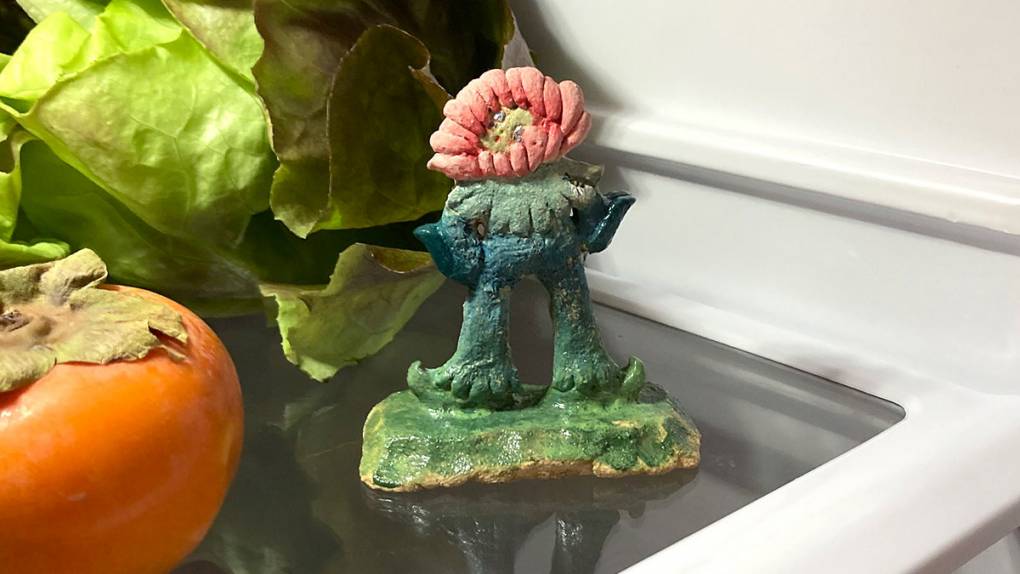
"altTag": "Small figure of flower character on fridge shelf",
"isLoading": false,
"fetchFailed": false
},
"arts_13904164": {
"type": "attachments",
"id": "arts_13904164",
"meta": {
"index": "attachments_1716263798",
"site": "arts",
"id": "13904164",
"found": true
},
"parent": 13904163,
"imgSizes": {
"twentyfourteen-full-width": {
"file": "https://ww2.kqed.org/app/uploads/sites/2/2021/10/ap21277038130471-fc7d042ece7dca65ed4356fa9b80b27dc3220b17-1038x576.jpg",
"width": 1038,
"mimeType": "image/jpeg",
"height": 576
},
"thumbnail": {
"file": "https://ww2.kqed.org/app/uploads/sites/2/2021/10/ap21277038130471-fc7d042ece7dca65ed4356fa9b80b27dc3220b17-160x120.jpg",
"width": 160,
"mimeType": "image/jpeg",
"height": 120
},
"post-thumbnail": {
"file": "https://ww2.kqed.org/app/uploads/sites/2/2021/10/ap21277038130471-fc7d042ece7dca65ed4356fa9b80b27dc3220b17-672x372.jpg",
"width": 672,
"mimeType": "image/jpeg",
"height": 372
},
"kqedFullSize": {
"file": "https://ww2.kqed.org/app/uploads/sites/2/2021/10/ap21277038130471-fc7d042ece7dca65ed4356fa9b80b27dc3220b17-scaled.jpg",
"width": 2560,
"height": 1920
},
"2048x2048": {
"file": "https://ww2.kqed.org/app/uploads/sites/2/2021/10/ap21277038130471-fc7d042ece7dca65ed4356fa9b80b27dc3220b17-2048x1536.jpg",
"width": 2048,
"mimeType": "image/jpeg",
"height": 1536
},
"large": {
"file": "https://ww2.kqed.org/app/uploads/sites/2/2021/10/ap21277038130471-fc7d042ece7dca65ed4356fa9b80b27dc3220b17-1020x765.jpg",
"width": 1020,
"mimeType": "image/jpeg",
"height": 765
},
"1536x1536": {
"file": "https://ww2.kqed.org/app/uploads/sites/2/2021/10/ap21277038130471-fc7d042ece7dca65ed4356fa9b80b27dc3220b17-1536x1152.jpg",
"width": 1536,
"mimeType": "image/jpeg",
"height": 1152
},
"full-width": {
"file": "https://ww2.kqed.org/app/uploads/sites/2/2021/10/ap21277038130471-fc7d042ece7dca65ed4356fa9b80b27dc3220b17-1920x1440.jpg",
"width": 1920,
"mimeType": "image/jpeg",
"height": 1440
},
"medium": {
"file": "https://ww2.kqed.org/app/uploads/sites/2/2021/10/ap21277038130471-fc7d042ece7dca65ed4356fa9b80b27dc3220b17-800x600.jpg",
"width": 800,
"mimeType": "image/jpeg",
"height": 600
},
"medium_large": {
"file": "https://ww2.kqed.org/app/uploads/sites/2/2021/10/ap21277038130471-fc7d042ece7dca65ed4356fa9b80b27dc3220b17-768x576.jpg",
"width": 768,
"mimeType": "image/jpeg",
"height": 576
}
},
"publishDate": 1633375858,
"modified": 1633376328,
"caption": "The Facebook logo appears on screens at the Nasdaq MarketSite in New York's Times Square, March 2018.",
"description": "The Facebook logo appears on screens at the Nasdaq MarketSite in New York's Times Square, March 2018.",
"title": "The Facebook logo appears on screens at the Nasdaq MarketSite in New York's Times Square, March 2018.",
"credit": "AP Photo/Richard Drew, File",
"status": "inherit",
"altTag": null,
"isLoading": false,
"fetchFailed": false
},
"arts_13901355": {
"type": "attachments",
"id": "arts_13901355",
"meta": {
"index": "attachments_1716263798",
"site": "arts",
"id": "13901355",
"found": true
},
"parent": 13901335,
"imgSizes": {
"twentyfourteen-full-width": {
"file": "https://ww2.kqed.org/app/uploads/sites/2/2021/08/Screen-Shot-2021-08-16-at-12.45.49-PM-1038x576.png",
"width": 1038,
"mimeType": "image/png",
"height": 576
},
"thumbnail": {
"file": "https://ww2.kqed.org/app/uploads/sites/2/2021/08/Screen-Shot-2021-08-16-at-12.45.49-PM-160x101.png",
"width": 160,
"mimeType": "image/png",
"height": 101
},
"post-thumbnail": {
"file": "https://ww2.kqed.org/app/uploads/sites/2/2021/08/Screen-Shot-2021-08-16-at-12.45.49-PM-672x372.png",
"width": 672,
"mimeType": "image/png",
"height": 372
},
"kqedFullSize": {
"file": "https://ww2.kqed.org/app/uploads/sites/2/2021/08/Screen-Shot-2021-08-16-at-12.45.49-PM.png",
"width": 1936,
"height": 1218
},
"large": {
"file": "https://ww2.kqed.org/app/uploads/sites/2/2021/08/Screen-Shot-2021-08-16-at-12.45.49-PM-1020x642.png",
"width": 1020,
"mimeType": "image/png",
"height": 642
},
"1536x1536": {
"file": "https://ww2.kqed.org/app/uploads/sites/2/2021/08/Screen-Shot-2021-08-16-at-12.45.49-PM-1536x966.png",
"width": 1536,
"mimeType": "image/png",
"height": 966
},
"full-width": {
"file": "https://ww2.kqed.org/app/uploads/sites/2/2021/08/Screen-Shot-2021-08-16-at-12.45.49-PM-1920x1208.png",
"width": 1920,
"mimeType": "image/png",
"height": 1208
},
"medium": {
"file": "https://ww2.kqed.org/app/uploads/sites/2/2021/08/Screen-Shot-2021-08-16-at-12.45.49-PM-800x503.png",
"width": 800,
"mimeType": "image/png",
"height": 503
},
"medium_large": {
"file": "https://ww2.kqed.org/app/uploads/sites/2/2021/08/Screen-Shot-2021-08-16-at-12.45.49-PM-768x483.png",
"width": 768,
"mimeType": "image/png",
"height": 483
}
},
"publishDate": 1629146990,
"modified": 1629223279,
"caption": "Some Afghan artists are continuing to express themselves online, despite the threat of the Taliban.",
"description": "Some Afghan artists are continuing to express themselves online, despite the threat of the Taliban.",
"title": "Some Afghan artists are continuing to express themselves online, despite the threat of the Taliban.",
"credit": "Instagram/Shamsia Hassani",
"status": "inherit",
"altTag": null,
"isLoading": false,
"fetchFailed": false
},
"arts_13899847": {
"type": "attachments",
"id": "arts_13899847",
"meta": {
"index": "attachments_1716263798",
"site": "arts",
"id": "13899847",
"found": true
},
"parent": 13899846,
"imgSizes": {
"twentyfourteen-full-width": {
"file": "https://ww2.kqed.org/app/uploads/sites/2/2021/07/slife_105_unit_00803rc-4194c83c72611931c72f19f47f34b015d781d3d9-1038x576.jpg",
"width": 1038,
"mimeType": "image/jpeg",
"height": 576
},
"thumbnail": {
"file": "https://ww2.kqed.org/app/uploads/sites/2/2021/07/slife_105_unit_00803rc-4194c83c72611931c72f19f47f34b015d781d3d9-160x120.jpg",
"width": 160,
"mimeType": "image/jpeg",
"height": 120
},
"post-thumbnail": {
"file": "https://ww2.kqed.org/app/uploads/sites/2/2021/07/slife_105_unit_00803rc-4194c83c72611931c72f19f47f34b015d781d3d9-672x372.jpg",
"width": 672,
"mimeType": "image/jpeg",
"height": 372
},
"kqedFullSize": {
"file": "https://ww2.kqed.org/app/uploads/sites/2/2021/07/slife_105_unit_00803rc-4194c83c72611931c72f19f47f34b015d781d3d9-scaled-e1625247346157.jpg",
"width": 1920,
"height": 1440
},
"2048x2048": {
"file": "https://ww2.kqed.org/app/uploads/sites/2/2021/07/slife_105_unit_00803rc-4194c83c72611931c72f19f47f34b015d781d3d9-2048x1536.jpg",
"width": 2048,
"mimeType": "image/jpeg",
"height": 1536
},
"large": {
"file": "https://ww2.kqed.org/app/uploads/sites/2/2021/07/slife_105_unit_00803rc-4194c83c72611931c72f19f47f34b015d781d3d9-1020x765.jpg",
"width": 1020,
"mimeType": "image/jpeg",
"height": 765
},
"1536x1536": {
"file": "https://ww2.kqed.org/app/uploads/sites/2/2021/07/slife_105_unit_00803rc-4194c83c72611931c72f19f47f34b015d781d3d9-1536x1152.jpg",
"width": 1536,
"mimeType": "image/jpeg",
"height": 1152
},
"full-width": {
"file": "https://ww2.kqed.org/app/uploads/sites/2/2021/07/slife_105_unit_00803rc-4194c83c72611931c72f19f47f34b015d781d3d9-1920x1440.jpg",
"width": 1920,
"mimeType": "image/jpeg",
"height": 1440
},
"medium": {
"file": "https://ww2.kqed.org/app/uploads/sites/2/2021/07/slife_105_unit_00803rc-4194c83c72611931c72f19f47f34b015d781d3d9-800x600.jpg",
"width": 800,
"mimeType": "image/jpeg",
"height": 600
},
"medium_large": {
"file": "https://ww2.kqed.org/app/uploads/sites/2/2021/07/slife_105_unit_00803rc-4194c83c72611931c72f19f47f34b015d781d3d9-768x576.jpg",
"width": 768,
"mimeType": "image/jpeg",
"height": 576
}
},
"publishDate": 1625246158,
"modified": 1625247415,
"caption": "Brad Simon (Adam Demos) and Billie Connelly (Sarah Shahi) in 'Sex/Life' on Netflix.",
"description": "Brad Simon (Adam Demos) and Billie Connelly (Sarah Shahi) in 'Sex/Life' on Netflix.",
"title": "Brad Simon (Adam Demos) and Billie Connelly (Sarah Shahi) in 'Sex/Life' on Netflix.",
"credit": "Amanda Matlovich/Netflix",
"status": "inherit",
"altTag": "Brad Simon (Adam Demos) and Billie Connelly (Sarah Shahi) in 'Sex/Life' on Netflix.",
"isLoading": false,
"fetchFailed": false
},
"arts_13898972": {
"type": "attachments",
"id": "arts_13898972",
"meta": {
"index": "attachments_1716263798",
"site": "arts",
"id": "13898972",
"found": true
},
"parent": 13898932,
"imgSizes": {
"twentyfourteen-full-width": {
"file": "https://ww2.kqed.org/app/uploads/sites/2/2021/06/noah-adichie-1038x576.jpg",
"width": 1038,
"mimeType": "image/jpeg",
"height": 576
},
"thumbnail": {
"file": "https://ww2.kqed.org/app/uploads/sites/2/2021/06/noah-adichie-160x99.jpg",
"width": 160,
"mimeType": "image/jpeg",
"height": 99
},
"post-thumbnail": {
"file": "https://ww2.kqed.org/app/uploads/sites/2/2021/06/noah-adichie-672x372.jpg",
"width": 672,
"mimeType": "image/jpeg",
"height": 372
},
"kqedFullSize": {
"file": "https://ww2.kqed.org/app/uploads/sites/2/2021/06/noah-adichie-scaled.jpg",
"width": 2560,
"height": 1584
},
"2048x2048": {
"file": "https://ww2.kqed.org/app/uploads/sites/2/2021/06/noah-adichie-2048x1267.jpg",
"width": 2048,
"mimeType": "image/jpeg",
"height": 1267
},
"large": {
"file": "https://ww2.kqed.org/app/uploads/sites/2/2021/06/noah-adichie-1020x631.jpg",
"width": 1020,
"mimeType": "image/jpeg",
"height": 631
},
"1536x1536": {
"file": "https://ww2.kqed.org/app/uploads/sites/2/2021/06/noah-adichie-1536x951.jpg",
"width": 1536,
"mimeType": "image/jpeg",
"height": 951
},
"full-width": {
"file": "https://ww2.kqed.org/app/uploads/sites/2/2021/06/noah-adichie-1920x1188.jpg",
"width": 1920,
"mimeType": "image/jpeg",
"height": 1188
},
"medium": {
"file": "https://ww2.kqed.org/app/uploads/sites/2/2021/06/noah-adichie-800x495.jpg",
"width": 800,
"mimeType": "image/jpeg",
"height": 495
},
"medium_large": {
"file": "https://ww2.kqed.org/app/uploads/sites/2/2021/06/noah-adichie-768x475.jpg",
"width": 768,
"mimeType": "image/jpeg",
"height": 475
}
},
"publishDate": 1623962647,
"modified": 1623962849,
"caption": "Trevor Noah at the Grammys in March 2021, and Chimamanda Ngozi Adichie at Paris Fashion Week in January 2020.",
"description": "Trevor Noah at the Grammys in March 2021, and Chimamanda Ngozi Adichie at Paris Fashion Week in January 2020.",
"title": "Trevor Noah at the Grammys in March 2021, and Chimamanda Ngozi Adichie at Paris Fashion Week in January 2020.",
"credit": "Kevin Winter/Getty Images for The Recording Academy / Francois Durand/Getty Images for Dior",
"status": "inherit",
"altTag": "Trevor Noah at the Grammys in March 2021, and Chimamanda Ngozi Adichie at Paris Fashion Week in January 2020.",
"isLoading": false,
"fetchFailed": false
},
"arts_13897336": {
"type": "attachments",
"id": "arts_13897336",
"meta": {
"index": "attachments_1716263798",
"site": "arts",
"id": "13897336",
"found": true
},
"parent": 13897329,
"imgSizes": {
"twentyfourteen-full-width": {
"file": "https://ww2.kqed.org/app/uploads/sites/2/2021/05/annie-spratt-5psJeebVp9o-unsplash-1038x576.jpg",
"width": 1038,
"mimeType": "image/jpeg",
"height": 576
},
"thumbnail": {
"file": "https://ww2.kqed.org/app/uploads/sites/2/2021/05/annie-spratt-5psJeebVp9o-unsplash-160x107.jpg",
"width": 160,
"mimeType": "image/jpeg",
"height": 107
},
"post-thumbnail": {
"file": "https://ww2.kqed.org/app/uploads/sites/2/2021/05/annie-spratt-5psJeebVp9o-unsplash-672x372.jpg",
"width": 672,
"mimeType": "image/jpeg",
"height": 372
},
"kqedFullSize": {
"file": "https://ww2.kqed.org/app/uploads/sites/2/2021/05/annie-spratt-5psJeebVp9o-unsplash-scaled.jpg",
"width": 2560,
"height": 1713
},
"2048x2048": {
"file": "https://ww2.kqed.org/app/uploads/sites/2/2021/05/annie-spratt-5psJeebVp9o-unsplash-2048x1370.jpg",
"width": 2048,
"mimeType": "image/jpeg",
"height": 1370
},
"large": {
"file": "https://ww2.kqed.org/app/uploads/sites/2/2021/05/annie-spratt-5psJeebVp9o-unsplash-1020x682.jpg",
"width": 1020,
"mimeType": "image/jpeg",
"height": 682
},
"1536x1536": {
"file": "https://ww2.kqed.org/app/uploads/sites/2/2021/05/annie-spratt-5psJeebVp9o-unsplash-1536x1028.jpg",
"width": 1536,
"mimeType": "image/jpeg",
"height": 1028
},
"full-width": {
"file": "https://ww2.kqed.org/app/uploads/sites/2/2021/05/annie-spratt-5psJeebVp9o-unsplash-1920x1284.jpg",
"width": 1920,
"mimeType": "image/jpeg",
"height": 1284
},
"medium": {
"file": "https://ww2.kqed.org/app/uploads/sites/2/2021/05/annie-spratt-5psJeebVp9o-unsplash-800x535.jpg",
"width": 800,
"mimeType": "image/jpeg",
"height": 535
},
"medium_large": {
"file": "https://ww2.kqed.org/app/uploads/sites/2/2021/05/annie-spratt-5psJeebVp9o-unsplash-768x514.jpg",
"width": 768,
"mimeType": "image/jpeg",
"height": 514
}
},
"publishDate": 1621369082,
"modified": 1621369147,
"caption": null,
"description": null,
"title": "annie-spratt-5psJeebVp9o-unsplash",
"credit": "Annie Spratt/ Unsplash",
"status": "inherit",
"altTag": null,
"isLoading": false,
"fetchFailed": false
},
"arts_13895399": {
"type": "attachments",
"id": "arts_13895399",
"meta": {
"index": "attachments_1716263798",
"site": "arts",
"id": "13895399",
"found": true
},
"parent": 13895379,
"imgSizes": {
"twentyfourteen-full-width": {
"file": "https://ww2.kqed.org/app/uploads/sites/2/2021/04/GettyImages-848664320-1038x576.jpg",
"width": 1038,
"mimeType": "image/jpeg",
"height": 576
},
"thumbnail": {
"file": "https://ww2.kqed.org/app/uploads/sites/2/2021/04/GettyImages-848664320-160x107.jpg",
"width": 160,
"mimeType": "image/jpeg",
"height": 107
},
"post-thumbnail": {
"file": "https://ww2.kqed.org/app/uploads/sites/2/2021/04/GettyImages-848664320-672x372.jpg",
"width": 672,
"mimeType": "image/jpeg",
"height": 372
},
"kqedFullSize": {
"file": "https://ww2.kqed.org/app/uploads/sites/2/2021/04/GettyImages-848664320-scaled.jpg",
"width": 2560,
"height": 1707
},
"2048x2048": {
"file": "https://ww2.kqed.org/app/uploads/sites/2/2021/04/GettyImages-848664320-2048x1365.jpg",
"width": 2048,
"mimeType": "image/jpeg",
"height": 1365
},
"large": {
"file": "https://ww2.kqed.org/app/uploads/sites/2/2021/04/GettyImages-848664320-1020x680.jpg",
"width": 1020,
"mimeType": "image/jpeg",
"height": 680
},
"1536x1536": {
"file": "https://ww2.kqed.org/app/uploads/sites/2/2021/04/GettyImages-848664320-1536x1024.jpg",
"width": 1536,
"mimeType": "image/jpeg",
"height": 1024
},
"full-width": {
"file": "https://ww2.kqed.org/app/uploads/sites/2/2021/04/GettyImages-848664320-1920x1280.jpg",
"width": 1920,
"mimeType": "image/jpeg",
"height": 1280
},
"medium": {
"file": "https://ww2.kqed.org/app/uploads/sites/2/2021/04/GettyImages-848664320-800x533.jpg",
"width": 800,
"mimeType": "image/jpeg",
"height": 533
},
"medium_large": {
"file": "https://ww2.kqed.org/app/uploads/sites/2/2021/04/GettyImages-848664320-768x512.jpg",
"width": 768,
"mimeType": "image/jpeg",
"height": 512
}
},
"publishDate": 1617912905,
"modified": 1617912983,
"caption": "Bassnectar performs at the 2017 Meadows Music and Arts Festival, New York City. ",
"description": "Bassnectar performs at the 2017 Meadows Music and Arts Festival, New York City. ",
"title": "Bassnectar performs at the 2017 Meadows Music and Arts Festival, New York City.",
"credit": "Mike Coppola/Getty Images",
"status": "inherit",
"altTag": "Bassnectar performs at the 2017 Meadows Music and Arts Festival, New York City.",
"isLoading": false,
"fetchFailed": false
},
"arts_13894315": {
"type": "attachments",
"id": "arts_13894315",
"meta": {
"index": "attachments_1716263798",
"site": "arts",
"id": "13894315",
"found": true
},
"parent": 13894169,
"imgSizes": {
"twentyfourteen-full-width": {
"file": "https://ww2.kqed.org/app/uploads/sites/2/2021/03/PunkHouseOakland-1038x576.jpg",
"width": 1038,
"mimeType": "image/jpeg",
"height": 576
},
"thumbnail": {
"file": "https://ww2.kqed.org/app/uploads/sites/2/2021/03/PunkHouseOakland-160x99.jpg",
"width": 160,
"mimeType": "image/jpeg",
"height": 99
},
"post-thumbnail": {
"file": "https://ww2.kqed.org/app/uploads/sites/2/2021/03/PunkHouseOakland-672x372.jpg",
"width": 672,
"mimeType": "image/jpeg",
"height": 372
},
"kqedFullSize": {
"file": "https://ww2.kqed.org/app/uploads/sites/2/2021/03/PunkHouseOakland-scaled-e1616186881703.jpg",
"width": 1920,
"height": 1188
},
"2048x2048": {
"file": "https://ww2.kqed.org/app/uploads/sites/2/2021/03/PunkHouseOakland-2048x1267.jpg",
"width": 2048,
"mimeType": "image/jpeg",
"height": 1267
},
"large": {
"file": "https://ww2.kqed.org/app/uploads/sites/2/2021/03/PunkHouseOakland-1020x631.jpg",
"width": 1020,
"mimeType": "image/jpeg",
"height": 631
},
"1536x1536": {
"file": "https://ww2.kqed.org/app/uploads/sites/2/2021/03/PunkHouseOakland-1536x951.jpg",
"width": 1536,
"mimeType": "image/jpeg",
"height": 951
},
"full-width": {
"file": "https://ww2.kqed.org/app/uploads/sites/2/2021/03/PunkHouseOakland-1920x1188.jpg",
"width": 1920,
"mimeType": "image/jpeg",
"height": 1188
},
"medium": {
"file": "https://ww2.kqed.org/app/uploads/sites/2/2021/03/PunkHouseOakland-800x495.jpg",
"width": 800,
"mimeType": "image/jpeg",
"height": 495
},
"medium_large": {
"file": "https://ww2.kqed.org/app/uploads/sites/2/2021/03/PunkHouseOakland-768x475.jpg",
"width": 768,
"mimeType": "image/jpeg",
"height": 475
}
},
"publishDate": 1616186204,
"modified": 1616523099,
"caption": "(L-R) Orlando and Tanya (photo by Patti Tuori); Mike Matusio, Elizabeth D.",
"description": "(L-R) Orlando and Tanya (photo by Patti Tuori); Mike Matusio, Elizabeth D.",
"title": "Oakland punks in the '90s. (L-R) Orlando and Tanya (photo by Patti Tuori); Mike Matusio, Elizabeth D.",
"credit": "Instagram/@punkhouseoakland",
"status": "inherit",
"altTag": "Oakland punks in the '90s. (L-R) Orlando and Tanya (photo by Patti Tuori); Mike Matusio, Elizabeth D.",
"isLoading": false,
"fetchFailed": false
},
"arts_13892761": {
"type": "attachments",
"id": "arts_13892761",
"meta": {
"index": "attachments_1716263798",
"site": "arts",
"id": "13892761",
"found": true
},
"parent": 13892744,
"imgSizes": {
"twentyfourteen-full-width": {
"file": "https://ww2.kqed.org/app/uploads/sites/2/2021/02/GettyImages-2921125-1038x576.jpg",
"width": 1038,
"mimeType": "image/jpeg",
"height": 576
},
"thumbnail": {
"file": "https://ww2.kqed.org/app/uploads/sites/2/2021/02/GettyImages-2921125-160x112.jpg",
"width": 160,
"mimeType": "image/jpeg",
"height": 112
},
"post-thumbnail": {
"file": "https://ww2.kqed.org/app/uploads/sites/2/2021/02/GettyImages-2921125-672x372.jpg",
"width": 672,
"mimeType": "image/jpeg",
"height": 372
},
"kqedFullSize": {
"file": "https://ww2.kqed.org/app/uploads/sites/2/2021/02/GettyImages-2921125-scaled.jpg",
"width": 2560,
"height": 1789
},
"2048x2048": {
"file": "https://ww2.kqed.org/app/uploads/sites/2/2021/02/GettyImages-2921125-2048x1432.jpg",
"width": 2048,
"mimeType": "image/jpeg",
"height": 1432
},
"large": {
"file": "https://ww2.kqed.org/app/uploads/sites/2/2021/02/GettyImages-2921125-1020x713.jpg",
"width": 1020,
"mimeType": "image/jpeg",
"height": 713
},
"1536x1536": {
"file": "https://ww2.kqed.org/app/uploads/sites/2/2021/02/GettyImages-2921125-1536x1074.jpg",
"width": 1536,
"mimeType": "image/jpeg",
"height": 1074
},
"full-width": {
"file": "https://ww2.kqed.org/app/uploads/sites/2/2021/02/GettyImages-2921125-1920x1342.jpg",
"width": 1920,
"mimeType": "image/jpeg",
"height": 1342
},
"medium": {
"file": "https://ww2.kqed.org/app/uploads/sites/2/2021/02/GettyImages-2921125-800x559.jpg",
"width": 800,
"mimeType": "image/jpeg",
"height": 559
},
"medium_large": {
"file": "https://ww2.kqed.org/app/uploads/sites/2/2021/02/GettyImages-2921125-768x537.jpg",
"width": 768,
"mimeType": "image/jpeg",
"height": 537
}
},
"publishDate": 1613158025,
"modified": 1613158177,
"caption": "Justin Timberlake and Janet Jackson, pre-wardrobe malfunction, during the 2004 Super Bowl halftime show in Houston.",
"description": "Justin Timberlake and Janet Jackson, pre-wardrobe malfunction, during the 2004 Super Bowl halftime show in Houston.",
"title": "Justin Timberlake and Janet Jackson, pre-wardrobe malfunction, during the 2004 Super Bowl halftime show in Houston.",
"credit": "Donald Miralle/Getty Images",
"status": "inherit",
"altTag": "Justin Timberlake and Janet Jackson, pre-wardrobe malfunction, during the 2004 Super Bowl halftime show in Houston.",
"isLoading": false,
"fetchFailed": false
},
"arts_13888849": {
"type": "attachments",
"id": "arts_13888849",
"meta": {
"index": "attachments_1716263798",
"site": "arts",
"id": "13888849",
"found": true
},
"parent": 13888816,
"imgSizes": {
"twentyfourteen-full-width": {
"file": "https://ww2.kqed.org/app/uploads/sites/2/2020/11/sandy-millar-qgQ04-4MRP0-unsplash-1038x576.jpg",
"width": 1038,
"mimeType": "image/jpeg",
"height": 576
},
"thumbnail": {
"file": "https://ww2.kqed.org/app/uploads/sites/2/2020/11/sandy-millar-qgQ04-4MRP0-unsplash-160x107.jpg",
"width": 160,
"mimeType": "image/jpeg",
"height": 107
},
"post-thumbnail": {
"file": "https://ww2.kqed.org/app/uploads/sites/2/2020/11/sandy-millar-qgQ04-4MRP0-unsplash-672x372.jpg",
"width": 672,
"mimeType": "image/jpeg",
"height": 372
},
"kqedFullSize": {
"file": "https://ww2.kqed.org/app/uploads/sites/2/2020/11/sandy-millar-qgQ04-4MRP0-unsplash-scaled.jpg",
"width": 2560,
"height": 1707
},
"2048x2048": {
"file": "https://ww2.kqed.org/app/uploads/sites/2/2020/11/sandy-millar-qgQ04-4MRP0-unsplash-2048x1365.jpg",
"width": 2048,
"mimeType": "image/jpeg",
"height": 1365
},
"large": {
"file": "https://ww2.kqed.org/app/uploads/sites/2/2020/11/sandy-millar-qgQ04-4MRP0-unsplash-1020x680.jpg",
"width": 1020,
"mimeType": "image/jpeg",
"height": 680
},
"1536x1536": {
"file": "https://ww2.kqed.org/app/uploads/sites/2/2020/11/sandy-millar-qgQ04-4MRP0-unsplash-1536x1024.jpg",
"width": 1536,
"mimeType": "image/jpeg",
"height": 1024
},
"full-width": {
"file": "https://ww2.kqed.org/app/uploads/sites/2/2020/11/sandy-millar-qgQ04-4MRP0-unsplash-1920x1280.jpg",
"width": 1920,
"mimeType": "image/jpeg",
"height": 1280
},
"medium": {
"file": "https://ww2.kqed.org/app/uploads/sites/2/2020/11/sandy-millar-qgQ04-4MRP0-unsplash-800x533.jpg",
"width": 800,
"mimeType": "image/jpeg",
"height": 533
},
"medium_large": {
"file": "https://ww2.kqed.org/app/uploads/sites/2/2020/11/sandy-millar-qgQ04-4MRP0-unsplash-768x512.jpg",
"width": 768,
"mimeType": "image/jpeg",
"height": 512
}
},
"publishDate": 1604435920,
"modified": 1604435992,
"caption": "It's the very gentle nose of a bunny. Just because.",
"description": "It's the very gentle nose of a bunny. Just because.",
"title": "It's the very gentle nose of a bunny. Just because.",
"credit": "Sandy Millar/ Unsplash",
"status": "inherit",
"isLoading": false,
"fetchFailed": false
}
},
"audioPlayerReducer": {
"postId": "stream_live",
"isPaused": true,
"isPlaying": false,
"pfsActive": false,
"pledgeModalIsOpen": true,
"playerDrawerIsOpen": false,
"liveAudioPlayStartedAt": 0,
"liveAudioPlayContext": ""
},
"authorsReducer": {
"byline_arts_13915004": {
"type": "authors",
"id": "byline_arts_13915004",
"meta": {
"override": true
},
"slug": "byline_arts_13915004",
"name": "Iris Kwok",
"isLoading": false
},
"byline_arts_13912681": {
"type": "authors",
"id": "byline_arts_13912681",
"meta": {
"override": true
},
"slug": "byline_arts_13912681",
"name": "Evan Sun",
"isLoading": false
},
"byline_arts_13904163": {
"type": "authors",
"id": "byline_arts_13904163",
"meta": {
"override": true
},
"slug": "byline_arts_13904163",
"name": "The Associated Press",
"isLoading": false
},
"byline_arts_13899846": {
"type": "authors",
"id": "byline_arts_13899846",
"meta": {
"override": true
},
"slug": "byline_arts_13899846",
"name": "Stephen Thompson",
"isLoading": false
},
"byline_arts_13897329": {
"type": "authors",
"id": "byline_arts_13897329",
"meta": {
"override": true
},
"slug": "byline_arts_13897329",
"name": "Miles Parks",
"isLoading": false
},
"shotchkiss": {
"type": "authors",
"id": "61",
"meta": {
"index": "authors_1716337520",
"id": "61",
"found": true
},
"name": "Sarah Hotchkiss",
"firstName": "Sarah",
"lastName": "Hotchkiss",
"slug": "shotchkiss",
"email": "shotchkiss@kqed.org",
"display_author_email": true,
"staff_mastheads": [
"arts"
],
"title": "Senior Editor",
"bio": "Sarah Hotchkiss is a San Francisco \u003ca href=\"http://www.sarahhotchkiss.com\">artist\u003c/a> and arts writer. In 2019, she received the Dorothea & Leo Rabkin Foundation grant for visual art journalism and in 2020 she received a Society of Professional Journalists, Northern California award for excellence in arts and culture reporting.",
"avatar": "https://secure.gravatar.com/avatar/bc662df144b3d27fd8b1b6f1c2a420d34e91e53154d411bb7ad353cc8b6cea8d?s=600&d=blank&r=g",
"twitter": null,
"bluesky": null,
"facebook": null,
"instagram": null,
"linkedin": null,
"sites": [
{
"site": "",
"roles": [
"editor"
]
},
{
"site": "arts",
"roles": [
"Contributor",
"administrator"
]
},
{
"site": "artschool",
"roles": [
"administrator"
]
},
{
"site": "news",
"roles": [
"editor"
]
},
{
"site": "pop",
"roles": [
"administrator"
]
},
{
"site": "bayareabites",
"roles": [
"editor"
]
},
{
"site": "spark",
"roles": [
"editor"
]
},
{
"site": "checkplease",
"roles": [
"editor"
]
}
],
"headData": {
"title": "Sarah Hotchkiss | KQED",
"description": "Senior Editor",
"ogImgSrc": "https://secure.gravatar.com/avatar/bc662df144b3d27fd8b1b6f1c2a420d34e91e53154d411bb7ad353cc8b6cea8d?s=600&d=blank&r=g",
"twImgSrc": "https://secure.gravatar.com/avatar/bc662df144b3d27fd8b1b6f1c2a420d34e91e53154d411bb7ad353cc8b6cea8d?s=600&d=blank&r=g"
},
"isLoading": false,
"link": "/author/shotchkiss"
},
"ralexandra": {
"type": "authors",
"id": "11242",
"meta": {
"index": "authors_1716337520",
"id": "11242",
"found": true
},
"name": "Rae Alexandra",
"firstName": "Rae",
"lastName": "Alexandra",
"slug": "ralexandra",
"email": "ralexandra@kqed.org",
"display_author_email": true,
"staff_mastheads": [],
"title": "Reporter/Producer",
"bio": "Rae Alexandra is a Reporter/Producer for KQED Arts & Culture, and the creator/author of the \u003ca href=\"https://www.kqed.org/arts/program/rebel-girls-from-bay-area-history\">Rebel Girls From Bay Area History\u003c/a> and \u003ca href=\"https://www.kqed.org/bizarrebayarea\">Bizarre Bay Area\u003c/a> series. Her debut book, \u003ca href=\"https://citylights.com/politics-current-events-history/unsung-heroines35-women-who-changed/\">Unsung Heroines: 35 Women Who Changed the Bay Area\u003c/a> was published by City Lights in March 2026. In 2023, Rae was awarded an SPJ Excellence in Journalism Award for Arts & Culture. Rae was born and raised in Wales and subsequently — even after two decades in Northern California — still uses phrases that regularly baffle her coworkers.",
"avatar": "https://secure.gravatar.com/avatar/edfee8176c80cc0a382b051190f5341997df378a934a5774dcb0977732dfd401?s=600&d=blank&r=g",
"twitter": null,
"bluesky": null,
"facebook": null,
"instagram": null,
"linkedin": null,
"sites": [
{
"site": "arts",
"roles": [
"subscriber"
]
},
{
"site": "news",
"roles": [
"subscriber"
]
},
{
"site": "pop",
"roles": [
"subscriber"
]
},
{
"site": "bayareabites",
"roles": [
"subscriber"
]
},
{
"site": "science",
"roles": [
"subscriber"
]
}
],
"headData": {
"title": "Rae Alexandra | KQED",
"description": "Reporter/Producer",
"ogImgSrc": "https://secure.gravatar.com/avatar/edfee8176c80cc0a382b051190f5341997df378a934a5774dcb0977732dfd401?s=600&d=blank&r=g",
"twImgSrc": "https://secure.gravatar.com/avatar/edfee8176c80cc0a382b051190f5341997df378a934a5774dcb0977732dfd401?s=600&d=blank&r=g"
},
"isLoading": false,
"link": "/author/ralexandra"
}
},
"pagesReducer": {
"arts_tag_instagram": {
"type": "terms",
"id": "arts_2098",
"meta": {
"index": "terms_1716263798",
"site": "arts",
"id": "2098",
"score": 8.557362
},
"featImg": null,
"name": "instagram",
"description": null,
"taxonomy": "tag",
"headData": {
"twImgId": null,
"twTitle": null,
"ogTitle": null,
"ogImgId": null,
"twDescription": null,
"description": null,
"title": "instagram Archives | KQED Arts",
"ogDescription": null
},
"ttid": 2110,
"slug": "instagram",
"isLoading": false,
"title": "instagram",
"pageMeta": {
"site": "arts",
"WpPageTemplate": "page-topic-editorial",
"currentPage": 2
},
"blocks": [
{
"blockName": "kqed/post-list",
"attrs": {
"layout": "cardArticle2",
"query": "posts/arts?tag=instagram",
"seeMore": false,
"paginated": true,
"page": 2
}
},
{
"blockName": "kqed/ad"
}
]
}
},
"pfsSessionReducer": {},
"postsReducer": {
"stream_live": {
"type": "live",
"id": "stream_live",
"audioUrl": "https://streams.kqed.org/kqedradio",
"title": "Live Stream",
"excerpt": "Live Stream information currently unavailable.",
"link": "/radio",
"featImg": "",
"label": {
"name": "KQED Live",
"link": "/"
}
},
"stream_kqedNewscast": {
"type": "posts",
"id": "stream_kqedNewscast",
"audioUrl": "https://www.kqed.org/.stream/anon/radio/RDnews/newscast.mp3?_=1",
"title": "KQED Newscast",
"featImg": "",
"label": {
"name": "88.5 FM",
"link": "/"
}
},
"arts_13915004": {
"type": "posts",
"id": "arts_13915004",
"meta": {
"index": "posts_1716263798",
"site": "arts",
"id": "13915004",
"score": null,
"sort": [
1655491889000
]
},
"parent": 0,
"labelTerm": {},
"blocks": [],
"publishDate": 1655491889,
"format": "standard",
"title": "How Alyssa Wang Became the Bay Area’s Queen of Boba",
"headTitle": "How Alyssa Wang Became the Bay Area’s Queen of Boba | KQED",
"content": "\u003cp>\u003cspan style=\"font-weight: 400\">“Every week, I would have piano lessons, and if I did well, my teacher would give me a sticker. If I got a sticker, then my mom would take me to Tapioca Express, ” says Alyssa Wang, who goes by the online name \u003c/span>\u003ca href=\"https://www.youtube.com/c/feedmeimei/videos\">\u003cspan style=\"font-weight: 400\">Feed Meimei\u003c/span>\u003c/a>\u003cspan style=\"font-weight: 400\">. “So I’ve always loved boba since I was a kid.” \u003c/span>\u003c/p>\n\u003cp>\u003cspan style=\"font-weight: 400\">For Asian Americans of a certain generation, this kind of childhood nostalgia is commonplace. But Wang, 27, is one of the only ones who has transformed her boba love into a career. She is the internet’s likely first full-time boba content creator. \u003c/span>\u003c/p>\n\u003cp>\u003cspan style=\"font-weight: 400\">Today, Feed Meimei boasts more than 605,000 subscribers on Youtube, 737,000 followers on her Tiktok and 242,000 followers on Instagram. Over the past five years, Wang has made more than 70 Youtube videos documenting her countless visits to Bay Area boba shops. Wang’s favorite boba shop in the Bay Area, \u003c/span>\u003ca href=\"https://www.urbanritualcafe.com/\">\u003cspan style=\"font-weight: 400\">Urban Ritual\u003c/span>\u003c/a>\u003cspan style=\"font-weight: 400\">, even named a drink after her. The drink is currently one of the store’s top three sellers, according to founder David Zhou. Whenever Wang posts about Urban Ritual, the store usually sees a 10 percent uptick in sales.\u003c/span>\u003c/p>\n\u003cp>\u003cspan style=\"font-weight: 400\">In that sense, Wang has become one of the most powerful people in the Bay Area boba scene—a kingmaker of sorts whose videos, many which are filmed inside her car, often wind up having a real impact on a small shop’s business fortunes. It’s a future that Wang never could have imagined when she was a college student posting food recommendations just for fun. \u003c/span>\u003c/p>\n\u003ch2>From Software Engineer to Social Media Creator\u003c/h2>\n\u003cp>\u003cspan style=\"font-weight: 400\">Wang’s food blogging journey began in 2013 when she was a freshman at UC Davis studying computer science and psychology. As a hobby, she made @davis_eats, an Instagram account documenting her adventures exploring the college town’s food scene. \u003c/span>\u003c/p>\n\u003cp>[ad fullwidth]\u003c/p>\n\u003cp>\u003cspan style=\"font-weight: 400\">After graduating, Wang moved back to the Bay Area to live with her parents and began working as a software engineer. While she enjoyed coding, she found that she didn’t like it enough to do it eight hours a day. What she did love was building her food Instagram, which she renamed \u003ca href=\"https://www.instagram.com/feedmeimei/?hl=en\">Feed Meimei\u003c/a>. \u003c/span>\u003c/p>\n\u003cp>\u003cspan style=\"font-weight: 400\">“I found myself at work just being like, ‘I really wish I could just keep doing that. I want to go out and be shooting content at restaurants,’” Wang says. “It took months for me to come to terms with the fact that I was going to take this untraditional route. Growing up, I always thought I would be a doctor, lawyer or engineer, the classic jobs that Asian parents want you to do.” \u003c/span>\u003c/p>\n\u003cfigure id=\"attachment_13915017\" class=\"wp-caption alignnone\" style=\"max-width: 1920px\">\u003cimg loading=\"lazy\" decoding=\"async\" class=\"size-full wp-image-13915017\" src=\"https://ww2.kqed.org/app/uploads/sites/2/2022/06/feedmeimei_boba-scaled.jpg\" alt=\"A woman sits in cafe booth with a huge stack of oversized cups of boba in front of her.\" width=\"1920\" height=\"2560\" srcset=\"https://cdn.kqed.org/wp-content/uploads/sites/2/2022/06/feedmeimei_boba-scaled.jpg 1920w, https://cdn.kqed.org/wp-content/uploads/sites/2/2022/06/feedmeimei_boba-800x1067.jpg 800w, https://cdn.kqed.org/wp-content/uploads/sites/2/2022/06/feedmeimei_boba-1020x1360.jpg 1020w, https://cdn.kqed.org/wp-content/uploads/sites/2/2022/06/feedmeimei_boba-160x213.jpg 160w, https://cdn.kqed.org/wp-content/uploads/sites/2/2022/06/feedmeimei_boba-768x1024.jpg 768w, https://cdn.kqed.org/wp-content/uploads/sites/2/2022/06/feedmeimei_boba-1152x1536.jpg 1152w, https://cdn.kqed.org/wp-content/uploads/sites/2/2022/06/feedmeimei_boba-1536x2048.jpg 1536w\" sizes=\"(max-width: 1920px) 100vw, 1920px\">\u003cfigcaption class=\"wp-caption-text\">Wang is likely the internet’s first full-time boba influencer. \u003ccite>(Alyssa Wang / @feedmeimei)\u003c/cite>\u003c/figcaption>\u003c/figure>\n\u003cp>\u003cspan style=\"font-weight: 400\">Wang decided at the end of 2018 to quit her job in tech to pursue content creation full time, a decision she says was partially inspired by the path of fellow UC Davis grad TJ Lee, known online as \u003c/span>\u003ca href=\"https://www.youtube.com/c/cupoftj\">\u003cspan style=\"font-weight: 400\">Cup of TJ\u003c/span>\u003c/a>\u003cspan style=\"font-weight: 400\">. Wang had saved up money from her job and didn’t have other major financial responsibilities at the time. \u003c/span>\u003c/p>\n\u003cp>\u003cspan style=\"font-weight: 400\">She hit the ground running in January 2019, churning out two Youtube videos per week and doing everything from storyboarding, preparing drinks and food, shooting and editing. On Instagram, she started making original content six times per week. In June 2019, she \u003ca href=\"https://www.tiktok.com/@feedmeimei?lang=en\">joined TikTok\u003c/a> and started posting there as well.\u003c/span>\u003c/p>\n\u003cp>\u003cspan style=\"font-weight: 400\">“I was just like, go, go, go, just put my head down and work,” Wang says. “I was very much in the mindset of like, ‘I’m just going to work, I’m going to upload, and as long as I keep going, then eventually I will be able to succeed.” \u003c/span>\u003c/p>\n\u003ch2>Combatting Creator Burnout\u003c/h2>\n\u003cp>\u003cspan style=\"font-weight: 400\">It was unsustainable. At the end of 2019, she began to question why she was “working so hard towards something that was never going to happen.” So she took a break from content creation, a field where likes and views have made it notoriously easy to compare your own journey to those of others. \u003c/span>\u003c/p>\n\u003cp>\u003cspan style=\"font-weight: 400\">Then, the pandemic hit. While tinkering with unpublished footage, at first out of sheer boredom, Wang rediscovered her love for making videos about food. She slowly began posting on Youtube again, just once a week. In 2021, she began experimenting with making boba from scratch and forming it into different characters. Those turned out to be her first “viral” moments. \u003c/span>\u003c/p>\n\u003cp>https://www.instagram.com/p/CbeDBwFF_Rw/\u003c/p>\n\u003cp>\u003cspan style=\"font-weight: 400\">In a video with 1.2 million views on TikTok and 5.7 million views on Youtube Shorts, Wang melts down a strawberry Melona bar to make red panda-shaped tapioca pearls inspired by Pixar’s \u003c/span>\u003ci>\u003cspan style=\"font-weight: 400\">Turning Red\u003c/span>\u003c/i>\u003cspan style=\"font-weight: 400\">. In another TikTok video with 5.9 million views, she makes \u003ca href=\"https://www.youtube.com/shorts/lZ-G3ASbLAc\">cotton-candy pink, Kirby-shaped pearls\u003c/a>. \u003c/span>\u003c/p>\n\u003cp>\u003cspan style=\"font-weight: 400\">The success has obviously helped, but being a full-time creator for more than three years has also taught Wang the importance of practicing self-care. She has learned to liberally use Youtube’s “don’t recommend channel” feature to prevent its algorithm from displaying other creators’ videos on her feed. It’s nothing personal—she’s ecstatic for their success—“but I also don’t want myself to feel like I’m not doing enough or I’m not happy where I am,” Wang says, “because I am happy.”\u003c/span>\u003c/p>\n\u003cp>\u003cspan style=\"font-weight: 400\">The other thing that has helped, Wang says, is that family support, particularly from her mom, has remained constant. And that has made all the difference.\u003c/span>\u003c/p>\n\u003cp>\u003cspan style=\"font-weight: 400\">Wang’s mom even \u003c/span>\u003cspan style=\"font-weight: 400\">makes\u003c/span>\u003cspan style=\"font-weight: 400\"> frequent, highly-requested appearances in videos. (She has been featured in more than 60 of them so far.) The mother and daughter’s \u003ca href=\"https://www.youtube.com/watch?v=IyB1W1tgHUw\">matching levels of enthusiasm for food\u003c/a> make for lighthearted entertainment that some viewers have said reminds them of their interactions with their own family. \u003c/span>\u003c/p>\n\u003cp>https://www.youtube.com/watch?v=7bGRQJzAKZw\u003c/p>\n\u003cp> \u003c/p>\n\u003cp>\u003cspan style=\"font-weight: 400\">“Coming from an Asian upbringing, usually families aren’t super expressive with their emotions,” Wang says. “But, food, it was always something that could bring us together.” \u003c/span>\u003c/p>\n\u003ch2>A Queen of Many Domains\u003c/h2>\n\u003cp>\u003cspan style=\"font-weight: 400\">While some of Wang’s subscribers may have originally come across her channel due to her viral boba videos, her positivity keeps them coming back for more—no matter the video’s subject. \u003c/span>\u003c/p>\n\u003cp>\u003cspan style=\"font-weight: 400\">Her well-received forays into making non-boba content are proof. She’s made food guides for the Bay Area, Taiwan, Japan, Toronto, Los Angeles, Hawaii and more. Her recent videos include a taste test and ranking of \u003ca href=\"https://www.youtube.com/watch?v=IyB1W1tgHUw\">every appetizer, dumpling and noodle dish at chain restaurant Din Tai Fung\u003c/a> alongside her mom. \u003c/span>\u003c/p>\n\u003cp>\u003cspan style=\"font-weight: 400\">Wang speaks to the camera directly, casually, as a friend. Seldom does she offer overt criticism. It’s what sets her, and other food influencers, apart from the professional food critics.\u003c/span>\u003c/p>\n\u003cfigure id=\"attachment_13915020\" class=\"wp-caption alignnone\" style=\"max-width: 2048px\">\u003cimg loading=\"lazy\" decoding=\"async\" class=\"size-full wp-image-13915020\" src=\"https://ww2.kqed.org/app/uploads/sites/2/2022/06/feedmeimei_icecream-scaled.jpg\" alt=\"A woman smiles holding a colorful, seven-scoop ice cream cone in each hand.\" width=\"2048\" height=\"2560\" srcset=\"https://cdn.kqed.org/wp-content/uploads/sites/2/2022/06/feedmeimei_icecream-scaled.jpg 2048w, https://cdn.kqed.org/wp-content/uploads/sites/2/2022/06/feedmeimei_icecream-800x1000.jpg 800w, https://cdn.kqed.org/wp-content/uploads/sites/2/2022/06/feedmeimei_icecream-1020x1275.jpg 1020w, https://cdn.kqed.org/wp-content/uploads/sites/2/2022/06/feedmeimei_icecream-160x200.jpg 160w, https://cdn.kqed.org/wp-content/uploads/sites/2/2022/06/feedmeimei_icecream-768x960.jpg 768w, https://cdn.kqed.org/wp-content/uploads/sites/2/2022/06/feedmeimei_icecream-1229x1536.jpg 1229w, https://cdn.kqed.org/wp-content/uploads/sites/2/2022/06/feedmeimei_icecream-1638x2048.jpg 1638w, https://cdn.kqed.org/wp-content/uploads/sites/2/2022/06/feedmeimei_icecream-1920x2400.jpg 1920w\" sizes=\"(max-width: 2048px) 100vw, 2048px\">\u003cfigcaption class=\"wp-caption-text\">Feed Meimei has branched out beyond boba to post videos about other food-related topics like soup dumplings and ice cream. \u003ccite>(Alyssa Wang / @feedmeimei)\u003c/cite>\u003c/figcaption>\u003c/figure>\n\u003cp>\u003cspan style=\"font-weight: 400\">Sbe’s become somewhat of a local star, especially in the Bay Area’s boba scene. Baristas often tell her that customers use her videos as a guide for what to order, she says. She’s not fully used to the attention yet, and still finds it unreal that her subscribers will “sit there and watch me talk about food for, like, 20 minutes.” \u003c/span>\u003c/p>\n\u003cp>\u003cspan style=\"font-weight: 400\">[aside postID='arts_13904913,arts_13897410,arts_13908947']It’s been a successful endeavor so far, if the Feed Meimei team’s rapid expansion is any indication. In the past month, Wang has taken on a hiring manager, an assistant and a lawyer—a move that she says has been “long overdue.” Soon, she’ll hire another editor and start a new Youtube channel for casual vlogging. She did not delve into specifics of her financial situation, but, like other influencers, she generates income through a combination of brand partnerships, ad revenue, merchandise and collaborations—her Urban Ritual drink included. She makes enough, at least, that she doesn’t need to take on any other day job.\u003c/span>\u003c/p>\n\u003cp>\u003cspan style=\"font-weight: 400\">Wang, a deeply nostalgic person, drew the flavor profile for her “Feed Me Ube” collaboration drink from her childhood. Her voice picks up as she describes the decadent drink, which features ube-flavored crème brûlée pudding, taro chunks, coconut milk and a choice of either rice milk or whole milk: “The rice milk is much lighter and it really lets the flavor of the ube shine through. But you could really taste that coconut-y sweetness with the whole milk.” \u003c/span>\u003c/p>\n\u003cp>[ad floatright]\u003c/p>\n\u003cp>\u003cspan style=\"font-weight: 400\">“It was so creamy,” Wang says, with the same enthusiasm she must have had as a kid, collecting stickers to get her weekly boba fix. “A dessert in a cup, basically.”\u003c/span>\u003c/p>\n\n",
"stats": {
"hasVideo": true,
"hasChartOrMap": false,
"hasAudio": false,
"hasPolis": false,
"wordCount": 1541,
"hasGoogleForm": false,
"hasGallery": false,
"hasHearkenModule": false,
"iframeSrcs": [],
"paragraphCount": 26
},
"modified": 1705006708,
"excerpt": "The TikTok boba influencer dishes on nontraditional Asian American career paths, self-care and going 'viral.'",
"headData": {
"twImgId": "",
"twTitle": "How Feed Meimei's Alyssa Wang Became the Bay Area’s Queen of Boba",
"socialTitle": "How Feed Meimei Became the Bay Area’s First Boba Influencer %%page%% %%sep%% KQED",
"ogTitle": "How Feed Meimei's Alyssa Wang Became the Bay Area’s Queen of Boba",
"ogImgId": "",
"twDescription": "",
"description": "The TikTok boba influencer dishes on nontraditional Asian American career paths, self-care and going 'viral.'",
"title": "How Feed Meimei Became the Bay Area’s First Boba Influencer | KQED",
"ogDescription": "",
"schema": {
"@context": "https://schema.org",
"@type": "Article",
"headline": "How Alyssa Wang Became the Bay Area’s Queen of Boba",
"datePublished": "2022-06-17T11:51:29-07:00",
"dateModified": "2024-01-11T12:58:28-08:00",
"image": "https://cdn.kqed.org/wp-content/uploads/2020/02/KQED-OG-Image@1x.png"
}
},
"guestAuthors": [],
"slug": "boba-influencer-tiktok-youtube-feedmeimei-alyssa-wang",
"status": "publish",
"sourceUrl": "/food/",
"templateType": "standard",
"nprByline": "Iris Kwok",
"excludeFromSiteSearch": "Include",
"featuredImageType": "standard",
"sticky": false,
"source": "Food",
"showOnAuthorArchivePages": "No",
"path": "/arts/13915004/boba-influencer-tiktok-youtube-feedmeimei-alyssa-wang",
"audioTrackLength": null,
"parsedContent": [
{
"type": "contentString",
"content": "\u003cdiv class=\"post-body\">\u003cp>\u003cp>\u003cspan style=\"font-weight: 400\">“Every week, I would have piano lessons, and if I did well, my teacher would give me a sticker. If I got a sticker, then my mom would take me to Tapioca Express, ” says Alyssa Wang, who goes by the online name \u003c/span>\u003ca href=\"https://www.youtube.com/c/feedmeimei/videos\">\u003cspan style=\"font-weight: 400\">Feed Meimei\u003c/span>\u003c/a>\u003cspan style=\"font-weight: 400\">. “So I’ve always loved boba since I was a kid.” \u003c/span>\u003c/p>\n\u003cp>\u003cspan style=\"font-weight: 400\">For Asian Americans of a certain generation, this kind of childhood nostalgia is commonplace. But Wang, 27, is one of the only ones who has transformed her boba love into a career. She is the internet’s likely first full-time boba content creator. \u003c/span>\u003c/p>\n\u003cp>\u003cspan style=\"font-weight: 400\">Today, Feed Meimei boasts more than 605,000 subscribers on Youtube, 737,000 followers on her Tiktok and 242,000 followers on Instagram. Over the past five years, Wang has made more than 70 Youtube videos documenting her countless visits to Bay Area boba shops. Wang’s favorite boba shop in the Bay Area, \u003c/span>\u003ca href=\"https://www.urbanritualcafe.com/\">\u003cspan style=\"font-weight: 400\">Urban Ritual\u003c/span>\u003c/a>\u003cspan style=\"font-weight: 400\">, even named a drink after her. The drink is currently one of the store’s top three sellers, according to founder David Zhou. Whenever Wang posts about Urban Ritual, the store usually sees a 10 percent uptick in sales.\u003c/span>\u003c/p>\n\u003cp>\u003cspan style=\"font-weight: 400\">In that sense, Wang has become one of the most powerful people in the Bay Area boba scene—a kingmaker of sorts whose videos, many which are filmed inside her car, often wind up having a real impact on a small shop’s business fortunes. It’s a future that Wang never could have imagined when she was a college student posting food recommendations just for fun. \u003c/span>\u003c/p>\n\u003ch2>From Software Engineer to Social Media Creator\u003c/h2>\n\u003cp>\u003cspan style=\"font-weight: 400\">Wang’s food blogging journey began in 2013 when she was a freshman at UC Davis studying computer science and psychology. As a hobby, she made @davis_eats, an Instagram account documenting her adventures exploring the college town’s food scene. \u003c/span>\u003c/p>\n\u003cp>\u003c/p>\u003c/div>",
"attributes": {
"named": {},
"numeric": []
}
},
{
"type": "component",
"content": "",
"name": "ad",
"attributes": {
"named": {
"label": "fullwidth"
},
"numeric": [
"fullwidth"
]
}
},
{
"type": "contentString",
"content": "\u003cdiv class=\"post-body\">\u003cp>\u003c/p>\n\u003cp>\u003cspan style=\"font-weight: 400\">After graduating, Wang moved back to the Bay Area to live with her parents and began working as a software engineer. While she enjoyed coding, she found that she didn’t like it enough to do it eight hours a day. What she did love was building her food Instagram, which she renamed \u003ca href=\"https://www.instagram.com/feedmeimei/?hl=en\">Feed Meimei\u003c/a>. \u003c/span>\u003c/p>\n\u003cp>\u003cspan style=\"font-weight: 400\">“I found myself at work just being like, ‘I really wish I could just keep doing that. I want to go out and be shooting content at restaurants,’” Wang says. “It took months for me to come to terms with the fact that I was going to take this untraditional route. Growing up, I always thought I would be a doctor, lawyer or engineer, the classic jobs that Asian parents want you to do.” \u003c/span>\u003c/p>\n\u003cfigure id=\"attachment_13915017\" class=\"wp-caption alignnone\" style=\"max-width: 1920px\">\u003cimg loading=\"lazy\" decoding=\"async\" class=\"size-full wp-image-13915017\" src=\"https://ww2.kqed.org/app/uploads/sites/2/2022/06/feedmeimei_boba-scaled.jpg\" alt=\"A woman sits in cafe booth with a huge stack of oversized cups of boba in front of her.\" width=\"1920\" height=\"2560\" srcset=\"https://cdn.kqed.org/wp-content/uploads/sites/2/2022/06/feedmeimei_boba-scaled.jpg 1920w, https://cdn.kqed.org/wp-content/uploads/sites/2/2022/06/feedmeimei_boba-800x1067.jpg 800w, https://cdn.kqed.org/wp-content/uploads/sites/2/2022/06/feedmeimei_boba-1020x1360.jpg 1020w, https://cdn.kqed.org/wp-content/uploads/sites/2/2022/06/feedmeimei_boba-160x213.jpg 160w, https://cdn.kqed.org/wp-content/uploads/sites/2/2022/06/feedmeimei_boba-768x1024.jpg 768w, https://cdn.kqed.org/wp-content/uploads/sites/2/2022/06/feedmeimei_boba-1152x1536.jpg 1152w, https://cdn.kqed.org/wp-content/uploads/sites/2/2022/06/feedmeimei_boba-1536x2048.jpg 1536w\" sizes=\"(max-width: 1920px) 100vw, 1920px\">\u003cfigcaption class=\"wp-caption-text\">Wang is likely the internet’s first full-time boba influencer. \u003ccite>(Alyssa Wang / @feedmeimei)\u003c/cite>\u003c/figcaption>\u003c/figure>\n\u003cp>\u003cspan style=\"font-weight: 400\">Wang decided at the end of 2018 to quit her job in tech to pursue content creation full time, a decision she says was partially inspired by the path of fellow UC Davis grad TJ Lee, known online as \u003c/span>\u003ca href=\"https://www.youtube.com/c/cupoftj\">\u003cspan style=\"font-weight: 400\">Cup of TJ\u003c/span>\u003c/a>\u003cspan style=\"font-weight: 400\">. Wang had saved up money from her job and didn’t have other major financial responsibilities at the time. \u003c/span>\u003c/p>\n\u003cp>\u003cspan style=\"font-weight: 400\">She hit the ground running in January 2019, churning out two Youtube videos per week and doing everything from storyboarding, preparing drinks and food, shooting and editing. On Instagram, she started making original content six times per week. In June 2019, she \u003ca href=\"https://www.tiktok.com/@feedmeimei?lang=en\">joined TikTok\u003c/a> and started posting there as well.\u003c/span>\u003c/p>\n\u003cp>\u003cspan style=\"font-weight: 400\">“I was just like, go, go, go, just put my head down and work,” Wang says. “I was very much in the mindset of like, ‘I’m just going to work, I’m going to upload, and as long as I keep going, then eventually I will be able to succeed.” \u003c/span>\u003c/p>\n\u003ch2>Combatting Creator Burnout\u003c/h2>\n\u003cp>\u003cspan style=\"font-weight: 400\">It was unsustainable. At the end of 2019, she began to question why she was “working so hard towards something that was never going to happen.” So she took a break from content creation, a field where likes and views have made it notoriously easy to compare your own journey to those of others. \u003c/span>\u003c/p>\n\u003cp>\u003cspan style=\"font-weight: 400\">Then, the pandemic hit. While tinkering with unpublished footage, at first out of sheer boredom, Wang rediscovered her love for making videos about food. She slowly began posting on Youtube again, just once a week. In 2021, she began experimenting with making boba from scratch and forming it into different characters. Those turned out to be her first “viral” moments. \u003c/span>\u003c/p>\u003c/p>\u003c/div>",
"attributes": {
"named": {},
"numeric": []
}
},
{
"type": "component",
"content": "",
"name": "instagramLink",
"attributes": {
"named": {
"instagramUrl": "https://www.instagram.com/p/CbeDBwFF_Rw/"
},
"numeric": []
}
},
{
"type": "contentString",
"content": "\u003cdiv class=\"post-body\">\u003cp>\u003cp>\u003cspan style=\"font-weight: 400\">In a video with 1.2 million views on TikTok and 5.7 million views on Youtube Shorts, Wang melts down a strawberry Melona bar to make red panda-shaped tapioca pearls inspired by Pixar’s \u003c/span>\u003ci>\u003cspan style=\"font-weight: 400\">Turning Red\u003c/span>\u003c/i>\u003cspan style=\"font-weight: 400\">. In another TikTok video with 5.9 million views, she makes \u003ca href=\"https://www.youtube.com/shorts/lZ-G3ASbLAc\">cotton-candy pink, Kirby-shaped pearls\u003c/a>. \u003c/span>\u003c/p>\n\u003cp>\u003cspan style=\"font-weight: 400\">The success has obviously helped, but being a full-time creator for more than three years has also taught Wang the importance of practicing self-care. She has learned to liberally use Youtube’s “don’t recommend channel” feature to prevent its algorithm from displaying other creators’ videos on her feed. It’s nothing personal—she’s ecstatic for their success—“but I also don’t want myself to feel like I’m not doing enough or I’m not happy where I am,” Wang says, “because I am happy.”\u003c/span>\u003c/p>\n\u003cp>\u003cspan style=\"font-weight: 400\">The other thing that has helped, Wang says, is that family support, particularly from her mom, has remained constant. And that has made all the difference.\u003c/span>\u003c/p>\n\u003cp>\u003cspan style=\"font-weight: 400\">Wang’s mom even \u003c/span>\u003cspan style=\"font-weight: 400\">makes\u003c/span>\u003cspan style=\"font-weight: 400\"> frequent, highly-requested appearances in videos. (She has been featured in more than 60 of them so far.) The mother and daughter’s \u003ca href=\"https://www.youtube.com/watch?v=IyB1W1tgHUw\">matching levels of enthusiasm for food\u003c/a> make for lighthearted entertainment that some viewers have said reminds them of their interactions with their own family. \u003c/span>\u003c/p>\u003c/p>\u003cp>\u003cspan class='utils-parseShortcode-shortcodes-__youtubeShortcode__embedYoutube'>\n \u003cspan class='utils-parseShortcode-shortcodes-__youtubeShortcode__embedYoutubeInside'>\n \u003ciframe\n loading='lazy'\n class='utils-parseShortcode-shortcodes-__youtubeShortcode__youtubePlayer'\n type='text/html'\n src='//www.youtube.com/embed/7bGRQJzAKZw'\n title='//www.youtube.com/embed/7bGRQJzAKZw'\n allowfullscreen='true'\n style='border:0;'>\u003c/iframe>\n \u003c/span>\n \u003c/span>\u003c/p>\u003cp>\u003cp> \u003c/p>\n\u003cp>\u003cspan style=\"font-weight: 400\">“Coming from an Asian upbringing, usually families aren’t super expressive with their emotions,” Wang says. “But, food, it was always something that could bring us together.” \u003c/span>\u003c/p>\n\u003ch2>A Queen of Many Domains\u003c/h2>\n\u003cp>\u003cspan style=\"font-weight: 400\">While some of Wang’s subscribers may have originally come across her channel due to her viral boba videos, her positivity keeps them coming back for more—no matter the video’s subject. \u003c/span>\u003c/p>\n\u003cp>\u003cspan style=\"font-weight: 400\">Her well-received forays into making non-boba content are proof. She’s made food guides for the Bay Area, Taiwan, Japan, Toronto, Los Angeles, Hawaii and more. Her recent videos include a taste test and ranking of \u003ca href=\"https://www.youtube.com/watch?v=IyB1W1tgHUw\">every appetizer, dumpling and noodle dish at chain restaurant Din Tai Fung\u003c/a> alongside her mom. \u003c/span>\u003c/p>\n\u003cp>\u003cspan style=\"font-weight: 400\">Wang speaks to the camera directly, casually, as a friend. Seldom does she offer overt criticism. It’s what sets her, and other food influencers, apart from the professional food critics.\u003c/span>\u003c/p>\n\u003cfigure id=\"attachment_13915020\" class=\"wp-caption alignnone\" style=\"max-width: 2048px\">\u003cimg loading=\"lazy\" decoding=\"async\" class=\"size-full wp-image-13915020\" src=\"https://ww2.kqed.org/app/uploads/sites/2/2022/06/feedmeimei_icecream-scaled.jpg\" alt=\"A woman smiles holding a colorful, seven-scoop ice cream cone in each hand.\" width=\"2048\" height=\"2560\" srcset=\"https://cdn.kqed.org/wp-content/uploads/sites/2/2022/06/feedmeimei_icecream-scaled.jpg 2048w, https://cdn.kqed.org/wp-content/uploads/sites/2/2022/06/feedmeimei_icecream-800x1000.jpg 800w, https://cdn.kqed.org/wp-content/uploads/sites/2/2022/06/feedmeimei_icecream-1020x1275.jpg 1020w, https://cdn.kqed.org/wp-content/uploads/sites/2/2022/06/feedmeimei_icecream-160x200.jpg 160w, https://cdn.kqed.org/wp-content/uploads/sites/2/2022/06/feedmeimei_icecream-768x960.jpg 768w, https://cdn.kqed.org/wp-content/uploads/sites/2/2022/06/feedmeimei_icecream-1229x1536.jpg 1229w, https://cdn.kqed.org/wp-content/uploads/sites/2/2022/06/feedmeimei_icecream-1638x2048.jpg 1638w, https://cdn.kqed.org/wp-content/uploads/sites/2/2022/06/feedmeimei_icecream-1920x2400.jpg 1920w\" sizes=\"(max-width: 2048px) 100vw, 2048px\">\u003cfigcaption class=\"wp-caption-text\">Feed Meimei has branched out beyond boba to post videos about other food-related topics like soup dumplings and ice cream. \u003ccite>(Alyssa Wang / @feedmeimei)\u003c/cite>\u003c/figcaption>\u003c/figure>\n\u003cp>\u003cspan style=\"font-weight: 400\">Sbe’s become somewhat of a local star, especially in the Bay Area’s boba scene. Baristas often tell her that customers use her videos as a guide for what to order, she says. She’s not fully used to the attention yet, and still finds it unreal that her subscribers will “sit there and watch me talk about food for, like, 20 minutes.” \u003c/span>\u003c/p>\n\u003cp>\u003cspan style=\"font-weight: 400\">\u003c/p>\u003c/div>",
"attributes": {
"named": {},
"numeric": []
}
},
{
"type": "component",
"content": "",
"name": "aside",
"attributes": {
"named": {
"postid": "arts_13904913,arts_13897410,arts_13908947",
"label": ""
},
"numeric": []
}
},
{
"type": "contentString",
"content": "\u003cdiv class=\"post-body\">\u003cp>It’s been a successful endeavor so far, if the Feed Meimei team’s rapid expansion is any indication. In the past month, Wang has taken on a hiring manager, an assistant and a lawyer—a move that she says has been “long overdue.” Soon, she’ll hire another editor and start a new Youtube channel for casual vlogging. She did not delve into specifics of her financial situation, but, like other influencers, she generates income through a combination of brand partnerships, ad revenue, merchandise and collaborations—her Urban Ritual drink included. She makes enough, at least, that she doesn’t need to take on any other day job.\u003c/span>\u003c/p>\n\u003cp>\u003cspan style=\"font-weight: 400\">Wang, a deeply nostalgic person, drew the flavor profile for her “Feed Me Ube” collaboration drink from her childhood. Her voice picks up as she describes the decadent drink, which features ube-flavored crème brûlée pudding, taro chunks, coconut milk and a choice of either rice milk or whole milk: “The rice milk is much lighter and it really lets the flavor of the ube shine through. But you could really taste that coconut-y sweetness with the whole milk.” \u003c/span>\u003c/p>\n\u003cp>\u003c/p>\u003c/div>",
"attributes": {
"named": {},
"numeric": []
}
},
{
"type": "component",
"content": "",
"name": "ad",
"attributes": {
"named": {
"label": "floatright"
},
"numeric": [
"floatright"
]
}
},
{
"type": "contentString",
"content": "\u003cdiv class=\"post-body\">\u003cp>\u003c/p>\n\u003cp>\u003cspan style=\"font-weight: 400\">“It was so creamy,” Wang says, with the same enthusiasm she must have had as a kid, collecting stickers to get her weekly boba fix. “A dessert in a cup, basically.”\u003c/span>\u003c/p>\n\n\u003c/div>\u003c/p>",
"attributes": {
"named": {},
"numeric": []
}
}
],
"link": "/arts/13915004/boba-influencer-tiktok-youtube-feedmeimei-alyssa-wang",
"authors": [
"byline_arts_13915004"
],
"categories": [
"arts_1",
"arts_12276"
],
"tags": [
"arts_14423",
"arts_10342",
"arts_10278",
"arts_2098",
"arts_2305",
"arts_8017",
"arts_4554"
],
"featImg": "arts_13915007",
"label": "source_arts_13915004"
},
"arts_13912681": {
"type": "posts",
"id": "arts_13912681",
"meta": {
"index": "posts_1716263798",
"site": "arts",
"id": "13912681",
"score": null,
"sort": [
1651251626000
]
},
"parent": 0,
"labelTerm": {},
"blocks": [],
"publishDate": 1651251626,
"format": "standard",
"title": "New Asian American Home Bakeries Explore Identity, One Treat at a Time",
"headTitle": "New Asian American Home Bakeries Explore Identity, One Treat at a Time | KQED",
"content": "\u003cp>\u003cem>\u003cstrong>Editor’s note:\u003c/strong> It’s \u003ca href=\"https://www.kqed.org/youthtakeover\" target=\"_blank\" rel=\"noopener noreferrer\">KQED Youth Takeover week\u003c/a>. From April 25-29, we’re featuring stories by high school students from around the Bay Area.\u003c/em>\u003c/p>\n\u003cp>\u003cspan style=\"font-weight: 400\">[dropcap]Q[/dropcap]uarantine ignited the long-lost baker inside many Americans, who spent the early days of the pandemic tearing through yeast packets, with all their leavening glory. The kitchen became a haven for creativity during these bewildering times. For a while, \u003c/span>\u003ca href=\"https://www.npr.org/2020/06/16/877479936/the-great-pandemic-bake-off-may-be-over\">\u003cspan style=\"font-weight: 400\">it felt as though everyone in America was baking sourdough or focaccia\u003c/span>\u003c/a>\u003cspan style=\"font-weight: 400\">.\u003c/span>\u003c/p>\n\u003cp>\u003cspan style=\"font-weight: 400\">Some Asian American bakers, on the other hand, looked toward their identities for inspiration. Instead of sourdough bread, their ovens churned out trays of Hawaiian butter mochi, ube bread pudding and garlic-scallion cream cheese buns. These home bakers used many of the same ingredients as their sourdough-obsessed counterparts—flour, water, yeast and sugar. But they also incorporated traditional flavors from their own culture. \u003c/span>\u003c/p>\n\u003cp>\u003cimg loading=\"lazy\" decoding=\"async\" class=\"alignright size-thumbnail wp-image-13912603\" src=\"https://ww2.kqed.org/app/uploads/sites/2/2022/04/EvanSun.headshot-1-160x178.jpg\" alt=\"\" width=\"160\" height=\"178\" srcset=\"https://cdn.kqed.org/wp-content/uploads/sites/2/2022/04/EvanSun.headshot-1-160x178.jpg 160w, https://cdn.kqed.org/wp-content/uploads/sites/2/2022/04/EvanSun.headshot-1.jpg 180w\" sizes=\"(max-width: 160px) 100vw, 160px\">\u003c/p>\n\u003cp>\u003cspan style=\"font-weight: 400\">As the pandemic progressed, a number of Asian American home bakers started sharing these treats on Instagram and other social media platforms—and, in many cases, turned their hobby into an online business. Here in the Bay Area, the past two years have given rise to a growing movement of Asian American home bakeries. For these Instagram-based businesses, the pandemic did more than just provide a chance to explore new recipes. It also allowed Asian American bakers to develop a deeper connection to their own heritage. \u003c/span>\u003c/p>\n\u003ch2>Homage to Ube\u003c/h2>\n\u003cp>\u003cspan style=\"font-weight: 400\">South San Francisco-based \u003c/span>\u003ca href=\"https://www.instagram.com/kapwabakingco/?hl=en\">\u003cspan style=\"font-weight: 400\">Kapwa Baking Company\u003c/span>\u003c/a>\u003cspan style=\"font-weight: 400\"> is one of the many Instagram-based home businesses that popped up during the pandemic. As work turned remote and schools switched to Zoom, Faye Baltazar-Caylao and Ryan Caylao finally had the spare time to jumpstart an idea that had been stuck on the backburner for years. The couple wanted to start a business that encapsulates their Filipino heritage and the idea of “kapwa.” \u003c/span>\u003c/p>\n\u003cfigure id=\"attachment_13912703\" class=\"wp-caption alignnone\" style=\"max-width: 2199px\">\u003cimg loading=\"lazy\" decoding=\"async\" class=\"size-full wp-image-13912703\" src=\"https://ww2.kqed.org/app/uploads/sites/2/2022/04/kapwa_cookies.jpg\" alt=\"Close-up photo of a box of chocolate chip cookies, with a row of bright purple ube white chocolate cookies on the left and more conventional-looking chocolate chip cookies on the right.\" width=\"2199\" height=\"1512\" srcset=\"https://cdn.kqed.org/wp-content/uploads/sites/2/2022/04/kapwa_cookies.jpg 2199w, https://cdn.kqed.org/wp-content/uploads/sites/2/2022/04/kapwa_cookies-800x550.jpg 800w, https://cdn.kqed.org/wp-content/uploads/sites/2/2022/04/kapwa_cookies-1020x701.jpg 1020w, https://cdn.kqed.org/wp-content/uploads/sites/2/2022/04/kapwa_cookies-160x110.jpg 160w, https://cdn.kqed.org/wp-content/uploads/sites/2/2022/04/kapwa_cookies-768x528.jpg 768w, https://cdn.kqed.org/wp-content/uploads/sites/2/2022/04/kapwa_cookies-1536x1056.jpg 1536w, https://cdn.kqed.org/wp-content/uploads/sites/2/2022/04/kapwa_cookies-2048x1408.jpg 2048w, https://cdn.kqed.org/wp-content/uploads/sites/2/2022/04/kapwa_cookies-1920x1320.jpg 1920w\" sizes=\"(max-width: 2199px) 100vw, 2199px\">\u003cfigcaption class=\"wp-caption-text\">At Kapwa Baking Company, even the chocolate chip cookies are spiked with ube. \u003ccite>(Kapwa Baking Company)\u003c/cite>\u003c/figcaption>\u003c/figure>\n\u003cp>\u003cspan style=\"font-weight: 400\">Kapwa is “Filipino for neighbor, community, or a shared sense of self,” the Caylaos explained. “There’s not a concrete definition for kapwa. It’s an essence or feeling for Filipino independence. It’s almost like ‘we are kapwa’ ‘we are united’.” It’s a sense of pride that seeps through generations of Filipinos and through hundreds of years of Spanish colonialism. This Filipino pride is evident on Kapwa Baking Company’s Instagram feed, which spills bright violets—\u003ca href=\"https://www.kqed.org/arts/13912001/ube-festival-filipino-kapwa-gardens-yum-yams-san-francisco-marleys-treats\">an homage to ube, a purple yam native to the Philippines\u003c/a>. \u003c/span>\u003c/p>\n\u003cp>[ad fullwidth]\u003c/p>\n\u003cp>\u003cspan style=\"font-weight: 400\">Flavors like ube are deemed exotic and “out there” in the States, Baltazar-Caylao explains: “It was always Americanized desserts like buttercream, cakes and cupcakes. American flavors like vanilla, chocolate, and cookies and cream”. Baltazar-Caylao, on the other hand, placed ube at the heart of her business. All of Kapwa’s sweets have an ube variety.\u003c/span>\u003c/p>\n\u003cp>\u003cspan style=\"font-weight: 400\">One of Kapwa’s signature sweets is their ube bread pudding, which shows off the rich and decadent nature of ube. Each warm bite is like a hug, as the dessert’s nutty, delicate flavor coats your mouth. Ube is also the star ingredient of the ube pastilla milk jam, a sweet paste reminiscent of condensed milk that goes well with several of the bakery’s desserts.\u003c/span>\u003c/p>\n\u003cp>\u003cspan style=\"font-weight: 400\">Other items give a Filipino twist to all-American desserts like brownies and white chocolate chip cookies. By giving these treats an ube punch, the Caylaos encapsulate the Filipino American experience, in which a crossfire of characteristics—Tagalog and English, ube and chocolate, Filipino and American—all come together. \u003c/span>\u003c/p>\n\u003ch2>Cross-Cultural Relations\u003c/h2>\n\u003cp>\u003cspan style=\"font-weight: 400\">Across the bay in Oakland, Chinese Americans Tina Lee and Irene Pan started \u003c/span>\u003ca href=\"https://www.instagram.com/bigboimochi/?hl=en\">\u003cspan style=\"font-weight: 400\">Big Boi Mochi\u003c/span>\u003c/a>\u003cspan style=\"font-weight: 400\"> as a way to highlight another element of Asian American culture: bouncy Hawaiian-style butter mochi. \u003c/span>\u003c/p>\n\u003cp>\u003cspan style=\"font-weight: 400\">Like the Caylaos, Lee and Pan had an epiphany during the middle of the pandemic. Lee, the baker, was “stuck in limbo” after graduating from college. Meanwhile, Pan noticed the new trend of home bakers selling desserts on Instagram, and she remembered Lee’s mouthwatering Hawaiian butter mochi—a recipe she’d inherited from her mom. So, Pan pitched her friend on the idea of turning that mochi into a business. Big Boi Mochi was born after Lee tweaked the original recipe to fit a variety of distinct Asian flavors. \u003c/span>\u003c/p>\n\u003cfigure id=\"attachment_13912742\" class=\"wp-caption alignnone\" style=\"max-width: 1920px\">\u003cimg loading=\"lazy\" decoding=\"async\" class=\"size-full wp-image-13912742\" src=\"https://ww2.kqed.org/app/uploads/sites/2/2022/04/BigBoiMochi_Melon.jpg\" alt=\"Three squares of melon-flavored mochi on a plate, next to a melon popsicle with the same pale green color.\" width=\"1920\" height=\"1280\" srcset=\"https://cdn.kqed.org/wp-content/uploads/sites/2/2022/04/BigBoiMochi_Melon.jpg 1920w, https://cdn.kqed.org/wp-content/uploads/sites/2/2022/04/BigBoiMochi_Melon-800x533.jpg 800w, https://cdn.kqed.org/wp-content/uploads/sites/2/2022/04/BigBoiMochi_Melon-1020x680.jpg 1020w, https://cdn.kqed.org/wp-content/uploads/sites/2/2022/04/BigBoiMochi_Melon-160x107.jpg 160w, https://cdn.kqed.org/wp-content/uploads/sites/2/2022/04/BigBoiMochi_Melon-768x512.jpg 768w, https://cdn.kqed.org/wp-content/uploads/sites/2/2022/04/BigBoiMochi_Melon-1536x1024.jpg 1536w\" sizes=\"(max-width: 1920px) 100vw, 1920px\">\u003cfigcaption class=\"wp-caption-text\">The melon mochi were inspired by a popular brand of Korean ice cream bars. \u003ccite>(Big Boi Mochi)\u003c/cite>\u003c/figcaption>\u003c/figure>\n\u003cp>\u003cspan style=\"font-weight: 400\">During their pop-ups, Pan and Lee say, many non-Asian customers “come for the flavor, but they stay for that chewy, soft texture of mochi.” Their mochi also emphasizes the depth of diversity and cross-cultural relations between Asian communities in the Bay Area. And mochi offers new experiences to customers who are unfamiliar with flavors like Vietnamese coffee and pandan, a popular Southeast Asian leaf with an earthy, grassy taste. \u003c/span>\u003c/p>\n\u003cp>\u003cspan style=\"font-weight: 400\">[aside postID='arts_13912364,arts_13912562,arts_13912001']Despite incorporating a plethora of diverse Asian cultures in its products, Big Boi Mochi is rooted in its founders’ Chinese American identities. The black sesame and salted egg mochi, for instance, are chewy little flavor bombs that capture the memories and nostalgia of growing up Chinese: They’re familiar flavors for anyone who has tasted the salted yolk in a mooncake or the nuttiness of zi ma wu (black sesame paste). \u003c/span>\u003c/p>\n\u003cp>\u003cspan style=\"font-weight: 400\">Raised in a predominantly white area, Pan and Lee say they were always labeled as “diverse.” After being forced into the margins for so long, they’re now using their pride in being Chinese American to bring their products to life. And after the \u003c/span>\u003ca href=\"https://www.kqed.org/news/11876061/report-asian-americas-more-stressed-by-anti-asian-hate-than-covid-19\">\u003cspan style=\"font-weight: 400\">influx of xenophobia and anti-Asian hate\u003c/span>\u003c/a>\u003cspan style=\"font-weight: 400\"> that we’ve seen in our communities during the pandemic, finding solidarity through food feels especially important. Businesses like Big Boi Mochi allow a wide range of Asian Americans to join together, even if it’s around something as small as a butter mochi. \u003c/span>\u003c/p>\n\u003ch2>A Taste of Hong Kong\u003c/h2>\n\u003cfigure id=\"attachment_13912743\" class=\"wp-caption alignright\" style=\"max-width: 1242px\">\u003cimg loading=\"lazy\" decoding=\"async\" class=\"size-full wp-image-13912743\" src=\"https://ww2.kqed.org/app/uploads/sites/2/2022/04/291CAA9D-EB4D-4339-80B5-B639496B49AB.jpg\" alt=\"The owner of MamaLin's Baker stands in front of the sidewalk table she's set up to sell her baked treats.\" width=\"1242\" height=\"1710\" srcset=\"https://cdn.kqed.org/wp-content/uploads/sites/2/2022/04/291CAA9D-EB4D-4339-80B5-B639496B49AB.jpg 1242w, https://cdn.kqed.org/wp-content/uploads/sites/2/2022/04/291CAA9D-EB4D-4339-80B5-B639496B49AB-800x1101.jpg 800w, https://cdn.kqed.org/wp-content/uploads/sites/2/2022/04/291CAA9D-EB4D-4339-80B5-B639496B49AB-1020x1404.jpg 1020w, https://cdn.kqed.org/wp-content/uploads/sites/2/2022/04/291CAA9D-EB4D-4339-80B5-B639496B49AB-160x220.jpg 160w, https://cdn.kqed.org/wp-content/uploads/sites/2/2022/04/291CAA9D-EB4D-4339-80B5-B639496B49AB-768x1057.jpg 768w, https://cdn.kqed.org/wp-content/uploads/sites/2/2022/04/291CAA9D-EB4D-4339-80B5-B639496B49AB-1116x1536.jpg 1116w\" sizes=\"(max-width: 1242px) 100vw, 1242px\">\u003cfigcaption class=\"wp-caption-text\">Jacqualine Li started MamaLin’s Bakery to help give customers “a piece of Hong Kong” through her food. \u003ccite>(MamaLin's Bakery)\u003c/cite>\u003c/figcaption>\u003c/figure>\n\u003cp>\u003cspan style=\"font-weight: 400\">Many of the newer Asian American home bakeries have formed their own collaborative community during the pandemic, often promoting each other’s pop-ups and tagging each other on Instagram. Pan and Lee, for instance, made a point of mentioning their friendship with San Francisco’s \u003c/span>\u003ca href=\"https://www.instagram.com/cookdelish_bymamalin/?hl=en\">\u003cspan style=\"font-weight: 400\">MamaLin’s Bakery\u003c/span>\u003c/a>\u003cspan style=\"font-weight: 400\">, a Hong Kong-style home bakery that sells a swath of savory and sweet Asian treats that are hard to find elsewhere in the Bay Area. \u003c/span>\u003c/p>\n\u003cp>\u003cspan style=\"font-weight: 400\">When the pandemic hit, founder Jacqualine Li became a stay-at-home mom after not being able to find work. With her extra free time, she began experimenting with different recipes that she’d learned in her native Hong Kong. “Whenever I go back to Hong Kong, I would always try to take a cooking class to learn different techniques and cuisine that isn’t common in America,” Li explains.\u003c/span>\u003c/p>\n\u003cp>\u003cspan style=\"font-weight: 400\">It wasn’t until she accumulated a surplus from all the baking she was doing for her family that Li started giving away samples to friends and extended family. Posting her creations on Instagram allowed her to reach an even bigger audience. \u003c/span>\u003c/p>\n\u003cp>\u003cspan style=\"font-weight: 400\">After immigrating from Hong Kong in her 20s, Li says her ability to recreate culturally nostalgic foods like pork floss buns and mooncakes has always helped her feel connected to her heritage. She hopes customers, especially other immigrants, will “find a piece of Hong Kong in [her] food.” \u003c/span>\u003c/p>\n\u003cp>\u003cspan style=\"font-weight: 400\">Li makes the kind of buns and other fresh baked goods that you might stumble upon in a bakery in Hong Kong, but the treats are also unique in their presentation or in the way they incorporate ingredients such as cream cheese or durian. For instance, MamaLin’s signature scallion garlic cream cheese buns reminded me of the scallion buns prevalent in Cantonese and Hong Kong-style bakeries—but Li combines the salty scallion flavor of the topping with a velvety, honey-flavored cream cheese filling. To say that the combination was addictive would be an understatement. \u003c/span>\u003c/p>\n\u003cfigure id=\"attachment_13912748\" class=\"wp-caption alignnone\" style=\"max-width: 1242px\">\u003cimg loading=\"lazy\" decoding=\"async\" class=\"size-full wp-image-13912748\" src=\"https://ww2.kqed.org/app/uploads/sites/2/2022/04/471E59F3-7366-43DB-9D6D-1F21CB7B540B.jpg\" alt=\"Scallion garlic cream cheese bun on a wooden cutting board, with the bun's oozy cream cheese interior visible.\" width=\"1242\" height=\"1656\" srcset=\"https://cdn.kqed.org/wp-content/uploads/sites/2/2022/04/471E59F3-7366-43DB-9D6D-1F21CB7B540B.jpg 1242w, https://cdn.kqed.org/wp-content/uploads/sites/2/2022/04/471E59F3-7366-43DB-9D6D-1F21CB7B540B-800x1067.jpg 800w, https://cdn.kqed.org/wp-content/uploads/sites/2/2022/04/471E59F3-7366-43DB-9D6D-1F21CB7B540B-1020x1360.jpg 1020w, https://cdn.kqed.org/wp-content/uploads/sites/2/2022/04/471E59F3-7366-43DB-9D6D-1F21CB7B540B-160x213.jpg 160w, https://cdn.kqed.org/wp-content/uploads/sites/2/2022/04/471E59F3-7366-43DB-9D6D-1F21CB7B540B-768x1024.jpg 768w, https://cdn.kqed.org/wp-content/uploads/sites/2/2022/04/471E59F3-7366-43DB-9D6D-1F21CB7B540B-1152x1536.jpg 1152w\" sizes=\"(max-width: 1242px) 100vw, 1242px\">\u003cfigcaption class=\"wp-caption-text\">The scallion garlic cream cheese bun takes a standard Hong Kong-style scallion bun and adds sweet, velvety cream cheese to the mix. \u003ccite>(MamaLin's Bakery)\u003c/cite>\u003c/figcaption>\u003c/figure>\n\u003cp>\u003cspan style=\"font-weight: 400\">Like Kapwa Baking Company’s Filipino American twists, Li’s creations sit at an intersection between cultures. The durian daifuku mochi features the potent flavor of the durian, a fruit native to Southeast Asia—an unexpected addition to Japanese mochi since the stereotypically smelly fruit isn’t especially popular in Japan. But that’s what makes MamaLin’s so innovative, as it brings different corners of Asia together in one harmonious treat.\u003c/span>\u003c/p>\n\u003cp>\u003cspan style=\"font-weight: 400\">[pullquote size=\"large\" align=\"right\"]“Asian American home bakeries…have proven more than their baking abilities. They’ve also helped both the bakers and their customers come to a deeper understanding of their heritage.”[/pullquote]Meanwhile, the business itself is the epitome of Asian American duality: Li writes the \u003c/span>\u003ca href=\"https://www.instagram.com/cookdelish_bymamalin/?hl=en\">\u003cspan style=\"font-weight: 400\">Instagram\u003c/span>\u003c/a>\u003cspan style=\"font-weight: 400\"> captions in both English and traditional Chinese characters, aspiring to reach speakers of both languages. \u003c/span>\u003c/p>\n\u003cp>\u003cspan style=\"font-weight: 400\">In that sense, Asian American home bakeries like MamaLin’s across the Bay Area have proven more than their baking abilities. They’ve also helped both the bakers and their customers come to a deeper understanding of their heritage and their dual identities, juxtaposing flavors from the East and the West. \u003c/span>\u003c/p>\n\u003cp>\u003cspan style=\"font-weight: 400\">Quarantine ignited the long-lost baker inside many Americans—not just of sourdough but also salted egg yolks and all their auspicious glory.\u003c/span> \u003cspan style=\"font-weight: 400\">The kitchen became a haven for culture and family recipes during these bewildering times. And, at least for some Asian Americans, baking became an important way to rewrite the narrative.\u003c/span>\u003c/p>\n\u003cp>\u003cimg loading=\"lazy\" decoding=\"async\" class=\"aligncenter size-full wp-image-12904247\" src=\"https://ww2.kqed.org/app/uploads/sites/2/2017/03/Q.Logo_.Break_-400x39.jpg\" alt=\"\" width=\"400\" height=\"39\" srcset=\"https://cdn.kqed.org/wp-content/uploads/sites/2/2017/03/Q.Logo_.Break_-400x39.jpg 400w, https://cdn.kqed.org/wp-content/uploads/sites/2/2017/03/Q.Logo_.Break_-400x39-160x16.jpg 160w, https://cdn.kqed.org/wp-content/uploads/sites/2/2017/03/Q.Logo_.Break_-400x39-240x23.jpg 240w, https://cdn.kqed.org/wp-content/uploads/sites/2/2017/03/Q.Logo_.Break_-400x39-375x37.jpg 375w\" sizes=\"(max-width: 400px) 100vw, 400px\">\u003c/p>\n\u003cp>\u003ci>\u003cspan style=\"font-weight: 400\">Kapwa Baking Company takes orders for delivery and pickup (in South San Francisco) via online forms available on its \u003c/span>\u003c/i>\u003ca href=\"https://instagram.com/kapwabakingco?igshid=YmMyMTA2M2Y=\">\u003ci>\u003cspan style=\"font-weight: 400\">Instagram\u003c/span>\u003c/i>\u003c/a>\u003ci>\u003cspan style=\"font-weight: 400\"> page. \u003c/span>\u003c/i>\u003c/p>\n\u003cp>\u003ca href=\"https://www.instagram.com/bigboimochi/?hl=en\">\u003ci>\u003cspan style=\"font-weight: 400\">Big Boi Mochi\u003c/span>\u003c/i>\u003c/a>\u003ci>\u003cspan style=\"font-weight: 400\"> takes orders for delivery and pickup (in Oakland) via its \u003c/span>\u003c/i>\u003ca href=\"https://bigboimochi.co/\">\u003ci>\u003cspan style=\"font-weight: 400\">website\u003c/span>\u003c/i>\u003c/a>\u003ci>\u003cspan style=\"font-weight: 400\">. \u003c/span>\u003c/i>\u003c/p>\n\u003cp>\u003ci>\u003cspan style=\"font-weight: 400\">MamaLin’s Bakery takes orders for delivery and pickup (in Hayes Valley or Daly City) via online forms available on its \u003c/span>\u003c/i>\u003ca href=\"https://instagram.com/cookdelish_bymamalin?igshid=YmMyMTA2M2Y=\">\u003ci>\u003cspan style=\"font-weight: 400\">Instagram\u003c/span>\u003c/i>\u003c/a>\u003ci>\u003cspan style=\"font-weight: 400\"> page. \u003c/span>\u003c/i>\u003c/p>\n\u003cp>[ad floatright]\u003c/p>\n\u003cp>\u003ci>\u003cspan style=\"font-weight: 400\">Evan Sun is a junior at Saint Ignatius College Preparatory who loves Boudin clam chowder bread bowls and Cantonese pineapple buns. When he isn’t scoping out new hole-in-the-walls, he’s probably out on the water as coxswain for his school’s rowing team.\u003c/span>\u003c/i>\u003c/p>\n\n",
"stats": {
"hasVideo": false,
"hasChartOrMap": false,
"hasAudio": false,
"hasPolis": false,
"wordCount": 1808,
"hasGoogleForm": false,
"hasGallery": false,
"hasHearkenModule": false,
"iframeSrcs": [],
"paragraphCount": 31
},
"modified": 1705006906,
"excerpt": "These Instagram-based businesses prove there’s a lot more than just sourdough coming out of the oven during the pandemic.",
"headData": {
"twImgId": "",
"twTitle": "New Asian American Home Bakeries Explore Identity, One Treat at a Time",
"socialTitle": "Bay Area Home Bakeries Explore Asian American Identity %%page%% %%sep%% KQED",
"ogTitle": "New Asian American Home Bakeries Explore Identity, One Treat at a Time",
"ogImgId": "",
"twDescription": "",
"description": "These Instagram-based businesses prove there’s a lot more than just sourdough coming out of the oven during the pandemic.",
"title": "Bay Area Home Bakeries Explore Asian American Identity | KQED",
"ogDescription": "",
"schema": {
"@context": "https://schema.org",
"@type": "Article",
"headline": "New Asian American Home Bakeries Explore Identity, One Treat at a Time",
"datePublished": "2022-04-29T10:00:26-07:00",
"dateModified": "2024-01-11T13:01:46-08:00",
"image": "https://cdn.kqed.org/wp-content/uploads/2020/02/KQED-OG-Image@1x.png"
}
},
"guestAuthors": [],
"slug": "home-bakeries-asian-american-identity-kapwa-baking-company-big-boi-mochi-mamalins-identity",
"status": "publish",
"sourceUrl": "https://www.kqed.org/youthtakeover",
"nprByline": "Evan Sun",
"excludeFromSiteSearch": "Include",
"sticky": false,
"source": "Youth Takeover",
"showOnAuthorArchivePages": "No",
"path": "/arts/13912681/home-bakeries-asian-american-identity-kapwa-baking-company-big-boi-mochi-mamalins-identity",
"audioTrackLength": null,
"parsedContent": [
{
"type": "contentString",
"content": "\u003cdiv class=\"post-body\">\u003cp>\u003cp>\u003cem>\u003cstrong>Editor’s note:\u003c/strong> It’s \u003ca href=\"https://www.kqed.org/youthtakeover\" target=\"_blank\" rel=\"noopener noreferrer\">KQED Youth Takeover week\u003c/a>. From April 25-29, we’re featuring stories by high school students from around the Bay Area.\u003c/em>\u003c/p>\n\u003cp>\u003cspan style=\"font-weight: 400\">\u003c/p>\u003cp>\u003cspan class=\"utils-parseShortcode-shortcodes-__dropcapShortcode__dropcap\">Q\u003c/span>\u003c/p>\u003cp>uarantine ignited the long-lost baker inside many Americans, who spent the early days of the pandemic tearing through yeast packets, with all their leavening glory. The kitchen became a haven for creativity during these bewildering times. For a while, \u003c/span>\u003ca href=\"https://www.npr.org/2020/06/16/877479936/the-great-pandemic-bake-off-may-be-over\">\u003cspan style=\"font-weight: 400\">it felt as though everyone in America was baking sourdough or focaccia\u003c/span>\u003c/a>\u003cspan style=\"font-weight: 400\">.\u003c/span>\u003c/p>\n\u003cp>\u003cspan style=\"font-weight: 400\">Some Asian American bakers, on the other hand, looked toward their identities for inspiration. Instead of sourdough bread, their ovens churned out trays of Hawaiian butter mochi, ube bread pudding and garlic-scallion cream cheese buns. These home bakers used many of the same ingredients as their sourdough-obsessed counterparts—flour, water, yeast and sugar. But they also incorporated traditional flavors from their own culture. \u003c/span>\u003c/p>\n\u003cp>\u003cimg loading=\"lazy\" decoding=\"async\" class=\"alignright size-thumbnail wp-image-13912603\" src=\"https://ww2.kqed.org/app/uploads/sites/2/2022/04/EvanSun.headshot-1-160x178.jpg\" alt=\"\" width=\"160\" height=\"178\" srcset=\"https://cdn.kqed.org/wp-content/uploads/sites/2/2022/04/EvanSun.headshot-1-160x178.jpg 160w, https://cdn.kqed.org/wp-content/uploads/sites/2/2022/04/EvanSun.headshot-1.jpg 180w\" sizes=\"(max-width: 160px) 100vw, 160px\">\u003c/p>\n\u003cp>\u003cspan style=\"font-weight: 400\">As the pandemic progressed, a number of Asian American home bakers started sharing these treats on Instagram and other social media platforms—and, in many cases, turned their hobby into an online business. Here in the Bay Area, the past two years have given rise to a growing movement of Asian American home bakeries. For these Instagram-based businesses, the pandemic did more than just provide a chance to explore new recipes. It also allowed Asian American bakers to develop a deeper connection to their own heritage. \u003c/span>\u003c/p>\n\u003ch2>Homage to Ube\u003c/h2>\n\u003cp>\u003cspan style=\"font-weight: 400\">South San Francisco-based \u003c/span>\u003ca href=\"https://www.instagram.com/kapwabakingco/?hl=en\">\u003cspan style=\"font-weight: 400\">Kapwa Baking Company\u003c/span>\u003c/a>\u003cspan style=\"font-weight: 400\"> is one of the many Instagram-based home businesses that popped up during the pandemic. As work turned remote and schools switched to Zoom, Faye Baltazar-Caylao and Ryan Caylao finally had the spare time to jumpstart an idea that had been stuck on the backburner for years. The couple wanted to start a business that encapsulates their Filipino heritage and the idea of “kapwa.” \u003c/span>\u003c/p>\n\u003cfigure id=\"attachment_13912703\" class=\"wp-caption alignnone\" style=\"max-width: 2199px\">\u003cimg loading=\"lazy\" decoding=\"async\" class=\"size-full wp-image-13912703\" src=\"https://ww2.kqed.org/app/uploads/sites/2/2022/04/kapwa_cookies.jpg\" alt=\"Close-up photo of a box of chocolate chip cookies, with a row of bright purple ube white chocolate cookies on the left and more conventional-looking chocolate chip cookies on the right.\" width=\"2199\" height=\"1512\" srcset=\"https://cdn.kqed.org/wp-content/uploads/sites/2/2022/04/kapwa_cookies.jpg 2199w, https://cdn.kqed.org/wp-content/uploads/sites/2/2022/04/kapwa_cookies-800x550.jpg 800w, https://cdn.kqed.org/wp-content/uploads/sites/2/2022/04/kapwa_cookies-1020x701.jpg 1020w, https://cdn.kqed.org/wp-content/uploads/sites/2/2022/04/kapwa_cookies-160x110.jpg 160w, https://cdn.kqed.org/wp-content/uploads/sites/2/2022/04/kapwa_cookies-768x528.jpg 768w, https://cdn.kqed.org/wp-content/uploads/sites/2/2022/04/kapwa_cookies-1536x1056.jpg 1536w, https://cdn.kqed.org/wp-content/uploads/sites/2/2022/04/kapwa_cookies-2048x1408.jpg 2048w, https://cdn.kqed.org/wp-content/uploads/sites/2/2022/04/kapwa_cookies-1920x1320.jpg 1920w\" sizes=\"(max-width: 2199px) 100vw, 2199px\">\u003cfigcaption class=\"wp-caption-text\">At Kapwa Baking Company, even the chocolate chip cookies are spiked with ube. \u003ccite>(Kapwa Baking Company)\u003c/cite>\u003c/figcaption>\u003c/figure>\n\u003cp>\u003cspan style=\"font-weight: 400\">Kapwa is “Filipino for neighbor, community, or a shared sense of self,” the Caylaos explained. “There’s not a concrete definition for kapwa. It’s an essence or feeling for Filipino independence. It’s almost like ‘we are kapwa’ ‘we are united’.” It’s a sense of pride that seeps through generations of Filipinos and through hundreds of years of Spanish colonialism. This Filipino pride is evident on Kapwa Baking Company’s Instagram feed, which spills bright violets—\u003ca href=\"https://www.kqed.org/arts/13912001/ube-festival-filipino-kapwa-gardens-yum-yams-san-francisco-marleys-treats\">an homage to ube, a purple yam native to the Philippines\u003c/a>. \u003c/span>\u003c/p>\n\u003cp>\u003c/p>\u003c/div>",
"attributes": {
"named": {},
"numeric": []
}
},
{
"type": "component",
"content": "",
"name": "ad",
"attributes": {
"named": {
"label": "fullwidth"
},
"numeric": [
"fullwidth"
]
}
},
{
"type": "contentString",
"content": "\u003cdiv class=\"post-body\">\u003cp>\u003c/p>\n\u003cp>\u003cspan style=\"font-weight: 400\">Flavors like ube are deemed exotic and “out there” in the States, Baltazar-Caylao explains: “It was always Americanized desserts like buttercream, cakes and cupcakes. American flavors like vanilla, chocolate, and cookies and cream”. Baltazar-Caylao, on the other hand, placed ube at the heart of her business. All of Kapwa’s sweets have an ube variety.\u003c/span>\u003c/p>\n\u003cp>\u003cspan style=\"font-weight: 400\">One of Kapwa’s signature sweets is their ube bread pudding, which shows off the rich and decadent nature of ube. Each warm bite is like a hug, as the dessert’s nutty, delicate flavor coats your mouth. Ube is also the star ingredient of the ube pastilla milk jam, a sweet paste reminiscent of condensed milk that goes well with several of the bakery’s desserts.\u003c/span>\u003c/p>\n\u003cp>\u003cspan style=\"font-weight: 400\">Other items give a Filipino twist to all-American desserts like brownies and white chocolate chip cookies. By giving these treats an ube punch, the Caylaos encapsulate the Filipino American experience, in which a crossfire of characteristics—Tagalog and English, ube and chocolate, Filipino and American—all come together. \u003c/span>\u003c/p>\n\u003ch2>Cross-Cultural Relations\u003c/h2>\n\u003cp>\u003cspan style=\"font-weight: 400\">Across the bay in Oakland, Chinese Americans Tina Lee and Irene Pan started \u003c/span>\u003ca href=\"https://www.instagram.com/bigboimochi/?hl=en\">\u003cspan style=\"font-weight: 400\">Big Boi Mochi\u003c/span>\u003c/a>\u003cspan style=\"font-weight: 400\"> as a way to highlight another element of Asian American culture: bouncy Hawaiian-style butter mochi. \u003c/span>\u003c/p>\n\u003cp>\u003cspan style=\"font-weight: 400\">Like the Caylaos, Lee and Pan had an epiphany during the middle of the pandemic. Lee, the baker, was “stuck in limbo” after graduating from college. Meanwhile, Pan noticed the new trend of home bakers selling desserts on Instagram, and she remembered Lee’s mouthwatering Hawaiian butter mochi—a recipe she’d inherited from her mom. So, Pan pitched her friend on the idea of turning that mochi into a business. Big Boi Mochi was born after Lee tweaked the original recipe to fit a variety of distinct Asian flavors. \u003c/span>\u003c/p>\n\u003cfigure id=\"attachment_13912742\" class=\"wp-caption alignnone\" style=\"max-width: 1920px\">\u003cimg loading=\"lazy\" decoding=\"async\" class=\"size-full wp-image-13912742\" src=\"https://ww2.kqed.org/app/uploads/sites/2/2022/04/BigBoiMochi_Melon.jpg\" alt=\"Three squares of melon-flavored mochi on a plate, next to a melon popsicle with the same pale green color.\" width=\"1920\" height=\"1280\" srcset=\"https://cdn.kqed.org/wp-content/uploads/sites/2/2022/04/BigBoiMochi_Melon.jpg 1920w, https://cdn.kqed.org/wp-content/uploads/sites/2/2022/04/BigBoiMochi_Melon-800x533.jpg 800w, https://cdn.kqed.org/wp-content/uploads/sites/2/2022/04/BigBoiMochi_Melon-1020x680.jpg 1020w, https://cdn.kqed.org/wp-content/uploads/sites/2/2022/04/BigBoiMochi_Melon-160x107.jpg 160w, https://cdn.kqed.org/wp-content/uploads/sites/2/2022/04/BigBoiMochi_Melon-768x512.jpg 768w, https://cdn.kqed.org/wp-content/uploads/sites/2/2022/04/BigBoiMochi_Melon-1536x1024.jpg 1536w\" sizes=\"(max-width: 1920px) 100vw, 1920px\">\u003cfigcaption class=\"wp-caption-text\">The melon mochi were inspired by a popular brand of Korean ice cream bars. \u003ccite>(Big Boi Mochi)\u003c/cite>\u003c/figcaption>\u003c/figure>\n\u003cp>\u003cspan style=\"font-weight: 400\">During their pop-ups, Pan and Lee say, many non-Asian customers “come for the flavor, but they stay for that chewy, soft texture of mochi.” Their mochi also emphasizes the depth of diversity and cross-cultural relations between Asian communities in the Bay Area. And mochi offers new experiences to customers who are unfamiliar with flavors like Vietnamese coffee and pandan, a popular Southeast Asian leaf with an earthy, grassy taste. \u003c/span>\u003c/p>\n\u003cp>\u003cspan style=\"font-weight: 400\">\u003c/p>\u003c/div>",
"attributes": {
"named": {},
"numeric": []
}
},
{
"type": "component",
"content": "",
"name": "aside",
"attributes": {
"named": {
"postid": "arts_13912364,arts_13912562,arts_13912001",
"label": ""
},
"numeric": []
}
},
{
"type": "contentString",
"content": "\u003cdiv class=\"post-body\">\u003cp>Despite incorporating a plethora of diverse Asian cultures in its products, Big Boi Mochi is rooted in its founders’ Chinese American identities. The black sesame and salted egg mochi, for instance, are chewy little flavor bombs that capture the memories and nostalgia of growing up Chinese: They’re familiar flavors for anyone who has tasted the salted yolk in a mooncake or the nuttiness of zi ma wu (black sesame paste). \u003c/span>\u003c/p>\n\u003cp>\u003cspan style=\"font-weight: 400\">Raised in a predominantly white area, Pan and Lee say they were always labeled as “diverse.” After being forced into the margins for so long, they’re now using their pride in being Chinese American to bring their products to life. And after the \u003c/span>\u003ca href=\"https://www.kqed.org/news/11876061/report-asian-americas-more-stressed-by-anti-asian-hate-than-covid-19\">\u003cspan style=\"font-weight: 400\">influx of xenophobia and anti-Asian hate\u003c/span>\u003c/a>\u003cspan style=\"font-weight: 400\"> that we’ve seen in our communities during the pandemic, finding solidarity through food feels especially important. Businesses like Big Boi Mochi allow a wide range of Asian Americans to join together, even if it’s around something as small as a butter mochi. \u003c/span>\u003c/p>\n\u003ch2>A Taste of Hong Kong\u003c/h2>\n\u003cfigure id=\"attachment_13912743\" class=\"wp-caption alignright\" style=\"max-width: 1242px\">\u003cimg loading=\"lazy\" decoding=\"async\" class=\"size-full wp-image-13912743\" src=\"https://ww2.kqed.org/app/uploads/sites/2/2022/04/291CAA9D-EB4D-4339-80B5-B639496B49AB.jpg\" alt=\"The owner of MamaLin's Baker stands in front of the sidewalk table she's set up to sell her baked treats.\" width=\"1242\" height=\"1710\" srcset=\"https://cdn.kqed.org/wp-content/uploads/sites/2/2022/04/291CAA9D-EB4D-4339-80B5-B639496B49AB.jpg 1242w, https://cdn.kqed.org/wp-content/uploads/sites/2/2022/04/291CAA9D-EB4D-4339-80B5-B639496B49AB-800x1101.jpg 800w, https://cdn.kqed.org/wp-content/uploads/sites/2/2022/04/291CAA9D-EB4D-4339-80B5-B639496B49AB-1020x1404.jpg 1020w, https://cdn.kqed.org/wp-content/uploads/sites/2/2022/04/291CAA9D-EB4D-4339-80B5-B639496B49AB-160x220.jpg 160w, https://cdn.kqed.org/wp-content/uploads/sites/2/2022/04/291CAA9D-EB4D-4339-80B5-B639496B49AB-768x1057.jpg 768w, https://cdn.kqed.org/wp-content/uploads/sites/2/2022/04/291CAA9D-EB4D-4339-80B5-B639496B49AB-1116x1536.jpg 1116w\" sizes=\"(max-width: 1242px) 100vw, 1242px\">\u003cfigcaption class=\"wp-caption-text\">Jacqualine Li started MamaLin’s Bakery to help give customers “a piece of Hong Kong” through her food. \u003ccite>(MamaLin's Bakery)\u003c/cite>\u003c/figcaption>\u003c/figure>\n\u003cp>\u003cspan style=\"font-weight: 400\">Many of the newer Asian American home bakeries have formed their own collaborative community during the pandemic, often promoting each other’s pop-ups and tagging each other on Instagram. Pan and Lee, for instance, made a point of mentioning their friendship with San Francisco’s \u003c/span>\u003ca href=\"https://www.instagram.com/cookdelish_bymamalin/?hl=en\">\u003cspan style=\"font-weight: 400\">MamaLin’s Bakery\u003c/span>\u003c/a>\u003cspan style=\"font-weight: 400\">, a Hong Kong-style home bakery that sells a swath of savory and sweet Asian treats that are hard to find elsewhere in the Bay Area. \u003c/span>\u003c/p>\n\u003cp>\u003cspan style=\"font-weight: 400\">When the pandemic hit, founder Jacqualine Li became a stay-at-home mom after not being able to find work. With her extra free time, she began experimenting with different recipes that she’d learned in her native Hong Kong. “Whenever I go back to Hong Kong, I would always try to take a cooking class to learn different techniques and cuisine that isn’t common in America,” Li explains.\u003c/span>\u003c/p>\n\u003cp>\u003cspan style=\"font-weight: 400\">It wasn’t until she accumulated a surplus from all the baking she was doing for her family that Li started giving away samples to friends and extended family. Posting her creations on Instagram allowed her to reach an even bigger audience. \u003c/span>\u003c/p>\n\u003cp>\u003cspan style=\"font-weight: 400\">After immigrating from Hong Kong in her 20s, Li says her ability to recreate culturally nostalgic foods like pork floss buns and mooncakes has always helped her feel connected to her heritage. She hopes customers, especially other immigrants, will “find a piece of Hong Kong in [her] food.” \u003c/span>\u003c/p>\n\u003cp>\u003cspan style=\"font-weight: 400\">Li makes the kind of buns and other fresh baked goods that you might stumble upon in a bakery in Hong Kong, but the treats are also unique in their presentation or in the way they incorporate ingredients such as cream cheese or durian. For instance, MamaLin’s signature scallion garlic cream cheese buns reminded me of the scallion buns prevalent in Cantonese and Hong Kong-style bakeries—but Li combines the salty scallion flavor of the topping with a velvety, honey-flavored cream cheese filling. To say that the combination was addictive would be an understatement. \u003c/span>\u003c/p>\n\u003cfigure id=\"attachment_13912748\" class=\"wp-caption alignnone\" style=\"max-width: 1242px\">\u003cimg loading=\"lazy\" decoding=\"async\" class=\"size-full wp-image-13912748\" src=\"https://ww2.kqed.org/app/uploads/sites/2/2022/04/471E59F3-7366-43DB-9D6D-1F21CB7B540B.jpg\" alt=\"Scallion garlic cream cheese bun on a wooden cutting board, with the bun's oozy cream cheese interior visible.\" width=\"1242\" height=\"1656\" srcset=\"https://cdn.kqed.org/wp-content/uploads/sites/2/2022/04/471E59F3-7366-43DB-9D6D-1F21CB7B540B.jpg 1242w, https://cdn.kqed.org/wp-content/uploads/sites/2/2022/04/471E59F3-7366-43DB-9D6D-1F21CB7B540B-800x1067.jpg 800w, https://cdn.kqed.org/wp-content/uploads/sites/2/2022/04/471E59F3-7366-43DB-9D6D-1F21CB7B540B-1020x1360.jpg 1020w, https://cdn.kqed.org/wp-content/uploads/sites/2/2022/04/471E59F3-7366-43DB-9D6D-1F21CB7B540B-160x213.jpg 160w, https://cdn.kqed.org/wp-content/uploads/sites/2/2022/04/471E59F3-7366-43DB-9D6D-1F21CB7B540B-768x1024.jpg 768w, https://cdn.kqed.org/wp-content/uploads/sites/2/2022/04/471E59F3-7366-43DB-9D6D-1F21CB7B540B-1152x1536.jpg 1152w\" sizes=\"(max-width: 1242px) 100vw, 1242px\">\u003cfigcaption class=\"wp-caption-text\">The scallion garlic cream cheese bun takes a standard Hong Kong-style scallion bun and adds sweet, velvety cream cheese to the mix. \u003ccite>(MamaLin's Bakery)\u003c/cite>\u003c/figcaption>\u003c/figure>\n\u003cp>\u003cspan style=\"font-weight: 400\">Like Kapwa Baking Company’s Filipino American twists, Li’s creations sit at an intersection between cultures. The durian daifuku mochi features the potent flavor of the durian, a fruit native to Southeast Asia—an unexpected addition to Japanese mochi since the stereotypically smelly fruit isn’t especially popular in Japan. But that’s what makes MamaLin’s so innovative, as it brings different corners of Asia together in one harmonious treat.\u003c/span>\u003c/p>\n\u003cp>\u003cspan style=\"font-weight: 400\">\u003c/p>\u003c/div>",
"attributes": {
"named": {},
"numeric": []
}
},
{
"type": "component",
"content": "“Asian American home bakeries…have proven more than their baking abilities. They’ve also helped both the bakers and their customers come to a deeper understanding of their heritage.”",
"name": "pullquote",
"attributes": {
"named": {
"size": "large",
"align": "right",
"label": ""
},
"numeric": []
}
},
{
"type": "contentString",
"content": "\u003cdiv class=\"post-body\">\u003cp>Meanwhile, the business itself is the epitome of Asian American duality: Li writes the \u003c/span>\u003ca href=\"https://www.instagram.com/cookdelish_bymamalin/?hl=en\">\u003cspan style=\"font-weight: 400\">Instagram\u003c/span>\u003c/a>\u003cspan style=\"font-weight: 400\"> captions in both English and traditional Chinese characters, aspiring to reach speakers of both languages. \u003c/span>\u003c/p>\n\u003cp>\u003cspan style=\"font-weight: 400\">In that sense, Asian American home bakeries like MamaLin’s across the Bay Area have proven more than their baking abilities. They’ve also helped both the bakers and their customers come to a deeper understanding of their heritage and their dual identities, juxtaposing flavors from the East and the West. \u003c/span>\u003c/p>\n\u003cp>\u003cspan style=\"font-weight: 400\">Quarantine ignited the long-lost baker inside many Americans—not just of sourdough but also salted egg yolks and all their auspicious glory.\u003c/span> \u003cspan style=\"font-weight: 400\">The kitchen became a haven for culture and family recipes during these bewildering times. And, at least for some Asian Americans, baking became an important way to rewrite the narrative.\u003c/span>\u003c/p>\n\u003cp>\u003cimg loading=\"lazy\" decoding=\"async\" class=\"aligncenter size-full wp-image-12904247\" src=\"https://ww2.kqed.org/app/uploads/sites/2/2017/03/Q.Logo_.Break_-400x39.jpg\" alt=\"\" width=\"400\" height=\"39\" srcset=\"https://cdn.kqed.org/wp-content/uploads/sites/2/2017/03/Q.Logo_.Break_-400x39.jpg 400w, https://cdn.kqed.org/wp-content/uploads/sites/2/2017/03/Q.Logo_.Break_-400x39-160x16.jpg 160w, https://cdn.kqed.org/wp-content/uploads/sites/2/2017/03/Q.Logo_.Break_-400x39-240x23.jpg 240w, https://cdn.kqed.org/wp-content/uploads/sites/2/2017/03/Q.Logo_.Break_-400x39-375x37.jpg 375w\" sizes=\"(max-width: 400px) 100vw, 400px\">\u003c/p>\n\u003cp>\u003ci>\u003cspan style=\"font-weight: 400\">Kapwa Baking Company takes orders for delivery and pickup (in South San Francisco) via online forms available on its \u003c/span>\u003c/i>\u003ca href=\"https://instagram.com/kapwabakingco?igshid=YmMyMTA2M2Y=\">\u003ci>\u003cspan style=\"font-weight: 400\">Instagram\u003c/span>\u003c/i>\u003c/a>\u003ci>\u003cspan style=\"font-weight: 400\"> page. \u003c/span>\u003c/i>\u003c/p>\n\u003cp>\u003ca href=\"https://www.instagram.com/bigboimochi/?hl=en\">\u003ci>\u003cspan style=\"font-weight: 400\">Big Boi Mochi\u003c/span>\u003c/i>\u003c/a>\u003ci>\u003cspan style=\"font-weight: 400\"> takes orders for delivery and pickup (in Oakland) via its \u003c/span>\u003c/i>\u003ca href=\"https://bigboimochi.co/\">\u003ci>\u003cspan style=\"font-weight: 400\">website\u003c/span>\u003c/i>\u003c/a>\u003ci>\u003cspan style=\"font-weight: 400\">. \u003c/span>\u003c/i>\u003c/p>\n\u003cp>\u003ci>\u003cspan style=\"font-weight: 400\">MamaLin’s Bakery takes orders for delivery and pickup (in Hayes Valley or Daly City) via online forms available on its \u003c/span>\u003c/i>\u003ca href=\"https://instagram.com/cookdelish_bymamalin?igshid=YmMyMTA2M2Y=\">\u003ci>\u003cspan style=\"font-weight: 400\">Instagram\u003c/span>\u003c/i>\u003c/a>\u003ci>\u003cspan style=\"font-weight: 400\"> page. \u003c/span>\u003c/i>\u003c/p>\n\u003cp>\u003c/p>\u003c/div>",
"attributes": {
"named": {},
"numeric": []
}
},
{
"type": "component",
"content": "",
"name": "ad",
"attributes": {
"named": {
"label": "floatright"
},
"numeric": [
"floatright"
]
}
},
{
"type": "contentString",
"content": "\u003cdiv class=\"post-body\">\u003cp>\u003c/p>\n\u003cp>\u003ci>\u003cspan style=\"font-weight: 400\">Evan Sun is a junior at Saint Ignatius College Preparatory who loves Boudin clam chowder bread bowls and Cantonese pineapple buns. When he isn’t scoping out new hole-in-the-walls, he’s probably out on the water as coxswain for his school’s rowing team.\u003c/span>\u003c/i>\u003c/p>\n\n\u003c/div>\u003c/p>",
"attributes": {
"named": {},
"numeric": []
}
}
],
"link": "/arts/13912681/home-bakeries-asian-american-identity-kapwa-baking-company-big-boi-mochi-mamalins-identity",
"authors": [
"byline_arts_13912681"
],
"categories": [
"arts_1",
"arts_12276"
],
"tags": [
"arts_4672",
"arts_1297",
"arts_2098",
"arts_16240",
"arts_4533"
],
"featImg": "arts_13912702",
"label": "source_arts_13912681"
},
"arts_13909666": {
"type": "posts",
"id": "arts_13909666",
"meta": {
"index": "posts_1716263798",
"site": "arts",
"id": "13909666",
"score": null,
"sort": [
1645643611000
]
},
"parent": 0,
"labelTerm": {
"site": "arts"
},
"blocks": [],
"publishDate": 1645643611,
"format": "standard",
"title": "Magic Chef Gallery Takes Fridge Art to the Next Level",
"headTitle": "Magic Chef Gallery Takes Fridge Art to the Next Level | KQED",
"content": "\u003cp>Annette Block has spent the pandemic figuring out what it means to be part of an artistic community without being able to \u003ci>see\u003c/i> much of that artistic community. Before lockdown, the ceramicist periodically opened up her home studio to workshops, pop-up sales and short exhibitions by other artists. Keeping her doors closed was a choice, not a necessity. “If I just felt like focusing on my own work and not having classes or shows in there, I could just not have anything for like two years if I wanted to,” she says.\u003c/p>\n\u003cp>[aside postID='arts_13877846']But she has bristled against the forced isolation of the past two years. When she downsized to a studio apartment in the spring of 2021, the move coincided with that brief moment when we all thought we might get to begin socializing again. But, Block says, “The pandemic just kept going on, as we know.”\u003c/p>\n\u003cp>And so, Block has launched a solution that merges her desire to support and interact with other artists with the particular constraints of living in a small space during an unpredictable time: \u003ca href=\"https://www.instagram.com/magicchefgallery/\" target=\"_blank\" rel=\"noopener noreferrer\">Magic Chef Gallery\u003c/a>.\u003c/p>\n\u003cfigure id=\"attachment_13909669\" class=\"wp-caption aligncenter\" style=\"max-width: 1200px\">\u003cimg loading=\"lazy\" decoding=\"async\" class=\"size-full wp-image-13909669\" src=\"https://ww2.kqed.org/app/uploads/sites/2/2022/02/Jagel_install1_web.jpg\" alt=\"Two black and white drawings on a fridge\" width=\"1200\" height=\"1800\" srcset=\"https://cdn.kqed.org/wp-content/uploads/sites/2/2022/02/Jagel_install1_web.jpg 1200w, https://cdn.kqed.org/wp-content/uploads/sites/2/2022/02/Jagel_install1_web-800x1200.jpg 800w, https://cdn.kqed.org/wp-content/uploads/sites/2/2022/02/Jagel_install1_web-1020x1530.jpg 1020w, https://cdn.kqed.org/wp-content/uploads/sites/2/2022/02/Jagel_install1_web-160x240.jpg 160w, https://cdn.kqed.org/wp-content/uploads/sites/2/2022/02/Jagel_install1_web-768x1152.jpg 768w, https://cdn.kqed.org/wp-content/uploads/sites/2/2022/02/Jagel_install1_web-1024x1536.jpg 1024w\" sizes=\"(max-width: 1200px) 100vw, 1200px\">\u003cfigcaption class=\"wp-caption-text\">Work by Jason Jägel on Magic Chef Gallery. \u003ccite>(Magic Chef Gallery)\u003c/cite>\u003c/figcaption>\u003c/figure>\n\u003cp>Here, the white walls are not Swiss Coffee-painted drywall, but the double doors of a Home Depot-brand refrigerator. Besides the rare houseguest, the only in-person audience is Block herself. Everyone else is \u003ca href=\"https://www.instagram.com/magicchefgallery/\" target=\"_blank\" rel=\"noopener noreferrer\">following the space on Instagram\u003c/a>.\u003c/p>\n\u003cp>“I needed a creative project and it was just some real estate that I felt like I could utilize—my fridge,” Block explains.\u003c/p>\n\u003cp>[ad fullwidth]\u003c/p>\n\u003cp>The San Francisco gallery mounted its first show in September 2021 with three oil pastels on paper by Brooklyn artist \u003ca href=\"https://www.emiliawolsen.com/\" target=\"_blank\" rel=\"noopener noreferrer\">Emilia Olsen\u003c/a>. Each show lasts two to three weeks, with the exhibition schedule organized into six-show “seasons.”\u003c/p>\n\u003cp>Magic Chef is the latest—and possibly cutest—in a long line of alternative Bay Area exhibition spaces, many of which have been located in or around their organizers’ homes. But there’s something distinctly pandemic-friendly about a space that can be easily understood through images.\u003c/p>\n\u003cfigure id=\"attachment_13909670\" class=\"wp-caption aligncenter\" style=\"max-width: 900px\">\u003cimg loading=\"lazy\" decoding=\"async\" class=\"size-full wp-image-13909670\" src=\"https://ww2.kqed.org/app/uploads/sites/2/2022/02/Ackermann_install1_web_900.jpeg\" alt=\"Small food sculptures on a fridge\" width=\"900\" height=\"1125\" srcset=\"https://cdn.kqed.org/wp-content/uploads/sites/2/2022/02/Ackermann_install1_web_900.jpeg 900w, https://cdn.kqed.org/wp-content/uploads/sites/2/2022/02/Ackermann_install1_web_900-800x1000.jpeg 800w, https://cdn.kqed.org/wp-content/uploads/sites/2/2022/02/Ackermann_install1_web_900-160x200.jpeg 160w, https://cdn.kqed.org/wp-content/uploads/sites/2/2022/02/Ackermann_install1_web_900-768x960.jpeg 768w\" sizes=\"(max-width: 900px) 100vw, 900px\">\u003cfigcaption class=\"wp-caption-text\">Work by Rebecca Ackermann on Magic Chef Gallery. \u003ccite>(Magic Chef Gallery)\u003c/cite>\u003c/figcaption>\u003c/figure>\n\u003cp>The gallery’s second season just launched on Feb. 21 with ink drawings on paper by San Francisco artist \u003ca href=\"https://jasonjagel.com/copy-of-about-music\" target=\"_blank\" rel=\"noopener noreferrer\">Jason Jägel\u003c/a> (known to many for the \u003ca href=\"https://www.kqed.org/arts/13905457/one-year-after-mf-dooms-death-bay-area-artists-honor-the-legend\" rel=\"noopener noreferrer\" target=\"_blank\">cover art\u003c/a> he created for multiple MF DOOM albums). His large black-and-white pieces—one image spread across two pieces of paper—nearly cover both doors of the refrigerator. Magnetic lettering spelling out Jägel’s name in Block’s handwriting fits neatly below.\u003c/p>\n\u003cp>“Everybody seems really enthusiastic about it,” Block says of artists she’s invited to show work at Magic Chef. “They all think it’s very amusing and manageable.” A fridge already exists as a space where things get showcased, she points out. Magic Chef just formalizes that relationship.\u003c/p>\n\u003cp>And though the gallery is perhaps best suited to showing works on paper, several artists have ventured beyond the traditional fridge medium. San Francisco artist \u003ca href=\"http://www.rebeccaackermann.com/\" target=\"_blank\" rel=\"noopener noreferrer\">Rebecca Ackermann\u003c/a> backed her polymer clay sculptures with magnets, creating miniature tableaux of various spilled foods for \u003ci>Oops I Did it Again\u003c/i>. Los Angeles artist \u003ca href=\"https://www.robertaklug.com/\" target=\"_blank\" rel=\"noopener noreferrer\">Roberta Klug\u003c/a> even ventured inside the fridge, contributing a ceramic sculpture of a friendly flower.\u003c/p>\n\u003cfigure id=\"attachment_13909671\" class=\"wp-caption aligncenter\" style=\"max-width: 1641px\">\u003cimg loading=\"lazy\" decoding=\"async\" class=\"size-full wp-image-13909671\" src=\"https://ww2.kqed.org/app/uploads/sites/2/2022/02/Colliard_3_1641.jpeg\" alt=\"Abstract drawing of flowers in greens and yellows\" width=\"1641\" height=\"1312\" srcset=\"https://cdn.kqed.org/wp-content/uploads/sites/2/2022/02/Colliard_3_1641.jpeg 1641w, https://cdn.kqed.org/wp-content/uploads/sites/2/2022/02/Colliard_3_1641-800x640.jpeg 800w, https://cdn.kqed.org/wp-content/uploads/sites/2/2022/02/Colliard_3_1641-1020x816.jpeg 1020w, https://cdn.kqed.org/wp-content/uploads/sites/2/2022/02/Colliard_3_1641-160x128.jpeg 160w, https://cdn.kqed.org/wp-content/uploads/sites/2/2022/02/Colliard_3_1641-768x614.jpeg 768w, https://cdn.kqed.org/wp-content/uploads/sites/2/2022/02/Colliard_3_1641-1536x1228.jpeg 1536w\" sizes=\"(max-width: 1641px) 100vw, 1641px\">\u003cfigcaption class=\"wp-caption-text\">Work by Anjelica Colliard on Magic Chef Gallery. \u003ccite>(Magic Chef Gallery)\u003c/cite>\u003c/figcaption>\u003c/figure>\n\u003cp>Artists, Block says, immediately understand the creative assignment and run with it. “It’s really clear parameters,” she says, “physically and conceptually.”\u003c/p>\n\u003cp>Works in Magic Chef shows are for sale, and Block tries to keep everything affordable—under $300. “I just want things to be easy,” she says. “And even if it’s a fun project, it’s also a professional opportunity for these artists.”\u003c/p>\n\u003cp>After co-directing an artist-run space in Oakland and working in public-facing positions in various commercial galleries, Block has found what for now feels like the perfect way of presenting art on her own terms.\u003c/p>\n\u003cp>\u003c/p>\n\u003cp>“The whole project is distinctly anti-social,” she laughs. “I guess it’s just entertaining for me, actually. It’s completely satisfying and fun every day when I go in there.”\u003c/p>\n\n",
"stats": {
"hasVideo": false,
"hasChartOrMap": false,
"hasAudio": false,
"hasPolis": false,
"wordCount": 733,
"hasGoogleForm": false,
"hasGallery": false,
"hasHearkenModule": false,
"iframeSrcs": [],
"paragraphCount": 16
},
"modified": 1705007164,
"excerpt": "The Instagram-only gallery’s latest show features works on paper by MF DOOM album artist Jason Jägel.",
"headData": {
"twImgId": "",
"twTitle": "",
"ogTitle": "",
"ogImgId": "",
"twDescription": "",
"description": "The Instagram-only gallery’s latest show features works on paper by MF DOOM album artist Jason Jägel.",
"title": "Magic Chef Gallery Takes Fridge Art to the Next Level | KQED",
"ogDescription": "",
"schema": {
"@context": "https://schema.org",
"@type": "Article",
"headline": "Magic Chef Gallery Takes Fridge Art to the Next Level",
"datePublished": "2022-02-23T11:13:31-08:00",
"dateModified": "2024-01-11T13:06:04-08:00",
"image": "https://cdn.kqed.org/wp-content/uploads/2020/02/KQED-OG-Image@1x.png"
}
},
"guestAuthors": [],
"slug": "magic-chef-gallery-takes-fridge-art-to-the-next-level",
"status": "publish",
"templateType": "standard",
"excludeFromSiteSearch": "Include",
"featuredImageType": "standard",
"sticky": false,
"path": "/arts/13909666/magic-chef-gallery-takes-fridge-art-to-the-next-level",
"audioTrackLength": null,
"parsedContent": [
{
"type": "contentString",
"content": "\u003cdiv class=\"post-body\">\u003cp>\u003cp>Annette Block has spent the pandemic figuring out what it means to be part of an artistic community without being able to \u003ci>see\u003c/i> much of that artistic community. Before lockdown, the ceramicist periodically opened up her home studio to workshops, pop-up sales and short exhibitions by other artists. Keeping her doors closed was a choice, not a necessity. “If I just felt like focusing on my own work and not having classes or shows in there, I could just not have anything for like two years if I wanted to,” she says.\u003c/p>\n\u003cp>\u003c/p>\u003c/div>",
"attributes": {
"named": {},
"numeric": []
}
},
{
"type": "component",
"content": "",
"name": "aside",
"attributes": {
"named": {
"postid": "arts_13877846",
"label": ""
},
"numeric": []
}
},
{
"type": "contentString",
"content": "\u003cdiv class=\"post-body\">\u003cp>But she has bristled against the forced isolation of the past two years. When she downsized to a studio apartment in the spring of 2021, the move coincided with that brief moment when we all thought we might get to begin socializing again. But, Block says, “The pandemic just kept going on, as we know.”\u003c/p>\n\u003cp>And so, Block has launched a solution that merges her desire to support and interact with other artists with the particular constraints of living in a small space during an unpredictable time: \u003ca href=\"https://www.instagram.com/magicchefgallery/\" target=\"_blank\" rel=\"noopener noreferrer\">Magic Chef Gallery\u003c/a>.\u003c/p>\n\u003cfigure id=\"attachment_13909669\" class=\"wp-caption aligncenter\" style=\"max-width: 1200px\">\u003cimg loading=\"lazy\" decoding=\"async\" class=\"size-full wp-image-13909669\" src=\"https://ww2.kqed.org/app/uploads/sites/2/2022/02/Jagel_install1_web.jpg\" alt=\"Two black and white drawings on a fridge\" width=\"1200\" height=\"1800\" srcset=\"https://cdn.kqed.org/wp-content/uploads/sites/2/2022/02/Jagel_install1_web.jpg 1200w, https://cdn.kqed.org/wp-content/uploads/sites/2/2022/02/Jagel_install1_web-800x1200.jpg 800w, https://cdn.kqed.org/wp-content/uploads/sites/2/2022/02/Jagel_install1_web-1020x1530.jpg 1020w, https://cdn.kqed.org/wp-content/uploads/sites/2/2022/02/Jagel_install1_web-160x240.jpg 160w, https://cdn.kqed.org/wp-content/uploads/sites/2/2022/02/Jagel_install1_web-768x1152.jpg 768w, https://cdn.kqed.org/wp-content/uploads/sites/2/2022/02/Jagel_install1_web-1024x1536.jpg 1024w\" sizes=\"(max-width: 1200px) 100vw, 1200px\">\u003cfigcaption class=\"wp-caption-text\">Work by Jason Jägel on Magic Chef Gallery. \u003ccite>(Magic Chef Gallery)\u003c/cite>\u003c/figcaption>\u003c/figure>\n\u003cp>Here, the white walls are not Swiss Coffee-painted drywall, but the double doors of a Home Depot-brand refrigerator. Besides the rare houseguest, the only in-person audience is Block herself. Everyone else is \u003ca href=\"https://www.instagram.com/magicchefgallery/\" target=\"_blank\" rel=\"noopener noreferrer\">following the space on Instagram\u003c/a>.\u003c/p>\n\u003cp>“I needed a creative project and it was just some real estate that I felt like I could utilize—my fridge,” Block explains.\u003c/p>\n\u003cp>\u003c/p>\u003c/div>",
"attributes": {
"named": {},
"numeric": []
}
},
{
"type": "component",
"content": "",
"name": "ad",
"attributes": {
"named": {
"label": "fullwidth"
},
"numeric": [
"fullwidth"
]
}
},
{
"type": "contentString",
"content": "\u003cdiv class=\"post-body\">\u003cp>\u003c/p>\n\u003cp>The San Francisco gallery mounted its first show in September 2021 with three oil pastels on paper by Brooklyn artist \u003ca href=\"https://www.emiliawolsen.com/\" target=\"_blank\" rel=\"noopener noreferrer\">Emilia Olsen\u003c/a>. Each show lasts two to three weeks, with the exhibition schedule organized into six-show “seasons.”\u003c/p>\n\u003cp>Magic Chef is the latest—and possibly cutest—in a long line of alternative Bay Area exhibition spaces, many of which have been located in or around their organizers’ homes. But there’s something distinctly pandemic-friendly about a space that can be easily understood through images.\u003c/p>\n\u003cfigure id=\"attachment_13909670\" class=\"wp-caption aligncenter\" style=\"max-width: 900px\">\u003cimg loading=\"lazy\" decoding=\"async\" class=\"size-full wp-image-13909670\" src=\"https://ww2.kqed.org/app/uploads/sites/2/2022/02/Ackermann_install1_web_900.jpeg\" alt=\"Small food sculptures on a fridge\" width=\"900\" height=\"1125\" srcset=\"https://cdn.kqed.org/wp-content/uploads/sites/2/2022/02/Ackermann_install1_web_900.jpeg 900w, https://cdn.kqed.org/wp-content/uploads/sites/2/2022/02/Ackermann_install1_web_900-800x1000.jpeg 800w, https://cdn.kqed.org/wp-content/uploads/sites/2/2022/02/Ackermann_install1_web_900-160x200.jpeg 160w, https://cdn.kqed.org/wp-content/uploads/sites/2/2022/02/Ackermann_install1_web_900-768x960.jpeg 768w\" sizes=\"(max-width: 900px) 100vw, 900px\">\u003cfigcaption class=\"wp-caption-text\">Work by Rebecca Ackermann on Magic Chef Gallery. \u003ccite>(Magic Chef Gallery)\u003c/cite>\u003c/figcaption>\u003c/figure>\n\u003cp>The gallery’s second season just launched on Feb. 21 with ink drawings on paper by San Francisco artist \u003ca href=\"https://jasonjagel.com/copy-of-about-music\" target=\"_blank\" rel=\"noopener noreferrer\">Jason Jägel\u003c/a> (known to many for the \u003ca href=\"https://www.kqed.org/arts/13905457/one-year-after-mf-dooms-death-bay-area-artists-honor-the-legend\" rel=\"noopener noreferrer\" target=\"_blank\">cover art\u003c/a> he created for multiple MF DOOM albums). His large black-and-white pieces—one image spread across two pieces of paper—nearly cover both doors of the refrigerator. Magnetic lettering spelling out Jägel’s name in Block’s handwriting fits neatly below.\u003c/p>\n\u003cp>“Everybody seems really enthusiastic about it,” Block says of artists she’s invited to show work at Magic Chef. “They all think it’s very amusing and manageable.” A fridge already exists as a space where things get showcased, she points out. Magic Chef just formalizes that relationship.\u003c/p>\n\u003cp>And though the gallery is perhaps best suited to showing works on paper, several artists have ventured beyond the traditional fridge medium. San Francisco artist \u003ca href=\"http://www.rebeccaackermann.com/\" target=\"_blank\" rel=\"noopener noreferrer\">Rebecca Ackermann\u003c/a> backed her polymer clay sculptures with magnets, creating miniature tableaux of various spilled foods for \u003ci>Oops I Did it Again\u003c/i>. Los Angeles artist \u003ca href=\"https://www.robertaklug.com/\" target=\"_blank\" rel=\"noopener noreferrer\">Roberta Klug\u003c/a> even ventured inside the fridge, contributing a ceramic sculpture of a friendly flower.\u003c/p>\n\u003cfigure id=\"attachment_13909671\" class=\"wp-caption aligncenter\" style=\"max-width: 1641px\">\u003cimg loading=\"lazy\" decoding=\"async\" class=\"size-full wp-image-13909671\" src=\"https://ww2.kqed.org/app/uploads/sites/2/2022/02/Colliard_3_1641.jpeg\" alt=\"Abstract drawing of flowers in greens and yellows\" width=\"1641\" height=\"1312\" srcset=\"https://cdn.kqed.org/wp-content/uploads/sites/2/2022/02/Colliard_3_1641.jpeg 1641w, https://cdn.kqed.org/wp-content/uploads/sites/2/2022/02/Colliard_3_1641-800x640.jpeg 800w, https://cdn.kqed.org/wp-content/uploads/sites/2/2022/02/Colliard_3_1641-1020x816.jpeg 1020w, https://cdn.kqed.org/wp-content/uploads/sites/2/2022/02/Colliard_3_1641-160x128.jpeg 160w, https://cdn.kqed.org/wp-content/uploads/sites/2/2022/02/Colliard_3_1641-768x614.jpeg 768w, https://cdn.kqed.org/wp-content/uploads/sites/2/2022/02/Colliard_3_1641-1536x1228.jpeg 1536w\" sizes=\"(max-width: 1641px) 100vw, 1641px\">\u003cfigcaption class=\"wp-caption-text\">Work by Anjelica Colliard on Magic Chef Gallery. \u003ccite>(Magic Chef Gallery)\u003c/cite>\u003c/figcaption>\u003c/figure>\n\u003cp>Artists, Block says, immediately understand the creative assignment and run with it. “It’s really clear parameters,” she says, “physically and conceptually.”\u003c/p>\n\u003cp>Works in Magic Chef shows are for sale, and Block tries to keep everything affordable—under $300. “I just want things to be easy,” she says. “And even if it’s a fun project, it’s also a professional opportunity for these artists.”\u003c/p>\n\u003cp>After co-directing an artist-run space in Oakland and working in public-facing positions in various commercial galleries, Block has found what for now feels like the perfect way of presenting art on her own terms.\u003c/p>\n\u003cp>\u003c/p>\n\u003cp>“The whole project is distinctly anti-social,” she laughs. “I guess it’s just entertaining for me, actually. It’s completely satisfying and fun every day when I go in there.”\u003c/p>\n\n\u003c/div>\u003c/p>",
"attributes": {
"named": {},
"numeric": []
}
}
],
"link": "/arts/13909666/magic-chef-gallery-takes-fridge-art-to-the-next-level",
"authors": [
"61"
],
"categories": [
"arts_1"
],
"tags": [
"arts_10342",
"arts_10278",
"arts_3649",
"arts_2098",
"arts_901"
],
"featImg": "arts_13909667",
"label": "arts"
},
"arts_13904163": {
"type": "posts",
"id": "arts_13904163",
"meta": {
"index": "posts_1716263798",
"site": "arts",
"id": "13904163",
"score": null,
"sort": [
1633376376000
]
},
"parent": 0,
"labelTerm": {
"site": "arts",
"term": 137
},
"blocks": [],
"publishDate": 1633376376,
"format": "standard",
"title": "Facebook, WhatsApp and Instagram Go Down in Major, Worldwide Outage",
"headTitle": "Facebook, WhatsApp and Instagram Go Down in Major, Worldwide Outage | KQED",
"content": "\u003cp>Facebook and its Instagram and WhatsApp platforms were down across wide swathes of the world Monday. Facebook’s internal systems used by employees also went down.\u003c/p>\n\u003cp>The company said it was aware that “some people are having trouble accessing (the) Facebook app” and it was working on restoring access. Regarding the internal failures, Adam Mosseri, the head of Instagram, tweeted that it feels like a “snow day.”\u003c/p>\n\u003cp>The company did not say what might be causing the outage, which began around 11:45 ET. It is normal for websites and apps to suffer outages, though one on a global scale is rare. Users reported being unable to access Facebook in California, New York and Europe.\u003c/p>\n\u003cp>Doug Madory, director of internet analysis for Kentik Inc., said it appears that the routes Facebook advertises online that tell the entire internet how to reach its properties are not available.\u003c/p>\n\u003cp>Madory said it looks like the DNS routes that Facebook makes available to the networking world have been withdrawn. The Domain Name System is an integral element of how traffic on the internet is routed. DNS translates an address like “facebook.com” to an IP address like 123.45.67.890. If Facebook’s DNS records have disappeared, no one could find it.\u003c/p>\n\u003cp>[ad fullwidth]\u003c/p>\n\u003cp>Facebook is going through a separate major crisis after whistleblower Frances Haugen, a former Facebook product manager, provided \u003cem>The Wall Street Journal\u003c/em> with internal documents that exposed the company’s awareness of harms caused by of its products and decisions. Haugen \u003ca href=\"https://apnews.com/article/facebook-whistleblower-frances-haugen-4a3640440769d9a241c47670facac213\" target=\"_blank\" rel=\"noopener noreferrer\">went public\u003c/a> on “60 Minutes” on Sunday.\u003c/p>\n\u003cp>https://www.youtube.com/watch?v=fGZbF_Zf3MM\u003c/p>\n\u003cp>Haugen also anonymously filed complaints with federal law enforcement alleging that Facebook’s own research shows how it magnifies hate and misinformation, leads to increased polarization and that Instagram, specifically, can harm teenage girls’ mental health.\u003c/p>\n\u003cp>\u003cem>WSJ\u003c/em>‘s stories, called “The Facebook Files,” painted a picture of a company focused on growth and its own interests over the public good. Facebook has tried to play down the research. Nick Clegg, the company’s vice president of policy and public affairs, wrote to Facebook employees in a memo Friday that “social media has had a big impact on society in recent years, and Facebook is often a place where much of this debate plays out.”\u003c/p>\n\u003cp>Twitter, meanwhile, chimed in from the company’s main Twitter account, posting “hello literally everyone” as jokes and memes about the Facebook outage flooded the platform.\u003c/p>\n\u003cp>https://twitter.com/Twitter/status/1445078208190291973\u003c/p>\n\u003cp>https://twitter.com/jckarter/status/1445089949024325634\u003c/p>\n\u003cp>\u003c/p>\n\u003cp>\u003cstrong>\u003cem>NPR editor’s note\u003c/em>\u003c/strong>\u003cem>: This story was reported by The Associated Press and posted online by NPR. Facebook is among NPR’s financial supporters.\u003c/em>\u003c/p>\n\u003cdiv class=\"fullattribution\">\u003cem>Copyright 2021 NPR. To see more, visit \u003ca href=\"https://www.npr.org\" target=\"_blank\" rel=\"noopener noreferrer\">NPR\u003c/a>.\u003cimg decoding=\"async\" src=\"https://www.google-analytics.com/__utm.gif?utmac=UA-5828686-4&utmdt=Facebook%2C+WhatsApp+and+Instagram+go+down+in+major%2C+worldwide+outage&utme=8(APIKey)9(MDAxOTAwOTE4MDEyMTkxMDAzNjczZDljZA004)\">\u003c/em>\u003c/div>\n\n",
"stats": {
"hasVideo": true,
"hasChartOrMap": false,
"hasAudio": false,
"hasPolis": false,
"wordCount": 474,
"hasGoogleForm": false,
"hasGallery": false,
"hasHearkenModule": false,
"iframeSrcs": [],
"paragraphCount": 12
},
"modified": 1705007656,
"excerpt": "The company said it was \"aware that some people are having trouble accessing Facebook\" and it was working on restoring access.",
"headData": {
"twImgId": "",
"twTitle": "",
"ogTitle": "",
"ogImgId": "",
"twDescription": "",
"description": "The company said it was "aware that some people are having trouble accessing Facebook" and it was working on restoring access.",
"title": "Facebook, WhatsApp and Instagram Go Down in Major, Worldwide Outage | KQED",
"ogDescription": "",
"schema": {
"@context": "https://schema.org",
"@type": "Article",
"headline": "Facebook, WhatsApp and Instagram Go Down in Major, Worldwide Outage",
"datePublished": "2021-10-04T12:39:36-07:00",
"dateModified": "2024-01-11T13:14:16-08:00",
"image": "https://cdn.kqed.org/wp-content/uploads/2020/02/KQED-OG-Image@1x.png"
}
},
"guestAuthors": [],
"slug": "facebook-whatsapp-and-instagram-go-down-in-major-worldwide-outage",
"status": "publish",
"nprApiLink": "http://api.npr.org/query?id=1043098635&apiKey=MDAxOTAwOTE4MDEyMTkxMDAzNjczZDljZA004",
"templateType": "standard",
"nprStoryDate": "Mon, 04 Oct 2021 14:22:53 -0400",
"nprLastModifiedDate": "Mon, 04 Oct 2021 14:22:53 -0400",
"featuredImageType": "standard",
"nprHtmlLink": "https://www.npr.org/2021/10/04/1043098635/facebook-whatsapp-instagram-outage?ft=nprml&f=1043098635",
"nprImageAgency": "AP",
"nprStoryId": "1043098635",
"nprByline": "The Associated Press",
"sticky": false,
"nprImageCredit": "Richard Drew",
"nprRetrievedStory": "1",
"nprPubDate": "Mon, 04 Oct 2021 14:22:00 -0400",
"path": "/arts/13904163/facebook-whatsapp-and-instagram-go-down-in-major-worldwide-outage",
"audioTrackLength": null,
"parsedContent": [
{
"type": "contentString",
"content": "\u003cdiv class=\"post-body\">\u003cp>\u003cp>Facebook and its Instagram and WhatsApp platforms were down across wide swathes of the world Monday. Facebook’s internal systems used by employees also went down.\u003c/p>\n\u003cp>The company said it was aware that “some people are having trouble accessing (the) Facebook app” and it was working on restoring access. Regarding the internal failures, Adam Mosseri, the head of Instagram, tweeted that it feels like a “snow day.”\u003c/p>\n\u003cp>The company did not say what might be causing the outage, which began around 11:45 ET. It is normal for websites and apps to suffer outages, though one on a global scale is rare. Users reported being unable to access Facebook in California, New York and Europe.\u003c/p>\n\u003cp>Doug Madory, director of internet analysis for Kentik Inc., said it appears that the routes Facebook advertises online that tell the entire internet how to reach its properties are not available.\u003c/p>\n\u003cp>Madory said it looks like the DNS routes that Facebook makes available to the networking world have been withdrawn. The Domain Name System is an integral element of how traffic on the internet is routed. DNS translates an address like “facebook.com” to an IP address like 123.45.67.890. If Facebook’s DNS records have disappeared, no one could find it.\u003c/p>\n\u003cp>\u003c/p>\u003c/div>",
"attributes": {
"named": {},
"numeric": []
}
},
{
"type": "component",
"content": "",
"name": "ad",
"attributes": {
"named": {
"label": "fullwidth"
},
"numeric": [
"fullwidth"
]
}
},
{
"type": "contentString",
"content": "\u003cdiv class=\"post-body\">\u003cp>\u003c/p>\n\u003cp>Facebook is going through a separate major crisis after whistleblower Frances Haugen, a former Facebook product manager, provided \u003cem>The Wall Street Journal\u003c/em> with internal documents that exposed the company’s awareness of harms caused by of its products and decisions. Haugen \u003ca href=\"https://apnews.com/article/facebook-whistleblower-frances-haugen-4a3640440769d9a241c47670facac213\" target=\"_blank\" rel=\"noopener noreferrer\">went public\u003c/a> on “60 Minutes” on Sunday.\u003c/p>\u003c/p>\u003cp>\u003cspan class='utils-parseShortcode-shortcodes-__youtubeShortcode__embedYoutube'>\n \u003cspan class='utils-parseShortcode-shortcodes-__youtubeShortcode__embedYoutubeInside'>\n \u003ciframe\n loading='lazy'\n class='utils-parseShortcode-shortcodes-__youtubeShortcode__youtubePlayer'\n type='text/html'\n src='//www.youtube.com/embed/fGZbF_Zf3MM'\n title='//www.youtube.com/embed/fGZbF_Zf3MM'\n allowfullscreen='true'\n style='border:0;'>\u003c/iframe>\n \u003c/span>\n \u003c/span>\u003c/p>\u003cp>\u003cp>Haugen also anonymously filed complaints with federal law enforcement alleging that Facebook’s own research shows how it magnifies hate and misinformation, leads to increased polarization and that Instagram, specifically, can harm teenage girls’ mental health.\u003c/p>\n\u003cp>\u003cem>WSJ\u003c/em>‘s stories, called “The Facebook Files,” painted a picture of a company focused on growth and its own interests over the public good. Facebook has tried to play down the research. Nick Clegg, the company’s vice president of policy and public affairs, wrote to Facebook employees in a memo Friday that “social media has had a big impact on society in recent years, and Facebook is often a place where much of this debate plays out.”\u003c/p>\n\u003cp>Twitter, meanwhile, chimed in from the company’s main Twitter account, posting “hello literally everyone” as jokes and memes about the Facebook outage flooded the platform.\u003c/p>\u003c/p>\u003c/div>",
"attributes": {
"named": {},
"numeric": []
}
},
{
"type": "component",
"content": "",
"name": "singleTwitterStatus",
"attributes": {
"named": {
"id": "1445078208190291973"
},
"numeric": []
}
},
{
"type": "contentString",
"content": "\u003cdiv class=\"post-body\">\u003cp>\u003c/p>\u003c/div>",
"attributes": {
"named": {},
"numeric": []
}
},
{
"type": "component",
"content": "",
"name": "singleTwitterStatus",
"attributes": {
"named": {
"id": "1445089949024325634"
},
"numeric": []
}
},
{
"type": "contentString",
"content": "\u003cdiv class=\"post-body\">\u003cp>\n\u003cp>\u003c/p>\n\u003cp>\u003cstrong>\u003cem>NPR editor’s note\u003c/em>\u003c/strong>\u003cem>: This story was reported by The Associated Press and posted online by NPR. Facebook is among NPR’s financial supporters.\u003c/em>\u003c/p>\n\u003cdiv class=\"fullattribution\">\u003cem>Copyright 2021 NPR. To see more, visit \u003ca href=\"https://www.npr.org\" target=\"_blank\" rel=\"noopener noreferrer\">NPR\u003c/a>.\u003cimg decoding=\"async\" src=\"https://www.google-analytics.com/__utm.gif?utmac=UA-5828686-4&utmdt=Facebook%2C+WhatsApp+and+Instagram+go+down+in+major%2C+worldwide+outage&utme=8(APIKey)9(MDAxOTAwOTE4MDEyMTkxMDAzNjczZDljZA004)\">\u003c/em>\u003c/div>\n\n\u003c/div>\u003c/p>",
"attributes": {
"named": {},
"numeric": []
}
}
],
"link": "/arts/13904163/facebook-whatsapp-and-instagram-go-down-in-major-worldwide-outage",
"authors": [
"byline_arts_13904163"
],
"categories": [
"arts_1",
"arts_75"
],
"tags": [
"arts_1934",
"arts_2098",
"arts_2391",
"arts_1553"
],
"affiliates": [
"arts_137"
],
"featImg": "arts_13904164",
"label": "arts_137"
},
"arts_13901335": {
"type": "posts",
"id": "arts_13901335",
"meta": {
"index": "posts_1716263798",
"site": "arts",
"id": "13901335",
"score": null,
"sort": [
1629246651000
]
},
"parent": 0,
"labelTerm": {
"site": "arts"
},
"blocks": [],
"publishDate": 1629246651,
"format": "standard",
"title": "Artists In and Outside of Afghanistan Depict the Agony of the Taliban Takeover",
"headTitle": "Artists In and Outside of Afghanistan Depict the Agony of the Taliban Takeover | KQED",
"content": "\u003cp>Over the weekend, scenes of chaos unfolded in Kabul as the Taliban took control of Afghanistan. Taliban spokesman \u003ca href=\"https://www.bbc.com/news/av/world-asia-58223530\" target=\"_blank\" rel=\"noopener noreferrer\">Suhail Shaheen made assurances\u003c/a> to the BBC on Sunday, that “there will be no revenge on anyone,” and that women would still be permitted to attend school and work. But harrowing stories emerging on the ground in Afghanistan suggest otherwise. Many fear for the freedoms of art and culture.\u003c/p>\n\u003cp>One 24-year-old woman in Kabul wrote in \u003ca href=\"https://www.theguardian.com/world/2021/aug/15/an-afghan-woman-in-kabul-now-i-have-to-burn-everything-i-achieved\" target=\"_blank\" rel=\"noopener noreferrer\">\u003ci>The Guardian\u003c/i>\u003c/a>:\u003c/p>\n\u003cblockquote>\u003cp>I can no longer laugh out loud, I can no longer listen to my favorite songs, I can no longer meet my friends in our favorite cafe, I can no longer wear my favorite yellow dress or pink lipstick. And I can no longer go to my job or finish the university degree that I worked for years to achieve.\u003c/p>\u003c/blockquote>\n\u003cp>While several prominent Afghan artists quickly took down their social media accounts, a handful have continued to express themselves in the face of a military organization that has previously banned—and destroyed—art in the country.\u003c/p>\n\u003cp>Omaid H. Sharifi, president of nonprofit \u003ca href=\"https://www.instagram.com/artlordsnet/\" target=\"_blank\" rel=\"noopener noreferrer\">ArtLords\u003c/a>, continued to work on a mural in Kabul on Saturday. \u003ca href=\"https://www.npr.org/2021/08/15/1027962002/artist-describes-fear-in-kabul-as-uncertainty-looms\" target=\"_blank\" rel=\"noopener noreferrer\">Sharifi told NPR\u003c/a>, “I’m not sure I may be able to paint again or not. I’m not sure my organization will be there. I’m not sure if my paintings will be there tomorrow … But still, in this day, a couple of hours ago, I was painting in a street of Kabul. And I hope I will be able to do it again.”\u003c/p>\n\u003cp>https://twitter.com/OmaidSharifi/status/1426787945814577153\u003c/p>\n\u003cp>[ad fullwidth]\u003c/p>\n\u003cp>Also persisting is Shamsia Hassani, Afghanistan’s first female graffiti artist. She has continued to post her heartrending work as the crisis unfolds. Over the weekend, she posted this:\u003c/p>\n\u003cp>https://www.instagram.com/p/CSkTuS0JqD7/\u003c/p>\n\u003cp>By Tuesday, the determination expressed in that initial image had transformed into a devastating expression of defeat:\u003c/p>\n\u003cp>https://www.instagram.com/p/CSsEKI_pyG-/\u003c/p>\n\u003cp>Hassani’s art was picked up and shared by \u003ca href=\"https://www.facebook.com/amightygirl\" target=\"_blank\" rel=\"noopener noreferrer\">A Mighty Girl\u003c/a> on Facebook, as a means to encourage people to donate to organizations—including \u003ca href=\"https://womenforafghanwomen.org/\" target=\"_blank\" rel=\"noopener noreferrer\">Women for Afghan Women\u003c/a>—that are helping Afghans on the ground.\u003c/p>\n\u003cp>Much of the Afghanistan-related art being shared on social media currently, however, is several years old.\u003c/p>\n\u003cp>The three-year-old image below, by artist Minna Mamik Momand, has been re-circulating on Instagram, after \u003ca href=\"https://www.instagram.com/p/CSpDdaHL7-u/\" target=\"_blank\" rel=\"noopener noreferrer\">someone added the date\u003c/a> of the Taliban takeover to it.\u003c/p>\n\u003cp>https://www.instagram.com/p/BkTbOAUBbc5/\u003c/p>\n\u003cp>This haunting image by Afghan street artist Malina Suliman, which was created at least six years ago, has also been shared widely as part of online protests about the reality now facing Afghan women in their homeland.\u003c/p>\n\u003cp>https://www.instagram.com/p/CSpccr2D88_/\u003c/p>\n\u003cp>And this painting by Lida Afghan, originally created for International Women’s Day in March, also began circulating on social media over the weekend.\u003c/p>\n\u003cp>\u003cimg loading=\"lazy\" decoding=\"async\" class=\"alignnone size-medium wp-image-13901337\" src=\"https://ww2.kqed.org/app/uploads/sites/2/2021/08/Screen-Shot-2021-08-16-at-11.05.15-AM-800x1057.png\" alt=\"\" width=\"800\" height=\"1057\" srcset=\"https://cdn.kqed.org/wp-content/uploads/sites/2/2021/08/Screen-Shot-2021-08-16-at-11.05.15-AM-800x1057.png 800w, https://cdn.kqed.org/wp-content/uploads/sites/2/2021/08/Screen-Shot-2021-08-16-at-11.05.15-AM-160x211.png 160w, https://cdn.kqed.org/wp-content/uploads/sites/2/2021/08/Screen-Shot-2021-08-16-at-11.05.15-AM-768x1015.png 768w, https://cdn.kqed.org/wp-content/uploads/sites/2/2021/08/Screen-Shot-2021-08-16-at-11.05.15-AM.png 852w\" sizes=\"(max-width: 800px) 100vw, 800px\">\u003c/p>\n\u003cp>Lida, an Afghan artist now based in Denmark, posted a message of defiance on Tuesday.\u003c/p>\n\u003cp>https://www.instagram.com/p/CSrnKeaiEbZ/\u003c/p>\n\u003cp>Another Afghan ex-pat, Zayn Sadatt, currently based in Seattle, used his Instagram platform to cry out for international assistance.\u003c/p>\n\u003cp>https://www.instagram.com/p/CSgL3CgruT7/\u003c/p>\n\u003cp>The majority of artworks protesting the Taliban’s takeover are coming from outside of Afghanistan, as artists from around the world express concern and sadness from afar. Many include the symbol of the blue burqa—the garment Afghan women were forced to wear under the Taliban rule of the 1990s.\u003c/p>\n\u003cp>In France:\u003c/p>\n\u003cp>https://www.instagram.com/p/CSoJ41QCdq0/\u003c/p>\n\u003cp>Belgium:\u003c/p>\n\u003cp>https://www.instagram.com/p/CSr4c8zCNcp/\u003c/p>\n\u003cp>Greece:\u003c/p>\n\u003cp>https://www.instagram.com/p/CSnBpCRozWM/\u003c/p>\n\u003cp>India:\u003c/p>\n\u003cfigure id=\"attachment_13901362\" class=\"wp-caption aligncenter\" style=\"max-width: 800px\">\u003cimg loading=\"lazy\" decoding=\"async\" class=\"size-medium wp-image-13901362\" src=\"https://ww2.kqed.org/app/uploads/sites/2/2021/08/Screen-Shot-2021-08-16-at-1.59.57-PM-800x883.png\" alt=\"The line, "Now I have to burn everything I have achieved," came from a 'Guardian' article written by an anonymous young woman in Kabul.\" width=\"800\" height=\"883\" srcset=\"https://cdn.kqed.org/wp-content/uploads/sites/2/2021/08/Screen-Shot-2021-08-16-at-1.59.57-PM-800x883.png 800w, https://cdn.kqed.org/wp-content/uploads/sites/2/2021/08/Screen-Shot-2021-08-16-at-1.59.57-PM-1020x1126.png 1020w, https://cdn.kqed.org/wp-content/uploads/sites/2/2021/08/Screen-Shot-2021-08-16-at-1.59.57-PM-160x177.png 160w, https://cdn.kqed.org/wp-content/uploads/sites/2/2021/08/Screen-Shot-2021-08-16-at-1.59.57-PM-768x848.png 768w, https://cdn.kqed.org/wp-content/uploads/sites/2/2021/08/Screen-Shot-2021-08-16-at-1.59.57-PM.png 1078w\" sizes=\"(max-width: 800px) 100vw, 800px\">\u003cfigcaption class=\"wp-caption-text\">The line, “Now I have to burn everything I have achieved,” came from a ‘Guardian’ article written by an anonymous young woman in Kabul. \u003ccite>(Instagram/ @honey_does_melanin_art)\u003c/cite>\u003c/figcaption>\u003c/figure>\n\u003cp>And, in particular, Iran:\u003c/p>\n\u003cp>https://www.instagram.com/p/CSmlkdItcBi/\u003c/p>\n\u003cp>Iranian journalist and cartoonist Hadi Heidari posted this image with a message of solidarity for Afghan citizens.\u003c/p>\n\u003cp>https://www.instagram.com/p/CShkXcBsPDD/\u003c/p>\n\u003cp>Iranian artist Amin Baghestani posted an image of flowers emerging from the interior of a burqa. It was accompanied by the words to “\u003ca href=\"https://en.wikipedia.org/wiki/Morq-e_sahar\" target=\"_blank\" rel=\"noopener noreferrer\">Morq-e sahar\u003c/a>”—a poem by Mohammad-Taqi Bahar that is an anthem of freedom in Iran.\u003c/p>\n\u003cp>\u003cimg loading=\"lazy\" decoding=\"async\" class=\"alignnone size-medium wp-image-13901343\" src=\"https://ww2.kqed.org/app/uploads/sites/2/2021/08/Screen-Shot-2021-08-16-at-12.17.16-PM-800x931.png\" alt=\"\" width=\"800\" height=\"931\" srcset=\"https://cdn.kqed.org/wp-content/uploads/sites/2/2021/08/Screen-Shot-2021-08-16-at-12.17.16-PM-800x931.png 800w, https://cdn.kqed.org/wp-content/uploads/sites/2/2021/08/Screen-Shot-2021-08-16-at-12.17.16-PM-160x186.png 160w, https://cdn.kqed.org/wp-content/uploads/sites/2/2021/08/Screen-Shot-2021-08-16-at-12.17.16-PM-768x894.png 768w, https://cdn.kqed.org/wp-content/uploads/sites/2/2021/08/Screen-Shot-2021-08-16-at-12.17.16-PM.png 852w\" sizes=\"(max-width: 800px) 100vw, 800px\">\u003c/p>\n\u003cp>As Afghan artists face an uncertain future, the \u003ca href=\"https://aaawa.net/\" target=\"_blank\" rel=\"noopener noreferrer\">Afghan American Artists and Writers Association\u003c/a> (AAAWA) has urged the U.S. to broaden the eligibility for artist visas. It has asked that especially vulnerable groups in Afghanistan—including women, LGBTQ+ people and religious minorities—be given special consideration.\u003c/p>\n\u003cp>\u003c/p>\n\u003cp>“There’s a closing window of opportunity for these vulnerable groups and the U.S. must facilitate their safety,” the group wrote on its website. “After pursuing 20 years of failed policies that have harmed Afghans, the very least the United States can do is provide refuge for those seeking it as the Taliban aims to take the country by force.”\u003c/p>\n\n",
"stats": {
"hasVideo": false,
"hasChartOrMap": false,
"hasAudio": false,
"hasPolis": false,
"wordCount": 834,
"hasGoogleForm": false,
"hasGallery": false,
"hasHearkenModule": false,
"iframeSrcs": [],
"paragraphCount": 28
},
"modified": 1705007942,
"excerpt": "One Afghan artist compared his continuing commitment to art to the musicians on the Titanic who went down with the ship.",
"headData": {
"twImgId": "",
"twTitle": "",
"ogTitle": "",
"ogImgId": "",
"twDescription": "",
"description": "One Afghan artist compared his continuing commitment to art to the musicians on the Titanic who went down with the ship.",
"title": "Artists In and Outside of Afghanistan Depict the Agony of the Taliban Takeover | KQED",
"ogDescription": "",
"schema": {
"@context": "https://schema.org",
"@type": "Article",
"headline": "Artists In and Outside of Afghanistan Depict the Agony of the Taliban Takeover",
"datePublished": "2021-08-17T17:30:51-07:00",
"dateModified": "2024-01-11T13:19:02-08:00",
"image": "https://cdn.kqed.org/wp-content/uploads/2020/02/KQED-OG-Image@1x.png"
}
},
"guestAuthors": [],
"slug": "artists-in-and-outside-of-afghanistan-depict-the-agony-of-the-taliban-takeover",
"status": "publish",
"templateType": "standard",
"featuredImageType": "standard",
"sticky": false,
"path": "/arts/13901335/artists-in-and-outside-of-afghanistan-depict-the-agony-of-the-taliban-takeover",
"audioTrackLength": null,
"parsedContent": [
{
"type": "contentString",
"content": "\u003cdiv class=\"post-body\">\u003cp>\u003cp>Over the weekend, scenes of chaos unfolded in Kabul as the Taliban took control of Afghanistan. Taliban spokesman \u003ca href=\"https://www.bbc.com/news/av/world-asia-58223530\" target=\"_blank\" rel=\"noopener noreferrer\">Suhail Shaheen made assurances\u003c/a> to the BBC on Sunday, that “there will be no revenge on anyone,” and that women would still be permitted to attend school and work. But harrowing stories emerging on the ground in Afghanistan suggest otherwise. Many fear for the freedoms of art and culture.\u003c/p>\n\u003cp>One 24-year-old woman in Kabul wrote in \u003ca href=\"https://www.theguardian.com/world/2021/aug/15/an-afghan-woman-in-kabul-now-i-have-to-burn-everything-i-achieved\" target=\"_blank\" rel=\"noopener noreferrer\">\u003ci>The Guardian\u003c/i>\u003c/a>:\u003c/p>\n\u003cblockquote>\u003cp>I can no longer laugh out loud, I can no longer listen to my favorite songs, I can no longer meet my friends in our favorite cafe, I can no longer wear my favorite yellow dress or pink lipstick. And I can no longer go to my job or finish the university degree that I worked for years to achieve.\u003c/p>\u003c/blockquote>\n\u003cp>While several prominent Afghan artists quickly took down their social media accounts, a handful have continued to express themselves in the face of a military organization that has previously banned—and destroyed—art in the country.\u003c/p>\n\u003cp>Omaid H. Sharifi, president of nonprofit \u003ca href=\"https://www.instagram.com/artlordsnet/\" target=\"_blank\" rel=\"noopener noreferrer\">ArtLords\u003c/a>, continued to work on a mural in Kabul on Saturday. \u003ca href=\"https://www.npr.org/2021/08/15/1027962002/artist-describes-fear-in-kabul-as-uncertainty-looms\" target=\"_blank\" rel=\"noopener noreferrer\">Sharifi told NPR\u003c/a>, “I’m not sure I may be able to paint again or not. I’m not sure my organization will be there. I’m not sure if my paintings will be there tomorrow … But still, in this day, a couple of hours ago, I was painting in a street of Kabul. And I hope I will be able to do it again.”\u003c/p>\u003c/p>\u003c/div>",
"attributes": {
"named": {},
"numeric": []
}
},
{
"type": "component",
"content": "",
"name": "singleTwitterStatus",
"attributes": {
"named": {
"id": "1426787945814577153"
},
"numeric": []
}
},
{
"type": "contentString",
"content": "\u003cdiv class=\"post-body\">\u003cp>\n\u003cp>\u003c/p>\u003c/div>",
"attributes": {
"named": {},
"numeric": []
}
},
{
"type": "component",
"content": "",
"name": "ad",
"attributes": {
"named": {
"label": "fullwidth"
},
"numeric": [
"fullwidth"
]
}
},
{
"type": "contentString",
"content": "\u003cdiv class=\"post-body\">\u003cp>\u003c/p>\n\u003cp>Also persisting is Shamsia Hassani, Afghanistan’s first female graffiti artist. She has continued to post her heartrending work as the crisis unfolds. Over the weekend, she posted this:\u003c/p>\u003c/p>\u003c/div>",
"attributes": {
"named": {},
"numeric": []
}
},
{
"type": "component",
"content": "",
"name": "instagramLink",
"attributes": {
"named": {
"instagramUrl": "https://www.instagram.com/p/CSkTuS0JqD7/"
},
"numeric": []
}
},
{
"type": "contentString",
"content": "\u003cdiv class=\"post-body\">\u003cp>\u003cp>By Tuesday, the determination expressed in that initial image had transformed into a devastating expression of defeat:\u003c/p>\u003c/p>\u003c/div>",
"attributes": {
"named": {},
"numeric": []
}
},
{
"type": "component",
"content": "",
"name": "instagramLink",
"attributes": {
"named": {
"instagramUrl": "https://www.instagram.com/p/CSsEKI_pyG-/"
},
"numeric": []
}
},
{
"type": "contentString",
"content": "\u003cdiv class=\"post-body\">\u003cp>\u003cp>Hassani’s art was picked up and shared by \u003ca href=\"https://www.facebook.com/amightygirl\" target=\"_blank\" rel=\"noopener noreferrer\">A Mighty Girl\u003c/a> on Facebook, as a means to encourage people to donate to organizations—including \u003ca href=\"https://womenforafghanwomen.org/\" target=\"_blank\" rel=\"noopener noreferrer\">Women for Afghan Women\u003c/a>—that are helping Afghans on the ground.\u003c/p>\n\u003cp>Much of the Afghanistan-related art being shared on social media currently, however, is several years old.\u003c/p>\n\u003cp>The three-year-old image below, by artist Minna Mamik Momand, has been re-circulating on Instagram, after \u003ca href=\"https://www.instagram.com/p/CSpDdaHL7-u/\" target=\"_blank\" rel=\"noopener noreferrer\">someone added the date\u003c/a> of the Taliban takeover to it.\u003c/p>\u003c/p>\u003c/div>",
"attributes": {
"named": {},
"numeric": []
}
},
{
"type": "component",
"content": "",
"name": "instagramLink",
"attributes": {
"named": {
"instagramUrl": "https://www.instagram.com/p/BkTbOAUBbc5/"
},
"numeric": []
}
},
{
"type": "contentString",
"content": "\u003cdiv class=\"post-body\">\u003cp>\u003cp>This haunting image by Afghan street artist Malina Suliman, which was created at least six years ago, has also been shared widely as part of online protests about the reality now facing Afghan women in their homeland.\u003c/p>\u003c/p>\u003c/div>",
"attributes": {
"named": {},
"numeric": []
}
},
{
"type": "component",
"content": "",
"name": "instagramLink",
"attributes": {
"named": {
"instagramUrl": "https://www.instagram.com/p/CSpccr2D88_/"
},
"numeric": []
}
},
{
"type": "contentString",
"content": "\u003cdiv class=\"post-body\">\u003cp>\u003cp>And this painting by Lida Afghan, originally created for International Women’s Day in March, also began circulating on social media over the weekend.\u003c/p>\n\u003cp>\u003cimg loading=\"lazy\" decoding=\"async\" class=\"alignnone size-medium wp-image-13901337\" src=\"https://ww2.kqed.org/app/uploads/sites/2/2021/08/Screen-Shot-2021-08-16-at-11.05.15-AM-800x1057.png\" alt=\"\" width=\"800\" height=\"1057\" srcset=\"https://cdn.kqed.org/wp-content/uploads/sites/2/2021/08/Screen-Shot-2021-08-16-at-11.05.15-AM-800x1057.png 800w, https://cdn.kqed.org/wp-content/uploads/sites/2/2021/08/Screen-Shot-2021-08-16-at-11.05.15-AM-160x211.png 160w, https://cdn.kqed.org/wp-content/uploads/sites/2/2021/08/Screen-Shot-2021-08-16-at-11.05.15-AM-768x1015.png 768w, https://cdn.kqed.org/wp-content/uploads/sites/2/2021/08/Screen-Shot-2021-08-16-at-11.05.15-AM.png 852w\" sizes=\"(max-width: 800px) 100vw, 800px\">\u003c/p>\n\u003cp>Lida, an Afghan artist now based in Denmark, posted a message of defiance on Tuesday.\u003c/p>\u003c/p>\u003c/div>",
"attributes": {
"named": {},
"numeric": []
}
},
{
"type": "component",
"content": "",
"name": "instagramLink",
"attributes": {
"named": {
"instagramUrl": "https://www.instagram.com/p/CSrnKeaiEbZ/"
},
"numeric": []
}
},
{
"type": "contentString",
"content": "\u003cdiv class=\"post-body\">\u003cp>\u003cp>Another Afghan ex-pat, Zayn Sadatt, currently based in Seattle, used his Instagram platform to cry out for international assistance.\u003c/p>\u003c/p>\u003c/div>",
"attributes": {
"named": {},
"numeric": []
}
},
{
"type": "component",
"content": "",
"name": "instagramLink",
"attributes": {
"named": {
"instagramUrl": "https://www.instagram.com/p/CSgL3CgruT7/"
},
"numeric": []
}
},
{
"type": "contentString",
"content": "\u003cdiv class=\"post-body\">\u003cp>\u003cp>The majority of artworks protesting the Taliban’s takeover are coming from outside of Afghanistan, as artists from around the world express concern and sadness from afar. Many include the symbol of the blue burqa—the garment Afghan women were forced to wear under the Taliban rule of the 1990s.\u003c/p>\n\u003cp>In France:\u003c/p>\u003c/p>\u003c/div>",
"attributes": {
"named": {},
"numeric": []
}
},
{
"type": "component",
"content": "",
"name": "instagramLink",
"attributes": {
"named": {
"instagramUrl": "https://www.instagram.com/p/CSoJ41QCdq0/"
},
"numeric": []
}
},
{
"type": "contentString",
"content": "\u003cdiv class=\"post-body\">\u003cp>\u003cp>Belgium:\u003c/p>\u003c/p>\u003c/div>",
"attributes": {
"named": {},
"numeric": []
}
},
{
"type": "component",
"content": "",
"name": "instagramLink",
"attributes": {
"named": {
"instagramUrl": "https://www.instagram.com/p/CSr4c8zCNcp/"
},
"numeric": []
}
},
{
"type": "contentString",
"content": "\u003cdiv class=\"post-body\">\u003cp>\u003cp>Greece:\u003c/p>\u003c/p>\u003c/div>",
"attributes": {
"named": {},
"numeric": []
}
},
{
"type": "component",
"content": "",
"name": "instagramLink",
"attributes": {
"named": {
"instagramUrl": "https://www.instagram.com/p/CSnBpCRozWM/"
},
"numeric": []
}
},
{
"type": "contentString",
"content": "\u003cdiv class=\"post-body\">\u003cp>\u003cp>India:\u003c/p>\n\u003cfigure id=\"attachment_13901362\" class=\"wp-caption aligncenter\" style=\"max-width: 800px\">\u003cimg loading=\"lazy\" decoding=\"async\" class=\"size-medium wp-image-13901362\" src=\"https://ww2.kqed.org/app/uploads/sites/2/2021/08/Screen-Shot-2021-08-16-at-1.59.57-PM-800x883.png\" alt=\"The line, "Now I have to burn everything I have achieved," came from a 'Guardian' article written by an anonymous young woman in Kabul.\" width=\"800\" height=\"883\" srcset=\"https://cdn.kqed.org/wp-content/uploads/sites/2/2021/08/Screen-Shot-2021-08-16-at-1.59.57-PM-800x883.png 800w, https://cdn.kqed.org/wp-content/uploads/sites/2/2021/08/Screen-Shot-2021-08-16-at-1.59.57-PM-1020x1126.png 1020w, https://cdn.kqed.org/wp-content/uploads/sites/2/2021/08/Screen-Shot-2021-08-16-at-1.59.57-PM-160x177.png 160w, https://cdn.kqed.org/wp-content/uploads/sites/2/2021/08/Screen-Shot-2021-08-16-at-1.59.57-PM-768x848.png 768w, https://cdn.kqed.org/wp-content/uploads/sites/2/2021/08/Screen-Shot-2021-08-16-at-1.59.57-PM.png 1078w\" sizes=\"(max-width: 800px) 100vw, 800px\">\u003cfigcaption class=\"wp-caption-text\">The line, “Now I have to burn everything I have achieved,” came from a ‘Guardian’ article written by an anonymous young woman in Kabul. \u003ccite>(Instagram/ @honey_does_melanin_art)\u003c/cite>\u003c/figcaption>\u003c/figure>\n\u003cp>And, in particular, Iran:\u003c/p>\u003c/p>\u003c/div>",
"attributes": {
"named": {},
"numeric": []
}
},
{
"type": "component",
"content": "",
"name": "instagramLink",
"attributes": {
"named": {
"instagramUrl": "https://www.instagram.com/p/CSmlkdItcBi/"
},
"numeric": []
}
},
{
"type": "contentString",
"content": "\u003cdiv class=\"post-body\">\u003cp>\u003cp>Iranian journalist and cartoonist Hadi Heidari posted this image with a message of solidarity for Afghan citizens.\u003c/p>\u003c/p>\u003c/div>",
"attributes": {
"named": {},
"numeric": []
}
},
{
"type": "component",
"content": "",
"name": "instagramLink",
"attributes": {
"named": {
"instagramUrl": "https://www.instagram.com/p/CShkXcBsPDD/"
},
"numeric": []
}
},
{
"type": "contentString",
"content": "\u003cdiv class=\"post-body\">\u003cp>\u003cp>Iranian artist Amin Baghestani posted an image of flowers emerging from the interior of a burqa. It was accompanied by the words to “\u003ca href=\"https://en.wikipedia.org/wiki/Morq-e_sahar\" target=\"_blank\" rel=\"noopener noreferrer\">Morq-e sahar\u003c/a>”—a poem by Mohammad-Taqi Bahar that is an anthem of freedom in Iran.\u003c/p>\n\u003cp>\u003cimg loading=\"lazy\" decoding=\"async\" class=\"alignnone size-medium wp-image-13901343\" src=\"https://ww2.kqed.org/app/uploads/sites/2/2021/08/Screen-Shot-2021-08-16-at-12.17.16-PM-800x931.png\" alt=\"\" width=\"800\" height=\"931\" srcset=\"https://cdn.kqed.org/wp-content/uploads/sites/2/2021/08/Screen-Shot-2021-08-16-at-12.17.16-PM-800x931.png 800w, https://cdn.kqed.org/wp-content/uploads/sites/2/2021/08/Screen-Shot-2021-08-16-at-12.17.16-PM-160x186.png 160w, https://cdn.kqed.org/wp-content/uploads/sites/2/2021/08/Screen-Shot-2021-08-16-at-12.17.16-PM-768x894.png 768w, https://cdn.kqed.org/wp-content/uploads/sites/2/2021/08/Screen-Shot-2021-08-16-at-12.17.16-PM.png 852w\" sizes=\"(max-width: 800px) 100vw, 800px\">\u003c/p>\n\u003cp>As Afghan artists face an uncertain future, the \u003ca href=\"https://aaawa.net/\" target=\"_blank\" rel=\"noopener noreferrer\">Afghan American Artists and Writers Association\u003c/a> (AAAWA) has urged the U.S. to broaden the eligibility for artist visas. It has asked that especially vulnerable groups in Afghanistan—including women, LGBTQ+ people and religious minorities—be given special consideration.\u003c/p>\n\u003cp>\u003c/p>\n\u003cp>“There’s a closing window of opportunity for these vulnerable groups and the U.S. must facilitate their safety,” the group wrote on its website. “After pursuing 20 years of failed policies that have harmed Afghans, the very least the United States can do is provide refuge for those seeking it as the Taliban aims to take the country by force.”\u003c/p>\n\n\u003c/div>\u003c/p>",
"attributes": {
"named": {},
"numeric": []
}
}
],
"link": "/arts/13901335/artists-in-and-outside-of-afghanistan-depict-the-agony-of-the-taliban-takeover",
"authors": [
"11242"
],
"categories": [
"arts_1",
"arts_235"
],
"tags": [
"arts_15221",
"arts_10278",
"arts_2098"
],
"featImg": "arts_13901355",
"label": "arts"
},
"arts_13899846": {
"type": "posts",
"id": "arts_13899846",
"meta": {
"index": "posts_1716263798",
"site": "arts",
"id": "13899846",
"score": null,
"sort": [
1625248177000
]
},
"parent": 0,
"labelTerm": {
"site": "arts",
"term": 137
},
"blocks": [],
"publishDate": 1625248177,
"format": "standard",
"title": "What's Making Us Happy: A Guide For Your Weekend Watching, Listening and Reading",
"headTitle": "What’s Making Us Happy: A Guide For Your Weekend Watching, Listening and Reading | KQED",
"content": "\u003cp>It’s been a hot week full of court documents and news drops. And now, we’re ready for a calmer and cooler break with time to breathe. And fortunately, we’ve got recommendations for podcasts, binge-able television and good reading for your holiday weekend.\u003c/p>\n\u003ch3>\u003ca href=\"https://www.netflix.com/title/80991848\" target=\"_blank\" rel=\"noopener noreferrer\">\u003cem>Sex/Life,\u003c/em>\u003c/a> Netflix\u003c/h3>\n\u003cp>Netflix has a show called \u003cem>Sex/Life \u003c/em>and the reason I am interested in it is that it is yet another example of Netflix’s strange positioning in the streaming wars. It’s sort of like if you took\u003cem> Fifty Shades of Grey \u003c/em>but actually put sex in it, but then also overlaid a Lifetime movie on that. It has that feeling of softcore Showtime from the ’80s. It’s funny as hell, and campy, and silly… and you know, they don’t make movies like that anymore—your \u003ca href=\"https://www.imdb.com/title/tt0108162/\" target=\"_blank\" rel=\"noopener noreferrer\">\u003cem>Sliver\u003c/em>s \u003c/a>and your \u003ca href=\"https://www.imdb.com/title/tt0103772/\" target=\"_blank\" rel=\"noopener noreferrer\">\u003cem>Basic Instinct\u003c/em>s\u003c/a>—your sex thriller or your disaffected housewife infidelity film.\u003c/p>\n\u003cp>The ’90s had a whole world of that and Netflix is weirdly jumping in that pool and maybe that’s not such a bad thing. Maybe streaming is bringing back a diversity of programming—like all these little genres that kind of fell away under the Marvel steamroller. So I can’t recommend \u003cem>Sex/Life,\u003c/em> necessarily—but I’m happy that the streaming wars are still bringing us new things. I like that we’re in that moment. \u003cem>– Audie Cornish\u003c/em>\u003c/p>\n\u003cp>https://www.youtube.com/watch?v=x580mowu5Gs\u003c/p>\n\u003ch3>The Jean Smart Renaissance\u003c/h3>\n\u003cp>What’s making me happy is the Jean Smart-ification of HBO. The fact that she stars in the amazing comedy\u003ca href=\"https://www.npr.org/2021/05/13/996117911/hacks-a-comedic-generational-divide-gets-bridged-jean-smartly\" target=\"_blank\" rel=\"noopener noreferrer\"> \u003cem>Hacks.\u003c/em>\u003c/a> She’s got a juicy, completely different role in the drama \u003ca href=\"https://www.npr.org/2021/05/30/1001577416/mare-of-easttown-your-finale-questions-answered\" target=\"_blank\" rel=\"noopener noreferrer\">\u003cem>Mare of Easttown\u003c/em>\u003c/a>. She killed it in \u003ca href=\"https://www.npr.org/2019/10/18/770754377/who-watches-this-watchmen-i-will-and-you-should\" target=\"_blank\" rel=\"noopener noreferrer\">\u003cem>Watchmen\u003c/em>\u003c/a>. Jean Smart has been doing the work for decades. I was a fan back in the \u003cem>Designing Women\u003c/em> days. She was incredible in the season of \u003cem>Fargo\u003c/em> where she played the mother of a Jewish organized crime family. She is \u003cem>such\u003c/em> a good actor with such a wide range. And right now she’s everywhere and I’m thrilled about it. Give me more Jean Smart—comedy, drama, thriller. I don’t care. All of it. I’ll take it.\u003c/p>\n\u003cp>[ad fullwidth]\u003c/p>\n\u003cp>There is an \u003ca href=\"https://www.youtube.com/watch?v=MT1qxLIMW8Y&t=81s\" target=\"_blank\" rel=\"noopener noreferrer\">amazing YouTube video\u003c/a> in which the comedian Megan Stalter—who has a bit part in\u003cem> Hacks\u003c/em> and is also having a moment—interviews all the members of the cast of \u003cem>Hacks\u003c/em> and just bulldozes them and does her thing and there is a genius moment where she’s interviewing Jean Smart and it becomes clear that she is confusing Jean Smart with Kim Cattrall from \u003cem>Sex in the City\u003c/em>. And to see Jean Smart’s reaction in the moment, it’s perfect comedy.\u003cem> — Ari Shapiro\u003c/em>\u003c/p>\n\u003cp>https://www.youtube.com/watch?v=QpE4893PxqE\u003c/p>\n\u003ch3>\u003ca href=\"https://www.instagram.com/jay.nedaj/?hl=en\" target=\"_blank\" rel=\"noopener noreferrer\">@jay.nedaj\u003c/a> on Instagram\u003cstrong>\u003cbr>\n\u003c/strong>\u003c/h3>\n\u003cp>There’s this guy named Jay Nedaj on Instagram. He has this cornucopia of wigs and outfits, and I came across this video he did where he was reenacting ’90s girl group videos and all the tropes of those videos—the wind blowing the hair and the shifting, the posing they do in \u003ca href=\"https://www.youtube.com/watch?v=sQgd6MccwZc\" target=\"_blank\" rel=\"noopener noreferrer\">“Say My Name.”\u003c/a>\u003c/p>\n\u003cp>Lately he has been doing these great videos, to try and get the attention of Beyoncé. He is just taking clips from her various live performances and he’s in his living room—sometimes his dog is in the background just being like, “What are you doing?” And he’s just lip-syncing these moments.\u003c/p>\n\u003cp>It really just makes my heart warm. I love seeing all of the different outfits and the commitment. It’s desperate and it’s also just filled with so much love. I highly recommend if you’re a Beyoncé fan and also love random parodies of Black movies and TV shows and Black music—follow\u003ca href=\"https://www.instagram.com/jay.nedaj/?hl=en\" target=\"_blank\" rel=\"noopener noreferrer\"> Jay.nedaj. \u003c/a>\u003cem>— Aisha Harris\u003c/em>\u003c/p>\n\u003cp>https://www.instagram.com/p/CQuf18ajNIr/\u003c/p>\n\u003ch3>New ways to discover music at NPR.org and Arooj Aftab’s album, \u003cem>Vulture Prince\u003c/em>\u003c/h3>\n\u003cp>NPR Music just launched a new blog called\u003ca href=\"https://www.npr.org/series/1002643619/now-playing\" target=\"_blank\" rel=\"noopener noreferrer\"> Now Playing \u003c/a>where you can get quick recommendations of new songs. We’re trying to take the fire hydrant of new music and turn it into a fire hose of new music. I’ve been contributing to that—everybody at NPR Music has—and there’s tons of great music there already.\u003c/p>\n\u003cp>We also just launched a package with \u003ca href=\"https://www.npr.org/2021/06/30/1011549351/npr-musics-favorite-albums-of-2021-so-far\" target=\"_blank\" rel=\"noopener noreferrer\">the best music of the year so far, \u003c/a>which gave me a chance to finally write about my favorite album of 2021—\u003cem>Vulture Prince \u003c/em>from \u003ca href=\"https://www.npr.org/artists/989059064/arooj-aftab\" target=\"_blank\" rel=\"noopener noreferrer\">Arooj Aftab\u003c/a>. She was born in Pakistan, and is based in Brooklyn, and she’s kind of reimagined South Asian music. She grew up listening to singers like\u003ca href=\"https://www.npr.org/artists/15892051/nusrat-fateh-ali-khan\" target=\"_blank\" rel=\"noopener noreferrer\"> Nusrat Fateh Ali Khan\u003c/a>, and she creates these absolutely hypnotic and breathtaking songs. I have been marinating in this album for days, and days, and days now. —\u003cem> Stephen Thompson\u003c/em>\u003c/p>\n\u003cp>https://www.youtube.com/watch?v=oCUFC-ULdOk\u003c/p>\n\u003ch3>And a couple more bonus picks from Linda Holmes:\u003c/h3>\n\u003cp>\u003ca href=\"https://theplotthickens.tcm.com/\" target=\"_blank\" rel=\"noopener noreferrer\">\u003cem>\u003cstrong>The Plot Thickens\u003c/strong>\u003c/em>\u003c/a>\u003cstrong> podcast, with Julie Salamon\u003cbr>\n\u003c/strong>Julie Salamon’s book \u003cem>The Devil’s Candy\u003c/em>, about the making of the movie \u003cem>The Bonfire of the Vanities\u003c/em>, is a favorite of mine. I was delighted to hear that Salamon herself was making and narrating a new season of the Turner Classic Movies podcast \u003ca href=\"https://podcasts.apple.com/us/podcast/the-plot-thickens/id1504732282\" target=\"_blank\" rel=\"noopener noreferrer\">\u003cem>The Plot Thickens\u003c/em>\u003c/a>, which tells the story in podcast form. The first episode is entertaining—and just as juicy as the book.\u003c/p>\n\u003cp>\u003ca href=\"https://twitter.com/Ryan_Ken_Acts\" target=\"_blank\" rel=\"noopener noreferrer\">\u003cstrong>@Ryan_Ken_Acts\u003c/strong>\u003c/a>\u003cstrong> on Twitter\u003c/strong>\u003cbr>\nOne of my favorite recent Twitter follows is \u003ca href=\"https://twitter.com/Ryan_Ken_Acts?ref_src=twsrc%5Egoogle%7Ctwcamp%5Eserp%7Ctwgr%5Eauthor\" target=\"_blank\" rel=\"noopener noreferrer\">Ryan Ken\u003c/a>, a master of the “looks easy to get right, is actually hard to get right” captioned video comedy format. Their stuff is often not just funny, but provocative and insightful.\u003c/p>\n\u003cp>\u003ca href=\"https://www.hbomax.com/series/urn:hbo:series:GYNHTDQuvpMLCewEAAAAG\" target=\"_blank\" rel=\"noopener noreferrer\">\u003cstrong>\u003cem>All That Glitters,\u003c/em>\u003c/strong>\u003c/a>\u003cstrong> HBO Max\u003c/strong>\u003cem>\u003cbr>\n\u003c/em>Last weekend, I binge-watched the HBO Max (originally BBC) show \u003cem>All That Glitters\u003c/em>, which is meant to be the jewelry-making equivalent of \u003cem>The Great British Baking Show \u003c/em>or \u003cem>The Great Pottery Throw Down \u003c/em>or the glass-blowing show \u003cem>Blown Away\u003c/em>. While it didn’t thrill me quite as much as some comparable programs do, it was a very enjoyable afternoon of viewing, and I know a lot more about bracelets than I used to.\u003c/p>\n\u003cp>https://www.youtube.com/watch?v=MBPzxmxf9ig\u003c/p>\n\u003cp>\u003ca href=\"https://www.esquire.com/entertainment/tv/a36894026/john-benjamin-hickey-pride-interview/\" target=\"_blank\" rel=\"noopener noreferrer\">\u003cstrong>“John Benjamin Hickey Is Still Figuring Out What It Means to Be an ‘Elder’ “\u003c/strong>\u003c/a>\u003cstrong> by Dave Holmes, \u003c/strong>\u003cem>\u003cstrong>Esquire\u003c/strong>\u003c/em>\u003cbr>\nThe terrific actor John Benjamin Hickey \u003ca href=\"https://www.esquire.com/entertainment/tv/a36894026/john-benjamin-hickey-pride-interview/\" target=\"_blank\" rel=\"noopener noreferrer\">talked to the terrific writer\u003c/a> Dave Holmes for \u003cem>Esquire\u003c/em> about getting older as a gay man, and their conversation is a great read.\u003c/p>\n\u003cp>[ad floatright]\u003c/p>\n\u003cp>\u003cstrong>There’s more where this came from! Five days a week, \u003c/strong>\u003ca href=\"https://www.npr.org/podcasts/510282/pop-culture-happy-hour\" target=\"_blank\" rel=\"noopener noreferrer\">\u003cstrong>Pop Culture Happy Hour\u003c/strong>\u003c/a>\u003cstrong> serves you recommendations and commentary on the buzziest movies, TV, music, books, videogames and more. \u003c/strong>\u003ca href=\"https://www.npr.org/podcasts/510282/pop-culture-happy-hour\" target=\"_blank\" rel=\"noopener noreferrer\">\u003cstrong>Subscribe here >>\u003c/strong>\u003c/a>\u003c/p>\n\u003cdiv class=\"fullattribution\">\u003cem>Copyright 2021 NPR. To see more, visit \u003ca href=\"https://www.npr.org\" target=\"_blank\" rel=\"noopener noreferrer\">NPR\u003c/a>.\u003cimg decoding=\"async\" src=\"https://www.google-analytics.com/__utm.gif?utmac=UA-5828686-4&utmdt=What%27s+Making+Us+Happy%3A+A+Guide+For+Your+Weekend+Watching%2C+Listening+And+Reading&utme=8(APIKey)9(MDAxOTAwOTE4MDEyMTkxMDAzNjczZDljZA004)\">\u003c/em>\u003c/div>\n\n",
"stats": {
"hasVideo": true,
"hasChartOrMap": false,
"hasAudio": false,
"hasPolis": false,
"wordCount": 1188,
"hasGoogleForm": false,
"hasGallery": false,
"hasHearkenModule": false,
"iframeSrcs": [],
"paragraphCount": 17
},
"modified": 1705008103,
"excerpt": "From the soothing sounds of Arooj Aftab to the genius of Jean Smart, here are your music, TV, podcast and online essentials.",
"headData": {
"twImgId": "",
"twTitle": "",
"ogTitle": "",
"ogImgId": "",
"twDescription": "",
"description": "From the soothing sounds of Arooj Aftab to the genius of Jean Smart, here are your music, TV, podcast and online essentials.",
"title": "What's Making Us Happy: A Guide For Your Weekend Watching, Listening and Reading | KQED",
"ogDescription": "",
"schema": {
"@context": "https://schema.org",
"@type": "Article",
"headline": "What's Making Us Happy: A Guide For Your Weekend Watching, Listening and Reading",
"datePublished": "2021-07-02T10:49:37-07:00",
"dateModified": "2024-01-11T13:21:43-08:00",
"image": "https://cdn.kqed.org/wp-content/uploads/2020/02/KQED-OG-Image@1x.png"
}
},
"guestAuthors": [],
"slug": "whats-making-us-happy-a-guide-for-your-weekend-watching-listening-and-reading",
"status": "publish",
"nprApiLink": "http://api.npr.org/query?id=1012377705&apiKey=MDAxOTAwOTE4MDEyMTkxMDAzNjczZDljZA004",
"templateType": "standard",
"nprStoryDate": "Fri, 02 Jul 2021 12:02:03 -0400",
"nprLastModifiedDate": "Fri, 02 Jul 2021 12:02:03 -0400",
"featuredImageType": "standard",
"nprHtmlLink": "https://www.npr.org/2021/07/02/1012377705/sex-life-jean-smart-jay-nedaj-arooj-aftab?ft=nprml&f=1012377705",
"nprImageAgency": "Netflix",
"nprStoryId": "1012377705",
"nprByline": "Stephen Thompson",
"sticky": false,
"nprImageCredit": "Amanda Matlovich",
"nprRetrievedStory": "1",
"nprPubDate": "Fri, 02 Jul 2021 12:02:00 -0400",
"path": "/arts/13899846/whats-making-us-happy-a-guide-for-your-weekend-watching-listening-and-reading",
"audioTrackLength": null,
"parsedContent": [
{
"type": "contentString",
"content": "\u003cdiv class=\"post-body\">\u003cp>\u003cp>It’s been a hot week full of court documents and news drops. And now, we’re ready for a calmer and cooler break with time to breathe. And fortunately, we’ve got recommendations for podcasts, binge-able television and good reading for your holiday weekend.\u003c/p>\n\u003ch3>\u003ca href=\"https://www.netflix.com/title/80991848\" target=\"_blank\" rel=\"noopener noreferrer\">\u003cem>Sex/Life,\u003c/em>\u003c/a> Netflix\u003c/h3>\n\u003cp>Netflix has a show called \u003cem>Sex/Life \u003c/em>and the reason I am interested in it is that it is yet another example of Netflix’s strange positioning in the streaming wars. It’s sort of like if you took\u003cem> Fifty Shades of Grey \u003c/em>but actually put sex in it, but then also overlaid a Lifetime movie on that. It has that feeling of softcore Showtime from the ’80s. It’s funny as hell, and campy, and silly… and you know, they don’t make movies like that anymore—your \u003ca href=\"https://www.imdb.com/title/tt0108162/\" target=\"_blank\" rel=\"noopener noreferrer\">\u003cem>Sliver\u003c/em>s \u003c/a>and your \u003ca href=\"https://www.imdb.com/title/tt0103772/\" target=\"_blank\" rel=\"noopener noreferrer\">\u003cem>Basic Instinct\u003c/em>s\u003c/a>—your sex thriller or your disaffected housewife infidelity film.\u003c/p>\n\u003cp>The ’90s had a whole world of that and Netflix is weirdly jumping in that pool and maybe that’s not such a bad thing. Maybe streaming is bringing back a diversity of programming—like all these little genres that kind of fell away under the Marvel steamroller. So I can’t recommend \u003cem>Sex/Life,\u003c/em> necessarily—but I’m happy that the streaming wars are still bringing us new things. I like that we’re in that moment. \u003cem>– Audie Cornish\u003c/em>\u003c/p>\u003c/p>\u003cp>\u003cspan class='utils-parseShortcode-shortcodes-__youtubeShortcode__embedYoutube'>\n \u003cspan class='utils-parseShortcode-shortcodes-__youtubeShortcode__embedYoutubeInside'>\n \u003ciframe\n loading='lazy'\n class='utils-parseShortcode-shortcodes-__youtubeShortcode__youtubePlayer'\n type='text/html'\n src='//www.youtube.com/embed/x580mowu5Gs'\n title='//www.youtube.com/embed/x580mowu5Gs'\n allowfullscreen='true'\n style='border:0;'>\u003c/iframe>\n \u003c/span>\n \u003c/span>\u003c/p>\u003cp>\u003ch3>The Jean Smart Renaissance\u003c/h3>\n\u003cp>What’s making me happy is the Jean Smart-ification of HBO. The fact that she stars in the amazing comedy\u003ca href=\"https://www.npr.org/2021/05/13/996117911/hacks-a-comedic-generational-divide-gets-bridged-jean-smartly\" target=\"_blank\" rel=\"noopener noreferrer\"> \u003cem>Hacks.\u003c/em>\u003c/a> She’s got a juicy, completely different role in the drama \u003ca href=\"https://www.npr.org/2021/05/30/1001577416/mare-of-easttown-your-finale-questions-answered\" target=\"_blank\" rel=\"noopener noreferrer\">\u003cem>Mare of Easttown\u003c/em>\u003c/a>. She killed it in \u003ca href=\"https://www.npr.org/2019/10/18/770754377/who-watches-this-watchmen-i-will-and-you-should\" target=\"_blank\" rel=\"noopener noreferrer\">\u003cem>Watchmen\u003c/em>\u003c/a>. Jean Smart has been doing the work for decades. I was a fan back in the \u003cem>Designing Women\u003c/em> days. She was incredible in the season of \u003cem>Fargo\u003c/em> where she played the mother of a Jewish organized crime family. She is \u003cem>such\u003c/em> a good actor with such a wide range. And right now she’s everywhere and I’m thrilled about it. Give me more Jean Smart—comedy, drama, thriller. I don’t care. All of it. I’ll take it.\u003c/p>\n\u003cp>\u003c/p>\u003c/div>",
"attributes": {
"named": {},
"numeric": []
}
},
{
"type": "component",
"content": "",
"name": "ad",
"attributes": {
"named": {
"label": "fullwidth"
},
"numeric": [
"fullwidth"
]
}
},
{
"type": "contentString",
"content": "\u003cdiv class=\"post-body\">\u003cp>\u003c/p>\n\u003cp>There is an \u003ca href=\"https://www.youtube.com/watch?v=MT1qxLIMW8Y&t=81s\" target=\"_blank\" rel=\"noopener noreferrer\">amazing YouTube video\u003c/a> in which the comedian Megan Stalter—who has a bit part in\u003cem> Hacks\u003c/em> and is also having a moment—interviews all the members of the cast of \u003cem>Hacks\u003c/em> and just bulldozes them and does her thing and there is a genius moment where she’s interviewing Jean Smart and it becomes clear that she is confusing Jean Smart with Kim Cattrall from \u003cem>Sex in the City\u003c/em>. And to see Jean Smart’s reaction in the moment, it’s perfect comedy.\u003cem> — Ari Shapiro\u003c/em>\u003c/p>\u003c/p>\u003cp>\u003cspan class='utils-parseShortcode-shortcodes-__youtubeShortcode__embedYoutube'>\n \u003cspan class='utils-parseShortcode-shortcodes-__youtubeShortcode__embedYoutubeInside'>\n \u003ciframe\n loading='lazy'\n class='utils-parseShortcode-shortcodes-__youtubeShortcode__youtubePlayer'\n type='text/html'\n src='//www.youtube.com/embed/QpE4893PxqE'\n title='//www.youtube.com/embed/QpE4893PxqE'\n allowfullscreen='true'\n style='border:0;'>\u003c/iframe>\n \u003c/span>\n \u003c/span>\u003c/p>\u003cp>\u003ch3>\u003ca href=\"https://www.instagram.com/jay.nedaj/?hl=en\" target=\"_blank\" rel=\"noopener noreferrer\">@jay.nedaj\u003c/a> on Instagram\u003cstrong>\u003cbr>\n\u003c/strong>\u003c/h3>\n\u003cp>There’s this guy named Jay Nedaj on Instagram. He has this cornucopia of wigs and outfits, and I came across this video he did where he was reenacting ’90s girl group videos and all the tropes of those videos—the wind blowing the hair and the shifting, the posing they do in \u003ca href=\"https://www.youtube.com/watch?v=sQgd6MccwZc\" target=\"_blank\" rel=\"noopener noreferrer\">“Say My Name.”\u003c/a>\u003c/p>\n\u003cp>Lately he has been doing these great videos, to try and get the attention of Beyoncé. He is just taking clips from her various live performances and he’s in his living room—sometimes his dog is in the background just being like, “What are you doing?” And he’s just lip-syncing these moments.\u003c/p>\n\u003cp>It really just makes my heart warm. I love seeing all of the different outfits and the commitment. It’s desperate and it’s also just filled with so much love. I highly recommend if you’re a Beyoncé fan and also love random parodies of Black movies and TV shows and Black music—follow\u003ca href=\"https://www.instagram.com/jay.nedaj/?hl=en\" target=\"_blank\" rel=\"noopener noreferrer\"> Jay.nedaj. \u003c/a>\u003cem>— Aisha Harris\u003c/em>\u003c/p>\u003c/p>\u003c/div>",
"attributes": {
"named": {},
"numeric": []
}
},
{
"type": "component",
"content": "",
"name": "instagramLink",
"attributes": {
"named": {
"instagramUrl": "https://www.instagram.com/p/CQuf18ajNIr/"
},
"numeric": []
}
},
{
"type": "contentString",
"content": "\u003cdiv class=\"post-body\">\u003cp>\u003ch3>New ways to discover music at NPR.org and Arooj Aftab’s album, \u003cem>Vulture Prince\u003c/em>\u003c/h3>\n\u003cp>NPR Music just launched a new blog called\u003ca href=\"https://www.npr.org/series/1002643619/now-playing\" target=\"_blank\" rel=\"noopener noreferrer\"> Now Playing \u003c/a>where you can get quick recommendations of new songs. We’re trying to take the fire hydrant of new music and turn it into a fire hose of new music. I’ve been contributing to that—everybody at NPR Music has—and there’s tons of great music there already.\u003c/p>\n\u003cp>We also just launched a package with \u003ca href=\"https://www.npr.org/2021/06/30/1011549351/npr-musics-favorite-albums-of-2021-so-far\" target=\"_blank\" rel=\"noopener noreferrer\">the best music of the year so far, \u003c/a>which gave me a chance to finally write about my favorite album of 2021—\u003cem>Vulture Prince \u003c/em>from \u003ca href=\"https://www.npr.org/artists/989059064/arooj-aftab\" target=\"_blank\" rel=\"noopener noreferrer\">Arooj Aftab\u003c/a>. She was born in Pakistan, and is based in Brooklyn, and she’s kind of reimagined South Asian music. She grew up listening to singers like\u003ca href=\"https://www.npr.org/artists/15892051/nusrat-fateh-ali-khan\" target=\"_blank\" rel=\"noopener noreferrer\"> Nusrat Fateh Ali Khan\u003c/a>, and she creates these absolutely hypnotic and breathtaking songs. I have been marinating in this album for days, and days, and days now. —\u003cem> Stephen Thompson\u003c/em>\u003c/p>\u003c/p>\u003cp>\u003cspan class='utils-parseShortcode-shortcodes-__youtubeShortcode__embedYoutube'>\n \u003cspan class='utils-parseShortcode-shortcodes-__youtubeShortcode__embedYoutubeInside'>\n \u003ciframe\n loading='lazy'\n class='utils-parseShortcode-shortcodes-__youtubeShortcode__youtubePlayer'\n type='text/html'\n src='//www.youtube.com/embed/oCUFC-ULdOk'\n title='//www.youtube.com/embed/oCUFC-ULdOk'\n allowfullscreen='true'\n style='border:0;'>\u003c/iframe>\n \u003c/span>\n \u003c/span>\u003c/p>\u003cp>\u003ch3>And a couple more bonus picks from Linda Holmes:\u003c/h3>\n\u003cp>\u003ca href=\"https://theplotthickens.tcm.com/\" target=\"_blank\" rel=\"noopener noreferrer\">\u003cem>\u003cstrong>The Plot Thickens\u003c/strong>\u003c/em>\u003c/a>\u003cstrong> podcast, with Julie Salamon\u003cbr>\n\u003c/strong>Julie Salamon’s book \u003cem>The Devil’s Candy\u003c/em>, about the making of the movie \u003cem>The Bonfire of the Vanities\u003c/em>, is a favorite of mine. I was delighted to hear that Salamon herself was making and narrating a new season of the Turner Classic Movies podcast \u003ca href=\"https://podcasts.apple.com/us/podcast/the-plot-thickens/id1504732282\" target=\"_blank\" rel=\"noopener noreferrer\">\u003cem>The Plot Thickens\u003c/em>\u003c/a>, which tells the story in podcast form. The first episode is entertaining—and just as juicy as the book.\u003c/p>\n\u003cp>\u003ca href=\"https://twitter.com/Ryan_Ken_Acts\" target=\"_blank\" rel=\"noopener noreferrer\">\u003cstrong>@Ryan_Ken_Acts\u003c/strong>\u003c/a>\u003cstrong> on Twitter\u003c/strong>\u003cbr>\nOne of my favorite recent Twitter follows is \u003ca href=\"https://twitter.com/Ryan_Ken_Acts?ref_src=twsrc%5Egoogle%7Ctwcamp%5Eserp%7Ctwgr%5Eauthor\" target=\"_blank\" rel=\"noopener noreferrer\">Ryan Ken\u003c/a>, a master of the “looks easy to get right, is actually hard to get right” captioned video comedy format. Their stuff is often not just funny, but provocative and insightful.\u003c/p>\n\u003cp>\u003ca href=\"https://www.hbomax.com/series/urn:hbo:series:GYNHTDQuvpMLCewEAAAAG\" target=\"_blank\" rel=\"noopener noreferrer\">\u003cstrong>\u003cem>All That Glitters,\u003c/em>\u003c/strong>\u003c/a>\u003cstrong> HBO Max\u003c/strong>\u003cem>\u003cbr>\n\u003c/em>Last weekend, I binge-watched the HBO Max (originally BBC) show \u003cem>All That Glitters\u003c/em>, which is meant to be the jewelry-making equivalent of \u003cem>The Great British Baking Show \u003c/em>or \u003cem>The Great Pottery Throw Down \u003c/em>or the glass-blowing show \u003cem>Blown Away\u003c/em>. While it didn’t thrill me quite as much as some comparable programs do, it was a very enjoyable afternoon of viewing, and I know a lot more about bracelets than I used to.\u003c/p>\u003c/p>\u003cp>\u003cspan class='utils-parseShortcode-shortcodes-__youtubeShortcode__embedYoutube'>\n \u003cspan class='utils-parseShortcode-shortcodes-__youtubeShortcode__embedYoutubeInside'>\n \u003ciframe\n loading='lazy'\n class='utils-parseShortcode-shortcodes-__youtubeShortcode__youtubePlayer'\n type='text/html'\n src='//www.youtube.com/embed/MBPzxmxf9ig'\n title='//www.youtube.com/embed/MBPzxmxf9ig'\n allowfullscreen='true'\n style='border:0;'>\u003c/iframe>\n \u003c/span>\n \u003c/span>\u003c/p>\u003cp>\u003cp>\u003ca href=\"https://www.esquire.com/entertainment/tv/a36894026/john-benjamin-hickey-pride-interview/\" target=\"_blank\" rel=\"noopener noreferrer\">\u003cstrong>“John Benjamin Hickey Is Still Figuring Out What It Means to Be an ‘Elder’ “\u003c/strong>\u003c/a>\u003cstrong> by Dave Holmes, \u003c/strong>\u003cem>\u003cstrong>Esquire\u003c/strong>\u003c/em>\u003cbr>\nThe terrific actor John Benjamin Hickey \u003ca href=\"https://www.esquire.com/entertainment/tv/a36894026/john-benjamin-hickey-pride-interview/\" target=\"_blank\" rel=\"noopener noreferrer\">talked to the terrific writer\u003c/a> Dave Holmes for \u003cem>Esquire\u003c/em> about getting older as a gay man, and their conversation is a great read.\u003c/p>\n\u003cp>\u003c/p>\u003c/div>",
"attributes": {
"named": {},
"numeric": []
}
},
{
"type": "component",
"content": "",
"name": "ad",
"attributes": {
"named": {
"label": "floatright"
},
"numeric": [
"floatright"
]
}
},
{
"type": "contentString",
"content": "\u003cdiv class=\"post-body\">\u003cp>\u003c/p>\n\u003cp>\u003cstrong>There’s more where this came from! Five days a week, \u003c/strong>\u003ca href=\"https://www.npr.org/podcasts/510282/pop-culture-happy-hour\" target=\"_blank\" rel=\"noopener noreferrer\">\u003cstrong>Pop Culture Happy Hour\u003c/strong>\u003c/a>\u003cstrong> serves you recommendations and commentary on the buzziest movies, TV, music, books, videogames and more. \u003c/strong>\u003ca href=\"https://www.npr.org/podcasts/510282/pop-culture-happy-hour\" target=\"_blank\" rel=\"noopener noreferrer\">\u003cstrong>Subscribe here >>\u003c/strong>\u003c/a>\u003c/p>\n\u003cdiv class=\"fullattribution\">\u003cem>Copyright 2021 NPR. To see more, visit \u003ca href=\"https://www.npr.org\" target=\"_blank\" rel=\"noopener noreferrer\">NPR\u003c/a>.\u003cimg decoding=\"async\" src=\"https://www.google-analytics.com/__utm.gif?utmac=UA-5828686-4&utmdt=What%27s+Making+Us+Happy%3A+A+Guide+For+Your+Weekend+Watching%2C+Listening+And+Reading&utme=8(APIKey)9(MDAxOTAwOTE4MDEyMTkxMDAzNjczZDljZA004)\">\u003c/em>\u003c/div>\n\n\u003c/div>\u003c/p>",
"attributes": {
"named": {},
"numeric": []
}
}
],
"link": "/arts/13899846/whats-making-us-happy-a-guide-for-your-weekend-watching-listening-and-reading",
"authors": [
"byline_arts_13899846"
],
"categories": [
"arts_1",
"arts_968",
"arts_69",
"arts_75",
"arts_990"
],
"tags": [
"arts_8350",
"arts_2098",
"arts_3324",
"arts_1553"
],
"affiliates": [
"arts_137"
],
"featImg": "arts_13899847",
"label": "arts_137"
},
"arts_13898932": {
"type": "posts",
"id": "arts_13898932",
"meta": {
"index": "posts_1716263798",
"site": "arts",
"id": "13898932",
"score": null,
"sort": [
1623968116000
]
},
"parent": 0,
"labelTerm": {
"site": "arts"
},
"blocks": [],
"publishDate": 1623968116,
"format": "standard",
"title": "What’s Wrong With Social Media? Chimamanda Ngozi Adichie and Trevor Noah Just Explained",
"headTitle": "What’s Wrong With Social Media? Chimamanda Ngozi Adichie and Trevor Noah Just Explained | KQED",
"content": "\u003cp>Earlier this week, feminist author Chimamanda Ngozi Adichie went viral after posting an essay titled “\u003ca href=\"https://www.chimamanda.com/\" target=\"_blank\" rel=\"noopener noreferrer\">It Is Obscene: A True Reflection in Three Parts\u003c/a>.” (It garnered so much traffic so quickly, her website temporarily crashed.) In the essay, Adichie wrote about two students in her workshop who disparaged her on Twitter while also seeking to benefit from her name elsewhere. She also touched on the fallout from the \u003ca href=\"https://www.npr.org/2021/06/17/1007350665/chimamanda-ngozi-adichie-directs-fiery-essay-at-former-student-and-cancel-cultur\" target=\"_blank\" rel=\"noopener noreferrer\">problematic comments\u003c/a> she made about trans women in a 2017 interview.\u003c/p>\n\u003cp>In her new essay, Adichie’s conclusions about the effects of social media—particularly on “young people”—were decisive. “There are many social-media-savvy people who are choking on sanctimony and lacking in compassion,” she wrote, “who can fluidly pontificate on Twitter about kindness but are unable to actually show kindness.”\u003c/p>\n\u003cp>[aside postid='pop_69713']Adichie continued: “People who demand that you denounce your friends for flimsy reasons in order to remain a member of the chosen puritan class. People who depend on obfuscation, who have no compassion for anybody genuinely curious or confused. Ask them a question and you are told that the answer is to repeat a mantra … And so we have a generation of young people on social media so terrified of having the wrong opinions that they have robbed themselves of the opportunity to think and to learn and to grow.”\u003c/p>\n\u003cp>The author concluded: “I have spoken to young people who tell me they are terrified to tweet anything, that they read and re-read their tweets because they fear they will be attacked by their own. The assumption of good faith is dead. What matters is not goodness but the appearance of goodness. We are no longer human beings. We are now angels jostling to out-angel one another. God help us. It is obscene.”\u003c/p>\n\u003cp>Adichie’s sentiments were immediately greeted with a swift wall of objection on Twitter that has, in the days since, been replaced by a wave of support and intellectual analysis.\u003c/p>\n\u003cp>[ad fullwidth]\u003c/p>\n\u003cp>https://twitter.com/thomaschattwill/status/1405172793780604929\u003c/p>\n\u003cp>Adichie’s essay effectively highlighted the nuance and humanity that gets lost in performative righteousness. But during Wednesday night’s \u003cem>Daily Show\u003c/em>, Trevor Noah adeptly described the dark road that comes after trying to out-good people on the internet. In an in-depth analysis of social media etiquette, prompted by \u003ca href=\"https://www.nbcnews.com/think/opinion/chrissy-teigen-s-bullying-regret-fit-well-known-pattern-here-ncna1271016\" target=\"_blank\" rel=\"noopener noreferrer\">Chrissy Teigen’s apologies for bullying behavior\u003c/a> online, Noah attempted to take a hopeful tone.\u003c/p>\n\u003cp>“I’m glad [Teigen is] owning up to being a horrible person online,” he began, “because that is what we want, right? We want people to be better and we want people to grow. … What really gives me hope is that, back when Chrissy was bullying people online, millions of people were cheering for her. But now, a lot of those people are criticizing her for that same thing that they cheered. … It shows you that society has evolved.”\u003c/p>\n\u003cp>https://www.youtube.com/watch?v=sNiQ60xBTG4\u003c/p>\n\u003cp>Noah, without referencing Adichie’s essay, expanded on her observations regarding the online obsession with the “appearance of goodness.” He pointed out that the online compulsion to call others out for bad behavior often has a tendency to result in more of the same.\u003c/p>\n\u003cp>“What we have to understand,” Noah explained, “is that social media pushes people into being their most asshole-ish self. Roasting people, dunking on them, that’s how you get the likes. … Twitter sees when a few people attack someone, and they put that in the trending topics. … So then what do you end up with? You end up with millions of people looking to roast each other. To say the nastiest things they can think of, until they go too far, until all of a sudden the outrage they were a part of turns on them.”\u003c/p>\n\u003cp>Noah expanded further, saying, “That’s not a mistake. It’s how the system is set up. … There’s something about the platform that incentivizes people to be the worst versions of themselves.” [aside postid='arts_13893734']\u003c/p>\n\u003cp>Together, Adichie and Noah’s analyses perfectly pinpoint the cycle of bullying that social media can, and does, perpetuate. In online contexts, the desire to appear honorable can obliterate reasoned discussion, in favor of tearing down others in a manner that’s both simplified and amplified because of the format.\u003c/p>\n\u003cp>This online calling out and piling on has long been dismissed on the right as “cancel culture”—a term that is inherently disingenuous given the continuing careers of people who’ve been “canceled.” (In an interview with \u003cem>The Sunday Times\u003c/em> last week, Kevin Hart—whose positions were \u003ca href=\"https://twitter.com/WrittenByHanna/status/1404960739346030593\" target=\"_blank\" rel=\"noopener noreferrer\">compared to Adichie\u003c/a>‘s essay by some Twitter users—noted that he’d been “canceled, what, three or four times?”)\u003c/p>\n\u003cp>https://twitter.com/AOC/status/1281392795748569089\u003c/p>\n\u003cp>\u003c/p>\n\u003cp>We have long needed an analysis of social media that allows for a spectrum between the left’s desire to hold others accountable and the right’s ongoing suggestion that any and all criticism be dismissed as so-called cancel culture. With Adichie and Noah’s sharp observations this week, we might finally be getting somewhere.\u003c/p>\n\n",
"stats": {
"hasVideo": true,
"hasChartOrMap": false,
"hasAudio": false,
"hasPolis": false,
"wordCount": 905,
"hasGoogleForm": false,
"hasGallery": false,
"hasHearkenModule": false,
"iframeSrcs": [],
"paragraphCount": 15
},
"modified": 1705008199,
"excerpt": "The cultural critics both offered takes on the pitfalls of social media this week, moving a long-tired conversation forward. ",
"headData": {
"twImgId": "",
"twTitle": "",
"ogTitle": "",
"ogImgId": "",
"twDescription": "",
"description": "The cultural critics both offered takes on the pitfalls of social media this week, moving a long-tired conversation forward. ",
"title": "What’s Wrong With Social Media? Chimamanda Ngozi Adichie and Trevor Noah Just Explained | KQED",
"ogDescription": "",
"schema": {
"@context": "https://schema.org",
"@type": "Article",
"headline": "What’s Wrong With Social Media? Chimamanda Ngozi Adichie and Trevor Noah Just Explained",
"datePublished": "2021-06-17T15:15:16-07:00",
"dateModified": "2024-01-11T13:23:19-08:00",
"image": "https://cdn.kqed.org/wp-content/uploads/2020/02/KQED-OG-Image@1x.png"
}
},
"guestAuthors": [],
"slug": "whats-wrong-with-social-media-chimamanda-ngozi-adichie-and-trevor-noah-just-explained",
"status": "publish",
"templateType": "standard",
"excludeFromSiteSearch": "Include",
"featuredImageType": "standard",
"sticky": false,
"articleAge": "0",
"path": "/arts/13898932/whats-wrong-with-social-media-chimamanda-ngozi-adichie-and-trevor-noah-just-explained",
"audioTrackLength": null,
"parsedContent": [
{
"type": "contentString",
"content": "\u003cdiv class=\"post-body\">\u003cp>\u003cp>Earlier this week, feminist author Chimamanda Ngozi Adichie went viral after posting an essay titled “\u003ca href=\"https://www.chimamanda.com/\" target=\"_blank\" rel=\"noopener noreferrer\">It Is Obscene: A True Reflection in Three Parts\u003c/a>.” (It garnered so much traffic so quickly, her website temporarily crashed.) In the essay, Adichie wrote about two students in her workshop who disparaged her on Twitter while also seeking to benefit from her name elsewhere. She also touched on the fallout from the \u003ca href=\"https://www.npr.org/2021/06/17/1007350665/chimamanda-ngozi-adichie-directs-fiery-essay-at-former-student-and-cancel-cultur\" target=\"_blank\" rel=\"noopener noreferrer\">problematic comments\u003c/a> she made about trans women in a 2017 interview.\u003c/p>\n\u003cp>In her new essay, Adichie’s conclusions about the effects of social media—particularly on “young people”—were decisive. “There are many social-media-savvy people who are choking on sanctimony and lacking in compassion,” she wrote, “who can fluidly pontificate on Twitter about kindness but are unable to actually show kindness.”\u003c/p>\n\u003cp>\u003c/p>\u003c/div>",
"attributes": {
"named": {},
"numeric": []
}
},
{
"type": "component",
"content": "",
"name": "aside",
"attributes": {
"named": {
"postid": "pop_69713",
"label": ""
},
"numeric": []
}
},
{
"type": "contentString",
"content": "\u003cdiv class=\"post-body\">\u003cp>Adichie continued: “People who demand that you denounce your friends for flimsy reasons in order to remain a member of the chosen puritan class. People who depend on obfuscation, who have no compassion for anybody genuinely curious or confused. Ask them a question and you are told that the answer is to repeat a mantra … And so we have a generation of young people on social media so terrified of having the wrong opinions that they have robbed themselves of the opportunity to think and to learn and to grow.”\u003c/p>\n\u003cp>The author concluded: “I have spoken to young people who tell me they are terrified to tweet anything, that they read and re-read their tweets because they fear they will be attacked by their own. The assumption of good faith is dead. What matters is not goodness but the appearance of goodness. We are no longer human beings. We are now angels jostling to out-angel one another. God help us. It is obscene.”\u003c/p>\n\u003cp>Adichie’s sentiments were immediately greeted with a swift wall of objection on Twitter that has, in the days since, been replaced by a wave of support and intellectual analysis.\u003c/p>\n\u003cp>\u003c/p>\u003c/div>",
"attributes": {
"named": {},
"numeric": []
}
},
{
"type": "component",
"content": "",
"name": "ad",
"attributes": {
"named": {
"label": "fullwidth"
},
"numeric": [
"fullwidth"
]
}
},
{
"type": "contentString",
"content": "\u003cdiv class=\"post-body\">\u003cp>\u003c/p>\u003c/p>\u003c/div>",
"attributes": {
"named": {},
"numeric": []
}
},
{
"type": "component",
"content": "",
"name": "singleTwitterStatus",
"attributes": {
"named": {
"id": "1405172793780604929"
},
"numeric": []
}
},
{
"type": "contentString",
"content": "\u003cdiv class=\"post-body\">\u003cp>\n\u003cp>Adichie’s essay effectively highlighted the nuance and humanity that gets lost in performative righteousness. But during Wednesday night’s \u003cem>Daily Show\u003c/em>, Trevor Noah adeptly described the dark road that comes after trying to out-good people on the internet. In an in-depth analysis of social media etiquette, prompted by \u003ca href=\"https://www.nbcnews.com/think/opinion/chrissy-teigen-s-bullying-regret-fit-well-known-pattern-here-ncna1271016\" target=\"_blank\" rel=\"noopener noreferrer\">Chrissy Teigen’s apologies for bullying behavior\u003c/a> online, Noah attempted to take a hopeful tone.\u003c/p>\n\u003cp>“I’m glad [Teigen is] owning up to being a horrible person online,” he began, “because that is what we want, right? We want people to be better and we want people to grow. … What really gives me hope is that, back when Chrissy was bullying people online, millions of people were cheering for her. But now, a lot of those people are criticizing her for that same thing that they cheered. … It shows you that society has evolved.”\u003c/p>\u003c/p>\u003cp>\u003cspan class='utils-parseShortcode-shortcodes-__youtubeShortcode__embedYoutube'>\n \u003cspan class='utils-parseShortcode-shortcodes-__youtubeShortcode__embedYoutubeInside'>\n \u003ciframe\n loading='lazy'\n class='utils-parseShortcode-shortcodes-__youtubeShortcode__youtubePlayer'\n type='text/html'\n src='//www.youtube.com/embed/sNiQ60xBTG4'\n title='//www.youtube.com/embed/sNiQ60xBTG4'\n allowfullscreen='true'\n style='border:0;'>\u003c/iframe>\n \u003c/span>\n \u003c/span>\u003c/p>\u003cp>\u003cp>Noah, without referencing Adichie’s essay, expanded on her observations regarding the online obsession with the “appearance of goodness.” He pointed out that the online compulsion to call others out for bad behavior often has a tendency to result in more of the same.\u003c/p>\n\u003cp>“What we have to understand,” Noah explained, “is that social media pushes people into being their most asshole-ish self. Roasting people, dunking on them, that’s how you get the likes. … Twitter sees when a few people attack someone, and they put that in the trending topics. … So then what do you end up with? You end up with millions of people looking to roast each other. To say the nastiest things they can think of, until they go too far, until all of a sudden the outrage they were a part of turns on them.”\u003c/p>\n\u003cp>Noah expanded further, saying, “That’s not a mistake. It’s how the system is set up. … There’s something about the platform that incentivizes people to be the worst versions of themselves.” \u003c/p>\u003c/div>",
"attributes": {
"named": {},
"numeric": []
}
},
{
"type": "component",
"content": "",
"name": "aside",
"attributes": {
"named": {
"postid": "arts_13893734",
"label": ""
},
"numeric": []
}
},
{
"type": "contentString",
"content": "\u003cdiv class=\"post-body\">\u003cp>\u003c/p>\n\u003cp>Together, Adichie and Noah’s analyses perfectly pinpoint the cycle of bullying that social media can, and does, perpetuate. In online contexts, the desire to appear honorable can obliterate reasoned discussion, in favor of tearing down others in a manner that’s both simplified and amplified because of the format.\u003c/p>\n\u003cp>This online calling out and piling on has long been dismissed on the right as “cancel culture”—a term that is inherently disingenuous given the continuing careers of people who’ve been “canceled.” (In an interview with \u003cem>The Sunday Times\u003c/em> last week, Kevin Hart—whose positions were \u003ca href=\"https://twitter.com/WrittenByHanna/status/1404960739346030593\" target=\"_blank\" rel=\"noopener noreferrer\">compared to Adichie\u003c/a>‘s essay by some Twitter users—noted that he’d been “canceled, what, three or four times?”)\u003c/p>\u003c/p>\u003c/div>",
"attributes": {
"named": {},
"numeric": []
}
},
{
"type": "component",
"content": "",
"name": "singleTwitterStatus",
"attributes": {
"named": {
"id": "1281392795748569089"
},
"numeric": []
}
},
{
"type": "contentString",
"content": "\u003cdiv class=\"post-body\">\u003cp>\n\u003cp>\u003c/p>\n\u003cp>We have long needed an analysis of social media that allows for a spectrum between the left’s desire to hold others accountable and the right’s ongoing suggestion that any and all criticism be dismissed as so-called cancel culture. With Adichie and Noah’s sharp observations this week, we might finally be getting somewhere.\u003c/p>\n\n\u003c/div>\u003c/p>",
"attributes": {
"named": {},
"numeric": []
}
}
],
"link": "/arts/13898932/whats-wrong-with-social-media-chimamanda-ngozi-adichie-and-trevor-noah-just-explained",
"authors": [
"11242"
],
"categories": [
"arts_1",
"arts_2303",
"arts_75"
],
"tags": [
"arts_11323",
"arts_549",
"arts_2767",
"arts_10278",
"arts_2098",
"arts_2137",
"arts_2391",
"arts_1553"
],
"featImg": "arts_13898972",
"label": "arts"
},
"arts_13897329": {
"type": "posts",
"id": "arts_13897329",
"meta": {
"index": "posts_1716263798",
"site": "arts",
"id": "13897329",
"score": null,
"sort": [
1621369397000
]
},
"parent": 0,
"labelTerm": {
"site": "arts",
"term": 137
},
"blocks": [],
"publishDate": 1621369397,
"format": "standard",
"title": "Facebook Calls Links to Depression Inconclusive. These Researchers Disagree",
"headTitle": "Facebook Calls Links to Depression Inconclusive. These Researchers Disagree | KQED",
"content": "\u003cp>Rep. Cathy McMorris Rodgers’ biggest fear as a parent isn’t gun violence, or drunk driving, or anything related to the pandemic.\u003c/p>\n\u003cp>It’s social media.\u003c/p>\n\u003cp>And specifically, the new sense of “brokenness” she hears about in children in her district, and nationwide. Teen depression and suicide rates have been \u003ca href=\"https://www.pewresearch.org/fact-tank/2019/07/12/a-growing-number-of-american-teenagers-particularly-girls-are-facing-depression/\" target=\"_blank\" rel=\"noopener noreferrer\">rising for over a decade\u003c/a>, and she sees social apps as a major reason.\u003c/p>\n\u003cp>At a hearing this March on Capitol Hill, the Republican congresswoman from Washington confronted Facebook CEO Mark Zuckerberg, Twitter CEO Jack Dorsey and Google CEO Sundar Pichai with a list of statistics: From 2011 to 2018, \u003ca href=\"https://pubmed.ncbi.nlm.nih.gov/31415993/\" target=\"_blank\" rel=\"noopener noreferrer\">rates\u003c/a> of teen depression increased by more than 60%, and from 2009 to 2015, emergency room admissions for self-harm among 10- to 14-year-old girls \u003ca href=\"https://jamanetwork.com/journals/jama/fullarticle/2664031\" target=\"_blank\" rel=\"noopener noreferrer\">tripled\u003c/a>.\u003c/p>\n\u003cfigure id=\"attachment_13897332\" class=\"wp-caption aligncenter\" style=\"max-width: 800px\">\u003cimg loading=\"lazy\" decoding=\"async\" class=\"size-medium wp-image-13897332\" src=\"https://ww2.kqed.org/app/uploads/sites/2/2021/05/Screen-Shot-2021-05-18-at-12.57.10-PM-800x529.png\" alt=\"Source: CDC National Youth Risk Behavior Surveys.\" width=\"800\" height=\"529\" srcset=\"https://cdn.kqed.org/wp-content/uploads/sites/2/2021/05/Screen-Shot-2021-05-18-at-12.57.10-PM-800x529.png 800w, https://cdn.kqed.org/wp-content/uploads/sites/2/2021/05/Screen-Shot-2021-05-18-at-12.57.10-PM-1020x674.png 1020w, https://cdn.kqed.org/wp-content/uploads/sites/2/2021/05/Screen-Shot-2021-05-18-at-12.57.10-PM-160x106.png 160w, https://cdn.kqed.org/wp-content/uploads/sites/2/2021/05/Screen-Shot-2021-05-18-at-12.57.10-PM-768x508.png 768w, https://cdn.kqed.org/wp-content/uploads/sites/2/2021/05/Screen-Shot-2021-05-18-at-12.57.10-PM-1536x1015.png 1536w, https://cdn.kqed.org/wp-content/uploads/sites/2/2021/05/Screen-Shot-2021-05-18-at-12.57.10-PM.png 1616w\" sizes=\"(max-width: 800px) 100vw, 800px\">\u003cfigcaption class=\"wp-caption-text\">Source: CDC National Youth Risk Behavior Surveys. \u003ccite>(Credit: Zach Levitt/NPR)\u003c/cite>\u003c/figcaption>\u003c/figure>\n\u003cp>“It’s a battle for their development. It’s a battle for their mental health—and ultimately a battle for their safety,” McMorris Rodgers told the tech leaders.\u003c/p>\n\u003cp>[ad fullwidth]\u003c/p>\n\u003cp>But when she pointed a question specifically to Zuckerberg, about whether he acknowledged a connection between children’s declining mental health and social media platforms, he demurred.\u003c/p>\n\u003cp>“I don’t think that the research is conclusive on that,” replied Zuckerberg.\u003c/p>\n\u003cp>It’s a position that he and his company, which is working on expanding its offerings to even younger children, have held for years. But mental health researchers whom NPR spoke with disagree.\u003c/p>\n\u003cp>They describe an increasingly clear correlation between poor mental health outcomes and social media use, and they worry that Facebook (which also owns Instagram and WhatsApp) in particular may be muddying the waters on that connection to protect its public image.\u003c/p>\n\u003cp>[aside postid='arts_13886630']“The correlational evidence showing that there is a link between social media use and depression is pretty definitive at this point,” said Jean Twenge, a psychology professor at San Diego State University. “The largest and most well-conducted studies that we have all show that teens who spend more time on social media are more likely to be depressed or unhappy.”\u003c/p>\n\u003cp>Correlation is not causation, and one area of further study is whether greater social media usage leads to poor mental health outcomes or whether those who are depressed and unhappy are drawn to spend more time on social media. But researchers also worry that not enough government funding is going toward getting objective data to answer these sorts of questions.\u003c/p>\n\u003cp>Facebook also almost certainly knows more than it has publicly revealed about how its products affect people.\u003c/p>\n\u003cp>NPR spoke with Twenge and two other academics whose work has focused on the links between depression and social media use and who say Facebook’s public affairs team reached out to them for the first time ever in recent months for input on internal information related to the issue.\u003c/p>\n\u003cp>The company declined to comment about the meeting requests and about its stance on research about its platforms. But the outreach comes at a pivotal time for Facebook and its plans for growth.\u003c/p>\n\u003cp>Government regulation is \u003ca href=\"https://www.npr.org/2021/03/25/981203566/5-takeaways-from-big-techs-misinformation-hearing\" target=\"_blank\" rel=\"noopener noreferrer\">closer than ever\u003c/a> before, and the issue of children’s mental health is one of the few concerns about Big Tech that Republicans and Democrats seem to agree on.\u003c/p>\n\u003cp>After it was revealed that Facebook was working on a version of Instagram for children under 13, a bipartisan group of 44 attorneys general \u003ca href=\"https://ag.ny.gov/sites/default/files/naag_letter_to_facebook_-_final.pdf\" target=\"_blank\" rel=\"noopener noreferrer\">wrote a letter\u003c/a> to Zuckerberg this month with a simple message: Stop.\u003c/p>\n\u003cp>“Use of social media can be detrimental to the health and well-being of children, who are not equipped to navigate the challenges of having a social media account,” the letter reads. “Further, Facebook has historically failed to protect the welfare of children on its platforms.”\u003c/p>\n\u003cp>Shortly after McMorris Rodgers spoke at the March congressional hearing, Rep. Kathy Castor, a Florida Democrat, asked Zuckerberg whether he was familiar with a \u003ca href=\"https://jamanetwork.com/journals/jamapediatrics/fullarticle/2737909\" target=\"_blank\" rel=\"noopener noreferrer\">2019 study\u003c/a> that found the risk of depression in children rises with each hour spent daily on social media. He said he was not.\u003c/p>\n\u003cp>“You enjoy an outdated liability shield that incentivizes you to look the other way or take half-measures,” Castor said, “while you make billions at the expense of our kids, our health and the truth.”\u003c/p>\n\u003cp>\u003cstrong>Internal “insights”\u003c/strong>\u003c/p>\n\u003cp>Twenge has been studying and writing about technology’s effects on people born between 1995 and 2012 for much of the last decade.\u003c/p>\n\u003cp>[aside postid='arts_13885533']She dubbed the generation “iGen” in a 2017 book that features an abundance of charts showing huge drop-offs in happiness among teens in the last decade compared with previous generations and huge increases in loneliness and suicide risk, especially in teens who are on their phones more than an hour or two a day.\u003c/p>\n\u003cp>And since 2017, those trends have mostly gotten worse.\u003c/p>\n\u003cp>“For depression and anxiety and self-harm, those increases have continued,” Twenge said. “As smartphones became even more pervasive, social media became even more pervasive.”\u003c/p>\n\u003cp>In the four years since her book came out, no one from any of the major social media companies reached out to her.\u003c/p>\n\u003cp>Until about three months ago.\u003c/p>\n\u003cp>“I got an email from someone at Facebook who said they were putting together an advisory panel,” Twenge said.\u003c/p>\n\u003cp>The email came from a lower-level employee at the company on behalf of Heather Moore, a public affairs executive at Facebook who helped create the company’s Oversight Board. (That panel, which is funded by Facebook through a $130 million independent trust, is made up of \u003ca href=\"https://oversightboard.com/meet-the-board/\" target=\"_blank\" rel=\"noopener noreferrer\">20 prominent experts\u003c/a> from around the world.) The board recently announced its biggest decision yet, \u003ca href=\"https://www.npr.org/2021/05/07/994436847/what-we-learned-about-facebook-from-trump-decision\" target=\"_blank\" rel=\"noopener noreferrer\">siding with the company\u003c/a> on its decision to suspend former President Donald Trump from the platform.\u003c/p>\n\u003cp>Two other researchers NPR spoke with say they received a similar meeting request. One did not wish to be named in this story.\u003c/p>\n\u003cp>The request says Facebook is “currently working on speaking with a range of experts who study algorithms and virality,” but it doesn’t specify whether the company is planning to assemble a more organized public- or private-facing group of experts focused on the mental health effects of the platform.\u003c/p>\n\u003cp>Facebook declined to provide more detail about the requests, but a spokesperson did note that a company as large as Facebook reaches out to a variety of subject-matter experts frequently.\u003c/p>\n\u003cp>The email does, however, allude to the company having relevant internal information regarding the mental health effects of its platforms.\u003c/p>\n\u003cp>“The team would like to share some insights about what we’re working on internally and ask for your input,” the email says.\u003c/p>\n\u003cp>In the March hearing on Capitol Hill, Zuckerberg told McMorris Rodgers that the company has specifically researched the mental health effects that his company’s platforms have on children. But when McMorris Rodgers’ staff \u003ca href=\"https://www.reuters.com/article/ctech-us-usa-congress-tech-idCAKBN2BM2UI-OCATC\" target=\"_blank\" rel=\"noopener noreferrer\">followed up\u003c/a> after the hearing, she says the company declined to share any of its research.\u003c/p>\n\u003cp>“I believe that they have done the research. They’re not being transparent,” McMorris Rodgers told NPR in an interview. “They seem to be more concerned about their current business model, and they have become very wealthy under their current business model. But the fact of the matter is we’re seeing more and more evidence … that their current business model is harming our kids.”\u003c/p>\n\u003cp>Generally in response to these kinds of questions, Facebook \u003ca href=\"https://about.fb.com/news/2017/12/hard-questions-is-spending-time-on-social-media-bad-for-us/\" target=\"_blank\" rel=\"noopener noreferrer\">has pointed to research\u003c/a> indicating that poor mental health outcomes like depression stem from how people use the platforms and specifically whether they are “active” users who post and message people or “passive” users who mostly consume content.\u003c/p>\n\u003cp>The implication is that people have control over whether they feel bad from using the platforms, since users have a choice in whether they message their friends on Instagram, for instance, or whether they choose to scroll endlessly.\u003c/p>\n\u003cp>But Melissa Hunt, a psychology professor at the University of Pennsylvania, says it’s not so simple.\u003c/p>\n\u003cp>[aside postid='arts_13867167']The company’s success is dependent on keeping people engaged and selling advertisements based on that engagement, so Facebook, she says, is motivated to create systems that keep people on its platforms no matter the effect to their long-term well-being.\u003c/p>\n\u003cp>Hunt was another one of the researchers who received an inquiry from Facebook about \u003ca href=\"https://penntoday.upenn.edu/news/social-media-use-increases-depression-and-loneliness\" target=\"_blank\" rel=\"noopener noreferrer\">her work\u003c/a> linking social media use and depression.\u003c/p>\n\u003cp>“Basically all of the things that would contribute to these platforms being healthier for people to use, which is basically spend less time, don’t follow strangers, don’t spend time passively scrolling through this random feed that’s being suggested to you,” Hunt says. “That completely undermines their whole business model.”\u003c/p>\n\u003cp>When she got a request for her time from the company, she says she thought about it. Then she also thought about what Facebook is currently valued at: close to a trillion dollars.\u003c/p>\n\u003cp>“I decided that if they were serious about that, they could pay me a nominal consulting fee,” Hunt says. “So I let them know what my consulting fee was. I said I’d be delighted to weigh in and share my expertise with you.”\u003c/p>\n\u003cp>She never heard back.\u003c/p>\n\u003cp>Similarly, Twenge responded to the request from the company and said she was interested in setting up a time to talk, but after a few back-and-forth messages, she has yet to hear back again.\u003c/p>\n\u003cp>Twenge feels strongly that while the research on the psychological impact of social media is relatively new, there are takeaways that can already be drawn, even as some insist on labeling it all “inconclusive.”\u003c/p>\n\u003cp>“It’s similar to the way that climate deniers can point to a few people in that field and say, ‘There’s a few people who still doubt this.’ It’s that false equivalence that happens too often,” Twenge said. “In this case, that small but vocal group has been very skilled at getting that message out, perhaps because these companies are very receptive to it.”\u003c/p>\n\u003cp>\u003cstrong>Questions without answers\u003c/strong>\u003c/p>\n\u003cp>In recent years, \u003ca href=\"https://www.huffpost.com/entry/why-social-media-is-more-_b_11297988\" target=\"_blank\" rel=\"noopener noreferrer\">some\u003c/a> have \u003ca href=\"https://www.businessinsider.com/salesforce-ceo-marc-benioff-said-at-davos-that-facebook-should-be-regulated-like-cigarettes-2018-1\" target=\"_blank\" rel=\"noopener noreferrer\">taken\u003c/a> to comparing social media to something else that previous generations used to fill idle moments to the detriment of their health: smoking cigarettes.\u003c/p>\n\u003cp>After smoking became \u003ca href=\"https://ourworldindata.org/grapher/sales-of-cigarettes-per-adult-per-day?time=1900..2014\" target=\"_blank\" rel=\"noopener noreferrer\">nearly universal\u003c/a>, cigarette companies \u003ca href=\"https://www.npr.org/transcripts/89114979\" target=\"_blank\" rel=\"noopener noreferrer\">famously\u003c/a> muddied the waters on research about how their products were harming people.\u003c/p>\n\u003cp>“Policy making is facilitated by consensus. However, scientific research is characterized by uncertainty,” wrote researcher Lisa Bero in \u003ca href=\"https://www.ncbi.nlm.nih.gov/pmc/articles/PMC1497700/pdf/15842123.pdf\" target=\"_blank\" rel=\"noopener noreferrer\">a paper\u003c/a> about how cigarette companies manipulated research. “It is often to the benefit of interest groups to generate controversy about data because the controversy is likely to slow or prevent regulation of a given product.”\u003c/p>\n\u003cp>But Brian Primack, who leads the College of Education and Health Professions at the University of Arkansas, says comparing the current research situation around social media and cigarettes is too simplistic.\u003c/p>\n\u003cp>Primack used to study tobacco. (“If it kills a lot of people, I want to study it,” he says about how he has chosen what to focus on throughout his career.)\u003c/p>\n\u003cp>Now, he spends his time investigating the effects of social media. And he sees a clear connection between depression and the online platforms.\u003c/p>\n\u003cp>A study \u003ca href=\"https://news.uark.edu/articles/55480/increased-social-media-use-linked-to-developing-depression-research-finds\" target=\"_blank\" rel=\"noopener noreferrer\">he published last year\u003c/a> found that young adults who increased their social media usage over a period of time were also found to be significantly more likely to become depressed over that same time period.\u003c/p>\n\u003cp>[aside postid='arts_13883979']“There is an association between the two,” Primack says. “Just meaning that if you put people into equal buckets in terms of how much social media they use, the people who use the most social media are also the people who are the most depressed.”\u003c/p>\n\u003cp>But unlike cigarettes, which he says have no useful purpose, some people have shown positive health outcomes from using social media.\u003c/p>\n\u003cp>\u003ca href=\"https://www.npr.org/sections/health-shots/2018/06/19/621136346/a-look-at-social-media-finds-some-possible-benefits-for-kids\" target=\"_blank\" rel=\"noopener noreferrer\">Brain development research\u003c/a> in recent years, for instance, found benefits in 9- and 10-year-olds from using social media.\u003c/p>\n\u003cp>“Social media is very heterogeneous. In some kids it can be very beneficial, and in other kids it can be very detrimental,” said the author of that study, Dr. Martin Paulus of the Laureate Institute for Brain Research. “But we still don’t understand which group of kids benefit from it and which group of kids may be harmed by it.”\u003c/p>\n\u003cp>Paulus is not confident the social media companies truly want to get to the bottom of that question either.\u003c/p>\n\u003cp>Several years ago, Paulus gave a presentation at Facebook with a few other researchers who were looking at the effects of social media. He came away from the meeting feeling like the company wasn’t serious about actually having objective research.\u003c/p>\n\u003cp>“It was more like a face-saving activity,” Paulus said. “Those companies, whether it’s Facebook or other companies as well, they say they want research… But they’re not necessarily interested in research that potentially would show that some of the things that they do are bad for kids.”\u003c/p>\n\u003cp>It’s a thorny issue to wade into. The company says that it employs hundreds of researchers and that it also supports efforts like Boston Children’s Hospital’s newly formed \u003ca href=\"https://www.childrenshospital.org/newsroom/news-and-events/2021/digital-wellness-lab-launch\" target=\"_blank\" rel=\"noopener noreferrer\">Digital Wellness Lab\u003c/a> and the Aspen Institute’s \u003ca href=\"https://csreports.aspeninstitute.org/Lessons-in-Loneliness/2020/report\" target=\"_blank\" rel=\"noopener noreferrer\">roundtables on loneliness and technology\u003c/a>.\u003c/p>\n\u003cp>But it has also been criticized for using its platforms for research purposes. In 2012, the company allowed researchers to change what people saw on the platform in order to see how that would affect the nature of what they then chose to post.\u003c/p>\n\u003cp>The \u003ca href=\"https://www.pnas.org/content/111/24/8788.full\" target=\"_blank\" rel=\"noopener noreferrer\">study\u003c/a> did show evidence that people’s moods are affected by what they see other people posting, but some saw the exercise as emotional manipulation, and one of the authors seemed to express \u003ca href=\"https://www.theatlantic.com/technology/archive/2014/06/everything-we-know-about-facebooks-secret-mood-manipulation-experiment/373648/\" target=\"_blank\" rel=\"noopener noreferrer\">regret\u003c/a> about conducting it after the backlash.\u003c/p>\n\u003cp>For a company with one of the largest data troves on the human population, this question of how best to conduct research expands to other sectors too. Disinformation researchers, for instance, have long been frustrated by what the company chooses and chooses not to share.\u003c/p>\n\u003cp>“They could answer questions that we desperately need answered any time they want, and they just won’t do it,” said Ben Scott, executive director at Reset, an initiative aimed at tackling digital threats to democracy. “They’ve chosen, for public relations reasons, not to participate in helping the public interest… And that’s outrageous.”\u003c/p>\n\u003cp>\u003cstrong>“God only knows what it’s doing to our children’s brains”\u003c/strong>\u003c/p>\n\u003cp>The potential dangers of kids spending hours hypnotized by their screens has been apparent essentially since the social media platforms were created.\u003c/p>\n\u003cp>Founding Facebook President Sean Parker once described, in \u003ca href=\"https://www.axios.com/sean-parker-unloads-on-facebook-god-only-knows-what-its-doing-to-our-childrens-brains-1513306792-f855e7b4-4e99-4d60-8d51-2775559c2671.html\" target=\"_blank\" rel=\"noopener noreferrer\">an interview with Axios\u003c/a>, the company’s algorithms as “exploiting a vulnerability in human psychology.”\u003c/p>\n\u003cp>“God only knows what it’s doing to our children’s brains,” Parker said. “The inventors, creators—it’s me, it’s Mark [Zuckerberg], it’s Kevin Systrom on Instagram, it’s all of these people—understood this consciously. And we did it anyway.”\u003c/p>\n\u003cp>The problem is compounded by how little government funding is going toward studying the effects of these platforms, relative to \u003ca href=\"https://www.npr.org/2021/03/05/971767967/trump-is-no-longer-tweeting-but-online-disinformation-isnt-going-away\" target=\"_blank\" rel=\"noopener noreferrer\">how much of each day\u003c/a> many Americans spend engaged with the technology.\u003c/p>\n\u003cp>Funding from the National Institutes of Health (NIH) is mostly focused on curing diseases, but because there is no specific disease officially associated with screen time, experts say it’s difficult to get studies funded by the federal government.\u003c/p>\n\u003cp>In 2019, Sen. Ed Markey, D-Mass., introduced \u003ca href=\"https://www.markey.senate.gov/imo/media/doc/CAMRA%20Act.pdf\" target=\"_blank\" rel=\"noopener noreferrer\">a bill\u003c/a> that would have provided a mechanism for more NIH research on the subject. The legislation had bipartisan co-sponsors and the support of Facebook, but it never made it to a vote.\u003c/p>\n\u003cp>Without more of that sort of research, parents are essentially left in the dark guessing exactly how much is too much for their kids when it comes to their devices.\u003c/p>\n\u003cp>“The truth of it, quite frankly, is we are probably living through one of the biggest natural experiments that we’ve gone through with our kids,” said Paulus.\u003c/p>\n\u003cp>[ad floatright]\u003c/p>\n\u003cp>\u003cem>\u003cstrong>Editor’s note:\u003c/strong>\u003c/em>\u003cem> Facebook is among NPR’s financial supporters.\u003c/em>\u003c/p>\n\u003cdiv class=\"fullattribution\">\u003cem>Copyright 2021 NPR. To see more, visit \u003ca href=\"https://www.npr.org\" target=\"_blank\" rel=\"noopener noreferrer\">NPR\u003c/a>.\u003cimg decoding=\"async\" src=\"https://www.google-analytics.com/__utm.gif?utmac=UA-5828686-4&utmdt=Facebook+Calls+Links+To+Depression+Inconclusive.+These+Researchers+Disagree&utme=8(APIKey)9(MDAxOTAwOTE4MDEyMTkxMDAzNjczZDljZA004)\">\u003c/em>\u003c/div>\n\n",
"stats": {
"hasVideo": false,
"hasChartOrMap": false,
"hasAudio": false,
"hasPolis": false,
"wordCount": 2801,
"hasGoogleForm": false,
"hasGallery": false,
"hasHearkenModule": false,
"iframeSrcs": [],
"paragraphCount": 79
},
"modified": 1705008367,
"excerpt": "Facebook has reached out to a few researchers for input recently, but those researchers are skeptical about Facebook's motivations.",
"headData": {
"twImgId": "",
"twTitle": "",
"ogTitle": "",
"ogImgId": "",
"twDescription": "",
"description": "Facebook has reached out to a few researchers for input recently, but those researchers are skeptical about Facebook's motivations.",
"title": "Facebook Calls Links to Depression Inconclusive. These Researchers Disagree | KQED",
"ogDescription": "",
"schema": {
"@context": "https://schema.org",
"@type": "Article",
"headline": "Facebook Calls Links to Depression Inconclusive. These Researchers Disagree",
"datePublished": "2021-05-18T13:23:17-07:00",
"dateModified": "2024-01-11T13:26:07-08:00",
"image": "https://cdn.kqed.org/wp-content/uploads/2020/02/KQED-OG-Image@1x.png"
}
},
"guestAuthors": [],
"slug": "facebook-calls-links-to-depression-inconclusive-these-researchers-disagree",
"status": "publish",
"nprApiLink": "http://api.npr.org/query?id=990234501&apiKey=MDAxOTAwOTE4MDEyMTkxMDAzNjczZDljZA004",
"templateType": "standard",
"nprStoryDate": "Tue, 18 May 2021 05:13:00 -0400",
"nprLastModifiedDate": "Tue, 18 May 2021 10:37:44 -0400",
"featuredImageType": "standard",
"nprHtmlLink": "https://www.npr.org/2021/05/18/990234501/facebook-calls-links-to-depression-inconclusive-these-researchers-disagree?ft=nprml&f=990234501",
"nprImageAgency": "Bloomberg via Getty Images",
"nprStoryId": "990234501",
"nprByline": "Miles Parks",
"sticky": false,
"nprImageCredit": "Daniel Acker",
"nprRetrievedStory": "1",
"nprPubDate": "Tue, 18 May 2021 10:37:00 -0400",
"path": "/arts/13897329/facebook-calls-links-to-depression-inconclusive-these-researchers-disagree",
"audioTrackLength": null,
"parsedContent": [
{
"type": "contentString",
"content": "\u003cdiv class=\"post-body\">\u003cp>\u003cp>Rep. Cathy McMorris Rodgers’ biggest fear as a parent isn’t gun violence, or drunk driving, or anything related to the pandemic.\u003c/p>\n\u003cp>It’s social media.\u003c/p>\n\u003cp>And specifically, the new sense of “brokenness” she hears about in children in her district, and nationwide. Teen depression and suicide rates have been \u003ca href=\"https://www.pewresearch.org/fact-tank/2019/07/12/a-growing-number-of-american-teenagers-particularly-girls-are-facing-depression/\" target=\"_blank\" rel=\"noopener noreferrer\">rising for over a decade\u003c/a>, and she sees social apps as a major reason.\u003c/p>\n\u003cp>At a hearing this March on Capitol Hill, the Republican congresswoman from Washington confronted Facebook CEO Mark Zuckerberg, Twitter CEO Jack Dorsey and Google CEO Sundar Pichai with a list of statistics: From 2011 to 2018, \u003ca href=\"https://pubmed.ncbi.nlm.nih.gov/31415993/\" target=\"_blank\" rel=\"noopener noreferrer\">rates\u003c/a> of teen depression increased by more than 60%, and from 2009 to 2015, emergency room admissions for self-harm among 10- to 14-year-old girls \u003ca href=\"https://jamanetwork.com/journals/jama/fullarticle/2664031\" target=\"_blank\" rel=\"noopener noreferrer\">tripled\u003c/a>.\u003c/p>\n\u003cfigure id=\"attachment_13897332\" class=\"wp-caption aligncenter\" style=\"max-width: 800px\">\u003cimg loading=\"lazy\" decoding=\"async\" class=\"size-medium wp-image-13897332\" src=\"https://ww2.kqed.org/app/uploads/sites/2/2021/05/Screen-Shot-2021-05-18-at-12.57.10-PM-800x529.png\" alt=\"Source: CDC National Youth Risk Behavior Surveys.\" width=\"800\" height=\"529\" srcset=\"https://cdn.kqed.org/wp-content/uploads/sites/2/2021/05/Screen-Shot-2021-05-18-at-12.57.10-PM-800x529.png 800w, https://cdn.kqed.org/wp-content/uploads/sites/2/2021/05/Screen-Shot-2021-05-18-at-12.57.10-PM-1020x674.png 1020w, https://cdn.kqed.org/wp-content/uploads/sites/2/2021/05/Screen-Shot-2021-05-18-at-12.57.10-PM-160x106.png 160w, https://cdn.kqed.org/wp-content/uploads/sites/2/2021/05/Screen-Shot-2021-05-18-at-12.57.10-PM-768x508.png 768w, https://cdn.kqed.org/wp-content/uploads/sites/2/2021/05/Screen-Shot-2021-05-18-at-12.57.10-PM-1536x1015.png 1536w, https://cdn.kqed.org/wp-content/uploads/sites/2/2021/05/Screen-Shot-2021-05-18-at-12.57.10-PM.png 1616w\" sizes=\"(max-width: 800px) 100vw, 800px\">\u003cfigcaption class=\"wp-caption-text\">Source: CDC National Youth Risk Behavior Surveys. \u003ccite>(Credit: Zach Levitt/NPR)\u003c/cite>\u003c/figcaption>\u003c/figure>\n\u003cp>“It’s a battle for their development. It’s a battle for their mental health—and ultimately a battle for their safety,” McMorris Rodgers told the tech leaders.\u003c/p>\n\u003cp>\u003c/p>\u003c/div>",
"attributes": {
"named": {},
"numeric": []
}
},
{
"type": "component",
"content": "",
"name": "ad",
"attributes": {
"named": {
"label": "fullwidth"
},
"numeric": [
"fullwidth"
]
}
},
{
"type": "contentString",
"content": "\u003cdiv class=\"post-body\">\u003cp>\u003c/p>\n\u003cp>But when she pointed a question specifically to Zuckerberg, about whether he acknowledged a connection between children’s declining mental health and social media platforms, he demurred.\u003c/p>\n\u003cp>“I don’t think that the research is conclusive on that,” replied Zuckerberg.\u003c/p>\n\u003cp>It’s a position that he and his company, which is working on expanding its offerings to even younger children, have held for years. But mental health researchers whom NPR spoke with disagree.\u003c/p>\n\u003cp>They describe an increasingly clear correlation between poor mental health outcomes and social media use, and they worry that Facebook (which also owns Instagram and WhatsApp) in particular may be muddying the waters on that connection to protect its public image.\u003c/p>\n\u003cp>\u003c/p>\u003c/div>",
"attributes": {
"named": {},
"numeric": []
}
},
{
"type": "component",
"content": "",
"name": "aside",
"attributes": {
"named": {
"postid": "arts_13886630",
"label": ""
},
"numeric": []
}
},
{
"type": "contentString",
"content": "\u003cdiv class=\"post-body\">\u003cp>“The correlational evidence showing that there is a link between social media use and depression is pretty definitive at this point,” said Jean Twenge, a psychology professor at San Diego State University. “The largest and most well-conducted studies that we have all show that teens who spend more time on social media are more likely to be depressed or unhappy.”\u003c/p>\n\u003cp>Correlation is not causation, and one area of further study is whether greater social media usage leads to poor mental health outcomes or whether those who are depressed and unhappy are drawn to spend more time on social media. But researchers also worry that not enough government funding is going toward getting objective data to answer these sorts of questions.\u003c/p>\n\u003cp>Facebook also almost certainly knows more than it has publicly revealed about how its products affect people.\u003c/p>\n\u003cp>NPR spoke with Twenge and two other academics whose work has focused on the links between depression and social media use and who say Facebook’s public affairs team reached out to them for the first time ever in recent months for input on internal information related to the issue.\u003c/p>\n\u003cp>The company declined to comment about the meeting requests and about its stance on research about its platforms. But the outreach comes at a pivotal time for Facebook and its plans for growth.\u003c/p>\n\u003cp>Government regulation is \u003ca href=\"https://www.npr.org/2021/03/25/981203566/5-takeaways-from-big-techs-misinformation-hearing\" target=\"_blank\" rel=\"noopener noreferrer\">closer than ever\u003c/a> before, and the issue of children’s mental health is one of the few concerns about Big Tech that Republicans and Democrats seem to agree on.\u003c/p>\n\u003cp>After it was revealed that Facebook was working on a version of Instagram for children under 13, a bipartisan group of 44 attorneys general \u003ca href=\"https://ag.ny.gov/sites/default/files/naag_letter_to_facebook_-_final.pdf\" target=\"_blank\" rel=\"noopener noreferrer\">wrote a letter\u003c/a> to Zuckerberg this month with a simple message: Stop.\u003c/p>\n\u003cp>“Use of social media can be detrimental to the health and well-being of children, who are not equipped to navigate the challenges of having a social media account,” the letter reads. “Further, Facebook has historically failed to protect the welfare of children on its platforms.”\u003c/p>\n\u003cp>Shortly after McMorris Rodgers spoke at the March congressional hearing, Rep. Kathy Castor, a Florida Democrat, asked Zuckerberg whether he was familiar with a \u003ca href=\"https://jamanetwork.com/journals/jamapediatrics/fullarticle/2737909\" target=\"_blank\" rel=\"noopener noreferrer\">2019 study\u003c/a> that found the risk of depression in children rises with each hour spent daily on social media. He said he was not.\u003c/p>\n\u003cp>“You enjoy an outdated liability shield that incentivizes you to look the other way or take half-measures,” Castor said, “while you make billions at the expense of our kids, our health and the truth.”\u003c/p>\n\u003cp>\u003cstrong>Internal “insights”\u003c/strong>\u003c/p>\n\u003cp>Twenge has been studying and writing about technology’s effects on people born between 1995 and 2012 for much of the last decade.\u003c/p>\n\u003cp>\u003c/p>\u003c/div>",
"attributes": {
"named": {},
"numeric": []
}
},
{
"type": "component",
"content": "",
"name": "aside",
"attributes": {
"named": {
"postid": "arts_13885533",
"label": ""
},
"numeric": []
}
},
{
"type": "contentString",
"content": "\u003cdiv class=\"post-body\">\u003cp>She dubbed the generation “iGen” in a 2017 book that features an abundance of charts showing huge drop-offs in happiness among teens in the last decade compared with previous generations and huge increases in loneliness and suicide risk, especially in teens who are on their phones more than an hour or two a day.\u003c/p>\n\u003cp>And since 2017, those trends have mostly gotten worse.\u003c/p>\n\u003cp>“For depression and anxiety and self-harm, those increases have continued,” Twenge said. “As smartphones became even more pervasive, social media became even more pervasive.”\u003c/p>\n\u003cp>In the four years since her book came out, no one from any of the major social media companies reached out to her.\u003c/p>\n\u003cp>Until about three months ago.\u003c/p>\n\u003cp>“I got an email from someone at Facebook who said they were putting together an advisory panel,” Twenge said.\u003c/p>\n\u003cp>The email came from a lower-level employee at the company on behalf of Heather Moore, a public affairs executive at Facebook who helped create the company’s Oversight Board. (That panel, which is funded by Facebook through a $130 million independent trust, is made up of \u003ca href=\"https://oversightboard.com/meet-the-board/\" target=\"_blank\" rel=\"noopener noreferrer\">20 prominent experts\u003c/a> from around the world.) The board recently announced its biggest decision yet, \u003ca href=\"https://www.npr.org/2021/05/07/994436847/what-we-learned-about-facebook-from-trump-decision\" target=\"_blank\" rel=\"noopener noreferrer\">siding with the company\u003c/a> on its decision to suspend former President Donald Trump from the platform.\u003c/p>\n\u003cp>Two other researchers NPR spoke with say they received a similar meeting request. One did not wish to be named in this story.\u003c/p>\n\u003cp>The request says Facebook is “currently working on speaking with a range of experts who study algorithms and virality,” but it doesn’t specify whether the company is planning to assemble a more organized public- or private-facing group of experts focused on the mental health effects of the platform.\u003c/p>\n\u003cp>Facebook declined to provide more detail about the requests, but a spokesperson did note that a company as large as Facebook reaches out to a variety of subject-matter experts frequently.\u003c/p>\n\u003cp>The email does, however, allude to the company having relevant internal information regarding the mental health effects of its platforms.\u003c/p>\n\u003cp>“The team would like to share some insights about what we’re working on internally and ask for your input,” the email says.\u003c/p>\n\u003cp>In the March hearing on Capitol Hill, Zuckerberg told McMorris Rodgers that the company has specifically researched the mental health effects that his company’s platforms have on children. But when McMorris Rodgers’ staff \u003ca href=\"https://www.reuters.com/article/ctech-us-usa-congress-tech-idCAKBN2BM2UI-OCATC\" target=\"_blank\" rel=\"noopener noreferrer\">followed up\u003c/a> after the hearing, she says the company declined to share any of its research.\u003c/p>\n\u003cp>“I believe that they have done the research. They’re not being transparent,” McMorris Rodgers told NPR in an interview. “They seem to be more concerned about their current business model, and they have become very wealthy under their current business model. But the fact of the matter is we’re seeing more and more evidence … that their current business model is harming our kids.”\u003c/p>\n\u003cp>Generally in response to these kinds of questions, Facebook \u003ca href=\"https://about.fb.com/news/2017/12/hard-questions-is-spending-time-on-social-media-bad-for-us/\" target=\"_blank\" rel=\"noopener noreferrer\">has pointed to research\u003c/a> indicating that poor mental health outcomes like depression stem from how people use the platforms and specifically whether they are “active” users who post and message people or “passive” users who mostly consume content.\u003c/p>\n\u003cp>The implication is that people have control over whether they feel bad from using the platforms, since users have a choice in whether they message their friends on Instagram, for instance, or whether they choose to scroll endlessly.\u003c/p>\n\u003cp>But Melissa Hunt, a psychology professor at the University of Pennsylvania, says it’s not so simple.\u003c/p>\n\u003cp>\u003c/p>\u003c/div>",
"attributes": {
"named": {},
"numeric": []
}
},
{
"type": "component",
"content": "",
"name": "aside",
"attributes": {
"named": {
"postid": "arts_13867167",
"label": ""
},
"numeric": []
}
},
{
"type": "contentString",
"content": "\u003cdiv class=\"post-body\">\u003cp>The company’s success is dependent on keeping people engaged and selling advertisements based on that engagement, so Facebook, she says, is motivated to create systems that keep people on its platforms no matter the effect to their long-term well-being.\u003c/p>\n\u003cp>Hunt was another one of the researchers who received an inquiry from Facebook about \u003ca href=\"https://penntoday.upenn.edu/news/social-media-use-increases-depression-and-loneliness\" target=\"_blank\" rel=\"noopener noreferrer\">her work\u003c/a> linking social media use and depression.\u003c/p>\n\u003cp>“Basically all of the things that would contribute to these platforms being healthier for people to use, which is basically spend less time, don’t follow strangers, don’t spend time passively scrolling through this random feed that’s being suggested to you,” Hunt says. “That completely undermines their whole business model.”\u003c/p>\n\u003cp>When she got a request for her time from the company, she says she thought about it. Then she also thought about what Facebook is currently valued at: close to a trillion dollars.\u003c/p>\n\u003cp>“I decided that if they were serious about that, they could pay me a nominal consulting fee,” Hunt says. “So I let them know what my consulting fee was. I said I’d be delighted to weigh in and share my expertise with you.”\u003c/p>\n\u003cp>She never heard back.\u003c/p>\n\u003cp>Similarly, Twenge responded to the request from the company and said she was interested in setting up a time to talk, but after a few back-and-forth messages, she has yet to hear back again.\u003c/p>\n\u003cp>Twenge feels strongly that while the research on the psychological impact of social media is relatively new, there are takeaways that can already be drawn, even as some insist on labeling it all “inconclusive.”\u003c/p>\n\u003cp>“It’s similar to the way that climate deniers can point to a few people in that field and say, ‘There’s a few people who still doubt this.’ It’s that false equivalence that happens too often,” Twenge said. “In this case, that small but vocal group has been very skilled at getting that message out, perhaps because these companies are very receptive to it.”\u003c/p>\n\u003cp>\u003cstrong>Questions without answers\u003c/strong>\u003c/p>\n\u003cp>In recent years, \u003ca href=\"https://www.huffpost.com/entry/why-social-media-is-more-_b_11297988\" target=\"_blank\" rel=\"noopener noreferrer\">some\u003c/a> have \u003ca href=\"https://www.businessinsider.com/salesforce-ceo-marc-benioff-said-at-davos-that-facebook-should-be-regulated-like-cigarettes-2018-1\" target=\"_blank\" rel=\"noopener noreferrer\">taken\u003c/a> to comparing social media to something else that previous generations used to fill idle moments to the detriment of their health: smoking cigarettes.\u003c/p>\n\u003cp>After smoking became \u003ca href=\"https://ourworldindata.org/grapher/sales-of-cigarettes-per-adult-per-day?time=1900..2014\" target=\"_blank\" rel=\"noopener noreferrer\">nearly universal\u003c/a>, cigarette companies \u003ca href=\"https://www.npr.org/transcripts/89114979\" target=\"_blank\" rel=\"noopener noreferrer\">famously\u003c/a> muddied the waters on research about how their products were harming people.\u003c/p>\n\u003cp>“Policy making is facilitated by consensus. However, scientific research is characterized by uncertainty,” wrote researcher Lisa Bero in \u003ca href=\"https://www.ncbi.nlm.nih.gov/pmc/articles/PMC1497700/pdf/15842123.pdf\" target=\"_blank\" rel=\"noopener noreferrer\">a paper\u003c/a> about how cigarette companies manipulated research. “It is often to the benefit of interest groups to generate controversy about data because the controversy is likely to slow or prevent regulation of a given product.”\u003c/p>\n\u003cp>But Brian Primack, who leads the College of Education and Health Professions at the University of Arkansas, says comparing the current research situation around social media and cigarettes is too simplistic.\u003c/p>\n\u003cp>Primack used to study tobacco. (“If it kills a lot of people, I want to study it,” he says about how he has chosen what to focus on throughout his career.)\u003c/p>\n\u003cp>Now, he spends his time investigating the effects of social media. And he sees a clear connection between depression and the online platforms.\u003c/p>\n\u003cp>A study \u003ca href=\"https://news.uark.edu/articles/55480/increased-social-media-use-linked-to-developing-depression-research-finds\" target=\"_blank\" rel=\"noopener noreferrer\">he published last year\u003c/a> found that young adults who increased their social media usage over a period of time were also found to be significantly more likely to become depressed over that same time period.\u003c/p>\n\u003cp>\u003c/p>\u003c/div>",
"attributes": {
"named": {},
"numeric": []
}
},
{
"type": "component",
"content": "",
"name": "aside",
"attributes": {
"named": {
"postid": "arts_13883979",
"label": ""
},
"numeric": []
}
},
{
"type": "contentString",
"content": "\u003cdiv class=\"post-body\">\u003cp>“There is an association between the two,” Primack says. “Just meaning that if you put people into equal buckets in terms of how much social media they use, the people who use the most social media are also the people who are the most depressed.”\u003c/p>\n\u003cp>But unlike cigarettes, which he says have no useful purpose, some people have shown positive health outcomes from using social media.\u003c/p>\n\u003cp>\u003ca href=\"https://www.npr.org/sections/health-shots/2018/06/19/621136346/a-look-at-social-media-finds-some-possible-benefits-for-kids\" target=\"_blank\" rel=\"noopener noreferrer\">Brain development research\u003c/a> in recent years, for instance, found benefits in 9- and 10-year-olds from using social media.\u003c/p>\n\u003cp>“Social media is very heterogeneous. In some kids it can be very beneficial, and in other kids it can be very detrimental,” said the author of that study, Dr. Martin Paulus of the Laureate Institute for Brain Research. “But we still don’t understand which group of kids benefit from it and which group of kids may be harmed by it.”\u003c/p>\n\u003cp>Paulus is not confident the social media companies truly want to get to the bottom of that question either.\u003c/p>\n\u003cp>Several years ago, Paulus gave a presentation at Facebook with a few other researchers who were looking at the effects of social media. He came away from the meeting feeling like the company wasn’t serious about actually having objective research.\u003c/p>\n\u003cp>“It was more like a face-saving activity,” Paulus said. “Those companies, whether it’s Facebook or other companies as well, they say they want research… But they’re not necessarily interested in research that potentially would show that some of the things that they do are bad for kids.”\u003c/p>\n\u003cp>It’s a thorny issue to wade into. The company says that it employs hundreds of researchers and that it also supports efforts like Boston Children’s Hospital’s newly formed \u003ca href=\"https://www.childrenshospital.org/newsroom/news-and-events/2021/digital-wellness-lab-launch\" target=\"_blank\" rel=\"noopener noreferrer\">Digital Wellness Lab\u003c/a> and the Aspen Institute’s \u003ca href=\"https://csreports.aspeninstitute.org/Lessons-in-Loneliness/2020/report\" target=\"_blank\" rel=\"noopener noreferrer\">roundtables on loneliness and technology\u003c/a>.\u003c/p>\n\u003cp>But it has also been criticized for using its platforms for research purposes. In 2012, the company allowed researchers to change what people saw on the platform in order to see how that would affect the nature of what they then chose to post.\u003c/p>\n\u003cp>The \u003ca href=\"https://www.pnas.org/content/111/24/8788.full\" target=\"_blank\" rel=\"noopener noreferrer\">study\u003c/a> did show evidence that people’s moods are affected by what they see other people posting, but some saw the exercise as emotional manipulation, and one of the authors seemed to express \u003ca href=\"https://www.theatlantic.com/technology/archive/2014/06/everything-we-know-about-facebooks-secret-mood-manipulation-experiment/373648/\" target=\"_blank\" rel=\"noopener noreferrer\">regret\u003c/a> about conducting it after the backlash.\u003c/p>\n\u003cp>For a company with one of the largest data troves on the human population, this question of how best to conduct research expands to other sectors too. Disinformation researchers, for instance, have long been frustrated by what the company chooses and chooses not to share.\u003c/p>\n\u003cp>“They could answer questions that we desperately need answered any time they want, and they just won’t do it,” said Ben Scott, executive director at Reset, an initiative aimed at tackling digital threats to democracy. “They’ve chosen, for public relations reasons, not to participate in helping the public interest… And that’s outrageous.”\u003c/p>\n\u003cp>\u003cstrong>“God only knows what it’s doing to our children’s brains”\u003c/strong>\u003c/p>\n\u003cp>The potential dangers of kids spending hours hypnotized by their screens has been apparent essentially since the social media platforms were created.\u003c/p>\n\u003cp>Founding Facebook President Sean Parker once described, in \u003ca href=\"https://www.axios.com/sean-parker-unloads-on-facebook-god-only-knows-what-its-doing-to-our-childrens-brains-1513306792-f855e7b4-4e99-4d60-8d51-2775559c2671.html\" target=\"_blank\" rel=\"noopener noreferrer\">an interview with Axios\u003c/a>, the company’s algorithms as “exploiting a vulnerability in human psychology.”\u003c/p>\n\u003cp>“God only knows what it’s doing to our children’s brains,” Parker said. “The inventors, creators—it’s me, it’s Mark [Zuckerberg], it’s Kevin Systrom on Instagram, it’s all of these people—understood this consciously. And we did it anyway.”\u003c/p>\n\u003cp>The problem is compounded by how little government funding is going toward studying the effects of these platforms, relative to \u003ca href=\"https://www.npr.org/2021/03/05/971767967/trump-is-no-longer-tweeting-but-online-disinformation-isnt-going-away\" target=\"_blank\" rel=\"noopener noreferrer\">how much of each day\u003c/a> many Americans spend engaged with the technology.\u003c/p>\n\u003cp>Funding from the National Institutes of Health (NIH) is mostly focused on curing diseases, but because there is no specific disease officially associated with screen time, experts say it’s difficult to get studies funded by the federal government.\u003c/p>\n\u003cp>In 2019, Sen. Ed Markey, D-Mass., introduced \u003ca href=\"https://www.markey.senate.gov/imo/media/doc/CAMRA%20Act.pdf\" target=\"_blank\" rel=\"noopener noreferrer\">a bill\u003c/a> that would have provided a mechanism for more NIH research on the subject. The legislation had bipartisan co-sponsors and the support of Facebook, but it never made it to a vote.\u003c/p>\n\u003cp>Without more of that sort of research, parents are essentially left in the dark guessing exactly how much is too much for their kids when it comes to their devices.\u003c/p>\n\u003cp>“The truth of it, quite frankly, is we are probably living through one of the biggest natural experiments that we’ve gone through with our kids,” said Paulus.\u003c/p>\n\u003cp>\u003c/p>\u003c/div>",
"attributes": {
"named": {},
"numeric": []
}
},
{
"type": "component",
"content": "",
"name": "ad",
"attributes": {
"named": {
"label": "floatright"
},
"numeric": [
"floatright"
]
}
},
{
"type": "contentString",
"content": "\u003cdiv class=\"post-body\">\u003cp>\u003c/p>\n\u003cp>\u003cem>\u003cstrong>Editor’s note:\u003c/strong>\u003c/em>\u003cem> Facebook is among NPR’s financial supporters.\u003c/em>\u003c/p>\n\u003cdiv class=\"fullattribution\">\u003cem>Copyright 2021 NPR. To see more, visit \u003ca href=\"https://www.npr.org\" target=\"_blank\" rel=\"noopener noreferrer\">NPR\u003c/a>.\u003cimg decoding=\"async\" src=\"https://www.google-analytics.com/__utm.gif?utmac=UA-5828686-4&utmdt=Facebook+Calls+Links+To+Depression+Inconclusive.+These+Researchers+Disagree&utme=8(APIKey)9(MDAxOTAwOTE4MDEyMTkxMDAzNjczZDljZA004)\">\u003c/em>\u003c/div>\n\n\u003c/div>\u003c/p>",
"attributes": {
"named": {},
"numeric": []
}
}
],
"link": "/arts/13897329/facebook-calls-links-to-depression-inconclusive-these-researchers-disagree",
"authors": [
"byline_arts_13897329"
],
"categories": [
"arts_1",
"arts_75"
],
"tags": [
"arts_6325",
"arts_1934",
"arts_2098",
"arts_4773",
"arts_2137",
"arts_1935",
"arts_2391"
],
"affiliates": [
"arts_137"
],
"featImg": "arts_13897336",
"label": "arts_137"
},
"arts_13895379": {
"type": "posts",
"id": "arts_13895379",
"meta": {
"index": "posts_1716263798",
"site": "arts",
"id": "13895379",
"score": null,
"sort": [
1617921943000
]
},
"parent": 0,
"labelTerm": {
"site": "arts"
},
"blocks": [],
"publishDate": 1617921943,
"format": "standard",
"title": "Bassnectar and San Francisco’s Amorphous Music Sued For Sexual Abuse, Trafficking",
"headTitle": "Bassnectar and San Francisco’s Amorphous Music Sued For Sexual Abuse, Trafficking | KQED",
"content": "\u003cp>On Monday, April 5, a lawsuit was brought against Bassnectar by two women who say they had sexual relationships with the Santa Cruz DJ-producer while they were still underage. The case also accuses the EDM star—real name Lorin Ashton—of human trafficking, as well as making and possessing child pornography. [aside postid='arts_13883674']\u003c/p>\n\u003cp>Co-defendants in the lawsuit include San Francisco record label \u003ca href=\"https://www.amorphousmusic.net/\" target=\"_blank\" rel=\"noopener noreferrer\">Amorphous Music\u003c/a>, along with Bassnectar Touring, \u003ca href=\"https://electronicdivision.redlightmanagement.com/artistmanagement/\" target=\"_blank\" rel=\"noopener noreferrer\">Red Light Management\u003c/a>, \u003ca href=\"https://www.c3presents.com/\" target=\"_blank\" rel=\"noopener noreferrer\">C3 Presents\u003c/a> and the \u003ca href=\"https://interactivegivingfund.org/\" target=\"_blank\" rel=\"noopener noreferrer\">Interactive Giving Fund\u003c/a> organization. In a \u003ca href=\"https://www.laffeybuccikent.com/world-famous-dj-bassnectar-management-companies-sued-for-human-trafficking-and-sexual-abuse/?fbclid=IwAR3JexSpeAYDCAS1ZVNZSuTWsexet2Bs9GaKjz1otHxsvnoNQlVoaBjoCMo\" target=\"_blank\" rel=\"noopener noreferrer\">press release\u003c/a>, a lawyer acting on behalf of Ashton’s accusers, Rachel Ramsbottom and Alexis Bowling, said: “This lawsuit is about seeking justice not just against Bassnectar but against the corporations that cooperate in and help facilitate the abuses he is alleged to have committed.”\u003c/p>\n\u003cp>Ashton’s attorney Mitchell Schuster, \u003ca href=\"https://www.rollingstone.com/music/music-news/bassnectar-lawsuit-sexual-abuse-child-pornography-allegations-1151652/\" target=\"_blank\" rel=\"noopener noreferrer\">in a statement to \u003cem>Rolling Stone\u003c/em>\u003c/a>, called the accusations by Ramsbottom and Bowling “outrageous claims.” He also suggested they were “clearly designed for the media, rather than the courts.”\u003c/p>\n\u003cp>Ashton announced he was \u003ca href=\"https://www.rollingstone.com/music/music-news/bassnectar-sexual-misconduct-allegations-1024324/\" target=\"_blank\" rel=\"noopener noreferrer\">stepping back\u003c/a> from music nine months ago, after multiple allegations about his relationships with young women and girls emerged online. These allegations, along with screenshots of emails and DMs from Ashton, were primarily gathered and shared by the \u003ca href=\"https://www.instagram.com/evidenceagainstbassnectar/?hl=en\" target=\"_blank\" rel=\"noopener noreferrer\">@EvidenceAgainstBassnectar\u003c/a> Instagram account that launched in June 2020.\u003c/p>\n\u003cp>Ramsbottom and Bowling say Ashton initiated contact with them both via Twitter, initially in the manner of a friend and mentor. Interactions, they say, later became suggestive. Both say they had sex with him while underage, and that he solicited explicit photos from them. Ramsbottom says that several years later, Ashton offered her money to stay quiet about their former relationship.\u003c/p>\n\u003cp>[ad fullwidth]\u003c/p>\n\u003cp>Some of the details included in Ramsbottom and Bowling’s lawsuit had already been posted to the @EvidenceAgainstBassnectar Instagram page. Multiple stories shared by the account accuse Ashton of knowingly engaging in \u003ca href=\"https://www.instagram.com/p/CCAmhzFpdPJ/\" target=\"_blank\" rel=\"noopener noreferrer\">sex with minors\u003c/a>, listing “young girls” on \u003ca href=\"https://www.instagram.com/p/CCCBd6VpEmC/\" target=\"_blank\" rel=\"noopener noreferrer\">his rider\u003c/a>, targeting \u003ca href=\"https://www.instagram.com/p/CCEia1apHy6/\" target=\"_blank\" rel=\"noopener noreferrer\">underage girls\u003c/a> online, using methods of \u003ca href=\"https://www.instagram.com/p/CCHUtODJCgn/\" target=\"_blank\" rel=\"noopener noreferrer\">grooming\u003c/a> and \u003ca href=\"https://www.instagram.com/p/CCDV9JkpK-C/\" target=\"_blank\" rel=\"noopener noreferrer\">emotional manipulation\u003c/a>, trying to make girls \u003ca href=\"https://www.instagram.com/p/CB_5_54Jo7M/\" target=\"_blank\" rel=\"noopener noreferrer\">sign NDAs\u003c/a> and encouraging fans to \u003ca href=\"https://www.instagram.com/p/CB_7dy6JIfF/\" target=\"_blank\" rel=\"noopener noreferrer\">bully his critics\u003c/a>. One post claims that the rumors about his relationships with underage girls date all the way \u003ca href=\"https://www.instagram.com/p/CB_1A9FJuT3/\" target=\"_blank\" rel=\"noopener noreferrer\">back to 2010\u003c/a>.\u003c/p>\n\u003cp>Former Bassnectar collaborators \u003ca href=\"https://mimipagemusic.tumblr.com/post/624224339345244160/an-open-letter-to-lorin-ashton-bassnectar-from\" target=\"_blank\" rel=\"noopener noreferrer\">Mimi Page\u003c/a> and \u003ca href=\"https://www.instagram.com/p/CB_1v3LJRvZ/\" target=\"_blank\" rel=\"noopener noreferrer\">Miranda Hughes\u003c/a> have since publicly denounced Ashton. But @EvidenceAgainstBassnectar has also inspired some of his former lovers to write Tumblr essays detailing their own negative experiences with him. “\u003ca href=\"https://mynameislauren2020.tumblr.com/\" target=\"_blank\" rel=\"noopener noreferrer\">My Name Is Lauren\u003c/a>” accuses Ashton of committing “psychological abuse for his own perverse pleasure” and “inappropriately target[ing] young women.” And the “\u003ca href=\"https://psychicprincesscreation.tumblr.com/post/623014073571885056/some-notesedits-made-77-bassnectar-told-me\" target=\"_blank\" rel=\"noopener noreferrer\">My EAB\u003c/a>” page claims that Ashton “DEFINITELY knows he’s doing something wrong, otherwise he wouldn’t be sharing that hush money with you, or asking you to hide and delete everything.” [aside postid='pop_61190']\u003c/p>\n\u003cp>\u003c/p>\n\u003cp>Ashton, who rose to fame playing sets at Burning Man and EDM parties in San Francisco, has long publicly identified as anti-sexist. (In one private\u003ca href=\"https://www.instagram.com/p/CCDHkryJwZI/\" target=\"_blank\" rel=\"noopener noreferrer\"> message\u003c/a> shared by @EvidenceAgainstBassnectar, he describes himself as “an earnest feminist, and a total ally.”) In a \u003ca href=\"https://www.instagram.com/p/CCMigC_gkXL/\" target=\"_blank\" rel=\"noopener noreferrer\">statement shared in a private Facebook fan group\u003c/a> last June, the DJ firmly defended himself. “The rumors of sexual misconduct that are circulating about me are completely untrue,” he wrote. “I have never been involved in anything that was not absolutely, unequivocally consensual … I have always supported victims of abuse and assault. I have protected women my whole life and I would simply never harm a woman.”\u003c/p>\n\n",
"stats": {
"hasVideo": false,
"hasChartOrMap": false,
"hasAudio": false,
"hasPolis": false,
"wordCount": 597,
"hasGoogleForm": false,
"hasGallery": false,
"hasHearkenModule": false,
"iframeSrcs": [],
"paragraphCount": 10
},
"modified": 1705019200,
"excerpt": "The Santa Cruz DJ has battled accusations of sexual misconduct and abuse since last summer, and rumors circulated long before.",
"headData": {
"twImgId": "",
"twTitle": "",
"ogTitle": "",
"ogImgId": "",
"twDescription": "",
"description": "The Santa Cruz DJ has battled accusations of sexual misconduct and abuse since last summer, and rumors circulated long before.",
"title": "Bassnectar and San Francisco’s Amorphous Music Sued For Sexual Abuse, Trafficking | KQED",
"ogDescription": "",
"schema": {
"@context": "https://schema.org",
"@type": "Article",
"headline": "Bassnectar and San Francisco’s Amorphous Music Sued For Sexual Abuse, Trafficking",
"datePublished": "2021-04-08T15:45:43-07:00",
"dateModified": "2024-01-11T16:26:40-08:00",
"image": "https://cdn.kqed.org/wp-content/uploads/2020/02/KQED-OG-Image@1x.png"
}
},
"guestAuthors": [],
"slug": "bassnectar-and-san-franciscos-amorphous-music-sued-for-sexual-abuse-trafficking",
"status": "publish",
"templateType": "standard",
"featuredImageType": "standard",
"sticky": false,
"path": "/arts/13895379/bassnectar-and-san-franciscos-amorphous-music-sued-for-sexual-abuse-trafficking",
"audioTrackLength": null,
"parsedContent": [
{
"type": "contentString",
"content": "\u003cdiv class=\"post-body\">\u003cp>\u003cp>On Monday, April 5, a lawsuit was brought against Bassnectar by two women who say they had sexual relationships with the Santa Cruz DJ-producer while they were still underage. The case also accuses the EDM star—real name Lorin Ashton—of human trafficking, as well as making and possessing child pornography. \u003c/p>\u003c/div>",
"attributes": {
"named": {},
"numeric": []
}
},
{
"type": "component",
"content": "",
"name": "aside",
"attributes": {
"named": {
"postid": "arts_13883674",
"label": ""
},
"numeric": []
}
},
{
"type": "contentString",
"content": "\u003cdiv class=\"post-body\">\u003cp>\u003c/p>\n\u003cp>Co-defendants in the lawsuit include San Francisco record label \u003ca href=\"https://www.amorphousmusic.net/\" target=\"_blank\" rel=\"noopener noreferrer\">Amorphous Music\u003c/a>, along with Bassnectar Touring, \u003ca href=\"https://electronicdivision.redlightmanagement.com/artistmanagement/\" target=\"_blank\" rel=\"noopener noreferrer\">Red Light Management\u003c/a>, \u003ca href=\"https://www.c3presents.com/\" target=\"_blank\" rel=\"noopener noreferrer\">C3 Presents\u003c/a> and the \u003ca href=\"https://interactivegivingfund.org/\" target=\"_blank\" rel=\"noopener noreferrer\">Interactive Giving Fund\u003c/a> organization. In a \u003ca href=\"https://www.laffeybuccikent.com/world-famous-dj-bassnectar-management-companies-sued-for-human-trafficking-and-sexual-abuse/?fbclid=IwAR3JexSpeAYDCAS1ZVNZSuTWsexet2Bs9GaKjz1otHxsvnoNQlVoaBjoCMo\" target=\"_blank\" rel=\"noopener noreferrer\">press release\u003c/a>, a lawyer acting on behalf of Ashton’s accusers, Rachel Ramsbottom and Alexis Bowling, said: “This lawsuit is about seeking justice not just against Bassnectar but against the corporations that cooperate in and help facilitate the abuses he is alleged to have committed.”\u003c/p>\n\u003cp>Ashton’s attorney Mitchell Schuster, \u003ca href=\"https://www.rollingstone.com/music/music-news/bassnectar-lawsuit-sexual-abuse-child-pornography-allegations-1151652/\" target=\"_blank\" rel=\"noopener noreferrer\">in a statement to \u003cem>Rolling Stone\u003c/em>\u003c/a>, called the accusations by Ramsbottom and Bowling “outrageous claims.” He also suggested they were “clearly designed for the media, rather than the courts.”\u003c/p>\n\u003cp>Ashton announced he was \u003ca href=\"https://www.rollingstone.com/music/music-news/bassnectar-sexual-misconduct-allegations-1024324/\" target=\"_blank\" rel=\"noopener noreferrer\">stepping back\u003c/a> from music nine months ago, after multiple allegations about his relationships with young women and girls emerged online. These allegations, along with screenshots of emails and DMs from Ashton, were primarily gathered and shared by the \u003ca href=\"https://www.instagram.com/evidenceagainstbassnectar/?hl=en\" target=\"_blank\" rel=\"noopener noreferrer\">@EvidenceAgainstBassnectar\u003c/a> Instagram account that launched in June 2020.\u003c/p>\n\u003cp>Ramsbottom and Bowling say Ashton initiated contact with them both via Twitter, initially in the manner of a friend and mentor. Interactions, they say, later became suggestive. Both say they had sex with him while underage, and that he solicited explicit photos from them. Ramsbottom says that several years later, Ashton offered her money to stay quiet about their former relationship.\u003c/p>\n\u003cp>\u003c/p>\u003c/div>",
"attributes": {
"named": {},
"numeric": []
}
},
{
"type": "component",
"content": "",
"name": "ad",
"attributes": {
"named": {
"label": "fullwidth"
},
"numeric": [
"fullwidth"
]
}
},
{
"type": "contentString",
"content": "\u003cdiv class=\"post-body\">\u003cp>\u003c/p>\n\u003cp>Some of the details included in Ramsbottom and Bowling’s lawsuit had already been posted to the @EvidenceAgainstBassnectar Instagram page. Multiple stories shared by the account accuse Ashton of knowingly engaging in \u003ca href=\"https://www.instagram.com/p/CCAmhzFpdPJ/\" target=\"_blank\" rel=\"noopener noreferrer\">sex with minors\u003c/a>, listing “young girls” on \u003ca href=\"https://www.instagram.com/p/CCCBd6VpEmC/\" target=\"_blank\" rel=\"noopener noreferrer\">his rider\u003c/a>, targeting \u003ca href=\"https://www.instagram.com/p/CCEia1apHy6/\" target=\"_blank\" rel=\"noopener noreferrer\">underage girls\u003c/a> online, using methods of \u003ca href=\"https://www.instagram.com/p/CCHUtODJCgn/\" target=\"_blank\" rel=\"noopener noreferrer\">grooming\u003c/a> and \u003ca href=\"https://www.instagram.com/p/CCDV9JkpK-C/\" target=\"_blank\" rel=\"noopener noreferrer\">emotional manipulation\u003c/a>, trying to make girls \u003ca href=\"https://www.instagram.com/p/CB_5_54Jo7M/\" target=\"_blank\" rel=\"noopener noreferrer\">sign NDAs\u003c/a> and encouraging fans to \u003ca href=\"https://www.instagram.com/p/CB_7dy6JIfF/\" target=\"_blank\" rel=\"noopener noreferrer\">bully his critics\u003c/a>. One post claims that the rumors about his relationships with underage girls date all the way \u003ca href=\"https://www.instagram.com/p/CB_1A9FJuT3/\" target=\"_blank\" rel=\"noopener noreferrer\">back to 2010\u003c/a>.\u003c/p>\n\u003cp>Former Bassnectar collaborators \u003ca href=\"https://mimipagemusic.tumblr.com/post/624224339345244160/an-open-letter-to-lorin-ashton-bassnectar-from\" target=\"_blank\" rel=\"noopener noreferrer\">Mimi Page\u003c/a> and \u003ca href=\"https://www.instagram.com/p/CB_1v3LJRvZ/\" target=\"_blank\" rel=\"noopener noreferrer\">Miranda Hughes\u003c/a> have since publicly denounced Ashton. But @EvidenceAgainstBassnectar has also inspired some of his former lovers to write Tumblr essays detailing their own negative experiences with him. “\u003ca href=\"https://mynameislauren2020.tumblr.com/\" target=\"_blank\" rel=\"noopener noreferrer\">My Name Is Lauren\u003c/a>” accuses Ashton of committing “psychological abuse for his own perverse pleasure” and “inappropriately target[ing] young women.” And the “\u003ca href=\"https://psychicprincesscreation.tumblr.com/post/623014073571885056/some-notesedits-made-77-bassnectar-told-me\" target=\"_blank\" rel=\"noopener noreferrer\">My EAB\u003c/a>” page claims that Ashton “DEFINITELY knows he’s doing something wrong, otherwise he wouldn’t be sharing that hush money with you, or asking you to hide and delete everything.” \u003c/p>\u003c/div>",
"attributes": {
"named": {},
"numeric": []
}
},
{
"type": "component",
"content": "",
"name": "aside",
"attributes": {
"named": {
"postid": "pop_61190",
"label": ""
},
"numeric": []
}
},
{
"type": "contentString",
"content": "\u003cdiv class=\"post-body\">\u003cp>\u003c/p>\n\u003cp>\u003c/p>\n\u003cp>Ashton, who rose to fame playing sets at Burning Man and EDM parties in San Francisco, has long publicly identified as anti-sexist. (In one private\u003ca href=\"https://www.instagram.com/p/CCDHkryJwZI/\" target=\"_blank\" rel=\"noopener noreferrer\"> message\u003c/a> shared by @EvidenceAgainstBassnectar, he describes himself as “an earnest feminist, and a total ally.”) In a \u003ca href=\"https://www.instagram.com/p/CCMigC_gkXL/\" target=\"_blank\" rel=\"noopener noreferrer\">statement shared in a private Facebook fan group\u003c/a> last June, the DJ firmly defended himself. “The rumors of sexual misconduct that are circulating about me are completely untrue,” he wrote. “I have never been involved in anything that was not absolutely, unequivocally consensual … I have always supported victims of abuse and assault. I have protected women my whole life and I would simply never harm a woman.”\u003c/p>\n\n\u003c/div>\u003c/p>",
"attributes": {
"named": {},
"numeric": []
}
}
],
"link": "/arts/13895379/bassnectar-and-san-franciscos-amorphous-music-sued-for-sexual-abuse-trafficking",
"authors": [
"11242"
],
"categories": [
"arts_1",
"arts_69",
"arts_235"
],
"tags": [
"arts_1501",
"arts_10278",
"arts_2098",
"arts_2305",
"arts_1028"
],
"featImg": "arts_13895399",
"label": "arts"
},
"arts_13894169": {
"type": "posts",
"id": "arts_13894169",
"meta": {
"index": "posts_1716263798",
"site": "arts",
"id": "13894169",
"score": null,
"sort": [
1616451568000
]
},
"guestAuthors": [],
"slug": "punk-house-oakland-captures-a-bay-area-subculture-like-never-before",
"title": "‘Punk House Oakland’ Captures a Bay Area Subculture Like Never Before",
"publishDate": 1616451568,
"format": "standard",
"headTitle": "‘Punk House Oakland’ Captures a Bay Area Subculture Like Never Before | KQED",
"labelTerm": {
"site": "arts"
},
"content": "\u003cp>The network of punk houses that thrived in Oakland and Berkeley in the late ’90s and early 2000s was the result of a perfect storm. Large rentable homes in ungentrified neighborhoods. Gangs of scrappy, creative kids who didn’t mind sleeping three to a room. Plus, of course, a punk scene that was still dominating Bay Area music. The conditions were ripe to create a much-treasured moment in time for everyone who went through those houses. [aside postid='arts_13871151']\u003c/p>\n\u003cp>For many folks who lived in and frequented them, punk house memories now are nebulous—misty snapshots of sights, smells, fights and oh-so-many \u003cem>feelings\u003c/em>. The scraps likely piece together into a fairly short mental highlights reel. Because not only did everything happen pre-camera phone and before social media, punks on a budget just didn’t take many photos back then. (You had to pay to get them developed, after all.)\u003c/p>\n\u003cp>But on March 6, that changed. After digging out old photos for a friend’s birthday, Elizabeth Whitney—herself an occupant of three different East Bay punk houses in the ’90s and 2000s—decided, on a whim, to throw some pics up online. “I just thought, ‘God,’” Whitney tells KQED Arts, “‘I get to look at all these awesome pictures all the time and the people that are in them don’t get to share them with me.’ So I went on a three-hour late-night bender of loading them all.”\u003c/p>\n\u003cp>\u003cimg loading=\"lazy\" decoding=\"async\" class=\"size-medium wp-image-13895166 aligncenter\" src=\"https://ww2.kqed.org/app/uploads/sites/2/2021/03/punk-house-indoors-800x800.jpg\" alt=\"\" width=\"800\" height=\"800\" srcset=\"https://cdn.kqed.org/wp-content/uploads/sites/2/2021/03/punk-house-indoors-800x800.jpg 800w, https://cdn.kqed.org/wp-content/uploads/sites/2/2021/03/punk-house-indoors-1020x1020.jpg 1020w, https://cdn.kqed.org/wp-content/uploads/sites/2/2021/03/punk-house-indoors-160x160.jpg 160w, https://cdn.kqed.org/wp-content/uploads/sites/2/2021/03/punk-house-indoors-768x768.jpg 768w, https://cdn.kqed.org/wp-content/uploads/sites/2/2021/03/punk-house-indoors-1536x1536.jpg 1536w, https://cdn.kqed.org/wp-content/uploads/sites/2/2021/03/punk-house-indoors-2048x2048.jpg 2048w, https://cdn.kqed.org/wp-content/uploads/sites/2/2021/03/punk-house-indoors-1920x1920.jpg 1920w\" sizes=\"(max-width: 800px) 100vw, 800px\">\u003c/p>\n\u003cp>Whitney started a brand new Instagram account she decided to call, simply, \u003ca href=\"https://www.instagram.com/punkhouseoakland/\" target=\"_blank\" rel=\"noopener noreferrer\">@PunkHouseOakland\u003c/a>. Within a few hours and a handful of tags, the new account wasn’t just being warmly received, it was blowing up. Whitney was quickly bombarded with photos from other former punk house kids. Some were old friends, some were strangers. It didn’t matter. Despite the years since the punk house peak, and the dispersal (and many deaths) of people in the scene, the DIY collective mentality of old quickly sprang back to life.\u003c/p>\n\u003cp>[ad fullwidth]\u003c/p>\n\u003cp>In the weeks since, Whitney—who now owns and runs a pilates and yoga studio in Brooklyn—has received so many hundreds of photos to share, she’s currently struggling to clear the backlog of submissions.\u003c/p>\n\u003cp>\u003cimg loading=\"lazy\" decoding=\"async\" class=\"alignnone size-medium wp-image-13895167\" src=\"https://ww2.kqed.org/app/uploads/sites/2/2021/03/punk-house-outdoors-800x800.jpg\" alt=\"\" width=\"800\" height=\"800\" srcset=\"https://cdn.kqed.org/wp-content/uploads/sites/2/2021/03/punk-house-outdoors-800x800.jpg 800w, https://cdn.kqed.org/wp-content/uploads/sites/2/2021/03/punk-house-outdoors-1020x1020.jpg 1020w, https://cdn.kqed.org/wp-content/uploads/sites/2/2021/03/punk-house-outdoors-160x160.jpg 160w, https://cdn.kqed.org/wp-content/uploads/sites/2/2021/03/punk-house-outdoors-768x768.jpg 768w, https://cdn.kqed.org/wp-content/uploads/sites/2/2021/03/punk-house-outdoors-1536x1536.jpg 1536w, https://cdn.kqed.org/wp-content/uploads/sites/2/2021/03/punk-house-outdoors-2048x2048.jpg 2048w, https://cdn.kqed.org/wp-content/uploads/sites/2/2021/03/punk-house-outdoors-1920x1920.jpg 1920w\" sizes=\"(max-width: 800px) 100vw, 800px\">\u003c/p>\n\u003cp>“It’s been truly joyous and incredible to witness,” she says. “To have other people fill in the gaps of my memory, to have us celebrate and tell stories about each other—it’s been really reparative and healing. And so many people have reached out saying the same thing—that they’ve found people they thought they lost, or they healed some old wounds, or reconnected in some way.”\u003c/p>\n\u003cp>“Also,” Whitney continues, “in this time where physicality or intimacy with a large group of people is a really scary thing, there is, like, a deep yearning ache inside me when I look at how close we were. I can’t imagine I’m the only one. [We were all] just kissing, and on top of each other, and laying around holding each other, and dancing.”\u003c/p>\n\u003cfigure id=\"attachment_13894328\" class=\"wp-caption aligncenter\" style=\"max-width: 800px\">\u003cimg loading=\"lazy\" decoding=\"async\" class=\"size-medium wp-image-13894328\" src=\"https://ww2.kqed.org/app/uploads/sites/2/2021/03/hugs-800x495.jpg\" alt=\"Three pairs of hugging friends. (L-R) Nipple and Hilary; Julie and Heiko; Marc and Forest.\" width=\"800\" height=\"495\" srcset=\"https://cdn.kqed.org/wp-content/uploads/sites/2/2021/03/hugs-800x495.jpg 800w, https://cdn.kqed.org/wp-content/uploads/sites/2/2021/03/hugs-1020x631.jpg 1020w, https://cdn.kqed.org/wp-content/uploads/sites/2/2021/03/hugs-160x99.jpg 160w, https://cdn.kqed.org/wp-content/uploads/sites/2/2021/03/hugs-768x475.jpg 768w, https://cdn.kqed.org/wp-content/uploads/sites/2/2021/03/hugs-1536x951.jpg 1536w, https://cdn.kqed.org/wp-content/uploads/sites/2/2021/03/hugs-2048x1267.jpg 2048w, https://cdn.kqed.org/wp-content/uploads/sites/2/2021/03/hugs-1920x1188.jpg 1920w\" sizes=\"(max-width: 800px) 100vw, 800px\">\u003cfigcaption class=\"wp-caption-text\">(L-R) Nipple and Hilary; Julie and Heiko; Marc and Forest.\u003c/figcaption>\u003c/figure>\n\u003cp>“We were so deeply alive,” Whitney says. “In our suffering, in our love for each other, in the things we were creating, in the things we despised. Just so, so much passion. And basically just trying to live life like it was our last day on Earth, every single day.”\u003c/p>\n\u003cp>In true punk rock fashion, Whitney doesn’t edit any of the content she receives. She just throws up the photos and asks followers to tag the people they recognize. Together for the first time, these photos act as a time machine for those who were there. And for those who weren’t, the collection offers a look inside punk houses—a lifestyle almost impossible to completely convey with just words.\u003c/p>\n\u003cp>“For me, seeing a true punk house for the first time, it was just mayhem,” Whitney recalls. “People lived under stairs, in the laundry room, in shacks out back, in vans in the driveway, it was just jam-packed. So many people and constant rotation of out-of-town travelers. I cannot overstate how in love I was with the scariness, craziness and feral wildness that existed in everyday life. Just complete wide-eyed wonder and awe that you could live this way, with no rules.”\u003c/p>\n\u003cfigure id=\"attachment_13894317\" class=\"wp-caption aligncenter\" style=\"max-width: 800px\">\u003cimg loading=\"lazy\" decoding=\"async\" class=\"size-medium wp-image-13894317\" src=\"https://ww2.kqed.org/app/uploads/sites/2/2021/03/Sleeping-quarters-800x800.jpg\" alt=\"Some examples of punk house sleeping quarters. Top row: (L) Nate and Hilary, couch nappers. Bottom row: "Nobunny's room" and Seth.\" width=\"800\" height=\"800\">\u003cfigcaption class=\"wp-caption-text\">Some examples of punk house sleeping quarters. Top row: (L) Nate and Hilary, (R) couch nappers. Bottom row: (L) “Nobunny’s room” and (R) Seth. \u003ccite>(Instagram/@punkhouseoakland)\u003c/cite>\u003c/figcaption>\u003c/figure>\n\u003cp>As expected with a scene rooted in punk, music looms large across the pictures pouring in. Photos include \u003ca href=\"https://www.instagram.com/p/CMkdaj5hKo7/\" target=\"_blank\" rel=\"noopener noreferrer\">backyard\u003c/a> and \u003ca href=\"https://www.instagram.com/p/CMe37exhhkw/\" target=\"_blank\" rel=\"noopener noreferrer\">basement shows\u003c/a>, and a multitude of underground bands, local and otherwise. You can spot members of Green Day, AFI, Pinhead Gunpowder, Screw 32, Avail, Los Crudos, One Man Army, The PeeChees, Black Fork, Talk is Poison, The Criminals, El Dopa, Defiance, The Enemies, Behead the Prophet, The Shattered, Logical Nonsense and many more.\u003c/p>\n\u003cp>Sometimes, it’s the more obscure bands that are the most fun to look back on.\u003c/p>\n\u003cp>\u003cimg loading=\"lazy\" decoding=\"async\" class=\"size-medium wp-image-13895162 aligncenter\" src=\"https://ww2.kqed.org/app/uploads/sites/2/2021/03/Screen-Shot-2021-04-02-at-5.01.11-PM-800x352.png\" alt=\"\" width=\"800\" height=\"352\" srcset=\"https://cdn.kqed.org/wp-content/uploads/sites/2/2021/03/Screen-Shot-2021-04-02-at-5.01.11-PM-800x352.png 800w, https://cdn.kqed.org/wp-content/uploads/sites/2/2021/03/Screen-Shot-2021-04-02-at-5.01.11-PM-1020x449.png 1020w, https://cdn.kqed.org/wp-content/uploads/sites/2/2021/03/Screen-Shot-2021-04-02-at-5.01.11-PM-160x70.png 160w, https://cdn.kqed.org/wp-content/uploads/sites/2/2021/03/Screen-Shot-2021-04-02-at-5.01.11-PM-768x338.png 768w, https://cdn.kqed.org/wp-content/uploads/sites/2/2021/03/Screen-Shot-2021-04-02-at-5.01.11-PM-1536x676.png 1536w, https://cdn.kqed.org/wp-content/uploads/sites/2/2021/03/Screen-Shot-2021-04-02-at-5.01.11-PM-2048x901.png 2048w, https://cdn.kqed.org/wp-content/uploads/sites/2/2021/03/Screen-Shot-2021-04-02-at-5.01.11-PM-1920x845.png 1920w\" sizes=\"(max-width: 800px) 100vw, 800px\">\u003c/p>\n\u003cp>But the account is just as likely to include photos of scene kids carving pumpkins, doing each other’s hair, chilling with \u003ca href=\"https://www.instagram.com/p/CMdZrqMhk_z/\" target=\"_blank\" rel=\"noopener noreferrer\">pets\u003c/a> (including \u003ca href=\"https://www.instagram.com/p/CMdZmxYB83E/\" target=\"_blank\" rel=\"noopener noreferrer\">baby raccoons\u003c/a>!), hanging \u003ca href=\"https://www.instagram.com/p/CMgEFvehc10/\" target=\"_blank\" rel=\"noopener noreferrer\">on the front porch\u003c/a>, in the \u003ca href=\"https://www.instagram.com/p/CMfW1hUhIiO/\" target=\"_blank\" rel=\"noopener noreferrer\">backyard\u003c/a>, and also playing \u003ca href=\"https://www.instagram.com/p/CMf5HrRBu6M/\" target=\"_blank\" rel=\"noopener noreferrer\">dress up\u003c/a>. (There is \u003cem>a lot\u003c/em> of \u003ca href=\"https://www.instagram.com/p/CMf9x_eB_a7/\" target=\"_blank\" rel=\"noopener noreferrer\">dress up\u003c/a>.) One photo recently emerged of a bunch of \u003ca href=\"https://www.instagram.com/p/CMn4XRxBc-a/\" target=\"_blank\" rel=\"noopener noreferrer\">punks working in a call center\u003c/a>, all lined up in cubicles. (Whitney says “75% of all punks in the Bay” worked in telemarketing at the time.)\u003c/p>\n\u003cp>It’s impossible to tell the story of Oakland punk houses, however, without including the fact that this was a scene in which a lot of people died way too young. Whitney handles this simply but effectively, by including an ‘RIP’ next to anyone in the photos who’s no longer alive.\u003c/p>\n\u003cp>“Maybe this was punk everywhere,” Whitney explains, “but Oakland punk houses were, for the most part, made up of people that maybe had experienced some not great things in our early lives. We were coming together in some sort of sleep-away camp orphanage to create our own families, with our own rules and morals and infrastructures. And within those structures, there was a sense of being allowed to be what you were.”\u003c/p>\n\u003cp>“But in that scene,” she continues, “there just wasn’t an infrastructure for aging, or getting older in a tenable way that looked cool, where we could all stay together. No one knew how to do it. A lot of people partied too hard, and it was really intense. I think a lot of people didn’t know how to stay in the scene and not self-destruct.”\u003c/p>\n\u003cfigure id=\"attachment_13894333\" class=\"wp-caption alignnone\" style=\"max-width: 800px\">\u003cimg loading=\"lazy\" decoding=\"async\" class=\"size-medium wp-image-13894333\" src=\"https://ww2.kqed.org/app/uploads/sites/2/2021/03/RIP-800x371.jpg\" alt=\"Elizabeth Whitney adds 'RIP' whenever captioning pictures of punk house regulars who are no longer alive. Like (L-R): Heiko Schrepel, Shelly Skelley, Freud Reia and 'Dead Boy'.\" width=\"800\" height=\"371\" srcset=\"https://cdn.kqed.org/wp-content/uploads/sites/2/2021/03/RIP-800x371.jpg 800w, https://cdn.kqed.org/wp-content/uploads/sites/2/2021/03/RIP-1020x473.jpg 1020w, https://cdn.kqed.org/wp-content/uploads/sites/2/2021/03/RIP-160x74.jpg 160w, https://cdn.kqed.org/wp-content/uploads/sites/2/2021/03/RIP-768x356.jpg 768w, https://cdn.kqed.org/wp-content/uploads/sites/2/2021/03/RIP-1536x713.jpg 1536w, https://cdn.kqed.org/wp-content/uploads/sites/2/2021/03/RIP-2048x951.jpg 2048w, https://cdn.kqed.org/wp-content/uploads/sites/2/2021/03/RIP-1920x891.jpg 1920w\" sizes=\"(max-width: 800px) 100vw, 800px\">\u003cfigcaption class=\"wp-caption-text\">Elizabeth Whitney adds ‘RIP’ whenever captioning pictures of punk house regulars who are no longer alive. Like (L-R): Heiko Schrepel, Shelly Skelley, Freud Reia and ‘Dead Boy’. \u003ccite>(Instagram/@punkhouseoakland)\u003c/cite>\u003c/figcaption>\u003c/figure>\n\u003cp>The heightened sense of mortality also influenced Whitney’s desire to start the account. “I wanted us not just to celebrate and tell stories at funerals,” she says. “I want the people I love and admire, and the people that touched my life in some way—I want them to know it. And I’m watching that spread now in just the raddest way.”\u003c/p>\n\u003cp>\u003cimg loading=\"lazy\" decoding=\"async\" class=\"aligncenter size-medium wp-image-12127869\" src=\"https://ww2.kqed.org/arts/wp-content/uploads/sites/2/2016/09/Q.Logo_.Break_-800x78.jpg\" alt=\"\" width=\"800\" height=\"78\" srcset=\"https://cdn.kqed.org/wp-content/uploads/sites/2/2016/09/Q.Logo_.Break_.jpg 800w, https://cdn.kqed.org/wp-content/uploads/sites/2/2016/09/Q.Logo_.Break_-400x39.jpg 400w, https://cdn.kqed.org/wp-content/uploads/sites/2/2016/09/Q.Logo_.Break_-768x75.jpg 768w\" sizes=\"(max-width: 800px) 100vw, 800px\">\u003c/p>\n\u003cp>[ad floatright]\u003c/p>\n\u003cp>\u003cem>\u003ca href=\"https://www.instagram.com/punkhouseoakland/\" target=\"_blank\" rel=\"noopener noreferrer\">Punk House Oakland\u003c/a> can be found on Instagram and is accepting photo submissions on an ongoing basis. It has already inspired a spin-off account—\u003ca href=\"https://www.instagram.com/punkhousechicago/\" target=\"_blank\" rel=\"noopener noreferrer\">@punkhousechicago\u003c/a>—and Elizabeth Whitney hopes it will inspire more.\u003c/em>\u003c/p>\n\n",
"blocks": [],
"excerpt": "The account captures the legendary (and almost undocumented) network of East Bay punk houses during the late ’90s and early 2000s.",
"status": "publish",
"parent": 0,
"modified": 1726771288,
"stats": {
"hasAudio": false,
"hasVideo": false,
"hasChartOrMap": false,
"iframeSrcs": [],
"hasGoogleForm": false,
"hasGallery": false,
"hasHearkenModule": false,
"hasPolis": false,
"paragraphCount": 24,
"wordCount": 1328
},
"headData": {
"title": "‘Punk House Oakland’ Captures a Bay Area Subculture Like Never Before | KQED",
"description": "The account captures the legendary (and almost undocumented) network of East Bay punk houses during the late ’90s and early 2000s.",
"ogTitle": "",
"ogDescription": "",
"ogImgId": "",
"twTitle": "",
"twDescription": "",
"twImgId": "",
"schema": {
"@context": "https://schema.org",
"@type": "Article",
"headline": "‘Punk House Oakland’ Captures a Bay Area Subculture Like Never Before",
"datePublished": "2021-03-22T15:19:28-07:00",
"dateModified": "2024-09-19T11:41:28-07:00",
"image": "https://cdn.kqed.org/wp-content/uploads/2020/02/KQED-OG-Image@1x.png"
}
},
"audioUrl": "https://www.kqed.org/.stream/anon/radio/RDnews/2021/04/AlexandraPunkHouses.mp3",
"sticky": false,
"templateType": "standard",
"featuredImageType": "standard",
"path": "/arts/13894169/punk-house-oakland-captures-a-bay-area-subculture-like-never-before",
"audioTrackLength": null,
"parsedContent": [
{
"type": "contentString",
"content": "\u003cdiv class=\"post-body\">\u003cp>\u003cp>The network of punk houses that thrived in Oakland and Berkeley in the late ’90s and early 2000s was the result of a perfect storm. Large rentable homes in ungentrified neighborhoods. Gangs of scrappy, creative kids who didn’t mind sleeping three to a room. Plus, of course, a punk scene that was still dominating Bay Area music. The conditions were ripe to create a much-treasured moment in time for everyone who went through those houses. \u003c/p>\u003c/div>",
"attributes": {
"named": {},
"numeric": []
}
},
{
"type": "component",
"content": "",
"name": "aside",
"attributes": {
"named": {
"postid": "arts_13871151",
"label": ""
},
"numeric": []
}
},
{
"type": "contentString",
"content": "\u003cdiv class=\"post-body\">\u003cp>\u003c/p>\n\u003cp>For many folks who lived in and frequented them, punk house memories now are nebulous—misty snapshots of sights, smells, fights and oh-so-many \u003cem>feelings\u003c/em>. The scraps likely piece together into a fairly short mental highlights reel. Because not only did everything happen pre-camera phone and before social media, punks on a budget just didn’t take many photos back then. (You had to pay to get them developed, after all.)\u003c/p>\n\u003cp>But on March 6, that changed. After digging out old photos for a friend’s birthday, Elizabeth Whitney—herself an occupant of three different East Bay punk houses in the ’90s and 2000s—decided, on a whim, to throw some pics up online. “I just thought, ‘God,’” Whitney tells KQED Arts, “‘I get to look at all these awesome pictures all the time and the people that are in them don’t get to share them with me.’ So I went on a three-hour late-night bender of loading them all.”\u003c/p>\n\u003cp>\u003cimg loading=\"lazy\" decoding=\"async\" class=\"size-medium wp-image-13895166 aligncenter\" src=\"https://ww2.kqed.org/app/uploads/sites/2/2021/03/punk-house-indoors-800x800.jpg\" alt=\"\" width=\"800\" height=\"800\" srcset=\"https://cdn.kqed.org/wp-content/uploads/sites/2/2021/03/punk-house-indoors-800x800.jpg 800w, https://cdn.kqed.org/wp-content/uploads/sites/2/2021/03/punk-house-indoors-1020x1020.jpg 1020w, https://cdn.kqed.org/wp-content/uploads/sites/2/2021/03/punk-house-indoors-160x160.jpg 160w, https://cdn.kqed.org/wp-content/uploads/sites/2/2021/03/punk-house-indoors-768x768.jpg 768w, https://cdn.kqed.org/wp-content/uploads/sites/2/2021/03/punk-house-indoors-1536x1536.jpg 1536w, https://cdn.kqed.org/wp-content/uploads/sites/2/2021/03/punk-house-indoors-2048x2048.jpg 2048w, https://cdn.kqed.org/wp-content/uploads/sites/2/2021/03/punk-house-indoors-1920x1920.jpg 1920w\" sizes=\"(max-width: 800px) 100vw, 800px\">\u003c/p>\n\u003cp>Whitney started a brand new Instagram account she decided to call, simply, \u003ca href=\"https://www.instagram.com/punkhouseoakland/\" target=\"_blank\" rel=\"noopener noreferrer\">@PunkHouseOakland\u003c/a>. Within a few hours and a handful of tags, the new account wasn’t just being warmly received, it was blowing up. Whitney was quickly bombarded with photos from other former punk house kids. Some were old friends, some were strangers. It didn’t matter. Despite the years since the punk house peak, and the dispersal (and many deaths) of people in the scene, the DIY collective mentality of old quickly sprang back to life.\u003c/p>\n\u003cp>\u003c/p>\u003c/div>",
"attributes": {
"named": {},
"numeric": []
}
},
{
"type": "component",
"content": "",
"name": "ad",
"attributes": {
"named": {
"label": "fullwidth"
},
"numeric": [
"fullwidth"
]
}
},
{
"type": "contentString",
"content": "\u003cdiv class=\"post-body\">\u003cp>\u003c/p>\n\u003cp>In the weeks since, Whitney—who now owns and runs a pilates and yoga studio in Brooklyn—has received so many hundreds of photos to share, she’s currently struggling to clear the backlog of submissions.\u003c/p>\n\u003cp>\u003cimg loading=\"lazy\" decoding=\"async\" class=\"alignnone size-medium wp-image-13895167\" src=\"https://ww2.kqed.org/app/uploads/sites/2/2021/03/punk-house-outdoors-800x800.jpg\" alt=\"\" width=\"800\" height=\"800\" srcset=\"https://cdn.kqed.org/wp-content/uploads/sites/2/2021/03/punk-house-outdoors-800x800.jpg 800w, https://cdn.kqed.org/wp-content/uploads/sites/2/2021/03/punk-house-outdoors-1020x1020.jpg 1020w, https://cdn.kqed.org/wp-content/uploads/sites/2/2021/03/punk-house-outdoors-160x160.jpg 160w, https://cdn.kqed.org/wp-content/uploads/sites/2/2021/03/punk-house-outdoors-768x768.jpg 768w, https://cdn.kqed.org/wp-content/uploads/sites/2/2021/03/punk-house-outdoors-1536x1536.jpg 1536w, https://cdn.kqed.org/wp-content/uploads/sites/2/2021/03/punk-house-outdoors-2048x2048.jpg 2048w, https://cdn.kqed.org/wp-content/uploads/sites/2/2021/03/punk-house-outdoors-1920x1920.jpg 1920w\" sizes=\"(max-width: 800px) 100vw, 800px\">\u003c/p>\n\u003cp>“It’s been truly joyous and incredible to witness,” she says. “To have other people fill in the gaps of my memory, to have us celebrate and tell stories about each other—it’s been really reparative and healing. And so many people have reached out saying the same thing—that they’ve found people they thought they lost, or they healed some old wounds, or reconnected in some way.”\u003c/p>\n\u003cp>“Also,” Whitney continues, “in this time where physicality or intimacy with a large group of people is a really scary thing, there is, like, a deep yearning ache inside me when I look at how close we were. I can’t imagine I’m the only one. [We were all] just kissing, and on top of each other, and laying around holding each other, and dancing.”\u003c/p>\n\u003cfigure id=\"attachment_13894328\" class=\"wp-caption aligncenter\" style=\"max-width: 800px\">\u003cimg loading=\"lazy\" decoding=\"async\" class=\"size-medium wp-image-13894328\" src=\"https://ww2.kqed.org/app/uploads/sites/2/2021/03/hugs-800x495.jpg\" alt=\"Three pairs of hugging friends. (L-R) Nipple and Hilary; Julie and Heiko; Marc and Forest.\" width=\"800\" height=\"495\" srcset=\"https://cdn.kqed.org/wp-content/uploads/sites/2/2021/03/hugs-800x495.jpg 800w, https://cdn.kqed.org/wp-content/uploads/sites/2/2021/03/hugs-1020x631.jpg 1020w, https://cdn.kqed.org/wp-content/uploads/sites/2/2021/03/hugs-160x99.jpg 160w, https://cdn.kqed.org/wp-content/uploads/sites/2/2021/03/hugs-768x475.jpg 768w, https://cdn.kqed.org/wp-content/uploads/sites/2/2021/03/hugs-1536x951.jpg 1536w, https://cdn.kqed.org/wp-content/uploads/sites/2/2021/03/hugs-2048x1267.jpg 2048w, https://cdn.kqed.org/wp-content/uploads/sites/2/2021/03/hugs-1920x1188.jpg 1920w\" sizes=\"(max-width: 800px) 100vw, 800px\">\u003cfigcaption class=\"wp-caption-text\">(L-R) Nipple and Hilary; Julie and Heiko; Marc and Forest.\u003c/figcaption>\u003c/figure>\n\u003cp>“We were so deeply alive,” Whitney says. “In our suffering, in our love for each other, in the things we were creating, in the things we despised. Just so, so much passion. And basically just trying to live life like it was our last day on Earth, every single day.”\u003c/p>\n\u003cp>In true punk rock fashion, Whitney doesn’t edit any of the content she receives. She just throws up the photos and asks followers to tag the people they recognize. Together for the first time, these photos act as a time machine for those who were there. And for those who weren’t, the collection offers a look inside punk houses—a lifestyle almost impossible to completely convey with just words.\u003c/p>\n\u003cp>“For me, seeing a true punk house for the first time, it was just mayhem,” Whitney recalls. “People lived under stairs, in the laundry room, in shacks out back, in vans in the driveway, it was just jam-packed. So many people and constant rotation of out-of-town travelers. I cannot overstate how in love I was with the scariness, craziness and feral wildness that existed in everyday life. Just complete wide-eyed wonder and awe that you could live this way, with no rules.”\u003c/p>\n\u003cfigure id=\"attachment_13894317\" class=\"wp-caption aligncenter\" style=\"max-width: 800px\">\u003cimg loading=\"lazy\" decoding=\"async\" class=\"size-medium wp-image-13894317\" src=\"https://ww2.kqed.org/app/uploads/sites/2/2021/03/Sleeping-quarters-800x800.jpg\" alt=\"Some examples of punk house sleeping quarters. Top row: (L) Nate and Hilary, couch nappers. Bottom row: "Nobunny's room" and Seth.\" width=\"800\" height=\"800\">\u003cfigcaption class=\"wp-caption-text\">Some examples of punk house sleeping quarters. Top row: (L) Nate and Hilary, (R) couch nappers. Bottom row: (L) “Nobunny’s room” and (R) Seth. \u003ccite>(Instagram/@punkhouseoakland)\u003c/cite>\u003c/figcaption>\u003c/figure>\n\u003cp>As expected with a scene rooted in punk, music looms large across the pictures pouring in. Photos include \u003ca href=\"https://www.instagram.com/p/CMkdaj5hKo7/\" target=\"_blank\" rel=\"noopener noreferrer\">backyard\u003c/a> and \u003ca href=\"https://www.instagram.com/p/CMe37exhhkw/\" target=\"_blank\" rel=\"noopener noreferrer\">basement shows\u003c/a>, and a multitude of underground bands, local and otherwise. You can spot members of Green Day, AFI, Pinhead Gunpowder, Screw 32, Avail, Los Crudos, One Man Army, The PeeChees, Black Fork, Talk is Poison, The Criminals, El Dopa, Defiance, The Enemies, Behead the Prophet, The Shattered, Logical Nonsense and many more.\u003c/p>\n\u003cp>Sometimes, it’s the more obscure bands that are the most fun to look back on.\u003c/p>\n\u003cp>\u003cimg loading=\"lazy\" decoding=\"async\" class=\"size-medium wp-image-13895162 aligncenter\" src=\"https://ww2.kqed.org/app/uploads/sites/2/2021/03/Screen-Shot-2021-04-02-at-5.01.11-PM-800x352.png\" alt=\"\" width=\"800\" height=\"352\" srcset=\"https://cdn.kqed.org/wp-content/uploads/sites/2/2021/03/Screen-Shot-2021-04-02-at-5.01.11-PM-800x352.png 800w, https://cdn.kqed.org/wp-content/uploads/sites/2/2021/03/Screen-Shot-2021-04-02-at-5.01.11-PM-1020x449.png 1020w, https://cdn.kqed.org/wp-content/uploads/sites/2/2021/03/Screen-Shot-2021-04-02-at-5.01.11-PM-160x70.png 160w, https://cdn.kqed.org/wp-content/uploads/sites/2/2021/03/Screen-Shot-2021-04-02-at-5.01.11-PM-768x338.png 768w, https://cdn.kqed.org/wp-content/uploads/sites/2/2021/03/Screen-Shot-2021-04-02-at-5.01.11-PM-1536x676.png 1536w, https://cdn.kqed.org/wp-content/uploads/sites/2/2021/03/Screen-Shot-2021-04-02-at-5.01.11-PM-2048x901.png 2048w, https://cdn.kqed.org/wp-content/uploads/sites/2/2021/03/Screen-Shot-2021-04-02-at-5.01.11-PM-1920x845.png 1920w\" sizes=\"(max-width: 800px) 100vw, 800px\">\u003c/p>\n\u003cp>But the account is just as likely to include photos of scene kids carving pumpkins, doing each other’s hair, chilling with \u003ca href=\"https://www.instagram.com/p/CMdZrqMhk_z/\" target=\"_blank\" rel=\"noopener noreferrer\">pets\u003c/a> (including \u003ca href=\"https://www.instagram.com/p/CMdZmxYB83E/\" target=\"_blank\" rel=\"noopener noreferrer\">baby raccoons\u003c/a>!), hanging \u003ca href=\"https://www.instagram.com/p/CMgEFvehc10/\" target=\"_blank\" rel=\"noopener noreferrer\">on the front porch\u003c/a>, in the \u003ca href=\"https://www.instagram.com/p/CMfW1hUhIiO/\" target=\"_blank\" rel=\"noopener noreferrer\">backyard\u003c/a>, and also playing \u003ca href=\"https://www.instagram.com/p/CMf5HrRBu6M/\" target=\"_blank\" rel=\"noopener noreferrer\">dress up\u003c/a>. (There is \u003cem>a lot\u003c/em> of \u003ca href=\"https://www.instagram.com/p/CMf9x_eB_a7/\" target=\"_blank\" rel=\"noopener noreferrer\">dress up\u003c/a>.) One photo recently emerged of a bunch of \u003ca href=\"https://www.instagram.com/p/CMn4XRxBc-a/\" target=\"_blank\" rel=\"noopener noreferrer\">punks working in a call center\u003c/a>, all lined up in cubicles. (Whitney says “75% of all punks in the Bay” worked in telemarketing at the time.)\u003c/p>\n\u003cp>It’s impossible to tell the story of Oakland punk houses, however, without including the fact that this was a scene in which a lot of people died way too young. Whitney handles this simply but effectively, by including an ‘RIP’ next to anyone in the photos who’s no longer alive.\u003c/p>\n\u003cp>“Maybe this was punk everywhere,” Whitney explains, “but Oakland punk houses were, for the most part, made up of people that maybe had experienced some not great things in our early lives. We were coming together in some sort of sleep-away camp orphanage to create our own families, with our own rules and morals and infrastructures. And within those structures, there was a sense of being allowed to be what you were.”\u003c/p>\n\u003cp>“But in that scene,” she continues, “there just wasn’t an infrastructure for aging, or getting older in a tenable way that looked cool, where we could all stay together. No one knew how to do it. A lot of people partied too hard, and it was really intense. I think a lot of people didn’t know how to stay in the scene and not self-destruct.”\u003c/p>\n\u003cfigure id=\"attachment_13894333\" class=\"wp-caption alignnone\" style=\"max-width: 800px\">\u003cimg loading=\"lazy\" decoding=\"async\" class=\"size-medium wp-image-13894333\" src=\"https://ww2.kqed.org/app/uploads/sites/2/2021/03/RIP-800x371.jpg\" alt=\"Elizabeth Whitney adds 'RIP' whenever captioning pictures of punk house regulars who are no longer alive. Like (L-R): Heiko Schrepel, Shelly Skelley, Freud Reia and 'Dead Boy'.\" width=\"800\" height=\"371\" srcset=\"https://cdn.kqed.org/wp-content/uploads/sites/2/2021/03/RIP-800x371.jpg 800w, https://cdn.kqed.org/wp-content/uploads/sites/2/2021/03/RIP-1020x473.jpg 1020w, https://cdn.kqed.org/wp-content/uploads/sites/2/2021/03/RIP-160x74.jpg 160w, https://cdn.kqed.org/wp-content/uploads/sites/2/2021/03/RIP-768x356.jpg 768w, https://cdn.kqed.org/wp-content/uploads/sites/2/2021/03/RIP-1536x713.jpg 1536w, https://cdn.kqed.org/wp-content/uploads/sites/2/2021/03/RIP-2048x951.jpg 2048w, https://cdn.kqed.org/wp-content/uploads/sites/2/2021/03/RIP-1920x891.jpg 1920w\" sizes=\"(max-width: 800px) 100vw, 800px\">\u003cfigcaption class=\"wp-caption-text\">Elizabeth Whitney adds ‘RIP’ whenever captioning pictures of punk house regulars who are no longer alive. Like (L-R): Heiko Schrepel, Shelly Skelley, Freud Reia and ‘Dead Boy’. \u003ccite>(Instagram/@punkhouseoakland)\u003c/cite>\u003c/figcaption>\u003c/figure>\n\u003cp>The heightened sense of mortality also influenced Whitney’s desire to start the account. “I wanted us not just to celebrate and tell stories at funerals,” she says. “I want the people I love and admire, and the people that touched my life in some way—I want them to know it. And I’m watching that spread now in just the raddest way.”\u003c/p>\n\u003cp>\u003cimg loading=\"lazy\" decoding=\"async\" class=\"aligncenter size-medium wp-image-12127869\" src=\"https://ww2.kqed.org/arts/wp-content/uploads/sites/2/2016/09/Q.Logo_.Break_-800x78.jpg\" alt=\"\" width=\"800\" height=\"78\" srcset=\"https://cdn.kqed.org/wp-content/uploads/sites/2/2016/09/Q.Logo_.Break_.jpg 800w, https://cdn.kqed.org/wp-content/uploads/sites/2/2016/09/Q.Logo_.Break_-400x39.jpg 400w, https://cdn.kqed.org/wp-content/uploads/sites/2/2016/09/Q.Logo_.Break_-768x75.jpg 768w\" sizes=\"(max-width: 800px) 100vw, 800px\">\u003c/p>\n\u003cp>\u003c/p>\u003c/div>",
"attributes": {
"named": {},
"numeric": []
}
},
{
"type": "component",
"content": "",
"name": "ad",
"attributes": {
"named": {
"label": "floatright"
},
"numeric": [
"floatright"
]
}
},
{
"type": "contentString",
"content": "\u003cdiv class=\"post-body\">\u003cp>\u003c/p>\n\u003cp>\u003cem>\u003ca href=\"https://www.instagram.com/punkhouseoakland/\" target=\"_blank\" rel=\"noopener noreferrer\">Punk House Oakland\u003c/a> can be found on Instagram and is accepting photo submissions on an ongoing basis. It has already inspired a spin-off account—\u003ca href=\"https://www.instagram.com/punkhousechicago/\" target=\"_blank\" rel=\"noopener noreferrer\">@punkhousechicago\u003c/a>—and Elizabeth Whitney hopes it will inspire more.\u003c/em>\u003c/p>\n\n\u003c/div>\u003c/p>",
"attributes": {
"named": {},
"numeric": []
}
}
],
"link": "/arts/13894169/punk-house-oakland-captures-a-bay-area-subculture-like-never-before",
"authors": [
"11242"
],
"categories": [
"arts_1",
"arts_75"
],
"tags": [
"arts_8054",
"arts_1779",
"arts_5569",
"arts_10342",
"arts_2098",
"arts_1143",
"arts_913"
],
"featImg": "arts_13894315",
"label": "arts"
},
"arts_13892744": {
"type": "posts",
"id": "arts_13892744",
"meta": {
"index": "posts_1716263798",
"site": "arts",
"id": "13892744",
"score": null,
"sort": [
1613162286000
]
},
"parent": 0,
"labelTerm": {
"site": "arts"
},
"blocks": [],
"publishDate": 1613162286,
"format": "standard",
"title": "Justin Timberlake (Finally!) Apologizes to Janet Jackson and Britney Spears",
"headTitle": "Justin Timberlake (Finally!) Apologizes to Janet Jackson and Britney Spears | KQED",
"content": "\u003cp>News that hell froze over arrived on Instagram first thing this morning when Justin Timberlake issued an apology to both Britney Spears and Janet Jackson. Timberlake’s statement landed 19 years years after he blamed Britney Spears for the couple’s breakup (via the \u003ca href=\"https://www.youtube.com/watch?v=DksSPZTZES0\" target=\"_blank\" rel=\"noopener noreferrer\">“Cry Me A River” video\u003c/a>), and 16 years after he left Janet Jackson to fend for herself after\u003cem> that\u003c/em> Super Bowl performance. [aside postid='pop_20175']\u003c/p>\n\u003cp>“I am deeply sorry for the times in my life where my actions contributed to the problem, where I spoke out of turn, or did not speak up for what was right,” he wrote. “I specifically want to apologize to Britney Spears and Janet Jackson both individually, because I care and respect these women and I know I failed.”\u003c/p>\n\u003cp>https://www.instagram.com/p/CLMxYbGhTno/\u003c/p>\n\u003cp>The apologies arrive less than a week after \u003cem>The New York Times’\u003c/em> \u003ca href=\"https://www.youtube.com/watch?v=lKwQOPpbFhs\" target=\"_blank\" rel=\"noopener noreferrer\">\u003cem>Framing Britney Spears\u003c/em>\u003c/a> documentary, which shows how the media subjected Spears to relentless scrutiny for apparently breaking Timberlake’s heart in the early 2000s. Meanwhile, Timberlake contributed to misogynistic discussions around Spears’ virginity. In an interview clip resurfaced in the doc, a radio host asks Timberlake, “Did you f–k Britney Spears?” Timberlake gleefully responds, “Okay, I did it!” [aside postid='pop_33345']\u003c/p>\n\u003cp>Timberlake’s \u003ca href=\"https://www.instagram.com/justintimberlake/\" target=\"_blank\" rel=\"noopener noreferrer\">Instagram\u003c/a> began getting bombarded by angry Spears fans as soon as the doc arrived on FX and Hulu on Monday. A Feb. 6 post in which the singer is seen playing football with Tom Brady received comments including: “APOLOGIZE TO THE WOMAN WHO STARTED YOUR SOLO CAREER” and “#FreeBritney.” When one Instagram user named @zeynabbbb__ commented, “Came here to see all the Britney comments,” it was liked almost 9,000 times.\u003c/p>\n\u003cp>[ad fullwidth]\u003c/p>\n\u003cp>The comments on Timberlake’s Instagram also quickly progressed to include Janet Jackson. “Remember Janet Jackson,” one said. “It’s Janet Jackson Appreciation Day,” read another. Social media has been bombarded with anti-Timberlake posts during every Super Bowl since he was welcomed back to the halftime show with open arms in 2018. By contrast, Jackson has remained persona non grata at the event since 2004.\u003c/p>\n\u003cp>One 2006 clip of Jackson talking to Oprah Winfrey about how Timberlake treated her after their 2004 “wardrobe malfunction” was in heavy circulation on Twitter this week.\u003c/p>\n\u003cp>https://youtu.be/up-353i_VNg\u003c/p>\n\u003cp>“They did put all the emphasis on me, as opposed to us,” Jackson said at the time. “Friendship is very important to me and certain things you just don’t do to friends,” she continued, adding that she felt Timberlake left her hanging “during that whole fiasco.” [aside postid='pop_28030']\u003c/p>\n\u003cp>In his apology on Friday, Timberlake acknowledged the privilege that has allowed him to skate through both the Britney and Janet controversies professionally unscathed. “The industry is flawed,” he wrote. “It sets men, especially white men, up for success. It’s designed this way. As a man in a privileged position I have to be vocal about this. Because of my ignorance, I didn’t recognize it for all that it was while it was happening in my own life.”\u003c/p>\n\u003cp>\u003c/p>\n\u003cp>Timberlake’s statement was greeted with widespread support on Instagram. However, some commenters remained cautious. “Hope you’re reaching out to them too,” @mrshermaberberian wrote, “and not just doing this as a PR stunt.”\u003c/p>\n\n",
"stats": {
"hasVideo": false,
"hasChartOrMap": false,
"hasAudio": false,
"hasPolis": false,
"wordCount": 596,
"hasGoogleForm": false,
"hasGallery": false,
"hasHearkenModule": false,
"iframeSrcs": [],
"paragraphCount": 11
},
"modified": 1705019475,
"excerpt": "The apology comes after the 'Framing Britney Spears' documentary got Timberlake bombarded with negative comments.",
"headData": {
"twImgId": "",
"twTitle": "",
"ogTitle": "",
"ogImgId": "",
"twDescription": "",
"description": "The apology comes after the 'Framing Britney Spears' documentary got Timberlake bombarded with negative comments.",
"title": "Justin Timberlake (Finally!) Apologizes to Janet Jackson and Britney Spears | KQED",
"ogDescription": "",
"schema": {
"@context": "https://schema.org",
"@type": "Article",
"headline": "Justin Timberlake (Finally!) Apologizes to Janet Jackson and Britney Spears",
"datePublished": "2021-02-12T12:38:06-08:00",
"dateModified": "2024-01-11T16:31:15-08:00",
"image": "https://cdn.kqed.org/wp-content/uploads/2020/02/KQED-OG-Image@1x.png"
}
},
"guestAuthors": [],
"slug": "justin-timberlake-finally-apologizes-to-janet-jackson-and-britney-spears",
"status": "publish",
"templateType": "standard",
"featuredImageType": "standard",
"sticky": false,
"path": "/arts/13892744/justin-timberlake-finally-apologizes-to-janet-jackson-and-britney-spears",
"audioTrackLength": null,
"parsedContent": [
{
"type": "contentString",
"content": "\u003cdiv class=\"post-body\">\u003cp>\u003cp>News that hell froze over arrived on Instagram first thing this morning when Justin Timberlake issued an apology to both Britney Spears and Janet Jackson. Timberlake’s statement landed 19 years years after he blamed Britney Spears for the couple’s breakup (via the \u003ca href=\"https://www.youtube.com/watch?v=DksSPZTZES0\" target=\"_blank\" rel=\"noopener noreferrer\">“Cry Me A River” video\u003c/a>), and 16 years after he left Janet Jackson to fend for herself after\u003cem> that\u003c/em> Super Bowl performance. \u003c/p>\u003c/div>",
"attributes": {
"named": {},
"numeric": []
}
},
{
"type": "component",
"content": "",
"name": "aside",
"attributes": {
"named": {
"postid": "pop_20175",
"label": ""
},
"numeric": []
}
},
{
"type": "contentString",
"content": "\u003cdiv class=\"post-body\">\u003cp>\u003c/p>\n\u003cp>“I am deeply sorry for the times in my life where my actions contributed to the problem, where I spoke out of turn, or did not speak up for what was right,” he wrote. “I specifically want to apologize to Britney Spears and Janet Jackson both individually, because I care and respect these women and I know I failed.”\u003c/p>\u003c/p>\u003c/div>",
"attributes": {
"named": {},
"numeric": []
}
},
{
"type": "component",
"content": "",
"name": "instagramLink",
"attributes": {
"named": {
"instagramUrl": "https://www.instagram.com/p/CLMxYbGhTno/"
},
"numeric": []
}
},
{
"type": "contentString",
"content": "\u003cdiv class=\"post-body\">\u003cp>\u003cp>The apologies arrive less than a week after \u003cem>The New York Times’\u003c/em> \u003ca href=\"https://www.youtube.com/watch?v=lKwQOPpbFhs\" target=\"_blank\" rel=\"noopener noreferrer\">\u003cem>Framing Britney Spears\u003c/em>\u003c/a> documentary, which shows how the media subjected Spears to relentless scrutiny for apparently breaking Timberlake’s heart in the early 2000s. Meanwhile, Timberlake contributed to misogynistic discussions around Spears’ virginity. In an interview clip resurfaced in the doc, a radio host asks Timberlake, “Did you f–k Britney Spears?” Timberlake gleefully responds, “Okay, I did it!” \u003c/p>\u003c/div>",
"attributes": {
"named": {},
"numeric": []
}
},
{
"type": "component",
"content": "",
"name": "aside",
"attributes": {
"named": {
"postid": "pop_33345",
"label": ""
},
"numeric": []
}
},
{
"type": "contentString",
"content": "\u003cdiv class=\"post-body\">\u003cp>\u003c/p>\n\u003cp>Timberlake’s \u003ca href=\"https://www.instagram.com/justintimberlake/\" target=\"_blank\" rel=\"noopener noreferrer\">Instagram\u003c/a> began getting bombarded by angry Spears fans as soon as the doc arrived on FX and Hulu on Monday. A Feb. 6 post in which the singer is seen playing football with Tom Brady received comments including: “APOLOGIZE TO THE WOMAN WHO STARTED YOUR SOLO CAREER” and “#FreeBritney.” When one Instagram user named @zeynabbbb__ commented, “Came here to see all the Britney comments,” it was liked almost 9,000 times.\u003c/p>\n\u003cp>\u003c/p>\u003c/div>",
"attributes": {
"named": {},
"numeric": []
}
},
{
"type": "component",
"content": "",
"name": "ad",
"attributes": {
"named": {
"label": "fullwidth"
},
"numeric": [
"fullwidth"
]
}
},
{
"type": "contentString",
"content": "\u003cdiv class=\"post-body\">\u003cp>\u003c/p>\n\u003cp>The comments on Timberlake’s Instagram also quickly progressed to include Janet Jackson. “Remember Janet Jackson,” one said. “It’s Janet Jackson Appreciation Day,” read another. Social media has been bombarded with anti-Timberlake posts during every Super Bowl since he was welcomed back to the halftime show with open arms in 2018. By contrast, Jackson has remained persona non grata at the event since 2004.\u003c/p>\n\u003cp>One 2006 clip of Jackson talking to Oprah Winfrey about how Timberlake treated her after their 2004 “wardrobe malfunction” was in heavy circulation on Twitter this week.\u003c/p>\u003c/p>\u003cp>\u003cspan class='utils-parseShortcode-shortcodes-__youtubeShortcode__embedYoutube'>\n \u003cspan class='utils-parseShortcode-shortcodes-__youtubeShortcode__embedYoutubeInside'>\n \u003ciframe\n loading='lazy'\n class='utils-parseShortcode-shortcodes-__youtubeShortcode__youtubePlayer'\n type='text/html'\n src='//www.youtube.com/embed/up-353i_VNg'\n title='//www.youtube.com/embed/up-353i_VNg'\n allowfullscreen='true'\n style='border:0;'>\u003c/iframe>\n \u003c/span>\n \u003c/span>\u003c/p>\u003cp>\u003cp>“They did put all the emphasis on me, as opposed to us,” Jackson said at the time. “Friendship is very important to me and certain things you just don’t do to friends,” she continued, adding that she felt Timberlake left her hanging “during that whole fiasco.” \u003c/p>\u003c/div>",
"attributes": {
"named": {},
"numeric": []
}
},
{
"type": "component",
"content": "",
"name": "aside",
"attributes": {
"named": {
"postid": "pop_28030",
"label": ""
},
"numeric": []
}
},
{
"type": "contentString",
"content": "\u003cdiv class=\"post-body\">\u003cp>\u003c/p>\n\u003cp>In his apology on Friday, Timberlake acknowledged the privilege that has allowed him to skate through both the Britney and Janet controversies professionally unscathed. “The industry is flawed,” he wrote. “It sets men, especially white men, up for success. It’s designed this way. As a man in a privileged position I have to be vocal about this. Because of my ignorance, I didn’t recognize it for all that it was while it was happening in my own life.”\u003c/p>\n\u003cp>\u003c/p>\n\u003cp>Timberlake’s statement was greeted with widespread support on Instagram. However, some commenters remained cautious. “Hope you’re reaching out to them too,” @mrshermaberberian wrote, “and not just doing this as a PR stunt.”\u003c/p>\n\n\u003c/div>\u003c/p>",
"attributes": {
"named": {},
"numeric": []
}
}
],
"link": "/arts/13892744/justin-timberlake-finally-apologizes-to-janet-jackson-and-britney-spears",
"authors": [
"11242"
],
"categories": [
"arts_1",
"arts_69",
"arts_75"
],
"tags": [
"arts_13475",
"arts_10387",
"arts_10278",
"arts_8237",
"arts_5234",
"arts_2098",
"arts_4417",
"arts_6125",
"arts_6012",
"arts_4506",
"arts_5422"
],
"featImg": "arts_13892761",
"label": "arts"
},
"arts_13888816": {
"type": "posts",
"id": "arts_13888816",
"meta": {
"index": "posts_1716263798",
"site": "arts",
"id": "13888816",
"score": null,
"sort": [
1604438854000
]
},
"parent": 0,
"labelTerm": {
"site": "arts",
"term": 140
},
"blocks": [],
"publishDate": 1604438854,
"format": "standard",
"title": "Random Soothing Content to Ease Your Election-Week Stress",
"headTitle": "Random Soothing Content to Ease Your Election-Week Stress | KQED",
"content": "\u003cp>Hey, you. Yeah, you! The one doomscrolling for clues about how the swing states are voting. While we understand that is mostly what you’ll be doing for the next few days, we’ve called you in here to distract you for 10 minutes. Because mental health breaks are as important as this election. So please, turn off your news source of choice (and your brain) and follow the instructions below if you want to get that tension out of your shoulders.\u003c/p>\n\u003cp>First, ease into the break by hitting play on this gorgeous Karen O and Willie Nelson cover of “Under Pressure.” Close your eyes, take some deep breaths, and listen to a song that acknowledges your stress, then asks you to leave it behind.\u003c/p>\n\u003cp>https://www.youtube.com/watch?v=MEU-7uga_4A&\u003c/p>\n\u003cp>Now, sit back, relax and enjoy this evidence that miracles do happen.\u003c/p>\n\u003cp>https://twitter.com/NPR/status/1323433480173326337\u003c/p>\n\u003cp>[ad fullwidth]\u003c/p>\n\u003cp>Oh, look! It’s Bob Ross feeding a baby squirrel named Peapod!\u003c/p>\n\u003cp>https://www.youtube.com/watch?v=xpNrn0_97LM\u003c/p>\n\u003cp>And some pictures of animals that are happy and adorable even though they’re all bald:\u003c/p>\n\u003cfigure id=\"attachment_13888834\" class=\"wp-caption aligncenter\" style=\"max-width: 800px\">\u003cimg loading=\"lazy\" decoding=\"async\" class=\"size-medium wp-image-13888834\" src=\"https://ww2.kqed.org/app/uploads/sites/2/2020/11/bald-animals-800x800.jpg\" alt=\"Hairless animal stars from Instagram: (top row) Mr. Bigglesworth the rabbit, Georgie the Guinea Pig; (Bottom row): Norman the American Hairless Terrier and Blondie the Lovebird.\" width=\"800\" height=\"800\">\u003cfigcaption class=\"wp-caption-text\">Hairless animal stars from Instagram. Top row: @mrbigglesworthrabbit and @adventuresofgeorgieandfrankie. Bottom row: @norman_aht and @blondie_thelovebird.\u003c/figcaption>\u003c/figure>\n\u003cp>Now here’s a baby sloth taking a bath.\u003c/p>\n\u003cp>https://www.youtube.com/watch?v=xx_U3CUCBkY\u003c/p>\n\u003cp>And \u003ca href=\"https://www.kqed.org/arts/13886027/sir-patrick-stewart-reading-sonnets-is-a-soothing-balm-in-2020s-hellscape\" target=\"_blank\" rel=\"noopener noreferrer\">Sir Patrick Stewart reading\u003c/a> a Shakespearean sonnet to his dog. (Her name is Zoe.)\u003c/p>\n\u003cp>https://twitter.com/SirPatStew/status/1311466309222195200\u003c/p>\n\u003cp>Now seems like a good time to listen to some baby bears purring.\u003c/p>\n\u003cp>https://twitter.com/JohnFusco12/status/1309309516798996480\u003c/p>\n\u003cp>And look at this rare yellow turtle’s derpy little face.\u003c/p>\n\u003cp>https://twitter.com/deva_iitkgp/status/1321105721874771968\u003c/p>\n\u003cp>If that little fella got you in the mood for some color, watch San Diego artist \u003ca href=\"https://www.instagram.com/boelterdesignco/\" target=\"_blank\" rel=\"noopener noreferrer\">@boelterdesignco\u003c/a>, at work.\u003c/p>\n\u003cp>https://www.youtube.com/watch?v=27kpbMOspro\u003c/p>\n\u003cp>Now we’ll bring you back to reality the gentlest way we possibly can. It’s Leslie Sbrocco from \u003ca href=\"https://www.kqed.org/checkplease\" target=\"_blank\" rel=\"noopener noreferrer\">\u003cem>Check Please!\u003c/em>\u003c/a> talking about sparkling wines with a very nice Spanish lady.\u003c/p>\n\u003cp>https://www.youtube.com/watch?v=VjIsntxCPFk\u003c/p>\n\u003cp>And as you go back the rest of your very stressful day, might we recommend following \u003ca href=\"https://www.tiktok.com/@dedosbailarines1\" target=\"_blank\" rel=\"noopener noreferrer\">@dedosbailarines1 on TikTok\u003c/a>? The finger-dancing channel is just the right combination of surreal, clever and stupid you’ll probably need to get through the rest of the week.\u003c/p>\n\u003cp>One final tip… If you find yourself in a fit of insomnia tonight, there’s always Cardi B. doing ASMR…\u003c/p>\n\u003cp>\u003c/p>\n\u003cp>https://www.youtube.com/watch?v=HUMygkRhB88\u003c/p>\n\n",
"stats": {
"hasVideo": true,
"hasChartOrMap": false,
"hasAudio": false,
"hasPolis": false,
"wordCount": 427,
"hasGoogleForm": false,
"hasGallery": false,
"hasHearkenModule": false,
"iframeSrcs": [],
"paragraphCount": 15
},
"modified": 1705019892,
"excerpt": "Is this week breaking your gentle spirit? Replenish with these soothing distractions, carefully curated to get you through it.",
"headData": {
"twImgId": "",
"twTitle": "",
"ogTitle": "",
"ogImgId": "",
"twDescription": "",
"description": "Is this week breaking your gentle spirit? Replenish with these soothing distractions, carefully curated to get you through it.",
"title": "Random Soothing Content to Ease Your Election-Week Stress | KQED",
"ogDescription": "",
"schema": {
"@context": "https://schema.org",
"@type": "Article",
"headline": "Random Soothing Content to Ease Your Election-Week Stress",
"datePublished": "2020-11-03T13:27:34-08:00",
"dateModified": "2024-01-11T16:38:12-08:00",
"image": "https://cdn.kqed.org/wp-content/uploads/2020/02/KQED-OG-Image@1x.png"
}
},
"guestAuthors": [],
"slug": "random-soothing-content-to-ease-your-election-week-stress",
"status": "publish",
"templateType": "standard",
"featuredImageType": "standard",
"sticky": false,
"path": "/arts/13888816/random-soothing-content-to-ease-your-election-week-stress",
"audioTrackLength": null,
"parsedContent": [
{
"type": "contentString",
"content": "\u003cdiv class=\"post-body\">\u003cp>\u003cp>Hey, you. Yeah, you! The one doomscrolling for clues about how the swing states are voting. While we understand that is mostly what you’ll be doing for the next few days, we’ve called you in here to distract you for 10 minutes. Because mental health breaks are as important as this election. So please, turn off your news source of choice (and your brain) and follow the instructions below if you want to get that tension out of your shoulders.\u003c/p>\n\u003cp>First, ease into the break by hitting play on this gorgeous Karen O and Willie Nelson cover of “Under Pressure.” Close your eyes, take some deep breaths, and listen to a song that acknowledges your stress, then asks you to leave it behind.\u003c/p>\u003c/p>\u003cp>\u003cspan class='utils-parseShortcode-shortcodes-__youtubeShortcode__embedYoutube'>\n \u003cspan class='utils-parseShortcode-shortcodes-__youtubeShortcode__embedYoutubeInside'>\n \u003ciframe\n loading='lazy'\n class='utils-parseShortcode-shortcodes-__youtubeShortcode__youtubePlayer'\n type='text/html'\n src='//www.youtube.com/embed/MEU-7uga_4A'\n title='//www.youtube.com/embed/MEU-7uga_4A'\n allowfullscreen='true'\n style='border:0;'>\u003c/iframe>\n \u003c/span>\n \u003c/span>\u003c/p>\u003cp>\u003cp>Now, sit back, relax and enjoy this evidence that miracles do happen.\u003c/p>\u003c/p>\u003c/div>",
"attributes": {
"named": {},
"numeric": []
}
},
{
"type": "component",
"content": "",
"name": "singleTwitterStatus",
"attributes": {
"named": {
"id": "1323433480173326337"
},
"numeric": []
}
},
{
"type": "contentString",
"content": "\u003cdiv class=\"post-body\">\u003cp>\n\u003cp>\u003c/p>\u003c/div>",
"attributes": {
"named": {},
"numeric": []
}
},
{
"type": "component",
"content": "",
"name": "ad",
"attributes": {
"named": {
"label": "fullwidth"
},
"numeric": [
"fullwidth"
]
}
},
{
"type": "contentString",
"content": "\u003cdiv class=\"post-body\">\u003cp>\u003c/p>\n\u003cp>Oh, look! It’s Bob Ross feeding a baby squirrel named Peapod!\u003c/p>\u003c/p>\u003cp>\u003cspan class='utils-parseShortcode-shortcodes-__youtubeShortcode__embedYoutube'>\n \u003cspan class='utils-parseShortcode-shortcodes-__youtubeShortcode__embedYoutubeInside'>\n \u003ciframe\n loading='lazy'\n class='utils-parseShortcode-shortcodes-__youtubeShortcode__youtubePlayer'\n type='text/html'\n src='//www.youtube.com/embed/xpNrn0_97LM'\n title='//www.youtube.com/embed/xpNrn0_97LM'\n allowfullscreen='true'\n style='border:0;'>\u003c/iframe>\n \u003c/span>\n \u003c/span>\u003c/p>\u003cp>\u003cp>And some pictures of animals that are happy and adorable even though they’re all bald:\u003c/p>\n\u003cfigure id=\"attachment_13888834\" class=\"wp-caption aligncenter\" style=\"max-width: 800px\">\u003cimg loading=\"lazy\" decoding=\"async\" class=\"size-medium wp-image-13888834\" src=\"https://ww2.kqed.org/app/uploads/sites/2/2020/11/bald-animals-800x800.jpg\" alt=\"Hairless animal stars from Instagram: (top row) Mr. Bigglesworth the rabbit, Georgie the Guinea Pig; (Bottom row): Norman the American Hairless Terrier and Blondie the Lovebird.\" width=\"800\" height=\"800\">\u003cfigcaption class=\"wp-caption-text\">Hairless animal stars from Instagram. Top row: @mrbigglesworthrabbit and @adventuresofgeorgieandfrankie. Bottom row: @norman_aht and @blondie_thelovebird.\u003c/figcaption>\u003c/figure>\n\u003cp>Now here’s a baby sloth taking a bath.\u003c/p>\u003c/p>\u003cp>\u003cspan class='utils-parseShortcode-shortcodes-__youtubeShortcode__embedYoutube'>\n \u003cspan class='utils-parseShortcode-shortcodes-__youtubeShortcode__embedYoutubeInside'>\n \u003ciframe\n loading='lazy'\n class='utils-parseShortcode-shortcodes-__youtubeShortcode__youtubePlayer'\n type='text/html'\n src='//www.youtube.com/embed/xx_U3CUCBkY'\n title='//www.youtube.com/embed/xx_U3CUCBkY'\n allowfullscreen='true'\n style='border:0;'>\u003c/iframe>\n \u003c/span>\n \u003c/span>\u003c/p>\u003cp>\u003cp>And \u003ca href=\"https://www.kqed.org/arts/13886027/sir-patrick-stewart-reading-sonnets-is-a-soothing-balm-in-2020s-hellscape\" target=\"_blank\" rel=\"noopener noreferrer\">Sir Patrick Stewart reading\u003c/a> a Shakespearean sonnet to his dog. (Her name is Zoe.)\u003c/p>\u003c/p>\u003c/div>",
"attributes": {
"named": {},
"numeric": []
}
},
{
"type": "component",
"content": "",
"name": "singleTwitterStatus",
"attributes": {
"named": {
"id": "1311466309222195200"
},
"numeric": []
}
},
{
"type": "contentString",
"content": "\u003cdiv class=\"post-body\">\u003cp>\n\u003cp>Now seems like a good time to listen to some baby bears purring.\u003c/p>\u003c/p>\u003c/div>",
"attributes": {
"named": {},
"numeric": []
}
},
{
"type": "component",
"content": "",
"name": "singleTwitterStatus",
"attributes": {
"named": {
"id": "1309309516798996480"
},
"numeric": []
}
},
{
"type": "contentString",
"content": "\u003cdiv class=\"post-body\">\u003cp>\n\u003cp>And look at this rare yellow turtle’s derpy little face.\u003c/p>\u003c/p>\u003c/div>",
"attributes": {
"named": {},
"numeric": []
}
},
{
"type": "component",
"content": "",
"name": "singleTwitterStatus",
"attributes": {
"named": {
"id": "1321105721874771968"
},
"numeric": []
}
},
{
"type": "contentString",
"content": "\u003cdiv class=\"post-body\">\u003cp>\n\u003cp>If that little fella got you in the mood for some color, watch San Diego artist \u003ca href=\"https://www.instagram.com/boelterdesignco/\" target=\"_blank\" rel=\"noopener noreferrer\">@boelterdesignco\u003c/a>, at work.\u003c/p>\u003c/p>\u003cp>\u003cspan class='utils-parseShortcode-shortcodes-__youtubeShortcode__embedYoutube'>\n \u003cspan class='utils-parseShortcode-shortcodes-__youtubeShortcode__embedYoutubeInside'>\n \u003ciframe\n loading='lazy'\n class='utils-parseShortcode-shortcodes-__youtubeShortcode__youtubePlayer'\n type='text/html'\n src='//www.youtube.com/embed/27kpbMOspro'\n title='//www.youtube.com/embed/27kpbMOspro'\n allowfullscreen='true'\n style='border:0;'>\u003c/iframe>\n \u003c/span>\n \u003c/span>\u003c/p>\u003cp>\u003cp>Now we’ll bring you back to reality the gentlest way we possibly can. It’s Leslie Sbrocco from \u003ca href=\"https://www.kqed.org/checkplease\" target=\"_blank\" rel=\"noopener noreferrer\">\u003cem>Check Please!\u003c/em>\u003c/a> talking about sparkling wines with a very nice Spanish lady.\u003c/p>\u003c/p>\u003cp>\u003cspan class='utils-parseShortcode-shortcodes-__youtubeShortcode__embedYoutube'>\n \u003cspan class='utils-parseShortcode-shortcodes-__youtubeShortcode__embedYoutubeInside'>\n \u003ciframe\n loading='lazy'\n class='utils-parseShortcode-shortcodes-__youtubeShortcode__youtubePlayer'\n type='text/html'\n src='//www.youtube.com/embed/VjIsntxCPFk'\n title='//www.youtube.com/embed/VjIsntxCPFk'\n allowfullscreen='true'\n style='border:0;'>\u003c/iframe>\n \u003c/span>\n \u003c/span>\u003c/p>\u003cp>\u003cp>And as you go back the rest of your very stressful day, might we recommend following \u003ca href=\"https://www.tiktok.com/@dedosbailarines1\" target=\"_blank\" rel=\"noopener noreferrer\">@dedosbailarines1 on TikTok\u003c/a>? The finger-dancing channel is just the right combination of surreal, clever and stupid you’ll probably need to get through the rest of the week.\u003c/p>\n\u003cp>One final tip… If you find yourself in a fit of insomnia tonight, there’s always Cardi B. doing ASMR…\u003c/p>\n\u003cp>\u003c/p>\u003c/p>\u003cp>\u003cspan class='utils-parseShortcode-shortcodes-__youtubeShortcode__embedYoutube'>\n \u003cspan class='utils-parseShortcode-shortcodes-__youtubeShortcode__embedYoutubeInside'>\n \u003ciframe\n loading='lazy'\n class='utils-parseShortcode-shortcodes-__youtubeShortcode__youtubePlayer'\n type='text/html'\n src='//www.youtube.com/embed/HUMygkRhB88'\n title='//www.youtube.com/embed/HUMygkRhB88'\n allowfullscreen='true'\n style='border:0;'>\u003c/iframe>\n \u003c/span>\n \u003c/span>\u003c/p>\u003cp>\n\u003c/div>\u003c/p>",
"attributes": {
"named": {},
"numeric": []
}
}
],
"link": "/arts/13888816/random-soothing-content-to-ease-your-election-week-stress",
"authors": [
"11242"
],
"programs": [
"arts_140"
],
"categories": [
"arts_1",
"arts_75"
],
"tags": [
"arts_9124",
"arts_6226",
"arts_10112",
"arts_21788",
"arts_2098",
"arts_2636",
"arts_2391",
"arts_585",
"arts_901"
],
"featImg": "arts_13888849",
"label": "arts_140"
}
},
"podcastsReducer": {
"isFetching": false,
"fetchFailed": false,
"hasFetched": false,
"podcasts": {}
},
"radioProgramsReducer": {
"isFetching": false,
"fetchFailed": false,
"hasFetched": false,
"radioPrograms": {}
},
"radioSearchSegmentsReducer": {},
"programsReducer": {
"all-things-considered": {
"id": "all-things-considered",
"title": "All Things Considered",
"info": "Every weekday, \u003cem>All Things Considered\u003c/em> hosts Robert Siegel, Audie Cornish, Ari Shapiro, and Kelly McEvers present the program's trademark mix of news, interviews, commentaries, reviews, and offbeat features. Michel Martin hosts on the weekends.",
"airtime": "MON-FRI 1pm-2pm, 4:30pm-6:30pm\u003cbr />SAT-SUN 5pm-6pm",
"imageSrc": "https://cdn.kqed.org/wp-content/uploads/2024/04/All-Things-Considered-Podcast-Tile-360x360-1.jpg",
"officialWebsiteLink": "https://www.npr.org/programs/all-things-considered/",
"meta": {
"site": "news",
"source": "npr"
},
"link": "/radio/program/all-things-considered"
},
"american-suburb-podcast": {
"id": "american-suburb-podcast",
"title": "American Suburb: The Podcast",
"tagline": "The flip side of gentrification, told through one town",
"info": "Gentrification is changing cities across America, forcing people from neighborhoods they have long called home. Call them the displaced. Now those priced out of the Bay Area are looking for a better life in an unlikely place. American Suburb follows this migration to one California town along the Delta, 45 miles from San Francisco. But is this once sleepy suburb ready for them?",
"imageSrc": "https://cdn.kqed.org/wp-content/uploads/2024/04/American-Suburb-Podcast-Tile-703x703-1.jpg",
"officialWebsiteLink": "/news/series/american-suburb-podcast",
"meta": {
"site": "news",
"source": "kqed",
"order": 19
},
"link": "/news/series/american-suburb-podcast/",
"subscribe": {
"npr": "https://rpb3r.app.goo.gl/RBrW",
"apple": "https://itunes.apple.com/WebObjects/MZStore.woa/wa/viewPodcast?mt=2&id=1287748328",
"tuneIn": "https://tunein.com/radio/American-Suburb-p1086805/",
"rss": "https://ww2.kqed.org/news/series/american-suburb-podcast/feed/podcast",
"google": "https://podcasts.google.com/feed/aHR0cHM6Ly9mZWVkcy5tZWdhcGhvbmUuZm0vS1FJTkMzMDExODgxNjA5"
}
},
"baycurious": {
"id": "baycurious",
"title": "Bay Curious",
"tagline": "Exploring the Bay Area, one question at a time",
"info": "KQED’s new podcast, Bay Curious, gets to the bottom of the mysteries — both profound and peculiar — that give the Bay Area its unique identity. And we’ll do it with your help! You ask the questions. You decide what Bay Curious investigates. And you join us on the journey to find the answers.",
"imageSrc": "https://cdn.kqed.org/wp-content/uploads/2024/04/Bay-Curious-Podcast-Tile-703x703-1.jpg",
"imageAlt": "KQED Bay Curious",
"officialWebsiteLink": "/news/series/baycurious",
"meta": {
"site": "news",
"source": "kqed",
"order": 3
},
"link": "/podcasts/baycurious",
"subscribe": {
"apple": "https://podcasts.apple.com/us/podcast/bay-curious/id1172473406",
"npr": "https://www.npr.org/podcasts/500557090/bay-curious",
"rss": "https://ww2.kqed.org/news/category/bay-curious-podcast/feed/podcast",
"amazon": "https://music.amazon.com/podcasts/9a90d476-aa04-455d-9a4c-0871ed6216d4/bay-curious",
"stitcher": "https://www.stitcher.com/podcast/kqed/bay-curious",
"spotify": "https://open.spotify.com/show/6O76IdmhixfijmhTZLIJ8k"
}
},
"bbc-world-service": {
"id": "bbc-world-service",
"title": "BBC World Service",
"info": "The day's top stories from BBC News compiled twice daily in the week, once at weekends.",
"airtime": "MON-FRI 9pm-10pm, TUE-FRI 1am-2am",
"imageSrc": "https://cdn.kqed.org/wp-content/uploads/2024/04/BBC-World-Service-Podcast-Tile-360x360-1.jpg",
"officialWebsiteLink": "https://www.bbc.co.uk/sounds/play/live:bbc_world_service",
"meta": {
"site": "news",
"source": "BBC World Service"
},
"link": "/radio/program/bbc-world-service",
"subscribe": {
"apple": "https://itunes.apple.com/us/podcast/global-news-podcast/id135067274?mt=2",
"tuneIn": "https://tunein.com/radio/BBC-World-Service-p455581/",
"rss": "https://podcasts.files.bbci.co.uk/p02nq0gn.rss"
}
},
"californiareport": {
"id": "californiareport",
"title": "The California Report",
"tagline": "California, day by day",
"info": "KQED’s statewide radio news program providing daily coverage of issues, trends and public policy decisions.",
"imageSrc": "https://cdn.kqed.org/wp-content/uploads/2024/04/The-California-Report-Podcast-Tile-703x703-1.jpg",
"imageAlt": "KQED The California Report",
"officialWebsiteLink": "/californiareport",
"meta": {
"site": "news",
"source": "kqed",
"order": 8
},
"link": "/californiareport",
"subscribe": {
"apple": "https://podcasts.apple.com/us/podcast/kqeds-the-california-report/id79681292",
"amazon": "https://music.amazon.com/podcasts/26099305-72af-4542-9dde-ac1807fe36d5/kqed-s-the-california-report",
"npr": "https://www.npr.org/podcasts/432285393/the-california-report",
"stitcher": "https://www.stitcher.com/podcast/kqedfm-kqeds-the-california-report-podcast-8838",
"rss": "https://ww2.kqed.org/news/tag/tcram/feed/podcast"
}
},
"californiareportmagazine": {
"id": "californiareportmagazine",
"title": "The California Report Magazine",
"tagline": "Your state, your stories",
"info": "Every week, The California Report Magazine takes you on a road trip for the ears: to visit the places and meet the people who make California unique. The in-depth storytelling podcast from the California Report.",
"airtime": "FRI 4:30pm-5pm, 6:30pm-7pm, 11pm-11:30pm",
"imageSrc": "https://cdn.kqed.org/wp-content/uploads/2024/04/The-California-Report-Magazine-Podcast-Tile-703x703-1.jpg",
"imageAlt": "KQED The California Report Magazine",
"officialWebsiteLink": "/californiareportmagazine",
"meta": {
"site": "news",
"source": "kqed",
"order": 10
},
"link": "/californiareportmagazine",
"subscribe": {
"apple": "https://podcasts.apple.com/us/podcast/the-california-report-magazine/id1314750545",
"google": "https://podcasts.google.com/feed/aHR0cHM6Ly9mZWVkcy5tZWdhcGhvbmUuZm0vS1FJTkM3NjkwNjk1OTAz",
"npr": "https://www.npr.org/podcasts/564733126/the-california-report-magazine",
"stitcher": "https://www.stitcher.com/podcast/kqed/the-california-report-magazine",
"rss": "https://ww2.kqed.org/news/tag/tcrmag/feed/podcast"
}
},
"city-arts": {
"id": "city-arts",
"title": "City Arts & Lectures",
"info": "A one-hour radio program to hear celebrated writers, artists and thinkers address contemporary ideas and values, often discussing the creative process. Please note: tapes or transcripts are not available",
"imageSrc": "https://ww2.kqed.org/radio/wp-content/uploads/sites/50/2018/05/cityartsandlecture-300x300.jpg",
"officialWebsiteLink": "https://www.cityarts.net/",
"airtime": "SUN 1pm-2pm, TUE 10pm, WED 1am",
"meta": {
"site": "news",
"source": "City Arts & Lectures"
},
"link": "https://www.cityarts.net",
"subscribe": {
"tuneIn": "https://tunein.com/radio/City-Arts-and-Lectures-p692/",
"rss": "https://www.cityarts.net/feed/"
}
},
"closealltabs": {
"id": "closealltabs",
"title": "Close All Tabs",
"tagline": "Your irreverent guide to the trends redefining our world",
"info": "Close All Tabs breaks down how digital culture shapes our world through thoughtful insights and irreverent humor.",
"imageSrc": "https://cdn.kqed.org/wp-content/uploads/2025/02/CAT_2_Tile-scaled.jpg",
"imageAlt": "KQED Close All Tabs",
"officialWebsiteLink": "/podcasts/closealltabs",
"meta": {
"site": "news",
"source": "kqed",
"order": 1
},
"link": "/podcasts/closealltabs",
"subscribe": {
"apple": "https://podcasts.apple.com/us/podcast/close-all-tabs/id214663465",
"rss": "https://feeds.megaphone.fm/KQINC6993880386",
"amazon": "https://music.amazon.com/podcasts/92d9d4ac-67a3-4eed-b10a-fb45d45b1ef2/close-all-tabs",
"spotify": "https://open.spotify.com/show/6LAJFHnGK1pYXYzv6SIol6?si=deb0cae19813417c"
}
},
"code-switch-life-kit": {
"id": "code-switch-life-kit",
"title": "Code Switch / Life Kit",
"info": "\u003cem>Code Switch\u003c/em>, which listeners will hear in the first part of the hour, has fearless and much-needed conversations about race. Hosted by journalists of color, the show tackles the subject of race head-on, exploring how it impacts every part of society — from politics and pop culture to history, sports and more.\u003cbr />\u003cbr />\u003cem>Life Kit\u003c/em>, which will be in the second part of the hour, guides you through spaces and feelings no one prepares you for — from finances to mental health, from workplace microaggressions to imposter syndrome, from relationships to parenting. The show features experts with real world experience and shares their knowledge. Because everyone needs a little help being human.\u003cbr />\u003cbr />\u003ca href=\"https://www.npr.org/podcasts/510312/codeswitch\">\u003cem>Code Switch\u003c/em> offical site and podcast\u003c/a>\u003cbr />\u003ca href=\"https://www.npr.org/lifekit\">\u003cem>Life Kit\u003c/em> offical site and podcast\u003c/a>\u003cbr />",
"airtime": "SUN 9pm-10pm",
"imageSrc": "https://cdn.kqed.org/wp-content/uploads/2024/04/Code-Switch-Life-Kit-Podcast-Tile-360x360-1.jpg",
"meta": {
"site": "radio",
"source": "npr"
},
"link": "/radio/program/code-switch-life-kit",
"subscribe": {
"apple": "https://podcasts.apple.com/podcast/1112190608?mt=2&at=11l79Y&ct=nprdirectory",
"google": "https://podcasts.google.com/feed/aHR0cHM6Ly93d3cubnByLm9yZy9yc3MvcG9kY2FzdC5waHA_aWQ9NTEwMzEy",
"spotify": "https://open.spotify.com/show/3bExJ9JQpkwNhoHvaIIuyV",
"rss": "https://feeds.npr.org/510312/podcast.xml"
}
},
"commonwealth-club": {
"id": "commonwealth-club",
"title": "Commonwealth Club of California Podcast",
"info": "The Commonwealth Club of California is the nation's oldest and largest public affairs forum. As a non-partisan forum, The Club brings to the public airwaves diverse viewpoints on important topics. The Club's weekly radio broadcast - the oldest in the U.S., dating back to 1924 - is carried across the nation on public radio stations and is now podcasting. Our website archive features audio of our recent programs, as well as selected speeches from our long and distinguished history. This podcast feed is usually updated twice a week and is always un-edited.",
"airtime": "THU 10pm, FRI 1am",
"imageSrc": "https://cdn.kqed.org/wp-content/uploads/2024/04/Commonwealth-Club-Podcast-Tile-360x360-1.jpg",
"officialWebsiteLink": "https://www.commonwealthclub.org/podcasts",
"meta": {
"site": "news",
"source": "Commonwealth Club of California"
},
"link": "/radio/program/commonwealth-club",
"subscribe": {
"apple": "https://itunes.apple.com/us/podcast/commonwealth-club-of-california-podcast/id976334034?mt=2",
"google": "https://podcasts.google.com/feed/aHR0cDovL3d3dy5jb21tb253ZWFsdGhjbHViLm9yZy9hdWRpby9wb2RjYXN0L3dlZWtseS54bWw",
"tuneIn": "https://tunein.com/radio/Commonwealth-Club-of-California-p1060/"
}
},
"forum": {
"id": "forum",
"title": "Forum",
"tagline": "The conversation starts here",
"info": "KQED’s live call-in program discussing local, state, national and international issues, as well as in-depth interviews.",
"airtime": "MON-FRI 9am-11am, 10pm-11pm",
"imageSrc": "https://cdn.kqed.org/wp-content/uploads/2024/04/Forum-Podcast-Tile-703x703-1.jpg",
"imageAlt": "KQED Forum with Mina Kim and Alexis Madrigal",
"officialWebsiteLink": "/forum",
"meta": {
"site": "news",
"source": "kqed",
"order": 9
},
"link": "/forum",
"subscribe": {
"apple": "https://podcasts.apple.com/us/podcast/kqeds-forum/id73329719",
"google": "https://podcasts.google.com/feed/aHR0cHM6Ly9mZWVkcy5tZWdhcGhvbmUuZm0vS1FJTkM5NTU3MzgxNjMz",
"npr": "https://www.npr.org/podcasts/432307980/forum",
"stitcher": "https://www.stitcher.com/podcast/kqedfm-kqeds-forum-podcast",
"rss": "https://feeds.megaphone.fm/KQINC9557381633"
}
},
"freakonomics-radio": {
"id": "freakonomics-radio",
"title": "Freakonomics Radio",
"info": "Freakonomics Radio is a one-hour award-winning podcast and public-radio project hosted by Stephen Dubner, with co-author Steve Levitt as a regular guest. It is produced in partnership with WNYC.",
"imageSrc": "https://ww2.kqed.org/news/wp-content/uploads/sites/10/2018/05/freakonomicsRadio.png",
"officialWebsiteLink": "http://freakonomics.com/",
"airtime": "SUN 1am-2am, SAT 3pm-4pm",
"meta": {
"site": "radio",
"source": "WNYC"
},
"link": "/radio/program/freakonomics-radio",
"subscribe": {
"npr": "https://rpb3r.app.goo.gl/4s8b",
"apple": "https://itunes.apple.com/us/podcast/freakonomics-radio/id354668519",
"tuneIn": "https://tunein.com/podcasts/WNYC-Podcasts/Freakonomics-Radio-p272293/",
"rss": "https://feeds.feedburner.com/freakonomicsradio"
}
},
"fresh-air": {
"id": "fresh-air",
"title": "Fresh Air",
"info": "Hosted by Terry Gross, \u003cem>Fresh Air from WHYY\u003c/em> is the Peabody Award-winning weekday magazine of contemporary arts and issues. One of public radio's most popular programs, Fresh Air features intimate conversations with today's biggest luminaries.",
"airtime": "MON-FRI 7pm-8pm",
"imageSrc": "https://cdn.kqed.org/wp-content/uploads/2024/04/Fresh-Air-Podcast-Tile-360x360-1.jpg",
"officialWebsiteLink": "https://www.npr.org/programs/fresh-air/",
"meta": {
"site": "radio",
"source": "npr"
},
"link": "/radio/program/fresh-air",
"subscribe": {
"npr": "https://rpb3r.app.goo.gl/4s8b",
"apple": "https://itunes.apple.com/WebObjects/MZStore.woa/wa/viewPodcast?s=143441&mt=2&id=214089682&at=11l79Y&ct=nprdirectory",
"tuneIn": "https://tunein.com/radio/Fresh-Air-p17/",
"rss": "https://feeds.npr.org/381444908/podcast.xml"
}
},
"here-and-now": {
"id": "here-and-now",
"title": "Here & Now",
"info": "A live production of NPR and WBUR Boston, in collaboration with stations across the country, Here & Now reflects the fluid world of news as it's happening in the middle of the day, with timely, in-depth news, interviews and conversation. Hosted by Robin Young, Jeremy Hobson and Tonya Mosley.",
"airtime": "MON-THU 11am-12pm",
"imageSrc": "https://cdn.kqed.org/wp-content/uploads/2024/04/Here-And-Now-Podcast-Tile-360x360-1.jpg",
"officialWebsiteLink": "http://www.wbur.org/hereandnow",
"meta": {
"site": "news",
"source": "npr"
},
"link": "/radio/program/here-and-now",
"subsdcribe": {
"apple": "https://itunes.apple.com/WebObjects/MZStore.woa/wa/viewPodcast?mt=2&id=426698661",
"tuneIn": "https://tunein.com/radio/Here--Now-p211/",
"rss": "https://feeds.npr.org/510051/podcast.xml"
}
},
"hidden-brain": {
"id": "hidden-brain",
"title": "Hidden Brain",
"info": "Shankar Vedantam uses science and storytelling to reveal the unconscious patterns that drive human behavior, shape our choices and direct our relationships.",
"imageSrc": "https://ww2.kqed.org/radio/wp-content/uploads/sites/50/2018/05/hiddenbrain.jpg",
"officialWebsiteLink": "https://www.npr.org/series/423302056/hidden-brain",
"airtime": "SUN 7pm-8pm",
"meta": {
"site": "news",
"source": "NPR"
},
"link": "/radio/program/hidden-brain",
"subscribe": {
"apple": "https://itunes.apple.com/us/podcast/hidden-brain/id1028908750?mt=2",
"tuneIn": "https://tunein.com/podcasts/Science-Podcasts/Hidden-Brain-p787503/",
"rss": "https://feeds.npr.org/510308/podcast.xml"
}
},
"how-i-built-this": {
"id": "how-i-built-this",
"title": "How I Built This with Guy Raz",
"info": "Guy Raz dives into the stories behind some of the world's best known companies. How I Built This weaves a narrative journey about innovators, entrepreneurs and idealists—and the movements they built.",
"imageSrc": "https://ww2.kqed.org/news/wp-content/uploads/sites/10/2018/05/howIBuiltThis.png",
"officialWebsiteLink": "https://www.npr.org/podcasts/510313/how-i-built-this",
"airtime": "SUN 7:30pm-8pm",
"meta": {
"site": "news",
"source": "npr"
},
"link": "/radio/program/how-i-built-this",
"subscribe": {
"npr": "https://rpb3r.app.goo.gl/3zxy",
"apple": "https://itunes.apple.com/us/podcast/how-i-built-this-with-guy-raz/id1150510297?mt=2",
"tuneIn": "https://tunein.com/podcasts/Arts--Culture-Podcasts/How-I-Built-This-p910896/",
"rss": "https://feeds.npr.org/510313/podcast.xml"
}
},
"hyphenacion": {
"id": "hyphenacion",
"title": "Hyphenación",
"tagline": "Where conversation and cultura meet",
"info": "What kind of no sabo word is Hyphenación? For us, it’s about living within a hyphenation. Like being a third-gen Mexican-American from the Texas border now living that Bay Area Chicano life. Like Xorje! Each week we bring together a couple of hyphenated Latinos to talk all about personal life choices: family, careers, relationships, belonging … everything is on the table. ",
"imageSrc": "https://cdn.kqed.org/wp-content/uploads/2025/03/Hyphenacion_FinalAssets_PodcastTile.png",
"imageAlt": "KQED Hyphenación",
"officialWebsiteLink": "/podcasts/hyphenacion",
"meta": {
"site": "news",
"source": "kqed",
"order": 15
},
"link": "/podcasts/hyphenacion",
"subscribe": {
"apple": "https://podcasts.apple.com/us/podcast/hyphenaci%C3%B3n/id1191591838",
"spotify": "https://open.spotify.com/show/2p3Fifq96nw9BPcmFdIq0o?si=39209f7b25774f38",
"youtube": "https://www.youtube.com/c/kqedarts",
"amazon": "https://music.amazon.com/podcasts/6c3dd23c-93fb-4aab-97ba-1725fa6315f1/hyphenaci%C3%B3n",
"rss": "https://feeds.megaphone.fm/KQINC2275451163"
}
},
"jerrybrown": {
"id": "jerrybrown",
"title": "The Political Mind of Jerry Brown",
"tagline": "Lessons from a lifetime in politics",
"info": "The Political Mind of Jerry Brown brings listeners the wisdom of the former Governor, Mayor, and presidential candidate. Scott Shafer interviewed Brown for more than 40 hours, covering the former governor's life and half-century in the political game – and Brown has some lessons he'd like to share. ",
"imageSrc": "https://cdn.kqed.org/wp-content/uploads/2024/04/The-Political-Mind-of-Jerry-Brown-Podcast-Tile-703x703-1.jpg",
"imageAlt": "KQED The Political Mind of Jerry Brown",
"officialWebsiteLink": "/podcasts/jerrybrown",
"meta": {
"site": "news",
"source": "kqed",
"order": 18
},
"link": "/podcasts/jerrybrown",
"subscribe": {
"npr": "https://www.npr.org/podcasts/790253322/the-political-mind-of-jerry-brown",
"apple": "https://itunes.apple.com/us/podcast/id1492194549",
"rss": "https://ww2.kqed.org/news/series/jerrybrown/feed/podcast/",
"tuneIn": "http://tun.in/pjGcK",
"stitcher": "https://www.stitcher.com/podcast/kqed/the-political-mind-of-jerry-brown",
"spotify": "https://open.spotify.com/show/54C1dmuyFyKMFttY6X2j6r?si=K8SgRCoISNK6ZbjpXrX5-w",
"amazon": "https://music.amazon.com/podcasts/44420f75-3b0e-4301-ab3b-16da6b09e543/the-political-mind-of-jerry-brown"
}
},
"latino-usa": {
"id": "latino-usa",
"title": "Latino USA",
"airtime": "MON 1am-2am, SUN 6pm-7pm",
"info": "Latino USA, the radio journal of news and culture, is the only national, English-language radio program produced from a Latino perspective.",
"imageSrc": "https://ww2.kqed.org/radio/wp-content/uploads/sites/50/2018/04/latinoUsa.jpg",
"officialWebsiteLink": "http://latinousa.org/",
"meta": {
"site": "news",
"source": "npr"
},
"link": "/radio/program/latino-usa",
"subscribe": {
"npr": "https://rpb3r.app.goo.gl/xtTd",
"apple": "https://itunes.apple.com/WebObjects/MZStore.woa/wa/viewPodcast?s=143441&mt=2&id=79681317&at=11l79Y&ct=nprdirectory",
"tuneIn": "https://tunein.com/radio/Latino-USA-p621/",
"rss": "https://feeds.npr.org/510016/podcast.xml"
}
},
"marketplace": {
"id": "marketplace",
"title": "Marketplace",
"info": "Our flagship program, helmed by Kai Ryssdal, examines what the day in money delivered, through stories, conversations, newsworthy numbers and more. Updated Monday through Friday at about 3:30 p.m. PT.",
"airtime": "MON-FRI 4pm-4:30pm, MON-WED 6:30pm-7pm",
"imageSrc": "https://cdn.kqed.org/wp-content/uploads/2024/04/Marketplace-Podcast-Tile-360x360-1.jpg",
"officialWebsiteLink": "https://www.marketplace.org/",
"meta": {
"site": "news",
"source": "American Public Media"
},
"link": "/radio/program/marketplace",
"subscribe": {
"apple": "https://itunes.apple.com/WebObjects/MZStore.woa/wa/viewPodcast?s=143441&mt=2&id=201853034&at=11l79Y&ct=nprdirectory",
"tuneIn": "https://tunein.com/radio/APM-Marketplace-p88/",
"rss": "https://feeds.publicradio.org/public_feeds/marketplace-pm/rss/rss"
}
},
"masters-of-scale": {
"id": "masters-of-scale",
"title": "Masters of Scale",
"info": "Masters of Scale is an original podcast in which LinkedIn co-founder and Greylock Partner Reid Hoffman sets out to describe and prove theories that explain how great entrepreneurs take their companies from zero to a gazillion in ingenious fashion.",
"airtime": "Every other Wednesday June 12 through October 16 at 8pm (repeats Thursdays at 2am)",
"imageSrc": "https://cdn.kqed.org/wp-content/uploads/2024/04/Masters-of-Scale-Podcast-Tile-360x360-1.jpg",
"officialWebsiteLink": "https://mastersofscale.com/",
"meta": {
"site": "radio",
"source": "WaitWhat"
},
"link": "/radio/program/masters-of-scale",
"subscribe": {
"apple": "http://mastersofscale.app.link/",
"rss": "https://rss.art19.com/masters-of-scale"
}
},
"mindshift": {
"id": "mindshift",
"title": "MindShift",
"tagline": "A podcast about the future of learning and how we raise our kids",
"info": "The MindShift podcast explores the innovations in education that are shaping how kids learn. Hosts Ki Sung and Katrina Schwartz introduce listeners to educators, researchers, parents and students who are developing effective ways to improve how kids learn. We cover topics like how fed-up administrators are developing surprising tactics to deal with classroom disruptions; how listening to podcasts are helping kids develop reading skills; the consequences of overparenting; and why interdisciplinary learning can engage students on all ends of the traditional achievement spectrum. This podcast is part of the MindShift education site, a division of KQED News. KQED is an NPR/PBS member station based in San Francisco. You can also visit the MindShift website for episodes and supplemental blog posts or tweet us \u003ca href=\"https://twitter.com/MindShiftKQED\">@MindShiftKQED\u003c/a> or visit us at \u003ca href=\"/mindshift\">MindShift.KQED.org\u003c/a>",
"imageSrc": "https://cdn.kqed.org/wp-content/uploads/2024/04/Mindshift-Podcast-Tile-703x703-1.jpg",
"imageAlt": "KQED MindShift: How We Will Learn",
"officialWebsiteLink": "/mindshift/",
"meta": {
"site": "news",
"source": "kqed",
"order": 12
},
"link": "/podcasts/mindshift",
"subscribe": {
"apple": "https://podcasts.apple.com/us/podcast/mindshift-podcast/id1078765985",
"google": "https://podcasts.google.com/feed/aHR0cHM6Ly9mZWVkcy5tZWdhcGhvbmUuZm0vS1FJTkM1NzY0NjAwNDI5",
"npr": "https://www.npr.org/podcasts/464615685/mind-shift-podcast",
"stitcher": "https://www.stitcher.com/podcast/kqed/stories-teachers-share",
"spotify": "https://open.spotify.com/show/0MxSpNYZKNprFLCl7eEtyx"
}
},
"morning-edition": {
"id": "morning-edition",
"title": "Morning Edition",
"info": "\u003cem>Morning Edition\u003c/em> takes listeners around the country and the world with multi-faceted stories and commentaries every weekday. Hosts Steve Inskeep, David Greene and Rachel Martin bring you the latest breaking news and features to prepare you for the day.",
"airtime": "MON-FRI 3am-9am",
"imageSrc": "https://cdn.kqed.org/wp-content/uploads/2024/04/Morning-Edition-Podcast-Tile-360x360-1.jpg",
"officialWebsiteLink": "https://www.npr.org/programs/morning-edition/",
"meta": {
"site": "news",
"source": "npr"
},
"link": "/radio/program/morning-edition"
},
"onourwatch": {
"id": "onourwatch",
"title": "On Our Watch",
"tagline": "Deeply-reported investigative journalism",
"info": "For decades, the process for how police police themselves has been inconsistent – if not opaque. In some states, like California, these proceedings were completely hidden. After a new police transparency law unsealed scores of internal affairs files, our reporters set out to examine these cases and the shadow world of police discipline. On Our Watch brings listeners into the rooms where officers are questioned and witnesses are interrogated to find out who this system is really protecting. Is it the officers, or the public they've sworn to serve?",
"imageSrc": "https://cdn.kqed.org/wp-content/uploads/2024/04/On-Our-Watch-Podcast-Tile-703x703-1.jpg",
"imageAlt": "On Our Watch from NPR and KQED",
"officialWebsiteLink": "/podcasts/onourwatch",
"meta": {
"site": "news",
"source": "kqed",
"order": 11
},
"link": "/podcasts/onourwatch",
"subscribe": {
"apple": "https://podcasts.apple.com/podcast/id1567098962",
"google": "https://podcasts.google.com/feed/aHR0cHM6Ly9mZWVkcy5ucHIub3JnLzUxMDM2MC9wb2RjYXN0LnhtbD9zYz1nb29nbGVwb2RjYXN0cw",
"npr": "https://rpb3r.app.goo.gl/onourwatch",
"spotify": "https://open.spotify.com/show/0OLWoyizopu6tY1XiuX70x",
"tuneIn": "https://tunein.com/radio/On-Our-Watch-p1436229/",
"stitcher": "https://www.stitcher.com/show/on-our-watch",
"rss": "https://feeds.npr.org/510360/podcast.xml"
}
},
"on-the-media": {
"id": "on-the-media",
"title": "On The Media",
"info": "Our weekly podcast explores how the media 'sausage' is made, casts an incisive eye on fluctuations in the marketplace of ideas, and examines threats to the freedom of information and expression in America and abroad. For one hour a week, the show tries to lift the veil from the process of \"making media,\" especially news media, because it's through that lens that we see the world and the world sees us",
"airtime": "SUN 2pm-3pm, MON 12am-1am",
"imageSrc": "https://ww2.kqed.org/radio/wp-content/uploads/sites/50/2018/04/onTheMedia.png",
"officialWebsiteLink": "https://www.wnycstudios.org/shows/otm",
"meta": {
"site": "news",
"source": "wnyc"
},
"link": "/radio/program/on-the-media",
"subscribe": {
"apple": "https://itunes.apple.com/us/podcast/on-the-media/id73330715?mt=2",
"tuneIn": "https://tunein.com/radio/On-the-Media-p69/",
"rss": "http://feeds.wnyc.org/onthemedia"
}
},
"pbs-newshour": {
"id": "pbs-newshour",
"title": "PBS NewsHour",
"info": "Analysis, background reports and updates from the PBS NewsHour putting today's news in context.",
"airtime": "MON-FRI 3pm-4pm",
"imageSrc": "https://cdn.kqed.org/wp-content/uploads/2024/04/PBS-News-Hour-Podcast-Tile-360x360-1.jpg",
"officialWebsiteLink": "https://www.pbs.org/newshour/",
"meta": {
"site": "news",
"source": "pbs"
},
"link": "/radio/program/pbs-newshour",
"subscribe": {
"apple": "https://itunes.apple.com/us/podcast/pbs-newshour-full-show/id394432287?mt=2",
"tuneIn": "https://tunein.com/radio/PBS-NewsHour---Full-Show-p425698/",
"rss": "https://www.pbs.org/newshour/feeds/rss/podcasts/show"
}
},
"perspectives": {
"id": "perspectives",
"title": "Perspectives",
"tagline": "KQED's series of daily listener commentaries since 1991",
"info": "KQED's series of daily listener commentaries since 1991.",
"imageSrc": "https://cdn.kqed.org/wp-content/uploads/2025/01/Perspectives_Tile_Final.jpg",
"imageAlt": "KQED Perspectives",
"officialWebsiteLink": "/perspectives/",
"meta": {
"site": "radio",
"source": "kqed",
"order": 14
},
"link": "/perspectives",
"subscribe": {
"apple": "https://podcasts.apple.com/us/podcast/id73801135",
"npr": "https://www.npr.org/podcasts/432309616/perspectives",
"rss": "https://ww2.kqed.org/perspectives/category/perspectives/feed/",
"google": "https://podcasts.google.com/feed/aHR0cHM6Ly93dzIua3FlZC5vcmcvcGVyc3BlY3RpdmVzL2NhdGVnb3J5L3BlcnNwZWN0aXZlcy9mZWVkLw"
}
},
"planet-money": {
"id": "planet-money",
"title": "Planet Money",
"info": "The economy explained. Imagine you could call up a friend and say, Meet me at the bar and tell me what's going on with the economy. Now imagine that's actually a fun evening.",
"airtime": "SUN 3pm-4pm",
"imageSrc": "https://ww2.kqed.org/radio/wp-content/uploads/sites/50/2018/04/planetmoney.jpg",
"officialWebsiteLink": "https://www.npr.org/sections/money/",
"meta": {
"site": "news",
"source": "npr"
},
"link": "/radio/program/planet-money",
"subscribe": {
"npr": "https://rpb3r.app.goo.gl/M4f5",
"apple": "https://itunes.apple.com/us/podcast/planet-money/id290783428?mt=2",
"tuneIn": "https://tunein.com/podcasts/Business--Economics-Podcasts/Planet-Money-p164680/",
"rss": "https://feeds.npr.org/510289/podcast.xml"
}
},
"politicalbreakdown": {
"id": "politicalbreakdown",
"title": "Political Breakdown",
"tagline": "Politics from a personal perspective",
"info": "Political Breakdown is a new series that explores the political intersection of California and the nation. Each week hosts Scott Shafer and Marisa Lagos are joined with a new special guest to unpack politics -- with personality — and offer an insider’s glimpse at how politics happens.",
"airtime": "THU 6:30pm-7pm",
"imageSrc": "https://cdn.kqed.org/wp-content/uploads/2024/04/Political-Breakdown-2024-Podcast-Tile-703x703-1.jpg",
"imageAlt": "KQED Political Breakdown",
"officialWebsiteLink": "/podcasts/politicalbreakdown",
"meta": {
"site": "radio",
"source": "kqed",
"order": 5
},
"link": "/podcasts/politicalbreakdown",
"subscribe": {
"apple": "https://podcasts.apple.com/us/podcast/political-breakdown/id1327641087",
"amazon": "https://music.amazon.com/podcasts/e0c2d153-ad36-4c8d-901d-f1da6a724824/political-breakdown",
"npr": "https://www.npr.org/podcasts/572155894/political-breakdown",
"stitcher": "https://www.stitcher.com/podcast/kqed/political-breakdown",
"spotify": "https://open.spotify.com/show/07RVyIjIdk2WDuVehvBMoN",
"rss": "https://ww2.kqed.org/news/tag/political-breakdown/feed/podcast"
}
},
"possible": {
"id": "possible",
"title": "Possible",
"info": "Possible is hosted by entrepreneur Reid Hoffman and writer Aria Finger. Together in Possible, Hoffman and Finger lead enlightening discussions about building a brighter collective future. The show features interviews with visionary guests like Trevor Noah, Sam Altman and Janette Sadik-Khan. Possible paints an optimistic portrait of the world we can create through science, policy, business, art and our shared humanity. It asks: What if everything goes right for once? How can we get there? Each episode also includes a short fiction story generated by advanced AI GPT-4, serving as a thought-provoking springboard to speculate how humanity could leverage technology for good.",
"airtime": "SUN 2pm",
"imageSrc": "https://cdn.kqed.org/wp-content/uploads/2024/04/Possible-Podcast-Tile-360x360-1.jpg",
"officialWebsiteLink": "https://www.possible.fm/",
"meta": {
"site": "news",
"source": "Possible"
},
"link": "/radio/program/possible",
"subscribe": {
"apple": "https://podcasts.apple.com/us/podcast/possible/id1677184070",
"spotify": "https://open.spotify.com/show/730YpdUSNlMyPQwNnyjp4k"
}
},
"pri-the-world": {
"id": "pri-the-world",
"title": "PRI's The World: Latest Edition",
"info": "Each weekday, host Marco Werman and his team of producers bring you the world's most interesting stories in an hour of radio that reminds us just how small our planet really is.",
"airtime": "MON-FRI 2pm-3pm",
"imageSrc": "https://cdn.kqed.org/wp-content/uploads/2024/04/The-World-Podcast-Tile-360x360-1.jpg",
"officialWebsiteLink": "https://www.pri.org/programs/the-world",
"meta": {
"site": "news",
"source": "PRI"
},
"link": "/radio/program/pri-the-world",
"subscribe": {
"apple": "https://itunes.apple.com/us/podcast/pris-the-world-latest-edition/id278196007?mt=2",
"tuneIn": "https://tunein.com/podcasts/News--Politics-Podcasts/PRIs-The-World-p24/",
"rss": "http://feeds.feedburner.com/pri/theworld"
}
},
"radiolab": {
"id": "radiolab",
"title": "Radiolab",
"info": "A two-time Peabody Award-winner, Radiolab is an investigation told through sounds and stories, and centered around one big idea. In the Radiolab world, information sounds like music and science and culture collide. Hosted by Jad Abumrad and Robert Krulwich, the show is designed for listeners who demand skepticism, but appreciate wonder. WNYC Studios is the producer of other leading podcasts including Freakonomics Radio, Death, Sex & Money, On the Media and many more.",
"airtime": "SUN 12am-1am, SAT 2pm-3pm",
"imageSrc": "https://ww2.kqed.org/radio/wp-content/uploads/sites/50/2018/04/radiolab1400.png",
"officialWebsiteLink": "https://www.wnycstudios.org/shows/radiolab/",
"meta": {
"site": "science",
"source": "WNYC"
},
"link": "/radio/program/radiolab",
"subscribe": {
"apple": "https://itunes.apple.com/us/podcast/radiolab/id152249110?mt=2",
"tuneIn": "https://tunein.com/radio/RadioLab-p68032/",
"rss": "https://feeds.wnyc.org/radiolab"
}
},
"reveal": {
"id": "reveal",
"title": "Reveal",
"info": "Created by The Center for Investigative Reporting and PRX, Reveal is public radios first one-hour weekly radio show and podcast dedicated to investigative reporting. Credible, fact based and without a partisan agenda, Reveal combines the power and artistry of driveway moment storytelling with data-rich reporting on critically important issues. The result is stories that inform and inspire, arming our listeners with information to right injustices, hold the powerful accountable and improve lives.Reveal is hosted by Al Letson and showcases the award-winning work of CIR and newsrooms large and small across the nation. In a radio and podcast market crowded with choices, Reveal focuses on important and often surprising stories that illuminate the world for our listeners.",
"airtime": "SAT 4pm-5pm",
"imageSrc": "https://ww2.kqed.org/radio/wp-content/uploads/sites/50/2018/04/reveal300px.png",
"officialWebsiteLink": "https://www.revealnews.org/episodes/",
"meta": {
"site": "news",
"source": "npr"
},
"link": "/radio/program/reveal",
"subscribe": {
"apple": "https://itunes.apple.com/us/podcast/reveal/id886009669",
"tuneIn": "https://tunein.com/radio/Reveal-p679597/",
"rss": "http://feeds.revealradio.org/revealpodcast"
}
},
"rightnowish": {
"id": "rightnowish",
"title": "Rightnowish",
"tagline": "Art is where you find it",
"info": "Rightnowish digs into life in the Bay Area right now… ish. Journalist Pendarvis Harshaw takes us to galleries painted on the sides of liquor stores in West Oakland. We'll dance in warehouses in the Bayview, make smoothies with kids in South Berkeley, and listen to classical music in a 1984 Cutlass Supreme in Richmond. Every week, Pen talks to movers and shakers about how the Bay Area shapes what they create, and how they shape the place we call home.",
"imageSrc": "https://cdn.kqed.org/wp-content/uploads/2024/04/Rightnowish-Podcast-Tile-500x500-1.jpg",
"imageAlt": "KQED Rightnowish with Pendarvis Harshaw",
"officialWebsiteLink": "/podcasts/rightnowish",
"meta": {
"site": "arts",
"source": "kqed",
"order": 16
},
"link": "/podcasts/rightnowish",
"subscribe": {
"npr": "https://www.npr.org/podcasts/721590300/rightnowish",
"rss": "https://ww2.kqed.org/arts/programs/rightnowish/feed/podcast",
"apple": "https://podcasts.apple.com/us/podcast/rightnowish/id1482187648",
"stitcher": "https://www.stitcher.com/podcast/kqed/rightnowish",
"google": "https://podcasts.google.com/feed/aHR0cHM6Ly9mZWVkcy5tZWdhcGhvbmUuZm0vS1FJTkMxMjU5MTY3NDc4",
"spotify": "https://open.spotify.com/show/7kEJuafTzTVan7B78ttz1I"
}
},
"science-friday": {
"id": "science-friday",
"title": "Science Friday",
"info": "Science Friday is a weekly science talk show, broadcast live over public radio stations nationwide. Each week, the show focuses on science topics that are in the news and tries to bring an educated, balanced discussion to bear on the scientific issues at hand. Panels of expert guests join host Ira Flatow, a veteran science journalist, to discuss science and to take questions from listeners during the call-in portion of the program.",
"airtime": "FRI 11am-1pm",
"imageSrc": "https://cdn.kqed.org/wp-content/uploads/2024/04/Science-Friday-Podcast-Tile-360x360-1.jpg",
"officialWebsiteLink": "https://www.wnycstudios.org/shows/science-friday",
"meta": {
"site": "news",
"source": "npr"
},
"link": "/radio/program/science-friday",
"subscribe": {
"apple": "https://itunes.apple.com/WebObjects/MZStore.woa/wa/viewPodcast?s=143441&mt=2&id=73329284&at=11l79Y&ct=nprdirectory",
"tuneIn": "https://tunein.com/radio/Science-Friday-p394/",
"rss": "http://feeds.wnyc.org/science-friday"
}
},
"snap-judgment": {
"id": "snap-judgment",
"title": "Snap Judgment",
"tagline": "Real stories with killer beats",
"info": "The Snap Judgment radio show and podcast mixes real stories with killer beats to produce cinematic, dramatic radio. Snap's musical brand of storytelling dares listeners to see the world through the eyes of another. This is storytelling... with a BEAT!! Snap first aired on public radio stations nationwide in July 2010. Today, Snap Judgment airs on over 450 public radio stations and is brought to the airwaves by KQED & PRX.",
"airtime": "SAT 1pm-2pm, 9pm-10pm",
"imageSrc": "https://cdn.kqed.org/wp-content/uploads/2024/05/Snap-Judgment-Podcast-Tile-703x703-1.jpg",
"imageAlt": "KQED Snap Judgment",
"officialWebsiteLink": "https://snapjudgment.org",
"meta": {
"site": "arts",
"source": "kqed",
"order": 4
},
"link": "https://snapjudgment.org",
"subscribe": {
"apple": "https://podcasts.apple.com/us/podcast/snap-judgment/id283657561",
"npr": "https://www.npr.org/podcasts/449018144/snap-judgment",
"stitcher": "https://www.pandora.com/podcast/snap-judgment/PC:241?source=stitcher-sunset",
"spotify": "https://open.spotify.com/show/3Cct7ZWmxHNAtLgBTqjC5v",
"rss": "https://snap.feed.snapjudgment.org/"
}
},
"soldout": {
"id": "soldout",
"title": "SOLD OUT: Rethinking Housing in America",
"tagline": "A new future for housing",
"info": "Sold Out: Rethinking Housing in America",
"imageSrc": "https://cdn.kqed.org/wp-content/uploads/2024/04/Sold-Out-Podcast-Tile-703x703-1.jpg",
"imageAlt": "KQED Sold Out: Rethinking Housing in America",
"officialWebsiteLink": "/podcasts/soldout",
"meta": {
"site": "news",
"source": "kqed",
"order": 13
},
"link": "/podcasts/soldout",
"subscribe": {
"npr": "https://www.npr.org/podcasts/911586047/s-o-l-d-o-u-t-a-new-future-for-housing",
"apple": "https://podcasts.apple.com/us/podcast/introducing-sold-out-rethinking-housing-in-america/id1531354937",
"rss": "https://feeds.megaphone.fm/soldout",
"spotify": "https://open.spotify.com/show/38dTBSk2ISFoPiyYNoKn1X",
"stitcher": "https://www.stitcher.com/podcast/kqed/sold-out-rethinking-housing-in-america",
"tunein": "https://tunein.com/radio/SOLD-OUT-Rethinking-Housing-in-America-p1365871/"
}
},
"spooked": {
"id": "spooked",
"title": "Spooked",
"tagline": "True-life supernatural stories",
"info": "",
"imageSrc": "https://cdn.kqed.org/wp-content/uploads/2024/10/Spooked-Podcast-Tile-703x703-1.jpg",
"imageAlt": "KQED Spooked",
"officialWebsiteLink": "https://spookedpodcast.org/",
"meta": {
"site": "news",
"source": "kqed",
"order": 7
},
"link": "https://spookedpodcast.org/",
"subscribe": {
"apple": "https://podcasts.apple.com/us/podcast/spooked/id1279361017",
"npr": "https://www.npr.org/podcasts/549547848/snap-judgment-presents-spooked",
"spotify": "https://open.spotify.com/show/76571Rfl3m7PLJQZKQIGCT",
"rss": "https://feeds.simplecast.com/TBotaapn"
}
},
"tech-nation": {
"id": "tech-nation",
"title": "Tech Nation Radio Podcast",
"info": "Tech Nation is a weekly public radio program, hosted by Dr. Moira Gunn. Founded in 1993, it has grown from a simple interview show to a multi-faceted production, featuring conversations with noted technology and science leaders, and a weekly science and technology-related commentary.",
"airtime": "FRI 10pm",
"imageSrc": "https://cdn.kqed.org/wp-content/uploads/2024/04/Tech-Nation-Radio-Podcast-Tile-360x360-1.jpg",
"officialWebsiteLink": "http://technation.podomatic.com/",
"meta": {
"site": "science",
"source": "Tech Nation Media"
},
"link": "/radio/program/tech-nation",
"subscribe": {
"rss": "https://technation.podomatic.com/rss2.xml"
}
},
"ted-radio-hour": {
"id": "ted-radio-hour",
"title": "TED Radio Hour",
"info": "The TED Radio Hour is a journey through fascinating ideas, astonishing inventions, fresh approaches to old problems, and new ways to think and create.",
"airtime": "SUN 3pm-4pm, SAT 10pm-11pm",
"imageSrc": "https://ww2.kqed.org/radio/wp-content/uploads/sites/50/2018/04/tedRadioHour.jpg",
"officialWebsiteLink": "https://www.npr.org/programs/ted-radio-hour/?showDate=2018-06-22",
"meta": {
"site": "news",
"source": "npr"
},
"link": "/radio/program/ted-radio-hour",
"subscribe": {
"npr": "https://rpb3r.app.goo.gl/8vsS",
"apple": "https://itunes.apple.com/WebObjects/MZStore.woa/wa/viewPodcast?s=143441&mt=2&id=523121474&at=11l79Y&ct=nprdirectory",
"tuneIn": "https://tunein.com/radio/TED-Radio-Hour-p418021/",
"rss": "https://feeds.npr.org/510298/podcast.xml"
}
},
"thebay": {
"id": "thebay",
"title": "The Bay",
"tagline": "Local news to keep you rooted",
"info": "Host Devin Katayama walks you through the biggest story of the day with reporters and newsmakers.",
"imageSrc": "https://cdn.kqed.org/wp-content/uploads/2024/04/The-Bay-Podcast-Tile-703x703-1.jpg",
"imageAlt": "KQED The Bay",
"officialWebsiteLink": "/podcasts/thebay",
"meta": {
"site": "radio",
"source": "kqed",
"order": 2
},
"link": "/podcasts/thebay",
"subscribe": {
"apple": "https://podcasts.apple.com/us/podcast/the-bay/id1350043452",
"amazon": "https://music.amazon.com/podcasts/d800ea4c-7a2c-42f2-b861-edaf78a5db0b/the-bay",
"npr": "https://www.npr.org/podcasts/586725995/the-bay",
"stitcher": "https://www.stitcher.com/podcast/kqed/the-bay",
"spotify": "https://open.spotify.com/show/4BIKBKIujizLHlIlBNaAqQ",
"rss": "https://feeds.megaphone.fm/KQINC8259786327"
}
},
"thelatest": {
"id": "thelatest",
"title": "The Latest",
"tagline": "Trusted local news in real time",
"info": "",
"imageSrc": "https://cdn.kqed.org/wp-content/uploads/2025/05/The-Latest-2025-Podcast-Tile-703x703-1.jpg",
"imageAlt": "KQED The Latest",
"officialWebsiteLink": "/thelatest",
"meta": {
"site": "news",
"source": "kqed",
"order": 6
},
"link": "/thelatest",
"subscribe": {
"apple": "https://podcasts.apple.com/us/podcast/the-latest-from-kqed/id1197721799",
"npr": "https://www.npr.org/podcasts/1257949365/the-latest-from-k-q-e-d",
"spotify": "https://open.spotify.com/show/5KIIXMgM9GTi5AepwOYvIZ?si=bd3053fec7244dba",
"rss": "https://feeds.megaphone.fm/KQINC9137121918"
}
},
"theleap": {
"id": "theleap",
"title": "The Leap",
"tagline": "What if you closed your eyes, and jumped?",
"info": "Stories about people making dramatic, risky changes, told by award-winning public radio reporter Judy Campbell.",
"imageSrc": "https://cdn.kqed.org/wp-content/uploads/2024/04/The-Leap-Podcast-Tile-703x703-1.jpg",
"imageAlt": "KQED The Leap",
"officialWebsiteLink": "/podcasts/theleap",
"meta": {
"site": "news",
"source": "kqed",
"order": 17
},
"link": "/podcasts/theleap",
"subscribe": {
"apple": "https://podcasts.apple.com/us/podcast/the-leap/id1046668171",
"npr": "https://www.npr.org/podcasts/447248267/the-leap",
"stitcher": "https://www.stitcher.com/podcast/kqed/the-leap",
"spotify": "https://open.spotify.com/show/3sSlVHHzU0ytLwuGs1SD1U",
"rss": "https://ww2.kqed.org/news/programs/the-leap/feed/podcast"
}
},
"the-moth-radio-hour": {
"id": "the-moth-radio-hour",
"title": "The Moth Radio Hour",
"info": "Since its launch in 1997, The Moth has presented thousands of true stories, told live and without notes, to standing-room-only crowds worldwide. Moth storytellers stand alone, under a spotlight, with only a microphone and a roomful of strangers. The storyteller and the audience embark on a high-wire act of shared experience which is both terrifying and exhilarating. Since 2008, The Moth podcast has featured many of our favorite stories told live on Moth stages around the country. For information on all of our programs and live events, visit themoth.org.",
"airtime": "SAT 8pm-9pm and SUN 11am-12pm",
"imageSrc": "https://ww2.kqed.org/radio/wp-content/uploads/sites/50/2018/04/theMoth.jpg",
"officialWebsiteLink": "https://themoth.org/",
"meta": {
"site": "arts",
"source": "prx"
},
"link": "/radio/program/the-moth-radio-hour",
"subscribe": {
"apple": "https://itunes.apple.com/us/podcast/the-moth-podcast/id275699983?mt=2",
"tuneIn": "https://tunein.com/radio/The-Moth-p273888/",
"rss": "http://feeds.themoth.org/themothpodcast"
}
},
"the-new-yorker-radio-hour": {
"id": "the-new-yorker-radio-hour",
"title": "The New Yorker Radio Hour",
"info": "The New Yorker Radio Hour is a weekly program presented by the magazine's editor, David Remnick, and produced by WNYC Studios and The New Yorker. Each episode features a diverse mix of interviews, profiles, storytelling, and an occasional burst of humor inspired by the magazine, and shaped by its writers, artists, and editors. This isn't a radio version of a magazine, but something all its own, reflecting the rich possibilities of audio storytelling and conversation. Theme music for the show was composed and performed by Merrill Garbus of tUnE-YArDs.",
"airtime": "SAT 10am-11am",
"imageSrc": "https://cdn.kqed.org/wp-content/uploads/2024/04/The-New-Yorker-Podcast-Tile-360x360-1.jpg",
"officialWebsiteLink": "https://www.wnycstudios.org/shows/tnyradiohour",
"meta": {
"site": "arts",
"source": "WNYC"
},
"link": "/radio/program/the-new-yorker-radio-hour",
"subscribe": {
"apple": "https://itunes.apple.com/us/podcast/id1050430296",
"tuneIn": "https://tunein.com/podcasts/WNYC-Podcasts/New-Yorker-Radio-Hour-p803804/",
"rss": "https://feeds.feedburner.com/newyorkerradiohour"
}
},
"the-sam-sanders-show": {
"id": "the-sam-sanders-show",
"title": "The Sam Sanders Show",
"info": "One of public radio's most dynamic voices, Sam Sanders helped launch The NPR Politics Podcast and hosted NPR's hit show It's Been A Minute. Now, the award-winning host returns with something brand new, The Sam Sanders Show. Every week, Sam Sanders and friends dig into the culture that shapes our lives: what's driving the biggest trends, how artists really think, and even the memes you can't stop scrolling past. Sam is beloved for his way of unpacking the world and bringing you up close to fresh currents and engaging conversations. The Sam Sanders Show is smart, funny and always a good time.",
"airtime": "FRI 12-1pm AND SAT 11am-12pm",
"imageSrc": "https://cdn.kqed.org/wp-content/uploads/2025/11/The-Sam-Sanders-Show-Podcast-Tile-400x400-1.jpg",
"officialWebsiteLink": "https://www.kcrw.com/shows/the-sam-sanders-show/latest",
"meta": {
"site": "arts",
"source": "KCRW"
},
"link": "https://www.kcrw.com/shows/the-sam-sanders-show/latest",
"subscribe": {
"rss": "https://feed.cdnstream1.com/zjb/feed/download/ac/28/59/ac28594c-e1d0-4231-8728-61865cdc80e8.xml"
}
},
"the-splendid-table": {
"id": "the-splendid-table",
"title": "The Splendid Table",
"info": "\u003cem>The Splendid Table\u003c/em> hosts our nation's conversations about cooking, sustainability and food culture.",
"imageSrc": "https://cdn.kqed.org/wp-content/uploads/2024/04/The-Splendid-Table-Podcast-Tile-360x360-1.jpg",
"officialWebsiteLink": "https://www.splendidtable.org/",
"airtime": "SUN 10-11 pm",
"meta": {
"site": "radio",
"source": "npr"
},
"link": "/radio/program/the-splendid-table"
},
"this-american-life": {
"id": "this-american-life",
"title": "This American Life",
"info": "This American Life is a weekly public radio show, heard by 2.2 million people on more than 500 stations. Another 2.5 million people download the weekly podcast. It is hosted by Ira Glass, produced in collaboration with Chicago Public Media, delivered to stations by PRX The Public Radio Exchange, and has won all of the major broadcasting awards.",
"airtime": "SAT 12pm-1pm, 7pm-8pm",
"imageSrc": "https://ww2.kqed.org/radio/wp-content/uploads/sites/50/2018/04/thisAmericanLife.png",
"officialWebsiteLink": "https://www.thisamericanlife.org/",
"meta": {
"site": "news",
"source": "wbez"
},
"link": "/radio/program/this-american-life",
"subscribe": {
"apple": "https://itunes.apple.com/WebObjects/MZStore.woa/wa/viewPodcast?s=143441&mt=2&id=201671138&at=11l79Y&ct=nprdirectory",
"rss": "https://www.thisamericanlife.org/podcast/rss.xml"
}
},
"tinydeskradio": {
"id": "tinydeskradio",
"title": "Tiny Desk Radio",
"info": "We're bringing the best of Tiny Desk to the airwaves, only on public radio.",
"airtime": "SUN 8pm and SAT 9pm",
"imageSrc": "https://cdn.kqed.org/wp-content/uploads/2025/04/300x300-For-Member-Station-Logo-Tiny-Desk-Radio-@2x.png",
"officialWebsiteLink": "https://www.npr.org/series/g-s1-52030/tiny-desk-radio",
"meta": {
"site": "news",
"source": "npr"
},
"link": "/radio/program/tinydeskradio",
"subscribe": {
"rss": "https://feeds.npr.org/g-s1-52030/rss.xml"
}
},
"wait-wait-dont-tell-me": {
"id": "wait-wait-dont-tell-me",
"title": "Wait Wait... Don't Tell Me!",
"info": "Peter Sagal and Bill Kurtis host the weekly NPR News quiz show alongside some of the best and brightest news and entertainment personalities.",
"airtime": "SUN 10am-11am, SAT 11am-12pm, SAT 6pm-7pm",
"imageSrc": "https://cdn.kqed.org/wp-content/uploads/2024/04/Wait-Wait-Podcast-Tile-300x300-1.jpg",
"officialWebsiteLink": "https://www.npr.org/programs/wait-wait-dont-tell-me/",
"meta": {
"site": "news",
"source": "npr"
},
"link": "/radio/program/wait-wait-dont-tell-me",
"subscribe": {
"npr": "https://rpb3r.app.goo.gl/Xogv",
"apple": "https://itunes.apple.com/WebObjects/MZStore.woa/wa/viewPodcast?s=143441&mt=2&id=121493804&at=11l79Y&ct=nprdirectory",
"tuneIn": "https://tunein.com/radio/Wait-Wait-Dont-Tell-Me-p46/",
"rss": "https://feeds.npr.org/344098539/podcast.xml"
}
},
"weekend-edition-saturday": {
"id": "weekend-edition-saturday",
"title": "Weekend Edition Saturday",
"info": "Weekend Edition Saturday wraps up the week's news and offers a mix of analysis and features on a wide range of topics, including arts, sports, entertainment, and human interest stories. The two-hour program is hosted by NPR's Peabody Award-winning Scott Simon.",
"airtime": "SAT 5am-10am",
"imageSrc": "https://cdn.kqed.org/wp-content/uploads/2024/04/Weekend-Edition-Podcast-Tile-360x360-1.jpg",
"officialWebsiteLink": "https://www.npr.org/programs/weekend-edition-saturday/",
"meta": {
"site": "news",
"source": "npr"
},
"link": "/radio/program/weekend-edition-saturday"
},
"weekend-edition-sunday": {
"id": "weekend-edition-sunday",
"title": "Weekend Edition Sunday",
"info": "Weekend Edition Sunday features interviews with newsmakers, artists, scientists, politicians, musicians, writers, theologians and historians. The program has covered news events from Nelson Mandela's 1990 release from a South African prison to the capture of Saddam Hussein.",
"airtime": "SUN 5am-10am",
"imageSrc": "https://cdn.kqed.org/wp-content/uploads/2024/04/Weekend-Edition-Podcast-Tile-360x360-1.jpg",
"officialWebsiteLink": "https://www.npr.org/programs/weekend-edition-sunday/",
"meta": {
"site": "news",
"source": "npr"
},
"link": "/radio/program/weekend-edition-sunday"
}
},
"racesReducer": {},
"racesGenElectionReducer": {},
"racesGenElection2026Reducer": {},
"radioSchedulesReducer": {},
"listsReducer": {
"posts/arts?tag=instagram": {
"isFetching": false,
"latestQuery": {
"from": 12,
"size": 12
},
"vitalsOnly": false,
"totalRequested": 12,
"isLoading": false,
"isLoadingMore": true,
"total": {
"value": 53,
"relation": "eq"
},
"items": [
"arts_13915004",
"arts_13912681",
"arts_13909666",
"arts_13904163",
"arts_13901335",
"arts_13899846",
"arts_13898932",
"arts_13897329",
"arts_13895379",
"arts_13894169",
"arts_13892744",
"arts_13888816"
],
"complete": true
}
},
"recallGuideReducer": {
"intros": {},
"policy": {},
"candidates": {}
},
"savedArticleReducer": {
"articles": [],
"status": {}
},
"newslettersReducer": {
"isFetching": false,
"fetchFailed": false,
"hasFetched": false,
"newsletters": {},
"isSubscribing": false,
"isUnsubscribing": false,
"subscribedNewsletters": {}
},
"termsReducer": {
"about": {
"name": "About",
"type": "terms",
"id": "about",
"slug": "about",
"link": "/about",
"taxonomy": "site"
},
"arts": {
"name": "Arts & Culture",
"grouping": [
"arts",
"pop",
"trulyca"
],
"description": "KQED Arts provides daily in-depth coverage of the Bay Area's music, art, film, performing arts, literature and arts news, as well as cultural commentary and criticism.",
"type": "terms",
"id": "arts",
"slug": "arts",
"link": "/arts",
"taxonomy": "site"
},
"artschool": {
"name": "Art School",
"parent": "arts",
"type": "terms",
"id": "artschool",
"slug": "artschool",
"link": "/artschool",
"taxonomy": "site"
},
"bayareabites": {
"name": "KQED food",
"grouping": [
"food",
"bayareabites",
"checkplease"
],
"parent": "food",
"type": "terms",
"id": "bayareabites",
"slug": "bayareabites",
"link": "/food",
"taxonomy": "site"
},
"bayareahiphop": {
"name": "Bay Area Hiphop",
"type": "terms",
"id": "bayareahiphop",
"slug": "bayareahiphop",
"link": "/bayareahiphop",
"taxonomy": "site"
},
"campaign21": {
"name": "Campaign 21",
"type": "terms",
"id": "campaign21",
"slug": "campaign21",
"link": "/campaign21",
"taxonomy": "site"
},
"careers": {
"name": "Careers",
"type": "terms",
"id": "careers",
"slug": "careers",
"link": "/careers",
"taxonomy": "site"
},
"checkplease": {
"name": "KQED food",
"grouping": [
"food",
"bayareabites",
"checkplease"
],
"parent": "food",
"type": "terms",
"id": "checkplease",
"slug": "checkplease",
"link": "/food",
"taxonomy": "site"
},
"education": {
"name": "Education",
"grouping": [
"education"
],
"type": "terms",
"id": "education",
"slug": "education",
"link": "/education",
"taxonomy": "site"
},
"elections": {
"name": "Elections",
"type": "terms",
"id": "elections",
"slug": "elections",
"link": "/elections",
"taxonomy": "site"
},
"events": {
"name": "Events",
"type": "terms",
"id": "events",
"slug": "events",
"link": "/events",
"taxonomy": "site"
},
"event": {
"name": "Event",
"alias": "events",
"type": "terms",
"id": "event",
"slug": "event",
"link": "/event",
"taxonomy": "site"
},
"filmschoolshorts": {
"name": "Film School Shorts",
"type": "terms",
"id": "filmschoolshorts",
"slug": "filmschoolshorts",
"link": "/filmschoolshorts",
"taxonomy": "site"
},
"food": {
"name": "KQED food",
"grouping": [
"food",
"bayareabites",
"checkplease"
],
"type": "terms",
"id": "food",
"slug": "food",
"link": "/food",
"taxonomy": "site"
},
"forum": {
"name": "Forum",
"relatedContentQuery": "posts/forum?",
"parent": "news",
"type": "terms",
"id": "forum",
"slug": "forum",
"link": "/forum",
"taxonomy": "site"
},
"futureofyou": {
"name": "Future of You",
"grouping": [
"science",
"futureofyou"
],
"parent": "science",
"type": "terms",
"id": "futureofyou",
"slug": "futureofyou",
"link": "/futureofyou",
"taxonomy": "site"
},
"jpepinheart": {
"name": "KQED food",
"relatedContentQuery": "posts/food,bayareabites,checkplease",
"parent": "food",
"type": "terms",
"id": "jpepinheart",
"slug": "jpepinheart",
"link": "/food",
"taxonomy": "site"
},
"liveblog": {
"name": "Live Blog",
"type": "terms",
"id": "liveblog",
"slug": "liveblog",
"link": "/liveblog",
"taxonomy": "site"
},
"livetv": {
"name": "Live TV",
"parent": "tv",
"type": "terms",
"id": "livetv",
"slug": "livetv",
"link": "/livetv",
"taxonomy": "site"
},
"lowdown": {
"name": "The Lowdown",
"relatedContentQuery": "posts/lowdown?",
"parent": "news",
"type": "terms",
"id": "lowdown",
"slug": "lowdown",
"link": "/lowdown",
"taxonomy": "site"
},
"mindshift": {
"name": "Mindshift",
"parent": "news",
"description": "MindShift explores the future of education by highlighting the innovative – and sometimes counterintuitive – ways educators and parents are helping all children succeed.",
"type": "terms",
"id": "mindshift",
"slug": "mindshift",
"link": "/mindshift",
"taxonomy": "site"
},
"news": {
"name": "News",
"grouping": [
"news",
"forum"
],
"type": "terms",
"id": "news",
"slug": "news",
"link": "/news",
"taxonomy": "site"
},
"newsletters": {
"name": "newsletters",
"type": "terms",
"id": "newsletters",
"slug": "newsletters",
"link": "/newsletters",
"taxonomy": "site"
},
"perspectives": {
"name": "Perspectives",
"parent": "radio",
"type": "terms",
"id": "perspectives",
"slug": "perspectives",
"link": "/perspectives",
"taxonomy": "site"
},
"podcasts": {
"name": "Podcasts",
"type": "terms",
"id": "podcasts",
"slug": "podcasts",
"link": "/podcasts",
"taxonomy": "site"
},
"pop": {
"name": "Pop",
"parent": "arts",
"type": "terms",
"id": "pop",
"slug": "pop",
"link": "/pop",
"taxonomy": "site"
},
"pressroom": {
"name": "Pressroom",
"type": "terms",
"id": "pressroom",
"slug": "pressroom",
"link": "/pressroom",
"taxonomy": "site"
},
"quest": {
"name": "Quest",
"parent": "science",
"type": "terms",
"id": "quest",
"slug": "quest",
"link": "/quest",
"taxonomy": "site"
},
"radio": {
"name": "Radio",
"grouping": [
"forum",
"perspectives"
],
"description": "Listen to KQED Public Radio – home of Forum and The California Report – on 88.5 FM in San Francisco, 89.3 FM in Sacramento, 88.3 FM in Santa Rosa and 88.1 FM in Martinez.",
"type": "terms",
"id": "radio",
"slug": "radio",
"link": "/radio",
"taxonomy": "site"
},
"root": {
"name": "KQED",
"image": "https://ww2.kqed.org/app/uploads/2020/02/KQED-OG-Image@1x.png",
"imageWidth": 1200,
"imageHeight": 630,
"headData": {
"title": "KQED | News, Radio, Podcasts, TV | Public Media for Northern California",
"description": "KQED provides public radio, television, and independent reporting on issues that matter to the Bay Area. We’re the NPR and PBS member station for Northern California."
},
"type": "terms",
"id": "root",
"slug": "root",
"link": "/root",
"taxonomy": "site"
},
"science": {
"name": "Science",
"grouping": [
"science",
"futureofyou"
],
"description": "KQED Science brings you award-winning science and environment coverage from the Bay Area and beyond.",
"type": "terms",
"id": "science",
"slug": "science",
"link": "/science",
"taxonomy": "site"
},
"stateofhealth": {
"name": "State of Health",
"parent": "science",
"type": "terms",
"id": "stateofhealth",
"slug": "stateofhealth",
"link": "/stateofhealth",
"taxonomy": "site"
},
"support": {
"name": "Support",
"type": "terms",
"id": "support",
"slug": "support",
"link": "/support",
"taxonomy": "site"
},
"thedolist": {
"name": "The Do List",
"parent": "arts",
"type": "terms",
"id": "thedolist",
"slug": "thedolist",
"link": "/thedolist",
"taxonomy": "site"
},
"trulyca": {
"name": "Truly CA",
"grouping": [
"arts",
"pop",
"trulyca"
],
"parent": "arts",
"type": "terms",
"id": "trulyca",
"slug": "trulyca",
"link": "/trulyca",
"taxonomy": "site"
},
"tv": {
"name": "TV",
"type": "terms",
"id": "tv",
"slug": "tv",
"link": "/tv",
"taxonomy": "site"
},
"voterguide": {
"name": "Voter Guide",
"parent": "elections",
"alias": "elections",
"type": "terms",
"id": "voterguide",
"slug": "voterguide",
"link": "/voterguide",
"taxonomy": "site"
},
"guiaelectoral": {
"name": "Guia Electoral",
"parent": "elections",
"alias": "elections",
"type": "terms",
"id": "guiaelectoral",
"slug": "guiaelectoral",
"link": "/guiaelectoral",
"taxonomy": "site"
},
"arts_tag_instagram": {
"isLoading": true
},
"arts_2098": {
"type": "terms",
"id": "arts_2098",
"meta": {
"index": "terms_1716263798",
"site": "arts",
"id": "2098",
"found": true
},
"relationships": {},
"featImg": null,
"name": "instagram",
"description": null,
"taxonomy": "tag",
"headData": {
"twImgId": null,
"twTitle": null,
"ogTitle": null,
"ogImgId": null,
"twDescription": null,
"description": null,
"title": "instagram Archives | KQED Arts",
"ogDescription": null
},
"ttid": 2110,
"slug": "instagram",
"isLoading": false,
"link": "/arts/tag/instagram"
},
"source_arts_13915004": {
"type": "terms",
"id": "source_arts_13915004",
"meta": {
"override": true
},
"name": "Food",
"link": "/food/",
"isLoading": false
},
"source_arts_13912681": {
"type": "terms",
"id": "source_arts_13912681",
"meta": {
"override": true
},
"name": "Youth Takeover",
"link": "https://www.kqed.org/youthtakeover",
"isLoading": false
},
"arts_1": {
"type": "terms",
"id": "arts_1",
"meta": {
"index": "terms_1716263798",
"site": "arts",
"id": "1",
"found": true
},
"relationships": {},
"featImg": null,
"name": "Arts",
"description": null,
"taxonomy": "category",
"headData": {
"twImgId": null,
"twTitle": null,
"ogTitle": null,
"ogImgId": null,
"twDescription": null,
"description": null,
"title": "Arts Archives | KQED Arts",
"ogDescription": null
},
"ttid": 1,
"slug": "arts",
"isLoading": false,
"link": "/arts/category/arts"
},
"arts_12276": {
"type": "terms",
"id": "arts_12276",
"meta": {
"index": "terms_1716263798",
"site": "arts",
"id": "12276",
"found": true
},
"relationships": {},
"featImg": null,
"name": "Food",
"description": null,
"taxonomy": "category",
"headData": {
"twImgId": null,
"twTitle": null,
"ogTitle": null,
"ogImgId": null,
"twDescription": null,
"description": "Explore the Bay Area culinary scene through KQED's food stories, recipes, dining experiences, and stories from the diverse tastemakers that define the Bay's cuisines.",
"title": "Bay Area Food Archives, Articles, News, and Reviews | KQED",
"ogDescription": null
},
"ttid": 12288,
"slug": "food",
"isLoading": false,
"link": "/arts/category/food"
},
"arts_14423": {
"type": "terms",
"id": "arts_14423",
"meta": {
"index": "terms_1716263798",
"site": "arts",
"id": "14423",
"found": true
},
"relationships": {},
"featImg": null,
"name": "boba",
"description": null,
"taxonomy": "tag",
"headData": {
"twImgId": null,
"twTitle": null,
"ogTitle": null,
"ogImgId": null,
"twDescription": null,
"description": null,
"title": "boba Archives | KQED Arts",
"ogDescription": null
},
"ttid": 14435,
"slug": "boba",
"isLoading": false,
"link": "/arts/tag/boba"
},
"arts_10342": {
"type": "terms",
"id": "arts_10342",
"meta": {
"index": "terms_1716263798",
"site": "arts",
"id": "10342",
"found": true
},
"relationships": {},
"featImg": null,
"name": "editorspick",
"description": null,
"taxonomy": "tag",
"headData": {
"twImgId": null,
"twTitle": null,
"ogTitle": null,
"ogImgId": null,
"twDescription": null,
"description": null,
"title": "editorspick Archives | KQED Arts",
"ogDescription": null
},
"ttid": 10354,
"slug": "editorspick",
"isLoading": false,
"link": "/arts/tag/editorspick"
},
"arts_10278": {
"type": "terms",
"id": "arts_10278",
"meta": {
"index": "terms_1716263798",
"site": "arts",
"id": "10278",
"found": true
},
"relationships": {},
"featImg": null,
"name": "featured-arts",
"description": null,
"taxonomy": "tag",
"headData": {
"twImgId": null,
"twTitle": null,
"ogTitle": null,
"ogImgId": null,
"twDescription": null,
"description": null,
"title": "featured-arts Archives | KQED Arts",
"ogDescription": null
},
"ttid": 10290,
"slug": "featured-arts",
"isLoading": false,
"link": "/arts/tag/featured-arts"
},
"arts_2305": {
"type": "terms",
"id": "arts_2305",
"meta": {
"index": "terms_1716263798",
"site": "arts",
"id": "2305",
"found": true
},
"relationships": {},
"featImg": null,
"name": "internet",
"description": null,
"taxonomy": "tag",
"headData": {
"twImgId": null,
"twTitle": null,
"ogTitle": null,
"ogImgId": null,
"twDescription": null,
"description": null,
"title": "internet Archives | KQED Arts",
"ogDescription": null
},
"ttid": 2317,
"slug": "internet",
"isLoading": false,
"link": "/arts/tag/internet"
},
"arts_8017": {
"type": "terms",
"id": "arts_8017",
"meta": {
"index": "terms_1716263798",
"site": "arts",
"id": "8017",
"found": true
},
"relationships": {},
"featImg": null,
"name": "tiktok",
"description": null,
"taxonomy": "tag",
"headData": {
"twImgId": null,
"twTitle": null,
"ogTitle": null,
"ogImgId": null,
"twDescription": null,
"description": null,
"title": "tiktok Archives | KQED Arts",
"ogDescription": null
},
"ttid": 8029,
"slug": "tiktok",
"isLoading": false,
"link": "/arts/tag/tiktok"
},
"arts_4554": {
"type": "terms",
"id": "arts_4554",
"meta": {
"index": "terms_1716263798",
"site": "arts",
"id": "4554",
"found": true
},
"relationships": {},
"featImg": null,
"name": "youtube",
"description": null,
"taxonomy": "tag",
"headData": {
"twImgId": null,
"twTitle": null,
"ogTitle": null,
"ogImgId": null,
"twDescription": null,
"description": null,
"title": "youtube Archives | KQED Arts",
"ogDescription": null
},
"ttid": 4566,
"slug": "youtube",
"isLoading": false,
"link": "/arts/tag/youtube"
},
"arts_4672": {
"type": "terms",
"id": "arts_4672",
"meta": {
"index": "terms_1716263798",
"site": "arts",
"id": "4672",
"found": true
},
"relationships": {},
"featImg": null,
"name": "Asian American",
"description": null,
"taxonomy": "tag",
"headData": {
"twImgId": null,
"twTitle": null,
"ogTitle": null,
"ogImgId": null,
"twDescription": null,
"description": null,
"title": "Asian American Archives | KQED Arts",
"ogDescription": null
},
"ttid": 4684,
"slug": "asian-american",
"isLoading": false,
"link": "/arts/tag/asian-american"
},
"arts_1297": {
"type": "terms",
"id": "arts_1297",
"meta": {
"index": "terms_1716263798",
"site": "arts",
"id": "1297",
"found": true
},
"relationships": {},
"featImg": null,
"name": "food",
"description": null,
"taxonomy": "tag",
"headData": {
"twImgId": null,
"twTitle": null,
"ogTitle": null,
"ogImgId": null,
"twDescription": null,
"description": null,
"title": "food Archives | KQED Arts",
"ogDescription": null
},
"ttid": 1309,
"slug": "food",
"isLoading": false,
"link": "/arts/tag/food"
},
"arts_16240": {
"type": "terms",
"id": "arts_16240",
"meta": {
"index": "terms_1716263798",
"site": "arts",
"id": "16240",
"found": true
},
"relationships": {},
"featImg": null,
"name": "ube",
"description": null,
"taxonomy": "tag",
"headData": {
"twImgId": null,
"twTitle": null,
"ogTitle": null,
"ogImgId": null,
"twDescription": null,
"description": null,
"title": "ube Archives | KQED Arts",
"ogDescription": null
},
"ttid": 16252,
"slug": "ube",
"isLoading": false,
"link": "/arts/tag/ube"
},
"arts_4533": {
"type": "terms",
"id": "arts_4533",
"meta": {
"index": "terms_1716263798",
"site": "arts",
"id": "4533",
"found": true
},
"relationships": {},
"featImg": null,
"name": "Youth Takeover",
"description": null,
"taxonomy": "tag",
"headData": {
"twImgId": null,
"twTitle": null,
"ogTitle": null,
"ogImgId": null,
"twDescription": null,
"description": null,
"title": "Youth Takeover Archives | KQED Arts",
"ogDescription": null
},
"ttid": 4545,
"slug": "youth-takeover",
"isLoading": false,
"link": "/arts/tag/youth-takeover"
},
"arts_3649": {
"type": "terms",
"id": "arts_3649",
"meta": {
"index": "terms_1716263798",
"site": "arts",
"id": "3649",
"found": true
},
"relationships": {},
"featImg": null,
"name": "galleries",
"description": null,
"taxonomy": "tag",
"headData": {
"twImgId": null,
"twTitle": null,
"ogTitle": null,
"ogImgId": null,
"twDescription": null,
"description": null,
"title": "galleries Archives | KQED Arts",
"ogDescription": null
},
"ttid": 3661,
"slug": "galleries",
"isLoading": false,
"link": "/arts/tag/galleries"
},
"arts_901": {
"type": "terms",
"id": "arts_901",
"meta": {
"index": "terms_1716263798",
"site": "arts",
"id": "901",
"found": true
},
"relationships": {},
"featImg": null,
"name": "visual art",
"description": null,
"taxonomy": "tag",
"headData": {
"twImgId": null,
"twTitle": null,
"ogTitle": null,
"ogImgId": null,
"twDescription": null,
"description": null,
"title": "visual art Archives | KQED Arts",
"ogDescription": null
},
"ttid": 919,
"slug": "visual-art",
"isLoading": false,
"link": "/arts/tag/visual-art"
},
"arts_75": {
"type": "terms",
"id": "arts_75",
"meta": {
"index": "terms_1716263798",
"site": "arts",
"id": "75",
"found": true
},
"relationships": {},
"featImg": null,
"name": "Pop Culture",
"description": null,
"taxonomy": "category",
"headData": {
"twImgId": null,
"twTitle": null,
"ogTitle": null,
"ogImgId": null,
"twDescription": null,
"description": null,
"title": "Pop Culture Archives | KQED Arts",
"ogDescription": null
},
"ttid": 76,
"slug": "popculture",
"isLoading": false,
"link": "/arts/category/popculture"
},
"arts_1934": {
"type": "terms",
"id": "arts_1934",
"meta": {
"index": "terms_1716263798",
"site": "arts",
"id": "1934",
"found": true
},
"relationships": {},
"featImg": null,
"name": "facebook",
"description": null,
"taxonomy": "tag",
"headData": {
"twImgId": null,
"twTitle": null,
"ogTitle": null,
"ogImgId": null,
"twDescription": null,
"description": null,
"title": "facebook Archives | KQED Arts",
"ogDescription": null
},
"ttid": 1946,
"slug": "facebook",
"isLoading": false,
"link": "/arts/tag/facebook"
},
"arts_2391": {
"type": "terms",
"id": "arts_2391",
"meta": {
"index": "terms_1716263798",
"site": "arts",
"id": "2391",
"found": true
},
"relationships": {},
"featImg": null,
"name": "the internet",
"description": null,
"taxonomy": "tag",
"headData": {
"twImgId": null,
"twTitle": null,
"ogTitle": null,
"ogImgId": null,
"twDescription": null,
"description": null,
"title": "the internet Archives | KQED Arts",
"ogDescription": null
},
"ttid": 2403,
"slug": "the-internet",
"isLoading": false,
"link": "/arts/tag/the-internet"
},
"arts_1553": {
"type": "terms",
"id": "arts_1553",
"meta": {
"index": "terms_1716263798",
"site": "arts",
"id": "1553",
"found": true
},
"relationships": {},
"featImg": null,
"name": "twitter",
"description": null,
"taxonomy": "tag",
"headData": {
"twImgId": null,
"twTitle": null,
"ogTitle": null,
"ogImgId": null,
"twDescription": null,
"description": null,
"title": "twitter Archives | KQED Arts",
"ogDescription": null
},
"ttid": 1565,
"slug": "twitter",
"isLoading": false,
"link": "/arts/tag/twitter"
},
"arts_137": {
"type": "terms",
"id": "arts_137",
"meta": {
"index": "terms_1716263798",
"site": "arts",
"id": "137",
"found": true
},
"relationships": {},
"featImg": "https://ww2.kqed.org/app/uploads/sites/2/2014/04/logo-npr-lg1.png",
"name": "NPR",
"description": null,
"taxonomy": "affiliate",
"headData": {
"twImgId": null,
"twTitle": null,
"ogTitle": null,
"ogImgId": null,
"twDescription": null,
"description": null,
"title": "NPR Archives | KQED Arts",
"ogDescription": null
},
"ttid": 138,
"slug": "npr",
"isLoading": false,
"link": "/arts/affiliate/npr"
},
"arts_235": {
"type": "terms",
"id": "arts_235",
"meta": {
"index": "terms_1716263798",
"site": "arts",
"id": "235",
"found": true
},
"relationships": {},
"featImg": null,
"name": "News",
"description": null,
"taxonomy": "category",
"headData": {
"twImgId": null,
"twTitle": null,
"ogTitle": null,
"ogImgId": null,
"twDescription": null,
"description": null,
"title": "News Archives | KQED Arts",
"ogDescription": null
},
"ttid": 236,
"slug": "news",
"isLoading": false,
"link": "/arts/category/news"
},
"arts_15221": {
"type": "terms",
"id": "arts_15221",
"meta": {
"index": "terms_1716263798",
"site": "arts",
"id": "15221",
"found": true
},
"relationships": {},
"featImg": null,
"name": "Afghanistan",
"description": null,
"taxonomy": "tag",
"headData": {
"twImgId": null,
"twTitle": null,
"ogTitle": null,
"ogImgId": null,
"twDescription": null,
"description": null,
"title": "Afghanistan Archives | KQED Arts",
"ogDescription": null
},
"ttid": 15233,
"slug": "afghanistan",
"isLoading": false,
"link": "/arts/tag/afghanistan"
},
"arts_968": {
"type": "terms",
"id": "arts_968",
"meta": {
"index": "terms_1716263798",
"site": "arts",
"id": "968",
"found": true
},
"relationships": {},
"featImg": null,
"name": "Comedy",
"description": null,
"taxonomy": "category",
"headData": {
"twImgId": null,
"twTitle": null,
"ogTitle": null,
"ogImgId": null,
"twDescription": null,
"description": null,
"title": "Comedy Archives | KQED Arts",
"ogDescription": null
},
"ttid": 986,
"slug": "comedy",
"isLoading": false,
"link": "/arts/category/comedy"
},
"arts_69": {
"type": "terms",
"id": "arts_69",
"meta": {
"index": "terms_1716263798",
"site": "arts",
"id": "69",
"found": true
},
"relationships": {},
"featImg": null,
"name": "Music",
"description": null,
"taxonomy": "category",
"headData": {
"twImgId": null,
"twTitle": null,
"ogTitle": null,
"ogImgId": null,
"twDescription": null,
"description": null,
"title": "Music Archives | KQED Arts",
"ogDescription": null
},
"ttid": 70,
"slug": "music",
"isLoading": false,
"link": "/arts/category/music"
},
"arts_990": {
"type": "terms",
"id": "arts_990",
"meta": {
"index": "terms_1716263798",
"site": "arts",
"id": "990",
"found": true
},
"relationships": {},
"featImg": null,
"name": "TV",
"description": null,
"taxonomy": "category",
"headData": {
"twImgId": null,
"twTitle": null,
"ogTitle": null,
"ogImgId": null,
"twDescription": null,
"description": null,
"title": "TV Archives | KQED Arts",
"ogDescription": null
},
"ttid": 1008,
"slug": "tv",
"isLoading": false,
"link": "/arts/category/tv"
},
"arts_8350": {
"type": "terms",
"id": "arts_8350",
"meta": {
"index": "terms_1716263798",
"site": "arts",
"id": "8350",
"found": true
},
"relationships": {},
"featImg": null,
"name": "HBO",
"description": null,
"taxonomy": "tag",
"headData": {
"twImgId": null,
"twTitle": null,
"ogTitle": null,
"ogImgId": null,
"twDescription": null,
"description": null,
"title": "HBO Archives | KQED Arts",
"ogDescription": null
},
"ttid": 8362,
"slug": "hbo",
"isLoading": false,
"link": "/arts/tag/hbo"
},
"arts_3324": {
"type": "terms",
"id": "arts_3324",
"meta": {
"index": "terms_1716263798",
"site": "arts",
"id": "3324",
"found": true
},
"relationships": {},
"featImg": null,
"name": "Netflix",
"description": null,
"taxonomy": "tag",
"headData": {
"twImgId": null,
"twTitle": null,
"ogTitle": null,
"ogImgId": null,
"twDescription": null,
"description": null,
"title": "Netflix Archives | KQED Arts",
"ogDescription": null
},
"ttid": 3336,
"slug": "netflix",
"isLoading": false,
"link": "/arts/tag/netflix"
},
"arts_2303": {
"type": "terms",
"id": "arts_2303",
"meta": {
"index": "terms_1716263798",
"site": "arts",
"id": "2303",
"found": true
},
"relationships": {},
"featImg": null,
"name": "Commentary",
"description": null,
"taxonomy": "category",
"headData": {
"twImgId": null,
"twTitle": null,
"ogTitle": null,
"ogImgId": null,
"twDescription": null,
"description": null,
"title": "Commentary Archives | KQED Arts",
"ogDescription": null
},
"ttid": 2315,
"slug": "commentary",
"isLoading": false,
"link": "/arts/category/commentary"
},
"arts_11323": {
"type": "terms",
"id": "arts_11323",
"meta": {
"index": "terms_1716263798",
"site": "arts",
"id": "11323",
"found": true
},
"relationships": {},
"featImg": null,
"name": "celebrities",
"description": null,
"taxonomy": "tag",
"headData": {
"twImgId": null,
"twTitle": null,
"ogTitle": null,
"ogImgId": null,
"twDescription": null,
"description": null,
"title": "celebrities Archives | KQED Arts",
"ogDescription": null
},
"ttid": 11335,
"slug": "celebrities",
"isLoading": false,
"link": "/arts/tag/celebrities"
},
"arts_549": {
"type": "terms",
"id": "arts_549",
"meta": {
"index": "terms_1716263798",
"site": "arts",
"id": "549",
"found": true
},
"relationships": {},
"featImg": null,
"name": "comedy",
"description": null,
"taxonomy": "tag",
"headData": {
"twImgId": null,
"twTitle": null,
"ogTitle": null,
"ogImgId": null,
"twDescription": null,
"description": null,
"title": "comedy Archives | KQED Arts",
"ogDescription": null
},
"ttid": 550,
"slug": "comedy",
"isLoading": false,
"link": "/arts/tag/comedy"
},
"arts_2767": {
"type": "terms",
"id": "arts_2767",
"meta": {
"index": "terms_1716263798",
"site": "arts",
"id": "2767",
"found": true
},
"relationships": {},
"featImg": null,
"name": "commentary",
"description": null,
"taxonomy": "tag",
"headData": {
"twImgId": null,
"twTitle": null,
"ogTitle": null,
"ogImgId": null,
"twDescription": null,
"description": null,
"title": "commentary Archives | KQED Arts",
"ogDescription": null
},
"ttid": 2779,
"slug": "commentary",
"isLoading": false,
"link": "/arts/tag/commentary"
},
"arts_2137": {
"type": "terms",
"id": "arts_2137",
"meta": {
"index": "terms_1716263798",
"site": "arts",
"id": "2137",
"found": true
},
"relationships": {},
"featImg": null,
"name": "social media",
"description": null,
"taxonomy": "tag",
"headData": {
"twImgId": null,
"twTitle": null,
"ogTitle": null,
"ogImgId": null,
"twDescription": null,
"description": null,
"title": "social media Archives | KQED Arts",
"ogDescription": null
},
"ttid": 2149,
"slug": "social-media",
"isLoading": false,
"link": "/arts/tag/social-media"
},
"arts_6325": {
"type": "terms",
"id": "arts_6325",
"meta": {
"index": "terms_1716263798",
"site": "arts",
"id": "6325",
"found": true
},
"relationships": {},
"featImg": null,
"name": "depression",
"description": null,
"taxonomy": "tag",
"headData": {
"twImgId": null,
"twTitle": null,
"ogTitle": null,
"ogImgId": null,
"twDescription": null,
"description": null,
"title": "depression Archives | KQED Arts",
"ogDescription": null
},
"ttid": 6337,
"slug": "depression",
"isLoading": false,
"link": "/arts/tag/depression"
},
"arts_4773": {
"type": "terms",
"id": "arts_4773",
"meta": {
"index": "terms_1716263798",
"site": "arts",
"id": "4773",
"found": true
},
"relationships": {},
"featImg": null,
"name": "mental health",
"description": null,
"taxonomy": "tag",
"headData": {
"twImgId": null,
"twTitle": null,
"ogTitle": null,
"ogImgId": null,
"twDescription": null,
"description": null,
"title": "mental health Archives | KQED Arts",
"ogDescription": null
},
"ttid": 4785,
"slug": "mental-health",
"isLoading": false,
"link": "/arts/tag/mental-health"
},
"arts_1935": {
"type": "terms",
"id": "arts_1935",
"meta": {
"index": "terms_1716263798",
"site": "arts",
"id": "1935",
"found": true
},
"relationships": {},
"featImg": null,
"name": "tech",
"description": null,
"taxonomy": "tag",
"headData": {
"twImgId": null,
"twTitle": null,
"ogTitle": null,
"ogImgId": null,
"twDescription": null,
"description": null,
"title": "tech Archives | KQED Arts",
"ogDescription": null
},
"ttid": 1947,
"slug": "tech",
"isLoading": false,
"link": "/arts/tag/tech"
},
"arts_1501": {
"type": "terms",
"id": "arts_1501",
"meta": {
"index": "terms_1716263798",
"site": "arts",
"id": "1501",
"found": true
},
"relationships": {},
"featImg": null,
"name": "electronic music",
"description": null,
"taxonomy": "tag",
"headData": {
"twImgId": null,
"twTitle": null,
"ogTitle": null,
"ogImgId": null,
"twDescription": null,
"description": null,
"title": "electronic music Archives | KQED Arts",
"ogDescription": null
},
"ttid": 1513,
"slug": "electronic-music",
"isLoading": false,
"link": "/arts/tag/electronic-music"
},
"arts_1028": {
"type": "terms",
"id": "arts_1028",
"meta": {
"index": "terms_1716263798",
"site": "arts",
"id": "1028",
"found": true
},
"relationships": {},
"featImg": null,
"name": "Santa Cruz",
"description": null,
"taxonomy": "tag",
"headData": {
"twImgId": null,
"twTitle": null,
"ogTitle": null,
"ogImgId": null,
"twDescription": null,
"description": null,
"title": "Santa Cruz Archives | KQED Arts",
"ogDescription": null
},
"ttid": 1045,
"slug": "santa-cruz",
"isLoading": false,
"link": "/arts/tag/santa-cruz"
},
"arts_8054": {
"type": "terms",
"id": "arts_8054",
"meta": {
"index": "terms_1716263798",
"site": "arts",
"id": "8054",
"found": true
},
"relationships": {},
"featImg": null,
"name": "1990s",
"description": null,
"taxonomy": "tag",
"headData": {
"twImgId": null,
"twTitle": null,
"ogTitle": null,
"ogImgId": null,
"twDescription": null,
"description": null,
"title": "1990s Archives | KQED Arts",
"ogDescription": null
},
"ttid": 8066,
"slug": "1990s",
"isLoading": false,
"link": "/arts/tag/1990s"
},
"arts_1779": {
"type": "terms",
"id": "arts_1779",
"meta": {
"index": "terms_1716263798",
"site": "arts",
"id": "1779",
"found": true
},
"relationships": {},
"featImg": null,
"name": "diy",
"description": null,
"taxonomy": "tag",
"headData": {
"twImgId": null,
"twTitle": null,
"ogTitle": null,
"ogImgId": null,
"twDescription": null,
"description": null,
"title": "diy Archives | KQED Arts",
"ogDescription": null
},
"ttid": 1791,
"slug": "diy",
"isLoading": false,
"link": "/arts/tag/diy"
},
"arts_5569": {
"type": "terms",
"id": "arts_5569",
"meta": {
"index": "terms_1716263798",
"site": "arts",
"id": "5569",
"found": true
},
"relationships": {},
"featImg": null,
"name": "east bay",
"description": null,
"taxonomy": "tag",
"headData": {
"twImgId": null,
"twTitle": null,
"ogTitle": null,
"ogImgId": null,
"twDescription": null,
"description": null,
"title": "east bay Archives | KQED Arts",
"ogDescription": null
},
"ttid": 5581,
"slug": "east-bay",
"isLoading": false,
"link": "/arts/tag/east-bay"
},
"arts_1143": {
"type": "terms",
"id": "arts_1143",
"meta": {
"index": "terms_1716263798",
"site": "arts",
"id": "1143",
"found": true
},
"relationships": {},
"featImg": null,
"name": "Oakland",
"description": null,
"taxonomy": "tag",
"headData": {
"twImgId": null,
"twTitle": null,
"ogTitle": null,
"ogImgId": null,
"twDescription": null,
"description": null,
"title": "Oakland Archives | KQED Arts",
"ogDescription": null
},
"ttid": 692,
"slug": "oakland",
"isLoading": false,
"link": "/arts/tag/oakland"
},
"arts_913": {
"type": "terms",
"id": "arts_913",
"meta": {
"index": "terms_1716263798",
"site": "arts",
"id": "913",
"found": true
},
"relationships": {},
"featImg": null,
"name": "punk",
"description": null,
"taxonomy": "tag",
"headData": {
"twImgId": null,
"twTitle": null,
"ogTitle": null,
"ogImgId": null,
"twDescription": null,
"description": null,
"title": "punk Archives | KQED Arts",
"ogDescription": null
},
"ttid": 931,
"slug": "punk",
"isLoading": false,
"link": "/arts/tag/punk"
},
"arts_13475": {
"type": "terms",
"id": "arts_13475",
"meta": {
"index": "terms_1716263798",
"site": "arts",
"id": "13475",
"found": true
},
"relationships": {},
"featImg": null,
"name": "#FreeBritney",
"description": null,
"taxonomy": "tag",
"headData": {
"twImgId": null,
"twTitle": null,
"ogTitle": null,
"ogImgId": null,
"twDescription": null,
"description": null,
"title": "#FreeBritney Archives | KQED Arts",
"ogDescription": null
},
"ttid": 13487,
"slug": "freebritney",
"isLoading": false,
"link": "/arts/tag/freebritney"
},
"arts_10387": {
"type": "terms",
"id": "arts_10387",
"meta": {
"index": "terms_1716263798",
"site": "arts",
"id": "10387",
"found": true
},
"relationships": {},
"featImg": null,
"name": "Britney Spears",
"description": null,
"taxonomy": "tag",
"headData": {
"twImgId": null,
"twTitle": null,
"ogTitle": null,
"ogImgId": null,
"twDescription": null,
"description": null,
"title": "Britney Spears Archives | KQED Arts",
"ogDescription": null
},
"ttid": 10399,
"slug": "britney-spears",
"isLoading": false,
"link": "/arts/tag/britney-spears"
},
"arts_8237": {
"type": "terms",
"id": "arts_8237",
"meta": {
"index": "terms_1716263798",
"site": "arts",
"id": "8237",
"found": true
},
"relationships": {},
"featImg": null,
"name": "FX",
"description": null,
"taxonomy": "tag",
"headData": {
"twImgId": null,
"twTitle": null,
"ogTitle": null,
"ogImgId": null,
"twDescription": null,
"description": null,
"title": "FX Archives | KQED Arts",
"ogDescription": null
},
"ttid": 8249,
"slug": "fx",
"isLoading": false,
"link": "/arts/tag/fx"
},
"arts_5234": {
"type": "terms",
"id": "arts_5234",
"meta": {
"index": "terms_1716263798",
"site": "arts",
"id": "5234",
"found": true
},
"relationships": {},
"featImg": null,
"name": "Hulu",
"description": null,
"taxonomy": "tag",
"headData": {
"twImgId": null,
"twTitle": null,
"ogTitle": null,
"ogImgId": null,
"twDescription": null,
"description": null,
"title": "Hulu Archives | KQED Arts",
"ogDescription": null
},
"ttid": 5246,
"slug": "hulu",
"isLoading": false,
"link": "/arts/tag/hulu"
},
"arts_4417": {
"type": "terms",
"id": "arts_4417",
"meta": {
"index": "terms_1716263798",
"site": "arts",
"id": "4417",
"found": true
},
"relationships": {},
"featImg": null,
"name": "janet jackson",
"description": null,
"taxonomy": "tag",
"headData": {
"twImgId": null,
"twTitle": null,
"ogTitle": null,
"ogImgId": null,
"twDescription": null,
"description": null,
"title": "janet jackson Archives | KQED Arts",
"ogDescription": null
},
"ttid": 4429,
"slug": "janet-jackson",
"isLoading": false,
"link": "/arts/tag/janet-jackson"
},
"arts_6125": {
"type": "terms",
"id": "arts_6125",
"meta": {
"index": "terms_1716263798",
"site": "arts",
"id": "6125",
"found": true
},
"relationships": {},
"featImg": null,
"name": "new york times",
"description": null,
"taxonomy": "tag",
"headData": {
"twImgId": null,
"twTitle": null,
"ogTitle": null,
"ogImgId": null,
"twDescription": null,
"description": null,
"title": "new york times Archives | KQED Arts",
"ogDescription": null
},
"ttid": 6137,
"slug": "new-york-times",
"isLoading": false,
"link": "/arts/tag/new-york-times"
},
"arts_6012": {
"type": "terms",
"id": "arts_6012",
"meta": {
"index": "terms_1716263798",
"site": "arts",
"id": "6012",
"found": true
},
"relationships": {},
"featImg": null,
"name": "pop music",
"description": null,
"taxonomy": "tag",
"headData": {
"twImgId": null,
"twTitle": null,
"ogTitle": null,
"ogImgId": null,
"twDescription": null,
"description": null,
"title": "pop music Archives | KQED Arts",
"ogDescription": null
},
"ttid": 6024,
"slug": "pop-music",
"isLoading": false,
"link": "/arts/tag/pop-music"
},
"arts_4506": {
"type": "terms",
"id": "arts_4506",
"meta": {
"index": "terms_1716263798",
"site": "arts",
"id": "4506",
"found": true
},
"relationships": {},
"featImg": null,
"name": "Sports",
"description": null,
"taxonomy": "tag",
"headData": {
"twImgId": null,
"twTitle": null,
"ogTitle": null,
"ogImgId": null,
"twDescription": null,
"description": null,
"title": "Sports Archives | KQED Arts",
"ogDescription": null
},
"ttid": 4518,
"slug": "sports",
"isLoading": false,
"link": "/arts/tag/sports"
},
"arts_5422": {
"type": "terms",
"id": "arts_5422",
"meta": {
"index": "terms_1716263798",
"site": "arts",
"id": "5422",
"found": true
},
"relationships": {},
"featImg": null,
"name": "television",
"description": null,
"taxonomy": "tag",
"headData": {
"twImgId": null,
"twTitle": null,
"ogTitle": null,
"ogImgId": null,
"twDescription": null,
"description": null,
"title": "television Archives | KQED Arts",
"ogDescription": null
},
"ttid": 5434,
"slug": "television",
"isLoading": false,
"link": "/arts/tag/television"
},
"arts_140": {
"type": "terms",
"id": "arts_140",
"meta": {
"index": "terms_1716263798",
"site": "arts",
"id": "140",
"found": true
},
"relationships": {},
"name": "The Do List",
"slug": "the-do-list",
"taxonomy": "program",
"description": null,
"featImg": "https://cdn.kqed.org/wp-content/uploads/sites/2/2015/11/The-Do-LIst-logo-2014-horizontal-015.png",
"headData": {
"title": "The Do List Archives | KQED Arts",
"description": null,
"ogTitle": null,
"ogDescription": null,
"ogImgId": null,
"twTitle": null,
"twDescription": null,
"twImgId": null
},
"ttid": 141,
"isLoading": false,
"link": "/arts/program/the-do-list"
},
"arts_9124": {
"type": "terms",
"id": "arts_9124",
"meta": {
"index": "terms_1716263798",
"site": "arts",
"id": "9124",
"found": true
},
"relationships": {},
"name": "Animals",
"slug": "animals",
"taxonomy": "tag",
"description": null,
"featImg": null,
"headData": {
"title": "Animals | KQED Arts",
"description": null,
"ogTitle": null,
"ogDescription": null,
"ogImgId": null,
"twTitle": null,
"twDescription": null,
"twImgId": null
},
"ttid": 9136,
"isLoading": false,
"link": "/arts/tag/animals"
},
"arts_6226": {
"type": "terms",
"id": "arts_6226",
"meta": {
"index": "terms_1716263798",
"site": "arts",
"id": "6226",
"found": true
},
"relationships": {},
"featImg": null,
"name": "cardi b",
"description": null,
"taxonomy": "tag",
"headData": {
"twImgId": null,
"twTitle": null,
"ogTitle": null,
"ogImgId": null,
"twDescription": null,
"description": null,
"title": "cardi b Archives | KQED Arts",
"ogDescription": null
},
"ttid": 6238,
"slug": "cardi-b",
"isLoading": false,
"link": "/arts/tag/cardi-b"
},
"arts_10112": {
"type": "terms",
"id": "arts_10112",
"meta": {
"index": "terms_1716263798",
"site": "arts",
"id": "10112",
"found": true
},
"relationships": {},
"featImg": null,
"name": "election 2020",
"description": null,
"taxonomy": "tag",
"headData": {
"twImgId": null,
"twTitle": null,
"ogTitle": null,
"ogImgId": null,
"twDescription": null,
"description": null,
"title": "election 2020 Archives | KQED Arts",
"ogDescription": null
},
"ttid": 10124,
"slug": "election-2020",
"isLoading": false,
"link": "/arts/tag/election-2020"
},
"arts_21788": {
"type": "terms",
"id": "arts_21788",
"meta": {
"index": "terms_1716263798",
"site": "arts",
"id": "21788",
"found": true
},
"relationships": {},
"featImg": null,
"name": "indie rock",
"description": null,
"taxonomy": "tag",
"headData": {
"twImgId": null,
"twTitle": null,
"ogTitle": null,
"ogImgId": null,
"twDescription": null,
"description": null,
"title": "indie rock Archives | KQED Arts",
"ogDescription": null
},
"ttid": 21800,
"slug": "indie-rock",
"isLoading": false,
"link": "/arts/tag/indie-rock"
},
"arts_2636": {
"type": "terms",
"id": "arts_2636",
"meta": {
"index": "terms_1716263798",
"site": "arts",
"id": "2636",
"found": true
},
"relationships": {},
"featImg": null,
"name": "painting",
"description": null,
"taxonomy": "tag",
"headData": {
"twImgId": null,
"twTitle": null,
"ogTitle": null,
"ogImgId": null,
"twDescription": null,
"description": null,
"title": "painting Archives | KQED Arts",
"ogDescription": null
},
"ttid": 2648,
"slug": "painting",
"isLoading": false,
"link": "/arts/tag/painting"
},
"arts_585": {
"type": "terms",
"id": "arts_585",
"meta": {
"index": "terms_1716263798",
"site": "arts",
"id": "585",
"found": true
},
"relationships": {},
"featImg": null,
"name": "thedolist",
"description": null,
"taxonomy": "tag",
"headData": {
"twImgId": null,
"twTitle": null,
"ogTitle": null,
"ogImgId": null,
"twDescription": null,
"description": null,
"title": "thedolist Archives | KQED Arts",
"ogDescription": null
},
"ttid": 590,
"slug": "thedolist",
"isLoading": false,
"link": "/arts/tag/thedolist"
}
},
"userPermissionsReducer": {
"wpLoggedIn": false
},
"eventsReducer": {},
"fssReducer": {},
"tvDailyScheduleReducer": {},
"tvWeeklyScheduleReducer": {},
"tvPrimetimeScheduleReducer": {},
"tvMonthlyScheduleReducer": {},
"userAccountReducer": {
"user": {
"email": null,
"emailStatus": "EMAIL_UNVALIDATED",
"loggedStatus": "LOGGED_OUT",
"loggingChecked": false,
"articles": [],
"firstName": null,
"lastName": null,
"phoneNumber": null,
"fetchingMembership": false,
"membershipError": false,
"memberships": [
{
"id": null,
"startDate": null,
"firstName": null,
"lastName": null,
"familyNumber": null,
"memberNumber": null,
"memberSince": null,
"expirationDate": null,
"pfsEligible": false,
"isSustaining": false,
"membershipLevel": "Prospect",
"membershipStatus": "Non Member",
"lastGiftDate": null,
"renewalDate": null,
"lastDonationAmount": null
}
]
},
"authModal": {
"isOpen": false,
"view": "LANDING_VIEW"
},
"error": null
},
"youthMediaReducer": {},
"checkPleaseReducer": {
"filterData": {
"region": {
"key": "Restaurant Region",
"filters": [
"Any Region"
]
},
"cuisine": {
"key": "Restaurant Cuisine",
"filters": [
"Any Cuisine"
]
}
},
"restaurantDataById": {},
"restaurantIdsSorted": [],
"error": null
},
"userAgentReducer": {
"userAgent": "Mozilla/5.0 AppleWebKit/537.36 (KHTML, like Gecko; compatible; ClaudeBot/1.0; +claudebot@anthropic.com)",
"isBot": true
},
"requestOutcomesReducer": {
"notFound": []
}
}