window.__IS_SSR__=true
window.__INITIAL_STATE__={
"attachmentsReducer": {
"audio_0": {
"type": "attachments",
"id": "audio_0",
"imgSizes": {
"kqedFullSize": {
"file": "https://ww2.kqed.org/news/wp-content/themes/KQED-unified/img/audio_bgs/background0.jpg"
}
}
},
"audio_1": {
"type": "attachments",
"id": "audio_1",
"imgSizes": {
"kqedFullSize": {
"file": "https://ww2.kqed.org/news/wp-content/themes/KQED-unified/img/audio_bgs/background1.jpg"
}
}
},
"audio_2": {
"type": "attachments",
"id": "audio_2",
"imgSizes": {
"kqedFullSize": {
"file": "https://ww2.kqed.org/news/wp-content/themes/KQED-unified/img/audio_bgs/background2.jpg"
}
}
},
"audio_3": {
"type": "attachments",
"id": "audio_3",
"imgSizes": {
"kqedFullSize": {
"file": "https://ww2.kqed.org/news/wp-content/themes/KQED-unified/img/audio_bgs/background3.jpg"
}
}
},
"audio_4": {
"type": "attachments",
"id": "audio_4",
"imgSizes": {
"kqedFullSize": {
"file": "https://ww2.kqed.org/news/wp-content/themes/KQED-unified/img/audio_bgs/background4.jpg"
}
}
},
"placeholder": {
"type": "attachments",
"id": "placeholder",
"imgSizes": {
"thumbnail": {
"file": "https://cdn.kqed.org/wp-content/uploads/2024/12/KQED-Default-Image-816638274-2000x1333-1-160x107.jpg",
"width": 160,
"height": 107,
"mimeType": "image/jpeg"
},
"medium": {
"file": "https://cdn.kqed.org/wp-content/uploads/2024/12/KQED-Default-Image-816638274-2000x1333-1-800x533.jpg",
"width": 800,
"height": 533,
"mimeType": "image/jpeg"
},
"medium_large": {
"file": "https://cdn.kqed.org/wp-content/uploads/2024/12/KQED-Default-Image-816638274-2000x1333-1-768x512.jpg",
"width": 768,
"height": 512,
"mimeType": "image/jpeg"
},
"large": {
"file": "https://cdn.kqed.org/wp-content/uploads/2024/12/KQED-Default-Image-816638274-2000x1333-1-1020x680.jpg",
"width": 1020,
"height": 680,
"mimeType": "image/jpeg"
},
"1536x1536": {
"file": "https://cdn.kqed.org/wp-content/uploads/2024/12/KQED-Default-Image-816638274-2000x1333-1-1536x1024.jpg",
"width": 1536,
"height": 1024,
"mimeType": "image/jpeg"
},
"fd-lrg": {
"file": "https://cdn.kqed.org/wp-content/uploads/2024/12/KQED-Default-Image-816638274-2000x1333-1-1536x1024.jpg",
"width": 1536,
"height": 1024,
"mimeType": "image/jpeg"
},
"fd-med": {
"file": "https://cdn.kqed.org/wp-content/uploads/2024/12/KQED-Default-Image-816638274-2000x1333-1-1020x680.jpg",
"width": 1020,
"height": 680,
"mimeType": "image/jpeg"
},
"fd-sm": {
"file": "https://cdn.kqed.org/wp-content/uploads/2024/12/KQED-Default-Image-816638274-2000x1333-1-800x533.jpg",
"width": 800,
"height": 533,
"mimeType": "image/jpeg"
},
"post-thumbnail": {
"file": "https://cdn.kqed.org/wp-content/uploads/2024/12/KQED-Default-Image-816638274-2000x1333-1-672x372.jpg",
"width": 672,
"height": 372,
"mimeType": "image/jpeg"
},
"twentyfourteen-full-width": {
"file": "https://cdn.kqed.org/wp-content/uploads/2024/12/KQED-Default-Image-816638274-2000x1333-1-1038x576.jpg",
"width": 1038,
"height": 576,
"mimeType": "image/jpeg"
},
"xxsmall": {
"file": "https://cdn.kqed.org/wp-content/uploads/2024/12/KQED-Default-Image-816638274-2000x1333-1-160x107.jpg",
"width": 160,
"height": 107,
"mimeType": "image/jpeg"
},
"xsmall": {
"file": "https://cdn.kqed.org/wp-content/uploads/2024/12/KQED-Default-Image-816638274-2000x1333-1-672x372.jpg",
"width": 672,
"height": 372,
"mimeType": "image/jpeg"
},
"small": {
"file": "https://cdn.kqed.org/wp-content/uploads/2024/12/KQED-Default-Image-816638274-2000x1333-1-672x372.jpg",
"width": 672,
"height": 372,
"mimeType": "image/jpeg"
},
"xlarge": {
"file": "https://cdn.kqed.org/wp-content/uploads/2024/12/KQED-Default-Image-816638274-2000x1333-1-1020x680.jpg",
"width": 1020,
"height": 680,
"mimeType": "image/jpeg"
},
"full-width": {
"file": "https://cdn.kqed.org/wp-content/uploads/2024/12/KQED-Default-Image-816638274-2000x1333-1-1920x1280.jpg",
"width": 1920,
"height": 1280,
"mimeType": "image/jpeg"
},
"guest-author-32": {
"file": "https://cdn.kqed.org/wp-content/uploads/2025/01/KQED-Default-Image-816638274-1333x1333-1-160x160.jpg",
"width": 32,
"height": 32,
"mimeType": "image/jpeg"
},
"guest-author-50": {
"file": "https://cdn.kqed.org/wp-content/uploads/2025/01/KQED-Default-Image-816638274-1333x1333-1-160x160.jpg",
"width": 50,
"height": 50,
"mimeType": "image/jpeg"
},
"guest-author-64": {
"file": "https://cdn.kqed.org/wp-content/uploads/2025/01/KQED-Default-Image-816638274-1333x1333-1-160x160.jpg",
"width": 64,
"height": 64,
"mimeType": "image/jpeg"
},
"guest-author-96": {
"file": "https://cdn.kqed.org/wp-content/uploads/2025/01/KQED-Default-Image-816638274-1333x1333-1-160x160.jpg",
"width": 96,
"height": 96,
"mimeType": "image/jpeg"
},
"guest-author-128": {
"file": "https://cdn.kqed.org/wp-content/uploads/2025/01/KQED-Default-Image-816638274-1333x1333-1-160x160.jpg",
"width": 128,
"height": 128,
"mimeType": "image/jpeg"
},
"detail": {
"file": "https://cdn.kqed.org/wp-content/uploads/2025/01/KQED-Default-Image-816638274-1333x1333-1-160x160.jpg",
"width": 160,
"height": 160,
"mimeType": "image/jpeg"
},
"kqedFullSize": {
"file": "https://cdn.kqed.org/wp-content/uploads/2024/12/KQED-Default-Image-816638274-2000x1333-1.jpg",
"width": 2000,
"height": 1333
}
}
},
"arts_13929186": {
"type": "attachments",
"id": "arts_13929186",
"meta": {
"index": "attachments_1716263798",
"site": "arts",
"id": "13929186",
"found": true
},
"parent": 13929177,
"imgSizes": {
"twentyfourteen-full-width": {
"file": "https://ww2.kqed.org/app/uploads/sites/2/2023/05/borobudur-wine_crop-1038x576.jpg",
"width": 1038,
"mimeType": "image/jpeg",
"height": 576
},
"thumbnail": {
"file": "https://ww2.kqed.org/app/uploads/sites/2/2023/05/borobudur-wine_crop-160x100.jpg",
"width": 160,
"mimeType": "image/jpeg",
"height": 100
},
"post-thumbnail": {
"file": "https://ww2.kqed.org/app/uploads/sites/2/2023/05/borobudur-wine_crop-672x372.jpg",
"width": 672,
"mimeType": "image/jpeg",
"height": 372
},
"kqedFullSize": {
"file": "https://ww2.kqed.org/app/uploads/sites/2/2023/05/borobudur-wine_crop.jpg",
"width": 1920,
"height": 1199
},
"large": {
"file": "https://ww2.kqed.org/app/uploads/sites/2/2023/05/borobudur-wine_crop-1020x637.jpg",
"width": 1020,
"mimeType": "image/jpeg",
"height": 637
},
"1536x1536": {
"file": "https://ww2.kqed.org/app/uploads/sites/2/2023/05/borobudur-wine_crop-1536x959.jpg",
"width": 1536,
"mimeType": "image/jpeg",
"height": 959
},
"medium": {
"file": "https://ww2.kqed.org/app/uploads/sites/2/2023/05/borobudur-wine_crop-800x500.jpg",
"width": 800,
"mimeType": "image/jpeg",
"height": 500
},
"medium_large": {
"file": "https://ww2.kqed.org/app/uploads/sites/2/2023/05/borobudur-wine_crop-768x480.jpg",
"width": 768,
"mimeType": "image/jpeg",
"height": 480
}
},
"publishDate": 1684260509,
"modified": 1684260692,
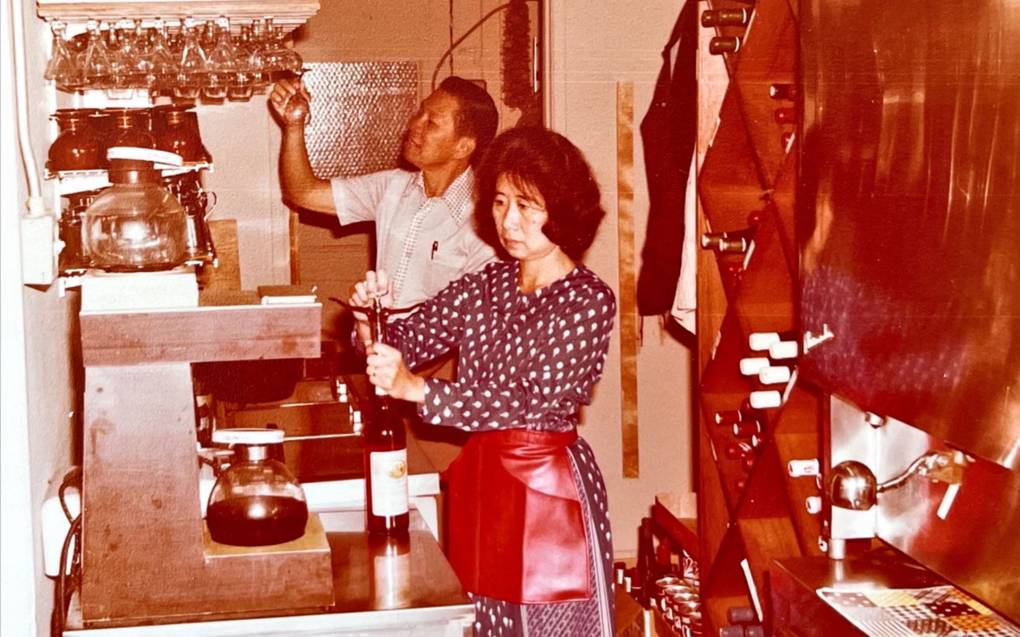
"caption": "The author's grandmother, Helena Lomanto, opens a bottle of wine at Boroburdur, the Chinese-Indonesian restaurant she ran in San Francisco during the 1980s. It was one of the Bay Area's first Indonesian restaurants.",
"description": null,
"title": "borobudur wine_crop",
"credit": "Courtesy of Helena Lomanto",
"status": "inherit",
"altTag": "A woman in a red apron opens a bottle of wine at a restaurant in this old photograph from the 1980s.",
"isLoading": false,
"fetchFailed": false
},
"arts_13928813": {
"type": "attachments",
"id": "arts_13928813",
"meta": {
"index": "attachments_1716263798",
"site": "arts",
"id": "13928813",
"found": true
},
"parent": 13928804,
"imgSizes": {
"twentyfourteen-full-width": {
"file": "https://ww2.kqed.org/app/uploads/sites/2/2023/05/hyphy_iceez_portrait_lead-1038x576.jpg",
"width": 1038,
"mimeType": "image/jpeg",
"height": 576
},
"thumbnail": {
"file": "https://ww2.kqed.org/app/uploads/sites/2/2023/05/hyphy_iceez_portrait_lead-160x100.jpg",
"width": 160,
"mimeType": "image/jpeg",
"height": 100
},
"post-thumbnail": {
"file": "https://ww2.kqed.org/app/uploads/sites/2/2023/05/hyphy_iceez_portrait_lead-672x372.jpg",
"width": 672,
"mimeType": "image/jpeg",
"height": 372
},
"kqedFullSize": {
"file": "https://ww2.kqed.org/app/uploads/sites/2/2023/05/hyphy_iceez_portrait_lead.jpg",
"width": 1920,
"height": 1200
},
"large": {
"file": "https://ww2.kqed.org/app/uploads/sites/2/2023/05/hyphy_iceez_portrait_lead-1020x638.jpg",
"width": 1020,
"mimeType": "image/jpeg",
"height": 638
},
"1536x1536": {
"file": "https://ww2.kqed.org/app/uploads/sites/2/2023/05/hyphy_iceez_portrait_lead-1536x960.jpg",
"width": 1536,
"mimeType": "image/jpeg",
"height": 960
},
"medium": {
"file": "https://ww2.kqed.org/app/uploads/sites/2/2023/05/hyphy_iceez_portrait_lead-800x500.jpg",
"width": 800,
"mimeType": "image/jpeg",
"height": 500
},
"medium_large": {
"file": "https://ww2.kqed.org/app/uploads/sites/2/2023/05/hyphy_iceez_portrait_lead-768x480.jpg",
"width": 768,
"mimeType": "image/jpeg",
"height": 480
}
},
"publishDate": 1683577351,
"modified": 1683577498,
"caption": "Jonathan Toledo, owner of Hyphy Iceez, serves cold slushies in his San Francisco neighborhood.",
"description": null,
"title": "hyphy_iceez_portrait_lead",
"credit": "Alan Chazaro",
"status": "inherit",
"altTag": "a foodmaker from San Francisco wears a Giants t-shirt and holds up a cup of his speciality beverage, Hyphy Iceez",
"isLoading": false,
"fetchFailed": false
},
"arts_13928592": {
"type": "attachments",
"id": "arts_13928592",
"meta": {
"index": "attachments_1716263798",
"site": "arts",
"id": "13928592",
"found": true
},
"parent": 13928571,
"imgSizes": {
"twentyfourteen-full-width": {
"file": "https://ww2.kqed.org/app/uploads/sites/2/2023/05/fred-ross-crop-1038x576.jpg",
"width": 1038,
"mimeType": "image/jpeg",
"height": 576
},
"thumbnail": {
"file": "https://ww2.kqed.org/app/uploads/sites/2/2023/05/fred-ross-crop-160x90.jpg",
"width": 160,
"mimeType": "image/jpeg",
"height": 90
},
"post-thumbnail": {
"file": "https://ww2.kqed.org/app/uploads/sites/2/2023/05/fred-ross-crop-672x372.jpg",
"width": 672,
"mimeType": "image/jpeg",
"height": 372
},
"kqedFullSize": {
"file": "https://ww2.kqed.org/app/uploads/sites/2/2023/05/fred-ross-crop.jpg",
"width": 1920,
"height": 1080
},
"large": {
"file": "https://ww2.kqed.org/app/uploads/sites/2/2023/05/fred-ross-crop-1020x574.jpg",
"width": 1020,
"mimeType": "image/jpeg",
"height": 574
},
"1536x1536": {
"file": "https://ww2.kqed.org/app/uploads/sites/2/2023/05/fred-ross-crop-1536x864.jpg",
"width": 1536,
"mimeType": "image/jpeg",
"height": 864
},
"medium": {
"file": "https://ww2.kqed.org/app/uploads/sites/2/2023/05/fred-ross-crop-800x450.jpg",
"width": 800,
"mimeType": "image/jpeg",
"height": 450
},
"medium_large": {
"file": "https://ww2.kqed.org/app/uploads/sites/2/2023/05/fred-ross-crop-768x432.jpg",
"width": 768,
"mimeType": "image/jpeg",
"height": 432
}
},
"publishDate": 1683072455,
"modified": 1683145285,
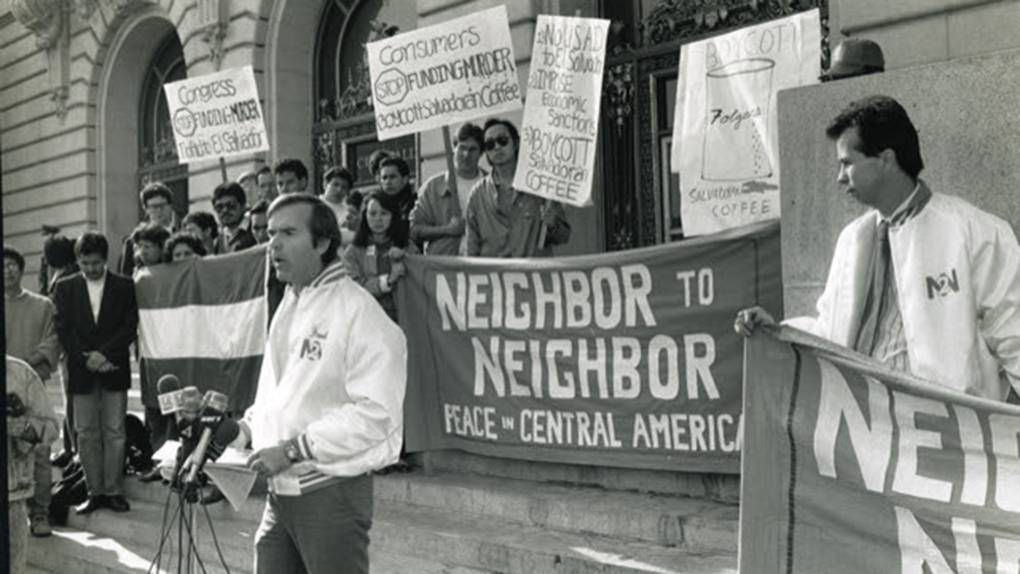
"caption": "Labor organizer Fred Ross Jr. (left) leads a rally in support of a boycott of Salvadoran coffee at San Francisco City Hall in 1990. The boycott targeted Folgers Coffee for purchasing Salvadoran coffee beans — activists argued that the money was helping to fund El Salvador's military regime during the country's ongoing civil war. ",
"description": null,
"title": "fred ross crop",
"credit": "Courtesy of Dennis Hearne / The Fred Ross Project",
"status": "inherit",
"altTag": "Man speaks at a rally at SF city hall. Protestors behind him hold a \"Neighbor to Neighbor\" banner and signs in support of a boycott of Folgers and Salvadoran coffee.",
"isLoading": false,
"fetchFailed": false
},
"arts_13928357": {
"type": "attachments",
"id": "arts_13928357",
"meta": {
"index": "attachments_1716263798",
"site": "arts",
"id": "13928357",
"found": true
},
"parent": 13928345,
"imgSizes": {
"twentyfourteen-full-width": {
"file": "https://ww2.kqed.org/app/uploads/sites/2/2023/04/MIshmish-1038x576.jpeg",
"width": 1038,
"mimeType": "image/jpeg",
"height": 576
},
"thumbnail": {
"file": "https://ww2.kqed.org/app/uploads/sites/2/2023/04/MIshmish-160x110.jpeg",
"width": 160,
"mimeType": "image/jpeg",
"height": 110
},
"post-thumbnail": {
"file": "https://ww2.kqed.org/app/uploads/sites/2/2023/04/MIshmish-672x372.jpeg",
"width": 672,
"mimeType": "image/jpeg",
"height": 372
},
"kqedFullSize": {
"file": "https://ww2.kqed.org/app/uploads/sites/2/2023/04/MIshmish.jpeg",
"width": 1920,
"height": 1320
},
"large": {
"file": "https://ww2.kqed.org/app/uploads/sites/2/2023/04/MIshmish-1020x701.jpeg",
"width": 1020,
"mimeType": "image/jpeg",
"height": 701
},
"1536x1536": {
"file": "https://ww2.kqed.org/app/uploads/sites/2/2023/04/MIshmish-1536x1056.jpeg",
"width": 1536,
"mimeType": "image/jpeg",
"height": 1056
},
"medium": {
"file": "https://ww2.kqed.org/app/uploads/sites/2/2023/04/MIshmish-800x550.jpeg",
"width": 800,
"mimeType": "image/jpeg",
"height": 550
},
"medium_large": {
"file": "https://ww2.kqed.org/app/uploads/sites/2/2023/04/MIshmish-768x528.jpeg",
"width": 768,
"mimeType": "image/jpeg",
"height": 528
}
},
"publishDate": 1682554747,
"modified": 1682621110,
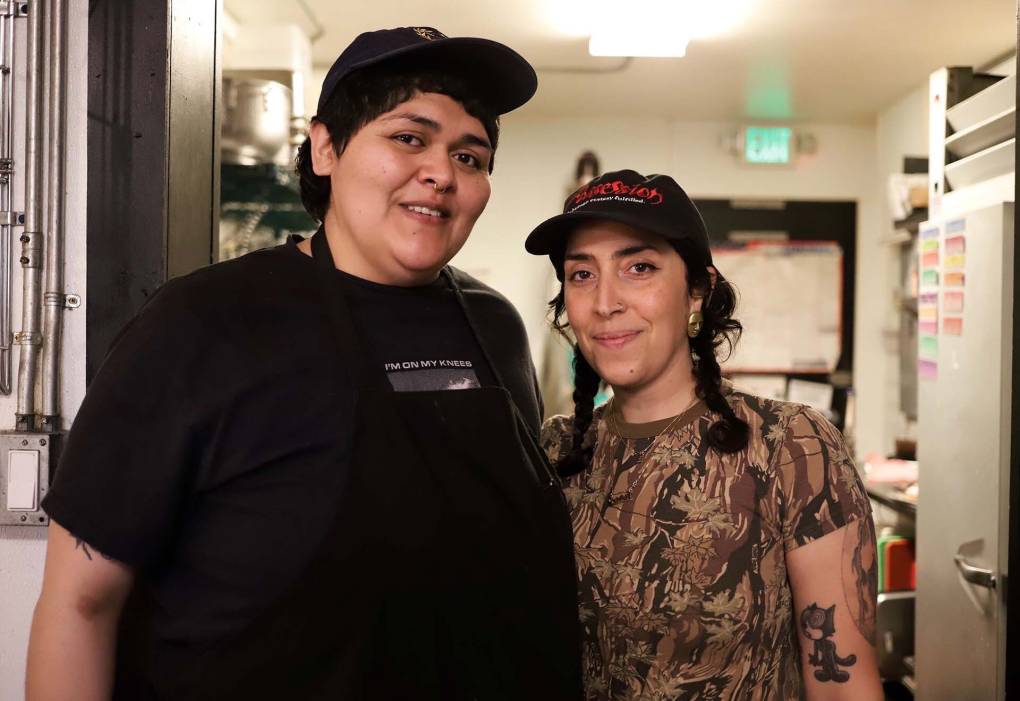
"caption": "Michelle Nazzal (right) started Mishmish to represent her Palestinian roots. Her friend Cee Hernandez (left) helps out with the pop-up and also runs a separate bakery business called Heidi'z Pantry. ",
"description": null,
"title": "Mishmish",
"credit": "Alan Chazaro",
"status": "inherit",
"altTag": "Two women foodmakers stand in an Oakland kitchen during their Palestinian food pop-up",
"isLoading": false,
"fetchFailed": false
},
"arts_13928213": {
"type": "attachments",
"id": "arts_13928213",
"meta": {
"index": "attachments_1716263798",
"site": "arts",
"id": "13928213",
"found": true
},
"parent": 13928196,
"imgSizes": {
"twentyfourteen-full-width": {
"file": "https://ww2.kqed.org/app/uploads/sites/2/2023/04/pizza-supreme-being_ben-pizza-crop-1038x576.jpg",
"width": 1038,
"mimeType": "image/jpeg",
"height": 576
},
"thumbnail": {
"file": "https://ww2.kqed.org/app/uploads/sites/2/2023/04/pizza-supreme-being_ben-pizza-crop-160x110.jpg",
"width": 160,
"mimeType": "image/jpeg",
"height": 110
},
"post-thumbnail": {
"file": "https://ww2.kqed.org/app/uploads/sites/2/2023/04/pizza-supreme-being_ben-pizza-crop-672x372.jpg",
"width": 672,
"mimeType": "image/jpeg",
"height": 372
},
"kqedFullSize": {
"file": "https://ww2.kqed.org/app/uploads/sites/2/2023/04/pizza-supreme-being_ben-pizza-crop.jpg",
"width": 1920,
"height": 1320
},
"large": {
"file": "https://ww2.kqed.org/app/uploads/sites/2/2023/04/pizza-supreme-being_ben-pizza-crop-1020x701.jpg",
"width": 1020,
"mimeType": "image/jpeg",
"height": 701
},
"1536x1536": {
"file": "https://ww2.kqed.org/app/uploads/sites/2/2023/04/pizza-supreme-being_ben-pizza-crop-1536x1056.jpg",
"width": 1536,
"mimeType": "image/jpeg",
"height": 1056
},
"medium": {
"file": "https://ww2.kqed.org/app/uploads/sites/2/2023/04/pizza-supreme-being_ben-pizza-crop-800x550.jpg",
"width": 800,
"mimeType": "image/jpeg",
"height": 550
},
"medium_large": {
"file": "https://ww2.kqed.org/app/uploads/sites/2/2023/04/pizza-supreme-being_ben-pizza-crop-768x528.jpg",
"width": 768,
"mimeType": "image/jpeg",
"height": 528
}
},
"publishDate": 1682369605,
"modified": 1682369811,
"caption": "Ben Roberts slices a pepperoni pizza at his downtown Sacramento restaurant, Pizza Supreme Being.",
"description": null,
"title": "pizza supreme being_ben pizza crop",
"credit": "José Vadi",
"status": "inherit",
"altTag": "Man in black rubber gloves slices a pepperoni pizza.",
"isLoading": false,
"fetchFailed": false
},
"arts_13927902": {
"type": "attachments",
"id": "arts_13927902",
"meta": {
"index": "attachments_1716263798",
"site": "arts",
"id": "13927902",
"found": true
},
"parent": 13927857,
"imgSizes": {
"twentyfourteen-full-width": {
"file": "https://ww2.kqed.org/app/uploads/sites/2/2023/04/davey_jones_sandwich_view_crop-1038x576.jpg",
"width": 1038,
"mimeType": "image/jpeg",
"height": 576
},
"thumbnail": {
"file": "https://ww2.kqed.org/app/uploads/sites/2/2023/04/davey_jones_sandwich_view_crop-160x90.jpg",
"width": 160,
"mimeType": "image/jpeg",
"height": 90
},
"post-thumbnail": {
"file": "https://ww2.kqed.org/app/uploads/sites/2/2023/04/davey_jones_sandwich_view_crop-672x372.jpg",
"width": 672,
"mimeType": "image/jpeg",
"height": 372
},
"kqedFullSize": {
"file": "https://ww2.kqed.org/app/uploads/sites/2/2023/04/davey_jones_sandwich_view_crop.jpg",
"width": 1920,
"height": 1080
},
"large": {
"file": "https://ww2.kqed.org/app/uploads/sites/2/2023/04/davey_jones_sandwich_view_crop-1020x574.jpg",
"width": 1020,
"mimeType": "image/jpeg",
"height": 574
},
"1536x1536": {
"file": "https://ww2.kqed.org/app/uploads/sites/2/2023/04/davey_jones_sandwich_view_crop-1536x864.jpg",
"width": 1536,
"mimeType": "image/jpeg",
"height": 864
},
"medium": {
"file": "https://ww2.kqed.org/app/uploads/sites/2/2023/04/davey_jones_sandwich_view_crop-800x450.jpg",
"width": 800,
"mimeType": "image/jpeg",
"height": 450
},
"medium_large": {
"file": "https://ww2.kqed.org/app/uploads/sites/2/2023/04/davey_jones_sandwich_view_crop-768x432.jpg",
"width": 768,
"mimeType": "image/jpeg",
"height": 432
}
},
"publishDate": 1681774318,
"modified": 1681917839,
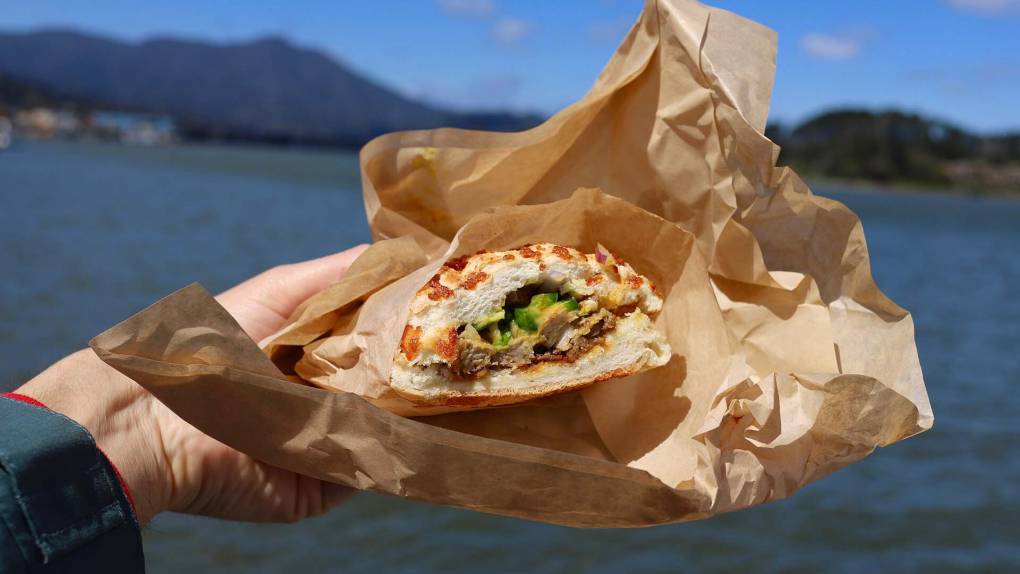
"caption": "Sandwiches like the customer created 'Uncles' (featuring roasted pork and jalapeños) are the specialty at Davey Jones Deli in Sausalito.",
"description": null,
"title": "davey_jones_sandwich_view_crop",
"credit": "Alan Chazaro",
"status": "inherit",
"altTag": "a sandwich from Davey Jones Deli is held up with Sausalito's harbor in the backround",
"isLoading": false,
"fetchFailed": false
},
"arts_13927302": {
"type": "attachments",
"id": "arts_13927302",
"meta": {
"index": "attachments_1716263798",
"site": "arts",
"id": "13927302",
"found": true
},
"parent": 13927259,
"imgSizes": {
"twentyfourteen-full-width": {
"file": "https://ww2.kqed.org/app/uploads/sites/2/2023/04/04022023_kqed_sithakhmerkitchen_571-1038x576.jpg",
"width": 1038,
"mimeType": "image/jpeg",
"height": 576
},
"thumbnail": {
"file": "https://ww2.kqed.org/app/uploads/sites/2/2023/04/04022023_kqed_sithakhmerkitchen_571-160x100.jpg",
"width": 160,
"mimeType": "image/jpeg",
"height": 100
},
"post-thumbnail": {
"file": "https://ww2.kqed.org/app/uploads/sites/2/2023/04/04022023_kqed_sithakhmerkitchen_571-672x372.jpg",
"width": 672,
"mimeType": "image/jpeg",
"height": 372
},
"kqedFullSize": {
"file": "https://ww2.kqed.org/app/uploads/sites/2/2023/04/04022023_kqed_sithakhmerkitchen_571.jpg",
"width": 1920,
"height": 1200
},
"large": {
"file": "https://ww2.kqed.org/app/uploads/sites/2/2023/04/04022023_kqed_sithakhmerkitchen_571-1020x638.jpg",
"width": 1020,
"mimeType": "image/jpeg",
"height": 638
},
"1536x1536": {
"file": "https://ww2.kqed.org/app/uploads/sites/2/2023/04/04022023_kqed_sithakhmerkitchen_571-1536x960.jpg",
"width": 1536,
"mimeType": "image/jpeg",
"height": 960
},
"medium": {
"file": "https://ww2.kqed.org/app/uploads/sites/2/2023/04/04022023_kqed_sithakhmerkitchen_571-800x500.jpg",
"width": 800,
"mimeType": "image/jpeg",
"height": 500
},
"medium_large": {
"file": "https://ww2.kqed.org/app/uploads/sites/2/2023/04/04022023_kqed_sithakhmerkitchen_571-768x480.jpg",
"width": 768,
"mimeType": "image/jpeg",
"height": 480
}
},
"publishDate": 1680630991,
"modified": 1680647886,
"caption": "Sitha Yim enjoys a light moment during an event at East Brother Beer Co. in Richmond. Yim's Cambodian pop-up, Sitha's Khmerkitchen, is one of a handful of up-and-coming Bay Area food businesses shining a light on Khmer cuisine. ",
"description": null,
"title": "04022023_kqed_sithakhmerkitchen_571",
"credit": "Kori Suzuki/KQED",
"status": "inherit",
"altTag": "A woman wearing an apron and red plastic gloves stands in front of an array of pots and food prep containers for her food pop-up.",
"isLoading": false,
"fetchFailed": false
},
"arts_13927109": {
"type": "attachments",
"id": "arts_13927109",
"meta": {
"index": "attachments_1716263798",
"site": "arts",
"id": "13927109",
"found": true
},
"parent": 13927103,
"imgSizes": {
"twentyfourteen-full-width": {
"file": "https://ww2.kqed.org/app/uploads/sites/2/2023/03/L1-Chow-Fong-and-Noisy-Jim-1038x576.jpg",
"width": 1038,
"mimeType": "image/jpeg",
"height": 576
},
"thumbnail": {
"file": "https://ww2.kqed.org/app/uploads/sites/2/2023/03/L1-Chow-Fong-and-Noisy-Jim-160x100.jpg",
"width": 160,
"mimeType": "image/jpeg",
"height": 100
},
"post-thumbnail": {
"file": "https://ww2.kqed.org/app/uploads/sites/2/2023/03/L1-Chow-Fong-and-Noisy-Jim-672x372.jpg",
"width": 672,
"mimeType": "image/jpeg",
"height": 372
},
"kqedFullSize": {
"file": "https://ww2.kqed.org/app/uploads/sites/2/2023/03/L1-Chow-Fong-and-Noisy-Jim.jpg",
"width": 1920,
"height": 1200
},
"large": {
"file": "https://ww2.kqed.org/app/uploads/sites/2/2023/03/L1-Chow-Fong-and-Noisy-Jim-1020x638.jpg",
"width": 1020,
"mimeType": "image/jpeg",
"height": 638
},
"1536x1536": {
"file": "https://ww2.kqed.org/app/uploads/sites/2/2023/03/L1-Chow-Fong-and-Noisy-Jim-1536x960.jpg",
"width": 1536,
"mimeType": "image/jpeg",
"height": 960
},
"medium": {
"file": "https://ww2.kqed.org/app/uploads/sites/2/2023/03/L1-Chow-Fong-and-Noisy-Jim-800x500.jpg",
"width": 800,
"mimeType": "image/jpeg",
"height": 500
},
"medium_large": {
"file": "https://ww2.kqed.org/app/uploads/sites/2/2023/03/L1-Chow-Fong-and-Noisy-Jim-768x480.jpg",
"width": 768,
"mimeType": "image/jpeg",
"height": 480
}
},
"publishDate": 1680080844,
"modified": 1680081879,
"caption": "Until his recent death, Noisy Jim (right) was the proprietor of a Chinese cafe in a small town in Saskatchewan, Canada. The cafe is one of 15 Chinese restaurants from around the world that documentary filmmaker Cheuk Kwan profiled for his book \u003ci>Have You Eaten Yet?\u003c/i>",
"description": null,
"title": "L1 Chow Fong and Noisy Jim",
"credit": "Courtesy of Cheuk Kwon",
"status": "inherit",
"altTag": "Two older Chinese men sit at a restaurant's diner-style counter while a waitress looks on.",
"isLoading": false,
"fetchFailed": false
},
"arts_13926978": {
"type": "attachments",
"id": "arts_13926978",
"meta": {
"index": "attachments_1716263798",
"site": "arts",
"id": "13926978",
"found": true
},
"parent": 13926749,
"imgSizes": {
"twentyfourteen-full-width": {
"file": "https://ww2.kqed.org/app/uploads/sites/2/2023/03/tasty_tings_spread-crop-1038x576.jpg",
"width": 1038,
"mimeType": "image/jpeg",
"height": 576
},
"thumbnail": {
"file": "https://ww2.kqed.org/app/uploads/sites/2/2023/03/tasty_tings_spread-crop-160x90.jpg",
"width": 160,
"mimeType": "image/jpeg",
"height": 90
},
"post-thumbnail": {
"file": "https://ww2.kqed.org/app/uploads/sites/2/2023/03/tasty_tings_spread-crop-672x372.jpg",
"width": 672,
"mimeType": "image/jpeg",
"height": 372
},
"kqedFullSize": {
"file": "https://ww2.kqed.org/app/uploads/sites/2/2023/03/tasty_tings_spread-crop.jpg",
"width": 1920,
"height": 1080
},
"large": {
"file": "https://ww2.kqed.org/app/uploads/sites/2/2023/03/tasty_tings_spread-crop-1020x574.jpg",
"width": 1020,
"mimeType": "image/jpeg",
"height": 574
},
"1536x1536": {
"file": "https://ww2.kqed.org/app/uploads/sites/2/2023/03/tasty_tings_spread-crop-1536x864.jpg",
"width": 1536,
"mimeType": "image/jpeg",
"height": 864
},
"medium": {
"file": "https://ww2.kqed.org/app/uploads/sites/2/2023/03/tasty_tings_spread-crop-800x450.jpg",
"width": 800,
"mimeType": "image/jpeg",
"height": 450
},
"medium_large": {
"file": "https://ww2.kqed.org/app/uploads/sites/2/2023/03/tasty_tings_spread-crop-768x432.jpg",
"width": 768,
"mimeType": "image/jpeg",
"height": 432
}
},
"publishDate": 1679938763,
"modified": 1679938965,
"caption": "A colorful spread of Tasty Tings' Jamaican beef patties.",
"description": null,
"title": "tasty_tings_spread-crop",
"credit": "Elliott Alexander",
"status": "inherit",
"altTag": "A colorful spread of Jamaican beef patties on a table",
"isLoading": false,
"fetchFailed": false
},
"arts_13926846": {
"type": "attachments",
"id": "arts_13926846",
"meta": {
"index": "attachments_1716263798",
"site": "arts",
"id": "13926846",
"found": true
},
"parent": 0,
"imgSizes": {
"twentyfourteen-full-width": {
"file": "https://ww2.kqed.org/app/uploads/sites/2/2023/03/RS63771_013_KQEDArts_Kingston11Restaurant_03222023-qut-1038x576.jpg",
"width": 1038,
"mimeType": "image/jpeg",
"height": 576
},
"thumbnail": {
"file": "https://ww2.kqed.org/app/uploads/sites/2/2023/03/RS63771_013_KQEDArts_Kingston11Restaurant_03222023-qut-160x107.jpg",
"width": 160,
"mimeType": "image/jpeg",
"height": 107
},
"post-thumbnail": {
"file": "https://ww2.kqed.org/app/uploads/sites/2/2023/03/RS63771_013_KQEDArts_Kingston11Restaurant_03222023-qut-672x372.jpg",
"width": 672,
"mimeType": "image/jpeg",
"height": 372
},
"kqedFullSize": {
"file": "https://ww2.kqed.org/app/uploads/sites/2/2023/03/RS63771_013_KQEDArts_Kingston11Restaurant_03222023-qut.jpg",
"width": 1920,
"height": 1280
},
"large": {
"file": "https://ww2.kqed.org/app/uploads/sites/2/2023/03/RS63771_013_KQEDArts_Kingston11Restaurant_03222023-qut-1020x680.jpg",
"width": 1020,
"mimeType": "image/jpeg",
"height": 680
},
"1536x1536": {
"file": "https://ww2.kqed.org/app/uploads/sites/2/2023/03/RS63771_013_KQEDArts_Kingston11Restaurant_03222023-qut-1536x1024.jpg",
"width": 1536,
"mimeType": "image/jpeg",
"height": 1024
},
"medium": {
"file": "https://ww2.kqed.org/app/uploads/sites/2/2023/03/RS63771_013_KQEDArts_Kingston11Restaurant_03222023-qut-800x533.jpg",
"width": 800,
"mimeType": "image/jpeg",
"height": 533
},
"medium_large": {
"file": "https://ww2.kqed.org/app/uploads/sites/2/2023/03/RS63771_013_KQEDArts_Kingston11Restaurant_03222023-qut-768x512.jpg",
"width": 768,
"mimeType": "image/jpeg",
"height": 512
}
},
"publishDate": 1679601273,
"modified": 1679610119,
"caption": "Chef Nigel Jones has served classic Jamaican dishes at his Oakland restaurant, Kingston 11, for the past 10 years. The restaurant's last day of business will be on Saturday, March 25.",
"description": null,
"title": "Chef Nigel Jones at his restaurant Kingston 11 in Oakland on March 22, 2023.",
"credit": "Beth LaBerge/KQED",
"status": "inherit",
"altTag": "A chef in blue chef's coat smiles inside a restaurant kitchen, a plate of Jamaican food in front of him on the counter.",
"isLoading": false,
"fetchFailed": false
},
"arts_13926633": {
"type": "attachments",
"id": "arts_13926633",
"meta": {
"index": "attachments_1716263798",
"site": "arts",
"id": "13926633",
"found": true
},
"parent": 13926618,
"imgSizes": {
"twentyfourteen-full-width": {
"file": "https://ww2.kqed.org/app/uploads/sites/2/2023/03/Halo-Halo-Baked-Alaska-c-Nico-Schinco_cropped-1038x576.jpg",
"width": 1038,
"mimeType": "image/jpeg",
"height": 576
},
"thumbnail": {
"file": "https://ww2.kqed.org/app/uploads/sites/2/2023/03/Halo-Halo-Baked-Alaska-c-Nico-Schinco_cropped-160x90.jpg",
"width": 160,
"mimeType": "image/jpeg",
"height": 90
},
"post-thumbnail": {
"file": "https://ww2.kqed.org/app/uploads/sites/2/2023/03/Halo-Halo-Baked-Alaska-c-Nico-Schinco_cropped-672x372.jpg",
"width": 672,
"mimeType": "image/jpeg",
"height": 372
},
"kqedFullSize": {
"file": "https://ww2.kqed.org/app/uploads/sites/2/2023/03/Halo-Halo-Baked-Alaska-c-Nico-Schinco_cropped.jpg",
"width": 1920,
"height": 1080
},
"large": {
"file": "https://ww2.kqed.org/app/uploads/sites/2/2023/03/Halo-Halo-Baked-Alaska-c-Nico-Schinco_cropped-1020x574.jpg",
"width": 1020,
"mimeType": "image/jpeg",
"height": 574
},
"1536x1536": {
"file": "https://ww2.kqed.org/app/uploads/sites/2/2023/03/Halo-Halo-Baked-Alaska-c-Nico-Schinco_cropped-1536x864.jpg",
"width": 1536,
"mimeType": "image/jpeg",
"height": 864
},
"medium": {
"file": "https://ww2.kqed.org/app/uploads/sites/2/2023/03/Halo-Halo-Baked-Alaska-c-Nico-Schinco_cropped-800x450.jpg",
"width": 800,
"mimeType": "image/jpeg",
"height": 450
},
"medium_large": {
"file": "https://ww2.kqed.org/app/uploads/sites/2/2023/03/Halo-Halo-Baked-Alaska-c-Nico-Schinco_cropped-768x432.jpg",
"width": 768,
"mimeType": "image/jpeg",
"height": 432
}
},
"publishDate": 1679429614,
"modified": 1679429807,
"caption": "The halo-halo baked Alaska has ube-flavored ice cream inside. The dessert is emblematic the cross-cultural approach in Abi Balingit's new cookbook, 'Mayumu.'",
"description": null,
"title": "Halo-Halo Baked Alaska (c) Nico Schinco_cropped",
"credit": "Nico Schinco",
"status": "inherit",
"altTag": "A baked Alaska dessert with a small Filipino flag inserted on top, displayed on a cake stand.",
"isLoading": false,
"fetchFailed": false
},
"arts_13927353": {
"type": "attachments",
"id": "arts_13927353",
"meta": {
"index": "attachments_1716263798",
"site": "arts",
"id": "13927353",
"found": true
},
"parent": 13926435,
"imgSizes": {
"twentyfourteen-full-width": {
"file": "https://ww2.kqed.org/app/uploads/sites/2/2023/03/HalHotDogRoots-1038x576.jpeg",
"width": 1038,
"mimeType": "image/jpeg",
"height": 576
},
"thumbnail": {
"file": "https://ww2.kqed.org/app/uploads/sites/2/2023/03/HalHotDogRoots-160x107.jpeg",
"width": 160,
"mimeType": "image/jpeg",
"height": 107
},
"post-thumbnail": {
"file": "https://ww2.kqed.org/app/uploads/sites/2/2023/03/HalHotDogRoots-672x372.jpeg",
"width": 672,
"mimeType": "image/jpeg",
"height": 372
},
"kqedFullSize": {
"file": "https://ww2.kqed.org/app/uploads/sites/2/2023/03/HalHotDogRoots-scaled.jpeg",
"width": 2560,
"height": 1707
},
"2048x2048": {
"file": "https://ww2.kqed.org/app/uploads/sites/2/2023/03/HalHotDogRoots-2048x1366.jpeg",
"width": 2048,
"mimeType": "image/jpeg",
"height": 1366
},
"large": {
"file": "https://ww2.kqed.org/app/uploads/sites/2/2023/03/HalHotDogRoots-1020x680.jpeg",
"width": 1020,
"mimeType": "image/jpeg",
"height": 680
},
"1536x1536": {
"file": "https://ww2.kqed.org/app/uploads/sites/2/2023/03/HalHotDogRoots-1536x1024.jpeg",
"width": 1536,
"mimeType": "image/jpeg",
"height": 1024
},
"full-width": {
"file": "https://ww2.kqed.org/app/uploads/sites/2/2023/03/HalHotDogRoots-1920x1280.jpeg",
"width": 1920,
"mimeType": "image/jpeg",
"height": 1280
},
"medium": {
"file": "https://ww2.kqed.org/app/uploads/sites/2/2023/03/HalHotDogRoots-800x533.jpeg",
"width": 800,
"mimeType": "image/jpeg",
"height": 533
},
"medium_large": {
"file": "https://ww2.kqed.org/app/uploads/sites/2/2023/03/HalHotDogRoots-768x512.jpeg",
"width": 768,
"mimeType": "image/jpeg",
"height": 512
}
},
"publishDate": 1680656540,
"modified": 1680656575,
"caption": null,
"description": null,
"title": "HalHotDogRoots",
"credit": "Oakland Roots SC",
"status": "inherit",
"altTag": null,
"isLoading": false,
"fetchFailed": false
}
},
"audioPlayerReducer": {
"postId": "stream_live",
"isPaused": true,
"isPlaying": false,
"pfsActive": false,
"pledgeModalIsOpen": true,
"playerDrawerIsOpen": false,
"liveAudioPlayStartedAt": 0,
"liveAudioPlayContext": ""
},
"authorsReducer": {
"byline_arts_13929177": {
"type": "authors",
"id": "byline_arts_13929177",
"meta": {
"override": true
},
"slug": "byline_arts_13929177",
"name": "Giovanna Lomanto",
"isLoading": false
},
"byline_arts_13928196": {
"type": "authors",
"id": "byline_arts_13928196",
"meta": {
"override": true
},
"slug": "byline_arts_13928196",
"name": "José Vadi",
"isLoading": false
},
"ltsai": {
"type": "authors",
"id": "11743",
"meta": {
"index": "authors_1716337520",
"id": "11743",
"found": true
},
"name": "Luke Tsai",
"firstName": "Luke",
"lastName": "Tsai",
"slug": "ltsai",
"email": "ltsai@kqed.org",
"display_author_email": true,
"staff_mastheads": [
"arts"
],
"title": "Food Editor",
"bio": "Luke Tsai is KQED's food editor and resident stinky tofu connoisseur. Prior to KQED, he was an editor at Eater SF, \u003cem>San Francisco \u003c/em>magazine, and the \u003cem>East Bay Express\u003c/em>, and his work has also appeared in TASTE, the \u003cem>San Francisco Chronicle\u003c/em>, and the \u003cem>Best Food Writing\u003c/em> anthology. When he isn't writing or editing, you'll find him eating most everything he can get his hands on.",
"avatar": "https://secure.gravatar.com/avatar/1e59b45bf191526e7339d6ba46e33a57b2030d25c27660ecc64ea3cb863e34f7?s=600&d=blank&r=g",
"twitter": "theluketsai",
"bluesky": null,
"facebook": null,
"instagram": null,
"linkedin": null,
"sites": [
{
"site": "",
"roles": [
"editor"
]
},
{
"site": "arts",
"roles": [
"administrator"
]
},
{
"site": "news",
"roles": [
"editor",
"contributor"
]
},
{
"site": "bayareabites",
"roles": [
"editor"
]
},
{
"site": "food",
"roles": [
"editor"
]
}
],
"headData": {
"title": "Luke Tsai | KQED",
"description": "Food Editor",
"ogImgSrc": "https://secure.gravatar.com/avatar/1e59b45bf191526e7339d6ba46e33a57b2030d25c27660ecc64ea3cb863e34f7?s=600&d=blank&r=g",
"twImgSrc": "https://secure.gravatar.com/avatar/1e59b45bf191526e7339d6ba46e33a57b2030d25c27660ecc64ea3cb863e34f7?s=600&d=blank&r=g"
},
"isLoading": false,
"link": "/author/ltsai"
},
"achazaro": {
"type": "authors",
"id": "11748",
"meta": {
"index": "authors_1716337520",
"id": "11748",
"found": true
},
"name": "Alan Chazaro",
"firstName": "Alan",
"lastName": "Chazaro",
"slug": "achazaro",
"email": "agchazaro@gmail.com",
"display_author_email": true,
"staff_mastheads": [],
"title": "Food Writer and Reporter",
"bio": "Alan Chazaro is the author of \u003cem>This Is Not a Frank Ocean Cover Album\u003c/em> (Black Lawrence Press, 2019), \u003cem>Piñata Theory\u003c/em> (Black Lawrence Press, 2020), and \u003cem>Notes from the Eastern Span of the Bay Bridge\u003c/em> (Ghost City Press, 2021). He is a graduate of June Jordan’s Poetry for the People program at UC Berkeley and a former Lawrence Ferlinghetti Fellow at the University of San Francisco. He writes about sports, food, art, music, education, and culture while repping the Bay on \u003ca href=\"https://twitter.com/alan_chazaro\">Twitter\u003c/a> and \u003ca href=\"https://www.instagram.com/alan_chazaro/?hl=en\">Instagram\u003c/a> at @alan_chazaro.",
"avatar": "https://secure.gravatar.com/avatar/ea8b6dd970fc5c29e7a188e7d5861df7?s=600&d=blank&r=g",
"twitter": "alan_chazaro",
"facebook": null,
"instagram": null,
"linkedin": null,
"sites": [
{
"site": "arts",
"roles": [
"contributor"
]
},
{
"site": "news",
"roles": [
"editor"
]
}
],
"headData": {
"title": "Alan Chazaro | KQED",
"description": "Food Writer and Reporter",
"ogImgSrc": "https://secure.gravatar.com/avatar/ea8b6dd970fc5c29e7a188e7d5861df7?s=600&d=blank&r=g",
"twImgSrc": "https://secure.gravatar.com/avatar/ea8b6dd970fc5c29e7a188e7d5861df7?s=600&d=blank&r=g"
},
"isLoading": false,
"link": "/author/achazaro"
},
"sminobucheli": {
"type": "authors",
"id": "11764",
"meta": {
"index": "authors_1716337520",
"id": "11764",
"found": true
},
"name": "Sebastian Miño-Bucheli",
"firstName": "Sebastian",
"lastName": "Miño-Bucheli",
"slug": "sminobucheli",
"email": "sminobucheli@kqed.org",
"display_author_email": false,
"staff_mastheads": [],
"title": "KQED Contributor",
"bio": "Sebastian Miño-Bucheli is a bilingual multimedia reporter and contributor to KQED Digital News. His reporting has been featured for Bay Curious, the California Report Magazine and KQED Arts. ",
"avatar": "https://secure.gravatar.com/avatar/4d433e33876cb631fbbe1ab7b9ddf7a1616f5e270c709b89ee147c0489875612?s=600&d=blank&r=g",
"twitter": "@BucheliMino",
"bluesky": null,
"facebook": null,
"instagram": null,
"linkedin": null,
"sites": [
{
"site": "arts",
"roles": [
"subscriber"
]
},
{
"site": "news",
"roles": [
"subscriber"
]
}
],
"headData": {
"title": "Sebastian Miño-Bucheli | KQED",
"description": "KQED Contributor",
"ogImgSrc": "https://secure.gravatar.com/avatar/4d433e33876cb631fbbe1ab7b9ddf7a1616f5e270c709b89ee147c0489875612?s=600&d=blank&r=g",
"twImgSrc": "https://secure.gravatar.com/avatar/4d433e33876cb631fbbe1ab7b9ddf7a1616f5e270c709b89ee147c0489875612?s=600&d=blank&r=g"
},
"isLoading": false,
"link": "/author/sminobucheli"
},
"athapliyal": {
"type": "authors",
"id": "11766",
"meta": {
"index": "authors_1716337520",
"id": "11766",
"found": true
},
"name": "Adesh Thapliyal",
"firstName": "Adesh",
"lastName": "Thapliyal",
"slug": "athapliyal",
"email": "athapliyal@kqed.org",
"display_author_email": false,
"staff_mastheads": [],
"title": "KQED Contributor",
"bio": "Adesh Thapliyal is KQED Arts' Editorial Intern. Previously, he wrote for the experimental newsletter \u003cem>Tone Glow\u003c/em> and the pop music blog \u003cem>The Singles Jukebox\u003c/em>.",
"avatar": "https://secure.gravatar.com/avatar/25c945182616a5283c4f746e7017bca3?s=600&d=blank&r=g",
"twitter": null,
"facebook": null,
"instagram": null,
"linkedin": null,
"sites": [
{
"site": "arts",
"roles": [
"author"
]
}
],
"headData": {
"title": "Adesh Thapliyal | KQED",
"description": "KQED Contributor",
"ogImgSrc": "https://secure.gravatar.com/avatar/25c945182616a5283c4f746e7017bca3?s=600&d=blank&r=g",
"twImgSrc": "https://secure.gravatar.com/avatar/25c945182616a5283c4f746e7017bca3?s=600&d=blank&r=g"
},
"isLoading": false,
"link": "/author/athapliyal"
}
},
"pagesReducer": {
"arts_tag_food": {
"type": "terms",
"id": "arts_1297",
"meta": {
"index": "terms_1716263798",
"site": "arts",
"id": "1297",
"score": 7.4242826
},
"featImg": null,
"name": "food",
"description": null,
"taxonomy": "tag",
"headData": {
"twImgId": null,
"twTitle": null,
"ogTitle": null,
"ogImgId": null,
"twDescription": null,
"description": null,
"title": "food Archives | KQED Arts",
"ogDescription": null
},
"ttid": 1309,
"slug": "food",
"isLoading": false,
"title": "food",
"pageMeta": {
"site": "arts",
"WpPageTemplate": "page-topic-editorial",
"currentPage": 26
},
"blocks": [
{
"blockName": "kqed/post-list",
"attrs": {
"layout": "cardArticle2",
"query": "posts/arts?tag=food",
"seeMore": false,
"paginated": true,
"page": 26
}
},
{
"blockName": "kqed/ad"
}
]
}
},
"pfsSessionReducer": {},
"postsReducer": {
"stream_live": {
"type": "live",
"id": "stream_live",
"audioUrl": "https://streams.kqed.org/kqedradio",
"title": "Live Stream",
"excerpt": "Live Stream information currently unavailable.",
"link": "/radio",
"featImg": "",
"label": {
"name": "KQED Live",
"link": "/"
}
},
"stream_kqedNewscast": {
"type": "posts",
"id": "stream_kqedNewscast",
"audioUrl": "https://www.kqed.org/.stream/anon/radio/RDnews/newscast.mp3?_=1",
"title": "KQED Newscast",
"featImg": "",
"label": {
"name": "88.5 FM",
"link": "/"
}
},
"arts_13929177": {
"type": "posts",
"id": "arts_13929177",
"meta": {
"index": "posts_1716263798",
"site": "arts",
"id": "13929177",
"score": null,
"sort": [
1684262918000
]
},
"guestAuthors": [],
"slug": "borobudur-first-indonesian-restaurant-san-francisco-el-cerrito-grandmother-essay",
"title": "My Grandmother Opened One of the Bay Area's First Indonesian Restaurants",
"publishDate": 1684262918,
"format": "standard",
"headTitle": "My Grandmother Opened One of the Bay Area’s First Indonesian Restaurants | KQED",
"labelTerm": {},
"content": "\u003cp>[dropcap]M[/dropcap]y childhood trips to the Bay Area were a chance for my family to revisit old haunts. Whenever my dad would drive us down the long strip of highway from Sacramento to San Francisco, he would point out every memorable cue through the car window. “That’s the hospital you were born in” or “I used to come here for shakes and soft serve” or, my favorite, “that’s where your grandmother’s old restaurant used to be.”\u003c/p>\n\u003cp>In fact, my grandmother, Helena Lomanto, was one of the Bay Area’s very first Indonesian restaurateurs — though I didn’t know it at the time.\u003c/p>\n\u003cp>That restaurant we’d pass by is now Waikiki Hawaiian BBQ, a humble takeout facade on San Pablo Avenue’s El Cerrito strip. I know it best from old pictures, where my grandmother’s signage displayed the name “BOROBUDUR” in all caps. Inside the restaurant was a takeout counter and pink laminated menus. Served hot and fresh: ayam goreng, or thinly battered fried chicken with sambal goreng on the side, and a variety of rice plates and vegetable stir fries. Like many Asian restaurants in the Bay Area during the ’80s and ’90s, the menu was a mix of timeless classics like bakmi goreng (an Indonesian take on Chinese chow mein) and more fusion-y, Americanized flavors.\u003c/p>\n\u003cp>My grandmother loved to tell me stories about her days in the restaurant and how she learned about the business when she first immigrated stateside and worked as the lettuce slicer at Burger King. Soon enough, she and my grandfather would open not one, but three different Chinese-Indonesian restaurants in the Bay Area — one in San Francisco, one in El Cerrito and yet another in Daly City.\u003c/p>\n\u003cp>[pullquote size=\"large\" align=\"right\"]‘My grandmother was one of the Bay Area’s very first Indonesian restaurateurs — though I didn’t know it at the time.’[/pullquote]And so, when I heard that her restaurants hadn’t done well, I wanted to know more. I wanted to know \u003ci>why\u003c/i> it wasn’t bustling with people. After all, my friends used to fight for a spot at my dining table.\u003c/p>\n\u003cp>[ad fullwidth]\u003c/p>\n\u003cp>Later, my father explained it to me: Borobudur wasn’t an El Cerrito hotspot because people don’t travel to El Cerrito for Chinese-Indonesian cuisine. There’s a word for it in Indonesian — hokee\u003ci>,\u003c/i> which roughly translates to “luck.” The location of that restaurant, plus the exact timing of the cuisine in that specific locale, was not hokee. By the late ’90s, her third and final restaurant — Daly City’s Plantation Golden Fried Chicken — had also closed.\u003c/p>\n\u003cfigure id=\"attachment_13929187\" class=\"wp-caption alignnone\" style=\"max-width: 1920px\">\u003cimg loading=\"lazy\" decoding=\"async\" class=\"size-full wp-image-13929187\" src=\"https://ww2.kqed.org/app/uploads/sites/2/2023/05/plantation-golden-fried-chicken-daly-city.jpg\" alt='Photograph dated April 13, 1991 shows the facade of a strip mall restaurant at dusk. The sign reads, \"Plantation Golden Fried Chicken\" in red letters.' width=\"1920\" height=\"1335\" srcset=\"https://cdn.kqed.org/wp-content/uploads/sites/2/2023/05/plantation-golden-fried-chicken-daly-city.jpg 1920w, https://cdn.kqed.org/wp-content/uploads/sites/2/2023/05/plantation-golden-fried-chicken-daly-city-800x556.jpg 800w, https://cdn.kqed.org/wp-content/uploads/sites/2/2023/05/plantation-golden-fried-chicken-daly-city-1020x709.jpg 1020w, https://cdn.kqed.org/wp-content/uploads/sites/2/2023/05/plantation-golden-fried-chicken-daly-city-160x111.jpg 160w, https://cdn.kqed.org/wp-content/uploads/sites/2/2023/05/plantation-golden-fried-chicken-daly-city-768x534.jpg 768w, https://cdn.kqed.org/wp-content/uploads/sites/2/2023/05/plantation-golden-fried-chicken-daly-city-1536x1068.jpg 1536w\" sizes=\"(max-width: 1920px) 100vw, 1920px\">\u003cfigcaption class=\"wp-caption-text\">Plantation Golden Fried Chicken in Daly City was the last of Lomanto’s restaurants. It closed in the late ’90s. \u003ccite>(Courtesy of Helena Lomanto)\u003c/cite>\u003c/figcaption>\u003c/figure>\n\u003cp>Over the past few years, Indonesian restaurants across the Bay Area have once again been struggling. My standard meeting places with visiting relatives saw less and less traffic in the years before the pandemic: Jayakarta in Berkeley shuttered its windows in the summer of 2019. \u003ca href=\"https://www.sfchronicle.com/food/article/Two-of-the-Bay-Area-s-only-Indonesian-14373778.php\">Another restaurant called Borobudur\u003c/a> — often cited as the oldest Indonesian restaurant in San Francisco — soon followed.\u003c/p>\n\u003cp>As it turns out, that Borobudur was my grandparents’ first restaurant. I didn’t make the connection until recently, when my grandmother showed me some photographs of her San Francisco restaurant: Scrawled in the caption was the same name, the same Post Street address. \u003ca href=\"https://www.kqed.org/checkplease/1461/borobudur-restaurant-review\">New owners\u003c/a> must have taken over the business sometime in the early ’90s.\u003c/p>\n\u003cp>What I knew about Borobudur were the stories she’d tell me. My grandmother’s tenure at the San Francisco restaurant saw its heyday in the 1980s. For a while, the business thrived — especially on Tuesdays, when a certain thin, middle-aged woman would eat at my grandmother’s table during her lunch break. Every time she came in, a horde of other customers would follow, and, in our family lore, this mystery woman came to be regarded as the restaurant’s good luck charm.\u003c/p>\n\u003cfigure id=\"attachment_13929188\" class=\"wp-caption alignnone\" style=\"max-width: 1920px\">\u003cimg loading=\"lazy\" decoding=\"async\" class=\"size-full wp-image-13929188\" src=\"https://ww2.kqed.org/app/uploads/sites/2/2023/05/borobudur-dining-room_5735.jpg\" alt='Man and a woman pose for a photograph in the dining room of their restaurant. A handwritten caption reads, \"Borobudur Resto, 1981. 700 Post St., San Francisco, CA.\"' width=\"1920\" height=\"1403\" srcset=\"https://cdn.kqed.org/wp-content/uploads/sites/2/2023/05/borobudur-dining-room_5735.jpg 1920w, https://cdn.kqed.org/wp-content/uploads/sites/2/2023/05/borobudur-dining-room_5735-800x585.jpg 800w, https://cdn.kqed.org/wp-content/uploads/sites/2/2023/05/borobudur-dining-room_5735-1020x745.jpg 1020w, https://cdn.kqed.org/wp-content/uploads/sites/2/2023/05/borobudur-dining-room_5735-160x117.jpg 160w, https://cdn.kqed.org/wp-content/uploads/sites/2/2023/05/borobudur-dining-room_5735-768x561.jpg 768w, https://cdn.kqed.org/wp-content/uploads/sites/2/2023/05/borobudur-dining-room_5735-1536x1122.jpg 1536w\" sizes=\"(max-width: 1920px) 100vw, 1920px\">\u003cfigcaption class=\"wp-caption-text\">Lomanto and her husband pose in Borobudur’s dining room during the restaurant’s heyday in the early ’80s. \u003ccite>(Courtesy of Helena Lomanto)\u003c/cite>\u003c/figcaption>\u003c/figure>\n\u003cp>In those years, the clientele at Borobudur was diverse, consisting mostly of locals looking for a good hole-in-the-wall Asian food stop. The restaurant’s biggest asset was loyalty. Regular customers would come back again and again to order from the menu’s bilingual offerings — satay ayam (chicken skewers with peanut sauce) or honey walnut prawns made with extra mayonnaise. Even the mystery woman made her way around the menu during her weekly visits.\u003c/p>\n\u003cp>But when the 1989 earthquake struck, in all its 6.9-magnitude glory, Borobudur’s customers proved to be superstitious as well. My grandmother speaks about how she felt the ground shake beneath her feet. Trinkets fell off shelves. Plates rattled in cupboards. Everyone inside the restaurant scrambled for cover. After that, the good luck charm woman did not return, and the Tuesday lunch rush slowed in the weeks that followed.\u003c/p>\n\u003cp>The restaurant’s hokee, it seemed, had run out.\u003c/p>\n\u003cp>[pullquote size=\"large\" align=\"right\"]‘When the 1989 earthquake struck, in all its 6.9-magnitude glory, Borobudur’s customers proved to be superstitious as well.’[/pullquote]I’d always imagined the restaurant having the bustling atmosphere I see in my own favorite restaurants. But my grandmother used to regale us about the toll that cooking took on her body. Eventually, retirement called, and she quickly realized that there were other mouths to feed. Mainly, my sister’s and mine.\u003c/p>\n\u003cp>Growing up, I lived with my grandparents as a part of our family’s intergenerational household. Every night, I would devour a home-cooked meal from my grandma’s well-seasoned wok. Sometimes it was a steaming bowl of pickled greens and pork bone soup — so sour and scintillating that I would call it “refreshing soup.” Sometimes it would be a sweet soy sauce, onion and potato stir-fry that we called “Hayley potatoes,” because it was the only plate our neighbor Hayley would finish. I had every sweet and savory treat I desired because of her prowess in the kitchen.\u003c/p>\n\u003cfigure id=\"attachment_13929189\" class=\"wp-caption alignnone\" style=\"max-width: 1920px\">\u003cimg loading=\"lazy\" decoding=\"async\" class=\"size-full wp-image-13929189\" src=\"https://ww2.kqed.org/app/uploads/sites/2/2023/05/helena-lomanto-90.jpg\" alt=\"A young woman poses with her grandmother in front of a birthday during the grandmother's 90th birthday celebration. The older woman wears a pink sash that reads, "Happy 90th Birthday."\" width=\"1920\" height=\"2560\" srcset=\"https://cdn.kqed.org/wp-content/uploads/sites/2/2023/05/helena-lomanto-90.jpg 1920w, https://cdn.kqed.org/wp-content/uploads/sites/2/2023/05/helena-lomanto-90-800x1067.jpg 800w, https://cdn.kqed.org/wp-content/uploads/sites/2/2023/05/helena-lomanto-90-1020x1360.jpg 1020w, https://cdn.kqed.org/wp-content/uploads/sites/2/2023/05/helena-lomanto-90-160x213.jpg 160w, https://cdn.kqed.org/wp-content/uploads/sites/2/2023/05/helena-lomanto-90-768x1024.jpg 768w, https://cdn.kqed.org/wp-content/uploads/sites/2/2023/05/helena-lomanto-90-1152x1536.jpg 1152w, https://cdn.kqed.org/wp-content/uploads/sites/2/2023/05/helena-lomanto-90-1536x2048.jpg 1536w\" sizes=\"(max-width: 1920px) 100vw, 1920px\">\u003cfigcaption class=\"wp-caption-text\">The author and her grandmother pose for a photo during the grandmother’s 90th birthday celebration. \u003ccite>(Courtesy of Giovanna Lomanto)\u003c/cite>\u003c/figcaption>\u003c/figure>\n\u003cp>My grandma spent her retirement taking care of the two of us, cooking most (if not all) of our meals, and driving us to and from school in our new Sacramento home. After my grandfather passed away, my mother started taking up her mantle in the kitchen, and I began to desire culinary talents of my own.\u003c/p>\n\u003cp>\u003cspan style=\"font-weight: 400\">[aside postID='arts_13904861,arts_13921079,arts_13908798']\u003c/span>A few years ago, my grandmother sent me six notebooks filled with her handwritten recipes. Excited to flip through and learn her secrets, I opened the recipe books only to find that they were all written by hand in Dutch, the language she spoke in a colonized Indonesia. Her loopy cursive fell to sharp corners on her p’s and a’s, and much of the pencil lead was wearing off the faded pages. Suddenly, I was no longer worried about cooking replications of her food. I just wanted to preserve the pages, to seal into memory all the knowledge she had bestowed upon these precious artifacts.\u003c/p>\n\u003cp>The recipe books are in my room, wrapped in a plastic bag and some rubber bands, waiting for the day that I learn Dutch. Maybe it’ll never happen — maybe they’ll be some indecipherable family heirloom I’ll pass down to my children.\u003c/p>\n\u003cp>One thing is certain, though. Along with the other keepsakes I’ve collected from my grandmother’s closet of trinkets and memories, I’ll make sure to share at least one photo for posterity: my grandmother standing in front of the glass window outside her El Cerrito restaurant, surrounded by her husband and her sisters. All of them joined together in the physical space where she once shared a taste of her home.\u003c/p>\n\u003cp>The joy she exudes, in that picture and onwards, has always been the source of my hokee.\u003c/p>\n\u003cfigure id=\"attachment_13929190\" class=\"wp-caption alignnone\" style=\"max-width: 1006px\">\u003cimg loading=\"lazy\" decoding=\"async\" class=\"size-full wp-image-13929190\" src=\"https://ww2.kqed.org/app/uploads/sites/2/2023/05/borobudur-el-cerrito.jpg\" alt='A family poses for a photo in front of a restaurant. A handwritten label reads, \"Borobudur Restaurant, San Pablo Ave., El Cerrito, CA.\"' width=\"1006\" height=\"711\" srcset=\"https://cdn.kqed.org/wp-content/uploads/sites/2/2023/05/borobudur-el-cerrito.jpg 1006w, https://cdn.kqed.org/wp-content/uploads/sites/2/2023/05/borobudur-el-cerrito-800x565.jpg 800w, https://cdn.kqed.org/wp-content/uploads/sites/2/2023/05/borobudur-el-cerrito-160x113.jpg 160w, https://cdn.kqed.org/wp-content/uploads/sites/2/2023/05/borobudur-el-cerrito-768x543.jpg 768w\" sizes=\"(max-width: 1006px) 100vw, 1006px\">\u003cfigcaption class=\"wp-caption-text\">Helena Lomanto and her family pose for a portrait in front of their El Cerrito restaurant. Today the space is occupied by Waikiki Hawaiian BBQ. \u003ccite>(Courtesy of Helena Lomanto)\u003c/cite>\u003c/figcaption>\u003c/figure>\n\u003cp>[ad floatright]\u003c/p>\n\u003cp>\u003cimg loading=\"lazy\" decoding=\"async\" class=\"aligncenter size-full wp-image-12127869\" src=\"https://ww2.kqed.org/app/uploads/sites/2/2016/09/Q.Logo_.Break_.jpg\" alt=\"\" width=\"800\" height=\"78\" srcset=\"https://cdn.kqed.org/wp-content/uploads/sites/2/2016/09/Q.Logo_.Break_.jpg 800w, https://cdn.kqed.org/wp-content/uploads/sites/2/2016/09/Q.Logo_.Break_-400x39.jpg 400w, https://cdn.kqed.org/wp-content/uploads/sites/2/2016/09/Q.Logo_.Break_-768x75.jpg 768w\" sizes=\"(max-width: 800px) 100vw, 800px\">\u003c/p>\n\n",
"blocks": [],
"excerpt": "I grew up eating her home-cooked meals.",
"status": "publish",
"parent": 0,
"modified": 1723056954,
"stats": {
"hasAudio": false,
"hasVideo": false,
"hasChartOrMap": false,
"iframeSrcs": [],
"hasGoogleForm": false,
"hasGallery": false,
"hasHearkenModule": false,
"hasPolis": false,
"paragraphCount": 22,
"wordCount": 1462
},
"headData": {
"title": "Borobudur Was One of the Bay Area's First Indonesian Restaurants | KQED",
"description": "I grew up eating her home-cooked meals.",
"ogTitle": "My Grandmother Opened One of the Bay Area's First Indonesian Restaurants",
"ogDescription": "",
"ogImgId": "",
"twTitle": "My Grandmother Opened One of the Bay Area's First Indonesian Restaurants",
"twDescription": "",
"twImgId": "",
"socialTitle": "Borobudur Was One of the Bay Area's First Indonesian Restaurants %%page%% %%sep%% KQED",
"schema": {
"@context": "https://schema.org",
"@type": "Article",
"headline": "My Grandmother Opened One of the Bay Area's First Indonesian Restaurants",
"datePublished": "2023-05-16T11:48:38-07:00",
"dateModified": "2024-08-07T11:55:54-07:00",
"image": "https://cdn.kqed.org/wp-content/uploads/2020/02/KQED-OG-Image@1x.png"
}
},
"source": "Food",
"sourceUrl": "https://www.kqed.org/food",
"sticky": false,
"nprByline": "Giovanna Lomanto",
"templateType": "standard",
"featuredImageType": "standard",
"excludeFromSiteSearch": "Include",
"showOnAuthorArchivePages": "No",
"articleAge": "0",
"path": "/arts/13929177/borobudur-first-indonesian-restaurant-san-francisco-el-cerrito-grandmother-essay",
"audioTrackLength": null,
"parsedContent": [
{
"type": "contentString",
"content": "\u003cdiv class=\"post-body\">\u003cp>\u003cp>\u003c/p>\u003cp>\u003cspan class=\"utils-parseShortcode-shortcodes-__dropcapShortcode__dropcap\">M\u003c/span>\u003c/p>\u003cp>y childhood trips to the Bay Area were a chance for my family to revisit old haunts. Whenever my dad would drive us down the long strip of highway from Sacramento to San Francisco, he would point out every memorable cue through the car window. “That’s the hospital you were born in” or “I used to come here for shakes and soft serve” or, my favorite, “that’s where your grandmother’s old restaurant used to be.”\u003c/p>\n\u003cp>In fact, my grandmother, Helena Lomanto, was one of the Bay Area’s very first Indonesian restaurateurs — though I didn’t know it at the time.\u003c/p>\n\u003cp>That restaurant we’d pass by is now Waikiki Hawaiian BBQ, a humble takeout facade on San Pablo Avenue’s El Cerrito strip. I know it best from old pictures, where my grandmother’s signage displayed the name “BOROBUDUR” in all caps. Inside the restaurant was a takeout counter and pink laminated menus. Served hot and fresh: ayam goreng, or thinly battered fried chicken with sambal goreng on the side, and a variety of rice plates and vegetable stir fries. Like many Asian restaurants in the Bay Area during the ’80s and ’90s, the menu was a mix of timeless classics like bakmi goreng (an Indonesian take on Chinese chow mein) and more fusion-y, Americanized flavors.\u003c/p>\n\u003cp>My grandmother loved to tell me stories about her days in the restaurant and how she learned about the business when she first immigrated stateside and worked as the lettuce slicer at Burger King. Soon enough, she and my grandfather would open not one, but three different Chinese-Indonesian restaurants in the Bay Area — one in San Francisco, one in El Cerrito and yet another in Daly City.\u003c/p>\n\u003cp>\u003c/p>\u003c/div>",
"attributes": {
"named": {},
"numeric": []
}
},
{
"type": "component",
"content": "‘My grandmother was one of the Bay Area’s very first Indonesian restaurateurs — though I didn’t know it at the time.’",
"name": "pullquote",
"attributes": {
"named": {
"size": "large",
"align": "right",
"label": ""
},
"numeric": []
}
},
{
"type": "contentString",
"content": "\u003cdiv class=\"post-body\">\u003cp>And so, when I heard that her restaurants hadn’t done well, I wanted to know more. I wanted to know \u003ci>why\u003c/i> it wasn’t bustling with people. After all, my friends used to fight for a spot at my dining table.\u003c/p>\n\u003cp>\u003c/p>\u003c/div>",
"attributes": {
"named": {},
"numeric": []
}
},
{
"type": "component",
"content": "",
"name": "ad",
"attributes": {
"named": {
"label": "fullwidth"
},
"numeric": [
"fullwidth"
]
}
},
{
"type": "contentString",
"content": "\u003cdiv class=\"post-body\">\u003cp>\u003c/p>\n\u003cp>Later, my father explained it to me: Borobudur wasn’t an El Cerrito hotspot because people don’t travel to El Cerrito for Chinese-Indonesian cuisine. There’s a word for it in Indonesian — hokee\u003ci>,\u003c/i> which roughly translates to “luck.” The location of that restaurant, plus the exact timing of the cuisine in that specific locale, was not hokee. By the late ’90s, her third and final restaurant — Daly City’s Plantation Golden Fried Chicken — had also closed.\u003c/p>\n\u003cfigure id=\"attachment_13929187\" class=\"wp-caption alignnone\" style=\"max-width: 1920px\">\u003cimg loading=\"lazy\" decoding=\"async\" class=\"size-full wp-image-13929187\" src=\"https://ww2.kqed.org/app/uploads/sites/2/2023/05/plantation-golden-fried-chicken-daly-city.jpg\" alt='Photograph dated April 13, 1991 shows the facade of a strip mall restaurant at dusk. The sign reads, \"Plantation Golden Fried Chicken\" in red letters.' width=\"1920\" height=\"1335\" srcset=\"https://cdn.kqed.org/wp-content/uploads/sites/2/2023/05/plantation-golden-fried-chicken-daly-city.jpg 1920w, https://cdn.kqed.org/wp-content/uploads/sites/2/2023/05/plantation-golden-fried-chicken-daly-city-800x556.jpg 800w, https://cdn.kqed.org/wp-content/uploads/sites/2/2023/05/plantation-golden-fried-chicken-daly-city-1020x709.jpg 1020w, https://cdn.kqed.org/wp-content/uploads/sites/2/2023/05/plantation-golden-fried-chicken-daly-city-160x111.jpg 160w, https://cdn.kqed.org/wp-content/uploads/sites/2/2023/05/plantation-golden-fried-chicken-daly-city-768x534.jpg 768w, https://cdn.kqed.org/wp-content/uploads/sites/2/2023/05/plantation-golden-fried-chicken-daly-city-1536x1068.jpg 1536w\" sizes=\"(max-width: 1920px) 100vw, 1920px\">\u003cfigcaption class=\"wp-caption-text\">Plantation Golden Fried Chicken in Daly City was the last of Lomanto’s restaurants. It closed in the late ’90s. \u003ccite>(Courtesy of Helena Lomanto)\u003c/cite>\u003c/figcaption>\u003c/figure>\n\u003cp>Over the past few years, Indonesian restaurants across the Bay Area have once again been struggling. My standard meeting places with visiting relatives saw less and less traffic in the years before the pandemic: Jayakarta in Berkeley shuttered its windows in the summer of 2019. \u003ca href=\"https://www.sfchronicle.com/food/article/Two-of-the-Bay-Area-s-only-Indonesian-14373778.php\">Another restaurant called Borobudur\u003c/a> — often cited as the oldest Indonesian restaurant in San Francisco — soon followed.\u003c/p>\n\u003cp>As it turns out, that Borobudur was my grandparents’ first restaurant. I didn’t make the connection until recently, when my grandmother showed me some photographs of her San Francisco restaurant: Scrawled in the caption was the same name, the same Post Street address. \u003ca href=\"https://www.kqed.org/checkplease/1461/borobudur-restaurant-review\">New owners\u003c/a> must have taken over the business sometime in the early ’90s.\u003c/p>\n\u003cp>What I knew about Borobudur were the stories she’d tell me. My grandmother’s tenure at the San Francisco restaurant saw its heyday in the 1980s. For a while, the business thrived — especially on Tuesdays, when a certain thin, middle-aged woman would eat at my grandmother’s table during her lunch break. Every time she came in, a horde of other customers would follow, and, in our family lore, this mystery woman came to be regarded as the restaurant’s good luck charm.\u003c/p>\n\u003cfigure id=\"attachment_13929188\" class=\"wp-caption alignnone\" style=\"max-width: 1920px\">\u003cimg loading=\"lazy\" decoding=\"async\" class=\"size-full wp-image-13929188\" src=\"https://ww2.kqed.org/app/uploads/sites/2/2023/05/borobudur-dining-room_5735.jpg\" alt='Man and a woman pose for a photograph in the dining room of their restaurant. A handwritten caption reads, \"Borobudur Resto, 1981. 700 Post St., San Francisco, CA.\"' width=\"1920\" height=\"1403\" srcset=\"https://cdn.kqed.org/wp-content/uploads/sites/2/2023/05/borobudur-dining-room_5735.jpg 1920w, https://cdn.kqed.org/wp-content/uploads/sites/2/2023/05/borobudur-dining-room_5735-800x585.jpg 800w, https://cdn.kqed.org/wp-content/uploads/sites/2/2023/05/borobudur-dining-room_5735-1020x745.jpg 1020w, https://cdn.kqed.org/wp-content/uploads/sites/2/2023/05/borobudur-dining-room_5735-160x117.jpg 160w, https://cdn.kqed.org/wp-content/uploads/sites/2/2023/05/borobudur-dining-room_5735-768x561.jpg 768w, https://cdn.kqed.org/wp-content/uploads/sites/2/2023/05/borobudur-dining-room_5735-1536x1122.jpg 1536w\" sizes=\"(max-width: 1920px) 100vw, 1920px\">\u003cfigcaption class=\"wp-caption-text\">Lomanto and her husband pose in Borobudur’s dining room during the restaurant’s heyday in the early ’80s. \u003ccite>(Courtesy of Helena Lomanto)\u003c/cite>\u003c/figcaption>\u003c/figure>\n\u003cp>In those years, the clientele at Borobudur was diverse, consisting mostly of locals looking for a good hole-in-the-wall Asian food stop. The restaurant’s biggest asset was loyalty. Regular customers would come back again and again to order from the menu’s bilingual offerings — satay ayam (chicken skewers with peanut sauce) or honey walnut prawns made with extra mayonnaise. Even the mystery woman made her way around the menu during her weekly visits.\u003c/p>\n\u003cp>But when the 1989 earthquake struck, in all its 6.9-magnitude glory, Borobudur’s customers proved to be superstitious as well. My grandmother speaks about how she felt the ground shake beneath her feet. Trinkets fell off shelves. Plates rattled in cupboards. Everyone inside the restaurant scrambled for cover. After that, the good luck charm woman did not return, and the Tuesday lunch rush slowed in the weeks that followed.\u003c/p>\n\u003cp>The restaurant’s hokee, it seemed, had run out.\u003c/p>\n\u003cp>\u003c/p>\u003c/div>",
"attributes": {
"named": {},
"numeric": []
}
},
{
"type": "component",
"content": "‘When the 1989 earthquake struck, in all its 6.9-magnitude glory, Borobudur’s customers proved to be superstitious as well.’",
"name": "pullquote",
"attributes": {
"named": {
"size": "large",
"align": "right",
"label": ""
},
"numeric": []
}
},
{
"type": "contentString",
"content": "\u003cdiv class=\"post-body\">\u003cp>I’d always imagined the restaurant having the bustling atmosphere I see in my own favorite restaurants. But my grandmother used to regale us about the toll that cooking took on her body. Eventually, retirement called, and she quickly realized that there were other mouths to feed. Mainly, my sister’s and mine.\u003c/p>\n\u003cp>Growing up, I lived with my grandparents as a part of our family’s intergenerational household. Every night, I would devour a home-cooked meal from my grandma’s well-seasoned wok. Sometimes it was a steaming bowl of pickled greens and pork bone soup — so sour and scintillating that I would call it “refreshing soup.” Sometimes it would be a sweet soy sauce, onion and potato stir-fry that we called “Hayley potatoes,” because it was the only plate our neighbor Hayley would finish. I had every sweet and savory treat I desired because of her prowess in the kitchen.\u003c/p>\n\u003cfigure id=\"attachment_13929189\" class=\"wp-caption alignnone\" style=\"max-width: 1920px\">\u003cimg loading=\"lazy\" decoding=\"async\" class=\"size-full wp-image-13929189\" src=\"https://ww2.kqed.org/app/uploads/sites/2/2023/05/helena-lomanto-90.jpg\" alt=\"A young woman poses with her grandmother in front of a birthday during the grandmother's 90th birthday celebration. The older woman wears a pink sash that reads, "Happy 90th Birthday."\" width=\"1920\" height=\"2560\" srcset=\"https://cdn.kqed.org/wp-content/uploads/sites/2/2023/05/helena-lomanto-90.jpg 1920w, https://cdn.kqed.org/wp-content/uploads/sites/2/2023/05/helena-lomanto-90-800x1067.jpg 800w, https://cdn.kqed.org/wp-content/uploads/sites/2/2023/05/helena-lomanto-90-1020x1360.jpg 1020w, https://cdn.kqed.org/wp-content/uploads/sites/2/2023/05/helena-lomanto-90-160x213.jpg 160w, https://cdn.kqed.org/wp-content/uploads/sites/2/2023/05/helena-lomanto-90-768x1024.jpg 768w, https://cdn.kqed.org/wp-content/uploads/sites/2/2023/05/helena-lomanto-90-1152x1536.jpg 1152w, https://cdn.kqed.org/wp-content/uploads/sites/2/2023/05/helena-lomanto-90-1536x2048.jpg 1536w\" sizes=\"(max-width: 1920px) 100vw, 1920px\">\u003cfigcaption class=\"wp-caption-text\">The author and her grandmother pose for a photo during the grandmother’s 90th birthday celebration. \u003ccite>(Courtesy of Giovanna Lomanto)\u003c/cite>\u003c/figcaption>\u003c/figure>\n\u003cp>My grandma spent her retirement taking care of the two of us, cooking most (if not all) of our meals, and driving us to and from school in our new Sacramento home. After my grandfather passed away, my mother started taking up her mantle in the kitchen, and I began to desire culinary talents of my own.\u003c/p>\n\u003cp>\u003cspan style=\"font-weight: 400\">\u003c/p>\u003c/div>",
"attributes": {
"named": {},
"numeric": []
}
},
{
"type": "component",
"content": "",
"name": "aside",
"attributes": {
"named": {
"postid": "arts_13904861,arts_13921079,arts_13908798",
"label": ""
},
"numeric": []
}
},
{
"type": "contentString",
"content": "\u003cdiv class=\"post-body\">\u003cp>\u003c/span>A few years ago, my grandmother sent me six notebooks filled with her handwritten recipes. Excited to flip through and learn her secrets, I opened the recipe books only to find that they were all written by hand in Dutch, the language she spoke in a colonized Indonesia. Her loopy cursive fell to sharp corners on her p’s and a’s, and much of the pencil lead was wearing off the faded pages. Suddenly, I was no longer worried about cooking replications of her food. I just wanted to preserve the pages, to seal into memory all the knowledge she had bestowed upon these precious artifacts.\u003c/p>\n\u003cp>The recipe books are in my room, wrapped in a plastic bag and some rubber bands, waiting for the day that I learn Dutch. Maybe it’ll never happen — maybe they’ll be some indecipherable family heirloom I’ll pass down to my children.\u003c/p>\n\u003cp>One thing is certain, though. Along with the other keepsakes I’ve collected from my grandmother’s closet of trinkets and memories, I’ll make sure to share at least one photo for posterity: my grandmother standing in front of the glass window outside her El Cerrito restaurant, surrounded by her husband and her sisters. All of them joined together in the physical space where she once shared a taste of her home.\u003c/p>\n\u003cp>The joy she exudes, in that picture and onwards, has always been the source of my hokee.\u003c/p>\n\u003cfigure id=\"attachment_13929190\" class=\"wp-caption alignnone\" style=\"max-width: 1006px\">\u003cimg loading=\"lazy\" decoding=\"async\" class=\"size-full wp-image-13929190\" src=\"https://ww2.kqed.org/app/uploads/sites/2/2023/05/borobudur-el-cerrito.jpg\" alt='A family poses for a photo in front of a restaurant. A handwritten label reads, \"Borobudur Restaurant, San Pablo Ave., El Cerrito, CA.\"' width=\"1006\" height=\"711\" srcset=\"https://cdn.kqed.org/wp-content/uploads/sites/2/2023/05/borobudur-el-cerrito.jpg 1006w, https://cdn.kqed.org/wp-content/uploads/sites/2/2023/05/borobudur-el-cerrito-800x565.jpg 800w, https://cdn.kqed.org/wp-content/uploads/sites/2/2023/05/borobudur-el-cerrito-160x113.jpg 160w, https://cdn.kqed.org/wp-content/uploads/sites/2/2023/05/borobudur-el-cerrito-768x543.jpg 768w\" sizes=\"(max-width: 1006px) 100vw, 1006px\">\u003cfigcaption class=\"wp-caption-text\">Helena Lomanto and her family pose for a portrait in front of their El Cerrito restaurant. Today the space is occupied by Waikiki Hawaiian BBQ. \u003ccite>(Courtesy of Helena Lomanto)\u003c/cite>\u003c/figcaption>\u003c/figure>\n\u003cp>\u003c/p>\u003c/div>",
"attributes": {
"named": {},
"numeric": []
}
},
{
"type": "component",
"content": "",
"name": "ad",
"attributes": {
"named": {
"label": "floatright"
},
"numeric": [
"floatright"
]
}
},
{
"type": "contentString",
"content": "\u003cdiv class=\"post-body\">\u003cp>\u003c/p>\n\u003cp>\u003cimg loading=\"lazy\" decoding=\"async\" class=\"aligncenter size-full wp-image-12127869\" src=\"https://ww2.kqed.org/app/uploads/sites/2/2016/09/Q.Logo_.Break_.jpg\" alt=\"\" width=\"800\" height=\"78\" srcset=\"https://cdn.kqed.org/wp-content/uploads/sites/2/2016/09/Q.Logo_.Break_.jpg 800w, https://cdn.kqed.org/wp-content/uploads/sites/2/2016/09/Q.Logo_.Break_-400x39.jpg 400w, https://cdn.kqed.org/wp-content/uploads/sites/2/2016/09/Q.Logo_.Break_-768x75.jpg 768w\" sizes=\"(max-width: 800px) 100vw, 800px\">\u003c/p>\n\n\u003c/div>\u003c/p>",
"attributes": {
"named": {},
"numeric": []
}
}
],
"link": "/arts/13929177/borobudur-first-indonesian-restaurant-san-francisco-el-cerrito-grandmother-essay",
"authors": [
"byline_arts_13929177"
],
"categories": [
"arts_1",
"arts_12276"
],
"tags": [
"arts_2854",
"arts_19355",
"arts_10278",
"arts_1297",
"arts_22255",
"arts_10426",
"arts_1146"
],
"featImg": "arts_13929186",
"label": "source_arts_13929177"
},
"arts_13928804": {
"type": "posts",
"id": "arts_13928804",
"meta": {
"index": "posts_1716263798",
"site": "arts",
"id": "13928804",
"score": null,
"sort": [
1683738040000
]
},
"guestAuthors": [],
"slug": "hyphy-iceez-icee-slushy-filipino-hip-hop-mission-district-sf",
"title": "\"Tell Me When To Mango\": Hyphy Iceez Pours Nostalgia in a Cup",
"publishDate": 1683738040,
"format": "standard",
"headTitle": "“Tell Me When To Mango”: Hyphy Iceez Pours Nostalgia in a Cup | KQED",
"labelTerm": {},
"content": "\u003cp>\u003cstrong>\u003ci>¡Hella Hungry! is a column about Bay Area foodmakers, exploring the region’s culinary cultures through the mouth of a first-generation local.\u003c/i>\u003c/strong>\u003c/p>\n\u003cp>I first heard the hyphy anthem “Tell Me When to Go” in 2006.\u003c/p>\n\u003cp>Back then, I was a freshman in community college and an active member of L.U.C.H.A., a student-led group for first-generation youth who organized protests and cultural events around campus and in surrounding Bay Area communities. After one late-night session, we all packed into the kitchen of a friend’s house in Redwood City for what quickly turned into a house party. \u003ca href=\"https://genius.com/E-40-tell-me-when-to-go-lyrics\">The moon was out with dark clouds\u003c/a>. One group member was wearing a luchador mask, shaking his skull and going wild to the bass, and somewhere there were bottles of \u003ca href=\"https://genius.com/E-40-tell-me-when-to-go-lyrics\">Jose Cuervo and 1800\u003c/a>.\u003c/p>\n\u003cp>Then, E-40’s ambassadorial voice: “I’m from the Bay where we hyphy and go dumb. From the soil where them rappers be getting their lingo from.”\u003c/p>\n\u003cp>https://www.youtube.com/watch?v=2GZbaXdK8Js\u003c/p>\n\u003cp>[ad fullwidth]\u003c/p>\n\u003cp>I wasn’t the same person after that. My generation was shaped by Keak da Sneak and 40 Water’s declarations of vices and partying on \u003ci>My Ghetto Report Card\u003c/i>. It defined an upbeat tempo for our region and instilled a pride we haven’t let go of since.\u003c/p>\n\u003cp>Very few Baydestrians represent that intersection in time more than Jonathan Toledo. Born in 1989, he is — in his own words — “the last of a dying breed.” A San Francisco-raised Filipino Mexican, the dude is a full-time father and Goodwill employee by day, and a creative foodmaker who supplies the vibes by night. Though I didn’t know Toledo growing up, he feels like a familiar soul — someone who could’ve been involved in my fledgling circle of friends.\u003c/p>\n\u003cp>Like so many of us during that time, Toledo grew up under the trunk-rattling guidance of the hyphy gods, learning how to maneuver his way through a ruthlessly gentrifying Bay Area landscape while still cultivating his roots. Now, he’s flipping his life experiences into a side business: \u003ca href=\"https://www.instagram.com/hyphyiceez/?hl=en\">Hyphy Iceez\u003c/a>.\u003c/p>\n\u003cp>With homemade flavors like “Tell Me When to Mango,” “Mainey Manzana” and “The Lemon Ayyyyye,” the bootstrap operation has been popping up at various rec centers, family events and markets around the 415, 510 and 408 with Toledo’s signature “Iceez.”\u003c/p>\n\u003cp>As warm weather (theoretically) approaches our foggy horizon, Toledo will be outside serving up cold, slushy treats for kids and adults alike. Catch him pouring up his own variation of 18 dummy juice and handing out life lessons about the only place he’s ever called home: The Bay.\u003c/p>\n\u003cp>\u003ci>This interview has been edited for length and clarity.\u003c/i>\u003c/p>\n\u003cp style=\"text-align: center\">\u003ci>********\u003c/i>\u003c/p>\n\u003cp>\u003cb>Alan Chazaro: Where did you get the idea for Hyphy Iceez, and when did it launch?\u003c/b>\u003c/p>\n\u003cp>\u003cb>Jonathan Toledo: \u003c/b>Really, I started my first business in 2018 — \u003ca href=\"https://www.instagram.com/thehiphopbouncehouse/\">The Hip Hop Bounce House\u003c/a>. It’s a jumper with a bluetooth speaker and disco lights, a turn-up jumper (laughs). My first year was just about learning everything, and my second year I had plans to grow. But the pandemic hit, and that put a stop to it all. Throughout that time I started thinking about what else I could do business-wise. One day, I was kicking it at Dolores Park with my girl. It was warm outside and vendors were walking around selling coconuts and hella other things, and I was thinking it could be dope to have Icees out here — you know, frozen drinks. From there I applied my experience [gained] from the first business. Within four months of that moment, I had my very first [Icee] machine.\u003c/p>\n\u003cfigure id=\"attachment_13928812\" class=\"wp-caption alignnone\" style=\"max-width: 800px\">\u003cimg loading=\"lazy\" decoding=\"async\" class=\"wp-image-13928812 size-medium\" src=\"https://ww2.kqed.org/app/uploads/sites/2/2023/05/hyphy_iceez_machine-800x1200.jpg\" alt='a slushy machine used for making \"Hyphy Iceez\" ' width=\"800\" height=\"1200\" srcset=\"https://cdn.kqed.org/wp-content/uploads/sites/2/2023/05/hyphy_iceez_machine-800x1200.jpg 800w, https://cdn.kqed.org/wp-content/uploads/sites/2/2023/05/hyphy_iceez_machine-1020x1530.jpg 1020w, https://cdn.kqed.org/wp-content/uploads/sites/2/2023/05/hyphy_iceez_machine-160x240.jpg 160w, https://cdn.kqed.org/wp-content/uploads/sites/2/2023/05/hyphy_iceez_machine-768x1152.jpg 768w, https://cdn.kqed.org/wp-content/uploads/sites/2/2023/05/hyphy_iceez_machine-1024x1536.jpg 1024w, https://cdn.kqed.org/wp-content/uploads/sites/2/2023/05/hyphy_iceez_machine-1365x2048.jpg 1365w, https://cdn.kqed.org/wp-content/uploads/sites/2/2023/05/hyphy_iceez_machine-scaled.jpg 1707w\" sizes=\"(max-width: 800px) 100vw, 800px\">\u003cfigcaption class=\"wp-caption-text\">Hyphy Iceez started in the summer of 2020 with nothing more than a slushy machine. \u003ccite>(Alan Chazaro)\u003c/cite>\u003c/figcaption>\u003c/figure>\n\u003cp>\u003cb>It sounds like you really had to pivot from your original plans. Where did it go from there, and how did you turn that into something bigger?\u003c/b>\u003c/p>\n\u003cp>Around that time I was really on the drawing board with coming up with my new business name. I had some ideas, but when I thought of Hyphy Iceez, that was it. For me, it’s nostalgic. It’s about putting my twist on a classic, making it my own by adding a childhood staple to Bay Area culture. That’s how I got the business running and started. Then it was really just putting myself out there, doing pop-ups. I wouldn’t always be able to set up at an event, but I would sell outside on the sidewalks. Sometimes, they would invite me in because they would see people coming in with my drinks. I was consistent and persistent. From there my connection really built with different community organizations in San Francisco. It’s the biggest blessing to have that resource.\u003c/p>\n\u003cp>There’s always a lot of love. It’s not always about the sales, but just about the experience and making the most out of it. It’s always well received. It’s the Bay. We know hyphy. It’s a household name. It’s just about building unity regardless of what city or area you’re from. We just know how to turn it into a good time and create a positive experience. With everything in close proximity and accessible around the Bay — you got AC Transit, MUNI, BART — it’s important to get out and realize we’re all the same and the culture is everywhere.\u003c/p>\n\u003cp>\u003cb>Are there any community orgs who were particularly influential?\u003c/b>\u003c/p>\n\u003cp>The \u003ca href=\"https://www.kidsclub.org/\">Boys and Girls Club of SF\u003c/a>. The \u003ca href=\"https://www.ltfrespuestalatina.com/\">Latino Task Force\u003c/a>. Those are the two that were consistently big supporters. I’m always trying to give back when I can. I’ve had other nonprofits reach out to me and ask me to donate my services. Bro, I’m a super small business. That would be breaking the bank for me, I can’t even do that (laughs). But when I can, I try to hook them up in other ways. I’m a Director of Operations at Goodwill, so I can connect them and create opportunities, help them set up tables, provide job resources, things like that. If it doesn’t work out with the Iceez, the bigger picture is still to support the community.\u003c/p>\n\u003cp>\u003cb>You grew up in the Mission. How has that shaped you and your business ideas?\u003c/b>\u003c/p>\n\u003cp>Growing up here, \u003ca href=\"https://www.kqed.org/arts/13907726/e-40-goon-with-the-spoon-bay-area-rappers-food-entrepreneurs-hustle\">it’s full of hustlers\u003c/a>. By hustlers I mean people who are going to go out and get it by any means, regardless. Find a way. Make it happen. Before I did any of this, when I was a teenager, I was stealing car radios, car speakers, and that was one of my first hustles. Selling bootleg CDs. Downloading everything off Limewire. If a CD came out, I’d write down the track list at Target and then go home and download it and sell it. That’s a hustler culture, a mentality. Seeing that in the Bay, and from my family, I had to find a way to apply that to something bigger. That was a large influence.\u003c/p>\n\u003cp>The other aspect is about remixing things and making it your own. The Bay been doing that. A lot of people have pulled inspiration out of Bay culture, right? Through that, you learn how to align yourself and keep it authentic. It’s how we grew up — being able to keep it going and lit for future generations. One of my ultimate goals, bro, is to open up a storefront with a whole hyphy theme. But realistically that might not happen in California.\u003c/p>\n\u003cfigure id=\"attachment_13928811\" class=\"wp-caption alignnone\" style=\"max-width: 800px\">\u003cimg loading=\"lazy\" decoding=\"async\" class=\"wp-image-13928811 size-medium\" src=\"https://ww2.kqed.org/app/uploads/sites/2/2023/05/hyphy_iceez_kids-800x533.jpg\" alt=\"A foodmaker serves cold slushies to a group of young children at an outdoor cultural event in San Francisco\" width=\"800\" height=\"533\" srcset=\"https://cdn.kqed.org/wp-content/uploads/sites/2/2023/05/hyphy_iceez_kids-800x533.jpg 800w, https://cdn.kqed.org/wp-content/uploads/sites/2/2023/05/hyphy_iceez_kids-1020x680.jpg 1020w, https://cdn.kqed.org/wp-content/uploads/sites/2/2023/05/hyphy_iceez_kids-160x107.jpg 160w, https://cdn.kqed.org/wp-content/uploads/sites/2/2023/05/hyphy_iceez_kids-768x512.jpg 768w, https://cdn.kqed.org/wp-content/uploads/sites/2/2023/05/hyphy_iceez_kids-1536x1024.jpg 1536w, https://cdn.kqed.org/wp-content/uploads/sites/2/2023/05/hyphy_iceez_kids.jpg 1920w\" sizes=\"(max-width: 800px) 100vw, 800px\">\u003cfigcaption class=\"wp-caption-text\">Toledo serves a group of children in the Mission District during a free cultural event in October. \u003ccite>(Alan Chazaro)\u003c/cite>\u003c/figcaption>\u003c/figure>\n\u003cp>\u003cb>You went from stealing car radios as a youth to becoming a regional director for Goodwill? That’s major. What’s your blueprint for success?\u003c/b>\u003c/p>\n\u003cp>Right now, I oversee the main warehouse and transportation fleets all over the Bay Area’s [nine] counties. That’s 169 employees who report to me. But I started with Goodwill in a program for at-risk youth 12 years ago and got an entry level position in the warehouse. At that time, the program was called RAMP, and it was a job readiness program. It was dope. They helped to prepare me how to apply for jobs, how to interview, stuff like that. They provided professional attire, mock interviews, the basic fundamentals of communication. They taught me the importance of accountability and punctuality.[pullquote size=\"large\" align=\"right\" citation=\"Jonathan Toledo\"]‘In the Bay, it’s all about making it your own … by creating your own remix.’[/pullquote]\u003c/p>\n\u003cp>If you weren’t brought up with those skill sets, you don’t really think about it. That’s kind of what helped me start up my first business, to be honest. Going through the program and learning about the store, becoming a manager. I realized if I can help run another person’s business, I can run my own.\u003c/p>\n\u003cp>\u003cb>What was your biggest challenge during that transition?\u003c/b>\u003c/p>\n\u003cp>Not really having that financial literacy. I’ve learned — over years — I’ve learned through lessons. Originally, I would self-fund everything out-of-pocket with cash and not really think about building up my credit or looking into business credit cards. Things like that. The other night I was checking my emails and I saw a deadline for a small business grant, and the deadline was the next day. So I said fuck that and stayed up all night to apply. I might not get it, but I [filled out the application].\u003c/p>\n\u003cp>Finding and knowing about those resources is important. Every event, I learn more about being efficient, about presentation. I’m always open to learning and adapting, making changes and improving.\u003c/p>\n\u003cfigure id=\"attachment_13928810\" class=\"wp-caption alignnone\" style=\"max-width: 800px\">\u003cimg loading=\"lazy\" decoding=\"async\" class=\"size-medium wp-image-13928810\" src=\"https://ww2.kqed.org/app/uploads/sites/2/2023/05/hyphy_iceez_close-up-800x1200.jpg\" alt=\"A close up photo of a green slushy treat in a cup\" width=\"800\" height=\"1200\" srcset=\"https://cdn.kqed.org/wp-content/uploads/sites/2/2023/05/hyphy_iceez_close-up-800x1200.jpg 800w, https://cdn.kqed.org/wp-content/uploads/sites/2/2023/05/hyphy_iceez_close-up-1020x1530.jpg 1020w, https://cdn.kqed.org/wp-content/uploads/sites/2/2023/05/hyphy_iceez_close-up-160x240.jpg 160w, https://cdn.kqed.org/wp-content/uploads/sites/2/2023/05/hyphy_iceez_close-up-768x1152.jpg 768w, https://cdn.kqed.org/wp-content/uploads/sites/2/2023/05/hyphy_iceez_close-up-1024x1536.jpg 1024w, https://cdn.kqed.org/wp-content/uploads/sites/2/2023/05/hyphy_iceez_close-up-1365x2048.jpg 1365w, https://cdn.kqed.org/wp-content/uploads/sites/2/2023/05/hyphy_iceez_close-up-scaled.jpg 1707w\" sizes=\"(max-width: 800px) 100vw, 800px\">\u003cfigcaption class=\"wp-caption-text\">Toledo takes his inspiration from a lifetime of Bay Area memories, including his mom’s graduation from UC Berkeley, which has a bear as a mascot. \u003ccite>(Alan Chazaro)\u003c/cite>\u003c/figcaption>\u003c/figure>\n\u003cp>\u003cb>I can’t end this interview without asking the main question: Who are your favorite hyphy rappers, and do you still listen to them? Why is it important to keep that alive?\u003c/b>\u003c/p>\n\u003cp>\u003cspan style=\"font-weight: 400\">[aside postID='arts_13907726,arts_13922141,arts_13913201']\u003c/span>Of course. Keak da Sneak, E-40, Too Short, Mistah F.A.B., Mac Dre. San Quinn, for sure, in that era especially. The 2000s, he was coming consistent, non-stop. Yaddamean. There’s so many rappers and Bay artists, the list goes on and on. My kids listen to it through me, but I got a wide range of music that I mess with. I can go from oldies to R&B to rap to hyphy. It’s old-school player shit. We’ll be listening to Spanish music, too.\u003c/p>\n\u003cp>Hyphy is still going on, but it’s not as prominent. Did you see Mistah F.A.B. and them are throwing \u003ca href=\"https://www.youtube.com/watch?v=86UW5FKUSDc\">The Hyphy Era Tour\u003c/a>? There’s also a cat on IG, \u003ca href=\"https://www.instagram.com/bigfolkspop/\">BigFolksPop\u003c/a>, we just chop it up, and I appreciate all his skits. They’re basically from the hyphy era, like waiting at the bus stop and seeing a Lightning McQueen backpack or [stoned] Spongebob shirt. The gangsta Spongebob. In the Bay, it’s all about making it your own. It goes back to that idea of making things unique by creating your own remix.\u003c/p>\n\u003cp>Have you looked at our logo for Hyphy Iceez? It’s made by my friend, a local graphic designer, \u003ca href=\"https://www.instagram.com/chrystianguillermo/\">Chrystian Guillermo\u003c/a>, but it’s inspired by Cal Berkeley. My mom is an alumni from UC Berkeley. That’s a big part of the Bay, just like hyphy. It’s about making those connections and keeping that representation. So people see it and they know.\u003c/p>\n\u003cp>\u003cimg loading=\"lazy\" decoding=\"async\" class=\"alignnone size-medium wp-image-12127869\" src=\"https://ww2.kqed.org/app/uploads/sites/2/2016/09/Q.Logo_.Break_-800x78.jpg\" alt=\"\" width=\"800\" height=\"78\" srcset=\"https://cdn.kqed.org/wp-content/uploads/sites/2/2016/09/Q.Logo_.Break_.jpg 800w, https://cdn.kqed.org/wp-content/uploads/sites/2/2016/09/Q.Logo_.Break_-400x39.jpg 400w, https://cdn.kqed.org/wp-content/uploads/sites/2/2016/09/Q.Logo_.Break_-768x75.jpg 768w\" sizes=\"(max-width: 800px) 100vw, 800px\">\u003c/p>\n\u003cp>[ad floatright]\u003c/p>\n\u003cp>\u003ca href=\"https://www.instagram.com/hyphyiceez/\">\u003ci>Hyphy Iceez\u003c/i>\u003c/a>\u003ci> is available for private events and can be found serving various community orgs around the Bay Area. Currently, they are part of Frisco Fridays in partnership with \u003c/i>\u003ca href=\"https://www.instagram.com/_city_chopped_/\">\u003ci>City Chopped\u003c/i>\u003c/a>\u003ci> and \u003c/i>\u003ca href=\"https://www.instagram.com/made.in.the.city/\">\u003ci>Made in the City\u003c/i>\u003c/a>\u003ci>. Check their pages for listings on where and when they will be serving food and hyphy-themed drinks one Friday per month.\u003c/i>\u003c/p>\n\n",
"blocks": [],
"excerpt": "Refreshing frozen drinks, remixed for the hyphy generation.",
"status": "publish",
"parent": 0,
"modified": 1727131865,
"stats": {
"hasAudio": false,
"hasVideo": true,
"hasChartOrMap": false,
"iframeSrcs": [],
"hasGoogleForm": false,
"hasGallery": false,
"hasHearkenModule": false,
"hasPolis": false,
"paragraphCount": 34,
"wordCount": 2096
},
"headData": {
"title": "Hyphy Iceez Pours Frozen Slushy Drinks Inspired by the Bay Area Hyphy Movement | KQED",
"description": "Refreshing frozen drinks, remixed for the hyphy generation.",
"ogTitle": "‘Tell Me When to Mango’: Hyphy Iceez Pours Nostalgia in a Cup",
"ogDescription": "",
"ogImgId": "",
"twTitle": "‘Tell Me When to Mango’: Hyphy Iceez Pours Nostalgia in a Cup",
"twDescription": "",
"twImgId": "",
"socialTitle": "Hyphy Iceez Pours Frozen Slushy Drinks Inspired by the Bay Area Hyphy Movement %%page%% %%sep%% KQED",
"schema": {
"@context": "https://schema.org",
"@type": "Article",
"headline": "\"Tell Me When To Mango\": Hyphy Iceez Pours Nostalgia in a Cup",
"datePublished": "2023-05-10T10:00:40-07:00",
"dateModified": "2024-09-23T15:51:05-07:00",
"image": "https://cdn.kqed.org/wp-content/uploads/2020/02/KQED-OG-Image@1x.png"
}
},
"source": "Food",
"sourceUrl": "https://www.kqed.org/food",
"sticky": false,
"templateType": "standard",
"featuredImageType": "standard",
"excludeFromSiteSearch": "Include",
"articleAge": "0",
"path": "/arts/13928804/hyphy-iceez-icee-slushy-filipino-hip-hop-mission-district-sf",
"audioTrackLength": null,
"parsedContent": [
{
"type": "contentString",
"content": "\u003cdiv class=\"post-body\">\u003cp>\u003cp>\u003cstrong>\u003ci>¡Hella Hungry! is a column about Bay Area foodmakers, exploring the region’s culinary cultures through the mouth of a first-generation local.\u003c/i>\u003c/strong>\u003c/p>\n\u003cp>I first heard the hyphy anthem “Tell Me When to Go” in 2006.\u003c/p>\n\u003cp>Back then, I was a freshman in community college and an active member of L.U.C.H.A., a student-led group for first-generation youth who organized protests and cultural events around campus and in surrounding Bay Area communities. After one late-night session, we all packed into the kitchen of a friend’s house in Redwood City for what quickly turned into a house party. \u003ca href=\"https://genius.com/E-40-tell-me-when-to-go-lyrics\">The moon was out with dark clouds\u003c/a>. One group member was wearing a luchador mask, shaking his skull and going wild to the bass, and somewhere there were bottles of \u003ca href=\"https://genius.com/E-40-tell-me-when-to-go-lyrics\">Jose Cuervo and 1800\u003c/a>.\u003c/p>\n\u003cp>Then, E-40’s ambassadorial voice: “I’m from the Bay where we hyphy and go dumb. From the soil where them rappers be getting their lingo from.”\u003c/p>\u003c/p>\u003cp>\u003cspan class='utils-parseShortcode-shortcodes-__youtubeShortcode__embedYoutube'>\n \u003cspan class='utils-parseShortcode-shortcodes-__youtubeShortcode__embedYoutubeInside'>\n \u003ciframe\n loading='lazy'\n class='utils-parseShortcode-shortcodes-__youtubeShortcode__youtubePlayer'\n type='text/html'\n src='//www.youtube.com/embed/2GZbaXdK8Js'\n title='//www.youtube.com/embed/2GZbaXdK8Js'\n allowfullscreen='true'\n style='border:0;'>\u003c/iframe>\n \u003c/span>\n \u003c/span>\u003c/p>\u003cp>\u003cp>\u003c/p>\u003c/div>",
"attributes": {
"named": {},
"numeric": []
}
},
{
"type": "component",
"content": "",
"name": "ad",
"attributes": {
"named": {
"label": "fullwidth"
},
"numeric": [
"fullwidth"
]
}
},
{
"type": "contentString",
"content": "\u003cdiv class=\"post-body\">\u003cp>\u003c/p>\n\u003cp>I wasn’t the same person after that. My generation was shaped by Keak da Sneak and 40 Water’s declarations of vices and partying on \u003ci>My Ghetto Report Card\u003c/i>. It defined an upbeat tempo for our region and instilled a pride we haven’t let go of since.\u003c/p>\n\u003cp>Very few Baydestrians represent that intersection in time more than Jonathan Toledo. Born in 1989, he is — in his own words — “the last of a dying breed.” A San Francisco-raised Filipino Mexican, the dude is a full-time father and Goodwill employee by day, and a creative foodmaker who supplies the vibes by night. Though I didn’t know Toledo growing up, he feels like a familiar soul — someone who could’ve been involved in my fledgling circle of friends.\u003c/p>\n\u003cp>Like so many of us during that time, Toledo grew up under the trunk-rattling guidance of the hyphy gods, learning how to maneuver his way through a ruthlessly gentrifying Bay Area landscape while still cultivating his roots. Now, he’s flipping his life experiences into a side business: \u003ca href=\"https://www.instagram.com/hyphyiceez/?hl=en\">Hyphy Iceez\u003c/a>.\u003c/p>\n\u003cp>With homemade flavors like “Tell Me When to Mango,” “Mainey Manzana” and “The Lemon Ayyyyye,” the bootstrap operation has been popping up at various rec centers, family events and markets around the 415, 510 and 408 with Toledo’s signature “Iceez.”\u003c/p>\n\u003cp>As warm weather (theoretically) approaches our foggy horizon, Toledo will be outside serving up cold, slushy treats for kids and adults alike. Catch him pouring up his own variation of 18 dummy juice and handing out life lessons about the only place he’s ever called home: The Bay.\u003c/p>\n\u003cp>\u003ci>This interview has been edited for length and clarity.\u003c/i>\u003c/p>\n\u003cp style=\"text-align: center\">\u003ci>********\u003c/i>\u003c/p>\n\u003cp>\u003cb>Alan Chazaro: Where did you get the idea for Hyphy Iceez, and when did it launch?\u003c/b>\u003c/p>\n\u003cp>\u003cb>Jonathan Toledo: \u003c/b>Really, I started my first business in 2018 — \u003ca href=\"https://www.instagram.com/thehiphopbouncehouse/\">The Hip Hop Bounce House\u003c/a>. It’s a jumper with a bluetooth speaker and disco lights, a turn-up jumper (laughs). My first year was just about learning everything, and my second year I had plans to grow. But the pandemic hit, and that put a stop to it all. Throughout that time I started thinking about what else I could do business-wise. One day, I was kicking it at Dolores Park with my girl. It was warm outside and vendors were walking around selling coconuts and hella other things, and I was thinking it could be dope to have Icees out here — you know, frozen drinks. From there I applied my experience [gained] from the first business. Within four months of that moment, I had my very first [Icee] machine.\u003c/p>\n\u003cfigure id=\"attachment_13928812\" class=\"wp-caption alignnone\" style=\"max-width: 800px\">\u003cimg loading=\"lazy\" decoding=\"async\" class=\"wp-image-13928812 size-medium\" src=\"https://ww2.kqed.org/app/uploads/sites/2/2023/05/hyphy_iceez_machine-800x1200.jpg\" alt='a slushy machine used for making \"Hyphy Iceez\" ' width=\"800\" height=\"1200\" srcset=\"https://cdn.kqed.org/wp-content/uploads/sites/2/2023/05/hyphy_iceez_machine-800x1200.jpg 800w, https://cdn.kqed.org/wp-content/uploads/sites/2/2023/05/hyphy_iceez_machine-1020x1530.jpg 1020w, https://cdn.kqed.org/wp-content/uploads/sites/2/2023/05/hyphy_iceez_machine-160x240.jpg 160w, https://cdn.kqed.org/wp-content/uploads/sites/2/2023/05/hyphy_iceez_machine-768x1152.jpg 768w, https://cdn.kqed.org/wp-content/uploads/sites/2/2023/05/hyphy_iceez_machine-1024x1536.jpg 1024w, https://cdn.kqed.org/wp-content/uploads/sites/2/2023/05/hyphy_iceez_machine-1365x2048.jpg 1365w, https://cdn.kqed.org/wp-content/uploads/sites/2/2023/05/hyphy_iceez_machine-scaled.jpg 1707w\" sizes=\"(max-width: 800px) 100vw, 800px\">\u003cfigcaption class=\"wp-caption-text\">Hyphy Iceez started in the summer of 2020 with nothing more than a slushy machine. \u003ccite>(Alan Chazaro)\u003c/cite>\u003c/figcaption>\u003c/figure>\n\u003cp>\u003cb>It sounds like you really had to pivot from your original plans. Where did it go from there, and how did you turn that into something bigger?\u003c/b>\u003c/p>\n\u003cp>Around that time I was really on the drawing board with coming up with my new business name. I had some ideas, but when I thought of Hyphy Iceez, that was it. For me, it’s nostalgic. It’s about putting my twist on a classic, making it my own by adding a childhood staple to Bay Area culture. That’s how I got the business running and started. Then it was really just putting myself out there, doing pop-ups. I wouldn’t always be able to set up at an event, but I would sell outside on the sidewalks. Sometimes, they would invite me in because they would see people coming in with my drinks. I was consistent and persistent. From there my connection really built with different community organizations in San Francisco. It’s the biggest blessing to have that resource.\u003c/p>\n\u003cp>There’s always a lot of love. It’s not always about the sales, but just about the experience and making the most out of it. It’s always well received. It’s the Bay. We know hyphy. It’s a household name. It’s just about building unity regardless of what city or area you’re from. We just know how to turn it into a good time and create a positive experience. With everything in close proximity and accessible around the Bay — you got AC Transit, MUNI, BART — it’s important to get out and realize we’re all the same and the culture is everywhere.\u003c/p>\n\u003cp>\u003cb>Are there any community orgs who were particularly influential?\u003c/b>\u003c/p>\n\u003cp>The \u003ca href=\"https://www.kidsclub.org/\">Boys and Girls Club of SF\u003c/a>. The \u003ca href=\"https://www.ltfrespuestalatina.com/\">Latino Task Force\u003c/a>. Those are the two that were consistently big supporters. I’m always trying to give back when I can. I’ve had other nonprofits reach out to me and ask me to donate my services. Bro, I’m a super small business. That would be breaking the bank for me, I can’t even do that (laughs). But when I can, I try to hook them up in other ways. I’m a Director of Operations at Goodwill, so I can connect them and create opportunities, help them set up tables, provide job resources, things like that. If it doesn’t work out with the Iceez, the bigger picture is still to support the community.\u003c/p>\n\u003cp>\u003cb>You grew up in the Mission. How has that shaped you and your business ideas?\u003c/b>\u003c/p>\n\u003cp>Growing up here, \u003ca href=\"https://www.kqed.org/arts/13907726/e-40-goon-with-the-spoon-bay-area-rappers-food-entrepreneurs-hustle\">it’s full of hustlers\u003c/a>. By hustlers I mean people who are going to go out and get it by any means, regardless. Find a way. Make it happen. Before I did any of this, when I was a teenager, I was stealing car radios, car speakers, and that was one of my first hustles. Selling bootleg CDs. Downloading everything off Limewire. If a CD came out, I’d write down the track list at Target and then go home and download it and sell it. That’s a hustler culture, a mentality. Seeing that in the Bay, and from my family, I had to find a way to apply that to something bigger. That was a large influence.\u003c/p>\n\u003cp>The other aspect is about remixing things and making it your own. The Bay been doing that. A lot of people have pulled inspiration out of Bay culture, right? Through that, you learn how to align yourself and keep it authentic. It’s how we grew up — being able to keep it going and lit for future generations. One of my ultimate goals, bro, is to open up a storefront with a whole hyphy theme. But realistically that might not happen in California.\u003c/p>\n\u003cfigure id=\"attachment_13928811\" class=\"wp-caption alignnone\" style=\"max-width: 800px\">\u003cimg loading=\"lazy\" decoding=\"async\" class=\"wp-image-13928811 size-medium\" src=\"https://ww2.kqed.org/app/uploads/sites/2/2023/05/hyphy_iceez_kids-800x533.jpg\" alt=\"A foodmaker serves cold slushies to a group of young children at an outdoor cultural event in San Francisco\" width=\"800\" height=\"533\" srcset=\"https://cdn.kqed.org/wp-content/uploads/sites/2/2023/05/hyphy_iceez_kids-800x533.jpg 800w, https://cdn.kqed.org/wp-content/uploads/sites/2/2023/05/hyphy_iceez_kids-1020x680.jpg 1020w, https://cdn.kqed.org/wp-content/uploads/sites/2/2023/05/hyphy_iceez_kids-160x107.jpg 160w, https://cdn.kqed.org/wp-content/uploads/sites/2/2023/05/hyphy_iceez_kids-768x512.jpg 768w, https://cdn.kqed.org/wp-content/uploads/sites/2/2023/05/hyphy_iceez_kids-1536x1024.jpg 1536w, https://cdn.kqed.org/wp-content/uploads/sites/2/2023/05/hyphy_iceez_kids.jpg 1920w\" sizes=\"(max-width: 800px) 100vw, 800px\">\u003cfigcaption class=\"wp-caption-text\">Toledo serves a group of children in the Mission District during a free cultural event in October. \u003ccite>(Alan Chazaro)\u003c/cite>\u003c/figcaption>\u003c/figure>\n\u003cp>\u003cb>You went from stealing car radios as a youth to becoming a regional director for Goodwill? That’s major. What’s your blueprint for success?\u003c/b>\u003c/p>\n\u003cp>Right now, I oversee the main warehouse and transportation fleets all over the Bay Area’s [nine] counties. That’s 169 employees who report to me. But I started with Goodwill in a program for at-risk youth 12 years ago and got an entry level position in the warehouse. At that time, the program was called RAMP, and it was a job readiness program. It was dope. They helped to prepare me how to apply for jobs, how to interview, stuff like that. They provided professional attire, mock interviews, the basic fundamentals of communication. They taught me the importance of accountability and punctuality.\u003c/p>\u003c/div>",
"attributes": {
"named": {},
"numeric": []
}
},
{
"type": "component",
"content": "‘In the Bay, it’s all about making it your own … by creating your own remix.’",
"name": "pullquote",
"attributes": {
"named": {
"size": "large",
"align": "right",
"citation": "Jonathan Toledo",
"label": ""
},
"numeric": []
}
},
{
"type": "contentString",
"content": "\u003cdiv class=\"post-body\">\u003cp>\u003c/p>\n\u003cp>If you weren’t brought up with those skill sets, you don’t really think about it. That’s kind of what helped me start up my first business, to be honest. Going through the program and learning about the store, becoming a manager. I realized if I can help run another person’s business, I can run my own.\u003c/p>\n\u003cp>\u003cb>What was your biggest challenge during that transition?\u003c/b>\u003c/p>\n\u003cp>Not really having that financial literacy. I’ve learned — over years — I’ve learned through lessons. Originally, I would self-fund everything out-of-pocket with cash and not really think about building up my credit or looking into business credit cards. Things like that. The other night I was checking my emails and I saw a deadline for a small business grant, and the deadline was the next day. So I said fuck that and stayed up all night to apply. I might not get it, but I [filled out the application].\u003c/p>\n\u003cp>Finding and knowing about those resources is important. Every event, I learn more about being efficient, about presentation. I’m always open to learning and adapting, making changes and improving.\u003c/p>\n\u003cfigure id=\"attachment_13928810\" class=\"wp-caption alignnone\" style=\"max-width: 800px\">\u003cimg loading=\"lazy\" decoding=\"async\" class=\"size-medium wp-image-13928810\" src=\"https://ww2.kqed.org/app/uploads/sites/2/2023/05/hyphy_iceez_close-up-800x1200.jpg\" alt=\"A close up photo of a green slushy treat in a cup\" width=\"800\" height=\"1200\" srcset=\"https://cdn.kqed.org/wp-content/uploads/sites/2/2023/05/hyphy_iceez_close-up-800x1200.jpg 800w, https://cdn.kqed.org/wp-content/uploads/sites/2/2023/05/hyphy_iceez_close-up-1020x1530.jpg 1020w, https://cdn.kqed.org/wp-content/uploads/sites/2/2023/05/hyphy_iceez_close-up-160x240.jpg 160w, https://cdn.kqed.org/wp-content/uploads/sites/2/2023/05/hyphy_iceez_close-up-768x1152.jpg 768w, https://cdn.kqed.org/wp-content/uploads/sites/2/2023/05/hyphy_iceez_close-up-1024x1536.jpg 1024w, https://cdn.kqed.org/wp-content/uploads/sites/2/2023/05/hyphy_iceez_close-up-1365x2048.jpg 1365w, https://cdn.kqed.org/wp-content/uploads/sites/2/2023/05/hyphy_iceez_close-up-scaled.jpg 1707w\" sizes=\"(max-width: 800px) 100vw, 800px\">\u003cfigcaption class=\"wp-caption-text\">Toledo takes his inspiration from a lifetime of Bay Area memories, including his mom’s graduation from UC Berkeley, which has a bear as a mascot. \u003ccite>(Alan Chazaro)\u003c/cite>\u003c/figcaption>\u003c/figure>\n\u003cp>\u003cb>I can’t end this interview without asking the main question: Who are your favorite hyphy rappers, and do you still listen to them? Why is it important to keep that alive?\u003c/b>\u003c/p>\n\u003cp>\u003cspan style=\"font-weight: 400\">\u003c/p>\u003c/div>",
"attributes": {
"named": {},
"numeric": []
}
},
{
"type": "component",
"content": "",
"name": "aside",
"attributes": {
"named": {
"postid": "arts_13907726,arts_13922141,arts_13913201",
"label": ""
},
"numeric": []
}
},
{
"type": "contentString",
"content": "\u003cdiv class=\"post-body\">\u003cp>\u003c/span>Of course. Keak da Sneak, E-40, Too Short, Mistah F.A.B., Mac Dre. San Quinn, for sure, in that era especially. The 2000s, he was coming consistent, non-stop. Yaddamean. There’s so many rappers and Bay artists, the list goes on and on. My kids listen to it through me, but I got a wide range of music that I mess with. I can go from oldies to R&B to rap to hyphy. It’s old-school player shit. We’ll be listening to Spanish music, too.\u003c/p>\n\u003cp>Hyphy is still going on, but it’s not as prominent. Did you see Mistah F.A.B. and them are throwing \u003ca href=\"https://www.youtube.com/watch?v=86UW5FKUSDc\">The Hyphy Era Tour\u003c/a>? There’s also a cat on IG, \u003ca href=\"https://www.instagram.com/bigfolkspop/\">BigFolksPop\u003c/a>, we just chop it up, and I appreciate all his skits. They’re basically from the hyphy era, like waiting at the bus stop and seeing a Lightning McQueen backpack or [stoned] Spongebob shirt. The gangsta Spongebob. In the Bay, it’s all about making it your own. It goes back to that idea of making things unique by creating your own remix.\u003c/p>\n\u003cp>Have you looked at our logo for Hyphy Iceez? It’s made by my friend, a local graphic designer, \u003ca href=\"https://www.instagram.com/chrystianguillermo/\">Chrystian Guillermo\u003c/a>, but it’s inspired by Cal Berkeley. My mom is an alumni from UC Berkeley. That’s a big part of the Bay, just like hyphy. It’s about making those connections and keeping that representation. So people see it and they know.\u003c/p>\n\u003cp>\u003cimg loading=\"lazy\" decoding=\"async\" class=\"alignnone size-medium wp-image-12127869\" src=\"https://ww2.kqed.org/app/uploads/sites/2/2016/09/Q.Logo_.Break_-800x78.jpg\" alt=\"\" width=\"800\" height=\"78\" srcset=\"https://cdn.kqed.org/wp-content/uploads/sites/2/2016/09/Q.Logo_.Break_.jpg 800w, https://cdn.kqed.org/wp-content/uploads/sites/2/2016/09/Q.Logo_.Break_-400x39.jpg 400w, https://cdn.kqed.org/wp-content/uploads/sites/2/2016/09/Q.Logo_.Break_-768x75.jpg 768w\" sizes=\"(max-width: 800px) 100vw, 800px\">\u003c/p>\n\u003cp>\u003c/p>\u003c/div>",
"attributes": {
"named": {},
"numeric": []
}
},
{
"type": "component",
"content": "",
"name": "ad",
"attributes": {
"named": {
"label": "floatright"
},
"numeric": [
"floatright"
]
}
},
{
"type": "contentString",
"content": "\u003cdiv class=\"post-body\">\u003cp>\u003c/p>\n\u003cp>\u003ca href=\"https://www.instagram.com/hyphyiceez/\">\u003ci>Hyphy Iceez\u003c/i>\u003c/a>\u003ci> is available for private events and can be found serving various community orgs around the Bay Area. Currently, they are part of Frisco Fridays in partnership with \u003c/i>\u003ca href=\"https://www.instagram.com/_city_chopped_/\">\u003ci>City Chopped\u003c/i>\u003c/a>\u003ci> and \u003c/i>\u003ca href=\"https://www.instagram.com/made.in.the.city/\">\u003ci>Made in the City\u003c/i>\u003c/a>\u003ci>. Check their pages for listings on where and when they will be serving food and hyphy-themed drinks one Friday per month.\u003c/i>\u003c/p>\n\n\u003c/div>\u003c/p>",
"attributes": {
"named": {},
"numeric": []
}
}
],
"link": "/arts/13928804/hyphy-iceez-icee-slushy-filipino-hip-hop-mission-district-sf",
"authors": [
"11748"
],
"series": [
"arts_22307"
],
"categories": [
"arts_1",
"arts_12276"
],
"tags": [
"arts_8505",
"arts_22144",
"arts_1601",
"arts_10278",
"arts_2855",
"arts_1297",
"arts_17573",
"arts_6975",
"arts_2173",
"arts_1256",
"arts_1257",
"arts_14089",
"arts_1146"
],
"featImg": "arts_13928813",
"label": "source_arts_13928804"
},
"arts_13928571": {
"type": "posts",
"id": "arts_13928571",
"meta": {
"index": "posts_1716263798",
"site": "arts",
"id": "13928571",
"score": null,
"sort": [
1683147129000
]
},
"parent": 0,
"labelTerm": {},
"blocks": [],
"publishDate": 1683147129,
"format": "standard",
"title": "The Time a Bay Area Coffee Boycott Helped Stop a Civil War",
"headTitle": "The Time a Bay Area Coffee Boycott Helped Stop a Civil War | KQED",
"content": "\u003cp>When you spot the red Folgers tin in the coffee aisle at your local supermarket, you might think of the iconic tagline that says, “The best part of wakin’ up is Folgers in your cup.” But what many coffee lovers might not remember is the time in the early ‘90s when Folgers Coffee was the target of a nation-wide boycott that started right here in San Francisco. The goal? To help stop a civil war in El Salvador.\u003c/p>\n\u003cp>With all of the newer, trendier coffee brands that now dominate the Bay Area, it’s easy to forget that Folgers has a long history in San Francisco. It was one of the “Big Three” coffee companies, along with Hills Brothers and MJB, that was founded in San Francisco in the late 19th century. These days, the company is probably best known for the convenience of its instant coffee and ground coffee blends. But in the beginning, Folgers built up its reputation as one of America’s leading coffee brands on the basis of quality.\u003c/p>\n\u003cp>“Good quality beans, roasted properly, produce good quality coffee — and that was the name of the game,” says Monika Trobits, a coffee historian and the author of \u003ca href=\"https://www.goodreads.com/book/show/52771645-bay-area-coffee\">\u003ci>Bay Area Coffee\u003c/i>\u003c/a>.\u003c/p>\n\u003cp>In those early years, the highest-quality green, unroasted coffee beans arriving at the Port of San Francisco came from Central America — including a large quantity that was imported from El Salvador. \u003cb>\u003c/b>\u003c/p>\n\u003cp>Around the same time, in the late 19th century, coffee had become one of the main sources of income for El Salvador’s wealthy landowner class. These coffee plantation owners were oligarchs who, over the course of the next 100 years, took more and more land from the country’s indigenous people, got rich off the crop and used that wealth to exert influence over the country’s politics and military. By the 1970s, socioeconomic inequality in El Salvador had become even more stark, and the country began to experience widespread civil unrest.\u003c/p>\n\u003cp>[ad fullwidth]\u003c/p>\n\u003cp>“Salvadorans needed agrarian reform, immediate education and healthcare,” explains Felix Kury, a retired San Francisco State lecturer who taught mental health courses in the Latin American Studies Department.\u003c/p>\n\u003cfigure id=\"attachment_13928589\" class=\"wp-caption alignnone\" style=\"max-width: 1920px\">\u003cimg loading=\"lazy\" decoding=\"async\" class=\"size-full wp-image-13928589\" src=\"https://ww2.kqed.org/app/uploads/sites/2/2023/05/felix-kury.jpg\" alt=\"Man in glasses shows an article that he's loaded onto his iPad.\" width=\"1920\" height=\"2560\" srcset=\"https://cdn.kqed.org/wp-content/uploads/sites/2/2023/05/felix-kury.jpg 1920w, https://cdn.kqed.org/wp-content/uploads/sites/2/2023/05/felix-kury-800x1067.jpg 800w, https://cdn.kqed.org/wp-content/uploads/sites/2/2023/05/felix-kury-1020x1360.jpg 1020w, https://cdn.kqed.org/wp-content/uploads/sites/2/2023/05/felix-kury-160x213.jpg 160w, https://cdn.kqed.org/wp-content/uploads/sites/2/2023/05/felix-kury-768x1024.jpg 768w, https://cdn.kqed.org/wp-content/uploads/sites/2/2023/05/felix-kury-1152x1536.jpg 1152w, https://cdn.kqed.org/wp-content/uploads/sites/2/2023/05/felix-kury-1536x2048.jpg 1536w\" sizes=\"(max-width: 1920px) 100vw, 1920px\">\u003cfigcaption class=\"wp-caption-text\">Retired SF State lecturer Felix Kury was active in the grassroots movement advocating for political change in El Salvador. \u003ccite>(Sebastian Miño-Bucheli)\u003c/cite>\u003c/figcaption>\u003c/figure>\n\u003cp>Young Salvadorans like Kury began to leave their country to organize abroad, sending aid home or participating in direct protest actions such as occupying their local Salvadoran consulate. Back in El Salvador, left-leaning guerillas took to arms.\u003c/p>\n\u003cp>The 1980 \u003ca href=\"https://www.reuters.com/article/us-el-salvador-romero-idUSKCN1MY03P\">assassination of Archbishop Oscar Romero\u003c/a>, who was popular for denouncing violence and criticizing the Salvadoran military, proved to be the last straw that plunged the country into civil war.\u003c/p>\n\u003cp>“[A soldier] shot him right as he was lifting the hostia (communion bread)…en el momento más sagrada” — the most sacred moment, Kury recalls. “The murder of the bishop gave a signal to anyone that no one will be safe.”\u003c/p>\n\u003cp>https://www.youtube.com/watch?v=o15gEAdlMUQ\u003c/p>\n\u003cp> \u003c/p>\n\u003cp> \u003c/p>\n\u003cp>Meanwhile, in the U.S., Kury says, “All of us began to say, ‘What do we do? We have to go beyond working with Salvadorans to develop a movement.’”\u003c/p>\n\u003cp>Here in the Bay Area, Salvadorans like Kury joined other like-minded supporters to form the East Bay Interfaith Task Force on El Salvador. One day in November 1980, he recalls, Salvadoran port workers informed the task force that the U.S. government was bringing tanks and heavy artillery to the ports in Oakland — and that they planned to send those arms to support the military regime in El Salvador.\u003c/p>\n\u003cp>With the help of the International Longshore and Warehouse Union, the task force sprang into action, organizing a blockade that prevented ports all over the West Coast from sending arms to El Salvador. Similar to the United Farm Workers’ organizing efforts in the ‘60s, Salvadoran activists had begun to seek broad support for their movement. It was no longer just Salvadorans protesting the civil war — Chicanos and Americans showed up at the port too.\u003c/p>\n\u003cp>The blockade also set the stage for an even more ambitious protest action to hit El Salvador where it would hurt the most — the coffee industry that enabled the military regime’s most powerful members to build up their wealth.\u003c/p>\n\u003ch2>A Grassroots Movement\u003c/h2>\n\u003cp>Around this time, a media organization called the Central American Television Project was working to spread awareness about U.S. policy in Central America. In 1985, it hired Fred Ross Jr., a San Francisco-based labor organizer — who \u003ca href=\"https://www.berkeleyside.org/2022/12/01/fred-ross-jr-obituary\">passed away last year \u003c/a>— as its new executive director. The organization’s name changed to Neighbor to Neighbor, and under Ross’ direction, it took a grassroots approach to stopping U.S. aid to Nicaragua and El Salvador.\u003c/p>\n\u003cp>“This organization had people all over the country,” Ross’ widow, the labor attorney Margo Feinberg, recalls. “They impacted many congressional races to try to change the numbers in the legislature to cut back on the funding to El Salvador.”\u003c/p>\n\u003cfigure id=\"attachment_13928599\" class=\"wp-caption alignnone\" style=\"max-width: 1920px\">\u003cimg loading=\"lazy\" decoding=\"async\" class=\"size-full wp-image-13928599\" src=\"https://ww2.kqed.org/app/uploads/sites/2/2023/05/savadoran-coffee-boycott.jpg\" alt='A flyer reads, \"The Death Squad\" and \"Boycott Salvadoran Coffee.\"' width=\"1920\" height=\"2485\" srcset=\"https://cdn.kqed.org/wp-content/uploads/sites/2/2023/05/savadoran-coffee-boycott.jpg 1920w, https://cdn.kqed.org/wp-content/uploads/sites/2/2023/05/savadoran-coffee-boycott-800x1035.jpg 800w, https://cdn.kqed.org/wp-content/uploads/sites/2/2023/05/savadoran-coffee-boycott-1020x1320.jpg 1020w, https://cdn.kqed.org/wp-content/uploads/sites/2/2023/05/savadoran-coffee-boycott-160x207.jpg 160w, https://cdn.kqed.org/wp-content/uploads/sites/2/2023/05/savadoran-coffee-boycott-768x994.jpg 768w, https://cdn.kqed.org/wp-content/uploads/sites/2/2023/05/savadoran-coffee-boycott-1187x1536.jpg 1187w, https://cdn.kqed.org/wp-content/uploads/sites/2/2023/05/savadoran-coffee-boycott-1582x2048.jpg 1582w\" sizes=\"(max-width: 1920px) 100vw, 1920px\">\u003cfigcaption class=\"wp-caption-text\">One of Neighbor to Neighbor’s flyers in support of the Salvadoran coffee boycott. \u003ccite>(Courtesy of Neighbor to Neighbor)\u003c/cite>\u003c/figcaption>\u003c/figure>\n\u003cp>According to Feinberg, her late husband first witnessed the connection between what was happening to Salvadoran refugees and the U.S. role in the war when he worked as a public defender in San Francisco. Ross and his fellow organizers had already begun contemplating the idea of a coffee boycott when the murders of six Jesuit priests, a housekeeper and her daughter in 1989 \u003ca href=\"https://www.fredrossproject.org/fred-ross-jr-timeline\">propelled Neighbor to Neighbor to take immediate action\u003c/a>. The boycott’s main target was Folgers Coffee, for selling Salvadoran coffee beans.\u003c/p>\n\u003cp>At the time, around 60% of Salvadoran coffee harvests were shipped to the United States, the biggest buyer on the market. Neighbor to Neighbor argued that those coffee earnings were part of a vicious cycle of violence through which the wealthy plantation owners continued to finance the Salvadoran government and its death squads.\u003c/p>\n\u003cp>“Folgers claimed it only purchased 2% of its beans from El Salvador,” says Trobits, the coffee historian. “But Neighbor to Neighbor wanted them to not purchase any.”\u003c/p>\n\u003cfigure id=\"attachment_13928588\" class=\"wp-caption alignnone\" style=\"max-width: 1920px\">\u003cimg loading=\"lazy\" decoding=\"async\" class=\"size-full wp-image-13928588\" src=\"https://ww2.kqed.org/app/uploads/sites/2/2023/05/Monica-Trobits_CoffeeInterview03242023-2249.jpg\" alt=\"Woman wearing glasses sits in front of a wall covered in old newspaper clippings and coffee advertisements.\" width=\"1920\" height=\"1280\" srcset=\"https://cdn.kqed.org/wp-content/uploads/sites/2/2023/05/Monica-Trobits_CoffeeInterview03242023-2249.jpg 1920w, https://cdn.kqed.org/wp-content/uploads/sites/2/2023/05/Monica-Trobits_CoffeeInterview03242023-2249-800x533.jpg 800w, https://cdn.kqed.org/wp-content/uploads/sites/2/2023/05/Monica-Trobits_CoffeeInterview03242023-2249-1020x680.jpg 1020w, https://cdn.kqed.org/wp-content/uploads/sites/2/2023/05/Monica-Trobits_CoffeeInterview03242023-2249-160x107.jpg 160w, https://cdn.kqed.org/wp-content/uploads/sites/2/2023/05/Monica-Trobits_CoffeeInterview03242023-2249-768x512.jpg 768w, https://cdn.kqed.org/wp-content/uploads/sites/2/2023/05/Monica-Trobits_CoffeeInterview03242023-2249-1536x1024.jpg 1536w\" sizes=\"(max-width: 1920px) 100vw, 1920px\">\u003cfigcaption class=\"wp-caption-text\">Bay Area coffee historian Monika Trobits’ wall is decorated with old coffee advertisements. \u003ccite>(Sebastian Miño-Bucheli)\u003c/cite>\u003c/figcaption>\u003c/figure>\n\u003cp>Trobits says once the news came out that a freighter carrying 34 tons of Salvadoran coffee beans was due to dock in San Francisco in February 1990, about a hundred Neighbor to Neighbor protesters gathered at Pier 96 in the Bayview to establish a picket line, with the support of the longshoremen’s union. \u003ca href=\"https://www.latimes.com/archives/la-xpm-1990-02-17-me-515-story.html\">Agents of the shipping company convinced the terminal operators\u003c/a> to offload all of the Colombian and Costa Rican coffee – but nothing from El Salvador.\u003c/p>\n\u003cp>“So the captain decided to move on, sailed up to Vancouver and met the same kind of resistance,” Trobits says, detailing the ship’s journey up and down the Pacific coast. “This freighter — and every one of those beans — ended up going back to El Salvador.”\u003c/p>\n\u003cfigure id=\"attachment_13928594\" class=\"wp-caption alignnone\" style=\"max-width: 1920px\">\u003cimg loading=\"lazy\" decoding=\"async\" class=\"size-full wp-image-13928594\" src=\"https://ww2.kqed.org/app/uploads/sites/2/2023/05/boycottfolgers2_001.jpg\" alt='Black-and-white image of protestors taking a knee, holding signs that read, \"Boycott Folgers\" and \"U.S. Out of El Salvador.\"' width=\"1920\" height=\"1443\" srcset=\"https://cdn.kqed.org/wp-content/uploads/sites/2/2023/05/boycottfolgers2_001.jpg 1920w, https://cdn.kqed.org/wp-content/uploads/sites/2/2023/05/boycottfolgers2_001-800x601.jpg 800w, https://cdn.kqed.org/wp-content/uploads/sites/2/2023/05/boycottfolgers2_001-1020x767.jpg 1020w, https://cdn.kqed.org/wp-content/uploads/sites/2/2023/05/boycottfolgers2_001-160x120.jpg 160w, https://cdn.kqed.org/wp-content/uploads/sites/2/2023/05/boycottfolgers2_001-768x577.jpg 768w, https://cdn.kqed.org/wp-content/uploads/sites/2/2023/05/boycottfolgers2_001-1536x1154.jpg 1536w\" sizes=\"(max-width: 1920px) 100vw, 1920px\">\u003cfigcaption class=\"wp-caption-text\">Supporters of the Salvadoran coffee boycott form a picket line at Pier 80 in San Francisco in February 1990. \u003ccite>(Courtesy of Dennis Hearne / The Fred Ross Project)\u003c/cite>\u003c/figcaption>\u003c/figure>\n\u003cp>Neighbor to Neighbor kept its picket lines going for the next two years. Around the same time, the San Francisco Board of Supervisors also voted to boycott Salvadoran coffee beans, and the California state legislature formally protested the human rights violations against civilians by the Salvadoran military.\u003c/p>\n\u003cp>As a direct result of the boycotts, one of the grandsons from the Gamble family, which founded Procter & Gamble — Folgers’ parent company — pushed for the company to stop buying Salvadoran coffee. P&G, Nestlé and Kraft even took out ads in Salvadoran newspapers urging the government to negotiate a peace settlement.\u003c/p>\n\u003cp>https://www.youtube.com/watch?v=D8TZq_GLmR8&t=407s\u003c/p>\n\u003cp> \u003c/p>\n\u003cp>All of this pressure eventually paid off: Hours before the New Year rang in for 1992, the Salvadoran president and the rebels signed a \u003ca href=\"https://www.latimes.com/archives/la-xpm-1992-01-01-mn-1052-story.html\">United Nations–sponsored peace accord\u003c/a>. The 12-year war in which 75,000 civilians died finally came to an end. Months later, Neighbor to Neighbor ended its two-year boycott.\u003c/p>\n\u003ch2>A Legacy of Coffee Activism\u003c/h2>\n\u003cp>It’s been 30 years since the last shots were fired, but the Salvadoran coffee protest’s legacy hasn’t lost its relevance. Feinberg says the boycott’s success made it a model for all types of organizing that have taken place since then.\u003c/p>\n\u003cp>\u003cspan style=\"font-weight: 400\">[aside postID='arts_13918088,arts_13899379,arts_13887962']\u003c/span>Today, coffee accounts for a much smaller portion of the Salvadoran economy, and the industry is no longer exclusively dominated by huge plantations — there are \u003ca href=\"https://web.archive.org/web/20090907031039/http://www.usaid.gov/stories/elsalvador/cs_elsalvador_coffee.pdf\">also smaller, more sustainability-focused farms \u003c/a>that now supply beans to some of the Bay Area’s trendier third-wave coffee shops. At least one of those shops specifically identifies as Salvadoran — \u003ca href=\"https://sf.eater.com/2021/5/20/22445160/abanico-new-coffee-shop-opens-mission-san-francisco\">Abanico Coffee Roasters\u003c/a> in San Francisco’s Mission District.\u003c/p>\n\u003cp>Meanwhile, the coffee world continues to be fertile ground for progressive activism. There were, for instance, \u003ca href=\"https://www.nytimes.com/2020/06/12/business/starbucks-blm-ban-reversed.html\">calls to boycott Starbucks\u003c/a> when it initially banned its employees from wearing Black Lives Matter attire. More recently, \u003ca href=\"https://www.npr.org/2022/06/30/1106884406/coffee-shop-starbucks-baristas-union-election-cafe\">baristas across the nation have been pushing to unionize their local shops\u003c/a>.\u003c/p>\n\u003cp>And, just like during the Salvadoran coffee boycott, the ethics of where a coffee company sources its beans continues to be an important issue. In fact, Trobits says there’s a sort of “fourth wave” of coffee happening right now that’s defined by ethical sourcing, how coffee growers respond to climate change, and baristas and other workers organizing to better their working conditions.\u003c/p>\n\u003cp>“We’re not at the end,” Trobits says of the movement to make the coffee world more just. “It will probably not ever be over because I don’t see the coffee is going away.”\u003c/p>\n\u003cp>Trobits says we’re all in this game, those of us who buy, sell or even just appreciate coffee. Like it or not, we all are.\u003c/p>\n\u003cp>\u003cem>Correction: The article originally stated that Archbishop Romero was assassinated in 1979 instead of 1980; it has been updated to clarify the timeline of El Salvador’s left-wing guerrilla movement.\u003c/em>\u003c/p>\n\u003cp>[ad floatright]\u003c/p>\n\u003cp>\u003cimg loading=\"lazy\" decoding=\"async\" class=\"aligncenter size-full wp-image-12127869\" src=\"https://ww2.kqed.org/app/uploads/sites/2/2016/09/Q.Logo_.Break_.jpg\" alt=\"\" width=\"800\" height=\"78\" srcset=\"https://cdn.kqed.org/wp-content/uploads/sites/2/2016/09/Q.Logo_.Break_.jpg 800w, https://cdn.kqed.org/wp-content/uploads/sites/2/2016/09/Q.Logo_.Break_-400x39.jpg 400w, https://cdn.kqed.org/wp-content/uploads/sites/2/2016/09/Q.Logo_.Break_-768x75.jpg 768w\" sizes=\"(max-width: 800px) 100vw, 800px\">\u003c/p>\n\n",
"stats": {
"hasVideo": true,
"hasChartOrMap": false,
"hasAudio": false,
"hasPolis": false,
"wordCount": 1758,
"hasGoogleForm": false,
"hasGallery": false,
"hasHearkenModule": false,
"iframeSrcs": [],
"paragraphCount": 33
},
"modified": 1714508045,
"excerpt": "In the early '90s, San Francisco was at the center of grassroots protest that targeted Salvadoran coffee beans. ",
"headData": {
"twImgId": "",
"twTitle": "The Time a Bay Area Coffee Boycott Helped Stop a Civil War",
"socialTitle": "A Bay Area Coffee Boycott in the 1990s Helped Stop El Salvador's Civil War %%page%% %%sep%% KQED",
"ogTitle": "The Time a Bay Area Coffee Boycott Helped Stop a Civil War",
"ogImgId": "",
"twDescription": "",
"description": "In the early '90s, San Francisco was at the center of grassroots protest that targeted Salvadoran coffee beans. ",
"title": "A Bay Area Coffee Boycott in the 1990s Helped Stop El Salvador's Civil War | KQED",
"ogDescription": "",
"schema": {
"@context": "https://schema.org",
"@type": "Article",
"headline": "The Time a Bay Area Coffee Boycott Helped Stop a Civil War",
"datePublished": "2023-05-03T13:52:09-07:00",
"dateModified": "2024-04-30T13:14:05-07:00",
"image": "https://cdn.kqed.org/wp-content/uploads/2020/02/KQED-OG-Image@1x.png"
}
},
"guestAuthors": [],
"slug": "salvadoran-coffee-boycott-folgers-fred-ross-san-francisco",
"status": "publish",
"sourceUrl": "https://www.kqed.org/food/",
"templateType": "standard",
"excludeFromSiteSearch": "Include",
"featuredImageType": "standard",
"sticky": false,
"source": "Food",
"showOnAuthorArchivePages": "No",
"articleAge": "0",
"nprStoryId": "kqed-13928571",
"path": "/arts/13928571/salvadoran-coffee-boycott-folgers-fred-ross-san-francisco",
"audioTrackLength": null,
"parsedContent": [
{
"type": "contentString",
"content": "\u003cdiv class=\"post-body\">\u003cp>\u003cp>When you spot the red Folgers tin in the coffee aisle at your local supermarket, you might think of the iconic tagline that says, “The best part of wakin’ up is Folgers in your cup.” But what many coffee lovers might not remember is the time in the early ‘90s when Folgers Coffee was the target of a nation-wide boycott that started right here in San Francisco. The goal? To help stop a civil war in El Salvador.\u003c/p>\n\u003cp>With all of the newer, trendier coffee brands that now dominate the Bay Area, it’s easy to forget that Folgers has a long history in San Francisco. It was one of the “Big Three” coffee companies, along with Hills Brothers and MJB, that was founded in San Francisco in the late 19th century. These days, the company is probably best known for the convenience of its instant coffee and ground coffee blends. But in the beginning, Folgers built up its reputation as one of America’s leading coffee brands on the basis of quality.\u003c/p>\n\u003cp>“Good quality beans, roasted properly, produce good quality coffee — and that was the name of the game,” says Monika Trobits, a coffee historian and the author of \u003ca href=\"https://www.goodreads.com/book/show/52771645-bay-area-coffee\">\u003ci>Bay Area Coffee\u003c/i>\u003c/a>.\u003c/p>\n\u003cp>In those early years, the highest-quality green, unroasted coffee beans arriving at the Port of San Francisco came from Central America — including a large quantity that was imported from El Salvador. \u003cb>\u003c/b>\u003c/p>\n\u003cp>Around the same time, in the late 19th century, coffee had become one of the main sources of income for El Salvador’s wealthy landowner class. These coffee plantation owners were oligarchs who, over the course of the next 100 years, took more and more land from the country’s indigenous people, got rich off the crop and used that wealth to exert influence over the country’s politics and military. By the 1970s, socioeconomic inequality in El Salvador had become even more stark, and the country began to experience widespread civil unrest.\u003c/p>\n\u003cp>\u003c/p>\u003c/div>",
"attributes": {
"named": {},
"numeric": []
}
},
{
"type": "component",
"content": "",
"name": "ad",
"attributes": {
"named": {
"label": "fullwidth"
},
"numeric": [
"fullwidth"
]
}
},
{
"type": "contentString",
"content": "\u003cdiv class=\"post-body\">\u003cp>\u003c/p>\n\u003cp>“Salvadorans needed agrarian reform, immediate education and healthcare,” explains Felix Kury, a retired San Francisco State lecturer who taught mental health courses in the Latin American Studies Department.\u003c/p>\n\u003cfigure id=\"attachment_13928589\" class=\"wp-caption alignnone\" style=\"max-width: 1920px\">\u003cimg loading=\"lazy\" decoding=\"async\" class=\"size-full wp-image-13928589\" src=\"https://ww2.kqed.org/app/uploads/sites/2/2023/05/felix-kury.jpg\" alt=\"Man in glasses shows an article that he's loaded onto his iPad.\" width=\"1920\" height=\"2560\" srcset=\"https://cdn.kqed.org/wp-content/uploads/sites/2/2023/05/felix-kury.jpg 1920w, https://cdn.kqed.org/wp-content/uploads/sites/2/2023/05/felix-kury-800x1067.jpg 800w, https://cdn.kqed.org/wp-content/uploads/sites/2/2023/05/felix-kury-1020x1360.jpg 1020w, https://cdn.kqed.org/wp-content/uploads/sites/2/2023/05/felix-kury-160x213.jpg 160w, https://cdn.kqed.org/wp-content/uploads/sites/2/2023/05/felix-kury-768x1024.jpg 768w, https://cdn.kqed.org/wp-content/uploads/sites/2/2023/05/felix-kury-1152x1536.jpg 1152w, https://cdn.kqed.org/wp-content/uploads/sites/2/2023/05/felix-kury-1536x2048.jpg 1536w\" sizes=\"(max-width: 1920px) 100vw, 1920px\">\u003cfigcaption class=\"wp-caption-text\">Retired SF State lecturer Felix Kury was active in the grassroots movement advocating for political change in El Salvador. \u003ccite>(Sebastian Miño-Bucheli)\u003c/cite>\u003c/figcaption>\u003c/figure>\n\u003cp>Young Salvadorans like Kury began to leave their country to organize abroad, sending aid home or participating in direct protest actions such as occupying their local Salvadoran consulate. Back in El Salvador, left-leaning guerillas took to arms.\u003c/p>\n\u003cp>The 1980 \u003ca href=\"https://www.reuters.com/article/us-el-salvador-romero-idUSKCN1MY03P\">assassination of Archbishop Oscar Romero\u003c/a>, who was popular for denouncing violence and criticizing the Salvadoran military, proved to be the last straw that plunged the country into civil war.\u003c/p>\n\u003cp>“[A soldier] shot him right as he was lifting the hostia (communion bread)…en el momento más sagrada” — the most sacred moment, Kury recalls. “The murder of the bishop gave a signal to anyone that no one will be safe.”\u003c/p>\u003c/p>\u003cp>\u003cspan class='utils-parseShortcode-shortcodes-__youtubeShortcode__embedYoutube'>\n \u003cspan class='utils-parseShortcode-shortcodes-__youtubeShortcode__embedYoutubeInside'>\n \u003ciframe\n loading='lazy'\n class='utils-parseShortcode-shortcodes-__youtubeShortcode__youtubePlayer'\n type='text/html'\n src='//www.youtube.com/embed/o15gEAdlMUQ'\n title='//www.youtube.com/embed/o15gEAdlMUQ'\n allowfullscreen='true'\n style='border:0;'>\u003c/iframe>\n \u003c/span>\n \u003c/span>\u003c/p>\u003cp>\u003cp> \u003c/p>\n\u003cp> \u003c/p>\n\u003cp>Meanwhile, in the U.S., Kury says, “All of us began to say, ‘What do we do? We have to go beyond working with Salvadorans to develop a movement.’”\u003c/p>\n\u003cp>Here in the Bay Area, Salvadorans like Kury joined other like-minded supporters to form the East Bay Interfaith Task Force on El Salvador. One day in November 1980, he recalls, Salvadoran port workers informed the task force that the U.S. government was bringing tanks and heavy artillery to the ports in Oakland — and that they planned to send those arms to support the military regime in El Salvador.\u003c/p>\n\u003cp>With the help of the International Longshore and Warehouse Union, the task force sprang into action, organizing a blockade that prevented ports all over the West Coast from sending arms to El Salvador. Similar to the United Farm Workers’ organizing efforts in the ‘60s, Salvadoran activists had begun to seek broad support for their movement. It was no longer just Salvadorans protesting the civil war — Chicanos and Americans showed up at the port too.\u003c/p>\n\u003cp>The blockade also set the stage for an even more ambitious protest action to hit El Salvador where it would hurt the most — the coffee industry that enabled the military regime’s most powerful members to build up their wealth.\u003c/p>\n\u003ch2>A Grassroots Movement\u003c/h2>\n\u003cp>Around this time, a media organization called the Central American Television Project was working to spread awareness about U.S. policy in Central America. In 1985, it hired Fred Ross Jr., a San Francisco-based labor organizer — who \u003ca href=\"https://www.berkeleyside.org/2022/12/01/fred-ross-jr-obituary\">passed away last year \u003c/a>— as its new executive director. The organization’s name changed to Neighbor to Neighbor, and under Ross’ direction, it took a grassroots approach to stopping U.S. aid to Nicaragua and El Salvador.\u003c/p>\n\u003cp>“This organization had people all over the country,” Ross’ widow, the labor attorney Margo Feinberg, recalls. “They impacted many congressional races to try to change the numbers in the legislature to cut back on the funding to El Salvador.”\u003c/p>\n\u003cfigure id=\"attachment_13928599\" class=\"wp-caption alignnone\" style=\"max-width: 1920px\">\u003cimg loading=\"lazy\" decoding=\"async\" class=\"size-full wp-image-13928599\" src=\"https://ww2.kqed.org/app/uploads/sites/2/2023/05/savadoran-coffee-boycott.jpg\" alt='A flyer reads, \"The Death Squad\" and \"Boycott Salvadoran Coffee.\"' width=\"1920\" height=\"2485\" srcset=\"https://cdn.kqed.org/wp-content/uploads/sites/2/2023/05/savadoran-coffee-boycott.jpg 1920w, https://cdn.kqed.org/wp-content/uploads/sites/2/2023/05/savadoran-coffee-boycott-800x1035.jpg 800w, https://cdn.kqed.org/wp-content/uploads/sites/2/2023/05/savadoran-coffee-boycott-1020x1320.jpg 1020w, https://cdn.kqed.org/wp-content/uploads/sites/2/2023/05/savadoran-coffee-boycott-160x207.jpg 160w, https://cdn.kqed.org/wp-content/uploads/sites/2/2023/05/savadoran-coffee-boycott-768x994.jpg 768w, https://cdn.kqed.org/wp-content/uploads/sites/2/2023/05/savadoran-coffee-boycott-1187x1536.jpg 1187w, https://cdn.kqed.org/wp-content/uploads/sites/2/2023/05/savadoran-coffee-boycott-1582x2048.jpg 1582w\" sizes=\"(max-width: 1920px) 100vw, 1920px\">\u003cfigcaption class=\"wp-caption-text\">One of Neighbor to Neighbor’s flyers in support of the Salvadoran coffee boycott. \u003ccite>(Courtesy of Neighbor to Neighbor)\u003c/cite>\u003c/figcaption>\u003c/figure>\n\u003cp>According to Feinberg, her late husband first witnessed the connection between what was happening to Salvadoran refugees and the U.S. role in the war when he worked as a public defender in San Francisco. Ross and his fellow organizers had already begun contemplating the idea of a coffee boycott when the murders of six Jesuit priests, a housekeeper and her daughter in 1989 \u003ca href=\"https://www.fredrossproject.org/fred-ross-jr-timeline\">propelled Neighbor to Neighbor to take immediate action\u003c/a>. The boycott’s main target was Folgers Coffee, for selling Salvadoran coffee beans.\u003c/p>\n\u003cp>At the time, around 60% of Salvadoran coffee harvests were shipped to the United States, the biggest buyer on the market. Neighbor to Neighbor argued that those coffee earnings were part of a vicious cycle of violence through which the wealthy plantation owners continued to finance the Salvadoran government and its death squads.\u003c/p>\n\u003cp>“Folgers claimed it only purchased 2% of its beans from El Salvador,” says Trobits, the coffee historian. “But Neighbor to Neighbor wanted them to not purchase any.”\u003c/p>\n\u003cfigure id=\"attachment_13928588\" class=\"wp-caption alignnone\" style=\"max-width: 1920px\">\u003cimg loading=\"lazy\" decoding=\"async\" class=\"size-full wp-image-13928588\" src=\"https://ww2.kqed.org/app/uploads/sites/2/2023/05/Monica-Trobits_CoffeeInterview03242023-2249.jpg\" alt=\"Woman wearing glasses sits in front of a wall covered in old newspaper clippings and coffee advertisements.\" width=\"1920\" height=\"1280\" srcset=\"https://cdn.kqed.org/wp-content/uploads/sites/2/2023/05/Monica-Trobits_CoffeeInterview03242023-2249.jpg 1920w, https://cdn.kqed.org/wp-content/uploads/sites/2/2023/05/Monica-Trobits_CoffeeInterview03242023-2249-800x533.jpg 800w, https://cdn.kqed.org/wp-content/uploads/sites/2/2023/05/Monica-Trobits_CoffeeInterview03242023-2249-1020x680.jpg 1020w, https://cdn.kqed.org/wp-content/uploads/sites/2/2023/05/Monica-Trobits_CoffeeInterview03242023-2249-160x107.jpg 160w, https://cdn.kqed.org/wp-content/uploads/sites/2/2023/05/Monica-Trobits_CoffeeInterview03242023-2249-768x512.jpg 768w, https://cdn.kqed.org/wp-content/uploads/sites/2/2023/05/Monica-Trobits_CoffeeInterview03242023-2249-1536x1024.jpg 1536w\" sizes=\"(max-width: 1920px) 100vw, 1920px\">\u003cfigcaption class=\"wp-caption-text\">Bay Area coffee historian Monika Trobits’ wall is decorated with old coffee advertisements. \u003ccite>(Sebastian Miño-Bucheli)\u003c/cite>\u003c/figcaption>\u003c/figure>\n\u003cp>Trobits says once the news came out that a freighter carrying 34 tons of Salvadoran coffee beans was due to dock in San Francisco in February 1990, about a hundred Neighbor to Neighbor protesters gathered at Pier 96 in the Bayview to establish a picket line, with the support of the longshoremen’s union. \u003ca href=\"https://www.latimes.com/archives/la-xpm-1990-02-17-me-515-story.html\">Agents of the shipping company convinced the terminal operators\u003c/a> to offload all of the Colombian and Costa Rican coffee – but nothing from El Salvador.\u003c/p>\n\u003cp>“So the captain decided to move on, sailed up to Vancouver and met the same kind of resistance,” Trobits says, detailing the ship’s journey up and down the Pacific coast. “This freighter — and every one of those beans — ended up going back to El Salvador.”\u003c/p>\n\u003cfigure id=\"attachment_13928594\" class=\"wp-caption alignnone\" style=\"max-width: 1920px\">\u003cimg loading=\"lazy\" decoding=\"async\" class=\"size-full wp-image-13928594\" src=\"https://ww2.kqed.org/app/uploads/sites/2/2023/05/boycottfolgers2_001.jpg\" alt='Black-and-white image of protestors taking a knee, holding signs that read, \"Boycott Folgers\" and \"U.S. Out of El Salvador.\"' width=\"1920\" height=\"1443\" srcset=\"https://cdn.kqed.org/wp-content/uploads/sites/2/2023/05/boycottfolgers2_001.jpg 1920w, https://cdn.kqed.org/wp-content/uploads/sites/2/2023/05/boycottfolgers2_001-800x601.jpg 800w, https://cdn.kqed.org/wp-content/uploads/sites/2/2023/05/boycottfolgers2_001-1020x767.jpg 1020w, https://cdn.kqed.org/wp-content/uploads/sites/2/2023/05/boycottfolgers2_001-160x120.jpg 160w, https://cdn.kqed.org/wp-content/uploads/sites/2/2023/05/boycottfolgers2_001-768x577.jpg 768w, https://cdn.kqed.org/wp-content/uploads/sites/2/2023/05/boycottfolgers2_001-1536x1154.jpg 1536w\" sizes=\"(max-width: 1920px) 100vw, 1920px\">\u003cfigcaption class=\"wp-caption-text\">Supporters of the Salvadoran coffee boycott form a picket line at Pier 80 in San Francisco in February 1990. \u003ccite>(Courtesy of Dennis Hearne / The Fred Ross Project)\u003c/cite>\u003c/figcaption>\u003c/figure>\n\u003cp>Neighbor to Neighbor kept its picket lines going for the next two years. Around the same time, the San Francisco Board of Supervisors also voted to boycott Salvadoran coffee beans, and the California state legislature formally protested the human rights violations against civilians by the Salvadoran military.\u003c/p>\n\u003cp>As a direct result of the boycotts, one of the grandsons from the Gamble family, which founded Procter & Gamble — Folgers’ parent company — pushed for the company to stop buying Salvadoran coffee. P&G, Nestlé and Kraft even took out ads in Salvadoran newspapers urging the government to negotiate a peace settlement.\u003c/p>\u003c/p>\u003cp>\u003cspan class='utils-parseShortcode-shortcodes-__youtubeShortcode__embedYoutube'>\n \u003cspan class='utils-parseShortcode-shortcodes-__youtubeShortcode__embedYoutubeInside'>\n \u003ciframe\n loading='lazy'\n class='utils-parseShortcode-shortcodes-__youtubeShortcode__youtubePlayer'\n type='text/html'\n src='//www.youtube.com/embed/D8TZq_GLmR8'\n title='//www.youtube.com/embed/D8TZq_GLmR8'\n allowfullscreen='true'\n style='border:0;'>\u003c/iframe>\n \u003c/span>\n \u003c/span>\u003c/p>\u003cp>\u003cp> \u003c/p>\n\u003cp>All of this pressure eventually paid off: Hours before the New Year rang in for 1992, the Salvadoran president and the rebels signed a \u003ca href=\"https://www.latimes.com/archives/la-xpm-1992-01-01-mn-1052-story.html\">United Nations–sponsored peace accord\u003c/a>. The 12-year war in which 75,000 civilians died finally came to an end. Months later, Neighbor to Neighbor ended its two-year boycott.\u003c/p>\n\u003ch2>A Legacy of Coffee Activism\u003c/h2>\n\u003cp>It’s been 30 years since the last shots were fired, but the Salvadoran coffee protest’s legacy hasn’t lost its relevance. Feinberg says the boycott’s success made it a model for all types of organizing that have taken place since then.\u003c/p>\n\u003cp>\u003cspan style=\"font-weight: 400\">\u003c/p>\u003c/div>",
"attributes": {
"named": {},
"numeric": []
}
},
{
"type": "component",
"content": "",
"name": "aside",
"attributes": {
"named": {
"postid": "arts_13918088,arts_13899379,arts_13887962",
"label": ""
},
"numeric": []
}
},
{
"type": "contentString",
"content": "\u003cdiv class=\"post-body\">\u003cp>\u003c/span>Today, coffee accounts for a much smaller portion of the Salvadoran economy, and the industry is no longer exclusively dominated by huge plantations — there are \u003ca href=\"https://web.archive.org/web/20090907031039/http://www.usaid.gov/stories/elsalvador/cs_elsalvador_coffee.pdf\">also smaller, more sustainability-focused farms \u003c/a>that now supply beans to some of the Bay Area’s trendier third-wave coffee shops. At least one of those shops specifically identifies as Salvadoran — \u003ca href=\"https://sf.eater.com/2021/5/20/22445160/abanico-new-coffee-shop-opens-mission-san-francisco\">Abanico Coffee Roasters\u003c/a> in San Francisco’s Mission District.\u003c/p>\n\u003cp>Meanwhile, the coffee world continues to be fertile ground for progressive activism. There were, for instance, \u003ca href=\"https://www.nytimes.com/2020/06/12/business/starbucks-blm-ban-reversed.html\">calls to boycott Starbucks\u003c/a> when it initially banned its employees from wearing Black Lives Matter attire. More recently, \u003ca href=\"https://www.npr.org/2022/06/30/1106884406/coffee-shop-starbucks-baristas-union-election-cafe\">baristas across the nation have been pushing to unionize their local shops\u003c/a>.\u003c/p>\n\u003cp>And, just like during the Salvadoran coffee boycott, the ethics of where a coffee company sources its beans continues to be an important issue. In fact, Trobits says there’s a sort of “fourth wave” of coffee happening right now that’s defined by ethical sourcing, how coffee growers respond to climate change, and baristas and other workers organizing to better their working conditions.\u003c/p>\n\u003cp>“We’re not at the end,” Trobits says of the movement to make the coffee world more just. “It will probably not ever be over because I don’t see the coffee is going away.”\u003c/p>\n\u003cp>Trobits says we’re all in this game, those of us who buy, sell or even just appreciate coffee. Like it or not, we all are.\u003c/p>\n\u003cp>\u003cem>Correction: The article originally stated that Archbishop Romero was assassinated in 1979 instead of 1980; it has been updated to clarify the timeline of El Salvador’s left-wing guerrilla movement.\u003c/em>\u003c/p>\n\u003cp>\u003c/p>\u003c/div>",
"attributes": {
"named": {},
"numeric": []
}
},
{
"type": "component",
"content": "",
"name": "ad",
"attributes": {
"named": {
"label": "floatright"
},
"numeric": [
"floatright"
]
}
},
{
"type": "contentString",
"content": "\u003cdiv class=\"post-body\">\u003cp>\u003c/p>\n\u003cp>\u003cimg loading=\"lazy\" decoding=\"async\" class=\"aligncenter size-full wp-image-12127869\" src=\"https://ww2.kqed.org/app/uploads/sites/2/2016/09/Q.Logo_.Break_.jpg\" alt=\"\" width=\"800\" height=\"78\" srcset=\"https://cdn.kqed.org/wp-content/uploads/sites/2/2016/09/Q.Logo_.Break_.jpg 800w, https://cdn.kqed.org/wp-content/uploads/sites/2/2016/09/Q.Logo_.Break_-400x39.jpg 400w, https://cdn.kqed.org/wp-content/uploads/sites/2/2016/09/Q.Logo_.Break_-768x75.jpg 768w\" sizes=\"(max-width: 800px) 100vw, 800px\">\u003c/p>\n\n\u003c/div>\u003c/p>",
"attributes": {
"named": {},
"numeric": []
}
}
],
"link": "/arts/13928571/salvadoran-coffee-boycott-folgers-fred-ross-san-francisco",
"authors": [
"11764"
],
"categories": [
"arts_1",
"arts_12276",
"arts_7862"
],
"tags": [
"arts_6660",
"arts_10278",
"arts_1297",
"arts_14801",
"arts_1146"
],
"featImg": "arts_13928592",
"label": "source_arts_13928571"
},
"arts_13928345": {
"type": "posts",
"id": "arts_13928345",
"meta": {
"index": "posts_1716263798",
"site": "arts",
"id": "13928345",
"score": null,
"sort": [
1682620214000
]
},
"guestAuthors": [],
"slug": "mishmish-vegan-palestinian-pop-up",
"title": "Mishmish Reimagines Family-Style Palestinian Bites for Bay Area Vegans",
"publishDate": 1682620214,
"format": "standard",
"headTitle": "Mishmish Reimagines Family-Style Palestinian Bites for Bay Area Vegans | KQED",
"labelTerm": {},
"content": "\u003cp>\u003cb>\u003ci>¡Hella Hungry! is a column about Bay Area foodmakers, exploring the region’s culinary cultures through the mouth of a first-generation local.\u003c/i>\u003c/b>\u003c/p>\n\u003cp>I love the East Bay. On a spring afternoon, you can wander into an Oakland punk bar with an outdoor patio to enjoy a cocktail with a longtime friend and discuss the rise of artificial intelligence with a stranger at your table — all while sharing plates of fattoush (an Arabic salad) and foul medammes (a fava bean dip served with oil and pita bread) beneath the hazy sun.\u003c/p>\n\u003cp>Slow moments like this are welcomed in our fast-paced world — a chance to check in, make new connections and nourish a sense of self-care and community through an exchange of cultural lessons and life experiences. And, at least for this particular dive bar pop-up, \u003ca href=\"https://www.instagram.com/mishmishsouq/\">Mishmish\u003c/a> — Michelle Nazzal’s take on vegan Palestinian recipes with a Bay Area lens — is at the center of it all.\u003c/p>\n\u003cp>Historically, \u003ca href=\"https://decolonizepalestine.com/intro/palestine-throughout-history/\">Palestine and its diaspora have had to fight to resist erasure and preserve their identity\u003c/a>. Nazzal’s grandparents immigrated from Palestine to San Francisco in the 1960s, and her family has long used food as a way to sustain themselves and those around them. After opening Arabic markets around the city, the family eventually moved to Petaluma, where Nazzal grew up taking notes on her grandmother’s cooking.\u003c/p>\n\u003cp>For Nazzal, who is mixed white and Palestinian, food transcends a mere meal. Instead, it becomes a way to acknowledge the resilience of others, a conduit to pass down sacred knowledge and a gathering point for intergenerational optimism.\u003c/p>\n\u003cp>[ad fullwidth]\u003c/p>\n\u003cp>After stopping by \u003ca href=\"https://www.instagram.com/elismilehighclub/\">Eli’s Mile High Club\u003c/a> — where the pop-up ran throughout April — to experience Mishmish, I asked Nazzal about her connection to Palestine, Northern California and her grandmother’s recipes.\u003c/p>\n\u003cp>\u003ci>This interview has been edited for length and clarity.\u003c/i>\u003c/p>\n\u003cp style=\"text-align: center\">********\u003c/p>\n\u003cp>\u003cb>Alan Chazaro: Let’s start with “Mishmish.” What does that concept mean for you, and how did it turn into a food pop-up?\u003c/b>\u003c/p>\n\u003cp>\u003cb>Michelle Nazzal: \u003c/b>It’s something that’s very personal to me. It means “apricot” in Arabic. [But it’s also] a nickname my grandpa gave me as a kid. People in my family call me that.\u003c/p>\n\u003cp>When I was putting together Mishmish, it started out in a different format. I was a graphic designer [at the time] and I was thinking of ways to document food. I spent time with my grandma and wanted to catalog it. It started out as a [PDF] cookbook project, a personal thing with family photos and things like that. It sort of became a thing where I made food for friends, and they asked if I had a pop-up. My parents had a grocery and deli around San Francisco but I hadn’t thought about getting into making food. It’s different [from the family’s market]. It’s Palestinian and vegan. A lot of Palestinian food is innately vegan, but I took time to change recipes that are usually meat-centric. It started out in 2021.\u003c/p>\n\u003cfigure id=\"attachment_13928353\" class=\"wp-caption alignnone\" style=\"max-width: 1920px\">\u003cimg loading=\"lazy\" decoding=\"async\" class=\"size-full wp-image-13928353\" src=\"https://ww2.kqed.org/app/uploads/sites/2/2023/04/uag2vFZW.jpg-large.jpeg\" alt=\"a tray of Palestinian food is served at an outdoor patio in Oakland\" width=\"1920\" height=\"1280\" srcset=\"https://cdn.kqed.org/wp-content/uploads/sites/2/2023/04/uag2vFZW.jpg-large.jpeg 1920w, https://cdn.kqed.org/wp-content/uploads/sites/2/2023/04/uag2vFZW.jpg-large-800x533.jpeg 800w, https://cdn.kqed.org/wp-content/uploads/sites/2/2023/04/uag2vFZW.jpg-large-1020x680.jpeg 1020w, https://cdn.kqed.org/wp-content/uploads/sites/2/2023/04/uag2vFZW.jpg-large-160x107.jpeg 160w, https://cdn.kqed.org/wp-content/uploads/sites/2/2023/04/uag2vFZW.jpg-large-768x512.jpeg 768w, https://cdn.kqed.org/wp-content/uploads/sites/2/2023/04/uag2vFZW.jpg-large-1536x1024.jpeg 1536w\" sizes=\"(max-width: 1920px) 100vw, 1920px\">\u003cfigcaption class=\"wp-caption-text\">Foul medammes and fattoush served with a sweet pastry and pita bread. \u003ccite>(Alan Chazaro)\u003c/cite>\u003c/figcaption>\u003c/figure>\n\u003cp>In thinking about how I want Mishmish to feel, it’s welcoming and community-based. Providing things that are authentic and mostly traditional and hard to find, things I grew up with that are weird and niche, like jameed, a dried yogurt ball. It’s a really big process, but there’s no vegan version of that. I want to figure that out and offer it. Having my own twist on things that I’ve discovered and played around with as a vegan [that incorporate] other Arabic flavors as well.\u003c/p>\n\u003cp>\u003cb>Are apricots common in Palestinian food?\u003c/b>\u003c/p>\n\u003cp>Apricots are used frequently in desserts. You can get it in Turkish delight, puddings are made from or topped with it, compotes, jams. [It’s used] as a sweet component. There’s also a saying in Arabic, “Bukra fil mish-mish.” The season for apricots is so quick. They ripen and go bad really quickly. It’s a saying everyone always says. It’s like saying “when pigs fly.”\u003c/p>\n\u003cp>\u003cb>When did your family migrate from Palestine to the Bay Area, and in what ways has food been passed on throughout that transition?\u003c/b>\u003c/p>\n\u003cp>I grew up with this food because of my grandma. My grandparents immigrated here in the ‘60s with a rich culture and background and all their recipes. When \u003ca href=\"https://www.history.com/this-day-in-history/u-n-votes-for-partition-of-palestine\">the partition happened in the ‘40s\u003c/a>, my grandma was expelled from the land, which is now Tel Aviv. They decided they wanted to give the family a bit of a better life. A lot of [Palestinians] moved in the ‘60s. My family moved directly to San Francisco, around Cole Valley. They lived in one building, one family per floor, but all our family was together. My dad got to grow up with his first cousins in the same building.\u003c/p>\n\u003cfigure id=\"attachment_13928382\" class=\"wp-caption alignnone\" style=\"max-width: 1920px\">\u003cimg loading=\"lazy\" decoding=\"async\" class=\"size-full wp-image-13928382\" src=\"https://ww2.kqed.org/app/uploads/sites/2/2023/04/Tete_RichmondMarket-1.jpg\" alt='Old black-and-white photo of a woman standing inside a deli/market; a neon sign in back reads, \"Burgie!\"' width=\"1920\" height=\"1321\" srcset=\"https://cdn.kqed.org/wp-content/uploads/sites/2/2023/04/Tete_RichmondMarket-1.jpg 1920w, https://cdn.kqed.org/wp-content/uploads/sites/2/2023/04/Tete_RichmondMarket-1-800x550.jpg 800w, https://cdn.kqed.org/wp-content/uploads/sites/2/2023/04/Tete_RichmondMarket-1-1020x702.jpg 1020w, https://cdn.kqed.org/wp-content/uploads/sites/2/2023/04/Tete_RichmondMarket-1-160x110.jpg 160w, https://cdn.kqed.org/wp-content/uploads/sites/2/2023/04/Tete_RichmondMarket-1-768x528.jpg 768w, https://cdn.kqed.org/wp-content/uploads/sites/2/2023/04/Tete_RichmondMarket-1-1536x1057.jpg 1536w\" sizes=\"(max-width: 1920px) 100vw, 1920px\">\u003cfigcaption class=\"wp-caption-text\">Nazzal’s grandmother, Laurain Nazzal, inside the market her family used to run at 41st and Balboa in San Francisco. \u003ccite>(Courtesy of Michelle Nazzal)\u003c/cite>\u003c/figcaption>\u003c/figure>\n\u003cp>My grandma grew up on a farm in Jericho, raising her food and livestock. The perspective she brings to [foodmaking] is from her region. My grandma taught me how to break down a vegetable or animal [because] it all has a purpose. We honor it. There’s something special about that. She showed me how to make a lot of things fully from scratch. There’s a tenderness and slowness to that. It can take multiple days; it’s involved and hands-on to prepare a big dish. It’s so community-based and community-oriented. Palestinians have a connection to the soil and agriculture which has been passed down through generations.\u003c/p>\n\u003cp>Growing up in the diaspora and having never gone to Palestine has been challenging, so my direct connection is through food and recipes. That’s how I connect to ancestral things I’ve inherited from my family.\u003c/p>\n\u003cp>\u003cb>Why is it important for you to serve Palestinian food in today’s Bay Area?\u003c/b>\u003c/p>\n\u003cp>There’s so much erasure happening with Palestine — the people, culture, land. Being in diaspora, you’re one step removed from everything, and the further you get and water it down, the more it gets diluted and starts disappearing. In the diaspora, it’s a good idea for us to represent those roots.\u003c/p>\n\u003cfigure id=\"attachment_13928383\" class=\"wp-caption alignnone\" style=\"max-width: 1920px\">\u003cimg loading=\"lazy\" decoding=\"async\" class=\"size-full wp-image-13928383\" src=\"https://ww2.kqed.org/app/uploads/sites/2/2023/04/mishmish_nazzal.jpg\" alt=\"Tattooed woman wearing black plastic gloves prepares a plate of rice inside a restaurant kitchen.\" width=\"1920\" height=\"1280\" srcset=\"https://cdn.kqed.org/wp-content/uploads/sites/2/2023/04/mishmish_nazzal.jpg 1920w, https://cdn.kqed.org/wp-content/uploads/sites/2/2023/04/mishmish_nazzal-800x533.jpg 800w, https://cdn.kqed.org/wp-content/uploads/sites/2/2023/04/mishmish_nazzal-1020x680.jpg 1020w, https://cdn.kqed.org/wp-content/uploads/sites/2/2023/04/mishmish_nazzal-160x107.jpg 160w, https://cdn.kqed.org/wp-content/uploads/sites/2/2023/04/mishmish_nazzal-768x512.jpg 768w, https://cdn.kqed.org/wp-content/uploads/sites/2/2023/04/mishmish_nazzal-1536x1024.jpg 1536w\" sizes=\"(max-width: 1920px) 100vw, 1920px\">\u003cfigcaption class=\"wp-caption-text\">Nazzal says she wants to introduce diners to Palestinian dishes that go beyond the usual hummus and shawarma. \u003ccite>(Alan Chazaro)\u003c/cite>\u003c/figcaption>\u003c/figure>\n\u003cp>My family comes from a Christian background, and there are a lot of Christian Palestinians in the Bay — especially in San Francisco, San Jose. If we went to a market, we knew people were Palestinian but it was never broadly announced. It’s challenging to honor your background as a small business owner, making sure it doesn’t affect your business. It was more challenging perhaps to do that back then, but it’s important to me to make that an essential part of what I’m doing. I don’t shy away from it. I have a punk and anarchist background so it’s important to honor that. Sharing my food, that’s important. Removing Palestine from it isn’t doing justice to the sacrifices my family has made.\u003c/p>\n\u003cp>\u003cb>What challenges have you faced as a Palestinian American food maker?\u003c/b>\u003c/p>\n\u003cp>When people think of places like the Arab region there tends to be a stereotype about the people or how the food will taste. With Arab food people default to shawarma, falafel, hummus. But there’s so much nuance to our food. It’s challenging when you have a pop-up because there are certain expectations to [serve] things like hummus. But I don’t always want to give that to people. I want to share dishes I grew up with that are special to me.\u003c/p>\n\u003cp>\u003cb>What’s the most popular item you serve at Mishmish? And what’s an example of a traditional Palestinian dish that represents comfort for you?\u003c/b>\u003c/p>\n\u003cfigure id=\"attachment_13928355\" class=\"wp-caption alignright\" style=\"max-width: 1366px\">\u003cimg loading=\"lazy\" decoding=\"async\" class=\"size-full wp-image-13928355\" src=\"https://ww2.kqed.org/app/uploads/sites/2/2023/04/5HOA9KqO.jpg-large.jpeg\" alt=\"\" width=\"1366\" height=\"2048\" srcset=\"https://cdn.kqed.org/wp-content/uploads/sites/2/2023/04/5HOA9KqO.jpg-large.jpeg 1366w, https://cdn.kqed.org/wp-content/uploads/sites/2/2023/04/5HOA9KqO.jpg-large-800x1199.jpeg 800w, https://cdn.kqed.org/wp-content/uploads/sites/2/2023/04/5HOA9KqO.jpg-large-1020x1529.jpeg 1020w, https://cdn.kqed.org/wp-content/uploads/sites/2/2023/04/5HOA9KqO.jpg-large-160x240.jpeg 160w, https://cdn.kqed.org/wp-content/uploads/sites/2/2023/04/5HOA9KqO.jpg-large-768x1151.jpeg 768w, https://cdn.kqed.org/wp-content/uploads/sites/2/2023/04/5HOA9KqO.jpg-large-1025x1536.jpeg 1025w\" sizes=\"(max-width: 1366px) 100vw, 1366px\">\u003cfigcaption class=\"wp-caption-text\">Bazella, a carrot and green pea stew, served at Mishmish. \u003ccite>(Alan Chazaro)\u003c/cite>\u003c/figcaption>\u003c/figure>\n\u003cp>My cashew labneh is a big hit. People who are lactose intolerant or maybe have never had labneh before love it. I’ve been a vegetarian for a long time and went vegan five or six years ago. I had to figure out how to replace knafeh, which is a cheese-based dessert, and labneh [with vegan substitutes]. That’s really special for me to share with people who have a similar background to experience and invoke those memories, but also for those who haven’t had it before to introduce those flavors.\u003c/p>\n\u003cp>Depending upon where you’re from in Palestinian, there are very regional dishes. Labneh is, traditionally, yogurt that has been salted over time and fermented for over a week or so. Knafeh is very Palestinian, from Nablus. My family uses sweet and salty cheese and dough, like shredded filo, with orange powder and butter for a crunchy effect. It gets baked and dusted in sugar — it’s syrupy, very sweet, salty, crunchy. Depending on which region you’re from, they will make it differently. In Gaza they don’t use cheese; they make more of a baklava filling with spiced walnuts and pistachios. But it’s specifically Palestinian.\u003c/p>\n\u003cp>There are variations [of similar dishes in other regions]. Labneh, hummus, falafel — a lot of people in Lebanon, Syria, Iraq and Yemen, they all make similar food. But it’s important to highlight things that are specific to your culture, to make those differentiations. That’s important to me with Mishmish — to make dishes that have inspirations, maybe from Persian food or other Arab countries that are adjacent to Palestine, but I want to make sure to make that differentiation.\u003c/p>\n\u003cfigure id=\"attachment_13928354\" class=\"wp-caption alignleft\" style=\"max-width: 750px\">\u003cimg loading=\"lazy\" decoding=\"async\" class=\"size-full wp-image-13928354\" src=\"https://ww2.kqed.org/app/uploads/sites/2/2023/04/KU86MpD2.jpg-medium.jpeg\" alt=\"a menu for Mishmish, a Palestinian pop-up, offers a variety of family-style plates\" width=\"750\" height=\"1104\" srcset=\"https://cdn.kqed.org/wp-content/uploads/sites/2/2023/04/KU86MpD2.jpg-medium.jpeg 750w, https://cdn.kqed.org/wp-content/uploads/sites/2/2023/04/KU86MpD2.jpg-medium-160x236.jpeg 160w\" sizes=\"(max-width: 750px) 100vw, 750px\">\u003cfigcaption class=\"wp-caption-text\">Mishmish offers a rotating array of Palestinian and SSWANA-inspired vegan foods. \u003ccite>(Alan Chazaro)\u003c/cite>\u003c/figcaption>\u003c/figure>\n\u003cp>\u003cb>How has growing up in San Francisco and Petaluma influenced your approach to food?\u003c/b>\u003c/p>\n\u003cp>I sometimes take special trips around the Bay to get something I’m specifically looking for. I remember being a kid and taking Muni with my grandma and going to different Filipino vendors to find things that are similar in our cultures. My grandma would find the closest possible thing to use in her cooking. That’s really special — being able to adapt and support other people and cultures. It’s a cool cross-cultural way of honoring food. It gives you a wider appreciation.\u003c/p>\n\u003cp>A few businesses here are an inspiration for me. \u003ca href=\"https://www.instagram.com/queens_sf/?hl=en\">Queens\u003c/a> in San Francisco, a Korean market. They make and vend Korean foods and ingredients you can’t really find anywhere else. \u003ca href=\"https://www.instagram.com/reemscalifornia/\">Reem’s\u003c/a>, of course, is an amazing Arab street food place and bakery. I love their idea of creating equitable workplaces for people. That’s important to how I structure my business and how I want to hire and provide a safe work environment for people who are paid well. I also like \u003ca href=\"https://www.instagram.com/liondancecafe/\">Lion Dance\u003c/a> — they’re a vegan Singaporean restaurant here in Oakland. I appreciate their approach. One of the owners is Singaporean and the other is Italian, so they’ve created a beautiful menu that honors the authenticity of their foods and cultures. I celebrate that and want to see that more for SSWANA people.\u003c/p>\n\u003cp>\u003cb>What’s SSWANA?\u003c/b>\u003c/p>\n\u003cp>\u003cspan style=\"font-weight: 400\">[aside postID='arts_13918017,arts_13925984,arts_13920581']\u003c/span>\u003ca href=\"https://www.kqed.org/arts/13918017/jeweled-rice-art-persian-food-sswana-middle-eastern-pop-up\">SSWANA\u003c/a> means South Asian, Southwest Asian and North African. When you think of Middle Eastern versus SSWANA, SSWANA is actually more accurate. Middle Eastern is a colonized word and term that was created by people who aren’t Arab. I’m trying to help change that narrative by changing my vocabulary. I’ve had a wild experience filling out my ethnicity on census forms.\u003c/p>\n\u003cp>\u003cb>That’s dope, I didn’t know that. I think specificity is important for the liberation of all groups. What’s next on your food journey?\u003c/b>\u003c/p>\n\u003cp>It feels good to see where I’ve gone without any [formal] cooking background. I’ve cooked with my family throughout my life, but by figuring out how to make food to order and things like that, I’ve made progress. I’m always wondering: What feels good? How do I want to move forward? What that means for me right now is I’ll probably move away from the pop-up format and go into farmers markets and package my food and eventually keep building toward my brick-and-mortar grocery and deli. When I first started out I didn’t have the intention of it being a full-blown food project, but it went on that trajectory.\u003c/p>\n\u003cp>\u003cimg loading=\"lazy\" decoding=\"async\" class=\"alignnone size-medium wp-image-12127869\" src=\"https://ww2.kqed.org/app/uploads/sites/2/2016/09/Q.Logo_.Break_-800x78.jpg\" alt=\"\" width=\"800\" height=\"78\" srcset=\"https://cdn.kqed.org/wp-content/uploads/sites/2/2016/09/Q.Logo_.Break_.jpg 800w, https://cdn.kqed.org/wp-content/uploads/sites/2/2016/09/Q.Logo_.Break_-400x39.jpg 400w, https://cdn.kqed.org/wp-content/uploads/sites/2/2016/09/Q.Logo_.Break_-768x75.jpg 768w\" sizes=\"(max-width: 800px) 100vw, 800px\">\u003c/p>\n\u003cp>[ad floatright]\u003c/p>\n\u003cp>\u003ca href=\"https://www.mishmishsouq.com/\">\u003ci>Mishmish\u003c/i>\u003c/a>\u003ci> operates as a roaming pop-up around the Bay Area. \u003c/i>\u003ca href=\"https://www.instagram.com/mishmishsouq/?hl=en\">\u003ci>Check online\u003c/i>\u003c/a>\u003ci> for updates on locations and menus. They appear every second Sunday of the month at Birba Wine Bar (458 Grove St., San Francisco) from 1–8 p.m. They will also pop up at\u003c/i> \u003ci>Millennium Restaurant (5912 College Ave., Oakland) on Sun., May 21 from 11 a.m. to 2 p.m., and Abacus Row (1256 Mason St., San Francisco) on Sat., June 24, time TBD.\u003c/i>\u003c/p>\n\n",
"blocks": [],
"excerpt": "Michelle Nazzal is expanding the Bay Area's vocabulary of Palestinian food beyond the usual hummus and shawarma.",
"status": "publish",
"parent": 0,
"modified": 1727131873,
"stats": {
"hasAudio": false,
"hasVideo": false,
"hasChartOrMap": false,
"iframeSrcs": [],
"hasGoogleForm": false,
"hasGallery": false,
"hasHearkenModule": false,
"hasPolis": false,
"paragraphCount": 37,
"wordCount": 2277
},
"headData": {
"title": "Mishmish Reimagines Family-Style Palestinian Bites for Bay Area Vegans | KQED",
"description": "Michelle Nazzal is expanding the Bay Area's vocabulary of Palestinian food beyond the usual hummus and shawarma.",
"ogTitle": "",
"ogDescription": "",
"ogImgId": "",
"twTitle": "",
"twDescription": "",
"twImgId": "",
"schema": {
"@context": "https://schema.org",
"@type": "Article",
"headline": "Mishmish Reimagines Family-Style Palestinian Bites for Bay Area Vegans",
"datePublished": "2023-04-27T11:30:14-07:00",
"dateModified": "2024-09-23T15:51:13-07:00",
"image": "https://cdn.kqed.org/wp-content/uploads/2020/02/KQED-OG-Image@1x.png"
}
},
"source": "Food",
"sourceUrl": "https://www.kqed.org/food",
"sticky": false,
"excludeFromSiteSearch": "Include",
"articleAge": "0",
"path": "/arts/13928345/mishmish-vegan-palestinian-pop-up",
"audioTrackLength": null,
"parsedContent": [
{
"type": "contentString",
"content": "\u003cdiv class=\"post-body\">\u003cp>\u003cp>\u003cb>\u003ci>¡Hella Hungry! is a column about Bay Area foodmakers, exploring the region’s culinary cultures through the mouth of a first-generation local.\u003c/i>\u003c/b>\u003c/p>\n\u003cp>I love the East Bay. On a spring afternoon, you can wander into an Oakland punk bar with an outdoor patio to enjoy a cocktail with a longtime friend and discuss the rise of artificial intelligence with a stranger at your table — all while sharing plates of fattoush (an Arabic salad) and foul medammes (a fava bean dip served with oil and pita bread) beneath the hazy sun.\u003c/p>\n\u003cp>Slow moments like this are welcomed in our fast-paced world — a chance to check in, make new connections and nourish a sense of self-care and community through an exchange of cultural lessons and life experiences. And, at least for this particular dive bar pop-up, \u003ca href=\"https://www.instagram.com/mishmishsouq/\">Mishmish\u003c/a> — Michelle Nazzal’s take on vegan Palestinian recipes with a Bay Area lens — is at the center of it all.\u003c/p>\n\u003cp>Historically, \u003ca href=\"https://decolonizepalestine.com/intro/palestine-throughout-history/\">Palestine and its diaspora have had to fight to resist erasure and preserve their identity\u003c/a>. Nazzal’s grandparents immigrated from Palestine to San Francisco in the 1960s, and her family has long used food as a way to sustain themselves and those around them. After opening Arabic markets around the city, the family eventually moved to Petaluma, where Nazzal grew up taking notes on her grandmother’s cooking.\u003c/p>\n\u003cp>For Nazzal, who is mixed white and Palestinian, food transcends a mere meal. Instead, it becomes a way to acknowledge the resilience of others, a conduit to pass down sacred knowledge and a gathering point for intergenerational optimism.\u003c/p>\n\u003cp>\u003c/p>\u003c/div>",
"attributes": {
"named": {},
"numeric": []
}
},
{
"type": "component",
"content": "",
"name": "ad",
"attributes": {
"named": {
"label": "fullwidth"
},
"numeric": [
"fullwidth"
]
}
},
{
"type": "contentString",
"content": "\u003cdiv class=\"post-body\">\u003cp>\u003c/p>\n\u003cp>After stopping by \u003ca href=\"https://www.instagram.com/elismilehighclub/\">Eli’s Mile High Club\u003c/a> — where the pop-up ran throughout April — to experience Mishmish, I asked Nazzal about her connection to Palestine, Northern California and her grandmother’s recipes.\u003c/p>\n\u003cp>\u003ci>This interview has been edited for length and clarity.\u003c/i>\u003c/p>\n\u003cp style=\"text-align: center\">********\u003c/p>\n\u003cp>\u003cb>Alan Chazaro: Let’s start with “Mishmish.” What does that concept mean for you, and how did it turn into a food pop-up?\u003c/b>\u003c/p>\n\u003cp>\u003cb>Michelle Nazzal: \u003c/b>It’s something that’s very personal to me. It means “apricot” in Arabic. [But it’s also] a nickname my grandpa gave me as a kid. People in my family call me that.\u003c/p>\n\u003cp>When I was putting together Mishmish, it started out in a different format. I was a graphic designer [at the time] and I was thinking of ways to document food. I spent time with my grandma and wanted to catalog it. It started out as a [PDF] cookbook project, a personal thing with family photos and things like that. It sort of became a thing where I made food for friends, and they asked if I had a pop-up. My parents had a grocery and deli around San Francisco but I hadn’t thought about getting into making food. It’s different [from the family’s market]. It’s Palestinian and vegan. A lot of Palestinian food is innately vegan, but I took time to change recipes that are usually meat-centric. It started out in 2021.\u003c/p>\n\u003cfigure id=\"attachment_13928353\" class=\"wp-caption alignnone\" style=\"max-width: 1920px\">\u003cimg loading=\"lazy\" decoding=\"async\" class=\"size-full wp-image-13928353\" src=\"https://ww2.kqed.org/app/uploads/sites/2/2023/04/uag2vFZW.jpg-large.jpeg\" alt=\"a tray of Palestinian food is served at an outdoor patio in Oakland\" width=\"1920\" height=\"1280\" srcset=\"https://cdn.kqed.org/wp-content/uploads/sites/2/2023/04/uag2vFZW.jpg-large.jpeg 1920w, https://cdn.kqed.org/wp-content/uploads/sites/2/2023/04/uag2vFZW.jpg-large-800x533.jpeg 800w, https://cdn.kqed.org/wp-content/uploads/sites/2/2023/04/uag2vFZW.jpg-large-1020x680.jpeg 1020w, https://cdn.kqed.org/wp-content/uploads/sites/2/2023/04/uag2vFZW.jpg-large-160x107.jpeg 160w, https://cdn.kqed.org/wp-content/uploads/sites/2/2023/04/uag2vFZW.jpg-large-768x512.jpeg 768w, https://cdn.kqed.org/wp-content/uploads/sites/2/2023/04/uag2vFZW.jpg-large-1536x1024.jpeg 1536w\" sizes=\"(max-width: 1920px) 100vw, 1920px\">\u003cfigcaption class=\"wp-caption-text\">Foul medammes and fattoush served with a sweet pastry and pita bread. \u003ccite>(Alan Chazaro)\u003c/cite>\u003c/figcaption>\u003c/figure>\n\u003cp>In thinking about how I want Mishmish to feel, it’s welcoming and community-based. Providing things that are authentic and mostly traditional and hard to find, things I grew up with that are weird and niche, like jameed, a dried yogurt ball. It’s a really big process, but there’s no vegan version of that. I want to figure that out and offer it. Having my own twist on things that I’ve discovered and played around with as a vegan [that incorporate] other Arabic flavors as well.\u003c/p>\n\u003cp>\u003cb>Are apricots common in Palestinian food?\u003c/b>\u003c/p>\n\u003cp>Apricots are used frequently in desserts. You can get it in Turkish delight, puddings are made from or topped with it, compotes, jams. [It’s used] as a sweet component. There’s also a saying in Arabic, “Bukra fil mish-mish.” The season for apricots is so quick. They ripen and go bad really quickly. It’s a saying everyone always says. It’s like saying “when pigs fly.”\u003c/p>\n\u003cp>\u003cb>When did your family migrate from Palestine to the Bay Area, and in what ways has food been passed on throughout that transition?\u003c/b>\u003c/p>\n\u003cp>I grew up with this food because of my grandma. My grandparents immigrated here in the ‘60s with a rich culture and background and all their recipes. When \u003ca href=\"https://www.history.com/this-day-in-history/u-n-votes-for-partition-of-palestine\">the partition happened in the ‘40s\u003c/a>, my grandma was expelled from the land, which is now Tel Aviv. They decided they wanted to give the family a bit of a better life. A lot of [Palestinians] moved in the ‘60s. My family moved directly to San Francisco, around Cole Valley. They lived in one building, one family per floor, but all our family was together. My dad got to grow up with his first cousins in the same building.\u003c/p>\n\u003cfigure id=\"attachment_13928382\" class=\"wp-caption alignnone\" style=\"max-width: 1920px\">\u003cimg loading=\"lazy\" decoding=\"async\" class=\"size-full wp-image-13928382\" src=\"https://ww2.kqed.org/app/uploads/sites/2/2023/04/Tete_RichmondMarket-1.jpg\" alt='Old black-and-white photo of a woman standing inside a deli/market; a neon sign in back reads, \"Burgie!\"' width=\"1920\" height=\"1321\" srcset=\"https://cdn.kqed.org/wp-content/uploads/sites/2/2023/04/Tete_RichmondMarket-1.jpg 1920w, https://cdn.kqed.org/wp-content/uploads/sites/2/2023/04/Tete_RichmondMarket-1-800x550.jpg 800w, https://cdn.kqed.org/wp-content/uploads/sites/2/2023/04/Tete_RichmondMarket-1-1020x702.jpg 1020w, https://cdn.kqed.org/wp-content/uploads/sites/2/2023/04/Tete_RichmondMarket-1-160x110.jpg 160w, https://cdn.kqed.org/wp-content/uploads/sites/2/2023/04/Tete_RichmondMarket-1-768x528.jpg 768w, https://cdn.kqed.org/wp-content/uploads/sites/2/2023/04/Tete_RichmondMarket-1-1536x1057.jpg 1536w\" sizes=\"(max-width: 1920px) 100vw, 1920px\">\u003cfigcaption class=\"wp-caption-text\">Nazzal’s grandmother, Laurain Nazzal, inside the market her family used to run at 41st and Balboa in San Francisco. \u003ccite>(Courtesy of Michelle Nazzal)\u003c/cite>\u003c/figcaption>\u003c/figure>\n\u003cp>My grandma grew up on a farm in Jericho, raising her food and livestock. The perspective she brings to [foodmaking] is from her region. My grandma taught me how to break down a vegetable or animal [because] it all has a purpose. We honor it. There’s something special about that. She showed me how to make a lot of things fully from scratch. There’s a tenderness and slowness to that. It can take multiple days; it’s involved and hands-on to prepare a big dish. It’s so community-based and community-oriented. Palestinians have a connection to the soil and agriculture which has been passed down through generations.\u003c/p>\n\u003cp>Growing up in the diaspora and having never gone to Palestine has been challenging, so my direct connection is through food and recipes. That’s how I connect to ancestral things I’ve inherited from my family.\u003c/p>\n\u003cp>\u003cb>Why is it important for you to serve Palestinian food in today’s Bay Area?\u003c/b>\u003c/p>\n\u003cp>There’s so much erasure happening with Palestine — the people, culture, land. Being in diaspora, you’re one step removed from everything, and the further you get and water it down, the more it gets diluted and starts disappearing. In the diaspora, it’s a good idea for us to represent those roots.\u003c/p>\n\u003cfigure id=\"attachment_13928383\" class=\"wp-caption alignnone\" style=\"max-width: 1920px\">\u003cimg loading=\"lazy\" decoding=\"async\" class=\"size-full wp-image-13928383\" src=\"https://ww2.kqed.org/app/uploads/sites/2/2023/04/mishmish_nazzal.jpg\" alt=\"Tattooed woman wearing black plastic gloves prepares a plate of rice inside a restaurant kitchen.\" width=\"1920\" height=\"1280\" srcset=\"https://cdn.kqed.org/wp-content/uploads/sites/2/2023/04/mishmish_nazzal.jpg 1920w, https://cdn.kqed.org/wp-content/uploads/sites/2/2023/04/mishmish_nazzal-800x533.jpg 800w, https://cdn.kqed.org/wp-content/uploads/sites/2/2023/04/mishmish_nazzal-1020x680.jpg 1020w, https://cdn.kqed.org/wp-content/uploads/sites/2/2023/04/mishmish_nazzal-160x107.jpg 160w, https://cdn.kqed.org/wp-content/uploads/sites/2/2023/04/mishmish_nazzal-768x512.jpg 768w, https://cdn.kqed.org/wp-content/uploads/sites/2/2023/04/mishmish_nazzal-1536x1024.jpg 1536w\" sizes=\"(max-width: 1920px) 100vw, 1920px\">\u003cfigcaption class=\"wp-caption-text\">Nazzal says she wants to introduce diners to Palestinian dishes that go beyond the usual hummus and shawarma. \u003ccite>(Alan Chazaro)\u003c/cite>\u003c/figcaption>\u003c/figure>\n\u003cp>My family comes from a Christian background, and there are a lot of Christian Palestinians in the Bay — especially in San Francisco, San Jose. If we went to a market, we knew people were Palestinian but it was never broadly announced. It’s challenging to honor your background as a small business owner, making sure it doesn’t affect your business. It was more challenging perhaps to do that back then, but it’s important to me to make that an essential part of what I’m doing. I don’t shy away from it. I have a punk and anarchist background so it’s important to honor that. Sharing my food, that’s important. Removing Palestine from it isn’t doing justice to the sacrifices my family has made.\u003c/p>\n\u003cp>\u003cb>What challenges have you faced as a Palestinian American food maker?\u003c/b>\u003c/p>\n\u003cp>When people think of places like the Arab region there tends to be a stereotype about the people or how the food will taste. With Arab food people default to shawarma, falafel, hummus. But there’s so much nuance to our food. It’s challenging when you have a pop-up because there are certain expectations to [serve] things like hummus. But I don’t always want to give that to people. I want to share dishes I grew up with that are special to me.\u003c/p>\n\u003cp>\u003cb>What’s the most popular item you serve at Mishmish? And what’s an example of a traditional Palestinian dish that represents comfort for you?\u003c/b>\u003c/p>\n\u003cfigure id=\"attachment_13928355\" class=\"wp-caption alignright\" style=\"max-width: 1366px\">\u003cimg loading=\"lazy\" decoding=\"async\" class=\"size-full wp-image-13928355\" src=\"https://ww2.kqed.org/app/uploads/sites/2/2023/04/5HOA9KqO.jpg-large.jpeg\" alt=\"\" width=\"1366\" height=\"2048\" srcset=\"https://cdn.kqed.org/wp-content/uploads/sites/2/2023/04/5HOA9KqO.jpg-large.jpeg 1366w, https://cdn.kqed.org/wp-content/uploads/sites/2/2023/04/5HOA9KqO.jpg-large-800x1199.jpeg 800w, https://cdn.kqed.org/wp-content/uploads/sites/2/2023/04/5HOA9KqO.jpg-large-1020x1529.jpeg 1020w, https://cdn.kqed.org/wp-content/uploads/sites/2/2023/04/5HOA9KqO.jpg-large-160x240.jpeg 160w, https://cdn.kqed.org/wp-content/uploads/sites/2/2023/04/5HOA9KqO.jpg-large-768x1151.jpeg 768w, https://cdn.kqed.org/wp-content/uploads/sites/2/2023/04/5HOA9KqO.jpg-large-1025x1536.jpeg 1025w\" sizes=\"(max-width: 1366px) 100vw, 1366px\">\u003cfigcaption class=\"wp-caption-text\">Bazella, a carrot and green pea stew, served at Mishmish. \u003ccite>(Alan Chazaro)\u003c/cite>\u003c/figcaption>\u003c/figure>\n\u003cp>My cashew labneh is a big hit. People who are lactose intolerant or maybe have never had labneh before love it. I’ve been a vegetarian for a long time and went vegan five or six years ago. I had to figure out how to replace knafeh, which is a cheese-based dessert, and labneh [with vegan substitutes]. That’s really special for me to share with people who have a similar background to experience and invoke those memories, but also for those who haven’t had it before to introduce those flavors.\u003c/p>\n\u003cp>Depending upon where you’re from in Palestinian, there are very regional dishes. Labneh is, traditionally, yogurt that has been salted over time and fermented for over a week or so. Knafeh is very Palestinian, from Nablus. My family uses sweet and salty cheese and dough, like shredded filo, with orange powder and butter for a crunchy effect. It gets baked and dusted in sugar — it’s syrupy, very sweet, salty, crunchy. Depending on which region you’re from, they will make it differently. In Gaza they don’t use cheese; they make more of a baklava filling with spiced walnuts and pistachios. But it’s specifically Palestinian.\u003c/p>\n\u003cp>There are variations [of similar dishes in other regions]. Labneh, hummus, falafel — a lot of people in Lebanon, Syria, Iraq and Yemen, they all make similar food. But it’s important to highlight things that are specific to your culture, to make those differentiations. That’s important to me with Mishmish — to make dishes that have inspirations, maybe from Persian food or other Arab countries that are adjacent to Palestine, but I want to make sure to make that differentiation.\u003c/p>\n\u003cfigure id=\"attachment_13928354\" class=\"wp-caption alignleft\" style=\"max-width: 750px\">\u003cimg loading=\"lazy\" decoding=\"async\" class=\"size-full wp-image-13928354\" src=\"https://ww2.kqed.org/app/uploads/sites/2/2023/04/KU86MpD2.jpg-medium.jpeg\" alt=\"a menu for Mishmish, a Palestinian pop-up, offers a variety of family-style plates\" width=\"750\" height=\"1104\" srcset=\"https://cdn.kqed.org/wp-content/uploads/sites/2/2023/04/KU86MpD2.jpg-medium.jpeg 750w, https://cdn.kqed.org/wp-content/uploads/sites/2/2023/04/KU86MpD2.jpg-medium-160x236.jpeg 160w\" sizes=\"(max-width: 750px) 100vw, 750px\">\u003cfigcaption class=\"wp-caption-text\">Mishmish offers a rotating array of Palestinian and SSWANA-inspired vegan foods. \u003ccite>(Alan Chazaro)\u003c/cite>\u003c/figcaption>\u003c/figure>\n\u003cp>\u003cb>How has growing up in San Francisco and Petaluma influenced your approach to food?\u003c/b>\u003c/p>\n\u003cp>I sometimes take special trips around the Bay to get something I’m specifically looking for. I remember being a kid and taking Muni with my grandma and going to different Filipino vendors to find things that are similar in our cultures. My grandma would find the closest possible thing to use in her cooking. That’s really special — being able to adapt and support other people and cultures. It’s a cool cross-cultural way of honoring food. It gives you a wider appreciation.\u003c/p>\n\u003cp>A few businesses here are an inspiration for me. \u003ca href=\"https://www.instagram.com/queens_sf/?hl=en\">Queens\u003c/a> in San Francisco, a Korean market. They make and vend Korean foods and ingredients you can’t really find anywhere else. \u003ca href=\"https://www.instagram.com/reemscalifornia/\">Reem’s\u003c/a>, of course, is an amazing Arab street food place and bakery. I love their idea of creating equitable workplaces for people. That’s important to how I structure my business and how I want to hire and provide a safe work environment for people who are paid well. I also like \u003ca href=\"https://www.instagram.com/liondancecafe/\">Lion Dance\u003c/a> — they’re a vegan Singaporean restaurant here in Oakland. I appreciate their approach. One of the owners is Singaporean and the other is Italian, so they’ve created a beautiful menu that honors the authenticity of their foods and cultures. I celebrate that and want to see that more for SSWANA people.\u003c/p>\n\u003cp>\u003cb>What’s SSWANA?\u003c/b>\u003c/p>\n\u003cp>\u003cspan style=\"font-weight: 400\">\u003c/p>\u003c/div>",
"attributes": {
"named": {},
"numeric": []
}
},
{
"type": "component",
"content": "",
"name": "aside",
"attributes": {
"named": {
"postid": "arts_13918017,arts_13925984,arts_13920581",
"label": ""
},
"numeric": []
}
},
{
"type": "contentString",
"content": "\u003cdiv class=\"post-body\">\u003cp>\u003c/span>\u003ca href=\"https://www.kqed.org/arts/13918017/jeweled-rice-art-persian-food-sswana-middle-eastern-pop-up\">SSWANA\u003c/a> means South Asian, Southwest Asian and North African. When you think of Middle Eastern versus SSWANA, SSWANA is actually more accurate. Middle Eastern is a colonized word and term that was created by people who aren’t Arab. I’m trying to help change that narrative by changing my vocabulary. I’ve had a wild experience filling out my ethnicity on census forms.\u003c/p>\n\u003cp>\u003cb>That’s dope, I didn’t know that. I think specificity is important for the liberation of all groups. What’s next on your food journey?\u003c/b>\u003c/p>\n\u003cp>It feels good to see where I’ve gone without any [formal] cooking background. I’ve cooked with my family throughout my life, but by figuring out how to make food to order and things like that, I’ve made progress. I’m always wondering: What feels good? How do I want to move forward? What that means for me right now is I’ll probably move away from the pop-up format and go into farmers markets and package my food and eventually keep building toward my brick-and-mortar grocery and deli. When I first started out I didn’t have the intention of it being a full-blown food project, but it went on that trajectory.\u003c/p>\n\u003cp>\u003cimg loading=\"lazy\" decoding=\"async\" class=\"alignnone size-medium wp-image-12127869\" src=\"https://ww2.kqed.org/app/uploads/sites/2/2016/09/Q.Logo_.Break_-800x78.jpg\" alt=\"\" width=\"800\" height=\"78\" srcset=\"https://cdn.kqed.org/wp-content/uploads/sites/2/2016/09/Q.Logo_.Break_.jpg 800w, https://cdn.kqed.org/wp-content/uploads/sites/2/2016/09/Q.Logo_.Break_-400x39.jpg 400w, https://cdn.kqed.org/wp-content/uploads/sites/2/2016/09/Q.Logo_.Break_-768x75.jpg 768w\" sizes=\"(max-width: 800px) 100vw, 800px\">\u003c/p>\n\u003cp>\u003c/p>\u003c/div>",
"attributes": {
"named": {},
"numeric": []
}
},
{
"type": "component",
"content": "",
"name": "ad",
"attributes": {
"named": {
"label": "floatright"
},
"numeric": [
"floatright"
]
}
},
{
"type": "contentString",
"content": "\u003cdiv class=\"post-body\">\u003cp>\u003c/p>\n\u003cp>\u003ca href=\"https://www.mishmishsouq.com/\">\u003ci>Mishmish\u003c/i>\u003c/a>\u003ci> operates as a roaming pop-up around the Bay Area. \u003c/i>\u003ca href=\"https://www.instagram.com/mishmishsouq/?hl=en\">\u003ci>Check online\u003c/i>\u003c/a>\u003ci> for updates on locations and menus. They appear every second Sunday of the month at Birba Wine Bar (458 Grove St., San Francisco) from 1–8 p.m. They will also pop up at\u003c/i> \u003ci>Millennium Restaurant (5912 College Ave., Oakland) on Sun., May 21 from 11 a.m. to 2 p.m., and Abacus Row (1256 Mason St., San Francisco) on Sat., June 24, time TBD.\u003c/i>\u003c/p>\n\n\u003c/div>\u003c/p>",
"attributes": {
"named": {},
"numeric": []
}
}
],
"link": "/arts/13928345/mishmish-vegan-palestinian-pop-up",
"authors": [
"11748"
],
"series": [
"arts_22307"
],
"categories": [
"arts_1",
"arts_12276"
],
"tags": [
"arts_2546",
"arts_10278",
"arts_1297",
"arts_17573",
"arts_18436",
"arts_1143",
"arts_3231",
"arts_5826",
"arts_14089",
"arts_14087"
],
"featImg": "arts_13928357",
"label": "source_arts_13928345"
},
"arts_13928196": {
"type": "posts",
"id": "arts_13928196",
"meta": {
"index": "posts_1716263798",
"site": "arts",
"id": "13928196",
"score": null,
"sort": [
1682446550000
]
},
"parent": 0,
"labelTerm": {},
"blocks": [],
"publishDate": 1682446550,
"format": "standard",
"title": "How a Punk Rock–Inspired Pizza Shop Helped Me Feel at Home in Sacramento",
"headTitle": "How a Punk Rock–Inspired Pizza Shop Helped Me Feel at Home in Sacramento | KQED",
"content": "\u003cp>Two summers ago, when I told a fellow skater and frequent local of the Rockridge BART parking lot — a popular Oakland skate spot — that I was moving to Sacramento, he immediately recommended \u003ca href=\"https://www.pizzasupremebeing.com/\">Pizza Supreme Being\u003c/a>. The downtown pizzeria was, in his opinion, one of the city’s best.\u003c/p>\n\u003cp>Food recommendations are an everyday occurrence, but a referral from a skater — a member of a subculture rich with niche tastes and preferences measured to the millimeter, plus a ground level relationship with cities — is something I take to heart.\u003c/p>\n\u003cp>Located steps from the California State Capitol Park on the corner of 14th and O Streets, Pizza Supreme Being is what I frequently describe as a spotless, well-organized merch table at a hardcore show that just happens to sell amazing sourdough slices and pies. According to co-owner Ben Roberts, I’m not far off.\u003c/p>\n\u003cp>“I legitimately run this brand like I would a hardcore band or like a skateboard company,” Roberts explains. He approaches speciality pizza pies “as like a single for a band.” Limited, one-and-done merch drops create the type of cultural FOMO Roberts himself has fallen victim to, growing up skateboarding, playing in bands and going to underground shows. “I love seeing things out in the wild that I did happen to miss,” he explains. “It brings me back to those moments and things in my life that I was always so drawn to. I gotta make sure that I don’t lose touch with that.”\u003c/p>\n\u003cfigure id=\"attachment_13928215\" class=\"wp-caption alignnone\" style=\"max-width: 1920px\">\u003cimg loading=\"lazy\" decoding=\"async\" class=\"size-full wp-image-13928215\" src=\"https://ww2.kqed.org/app/uploads/sites/2/2023/04/pizza-supreme-being-crew-color-correct.jpg\" alt=\"Ben Roberts in a black punk rock T-shirt poses along with his pizza shop's employees, all dressed in white.\" width=\"1920\" height=\"1280\" srcset=\"https://cdn.kqed.org/wp-content/uploads/sites/2/2023/04/pizza-supreme-being-crew-color-correct.jpg 1920w, https://cdn.kqed.org/wp-content/uploads/sites/2/2023/04/pizza-supreme-being-crew-color-correct-800x533.jpg 800w, https://cdn.kqed.org/wp-content/uploads/sites/2/2023/04/pizza-supreme-being-crew-color-correct-1020x680.jpg 1020w, https://cdn.kqed.org/wp-content/uploads/sites/2/2023/04/pizza-supreme-being-crew-color-correct-160x107.jpg 160w, https://cdn.kqed.org/wp-content/uploads/sites/2/2023/04/pizza-supreme-being-crew-color-correct-768x512.jpg 768w, https://cdn.kqed.org/wp-content/uploads/sites/2/2023/04/pizza-supreme-being-crew-color-correct-1536x1024.jpg 1536w\" sizes=\"(max-width: 1920px) 100vw, 1920px\">\u003cfigcaption class=\"wp-caption-text\">Roberts (left) and his crew run the shop like it’s a skateboard brand or like they’re selling merch at a hardcore punk show. \u003ccite>(José Vadi)\u003c/cite>\u003c/figcaption>\u003c/figure>\n\u003cp>After years in fine dining, Roberts started Pizza Supreme Being as a pop-up around 2015 after building a transportable wood-fire oven. He spent four years serving slices at bars and wineries on weekends, building a local following serving pies with a more standard yeasted dough before transitioning to naturally leavened sourdough per the recommendation of wife and business partner, Pembe Sonmez-Roberts.\u003c/p>\n\u003cp>[ad fullwidth]\u003c/p>\n\u003cp>“You have to feed the [sourdough] starter twice a day,” Roberts says, explaining that this wasn’t practical in the business’s early years. Once they made the switch, however, the end result tasted “worlds better.”\u003c/p>\n\u003cp>They got keys to the restaurant in March 2019, opened by April, and celebrated their one-year anniversary by transitioning to shelter in place during the first wave of the COVID-19 pandemic. Three years later, “I feel like this is what’s normal,” Roberts explains. Even now the restaurant only offers outdoor dining and to-go orders.\u003c/p>\n\u003cp>And while the original restaurant dream was fork and knives with wood-fired pies, the reality-driven plan is affordable slices and pies “with superior ingredients.”\u003c/p>\n\u003cp>“I put all of our focus on our dough and our cheese blend,” Roberts says, detailing the organic tomatoes and never-bromated U.S. milled flour he uses daily. He also makes a signature homemade ranch dressing that when purchased online includes a YouTube tutorial link from Roberts himself. But lest you think everything on the menu has artisanal ambitions, Roberts says, “I also put Spam on pizza.”\u003c/p>\n\u003cp>The Spam is a trademark of the restaurant’s take on Hawaiian pizza, along with jalapeño and pineapple. The Heatwave Pizza combines hot coppa with jalapeño and Mike’s Hot Honey. And regulars know to come early (and hungry) enough to snag a square pepperoni slice, topped to the Detroit-style corners with pepperoni cups, before they sell out — and make no mistake, Pizza Supreme Being’s whole lineup of pizza always winds up selling out. Lining up to the kiosk window to place an order feels less like an exclusive foodie experience and more akin to buying tickets to a show. Slices are served to your seats outside, where government professionals, cross-city bike crews, pre-gaming hardcore show kids, skaters, families and beyond intersect in allegiance to a supreme being of a sourdough crust perfected to the last bite.\u003c/p>\n\u003cfigure id=\"attachment_13928222\" class=\"wp-caption alignnone\" style=\"max-width: 1080px\">\u003cimg loading=\"lazy\" decoding=\"async\" class=\"size-full wp-image-13928222\" src=\"https://ww2.kqed.org/app/uploads/sites/2/2023/04/332794941_174738161951148_860703287127675705_n.jpg\" alt=\"Overhead view of a pizza topped with hot coppa and jalapeños. \" width=\"1080\" height=\"1080\" srcset=\"https://cdn.kqed.org/wp-content/uploads/sites/2/2023/04/332794941_174738161951148_860703287127675705_n.jpg 1080w, https://cdn.kqed.org/wp-content/uploads/sites/2/2023/04/332794941_174738161951148_860703287127675705_n-800x800.jpg 800w, https://cdn.kqed.org/wp-content/uploads/sites/2/2023/04/332794941_174738161951148_860703287127675705_n-1020x1020.jpg 1020w, https://cdn.kqed.org/wp-content/uploads/sites/2/2023/04/332794941_174738161951148_860703287127675705_n-160x160.jpg 160w, https://cdn.kqed.org/wp-content/uploads/sites/2/2023/04/332794941_174738161951148_860703287127675705_n-768x768.jpg 768w\" sizes=\"(max-width: 1080px) 100vw, 1080px\">\u003cfigcaption class=\"wp-caption-text\">The Heatwave pizza combines hot coppa, jalapeños and Mike’s Hot Honey. \u003ccite>(Courtesy of Pizza Supreme Being/Instagram)\u003c/cite>\u003c/figcaption>\u003c/figure>\n\u003cp>What’s also impressive for such a small restaurant is that it hosts a whole network of local, multicultural food industry upstarts. Eddie Torres, who works full-time at Pizza Supreme Being, recently debuted a pizza featuring achiote marinated pork sausage and mojo verde as part of his own pop-up, \u003ca href=\"https://www.instagram.com/lacocina_de_carmen/\">La Cocina de Carmen\u003c/a> — his “vision of a California cuisine restaurant with Puerto Rican influence.” The restaurant has also hosted \u003ca href=\"https://www.instagram.com/congeecult/\">Congee Cult\u003c/a>, a two-person pop-up serving new takes on Chinese rice porridge.\u003c/p>\n\u003cp>\u003cspan style=\"font-weight: 400\">[aside postID='arts_13919707,arts_13915581,news_11815327']\u003c/span>Part of this community-driven mindset is a direct product of the music scenes Roberts grew up with. Now, with limited free time as a business owner and new parent, Roberts stays connected to those scenes by offering a good meal to visiting hardcore acts like Candy, Extinguish, Big Boy and the Los Angeles powerviolence band Zulu.\u003c/p>\n\u003cp>“I try my best to look at tour dates of bands that I really enjoy, or even ones I haven’t listened to that much, and just say ‘Pull up and I’ll feed you,’” Robert explains. “I know that they’re hungry, on the road, eating fast food.”\u003c/p>\n\u003cp>Sometimes Roberts lets these touring bands, like San Jose’s Sunami, set up a little merch pop-up — and, like any proper skate shop or hardcore band, the restaurant offers its own line of cheeky merch as well. One of my personal favorites is a T-shirt featuring a hand-drawn character inspired by Youth of Today lead singer Ray Cappo leaping mid-air, mid-song. The restaurant sells \u003ca href=\"https://www.instagram.com/p/CpBhzYzvJpm/?hl=en\">bumper stickers\u003c/a> that advocate for pepperoni cups and playfully trolls corporate ranch dressing manufacturers with the simple question, “Where the Heck is Hidden Valley?”\u003c/p>\n\u003cfigure id=\"attachment_13928223\" class=\"wp-caption alignnone\" style=\"max-width: 1080px\">\u003cimg loading=\"lazy\" decoding=\"async\" class=\"size-full wp-image-13928223\" src=\"https://ww2.kqed.org/app/uploads/sites/2/2023/04/332557431_949086672784735_8808409291648642488_n.jpg\" alt='Bumper stickers arranged on a white pizza box: \"Gas...Brake...Dip...Your Pizza in Ranch,\" \"I Went to Pizza Supreme Being and All I Got Was This Lousy Bumper Sticker,\" \"Welcome to Sacramento, We Dip Our Pizza in Ranch,\" \"I Brake for Pepperoni Cups,\" and \"Where the Heck Is Hidden Valley?\"' width=\"1080\" height=\"1080\" srcset=\"https://cdn.kqed.org/wp-content/uploads/sites/2/2023/04/332557431_949086672784735_8808409291648642488_n.jpg 1080w, https://cdn.kqed.org/wp-content/uploads/sites/2/2023/04/332557431_949086672784735_8808409291648642488_n-800x800.jpg 800w, https://cdn.kqed.org/wp-content/uploads/sites/2/2023/04/332557431_949086672784735_8808409291648642488_n-1020x1020.jpg 1020w, https://cdn.kqed.org/wp-content/uploads/sites/2/2023/04/332557431_949086672784735_8808409291648642488_n-160x160.jpg 160w, https://cdn.kqed.org/wp-content/uploads/sites/2/2023/04/332557431_949086672784735_8808409291648642488_n-768x768.jpg 768w\" sizes=\"(max-width: 1080px) 100vw, 1080px\">\u003cfigcaption class=\"wp-caption-text\">The pizza brand’s merch lineup includes a selection of cheeky pepperoni- and ranch dressing-themed bumper stickers. \u003ccite>(Courtesy of Pizza Supreme Being/Instagram)\u003c/cite>\u003c/figcaption>\u003c/figure>\n\u003cp>While a small, punk-inspired pizza shop might seem like an unlikely avatar for Sacramento’s acclaimed food scene, a sense of local pride is palpable in everything that Pizza Supreme Being produces. The restaurant’s Instagram Stories often feature selfies of Roberts posing in front of the beam lit above the Golden 1 Center after every Kings win, and the chef is effusive about how much cool stuff is happening in the capital city.\u003c/p>\n\u003cp>If the best parts of skateboarding, hardcore and similar subcultures are the communities they engender, why wouldn’t that also be true for a pizza restaurant? For me, Pizza Supreme Being has been a welcome portal into a Sacramento scene I’m still slowly getting to know — one whose hard-working ethos speaks for itself.\u003c/p>\n\u003cp>“I get really tired of being compared to other cities — the rising this or the next that,” Roberts says. “Just let us be us and see what we got.”\u003c/p>\n\u003cp>\u003cimg loading=\"lazy\" decoding=\"async\" class=\"aligncenter size-full wp-image-12127869\" src=\"https://ww2.kqed.org/app/uploads/sites/2/2016/09/Q.Logo_.Break_.jpg\" alt=\"\" width=\"800\" height=\"78\" srcset=\"https://cdn.kqed.org/wp-content/uploads/sites/2/2016/09/Q.Logo_.Break_.jpg 800w, https://cdn.kqed.org/wp-content/uploads/sites/2/2016/09/Q.Logo_.Break_-400x39.jpg 400w, https://cdn.kqed.org/wp-content/uploads/sites/2/2016/09/Q.Logo_.Break_-768x75.jpg 768w\" sizes=\"(max-width: 800px) 100vw, 800px\">\u003c/p>\n\u003cp>[ad floatright]\u003c/p>\n\u003cp>\u003ca href=\"https://www.pizzasupremebeing.com/\">\u003ci>Pizza Supreme Being\u003c/i>\u003c/a>\u003ci> is located at 1425 14th St., Ste. C, in Sacramento. Open Wed.–Sun., noon to 8:30 p.m. (or until sold out). Cashless — order \u003c/i>\u003ca href=\"https://curbyourpickup.square.site/\">\u003ci>online\u003c/i>\u003c/a>\u003ci> or call 916-917-5559. Follow them on \u003c/i>\u003ca href=\"https://www.instagram.com/pizzasupremebeing/\">\u003ci>Instagram\u003c/i>\u003c/a>\u003ci>. \u003c/i>\u003ci>\u003cbr>\n\u003c/i>\u003c/p>\n\n",
"stats": {
"hasVideo": false,
"hasChartOrMap": false,
"hasAudio": false,
"hasPolis": false,
"wordCount": 1276,
"hasGoogleForm": false,
"hasGallery": false,
"hasHearkenModule": false,
"iframeSrcs": [],
"paragraphCount": 21
},
"modified": 1705005585,
"excerpt": "Pizza Supreme Being is like a skateboard shop or hardcore band merch table that happens to sell delicious sourdough pizza.",
"headData": {
"twImgId": "",
"twTitle": "How a Punk Rock–Inspired Pizza Shop Helped Me Feel at Home in Sacramento",
"socialTitle": "How Pizza Supreme Being Helped an Oakland Transplant Feel at Home in Sacramento %%page%% %%sep%% KQED",
"ogTitle": "How a Punk Rock–Inspired Pizza Shop Helped Me Feel at Home in Sacramento",
"ogImgId": "",
"twDescription": "",
"description": "Pizza Supreme Being is like a skateboard shop or hardcore band merch table that happens to sell delicious sourdough pizza.",
"title": "How Pizza Supreme Being Helped an Oakland Transplant Feel at Home in Sacramento | KQED",
"ogDescription": "",
"schema": {
"@context": "https://schema.org",
"@type": "Article",
"headline": "How a Punk Rock–Inspired Pizza Shop Helped Me Feel at Home in Sacramento",
"datePublished": "2023-04-25T11:15:50-07:00",
"dateModified": "2024-01-11T12:39:45-08:00",
"image": "https://cdn.kqed.org/wp-content/uploads/2020/02/KQED-OG-Image@1x.png"
}
},
"guestAuthors": [],
"slug": "pizza-supreme-being-sourdough-punk-rock-skateboard-merch-sacramento",
"status": "publish",
"sourceUrl": "/food/",
"nprByline": "José Vadi",
"excludeFromSiteSearch": "Include",
"sticky": false,
"source": "Food",
"showOnAuthorArchivePages": "No",
"articleAge": "0",
"path": "/arts/13928196/pizza-supreme-being-sourdough-punk-rock-skateboard-merch-sacramento",
"audioTrackLength": null,
"parsedContent": [
{
"type": "contentString",
"content": "\u003cdiv class=\"post-body\">\u003cp>\u003cp>Two summers ago, when I told a fellow skater and frequent local of the Rockridge BART parking lot — a popular Oakland skate spot — that I was moving to Sacramento, he immediately recommended \u003ca href=\"https://www.pizzasupremebeing.com/\">Pizza Supreme Being\u003c/a>. The downtown pizzeria was, in his opinion, one of the city’s best.\u003c/p>\n\u003cp>Food recommendations are an everyday occurrence, but a referral from a skater — a member of a subculture rich with niche tastes and preferences measured to the millimeter, plus a ground level relationship with cities — is something I take to heart.\u003c/p>\n\u003cp>Located steps from the California State Capitol Park on the corner of 14th and O Streets, Pizza Supreme Being is what I frequently describe as a spotless, well-organized merch table at a hardcore show that just happens to sell amazing sourdough slices and pies. According to co-owner Ben Roberts, I’m not far off.\u003c/p>\n\u003cp>“I legitimately run this brand like I would a hardcore band or like a skateboard company,” Roberts explains. He approaches speciality pizza pies “as like a single for a band.” Limited, one-and-done merch drops create the type of cultural FOMO Roberts himself has fallen victim to, growing up skateboarding, playing in bands and going to underground shows. “I love seeing things out in the wild that I did happen to miss,” he explains. “It brings me back to those moments and things in my life that I was always so drawn to. I gotta make sure that I don’t lose touch with that.”\u003c/p>\n\u003cfigure id=\"attachment_13928215\" class=\"wp-caption alignnone\" style=\"max-width: 1920px\">\u003cimg loading=\"lazy\" decoding=\"async\" class=\"size-full wp-image-13928215\" src=\"https://ww2.kqed.org/app/uploads/sites/2/2023/04/pizza-supreme-being-crew-color-correct.jpg\" alt=\"Ben Roberts in a black punk rock T-shirt poses along with his pizza shop's employees, all dressed in white.\" width=\"1920\" height=\"1280\" srcset=\"https://cdn.kqed.org/wp-content/uploads/sites/2/2023/04/pizza-supreme-being-crew-color-correct.jpg 1920w, https://cdn.kqed.org/wp-content/uploads/sites/2/2023/04/pizza-supreme-being-crew-color-correct-800x533.jpg 800w, https://cdn.kqed.org/wp-content/uploads/sites/2/2023/04/pizza-supreme-being-crew-color-correct-1020x680.jpg 1020w, https://cdn.kqed.org/wp-content/uploads/sites/2/2023/04/pizza-supreme-being-crew-color-correct-160x107.jpg 160w, https://cdn.kqed.org/wp-content/uploads/sites/2/2023/04/pizza-supreme-being-crew-color-correct-768x512.jpg 768w, https://cdn.kqed.org/wp-content/uploads/sites/2/2023/04/pizza-supreme-being-crew-color-correct-1536x1024.jpg 1536w\" sizes=\"(max-width: 1920px) 100vw, 1920px\">\u003cfigcaption class=\"wp-caption-text\">Roberts (left) and his crew run the shop like it’s a skateboard brand or like they’re selling merch at a hardcore punk show. \u003ccite>(José Vadi)\u003c/cite>\u003c/figcaption>\u003c/figure>\n\u003cp>After years in fine dining, Roberts started Pizza Supreme Being as a pop-up around 2015 after building a transportable wood-fire oven. He spent four years serving slices at bars and wineries on weekends, building a local following serving pies with a more standard yeasted dough before transitioning to naturally leavened sourdough per the recommendation of wife and business partner, Pembe Sonmez-Roberts.\u003c/p>\n\u003cp>\u003c/p>\u003c/div>",
"attributes": {
"named": {},
"numeric": []
}
},
{
"type": "component",
"content": "",
"name": "ad",
"attributes": {
"named": {
"label": "fullwidth"
},
"numeric": [
"fullwidth"
]
}
},
{
"type": "contentString",
"content": "\u003cdiv class=\"post-body\">\u003cp>\u003c/p>\n\u003cp>“You have to feed the [sourdough] starter twice a day,” Roberts says, explaining that this wasn’t practical in the business’s early years. Once they made the switch, however, the end result tasted “worlds better.”\u003c/p>\n\u003cp>They got keys to the restaurant in March 2019, opened by April, and celebrated their one-year anniversary by transitioning to shelter in place during the first wave of the COVID-19 pandemic. Three years later, “I feel like this is what’s normal,” Roberts explains. Even now the restaurant only offers outdoor dining and to-go orders.\u003c/p>\n\u003cp>And while the original restaurant dream was fork and knives with wood-fired pies, the reality-driven plan is affordable slices and pies “with superior ingredients.”\u003c/p>\n\u003cp>“I put all of our focus on our dough and our cheese blend,” Roberts says, detailing the organic tomatoes and never-bromated U.S. milled flour he uses daily. He also makes a signature homemade ranch dressing that when purchased online includes a YouTube tutorial link from Roberts himself. But lest you think everything on the menu has artisanal ambitions, Roberts says, “I also put Spam on pizza.”\u003c/p>\n\u003cp>The Spam is a trademark of the restaurant’s take on Hawaiian pizza, along with jalapeño and pineapple. The Heatwave Pizza combines hot coppa with jalapeño and Mike’s Hot Honey. And regulars know to come early (and hungry) enough to snag a square pepperoni slice, topped to the Detroit-style corners with pepperoni cups, before they sell out — and make no mistake, Pizza Supreme Being’s whole lineup of pizza always winds up selling out. Lining up to the kiosk window to place an order feels less like an exclusive foodie experience and more akin to buying tickets to a show. Slices are served to your seats outside, where government professionals, cross-city bike crews, pre-gaming hardcore show kids, skaters, families and beyond intersect in allegiance to a supreme being of a sourdough crust perfected to the last bite.\u003c/p>\n\u003cfigure id=\"attachment_13928222\" class=\"wp-caption alignnone\" style=\"max-width: 1080px\">\u003cimg loading=\"lazy\" decoding=\"async\" class=\"size-full wp-image-13928222\" src=\"https://ww2.kqed.org/app/uploads/sites/2/2023/04/332794941_174738161951148_860703287127675705_n.jpg\" alt=\"Overhead view of a pizza topped with hot coppa and jalapeños. \" width=\"1080\" height=\"1080\" srcset=\"https://cdn.kqed.org/wp-content/uploads/sites/2/2023/04/332794941_174738161951148_860703287127675705_n.jpg 1080w, https://cdn.kqed.org/wp-content/uploads/sites/2/2023/04/332794941_174738161951148_860703287127675705_n-800x800.jpg 800w, https://cdn.kqed.org/wp-content/uploads/sites/2/2023/04/332794941_174738161951148_860703287127675705_n-1020x1020.jpg 1020w, https://cdn.kqed.org/wp-content/uploads/sites/2/2023/04/332794941_174738161951148_860703287127675705_n-160x160.jpg 160w, https://cdn.kqed.org/wp-content/uploads/sites/2/2023/04/332794941_174738161951148_860703287127675705_n-768x768.jpg 768w\" sizes=\"(max-width: 1080px) 100vw, 1080px\">\u003cfigcaption class=\"wp-caption-text\">The Heatwave pizza combines hot coppa, jalapeños and Mike’s Hot Honey. \u003ccite>(Courtesy of Pizza Supreme Being/Instagram)\u003c/cite>\u003c/figcaption>\u003c/figure>\n\u003cp>What’s also impressive for such a small restaurant is that it hosts a whole network of local, multicultural food industry upstarts. Eddie Torres, who works full-time at Pizza Supreme Being, recently debuted a pizza featuring achiote marinated pork sausage and mojo verde as part of his own pop-up, \u003ca href=\"https://www.instagram.com/lacocina_de_carmen/\">La Cocina de Carmen\u003c/a> — his “vision of a California cuisine restaurant with Puerto Rican influence.” The restaurant has also hosted \u003ca href=\"https://www.instagram.com/congeecult/\">Congee Cult\u003c/a>, a two-person pop-up serving new takes on Chinese rice porridge.\u003c/p>\n\u003cp>\u003cspan style=\"font-weight: 400\">\u003c/p>\u003c/div>",
"attributes": {
"named": {},
"numeric": []
}
},
{
"type": "component",
"content": "",
"name": "aside",
"attributes": {
"named": {
"postid": "arts_13919707,arts_13915581,news_11815327",
"label": ""
},
"numeric": []
}
},
{
"type": "contentString",
"content": "\u003cdiv class=\"post-body\">\u003cp>\u003c/span>Part of this community-driven mindset is a direct product of the music scenes Roberts grew up with. Now, with limited free time as a business owner and new parent, Roberts stays connected to those scenes by offering a good meal to visiting hardcore acts like Candy, Extinguish, Big Boy and the Los Angeles powerviolence band Zulu.\u003c/p>\n\u003cp>“I try my best to look at tour dates of bands that I really enjoy, or even ones I haven’t listened to that much, and just say ‘Pull up and I’ll feed you,’” Robert explains. “I know that they’re hungry, on the road, eating fast food.”\u003c/p>\n\u003cp>Sometimes Roberts lets these touring bands, like San Jose’s Sunami, set up a little merch pop-up — and, like any proper skate shop or hardcore band, the restaurant offers its own line of cheeky merch as well. One of my personal favorites is a T-shirt featuring a hand-drawn character inspired by Youth of Today lead singer Ray Cappo leaping mid-air, mid-song. The restaurant sells \u003ca href=\"https://www.instagram.com/p/CpBhzYzvJpm/?hl=en\">bumper stickers\u003c/a> that advocate for pepperoni cups and playfully trolls corporate ranch dressing manufacturers with the simple question, “Where the Heck is Hidden Valley?”\u003c/p>\n\u003cfigure id=\"attachment_13928223\" class=\"wp-caption alignnone\" style=\"max-width: 1080px\">\u003cimg loading=\"lazy\" decoding=\"async\" class=\"size-full wp-image-13928223\" src=\"https://ww2.kqed.org/app/uploads/sites/2/2023/04/332557431_949086672784735_8808409291648642488_n.jpg\" alt='Bumper stickers arranged on a white pizza box: \"Gas...Brake...Dip...Your Pizza in Ranch,\" \"I Went to Pizza Supreme Being and All I Got Was This Lousy Bumper Sticker,\" \"Welcome to Sacramento, We Dip Our Pizza in Ranch,\" \"I Brake for Pepperoni Cups,\" and \"Where the Heck Is Hidden Valley?\"' width=\"1080\" height=\"1080\" srcset=\"https://cdn.kqed.org/wp-content/uploads/sites/2/2023/04/332557431_949086672784735_8808409291648642488_n.jpg 1080w, https://cdn.kqed.org/wp-content/uploads/sites/2/2023/04/332557431_949086672784735_8808409291648642488_n-800x800.jpg 800w, https://cdn.kqed.org/wp-content/uploads/sites/2/2023/04/332557431_949086672784735_8808409291648642488_n-1020x1020.jpg 1020w, https://cdn.kqed.org/wp-content/uploads/sites/2/2023/04/332557431_949086672784735_8808409291648642488_n-160x160.jpg 160w, https://cdn.kqed.org/wp-content/uploads/sites/2/2023/04/332557431_949086672784735_8808409291648642488_n-768x768.jpg 768w\" sizes=\"(max-width: 1080px) 100vw, 1080px\">\u003cfigcaption class=\"wp-caption-text\">The pizza brand’s merch lineup includes a selection of cheeky pepperoni- and ranch dressing-themed bumper stickers. \u003ccite>(Courtesy of Pizza Supreme Being/Instagram)\u003c/cite>\u003c/figcaption>\u003c/figure>\n\u003cp>While a small, punk-inspired pizza shop might seem like an unlikely avatar for Sacramento’s acclaimed food scene, a sense of local pride is palpable in everything that Pizza Supreme Being produces. The restaurant’s Instagram Stories often feature selfies of Roberts posing in front of the beam lit above the Golden 1 Center after every Kings win, and the chef is effusive about how much cool stuff is happening in the capital city.\u003c/p>\n\u003cp>If the best parts of skateboarding, hardcore and similar subcultures are the communities they engender, why wouldn’t that also be true for a pizza restaurant? For me, Pizza Supreme Being has been a welcome portal into a Sacramento scene I’m still slowly getting to know — one whose hard-working ethos speaks for itself.\u003c/p>\n\u003cp>“I get really tired of being compared to other cities — the rising this or the next that,” Roberts says. “Just let us be us and see what we got.”\u003c/p>\n\u003cp>\u003cimg loading=\"lazy\" decoding=\"async\" class=\"aligncenter size-full wp-image-12127869\" src=\"https://ww2.kqed.org/app/uploads/sites/2/2016/09/Q.Logo_.Break_.jpg\" alt=\"\" width=\"800\" height=\"78\" srcset=\"https://cdn.kqed.org/wp-content/uploads/sites/2/2016/09/Q.Logo_.Break_.jpg 800w, https://cdn.kqed.org/wp-content/uploads/sites/2/2016/09/Q.Logo_.Break_-400x39.jpg 400w, https://cdn.kqed.org/wp-content/uploads/sites/2/2016/09/Q.Logo_.Break_-768x75.jpg 768w\" sizes=\"(max-width: 800px) 100vw, 800px\">\u003c/p>\n\u003cp>\u003c/p>\u003c/div>",
"attributes": {
"named": {},
"numeric": []
}
},
{
"type": "component",
"content": "",
"name": "ad",
"attributes": {
"named": {
"label": "floatright"
},
"numeric": [
"floatright"
]
}
},
{
"type": "contentString",
"content": "\u003cdiv class=\"post-body\">\u003cp>\u003c/p>\n\u003cp>\u003ca href=\"https://www.pizzasupremebeing.com/\">\u003ci>Pizza Supreme Being\u003c/i>\u003c/a>\u003ci> is located at 1425 14th St., Ste. C, in Sacramento. Open Wed.–Sun., noon to 8:30 p.m. (or until sold out). Cashless — order \u003c/i>\u003ca href=\"https://curbyourpickup.square.site/\">\u003ci>online\u003c/i>\u003c/a>\u003ci> or call 916-917-5559. Follow them on \u003c/i>\u003ca href=\"https://www.instagram.com/pizzasupremebeing/\">\u003ci>Instagram\u003c/i>\u003c/a>\u003ci>. \u003c/i>\u003ci>\u003cbr>\n\u003c/i>\u003c/p>\n\n\u003c/div>\u003c/p>",
"attributes": {
"named": {},
"numeric": []
}
}
],
"link": "/arts/13928196/pizza-supreme-being-sourdough-punk-rock-skateboard-merch-sacramento",
"authors": [
"byline_arts_13928196"
],
"categories": [
"arts_1",
"arts_12276"
],
"tags": [
"arts_1297",
"arts_14730",
"arts_913",
"arts_5779",
"arts_1442",
"arts_20354"
],
"featImg": "arts_13928213",
"label": "source_arts_13928196"
},
"arts_13927857": {
"type": "posts",
"id": "arts_13927857",
"meta": {
"index": "posts_1716263798",
"site": "arts",
"id": "13927857",
"score": null,
"sort": [
1681846494000
]
},
"guestAuthors": [],
"slug": "davey-jones-deli-sandwiches-sausalito-hella-hungry",
"title": "Davey Jones Deli is Sausalito’s Hidden Sandwich Paradise",
"publishDate": 1681846494,
"format": "standard",
"headTitle": "Davey Jones Deli is Sausalito’s Hidden Sandwich Paradise | KQED",
"labelTerm": {},
"content": "\u003cp>\u003cstrong>\u003ci>¡Hella Hungry! is a column about Bay Area foodmakers, exploring the region’s culinary cultures through the mouth of a first-generation local.\u003c/i>\u003c/strong>\u003c/p>\n\u003cp>There’s a certain feeling of escape whenever I cross the Richmond-San Rafael Bridge into the more affluent areas of the North Bay, where ocean views extend peacefully from the base of Mount Tamalpais towards the Golden Gate Bridge and San Francisco’s glittered skyline.\u003c/p>\n\u003cp>Yet behind every Instagram-worthy glamour shot in these high-end destinations, there’s also a blue-collar grit: sailors, dock workers, immigrants, farm laborers, wanderers and the general working class who’ve taken refuge away from the larger nearby cities.\u003c/p>\n\u003cp>Davey Jones Deli is an example of that — an old-school sandwich shop inside a Sausalito liquor store on the literal edge of land, founded by a man who lives on a boat. It’s where the “waterfront people” go to eat, stock up on fishing supplies and pick up their favorite alcohols. It’s not exactly where you’d expect to find some of the North Bay’s best sandos. But it’s where X marks the spot, and for much of the Bay Area, this quirky nautical eatery is only a short drive (or ferry ride) away.\u003c/p>\n\u003cp>The veteran sandwich maker and owner, David “Davey Jones” Johnson, is more seaman than landwalker, and perhaps the friendliest pirate soul you’ll ever meet. (He might even draw you a map of the area and label it a “treasure map,” divulging his favorite locations for local walks with ocean views).\u003c/p>\n\u003cp>[ad fullwidth]\u003c/p>\n\u003cp>“I’m a part of the waterfront, the working waterfront,” he says. “People live on boats and work with their hands. And then there’s the wealth of the hills. But this is part of the waterfront here.”\u003c/p>\n\u003cp>Inside the shop you can explore crab traps, octopus hooks, snatch swivels, rope and an array of other fishermen’s equipment while waiting to load up on a barbecue brisket sandwich or veggie delight stuffed between sourdough. Afterward, it’s worth wandering around the surrounding area to enjoy the nearby vistas for an ideal lunch. Trust me, even if the treasure isn’t the kind that pirates bury, those views are worth the trip.\u003c/p>\n\u003cfigure id=\"attachment_13927895\" class=\"wp-caption alignnone\" style=\"max-width: 1920px\">\u003cimg loading=\"lazy\" decoding=\"async\" class=\"size-full wp-image-13927895\" src=\"https://ww2.kqed.org/app/uploads/sites/2/2023/04/davey_jones_david_johnson_crop.jpg\" alt=\"A cook prepares a sandwich in a deli kitchen\" width=\"1920\" height=\"1200\" srcset=\"https://cdn.kqed.org/wp-content/uploads/sites/2/2023/04/davey_jones_david_johnson_crop.jpg 1920w, https://cdn.kqed.org/wp-content/uploads/sites/2/2023/04/davey_jones_david_johnson_crop-800x500.jpg 800w, https://cdn.kqed.org/wp-content/uploads/sites/2/2023/04/davey_jones_david_johnson_crop-1020x638.jpg 1020w, https://cdn.kqed.org/wp-content/uploads/sites/2/2023/04/davey_jones_david_johnson_crop-160x100.jpg 160w, https://cdn.kqed.org/wp-content/uploads/sites/2/2023/04/davey_jones_david_johnson_crop-768x480.jpg 768w, https://cdn.kqed.org/wp-content/uploads/sites/2/2023/04/davey_jones_david_johnson_crop-1536x960.jpg 1536w\" sizes=\"(max-width: 1920px) 100vw, 1920px\">\u003cfigcaption class=\"wp-caption-text\">David Johnson, the owner of Davey Jones Deli, prepares a sandwich. \u003ccite>(Alan Chazaro)\u003c/cite>\u003c/figcaption>\u003c/figure>\n\u003cp>Here’s the skinny on how this sailor built a paradise for sandwich lovers in an unlikely hideout.\u003c/p>\n\u003cp>\u003ci>This interview has been edited for length and clarity.\u003c/i>\u003c/p>\n\u003cp style=\"text-align: center\">\u003ci>********\u003c/i>\u003c/p>\n\u003cp>\u003cb>Alan Chazaro: So Davey Jones isn’t your name, huh? Where did that come from?\u003c/b>\u003c/p>\n\u003cp>\u003cb>David Johnson:\u003c/b> Growing up I was David. Dave sounded too much like a farmer from Iowa, where I grew up. After college, I spent four years in South Africa, working. My partner was a fisherman, I was a sailor. We were running a bar in a jungle. He asked me if I’d met Davey Jones. I just said yeah, that I did. So everyone started calling me that.\u003c/p>\n\u003cp>\u003cb>You ran a bar in a jungle?\u003c/b>\u003c/p>\n\u003cp>Yeah, it was wild. My buddy was building a community and he wanted to create something for backpackers. I just wanted to hang around. We helped out by taking the tourist money and giving it back to the community. I imported my food and sold a lot of local fish. We had a little fish market with peanuts and fruits and things. Off the grid. Heated our own water. We had a hundred people using toilets and showers. We’d compost everything and work with the locals and became self-sustainable. We talk about organic food in the U.S.? That was no comparison. That experience taught me about DIY, build it yourself. Use what you got. The deli is like that.\u003c/p>\n\u003cfigure id=\"attachment_13927899\" class=\"wp-caption alignleft\" style=\"max-width: 800px\">\u003cimg loading=\"lazy\" decoding=\"async\" class=\"wp-image-13927899 size-medium\" src=\"https://ww2.kqed.org/app/uploads/sites/2/2023/04/davey_jones_turkey-800x1200.jpg\" alt=\"an employee at Davey Jones Deli prepares a whole roasted turkey\" width=\"800\" height=\"1200\" srcset=\"https://cdn.kqed.org/wp-content/uploads/sites/2/2023/04/davey_jones_turkey-800x1200.jpg 800w, https://cdn.kqed.org/wp-content/uploads/sites/2/2023/04/davey_jones_turkey-1020x1530.jpg 1020w, https://cdn.kqed.org/wp-content/uploads/sites/2/2023/04/davey_jones_turkey-160x240.jpg 160w, https://cdn.kqed.org/wp-content/uploads/sites/2/2023/04/davey_jones_turkey-768x1152.jpg 768w, https://cdn.kqed.org/wp-content/uploads/sites/2/2023/04/davey_jones_turkey-1024x1536.jpg 1024w, https://cdn.kqed.org/wp-content/uploads/sites/2/2023/04/davey_jones_turkey-1365x2048.jpg 1365w, https://cdn.kqed.org/wp-content/uploads/sites/2/2023/04/davey_jones_turkey-scaled.jpg 1707w\" sizes=\"(max-width: 800px) 100vw, 800px\">\u003cfigcaption class=\"wp-caption-text\">An employee at Davey Jones Deli prepares a whole roasted turkey before the lunch hour rush arrives. \u003ccite>(Alan Chazaro)\u003c/cite>\u003c/figcaption>\u003c/figure>\n\u003cp>\u003cb>You’ve been operating Davey Jones Deli for 13 years now — how did that happen? How did you end up in Sausalito? \u003c/b>\u003c/p>\n\u003cp>I kept going back to boating, tried to live in New Orleans, Milwaukee, always on a boat in places that had water. The Great Lakes. All up and down the East Coast. Prince Edward Islands. Boston, Philly, Charleston. The great East Coast cities by the sea. At one point, in 2009, I was working on a yacht in Yoruba. I was on Facebook and got connected to my best friend from high school, who’s now my wife. She was living on a houseboat in Sausalito. I’d never considered it and had never been [to San Francisco]. I said, why not?\u003c/p>\n\u003cp>At first, I had no idea where I was. I didn’t know Sausalito was a rich city. I just knew there were farms, and I used that to my advantage. I found a reasonable houseboat situation, and my plan was to just sell soup to my neighbors, which I did for a while. [At the time] I would just be breezing through the bait shop to buy firewood, and the owner approached me to run his deli one day. I never noticed it before, to be honest; the lights were always off. It was covered in grease, and I just laughed it off and didn’t take it seriously. But after thinking about it, I went back. I decided to run it my own way, with poetic license. I was a chef at the time. My personal clients were not happy since they thought it was gross. They thought I’d spend a couple of years there and attract investors and just move on, but it has been so comfortable and I’ve been here ever since. I walk to work and it’s a super diverse community — one of the most racially diverse spots in southern Marin. I like that East Coast bodega vibe. It’s loud, fun, unlikely.\u003c/p>\n\u003cp>\u003cb>When did your passion for food making begin?\u003c/b>\u003c/p>\n\u003cp>It started while working on educational tall ships. There’s one in Sausalito called the Matthew Turner. We take students and scientists out. I actually have a degree in Environmental Science, and I wanted to be a captain at one point. But this one time, we had a terrible cook, and it just destroyed our bodies (laughs). I took over and served some healthier organic foods and inadvertently became a sea cook. It’s tricky with our budget — there isn’t much money in nonprofit, educational tall ships. A lot of wheeling and dealing in port towns. You get creative — meeting fishermen, getting clammers and steamers by trades, finding unlikely food places.\u003c/p>\n\u003cfigure id=\"attachment_13927898\" class=\"wp-caption alignnone\" style=\"max-width: 800px\">\u003cimg loading=\"lazy\" decoding=\"async\" class=\"size-medium wp-image-13927898\" src=\"https://ww2.kqed.org/app/uploads/sites/2/2023/04/davey_jones_map-800x533.jpg\" alt='a handdrawn \"treasure map\" with local sites to visit' width=\"800\" height=\"533\" srcset=\"https://cdn.kqed.org/wp-content/uploads/sites/2/2023/04/davey_jones_map-800x533.jpg 800w, https://cdn.kqed.org/wp-content/uploads/sites/2/2023/04/davey_jones_map-1020x680.jpg 1020w, https://cdn.kqed.org/wp-content/uploads/sites/2/2023/04/davey_jones_map-160x107.jpg 160w, https://cdn.kqed.org/wp-content/uploads/sites/2/2023/04/davey_jones_map-768x512.jpg 768w, https://cdn.kqed.org/wp-content/uploads/sites/2/2023/04/davey_jones_map-1536x1024.jpg 1536w, https://cdn.kqed.org/wp-content/uploads/sites/2/2023/04/davey_jones_map.jpg 1920w\" sizes=\"(max-width: 800px) 100vw, 800px\">\u003cfigcaption class=\"wp-caption-text\">Johnson’s hand-drawn ‘treasure map.’ \u003ccite>(Alan Chazaro)\u003c/cite>\u003c/figcaption>\u003c/figure>\n\u003cp>\u003cb>Did you have any cooking experience before that?\u003c/b>\u003c/p>\n\u003cp>I cooked my way through college. I didn’t just work anywhere. I was interested in particular scenes and worked my way through some cool restaurants. I picked up knife skills, things like that. I had \u003ci>The Joy of Cooking\u003c/i> memorized by the time I was on the sea. I started working at a vegetarian restaurant back then near the university. Imagine quinoa in Iowa in ‘98. Seitan burritos. Things like that. It’s not like today. We were next to a university, and here I am in the courtyard serving shiitake corn soup and people are asking me about sodium. We had some really challenging customers. But you take that to sea. You can’t have everything you want. And food should make you feel well emotionally, spiritually, economically, physically — you shouldn’t live on a militant diet forever. Chicken dumplings will get you right, know what I mean?\u003c/p>\n\u003cfigure id=\"attachment_13927942\" class=\"wp-caption alignright\" style=\"max-width: 1707px\">\u003cimg loading=\"lazy\" decoding=\"async\" class=\"size-full wp-image-13927942\" src=\"https://ww2.kqed.org/app/uploads/sites/2/2023/04/davey-jones_worker-scaled.jpg\" alt=\"A middle-aged woman in glasses stands behind sa deli counter, her blonde hair tied in a bun.\" width=\"1707\" height=\"2560\" srcset=\"https://cdn.kqed.org/wp-content/uploads/sites/2/2023/04/davey-jones_worker-scaled.jpg 1707w, https://cdn.kqed.org/wp-content/uploads/sites/2/2023/04/davey-jones_worker-800x1200.jpg 800w, https://cdn.kqed.org/wp-content/uploads/sites/2/2023/04/davey-jones_worker-1020x1530.jpg 1020w, https://cdn.kqed.org/wp-content/uploads/sites/2/2023/04/davey-jones_worker-160x240.jpg 160w, https://cdn.kqed.org/wp-content/uploads/sites/2/2023/04/davey-jones_worker-768x1152.jpg 768w, https://cdn.kqed.org/wp-content/uploads/sites/2/2023/04/davey-jones_worker-1024x1536.jpg 1024w, https://cdn.kqed.org/wp-content/uploads/sites/2/2023/04/davey-jones_worker-1365x2048.jpg 1365w\" sizes=\"(max-width: 1707px) 100vw, 1707px\">\u003cfigcaption class=\"wp-caption-text\">A deli employee is ready take down a sandwich order. \u003ccite>(Alan Chazaro)\u003c/cite>\u003c/figcaption>\u003c/figure>\n\u003cp>We’re here to nourish people and give. It’s all about giving. Whoever is trying to prove themselves with food, I’m not interested. My 75-year-old neighbor will roast the hell out of a chicken, that’s what I’m into. The best food is at home, hands down. I only go to restaurants when I’m lazy or for social reasons, maybe the food makes me feel good.\u003c/p>\n\u003cp>\u003ca href=\"https://www.331fish.com/\">Fish\u003c/a> — that’s a restaurant here in Sausalito — it makes me feel amazing. It’s sustainable with crazy views, but don’t go in the middle of a rush. Hit that up in the side hours.\u003c/p>\n\u003cp>\u003cb>You have creatively named sandwiches on \u003c/b>\u003ca href=\"https://www.daveyjonesdeli.com/menu\">\u003cb>your menu\u003c/b>\u003c/a>\u003cb> with a notable array of options — from the housemade hummus in the “Vulcan Wrap” to the veggielicious “Kerouwhack” or the BBQ brisket and bacon in the “Mr. L.” Where do these original names and ideas come from?\u003c/b>\u003c/p>\n\u003cp>I hate sandwiches named after famous people like athletes (laughs). These are named after staff workers and former employees. Each one reminds me of them. Mr. L was a staff member here, who was re-entering society. He would just make sandwiches. Kerouwahck came from a fun guy, Pinky — he wanted to become a vegetarian, so he made that [sandwich] as a savory and sweet affair. These workers pretty much invented the sandwiches themselves using my kits. Some of them were jokes. A guy came in the door once and stared at all the ingredients on the menu for about 10 minutes, then ordered his sandwich. We named it after him, and will name them [after customers] if they’re fucking clever. [That particular customer] just looked like someone’s uncle, so that’s what we named it “Uncle’s.”\u003c/p>\n\u003cp>We only have two rules here. Rule #1: no fire, no fryer. Rule #2: no additives or preservatives. That’s why we’re not in the salami game. I like it, but it’s not very healthy.\u003c/p>\n\u003cfigure id=\"attachment_13927900\" class=\"wp-caption alignnone\" style=\"max-width: 1920px\">\u003cimg loading=\"lazy\" decoding=\"async\" class=\"size-full wp-image-13927900\" src=\"https://ww2.kqed.org/app/uploads/sites/2/2023/04/davey_jones_wrap.jpg\" alt=\"David Johnson prepares a vegan wrap in his deli's kitchen\" width=\"1920\" height=\"1280\" srcset=\"https://cdn.kqed.org/wp-content/uploads/sites/2/2023/04/davey_jones_wrap.jpg 1920w, https://cdn.kqed.org/wp-content/uploads/sites/2/2023/04/davey_jones_wrap-800x533.jpg 800w, https://cdn.kqed.org/wp-content/uploads/sites/2/2023/04/davey_jones_wrap-1020x680.jpg 1020w, https://cdn.kqed.org/wp-content/uploads/sites/2/2023/04/davey_jones_wrap-160x107.jpg 160w, https://cdn.kqed.org/wp-content/uploads/sites/2/2023/04/davey_jones_wrap-768x512.jpg 768w, https://cdn.kqed.org/wp-content/uploads/sites/2/2023/04/davey_jones_wrap-1536x1024.jpg 1536w\" sizes=\"(max-width: 1920px) 100vw, 1920px\">\u003cfigcaption class=\"wp-caption-text\">Johnson prepares a vegan ‘Vulcan Wrap,’ the most popular item on the menu. \u003ccite>(Alan Chazaro)\u003c/cite>\u003c/figcaption>\u003c/figure>\n\u003cp>\u003cb>San Francisco is famous for its sourdough loaves. Where does Davey Jones get bread from?\u003c/b>\u003c/p>\n\u003cp>Our local bakery is \u003ca href=\"https://www.cbsnews.com/sanfrancisco/news/san-rafael-bakery-celebrates-100-years-of-making-sourdough/\">Bordenave [a 105-year-old bakery in San Rafael]\u003c/a>. Their bread is local; they’re our neighbors. Sourdough rolls are hard, and if we’re putting 16 ingredients in, it just squishes out. We rip most of the bread out of the middle to add more spinach, sprouts, cucumbers, nutrients. We can stuff delicious veggies over the bread. [Bread is] just a wrapper. The business of sandwiches is an expression of self. Dr. Jones is a bit different — we don’t do sandwiches at all.\u003c/p>\n\u003cp>\u003cb>What’s Dr. Jones?\u003c/b>\u003c/p>\n\u003cp>It’s private catering I do on beaches, barbecues on the waterfront or on boats, picnics on Angel Island, that sort of stuff. I do it all around Sonoma, Napa — outdoor cooking. The deli can only pay my bills, and I like to travel internationally, so I like to cater. We have a website called \u003ca href=\"https://www.portandprovisions.com/\">Port and Provisions\u003c/a> that just highlights our catering cohort, nothing serious. We don’t answer emails or phones. I just like being an outdoor chef. It’s not a company, just me and some chef friends.\u003c/p>\n\u003cp>[pullquote size=\"large\" align=\"right\" citation=\"David Johnson\"]“One night, I was working late and the sandwich gods whispered in my ear and said, ‘Bro, you’re a sandwich deli.’ When the sandwich gods speak directly to you, you listen.”[/pullquote]\u003cb>What’s the secret for making a perfect Bay Area sandwich?\u003c/b>\u003c/p>\n\u003cp>Well, here’s a secret: Sandwiches are not really a passion of mine. I make them a lot when I travel, especially at my mom’s house. It’s lazy food. There are sandwich aficionados on Instagram, and I love that they love it that much. But I don’t go out of my way for a sandwich. When I was trying to figure out what the deli was, I was doing smoothies, porridge, quiche, lasagnas.\u003c/p>\n\u003cp>One night, I was working late and the sandwich gods whispered in my ear and said, “Bro, you’re a sandwich deli.” When the sandwich gods speak directly to you, you listen. At that point, I started to wonder about the world’s best sandwiches: the Reuben, Cuban, so on. I started out making the famous ones. I got busier and had too many ingredients so had to pare it down. We have no fire, no frying, no additives here.\u003c/p>\n\u003cfigure id=\"attachment_13927897\" class=\"wp-caption aligncenter\" style=\"max-width: 720px\">\u003cimg loading=\"lazy\" decoding=\"async\" class=\"wp-image-13927897 size-full\" src=\"https://ww2.kqed.org/app/uploads/sites/2/2023/04/davey_jones_fishing_720.jpg\" alt=\"an array of fishermen's supplies available inside a liquor store in Sausalito\" width=\"720\" height=\"480\" srcset=\"https://cdn.kqed.org/wp-content/uploads/sites/2/2023/04/davey_jones_fishing_720.jpg 720w, https://cdn.kqed.org/wp-content/uploads/sites/2/2023/04/davey_jones_fishing_720-160x107.jpg 160w\" sizes=\"(max-width: 720px) 100vw, 720px\">\u003cfigcaption class=\"wp-caption-text\">An array of fishermen’s supplies are available inside New Bait Shop Market. \u003ccite>(Alan Chazaro)\u003c/cite>\u003c/figcaption>\u003c/figure>\n\u003cp>\u003cspan style=\"font-weight: 400\">[aside postID='arts_13926749,arts_13909648,arts_13899700']\u003c/span>It’s not really about the sandwiches; I’m just a pretty good cook, and I’m nice to my people, and that is more magic than anything. I thought I might work in environmental remediation or environmental justice at one point but got no responses to any of the several hundred applications I sent out. It was like a “whoops” when I became a chef. It’s been comfy though — no commute, space for my catering. [The food industry] can be very brutal, so I have to also take care of myself. Watching those rotator cuffs (laughs).\u003c/p>\n\u003cp>Immigrants come here and build a restaurant or work in kitchens, and we [Americans] tell our kids that it’s not honorable to sweep or mop — that being in food isn’t honorable. But my uncle once told me that the only honorable work on this planet is food — farming — and it’s true. They’re the only real producers. Everyone else is just taking and being a user. I don’t think there’s any honor in the craft of charging subscription fees (laughs). I’d just like people to honor chefs and the kitchen rather than hoping kids can do something better. Food is our first basic need.\u003c/p>\n\u003cp>\u003cimg loading=\"lazy\" decoding=\"async\" class=\"size-medium wp-image-12127869 aligncenter\" src=\"https://ww2.kqed.org/app/uploads/sites/2/2016/09/Q.Logo_.Break_-800x78.jpg\" alt=\"\" width=\"800\" height=\"78\" srcset=\"https://cdn.kqed.org/wp-content/uploads/sites/2/2016/09/Q.Logo_.Break_.jpg 800w, https://cdn.kqed.org/wp-content/uploads/sites/2/2016/09/Q.Logo_.Break_-400x39.jpg 400w, https://cdn.kqed.org/wp-content/uploads/sites/2/2016/09/Q.Logo_.Break_-768x75.jpg 768w\" sizes=\"(max-width: 800px) 100vw, 800px\">\u003c/p>\n\u003cp>[ad floatright]\u003c/p>\n\u003cp>\u003cem>\u003ca href=\"http://www.daveyjonesdeli.com/\">Davey Jones Deli\u003c/a> is located inside New Bait Shop Market (1 Gate 6 Rd., Sausalito). The deli is open daily from 9 a.m. to 3:30 p.m. (or until sold out). \u003c/em>\u003c/p>\n\n",
"blocks": [],
"excerpt": "Some of the North Bay's best sandwiches can be found inside a tiny liquor store and bait shop.",
"status": "publish",
"parent": 0,
"modified": 1727131884,
"stats": {
"hasAudio": false,
"hasVideo": false,
"hasChartOrMap": false,
"iframeSrcs": [],
"hasGoogleForm": false,
"hasGallery": false,
"hasHearkenModule": false,
"hasPolis": false,
"paragraphCount": 38,
"wordCount": 2423
},
"headData": {
"title": "The Best Sandwiches in Sausalito Are Sold Inside a Bait Shop | KQED",
"description": "Some of the North Bay's best sandwiches can be found inside a tiny liquor store and bait shop.",
"ogTitle": "Davey Jones Deli is Sausalito’s Hidden Sandwich Paradise",
"ogDescription": "",
"ogImgId": "",
"twTitle": "Davey Jones Deli is Sausalito’s Hidden Sandwich Paradise",
"twDescription": "",
"twImgId": "",
"socialTitle": "The Best Sandwiches in Sausalito Are Sold Inside a Bait Shop %%page%% %%sep%% KQED",
"schema": {
"@context": "https://schema.org",
"@type": "Article",
"headline": "Davey Jones Deli is Sausalito’s Hidden Sandwich Paradise",
"datePublished": "2023-04-18T12:34:54-07:00",
"dateModified": "2024-09-23T15:51:24-07:00",
"image": "https://cdn.kqed.org/wp-content/uploads/2020/02/KQED-OG-Image@1x.png"
}
},
"source": "Food",
"sourceUrl": "https://www.kqed.org/food",
"sticky": false,
"templateType": "standard",
"featuredImageType": "standard",
"excludeFromSiteSearch": "Include",
"articleAge": "0",
"path": "/arts/13927857/davey-jones-deli-sandwiches-sausalito-hella-hungry",
"audioTrackLength": null,
"parsedContent": [
{
"type": "contentString",
"content": "\u003cdiv class=\"post-body\">\u003cp>\u003cp>\u003cstrong>\u003ci>¡Hella Hungry! is a column about Bay Area foodmakers, exploring the region’s culinary cultures through the mouth of a first-generation local.\u003c/i>\u003c/strong>\u003c/p>\n\u003cp>There’s a certain feeling of escape whenever I cross the Richmond-San Rafael Bridge into the more affluent areas of the North Bay, where ocean views extend peacefully from the base of Mount Tamalpais towards the Golden Gate Bridge and San Francisco’s glittered skyline.\u003c/p>\n\u003cp>Yet behind every Instagram-worthy glamour shot in these high-end destinations, there’s also a blue-collar grit: sailors, dock workers, immigrants, farm laborers, wanderers and the general working class who’ve taken refuge away from the larger nearby cities.\u003c/p>\n\u003cp>Davey Jones Deli is an example of that — an old-school sandwich shop inside a Sausalito liquor store on the literal edge of land, founded by a man who lives on a boat. It’s where the “waterfront people” go to eat, stock up on fishing supplies and pick up their favorite alcohols. It’s not exactly where you’d expect to find some of the North Bay’s best sandos. But it’s where X marks the spot, and for much of the Bay Area, this quirky nautical eatery is only a short drive (or ferry ride) away.\u003c/p>\n\u003cp>The veteran sandwich maker and owner, David “Davey Jones” Johnson, is more seaman than landwalker, and perhaps the friendliest pirate soul you’ll ever meet. (He might even draw you a map of the area and label it a “treasure map,” divulging his favorite locations for local walks with ocean views).\u003c/p>\n\u003cp>\u003c/p>\u003c/div>",
"attributes": {
"named": {},
"numeric": []
}
},
{
"type": "component",
"content": "",
"name": "ad",
"attributes": {
"named": {
"label": "fullwidth"
},
"numeric": [
"fullwidth"
]
}
},
{
"type": "contentString",
"content": "\u003cdiv class=\"post-body\">\u003cp>\u003c/p>\n\u003cp>“I’m a part of the waterfront, the working waterfront,” he says. “People live on boats and work with their hands. And then there’s the wealth of the hills. But this is part of the waterfront here.”\u003c/p>\n\u003cp>Inside the shop you can explore crab traps, octopus hooks, snatch swivels, rope and an array of other fishermen’s equipment while waiting to load up on a barbecue brisket sandwich or veggie delight stuffed between sourdough. Afterward, it’s worth wandering around the surrounding area to enjoy the nearby vistas for an ideal lunch. Trust me, even if the treasure isn’t the kind that pirates bury, those views are worth the trip.\u003c/p>\n\u003cfigure id=\"attachment_13927895\" class=\"wp-caption alignnone\" style=\"max-width: 1920px\">\u003cimg loading=\"lazy\" decoding=\"async\" class=\"size-full wp-image-13927895\" src=\"https://ww2.kqed.org/app/uploads/sites/2/2023/04/davey_jones_david_johnson_crop.jpg\" alt=\"A cook prepares a sandwich in a deli kitchen\" width=\"1920\" height=\"1200\" srcset=\"https://cdn.kqed.org/wp-content/uploads/sites/2/2023/04/davey_jones_david_johnson_crop.jpg 1920w, https://cdn.kqed.org/wp-content/uploads/sites/2/2023/04/davey_jones_david_johnson_crop-800x500.jpg 800w, https://cdn.kqed.org/wp-content/uploads/sites/2/2023/04/davey_jones_david_johnson_crop-1020x638.jpg 1020w, https://cdn.kqed.org/wp-content/uploads/sites/2/2023/04/davey_jones_david_johnson_crop-160x100.jpg 160w, https://cdn.kqed.org/wp-content/uploads/sites/2/2023/04/davey_jones_david_johnson_crop-768x480.jpg 768w, https://cdn.kqed.org/wp-content/uploads/sites/2/2023/04/davey_jones_david_johnson_crop-1536x960.jpg 1536w\" sizes=\"(max-width: 1920px) 100vw, 1920px\">\u003cfigcaption class=\"wp-caption-text\">David Johnson, the owner of Davey Jones Deli, prepares a sandwich. \u003ccite>(Alan Chazaro)\u003c/cite>\u003c/figcaption>\u003c/figure>\n\u003cp>Here’s the skinny on how this sailor built a paradise for sandwich lovers in an unlikely hideout.\u003c/p>\n\u003cp>\u003ci>This interview has been edited for length and clarity.\u003c/i>\u003c/p>\n\u003cp style=\"text-align: center\">\u003ci>********\u003c/i>\u003c/p>\n\u003cp>\u003cb>Alan Chazaro: So Davey Jones isn’t your name, huh? Where did that come from?\u003c/b>\u003c/p>\n\u003cp>\u003cb>David Johnson:\u003c/b> Growing up I was David. Dave sounded too much like a farmer from Iowa, where I grew up. After college, I spent four years in South Africa, working. My partner was a fisherman, I was a sailor. We were running a bar in a jungle. He asked me if I’d met Davey Jones. I just said yeah, that I did. So everyone started calling me that.\u003c/p>\n\u003cp>\u003cb>You ran a bar in a jungle?\u003c/b>\u003c/p>\n\u003cp>Yeah, it was wild. My buddy was building a community and he wanted to create something for backpackers. I just wanted to hang around. We helped out by taking the tourist money and giving it back to the community. I imported my food and sold a lot of local fish. We had a little fish market with peanuts and fruits and things. Off the grid. Heated our own water. We had a hundred people using toilets and showers. We’d compost everything and work with the locals and became self-sustainable. We talk about organic food in the U.S.? That was no comparison. That experience taught me about DIY, build it yourself. Use what you got. The deli is like that.\u003c/p>\n\u003cfigure id=\"attachment_13927899\" class=\"wp-caption alignleft\" style=\"max-width: 800px\">\u003cimg loading=\"lazy\" decoding=\"async\" class=\"wp-image-13927899 size-medium\" src=\"https://ww2.kqed.org/app/uploads/sites/2/2023/04/davey_jones_turkey-800x1200.jpg\" alt=\"an employee at Davey Jones Deli prepares a whole roasted turkey\" width=\"800\" height=\"1200\" srcset=\"https://cdn.kqed.org/wp-content/uploads/sites/2/2023/04/davey_jones_turkey-800x1200.jpg 800w, https://cdn.kqed.org/wp-content/uploads/sites/2/2023/04/davey_jones_turkey-1020x1530.jpg 1020w, https://cdn.kqed.org/wp-content/uploads/sites/2/2023/04/davey_jones_turkey-160x240.jpg 160w, https://cdn.kqed.org/wp-content/uploads/sites/2/2023/04/davey_jones_turkey-768x1152.jpg 768w, https://cdn.kqed.org/wp-content/uploads/sites/2/2023/04/davey_jones_turkey-1024x1536.jpg 1024w, https://cdn.kqed.org/wp-content/uploads/sites/2/2023/04/davey_jones_turkey-1365x2048.jpg 1365w, https://cdn.kqed.org/wp-content/uploads/sites/2/2023/04/davey_jones_turkey-scaled.jpg 1707w\" sizes=\"(max-width: 800px) 100vw, 800px\">\u003cfigcaption class=\"wp-caption-text\">An employee at Davey Jones Deli prepares a whole roasted turkey before the lunch hour rush arrives. \u003ccite>(Alan Chazaro)\u003c/cite>\u003c/figcaption>\u003c/figure>\n\u003cp>\u003cb>You’ve been operating Davey Jones Deli for 13 years now — how did that happen? How did you end up in Sausalito? \u003c/b>\u003c/p>\n\u003cp>I kept going back to boating, tried to live in New Orleans, Milwaukee, always on a boat in places that had water. The Great Lakes. All up and down the East Coast. Prince Edward Islands. Boston, Philly, Charleston. The great East Coast cities by the sea. At one point, in 2009, I was working on a yacht in Yoruba. I was on Facebook and got connected to my best friend from high school, who’s now my wife. She was living on a houseboat in Sausalito. I’d never considered it and had never been [to San Francisco]. I said, why not?\u003c/p>\n\u003cp>At first, I had no idea where I was. I didn’t know Sausalito was a rich city. I just knew there were farms, and I used that to my advantage. I found a reasonable houseboat situation, and my plan was to just sell soup to my neighbors, which I did for a while. [At the time] I would just be breezing through the bait shop to buy firewood, and the owner approached me to run his deli one day. I never noticed it before, to be honest; the lights were always off. It was covered in grease, and I just laughed it off and didn’t take it seriously. But after thinking about it, I went back. I decided to run it my own way, with poetic license. I was a chef at the time. My personal clients were not happy since they thought it was gross. They thought I’d spend a couple of years there and attract investors and just move on, but it has been so comfortable and I’ve been here ever since. I walk to work and it’s a super diverse community — one of the most racially diverse spots in southern Marin. I like that East Coast bodega vibe. It’s loud, fun, unlikely.\u003c/p>\n\u003cp>\u003cb>When did your passion for food making begin?\u003c/b>\u003c/p>\n\u003cp>It started while working on educational tall ships. There’s one in Sausalito called the Matthew Turner. We take students and scientists out. I actually have a degree in Environmental Science, and I wanted to be a captain at one point. But this one time, we had a terrible cook, and it just destroyed our bodies (laughs). I took over and served some healthier organic foods and inadvertently became a sea cook. It’s tricky with our budget — there isn’t much money in nonprofit, educational tall ships. A lot of wheeling and dealing in port towns. You get creative — meeting fishermen, getting clammers and steamers by trades, finding unlikely food places.\u003c/p>\n\u003cfigure id=\"attachment_13927898\" class=\"wp-caption alignnone\" style=\"max-width: 800px\">\u003cimg loading=\"lazy\" decoding=\"async\" class=\"size-medium wp-image-13927898\" src=\"https://ww2.kqed.org/app/uploads/sites/2/2023/04/davey_jones_map-800x533.jpg\" alt='a handdrawn \"treasure map\" with local sites to visit' width=\"800\" height=\"533\" srcset=\"https://cdn.kqed.org/wp-content/uploads/sites/2/2023/04/davey_jones_map-800x533.jpg 800w, https://cdn.kqed.org/wp-content/uploads/sites/2/2023/04/davey_jones_map-1020x680.jpg 1020w, https://cdn.kqed.org/wp-content/uploads/sites/2/2023/04/davey_jones_map-160x107.jpg 160w, https://cdn.kqed.org/wp-content/uploads/sites/2/2023/04/davey_jones_map-768x512.jpg 768w, https://cdn.kqed.org/wp-content/uploads/sites/2/2023/04/davey_jones_map-1536x1024.jpg 1536w, https://cdn.kqed.org/wp-content/uploads/sites/2/2023/04/davey_jones_map.jpg 1920w\" sizes=\"(max-width: 800px) 100vw, 800px\">\u003cfigcaption class=\"wp-caption-text\">Johnson’s hand-drawn ‘treasure map.’ \u003ccite>(Alan Chazaro)\u003c/cite>\u003c/figcaption>\u003c/figure>\n\u003cp>\u003cb>Did you have any cooking experience before that?\u003c/b>\u003c/p>\n\u003cp>I cooked my way through college. I didn’t just work anywhere. I was interested in particular scenes and worked my way through some cool restaurants. I picked up knife skills, things like that. I had \u003ci>The Joy of Cooking\u003c/i> memorized by the time I was on the sea. I started working at a vegetarian restaurant back then near the university. Imagine quinoa in Iowa in ‘98. Seitan burritos. Things like that. It’s not like today. We were next to a university, and here I am in the courtyard serving shiitake corn soup and people are asking me about sodium. We had some really challenging customers. But you take that to sea. You can’t have everything you want. And food should make you feel well emotionally, spiritually, economically, physically — you shouldn’t live on a militant diet forever. Chicken dumplings will get you right, know what I mean?\u003c/p>\n\u003cfigure id=\"attachment_13927942\" class=\"wp-caption alignright\" style=\"max-width: 1707px\">\u003cimg loading=\"lazy\" decoding=\"async\" class=\"size-full wp-image-13927942\" src=\"https://ww2.kqed.org/app/uploads/sites/2/2023/04/davey-jones_worker-scaled.jpg\" alt=\"A middle-aged woman in glasses stands behind sa deli counter, her blonde hair tied in a bun.\" width=\"1707\" height=\"2560\" srcset=\"https://cdn.kqed.org/wp-content/uploads/sites/2/2023/04/davey-jones_worker-scaled.jpg 1707w, https://cdn.kqed.org/wp-content/uploads/sites/2/2023/04/davey-jones_worker-800x1200.jpg 800w, https://cdn.kqed.org/wp-content/uploads/sites/2/2023/04/davey-jones_worker-1020x1530.jpg 1020w, https://cdn.kqed.org/wp-content/uploads/sites/2/2023/04/davey-jones_worker-160x240.jpg 160w, https://cdn.kqed.org/wp-content/uploads/sites/2/2023/04/davey-jones_worker-768x1152.jpg 768w, https://cdn.kqed.org/wp-content/uploads/sites/2/2023/04/davey-jones_worker-1024x1536.jpg 1024w, https://cdn.kqed.org/wp-content/uploads/sites/2/2023/04/davey-jones_worker-1365x2048.jpg 1365w\" sizes=\"(max-width: 1707px) 100vw, 1707px\">\u003cfigcaption class=\"wp-caption-text\">A deli employee is ready take down a sandwich order. \u003ccite>(Alan Chazaro)\u003c/cite>\u003c/figcaption>\u003c/figure>\n\u003cp>We’re here to nourish people and give. It’s all about giving. Whoever is trying to prove themselves with food, I’m not interested. My 75-year-old neighbor will roast the hell out of a chicken, that’s what I’m into. The best food is at home, hands down. I only go to restaurants when I’m lazy or for social reasons, maybe the food makes me feel good.\u003c/p>\n\u003cp>\u003ca href=\"https://www.331fish.com/\">Fish\u003c/a> — that’s a restaurant here in Sausalito — it makes me feel amazing. It’s sustainable with crazy views, but don’t go in the middle of a rush. Hit that up in the side hours.\u003c/p>\n\u003cp>\u003cb>You have creatively named sandwiches on \u003c/b>\u003ca href=\"https://www.daveyjonesdeli.com/menu\">\u003cb>your menu\u003c/b>\u003c/a>\u003cb> with a notable array of options — from the housemade hummus in the “Vulcan Wrap” to the veggielicious “Kerouwhack” or the BBQ brisket and bacon in the “Mr. L.” Where do these original names and ideas come from?\u003c/b>\u003c/p>\n\u003cp>I hate sandwiches named after famous people like athletes (laughs). These are named after staff workers and former employees. Each one reminds me of them. Mr. L was a staff member here, who was re-entering society. He would just make sandwiches. Kerouwahck came from a fun guy, Pinky — he wanted to become a vegetarian, so he made that [sandwich] as a savory and sweet affair. These workers pretty much invented the sandwiches themselves using my kits. Some of them were jokes. A guy came in the door once and stared at all the ingredients on the menu for about 10 minutes, then ordered his sandwich. We named it after him, and will name them [after customers] if they’re fucking clever. [That particular customer] just looked like someone’s uncle, so that’s what we named it “Uncle’s.”\u003c/p>\n\u003cp>We only have two rules here. Rule #1: no fire, no fryer. Rule #2: no additives or preservatives. That’s why we’re not in the salami game. I like it, but it’s not very healthy.\u003c/p>\n\u003cfigure id=\"attachment_13927900\" class=\"wp-caption alignnone\" style=\"max-width: 1920px\">\u003cimg loading=\"lazy\" decoding=\"async\" class=\"size-full wp-image-13927900\" src=\"https://ww2.kqed.org/app/uploads/sites/2/2023/04/davey_jones_wrap.jpg\" alt=\"David Johnson prepares a vegan wrap in his deli's kitchen\" width=\"1920\" height=\"1280\" srcset=\"https://cdn.kqed.org/wp-content/uploads/sites/2/2023/04/davey_jones_wrap.jpg 1920w, https://cdn.kqed.org/wp-content/uploads/sites/2/2023/04/davey_jones_wrap-800x533.jpg 800w, https://cdn.kqed.org/wp-content/uploads/sites/2/2023/04/davey_jones_wrap-1020x680.jpg 1020w, https://cdn.kqed.org/wp-content/uploads/sites/2/2023/04/davey_jones_wrap-160x107.jpg 160w, https://cdn.kqed.org/wp-content/uploads/sites/2/2023/04/davey_jones_wrap-768x512.jpg 768w, https://cdn.kqed.org/wp-content/uploads/sites/2/2023/04/davey_jones_wrap-1536x1024.jpg 1536w\" sizes=\"(max-width: 1920px) 100vw, 1920px\">\u003cfigcaption class=\"wp-caption-text\">Johnson prepares a vegan ‘Vulcan Wrap,’ the most popular item on the menu. \u003ccite>(Alan Chazaro)\u003c/cite>\u003c/figcaption>\u003c/figure>\n\u003cp>\u003cb>San Francisco is famous for its sourdough loaves. Where does Davey Jones get bread from?\u003c/b>\u003c/p>\n\u003cp>Our local bakery is \u003ca href=\"https://www.cbsnews.com/sanfrancisco/news/san-rafael-bakery-celebrates-100-years-of-making-sourdough/\">Bordenave [a 105-year-old bakery in San Rafael]\u003c/a>. Their bread is local; they’re our neighbors. Sourdough rolls are hard, and if we’re putting 16 ingredients in, it just squishes out. We rip most of the bread out of the middle to add more spinach, sprouts, cucumbers, nutrients. We can stuff delicious veggies over the bread. [Bread is] just a wrapper. The business of sandwiches is an expression of self. Dr. Jones is a bit different — we don’t do sandwiches at all.\u003c/p>\n\u003cp>\u003cb>What’s Dr. Jones?\u003c/b>\u003c/p>\n\u003cp>It’s private catering I do on beaches, barbecues on the waterfront or on boats, picnics on Angel Island, that sort of stuff. I do it all around Sonoma, Napa — outdoor cooking. The deli can only pay my bills, and I like to travel internationally, so I like to cater. We have a website called \u003ca href=\"https://www.portandprovisions.com/\">Port and Provisions\u003c/a> that just highlights our catering cohort, nothing serious. We don’t answer emails or phones. I just like being an outdoor chef. It’s not a company, just me and some chef friends.\u003c/p>\n\u003cp>\u003c/p>\u003c/div>",
"attributes": {
"named": {},
"numeric": []
}
},
{
"type": "component",
"content": "“One night, I was working late and the sandwich gods whispered in my ear and said, ‘Bro, you’re a sandwich deli.’ When the sandwich gods speak directly to you, you listen.”",
"name": "pullquote",
"attributes": {
"named": {
"size": "large",
"align": "right",
"citation": "David Johnson",
"label": ""
},
"numeric": []
}
},
{
"type": "contentString",
"content": "\u003cdiv class=\"post-body\">\u003cp>\u003cb>What’s the secret for making a perfect Bay Area sandwich?\u003c/b>\u003c/p>\n\u003cp>Well, here’s a secret: Sandwiches are not really a passion of mine. I make them a lot when I travel, especially at my mom’s house. It’s lazy food. There are sandwich aficionados on Instagram, and I love that they love it that much. But I don’t go out of my way for a sandwich. When I was trying to figure out what the deli was, I was doing smoothies, porridge, quiche, lasagnas.\u003c/p>\n\u003cp>One night, I was working late and the sandwich gods whispered in my ear and said, “Bro, you’re a sandwich deli.” When the sandwich gods speak directly to you, you listen. At that point, I started to wonder about the world’s best sandwiches: the Reuben, Cuban, so on. I started out making the famous ones. I got busier and had too many ingredients so had to pare it down. We have no fire, no frying, no additives here.\u003c/p>\n\u003cfigure id=\"attachment_13927897\" class=\"wp-caption aligncenter\" style=\"max-width: 720px\">\u003cimg loading=\"lazy\" decoding=\"async\" class=\"wp-image-13927897 size-full\" src=\"https://ww2.kqed.org/app/uploads/sites/2/2023/04/davey_jones_fishing_720.jpg\" alt=\"an array of fishermen's supplies available inside a liquor store in Sausalito\" width=\"720\" height=\"480\" srcset=\"https://cdn.kqed.org/wp-content/uploads/sites/2/2023/04/davey_jones_fishing_720.jpg 720w, https://cdn.kqed.org/wp-content/uploads/sites/2/2023/04/davey_jones_fishing_720-160x107.jpg 160w\" sizes=\"(max-width: 720px) 100vw, 720px\">\u003cfigcaption class=\"wp-caption-text\">An array of fishermen’s supplies are available inside New Bait Shop Market. \u003ccite>(Alan Chazaro)\u003c/cite>\u003c/figcaption>\u003c/figure>\n\u003cp>\u003cspan style=\"font-weight: 400\">\u003c/p>\u003c/div>",
"attributes": {
"named": {},
"numeric": []
}
},
{
"type": "component",
"content": "",
"name": "aside",
"attributes": {
"named": {
"postid": "arts_13926749,arts_13909648,arts_13899700",
"label": ""
},
"numeric": []
}
},
{
"type": "contentString",
"content": "\u003cdiv class=\"post-body\">\u003cp>\u003c/span>It’s not really about the sandwiches; I’m just a pretty good cook, and I’m nice to my people, and that is more magic than anything. I thought I might work in environmental remediation or environmental justice at one point but got no responses to any of the several hundred applications I sent out. It was like a “whoops” when I became a chef. It’s been comfy though — no commute, space for my catering. [The food industry] can be very brutal, so I have to also take care of myself. Watching those rotator cuffs (laughs).\u003c/p>\n\u003cp>Immigrants come here and build a restaurant or work in kitchens, and we [Americans] tell our kids that it’s not honorable to sweep or mop — that being in food isn’t honorable. But my uncle once told me that the only honorable work on this planet is food — farming — and it’s true. They’re the only real producers. Everyone else is just taking and being a user. I don’t think there’s any honor in the craft of charging subscription fees (laughs). I’d just like people to honor chefs and the kitchen rather than hoping kids can do something better. Food is our first basic need.\u003c/p>\n\u003cp>\u003cimg loading=\"lazy\" decoding=\"async\" class=\"size-medium wp-image-12127869 aligncenter\" src=\"https://ww2.kqed.org/app/uploads/sites/2/2016/09/Q.Logo_.Break_-800x78.jpg\" alt=\"\" width=\"800\" height=\"78\" srcset=\"https://cdn.kqed.org/wp-content/uploads/sites/2/2016/09/Q.Logo_.Break_.jpg 800w, https://cdn.kqed.org/wp-content/uploads/sites/2/2016/09/Q.Logo_.Break_-400x39.jpg 400w, https://cdn.kqed.org/wp-content/uploads/sites/2/2016/09/Q.Logo_.Break_-768x75.jpg 768w\" sizes=\"(max-width: 800px) 100vw, 800px\">\u003c/p>\n\u003cp>\u003c/p>\u003c/div>",
"attributes": {
"named": {},
"numeric": []
}
},
{
"type": "component",
"content": "",
"name": "ad",
"attributes": {
"named": {
"label": "floatright"
},
"numeric": [
"floatright"
]
}
},
{
"type": "contentString",
"content": "\u003cdiv class=\"post-body\">\u003cp>\u003c/p>\n\u003cp>\u003cem>\u003ca href=\"http://www.daveyjonesdeli.com/\">Davey Jones Deli\u003c/a> is located inside New Bait Shop Market (1 Gate 6 Rd., Sausalito). The deli is open daily from 9 a.m. to 3:30 p.m. (or until sold out). \u003c/em>\u003c/p>\n\n\u003c/div>\u003c/p>",
"attributes": {
"named": {},
"numeric": []
}
}
],
"link": "/arts/13927857/davey-jones-deli-sandwiches-sausalito-hella-hungry",
"authors": [
"11748"
],
"series": [
"arts_22307"
],
"categories": [
"arts_1",
"arts_12276"
],
"tags": [
"arts_13831",
"arts_10278",
"arts_1297",
"arts_17573",
"arts_22211",
"arts_14087"
],
"featImg": "arts_13927902",
"label": "source_arts_13927857"
},
"arts_13927259": {
"type": "posts",
"id": "arts_13927259",
"meta": {
"index": "posts_1716263798",
"site": "arts",
"id": "13927259",
"score": null,
"sort": [
1680712216000
]
},
"parent": 0,
"labelTerm": {},
"blocks": [],
"publishDate": 1680712216,
"format": "standard",
"title": "After Decades of Invisibility, Khmer Cuisine Is Primed to Rise in the Bay",
"headTitle": "After Decades of Invisibility, Khmer Cuisine Is Primed to Rise in the Bay | KQED",
"content": "\u003cp>[dropcap]I[/dropcap]’m seated inside Phở de Nguyen, a neon-bathed Vietnamese restaurant in downtown San Bruno, on a chilly winter night. I came to get warmed up — but not by the delicious phở the restaurant is known for.\u003c/p>\n\u003cp>Instead, I’m here for something less familiar and harder to find in the Bay Area: homestyle Cambodian food. I’d admittedly never eaten any before that point. Luckily, Mo Seaty, a first-generation Cambodian American from East Oakland and my homie, smoothly places our order.\u003c/p>\n\u003cp>There’s salaw machu kreung, a lemongrass-seasoned beef and tripe soup with eggplant. Amok trei, one of Cambodia’s national dishes, consists of salmon seasoned with kroeung — a spice and herb paste made with makrut lime leaves, galanga and turmeric — then steamed in banana leaves. Prahok ktiss is simmered minced pork mixed with chili peppers, coconut milk and fermented fish sauce. And that’s all before a platter of freshwater clams, directly sourced from the delta region of Stockton, is jigsawed onto our already crowded table.\u003c/p>\n\u003cp>“You can’t find this anywhere,” says Sitha Yim, the owner of \u003ca href=\"https://www.instagram.com/sithas_authentic_khmer_food/?hl=en\">Sitha’s Khmerkitchen\u003c/a>, a Cambodian pop-up that \u003ca href=\"https://www.instagram.com/p/CmUUJ-4J3rJ/?hl=en\">until recently\u003c/a> used to appear at Phở de Nguyen on weekends.\u003c/p>\n\u003cfigure id=\"attachment_13927314\" class=\"wp-caption alignnone\" style=\"max-width: 1920px\">\u003cimg loading=\"lazy\" decoding=\"async\" class=\"size-full wp-image-13927314\" src=\"https://ww2.kqed.org/app/uploads/sites/2/2023/04/sithas_clams.jpg\" alt=\"A plate of small freshwater clams topped with a decorative purple orchid blossom.\" width=\"1920\" height=\"1280\" srcset=\"https://cdn.kqed.org/wp-content/uploads/sites/2/2023/04/sithas_clams.jpg 1920w, https://cdn.kqed.org/wp-content/uploads/sites/2/2023/04/sithas_clams-800x533.jpg 800w, https://cdn.kqed.org/wp-content/uploads/sites/2/2023/04/sithas_clams-1020x680.jpg 1020w, https://cdn.kqed.org/wp-content/uploads/sites/2/2023/04/sithas_clams-160x107.jpg 160w, https://cdn.kqed.org/wp-content/uploads/sites/2/2023/04/sithas_clams-768x512.jpg 768w, https://cdn.kqed.org/wp-content/uploads/sites/2/2023/04/sithas_clams-1536x1024.jpg 1536w\" sizes=\"(max-width: 1920px) 100vw, 1920px\">\u003cfigcaption class=\"wp-caption-text\">One of the hard-to-find Khmer specialties served at Sitha’s: a plate of freshwater clams sourced from Stockton’s delta region. \u003ccite>(Alan Chazaro)\u003c/cite>\u003c/figcaption>\u003c/figure>\n\u003cp>Since December 2021, Yim has lovingly nurtured the small, family-run operation. A San Francisco resident, Yim first ventured into the local food game when she started drying beef jerky with Cambodian seasonings at her mother’s house in the Sunset District during the pandemic. At the time, she utilized Facebook groups to sell her beef jerky and a variety of other specialty Khmer foods — the cuisine of Cambodia’s Khmer ethnic majority, which makes up 90% of the population. She grew in popularity within the local Cambodian community, ultimately landing at Phở de Nguyen. And although her pop-up’s lease at Phở de Nguyen recently ended, Yim is now partnering with Oakland’s \u003ca href=\"https://www.kqed.org/arts/13908432/korner-kitchen-bar-fruitvale-commissary-kitchen-grand-opening\">Korner Kitchen & Bar\u003c/a> to bring her food to Fruitvale starting this spring. She also regularly pops up at venues like Mission Bowling Club and East Brother Beer Co.\u003c/p>\n\u003cp>[ad fullwidth]\u003c/p>\n\u003cp>Despite Yim’s underground rise, Cambodian cuisine isn’t exactly at the top of the Bay Area’s food pyramid. Even though so many other diverse immigrant foods have been embraced by our regional palate, traditional Khmer dishes like those offered by Yim can be difficult to find. In 2020, San Francisco’s Khmer mainstay, Angkor Borei, \u003ca href=\"https://sf.eater.com/2020/6/9/21285207/angkor-borei-closed-son-and-daughters-robin-daeho\">shut down after 30 years\u003c/a> of service. And after \u003ca href=\"https://www.sfgate.com/food/article/Bay-Area-restaurant-Nyum-Bai-closes-17177130.php\">last year’s closure of Nyum Bai\u003c/a> — arguably the region’s most celebrated venue for Cambodian eats — it appeared that the already scarce supply of Khmer food in the Bay faced even further decline.\u003c/p>\n\u003cp>Sure, there’s Phnom Penh and Cambodian Street Food, both in Oakland, and a smattering of old-school joints scattered around the Peninsula. But Cambodian food has rarely made a real splash on the local scene, though its presence here dates back to the 1980s, when \u003ca href=\"https://www.sfgate.com/recipes/article/Angkor-Wat-exemplifies-sense-of-community-2867118.php\">chef Joanna Doung opened what she claims was the very first Cambodian restaurant in the United States\u003c/a> in San Francisco. The since-closed cafe was also called Phnom Penh.\u003c/p>\n\u003cp>Yim, age 46, is primed to change that. For her, an appreciation for Cambodian cuisine isn’t about individual accolades — it’s about representing, and feeding, people just like her.\u003c/p>\n\u003cfigure id=\"attachment_13927262\" class=\"wp-caption alignnone\" style=\"max-width: 2560px\">\u003cimg loading=\"lazy\" decoding=\"async\" class=\"size-full wp-image-13927262\" src=\"https://ww2.kqed.org/app/uploads/sites/2/2023/04/04022023_kqed_sithakhmerkitchen_231-scaled.jpg\" alt=\"A Cambodian chef poses for a portrait\" width=\"2560\" height=\"1703\" srcset=\"https://cdn.kqed.org/wp-content/uploads/sites/2/2023/04/04022023_kqed_sithakhmerkitchen_231-scaled.jpg 2560w, https://cdn.kqed.org/wp-content/uploads/sites/2/2023/04/04022023_kqed_sithakhmerkitchen_231-800x532.jpg 800w, https://cdn.kqed.org/wp-content/uploads/sites/2/2023/04/04022023_kqed_sithakhmerkitchen_231-1020x679.jpg 1020w, https://cdn.kqed.org/wp-content/uploads/sites/2/2023/04/04022023_kqed_sithakhmerkitchen_231-160x106.jpg 160w, https://cdn.kqed.org/wp-content/uploads/sites/2/2023/04/04022023_kqed_sithakhmerkitchen_231-768x511.jpg 768w, https://cdn.kqed.org/wp-content/uploads/sites/2/2023/04/04022023_kqed_sithakhmerkitchen_231-1536x1022.jpg 1536w, https://cdn.kqed.org/wp-content/uploads/sites/2/2023/04/04022023_kqed_sithakhmerkitchen_231-2048x1363.jpg 2048w, https://cdn.kqed.org/wp-content/uploads/sites/2/2023/04/04022023_kqed_sithakhmerkitchen_231-1920x1277.jpg 1920w\" sizes=\"(max-width: 2560px) 100vw, 2560px\">\u003cfigcaption class=\"wp-caption-text\">Yim credits her parents for inspiring her to want to give back to the local Cambodian community. \u003ccite>(Kori Suzuki/KQED)\u003c/cite>\u003c/figcaption>\u003c/figure>\n\u003cp>“My parents came to San Francisco and built a Cambodian community temple,” she says. “I was raised in the [Nagara Dhamma] temple after school, everyday. They inspired me. That’s where I learned to cook, clean and give back. I watched them make lots of food for others in need.”\u003c/p>\n\u003cp>After arriving in the Outer Sunset by way of Thailand and Chicago in 1984 at age seven, Yim quickly embraced the diverse Asian American community here. Having left her birth country after the Cambodian genocide — when the Khmer Rouge’s Communist regime killed a quarter of Cambodia’s population, including members of Yim’s own family — she was grateful for a new beginning. In 1999, she opened a doughnut shop in Southern California (\u003ca href=\"https://story.californiasunday.com/ted-ngoy-california-doughnut-king/\">as many other Cambodian Americans did\u003c/a>), before moving to Houston to run a Cajun seafood restaurant for seven years.\u003c/p>\n\u003cp>Like many refugees, Yim hustled however she could, working around the clock and during holidays to make ends meet. She eventually returned to the Bay Area to raise her two children, moving in with her mother in San Francisco to save money. After her younger brother’s unexpected passing, she began to explore her reconnection to home and Khmer cuisine more deeply.\u003c/p>\n\u003cp>It wasn’t until I stopped by Sitha’s Khmerkitchen, where I tasted my first spoonful of kaw (a caramelized soup made with braised pork belly, pork knuckle, bamboo shoots and star anise) that I realized just how much Cambodia’s distinct flavors — and Khmer identity at large — have been largely hidden in plain sight.\u003c/p>\n\u003ch2>Lack of Khmer Visibility\u003c/h2>\n\u003cp>Despite California having the largest population of Cambodian immigrants in the U.S. — with Los Angeles, Stockton and greater San Francisco ranking among the most concentrated cities in the nation — the Cambodian food community here has remained relatively invisible from public view, especially when compared to other immigrant groups.\u003c/p>\n\u003cp>That’s despite the fact that Cambodians have made major contributions to California’s economy and its cuisine since they first started arriving in large numbers between 1979 and 1989. Perhaps most notably, Cambodian immigrants \u003ca href=\"https://www.kcet.org/shows/lost-la/the-cambodian-american-reign-of-doughnut-shops-began-in-this-la-habra-shop\">own an estimated 90% of doughnut shops in California\u003c/a> and are credited with \u003ca href=\"https://www.latimes.com/business/la-fi-pink-doughnut-boxes-20170525-htmlstory.html\">introducing the now-iconic pink doughnut boxes\u003c/a>.\u003c/p>\n\u003cp>Yet when most Californians think of our state’s cornucopia of popular cuisines, Khmer foods aren’t usually among those listed. So what has kept the general population’s awareness about Cambodian food and Khmer identity on the periphery?\u003c/p>\n\u003cfigure id=\"attachment_13927263\" class=\"wp-caption alignnone\" style=\"max-width: 2560px\">\u003cimg loading=\"lazy\" decoding=\"async\" class=\"size-full wp-image-13927263\" src=\"https://ww2.kqed.org/app/uploads/sites/2/2023/04/04022023_kqed_sithakhmerkitchen_289-scaled.jpg\" alt=\"A Cambodian chef sprinkles a spice mixture onto some shrimp on a grill\" width=\"2560\" height=\"1703\" srcset=\"https://cdn.kqed.org/wp-content/uploads/sites/2/2023/04/04022023_kqed_sithakhmerkitchen_289-scaled.jpg 2560w, https://cdn.kqed.org/wp-content/uploads/sites/2/2023/04/04022023_kqed_sithakhmerkitchen_289-800x532.jpg 800w, https://cdn.kqed.org/wp-content/uploads/sites/2/2023/04/04022023_kqed_sithakhmerkitchen_289-1020x679.jpg 1020w, https://cdn.kqed.org/wp-content/uploads/sites/2/2023/04/04022023_kqed_sithakhmerkitchen_289-160x106.jpg 160w, https://cdn.kqed.org/wp-content/uploads/sites/2/2023/04/04022023_kqed_sithakhmerkitchen_289-768x511.jpg 768w, https://cdn.kqed.org/wp-content/uploads/sites/2/2023/04/04022023_kqed_sithakhmerkitchen_289-1536x1022.jpg 1536w, https://cdn.kqed.org/wp-content/uploads/sites/2/2023/04/04022023_kqed_sithakhmerkitchen_289-2048x1363.jpg 2048w, https://cdn.kqed.org/wp-content/uploads/sites/2/2023/04/04022023_kqed_sithakhmerkitchen_289-1920x1277.jpg 1920w\" sizes=\"(max-width: 2560px) 100vw, 2560px\">\u003cfigcaption class=\"wp-caption-text\">Yim sprinkles a spice mixture onto some shrimp during during one of her pop-up events. \u003ccite>(Kori Suzuki/KQED)\u003c/cite>\u003c/figcaption>\u003c/figure>\n\u003cp>The Cambodian genocide almost completely wiped out Khmer culture during the 1970s, though the community \u003ca href=\"https://criticalrefugeestudies.com/storymaps/bay-area/\">has succeeded in coming together\u003c/a> to preserve certain traditions such as Cambodian New Year and dance. Having experienced one of the most traumatic events in Southeast Asian history, many Cambodian refugees have intentionally created distance from their past — physically, mentally and culturally — which partially explains a lack of Khmer visibility.\u003c/p>\n\u003cp>“My father left and came here; he was basically ready to drop Cambodia as a country,” says Dorothy Chow, a Bay Area–raised Cambodian American who is vice president of sales at \u003ca href=\"https://www.instagram.com/bhbakerydist/?hl=en\">B&H Bakery Distributors\u003c/a>. Her father founded the company in 1992 to provide supplies for mostly Cambodian-owned doughnut shops throughout Northern California.\u003c/p>\n\u003cp>Chow’s father’s generation — whose history she documented in a podcast called \u003ca href=\"https://www.deathincambodiapodcast.com/about-the-show\">\u003ci>Death in Cambodia, Life in America\u003c/i>\u003c/a> — escaped their native land with deeply painful recollections. For decades, many parents passed down an open resentment and fear to their children, most of whom never returned to Cambodia or have been taught not to flaunt their Cambodian roots due to intergenerational trauma.\u003c/p>\n\u003cp>As a result, doughnut shops — rather than traditional Khmer cuisine — became a safe refuge and source of stability for Cambodians who were in pursuit of the American Dream.\u003c/p>\n\u003cp>“A lot of people were so scarred from surviving a genocide in their country that they wanted to be as American as possible,” Chow says. “A lot of them went into doughnut shops, a very American breakfast food that wasn’t a part of their culture.”\u003c/p>\n\u003cp>“My dad referenced the fact that he wasn’t proud to be Cambodian,” she adds. “Even for me, when I was growing up, my parents told me to just say I’m Chinese, not Cambodian. That says a lot as to why there maybe wasn’t as much pride in sharing the culture.”\u003c/p>\n\u003cfigure id=\"attachment_13927264\" class=\"wp-caption alignnone\" style=\"max-width: 2560px\">\u003cimg loading=\"lazy\" decoding=\"async\" class=\"size-full wp-image-13927264\" src=\"https://ww2.kqed.org/app/uploads/sites/2/2023/04/04022023_kqed_sithakhmerkitchen_317-scaled.jpg\" alt=\"A Cambodian chef and her partner prepare food for customers\" width=\"2560\" height=\"1703\" srcset=\"https://cdn.kqed.org/wp-content/uploads/sites/2/2023/04/04022023_kqed_sithakhmerkitchen_317-scaled.jpg 2560w, https://cdn.kqed.org/wp-content/uploads/sites/2/2023/04/04022023_kqed_sithakhmerkitchen_317-800x532.jpg 800w, https://cdn.kqed.org/wp-content/uploads/sites/2/2023/04/04022023_kqed_sithakhmerkitchen_317-1020x679.jpg 1020w, https://cdn.kqed.org/wp-content/uploads/sites/2/2023/04/04022023_kqed_sithakhmerkitchen_317-160x106.jpg 160w, https://cdn.kqed.org/wp-content/uploads/sites/2/2023/04/04022023_kqed_sithakhmerkitchen_317-768x511.jpg 768w, https://cdn.kqed.org/wp-content/uploads/sites/2/2023/04/04022023_kqed_sithakhmerkitchen_317-1536x1022.jpg 1536w, https://cdn.kqed.org/wp-content/uploads/sites/2/2023/04/04022023_kqed_sithakhmerkitchen_317-2048x1363.jpg 2048w, https://cdn.kqed.org/wp-content/uploads/sites/2/2023/04/04022023_kqed_sithakhmerkitchen_317-1920x1277.jpg 1920w\" sizes=\"(max-width: 2560px) 100vw, 2560px\">\u003cfigcaption class=\"wp-caption-text\">Yim, left, and her partner Van Bui prepare garlic noodles with shrimp during one of her East Brother Beer Co. pop-ups. \u003ccite>(Kori Suzuki/KQED)\u003c/cite>\u003c/figcaption>\u003c/figure>\n\u003cp>Chow believes that’s why you’ll rarely see any Cambodian flags or restaurants that are as openly proud of their cultural background — whereas it’s common to see various other ethnicities represented through Mexican symbolism, an Ethiopian flag or Filipino slang at other diversely owned establishments. Even Yim, who is now extremely proud about being Khmer, rejected Cambodia when she was growing up. Instead, she would tell her high school classmates that she was Filipina.\u003c/p>\n\u003cp>[pullquote size=\"large\" align=\"right\" citation=\"Dorothy Chow\"]“When I was growing up, my parents told me to just say I’m Chinese, not Cambodian. That says a lot as to why there maybe wasn’t as much pride in sharing the culture.”[/pullquote]But that seems to be changing. With time having passed, and the rise of online media to promote visibility, a shift is beginning to take place among today’s Khmer Americans in the Bay. And what better way to feel whole and nourished than by learning to embrace forgotten recipes?\u003c/p>\n\u003ch2>The Future of Khmer Cuisine in the Bay\u003c/h2>\n\u003cp>Sitha Yim doesn’t take days off. She’s a mother and entrepreneur, a proud San Franciscan who often volunteers as a translator for Cambodians in her area. She’s fueled by her love of cooking and is driven to share edible memories of her home with others.\u003c/p>\n\u003cp>“It’s a lot,” she admits. “Sometimes I’m tired, I won’t lie. But so many customers tell me they love the food, that they can’t find it anywhere else. I have a fully authentic menu right now. Anything you want in Cambodian food, I have in my kitchen. Even if it’s not on the menu. My oldest customers know. Like a secret menu.”\u003c/p>\n\u003cp>With the help of her partner Van Bui and her teenage daughter Ping, Yim is committed to providing a familial atmosphere at her pop-up, which feels more like eating at a friend’s house and being taken care of by the neighborhood matriarch than ordering at a traditional restaurant. She also continues to volunteer at her family’s Cambodian temple.\u003c/p>\n\u003cfigure id=\"attachment_13927261\" class=\"wp-caption alignnone\" style=\"max-width: 2560px\">\u003cimg loading=\"lazy\" decoding=\"async\" class=\"size-full wp-image-13927261\" src=\"https://ww2.kqed.org/app/uploads/sites/2/2023/04/04022023_kqed_sithakhmerkitchen_081-scaled.jpg\" alt=\"a plate of angel wings, an original chicken dish stuffed with rice noodles, lemongrass and galanga, during a pop-up at East Brother Beer\" width=\"2560\" height=\"1703\" srcset=\"https://cdn.kqed.org/wp-content/uploads/sites/2/2023/04/04022023_kqed_sithakhmerkitchen_081-scaled.jpg 2560w, https://cdn.kqed.org/wp-content/uploads/sites/2/2023/04/04022023_kqed_sithakhmerkitchen_081-800x532.jpg 800w, https://cdn.kqed.org/wp-content/uploads/sites/2/2023/04/04022023_kqed_sithakhmerkitchen_081-1020x679.jpg 1020w, https://cdn.kqed.org/wp-content/uploads/sites/2/2023/04/04022023_kqed_sithakhmerkitchen_081-160x106.jpg 160w, https://cdn.kqed.org/wp-content/uploads/sites/2/2023/04/04022023_kqed_sithakhmerkitchen_081-768x511.jpg 768w, https://cdn.kqed.org/wp-content/uploads/sites/2/2023/04/04022023_kqed_sithakhmerkitchen_081-1536x1022.jpg 1536w, https://cdn.kqed.org/wp-content/uploads/sites/2/2023/04/04022023_kqed_sithakhmerkitchen_081-2048x1363.jpg 2048w, https://cdn.kqed.org/wp-content/uploads/sites/2/2023/04/04022023_kqed_sithakhmerkitchen_081-1920x1277.jpg 1920w\" sizes=\"(max-width: 2560px) 100vw, 2560px\">\u003cfigcaption class=\"wp-caption-text\">Yim holds a plate of angel wings — chicken wings stuffed with rice noodles, lemongrass and galanga. \u003ccite>(Kori Suzuki/KQED)\u003c/cite>\u003c/figcaption>\u003c/figure>\n\u003cp>Though her pop-up spaces don’t show any Cambodian flags or Khmer decor due to being in temporary locations, she operates in a way that feels like someone who is constantly dreaming about their homeland and wants to share that intimacy with you. She hasn’t returned to Cambodia since leaving — due to safety concerns, lack of funding and the inflexibility of her schedule — but says she is making plans to return for the first time in the near future and wants to bring her children.\u003c/p>\n\u003cp>The emergence of Sitha’s Khmerkitchen, which \u003ca href=\"https://www.sfchronicle.com/food/restaurants/article/bay-area-best-2022-17653849.php\">merited recognition in the \u003ci>San Francisco Chronicle\u003c/i>’s\u003c/a> yearly review of best new restaurants of 2022, is coming at the perfect time, when Khmer culture is ready to surge. In addition to Yim’s business, \u003ca href=\"https://www.instagram.com/p/CivcIhxPqc0/?utm_source=ig_web_copy_link\">Nyum Bai occasionally hosts food events\u003c/a> in the area and has announced their hope to fully return. And in 2021, chef Channy Laux — who founded Angkor Cambodian Foods, which sells an array of\u003ca href=\"https://www.mercurynews.com/2019/02/21/qa-cambodian-chef-helps-home-cooks-master-southeast-asian-cuisine/\"> Cambodian cooking sauces and condiments\u003c/a> — opened her first restaurant, \u003ca href=\"https://www.instagram.com/angkorchef/?hl=en\">Angkor Chef\u003c/a>, in San Jose.\u003c/p>\n\u003cp>[pullquote size=\"large\" align=\"right\"]“Restaurants are more than just spaces for dining. They’re where lives can be rebuilt, where diasporas can gather safely, where histories and traditions can be passed down and where refuge and healing can begin.”[/pullquote]\u003c/p>\n\u003cp>“The community is starting to feel more comfortable reclaiming our identity as Cambodian,” says Chow, the doughnut business executive. “Healing and reclaiming our identities is happening now. I see our food popping up more, like ‘Hey, I’m actually proud of my culture and the food we make. It’s important enough for me to put effort into this and share it.’ This generation, it’s kind of like putting our stake in the ground and saying, ‘No, actually this food is important to pass down. I’m not going to shy away from it or feel ashamed.’”\u003c/p>\n\u003cp>In this light, restaurants are more than just spaces for dining. They’re where lives can be rebuilt, where diasporas can gather safely, where histories and traditions can be passed down and where refuge and healing can begin.\u003c/p>\n\u003cp>\u003cspan style=\"font-weight: 400\">[aside postID='arts_13915312,arts_13897272,arts_13908432']\u003c/span>“A part of it is wanting to feel firmly connected with your culture,” says my friend, Mo, who tells me his dad rejected Cambodia upon arriving to California. But that didn’t stop Mo from learning about his parent’s homeland and eventually taking a trip across the Pacific to experience it for himself. “I never felt American because I conceptualized America as white, so I wanted hella badly to find some sense of belonging. I picked Cambodians as my people.”\u003c/p>\n\u003cp>For me, as someone who had never experienced Khmer food, Yim’s pop-up is a crash course on homestyle Cambodian cuisine: pungent fish sauces, tangy herb pastes, salty fats, pickled vegetables and gingery surprises. It is a parade of both unknown and familiar aromas — cucumbers and bean sprouts followed by a bite of tripe, an ambitious spoonful of bitter melon soup and a soft boiled egg with a mouthful of white rice to finish it all off.\u003c/p>\n\u003cfigure id=\"attachment_13927265\" class=\"wp-caption alignnone\" style=\"max-width: 800px\">\u003cimg loading=\"lazy\" decoding=\"async\" class=\"size-medium wp-image-13927265\" src=\"https://ww2.kqed.org/app/uploads/sites/2/2023/04/04022023_kqed_sithakhmerkitchen_558-800x534.jpg\" alt=\"A Cambodian chef steams food\" width=\"800\" height=\"534\" srcset=\"https://cdn.kqed.org/wp-content/uploads/sites/2/2023/04/04022023_kqed_sithakhmerkitchen_558-800x534.jpg 800w, https://cdn.kqed.org/wp-content/uploads/sites/2/2023/04/04022023_kqed_sithakhmerkitchen_558-1020x681.jpg 1020w, https://cdn.kqed.org/wp-content/uploads/sites/2/2023/04/04022023_kqed_sithakhmerkitchen_558-160x107.jpg 160w, https://cdn.kqed.org/wp-content/uploads/sites/2/2023/04/04022023_kqed_sithakhmerkitchen_558-768x513.jpg 768w, https://cdn.kqed.org/wp-content/uploads/sites/2/2023/04/04022023_kqed_sithakhmerkitchen_558-1536x1026.jpg 1536w, https://cdn.kqed.org/wp-content/uploads/sites/2/2023/04/04022023_kqed_sithakhmerkitchen_558-2048x1367.jpg 2048w, https://cdn.kqed.org/wp-content/uploads/sites/2/2023/04/04022023_kqed_sithakhmerkitchen_558-1920x1282.jpg 1920w\" sizes=\"(max-width: 800px) 100vw, 800px\">\u003cfigcaption class=\"wp-caption-text\">Steam catches the sunlight as Sitha Yim cleans the griddle during her pop-up at East Brother Beer Company in Richmond, California on April 2, 2023. (Kori Suzuki / KQED News) \u003ccite>((Kori Suzuki/KQED))\u003c/cite>\u003c/figcaption>\u003c/figure>\n\u003cp>We split a plate of Yim’s Hmong-style stuffed chicken wings, a dish commonly sold by street vendors in Cambodia, Mo tells me. The massive wings are as layered as Yim’s journey as a refugee. And the taste? It’s as homey and comforting as you’ll find anywhere in the Bay Area. As Yim describes it, serving Khmer food is a culinary labor of love.\u003c/p>\n\u003cp>“I love Cambodian food, I’m not a big fan of American food,” she says. “My kids? They love Cambodian food, too. When their friends visit our house, I give them Cambodian food and they tell me they wish their parents knew how to make it.”\u003c/p>\n\u003cp>Mo agrees, pausing before his next bite.\u003c/p>\n\u003cp>“This is home right here.”\u003c/p>\n\u003cp>\u003cimg loading=\"lazy\" decoding=\"async\" class=\"size-full wp-image-12904247 aligncenter\" src=\"https://ww2.kqed.org/app/uploads/sites/2/2017/03/Q.Logo_.Break_-400x39.jpg\" alt=\"\" width=\"400\" height=\"39\" srcset=\"https://cdn.kqed.org/wp-content/uploads/sites/2/2017/03/Q.Logo_.Break_-400x39.jpg 400w, https://cdn.kqed.org/wp-content/uploads/sites/2/2017/03/Q.Logo_.Break_-400x39-160x16.jpg 160w, https://cdn.kqed.org/wp-content/uploads/sites/2/2017/03/Q.Logo_.Break_-400x39-240x23.jpg 240w, https://cdn.kqed.org/wp-content/uploads/sites/2/2017/03/Q.Logo_.Break_-400x39-375x37.jpg 375w\" sizes=\"(max-width: 400px) 100vw, 400px\">\u003c/p>\n\u003cp>[ad floatright]\u003c/p>\n\u003cp>\u003ci>\u003ca href=\"https://www.instagram.com/sithas_authentic_khmer_food/?hl=en\">Sitha’s Khmerkitchen\u003c/a> will be featured at Oakland’s newly reopened \u003ca href=\"https://www.instagram.com/korneroakland/\">Korner Kitchen and Bar\u003c/a> (1014 Fruitvale Ave.) on April 6–7 from 4–10 p.m., and will pop up regularly at the Fruitvale restaurant on weekends moving forward. Follow Sitha’s on \u003ca href=\"https://www.instagram.com/sithas_authentic_khmer_food/?hl=en\">Instagram\u003c/a> for updated hours and for details about additional pop-up locations.\u003c/i>\u003c/p>\n\n",
"stats": {
"hasVideo": false,
"hasChartOrMap": false,
"hasAudio": false,
"hasPolis": false,
"wordCount": 2624,
"hasGoogleForm": false,
"hasGallery": false,
"hasHearkenModule": false,
"iframeSrcs": [],
"paragraphCount": 41
},
"modified": 1705005664,
"excerpt": "Sitha's Khmerkitchen is a celebration of homey Cambodian flavors — and a proud embrace of Khmer culture and identity.",
"headData": {
"twImgId": "",
"twTitle": "After Decades of Invisibility, Khmer Cuisine Is Primed to Rise in the Bay",
"socialTitle": "Cambodian Food in the Bay Area Is on the Rise %%page%% %%sep%% KQED",
"ogTitle": "After Decades of Invisibility, Khmer Cuisine Is Primed to Rise in the Bay",
"ogImgId": "",
"twDescription": "",
"description": "Sitha's Khmerkitchen is a celebration of homey Cambodian flavors — and a proud embrace of Khmer culture and identity.",
"title": "Cambodian Food in the Bay Area Is on the Rise | KQED",
"ogDescription": "",
"schema": {
"@context": "https://schema.org",
"@type": "Article",
"headline": "After Decades of Invisibility, Khmer Cuisine Is Primed to Rise in the Bay",
"datePublished": "2023-04-05T09:30:16-07:00",
"dateModified": "2024-01-11T12:41:04-08:00",
"image": "https://cdn.kqed.org/wp-content/uploads/2020/02/KQED-OG-Image@1x.png"
}
},
"guestAuthors": [],
"slug": "cambodian-restaurant-khmer-food-sithas-khmerkitchen-oakland-sf",
"status": "publish",
"sourceUrl": "/food/",
"excludeFromSiteSearch": "Include",
"sticky": false,
"source": "Food",
"articleAge": "0",
"path": "/arts/13927259/cambodian-restaurant-khmer-food-sithas-khmerkitchen-oakland-sf",
"audioTrackLength": null,
"parsedContent": [
{
"type": "contentString",
"content": "\u003cdiv class=\"post-body\">\u003cp>\u003cp>\u003c/p>\u003cp>\u003cspan class=\"utils-parseShortcode-shortcodes-__dropcapShortcode__dropcap\">I\u003c/span>\u003c/p>\u003cp>’m seated inside Phở de Nguyen, a neon-bathed Vietnamese restaurant in downtown San Bruno, on a chilly winter night. I came to get warmed up — but not by the delicious phở the restaurant is known for.\u003c/p>\n\u003cp>Instead, I’m here for something less familiar and harder to find in the Bay Area: homestyle Cambodian food. I’d admittedly never eaten any before that point. Luckily, Mo Seaty, a first-generation Cambodian American from East Oakland and my homie, smoothly places our order.\u003c/p>\n\u003cp>There’s salaw machu kreung, a lemongrass-seasoned beef and tripe soup with eggplant. Amok trei, one of Cambodia’s national dishes, consists of salmon seasoned with kroeung — a spice and herb paste made with makrut lime leaves, galanga and turmeric — then steamed in banana leaves. Prahok ktiss is simmered minced pork mixed with chili peppers, coconut milk and fermented fish sauce. And that’s all before a platter of freshwater clams, directly sourced from the delta region of Stockton, is jigsawed onto our already crowded table.\u003c/p>\n\u003cp>“You can’t find this anywhere,” says Sitha Yim, the owner of \u003ca href=\"https://www.instagram.com/sithas_authentic_khmer_food/?hl=en\">Sitha’s Khmerkitchen\u003c/a>, a Cambodian pop-up that \u003ca href=\"https://www.instagram.com/p/CmUUJ-4J3rJ/?hl=en\">until recently\u003c/a> used to appear at Phở de Nguyen on weekends.\u003c/p>\n\u003cfigure id=\"attachment_13927314\" class=\"wp-caption alignnone\" style=\"max-width: 1920px\">\u003cimg loading=\"lazy\" decoding=\"async\" class=\"size-full wp-image-13927314\" src=\"https://ww2.kqed.org/app/uploads/sites/2/2023/04/sithas_clams.jpg\" alt=\"A plate of small freshwater clams topped with a decorative purple orchid blossom.\" width=\"1920\" height=\"1280\" srcset=\"https://cdn.kqed.org/wp-content/uploads/sites/2/2023/04/sithas_clams.jpg 1920w, https://cdn.kqed.org/wp-content/uploads/sites/2/2023/04/sithas_clams-800x533.jpg 800w, https://cdn.kqed.org/wp-content/uploads/sites/2/2023/04/sithas_clams-1020x680.jpg 1020w, https://cdn.kqed.org/wp-content/uploads/sites/2/2023/04/sithas_clams-160x107.jpg 160w, https://cdn.kqed.org/wp-content/uploads/sites/2/2023/04/sithas_clams-768x512.jpg 768w, https://cdn.kqed.org/wp-content/uploads/sites/2/2023/04/sithas_clams-1536x1024.jpg 1536w\" sizes=\"(max-width: 1920px) 100vw, 1920px\">\u003cfigcaption class=\"wp-caption-text\">One of the hard-to-find Khmer specialties served at Sitha’s: a plate of freshwater clams sourced from Stockton’s delta region. \u003ccite>(Alan Chazaro)\u003c/cite>\u003c/figcaption>\u003c/figure>\n\u003cp>Since December 2021, Yim has lovingly nurtured the small, family-run operation. A San Francisco resident, Yim first ventured into the local food game when she started drying beef jerky with Cambodian seasonings at her mother’s house in the Sunset District during the pandemic. At the time, she utilized Facebook groups to sell her beef jerky and a variety of other specialty Khmer foods — the cuisine of Cambodia’s Khmer ethnic majority, which makes up 90% of the population. She grew in popularity within the local Cambodian community, ultimately landing at Phở de Nguyen. And although her pop-up’s lease at Phở de Nguyen recently ended, Yim is now partnering with Oakland’s \u003ca href=\"https://www.kqed.org/arts/13908432/korner-kitchen-bar-fruitvale-commissary-kitchen-grand-opening\">Korner Kitchen & Bar\u003c/a> to bring her food to Fruitvale starting this spring. She also regularly pops up at venues like Mission Bowling Club and East Brother Beer Co.\u003c/p>\n\u003cp>\u003c/p>\u003c/div>",
"attributes": {
"named": {},
"numeric": []
}
},
{
"type": "component",
"content": "",
"name": "ad",
"attributes": {
"named": {
"label": "fullwidth"
},
"numeric": [
"fullwidth"
]
}
},
{
"type": "contentString",
"content": "\u003cdiv class=\"post-body\">\u003cp>\u003c/p>\n\u003cp>Despite Yim’s underground rise, Cambodian cuisine isn’t exactly at the top of the Bay Area’s food pyramid. Even though so many other diverse immigrant foods have been embraced by our regional palate, traditional Khmer dishes like those offered by Yim can be difficult to find. In 2020, San Francisco’s Khmer mainstay, Angkor Borei, \u003ca href=\"https://sf.eater.com/2020/6/9/21285207/angkor-borei-closed-son-and-daughters-robin-daeho\">shut down after 30 years\u003c/a> of service. And after \u003ca href=\"https://www.sfgate.com/food/article/Bay-Area-restaurant-Nyum-Bai-closes-17177130.php\">last year’s closure of Nyum Bai\u003c/a> — arguably the region’s most celebrated venue for Cambodian eats — it appeared that the already scarce supply of Khmer food in the Bay faced even further decline.\u003c/p>\n\u003cp>Sure, there’s Phnom Penh and Cambodian Street Food, both in Oakland, and a smattering of old-school joints scattered around the Peninsula. But Cambodian food has rarely made a real splash on the local scene, though its presence here dates back to the 1980s, when \u003ca href=\"https://www.sfgate.com/recipes/article/Angkor-Wat-exemplifies-sense-of-community-2867118.php\">chef Joanna Doung opened what she claims was the very first Cambodian restaurant in the United States\u003c/a> in San Francisco. The since-closed cafe was also called Phnom Penh.\u003c/p>\n\u003cp>Yim, age 46, is primed to change that. For her, an appreciation for Cambodian cuisine isn’t about individual accolades — it’s about representing, and feeding, people just like her.\u003c/p>\n\u003cfigure id=\"attachment_13927262\" class=\"wp-caption alignnone\" style=\"max-width: 2560px\">\u003cimg loading=\"lazy\" decoding=\"async\" class=\"size-full wp-image-13927262\" src=\"https://ww2.kqed.org/app/uploads/sites/2/2023/04/04022023_kqed_sithakhmerkitchen_231-scaled.jpg\" alt=\"A Cambodian chef poses for a portrait\" width=\"2560\" height=\"1703\" srcset=\"https://cdn.kqed.org/wp-content/uploads/sites/2/2023/04/04022023_kqed_sithakhmerkitchen_231-scaled.jpg 2560w, https://cdn.kqed.org/wp-content/uploads/sites/2/2023/04/04022023_kqed_sithakhmerkitchen_231-800x532.jpg 800w, https://cdn.kqed.org/wp-content/uploads/sites/2/2023/04/04022023_kqed_sithakhmerkitchen_231-1020x679.jpg 1020w, https://cdn.kqed.org/wp-content/uploads/sites/2/2023/04/04022023_kqed_sithakhmerkitchen_231-160x106.jpg 160w, https://cdn.kqed.org/wp-content/uploads/sites/2/2023/04/04022023_kqed_sithakhmerkitchen_231-768x511.jpg 768w, https://cdn.kqed.org/wp-content/uploads/sites/2/2023/04/04022023_kqed_sithakhmerkitchen_231-1536x1022.jpg 1536w, https://cdn.kqed.org/wp-content/uploads/sites/2/2023/04/04022023_kqed_sithakhmerkitchen_231-2048x1363.jpg 2048w, https://cdn.kqed.org/wp-content/uploads/sites/2/2023/04/04022023_kqed_sithakhmerkitchen_231-1920x1277.jpg 1920w\" sizes=\"(max-width: 2560px) 100vw, 2560px\">\u003cfigcaption class=\"wp-caption-text\">Yim credits her parents for inspiring her to want to give back to the local Cambodian community. \u003ccite>(Kori Suzuki/KQED)\u003c/cite>\u003c/figcaption>\u003c/figure>\n\u003cp>“My parents came to San Francisco and built a Cambodian community temple,” she says. “I was raised in the [Nagara Dhamma] temple after school, everyday. They inspired me. That’s where I learned to cook, clean and give back. I watched them make lots of food for others in need.”\u003c/p>\n\u003cp>After arriving in the Outer Sunset by way of Thailand and Chicago in 1984 at age seven, Yim quickly embraced the diverse Asian American community here. Having left her birth country after the Cambodian genocide — when the Khmer Rouge’s Communist regime killed a quarter of Cambodia’s population, including members of Yim’s own family — she was grateful for a new beginning. In 1999, she opened a doughnut shop in Southern California (\u003ca href=\"https://story.californiasunday.com/ted-ngoy-california-doughnut-king/\">as many other Cambodian Americans did\u003c/a>), before moving to Houston to run a Cajun seafood restaurant for seven years.\u003c/p>\n\u003cp>Like many refugees, Yim hustled however she could, working around the clock and during holidays to make ends meet. She eventually returned to the Bay Area to raise her two children, moving in with her mother in San Francisco to save money. After her younger brother’s unexpected passing, she began to explore her reconnection to home and Khmer cuisine more deeply.\u003c/p>\n\u003cp>It wasn’t until I stopped by Sitha’s Khmerkitchen, where I tasted my first spoonful of kaw (a caramelized soup made with braised pork belly, pork knuckle, bamboo shoots and star anise) that I realized just how much Cambodia’s distinct flavors — and Khmer identity at large — have been largely hidden in plain sight.\u003c/p>\n\u003ch2>Lack of Khmer Visibility\u003c/h2>\n\u003cp>Despite California having the largest population of Cambodian immigrants in the U.S. — with Los Angeles, Stockton and greater San Francisco ranking among the most concentrated cities in the nation — the Cambodian food community here has remained relatively invisible from public view, especially when compared to other immigrant groups.\u003c/p>\n\u003cp>That’s despite the fact that Cambodians have made major contributions to California’s economy and its cuisine since they first started arriving in large numbers between 1979 and 1989. Perhaps most notably, Cambodian immigrants \u003ca href=\"https://www.kcet.org/shows/lost-la/the-cambodian-american-reign-of-doughnut-shops-began-in-this-la-habra-shop\">own an estimated 90% of doughnut shops in California\u003c/a> and are credited with \u003ca href=\"https://www.latimes.com/business/la-fi-pink-doughnut-boxes-20170525-htmlstory.html\">introducing the now-iconic pink doughnut boxes\u003c/a>.\u003c/p>\n\u003cp>Yet when most Californians think of our state’s cornucopia of popular cuisines, Khmer foods aren’t usually among those listed. So what has kept the general population’s awareness about Cambodian food and Khmer identity on the periphery?\u003c/p>\n\u003cfigure id=\"attachment_13927263\" class=\"wp-caption alignnone\" style=\"max-width: 2560px\">\u003cimg loading=\"lazy\" decoding=\"async\" class=\"size-full wp-image-13927263\" src=\"https://ww2.kqed.org/app/uploads/sites/2/2023/04/04022023_kqed_sithakhmerkitchen_289-scaled.jpg\" alt=\"A Cambodian chef sprinkles a spice mixture onto some shrimp on a grill\" width=\"2560\" height=\"1703\" srcset=\"https://cdn.kqed.org/wp-content/uploads/sites/2/2023/04/04022023_kqed_sithakhmerkitchen_289-scaled.jpg 2560w, https://cdn.kqed.org/wp-content/uploads/sites/2/2023/04/04022023_kqed_sithakhmerkitchen_289-800x532.jpg 800w, https://cdn.kqed.org/wp-content/uploads/sites/2/2023/04/04022023_kqed_sithakhmerkitchen_289-1020x679.jpg 1020w, https://cdn.kqed.org/wp-content/uploads/sites/2/2023/04/04022023_kqed_sithakhmerkitchen_289-160x106.jpg 160w, https://cdn.kqed.org/wp-content/uploads/sites/2/2023/04/04022023_kqed_sithakhmerkitchen_289-768x511.jpg 768w, https://cdn.kqed.org/wp-content/uploads/sites/2/2023/04/04022023_kqed_sithakhmerkitchen_289-1536x1022.jpg 1536w, https://cdn.kqed.org/wp-content/uploads/sites/2/2023/04/04022023_kqed_sithakhmerkitchen_289-2048x1363.jpg 2048w, https://cdn.kqed.org/wp-content/uploads/sites/2/2023/04/04022023_kqed_sithakhmerkitchen_289-1920x1277.jpg 1920w\" sizes=\"(max-width: 2560px) 100vw, 2560px\">\u003cfigcaption class=\"wp-caption-text\">Yim sprinkles a spice mixture onto some shrimp during during one of her pop-up events. \u003ccite>(Kori Suzuki/KQED)\u003c/cite>\u003c/figcaption>\u003c/figure>\n\u003cp>The Cambodian genocide almost completely wiped out Khmer culture during the 1970s, though the community \u003ca href=\"https://criticalrefugeestudies.com/storymaps/bay-area/\">has succeeded in coming together\u003c/a> to preserve certain traditions such as Cambodian New Year and dance. Having experienced one of the most traumatic events in Southeast Asian history, many Cambodian refugees have intentionally created distance from their past — physically, mentally and culturally — which partially explains a lack of Khmer visibility.\u003c/p>\n\u003cp>“My father left and came here; he was basically ready to drop Cambodia as a country,” says Dorothy Chow, a Bay Area–raised Cambodian American who is vice president of sales at \u003ca href=\"https://www.instagram.com/bhbakerydist/?hl=en\">B&H Bakery Distributors\u003c/a>. Her father founded the company in 1992 to provide supplies for mostly Cambodian-owned doughnut shops throughout Northern California.\u003c/p>\n\u003cp>Chow’s father’s generation — whose history she documented in a podcast called \u003ca href=\"https://www.deathincambodiapodcast.com/about-the-show\">\u003ci>Death in Cambodia, Life in America\u003c/i>\u003c/a> — escaped their native land with deeply painful recollections. For decades, many parents passed down an open resentment and fear to their children, most of whom never returned to Cambodia or have been taught not to flaunt their Cambodian roots due to intergenerational trauma.\u003c/p>\n\u003cp>As a result, doughnut shops — rather than traditional Khmer cuisine — became a safe refuge and source of stability for Cambodians who were in pursuit of the American Dream.\u003c/p>\n\u003cp>“A lot of people were so scarred from surviving a genocide in their country that they wanted to be as American as possible,” Chow says. “A lot of them went into doughnut shops, a very American breakfast food that wasn’t a part of their culture.”\u003c/p>\n\u003cp>“My dad referenced the fact that he wasn’t proud to be Cambodian,” she adds. “Even for me, when I was growing up, my parents told me to just say I’m Chinese, not Cambodian. That says a lot as to why there maybe wasn’t as much pride in sharing the culture.”\u003c/p>\n\u003cfigure id=\"attachment_13927264\" class=\"wp-caption alignnone\" style=\"max-width: 2560px\">\u003cimg loading=\"lazy\" decoding=\"async\" class=\"size-full wp-image-13927264\" src=\"https://ww2.kqed.org/app/uploads/sites/2/2023/04/04022023_kqed_sithakhmerkitchen_317-scaled.jpg\" alt=\"A Cambodian chef and her partner prepare food for customers\" width=\"2560\" height=\"1703\" srcset=\"https://cdn.kqed.org/wp-content/uploads/sites/2/2023/04/04022023_kqed_sithakhmerkitchen_317-scaled.jpg 2560w, https://cdn.kqed.org/wp-content/uploads/sites/2/2023/04/04022023_kqed_sithakhmerkitchen_317-800x532.jpg 800w, https://cdn.kqed.org/wp-content/uploads/sites/2/2023/04/04022023_kqed_sithakhmerkitchen_317-1020x679.jpg 1020w, https://cdn.kqed.org/wp-content/uploads/sites/2/2023/04/04022023_kqed_sithakhmerkitchen_317-160x106.jpg 160w, https://cdn.kqed.org/wp-content/uploads/sites/2/2023/04/04022023_kqed_sithakhmerkitchen_317-768x511.jpg 768w, https://cdn.kqed.org/wp-content/uploads/sites/2/2023/04/04022023_kqed_sithakhmerkitchen_317-1536x1022.jpg 1536w, https://cdn.kqed.org/wp-content/uploads/sites/2/2023/04/04022023_kqed_sithakhmerkitchen_317-2048x1363.jpg 2048w, https://cdn.kqed.org/wp-content/uploads/sites/2/2023/04/04022023_kqed_sithakhmerkitchen_317-1920x1277.jpg 1920w\" sizes=\"(max-width: 2560px) 100vw, 2560px\">\u003cfigcaption class=\"wp-caption-text\">Yim, left, and her partner Van Bui prepare garlic noodles with shrimp during one of her East Brother Beer Co. pop-ups. \u003ccite>(Kori Suzuki/KQED)\u003c/cite>\u003c/figcaption>\u003c/figure>\n\u003cp>Chow believes that’s why you’ll rarely see any Cambodian flags or restaurants that are as openly proud of their cultural background — whereas it’s common to see various other ethnicities represented through Mexican symbolism, an Ethiopian flag or Filipino slang at other diversely owned establishments. Even Yim, who is now extremely proud about being Khmer, rejected Cambodia when she was growing up. Instead, she would tell her high school classmates that she was Filipina.\u003c/p>\n\u003cp>\u003c/p>\u003c/div>",
"attributes": {
"named": {},
"numeric": []
}
},
{
"type": "component",
"content": "“When I was growing up, my parents told me to just say I’m Chinese, not Cambodian. That says a lot as to why there maybe wasn’t as much pride in sharing the culture.”",
"name": "pullquote",
"attributes": {
"named": {
"size": "large",
"align": "right",
"citation": "Dorothy Chow",
"label": ""
},
"numeric": []
}
},
{
"type": "contentString",
"content": "\u003cdiv class=\"post-body\">\u003cp>But that seems to be changing. With time having passed, and the rise of online media to promote visibility, a shift is beginning to take place among today’s Khmer Americans in the Bay. And what better way to feel whole and nourished than by learning to embrace forgotten recipes?\u003c/p>\n\u003ch2>The Future of Khmer Cuisine in the Bay\u003c/h2>\n\u003cp>Sitha Yim doesn’t take days off. She’s a mother and entrepreneur, a proud San Franciscan who often volunteers as a translator for Cambodians in her area. She’s fueled by her love of cooking and is driven to share edible memories of her home with others.\u003c/p>\n\u003cp>“It’s a lot,” she admits. “Sometimes I’m tired, I won’t lie. But so many customers tell me they love the food, that they can’t find it anywhere else. I have a fully authentic menu right now. Anything you want in Cambodian food, I have in my kitchen. Even if it’s not on the menu. My oldest customers know. Like a secret menu.”\u003c/p>\n\u003cp>With the help of her partner Van Bui and her teenage daughter Ping, Yim is committed to providing a familial atmosphere at her pop-up, which feels more like eating at a friend’s house and being taken care of by the neighborhood matriarch than ordering at a traditional restaurant. She also continues to volunteer at her family’s Cambodian temple.\u003c/p>\n\u003cfigure id=\"attachment_13927261\" class=\"wp-caption alignnone\" style=\"max-width: 2560px\">\u003cimg loading=\"lazy\" decoding=\"async\" class=\"size-full wp-image-13927261\" src=\"https://ww2.kqed.org/app/uploads/sites/2/2023/04/04022023_kqed_sithakhmerkitchen_081-scaled.jpg\" alt=\"a plate of angel wings, an original chicken dish stuffed with rice noodles, lemongrass and galanga, during a pop-up at East Brother Beer\" width=\"2560\" height=\"1703\" srcset=\"https://cdn.kqed.org/wp-content/uploads/sites/2/2023/04/04022023_kqed_sithakhmerkitchen_081-scaled.jpg 2560w, https://cdn.kqed.org/wp-content/uploads/sites/2/2023/04/04022023_kqed_sithakhmerkitchen_081-800x532.jpg 800w, https://cdn.kqed.org/wp-content/uploads/sites/2/2023/04/04022023_kqed_sithakhmerkitchen_081-1020x679.jpg 1020w, https://cdn.kqed.org/wp-content/uploads/sites/2/2023/04/04022023_kqed_sithakhmerkitchen_081-160x106.jpg 160w, https://cdn.kqed.org/wp-content/uploads/sites/2/2023/04/04022023_kqed_sithakhmerkitchen_081-768x511.jpg 768w, https://cdn.kqed.org/wp-content/uploads/sites/2/2023/04/04022023_kqed_sithakhmerkitchen_081-1536x1022.jpg 1536w, https://cdn.kqed.org/wp-content/uploads/sites/2/2023/04/04022023_kqed_sithakhmerkitchen_081-2048x1363.jpg 2048w, https://cdn.kqed.org/wp-content/uploads/sites/2/2023/04/04022023_kqed_sithakhmerkitchen_081-1920x1277.jpg 1920w\" sizes=\"(max-width: 2560px) 100vw, 2560px\">\u003cfigcaption class=\"wp-caption-text\">Yim holds a plate of angel wings — chicken wings stuffed with rice noodles, lemongrass and galanga. \u003ccite>(Kori Suzuki/KQED)\u003c/cite>\u003c/figcaption>\u003c/figure>\n\u003cp>Though her pop-up spaces don’t show any Cambodian flags or Khmer decor due to being in temporary locations, she operates in a way that feels like someone who is constantly dreaming about their homeland and wants to share that intimacy with you. She hasn’t returned to Cambodia since leaving — due to safety concerns, lack of funding and the inflexibility of her schedule — but says she is making plans to return for the first time in the near future and wants to bring her children.\u003c/p>\n\u003cp>The emergence of Sitha’s Khmerkitchen, which \u003ca href=\"https://www.sfchronicle.com/food/restaurants/article/bay-area-best-2022-17653849.php\">merited recognition in the \u003ci>San Francisco Chronicle\u003c/i>’s\u003c/a> yearly review of best new restaurants of 2022, is coming at the perfect time, when Khmer culture is ready to surge. In addition to Yim’s business, \u003ca href=\"https://www.instagram.com/p/CivcIhxPqc0/?utm_source=ig_web_copy_link\">Nyum Bai occasionally hosts food events\u003c/a> in the area and has announced their hope to fully return. And in 2021, chef Channy Laux — who founded Angkor Cambodian Foods, which sells an array of\u003ca href=\"https://www.mercurynews.com/2019/02/21/qa-cambodian-chef-helps-home-cooks-master-southeast-asian-cuisine/\"> Cambodian cooking sauces and condiments\u003c/a> — opened her first restaurant, \u003ca href=\"https://www.instagram.com/angkorchef/?hl=en\">Angkor Chef\u003c/a>, in San Jose.\u003c/p>\n\u003cp>\u003c/p>\u003c/div>",
"attributes": {
"named": {},
"numeric": []
}
},
{
"type": "component",
"content": "“Restaurants are more than just spaces for dining. They’re where lives can be rebuilt, where diasporas can gather safely, where histories and traditions can be passed down and where refuge and healing can begin.”",
"name": "pullquote",
"attributes": {
"named": {
"size": "large",
"align": "right",
"label": ""
},
"numeric": []
}
},
{
"type": "contentString",
"content": "\u003cdiv class=\"post-body\">\u003cp>\u003c/p>\n\u003cp>“The community is starting to feel more comfortable reclaiming our identity as Cambodian,” says Chow, the doughnut business executive. “Healing and reclaiming our identities is happening now. I see our food popping up more, like ‘Hey, I’m actually proud of my culture and the food we make. It’s important enough for me to put effort into this and share it.’ This generation, it’s kind of like putting our stake in the ground and saying, ‘No, actually this food is important to pass down. I’m not going to shy away from it or feel ashamed.’”\u003c/p>\n\u003cp>In this light, restaurants are more than just spaces for dining. They’re where lives can be rebuilt, where diasporas can gather safely, where histories and traditions can be passed down and where refuge and healing can begin.\u003c/p>\n\u003cp>\u003cspan style=\"font-weight: 400\">\u003c/p>\u003c/div>",
"attributes": {
"named": {},
"numeric": []
}
},
{
"type": "component",
"content": "",
"name": "aside",
"attributes": {
"named": {
"postid": "arts_13915312,arts_13897272,arts_13908432",
"label": ""
},
"numeric": []
}
},
{
"type": "contentString",
"content": "\u003cdiv class=\"post-body\">\u003cp>\u003c/span>“A part of it is wanting to feel firmly connected with your culture,” says my friend, Mo, who tells me his dad rejected Cambodia upon arriving to California. But that didn’t stop Mo from learning about his parent’s homeland and eventually taking a trip across the Pacific to experience it for himself. “I never felt American because I conceptualized America as white, so I wanted hella badly to find some sense of belonging. I picked Cambodians as my people.”\u003c/p>\n\u003cp>For me, as someone who had never experienced Khmer food, Yim’s pop-up is a crash course on homestyle Cambodian cuisine: pungent fish sauces, tangy herb pastes, salty fats, pickled vegetables and gingery surprises. It is a parade of both unknown and familiar aromas — cucumbers and bean sprouts followed by a bite of tripe, an ambitious spoonful of bitter melon soup and a soft boiled egg with a mouthful of white rice to finish it all off.\u003c/p>\n\u003cfigure id=\"attachment_13927265\" class=\"wp-caption alignnone\" style=\"max-width: 800px\">\u003cimg loading=\"lazy\" decoding=\"async\" class=\"size-medium wp-image-13927265\" src=\"https://ww2.kqed.org/app/uploads/sites/2/2023/04/04022023_kqed_sithakhmerkitchen_558-800x534.jpg\" alt=\"A Cambodian chef steams food\" width=\"800\" height=\"534\" srcset=\"https://cdn.kqed.org/wp-content/uploads/sites/2/2023/04/04022023_kqed_sithakhmerkitchen_558-800x534.jpg 800w, https://cdn.kqed.org/wp-content/uploads/sites/2/2023/04/04022023_kqed_sithakhmerkitchen_558-1020x681.jpg 1020w, https://cdn.kqed.org/wp-content/uploads/sites/2/2023/04/04022023_kqed_sithakhmerkitchen_558-160x107.jpg 160w, https://cdn.kqed.org/wp-content/uploads/sites/2/2023/04/04022023_kqed_sithakhmerkitchen_558-768x513.jpg 768w, https://cdn.kqed.org/wp-content/uploads/sites/2/2023/04/04022023_kqed_sithakhmerkitchen_558-1536x1026.jpg 1536w, https://cdn.kqed.org/wp-content/uploads/sites/2/2023/04/04022023_kqed_sithakhmerkitchen_558-2048x1367.jpg 2048w, https://cdn.kqed.org/wp-content/uploads/sites/2/2023/04/04022023_kqed_sithakhmerkitchen_558-1920x1282.jpg 1920w\" sizes=\"(max-width: 800px) 100vw, 800px\">\u003cfigcaption class=\"wp-caption-text\">Steam catches the sunlight as Sitha Yim cleans the griddle during her pop-up at East Brother Beer Company in Richmond, California on April 2, 2023. (Kori Suzuki / KQED News) \u003ccite>((Kori Suzuki/KQED))\u003c/cite>\u003c/figcaption>\u003c/figure>\n\u003cp>We split a plate of Yim’s Hmong-style stuffed chicken wings, a dish commonly sold by street vendors in Cambodia, Mo tells me. The massive wings are as layered as Yim’s journey as a refugee. And the taste? It’s as homey and comforting as you’ll find anywhere in the Bay Area. As Yim describes it, serving Khmer food is a culinary labor of love.\u003c/p>\n\u003cp>“I love Cambodian food, I’m not a big fan of American food,” she says. “My kids? They love Cambodian food, too. When their friends visit our house, I give them Cambodian food and they tell me they wish their parents knew how to make it.”\u003c/p>\n\u003cp>Mo agrees, pausing before his next bite.\u003c/p>\n\u003cp>“This is home right here.”\u003c/p>\n\u003cp>\u003cimg loading=\"lazy\" decoding=\"async\" class=\"size-full wp-image-12904247 aligncenter\" src=\"https://ww2.kqed.org/app/uploads/sites/2/2017/03/Q.Logo_.Break_-400x39.jpg\" alt=\"\" width=\"400\" height=\"39\" srcset=\"https://cdn.kqed.org/wp-content/uploads/sites/2/2017/03/Q.Logo_.Break_-400x39.jpg 400w, https://cdn.kqed.org/wp-content/uploads/sites/2/2017/03/Q.Logo_.Break_-400x39-160x16.jpg 160w, https://cdn.kqed.org/wp-content/uploads/sites/2/2017/03/Q.Logo_.Break_-400x39-240x23.jpg 240w, https://cdn.kqed.org/wp-content/uploads/sites/2/2017/03/Q.Logo_.Break_-400x39-375x37.jpg 375w\" sizes=\"(max-width: 400px) 100vw, 400px\">\u003c/p>\n\u003cp>\u003c/p>\u003c/div>",
"attributes": {
"named": {},
"numeric": []
}
},
{
"type": "component",
"content": "",
"name": "ad",
"attributes": {
"named": {
"label": "floatright"
},
"numeric": [
"floatright"
]
}
},
{
"type": "contentString",
"content": "\u003cdiv class=\"post-body\">\u003cp>\u003c/p>\n\u003cp>\u003ci>\u003ca href=\"https://www.instagram.com/sithas_authentic_khmer_food/?hl=en\">Sitha’s Khmerkitchen\u003c/a> will be featured at Oakland’s newly reopened \u003ca href=\"https://www.instagram.com/korneroakland/\">Korner Kitchen and Bar\u003c/a> (1014 Fruitvale Ave.) on April 6–7 from 4–10 p.m., and will pop up regularly at the Fruitvale restaurant on weekends moving forward. Follow Sitha’s on \u003ca href=\"https://www.instagram.com/sithas_authentic_khmer_food/?hl=en\">Instagram\u003c/a> for updated hours and for details about additional pop-up locations.\u003c/i>\u003c/p>\n\n\u003c/div>\u003c/p>",
"attributes": {
"named": {},
"numeric": []
}
}
],
"link": "/arts/13927259/cambodian-restaurant-khmer-food-sithas-khmerkitchen-oakland-sf",
"authors": [
"11748"
],
"categories": [
"arts_1",
"arts_12276"
],
"tags": [
"arts_5016",
"arts_10278",
"arts_1297",
"arts_7944",
"arts_1143",
"arts_17029",
"arts_14089"
],
"featImg": "arts_13927302",
"label": "source_arts_13927259"
},
"arts_13927103": {
"type": "posts",
"id": "arts_13927103",
"meta": {
"index": "posts_1716263798",
"site": "arts",
"id": "13927103",
"score": null,
"sort": [
1680107656000
]
},
"parent": 0,
"labelTerm": {},
"blocks": [],
"publishDate": 1680107656,
"format": "standard",
"title": "How Chinese Immigrants All Over the World Persevered: They Opened Restaurants",
"headTitle": "How Chinese Immigrants All Over the World Persevered: They Opened Restaurants | KQED",
"content": "\u003cp>You can find Chinese restaurants almost everywhere. That’s a fundamental fact of today’s globalized economy. But if you’ve ever stumbled across a wonton and egg roll joint in, say, a remote Canadian prairie town or a heavily Latino stretch of Fruitvale, you may have wondered to yourself, “How in the world did this place open \u003ci>here\u003c/i>?”\u003c/p>\n\u003cp>That’s the question that has propelled the documentary filmmaker Cheuk Kwan for years. In the early 2000s, he spent four years traveling the world to create a \u003ca href=\"https://chineserestaurants.tv/\">documentary series\u003c/a> on diasporic restaurants owned and operated by Chinese immigrants. Now, he’s written a new book based on those experiences. Part travelog, part food memoir, \u003ca href=\"https://www.simonandschuster.com/books/Have-You-Eaten-Yet/Cheuk-Kwan/9781639363346\">\u003ci>Have You Eaten Yet?\u003c/i>\u003c/a> tells the story of the immigrants behind 15 of the world’s most far-flung and unexpected Chinese restaurants, whether they’re wielding their woks in the Amazon or way up in the Arctic Circle. The book also functions as a dissertation on the Chinese diasporic experience itself.\u003c/p>\n\u003cp>“When I travel, I always poke my head into Chinese restaurants,” Kwan says. “I’m not only searching for comfort food — I’m always very curious about how these people got there.”\u003c/p>\n\u003cp>\u003ca href=\"https://oacc.cc/event/have-you-eaten-yet/\">On April 2\u003c/a>, Kwan will join the legendary chef Martin Yan on stage at the Oakland Asian Cultural Center for a conversation about food, the Chinese diaspora and the way restaurants function as a survival tool — and a wellspring of creativity — for Chinese immigrants all over the world.\u003c/p>\n\u003cp>For Kwan, this decades-long project has been a natural extension of his own identity: The Toronto resident was born in Hong Kong, raised in Singapore and Japan, and educated in the United States, including a year at UC Berkeley in the mid-’70s, at the height of the Asian American political movement. As a result of this diasporic upbringing, Kwan says, he encountered very little during his travels to Chinese restaurants around the world that he found truly surprising — not the simple bacon-and-eggs breakfasts served at a Chinese cafe in Saskatchewan, Canada, nor the chaufa fried rice he found at the Chinatown in Lima, Peru.\u003c/p>\n\u003cfigure id=\"attachment_13927114\" class=\"wp-caption aligncenter\" style=\"max-width: 1920px\">\u003cimg loading=\"lazy\" decoding=\"async\" class=\"size-full wp-image-13927114\" src=\"https://ww2.kqed.org/app/uploads/sites/2/2023/03/Kwan-Author-Photo-Credit-Cedric-Sam.jpg\" alt=\"The author and documentary filmmaker Cheuk Kwan poses for a portrait in a black sports coat.\" width=\"1920\" height=\"1285\" srcset=\"https://cdn.kqed.org/wp-content/uploads/sites/2/2023/03/Kwan-Author-Photo-Credit-Cedric-Sam.jpg 1920w, https://cdn.kqed.org/wp-content/uploads/sites/2/2023/03/Kwan-Author-Photo-Credit-Cedric-Sam-800x535.jpg 800w, https://cdn.kqed.org/wp-content/uploads/sites/2/2023/03/Kwan-Author-Photo-Credit-Cedric-Sam-1020x683.jpg 1020w, https://cdn.kqed.org/wp-content/uploads/sites/2/2023/03/Kwan-Author-Photo-Credit-Cedric-Sam-160x107.jpg 160w, https://cdn.kqed.org/wp-content/uploads/sites/2/2023/03/Kwan-Author-Photo-Credit-Cedric-Sam-768x514.jpg 768w, https://cdn.kqed.org/wp-content/uploads/sites/2/2023/03/Kwan-Author-Photo-Credit-Cedric-Sam-1536x1028.jpg 1536w\" sizes=\"(max-width: 1920px) 100vw, 1920px\">\u003cfigcaption class=\"wp-caption-text\">The author’s own diasporic Chinese background helped fuel the project. \u003ccite>(Cedric Sam)\u003c/cite>\u003c/figcaption>\u003c/figure>\n\u003cp>“Because I’ve gone through a lot of cultures myself, I understand how people have to hybridize cuisine to cater to local customers,” he says. “It’s a matter of survival.”\u003c/p>\n\u003cp>[ad fullwidth]\u003c/p>\n\u003cp>That isn’t to say he didn’t learn anything from his travels. Kwan points to the time he spent in Madagascar, off the southeastern coast of Africa, where he was surprised to find that the local Chinese community goes back five or six generations, with families still sending their kids to attend Chinese language schools even as the community intermarried and assimilated into the local population. One of Madagascar’s national dishes, soupe chinoise, is essentially Chinese wonton soup. “Everybody eats it,” Kwan says, “breakfast, lunch and dinner.”\u003c/p>\n\u003cp>\u003cspan style=\"font-weight: 400\">[aside postID='arts_13905832,arts_13924997,arts_13925835']\u003c/span>Still, Kwan doesn’t think of the book as being about food per se. “It’s using food as an illustration of how adaptive and creative people can be when they’re thrown into a foreign land and barriers to language,” he says.\u003c/p>\n\u003cp>For Sunday’s event, Kwan expects to have a rich and wide-ranging conversation with Yan, who, even beyond his illustrious television career, has taught Chinese cooking all over the world — and has, in that way, become an icon of the Chinese diaspora.\u003c/p>\n\u003cp>Of course, it wouldn’t be a proper Martin Yan event without some kind of cooking demonstration, though the event organizers are keeping the exact details a surprise. “He’s going to add some flavor to the event,” Kwan says.\u003c/p>\n\u003cp>\u003cimg loading=\"lazy\" decoding=\"async\" class=\"aligncenter size-full wp-image-12904247\" src=\"https://ww2.kqed.org/app/uploads/sites/2/2017/03/Q.Logo_.Break_-400x39.jpg\" alt=\"\" width=\"400\" height=\"39\" srcset=\"https://cdn.kqed.org/wp-content/uploads/sites/2/2017/03/Q.Logo_.Break_-400x39.jpg 400w, https://cdn.kqed.org/wp-content/uploads/sites/2/2017/03/Q.Logo_.Break_-400x39-160x16.jpg 160w, https://cdn.kqed.org/wp-content/uploads/sites/2/2017/03/Q.Logo_.Break_-400x39-240x23.jpg 240w, https://cdn.kqed.org/wp-content/uploads/sites/2/2017/03/Q.Logo_.Break_-400x39-375x37.jpg 375w\" sizes=\"(max-width: 400px) 100vw, 400px\">\u003c/p>\n\u003cp>\u003c/p>\n\u003cp>\u003ci>‘Have You Eaten Yet?’ takes place on Sunday, April 2, from 2–4 p.m. at the Oakland Asian Cultural Center (388 9th St., Ste. 290) in Oakland. Tickets are free with \u003c/i>\u003ca href=\"https://oacc.cc/event/have-you-eaten-yet/\">\u003ci>pre-registration\u003c/i>\u003c/a>\u003ci>, and the event is wheelchair-accessible.\u003c/i>\u003c/p>\n\n",
"stats": {
"hasVideo": false,
"hasChartOrMap": false,
"hasAudio": false,
"hasPolis": false,
"wordCount": 708,
"hasGoogleForm": false,
"hasGallery": false,
"hasHearkenModule": false,
"iframeSrcs": [],
"paragraphCount": 14
},
"modified": 1705005685,
"excerpt": "Filmmaker Cheuk Kwan and chef Martin Yan discuss food and the Chinese diaspora at the Oakland Asian Cultural Center.",
"headData": {
"twImgId": "",
"twTitle": "",
"socialTitle": "Martin Yan and Cheuk Kwan in Conversation %%page%% %%sep%% KQED",
"ogTitle": "",
"ogImgId": "",
"twDescription": "",
"description": "'Have You Eaten Yet?' tells the story of the immigrants behind 15 of the world’s most far-flung and unexpected Chinese restaurants.",
"socialDescription": "'Have You Eaten Yet?' tells the story of the immigrants behind 15 of the world’s most far-flung and unexpected Chinese restaurants.",
"title": "Martin Yan and Cheuk Kwan in Conversation | KQED",
"ogDescription": "",
"schema": {
"@context": "https://schema.org",
"@type": "Article",
"headline": "How Chinese Immigrants All Over the World Persevered: They Opened Restaurants",
"datePublished": "2023-03-29T09:34:16-07:00",
"dateModified": "2024-01-11T12:41:25-08:00",
"image": "https://cdn.kqed.org/wp-content/uploads/2020/02/KQED-OG-Image@1x.png"
}
},
"guestAuthors": [],
"slug": "chinese-immigrants-diaspora-have-you-eaten-cheuk-kwan-martin-yan-oakland",
"status": "publish",
"sourceUrl": "https://www.kqed.org/food",
"templateType": "standard",
"excludeFromSiteSearch": "Include",
"featuredImageType": "standard",
"sticky": false,
"source": "Food",
"articleAge": "0",
"path": "/arts/13927103/chinese-immigrants-diaspora-have-you-eaten-cheuk-kwan-martin-yan-oakland",
"audioTrackLength": null,
"parsedContent": [
{
"type": "contentString",
"content": "\u003cdiv class=\"post-body\">\u003cp>\u003cp>You can find Chinese restaurants almost everywhere. That’s a fundamental fact of today’s globalized economy. But if you’ve ever stumbled across a wonton and egg roll joint in, say, a remote Canadian prairie town or a heavily Latino stretch of Fruitvale, you may have wondered to yourself, “How in the world did this place open \u003ci>here\u003c/i>?”\u003c/p>\n\u003cp>That’s the question that has propelled the documentary filmmaker Cheuk Kwan for years. In the early 2000s, he spent four years traveling the world to create a \u003ca href=\"https://chineserestaurants.tv/\">documentary series\u003c/a> on diasporic restaurants owned and operated by Chinese immigrants. Now, he’s written a new book based on those experiences. Part travelog, part food memoir, \u003ca href=\"https://www.simonandschuster.com/books/Have-You-Eaten-Yet/Cheuk-Kwan/9781639363346\">\u003ci>Have You Eaten Yet?\u003c/i>\u003c/a> tells the story of the immigrants behind 15 of the world’s most far-flung and unexpected Chinese restaurants, whether they’re wielding their woks in the Amazon or way up in the Arctic Circle. The book also functions as a dissertation on the Chinese diasporic experience itself.\u003c/p>\n\u003cp>“When I travel, I always poke my head into Chinese restaurants,” Kwan says. “I’m not only searching for comfort food — I’m always very curious about how these people got there.”\u003c/p>\n\u003cp>\u003ca href=\"https://oacc.cc/event/have-you-eaten-yet/\">On April 2\u003c/a>, Kwan will join the legendary chef Martin Yan on stage at the Oakland Asian Cultural Center for a conversation about food, the Chinese diaspora and the way restaurants function as a survival tool — and a wellspring of creativity — for Chinese immigrants all over the world.\u003c/p>\n\u003cp>For Kwan, this decades-long project has been a natural extension of his own identity: The Toronto resident was born in Hong Kong, raised in Singapore and Japan, and educated in the United States, including a year at UC Berkeley in the mid-’70s, at the height of the Asian American political movement. As a result of this diasporic upbringing, Kwan says, he encountered very little during his travels to Chinese restaurants around the world that he found truly surprising — not the simple bacon-and-eggs breakfasts served at a Chinese cafe in Saskatchewan, Canada, nor the chaufa fried rice he found at the Chinatown in Lima, Peru.\u003c/p>\n\u003cfigure id=\"attachment_13927114\" class=\"wp-caption aligncenter\" style=\"max-width: 1920px\">\u003cimg loading=\"lazy\" decoding=\"async\" class=\"size-full wp-image-13927114\" src=\"https://ww2.kqed.org/app/uploads/sites/2/2023/03/Kwan-Author-Photo-Credit-Cedric-Sam.jpg\" alt=\"The author and documentary filmmaker Cheuk Kwan poses for a portrait in a black sports coat.\" width=\"1920\" height=\"1285\" srcset=\"https://cdn.kqed.org/wp-content/uploads/sites/2/2023/03/Kwan-Author-Photo-Credit-Cedric-Sam.jpg 1920w, https://cdn.kqed.org/wp-content/uploads/sites/2/2023/03/Kwan-Author-Photo-Credit-Cedric-Sam-800x535.jpg 800w, https://cdn.kqed.org/wp-content/uploads/sites/2/2023/03/Kwan-Author-Photo-Credit-Cedric-Sam-1020x683.jpg 1020w, https://cdn.kqed.org/wp-content/uploads/sites/2/2023/03/Kwan-Author-Photo-Credit-Cedric-Sam-160x107.jpg 160w, https://cdn.kqed.org/wp-content/uploads/sites/2/2023/03/Kwan-Author-Photo-Credit-Cedric-Sam-768x514.jpg 768w, https://cdn.kqed.org/wp-content/uploads/sites/2/2023/03/Kwan-Author-Photo-Credit-Cedric-Sam-1536x1028.jpg 1536w\" sizes=\"(max-width: 1920px) 100vw, 1920px\">\u003cfigcaption class=\"wp-caption-text\">The author’s own diasporic Chinese background helped fuel the project. \u003ccite>(Cedric Sam)\u003c/cite>\u003c/figcaption>\u003c/figure>\n\u003cp>“Because I’ve gone through a lot of cultures myself, I understand how people have to hybridize cuisine to cater to local customers,” he says. “It’s a matter of survival.”\u003c/p>\n\u003cp>\u003c/p>\u003c/div>",
"attributes": {
"named": {},
"numeric": []
}
},
{
"type": "component",
"content": "",
"name": "ad",
"attributes": {
"named": {
"label": "fullwidth"
},
"numeric": [
"fullwidth"
]
}
},
{
"type": "contentString",
"content": "\u003cdiv class=\"post-body\">\u003cp>\u003c/p>\n\u003cp>That isn’t to say he didn’t learn anything from his travels. Kwan points to the time he spent in Madagascar, off the southeastern coast of Africa, where he was surprised to find that the local Chinese community goes back five or six generations, with families still sending their kids to attend Chinese language schools even as the community intermarried and assimilated into the local population. One of Madagascar’s national dishes, soupe chinoise, is essentially Chinese wonton soup. “Everybody eats it,” Kwan says, “breakfast, lunch and dinner.”\u003c/p>\n\u003cp>\u003cspan style=\"font-weight: 400\">\u003c/p>\u003c/div>",
"attributes": {
"named": {},
"numeric": []
}
},
{
"type": "component",
"content": "",
"name": "aside",
"attributes": {
"named": {
"postid": "arts_13905832,arts_13924997,arts_13925835",
"label": ""
},
"numeric": []
}
},
{
"type": "contentString",
"content": "\u003cdiv class=\"post-body\">\u003cp>\u003c/span>Still, Kwan doesn’t think of the book as being about food per se. “It’s using food as an illustration of how adaptive and creative people can be when they’re thrown into a foreign land and barriers to language,” he says.\u003c/p>\n\u003cp>For Sunday’s event, Kwan expects to have a rich and wide-ranging conversation with Yan, who, even beyond his illustrious television career, has taught Chinese cooking all over the world — and has, in that way, become an icon of the Chinese diaspora.\u003c/p>\n\u003cp>Of course, it wouldn’t be a proper Martin Yan event without some kind of cooking demonstration, though the event organizers are keeping the exact details a surprise. “He’s going to add some flavor to the event,” Kwan says.\u003c/p>\n\u003cp>\u003cimg loading=\"lazy\" decoding=\"async\" class=\"aligncenter size-full wp-image-12904247\" src=\"https://ww2.kqed.org/app/uploads/sites/2/2017/03/Q.Logo_.Break_-400x39.jpg\" alt=\"\" width=\"400\" height=\"39\" srcset=\"https://cdn.kqed.org/wp-content/uploads/sites/2/2017/03/Q.Logo_.Break_-400x39.jpg 400w, https://cdn.kqed.org/wp-content/uploads/sites/2/2017/03/Q.Logo_.Break_-400x39-160x16.jpg 160w, https://cdn.kqed.org/wp-content/uploads/sites/2/2017/03/Q.Logo_.Break_-400x39-240x23.jpg 240w, https://cdn.kqed.org/wp-content/uploads/sites/2/2017/03/Q.Logo_.Break_-400x39-375x37.jpg 375w\" sizes=\"(max-width: 400px) 100vw, 400px\">\u003c/p>\n\u003cp>\u003c/p>\n\u003cp>\u003ci>‘Have You Eaten Yet?’ takes place on Sunday, April 2, from 2–4 p.m. at the Oakland Asian Cultural Center (388 9th St., Ste. 290) in Oakland. Tickets are free with \u003c/i>\u003ca href=\"https://oacc.cc/event/have-you-eaten-yet/\">\u003ci>pre-registration\u003c/i>\u003c/a>\u003ci>, and the event is wheelchair-accessible.\u003c/i>\u003c/p>\n\n\u003c/div>\u003c/p>",
"attributes": {
"named": {},
"numeric": []
}
}
],
"link": "/arts/13927103/chinese-immigrants-diaspora-have-you-eaten-cheuk-kwan-martin-yan-oakland",
"authors": [
"11743"
],
"programs": [
"arts_140"
],
"categories": [
"arts_1",
"arts_12276"
],
"tags": [
"arts_21727",
"arts_13672",
"arts_1297",
"arts_9054",
"arts_1143",
"arts_585"
],
"featImg": "arts_13927109",
"label": "source_arts_13927103"
},
"arts_13926749": {
"type": "posts",
"id": "arts_13926749",
"meta": {
"index": "posts_1716263798",
"site": "arts",
"id": "13926749",
"score": null,
"sort": [
1679946321000
]
},
"guestAuthors": [],
"slug": "tasty-tings-jamaican-beef-patties-sf-oakland",
"title": "Tasty Tings Is an Underground Jamaican Patty Party in the Bay",
"publishDate": 1679946321,
"format": "standard",
"headTitle": "Tasty Tings Is an Underground Jamaican Patty Party in the Bay | KQED",
"labelTerm": {},
"content": "\u003cp>\u003cb>\u003ci>¡Hella Hungry! is a column about Bay Area foodmakers, exploring the region’s culinary cultures through the mouth of a first-\u003c/i>\u003c/b>\u003cb>generation\u003c/b>\u003cb>\u003ci> local.\u003c/i>\u003c/b>\u003c/p>\n\u003cp>Jamaican beef patties are one of those foods you can only truly appreciate if you’ve ever lived outside of the Bay Area. Hefty enough to satiate your stomach, compact enough to grub on while walking to the bus stop and packing enough kick to light up your taste buds, these patties are a quintessentially Caribbean street food that West Coast cities generally lack.\u003c/p>\n\u003cp>It wasn’t until I migrated to the East Coast, where the Caribbean population is far more sizable than it is in California, that I fell in love with the gold-flaked zing of the Jamaican patty. Similar to an empanada, the patties are warm, spicy, beefed up and — very importantly — affordable enough to buy with whatever dollar bills you have crinkled up in your pockets. Often stuffed with various combinations of meats or veggies, Jamaican patties are a versatile vessel for deliciousness. They got me through my coldest winters in Boston and proved to be a worthy substitute for the street tacos I sorely missed, especially after late-night functions.\u003c/p>\n\u003cp>Ever since returning to the Bay, I’ve noticed the lack of Caribbean patties here. I missed them. So you can understand my excitement when I found Tasty Tings, a one-woman pop-up run by Bayview born-and-raised Alyssa Magdaluyo, who was vending the Jamaican baked goods on a sidewalk in Oakland. I immediately stopped what I was doing, crossed the street and ordered a few to take home to my wife, who misses Jamaican beef patties even more than I do.\u003c/p>\n\u003cfigure id=\"attachment_13926981\" class=\"wp-caption alignnone\" style=\"max-width: 1920px\">\u003cimg loading=\"lazy\" decoding=\"async\" class=\"size-full wp-image-13926981\" src=\"https://ww2.kqed.org/app/uploads/sites/2/2023/03/tasty-tings-owner.jpg\" alt=\"The owner of Tasty Tings poses in front of a sign for her Jamaican food pop up.\" width=\"1920\" height=\"1908\" srcset=\"https://cdn.kqed.org/wp-content/uploads/sites/2/2023/03/tasty-tings-owner.jpg 1920w, https://cdn.kqed.org/wp-content/uploads/sites/2/2023/03/tasty-tings-owner-800x795.jpg 800w, https://cdn.kqed.org/wp-content/uploads/sites/2/2023/03/tasty-tings-owner-1020x1014.jpg 1020w, https://cdn.kqed.org/wp-content/uploads/sites/2/2023/03/tasty-tings-owner-160x159.jpg 160w, https://cdn.kqed.org/wp-content/uploads/sites/2/2023/03/tasty-tings-owner-768x763.jpg 768w, https://cdn.kqed.org/wp-content/uploads/sites/2/2023/03/tasty-tings-owner-1536x1526.jpg 1536w\" sizes=\"(max-width: 1920px) 100vw, 1920px\">\u003cfigcaption class=\"wp-caption-text\">Alyssa Magdaluyo poses at a food pop-up event. \u003ccite>(Courtesy of Tasty Tings)\u003c/cite>\u003c/figcaption>\u003c/figure>\n\u003cp>Magdaluyo, who is a mix of Jamaican, Filipina, Chinese and Creole heritages, uses her food as a way to console herself and others. “I love eating,” she says. “But also I love being able to feed. To be able to share food with others is the most comforting experience.”\u003c/p>\n\u003cp>[ad fullwidth]\u003c/p>\n\u003cp>Here’s what the 28-year-old had to say about her Frisco flavors — served with a dash of Caribbean fire.\u003c/p>\n\u003cp>\u003ci>This interview has been edited for length and clarity.\u003c/i>\u003c/p>\n\u003cp style=\"text-align: center\">\u003ci>********\u003c/i>\u003c/p>\n\u003cp>\u003cb>Alan Chazaro: You’re a full-time food hustler. How did you get into foodmaking?\u003c/b>\u003c/p>\n\u003cp>\u003cb>Alyssa Magdaluyo: \u003c/b>I just love cooking. I’m the youngest of three siblings. By the time I was born my mom was over cooking. It was always make-your-own-dinner night. The fridge was always stocked, so that was an entryway into cooking. Growing up, I’ve always wanted [to own] a bakery or restaurant or to be a food columnist, but living in San Francisco is hella expensive to eat out all the time. Cooking became a survival thing and a way to eat food I can’t afford.\u003c/p>\n\u003cp>\u003cb>Why did you start Tasty Tings?\u003c/b>\u003c/p>\n\u003cp>I wanted to hit up Jamaica, the motherland — but then COVID happened. I hit up the Philippines before that though. I also visited New Orleans since I’m Creole. Since I couldn’t go to Jamaica, I started experimenting more with patties, and I put it on social media. People just wanted to keep eating my food. This is my third official year since shelter in place. Every year I’m just surprised. I think I’ll have to get a job serving again, but my people and my community have always held me and supported me. Like damn, I make really good food, and I hold it to the standards of any job I’ve ever had.\u003c/p>\n\u003cp>\u003cb>Tell us about the Jamaican-style patties you serve.\u003c/b>\u003c/p>\n\u003cp>It’s like an empanada. I do a lentil one — lentils stewed in coconut cream and garlic. You can tell I’m Filipino because of all the garlic (laughs). I love the mushroom, too. It’s spicy jerk mushroom and bell peppers. Sometimes I be making it a little too spicy ‘cause the marinade gets absorbed into the dough (laughs). The beef and cheese are really popular. I like cheese, so I’m always trying to add more cheese. The shrimp one is really fire — jerk shrimp with cheese. It has caramelized leeks and bell peppers. And curry chicken was my other favorite.\u003c/p>\n\u003cp>Every year I try to do another [flavor] and perfect it. I usually do a sweet one for fun — coconut condensed milk and bananas. I wanna do a plantain one, a spicy one. But it would be hella dense. I’m trying to mix it up this year. October is Filipino Heritage Month, and I do try to do Filipino flavors, like longaniza. It’s longaniza pork in spicy papaya salad with an egg. It’s difficult putting that together.\u003c/p>\n\u003cfigure id=\"attachment_13926977\" class=\"wp-caption alignnone\" style=\"max-width: 800px\">\u003cimg loading=\"lazy\" decoding=\"async\" class=\"size-medium wp-image-13926977\" src=\"https://ww2.kqed.org/app/uploads/sites/2/2023/03/tasty_tings_beef-800x534.jpg\" alt=\"A Jamaican beef patty on a wooden table\" width=\"800\" height=\"534\" srcset=\"https://cdn.kqed.org/wp-content/uploads/sites/2/2023/03/tasty_tings_beef-800x534.jpg 800w, https://cdn.kqed.org/wp-content/uploads/sites/2/2023/03/tasty_tings_beef-1020x681.jpg 1020w, https://cdn.kqed.org/wp-content/uploads/sites/2/2023/03/tasty_tings_beef-160x107.jpg 160w, https://cdn.kqed.org/wp-content/uploads/sites/2/2023/03/tasty_tings_beef-768x513.jpg 768w, https://cdn.kqed.org/wp-content/uploads/sites/2/2023/03/tasty_tings_beef-1536x1026.jpg 1536w, https://cdn.kqed.org/wp-content/uploads/sites/2/2023/03/tasty_tings_beef.jpg 1920w\" sizes=\"(max-width: 800px) 100vw, 800px\">\u003cfigcaption class=\"wp-caption-text\">A classic Jamaican beef patty from Tasty Tings. \u003ccite>(Elliott Alexander)\u003c/cite>\u003c/figcaption>\u003c/figure>\n\u003cp>\u003cb>What’s your process for making a batch of patties?\u003c/b>\u003c/p>\n\u003cp>I have a prep station at my house. It’s in my living room. It’s all super small-batch. I can probably yield 150 max. I usually just get everything from the store — Mandela or Berkeley Bowl, they have all those special seasonings. I used the smoked salt for the chicken and the jerk because it gives it that flavor since I can’t barbecue mushrooms. Jerk is like Jamaican-style barbecue, basically. I’m trying to infuse those flavors without actually grilling. I just be going crazy looking at patties after that (laughs).\u003c/p>\n\u003cp>\u003cb>You proudly grew up in San Francisco. How does that influence your approach?\u003c/b>\u003c/p>\n\u003cp>[aside postID='arts_13925984,arts_13922141,arts_13926878']I went to school in Pac Heights, and all my classmates were Chinese. And I lived in Bayview where all my neighbors were Black. They each saw me as the other. I just rolled with it. I lived on a hill, right in the middle, so I just created a balance. Took what I liked and kept it pushing.\u003c/p>\n\u003cp>Being from the city and watching it change all the time, especially from living in Bayview, you see it all change, and it’s disheartening. Police corruption, community issues. I like to walk down 24th Street to remember I live here, I’m from here. That’s a mental health walk for me. I’m so grateful. SF breaks my heart so much, but I still love it. It’s like a relationship. I ride so hard for being on this land, but it’s disheartening when it doesn’t want to push you forward also.\u003c/p>\n\u003cp>\u003cb>You often collaborate with local artists, including \u003c/b>\u003ca href=\"https://www.kqed.org/arts/13910221/family-not-a-group-san-francisco-rap\">\u003cb>Family Not A Group\u003c/b>\u003c/a>\u003cb>, the San Francisco collective. What’s your connection to them?\u003c/b>\u003c/p>\n\u003cp>I fucking love FNG. Shout out to all 17 of y’all. I honestly have a personal relationship with everyone in FNG. Just from being raised in this city. The artist hub [in San Francisco] is so small. It makes sense for us to use our platforms to help each other. I wouldn’t be where I’m at without having the support of my community. It’s a beautiful space to be a part of. I’ve known \u003ca href=\"https://www.instagram.com/thejenset/?hl=en\">DJ Jenset\u003c/a> since we were 15. \u003ca href=\"https://www.instagram.com/everybodylovezmike/\">Mike Evans\u003c/a> and \u003ca href=\"https://www.instagram.com/baghead.fng/\">Baghead\u003c/a> I knew from when we were in the Mario Woods Coalition together. I love being around them. Seeing them all together is even better because we’ve shared experiences together. FNG reminds me that we exist.\u003c/p>\n\u003cp>\u003cb>What’s the \u003c/b>\u003ca href=\"https://www.facebook.com/justice4mariowoodscoalition/\">\u003cb>Mario Woods Coalition\u003c/b>\u003c/a>\u003cb>?\u003c/b>\u003c/p>\n\u003cp>It was a grip of people combating police brutality. We had meetings and set up protest dates. Being in that space helped me. I didn’t really have a group of friends in my community until I went to those meetings. Thank god I wasn’t the only one worrying about this. I was happy I found a safe space where we were trying to do something about it and not just being terrorized.\u003c/p>\n\u003cp>\u003cb>What’s one thing about San Francisco you think outsiders might not understand?\u003c/b>\u003c/p>\n\u003cp>It’s pushed out so many people. [But] the community is what makes it beautiful. It’s not Lands End hype. [That’s] so fake. This isn’t what people are here for. They want the art, the music, the community leaders, the muralists.\u003c/p>\n\u003cp>[pullquote size=\"large\" align=\"right\" citation=\"Alyssa Magdaluyo\"]“I think of it not like a capitalistic transaction but an energy exchange. I’ll nourish you, and you help me nourish myself.”[/pullquote]I honestly got evicted out of my family home five years ago, and I came to Oakland. I didn’t think I would enjoy it… well that’s not true. I just love my home [in SF]. But I’ve learned about a new community, and Oakland holds it down. I’m eternally grateful to stay in the Bay. But I love my home and being able to feed you guys and go to all these cool shows.\u003c/p>\n\u003cp>\u003cb>Do you have any favorite beef patty hideouts in the Bay Area besides your own?\u003c/b>\u003c/p>\n\u003cp>I honestly haven’t had many beef patties in the Bay. \u003ca href=\"https://www.instagram.com/peachespatties/?hl=en\">Peaches Patties\u003c/a> — she was at Outside Lands. Those are freakin’ good. I honestly went to New York and did some research and development (laughs). There’s this one in New York, I wish i could tell you where it was, a Senegalese spot; they make these curry goat patties. So good. But I’m not handling goat. That’s just next level.\u003c/p>\n\u003cp>\u003cb>What are the realities of operating a pop-up food business in the Bay?\u003c/b>\u003c/p>\n\u003cp>Just trying to find a balance between handling and saving my mental health and physical health and not burning out — having better boundaries. I can’t overextend myself and make 250 patties to sell out. I’m staying in my lane of 100 to 50 small-batch [so I can] have a real connection with the people I’m vending to rather than having only a transactional moment. I didn’t start it for that. This was a passion project to share comfort with friends and my community [during the pandemic], and it extended to a lot of people who needed food vendors. I think of it not like a capitalistic transaction but an energy exchange. I’ll nourish you, and you help me nourish myself.\u003c/p>\n\u003cp>\u003cimg loading=\"lazy\" decoding=\"async\" class=\"size-full wp-image-12904247 aligncenter\" src=\"https://ww2.kqed.org/app/uploads/sites/2/2017/03/Q.Logo_.Break_-400x39.jpg\" alt=\"\" width=\"400\" height=\"39\" srcset=\"https://cdn.kqed.org/wp-content/uploads/sites/2/2017/03/Q.Logo_.Break_-400x39.jpg 400w, https://cdn.kqed.org/wp-content/uploads/sites/2/2017/03/Q.Logo_.Break_-400x39-160x16.jpg 160w, https://cdn.kqed.org/wp-content/uploads/sites/2/2017/03/Q.Logo_.Break_-400x39-240x23.jpg 240w, https://cdn.kqed.org/wp-content/uploads/sites/2/2017/03/Q.Logo_.Break_-400x39-375x37.jpg 375w\" sizes=\"(max-width: 400px) 100vw, 400px\">\u003c/p>\n\u003cp>[ad floatright]\u003c/p>\n\u003cp>\u003ci>Follow \u003c/i>\u003ca href=\"https://www.instagram.com/tasty_tings/\">\u003ci>Tasty Tings\u003c/i>\u003c/a>\u003ci> on Instagram for announcements on pop-up events and locations around the Bay Area. Catering is also available; send inquiries to \u003c/i>\u003ca href=\"mailto:tastytings@gmail.com\">\u003ci>tastytings@gmail.com\u003c/i>\u003c/a>\u003ci>.\u003cbr>\n\u003c/i>\u003c/p>\n\n",
"blocks": [],
"excerpt": "The pop-up's creative flavors include spicy jerk mushrooms, stewed lentils and even Filipino longaniza pork.",
"status": "publish",
"parent": 0,
"modified": 1727131892,
"stats": {
"hasAudio": false,
"hasVideo": false,
"hasChartOrMap": false,
"iframeSrcs": [],
"hasGoogleForm": false,
"hasGallery": false,
"hasHearkenModule": false,
"hasPolis": false,
"paragraphCount": 34,
"wordCount": 1821
},
"headData": {
"title": "Tasty Tings Is an Underground Jamaican Patty Party in Oakland and SF | KQED",
"description": "The pop-up's creative flavors include spicy jerk mushrooms, stewed lentils and even Filipino longaniza pork.",
"ogTitle": "Tasty Tings Is an Underground Jamaican Patty Party in the Bay",
"ogDescription": "",
"ogImgId": "",
"twTitle": "Tasty Tings Is an Underground Jamaican Patty Party in the Bay",
"twDescription": "",
"twImgId": "",
"socialTitle": "Tasty Tings Is an Underground Jamaican Patty Party in Oakland and SF %%page%% %%sep%% KQED",
"schema": {
"@context": "https://schema.org",
"@type": "Article",
"headline": "Tasty Tings Is an Underground Jamaican Patty Party in the Bay",
"datePublished": "2023-03-27T12:45:21-07:00",
"dateModified": "2024-09-23T15:51:32-07:00",
"image": "https://cdn.kqed.org/wp-content/uploads/2020/02/KQED-OG-Image@1x.png"
}
},
"source": "Food",
"sourceUrl": "https://www.kqed.org/food",
"sticky": false,
"excludeFromSiteSearch": "Include",
"articleAge": "0",
"path": "/arts/13926749/tasty-tings-jamaican-beef-patties-sf-oakland",
"audioTrackLength": null,
"parsedContent": [
{
"type": "contentString",
"content": "\u003cdiv class=\"post-body\">\u003cp>\u003cp>\u003cb>\u003ci>¡Hella Hungry! is a column about Bay Area foodmakers, exploring the region’s culinary cultures through the mouth of a first-\u003c/i>\u003c/b>\u003cb>generation\u003c/b>\u003cb>\u003ci> local.\u003c/i>\u003c/b>\u003c/p>\n\u003cp>Jamaican beef patties are one of those foods you can only truly appreciate if you’ve ever lived outside of the Bay Area. Hefty enough to satiate your stomach, compact enough to grub on while walking to the bus stop and packing enough kick to light up your taste buds, these patties are a quintessentially Caribbean street food that West Coast cities generally lack.\u003c/p>\n\u003cp>It wasn’t until I migrated to the East Coast, where the Caribbean population is far more sizable than it is in California, that I fell in love with the gold-flaked zing of the Jamaican patty. Similar to an empanada, the patties are warm, spicy, beefed up and — very importantly — affordable enough to buy with whatever dollar bills you have crinkled up in your pockets. Often stuffed with various combinations of meats or veggies, Jamaican patties are a versatile vessel for deliciousness. They got me through my coldest winters in Boston and proved to be a worthy substitute for the street tacos I sorely missed, especially after late-night functions.\u003c/p>\n\u003cp>Ever since returning to the Bay, I’ve noticed the lack of Caribbean patties here. I missed them. So you can understand my excitement when I found Tasty Tings, a one-woman pop-up run by Bayview born-and-raised Alyssa Magdaluyo, who was vending the Jamaican baked goods on a sidewalk in Oakland. I immediately stopped what I was doing, crossed the street and ordered a few to take home to my wife, who misses Jamaican beef patties even more than I do.\u003c/p>\n\u003cfigure id=\"attachment_13926981\" class=\"wp-caption alignnone\" style=\"max-width: 1920px\">\u003cimg loading=\"lazy\" decoding=\"async\" class=\"size-full wp-image-13926981\" src=\"https://ww2.kqed.org/app/uploads/sites/2/2023/03/tasty-tings-owner.jpg\" alt=\"The owner of Tasty Tings poses in front of a sign for her Jamaican food pop up.\" width=\"1920\" height=\"1908\" srcset=\"https://cdn.kqed.org/wp-content/uploads/sites/2/2023/03/tasty-tings-owner.jpg 1920w, https://cdn.kqed.org/wp-content/uploads/sites/2/2023/03/tasty-tings-owner-800x795.jpg 800w, https://cdn.kqed.org/wp-content/uploads/sites/2/2023/03/tasty-tings-owner-1020x1014.jpg 1020w, https://cdn.kqed.org/wp-content/uploads/sites/2/2023/03/tasty-tings-owner-160x159.jpg 160w, https://cdn.kqed.org/wp-content/uploads/sites/2/2023/03/tasty-tings-owner-768x763.jpg 768w, https://cdn.kqed.org/wp-content/uploads/sites/2/2023/03/tasty-tings-owner-1536x1526.jpg 1536w\" sizes=\"(max-width: 1920px) 100vw, 1920px\">\u003cfigcaption class=\"wp-caption-text\">Alyssa Magdaluyo poses at a food pop-up event. \u003ccite>(Courtesy of Tasty Tings)\u003c/cite>\u003c/figcaption>\u003c/figure>\n\u003cp>Magdaluyo, who is a mix of Jamaican, Filipina, Chinese and Creole heritages, uses her food as a way to console herself and others. “I love eating,” she says. “But also I love being able to feed. To be able to share food with others is the most comforting experience.”\u003c/p>\n\u003cp>\u003c/p>\u003c/div>",
"attributes": {
"named": {},
"numeric": []
}
},
{
"type": "component",
"content": "",
"name": "ad",
"attributes": {
"named": {
"label": "fullwidth"
},
"numeric": [
"fullwidth"
]
}
},
{
"type": "contentString",
"content": "\u003cdiv class=\"post-body\">\u003cp>\u003c/p>\n\u003cp>Here’s what the 28-year-old had to say about her Frisco flavors — served with a dash of Caribbean fire.\u003c/p>\n\u003cp>\u003ci>This interview has been edited for length and clarity.\u003c/i>\u003c/p>\n\u003cp style=\"text-align: center\">\u003ci>********\u003c/i>\u003c/p>\n\u003cp>\u003cb>Alan Chazaro: You’re a full-time food hustler. How did you get into foodmaking?\u003c/b>\u003c/p>\n\u003cp>\u003cb>Alyssa Magdaluyo: \u003c/b>I just love cooking. I’m the youngest of three siblings. By the time I was born my mom was over cooking. It was always make-your-own-dinner night. The fridge was always stocked, so that was an entryway into cooking. Growing up, I’ve always wanted [to own] a bakery or restaurant or to be a food columnist, but living in San Francisco is hella expensive to eat out all the time. Cooking became a survival thing and a way to eat food I can’t afford.\u003c/p>\n\u003cp>\u003cb>Why did you start Tasty Tings?\u003c/b>\u003c/p>\n\u003cp>I wanted to hit up Jamaica, the motherland — but then COVID happened. I hit up the Philippines before that though. I also visited New Orleans since I’m Creole. Since I couldn’t go to Jamaica, I started experimenting more with patties, and I put it on social media. People just wanted to keep eating my food. This is my third official year since shelter in place. Every year I’m just surprised. I think I’ll have to get a job serving again, but my people and my community have always held me and supported me. Like damn, I make really good food, and I hold it to the standards of any job I’ve ever had.\u003c/p>\n\u003cp>\u003cb>Tell us about the Jamaican-style patties you serve.\u003c/b>\u003c/p>\n\u003cp>It’s like an empanada. I do a lentil one — lentils stewed in coconut cream and garlic. You can tell I’m Filipino because of all the garlic (laughs). I love the mushroom, too. It’s spicy jerk mushroom and bell peppers. Sometimes I be making it a little too spicy ‘cause the marinade gets absorbed into the dough (laughs). The beef and cheese are really popular. I like cheese, so I’m always trying to add more cheese. The shrimp one is really fire — jerk shrimp with cheese. It has caramelized leeks and bell peppers. And curry chicken was my other favorite.\u003c/p>\n\u003cp>Every year I try to do another [flavor] and perfect it. I usually do a sweet one for fun — coconut condensed milk and bananas. I wanna do a plantain one, a spicy one. But it would be hella dense. I’m trying to mix it up this year. October is Filipino Heritage Month, and I do try to do Filipino flavors, like longaniza. It’s longaniza pork in spicy papaya salad with an egg. It’s difficult putting that together.\u003c/p>\n\u003cfigure id=\"attachment_13926977\" class=\"wp-caption alignnone\" style=\"max-width: 800px\">\u003cimg loading=\"lazy\" decoding=\"async\" class=\"size-medium wp-image-13926977\" src=\"https://ww2.kqed.org/app/uploads/sites/2/2023/03/tasty_tings_beef-800x534.jpg\" alt=\"A Jamaican beef patty on a wooden table\" width=\"800\" height=\"534\" srcset=\"https://cdn.kqed.org/wp-content/uploads/sites/2/2023/03/tasty_tings_beef-800x534.jpg 800w, https://cdn.kqed.org/wp-content/uploads/sites/2/2023/03/tasty_tings_beef-1020x681.jpg 1020w, https://cdn.kqed.org/wp-content/uploads/sites/2/2023/03/tasty_tings_beef-160x107.jpg 160w, https://cdn.kqed.org/wp-content/uploads/sites/2/2023/03/tasty_tings_beef-768x513.jpg 768w, https://cdn.kqed.org/wp-content/uploads/sites/2/2023/03/tasty_tings_beef-1536x1026.jpg 1536w, https://cdn.kqed.org/wp-content/uploads/sites/2/2023/03/tasty_tings_beef.jpg 1920w\" sizes=\"(max-width: 800px) 100vw, 800px\">\u003cfigcaption class=\"wp-caption-text\">A classic Jamaican beef patty from Tasty Tings. \u003ccite>(Elliott Alexander)\u003c/cite>\u003c/figcaption>\u003c/figure>\n\u003cp>\u003cb>What’s your process for making a batch of patties?\u003c/b>\u003c/p>\n\u003cp>I have a prep station at my house. It’s in my living room. It’s all super small-batch. I can probably yield 150 max. I usually just get everything from the store — Mandela or Berkeley Bowl, they have all those special seasonings. I used the smoked salt for the chicken and the jerk because it gives it that flavor since I can’t barbecue mushrooms. Jerk is like Jamaican-style barbecue, basically. I’m trying to infuse those flavors without actually grilling. I just be going crazy looking at patties after that (laughs).\u003c/p>\n\u003cp>\u003cb>You proudly grew up in San Francisco. How does that influence your approach?\u003c/b>\u003c/p>\n\u003cp>\u003c/p>\u003c/div>",
"attributes": {
"named": {},
"numeric": []
}
},
{
"type": "component",
"content": "",
"name": "aside",
"attributes": {
"named": {
"postid": "arts_13925984,arts_13922141,arts_13926878",
"label": ""
},
"numeric": []
}
},
{
"type": "contentString",
"content": "\u003cdiv class=\"post-body\">\u003cp>I went to school in Pac Heights, and all my classmates were Chinese. And I lived in Bayview where all my neighbors were Black. They each saw me as the other. I just rolled with it. I lived on a hill, right in the middle, so I just created a balance. Took what I liked and kept it pushing.\u003c/p>\n\u003cp>Being from the city and watching it change all the time, especially from living in Bayview, you see it all change, and it’s disheartening. Police corruption, community issues. I like to walk down 24th Street to remember I live here, I’m from here. That’s a mental health walk for me. I’m so grateful. SF breaks my heart so much, but I still love it. It’s like a relationship. I ride so hard for being on this land, but it’s disheartening when it doesn’t want to push you forward also.\u003c/p>\n\u003cp>\u003cb>You often collaborate with local artists, including \u003c/b>\u003ca href=\"https://www.kqed.org/arts/13910221/family-not-a-group-san-francisco-rap\">\u003cb>Family Not A Group\u003c/b>\u003c/a>\u003cb>, the San Francisco collective. What’s your connection to them?\u003c/b>\u003c/p>\n\u003cp>I fucking love FNG. Shout out to all 17 of y’all. I honestly have a personal relationship with everyone in FNG. Just from being raised in this city. The artist hub [in San Francisco] is so small. It makes sense for us to use our platforms to help each other. I wouldn’t be where I’m at without having the support of my community. It’s a beautiful space to be a part of. I’ve known \u003ca href=\"https://www.instagram.com/thejenset/?hl=en\">DJ Jenset\u003c/a> since we were 15. \u003ca href=\"https://www.instagram.com/everybodylovezmike/\">Mike Evans\u003c/a> and \u003ca href=\"https://www.instagram.com/baghead.fng/\">Baghead\u003c/a> I knew from when we were in the Mario Woods Coalition together. I love being around them. Seeing them all together is even better because we’ve shared experiences together. FNG reminds me that we exist.\u003c/p>\n\u003cp>\u003cb>What’s the \u003c/b>\u003ca href=\"https://www.facebook.com/justice4mariowoodscoalition/\">\u003cb>Mario Woods Coalition\u003c/b>\u003c/a>\u003cb>?\u003c/b>\u003c/p>\n\u003cp>It was a grip of people combating police brutality. We had meetings and set up protest dates. Being in that space helped me. I didn’t really have a group of friends in my community until I went to those meetings. Thank god I wasn’t the only one worrying about this. I was happy I found a safe space where we were trying to do something about it and not just being terrorized.\u003c/p>\n\u003cp>\u003cb>What’s one thing about San Francisco you think outsiders might not understand?\u003c/b>\u003c/p>\n\u003cp>It’s pushed out so many people. [But] the community is what makes it beautiful. It’s not Lands End hype. [That’s] so fake. This isn’t what people are here for. They want the art, the music, the community leaders, the muralists.\u003c/p>\n\u003cp>\u003c/p>\u003c/div>",
"attributes": {
"named": {},
"numeric": []
}
},
{
"type": "component",
"content": "“I think of it not like a capitalistic transaction but an energy exchange. I’ll nourish you, and you help me nourish myself.”",
"name": "pullquote",
"attributes": {
"named": {
"size": "large",
"align": "right",
"citation": "Alyssa Magdaluyo",
"label": ""
},
"numeric": []
}
},
{
"type": "contentString",
"content": "\u003cdiv class=\"post-body\">\u003cp>I honestly got evicted out of my family home five years ago, and I came to Oakland. I didn’t think I would enjoy it… well that’s not true. I just love my home [in SF]. But I’ve learned about a new community, and Oakland holds it down. I’m eternally grateful to stay in the Bay. But I love my home and being able to feed you guys and go to all these cool shows.\u003c/p>\n\u003cp>\u003cb>Do you have any favorite beef patty hideouts in the Bay Area besides your own?\u003c/b>\u003c/p>\n\u003cp>I honestly haven’t had many beef patties in the Bay. \u003ca href=\"https://www.instagram.com/peachespatties/?hl=en\">Peaches Patties\u003c/a> — she was at Outside Lands. Those are freakin’ good. I honestly went to New York and did some research and development (laughs). There’s this one in New York, I wish i could tell you where it was, a Senegalese spot; they make these curry goat patties. So good. But I’m not handling goat. That’s just next level.\u003c/p>\n\u003cp>\u003cb>What are the realities of operating a pop-up food business in the Bay?\u003c/b>\u003c/p>\n\u003cp>Just trying to find a balance between handling and saving my mental health and physical health and not burning out — having better boundaries. I can’t overextend myself and make 250 patties to sell out. I’m staying in my lane of 100 to 50 small-batch [so I can] have a real connection with the people I’m vending to rather than having only a transactional moment. I didn’t start it for that. This was a passion project to share comfort with friends and my community [during the pandemic], and it extended to a lot of people who needed food vendors. I think of it not like a capitalistic transaction but an energy exchange. I’ll nourish you, and you help me nourish myself.\u003c/p>\n\u003cp>\u003cimg loading=\"lazy\" decoding=\"async\" class=\"size-full wp-image-12904247 aligncenter\" src=\"https://ww2.kqed.org/app/uploads/sites/2/2017/03/Q.Logo_.Break_-400x39.jpg\" alt=\"\" width=\"400\" height=\"39\" srcset=\"https://cdn.kqed.org/wp-content/uploads/sites/2/2017/03/Q.Logo_.Break_-400x39.jpg 400w, https://cdn.kqed.org/wp-content/uploads/sites/2/2017/03/Q.Logo_.Break_-400x39-160x16.jpg 160w, https://cdn.kqed.org/wp-content/uploads/sites/2/2017/03/Q.Logo_.Break_-400x39-240x23.jpg 240w, https://cdn.kqed.org/wp-content/uploads/sites/2/2017/03/Q.Logo_.Break_-400x39-375x37.jpg 375w\" sizes=\"(max-width: 400px) 100vw, 400px\">\u003c/p>\n\u003cp>\u003c/p>\u003c/div>",
"attributes": {
"named": {},
"numeric": []
}
},
{
"type": "component",
"content": "",
"name": "ad",
"attributes": {
"named": {
"label": "floatright"
},
"numeric": [
"floatright"
]
}
},
{
"type": "contentString",
"content": "\u003cdiv class=\"post-body\">\u003cp>\u003c/p>\n\u003cp>\u003ci>Follow \u003c/i>\u003ca href=\"https://www.instagram.com/tasty_tings/\">\u003ci>Tasty Tings\u003c/i>\u003c/a>\u003ci> on Instagram for announcements on pop-up events and locations around the Bay Area. Catering is also available; send inquiries to \u003c/i>\u003ca href=\"mailto:tastytings@gmail.com\">\u003ci>tastytings@gmail.com\u003c/i>\u003c/a>\u003ci>.\u003cbr>\n\u003c/i>\u003c/p>\n\n\u003c/div>\u003c/p>",
"attributes": {
"named": {},
"numeric": []
}
}
],
"link": "/arts/13926749/tasty-tings-jamaican-beef-patties-sf-oakland",
"authors": [
"11748"
],
"series": [
"arts_22307"
],
"categories": [
"arts_1",
"arts_12276"
],
"tags": [
"arts_4018",
"arts_21619",
"arts_10278",
"arts_14183",
"arts_1297",
"arts_17573",
"arts_831",
"arts_1143",
"arts_20116"
],
"featImg": "arts_13926978",
"label": "source_arts_13926749"
},
"arts_13926878": {
"type": "posts",
"id": "arts_13926878",
"meta": {
"index": "posts_1716263798",
"site": "arts",
"id": "13926878",
"score": null,
"sort": [
1679611132000
]
},
"parent": 0,
"labelTerm": {},
"blocks": [],
"publishDate": 1679611132,
"format": "standard",
"title": "Kingston 11’s Closure Is a Reminder To Not Take Beloved Black-Owned Businesses for Granted",
"headTitle": "Kingston 11’s Closure Is a Reminder To Not Take Beloved Black-Owned Businesses for Granted | KQED",
"content": "\u003cp>For 10 years now, the Jamaican oxtail stew at Oakland’s \u003ca href=\"https://www.instagram.com/_kingston11/\">Kingston 11\u003c/a> has been one of my go-to comfort meals — a dish whose soupy, tenderly slow-braised succulence I could always rely on to pick me up on the dreariest of days. During that timespan, the restaurant itself has been an anchor at the corner of the Telegraph and West Grand, even as the surrounding neighborhood has undergone so much change. And it has been a vibrant gathering place, from day one, for Oakland’s Black and brown communities.\u003c/p>\n\u003cp>“At a certain point, it starts to feel like a cliché to talk about the diversity of Oakland’s dining scene and how much more ‘real’ its restaurants are compared to those in other cities,” I wrote when I \u003ca href=\"https://eastbayexpress.com/straight-outta-kingston-1/\">reviewed the restaurant\u003c/a> a few months after it opened in 2013. “But at Kingston 11, where people of color make up the majority of both the staff and the customers, and the crowd is a reasonable facsimile of Oakland itself, the point rings true.”\u003c/p>\n\u003cp>It was a gut punch, then, when chef-owner Nigel Jones \u003ca href=\"https://sf.eater.com/2023/3/9/23632640/kingston-11-oakland-restaurant-closing\">announced last week\u003c/a> the Jamaican standby’s last day of service as a dine-in restaurant will be Saturday, March 25. The business and brand won’t cease to exist altogether: Its most popular dishes, like those oxtails and the wonderfully smoky jerk chicken, will still be available at its more casual sister restaurant and marketplace, \u003ca href=\"https://www.instagram.com/calabasheats/\">Calabash\u003c/a>, which opened in December. And Jones will keep the Kingston 11 space itself as a home base for the restaurant’s catering operations.\u003c/p>\n\u003cfigure id=\"attachment_13926859\" class=\"wp-caption alignnone\" style=\"max-width: 1920px\">\u003cimg loading=\"lazy\" decoding=\"async\" class=\"size-full wp-image-13926859\" src=\"https://ww2.kqed.org/app/uploads/sites/2/2023/03/RS63784_024_KQEDArts_Kingston11Restaurant_03222023-qut.jpg\" alt=\"A plate of Jamaican-style vegetable curry, served over rice and peas, on a wooden tabletop. \" width=\"1920\" height=\"1280\" srcset=\"https://cdn.kqed.org/wp-content/uploads/sites/2/2023/03/RS63784_024_KQEDArts_Kingston11Restaurant_03222023-qut.jpg 1920w, https://cdn.kqed.org/wp-content/uploads/sites/2/2023/03/RS63784_024_KQEDArts_Kingston11Restaurant_03222023-qut-800x533.jpg 800w, https://cdn.kqed.org/wp-content/uploads/sites/2/2023/03/RS63784_024_KQEDArts_Kingston11Restaurant_03222023-qut-1020x680.jpg 1020w, https://cdn.kqed.org/wp-content/uploads/sites/2/2023/03/RS63784_024_KQEDArts_Kingston11Restaurant_03222023-qut-160x107.jpg 160w, https://cdn.kqed.org/wp-content/uploads/sites/2/2023/03/RS63784_024_KQEDArts_Kingston11Restaurant_03222023-qut-768x512.jpg 768w, https://cdn.kqed.org/wp-content/uploads/sites/2/2023/03/RS63784_024_KQEDArts_Kingston11Restaurant_03222023-qut-1536x1024.jpg 1536w\" sizes=\"(max-width: 1920px) 100vw, 1920px\">\u003cfigcaption class=\"wp-caption-text\">A curry vegetable dish served over rice and peas. \u003ccite>(Beth LaBerge/KQED)\u003c/cite>\u003c/figcaption>\u003c/figure>\n\u003cp>But for the foreseeable future, diners will no longer be able to come in and sit down for a meal — a huge loss for a city that has already experienced the loss of so many Black-centered spaces. Miss Ollie’s, the beloved Afro-Caribbean spot, \u003ca href=\"https://www.kqed.org/arts/13910410/miss-ollies-oakland-closing\">closed this past year\u003c/a>. So did \u003ca href=\"https://www.berkeleyside.org/2022/01/11/brown-sugar-kitchen-tanya-holland-closed\">Brown Sugar Kitchen\u003c/a>.\u003c/p>\n\u003cp>When reached by phone, Jones told me that he has been keenly aware of that loss. In the week since he first announced the news, a steady stream of longtime customers has reached out to him to express their grief — to lament yet another Black-owned restaurant in Oakland going under.\u003c/p>\n\u003cp>[ad fullwidth]\u003c/p>\n\u003cp>In Jones’ view, the closure of Kingston 11 and these other restaurants should serve as a reminder of how important it is for Black folks and other people of color to support local businesses that reflect their culture and roots. And while he doesn’t believe that Black-owned businesses should “get a pass” just because of the identity of their proprietors, it strikes him that there isn’t more of a concerted effort to support them — especially within communities of color.\u003c/p>\n\u003cp>[pullquote size=\"large\" align=\"right\" citation=\"Nigel Jones\"]“It’s important that folks recognize that there’s a role that they can play if they want to see a community that reflects them back.”[/pullquote]“On the surface, it looks like Black-owned businesses are thriving,” he says. “But most of us don’t have money in our pocket. I don’t have Wall Street or Silicon Valley friends who can front me $300,000.” A rainy day — or a series of rainy days like the ones we’ve had in February and March — could be enough to put a business under.\u003c/p>\n\u003cfigure id=\"attachment_13926853\" class=\"wp-caption alignnone\" style=\"max-width: 1920px\">\u003cimg loading=\"lazy\" decoding=\"async\" class=\"size-full wp-image-13926853\" src=\"https://ww2.kqed.org/app/uploads/sites/2/2023/03/RS63778_019_KQEDArts_Kingston11Restaurant_03222023-qut.jpg\" alt=\"\" width=\"1920\" height=\"1280\" srcset=\"https://cdn.kqed.org/wp-content/uploads/sites/2/2023/03/RS63778_019_KQEDArts_Kingston11Restaurant_03222023-qut.jpg 1920w, https://cdn.kqed.org/wp-content/uploads/sites/2/2023/03/RS63778_019_KQEDArts_Kingston11Restaurant_03222023-qut-800x533.jpg 800w, https://cdn.kqed.org/wp-content/uploads/sites/2/2023/03/RS63778_019_KQEDArts_Kingston11Restaurant_03222023-qut-1020x680.jpg 1020w, https://cdn.kqed.org/wp-content/uploads/sites/2/2023/03/RS63778_019_KQEDArts_Kingston11Restaurant_03222023-qut-160x107.jpg 160w, https://cdn.kqed.org/wp-content/uploads/sites/2/2023/03/RS63778_019_KQEDArts_Kingston11Restaurant_03222023-qut-768x512.jpg 768w, https://cdn.kqed.org/wp-content/uploads/sites/2/2023/03/RS63778_019_KQEDArts_Kingston11Restaurant_03222023-qut-1536x1024.jpg 1536w\" sizes=\"(max-width: 1920px) 100vw, 1920px\">\u003cfigcaption class=\"wp-caption-text\">Kendretta Rogers talks with her nephew Deandre while waiting for an order at Kingston 11. The restaurant has long been a popular gathering space for Oakland’s Black and brown communities. \u003ccite>(Beth LaBerge/KQED)\u003c/cite>\u003c/figcaption>\u003c/figure>\n\u003cp>Ultimately, Jones says, “It’s important that folks recognize that there’s a role that they can play if they want to see a community that reflects them back. So they can see Asian, brown and Black people in the front of the house, in the kitchen and behind the bar — not just washing dishes but running shit. We want to reflect to a young person who walks in the door, ‘Oh shit, there’s someone who looks like me. Maybe someday I can own my own restaurant.’”\u003c/p>\n\u003cp>Still, Jones stresses that he sees this not as the end of the Kingston 11 story but rather a new beginning. Like \u003ca href=\"https://www.kqed.org/arts/13910410/miss-ollies-oakland-closing\">many\u003c/a>, \u003ca href=\"https://sf.eater.com/2020/5/11/21255078/reems-oakland-coronavirus-fruitvale-commissary-kitchen\">many\u003c/a> other restaurant owners during this pandemic, he decided that using the space as a commissary kitchen to do some combination of catering and private events would be a more sustainable business model than trying to operate as a sit-down restaurant. Front-of-house staffing, in particular, has been a challenge during this late stage of the pandemic, when so many of his longtime servers felt burned out and decided to leave the restaurant industry altogether.\u003c/p>\n\u003cfigure id=\"attachment_13926849\" class=\"wp-caption alignnone\" style=\"max-width: 1920px\">\u003cimg loading=\"lazy\" decoding=\"async\" class=\"size-full wp-image-13926849\" src=\"https://ww2.kqed.org/app/uploads/sites/2/2023/03/RS63774_012_KQEDArts_Kingston11Restaurant_03222023-qut.jpg\" alt=\"A chef, dressed in a blue chef's coat and black baseball cap, carefully plates an order of curry shrimp.\" width=\"1920\" height=\"1280\" srcset=\"https://cdn.kqed.org/wp-content/uploads/sites/2/2023/03/RS63774_012_KQEDArts_Kingston11Restaurant_03222023-qut.jpg 1920w, https://cdn.kqed.org/wp-content/uploads/sites/2/2023/03/RS63774_012_KQEDArts_Kingston11Restaurant_03222023-qut-800x533.jpg 800w, https://cdn.kqed.org/wp-content/uploads/sites/2/2023/03/RS63774_012_KQEDArts_Kingston11Restaurant_03222023-qut-1020x680.jpg 1020w, https://cdn.kqed.org/wp-content/uploads/sites/2/2023/03/RS63774_012_KQEDArts_Kingston11Restaurant_03222023-qut-160x107.jpg 160w, https://cdn.kqed.org/wp-content/uploads/sites/2/2023/03/RS63774_012_KQEDArts_Kingston11Restaurant_03222023-qut-768x512.jpg 768w, https://cdn.kqed.org/wp-content/uploads/sites/2/2023/03/RS63774_012_KQEDArts_Kingston11Restaurant_03222023-qut-1536x1024.jpg 1536w\" sizes=\"(max-width: 1920px) 100vw, 1920px\">\u003cfigcaption class=\"wp-caption-text\">Jones prepares an order of curry shrimp. \u003ccite>(Beth LaBerge/KQED)\u003c/cite>\u003c/figcaption>\u003c/figure>\n\u003cp>Moving forward, Jones says, the restaurant will look to expand its existing roster of corporate lunches and assorted UC Berkeley faculty and grad student events — Kingston 11’s food is especially popular among the university’s students of color, he says. If you’re planning an oxtails-and-jerk-chicken kind of wedding reception in the near future, Jones is eager to work with you (and hopefully my invitation is in the mail).\u003c/p>\n\u003cp>Beyond that, Jones says he’d like to bring Kingston 11’s food into more nontraditional dining settings — say, a senior citizens’ home or an elementary school. What would it look like for a school lunch program to replace its chicken nuggets and microwavable pizza with a Kingston 11–run menu?\u003c/p>\n\u003cfigure id=\"attachment_13926862\" class=\"wp-caption alignnone\" style=\"max-width: 1920px\">\u003cimg loading=\"lazy\" decoding=\"async\" class=\"size-full wp-image-13926862\" src=\"https://ww2.kqed.org/app/uploads/sites/2/2023/03/RS63787_028_KQEDArts_Kingston11Restaurant_03222023-qut.jpg\" alt=\"A plate of jerk chicken, served with plantains and rice and peas. \" width=\"1920\" height=\"1280\" srcset=\"https://cdn.kqed.org/wp-content/uploads/sites/2/2023/03/RS63787_028_KQEDArts_Kingston11Restaurant_03222023-qut.jpg 1920w, https://cdn.kqed.org/wp-content/uploads/sites/2/2023/03/RS63787_028_KQEDArts_Kingston11Restaurant_03222023-qut-800x533.jpg 800w, https://cdn.kqed.org/wp-content/uploads/sites/2/2023/03/RS63787_028_KQEDArts_Kingston11Restaurant_03222023-qut-1020x680.jpg 1020w, https://cdn.kqed.org/wp-content/uploads/sites/2/2023/03/RS63787_028_KQEDArts_Kingston11Restaurant_03222023-qut-160x107.jpg 160w, https://cdn.kqed.org/wp-content/uploads/sites/2/2023/03/RS63787_028_KQEDArts_Kingston11Restaurant_03222023-qut-768x512.jpg 768w, https://cdn.kqed.org/wp-content/uploads/sites/2/2023/03/RS63787_028_KQEDArts_Kingston11Restaurant_03222023-qut-1536x1024.jpg 1536w\" sizes=\"(max-width: 1920px) 100vw, 1920px\">\u003cfigcaption class=\"wp-caption-text\">The jerk chicken — a Kingston 11 classic — will still be available at Jones’ other restaurant, Calabash. If Jones has his way, it might even make an appearance on school lunch menus. \u003ccite>(Beth LaBerge/KQED)\u003c/cite>\u003c/figcaption>\u003c/figure>\n\u003cp>“[In this country] we invest very little in education. They don’t even want to talk about the true history of the country, much less feeding the kids — they’re too busy playing political games,” Jones says. “So how do I show up?”\u003c/p>\n\u003cp>[pullquote size=\"large\" align=\"right\" citation=\"Nigel Jones\"]“Like they say, a house is not a home until someone is living there. A restaurant is not a community restaurant until the community shows up.”[/pullquote]The final days of Kingston 11 as a restaurant space will be business as usual, but perhaps with a few special touches. Of note, DJ Carlos — the restaurant’s longtime DJ who turned every Friday night at Kingston 11 into a reggae dance party, but has since moved to Sacramento — will be back on the decks for that final Saturday. “We’re going to have a good old-fashioned Jamaican street party, indoors,” Jones says.\u003c/p>\n\u003cp>\u003cspan style=\"font-weight: 400\">[aside postID='arts_13910410,arts_13923936,arts_13916312']\u003c/span>As for those who are worried about the loss of Black spaces in Oakland, Jones hopes to create the same welcoming vibe at his new restaurant, Calabash, which is just a few blocks away from Kingston 11. Just this past weekend, he says, he walked into the new space and was struck by how everyone there was Black, brown or Asian. Kids were running around, and everyone just looked so comfortable, like they were hanging out in their own living room. Seeing that, Jones says, “I felt so good in my heart.”\u003c/p>\n\u003cp>“Like they say, a house is not a home until someone is living there,” he says. “A restaurant is not a community restaurant until the community shows up.”\u003c/p>\n\u003cfigure id=\"attachment_13926860\" class=\"wp-caption alignnone\" style=\"max-width: 1920px\">\u003cimg loading=\"lazy\" decoding=\"async\" class=\"size-full wp-image-13926860\" src=\"https://ww2.kqed.org/app/uploads/sites/2/2023/03/RS63785_023_KQEDArts_Kingston11Restaurant_03222023-qut.jpg\" alt='Green restaurant facade with a sign that reads, \"Kingston 11.\"' width=\"1920\" height=\"1280\" srcset=\"https://cdn.kqed.org/wp-content/uploads/sites/2/2023/03/RS63785_023_KQEDArts_Kingston11Restaurant_03222023-qut.jpg 1920w, https://cdn.kqed.org/wp-content/uploads/sites/2/2023/03/RS63785_023_KQEDArts_Kingston11Restaurant_03222023-qut-800x533.jpg 800w, https://cdn.kqed.org/wp-content/uploads/sites/2/2023/03/RS63785_023_KQEDArts_Kingston11Restaurant_03222023-qut-1020x680.jpg 1020w, https://cdn.kqed.org/wp-content/uploads/sites/2/2023/03/RS63785_023_KQEDArts_Kingston11Restaurant_03222023-qut-160x107.jpg 160w, https://cdn.kqed.org/wp-content/uploads/sites/2/2023/03/RS63785_023_KQEDArts_Kingston11Restaurant_03222023-qut-768x512.jpg 768w, https://cdn.kqed.org/wp-content/uploads/sites/2/2023/03/RS63785_023_KQEDArts_Kingston11Restaurant_03222023-qut-1536x1024.jpg 1536w\" sizes=\"(max-width: 1920px) 100vw, 1920px\">\u003cfigcaption class=\"wp-caption-text\">The restaurant’s colorful exterior has been a easily recognizable fixture in Uptown Oakland. \u003ccite>(Beth LaBerge/KQED)\u003c/cite>\u003c/figcaption>\u003c/figure>\n\u003cp>\u003cimg loading=\"lazy\" decoding=\"async\" class=\"aligncenter size-full wp-image-12904247\" src=\"https://ww2.kqed.org/app/uploads/sites/2/2017/03/Q.Logo_.Break_-400x39.jpg\" alt=\"\" width=\"400\" height=\"39\" srcset=\"https://cdn.kqed.org/wp-content/uploads/sites/2/2017/03/Q.Logo_.Break_-400x39.jpg 400w, https://cdn.kqed.org/wp-content/uploads/sites/2/2017/03/Q.Logo_.Break_-400x39-160x16.jpg 160w, https://cdn.kqed.org/wp-content/uploads/sites/2/2017/03/Q.Logo_.Break_-400x39-240x23.jpg 240w, https://cdn.kqed.org/wp-content/uploads/sites/2/2017/03/Q.Logo_.Break_-400x39-375x37.jpg 375w\" sizes=\"(max-width: 400px) 100vw, 400px\">\u003c/p>\n\u003cp>[ad floatright]\u003c/p>\n\u003cp>\u003ci>Kingston 11’s last day of business will be on Sat., March 25, when it will be open noon–9 p.m. at its original location at 2270 Telegraph Ave. The restaurant’s longtime DJ, DJ Carlos, will be back on the decks for one night only.\u003c/i>\u003c/p>\n\n",
"stats": {
"hasVideo": false,
"hasChartOrMap": false,
"hasAudio": false,
"hasPolis": false,
"wordCount": 1385,
"hasGoogleForm": false,
"hasGallery": false,
"hasHearkenModule": false,
"iframeSrcs": [],
"paragraphCount": 19
},
"modified": 1705005707,
"excerpt": "The Oakland staple will close on March 25, but its Jamaican classics will live on at its sister restaurant, Calabash.",
"headData": {
"twImgId": "",
"twTitle": "Kingston 11’s Closure Is a Reminder To Not Take Beloved Black-Owned Businesses for Granted",
"socialTitle": "Kingston 11’s Closure in Oakland Is a Reminder To Not Take Black-Owned Restaurants for Granted %%page%% %%sep%% KQED",
"ogTitle": "Kingston 11’s Closure Is a Reminder To Not Take Beloved Black-Owned Businesses for Granted",
"ogImgId": "",
"twDescription": "",
"description": "The Oakland staple will close on March 25, but its Jamaican classics will live on at its sister restaurant, Calabash.",
"title": "Kingston 11’s Closure in Oakland Is a Reminder To Not Take Black-Owned Restaurants for Granted | KQED",
"ogDescription": "",
"schema": {
"@context": "https://schema.org",
"@type": "Article",
"headline": "Kingston 11’s Closure Is a Reminder To Not Take Beloved Black-Owned Businesses for Granted",
"datePublished": "2023-03-23T15:38:52-07:00",
"dateModified": "2024-01-11T12:41:47-08:00",
"image": "https://cdn.kqed.org/wp-content/uploads/2020/02/KQED-OG-Image@1x.png"
}
},
"guestAuthors": [],
"slug": "kingston-11-jamaican-restaurant-closing-oakland-black-owned-business",
"status": "publish",
"sourceUrl": "/food/",
"excludeFromSiteSearch": "Include",
"sticky": false,
"source": "Food",
"articleAge": "0",
"path": "/arts/13926878/kingston-11-jamaican-restaurant-closing-oakland-black-owned-business",
"audioTrackLength": null,
"parsedContent": [
{
"type": "contentString",
"content": "\u003cdiv class=\"post-body\">\u003cp>\u003cp>For 10 years now, the Jamaican oxtail stew at Oakland’s \u003ca href=\"https://www.instagram.com/_kingston11/\">Kingston 11\u003c/a> has been one of my go-to comfort meals — a dish whose soupy, tenderly slow-braised succulence I could always rely on to pick me up on the dreariest of days. During that timespan, the restaurant itself has been an anchor at the corner of the Telegraph and West Grand, even as the surrounding neighborhood has undergone so much change. And it has been a vibrant gathering place, from day one, for Oakland’s Black and brown communities.\u003c/p>\n\u003cp>“At a certain point, it starts to feel like a cliché to talk about the diversity of Oakland’s dining scene and how much more ‘real’ its restaurants are compared to those in other cities,” I wrote when I \u003ca href=\"https://eastbayexpress.com/straight-outta-kingston-1/\">reviewed the restaurant\u003c/a> a few months after it opened in 2013. “But at Kingston 11, where people of color make up the majority of both the staff and the customers, and the crowd is a reasonable facsimile of Oakland itself, the point rings true.”\u003c/p>\n\u003cp>It was a gut punch, then, when chef-owner Nigel Jones \u003ca href=\"https://sf.eater.com/2023/3/9/23632640/kingston-11-oakland-restaurant-closing\">announced last week\u003c/a> the Jamaican standby’s last day of service as a dine-in restaurant will be Saturday, March 25. The business and brand won’t cease to exist altogether: Its most popular dishes, like those oxtails and the wonderfully smoky jerk chicken, will still be available at its more casual sister restaurant and marketplace, \u003ca href=\"https://www.instagram.com/calabasheats/\">Calabash\u003c/a>, which opened in December. And Jones will keep the Kingston 11 space itself as a home base for the restaurant’s catering operations.\u003c/p>\n\u003cfigure id=\"attachment_13926859\" class=\"wp-caption alignnone\" style=\"max-width: 1920px\">\u003cimg loading=\"lazy\" decoding=\"async\" class=\"size-full wp-image-13926859\" src=\"https://ww2.kqed.org/app/uploads/sites/2/2023/03/RS63784_024_KQEDArts_Kingston11Restaurant_03222023-qut.jpg\" alt=\"A plate of Jamaican-style vegetable curry, served over rice and peas, on a wooden tabletop. \" width=\"1920\" height=\"1280\" srcset=\"https://cdn.kqed.org/wp-content/uploads/sites/2/2023/03/RS63784_024_KQEDArts_Kingston11Restaurant_03222023-qut.jpg 1920w, https://cdn.kqed.org/wp-content/uploads/sites/2/2023/03/RS63784_024_KQEDArts_Kingston11Restaurant_03222023-qut-800x533.jpg 800w, https://cdn.kqed.org/wp-content/uploads/sites/2/2023/03/RS63784_024_KQEDArts_Kingston11Restaurant_03222023-qut-1020x680.jpg 1020w, https://cdn.kqed.org/wp-content/uploads/sites/2/2023/03/RS63784_024_KQEDArts_Kingston11Restaurant_03222023-qut-160x107.jpg 160w, https://cdn.kqed.org/wp-content/uploads/sites/2/2023/03/RS63784_024_KQEDArts_Kingston11Restaurant_03222023-qut-768x512.jpg 768w, https://cdn.kqed.org/wp-content/uploads/sites/2/2023/03/RS63784_024_KQEDArts_Kingston11Restaurant_03222023-qut-1536x1024.jpg 1536w\" sizes=\"(max-width: 1920px) 100vw, 1920px\">\u003cfigcaption class=\"wp-caption-text\">A curry vegetable dish served over rice and peas. \u003ccite>(Beth LaBerge/KQED)\u003c/cite>\u003c/figcaption>\u003c/figure>\n\u003cp>But for the foreseeable future, diners will no longer be able to come in and sit down for a meal — a huge loss for a city that has already experienced the loss of so many Black-centered spaces. Miss Ollie’s, the beloved Afro-Caribbean spot, \u003ca href=\"https://www.kqed.org/arts/13910410/miss-ollies-oakland-closing\">closed this past year\u003c/a>. So did \u003ca href=\"https://www.berkeleyside.org/2022/01/11/brown-sugar-kitchen-tanya-holland-closed\">Brown Sugar Kitchen\u003c/a>.\u003c/p>\n\u003cp>When reached by phone, Jones told me that he has been keenly aware of that loss. In the week since he first announced the news, a steady stream of longtime customers has reached out to him to express their grief — to lament yet another Black-owned restaurant in Oakland going under.\u003c/p>\n\u003cp>\u003c/p>\u003c/div>",
"attributes": {
"named": {},
"numeric": []
}
},
{
"type": "component",
"content": "",
"name": "ad",
"attributes": {
"named": {
"label": "fullwidth"
},
"numeric": [
"fullwidth"
]
}
},
{
"type": "contentString",
"content": "\u003cdiv class=\"post-body\">\u003cp>\u003c/p>\n\u003cp>In Jones’ view, the closure of Kingston 11 and these other restaurants should serve as a reminder of how important it is for Black folks and other people of color to support local businesses that reflect their culture and roots. And while he doesn’t believe that Black-owned businesses should “get a pass” just because of the identity of their proprietors, it strikes him that there isn’t more of a concerted effort to support them — especially within communities of color.\u003c/p>\n\u003cp>\u003c/p>\u003c/div>",
"attributes": {
"named": {},
"numeric": []
}
},
{
"type": "component",
"content": "“It’s important that folks recognize that there’s a role that they can play if they want to see a community that reflects them back.”",
"name": "pullquote",
"attributes": {
"named": {
"size": "large",
"align": "right",
"citation": "Nigel Jones",
"label": ""
},
"numeric": []
}
},
{
"type": "contentString",
"content": "\u003cdiv class=\"post-body\">\u003cp>“On the surface, it looks like Black-owned businesses are thriving,” he says. “But most of us don’t have money in our pocket. I don’t have Wall Street or Silicon Valley friends who can front me $300,000.” A rainy day — or a series of rainy days like the ones we’ve had in February and March — could be enough to put a business under.\u003c/p>\n\u003cfigure id=\"attachment_13926853\" class=\"wp-caption alignnone\" style=\"max-width: 1920px\">\u003cimg loading=\"lazy\" decoding=\"async\" class=\"size-full wp-image-13926853\" src=\"https://ww2.kqed.org/app/uploads/sites/2/2023/03/RS63778_019_KQEDArts_Kingston11Restaurant_03222023-qut.jpg\" alt=\"\" width=\"1920\" height=\"1280\" srcset=\"https://cdn.kqed.org/wp-content/uploads/sites/2/2023/03/RS63778_019_KQEDArts_Kingston11Restaurant_03222023-qut.jpg 1920w, https://cdn.kqed.org/wp-content/uploads/sites/2/2023/03/RS63778_019_KQEDArts_Kingston11Restaurant_03222023-qut-800x533.jpg 800w, https://cdn.kqed.org/wp-content/uploads/sites/2/2023/03/RS63778_019_KQEDArts_Kingston11Restaurant_03222023-qut-1020x680.jpg 1020w, https://cdn.kqed.org/wp-content/uploads/sites/2/2023/03/RS63778_019_KQEDArts_Kingston11Restaurant_03222023-qut-160x107.jpg 160w, https://cdn.kqed.org/wp-content/uploads/sites/2/2023/03/RS63778_019_KQEDArts_Kingston11Restaurant_03222023-qut-768x512.jpg 768w, https://cdn.kqed.org/wp-content/uploads/sites/2/2023/03/RS63778_019_KQEDArts_Kingston11Restaurant_03222023-qut-1536x1024.jpg 1536w\" sizes=\"(max-width: 1920px) 100vw, 1920px\">\u003cfigcaption class=\"wp-caption-text\">Kendretta Rogers talks with her nephew Deandre while waiting for an order at Kingston 11. The restaurant has long been a popular gathering space for Oakland’s Black and brown communities. \u003ccite>(Beth LaBerge/KQED)\u003c/cite>\u003c/figcaption>\u003c/figure>\n\u003cp>Ultimately, Jones says, “It’s important that folks recognize that there’s a role that they can play if they want to see a community that reflects them back. So they can see Asian, brown and Black people in the front of the house, in the kitchen and behind the bar — not just washing dishes but running shit. We want to reflect to a young person who walks in the door, ‘Oh shit, there’s someone who looks like me. Maybe someday I can own my own restaurant.’”\u003c/p>\n\u003cp>Still, Jones stresses that he sees this not as the end of the Kingston 11 story but rather a new beginning. Like \u003ca href=\"https://www.kqed.org/arts/13910410/miss-ollies-oakland-closing\">many\u003c/a>, \u003ca href=\"https://sf.eater.com/2020/5/11/21255078/reems-oakland-coronavirus-fruitvale-commissary-kitchen\">many\u003c/a> other restaurant owners during this pandemic, he decided that using the space as a commissary kitchen to do some combination of catering and private events would be a more sustainable business model than trying to operate as a sit-down restaurant. Front-of-house staffing, in particular, has been a challenge during this late stage of the pandemic, when so many of his longtime servers felt burned out and decided to leave the restaurant industry altogether.\u003c/p>\n\u003cfigure id=\"attachment_13926849\" class=\"wp-caption alignnone\" style=\"max-width: 1920px\">\u003cimg loading=\"lazy\" decoding=\"async\" class=\"size-full wp-image-13926849\" src=\"https://ww2.kqed.org/app/uploads/sites/2/2023/03/RS63774_012_KQEDArts_Kingston11Restaurant_03222023-qut.jpg\" alt=\"A chef, dressed in a blue chef's coat and black baseball cap, carefully plates an order of curry shrimp.\" width=\"1920\" height=\"1280\" srcset=\"https://cdn.kqed.org/wp-content/uploads/sites/2/2023/03/RS63774_012_KQEDArts_Kingston11Restaurant_03222023-qut.jpg 1920w, https://cdn.kqed.org/wp-content/uploads/sites/2/2023/03/RS63774_012_KQEDArts_Kingston11Restaurant_03222023-qut-800x533.jpg 800w, https://cdn.kqed.org/wp-content/uploads/sites/2/2023/03/RS63774_012_KQEDArts_Kingston11Restaurant_03222023-qut-1020x680.jpg 1020w, https://cdn.kqed.org/wp-content/uploads/sites/2/2023/03/RS63774_012_KQEDArts_Kingston11Restaurant_03222023-qut-160x107.jpg 160w, https://cdn.kqed.org/wp-content/uploads/sites/2/2023/03/RS63774_012_KQEDArts_Kingston11Restaurant_03222023-qut-768x512.jpg 768w, https://cdn.kqed.org/wp-content/uploads/sites/2/2023/03/RS63774_012_KQEDArts_Kingston11Restaurant_03222023-qut-1536x1024.jpg 1536w\" sizes=\"(max-width: 1920px) 100vw, 1920px\">\u003cfigcaption class=\"wp-caption-text\">Jones prepares an order of curry shrimp. \u003ccite>(Beth LaBerge/KQED)\u003c/cite>\u003c/figcaption>\u003c/figure>\n\u003cp>Moving forward, Jones says, the restaurant will look to expand its existing roster of corporate lunches and assorted UC Berkeley faculty and grad student events — Kingston 11’s food is especially popular among the university’s students of color, he says. If you’re planning an oxtails-and-jerk-chicken kind of wedding reception in the near future, Jones is eager to work with you (and hopefully my invitation is in the mail).\u003c/p>\n\u003cp>Beyond that, Jones says he’d like to bring Kingston 11’s food into more nontraditional dining settings — say, a senior citizens’ home or an elementary school. What would it look like for a school lunch program to replace its chicken nuggets and microwavable pizza with a Kingston 11–run menu?\u003c/p>\n\u003cfigure id=\"attachment_13926862\" class=\"wp-caption alignnone\" style=\"max-width: 1920px\">\u003cimg loading=\"lazy\" decoding=\"async\" class=\"size-full wp-image-13926862\" src=\"https://ww2.kqed.org/app/uploads/sites/2/2023/03/RS63787_028_KQEDArts_Kingston11Restaurant_03222023-qut.jpg\" alt=\"A plate of jerk chicken, served with plantains and rice and peas. \" width=\"1920\" height=\"1280\" srcset=\"https://cdn.kqed.org/wp-content/uploads/sites/2/2023/03/RS63787_028_KQEDArts_Kingston11Restaurant_03222023-qut.jpg 1920w, https://cdn.kqed.org/wp-content/uploads/sites/2/2023/03/RS63787_028_KQEDArts_Kingston11Restaurant_03222023-qut-800x533.jpg 800w, https://cdn.kqed.org/wp-content/uploads/sites/2/2023/03/RS63787_028_KQEDArts_Kingston11Restaurant_03222023-qut-1020x680.jpg 1020w, https://cdn.kqed.org/wp-content/uploads/sites/2/2023/03/RS63787_028_KQEDArts_Kingston11Restaurant_03222023-qut-160x107.jpg 160w, https://cdn.kqed.org/wp-content/uploads/sites/2/2023/03/RS63787_028_KQEDArts_Kingston11Restaurant_03222023-qut-768x512.jpg 768w, https://cdn.kqed.org/wp-content/uploads/sites/2/2023/03/RS63787_028_KQEDArts_Kingston11Restaurant_03222023-qut-1536x1024.jpg 1536w\" sizes=\"(max-width: 1920px) 100vw, 1920px\">\u003cfigcaption class=\"wp-caption-text\">The jerk chicken — a Kingston 11 classic — will still be available at Jones’ other restaurant, Calabash. If Jones has his way, it might even make an appearance on school lunch menus. \u003ccite>(Beth LaBerge/KQED)\u003c/cite>\u003c/figcaption>\u003c/figure>\n\u003cp>“[In this country] we invest very little in education. They don’t even want to talk about the true history of the country, much less feeding the kids — they’re too busy playing political games,” Jones says. “So how do I show up?”\u003c/p>\n\u003cp>\u003c/p>\u003c/div>",
"attributes": {
"named": {},
"numeric": []
}
},
{
"type": "component",
"content": "“Like they say, a house is not a home until someone is living there. A restaurant is not a community restaurant until the community shows up.”",
"name": "pullquote",
"attributes": {
"named": {
"size": "large",
"align": "right",
"citation": "Nigel Jones",
"label": ""
},
"numeric": []
}
},
{
"type": "contentString",
"content": "\u003cdiv class=\"post-body\">\u003cp>The final days of Kingston 11 as a restaurant space will be business as usual, but perhaps with a few special touches. Of note, DJ Carlos — the restaurant’s longtime DJ who turned every Friday night at Kingston 11 into a reggae dance party, but has since moved to Sacramento — will be back on the decks for that final Saturday. “We’re going to have a good old-fashioned Jamaican street party, indoors,” Jones says.\u003c/p>\n\u003cp>\u003cspan style=\"font-weight: 400\">\u003c/p>\u003c/div>",
"attributes": {
"named": {},
"numeric": []
}
},
{
"type": "component",
"content": "",
"name": "aside",
"attributes": {
"named": {
"postid": "arts_13910410,arts_13923936,arts_13916312",
"label": ""
},
"numeric": []
}
},
{
"type": "contentString",
"content": "\u003cdiv class=\"post-body\">\u003cp>\u003c/span>As for those who are worried about the loss of Black spaces in Oakland, Jones hopes to create the same welcoming vibe at his new restaurant, Calabash, which is just a few blocks away from Kingston 11. Just this past weekend, he says, he walked into the new space and was struck by how everyone there was Black, brown or Asian. Kids were running around, and everyone just looked so comfortable, like they were hanging out in their own living room. Seeing that, Jones says, “I felt so good in my heart.”\u003c/p>\n\u003cp>“Like they say, a house is not a home until someone is living there,” he says. “A restaurant is not a community restaurant until the community shows up.”\u003c/p>\n\u003cfigure id=\"attachment_13926860\" class=\"wp-caption alignnone\" style=\"max-width: 1920px\">\u003cimg loading=\"lazy\" decoding=\"async\" class=\"size-full wp-image-13926860\" src=\"https://ww2.kqed.org/app/uploads/sites/2/2023/03/RS63785_023_KQEDArts_Kingston11Restaurant_03222023-qut.jpg\" alt='Green restaurant facade with a sign that reads, \"Kingston 11.\"' width=\"1920\" height=\"1280\" srcset=\"https://cdn.kqed.org/wp-content/uploads/sites/2/2023/03/RS63785_023_KQEDArts_Kingston11Restaurant_03222023-qut.jpg 1920w, https://cdn.kqed.org/wp-content/uploads/sites/2/2023/03/RS63785_023_KQEDArts_Kingston11Restaurant_03222023-qut-800x533.jpg 800w, https://cdn.kqed.org/wp-content/uploads/sites/2/2023/03/RS63785_023_KQEDArts_Kingston11Restaurant_03222023-qut-1020x680.jpg 1020w, https://cdn.kqed.org/wp-content/uploads/sites/2/2023/03/RS63785_023_KQEDArts_Kingston11Restaurant_03222023-qut-160x107.jpg 160w, https://cdn.kqed.org/wp-content/uploads/sites/2/2023/03/RS63785_023_KQEDArts_Kingston11Restaurant_03222023-qut-768x512.jpg 768w, https://cdn.kqed.org/wp-content/uploads/sites/2/2023/03/RS63785_023_KQEDArts_Kingston11Restaurant_03222023-qut-1536x1024.jpg 1536w\" sizes=\"(max-width: 1920px) 100vw, 1920px\">\u003cfigcaption class=\"wp-caption-text\">The restaurant’s colorful exterior has been a easily recognizable fixture in Uptown Oakland. \u003ccite>(Beth LaBerge/KQED)\u003c/cite>\u003c/figcaption>\u003c/figure>\n\u003cp>\u003cimg loading=\"lazy\" decoding=\"async\" class=\"aligncenter size-full wp-image-12904247\" src=\"https://ww2.kqed.org/app/uploads/sites/2/2017/03/Q.Logo_.Break_-400x39.jpg\" alt=\"\" width=\"400\" height=\"39\" srcset=\"https://cdn.kqed.org/wp-content/uploads/sites/2/2017/03/Q.Logo_.Break_-400x39.jpg 400w, https://cdn.kqed.org/wp-content/uploads/sites/2/2017/03/Q.Logo_.Break_-400x39-160x16.jpg 160w, https://cdn.kqed.org/wp-content/uploads/sites/2/2017/03/Q.Logo_.Break_-400x39-240x23.jpg 240w, https://cdn.kqed.org/wp-content/uploads/sites/2/2017/03/Q.Logo_.Break_-400x39-375x37.jpg 375w\" sizes=\"(max-width: 400px) 100vw, 400px\">\u003c/p>\n\u003cp>\u003c/p>\u003c/div>",
"attributes": {
"named": {},
"numeric": []
}
},
{
"type": "component",
"content": "",
"name": "ad",
"attributes": {
"named": {
"label": "floatright"
},
"numeric": [
"floatright"
]
}
},
{
"type": "contentString",
"content": "\u003cdiv class=\"post-body\">\u003cp>\u003c/p>\n\u003cp>\u003ci>Kingston 11’s last day of business will be on Sat., March 25, when it will be open noon–9 p.m. at its original location at 2270 Telegraph Ave. The restaurant’s longtime DJ, DJ Carlos, will be back on the decks for one night only.\u003c/i>\u003c/p>\n\n\u003c/div>\u003c/p>",
"attributes": {
"named": {},
"numeric": []
}
}
],
"link": "/arts/13926878/kingston-11-jamaican-restaurant-closing-oakland-black-owned-business",
"authors": [
"11743"
],
"programs": [
"arts_140"
],
"categories": [
"arts_1",
"arts_12276"
],
"tags": [
"arts_10278",
"arts_1297",
"arts_16934",
"arts_1143",
"arts_20105"
],
"featImg": "arts_13926846",
"label": "source_arts_13926878"
},
"arts_13926618": {
"type": "posts",
"id": "arts_13926618",
"meta": {
"index": "posts_1716263798",
"site": "arts",
"id": "13926618",
"score": null,
"sort": [
1679431313000
]
},
"parent": 0,
"labelTerm": {},
"blocks": [],
"publishDate": 1679431313,
"format": "standard",
"title": "Abi Balingit's Dessert Cookbook Is a Love Letter to the Bay Area's Filipino Bakeries",
"headTitle": "Abi Balingit’s Dessert Cookbook Is a Love Letter to the Bay Area’s Filipino Bakeries | KQED",
"content": "\u003cp>Growing up, I assumed fruit custard was a uniquely Indian food, no different than khichdi or palak paneer. Chilled fruit custard, sweetened with apples, bananas and grapes, made frequent appearances at my mother’s dinner parties, indistinguishable from other milky Indian desserts like kheer or shrikhand. I never saw anything similar to it in American restaurants or at my white friends’ houses: How could I guess it was anything other than Indian?\u003c/p>\n\u003cp>“Oh my god, I thought the same thing about fruit salad and Filipinos,” confesses \u003ca href=\"https://theduskykitchen.com/\">blogger\u003c/a>, baker and recipe developer extraordinaire Abi Balingit. We are chatting about her new memoir-cum-cookbook \u003ca href=\"https://www.indiebound.org/book/9780063244061\">\u003ci>Mayumu\u003c/i>: \u003ci>Filipino American Desserts Remixed\u003c/i>\u003c/a>\u003ci>,\u003c/i> which documents the sweets she ate and made growing up in the Bay Area’s thriving Filipino communities.\u003c/p>\n\u003cp>“Our fruit salad has canned fruit, too, but we add more Filipino stuff like coconut jellies and sugar palm fruit, so I always thought it was 100 percent Filipino,” Balingit says. “Another product of colonialism and imperialism for sure.”\u003c/p>\n\u003cp>Our respective fruit salads and custards reflect a bizarre quirk of history, where the legacy of colonization and globalization has influenced our food to the point where the term “fusion” doesn’t really mean much. Asian cooking has \u003ci>been \u003c/i>fused with Western culture. So why not make, say, a baked Alaska with ube ice cream — the tantalizing dessert displayed on the cover of \u003ci>Mayumu\u003c/i>? Or a jello salad buko pandan?\u003c/p>\n\u003cfigure id=\"attachment_13926636\" class=\"wp-caption alignnone\" style=\"max-width: 1920px\">\u003cimg loading=\"lazy\" decoding=\"async\" class=\"size-full wp-image-13926636\" src=\"https://ww2.kqed.org/app/uploads/sites/2/2023/03/Mayumu-cover.jpg\" alt='Cover of a cookbook with a photo of a slice of baked Alaska with ube ice cream on the inside. Text reads, \"Mayumu, Filipino American Desserts Remixed.\"' width=\"1920\" height=\"2469\" srcset=\"https://cdn.kqed.org/wp-content/uploads/sites/2/2023/03/Mayumu-cover.jpg 1920w, https://cdn.kqed.org/wp-content/uploads/sites/2/2023/03/Mayumu-cover-800x1029.jpg 800w, https://cdn.kqed.org/wp-content/uploads/sites/2/2023/03/Mayumu-cover-1020x1312.jpg 1020w, https://cdn.kqed.org/wp-content/uploads/sites/2/2023/03/Mayumu-cover-160x206.jpg 160w, https://cdn.kqed.org/wp-content/uploads/sites/2/2023/03/Mayumu-cover-768x988.jpg 768w, https://cdn.kqed.org/wp-content/uploads/sites/2/2023/03/Mayumu-cover-1194x1536.jpg 1194w, https://cdn.kqed.org/wp-content/uploads/sites/2/2023/03/Mayumu-cover-1593x2048.jpg 1593w\" sizes=\"(max-width: 1920px) 100vw, 1920px\">\u003cfigcaption class=\"wp-caption-text\">The cookbook was published by HarperCollins in February 2023. \u003ccite>(Courtesy of HarperCollins)\u003c/cite>\u003c/figcaption>\u003c/figure>\n\u003cp>“Obviously, growing up in America, the desserts are cupcakes, cakes and cookies — and these are things in the Philippines, too,” says Balingit. “I went to Seafood City or the small Filipino market and saw coco pie and ube pie, but at the same time I went to Safeway or Albertson’s and saw, like, Hostess and Little Debbie’s. There was nothing weird about it to me, there was no sense of foreignness or discomfort.”\u003c/p>\n\u003cp>[ad fullwidth]\u003c/p>\n\u003cp>For Balingit, \u003ci>Mayumu\u003c/i> isn’t just a cookbook. It is a snapshot of growing up Filipino American in California. While the book exhaustively covers how to make every Filipino dessert one is likely to find behind the glass case at a Union City bakery — from bibingka to pandesal to kutsinta – Balingit adds little elements drawn from the porous, pan-Asian culture of the Bay. Her bibingka, for example, is topped with melted White Rabbit candies, which she fondly remembers coveting at 99 Ranch, while her pastillas, a chewy candy made from condensed milk, are flavored with matcha powder, that boba-shop staple.\u003c/p>\n\u003cp>The book is split into five parts, each named after towns Balingit resided in and accompanied by short reflections about what each location meant to her. Balingit was born in San Jose, moved to Stockton when she was six years old, went to UC Berkeley for college and finally flew off to New York City for work. The sequencing of the recipes tracks Balingit’s development as a baker: Early parts of the book cover Filipino classics like puto and biko, done relatively simply, while later parts show off her matured virtuosity and broader cultural horizons — leche flan infused with chai, cookies flavored with karekare or adobo.\u003c/p>\n\u003cfigure id=\"attachment_13926637\" class=\"wp-caption alignnone\" style=\"max-width: 1920px\">\u003cimg loading=\"lazy\" decoding=\"async\" class=\"size-full wp-image-13926637\" src=\"https://ww2.kqed.org/app/uploads/sites/2/2023/03/Abi-Balingit-author-photo.jpg\" alt=\"Portrait of cookbook author Abi Balingit, who wears a colorful apron that matches her pink and green hair.\" width=\"1920\" height=\"2238\" srcset=\"https://cdn.kqed.org/wp-content/uploads/sites/2/2023/03/Abi-Balingit-author-photo.jpg 1920w, https://cdn.kqed.org/wp-content/uploads/sites/2/2023/03/Abi-Balingit-author-photo-800x933.jpg 800w, https://cdn.kqed.org/wp-content/uploads/sites/2/2023/03/Abi-Balingit-author-photo-1020x1189.jpg 1020w, https://cdn.kqed.org/wp-content/uploads/sites/2/2023/03/Abi-Balingit-author-photo-160x187.jpg 160w, https://cdn.kqed.org/wp-content/uploads/sites/2/2023/03/Abi-Balingit-author-photo-768x895.jpg 768w, https://cdn.kqed.org/wp-content/uploads/sites/2/2023/03/Abi-Balingit-author-photo-1318x1536.jpg 1318w, https://cdn.kqed.org/wp-content/uploads/sites/2/2023/03/Abi-Balingit-author-photo-1757x2048.jpg 1757w\" sizes=\"(max-width: 1920px) 100vw, 1920px\">\u003cfigcaption class=\"wp-caption-text\">Balingit spent her formative years in San Jose and Stockton.\u003c/figcaption>\u003c/figure>\n\u003cp>It’s not always a forward arc. Sometimes, Balingit doubles back. She puts her basic pandesal recipe in the fourth chapter, set in Brooklyn. After leaving the Bay’s plentiful Filipino bakeries behind, she had little choice but to make the bread on her own.\u003c/p>\n\u003cp>“Bakeries are so essential for daily life,” says Balingit, wistfully. “Growing up, I don’t think my parents made pandesal ever; I would be surprised if anyone in San Jose or Stockton did. The bakeries do such a good job already.”\u003c/p>\n\u003cp>\u003ci>Mayumu \u003c/i>is littered with references to Bay Area Filipino bakeries — the famous chains \u003ca href=\"https://www.goldilocks-usa.com/\">Goldilocks\u003c/a> and \u003ca href=\"https://valeriostropicalbakeshop.com/\">Valerio’s\u003c/a> in particular get big shoutouts — that innovated with items like monggo-swirled brioche loaves and ube tres leches cakes. And the Fil-Am urge for baked goods and candy doesn’t just stop at strictly Filipino joints. Balingit also pays tribute to Costco madeleines and poppy seed muffins, gas station Twinkies and even Midwestern Buckeye candies, introduced to a young Balingit by a friend studying at Ohio State University. All done, of course, with a Filipino twist: The madeleines are lychee flavored, the Twinkies use Filipino mamon instead of sponge cake, the Buckeyes swap out fudge for yema (a Filipino egg custard).\u003c/p>\n\u003cfigure id=\"attachment_13926638\" class=\"wp-caption alignnone\" style=\"max-width: 1920px\">\u003cimg loading=\"lazy\" decoding=\"async\" class=\"size-full wp-image-13926638\" src=\"https://ww2.kqed.org/app/uploads/sites/2/2023/03/Lychee-Madeleines-with-Hibiscus-Tea-Glaze-Dried-Rose-Petals-c-Nico-Schinco_edit.jpg\" alt=\"A bowl of madeleines topped with dried rose petals and a purple-pink hibiscus glaze.\" width=\"1920\" height=\"2347\" srcset=\"https://cdn.kqed.org/wp-content/uploads/sites/2/2023/03/Lychee-Madeleines-with-Hibiscus-Tea-Glaze-Dried-Rose-Petals-c-Nico-Schinco_edit.jpg 1920w, https://cdn.kqed.org/wp-content/uploads/sites/2/2023/03/Lychee-Madeleines-with-Hibiscus-Tea-Glaze-Dried-Rose-Petals-c-Nico-Schinco_edit-800x978.jpg 800w, https://cdn.kqed.org/wp-content/uploads/sites/2/2023/03/Lychee-Madeleines-with-Hibiscus-Tea-Glaze-Dried-Rose-Petals-c-Nico-Schinco_edit-1020x1247.jpg 1020w, https://cdn.kqed.org/wp-content/uploads/sites/2/2023/03/Lychee-Madeleines-with-Hibiscus-Tea-Glaze-Dried-Rose-Petals-c-Nico-Schinco_edit-160x196.jpg 160w, https://cdn.kqed.org/wp-content/uploads/sites/2/2023/03/Lychee-Madeleines-with-Hibiscus-Tea-Glaze-Dried-Rose-Petals-c-Nico-Schinco_edit-768x939.jpg 768w, https://cdn.kqed.org/wp-content/uploads/sites/2/2023/03/Lychee-Madeleines-with-Hibiscus-Tea-Glaze-Dried-Rose-Petals-c-Nico-Schinco_edit-1257x1536.jpg 1257w, https://cdn.kqed.org/wp-content/uploads/sites/2/2023/03/Lychee-Madeleines-with-Hibiscus-Tea-Glaze-Dried-Rose-Petals-c-Nico-Schinco_edit-1675x2048.jpg 1675w\" sizes=\"(max-width: 1920px) 100vw, 1920px\">\u003cfigcaption class=\"wp-caption-text\">Balingit’s madeleines are flavored with lychee and have a hibiscus tea glaze. \u003ccite>(Nico Schinco)\u003c/cite>\u003c/figcaption>\u003c/figure>\n\u003cp>Despite the legacy of generations of Asian American pastry chefs working in places like Valerio’s, very few have had the opportunity to write at length about their work. Balingit and I ended our conversation trying to come up with previous books in this niche, but we couldn’t think of any. Hours of additional Googling on my part only turned up a scant few: Aileen Chung Belshe’s hard-to-find \u003ci>Hawaiian Sweets, Treats And Eats\u003c/i>, Pichet Ong’s \u003ci>Sweet Spot\u003c/i> and Kristina Cho’s recently released \u003ci>Mooncakes and Milk Bread\u003c/i>.\u003c/p>\n\u003cp>[aside postID='arts_13919707,arts_13924997,arts_13896138']“It wasn’t smooth sailing trying to get this book sold to a publisher,” Balingit admits. “99 percent of publishers said no because it was so niche — not just a Filipino American cookbook, but a dessert cookbook as well. It shouldn’t be like that. Nobody would bat an eye if this was an Italian American dessert book.”\u003c/p>\n\u003cp>Luckily, Balingit connected with a Korean American editor at Harvest, an imprint of HarperCollins, who took a chance on her work.\u003c/p>\n\u003cp>“It sucks, but that’s the beauty of all these new diaspora cookbooks coming out,” says Balingit. “Hopefully we’re breaking the mold a bit and making it easier for people to justify why their foods matter.”\u003c/p>\n\u003cp>\u003cimg loading=\"lazy\" decoding=\"async\" class=\"aligncenter size-full wp-image-12904247\" src=\"https://ww2.kqed.org/app/uploads/sites/2/2017/03/Q.Logo_.Break_-400x39.jpg\" alt=\"\" width=\"400\" height=\"39\" srcset=\"https://cdn.kqed.org/wp-content/uploads/sites/2/2017/03/Q.Logo_.Break_-400x39.jpg 400w, https://cdn.kqed.org/wp-content/uploads/sites/2/2017/03/Q.Logo_.Break_-400x39-160x16.jpg 160w, https://cdn.kqed.org/wp-content/uploads/sites/2/2017/03/Q.Logo_.Break_-400x39-240x23.jpg 240w, https://cdn.kqed.org/wp-content/uploads/sites/2/2017/03/Q.Logo_.Break_-400x39-375x37.jpg 375w\" sizes=\"(max-width: 400px) 100vw, 400px\">\u003c/p>\n\u003cp>\u003c/p>\n\u003cp>\u003ci>To promote \u003c/i>\u003ca href=\"https://www.indiebound.org/book/9780063244061\">Mayumu\u003c/a>\u003ci>, Balingit is hosting meet-and-greets at Omnivore Books (3885 Cesar Chavez St., San Francisco) on \u003c/i>\u003ca href=\"https://www.instagram.com/p/Cpxqxe6u0fc/\">\u003ci>Sat., March 25\u003c/i>\u003c/a>\u003ci> and the San Francisco Public Library’s Excelsior branch (4400 Mission St., San Francisco) on \u003c/i>\u003ca href=\"https://sfpl.org/events/2023/03/26/author-abi-balingit-mayumu\">\u003ci>Sunday, March 26\u003c/i>\u003c/a>\u003ci>. \u003c/i>\u003c/p>\n\n",
"stats": {
"hasVideo": false,
"hasChartOrMap": false,
"hasAudio": false,
"hasPolis": false,
"wordCount": 1072,
"hasGoogleForm": false,
"hasGallery": false,
"hasHearkenModule": false,
"iframeSrcs": [],
"paragraphCount": 18
},
"modified": 1705005717,
"excerpt": "In 'Mayumu,' the madeleines taste like lychee, and the baked Alaska comes filled with ube ice cream.",
"headData": {
"twImgId": "",
"twTitle": "This New Dessert Cookbook Is a Love Letter to the Bay Area's Filipino Bakeries",
"socialTitle": "Abi Balingit's Filipino Dessert Cookbook, Mayumu, Celebrates the Bay Area's Filipino Bakeries %%page%% %%sep%% KQED",
"ogTitle": "This New Dessert Cookbook Is a Love Letter to the Bay Area's Filipino Bakeries",
"ogImgId": "",
"twDescription": "",
"description": "In 'Mayumu,' the madeleines taste like lychee, and the baked Alaska comes filled with ube ice cream.",
"title": "Abi Balingit's Filipino Dessert Cookbook, Mayumu, Celebrates the Bay Area's Filipino Bakeries | KQED",
"ogDescription": "",
"schema": {
"@context": "https://schema.org",
"@type": "Article",
"headline": "Abi Balingit's Dessert Cookbook Is a Love Letter to the Bay Area's Filipino Bakeries",
"datePublished": "2023-03-21T13:41:53-07:00",
"dateModified": "2024-01-11T12:41:57-08:00",
"image": "https://cdn.kqed.org/wp-content/uploads/2020/02/KQED-OG-Image@1x.png"
}
},
"guestAuthors": [],
"slug": "mayumu-abi-balingit-filipino-desserts-cookbook-bay-area-san-jose",
"status": "publish",
"sourceUrl": "/food/",
"excludeFromSiteSearch": "Include",
"sticky": false,
"source": "Food",
"articleAge": "0",
"path": "/arts/13926618/mayumu-abi-balingit-filipino-desserts-cookbook-bay-area-san-jose",
"audioTrackLength": null,
"parsedContent": [
{
"type": "contentString",
"content": "\u003cdiv class=\"post-body\">\u003cp>\u003cp>Growing up, I assumed fruit custard was a uniquely Indian food, no different than khichdi or palak paneer. Chilled fruit custard, sweetened with apples, bananas and grapes, made frequent appearances at my mother’s dinner parties, indistinguishable from other milky Indian desserts like kheer or shrikhand. I never saw anything similar to it in American restaurants or at my white friends’ houses: How could I guess it was anything other than Indian?\u003c/p>\n\u003cp>“Oh my god, I thought the same thing about fruit salad and Filipinos,” confesses \u003ca href=\"https://theduskykitchen.com/\">blogger\u003c/a>, baker and recipe developer extraordinaire Abi Balingit. We are chatting about her new memoir-cum-cookbook \u003ca href=\"https://www.indiebound.org/book/9780063244061\">\u003ci>Mayumu\u003c/i>: \u003ci>Filipino American Desserts Remixed\u003c/i>\u003c/a>\u003ci>,\u003c/i> which documents the sweets she ate and made growing up in the Bay Area’s thriving Filipino communities.\u003c/p>\n\u003cp>“Our fruit salad has canned fruit, too, but we add more Filipino stuff like coconut jellies and sugar palm fruit, so I always thought it was 100 percent Filipino,” Balingit says. “Another product of colonialism and imperialism for sure.”\u003c/p>\n\u003cp>Our respective fruit salads and custards reflect a bizarre quirk of history, where the legacy of colonization and globalization has influenced our food to the point where the term “fusion” doesn’t really mean much. Asian cooking has \u003ci>been \u003c/i>fused with Western culture. So why not make, say, a baked Alaska with ube ice cream — the tantalizing dessert displayed on the cover of \u003ci>Mayumu\u003c/i>? Or a jello salad buko pandan?\u003c/p>\n\u003cfigure id=\"attachment_13926636\" class=\"wp-caption alignnone\" style=\"max-width: 1920px\">\u003cimg loading=\"lazy\" decoding=\"async\" class=\"size-full wp-image-13926636\" src=\"https://ww2.kqed.org/app/uploads/sites/2/2023/03/Mayumu-cover.jpg\" alt='Cover of a cookbook with a photo of a slice of baked Alaska with ube ice cream on the inside. Text reads, \"Mayumu, Filipino American Desserts Remixed.\"' width=\"1920\" height=\"2469\" srcset=\"https://cdn.kqed.org/wp-content/uploads/sites/2/2023/03/Mayumu-cover.jpg 1920w, https://cdn.kqed.org/wp-content/uploads/sites/2/2023/03/Mayumu-cover-800x1029.jpg 800w, https://cdn.kqed.org/wp-content/uploads/sites/2/2023/03/Mayumu-cover-1020x1312.jpg 1020w, https://cdn.kqed.org/wp-content/uploads/sites/2/2023/03/Mayumu-cover-160x206.jpg 160w, https://cdn.kqed.org/wp-content/uploads/sites/2/2023/03/Mayumu-cover-768x988.jpg 768w, https://cdn.kqed.org/wp-content/uploads/sites/2/2023/03/Mayumu-cover-1194x1536.jpg 1194w, https://cdn.kqed.org/wp-content/uploads/sites/2/2023/03/Mayumu-cover-1593x2048.jpg 1593w\" sizes=\"(max-width: 1920px) 100vw, 1920px\">\u003cfigcaption class=\"wp-caption-text\">The cookbook was published by HarperCollins in February 2023. \u003ccite>(Courtesy of HarperCollins)\u003c/cite>\u003c/figcaption>\u003c/figure>\n\u003cp>“Obviously, growing up in America, the desserts are cupcakes, cakes and cookies — and these are things in the Philippines, too,” says Balingit. “I went to Seafood City or the small Filipino market and saw coco pie and ube pie, but at the same time I went to Safeway or Albertson’s and saw, like, Hostess and Little Debbie’s. There was nothing weird about it to me, there was no sense of foreignness or discomfort.”\u003c/p>\n\u003cp>\u003c/p>\u003c/div>",
"attributes": {
"named": {},
"numeric": []
}
},
{
"type": "component",
"content": "",
"name": "ad",
"attributes": {
"named": {
"label": "fullwidth"
},
"numeric": [
"fullwidth"
]
}
},
{
"type": "contentString",
"content": "\u003cdiv class=\"post-body\">\u003cp>\u003c/p>\n\u003cp>For Balingit, \u003ci>Mayumu\u003c/i> isn’t just a cookbook. It is a snapshot of growing up Filipino American in California. While the book exhaustively covers how to make every Filipino dessert one is likely to find behind the glass case at a Union City bakery — from bibingka to pandesal to kutsinta – Balingit adds little elements drawn from the porous, pan-Asian culture of the Bay. Her bibingka, for example, is topped with melted White Rabbit candies, which she fondly remembers coveting at 99 Ranch, while her pastillas, a chewy candy made from condensed milk, are flavored with matcha powder, that boba-shop staple.\u003c/p>\n\u003cp>The book is split into five parts, each named after towns Balingit resided in and accompanied by short reflections about what each location meant to her. Balingit was born in San Jose, moved to Stockton when she was six years old, went to UC Berkeley for college and finally flew off to New York City for work. The sequencing of the recipes tracks Balingit’s development as a baker: Early parts of the book cover Filipino classics like puto and biko, done relatively simply, while later parts show off her matured virtuosity and broader cultural horizons — leche flan infused with chai, cookies flavored with karekare or adobo.\u003c/p>\n\u003cfigure id=\"attachment_13926637\" class=\"wp-caption alignnone\" style=\"max-width: 1920px\">\u003cimg loading=\"lazy\" decoding=\"async\" class=\"size-full wp-image-13926637\" src=\"https://ww2.kqed.org/app/uploads/sites/2/2023/03/Abi-Balingit-author-photo.jpg\" alt=\"Portrait of cookbook author Abi Balingit, who wears a colorful apron that matches her pink and green hair.\" width=\"1920\" height=\"2238\" srcset=\"https://cdn.kqed.org/wp-content/uploads/sites/2/2023/03/Abi-Balingit-author-photo.jpg 1920w, https://cdn.kqed.org/wp-content/uploads/sites/2/2023/03/Abi-Balingit-author-photo-800x933.jpg 800w, https://cdn.kqed.org/wp-content/uploads/sites/2/2023/03/Abi-Balingit-author-photo-1020x1189.jpg 1020w, https://cdn.kqed.org/wp-content/uploads/sites/2/2023/03/Abi-Balingit-author-photo-160x187.jpg 160w, https://cdn.kqed.org/wp-content/uploads/sites/2/2023/03/Abi-Balingit-author-photo-768x895.jpg 768w, https://cdn.kqed.org/wp-content/uploads/sites/2/2023/03/Abi-Balingit-author-photo-1318x1536.jpg 1318w, https://cdn.kqed.org/wp-content/uploads/sites/2/2023/03/Abi-Balingit-author-photo-1757x2048.jpg 1757w\" sizes=\"(max-width: 1920px) 100vw, 1920px\">\u003cfigcaption class=\"wp-caption-text\">Balingit spent her formative years in San Jose and Stockton.\u003c/figcaption>\u003c/figure>\n\u003cp>It’s not always a forward arc. Sometimes, Balingit doubles back. She puts her basic pandesal recipe in the fourth chapter, set in Brooklyn. After leaving the Bay’s plentiful Filipino bakeries behind, she had little choice but to make the bread on her own.\u003c/p>\n\u003cp>“Bakeries are so essential for daily life,” says Balingit, wistfully. “Growing up, I don’t think my parents made pandesal ever; I would be surprised if anyone in San Jose or Stockton did. The bakeries do such a good job already.”\u003c/p>\n\u003cp>\u003ci>Mayumu \u003c/i>is littered with references to Bay Area Filipino bakeries — the famous chains \u003ca href=\"https://www.goldilocks-usa.com/\">Goldilocks\u003c/a> and \u003ca href=\"https://valeriostropicalbakeshop.com/\">Valerio’s\u003c/a> in particular get big shoutouts — that innovated with items like monggo-swirled brioche loaves and ube tres leches cakes. And the Fil-Am urge for baked goods and candy doesn’t just stop at strictly Filipino joints. Balingit also pays tribute to Costco madeleines and poppy seed muffins, gas station Twinkies and even Midwestern Buckeye candies, introduced to a young Balingit by a friend studying at Ohio State University. All done, of course, with a Filipino twist: The madeleines are lychee flavored, the Twinkies use Filipino mamon instead of sponge cake, the Buckeyes swap out fudge for yema (a Filipino egg custard).\u003c/p>\n\u003cfigure id=\"attachment_13926638\" class=\"wp-caption alignnone\" style=\"max-width: 1920px\">\u003cimg loading=\"lazy\" decoding=\"async\" class=\"size-full wp-image-13926638\" src=\"https://ww2.kqed.org/app/uploads/sites/2/2023/03/Lychee-Madeleines-with-Hibiscus-Tea-Glaze-Dried-Rose-Petals-c-Nico-Schinco_edit.jpg\" alt=\"A bowl of madeleines topped with dried rose petals and a purple-pink hibiscus glaze.\" width=\"1920\" height=\"2347\" srcset=\"https://cdn.kqed.org/wp-content/uploads/sites/2/2023/03/Lychee-Madeleines-with-Hibiscus-Tea-Glaze-Dried-Rose-Petals-c-Nico-Schinco_edit.jpg 1920w, https://cdn.kqed.org/wp-content/uploads/sites/2/2023/03/Lychee-Madeleines-with-Hibiscus-Tea-Glaze-Dried-Rose-Petals-c-Nico-Schinco_edit-800x978.jpg 800w, https://cdn.kqed.org/wp-content/uploads/sites/2/2023/03/Lychee-Madeleines-with-Hibiscus-Tea-Glaze-Dried-Rose-Petals-c-Nico-Schinco_edit-1020x1247.jpg 1020w, https://cdn.kqed.org/wp-content/uploads/sites/2/2023/03/Lychee-Madeleines-with-Hibiscus-Tea-Glaze-Dried-Rose-Petals-c-Nico-Schinco_edit-160x196.jpg 160w, https://cdn.kqed.org/wp-content/uploads/sites/2/2023/03/Lychee-Madeleines-with-Hibiscus-Tea-Glaze-Dried-Rose-Petals-c-Nico-Schinco_edit-768x939.jpg 768w, https://cdn.kqed.org/wp-content/uploads/sites/2/2023/03/Lychee-Madeleines-with-Hibiscus-Tea-Glaze-Dried-Rose-Petals-c-Nico-Schinco_edit-1257x1536.jpg 1257w, https://cdn.kqed.org/wp-content/uploads/sites/2/2023/03/Lychee-Madeleines-with-Hibiscus-Tea-Glaze-Dried-Rose-Petals-c-Nico-Schinco_edit-1675x2048.jpg 1675w\" sizes=\"(max-width: 1920px) 100vw, 1920px\">\u003cfigcaption class=\"wp-caption-text\">Balingit’s madeleines are flavored with lychee and have a hibiscus tea glaze. \u003ccite>(Nico Schinco)\u003c/cite>\u003c/figcaption>\u003c/figure>\n\u003cp>Despite the legacy of generations of Asian American pastry chefs working in places like Valerio’s, very few have had the opportunity to write at length about their work. Balingit and I ended our conversation trying to come up with previous books in this niche, but we couldn’t think of any. Hours of additional Googling on my part only turned up a scant few: Aileen Chung Belshe’s hard-to-find \u003ci>Hawaiian Sweets, Treats And Eats\u003c/i>, Pichet Ong’s \u003ci>Sweet Spot\u003c/i> and Kristina Cho’s recently released \u003ci>Mooncakes and Milk Bread\u003c/i>.\u003c/p>\n\u003cp>\u003c/p>\u003c/div>",
"attributes": {
"named": {},
"numeric": []
}
},
{
"type": "component",
"content": "",
"name": "aside",
"attributes": {
"named": {
"postid": "arts_13919707,arts_13924997,arts_13896138",
"label": ""
},
"numeric": []
}
},
{
"type": "contentString",
"content": "\u003cdiv class=\"post-body\">\u003cp>“It wasn’t smooth sailing trying to get this book sold to a publisher,” Balingit admits. “99 percent of publishers said no because it was so niche — not just a Filipino American cookbook, but a dessert cookbook as well. It shouldn’t be like that. Nobody would bat an eye if this was an Italian American dessert book.”\u003c/p>\n\u003cp>Luckily, Balingit connected with a Korean American editor at Harvest, an imprint of HarperCollins, who took a chance on her work.\u003c/p>\n\u003cp>“It sucks, but that’s the beauty of all these new diaspora cookbooks coming out,” says Balingit. “Hopefully we’re breaking the mold a bit and making it easier for people to justify why their foods matter.”\u003c/p>\n\u003cp>\u003cimg loading=\"lazy\" decoding=\"async\" class=\"aligncenter size-full wp-image-12904247\" src=\"https://ww2.kqed.org/app/uploads/sites/2/2017/03/Q.Logo_.Break_-400x39.jpg\" alt=\"\" width=\"400\" height=\"39\" srcset=\"https://cdn.kqed.org/wp-content/uploads/sites/2/2017/03/Q.Logo_.Break_-400x39.jpg 400w, https://cdn.kqed.org/wp-content/uploads/sites/2/2017/03/Q.Logo_.Break_-400x39-160x16.jpg 160w, https://cdn.kqed.org/wp-content/uploads/sites/2/2017/03/Q.Logo_.Break_-400x39-240x23.jpg 240w, https://cdn.kqed.org/wp-content/uploads/sites/2/2017/03/Q.Logo_.Break_-400x39-375x37.jpg 375w\" sizes=\"(max-width: 400px) 100vw, 400px\">\u003c/p>\n\u003cp>\u003c/p>\n\u003cp>\u003ci>To promote \u003c/i>\u003ca href=\"https://www.indiebound.org/book/9780063244061\">Mayumu\u003c/a>\u003ci>, Balingit is hosting meet-and-greets at Omnivore Books (3885 Cesar Chavez St., San Francisco) on \u003c/i>\u003ca href=\"https://www.instagram.com/p/Cpxqxe6u0fc/\">\u003ci>Sat., March 25\u003c/i>\u003c/a>\u003ci> and the San Francisco Public Library’s Excelsior branch (4400 Mission St., San Francisco) on \u003c/i>\u003ca href=\"https://sfpl.org/events/2023/03/26/author-abi-balingit-mayumu\">\u003ci>Sunday, March 26\u003c/i>\u003c/a>\u003ci>. \u003c/i>\u003c/p>\n\n\u003c/div>\u003c/p>",
"attributes": {
"named": {},
"numeric": []
}
}
],
"link": "/arts/13926618/mayumu-abi-balingit-filipino-desserts-cookbook-bay-area-san-jose",
"authors": [
"11766"
],
"programs": [
"arts_140"
],
"categories": [
"arts_1",
"arts_12276"
],
"tags": [
"arts_4672",
"arts_16106",
"arts_10278",
"arts_2855",
"arts_14183",
"arts_1176",
"arts_1297",
"arts_1084",
"arts_585",
"arts_16240"
],
"featImg": "arts_13926633",
"label": "source_arts_13926618"
},
"arts_13926435": {
"type": "posts",
"id": "arts_13926435",
"meta": {
"index": "posts_1716263798",
"site": "arts",
"id": "13926435",
"score": null,
"sort": [
1679077221000
]
},
"parent": 0,
"labelTerm": {},
"blocks": [],
"publishDate": 1679077221,
"format": "standard",
"title": "Hal the Hot Dog Guy Returns to Action — This Time for the Oakland Roots",
"headTitle": "Hal the Hot Dog Guy Returns to Action — This Time for the Oakland Roots | KQED",
"content": "\u003cp>\u003cspan style=\"font-weight: 400\">Although he officially retired from the Oakland Coliseum’s workforce, Hal Gordon, \u003c/span>\u003ca href=\"https://www.kqed.org/arts/13921216/hal-the-hot-dog-guy-oakland-coliseum-tribute-retiring\">\u003cspan style=\"font-weight: 400\">the most beloved hot dogger in the East Bay\u003c/span>\u003c/a>\u003cspan style=\"font-weight: 400\">, will return to action — for one night only — for the \u003c/span>\u003ca href=\"https://linktr.ee/oaklandrootssc.com\">\u003cspan style=\"font-weight: 400\">Oakland Roots\u003c/span>\u003c/a>\u003cspan style=\"font-weight: 400\"> soccer club’s Saturday, March 25 home opener. \u003c/span>\u003c/p>\n\u003cp>\u003cspan style=\"font-weight: 400\">“Hal the Hot Dog Guy,” as Gordon is best known, is busy completing his PhD in Economics at UC Berkeley. But he will appear for the one-time hot dog toss during halftime, when he’ll throw 25 pre-packaged hot dogs with ketchup and mustard packets into the fan section. Think of a T-shirt toss at any sporting event — except instead of fabric, you might catch an edible team memory.\u003c/span>\u003c/p>\n\u003cp>\u003cspan style=\"font-weight: 400\">“\u003c/span>\u003cspan style=\"font-weight: 400\">We’re doing it because [Hal] has been in our supporter section for a while now and comes to our games as a fan,” says Tommy Hodul, a co-founder of the Oakland Roots SC. “It’s already a kind of halftime tradition. So there’s no better way than having the legend there himself to do it for our first game.”\u003c/span>\u003c/p>\n\u003cp>\u003cspan style=\"font-weight: 400\">Inspired by a viral TikTok video of \u003c/span>\u003ca href=\"https://www.instagram.com/djromiesam/?hl=en\">\u003cspan style=\"font-weight: 400\">Romie tha Homie\u003c/span>\u003c/a>\u003cspan style=\"font-weight: 400\"> at a Rolling Loud concert — when the DJ tossed a turkey leg into a swarm of music-loving fans — the team has adopted the concept but swapped the bulky Thanksgiving classic for hot dogs. (Romie himself was later invited to toss hot dogs at a game.)\u003c/span>\u003c/p>\n\u003cp>https://www.instagram.com/p/Cp0YeGzJrTu/?hl=en\u003c/p>\n\u003cp>[ad fullwidth]\u003c/p>\n\u003cp>\u003cspan style=\"font-weight: 400\">The March 25 matchup against the Memphis 901 FC will kick off the team’s fifth overall season, and third in the United Soccer League, after first bringing pro soccer to Oakland in 2018. Since then, they’ve been one of the last-standing representatives for professional sports in Oakland, after the Las Vegas Raiders and Golden State Warriors both left for more glamorous destinations. With the \u003c/span>\u003ca href=\"https://www.cbsnews.com/sanfrancisco/news/baseball-commissioner-says-time-has-run-out-on-oakland-keeping-the-as/\">\u003cspan style=\"font-weight: 400\">Oakland A’s appearing to be on the move\u003c/span>\u003c/a>\u003cspan style=\"font-weight: 400\"> as well, the Roots are doing everything they can to maintain a familial sporting atmosphere in The Town.\u003c/span>\u003c/p>\n\u003cp>\u003cspan style=\"font-weight: 400\">Besides Hal, other notable home opener acts will include the performance of an original poem, “Write Your Roots,” written by Oakland teenagers in collaboration with \u003c/span>\u003ca href=\"https://www.chapter510.org/\">\u003cspan style=\"font-weight: 400\">Chapter 510\u003c/span>\u003c/a>\u003cspan style=\"font-weight: 400\"> — a nonprofit that publishes the voices of local youth. In addition, the Roots have teamed up with \u003c/span>\u003ca href=\"https://offthegrid.com/\">\u003cspan style=\"font-weight: 400\">Off the Grid\u003c/span>\u003c/a>\u003cspan style=\"font-weight: 400\">, the popular food truck conglomerate, to handle a “Block Party” style of food offerings on 10th Street during every game. Vendors will include a rotating array of guests, such as \u003c/span>\u003ca href=\"https://www.instagram.com/coolinaria/?hl=en\">\u003cspan style=\"font-weight: 400\">COOL!NARIA\u003c/span>\u003c/a>\u003cspan style=\"font-weight: 400\">, \u003c/span>\u003ca href=\"https://www.instagram.com/socokitchen/?hl=en\">\u003cspan style=\"font-weight: 400\">Southern Comfort Kitchen\u003c/span>\u003c/a>\u003cspan style=\"font-weight: 400\">, \u003c/span>\u003ca href=\"https://www.instagram.com/kabobtrolley/?hl=en\">\u003cspan style=\"font-weight: 400\">Kabob Trolley\u003c/span>\u003c/a>\u003cspan style=\"font-weight: 400\"> and \u003c/span>\u003ca href=\"https://www.tiktok.com/@bayarea_munchiez?lang=en\">\u003cspan style=\"font-weight: 400\">Bay Area Munchiez\u003c/span>\u003c/a>\u003cspan style=\"font-weight: 400\">.\u003c/span>\u003c/p>\n\u003cp>\u003cspan style=\"font-weight: 400\">[aside postID='arts_13914585,arts_13921216,arts_13914916']Even if you’re not a fan of sporting events and the jersey-staining foods that come with them, the Roots might win you over for the ways they’re building a different kind of sports club — one that is branded as “\u003c/span>\u003ca href=\"https://www.sfgate.com/sports/article/Are-the-Oakland-Roots-the-most-civic-minded-team-15661728.php\">\u003cspan style=\"font-weight: 400\">the first purpose-driven sports team in the United States\u003c/span>\u003c/a>\u003cspan style=\"font-weight: 400\">.” The franchise prides itself in being a civic-minded organization, having founded \u003c/span>\u003ca href=\"https://www.oaklandrootssc.com/time-to-take-action-to-end-racism-in-soccer/\">\u003cspan style=\"font-weight: 400\">the Anti-Racist Project\u003c/span>\u003c/a>\u003cspan style=\"font-weight: 400\"> and frequently collaborating with small businesses in the greater community. Though those kinds of partnerships may seem obligatory for any sports franchise, the Roots are locally owned and seem to have a particular affinity for creative social contributions, having teamed up with \u003c/span>\u003ca href=\"https://www.oaklandrootssc.com/rar/\">\u003cspan style=\"font-weight: 400\">graffiti artists\u003c/span>\u003c/a>\u003cspan style=\"font-weight: 400\">, \u003c/span>\u003ca href=\"https://www.aleindustries.com/townroots\">\u003cspan style=\"font-weight: 400\">breweries\u003c/span>\u003c/a>\u003cspan style=\"font-weight: 400\"> and \u003c/span>\u003ca href=\"https://www.oaklandish.com/collections/oakland-roots?gclid=CjwKCAjw_MqgBhAGEiwAnYOAekZGWHqbPA1fp9nY1d701BNR8AsAAb4ts_3732eyf5dzrzFn1Ocs9hoCFvoQAvD_BwE\">\u003cspan style=\"font-weight: 400\">popular clothing boutiques\u003c/span>\u003c/a>\u003cspan style=\"font-weight: 400\"> throughout the city.\u003c/span>\u003c/p>\n\u003cp>\u003cspan style=\"font-weight: 400\">This season, the team will introduce their “Small Biz Spotlight,” wherein \u003c/span>\u003ca href=\"https://www.oaklandrootssc.com/anthem-blue-cross-small-biz-spotlight/\">\u003cspan style=\"font-weight: 400\">fans will be able to nominate their favorite small businesses\u003c/span>\u003c/a>\u003cspan style=\"font-weight: 400\"> to receive $1,000 during every home game played throughout the 17-game season, as well as amplification via the Jumbotron and social media. \u003c/span>\u003c/p>\n\u003cp>\u003cspan style=\"font-weight: 400\">“We’d love for suggestions on who we can support,” \u003c/span>\u003cspan style=\"font-weight: 400\">Hodul says. \u003c/span>\u003c/p>\n\u003cp>\u003cspan style=\"font-weight: 400\">They are also debuting the East Bay’s first \u003ca href=\"https://www.instagram.com/oaklandsoulsc/\">women’s soccer team, the Oakland Soul\u003c/a>, who have already amassed an energetic fanbase. Having this kind of culture-forward sports organization rooted in Oakland feels like a score for the community — no matter who’s tossing out the goods.\u003c/span>\u003c/p>\n\u003cp>\u003cspan style=\"font-weight: 400\">\u003cimg loading=\"lazy\" decoding=\"async\" class=\"size-full wp-image-12904247 aligncenter\" src=\"https://ww2.kqed.org/app/uploads/sites/2/2017/03/Q.Logo_.Break_-400x39.jpg\" alt=\"\" width=\"400\" height=\"39\" srcset=\"https://cdn.kqed.org/wp-content/uploads/sites/2/2017/03/Q.Logo_.Break_-400x39.jpg 400w, https://cdn.kqed.org/wp-content/uploads/sites/2/2017/03/Q.Logo_.Break_-400x39-160x16.jpg 160w, https://cdn.kqed.org/wp-content/uploads/sites/2/2017/03/Q.Logo_.Break_-400x39-240x23.jpg 240w, https://cdn.kqed.org/wp-content/uploads/sites/2/2017/03/Q.Logo_.Break_-400x39-375x37.jpg 375w\" sizes=\"(max-width: 400px) 100vw, 400px\">\u003c/span>\u003c/p>\n\u003cp>\u003c/p>\n\u003cp>\u003ci>\u003cspan style=\"font-weight: 400\">The \u003c/span>\u003c/i>\u003ca href=\"https://www.oaklandrootssc.com/\">\u003ci>\u003cspan style=\"font-weight: 400\">Oakland Roots SC\u003c/span>\u003c/i>\u003c/a>\u003ci>\u003cspan style=\"font-weight: 400\"> home opener will kick-off at 7 p.m. on Sat., Mar. 25. The Hot Dog Toss with Hal Gordon will take place at halftime. The opening home game for the Roots will be played at Laney College Football Field (entrance on E. 10th Street and 2nd Avenue in Oakland) and is accessible via Lake Merritt BART. Future games will be played at Merritt College.\u003c/span>\u003c/i>\u003c/p>\n\n",
"stats": {
"hasVideo": false,
"hasChartOrMap": false,
"hasAudio": false,
"hasPolis": false,
"wordCount": 765,
"hasGoogleForm": false,
"hasGallery": false,
"hasHearkenModule": false,
"iframeSrcs": [],
"paragraphCount": 14
},
"modified": 1705005723,
"excerpt": "The celebrity hot dog vendor will appear at halftime, highlighting a season’s worth of local flavor.\r\n",
"headData": {
"twImgId": "",
"twTitle": "Hal the Hot Dog Guy Returns to Action — This Time for the Oakland Roots",
"socialTitle": "Hal the Hot Dog Guy Returns to Action for the Oakland Roots Soccer Team %%page%% %%sep%% KQED",
"ogTitle": "Hal the Hot Dog Guy Returns to Action — This Time for the Oakland Roots",
"ogImgId": "",
"twDescription": "",
"description": "The celebrity hot dog vendor will appear at halftime, highlighting a season’s worth of local flavor.\r\n",
"title": "Hal the Hot Dog Guy Returns to Action for the Oakland Roots Soccer Team | KQED",
"ogDescription": "",
"schema": {
"@context": "https://schema.org",
"@type": "Article",
"headline": "Hal the Hot Dog Guy Returns to Action — This Time for the Oakland Roots",
"datePublished": "2023-03-17T11:20:21-07:00",
"dateModified": "2024-01-11T12:42:03-08:00",
"image": "https://cdn.kqed.org/wp-content/uploads/2020/02/KQED-OG-Image@1x.png"
}
},
"guestAuthors": [],
"slug": "hal-the-hot-dog-guy-oakland-roots-halftime-hot-dog-toss",
"status": "publish",
"sourceUrl": "/food/",
"excludeFromSiteSearch": "Include",
"sticky": false,
"source": "Food",
"articleAge": "0",
"path": "/arts/13926435/hal-the-hot-dog-guy-oakland-roots-halftime-hot-dog-toss",
"audioTrackLength": null,
"parsedContent": [
{
"type": "contentString",
"content": "\u003cdiv class=\"post-body\">\u003cp>\u003cp>\u003cspan style=\"font-weight: 400\">Although he officially retired from the Oakland Coliseum’s workforce, Hal Gordon, \u003c/span>\u003ca href=\"https://www.kqed.org/arts/13921216/hal-the-hot-dog-guy-oakland-coliseum-tribute-retiring\">\u003cspan style=\"font-weight: 400\">the most beloved hot dogger in the East Bay\u003c/span>\u003c/a>\u003cspan style=\"font-weight: 400\">, will return to action — for one night only — for the \u003c/span>\u003ca href=\"https://linktr.ee/oaklandrootssc.com\">\u003cspan style=\"font-weight: 400\">Oakland Roots\u003c/span>\u003c/a>\u003cspan style=\"font-weight: 400\"> soccer club’s Saturday, March 25 home opener. \u003c/span>\u003c/p>\n\u003cp>\u003cspan style=\"font-weight: 400\">“Hal the Hot Dog Guy,” as Gordon is best known, is busy completing his PhD in Economics at UC Berkeley. But he will appear for the one-time hot dog toss during halftime, when he’ll throw 25 pre-packaged hot dogs with ketchup and mustard packets into the fan section. Think of a T-shirt toss at any sporting event — except instead of fabric, you might catch an edible team memory.\u003c/span>\u003c/p>\n\u003cp>\u003cspan style=\"font-weight: 400\">“\u003c/span>\u003cspan style=\"font-weight: 400\">We’re doing it because [Hal] has been in our supporter section for a while now and comes to our games as a fan,” says Tommy Hodul, a co-founder of the Oakland Roots SC. “It’s already a kind of halftime tradition. So there’s no better way than having the legend there himself to do it for our first game.”\u003c/span>\u003c/p>\n\u003cp>\u003cspan style=\"font-weight: 400\">Inspired by a viral TikTok video of \u003c/span>\u003ca href=\"https://www.instagram.com/djromiesam/?hl=en\">\u003cspan style=\"font-weight: 400\">Romie tha Homie\u003c/span>\u003c/a>\u003cspan style=\"font-weight: 400\"> at a Rolling Loud concert — when the DJ tossed a turkey leg into a swarm of music-loving fans — the team has adopted the concept but swapped the bulky Thanksgiving classic for hot dogs. (Romie himself was later invited to toss hot dogs at a game.)\u003c/span>\u003c/p>\u003c/p>\u003c/div>",
"attributes": {
"named": {},
"numeric": []
}
},
{
"type": "component",
"content": "",
"name": "instagramLink",
"attributes": {
"named": {
"instagramUrl": "https://www.instagram.com/p/Cp0YeGzJrTu/?hl=en"
},
"numeric": []
}
},
{
"type": "contentString",
"content": "\u003cdiv class=\"post-body\">\u003cp>\u003cp>\u003c/p>\u003c/div>",
"attributes": {
"named": {},
"numeric": []
}
},
{
"type": "component",
"content": "",
"name": "ad",
"attributes": {
"named": {
"label": "fullwidth"
},
"numeric": [
"fullwidth"
]
}
},
{
"type": "contentString",
"content": "\u003cdiv class=\"post-body\">\u003cp>\u003c/p>\n\u003cp>\u003cspan style=\"font-weight: 400\">The March 25 matchup against the Memphis 901 FC will kick off the team’s fifth overall season, and third in the United Soccer League, after first bringing pro soccer to Oakland in 2018. Since then, they’ve been one of the last-standing representatives for professional sports in Oakland, after the Las Vegas Raiders and Golden State Warriors both left for more glamorous destinations. With the \u003c/span>\u003ca href=\"https://www.cbsnews.com/sanfrancisco/news/baseball-commissioner-says-time-has-run-out-on-oakland-keeping-the-as/\">\u003cspan style=\"font-weight: 400\">Oakland A’s appearing to be on the move\u003c/span>\u003c/a>\u003cspan style=\"font-weight: 400\"> as well, the Roots are doing everything they can to maintain a familial sporting atmosphere in The Town.\u003c/span>\u003c/p>\n\u003cp>\u003cspan style=\"font-weight: 400\">Besides Hal, other notable home opener acts will include the performance of an original poem, “Write Your Roots,” written by Oakland teenagers in collaboration with \u003c/span>\u003ca href=\"https://www.chapter510.org/\">\u003cspan style=\"font-weight: 400\">Chapter 510\u003c/span>\u003c/a>\u003cspan style=\"font-weight: 400\"> — a nonprofit that publishes the voices of local youth. In addition, the Roots have teamed up with \u003c/span>\u003ca href=\"https://offthegrid.com/\">\u003cspan style=\"font-weight: 400\">Off the Grid\u003c/span>\u003c/a>\u003cspan style=\"font-weight: 400\">, the popular food truck conglomerate, to handle a “Block Party” style of food offerings on 10th Street during every game. Vendors will include a rotating array of guests, such as \u003c/span>\u003ca href=\"https://www.instagram.com/coolinaria/?hl=en\">\u003cspan style=\"font-weight: 400\">COOL!NARIA\u003c/span>\u003c/a>\u003cspan style=\"font-weight: 400\">, \u003c/span>\u003ca href=\"https://www.instagram.com/socokitchen/?hl=en\">\u003cspan style=\"font-weight: 400\">Southern Comfort Kitchen\u003c/span>\u003c/a>\u003cspan style=\"font-weight: 400\">, \u003c/span>\u003ca href=\"https://www.instagram.com/kabobtrolley/?hl=en\">\u003cspan style=\"font-weight: 400\">Kabob Trolley\u003c/span>\u003c/a>\u003cspan style=\"font-weight: 400\"> and \u003c/span>\u003ca href=\"https://www.tiktok.com/@bayarea_munchiez?lang=en\">\u003cspan style=\"font-weight: 400\">Bay Area Munchiez\u003c/span>\u003c/a>\u003cspan style=\"font-weight: 400\">.\u003c/span>\u003c/p>\n\u003cp>\u003cspan style=\"font-weight: 400\">\u003c/p>\u003c/div>",
"attributes": {
"named": {},
"numeric": []
}
},
{
"type": "component",
"content": "",
"name": "aside",
"attributes": {
"named": {
"postid": "arts_13914585,arts_13921216,arts_13914916",
"label": ""
},
"numeric": []
}
},
{
"type": "contentString",
"content": "\u003cdiv class=\"post-body\">\u003cp>Even if you’re not a fan of sporting events and the jersey-staining foods that come with them, the Roots might win you over for the ways they’re building a different kind of sports club — one that is branded as “\u003c/span>\u003ca href=\"https://www.sfgate.com/sports/article/Are-the-Oakland-Roots-the-most-civic-minded-team-15661728.php\">\u003cspan style=\"font-weight: 400\">the first purpose-driven sports team in the United States\u003c/span>\u003c/a>\u003cspan style=\"font-weight: 400\">.” The franchise prides itself in being a civic-minded organization, having founded \u003c/span>\u003ca href=\"https://www.oaklandrootssc.com/time-to-take-action-to-end-racism-in-soccer/\">\u003cspan style=\"font-weight: 400\">the Anti-Racist Project\u003c/span>\u003c/a>\u003cspan style=\"font-weight: 400\"> and frequently collaborating with small businesses in the greater community. Though those kinds of partnerships may seem obligatory for any sports franchise, the Roots are locally owned and seem to have a particular affinity for creative social contributions, having teamed up with \u003c/span>\u003ca href=\"https://www.oaklandrootssc.com/rar/\">\u003cspan style=\"font-weight: 400\">graffiti artists\u003c/span>\u003c/a>\u003cspan style=\"font-weight: 400\">, \u003c/span>\u003ca href=\"https://www.aleindustries.com/townroots\">\u003cspan style=\"font-weight: 400\">breweries\u003c/span>\u003c/a>\u003cspan style=\"font-weight: 400\"> and \u003c/span>\u003ca href=\"https://www.oaklandish.com/collections/oakland-roots?gclid=CjwKCAjw_MqgBhAGEiwAnYOAekZGWHqbPA1fp9nY1d701BNR8AsAAb4ts_3732eyf5dzrzFn1Ocs9hoCFvoQAvD_BwE\">\u003cspan style=\"font-weight: 400\">popular clothing boutiques\u003c/span>\u003c/a>\u003cspan style=\"font-weight: 400\"> throughout the city.\u003c/span>\u003c/p>\n\u003cp>\u003cspan style=\"font-weight: 400\">This season, the team will introduce their “Small Biz Spotlight,” wherein \u003c/span>\u003ca href=\"https://www.oaklandrootssc.com/anthem-blue-cross-small-biz-spotlight/\">\u003cspan style=\"font-weight: 400\">fans will be able to nominate their favorite small businesses\u003c/span>\u003c/a>\u003cspan style=\"font-weight: 400\"> to receive $1,000 during every home game played throughout the 17-game season, as well as amplification via the Jumbotron and social media. \u003c/span>\u003c/p>\n\u003cp>\u003cspan style=\"font-weight: 400\">“We’d love for suggestions on who we can support,” \u003c/span>\u003cspan style=\"font-weight: 400\">Hodul says. \u003c/span>\u003c/p>\n\u003cp>\u003cspan style=\"font-weight: 400\">They are also debuting the East Bay’s first \u003ca href=\"https://www.instagram.com/oaklandsoulsc/\">women’s soccer team, the Oakland Soul\u003c/a>, who have already amassed an energetic fanbase. Having this kind of culture-forward sports organization rooted in Oakland feels like a score for the community — no matter who’s tossing out the goods.\u003c/span>\u003c/p>\n\u003cp>\u003cspan style=\"font-weight: 400\">\u003cimg loading=\"lazy\" decoding=\"async\" class=\"size-full wp-image-12904247 aligncenter\" src=\"https://ww2.kqed.org/app/uploads/sites/2/2017/03/Q.Logo_.Break_-400x39.jpg\" alt=\"\" width=\"400\" height=\"39\" srcset=\"https://cdn.kqed.org/wp-content/uploads/sites/2/2017/03/Q.Logo_.Break_-400x39.jpg 400w, https://cdn.kqed.org/wp-content/uploads/sites/2/2017/03/Q.Logo_.Break_-400x39-160x16.jpg 160w, https://cdn.kqed.org/wp-content/uploads/sites/2/2017/03/Q.Logo_.Break_-400x39-240x23.jpg 240w, https://cdn.kqed.org/wp-content/uploads/sites/2/2017/03/Q.Logo_.Break_-400x39-375x37.jpg 375w\" sizes=\"(max-width: 400px) 100vw, 400px\">\u003c/span>\u003c/p>\n\u003cp>\u003c/p>\n\u003cp>\u003ci>\u003cspan style=\"font-weight: 400\">The \u003c/span>\u003c/i>\u003ca href=\"https://www.oaklandrootssc.com/\">\u003ci>\u003cspan style=\"font-weight: 400\">Oakland Roots SC\u003c/span>\u003c/i>\u003c/a>\u003ci>\u003cspan style=\"font-weight: 400\"> home opener will kick-off at 7 p.m. on Sat., Mar. 25. The Hot Dog Toss with Hal Gordon will take place at halftime. The opening home game for the Roots will be played at Laney College Football Field (entrance on E. 10th Street and 2nd Avenue in Oakland) and is accessible via Lake Merritt BART. Future games will be played at Merritt College.\u003c/span>\u003c/i>\u003c/p>\n\n\u003c/div>\u003c/p>",
"attributes": {
"named": {},
"numeric": []
}
}
],
"link": "/arts/13926435/hal-the-hot-dog-guy-oakland-roots-halftime-hot-dog-toss",
"authors": [
"11748"
],
"programs": [
"arts_140"
],
"categories": [
"arts_1",
"arts_12276"
],
"tags": [
"arts_1297",
"arts_1143",
"arts_4506",
"arts_585"
],
"featImg": "arts_13927353",
"label": "source_arts_13926435"
}
},
"podcastsReducer": {
"isFetching": false,
"fetchFailed": false,
"hasFetched": false,
"podcasts": {}
},
"radioProgramsReducer": {
"isFetching": false,
"fetchFailed": false,
"hasFetched": false,
"radioPrograms": {}
},
"radioSearchSegmentsReducer": {},
"programsReducer": {
"all-things-considered": {
"id": "all-things-considered",
"title": "All Things Considered",
"info": "Every weekday, \u003cem>All Things Considered\u003c/em> hosts Robert Siegel, Audie Cornish, Ari Shapiro, and Kelly McEvers present the program's trademark mix of news, interviews, commentaries, reviews, and offbeat features. Michel Martin hosts on the weekends.",
"airtime": "MON-FRI 1pm-2pm, 4:30pm-6:30pm\u003cbr />SAT-SUN 5pm-6pm",
"imageSrc": "https://cdn.kqed.org/wp-content/uploads/2024/04/All-Things-Considered-Podcast-Tile-360x360-1.jpg",
"officialWebsiteLink": "https://www.npr.org/programs/all-things-considered/",
"meta": {
"site": "news",
"source": "npr"
},
"link": "/radio/program/all-things-considered"
},
"american-suburb-podcast": {
"id": "american-suburb-podcast",
"title": "American Suburb: The Podcast",
"tagline": "The flip side of gentrification, told through one town",
"info": "Gentrification is changing cities across America, forcing people from neighborhoods they have long called home. Call them the displaced. Now those priced out of the Bay Area are looking for a better life in an unlikely place. American Suburb follows this migration to one California town along the Delta, 45 miles from San Francisco. But is this once sleepy suburb ready for them?",
"imageSrc": "https://cdn.kqed.org/wp-content/uploads/2024/04/American-Suburb-Podcast-Tile-703x703-1.jpg",
"officialWebsiteLink": "/news/series/american-suburb-podcast",
"meta": {
"site": "news",
"source": "kqed",
"order": 19
},
"link": "/news/series/american-suburb-podcast/",
"subscribe": {
"npr": "https://rpb3r.app.goo.gl/RBrW",
"apple": "https://itunes.apple.com/WebObjects/MZStore.woa/wa/viewPodcast?mt=2&id=1287748328",
"tuneIn": "https://tunein.com/radio/American-Suburb-p1086805/",
"rss": "https://ww2.kqed.org/news/series/american-suburb-podcast/feed/podcast",
"google": "https://podcasts.google.com/feed/aHR0cHM6Ly9mZWVkcy5tZWdhcGhvbmUuZm0vS1FJTkMzMDExODgxNjA5"
}
},
"baycurious": {
"id": "baycurious",
"title": "Bay Curious",
"tagline": "Exploring the Bay Area, one question at a time",
"info": "KQED’s new podcast, Bay Curious, gets to the bottom of the mysteries — both profound and peculiar — that give the Bay Area its unique identity. And we’ll do it with your help! You ask the questions. You decide what Bay Curious investigates. And you join us on the journey to find the answers.",
"imageSrc": "https://cdn.kqed.org/wp-content/uploads/2024/04/Bay-Curious-Podcast-Tile-703x703-1.jpg",
"imageAlt": "KQED Bay Curious",
"officialWebsiteLink": "/news/series/baycurious",
"meta": {
"site": "news",
"source": "kqed",
"order": 3
},
"link": "/podcasts/baycurious",
"subscribe": {
"apple": "https://podcasts.apple.com/us/podcast/bay-curious/id1172473406",
"npr": "https://www.npr.org/podcasts/500557090/bay-curious",
"rss": "https://ww2.kqed.org/news/category/bay-curious-podcast/feed/podcast",
"amazon": "https://music.amazon.com/podcasts/9a90d476-aa04-455d-9a4c-0871ed6216d4/bay-curious",
"stitcher": "https://www.stitcher.com/podcast/kqed/bay-curious",
"spotify": "https://open.spotify.com/show/6O76IdmhixfijmhTZLIJ8k"
}
},
"bbc-world-service": {
"id": "bbc-world-service",
"title": "BBC World Service",
"info": "The day's top stories from BBC News compiled twice daily in the week, once at weekends.",
"airtime": "MON-FRI 9pm-10pm, TUE-FRI 1am-2am",
"imageSrc": "https://cdn.kqed.org/wp-content/uploads/2024/04/BBC-World-Service-Podcast-Tile-360x360-1.jpg",
"officialWebsiteLink": "https://www.bbc.co.uk/sounds/play/live:bbc_world_service",
"meta": {
"site": "news",
"source": "BBC World Service"
},
"link": "/radio/program/bbc-world-service",
"subscribe": {
"apple": "https://itunes.apple.com/us/podcast/global-news-podcast/id135067274?mt=2",
"tuneIn": "https://tunein.com/radio/BBC-World-Service-p455581/",
"rss": "https://podcasts.files.bbci.co.uk/p02nq0gn.rss"
}
},
"californiareport": {
"id": "californiareport",
"title": "The California Report",
"tagline": "California, day by day",
"info": "KQED’s statewide radio news program providing daily coverage of issues, trends and public policy decisions.",
"imageSrc": "https://cdn.kqed.org/wp-content/uploads/2024/04/The-California-Report-Podcast-Tile-703x703-1.jpg",
"imageAlt": "KQED The California Report",
"officialWebsiteLink": "/californiareport",
"meta": {
"site": "news",
"source": "kqed",
"order": 8
},
"link": "/californiareport",
"subscribe": {
"apple": "https://podcasts.apple.com/us/podcast/kqeds-the-california-report/id79681292",
"amazon": "https://music.amazon.com/podcasts/26099305-72af-4542-9dde-ac1807fe36d5/kqed-s-the-california-report",
"npr": "https://www.npr.org/podcasts/432285393/the-california-report",
"stitcher": "https://www.stitcher.com/podcast/kqedfm-kqeds-the-california-report-podcast-8838",
"rss": "https://ww2.kqed.org/news/tag/tcram/feed/podcast"
}
},
"californiareportmagazine": {
"id": "californiareportmagazine",
"title": "The California Report Magazine",
"tagline": "Your state, your stories",
"info": "Every week, The California Report Magazine takes you on a road trip for the ears: to visit the places and meet the people who make California unique. The in-depth storytelling podcast from the California Report.",
"airtime": "FRI 4:30pm-5pm, 6:30pm-7pm, 11pm-11:30pm",
"imageSrc": "https://cdn.kqed.org/wp-content/uploads/2024/04/The-California-Report-Magazine-Podcast-Tile-703x703-1.jpg",
"imageAlt": "KQED The California Report Magazine",
"officialWebsiteLink": "/californiareportmagazine",
"meta": {
"site": "news",
"source": "kqed",
"order": 10
},
"link": "/californiareportmagazine",
"subscribe": {
"apple": "https://podcasts.apple.com/us/podcast/the-california-report-magazine/id1314750545",
"google": "https://podcasts.google.com/feed/aHR0cHM6Ly9mZWVkcy5tZWdhcGhvbmUuZm0vS1FJTkM3NjkwNjk1OTAz",
"npr": "https://www.npr.org/podcasts/564733126/the-california-report-magazine",
"stitcher": "https://www.stitcher.com/podcast/kqed/the-california-report-magazine",
"rss": "https://ww2.kqed.org/news/tag/tcrmag/feed/podcast"
}
},
"city-arts": {
"id": "city-arts",
"title": "City Arts & Lectures",
"info": "A one-hour radio program to hear celebrated writers, artists and thinkers address contemporary ideas and values, often discussing the creative process. Please note: tapes or transcripts are not available",
"imageSrc": "https://ww2.kqed.org/radio/wp-content/uploads/sites/50/2018/05/cityartsandlecture-300x300.jpg",
"officialWebsiteLink": "https://www.cityarts.net/",
"airtime": "SUN 1pm-2pm, TUE 10pm, WED 1am",
"meta": {
"site": "news",
"source": "City Arts & Lectures"
},
"link": "https://www.cityarts.net",
"subscribe": {
"tuneIn": "https://tunein.com/radio/City-Arts-and-Lectures-p692/",
"rss": "https://www.cityarts.net/feed/"
}
},
"closealltabs": {
"id": "closealltabs",
"title": "Close All Tabs",
"tagline": "Your irreverent guide to the trends redefining our world",
"info": "Close All Tabs breaks down how digital culture shapes our world through thoughtful insights and irreverent humor.",
"imageSrc": "https://cdn.kqed.org/wp-content/uploads/2025/02/CAT_2_Tile-scaled.jpg",
"imageAlt": "KQED Close All Tabs",
"officialWebsiteLink": "/podcasts/closealltabs",
"meta": {
"site": "news",
"source": "kqed",
"order": 1
},
"link": "/podcasts/closealltabs",
"subscribe": {
"apple": "https://podcasts.apple.com/us/podcast/close-all-tabs/id214663465",
"rss": "https://feeds.megaphone.fm/KQINC6993880386",
"amazon": "https://music.amazon.com/podcasts/92d9d4ac-67a3-4eed-b10a-fb45d45b1ef2/close-all-tabs",
"spotify": "https://open.spotify.com/show/6LAJFHnGK1pYXYzv6SIol6?si=deb0cae19813417c"
}
},
"code-switch-life-kit": {
"id": "code-switch-life-kit",
"title": "Code Switch / Life Kit",
"info": "\u003cem>Code Switch\u003c/em>, which listeners will hear in the first part of the hour, has fearless and much-needed conversations about race. Hosted by journalists of color, the show tackles the subject of race head-on, exploring how it impacts every part of society — from politics and pop culture to history, sports and more.\u003cbr />\u003cbr />\u003cem>Life Kit\u003c/em>, which will be in the second part of the hour, guides you through spaces and feelings no one prepares you for — from finances to mental health, from workplace microaggressions to imposter syndrome, from relationships to parenting. The show features experts with real world experience and shares their knowledge. Because everyone needs a little help being human.\u003cbr />\u003cbr />\u003ca href=\"https://www.npr.org/podcasts/510312/codeswitch\">\u003cem>Code Switch\u003c/em> offical site and podcast\u003c/a>\u003cbr />\u003ca href=\"https://www.npr.org/lifekit\">\u003cem>Life Kit\u003c/em> offical site and podcast\u003c/a>\u003cbr />",
"airtime": "SUN 9pm-10pm",
"imageSrc": "https://cdn.kqed.org/wp-content/uploads/2024/04/Code-Switch-Life-Kit-Podcast-Tile-360x360-1.jpg",
"meta": {
"site": "radio",
"source": "npr"
},
"link": "/radio/program/code-switch-life-kit",
"subscribe": {
"apple": "https://podcasts.apple.com/podcast/1112190608?mt=2&at=11l79Y&ct=nprdirectory",
"google": "https://podcasts.google.com/feed/aHR0cHM6Ly93d3cubnByLm9yZy9yc3MvcG9kY2FzdC5waHA_aWQ9NTEwMzEy",
"spotify": "https://open.spotify.com/show/3bExJ9JQpkwNhoHvaIIuyV",
"rss": "https://feeds.npr.org/510312/podcast.xml"
}
},
"commonwealth-club": {
"id": "commonwealth-club",
"title": "Commonwealth Club of California Podcast",
"info": "The Commonwealth Club of California is the nation's oldest and largest public affairs forum. As a non-partisan forum, The Club brings to the public airwaves diverse viewpoints on important topics. The Club's weekly radio broadcast - the oldest in the U.S., dating back to 1924 - is carried across the nation on public radio stations and is now podcasting. Our website archive features audio of our recent programs, as well as selected speeches from our long and distinguished history. This podcast feed is usually updated twice a week and is always un-edited.",
"airtime": "THU 10pm, FRI 1am",
"imageSrc": "https://cdn.kqed.org/wp-content/uploads/2024/04/Commonwealth-Club-Podcast-Tile-360x360-1.jpg",
"officialWebsiteLink": "https://www.commonwealthclub.org/podcasts",
"meta": {
"site": "news",
"source": "Commonwealth Club of California"
},
"link": "/radio/program/commonwealth-club",
"subscribe": {
"apple": "https://itunes.apple.com/us/podcast/commonwealth-club-of-california-podcast/id976334034?mt=2",
"google": "https://podcasts.google.com/feed/aHR0cDovL3d3dy5jb21tb253ZWFsdGhjbHViLm9yZy9hdWRpby9wb2RjYXN0L3dlZWtseS54bWw",
"tuneIn": "https://tunein.com/radio/Commonwealth-Club-of-California-p1060/"
}
},
"forum": {
"id": "forum",
"title": "Forum",
"tagline": "The conversation starts here",
"info": "KQED’s live call-in program discussing local, state, national and international issues, as well as in-depth interviews.",
"airtime": "MON-FRI 9am-11am, 10pm-11pm",
"imageSrc": "https://cdn.kqed.org/wp-content/uploads/2024/04/Forum-Podcast-Tile-703x703-1.jpg",
"imageAlt": "KQED Forum with Mina Kim and Alexis Madrigal",
"officialWebsiteLink": "/forum",
"meta": {
"site": "news",
"source": "kqed",
"order": 9
},
"link": "/forum",
"subscribe": {
"apple": "https://podcasts.apple.com/us/podcast/kqeds-forum/id73329719",
"google": "https://podcasts.google.com/feed/aHR0cHM6Ly9mZWVkcy5tZWdhcGhvbmUuZm0vS1FJTkM5NTU3MzgxNjMz",
"npr": "https://www.npr.org/podcasts/432307980/forum",
"stitcher": "https://www.stitcher.com/podcast/kqedfm-kqeds-forum-podcast",
"rss": "https://feeds.megaphone.fm/KQINC9557381633"
}
},
"freakonomics-radio": {
"id": "freakonomics-radio",
"title": "Freakonomics Radio",
"info": "Freakonomics Radio is a one-hour award-winning podcast and public-radio project hosted by Stephen Dubner, with co-author Steve Levitt as a regular guest. It is produced in partnership with WNYC.",
"imageSrc": "https://ww2.kqed.org/news/wp-content/uploads/sites/10/2018/05/freakonomicsRadio.png",
"officialWebsiteLink": "http://freakonomics.com/",
"airtime": "SUN 1am-2am, SAT 3pm-4pm",
"meta": {
"site": "radio",
"source": "WNYC"
},
"link": "/radio/program/freakonomics-radio",
"subscribe": {
"npr": "https://rpb3r.app.goo.gl/4s8b",
"apple": "https://itunes.apple.com/us/podcast/freakonomics-radio/id354668519",
"tuneIn": "https://tunein.com/podcasts/WNYC-Podcasts/Freakonomics-Radio-p272293/",
"rss": "https://feeds.feedburner.com/freakonomicsradio"
}
},
"fresh-air": {
"id": "fresh-air",
"title": "Fresh Air",
"info": "Hosted by Terry Gross, \u003cem>Fresh Air from WHYY\u003c/em> is the Peabody Award-winning weekday magazine of contemporary arts and issues. One of public radio's most popular programs, Fresh Air features intimate conversations with today's biggest luminaries.",
"airtime": "MON-FRI 7pm-8pm",
"imageSrc": "https://cdn.kqed.org/wp-content/uploads/2024/04/Fresh-Air-Podcast-Tile-360x360-1.jpg",
"officialWebsiteLink": "https://www.npr.org/programs/fresh-air/",
"meta": {
"site": "radio",
"source": "npr"
},
"link": "/radio/program/fresh-air",
"subscribe": {
"npr": "https://rpb3r.app.goo.gl/4s8b",
"apple": "https://itunes.apple.com/WebObjects/MZStore.woa/wa/viewPodcast?s=143441&mt=2&id=214089682&at=11l79Y&ct=nprdirectory",
"tuneIn": "https://tunein.com/radio/Fresh-Air-p17/",
"rss": "https://feeds.npr.org/381444908/podcast.xml"
}
},
"here-and-now": {
"id": "here-and-now",
"title": "Here & Now",
"info": "A live production of NPR and WBUR Boston, in collaboration with stations across the country, Here & Now reflects the fluid world of news as it's happening in the middle of the day, with timely, in-depth news, interviews and conversation. Hosted by Robin Young, Jeremy Hobson and Tonya Mosley.",
"airtime": "MON-THU 11am-12pm",
"imageSrc": "https://cdn.kqed.org/wp-content/uploads/2024/04/Here-And-Now-Podcast-Tile-360x360-1.jpg",
"officialWebsiteLink": "http://www.wbur.org/hereandnow",
"meta": {
"site": "news",
"source": "npr"
},
"link": "/radio/program/here-and-now",
"subsdcribe": {
"apple": "https://itunes.apple.com/WebObjects/MZStore.woa/wa/viewPodcast?mt=2&id=426698661",
"tuneIn": "https://tunein.com/radio/Here--Now-p211/",
"rss": "https://feeds.npr.org/510051/podcast.xml"
}
},
"hidden-brain": {
"id": "hidden-brain",
"title": "Hidden Brain",
"info": "Shankar Vedantam uses science and storytelling to reveal the unconscious patterns that drive human behavior, shape our choices and direct our relationships.",
"imageSrc": "https://ww2.kqed.org/radio/wp-content/uploads/sites/50/2018/05/hiddenbrain.jpg",
"officialWebsiteLink": "https://www.npr.org/series/423302056/hidden-brain",
"airtime": "SUN 7pm-8pm",
"meta": {
"site": "news",
"source": "NPR"
},
"link": "/radio/program/hidden-brain",
"subscribe": {
"apple": "https://itunes.apple.com/us/podcast/hidden-brain/id1028908750?mt=2",
"tuneIn": "https://tunein.com/podcasts/Science-Podcasts/Hidden-Brain-p787503/",
"rss": "https://feeds.npr.org/510308/podcast.xml"
}
},
"how-i-built-this": {
"id": "how-i-built-this",
"title": "How I Built This with Guy Raz",
"info": "Guy Raz dives into the stories behind some of the world's best known companies. How I Built This weaves a narrative journey about innovators, entrepreneurs and idealists—and the movements they built.",
"imageSrc": "https://ww2.kqed.org/news/wp-content/uploads/sites/10/2018/05/howIBuiltThis.png",
"officialWebsiteLink": "https://www.npr.org/podcasts/510313/how-i-built-this",
"airtime": "SUN 7:30pm-8pm",
"meta": {
"site": "news",
"source": "npr"
},
"link": "/radio/program/how-i-built-this",
"subscribe": {
"npr": "https://rpb3r.app.goo.gl/3zxy",
"apple": "https://itunes.apple.com/us/podcast/how-i-built-this-with-guy-raz/id1150510297?mt=2",
"tuneIn": "https://tunein.com/podcasts/Arts--Culture-Podcasts/How-I-Built-This-p910896/",
"rss": "https://feeds.npr.org/510313/podcast.xml"
}
},
"hyphenacion": {
"id": "hyphenacion",
"title": "Hyphenación",
"tagline": "Where conversation and cultura meet",
"info": "What kind of no sabo word is Hyphenación? For us, it’s about living within a hyphenation. Like being a third-gen Mexican-American from the Texas border now living that Bay Area Chicano life. Like Xorje! Each week we bring together a couple of hyphenated Latinos to talk all about personal life choices: family, careers, relationships, belonging … everything is on the table. ",
"imageSrc": "https://cdn.kqed.org/wp-content/uploads/2025/03/Hyphenacion_FinalAssets_PodcastTile.png",
"imageAlt": "KQED Hyphenación",
"officialWebsiteLink": "/podcasts/hyphenacion",
"meta": {
"site": "news",
"source": "kqed",
"order": 15
},
"link": "/podcasts/hyphenacion",
"subscribe": {
"apple": "https://podcasts.apple.com/us/podcast/hyphenaci%C3%B3n/id1191591838",
"spotify": "https://open.spotify.com/show/2p3Fifq96nw9BPcmFdIq0o?si=39209f7b25774f38",
"youtube": "https://www.youtube.com/c/kqedarts",
"amazon": "https://music.amazon.com/podcasts/6c3dd23c-93fb-4aab-97ba-1725fa6315f1/hyphenaci%C3%B3n",
"rss": "https://feeds.megaphone.fm/KQINC2275451163"
}
},
"jerrybrown": {
"id": "jerrybrown",
"title": "The Political Mind of Jerry Brown",
"tagline": "Lessons from a lifetime in politics",
"info": "The Political Mind of Jerry Brown brings listeners the wisdom of the former Governor, Mayor, and presidential candidate. Scott Shafer interviewed Brown for more than 40 hours, covering the former governor's life and half-century in the political game – and Brown has some lessons he'd like to share. ",
"imageSrc": "https://cdn.kqed.org/wp-content/uploads/2024/04/The-Political-Mind-of-Jerry-Brown-Podcast-Tile-703x703-1.jpg",
"imageAlt": "KQED The Political Mind of Jerry Brown",
"officialWebsiteLink": "/podcasts/jerrybrown",
"meta": {
"site": "news",
"source": "kqed",
"order": 18
},
"link": "/podcasts/jerrybrown",
"subscribe": {
"npr": "https://www.npr.org/podcasts/790253322/the-political-mind-of-jerry-brown",
"apple": "https://itunes.apple.com/us/podcast/id1492194549",
"rss": "https://ww2.kqed.org/news/series/jerrybrown/feed/podcast/",
"tuneIn": "http://tun.in/pjGcK",
"stitcher": "https://www.stitcher.com/podcast/kqed/the-political-mind-of-jerry-brown",
"spotify": "https://open.spotify.com/show/54C1dmuyFyKMFttY6X2j6r?si=K8SgRCoISNK6ZbjpXrX5-w",
"amazon": "https://music.amazon.com/podcasts/44420f75-3b0e-4301-ab3b-16da6b09e543/the-political-mind-of-jerry-brown"
}
},
"latino-usa": {
"id": "latino-usa",
"title": "Latino USA",
"airtime": "MON 1am-2am, SUN 6pm-7pm",
"info": "Latino USA, the radio journal of news and culture, is the only national, English-language radio program produced from a Latino perspective.",
"imageSrc": "https://ww2.kqed.org/radio/wp-content/uploads/sites/50/2018/04/latinoUsa.jpg",
"officialWebsiteLink": "http://latinousa.org/",
"meta": {
"site": "news",
"source": "npr"
},
"link": "/radio/program/latino-usa",
"subscribe": {
"npr": "https://rpb3r.app.goo.gl/xtTd",
"apple": "https://itunes.apple.com/WebObjects/MZStore.woa/wa/viewPodcast?s=143441&mt=2&id=79681317&at=11l79Y&ct=nprdirectory",
"tuneIn": "https://tunein.com/radio/Latino-USA-p621/",
"rss": "https://feeds.npr.org/510016/podcast.xml"
}
},
"marketplace": {
"id": "marketplace",
"title": "Marketplace",
"info": "Our flagship program, helmed by Kai Ryssdal, examines what the day in money delivered, through stories, conversations, newsworthy numbers and more. Updated Monday through Friday at about 3:30 p.m. PT.",
"airtime": "MON-FRI 4pm-4:30pm, MON-WED 6:30pm-7pm",
"imageSrc": "https://cdn.kqed.org/wp-content/uploads/2024/04/Marketplace-Podcast-Tile-360x360-1.jpg",
"officialWebsiteLink": "https://www.marketplace.org/",
"meta": {
"site": "news",
"source": "American Public Media"
},
"link": "/radio/program/marketplace",
"subscribe": {
"apple": "https://itunes.apple.com/WebObjects/MZStore.woa/wa/viewPodcast?s=143441&mt=2&id=201853034&at=11l79Y&ct=nprdirectory",
"tuneIn": "https://tunein.com/radio/APM-Marketplace-p88/",
"rss": "https://feeds.publicradio.org/public_feeds/marketplace-pm/rss/rss"
}
},
"masters-of-scale": {
"id": "masters-of-scale",
"title": "Masters of Scale",
"info": "Masters of Scale is an original podcast in which LinkedIn co-founder and Greylock Partner Reid Hoffman sets out to describe and prove theories that explain how great entrepreneurs take their companies from zero to a gazillion in ingenious fashion.",
"airtime": "Every other Wednesday June 12 through October 16 at 8pm (repeats Thursdays at 2am)",
"imageSrc": "https://cdn.kqed.org/wp-content/uploads/2024/04/Masters-of-Scale-Podcast-Tile-360x360-1.jpg",
"officialWebsiteLink": "https://mastersofscale.com/",
"meta": {
"site": "radio",
"source": "WaitWhat"
},
"link": "/radio/program/masters-of-scale",
"subscribe": {
"apple": "http://mastersofscale.app.link/",
"rss": "https://rss.art19.com/masters-of-scale"
}
},
"mindshift": {
"id": "mindshift",
"title": "MindShift",
"tagline": "A podcast about the future of learning and how we raise our kids",
"info": "The MindShift podcast explores the innovations in education that are shaping how kids learn. Hosts Ki Sung and Katrina Schwartz introduce listeners to educators, researchers, parents and students who are developing effective ways to improve how kids learn. We cover topics like how fed-up administrators are developing surprising tactics to deal with classroom disruptions; how listening to podcasts are helping kids develop reading skills; the consequences of overparenting; and why interdisciplinary learning can engage students on all ends of the traditional achievement spectrum. This podcast is part of the MindShift education site, a division of KQED News. KQED is an NPR/PBS member station based in San Francisco. You can also visit the MindShift website for episodes and supplemental blog posts or tweet us \u003ca href=\"https://twitter.com/MindShiftKQED\">@MindShiftKQED\u003c/a> or visit us at \u003ca href=\"/mindshift\">MindShift.KQED.org\u003c/a>",
"imageSrc": "https://cdn.kqed.org/wp-content/uploads/2024/04/Mindshift-Podcast-Tile-703x703-1.jpg",
"imageAlt": "KQED MindShift: How We Will Learn",
"officialWebsiteLink": "/mindshift/",
"meta": {
"site": "news",
"source": "kqed",
"order": 12
},
"link": "/podcasts/mindshift",
"subscribe": {
"apple": "https://podcasts.apple.com/us/podcast/mindshift-podcast/id1078765985",
"google": "https://podcasts.google.com/feed/aHR0cHM6Ly9mZWVkcy5tZWdhcGhvbmUuZm0vS1FJTkM1NzY0NjAwNDI5",
"npr": "https://www.npr.org/podcasts/464615685/mind-shift-podcast",
"stitcher": "https://www.stitcher.com/podcast/kqed/stories-teachers-share",
"spotify": "https://open.spotify.com/show/0MxSpNYZKNprFLCl7eEtyx"
}
},
"morning-edition": {
"id": "morning-edition",
"title": "Morning Edition",
"info": "\u003cem>Morning Edition\u003c/em> takes listeners around the country and the world with multi-faceted stories and commentaries every weekday. Hosts Steve Inskeep, David Greene and Rachel Martin bring you the latest breaking news and features to prepare you for the day.",
"airtime": "MON-FRI 3am-9am",
"imageSrc": "https://cdn.kqed.org/wp-content/uploads/2024/04/Morning-Edition-Podcast-Tile-360x360-1.jpg",
"officialWebsiteLink": "https://www.npr.org/programs/morning-edition/",
"meta": {
"site": "news",
"source": "npr"
},
"link": "/radio/program/morning-edition"
},
"onourwatch": {
"id": "onourwatch",
"title": "On Our Watch",
"tagline": "Deeply-reported investigative journalism",
"info": "For decades, the process for how police police themselves has been inconsistent – if not opaque. In some states, like California, these proceedings were completely hidden. After a new police transparency law unsealed scores of internal affairs files, our reporters set out to examine these cases and the shadow world of police discipline. On Our Watch brings listeners into the rooms where officers are questioned and witnesses are interrogated to find out who this system is really protecting. Is it the officers, or the public they've sworn to serve?",
"imageSrc": "https://cdn.kqed.org/wp-content/uploads/2024/04/On-Our-Watch-Podcast-Tile-703x703-1.jpg",
"imageAlt": "On Our Watch from NPR and KQED",
"officialWebsiteLink": "/podcasts/onourwatch",
"meta": {
"site": "news",
"source": "kqed",
"order": 11
},
"link": "/podcasts/onourwatch",
"subscribe": {
"apple": "https://podcasts.apple.com/podcast/id1567098962",
"google": "https://podcasts.google.com/feed/aHR0cHM6Ly9mZWVkcy5ucHIub3JnLzUxMDM2MC9wb2RjYXN0LnhtbD9zYz1nb29nbGVwb2RjYXN0cw",
"npr": "https://rpb3r.app.goo.gl/onourwatch",
"spotify": "https://open.spotify.com/show/0OLWoyizopu6tY1XiuX70x",
"tuneIn": "https://tunein.com/radio/On-Our-Watch-p1436229/",
"stitcher": "https://www.stitcher.com/show/on-our-watch",
"rss": "https://feeds.npr.org/510360/podcast.xml"
}
},
"on-the-media": {
"id": "on-the-media",
"title": "On The Media",
"info": "Our weekly podcast explores how the media 'sausage' is made, casts an incisive eye on fluctuations in the marketplace of ideas, and examines threats to the freedom of information and expression in America and abroad. For one hour a week, the show tries to lift the veil from the process of \"making media,\" especially news media, because it's through that lens that we see the world and the world sees us",
"airtime": "SUN 2pm-3pm, MON 12am-1am",
"imageSrc": "https://ww2.kqed.org/radio/wp-content/uploads/sites/50/2018/04/onTheMedia.png",
"officialWebsiteLink": "https://www.wnycstudios.org/shows/otm",
"meta": {
"site": "news",
"source": "wnyc"
},
"link": "/radio/program/on-the-media",
"subscribe": {
"apple": "https://itunes.apple.com/us/podcast/on-the-media/id73330715?mt=2",
"tuneIn": "https://tunein.com/radio/On-the-Media-p69/",
"rss": "http://feeds.wnyc.org/onthemedia"
}
},
"pbs-newshour": {
"id": "pbs-newshour",
"title": "PBS NewsHour",
"info": "Analysis, background reports and updates from the PBS NewsHour putting today's news in context.",
"airtime": "MON-FRI 3pm-4pm",
"imageSrc": "https://cdn.kqed.org/wp-content/uploads/2024/04/PBS-News-Hour-Podcast-Tile-360x360-1.jpg",
"officialWebsiteLink": "https://www.pbs.org/newshour/",
"meta": {
"site": "news",
"source": "pbs"
},
"link": "/radio/program/pbs-newshour",
"subscribe": {
"apple": "https://itunes.apple.com/us/podcast/pbs-newshour-full-show/id394432287?mt=2",
"tuneIn": "https://tunein.com/radio/PBS-NewsHour---Full-Show-p425698/",
"rss": "https://www.pbs.org/newshour/feeds/rss/podcasts/show"
}
},
"perspectives": {
"id": "perspectives",
"title": "Perspectives",
"tagline": "KQED's series of daily listener commentaries since 1991",
"info": "KQED's series of daily listener commentaries since 1991.",
"imageSrc": "https://cdn.kqed.org/wp-content/uploads/2025/01/Perspectives_Tile_Final.jpg",
"imageAlt": "KQED Perspectives",
"officialWebsiteLink": "/perspectives/",
"meta": {
"site": "radio",
"source": "kqed",
"order": 14
},
"link": "/perspectives",
"subscribe": {
"apple": "https://podcasts.apple.com/us/podcast/id73801135",
"npr": "https://www.npr.org/podcasts/432309616/perspectives",
"rss": "https://ww2.kqed.org/perspectives/category/perspectives/feed/",
"google": "https://podcasts.google.com/feed/aHR0cHM6Ly93dzIua3FlZC5vcmcvcGVyc3BlY3RpdmVzL2NhdGVnb3J5L3BlcnNwZWN0aXZlcy9mZWVkLw"
}
},
"planet-money": {
"id": "planet-money",
"title": "Planet Money",
"info": "The economy explained. Imagine you could call up a friend and say, Meet me at the bar and tell me what's going on with the economy. Now imagine that's actually a fun evening.",
"airtime": "SUN 3pm-4pm",
"imageSrc": "https://ww2.kqed.org/radio/wp-content/uploads/sites/50/2018/04/planetmoney.jpg",
"officialWebsiteLink": "https://www.npr.org/sections/money/",
"meta": {
"site": "news",
"source": "npr"
},
"link": "/radio/program/planet-money",
"subscribe": {
"npr": "https://rpb3r.app.goo.gl/M4f5",
"apple": "https://itunes.apple.com/us/podcast/planet-money/id290783428?mt=2",
"tuneIn": "https://tunein.com/podcasts/Business--Economics-Podcasts/Planet-Money-p164680/",
"rss": "https://feeds.npr.org/510289/podcast.xml"
}
},
"politicalbreakdown": {
"id": "politicalbreakdown",
"title": "Political Breakdown",
"tagline": "Politics from a personal perspective",
"info": "Political Breakdown is a new series that explores the political intersection of California and the nation. Each week hosts Scott Shafer and Marisa Lagos are joined with a new special guest to unpack politics -- with personality — and offer an insider’s glimpse at how politics happens.",
"airtime": "THU 6:30pm-7pm",
"imageSrc": "https://cdn.kqed.org/wp-content/uploads/2024/04/Political-Breakdown-2024-Podcast-Tile-703x703-1.jpg",
"imageAlt": "KQED Political Breakdown",
"officialWebsiteLink": "/podcasts/politicalbreakdown",
"meta": {
"site": "radio",
"source": "kqed",
"order": 5
},
"link": "/podcasts/politicalbreakdown",
"subscribe": {
"apple": "https://podcasts.apple.com/us/podcast/political-breakdown/id1327641087",
"amazon": "https://music.amazon.com/podcasts/e0c2d153-ad36-4c8d-901d-f1da6a724824/political-breakdown",
"npr": "https://www.npr.org/podcasts/572155894/political-breakdown",
"stitcher": "https://www.stitcher.com/podcast/kqed/political-breakdown",
"spotify": "https://open.spotify.com/show/07RVyIjIdk2WDuVehvBMoN",
"rss": "https://ww2.kqed.org/news/tag/political-breakdown/feed/podcast"
}
},
"possible": {
"id": "possible",
"title": "Possible",
"info": "Possible is hosted by entrepreneur Reid Hoffman and writer Aria Finger. Together in Possible, Hoffman and Finger lead enlightening discussions about building a brighter collective future. The show features interviews with visionary guests like Trevor Noah, Sam Altman and Janette Sadik-Khan. Possible paints an optimistic portrait of the world we can create through science, policy, business, art and our shared humanity. It asks: What if everything goes right for once? How can we get there? Each episode also includes a short fiction story generated by advanced AI GPT-4, serving as a thought-provoking springboard to speculate how humanity could leverage technology for good.",
"airtime": "SUN 2pm",
"imageSrc": "https://cdn.kqed.org/wp-content/uploads/2024/04/Possible-Podcast-Tile-360x360-1.jpg",
"officialWebsiteLink": "https://www.possible.fm/",
"meta": {
"site": "news",
"source": "Possible"
},
"link": "/radio/program/possible",
"subscribe": {
"apple": "https://podcasts.apple.com/us/podcast/possible/id1677184070",
"spotify": "https://open.spotify.com/show/730YpdUSNlMyPQwNnyjp4k"
}
},
"pri-the-world": {
"id": "pri-the-world",
"title": "PRI's The World: Latest Edition",
"info": "Each weekday, host Marco Werman and his team of producers bring you the world's most interesting stories in an hour of radio that reminds us just how small our planet really is.",
"airtime": "MON-FRI 2pm-3pm",
"imageSrc": "https://cdn.kqed.org/wp-content/uploads/2024/04/The-World-Podcast-Tile-360x360-1.jpg",
"officialWebsiteLink": "https://www.pri.org/programs/the-world",
"meta": {
"site": "news",
"source": "PRI"
},
"link": "/radio/program/pri-the-world",
"subscribe": {
"apple": "https://itunes.apple.com/us/podcast/pris-the-world-latest-edition/id278196007?mt=2",
"tuneIn": "https://tunein.com/podcasts/News--Politics-Podcasts/PRIs-The-World-p24/",
"rss": "http://feeds.feedburner.com/pri/theworld"
}
},
"radiolab": {
"id": "radiolab",
"title": "Radiolab",
"info": "A two-time Peabody Award-winner, Radiolab is an investigation told through sounds and stories, and centered around one big idea. In the Radiolab world, information sounds like music and science and culture collide. Hosted by Jad Abumrad and Robert Krulwich, the show is designed for listeners who demand skepticism, but appreciate wonder. WNYC Studios is the producer of other leading podcasts including Freakonomics Radio, Death, Sex & Money, On the Media and many more.",
"airtime": "SUN 12am-1am, SAT 2pm-3pm",
"imageSrc": "https://ww2.kqed.org/radio/wp-content/uploads/sites/50/2018/04/radiolab1400.png",
"officialWebsiteLink": "https://www.wnycstudios.org/shows/radiolab/",
"meta": {
"site": "science",
"source": "WNYC"
},
"link": "/radio/program/radiolab",
"subscribe": {
"apple": "https://itunes.apple.com/us/podcast/radiolab/id152249110?mt=2",
"tuneIn": "https://tunein.com/radio/RadioLab-p68032/",
"rss": "https://feeds.wnyc.org/radiolab"
}
},
"reveal": {
"id": "reveal",
"title": "Reveal",
"info": "Created by The Center for Investigative Reporting and PRX, Reveal is public radios first one-hour weekly radio show and podcast dedicated to investigative reporting. Credible, fact based and without a partisan agenda, Reveal combines the power and artistry of driveway moment storytelling with data-rich reporting on critically important issues. The result is stories that inform and inspire, arming our listeners with information to right injustices, hold the powerful accountable and improve lives.Reveal is hosted by Al Letson and showcases the award-winning work of CIR and newsrooms large and small across the nation. In a radio and podcast market crowded with choices, Reveal focuses on important and often surprising stories that illuminate the world for our listeners.",
"airtime": "SAT 4pm-5pm",
"imageSrc": "https://ww2.kqed.org/radio/wp-content/uploads/sites/50/2018/04/reveal300px.png",
"officialWebsiteLink": "https://www.revealnews.org/episodes/",
"meta": {
"site": "news",
"source": "npr"
},
"link": "/radio/program/reveal",
"subscribe": {
"apple": "https://itunes.apple.com/us/podcast/reveal/id886009669",
"tuneIn": "https://tunein.com/radio/Reveal-p679597/",
"rss": "http://feeds.revealradio.org/revealpodcast"
}
},
"rightnowish": {
"id": "rightnowish",
"title": "Rightnowish",
"tagline": "Art is where you find it",
"info": "Rightnowish digs into life in the Bay Area right now… ish. Journalist Pendarvis Harshaw takes us to galleries painted on the sides of liquor stores in West Oakland. We'll dance in warehouses in the Bayview, make smoothies with kids in South Berkeley, and listen to classical music in a 1984 Cutlass Supreme in Richmond. Every week, Pen talks to movers and shakers about how the Bay Area shapes what they create, and how they shape the place we call home.",
"imageSrc": "https://cdn.kqed.org/wp-content/uploads/2024/04/Rightnowish-Podcast-Tile-500x500-1.jpg",
"imageAlt": "KQED Rightnowish with Pendarvis Harshaw",
"officialWebsiteLink": "/podcasts/rightnowish",
"meta": {
"site": "arts",
"source": "kqed",
"order": 16
},
"link": "/podcasts/rightnowish",
"subscribe": {
"npr": "https://www.npr.org/podcasts/721590300/rightnowish",
"rss": "https://ww2.kqed.org/arts/programs/rightnowish/feed/podcast",
"apple": "https://podcasts.apple.com/us/podcast/rightnowish/id1482187648",
"stitcher": "https://www.stitcher.com/podcast/kqed/rightnowish",
"google": "https://podcasts.google.com/feed/aHR0cHM6Ly9mZWVkcy5tZWdhcGhvbmUuZm0vS1FJTkMxMjU5MTY3NDc4",
"spotify": "https://open.spotify.com/show/7kEJuafTzTVan7B78ttz1I"
}
},
"science-friday": {
"id": "science-friday",
"title": "Science Friday",
"info": "Science Friday is a weekly science talk show, broadcast live over public radio stations nationwide. Each week, the show focuses on science topics that are in the news and tries to bring an educated, balanced discussion to bear on the scientific issues at hand. Panels of expert guests join host Ira Flatow, a veteran science journalist, to discuss science and to take questions from listeners during the call-in portion of the program.",
"airtime": "FRI 11am-1pm",
"imageSrc": "https://cdn.kqed.org/wp-content/uploads/2024/04/Science-Friday-Podcast-Tile-360x360-1.jpg",
"officialWebsiteLink": "https://www.wnycstudios.org/shows/science-friday",
"meta": {
"site": "news",
"source": "npr"
},
"link": "/radio/program/science-friday",
"subscribe": {
"apple": "https://itunes.apple.com/WebObjects/MZStore.woa/wa/viewPodcast?s=143441&mt=2&id=73329284&at=11l79Y&ct=nprdirectory",
"tuneIn": "https://tunein.com/radio/Science-Friday-p394/",
"rss": "http://feeds.wnyc.org/science-friday"
}
},
"snap-judgment": {
"id": "snap-judgment",
"title": "Snap Judgment",
"tagline": "Real stories with killer beats",
"info": "The Snap Judgment radio show and podcast mixes real stories with killer beats to produce cinematic, dramatic radio. Snap's musical brand of storytelling dares listeners to see the world through the eyes of another. This is storytelling... with a BEAT!! Snap first aired on public radio stations nationwide in July 2010. Today, Snap Judgment airs on over 450 public radio stations and is brought to the airwaves by KQED & PRX.",
"airtime": "SAT 1pm-2pm, 9pm-10pm",
"imageSrc": "https://cdn.kqed.org/wp-content/uploads/2024/05/Snap-Judgment-Podcast-Tile-703x703-1.jpg",
"imageAlt": "KQED Snap Judgment",
"officialWebsiteLink": "https://snapjudgment.org",
"meta": {
"site": "arts",
"source": "kqed",
"order": 4
},
"link": "https://snapjudgment.org",
"subscribe": {
"apple": "https://podcasts.apple.com/us/podcast/snap-judgment/id283657561",
"npr": "https://www.npr.org/podcasts/449018144/snap-judgment",
"stitcher": "https://www.pandora.com/podcast/snap-judgment/PC:241?source=stitcher-sunset",
"spotify": "https://open.spotify.com/show/3Cct7ZWmxHNAtLgBTqjC5v",
"rss": "https://snap.feed.snapjudgment.org/"
}
},
"soldout": {
"id": "soldout",
"title": "SOLD OUT: Rethinking Housing in America",
"tagline": "A new future for housing",
"info": "Sold Out: Rethinking Housing in America",
"imageSrc": "https://cdn.kqed.org/wp-content/uploads/2024/04/Sold-Out-Podcast-Tile-703x703-1.jpg",
"imageAlt": "KQED Sold Out: Rethinking Housing in America",
"officialWebsiteLink": "/podcasts/soldout",
"meta": {
"site": "news",
"source": "kqed",
"order": 13
},
"link": "/podcasts/soldout",
"subscribe": {
"npr": "https://www.npr.org/podcasts/911586047/s-o-l-d-o-u-t-a-new-future-for-housing",
"apple": "https://podcasts.apple.com/us/podcast/introducing-sold-out-rethinking-housing-in-america/id1531354937",
"rss": "https://feeds.megaphone.fm/soldout",
"spotify": "https://open.spotify.com/show/38dTBSk2ISFoPiyYNoKn1X",
"stitcher": "https://www.stitcher.com/podcast/kqed/sold-out-rethinking-housing-in-america",
"tunein": "https://tunein.com/radio/SOLD-OUT-Rethinking-Housing-in-America-p1365871/"
}
},
"spooked": {
"id": "spooked",
"title": "Spooked",
"tagline": "True-life supernatural stories",
"info": "",
"imageSrc": "https://cdn.kqed.org/wp-content/uploads/2024/10/Spooked-Podcast-Tile-703x703-1.jpg",
"imageAlt": "KQED Spooked",
"officialWebsiteLink": "https://spookedpodcast.org/",
"meta": {
"site": "news",
"source": "kqed",
"order": 7
},
"link": "https://spookedpodcast.org/",
"subscribe": {
"apple": "https://podcasts.apple.com/us/podcast/spooked/id1279361017",
"npr": "https://www.npr.org/podcasts/549547848/snap-judgment-presents-spooked",
"spotify": "https://open.spotify.com/show/76571Rfl3m7PLJQZKQIGCT",
"rss": "https://feeds.simplecast.com/TBotaapn"
}
},
"tech-nation": {
"id": "tech-nation",
"title": "Tech Nation Radio Podcast",
"info": "Tech Nation is a weekly public radio program, hosted by Dr. Moira Gunn. Founded in 1993, it has grown from a simple interview show to a multi-faceted production, featuring conversations with noted technology and science leaders, and a weekly science and technology-related commentary.",
"airtime": "FRI 10pm",
"imageSrc": "https://cdn.kqed.org/wp-content/uploads/2024/04/Tech-Nation-Radio-Podcast-Tile-360x360-1.jpg",
"officialWebsiteLink": "http://technation.podomatic.com/",
"meta": {
"site": "science",
"source": "Tech Nation Media"
},
"link": "/radio/program/tech-nation",
"subscribe": {
"rss": "https://technation.podomatic.com/rss2.xml"
}
},
"ted-radio-hour": {
"id": "ted-radio-hour",
"title": "TED Radio Hour",
"info": "The TED Radio Hour is a journey through fascinating ideas, astonishing inventions, fresh approaches to old problems, and new ways to think and create.",
"airtime": "SUN 3pm-4pm, SAT 10pm-11pm",
"imageSrc": "https://ww2.kqed.org/radio/wp-content/uploads/sites/50/2018/04/tedRadioHour.jpg",
"officialWebsiteLink": "https://www.npr.org/programs/ted-radio-hour/?showDate=2018-06-22",
"meta": {
"site": "news",
"source": "npr"
},
"link": "/radio/program/ted-radio-hour",
"subscribe": {
"npr": "https://rpb3r.app.goo.gl/8vsS",
"apple": "https://itunes.apple.com/WebObjects/MZStore.woa/wa/viewPodcast?s=143441&mt=2&id=523121474&at=11l79Y&ct=nprdirectory",
"tuneIn": "https://tunein.com/radio/TED-Radio-Hour-p418021/",
"rss": "https://feeds.npr.org/510298/podcast.xml"
}
},
"thebay": {
"id": "thebay",
"title": "The Bay",
"tagline": "Local news to keep you rooted",
"info": "Host Devin Katayama walks you through the biggest story of the day with reporters and newsmakers.",
"imageSrc": "https://cdn.kqed.org/wp-content/uploads/2024/04/The-Bay-Podcast-Tile-703x703-1.jpg",
"imageAlt": "KQED The Bay",
"officialWebsiteLink": "/podcasts/thebay",
"meta": {
"site": "radio",
"source": "kqed",
"order": 2
},
"link": "/podcasts/thebay",
"subscribe": {
"apple": "https://podcasts.apple.com/us/podcast/the-bay/id1350043452",
"amazon": "https://music.amazon.com/podcasts/d800ea4c-7a2c-42f2-b861-edaf78a5db0b/the-bay",
"npr": "https://www.npr.org/podcasts/586725995/the-bay",
"stitcher": "https://www.stitcher.com/podcast/kqed/the-bay",
"spotify": "https://open.spotify.com/show/4BIKBKIujizLHlIlBNaAqQ",
"rss": "https://feeds.megaphone.fm/KQINC8259786327"
}
},
"thelatest": {
"id": "thelatest",
"title": "The Latest",
"tagline": "Trusted local news in real time",
"info": "",
"imageSrc": "https://cdn.kqed.org/wp-content/uploads/2025/05/The-Latest-2025-Podcast-Tile-703x703-1.jpg",
"imageAlt": "KQED The Latest",
"officialWebsiteLink": "/thelatest",
"meta": {
"site": "news",
"source": "kqed",
"order": 6
},
"link": "/thelatest",
"subscribe": {
"apple": "https://podcasts.apple.com/us/podcast/the-latest-from-kqed/id1197721799",
"npr": "https://www.npr.org/podcasts/1257949365/the-latest-from-k-q-e-d",
"spotify": "https://open.spotify.com/show/5KIIXMgM9GTi5AepwOYvIZ?si=bd3053fec7244dba",
"rss": "https://feeds.megaphone.fm/KQINC9137121918"
}
},
"theleap": {
"id": "theleap",
"title": "The Leap",
"tagline": "What if you closed your eyes, and jumped?",
"info": "Stories about people making dramatic, risky changes, told by award-winning public radio reporter Judy Campbell.",
"imageSrc": "https://cdn.kqed.org/wp-content/uploads/2024/04/The-Leap-Podcast-Tile-703x703-1.jpg",
"imageAlt": "KQED The Leap",
"officialWebsiteLink": "/podcasts/theleap",
"meta": {
"site": "news",
"source": "kqed",
"order": 17
},
"link": "/podcasts/theleap",
"subscribe": {
"apple": "https://podcasts.apple.com/us/podcast/the-leap/id1046668171",
"npr": "https://www.npr.org/podcasts/447248267/the-leap",
"stitcher": "https://www.stitcher.com/podcast/kqed/the-leap",
"spotify": "https://open.spotify.com/show/3sSlVHHzU0ytLwuGs1SD1U",
"rss": "https://ww2.kqed.org/news/programs/the-leap/feed/podcast"
}
},
"the-moth-radio-hour": {
"id": "the-moth-radio-hour",
"title": "The Moth Radio Hour",
"info": "Since its launch in 1997, The Moth has presented thousands of true stories, told live and without notes, to standing-room-only crowds worldwide. Moth storytellers stand alone, under a spotlight, with only a microphone and a roomful of strangers. The storyteller and the audience embark on a high-wire act of shared experience which is both terrifying and exhilarating. Since 2008, The Moth podcast has featured many of our favorite stories told live on Moth stages around the country. For information on all of our programs and live events, visit themoth.org.",
"airtime": "SAT 8pm-9pm and SUN 11am-12pm",
"imageSrc": "https://ww2.kqed.org/radio/wp-content/uploads/sites/50/2018/04/theMoth.jpg",
"officialWebsiteLink": "https://themoth.org/",
"meta": {
"site": "arts",
"source": "prx"
},
"link": "/radio/program/the-moth-radio-hour",
"subscribe": {
"apple": "https://itunes.apple.com/us/podcast/the-moth-podcast/id275699983?mt=2",
"tuneIn": "https://tunein.com/radio/The-Moth-p273888/",
"rss": "http://feeds.themoth.org/themothpodcast"
}
},
"the-new-yorker-radio-hour": {
"id": "the-new-yorker-radio-hour",
"title": "The New Yorker Radio Hour",
"info": "The New Yorker Radio Hour is a weekly program presented by the magazine's editor, David Remnick, and produced by WNYC Studios and The New Yorker. Each episode features a diverse mix of interviews, profiles, storytelling, and an occasional burst of humor inspired by the magazine, and shaped by its writers, artists, and editors. This isn't a radio version of a magazine, but something all its own, reflecting the rich possibilities of audio storytelling and conversation. Theme music for the show was composed and performed by Merrill Garbus of tUnE-YArDs.",
"airtime": "SAT 10am-11am",
"imageSrc": "https://cdn.kqed.org/wp-content/uploads/2024/04/The-New-Yorker-Podcast-Tile-360x360-1.jpg",
"officialWebsiteLink": "https://www.wnycstudios.org/shows/tnyradiohour",
"meta": {
"site": "arts",
"source": "WNYC"
},
"link": "/radio/program/the-new-yorker-radio-hour",
"subscribe": {
"apple": "https://itunes.apple.com/us/podcast/id1050430296",
"tuneIn": "https://tunein.com/podcasts/WNYC-Podcasts/New-Yorker-Radio-Hour-p803804/",
"rss": "https://feeds.feedburner.com/newyorkerradiohour"
}
},
"the-sam-sanders-show": {
"id": "the-sam-sanders-show",
"title": "The Sam Sanders Show",
"info": "One of public radio's most dynamic voices, Sam Sanders helped launch The NPR Politics Podcast and hosted NPR's hit show It's Been A Minute. Now, the award-winning host returns with something brand new, The Sam Sanders Show. Every week, Sam Sanders and friends dig into the culture that shapes our lives: what's driving the biggest trends, how artists really think, and even the memes you can't stop scrolling past. Sam is beloved for his way of unpacking the world and bringing you up close to fresh currents and engaging conversations. The Sam Sanders Show is smart, funny and always a good time.",
"airtime": "FRI 12-1pm AND SAT 11am-12pm",
"imageSrc": "https://cdn.kqed.org/wp-content/uploads/2025/11/The-Sam-Sanders-Show-Podcast-Tile-400x400-1.jpg",
"officialWebsiteLink": "https://www.kcrw.com/shows/the-sam-sanders-show/latest",
"meta": {
"site": "arts",
"source": "KCRW"
},
"link": "https://www.kcrw.com/shows/the-sam-sanders-show/latest",
"subscribe": {
"rss": "https://feed.cdnstream1.com/zjb/feed/download/ac/28/59/ac28594c-e1d0-4231-8728-61865cdc80e8.xml"
}
},
"the-splendid-table": {
"id": "the-splendid-table",
"title": "The Splendid Table",
"info": "\u003cem>The Splendid Table\u003c/em> hosts our nation's conversations about cooking, sustainability and food culture.",
"imageSrc": "https://cdn.kqed.org/wp-content/uploads/2024/04/The-Splendid-Table-Podcast-Tile-360x360-1.jpg",
"officialWebsiteLink": "https://www.splendidtable.org/",
"airtime": "SUN 10-11 pm",
"meta": {
"site": "radio",
"source": "npr"
},
"link": "/radio/program/the-splendid-table"
},
"this-american-life": {
"id": "this-american-life",
"title": "This American Life",
"info": "This American Life is a weekly public radio show, heard by 2.2 million people on more than 500 stations. Another 2.5 million people download the weekly podcast. It is hosted by Ira Glass, produced in collaboration with Chicago Public Media, delivered to stations by PRX The Public Radio Exchange, and has won all of the major broadcasting awards.",
"airtime": "SAT 12pm-1pm, 7pm-8pm",
"imageSrc": "https://ww2.kqed.org/radio/wp-content/uploads/sites/50/2018/04/thisAmericanLife.png",
"officialWebsiteLink": "https://www.thisamericanlife.org/",
"meta": {
"site": "news",
"source": "wbez"
},
"link": "/radio/program/this-american-life",
"subscribe": {
"apple": "https://itunes.apple.com/WebObjects/MZStore.woa/wa/viewPodcast?s=143441&mt=2&id=201671138&at=11l79Y&ct=nprdirectory",
"rss": "https://www.thisamericanlife.org/podcast/rss.xml"
}
},
"tinydeskradio": {
"id": "tinydeskradio",
"title": "Tiny Desk Radio",
"info": "We're bringing the best of Tiny Desk to the airwaves, only on public radio.",
"airtime": "SUN 8pm and SAT 9pm",
"imageSrc": "https://cdn.kqed.org/wp-content/uploads/2025/04/300x300-For-Member-Station-Logo-Tiny-Desk-Radio-@2x.png",
"officialWebsiteLink": "https://www.npr.org/series/g-s1-52030/tiny-desk-radio",
"meta": {
"site": "news",
"source": "npr"
},
"link": "/radio/program/tinydeskradio",
"subscribe": {
"rss": "https://feeds.npr.org/g-s1-52030/rss.xml"
}
},
"wait-wait-dont-tell-me": {
"id": "wait-wait-dont-tell-me",
"title": "Wait Wait... Don't Tell Me!",
"info": "Peter Sagal and Bill Kurtis host the weekly NPR News quiz show alongside some of the best and brightest news and entertainment personalities.",
"airtime": "SUN 10am-11am, SAT 11am-12pm, SAT 6pm-7pm",
"imageSrc": "https://cdn.kqed.org/wp-content/uploads/2024/04/Wait-Wait-Podcast-Tile-300x300-1.jpg",
"officialWebsiteLink": "https://www.npr.org/programs/wait-wait-dont-tell-me/",
"meta": {
"site": "news",
"source": "npr"
},
"link": "/radio/program/wait-wait-dont-tell-me",
"subscribe": {
"npr": "https://rpb3r.app.goo.gl/Xogv",
"apple": "https://itunes.apple.com/WebObjects/MZStore.woa/wa/viewPodcast?s=143441&mt=2&id=121493804&at=11l79Y&ct=nprdirectory",
"tuneIn": "https://tunein.com/radio/Wait-Wait-Dont-Tell-Me-p46/",
"rss": "https://feeds.npr.org/344098539/podcast.xml"
}
},
"weekend-edition-saturday": {
"id": "weekend-edition-saturday",
"title": "Weekend Edition Saturday",
"info": "Weekend Edition Saturday wraps up the week's news and offers a mix of analysis and features on a wide range of topics, including arts, sports, entertainment, and human interest stories. The two-hour program is hosted by NPR's Peabody Award-winning Scott Simon.",
"airtime": "SAT 5am-10am",
"imageSrc": "https://cdn.kqed.org/wp-content/uploads/2024/04/Weekend-Edition-Podcast-Tile-360x360-1.jpg",
"officialWebsiteLink": "https://www.npr.org/programs/weekend-edition-saturday/",
"meta": {
"site": "news",
"source": "npr"
},
"link": "/radio/program/weekend-edition-saturday"
},
"weekend-edition-sunday": {
"id": "weekend-edition-sunday",
"title": "Weekend Edition Sunday",
"info": "Weekend Edition Sunday features interviews with newsmakers, artists, scientists, politicians, musicians, writers, theologians and historians. The program has covered news events from Nelson Mandela's 1990 release from a South African prison to the capture of Saddam Hussein.",
"airtime": "SUN 5am-10am",
"imageSrc": "https://cdn.kqed.org/wp-content/uploads/2024/04/Weekend-Edition-Podcast-Tile-360x360-1.jpg",
"officialWebsiteLink": "https://www.npr.org/programs/weekend-edition-sunday/",
"meta": {
"site": "news",
"source": "npr"
},
"link": "/radio/program/weekend-edition-sunday"
}
},
"racesReducer": {},
"racesGenElectionReducer": {},
"racesGenElection2026Reducer": {},
"radioSchedulesReducer": {},
"listsReducer": {
"posts/arts?tag=food": {
"isFetching": false,
"latestQuery": {
"from": 300,
"size": 12
},
"vitalsOnly": false,
"totalRequested": 12,
"isLoading": false,
"isLoadingMore": true,
"total": {
"value": 481,
"relation": "eq"
},
"items": [
"arts_13929177",
"arts_13928804",
"arts_13928571",
"arts_13928345",
"arts_13928196",
"arts_13927857",
"arts_13927259",
"arts_13927103",
"arts_13926749",
"arts_13926878",
"arts_13926618",
"arts_13926435"
],
"complete": true
}
},
"recallGuideReducer": {
"intros": {},
"policy": {},
"candidates": {}
},
"savedArticleReducer": {
"articles": [],
"status": {}
},
"newslettersReducer": {
"isFetching": false,
"fetchFailed": false,
"hasFetched": false,
"newsletters": {},
"isSubscribing": false,
"isUnsubscribing": false,
"subscribedNewsletters": {}
},
"termsReducer": {
"about": {
"name": "About",
"type": "terms",
"id": "about",
"slug": "about",
"link": "/about",
"taxonomy": "site"
},
"arts": {
"name": "Arts & Culture",
"grouping": [
"arts",
"pop",
"trulyca"
],
"description": "KQED Arts provides daily in-depth coverage of the Bay Area's music, art, film, performing arts, literature and arts news, as well as cultural commentary and criticism.",
"type": "terms",
"id": "arts",
"slug": "arts",
"link": "/arts",
"taxonomy": "site"
},
"artschool": {
"name": "Art School",
"parent": "arts",
"type": "terms",
"id": "artschool",
"slug": "artschool",
"link": "/artschool",
"taxonomy": "site"
},
"bayareabites": {
"name": "KQED food",
"grouping": [
"food",
"bayareabites",
"checkplease"
],
"parent": "food",
"type": "terms",
"id": "bayareabites",
"slug": "bayareabites",
"link": "/food",
"taxonomy": "site"
},
"bayareahiphop": {
"name": "Bay Area Hiphop",
"type": "terms",
"id": "bayareahiphop",
"slug": "bayareahiphop",
"link": "/bayareahiphop",
"taxonomy": "site"
},
"campaign21": {
"name": "Campaign 21",
"type": "terms",
"id": "campaign21",
"slug": "campaign21",
"link": "/campaign21",
"taxonomy": "site"
},
"careers": {
"name": "Careers",
"type": "terms",
"id": "careers",
"slug": "careers",
"link": "/careers",
"taxonomy": "site"
},
"checkplease": {
"name": "KQED food",
"grouping": [
"food",
"bayareabites",
"checkplease"
],
"parent": "food",
"type": "terms",
"id": "checkplease",
"slug": "checkplease",
"link": "/food",
"taxonomy": "site"
},
"education": {
"name": "Education",
"grouping": [
"education"
],
"type": "terms",
"id": "education",
"slug": "education",
"link": "/education",
"taxonomy": "site"
},
"elections": {
"name": "Elections",
"type": "terms",
"id": "elections",
"slug": "elections",
"link": "/elections",
"taxonomy": "site"
},
"events": {
"name": "Events",
"type": "terms",
"id": "events",
"slug": "events",
"link": "/events",
"taxonomy": "site"
},
"event": {
"name": "Event",
"alias": "events",
"type": "terms",
"id": "event",
"slug": "event",
"link": "/event",
"taxonomy": "site"
},
"filmschoolshorts": {
"name": "Film School Shorts",
"type": "terms",
"id": "filmschoolshorts",
"slug": "filmschoolshorts",
"link": "/filmschoolshorts",
"taxonomy": "site"
},
"food": {
"name": "KQED food",
"grouping": [
"food",
"bayareabites",
"checkplease"
],
"type": "terms",
"id": "food",
"slug": "food",
"link": "/food",
"taxonomy": "site"
},
"forum": {
"name": "Forum",
"relatedContentQuery": "posts/forum?",
"parent": "news",
"type": "terms",
"id": "forum",
"slug": "forum",
"link": "/forum",
"taxonomy": "site"
},
"futureofyou": {
"name": "Future of You",
"grouping": [
"science",
"futureofyou"
],
"parent": "science",
"type": "terms",
"id": "futureofyou",
"slug": "futureofyou",
"link": "/futureofyou",
"taxonomy": "site"
},
"jpepinheart": {
"name": "KQED food",
"relatedContentQuery": "posts/food,bayareabites,checkplease",
"parent": "food",
"type": "terms",
"id": "jpepinheart",
"slug": "jpepinheart",
"link": "/food",
"taxonomy": "site"
},
"liveblog": {
"name": "Live Blog",
"type": "terms",
"id": "liveblog",
"slug": "liveblog",
"link": "/liveblog",
"taxonomy": "site"
},
"livetv": {
"name": "Live TV",
"parent": "tv",
"type": "terms",
"id": "livetv",
"slug": "livetv",
"link": "/livetv",
"taxonomy": "site"
},
"lowdown": {
"name": "The Lowdown",
"relatedContentQuery": "posts/lowdown?",
"parent": "news",
"type": "terms",
"id": "lowdown",
"slug": "lowdown",
"link": "/lowdown",
"taxonomy": "site"
},
"mindshift": {
"name": "Mindshift",
"parent": "news",
"description": "MindShift explores the future of education by highlighting the innovative – and sometimes counterintuitive – ways educators and parents are helping all children succeed.",
"type": "terms",
"id": "mindshift",
"slug": "mindshift",
"link": "/mindshift",
"taxonomy": "site"
},
"news": {
"name": "News",
"grouping": [
"news",
"forum"
],
"type": "terms",
"id": "news",
"slug": "news",
"link": "/news",
"taxonomy": "site"
},
"newsletters": {
"name": "newsletters",
"type": "terms",
"id": "newsletters",
"slug": "newsletters",
"link": "/newsletters",
"taxonomy": "site"
},
"perspectives": {
"name": "Perspectives",
"parent": "radio",
"type": "terms",
"id": "perspectives",
"slug": "perspectives",
"link": "/perspectives",
"taxonomy": "site"
},
"podcasts": {
"name": "Podcasts",
"type": "terms",
"id": "podcasts",
"slug": "podcasts",
"link": "/podcasts",
"taxonomy": "site"
},
"pop": {
"name": "Pop",
"parent": "arts",
"type": "terms",
"id": "pop",
"slug": "pop",
"link": "/pop",
"taxonomy": "site"
},
"pressroom": {
"name": "Pressroom",
"type": "terms",
"id": "pressroom",
"slug": "pressroom",
"link": "/pressroom",
"taxonomy": "site"
},
"quest": {
"name": "Quest",
"parent": "science",
"type": "terms",
"id": "quest",
"slug": "quest",
"link": "/quest",
"taxonomy": "site"
},
"radio": {
"name": "Radio",
"grouping": [
"forum",
"perspectives"
],
"description": "Listen to KQED Public Radio – home of Forum and The California Report – on 88.5 FM in San Francisco, 89.3 FM in Sacramento, 88.3 FM in Santa Rosa and 88.1 FM in Martinez.",
"type": "terms",
"id": "radio",
"slug": "radio",
"link": "/radio",
"taxonomy": "site"
},
"root": {
"name": "KQED",
"image": "https://ww2.kqed.org/app/uploads/2020/02/KQED-OG-Image@1x.png",
"imageWidth": 1200,
"imageHeight": 630,
"headData": {
"title": "KQED | News, Radio, Podcasts, TV | Public Media for Northern California",
"description": "KQED provides public radio, television, and independent reporting on issues that matter to the Bay Area. We’re the NPR and PBS member station for Northern California."
},
"type": "terms",
"id": "root",
"slug": "root",
"link": "/root",
"taxonomy": "site"
},
"science": {
"name": "Science",
"grouping": [
"science",
"futureofyou"
],
"description": "KQED Science brings you award-winning science and environment coverage from the Bay Area and beyond.",
"type": "terms",
"id": "science",
"slug": "science",
"link": "/science",
"taxonomy": "site"
},
"stateofhealth": {
"name": "State of Health",
"parent": "science",
"type": "terms",
"id": "stateofhealth",
"slug": "stateofhealth",
"link": "/stateofhealth",
"taxonomy": "site"
},
"support": {
"name": "Support",
"type": "terms",
"id": "support",
"slug": "support",
"link": "/support",
"taxonomy": "site"
},
"thedolist": {
"name": "The Do List",
"parent": "arts",
"type": "terms",
"id": "thedolist",
"slug": "thedolist",
"link": "/thedolist",
"taxonomy": "site"
},
"trulyca": {
"name": "Truly CA",
"grouping": [
"arts",
"pop",
"trulyca"
],
"parent": "arts",
"type": "terms",
"id": "trulyca",
"slug": "trulyca",
"link": "/trulyca",
"taxonomy": "site"
},
"tv": {
"name": "TV",
"type": "terms",
"id": "tv",
"slug": "tv",
"link": "/tv",
"taxonomy": "site"
},
"voterguide": {
"name": "Voter Guide",
"parent": "elections",
"alias": "elections",
"type": "terms",
"id": "voterguide",
"slug": "voterguide",
"link": "/voterguide",
"taxonomy": "site"
},
"guiaelectoral": {
"name": "Guia Electoral",
"parent": "elections",
"alias": "elections",
"type": "terms",
"id": "guiaelectoral",
"slug": "guiaelectoral",
"link": "/guiaelectoral",
"taxonomy": "site"
},
"arts_tag_food": {
"isLoading": true
},
"arts_1297": {
"type": "terms",
"id": "arts_1297",
"meta": {
"index": "terms_1716263798",
"site": "arts",
"id": "1297",
"found": true
},
"relationships": {},
"featImg": null,
"name": "food",
"description": null,
"taxonomy": "tag",
"headData": {
"twImgId": null,
"twTitle": null,
"ogTitle": null,
"ogImgId": null,
"twDescription": null,
"description": null,
"title": "food Archives | KQED Arts",
"ogDescription": null
},
"ttid": 1309,
"slug": "food",
"isLoading": false,
"link": "/arts/tag/food"
},
"source_arts_13929177": {
"type": "terms",
"id": "source_arts_13929177",
"meta": {
"override": true
},
"name": "Food",
"link": "https://www.kqed.org/food",
"isLoading": false
},
"source_arts_13928804": {
"type": "terms",
"id": "source_arts_13928804",
"meta": {
"override": true
},
"name": "Food",
"link": "https://www.kqed.org/food",
"isLoading": false
},
"source_arts_13928571": {
"type": "terms",
"id": "source_arts_13928571",
"meta": {
"override": true
},
"name": "Food",
"link": "https://www.kqed.org/food/",
"isLoading": false
},
"source_arts_13928345": {
"type": "terms",
"id": "source_arts_13928345",
"meta": {
"override": true
},
"name": "Food",
"link": "https://www.kqed.org/food",
"isLoading": false
},
"source_arts_13928196": {
"type": "terms",
"id": "source_arts_13928196",
"meta": {
"override": true
},
"name": "Food",
"link": "/food/",
"isLoading": false
},
"source_arts_13927857": {
"type": "terms",
"id": "source_arts_13927857",
"meta": {
"override": true
},
"name": "Food",
"link": "https://www.kqed.org/food",
"isLoading": false
},
"source_arts_13927259": {
"type": "terms",
"id": "source_arts_13927259",
"meta": {
"override": true
},
"name": "Food",
"link": "/food/",
"isLoading": false
},
"source_arts_13927103": {
"type": "terms",
"id": "source_arts_13927103",
"meta": {
"override": true
},
"name": "Food",
"link": "https://www.kqed.org/food",
"isLoading": false
},
"source_arts_13926749": {
"type": "terms",
"id": "source_arts_13926749",
"meta": {
"override": true
},
"name": "Food",
"link": "https://www.kqed.org/food",
"isLoading": false
},
"source_arts_13926878": {
"type": "terms",
"id": "source_arts_13926878",
"meta": {
"override": true
},
"name": "Food",
"link": "/food/",
"isLoading": false
},
"source_arts_13926618": {
"type": "terms",
"id": "source_arts_13926618",
"meta": {
"override": true
},
"name": "Food",
"link": "/food/",
"isLoading": false
},
"source_arts_13926435": {
"type": "terms",
"id": "source_arts_13926435",
"meta": {
"override": true
},
"name": "Food",
"link": "/food/",
"isLoading": false
},
"arts_1": {
"type": "terms",
"id": "arts_1",
"meta": {
"index": "terms_1716263798",
"site": "arts",
"id": "1",
"found": true
},
"relationships": {},
"featImg": null,
"name": "Arts",
"description": null,
"taxonomy": "category",
"headData": {
"twImgId": null,
"twTitle": null,
"ogTitle": null,
"ogImgId": null,
"twDescription": null,
"description": null,
"title": "Arts Archives | KQED Arts",
"ogDescription": null
},
"ttid": 1,
"slug": "arts",
"isLoading": false,
"link": "/arts/category/arts"
},
"arts_12276": {
"type": "terms",
"id": "arts_12276",
"meta": {
"index": "terms_1716263798",
"site": "arts",
"id": "12276",
"found": true
},
"relationships": {},
"featImg": null,
"name": "Food",
"description": null,
"taxonomy": "category",
"headData": {
"twImgId": null,
"twTitle": null,
"ogTitle": null,
"ogImgId": null,
"twDescription": null,
"description": "Explore the Bay Area culinary scene through KQED's food stories, recipes, dining experiences, and stories from the diverse tastemakers that define the Bay's cuisines.",
"title": "Bay Area Food Archives, Articles, News, and Reviews | KQED",
"ogDescription": null
},
"ttid": 12288,
"slug": "food",
"isLoading": false,
"link": "/arts/category/food"
},
"arts_2854": {
"type": "terms",
"id": "arts_2854",
"meta": {
"index": "terms_1716263798",
"site": "arts",
"id": "2854",
"found": true
},
"relationships": {},
"featImg": null,
"name": "daly city",
"description": null,
"taxonomy": "tag",
"headData": {
"twImgId": null,
"twTitle": null,
"ogTitle": null,
"ogImgId": null,
"twDescription": null,
"description": null,
"title": "daly city Archives | KQED Arts",
"ogDescription": null
},
"ttid": 2866,
"slug": "daly-city",
"isLoading": false,
"link": "/arts/tag/daly-city"
},
"arts_19355": {
"type": "terms",
"id": "arts_19355",
"meta": {
"index": "terms_1716263798",
"site": "arts",
"id": "19355",
"found": true
},
"relationships": {},
"featImg": null,
"name": "El Cerrito",
"description": null,
"taxonomy": "tag",
"headData": {
"twImgId": null,
"twTitle": null,
"ogTitle": null,
"ogImgId": null,
"twDescription": null,
"description": null,
"title": "El Cerrito Archives | KQED Arts",
"ogDescription": null
},
"ttid": 19367,
"slug": "el-cerrito",
"isLoading": false,
"link": "/arts/tag/el-cerrito"
},
"arts_10278": {
"type": "terms",
"id": "arts_10278",
"meta": {
"index": "terms_1716263798",
"site": "arts",
"id": "10278",
"found": true
},
"relationships": {},
"featImg": null,
"name": "featured-arts",
"description": null,
"taxonomy": "tag",
"headData": {
"twImgId": null,
"twTitle": null,
"ogTitle": null,
"ogImgId": null,
"twDescription": null,
"description": null,
"title": "featured-arts Archives | KQED Arts",
"ogDescription": null
},
"ttid": 10290,
"slug": "featured-arts",
"isLoading": false,
"link": "/arts/tag/featured-arts"
},
"arts_22255": {
"type": "terms",
"id": "arts_22255",
"meta": {
"index": "terms_1716263798",
"site": "arts",
"id": "22255",
"found": true
},
"relationships": {},
"name": "indonesian food",
"slug": "indonesian-food",
"taxonomy": "tag",
"description": null,
"featImg": null,
"headData": {
"title": "indonesian food Archives | KQED Arts",
"description": null,
"ogTitle": null,
"ogDescription": null,
"ogImgId": null,
"twTitle": null,
"twDescription": null,
"twImgId": null
},
"ttid": 22267,
"isLoading": false,
"link": "/arts/tag/indonesian-food"
},
"arts_10426": {
"type": "terms",
"id": "arts_10426",
"meta": {
"index": "terms_1716263798",
"site": "arts",
"id": "10426",
"found": true
},
"relationships": {},
"featImg": null,
"name": "personal essay",
"description": null,
"taxonomy": "tag",
"headData": {
"twImgId": null,
"twTitle": null,
"ogTitle": null,
"ogImgId": null,
"twDescription": null,
"description": null,
"title": "personal essay Archives | KQED Arts",
"ogDescription": null
},
"ttid": 10438,
"slug": "personal-essay",
"isLoading": false,
"link": "/arts/tag/personal-essay"
},
"arts_1146": {
"type": "terms",
"id": "arts_1146",
"meta": {
"index": "terms_1716263798",
"site": "arts",
"id": "1146",
"found": true
},
"relationships": {},
"featImg": null,
"name": "San Francisco",
"description": null,
"taxonomy": "tag",
"headData": {
"twImgId": null,
"twTitle": null,
"ogTitle": null,
"ogImgId": null,
"twDescription": null,
"description": null,
"title": "San Francisco Archives | KQED Arts",
"ogDescription": null
},
"ttid": 701,
"slug": "san-francisco",
"isLoading": false,
"link": "/arts/tag/san-francisco"
},
"arts_22307": {
"type": "terms",
"id": "arts_22307",
"meta": {
"index": "terms_1716263798",
"site": "arts",
"id": "22307",
"found": true
},
"relationships": {},
"name": "¡Hella Hungry!",
"slug": "hella-hungry",
"taxonomy": "series",
"description": null,
"featImg": null,
"headData": {
"title": "¡Hella Hungry! | KQED Arts",
"description": null,
"ogTitle": null,
"ogDescription": null,
"ogImgId": null,
"twTitle": null,
"twDescription": null,
"twImgId": null
},
"ttid": 22319,
"isLoading": false,
"link": "/arts/series/hella-hungry"
},
"arts_8505": {
"type": "terms",
"id": "arts_8505",
"meta": {
"index": "terms_1716263798",
"site": "arts",
"id": "8505",
"found": true
},
"relationships": {},
"featImg": null,
"name": "bay area hip-hop",
"description": null,
"taxonomy": "tag",
"headData": {
"twImgId": null,
"twTitle": null,
"ogTitle": null,
"ogImgId": null,
"twDescription": null,
"description": null,
"title": "bay area hip-hop Archives | KQED Arts",
"ogDescription": null
},
"ttid": 8517,
"slug": "bay-area-hip-hop",
"isLoading": false,
"link": "/arts/tag/bay-area-hip-hop"
},
"arts_22144": {
"type": "terms",
"id": "arts_22144",
"meta": {
"index": "terms_1716263798",
"site": "arts",
"id": "22144",
"found": true
},
"relationships": {},
"featImg": null,
"name": "dessert",
"description": null,
"taxonomy": "tag",
"headData": {
"twImgId": null,
"twTitle": null,
"ogTitle": null,
"ogImgId": null,
"twDescription": null,
"description": null,
"title": "dessert Archives | KQED Arts",
"ogDescription": null
},
"ttid": 22156,
"slug": "dessert",
"isLoading": false,
"link": "/arts/tag/dessert"
},
"arts_1601": {
"type": "terms",
"id": "arts_1601",
"meta": {
"index": "terms_1716263798",
"site": "arts",
"id": "1601",
"found": true
},
"relationships": {},
"featImg": null,
"name": "E-40",
"description": null,
"taxonomy": "tag",
"headData": {
"twImgId": null,
"twTitle": null,
"ogTitle": null,
"ogImgId": null,
"twDescription": null,
"description": null,
"title": "E-40 Archives | KQED Arts",
"ogDescription": null
},
"ttid": 1613,
"slug": "e-40",
"isLoading": false,
"link": "/arts/tag/e-40"
},
"arts_2855": {
"type": "terms",
"id": "arts_2855",
"meta": {
"index": "terms_1716263798",
"site": "arts",
"id": "2855",
"found": true
},
"relationships": {},
"featImg": null,
"name": "Filipino",
"description": null,
"taxonomy": "tag",
"headData": {
"twImgId": null,
"twTitle": null,
"ogTitle": null,
"ogImgId": null,
"twDescription": null,
"description": null,
"title": "Filipino Archives | KQED Arts",
"ogDescription": null
},
"ttid": 2867,
"slug": "filipino",
"isLoading": false,
"link": "/arts/tag/filipino"
},
"arts_17573": {
"type": "terms",
"id": "arts_17573",
"meta": {
"index": "terms_1716263798",
"site": "arts",
"id": "17573",
"found": true
},
"relationships": {},
"featImg": null,
"name": "hella hungry",
"description": null,
"taxonomy": "tag",
"headData": {
"twImgId": null,
"twTitle": null,
"socialTitle": "From Tamales to Trendy Toasts: Hella Hungry Tours Bay Area Flavors",
"ogTitle": null,
"ogImgId": null,
"twDescription": null,
"description": "KQED's food blog, Hella Hungry, dives into the Bay Area's diverse culinary scene. Discover hidden gems, meet passionate chefs, and explore the stories behind the flavors.",
"metaRobotsNoIndex": "index",
"title": "From Tamales to Trendy Toasts: Hella Hungry Tours Bay Area Flavors",
"ogDescription": null
},
"ttid": 17585,
"slug": "hella-hungry",
"isLoading": false,
"link": "/arts/tag/hella-hungry"
},
"arts_6975": {
"type": "terms",
"id": "arts_6975",
"meta": {
"index": "terms_1716263798",
"site": "arts",
"id": "6975",
"found": true
},
"relationships": {},
"featImg": null,
"name": "Hyphy",
"description": null,
"taxonomy": "tag",
"headData": {
"twImgId": null,
"twTitle": null,
"ogTitle": null,
"ogImgId": null,
"twDescription": null,
"description": null,
"title": "Hyphy Archives | KQED Arts",
"ogDescription": null
},
"ttid": 6987,
"slug": "hyphy",
"isLoading": false,
"link": "/arts/tag/hyphy"
},
"arts_2173": {
"type": "terms",
"id": "arts_2173",
"meta": {
"index": "terms_1716263798",
"site": "arts",
"id": "2173",
"found": true
},
"relationships": {},
"featImg": null,
"name": "keak da sneak",
"description": null,
"taxonomy": "tag",
"headData": {
"twImgId": null,
"twTitle": null,
"ogTitle": null,
"ogImgId": null,
"twDescription": null,
"description": null,
"title": "keak da sneak Archives | KQED Arts",
"ogDescription": null
},
"ttid": 2185,
"slug": "keak-da-sneak",
"isLoading": false,
"link": "/arts/tag/keak-da-sneak"
},
"arts_1256": {
"type": "terms",
"id": "arts_1256",
"meta": {
"index": "terms_1716263798",
"site": "arts",
"id": "1256",
"found": true
},
"relationships": {},
"featImg": null,
"name": "Latino",
"description": null,
"taxonomy": "tag",
"headData": {
"twImgId": null,
"twTitle": null,
"ogTitle": null,
"ogImgId": null,
"twDescription": null,
"description": null,
"title": "Latino Archives | KQED Arts",
"ogDescription": null
},
"ttid": 1268,
"slug": "latino",
"isLoading": false,
"link": "/arts/tag/latino"
},
"arts_1257": {
"type": "terms",
"id": "arts_1257",
"meta": {
"index": "terms_1716263798",
"site": "arts",
"id": "1257",
"found": true
},
"relationships": {},
"featImg": null,
"name": "Mission District",
"description": null,
"taxonomy": "tag",
"headData": {
"twImgId": null,
"twTitle": null,
"ogTitle": null,
"ogImgId": null,
"twDescription": null,
"description": null,
"title": "Mission District Archives | KQED Arts",
"ogDescription": null
},
"ttid": 1269,
"slug": "mission-district",
"isLoading": false,
"link": "/arts/tag/mission-district"
},
"arts_14089": {
"type": "terms",
"id": "arts_14089",
"meta": {
"index": "terms_1716263798",
"site": "arts",
"id": "14089",
"found": true
},
"relationships": {},
"featImg": null,
"name": "pop-up",
"description": null,
"taxonomy": "tag",
"headData": {
"twImgId": null,
"twTitle": null,
"ogTitle": null,
"ogImgId": null,
"twDescription": null,
"description": null,
"title": "pop-up Archives | KQED Arts",
"ogDescription": null
},
"ttid": 14101,
"slug": "pop-up",
"isLoading": false,
"link": "/arts/tag/pop-up"
},
"arts_7862": {
"type": "terms",
"id": "arts_7862",
"meta": {
"index": "terms_1716263798",
"site": "arts",
"id": "7862",
"found": true
},
"relationships": {},
"featImg": null,
"name": "History",
"description": null,
"taxonomy": "category",
"headData": {
"twImgId": null,
"twTitle": null,
"ogTitle": null,
"ogImgId": null,
"twDescription": null,
"description": null,
"title": "History Archives | KQED Arts",
"ogDescription": null
},
"ttid": 7874,
"slug": "history",
"isLoading": false,
"link": "/arts/category/history"
},
"arts_6660": {
"type": "terms",
"id": "arts_6660",
"meta": {
"index": "terms_1716263798",
"site": "arts",
"id": "6660",
"found": true
},
"relationships": {},
"featImg": null,
"name": "bay area history",
"description": null,
"taxonomy": "tag",
"headData": {
"twImgId": null,
"twTitle": null,
"ogTitle": null,
"ogImgId": null,
"twDescription": null,
"description": null,
"title": "bay area history Archives | KQED Arts",
"ogDescription": null
},
"ttid": 6672,
"slug": "bay-area-history",
"isLoading": false,
"link": "/arts/tag/bay-area-history"
},
"arts_14801": {
"type": "terms",
"id": "arts_14801",
"meta": {
"index": "terms_1716263798",
"site": "arts",
"id": "14801",
"found": true
},
"relationships": {},
"featImg": null,
"name": "latin america",
"description": null,
"taxonomy": "tag",
"headData": {
"twImgId": null,
"twTitle": null,
"ogTitle": null,
"ogImgId": null,
"twDescription": null,
"description": null,
"title": "latin america Archives | KQED Arts",
"ogDescription": null
},
"ttid": 14813,
"slug": "latin-america",
"isLoading": false,
"link": "/arts/tag/latin-america"
},
"arts_2546": {
"type": "terms",
"id": "arts_2546",
"meta": {
"index": "terms_1716263798",
"site": "arts",
"id": "2546",
"found": true
},
"relationships": {},
"featImg": null,
"name": "eli's mile high club",
"description": null,
"taxonomy": "tag",
"headData": {
"twImgId": null,
"twTitle": null,
"ogTitle": null,
"ogImgId": null,
"twDescription": null,
"description": null,
"title": "eli's mile high club Archives | KQED Arts",
"ogDescription": null
},
"ttid": 2558,
"slug": "elis-mile-high-club",
"isLoading": false,
"link": "/arts/tag/elis-mile-high-club"
},
"arts_18436": {
"type": "terms",
"id": "arts_18436",
"meta": {
"index": "terms_1716263798",
"site": "arts",
"id": "18436",
"found": true
},
"relationships": {},
"featImg": null,
"name": "Michelle Nazzal",
"description": null,
"taxonomy": "tag",
"headData": {
"twImgId": null,
"twTitle": null,
"ogTitle": null,
"ogImgId": null,
"twDescription": null,
"description": null,
"title": "Michelle Nazzal Archives | KQED Arts",
"ogDescription": null
},
"ttid": 18448,
"slug": "michelle-nazzal",
"isLoading": false,
"link": "/arts/tag/michelle-nazzal"
},
"arts_1143": {
"type": "terms",
"id": "arts_1143",
"meta": {
"index": "terms_1716263798",
"site": "arts",
"id": "1143",
"found": true
},
"relationships": {},
"featImg": null,
"name": "Oakland",
"description": null,
"taxonomy": "tag",
"headData": {
"twImgId": null,
"twTitle": null,
"ogTitle": null,
"ogImgId": null,
"twDescription": null,
"description": null,
"title": "Oakland Archives | KQED Arts",
"ogDescription": null
},
"ttid": 692,
"slug": "oakland",
"isLoading": false,
"link": "/arts/tag/oakland"
},
"arts_3231": {
"type": "terms",
"id": "arts_3231",
"meta": {
"index": "terms_1716263798",
"site": "arts",
"id": "3231",
"found": true
},
"relationships": {},
"featImg": null,
"name": "Petaluma",
"description": null,
"taxonomy": "tag",
"headData": {
"twImgId": null,
"twTitle": null,
"ogTitle": null,
"ogImgId": null,
"twDescription": null,
"description": null,
"title": "Petaluma Archives | KQED Arts",
"ogDescription": null
},
"ttid": 3243,
"slug": "petaluma",
"isLoading": false,
"link": "/arts/tag/petaluma"
},
"arts_5826": {
"type": "terms",
"id": "arts_5826",
"meta": {
"index": "terms_1716263798",
"site": "arts",
"id": "5826",
"found": true
},
"relationships": {},
"featImg": null,
"name": "politics",
"description": null,
"taxonomy": "tag",
"headData": {
"twImgId": null,
"twTitle": null,
"ogTitle": null,
"ogImgId": null,
"twDescription": null,
"description": null,
"title": "politics Archives | KQED Arts",
"ogDescription": null
},
"ttid": 5838,
"slug": "politics",
"isLoading": false,
"link": "/arts/tag/politics"
},
"arts_14087": {
"type": "terms",
"id": "arts_14087",
"meta": {
"index": "terms_1716263798",
"site": "arts",
"id": "14087",
"found": true
},
"relationships": {},
"featImg": null,
"name": "vegan",
"description": null,
"taxonomy": "tag",
"headData": {
"twImgId": null,
"twTitle": null,
"ogTitle": null,
"ogImgId": null,
"twDescription": null,
"description": null,
"title": "vegan Archives | KQED Arts",
"ogDescription": null
},
"ttid": 14099,
"slug": "vegan",
"isLoading": false,
"link": "/arts/tag/vegan"
},
"arts_14730": {
"type": "terms",
"id": "arts_14730",
"meta": {
"index": "terms_1716263798",
"site": "arts",
"id": "14730",
"found": true
},
"relationships": {},
"featImg": null,
"name": "pizza",
"description": null,
"taxonomy": "tag",
"headData": {
"twImgId": null,
"twTitle": null,
"ogTitle": null,
"ogImgId": null,
"twDescription": null,
"description": null,
"title": "pizza Archives | KQED Arts",
"ogDescription": null
},
"ttid": 14742,
"slug": "pizza",
"isLoading": false,
"link": "/arts/tag/pizza"
},
"arts_913": {
"type": "terms",
"id": "arts_913",
"meta": {
"index": "terms_1716263798",
"site": "arts",
"id": "913",
"found": true
},
"relationships": {},
"featImg": null,
"name": "punk",
"description": null,
"taxonomy": "tag",
"headData": {
"twImgId": null,
"twTitle": null,
"ogTitle": null,
"ogImgId": null,
"twDescription": null,
"description": null,
"title": "punk Archives | KQED Arts",
"ogDescription": null
},
"ttid": 931,
"slug": "punk",
"isLoading": false,
"link": "/arts/tag/punk"
},
"arts_5779": {
"type": "terms",
"id": "arts_5779",
"meta": {
"index": "terms_1716263798",
"site": "arts",
"id": "5779",
"found": true
},
"relationships": {},
"featImg": null,
"name": "sacramento",
"description": null,
"taxonomy": "tag",
"headData": {
"twImgId": null,
"twTitle": null,
"ogTitle": null,
"ogImgId": null,
"twDescription": null,
"description": null,
"title": "sacramento Archives | KQED Arts",
"ogDescription": null
},
"ttid": 5791,
"slug": "sacramento",
"isLoading": false,
"link": "/arts/tag/sacramento"
},
"arts_1442": {
"type": "terms",
"id": "arts_1442",
"meta": {
"index": "terms_1716263798",
"site": "arts",
"id": "1442",
"found": true
},
"relationships": {},
"featImg": null,
"name": "skateboarding",
"description": null,
"taxonomy": "tag",
"headData": {
"twImgId": null,
"twTitle": null,
"ogTitle": null,
"ogImgId": null,
"twDescription": null,
"description": null,
"title": "skateboarding Archives | KQED Arts",
"ogDescription": null
},
"ttid": 1454,
"slug": "skateboarding",
"isLoading": false,
"link": "/arts/tag/skateboarding"
},
"arts_20354": {
"type": "terms",
"id": "arts_20354",
"meta": {
"index": "terms_1716263798",
"site": "arts",
"id": "20354",
"found": true
},
"relationships": {},
"featImg": null,
"name": "spam",
"description": null,
"taxonomy": "tag",
"headData": {
"twImgId": null,
"twTitle": null,
"ogTitle": null,
"ogImgId": null,
"twDescription": null,
"description": null,
"title": "spam Archives | KQED Arts",
"ogDescription": null
},
"ttid": 20366,
"slug": "spam",
"isLoading": false,
"link": "/arts/tag/spam"
},
"arts_13831": {
"type": "terms",
"id": "arts_13831",
"meta": {
"index": "terms_1716263798",
"site": "arts",
"id": "13831",
"found": true
},
"relationships": {},
"featImg": null,
"name": "barbecue",
"description": null,
"taxonomy": "tag",
"headData": {
"twImgId": null,
"twTitle": null,
"ogTitle": null,
"ogImgId": null,
"twDescription": null,
"description": null,
"title": "barbecue Archives | KQED Arts",
"ogDescription": null
},
"ttid": 13843,
"slug": "barbecue",
"isLoading": false,
"link": "/arts/tag/barbecue"
},
"arts_22211": {
"type": "terms",
"id": "arts_22211",
"meta": {
"index": "terms_1716263798",
"site": "arts",
"id": "22211",
"found": true
},
"relationships": {},
"name": "sandwiches",
"slug": "sandwiches",
"taxonomy": "tag",
"description": null,
"featImg": null,
"headData": {
"title": "sandwiches Archives | KQED Arts",
"description": null,
"ogTitle": null,
"ogDescription": null,
"ogImgId": null,
"twTitle": null,
"twDescription": null,
"twImgId": null
},
"ttid": 22223,
"isLoading": false,
"link": "/arts/tag/sandwiches"
},
"arts_5016": {
"type": "terms",
"id": "arts_5016",
"meta": {
"index": "terms_1716263798",
"site": "arts",
"id": "5016",
"found": true
},
"relationships": {},
"featImg": null,
"name": "east oakland",
"description": null,
"taxonomy": "tag",
"headData": {
"twImgId": null,
"twTitle": null,
"ogTitle": null,
"ogImgId": null,
"twDescription": null,
"description": null,
"title": "east oakland Archives | KQED Arts",
"ogDescription": null
},
"ttid": 5028,
"slug": "east-oakland",
"isLoading": false,
"link": "/arts/tag/east-oakland"
},
"arts_7944": {
"type": "terms",
"id": "arts_7944",
"meta": {
"index": "terms_1716263798",
"site": "arts",
"id": "7944",
"found": true
},
"relationships": {},
"featImg": null,
"name": "fruitvale",
"description": null,
"taxonomy": "tag",
"headData": {
"twImgId": null,
"twTitle": null,
"ogTitle": null,
"ogImgId": null,
"twDescription": null,
"description": null,
"title": "fruitvale Archives | KQED Arts",
"ogDescription": null
},
"ttid": 7956,
"slug": "fruitvale",
"isLoading": false,
"link": "/arts/tag/fruitvale"
},
"arts_17029": {
"type": "terms",
"id": "arts_17029",
"meta": {
"index": "terms_1716263798",
"site": "arts",
"id": "17029",
"found": true
},
"relationships": {},
"featImg": null,
"name": "pink donut boxes",
"description": null,
"taxonomy": "tag",
"headData": {
"twImgId": null,
"twTitle": null,
"ogTitle": null,
"ogImgId": null,
"twDescription": null,
"description": null,
"title": "pink donut boxes Archives | KQED Arts",
"ogDescription": null
},
"ttid": 17041,
"slug": "pink-donut-boxes",
"isLoading": false,
"link": "/arts/tag/pink-donut-boxes"
},
"arts_140": {
"type": "terms",
"id": "arts_140",
"meta": {
"index": "terms_1716263798",
"site": "arts",
"id": "140",
"found": true
},
"relationships": {},
"name": "The Do List",
"slug": "the-do-list",
"taxonomy": "program",
"description": null,
"featImg": "https://cdn.kqed.org/wp-content/uploads/sites/2/2015/11/The-Do-LIst-logo-2014-horizontal-015.png",
"headData": {
"title": "The Do List Archives | KQED Arts",
"description": null,
"ogTitle": null,
"ogDescription": null,
"ogImgId": null,
"twTitle": null,
"twDescription": null,
"twImgId": null
},
"ttid": 141,
"isLoading": false,
"link": "/arts/program/the-do-list"
},
"arts_21727": {
"type": "terms",
"id": "arts_21727",
"meta": {
"index": "terms_1716263798",
"site": "arts",
"id": "21727",
"found": true
},
"relationships": {},
"featImg": null,
"name": "chinese food",
"description": null,
"taxonomy": "tag",
"headData": {
"twImgId": null,
"twTitle": null,
"ogTitle": null,
"ogImgId": null,
"twDescription": null,
"description": null,
"title": "chinese food Archives | KQED Arts",
"ogDescription": null
},
"ttid": 21739,
"slug": "chinese-food",
"isLoading": false,
"link": "/arts/tag/chinese-food"
},
"arts_13672": {
"type": "terms",
"id": "arts_13672",
"meta": {
"index": "terms_1716263798",
"site": "arts",
"id": "13672",
"found": true
},
"relationships": {},
"name": "Documentaries",
"slug": "documentaries",
"taxonomy": "tag",
"description": null,
"featImg": null,
"headData": {
"title": "Documentaries | KQED Arts",
"description": null,
"ogTitle": null,
"ogDescription": null,
"ogImgId": null,
"twTitle": null,
"twDescription": null,
"twImgId": null
},
"ttid": 13684,
"isLoading": false,
"link": "/arts/tag/documentaries"
},
"arts_9054": {
"type": "terms",
"id": "arts_9054",
"meta": {
"index": "terms_1716263798",
"site": "arts",
"id": "9054",
"found": true
},
"relationships": {},
"featImg": null,
"name": "memoir",
"description": null,
"taxonomy": "tag",
"headData": {
"twImgId": null,
"twTitle": null,
"ogTitle": null,
"ogImgId": null,
"twDescription": null,
"description": null,
"title": "memoir Archives | KQED Arts",
"ogDescription": null
},
"ttid": 9066,
"slug": "memoir",
"isLoading": false,
"link": "/arts/tag/memoir"
},
"arts_585": {
"type": "terms",
"id": "arts_585",
"meta": {
"index": "terms_1716263798",
"site": "arts",
"id": "585",
"found": true
},
"relationships": {},
"featImg": null,
"name": "thedolist",
"description": null,
"taxonomy": "tag",
"headData": {
"twImgId": null,
"twTitle": null,
"ogTitle": null,
"ogImgId": null,
"twDescription": null,
"description": null,
"title": "thedolist Archives | KQED Arts",
"ogDescription": null
},
"ttid": 590,
"slug": "thedolist",
"isLoading": false,
"link": "/arts/tag/thedolist"
},
"arts_4018": {
"type": "terms",
"id": "arts_4018",
"meta": {
"index": "terms_1716263798",
"site": "arts",
"id": "4018",
"found": true
},
"relationships": {},
"featImg": null,
"name": "bayview",
"description": null,
"taxonomy": "tag",
"headData": {
"twImgId": null,
"twTitle": null,
"ogTitle": null,
"ogImgId": null,
"twDescription": null,
"description": null,
"title": "bayview Archives | KQED Arts",
"ogDescription": null
},
"ttid": 4030,
"slug": "bayview",
"isLoading": false,
"link": "/arts/tag/bayview"
},
"arts_21619": {
"type": "terms",
"id": "arts_21619",
"meta": {
"index": "terms_1716263798",
"site": "arts",
"id": "21619",
"found": true
},
"relationships": {},
"featImg": null,
"name": "caribbean food",
"description": null,
"taxonomy": "tag",
"headData": {
"twImgId": null,
"twTitle": null,
"ogTitle": null,
"ogImgId": null,
"twDescription": null,
"description": null,
"title": "caribbean food Archives | KQED Arts",
"ogDescription": null
},
"ttid": 21631,
"slug": "caribbean-food",
"isLoading": false,
"link": "/arts/tag/caribbean-food"
},
"arts_14183": {
"type": "terms",
"id": "arts_14183",
"meta": {
"index": "terms_1716263798",
"site": "arts",
"id": "14183",
"found": true
},
"relationships": {},
"featImg": null,
"name": "Filipino food",
"description": null,
"taxonomy": "tag",
"headData": {
"twImgId": null,
"twTitle": null,
"ogTitle": null,
"ogImgId": null,
"twDescription": null,
"description": null,
"title": "Filipino food Archives | KQED Arts",
"ogDescription": null
},
"ttid": 14195,
"slug": "filipino-food",
"isLoading": false,
"link": "/arts/tag/filipino-food"
},
"arts_831": {
"type": "terms",
"id": "arts_831",
"meta": {
"index": "terms_1716263798",
"site": "arts",
"id": "831",
"found": true
},
"relationships": {},
"featImg": null,
"name": "Hip Hop",
"description": null,
"taxonomy": "tag",
"headData": {
"twImgId": null,
"twTitle": null,
"socialTitle": "Fresh Off the Streets: Get Amped by the Bay's Hottest Hip-Hop Stories",
"ogTitle": null,
"ogImgId": null,
"twDescription": null,
"description": "Discover rising stars, hidden gems, and live events that'll keep your head nodding. Find your next favorite local hip hop artist right here.",
"metaRobotsNoIndex": "index",
"title": "Fresh Off the Streets: Get Amped by the Bay's Hottest Hip-Hop Stories",
"ogDescription": null
},
"ttid": 849,
"slug": "hip-hop",
"isLoading": false,
"link": "/arts/tag/hip-hop"
},
"arts_20116": {
"type": "terms",
"id": "arts_20116",
"meta": {
"index": "terms_1716263798",
"site": "arts",
"id": "20116",
"found": true
},
"relationships": {},
"featImg": null,
"name": "tasty tings",
"description": null,
"taxonomy": "tag",
"headData": {
"twImgId": null,
"twTitle": null,
"ogTitle": null,
"ogImgId": null,
"twDescription": null,
"description": null,
"title": "tasty tings Archives | KQED Arts",
"ogDescription": null
},
"ttid": 20128,
"slug": "tasty-tings",
"isLoading": false,
"link": "/arts/tag/tasty-tings"
},
"arts_16934": {
"type": "terms",
"id": "arts_16934",
"meta": {
"index": "terms_1716263798",
"site": "arts",
"id": "16934",
"found": true
},
"relationships": {},
"featImg": null,
"name": "miss ollie's",
"description": null,
"taxonomy": "tag",
"headData": {
"twImgId": null,
"twTitle": null,
"ogTitle": null,
"ogImgId": null,
"twDescription": null,
"description": null,
"title": "miss ollie's Archives | KQED Arts",
"ogDescription": null
},
"ttid": 16946,
"slug": "miss-ollies",
"isLoading": false,
"link": "/arts/tag/miss-ollies"
},
"arts_20105": {
"type": "terms",
"id": "arts_20105",
"meta": {
"index": "terms_1716263798",
"site": "arts",
"id": "20105",
"found": true
},
"relationships": {},
"featImg": null,
"name": "oxtails",
"description": null,
"taxonomy": "tag",
"headData": {
"twImgId": null,
"twTitle": null,
"ogTitle": null,
"ogImgId": null,
"twDescription": null,
"description": null,
"title": "oxtails Archives | KQED Arts",
"ogDescription": null
},
"ttid": 20117,
"slug": "oxtails",
"isLoading": false,
"link": "/arts/tag/oxtails"
},
"arts_4672": {
"type": "terms",
"id": "arts_4672",
"meta": {
"index": "terms_1716263798",
"site": "arts",
"id": "4672",
"found": true
},
"relationships": {},
"featImg": null,
"name": "Asian American",
"description": null,
"taxonomy": "tag",
"headData": {
"twImgId": null,
"twTitle": null,
"ogTitle": null,
"ogImgId": null,
"twDescription": null,
"description": null,
"title": "Asian American Archives | KQED Arts",
"ogDescription": null
},
"ttid": 4684,
"slug": "asian-american",
"isLoading": false,
"link": "/arts/tag/asian-american"
},
"arts_16106": {
"type": "terms",
"id": "arts_16106",
"meta": {
"index": "terms_1716263798",
"site": "arts",
"id": "16106",
"found": true
},
"relationships": {},
"featImg": null,
"name": "cookbook",
"description": null,
"taxonomy": "tag",
"headData": {
"twImgId": null,
"twTitle": null,
"ogTitle": null,
"ogImgId": null,
"twDescription": null,
"description": null,
"title": "cookbook Archives | KQED Arts",
"ogDescription": null
},
"ttid": 16118,
"slug": "cookbook",
"isLoading": false,
"link": "/arts/tag/cookbook"
},
"arts_1176": {
"type": "terms",
"id": "arts_1176",
"meta": {
"index": "terms_1716263798",
"site": "arts",
"id": "1176",
"found": true
},
"relationships": {},
"featImg": null,
"name": "Filipino-American",
"description": null,
"taxonomy": "tag",
"headData": {
"twImgId": null,
"twTitle": null,
"ogTitle": null,
"ogImgId": null,
"twDescription": null,
"description": null,
"title": "Filipino-American Archives | KQED Arts",
"ogDescription": null
},
"ttid": 1188,
"slug": "filipino-american",
"isLoading": false,
"link": "/arts/tag/filipino-american"
},
"arts_1084": {
"type": "terms",
"id": "arts_1084",
"meta": {
"index": "terms_1716263798",
"site": "arts",
"id": "1084",
"found": true
},
"relationships": {},
"featImg": null,
"name": "San Jose",
"description": null,
"taxonomy": "tag",
"headData": {
"twImgId": null,
"twTitle": null,
"ogTitle": null,
"ogImgId": null,
"twDescription": null,
"description": null,
"title": "San Jose Archives | KQED Arts",
"ogDescription": null
},
"ttid": 1101,
"slug": "san-jose",
"isLoading": false,
"link": "/arts/tag/san-jose"
},
"arts_16240": {
"type": "terms",
"id": "arts_16240",
"meta": {
"index": "terms_1716263798",
"site": "arts",
"id": "16240",
"found": true
},
"relationships": {},
"featImg": null,
"name": "ube",
"description": null,
"taxonomy": "tag",
"headData": {
"twImgId": null,
"twTitle": null,
"ogTitle": null,
"ogImgId": null,
"twDescription": null,
"description": null,
"title": "ube Archives | KQED Arts",
"ogDescription": null
},
"ttid": 16252,
"slug": "ube",
"isLoading": false,
"link": "/arts/tag/ube"
},
"arts_4506": {
"type": "terms",
"id": "arts_4506",
"meta": {
"index": "terms_1716263798",
"site": "arts",
"id": "4506",
"found": true
},
"relationships": {},
"featImg": null,
"name": "Sports",
"description": null,
"taxonomy": "tag",
"headData": {
"twImgId": null,
"twTitle": null,
"ogTitle": null,
"ogImgId": null,
"twDescription": null,
"description": null,
"title": "Sports Archives | KQED Arts",
"ogDescription": null
},
"ttid": 4518,
"slug": "sports",
"isLoading": false,
"link": "/arts/tag/sports"
}
},
"userPermissionsReducer": {
"wpLoggedIn": false
},
"eventsReducer": {},
"fssReducer": {},
"tvDailyScheduleReducer": {},
"tvWeeklyScheduleReducer": {},
"tvPrimetimeScheduleReducer": {},
"tvMonthlyScheduleReducer": {},
"userAccountReducer": {
"user": {
"email": null,
"emailStatus": "EMAIL_UNVALIDATED",
"loggedStatus": "LOGGED_OUT",
"loggingChecked": false,
"articles": [],
"firstName": null,
"lastName": null,
"phoneNumber": null,
"fetchingMembership": false,
"membershipError": false,
"memberships": [
{
"id": null,
"startDate": null,
"firstName": null,
"lastName": null,
"familyNumber": null,
"memberNumber": null,
"memberSince": null,
"expirationDate": null,
"pfsEligible": false,
"isSustaining": false,
"membershipLevel": "Prospect",
"membershipStatus": "Non Member",
"lastGiftDate": null,
"renewalDate": null,
"lastDonationAmount": null
}
]
},
"authModal": {
"isOpen": false,
"view": "LANDING_VIEW"
},
"error": null
},
"youthMediaReducer": {},
"checkPleaseReducer": {
"filterData": {
"region": {
"key": "Restaurant Region",
"filters": [
"Any Region"
]
},
"cuisine": {
"key": "Restaurant Cuisine",
"filters": [
"Any Cuisine"
]
}
},
"restaurantDataById": {},
"restaurantIdsSorted": [],
"error": null
},
"userAgentReducer": {
"userAgent": "Mozilla/5.0 AppleWebKit/537.36 (KHTML, like Gecko; compatible; ClaudeBot/1.0; +claudebot@anthropic.com)",
"isBot": true
},
"requestOutcomesReducer": {
"notFound": []
}
}