window.__IS_SSR__=true
window.__INITIAL_STATE__={
"attachmentsReducer": {
"audio_0": {
"type": "attachments",
"id": "audio_0",
"imgSizes": {
"kqedFullSize": {
"file": "https://ww2.kqed.org/news/wp-content/themes/KQED-unified/img/audio_bgs/background0.jpg"
}
}
},
"audio_1": {
"type": "attachments",
"id": "audio_1",
"imgSizes": {
"kqedFullSize": {
"file": "https://ww2.kqed.org/news/wp-content/themes/KQED-unified/img/audio_bgs/background1.jpg"
}
}
},
"audio_2": {
"type": "attachments",
"id": "audio_2",
"imgSizes": {
"kqedFullSize": {
"file": "https://ww2.kqed.org/news/wp-content/themes/KQED-unified/img/audio_bgs/background2.jpg"
}
}
},
"audio_3": {
"type": "attachments",
"id": "audio_3",
"imgSizes": {
"kqedFullSize": {
"file": "https://ww2.kqed.org/news/wp-content/themes/KQED-unified/img/audio_bgs/background3.jpg"
}
}
},
"audio_4": {
"type": "attachments",
"id": "audio_4",
"imgSizes": {
"kqedFullSize": {
"file": "https://ww2.kqed.org/news/wp-content/themes/KQED-unified/img/audio_bgs/background4.jpg"
}
}
},
"placeholder": {
"type": "attachments",
"id": "placeholder",
"imgSizes": {
"thumbnail": {
"file": "https://cdn.kqed.org/wp-content/uploads/2024/12/KQED-Default-Image-816638274-2000x1333-1-160x107.jpg",
"width": 160,
"height": 107,
"mimeType": "image/jpeg"
},
"medium": {
"file": "https://cdn.kqed.org/wp-content/uploads/2024/12/KQED-Default-Image-816638274-2000x1333-1-800x533.jpg",
"width": 800,
"height": 533,
"mimeType": "image/jpeg"
},
"medium_large": {
"file": "https://cdn.kqed.org/wp-content/uploads/2024/12/KQED-Default-Image-816638274-2000x1333-1-768x512.jpg",
"width": 768,
"height": 512,
"mimeType": "image/jpeg"
},
"large": {
"file": "https://cdn.kqed.org/wp-content/uploads/2024/12/KQED-Default-Image-816638274-2000x1333-1-1020x680.jpg",
"width": 1020,
"height": 680,
"mimeType": "image/jpeg"
},
"1536x1536": {
"file": "https://cdn.kqed.org/wp-content/uploads/2024/12/KQED-Default-Image-816638274-2000x1333-1-1536x1024.jpg",
"width": 1536,
"height": 1024,
"mimeType": "image/jpeg"
},
"fd-lrg": {
"file": "https://cdn.kqed.org/wp-content/uploads/2024/12/KQED-Default-Image-816638274-2000x1333-1-1536x1024.jpg",
"width": 1536,
"height": 1024,
"mimeType": "image/jpeg"
},
"fd-med": {
"file": "https://cdn.kqed.org/wp-content/uploads/2024/12/KQED-Default-Image-816638274-2000x1333-1-1020x680.jpg",
"width": 1020,
"height": 680,
"mimeType": "image/jpeg"
},
"fd-sm": {
"file": "https://cdn.kqed.org/wp-content/uploads/2024/12/KQED-Default-Image-816638274-2000x1333-1-800x533.jpg",
"width": 800,
"height": 533,
"mimeType": "image/jpeg"
},
"post-thumbnail": {
"file": "https://cdn.kqed.org/wp-content/uploads/2024/12/KQED-Default-Image-816638274-2000x1333-1-672x372.jpg",
"width": 672,
"height": 372,
"mimeType": "image/jpeg"
},
"twentyfourteen-full-width": {
"file": "https://cdn.kqed.org/wp-content/uploads/2024/12/KQED-Default-Image-816638274-2000x1333-1-1038x576.jpg",
"width": 1038,
"height": 576,
"mimeType": "image/jpeg"
},
"xxsmall": {
"file": "https://cdn.kqed.org/wp-content/uploads/2024/12/KQED-Default-Image-816638274-2000x1333-1-160x107.jpg",
"width": 160,
"height": 107,
"mimeType": "image/jpeg"
},
"xsmall": {
"file": "https://cdn.kqed.org/wp-content/uploads/2024/12/KQED-Default-Image-816638274-2000x1333-1-672x372.jpg",
"width": 672,
"height": 372,
"mimeType": "image/jpeg"
},
"small": {
"file": "https://cdn.kqed.org/wp-content/uploads/2024/12/KQED-Default-Image-816638274-2000x1333-1-672x372.jpg",
"width": 672,
"height": 372,
"mimeType": "image/jpeg"
},
"xlarge": {
"file": "https://cdn.kqed.org/wp-content/uploads/2024/12/KQED-Default-Image-816638274-2000x1333-1-1020x680.jpg",
"width": 1020,
"height": 680,
"mimeType": "image/jpeg"
},
"full-width": {
"file": "https://cdn.kqed.org/wp-content/uploads/2024/12/KQED-Default-Image-816638274-2000x1333-1-1920x1280.jpg",
"width": 1920,
"height": 1280,
"mimeType": "image/jpeg"
},
"guest-author-32": {
"file": "https://cdn.kqed.org/wp-content/uploads/2025/01/KQED-Default-Image-816638274-1333x1333-1-160x160.jpg",
"width": 32,
"height": 32,
"mimeType": "image/jpeg"
},
"guest-author-50": {
"file": "https://cdn.kqed.org/wp-content/uploads/2025/01/KQED-Default-Image-816638274-1333x1333-1-160x160.jpg",
"width": 50,
"height": 50,
"mimeType": "image/jpeg"
},
"guest-author-64": {
"file": "https://cdn.kqed.org/wp-content/uploads/2025/01/KQED-Default-Image-816638274-1333x1333-1-160x160.jpg",
"width": 64,
"height": 64,
"mimeType": "image/jpeg"
},
"guest-author-96": {
"file": "https://cdn.kqed.org/wp-content/uploads/2025/01/KQED-Default-Image-816638274-1333x1333-1-160x160.jpg",
"width": 96,
"height": 96,
"mimeType": "image/jpeg"
},
"guest-author-128": {
"file": "https://cdn.kqed.org/wp-content/uploads/2025/01/KQED-Default-Image-816638274-1333x1333-1-160x160.jpg",
"width": 128,
"height": 128,
"mimeType": "image/jpeg"
},
"detail": {
"file": "https://cdn.kqed.org/wp-content/uploads/2025/01/KQED-Default-Image-816638274-1333x1333-1-160x160.jpg",
"width": 160,
"height": 160,
"mimeType": "image/jpeg"
},
"kqedFullSize": {
"file": "https://cdn.kqed.org/wp-content/uploads/2024/12/KQED-Default-Image-816638274-2000x1333-1.jpg",
"width": 2000,
"height": 1333
}
}
},
"arts_13932487": {
"type": "attachments",
"id": "arts_13932487",
"meta": {
"index": "attachments_1716263798",
"site": "arts",
"id": "13932487",
"found": true
},
"parent": 13932089,
"imgSizes": {
"twentyfourteen-full-width": {
"file": "https://ww2.kqed.org/app/uploads/sites/2/2023/08/kaveri_rao-featured-1038x576.jpg",
"width": 1038,
"mimeType": "image/jpeg",
"height": 576
},
"thumbnail": {
"file": "https://ww2.kqed.org/app/uploads/sites/2/2023/08/kaveri_rao-featured-160x90.jpg",
"width": 160,
"mimeType": "image/jpeg",
"height": 90
},
"post-thumbnail": {
"file": "https://ww2.kqed.org/app/uploads/sites/2/2023/08/kaveri_rao-featured-672x372.jpg",
"width": 672,
"mimeType": "image/jpeg",
"height": 372
},
"kqedFullSize": {
"file": "https://ww2.kqed.org/app/uploads/sites/2/2023/08/kaveri_rao-featured.jpg",
"width": 1920,
"height": 1080
},
"large": {
"file": "https://ww2.kqed.org/app/uploads/sites/2/2023/08/kaveri_rao-featured-1020x574.jpg",
"width": 1020,
"mimeType": "image/jpeg",
"height": 574
},
"1536x1536": {
"file": "https://ww2.kqed.org/app/uploads/sites/2/2023/08/kaveri_rao-featured-1536x864.jpg",
"width": 1536,
"mimeType": "image/jpeg",
"height": 864
},
"medium": {
"file": "https://ww2.kqed.org/app/uploads/sites/2/2023/08/kaveri_rao-featured-800x450.jpg",
"width": 800,
"mimeType": "image/jpeg",
"height": 450
},
"medium_large": {
"file": "https://ww2.kqed.org/app/uploads/sites/2/2023/08/kaveri_rao-featured-768x432.jpg",
"width": 768,
"mimeType": "image/jpeg",
"height": 432
}
},
"publishDate": 1690915273,
"modified": 1690915306,
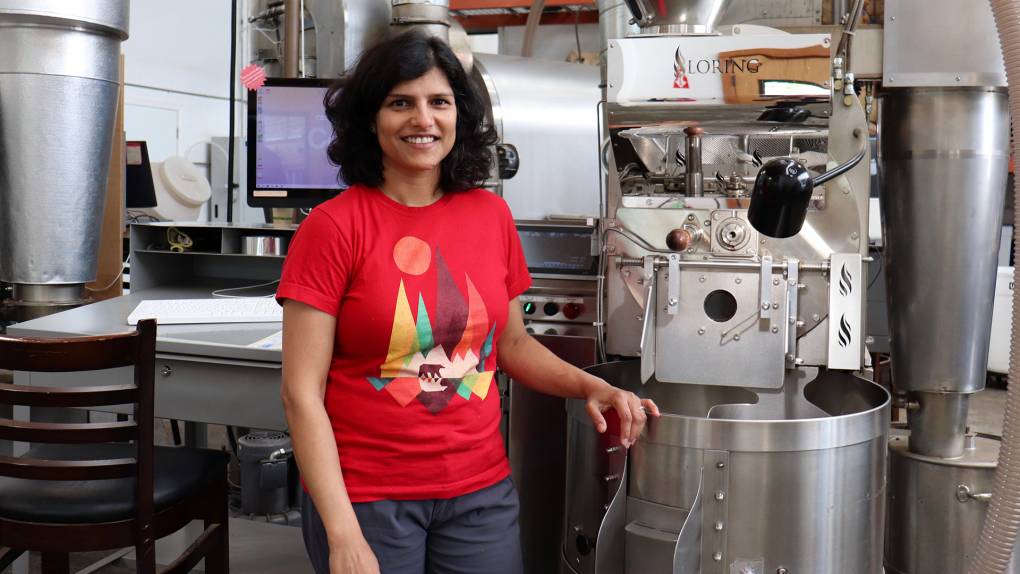
"caption": "Tanya Rao, owner of Kaveri Coffee Works, stands in front of a roasting machine at CoRo in Berkeley.",
"description": null,
"title": "kaveri_rao-featured",
"credit": "Alan Chazaro",
"status": "inherit",
"altTag": "the owner of Kaveri Coffee works stands in front of the roasting machine she uses in Berkeley",
"isLoading": false,
"fetchFailed": false
},
"arts_13932057": {
"type": "attachments",
"id": "arts_13932057",
"meta": {
"index": "attachments_1716263798",
"site": "arts",
"id": "13932057",
"found": true
},
"parent": 13932035,
"imgSizes": {
"twentyfourteen-full-width": {
"file": "https://ww2.kqed.org/app/uploads/sites/2/2023/07/good-to-eat_chicken-1038x576.jpg",
"width": 1038,
"mimeType": "image/jpeg",
"height": 576
},
"thumbnail": {
"file": "https://ww2.kqed.org/app/uploads/sites/2/2023/07/good-to-eat_chicken-160x90.jpg",
"width": 160,
"mimeType": "image/jpeg",
"height": 90
},
"post-thumbnail": {
"file": "https://ww2.kqed.org/app/uploads/sites/2/2023/07/good-to-eat_chicken-672x372.jpg",
"width": 672,
"mimeType": "image/jpeg",
"height": 372
},
"kqedFullSize": {
"file": "https://ww2.kqed.org/app/uploads/sites/2/2023/07/good-to-eat_chicken.jpg",
"width": 1920,
"height": 1080
},
"large": {
"file": "https://ww2.kqed.org/app/uploads/sites/2/2023/07/good-to-eat_chicken-1020x574.jpg",
"width": 1020,
"mimeType": "image/jpeg",
"height": 574
},
"1536x1536": {
"file": "https://ww2.kqed.org/app/uploads/sites/2/2023/07/good-to-eat_chicken-1536x864.jpg",
"width": 1536,
"mimeType": "image/jpeg",
"height": 864
},
"medium": {
"file": "https://ww2.kqed.org/app/uploads/sites/2/2023/07/good-to-eat_chicken-800x450.jpg",
"width": 800,
"mimeType": "image/jpeg",
"height": 450
},
"medium_large": {
"file": "https://ww2.kqed.org/app/uploads/sites/2/2023/07/good-to-eat_chicken-768x432.jpg",
"width": 768,
"mimeType": "image/jpeg",
"height": 432
}
},
"publishDate": 1690335812,
"modified": 1690335911,
"caption": "A quintessential Taiwanese barbecue meal at Emeryville's Good to Eat Dumplings: shacha-slathered grilled chicken with a side of lu rou fan.",
"description": null,
"title": "good to eat_chicken",
"credit": "Luke Tsai",
"status": "inherit",
"altTag": "Small bowl of lu rou fan next to a plate of grilled chicken.",
"isLoading": false,
"fetchFailed": false
},
"arts_13931312": {
"type": "attachments",
"id": "arts_13931312",
"meta": {
"index": "attachments_1716263798",
"site": "arts",
"id": "13931312",
"found": true
},
"parent": 13931296,
"imgSizes": {
"twentyfourteen-full-width": {
"file": "https://ww2.kqed.org/app/uploads/sites/2/2023/07/urelios-lead-crop-1038x576.jpg",
"width": 1038,
"mimeType": "image/jpeg",
"height": 576
},
"thumbnail": {
"file": "https://ww2.kqed.org/app/uploads/sites/2/2023/07/urelios-lead-crop-160x90.jpg",
"width": 160,
"mimeType": "image/jpeg",
"height": 90
},
"post-thumbnail": {
"file": "https://ww2.kqed.org/app/uploads/sites/2/2023/07/urelios-lead-crop-672x372.jpg",
"width": 672,
"mimeType": "image/jpeg",
"height": 372
},
"kqedFullSize": {
"file": "https://ww2.kqed.org/app/uploads/sites/2/2023/07/urelios-lead-crop.jpg",
"width": 1920,
"height": 1080
},
"large": {
"file": "https://ww2.kqed.org/app/uploads/sites/2/2023/07/urelios-lead-crop-1020x574.jpg",
"width": 1020,
"mimeType": "image/jpeg",
"height": 574
},
"1536x1536": {
"file": "https://ww2.kqed.org/app/uploads/sites/2/2023/07/urelios-lead-crop-1536x864.jpg",
"width": 1536,
"mimeType": "image/jpeg",
"height": 864
},
"medium": {
"file": "https://ww2.kqed.org/app/uploads/sites/2/2023/07/urelios-lead-crop-800x450.jpg",
"width": 800,
"mimeType": "image/jpeg",
"height": 450
},
"medium_large": {
"file": "https://ww2.kqed.org/app/uploads/sites/2/2023/07/urelios-lead-crop-768x432.jpg",
"width": 768,
"mimeType": "image/jpeg",
"height": 432
}
},
"publishDate": 1688753150,
"modified": 1688753513,
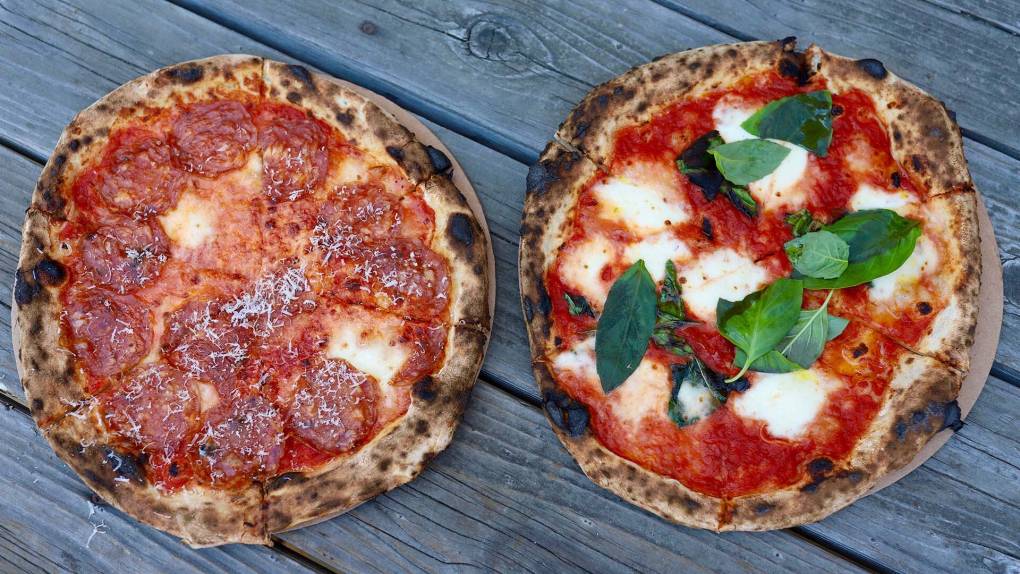
"caption": "Wood-fired pizzas (cheese with durac salami on left; margherita on right) are the stars at Urelio's pizza pop-up.",
"description": null,
"title": "urelios-lead-crop",
"credit": "Alan Chazaro",
"status": "inherit",
"altTag": "Two wood-fired pizzas on a wodden table",
"isLoading": false,
"fetchFailed": false
},
"arts_13931336": {
"type": "attachments",
"id": "arts_13931336",
"meta": {
"index": "attachments_1716263798",
"site": "arts",
"id": "13931336",
"found": true
},
"parent": 13931303,
"imgSizes": {
"twentyfourteen-full-width": {
"file": "https://cdn.kqed.org/wp-content/uploads/sites/2/2023/07/lulu_mezze_lead-1038x576.jpg",
"width": 1038,
"mimeType": "image/jpeg",
"height": 576
},
"thumbnail": {
"file": "https://cdn.kqed.org/wp-content/uploads/sites/2/2023/07/lulu_mezze_lead-160x120.jpg",
"width": 160,
"mimeType": "image/jpeg",
"height": 120
},
"post-thumbnail": {
"file": "https://cdn.kqed.org/wp-content/uploads/sites/2/2023/07/lulu_mezze_lead-672x372.jpg",
"width": 672,
"mimeType": "image/jpeg",
"height": 372
},
"kqedFullSize": {
"file": "https://cdn.kqed.org/wp-content/uploads/sites/2/2023/07/lulu_mezze_lead-scaled.jpg",
"width": 2560,
"height": 1920
},
"2048x2048": {
"file": "https://cdn.kqed.org/wp-content/uploads/sites/2/2023/07/lulu_mezze_lead-2048x1536.jpg",
"width": 2048,
"mimeType": "image/jpeg",
"height": 1536
},
"large": {
"file": "https://cdn.kqed.org/wp-content/uploads/sites/2/2023/07/lulu_mezze_lead-1020x765.jpg",
"width": 1020,
"mimeType": "image/jpeg",
"height": 765
},
"1536x1536": {
"file": "https://cdn.kqed.org/wp-content/uploads/sites/2/2023/07/lulu_mezze_lead-1536x1152.jpg",
"width": 1536,
"mimeType": "image/jpeg",
"height": 1152
},
"full-width": {
"file": "https://cdn.kqed.org/wp-content/uploads/sites/2/2023/07/lulu_mezze_lead-1920x1440.jpg",
"width": 1920,
"mimeType": "image/jpeg",
"height": 1440
},
"medium": {
"file": "https://cdn.kqed.org/wp-content/uploads/sites/2/2023/07/lulu_mezze_lead-800x600.jpg",
"width": 800,
"mimeType": "image/jpeg",
"height": 600
},
"medium_large": {
"file": "https://cdn.kqed.org/wp-content/uploads/sites/2/2023/07/lulu_mezze_lead-768x576.jpg",
"width": 768,
"mimeType": "image/jpeg",
"height": 576
}
},
"publishDate": 1688755313,
"modified": 1702068555,
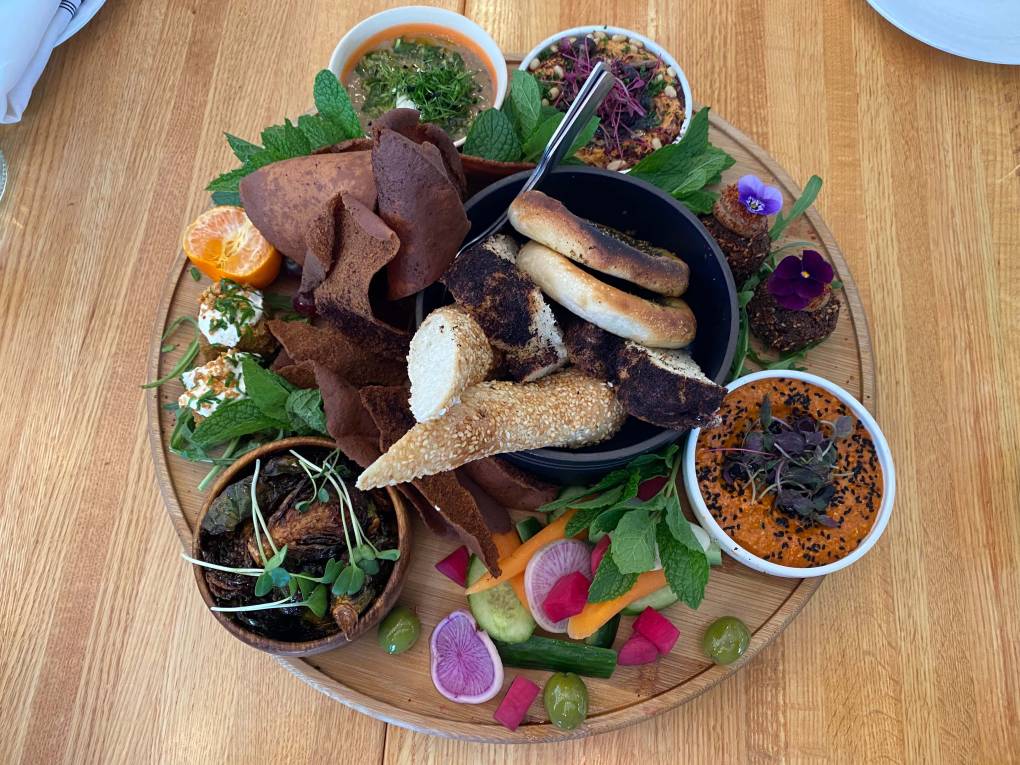
"caption": "The mezze brunch board at Lulu in West Berkeley is a feast for the eyes and the tastebuds. ",
"description": null,
"title": "lulu_mezze_lead",
"credit": "Luke Tsai/KQED",
"status": "inherit",
"altTag": "An abundant spread of Palestinian mezzes served on a circular wooden board.",
"isLoading": false,
"fetchFailed": false
},
"arts_13931125": {
"type": "attachments",
"id": "arts_13931125",
"meta": {
"index": "attachments_1716263798",
"site": "arts",
"id": "13931125",
"found": true
},
"parent": 13931115,
"imgSizes": {
"twentyfourteen-full-width": {
"file": "https://ww2.kqed.org/app/uploads/sites/2/2023/06/tacos-el-rulas_lead-1038x576.jpg",
"width": 1038,
"mimeType": "image/jpeg",
"height": 576
},
"thumbnail": {
"file": "https://ww2.kqed.org/app/uploads/sites/2/2023/06/tacos-el-rulas_lead-160x90.jpg",
"width": 160,
"mimeType": "image/jpeg",
"height": 90
},
"post-thumbnail": {
"file": "https://ww2.kqed.org/app/uploads/sites/2/2023/06/tacos-el-rulas_lead-672x372.jpg",
"width": 672,
"mimeType": "image/jpeg",
"height": 372
},
"kqedFullSize": {
"file": "https://ww2.kqed.org/app/uploads/sites/2/2023/06/tacos-el-rulas_lead.jpg",
"width": 1920,
"height": 1080
},
"large": {
"file": "https://ww2.kqed.org/app/uploads/sites/2/2023/06/tacos-el-rulas_lead-1020x574.jpg",
"width": 1020,
"mimeType": "image/jpeg",
"height": 574
},
"1536x1536": {
"file": "https://ww2.kqed.org/app/uploads/sites/2/2023/06/tacos-el-rulas_lead-1536x864.jpg",
"width": 1536,
"mimeType": "image/jpeg",
"height": 864
},
"medium": {
"file": "https://ww2.kqed.org/app/uploads/sites/2/2023/06/tacos-el-rulas_lead-800x450.jpg",
"width": 800,
"mimeType": "image/jpeg",
"height": 450
},
"medium_large": {
"file": "https://ww2.kqed.org/app/uploads/sites/2/2023/06/tacos-el-rulas_lead-768x432.jpg",
"width": 768,
"mimeType": "image/jpeg",
"height": 432
}
},
"publishDate": 1688151434,
"modified": 1688151970,
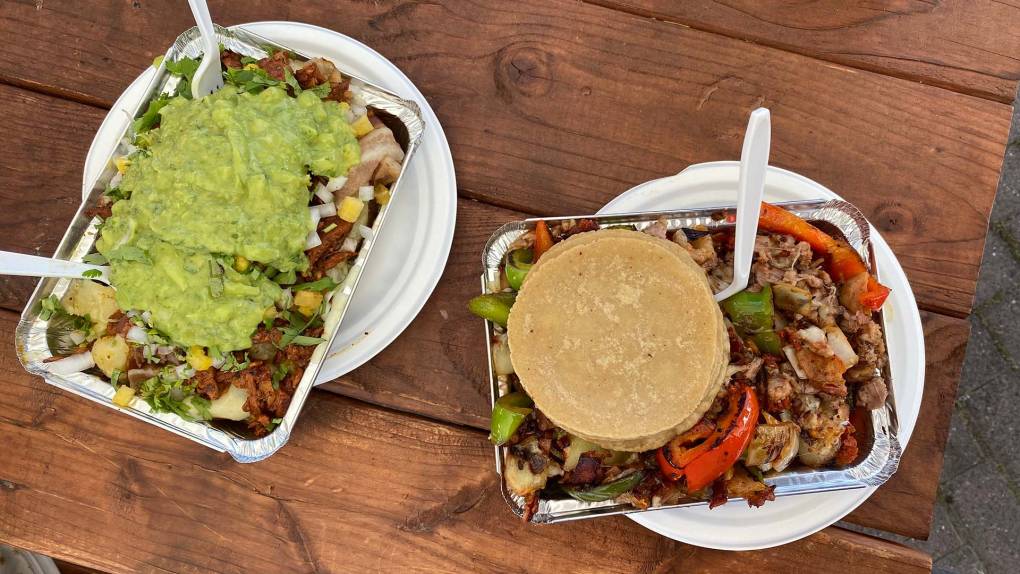
"caption": "Richmond's Tacos El Rulas specializes in cheesy, massively portioned dishes like its papá loca (left) and its alambre, both of which have gotten a lot of attention on social media.",
"description": null,
"title": "tacos el rulas_lead",
"credit": "Luke Tsai",
"status": "inherit",
"altTag": "Overhead view of two Mexican dishes served in aluminum takeout trays, on a picnic table. On the left, potatoes are topped with meat, onions and guacamole. On the right is a cheesy mixed grill of onions, peppers and assorted meats, topped with a stack of tortillas.",
"isLoading": false,
"fetchFailed": false
},
"arts_13930546": {
"type": "attachments",
"id": "arts_13930546",
"meta": {
"index": "attachments_1716263798",
"site": "arts",
"id": "13930546",
"found": true
},
"parent": 0,
"imgSizes": {
"twentyfourteen-full-width": {
"file": "https://ww2.kqed.org/app/uploads/sites/2/2023/06/OhloneKorean_HW_193-crop-1038x576.jpg",
"width": 1038,
"mimeType": "image/jpeg",
"height": 576
},
"thumbnail": {
"file": "https://ww2.kqed.org/app/uploads/sites/2/2023/06/OhloneKorean_HW_193-crop-160x90.jpg",
"width": 160,
"mimeType": "image/jpeg",
"height": 90
},
"post-thumbnail": {
"file": "https://ww2.kqed.org/app/uploads/sites/2/2023/06/OhloneKorean_HW_193-crop-672x372.jpg",
"width": 672,
"mimeType": "image/jpeg",
"height": 372
},
"kqedFullSize": {
"file": "https://ww2.kqed.org/app/uploads/sites/2/2023/06/OhloneKorean_HW_193-crop.jpg",
"width": 1920,
"height": 1080
},
"large": {
"file": "https://ww2.kqed.org/app/uploads/sites/2/2023/06/OhloneKorean_HW_193-crop-1020x574.jpg",
"width": 1020,
"mimeType": "image/jpeg",
"height": 574
},
"1536x1536": {
"file": "https://ww2.kqed.org/app/uploads/sites/2/2023/06/OhloneKorean_HW_193-crop-1536x864.jpg",
"width": 1536,
"mimeType": "image/jpeg",
"height": 864
},
"medium": {
"file": "https://ww2.kqed.org/app/uploads/sites/2/2023/06/OhloneKorean_HW_193-crop-800x450.jpg",
"width": 800,
"mimeType": "image/jpeg",
"height": 450
},
"medium_large": {
"file": "https://ww2.kqed.org/app/uploads/sites/2/2023/06/OhloneKorean_HW_193-crop-768x432.jpg",
"width": 768,
"mimeType": "image/jpeg",
"height": 432
}
},
"publishDate": 1686789521,
"modified": 1686849902,
"caption": "Cafe Ohlone co-owner Vincent Medina shares a moment with Joanne Selby Kim, one of the Korean elders who attended a special Korean-Ohlone meal on Nov. 4, 2022. Organized by Ssi Ya Gi, the event focused on food memories and cross-cultural dialogue.",
"description": null,
"title": "Ohlone+Korean_HW_193-crop",
"credit": "Courtesy of Hardy Wilson",
"status": "inherit",
"altTag": "At a wooden dining table in an outdoor courtyard, an older Korean woman in an old-fashioned decorative hat and purple puffy jacket rests her hand on the arm of an Ohlone man who has squatted down to talk to her.",
"isLoading": false,
"fetchFailed": false
},
"arts_13930165": {
"type": "attachments",
"id": "arts_13930165",
"meta": {
"index": "attachments_1716263798",
"site": "arts",
"id": "13930165",
"found": true
},
"parent": 13930138,
"imgSizes": {
"twentyfourteen-full-width": {
"file": "https://ww2.kqed.org/app/uploads/sites/2/2023/06/chile_lindo-featured-1038x576.jpg",
"width": 1038,
"mimeType": "image/jpeg",
"height": 576
},
"thumbnail": {
"file": "https://ww2.kqed.org/app/uploads/sites/2/2023/06/chile_lindo-featured-160x90.jpg",
"width": 160,
"mimeType": "image/jpeg",
"height": 90
},
"post-thumbnail": {
"file": "https://ww2.kqed.org/app/uploads/sites/2/2023/06/chile_lindo-featured-672x372.jpg",
"width": 672,
"mimeType": "image/jpeg",
"height": 372
},
"kqedFullSize": {
"file": "https://ww2.kqed.org/app/uploads/sites/2/2023/06/chile_lindo-featured.jpg",
"width": 1920,
"height": 1080
},
"large": {
"file": "https://ww2.kqed.org/app/uploads/sites/2/2023/06/chile_lindo-featured-1020x574.jpg",
"width": 1020,
"mimeType": "image/jpeg",
"height": 574
},
"1536x1536": {
"file": "https://ww2.kqed.org/app/uploads/sites/2/2023/06/chile_lindo-featured-1536x864.jpg",
"width": 1536,
"mimeType": "image/jpeg",
"height": 864
},
"medium": {
"file": "https://ww2.kqed.org/app/uploads/sites/2/2023/06/chile_lindo-featured-800x450.jpg",
"width": 800,
"mimeType": "image/jpeg",
"height": 450
},
"medium_large": {
"file": "https://ww2.kqed.org/app/uploads/sites/2/2023/06/chile_lindo-featured-768x432.jpg",
"width": 768,
"mimeType": "image/jpeg",
"height": 432
}
},
"publishDate": 1686083319,
"modified": 1686083719,
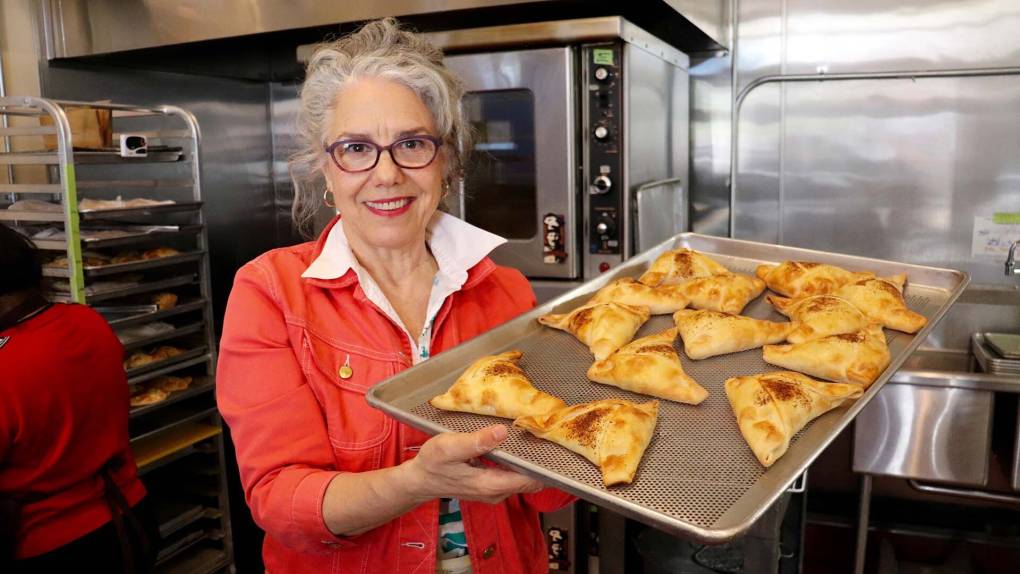
"caption": "For decades, Paula Tejeda, owner of Chile Lindo, has been proudly sharing Chilean flavors in the Mission District.",
"description": null,
"title": "chile_lindo-featured",
"credit": "Alan Chazaro",
"status": "inherit",
"altTag": "a Chilean foodmaker holds up a baking tray of empanadas inside Chile Lindo",
"isLoading": false,
"fetchFailed": false
},
"arts_13930019": {
"type": "attachments",
"id": "arts_13930019",
"meta": {
"index": "attachments_1716263798",
"site": "arts",
"id": "13930019",
"found": true
},
"parent": 13930013,
"imgSizes": {
"twentyfourteen-full-width": {
"file": "https://ww2.kqed.org/app/uploads/sites/2/2023/06/diaspora-dinner-lineup_main-1038x576.jpg",
"width": 1038,
"mimeType": "image/jpeg",
"height": 576
},
"thumbnail": {
"file": "https://ww2.kqed.org/app/uploads/sites/2/2023/06/diaspora-dinner-lineup_main-160x90.jpg",
"width": 160,
"mimeType": "image/jpeg",
"height": 90
},
"post-thumbnail": {
"file": "https://ww2.kqed.org/app/uploads/sites/2/2023/06/diaspora-dinner-lineup_main-672x372.jpg",
"width": 672,
"mimeType": "image/jpeg",
"height": 372
},
"kqedFullSize": {
"file": "https://ww2.kqed.org/app/uploads/sites/2/2023/06/diaspora-dinner-lineup_main.jpg",
"width": 1920,
"height": 1080
},
"large": {
"file": "https://ww2.kqed.org/app/uploads/sites/2/2023/06/diaspora-dinner-lineup_main-1020x574.jpg",
"width": 1020,
"mimeType": "image/jpeg",
"height": 574
},
"1536x1536": {
"file": "https://ww2.kqed.org/app/uploads/sites/2/2023/06/diaspora-dinner-lineup_main-1536x864.jpg",
"width": 1536,
"mimeType": "image/jpeg",
"height": 864
},
"medium": {
"file": "https://ww2.kqed.org/app/uploads/sites/2/2023/06/diaspora-dinner-lineup_main-800x450.jpg",
"width": 800,
"mimeType": "image/jpeg",
"height": 450
},
"medium_large": {
"file": "https://ww2.kqed.org/app/uploads/sites/2/2023/06/diaspora-dinner-lineup_main-768x432.jpg",
"width": 768,
"mimeType": "image/jpeg",
"height": 432
}
},
"publishDate": 1685732380,
"modified": 1685733761,
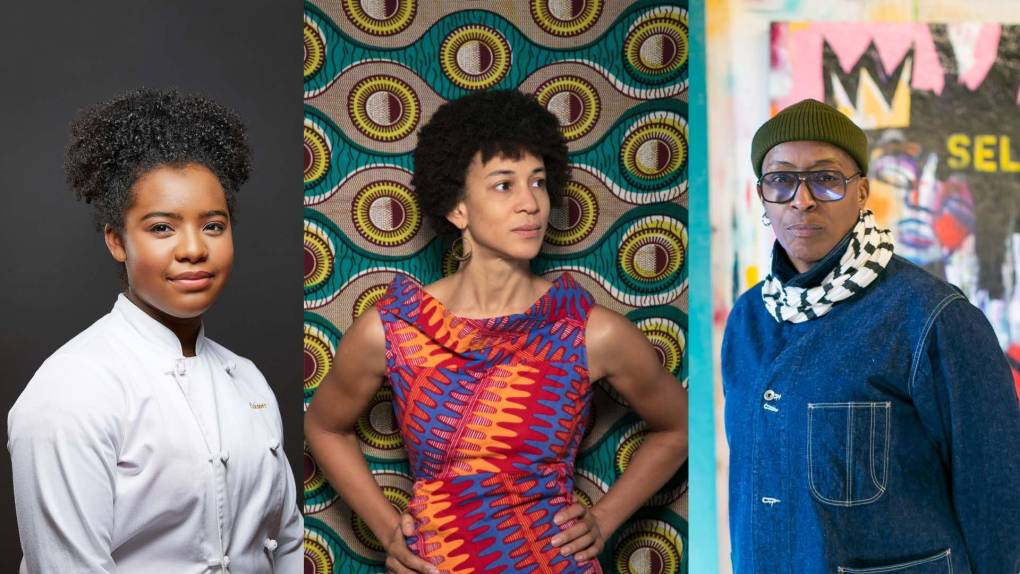
"caption": "MoAD's Diaspora Dinner is headlined by multiple generations of Black women chefs in the Bay Area. From left to right: Rahanna Bisseret Martinez, Jocelyn Jackson and Sarah Kirnon.",
"description": null,
"title": "diaspora dinner lineup_main",
"credit": null,
"status": "inherit",
"altTag": "Headshots of three Black women chefs lined up side by side.",
"isLoading": false,
"fetchFailed": false
},
"arts_13929963": {
"type": "attachments",
"id": "arts_13929963",
"meta": {
"index": "attachments_1716263798",
"site": "arts",
"id": "13929963",
"found": true
},
"parent": 13929869,
"imgSizes": {
"twentyfourteen-full-width": {
"file": "https://ww2.kqed.org/app/uploads/sites/2/2023/05/island-bay-cocina_olivier-1038x576.jpg",
"width": 1038,
"mimeType": "image/jpeg",
"height": 576
},
"thumbnail": {
"file": "https://ww2.kqed.org/app/uploads/sites/2/2023/05/island-bay-cocina_olivier-160x110.jpg",
"width": 160,
"mimeType": "image/jpeg",
"height": 110
},
"post-thumbnail": {
"file": "https://ww2.kqed.org/app/uploads/sites/2/2023/05/island-bay-cocina_olivier-672x372.jpg",
"width": 672,
"mimeType": "image/jpeg",
"height": 372
},
"kqedFullSize": {
"file": "https://ww2.kqed.org/app/uploads/sites/2/2023/05/island-bay-cocina_olivier.jpg",
"width": 1920,
"height": 1320
},
"large": {
"file": "https://ww2.kqed.org/app/uploads/sites/2/2023/05/island-bay-cocina_olivier-1020x701.jpg",
"width": 1020,
"mimeType": "image/jpeg",
"height": 701
},
"1536x1536": {
"file": "https://ww2.kqed.org/app/uploads/sites/2/2023/05/island-bay-cocina_olivier-1536x1056.jpg",
"width": 1536,
"mimeType": "image/jpeg",
"height": 1056
},
"medium": {
"file": "https://ww2.kqed.org/app/uploads/sites/2/2023/05/island-bay-cocina_olivier-800x550.jpg",
"width": 800,
"mimeType": "image/jpeg",
"height": 550
},
"medium_large": {
"file": "https://ww2.kqed.org/app/uploads/sites/2/2023/05/island-bay-cocina_olivier-768x528.jpg",
"width": 768,
"mimeType": "image/jpeg",
"height": 528
}
},
"publishDate": 1685633840,
"modified": 1685634940,
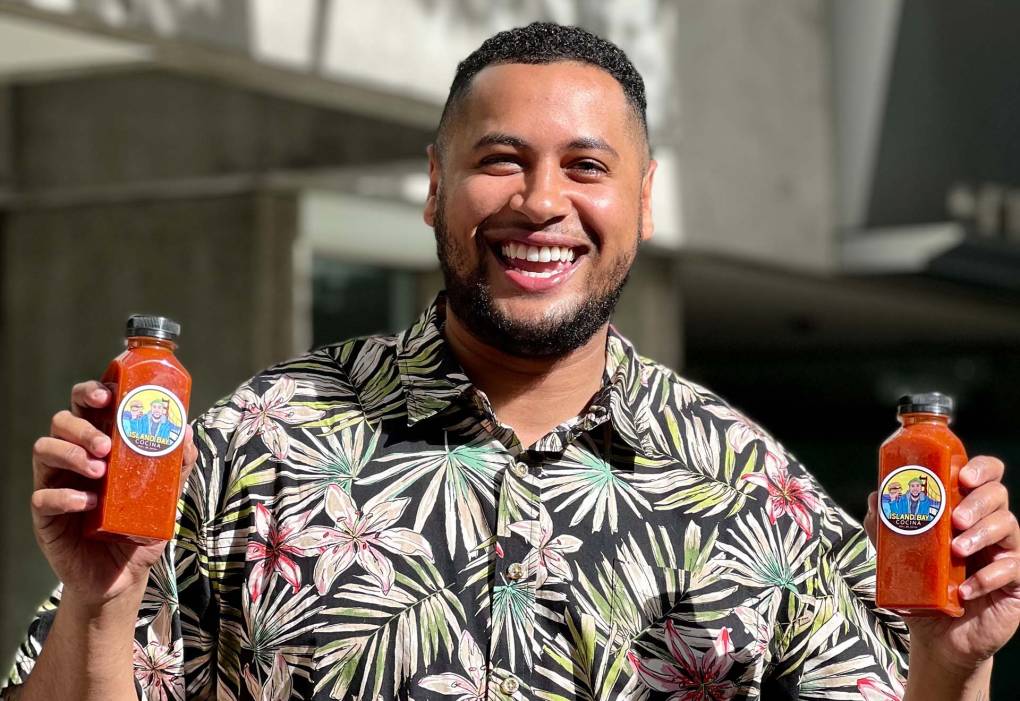
"caption": "Olivier Grandvoinet shows off his signature \"Guavanero\" barbecue sauce. His pop-up, Island Bay Cocina, is selling island-inspired ribs and carnitas around the Bay.",
"description": null,
"title": "island bay cocina_olivier",
"credit": "Sahar Nayrami",
"status": "inherit",
"altTag": "A barbecue pitmaster in a Hawaiian shirt holds up two bottles of his signature sauce.",
"isLoading": false,
"fetchFailed": false
},
"arts_13929893": {
"type": "attachments",
"id": "arts_13929893",
"meta": {
"index": "attachments_1716263798",
"site": "arts",
"id": "13929893",
"found": true
},
"parent": 0,
"imgSizes": {
"twentyfourteen-full-width": {
"file": "https://ww2.kqed.org/app/uploads/sites/2/2023/05/RS64149_03312023_kqed_roxiesandwiches-448-qut-crop-1038x576.jpg",
"width": 1038,
"mimeType": "image/jpeg",
"height": 576
},
"thumbnail": {
"file": "https://ww2.kqed.org/app/uploads/sites/2/2023/05/RS64149_03312023_kqed_roxiesandwiches-448-qut-crop-160x90.jpg",
"width": 160,
"mimeType": "image/jpeg",
"height": 90
},
"post-thumbnail": {
"file": "https://ww2.kqed.org/app/uploads/sites/2/2023/05/RS64149_03312023_kqed_roxiesandwiches-448-qut-crop-672x372.jpg",
"width": 672,
"mimeType": "image/jpeg",
"height": 372
},
"kqedFullSize": {
"file": "https://ww2.kqed.org/app/uploads/sites/2/2023/05/RS64149_03312023_kqed_roxiesandwiches-448-qut-crop.jpg",
"width": 1920,
"height": 1080
},
"large": {
"file": "https://ww2.kqed.org/app/uploads/sites/2/2023/05/RS64149_03312023_kqed_roxiesandwiches-448-qut-crop-1020x574.jpg",
"width": 1020,
"mimeType": "image/jpeg",
"height": 574
},
"1536x1536": {
"file": "https://ww2.kqed.org/app/uploads/sites/2/2023/05/RS64149_03312023_kqed_roxiesandwiches-448-qut-crop-1536x864.jpg",
"width": 1536,
"mimeType": "image/jpeg",
"height": 864
},
"medium": {
"file": "https://ww2.kqed.org/app/uploads/sites/2/2023/05/RS64149_03312023_kqed_roxiesandwiches-448-qut-crop-800x450.jpg",
"width": 800,
"mimeType": "image/jpeg",
"height": 450
},
"medium_large": {
"file": "https://ww2.kqed.org/app/uploads/sites/2/2023/05/RS64149_03312023_kqed_roxiesandwiches-448-qut-crop-768x432.jpg",
"width": 768,
"mimeType": "image/jpeg",
"height": 432
}
},
"publishDate": 1685560751,
"modified": 1685561588,
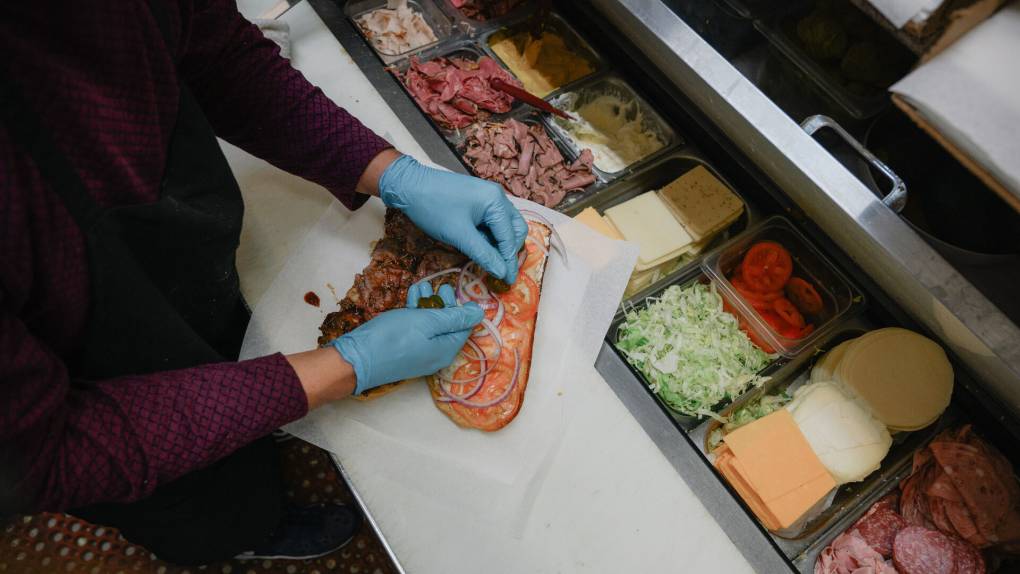
"caption": "Roxie Food Center employee Miguel Chavarría assembles a pastrami sandwich. Though it is now under new ownership, the beloved sandwich shop is keeping its old-school traditions alive in the Excelsior. ",
"description": null,
"title": "RS64149_03312023_kqed_roxiesandwiches 448-qut-crop",
"credit": "Kori Suzuki/KQED",
"status": "inherit",
"altTag": null,
"isLoading": false,
"fetchFailed": false
},
"arts_13929626": {
"type": "attachments",
"id": "arts_13929626",
"meta": {
"index": "attachments_1716263798",
"site": "arts",
"id": "13929626",
"found": true
},
"parent": 13929612,
"imgSizes": {
"twentyfourteen-full-width": {
"file": "https://ww2.kqed.org/app/uploads/sites/2/2023/05/Bardo_bartender_leadimage-1038x576.jpg",
"width": 1038,
"mimeType": "image/jpeg",
"height": 576
},
"thumbnail": {
"file": "https://ww2.kqed.org/app/uploads/sites/2/2023/05/Bardo_bartender_leadimage-160x100.jpg",
"width": 160,
"mimeType": "image/jpeg",
"height": 100
},
"post-thumbnail": {
"file": "https://ww2.kqed.org/app/uploads/sites/2/2023/05/Bardo_bartender_leadimage-672x372.jpg",
"width": 672,
"mimeType": "image/jpeg",
"height": 372
},
"kqedFullSize": {
"file": "https://ww2.kqed.org/app/uploads/sites/2/2023/05/Bardo_bartender_leadimage.jpg",
"width": 1920,
"height": 1200
},
"large": {
"file": "https://ww2.kqed.org/app/uploads/sites/2/2023/05/Bardo_bartender_leadimage-1020x638.jpg",
"width": 1020,
"mimeType": "image/jpeg",
"height": 638
},
"1536x1536": {
"file": "https://ww2.kqed.org/app/uploads/sites/2/2023/05/Bardo_bartender_leadimage-1536x960.jpg",
"width": 1536,
"mimeType": "image/jpeg",
"height": 960
},
"medium": {
"file": "https://ww2.kqed.org/app/uploads/sites/2/2023/05/Bardo_bartender_leadimage-800x500.jpg",
"width": 800,
"mimeType": "image/jpeg",
"height": 500
},
"medium_large": {
"file": "https://ww2.kqed.org/app/uploads/sites/2/2023/05/Bardo_bartender_leadimage-768x480.jpg",
"width": 768,
"mimeType": "image/jpeg",
"height": 480
}
},
"publishDate": 1684962246,
"modified": 1684962576,
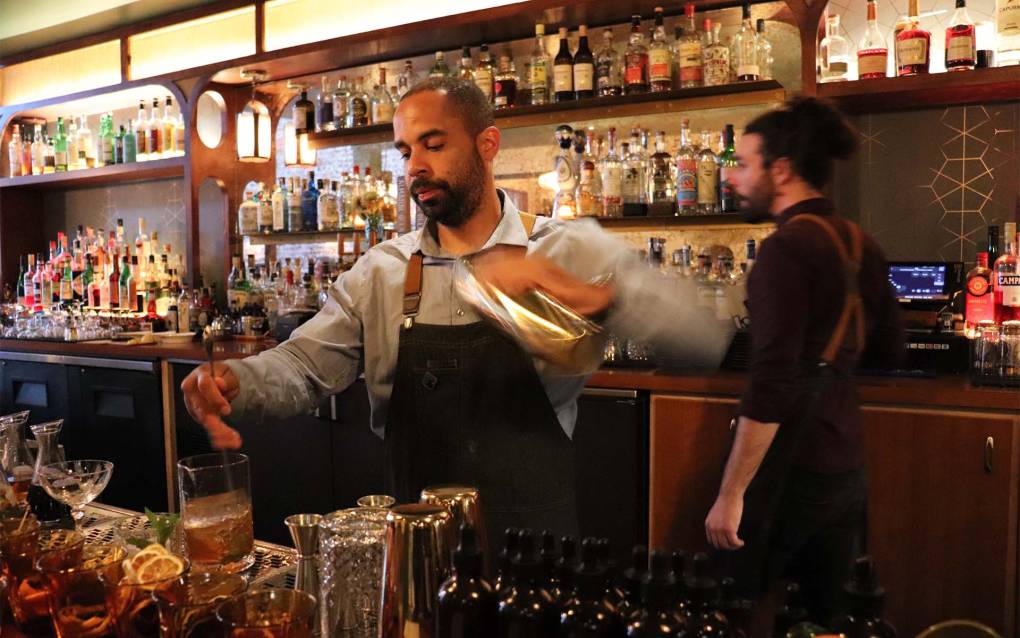
"caption": "A bartender at Bardo mixes a drink. The Oakland cocktail spot's version of a Back Porch bourbon sweet tea drink is a strong contender for the Bay Area drink of the summer. ",
"description": null,
"title": "Bardo_bartender_leadimage",
"credit": "Alan Chazaro",
"status": "inherit",
"altTag": "A bartender in an apron vigorously shakes a a tumbler to make a cocktail. A fully stocked bar is visible behind him.",
"isLoading": false,
"fetchFailed": false
},
"arts_13929504": {
"type": "attachments",
"id": "arts_13929504",
"meta": {
"index": "attachments_1716263798",
"site": "arts",
"id": "13929504",
"found": true
},
"parent": 13929494,
"imgSizes": {
"twentyfourteen-full-width": {
"file": "https://ww2.kqed.org/app/uploads/sites/2/2023/05/bart-grocery-short-rib-1038x576.jpg",
"width": 1038,
"mimeType": "image/jpeg",
"height": 576
},
"thumbnail": {
"file": "https://ww2.kqed.org/app/uploads/sites/2/2023/05/bart-grocery-short-rib-160x120.jpg",
"width": 160,
"mimeType": "image/jpeg",
"height": 120
},
"post-thumbnail": {
"file": "https://ww2.kqed.org/app/uploads/sites/2/2023/05/bart-grocery-short-rib-672x372.jpg",
"width": 672,
"mimeType": "image/jpeg",
"height": 372
},
"kqedFullSize": {
"file": "https://ww2.kqed.org/app/uploads/sites/2/2023/05/bart-grocery-short-rib.jpg",
"width": 1920,
"height": 1440
},
"large": {
"file": "https://ww2.kqed.org/app/uploads/sites/2/2023/05/bart-grocery-short-rib-1020x765.jpg",
"width": 1020,
"mimeType": "image/jpeg",
"height": 765
},
"1536x1536": {
"file": "https://ww2.kqed.org/app/uploads/sites/2/2023/05/bart-grocery-short-rib-1536x1152.jpg",
"width": 1536,
"mimeType": "image/jpeg",
"height": 1152
},
"medium": {
"file": "https://ww2.kqed.org/app/uploads/sites/2/2023/05/bart-grocery-short-rib-800x600.jpg",
"width": 800,
"mimeType": "image/jpeg",
"height": 600
},
"medium_large": {
"file": "https://ww2.kqed.org/app/uploads/sites/2/2023/05/bart-grocery-short-rib-768x576.jpg",
"width": 768,
"mimeType": "image/jpeg",
"height": 576
}
},
"publishDate": 1684797422,
"modified": 1684797457,
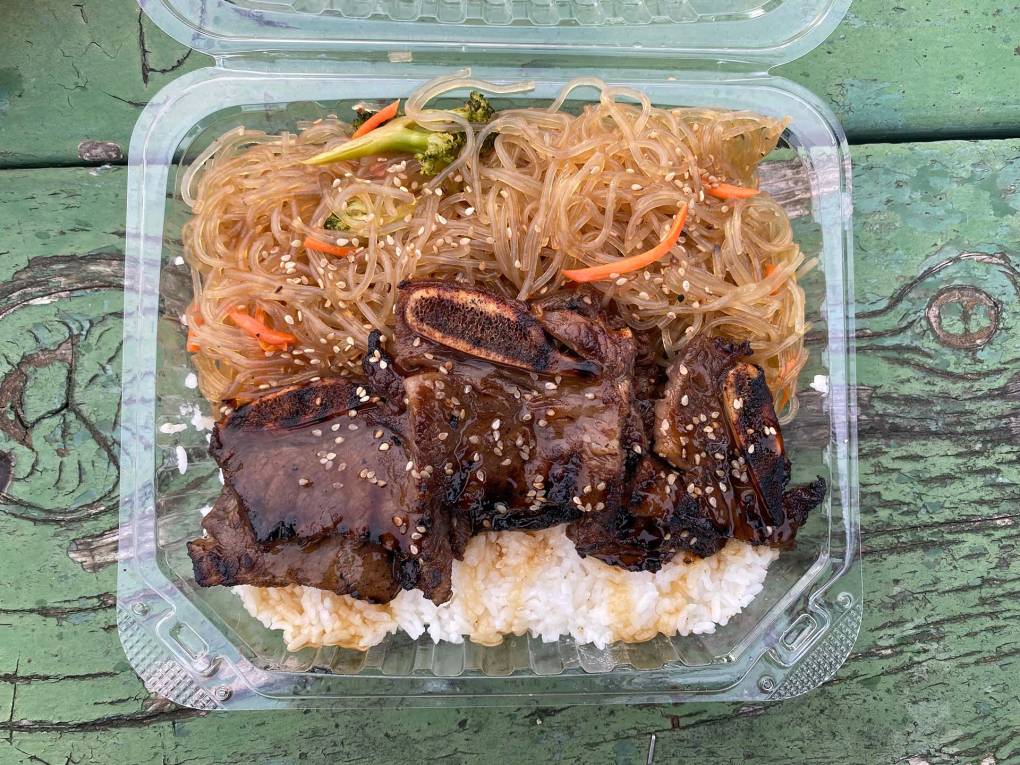
"caption": "The beef short rib bento at Daly City's Bart Grocery is hearty and surprisingly affordable. It makes for a luxurious picnic meal.",
"description": null,
"title": "bart grocery short rib",
"credit": "Luke Tsai",
"status": "inherit",
"altTag": "Korean barbecue beef short rib served over rice and japchae (noodles) in a plastic takeout container.",
"isLoading": false,
"fetchFailed": false
}
},
"audioPlayerReducer": {
"postId": "stream_live",
"isPaused": true,
"isPlaying": false,
"pfsActive": false,
"pledgeModalIsOpen": true,
"playerDrawerIsOpen": false,
"liveAudioPlayStartedAt": 0,
"liveAudioPlayContext": ""
},
"authorsReducer": {
"kqedarts": {
"type": "authors",
"id": "92",
"meta": {
"index": "authors_1716337520",
"id": "92",
"found": true
},
"name": "KQED Arts",
"firstName": "KQED",
"lastName": "Arts",
"slug": "kqedarts",
"email": "arts@kqed.org",
"display_author_email": false,
"staff_mastheads": [],
"title": "KQED Staff",
"bio": null,
"avatar": "https://secure.gravatar.com/avatar/321c9ebfeb7736f9e55366a6d3399ab0?s=600&d=blank&r=g",
"twitter": null,
"facebook": null,
"instagram": "https://www.instagram.com/kqed_arts/",
"linkedin": null,
"sites": [
{
"site": "arts",
"roles": [
"contributor"
]
},
{
"site": "pop",
"roles": [
"contributor"
]
},
{
"site": "science",
"roles": [
"author"
]
},
{
"site": "food",
"roles": [
"contributor"
]
}
],
"headData": {
"title": "KQED Arts | KQED",
"description": "KQED Staff",
"ogImgSrc": "https://secure.gravatar.com/avatar/321c9ebfeb7736f9e55366a6d3399ab0?s=600&d=blank&r=g",
"twImgSrc": "https://secure.gravatar.com/avatar/321c9ebfeb7736f9e55366a6d3399ab0?s=600&d=blank&r=g"
},
"isLoading": false,
"link": "/author/kqedarts"
},
"ltsai": {
"type": "authors",
"id": "11743",
"meta": {
"index": "authors_1716337520",
"id": "11743",
"found": true
},
"name": "Luke Tsai",
"firstName": "Luke",
"lastName": "Tsai",
"slug": "ltsai",
"email": "ltsai@kqed.org",
"display_author_email": true,
"staff_mastheads": [
"arts"
],
"title": "Food Editor",
"bio": "Luke Tsai is KQED's food editor and resident stinky tofu connoisseur. Prior to KQED, he was an editor at Eater SF, \u003cem>San Francisco \u003c/em>magazine, and the \u003cem>East Bay Express\u003c/em>, and his work has also appeared in TASTE, the \u003cem>San Francisco Chronicle\u003c/em>, and the \u003cem>Best Food Writing\u003c/em> anthology. When he isn't writing or editing, you'll find him eating most everything he can get his hands on.",
"avatar": "https://secure.gravatar.com/avatar/1e59b45bf191526e7339d6ba46e33a57b2030d25c27660ecc64ea3cb863e34f7?s=600&d=blank&r=g",
"twitter": "theluketsai",
"bluesky": null,
"facebook": null,
"instagram": null,
"linkedin": null,
"sites": [
{
"site": "",
"roles": [
"editor"
]
},
{
"site": "arts",
"roles": [
"administrator"
]
},
{
"site": "news",
"roles": [
"editor",
"contributor"
]
},
{
"site": "bayareabites",
"roles": [
"editor"
]
},
{
"site": "food",
"roles": [
"editor"
]
}
],
"headData": {
"title": "Luke Tsai | KQED",
"description": "Food Editor",
"ogImgSrc": "https://secure.gravatar.com/avatar/1e59b45bf191526e7339d6ba46e33a57b2030d25c27660ecc64ea3cb863e34f7?s=600&d=blank&r=g",
"twImgSrc": "https://secure.gravatar.com/avatar/1e59b45bf191526e7339d6ba46e33a57b2030d25c27660ecc64ea3cb863e34f7?s=600&d=blank&r=g"
},
"isLoading": false,
"link": "/author/ltsai"
},
"achazaro": {
"type": "authors",
"id": "11748",
"meta": {
"index": "authors_1716337520",
"id": "11748",
"found": true
},
"name": "Alan Chazaro",
"firstName": "Alan",
"lastName": "Chazaro",
"slug": "achazaro",
"email": "agchazaro@gmail.com",
"display_author_email": true,
"staff_mastheads": [],
"title": "Food Writer and Reporter",
"bio": "Alan Chazaro is the author of \u003cem>This Is Not a Frank Ocean Cover Album\u003c/em> (Black Lawrence Press, 2019), \u003cem>Piñata Theory\u003c/em> (Black Lawrence Press, 2020), and \u003cem>Notes from the Eastern Span of the Bay Bridge\u003c/em> (Ghost City Press, 2021). He is a graduate of June Jordan’s Poetry for the People program at UC Berkeley and a former Lawrence Ferlinghetti Fellow at the University of San Francisco. He writes about sports, food, art, music, education, and culture while repping the Bay on \u003ca href=\"https://twitter.com/alan_chazaro\">Twitter\u003c/a> and \u003ca href=\"https://www.instagram.com/alan_chazaro/?hl=en\">Instagram\u003c/a> at @alan_chazaro.",
"avatar": "https://secure.gravatar.com/avatar/ea8b6dd970fc5c29e7a188e7d5861df7?s=600&d=blank&r=g",
"twitter": "alan_chazaro",
"facebook": null,
"instagram": null,
"linkedin": null,
"sites": [
{
"site": "arts",
"roles": [
"contributor"
]
},
{
"site": "news",
"roles": [
"editor"
]
}
],
"headData": {
"title": "Alan Chazaro | KQED",
"description": "Food Writer and Reporter",
"ogImgSrc": "https://secure.gravatar.com/avatar/ea8b6dd970fc5c29e7a188e7d5861df7?s=600&d=blank&r=g",
"twImgSrc": "https://secure.gravatar.com/avatar/ea8b6dd970fc5c29e7a188e7d5861df7?s=600&d=blank&r=g"
},
"isLoading": false,
"link": "/author/achazaro"
},
"rockyrivera": {
"type": "authors",
"id": "11846",
"meta": {
"index": "authors_1716337520",
"id": "11846",
"found": true
},
"name": "Rocky Rivera",
"firstName": "Rocky",
"lastName": "Rivera",
"slug": "rockyrivera",
"email": "ms.rocky.rivera@gmail.com",
"display_author_email": false,
"staff_mastheads": [],
"title": "KQED Contributor",
"bio": "Rocky Rivera is a journalist, emcee, author and activist from San Francisco. She has released four albums through her label, Beatrock Music, and a ten-volume mixtape series with DJ Roza. She released her first book in 2021, entitled \u003cem>Snakeskin: Essays by Rocky Rivera\u003c/em>. Her latest album dropped in September 2024 and is called \"Long Kiss Goodnight\" with emcee/producer Otayo Dubb. She currently writes the Frisco Foodies column as a love letter to her hometown.",
"avatar": "https://secure.gravatar.com/avatar/946241ee2c59e6040607dfc75240d91b?s=600&d=blank&r=g",
"twitter": null,
"facebook": "https://m.facebook.com/rockyriveramusic",
"instagram": "https://instagram.com/rockyrivera",
"linkedin": "https://www.linkedin.com/in/krishtinedeleon/",
"sites": [
{
"site": "arts",
"roles": [
"author"
]
}
],
"headData": {
"title": "Rocky Rivera | KQED",
"description": "KQED Contributor",
"ogImgSrc": "https://secure.gravatar.com/avatar/946241ee2c59e6040607dfc75240d91b?s=600&d=blank&r=g",
"twImgSrc": "https://secure.gravatar.com/avatar/946241ee2c59e6040607dfc75240d91b?s=600&d=blank&r=g"
},
"isLoading": false,
"link": "/author/rockyrivera"
}
},
"pagesReducer": {
"arts_tag_food": {
"type": "terms",
"id": "arts_1297",
"meta": {
"index": "terms_1716263798",
"site": "arts",
"id": "1297",
"score": 7.4243016
},
"featImg": null,
"name": "food",
"description": null,
"taxonomy": "tag",
"headData": {
"twImgId": null,
"twTitle": null,
"ogTitle": null,
"ogImgId": null,
"twDescription": null,
"description": null,
"title": "food Archives | KQED Arts",
"ogDescription": null
},
"ttid": 1309,
"slug": "food",
"isLoading": false,
"title": "food",
"pageMeta": {
"site": "arts",
"WpPageTemplate": "page-topic-editorial",
"currentPage": 25
},
"blocks": [
{
"blockName": "kqed/post-list",
"attrs": {
"layout": "cardArticle2",
"query": "posts/arts?tag=food",
"seeMore": false,
"paginated": true,
"page": 25
}
},
{
"blockName": "kqed/ad"
}
]
}
},
"pfsSessionReducer": {},
"postsReducer": {
"stream_live": {
"type": "live",
"id": "stream_live",
"audioUrl": "https://streams.kqed.org/kqedradio",
"title": "Live Stream",
"excerpt": "Live Stream information currently unavailable.",
"link": "/radio",
"featImg": "",
"label": {
"name": "KQED Live",
"link": "/"
}
},
"stream_kqedNewscast": {
"type": "posts",
"id": "stream_kqedNewscast",
"audioUrl": "https://www.kqed.org/.stream/anon/radio/RDnews/newscast.mp3?_=1",
"title": "KQED Newscast",
"featImg": "",
"label": {
"name": "88.5 FM",
"link": "/"
}
},
"arts_13932089": {
"type": "posts",
"id": "arts_13932089",
"meta": {
"index": "posts_1716263798",
"site": "arts",
"id": "13932089",
"score": null,
"sort": [
1690919957000
]
},
"parent": 0,
"labelTerm": {},
"blocks": [],
"publishDate": 1690919957,
"format": "standard",
"title": "A Third-Generation Indian Coffee Roaster Carves Her Own Path in Berkeley",
"headTitle": "A Third-Generation Indian Coffee Roaster Carves Her Own Path in Berkeley | KQED",
"content": "\u003cp>[dropcap]W[/dropcap]hen many Americans think of Indian food, they probably conjure up the buttery scent of tikka masala — those grilled chunks of yogurt-marinated chicken drowned in red sauce. Or they might recall the earthy, kaleidoscopic aromas of cumin, coriander and turmeric from inside an Indian spice aisle. Maybe they imagine the sugary perfume of a hot cup of masala chai.\u003c/p>\n\u003cp>What I’d bet they don’t think of is\u003ca href=\"https://www.worldcoffeeportal.com/5THWAVE/Podcast/2023/A-conversation-with-tata-starbucks\"> coffee\u003c/a>.\u003c/p>\n\u003cp>But for Tanya Rao, owner of \u003ca href=\"https://www.instagram.com/kavericoffee/?hl=en\">Kaveri Coffee Works\u003c/a> — a small-scale, independent roasting business in Berkeley — coffee has been a family tradition for more than half a century. The Raos’ connection to coffee dates back to 1941, when Tanya’s grandfather, M.V. Rao, opened India Coffee Kiosk in Bangalore, India, in the Karnataka region — known for being the country’s largest coffee producer. When M.V. could no longer run the family trade, he passed it on to Tanya’s father, Mohan Rao. Ever since then, coffee has defined a sense of home and purpose for the men in Rao’s family.\u003c/p>\n\u003cp>No one, however, expected or groomed Tanya, the youngest daughter, to take up the mantle. Yet here she is.\u003c/p>\n\u003cp>“I was next in line to get married,” Rao says. “But instead I broke barriers and challenged the status quo by leaving my [former] career to travel and own my business.”\u003c/p>\n\u003cp>[ad fullwidth]\u003c/p>\n\u003cp>Today, Rao is leading a new wave of Bay Area coffee makers with a focus on empowering women of color in the coffee industry, which can often feel male-centric and white-dominant. Even at Berkeley’s \u003ca href=\"https://www.corocoffee.com/\">CoRo, the beautifully collaborative space where Rao roasts her coffee\u003c/a>, there was a visible lack of women during the busy morning I visited. That’s not to say women roasters don’t exist, but to see an Indian woman in a room full of male coffee roasters was scorchingly noticeable to me. Data reveals a gender gap in the coffee industry, with men accumulating a far greater share of the profits. According to \u003ca href=\"https://www.ico.org/documents/cy2017-18/icc-122-11e-gender-equality.pdf\">a report from the International Coffee Organization\u003c/a>, 70% of coffee labor worldwide is provided by women, while only 20% of coffee farms are women-owned. Similarly, \u003ca href=\"https://www.zippia.com/coffee-roaster-jobs/demographics/\">the American coffee roasting industry is heavily male-dominated\u003c/a>.\u003c/p>\n\u003cfigure id=\"attachment_13932434\" class=\"wp-caption alignnone\" style=\"max-width: 800px\">\u003cimg loading=\"lazy\" decoding=\"async\" class=\"size-medium wp-image-13932434\" src=\"https://ww2.kqed.org/app/uploads/sites/2/2023/07/kaveri_bags-800x533.jpg\" alt='two bags of \"specialty coffee of India\" sit inside a coffee roasting warehouse in Berkeley' width=\"800\" height=\"533\" srcset=\"https://cdn.kqed.org/wp-content/uploads/sites/2/2023/07/kaveri_bags-800x533.jpg 800w, https://cdn.kqed.org/wp-content/uploads/sites/2/2023/07/kaveri_bags-1020x680.jpg 1020w, https://cdn.kqed.org/wp-content/uploads/sites/2/2023/07/kaveri_bags-160x107.jpg 160w, https://cdn.kqed.org/wp-content/uploads/sites/2/2023/07/kaveri_bags-768x512.jpg 768w, https://cdn.kqed.org/wp-content/uploads/sites/2/2023/07/kaveri_bags-1536x1024.jpg 1536w, https://cdn.kqed.org/wp-content/uploads/sites/2/2023/07/kaveri_bags.jpg 1920w\" sizes=\"(max-width: 800px) 100vw, 800px\">\u003cfigcaption class=\"wp-caption-text\">Kaveri Coffee Works owner Tanya Rao gets her coffee beans imported directly from growers in her native India. \u003ccite>(Alan Chazaro)\u003c/cite>\u003c/figcaption>\u003c/figure>\n\u003cp>For Rao, however, those disparities are all a part of what fuels her mission to stand out as a radical coffee entrepreneur — one who is introducing Bay Areans to the delectable, relatively little-known world of Indian coffee beans.\u003c/p>\n\u003cp>Though Americans are more likely to associate India with its tea rather than its coffee, South India — particularly the southwestern state of Karnataka — \u003ci>is \u003c/i>known for having a rich coffee culture. Karnataka is where Rao’s grandfather founded his coffee business, and it’s also where a Sufi saint named Baba Budan is believed to have planted India’s first coffee seeds over 300 years ago. The region maintains a year-round high-altitude climate that is lush for coffee cultivation. In fact, it’s helped make India \u003ca href=\"https://www.nescafe.com/gb/understanding-coffee/coffee-producing-countries/#:~:text=Brazil,producer%20for%20over%20150%20years.\">the eighth largest coffee producer in the world\u003c/a>.\u003c/p>\n\u003cp>Yet in much of the Western world, Indian coffee is still largely unappreciated. British colonizers controlled India’s coffee industry for nearly 200 years until the Indian Independence Act was signed in 1947. As a result, most Indian coffee never made it to the Americas. Instead, it wound up being shipped to Europe, Australia and other parts of Asia, while a colonized Latin America developed its own coffee belt along the equator to supply the Western Hemisphere. Rao estimates that only 3% of coffee in the U.S. comes from India, while the majority of India’s coffee gets shipped to Italy.\u003c/p>\n\u003cp>But back in Karnataka? “Coffee is a part of our lives, a real luxury,” Rao says.\u003c/p>\n\u003ch2>\u003cb>Indian Coffee Revolution in the Bay\u003c/b>\u003c/h2>\n\u003cp>Stop me if you’ve heard this one before: A woman from Bangalore who grew up in a patriarchal capitalist society leaves her native country and defies traditional gender expectations to create her own coffee business in Berkeley.\u003c/p>\n\u003cp>Having emigrated from India at age 17, Rao began her winding path with a degree in computer science from the University of Virginia in 2001. It’s what her parents wanted her to do. And for years, she did it. She worked as a finance engineer, trying to “build the perfect American dream.” But everything changed when Rao visited San Francisco for the first time and, after falling in love with the culture here, quit her job to relocate to the Bay Area in 2008.\u003c/p>\n\u003cfigure id=\"attachment_13932435\" class=\"wp-caption alignright\" style=\"max-width: 800px\">\u003cimg loading=\"lazy\" decoding=\"async\" class=\"size-medium wp-image-13932435\" src=\"https://ww2.kqed.org/app/uploads/sites/2/2023/07/kaveri_beans-800x1200.jpg\" alt=\"a woman scoops a handful of Indian coffee beans with her hands inside a roasting warehouse\" width=\"800\" height=\"1200\" srcset=\"https://cdn.kqed.org/wp-content/uploads/sites/2/2023/07/kaveri_beans-800x1200.jpg 800w, https://cdn.kqed.org/wp-content/uploads/sites/2/2023/07/kaveri_beans-1020x1530.jpg 1020w, https://cdn.kqed.org/wp-content/uploads/sites/2/2023/07/kaveri_beans-160x240.jpg 160w, https://cdn.kqed.org/wp-content/uploads/sites/2/2023/07/kaveri_beans-768x1152.jpg 768w, https://cdn.kqed.org/wp-content/uploads/sites/2/2023/07/kaveri_beans-1024x1536.jpg 1024w, https://cdn.kqed.org/wp-content/uploads/sites/2/2023/07/kaveri_beans-1365x2048.jpg 1365w, https://cdn.kqed.org/wp-content/uploads/sites/2/2023/07/kaveri_beans-scaled.jpg 1707w\" sizes=\"(max-width: 800px) 100vw, 800px\">\u003cfigcaption class=\"wp-caption-text\">Tanya Rao holds up a handful of “monsooned” coffee beans, which originated along the southern coast of India. \u003ccite>(Alan Chazaro)\u003c/cite>\u003c/figcaption>\u003c/figure>\n\u003cp>Here, she hiked toward self-discovery, leaving the financial sector behind to study outdoor recreation and tourism at San Francisco State, with an emphasis on social justice and cultural representation. Afterward, she became a women’s backpacking guide, which is about as far as she could’ve veered away from her life as someone with a prestigious career meant to appease her Indian family.\u003c/p>\n\u003cp>“The Bay Area is where people who are curious and want to try something new are,” Rao says. “I wanted something different.”\u003c/p>\n\u003cp>When Rao’s father, who had moved to New Jersey, fell ill, she left everything to take care of him, reconnecting with her childhood memories of coffee. Before his passing, he offered his stake in the family coffee business, which had grown from a humble roadside stand pouring cups of joe during World War II to one of the nation’s first private coffee businesses, rebranding itself as New India Coffee Works in the early ’80s. Rao declined. As a result, the family business wound up shuttering.\u003c/p>\n\u003cp>Instead, Rao decided to carry on her family’s legacy by launching Kaveri Coffee Works — named after a major river in Karnataka — in 2019. With her firsthand knowledge of both India’s coffee riches and the gaps in the Bay Area market for Indian coffee, she wanted to create a business that would bring attention to her home country’s scandalously overlooked brewing culture. She flew out to India to develop partnerships with women-owned farms around the Chikmagalur expanse of South India that now export their beans directly to Rao’s facility in Berkeley.\u003c/p>\n\u003cp>“I attribute the Bay’s entrepreneurial environment to me being able to turn my idea into a business,” Rao says. “I wouldn’t have been able to do this on the East Coast, and it would’ve looked very differently for me in India.”\u003c/p>\n\u003cfigure id=\"attachment_13932439\" class=\"wp-caption alignnone\" style=\"max-width: 800px\">\u003cimg loading=\"lazy\" decoding=\"async\" class=\"size-medium wp-image-13932439\" src=\"https://ww2.kqed.org/app/uploads/sites/2/2023/07/SupriyaYelimeli1_mural-800x600.jpg\" alt=\"a mural of an Indian woman making filter coffee in India\" width=\"800\" height=\"600\" srcset=\"https://cdn.kqed.org/wp-content/uploads/sites/2/2023/07/SupriyaYelimeli1_mural-800x600.jpg 800w, https://cdn.kqed.org/wp-content/uploads/sites/2/2023/07/SupriyaYelimeli1_mural-1020x765.jpg 1020w, https://cdn.kqed.org/wp-content/uploads/sites/2/2023/07/SupriyaYelimeli1_mural-160x120.jpg 160w, https://cdn.kqed.org/wp-content/uploads/sites/2/2023/07/SupriyaYelimeli1_mural-768x576.jpg 768w, https://cdn.kqed.org/wp-content/uploads/sites/2/2023/07/SupriyaYelimeli1_mural-1536x1152.jpg 1536w, https://cdn.kqed.org/wp-content/uploads/sites/2/2023/07/SupriyaYelimeli1_mural.jpg 1920w\" sizes=\"(max-width: 800px) 100vw, 800px\">\u003cfigcaption class=\"wp-caption-text\">A mural of a woman making Indian filter coffee in Karnataka. Painted by \u003ca href=\"https://geechugalu.wordpress.com/2021/10/31/enoch-dheeraj-ebenezer/\">Enoch Dheeraj Ebenezer\u003c/a>. \u003ccite>(Supriya Yelimeli)\u003c/cite>\u003c/figcaption>\u003c/figure>\n\u003cp>With virtually no other Indian specialty coffee makers in the Bay Area, Kaveri is filling a tall order. Surprisingly, for a region where Indian immigrants comprise \u003ca href=\"https://localnewsmatters.org/2022/08/26/ten-maps-that-show-where-asian-american-communities-reside-in-the-bay-area/\">the second largest Asian American community\u003c/a> (making the Bay Area the \u003ca href=\"https://www.worldatlas.com/articles/top-10-us-metropolitan-areas-with-the-highest-population-of-indians.html\">fifth largest Indian diaspora in the nation\u003c/a>), it’s quite rare to find a coffee maker who is strictly dedicated to roasting Indian coffee beans. In fact, Rao might be the only one.\u003c/p>\n\u003cp>“I’m not aware of any Indian coffee makers like her in the Bay Area,” says Supriya Yelimeli, a first-generation Indian American who grew up in Fremont and is now a journalist at \u003ca href=\"https://www.berkeleyside.org/author/supriya-yelimeli\">Berkeleyside\u003c/a>. “My experience with Indian coffee is attached to the home. My parents would get an egregious amount of Colombian coffee from Costco and use a drip coffee machine to try to replicate Indian filter coffee here. When I was growing up, they complained that they couldn’t get the kind of Indian coffee they wanted.”\u003c/p>\n\u003cp>Yelimeli, who also has family roots in Karnataka, draws a distinction between “Indian-grown” coffee and “Indian-style” coffee, which doesn’t necessarily need to be made with Indian-grown coffee beans. Often, it involves some combination of chicory and milk, with a ritualistic preparation that relies on “bisi bisi” (or “piping hot”) temperatures. Brewed using a steel filter, the coffee comes out milky and frothy, and is wildly popular among Indian coffee drinkers.\u003c/p>\n\u003cp>https://www.youtube.com/watch?v=PubmeU451L8\u003c/p>\n\u003cp> \u003c/p>\n\u003cp>Rao, for her part, mostly focuses on roasting Indian-grown coffee beans. But she also wants to use Kaveri as a platform to introduce customers to all different aspects of Indian coffee culture. In India, Rao explains, “pure coffee” is a drink largely reserved for the bourgeoisie. It’s expensive. But watered-down variations, like the chicory coffee, are still commonly consumed by the working classes of India. To make it, the coffee beans get diluted with ground chicory — a spice made from the root of a dandelion plant that was popular among French soldiers, and later adopted and brought to India by the British military. [pullquote size=\"large\" align=\"right\" citation=\"Supriya Yelimeli\"]“When I was growing up, [my parents] complained that they couldn’t get the kind of Indian coffee they wanted.”[/pullquote]\u003c/p>\n\u003cp>In some households, mixing hot water with just the chicory by itself is considered coffee, despite lacking any actual coffee grounds. Along with tea, chicory coffee is the most common (and affordable) drink you’ll find in the region.\u003c/p>\n\u003cp>Selling a version of Indian chicory coffee is just one of the ways that Kaveri Coffee Works pays homage to Rao’s roots in India, \u003ca href=\"https://perfectdailygrind.com/2017/10/indias-specialty-coffee-journey-from-chicory-to-the-chemex/#:~:text=Over%20time%2C%20chicory%20root%20also,%2C%20New%20Orleans%2C%20and%20more.\">where the chicory blend is still extremely common\u003c/a>. Rao offers an 80/20 pre-ground mix that customers can brew at home.\u003c/p>\n\u003cp>“It’s a part of my cultural identity,” she says.\u003c/p>\n\u003ch2>\u003cb>Monsooned Coffee and Espresso Liqueur\u003c/b>\u003c/h2>\n\u003cp>The chicory coffee is only one of the distinctive aspects of Indian coffee that Rao wants to bring to the Bay Area. She explains that in many countries, mass-produced coffee is grown as a “monocrop,” in fields dedicated only to growing coffee. Indian coffee, on the other hand, has maintained its organic essence through “intercropping.” In southern India, coffee is grown in a natural rainforest next to pepper vines, cardamon, citrus, jackfruit, mangoes and other companion crops that enrich the soil. This lends the coffee hints of earthy chocolate and nutty spices.\u003c/p>\n\u003cfigure id=\"attachment_13932436\" class=\"wp-caption alignleft\" style=\"max-width: 800px\">\u003cimg loading=\"lazy\" decoding=\"async\" class=\"size-medium wp-image-13932436\" src=\"https://ww2.kqed.org/app/uploads/sites/2/2023/07/kaveri_ground-coffee-800x1200.jpg\" alt=\"a woman scoops up chicory mix that she blends with her Indian coffee\" width=\"800\" height=\"1200\" srcset=\"https://cdn.kqed.org/wp-content/uploads/sites/2/2023/07/kaveri_ground-coffee-800x1200.jpg 800w, https://cdn.kqed.org/wp-content/uploads/sites/2/2023/07/kaveri_ground-coffee-1020x1530.jpg 1020w, https://cdn.kqed.org/wp-content/uploads/sites/2/2023/07/kaveri_ground-coffee-160x240.jpg 160w, https://cdn.kqed.org/wp-content/uploads/sites/2/2023/07/kaveri_ground-coffee-768x1152.jpg 768w, https://cdn.kqed.org/wp-content/uploads/sites/2/2023/07/kaveri_ground-coffee-1024x1536.jpg 1024w, https://cdn.kqed.org/wp-content/uploads/sites/2/2023/07/kaveri_ground-coffee-1365x2048.jpg 1365w, https://cdn.kqed.org/wp-content/uploads/sites/2/2023/07/kaveri_ground-coffee-scaled.jpg 1707w\" sizes=\"(max-width: 800px) 100vw, 800px\">\u003cfigcaption class=\"wp-caption-text\">Tanya Rao adds chicory to her ground coffee to make a special “chicory blend,” which is popular in India. \u003ccite>(Alan Chazaro)\u003c/cite>\u003c/figcaption>\u003c/figure>\n\u003cp>Because of Indian coffee’s high tolerance to extreme weather conditions, some farmers even expose their beans to monsoon storm conditions for weeks on end, allowing them to engorge and lose their natural acidity. The \u003ca href=\"https://www.goodfoodrevolution.com/monsooned-malabar-how-beards-clippers-and-monsoon-winds-gave-rise-to-a-new-type-of-coffee/\">monsooned malabar is a centuries-old method\u003c/a> that is uniquely specific to the coast of Karnataka — and one that’s become increasingly trendy in recent years. The result is a milder, mellower flavor than regular coffee, allowing for a laidback afternoon of sipping for pleasure rather than urgent morning functionality.\u003c/p>\n\u003cp>Though Kaveri doesn’t sell monsooned beans at the moment, Rao already has a supplier and is currently experimenting with a recipe for roasting these rare single-origin beans in a way that might translate successfully for Bay Area drinkers. Rao notes that since monsoon beans are typically used for espresso drinks, they don’t taste as good when served as a simple drip coffee. If all goes to plan, she’ll start offering batches of her monsoon beans later this month.\u003c/p>\n\u003cp>In addition to these traditional styles of Indian coffee, Rao embraces “the art as much as the science” of it all. She recently collaborated with Dissident Spirits Co., a new distillery in Richmond, to create an \u003ca href=\"https://shop.sipalkalirye.com/products/kaveri-espresso-liqueur\">espresso liqueur made by infusing vodka with Kaveri’s espresso beans\u003c/a>, then aging the boozy concoction in rum barrels. The liqueur might not be the sort of thing her family’s coffee company would have ever sold, but it’s yet another sign that Rao has developed her own personal relationship with coffee outside of what it would look and taste like back in India.\u003c/p>\n\u003cp>She credits Bay Area businesses like Dissident and CoRo for providing a pathway for her to creatively explore her ancestry through experimental coffee roasting. The Bay Area also has a strong ecosystem for start-ups and entrepreneurs, which Rao has utilized by attending master classes at CoRo and participating in coffee cupping classes at \u003ca href=\"https://www.instagram.com/thecrownoak/?hl=en\">the Crown Royal Coffee Lab & Tasting Room\u003c/a> in Oakland — “like wine tasting, but for coffee,” she explains.\u003c/p>\n\u003cp>\u003cspan style=\"font-weight: 400\">[aside postID='arts_13912706,arts_13930727,arts_13916794']\u003c/span>“I’m allowed to put on a different cultural persona here than I would in India,” she says.\u003c/p>\n\u003cp>In spite of Rao’s efforts, for the time being, Indian coffee remains relatively obscure in the Bay Area. Berkeleyside writer Yelimeli believes the reason it hasn’t yet filtered its way into the Bay Area has to do with the geography of where Indian coffee is produced — and the cultural implications of that geography.\u003c/p>\n\u003cp>“As far as Indian influence in the West goes, it usually comes from North India: Bollywood, Hindi language and other known cultural exports including chai. That’s all from the North,” she says. “Northern Indians don’t grow coffee so they don’t drink it as much.”\u003c/p>\n\u003cfigure id=\"attachment_13932441\" class=\"wp-caption alignnone\" style=\"max-width: 800px\">\u003cimg loading=\"lazy\" decoding=\"async\" class=\"size-medium wp-image-13932441\" src=\"https://ww2.kqed.org/app/uploads/sites/2/2023/07/SupriyaYelimeli3_coffeeshop-800x533.jpg\" alt=\"a commercial coffee shop named Gayathri Coffee in India\" width=\"800\" height=\"533\" srcset=\"https://cdn.kqed.org/wp-content/uploads/sites/2/2023/07/SupriyaYelimeli3_coffeeshop-800x533.jpg 800w, https://cdn.kqed.org/wp-content/uploads/sites/2/2023/07/SupriyaYelimeli3_coffeeshop-1020x680.jpg 1020w, https://cdn.kqed.org/wp-content/uploads/sites/2/2023/07/SupriyaYelimeli3_coffeeshop-160x107.jpg 160w, https://cdn.kqed.org/wp-content/uploads/sites/2/2023/07/SupriyaYelimeli3_coffeeshop-768x512.jpg 768w, https://cdn.kqed.org/wp-content/uploads/sites/2/2023/07/SupriyaYelimeli3_coffeeshop-1536x1024.jpg 1536w, https://cdn.kqed.org/wp-content/uploads/sites/2/2023/07/SupriyaYelimeli3_coffeeshop.jpg 1920w\" sizes=\"(max-width: 800px) 100vw, 800px\">\u003cfigcaption class=\"wp-caption-text\">Commercial coffee chains like Gayathri Coffee are becoming increasingly popular in Karnataka. \u003ccite>(Supriya Yelimeli)\u003c/cite>\u003c/figcaption>\u003c/figure>\n\u003cp>With the emergence of Kaveri Coffee, Yelimeli hopes people’s awareness will start to change. Rao certainly thinks so. \u003ca href=\"https://kavericoffee.com/\">She currently only sells her coffee online\u003c/a> and at a fistful of Bay Area \u003ca href=\"https://kavericoffee.com/pages/locations\">markets and coffee shops\u003c/a>, including Albany’s \u003ca href=\"https://www.instagram.com/kitchenette625/\">Kitchenette\u003c/a> and CoRo’s own \u003ca href=\"https://www.corocoffeeroom.com/\">onsite cafe\u003c/a>. But she hopes to continue expanding her business without losing the hands-on intimacy of small-batch coffee roasting. Perhaps a brick-and-mortar is next.\u003c/p>\n\u003cp>“It’s my birthright and duty to serve Indian coffee in the Bay Area,” Rao says. “I’m thinking of ways to do it authentically. I don’t want anything to be lost in translation.”\u003c/p>\n\u003cp>\u003cimg loading=\"lazy\" decoding=\"async\" class=\"size-medium wp-image-12127869 aligncenter\" src=\"https://ww2.kqed.org/app/uploads/sites/2/2016/09/Q.Logo_.Break_-800x78.jpg\" alt=\"\" width=\"800\" height=\"78\" srcset=\"https://cdn.kqed.org/wp-content/uploads/sites/2/2016/09/Q.Logo_.Break_.jpg 800w, https://cdn.kqed.org/wp-content/uploads/sites/2/2016/09/Q.Logo_.Break_-400x39.jpg 400w, https://cdn.kqed.org/wp-content/uploads/sites/2/2016/09/Q.Logo_.Break_-768x75.jpg 768w\" sizes=\"(max-width: 800px) 100vw, 800px\">\u003c/p>\n\u003cp>[ad floatright]\u003c/p>\n\u003cp>\u003ca href=\"https://www.instagram.com/kavericoffee/?hl=en\">\u003ci>Kaveri Coffee\u003c/i>\u003c/a>\u003ci> can be found online and at select Bay Area locations, including CoRo (2322 Fifth St., Berkeley) and Rainbow Grocery Cooperative (1745 Folsom St., San Francisco). Rao will appear at this year’s \u003c/i>\u003ca href=\"https://www.sfcoffeefestival.com/\">\u003ci>San Francisco Coffee Festival \u003c/i>\u003c/a>\u003ci>(Fort Mason Center for Arts & Culture Festival Pavilion, 2 Marina Blvd., SF) on Nov. 11 and 12 from 9 a.m. to 4:30 p.m. \u003c/i>\u003ca href=\"https://www.sfcoffeefestival.com/tickets\">\u003ci>Tickets\u003c/i>\u003c/a>\u003ci> are currently available at a discounted price.\u003c/i>\u003c/p>\n\n",
"stats": {
"hasVideo": true,
"hasChartOrMap": false,
"hasAudio": false,
"hasPolis": false,
"wordCount": 2510,
"hasGoogleForm": false,
"hasGallery": false,
"hasHearkenModule": false,
"iframeSrcs": [],
"paragraphCount": 38
},
"modified": 1705005204,
"excerpt": "Kaveri Coffee Works is introducing customers to India's rich — but often overlooked — coffee culture.",
"headData": {
"twImgId": "",
"twTitle": "A Third-Generation Indian Coffee Roaster Carves Her Own Path in Berkeley",
"socialTitle": "A Third-Generation Indian Coffee Roaster Opens Kaveri Coffee in Berkeley %%page%% %%sep%% KQED",
"ogTitle": "A Third-Generation Indian Coffee Roaster Carves Her Own Path in Berkeley",
"ogImgId": "",
"twDescription": "",
"description": "Kaveri Coffee Works is introducing customers to India's rich — but often overlooked — coffee culture.",
"title": "A Third-Generation Indian Coffee Roaster Opens Kaveri Coffee in Berkeley | KQED",
"ogDescription": "",
"schema": {
"@context": "https://schema.org",
"@type": "Article",
"headline": "A Third-Generation Indian Coffee Roaster Carves Her Own Path in Berkeley",
"datePublished": "2023-08-01T12:59:17-07:00",
"dateModified": "2024-01-11T12:33:24-08:00",
"image": "https://cdn.kqed.org/wp-content/uploads/2020/02/KQED-OG-Image@1x.png"
}
},
"guestAuthors": [],
"slug": "indian-coffee-roaster-kaveri-berkeley",
"status": "publish",
"excludeFromSiteSearch": "Include",
"sticky": false,
"source": "Food",
"articleAge": "0",
"path": "/arts/13932089/indian-coffee-roaster-kaveri-berkeley",
"audioTrackLength": null,
"parsedContent": [
{
"type": "contentString",
"content": "\u003cdiv class=\"post-body\">\u003cp>\u003cp>\u003c/p>\u003cp>\u003cspan class=\"utils-parseShortcode-shortcodes-__dropcapShortcode__dropcap\">W\u003c/span>\u003c/p>\u003cp>hen many Americans think of Indian food, they probably conjure up the buttery scent of tikka masala — those grilled chunks of yogurt-marinated chicken drowned in red sauce. Or they might recall the earthy, kaleidoscopic aromas of cumin, coriander and turmeric from inside an Indian spice aisle. Maybe they imagine the sugary perfume of a hot cup of masala chai.\u003c/p>\n\u003cp>What I’d bet they don’t think of is\u003ca href=\"https://www.worldcoffeeportal.com/5THWAVE/Podcast/2023/A-conversation-with-tata-starbucks\"> coffee\u003c/a>.\u003c/p>\n\u003cp>But for Tanya Rao, owner of \u003ca href=\"https://www.instagram.com/kavericoffee/?hl=en\">Kaveri Coffee Works\u003c/a> — a small-scale, independent roasting business in Berkeley — coffee has been a family tradition for more than half a century. The Raos’ connection to coffee dates back to 1941, when Tanya’s grandfather, M.V. Rao, opened India Coffee Kiosk in Bangalore, India, in the Karnataka region — known for being the country’s largest coffee producer. When M.V. could no longer run the family trade, he passed it on to Tanya’s father, Mohan Rao. Ever since then, coffee has defined a sense of home and purpose for the men in Rao’s family.\u003c/p>\n\u003cp>No one, however, expected or groomed Tanya, the youngest daughter, to take up the mantle. Yet here she is.\u003c/p>\n\u003cp>“I was next in line to get married,” Rao says. “But instead I broke barriers and challenged the status quo by leaving my [former] career to travel and own my business.”\u003c/p>\n\u003cp>\u003c/p>\u003c/div>",
"attributes": {
"named": {},
"numeric": []
}
},
{
"type": "component",
"content": "",
"name": "ad",
"attributes": {
"named": {
"label": "fullwidth"
},
"numeric": [
"fullwidth"
]
}
},
{
"type": "contentString",
"content": "\u003cdiv class=\"post-body\">\u003cp>\u003c/p>\n\u003cp>Today, Rao is leading a new wave of Bay Area coffee makers with a focus on empowering women of color in the coffee industry, which can often feel male-centric and white-dominant. Even at Berkeley’s \u003ca href=\"https://www.corocoffee.com/\">CoRo, the beautifully collaborative space where Rao roasts her coffee\u003c/a>, there was a visible lack of women during the busy morning I visited. That’s not to say women roasters don’t exist, but to see an Indian woman in a room full of male coffee roasters was scorchingly noticeable to me. Data reveals a gender gap in the coffee industry, with men accumulating a far greater share of the profits. According to \u003ca href=\"https://www.ico.org/documents/cy2017-18/icc-122-11e-gender-equality.pdf\">a report from the International Coffee Organization\u003c/a>, 70% of coffee labor worldwide is provided by women, while only 20% of coffee farms are women-owned. Similarly, \u003ca href=\"https://www.zippia.com/coffee-roaster-jobs/demographics/\">the American coffee roasting industry is heavily male-dominated\u003c/a>.\u003c/p>\n\u003cfigure id=\"attachment_13932434\" class=\"wp-caption alignnone\" style=\"max-width: 800px\">\u003cimg loading=\"lazy\" decoding=\"async\" class=\"size-medium wp-image-13932434\" src=\"https://ww2.kqed.org/app/uploads/sites/2/2023/07/kaveri_bags-800x533.jpg\" alt='two bags of \"specialty coffee of India\" sit inside a coffee roasting warehouse in Berkeley' width=\"800\" height=\"533\" srcset=\"https://cdn.kqed.org/wp-content/uploads/sites/2/2023/07/kaveri_bags-800x533.jpg 800w, https://cdn.kqed.org/wp-content/uploads/sites/2/2023/07/kaveri_bags-1020x680.jpg 1020w, https://cdn.kqed.org/wp-content/uploads/sites/2/2023/07/kaveri_bags-160x107.jpg 160w, https://cdn.kqed.org/wp-content/uploads/sites/2/2023/07/kaveri_bags-768x512.jpg 768w, https://cdn.kqed.org/wp-content/uploads/sites/2/2023/07/kaveri_bags-1536x1024.jpg 1536w, https://cdn.kqed.org/wp-content/uploads/sites/2/2023/07/kaveri_bags.jpg 1920w\" sizes=\"(max-width: 800px) 100vw, 800px\">\u003cfigcaption class=\"wp-caption-text\">Kaveri Coffee Works owner Tanya Rao gets her coffee beans imported directly from growers in her native India. \u003ccite>(Alan Chazaro)\u003c/cite>\u003c/figcaption>\u003c/figure>\n\u003cp>For Rao, however, those disparities are all a part of what fuels her mission to stand out as a radical coffee entrepreneur — one who is introducing Bay Areans to the delectable, relatively little-known world of Indian coffee beans.\u003c/p>\n\u003cp>Though Americans are more likely to associate India with its tea rather than its coffee, South India — particularly the southwestern state of Karnataka — \u003ci>is \u003c/i>known for having a rich coffee culture. Karnataka is where Rao’s grandfather founded his coffee business, and it’s also where a Sufi saint named Baba Budan is believed to have planted India’s first coffee seeds over 300 years ago. The region maintains a year-round high-altitude climate that is lush for coffee cultivation. In fact, it’s helped make India \u003ca href=\"https://www.nescafe.com/gb/understanding-coffee/coffee-producing-countries/#:~:text=Brazil,producer%20for%20over%20150%20years.\">the eighth largest coffee producer in the world\u003c/a>.\u003c/p>\n\u003cp>Yet in much of the Western world, Indian coffee is still largely unappreciated. British colonizers controlled India’s coffee industry for nearly 200 years until the Indian Independence Act was signed in 1947. As a result, most Indian coffee never made it to the Americas. Instead, it wound up being shipped to Europe, Australia and other parts of Asia, while a colonized Latin America developed its own coffee belt along the equator to supply the Western Hemisphere. Rao estimates that only 3% of coffee in the U.S. comes from India, while the majority of India’s coffee gets shipped to Italy.\u003c/p>\n\u003cp>But back in Karnataka? “Coffee is a part of our lives, a real luxury,” Rao says.\u003c/p>\n\u003ch2>\u003cb>Indian Coffee Revolution in the Bay\u003c/b>\u003c/h2>\n\u003cp>Stop me if you’ve heard this one before: A woman from Bangalore who grew up in a patriarchal capitalist society leaves her native country and defies traditional gender expectations to create her own coffee business in Berkeley.\u003c/p>\n\u003cp>Having emigrated from India at age 17, Rao began her winding path with a degree in computer science from the University of Virginia in 2001. It’s what her parents wanted her to do. And for years, she did it. She worked as a finance engineer, trying to “build the perfect American dream.” But everything changed when Rao visited San Francisco for the first time and, after falling in love with the culture here, quit her job to relocate to the Bay Area in 2008.\u003c/p>\n\u003cfigure id=\"attachment_13932435\" class=\"wp-caption alignright\" style=\"max-width: 800px\">\u003cimg loading=\"lazy\" decoding=\"async\" class=\"size-medium wp-image-13932435\" src=\"https://ww2.kqed.org/app/uploads/sites/2/2023/07/kaveri_beans-800x1200.jpg\" alt=\"a woman scoops a handful of Indian coffee beans with her hands inside a roasting warehouse\" width=\"800\" height=\"1200\" srcset=\"https://cdn.kqed.org/wp-content/uploads/sites/2/2023/07/kaveri_beans-800x1200.jpg 800w, https://cdn.kqed.org/wp-content/uploads/sites/2/2023/07/kaveri_beans-1020x1530.jpg 1020w, https://cdn.kqed.org/wp-content/uploads/sites/2/2023/07/kaveri_beans-160x240.jpg 160w, https://cdn.kqed.org/wp-content/uploads/sites/2/2023/07/kaveri_beans-768x1152.jpg 768w, https://cdn.kqed.org/wp-content/uploads/sites/2/2023/07/kaveri_beans-1024x1536.jpg 1024w, https://cdn.kqed.org/wp-content/uploads/sites/2/2023/07/kaveri_beans-1365x2048.jpg 1365w, https://cdn.kqed.org/wp-content/uploads/sites/2/2023/07/kaveri_beans-scaled.jpg 1707w\" sizes=\"(max-width: 800px) 100vw, 800px\">\u003cfigcaption class=\"wp-caption-text\">Tanya Rao holds up a handful of “monsooned” coffee beans, which originated along the southern coast of India. \u003ccite>(Alan Chazaro)\u003c/cite>\u003c/figcaption>\u003c/figure>\n\u003cp>Here, she hiked toward self-discovery, leaving the financial sector behind to study outdoor recreation and tourism at San Francisco State, with an emphasis on social justice and cultural representation. Afterward, she became a women’s backpacking guide, which is about as far as she could’ve veered away from her life as someone with a prestigious career meant to appease her Indian family.\u003c/p>\n\u003cp>“The Bay Area is where people who are curious and want to try something new are,” Rao says. “I wanted something different.”\u003c/p>\n\u003cp>When Rao’s father, who had moved to New Jersey, fell ill, she left everything to take care of him, reconnecting with her childhood memories of coffee. Before his passing, he offered his stake in the family coffee business, which had grown from a humble roadside stand pouring cups of joe during World War II to one of the nation’s first private coffee businesses, rebranding itself as New India Coffee Works in the early ’80s. Rao declined. As a result, the family business wound up shuttering.\u003c/p>\n\u003cp>Instead, Rao decided to carry on her family’s legacy by launching Kaveri Coffee Works — named after a major river in Karnataka — in 2019. With her firsthand knowledge of both India’s coffee riches and the gaps in the Bay Area market for Indian coffee, she wanted to create a business that would bring attention to her home country’s scandalously overlooked brewing culture. She flew out to India to develop partnerships with women-owned farms around the Chikmagalur expanse of South India that now export their beans directly to Rao’s facility in Berkeley.\u003c/p>\n\u003cp>“I attribute the Bay’s entrepreneurial environment to me being able to turn my idea into a business,” Rao says. “I wouldn’t have been able to do this on the East Coast, and it would’ve looked very differently for me in India.”\u003c/p>\n\u003cfigure id=\"attachment_13932439\" class=\"wp-caption alignnone\" style=\"max-width: 800px\">\u003cimg loading=\"lazy\" decoding=\"async\" class=\"size-medium wp-image-13932439\" src=\"https://ww2.kqed.org/app/uploads/sites/2/2023/07/SupriyaYelimeli1_mural-800x600.jpg\" alt=\"a mural of an Indian woman making filter coffee in India\" width=\"800\" height=\"600\" srcset=\"https://cdn.kqed.org/wp-content/uploads/sites/2/2023/07/SupriyaYelimeli1_mural-800x600.jpg 800w, https://cdn.kqed.org/wp-content/uploads/sites/2/2023/07/SupriyaYelimeli1_mural-1020x765.jpg 1020w, https://cdn.kqed.org/wp-content/uploads/sites/2/2023/07/SupriyaYelimeli1_mural-160x120.jpg 160w, https://cdn.kqed.org/wp-content/uploads/sites/2/2023/07/SupriyaYelimeli1_mural-768x576.jpg 768w, https://cdn.kqed.org/wp-content/uploads/sites/2/2023/07/SupriyaYelimeli1_mural-1536x1152.jpg 1536w, https://cdn.kqed.org/wp-content/uploads/sites/2/2023/07/SupriyaYelimeli1_mural.jpg 1920w\" sizes=\"(max-width: 800px) 100vw, 800px\">\u003cfigcaption class=\"wp-caption-text\">A mural of a woman making Indian filter coffee in Karnataka. Painted by \u003ca href=\"https://geechugalu.wordpress.com/2021/10/31/enoch-dheeraj-ebenezer/\">Enoch Dheeraj Ebenezer\u003c/a>. \u003ccite>(Supriya Yelimeli)\u003c/cite>\u003c/figcaption>\u003c/figure>\n\u003cp>With virtually no other Indian specialty coffee makers in the Bay Area, Kaveri is filling a tall order. Surprisingly, for a region where Indian immigrants comprise \u003ca href=\"https://localnewsmatters.org/2022/08/26/ten-maps-that-show-where-asian-american-communities-reside-in-the-bay-area/\">the second largest Asian American community\u003c/a> (making the Bay Area the \u003ca href=\"https://www.worldatlas.com/articles/top-10-us-metropolitan-areas-with-the-highest-population-of-indians.html\">fifth largest Indian diaspora in the nation\u003c/a>), it’s quite rare to find a coffee maker who is strictly dedicated to roasting Indian coffee beans. In fact, Rao might be the only one.\u003c/p>\n\u003cp>“I’m not aware of any Indian coffee makers like her in the Bay Area,” says Supriya Yelimeli, a first-generation Indian American who grew up in Fremont and is now a journalist at \u003ca href=\"https://www.berkeleyside.org/author/supriya-yelimeli\">Berkeleyside\u003c/a>. “My experience with Indian coffee is attached to the home. My parents would get an egregious amount of Colombian coffee from Costco and use a drip coffee machine to try to replicate Indian filter coffee here. When I was growing up, they complained that they couldn’t get the kind of Indian coffee they wanted.”\u003c/p>\n\u003cp>Yelimeli, who also has family roots in Karnataka, draws a distinction between “Indian-grown” coffee and “Indian-style” coffee, which doesn’t necessarily need to be made with Indian-grown coffee beans. Often, it involves some combination of chicory and milk, with a ritualistic preparation that relies on “bisi bisi” (or “piping hot”) temperatures. Brewed using a steel filter, the coffee comes out milky and frothy, and is wildly popular among Indian coffee drinkers.\u003c/p>\u003c/p>\u003cp>\u003cspan class='utils-parseShortcode-shortcodes-__youtubeShortcode__embedYoutube'>\n \u003cspan class='utils-parseShortcode-shortcodes-__youtubeShortcode__embedYoutubeInside'>\n \u003ciframe\n loading='lazy'\n class='utils-parseShortcode-shortcodes-__youtubeShortcode__youtubePlayer'\n type='text/html'\n src='//www.youtube.com/embed/PubmeU451L8'\n title='//www.youtube.com/embed/PubmeU451L8'\n allowfullscreen='true'\n style='border:0;'>\u003c/iframe>\n \u003c/span>\n \u003c/span>\u003c/p>\u003cp>\u003cp> \u003c/p>\n\u003cp>Rao, for her part, mostly focuses on roasting Indian-grown coffee beans. But she also wants to use Kaveri as a platform to introduce customers to all different aspects of Indian coffee culture. In India, Rao explains, “pure coffee” is a drink largely reserved for the bourgeoisie. It’s expensive. But watered-down variations, like the chicory coffee, are still commonly consumed by the working classes of India. To make it, the coffee beans get diluted with ground chicory — a spice made from the root of a dandelion plant that was popular among French soldiers, and later adopted and brought to India by the British military. \u003c/p>\u003c/div>",
"attributes": {
"named": {},
"numeric": []
}
},
{
"type": "component",
"content": "“When I was growing up, [my parents] complained that they couldn’t get the kind of Indian coffee they wanted.”",
"name": "pullquote",
"attributes": {
"named": {
"size": "large",
"align": "right",
"citation": "Supriya Yelimeli",
"label": ""
},
"numeric": []
}
},
{
"type": "contentString",
"content": "\u003cdiv class=\"post-body\">\u003cp>\u003c/p>\n\u003cp>In some households, mixing hot water with just the chicory by itself is considered coffee, despite lacking any actual coffee grounds. Along with tea, chicory coffee is the most common (and affordable) drink you’ll find in the region.\u003c/p>\n\u003cp>Selling a version of Indian chicory coffee is just one of the ways that Kaveri Coffee Works pays homage to Rao’s roots in India, \u003ca href=\"https://perfectdailygrind.com/2017/10/indias-specialty-coffee-journey-from-chicory-to-the-chemex/#:~:text=Over%20time%2C%20chicory%20root%20also,%2C%20New%20Orleans%2C%20and%20more.\">where the chicory blend is still extremely common\u003c/a>. Rao offers an 80/20 pre-ground mix that customers can brew at home.\u003c/p>\n\u003cp>“It’s a part of my cultural identity,” she says.\u003c/p>\n\u003ch2>\u003cb>Monsooned Coffee and Espresso Liqueur\u003c/b>\u003c/h2>\n\u003cp>The chicory coffee is only one of the distinctive aspects of Indian coffee that Rao wants to bring to the Bay Area. She explains that in many countries, mass-produced coffee is grown as a “monocrop,” in fields dedicated only to growing coffee. Indian coffee, on the other hand, has maintained its organic essence through “intercropping.” In southern India, coffee is grown in a natural rainforest next to pepper vines, cardamon, citrus, jackfruit, mangoes and other companion crops that enrich the soil. This lends the coffee hints of earthy chocolate and nutty spices.\u003c/p>\n\u003cfigure id=\"attachment_13932436\" class=\"wp-caption alignleft\" style=\"max-width: 800px\">\u003cimg loading=\"lazy\" decoding=\"async\" class=\"size-medium wp-image-13932436\" src=\"https://ww2.kqed.org/app/uploads/sites/2/2023/07/kaveri_ground-coffee-800x1200.jpg\" alt=\"a woman scoops up chicory mix that she blends with her Indian coffee\" width=\"800\" height=\"1200\" srcset=\"https://cdn.kqed.org/wp-content/uploads/sites/2/2023/07/kaveri_ground-coffee-800x1200.jpg 800w, https://cdn.kqed.org/wp-content/uploads/sites/2/2023/07/kaveri_ground-coffee-1020x1530.jpg 1020w, https://cdn.kqed.org/wp-content/uploads/sites/2/2023/07/kaveri_ground-coffee-160x240.jpg 160w, https://cdn.kqed.org/wp-content/uploads/sites/2/2023/07/kaveri_ground-coffee-768x1152.jpg 768w, https://cdn.kqed.org/wp-content/uploads/sites/2/2023/07/kaveri_ground-coffee-1024x1536.jpg 1024w, https://cdn.kqed.org/wp-content/uploads/sites/2/2023/07/kaveri_ground-coffee-1365x2048.jpg 1365w, https://cdn.kqed.org/wp-content/uploads/sites/2/2023/07/kaveri_ground-coffee-scaled.jpg 1707w\" sizes=\"(max-width: 800px) 100vw, 800px\">\u003cfigcaption class=\"wp-caption-text\">Tanya Rao adds chicory to her ground coffee to make a special “chicory blend,” which is popular in India. \u003ccite>(Alan Chazaro)\u003c/cite>\u003c/figcaption>\u003c/figure>\n\u003cp>Because of Indian coffee’s high tolerance to extreme weather conditions, some farmers even expose their beans to monsoon storm conditions for weeks on end, allowing them to engorge and lose their natural acidity. The \u003ca href=\"https://www.goodfoodrevolution.com/monsooned-malabar-how-beards-clippers-and-monsoon-winds-gave-rise-to-a-new-type-of-coffee/\">monsooned malabar is a centuries-old method\u003c/a> that is uniquely specific to the coast of Karnataka — and one that’s become increasingly trendy in recent years. The result is a milder, mellower flavor than regular coffee, allowing for a laidback afternoon of sipping for pleasure rather than urgent morning functionality.\u003c/p>\n\u003cp>Though Kaveri doesn’t sell monsooned beans at the moment, Rao already has a supplier and is currently experimenting with a recipe for roasting these rare single-origin beans in a way that might translate successfully for Bay Area drinkers. Rao notes that since monsoon beans are typically used for espresso drinks, they don’t taste as good when served as a simple drip coffee. If all goes to plan, she’ll start offering batches of her monsoon beans later this month.\u003c/p>\n\u003cp>In addition to these traditional styles of Indian coffee, Rao embraces “the art as much as the science” of it all. She recently collaborated with Dissident Spirits Co., a new distillery in Richmond, to create an \u003ca href=\"https://shop.sipalkalirye.com/products/kaveri-espresso-liqueur\">espresso liqueur made by infusing vodka with Kaveri’s espresso beans\u003c/a>, then aging the boozy concoction in rum barrels. The liqueur might not be the sort of thing her family’s coffee company would have ever sold, but it’s yet another sign that Rao has developed her own personal relationship with coffee outside of what it would look and taste like back in India.\u003c/p>\n\u003cp>She credits Bay Area businesses like Dissident and CoRo for providing a pathway for her to creatively explore her ancestry through experimental coffee roasting. The Bay Area also has a strong ecosystem for start-ups and entrepreneurs, which Rao has utilized by attending master classes at CoRo and participating in coffee cupping classes at \u003ca href=\"https://www.instagram.com/thecrownoak/?hl=en\">the Crown Royal Coffee Lab & Tasting Room\u003c/a> in Oakland — “like wine tasting, but for coffee,” she explains.\u003c/p>\n\u003cp>\u003cspan style=\"font-weight: 400\">\u003c/p>\u003c/div>",
"attributes": {
"named": {},
"numeric": []
}
},
{
"type": "component",
"content": "",
"name": "aside",
"attributes": {
"named": {
"postid": "arts_13912706,arts_13930727,arts_13916794",
"label": ""
},
"numeric": []
}
},
{
"type": "contentString",
"content": "\u003cdiv class=\"post-body\">\u003cp>\u003c/span>“I’m allowed to put on a different cultural persona here than I would in India,” she says.\u003c/p>\n\u003cp>In spite of Rao’s efforts, for the time being, Indian coffee remains relatively obscure in the Bay Area. Berkeleyside writer Yelimeli believes the reason it hasn’t yet filtered its way into the Bay Area has to do with the geography of where Indian coffee is produced — and the cultural implications of that geography.\u003c/p>\n\u003cp>“As far as Indian influence in the West goes, it usually comes from North India: Bollywood, Hindi language and other known cultural exports including chai. That’s all from the North,” she says. “Northern Indians don’t grow coffee so they don’t drink it as much.”\u003c/p>\n\u003cfigure id=\"attachment_13932441\" class=\"wp-caption alignnone\" style=\"max-width: 800px\">\u003cimg loading=\"lazy\" decoding=\"async\" class=\"size-medium wp-image-13932441\" src=\"https://ww2.kqed.org/app/uploads/sites/2/2023/07/SupriyaYelimeli3_coffeeshop-800x533.jpg\" alt=\"a commercial coffee shop named Gayathri Coffee in India\" width=\"800\" height=\"533\" srcset=\"https://cdn.kqed.org/wp-content/uploads/sites/2/2023/07/SupriyaYelimeli3_coffeeshop-800x533.jpg 800w, https://cdn.kqed.org/wp-content/uploads/sites/2/2023/07/SupriyaYelimeli3_coffeeshop-1020x680.jpg 1020w, https://cdn.kqed.org/wp-content/uploads/sites/2/2023/07/SupriyaYelimeli3_coffeeshop-160x107.jpg 160w, https://cdn.kqed.org/wp-content/uploads/sites/2/2023/07/SupriyaYelimeli3_coffeeshop-768x512.jpg 768w, https://cdn.kqed.org/wp-content/uploads/sites/2/2023/07/SupriyaYelimeli3_coffeeshop-1536x1024.jpg 1536w, https://cdn.kqed.org/wp-content/uploads/sites/2/2023/07/SupriyaYelimeli3_coffeeshop.jpg 1920w\" sizes=\"(max-width: 800px) 100vw, 800px\">\u003cfigcaption class=\"wp-caption-text\">Commercial coffee chains like Gayathri Coffee are becoming increasingly popular in Karnataka. \u003ccite>(Supriya Yelimeli)\u003c/cite>\u003c/figcaption>\u003c/figure>\n\u003cp>With the emergence of Kaveri Coffee, Yelimeli hopes people’s awareness will start to change. Rao certainly thinks so. \u003ca href=\"https://kavericoffee.com/\">She currently only sells her coffee online\u003c/a> and at a fistful of Bay Area \u003ca href=\"https://kavericoffee.com/pages/locations\">markets and coffee shops\u003c/a>, including Albany’s \u003ca href=\"https://www.instagram.com/kitchenette625/\">Kitchenette\u003c/a> and CoRo’s own \u003ca href=\"https://www.corocoffeeroom.com/\">onsite cafe\u003c/a>. But she hopes to continue expanding her business without losing the hands-on intimacy of small-batch coffee roasting. Perhaps a brick-and-mortar is next.\u003c/p>\n\u003cp>“It’s my birthright and duty to serve Indian coffee in the Bay Area,” Rao says. “I’m thinking of ways to do it authentically. I don’t want anything to be lost in translation.”\u003c/p>\n\u003cp>\u003cimg loading=\"lazy\" decoding=\"async\" class=\"size-medium wp-image-12127869 aligncenter\" src=\"https://ww2.kqed.org/app/uploads/sites/2/2016/09/Q.Logo_.Break_-800x78.jpg\" alt=\"\" width=\"800\" height=\"78\" srcset=\"https://cdn.kqed.org/wp-content/uploads/sites/2/2016/09/Q.Logo_.Break_.jpg 800w, https://cdn.kqed.org/wp-content/uploads/sites/2/2016/09/Q.Logo_.Break_-400x39.jpg 400w, https://cdn.kqed.org/wp-content/uploads/sites/2/2016/09/Q.Logo_.Break_-768x75.jpg 768w\" sizes=\"(max-width: 800px) 100vw, 800px\">\u003c/p>\n\u003cp>\u003c/p>\u003c/div>",
"attributes": {
"named": {},
"numeric": []
}
},
{
"type": "component",
"content": "",
"name": "ad",
"attributes": {
"named": {
"label": "floatright"
},
"numeric": [
"floatright"
]
}
},
{
"type": "contentString",
"content": "\u003cdiv class=\"post-body\">\u003cp>\u003c/p>\n\u003cp>\u003ca href=\"https://www.instagram.com/kavericoffee/?hl=en\">\u003ci>Kaveri Coffee\u003c/i>\u003c/a>\u003ci> can be found online and at select Bay Area locations, including CoRo (2322 Fifth St., Berkeley) and Rainbow Grocery Cooperative (1745 Folsom St., San Francisco). Rao will appear at this year’s \u003c/i>\u003ca href=\"https://www.sfcoffeefestival.com/\">\u003ci>San Francisco Coffee Festival \u003c/i>\u003c/a>\u003ci>(Fort Mason Center for Arts & Culture Festival Pavilion, 2 Marina Blvd., SF) on Nov. 11 and 12 from 9 a.m. to 4:30 p.m. \u003c/i>\u003ca href=\"https://www.sfcoffeefestival.com/tickets\">\u003ci>Tickets\u003c/i>\u003c/a>\u003ci> are currently available at a discounted price.\u003c/i>\u003c/p>\n\n\u003c/div>\u003c/p>",
"attributes": {
"named": {},
"numeric": []
}
}
],
"link": "/arts/13932089/indian-coffee-roaster-kaveri-berkeley",
"authors": [
"11748"
],
"categories": [
"arts_1",
"arts_12276"
],
"tags": [
"arts_1270",
"arts_20950",
"arts_10278",
"arts_1297",
"arts_14798",
"arts_8238"
],
"featImg": "arts_13932487",
"label": "source_arts_13932089"
},
"arts_13932035": {
"type": "posts",
"id": "arts_13932035",
"meta": {
"index": "posts_1716263798",
"site": "arts",
"id": "13932035",
"score": null,
"sort": [
1690389926000
]
},
"parent": 0,
"labelTerm": {},
"blocks": [],
"publishDate": 1690389926,
"format": "standard",
"title": "Why Taiwanese People Love Outdoor Grilling",
"headTitle": "Why Taiwanese People Love Outdoor Grilling | KQED",
"content": "\u003cp>It was one of the most Taiwanese things I’d ever seen in the Bay: a crowd of hungry people lined up in front of a long, makeshift charcoal grill on \u003ca href=\"https://www.kqed.org/arts/13901982/good-to-eat-dumplings-new-taiwanese-restaurant-emeryville\">Good to Eat Dumplings\u003c/a>’ string light–bedecked side patio, everyone gawking at the huge-ass chicken cutlets and Taiwanese sausages charring and sizzling over the flames. More than anything, what hit me was the distinctive smell of \u003ca href=\"https://tastecooking.com/there-is-no-substitute-for-shacha-sauce/\">shacha\u003c/a>, aka Taiwanese barbecue sauce, wafting through the air, smoky and a little bit spicy, undergirded with the pungency of dried fish — a smell intimately familiar to anyone who’s ever strolled through a Taiwanese night market.\u003c/p>\n\u003cp>“We missed that shacha-filled aroma,” says Angie Lin, who runs Good to Eat Dumplings along with her wife Tony Tung, the restaurant’s chef. “It made all of us so excited.”\u003c/p>\n\u003cp>Last September’s Taiwanese-style barbecue event at Good to Eat was probably \u003ca href=\"https://www.kqed.org/arts/13921917/best-dishes-bay-area-2022\">my favorite food event of the year\u003c/a>. This weekend, the Emeryville restaurant is running it back, this time for two nights — \u003ca href=\"https://www.instagram.com/p/CvAqlQeyzLd/?img_index=1\">July 29 and 30\u003c/a> — instead of one, in hopes of satisfying what wound up being a huge demand. As it turns out, Lin and Tung weren’t the only ones nostalgic for Taiwanese barbecue.\u003c/p>\n\u003cfigure id=\"attachment_13932058\" class=\"wp-caption alignnone\" style=\"max-width: 1920px\">\u003cimg loading=\"lazy\" decoding=\"async\" class=\"size-full wp-image-13932058\" src=\"https://ww2.kqed.org/app/uploads/sites/2/2023/07/good-to-eat_line.jpg\" alt=\"A line of customers waiting in front of a charcoal grill, where various Taiwanese barbecue items are cooking.\" width=\"1920\" height=\"2560\" srcset=\"https://cdn.kqed.org/wp-content/uploads/sites/2/2023/07/good-to-eat_line.jpg 1920w, https://cdn.kqed.org/wp-content/uploads/sites/2/2023/07/good-to-eat_line-800x1067.jpg 800w, https://cdn.kqed.org/wp-content/uploads/sites/2/2023/07/good-to-eat_line-1020x1360.jpg 1020w, https://cdn.kqed.org/wp-content/uploads/sites/2/2023/07/good-to-eat_line-160x213.jpg 160w, https://cdn.kqed.org/wp-content/uploads/sites/2/2023/07/good-to-eat_line-768x1024.jpg 768w, https://cdn.kqed.org/wp-content/uploads/sites/2/2023/07/good-to-eat_line-1152x1536.jpg 1152w, https://cdn.kqed.org/wp-content/uploads/sites/2/2023/07/good-to-eat_line-1536x2048.jpg 1536w\" sizes=\"(max-width: 1920px) 100vw, 1920px\">\u003cfigcaption class=\"wp-caption-text\">The ambiance at Good to Eat’s inaugural Taiwanese BBQ event evoked a typical Taiwanese street food scene. \u003ccite>(Luke Tsai)\u003c/cite>\u003c/figcaption>\u003c/figure>\n\u003cp>The inaugural edition of the event took place during the Mid-Autumn Festival, which for Taiwanese people is probably even more closely associated with outdoor grilling than the Fourth of July is for Americans. As Lin explains it, people in Taiwan have always loved grilling outdoors, but it became codified as a national pastime of sorts in the early ’80s, when a barbecue sauce company launched a big advertising campaign during the lead-up to Mid-Autumn Festival. Lin remembers TV commercials that emphasized how nice it was to sit and chat in the park while skewers of marinated meat sizzled on the grill.\u003c/p>\n\u003cp>“For Taiwanese people, you need to get together [for Mid-Autumn Festival] anyway,” she says. “You want to stay outside to enjoy mooncake and watch the full moon. And during that whole season, the temperature in Taiwan is just right.”\u003c/p>\n\u003cp>[ad fullwidth]\u003c/p>\n\u003cp>These days, almost everyone grills for Mid-Autumn Festival — and, really, all throughout the relatively cool and comfortable fall months. But Taiwanese grilling culture is a different beast from how most Americans think of grilling. The grills are small and portable, and the cuts of meat tend to be smaller too — no one is grilling thick steaks. One of my fondest memories from living in Taiwan was when my co-workers slapped a metal grate on top of the rim of a car tire for an impromptu grilling session. Squatting on the sidewalk while you devour a fistful of shacha-slathered meat skewers: That’s the quintessential Taiwanese experience.\u003c/p>\n\u003cfigure id=\"attachment_13932059\" class=\"wp-caption alignnone\" style=\"max-width: 1920px\">\u003cimg loading=\"lazy\" decoding=\"async\" class=\"size-full wp-image-13932059\" src=\"https://ww2.kqed.org/app/uploads/sites/2/2023/07/good-to-eat_corn.jpg\" alt=\"Four ears of sauce-slathered corn cook on a grill.\" width=\"1920\" height=\"2560\" srcset=\"https://cdn.kqed.org/wp-content/uploads/sites/2/2023/07/good-to-eat_corn.jpg 1920w, https://cdn.kqed.org/wp-content/uploads/sites/2/2023/07/good-to-eat_corn-800x1067.jpg 800w, https://cdn.kqed.org/wp-content/uploads/sites/2/2023/07/good-to-eat_corn-1020x1360.jpg 1020w, https://cdn.kqed.org/wp-content/uploads/sites/2/2023/07/good-to-eat_corn-160x213.jpg 160w, https://cdn.kqed.org/wp-content/uploads/sites/2/2023/07/good-to-eat_corn-768x1024.jpg 768w, https://cdn.kqed.org/wp-content/uploads/sites/2/2023/07/good-to-eat_corn-1152x1536.jpg 1152w, https://cdn.kqed.org/wp-content/uploads/sites/2/2023/07/good-to-eat_corn-1536x2048.jpg 1536w\" sizes=\"(max-width: 1920px) 100vw, 1920px\">\u003cfigcaption class=\"wp-caption-text\">Grilled corn slathered in shacha sauce is a Taiwanese street food classic. \u003ccite>(Courtesy of Good to Eat Dumplings)\u003c/cite>\u003c/figcaption>\u003c/figure>\n\u003cp>Then, there’s the unique Taiwanese taste. For many Americans, “barbecue sauce” tends to connote a sweet and tangy tomato- or vinegar-based condiment. Taiwanese shacha, on the other hand, is soy sauce–based, seasoned with an assortment of intensely flavored spices, aromatics and, usually, dried brill fish and dried shrimp. It’s a cousin of Southeast Asian satay, Lin explains — very savory and loaded with umami.\u003c/p>\n\u003cp>\u003cspan style=\"font-weight: 400\">[aside postID='arts_13897936,arts_13901982,arts_13915306']\u003c/span>Mid-Autumn Festival falls on Sept. 29 this year, but Lin and Tung figured they’d kick off their grilling season a little bit early. So, this weekend’s event will feature several staples of Taiwanese barbecue and night market culture. There will be grilled chicken cutlets or pork chops (they’re still deciding), corn on the cob, fish balls, fish cakes, pork blood cakes and foil packets filled with vegetables and mushrooms. Most of the items will get a liberal brush of shacha before they’re thrown onto the grill.\u003c/p>\n\u003cp>Each $55 ticket will buy you six tokens that you can use at various stations at the event — two tokens for a larger main course and one token for almost everything else. The idea, Lin says, is for each ticket to provide for a full, and very filling, meal for one person: say, a big, juicy grilled chicken cutlet, a couple of side dishes, a \u003ca href=\"https://www.kqed.org/arts/13897498/mama-liu-lu-rou-fan-taiwanese-food-comic\">bowl of lu rou fan\u003c/a> and a cold beer.\u003c/p>\n\u003cp>Many of the items will be new to diners whose only exposure to Taiwanese food is boba or popcorn chicken or beef noodle soup — the handful of dishes that have \u003ca href=\"https://www.kqed.org/arts/13897272/bay-area-taiwanese-food-scene-nostalgia\">gotten mainstream exposure\u003c/a>. And, really, what sets Good to Eat apart from the bulk of the \u003ca href=\"https://www.kqed.org/arts/13897936/best-taiwanese-restaurants-sf-oakland-cupertino-bay-area\">Bay Area’s Taiwanese restaurants\u003c/a> is Lin and Tung’s commitment to sharing their love of the culture with their customers.\u003c/p>\n\u003cfigure id=\"attachment_13932060\" class=\"wp-caption alignnone\" style=\"max-width: 1920px\">\u003cimg loading=\"lazy\" decoding=\"async\" class=\"size-full wp-image-13932060\" src=\"https://ww2.kqed.org/app/uploads/sites/2/2023/07/good-to-eat_sausage.jpg\" alt=\"Skewers of zucchini and Taiwanese sausage in a metal tray.\" width=\"1920\" height=\"2560\" srcset=\"https://cdn.kqed.org/wp-content/uploads/sites/2/2023/07/good-to-eat_sausage.jpg 1920w, https://cdn.kqed.org/wp-content/uploads/sites/2/2023/07/good-to-eat_sausage-800x1067.jpg 800w, https://cdn.kqed.org/wp-content/uploads/sites/2/2023/07/good-to-eat_sausage-1020x1360.jpg 1020w, https://cdn.kqed.org/wp-content/uploads/sites/2/2023/07/good-to-eat_sausage-160x213.jpg 160w, https://cdn.kqed.org/wp-content/uploads/sites/2/2023/07/good-to-eat_sausage-768x1024.jpg 768w, https://cdn.kqed.org/wp-content/uploads/sites/2/2023/07/good-to-eat_sausage-1152x1536.jpg 1152w, https://cdn.kqed.org/wp-content/uploads/sites/2/2023/07/good-to-eat_sausage-1536x2048.jpg 1536w\" sizes=\"(max-width: 1920px) 100vw, 1920px\">\u003cfigcaption class=\"wp-caption-text\">Not only will guests be able to eat these sausages, they’ll be able to gamble for them too. \u003ccite>(Courtesy of Good to Eat Dumplings)\u003c/cite>\u003c/figcaption>\u003c/figure>\n\u003cp>Toward that end, they’ve added another fun wrinkle to this barbecue event: a Taiwanese sausage station where they’ll not only introduce diners to plump, sweet Taiwanese sausages but also to the very Taiwanese game of sausage \u003ci>gambling\u003c/i>. At every traditional sausage stand in Taiwan, Lin explains, they’ll always have a bowl with four dice and the option to bet against the sausage stand owner. If you get a lucky roll? “You can win a lot of sausages.”\u003c/p>\n\u003cp>“For us, it’s not for gambling; it’s more for fun,” Lin says. Guests at this weekend’s event are sure to walk away with full stomachs — and, if they’re lucky, they might even get three sausages for the price of one.\u003c/p>\n\u003cp>\u003cimg loading=\"lazy\" decoding=\"async\" class=\"aligncenter size-full wp-image-12127869\" src=\"https://ww2.kqed.org/app/uploads/sites/2/2016/09/Q.Logo_.Break_.jpg\" alt=\"\" width=\"800\" height=\"78\" srcset=\"https://cdn.kqed.org/wp-content/uploads/sites/2/2016/09/Q.Logo_.Break_.jpg 800w, https://cdn.kqed.org/wp-content/uploads/sites/2/2016/09/Q.Logo_.Break_-400x39.jpg 400w, https://cdn.kqed.org/wp-content/uploads/sites/2/2016/09/Q.Logo_.Break_-768x75.jpg 768w\" sizes=\"(max-width: 800px) 100vw, 800px\">\u003c/p>\n\u003cp>\u003c/p>\n\u003cp>\u003ci>Good to Eat Dumplings (1298 65th St., Emeryville) will host its Taiwanese barbecue event on Sat., July 29 and Sunday, July 30, from 4:30–9:30 p.m. \u003c/i>\u003ca href=\"https://www.goodtoeatdumplings.com/events\">\u003ci>Tickets for specific time slots are available online\u003c/i>\u003c/a>\u003ci> (and are expected to sell out early).\u003c/i>\u003c/p>\n\n",
"stats": {
"hasVideo": false,
"hasChartOrMap": false,
"hasAudio": false,
"hasPolis": false,
"wordCount": 1046,
"hasGoogleForm": false,
"hasGallery": false,
"hasHearkenModule": false,
"iframeSrcs": [],
"paragraphCount": 16
},
"modified": 1705005236,
"excerpt": "Emeryville’s Good to Eat Dumplings runs back its popular Taiwanese barbecue event.",
"headData": {
"twImgId": "",
"twTitle": "",
"ogTitle": "",
"ogImgId": "",
"twDescription": "",
"description": "Emeryville’s Good to Eat Dumplings runs back its popular Taiwanese barbecue event.",
"title": "Why Taiwanese People Love Outdoor Grilling | KQED",
"ogDescription": "",
"schema": {
"@context": "https://schema.org",
"@type": "Article",
"headline": "Why Taiwanese People Love Outdoor Grilling",
"datePublished": "2023-07-26T09:45:26-07:00",
"dateModified": "2024-01-11T12:33:56-08:00",
"image": "https://cdn.kqed.org/wp-content/uploads/2020/02/KQED-OG-Image@1x.png"
}
},
"guestAuthors": [],
"slug": "taiwanese-barbecue-grilling-good-to-eat-dumplings-emeryville",
"status": "publish",
"sourceUrl": "https://www.kqed.org/food",
"templateType": "standard",
"excludeFromSiteSearch": "Include",
"featuredImageType": "standard",
"sticky": false,
"source": "Food",
"articleAge": "0",
"path": "/arts/13932035/taiwanese-barbecue-grilling-good-to-eat-dumplings-emeryville",
"audioTrackLength": null,
"parsedContent": [
{
"type": "contentString",
"content": "\u003cdiv class=\"post-body\">\u003cp>\u003cp>It was one of the most Taiwanese things I’d ever seen in the Bay: a crowd of hungry people lined up in front of a long, makeshift charcoal grill on \u003ca href=\"https://www.kqed.org/arts/13901982/good-to-eat-dumplings-new-taiwanese-restaurant-emeryville\">Good to Eat Dumplings\u003c/a>’ string light–bedecked side patio, everyone gawking at the huge-ass chicken cutlets and Taiwanese sausages charring and sizzling over the flames. More than anything, what hit me was the distinctive smell of \u003ca href=\"https://tastecooking.com/there-is-no-substitute-for-shacha-sauce/\">shacha\u003c/a>, aka Taiwanese barbecue sauce, wafting through the air, smoky and a little bit spicy, undergirded with the pungency of dried fish — a smell intimately familiar to anyone who’s ever strolled through a Taiwanese night market.\u003c/p>\n\u003cp>“We missed that shacha-filled aroma,” says Angie Lin, who runs Good to Eat Dumplings along with her wife Tony Tung, the restaurant’s chef. “It made all of us so excited.”\u003c/p>\n\u003cp>Last September’s Taiwanese-style barbecue event at Good to Eat was probably \u003ca href=\"https://www.kqed.org/arts/13921917/best-dishes-bay-area-2022\">my favorite food event of the year\u003c/a>. This weekend, the Emeryville restaurant is running it back, this time for two nights — \u003ca href=\"https://www.instagram.com/p/CvAqlQeyzLd/?img_index=1\">July 29 and 30\u003c/a> — instead of one, in hopes of satisfying what wound up being a huge demand. As it turns out, Lin and Tung weren’t the only ones nostalgic for Taiwanese barbecue.\u003c/p>\n\u003cfigure id=\"attachment_13932058\" class=\"wp-caption alignnone\" style=\"max-width: 1920px\">\u003cimg loading=\"lazy\" decoding=\"async\" class=\"size-full wp-image-13932058\" src=\"https://ww2.kqed.org/app/uploads/sites/2/2023/07/good-to-eat_line.jpg\" alt=\"A line of customers waiting in front of a charcoal grill, where various Taiwanese barbecue items are cooking.\" width=\"1920\" height=\"2560\" srcset=\"https://cdn.kqed.org/wp-content/uploads/sites/2/2023/07/good-to-eat_line.jpg 1920w, https://cdn.kqed.org/wp-content/uploads/sites/2/2023/07/good-to-eat_line-800x1067.jpg 800w, https://cdn.kqed.org/wp-content/uploads/sites/2/2023/07/good-to-eat_line-1020x1360.jpg 1020w, https://cdn.kqed.org/wp-content/uploads/sites/2/2023/07/good-to-eat_line-160x213.jpg 160w, https://cdn.kqed.org/wp-content/uploads/sites/2/2023/07/good-to-eat_line-768x1024.jpg 768w, https://cdn.kqed.org/wp-content/uploads/sites/2/2023/07/good-to-eat_line-1152x1536.jpg 1152w, https://cdn.kqed.org/wp-content/uploads/sites/2/2023/07/good-to-eat_line-1536x2048.jpg 1536w\" sizes=\"(max-width: 1920px) 100vw, 1920px\">\u003cfigcaption class=\"wp-caption-text\">The ambiance at Good to Eat’s inaugural Taiwanese BBQ event evoked a typical Taiwanese street food scene. \u003ccite>(Luke Tsai)\u003c/cite>\u003c/figcaption>\u003c/figure>\n\u003cp>The inaugural edition of the event took place during the Mid-Autumn Festival, which for Taiwanese people is probably even more closely associated with outdoor grilling than the Fourth of July is for Americans. As Lin explains it, people in Taiwan have always loved grilling outdoors, but it became codified as a national pastime of sorts in the early ’80s, when a barbecue sauce company launched a big advertising campaign during the lead-up to Mid-Autumn Festival. Lin remembers TV commercials that emphasized how nice it was to sit and chat in the park while skewers of marinated meat sizzled on the grill.\u003c/p>\n\u003cp>“For Taiwanese people, you need to get together [for Mid-Autumn Festival] anyway,” she says. “You want to stay outside to enjoy mooncake and watch the full moon. And during that whole season, the temperature in Taiwan is just right.”\u003c/p>\n\u003cp>\u003c/p>\u003c/div>",
"attributes": {
"named": {},
"numeric": []
}
},
{
"type": "component",
"content": "",
"name": "ad",
"attributes": {
"named": {
"label": "fullwidth"
},
"numeric": [
"fullwidth"
]
}
},
{
"type": "contentString",
"content": "\u003cdiv class=\"post-body\">\u003cp>\u003c/p>\n\u003cp>These days, almost everyone grills for Mid-Autumn Festival — and, really, all throughout the relatively cool and comfortable fall months. But Taiwanese grilling culture is a different beast from how most Americans think of grilling. The grills are small and portable, and the cuts of meat tend to be smaller too — no one is grilling thick steaks. One of my fondest memories from living in Taiwan was when my co-workers slapped a metal grate on top of the rim of a car tire for an impromptu grilling session. Squatting on the sidewalk while you devour a fistful of shacha-slathered meat skewers: That’s the quintessential Taiwanese experience.\u003c/p>\n\u003cfigure id=\"attachment_13932059\" class=\"wp-caption alignnone\" style=\"max-width: 1920px\">\u003cimg loading=\"lazy\" decoding=\"async\" class=\"size-full wp-image-13932059\" src=\"https://ww2.kqed.org/app/uploads/sites/2/2023/07/good-to-eat_corn.jpg\" alt=\"Four ears of sauce-slathered corn cook on a grill.\" width=\"1920\" height=\"2560\" srcset=\"https://cdn.kqed.org/wp-content/uploads/sites/2/2023/07/good-to-eat_corn.jpg 1920w, https://cdn.kqed.org/wp-content/uploads/sites/2/2023/07/good-to-eat_corn-800x1067.jpg 800w, https://cdn.kqed.org/wp-content/uploads/sites/2/2023/07/good-to-eat_corn-1020x1360.jpg 1020w, https://cdn.kqed.org/wp-content/uploads/sites/2/2023/07/good-to-eat_corn-160x213.jpg 160w, https://cdn.kqed.org/wp-content/uploads/sites/2/2023/07/good-to-eat_corn-768x1024.jpg 768w, https://cdn.kqed.org/wp-content/uploads/sites/2/2023/07/good-to-eat_corn-1152x1536.jpg 1152w, https://cdn.kqed.org/wp-content/uploads/sites/2/2023/07/good-to-eat_corn-1536x2048.jpg 1536w\" sizes=\"(max-width: 1920px) 100vw, 1920px\">\u003cfigcaption class=\"wp-caption-text\">Grilled corn slathered in shacha sauce is a Taiwanese street food classic. \u003ccite>(Courtesy of Good to Eat Dumplings)\u003c/cite>\u003c/figcaption>\u003c/figure>\n\u003cp>Then, there’s the unique Taiwanese taste. For many Americans, “barbecue sauce” tends to connote a sweet and tangy tomato- or vinegar-based condiment. Taiwanese shacha, on the other hand, is soy sauce–based, seasoned with an assortment of intensely flavored spices, aromatics and, usually, dried brill fish and dried shrimp. It’s a cousin of Southeast Asian satay, Lin explains — very savory and loaded with umami.\u003c/p>\n\u003cp>\u003cspan style=\"font-weight: 400\">\u003c/p>\u003c/div>",
"attributes": {
"named": {},
"numeric": []
}
},
{
"type": "component",
"content": "",
"name": "aside",
"attributes": {
"named": {
"postid": "arts_13897936,arts_13901982,arts_13915306",
"label": ""
},
"numeric": []
}
},
{
"type": "contentString",
"content": "\u003cdiv class=\"post-body\">\u003cp>\u003c/span>Mid-Autumn Festival falls on Sept. 29 this year, but Lin and Tung figured they’d kick off their grilling season a little bit early. So, this weekend’s event will feature several staples of Taiwanese barbecue and night market culture. There will be grilled chicken cutlets or pork chops (they’re still deciding), corn on the cob, fish balls, fish cakes, pork blood cakes and foil packets filled with vegetables and mushrooms. Most of the items will get a liberal brush of shacha before they’re thrown onto the grill.\u003c/p>\n\u003cp>Each $55 ticket will buy you six tokens that you can use at various stations at the event — two tokens for a larger main course and one token for almost everything else. The idea, Lin says, is for each ticket to provide for a full, and very filling, meal for one person: say, a big, juicy grilled chicken cutlet, a couple of side dishes, a \u003ca href=\"https://www.kqed.org/arts/13897498/mama-liu-lu-rou-fan-taiwanese-food-comic\">bowl of lu rou fan\u003c/a> and a cold beer.\u003c/p>\n\u003cp>Many of the items will be new to diners whose only exposure to Taiwanese food is boba or popcorn chicken or beef noodle soup — the handful of dishes that have \u003ca href=\"https://www.kqed.org/arts/13897272/bay-area-taiwanese-food-scene-nostalgia\">gotten mainstream exposure\u003c/a>. And, really, what sets Good to Eat apart from the bulk of the \u003ca href=\"https://www.kqed.org/arts/13897936/best-taiwanese-restaurants-sf-oakland-cupertino-bay-area\">Bay Area’s Taiwanese restaurants\u003c/a> is Lin and Tung’s commitment to sharing their love of the culture with their customers.\u003c/p>\n\u003cfigure id=\"attachment_13932060\" class=\"wp-caption alignnone\" style=\"max-width: 1920px\">\u003cimg loading=\"lazy\" decoding=\"async\" class=\"size-full wp-image-13932060\" src=\"https://ww2.kqed.org/app/uploads/sites/2/2023/07/good-to-eat_sausage.jpg\" alt=\"Skewers of zucchini and Taiwanese sausage in a metal tray.\" width=\"1920\" height=\"2560\" srcset=\"https://cdn.kqed.org/wp-content/uploads/sites/2/2023/07/good-to-eat_sausage.jpg 1920w, https://cdn.kqed.org/wp-content/uploads/sites/2/2023/07/good-to-eat_sausage-800x1067.jpg 800w, https://cdn.kqed.org/wp-content/uploads/sites/2/2023/07/good-to-eat_sausage-1020x1360.jpg 1020w, https://cdn.kqed.org/wp-content/uploads/sites/2/2023/07/good-to-eat_sausage-160x213.jpg 160w, https://cdn.kqed.org/wp-content/uploads/sites/2/2023/07/good-to-eat_sausage-768x1024.jpg 768w, https://cdn.kqed.org/wp-content/uploads/sites/2/2023/07/good-to-eat_sausage-1152x1536.jpg 1152w, https://cdn.kqed.org/wp-content/uploads/sites/2/2023/07/good-to-eat_sausage-1536x2048.jpg 1536w\" sizes=\"(max-width: 1920px) 100vw, 1920px\">\u003cfigcaption class=\"wp-caption-text\">Not only will guests be able to eat these sausages, they’ll be able to gamble for them too. \u003ccite>(Courtesy of Good to Eat Dumplings)\u003c/cite>\u003c/figcaption>\u003c/figure>\n\u003cp>Toward that end, they’ve added another fun wrinkle to this barbecue event: a Taiwanese sausage station where they’ll not only introduce diners to plump, sweet Taiwanese sausages but also to the very Taiwanese game of sausage \u003ci>gambling\u003c/i>. At every traditional sausage stand in Taiwan, Lin explains, they’ll always have a bowl with four dice and the option to bet against the sausage stand owner. If you get a lucky roll? “You can win a lot of sausages.”\u003c/p>\n\u003cp>“For us, it’s not for gambling; it’s more for fun,” Lin says. Guests at this weekend’s event are sure to walk away with full stomachs — and, if they’re lucky, they might even get three sausages for the price of one.\u003c/p>\n\u003cp>\u003cimg loading=\"lazy\" decoding=\"async\" class=\"aligncenter size-full wp-image-12127869\" src=\"https://ww2.kqed.org/app/uploads/sites/2/2016/09/Q.Logo_.Break_.jpg\" alt=\"\" width=\"800\" height=\"78\" srcset=\"https://cdn.kqed.org/wp-content/uploads/sites/2/2016/09/Q.Logo_.Break_.jpg 800w, https://cdn.kqed.org/wp-content/uploads/sites/2/2016/09/Q.Logo_.Break_-400x39.jpg 400w, https://cdn.kqed.org/wp-content/uploads/sites/2/2016/09/Q.Logo_.Break_-768x75.jpg 768w\" sizes=\"(max-width: 800px) 100vw, 800px\">\u003c/p>\n\u003cp>\u003c/p>\n\u003cp>\u003ci>Good to Eat Dumplings (1298 65th St., Emeryville) will host its Taiwanese barbecue event on Sat., July 29 and Sunday, July 30, from 4:30–9:30 p.m. \u003c/i>\u003ca href=\"https://www.goodtoeatdumplings.com/events\">\u003ci>Tickets for specific time slots are available online\u003c/i>\u003c/a>\u003ci> (and are expected to sell out early).\u003c/i>\u003c/p>\n\n\u003c/div>\u003c/p>",
"attributes": {
"named": {},
"numeric": []
}
}
],
"link": "/arts/13932035/taiwanese-barbecue-grilling-good-to-eat-dumplings-emeryville",
"authors": [
"11743"
],
"programs": [
"arts_140"
],
"categories": [
"arts_1",
"arts_12276"
],
"tags": [
"arts_15322",
"arts_13831",
"arts_6357",
"arts_10278",
"arts_1297",
"arts_1694",
"arts_15151",
"arts_585"
],
"featImg": "arts_13932057",
"label": "source_arts_13932035"
},
"arts_13931296": {
"type": "posts",
"id": "arts_13931296",
"meta": {
"index": "posts_1716263798",
"site": "arts",
"id": "13931296",
"score": null,
"sort": [
1689009530000
]
},
"guestAuthors": [],
"slug": "urelio-s-pizza-west-berkeley-pickup-truck-pop-up-hella-hungry",
"title": "This Pizza-On-Wheels Pop-Up Roams the East Bay’s Streets",
"publishDate": 1689009530,
"format": "standard",
"headTitle": "This Pizza-On-Wheels Pop-Up Roams the East Bay’s Streets | KQED",
"labelTerm": {},
"content": "\u003cp>In my former life as a UC Berkeley student, the industrial blocks around Gilman Street in West Berkeley never seemed to offer much outside of Pyramid Brewing — which was one of the first microbreweries in the region but, sadly, \u003ca href=\"https://eastbayexpress.com/pyramid-alehouses-berkeley-location-shuts-down-2-1/\">no longer exists\u003c/a>. Admittedly, I don’t remember visiting Gilman very often in those days, unless I needed to reach the freeway.\u003c/p>\n\u003cp>In recent years, however, \u003ca href=\"https://www.berkeleyside.org/2023/04/14/berkeley-natural-wine-guide\">a sparkling concentration of wineries and breweries\u003c/a> have emerged to revitalize this particular stretch of the neighborhood, turning sparse lots into an inviting space to imbibe natural wines and explore a constant rotation of the Bay Area’s latest food pop-ups. And I’m here for it.\u003c/p>\n\u003cp>The area — anchored around the intersection of Gilman and Fifth — offers a combination of outdoor seating, chill warehouse vibes and a mingling of young families and hipster adults in an easily overlooked sliver of the East Bay. It’s an ideal location for something like \u003ca href=\"https://www.instagram.com/ureliospizza/?hl=en\">Urelio’s\u003c/a>, a pop-up \u003ca href=\"https://www.kqed.org/arts/tag/pizza\">pizzeria\u003c/a> on wheels run from the back of a 1989 Ford F-250. Owners Samuel Ciccarelli and Rosie Dooley toss their pizzas all over the East Bay, but they most frequently appear at \u003ca href=\"https://www.instagram.com/broccellars/?hl=en\">Broc Cellars\u003c/a>, one of West Berkeley’s most popular upstart wineries.\u003c/p>\n\u003cp>If you’re a pizza traditionalist infatuated with the classically thin Neapolitan crust, then Urelio’s is definitely your kind of slice. Envision an oven-fresh, fire-kissed chewiness with simple, quality toppings. Without question, Ciccarelli, the main pizza chef, has perfected the balance of old-world favorites like the classic margherita and marinara. He also obsesses over seasonal showcases, including a corn, mushroom and lemon pie this summer, and an experimental rendition of vitello tonnato (an elegant Italian dish of veal with tuna sauce).\u003c/p>\n\u003cp>While slammed with orders on a hot July afternoon, Ciccarelli and his team turned naturally leavened sourdough into wood-flamed perfection with nothing more than a bundle of fresh ingredients, patience and a love for excellent pie-making. Here’s what Ciccarelli had to say about his journey from working as a cook in high-end kitchens around the country to shoveling pizzas from the back of his truck.\u003c/p>\n\u003cfigure id=\"attachment_13931322\" class=\"wp-caption alignnone\" style=\"max-width: 800px\">\u003cimg loading=\"lazy\" decoding=\"async\" class=\"size-medium wp-image-13931322\" src=\"https://ww2.kqed.org/app/uploads/sites/2/2023/07/Sam-800x541.jpg\" alt=\"A man wearing a Urelio's Pizza shirt takes a pizza out of an oven that is attached to a pick up truck at an outdoor food pop-up in Berkeley\" width=\"800\" height=\"541\" srcset=\"https://cdn.kqed.org/wp-content/uploads/sites/2/2023/07/Sam-800x541.jpg 800w, https://cdn.kqed.org/wp-content/uploads/sites/2/2023/07/Sam-1020x690.jpg 1020w, https://cdn.kqed.org/wp-content/uploads/sites/2/2023/07/Sam-160x108.jpg 160w, https://cdn.kqed.org/wp-content/uploads/sites/2/2023/07/Sam-768x519.jpg 768w, https://cdn.kqed.org/wp-content/uploads/sites/2/2023/07/Sam-1536x1039.jpg 1536w, https://cdn.kqed.org/wp-content/uploads/sites/2/2023/07/Sam.jpg 1893w\" sizes=\"(max-width: 800px) 100vw, 800px\">\u003cfigcaption class=\"wp-caption-text\">Sam Ciccarelli patiently stokes the fire and handles pizza making from a self-built oven at Urelio’s. \u003ccite>(Alan Chazaro)\u003c/cite>\u003c/figcaption>\u003c/figure>\n\u003cp>\u003ci>This interview has been edited for length and clarity.\u003c/i>\u003c/p>\n\u003cp>[ad fullwidth]\u003c/p>\n\u003cp style=\"text-align: center\">********\u003c/p>\n\u003cp>\u003cb>ALAN CHAZARO: I get the sense that Urelio’s is a tribute to someone important in your life. What’s your connection to that name?\u003c/b>\u003c/p>\n\u003cfigure id=\"attachment_13931313\" class=\"wp-caption alignright\" style=\"max-width: 480px\">\u003cimg loading=\"lazy\" decoding=\"async\" class=\"wp-image-13931313 size-full\" src=\"https://ww2.kqed.org/app/uploads/sites/2/2023/07/urelios_dough_720.jpg\" alt=\"A man wearing a Urelio's Pizza shirt stretches pizza dough at an outdoor food pop-up in Berkeley\" width=\"480\" height=\"720\" srcset=\"https://cdn.kqed.org/wp-content/uploads/sites/2/2023/07/urelios_dough_720.jpg 480w, https://cdn.kqed.org/wp-content/uploads/sites/2/2023/07/urelios_dough_720-160x240.jpg 160w\" sizes=\"(max-width: 480px) 100vw, 480px\">\u003cfigcaption class=\"wp-caption-text\">Naturally leavened dough is prepared for the oven. \u003ccite>(Alan Chazaro)\u003c/cite>\u003c/figcaption>\u003c/figure>\n\u003cp>\u003cb>SAM CICCARELLI:\u003c/b> That’s my great-grandfather’s name. He used to live in Modesto on our family ranch and we’d go to his house for big family gatherings. Full tables of pasta, salad, tri-tip. My earliest food memories were always at his house as a central gathering place. It felt proper to pay respect to him and the atmosphere he curated for the family. His parents immigrated here from Italy, first to San Jose, then Modesto. Back then, they had a family farm that grew almonds and walnuts. Urelio lived on that farm throughout his life, and now my grandfather lives on the ranch. They sold the orchards but still live on the property.\u003c/p>\n\u003cp>\u003cb>Did you grow up in Modesto as well?\u003c/b>\u003c/p>\n\u003cp>I grew up in Modesto, but a lot of our family lives in the Bay Area. I spent summers in San Francisco at my aunt and uncle’s apartment, right near Ghirardelli Square. I would skate around there and eat food. It left a big impression on me. I’ve been fortunate to travel to other places, but every time I visit a new city it makes me reflect on how much I love the Bay and want to invest in this community. My partner, Rosie, feels the same. We’ve both always wanted to have a restaurant in San Francisco, and that’s still our goal.\u003c/p>\n\u003cp>\u003cb>You began by working at restaurants in New York City, and later at Chez Panisse in Berkeley. What was your role there, and what drew you towards pizza making?\u003c/b>\u003c/p>\n\u003cp>My role changed quite a bit at Chez over my four years there. I was an intern at first, then I worked the line — the pizza oven, the grill, the salad station. I always loved pizza. My first job ever was at a place in Modesto that served tapas and pizza. We always ordered pizza there, and it was owned by family friends. I had never really thought too much about making it, though, until I had exposure at Chez. My partner Rosie and I met while working there. When we went on dates, she’d always take us out to pizza places. I realized later on that she was listening to me more than I was listening to myself, since I always talked about pizza.\u003c/p>\n\u003cp>During the pandemic, when \u003ca href=\"https://www.sfgate.com/food/article/Chez-Panisse-Berkeley-takeout-sandwiches-Waters-15446533.php\">Chez began doing a marketplace\u003c/a> because of shelter in place, there came a time when we were going to do pizzas, and the chefs asked me to help get that off the ground. To go from not working with food for months and then being in front of the oven again, starting fires, making pizzas every day, it was a major outlet that I wanted to focus on. Pizza is such a common ground for people. It’s approachable for anyone.\u003c/p>\n\u003cfigure id=\"attachment_13931309\" class=\"wp-caption alignnone\" style=\"max-width: 800px\">\u003cimg loading=\"lazy\" decoding=\"async\" class=\"size-medium wp-image-13931309\" src=\"https://ww2.kqed.org/app/uploads/sites/2/2023/07/urelios_making-800x533.jpg\" alt=\"A man wearing a Urelio's Pizza shirt places toppings on pizzas at an outdoor food pop-up in Berkeley\" width=\"800\" height=\"533\" srcset=\"https://cdn.kqed.org/wp-content/uploads/sites/2/2023/07/urelios_making-800x533.jpg 800w, https://cdn.kqed.org/wp-content/uploads/sites/2/2023/07/urelios_making-1020x680.jpg 1020w, https://cdn.kqed.org/wp-content/uploads/sites/2/2023/07/urelios_making-160x107.jpg 160w, https://cdn.kqed.org/wp-content/uploads/sites/2/2023/07/urelios_making-768x512.jpg 768w, https://cdn.kqed.org/wp-content/uploads/sites/2/2023/07/urelios_making-1536x1024.jpg 1536w, https://cdn.kqed.org/wp-content/uploads/sites/2/2023/07/urelios_making.jpg 1920w\" sizes=\"(max-width: 800px) 100vw, 800px\">\u003cfigcaption class=\"wp-caption-text\">Urelio’s uses naturally leavened dough with seasonal California ingredients. \u003ccite>(Alan Chazaro)\u003c/cite>\u003c/figcaption>\u003c/figure>\n\u003cp>\u003cb>Have you ever been to Italy?\u003c/b>\u003c/p>\n\u003cp>I still have family there along the Adriatic in a tiny fishing village. They visited us about 10 years ago. I’ve been to Europe and interned at Noma in Copenhagen, but I actually haven’t been to Italy yet. We’re due to visit it soon and plan to go on our honeymoon.\u003c/p>\n\u003cp>\u003cb>You operate Urelio’s from a mobile oven attached to a modified Ford F-250 truck. Tell me about the oven — and about the truck — and how it all came together for you.\u003c/b>\u003c/p>\n\u003cp>I knew I really wanted to make pizza and was thinking of a way to get our product out. In a world with a lot of pizza makers doing similar things, I was thinking of doing something different. I’ve always liked classic stuff — old cars, things like that. At first I was thinking of making a pizza trailer, but I’d seen that, and I didn’t even have a trailer. But my family used to have a Ford truck on the family ranch. It’s a simple, clean look. I wondered about building an oven on a truck like that. It’s one of the only vehicles that can actually hold the weight. So I bought [a Ford F-250] from a dairy farmer in Petaluma. That was the first piece for us, and then we conceptualized the oven.\u003c/p>\n\u003cfigure id=\"attachment_13931324\" class=\"wp-caption alignnone\" style=\"max-width: 800px\">\u003cimg loading=\"lazy\" decoding=\"async\" class=\"size-medium wp-image-13931324\" src=\"https://ww2.kqed.org/app/uploads/sites/2/2023/07/urelios_truck-800x533.jpg\" alt=\"a vintage Ford pick up with a Urelio's Pizza logo on the passenger door\" width=\"800\" height=\"533\" srcset=\"https://cdn.kqed.org/wp-content/uploads/sites/2/2023/07/urelios_truck-800x533.jpg 800w, https://cdn.kqed.org/wp-content/uploads/sites/2/2023/07/urelios_truck-1020x680.jpg 1020w, https://cdn.kqed.org/wp-content/uploads/sites/2/2023/07/urelios_truck-160x107.jpg 160w, https://cdn.kqed.org/wp-content/uploads/sites/2/2023/07/urelios_truck-768x512.jpg 768w, https://cdn.kqed.org/wp-content/uploads/sites/2/2023/07/urelios_truck-1536x1024.jpg 1536w, https://cdn.kqed.org/wp-content/uploads/sites/2/2023/07/urelios_truck.jpg 1920w\" sizes=\"(max-width: 800px) 100vw, 800px\">\u003cfigcaption class=\"wp-caption-text\">Urelio’s 1989 Ford F-250 reminds Ciccareli of his great grandfather’s life as a Modesto farmer. \u003ccite>(Alan Chazaro)\u003c/cite>\u003c/figcaption>\u003c/figure>\n\u003cp>\u003cb>How does one build and install a pizza oven on a truck?\u003c/b>\u003c/p>\n\u003cp>\u003cspan style=\"font-weight: 400\">[aside postID='arts_13928196,arts_13917120,arts_13930138']\u003c/span>It’s a lot of work. I bought the core of the oven precast, and we mounted it onto the truck bed and built from there. What goes into building it, you can use a steel core or refractory cement. There’s a specific one I love from Italy. The floor is one piece so there’s no cracks, and it’s better for heat retention and not allowing cold spots. I have no masonry experience, so I couldn’t cast it myself. So you can buy the core and the internal dome. You get about 1,200 pounds of oven. Then you do the rest: a plate on the bottom, vibration isolators under that. You weld a mold around it to hold it all in place. We used aircraft cables over that. It’s fully on the plate. It’ll only come off with a forklift if I unbolt it first.\u003c/p>\n\u003cp>I have another job, so it was a lot to do whenever we could. My friend who helped would come over after his job, and then we’d work on the oven at night with headlamps. It took about two months to build it and make it usable. It was a great workout for the tendons in my wrist and arms that I never even knew I had.\u003c/p>\n\u003cp>\u003cb>It seems laborious, but clearly the results are delicious. What draws you to the grind of making wood-fired pizzas without taking any shortcuts?\u003c/b>\u003c/p>\n\u003cp>I love the romance of it. It feels primal to take a fire in an oven and tend it through the day and then try to control it and make a product that already can be wild, especially when it’s naturally leavened. There’s levels to the details you have to pay attention to. Like making art. If you throw too many logs, the temperature spikes and it won’t come out right. There’s a delicate balance, and I feel connected to that craft. Using fire was one of the first ways pizza was made in Naples. I think it’s cool to be connected to those roots. There’s always tweaks to be made, but if it’s just right — the proofing, the fire, the balanced toppings, a crispy oven bake, the timing — it feels perfect. It’s too nice of an end product to be okay with anything less than that.\u003c/p>\n\u003cfigure id=\"attachment_13931310\" class=\"wp-caption alignleft\" style=\"max-width: 800px\">\u003cimg loading=\"lazy\" decoding=\"async\" class=\"size-medium wp-image-13931310\" src=\"https://ww2.kqed.org/app/uploads/sites/2/2023/07/urelios_mortadella_pie-800x1200.jpg\" alt=\"A woman wearing a Urelio's Pizza shirt slices a baloney and cheese pizza at an outdoor food pop-up in Berkeley\" width=\"800\" height=\"1200\" srcset=\"https://cdn.kqed.org/wp-content/uploads/sites/2/2023/07/urelios_mortadella_pie-800x1200.jpg 800w, https://cdn.kqed.org/wp-content/uploads/sites/2/2023/07/urelios_mortadella_pie-1020x1530.jpg 1020w, https://cdn.kqed.org/wp-content/uploads/sites/2/2023/07/urelios_mortadella_pie-160x240.jpg 160w, https://cdn.kqed.org/wp-content/uploads/sites/2/2023/07/urelios_mortadella_pie-768x1152.jpg 768w, https://cdn.kqed.org/wp-content/uploads/sites/2/2023/07/urelios_mortadella_pie-1024x1536.jpg 1024w, https://cdn.kqed.org/wp-content/uploads/sites/2/2023/07/urelios_mortadella_pie-1365x2048.jpg 1365w, https://cdn.kqed.org/wp-content/uploads/sites/2/2023/07/urelios_mortadella_pie-scaled.jpg 1707w\" sizes=\"(max-width: 800px) 100vw, 800px\">\u003cfigcaption class=\"wp-caption-text\">A whole pie is freshly sliced at Urelio’s. \u003ccite>(Alan Chazaro)\u003c/cite>\u003c/figcaption>\u003c/figure>\n\u003cp>\u003cb>On weeknights my family usually just orders Little Caesars, but I appreciate the artistry and delicacy of the craft.\u003c/b>\u003c/p>\n\u003cp>There’s a place for everything. I love all pizza. I’ll eat it all. That’s the fun thing. There are so many pizza genres. They’re all different kinds of expressions. I personally just love the wood fire. Starting the fire every morning is so peaceful. You continually stoke it for the entire day. It’s a careful balance. You might notice the oven dipping, so you have to choose a certain size of log. Or it might be too intense and you have to scale back. I have to split logs ahead of time and sort them by size at home, and then I stack them in a certain way by the truck so I know which ones to use depending on what the fire needs when I’m on the line. If there are lots of customers that day and I have to pump out more pizzas, I’ll toss in the biggest log. Those kinds of things. It’s a fun challenge.\u003c/p>\n\u003cp>\u003cb>What are your thoughts on the Bay Area’s pizza scene overall, and who — besides yourself — makes your favorite pies?\u003c/b>\u003c/p>\n\u003cp>The Bay Area is having a pizza moment right now. There’s lots of attention on it. Rosie and I love going to \u003ca href=\"https://www.rosepizzeria.com/\">Rose Pizzeria\u003c/a> in Berkeley. It’s a cozy family spot with tasty stuff and great wine. I also enjoy \u003ca href=\"https://www.instagram.com/thatsouttasight/?hl=en\">Outta Sight Pizza\u003c/a> in the Tenderloin. It’s a slice shop. Super cool. It’s run by some skaters, and I used to skateboard, so I like that \u003ca href=\"https://www.kqed.org/arts/13928196/pizza-supreme-being-sourdough-punk-rock-skateboard-merch-sacramento\">connection between pizza makers and people into skating\u003c/a>, punk, surfing. I feel that connection and admire seeing it from afar. I also love Pollara, although \u003ca href=\"https://sf.eater.com/2023/6/12/23758287/berkeley-pollara-pizzeria-closing\">I heard they’re moving back to New Jersey\u003c/a>. Oh, and \u003ca href=\"https://www.instagram.com/pizzeriadelfina/?hl=en\">Delfina\u003c/a>. That’s a classic San Franciscan spot I ate at growing up. One of the people who trained me at Chez worked there for a long time. It’s sentimental.\u003c/p>\n\u003cp>\u003cimg loading=\"lazy\" decoding=\"async\" class=\"alignnone size-medium wp-image-12127869\" src=\"https://ww2.kqed.org/app/uploads/sites/2/2016/09/Q.Logo_.Break_-800x78.jpg\" alt=\"\" width=\"800\" height=\"78\" srcset=\"https://cdn.kqed.org/wp-content/uploads/sites/2/2016/09/Q.Logo_.Break_.jpg 800w, https://cdn.kqed.org/wp-content/uploads/sites/2/2016/09/Q.Logo_.Break_-400x39.jpg 400w, https://cdn.kqed.org/wp-content/uploads/sites/2/2016/09/Q.Logo_.Break_-768x75.jpg 768w\" sizes=\"(max-width: 800px) 100vw, 800px\">\u003c/p>\n\u003cp>[ad floatright]\u003c/p>\n\u003cp>\u003ca href=\"https://www.instagram.com/ureliospizza/?hl=en\">\u003ci>Urelio’s Pizza\u003c/i>\u003c/a>\u003ci> operates on a limited pop-up schedule with rotating locations around the East Bay. \u003c/i>\u003ca href=\"https://www.ureliospizza.com/\">\u003ci>Check their page for details\u003c/i>\u003c/a>\u003ci> about upcoming events.\u003c/i>\u003c/p>\n\n",
"blocks": [],
"excerpt": "Urelio's serves old-world Italian pizza with seasonal California toppings — from the back of a pickup truck.",
"status": "publish",
"parent": 0,
"modified": 1727131845,
"stats": {
"hasAudio": false,
"hasVideo": false,
"hasChartOrMap": false,
"iframeSrcs": [],
"hasGoogleForm": false,
"hasGallery": false,
"hasHearkenModule": false,
"hasPolis": false,
"paragraphCount": 30,
"wordCount": 2040
},
"headData": {
"title": "Urelio's Slings Pizza From the Back of Pickup Truck in Berkeley | KQED",
"description": "Urelio's serves old-world Italian pizza with seasonal California toppings — from the back of a pickup truck.",
"ogTitle": "This Pizza-On-Wheels Pop-Up Roams the East Bay’s Streets",
"ogDescription": "",
"ogImgId": "",
"twTitle": "This Pizza-On-Wheels Pop-Up Roams the East Bay’s Streets",
"twDescription": "",
"twImgId": "",
"socialTitle": "Urelio's Slings Pizza From the Back of Pickup Truck in Berkeley %%page%% %%sep%% KQED",
"schema": {
"@context": "https://schema.org",
"@type": "Article",
"headline": "This Pizza-On-Wheels Pop-Up Roams the East Bay’s Streets",
"datePublished": "2023-07-10T10:18:50-07:00",
"dateModified": "2024-09-23T15:50:45-07:00",
"image": "https://cdn.kqed.org/wp-content/uploads/2020/02/KQED-OG-Image@1x.png"
}
},
"source": "Food",
"sourceUrl": "https://www.kqed.org/food",
"sticky": false,
"excludeFromSiteSearch": "Include",
"articleAge": "0",
"path": "/arts/13931296/urelio-s-pizza-west-berkeley-pickup-truck-pop-up-hella-hungry",
"audioTrackLength": null,
"parsedContent": [
{
"type": "contentString",
"content": "\u003cdiv class=\"post-body\">\u003cp>\u003cp>In my former life as a UC Berkeley student, the industrial blocks around Gilman Street in West Berkeley never seemed to offer much outside of Pyramid Brewing — which was one of the first microbreweries in the region but, sadly, \u003ca href=\"https://eastbayexpress.com/pyramid-alehouses-berkeley-location-shuts-down-2-1/\">no longer exists\u003c/a>. Admittedly, I don’t remember visiting Gilman very often in those days, unless I needed to reach the freeway.\u003c/p>\n\u003cp>In recent years, however, \u003ca href=\"https://www.berkeleyside.org/2023/04/14/berkeley-natural-wine-guide\">a sparkling concentration of wineries and breweries\u003c/a> have emerged to revitalize this particular stretch of the neighborhood, turning sparse lots into an inviting space to imbibe natural wines and explore a constant rotation of the Bay Area’s latest food pop-ups. And I’m here for it.\u003c/p>\n\u003cp>The area — anchored around the intersection of Gilman and Fifth — offers a combination of outdoor seating, chill warehouse vibes and a mingling of young families and hipster adults in an easily overlooked sliver of the East Bay. It’s an ideal location for something like \u003ca href=\"https://www.instagram.com/ureliospizza/?hl=en\">Urelio’s\u003c/a>, a pop-up \u003ca href=\"https://www.kqed.org/arts/tag/pizza\">pizzeria\u003c/a> on wheels run from the back of a 1989 Ford F-250. Owners Samuel Ciccarelli and Rosie Dooley toss their pizzas all over the East Bay, but they most frequently appear at \u003ca href=\"https://www.instagram.com/broccellars/?hl=en\">Broc Cellars\u003c/a>, one of West Berkeley’s most popular upstart wineries.\u003c/p>\n\u003cp>If you’re a pizza traditionalist infatuated with the classically thin Neapolitan crust, then Urelio’s is definitely your kind of slice. Envision an oven-fresh, fire-kissed chewiness with simple, quality toppings. Without question, Ciccarelli, the main pizza chef, has perfected the balance of old-world favorites like the classic margherita and marinara. He also obsesses over seasonal showcases, including a corn, mushroom and lemon pie this summer, and an experimental rendition of vitello tonnato (an elegant Italian dish of veal with tuna sauce).\u003c/p>\n\u003cp>While slammed with orders on a hot July afternoon, Ciccarelli and his team turned naturally leavened sourdough into wood-flamed perfection with nothing more than a bundle of fresh ingredients, patience and a love for excellent pie-making. Here’s what Ciccarelli had to say about his journey from working as a cook in high-end kitchens around the country to shoveling pizzas from the back of his truck.\u003c/p>\n\u003cfigure id=\"attachment_13931322\" class=\"wp-caption alignnone\" style=\"max-width: 800px\">\u003cimg loading=\"lazy\" decoding=\"async\" class=\"size-medium wp-image-13931322\" src=\"https://ww2.kqed.org/app/uploads/sites/2/2023/07/Sam-800x541.jpg\" alt=\"A man wearing a Urelio's Pizza shirt takes a pizza out of an oven that is attached to a pick up truck at an outdoor food pop-up in Berkeley\" width=\"800\" height=\"541\" srcset=\"https://cdn.kqed.org/wp-content/uploads/sites/2/2023/07/Sam-800x541.jpg 800w, https://cdn.kqed.org/wp-content/uploads/sites/2/2023/07/Sam-1020x690.jpg 1020w, https://cdn.kqed.org/wp-content/uploads/sites/2/2023/07/Sam-160x108.jpg 160w, https://cdn.kqed.org/wp-content/uploads/sites/2/2023/07/Sam-768x519.jpg 768w, https://cdn.kqed.org/wp-content/uploads/sites/2/2023/07/Sam-1536x1039.jpg 1536w, https://cdn.kqed.org/wp-content/uploads/sites/2/2023/07/Sam.jpg 1893w\" sizes=\"(max-width: 800px) 100vw, 800px\">\u003cfigcaption class=\"wp-caption-text\">Sam Ciccarelli patiently stokes the fire and handles pizza making from a self-built oven at Urelio’s. \u003ccite>(Alan Chazaro)\u003c/cite>\u003c/figcaption>\u003c/figure>\n\u003cp>\u003ci>This interview has been edited for length and clarity.\u003c/i>\u003c/p>\n\u003cp>\u003c/p>\u003c/div>",
"attributes": {
"named": {},
"numeric": []
}
},
{
"type": "component",
"content": "",
"name": "ad",
"attributes": {
"named": {
"label": "fullwidth"
},
"numeric": [
"fullwidth"
]
}
},
{
"type": "contentString",
"content": "\u003cdiv class=\"post-body\">\u003cp>\u003c/p>\n\u003cp style=\"text-align: center\">********\u003c/p>\n\u003cp>\u003cb>ALAN CHAZARO: I get the sense that Urelio’s is a tribute to someone important in your life. What’s your connection to that name?\u003c/b>\u003c/p>\n\u003cfigure id=\"attachment_13931313\" class=\"wp-caption alignright\" style=\"max-width: 480px\">\u003cimg loading=\"lazy\" decoding=\"async\" class=\"wp-image-13931313 size-full\" src=\"https://ww2.kqed.org/app/uploads/sites/2/2023/07/urelios_dough_720.jpg\" alt=\"A man wearing a Urelio's Pizza shirt stretches pizza dough at an outdoor food pop-up in Berkeley\" width=\"480\" height=\"720\" srcset=\"https://cdn.kqed.org/wp-content/uploads/sites/2/2023/07/urelios_dough_720.jpg 480w, https://cdn.kqed.org/wp-content/uploads/sites/2/2023/07/urelios_dough_720-160x240.jpg 160w\" sizes=\"(max-width: 480px) 100vw, 480px\">\u003cfigcaption class=\"wp-caption-text\">Naturally leavened dough is prepared for the oven. \u003ccite>(Alan Chazaro)\u003c/cite>\u003c/figcaption>\u003c/figure>\n\u003cp>\u003cb>SAM CICCARELLI:\u003c/b> That’s my great-grandfather’s name. He used to live in Modesto on our family ranch and we’d go to his house for big family gatherings. Full tables of pasta, salad, tri-tip. My earliest food memories were always at his house as a central gathering place. It felt proper to pay respect to him and the atmosphere he curated for the family. His parents immigrated here from Italy, first to San Jose, then Modesto. Back then, they had a family farm that grew almonds and walnuts. Urelio lived on that farm throughout his life, and now my grandfather lives on the ranch. They sold the orchards but still live on the property.\u003c/p>\n\u003cp>\u003cb>Did you grow up in Modesto as well?\u003c/b>\u003c/p>\n\u003cp>I grew up in Modesto, but a lot of our family lives in the Bay Area. I spent summers in San Francisco at my aunt and uncle’s apartment, right near Ghirardelli Square. I would skate around there and eat food. It left a big impression on me. I’ve been fortunate to travel to other places, but every time I visit a new city it makes me reflect on how much I love the Bay and want to invest in this community. My partner, Rosie, feels the same. We’ve both always wanted to have a restaurant in San Francisco, and that’s still our goal.\u003c/p>\n\u003cp>\u003cb>You began by working at restaurants in New York City, and later at Chez Panisse in Berkeley. What was your role there, and what drew you towards pizza making?\u003c/b>\u003c/p>\n\u003cp>My role changed quite a bit at Chez over my four years there. I was an intern at first, then I worked the line — the pizza oven, the grill, the salad station. I always loved pizza. My first job ever was at a place in Modesto that served tapas and pizza. We always ordered pizza there, and it was owned by family friends. I had never really thought too much about making it, though, until I had exposure at Chez. My partner Rosie and I met while working there. When we went on dates, she’d always take us out to pizza places. I realized later on that she was listening to me more than I was listening to myself, since I always talked about pizza.\u003c/p>\n\u003cp>During the pandemic, when \u003ca href=\"https://www.sfgate.com/food/article/Chez-Panisse-Berkeley-takeout-sandwiches-Waters-15446533.php\">Chez began doing a marketplace\u003c/a> because of shelter in place, there came a time when we were going to do pizzas, and the chefs asked me to help get that off the ground. To go from not working with food for months and then being in front of the oven again, starting fires, making pizzas every day, it was a major outlet that I wanted to focus on. Pizza is such a common ground for people. It’s approachable for anyone.\u003c/p>\n\u003cfigure id=\"attachment_13931309\" class=\"wp-caption alignnone\" style=\"max-width: 800px\">\u003cimg loading=\"lazy\" decoding=\"async\" class=\"size-medium wp-image-13931309\" src=\"https://ww2.kqed.org/app/uploads/sites/2/2023/07/urelios_making-800x533.jpg\" alt=\"A man wearing a Urelio's Pizza shirt places toppings on pizzas at an outdoor food pop-up in Berkeley\" width=\"800\" height=\"533\" srcset=\"https://cdn.kqed.org/wp-content/uploads/sites/2/2023/07/urelios_making-800x533.jpg 800w, https://cdn.kqed.org/wp-content/uploads/sites/2/2023/07/urelios_making-1020x680.jpg 1020w, https://cdn.kqed.org/wp-content/uploads/sites/2/2023/07/urelios_making-160x107.jpg 160w, https://cdn.kqed.org/wp-content/uploads/sites/2/2023/07/urelios_making-768x512.jpg 768w, https://cdn.kqed.org/wp-content/uploads/sites/2/2023/07/urelios_making-1536x1024.jpg 1536w, https://cdn.kqed.org/wp-content/uploads/sites/2/2023/07/urelios_making.jpg 1920w\" sizes=\"(max-width: 800px) 100vw, 800px\">\u003cfigcaption class=\"wp-caption-text\">Urelio’s uses naturally leavened dough with seasonal California ingredients. \u003ccite>(Alan Chazaro)\u003c/cite>\u003c/figcaption>\u003c/figure>\n\u003cp>\u003cb>Have you ever been to Italy?\u003c/b>\u003c/p>\n\u003cp>I still have family there along the Adriatic in a tiny fishing village. They visited us about 10 years ago. I’ve been to Europe and interned at Noma in Copenhagen, but I actually haven’t been to Italy yet. We’re due to visit it soon and plan to go on our honeymoon.\u003c/p>\n\u003cp>\u003cb>You operate Urelio’s from a mobile oven attached to a modified Ford F-250 truck. Tell me about the oven — and about the truck — and how it all came together for you.\u003c/b>\u003c/p>\n\u003cp>I knew I really wanted to make pizza and was thinking of a way to get our product out. In a world with a lot of pizza makers doing similar things, I was thinking of doing something different. I’ve always liked classic stuff — old cars, things like that. At first I was thinking of making a pizza trailer, but I’d seen that, and I didn’t even have a trailer. But my family used to have a Ford truck on the family ranch. It’s a simple, clean look. I wondered about building an oven on a truck like that. It’s one of the only vehicles that can actually hold the weight. So I bought [a Ford F-250] from a dairy farmer in Petaluma. That was the first piece for us, and then we conceptualized the oven.\u003c/p>\n\u003cfigure id=\"attachment_13931324\" class=\"wp-caption alignnone\" style=\"max-width: 800px\">\u003cimg loading=\"lazy\" decoding=\"async\" class=\"size-medium wp-image-13931324\" src=\"https://ww2.kqed.org/app/uploads/sites/2/2023/07/urelios_truck-800x533.jpg\" alt=\"a vintage Ford pick up with a Urelio's Pizza logo on the passenger door\" width=\"800\" height=\"533\" srcset=\"https://cdn.kqed.org/wp-content/uploads/sites/2/2023/07/urelios_truck-800x533.jpg 800w, https://cdn.kqed.org/wp-content/uploads/sites/2/2023/07/urelios_truck-1020x680.jpg 1020w, https://cdn.kqed.org/wp-content/uploads/sites/2/2023/07/urelios_truck-160x107.jpg 160w, https://cdn.kqed.org/wp-content/uploads/sites/2/2023/07/urelios_truck-768x512.jpg 768w, https://cdn.kqed.org/wp-content/uploads/sites/2/2023/07/urelios_truck-1536x1024.jpg 1536w, https://cdn.kqed.org/wp-content/uploads/sites/2/2023/07/urelios_truck.jpg 1920w\" sizes=\"(max-width: 800px) 100vw, 800px\">\u003cfigcaption class=\"wp-caption-text\">Urelio’s 1989 Ford F-250 reminds Ciccareli of his great grandfather’s life as a Modesto farmer. \u003ccite>(Alan Chazaro)\u003c/cite>\u003c/figcaption>\u003c/figure>\n\u003cp>\u003cb>How does one build and install a pizza oven on a truck?\u003c/b>\u003c/p>\n\u003cp>\u003cspan style=\"font-weight: 400\">\u003c/p>\u003c/div>",
"attributes": {
"named": {},
"numeric": []
}
},
{
"type": "component",
"content": "",
"name": "aside",
"attributes": {
"named": {
"postid": "arts_13928196,arts_13917120,arts_13930138",
"label": ""
},
"numeric": []
}
},
{
"type": "contentString",
"content": "\u003cdiv class=\"post-body\">\u003cp>\u003c/span>It’s a lot of work. I bought the core of the oven precast, and we mounted it onto the truck bed and built from there. What goes into building it, you can use a steel core or refractory cement. There’s a specific one I love from Italy. The floor is one piece so there’s no cracks, and it’s better for heat retention and not allowing cold spots. I have no masonry experience, so I couldn’t cast it myself. So you can buy the core and the internal dome. You get about 1,200 pounds of oven. Then you do the rest: a plate on the bottom, vibration isolators under that. You weld a mold around it to hold it all in place. We used aircraft cables over that. It’s fully on the plate. It’ll only come off with a forklift if I unbolt it first.\u003c/p>\n\u003cp>I have another job, so it was a lot to do whenever we could. My friend who helped would come over after his job, and then we’d work on the oven at night with headlamps. It took about two months to build it and make it usable. It was a great workout for the tendons in my wrist and arms that I never even knew I had.\u003c/p>\n\u003cp>\u003cb>It seems laborious, but clearly the results are delicious. What draws you to the grind of making wood-fired pizzas without taking any shortcuts?\u003c/b>\u003c/p>\n\u003cp>I love the romance of it. It feels primal to take a fire in an oven and tend it through the day and then try to control it and make a product that already can be wild, especially when it’s naturally leavened. There’s levels to the details you have to pay attention to. Like making art. If you throw too many logs, the temperature spikes and it won’t come out right. There’s a delicate balance, and I feel connected to that craft. Using fire was one of the first ways pizza was made in Naples. I think it’s cool to be connected to those roots. There’s always tweaks to be made, but if it’s just right — the proofing, the fire, the balanced toppings, a crispy oven bake, the timing — it feels perfect. It’s too nice of an end product to be okay with anything less than that.\u003c/p>\n\u003cfigure id=\"attachment_13931310\" class=\"wp-caption alignleft\" style=\"max-width: 800px\">\u003cimg loading=\"lazy\" decoding=\"async\" class=\"size-medium wp-image-13931310\" src=\"https://ww2.kqed.org/app/uploads/sites/2/2023/07/urelios_mortadella_pie-800x1200.jpg\" alt=\"A woman wearing a Urelio's Pizza shirt slices a baloney and cheese pizza at an outdoor food pop-up in Berkeley\" width=\"800\" height=\"1200\" srcset=\"https://cdn.kqed.org/wp-content/uploads/sites/2/2023/07/urelios_mortadella_pie-800x1200.jpg 800w, https://cdn.kqed.org/wp-content/uploads/sites/2/2023/07/urelios_mortadella_pie-1020x1530.jpg 1020w, https://cdn.kqed.org/wp-content/uploads/sites/2/2023/07/urelios_mortadella_pie-160x240.jpg 160w, https://cdn.kqed.org/wp-content/uploads/sites/2/2023/07/urelios_mortadella_pie-768x1152.jpg 768w, https://cdn.kqed.org/wp-content/uploads/sites/2/2023/07/urelios_mortadella_pie-1024x1536.jpg 1024w, https://cdn.kqed.org/wp-content/uploads/sites/2/2023/07/urelios_mortadella_pie-1365x2048.jpg 1365w, https://cdn.kqed.org/wp-content/uploads/sites/2/2023/07/urelios_mortadella_pie-scaled.jpg 1707w\" sizes=\"(max-width: 800px) 100vw, 800px\">\u003cfigcaption class=\"wp-caption-text\">A whole pie is freshly sliced at Urelio’s. \u003ccite>(Alan Chazaro)\u003c/cite>\u003c/figcaption>\u003c/figure>\n\u003cp>\u003cb>On weeknights my family usually just orders Little Caesars, but I appreciate the artistry and delicacy of the craft.\u003c/b>\u003c/p>\n\u003cp>There’s a place for everything. I love all pizza. I’ll eat it all. That’s the fun thing. There are so many pizza genres. They’re all different kinds of expressions. I personally just love the wood fire. Starting the fire every morning is so peaceful. You continually stoke it for the entire day. It’s a careful balance. You might notice the oven dipping, so you have to choose a certain size of log. Or it might be too intense and you have to scale back. I have to split logs ahead of time and sort them by size at home, and then I stack them in a certain way by the truck so I know which ones to use depending on what the fire needs when I’m on the line. If there are lots of customers that day and I have to pump out more pizzas, I’ll toss in the biggest log. Those kinds of things. It’s a fun challenge.\u003c/p>\n\u003cp>\u003cb>What are your thoughts on the Bay Area’s pizza scene overall, and who — besides yourself — makes your favorite pies?\u003c/b>\u003c/p>\n\u003cp>The Bay Area is having a pizza moment right now. There’s lots of attention on it. Rosie and I love going to \u003ca href=\"https://www.rosepizzeria.com/\">Rose Pizzeria\u003c/a> in Berkeley. It’s a cozy family spot with tasty stuff and great wine. I also enjoy \u003ca href=\"https://www.instagram.com/thatsouttasight/?hl=en\">Outta Sight Pizza\u003c/a> in the Tenderloin. It’s a slice shop. Super cool. It’s run by some skaters, and I used to skateboard, so I like that \u003ca href=\"https://www.kqed.org/arts/13928196/pizza-supreme-being-sourdough-punk-rock-skateboard-merch-sacramento\">connection between pizza makers and people into skating\u003c/a>, punk, surfing. I feel that connection and admire seeing it from afar. I also love Pollara, although \u003ca href=\"https://sf.eater.com/2023/6/12/23758287/berkeley-pollara-pizzeria-closing\">I heard they’re moving back to New Jersey\u003c/a>. Oh, and \u003ca href=\"https://www.instagram.com/pizzeriadelfina/?hl=en\">Delfina\u003c/a>. That’s a classic San Franciscan spot I ate at growing up. One of the people who trained me at Chez worked there for a long time. It’s sentimental.\u003c/p>\n\u003cp>\u003cimg loading=\"lazy\" decoding=\"async\" class=\"alignnone size-medium wp-image-12127869\" src=\"https://ww2.kqed.org/app/uploads/sites/2/2016/09/Q.Logo_.Break_-800x78.jpg\" alt=\"\" width=\"800\" height=\"78\" srcset=\"https://cdn.kqed.org/wp-content/uploads/sites/2/2016/09/Q.Logo_.Break_.jpg 800w, https://cdn.kqed.org/wp-content/uploads/sites/2/2016/09/Q.Logo_.Break_-400x39.jpg 400w, https://cdn.kqed.org/wp-content/uploads/sites/2/2016/09/Q.Logo_.Break_-768x75.jpg 768w\" sizes=\"(max-width: 800px) 100vw, 800px\">\u003c/p>\n\u003cp>\u003c/p>\u003c/div>",
"attributes": {
"named": {},
"numeric": []
}
},
{
"type": "component",
"content": "",
"name": "ad",
"attributes": {
"named": {
"label": "floatright"
},
"numeric": [
"floatright"
]
}
},
{
"type": "contentString",
"content": "\u003cdiv class=\"post-body\">\u003cp>\u003c/p>\n\u003cp>\u003ca href=\"https://www.instagram.com/ureliospizza/?hl=en\">\u003ci>Urelio’s Pizza\u003c/i>\u003c/a>\u003ci> operates on a limited pop-up schedule with rotating locations around the East Bay. \u003c/i>\u003ca href=\"https://www.ureliospizza.com/\">\u003ci>Check their page for details\u003c/i>\u003c/a>\u003ci> about upcoming events.\u003c/i>\u003c/p>\n\n\u003c/div>\u003c/p>",
"attributes": {
"named": {},
"numeric": []
}
}
],
"link": "/arts/13931296/urelio-s-pizza-west-berkeley-pickup-truck-pop-up-hella-hungry",
"authors": [
"11748"
],
"series": [
"arts_22307"
],
"categories": [
"arts_1",
"arts_12276"
],
"tags": [
"arts_1270",
"arts_21110",
"arts_5569",
"arts_10278",
"arts_1297",
"arts_17573",
"arts_14730",
"arts_14089"
],
"featImg": "arts_13931312",
"label": "source_arts_13931296"
},
"arts_13931303": {
"type": "posts",
"id": "arts_13931303",
"meta": {
"index": "posts_1716263798",
"site": "arts",
"id": "13931303",
"score": null,
"sort": [
1688756111000
]
},
"parent": 0,
"labelTerm": {},
"blocks": [],
"publishDate": 1688756111,
"format": "standard",
"title": "The East Bay’s Hottest Brunch Is a Dip Lover’s Paradise",
"headTitle": "The East Bay’s Hottest Brunch Is a Dip Lover’s Paradise | KQED",
"content": "\u003cp>The first time I tried to eat at \u003ca href=\"https://www.instagram.com/p/CRW2FMbLsRd/\">Lulu\u003c/a>, I had no idea it was one of the hardest-to-snag brunch reservations in the East Bay.\u003c/p>\n\u003cp>A quick Google Maps search had clued me in to the availability of Palestinian mezzes in this sleepy stretch of West Berkeley. But the sign outside said that weekend brunch service was by reservation only — and, as a sweetly apologetic server informed us, they were already fully booked for the day. This proved to be a running refrain: The following weekend, I called first thing in the morning. Fully booked. I planned ahead and tried calling on a Wednesday. Booked all weekend long.\u003c/p>\n\u003cp>By the time I secured a table — more than a week in advance — it felt like a minor miracle. (“Usually you have to call two or three weeks ahead,” a Lulu employee later told me.) But when my family finally sat down for our long-awaited mezze brunch, it didn’t take long to understand why reservations are such a hot ticket. One bite of chef Mona Leena Michael’s silky, umami-forward chili hummus, loaded with pine nuts and shimeiji mushrooms, and I was already making plans for my next visit.\u003c/p>\n\u003cp>\u003ci>This restaurant is a dip lover’s paradise\u003c/i>, I thought to myself, scooping up more hummus with a hunk of rich sumac focaccia. And that was before I’d even tasted the creamy muhammara or the spicy, tangy fava bean dip known as ful. The spreads come as part of Lulu’s abundant and extremely \u003ca href=\"https://www.instagram.com/lulu.berkeley/tagged/\">Instagram-friendly\u003c/a> $30-a-person prix-fixe brunch spread, which takes the time-tested Palestinian tradition of feasting on assorted dips, and things to dip, and turns it into a special occasion.\u003c/p>\n\u003cfigure id=\"attachment_13931334\" class=\"wp-caption alignnone\" style=\"max-width: 1920px\">\u003cimg loading=\"lazy\" decoding=\"async\" class=\"size-full wp-image-13931334\" src=\"https://ww2.kqed.org/app/uploads/sites/2/2023/07/lulu_shouka-quiles.jpg\" alt=\"A woman's hands holding a bowl of pita chips topped with shakshouka sauce and soft-scrambled eggs.\" width=\"1920\" height=\"1281\" srcset=\"https://cdn.kqed.org/wp-content/uploads/sites/2/2023/07/lulu_shouka-quiles.jpg 1920w, https://cdn.kqed.org/wp-content/uploads/sites/2/2023/07/lulu_shouka-quiles-800x534.jpg 800w, https://cdn.kqed.org/wp-content/uploads/sites/2/2023/07/lulu_shouka-quiles-1020x681.jpg 1020w, https://cdn.kqed.org/wp-content/uploads/sites/2/2023/07/lulu_shouka-quiles-160x107.jpg 160w, https://cdn.kqed.org/wp-content/uploads/sites/2/2023/07/lulu_shouka-quiles-768x512.jpg 768w, https://cdn.kqed.org/wp-content/uploads/sites/2/2023/07/lulu_shouka-quiles-1536x1025.jpg 1536w\" sizes=\"(max-width: 1920px) 100vw, 1920px\">\u003cfigcaption class=\"wp-caption-text\">The Early Girl ‘shouka-quiles’ are a cross between shakshouka and chilaquiles. \u003ccite>(Courtesy of Lulu/StarChefs)\u003c/cite>\u003c/figcaption>\u003c/figure>\n\u003cp>As Michael tells it, the restaurant is a particular creature of the pandemic. As soon as lockdown hit, she was laid off from her job as \u003ca href=\"https://www.instagram.com/p/B01UTw6h-5g/?hl=en\">chef at Dyafa\u003c/a>, an upscale Arab restaurant on the Jack London waterfront that never wound up reopening. She hustled flatbreads out of her apartment for a while — as “\u003ca href=\"https://www.instagram.com/themanaeeshlady/\">the Mana’eesh Lady\u003c/a>” — until someone \u003ca href=\"https://www.sfchronicle.com/food/article/A-Palestinian-food-pop-up-was-shut-down-for-15558018.php\">ratted her out\u003c/a> to the Alameda County health department. It was at this point that Michael came across the tiny, out-of-the-way space on Camelia Street that used to be a British tea room. She opened Lulu there in August of 2021.\u003c/p>\n\u003cp>[ad fullwidth]\u003c/p>\n\u003cp>The setting helped shape the concept. Inspired by the charmingly bedecked three-tiered cake stands she’d always loved at classic tea rooms like Lovejoy’s in San Francisco, Michael came up with the idea of doing a big brunch board topped with elegant versions of Palestinian mezzes and dips — a kind of “Arabic high tea,” she explains.\u003c/p>\n\u003cp>\u003cspan style=\"font-weight: 400\">[aside postID='arts_13928345,arts_13894684,arts_13899700']\u003c/span>“The goal was to create something that wasn’t just a basic dining experience,” Michael says. “With the pandemic, people really needed a reason to go out — something special.”\u003c/p>\n\u003cp>What that means, in part, is that aesthetics are a big part of the restaurant’s appeal. A big mezze board is going to be a thing of beauty at almost any Turkish or Palestinian restaurant, but at Lulu, I watched a member of the staff spend several minutes arranging individual sprigs of mint on the board like a master florist. It’s the kind of eye-catching, slightly over-the-top presentation that elicits oohs and ahhs when it hits the table.\u003c/p>\n\u003cp>While the exact makeup of the brunch prix fixe changes from week to week, it generally consists of three dips, three types of bread (mana’eesh, sesame seed–topped Jerusalem bagels and sumac focaccia), crudités, falafel, a seasonal vegetable and one additional item — “something fun,” Michael says, like fried za’atar polenta topped with whipped feta.\u003c/p>\n\u003cfigure id=\"attachment_13931337\" class=\"wp-caption alignnone\" style=\"max-width: 1920px\">\u003cimg loading=\"lazy\" decoding=\"async\" class=\"size-full wp-image-13931337\" src=\"https://ww2.kqed.org/app/uploads/sites/2/2023/07/lulu_chef-leena_courtesy.jpg\" alt=\"Portrait of a chef in a pink shirt and floral apron, standing in front of her restaurant.\" width=\"1920\" height=\"1281\" srcset=\"https://cdn.kqed.org/wp-content/uploads/sites/2/2023/07/lulu_chef-leena_courtesy.jpg 1920w, https://cdn.kqed.org/wp-content/uploads/sites/2/2023/07/lulu_chef-leena_courtesy-800x534.jpg 800w, https://cdn.kqed.org/wp-content/uploads/sites/2/2023/07/lulu_chef-leena_courtesy-1020x681.jpg 1020w, https://cdn.kqed.org/wp-content/uploads/sites/2/2023/07/lulu_chef-leena_courtesy-160x107.jpg 160w, https://cdn.kqed.org/wp-content/uploads/sites/2/2023/07/lulu_chef-leena_courtesy-768x512.jpg 768w, https://cdn.kqed.org/wp-content/uploads/sites/2/2023/07/lulu_chef-leena_courtesy-1536x1025.jpg 1536w\" sizes=\"(max-width: 1920px) 100vw, 1920px\">\u003cfigcaption class=\"wp-caption-text\">Chef Mona Leena Michael’s concept for Lulu was a kind of “Arabic high tea.” \u003ccite>(Courtesy of Lulu/StarChefs)\u003c/cite>\u003c/figcaption>\u003c/figure>\n\u003cp>Really, though, all of the food is meant to be fun and not strictly traditional. “I like to say that Lulu is a California restaurant with Palestinian influence,” Michael says, explaining that she developed an appreciation for all of the Bay Area’s diverse food cultures while growing up in San Jose.\u003c/p>\n\u003cp>“Palestinians don’t flavor their hummus with chilis,” she says. “I didn’t want to open up another Arabic restaurant that just serves the same BS. I didn’t want to just do shawarma and hummus and pita bread.”\u003c/p>\n\u003cp>Every item on Lulu’s bread board takes Michael’s Palestinian family recipes — as well as the Egyptian food traditions of Lulu’s other chef, Peter Girgis — and riffs off of them in playful ways. The falafel comes crowned with a smear of chili-flecked black garlic tahini. The ful — listed on the menu as “refried beans,” in an artful bit of cultural translation — is topped with labneh and chimichurri. “We jazzed it up,” Michael says. She drew the line, though, when Girgis wanted to add a whole bunch of cumin to the ful, in the Egyptian style. (“Abso-fucking-lutely not, bro!” she says, laughing.) The \u003ca href=\"https://www.luluberkeley.com/weekend-brunch\">a la carte menu\u003c/a> includes things like a shakshuka-chilaquiles hybrid and a fried chicken sandwich with “banh mi vibes.”\u003c/p>\n\u003cfigure id=\"attachment_13931341\" class=\"wp-caption alignnone\" style=\"max-width: 1920px\">\u003cimg loading=\"lazy\" decoding=\"async\" class=\"size-full wp-image-13931341\" src=\"https://ww2.kqed.org/app/uploads/sites/2/2023/07/lulu-falafel.jpg\" alt=\"Close-up of hand holding a falafel ball topped with black garlic tahini and a purple flower.\" width=\"1920\" height=\"1440\" srcset=\"https://cdn.kqed.org/wp-content/uploads/sites/2/2023/07/lulu-falafel.jpg 1920w, https://cdn.kqed.org/wp-content/uploads/sites/2/2023/07/lulu-falafel-800x600.jpg 800w, https://cdn.kqed.org/wp-content/uploads/sites/2/2023/07/lulu-falafel-1020x765.jpg 1020w, https://cdn.kqed.org/wp-content/uploads/sites/2/2023/07/lulu-falafel-160x120.jpg 160w, https://cdn.kqed.org/wp-content/uploads/sites/2/2023/07/lulu-falafel-768x576.jpg 768w, https://cdn.kqed.org/wp-content/uploads/sites/2/2023/07/lulu-falafel-1536x1152.jpg 1536w\" sizes=\"(max-width: 1920px) 100vw, 1920px\">\u003cfigcaption class=\"wp-caption-text\">At Lulu, the falafel isn’t exactly traditional: This version is fennel-scented and topped with black garlic tahini and an edible flower. \u003ccite>(Luke Tsai)\u003c/cite>\u003c/figcaption>\u003c/figure>\n\u003cp>In about a month, the restaurant will add dinner service on Wednesdays and Thursdays. While the menu is a work in progress, Michael says customers can expect tapas-style small plates like Girgis’s pickled eggplants (inspired by his mother’s recipe) served with burrata. A signature dish will be a take on shish barak, an Arabic lamb dumpling, reimagined as a soup dumpling.\u003c/p>\n\u003cp>Meanwhile, Michael says she feels bad about how many people she’s had to turn away due to the restaurant’s small size. Fortunately, change is on the way: Sometime in November, she hopes, the restaurant will move to a bigger space a few blocks away, where she’ll have room to seat walk-ups and large groups, as well as a private dining room for special events in the back.\u003c/p>\n\u003cp>“All of our terrible reviews are people who drove from San Bruno with eight people and say, ‘What do you mean you can’t seat us?’” Michael says. “I’m just happy that I’ll be able to accommodate people in a more welcoming manner.”\u003c/p>\n\u003cp>\u003cimg loading=\"lazy\" decoding=\"async\" class=\"aligncenter size-full wp-image-12127869\" src=\"https://ww2.kqed.org/app/uploads/sites/2/2016/09/Q.Logo_.Break_.jpg\" alt=\"\" width=\"800\" height=\"78\" srcset=\"https://cdn.kqed.org/wp-content/uploads/sites/2/2016/09/Q.Logo_.Break_.jpg 800w, https://cdn.kqed.org/wp-content/uploads/sites/2/2016/09/Q.Logo_.Break_-400x39.jpg 400w, https://cdn.kqed.org/wp-content/uploads/sites/2/2016/09/Q.Logo_.Break_-768x75.jpg 768w\" sizes=\"(max-width: 800px) 100vw, 800px\">\u003c/p>\n\u003cp>[ad floatright]\u003c/p>\n\u003cp>\u003ca href=\"https://www.luluberkeley.com/\">\u003ci>Lulu\u003c/i>\u003c/a>\u003ci> is located at 1019 Camelia St. in Berkeley. It’s open for breakfast (9–11 a.m.) and lunch (11:30 a.m.–2:30 p.m.) on Wednesdays and Thursdays. Friday through Sunday, it serves brunch 9:30 a.m.–2:30 p.m., by reservation only. Soon, it will also start dinner service on Wednesdays and Thursdays.\u003c/i>\u003c/p>\n\n",
"stats": {
"hasVideo": false,
"hasChartOrMap": false,
"hasAudio": false,
"hasPolis": false,
"wordCount": 1231,
"hasGoogleForm": false,
"hasGallery": false,
"hasHearkenModule": false,
"iframeSrcs": [],
"paragraphCount": 19
},
"modified": 1705005299,
"excerpt": "Lulu in Berkeley turns California-Palestinian mezzes into an elegant ‘Arabic high tea.’",
"headData": {
"twImgId": "",
"twTitle": "The East Bay’s Hottest Brunch Is a Dip Lover’s Paradise",
"socialTitle": "Lulu in Berkeley is the East Bay’s Hottest Brunch%%page%% %%sep%% KQED",
"ogTitle": "The East Bay’s Hottest Brunch Is a Dip Lover’s Paradise",
"ogImgId": "",
"twDescription": "",
"description": "Lulu in Berkeley turns California-Palestinian mezzes into an elegant ‘Arabic high tea.’",
"title": "Lulu in Berkeley is the East Bay’s Hottest Brunch | KQED",
"ogDescription": "",
"schema": {
"@context": "https://schema.org",
"@type": "Article",
"headline": "The East Bay’s Hottest Brunch Is a Dip Lover’s Paradise",
"datePublished": "2023-07-07T11:55:11-07:00",
"dateModified": "2024-01-11T12:34:59-08:00",
"image": "https://cdn.kqed.org/wp-content/uploads/2020/02/KQED-OG-Image@1x.png"
}
},
"guestAuthors": [],
"slug": "lulu-berkeley-hottest-brunch-palestinian-mezzes",
"status": "publish",
"sourceUrl": "/food/",
"excludeFromSiteSearch": "Include",
"sticky": false,
"source": "Food",
"articleAge": "0",
"path": "/arts/13931303/lulu-berkeley-hottest-brunch-palestinian-mezzes",
"audioTrackLength": null,
"parsedContent": [
{
"type": "contentString",
"content": "\u003cdiv class=\"post-body\">\u003cp>\u003cp>The first time I tried to eat at \u003ca href=\"https://www.instagram.com/p/CRW2FMbLsRd/\">Lulu\u003c/a>, I had no idea it was one of the hardest-to-snag brunch reservations in the East Bay.\u003c/p>\n\u003cp>A quick Google Maps search had clued me in to the availability of Palestinian mezzes in this sleepy stretch of West Berkeley. But the sign outside said that weekend brunch service was by reservation only — and, as a sweetly apologetic server informed us, they were already fully booked for the day. This proved to be a running refrain: The following weekend, I called first thing in the morning. Fully booked. I planned ahead and tried calling on a Wednesday. Booked all weekend long.\u003c/p>\n\u003cp>By the time I secured a table — more than a week in advance — it felt like a minor miracle. (“Usually you have to call two or three weeks ahead,” a Lulu employee later told me.) But when my family finally sat down for our long-awaited mezze brunch, it didn’t take long to understand why reservations are such a hot ticket. One bite of chef Mona Leena Michael’s silky, umami-forward chili hummus, loaded with pine nuts and shimeiji mushrooms, and I was already making plans for my next visit.\u003c/p>\n\u003cp>\u003ci>This restaurant is a dip lover’s paradise\u003c/i>, I thought to myself, scooping up more hummus with a hunk of rich sumac focaccia. And that was before I’d even tasted the creamy muhammara or the spicy, tangy fava bean dip known as ful. The spreads come as part of Lulu’s abundant and extremely \u003ca href=\"https://www.instagram.com/lulu.berkeley/tagged/\">Instagram-friendly\u003c/a> $30-a-person prix-fixe brunch spread, which takes the time-tested Palestinian tradition of feasting on assorted dips, and things to dip, and turns it into a special occasion.\u003c/p>\n\u003cfigure id=\"attachment_13931334\" class=\"wp-caption alignnone\" style=\"max-width: 1920px\">\u003cimg loading=\"lazy\" decoding=\"async\" class=\"size-full wp-image-13931334\" src=\"https://ww2.kqed.org/app/uploads/sites/2/2023/07/lulu_shouka-quiles.jpg\" alt=\"A woman's hands holding a bowl of pita chips topped with shakshouka sauce and soft-scrambled eggs.\" width=\"1920\" height=\"1281\" srcset=\"https://cdn.kqed.org/wp-content/uploads/sites/2/2023/07/lulu_shouka-quiles.jpg 1920w, https://cdn.kqed.org/wp-content/uploads/sites/2/2023/07/lulu_shouka-quiles-800x534.jpg 800w, https://cdn.kqed.org/wp-content/uploads/sites/2/2023/07/lulu_shouka-quiles-1020x681.jpg 1020w, https://cdn.kqed.org/wp-content/uploads/sites/2/2023/07/lulu_shouka-quiles-160x107.jpg 160w, https://cdn.kqed.org/wp-content/uploads/sites/2/2023/07/lulu_shouka-quiles-768x512.jpg 768w, https://cdn.kqed.org/wp-content/uploads/sites/2/2023/07/lulu_shouka-quiles-1536x1025.jpg 1536w\" sizes=\"(max-width: 1920px) 100vw, 1920px\">\u003cfigcaption class=\"wp-caption-text\">The Early Girl ‘shouka-quiles’ are a cross between shakshouka and chilaquiles. \u003ccite>(Courtesy of Lulu/StarChefs)\u003c/cite>\u003c/figcaption>\u003c/figure>\n\u003cp>As Michael tells it, the restaurant is a particular creature of the pandemic. As soon as lockdown hit, she was laid off from her job as \u003ca href=\"https://www.instagram.com/p/B01UTw6h-5g/?hl=en\">chef at Dyafa\u003c/a>, an upscale Arab restaurant on the Jack London waterfront that never wound up reopening. She hustled flatbreads out of her apartment for a while — as “\u003ca href=\"https://www.instagram.com/themanaeeshlady/\">the Mana’eesh Lady\u003c/a>” — until someone \u003ca href=\"https://www.sfchronicle.com/food/article/A-Palestinian-food-pop-up-was-shut-down-for-15558018.php\">ratted her out\u003c/a> to the Alameda County health department. It was at this point that Michael came across the tiny, out-of-the-way space on Camelia Street that used to be a British tea room. She opened Lulu there in August of 2021.\u003c/p>\n\u003cp>\u003c/p>\u003c/div>",
"attributes": {
"named": {},
"numeric": []
}
},
{
"type": "component",
"content": "",
"name": "ad",
"attributes": {
"named": {
"label": "fullwidth"
},
"numeric": [
"fullwidth"
]
}
},
{
"type": "contentString",
"content": "\u003cdiv class=\"post-body\">\u003cp>\u003c/p>\n\u003cp>The setting helped shape the concept. Inspired by the charmingly bedecked three-tiered cake stands she’d always loved at classic tea rooms like Lovejoy’s in San Francisco, Michael came up with the idea of doing a big brunch board topped with elegant versions of Palestinian mezzes and dips — a kind of “Arabic high tea,” she explains.\u003c/p>\n\u003cp>\u003cspan style=\"font-weight: 400\">\u003c/p>\u003c/div>",
"attributes": {
"named": {},
"numeric": []
}
},
{
"type": "component",
"content": "",
"name": "aside",
"attributes": {
"named": {
"postid": "arts_13928345,arts_13894684,arts_13899700",
"label": ""
},
"numeric": []
}
},
{
"type": "contentString",
"content": "\u003cdiv class=\"post-body\">\u003cp>\u003c/span>“The goal was to create something that wasn’t just a basic dining experience,” Michael says. “With the pandemic, people really needed a reason to go out — something special.”\u003c/p>\n\u003cp>What that means, in part, is that aesthetics are a big part of the restaurant’s appeal. A big mezze board is going to be a thing of beauty at almost any Turkish or Palestinian restaurant, but at Lulu, I watched a member of the staff spend several minutes arranging individual sprigs of mint on the board like a master florist. It’s the kind of eye-catching, slightly over-the-top presentation that elicits oohs and ahhs when it hits the table.\u003c/p>\n\u003cp>While the exact makeup of the brunch prix fixe changes from week to week, it generally consists of three dips, three types of bread (mana’eesh, sesame seed–topped Jerusalem bagels and sumac focaccia), crudités, falafel, a seasonal vegetable and one additional item — “something fun,” Michael says, like fried za’atar polenta topped with whipped feta.\u003c/p>\n\u003cfigure id=\"attachment_13931337\" class=\"wp-caption alignnone\" style=\"max-width: 1920px\">\u003cimg loading=\"lazy\" decoding=\"async\" class=\"size-full wp-image-13931337\" src=\"https://ww2.kqed.org/app/uploads/sites/2/2023/07/lulu_chef-leena_courtesy.jpg\" alt=\"Portrait of a chef in a pink shirt and floral apron, standing in front of her restaurant.\" width=\"1920\" height=\"1281\" srcset=\"https://cdn.kqed.org/wp-content/uploads/sites/2/2023/07/lulu_chef-leena_courtesy.jpg 1920w, https://cdn.kqed.org/wp-content/uploads/sites/2/2023/07/lulu_chef-leena_courtesy-800x534.jpg 800w, https://cdn.kqed.org/wp-content/uploads/sites/2/2023/07/lulu_chef-leena_courtesy-1020x681.jpg 1020w, https://cdn.kqed.org/wp-content/uploads/sites/2/2023/07/lulu_chef-leena_courtesy-160x107.jpg 160w, https://cdn.kqed.org/wp-content/uploads/sites/2/2023/07/lulu_chef-leena_courtesy-768x512.jpg 768w, https://cdn.kqed.org/wp-content/uploads/sites/2/2023/07/lulu_chef-leena_courtesy-1536x1025.jpg 1536w\" sizes=\"(max-width: 1920px) 100vw, 1920px\">\u003cfigcaption class=\"wp-caption-text\">Chef Mona Leena Michael’s concept for Lulu was a kind of “Arabic high tea.” \u003ccite>(Courtesy of Lulu/StarChefs)\u003c/cite>\u003c/figcaption>\u003c/figure>\n\u003cp>Really, though, all of the food is meant to be fun and not strictly traditional. “I like to say that Lulu is a California restaurant with Palestinian influence,” Michael says, explaining that she developed an appreciation for all of the Bay Area’s diverse food cultures while growing up in San Jose.\u003c/p>\n\u003cp>“Palestinians don’t flavor their hummus with chilis,” she says. “I didn’t want to open up another Arabic restaurant that just serves the same BS. I didn’t want to just do shawarma and hummus and pita bread.”\u003c/p>\n\u003cp>Every item on Lulu’s bread board takes Michael’s Palestinian family recipes — as well as the Egyptian food traditions of Lulu’s other chef, Peter Girgis — and riffs off of them in playful ways. The falafel comes crowned with a smear of chili-flecked black garlic tahini. The ful — listed on the menu as “refried beans,” in an artful bit of cultural translation — is topped with labneh and chimichurri. “We jazzed it up,” Michael says. She drew the line, though, when Girgis wanted to add a whole bunch of cumin to the ful, in the Egyptian style. (“Abso-fucking-lutely not, bro!” she says, laughing.) The \u003ca href=\"https://www.luluberkeley.com/weekend-brunch\">a la carte menu\u003c/a> includes things like a shakshuka-chilaquiles hybrid and a fried chicken sandwich with “banh mi vibes.”\u003c/p>\n\u003cfigure id=\"attachment_13931341\" class=\"wp-caption alignnone\" style=\"max-width: 1920px\">\u003cimg loading=\"lazy\" decoding=\"async\" class=\"size-full wp-image-13931341\" src=\"https://ww2.kqed.org/app/uploads/sites/2/2023/07/lulu-falafel.jpg\" alt=\"Close-up of hand holding a falafel ball topped with black garlic tahini and a purple flower.\" width=\"1920\" height=\"1440\" srcset=\"https://cdn.kqed.org/wp-content/uploads/sites/2/2023/07/lulu-falafel.jpg 1920w, https://cdn.kqed.org/wp-content/uploads/sites/2/2023/07/lulu-falafel-800x600.jpg 800w, https://cdn.kqed.org/wp-content/uploads/sites/2/2023/07/lulu-falafel-1020x765.jpg 1020w, https://cdn.kqed.org/wp-content/uploads/sites/2/2023/07/lulu-falafel-160x120.jpg 160w, https://cdn.kqed.org/wp-content/uploads/sites/2/2023/07/lulu-falafel-768x576.jpg 768w, https://cdn.kqed.org/wp-content/uploads/sites/2/2023/07/lulu-falafel-1536x1152.jpg 1536w\" sizes=\"(max-width: 1920px) 100vw, 1920px\">\u003cfigcaption class=\"wp-caption-text\">At Lulu, the falafel isn’t exactly traditional: This version is fennel-scented and topped with black garlic tahini and an edible flower. \u003ccite>(Luke Tsai)\u003c/cite>\u003c/figcaption>\u003c/figure>\n\u003cp>In about a month, the restaurant will add dinner service on Wednesdays and Thursdays. While the menu is a work in progress, Michael says customers can expect tapas-style small plates like Girgis’s pickled eggplants (inspired by his mother’s recipe) served with burrata. A signature dish will be a take on shish barak, an Arabic lamb dumpling, reimagined as a soup dumpling.\u003c/p>\n\u003cp>Meanwhile, Michael says she feels bad about how many people she’s had to turn away due to the restaurant’s small size. Fortunately, change is on the way: Sometime in November, she hopes, the restaurant will move to a bigger space a few blocks away, where she’ll have room to seat walk-ups and large groups, as well as a private dining room for special events in the back.\u003c/p>\n\u003cp>“All of our terrible reviews are people who drove from San Bruno with eight people and say, ‘What do you mean you can’t seat us?’” Michael says. “I’m just happy that I’ll be able to accommodate people in a more welcoming manner.”\u003c/p>\n\u003cp>\u003cimg loading=\"lazy\" decoding=\"async\" class=\"aligncenter size-full wp-image-12127869\" src=\"https://ww2.kqed.org/app/uploads/sites/2/2016/09/Q.Logo_.Break_.jpg\" alt=\"\" width=\"800\" height=\"78\" srcset=\"https://cdn.kqed.org/wp-content/uploads/sites/2/2016/09/Q.Logo_.Break_.jpg 800w, https://cdn.kqed.org/wp-content/uploads/sites/2/2016/09/Q.Logo_.Break_-400x39.jpg 400w, https://cdn.kqed.org/wp-content/uploads/sites/2/2016/09/Q.Logo_.Break_-768x75.jpg 768w\" sizes=\"(max-width: 800px) 100vw, 800px\">\u003c/p>\n\u003cp>\u003c/p>\u003c/div>",
"attributes": {
"named": {},
"numeric": []
}
},
{
"type": "component",
"content": "",
"name": "ad",
"attributes": {
"named": {
"label": "floatright"
},
"numeric": [
"floatright"
]
}
},
{
"type": "contentString",
"content": "\u003cdiv class=\"post-body\">\u003cp>\u003c/p>\n\u003cp>\u003ca href=\"https://www.luluberkeley.com/\">\u003ci>Lulu\u003c/i>\u003c/a>\u003ci> is located at 1019 Camelia St. in Berkeley. It’s open for breakfast (9–11 a.m.) and lunch (11:30 a.m.–2:30 p.m.) on Wednesdays and Thursdays. Friday through Sunday, it serves brunch 9:30 a.m.–2:30 p.m., by reservation only. Soon, it will also start dinner service on Wednesdays and Thursdays.\u003c/i>\u003c/p>\n\n\u003c/div>\u003c/p>",
"attributes": {
"named": {},
"numeric": []
}
}
],
"link": "/arts/13931303/lulu-berkeley-hottest-brunch-palestinian-mezzes",
"authors": [
"11743"
],
"categories": [
"arts_1",
"arts_12276"
],
"tags": [
"arts_1270",
"arts_14873",
"arts_10278",
"arts_1297"
],
"featImg": "arts_13931336",
"label": "source_arts_13931303"
},
"arts_13931115": {
"type": "posts",
"id": "arts_13931115",
"meta": {
"index": "posts_1716263798",
"site": "arts",
"id": "13931115",
"score": null,
"sort": [
1688153021000
]
},
"parent": 0,
"labelTerm": {},
"blocks": [],
"publishDate": 1688153021,
"format": "standard",
"title": "This New Richmond Taco Truck Is a Cheesy, Meaty Social Media Sensation",
"headTitle": "This New Richmond Taco Truck Is a Cheesy, Meaty Social Media Sensation | KQED",
"content": "\u003cp>As a crowd lines up in front of the \u003ca href=\"https://www.instagram.com/tacoselrulas/?hl=en\">Tacos El Rulas #2\u003c/a> food truck on a recent Friday night, the real show is happening a few feet away in a long, tented section of the parking lot.\u003c/p>\n\u003cp>Bookended by a big charcoal grill on one side and a spinning, sizzling al pastor trompo on the other, the taqueros work their magic on the flat-tops. They hand-press fresh tortillas, griddle onions and bell peppers in bacon fat, and layer heaps of well-charred meat and melted cheese to assemble the over-the-top creations that have become the truck’s calling card: the “papá loca” (a Mexican American analogue to the fully loaded baked potato) and the alambre — a cheesy, street food–style mixed grill that’s popular in Mexico City.\u003c/p>\n\u003cp>What I love about El Rulas is the backyard party vibe — something about the tight cluster of picnic tables and cheerful banda music and the smell of smoky grilled meats seeping deep into your clothes. All in all, it’s about as fun a place as there is right now to grab tacos in the East Bay.\u003c/p>\n\u003cfigure id=\"attachment_13931128\" class=\"wp-caption alignnone\" style=\"max-width: 1920px\">\u003cimg loading=\"lazy\" decoding=\"async\" class=\"size-full wp-image-13931128\" src=\"https://ww2.kqed.org/app/uploads/sites/2/2023/06/tacos-el-rulas_lot.jpg\" alt=\"The Tacos El Rulas #2 taco truck displays the red, green and white of the Mexican flag. To its left, the truck's taqueros prepare food on flat-top grills. To the right is a tented dining area with picnic tables.\" width=\"1920\" height=\"1440\" srcset=\"https://cdn.kqed.org/wp-content/uploads/sites/2/2023/06/tacos-el-rulas_lot.jpg 1920w, https://cdn.kqed.org/wp-content/uploads/sites/2/2023/06/tacos-el-rulas_lot-800x600.jpg 800w, https://cdn.kqed.org/wp-content/uploads/sites/2/2023/06/tacos-el-rulas_lot-1020x765.jpg 1020w, https://cdn.kqed.org/wp-content/uploads/sites/2/2023/06/tacos-el-rulas_lot-160x120.jpg 160w, https://cdn.kqed.org/wp-content/uploads/sites/2/2023/06/tacos-el-rulas_lot-768x576.jpg 768w, https://cdn.kqed.org/wp-content/uploads/sites/2/2023/06/tacos-el-rulas_lot-1536x1152.jpg 1536w\" sizes=\"(max-width: 1920px) 100vw, 1920px\">\u003cfigcaption class=\"wp-caption-text\">The taco truck’s parking lot setup feels as festive as a backyard party. \u003ccite>(Luke Tsai)\u003c/cite>\u003c/figcaption>\u003c/figure>\n\u003cp>“When a lot of people are here, it just feels like a small get-together,” says Angeles Lopez, a high school senior who helps her father, Raul Ramirez Rodriguez, operate the business. “It doesn’t really feel like I’m working.”\u003c/p>\n\u003cp>Tacos El Rulas isn’t exactly a newcomer to the East Bay taco scene. Early in the pandemic, one of its trucks — known for its \u003ca href=\"https://sf.eater.com/2021/2/11/22275500/tacos-el-rulas-truck-berkeley-quesabirria-torta-cubana-handmade-tortillas\">outlandishly overstuffed tortas\u003c/a> — debuted in the parking lot of a Berkeley auto shop. Its second truck used to be stationed at a smaller, more out-of-the-way location in Richmond, on Rumrill Road, before moving to its current spot on \u003ca href=\"https://eastbayexpress.com/a-richmond-taco-crawl-2-1/\">23rd Street\u003c/a> in March.\u003c/p>\n\u003cp>[ad fullwidth]\u003c/p>\n\u003cp>\u003cspan style=\"font-weight: 400\">[aside postID='arts_13915646,arts_13923359']\u003c/span>The new location’s popularity is, at least in part, a social media success story. I had driven past a few dozen times since it opened but, even as a fan of the Berkeley truck, never got around to stopping by. Then, a few weeks ago, three or four different \u003ca href=\"https://www.instagram.com/p/Csmwe4OpYEd/?hl=en\">food influencer\u003c/a> \u003ca href=\"https://www.instagram.com/p/CsuHiSGtc7I/?hl=en\">videos\u003c/a> featuring Tacos El Rulas popped up on my Instagram feed in the span of a couple of days — this despite the fact that the truck has almost no presence on \u003ca href=\"https://www.yelp.com/biz/tacos-el-rulas-richmond\">Yelp\u003c/a> or in traditional food media.\u003c/p>\n\u003cp>Lopez explains that the viral Instagram and TikTok videos are a deliberate part of their marketing strategy. When business lagged in the taco truck’s first couple of months, her father reached out directly to several prominent Bay Area food influencers to see if they’d be willing to help him promote his food (for a fee, of course). It seems \u003ca href=\"https://www.instagram.com/p/Cs6kFO_rIuI/?hl=en\">nearly all of them\u003c/a> said yes. According to Lopez, early boosters like \u003ca href=\"https://www.instagram.com/p/Csbu6DarI8D/?hl=en\">@booziebrunch\u003c/a> were instrumental in helping to introduce Tacos El Rulas to the Black community, which now forms a large part of the truck’s fanbase.\u003c/p>\n\u003cfigure id=\"attachment_13931130\" class=\"wp-caption alignnone\" style=\"max-width: 1920px\">\u003cimg loading=\"lazy\" decoding=\"async\" class=\"size-full wp-image-13931130\" src=\"https://ww2.kqed.org/app/uploads/sites/2/2023/06/tacos-el-rulas_alambre.jpg\" alt=\"A cheesy mix of meat, bell pappers, and onions served in an aluminum tray with a stack of corn tortillas on top.\" width=\"1920\" height=\"1440\" srcset=\"https://cdn.kqed.org/wp-content/uploads/sites/2/2023/06/tacos-el-rulas_alambre.jpg 1920w, https://cdn.kqed.org/wp-content/uploads/sites/2/2023/06/tacos-el-rulas_alambre-800x600.jpg 800w, https://cdn.kqed.org/wp-content/uploads/sites/2/2023/06/tacos-el-rulas_alambre-1020x765.jpg 1020w, https://cdn.kqed.org/wp-content/uploads/sites/2/2023/06/tacos-el-rulas_alambre-160x120.jpg 160w, https://cdn.kqed.org/wp-content/uploads/sites/2/2023/06/tacos-el-rulas_alambre-768x576.jpg 768w, https://cdn.kqed.org/wp-content/uploads/sites/2/2023/06/tacos-el-rulas_alambre-1536x1152.jpg 1536w\" sizes=\"(max-width: 1920px) 100vw, 1920px\">\u003cfigcaption class=\"wp-caption-text\">The alambre in all its glory. \u003ccite>(Luke Tsai)\u003c/cite>\u003c/figcaption>\u003c/figure>\n\u003cfigure id=\"attachment_13931129\" class=\"wp-caption alignnone\" style=\"max-width: 1920px\">\u003cimg loading=\"lazy\" decoding=\"async\" class=\"size-full wp-image-13931129\" src=\"https://ww2.kqed.org/app/uploads/sites/2/2023/06/tacos-el-rulas_alambre-closeup.jpg\" alt=\"A hand holding a taco stuffed with cheesy meat, onions, and peppers.\" width=\"1920\" height=\"1920\" srcset=\"https://cdn.kqed.org/wp-content/uploads/sites/2/2023/06/tacos-el-rulas_alambre-closeup.jpg 1920w, https://cdn.kqed.org/wp-content/uploads/sites/2/2023/06/tacos-el-rulas_alambre-closeup-800x800.jpg 800w, https://cdn.kqed.org/wp-content/uploads/sites/2/2023/06/tacos-el-rulas_alambre-closeup-1020x1020.jpg 1020w, https://cdn.kqed.org/wp-content/uploads/sites/2/2023/06/tacos-el-rulas_alambre-closeup-160x160.jpg 160w, https://cdn.kqed.org/wp-content/uploads/sites/2/2023/06/tacos-el-rulas_alambre-closeup-768x768.jpg 768w, https://cdn.kqed.org/wp-content/uploads/sites/2/2023/06/tacos-el-rulas_alambre-closeup-1536x1536.jpg 1536w\" sizes=\"(max-width: 1920px) 100vw, 1920px\">\u003cfigcaption class=\"wp-caption-text\">Assemble your own tacos. \u003ccite>(Luke Tsai)\u003c/cite>\u003c/figcaption>\u003c/figure>\n\u003cp>Of course, El Rulas’ massively portioned alambres and papás locas are uniquely suited for social media. (Everyone loves a good cheese pull, after all.) And it doesn’t hurt that those specific items — only available at the Richmond location — are legitimately delicious. The alambre is a gut-busting mix of chorizo, bacon, onions, peppers, pineapple, melted cheese and your choice of meat. As a crowning touch, a squirt of Worcestershire and Maggi seasoning adds a unique, almost stir fry–like savoriness, and the whole thing comes topped with a stack of handmade tortillas.\u003c/p>\n\u003cp>The papá loca is just as much of a crowd-pleaser: a couple of big-ass potatoes topped with an unconscionable amount of butter, bacon, cheese, onions, guacamole and, again, your choice of meat. A day’s worth of calories, probably, though it’s still hard to stop myself from eating the whole thing.\u003c/p>\n\u003cfigure id=\"attachment_13931127\" class=\"wp-caption alignnone\" style=\"max-width: 1920px\">\u003cimg loading=\"lazy\" decoding=\"async\" class=\"size-full wp-image-13931127\" src=\"https://ww2.kqed.org/app/uploads/sites/2/2023/06/tacos-el-rulas_grill.jpg\" alt=\"A man in black uses tongs to flip a rack of ribs cooking on the grill. A long chorizo sausage is coiled overhead on the frame of the grill.\" width=\"1920\" height=\"1440\" srcset=\"https://cdn.kqed.org/wp-content/uploads/sites/2/2023/06/tacos-el-rulas_grill.jpg 1920w, https://cdn.kqed.org/wp-content/uploads/sites/2/2023/06/tacos-el-rulas_grill-800x600.jpg 800w, https://cdn.kqed.org/wp-content/uploads/sites/2/2023/06/tacos-el-rulas_grill-1020x765.jpg 1020w, https://cdn.kqed.org/wp-content/uploads/sites/2/2023/06/tacos-el-rulas_grill-160x120.jpg 160w, https://cdn.kqed.org/wp-content/uploads/sites/2/2023/06/tacos-el-rulas_grill-768x576.jpg 768w, https://cdn.kqed.org/wp-content/uploads/sites/2/2023/06/tacos-el-rulas_grill-1536x1152.jpg 1536w\" sizes=\"(max-width: 1920px) 100vw, 1920px\">\u003cfigcaption class=\"wp-caption-text\">The grill station features whole racks of pork ribs, ribeye steaks and a long coil of chorizo cooking overhead. \u003ccite>(Luke Tsai)\u003c/cite>\u003c/figcaption>\u003c/figure>\n\u003cp>If anything, the Tacos El Rulas menu has so many options that it can be intimidating for a first-timer. Their signature meat is Mexico City–style al pastor sliced off a pineapple-topped vertical spit, but every time I’ve visited, something new has caught my eye: garlic-butter shrimp, racks of pork ribs, flame-grilled ribeye steaks. They do the trendy \u003ca href=\"https://sf.eater.com/2019/11/21/20937687/el-garage-quesabirria-birria-taco-richmond-instagram\">quesabirria tacos\u003c/a> here, as well as extra-crunchy vampiro tacos and quesadillas made with their fresh, hand-pressed tortillas. And while the mammoth torta Cubana has always been a star at the Berkeley truck, the Richmond location has a stand-alone torta menu with a whopping 18 varieties — more than you’ll find just about anywhere other than a dedicated torta shop.\u003c/p>\n\u003cp>“Something for everyone” might not be your typical taco truck credo, but so far, Tacos El Rulas’ maximalist, social media–driven approach seems to be working. Lopez says that customers regularly drive from as far away as Vallejo or San Francisco, often because they saw the alambre or the papá loca on TikTok or Instagram.\u003c/p>\n\u003cp>“Every time someone tells me that, I get amazed and surprised,” Lopez says. “But they always end up liking our food.”\u003c/p>\n\u003cfigure id=\"attachment_13931126\" class=\"wp-caption alignnone\" style=\"max-width: 1920px\">\u003cimg loading=\"lazy\" decoding=\"async\" class=\"size-full wp-image-13931126\" src=\"https://ww2.kqed.org/app/uploads/sites/2/2023/06/tacos-el-rulas_angeles.jpg\" alt=\"A teenage girl in a black long-sleeved Nirvana T-shirt stands in front of a green taco truck.\" width=\"1920\" height=\"1439\" srcset=\"https://cdn.kqed.org/wp-content/uploads/sites/2/2023/06/tacos-el-rulas_angeles.jpg 1920w, https://cdn.kqed.org/wp-content/uploads/sites/2/2023/06/tacos-el-rulas_angeles-800x600.jpg 800w, https://cdn.kqed.org/wp-content/uploads/sites/2/2023/06/tacos-el-rulas_angeles-1020x764.jpg 1020w, https://cdn.kqed.org/wp-content/uploads/sites/2/2023/06/tacos-el-rulas_angeles-160x120.jpg 160w, https://cdn.kqed.org/wp-content/uploads/sites/2/2023/06/tacos-el-rulas_angeles-768x576.jpg 768w, https://cdn.kqed.org/wp-content/uploads/sites/2/2023/06/tacos-el-rulas_angeles-1536x1151.jpg 1536w\" sizes=\"(max-width: 1920px) 100vw, 1920px\">\u003cfigcaption class=\"wp-caption-text\">Angeles Lopez (left), a rising high school senior, helps her father run both of the Tacos El Rulas food trucks. \u003ccite>(Luke Tsai)\u003c/cite>\u003c/figcaption>\u003c/figure>\n\u003cp>\u003c/p>\n\u003cp>\u003cimg loading=\"lazy\" decoding=\"async\" class=\"aligncenter size-full wp-image-12127869\" src=\"https://ww2.kqed.org/app/uploads/sites/2/2016/09/Q.Logo_.Break_.jpg\" alt=\"\" width=\"800\" height=\"78\" srcset=\"https://cdn.kqed.org/wp-content/uploads/sites/2/2016/09/Q.Logo_.Break_.jpg 800w, https://cdn.kqed.org/wp-content/uploads/sites/2/2016/09/Q.Logo_.Break_-400x39.jpg 400w, https://cdn.kqed.org/wp-content/uploads/sites/2/2016/09/Q.Logo_.Break_-768x75.jpg 768w\" sizes=\"(max-width: 800px) 100vw, 800px\">\u003ca href=\"https://www.instagram.com/tacoselrulas/?hl=en\">\u003ci>Tacos El Rulas #2\u003c/i>\u003c/a>\u003ci> is located at 232 23rd St. in Richmond, in a parking lot shared by a beauty salon and an astrology shop. It’s open Sundays–Thursdays from 4 p.m. to midnight, and Fridays–Saurdays from 4 p.m. to 1 a.m.\u003c/i>\u003c/p>\n\n",
"stats": {
"hasVideo": false,
"hasChartOrMap": false,
"hasAudio": false,
"hasPolis": false,
"wordCount": 1012,
"hasGoogleForm": false,
"hasGallery": false,
"hasHearkenModule": false,
"iframeSrcs": [],
"paragraphCount": 15
},
"modified": 1705005320,
"excerpt": "Tacos El Rulas is winning hearts and minds — and Instagram feeds — with its decadent alambres and papás locas.",
"headData": {
"twImgId": "",
"twTitle": "This New Richmond Taco Truck Is a Cheesy, Meaty Social Media Sensation",
"socialTitle": "Richmond's Tacos El Rulas Taco Truck Is an Instagram Sensation %%page%% %%sep%% KQED",
"ogTitle": "This New Richmond Taco Truck Is a Cheesy, Meaty Social Media Sensation",
"ogImgId": "",
"twDescription": "",
"description": "Tacos El Rulas is winning hearts and minds — and Instagram feeds — with its decadent alambres and papás locas.",
"title": "Richmond's Tacos El Rulas Taco Truck Is an Instagram Sensation | KQED",
"ogDescription": "",
"schema": {
"@context": "https://schema.org",
"@type": "Article",
"headline": "This New Richmond Taco Truck Is a Cheesy, Meaty Social Media Sensation",
"datePublished": "2023-06-30T12:23:41-07:00",
"dateModified": "2024-01-11T12:35:20-08:00",
"image": "https://cdn.kqed.org/wp-content/uploads/2020/02/KQED-OG-Image@1x.png"
}
},
"guestAuthors": [],
"slug": "tacos-el-rulas-richmond-taco-truck-alambre-papa-loca-instagram-food-influencer",
"status": "publish",
"sourceUrl": "/food/",
"excludeFromSiteSearch": "Include",
"sticky": false,
"source": "Food",
"articleAge": "0",
"path": "/arts/13931115/tacos-el-rulas-richmond-taco-truck-alambre-papa-loca-instagram-food-influencer",
"audioTrackLength": null,
"parsedContent": [
{
"type": "contentString",
"content": "\u003cdiv class=\"post-body\">\u003cp>\u003cp>As a crowd lines up in front of the \u003ca href=\"https://www.instagram.com/tacoselrulas/?hl=en\">Tacos El Rulas #2\u003c/a> food truck on a recent Friday night, the real show is happening a few feet away in a long, tented section of the parking lot.\u003c/p>\n\u003cp>Bookended by a big charcoal grill on one side and a spinning, sizzling al pastor trompo on the other, the taqueros work their magic on the flat-tops. They hand-press fresh tortillas, griddle onions and bell peppers in bacon fat, and layer heaps of well-charred meat and melted cheese to assemble the over-the-top creations that have become the truck’s calling card: the “papá loca” (a Mexican American analogue to the fully loaded baked potato) and the alambre — a cheesy, street food–style mixed grill that’s popular in Mexico City.\u003c/p>\n\u003cp>What I love about El Rulas is the backyard party vibe — something about the tight cluster of picnic tables and cheerful banda music and the smell of smoky grilled meats seeping deep into your clothes. All in all, it’s about as fun a place as there is right now to grab tacos in the East Bay.\u003c/p>\n\u003cfigure id=\"attachment_13931128\" class=\"wp-caption alignnone\" style=\"max-width: 1920px\">\u003cimg loading=\"lazy\" decoding=\"async\" class=\"size-full wp-image-13931128\" src=\"https://ww2.kqed.org/app/uploads/sites/2/2023/06/tacos-el-rulas_lot.jpg\" alt=\"The Tacos El Rulas #2 taco truck displays the red, green and white of the Mexican flag. To its left, the truck's taqueros prepare food on flat-top grills. To the right is a tented dining area with picnic tables.\" width=\"1920\" height=\"1440\" srcset=\"https://cdn.kqed.org/wp-content/uploads/sites/2/2023/06/tacos-el-rulas_lot.jpg 1920w, https://cdn.kqed.org/wp-content/uploads/sites/2/2023/06/tacos-el-rulas_lot-800x600.jpg 800w, https://cdn.kqed.org/wp-content/uploads/sites/2/2023/06/tacos-el-rulas_lot-1020x765.jpg 1020w, https://cdn.kqed.org/wp-content/uploads/sites/2/2023/06/tacos-el-rulas_lot-160x120.jpg 160w, https://cdn.kqed.org/wp-content/uploads/sites/2/2023/06/tacos-el-rulas_lot-768x576.jpg 768w, https://cdn.kqed.org/wp-content/uploads/sites/2/2023/06/tacos-el-rulas_lot-1536x1152.jpg 1536w\" sizes=\"(max-width: 1920px) 100vw, 1920px\">\u003cfigcaption class=\"wp-caption-text\">The taco truck’s parking lot setup feels as festive as a backyard party. \u003ccite>(Luke Tsai)\u003c/cite>\u003c/figcaption>\u003c/figure>\n\u003cp>“When a lot of people are here, it just feels like a small get-together,” says Angeles Lopez, a high school senior who helps her father, Raul Ramirez Rodriguez, operate the business. “It doesn’t really feel like I’m working.”\u003c/p>\n\u003cp>Tacos El Rulas isn’t exactly a newcomer to the East Bay taco scene. Early in the pandemic, one of its trucks — known for its \u003ca href=\"https://sf.eater.com/2021/2/11/22275500/tacos-el-rulas-truck-berkeley-quesabirria-torta-cubana-handmade-tortillas\">outlandishly overstuffed tortas\u003c/a> — debuted in the parking lot of a Berkeley auto shop. Its second truck used to be stationed at a smaller, more out-of-the-way location in Richmond, on Rumrill Road, before moving to its current spot on \u003ca href=\"https://eastbayexpress.com/a-richmond-taco-crawl-2-1/\">23rd Street\u003c/a> in March.\u003c/p>\n\u003cp>\u003c/p>\u003c/div>",
"attributes": {
"named": {},
"numeric": []
}
},
{
"type": "component",
"content": "",
"name": "ad",
"attributes": {
"named": {
"label": "fullwidth"
},
"numeric": [
"fullwidth"
]
}
},
{
"type": "contentString",
"content": "\u003cdiv class=\"post-body\">\u003cp>\u003c/p>\n\u003cp>\u003cspan style=\"font-weight: 400\">\u003c/p>\u003c/div>",
"attributes": {
"named": {},
"numeric": []
}
},
{
"type": "component",
"content": "",
"name": "aside",
"attributes": {
"named": {
"postid": "arts_13915646,arts_13923359",
"label": ""
},
"numeric": []
}
},
{
"type": "contentString",
"content": "\u003cdiv class=\"post-body\">\u003cp>\u003c/span>The new location’s popularity is, at least in part, a social media success story. I had driven past a few dozen times since it opened but, even as a fan of the Berkeley truck, never got around to stopping by. Then, a few weeks ago, three or four different \u003ca href=\"https://www.instagram.com/p/Csmwe4OpYEd/?hl=en\">food influencer\u003c/a> \u003ca href=\"https://www.instagram.com/p/CsuHiSGtc7I/?hl=en\">videos\u003c/a> featuring Tacos El Rulas popped up on my Instagram feed in the span of a couple of days — this despite the fact that the truck has almost no presence on \u003ca href=\"https://www.yelp.com/biz/tacos-el-rulas-richmond\">Yelp\u003c/a> or in traditional food media.\u003c/p>\n\u003cp>Lopez explains that the viral Instagram and TikTok videos are a deliberate part of their marketing strategy. When business lagged in the taco truck’s first couple of months, her father reached out directly to several prominent Bay Area food influencers to see if they’d be willing to help him promote his food (for a fee, of course). It seems \u003ca href=\"https://www.instagram.com/p/Cs6kFO_rIuI/?hl=en\">nearly all of them\u003c/a> said yes. According to Lopez, early boosters like \u003ca href=\"https://www.instagram.com/p/Csbu6DarI8D/?hl=en\">@booziebrunch\u003c/a> were instrumental in helping to introduce Tacos El Rulas to the Black community, which now forms a large part of the truck’s fanbase.\u003c/p>\n\u003cfigure id=\"attachment_13931130\" class=\"wp-caption alignnone\" style=\"max-width: 1920px\">\u003cimg loading=\"lazy\" decoding=\"async\" class=\"size-full wp-image-13931130\" src=\"https://ww2.kqed.org/app/uploads/sites/2/2023/06/tacos-el-rulas_alambre.jpg\" alt=\"A cheesy mix of meat, bell pappers, and onions served in an aluminum tray with a stack of corn tortillas on top.\" width=\"1920\" height=\"1440\" srcset=\"https://cdn.kqed.org/wp-content/uploads/sites/2/2023/06/tacos-el-rulas_alambre.jpg 1920w, https://cdn.kqed.org/wp-content/uploads/sites/2/2023/06/tacos-el-rulas_alambre-800x600.jpg 800w, https://cdn.kqed.org/wp-content/uploads/sites/2/2023/06/tacos-el-rulas_alambre-1020x765.jpg 1020w, https://cdn.kqed.org/wp-content/uploads/sites/2/2023/06/tacos-el-rulas_alambre-160x120.jpg 160w, https://cdn.kqed.org/wp-content/uploads/sites/2/2023/06/tacos-el-rulas_alambre-768x576.jpg 768w, https://cdn.kqed.org/wp-content/uploads/sites/2/2023/06/tacos-el-rulas_alambre-1536x1152.jpg 1536w\" sizes=\"(max-width: 1920px) 100vw, 1920px\">\u003cfigcaption class=\"wp-caption-text\">The alambre in all its glory. \u003ccite>(Luke Tsai)\u003c/cite>\u003c/figcaption>\u003c/figure>\n\u003cfigure id=\"attachment_13931129\" class=\"wp-caption alignnone\" style=\"max-width: 1920px\">\u003cimg loading=\"lazy\" decoding=\"async\" class=\"size-full wp-image-13931129\" src=\"https://ww2.kqed.org/app/uploads/sites/2/2023/06/tacos-el-rulas_alambre-closeup.jpg\" alt=\"A hand holding a taco stuffed with cheesy meat, onions, and peppers.\" width=\"1920\" height=\"1920\" srcset=\"https://cdn.kqed.org/wp-content/uploads/sites/2/2023/06/tacos-el-rulas_alambre-closeup.jpg 1920w, https://cdn.kqed.org/wp-content/uploads/sites/2/2023/06/tacos-el-rulas_alambre-closeup-800x800.jpg 800w, https://cdn.kqed.org/wp-content/uploads/sites/2/2023/06/tacos-el-rulas_alambre-closeup-1020x1020.jpg 1020w, https://cdn.kqed.org/wp-content/uploads/sites/2/2023/06/tacos-el-rulas_alambre-closeup-160x160.jpg 160w, https://cdn.kqed.org/wp-content/uploads/sites/2/2023/06/tacos-el-rulas_alambre-closeup-768x768.jpg 768w, https://cdn.kqed.org/wp-content/uploads/sites/2/2023/06/tacos-el-rulas_alambre-closeup-1536x1536.jpg 1536w\" sizes=\"(max-width: 1920px) 100vw, 1920px\">\u003cfigcaption class=\"wp-caption-text\">Assemble your own tacos. \u003ccite>(Luke Tsai)\u003c/cite>\u003c/figcaption>\u003c/figure>\n\u003cp>Of course, El Rulas’ massively portioned alambres and papás locas are uniquely suited for social media. (Everyone loves a good cheese pull, after all.) And it doesn’t hurt that those specific items — only available at the Richmond location — are legitimately delicious. The alambre is a gut-busting mix of chorizo, bacon, onions, peppers, pineapple, melted cheese and your choice of meat. As a crowning touch, a squirt of Worcestershire and Maggi seasoning adds a unique, almost stir fry–like savoriness, and the whole thing comes topped with a stack of handmade tortillas.\u003c/p>\n\u003cp>The papá loca is just as much of a crowd-pleaser: a couple of big-ass potatoes topped with an unconscionable amount of butter, bacon, cheese, onions, guacamole and, again, your choice of meat. A day’s worth of calories, probably, though it’s still hard to stop myself from eating the whole thing.\u003c/p>\n\u003cfigure id=\"attachment_13931127\" class=\"wp-caption alignnone\" style=\"max-width: 1920px\">\u003cimg loading=\"lazy\" decoding=\"async\" class=\"size-full wp-image-13931127\" src=\"https://ww2.kqed.org/app/uploads/sites/2/2023/06/tacos-el-rulas_grill.jpg\" alt=\"A man in black uses tongs to flip a rack of ribs cooking on the grill. A long chorizo sausage is coiled overhead on the frame of the grill.\" width=\"1920\" height=\"1440\" srcset=\"https://cdn.kqed.org/wp-content/uploads/sites/2/2023/06/tacos-el-rulas_grill.jpg 1920w, https://cdn.kqed.org/wp-content/uploads/sites/2/2023/06/tacos-el-rulas_grill-800x600.jpg 800w, https://cdn.kqed.org/wp-content/uploads/sites/2/2023/06/tacos-el-rulas_grill-1020x765.jpg 1020w, https://cdn.kqed.org/wp-content/uploads/sites/2/2023/06/tacos-el-rulas_grill-160x120.jpg 160w, https://cdn.kqed.org/wp-content/uploads/sites/2/2023/06/tacos-el-rulas_grill-768x576.jpg 768w, https://cdn.kqed.org/wp-content/uploads/sites/2/2023/06/tacos-el-rulas_grill-1536x1152.jpg 1536w\" sizes=\"(max-width: 1920px) 100vw, 1920px\">\u003cfigcaption class=\"wp-caption-text\">The grill station features whole racks of pork ribs, ribeye steaks and a long coil of chorizo cooking overhead. \u003ccite>(Luke Tsai)\u003c/cite>\u003c/figcaption>\u003c/figure>\n\u003cp>If anything, the Tacos El Rulas menu has so many options that it can be intimidating for a first-timer. Their signature meat is Mexico City–style al pastor sliced off a pineapple-topped vertical spit, but every time I’ve visited, something new has caught my eye: garlic-butter shrimp, racks of pork ribs, flame-grilled ribeye steaks. They do the trendy \u003ca href=\"https://sf.eater.com/2019/11/21/20937687/el-garage-quesabirria-birria-taco-richmond-instagram\">quesabirria tacos\u003c/a> here, as well as extra-crunchy vampiro tacos and quesadillas made with their fresh, hand-pressed tortillas. And while the mammoth torta Cubana has always been a star at the Berkeley truck, the Richmond location has a stand-alone torta menu with a whopping 18 varieties — more than you’ll find just about anywhere other than a dedicated torta shop.\u003c/p>\n\u003cp>“Something for everyone” might not be your typical taco truck credo, but so far, Tacos El Rulas’ maximalist, social media–driven approach seems to be working. Lopez says that customers regularly drive from as far away as Vallejo or San Francisco, often because they saw the alambre or the papá loca on TikTok or Instagram.\u003c/p>\n\u003cp>“Every time someone tells me that, I get amazed and surprised,” Lopez says. “But they always end up liking our food.”\u003c/p>\n\u003cfigure id=\"attachment_13931126\" class=\"wp-caption alignnone\" style=\"max-width: 1920px\">\u003cimg loading=\"lazy\" decoding=\"async\" class=\"size-full wp-image-13931126\" src=\"https://ww2.kqed.org/app/uploads/sites/2/2023/06/tacos-el-rulas_angeles.jpg\" alt=\"A teenage girl in a black long-sleeved Nirvana T-shirt stands in front of a green taco truck.\" width=\"1920\" height=\"1439\" srcset=\"https://cdn.kqed.org/wp-content/uploads/sites/2/2023/06/tacos-el-rulas_angeles.jpg 1920w, https://cdn.kqed.org/wp-content/uploads/sites/2/2023/06/tacos-el-rulas_angeles-800x600.jpg 800w, https://cdn.kqed.org/wp-content/uploads/sites/2/2023/06/tacos-el-rulas_angeles-1020x764.jpg 1020w, https://cdn.kqed.org/wp-content/uploads/sites/2/2023/06/tacos-el-rulas_angeles-160x120.jpg 160w, https://cdn.kqed.org/wp-content/uploads/sites/2/2023/06/tacos-el-rulas_angeles-768x576.jpg 768w, https://cdn.kqed.org/wp-content/uploads/sites/2/2023/06/tacos-el-rulas_angeles-1536x1151.jpg 1536w\" sizes=\"(max-width: 1920px) 100vw, 1920px\">\u003cfigcaption class=\"wp-caption-text\">Angeles Lopez (left), a rising high school senior, helps her father run both of the Tacos El Rulas food trucks. \u003ccite>(Luke Tsai)\u003c/cite>\u003c/figcaption>\u003c/figure>\n\u003cp>\u003c/p>\n\u003cp>\u003cimg loading=\"lazy\" decoding=\"async\" class=\"aligncenter size-full wp-image-12127869\" src=\"https://ww2.kqed.org/app/uploads/sites/2/2016/09/Q.Logo_.Break_.jpg\" alt=\"\" width=\"800\" height=\"78\" srcset=\"https://cdn.kqed.org/wp-content/uploads/sites/2/2016/09/Q.Logo_.Break_.jpg 800w, https://cdn.kqed.org/wp-content/uploads/sites/2/2016/09/Q.Logo_.Break_-400x39.jpg 400w, https://cdn.kqed.org/wp-content/uploads/sites/2/2016/09/Q.Logo_.Break_-768x75.jpg 768w\" sizes=\"(max-width: 800px) 100vw, 800px\">\u003ca href=\"https://www.instagram.com/tacoselrulas/?hl=en\">\u003ci>Tacos El Rulas #2\u003c/i>\u003c/a>\u003ci> is located at 232 23rd St. in Richmond, in a parking lot shared by a beauty salon and an astrology shop. It’s open Sundays–Thursdays from 4 p.m. to midnight, and Fridays–Saurdays from 4 p.m. to 1 a.m.\u003c/i>\u003c/p>\n\n\u003c/div>\u003c/p>",
"attributes": {
"named": {},
"numeric": []
}
}
],
"link": "/arts/13931115/tacos-el-rulas-richmond-taco-truck-alambre-papa-loca-instagram-food-influencer",
"authors": [
"11743"
],
"categories": [
"arts_1",
"arts_12276"
],
"tags": [
"arts_1270",
"arts_10278",
"arts_1297",
"arts_2098",
"arts_14985",
"arts_14062",
"arts_2479",
"arts_2137",
"arts_14984",
"arts_8017"
],
"featImg": "arts_13931125",
"label": "source_arts_13931115"
},
"arts_13930456": {
"type": "posts",
"id": "arts_13930456",
"meta": {
"index": "posts_1716263798",
"site": "arts",
"id": "13930456",
"score": null,
"sort": [
1686855338000
]
},
"parent": 0,
"labelTerm": {},
"blocks": [],
"publishDate": 1686855338,
"format": "standard",
"title": "Acorns Aren’t the Only Thing Korean and Ohlone Elders Have in Common",
"headTitle": "Acorns Aren’t the Only Thing Korean and Ohlone Elders Have in Common | KQED",
"content": "\u003cp>[dropcap]O[/dropcap]n a crisp Friday afternoon in November, an intimate group of community elders gathered at \u003ca href=\"https://www.kqed.org/arts/tag/cafe-ohlone\">Cafe Ohlone\u003c/a> for a multi-course outdoor feast made with ingredients native to Northern California: acorn flour and fernbrake, pickleweed and sweet huckleberries. Founders Vincent Medina and Louis Trevino greeted the group in the Ohlone Chochenyo language, and as the dappled Berkeley sunlight gave way to evening, they spoke of how important it was for colonized peoples to keep their cultures alive.\u003c/p>\n\u003cp>In many ways, it was a typical dinner service at the Bay Area’s \u003ca href=\"https://www.kqed.org/arts/13912976/cafe-ohlone-hearst-museum-opening-singing-trees\">only dedicated Ohlone restaurant\u003c/a>, except for one notable difference: Nearly all of the diners in attendance were Korean elders, many of them monolingual. They had come to Cafe Ohlone to break bread with Ohlone neighbors they had met for the first time that day — to savor both the Korean \u003ci>and\u003c/i> Ohlone ways of preparing shared cultural ingredients such as acorn, and to hear and share stories that showed the many points of commonality between their two communities.\u003c/p>\n\u003cp>“We both value respect for our elders, making sure that they’re taken care of and loved, and that their wisdom is carried on into the future,” Medina said in his introductory remarks. “Our peoples have also survived hard times, and so we always keep our cultures close.”\u003c/p>\n\u003cfigure id=\"attachment_13930528\" class=\"wp-caption alignnone\" style=\"max-width: 1920px\">\u003cimg loading=\"lazy\" decoding=\"async\" class=\"size-full wp-image-13930528\" src=\"https://ww2.kqed.org/app/uploads/sites/2/2023/06/OhloneKorean_HW_088.jpg\" alt=\"Two indigenous Ohlone men address a group of elderly Koreans while a female Korean translator looks on from the side. \" width=\"1920\" height=\"1281\" srcset=\"https://cdn.kqed.org/wp-content/uploads/sites/2/2023/06/OhloneKorean_HW_088.jpg 1920w, https://cdn.kqed.org/wp-content/uploads/sites/2/2023/06/OhloneKorean_HW_088-800x534.jpg 800w, https://cdn.kqed.org/wp-content/uploads/sites/2/2023/06/OhloneKorean_HW_088-1020x681.jpg 1020w, https://cdn.kqed.org/wp-content/uploads/sites/2/2023/06/OhloneKorean_HW_088-160x107.jpg 160w, https://cdn.kqed.org/wp-content/uploads/sites/2/2023/06/OhloneKorean_HW_088-768x512.jpg 768w, https://cdn.kqed.org/wp-content/uploads/sites/2/2023/06/OhloneKorean_HW_088-1536x1025.jpg 1536w\" sizes=\"(max-width: 1920px) 100vw, 1920px\">\u003cfigcaption class=\"wp-caption-text\">Medina (right) spoke of the many points of connection between the Korean and Ohlone cultures, including a respect for elders and resilience in the face of hardship. \u003ccite>(Courtesy of Hardy Wilson)\u003c/cite>\u003c/figcaption>\u003c/figure>\n\u003cp>The “story sharing supper” was a collaboration between Cafe Ohlone and a Korean American community organization called \u003ca href=\"https://www.ssiyagi.com/\">Ssi Ya Gi\u003c/a> (pronounced “shee-ya-ghee,” meaning “Seed Story” in Korean), whose members are based in Los Angeles and the Bay Area. It was the second in-person event of its kind — and the first in the Bay Area — for a group born out of the heightened sense of isolation that many homebound, elderly Korean immigrants experienced during the pandemic.\u003c/p>\n\u003cp>Hannah Pae, a Los Angeles-based landscape designer who co-founded Ssi Ya Gi in 2021, recalls how her own grandmother was living at a nursing home when the first wave of COVID hit the United States. “During lockdown, when my family could not visit her, her health deteriorated. She wasn’t eating Korean food; people in the nursing home couldn’t speak Korean,” Pae says. “It was just heartbreaking to feel so helpless and see her health decline so rapidly because of the isolation.”\u003c/p>\n\u003cfigure id=\"attachment_13930531\" class=\"wp-caption alignnone\" style=\"max-width: 1920px\">\u003cimg loading=\"lazy\" decoding=\"async\" class=\"size-full wp-image-13930531\" src=\"https://ww2.kqed.org/app/uploads/sites/2/2023/06/OhloneKorean_HW_115.jpg\" alt=\"On a dining table, a boat-shaped paper tray of Korean acorn jellies molded into the shape of actual acorns. Decorative lemons and walnuts in their shell form a centerpiece for the table.\" width=\"1920\" height=\"1281\" srcset=\"https://cdn.kqed.org/wp-content/uploads/sites/2/2023/06/OhloneKorean_HW_115.jpg 1920w, https://cdn.kqed.org/wp-content/uploads/sites/2/2023/06/OhloneKorean_HW_115-800x534.jpg 800w, https://cdn.kqed.org/wp-content/uploads/sites/2/2023/06/OhloneKorean_HW_115-1020x681.jpg 1020w, https://cdn.kqed.org/wp-content/uploads/sites/2/2023/06/OhloneKorean_HW_115-160x107.jpg 160w, https://cdn.kqed.org/wp-content/uploads/sites/2/2023/06/OhloneKorean_HW_115-768x512.jpg 768w, https://cdn.kqed.org/wp-content/uploads/sites/2/2023/06/OhloneKorean_HW_115-1536x1025.jpg 1536w\" sizes=\"(max-width: 1920px) 100vw, 1920px\">\u003cfigcaption class=\"wp-caption-text\">Acorn was served two ways: traditional Ohlone chilled acorn soup and, pictured here, Korean acorn jellies topped with soy sauce and scallions. \u003ccite>(Courtesy of Hardy Wilson)\u003c/cite>\u003c/figcaption>\u003c/figure>\n\u003cp>Pae’s grandmother wound up passing away not long after the start of the pandemic. Driven by that painful experience, Pae started talking to Hyunch Sung, a landscape design colleague based in the East Bay, about putting together a project that would allow young Korean Americans to forge a “human-to-human connection” with seniors in their community to help alleviate some of that isolation. Eventually, the two of them teamed up a handful of other like-minded folks: plant designer Ginny Hwang, Yoon Ju Ellie Lee of the diasporic Korean arts collective \u003ca href=\"https://gyopo.us/\">GYOPO\u003c/a>, and community nonprofit consultant Grace Jiyun Lee, who’d spent those early months of the pandemic organizing hot meal deliveries for Korean elders through San Francisco’s Korean American Community Foundation.\u003c/p>\n\u003cp>[ad fullwidth]\u003c/p>\n\u003cp>“We knew we wanted to connect over food and plants,” Lee says. “We wanted to do this for our seniors but also for ourselves — as a learning for us and also [to share] information that would otherwise be lost with other interested community members.”\u003c/p>\n\u003cfigure id=\"attachment_13930530\" class=\"wp-caption alignnone\" style=\"max-width: 1920px\">\u003cimg loading=\"lazy\" decoding=\"async\" class=\"size-full wp-image-13930530\" src=\"https://ww2.kqed.org/app/uploads/sites/2/2023/06/OhloneKorean_HW_031.jpg\" alt=\"A group of Korean elders seated at an outdoor wooden table toast each other with cups of makgeolli, a type of Korean rice alcohol.\" width=\"1920\" height=\"1281\" srcset=\"https://cdn.kqed.org/wp-content/uploads/sites/2/2023/06/OhloneKorean_HW_031.jpg 1920w, https://cdn.kqed.org/wp-content/uploads/sites/2/2023/06/OhloneKorean_HW_031-800x534.jpg 800w, https://cdn.kqed.org/wp-content/uploads/sites/2/2023/06/OhloneKorean_HW_031-1020x681.jpg 1020w, https://cdn.kqed.org/wp-content/uploads/sites/2/2023/06/OhloneKorean_HW_031-160x107.jpg 160w, https://cdn.kqed.org/wp-content/uploads/sites/2/2023/06/OhloneKorean_HW_031-768x512.jpg 768w, https://cdn.kqed.org/wp-content/uploads/sites/2/2023/06/OhloneKorean_HW_031-1536x1025.jpg 1536w\" sizes=\"(max-width: 1920px) 100vw, 1920px\">\u003cfigcaption class=\"wp-caption-text\">The Korean seniors toasted each other with cups of makgeolli, a milky-white rice liquor that’s traditional to Korea. \u003ccite>(Courtesy of Hardy Wilson)\u003c/cite>\u003c/figcaption>\u003c/figure>\n\u003ch2>The Power of a Zine\u003c/h2>\n\u003cp>What they came up with was a sort of cultural memory program that checked all of those boxes. First, Ssi Ya Gi volunteers would conduct extensive interviews with Korean elders about their food memories, as well as their lives at large. The interviews themselves — the act of \u003ci>really \u003c/i>listening to an elder’s story — helped provide some of the human connection that so many homebound seniors were missing during the pandemic. And because food is such an integral part of Korean culture, Ssi Yagi’s founders all agreed that it would make the perfect interview topic, providing a way to bridge language barriers and intergenerational barriers.\u003c/p>\n\u003cp>\u003cspan style=\"font-weight: 400\">[aside postID='arts_13899524,arts_13911528']\u003c/span>“We were thinking a lot about plants and food sustenance and the fact that historically, before the Industrial Revolution, Korea was a very agrarian country,” Lee explains. “So our seniors would have interesting stories about foods that they had in their childhood that couldn’t be found here — plants they would forage or grow in their home gardens.”\u003c/p>\n\u003cp>After the interviews, Ssi Ya Gi would collaborate with artists to create gorgeously illustrated zines based on each of the seniors’ food stories, both in English and translated back into Korean. The zines served a dual purpose: They made for lovely, personalized gifts to give back to those elders who had shared their stories. They also document a kind of oral history that’s too often lost to time and make those stories accessible to a whole new generation — starting with the zine-collecting folks in their 20s and 30s who make up the majority of Ssi Ya Gi’s \u003ca href=\"https://www.instagram.com/ssiyagi/?hl=en\">social media followers\u003c/a>.\u003c/p>\n\u003cfigure id=\"attachment_13930540\" class=\"wp-caption alignnone\" style=\"max-width: 1920px\">\u003cimg loading=\"lazy\" decoding=\"async\" class=\"size-full wp-image-13930540\" src=\"https://ww2.kqed.org/app/uploads/sites/2/2023/06/OhloneKorean_HW_012.jpg\" alt=\"A young Korean American woman looks on while an elderly Korean man in a face mask reads a zine.\" width=\"1920\" height=\"1281\" srcset=\"https://cdn.kqed.org/wp-content/uploads/sites/2/2023/06/OhloneKorean_HW_012.jpg 1920w, https://cdn.kqed.org/wp-content/uploads/sites/2/2023/06/OhloneKorean_HW_012-800x534.jpg 800w, https://cdn.kqed.org/wp-content/uploads/sites/2/2023/06/OhloneKorean_HW_012-1020x681.jpg 1020w, https://cdn.kqed.org/wp-content/uploads/sites/2/2023/06/OhloneKorean_HW_012-160x107.jpg 160w, https://cdn.kqed.org/wp-content/uploads/sites/2/2023/06/OhloneKorean_HW_012-768x512.jpg 768w, https://cdn.kqed.org/wp-content/uploads/sites/2/2023/06/OhloneKorean_HW_012-1536x1025.jpg 1536w\" sizes=\"(max-width: 1920px) 100vw, 1920px\">\u003cfigcaption class=\"wp-caption-text\">Myung Kwang Shik reads a zine about his own food memories — about jjajangmyeon and his family’s rice farm. Hannah Pae (left), the zine’s author and illustrator, looks on. \u003ccite>(Courtesy of Hardy Wilson)\u003c/cite>\u003c/figcaption>\u003c/figure>\n\u003cp>For Pae, who wrote and illustrated four of the zines herself, the interview process was at times quite challenging, requiring a lot of “gentle digging” to get these older immigrants to open up about their past lives. “Some of our seniors, we found it to be a little bit difficult to ask them about their favorite food memory because there was so little food at that time,” she explains. For Korean immigrants who came of age during Japanese occupation, the Korean War and the war’s aftermath, the hardships were what dominated their memories of those times. In some cases, the stories they eventually shared with Ssi Ya Gi’s interviewers were things they’d never even discussed with their own family members.\u003c/p>\n\u003cp>One senior in Los Angeles’ Koreatown talked about how, as a single mother of five, she had supported her family by working as a dairy farmer. Another recalled the shop in her coastal hometown that specialized in all different cuts of boiled whale meat. (“It tasted similar to pork belly.”) Yet another reveled in the memory of eating freshly harvested rice from his family’s rice farm. “Shiny and greasy,” as the elder described it, Korea’s original rice was, in his memory, so much more delicious than the high-yield, modern-day rice strain that was introduced in the 1970s.\u003c/p>\n\u003cp>In total, Ssi Ya Gi has published 10 zines to date — \u003ca href=\"https://www.ssiyagi.com/portfolio-2\">all available for purchase\u003c/a> as a way to support the organization’s ongoing community work with Korean elders in both Los Angeles and the Bay Area.\u003c/p>\n\u003cfigure id=\"attachment_13930547\" class=\"wp-caption alignnone\" style=\"max-width: 1920px\">\u003cimg loading=\"lazy\" decoding=\"async\" class=\"size-full wp-image-13930547\" src=\"https://ww2.kqed.org/app/uploads/sites/2/2023/06/OhloneKorean_HW_151.jpg\" alt=\"A woman sits in front of a spread of Korean and Ohlone dishes, including a colorful salad flecked with berries and nuts, and a bowl of bright red Korean spicy beef soup.\" width=\"1920\" height=\"1281\" srcset=\"https://cdn.kqed.org/wp-content/uploads/sites/2/2023/06/OhloneKorean_HW_151.jpg 1920w, https://cdn.kqed.org/wp-content/uploads/sites/2/2023/06/OhloneKorean_HW_151-800x534.jpg 800w, https://cdn.kqed.org/wp-content/uploads/sites/2/2023/06/OhloneKorean_HW_151-1020x681.jpg 1020w, https://cdn.kqed.org/wp-content/uploads/sites/2/2023/06/OhloneKorean_HW_151-160x107.jpg 160w, https://cdn.kqed.org/wp-content/uploads/sites/2/2023/06/OhloneKorean_HW_151-768x512.jpg 768w, https://cdn.kqed.org/wp-content/uploads/sites/2/2023/06/OhloneKorean_HW_151-1536x1025.jpg 1536w\" sizes=\"(max-width: 1920px) 100vw, 1920px\">\u003cfigcaption class=\"wp-caption-text\">Ssi Ya Gi’s Yoon Ju Ellie Lee enjoys a spread of Ohlone and Korean dishes, including a bountiful Ohlone salad and a bowl of soul-warming Korean fernbrake soup. \u003ccite>(Courtesy of Hardy Wilson)\u003c/cite>\u003c/figcaption>\u003c/figure>\n\u003ch2>An Acorn Story\u003c/h2>\n\u003cp>The zines featured prominently at Ssi Ya Gi’s Cafe Ohlone dinner. Several elders whose stories had been memorialized in a zine were in attendance, and at one point, Myung Kwang Shik, the Los Angeles-based senior who’d shared the story of his family’s rice farm, stood up and proudly read a short excerpt from his zine. Mostly, Lee says, the dinner was one more way for the Ssi Ya Gi team to show their appreciation to these Korean elders who had entrusted them with their food memories.\u003c/p>\n\u003cp>It was also a part of the group’s plan to expand its work with elders to beyond just the Korean immigrant community. Ssi Ya Gi had hosted an earlier event at a community garden run by \u003ca href=\"https://www.cultivala.org/\">CultivaLA\u003c/a>, an urban agriculture nonprofit focused on providing healthy food access for the local Latinx community. The idea was to provide a forum for intercultural connection — to allow Latino and Korean elders to listen to each other’s stories.\u003c/p>\n\u003cfigure id=\"attachment_13930535\" class=\"wp-caption alignnone\" style=\"max-width: 1920px\">\u003cimg loading=\"lazy\" decoding=\"async\" class=\"size-full wp-image-13930535\" src=\"https://ww2.kqed.org/app/uploads/sites/2/2023/06/OhloneKorean_HW_170.jpg\" alt=\"A elderly Korean woman in glasses looks on with a wistful expression on her face.\" width=\"1920\" height=\"1281\" srcset=\"https://cdn.kqed.org/wp-content/uploads/sites/2/2023/06/OhloneKorean_HW_170.jpg 1920w, https://cdn.kqed.org/wp-content/uploads/sites/2/2023/06/OhloneKorean_HW_170-800x534.jpg 800w, https://cdn.kqed.org/wp-content/uploads/sites/2/2023/06/OhloneKorean_HW_170-1020x681.jpg 1020w, https://cdn.kqed.org/wp-content/uploads/sites/2/2023/06/OhloneKorean_HW_170-160x107.jpg 160w, https://cdn.kqed.org/wp-content/uploads/sites/2/2023/06/OhloneKorean_HW_170-768x512.jpg 768w, https://cdn.kqed.org/wp-content/uploads/sites/2/2023/06/OhloneKorean_HW_170-1536x1025.jpg 1536w\" sizes=\"(max-width: 1920px) 100vw, 1920px\">\u003cfigcaption class=\"wp-caption-text\">Korean elders listened with rapt attention as Cafe Ohlone’s founders spoke of the connections between their two cultures. \u003ccite>(Courtesy of Hardy Wilson)\u003c/cite>\u003c/figcaption>\u003c/figure>\n\u003cp>The dinner at Cafe Ohlone was a strong point of evidence for the Ssi Ya Gi story-sharing model’s power for cross-cultural communication. The collaboration came about because Terremoto, the landscape design firm where Pae and fellow Ssi Ya Gi co-founder Hyunch Sung first met, had helped design \u003ca href=\"https://www.kqed.org/arts/13912976/cafe-ohlone-hearst-museum-opening-singing-trees\">Cafe Ohlone’s new space\u003c/a> at UC Berkeley’s Hearst Museum of Anthropology.\u003c/p>\n\u003cp>Having established a relationship with Medina and Trevino, Pae and Sung were struck by how many similarities there were between the Korean and Ohlone cultures. In addition to their mutual respect for elders and having both experienced the long-lasting effects of being colonized, Koreans and Ohlones also had a surprising number of food staples in common.\u003c/p>\n\u003cp>“There are so few cultures around the world who eat acorn,” Pae says. “We share acorn; we share fernbrake; we share buckwheat and mugwort. And we thought that this could be an incredible way to bridge our cultures.”\u003c/p>\n\u003cfigure id=\"attachment_13930536\" class=\"wp-caption alignnone\" style=\"max-width: 1920px\">\u003cimg loading=\"lazy\" decoding=\"async\" class=\"size-full wp-image-13930536\" src=\"https://ww2.kqed.org/app/uploads/sites/2/2023/06/OhloneKorean_HW_181.jpg\" alt=\"Chia porridge topped with a scattering of berries and roasted hazelnuts. \" width=\"1920\" height=\"1281\" srcset=\"https://cdn.kqed.org/wp-content/uploads/sites/2/2023/06/OhloneKorean_HW_181.jpg 1920w, https://cdn.kqed.org/wp-content/uploads/sites/2/2023/06/OhloneKorean_HW_181-800x534.jpg 800w, https://cdn.kqed.org/wp-content/uploads/sites/2/2023/06/OhloneKorean_HW_181-1020x681.jpg 1020w, https://cdn.kqed.org/wp-content/uploads/sites/2/2023/06/OhloneKorean_HW_181-160x107.jpg 160w, https://cdn.kqed.org/wp-content/uploads/sites/2/2023/06/OhloneKorean_HW_181-768x512.jpg 768w, https://cdn.kqed.org/wp-content/uploads/sites/2/2023/06/OhloneKorean_HW_181-1536x1025.jpg 1536w\" sizes=\"(max-width: 1920px) 100vw, 1920px\">\u003cfigcaption class=\"wp-caption-text\">For dessert, there was Ohlone-style chia porridge topped with sweet huckleberries. \u003ccite>(Courtesy of Hardy Wilson)\u003c/cite>\u003c/figcaption>\u003c/figure>\n\u003cp>To showcase those similarities, Cafe Ohlone and Ssi Ya Gi put together a feast cooked by local Korean chefs and the Cafe Ohlone team. The meal began with two different preparations of acorn: There was cold, velvety Ohlone black oak acorn soup, mild and refreshing. And then there were savory Korean acorn jellies, molded into the shape of actual acorns and topped with soy sauce, green onions and sesame seeds. [pullquote size=\"large\" align=\"right\" citation=\"Hannah Pae\"]“There are so few cultures around the world who eat acorn. … And we thought that this could be an incredible way to bridge our cultures.”[/pullquote]\u003c/p>\n\u003cp>A procession of similarly abundant dishes followed. A spread of variously pickled and fermented Korean banchan to be eaten with steamed rice. A colorful Ohlone salad of watercress, pickleweed, roasted hazelnuts and at least three different kinds of berries, luxuriously dressed in walnut oil and blackberry-bay laurel coulis. And, courtesy of Oakland’s \u003ca href=\"https://seoulgomtang.co/\">Seoul Gom Tang\u003c/a>, bowls of hot, soul-warming yukgaejang, a Korean spicy beef soup made with fernbrake — also a typical Ohlone ingredient — cooked until impossibly tender and delicious.\u003c/p>\n\u003cp>At one point, Cafe Ohlone’s Trevino demonstrated the traditional Ohlone method for removing the skin from acorns using a 100-year-old wooden basket, gently rocking it back and forth in order to toss the peeled acorns up into the air and catch them again. Though most of the Korean elders couldn’t understand what Trevino was saying until after the translator spoke, they watched with rapt attention, completely engrossed in what he was doing. Several of the older Korean ladies imitated his sifting motion, chattering excitedly among themselves.\u003c/p>\n\u003cfigure id=\"attachment_13930533\" class=\"wp-caption alignnone\" style=\"max-width: 1920px\">\u003cimg loading=\"lazy\" decoding=\"async\" class=\"size-full wp-image-13930533\" src=\"https://ww2.kqed.org/app/uploads/sites/2/2023/06/OhloneKorean_HW_120.jpg\" alt=\"Man in glasses tosses acorns into the air using a small wooden basket.\" width=\"1920\" height=\"1281\" srcset=\"https://cdn.kqed.org/wp-content/uploads/sites/2/2023/06/OhloneKorean_HW_120.jpg 1920w, https://cdn.kqed.org/wp-content/uploads/sites/2/2023/06/OhloneKorean_HW_120-800x534.jpg 800w, https://cdn.kqed.org/wp-content/uploads/sites/2/2023/06/OhloneKorean_HW_120-1020x681.jpg 1020w, https://cdn.kqed.org/wp-content/uploads/sites/2/2023/06/OhloneKorean_HW_120-160x107.jpg 160w, https://cdn.kqed.org/wp-content/uploads/sites/2/2023/06/OhloneKorean_HW_120-768x512.jpg 768w, https://cdn.kqed.org/wp-content/uploads/sites/2/2023/06/OhloneKorean_HW_120-1536x1025.jpg 1536w\" sizes=\"(max-width: 1920px) 100vw, 1920px\">\u003cfigcaption class=\"wp-caption-text\">Cafe Ohlone’s Louis Trevino demonstrates the traditional method for winnowing acorns. \u003ccite>(Courtesy of Hardy Wilson)\u003c/cite>\u003c/figcaption>\u003c/figure>\n\u003cfigure id=\"attachment_13930532\" class=\"wp-caption alignnone\" style=\"max-width: 1920px\">\u003cimg loading=\"lazy\" decoding=\"async\" class=\"size-full wp-image-13930532\" src=\"https://ww2.kqed.org/app/uploads/sites/2/2023/06/OhloneKorean_HW_118.jpg\" alt=\"Man in glasses tosses acorns into the air using a small wooden basket.\" width=\"1920\" height=\"1281\" srcset=\"https://cdn.kqed.org/wp-content/uploads/sites/2/2023/06/OhloneKorean_HW_118.jpg 1920w, https://cdn.kqed.org/wp-content/uploads/sites/2/2023/06/OhloneKorean_HW_118-800x534.jpg 800w, https://cdn.kqed.org/wp-content/uploads/sites/2/2023/06/OhloneKorean_HW_118-1020x681.jpg 1020w, https://cdn.kqed.org/wp-content/uploads/sites/2/2023/06/OhloneKorean_HW_118-160x107.jpg 160w, https://cdn.kqed.org/wp-content/uploads/sites/2/2023/06/OhloneKorean_HW_118-768x512.jpg 768w, https://cdn.kqed.org/wp-content/uploads/sites/2/2023/06/OhloneKorean_HW_118-1536x1025.jpg 1536w\" sizes=\"(max-width: 1920px) 100vw, 1920px\">\u003cfigcaption class=\"wp-caption-text\">As it turns out, the technique is nearly identical to the one used in Korea. \u003ccite>(Courtesy of Hardy Wilson)\u003c/cite>\u003c/figcaption>\u003c/figure>\n\u003cp>Finally, one of them stood up and said, “We have that.” As it turns out, the traditional Korean method for winnowing acorns is almost entirely the same.\u003c/p>\n\u003cp>How many people could say they’ve shared in common an experience as specific as that?\u003c/p>\n\u003cp>Ssi Ya Gi’s founders say that’s precisely the kind of intercultural connection that they hope to foster. As Lee puts it, “Even though all of us in the collective are Korean American and our focus has been on interviewing Korean seniors, the themes are universal — and the desire to create community and retain cultural memories.”\u003c/p>\n\u003cfigure id=\"attachment_13930537\" class=\"wp-caption alignnone\" style=\"max-width: 1920px\">\u003cimg loading=\"lazy\" decoding=\"async\" class=\"size-full wp-image-13930537\" src=\"https://ww2.kqed.org/app/uploads/sites/2/2023/06/OhloneKorean_HW_192.jpg\" alt=\"An elderly Korean woman in tinted glasses smiles as she shakes hands with an Ohlone man.\" width=\"1920\" height=\"1281\" srcset=\"https://cdn.kqed.org/wp-content/uploads/sites/2/2023/06/OhloneKorean_HW_192.jpg 1920w, https://cdn.kqed.org/wp-content/uploads/sites/2/2023/06/OhloneKorean_HW_192-800x534.jpg 800w, https://cdn.kqed.org/wp-content/uploads/sites/2/2023/06/OhloneKorean_HW_192-1020x681.jpg 1020w, https://cdn.kqed.org/wp-content/uploads/sites/2/2023/06/OhloneKorean_HW_192-160x107.jpg 160w, https://cdn.kqed.org/wp-content/uploads/sites/2/2023/06/OhloneKorean_HW_192-768x512.jpg 768w, https://cdn.kqed.org/wp-content/uploads/sites/2/2023/06/OhloneKorean_HW_192-1536x1025.jpg 1536w\" sizes=\"(max-width: 1920px) 100vw, 1920px\">\u003cfigcaption class=\"wp-caption-text\">Joanne Selby Kim, the subject of a zine about her memories of her father’s castella cakes, shakes hands with Medina at the end of the evening. \u003ccite>(Courtesy of Hardy Wilson)\u003c/cite>\u003c/figcaption>\u003c/figure>\n\u003cfigure id=\"attachment_13930538\" class=\"wp-caption alignnone\" style=\"max-width: 1920px\">\u003cimg loading=\"lazy\" decoding=\"async\" class=\"size-full wp-image-13930538\" src=\"https://ww2.kqed.org/app/uploads/sites/2/2023/06/OhloneKorean_HW_200.jpg\" alt=\"A Korean elder whimsically wears a colorful Ohlone blanket.\" width=\"1920\" height=\"1281\" srcset=\"https://cdn.kqed.org/wp-content/uploads/sites/2/2023/06/OhloneKorean_HW_200.jpg 1920w, https://cdn.kqed.org/wp-content/uploads/sites/2/2023/06/OhloneKorean_HW_200-800x534.jpg 800w, https://cdn.kqed.org/wp-content/uploads/sites/2/2023/06/OhloneKorean_HW_200-1020x681.jpg 1020w, https://cdn.kqed.org/wp-content/uploads/sites/2/2023/06/OhloneKorean_HW_200-160x107.jpg 160w, https://cdn.kqed.org/wp-content/uploads/sites/2/2023/06/OhloneKorean_HW_200-768x512.jpg 768w, https://cdn.kqed.org/wp-content/uploads/sites/2/2023/06/OhloneKorean_HW_200-1536x1025.jpg 1536w\" sizes=\"(max-width: 1920px) 100vw, 1920px\">\u003cfigcaption class=\"wp-caption-text\">As the evening cooled, the Cafe Ohlone team passed out colorful Ohlone blankets to keep their Korean guests warm. \u003ccite>(Courtesy of Hardy Wilson)\u003c/cite>\u003c/figcaption>\u003c/figure>\n\u003cp>In September, Ssi Ya Gi will continue that work by hosting a similar “listening supper” to celebrate Chuseok, the Korean harvest festival, in collaboration with the AAPI grassroots nonprofit \u003ca href=\"https://www.cutfruitcollective.org/\">Cut Fruit Collective\u003c/a>. Held in Oakland Chinatown, the event will bring together two different communities of elders — Korean and Chinese. Later this winter, the group will also host another event in Los Angeles to showcase oral histories that they’re collecting from both Korean and Latinx elders centered on the gochu, or chili pepper. The focus, once again, will be on cross-cultural exchange.\u003c/p>\n\u003cp>Back in Berkeley, the landmark Korean-Ohlone dinner wound down with laughter and embraces, as the Korean seniors thanked their Ohlone hosts for the delicious, one-of-a-kind meal.\u003c/p>\n\u003cp>“Come visit us again,” Cafe Ohlone’s Medina said as he leaned over to give one elderly Korean woman a hug. “We share so much in common.”\u003c/p>\n\u003cfigure id=\"attachment_13930539\" class=\"wp-caption alignnone\" style=\"max-width: 1920px\">\u003cimg loading=\"lazy\" decoding=\"async\" class=\"size-full wp-image-13930539\" src=\"https://ww2.kqed.org/app/uploads/sites/2/2023/06/OhloneKorean_HW_238.jpg\" alt=\"A group photo features Ssi Ya Gi's staff of Korean American volunteers as well as the Ohlone co-owners of Cafe Ohlone.\" width=\"1920\" height=\"1281\" srcset=\"https://cdn.kqed.org/wp-content/uploads/sites/2/2023/06/OhloneKorean_HW_238.jpg 1920w, https://cdn.kqed.org/wp-content/uploads/sites/2/2023/06/OhloneKorean_HW_238-800x534.jpg 800w, https://cdn.kqed.org/wp-content/uploads/sites/2/2023/06/OhloneKorean_HW_238-1020x681.jpg 1020w, https://cdn.kqed.org/wp-content/uploads/sites/2/2023/06/OhloneKorean_HW_238-160x107.jpg 160w, https://cdn.kqed.org/wp-content/uploads/sites/2/2023/06/OhloneKorean_HW_238-768x512.jpg 768w, https://cdn.kqed.org/wp-content/uploads/sites/2/2023/06/OhloneKorean_HW_238-1536x1025.jpg 1536w\" sizes=\"(max-width: 1920px) 100vw, 1920px\">\u003cfigcaption class=\"wp-caption-text\">Team Ssi Ya Gi + team Cafe Ohlone. \u003ccite>(Courtesy of Hardy Wilson)\u003c/cite>\u003c/figcaption>\u003c/figure>\n\u003cp>\u003cimg loading=\"lazy\" decoding=\"async\" class=\"aligncenter size-full wp-image-12127869\" src=\"https://ww2.kqed.org/app/uploads/sites/2/2016/09/Q.Logo_.Break_.jpg\" alt=\"\" width=\"800\" height=\"78\" srcset=\"https://cdn.kqed.org/wp-content/uploads/sites/2/2016/09/Q.Logo_.Break_.jpg 800w, https://cdn.kqed.org/wp-content/uploads/sites/2/2016/09/Q.Logo_.Break_-400x39.jpg 400w, https://cdn.kqed.org/wp-content/uploads/sites/2/2016/09/Q.Logo_.Break_-768x75.jpg 768w\" sizes=\"(max-width: 800px) 100vw, 800px\">\u003c/p>\n\u003cp>[ad floatright]\u003c/p>\n\u003cp>\u003cem>For updates on Ssi Ya Gi’s upcoming events in both Los Angeles and the Bay Area (specific dates TBD), following them on \u003ca href=\"https://www.instagram.com/ssiyagi/\">Instagram\u003c/a>.\u003c/em>\u003c/p>\n\n",
"stats": {
"hasVideo": false,
"hasChartOrMap": false,
"hasAudio": false,
"hasPolis": false,
"wordCount": 2366,
"hasGoogleForm": false,
"hasGallery": false,
"hasHearkenModule": false,
"iframeSrcs": [],
"paragraphCount": 31
},
"modified": 1705005371,
"excerpt": "Ssi Ya Gi used food memories to connect with elderly Korean immigrants isolated by the pandemic.",
"headData": {
"twImgId": "",
"twTitle": "Acorns Aren’t the Only Thing Korean and Ohlone Elders Have in Common",
"socialTitle": "Ssi Ya Gi Helps Korean Elders Connect Through Food Memories %%page%% %%sep%% KQED",
"ogTitle": "Acorns Aren’t the Only Thing Korean and Ohlone Elders Have in Common",
"ogImgId": "",
"twDescription": "",
"description": "Ssi Ya Gi used food memories to connect with elderly Korean immigrants isolated by the pandemic.",
"title": "Ssi Ya Gi Helps Korean Elders Connect Through Food Memories | KQED",
"ogDescription": "",
"schema": {
"@context": "https://schema.org",
"@type": "Article",
"headline": "Acorns Aren’t the Only Thing Korean and Ohlone Elders Have in Common",
"datePublished": "2023-06-15T11:55:38-07:00",
"dateModified": "2024-01-11T12:36:11-08:00",
"image": "https://cdn.kqed.org/wp-content/uploads/2020/02/KQED-OG-Image@1x.png"
}
},
"guestAuthors": [],
"slug": "ssi-ya-gi-korean-immigrant-elders-cafe-ohlone-food-memories-pandemic-berkeley",
"status": "publish",
"sourceUrl": "/food/",
"excludeFromSiteSearch": "Include",
"sticky": false,
"source": "Food",
"articleAge": "0",
"path": "/arts/13930456/ssi-ya-gi-korean-immigrant-elders-cafe-ohlone-food-memories-pandemic-berkeley",
"audioTrackLength": null,
"parsedContent": [
{
"type": "contentString",
"content": "\u003cdiv class=\"post-body\">\u003cp>\u003cp>\u003c/p>\u003cp>\u003cspan class=\"utils-parseShortcode-shortcodes-__dropcapShortcode__dropcap\">O\u003c/span>\u003c/p>\u003cp>n a crisp Friday afternoon in November, an intimate group of community elders gathered at \u003ca href=\"https://www.kqed.org/arts/tag/cafe-ohlone\">Cafe Ohlone\u003c/a> for a multi-course outdoor feast made with ingredients native to Northern California: acorn flour and fernbrake, pickleweed and sweet huckleberries. Founders Vincent Medina and Louis Trevino greeted the group in the Ohlone Chochenyo language, and as the dappled Berkeley sunlight gave way to evening, they spoke of how important it was for colonized peoples to keep their cultures alive.\u003c/p>\n\u003cp>In many ways, it was a typical dinner service at the Bay Area’s \u003ca href=\"https://www.kqed.org/arts/13912976/cafe-ohlone-hearst-museum-opening-singing-trees\">only dedicated Ohlone restaurant\u003c/a>, except for one notable difference: Nearly all of the diners in attendance were Korean elders, many of them monolingual. They had come to Cafe Ohlone to break bread with Ohlone neighbors they had met for the first time that day — to savor both the Korean \u003ci>and\u003c/i> Ohlone ways of preparing shared cultural ingredients such as acorn, and to hear and share stories that showed the many points of commonality between their two communities.\u003c/p>\n\u003cp>“We both value respect for our elders, making sure that they’re taken care of and loved, and that their wisdom is carried on into the future,” Medina said in his introductory remarks. “Our peoples have also survived hard times, and so we always keep our cultures close.”\u003c/p>\n\u003cfigure id=\"attachment_13930528\" class=\"wp-caption alignnone\" style=\"max-width: 1920px\">\u003cimg loading=\"lazy\" decoding=\"async\" class=\"size-full wp-image-13930528\" src=\"https://ww2.kqed.org/app/uploads/sites/2/2023/06/OhloneKorean_HW_088.jpg\" alt=\"Two indigenous Ohlone men address a group of elderly Koreans while a female Korean translator looks on from the side. \" width=\"1920\" height=\"1281\" srcset=\"https://cdn.kqed.org/wp-content/uploads/sites/2/2023/06/OhloneKorean_HW_088.jpg 1920w, https://cdn.kqed.org/wp-content/uploads/sites/2/2023/06/OhloneKorean_HW_088-800x534.jpg 800w, https://cdn.kqed.org/wp-content/uploads/sites/2/2023/06/OhloneKorean_HW_088-1020x681.jpg 1020w, https://cdn.kqed.org/wp-content/uploads/sites/2/2023/06/OhloneKorean_HW_088-160x107.jpg 160w, https://cdn.kqed.org/wp-content/uploads/sites/2/2023/06/OhloneKorean_HW_088-768x512.jpg 768w, https://cdn.kqed.org/wp-content/uploads/sites/2/2023/06/OhloneKorean_HW_088-1536x1025.jpg 1536w\" sizes=\"(max-width: 1920px) 100vw, 1920px\">\u003cfigcaption class=\"wp-caption-text\">Medina (right) spoke of the many points of connection between the Korean and Ohlone cultures, including a respect for elders and resilience in the face of hardship. \u003ccite>(Courtesy of Hardy Wilson)\u003c/cite>\u003c/figcaption>\u003c/figure>\n\u003cp>The “story sharing supper” was a collaboration between Cafe Ohlone and a Korean American community organization called \u003ca href=\"https://www.ssiyagi.com/\">Ssi Ya Gi\u003c/a> (pronounced “shee-ya-ghee,” meaning “Seed Story” in Korean), whose members are based in Los Angeles and the Bay Area. It was the second in-person event of its kind — and the first in the Bay Area — for a group born out of the heightened sense of isolation that many homebound, elderly Korean immigrants experienced during the pandemic.\u003c/p>\n\u003cp>Hannah Pae, a Los Angeles-based landscape designer who co-founded Ssi Ya Gi in 2021, recalls how her own grandmother was living at a nursing home when the first wave of COVID hit the United States. “During lockdown, when my family could not visit her, her health deteriorated. She wasn’t eating Korean food; people in the nursing home couldn’t speak Korean,” Pae says. “It was just heartbreaking to feel so helpless and see her health decline so rapidly because of the isolation.”\u003c/p>\n\u003cfigure id=\"attachment_13930531\" class=\"wp-caption alignnone\" style=\"max-width: 1920px\">\u003cimg loading=\"lazy\" decoding=\"async\" class=\"size-full wp-image-13930531\" src=\"https://ww2.kqed.org/app/uploads/sites/2/2023/06/OhloneKorean_HW_115.jpg\" alt=\"On a dining table, a boat-shaped paper tray of Korean acorn jellies molded into the shape of actual acorns. Decorative lemons and walnuts in their shell form a centerpiece for the table.\" width=\"1920\" height=\"1281\" srcset=\"https://cdn.kqed.org/wp-content/uploads/sites/2/2023/06/OhloneKorean_HW_115.jpg 1920w, https://cdn.kqed.org/wp-content/uploads/sites/2/2023/06/OhloneKorean_HW_115-800x534.jpg 800w, https://cdn.kqed.org/wp-content/uploads/sites/2/2023/06/OhloneKorean_HW_115-1020x681.jpg 1020w, https://cdn.kqed.org/wp-content/uploads/sites/2/2023/06/OhloneKorean_HW_115-160x107.jpg 160w, https://cdn.kqed.org/wp-content/uploads/sites/2/2023/06/OhloneKorean_HW_115-768x512.jpg 768w, https://cdn.kqed.org/wp-content/uploads/sites/2/2023/06/OhloneKorean_HW_115-1536x1025.jpg 1536w\" sizes=\"(max-width: 1920px) 100vw, 1920px\">\u003cfigcaption class=\"wp-caption-text\">Acorn was served two ways: traditional Ohlone chilled acorn soup and, pictured here, Korean acorn jellies topped with soy sauce and scallions. \u003ccite>(Courtesy of Hardy Wilson)\u003c/cite>\u003c/figcaption>\u003c/figure>\n\u003cp>Pae’s grandmother wound up passing away not long after the start of the pandemic. Driven by that painful experience, Pae started talking to Hyunch Sung, a landscape design colleague based in the East Bay, about putting together a project that would allow young Korean Americans to forge a “human-to-human connection” with seniors in their community to help alleviate some of that isolation. Eventually, the two of them teamed up a handful of other like-minded folks: plant designer Ginny Hwang, Yoon Ju Ellie Lee of the diasporic Korean arts collective \u003ca href=\"https://gyopo.us/\">GYOPO\u003c/a>, and community nonprofit consultant Grace Jiyun Lee, who’d spent those early months of the pandemic organizing hot meal deliveries for Korean elders through San Francisco’s Korean American Community Foundation.\u003c/p>\n\u003cp>\u003c/p>\u003c/div>",
"attributes": {
"named": {},
"numeric": []
}
},
{
"type": "component",
"content": "",
"name": "ad",
"attributes": {
"named": {
"label": "fullwidth"
},
"numeric": [
"fullwidth"
]
}
},
{
"type": "contentString",
"content": "\u003cdiv class=\"post-body\">\u003cp>\u003c/p>\n\u003cp>“We knew we wanted to connect over food and plants,” Lee says. “We wanted to do this for our seniors but also for ourselves — as a learning for us and also [to share] information that would otherwise be lost with other interested community members.”\u003c/p>\n\u003cfigure id=\"attachment_13930530\" class=\"wp-caption alignnone\" style=\"max-width: 1920px\">\u003cimg loading=\"lazy\" decoding=\"async\" class=\"size-full wp-image-13930530\" src=\"https://ww2.kqed.org/app/uploads/sites/2/2023/06/OhloneKorean_HW_031.jpg\" alt=\"A group of Korean elders seated at an outdoor wooden table toast each other with cups of makgeolli, a type of Korean rice alcohol.\" width=\"1920\" height=\"1281\" srcset=\"https://cdn.kqed.org/wp-content/uploads/sites/2/2023/06/OhloneKorean_HW_031.jpg 1920w, https://cdn.kqed.org/wp-content/uploads/sites/2/2023/06/OhloneKorean_HW_031-800x534.jpg 800w, https://cdn.kqed.org/wp-content/uploads/sites/2/2023/06/OhloneKorean_HW_031-1020x681.jpg 1020w, https://cdn.kqed.org/wp-content/uploads/sites/2/2023/06/OhloneKorean_HW_031-160x107.jpg 160w, https://cdn.kqed.org/wp-content/uploads/sites/2/2023/06/OhloneKorean_HW_031-768x512.jpg 768w, https://cdn.kqed.org/wp-content/uploads/sites/2/2023/06/OhloneKorean_HW_031-1536x1025.jpg 1536w\" sizes=\"(max-width: 1920px) 100vw, 1920px\">\u003cfigcaption class=\"wp-caption-text\">The Korean seniors toasted each other with cups of makgeolli, a milky-white rice liquor that’s traditional to Korea. \u003ccite>(Courtesy of Hardy Wilson)\u003c/cite>\u003c/figcaption>\u003c/figure>\n\u003ch2>The Power of a Zine\u003c/h2>\n\u003cp>What they came up with was a sort of cultural memory program that checked all of those boxes. First, Ssi Ya Gi volunteers would conduct extensive interviews with Korean elders about their food memories, as well as their lives at large. The interviews themselves — the act of \u003ci>really \u003c/i>listening to an elder’s story — helped provide some of the human connection that so many homebound seniors were missing during the pandemic. And because food is such an integral part of Korean culture, Ssi Yagi’s founders all agreed that it would make the perfect interview topic, providing a way to bridge language barriers and intergenerational barriers.\u003c/p>\n\u003cp>\u003cspan style=\"font-weight: 400\">\u003c/p>\u003c/div>",
"attributes": {
"named": {},
"numeric": []
}
},
{
"type": "component",
"content": "",
"name": "aside",
"attributes": {
"named": {
"postid": "arts_13899524,arts_13911528",
"label": ""
},
"numeric": []
}
},
{
"type": "contentString",
"content": "\u003cdiv class=\"post-body\">\u003cp>\u003c/span>“We were thinking a lot about plants and food sustenance and the fact that historically, before the Industrial Revolution, Korea was a very agrarian country,” Lee explains. “So our seniors would have interesting stories about foods that they had in their childhood that couldn’t be found here — plants they would forage or grow in their home gardens.”\u003c/p>\n\u003cp>After the interviews, Ssi Ya Gi would collaborate with artists to create gorgeously illustrated zines based on each of the seniors’ food stories, both in English and translated back into Korean. The zines served a dual purpose: They made for lovely, personalized gifts to give back to those elders who had shared their stories. They also document a kind of oral history that’s too often lost to time and make those stories accessible to a whole new generation — starting with the zine-collecting folks in their 20s and 30s who make up the majority of Ssi Ya Gi’s \u003ca href=\"https://www.instagram.com/ssiyagi/?hl=en\">social media followers\u003c/a>.\u003c/p>\n\u003cfigure id=\"attachment_13930540\" class=\"wp-caption alignnone\" style=\"max-width: 1920px\">\u003cimg loading=\"lazy\" decoding=\"async\" class=\"size-full wp-image-13930540\" src=\"https://ww2.kqed.org/app/uploads/sites/2/2023/06/OhloneKorean_HW_012.jpg\" alt=\"A young Korean American woman looks on while an elderly Korean man in a face mask reads a zine.\" width=\"1920\" height=\"1281\" srcset=\"https://cdn.kqed.org/wp-content/uploads/sites/2/2023/06/OhloneKorean_HW_012.jpg 1920w, https://cdn.kqed.org/wp-content/uploads/sites/2/2023/06/OhloneKorean_HW_012-800x534.jpg 800w, https://cdn.kqed.org/wp-content/uploads/sites/2/2023/06/OhloneKorean_HW_012-1020x681.jpg 1020w, https://cdn.kqed.org/wp-content/uploads/sites/2/2023/06/OhloneKorean_HW_012-160x107.jpg 160w, https://cdn.kqed.org/wp-content/uploads/sites/2/2023/06/OhloneKorean_HW_012-768x512.jpg 768w, https://cdn.kqed.org/wp-content/uploads/sites/2/2023/06/OhloneKorean_HW_012-1536x1025.jpg 1536w\" sizes=\"(max-width: 1920px) 100vw, 1920px\">\u003cfigcaption class=\"wp-caption-text\">Myung Kwang Shik reads a zine about his own food memories — about jjajangmyeon and his family’s rice farm. Hannah Pae (left), the zine’s author and illustrator, looks on. \u003ccite>(Courtesy of Hardy Wilson)\u003c/cite>\u003c/figcaption>\u003c/figure>\n\u003cp>For Pae, who wrote and illustrated four of the zines herself, the interview process was at times quite challenging, requiring a lot of “gentle digging” to get these older immigrants to open up about their past lives. “Some of our seniors, we found it to be a little bit difficult to ask them about their favorite food memory because there was so little food at that time,” she explains. For Korean immigrants who came of age during Japanese occupation, the Korean War and the war’s aftermath, the hardships were what dominated their memories of those times. In some cases, the stories they eventually shared with Ssi Ya Gi’s interviewers were things they’d never even discussed with their own family members.\u003c/p>\n\u003cp>One senior in Los Angeles’ Koreatown talked about how, as a single mother of five, she had supported her family by working as a dairy farmer. Another recalled the shop in her coastal hometown that specialized in all different cuts of boiled whale meat. (“It tasted similar to pork belly.”) Yet another reveled in the memory of eating freshly harvested rice from his family’s rice farm. “Shiny and greasy,” as the elder described it, Korea’s original rice was, in his memory, so much more delicious than the high-yield, modern-day rice strain that was introduced in the 1970s.\u003c/p>\n\u003cp>In total, Ssi Ya Gi has published 10 zines to date — \u003ca href=\"https://www.ssiyagi.com/portfolio-2\">all available for purchase\u003c/a> as a way to support the organization’s ongoing community work with Korean elders in both Los Angeles and the Bay Area.\u003c/p>\n\u003cfigure id=\"attachment_13930547\" class=\"wp-caption alignnone\" style=\"max-width: 1920px\">\u003cimg loading=\"lazy\" decoding=\"async\" class=\"size-full wp-image-13930547\" src=\"https://ww2.kqed.org/app/uploads/sites/2/2023/06/OhloneKorean_HW_151.jpg\" alt=\"A woman sits in front of a spread of Korean and Ohlone dishes, including a colorful salad flecked with berries and nuts, and a bowl of bright red Korean spicy beef soup.\" width=\"1920\" height=\"1281\" srcset=\"https://cdn.kqed.org/wp-content/uploads/sites/2/2023/06/OhloneKorean_HW_151.jpg 1920w, https://cdn.kqed.org/wp-content/uploads/sites/2/2023/06/OhloneKorean_HW_151-800x534.jpg 800w, https://cdn.kqed.org/wp-content/uploads/sites/2/2023/06/OhloneKorean_HW_151-1020x681.jpg 1020w, https://cdn.kqed.org/wp-content/uploads/sites/2/2023/06/OhloneKorean_HW_151-160x107.jpg 160w, https://cdn.kqed.org/wp-content/uploads/sites/2/2023/06/OhloneKorean_HW_151-768x512.jpg 768w, https://cdn.kqed.org/wp-content/uploads/sites/2/2023/06/OhloneKorean_HW_151-1536x1025.jpg 1536w\" sizes=\"(max-width: 1920px) 100vw, 1920px\">\u003cfigcaption class=\"wp-caption-text\">Ssi Ya Gi’s Yoon Ju Ellie Lee enjoys a spread of Ohlone and Korean dishes, including a bountiful Ohlone salad and a bowl of soul-warming Korean fernbrake soup. \u003ccite>(Courtesy of Hardy Wilson)\u003c/cite>\u003c/figcaption>\u003c/figure>\n\u003ch2>An Acorn Story\u003c/h2>\n\u003cp>The zines featured prominently at Ssi Ya Gi’s Cafe Ohlone dinner. Several elders whose stories had been memorialized in a zine were in attendance, and at one point, Myung Kwang Shik, the Los Angeles-based senior who’d shared the story of his family’s rice farm, stood up and proudly read a short excerpt from his zine. Mostly, Lee says, the dinner was one more way for the Ssi Ya Gi team to show their appreciation to these Korean elders who had entrusted them with their food memories.\u003c/p>\n\u003cp>It was also a part of the group’s plan to expand its work with elders to beyond just the Korean immigrant community. Ssi Ya Gi had hosted an earlier event at a community garden run by \u003ca href=\"https://www.cultivala.org/\">CultivaLA\u003c/a>, an urban agriculture nonprofit focused on providing healthy food access for the local Latinx community. The idea was to provide a forum for intercultural connection — to allow Latino and Korean elders to listen to each other’s stories.\u003c/p>\n\u003cfigure id=\"attachment_13930535\" class=\"wp-caption alignnone\" style=\"max-width: 1920px\">\u003cimg loading=\"lazy\" decoding=\"async\" class=\"size-full wp-image-13930535\" src=\"https://ww2.kqed.org/app/uploads/sites/2/2023/06/OhloneKorean_HW_170.jpg\" alt=\"A elderly Korean woman in glasses looks on with a wistful expression on her face.\" width=\"1920\" height=\"1281\" srcset=\"https://cdn.kqed.org/wp-content/uploads/sites/2/2023/06/OhloneKorean_HW_170.jpg 1920w, https://cdn.kqed.org/wp-content/uploads/sites/2/2023/06/OhloneKorean_HW_170-800x534.jpg 800w, https://cdn.kqed.org/wp-content/uploads/sites/2/2023/06/OhloneKorean_HW_170-1020x681.jpg 1020w, https://cdn.kqed.org/wp-content/uploads/sites/2/2023/06/OhloneKorean_HW_170-160x107.jpg 160w, https://cdn.kqed.org/wp-content/uploads/sites/2/2023/06/OhloneKorean_HW_170-768x512.jpg 768w, https://cdn.kqed.org/wp-content/uploads/sites/2/2023/06/OhloneKorean_HW_170-1536x1025.jpg 1536w\" sizes=\"(max-width: 1920px) 100vw, 1920px\">\u003cfigcaption class=\"wp-caption-text\">Korean elders listened with rapt attention as Cafe Ohlone’s founders spoke of the connections between their two cultures. \u003ccite>(Courtesy of Hardy Wilson)\u003c/cite>\u003c/figcaption>\u003c/figure>\n\u003cp>The dinner at Cafe Ohlone was a strong point of evidence for the Ssi Ya Gi story-sharing model’s power for cross-cultural communication. The collaboration came about because Terremoto, the landscape design firm where Pae and fellow Ssi Ya Gi co-founder Hyunch Sung first met, had helped design \u003ca href=\"https://www.kqed.org/arts/13912976/cafe-ohlone-hearst-museum-opening-singing-trees\">Cafe Ohlone’s new space\u003c/a> at UC Berkeley’s Hearst Museum of Anthropology.\u003c/p>\n\u003cp>Having established a relationship with Medina and Trevino, Pae and Sung were struck by how many similarities there were between the Korean and Ohlone cultures. In addition to their mutual respect for elders and having both experienced the long-lasting effects of being colonized, Koreans and Ohlones also had a surprising number of food staples in common.\u003c/p>\n\u003cp>“There are so few cultures around the world who eat acorn,” Pae says. “We share acorn; we share fernbrake; we share buckwheat and mugwort. And we thought that this could be an incredible way to bridge our cultures.”\u003c/p>\n\u003cfigure id=\"attachment_13930536\" class=\"wp-caption alignnone\" style=\"max-width: 1920px\">\u003cimg loading=\"lazy\" decoding=\"async\" class=\"size-full wp-image-13930536\" src=\"https://ww2.kqed.org/app/uploads/sites/2/2023/06/OhloneKorean_HW_181.jpg\" alt=\"Chia porridge topped with a scattering of berries and roasted hazelnuts. \" width=\"1920\" height=\"1281\" srcset=\"https://cdn.kqed.org/wp-content/uploads/sites/2/2023/06/OhloneKorean_HW_181.jpg 1920w, https://cdn.kqed.org/wp-content/uploads/sites/2/2023/06/OhloneKorean_HW_181-800x534.jpg 800w, https://cdn.kqed.org/wp-content/uploads/sites/2/2023/06/OhloneKorean_HW_181-1020x681.jpg 1020w, https://cdn.kqed.org/wp-content/uploads/sites/2/2023/06/OhloneKorean_HW_181-160x107.jpg 160w, https://cdn.kqed.org/wp-content/uploads/sites/2/2023/06/OhloneKorean_HW_181-768x512.jpg 768w, https://cdn.kqed.org/wp-content/uploads/sites/2/2023/06/OhloneKorean_HW_181-1536x1025.jpg 1536w\" sizes=\"(max-width: 1920px) 100vw, 1920px\">\u003cfigcaption class=\"wp-caption-text\">For dessert, there was Ohlone-style chia porridge topped with sweet huckleberries. \u003ccite>(Courtesy of Hardy Wilson)\u003c/cite>\u003c/figcaption>\u003c/figure>\n\u003cp>To showcase those similarities, Cafe Ohlone and Ssi Ya Gi put together a feast cooked by local Korean chefs and the Cafe Ohlone team. The meal began with two different preparations of acorn: There was cold, velvety Ohlone black oak acorn soup, mild and refreshing. And then there were savory Korean acorn jellies, molded into the shape of actual acorns and topped with soy sauce, green onions and sesame seeds. \u003c/p>\u003c/div>",
"attributes": {
"named": {},
"numeric": []
}
},
{
"type": "component",
"content": "“There are so few cultures around the world who eat acorn. … And we thought that this could be an incredible way to bridge our cultures.”",
"name": "pullquote",
"attributes": {
"named": {
"size": "large",
"align": "right",
"citation": "Hannah Pae",
"label": ""
},
"numeric": []
}
},
{
"type": "contentString",
"content": "\u003cdiv class=\"post-body\">\u003cp>\u003c/p>\n\u003cp>A procession of similarly abundant dishes followed. A spread of variously pickled and fermented Korean banchan to be eaten with steamed rice. A colorful Ohlone salad of watercress, pickleweed, roasted hazelnuts and at least three different kinds of berries, luxuriously dressed in walnut oil and blackberry-bay laurel coulis. And, courtesy of Oakland’s \u003ca href=\"https://seoulgomtang.co/\">Seoul Gom Tang\u003c/a>, bowls of hot, soul-warming yukgaejang, a Korean spicy beef soup made with fernbrake — also a typical Ohlone ingredient — cooked until impossibly tender and delicious.\u003c/p>\n\u003cp>At one point, Cafe Ohlone’s Trevino demonstrated the traditional Ohlone method for removing the skin from acorns using a 100-year-old wooden basket, gently rocking it back and forth in order to toss the peeled acorns up into the air and catch them again. Though most of the Korean elders couldn’t understand what Trevino was saying until after the translator spoke, they watched with rapt attention, completely engrossed in what he was doing. Several of the older Korean ladies imitated his sifting motion, chattering excitedly among themselves.\u003c/p>\n\u003cfigure id=\"attachment_13930533\" class=\"wp-caption alignnone\" style=\"max-width: 1920px\">\u003cimg loading=\"lazy\" decoding=\"async\" class=\"size-full wp-image-13930533\" src=\"https://ww2.kqed.org/app/uploads/sites/2/2023/06/OhloneKorean_HW_120.jpg\" alt=\"Man in glasses tosses acorns into the air using a small wooden basket.\" width=\"1920\" height=\"1281\" srcset=\"https://cdn.kqed.org/wp-content/uploads/sites/2/2023/06/OhloneKorean_HW_120.jpg 1920w, https://cdn.kqed.org/wp-content/uploads/sites/2/2023/06/OhloneKorean_HW_120-800x534.jpg 800w, https://cdn.kqed.org/wp-content/uploads/sites/2/2023/06/OhloneKorean_HW_120-1020x681.jpg 1020w, https://cdn.kqed.org/wp-content/uploads/sites/2/2023/06/OhloneKorean_HW_120-160x107.jpg 160w, https://cdn.kqed.org/wp-content/uploads/sites/2/2023/06/OhloneKorean_HW_120-768x512.jpg 768w, https://cdn.kqed.org/wp-content/uploads/sites/2/2023/06/OhloneKorean_HW_120-1536x1025.jpg 1536w\" sizes=\"(max-width: 1920px) 100vw, 1920px\">\u003cfigcaption class=\"wp-caption-text\">Cafe Ohlone’s Louis Trevino demonstrates the traditional method for winnowing acorns. \u003ccite>(Courtesy of Hardy Wilson)\u003c/cite>\u003c/figcaption>\u003c/figure>\n\u003cfigure id=\"attachment_13930532\" class=\"wp-caption alignnone\" style=\"max-width: 1920px\">\u003cimg loading=\"lazy\" decoding=\"async\" class=\"size-full wp-image-13930532\" src=\"https://ww2.kqed.org/app/uploads/sites/2/2023/06/OhloneKorean_HW_118.jpg\" alt=\"Man in glasses tosses acorns into the air using a small wooden basket.\" width=\"1920\" height=\"1281\" srcset=\"https://cdn.kqed.org/wp-content/uploads/sites/2/2023/06/OhloneKorean_HW_118.jpg 1920w, https://cdn.kqed.org/wp-content/uploads/sites/2/2023/06/OhloneKorean_HW_118-800x534.jpg 800w, https://cdn.kqed.org/wp-content/uploads/sites/2/2023/06/OhloneKorean_HW_118-1020x681.jpg 1020w, https://cdn.kqed.org/wp-content/uploads/sites/2/2023/06/OhloneKorean_HW_118-160x107.jpg 160w, https://cdn.kqed.org/wp-content/uploads/sites/2/2023/06/OhloneKorean_HW_118-768x512.jpg 768w, https://cdn.kqed.org/wp-content/uploads/sites/2/2023/06/OhloneKorean_HW_118-1536x1025.jpg 1536w\" sizes=\"(max-width: 1920px) 100vw, 1920px\">\u003cfigcaption class=\"wp-caption-text\">As it turns out, the technique is nearly identical to the one used in Korea. \u003ccite>(Courtesy of Hardy Wilson)\u003c/cite>\u003c/figcaption>\u003c/figure>\n\u003cp>Finally, one of them stood up and said, “We have that.” As it turns out, the traditional Korean method for winnowing acorns is almost entirely the same.\u003c/p>\n\u003cp>How many people could say they’ve shared in common an experience as specific as that?\u003c/p>\n\u003cp>Ssi Ya Gi’s founders say that’s precisely the kind of intercultural connection that they hope to foster. As Lee puts it, “Even though all of us in the collective are Korean American and our focus has been on interviewing Korean seniors, the themes are universal — and the desire to create community and retain cultural memories.”\u003c/p>\n\u003cfigure id=\"attachment_13930537\" class=\"wp-caption alignnone\" style=\"max-width: 1920px\">\u003cimg loading=\"lazy\" decoding=\"async\" class=\"size-full wp-image-13930537\" src=\"https://ww2.kqed.org/app/uploads/sites/2/2023/06/OhloneKorean_HW_192.jpg\" alt=\"An elderly Korean woman in tinted glasses smiles as she shakes hands with an Ohlone man.\" width=\"1920\" height=\"1281\" srcset=\"https://cdn.kqed.org/wp-content/uploads/sites/2/2023/06/OhloneKorean_HW_192.jpg 1920w, https://cdn.kqed.org/wp-content/uploads/sites/2/2023/06/OhloneKorean_HW_192-800x534.jpg 800w, https://cdn.kqed.org/wp-content/uploads/sites/2/2023/06/OhloneKorean_HW_192-1020x681.jpg 1020w, https://cdn.kqed.org/wp-content/uploads/sites/2/2023/06/OhloneKorean_HW_192-160x107.jpg 160w, https://cdn.kqed.org/wp-content/uploads/sites/2/2023/06/OhloneKorean_HW_192-768x512.jpg 768w, https://cdn.kqed.org/wp-content/uploads/sites/2/2023/06/OhloneKorean_HW_192-1536x1025.jpg 1536w\" sizes=\"(max-width: 1920px) 100vw, 1920px\">\u003cfigcaption class=\"wp-caption-text\">Joanne Selby Kim, the subject of a zine about her memories of her father’s castella cakes, shakes hands with Medina at the end of the evening. \u003ccite>(Courtesy of Hardy Wilson)\u003c/cite>\u003c/figcaption>\u003c/figure>\n\u003cfigure id=\"attachment_13930538\" class=\"wp-caption alignnone\" style=\"max-width: 1920px\">\u003cimg loading=\"lazy\" decoding=\"async\" class=\"size-full wp-image-13930538\" src=\"https://ww2.kqed.org/app/uploads/sites/2/2023/06/OhloneKorean_HW_200.jpg\" alt=\"A Korean elder whimsically wears a colorful Ohlone blanket.\" width=\"1920\" height=\"1281\" srcset=\"https://cdn.kqed.org/wp-content/uploads/sites/2/2023/06/OhloneKorean_HW_200.jpg 1920w, https://cdn.kqed.org/wp-content/uploads/sites/2/2023/06/OhloneKorean_HW_200-800x534.jpg 800w, https://cdn.kqed.org/wp-content/uploads/sites/2/2023/06/OhloneKorean_HW_200-1020x681.jpg 1020w, https://cdn.kqed.org/wp-content/uploads/sites/2/2023/06/OhloneKorean_HW_200-160x107.jpg 160w, https://cdn.kqed.org/wp-content/uploads/sites/2/2023/06/OhloneKorean_HW_200-768x512.jpg 768w, https://cdn.kqed.org/wp-content/uploads/sites/2/2023/06/OhloneKorean_HW_200-1536x1025.jpg 1536w\" sizes=\"(max-width: 1920px) 100vw, 1920px\">\u003cfigcaption class=\"wp-caption-text\">As the evening cooled, the Cafe Ohlone team passed out colorful Ohlone blankets to keep their Korean guests warm. \u003ccite>(Courtesy of Hardy Wilson)\u003c/cite>\u003c/figcaption>\u003c/figure>\n\u003cp>In September, Ssi Ya Gi will continue that work by hosting a similar “listening supper” to celebrate Chuseok, the Korean harvest festival, in collaboration with the AAPI grassroots nonprofit \u003ca href=\"https://www.cutfruitcollective.org/\">Cut Fruit Collective\u003c/a>. Held in Oakland Chinatown, the event will bring together two different communities of elders — Korean and Chinese. Later this winter, the group will also host another event in Los Angeles to showcase oral histories that they’re collecting from both Korean and Latinx elders centered on the gochu, or chili pepper. The focus, once again, will be on cross-cultural exchange.\u003c/p>\n\u003cp>Back in Berkeley, the landmark Korean-Ohlone dinner wound down with laughter and embraces, as the Korean seniors thanked their Ohlone hosts for the delicious, one-of-a-kind meal.\u003c/p>\n\u003cp>“Come visit us again,” Cafe Ohlone’s Medina said as he leaned over to give one elderly Korean woman a hug. “We share so much in common.”\u003c/p>\n\u003cfigure id=\"attachment_13930539\" class=\"wp-caption alignnone\" style=\"max-width: 1920px\">\u003cimg loading=\"lazy\" decoding=\"async\" class=\"size-full wp-image-13930539\" src=\"https://ww2.kqed.org/app/uploads/sites/2/2023/06/OhloneKorean_HW_238.jpg\" alt=\"A group photo features Ssi Ya Gi's staff of Korean American volunteers as well as the Ohlone co-owners of Cafe Ohlone.\" width=\"1920\" height=\"1281\" srcset=\"https://cdn.kqed.org/wp-content/uploads/sites/2/2023/06/OhloneKorean_HW_238.jpg 1920w, https://cdn.kqed.org/wp-content/uploads/sites/2/2023/06/OhloneKorean_HW_238-800x534.jpg 800w, https://cdn.kqed.org/wp-content/uploads/sites/2/2023/06/OhloneKorean_HW_238-1020x681.jpg 1020w, https://cdn.kqed.org/wp-content/uploads/sites/2/2023/06/OhloneKorean_HW_238-160x107.jpg 160w, https://cdn.kqed.org/wp-content/uploads/sites/2/2023/06/OhloneKorean_HW_238-768x512.jpg 768w, https://cdn.kqed.org/wp-content/uploads/sites/2/2023/06/OhloneKorean_HW_238-1536x1025.jpg 1536w\" sizes=\"(max-width: 1920px) 100vw, 1920px\">\u003cfigcaption class=\"wp-caption-text\">Team Ssi Ya Gi + team Cafe Ohlone. \u003ccite>(Courtesy of Hardy Wilson)\u003c/cite>\u003c/figcaption>\u003c/figure>\n\u003cp>\u003cimg loading=\"lazy\" decoding=\"async\" class=\"aligncenter size-full wp-image-12127869\" src=\"https://ww2.kqed.org/app/uploads/sites/2/2016/09/Q.Logo_.Break_.jpg\" alt=\"\" width=\"800\" height=\"78\" srcset=\"https://cdn.kqed.org/wp-content/uploads/sites/2/2016/09/Q.Logo_.Break_.jpg 800w, https://cdn.kqed.org/wp-content/uploads/sites/2/2016/09/Q.Logo_.Break_-400x39.jpg 400w, https://cdn.kqed.org/wp-content/uploads/sites/2/2016/09/Q.Logo_.Break_-768x75.jpg 768w\" sizes=\"(max-width: 800px) 100vw, 800px\">\u003c/p>\n\u003cp>\u003c/p>\u003c/div>",
"attributes": {
"named": {},
"numeric": []
}
},
{
"type": "component",
"content": "",
"name": "ad",
"attributes": {
"named": {
"label": "floatright"
},
"numeric": [
"floatright"
]
}
},
{
"type": "contentString",
"content": "\u003cdiv class=\"post-body\">\u003cp>\u003c/p>\n\u003cp>\u003cem>For updates on Ssi Ya Gi’s upcoming events in both Los Angeles and the Bay Area (specific dates TBD), following them on \u003ca href=\"https://www.instagram.com/ssiyagi/\">Instagram\u003c/a>.\u003c/em>\u003c/p>\n\n\u003c/div>\u003c/p>",
"attributes": {
"named": {},
"numeric": []
}
}
],
"link": "/arts/13930456/ssi-ya-gi-korean-immigrant-elders-cafe-ohlone-food-memories-pandemic-berkeley",
"authors": [
"11743"
],
"categories": [
"arts_1",
"arts_12276"
],
"tags": [
"arts_1270",
"arts_14835",
"arts_11014",
"arts_10278",
"arts_1297",
"arts_15803",
"arts_4681",
"arts_20871"
],
"featImg": "arts_13930546",
"label": "source_arts_13930456"
},
"arts_13930138": {
"type": "posts",
"id": "arts_13930138",
"meta": {
"index": "posts_1716263798",
"site": "arts",
"id": "13930138",
"score": null,
"sort": [
1686243620000
]
},
"guestAuthors": [],
"slug": "chile-lindo-chilean-empanadas-mission-district-san-francisco-hella-hungry",
"title": "Chilean Empanadas Have Been a Mission District Staple for 50 Years",
"publishDate": 1686243620,
"format": "standard",
"headTitle": "Chilean Empanadas Have Been a Mission District Staple for 50 Years | KQED",
"labelTerm": {},
"content": "\u003cp>\u003cstrong>\u003ci>¡Hella Hungry! is a column about Bay Area foodmakers, exploring the region’s culinary cultures through the mouth of a first-generation local.\u003c/i>\u003c/strong>\u003c/p>\n\u003cp>There are certain restaurants in the Bay Area that, for a variety of reasons, are easy to miss — often old-school eateries without the buzz or viral TikTok and Instagram accounts to lure you in from afar.\u003c/p>\n\u003cp>But these modest establishments are just as capable of delivering culinary euphoria. In many cases, they also have decades’ worth of history waiting to be consumed. That’s exactly what the Mission’s \u003ca href=\"https://chilelindo.com/\">Chile Lindo\u003c/a> represents.\u003c/p>\n\u003cp>Ever since it opened in 1973, the small, independently-owned empanaderia has been a hideout for Chilean nationals. Many had come to California after being exiled from their native land under the harsh military dictatorship of Augusto Pinochet, who rose to power after a United States-backed military coup. Like many diasporas carrying trauma, they’ve found refuge in places like Chile Lindo.\u003c/p>\n\u003cp>Just one block east of the bustling 16th Street BART station, the shop blooms inside the Redstone Building, with a hand-painted advertisement for Chilean empanadas glossing the window. Since taking ownership in 1995, Paula Tejeda has seen her fair share of adversity, though. The restaurant’s original location is largely non-operational at the moment after a series of eviction notices, kitchen accidents and near closures throughout the pandemic. Yet somehow, Tejeda has found a way forward, as so many immigrants and children of immigrants do.\u003c/p>\n\u003cp>[ad fullwidth]\u003c/p>\n\u003cp>Last week, with the support of the Mission Housing Development Agency, she opened a sister location, Chile Lindo Kitchen Culture, directly across the street.\u003c/p>\n\u003cfigure id=\"attachment_13930164\" class=\"wp-caption alignnone\" style=\"max-width: 800px\">\u003cimg loading=\"lazy\" decoding=\"async\" class=\"wp-image-13930164 size-medium\" src=\"https://ww2.kqed.org/app/uploads/sites/2/2023/06/chile_lindo_storefront-800x533.jpg\" alt=\"A Chilean food maker stands in front of her colorful shop on 16th Street in San Francisco\" width=\"800\" height=\"533\" srcset=\"https://cdn.kqed.org/wp-content/uploads/sites/2/2023/06/chile_lindo_storefront-800x533.jpg 800w, https://cdn.kqed.org/wp-content/uploads/sites/2/2023/06/chile_lindo_storefront-1020x680.jpg 1020w, https://cdn.kqed.org/wp-content/uploads/sites/2/2023/06/chile_lindo_storefront-160x107.jpg 160w, https://cdn.kqed.org/wp-content/uploads/sites/2/2023/06/chile_lindo_storefront-768x512.jpg 768w, https://cdn.kqed.org/wp-content/uploads/sites/2/2023/06/chile_lindo_storefront-1536x1024.jpg 1536w, https://cdn.kqed.org/wp-content/uploads/sites/2/2023/06/chile_lindo_storefront.jpg 1920w\" sizes=\"(max-width: 800px) 100vw, 800px\">\u003cfigcaption class=\"wp-caption-text\">Tejeda stands in front of the original Chile Lindo on 16th Street. \u003ccite>(Alan Chazaro)\u003c/cite>\u003c/figcaption>\u003c/figure>\n\u003cp>Although the preservation of Chile’s culture isn’t always noticeable in the Bay Area — particularly when compared to other, more visible immigrant groups — Chileans maintain a deep reverence for their homeland, rallying around national treasures like soccer, empanadas and Chilean-style hotdogs, known as “completos.”\u003c/p>\n\u003cp>Few San Franciscans can speak to the unique history of Chile’s influence in the Mission like Tejeda can. There’s a reason her neighbors know her as “\u003ca href=\"https://missionlocal.org/2014/11/sometimes-its-not-all-about-the-empanadas/\">the Girl from Empanada\u003c/a>.” I stopped by Tejeda’s new shop to speak with her about gentrification, Chilean representation and the modern struggles of small business owners in San Francisco, all while she baked empanadas and prepared Chilenitos — cookie-sized Chilean pastries layered with wafers, dulce de leche and meringue.\u003c/p>\n\u003cp>\u003ci>This interview has been edited for length and clarity.\u003c/i>\u003c/p>\n\u003cp style=\"text-align: center\">\u003ci>********\u003c/i>\u003c/p>\n\u003cp>\u003cb>Alan Chazaro: What’s the history of Chile Lindo and how did you get involved in the Bay Area’s food scene?\u003c/b>\u003c/p>\n\u003cp>\u003cb>Paula Tejeda:\u003c/b> Chile Lindo has been here since 1973. It was owned by a Chilean woman for over a decade. She sold it to another Chilean. [In 1995] I had just moved from New York City and didn’t have work. Before that, I went to Laney College and studied television production and had an internship at KTVU and KPIX. I was admitted to San Francisco State but dropped out and moved to Chile and then to NYC.\u003c/p>\n\u003cp>[Back in San Francisco,] I was running around the neighborhood selling sandwiches. The Women’s Initiative for Self-Employment was around, and they had a Latin branch called ALAS. People in the community told me to get a loan from the program, and one day I got a call that Chile Lindo was for sale. It was going to go to a Cuban, they told us, and they wanted a Chilean owner. It was rundown at the time. I didn’t have a penny to buy this. So I went to the program to get a loan, and [the owner] gave me the keys right away. Overnight, I was a business owner. I was running around the neighborhood with a basket [selling empanadas].\u003c/p>\n\u003cfigure id=\"attachment_13930161\" class=\"wp-caption alignright\" style=\"max-width: 800px\">\u003cimg loading=\"lazy\" decoding=\"async\" class=\"size-medium wp-image-13930161\" src=\"https://ww2.kqed.org/app/uploads/sites/2/2023/06/chile_lindo_empanadas-800x1200.jpg\" alt=\"a large baking tray of empanadas before entering the oven\" width=\"800\" height=\"1200\" srcset=\"https://cdn.kqed.org/wp-content/uploads/sites/2/2023/06/chile_lindo_empanadas-800x1200.jpg 800w, https://cdn.kqed.org/wp-content/uploads/sites/2/2023/06/chile_lindo_empanadas-1020x1530.jpg 1020w, https://cdn.kqed.org/wp-content/uploads/sites/2/2023/06/chile_lindo_empanadas-160x240.jpg 160w, https://cdn.kqed.org/wp-content/uploads/sites/2/2023/06/chile_lindo_empanadas-768x1152.jpg 768w, https://cdn.kqed.org/wp-content/uploads/sites/2/2023/06/chile_lindo_empanadas-1024x1536.jpg 1024w, https://cdn.kqed.org/wp-content/uploads/sites/2/2023/06/chile_lindo_empanadas-1365x2048.jpg 1365w, https://cdn.kqed.org/wp-content/uploads/sites/2/2023/06/chile_lindo_empanadas-scaled.jpg 1707w\" sizes=\"(max-width: 800px) 100vw, 800px\">\u003cfigcaption class=\"wp-caption-text\">A fresh batch of Chilean empanadas. \u003ccite>(Alan Chazaro)\u003c/cite>\u003c/figcaption>\u003c/figure>\n\u003cp>\u003cb>How have you maintained your love for Chilean food and managed to run your business for nearly three decades?\u003c/b>\u003c/p>\n\u003cp>In 2009 I joined the street food movement. I was known as “the Girl from Empanada.” I joined programs to learn about business loans and how to keep the business afloat. I had a vision to bridge the cultures of Chile and the United States. It’s always been my motivation in more ways than one. With Chile Lindo, with food, you can create a network and represent your culture. I wanted to sell food, but also to produce artists and to provide intercultural consultations.\u003c/p>\n\u003cp>After 28 years, I’ve become a reference [point] for the link between Chile, California, the Bay Area, local artists, the Mission and North Beach. That’s very much been my motivation to keep going. To persevere as entrepreneurs, we have so many projects all the time because it’s one of the only ways to endure the hardships and losses of each day. We’re motivated by something bigger, a vision to make a difference. That has always been my drive. I know I can be an ambassador for all things Chilean.\u003c/p>\n\u003cp>\u003cb>What distinguishes Chilean empanadas from neighboring varieties, including those from Argentina, Mexico, Puerto Rico or \u003c/b>\u003ca href=\"https://www.kqed.org/arts/13926749/tasty-tings-jamaican-beef-patties-sf-oakland\">\u003cb>Jamaica\u003c/b>\u003c/a>\u003cb>?\u003c/b>\u003c/p>\n\u003cp>The idea of anything breaded is an international concept. Chilean empanadas are kind of renowned in South America because the Chileans made it their national food. You hear a lot about the asado in Argentina. Peru has a very unique and sophisticated cuisine. Mexico as well. But for Chileans, empanadas and wine are what they have to celebrate their independence. They celebrate for a month as if it happened yesterday.\u003c/p>\n\u003cp>[pullquote size=\"large\" align=\"right\" citation=\"Paula Tejeda\"]“I had a vision to bridge the cultures of Chile and the United States.”[/pullquote]The original difference is that [a Chilean empanada is] larger and baked. The Argentinian [style] is often deep-fried and smaller. Ours uses onions, cumin, paprika, beef, raisins, olive and a slice of hard-boiled egg. That’s called a pino, or a picadillo in some other countries. It’s labor-intensive for each product. We have always taken pride in Chilean empanadas.\u003c/p>\n\u003cp>\u003cb>What other dishes do you serve that are also popular in Chile? \u003c/b>\u003c/p>\n\u003cp>We serve Chilean pastries, empanadas, coffee. I just added the Chilean hot dog to the menu. It’s called “el completo” and has mayo, chopped tomatoes and avocado.\u003c/p>\n\u003cp>But when I started at Chile Lindo, I used to prepare many traditional dishes. Sandwiches with pork, steak, avocado. A typical Chilean lunch is a nice filet of fish with potato salad and parsley. That’s universal. A Chilean salad is tomatoes with finely sliced onions and cilantro. Or celery with cubed avocado and lemon, olive oil, salt. They’re simple recipes with ingredients you can recognize anywhere but are slightly different from what you see here [in California]. Anything with avocado is Chilean.\u003c/p>\n\u003cfigure id=\"attachment_13930162\" class=\"wp-caption alignleft\" style=\"max-width: 800px\">\u003cimg loading=\"lazy\" decoding=\"async\" class=\"size-medium wp-image-13930162\" src=\"https://ww2.kqed.org/app/uploads/sites/2/2023/06/chile_lindo_hot_dog-800x1200.jpg\" alt=\"A Chilean hotdog, which includes avocado, mayo, and chopped tomatoes, is held out by the foodmaker\" width=\"800\" height=\"1200\" srcset=\"https://cdn.kqed.org/wp-content/uploads/sites/2/2023/06/chile_lindo_hot_dog-800x1200.jpg 800w, https://cdn.kqed.org/wp-content/uploads/sites/2/2023/06/chile_lindo_hot_dog-1020x1530.jpg 1020w, https://cdn.kqed.org/wp-content/uploads/sites/2/2023/06/chile_lindo_hot_dog-160x240.jpg 160w, https://cdn.kqed.org/wp-content/uploads/sites/2/2023/06/chile_lindo_hot_dog-768x1152.jpg 768w, https://cdn.kqed.org/wp-content/uploads/sites/2/2023/06/chile_lindo_hot_dog-1024x1536.jpg 1024w, https://cdn.kqed.org/wp-content/uploads/sites/2/2023/06/chile_lindo_hot_dog-1365x2048.jpg 1365w, https://cdn.kqed.org/wp-content/uploads/sites/2/2023/06/chile_lindo_hot_dog-scaled.jpg 1707w\" sizes=\"(max-width: 800px) 100vw, 800px\">\u003cfigcaption class=\"wp-caption-text\">The “completo” is a beloved Chilean hot dog. \u003ccite>(Alan Chazaro)\u003c/cite>\u003c/figcaption>\u003c/figure>\n\u003cp>\u003cb>I imagine it’s more difficult than ever to operate a small food business in San Francisco. How do today’s neighborhood challenges compare to your previous decades here? What struggles are today’s business owners and food makers dealing with?\u003c/b>\u003c/p>\n\u003cp>The struggles have been one after the other, especially since COVID. Prices for rent and for payroll are going through the roof. When you sell a $3 coffee and have to pay $21 an hour, that’s hard. No one really works for less than $20 an hour [in SF]. Rents and city prices are outrageous, and it’s creating a cycle where everything is becoming unsustainable. We’ve lost customers, community, foot traffic. Buses to Silicon Valley, BART commuters, that’s all gone. That was a good part of my business.\u003c/p>\n\u003cp>There are many factors that have been building over the years, including mental health, not just homelessness. We blame the administrations, but this has been building for decades now. It’s the corporate takeovers and lack of human relationships. The new guard doesn’t even know who I am. When I call my new distributors, they don’t call back. I’m probably an account they don’t even want to bother with. Before, my rep knew me. They cared about me. We were a community. My landlord, I used to be able to call them. Now it’s run by a management company. If you’re one day late, you get a late fee. They don’t have the 25-year relationship I had with my former landlord. Phone calls, emails, all of this means you go back and forth trying, and what do you get? Not a person, but a phone and an automated prompt. We need a permit for our awning now. I’ve been here 28 years, and now I need a permit for my awning?\u003c/p>\n\u003cp>I had my parklet, a huge investment, during the pandemic. That was destroyed. It became a drug den with graffiti — I couldn’t keep up with it, the stress from the city that puts it on me if the vandalism isn’t cleaned up. We can’t keep repainting it. If we want to have a piano player? We need a permit. Outdoor tables? Health department. Some of these are legitimate, but for a sole proprietor, you’re one person doing operations, shopping, managing new staff, training, serving and financing. It’s not sustainable.\u003c/p>\n\u003cfigure id=\"attachment_13930163\" class=\"wp-caption alignnone\" style=\"max-width: 800px\">\u003cimg loading=\"lazy\" decoding=\"async\" class=\"size-medium wp-image-13930163\" src=\"https://ww2.kqed.org/app/uploads/sites/2/2023/06/chile_lindo_model-800x533.jpg\" alt=\"A small diorama replica of the restaurant Chile Lindo is displayed on the counter inside Chile Lindo\" width=\"800\" height=\"533\" srcset=\"https://cdn.kqed.org/wp-content/uploads/sites/2/2023/06/chile_lindo_model-800x533.jpg 800w, https://cdn.kqed.org/wp-content/uploads/sites/2/2023/06/chile_lindo_model-1020x680.jpg 1020w, https://cdn.kqed.org/wp-content/uploads/sites/2/2023/06/chile_lindo_model-160x107.jpg 160w, https://cdn.kqed.org/wp-content/uploads/sites/2/2023/06/chile_lindo_model-768x512.jpg 768w, https://cdn.kqed.org/wp-content/uploads/sites/2/2023/06/chile_lindo_model-1536x1024.jpg 1536w, https://cdn.kqed.org/wp-content/uploads/sites/2/2023/06/chile_lindo_model.jpg 1920w\" sizes=\"(max-width: 800px) 100vw, 800px\">\u003cfigcaption class=\"wp-caption-text\">A small diorama replica of the original Chile Lindo is displayed inside Chile Lindo Kitchen Culture. Art by Cindy De Losa. \u003ccite>(Alan Chazaro)\u003c/cite>\u003c/figcaption>\u003c/figure>\n\u003cp>\u003cb>That’s sad to hear. I often read about small businesses that can’t survive anymore in the Bay Area.\u003c/b>\u003c/p>\n\u003cp>It needs to be simplified for small business owners. Philz Coffee became what it became because he built it [in 2003]. If he tried to start today, would he be able to [do it] in our present situation? I don’t think so.\u003c/p>\n\u003cp>In terms of how much [small businesses] contribute, it’s a list of things: We create payroll. We train a new workforce, often students or immigrants. We buy locally from other small businesses. We provide a venue for arts that generates income for local bands and performers. We make the city interesting for tourists. We provide spaces for community members to come and go, to make friends. We pay taxes and licenses to the city. We give free food and coffee to the homeless community — we all do it, I’ve seen it with my own eyes and I do it myself. We clean sidewalks and pick up garbage. Those food delivery models? They depend on us.\u003c/p>\n\u003cp>It’s all such a fragile community. If we continue being eliminated, you are really hurting everyone; it’s a domino effect. People really need to become aware of how vulnerable we are and the reasons why so many small businesses are falling through the cracks.\u003c/p>\n\u003cp>\u003cb>Food is definitely a place for gathering safely. How is that embodied for you at Chile Lindo?\u003c/b>\u003c/p>\n\u003cp>When the pandemic hit, I had to reinvent myself completely. As we are recovering from the pandemic still, I’ve now opened my new kitchen and event space. I’ve decorated Kitchen Culture with paintings, posters, artesanias. It’s all traditional. Chile is a long country, a lot of what’s representative of the north is different from the central and southern parts. I tried to include it all. I also have memorabilia from the Mission. This is a space for music, meetings, poetry, jazz and some private parties. It’s a place where community groups can cater lunch. I’m organizing my own special events as well. I’m still figuring it out.\u003c/p>\n\u003cfigure id=\"attachment_13930160\" class=\"wp-caption alignnone\" style=\"max-width: 800px\">\u003cimg loading=\"lazy\" decoding=\"async\" class=\"size-medium wp-image-13930160\" src=\"https://ww2.kqed.org/app/uploads/sites/2/2023/06/chile_lindo_chilenitos-800x533.jpg\" alt=\"Chilean pastries are displayed on a marble counter top\" width=\"800\" height=\"533\" srcset=\"https://cdn.kqed.org/wp-content/uploads/sites/2/2023/06/chile_lindo_chilenitos-800x533.jpg 800w, https://cdn.kqed.org/wp-content/uploads/sites/2/2023/06/chile_lindo_chilenitos-1020x680.jpg 1020w, https://cdn.kqed.org/wp-content/uploads/sites/2/2023/06/chile_lindo_chilenitos-160x107.jpg 160w, https://cdn.kqed.org/wp-content/uploads/sites/2/2023/06/chile_lindo_chilenitos-768x512.jpg 768w, https://cdn.kqed.org/wp-content/uploads/sites/2/2023/06/chile_lindo_chilenitos-1536x1024.jpg 1536w, https://cdn.kqed.org/wp-content/uploads/sites/2/2023/06/chile_lindo_chilenitos.jpg 1920w\" sizes=\"(max-width: 800px) 100vw, 800px\">\u003cfigcaption class=\"wp-caption-text\">“Chilenitos” are a national dessert in Chile. \u003ccite>(Alan Chazaro)\u003c/cite>\u003c/figcaption>\u003c/figure>\n\u003cp>\u003cb>What’s the Chilean community in the Bay Area like? Is there a particular restaurant or venue besides your own where Chileans can gather?\u003c/b>\u003c/p>\n\u003cp>\u003cspan style=\"font-weight: 400\">[aside postID='arts_13926749,arts_13919032,arts_13929494']\u003c/span>There aren’t many Chilean restaurants in San Francisco. Some open and then they close. There used to be one in Berkeley called Cafe Valparaiso that was opened in support of those exiled during the dictatorship. They moved now. There used to be Sabores del Sur in Walnut Creek. They closed. Chileans don’t have such a strong presence, and they aren’t very knowledgeable of the strength of working as an immigrant group. It makes me crazy. There are some Chileans in Berkeley. There used to be a group in Stockton that got together. There’s a Chilean cultural group from the 1960s called \u003ca href=\"https://centrochilenolautaro.org/\">Chilean Centro Lautaro\u003c/a>. There are Chileans in Davis. There are Facebook groups. But we’re a little individualistic in nature, which makes us resilient and strong but [is] counterproductive in helping those in the community. The only thing that gets all the Chileans together is soccer.\u003c/p>\n\u003cp>There is also an older Chilean community here of intellectuals that goes back to the gold rush. The town of Marysville was the third largest city during the gold rush, and it was co-founded by \u003ca href=\"https://www.hmdb.org/m.asp?m=55758\">Jose Manuel Ramirez\u003c/a>, who was Chilean. He was already wealthy and was a part of the gold rush in Europe, then went back to Chile and hired miners, since Chile has always been a mining country. They found a lot of gold here. There’s a plaque on the sidewalk next to Francis Ford Copolla’s Cafe Zoetrope and film studios, for an area called \u003ca href=\"https://sf.curbed.com/2012/10/15/10317694/chilecito-or-san-franciscos-little-chile\">Chilecito (“Little Chile”)\u003c/a>, where the Chilean miners camped.\u003c/p>\n\u003cp>\u003cb>I never knew that. Thanks for sharing this unique Bay Area history. What’s next for you at Chile Lindo?\u003c/b>\u003c/p>\n\u003cp>I want to have a podcast or YouTube channel to share this kind of history. If I can outreach to the enormously diverse group of dreamers and entrepreneurs here, motivated by arts, I would like to interview people about food and the connections between Chile and California. Chile and California are actually parallel, with literally the same geography and Mediterranean weather, mountain ranges, the Pacific Ocean and the same distance from the equator. They’re a mirror image.\u003c/p>\n\u003cp>\u003cimg loading=\"lazy\" decoding=\"async\" class=\"alignnone size-medium wp-image-12127869\" src=\"https://ww2.kqed.org/app/uploads/sites/2/2016/09/Q.Logo_.Break_-800x78.jpg\" alt=\"\" width=\"800\" height=\"78\" srcset=\"https://cdn.kqed.org/wp-content/uploads/sites/2/2016/09/Q.Logo_.Break_.jpg 800w, https://cdn.kqed.org/wp-content/uploads/sites/2/2016/09/Q.Logo_.Break_-400x39.jpg 400w, https://cdn.kqed.org/wp-content/uploads/sites/2/2016/09/Q.Logo_.Break_-768x75.jpg 768w\" sizes=\"(max-width: 800px) 100vw, 800px\">\u003c/p>\n\u003cp>[ad floatright]\u003c/p>\n\u003cp>\u003ci>The original \u003c/i>\u003ca href=\"https://www.instagram.com/chilelindosf/\">\u003ci>Chile Lindo\u003c/i>\u003c/a>\u003ci> (2944 16th St., San Francisco\u003c/i>) \u003ci>is currently closed for renovation. Its newly opened sister location, Chile Lindo Kitchen Culture (2935 16th St.), is located across the street and is open from Thurs. to Sat. from 10 a.m. to 6 p.m. Kitchen Culture plans to host music, poetry, performances, and community conversations. It’s available for catering and private parties.\u003c/i>\u003c/p>\n\n",
"blocks": [],
"excerpt": "How Chile Lindo — one of SF's only Chilean food businesses — has persevered.",
"status": "publish",
"parent": 0,
"modified": 1727131856,
"stats": {
"hasAudio": false,
"hasVideo": false,
"hasChartOrMap": false,
"iframeSrcs": [],
"hasGoogleForm": false,
"hasGallery": false,
"hasHearkenModule": false,
"hasPolis": false,
"paragraphCount": 40,
"wordCount": 2499
},
"headData": {
"title": "Chilean Empanadas at Chile Lindo Are a Mission District Staple | KQED",
"description": "How Chile Lindo — one of SF's only Chilean food businesses — has persevered.",
"ogTitle": "Chilean Empanadas Have Been a Mission District Staple for 50 Years",
"ogDescription": "",
"ogImgId": "",
"twTitle": "Chilean Empanadas Have Been a Mission District Staple for 50 Years",
"twDescription": "",
"twImgId": "",
"socialTitle": "Chilean Empanadas at Chile Lindo Are a Mission District Staple %%page%% %%sep%% KQED",
"schema": {
"@context": "https://schema.org",
"@type": "Article",
"headline": "Chilean Empanadas Have Been a Mission District Staple for 50 Years",
"datePublished": "2023-06-08T10:00:20-07:00",
"dateModified": "2024-09-23T15:50:56-07:00",
"image": "https://cdn.kqed.org/wp-content/uploads/2020/02/KQED-OG-Image@1x.png"
}
},
"source": "Food",
"sourceUrl": "https://www.kqed.org/food",
"sticky": false,
"templateType": "standard",
"featuredImageType": "standard",
"excludeFromSiteSearch": "Include",
"articleAge": "0",
"path": "/arts/13930138/chile-lindo-chilean-empanadas-mission-district-san-francisco-hella-hungry",
"audioTrackLength": null,
"parsedContent": [
{
"type": "contentString",
"content": "\u003cdiv class=\"post-body\">\u003cp>\u003cp>\u003cstrong>\u003ci>¡Hella Hungry! is a column about Bay Area foodmakers, exploring the region’s culinary cultures through the mouth of a first-generation local.\u003c/i>\u003c/strong>\u003c/p>\n\u003cp>There are certain restaurants in the Bay Area that, for a variety of reasons, are easy to miss — often old-school eateries without the buzz or viral TikTok and Instagram accounts to lure you in from afar.\u003c/p>\n\u003cp>But these modest establishments are just as capable of delivering culinary euphoria. In many cases, they also have decades’ worth of history waiting to be consumed. That’s exactly what the Mission’s \u003ca href=\"https://chilelindo.com/\">Chile Lindo\u003c/a> represents.\u003c/p>\n\u003cp>Ever since it opened in 1973, the small, independently-owned empanaderia has been a hideout for Chilean nationals. Many had come to California after being exiled from their native land under the harsh military dictatorship of Augusto Pinochet, who rose to power after a United States-backed military coup. Like many diasporas carrying trauma, they’ve found refuge in places like Chile Lindo.\u003c/p>\n\u003cp>Just one block east of the bustling 16th Street BART station, the shop blooms inside the Redstone Building, with a hand-painted advertisement for Chilean empanadas glossing the window. Since taking ownership in 1995, Paula Tejeda has seen her fair share of adversity, though. The restaurant’s original location is largely non-operational at the moment after a series of eviction notices, kitchen accidents and near closures throughout the pandemic. Yet somehow, Tejeda has found a way forward, as so many immigrants and children of immigrants do.\u003c/p>\n\u003cp>\u003c/p>\u003c/div>",
"attributes": {
"named": {},
"numeric": []
}
},
{
"type": "component",
"content": "",
"name": "ad",
"attributes": {
"named": {
"label": "fullwidth"
},
"numeric": [
"fullwidth"
]
}
},
{
"type": "contentString",
"content": "\u003cdiv class=\"post-body\">\u003cp>\u003c/p>\n\u003cp>Last week, with the support of the Mission Housing Development Agency, she opened a sister location, Chile Lindo Kitchen Culture, directly across the street.\u003c/p>\n\u003cfigure id=\"attachment_13930164\" class=\"wp-caption alignnone\" style=\"max-width: 800px\">\u003cimg loading=\"lazy\" decoding=\"async\" class=\"wp-image-13930164 size-medium\" src=\"https://ww2.kqed.org/app/uploads/sites/2/2023/06/chile_lindo_storefront-800x533.jpg\" alt=\"A Chilean food maker stands in front of her colorful shop on 16th Street in San Francisco\" width=\"800\" height=\"533\" srcset=\"https://cdn.kqed.org/wp-content/uploads/sites/2/2023/06/chile_lindo_storefront-800x533.jpg 800w, https://cdn.kqed.org/wp-content/uploads/sites/2/2023/06/chile_lindo_storefront-1020x680.jpg 1020w, https://cdn.kqed.org/wp-content/uploads/sites/2/2023/06/chile_lindo_storefront-160x107.jpg 160w, https://cdn.kqed.org/wp-content/uploads/sites/2/2023/06/chile_lindo_storefront-768x512.jpg 768w, https://cdn.kqed.org/wp-content/uploads/sites/2/2023/06/chile_lindo_storefront-1536x1024.jpg 1536w, https://cdn.kqed.org/wp-content/uploads/sites/2/2023/06/chile_lindo_storefront.jpg 1920w\" sizes=\"(max-width: 800px) 100vw, 800px\">\u003cfigcaption class=\"wp-caption-text\">Tejeda stands in front of the original Chile Lindo on 16th Street. \u003ccite>(Alan Chazaro)\u003c/cite>\u003c/figcaption>\u003c/figure>\n\u003cp>Although the preservation of Chile’s culture isn’t always noticeable in the Bay Area — particularly when compared to other, more visible immigrant groups — Chileans maintain a deep reverence for their homeland, rallying around national treasures like soccer, empanadas and Chilean-style hotdogs, known as “completos.”\u003c/p>\n\u003cp>Few San Franciscans can speak to the unique history of Chile’s influence in the Mission like Tejeda can. There’s a reason her neighbors know her as “\u003ca href=\"https://missionlocal.org/2014/11/sometimes-its-not-all-about-the-empanadas/\">the Girl from Empanada\u003c/a>.” I stopped by Tejeda’s new shop to speak with her about gentrification, Chilean representation and the modern struggles of small business owners in San Francisco, all while she baked empanadas and prepared Chilenitos — cookie-sized Chilean pastries layered with wafers, dulce de leche and meringue.\u003c/p>\n\u003cp>\u003ci>This interview has been edited for length and clarity.\u003c/i>\u003c/p>\n\u003cp style=\"text-align: center\">\u003ci>********\u003c/i>\u003c/p>\n\u003cp>\u003cb>Alan Chazaro: What’s the history of Chile Lindo and how did you get involved in the Bay Area’s food scene?\u003c/b>\u003c/p>\n\u003cp>\u003cb>Paula Tejeda:\u003c/b> Chile Lindo has been here since 1973. It was owned by a Chilean woman for over a decade. She sold it to another Chilean. [In 1995] I had just moved from New York City and didn’t have work. Before that, I went to Laney College and studied television production and had an internship at KTVU and KPIX. I was admitted to San Francisco State but dropped out and moved to Chile and then to NYC.\u003c/p>\n\u003cp>[Back in San Francisco,] I was running around the neighborhood selling sandwiches. The Women’s Initiative for Self-Employment was around, and they had a Latin branch called ALAS. People in the community told me to get a loan from the program, and one day I got a call that Chile Lindo was for sale. It was going to go to a Cuban, they told us, and they wanted a Chilean owner. It was rundown at the time. I didn’t have a penny to buy this. So I went to the program to get a loan, and [the owner] gave me the keys right away. Overnight, I was a business owner. I was running around the neighborhood with a basket [selling empanadas].\u003c/p>\n\u003cfigure id=\"attachment_13930161\" class=\"wp-caption alignright\" style=\"max-width: 800px\">\u003cimg loading=\"lazy\" decoding=\"async\" class=\"size-medium wp-image-13930161\" src=\"https://ww2.kqed.org/app/uploads/sites/2/2023/06/chile_lindo_empanadas-800x1200.jpg\" alt=\"a large baking tray of empanadas before entering the oven\" width=\"800\" height=\"1200\" srcset=\"https://cdn.kqed.org/wp-content/uploads/sites/2/2023/06/chile_lindo_empanadas-800x1200.jpg 800w, https://cdn.kqed.org/wp-content/uploads/sites/2/2023/06/chile_lindo_empanadas-1020x1530.jpg 1020w, https://cdn.kqed.org/wp-content/uploads/sites/2/2023/06/chile_lindo_empanadas-160x240.jpg 160w, https://cdn.kqed.org/wp-content/uploads/sites/2/2023/06/chile_lindo_empanadas-768x1152.jpg 768w, https://cdn.kqed.org/wp-content/uploads/sites/2/2023/06/chile_lindo_empanadas-1024x1536.jpg 1024w, https://cdn.kqed.org/wp-content/uploads/sites/2/2023/06/chile_lindo_empanadas-1365x2048.jpg 1365w, https://cdn.kqed.org/wp-content/uploads/sites/2/2023/06/chile_lindo_empanadas-scaled.jpg 1707w\" sizes=\"(max-width: 800px) 100vw, 800px\">\u003cfigcaption class=\"wp-caption-text\">A fresh batch of Chilean empanadas. \u003ccite>(Alan Chazaro)\u003c/cite>\u003c/figcaption>\u003c/figure>\n\u003cp>\u003cb>How have you maintained your love for Chilean food and managed to run your business for nearly three decades?\u003c/b>\u003c/p>\n\u003cp>In 2009 I joined the street food movement. I was known as “the Girl from Empanada.” I joined programs to learn about business loans and how to keep the business afloat. I had a vision to bridge the cultures of Chile and the United States. It’s always been my motivation in more ways than one. With Chile Lindo, with food, you can create a network and represent your culture. I wanted to sell food, but also to produce artists and to provide intercultural consultations.\u003c/p>\n\u003cp>After 28 years, I’ve become a reference [point] for the link between Chile, California, the Bay Area, local artists, the Mission and North Beach. That’s very much been my motivation to keep going. To persevere as entrepreneurs, we have so many projects all the time because it’s one of the only ways to endure the hardships and losses of each day. We’re motivated by something bigger, a vision to make a difference. That has always been my drive. I know I can be an ambassador for all things Chilean.\u003c/p>\n\u003cp>\u003cb>What distinguishes Chilean empanadas from neighboring varieties, including those from Argentina, Mexico, Puerto Rico or \u003c/b>\u003ca href=\"https://www.kqed.org/arts/13926749/tasty-tings-jamaican-beef-patties-sf-oakland\">\u003cb>Jamaica\u003c/b>\u003c/a>\u003cb>?\u003c/b>\u003c/p>\n\u003cp>The idea of anything breaded is an international concept. Chilean empanadas are kind of renowned in South America because the Chileans made it their national food. You hear a lot about the asado in Argentina. Peru has a very unique and sophisticated cuisine. Mexico as well. But for Chileans, empanadas and wine are what they have to celebrate their independence. They celebrate for a month as if it happened yesterday.\u003c/p>\n\u003cp>\u003c/p>\u003c/div>",
"attributes": {
"named": {},
"numeric": []
}
},
{
"type": "component",
"content": "“I had a vision to bridge the cultures of Chile and the United States.”",
"name": "pullquote",
"attributes": {
"named": {
"size": "large",
"align": "right",
"citation": "Paula Tejeda",
"label": ""
},
"numeric": []
}
},
{
"type": "contentString",
"content": "\u003cdiv class=\"post-body\">\u003cp>The original difference is that [a Chilean empanada is] larger and baked. The Argentinian [style] is often deep-fried and smaller. Ours uses onions, cumin, paprika, beef, raisins, olive and a slice of hard-boiled egg. That’s called a pino, or a picadillo in some other countries. It’s labor-intensive for each product. We have always taken pride in Chilean empanadas.\u003c/p>\n\u003cp>\u003cb>What other dishes do you serve that are also popular in Chile? \u003c/b>\u003c/p>\n\u003cp>We serve Chilean pastries, empanadas, coffee. I just added the Chilean hot dog to the menu. It’s called “el completo” and has mayo, chopped tomatoes and avocado.\u003c/p>\n\u003cp>But when I started at Chile Lindo, I used to prepare many traditional dishes. Sandwiches with pork, steak, avocado. A typical Chilean lunch is a nice filet of fish with potato salad and parsley. That’s universal. A Chilean salad is tomatoes with finely sliced onions and cilantro. Or celery with cubed avocado and lemon, olive oil, salt. They’re simple recipes with ingredients you can recognize anywhere but are slightly different from what you see here [in California]. Anything with avocado is Chilean.\u003c/p>\n\u003cfigure id=\"attachment_13930162\" class=\"wp-caption alignleft\" style=\"max-width: 800px\">\u003cimg loading=\"lazy\" decoding=\"async\" class=\"size-medium wp-image-13930162\" src=\"https://ww2.kqed.org/app/uploads/sites/2/2023/06/chile_lindo_hot_dog-800x1200.jpg\" alt=\"A Chilean hotdog, which includes avocado, mayo, and chopped tomatoes, is held out by the foodmaker\" width=\"800\" height=\"1200\" srcset=\"https://cdn.kqed.org/wp-content/uploads/sites/2/2023/06/chile_lindo_hot_dog-800x1200.jpg 800w, https://cdn.kqed.org/wp-content/uploads/sites/2/2023/06/chile_lindo_hot_dog-1020x1530.jpg 1020w, https://cdn.kqed.org/wp-content/uploads/sites/2/2023/06/chile_lindo_hot_dog-160x240.jpg 160w, https://cdn.kqed.org/wp-content/uploads/sites/2/2023/06/chile_lindo_hot_dog-768x1152.jpg 768w, https://cdn.kqed.org/wp-content/uploads/sites/2/2023/06/chile_lindo_hot_dog-1024x1536.jpg 1024w, https://cdn.kqed.org/wp-content/uploads/sites/2/2023/06/chile_lindo_hot_dog-1365x2048.jpg 1365w, https://cdn.kqed.org/wp-content/uploads/sites/2/2023/06/chile_lindo_hot_dog-scaled.jpg 1707w\" sizes=\"(max-width: 800px) 100vw, 800px\">\u003cfigcaption class=\"wp-caption-text\">The “completo” is a beloved Chilean hot dog. \u003ccite>(Alan Chazaro)\u003c/cite>\u003c/figcaption>\u003c/figure>\n\u003cp>\u003cb>I imagine it’s more difficult than ever to operate a small food business in San Francisco. How do today’s neighborhood challenges compare to your previous decades here? What struggles are today’s business owners and food makers dealing with?\u003c/b>\u003c/p>\n\u003cp>The struggles have been one after the other, especially since COVID. Prices for rent and for payroll are going through the roof. When you sell a $3 coffee and have to pay $21 an hour, that’s hard. No one really works for less than $20 an hour [in SF]. Rents and city prices are outrageous, and it’s creating a cycle where everything is becoming unsustainable. We’ve lost customers, community, foot traffic. Buses to Silicon Valley, BART commuters, that’s all gone. That was a good part of my business.\u003c/p>\n\u003cp>There are many factors that have been building over the years, including mental health, not just homelessness. We blame the administrations, but this has been building for decades now. It’s the corporate takeovers and lack of human relationships. The new guard doesn’t even know who I am. When I call my new distributors, they don’t call back. I’m probably an account they don’t even want to bother with. Before, my rep knew me. They cared about me. We were a community. My landlord, I used to be able to call them. Now it’s run by a management company. If you’re one day late, you get a late fee. They don’t have the 25-year relationship I had with my former landlord. Phone calls, emails, all of this means you go back and forth trying, and what do you get? Not a person, but a phone and an automated prompt. We need a permit for our awning now. I’ve been here 28 years, and now I need a permit for my awning?\u003c/p>\n\u003cp>I had my parklet, a huge investment, during the pandemic. That was destroyed. It became a drug den with graffiti — I couldn’t keep up with it, the stress from the city that puts it on me if the vandalism isn’t cleaned up. We can’t keep repainting it. If we want to have a piano player? We need a permit. Outdoor tables? Health department. Some of these are legitimate, but for a sole proprietor, you’re one person doing operations, shopping, managing new staff, training, serving and financing. It’s not sustainable.\u003c/p>\n\u003cfigure id=\"attachment_13930163\" class=\"wp-caption alignnone\" style=\"max-width: 800px\">\u003cimg loading=\"lazy\" decoding=\"async\" class=\"size-medium wp-image-13930163\" src=\"https://ww2.kqed.org/app/uploads/sites/2/2023/06/chile_lindo_model-800x533.jpg\" alt=\"A small diorama replica of the restaurant Chile Lindo is displayed on the counter inside Chile Lindo\" width=\"800\" height=\"533\" srcset=\"https://cdn.kqed.org/wp-content/uploads/sites/2/2023/06/chile_lindo_model-800x533.jpg 800w, https://cdn.kqed.org/wp-content/uploads/sites/2/2023/06/chile_lindo_model-1020x680.jpg 1020w, https://cdn.kqed.org/wp-content/uploads/sites/2/2023/06/chile_lindo_model-160x107.jpg 160w, https://cdn.kqed.org/wp-content/uploads/sites/2/2023/06/chile_lindo_model-768x512.jpg 768w, https://cdn.kqed.org/wp-content/uploads/sites/2/2023/06/chile_lindo_model-1536x1024.jpg 1536w, https://cdn.kqed.org/wp-content/uploads/sites/2/2023/06/chile_lindo_model.jpg 1920w\" sizes=\"(max-width: 800px) 100vw, 800px\">\u003cfigcaption class=\"wp-caption-text\">A small diorama replica of the original Chile Lindo is displayed inside Chile Lindo Kitchen Culture. Art by Cindy De Losa. \u003ccite>(Alan Chazaro)\u003c/cite>\u003c/figcaption>\u003c/figure>\n\u003cp>\u003cb>That’s sad to hear. I often read about small businesses that can’t survive anymore in the Bay Area.\u003c/b>\u003c/p>\n\u003cp>It needs to be simplified for small business owners. Philz Coffee became what it became because he built it [in 2003]. If he tried to start today, would he be able to [do it] in our present situation? I don’t think so.\u003c/p>\n\u003cp>In terms of how much [small businesses] contribute, it’s a list of things: We create payroll. We train a new workforce, often students or immigrants. We buy locally from other small businesses. We provide a venue for arts that generates income for local bands and performers. We make the city interesting for tourists. We provide spaces for community members to come and go, to make friends. We pay taxes and licenses to the city. We give free food and coffee to the homeless community — we all do it, I’ve seen it with my own eyes and I do it myself. We clean sidewalks and pick up garbage. Those food delivery models? They depend on us.\u003c/p>\n\u003cp>It’s all such a fragile community. If we continue being eliminated, you are really hurting everyone; it’s a domino effect. People really need to become aware of how vulnerable we are and the reasons why so many small businesses are falling through the cracks.\u003c/p>\n\u003cp>\u003cb>Food is definitely a place for gathering safely. How is that embodied for you at Chile Lindo?\u003c/b>\u003c/p>\n\u003cp>When the pandemic hit, I had to reinvent myself completely. As we are recovering from the pandemic still, I’ve now opened my new kitchen and event space. I’ve decorated Kitchen Culture with paintings, posters, artesanias. It’s all traditional. Chile is a long country, a lot of what’s representative of the north is different from the central and southern parts. I tried to include it all. I also have memorabilia from the Mission. This is a space for music, meetings, poetry, jazz and some private parties. It’s a place where community groups can cater lunch. I’m organizing my own special events as well. I’m still figuring it out.\u003c/p>\n\u003cfigure id=\"attachment_13930160\" class=\"wp-caption alignnone\" style=\"max-width: 800px\">\u003cimg loading=\"lazy\" decoding=\"async\" class=\"size-medium wp-image-13930160\" src=\"https://ww2.kqed.org/app/uploads/sites/2/2023/06/chile_lindo_chilenitos-800x533.jpg\" alt=\"Chilean pastries are displayed on a marble counter top\" width=\"800\" height=\"533\" srcset=\"https://cdn.kqed.org/wp-content/uploads/sites/2/2023/06/chile_lindo_chilenitos-800x533.jpg 800w, https://cdn.kqed.org/wp-content/uploads/sites/2/2023/06/chile_lindo_chilenitos-1020x680.jpg 1020w, https://cdn.kqed.org/wp-content/uploads/sites/2/2023/06/chile_lindo_chilenitos-160x107.jpg 160w, https://cdn.kqed.org/wp-content/uploads/sites/2/2023/06/chile_lindo_chilenitos-768x512.jpg 768w, https://cdn.kqed.org/wp-content/uploads/sites/2/2023/06/chile_lindo_chilenitos-1536x1024.jpg 1536w, https://cdn.kqed.org/wp-content/uploads/sites/2/2023/06/chile_lindo_chilenitos.jpg 1920w\" sizes=\"(max-width: 800px) 100vw, 800px\">\u003cfigcaption class=\"wp-caption-text\">“Chilenitos” are a national dessert in Chile. \u003ccite>(Alan Chazaro)\u003c/cite>\u003c/figcaption>\u003c/figure>\n\u003cp>\u003cb>What’s the Chilean community in the Bay Area like? Is there a particular restaurant or venue besides your own where Chileans can gather?\u003c/b>\u003c/p>\n\u003cp>\u003cspan style=\"font-weight: 400\">\u003c/p>\u003c/div>",
"attributes": {
"named": {},
"numeric": []
}
},
{
"type": "component",
"content": "",
"name": "aside",
"attributes": {
"named": {
"postid": "arts_13926749,arts_13919032,arts_13929494",
"label": ""
},
"numeric": []
}
},
{
"type": "contentString",
"content": "\u003cdiv class=\"post-body\">\u003cp>\u003c/span>There aren’t many Chilean restaurants in San Francisco. Some open and then they close. There used to be one in Berkeley called Cafe Valparaiso that was opened in support of those exiled during the dictatorship. They moved now. There used to be Sabores del Sur in Walnut Creek. They closed. Chileans don’t have such a strong presence, and they aren’t very knowledgeable of the strength of working as an immigrant group. It makes me crazy. There are some Chileans in Berkeley. There used to be a group in Stockton that got together. There’s a Chilean cultural group from the 1960s called \u003ca href=\"https://centrochilenolautaro.org/\">Chilean Centro Lautaro\u003c/a>. There are Chileans in Davis. There are Facebook groups. But we’re a little individualistic in nature, which makes us resilient and strong but [is] counterproductive in helping those in the community. The only thing that gets all the Chileans together is soccer.\u003c/p>\n\u003cp>There is also an older Chilean community here of intellectuals that goes back to the gold rush. The town of Marysville was the third largest city during the gold rush, and it was co-founded by \u003ca href=\"https://www.hmdb.org/m.asp?m=55758\">Jose Manuel Ramirez\u003c/a>, who was Chilean. He was already wealthy and was a part of the gold rush in Europe, then went back to Chile and hired miners, since Chile has always been a mining country. They found a lot of gold here. There’s a plaque on the sidewalk next to Francis Ford Copolla’s Cafe Zoetrope and film studios, for an area called \u003ca href=\"https://sf.curbed.com/2012/10/15/10317694/chilecito-or-san-franciscos-little-chile\">Chilecito (“Little Chile”)\u003c/a>, where the Chilean miners camped.\u003c/p>\n\u003cp>\u003cb>I never knew that. Thanks for sharing this unique Bay Area history. What’s next for you at Chile Lindo?\u003c/b>\u003c/p>\n\u003cp>I want to have a podcast or YouTube channel to share this kind of history. If I can outreach to the enormously diverse group of dreamers and entrepreneurs here, motivated by arts, I would like to interview people about food and the connections between Chile and California. Chile and California are actually parallel, with literally the same geography and Mediterranean weather, mountain ranges, the Pacific Ocean and the same distance from the equator. They’re a mirror image.\u003c/p>\n\u003cp>\u003cimg loading=\"lazy\" decoding=\"async\" class=\"alignnone size-medium wp-image-12127869\" src=\"https://ww2.kqed.org/app/uploads/sites/2/2016/09/Q.Logo_.Break_-800x78.jpg\" alt=\"\" width=\"800\" height=\"78\" srcset=\"https://cdn.kqed.org/wp-content/uploads/sites/2/2016/09/Q.Logo_.Break_.jpg 800w, https://cdn.kqed.org/wp-content/uploads/sites/2/2016/09/Q.Logo_.Break_-400x39.jpg 400w, https://cdn.kqed.org/wp-content/uploads/sites/2/2016/09/Q.Logo_.Break_-768x75.jpg 768w\" sizes=\"(max-width: 800px) 100vw, 800px\">\u003c/p>\n\u003cp>\u003c/p>\u003c/div>",
"attributes": {
"named": {},
"numeric": []
}
},
{
"type": "component",
"content": "",
"name": "ad",
"attributes": {
"named": {
"label": "floatright"
},
"numeric": [
"floatright"
]
}
},
{
"type": "contentString",
"content": "\u003cdiv class=\"post-body\">\u003cp>\u003c/p>\n\u003cp>\u003ci>The original \u003c/i>\u003ca href=\"https://www.instagram.com/chilelindosf/\">\u003ci>Chile Lindo\u003c/i>\u003c/a>\u003ci> (2944 16th St., San Francisco\u003c/i>) \u003ci>is currently closed for renovation. Its newly opened sister location, Chile Lindo Kitchen Culture (2935 16th St.), is located across the street and is open from Thurs. to Sat. from 10 a.m. to 6 p.m. Kitchen Culture plans to host music, poetry, performances, and community conversations. It’s available for catering and private parties.\u003c/i>\u003c/p>\n\n\u003c/div>\u003c/p>",
"attributes": {
"named": {},
"numeric": []
}
}
],
"link": "/arts/13930138/chile-lindo-chilean-empanadas-mission-district-san-francisco-hella-hungry",
"authors": [
"11748"
],
"series": [
"arts_22307"
],
"categories": [
"arts_1",
"arts_12276"
],
"tags": [
"arts_10278",
"arts_1297",
"arts_2272",
"arts_17573",
"arts_868",
"arts_1146"
],
"featImg": "arts_13930165",
"label": "source_arts_13930138"
},
"arts_13930013": {
"type": "posts",
"id": "arts_13930013",
"meta": {
"index": "posts_1716263798",
"site": "arts",
"id": "13930013",
"score": null,
"sort": [
1685733495000
]
},
"parent": 0,
"labelTerm": {},
"blocks": [],
"publishDate": 1685733495,
"format": "standard",
"title": "The Bay Area’s Black Women Chefs Are All About Intergenerational Uplift",
"headTitle": "The Bay Area’s Black Women Chefs Are All About Intergenerational Uplift | KQED",
"content": "\u003cp>The food industry isn’t always known for being the most collegial or supportive place — not in this era of \u003ca href=\"https://www.sfchronicle.com/restaurants/article/Oakland-chef-Charlie-Hallowell-steps-away-from-12458550.php\">#MeToo\u003c/a> and the \u003ca href=\"https://www.grubstreet.com/article/horses-restaurant-la-will-aghajanian-elizabeth-johnson-chef.html\">toxic\u003c/a>, \u003ca href=\"https://www.bonappetit.com/story/the-bear-hulu-toxic-restaurant-culture\">cutthroat\u003c/a> kitchen cultures that undergird some of our most \u003ca href=\"https://www.nytimes.com/2021/04/27/dining/blaine-wetzel-willows-inn-lummi-island-abuse.html\">highly regarded restaurants\u003c/a>. With a double whammy of misogyny and institutional racism, \u003ca href=\"https://sf.eater.com/21372187/bay-area-fine-dining-restaurants-racism-as-a-black-chef\">Black women chefs\u003c/a> often find themselves in an especially vulnerable position.\u003c/p>\n\u003cp>But a handful of the Bay Area’s most prominent Black women chefs are trying to flip the script on that narrative. Toward that end, they’ll come together in San Francisco’s Bayview neighborhood on Wednesday, June 7, for the \u003ca href=\"https://www.moadsf.org/\">Museum of the African Diaspora’s\u003c/a> annual “\u003ca href=\"https://www.moadsf.org/event/moad-chef-in-residence-jocelyn-jackson-presents-diaspora-dinner\">Diaspora Dinner\u003c/a>” — a blowout meal that celebrates Black women, foods from across the African diaspora and, especially, a spirit of intergenerational mentorship and collaboration.\u003c/p>\n\u003cp>Curated by \u003ca href=\"https://www.kqed.org/arts/13923936/moad-new-chef-in-residence-jocelyn-jackson-peoples-kitchen-collective\">MoAD chef-in-residence Jocelyn Jackson\u003c/a>, the dinner will showcase that spirit through about as star-studded a lineup of culinary heavy hitters as you’re likely to find at any Bay Area food event. Representing Gen Z is \u003ca href=\"https://www.instagram.com/rahanna.bisseret.martinez/?hl=en\">Rahanna Bisseret Martinez\u003c/a>, the young Oakland chef whose recently released debut cookbook, \u003ca href=\"https://www.penguinrandomhouse.com/books/688139/flavorus-by-rahanna-bisseret-martinez/\">\u003ci>Flavor + Us\u003c/i>\u003c/a>, is the main occasion for the gathering. At just 19 years old, Bisseret Martinez, who came to prominence as a finalist on the first season of \u003ci>Top Chef Junior\u003c/i>, has interned at some of the world’s most celebrated restaurants, including Bay Area spots like Chez Panisse, Reem’s and Mister Jiu’s.\u003c/p>\n\u003cp>The rest of the event lineup consists of veteran chefs that Bisseret Martinez herself has looked up to as mentors in the food industry. She’ll be joined on the stage by \u003ca href=\"https://carlahall.com/\">Carla Hall\u003c/a>, one of \u003ci>Top Chef’s\u003c/i> most beloved contestants, for a conversation that will include reflections on their shared experiences in the world of televised cooking competitions — a genre that \u003ca href=\"https://www.kqed.org/arts/13928792/no-immigrants-no-spice-barbecue-yakitori-kebab-lechon-oakland\">hasn’t always treated its non-white contestants very kindly\u003c/a>.\u003c/p>\n\u003cfigure id=\"attachment_13930017\" class=\"wp-caption alignnone\" style=\"max-width: 1920px\">\u003cimg loading=\"lazy\" decoding=\"async\" class=\"size-full wp-image-13930017\" src=\"https://ww2.kqed.org/app/uploads/sites/2/2023/06/FlavorUs-food4.jpg\" alt=\"Hand pies displayed on a wooden board.\" width=\"1920\" height=\"1280\" srcset=\"https://cdn.kqed.org/wp-content/uploads/sites/2/2023/06/FlavorUs-food4.jpg 1920w, https://cdn.kqed.org/wp-content/uploads/sites/2/2023/06/FlavorUs-food4-800x533.jpg 800w, https://cdn.kqed.org/wp-content/uploads/sites/2/2023/06/FlavorUs-food4-1020x680.jpg 1020w, https://cdn.kqed.org/wp-content/uploads/sites/2/2023/06/FlavorUs-food4-160x107.jpg 160w, https://cdn.kqed.org/wp-content/uploads/sites/2/2023/06/FlavorUs-food4-768x512.jpg 768w, https://cdn.kqed.org/wp-content/uploads/sites/2/2023/06/FlavorUs-food4-1536x1024.jpg 1536w\" sizes=\"(max-width: 1920px) 100vw, 1920px\">\u003cfigcaption class=\"wp-caption-text\">Savory hand pies from Bisseret Martinez’s new cookbook, ‘Flavor + Us.’ \u003ccite>(Courtesy of Penguin Random House)\u003c/cite>\u003c/figcaption>\u003c/figure>\n\u003cp>Meanwhile, the meal itself will be prepared by Sarah Kirnon, who, as chef of the now-shuttered Afro-Caribbean restaurant \u003ca href=\"https://www.kqed.org/arts/13910410/miss-ollies-oakland-closing\">Miss Ollie’s\u003c/a>, is a legendary figure in the Oakland food scene — an “icon,” as Bisseret Martinez puts it. Kirnon will cook a multi-course meal of Black diasporic dishes inspired by recipes from \u003ci>Flavor + Us\u003c/i>. Think roast lemon pepper chicken, jerk eggplant, sweet plantains, hibiscus punch and strawberry tres leches cake.\u003c/p>\n\u003cp>[ad fullwidth]\u003c/p>\n\u003cp>Jackson, the evening’s host, has herself been \u003ca href=\"https://www.kqed.org/arts/13923936/moad-new-chef-in-residence-jocelyn-jackson-peoples-kitchen-collective\">deeply involved in the Bay Area food scene\u003c/a> — and food activism — for many, many years.\u003c/p>\n\u003cp>“It really does feel like a foundational part of the Black community is a support across generations. There’s a real awareness that none of us do anything alone,” Jackson says. “We learn from the generation ahead of us — not only things about the world and how to navigate it, but also about how to flavor our foods. There are standards!”\u003c/p>\n\u003cp>\u003cspan style=\"font-weight: 400\">[aside postID='arts_13923936,arts_13910410,arts_13900311']\u003c/span>That kind of intergenerational support is one of the central themes of Bisseret Martinez’s cookbook, which documents the recipes and flavors that the young chef learned from the folks who came before her, whether it be her grandmother’s favorite way to prepare rice or a steaming technique that she picked up at Mister Jiu’s.\u003c/p>\n\u003cp>In fact, she says, she owes much of her career to events like the Diaspora Dinner. Years ago, she first met Bryant Terry, MoAD’s first chef-in-residence, at an earlier iteration of the event. He wound up becoming her mentor and published \u003ci>Flavor + Us \u003c/i>under his \u003ca href=\"https://www.kqed.org/arts/13900311/bryant-terry-four-color-books-imprint-food-media-diversity\">BIPOC-focused imprint\u003c/a>.\u003c/p>\n\u003cp>“That’s something I can never repay,” Bisseret Martinez says. “If those events hadn’t happened, I’d be in a very different situation right now.”\u003c/p>\n\u003cp>\u003cimg loading=\"lazy\" decoding=\"async\" class=\"aligncenter size-full wp-image-12127869\" src=\"https://ww2.kqed.org/app/uploads/sites/2/2016/09/Q.Logo_.Break_.jpg\" alt=\"\" width=\"800\" height=\"78\" srcset=\"https://cdn.kqed.org/wp-content/uploads/sites/2/2016/09/Q.Logo_.Break_.jpg 800w, https://cdn.kqed.org/wp-content/uploads/sites/2/2016/09/Q.Logo_.Break_-400x39.jpg 400w, https://cdn.kqed.org/wp-content/uploads/sites/2/2016/09/Q.Logo_.Break_-768x75.jpg 768w\" sizes=\"(max-width: 800px) 100vw, 800px\">\u003c/p>\n\u003cp>\u003c/p>\n\u003cp>\u003ci>The Diaspora Dinner will be held at the Bayview neighborhood’s new \u003c/i>\u003ca href=\"https://sfpuc.org/learning/come-visit/southeast-community-center\">\u003ci>Southeast Community Center\u003c/i>\u003c/a>\u003ci> on Wednesday, June 7, from 6–9 p.m. \u003ca href=\"https://www.moadsf.org/event/moad-chef-in-residence-jocelyn-jackson-presents-diaspora-dinner\">Tickets\u003c/a> are $325 for MoAD members (for the general public, a $400 ticket price includes MoAD membership). COVID safety protocols will be in place: Guests will be asked to wear masks when not eating or drinking.\u003c/i>\u003c/p>\n\n",
"stats": {
"hasVideo": false,
"hasChartOrMap": false,
"hasAudio": false,
"hasPolis": false,
"wordCount": 728,
"hasGoogleForm": false,
"hasGallery": false,
"hasHearkenModule": false,
"iframeSrcs": [],
"paragraphCount": 14
},
"modified": 1705005422,
"excerpt": "Top chefs Rahanna Bisseret Martinez and Sarah Kirnon headline MoAD’s star-studded dinner.",
"headData": {
"twImgId": "",
"twTitle": "The Bay Area’s Black Women Chefs Are All About Intergenerational Uplift",
"socialTitle": "Top Black Women Chefs Collaborate for SF MoAD Dinner %%page%% %%sep%% KQED",
"ogTitle": "The Bay Area’s Black Women Chefs Are All About Intergenerational Uplift",
"ogImgId": "",
"twDescription": "",
"description": "Top chefs Rahanna Bisseret Martinez and Sarah Kirnon headline MoAD’s star-studded dinner.",
"title": "Top Black Women Chefs Collaborate for SF MoAD Dinner | KQED",
"ogDescription": "",
"schema": {
"@context": "https://schema.org",
"@type": "Article",
"headline": "The Bay Area’s Black Women Chefs Are All About Intergenerational Uplift",
"datePublished": "2023-06-02T12:18:15-07:00",
"dateModified": "2024-01-11T12:37:02-08:00",
"image": "https://cdn.kqed.org/wp-content/uploads/2020/02/KQED-OG-Image@1x.png"
}
},
"guestAuthors": [],
"slug": "moad-diaspora-dinner-bay-area-black-women-chefs-intergenerational-sf-bayview",
"status": "publish",
"sourceUrl": "/food/",
"excludeFromSiteSearch": "Include",
"sticky": false,
"source": "Food",
"articleAge": "0",
"path": "/arts/13930013/moad-diaspora-dinner-bay-area-black-women-chefs-intergenerational-sf-bayview",
"audioTrackLength": null,
"parsedContent": [
{
"type": "contentString",
"content": "\u003cdiv class=\"post-body\">\u003cp>\u003cp>The food industry isn’t always known for being the most collegial or supportive place — not in this era of \u003ca href=\"https://www.sfchronicle.com/restaurants/article/Oakland-chef-Charlie-Hallowell-steps-away-from-12458550.php\">#MeToo\u003c/a> and the \u003ca href=\"https://www.grubstreet.com/article/horses-restaurant-la-will-aghajanian-elizabeth-johnson-chef.html\">toxic\u003c/a>, \u003ca href=\"https://www.bonappetit.com/story/the-bear-hulu-toxic-restaurant-culture\">cutthroat\u003c/a> kitchen cultures that undergird some of our most \u003ca href=\"https://www.nytimes.com/2021/04/27/dining/blaine-wetzel-willows-inn-lummi-island-abuse.html\">highly regarded restaurants\u003c/a>. With a double whammy of misogyny and institutional racism, \u003ca href=\"https://sf.eater.com/21372187/bay-area-fine-dining-restaurants-racism-as-a-black-chef\">Black women chefs\u003c/a> often find themselves in an especially vulnerable position.\u003c/p>\n\u003cp>But a handful of the Bay Area’s most prominent Black women chefs are trying to flip the script on that narrative. Toward that end, they’ll come together in San Francisco’s Bayview neighborhood on Wednesday, June 7, for the \u003ca href=\"https://www.moadsf.org/\">Museum of the African Diaspora’s\u003c/a> annual “\u003ca href=\"https://www.moadsf.org/event/moad-chef-in-residence-jocelyn-jackson-presents-diaspora-dinner\">Diaspora Dinner\u003c/a>” — a blowout meal that celebrates Black women, foods from across the African diaspora and, especially, a spirit of intergenerational mentorship and collaboration.\u003c/p>\n\u003cp>Curated by \u003ca href=\"https://www.kqed.org/arts/13923936/moad-new-chef-in-residence-jocelyn-jackson-peoples-kitchen-collective\">MoAD chef-in-residence Jocelyn Jackson\u003c/a>, the dinner will showcase that spirit through about as star-studded a lineup of culinary heavy hitters as you’re likely to find at any Bay Area food event. Representing Gen Z is \u003ca href=\"https://www.instagram.com/rahanna.bisseret.martinez/?hl=en\">Rahanna Bisseret Martinez\u003c/a>, the young Oakland chef whose recently released debut cookbook, \u003ca href=\"https://www.penguinrandomhouse.com/books/688139/flavorus-by-rahanna-bisseret-martinez/\">\u003ci>Flavor + Us\u003c/i>\u003c/a>, is the main occasion for the gathering. At just 19 years old, Bisseret Martinez, who came to prominence as a finalist on the first season of \u003ci>Top Chef Junior\u003c/i>, has interned at some of the world’s most celebrated restaurants, including Bay Area spots like Chez Panisse, Reem’s and Mister Jiu’s.\u003c/p>\n\u003cp>The rest of the event lineup consists of veteran chefs that Bisseret Martinez herself has looked up to as mentors in the food industry. She’ll be joined on the stage by \u003ca href=\"https://carlahall.com/\">Carla Hall\u003c/a>, one of \u003ci>Top Chef’s\u003c/i> most beloved contestants, for a conversation that will include reflections on their shared experiences in the world of televised cooking competitions — a genre that \u003ca href=\"https://www.kqed.org/arts/13928792/no-immigrants-no-spice-barbecue-yakitori-kebab-lechon-oakland\">hasn’t always treated its non-white contestants very kindly\u003c/a>.\u003c/p>\n\u003cfigure id=\"attachment_13930017\" class=\"wp-caption alignnone\" style=\"max-width: 1920px\">\u003cimg loading=\"lazy\" decoding=\"async\" class=\"size-full wp-image-13930017\" src=\"https://ww2.kqed.org/app/uploads/sites/2/2023/06/FlavorUs-food4.jpg\" alt=\"Hand pies displayed on a wooden board.\" width=\"1920\" height=\"1280\" srcset=\"https://cdn.kqed.org/wp-content/uploads/sites/2/2023/06/FlavorUs-food4.jpg 1920w, https://cdn.kqed.org/wp-content/uploads/sites/2/2023/06/FlavorUs-food4-800x533.jpg 800w, https://cdn.kqed.org/wp-content/uploads/sites/2/2023/06/FlavorUs-food4-1020x680.jpg 1020w, https://cdn.kqed.org/wp-content/uploads/sites/2/2023/06/FlavorUs-food4-160x107.jpg 160w, https://cdn.kqed.org/wp-content/uploads/sites/2/2023/06/FlavorUs-food4-768x512.jpg 768w, https://cdn.kqed.org/wp-content/uploads/sites/2/2023/06/FlavorUs-food4-1536x1024.jpg 1536w\" sizes=\"(max-width: 1920px) 100vw, 1920px\">\u003cfigcaption class=\"wp-caption-text\">Savory hand pies from Bisseret Martinez’s new cookbook, ‘Flavor + Us.’ \u003ccite>(Courtesy of Penguin Random House)\u003c/cite>\u003c/figcaption>\u003c/figure>\n\u003cp>Meanwhile, the meal itself will be prepared by Sarah Kirnon, who, as chef of the now-shuttered Afro-Caribbean restaurant \u003ca href=\"https://www.kqed.org/arts/13910410/miss-ollies-oakland-closing\">Miss Ollie’s\u003c/a>, is a legendary figure in the Oakland food scene — an “icon,” as Bisseret Martinez puts it. Kirnon will cook a multi-course meal of Black diasporic dishes inspired by recipes from \u003ci>Flavor + Us\u003c/i>. Think roast lemon pepper chicken, jerk eggplant, sweet plantains, hibiscus punch and strawberry tres leches cake.\u003c/p>\n\u003cp>\u003c/p>\u003c/div>",
"attributes": {
"named": {},
"numeric": []
}
},
{
"type": "component",
"content": "",
"name": "ad",
"attributes": {
"named": {
"label": "fullwidth"
},
"numeric": [
"fullwidth"
]
}
},
{
"type": "contentString",
"content": "\u003cdiv class=\"post-body\">\u003cp>\u003c/p>\n\u003cp>Jackson, the evening’s host, has herself been \u003ca href=\"https://www.kqed.org/arts/13923936/moad-new-chef-in-residence-jocelyn-jackson-peoples-kitchen-collective\">deeply involved in the Bay Area food scene\u003c/a> — and food activism — for many, many years.\u003c/p>\n\u003cp>“It really does feel like a foundational part of the Black community is a support across generations. There’s a real awareness that none of us do anything alone,” Jackson says. “We learn from the generation ahead of us — not only things about the world and how to navigate it, but also about how to flavor our foods. There are standards!”\u003c/p>\n\u003cp>\u003cspan style=\"font-weight: 400\">\u003c/p>\u003c/div>",
"attributes": {
"named": {},
"numeric": []
}
},
{
"type": "component",
"content": "",
"name": "aside",
"attributes": {
"named": {
"postid": "arts_13923936,arts_13910410,arts_13900311",
"label": ""
},
"numeric": []
}
},
{
"type": "contentString",
"content": "\u003cdiv class=\"post-body\">\u003cp>\u003c/span>That kind of intergenerational support is one of the central themes of Bisseret Martinez’s cookbook, which documents the recipes and flavors that the young chef learned from the folks who came before her, whether it be her grandmother’s favorite way to prepare rice or a steaming technique that she picked up at Mister Jiu’s.\u003c/p>\n\u003cp>In fact, she says, she owes much of her career to events like the Diaspora Dinner. Years ago, she first met Bryant Terry, MoAD’s first chef-in-residence, at an earlier iteration of the event. He wound up becoming her mentor and published \u003ci>Flavor + Us \u003c/i>under his \u003ca href=\"https://www.kqed.org/arts/13900311/bryant-terry-four-color-books-imprint-food-media-diversity\">BIPOC-focused imprint\u003c/a>.\u003c/p>\n\u003cp>“That’s something I can never repay,” Bisseret Martinez says. “If those events hadn’t happened, I’d be in a very different situation right now.”\u003c/p>\n\u003cp>\u003cimg loading=\"lazy\" decoding=\"async\" class=\"aligncenter size-full wp-image-12127869\" src=\"https://ww2.kqed.org/app/uploads/sites/2/2016/09/Q.Logo_.Break_.jpg\" alt=\"\" width=\"800\" height=\"78\" srcset=\"https://cdn.kqed.org/wp-content/uploads/sites/2/2016/09/Q.Logo_.Break_.jpg 800w, https://cdn.kqed.org/wp-content/uploads/sites/2/2016/09/Q.Logo_.Break_-400x39.jpg 400w, https://cdn.kqed.org/wp-content/uploads/sites/2/2016/09/Q.Logo_.Break_-768x75.jpg 768w\" sizes=\"(max-width: 800px) 100vw, 800px\">\u003c/p>\n\u003cp>\u003c/p>\n\u003cp>\u003ci>The Diaspora Dinner will be held at the Bayview neighborhood’s new \u003c/i>\u003ca href=\"https://sfpuc.org/learning/come-visit/southeast-community-center\">\u003ci>Southeast Community Center\u003c/i>\u003c/a>\u003ci> on Wednesday, June 7, from 6–9 p.m. \u003ca href=\"https://www.moadsf.org/event/moad-chef-in-residence-jocelyn-jackson-presents-diaspora-dinner\">Tickets\u003c/a> are $325 for MoAD members (for the general public, a $400 ticket price includes MoAD membership). COVID safety protocols will be in place: Guests will be asked to wear masks when not eating or drinking.\u003c/i>\u003c/p>\n\n\u003c/div>\u003c/p>",
"attributes": {
"named": {},
"numeric": []
}
}
],
"link": "/arts/13930013/moad-diaspora-dinner-bay-area-black-women-chefs-intergenerational-sf-bayview",
"authors": [
"11743"
],
"programs": [
"arts_140"
],
"categories": [
"arts_1",
"arts_12276"
],
"tags": [
"arts_10278",
"arts_1297",
"arts_16934",
"arts_1987",
"arts_5422"
],
"featImg": "arts_13930019",
"label": "source_arts_13930013"
},
"arts_13929869": {
"type": "posts",
"id": "arts_13929869",
"meta": {
"index": "posts_1716263798",
"site": "arts",
"id": "13929869",
"score": null,
"sort": [
1685635241000
]
},
"parent": 0,
"labelTerm": {},
"blocks": [],
"publishDate": 1685635241,
"format": "standard",
"title": "This Self-Taught Bay Area Pitmaster Is Slanging Saucy, Hawaiian-Inspired Barbecue",
"headTitle": "This Self-Taught Bay Area Pitmaster Is Slanging Saucy, Hawaiian-Inspired Barbecue | KQED",
"content": "\u003cp>No one has ever gone to Old Oakland’s \u003ca href=\"https://www.instagram.com/rusticales_oaklandarbor/?hl=en\">Sante Adairius\u003c/a> to grub on an island-style carnitas quesadilla. The narrow, wood-laden bar, whose quaint interior somehow reminds me of a scene from \u003ci>The\u003c/i> \u003ci>Lord of the Rings\u003c/i>, is better known for rustic ales.\u003c/p>\n\u003cp>But thanks to Olivier Grandvoinet and his pop-up, \u003ca href=\"https://www.instagram.com/islandbaycocina/\">Island Bay Cocina\u003c/a>, it’ll be possible to combine a German Maibock-style Günther with a bite of wood-smoked, guava-and-habanero-drenched pork this Saturday afternoon.\u003c/p>\n\u003cp>The pairing may sound uncommon. That’s because Grandvoinet — a mixed-race Black man who was born in Oregon, raised in Hawaii and came of age in San Francisco’s North Beach, where he mostly befriended immigrant and first-generation Latinos while attending high school in Potrero Hill — isn’t your average mainland American. His unique upbringing shows in his hard-to-categorize recipes. One thing is consistent, though: The man loves \u003ca href=\"https://www.kqed.org/bbq\">barbecuing\u003c/a>.\u003c/p>\n\u003cp>“I bring that Hawaiian spirit and a love for slow cooking,” says Grandvoinet. “I treat pork like it’s royalty, with the care it needs to be transformed into something special.”\u003c/p>\n\u003cp>After leaving his career in tech to pursue full-time food making during the pandemic, Grandvoinet has committed himself to the pursuit of soulful relaxation and liberated joy through serving his community — literally. And what food provides a more hands-off, share-your-plate, kick-back-and-enjoy-life’s-leisurely-pleasures vibe than wood-smoked barbecue?\u003c/p>\n\u003cfigure id=\"attachment_13929958\" class=\"wp-caption alignnone\" style=\"max-width: 800px\">\u003cimg loading=\"lazy\" decoding=\"async\" class=\"size-medium wp-image-13929958\" src=\"https://ww2.kqed.org/app/uploads/sites/2/2023/05/island-bay-cocina-carnitas-800x600.jpg\" alt=\"a rack of carnitas in the smoker\" width=\"800\" height=\"600\" srcset=\"https://cdn.kqed.org/wp-content/uploads/sites/2/2023/05/island-bay-cocina-carnitas-800x600.jpg 800w, https://cdn.kqed.org/wp-content/uploads/sites/2/2023/05/island-bay-cocina-carnitas-1020x765.jpg 1020w, https://cdn.kqed.org/wp-content/uploads/sites/2/2023/05/island-bay-cocina-carnitas-160x120.jpg 160w, https://cdn.kqed.org/wp-content/uploads/sites/2/2023/05/island-bay-cocina-carnitas-768x576.jpg 768w, https://cdn.kqed.org/wp-content/uploads/sites/2/2023/05/island-bay-cocina-carnitas-1536x1152.jpg 1536w, https://cdn.kqed.org/wp-content/uploads/sites/2/2023/05/island-bay-cocina-carnitas.jpg 1920w\" sizes=\"(max-width: 800px) 100vw, 800px\">\u003cfigcaption class=\"wp-caption-text\">A rack of “carnitas” (which are smoked for 10 hours) being prepared for quesadillas. \u003ccite>(Courtesy of Olivier G.)\u003c/cite>\u003c/figcaption>\u003c/figure>\n\u003cp>“Growing up, I felt a huge lack of barbecue from the Bay. Da’ Pitt on Divisadero was the best back in the day, but then it got replaced by some wack gentrified barbecue. I was bummed. I knew I needed to make some good barbecue,” Grandvoinet says.\u003c/p>\n\u003cp>[ad fullwidth]\u003c/p>\n\u003cp>As someone who grew up in a single-parent home “eating food off EBT in a wealthy San Francisco neighborhood,” Grandvoinet became a tech worker to help his mom keep up with the rising costs of living. But after four years, Grandvoinet felt unfulfilled and tokenized in the industry. After a layoff during the pandemic, he never looked back and dove into life as an aspiring pitmaster. Like many late-twentysomethings, he used YouTube and the internet to learn his new craft. Now, Grandvoinet embraces his non-traditional approach to the pit.\u003c/p>\n\u003cp>\u003cspan style=\"font-weight: 400\">[aside postID='arts_13911062,arts_13915646,arts_13929494']\u003c/span>What does that taste like? Besides his flagship “Fat Daddy Quesadilla” (which includes the aforementioned fat-slicked carnitas, crispy jack cheese, cilantro, onions and homemade guava habanero barbecue sauce), the “Big Kahuna” is Grandvoinet’s signature plate: a grilled all-beef hot dog topped with an intimidating amount of pulled pork, island slaw and barbecue sauce.\u003c/p>\n\u003cp>On other occasions, the chef might cook up Spam musubi (always under $5, he proudly emphasizes) or empanadas filled with chopped 14-hour brisket and diced jalapeños. Or he might serve a kalua pork sando with a side of five-cheese macaroni. And of course, he slangs hella racks of ribs, most notably at the popular San Francisco day party, “\u003ca href=\"https://www.instagram.com/rnbandribs/?hl=en\">R&B and Ribs\u003c/a>,” where he has been one of the rotating chefs since 2022.\u003c/p>\n\u003cp>When he’s not working as a self-taught chef, Grandvoinet tours the Bay Area to amplify other small food businesses through his social media channel, \u003ca href=\"https://www.instagram.com/oli_be_eatin/\">Oli Be Eatin\u003c/a>. His Mexican American sous chef and business partner, \u003ca href=\"https://www.instagram.com/drea.eats_/\">Drea Eats\u003c/a>, also contributes to the brand with her Latinx perspective and flavors. Together, they’re eating and cooking as a way to exchange cultural flavors.\u003c/p>\n\u003cfigure id=\"attachment_13929959\" class=\"wp-caption alignnone\" style=\"max-width: 800px\">\u003cimg loading=\"lazy\" decoding=\"async\" class=\"size-medium wp-image-13929959\" src=\"https://ww2.kqed.org/app/uploads/sites/2/2023/05/island-bay-cocina-hot-dog-800x600.jpg\" alt='a photo of \"the Big Kahuna\" which consists of a beef hot dog topped with pulled pork and island-style coleslaw' width=\"800\" height=\"600\" srcset=\"https://cdn.kqed.org/wp-content/uploads/sites/2/2023/05/island-bay-cocina-hot-dog-800x600.jpg 800w, https://cdn.kqed.org/wp-content/uploads/sites/2/2023/05/island-bay-cocina-hot-dog-1020x765.jpg 1020w, https://cdn.kqed.org/wp-content/uploads/sites/2/2023/05/island-bay-cocina-hot-dog-160x120.jpg 160w, https://cdn.kqed.org/wp-content/uploads/sites/2/2023/05/island-bay-cocina-hot-dog-768x576.jpg 768w, https://cdn.kqed.org/wp-content/uploads/sites/2/2023/05/island-bay-cocina-hot-dog-1536x1152.jpg 1536w, https://cdn.kqed.org/wp-content/uploads/sites/2/2023/05/island-bay-cocina-hot-dog.jpg 1920w\" sizes=\"(max-width: 800px) 100vw, 800px\">\u003cfigcaption class=\"wp-caption-text\">The “Big Kahuna” consists of a beef hot dog topped with pulled pork and island-style slaw. \u003ccite>(Courtesy of Olivier G. )\u003c/cite>\u003c/figcaption>\u003c/figure>\n\u003cp>“When I moved here [from Hawaii], I didn’t have a community to fall into. Most of my friends were Mexican American, Peruvian, Salvadoran. As a non-Latino, I never try to pose as something I’m not. But the cocina is where I learned so much about cooking — in the kitchen of my best friend’s home,” he says. \u003ci>\u003c/i>\u003c/p>\n\u003cp>From starting out in an immigrant’s cocina to supplying his own food concoctions for the Bay Area’s diverse masses at various locations around the region, Grandvoinet is simply on a quest to answer his own question: “Where’s the good barbecue at?”\u003c/p>\n\u003cp>\u003ci>\u003cimg loading=\"lazy\" decoding=\"async\" class=\"size-medium wp-image-12127869 aligncenter\" src=\"https://ww2.kqed.org/app/uploads/sites/2/2016/09/Q.Logo_.Break_-800x78.jpg\" alt=\"\" width=\"800\" height=\"78\" srcset=\"https://cdn.kqed.org/wp-content/uploads/sites/2/2016/09/Q.Logo_.Break_.jpg 800w, https://cdn.kqed.org/wp-content/uploads/sites/2/2016/09/Q.Logo_.Break_-400x39.jpg 400w, https://cdn.kqed.org/wp-content/uploads/sites/2/2016/09/Q.Logo_.Break_-768x75.jpg 768w\" sizes=\"(max-width: 800px) 100vw, 800px\">\u003c/i>\u003c/p>\n\u003cp>\u003c/p>\n\u003cp>\u003ca href=\"https://www.instagram.com/islandbaycocina/\">\u003ci>Island Bay Cocina\u003c/i>\u003c/a>\u003ci> will be at \u003c/i>\u003ca href=\"https://www.instagram.com/rusticales_oaklandarbor/\">\u003ci>Sante Adairius Oakland Arbor\u003c/i>\u003c/a>\u003ci> (460 8th St., Oakland) on Sat., June 3 from 2 p.m. to 8 p.m. or until sold out. Follow on \u003ca href=\"https://www.instagram.com/islandbaycocina/\">Instagram\u003c/a> for more information on future locations and events. For catering services, contact IslandBayCocina@gmail.com.\u003c/i>\u003c/p>\n\n",
"stats": {
"hasVideo": false,
"hasChartOrMap": false,
"hasAudio": false,
"hasPolis": false,
"wordCount": 822,
"hasGoogleForm": false,
"hasGallery": false,
"hasHearkenModule": false,
"iframeSrcs": [],
"paragraphCount": 16
},
"modified": 1705005430,
"excerpt": "Island Bay Cocina will pop up at the Sante Adairius bar in Old Oakland.",
"headData": {
"twImgId": "",
"twTitle": "This Bay Area Pitmaster Is Slanging Saucy, Hawaiian-Inspired Barbecue",
"socialTitle": "This Bay Area BBQ Pop-Up Sells Hawaiian-Inspired Ribs %%page%% %%sep%% KQED",
"ogTitle": "This Bay Area Pitmaster Is Slanging Saucy, Hawaiian-Inspired Barbecue",
"ogImgId": "",
"twDescription": "",
"description": "Island Bay Cocina will pop up at the Sante Adairius bar in Old Oakland.",
"title": "This Bay Area BBQ Pop-Up Sells Hawaiian-Inspired Ribs | KQED",
"ogDescription": "",
"schema": {
"@context": "https://schema.org",
"@type": "Article",
"headline": "This Self-Taught Bay Area Pitmaster Is Slanging Saucy, Hawaiian-Inspired Barbecue",
"datePublished": "2023-06-01T09:00:41-07:00",
"dateModified": "2024-01-11T12:37:10-08:00",
"image": "https://cdn.kqed.org/wp-content/uploads/2020/02/KQED-OG-Image@1x.png"
}
},
"guestAuthors": [],
"slug": "bay-area-hawaiian-barbecue-island-bay-cocina-pop-up-oakland",
"status": "publish",
"sourceUrl": "/food/",
"excludeFromSiteSearch": "Include",
"sticky": false,
"source": "Food",
"articleAge": "0",
"path": "/arts/13929869/bay-area-hawaiian-barbecue-island-bay-cocina-pop-up-oakland",
"audioTrackLength": null,
"parsedContent": [
{
"type": "contentString",
"content": "\u003cdiv class=\"post-body\">\u003cp>\u003cp>No one has ever gone to Old Oakland’s \u003ca href=\"https://www.instagram.com/rusticales_oaklandarbor/?hl=en\">Sante Adairius\u003c/a> to grub on an island-style carnitas quesadilla. The narrow, wood-laden bar, whose quaint interior somehow reminds me of a scene from \u003ci>The\u003c/i> \u003ci>Lord of the Rings\u003c/i>, is better known for rustic ales.\u003c/p>\n\u003cp>But thanks to Olivier Grandvoinet and his pop-up, \u003ca href=\"https://www.instagram.com/islandbaycocina/\">Island Bay Cocina\u003c/a>, it’ll be possible to combine a German Maibock-style Günther with a bite of wood-smoked, guava-and-habanero-drenched pork this Saturday afternoon.\u003c/p>\n\u003cp>The pairing may sound uncommon. That’s because Grandvoinet — a mixed-race Black man who was born in Oregon, raised in Hawaii and came of age in San Francisco’s North Beach, where he mostly befriended immigrant and first-generation Latinos while attending high school in Potrero Hill — isn’t your average mainland American. His unique upbringing shows in his hard-to-categorize recipes. One thing is consistent, though: The man loves \u003ca href=\"https://www.kqed.org/bbq\">barbecuing\u003c/a>.\u003c/p>\n\u003cp>“I bring that Hawaiian spirit and a love for slow cooking,” says Grandvoinet. “I treat pork like it’s royalty, with the care it needs to be transformed into something special.”\u003c/p>\n\u003cp>After leaving his career in tech to pursue full-time food making during the pandemic, Grandvoinet has committed himself to the pursuit of soulful relaxation and liberated joy through serving his community — literally. And what food provides a more hands-off, share-your-plate, kick-back-and-enjoy-life’s-leisurely-pleasures vibe than wood-smoked barbecue?\u003c/p>\n\u003cfigure id=\"attachment_13929958\" class=\"wp-caption alignnone\" style=\"max-width: 800px\">\u003cimg loading=\"lazy\" decoding=\"async\" class=\"size-medium wp-image-13929958\" src=\"https://ww2.kqed.org/app/uploads/sites/2/2023/05/island-bay-cocina-carnitas-800x600.jpg\" alt=\"a rack of carnitas in the smoker\" width=\"800\" height=\"600\" srcset=\"https://cdn.kqed.org/wp-content/uploads/sites/2/2023/05/island-bay-cocina-carnitas-800x600.jpg 800w, https://cdn.kqed.org/wp-content/uploads/sites/2/2023/05/island-bay-cocina-carnitas-1020x765.jpg 1020w, https://cdn.kqed.org/wp-content/uploads/sites/2/2023/05/island-bay-cocina-carnitas-160x120.jpg 160w, https://cdn.kqed.org/wp-content/uploads/sites/2/2023/05/island-bay-cocina-carnitas-768x576.jpg 768w, https://cdn.kqed.org/wp-content/uploads/sites/2/2023/05/island-bay-cocina-carnitas-1536x1152.jpg 1536w, https://cdn.kqed.org/wp-content/uploads/sites/2/2023/05/island-bay-cocina-carnitas.jpg 1920w\" sizes=\"(max-width: 800px) 100vw, 800px\">\u003cfigcaption class=\"wp-caption-text\">A rack of “carnitas” (which are smoked for 10 hours) being prepared for quesadillas. \u003ccite>(Courtesy of Olivier G.)\u003c/cite>\u003c/figcaption>\u003c/figure>\n\u003cp>“Growing up, I felt a huge lack of barbecue from the Bay. Da’ Pitt on Divisadero was the best back in the day, but then it got replaced by some wack gentrified barbecue. I was bummed. I knew I needed to make some good barbecue,” Grandvoinet says.\u003c/p>\n\u003cp>\u003c/p>\u003c/div>",
"attributes": {
"named": {},
"numeric": []
}
},
{
"type": "component",
"content": "",
"name": "ad",
"attributes": {
"named": {
"label": "fullwidth"
},
"numeric": [
"fullwidth"
]
}
},
{
"type": "contentString",
"content": "\u003cdiv class=\"post-body\">\u003cp>\u003c/p>\n\u003cp>As someone who grew up in a single-parent home “eating food off EBT in a wealthy San Francisco neighborhood,” Grandvoinet became a tech worker to help his mom keep up with the rising costs of living. But after four years, Grandvoinet felt unfulfilled and tokenized in the industry. After a layoff during the pandemic, he never looked back and dove into life as an aspiring pitmaster. Like many late-twentysomethings, he used YouTube and the internet to learn his new craft. Now, Grandvoinet embraces his non-traditional approach to the pit.\u003c/p>\n\u003cp>\u003cspan style=\"font-weight: 400\">\u003c/p>\u003c/div>",
"attributes": {
"named": {},
"numeric": []
}
},
{
"type": "component",
"content": "",
"name": "aside",
"attributes": {
"named": {
"postid": "arts_13911062,arts_13915646,arts_13929494",
"label": ""
},
"numeric": []
}
},
{
"type": "contentString",
"content": "\u003cdiv class=\"post-body\">\u003cp>\u003c/span>What does that taste like? Besides his flagship “Fat Daddy Quesadilla” (which includes the aforementioned fat-slicked carnitas, crispy jack cheese, cilantro, onions and homemade guava habanero barbecue sauce), the “Big Kahuna” is Grandvoinet’s signature plate: a grilled all-beef hot dog topped with an intimidating amount of pulled pork, island slaw and barbecue sauce.\u003c/p>\n\u003cp>On other occasions, the chef might cook up Spam musubi (always under $5, he proudly emphasizes) or empanadas filled with chopped 14-hour brisket and diced jalapeños. Or he might serve a kalua pork sando with a side of five-cheese macaroni. And of course, he slangs hella racks of ribs, most notably at the popular San Francisco day party, “\u003ca href=\"https://www.instagram.com/rnbandribs/?hl=en\">R&B and Ribs\u003c/a>,” where he has been one of the rotating chefs since 2022.\u003c/p>\n\u003cp>When he’s not working as a self-taught chef, Grandvoinet tours the Bay Area to amplify other small food businesses through his social media channel, \u003ca href=\"https://www.instagram.com/oli_be_eatin/\">Oli Be Eatin\u003c/a>. His Mexican American sous chef and business partner, \u003ca href=\"https://www.instagram.com/drea.eats_/\">Drea Eats\u003c/a>, also contributes to the brand with her Latinx perspective and flavors. Together, they’re eating and cooking as a way to exchange cultural flavors.\u003c/p>\n\u003cfigure id=\"attachment_13929959\" class=\"wp-caption alignnone\" style=\"max-width: 800px\">\u003cimg loading=\"lazy\" decoding=\"async\" class=\"size-medium wp-image-13929959\" src=\"https://ww2.kqed.org/app/uploads/sites/2/2023/05/island-bay-cocina-hot-dog-800x600.jpg\" alt='a photo of \"the Big Kahuna\" which consists of a beef hot dog topped with pulled pork and island-style coleslaw' width=\"800\" height=\"600\" srcset=\"https://cdn.kqed.org/wp-content/uploads/sites/2/2023/05/island-bay-cocina-hot-dog-800x600.jpg 800w, https://cdn.kqed.org/wp-content/uploads/sites/2/2023/05/island-bay-cocina-hot-dog-1020x765.jpg 1020w, https://cdn.kqed.org/wp-content/uploads/sites/2/2023/05/island-bay-cocina-hot-dog-160x120.jpg 160w, https://cdn.kqed.org/wp-content/uploads/sites/2/2023/05/island-bay-cocina-hot-dog-768x576.jpg 768w, https://cdn.kqed.org/wp-content/uploads/sites/2/2023/05/island-bay-cocina-hot-dog-1536x1152.jpg 1536w, https://cdn.kqed.org/wp-content/uploads/sites/2/2023/05/island-bay-cocina-hot-dog.jpg 1920w\" sizes=\"(max-width: 800px) 100vw, 800px\">\u003cfigcaption class=\"wp-caption-text\">The “Big Kahuna” consists of a beef hot dog topped with pulled pork and island-style slaw. \u003ccite>(Courtesy of Olivier G. )\u003c/cite>\u003c/figcaption>\u003c/figure>\n\u003cp>“When I moved here [from Hawaii], I didn’t have a community to fall into. Most of my friends were Mexican American, Peruvian, Salvadoran. As a non-Latino, I never try to pose as something I’m not. But the cocina is where I learned so much about cooking — in the kitchen of my best friend’s home,” he says. \u003ci>\u003c/i>\u003c/p>\n\u003cp>From starting out in an immigrant’s cocina to supplying his own food concoctions for the Bay Area’s diverse masses at various locations around the region, Grandvoinet is simply on a quest to answer his own question: “Where’s the good barbecue at?”\u003c/p>\n\u003cp>\u003ci>\u003cimg loading=\"lazy\" decoding=\"async\" class=\"size-medium wp-image-12127869 aligncenter\" src=\"https://ww2.kqed.org/app/uploads/sites/2/2016/09/Q.Logo_.Break_-800x78.jpg\" alt=\"\" width=\"800\" height=\"78\" srcset=\"https://cdn.kqed.org/wp-content/uploads/sites/2/2016/09/Q.Logo_.Break_.jpg 800w, https://cdn.kqed.org/wp-content/uploads/sites/2/2016/09/Q.Logo_.Break_-400x39.jpg 400w, https://cdn.kqed.org/wp-content/uploads/sites/2/2016/09/Q.Logo_.Break_-768x75.jpg 768w\" sizes=\"(max-width: 800px) 100vw, 800px\">\u003c/i>\u003c/p>\n\u003cp>\u003c/p>\n\u003cp>\u003ca href=\"https://www.instagram.com/islandbaycocina/\">\u003ci>Island Bay Cocina\u003c/i>\u003c/a>\u003ci> will be at \u003c/i>\u003ca href=\"https://www.instagram.com/rusticales_oaklandarbor/\">\u003ci>Sante Adairius Oakland Arbor\u003c/i>\u003c/a>\u003ci> (460 8th St., Oakland) on Sat., June 3 from 2 p.m. to 8 p.m. or until sold out. Follow on \u003ca href=\"https://www.instagram.com/islandbaycocina/\">Instagram\u003c/a> for more information on future locations and events. For catering services, contact IslandBayCocina@gmail.com.\u003c/i>\u003c/p>\n\n\u003c/div>\u003c/p>",
"attributes": {
"named": {},
"numeric": []
}
}
],
"link": "/arts/13929869/bay-area-hawaiian-barbecue-island-bay-cocina-pop-up-oakland",
"authors": [
"11748"
],
"programs": [
"arts_140"
],
"categories": [
"arts_1",
"arts_12276"
],
"tags": [
"arts_13831",
"arts_1297",
"arts_17041",
"arts_15755",
"arts_1146",
"arts_585"
],
"featImg": "arts_13929963",
"label": "source_arts_13929869"
},
"arts_13929836": {
"type": "posts",
"id": "arts_13929836",
"meta": {
"index": "posts_1716263798",
"site": "arts",
"id": "13929836",
"score": null,
"sort": [
1685564107000
]
},
"guestAuthors": [],
"slug": "roxie-food-center-san-francisco-deli-sandwich-dutch-crunch-excelsior",
"title": "The Old-School San Francisco Sandwich That Stole My Heart",
"publishDate": 1685564107,
"format": "standard",
"headTitle": "The Old-School San Francisco Sandwich That Stole My Heart | KQED",
"labelTerm": {},
"content": "\u003cp>\u003cstrong>\u003cem>\u003ca href=\"https://www.kqed.org/arts/tag/frisco-foodies\">Frisco Foodies\u003c/a> is a recurring column in which a San Francisco local shares food memories of growing up in a now rapidly changing city.\u003c/em>\u003c/strong>\u003c/p>\n\u003cp>[dropcap]S[/dropcap]an Francisco might not be known as a “\u003ca href=\"https://www.kqed.org/arts/tag/sandwich\">sandwich\u003c/a> town,” but hear me out: The City’s grab-and-go culture and proximity to fresh produce make it the perfect place for a one-handed meal.\u003c/p>\n\u003cfigure id=\"attachment_13929853\" class=\"wp-caption alignright\" style=\"max-width: 1711px\">\u003cimg loading=\"lazy\" decoding=\"async\" class=\"size-full wp-image-13929853\" src=\"https://ww2.kqed.org/app/uploads/sites/2/2023/05/FF-3-PH-Stallions-scaled.jpg\" alt=\"Two middle school age Filipino American girls dressed in athletic warm-ups, in a throwback photo from the 1990s.\" width=\"1711\" height=\"2560\" srcset=\"https://cdn.kqed.org/wp-content/uploads/sites/2/2023/05/FF-3-PH-Stallions-scaled.jpg 1711w, https://cdn.kqed.org/wp-content/uploads/sites/2/2023/05/FF-3-PH-Stallions-800x1197.jpg 800w, https://cdn.kqed.org/wp-content/uploads/sites/2/2023/05/FF-3-PH-Stallions-1020x1526.jpg 1020w, https://cdn.kqed.org/wp-content/uploads/sites/2/2023/05/FF-3-PH-Stallions-160x239.jpg 160w, https://cdn.kqed.org/wp-content/uploads/sites/2/2023/05/FF-3-PH-Stallions-768x1149.jpg 768w, https://cdn.kqed.org/wp-content/uploads/sites/2/2023/05/FF-3-PH-Stallions-1026x1536.jpg 1026w, https://cdn.kqed.org/wp-content/uploads/sites/2/2023/05/FF-3-PH-Stallions-1369x2048.jpg 1369w\" sizes=\"(max-width: 1711px) 100vw, 1711px\">\u003cfigcaption class=\"wp-caption-text\">The author and her best friend Arlene during their Potrero Hill Middle School days. \u003ccite>(Courtesy of Rocky Rivera)\u003c/cite>\u003c/figcaption>\u003c/figure>\n\u003cp>Yes, you might associate us more with tourists eating clam chowder in a sourdough bread bowl, but one of the legacies of the Gold Rush and Frisco’s history of blue-collar laborers is that we hate sitting down for a meal, and we love taking it to go in the car — and finding a nice view to enjoy that sandwich while the fog rolls in. And with the advent of Dutch Crunch bread, invented in the Netherlands but \u003ca href=\"https://www.kqed.org/news/11761468/dutch-crunch-a-bay-area-favorite-but-not-a-bay-area-original\">a Bay Area specialty,\u003c/a> our local sandwiches have an unparalleled layering of textures that can’t be found anywhere else. Did I mention how well they hold up to California avocados?\u003c/p>\n\u003cp>I was first introduced to the San Francisco-style deli sandwich at Jackson Park baseball field, where my best friend Arlene and I were the de facto softball managers for the Potrero Hill Middle School Stallions — a position we signed up for mostly just so we could leave class early. Once we set out the mitts and bases, Arlene and I would go around the corner to JB’s, where we split a roast beef on Dutch Crunch and a side of fries.\u003c/p>\n\u003cp>By the time practice was done, so were we. Stuffed and caught up on all the hot goss, we’d go back to Jackson Park, collect the mitts and bases, and do it all over again the next day. Those lazy afternoons of softball and sandwiches constituted an “America” we otherwise only saw in the movies. To me, they represented an idyllic time when families of color could still afford to live in the City, watch a game at Candlestick and truly feel like a part of the community. After we graduated, memories of our days on the bleachers faded, but my love for those SF-style deli sandwiches remained.\u003c/p>\n\u003cp>[ad fullwidth]\u003c/p>\n\u003cp>When Treasure Island Naval Base shut down in 1996, my dad retired from the U.S. Navy and we eventually moved into the Excelsior District, where I found the holy grail of sandwich shops: Roxie Food Center on the corner of San Jose and San Juan avenues. At this tight squeeze of a corner store, patrons knew to go straight to the back to order their special from one of the OG Roxie’s Crew: Kevin, Floyd or one of the Tannous brothers, Tony, Peter or Simon. Those guys were legendary sandwich artists who elevated my humble roast beef to new heights. Hot pastrami, smoked tri-tip, meatballs and even imitation crab all graced the menu.\u003c/p>\n\u003cfigure id=\"attachment_13929844\" class=\"wp-caption alignnone\" style=\"max-width: 1920px\">\u003cimg loading=\"lazy\" decoding=\"async\" class=\"size-full wp-image-13929844\" src=\"https://ww2.kqed.org/app/uploads/sites/2/2023/05/RS64137_03312023_kqed_roxiesandwiches-139-qut.jpg\" alt=\"A sandwich counter is visible at the end of a narrow market aisle crammed full of bagged chips and other snacks.\" width=\"1920\" height=\"1277\" srcset=\"https://cdn.kqed.org/wp-content/uploads/sites/2/2023/05/RS64137_03312023_kqed_roxiesandwiches-139-qut.jpg 1920w, https://cdn.kqed.org/wp-content/uploads/sites/2/2023/05/RS64137_03312023_kqed_roxiesandwiches-139-qut-800x532.jpg 800w, https://cdn.kqed.org/wp-content/uploads/sites/2/2023/05/RS64137_03312023_kqed_roxiesandwiches-139-qut-1020x678.jpg 1020w, https://cdn.kqed.org/wp-content/uploads/sites/2/2023/05/RS64137_03312023_kqed_roxiesandwiches-139-qut-160x106.jpg 160w, https://cdn.kqed.org/wp-content/uploads/sites/2/2023/05/RS64137_03312023_kqed_roxiesandwiches-139-qut-768x511.jpg 768w, https://cdn.kqed.org/wp-content/uploads/sites/2/2023/05/RS64137_03312023_kqed_roxiesandwiches-139-qut-1536x1022.jpg 1536w\" sizes=\"(max-width: 1920px) 100vw, 1920px\">\u003cfigcaption class=\"wp-caption-text\">At this tight squeeze of a corner store, customers know to head straight to the back to put in their sandwich orders. \u003ccite>(Kori Suzuki/KQED)\u003c/cite>\u003c/figcaption>\u003c/figure>\n\u003cfigure id=\"attachment_13929850\" class=\"wp-caption alignnone\" style=\"max-width: 1920px\">\u003cimg loading=\"lazy\" decoding=\"async\" class=\"size-full wp-image-13929850\" src=\"https://ww2.kqed.org/app/uploads/sites/2/2023/05/RS64150_03312023_kqed_roxiesandwiches-490-qut.jpg\" alt=\"A deli shop worker looks out from behind the ordering window as he checks out a customer.\" width=\"1920\" height=\"1277\" srcset=\"https://cdn.kqed.org/wp-content/uploads/sites/2/2023/05/RS64150_03312023_kqed_roxiesandwiches-490-qut.jpg 1920w, https://cdn.kqed.org/wp-content/uploads/sites/2/2023/05/RS64150_03312023_kqed_roxiesandwiches-490-qut-800x532.jpg 800w, https://cdn.kqed.org/wp-content/uploads/sites/2/2023/05/RS64150_03312023_kqed_roxiesandwiches-490-qut-1020x678.jpg 1020w, https://cdn.kqed.org/wp-content/uploads/sites/2/2023/05/RS64150_03312023_kqed_roxiesandwiches-490-qut-160x106.jpg 160w, https://cdn.kqed.org/wp-content/uploads/sites/2/2023/05/RS64150_03312023_kqed_roxiesandwiches-490-qut-768x511.jpg 768w, https://cdn.kqed.org/wp-content/uploads/sites/2/2023/05/RS64150_03312023_kqed_roxiesandwiches-490-qut-1536x1022.jpg 1536w\" sizes=\"(max-width: 1920px) 100vw, 1920px\">\u003cfigcaption class=\"wp-caption-text\">Co-owner Mike Zunoona takes a customer’s order from behind the counter at Roxie Food Center. \u003ccite>(Kori Suzuki/KQED)\u003c/cite>\u003c/figcaption>\u003c/figure>\n\u003cp>“It was a little market before, and they added a deli,” Mick Shehadeh tells me over the phone at the end of his shift at Roxie’s on a recent Friday afternoon. He and his cousin Mike Zunoona took over the business after the Tannous brothers — their uncles — retired in the fall of 2021. “The reason why [my uncles] went with that type of deli was because they loved the Italian culture. It’s kind of like our Palestinian culture — it’s really a tight-knit family, good food, a lot of soul.”\u003c/p>\n\u003cp>Barely past five feet tall, I had to tiptoe to place my order in one breath: \u003ci>Smoked turkey with provolone on Dutch, heated up, everything on it, with avocado. And please don’t forget the jalapeños\u003c/i>. While they made my sandwich fresh, I’d place my bag of chips and Gatorade on the counter and grab an \u003ci>Auto Trader\u003c/i> from the magazine rack, flipping through it while I daydreamed about buying an ‘87 Buick Grand National.\u003c/p>\n\u003cp>There wasn’t a place to eat nearby, so like most patrons, I’d sit in my car with my door open, paper bag ripped in half to form a makeshift tablecloth, devouring the sandwich while the Dutch was still warm and toasty and the cheese still melted. In high school, this was the preferred school lunch before Ma made dinner. If you didn’t have your own, you could always rely on someone splitting theirs or at least sharing a bite or two. As a starving college student, sometimes a sandwich had to be lunch \u003ci>and\u003c/i> dinner. Hell, I would even reheat it the next day for breakfast — especially if I’d ordered an oversized “supreme.”\u003c/p>\n\u003cfigure id=\"attachment_13929852\" class=\"wp-caption alignnone\" style=\"max-width: 1920px\">\u003cimg loading=\"lazy\" decoding=\"async\" class=\"size-full wp-image-13929852\" src=\"https://ww2.kqed.org/app/uploads/sites/2/2023/05/RS64154_03312023_kqed_roxiesandwiches-062-qut.jpg\" alt=\"Three workers talk as they prepare sandwiches behind a busy deli counter.\" width=\"1920\" height=\"1277\" srcset=\"https://cdn.kqed.org/wp-content/uploads/sites/2/2023/05/RS64154_03312023_kqed_roxiesandwiches-062-qut.jpg 1920w, https://cdn.kqed.org/wp-content/uploads/sites/2/2023/05/RS64154_03312023_kqed_roxiesandwiches-062-qut-800x532.jpg 800w, https://cdn.kqed.org/wp-content/uploads/sites/2/2023/05/RS64154_03312023_kqed_roxiesandwiches-062-qut-1020x678.jpg 1020w, https://cdn.kqed.org/wp-content/uploads/sites/2/2023/05/RS64154_03312023_kqed_roxiesandwiches-062-qut-160x106.jpg 160w, https://cdn.kqed.org/wp-content/uploads/sites/2/2023/05/RS64154_03312023_kqed_roxiesandwiches-062-qut-768x511.jpg 768w, https://cdn.kqed.org/wp-content/uploads/sites/2/2023/05/RS64154_03312023_kqed_roxiesandwiches-062-qut-1536x1022.jpg 1536w\" sizes=\"(max-width: 1920px) 100vw, 1920px\">\u003cfigcaption class=\"wp-caption-text\">Roxie’s employees hard at work behind the busy deli counter. \u003ccite>(Kori Suzuki/KQED)\u003c/cite>\u003c/figcaption>\u003c/figure>\n\u003cfigure id=\"attachment_13929847\" class=\"wp-caption alignnone\" style=\"max-width: 1920px\">\u003cimg loading=\"lazy\" decoding=\"async\" class=\"size-full wp-image-13929847\" src=\"https://ww2.kqed.org/app/uploads/sites/2/2023/05/RS64146_03312023_kqed_roxiesandwiches-470-qut.jpg\" alt=\"A deli worker wearing blue kitchen gloves holds a pastrami sandwich, cut so that the meaty cross section is visible.\" width=\"1920\" height=\"1277\" srcset=\"https://cdn.kqed.org/wp-content/uploads/sites/2/2023/05/RS64146_03312023_kqed_roxiesandwiches-470-qut.jpg 1920w, https://cdn.kqed.org/wp-content/uploads/sites/2/2023/05/RS64146_03312023_kqed_roxiesandwiches-470-qut-800x532.jpg 800w, https://cdn.kqed.org/wp-content/uploads/sites/2/2023/05/RS64146_03312023_kqed_roxiesandwiches-470-qut-1020x678.jpg 1020w, https://cdn.kqed.org/wp-content/uploads/sites/2/2023/05/RS64146_03312023_kqed_roxiesandwiches-470-qut-160x106.jpg 160w, https://cdn.kqed.org/wp-content/uploads/sites/2/2023/05/RS64146_03312023_kqed_roxiesandwiches-470-qut-768x511.jpg 768w, https://cdn.kqed.org/wp-content/uploads/sites/2/2023/05/RS64146_03312023_kqed_roxiesandwiches-470-qut-1536x1022.jpg 1536w\" sizes=\"(max-width: 1920px) 100vw, 1920px\">\u003cfigcaption class=\"wp-caption-text\">Pastrami on Dutch, a classic San Francisco deli sandwich. \u003ccite>(Kori Suzuki/KQED)\u003c/cite>\u003c/figcaption>\u003c/figure>\n\u003cp>Roxie’s was community. It was sustenance. And it was open seven days a week.\u003c/p>\n\u003cp>I fell in love with the muscle cars that drove up and down Mission in the Excelsior. I fell in love with the houses that dotted the surrounding hills like an Italian village, a view on every hilltop. I fell in love with a boy from Delano Avenue, around the corner from the shop. But it was that Roxie’s sandwich that truly stole my heart. \u003cspan style=\"font-weight: 400\">[pullquote size=\"large\" align=\"right\"]“Roxie’s was community. It was sustenance. And it was open seven days a week.”[/pullquote]\u003c/span>\u003c/p>\n\u003cp>The Tannous brothers must have felt the same way when they immigrated from Palestine and chose this quaint location to represent their own American dream, drawing inspiration from the region’s Italian-style delicatessens. That cross-pollination of cultures felt quintessentially Bay Area, and the love of quality food and togetherness created a lasting bond for anyone lucky enough to grow up in the neighborhood.\u003c/p>\n\u003cp>“I just remember [my uncles] always being really involved in the community. They sponsored a lot of the baseball teams,” recalls Shehadeh, who was born and raised in Hunters Point. “Just seeing how tight the family was with the community was beautiful, and that’s what really made me excited to really be a part of that.”\u003c/p>\n\u003cfigure id=\"attachment_13929848\" class=\"wp-caption alignnone\" style=\"max-width: 1920px\">\u003cimg loading=\"lazy\" decoding=\"async\" class=\"size-full wp-image-13929848\" src=\"https://ww2.kqed.org/app/uploads/sites/2/2023/05/RS64147_03312023_kqed_roxiesandwiches-499-qut.jpg\" alt=\"\" width=\"1920\" height=\"1277\" srcset=\"https://cdn.kqed.org/wp-content/uploads/sites/2/2023/05/RS64147_03312023_kqed_roxiesandwiches-499-qut.jpg 1920w, https://cdn.kqed.org/wp-content/uploads/sites/2/2023/05/RS64147_03312023_kqed_roxiesandwiches-499-qut-800x532.jpg 800w, https://cdn.kqed.org/wp-content/uploads/sites/2/2023/05/RS64147_03312023_kqed_roxiesandwiches-499-qut-1020x678.jpg 1020w, https://cdn.kqed.org/wp-content/uploads/sites/2/2023/05/RS64147_03312023_kqed_roxiesandwiches-499-qut-160x106.jpg 160w, https://cdn.kqed.org/wp-content/uploads/sites/2/2023/05/RS64147_03312023_kqed_roxiesandwiches-499-qut-768x511.jpg 768w, https://cdn.kqed.org/wp-content/uploads/sites/2/2023/05/RS64147_03312023_kqed_roxiesandwiches-499-qut-1536x1022.jpg 1536w\" sizes=\"(max-width: 1920px) 100vw, 1920px\">\u003cfigcaption class=\"wp-caption-text\">Photographs taken by customers through the years show the deli’s deep roots in the local community. \u003ccite>(Kori Suzuki/KQED)\u003c/cite>\u003c/figcaption>\u003c/figure>\n\u003cp>The shop used to host an annual Fourth of July party, and they’d often let regular customers come back and pay if they didn’t have enough money for a sandwich or groceries. The care and attention went beyond the sandwiches. The Roxie’s crew became a part of our everyday lives.\u003c/p>\n\u003cp>The walls outside now have graffiti-style murals to honor the late Kevin D. and Floyd S., two of the aforementioned OGs of the Roxie’s crew. Looking back on those early days, Shehadeh says his uncles were always looking out for the team, even when the rest of the neighborhood hadn’t yet accepted Floyd, who was Black and worked at the shop from when it opened in 1975 until he passed in 2011. “He was a really important part of the family,” Shehadeh says.” It was kind of hard — having him work with us in the beginning — because people didn’t like that we had an African American man working for us. We made it work and we told them, ‘He’s a really nice guy, a beautiful person.’”\u003c/p>\n\u003cfigure id=\"attachment_13929842\" class=\"wp-caption alignnone\" style=\"max-width: 1920px\">\u003cimg loading=\"lazy\" decoding=\"async\" class=\"size-full wp-image-13929842\" src=\"https://ww2.kqed.org/app/uploads/sites/2/2023/05/RS64133_03312023_kqed_roxiesandwiches-026-qut.jpg\" alt=\"\" width=\"1920\" height=\"1277\" srcset=\"https://cdn.kqed.org/wp-content/uploads/sites/2/2023/05/RS64133_03312023_kqed_roxiesandwiches-026-qut.jpg 1920w, https://cdn.kqed.org/wp-content/uploads/sites/2/2023/05/RS64133_03312023_kqed_roxiesandwiches-026-qut-800x532.jpg 800w, https://cdn.kqed.org/wp-content/uploads/sites/2/2023/05/RS64133_03312023_kqed_roxiesandwiches-026-qut-1020x678.jpg 1020w, https://cdn.kqed.org/wp-content/uploads/sites/2/2023/05/RS64133_03312023_kqed_roxiesandwiches-026-qut-160x106.jpg 160w, https://cdn.kqed.org/wp-content/uploads/sites/2/2023/05/RS64133_03312023_kqed_roxiesandwiches-026-qut-768x511.jpg 768w, https://cdn.kqed.org/wp-content/uploads/sites/2/2023/05/RS64133_03312023_kqed_roxiesandwiches-026-qut-1536x1022.jpg 1536w\" sizes=\"(max-width: 1920px) 100vw, 1920px\">\u003cfigcaption class=\"wp-caption-text\">Zunoona hands a bag of sandwiches to a longtime customer. The mural behind them honors former Roxie’s employees Kevin D. and Floyd S. \u003ccite>(Kori Suzuki/KQED)\u003c/cite>\u003c/figcaption>\u003c/figure>\n\u003cp>That sense of mutual respect and inclusivity imbued a fierce loyalty in the shop’s customers, who worried that new ownership would be a harbinger of the changing times — a result of growing gentrification in the Mission Terrace and Excelsior districts. “[My uncles] had seen that the community didn’t like that they wanted to sell, so they decided to pass it down, and we were happy to take over,” Shehadeh says. In any case, he says the neighborhood hasn’t changed as much as the rest of the city. It’s truly one of the most diverse zip codes left in San Francisco.\u003c/p>\n\u003cp>\u003cspan style=\"font-weight: 400\">[aside postID='arts_13923127,arts_13921079,arts_13927857']\u003c/span>“A lot of the elderly crowd has moved on and it’s now become more family-oriented,” he says. “Nice young families moving in, and everybody’s growing together.”\u003c/p>\n\u003cp>The last time I visited Roxie’s before the old owners retired, Tony Tannous rang up my smoked turkey and asked how I’d been. Even two kids and two decades later, he still remembered my face — that’s just the kind of place it was. By that time, the pandemic was already taking a toll on the business. It was exhausting to be open seven days a week and hard to compete with food delivery options with cheaper ingredients. While the quality of sandwiches didn’t change, the world around it did, and something had to give. The Tannous brothers wrapped their last Dutch Crunch sandwich in 2021.\u003c/p>\n\u003cfigure id=\"attachment_13929854\" class=\"wp-caption alignnone\" style=\"max-width: 1920px\">\u003cimg loading=\"lazy\" decoding=\"async\" class=\"size-full wp-image-13929854\" src=\"https://ww2.kqed.org/app/uploads/sites/2/2023/05/FF-3-Roxie_s-Tony-Tannous.jpg\" alt=\"A selfie of a a woman in sunglasses and close-cropped hair posing with an older deli man in a black apron and 49ers shirt.\" width=\"1920\" height=\"2555\" srcset=\"https://cdn.kqed.org/wp-content/uploads/sites/2/2023/05/FF-3-Roxie_s-Tony-Tannous.jpg 1920w, https://cdn.kqed.org/wp-content/uploads/sites/2/2023/05/FF-3-Roxie_s-Tony-Tannous-800x1065.jpg 800w, https://cdn.kqed.org/wp-content/uploads/sites/2/2023/05/FF-3-Roxie_s-Tony-Tannous-1020x1357.jpg 1020w, https://cdn.kqed.org/wp-content/uploads/sites/2/2023/05/FF-3-Roxie_s-Tony-Tannous-160x213.jpg 160w, https://cdn.kqed.org/wp-content/uploads/sites/2/2023/05/FF-3-Roxie_s-Tony-Tannous-768x1022.jpg 768w, https://cdn.kqed.org/wp-content/uploads/sites/2/2023/05/FF-3-Roxie_s-Tony-Tannous-1154x1536.jpg 1154w, https://cdn.kqed.org/wp-content/uploads/sites/2/2023/05/FF-3-Roxie_s-Tony-Tannous-1539x2048.jpg 1539w\" sizes=\"(max-width: 1920px) 100vw, 1920px\">\u003cfigcaption class=\"wp-caption-text\">The author poses for a selfie with Tony Tannous, one of the three Tannous brothers who opened Roxie’s in 1975. \u003ccite>(Courtesy of Rocky Rivera)\u003c/cite>\u003c/figcaption>\u003c/figure>\n\u003cp>Though I’ve lived in Oakland for the past 12 years, I would trade the sunny weather at Lake Merritt for a foggy afternoon in the Excelsior any day, just to raise my two kids the same way I was raised: as part of a community that watched each other’s back and cared about each other’s well-being. I fell in love with their dad, \u003ca href=\"https://www.kqed.org/arts/10445851/from-gangs-to-glory-bambus-political-hip-hop-for-the-people\">Bambu\u003c/a>, in the Excelsior, when I used to live in a shared apartment on Brazil and Madrid. After performing at the Filipino Community Center, we walked home hand in hand, partying into the night with my roommates and falling asleep to the sound of cars doing donuts in the intersection. It was the closest thing to heaven for an Excelsior girl.\u003c/p>\n\u003cp>Since he’s from Los Angeles, one of our first dates was at Roxie’s, where I introduced him to the things I loved most about the City. What I didn’t tell him until much later was that the boy from Delano Ave. that I used to love was behind the counter making our sandwich. With so much history in that shop, I spared him the silly details. This was my community, too, and I’d never let that tidbit spoil another amazing sandwich memory.\u003c/p>\n\u003cp>\u003cimg loading=\"lazy\" decoding=\"async\" class=\"aligncenter size-full wp-image-12127869\" src=\"https://ww2.kqed.org/app/uploads/sites/2/2016/09/Q.Logo_.Break_.jpg\" alt=\"\" width=\"800\" height=\"78\" srcset=\"https://cdn.kqed.org/wp-content/uploads/sites/2/2016/09/Q.Logo_.Break_.jpg 800w, https://cdn.kqed.org/wp-content/uploads/sites/2/2016/09/Q.Logo_.Break_-400x39.jpg 400w, https://cdn.kqed.org/wp-content/uploads/sites/2/2016/09/Q.Logo_.Break_-768x75.jpg 768w\" sizes=\"(max-width: 800px) 100vw, 800px\">\u003c/p>\n\u003cp>[ad floatright]\u003c/p>\n\u003cp>\u003cem>\u003ca href=\"https://www.kqed.org/arts/13921079/mom-tribute-dia-de-los-muertos-filipino-food-altar-frisco-foodies\">Rocky Rivera\u003c/a> is a journalist, emcee, author and activist from San Francisco. She has four musical projects out, three of those with her label Beatrock Music. She released her first book last year, entitled \u003c/em>Snakeskin: Essays by Rocky Rivera\u003cem>.\u003c/em>\u003c/p>\n\n",
"blocks": [],
"excerpt": "Roxie Food Center has been a holy grail of SF deli sandwich culture for nearly 50 years.",
"status": "publish",
"parent": 0,
"modified": 1720803698,
"stats": {
"hasAudio": false,
"hasVideo": false,
"hasChartOrMap": false,
"iframeSrcs": [],
"hasGoogleForm": false,
"hasGallery": false,
"hasHearkenModule": false,
"hasPolis": false,
"paragraphCount": 24,
"wordCount": 1931
},
"headData": {
"title": "Roxie Food Center's Old-School SF Deli Sandwich Stole My Heart | KQED",
"description": "Roxie Food Center has been a holy grail of SF deli sandwich culture for nearly 50 years.",
"ogTitle": "The Old-School San Francisco Sandwich That Stole My Heart",
"ogDescription": "",
"ogImgId": "",
"twTitle": "The Old-School San Francisco Sandwich That Stole My Heart",
"twDescription": "",
"twImgId": "",
"socialTitle": "Roxie Food Center's Old-School SF Deli Sandwich Stole My Heart %%page%% %%sep%% KQED",
"schema": {
"@context": "https://schema.org",
"@type": "Article",
"headline": "The Old-School San Francisco Sandwich That Stole My Heart",
"datePublished": "2023-05-31T13:15:07-07:00",
"dateModified": "2024-07-12T10:01:38-07:00",
"image": "https://cdn.kqed.org/wp-content/uploads/2020/02/KQED-OG-Image@1x.png"
}
},
"source": "Frisco Foodies",
"sourceUrl": "https://www.kqed.org/arts/tag/frisco-foodies",
"sticky": false,
"excludeFromSiteSearch": "Include",
"articleAge": "0",
"path": "/arts/13929836/roxie-food-center-san-francisco-deli-sandwich-dutch-crunch-excelsior",
"audioTrackLength": null,
"parsedContent": [
{
"type": "contentString",
"content": "\u003cdiv class=\"post-body\">\u003cp>\u003cp>\u003cstrong>\u003cem>\u003ca href=\"https://www.kqed.org/arts/tag/frisco-foodies\">Frisco Foodies\u003c/a> is a recurring column in which a San Francisco local shares food memories of growing up in a now rapidly changing city.\u003c/em>\u003c/strong>\u003c/p>\n\u003cp>\u003c/p>\u003cp>\u003cspan class=\"utils-parseShortcode-shortcodes-__dropcapShortcode__dropcap\">S\u003c/span>\u003c/p>\u003cp>an Francisco might not be known as a “\u003ca href=\"https://www.kqed.org/arts/tag/sandwich\">sandwich\u003c/a> town,” but hear me out: The City’s grab-and-go culture and proximity to fresh produce make it the perfect place for a one-handed meal.\u003c/p>\n\u003cfigure id=\"attachment_13929853\" class=\"wp-caption alignright\" style=\"max-width: 1711px\">\u003cimg loading=\"lazy\" decoding=\"async\" class=\"size-full wp-image-13929853\" src=\"https://ww2.kqed.org/app/uploads/sites/2/2023/05/FF-3-PH-Stallions-scaled.jpg\" alt=\"Two middle school age Filipino American girls dressed in athletic warm-ups, in a throwback photo from the 1990s.\" width=\"1711\" height=\"2560\" srcset=\"https://cdn.kqed.org/wp-content/uploads/sites/2/2023/05/FF-3-PH-Stallions-scaled.jpg 1711w, https://cdn.kqed.org/wp-content/uploads/sites/2/2023/05/FF-3-PH-Stallions-800x1197.jpg 800w, https://cdn.kqed.org/wp-content/uploads/sites/2/2023/05/FF-3-PH-Stallions-1020x1526.jpg 1020w, https://cdn.kqed.org/wp-content/uploads/sites/2/2023/05/FF-3-PH-Stallions-160x239.jpg 160w, https://cdn.kqed.org/wp-content/uploads/sites/2/2023/05/FF-3-PH-Stallions-768x1149.jpg 768w, https://cdn.kqed.org/wp-content/uploads/sites/2/2023/05/FF-3-PH-Stallions-1026x1536.jpg 1026w, https://cdn.kqed.org/wp-content/uploads/sites/2/2023/05/FF-3-PH-Stallions-1369x2048.jpg 1369w\" sizes=\"(max-width: 1711px) 100vw, 1711px\">\u003cfigcaption class=\"wp-caption-text\">The author and her best friend Arlene during their Potrero Hill Middle School days. \u003ccite>(Courtesy of Rocky Rivera)\u003c/cite>\u003c/figcaption>\u003c/figure>\n\u003cp>Yes, you might associate us more with tourists eating clam chowder in a sourdough bread bowl, but one of the legacies of the Gold Rush and Frisco’s history of blue-collar laborers is that we hate sitting down for a meal, and we love taking it to go in the car — and finding a nice view to enjoy that sandwich while the fog rolls in. And with the advent of Dutch Crunch bread, invented in the Netherlands but \u003ca href=\"https://www.kqed.org/news/11761468/dutch-crunch-a-bay-area-favorite-but-not-a-bay-area-original\">a Bay Area specialty,\u003c/a> our local sandwiches have an unparalleled layering of textures that can’t be found anywhere else. Did I mention how well they hold up to California avocados?\u003c/p>\n\u003cp>I was first introduced to the San Francisco-style deli sandwich at Jackson Park baseball field, where my best friend Arlene and I were the de facto softball managers for the Potrero Hill Middle School Stallions — a position we signed up for mostly just so we could leave class early. Once we set out the mitts and bases, Arlene and I would go around the corner to JB’s, where we split a roast beef on Dutch Crunch and a side of fries.\u003c/p>\n\u003cp>By the time practice was done, so were we. Stuffed and caught up on all the hot goss, we’d go back to Jackson Park, collect the mitts and bases, and do it all over again the next day. Those lazy afternoons of softball and sandwiches constituted an “America” we otherwise only saw in the movies. To me, they represented an idyllic time when families of color could still afford to live in the City, watch a game at Candlestick and truly feel like a part of the community. After we graduated, memories of our days on the bleachers faded, but my love for those SF-style deli sandwiches remained.\u003c/p>\n\u003cp>\u003c/p>\u003c/div>",
"attributes": {
"named": {},
"numeric": []
}
},
{
"type": "component",
"content": "",
"name": "ad",
"attributes": {
"named": {
"label": "fullwidth"
},
"numeric": [
"fullwidth"
]
}
},
{
"type": "contentString",
"content": "\u003cdiv class=\"post-body\">\u003cp>\u003c/p>\n\u003cp>When Treasure Island Naval Base shut down in 1996, my dad retired from the U.S. Navy and we eventually moved into the Excelsior District, where I found the holy grail of sandwich shops: Roxie Food Center on the corner of San Jose and San Juan avenues. At this tight squeeze of a corner store, patrons knew to go straight to the back to order their special from one of the OG Roxie’s Crew: Kevin, Floyd or one of the Tannous brothers, Tony, Peter or Simon. Those guys were legendary sandwich artists who elevated my humble roast beef to new heights. Hot pastrami, smoked tri-tip, meatballs and even imitation crab all graced the menu.\u003c/p>\n\u003cfigure id=\"attachment_13929844\" class=\"wp-caption alignnone\" style=\"max-width: 1920px\">\u003cimg loading=\"lazy\" decoding=\"async\" class=\"size-full wp-image-13929844\" src=\"https://ww2.kqed.org/app/uploads/sites/2/2023/05/RS64137_03312023_kqed_roxiesandwiches-139-qut.jpg\" alt=\"A sandwich counter is visible at the end of a narrow market aisle crammed full of bagged chips and other snacks.\" width=\"1920\" height=\"1277\" srcset=\"https://cdn.kqed.org/wp-content/uploads/sites/2/2023/05/RS64137_03312023_kqed_roxiesandwiches-139-qut.jpg 1920w, https://cdn.kqed.org/wp-content/uploads/sites/2/2023/05/RS64137_03312023_kqed_roxiesandwiches-139-qut-800x532.jpg 800w, https://cdn.kqed.org/wp-content/uploads/sites/2/2023/05/RS64137_03312023_kqed_roxiesandwiches-139-qut-1020x678.jpg 1020w, https://cdn.kqed.org/wp-content/uploads/sites/2/2023/05/RS64137_03312023_kqed_roxiesandwiches-139-qut-160x106.jpg 160w, https://cdn.kqed.org/wp-content/uploads/sites/2/2023/05/RS64137_03312023_kqed_roxiesandwiches-139-qut-768x511.jpg 768w, https://cdn.kqed.org/wp-content/uploads/sites/2/2023/05/RS64137_03312023_kqed_roxiesandwiches-139-qut-1536x1022.jpg 1536w\" sizes=\"(max-width: 1920px) 100vw, 1920px\">\u003cfigcaption class=\"wp-caption-text\">At this tight squeeze of a corner store, customers know to head straight to the back to put in their sandwich orders. \u003ccite>(Kori Suzuki/KQED)\u003c/cite>\u003c/figcaption>\u003c/figure>\n\u003cfigure id=\"attachment_13929850\" class=\"wp-caption alignnone\" style=\"max-width: 1920px\">\u003cimg loading=\"lazy\" decoding=\"async\" class=\"size-full wp-image-13929850\" src=\"https://ww2.kqed.org/app/uploads/sites/2/2023/05/RS64150_03312023_kqed_roxiesandwiches-490-qut.jpg\" alt=\"A deli shop worker looks out from behind the ordering window as he checks out a customer.\" width=\"1920\" height=\"1277\" srcset=\"https://cdn.kqed.org/wp-content/uploads/sites/2/2023/05/RS64150_03312023_kqed_roxiesandwiches-490-qut.jpg 1920w, https://cdn.kqed.org/wp-content/uploads/sites/2/2023/05/RS64150_03312023_kqed_roxiesandwiches-490-qut-800x532.jpg 800w, https://cdn.kqed.org/wp-content/uploads/sites/2/2023/05/RS64150_03312023_kqed_roxiesandwiches-490-qut-1020x678.jpg 1020w, https://cdn.kqed.org/wp-content/uploads/sites/2/2023/05/RS64150_03312023_kqed_roxiesandwiches-490-qut-160x106.jpg 160w, https://cdn.kqed.org/wp-content/uploads/sites/2/2023/05/RS64150_03312023_kqed_roxiesandwiches-490-qut-768x511.jpg 768w, https://cdn.kqed.org/wp-content/uploads/sites/2/2023/05/RS64150_03312023_kqed_roxiesandwiches-490-qut-1536x1022.jpg 1536w\" sizes=\"(max-width: 1920px) 100vw, 1920px\">\u003cfigcaption class=\"wp-caption-text\">Co-owner Mike Zunoona takes a customer’s order from behind the counter at Roxie Food Center. \u003ccite>(Kori Suzuki/KQED)\u003c/cite>\u003c/figcaption>\u003c/figure>\n\u003cp>“It was a little market before, and they added a deli,” Mick Shehadeh tells me over the phone at the end of his shift at Roxie’s on a recent Friday afternoon. He and his cousin Mike Zunoona took over the business after the Tannous brothers — their uncles — retired in the fall of 2021. “The reason why [my uncles] went with that type of deli was because they loved the Italian culture. It’s kind of like our Palestinian culture — it’s really a tight-knit family, good food, a lot of soul.”\u003c/p>\n\u003cp>Barely past five feet tall, I had to tiptoe to place my order in one breath: \u003ci>Smoked turkey with provolone on Dutch, heated up, everything on it, with avocado. And please don’t forget the jalapeños\u003c/i>. While they made my sandwich fresh, I’d place my bag of chips and Gatorade on the counter and grab an \u003ci>Auto Trader\u003c/i> from the magazine rack, flipping through it while I daydreamed about buying an ‘87 Buick Grand National.\u003c/p>\n\u003cp>There wasn’t a place to eat nearby, so like most patrons, I’d sit in my car with my door open, paper bag ripped in half to form a makeshift tablecloth, devouring the sandwich while the Dutch was still warm and toasty and the cheese still melted. In high school, this was the preferred school lunch before Ma made dinner. If you didn’t have your own, you could always rely on someone splitting theirs or at least sharing a bite or two. As a starving college student, sometimes a sandwich had to be lunch \u003ci>and\u003c/i> dinner. Hell, I would even reheat it the next day for breakfast — especially if I’d ordered an oversized “supreme.”\u003c/p>\n\u003cfigure id=\"attachment_13929852\" class=\"wp-caption alignnone\" style=\"max-width: 1920px\">\u003cimg loading=\"lazy\" decoding=\"async\" class=\"size-full wp-image-13929852\" src=\"https://ww2.kqed.org/app/uploads/sites/2/2023/05/RS64154_03312023_kqed_roxiesandwiches-062-qut.jpg\" alt=\"Three workers talk as they prepare sandwiches behind a busy deli counter.\" width=\"1920\" height=\"1277\" srcset=\"https://cdn.kqed.org/wp-content/uploads/sites/2/2023/05/RS64154_03312023_kqed_roxiesandwiches-062-qut.jpg 1920w, https://cdn.kqed.org/wp-content/uploads/sites/2/2023/05/RS64154_03312023_kqed_roxiesandwiches-062-qut-800x532.jpg 800w, https://cdn.kqed.org/wp-content/uploads/sites/2/2023/05/RS64154_03312023_kqed_roxiesandwiches-062-qut-1020x678.jpg 1020w, https://cdn.kqed.org/wp-content/uploads/sites/2/2023/05/RS64154_03312023_kqed_roxiesandwiches-062-qut-160x106.jpg 160w, https://cdn.kqed.org/wp-content/uploads/sites/2/2023/05/RS64154_03312023_kqed_roxiesandwiches-062-qut-768x511.jpg 768w, https://cdn.kqed.org/wp-content/uploads/sites/2/2023/05/RS64154_03312023_kqed_roxiesandwiches-062-qut-1536x1022.jpg 1536w\" sizes=\"(max-width: 1920px) 100vw, 1920px\">\u003cfigcaption class=\"wp-caption-text\">Roxie’s employees hard at work behind the busy deli counter. \u003ccite>(Kori Suzuki/KQED)\u003c/cite>\u003c/figcaption>\u003c/figure>\n\u003cfigure id=\"attachment_13929847\" class=\"wp-caption alignnone\" style=\"max-width: 1920px\">\u003cimg loading=\"lazy\" decoding=\"async\" class=\"size-full wp-image-13929847\" src=\"https://ww2.kqed.org/app/uploads/sites/2/2023/05/RS64146_03312023_kqed_roxiesandwiches-470-qut.jpg\" alt=\"A deli worker wearing blue kitchen gloves holds a pastrami sandwich, cut so that the meaty cross section is visible.\" width=\"1920\" height=\"1277\" srcset=\"https://cdn.kqed.org/wp-content/uploads/sites/2/2023/05/RS64146_03312023_kqed_roxiesandwiches-470-qut.jpg 1920w, https://cdn.kqed.org/wp-content/uploads/sites/2/2023/05/RS64146_03312023_kqed_roxiesandwiches-470-qut-800x532.jpg 800w, https://cdn.kqed.org/wp-content/uploads/sites/2/2023/05/RS64146_03312023_kqed_roxiesandwiches-470-qut-1020x678.jpg 1020w, https://cdn.kqed.org/wp-content/uploads/sites/2/2023/05/RS64146_03312023_kqed_roxiesandwiches-470-qut-160x106.jpg 160w, https://cdn.kqed.org/wp-content/uploads/sites/2/2023/05/RS64146_03312023_kqed_roxiesandwiches-470-qut-768x511.jpg 768w, https://cdn.kqed.org/wp-content/uploads/sites/2/2023/05/RS64146_03312023_kqed_roxiesandwiches-470-qut-1536x1022.jpg 1536w\" sizes=\"(max-width: 1920px) 100vw, 1920px\">\u003cfigcaption class=\"wp-caption-text\">Pastrami on Dutch, a classic San Francisco deli sandwich. \u003ccite>(Kori Suzuki/KQED)\u003c/cite>\u003c/figcaption>\u003c/figure>\n\u003cp>Roxie’s was community. It was sustenance. And it was open seven days a week.\u003c/p>\n\u003cp>I fell in love with the muscle cars that drove up and down Mission in the Excelsior. I fell in love with the houses that dotted the surrounding hills like an Italian village, a view on every hilltop. I fell in love with a boy from Delano Avenue, around the corner from the shop. But it was that Roxie’s sandwich that truly stole my heart. \u003cspan style=\"font-weight: 400\">\u003c/p>\u003c/div>",
"attributes": {
"named": {},
"numeric": []
}
},
{
"type": "component",
"content": "“Roxie’s was community. It was sustenance. And it was open seven days a week.”",
"name": "pullquote",
"attributes": {
"named": {
"size": "large",
"align": "right",
"label": ""
},
"numeric": []
}
},
{
"type": "contentString",
"content": "\u003cdiv class=\"post-body\">\u003cp>\u003c/span>\u003c/p>\n\u003cp>The Tannous brothers must have felt the same way when they immigrated from Palestine and chose this quaint location to represent their own American dream, drawing inspiration from the region’s Italian-style delicatessens. That cross-pollination of cultures felt quintessentially Bay Area, and the love of quality food and togetherness created a lasting bond for anyone lucky enough to grow up in the neighborhood.\u003c/p>\n\u003cp>“I just remember [my uncles] always being really involved in the community. They sponsored a lot of the baseball teams,” recalls Shehadeh, who was born and raised in Hunters Point. “Just seeing how tight the family was with the community was beautiful, and that’s what really made me excited to really be a part of that.”\u003c/p>\n\u003cfigure id=\"attachment_13929848\" class=\"wp-caption alignnone\" style=\"max-width: 1920px\">\u003cimg loading=\"lazy\" decoding=\"async\" class=\"size-full wp-image-13929848\" src=\"https://ww2.kqed.org/app/uploads/sites/2/2023/05/RS64147_03312023_kqed_roxiesandwiches-499-qut.jpg\" alt=\"\" width=\"1920\" height=\"1277\" srcset=\"https://cdn.kqed.org/wp-content/uploads/sites/2/2023/05/RS64147_03312023_kqed_roxiesandwiches-499-qut.jpg 1920w, https://cdn.kqed.org/wp-content/uploads/sites/2/2023/05/RS64147_03312023_kqed_roxiesandwiches-499-qut-800x532.jpg 800w, https://cdn.kqed.org/wp-content/uploads/sites/2/2023/05/RS64147_03312023_kqed_roxiesandwiches-499-qut-1020x678.jpg 1020w, https://cdn.kqed.org/wp-content/uploads/sites/2/2023/05/RS64147_03312023_kqed_roxiesandwiches-499-qut-160x106.jpg 160w, https://cdn.kqed.org/wp-content/uploads/sites/2/2023/05/RS64147_03312023_kqed_roxiesandwiches-499-qut-768x511.jpg 768w, https://cdn.kqed.org/wp-content/uploads/sites/2/2023/05/RS64147_03312023_kqed_roxiesandwiches-499-qut-1536x1022.jpg 1536w\" sizes=\"(max-width: 1920px) 100vw, 1920px\">\u003cfigcaption class=\"wp-caption-text\">Photographs taken by customers through the years show the deli’s deep roots in the local community. \u003ccite>(Kori Suzuki/KQED)\u003c/cite>\u003c/figcaption>\u003c/figure>\n\u003cp>The shop used to host an annual Fourth of July party, and they’d often let regular customers come back and pay if they didn’t have enough money for a sandwich or groceries. The care and attention went beyond the sandwiches. The Roxie’s crew became a part of our everyday lives.\u003c/p>\n\u003cp>The walls outside now have graffiti-style murals to honor the late Kevin D. and Floyd S., two of the aforementioned OGs of the Roxie’s crew. Looking back on those early days, Shehadeh says his uncles were always looking out for the team, even when the rest of the neighborhood hadn’t yet accepted Floyd, who was Black and worked at the shop from when it opened in 1975 until he passed in 2011. “He was a really important part of the family,” Shehadeh says.” It was kind of hard — having him work with us in the beginning — because people didn’t like that we had an African American man working for us. We made it work and we told them, ‘He’s a really nice guy, a beautiful person.’”\u003c/p>\n\u003cfigure id=\"attachment_13929842\" class=\"wp-caption alignnone\" style=\"max-width: 1920px\">\u003cimg loading=\"lazy\" decoding=\"async\" class=\"size-full wp-image-13929842\" src=\"https://ww2.kqed.org/app/uploads/sites/2/2023/05/RS64133_03312023_kqed_roxiesandwiches-026-qut.jpg\" alt=\"\" width=\"1920\" height=\"1277\" srcset=\"https://cdn.kqed.org/wp-content/uploads/sites/2/2023/05/RS64133_03312023_kqed_roxiesandwiches-026-qut.jpg 1920w, https://cdn.kqed.org/wp-content/uploads/sites/2/2023/05/RS64133_03312023_kqed_roxiesandwiches-026-qut-800x532.jpg 800w, https://cdn.kqed.org/wp-content/uploads/sites/2/2023/05/RS64133_03312023_kqed_roxiesandwiches-026-qut-1020x678.jpg 1020w, https://cdn.kqed.org/wp-content/uploads/sites/2/2023/05/RS64133_03312023_kqed_roxiesandwiches-026-qut-160x106.jpg 160w, https://cdn.kqed.org/wp-content/uploads/sites/2/2023/05/RS64133_03312023_kqed_roxiesandwiches-026-qut-768x511.jpg 768w, https://cdn.kqed.org/wp-content/uploads/sites/2/2023/05/RS64133_03312023_kqed_roxiesandwiches-026-qut-1536x1022.jpg 1536w\" sizes=\"(max-width: 1920px) 100vw, 1920px\">\u003cfigcaption class=\"wp-caption-text\">Zunoona hands a bag of sandwiches to a longtime customer. The mural behind them honors former Roxie’s employees Kevin D. and Floyd S. \u003ccite>(Kori Suzuki/KQED)\u003c/cite>\u003c/figcaption>\u003c/figure>\n\u003cp>That sense of mutual respect and inclusivity imbued a fierce loyalty in the shop’s customers, who worried that new ownership would be a harbinger of the changing times — a result of growing gentrification in the Mission Terrace and Excelsior districts. “[My uncles] had seen that the community didn’t like that they wanted to sell, so they decided to pass it down, and we were happy to take over,” Shehadeh says. In any case, he says the neighborhood hasn’t changed as much as the rest of the city. It’s truly one of the most diverse zip codes left in San Francisco.\u003c/p>\n\u003cp>\u003cspan style=\"font-weight: 400\">\u003c/p>\u003c/div>",
"attributes": {
"named": {},
"numeric": []
}
},
{
"type": "component",
"content": "",
"name": "aside",
"attributes": {
"named": {
"postid": "arts_13923127,arts_13921079,arts_13927857",
"label": ""
},
"numeric": []
}
},
{
"type": "contentString",
"content": "\u003cdiv class=\"post-body\">\u003cp>\u003c/span>“A lot of the elderly crowd has moved on and it’s now become more family-oriented,” he says. “Nice young families moving in, and everybody’s growing together.”\u003c/p>\n\u003cp>The last time I visited Roxie’s before the old owners retired, Tony Tannous rang up my smoked turkey and asked how I’d been. Even two kids and two decades later, he still remembered my face — that’s just the kind of place it was. By that time, the pandemic was already taking a toll on the business. It was exhausting to be open seven days a week and hard to compete with food delivery options with cheaper ingredients. While the quality of sandwiches didn’t change, the world around it did, and something had to give. The Tannous brothers wrapped their last Dutch Crunch sandwich in 2021.\u003c/p>\n\u003cfigure id=\"attachment_13929854\" class=\"wp-caption alignnone\" style=\"max-width: 1920px\">\u003cimg loading=\"lazy\" decoding=\"async\" class=\"size-full wp-image-13929854\" src=\"https://ww2.kqed.org/app/uploads/sites/2/2023/05/FF-3-Roxie_s-Tony-Tannous.jpg\" alt=\"A selfie of a a woman in sunglasses and close-cropped hair posing with an older deli man in a black apron and 49ers shirt.\" width=\"1920\" height=\"2555\" srcset=\"https://cdn.kqed.org/wp-content/uploads/sites/2/2023/05/FF-3-Roxie_s-Tony-Tannous.jpg 1920w, https://cdn.kqed.org/wp-content/uploads/sites/2/2023/05/FF-3-Roxie_s-Tony-Tannous-800x1065.jpg 800w, https://cdn.kqed.org/wp-content/uploads/sites/2/2023/05/FF-3-Roxie_s-Tony-Tannous-1020x1357.jpg 1020w, https://cdn.kqed.org/wp-content/uploads/sites/2/2023/05/FF-3-Roxie_s-Tony-Tannous-160x213.jpg 160w, https://cdn.kqed.org/wp-content/uploads/sites/2/2023/05/FF-3-Roxie_s-Tony-Tannous-768x1022.jpg 768w, https://cdn.kqed.org/wp-content/uploads/sites/2/2023/05/FF-3-Roxie_s-Tony-Tannous-1154x1536.jpg 1154w, https://cdn.kqed.org/wp-content/uploads/sites/2/2023/05/FF-3-Roxie_s-Tony-Tannous-1539x2048.jpg 1539w\" sizes=\"(max-width: 1920px) 100vw, 1920px\">\u003cfigcaption class=\"wp-caption-text\">The author poses for a selfie with Tony Tannous, one of the three Tannous brothers who opened Roxie’s in 1975. \u003ccite>(Courtesy of Rocky Rivera)\u003c/cite>\u003c/figcaption>\u003c/figure>\n\u003cp>Though I’ve lived in Oakland for the past 12 years, I would trade the sunny weather at Lake Merritt for a foggy afternoon in the Excelsior any day, just to raise my two kids the same way I was raised: as part of a community that watched each other’s back and cared about each other’s well-being. I fell in love with their dad, \u003ca href=\"https://www.kqed.org/arts/10445851/from-gangs-to-glory-bambus-political-hip-hop-for-the-people\">Bambu\u003c/a>, in the Excelsior, when I used to live in a shared apartment on Brazil and Madrid. After performing at the Filipino Community Center, we walked home hand in hand, partying into the night with my roommates and falling asleep to the sound of cars doing donuts in the intersection. It was the closest thing to heaven for an Excelsior girl.\u003c/p>\n\u003cp>Since he’s from Los Angeles, one of our first dates was at Roxie’s, where I introduced him to the things I loved most about the City. What I didn’t tell him until much later was that the boy from Delano Ave. that I used to love was behind the counter making our sandwich. With so much history in that shop, I spared him the silly details. This was my community, too, and I’d never let that tidbit spoil another amazing sandwich memory.\u003c/p>\n\u003cp>\u003cimg loading=\"lazy\" decoding=\"async\" class=\"aligncenter size-full wp-image-12127869\" src=\"https://ww2.kqed.org/app/uploads/sites/2/2016/09/Q.Logo_.Break_.jpg\" alt=\"\" width=\"800\" height=\"78\" srcset=\"https://cdn.kqed.org/wp-content/uploads/sites/2/2016/09/Q.Logo_.Break_.jpg 800w, https://cdn.kqed.org/wp-content/uploads/sites/2/2016/09/Q.Logo_.Break_-400x39.jpg 400w, https://cdn.kqed.org/wp-content/uploads/sites/2/2016/09/Q.Logo_.Break_-768x75.jpg 768w\" sizes=\"(max-width: 800px) 100vw, 800px\">\u003c/p>\n\u003cp>\u003c/p>\u003c/div>",
"attributes": {
"named": {},
"numeric": []
}
},
{
"type": "component",
"content": "",
"name": "ad",
"attributes": {
"named": {
"label": "floatright"
},
"numeric": [
"floatright"
]
}
},
{
"type": "contentString",
"content": "\u003cdiv class=\"post-body\">\u003cp>\u003c/p>\n\u003cp>\u003cem>\u003ca href=\"https://www.kqed.org/arts/13921079/mom-tribute-dia-de-los-muertos-filipino-food-altar-frisco-foodies\">Rocky Rivera\u003c/a> is a journalist, emcee, author and activist from San Francisco. She has four musical projects out, three of those with her label Beatrock Music. She released her first book last year, entitled \u003c/em>Snakeskin: Essays by Rocky Rivera\u003cem>.\u003c/em>\u003c/p>\n\n\u003c/div>\u003c/p>",
"attributes": {
"named": {},
"numeric": []
}
}
],
"link": "/arts/13929836/roxie-food-center-san-francisco-deli-sandwich-dutch-crunch-excelsior",
"authors": [
"11846"
],
"categories": [
"arts_1",
"arts_12276"
],
"tags": [
"arts_22213",
"arts_10278",
"arts_1297",
"arts_18971",
"arts_10426",
"arts_1146",
"arts_22211"
],
"featImg": "arts_13929893",
"label": "source_arts_13929836"
},
"arts_13929612": {
"type": "posts",
"id": "arts_13929612",
"meta": {
"index": "posts_1716263798",
"site": "arts",
"id": "13929612",
"score": null,
"sort": [
1685035802000
]
},
"guestAuthors": [],
"slug": "bay-area-summer-cocktails-summer-guide-2023",
"title": "9 Bay Area Cocktails to Drink This Summer",
"publishDate": 1685035802,
"format": "standard",
"headTitle": "9 Bay Area Cocktails to Drink This Summer | KQED",
"labelTerm": {},
"content": "\u003cp>\u003cem>\u003cstrong>Be sure to check out our full \u003ca href=\"https://www.kqed.org/summerguide2023\">2023 Summer Arts Guide to live music, movies, art, theater, festivals and more\u003c/a> in the Bay Area.\u003c/strong> \u003c/em>\u003c/p>\n\u003cp>Let’s be honest: Bay Area summers are hella weird. With inconsistent days that get interrupted by strong winds, fog and poorly-timed storms, it’s not quite the palm tree–saturated, sunglasses vibe that an uninitiated visitor might be craving. Still, it \u003ci>does \u003c/i>warm up around here (relatively speaking), and if you’re lucky, your boss might let you hop off the clock early so you can inhale more fresh oxygen than usual — or, better yet, unwind with a decadent cocktail in hand.\u003c/p>\n\u003cp>Whether it’s a non-alcoholic concoction with top-shelf botanical extracts sipped on a ritzy rooftop or a boozy behemoth poured with a heavy hand at a red-light dive bar, Bay Area bartenders will be serving up enough drinks this summer to keep Alcatraz Island afloat. Trust me, I did the science, it checks out.\u003c/p>\n\u003cp>Here’s where KQED employees will be sipping their favorite “warm-weather” cocktails around the Bay.\u003c/p>\n\u003cfigure id=\"attachment_13929628\" class=\"wp-caption alignnone\" style=\"max-width: 1707px\">\u003cimg loading=\"lazy\" decoding=\"async\" class=\"size-full wp-image-13929628\" src=\"https://ww2.kqed.org/app/uploads/sites/2/2023/05/BackPorch_Bardo-scaled.jpg\" alt=\"A bourbon cocktail served in a glass tumbler, garnished with a lemon slice and a sprig of mint.\" width=\"1707\" height=\"2560\" srcset=\"https://cdn.kqed.org/wp-content/uploads/sites/2/2023/05/BackPorch_Bardo-scaled.jpg 1707w, https://cdn.kqed.org/wp-content/uploads/sites/2/2023/05/BackPorch_Bardo-800x1200.jpg 800w, https://cdn.kqed.org/wp-content/uploads/sites/2/2023/05/BackPorch_Bardo-1020x1530.jpg 1020w, https://cdn.kqed.org/wp-content/uploads/sites/2/2023/05/BackPorch_Bardo-160x240.jpg 160w, https://cdn.kqed.org/wp-content/uploads/sites/2/2023/05/BackPorch_Bardo-768x1152.jpg 768w, https://cdn.kqed.org/wp-content/uploads/sites/2/2023/05/BackPorch_Bardo-1024x1536.jpg 1024w, https://cdn.kqed.org/wp-content/uploads/sites/2/2023/05/BackPorch_Bardo-1365x2048.jpg 1365w\" sizes=\"auto, (max-width: 1707px) 100vw, 1707px\">\u003cfigcaption class=\"wp-caption-text\">The drink reminds the author of a hot Louisiana summer. \u003ccite>(Alan Chazaro)\u003c/cite>\u003c/figcaption>\u003c/figure>\n\u003ch2>\u003cb>Back Porch at Bardo Lounge & Supper Club\u003c/b>\u003c/h2>\n\u003cp>\u003ci>Bourbon, house black tea syrup, mint, Angostura, lemon peel ($14)\u003c/i>\u003cbr>\n\u003ci>3343 Lakeshore Ave., Oakland\u003c/i>\u003c/p>\n\u003cp>[ad fullwidth]\u003c/p>\n\u003cp>This slickly decorated, mid-century themed bar and restaurant tucked a few blocks away from Grand Lake Theater is a cocktail lover’s paradise. \u003ca href=\"https://www.instagram.com/bardo_oakland/\">Bardo’s\u003c/a> zine-length drink menu is sophisticated and diverse (including an impressive range of mocktails), but my personal favorite is the Back Porch. The name alone reminds me of a hot Louisiana summer, and the mix of bourbon and black tea syrup, with touches of fresh mint and lemon, give it that homemade sweet tea aroma you can’t ever go wrong with. \u003ci>—A.C.\u003c/i>\u003c/p>\n\u003cp>https://www.instagram.com/p/CblN8bbvQEu/?hl=en\u003c/p>\n\u003ch2>\u003cb>‘Surfer on Acid’ at White Cap\u003c/b>\u003c/h2>\n\u003cp>\u003ci>Coconut coffee rum, amaro, sherry wine, falernum, pineapple ($14)\u003c/i>\u003c/p>\n\u003cp>\u003ci>3608 Taraval St., San Francisco\u003c/i>\u003c/p>\n\u003cp>Summer is a tough season in San Francisco. And it’s especially tough in the Outer Sunset. In the two summers I lived out in the Avenues, the cold fog could get so thick that I wasn’t able to see any sand on the beach, mere blocks away. One way to cope was by building fires to stay warm. The other? To bundle up in a down jacket and grab a cocktail at \u003ca href=\"https://whitecapsf.com/\">White Cap\u003c/a>. The “Surfer on Acid” is a classic — tropical, boozy — and while you’re drinking it, you can pretend you’re somewhere where it’s actually hot in May, June or July. \u003ci>—Bianca Taylor\u003c/i>\u003c/p>\n\u003cfigure id=\"attachment_13929630\" class=\"wp-caption alignnone\" style=\"max-width: 1920px\">\u003cimg loading=\"lazy\" decoding=\"async\" class=\"size-full wp-image-13929630\" src=\"https://ww2.kqed.org/app/uploads/sites/2/2023/05/Saturn_LittleHillLounge.jpg\" alt=\"Two mint-garnished tropical cocktails, lit from behind by candle light.\" width=\"1920\" height=\"1280\" srcset=\"https://cdn.kqed.org/wp-content/uploads/sites/2/2023/05/Saturn_LittleHillLounge.jpg 1920w, https://cdn.kqed.org/wp-content/uploads/sites/2/2023/05/Saturn_LittleHillLounge-800x533.jpg 800w, https://cdn.kqed.org/wp-content/uploads/sites/2/2023/05/Saturn_LittleHillLounge-1020x680.jpg 1020w, https://cdn.kqed.org/wp-content/uploads/sites/2/2023/05/Saturn_LittleHillLounge-160x107.jpg 160w, https://cdn.kqed.org/wp-content/uploads/sites/2/2023/05/Saturn_LittleHillLounge-768x512.jpg 768w, https://cdn.kqed.org/wp-content/uploads/sites/2/2023/05/Saturn_LittleHillLounge-1536x1024.jpg 1536w\" sizes=\"auto, (max-width: 1920px) 100vw, 1920px\">\u003cfigcaption class=\"wp-caption-text\">The Saturn is one of the refreshing tiki drinks you can find at El Cerrito’s Little Hill Lounge. \u003ccite>(Alan Chazaro)\u003c/cite>\u003c/figcaption>\u003c/figure>\n\u003ch2>\u003cb>Saturn at Little Hill Lounge\u003c/b>\u003c/h2>\n\u003cp>\u003ci>Gin, passion fruit, orgeat, falernum, lemon juice ($12)\u003c/i>\u003cbr>\n\u003ci>10753 San Pablo Ave., El Cerrito\u003c/i>\u003c/p>\n\u003cp>Here’s a quick lesson for my non-Spanish speakers: “cerro” translates as “hill” and “El Cerrito” means “the little hill.” So the next time you’re on Highway 80, look for the tiny hillside along the San Pablo Bay shoreline and tell your Uber driver to hop off the first exit. At \u003ca href=\"https://littlehillelcerrito.com/\">Little Hill Lounge\u003c/a>, you’ll encounter tiki drinks inside a retro ’70s red-interior room with a gorgeous oval-shaped bar in the middle. There might even be a neighborhood regular belting jukebox favorites to himself. The Saturn is my beverage of choice here. It’s smooth, satiating, zesty and simple. \u003ci>—A.C.\u003c/i>\u003c/p>\n\u003cp>https://www.instagram.com/p/Coz_ZA6paN3/\u003c/p>\n\u003ch2>\u003cb>Chamborlada at Forbidden Island\u003c/b>\u003c/h2>\n\u003cp>\u003ci>Rum, Chambord, pineapple, coconut ($16)\u003c/i>\u003cbr>\n\u003ci>1304 Lincoln Ave., Alameda\u003c/i>\u003c/p>\n\u003cp>Full disclosure: I’m one of those maniacs whose favorite La Croix flavor is coconut. I want coconut everything. Coconut cake, coconut sake (it’s a real thing!), coconut protein bars — just give me all of the coconut. (Don’t tell me it tastes like sun block, I’ve heard it all before.) Because of that, \u003ca href=\"https://www.forbiddenislandalameda.com/\">Forbidden Island\u003c/a> is a cocktail paradise for me. There are ample drink options for coconut haters in this fantastically kitsch little joint, but there is also an entire section of the menu dedicated to “Coconutty Creations.” My favorite is the Chamborlada, a drink that combines light tropical flavors with a heavy hit of alcohol. It’s the perfect cocktail to transport you to a tropical island, even as the fog rolls over the Bay outside. —\u003ci>Rae Alexandra\u003c/i>\u003c/p>\n\u003cfigure id=\"attachment_13929632\" class=\"wp-caption alignnone\" style=\"max-width: 1920px\">\u003cimg loading=\"lazy\" decoding=\"async\" class=\"size-full wp-image-13929632\" src=\"https://ww2.kqed.org/app/uploads/sites/2/2023/05/umami-mart-whisky-highball.jpg\" alt=\"A whisky highball in a tall glass, garnished with a slice of lemon peel.\" width=\"1920\" height=\"2560\" srcset=\"https://cdn.kqed.org/wp-content/uploads/sites/2/2023/05/umami-mart-whisky-highball.jpg 1920w, https://cdn.kqed.org/wp-content/uploads/sites/2/2023/05/umami-mart-whisky-highball-800x1067.jpg 800w, https://cdn.kqed.org/wp-content/uploads/sites/2/2023/05/umami-mart-whisky-highball-1020x1360.jpg 1020w, https://cdn.kqed.org/wp-content/uploads/sites/2/2023/05/umami-mart-whisky-highball-160x213.jpg 160w, https://cdn.kqed.org/wp-content/uploads/sites/2/2023/05/umami-mart-whisky-highball-768x1024.jpg 768w, https://cdn.kqed.org/wp-content/uploads/sites/2/2023/05/umami-mart-whisky-highball-1152x1536.jpg 1152w, https://cdn.kqed.org/wp-content/uploads/sites/2/2023/05/umami-mart-whisky-highball-1536x2048.jpg 1536w\" sizes=\"auto, (max-width: 1920px) 100vw, 1920px\">\u003cfigcaption class=\"wp-caption-text\">The Japanese whisky highball at Umami Mart is simple, elegant and extremely refreshing. \u003ccite>(Luke Tsai)\u003c/cite>\u003c/figcaption>\u003c/figure>\n\u003ch2>\u003cb>Whisky Highball at Umami Mart\u003c/b>\u003c/h2>\n\u003cp>\u003ci>Japanese whisky, soda, lemon ($12)\u003c/i>\u003cbr>\n\u003ci>4027 Broadway, Oakland\u003c/i>\u003c/p>\n\u003cp>\u003cspan style=\"font-weight: 400\">[aside postID='arts_13928804,arts_13929494']\u003c/span>As someone who goes for low-alcohol carbonated drinks almost exclusively (yes, I’m a lightweight), I love a good Japanese whisky highball. My drink of the summer this year is the version they’re pouring at \u003ca href=\"https://www.instagram.com/umamimart/?hl=en\">Umami Mart\u003c/a>, which you might know for its design-conscious Japanese bar gadget and kitchenware shop in North Oakland. But did you know about the not-so-secret bar in the back, where you can bop your head to old jazz records while perusing the finely curated shochu and sake collection? The classic highball couldn’t be simpler: a high-proof Iwai whisky from Nagano (so the drink isn’t actually \u003ci>that\u003c/i> weak), Fever Tree’s aggressively fizzy club soda, a slice of lemon peel and plenty of ice. It’s the kind of elegant cocktail you make for a person who enjoys cold beer: super smooth, super refreshing. On a hot day, there’s nothing better. \u003ci>—Luke Tsai\u003c/i>\u003c/p>\n\u003ch2>\u003cb>‘Last Mistake’ at North Light\u003c/b>\u003c/h2>\n\u003cp>\u003ci>Mezcal, Aperol, aloe, citrus, ginger, soda\u003c/i> (\u003ci>$15)\u003c/i>\u003cbr>\n\u003ci>4915 Telegraph Ave., Oakland\u003c/i>\u003c/p>\n\u003cp>\u003ca href=\"https://northlight.bar/\">North Light\u003c/a> appears to be a narrow bar hidden between busy Temescal stores, but keep going to the back and it opens into a beautiful patio. The place serves delicious food (love the tater tots), and my go-to drink is the “Last Mistake,” a smooth and uplifting blend of mezcal, citrus flavors and ginger. My favorite thing about North Light is that it doubles as a bookstore whose selection is curated by writers and artists as illustrious as Michael Chabon, Patti Smith and Samin Nosrat. Nothing I love more than snacks and a drink with a book in front of me. (Also on the drinks front: the \u003ca href=\"http://kqed.org/live\">KQED Live\u003c/a> team’s July 13 cocktail event with the podcast Bay Curious!) —\u003ci>Sarah Rose Leonard\u003c/i>\u003c/p>\n\u003cfigure id=\"attachment_13929633\" class=\"wp-caption alignnone\" style=\"max-width: 1920px\">\u003cimg loading=\"lazy\" decoding=\"async\" class=\"size-full wp-image-13929633\" src=\"https://ww2.kqed.org/app/uploads/sites/2/2023/05/E_E_CatHouse.jpg\" alt=\"A hand holding up a cocktail, with fruity, pulpy bits floating on top. A fully stocked bar is visible in the background.\" width=\"1920\" height=\"1280\" srcset=\"https://cdn.kqed.org/wp-content/uploads/sites/2/2023/05/E_E_CatHouse.jpg 1920w, https://cdn.kqed.org/wp-content/uploads/sites/2/2023/05/E_E_CatHouse-800x533.jpg 800w, https://cdn.kqed.org/wp-content/uploads/sites/2/2023/05/E_E_CatHouse-1020x680.jpg 1020w, https://cdn.kqed.org/wp-content/uploads/sites/2/2023/05/E_E_CatHouse-160x107.jpg 160w, https://cdn.kqed.org/wp-content/uploads/sites/2/2023/05/E_E_CatHouse-768x512.jpg 768w, https://cdn.kqed.org/wp-content/uploads/sites/2/2023/05/E_E_CatHouse-1536x1024.jpg 1536w\" sizes=\"auto, (max-width: 1920px) 100vw, 1920px\">\u003cfigcaption class=\"wp-caption-text\">A fruity, spicy “E&E” from the Cat House Bar makes a good start or finish to a Lake Merritt excursion. \u003ccite>(Alan Chazaro)\u003c/cite>\u003c/figcaption>\u003c/figure>\n\u003ch2>\u003cb>‘E&E’ at the Cat House Bar\u003c/b>\u003c/h2>\n\u003cp>\u003ci>Tequila, mezcal, pineapple, cilantro, lime, jalapeño ($13)\u003c/i>\u003cbr>\n\u003ci>3255 Lakeshore Ave., Oakland\u003c/i>\u003c/p>\n\u003cp>When all else fails, add tequila and mezcal to your night for an extra summery kick. With fruity splashes of pineapple and lime and dashes of spice from the jalapeño and cilantro, \u003ca href=\"https://www.instagram.com/the_cat_house_bar/?hl=en\">The Cat House Bar’s\u003c/a> “E&E” is a perfectly balanced cocktail served in an elegant, laid-back environment. Pro tip: Both Lake Merritt and the aforementioned \u003ca href=\"https://www.bardooakland.com/\">Bardo\u003c/a> are within short walking distance. \u003ci>—A.C.\u003c/i>\u003c/p>\n\u003cfigure id=\"attachment_13929652\" class=\"wp-caption alignnone\" style=\"max-width: 1920px\">\u003cimg loading=\"lazy\" decoding=\"async\" class=\"size-full wp-image-13929652\" src=\"https://ww2.kqed.org/app/uploads/sites/2/2023/05/Hitman_Dalva.jpg\" alt=\"A pink cocktail garnished with mint on a wood bar counter.\" width=\"1920\" height=\"1280\" srcset=\"https://cdn.kqed.org/wp-content/uploads/sites/2/2023/05/Hitman_Dalva.jpg 1920w, https://cdn.kqed.org/wp-content/uploads/sites/2/2023/05/Hitman_Dalva-800x533.jpg 800w, https://cdn.kqed.org/wp-content/uploads/sites/2/2023/05/Hitman_Dalva-1020x680.jpg 1020w, https://cdn.kqed.org/wp-content/uploads/sites/2/2023/05/Hitman_Dalva-160x107.jpg 160w, https://cdn.kqed.org/wp-content/uploads/sites/2/2023/05/Hitman_Dalva-768x512.jpg 768w, https://cdn.kqed.org/wp-content/uploads/sites/2/2023/05/Hitman_Dalva-1536x1024.jpg 1536w\" sizes=\"auto, (max-width: 1920px) 100vw, 1920px\">\u003cfigcaption class=\"wp-caption-text\">The ‘Hitman’ is an pink, effervescent beauty of a cocktail. It also happens to be alcohol-free. \u003ccite>(Alan Chazaro)\u003c/cite>\u003c/figcaption>\u003c/figure>\n\u003ch2>\u003cb>The ‘Hitman’ at Dalva\u003c/b>\u003c/h2>\n\u003cp>\u003ci>Grapefruit, lime, NA bitter, Mala syrup, soda ($7)\u003c/i>\u003cbr>\n\u003ci>3121 16th St., San Francisco\u003c/i>\u003c/p>\n\u003cp>There may not be another bar in San Francisco serving a better mocktail than this pink beauty at \u003ca href=\"https://www.instagram.com/dalva_thehideout/?hl=en\">Dalva\u003c/a>. The beverage is what some of my bar-hopping friends might call effervescent — it’s also light, minty, herbaceous and bubbly. Soak up the non-alcoholic (or \u003ca href=\"https://www.dalvasf.com/menu\">alcoholic\u003c/a>) vibes at this grown-up lounge with psychedelically-swirled decor next to the \u003ca href=\"https://www.instagram.com/roxie_theater/\">Roxie Theater\u003c/a>. Conveniently, it’s just a few feet away from some of the \u003ca href=\"https://www.instagram.com/panchitaspupuseria/?hl=en\">Bay Area’s best pupusas\u003c/a>. —\u003ci>A.C.\u003c/i>\u003c/p>\n\u003ch2>\u003cb>The Great American Sazerac at the Great American Music Hall\u003c/b>\u003c/h2>\n\u003cp>\u003ci>cognac, rye whiskey, simple syrup, absinthe rinse ($16)\u003c/i>\u003cbr>\n\u003ci>859 O’Farrell St., San Francisco\u003c/i>\u003c/p>\n\u003cp>In need of a good drink and show this summer? The \u003ca href=\"https://gamh.com/\">Great American Music Hall\u003c/a> is your place. This historic building lies in the heart of the city, surrounded by some of the best restaurants in San Francisco. Formerly known as “Blancos,” the venue was built in 1907, served as a speakeasy during Prohibition and, just like the movies, even had a small basement stage that remains to this day — the perfect place for an intimate show with your favorite artist. My go-to drink is the Great American Sazerac, a little drink that packs a punch and is as rich as the venue it’s named after. It’s complex, warm and just sweet enough to balance out the potent kick of rye whiskey. \u003ci>—Antony Fangary\u003c/i>\u003c/p>\n\u003cp>[ad floatright]\u003c/p>\n\u003cp>\u003cimg loading=\"lazy\" decoding=\"async\" class=\"aligncenter size-full wp-image-12127869\" src=\"https://ww2.kqed.org/app/uploads/sites/2/2016/09/Q.Logo_.Break_.jpg\" alt=\"\" width=\"800\" height=\"78\" srcset=\"https://cdn.kqed.org/wp-content/uploads/sites/2/2016/09/Q.Logo_.Break_.jpg 800w, https://cdn.kqed.org/wp-content/uploads/sites/2/2016/09/Q.Logo_.Break_-400x39.jpg 400w, https://cdn.kqed.org/wp-content/uploads/sites/2/2016/09/Q.Logo_.Break_-768x75.jpg 768w\" sizes=\"auto, (max-width: 800px) 100vw, 800px\">\u003c/p>\n\n",
"blocks": [],
"excerpt": "It's the season to unwind with an ice-cold Chamborlada, whisky highball or bourbon sweet tea.",
"status": "publish",
"parent": 0,
"modified": 1746055678,
"stats": {
"hasAudio": false,
"hasVideo": false,
"hasChartOrMap": false,
"iframeSrcs": [],
"hasGoogleForm": false,
"hasGallery": false,
"hasHearkenModule": false,
"hasPolis": false,
"paragraphCount": 26,
"wordCount": 1542
},
"headData": {
"title": "Bay Area Summer Cocktails to Drink in 2023 | KQED",
"description": "It's the season to unwind with an ice-cold Chamborlada, whisky highball or bourbon sweet tea.",
"ogTitle": "9 Bay Area Cocktails to Drink This Summer",
"ogDescription": "",
"ogImgId": "",
"twTitle": "9 Bay Area Cocktails to Drink This Summer",
"twDescription": "",
"twImgId": "",
"socialTitle": "Bay Area Summer Cocktails to Drink in 2023 %%page%% %%sep%% KQED",
"schema": {
"@context": "https://schema.org",
"@type": "Article",
"headline": "9 Bay Area Cocktails to Drink This Summer",
"datePublished": "2023-05-25T10:30:02-07:00",
"dateModified": "2025-04-30T16:27:58-07:00",
"image": "https://cdn.kqed.org/wp-content/uploads/2020/02/KQED-OG-Image@1x.png"
}
},
"source": "Food",
"sourceUrl": "https://www.kqed.org/food",
"sticky": false,
"templateType": "standard",
"featuredImageType": "standard",
"excludeFromSiteSearch": "Include",
"articleAge": "0",
"path": "/arts/13929612/bay-area-summer-cocktails-summer-guide-2023",
"audioTrackLength": null,
"parsedContent": [
{
"type": "contentString",
"content": "\u003cdiv class=\"post-body\">\u003cp>\u003cp>\u003cem>\u003cstrong>Be sure to check out our full \u003ca href=\"https://www.kqed.org/summerguide2023\">2023 Summer Arts Guide to live music, movies, art, theater, festivals and more\u003c/a> in the Bay Area.\u003c/strong> \u003c/em>\u003c/p>\n\u003cp>Let’s be honest: Bay Area summers are hella weird. With inconsistent days that get interrupted by strong winds, fog and poorly-timed storms, it’s not quite the palm tree–saturated, sunglasses vibe that an uninitiated visitor might be craving. Still, it \u003ci>does \u003c/i>warm up around here (relatively speaking), and if you’re lucky, your boss might let you hop off the clock early so you can inhale more fresh oxygen than usual — or, better yet, unwind with a decadent cocktail in hand.\u003c/p>\n\u003cp>Whether it’s a non-alcoholic concoction with top-shelf botanical extracts sipped on a ritzy rooftop or a boozy behemoth poured with a heavy hand at a red-light dive bar, Bay Area bartenders will be serving up enough drinks this summer to keep Alcatraz Island afloat. Trust me, I did the science, it checks out.\u003c/p>\n\u003cp>Here’s where KQED employees will be sipping their favorite “warm-weather” cocktails around the Bay.\u003c/p>\n\u003cfigure id=\"attachment_13929628\" class=\"wp-caption alignnone\" style=\"max-width: 1707px\">\u003cimg loading=\"lazy\" decoding=\"async\" class=\"size-full wp-image-13929628\" src=\"https://ww2.kqed.org/app/uploads/sites/2/2023/05/BackPorch_Bardo-scaled.jpg\" alt=\"A bourbon cocktail served in a glass tumbler, garnished with a lemon slice and a sprig of mint.\" width=\"1707\" height=\"2560\" srcset=\"https://cdn.kqed.org/wp-content/uploads/sites/2/2023/05/BackPorch_Bardo-scaled.jpg 1707w, https://cdn.kqed.org/wp-content/uploads/sites/2/2023/05/BackPorch_Bardo-800x1200.jpg 800w, https://cdn.kqed.org/wp-content/uploads/sites/2/2023/05/BackPorch_Bardo-1020x1530.jpg 1020w, https://cdn.kqed.org/wp-content/uploads/sites/2/2023/05/BackPorch_Bardo-160x240.jpg 160w, https://cdn.kqed.org/wp-content/uploads/sites/2/2023/05/BackPorch_Bardo-768x1152.jpg 768w, https://cdn.kqed.org/wp-content/uploads/sites/2/2023/05/BackPorch_Bardo-1024x1536.jpg 1024w, https://cdn.kqed.org/wp-content/uploads/sites/2/2023/05/BackPorch_Bardo-1365x2048.jpg 1365w\" sizes=\"auto, (max-width: 1707px) 100vw, 1707px\">\u003cfigcaption class=\"wp-caption-text\">The drink reminds the author of a hot Louisiana summer. \u003ccite>(Alan Chazaro)\u003c/cite>\u003c/figcaption>\u003c/figure>\n\u003ch2>\u003cb>Back Porch at Bardo Lounge & Supper Club\u003c/b>\u003c/h2>\n\u003cp>\u003ci>Bourbon, house black tea syrup, mint, Angostura, lemon peel ($14)\u003c/i>\u003cbr>\n\u003ci>3343 Lakeshore Ave., Oakland\u003c/i>\u003c/p>\n\u003cp>\u003c/p>\u003c/div>",
"attributes": {
"named": {},
"numeric": []
}
},
{
"type": "component",
"content": "",
"name": "ad",
"attributes": {
"named": {
"label": "fullwidth"
},
"numeric": [
"fullwidth"
]
}
},
{
"type": "contentString",
"content": "\u003cdiv class=\"post-body\">\u003cp>\u003c/p>\n\u003cp>This slickly decorated, mid-century themed bar and restaurant tucked a few blocks away from Grand Lake Theater is a cocktail lover’s paradise. \u003ca href=\"https://www.instagram.com/bardo_oakland/\">Bardo’s\u003c/a> zine-length drink menu is sophisticated and diverse (including an impressive range of mocktails), but my personal favorite is the Back Porch. The name alone reminds me of a hot Louisiana summer, and the mix of bourbon and black tea syrup, with touches of fresh mint and lemon, give it that homemade sweet tea aroma you can’t ever go wrong with. \u003ci>—A.C.\u003c/i>\u003c/p>\u003c/p>\u003c/div>",
"attributes": {
"named": {},
"numeric": []
}
},
{
"type": "component",
"content": "",
"name": "instagramLink",
"attributes": {
"named": {
"instagramUrl": "https://www.instagram.com/p/CblN8bbvQEu/?hl=en"
},
"numeric": []
}
},
{
"type": "contentString",
"content": "\u003cdiv class=\"post-body\">\u003cp>\u003ch2>\u003cb>‘Surfer on Acid’ at White Cap\u003c/b>\u003c/h2>\n\u003cp>\u003ci>Coconut coffee rum, amaro, sherry wine, falernum, pineapple ($14)\u003c/i>\u003c/p>\n\u003cp>\u003ci>3608 Taraval St., San Francisco\u003c/i>\u003c/p>\n\u003cp>Summer is a tough season in San Francisco. And it’s especially tough in the Outer Sunset. In the two summers I lived out in the Avenues, the cold fog could get so thick that I wasn’t able to see any sand on the beach, mere blocks away. One way to cope was by building fires to stay warm. The other? To bundle up in a down jacket and grab a cocktail at \u003ca href=\"https://whitecapsf.com/\">White Cap\u003c/a>. The “Surfer on Acid” is a classic — tropical, boozy — and while you’re drinking it, you can pretend you’re somewhere where it’s actually hot in May, June or July. \u003ci>—Bianca Taylor\u003c/i>\u003c/p>\n\u003cfigure id=\"attachment_13929630\" class=\"wp-caption alignnone\" style=\"max-width: 1920px\">\u003cimg loading=\"lazy\" decoding=\"async\" class=\"size-full wp-image-13929630\" src=\"https://ww2.kqed.org/app/uploads/sites/2/2023/05/Saturn_LittleHillLounge.jpg\" alt=\"Two mint-garnished tropical cocktails, lit from behind by candle light.\" width=\"1920\" height=\"1280\" srcset=\"https://cdn.kqed.org/wp-content/uploads/sites/2/2023/05/Saturn_LittleHillLounge.jpg 1920w, https://cdn.kqed.org/wp-content/uploads/sites/2/2023/05/Saturn_LittleHillLounge-800x533.jpg 800w, https://cdn.kqed.org/wp-content/uploads/sites/2/2023/05/Saturn_LittleHillLounge-1020x680.jpg 1020w, https://cdn.kqed.org/wp-content/uploads/sites/2/2023/05/Saturn_LittleHillLounge-160x107.jpg 160w, https://cdn.kqed.org/wp-content/uploads/sites/2/2023/05/Saturn_LittleHillLounge-768x512.jpg 768w, https://cdn.kqed.org/wp-content/uploads/sites/2/2023/05/Saturn_LittleHillLounge-1536x1024.jpg 1536w\" sizes=\"auto, (max-width: 1920px) 100vw, 1920px\">\u003cfigcaption class=\"wp-caption-text\">The Saturn is one of the refreshing tiki drinks you can find at El Cerrito’s Little Hill Lounge. \u003ccite>(Alan Chazaro)\u003c/cite>\u003c/figcaption>\u003c/figure>\n\u003ch2>\u003cb>Saturn at Little Hill Lounge\u003c/b>\u003c/h2>\n\u003cp>\u003ci>Gin, passion fruit, orgeat, falernum, lemon juice ($12)\u003c/i>\u003cbr>\n\u003ci>10753 San Pablo Ave., El Cerrito\u003c/i>\u003c/p>\n\u003cp>Here’s a quick lesson for my non-Spanish speakers: “cerro” translates as “hill” and “El Cerrito” means “the little hill.” So the next time you’re on Highway 80, look for the tiny hillside along the San Pablo Bay shoreline and tell your Uber driver to hop off the first exit. At \u003ca href=\"https://littlehillelcerrito.com/\">Little Hill Lounge\u003c/a>, you’ll encounter tiki drinks inside a retro ’70s red-interior room with a gorgeous oval-shaped bar in the middle. There might even be a neighborhood regular belting jukebox favorites to himself. The Saturn is my beverage of choice here. It’s smooth, satiating, zesty and simple. \u003ci>—A.C.\u003c/i>\u003c/p>\u003c/p>\u003c/div>",
"attributes": {
"named": {},
"numeric": []
}
},
{
"type": "component",
"content": "",
"name": "instagramLink",
"attributes": {
"named": {
"instagramUrl": "https://www.instagram.com/p/Coz_ZA6paN3/"
},
"numeric": []
}
},
{
"type": "contentString",
"content": "\u003cdiv class=\"post-body\">\u003cp>\u003ch2>\u003cb>Chamborlada at Forbidden Island\u003c/b>\u003c/h2>\n\u003cp>\u003ci>Rum, Chambord, pineapple, coconut ($16)\u003c/i>\u003cbr>\n\u003ci>1304 Lincoln Ave., Alameda\u003c/i>\u003c/p>\n\u003cp>Full disclosure: I’m one of those maniacs whose favorite La Croix flavor is coconut. I want coconut everything. Coconut cake, coconut sake (it’s a real thing!), coconut protein bars — just give me all of the coconut. (Don’t tell me it tastes like sun block, I’ve heard it all before.) Because of that, \u003ca href=\"https://www.forbiddenislandalameda.com/\">Forbidden Island\u003c/a> is a cocktail paradise for me. There are ample drink options for coconut haters in this fantastically kitsch little joint, but there is also an entire section of the menu dedicated to “Coconutty Creations.” My favorite is the Chamborlada, a drink that combines light tropical flavors with a heavy hit of alcohol. It’s the perfect cocktail to transport you to a tropical island, even as the fog rolls over the Bay outside. —\u003ci>Rae Alexandra\u003c/i>\u003c/p>\n\u003cfigure id=\"attachment_13929632\" class=\"wp-caption alignnone\" style=\"max-width: 1920px\">\u003cimg loading=\"lazy\" decoding=\"async\" class=\"size-full wp-image-13929632\" src=\"https://ww2.kqed.org/app/uploads/sites/2/2023/05/umami-mart-whisky-highball.jpg\" alt=\"A whisky highball in a tall glass, garnished with a slice of lemon peel.\" width=\"1920\" height=\"2560\" srcset=\"https://cdn.kqed.org/wp-content/uploads/sites/2/2023/05/umami-mart-whisky-highball.jpg 1920w, https://cdn.kqed.org/wp-content/uploads/sites/2/2023/05/umami-mart-whisky-highball-800x1067.jpg 800w, https://cdn.kqed.org/wp-content/uploads/sites/2/2023/05/umami-mart-whisky-highball-1020x1360.jpg 1020w, https://cdn.kqed.org/wp-content/uploads/sites/2/2023/05/umami-mart-whisky-highball-160x213.jpg 160w, https://cdn.kqed.org/wp-content/uploads/sites/2/2023/05/umami-mart-whisky-highball-768x1024.jpg 768w, https://cdn.kqed.org/wp-content/uploads/sites/2/2023/05/umami-mart-whisky-highball-1152x1536.jpg 1152w, https://cdn.kqed.org/wp-content/uploads/sites/2/2023/05/umami-mart-whisky-highball-1536x2048.jpg 1536w\" sizes=\"auto, (max-width: 1920px) 100vw, 1920px\">\u003cfigcaption class=\"wp-caption-text\">The Japanese whisky highball at Umami Mart is simple, elegant and extremely refreshing. \u003ccite>(Luke Tsai)\u003c/cite>\u003c/figcaption>\u003c/figure>\n\u003ch2>\u003cb>Whisky Highball at Umami Mart\u003c/b>\u003c/h2>\n\u003cp>\u003ci>Japanese whisky, soda, lemon ($12)\u003c/i>\u003cbr>\n\u003ci>4027 Broadway, Oakland\u003c/i>\u003c/p>\n\u003cp>\u003cspan style=\"font-weight: 400\">\u003c/p>\u003c/div>",
"attributes": {
"named": {},
"numeric": []
}
},
{
"type": "component",
"content": "",
"name": "aside",
"attributes": {
"named": {
"postid": "arts_13928804,arts_13929494",
"label": ""
},
"numeric": []
}
},
{
"type": "contentString",
"content": "\u003cdiv class=\"post-body\">\u003cp>\u003c/span>As someone who goes for low-alcohol carbonated drinks almost exclusively (yes, I’m a lightweight), I love a good Japanese whisky highball. My drink of the summer this year is the version they’re pouring at \u003ca href=\"https://www.instagram.com/umamimart/?hl=en\">Umami Mart\u003c/a>, which you might know for its design-conscious Japanese bar gadget and kitchenware shop in North Oakland. But did you know about the not-so-secret bar in the back, where you can bop your head to old jazz records while perusing the finely curated shochu and sake collection? The classic highball couldn’t be simpler: a high-proof Iwai whisky from Nagano (so the drink isn’t actually \u003ci>that\u003c/i> weak), Fever Tree’s aggressively fizzy club soda, a slice of lemon peel and plenty of ice. It’s the kind of elegant cocktail you make for a person who enjoys cold beer: super smooth, super refreshing. On a hot day, there’s nothing better. \u003ci>—Luke Tsai\u003c/i>\u003c/p>\n\u003ch2>\u003cb>‘Last Mistake’ at North Light\u003c/b>\u003c/h2>\n\u003cp>\u003ci>Mezcal, Aperol, aloe, citrus, ginger, soda\u003c/i> (\u003ci>$15)\u003c/i>\u003cbr>\n\u003ci>4915 Telegraph Ave., Oakland\u003c/i>\u003c/p>\n\u003cp>\u003ca href=\"https://northlight.bar/\">North Light\u003c/a> appears to be a narrow bar hidden between busy Temescal stores, but keep going to the back and it opens into a beautiful patio. The place serves delicious food (love the tater tots), and my go-to drink is the “Last Mistake,” a smooth and uplifting blend of mezcal, citrus flavors and ginger. My favorite thing about North Light is that it doubles as a bookstore whose selection is curated by writers and artists as illustrious as Michael Chabon, Patti Smith and Samin Nosrat. Nothing I love more than snacks and a drink with a book in front of me. (Also on the drinks front: the \u003ca href=\"http://kqed.org/live\">KQED Live\u003c/a> team’s July 13 cocktail event with the podcast Bay Curious!) —\u003ci>Sarah Rose Leonard\u003c/i>\u003c/p>\n\u003cfigure id=\"attachment_13929633\" class=\"wp-caption alignnone\" style=\"max-width: 1920px\">\u003cimg loading=\"lazy\" decoding=\"async\" class=\"size-full wp-image-13929633\" src=\"https://ww2.kqed.org/app/uploads/sites/2/2023/05/E_E_CatHouse.jpg\" alt=\"A hand holding up a cocktail, with fruity, pulpy bits floating on top. A fully stocked bar is visible in the background.\" width=\"1920\" height=\"1280\" srcset=\"https://cdn.kqed.org/wp-content/uploads/sites/2/2023/05/E_E_CatHouse.jpg 1920w, https://cdn.kqed.org/wp-content/uploads/sites/2/2023/05/E_E_CatHouse-800x533.jpg 800w, https://cdn.kqed.org/wp-content/uploads/sites/2/2023/05/E_E_CatHouse-1020x680.jpg 1020w, https://cdn.kqed.org/wp-content/uploads/sites/2/2023/05/E_E_CatHouse-160x107.jpg 160w, https://cdn.kqed.org/wp-content/uploads/sites/2/2023/05/E_E_CatHouse-768x512.jpg 768w, https://cdn.kqed.org/wp-content/uploads/sites/2/2023/05/E_E_CatHouse-1536x1024.jpg 1536w\" sizes=\"auto, (max-width: 1920px) 100vw, 1920px\">\u003cfigcaption class=\"wp-caption-text\">A fruity, spicy “E&E” from the Cat House Bar makes a good start or finish to a Lake Merritt excursion. \u003ccite>(Alan Chazaro)\u003c/cite>\u003c/figcaption>\u003c/figure>\n\u003ch2>\u003cb>‘E&E’ at the Cat House Bar\u003c/b>\u003c/h2>\n\u003cp>\u003ci>Tequila, mezcal, pineapple, cilantro, lime, jalapeño ($13)\u003c/i>\u003cbr>\n\u003ci>3255 Lakeshore Ave., Oakland\u003c/i>\u003c/p>\n\u003cp>When all else fails, add tequila and mezcal to your night for an extra summery kick. With fruity splashes of pineapple and lime and dashes of spice from the jalapeño and cilantro, \u003ca href=\"https://www.instagram.com/the_cat_house_bar/?hl=en\">The Cat House Bar’s\u003c/a> “E&E” is a perfectly balanced cocktail served in an elegant, laid-back environment. Pro tip: Both Lake Merritt and the aforementioned \u003ca href=\"https://www.bardooakland.com/\">Bardo\u003c/a> are within short walking distance. \u003ci>—A.C.\u003c/i>\u003c/p>\n\u003cfigure id=\"attachment_13929652\" class=\"wp-caption alignnone\" style=\"max-width: 1920px\">\u003cimg loading=\"lazy\" decoding=\"async\" class=\"size-full wp-image-13929652\" src=\"https://ww2.kqed.org/app/uploads/sites/2/2023/05/Hitman_Dalva.jpg\" alt=\"A pink cocktail garnished with mint on a wood bar counter.\" width=\"1920\" height=\"1280\" srcset=\"https://cdn.kqed.org/wp-content/uploads/sites/2/2023/05/Hitman_Dalva.jpg 1920w, https://cdn.kqed.org/wp-content/uploads/sites/2/2023/05/Hitman_Dalva-800x533.jpg 800w, https://cdn.kqed.org/wp-content/uploads/sites/2/2023/05/Hitman_Dalva-1020x680.jpg 1020w, https://cdn.kqed.org/wp-content/uploads/sites/2/2023/05/Hitman_Dalva-160x107.jpg 160w, https://cdn.kqed.org/wp-content/uploads/sites/2/2023/05/Hitman_Dalva-768x512.jpg 768w, https://cdn.kqed.org/wp-content/uploads/sites/2/2023/05/Hitman_Dalva-1536x1024.jpg 1536w\" sizes=\"auto, (max-width: 1920px) 100vw, 1920px\">\u003cfigcaption class=\"wp-caption-text\">The ‘Hitman’ is an pink, effervescent beauty of a cocktail. It also happens to be alcohol-free. \u003ccite>(Alan Chazaro)\u003c/cite>\u003c/figcaption>\u003c/figure>\n\u003ch2>\u003cb>The ‘Hitman’ at Dalva\u003c/b>\u003c/h2>\n\u003cp>\u003ci>Grapefruit, lime, NA bitter, Mala syrup, soda ($7)\u003c/i>\u003cbr>\n\u003ci>3121 16th St., San Francisco\u003c/i>\u003c/p>\n\u003cp>There may not be another bar in San Francisco serving a better mocktail than this pink beauty at \u003ca href=\"https://www.instagram.com/dalva_thehideout/?hl=en\">Dalva\u003c/a>. The beverage is what some of my bar-hopping friends might call effervescent — it’s also light, minty, herbaceous and bubbly. Soak up the non-alcoholic (or \u003ca href=\"https://www.dalvasf.com/menu\">alcoholic\u003c/a>) vibes at this grown-up lounge with psychedelically-swirled decor next to the \u003ca href=\"https://www.instagram.com/roxie_theater/\">Roxie Theater\u003c/a>. Conveniently, it’s just a few feet away from some of the \u003ca href=\"https://www.instagram.com/panchitaspupuseria/?hl=en\">Bay Area’s best pupusas\u003c/a>. —\u003ci>A.C.\u003c/i>\u003c/p>\n\u003ch2>\u003cb>The Great American Sazerac at the Great American Music Hall\u003c/b>\u003c/h2>\n\u003cp>\u003ci>cognac, rye whiskey, simple syrup, absinthe rinse ($16)\u003c/i>\u003cbr>\n\u003ci>859 O’Farrell St., San Francisco\u003c/i>\u003c/p>\n\u003cp>In need of a good drink and show this summer? The \u003ca href=\"https://gamh.com/\">Great American Music Hall\u003c/a> is your place. This historic building lies in the heart of the city, surrounded by some of the best restaurants in San Francisco. Formerly known as “Blancos,” the venue was built in 1907, served as a speakeasy during Prohibition and, just like the movies, even had a small basement stage that remains to this day — the perfect place for an intimate show with your favorite artist. My go-to drink is the Great American Sazerac, a little drink that packs a punch and is as rich as the venue it’s named after. It’s complex, warm and just sweet enough to balance out the potent kick of rye whiskey. \u003ci>—Antony Fangary\u003c/i>\u003c/p>\n\u003cp>\u003c/p>\u003c/div>",
"attributes": {
"named": {},
"numeric": []
}
},
{
"type": "component",
"content": "",
"name": "ad",
"attributes": {
"named": {
"label": "floatright"
},
"numeric": [
"floatright"
]
}
},
{
"type": "contentString",
"content": "\u003cdiv class=\"post-body\">\u003cp>\u003c/p>\n\u003cp>\u003cimg loading=\"lazy\" decoding=\"async\" class=\"aligncenter size-full wp-image-12127869\" src=\"https://ww2.kqed.org/app/uploads/sites/2/2016/09/Q.Logo_.Break_.jpg\" alt=\"\" width=\"800\" height=\"78\" srcset=\"https://cdn.kqed.org/wp-content/uploads/sites/2/2016/09/Q.Logo_.Break_.jpg 800w, https://cdn.kqed.org/wp-content/uploads/sites/2/2016/09/Q.Logo_.Break_-400x39.jpg 400w, https://cdn.kqed.org/wp-content/uploads/sites/2/2016/09/Q.Logo_.Break_-768x75.jpg 768w\" sizes=\"auto, (max-width: 800px) 100vw, 800px\">\u003c/p>\n\n\u003c/div>\u003c/p>",
"attributes": {
"named": {},
"numeric": []
}
}
],
"link": "/arts/13929612/bay-area-summer-cocktails-summer-guide-2023",
"authors": [
"11748",
"92"
],
"programs": [
"arts_140"
],
"categories": [
"arts_1",
"arts_12276",
"arts_235"
],
"tags": [
"arts_14987",
"arts_22055",
"arts_19355",
"arts_10278",
"arts_1297",
"arts_2187",
"arts_1143",
"arts_1146",
"arts_20565"
],
"featImg": "arts_13929626",
"label": "source_arts_13929612"
},
"arts_13929494": {
"type": "posts",
"id": "arts_13929494",
"meta": {
"index": "posts_1716263798",
"site": "arts",
"id": "13929494",
"score": null,
"sort": [
1684863022000
]
},
"parent": 0,
"labelTerm": {},
"blocks": [],
"publishDate": 1684863022,
"format": "aside",
"title": "How to Put Together the Perfect Bay Area Picnic",
"headTitle": "How to Put Together the Perfect Bay Area Picnic | KQED",
"content": "\u003cp>\u003cem>\u003cstrong>Be sure to check out our full \u003ca href=\"https://www.kqed.org/summerguide2023\">2023 Summer Arts Guide to live music, movies, art, theater, festivals and more\u003c/a> in the Bay Area.\u003c/strong> \u003c/em>\u003c/p>\n\u003cp>When assembling a picnic spread for your next outdoor-eating excursion, it’s important to keep a few basic principles in mind: Foods should be reasonably portable and easy to share with a crowd. (Bonus points if you can eat it with your hands.) It should taste good at room temperature or hold up well in a cooler full of ice. Most importantly, it should be delicious — and, ideally, take advantage of the diverse food cultures we’re lucky enough to have in the Bay.\u003c/p>\n\u003cp>After all, here in the Bay Area, we know how to assemble a cheese and charcuterie spread as well as anyone. But real ones know that in this community of immigrants and friends of immigrants, we picnic with pork buns and \u003ca href=\"https://www.kqed.org/arts/13900855/garlic-noodles-sf-bay-area-iconic-foods-thanh-long-smellys\">garlic noodles\u003c/a>. We’re loading up big sacks of banh mi and reheating tamales in a pot on the grill.\u003c/p>\n\u003cp>Here, then, are a few of my favorite spots to load up on picnic foodstuffs.\u003c/p>\n\u003cfigure id=\"attachment_13921973\" class=\"wp-caption alignnone\" style=\"max-width: 1920px\">\u003cimg loading=\"lazy\" decoding=\"async\" class=\"size-full wp-image-13921973\" src=\"https://ww2.kqed.org/app/uploads/sites/2/2022/11/duc-huong_dac-biet.jpg\" alt=\"A banh mi sandwich held up with a drive-in theater movie screen in the background.\" width=\"1920\" height=\"2560\" srcset=\"https://cdn.kqed.org/wp-content/uploads/sites/2/2022/11/duc-huong_dac-biet.jpg 1920w, https://cdn.kqed.org/wp-content/uploads/sites/2/2022/11/duc-huong_dac-biet-800x1067.jpg 800w, https://cdn.kqed.org/wp-content/uploads/sites/2/2022/11/duc-huong_dac-biet-1020x1360.jpg 1020w, https://cdn.kqed.org/wp-content/uploads/sites/2/2022/11/duc-huong_dac-biet-160x213.jpg 160w, https://cdn.kqed.org/wp-content/uploads/sites/2/2022/11/duc-huong_dac-biet-768x1024.jpg 768w, https://cdn.kqed.org/wp-content/uploads/sites/2/2022/11/duc-huong_dac-biet-1152x1536.jpg 1152w, https://cdn.kqed.org/wp-content/uploads/sites/2/2022/11/duc-huong_dac-biet-1536x2048.jpg 1536w\" sizes=\"(max-width: 1920px) 100vw, 1920px\">\u003cfigcaption class=\"wp-caption-text\">The ideal movie snack, courtesy of Duc Huong. \u003ccite>(Luke Tsai)\u003c/cite>\u003c/figcaption>\u003c/figure>\n\u003ch2>Banh Mi at Duc Huong\u003c/h2>\n\u003cp>\u003ci>2345 McKee Rd., San Jose\u003c/i>\u003c/p>\n\u003cp>[ad fullwidth]\u003c/p>\n\u003cp>A good banh mi is equal parts umami-laden and lightly refreshing, decadent and budget-friendly, and sturdy enough to hold up for hours — all characteristics that make the Vietnamese sandwiches canonical Bay Area picnic fare. Apart from the general high quality of ingredients at \u003ca href=\"https://duchuongsandwiches.com/\">Duc Huong\u003c/a>, two other things set this South Bay mini-chain’s banh mi apart: the fact that you can order half-size sandwiches (so you can try multiple flavors or preserve stomach space for the rest of your picnic spread) and the option to upgrade any sandwich so that it comes on \u003ci>garlic bread.\u003c/i> (You heard that right.) Thanks to its multiple locations spread across San Jose, Duc Huong banh mi have been my portable meal of choice for everything from a rainy-day hike at Castle Rock State Park to \u003ca href=\"https://www.kqed.org/arts/13921917/best-dishes-bay-area-2022\">a drive-in Marvel movie\u003c/a> at the \u003ca href=\"https://www.westwinddi.com/Locations/Capitol?date=05/18/2023\">West Wind\u003c/a> (a kind of “picnic” in its own right). They’ve never let me down.\u003c/p>\n\u003ch2>Kimbap at Roll House\u003c/h2>\n\u003cp>\u003ci>3486 El Camino Real, Santa Clara\u003c/i>\u003c/p>\n\u003cp>If your biggest takeaway from the hit K-drama \u003ca href=\"https://www.youtube.com/watch?v=H1t_6Xx_hv8\">\u003ci>Extraordinary Attorney Woo\u003c/i>\u003c/a> was that kimbap is one of the world’s most appealing foods, then Roll House is the restaurant for you — especially when planning your next outdoor snacking excursion. Is there a more perfect finger food? Roll House, an exceedingly cute mom-and-pop on Santa Clara’s main drag of Korean strip malls, is notable for being one of the only Bay Area restaurants that specializes in Korea’s answer to the Japanese sushi roll. It’s also one of the only spots that makes its kimbap fresh to order, in about a dozen different sesame oil fragrant, super-sized varieties — including less common varieties like pork belly or fried shrimp. A worthy kimbap alternative: the prepared foods counter at \u003ca href=\"https://www.hankooksupermarket.com/\">Hankook\u003c/a> or one of the Santa Clara/San Jose area’s other Korean mega-markets.\u003c/p>\n\u003ch2>Afghan Naan at Maiwand Market\u003c/h2>\n\u003cp>\u003ci>37235 Fremont Blvd., Fremont\u003c/i>\u003c/p>\n\u003cp>\u003cspan style=\"font-weight: 400\">[aside postID='arts_13904835,arts_13921917']\u003c/span>Nearly everyone who walks into Maiwand Market is here for the bread — fragrant, dimpled slabs of Afghan naan, speckled with sesame seeds and as long and cozy as a baby’s blanket. Served hot and fresh from the lively Halal market’s squad of double-decker pizza ovens, the bread is one of the crown jewels of Fremont’s vibrant Afghan food community. It also happens to be the ideal complement to any multicultural picnic spread — delicious whether you’re dipping it in jam or hummus or loading it up with choice cuts of charcuterie. Since you’re stopping at Maiwand anyway, you can also grab some more traditional accompaniments like cilantro chutney, or even freshly butchered goat if you plan on firing up the grill.\u003c/p>\n\u003cfigure id=\"attachment_13929502\" class=\"wp-caption alignnone\" style=\"max-width: 1920px\">\u003cimg loading=\"lazy\" decoding=\"async\" class=\"size-full wp-image-13929502\" src=\"https://ww2.kqed.org/app/uploads/sites/2/2023/05/takahashi-musubi.jpg\" alt=\"A stack of girthy musubi stuffed with rice, salmon and crawfish.\" width=\"1920\" height=\"2560\" srcset=\"https://cdn.kqed.org/wp-content/uploads/sites/2/2023/05/takahashi-musubi.jpg 1920w, https://cdn.kqed.org/wp-content/uploads/sites/2/2023/05/takahashi-musubi-800x1067.jpg 800w, https://cdn.kqed.org/wp-content/uploads/sites/2/2023/05/takahashi-musubi-1020x1360.jpg 1020w, https://cdn.kqed.org/wp-content/uploads/sites/2/2023/05/takahashi-musubi-160x213.jpg 160w, https://cdn.kqed.org/wp-content/uploads/sites/2/2023/05/takahashi-musubi-768x1024.jpg 768w, https://cdn.kqed.org/wp-content/uploads/sites/2/2023/05/takahashi-musubi-1152x1536.jpg 1152w, https://cdn.kqed.org/wp-content/uploads/sites/2/2023/05/takahashi-musubi-1536x2048.jpg 1536w\" sizes=\"(max-width: 1920px) 100vw, 1920px\">\u003cfigcaption class=\"wp-caption-text\">Takahashi Market’s salmon and crawfish musubi is a god-tier picnic item. \u003ccite>(Luke Tsai)\u003c/cite>\u003c/figcaption>\u003c/figure>\n\u003ch2>Salmon and Crawfish Musubi at Takahashi Market\u003c/h2>\n\u003cp>\u003ci>221 S. Claremont St., San Mateo\u003c/i>\u003c/p>\n\u003cp>One of San Mateo’s most nostalgic food destinations, Takahashi Market \u003ca href=\"https://sf.eater.com/2019/9/5/20847635/san-mateo-japanese-food-guide-history-restaurants-markets\">dates all the way back to 1906\u003c/a>, when it opened as an all-purpose general store catering to the area’s already burgeoning Japanese community. These days, it’s best known for its lunchtime roster of hearty Hawaiian plate lunches and one of the most robust assortments of musubi you can find on the mainland. No one would fault you for bringing a big tray of classic Spam musubi to the cookout, but the pro move is to splurge on a few of the seafood musubis: The one loaded with salmon, crawfish and tobiko is a god-tier picnic item.\u003c/p>\n\u003cfigure id=\"attachment_13929503\" class=\"wp-caption alignnone\" style=\"max-width: 1920px\">\u003cimg loading=\"lazy\" decoding=\"async\" class=\"size-full wp-image-13929503\" src=\"https://ww2.kqed.org/app/uploads/sites/2/2023/05/starbread-box.jpg\" alt=\"A box of señorita bread — more than 20 golden-brown rolls stacked inside.\" width=\"1920\" height=\"1440\" srcset=\"https://cdn.kqed.org/wp-content/uploads/sites/2/2023/05/starbread-box.jpg 1920w, https://cdn.kqed.org/wp-content/uploads/sites/2/2023/05/starbread-box-800x600.jpg 800w, https://cdn.kqed.org/wp-content/uploads/sites/2/2023/05/starbread-box-1020x765.jpg 1020w, https://cdn.kqed.org/wp-content/uploads/sites/2/2023/05/starbread-box-160x120.jpg 160w, https://cdn.kqed.org/wp-content/uploads/sites/2/2023/05/starbread-box-768x576.jpg 768w, https://cdn.kqed.org/wp-content/uploads/sites/2/2023/05/starbread-box-1536x1152.jpg 1536w\" sizes=\"(max-width: 1920px) 100vw, 1920px\">\u003cfigcaption class=\"wp-caption-text\">One of the best things you can bring to a picnic or potluck is a big box of still-warm señorita bread from the Starbread Filipino bakery chain. \u003ccite>(Luke Tsai)\u003c/cite>\u003c/figcaption>\u003c/figure>\n\u003ch2>Señorita Bread at Ling Nam Starbread\u003c/h2>\n\u003cp>\u003ci>980 King Dr., Daly City\u003c/i>\u003c/p>\n\u003cp>If your goal when planning any potluck or group picnic contribution is to have the whole party burst into spontaneous applause upon your arrival, then a big box of señorita bread — the people’s choice! — is a surefire bet. Who \u003ci>doesn’t\u003c/i> love a pillowy, sweet, buttery roll, still slightly warm from the oven? It’s for good reason that \u003ca href=\"http://www.starbreadca.com/\">Starbread\u003c/a> is a Bay Area institution, with locations scattered throughout the region anywhere there’s a sizable Filipino community. Arguably the most high-profile of these bakeries, the Daly City Ling Nam location \u003ca href=\"https://www.kqed.org/arts/13896138/ling-nam-starbread-filipino-bakery-senorita-bread-24-hour-daly-city-open\">still hasn’t returned to its pre-pandemic 24-hour baking schedule\u003c/a>, but the shop’s convenient, on-the-way-to-the-airport location makes it a great stop-off — even when your picnic destination is, say, on the other side of a six-hour flight.\u003c/p>\n\u003cfigure id=\"attachment_13929504\" class=\"wp-caption alignnone\" style=\"max-width: 1920px\">\u003cimg loading=\"lazy\" decoding=\"async\" class=\"size-full wp-image-13929504\" src=\"https://ww2.kqed.org/app/uploads/sites/2/2023/05/bart-grocery-short-rib.jpg\" alt=\"Korean barbecue beef short rib served over rice and japchae (noodles) in a plastic takeout container.\" width=\"1920\" height=\"1440\" srcset=\"https://cdn.kqed.org/wp-content/uploads/sites/2/2023/05/bart-grocery-short-rib.jpg 1920w, https://cdn.kqed.org/wp-content/uploads/sites/2/2023/05/bart-grocery-short-rib-800x600.jpg 800w, https://cdn.kqed.org/wp-content/uploads/sites/2/2023/05/bart-grocery-short-rib-1020x765.jpg 1020w, https://cdn.kqed.org/wp-content/uploads/sites/2/2023/05/bart-grocery-short-rib-160x120.jpg 160w, https://cdn.kqed.org/wp-content/uploads/sites/2/2023/05/bart-grocery-short-rib-768x576.jpg 768w, https://cdn.kqed.org/wp-content/uploads/sites/2/2023/05/bart-grocery-short-rib-1536x1152.jpg 1536w\" sizes=\"(max-width: 1920px) 100vw, 1920px\">\u003cfigcaption class=\"wp-caption-text\">The beef short rib bento at Daly City’s Bart Grocery is hearty and surprisingly affordable. It makes for a luxurious picnic meal. \u003ccite>(Luke Tsai)\u003c/cite>\u003c/figcaption>\u003c/figure>\n\u003ch2>Korean Short Rib Bento at Bart Grocery\u003c/h2>\n\u003cp>\u003ci>108 Olivos Ave., Daly City\u003c/i>\u003c/p>\n\u003cp>\u003cspan style=\"font-weight: 400\">[aside postID='arts_13915306']\u003c/span>For the public transportation–dependent picnicker, \u003ca href=\"https://www.instagram.com/bartgrocery/?hl=en\">Bart Grocery\u003c/a> is, true to its name, conveniently located just a short walk away from the Daly City BART station — or, if your picnic plans skew toward the sea, less than a 10-minute drive to the beach. Of course, bento boxes of all shapes and varieties make for wonderful, self-contained picnic meals, and Bart Grocery’s are a particularly indulgent exemplar of the form. The kitchen specializes in homestyle Korean barbecue, all of it quite tasty, and the generous, well-charred galbi (beef short rib) plate, in particular, is one of the tastiest and \u003ca href=\"https://sf.eater.com/2021/1/20/22231643/bart-grocery-korean-barbecue-daly-city-bodega-affordable-kalbi\">most affordable\u003c/a> around. The fact that the place doubles as a convenience store makes this a one-stop shop for your beer and Asian snack needs as well.\u003c/p>\n\u003cfigure id=\"attachment_13929506\" class=\"wp-caption alignnone\" style=\"max-width: 1920px\">\u003cimg loading=\"lazy\" decoding=\"async\" class=\"size-full wp-image-13929506\" src=\"https://ww2.kqed.org/app/uploads/sites/2/2023/05/chalos-empanadas.jpg\" alt=\"Fried empanadas served in paper-lined baskets.\" width=\"1920\" height=\"1440\" srcset=\"https://cdn.kqed.org/wp-content/uploads/sites/2/2023/05/chalos-empanadas.jpg 1920w, https://cdn.kqed.org/wp-content/uploads/sites/2/2023/05/chalos-empanadas-800x600.jpg 800w, https://cdn.kqed.org/wp-content/uploads/sites/2/2023/05/chalos-empanadas-1020x765.jpg 1020w, https://cdn.kqed.org/wp-content/uploads/sites/2/2023/05/chalos-empanadas-160x120.jpg 160w, https://cdn.kqed.org/wp-content/uploads/sites/2/2023/05/chalos-empanadas-768x576.jpg 768w, https://cdn.kqed.org/wp-content/uploads/sites/2/2023/05/chalos-empanadas-1536x1152.jpg 1536w\" sizes=\"(max-width: 1920px) 100vw, 1920px\">\u003cfigcaption class=\"wp-caption-text\">Every empanada at Chalos can be served either baked or deep-fried, and comes stamped so that you know which flavor it is. \u003ccite>(Luke Tsai)\u003c/cite>\u003c/figcaption>\u003c/figure>\n\u003ch2>Empanadas at Chalos\u003c/h2>\n\u003cp>\u003ci>2240 Taraval St., San Francisco\u003c/i>\u003c/p>\n\u003cp>Just a stone’s throw from Ocean Beach, \u003ca href=\"http://chalossf.com\">Chalos\u003c/a> is an ideal stopover on your way to a classic San Francisco beach picnic, where braving bone-chilling wind and fog is a standard part of the experience. Thankfully, the Argentine empanadas here will warm you up from the inside. The baked empanadas are as solid as they come, but at Chalos, all 15 flavors are also available as hand pie–like fried empanadas — the light, crispy, flaky stuff of dreams. Order an assorted baker’s dozen if you’re feeding a crowd (I’m fond of the carne picante and the oozy, cheesy mushroom variety), and snag a box of churros too if you want something sweet to round out your picnic spread.\u003c/p>\n\u003cfigure id=\"attachment_13929507\" class=\"wp-caption alignnone\" style=\"max-width: 1920px\">\u003cimg loading=\"lazy\" decoding=\"async\" class=\"size-full wp-image-13929507\" src=\"https://ww2.kqed.org/app/uploads/sites/2/2023/05/lung-fung-bitten.jpg\" alt=\"A Chinese barbecue pork bun with a big bite taken out of it so that the meaty filling inside is visible.\" width=\"1920\" height=\"1440\" srcset=\"https://cdn.kqed.org/wp-content/uploads/sites/2/2023/05/lung-fung-bitten.jpg 1920w, https://cdn.kqed.org/wp-content/uploads/sites/2/2023/05/lung-fung-bitten-800x600.jpg 800w, https://cdn.kqed.org/wp-content/uploads/sites/2/2023/05/lung-fung-bitten-1020x765.jpg 1020w, https://cdn.kqed.org/wp-content/uploads/sites/2/2023/05/lung-fung-bitten-160x120.jpg 160w, https://cdn.kqed.org/wp-content/uploads/sites/2/2023/05/lung-fung-bitten-768x576.jpg 768w, https://cdn.kqed.org/wp-content/uploads/sites/2/2023/05/lung-fung-bitten-1536x1152.jpg 1536w\" sizes=\"(max-width: 1920px) 100vw, 1920px\">\u003cfigcaption class=\"wp-caption-text\">Lung Fung’s baked char siu buns are some of the meatiest and most delicious in the Bay. \u003ccite>(Luke Tsai)\u003c/cite>\u003c/figcaption>\u003c/figure>\n\u003ch2>Barbecue Pork Buns at Lung Fung Bakery\u003c/h2>\n\u003cp>\u003ci>1823 Clement St., San Francisco\u003c/i>\u003cb>\u003ci> \u003c/i>\u003c/b>\u003c/p>\n\u003cp>Perhaps you’ve noticed a recurring theme, which is that great picnic food often involves some kind of meat or other savory filling that’s been swaddled safely inside of rice or bread. In that regard, the baked barbecue pork buns at the Richmond District standby Lung Fung Bakery are one of the pinnacles of the form. These are probably my favorite char siu bao in the city — slightly crisp and beautifully golden-brown on the outside with a lush, extra-meaty interior. As an added bonus, Lung Fung’s egg tarts are also top-notch. Cash only.\u003c/p>\n\u003cfigure id=\"attachment_13929508\" class=\"wp-caption alignnone\" style=\"max-width: 1920px\">\u003cimg loading=\"lazy\" decoding=\"async\" class=\"size-full wp-image-13929508\" src=\"https://ww2.kqed.org/app/uploads/sites/2/2023/05/tamaleria-azteca.jpg\" alt=\"A tamal that has been opened. It has been topped with red salsa, and the cooked masa inside the corn husk is visible.\" width=\"1920\" height=\"1440\" srcset=\"https://cdn.kqed.org/wp-content/uploads/sites/2/2023/05/tamaleria-azteca.jpg 1920w, https://cdn.kqed.org/wp-content/uploads/sites/2/2023/05/tamaleria-azteca-800x600.jpg 800w, https://cdn.kqed.org/wp-content/uploads/sites/2/2023/05/tamaleria-azteca-1020x765.jpg 1020w, https://cdn.kqed.org/wp-content/uploads/sites/2/2023/05/tamaleria-azteca-160x120.jpg 160w, https://cdn.kqed.org/wp-content/uploads/sites/2/2023/05/tamaleria-azteca-768x576.jpg 768w, https://cdn.kqed.org/wp-content/uploads/sites/2/2023/05/tamaleria-azteca-1536x1152.jpg 1536w\" sizes=\"(max-width: 1920px) 100vw, 1920px\">\u003cfigcaption class=\"wp-caption-text\">Tamaleria Azteca’s tamales boast some of the fluffliest and most flavorful masa in the Bay Area. \u003ccite>(Luke Tsai)\u003c/cite>\u003c/figcaption>\u003c/figure>\n\u003ch2>Tamales at Tamaleria Azteca\u003c/h2>\n\u003cp>\u003ci>5751 Market St., Oakland\u003c/i>\u003c/p>\n\u003cp>While we can all agree that a pot of steaming-hot tamales makes for elite-level picnic eating, the Bay Area tamal scene is \u003ca href=\"https://www.kqed.org/arts/13913355/guatemalan-rice-tamales-antojitos-guatemaltecos-richmond\">so varied\u003c/a> and broadly excellent that it’s hard to pinpoint a single favorite. But for the classic, corn husk–wrapped Mexican style, I keep coming back to North Oakland’s Tamaleria Azteca. Its meat tamales, in particular, are hard to beat: The lard-enriched masa is unimaginably fluffy and moist; the pork or chicken is always unimpeachably tender. Remember to ask for a bag of salsa roja, but don’t try to be a hero: Even a small dollop is hot enough to test my limits. Vegetarians and sweet tooth possessors should call a day ahead to see if the delicious — but elusive — sweet pineapple tamales will be available.\u003c/p>\n\u003ch2>Oysters at Tomales Bay Oyster Company\u003c/h2>\n\u003cp>\u003ci>15479 CA-1, Marshall\u003c/i>\u003c/p>\n\u003cp>If you’re willing to pack a cooler full of ice, there are few items you can bring to a picnic that are more luxurious than a few dozen West Coast oysters ready to be shucked and slurped right off the half-shell. My longtime favorite oyster spot is \u003ca href=\"http://www.tomalesbayoystercompany.com\">Tomales Bay Oyster Company\u003c/a>, a few miles north of Point Reyes Station on Highway 1, where I’ll order at least a dozen extra-small Pacifics — buttery, delicate and sweet — for each oyster eater. The seaside oyster stand used to be one of the Bay Area’s best picnic spots in its own right — a place where families from across the multicultural Bay Area used to spend the day grilling, shucking and shooting the breeze. Sadly, those on-site picnic grounds \u003ca href=\"https://sfist.com/2015/09/29/tomales_bay_oyster_company_fights_w/\">got shut down\u003c/a> a few years back, but the oyster company has put together a handy \u003ca href=\"https://static1.squarespace.com/static/61fa89b4abd317655c5899af/t/63c85649fa21fe3d41082d56/1674073679112/Picnic+Brochure.pdf\">guide to the area’s many other pristine picnic destinations\u003c/a>.\u003c/p>\n\u003cp>[ad floatright]\u003c/p>\n\u003cp>\u003cimg loading=\"lazy\" decoding=\"async\" class=\"aligncenter size-full wp-image-12127869\" src=\"https://ww2.kqed.org/app/uploads/sites/2/2016/09/Q.Logo_.Break_.jpg\" alt=\"\" width=\"800\" height=\"78\" srcset=\"https://cdn.kqed.org/wp-content/uploads/sites/2/2016/09/Q.Logo_.Break_.jpg 800w, https://cdn.kqed.org/wp-content/uploads/sites/2/2016/09/Q.Logo_.Break_-400x39.jpg 400w, https://cdn.kqed.org/wp-content/uploads/sites/2/2016/09/Q.Logo_.Break_-768x75.jpg 768w\" sizes=\"(max-width: 800px) 100vw, 800px\">\u003c/p>\n\n",
"stats": {
"hasVideo": false,
"hasChartOrMap": false,
"hasAudio": false,
"hasPolis": false,
"wordCount": 1838,
"hasGoogleForm": false,
"hasGallery": false,
"hasHearkenModule": false,
"iframeSrcs": [],
"paragraphCount": 27
},
"modified": 1705005467,
"excerpt": "Tamales, kimbap and señorita bread: Eating your way through the Bay’s multicultural communities. ",
"headData": {
"twImgId": "",
"twTitle": "",
"ogTitle": "",
"ogImgId": "",
"twDescription": "",
"description": "Tamales, kimbap and señorita bread: Eating your way through the Bay’s multicultural communities. ",
"title": "How to Put Together the Perfect Bay Area Picnic | KQED",
"ogDescription": "",
"schema": {
"@context": "https://schema.org",
"@type": "Article",
"headline": "How to Put Together the Perfect Bay Area Picnic",
"datePublished": "2023-05-23T10:30:22-07:00",
"dateModified": "2024-01-11T12:37:47-08:00",
"image": "https://cdn.kqed.org/wp-content/uploads/2020/02/KQED-OG-Image@1x.png"
}
},
"guestAuthors": [],
"slug": "perfect-bay-area-picnic-summer-guide-2023",
"status": "publish",
"sourceUrl": "/summerguide2023",
"templateType": "standard",
"excludeFromSiteSearch": "Include",
"featuredImageType": "standard",
"sticky": false,
"source": "Hot Summer Guide 2023",
"articleAge": "0",
"path": "/arts/13929494/perfect-bay-area-picnic-summer-guide-2023",
"audioTrackLength": null,
"parsedContent": [
{
"type": "contentString",
"content": "\u003cdiv class=\"post-body\">\u003cp>\u003cp>\u003cem>\u003cstrong>Be sure to check out our full \u003ca href=\"https://www.kqed.org/summerguide2023\">2023 Summer Arts Guide to live music, movies, art, theater, festivals and more\u003c/a> in the Bay Area.\u003c/strong> \u003c/em>\u003c/p>\n\u003cp>When assembling a picnic spread for your next outdoor-eating excursion, it’s important to keep a few basic principles in mind: Foods should be reasonably portable and easy to share with a crowd. (Bonus points if you can eat it with your hands.) It should taste good at room temperature or hold up well in a cooler full of ice. Most importantly, it should be delicious — and, ideally, take advantage of the diverse food cultures we’re lucky enough to have in the Bay.\u003c/p>\n\u003cp>After all, here in the Bay Area, we know how to assemble a cheese and charcuterie spread as well as anyone. But real ones know that in this community of immigrants and friends of immigrants, we picnic with pork buns and \u003ca href=\"https://www.kqed.org/arts/13900855/garlic-noodles-sf-bay-area-iconic-foods-thanh-long-smellys\">garlic noodles\u003c/a>. We’re loading up big sacks of banh mi and reheating tamales in a pot on the grill.\u003c/p>\n\u003cp>Here, then, are a few of my favorite spots to load up on picnic foodstuffs.\u003c/p>\n\u003cfigure id=\"attachment_13921973\" class=\"wp-caption alignnone\" style=\"max-width: 1920px\">\u003cimg loading=\"lazy\" decoding=\"async\" class=\"size-full wp-image-13921973\" src=\"https://ww2.kqed.org/app/uploads/sites/2/2022/11/duc-huong_dac-biet.jpg\" alt=\"A banh mi sandwich held up with a drive-in theater movie screen in the background.\" width=\"1920\" height=\"2560\" srcset=\"https://cdn.kqed.org/wp-content/uploads/sites/2/2022/11/duc-huong_dac-biet.jpg 1920w, https://cdn.kqed.org/wp-content/uploads/sites/2/2022/11/duc-huong_dac-biet-800x1067.jpg 800w, https://cdn.kqed.org/wp-content/uploads/sites/2/2022/11/duc-huong_dac-biet-1020x1360.jpg 1020w, https://cdn.kqed.org/wp-content/uploads/sites/2/2022/11/duc-huong_dac-biet-160x213.jpg 160w, https://cdn.kqed.org/wp-content/uploads/sites/2/2022/11/duc-huong_dac-biet-768x1024.jpg 768w, https://cdn.kqed.org/wp-content/uploads/sites/2/2022/11/duc-huong_dac-biet-1152x1536.jpg 1152w, https://cdn.kqed.org/wp-content/uploads/sites/2/2022/11/duc-huong_dac-biet-1536x2048.jpg 1536w\" sizes=\"(max-width: 1920px) 100vw, 1920px\">\u003cfigcaption class=\"wp-caption-text\">The ideal movie snack, courtesy of Duc Huong. \u003ccite>(Luke Tsai)\u003c/cite>\u003c/figcaption>\u003c/figure>\n\u003ch2>Banh Mi at Duc Huong\u003c/h2>\n\u003cp>\u003ci>2345 McKee Rd., San Jose\u003c/i>\u003c/p>\n\u003cp>\u003c/p>\u003c/div>",
"attributes": {
"named": {},
"numeric": []
}
},
{
"type": "component",
"content": "",
"name": "ad",
"attributes": {
"named": {
"label": "fullwidth"
},
"numeric": [
"fullwidth"
]
}
},
{
"type": "contentString",
"content": "\u003cdiv class=\"post-body\">\u003cp>\u003c/p>\n\u003cp>A good banh mi is equal parts umami-laden and lightly refreshing, decadent and budget-friendly, and sturdy enough to hold up for hours — all characteristics that make the Vietnamese sandwiches canonical Bay Area picnic fare. Apart from the general high quality of ingredients at \u003ca href=\"https://duchuongsandwiches.com/\">Duc Huong\u003c/a>, two other things set this South Bay mini-chain’s banh mi apart: the fact that you can order half-size sandwiches (so you can try multiple flavors or preserve stomach space for the rest of your picnic spread) and the option to upgrade any sandwich so that it comes on \u003ci>garlic bread.\u003c/i> (You heard that right.) Thanks to its multiple locations spread across San Jose, Duc Huong banh mi have been my portable meal of choice for everything from a rainy-day hike at Castle Rock State Park to \u003ca href=\"https://www.kqed.org/arts/13921917/best-dishes-bay-area-2022\">a drive-in Marvel movie\u003c/a> at the \u003ca href=\"https://www.westwinddi.com/Locations/Capitol?date=05/18/2023\">West Wind\u003c/a> (a kind of “picnic” in its own right). They’ve never let me down.\u003c/p>\n\u003ch2>Kimbap at Roll House\u003c/h2>\n\u003cp>\u003ci>3486 El Camino Real, Santa Clara\u003c/i>\u003c/p>\n\u003cp>If your biggest takeaway from the hit K-drama \u003ca href=\"https://www.youtube.com/watch?v=H1t_6Xx_hv8\">\u003ci>Extraordinary Attorney Woo\u003c/i>\u003c/a> was that kimbap is one of the world’s most appealing foods, then Roll House is the restaurant for you — especially when planning your next outdoor snacking excursion. Is there a more perfect finger food? Roll House, an exceedingly cute mom-and-pop on Santa Clara’s main drag of Korean strip malls, is notable for being one of the only Bay Area restaurants that specializes in Korea’s answer to the Japanese sushi roll. It’s also one of the only spots that makes its kimbap fresh to order, in about a dozen different sesame oil fragrant, super-sized varieties — including less common varieties like pork belly or fried shrimp. A worthy kimbap alternative: the prepared foods counter at \u003ca href=\"https://www.hankooksupermarket.com/\">Hankook\u003c/a> or one of the Santa Clara/San Jose area’s other Korean mega-markets.\u003c/p>\n\u003ch2>Afghan Naan at Maiwand Market\u003c/h2>\n\u003cp>\u003ci>37235 Fremont Blvd., Fremont\u003c/i>\u003c/p>\n\u003cp>\u003cspan style=\"font-weight: 400\">\u003c/p>\u003c/div>",
"attributes": {
"named": {},
"numeric": []
}
},
{
"type": "component",
"content": "",
"name": "aside",
"attributes": {
"named": {
"postid": "arts_13904835,arts_13921917",
"label": ""
},
"numeric": []
}
},
{
"type": "contentString",
"content": "\u003cdiv class=\"post-body\">\u003cp>\u003c/span>Nearly everyone who walks into Maiwand Market is here for the bread — fragrant, dimpled slabs of Afghan naan, speckled with sesame seeds and as long and cozy as a baby’s blanket. Served hot and fresh from the lively Halal market’s squad of double-decker pizza ovens, the bread is one of the crown jewels of Fremont’s vibrant Afghan food community. It also happens to be the ideal complement to any multicultural picnic spread — delicious whether you’re dipping it in jam or hummus or loading it up with choice cuts of charcuterie. Since you’re stopping at Maiwand anyway, you can also grab some more traditional accompaniments like cilantro chutney, or even freshly butchered goat if you plan on firing up the grill.\u003c/p>\n\u003cfigure id=\"attachment_13929502\" class=\"wp-caption alignnone\" style=\"max-width: 1920px\">\u003cimg loading=\"lazy\" decoding=\"async\" class=\"size-full wp-image-13929502\" src=\"https://ww2.kqed.org/app/uploads/sites/2/2023/05/takahashi-musubi.jpg\" alt=\"A stack of girthy musubi stuffed with rice, salmon and crawfish.\" width=\"1920\" height=\"2560\" srcset=\"https://cdn.kqed.org/wp-content/uploads/sites/2/2023/05/takahashi-musubi.jpg 1920w, https://cdn.kqed.org/wp-content/uploads/sites/2/2023/05/takahashi-musubi-800x1067.jpg 800w, https://cdn.kqed.org/wp-content/uploads/sites/2/2023/05/takahashi-musubi-1020x1360.jpg 1020w, https://cdn.kqed.org/wp-content/uploads/sites/2/2023/05/takahashi-musubi-160x213.jpg 160w, https://cdn.kqed.org/wp-content/uploads/sites/2/2023/05/takahashi-musubi-768x1024.jpg 768w, https://cdn.kqed.org/wp-content/uploads/sites/2/2023/05/takahashi-musubi-1152x1536.jpg 1152w, https://cdn.kqed.org/wp-content/uploads/sites/2/2023/05/takahashi-musubi-1536x2048.jpg 1536w\" sizes=\"(max-width: 1920px) 100vw, 1920px\">\u003cfigcaption class=\"wp-caption-text\">Takahashi Market’s salmon and crawfish musubi is a god-tier picnic item. \u003ccite>(Luke Tsai)\u003c/cite>\u003c/figcaption>\u003c/figure>\n\u003ch2>Salmon and Crawfish Musubi at Takahashi Market\u003c/h2>\n\u003cp>\u003ci>221 S. Claremont St., San Mateo\u003c/i>\u003c/p>\n\u003cp>One of San Mateo’s most nostalgic food destinations, Takahashi Market \u003ca href=\"https://sf.eater.com/2019/9/5/20847635/san-mateo-japanese-food-guide-history-restaurants-markets\">dates all the way back to 1906\u003c/a>, when it opened as an all-purpose general store catering to the area’s already burgeoning Japanese community. These days, it’s best known for its lunchtime roster of hearty Hawaiian plate lunches and one of the most robust assortments of musubi you can find on the mainland. No one would fault you for bringing a big tray of classic Spam musubi to the cookout, but the pro move is to splurge on a few of the seafood musubis: The one loaded with salmon, crawfish and tobiko is a god-tier picnic item.\u003c/p>\n\u003cfigure id=\"attachment_13929503\" class=\"wp-caption alignnone\" style=\"max-width: 1920px\">\u003cimg loading=\"lazy\" decoding=\"async\" class=\"size-full wp-image-13929503\" src=\"https://ww2.kqed.org/app/uploads/sites/2/2023/05/starbread-box.jpg\" alt=\"A box of señorita bread — more than 20 golden-brown rolls stacked inside.\" width=\"1920\" height=\"1440\" srcset=\"https://cdn.kqed.org/wp-content/uploads/sites/2/2023/05/starbread-box.jpg 1920w, https://cdn.kqed.org/wp-content/uploads/sites/2/2023/05/starbread-box-800x600.jpg 800w, https://cdn.kqed.org/wp-content/uploads/sites/2/2023/05/starbread-box-1020x765.jpg 1020w, https://cdn.kqed.org/wp-content/uploads/sites/2/2023/05/starbread-box-160x120.jpg 160w, https://cdn.kqed.org/wp-content/uploads/sites/2/2023/05/starbread-box-768x576.jpg 768w, https://cdn.kqed.org/wp-content/uploads/sites/2/2023/05/starbread-box-1536x1152.jpg 1536w\" sizes=\"(max-width: 1920px) 100vw, 1920px\">\u003cfigcaption class=\"wp-caption-text\">One of the best things you can bring to a picnic or potluck is a big box of still-warm señorita bread from the Starbread Filipino bakery chain. \u003ccite>(Luke Tsai)\u003c/cite>\u003c/figcaption>\u003c/figure>\n\u003ch2>Señorita Bread at Ling Nam Starbread\u003c/h2>\n\u003cp>\u003ci>980 King Dr., Daly City\u003c/i>\u003c/p>\n\u003cp>If your goal when planning any potluck or group picnic contribution is to have the whole party burst into spontaneous applause upon your arrival, then a big box of señorita bread — the people’s choice! — is a surefire bet. Who \u003ci>doesn’t\u003c/i> love a pillowy, sweet, buttery roll, still slightly warm from the oven? It’s for good reason that \u003ca href=\"http://www.starbreadca.com/\">Starbread\u003c/a> is a Bay Area institution, with locations scattered throughout the region anywhere there’s a sizable Filipino community. Arguably the most high-profile of these bakeries, the Daly City Ling Nam location \u003ca href=\"https://www.kqed.org/arts/13896138/ling-nam-starbread-filipino-bakery-senorita-bread-24-hour-daly-city-open\">still hasn’t returned to its pre-pandemic 24-hour baking schedule\u003c/a>, but the shop’s convenient, on-the-way-to-the-airport location makes it a great stop-off — even when your picnic destination is, say, on the other side of a six-hour flight.\u003c/p>\n\u003cfigure id=\"attachment_13929504\" class=\"wp-caption alignnone\" style=\"max-width: 1920px\">\u003cimg loading=\"lazy\" decoding=\"async\" class=\"size-full wp-image-13929504\" src=\"https://ww2.kqed.org/app/uploads/sites/2/2023/05/bart-grocery-short-rib.jpg\" alt=\"Korean barbecue beef short rib served over rice and japchae (noodles) in a plastic takeout container.\" width=\"1920\" height=\"1440\" srcset=\"https://cdn.kqed.org/wp-content/uploads/sites/2/2023/05/bart-grocery-short-rib.jpg 1920w, https://cdn.kqed.org/wp-content/uploads/sites/2/2023/05/bart-grocery-short-rib-800x600.jpg 800w, https://cdn.kqed.org/wp-content/uploads/sites/2/2023/05/bart-grocery-short-rib-1020x765.jpg 1020w, https://cdn.kqed.org/wp-content/uploads/sites/2/2023/05/bart-grocery-short-rib-160x120.jpg 160w, https://cdn.kqed.org/wp-content/uploads/sites/2/2023/05/bart-grocery-short-rib-768x576.jpg 768w, https://cdn.kqed.org/wp-content/uploads/sites/2/2023/05/bart-grocery-short-rib-1536x1152.jpg 1536w\" sizes=\"(max-width: 1920px) 100vw, 1920px\">\u003cfigcaption class=\"wp-caption-text\">The beef short rib bento at Daly City’s Bart Grocery is hearty and surprisingly affordable. It makes for a luxurious picnic meal. \u003ccite>(Luke Tsai)\u003c/cite>\u003c/figcaption>\u003c/figure>\n\u003ch2>Korean Short Rib Bento at Bart Grocery\u003c/h2>\n\u003cp>\u003ci>108 Olivos Ave., Daly City\u003c/i>\u003c/p>\n\u003cp>\u003cspan style=\"font-weight: 400\">\u003c/p>\u003c/div>",
"attributes": {
"named": {},
"numeric": []
}
},
{
"type": "component",
"content": "",
"name": "aside",
"attributes": {
"named": {
"postid": "arts_13915306",
"label": ""
},
"numeric": []
}
},
{
"type": "contentString",
"content": "\u003cdiv class=\"post-body\">\u003cp>\u003c/span>For the public transportation–dependent picnicker, \u003ca href=\"https://www.instagram.com/bartgrocery/?hl=en\">Bart Grocery\u003c/a> is, true to its name, conveniently located just a short walk away from the Daly City BART station — or, if your picnic plans skew toward the sea, less than a 10-minute drive to the beach. Of course, bento boxes of all shapes and varieties make for wonderful, self-contained picnic meals, and Bart Grocery’s are a particularly indulgent exemplar of the form. The kitchen specializes in homestyle Korean barbecue, all of it quite tasty, and the generous, well-charred galbi (beef short rib) plate, in particular, is one of the tastiest and \u003ca href=\"https://sf.eater.com/2021/1/20/22231643/bart-grocery-korean-barbecue-daly-city-bodega-affordable-kalbi\">most affordable\u003c/a> around. The fact that the place doubles as a convenience store makes this a one-stop shop for your beer and Asian snack needs as well.\u003c/p>\n\u003cfigure id=\"attachment_13929506\" class=\"wp-caption alignnone\" style=\"max-width: 1920px\">\u003cimg loading=\"lazy\" decoding=\"async\" class=\"size-full wp-image-13929506\" src=\"https://ww2.kqed.org/app/uploads/sites/2/2023/05/chalos-empanadas.jpg\" alt=\"Fried empanadas served in paper-lined baskets.\" width=\"1920\" height=\"1440\" srcset=\"https://cdn.kqed.org/wp-content/uploads/sites/2/2023/05/chalos-empanadas.jpg 1920w, https://cdn.kqed.org/wp-content/uploads/sites/2/2023/05/chalos-empanadas-800x600.jpg 800w, https://cdn.kqed.org/wp-content/uploads/sites/2/2023/05/chalos-empanadas-1020x765.jpg 1020w, https://cdn.kqed.org/wp-content/uploads/sites/2/2023/05/chalos-empanadas-160x120.jpg 160w, https://cdn.kqed.org/wp-content/uploads/sites/2/2023/05/chalos-empanadas-768x576.jpg 768w, https://cdn.kqed.org/wp-content/uploads/sites/2/2023/05/chalos-empanadas-1536x1152.jpg 1536w\" sizes=\"(max-width: 1920px) 100vw, 1920px\">\u003cfigcaption class=\"wp-caption-text\">Every empanada at Chalos can be served either baked or deep-fried, and comes stamped so that you know which flavor it is. \u003ccite>(Luke Tsai)\u003c/cite>\u003c/figcaption>\u003c/figure>\n\u003ch2>Empanadas at Chalos\u003c/h2>\n\u003cp>\u003ci>2240 Taraval St., San Francisco\u003c/i>\u003c/p>\n\u003cp>Just a stone’s throw from Ocean Beach, \u003ca href=\"http://chalossf.com\">Chalos\u003c/a> is an ideal stopover on your way to a classic San Francisco beach picnic, where braving bone-chilling wind and fog is a standard part of the experience. Thankfully, the Argentine empanadas here will warm you up from the inside. The baked empanadas are as solid as they come, but at Chalos, all 15 flavors are also available as hand pie–like fried empanadas — the light, crispy, flaky stuff of dreams. Order an assorted baker’s dozen if you’re feeding a crowd (I’m fond of the carne picante and the oozy, cheesy mushroom variety), and snag a box of churros too if you want something sweet to round out your picnic spread.\u003c/p>\n\u003cfigure id=\"attachment_13929507\" class=\"wp-caption alignnone\" style=\"max-width: 1920px\">\u003cimg loading=\"lazy\" decoding=\"async\" class=\"size-full wp-image-13929507\" src=\"https://ww2.kqed.org/app/uploads/sites/2/2023/05/lung-fung-bitten.jpg\" alt=\"A Chinese barbecue pork bun with a big bite taken out of it so that the meaty filling inside is visible.\" width=\"1920\" height=\"1440\" srcset=\"https://cdn.kqed.org/wp-content/uploads/sites/2/2023/05/lung-fung-bitten.jpg 1920w, https://cdn.kqed.org/wp-content/uploads/sites/2/2023/05/lung-fung-bitten-800x600.jpg 800w, https://cdn.kqed.org/wp-content/uploads/sites/2/2023/05/lung-fung-bitten-1020x765.jpg 1020w, https://cdn.kqed.org/wp-content/uploads/sites/2/2023/05/lung-fung-bitten-160x120.jpg 160w, https://cdn.kqed.org/wp-content/uploads/sites/2/2023/05/lung-fung-bitten-768x576.jpg 768w, https://cdn.kqed.org/wp-content/uploads/sites/2/2023/05/lung-fung-bitten-1536x1152.jpg 1536w\" sizes=\"(max-width: 1920px) 100vw, 1920px\">\u003cfigcaption class=\"wp-caption-text\">Lung Fung’s baked char siu buns are some of the meatiest and most delicious in the Bay. \u003ccite>(Luke Tsai)\u003c/cite>\u003c/figcaption>\u003c/figure>\n\u003ch2>Barbecue Pork Buns at Lung Fung Bakery\u003c/h2>\n\u003cp>\u003ci>1823 Clement St., San Francisco\u003c/i>\u003cb>\u003ci> \u003c/i>\u003c/b>\u003c/p>\n\u003cp>Perhaps you’ve noticed a recurring theme, which is that great picnic food often involves some kind of meat or other savory filling that’s been swaddled safely inside of rice or bread. In that regard, the baked barbecue pork buns at the Richmond District standby Lung Fung Bakery are one of the pinnacles of the form. These are probably my favorite char siu bao in the city — slightly crisp and beautifully golden-brown on the outside with a lush, extra-meaty interior. As an added bonus, Lung Fung’s egg tarts are also top-notch. Cash only.\u003c/p>\n\u003cfigure id=\"attachment_13929508\" class=\"wp-caption alignnone\" style=\"max-width: 1920px\">\u003cimg loading=\"lazy\" decoding=\"async\" class=\"size-full wp-image-13929508\" src=\"https://ww2.kqed.org/app/uploads/sites/2/2023/05/tamaleria-azteca.jpg\" alt=\"A tamal that has been opened. It has been topped with red salsa, and the cooked masa inside the corn husk is visible.\" width=\"1920\" height=\"1440\" srcset=\"https://cdn.kqed.org/wp-content/uploads/sites/2/2023/05/tamaleria-azteca.jpg 1920w, https://cdn.kqed.org/wp-content/uploads/sites/2/2023/05/tamaleria-azteca-800x600.jpg 800w, https://cdn.kqed.org/wp-content/uploads/sites/2/2023/05/tamaleria-azteca-1020x765.jpg 1020w, https://cdn.kqed.org/wp-content/uploads/sites/2/2023/05/tamaleria-azteca-160x120.jpg 160w, https://cdn.kqed.org/wp-content/uploads/sites/2/2023/05/tamaleria-azteca-768x576.jpg 768w, https://cdn.kqed.org/wp-content/uploads/sites/2/2023/05/tamaleria-azteca-1536x1152.jpg 1536w\" sizes=\"(max-width: 1920px) 100vw, 1920px\">\u003cfigcaption class=\"wp-caption-text\">Tamaleria Azteca’s tamales boast some of the fluffliest and most flavorful masa in the Bay Area. \u003ccite>(Luke Tsai)\u003c/cite>\u003c/figcaption>\u003c/figure>\n\u003ch2>Tamales at Tamaleria Azteca\u003c/h2>\n\u003cp>\u003ci>5751 Market St., Oakland\u003c/i>\u003c/p>\n\u003cp>While we can all agree that a pot of steaming-hot tamales makes for elite-level picnic eating, the Bay Area tamal scene is \u003ca href=\"https://www.kqed.org/arts/13913355/guatemalan-rice-tamales-antojitos-guatemaltecos-richmond\">so varied\u003c/a> and broadly excellent that it’s hard to pinpoint a single favorite. But for the classic, corn husk–wrapped Mexican style, I keep coming back to North Oakland’s Tamaleria Azteca. Its meat tamales, in particular, are hard to beat: The lard-enriched masa is unimaginably fluffy and moist; the pork or chicken is always unimpeachably tender. Remember to ask for a bag of salsa roja, but don’t try to be a hero: Even a small dollop is hot enough to test my limits. Vegetarians and sweet tooth possessors should call a day ahead to see if the delicious — but elusive — sweet pineapple tamales will be available.\u003c/p>\n\u003ch2>Oysters at Tomales Bay Oyster Company\u003c/h2>\n\u003cp>\u003ci>15479 CA-1, Marshall\u003c/i>\u003c/p>\n\u003cp>If you’re willing to pack a cooler full of ice, there are few items you can bring to a picnic that are more luxurious than a few dozen West Coast oysters ready to be shucked and slurped right off the half-shell. My longtime favorite oyster spot is \u003ca href=\"http://www.tomalesbayoystercompany.com\">Tomales Bay Oyster Company\u003c/a>, a few miles north of Point Reyes Station on Highway 1, where I’ll order at least a dozen extra-small Pacifics — buttery, delicate and sweet — for each oyster eater. The seaside oyster stand used to be one of the Bay Area’s best picnic spots in its own right — a place where families from across the multicultural Bay Area used to spend the day grilling, shucking and shooting the breeze. Sadly, those on-site picnic grounds \u003ca href=\"https://sfist.com/2015/09/29/tomales_bay_oyster_company_fights_w/\">got shut down\u003c/a> a few years back, but the oyster company has put together a handy \u003ca href=\"https://static1.squarespace.com/static/61fa89b4abd317655c5899af/t/63c85649fa21fe3d41082d56/1674073679112/Picnic+Brochure.pdf\">guide to the area’s many other pristine picnic destinations\u003c/a>.\u003c/p>\n\u003cp>\u003c/p>\u003c/div>",
"attributes": {
"named": {},
"numeric": []
}
},
{
"type": "component",
"content": "",
"name": "ad",
"attributes": {
"named": {
"label": "floatright"
},
"numeric": [
"floatright"
]
}
},
{
"type": "contentString",
"content": "\u003cdiv class=\"post-body\">\u003cp>\u003c/p>\n\u003cp>\u003cimg loading=\"lazy\" decoding=\"async\" class=\"aligncenter size-full wp-image-12127869\" src=\"https://ww2.kqed.org/app/uploads/sites/2/2016/09/Q.Logo_.Break_.jpg\" alt=\"\" width=\"800\" height=\"78\" srcset=\"https://cdn.kqed.org/wp-content/uploads/sites/2/2016/09/Q.Logo_.Break_.jpg 800w, https://cdn.kqed.org/wp-content/uploads/sites/2/2016/09/Q.Logo_.Break_-400x39.jpg 400w, https://cdn.kqed.org/wp-content/uploads/sites/2/2016/09/Q.Logo_.Break_-768x75.jpg 768w\" sizes=\"(max-width: 800px) 100vw, 800px\">\u003c/p>\n\n\u003c/div>\u003c/p>",
"attributes": {
"named": {},
"numeric": []
}
}
],
"link": "/arts/13929494/perfect-bay-area-picnic-summer-guide-2023",
"authors": [
"11743"
],
"categories": [
"arts_1",
"arts_12276",
"arts_235"
],
"tags": [
"arts_10278",
"arts_1297",
"arts_1006",
"arts_20565"
],
"featImg": "arts_13929504",
"label": "source_arts_13929494"
}
},
"podcastsReducer": {
"isFetching": false,
"fetchFailed": false,
"hasFetched": false,
"podcasts": {}
},
"radioProgramsReducer": {
"isFetching": false,
"fetchFailed": false,
"hasFetched": false,
"radioPrograms": {}
},
"radioSearchSegmentsReducer": {},
"programsReducer": {
"all-things-considered": {
"id": "all-things-considered",
"title": "All Things Considered",
"info": "Every weekday, \u003cem>All Things Considered\u003c/em> hosts Robert Siegel, Audie Cornish, Ari Shapiro, and Kelly McEvers present the program's trademark mix of news, interviews, commentaries, reviews, and offbeat features. Michel Martin hosts on the weekends.",
"airtime": "MON-FRI 1pm-2pm, 4:30pm-6:30pm\u003cbr />SAT-SUN 5pm-6pm",
"imageSrc": "https://cdn.kqed.org/wp-content/uploads/2024/04/All-Things-Considered-Podcast-Tile-360x360-1.jpg",
"officialWebsiteLink": "https://www.npr.org/programs/all-things-considered/",
"meta": {
"site": "news",
"source": "npr"
},
"link": "/radio/program/all-things-considered"
},
"american-suburb-podcast": {
"id": "american-suburb-podcast",
"title": "American Suburb: The Podcast",
"tagline": "The flip side of gentrification, told through one town",
"info": "Gentrification is changing cities across America, forcing people from neighborhoods they have long called home. Call them the displaced. Now those priced out of the Bay Area are looking for a better life in an unlikely place. American Suburb follows this migration to one California town along the Delta, 45 miles from San Francisco. But is this once sleepy suburb ready for them?",
"imageSrc": "https://cdn.kqed.org/wp-content/uploads/2024/04/American-Suburb-Podcast-Tile-703x703-1.jpg",
"officialWebsiteLink": "/news/series/american-suburb-podcast",
"meta": {
"site": "news",
"source": "kqed",
"order": 19
},
"link": "/news/series/american-suburb-podcast/",
"subscribe": {
"npr": "https://rpb3r.app.goo.gl/RBrW",
"apple": "https://itunes.apple.com/WebObjects/MZStore.woa/wa/viewPodcast?mt=2&id=1287748328",
"tuneIn": "https://tunein.com/radio/American-Suburb-p1086805/",
"rss": "https://ww2.kqed.org/news/series/american-suburb-podcast/feed/podcast",
"google": "https://podcasts.google.com/feed/aHR0cHM6Ly9mZWVkcy5tZWdhcGhvbmUuZm0vS1FJTkMzMDExODgxNjA5"
}
},
"baycurious": {
"id": "baycurious",
"title": "Bay Curious",
"tagline": "Exploring the Bay Area, one question at a time",
"info": "KQED’s new podcast, Bay Curious, gets to the bottom of the mysteries — both profound and peculiar — that give the Bay Area its unique identity. And we’ll do it with your help! You ask the questions. You decide what Bay Curious investigates. And you join us on the journey to find the answers.",
"imageSrc": "https://cdn.kqed.org/wp-content/uploads/2024/04/Bay-Curious-Podcast-Tile-703x703-1.jpg",
"imageAlt": "KQED Bay Curious",
"officialWebsiteLink": "/news/series/baycurious",
"meta": {
"site": "news",
"source": "kqed",
"order": 3
},
"link": "/podcasts/baycurious",
"subscribe": {
"apple": "https://podcasts.apple.com/us/podcast/bay-curious/id1172473406",
"npr": "https://www.npr.org/podcasts/500557090/bay-curious",
"rss": "https://ww2.kqed.org/news/category/bay-curious-podcast/feed/podcast",
"amazon": "https://music.amazon.com/podcasts/9a90d476-aa04-455d-9a4c-0871ed6216d4/bay-curious",
"stitcher": "https://www.stitcher.com/podcast/kqed/bay-curious",
"spotify": "https://open.spotify.com/show/6O76IdmhixfijmhTZLIJ8k"
}
},
"bbc-world-service": {
"id": "bbc-world-service",
"title": "BBC World Service",
"info": "The day's top stories from BBC News compiled twice daily in the week, once at weekends.",
"airtime": "MON-FRI 9pm-10pm, TUE-FRI 1am-2am",
"imageSrc": "https://cdn.kqed.org/wp-content/uploads/2024/04/BBC-World-Service-Podcast-Tile-360x360-1.jpg",
"officialWebsiteLink": "https://www.bbc.co.uk/sounds/play/live:bbc_world_service",
"meta": {
"site": "news",
"source": "BBC World Service"
},
"link": "/radio/program/bbc-world-service",
"subscribe": {
"apple": "https://itunes.apple.com/us/podcast/global-news-podcast/id135067274?mt=2",
"tuneIn": "https://tunein.com/radio/BBC-World-Service-p455581/",
"rss": "https://podcasts.files.bbci.co.uk/p02nq0gn.rss"
}
},
"californiareport": {
"id": "californiareport",
"title": "The California Report",
"tagline": "California, day by day",
"info": "KQED’s statewide radio news program providing daily coverage of issues, trends and public policy decisions.",
"imageSrc": "https://cdn.kqed.org/wp-content/uploads/2024/04/The-California-Report-Podcast-Tile-703x703-1.jpg",
"imageAlt": "KQED The California Report",
"officialWebsiteLink": "/californiareport",
"meta": {
"site": "news",
"source": "kqed",
"order": 8
},
"link": "/californiareport",
"subscribe": {
"apple": "https://podcasts.apple.com/us/podcast/kqeds-the-california-report/id79681292",
"amazon": "https://music.amazon.com/podcasts/26099305-72af-4542-9dde-ac1807fe36d5/kqed-s-the-california-report",
"npr": "https://www.npr.org/podcasts/432285393/the-california-report",
"stitcher": "https://www.stitcher.com/podcast/kqedfm-kqeds-the-california-report-podcast-8838",
"rss": "https://ww2.kqed.org/news/tag/tcram/feed/podcast"
}
},
"californiareportmagazine": {
"id": "californiareportmagazine",
"title": "The California Report Magazine",
"tagline": "Your state, your stories",
"info": "Every week, The California Report Magazine takes you on a road trip for the ears: to visit the places and meet the people who make California unique. The in-depth storytelling podcast from the California Report.",
"airtime": "FRI 4:30pm-5pm, 6:30pm-7pm, 11pm-11:30pm",
"imageSrc": "https://cdn.kqed.org/wp-content/uploads/2024/04/The-California-Report-Magazine-Podcast-Tile-703x703-1.jpg",
"imageAlt": "KQED The California Report Magazine",
"officialWebsiteLink": "/californiareportmagazine",
"meta": {
"site": "news",
"source": "kqed",
"order": 10
},
"link": "/californiareportmagazine",
"subscribe": {
"apple": "https://podcasts.apple.com/us/podcast/the-california-report-magazine/id1314750545",
"google": "https://podcasts.google.com/feed/aHR0cHM6Ly9mZWVkcy5tZWdhcGhvbmUuZm0vS1FJTkM3NjkwNjk1OTAz",
"npr": "https://www.npr.org/podcasts/564733126/the-california-report-magazine",
"stitcher": "https://www.stitcher.com/podcast/kqed/the-california-report-magazine",
"rss": "https://ww2.kqed.org/news/tag/tcrmag/feed/podcast"
}
},
"city-arts": {
"id": "city-arts",
"title": "City Arts & Lectures",
"info": "A one-hour radio program to hear celebrated writers, artists and thinkers address contemporary ideas and values, often discussing the creative process. Please note: tapes or transcripts are not available",
"imageSrc": "https://ww2.kqed.org/radio/wp-content/uploads/sites/50/2018/05/cityartsandlecture-300x300.jpg",
"officialWebsiteLink": "https://www.cityarts.net/",
"airtime": "SUN 1pm-2pm, TUE 10pm, WED 1am",
"meta": {
"site": "news",
"source": "City Arts & Lectures"
},
"link": "https://www.cityarts.net",
"subscribe": {
"tuneIn": "https://tunein.com/radio/City-Arts-and-Lectures-p692/",
"rss": "https://www.cityarts.net/feed/"
}
},
"closealltabs": {
"id": "closealltabs",
"title": "Close All Tabs",
"tagline": "Your irreverent guide to the trends redefining our world",
"info": "Close All Tabs breaks down how digital culture shapes our world through thoughtful insights and irreverent humor.",
"imageSrc": "https://cdn.kqed.org/wp-content/uploads/2025/02/CAT_2_Tile-scaled.jpg",
"imageAlt": "KQED Close All Tabs",
"officialWebsiteLink": "/podcasts/closealltabs",
"meta": {
"site": "news",
"source": "kqed",
"order": 1
},
"link": "/podcasts/closealltabs",
"subscribe": {
"apple": "https://podcasts.apple.com/us/podcast/close-all-tabs/id214663465",
"rss": "https://feeds.megaphone.fm/KQINC6993880386",
"amazon": "https://music.amazon.com/podcasts/92d9d4ac-67a3-4eed-b10a-fb45d45b1ef2/close-all-tabs",
"spotify": "https://open.spotify.com/show/6LAJFHnGK1pYXYzv6SIol6?si=deb0cae19813417c"
}
},
"code-switch-life-kit": {
"id": "code-switch-life-kit",
"title": "Code Switch / Life Kit",
"info": "\u003cem>Code Switch\u003c/em>, which listeners will hear in the first part of the hour, has fearless and much-needed conversations about race. Hosted by journalists of color, the show tackles the subject of race head-on, exploring how it impacts every part of society — from politics and pop culture to history, sports and more.\u003cbr />\u003cbr />\u003cem>Life Kit\u003c/em>, which will be in the second part of the hour, guides you through spaces and feelings no one prepares you for — from finances to mental health, from workplace microaggressions to imposter syndrome, from relationships to parenting. The show features experts with real world experience and shares their knowledge. Because everyone needs a little help being human.\u003cbr />\u003cbr />\u003ca href=\"https://www.npr.org/podcasts/510312/codeswitch\">\u003cem>Code Switch\u003c/em> offical site and podcast\u003c/a>\u003cbr />\u003ca href=\"https://www.npr.org/lifekit\">\u003cem>Life Kit\u003c/em> offical site and podcast\u003c/a>\u003cbr />",
"airtime": "SUN 9pm-10pm",
"imageSrc": "https://cdn.kqed.org/wp-content/uploads/2024/04/Code-Switch-Life-Kit-Podcast-Tile-360x360-1.jpg",
"meta": {
"site": "radio",
"source": "npr"
},
"link": "/radio/program/code-switch-life-kit",
"subscribe": {
"apple": "https://podcasts.apple.com/podcast/1112190608?mt=2&at=11l79Y&ct=nprdirectory",
"google": "https://podcasts.google.com/feed/aHR0cHM6Ly93d3cubnByLm9yZy9yc3MvcG9kY2FzdC5waHA_aWQ9NTEwMzEy",
"spotify": "https://open.spotify.com/show/3bExJ9JQpkwNhoHvaIIuyV",
"rss": "https://feeds.npr.org/510312/podcast.xml"
}
},
"commonwealth-club": {
"id": "commonwealth-club",
"title": "Commonwealth Club of California Podcast",
"info": "The Commonwealth Club of California is the nation's oldest and largest public affairs forum. As a non-partisan forum, The Club brings to the public airwaves diverse viewpoints on important topics. The Club's weekly radio broadcast - the oldest in the U.S., dating back to 1924 - is carried across the nation on public radio stations and is now podcasting. Our website archive features audio of our recent programs, as well as selected speeches from our long and distinguished history. This podcast feed is usually updated twice a week and is always un-edited.",
"airtime": "THU 10pm, FRI 1am",
"imageSrc": "https://cdn.kqed.org/wp-content/uploads/2024/04/Commonwealth-Club-Podcast-Tile-360x360-1.jpg",
"officialWebsiteLink": "https://www.commonwealthclub.org/podcasts",
"meta": {
"site": "news",
"source": "Commonwealth Club of California"
},
"link": "/radio/program/commonwealth-club",
"subscribe": {
"apple": "https://itunes.apple.com/us/podcast/commonwealth-club-of-california-podcast/id976334034?mt=2",
"google": "https://podcasts.google.com/feed/aHR0cDovL3d3dy5jb21tb253ZWFsdGhjbHViLm9yZy9hdWRpby9wb2RjYXN0L3dlZWtseS54bWw",
"tuneIn": "https://tunein.com/radio/Commonwealth-Club-of-California-p1060/"
}
},
"forum": {
"id": "forum",
"title": "Forum",
"tagline": "The conversation starts here",
"info": "KQED’s live call-in program discussing local, state, national and international issues, as well as in-depth interviews.",
"airtime": "MON-FRI 9am-11am, 10pm-11pm",
"imageSrc": "https://cdn.kqed.org/wp-content/uploads/2024/04/Forum-Podcast-Tile-703x703-1.jpg",
"imageAlt": "KQED Forum with Mina Kim and Alexis Madrigal",
"officialWebsiteLink": "/forum",
"meta": {
"site": "news",
"source": "kqed",
"order": 9
},
"link": "/forum",
"subscribe": {
"apple": "https://podcasts.apple.com/us/podcast/kqeds-forum/id73329719",
"google": "https://podcasts.google.com/feed/aHR0cHM6Ly9mZWVkcy5tZWdhcGhvbmUuZm0vS1FJTkM5NTU3MzgxNjMz",
"npr": "https://www.npr.org/podcasts/432307980/forum",
"stitcher": "https://www.stitcher.com/podcast/kqedfm-kqeds-forum-podcast",
"rss": "https://feeds.megaphone.fm/KQINC9557381633"
}
},
"freakonomics-radio": {
"id": "freakonomics-radio",
"title": "Freakonomics Radio",
"info": "Freakonomics Radio is a one-hour award-winning podcast and public-radio project hosted by Stephen Dubner, with co-author Steve Levitt as a regular guest. It is produced in partnership with WNYC.",
"imageSrc": "https://ww2.kqed.org/news/wp-content/uploads/sites/10/2018/05/freakonomicsRadio.png",
"officialWebsiteLink": "http://freakonomics.com/",
"airtime": "SUN 1am-2am, SAT 3pm-4pm",
"meta": {
"site": "radio",
"source": "WNYC"
},
"link": "/radio/program/freakonomics-radio",
"subscribe": {
"npr": "https://rpb3r.app.goo.gl/4s8b",
"apple": "https://itunes.apple.com/us/podcast/freakonomics-radio/id354668519",
"tuneIn": "https://tunein.com/podcasts/WNYC-Podcasts/Freakonomics-Radio-p272293/",
"rss": "https://feeds.feedburner.com/freakonomicsradio"
}
},
"fresh-air": {
"id": "fresh-air",
"title": "Fresh Air",
"info": "Hosted by Terry Gross, \u003cem>Fresh Air from WHYY\u003c/em> is the Peabody Award-winning weekday magazine of contemporary arts and issues. One of public radio's most popular programs, Fresh Air features intimate conversations with today's biggest luminaries.",
"airtime": "MON-FRI 7pm-8pm",
"imageSrc": "https://cdn.kqed.org/wp-content/uploads/2024/04/Fresh-Air-Podcast-Tile-360x360-1.jpg",
"officialWebsiteLink": "https://www.npr.org/programs/fresh-air/",
"meta": {
"site": "radio",
"source": "npr"
},
"link": "/radio/program/fresh-air",
"subscribe": {
"npr": "https://rpb3r.app.goo.gl/4s8b",
"apple": "https://itunes.apple.com/WebObjects/MZStore.woa/wa/viewPodcast?s=143441&mt=2&id=214089682&at=11l79Y&ct=nprdirectory",
"tuneIn": "https://tunein.com/radio/Fresh-Air-p17/",
"rss": "https://feeds.npr.org/381444908/podcast.xml"
}
},
"here-and-now": {
"id": "here-and-now",
"title": "Here & Now",
"info": "A live production of NPR and WBUR Boston, in collaboration with stations across the country, Here & Now reflects the fluid world of news as it's happening in the middle of the day, with timely, in-depth news, interviews and conversation. Hosted by Robin Young, Jeremy Hobson and Tonya Mosley.",
"airtime": "MON-THU 11am-12pm",
"imageSrc": "https://cdn.kqed.org/wp-content/uploads/2024/04/Here-And-Now-Podcast-Tile-360x360-1.jpg",
"officialWebsiteLink": "http://www.wbur.org/hereandnow",
"meta": {
"site": "news",
"source": "npr"
},
"link": "/radio/program/here-and-now",
"subsdcribe": {
"apple": "https://itunes.apple.com/WebObjects/MZStore.woa/wa/viewPodcast?mt=2&id=426698661",
"tuneIn": "https://tunein.com/radio/Here--Now-p211/",
"rss": "https://feeds.npr.org/510051/podcast.xml"
}
},
"hidden-brain": {
"id": "hidden-brain",
"title": "Hidden Brain",
"info": "Shankar Vedantam uses science and storytelling to reveal the unconscious patterns that drive human behavior, shape our choices and direct our relationships.",
"imageSrc": "https://ww2.kqed.org/radio/wp-content/uploads/sites/50/2018/05/hiddenbrain.jpg",
"officialWebsiteLink": "https://www.npr.org/series/423302056/hidden-brain",
"airtime": "SUN 7pm-8pm",
"meta": {
"site": "news",
"source": "NPR"
},
"link": "/radio/program/hidden-brain",
"subscribe": {
"apple": "https://itunes.apple.com/us/podcast/hidden-brain/id1028908750?mt=2",
"tuneIn": "https://tunein.com/podcasts/Science-Podcasts/Hidden-Brain-p787503/",
"rss": "https://feeds.npr.org/510308/podcast.xml"
}
},
"how-i-built-this": {
"id": "how-i-built-this",
"title": "How I Built This with Guy Raz",
"info": "Guy Raz dives into the stories behind some of the world's best known companies. How I Built This weaves a narrative journey about innovators, entrepreneurs and idealists—and the movements they built.",
"imageSrc": "https://ww2.kqed.org/news/wp-content/uploads/sites/10/2018/05/howIBuiltThis.png",
"officialWebsiteLink": "https://www.npr.org/podcasts/510313/how-i-built-this",
"airtime": "SUN 7:30pm-8pm",
"meta": {
"site": "news",
"source": "npr"
},
"link": "/radio/program/how-i-built-this",
"subscribe": {
"npr": "https://rpb3r.app.goo.gl/3zxy",
"apple": "https://itunes.apple.com/us/podcast/how-i-built-this-with-guy-raz/id1150510297?mt=2",
"tuneIn": "https://tunein.com/podcasts/Arts--Culture-Podcasts/How-I-Built-This-p910896/",
"rss": "https://feeds.npr.org/510313/podcast.xml"
}
},
"hyphenacion": {
"id": "hyphenacion",
"title": "Hyphenación",
"tagline": "Where conversation and cultura meet",
"info": "What kind of no sabo word is Hyphenación? For us, it’s about living within a hyphenation. Like being a third-gen Mexican-American from the Texas border now living that Bay Area Chicano life. Like Xorje! Each week we bring together a couple of hyphenated Latinos to talk all about personal life choices: family, careers, relationships, belonging … everything is on the table. ",
"imageSrc": "https://cdn.kqed.org/wp-content/uploads/2025/03/Hyphenacion_FinalAssets_PodcastTile.png",
"imageAlt": "KQED Hyphenación",
"officialWebsiteLink": "/podcasts/hyphenacion",
"meta": {
"site": "news",
"source": "kqed",
"order": 15
},
"link": "/podcasts/hyphenacion",
"subscribe": {
"apple": "https://podcasts.apple.com/us/podcast/hyphenaci%C3%B3n/id1191591838",
"spotify": "https://open.spotify.com/show/2p3Fifq96nw9BPcmFdIq0o?si=39209f7b25774f38",
"youtube": "https://www.youtube.com/c/kqedarts",
"amazon": "https://music.amazon.com/podcasts/6c3dd23c-93fb-4aab-97ba-1725fa6315f1/hyphenaci%C3%B3n",
"rss": "https://feeds.megaphone.fm/KQINC2275451163"
}
},
"jerrybrown": {
"id": "jerrybrown",
"title": "The Political Mind of Jerry Brown",
"tagline": "Lessons from a lifetime in politics",
"info": "The Political Mind of Jerry Brown brings listeners the wisdom of the former Governor, Mayor, and presidential candidate. Scott Shafer interviewed Brown for more than 40 hours, covering the former governor's life and half-century in the political game – and Brown has some lessons he'd like to share. ",
"imageSrc": "https://cdn.kqed.org/wp-content/uploads/2024/04/The-Political-Mind-of-Jerry-Brown-Podcast-Tile-703x703-1.jpg",
"imageAlt": "KQED The Political Mind of Jerry Brown",
"officialWebsiteLink": "/podcasts/jerrybrown",
"meta": {
"site": "news",
"source": "kqed",
"order": 18
},
"link": "/podcasts/jerrybrown",
"subscribe": {
"npr": "https://www.npr.org/podcasts/790253322/the-political-mind-of-jerry-brown",
"apple": "https://itunes.apple.com/us/podcast/id1492194549",
"rss": "https://ww2.kqed.org/news/series/jerrybrown/feed/podcast/",
"tuneIn": "http://tun.in/pjGcK",
"stitcher": "https://www.stitcher.com/podcast/kqed/the-political-mind-of-jerry-brown",
"spotify": "https://open.spotify.com/show/54C1dmuyFyKMFttY6X2j6r?si=K8SgRCoISNK6ZbjpXrX5-w",
"amazon": "https://music.amazon.com/podcasts/44420f75-3b0e-4301-ab3b-16da6b09e543/the-political-mind-of-jerry-brown"
}
},
"latino-usa": {
"id": "latino-usa",
"title": "Latino USA",
"airtime": "MON 1am-2am, SUN 6pm-7pm",
"info": "Latino USA, the radio journal of news and culture, is the only national, English-language radio program produced from a Latino perspective.",
"imageSrc": "https://ww2.kqed.org/radio/wp-content/uploads/sites/50/2018/04/latinoUsa.jpg",
"officialWebsiteLink": "http://latinousa.org/",
"meta": {
"site": "news",
"source": "npr"
},
"link": "/radio/program/latino-usa",
"subscribe": {
"npr": "https://rpb3r.app.goo.gl/xtTd",
"apple": "https://itunes.apple.com/WebObjects/MZStore.woa/wa/viewPodcast?s=143441&mt=2&id=79681317&at=11l79Y&ct=nprdirectory",
"tuneIn": "https://tunein.com/radio/Latino-USA-p621/",
"rss": "https://feeds.npr.org/510016/podcast.xml"
}
},
"marketplace": {
"id": "marketplace",
"title": "Marketplace",
"info": "Our flagship program, helmed by Kai Ryssdal, examines what the day in money delivered, through stories, conversations, newsworthy numbers and more. Updated Monday through Friday at about 3:30 p.m. PT.",
"airtime": "MON-FRI 4pm-4:30pm, MON-WED 6:30pm-7pm",
"imageSrc": "https://cdn.kqed.org/wp-content/uploads/2024/04/Marketplace-Podcast-Tile-360x360-1.jpg",
"officialWebsiteLink": "https://www.marketplace.org/",
"meta": {
"site": "news",
"source": "American Public Media"
},
"link": "/radio/program/marketplace",
"subscribe": {
"apple": "https://itunes.apple.com/WebObjects/MZStore.woa/wa/viewPodcast?s=143441&mt=2&id=201853034&at=11l79Y&ct=nprdirectory",
"tuneIn": "https://tunein.com/radio/APM-Marketplace-p88/",
"rss": "https://feeds.publicradio.org/public_feeds/marketplace-pm/rss/rss"
}
},
"masters-of-scale": {
"id": "masters-of-scale",
"title": "Masters of Scale",
"info": "Masters of Scale is an original podcast in which LinkedIn co-founder and Greylock Partner Reid Hoffman sets out to describe and prove theories that explain how great entrepreneurs take their companies from zero to a gazillion in ingenious fashion.",
"airtime": "Every other Wednesday June 12 through October 16 at 8pm (repeats Thursdays at 2am)",
"imageSrc": "https://cdn.kqed.org/wp-content/uploads/2024/04/Masters-of-Scale-Podcast-Tile-360x360-1.jpg",
"officialWebsiteLink": "https://mastersofscale.com/",
"meta": {
"site": "radio",
"source": "WaitWhat"
},
"link": "/radio/program/masters-of-scale",
"subscribe": {
"apple": "http://mastersofscale.app.link/",
"rss": "https://rss.art19.com/masters-of-scale"
}
},
"mindshift": {
"id": "mindshift",
"title": "MindShift",
"tagline": "A podcast about the future of learning and how we raise our kids",
"info": "The MindShift podcast explores the innovations in education that are shaping how kids learn. Hosts Ki Sung and Katrina Schwartz introduce listeners to educators, researchers, parents and students who are developing effective ways to improve how kids learn. We cover topics like how fed-up administrators are developing surprising tactics to deal with classroom disruptions; how listening to podcasts are helping kids develop reading skills; the consequences of overparenting; and why interdisciplinary learning can engage students on all ends of the traditional achievement spectrum. This podcast is part of the MindShift education site, a division of KQED News. KQED is an NPR/PBS member station based in San Francisco. You can also visit the MindShift website for episodes and supplemental blog posts or tweet us \u003ca href=\"https://twitter.com/MindShiftKQED\">@MindShiftKQED\u003c/a> or visit us at \u003ca href=\"/mindshift\">MindShift.KQED.org\u003c/a>",
"imageSrc": "https://cdn.kqed.org/wp-content/uploads/2024/04/Mindshift-Podcast-Tile-703x703-1.jpg",
"imageAlt": "KQED MindShift: How We Will Learn",
"officialWebsiteLink": "/mindshift/",
"meta": {
"site": "news",
"source": "kqed",
"order": 12
},
"link": "/podcasts/mindshift",
"subscribe": {
"apple": "https://podcasts.apple.com/us/podcast/mindshift-podcast/id1078765985",
"google": "https://podcasts.google.com/feed/aHR0cHM6Ly9mZWVkcy5tZWdhcGhvbmUuZm0vS1FJTkM1NzY0NjAwNDI5",
"npr": "https://www.npr.org/podcasts/464615685/mind-shift-podcast",
"stitcher": "https://www.stitcher.com/podcast/kqed/stories-teachers-share",
"spotify": "https://open.spotify.com/show/0MxSpNYZKNprFLCl7eEtyx"
}
},
"morning-edition": {
"id": "morning-edition",
"title": "Morning Edition",
"info": "\u003cem>Morning Edition\u003c/em> takes listeners around the country and the world with multi-faceted stories and commentaries every weekday. Hosts Steve Inskeep, David Greene and Rachel Martin bring you the latest breaking news and features to prepare you for the day.",
"airtime": "MON-FRI 3am-9am",
"imageSrc": "https://cdn.kqed.org/wp-content/uploads/2024/04/Morning-Edition-Podcast-Tile-360x360-1.jpg",
"officialWebsiteLink": "https://www.npr.org/programs/morning-edition/",
"meta": {
"site": "news",
"source": "npr"
},
"link": "/radio/program/morning-edition"
},
"onourwatch": {
"id": "onourwatch",
"title": "On Our Watch",
"tagline": "Deeply-reported investigative journalism",
"info": "For decades, the process for how police police themselves has been inconsistent – if not opaque. In some states, like California, these proceedings were completely hidden. After a new police transparency law unsealed scores of internal affairs files, our reporters set out to examine these cases and the shadow world of police discipline. On Our Watch brings listeners into the rooms where officers are questioned and witnesses are interrogated to find out who this system is really protecting. Is it the officers, or the public they've sworn to serve?",
"imageSrc": "https://cdn.kqed.org/wp-content/uploads/2024/04/On-Our-Watch-Podcast-Tile-703x703-1.jpg",
"imageAlt": "On Our Watch from NPR and KQED",
"officialWebsiteLink": "/podcasts/onourwatch",
"meta": {
"site": "news",
"source": "kqed",
"order": 11
},
"link": "/podcasts/onourwatch",
"subscribe": {
"apple": "https://podcasts.apple.com/podcast/id1567098962",
"google": "https://podcasts.google.com/feed/aHR0cHM6Ly9mZWVkcy5ucHIub3JnLzUxMDM2MC9wb2RjYXN0LnhtbD9zYz1nb29nbGVwb2RjYXN0cw",
"npr": "https://rpb3r.app.goo.gl/onourwatch",
"spotify": "https://open.spotify.com/show/0OLWoyizopu6tY1XiuX70x",
"tuneIn": "https://tunein.com/radio/On-Our-Watch-p1436229/",
"stitcher": "https://www.stitcher.com/show/on-our-watch",
"rss": "https://feeds.npr.org/510360/podcast.xml"
}
},
"on-the-media": {
"id": "on-the-media",
"title": "On The Media",
"info": "Our weekly podcast explores how the media 'sausage' is made, casts an incisive eye on fluctuations in the marketplace of ideas, and examines threats to the freedom of information and expression in America and abroad. For one hour a week, the show tries to lift the veil from the process of \"making media,\" especially news media, because it's through that lens that we see the world and the world sees us",
"airtime": "SUN 2pm-3pm, MON 12am-1am",
"imageSrc": "https://ww2.kqed.org/radio/wp-content/uploads/sites/50/2018/04/onTheMedia.png",
"officialWebsiteLink": "https://www.wnycstudios.org/shows/otm",
"meta": {
"site": "news",
"source": "wnyc"
},
"link": "/radio/program/on-the-media",
"subscribe": {
"apple": "https://itunes.apple.com/us/podcast/on-the-media/id73330715?mt=2",
"tuneIn": "https://tunein.com/radio/On-the-Media-p69/",
"rss": "http://feeds.wnyc.org/onthemedia"
}
},
"pbs-newshour": {
"id": "pbs-newshour",
"title": "PBS NewsHour",
"info": "Analysis, background reports and updates from the PBS NewsHour putting today's news in context.",
"airtime": "MON-FRI 3pm-4pm",
"imageSrc": "https://cdn.kqed.org/wp-content/uploads/2024/04/PBS-News-Hour-Podcast-Tile-360x360-1.jpg",
"officialWebsiteLink": "https://www.pbs.org/newshour/",
"meta": {
"site": "news",
"source": "pbs"
},
"link": "/radio/program/pbs-newshour",
"subscribe": {
"apple": "https://itunes.apple.com/us/podcast/pbs-newshour-full-show/id394432287?mt=2",
"tuneIn": "https://tunein.com/radio/PBS-NewsHour---Full-Show-p425698/",
"rss": "https://www.pbs.org/newshour/feeds/rss/podcasts/show"
}
},
"perspectives": {
"id": "perspectives",
"title": "Perspectives",
"tagline": "KQED's series of daily listener commentaries since 1991",
"info": "KQED's series of daily listener commentaries since 1991.",
"imageSrc": "https://cdn.kqed.org/wp-content/uploads/2025/01/Perspectives_Tile_Final.jpg",
"imageAlt": "KQED Perspectives",
"officialWebsiteLink": "/perspectives/",
"meta": {
"site": "radio",
"source": "kqed",
"order": 14
},
"link": "/perspectives",
"subscribe": {
"apple": "https://podcasts.apple.com/us/podcast/id73801135",
"npr": "https://www.npr.org/podcasts/432309616/perspectives",
"rss": "https://ww2.kqed.org/perspectives/category/perspectives/feed/",
"google": "https://podcasts.google.com/feed/aHR0cHM6Ly93dzIua3FlZC5vcmcvcGVyc3BlY3RpdmVzL2NhdGVnb3J5L3BlcnNwZWN0aXZlcy9mZWVkLw"
}
},
"planet-money": {
"id": "planet-money",
"title": "Planet Money",
"info": "The economy explained. Imagine you could call up a friend and say, Meet me at the bar and tell me what's going on with the economy. Now imagine that's actually a fun evening.",
"airtime": "SUN 3pm-4pm",
"imageSrc": "https://ww2.kqed.org/radio/wp-content/uploads/sites/50/2018/04/planetmoney.jpg",
"officialWebsiteLink": "https://www.npr.org/sections/money/",
"meta": {
"site": "news",
"source": "npr"
},
"link": "/radio/program/planet-money",
"subscribe": {
"npr": "https://rpb3r.app.goo.gl/M4f5",
"apple": "https://itunes.apple.com/us/podcast/planet-money/id290783428?mt=2",
"tuneIn": "https://tunein.com/podcasts/Business--Economics-Podcasts/Planet-Money-p164680/",
"rss": "https://feeds.npr.org/510289/podcast.xml"
}
},
"politicalbreakdown": {
"id": "politicalbreakdown",
"title": "Political Breakdown",
"tagline": "Politics from a personal perspective",
"info": "Political Breakdown is a new series that explores the political intersection of California and the nation. Each week hosts Scott Shafer and Marisa Lagos are joined with a new special guest to unpack politics -- with personality — and offer an insider’s glimpse at how politics happens.",
"airtime": "THU 6:30pm-7pm",
"imageSrc": "https://cdn.kqed.org/wp-content/uploads/2024/04/Political-Breakdown-2024-Podcast-Tile-703x703-1.jpg",
"imageAlt": "KQED Political Breakdown",
"officialWebsiteLink": "/podcasts/politicalbreakdown",
"meta": {
"site": "radio",
"source": "kqed",
"order": 5
},
"link": "/podcasts/politicalbreakdown",
"subscribe": {
"apple": "https://podcasts.apple.com/us/podcast/political-breakdown/id1327641087",
"amazon": "https://music.amazon.com/podcasts/e0c2d153-ad36-4c8d-901d-f1da6a724824/political-breakdown",
"npr": "https://www.npr.org/podcasts/572155894/political-breakdown",
"stitcher": "https://www.stitcher.com/podcast/kqed/political-breakdown",
"spotify": "https://open.spotify.com/show/07RVyIjIdk2WDuVehvBMoN",
"rss": "https://ww2.kqed.org/news/tag/political-breakdown/feed/podcast"
}
},
"possible": {
"id": "possible",
"title": "Possible",
"info": "Possible is hosted by entrepreneur Reid Hoffman and writer Aria Finger. Together in Possible, Hoffman and Finger lead enlightening discussions about building a brighter collective future. The show features interviews with visionary guests like Trevor Noah, Sam Altman and Janette Sadik-Khan. Possible paints an optimistic portrait of the world we can create through science, policy, business, art and our shared humanity. It asks: What if everything goes right for once? How can we get there? Each episode also includes a short fiction story generated by advanced AI GPT-4, serving as a thought-provoking springboard to speculate how humanity could leverage technology for good.",
"airtime": "SUN 2pm",
"imageSrc": "https://cdn.kqed.org/wp-content/uploads/2024/04/Possible-Podcast-Tile-360x360-1.jpg",
"officialWebsiteLink": "https://www.possible.fm/",
"meta": {
"site": "news",
"source": "Possible"
},
"link": "/radio/program/possible",
"subscribe": {
"apple": "https://podcasts.apple.com/us/podcast/possible/id1677184070",
"spotify": "https://open.spotify.com/show/730YpdUSNlMyPQwNnyjp4k"
}
},
"pri-the-world": {
"id": "pri-the-world",
"title": "PRI's The World: Latest Edition",
"info": "Each weekday, host Marco Werman and his team of producers bring you the world's most interesting stories in an hour of radio that reminds us just how small our planet really is.",
"airtime": "MON-FRI 2pm-3pm",
"imageSrc": "https://cdn.kqed.org/wp-content/uploads/2024/04/The-World-Podcast-Tile-360x360-1.jpg",
"officialWebsiteLink": "https://www.pri.org/programs/the-world",
"meta": {
"site": "news",
"source": "PRI"
},
"link": "/radio/program/pri-the-world",
"subscribe": {
"apple": "https://itunes.apple.com/us/podcast/pris-the-world-latest-edition/id278196007?mt=2",
"tuneIn": "https://tunein.com/podcasts/News--Politics-Podcasts/PRIs-The-World-p24/",
"rss": "http://feeds.feedburner.com/pri/theworld"
}
},
"radiolab": {
"id": "radiolab",
"title": "Radiolab",
"info": "A two-time Peabody Award-winner, Radiolab is an investigation told through sounds and stories, and centered around one big idea. In the Radiolab world, information sounds like music and science and culture collide. Hosted by Jad Abumrad and Robert Krulwich, the show is designed for listeners who demand skepticism, but appreciate wonder. WNYC Studios is the producer of other leading podcasts including Freakonomics Radio, Death, Sex & Money, On the Media and many more.",
"airtime": "SUN 12am-1am, SAT 2pm-3pm",
"imageSrc": "https://ww2.kqed.org/radio/wp-content/uploads/sites/50/2018/04/radiolab1400.png",
"officialWebsiteLink": "https://www.wnycstudios.org/shows/radiolab/",
"meta": {
"site": "science",
"source": "WNYC"
},
"link": "/radio/program/radiolab",
"subscribe": {
"apple": "https://itunes.apple.com/us/podcast/radiolab/id152249110?mt=2",
"tuneIn": "https://tunein.com/radio/RadioLab-p68032/",
"rss": "https://feeds.wnyc.org/radiolab"
}
},
"reveal": {
"id": "reveal",
"title": "Reveal",
"info": "Created by The Center for Investigative Reporting and PRX, Reveal is public radios first one-hour weekly radio show and podcast dedicated to investigative reporting. Credible, fact based and without a partisan agenda, Reveal combines the power and artistry of driveway moment storytelling with data-rich reporting on critically important issues. The result is stories that inform and inspire, arming our listeners with information to right injustices, hold the powerful accountable and improve lives.Reveal is hosted by Al Letson and showcases the award-winning work of CIR and newsrooms large and small across the nation. In a radio and podcast market crowded with choices, Reveal focuses on important and often surprising stories that illuminate the world for our listeners.",
"airtime": "SAT 4pm-5pm",
"imageSrc": "https://ww2.kqed.org/radio/wp-content/uploads/sites/50/2018/04/reveal300px.png",
"officialWebsiteLink": "https://www.revealnews.org/episodes/",
"meta": {
"site": "news",
"source": "npr"
},
"link": "/radio/program/reveal",
"subscribe": {
"apple": "https://itunes.apple.com/us/podcast/reveal/id886009669",
"tuneIn": "https://tunein.com/radio/Reveal-p679597/",
"rss": "http://feeds.revealradio.org/revealpodcast"
}
},
"rightnowish": {
"id": "rightnowish",
"title": "Rightnowish",
"tagline": "Art is where you find it",
"info": "Rightnowish digs into life in the Bay Area right now… ish. Journalist Pendarvis Harshaw takes us to galleries painted on the sides of liquor stores in West Oakland. We'll dance in warehouses in the Bayview, make smoothies with kids in South Berkeley, and listen to classical music in a 1984 Cutlass Supreme in Richmond. Every week, Pen talks to movers and shakers about how the Bay Area shapes what they create, and how they shape the place we call home.",
"imageSrc": "https://cdn.kqed.org/wp-content/uploads/2024/04/Rightnowish-Podcast-Tile-500x500-1.jpg",
"imageAlt": "KQED Rightnowish with Pendarvis Harshaw",
"officialWebsiteLink": "/podcasts/rightnowish",
"meta": {
"site": "arts",
"source": "kqed",
"order": 16
},
"link": "/podcasts/rightnowish",
"subscribe": {
"npr": "https://www.npr.org/podcasts/721590300/rightnowish",
"rss": "https://ww2.kqed.org/arts/programs/rightnowish/feed/podcast",
"apple": "https://podcasts.apple.com/us/podcast/rightnowish/id1482187648",
"stitcher": "https://www.stitcher.com/podcast/kqed/rightnowish",
"google": "https://podcasts.google.com/feed/aHR0cHM6Ly9mZWVkcy5tZWdhcGhvbmUuZm0vS1FJTkMxMjU5MTY3NDc4",
"spotify": "https://open.spotify.com/show/7kEJuafTzTVan7B78ttz1I"
}
},
"science-friday": {
"id": "science-friday",
"title": "Science Friday",
"info": "Science Friday is a weekly science talk show, broadcast live over public radio stations nationwide. Each week, the show focuses on science topics that are in the news and tries to bring an educated, balanced discussion to bear on the scientific issues at hand. Panels of expert guests join host Ira Flatow, a veteran science journalist, to discuss science and to take questions from listeners during the call-in portion of the program.",
"airtime": "FRI 11am-1pm",
"imageSrc": "https://cdn.kqed.org/wp-content/uploads/2024/04/Science-Friday-Podcast-Tile-360x360-1.jpg",
"officialWebsiteLink": "https://www.wnycstudios.org/shows/science-friday",
"meta": {
"site": "news",
"source": "npr"
},
"link": "/radio/program/science-friday",
"subscribe": {
"apple": "https://itunes.apple.com/WebObjects/MZStore.woa/wa/viewPodcast?s=143441&mt=2&id=73329284&at=11l79Y&ct=nprdirectory",
"tuneIn": "https://tunein.com/radio/Science-Friday-p394/",
"rss": "http://feeds.wnyc.org/science-friday"
}
},
"snap-judgment": {
"id": "snap-judgment",
"title": "Snap Judgment",
"tagline": "Real stories with killer beats",
"info": "The Snap Judgment radio show and podcast mixes real stories with killer beats to produce cinematic, dramatic radio. Snap's musical brand of storytelling dares listeners to see the world through the eyes of another. This is storytelling... with a BEAT!! Snap first aired on public radio stations nationwide in July 2010. Today, Snap Judgment airs on over 450 public radio stations and is brought to the airwaves by KQED & PRX.",
"airtime": "SAT 1pm-2pm, 9pm-10pm",
"imageSrc": "https://cdn.kqed.org/wp-content/uploads/2024/05/Snap-Judgment-Podcast-Tile-703x703-1.jpg",
"imageAlt": "KQED Snap Judgment",
"officialWebsiteLink": "https://snapjudgment.org",
"meta": {
"site": "arts",
"source": "kqed",
"order": 4
},
"link": "https://snapjudgment.org",
"subscribe": {
"apple": "https://podcasts.apple.com/us/podcast/snap-judgment/id283657561",
"npr": "https://www.npr.org/podcasts/449018144/snap-judgment",
"stitcher": "https://www.pandora.com/podcast/snap-judgment/PC:241?source=stitcher-sunset",
"spotify": "https://open.spotify.com/show/3Cct7ZWmxHNAtLgBTqjC5v",
"rss": "https://snap.feed.snapjudgment.org/"
}
},
"soldout": {
"id": "soldout",
"title": "SOLD OUT: Rethinking Housing in America",
"tagline": "A new future for housing",
"info": "Sold Out: Rethinking Housing in America",
"imageSrc": "https://cdn.kqed.org/wp-content/uploads/2024/04/Sold-Out-Podcast-Tile-703x703-1.jpg",
"imageAlt": "KQED Sold Out: Rethinking Housing in America",
"officialWebsiteLink": "/podcasts/soldout",
"meta": {
"site": "news",
"source": "kqed",
"order": 13
},
"link": "/podcasts/soldout",
"subscribe": {
"npr": "https://www.npr.org/podcasts/911586047/s-o-l-d-o-u-t-a-new-future-for-housing",
"apple": "https://podcasts.apple.com/us/podcast/introducing-sold-out-rethinking-housing-in-america/id1531354937",
"rss": "https://feeds.megaphone.fm/soldout",
"spotify": "https://open.spotify.com/show/38dTBSk2ISFoPiyYNoKn1X",
"stitcher": "https://www.stitcher.com/podcast/kqed/sold-out-rethinking-housing-in-america",
"tunein": "https://tunein.com/radio/SOLD-OUT-Rethinking-Housing-in-America-p1365871/"
}
},
"spooked": {
"id": "spooked",
"title": "Spooked",
"tagline": "True-life supernatural stories",
"info": "",
"imageSrc": "https://cdn.kqed.org/wp-content/uploads/2024/10/Spooked-Podcast-Tile-703x703-1.jpg",
"imageAlt": "KQED Spooked",
"officialWebsiteLink": "https://spookedpodcast.org/",
"meta": {
"site": "news",
"source": "kqed",
"order": 7
},
"link": "https://spookedpodcast.org/",
"subscribe": {
"apple": "https://podcasts.apple.com/us/podcast/spooked/id1279361017",
"npr": "https://www.npr.org/podcasts/549547848/snap-judgment-presents-spooked",
"spotify": "https://open.spotify.com/show/76571Rfl3m7PLJQZKQIGCT",
"rss": "https://feeds.simplecast.com/TBotaapn"
}
},
"tech-nation": {
"id": "tech-nation",
"title": "Tech Nation Radio Podcast",
"info": "Tech Nation is a weekly public radio program, hosted by Dr. Moira Gunn. Founded in 1993, it has grown from a simple interview show to a multi-faceted production, featuring conversations with noted technology and science leaders, and a weekly science and technology-related commentary.",
"airtime": "FRI 10pm",
"imageSrc": "https://cdn.kqed.org/wp-content/uploads/2024/04/Tech-Nation-Radio-Podcast-Tile-360x360-1.jpg",
"officialWebsiteLink": "http://technation.podomatic.com/",
"meta": {
"site": "science",
"source": "Tech Nation Media"
},
"link": "/radio/program/tech-nation",
"subscribe": {
"rss": "https://technation.podomatic.com/rss2.xml"
}
},
"ted-radio-hour": {
"id": "ted-radio-hour",
"title": "TED Radio Hour",
"info": "The TED Radio Hour is a journey through fascinating ideas, astonishing inventions, fresh approaches to old problems, and new ways to think and create.",
"airtime": "SUN 3pm-4pm, SAT 10pm-11pm",
"imageSrc": "https://ww2.kqed.org/radio/wp-content/uploads/sites/50/2018/04/tedRadioHour.jpg",
"officialWebsiteLink": "https://www.npr.org/programs/ted-radio-hour/?showDate=2018-06-22",
"meta": {
"site": "news",
"source": "npr"
},
"link": "/radio/program/ted-radio-hour",
"subscribe": {
"npr": "https://rpb3r.app.goo.gl/8vsS",
"apple": "https://itunes.apple.com/WebObjects/MZStore.woa/wa/viewPodcast?s=143441&mt=2&id=523121474&at=11l79Y&ct=nprdirectory",
"tuneIn": "https://tunein.com/radio/TED-Radio-Hour-p418021/",
"rss": "https://feeds.npr.org/510298/podcast.xml"
}
},
"thebay": {
"id": "thebay",
"title": "The Bay",
"tagline": "Local news to keep you rooted",
"info": "Host Devin Katayama walks you through the biggest story of the day with reporters and newsmakers.",
"imageSrc": "https://cdn.kqed.org/wp-content/uploads/2024/04/The-Bay-Podcast-Tile-703x703-1.jpg",
"imageAlt": "KQED The Bay",
"officialWebsiteLink": "/podcasts/thebay",
"meta": {
"site": "radio",
"source": "kqed",
"order": 2
},
"link": "/podcasts/thebay",
"subscribe": {
"apple": "https://podcasts.apple.com/us/podcast/the-bay/id1350043452",
"amazon": "https://music.amazon.com/podcasts/d800ea4c-7a2c-42f2-b861-edaf78a5db0b/the-bay",
"npr": "https://www.npr.org/podcasts/586725995/the-bay",
"stitcher": "https://www.stitcher.com/podcast/kqed/the-bay",
"spotify": "https://open.spotify.com/show/4BIKBKIujizLHlIlBNaAqQ",
"rss": "https://feeds.megaphone.fm/KQINC8259786327"
}
},
"thelatest": {
"id": "thelatest",
"title": "The Latest",
"tagline": "Trusted local news in real time",
"info": "",
"imageSrc": "https://cdn.kqed.org/wp-content/uploads/2025/05/The-Latest-2025-Podcast-Tile-703x703-1.jpg",
"imageAlt": "KQED The Latest",
"officialWebsiteLink": "/thelatest",
"meta": {
"site": "news",
"source": "kqed",
"order": 6
},
"link": "/thelatest",
"subscribe": {
"apple": "https://podcasts.apple.com/us/podcast/the-latest-from-kqed/id1197721799",
"npr": "https://www.npr.org/podcasts/1257949365/the-latest-from-k-q-e-d",
"spotify": "https://open.spotify.com/show/5KIIXMgM9GTi5AepwOYvIZ?si=bd3053fec7244dba",
"rss": "https://feeds.megaphone.fm/KQINC9137121918"
}
},
"theleap": {
"id": "theleap",
"title": "The Leap",
"tagline": "What if you closed your eyes, and jumped?",
"info": "Stories about people making dramatic, risky changes, told by award-winning public radio reporter Judy Campbell.",
"imageSrc": "https://cdn.kqed.org/wp-content/uploads/2024/04/The-Leap-Podcast-Tile-703x703-1.jpg",
"imageAlt": "KQED The Leap",
"officialWebsiteLink": "/podcasts/theleap",
"meta": {
"site": "news",
"source": "kqed",
"order": 17
},
"link": "/podcasts/theleap",
"subscribe": {
"apple": "https://podcasts.apple.com/us/podcast/the-leap/id1046668171",
"npr": "https://www.npr.org/podcasts/447248267/the-leap",
"stitcher": "https://www.stitcher.com/podcast/kqed/the-leap",
"spotify": "https://open.spotify.com/show/3sSlVHHzU0ytLwuGs1SD1U",
"rss": "https://ww2.kqed.org/news/programs/the-leap/feed/podcast"
}
},
"the-moth-radio-hour": {
"id": "the-moth-radio-hour",
"title": "The Moth Radio Hour",
"info": "Since its launch in 1997, The Moth has presented thousands of true stories, told live and without notes, to standing-room-only crowds worldwide. Moth storytellers stand alone, under a spotlight, with only a microphone and a roomful of strangers. The storyteller and the audience embark on a high-wire act of shared experience which is both terrifying and exhilarating. Since 2008, The Moth podcast has featured many of our favorite stories told live on Moth stages around the country. For information on all of our programs and live events, visit themoth.org.",
"airtime": "SAT 8pm-9pm and SUN 11am-12pm",
"imageSrc": "https://ww2.kqed.org/radio/wp-content/uploads/sites/50/2018/04/theMoth.jpg",
"officialWebsiteLink": "https://themoth.org/",
"meta": {
"site": "arts",
"source": "prx"
},
"link": "/radio/program/the-moth-radio-hour",
"subscribe": {
"apple": "https://itunes.apple.com/us/podcast/the-moth-podcast/id275699983?mt=2",
"tuneIn": "https://tunein.com/radio/The-Moth-p273888/",
"rss": "http://feeds.themoth.org/themothpodcast"
}
},
"the-new-yorker-radio-hour": {
"id": "the-new-yorker-radio-hour",
"title": "The New Yorker Radio Hour",
"info": "The New Yorker Radio Hour is a weekly program presented by the magazine's editor, David Remnick, and produced by WNYC Studios and The New Yorker. Each episode features a diverse mix of interviews, profiles, storytelling, and an occasional burst of humor inspired by the magazine, and shaped by its writers, artists, and editors. This isn't a radio version of a magazine, but something all its own, reflecting the rich possibilities of audio storytelling and conversation. Theme music for the show was composed and performed by Merrill Garbus of tUnE-YArDs.",
"airtime": "SAT 10am-11am",
"imageSrc": "https://cdn.kqed.org/wp-content/uploads/2024/04/The-New-Yorker-Podcast-Tile-360x360-1.jpg",
"officialWebsiteLink": "https://www.wnycstudios.org/shows/tnyradiohour",
"meta": {
"site": "arts",
"source": "WNYC"
},
"link": "/radio/program/the-new-yorker-radio-hour",
"subscribe": {
"apple": "https://itunes.apple.com/us/podcast/id1050430296",
"tuneIn": "https://tunein.com/podcasts/WNYC-Podcasts/New-Yorker-Radio-Hour-p803804/",
"rss": "https://feeds.feedburner.com/newyorkerradiohour"
}
},
"the-sam-sanders-show": {
"id": "the-sam-sanders-show",
"title": "The Sam Sanders Show",
"info": "One of public radio's most dynamic voices, Sam Sanders helped launch The NPR Politics Podcast and hosted NPR's hit show It's Been A Minute. Now, the award-winning host returns with something brand new, The Sam Sanders Show. Every week, Sam Sanders and friends dig into the culture that shapes our lives: what's driving the biggest trends, how artists really think, and even the memes you can't stop scrolling past. Sam is beloved for his way of unpacking the world and bringing you up close to fresh currents and engaging conversations. The Sam Sanders Show is smart, funny and always a good time.",
"airtime": "FRI 12-1pm AND SAT 11am-12pm",
"imageSrc": "https://cdn.kqed.org/wp-content/uploads/2025/11/The-Sam-Sanders-Show-Podcast-Tile-400x400-1.jpg",
"officialWebsiteLink": "https://www.kcrw.com/shows/the-sam-sanders-show/latest",
"meta": {
"site": "arts",
"source": "KCRW"
},
"link": "https://www.kcrw.com/shows/the-sam-sanders-show/latest",
"subscribe": {
"rss": "https://feed.cdnstream1.com/zjb/feed/download/ac/28/59/ac28594c-e1d0-4231-8728-61865cdc80e8.xml"
}
},
"the-splendid-table": {
"id": "the-splendid-table",
"title": "The Splendid Table",
"info": "\u003cem>The Splendid Table\u003c/em> hosts our nation's conversations about cooking, sustainability and food culture.",
"imageSrc": "https://cdn.kqed.org/wp-content/uploads/2024/04/The-Splendid-Table-Podcast-Tile-360x360-1.jpg",
"officialWebsiteLink": "https://www.splendidtable.org/",
"airtime": "SUN 10-11 pm",
"meta": {
"site": "radio",
"source": "npr"
},
"link": "/radio/program/the-splendid-table"
},
"this-american-life": {
"id": "this-american-life",
"title": "This American Life",
"info": "This American Life is a weekly public radio show, heard by 2.2 million people on more than 500 stations. Another 2.5 million people download the weekly podcast. It is hosted by Ira Glass, produced in collaboration with Chicago Public Media, delivered to stations by PRX The Public Radio Exchange, and has won all of the major broadcasting awards.",
"airtime": "SAT 12pm-1pm, 7pm-8pm",
"imageSrc": "https://ww2.kqed.org/radio/wp-content/uploads/sites/50/2018/04/thisAmericanLife.png",
"officialWebsiteLink": "https://www.thisamericanlife.org/",
"meta": {
"site": "news",
"source": "wbez"
},
"link": "/radio/program/this-american-life",
"subscribe": {
"apple": "https://itunes.apple.com/WebObjects/MZStore.woa/wa/viewPodcast?s=143441&mt=2&id=201671138&at=11l79Y&ct=nprdirectory",
"rss": "https://www.thisamericanlife.org/podcast/rss.xml"
}
},
"tinydeskradio": {
"id": "tinydeskradio",
"title": "Tiny Desk Radio",
"info": "We're bringing the best of Tiny Desk to the airwaves, only on public radio.",
"airtime": "SUN 8pm and SAT 9pm",
"imageSrc": "https://cdn.kqed.org/wp-content/uploads/2025/04/300x300-For-Member-Station-Logo-Tiny-Desk-Radio-@2x.png",
"officialWebsiteLink": "https://www.npr.org/series/g-s1-52030/tiny-desk-radio",
"meta": {
"site": "news",
"source": "npr"
},
"link": "/radio/program/tinydeskradio",
"subscribe": {
"rss": "https://feeds.npr.org/g-s1-52030/rss.xml"
}
},
"wait-wait-dont-tell-me": {
"id": "wait-wait-dont-tell-me",
"title": "Wait Wait... Don't Tell Me!",
"info": "Peter Sagal and Bill Kurtis host the weekly NPR News quiz show alongside some of the best and brightest news and entertainment personalities.",
"airtime": "SUN 10am-11am, SAT 11am-12pm, SAT 6pm-7pm",
"imageSrc": "https://cdn.kqed.org/wp-content/uploads/2024/04/Wait-Wait-Podcast-Tile-300x300-1.jpg",
"officialWebsiteLink": "https://www.npr.org/programs/wait-wait-dont-tell-me/",
"meta": {
"site": "news",
"source": "npr"
},
"link": "/radio/program/wait-wait-dont-tell-me",
"subscribe": {
"npr": "https://rpb3r.app.goo.gl/Xogv",
"apple": "https://itunes.apple.com/WebObjects/MZStore.woa/wa/viewPodcast?s=143441&mt=2&id=121493804&at=11l79Y&ct=nprdirectory",
"tuneIn": "https://tunein.com/radio/Wait-Wait-Dont-Tell-Me-p46/",
"rss": "https://feeds.npr.org/344098539/podcast.xml"
}
},
"weekend-edition-saturday": {
"id": "weekend-edition-saturday",
"title": "Weekend Edition Saturday",
"info": "Weekend Edition Saturday wraps up the week's news and offers a mix of analysis and features on a wide range of topics, including arts, sports, entertainment, and human interest stories. The two-hour program is hosted by NPR's Peabody Award-winning Scott Simon.",
"airtime": "SAT 5am-10am",
"imageSrc": "https://cdn.kqed.org/wp-content/uploads/2024/04/Weekend-Edition-Podcast-Tile-360x360-1.jpg",
"officialWebsiteLink": "https://www.npr.org/programs/weekend-edition-saturday/",
"meta": {
"site": "news",
"source": "npr"
},
"link": "/radio/program/weekend-edition-saturday"
},
"weekend-edition-sunday": {
"id": "weekend-edition-sunday",
"title": "Weekend Edition Sunday",
"info": "Weekend Edition Sunday features interviews with newsmakers, artists, scientists, politicians, musicians, writers, theologians and historians. The program has covered news events from Nelson Mandela's 1990 release from a South African prison to the capture of Saddam Hussein.",
"airtime": "SUN 5am-10am",
"imageSrc": "https://cdn.kqed.org/wp-content/uploads/2024/04/Weekend-Edition-Podcast-Tile-360x360-1.jpg",
"officialWebsiteLink": "https://www.npr.org/programs/weekend-edition-sunday/",
"meta": {
"site": "news",
"source": "npr"
},
"link": "/radio/program/weekend-edition-sunday"
}
},
"racesReducer": {},
"racesGenElectionReducer": {},
"racesGenElection2026Reducer": {},
"radioSchedulesReducer": {},
"listsReducer": {
"posts/arts?tag=food": {
"isFetching": false,
"latestQuery": {
"from": 288,
"size": 12
},
"vitalsOnly": false,
"totalRequested": 12,
"isLoading": false,
"isLoadingMore": true,
"total": {
"value": 481,
"relation": "eq"
},
"items": [
"arts_13932089",
"arts_13932035",
"arts_13931296",
"arts_13931303",
"arts_13931115",
"arts_13930456",
"arts_13930138",
"arts_13930013",
"arts_13929869",
"arts_13929836",
"arts_13929612",
"arts_13929494"
],
"complete": true
}
},
"recallGuideReducer": {
"intros": {},
"policy": {},
"candidates": {}
},
"savedArticleReducer": {
"articles": [],
"status": {}
},
"newslettersReducer": {
"isFetching": false,
"fetchFailed": false,
"hasFetched": false,
"newsletters": {},
"isSubscribing": false,
"isUnsubscribing": false,
"subscribedNewsletters": {}
},
"termsReducer": {
"about": {
"name": "About",
"type": "terms",
"id": "about",
"slug": "about",
"link": "/about",
"taxonomy": "site"
},
"arts": {
"name": "Arts & Culture",
"grouping": [
"arts",
"pop",
"trulyca"
],
"description": "KQED Arts provides daily in-depth coverage of the Bay Area's music, art, film, performing arts, literature and arts news, as well as cultural commentary and criticism.",
"type": "terms",
"id": "arts",
"slug": "arts",
"link": "/arts",
"taxonomy": "site"
},
"artschool": {
"name": "Art School",
"parent": "arts",
"type": "terms",
"id": "artschool",
"slug": "artschool",
"link": "/artschool",
"taxonomy": "site"
},
"bayareabites": {
"name": "KQED food",
"grouping": [
"food",
"bayareabites",
"checkplease"
],
"parent": "food",
"type": "terms",
"id": "bayareabites",
"slug": "bayareabites",
"link": "/food",
"taxonomy": "site"
},
"bayareahiphop": {
"name": "Bay Area Hiphop",
"type": "terms",
"id": "bayareahiphop",
"slug": "bayareahiphop",
"link": "/bayareahiphop",
"taxonomy": "site"
},
"campaign21": {
"name": "Campaign 21",
"type": "terms",
"id": "campaign21",
"slug": "campaign21",
"link": "/campaign21",
"taxonomy": "site"
},
"careers": {
"name": "Careers",
"type": "terms",
"id": "careers",
"slug": "careers",
"link": "/careers",
"taxonomy": "site"
},
"checkplease": {
"name": "KQED food",
"grouping": [
"food",
"bayareabites",
"checkplease"
],
"parent": "food",
"type": "terms",
"id": "checkplease",
"slug": "checkplease",
"link": "/food",
"taxonomy": "site"
},
"education": {
"name": "Education",
"grouping": [
"education"
],
"type": "terms",
"id": "education",
"slug": "education",
"link": "/education",
"taxonomy": "site"
},
"elections": {
"name": "Elections",
"type": "terms",
"id": "elections",
"slug": "elections",
"link": "/elections",
"taxonomy": "site"
},
"events": {
"name": "Events",
"type": "terms",
"id": "events",
"slug": "events",
"link": "/events",
"taxonomy": "site"
},
"event": {
"name": "Event",
"alias": "events",
"type": "terms",
"id": "event",
"slug": "event",
"link": "/event",
"taxonomy": "site"
},
"filmschoolshorts": {
"name": "Film School Shorts",
"type": "terms",
"id": "filmschoolshorts",
"slug": "filmschoolshorts",
"link": "/filmschoolshorts",
"taxonomy": "site"
},
"food": {
"name": "KQED food",
"grouping": [
"food",
"bayareabites",
"checkplease"
],
"type": "terms",
"id": "food",
"slug": "food",
"link": "/food",
"taxonomy": "site"
},
"forum": {
"name": "Forum",
"relatedContentQuery": "posts/forum?",
"parent": "news",
"type": "terms",
"id": "forum",
"slug": "forum",
"link": "/forum",
"taxonomy": "site"
},
"futureofyou": {
"name": "Future of You",
"grouping": [
"science",
"futureofyou"
],
"parent": "science",
"type": "terms",
"id": "futureofyou",
"slug": "futureofyou",
"link": "/futureofyou",
"taxonomy": "site"
},
"jpepinheart": {
"name": "KQED food",
"relatedContentQuery": "posts/food,bayareabites,checkplease",
"parent": "food",
"type": "terms",
"id": "jpepinheart",
"slug": "jpepinheart",
"link": "/food",
"taxonomy": "site"
},
"liveblog": {
"name": "Live Blog",
"type": "terms",
"id": "liveblog",
"slug": "liveblog",
"link": "/liveblog",
"taxonomy": "site"
},
"livetv": {
"name": "Live TV",
"parent": "tv",
"type": "terms",
"id": "livetv",
"slug": "livetv",
"link": "/livetv",
"taxonomy": "site"
},
"lowdown": {
"name": "The Lowdown",
"relatedContentQuery": "posts/lowdown?",
"parent": "news",
"type": "terms",
"id": "lowdown",
"slug": "lowdown",
"link": "/lowdown",
"taxonomy": "site"
},
"mindshift": {
"name": "Mindshift",
"parent": "news",
"description": "MindShift explores the future of education by highlighting the innovative – and sometimes counterintuitive – ways educators and parents are helping all children succeed.",
"type": "terms",
"id": "mindshift",
"slug": "mindshift",
"link": "/mindshift",
"taxonomy": "site"
},
"news": {
"name": "News",
"grouping": [
"news",
"forum"
],
"type": "terms",
"id": "news",
"slug": "news",
"link": "/news",
"taxonomy": "site"
},
"newsletters": {
"name": "newsletters",
"type": "terms",
"id": "newsletters",
"slug": "newsletters",
"link": "/newsletters",
"taxonomy": "site"
},
"perspectives": {
"name": "Perspectives",
"parent": "radio",
"type": "terms",
"id": "perspectives",
"slug": "perspectives",
"link": "/perspectives",
"taxonomy": "site"
},
"podcasts": {
"name": "Podcasts",
"type": "terms",
"id": "podcasts",
"slug": "podcasts",
"link": "/podcasts",
"taxonomy": "site"
},
"pop": {
"name": "Pop",
"parent": "arts",
"type": "terms",
"id": "pop",
"slug": "pop",
"link": "/pop",
"taxonomy": "site"
},
"pressroom": {
"name": "Pressroom",
"type": "terms",
"id": "pressroom",
"slug": "pressroom",
"link": "/pressroom",
"taxonomy": "site"
},
"quest": {
"name": "Quest",
"parent": "science",
"type": "terms",
"id": "quest",
"slug": "quest",
"link": "/quest",
"taxonomy": "site"
},
"radio": {
"name": "Radio",
"grouping": [
"forum",
"perspectives"
],
"description": "Listen to KQED Public Radio – home of Forum and The California Report – on 88.5 FM in San Francisco, 89.3 FM in Sacramento, 88.3 FM in Santa Rosa and 88.1 FM in Martinez.",
"type": "terms",
"id": "radio",
"slug": "radio",
"link": "/radio",
"taxonomy": "site"
},
"root": {
"name": "KQED",
"image": "https://ww2.kqed.org/app/uploads/2020/02/KQED-OG-Image@1x.png",
"imageWidth": 1200,
"imageHeight": 630,
"headData": {
"title": "KQED | News, Radio, Podcasts, TV | Public Media for Northern California",
"description": "KQED provides public radio, television, and independent reporting on issues that matter to the Bay Area. We’re the NPR and PBS member station for Northern California."
},
"type": "terms",
"id": "root",
"slug": "root",
"link": "/root",
"taxonomy": "site"
},
"science": {
"name": "Science",
"grouping": [
"science",
"futureofyou"
],
"description": "KQED Science brings you award-winning science and environment coverage from the Bay Area and beyond.",
"type": "terms",
"id": "science",
"slug": "science",
"link": "/science",
"taxonomy": "site"
},
"stateofhealth": {
"name": "State of Health",
"parent": "science",
"type": "terms",
"id": "stateofhealth",
"slug": "stateofhealth",
"link": "/stateofhealth",
"taxonomy": "site"
},
"support": {
"name": "Support",
"type": "terms",
"id": "support",
"slug": "support",
"link": "/support",
"taxonomy": "site"
},
"thedolist": {
"name": "The Do List",
"parent": "arts",
"type": "terms",
"id": "thedolist",
"slug": "thedolist",
"link": "/thedolist",
"taxonomy": "site"
},
"trulyca": {
"name": "Truly CA",
"grouping": [
"arts",
"pop",
"trulyca"
],
"parent": "arts",
"type": "terms",
"id": "trulyca",
"slug": "trulyca",
"link": "/trulyca",
"taxonomy": "site"
},
"tv": {
"name": "TV",
"type": "terms",
"id": "tv",
"slug": "tv",
"link": "/tv",
"taxonomy": "site"
},
"voterguide": {
"name": "Voter Guide",
"parent": "elections",
"alias": "elections",
"type": "terms",
"id": "voterguide",
"slug": "voterguide",
"link": "/voterguide",
"taxonomy": "site"
},
"guiaelectoral": {
"name": "Guia Electoral",
"parent": "elections",
"alias": "elections",
"type": "terms",
"id": "guiaelectoral",
"slug": "guiaelectoral",
"link": "/guiaelectoral",
"taxonomy": "site"
},
"arts_tag_food": {
"isLoading": true
},
"arts_1297": {
"type": "terms",
"id": "arts_1297",
"meta": {
"index": "terms_1716263798",
"site": "arts",
"id": "1297",
"found": true
},
"relationships": {},
"featImg": null,
"name": "food",
"description": null,
"taxonomy": "tag",
"headData": {
"twImgId": null,
"twTitle": null,
"ogTitle": null,
"ogImgId": null,
"twDescription": null,
"description": null,
"title": "food Archives | KQED Arts",
"ogDescription": null
},
"ttid": 1309,
"slug": "food",
"isLoading": false,
"link": "/arts/tag/food"
},
"source_arts_13932089": {
"type": "terms",
"id": "source_arts_13932089",
"meta": {
"override": true
},
"name": "Food",
"isLoading": false
},
"source_arts_13932035": {
"type": "terms",
"id": "source_arts_13932035",
"meta": {
"override": true
},
"name": "Food",
"link": "https://www.kqed.org/food",
"isLoading": false
},
"source_arts_13931296": {
"type": "terms",
"id": "source_arts_13931296",
"meta": {
"override": true
},
"name": "Food",
"link": "https://www.kqed.org/food",
"isLoading": false
},
"source_arts_13931303": {
"type": "terms",
"id": "source_arts_13931303",
"meta": {
"override": true
},
"name": "Food",
"link": "/food/",
"isLoading": false
},
"source_arts_13931115": {
"type": "terms",
"id": "source_arts_13931115",
"meta": {
"override": true
},
"name": "Food",
"link": "/food/",
"isLoading": false
},
"source_arts_13930456": {
"type": "terms",
"id": "source_arts_13930456",
"meta": {
"override": true
},
"name": "Food",
"link": "/food/",
"isLoading": false
},
"source_arts_13930138": {
"type": "terms",
"id": "source_arts_13930138",
"meta": {
"override": true
},
"name": "Food",
"link": "https://www.kqed.org/food",
"isLoading": false
},
"source_arts_13930013": {
"type": "terms",
"id": "source_arts_13930013",
"meta": {
"override": true
},
"name": "Food",
"link": "/food/",
"isLoading": false
},
"source_arts_13929869": {
"type": "terms",
"id": "source_arts_13929869",
"meta": {
"override": true
},
"name": "Food",
"link": "/food/",
"isLoading": false
},
"source_arts_13929836": {
"type": "terms",
"id": "source_arts_13929836",
"meta": {
"override": true
},
"name": "Frisco Foodies",
"link": "https://www.kqed.org/arts/tag/frisco-foodies",
"isLoading": false
},
"source_arts_13929612": {
"type": "terms",
"id": "source_arts_13929612",
"meta": {
"override": true
},
"name": "Food",
"link": "https://www.kqed.org/food",
"isLoading": false
},
"source_arts_13929494": {
"type": "terms",
"id": "source_arts_13929494",
"meta": {
"override": true
},
"name": "Hot Summer Guide 2023",
"link": "/summerguide2023",
"isLoading": false
},
"arts_1": {
"type": "terms",
"id": "arts_1",
"meta": {
"index": "terms_1716263798",
"site": "arts",
"id": "1",
"found": true
},
"relationships": {},
"featImg": null,
"name": "Arts",
"description": null,
"taxonomy": "category",
"headData": {
"twImgId": null,
"twTitle": null,
"ogTitle": null,
"ogImgId": null,
"twDescription": null,
"description": null,
"title": "Arts Archives | KQED Arts",
"ogDescription": null
},
"ttid": 1,
"slug": "arts",
"isLoading": false,
"link": "/arts/category/arts"
},
"arts_12276": {
"type": "terms",
"id": "arts_12276",
"meta": {
"index": "terms_1716263798",
"site": "arts",
"id": "12276",
"found": true
},
"relationships": {},
"featImg": null,
"name": "Food",
"description": null,
"taxonomy": "category",
"headData": {
"twImgId": null,
"twTitle": null,
"ogTitle": null,
"ogImgId": null,
"twDescription": null,
"description": "Explore the Bay Area culinary scene through KQED's food stories, recipes, dining experiences, and stories from the diverse tastemakers that define the Bay's cuisines.",
"title": "Bay Area Food Archives, Articles, News, and Reviews | KQED",
"ogDescription": null
},
"ttid": 12288,
"slug": "food",
"isLoading": false,
"link": "/arts/category/food"
},
"arts_1270": {
"type": "terms",
"id": "arts_1270",
"meta": {
"index": "terms_1716263798",
"site": "arts",
"id": "1270",
"found": true
},
"relationships": {},
"featImg": null,
"name": "Berkeley",
"description": null,
"taxonomy": "tag",
"headData": {
"twImgId": null,
"twTitle": null,
"ogTitle": null,
"ogImgId": null,
"twDescription": null,
"description": null,
"title": "Berkeley Archives | KQED Arts",
"ogDescription": null
},
"ttid": 1282,
"slug": "berkeley",
"isLoading": false,
"link": "/arts/tag/berkeley"
},
"arts_20950": {
"type": "terms",
"id": "arts_20950",
"meta": {
"index": "terms_1716263798",
"site": "arts",
"id": "20950",
"found": true
},
"relationships": {},
"featImg": null,
"name": "coffee shops",
"description": null,
"taxonomy": "tag",
"headData": {
"twImgId": null,
"twTitle": null,
"ogTitle": null,
"ogImgId": null,
"twDescription": null,
"description": null,
"title": "coffee shops Archives | KQED Arts",
"ogDescription": null
},
"ttid": 20962,
"slug": "coffee-shops",
"isLoading": false,
"link": "/arts/tag/coffee-shops"
},
"arts_10278": {
"type": "terms",
"id": "arts_10278",
"meta": {
"index": "terms_1716263798",
"site": "arts",
"id": "10278",
"found": true
},
"relationships": {},
"featImg": null,
"name": "featured-arts",
"description": null,
"taxonomy": "tag",
"headData": {
"twImgId": null,
"twTitle": null,
"ogTitle": null,
"ogImgId": null,
"twDescription": null,
"description": null,
"title": "featured-arts Archives | KQED Arts",
"ogDescription": null
},
"ttid": 10290,
"slug": "featured-arts",
"isLoading": false,
"link": "/arts/tag/featured-arts"
},
"arts_14798": {
"type": "terms",
"id": "arts_14798",
"meta": {
"index": "terms_1716263798",
"site": "arts",
"id": "14798",
"found": true
},
"relationships": {},
"featImg": null,
"name": "immigrant",
"description": null,
"taxonomy": "tag",
"headData": {
"twImgId": null,
"twTitle": null,
"ogTitle": null,
"ogImgId": null,
"twDescription": null,
"description": null,
"title": "immigrant Archives | KQED Arts",
"ogDescription": null
},
"ttid": 14810,
"slug": "immigrant",
"isLoading": false,
"link": "/arts/tag/immigrant"
},
"arts_8238": {
"type": "terms",
"id": "arts_8238",
"meta": {
"index": "terms_1716263798",
"site": "arts",
"id": "8238",
"found": true
},
"relationships": {},
"featImg": null,
"name": "India",
"description": null,
"taxonomy": "tag",
"headData": {
"twImgId": null,
"twTitle": null,
"ogTitle": null,
"ogImgId": null,
"twDescription": null,
"description": null,
"title": "India Archives | KQED Arts",
"ogDescription": null
},
"ttid": 8250,
"slug": "india",
"isLoading": false,
"link": "/arts/tag/india"
},
"arts_140": {
"type": "terms",
"id": "arts_140",
"meta": {
"index": "terms_1716263798",
"site": "arts",
"id": "140",
"found": true
},
"relationships": {},
"name": "The Do List",
"slug": "the-do-list",
"taxonomy": "program",
"description": null,
"featImg": "https://cdn.kqed.org/wp-content/uploads/sites/2/2015/11/The-Do-LIst-logo-2014-horizontal-015.png",
"headData": {
"title": "The Do List Archives | KQED Arts",
"description": null,
"ogTitle": null,
"ogDescription": null,
"ogImgId": null,
"twTitle": null,
"twDescription": null,
"twImgId": null
},
"ttid": 141,
"isLoading": false,
"link": "/arts/program/the-do-list"
},
"arts_15322": {
"type": "terms",
"id": "arts_15322",
"meta": {
"index": "terms_1716263798",
"site": "arts",
"id": "15322",
"found": true
},
"relationships": {},
"featImg": null,
"name": "angie lin",
"description": null,
"taxonomy": "tag",
"headData": {
"twImgId": null,
"twTitle": null,
"ogTitle": null,
"ogImgId": null,
"twDescription": null,
"description": null,
"title": "angie lin Archives | KQED Arts",
"ogDescription": null
},
"ttid": 15334,
"slug": "angie-lin",
"isLoading": false,
"link": "/arts/tag/angie-lin"
},
"arts_13831": {
"type": "terms",
"id": "arts_13831",
"meta": {
"index": "terms_1716263798",
"site": "arts",
"id": "13831",
"found": true
},
"relationships": {},
"featImg": null,
"name": "barbecue",
"description": null,
"taxonomy": "tag",
"headData": {
"twImgId": null,
"twTitle": null,
"ogTitle": null,
"ogImgId": null,
"twDescription": null,
"description": null,
"title": "barbecue Archives | KQED Arts",
"ogDescription": null
},
"ttid": 13843,
"slug": "barbecue",
"isLoading": false,
"link": "/arts/tag/barbecue"
},
"arts_6357": {
"type": "terms",
"id": "arts_6357",
"meta": {
"index": "terms_1716263798",
"site": "arts",
"id": "6357",
"found": true
},
"relationships": {},
"featImg": null,
"name": "emeryville",
"description": null,
"taxonomy": "tag",
"headData": {
"twImgId": null,
"twTitle": null,
"ogTitle": null,
"ogImgId": null,
"twDescription": null,
"description": null,
"title": "emeryville Archives | KQED Arts",
"ogDescription": null
},
"ttid": 6369,
"slug": "emeryville",
"isLoading": false,
"link": "/arts/tag/emeryville"
},
"arts_1694": {
"type": "terms",
"id": "arts_1694",
"meta": {
"index": "terms_1716263798",
"site": "arts",
"id": "1694",
"found": true
},
"relationships": {},
"featImg": null,
"name": "music festivals",
"description": null,
"taxonomy": "tag",
"headData": {
"twImgId": null,
"twTitle": null,
"ogTitle": null,
"ogImgId": null,
"twDescription": null,
"description": null,
"title": "music festivals Archives | KQED Arts",
"ogDescription": null
},
"ttid": 1706,
"slug": "music-festivals",
"isLoading": false,
"link": "/arts/tag/music-festivals"
},
"arts_15151": {
"type": "terms",
"id": "arts_15151",
"meta": {
"index": "terms_1716263798",
"site": "arts",
"id": "15151",
"found": true
},
"relationships": {},
"featImg": null,
"name": "taiwanese food",
"description": null,
"taxonomy": "tag",
"headData": {
"twImgId": null,
"twTitle": null,
"ogTitle": null,
"ogImgId": null,
"twDescription": null,
"description": null,
"title": "taiwanese food Archives | KQED Arts",
"ogDescription": null
},
"ttid": 15163,
"slug": "taiwanese-food",
"isLoading": false,
"link": "/arts/tag/taiwanese-food"
},
"arts_585": {
"type": "terms",
"id": "arts_585",
"meta": {
"index": "terms_1716263798",
"site": "arts",
"id": "585",
"found": true
},
"relationships": {},
"featImg": null,
"name": "thedolist",
"description": null,
"taxonomy": "tag",
"headData": {
"twImgId": null,
"twTitle": null,
"ogTitle": null,
"ogImgId": null,
"twDescription": null,
"description": null,
"title": "thedolist Archives | KQED Arts",
"ogDescription": null
},
"ttid": 590,
"slug": "thedolist",
"isLoading": false,
"link": "/arts/tag/thedolist"
},
"arts_22307": {
"type": "terms",
"id": "arts_22307",
"meta": {
"index": "terms_1716263798",
"site": "arts",
"id": "22307",
"found": true
},
"relationships": {},
"name": "¡Hella Hungry!",
"slug": "hella-hungry",
"taxonomy": "series",
"description": null,
"featImg": null,
"headData": {
"title": "¡Hella Hungry! | KQED Arts",
"description": null,
"ogTitle": null,
"ogDescription": null,
"ogImgId": null,
"twTitle": null,
"twDescription": null,
"twImgId": null
},
"ttid": 22319,
"isLoading": false,
"link": "/arts/series/hella-hungry"
},
"arts_21110": {
"type": "terms",
"id": "arts_21110",
"meta": {
"index": "terms_1716263798",
"site": "arts",
"id": "21110",
"found": true
},
"relationships": {},
"featImg": null,
"name": "Broc Cellars",
"description": null,
"taxonomy": "tag",
"headData": {
"twImgId": null,
"twTitle": null,
"ogTitle": null,
"ogImgId": null,
"twDescription": null,
"description": null,
"title": "Broc Cellars Archives | KQED Arts",
"ogDescription": null
},
"ttid": 21122,
"slug": "broc-cellars",
"isLoading": false,
"link": "/arts/tag/broc-cellars"
},
"arts_5569": {
"type": "terms",
"id": "arts_5569",
"meta": {
"index": "terms_1716263798",
"site": "arts",
"id": "5569",
"found": true
},
"relationships": {},
"featImg": null,
"name": "east bay",
"description": null,
"taxonomy": "tag",
"headData": {
"twImgId": null,
"twTitle": null,
"ogTitle": null,
"ogImgId": null,
"twDescription": null,
"description": null,
"title": "east bay Archives | KQED Arts",
"ogDescription": null
},
"ttid": 5581,
"slug": "east-bay",
"isLoading": false,
"link": "/arts/tag/east-bay"
},
"arts_17573": {
"type": "terms",
"id": "arts_17573",
"meta": {
"index": "terms_1716263798",
"site": "arts",
"id": "17573",
"found": true
},
"relationships": {},
"featImg": null,
"name": "hella hungry",
"description": null,
"taxonomy": "tag",
"headData": {
"twImgId": null,
"twTitle": null,
"socialTitle": "From Tamales to Trendy Toasts: Hella Hungry Tours Bay Area Flavors",
"ogTitle": null,
"ogImgId": null,
"twDescription": null,
"description": "KQED's food blog, Hella Hungry, dives into the Bay Area's diverse culinary scene. Discover hidden gems, meet passionate chefs, and explore the stories behind the flavors.",
"metaRobotsNoIndex": "index",
"title": "From Tamales to Trendy Toasts: Hella Hungry Tours Bay Area Flavors",
"ogDescription": null
},
"ttid": 17585,
"slug": "hella-hungry",
"isLoading": false,
"link": "/arts/tag/hella-hungry"
},
"arts_14730": {
"type": "terms",
"id": "arts_14730",
"meta": {
"index": "terms_1716263798",
"site": "arts",
"id": "14730",
"found": true
},
"relationships": {},
"featImg": null,
"name": "pizza",
"description": null,
"taxonomy": "tag",
"headData": {
"twImgId": null,
"twTitle": null,
"ogTitle": null,
"ogImgId": null,
"twDescription": null,
"description": null,
"title": "pizza Archives | KQED Arts",
"ogDescription": null
},
"ttid": 14742,
"slug": "pizza",
"isLoading": false,
"link": "/arts/tag/pizza"
},
"arts_14089": {
"type": "terms",
"id": "arts_14089",
"meta": {
"index": "terms_1716263798",
"site": "arts",
"id": "14089",
"found": true
},
"relationships": {},
"featImg": null,
"name": "pop-up",
"description": null,
"taxonomy": "tag",
"headData": {
"twImgId": null,
"twTitle": null,
"ogTitle": null,
"ogImgId": null,
"twDescription": null,
"description": null,
"title": "pop-up Archives | KQED Arts",
"ogDescription": null
},
"ttid": 14101,
"slug": "pop-up",
"isLoading": false,
"link": "/arts/tag/pop-up"
},
"arts_14873": {
"type": "terms",
"id": "arts_14873",
"meta": {
"index": "terms_1716263798",
"site": "arts",
"id": "14873",
"found": true
},
"relationships": {},
"featImg": null,
"name": "brunch",
"description": null,
"taxonomy": "tag",
"headData": {
"twImgId": null,
"twTitle": null,
"ogTitle": null,
"ogImgId": null,
"twDescription": null,
"description": null,
"title": "brunch Archives | KQED Arts",
"ogDescription": null
},
"ttid": 14885,
"slug": "brunch",
"isLoading": false,
"link": "/arts/tag/brunch"
},
"arts_2098": {
"type": "terms",
"id": "arts_2098",
"meta": {
"index": "terms_1716263798",
"site": "arts",
"id": "2098",
"found": true
},
"relationships": {},
"featImg": null,
"name": "instagram",
"description": null,
"taxonomy": "tag",
"headData": {
"twImgId": null,
"twTitle": null,
"ogTitle": null,
"ogImgId": null,
"twDescription": null,
"description": null,
"title": "instagram Archives | KQED Arts",
"ogDescription": null
},
"ttid": 2110,
"slug": "instagram",
"isLoading": false,
"link": "/arts/tag/instagram"
},
"arts_14985": {
"type": "terms",
"id": "arts_14985",
"meta": {
"index": "terms_1716263798",
"site": "arts",
"id": "14985",
"found": true
},
"relationships": {},
"featImg": null,
"name": "mexican food",
"description": null,
"taxonomy": "tag",
"headData": {
"twImgId": null,
"twTitle": null,
"ogTitle": null,
"ogImgId": null,
"twDescription": null,
"description": null,
"title": "mexican food Archives | KQED Arts",
"ogDescription": null
},
"ttid": 14997,
"slug": "mexican-food",
"isLoading": false,
"link": "/arts/tag/mexican-food"
},
"arts_14062": {
"type": "terms",
"id": "arts_14062",
"meta": {
"index": "terms_1716263798",
"site": "arts",
"id": "14062",
"found": true
},
"relationships": {},
"featImg": null,
"name": "quesabirria",
"description": null,
"taxonomy": "tag",
"headData": {
"twImgId": null,
"twTitle": null,
"ogTitle": null,
"ogImgId": null,
"twDescription": null,
"description": null,
"title": "quesabirria Archives | KQED Arts",
"ogDescription": null
},
"ttid": 14074,
"slug": "quesabirria",
"isLoading": false,
"link": "/arts/tag/quesabirria"
},
"arts_2479": {
"type": "terms",
"id": "arts_2479",
"meta": {
"index": "terms_1716263798",
"site": "arts",
"id": "2479",
"found": true
},
"relationships": {},
"featImg": null,
"name": "Richmond",
"description": null,
"taxonomy": "tag",
"headData": {
"twImgId": null,
"twTitle": null,
"ogTitle": null,
"ogImgId": null,
"twDescription": null,
"description": null,
"title": "Richmond Archives | KQED Arts",
"ogDescription": null
},
"ttid": 2491,
"slug": "richmond",
"isLoading": false,
"link": "/arts/tag/richmond"
},
"arts_2137": {
"type": "terms",
"id": "arts_2137",
"meta": {
"index": "terms_1716263798",
"site": "arts",
"id": "2137",
"found": true
},
"relationships": {},
"featImg": null,
"name": "social media",
"description": null,
"taxonomy": "tag",
"headData": {
"twImgId": null,
"twTitle": null,
"ogTitle": null,
"ogImgId": null,
"twDescription": null,
"description": null,
"title": "social media Archives | KQED Arts",
"ogDescription": null
},
"ttid": 2149,
"slug": "social-media",
"isLoading": false,
"link": "/arts/tag/social-media"
},
"arts_14984": {
"type": "terms",
"id": "arts_14984",
"meta": {
"index": "terms_1716263798",
"site": "arts",
"id": "14984",
"found": true
},
"relationships": {},
"featImg": null,
"name": "tacos",
"description": null,
"taxonomy": "tag",
"headData": {
"twImgId": null,
"twTitle": null,
"ogTitle": null,
"ogImgId": null,
"twDescription": null,
"description": null,
"title": "tacos Archives | KQED Arts",
"ogDescription": null
},
"ttid": 14996,
"slug": "tacos",
"isLoading": false,
"link": "/arts/tag/tacos"
},
"arts_8017": {
"type": "terms",
"id": "arts_8017",
"meta": {
"index": "terms_1716263798",
"site": "arts",
"id": "8017",
"found": true
},
"relationships": {},
"featImg": null,
"name": "tiktok",
"description": null,
"taxonomy": "tag",
"headData": {
"twImgId": null,
"twTitle": null,
"ogTitle": null,
"ogImgId": null,
"twDescription": null,
"description": null,
"title": "tiktok Archives | KQED Arts",
"ogDescription": null
},
"ttid": 8029,
"slug": "tiktok",
"isLoading": false,
"link": "/arts/tag/tiktok"
},
"arts_14835": {
"type": "terms",
"id": "arts_14835",
"meta": {
"index": "terms_1716263798",
"site": "arts",
"id": "14835",
"found": true
},
"relationships": {},
"featImg": null,
"name": "Cafe Ohlone",
"description": null,
"taxonomy": "tag",
"headData": {
"twImgId": null,
"twTitle": null,
"ogTitle": null,
"ogImgId": null,
"twDescription": null,
"description": null,
"title": "Cafe Ohlone Archives | KQED Arts",
"ogDescription": null
},
"ttid": 14847,
"slug": "cafe-ohlone",
"isLoading": false,
"link": "/arts/tag/cafe-ohlone"
},
"arts_11014": {
"type": "terms",
"id": "arts_11014",
"meta": {
"index": "terms_1716263798",
"site": "arts",
"id": "11014",
"found": true
},
"relationships": {},
"featImg": null,
"name": "COVID",
"description": null,
"taxonomy": "tag",
"headData": {
"twImgId": null,
"twTitle": null,
"ogTitle": null,
"ogImgId": null,
"twDescription": null,
"description": null,
"title": "COVID Archives | KQED Arts",
"ogDescription": null
},
"ttid": 11026,
"slug": "covid",
"isLoading": false,
"link": "/arts/tag/covid"
},
"arts_15803": {
"type": "terms",
"id": "arts_15803",
"meta": {
"index": "terms_1716263798",
"site": "arts",
"id": "15803",
"found": true
},
"relationships": {},
"featImg": null,
"name": "korean food",
"description": null,
"taxonomy": "tag",
"headData": {
"twImgId": null,
"twTitle": null,
"ogTitle": null,
"ogImgId": null,
"twDescription": null,
"description": null,
"title": "korean food Archives | KQED Arts",
"ogDescription": null
},
"ttid": 15815,
"slug": "korean-food",
"isLoading": false,
"link": "/arts/tag/korean-food"
},
"arts_4681": {
"type": "terms",
"id": "arts_4681",
"meta": {
"index": "terms_1716263798",
"site": "arts",
"id": "4681",
"found": true
},
"relationships": {},
"featImg": null,
"name": "los angeles",
"description": null,
"taxonomy": "tag",
"headData": {
"twImgId": null,
"twTitle": null,
"ogTitle": null,
"ogImgId": null,
"twDescription": null,
"description": null,
"title": "los angeles Archives | KQED Arts",
"ogDescription": null
},
"ttid": 4693,
"slug": "los-angeles",
"isLoading": false,
"link": "/arts/tag/los-angeles"
},
"arts_20871": {
"type": "terms",
"id": "arts_20871",
"meta": {
"index": "terms_1716263798",
"site": "arts",
"id": "20871",
"found": true
},
"relationships": {},
"featImg": null,
"name": "Ssi Ya Gi",
"description": null,
"taxonomy": "tag",
"headData": {
"twImgId": null,
"twTitle": null,
"ogTitle": null,
"ogImgId": null,
"twDescription": null,
"description": null,
"title": "Ssi Ya Gi Archives | KQED Arts",
"ogDescription": null
},
"ttid": 20883,
"slug": "ssi-ya-gi",
"isLoading": false,
"link": "/arts/tag/ssi-ya-gi"
},
"arts_2272": {
"type": "terms",
"id": "arts_2272",
"meta": {
"index": "terms_1716263798",
"site": "arts",
"id": "2272",
"found": true
},
"relationships": {},
"featImg": null,
"name": "gold rush",
"description": null,
"taxonomy": "tag",
"headData": {
"twImgId": null,
"twTitle": null,
"ogTitle": null,
"ogImgId": null,
"twDescription": null,
"description": null,
"title": "gold rush Archives | KQED Arts",
"ogDescription": null
},
"ttid": 2284,
"slug": "gold-rush",
"isLoading": false,
"link": "/arts/tag/gold-rush"
},
"arts_868": {
"type": "terms",
"id": "arts_868",
"meta": {
"index": "terms_1716263798",
"site": "arts",
"id": "868",
"found": true
},
"relationships": {},
"featImg": null,
"name": "Mission Disctrict",
"description": null,
"taxonomy": "tag",
"headData": {
"twImgId": null,
"twTitle": null,
"ogTitle": null,
"ogImgId": null,
"twDescription": null,
"description": null,
"title": "Mission Disctrict Archives | KQED Arts",
"ogDescription": null
},
"ttid": 886,
"slug": "mission-disctrict",
"isLoading": false,
"link": "/arts/tag/mission-disctrict"
},
"arts_1146": {
"type": "terms",
"id": "arts_1146",
"meta": {
"index": "terms_1716263798",
"site": "arts",
"id": "1146",
"found": true
},
"relationships": {},
"featImg": null,
"name": "San Francisco",
"description": null,
"taxonomy": "tag",
"headData": {
"twImgId": null,
"twTitle": null,
"ogTitle": null,
"ogImgId": null,
"twDescription": null,
"description": null,
"title": "San Francisco Archives | KQED Arts",
"ogDescription": null
},
"ttid": 701,
"slug": "san-francisco",
"isLoading": false,
"link": "/arts/tag/san-francisco"
},
"arts_16934": {
"type": "terms",
"id": "arts_16934",
"meta": {
"index": "terms_1716263798",
"site": "arts",
"id": "16934",
"found": true
},
"relationships": {},
"featImg": null,
"name": "miss ollie's",
"description": null,
"taxonomy": "tag",
"headData": {
"twImgId": null,
"twTitle": null,
"ogTitle": null,
"ogImgId": null,
"twDescription": null,
"description": null,
"title": "miss ollie's Archives | KQED Arts",
"ogDescription": null
},
"ttid": 16946,
"slug": "miss-ollies",
"isLoading": false,
"link": "/arts/tag/miss-ollies"
},
"arts_1987": {
"type": "terms",
"id": "arts_1987",
"meta": {
"index": "terms_1716263798",
"site": "arts",
"id": "1987",
"found": true
},
"relationships": {},
"featImg": null,
"name": "Museum of the African Diaspora",
"description": null,
"taxonomy": "tag",
"headData": {
"twImgId": null,
"twTitle": null,
"ogTitle": null,
"ogImgId": null,
"twDescription": null,
"description": null,
"title": "Museum of the African Diaspora Archives | KQED Arts",
"ogDescription": null
},
"ttid": 1999,
"slug": "museum-of-the-african-diaspora",
"isLoading": false,
"link": "/arts/tag/museum-of-the-african-diaspora"
},
"arts_5422": {
"type": "terms",
"id": "arts_5422",
"meta": {
"index": "terms_1716263798",
"site": "arts",
"id": "5422",
"found": true
},
"relationships": {},
"featImg": null,
"name": "television",
"description": null,
"taxonomy": "tag",
"headData": {
"twImgId": null,
"twTitle": null,
"ogTitle": null,
"ogImgId": null,
"twDescription": null,
"description": null,
"title": "television Archives | KQED Arts",
"ogDescription": null
},
"ttid": 5434,
"slug": "television",
"isLoading": false,
"link": "/arts/tag/television"
},
"arts_17041": {
"type": "terms",
"id": "arts_17041",
"meta": {
"index": "terms_1716263798",
"site": "arts",
"id": "17041",
"found": true
},
"relationships": {},
"featImg": null,
"name": "hawaiian barbecue",
"description": null,
"taxonomy": "tag",
"headData": {
"twImgId": null,
"twTitle": null,
"ogTitle": null,
"ogImgId": null,
"twDescription": null,
"description": null,
"title": "hawaiian barbecue Archives | KQED Arts",
"ogDescription": null
},
"ttid": 17053,
"slug": "hawaiian-barbecue",
"isLoading": false,
"link": "/arts/tag/hawaiian-barbecue"
},
"arts_15755": {
"type": "terms",
"id": "arts_15755",
"meta": {
"index": "terms_1716263798",
"site": "arts",
"id": "15755",
"found": true
},
"relationships": {},
"featImg": null,
"name": "Old Oakland",
"description": null,
"taxonomy": "tag",
"headData": {
"twImgId": null,
"twTitle": null,
"ogTitle": null,
"ogImgId": null,
"twDescription": null,
"description": null,
"title": "Old Oakland Archives | KQED Arts",
"ogDescription": null
},
"ttid": 15767,
"slug": "old-oakland",
"isLoading": false,
"link": "/arts/tag/old-oakland"
},
"arts_22213": {
"type": "terms",
"id": "arts_22213",
"meta": {
"index": "terms_1716263798",
"site": "arts",
"id": "22213",
"found": true
},
"relationships": {},
"name": "dutch crunch",
"slug": "dutch-crunch",
"taxonomy": "tag",
"description": null,
"featImg": null,
"headData": {
"title": "dutch crunch Archives | KQED Arts",
"description": null,
"ogTitle": null,
"ogDescription": null,
"ogImgId": null,
"twTitle": null,
"twDescription": null,
"twImgId": null
},
"ttid": 22225,
"isLoading": false,
"link": "/arts/tag/dutch-crunch"
},
"arts_18971": {
"type": "terms",
"id": "arts_18971",
"meta": {
"index": "terms_1716263798",
"site": "arts",
"id": "18971",
"found": true
},
"relationships": {},
"featImg": null,
"name": "frisco foodies",
"description": null,
"taxonomy": "tag",
"headData": {
"twImgId": null,
"twTitle": null,
"ogTitle": null,
"ogImgId": null,
"twDescription": null,
"description": null,
"title": "frisco foodies Archives | KQED Arts",
"ogDescription": null
},
"ttid": 18983,
"slug": "frisco-foodies",
"isLoading": false,
"link": "/arts/tag/frisco-foodies"
},
"arts_10426": {
"type": "terms",
"id": "arts_10426",
"meta": {
"index": "terms_1716263798",
"site": "arts",
"id": "10426",
"found": true
},
"relationships": {},
"featImg": null,
"name": "personal essay",
"description": null,
"taxonomy": "tag",
"headData": {
"twImgId": null,
"twTitle": null,
"ogTitle": null,
"ogImgId": null,
"twDescription": null,
"description": null,
"title": "personal essay Archives | KQED Arts",
"ogDescription": null
},
"ttid": 10438,
"slug": "personal-essay",
"isLoading": false,
"link": "/arts/tag/personal-essay"
},
"arts_22211": {
"type": "terms",
"id": "arts_22211",
"meta": {
"index": "terms_1716263798",
"site": "arts",
"id": "22211",
"found": true
},
"relationships": {},
"name": "sandwiches",
"slug": "sandwiches",
"taxonomy": "tag",
"description": null,
"featImg": null,
"headData": {
"title": "sandwiches Archives | KQED Arts",
"description": null,
"ogTitle": null,
"ogDescription": null,
"ogImgId": null,
"twTitle": null,
"twDescription": null,
"twImgId": null
},
"ttid": 22223,
"isLoading": false,
"link": "/arts/tag/sandwiches"
},
"arts_235": {
"type": "terms",
"id": "arts_235",
"meta": {
"index": "terms_1716263798",
"site": "arts",
"id": "235",
"found": true
},
"relationships": {},
"featImg": null,
"name": "News",
"description": null,
"taxonomy": "category",
"headData": {
"twImgId": null,
"twTitle": null,
"ogTitle": null,
"ogImgId": null,
"twDescription": null,
"description": null,
"title": "News Archives | KQED Arts",
"ogDescription": null
},
"ttid": 236,
"slug": "news",
"isLoading": false,
"link": "/arts/category/news"
},
"arts_14987": {
"type": "terms",
"id": "arts_14987",
"meta": {
"index": "terms_1716263798",
"site": "arts",
"id": "14987",
"found": true
},
"relationships": {},
"featImg": null,
"name": "Alameda",
"description": null,
"taxonomy": "tag",
"headData": {
"twImgId": null,
"twTitle": null,
"ogTitle": null,
"ogImgId": null,
"twDescription": null,
"description": null,
"title": "Alameda Archives | KQED Arts",
"ogDescription": null
},
"ttid": 14999,
"slug": "alameda",
"isLoading": false,
"link": "/arts/tag/alameda"
},
"arts_22055": {
"type": "terms",
"id": "arts_22055",
"meta": {
"index": "terms_1716263798",
"site": "arts",
"id": "22055",
"found": true
},
"relationships": {},
"featImg": null,
"name": "cocktails",
"description": null,
"taxonomy": "tag",
"headData": {
"twImgId": null,
"twTitle": null,
"ogTitle": null,
"ogImgId": null,
"twDescription": null,
"description": null,
"title": "cocktails Archives | KQED Arts",
"ogDescription": null
},
"ttid": 22067,
"slug": "cocktails",
"isLoading": false,
"link": "/arts/tag/cocktails"
},
"arts_19355": {
"type": "terms",
"id": "arts_19355",
"meta": {
"index": "terms_1716263798",
"site": "arts",
"id": "19355",
"found": true
},
"relationships": {},
"featImg": null,
"name": "El Cerrito",
"description": null,
"taxonomy": "tag",
"headData": {
"twImgId": null,
"twTitle": null,
"ogTitle": null,
"ogImgId": null,
"twDescription": null,
"description": null,
"title": "El Cerrito Archives | KQED Arts",
"ogDescription": null
},
"ttid": 19367,
"slug": "el-cerrito",
"isLoading": false,
"link": "/arts/tag/el-cerrito"
},
"arts_2187": {
"type": "terms",
"id": "arts_2187",
"meta": {
"index": "terms_1716263798",
"site": "arts",
"id": "2187",
"found": true
},
"relationships": {},
"featImg": null,
"name": "Great American Music Hall",
"description": null,
"taxonomy": "tag",
"headData": {
"twImgId": null,
"twTitle": null,
"ogTitle": null,
"ogImgId": null,
"twDescription": null,
"description": null,
"title": "Great American Music Hall Archives | KQED Arts",
"ogDescription": null
},
"ttid": 2199,
"slug": "great-american-music-hall",
"isLoading": false,
"link": "/arts/tag/great-american-music-hall"
},
"arts_1143": {
"type": "terms",
"id": "arts_1143",
"meta": {
"index": "terms_1716263798",
"site": "arts",
"id": "1143",
"found": true
},
"relationships": {},
"featImg": null,
"name": "Oakland",
"description": null,
"taxonomy": "tag",
"headData": {
"twImgId": null,
"twTitle": null,
"ogTitle": null,
"ogImgId": null,
"twDescription": null,
"description": null,
"title": "Oakland Archives | KQED Arts",
"ogDescription": null
},
"ttid": 692,
"slug": "oakland",
"isLoading": false,
"link": "/arts/tag/oakland"
},
"arts_20565": {
"type": "terms",
"id": "arts_20565",
"meta": {
"index": "terms_1716263798",
"site": "arts",
"id": "20565",
"found": true
},
"relationships": {},
"featImg": null,
"name": "summerguide2023",
"description": null,
"taxonomy": "tag",
"headData": {
"twImgId": null,
"twTitle": null,
"ogTitle": null,
"ogImgId": null,
"twDescription": null,
"description": null,
"title": "summerguide2023 Archives | KQED Arts",
"ogDescription": null
},
"ttid": 20577,
"slug": "summerguide2023",
"isLoading": false,
"link": "/arts/tag/summerguide2023"
},
"arts_1006": {
"type": "terms",
"id": "arts_1006",
"meta": {
"index": "terms_1716263798",
"site": "arts",
"id": "1006",
"found": true
},
"relationships": {},
"featImg": null,
"name": "guide",
"description": null,
"taxonomy": "tag",
"headData": {
"twImgId": null,
"twTitle": null,
"ogTitle": null,
"ogImgId": null,
"twDescription": null,
"description": null,
"title": "guide Archives | KQED Arts",
"ogDescription": null
},
"ttid": 1023,
"slug": "guide",
"isLoading": false,
"link": "/arts/tag/guide"
}
},
"userPermissionsReducer": {
"wpLoggedIn": false
},
"eventsReducer": {},
"fssReducer": {},
"tvDailyScheduleReducer": {},
"tvWeeklyScheduleReducer": {},
"tvPrimetimeScheduleReducer": {},
"tvMonthlyScheduleReducer": {},
"userAccountReducer": {
"user": {
"email": null,
"emailStatus": "EMAIL_UNVALIDATED",
"loggedStatus": "LOGGED_OUT",
"loggingChecked": false,
"articles": [],
"firstName": null,
"lastName": null,
"phoneNumber": null,
"fetchingMembership": false,
"membershipError": false,
"memberships": [
{
"id": null,
"startDate": null,
"firstName": null,
"lastName": null,
"familyNumber": null,
"memberNumber": null,
"memberSince": null,
"expirationDate": null,
"pfsEligible": false,
"isSustaining": false,
"membershipLevel": "Prospect",
"membershipStatus": "Non Member",
"lastGiftDate": null,
"renewalDate": null,
"lastDonationAmount": null
}
]
},
"authModal": {
"isOpen": false,
"view": "LANDING_VIEW"
},
"error": null
},
"youthMediaReducer": {},
"checkPleaseReducer": {
"filterData": {
"region": {
"key": "Restaurant Region",
"filters": [
"Any Region"
]
},
"cuisine": {
"key": "Restaurant Cuisine",
"filters": [
"Any Cuisine"
]
}
},
"restaurantDataById": {},
"restaurantIdsSorted": [],
"error": null
},
"userAgentReducer": {
"userAgent": "Mozilla/5.0 AppleWebKit/537.36 (KHTML, like Gecko; compatible; ClaudeBot/1.0; +claudebot@anthropic.com)",
"isBot": true
},
"requestOutcomesReducer": {
"notFound": []
}
}