window.__IS_SSR__=true
window.__INITIAL_STATE__={
"attachmentsReducer": {
"audio_0": {
"type": "attachments",
"id": "audio_0",
"imgSizes": {
"kqedFullSize": {
"file": "https://ww2.kqed.org/news/wp-content/themes/KQED-unified/img/audio_bgs/background0.jpg"
}
}
},
"audio_1": {
"type": "attachments",
"id": "audio_1",
"imgSizes": {
"kqedFullSize": {
"file": "https://ww2.kqed.org/news/wp-content/themes/KQED-unified/img/audio_bgs/background1.jpg"
}
}
},
"audio_2": {
"type": "attachments",
"id": "audio_2",
"imgSizes": {
"kqedFullSize": {
"file": "https://ww2.kqed.org/news/wp-content/themes/KQED-unified/img/audio_bgs/background2.jpg"
}
}
},
"audio_3": {
"type": "attachments",
"id": "audio_3",
"imgSizes": {
"kqedFullSize": {
"file": "https://ww2.kqed.org/news/wp-content/themes/KQED-unified/img/audio_bgs/background3.jpg"
}
}
},
"audio_4": {
"type": "attachments",
"id": "audio_4",
"imgSizes": {
"kqedFullSize": {
"file": "https://ww2.kqed.org/news/wp-content/themes/KQED-unified/img/audio_bgs/background4.jpg"
}
}
},
"placeholder": {
"type": "attachments",
"id": "placeholder",
"imgSizes": {
"thumbnail": {
"file": "https://cdn.kqed.org/wp-content/uploads/2024/12/KQED-Default-Image-816638274-2000x1333-1-160x107.jpg",
"width": 160,
"height": 107,
"mimeType": "image/jpeg"
},
"medium": {
"file": "https://cdn.kqed.org/wp-content/uploads/2024/12/KQED-Default-Image-816638274-2000x1333-1-800x533.jpg",
"width": 800,
"height": 533,
"mimeType": "image/jpeg"
},
"medium_large": {
"file": "https://cdn.kqed.org/wp-content/uploads/2024/12/KQED-Default-Image-816638274-2000x1333-1-768x512.jpg",
"width": 768,
"height": 512,
"mimeType": "image/jpeg"
},
"large": {
"file": "https://cdn.kqed.org/wp-content/uploads/2024/12/KQED-Default-Image-816638274-2000x1333-1-1020x680.jpg",
"width": 1020,
"height": 680,
"mimeType": "image/jpeg"
},
"1536x1536": {
"file": "https://cdn.kqed.org/wp-content/uploads/2024/12/KQED-Default-Image-816638274-2000x1333-1-1536x1024.jpg",
"width": 1536,
"height": 1024,
"mimeType": "image/jpeg"
},
"fd-lrg": {
"file": "https://cdn.kqed.org/wp-content/uploads/2024/12/KQED-Default-Image-816638274-2000x1333-1-1536x1024.jpg",
"width": 1536,
"height": 1024,
"mimeType": "image/jpeg"
},
"fd-med": {
"file": "https://cdn.kqed.org/wp-content/uploads/2024/12/KQED-Default-Image-816638274-2000x1333-1-1020x680.jpg",
"width": 1020,
"height": 680,
"mimeType": "image/jpeg"
},
"fd-sm": {
"file": "https://cdn.kqed.org/wp-content/uploads/2024/12/KQED-Default-Image-816638274-2000x1333-1-800x533.jpg",
"width": 800,
"height": 533,
"mimeType": "image/jpeg"
},
"post-thumbnail": {
"file": "https://cdn.kqed.org/wp-content/uploads/2024/12/KQED-Default-Image-816638274-2000x1333-1-672x372.jpg",
"width": 672,
"height": 372,
"mimeType": "image/jpeg"
},
"twentyfourteen-full-width": {
"file": "https://cdn.kqed.org/wp-content/uploads/2024/12/KQED-Default-Image-816638274-2000x1333-1-1038x576.jpg",
"width": 1038,
"height": 576,
"mimeType": "image/jpeg"
},
"xxsmall": {
"file": "https://cdn.kqed.org/wp-content/uploads/2024/12/KQED-Default-Image-816638274-2000x1333-1-160x107.jpg",
"width": 160,
"height": 107,
"mimeType": "image/jpeg"
},
"xsmall": {
"file": "https://cdn.kqed.org/wp-content/uploads/2024/12/KQED-Default-Image-816638274-2000x1333-1-672x372.jpg",
"width": 672,
"height": 372,
"mimeType": "image/jpeg"
},
"small": {
"file": "https://cdn.kqed.org/wp-content/uploads/2024/12/KQED-Default-Image-816638274-2000x1333-1-672x372.jpg",
"width": 672,
"height": 372,
"mimeType": "image/jpeg"
},
"xlarge": {
"file": "https://cdn.kqed.org/wp-content/uploads/2024/12/KQED-Default-Image-816638274-2000x1333-1-1020x680.jpg",
"width": 1020,
"height": 680,
"mimeType": "image/jpeg"
},
"full-width": {
"file": "https://cdn.kqed.org/wp-content/uploads/2024/12/KQED-Default-Image-816638274-2000x1333-1-1920x1280.jpg",
"width": 1920,
"height": 1280,
"mimeType": "image/jpeg"
},
"guest-author-32": {
"file": "https://cdn.kqed.org/wp-content/uploads/2025/01/KQED-Default-Image-816638274-1333x1333-1-160x160.jpg",
"width": 32,
"height": 32,
"mimeType": "image/jpeg"
},
"guest-author-50": {
"file": "https://cdn.kqed.org/wp-content/uploads/2025/01/KQED-Default-Image-816638274-1333x1333-1-160x160.jpg",
"width": 50,
"height": 50,
"mimeType": "image/jpeg"
},
"guest-author-64": {
"file": "https://cdn.kqed.org/wp-content/uploads/2025/01/KQED-Default-Image-816638274-1333x1333-1-160x160.jpg",
"width": 64,
"height": 64,
"mimeType": "image/jpeg"
},
"guest-author-96": {
"file": "https://cdn.kqed.org/wp-content/uploads/2025/01/KQED-Default-Image-816638274-1333x1333-1-160x160.jpg",
"width": 96,
"height": 96,
"mimeType": "image/jpeg"
},
"guest-author-128": {
"file": "https://cdn.kqed.org/wp-content/uploads/2025/01/KQED-Default-Image-816638274-1333x1333-1-160x160.jpg",
"width": 128,
"height": 128,
"mimeType": "image/jpeg"
},
"detail": {
"file": "https://cdn.kqed.org/wp-content/uploads/2025/01/KQED-Default-Image-816638274-1333x1333-1-160x160.jpg",
"width": 160,
"height": 160,
"mimeType": "image/jpeg"
},
"kqedFullSize": {
"file": "https://cdn.kqed.org/wp-content/uploads/2024/12/KQED-Default-Image-816638274-2000x1333-1.jpg",
"width": 2000,
"height": 1333
}
}
},
"arts_13936339": {
"type": "attachments",
"id": "arts_13936339",
"meta": {
"index": "attachments_1716263798",
"site": "arts",
"id": "13936339",
"found": true
},
"parent": 13936332,
"imgSizes": {
"twentyfourteen-full-width": {
"file": "https://ww2.kqed.org/app/uploads/sites/2/2023/10/tchaka_griot-1038x576.jpg",
"width": 1038,
"mimeType": "image/jpeg",
"height": 576
},
"thumbnail": {
"file": "https://ww2.kqed.org/app/uploads/sites/2/2023/10/tchaka_griot-160x110.jpg",
"width": 160,
"mimeType": "image/jpeg",
"height": 110
},
"post-thumbnail": {
"file": "https://ww2.kqed.org/app/uploads/sites/2/2023/10/tchaka_griot-672x372.jpg",
"width": 672,
"mimeType": "image/jpeg",
"height": 372
},
"kqedFullSize": {
"file": "https://ww2.kqed.org/app/uploads/sites/2/2023/10/tchaka_griot.jpg",
"width": 2000,
"height": 1375
},
"large": {
"file": "https://ww2.kqed.org/app/uploads/sites/2/2023/10/tchaka_griot-1020x701.jpg",
"width": 1020,
"mimeType": "image/jpeg",
"height": 701
},
"1536x1536": {
"file": "https://ww2.kqed.org/app/uploads/sites/2/2023/10/tchaka_griot-1536x1056.jpg",
"width": 1536,
"mimeType": "image/jpeg",
"height": 1056
},
"full-width": {
"file": "https://ww2.kqed.org/app/uploads/sites/2/2023/10/tchaka_griot-1920x1320.jpg",
"width": 1920,
"mimeType": "image/jpeg",
"height": 1320
},
"medium": {
"file": "https://ww2.kqed.org/app/uploads/sites/2/2023/10/tchaka_griot-800x550.jpg",
"width": 800,
"mimeType": "image/jpeg",
"height": 550
},
"medium_large": {
"file": "https://ww2.kqed.org/app/uploads/sites/2/2023/10/tchaka_griot-768x528.jpg",
"width": 768,
"mimeType": "image/jpeg",
"height": 528
}
},
"publishDate": 1697136077,
"modified": 1697136195,
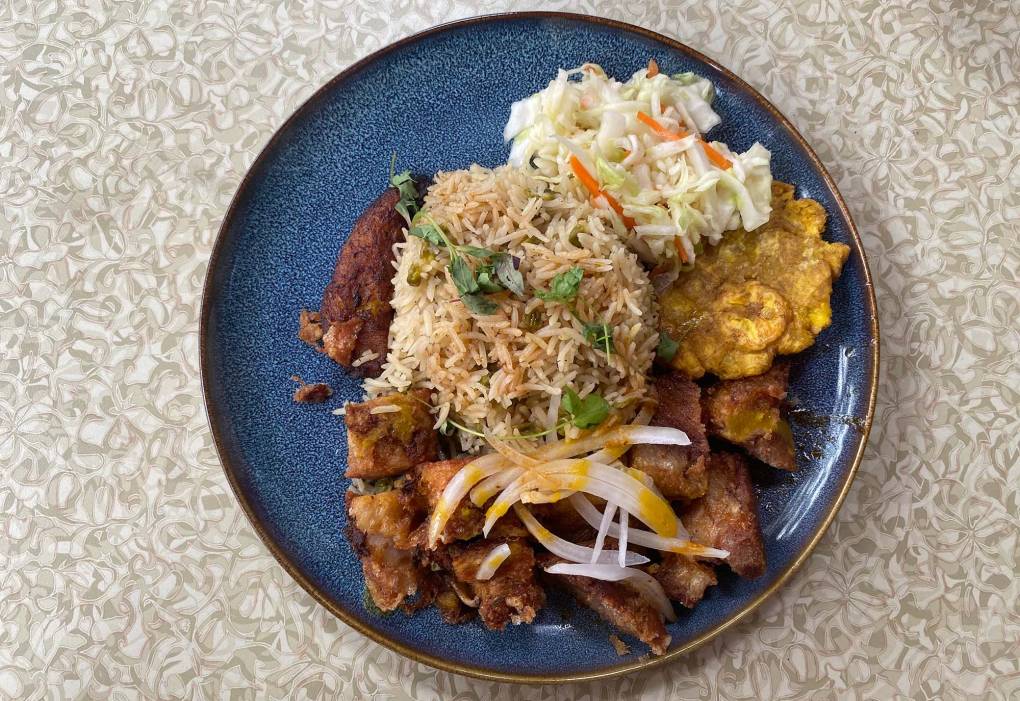
"caption": "Griot, a citrus-marinated fried pork dish, is one of the Haitian specialties served at T'chaka in Old Oakland.",
"description": null,
"title": "tchaka_griot",
"credit": "Luke Tsai/KQED",
"status": "inherit",
"altTag": "Fried pork, rice, plantains and pikliz (pickled cabbage and carrots) on a dark blue plate.",
"isLoading": false,
"fetchFailed": false
},
"arts_13935899": {
"type": "attachments",
"id": "arts_13935899",
"meta": {
"index": "attachments_1716263798",
"site": "arts",
"id": "13935899",
"found": true
},
"parent": 13935854,
"imgSizes": {
"twentyfourteen-full-width": {
"file": "https://ww2.kqed.org/app/uploads/sites/2/2023/10/RPT1719-qut-crop-1038x576.jpg",
"width": 1038,
"mimeType": "image/jpeg",
"height": 576
},
"thumbnail": {
"file": "https://ww2.kqed.org/app/uploads/sites/2/2023/10/RPT1719-qut-crop-160x100.jpg",
"width": 160,
"mimeType": "image/jpeg",
"height": 100
},
"post-thumbnail": {
"file": "https://ww2.kqed.org/app/uploads/sites/2/2023/10/RPT1719-qut-crop-672x372.jpg",
"width": 672,
"mimeType": "image/jpeg",
"height": 372
},
"kqedFullSize": {
"file": "https://ww2.kqed.org/app/uploads/sites/2/2023/10/RPT1719-qut-crop.jpg",
"width": 1920,
"height": 1200
},
"large": {
"file": "https://ww2.kqed.org/app/uploads/sites/2/2023/10/RPT1719-qut-crop-1020x638.jpg",
"width": 1020,
"mimeType": "image/jpeg",
"height": 638
},
"1536x1536": {
"file": "https://ww2.kqed.org/app/uploads/sites/2/2023/10/RPT1719-qut-crop-1536x960.jpg",
"width": 1536,
"mimeType": "image/jpeg",
"height": 960
},
"medium": {
"file": "https://ww2.kqed.org/app/uploads/sites/2/2023/10/RPT1719-qut-crop-800x500.jpg",
"width": 800,
"mimeType": "image/jpeg",
"height": 500
},
"medium_large": {
"file": "https://ww2.kqed.org/app/uploads/sites/2/2023/10/RPT1719-qut-crop-768x480.jpg",
"width": 768,
"mimeType": "image/jpeg",
"height": 480
}
},
"publishDate": 1696526243,
"modified": 1696526310,
"caption": "The author holds a container of miso during a class at Aedan Koji Kitchen in the Mission.",
"description": null,
"title": "_RPT1719-qut-crop",
"credit": "Raphael Timmons/KQED",
"status": "inherit",
"altTag": "A person with a goatee smiles while holding a plastic container filled with a dark paste.",
"isLoading": false,
"fetchFailed": false
},
"arts_13935362": {
"type": "attachments",
"id": "arts_13935362",
"meta": {
"index": "attachments_1716263798",
"site": "arts",
"id": "13935362",
"found": true
},
"parent": 13935344,
"imgSizes": {
"twentyfourteen-full-width": {
"file": "https://ww2.kqed.org/app/uploads/sites/2/2023/09/brazuca_burger-crop-1038x576.jpg",
"width": 1038,
"mimeType": "image/jpeg",
"height": 576
},
"thumbnail": {
"file": "https://ww2.kqed.org/app/uploads/sites/2/2023/09/brazuca_burger-crop-160x90.jpg",
"width": 160,
"mimeType": "image/jpeg",
"height": 90
},
"post-thumbnail": {
"file": "https://ww2.kqed.org/app/uploads/sites/2/2023/09/brazuca_burger-crop-672x372.jpg",
"width": 672,
"mimeType": "image/jpeg",
"height": 372
},
"kqedFullSize": {
"file": "https://ww2.kqed.org/app/uploads/sites/2/2023/09/brazuca_burger-crop.jpg",
"width": 1920,
"height": 1080
},
"large": {
"file": "https://ww2.kqed.org/app/uploads/sites/2/2023/09/brazuca_burger-crop-1020x574.jpg",
"width": 1020,
"mimeType": "image/jpeg",
"height": 574
},
"1536x1536": {
"file": "https://ww2.kqed.org/app/uploads/sites/2/2023/09/brazuca_burger-crop-1536x864.jpg",
"width": 1536,
"mimeType": "image/jpeg",
"height": 864
},
"medium": {
"file": "https://ww2.kqed.org/app/uploads/sites/2/2023/09/brazuca_burger-crop-800x450.jpg",
"width": 800,
"mimeType": "image/jpeg",
"height": 450
},
"medium_large": {
"file": "https://ww2.kqed.org/app/uploads/sites/2/2023/09/brazuca_burger-crop-768x432.jpg",
"width": 768,
"mimeType": "image/jpeg",
"height": 432
}
},
"publishDate": 1695750240,
"modified": 1695758395,
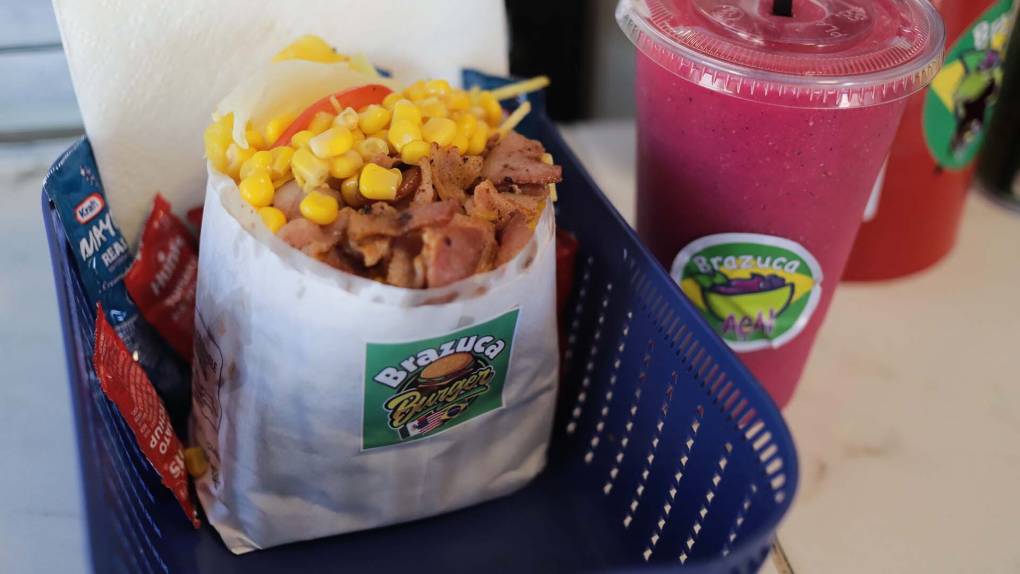
"caption": "The Brazuca burger includes corn, bacon, sausage, potato straws, ham and more, and is served here with dragon fruit juice.",
"description": null,
"title": "brazuca_burger-crop",
"credit": "Alan Chazaro",
"status": "inherit",
"altTag": "a Brazilian-style burger (which includes corn, bacon, and potato straws) is served in a blue basket with a purple dragonfruit juice besides it",
"isLoading": false,
"fetchFailed": false
},
"arts_13934892": {
"type": "attachments",
"id": "arts_13934892",
"meta": {
"index": "attachments_1716263798",
"site": "arts",
"id": "13934892",
"found": true
},
"parent": 13934852,
"imgSizes": {
"twentyfourteen-full-width": {
"file": "https://ww2.kqed.org/app/uploads/sites/2/2023/09/8-Over-80-—-Thumbnail-1920-x-1080-2-1-1038x576.png",
"width": 1038,
"mimeType": "image/png",
"height": 576
},
"thumbnail": {
"file": "https://ww2.kqed.org/app/uploads/sites/2/2023/09/8-Over-80-—-Thumbnail-1920-x-1080-2-1-160x90.png",
"width": 160,
"mimeType": "image/png",
"height": 90
},
"post-thumbnail": {
"file": "https://ww2.kqed.org/app/uploads/sites/2/2023/09/8-Over-80-—-Thumbnail-1920-x-1080-2-1-672x372.png",
"width": 672,
"mimeType": "image/png",
"height": 372
},
"kqedFullSize": {
"file": "https://ww2.kqed.org/app/uploads/sites/2/2023/09/8-Over-80-—-Thumbnail-1920-x-1080-2-1.png",
"width": 1920,
"height": 1080
},
"large": {
"file": "https://ww2.kqed.org/app/uploads/sites/2/2023/09/8-Over-80-—-Thumbnail-1920-x-1080-2-1-1020x574.png",
"width": 1020,
"mimeType": "image/png",
"height": 574
},
"1536x1536": {
"file": "https://ww2.kqed.org/app/uploads/sites/2/2023/09/8-Over-80-—-Thumbnail-1920-x-1080-2-1-1536x864.png",
"width": 1536,
"mimeType": "image/png",
"height": 864
},
"medium": {
"file": "https://ww2.kqed.org/app/uploads/sites/2/2023/09/8-Over-80-—-Thumbnail-1920-x-1080-2-1-800x450.png",
"width": 800,
"mimeType": "image/png",
"height": 450
},
"medium_large": {
"file": "https://ww2.kqed.org/app/uploads/sites/2/2023/09/8-Over-80-—-Thumbnail-1920-x-1080-2-1-768x432.png",
"width": 768,
"mimeType": "image/png",
"height": 432
}
},
"publishDate": 1695062508,
"modified": 1695069280,
"caption": "Lena Turner, 93, sits for a portrait in her now-closed restaurant, Chika and Sake. Turner has been a restauranteur in San Francisco's Japantown for almost five decades now.",
"description": null,
"title": "8 Over 80 — Thumbnail (1920 x 1080) (2)",
"credit": "Juliana Yamada/KQED",
"status": "inherit",
"altTag": "An older woman smiles while sitting at a table, the text \"8 Over 80\" and \"Lena Turner\" is overlaid",
"isLoading": false,
"fetchFailed": false
},
"arts_13934930": {
"type": "attachments",
"id": "arts_13934930",
"meta": {
"index": "attachments_1716263798",
"site": "arts",
"id": "13934930",
"found": true
},
"parent": 13934852,
"imgSizes": {
"twentyfourteen-full-width": {
"file": "https://ww2.kqed.org/app/uploads/sites/2/2023/09/20230727-LenaTurner-26-JY-qut-1038x576.jpg",
"width": 1038,
"mimeType": "image/jpeg",
"height": 576
},
"thumbnail": {
"file": "https://ww2.kqed.org/app/uploads/sites/2/2023/09/20230727-LenaTurner-26-JY-qut-160x107.jpg",
"width": 160,
"mimeType": "image/jpeg",
"height": 107
},
"post-thumbnail": {
"file": "https://ww2.kqed.org/app/uploads/sites/2/2023/09/20230727-LenaTurner-26-JY-qut-672x372.jpg",
"width": 672,
"mimeType": "image/jpeg",
"height": 372
},
"kqedFullSize": {
"file": "https://ww2.kqed.org/app/uploads/sites/2/2023/09/20230727-LenaTurner-26-JY-qut.jpg",
"width": 1920,
"height": 1280
},
"large": {
"file": "https://ww2.kqed.org/app/uploads/sites/2/2023/09/20230727-LenaTurner-26-JY-qut-1020x680.jpg",
"width": 1020,
"mimeType": "image/jpeg",
"height": 680
},
"1536x1536": {
"file": "https://ww2.kqed.org/app/uploads/sites/2/2023/09/20230727-LenaTurner-26-JY-qut-1536x1024.jpg",
"width": 1536,
"mimeType": "image/jpeg",
"height": 1024
},
"medium": {
"file": "https://ww2.kqed.org/app/uploads/sites/2/2023/09/20230727-LenaTurner-26-JY-qut-800x533.jpg",
"width": 800,
"mimeType": "image/jpeg",
"height": 533
},
"medium_large": {
"file": "https://ww2.kqed.org/app/uploads/sites/2/2023/09/20230727-LenaTurner-26-JY-qut-768x512.jpg",
"width": 768,
"mimeType": "image/jpeg",
"height": 512
}
},
"publishDate": 1695078885,
"modified": 1695079537,
"caption": "Lena Turner, 93, sits inside her now-closed restaurant, Chika & Sake. Turner has been a restauranteur in San Francisco’s Japantown for almost five decades.",
"description": null,
"title": "20230727-LenaTurner-26-JY-qut",
"credit": "Juliana Yamada/KQED",
"status": "inherit",
"altTag": "An older woman in a white shawl smiles while seated in front of a stack of old photos.",
"isLoading": false,
"fetchFailed": false
},
"arts_13934760": {
"type": "attachments",
"id": "arts_13934760",
"meta": {
"index": "attachments_1716263798",
"site": "arts",
"id": "13934760",
"found": true
},
"parent": 13934596,
"imgSizes": {
"twentyfourteen-full-width": {
"file": "https://ww2.kqed.org/app/uploads/sites/2/2023/09/eggpals_veg_pal_crop-1038x576.jpg",
"width": 1038,
"mimeType": "image/jpeg",
"height": 576
},
"thumbnail": {
"file": "https://ww2.kqed.org/app/uploads/sites/2/2023/09/eggpals_veg_pal_crop-160x90.jpg",
"width": 160,
"mimeType": "image/jpeg",
"height": 90
},
"post-thumbnail": {
"file": "https://ww2.kqed.org/app/uploads/sites/2/2023/09/eggpals_veg_pal_crop-672x372.jpg",
"width": 672,
"mimeType": "image/jpeg",
"height": 372
},
"kqedFullSize": {
"file": "https://ww2.kqed.org/app/uploads/sites/2/2023/09/eggpals_veg_pal_crop.jpg",
"width": 1920,
"height": 1080
},
"large": {
"file": "https://ww2.kqed.org/app/uploads/sites/2/2023/09/eggpals_veg_pal_crop-1020x574.jpg",
"width": 1020,
"mimeType": "image/jpeg",
"height": 574
},
"1536x1536": {
"file": "https://ww2.kqed.org/app/uploads/sites/2/2023/09/eggpals_veg_pal_crop-1536x864.jpg",
"width": 1536,
"mimeType": "image/jpeg",
"height": 864
},
"medium": {
"file": "https://ww2.kqed.org/app/uploads/sites/2/2023/09/eggpals_veg_pal_crop-800x450.jpg",
"width": 800,
"mimeType": "image/jpeg",
"height": 450
},
"medium_large": {
"file": "https://ww2.kqed.org/app/uploads/sites/2/2023/09/eggpals_veg_pal_crop-768x432.jpg",
"width": 768,
"mimeType": "image/jpeg",
"height": 432
}
},
"publishDate": 1694640988,
"modified": 1694712251,
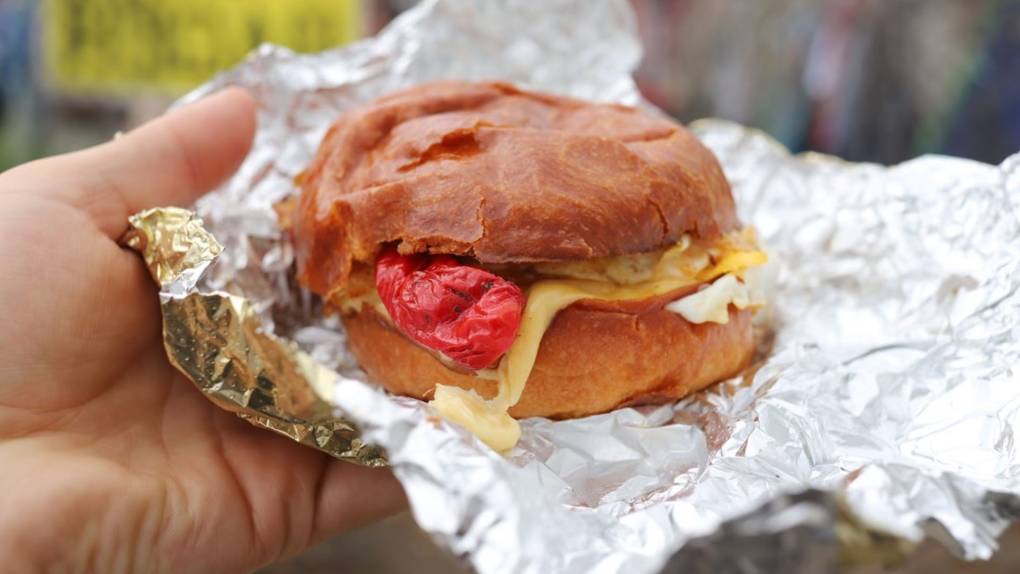
"caption": "The simplicity of the Veg Pal (two fried eggs, roasted Jimmy Nardellos, herby mayo, smoked Gouda, brioche) is one of the main attractions at Egg Pals, a popular weekend breakfast pop-up.\n",
"description": null,
"title": "eggpals_veg_pal_crop",
"credit": "Briana Chazaro",
"status": "inherit",
"altTag": "side view of an veggie egg breakfast sandwich wrapped in tin foil",
"isLoading": false,
"fetchFailed": false
},
"arts_13930535": {
"type": "attachments",
"id": "arts_13930535",
"meta": {
"index": "attachments_1716263798",
"site": "arts",
"id": "13930535",
"found": true
},
"parent": 13930456,
"imgSizes": {
"twentyfourteen-full-width": {
"file": "https://ww2.kqed.org/app/uploads/sites/2/2023/06/OhloneKorean_HW_170-1038x576.jpg",
"width": 1038,
"mimeType": "image/jpeg",
"height": 576
},
"thumbnail": {
"file": "https://ww2.kqed.org/app/uploads/sites/2/2023/06/OhloneKorean_HW_170-160x107.jpg",
"width": 160,
"mimeType": "image/jpeg",
"height": 107
},
"post-thumbnail": {
"file": "https://ww2.kqed.org/app/uploads/sites/2/2023/06/OhloneKorean_HW_170-672x372.jpg",
"width": 672,
"mimeType": "image/jpeg",
"height": 372
},
"kqedFullSize": {
"file": "https://ww2.kqed.org/app/uploads/sites/2/2023/06/OhloneKorean_HW_170.jpg",
"width": 1920,
"height": 1281
},
"large": {
"file": "https://ww2.kqed.org/app/uploads/sites/2/2023/06/OhloneKorean_HW_170-1020x681.jpg",
"width": 1020,
"mimeType": "image/jpeg",
"height": 681
},
"1536x1536": {
"file": "https://ww2.kqed.org/app/uploads/sites/2/2023/06/OhloneKorean_HW_170-1536x1025.jpg",
"width": 1536,
"mimeType": "image/jpeg",
"height": 1025
},
"medium": {
"file": "https://ww2.kqed.org/app/uploads/sites/2/2023/06/OhloneKorean_HW_170-800x534.jpg",
"width": 800,
"mimeType": "image/jpeg",
"height": 534
},
"medium_large": {
"file": "https://ww2.kqed.org/app/uploads/sites/2/2023/06/OhloneKorean_HW_170-768x512.jpg",
"width": 768,
"mimeType": "image/jpeg",
"height": 512
}
},
"publishDate": 1686777535,
"modified": 1694552541,
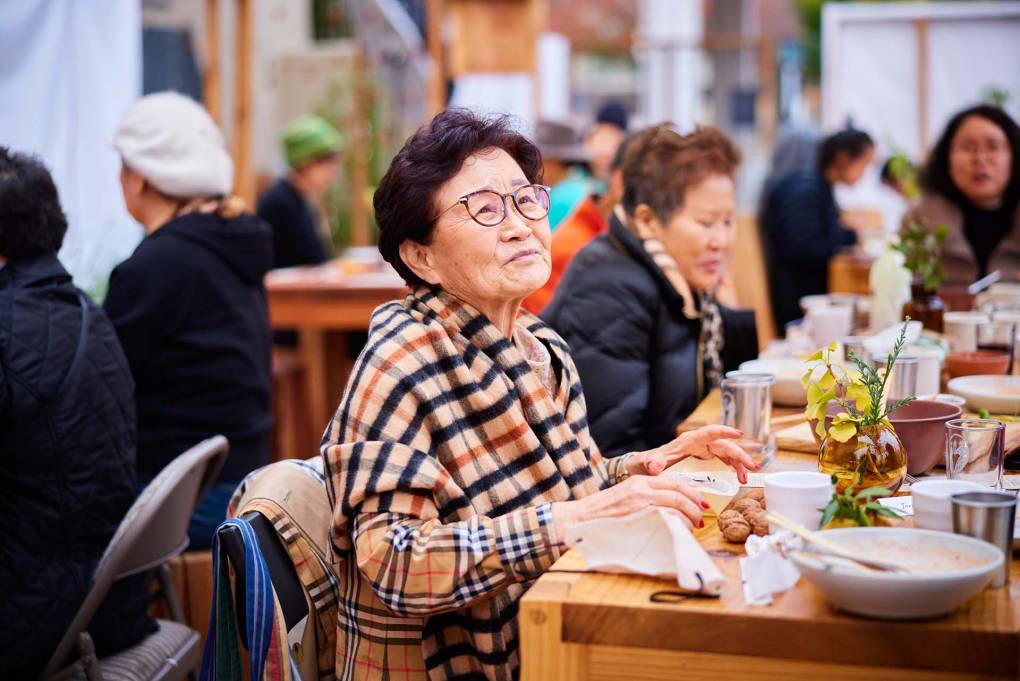
"caption": "A Korean elder listens to one the personal stories shared at a previous Ssi Ya Gi event. The Bay Area and Los Angeles–based organization works with Korean elders to preserve and share their food memories.",
"description": null,
"title": "Ohlone+Korean_HW_170",
"credit": "Courtesy of Hardy Wilson",
"status": "inherit",
"altTag": "A elderly Korean woman in glasses looks on with a wistful expression on her face.",
"isLoading": false,
"fetchFailed": false
},
"arts_13933723": {
"type": "attachments",
"id": "arts_13933723",
"meta": {
"index": "attachments_1716263798",
"site": "arts",
"id": "13933723",
"found": true
},
"parent": 13933705,
"imgSizes": {
"twentyfourteen-full-width": {
"file": "https://ww2.kqed.org/app/uploads/sites/2/2023/08/delacreamery_nachos_courtesy-1038x576.jpg",
"width": 1038,
"mimeType": "image/jpeg",
"height": 576
},
"thumbnail": {
"file": "https://ww2.kqed.org/app/uploads/sites/2/2023/08/delacreamery_nachos_courtesy-160x90.jpg",
"width": 160,
"mimeType": "image/jpeg",
"height": 90
},
"post-thumbnail": {
"file": "https://ww2.kqed.org/app/uploads/sites/2/2023/08/delacreamery_nachos_courtesy-672x372.jpg",
"width": 672,
"mimeType": "image/jpeg",
"height": 372
},
"kqedFullSize": {
"file": "https://ww2.kqed.org/app/uploads/sites/2/2023/08/delacreamery_nachos_courtesy.jpg",
"width": 1920,
"height": 1081
},
"large": {
"file": "https://ww2.kqed.org/app/uploads/sites/2/2023/08/delacreamery_nachos_courtesy-1020x574.jpg",
"width": 1020,
"mimeType": "image/jpeg",
"height": 574
},
"1536x1536": {
"file": "https://ww2.kqed.org/app/uploads/sites/2/2023/08/delacreamery_nachos_courtesy-1536x865.jpg",
"width": 1536,
"mimeType": "image/jpeg",
"height": 865
},
"medium": {
"file": "https://ww2.kqed.org/app/uploads/sites/2/2023/08/delacreamery_nachos_courtesy-800x450.jpg",
"width": 800,
"mimeType": "image/jpeg",
"height": 450
},
"medium_large": {
"file": "https://ww2.kqed.org/app/uploads/sites/2/2023/08/delacreamery_nachos_courtesy-768x432.jpg",
"width": 768,
"mimeType": "image/jpeg",
"height": 432
}
},
"publishDate": 1692815227,
"modified": 1692816733,
"caption": "The DLC Ice Cream Nachos contain your choice of ice cream, house-made tortilla chips (churro-style), salsa macha, whipped cream and your choice of sauce. ",
"description": null,
"title": "delacreamery_nachos_courtesy",
"credit": "Tim Wong of Keki SF",
"status": "inherit",
"altTag": "a worker at De La Creamery holds up a plate of ice cream topped with chocolate syrup and cinnamon churro-style tortilla chips",
"isLoading": false,
"fetchFailed": false
},
"arts_13933769": {
"type": "attachments",
"id": "arts_13933769",
"meta": {
"index": "attachments_1716263798",
"site": "arts",
"id": "13933769",
"found": true
},
"parent": 13933745,
"imgSizes": {
"twentyfourteen-full-width": {
"file": "https://ww2.kqed.org/app/uploads/sites/2/2023/08/tigon-banh-hoi-crop_LT-1038x576.jpg",
"width": 1038,
"mimeType": "image/jpeg",
"height": 576
},
"thumbnail": {
"file": "https://ww2.kqed.org/app/uploads/sites/2/2023/08/tigon-banh-hoi-crop_LT-160x100.jpg",
"width": 160,
"mimeType": "image/jpeg",
"height": 100
},
"post-thumbnail": {
"file": "https://ww2.kqed.org/app/uploads/sites/2/2023/08/tigon-banh-hoi-crop_LT-672x372.jpg",
"width": 672,
"mimeType": "image/jpeg",
"height": 372
},
"kqedFullSize": {
"file": "https://ww2.kqed.org/app/uploads/sites/2/2023/08/tigon-banh-hoi-crop_LT.jpg",
"width": 1920,
"height": 1200
},
"large": {
"file": "https://ww2.kqed.org/app/uploads/sites/2/2023/08/tigon-banh-hoi-crop_LT-1020x638.jpg",
"width": 1020,
"mimeType": "image/jpeg",
"height": 638
},
"1536x1536": {
"file": "https://ww2.kqed.org/app/uploads/sites/2/2023/08/tigon-banh-hoi-crop_LT-1536x960.jpg",
"width": 1536,
"mimeType": "image/jpeg",
"height": 960
},
"medium": {
"file": "https://ww2.kqed.org/app/uploads/sites/2/2023/08/tigon-banh-hoi-crop_LT-800x500.jpg",
"width": 800,
"mimeType": "image/jpeg",
"height": 500
},
"medium_large": {
"file": "https://ww2.kqed.org/app/uploads/sites/2/2023/08/tigon-banh-hoi-crop_LT-768x480.jpg",
"width": 768,
"mimeType": "image/jpeg",
"height": 480
}
},
"publishDate": 1692836117,
"modified": 1692836307,
"caption": "Tigon's make-your-own-spring-roll spread makes for a fun and refreshing communal dining experience.",
"description": null,
"title": "tigon banh hoi-crop_LT",
"credit": "Luke Tsai/KQED",
"status": "inherit",
"altTag": "An abundant platter of fillings for make-your-own Vietnamese spring rolls, with shrimp, beef, fried egg rolls and more.",
"isLoading": false,
"fetchFailed": false
},
"arts_13933292": {
"type": "attachments",
"id": "arts_13933292",
"meta": {
"index": "attachments_1716263798",
"site": "arts",
"id": "13933292",
"found": true
},
"parent": 13933283,
"imgSizes": {
"twentyfourteen-full-width": {
"file": "https://ww2.kqed.org/app/uploads/sites/2/2023/08/The-Lumpia-Company_photos-from-Kultivate-Labs-1038x576.jpg",
"width": 1038,
"mimeType": "image/jpeg",
"height": 576
},
"thumbnail": {
"file": "https://ww2.kqed.org/app/uploads/sites/2/2023/08/The-Lumpia-Company_photos-from-Kultivate-Labs-160x100.jpg",
"width": 160,
"mimeType": "image/jpeg",
"height": 100
},
"post-thumbnail": {
"file": "https://ww2.kqed.org/app/uploads/sites/2/2023/08/The-Lumpia-Company_photos-from-Kultivate-Labs-672x372.jpg",
"width": 672,
"mimeType": "image/jpeg",
"height": 372
},
"kqedFullSize": {
"file": "https://ww2.kqed.org/app/uploads/sites/2/2023/08/The-Lumpia-Company_photos-from-Kultivate-Labs.jpg",
"width": 1920,
"height": 1200
},
"large": {
"file": "https://ww2.kqed.org/app/uploads/sites/2/2023/08/The-Lumpia-Company_photos-from-Kultivate-Labs-1020x638.jpg",
"width": 1020,
"mimeType": "image/jpeg",
"height": 638
},
"1536x1536": {
"file": "https://ww2.kqed.org/app/uploads/sites/2/2023/08/The-Lumpia-Company_photos-from-Kultivate-Labs-1536x960.jpg",
"width": 1536,
"mimeType": "image/jpeg",
"height": 960
},
"medium": {
"file": "https://ww2.kqed.org/app/uploads/sites/2/2023/08/The-Lumpia-Company_photos-from-Kultivate-Labs-800x500.jpg",
"width": 800,
"mimeType": "image/jpeg",
"height": 500
},
"medium_large": {
"file": "https://ww2.kqed.org/app/uploads/sites/2/2023/08/The-Lumpia-Company_photos-from-Kultivate-Labs-768x480.jpg",
"width": 768,
"mimeType": "image/jpeg",
"height": 480
}
},
"publishDate": 1692217237,
"modified": 1692217393,
"caption": "One of the Lumpia Company's remixed lumpia. Founder Alex Retodo was a club promoter before he became a chef. He's one of the Bay Area's many Filipino American food entrepreneurs who have roots in the region's hip-hop scene.",
"description": null,
"title": "The Lumpia Company_photos from Kultivate Labs",
"credit": "Courtesy of Kultivate Labs",
"status": "inherit",
"altTag": "A plate of lumpia topped with slices of hard-boiled egg.",
"isLoading": false,
"fetchFailed": false
},
"arts_13933155": {
"type": "attachments",
"id": "arts_13933155",
"meta": {
"index": "attachments_1716263798",
"site": "arts",
"id": "13933155",
"found": true
},
"parent": 13933138,
"imgSizes": {
"twentyfourteen-full-width": {
"file": "https://ww2.kqed.org/app/uploads/sites/2/2023/08/bolita-purple_tortillas-1038x576.jpg",
"width": 1038,
"mimeType": "image/jpeg",
"height": 576
},
"thumbnail": {
"file": "https://ww2.kqed.org/app/uploads/sites/2/2023/08/bolita-purple_tortillas-160x90.jpg",
"width": 160,
"mimeType": "image/jpeg",
"height": 90
},
"post-thumbnail": {
"file": "https://ww2.kqed.org/app/uploads/sites/2/2023/08/bolita-purple_tortillas-672x372.jpg",
"width": 672,
"mimeType": "image/jpeg",
"height": 372
},
"kqedFullSize": {
"file": "https://ww2.kqed.org/app/uploads/sites/2/2023/08/bolita-purple_tortillas.jpg",
"width": 1920,
"height": 1081
},
"large": {
"file": "https://ww2.kqed.org/app/uploads/sites/2/2023/08/bolita-purple_tortillas-1020x574.jpg",
"width": 1020,
"mimeType": "image/jpeg",
"height": 574
},
"1536x1536": {
"file": "https://ww2.kqed.org/app/uploads/sites/2/2023/08/bolita-purple_tortillas-1536x865.jpg",
"width": 1536,
"mimeType": "image/jpeg",
"height": 865
},
"medium": {
"file": "https://ww2.kqed.org/app/uploads/sites/2/2023/08/bolita-purple_tortillas-800x450.jpg",
"width": 800,
"mimeType": "image/jpeg",
"height": 450
},
"medium_large": {
"file": "https://ww2.kqed.org/app/uploads/sites/2/2023/08/bolita-purple_tortillas-768x432.jpg",
"width": 768,
"mimeType": "image/jpeg",
"height": 432
}
},
"publishDate": 1692037091,
"modified": 1692037197,
"caption": "These purple tortillas are a signature at Bolita Masa.",
"description": null,
"title": "bolita-purple_tortillas",
"credit": "Emmanuel Galvan",
"status": "inherit",
"altTag": "handmade tortillas using purple masa are prepared on a countertop",
"isLoading": false,
"fetchFailed": false
},
"arts_13933018": {
"type": "attachments",
"id": "arts_13933018",
"meta": {
"index": "attachments_1716263798",
"site": "arts",
"id": "13933018",
"found": true
},
"parent": 13933006,
"imgSizes": {
"twentyfourteen-full-width": {
"file": "https://ww2.kqed.org/app/uploads/sites/2/2023/08/hina-yakitori-skewers-1038x576.jpg",
"width": 1038,
"mimeType": "image/jpeg",
"height": 576
},
"thumbnail": {
"file": "https://ww2.kqed.org/app/uploads/sites/2/2023/08/hina-yakitori-skewers-160x90.jpg",
"width": 160,
"mimeType": "image/jpeg",
"height": 90
},
"post-thumbnail": {
"file": "https://ww2.kqed.org/app/uploads/sites/2/2023/08/hina-yakitori-skewers-672x372.jpg",
"width": 672,
"mimeType": "image/jpeg",
"height": 372
},
"kqedFullSize": {
"file": "https://ww2.kqed.org/app/uploads/sites/2/2023/08/hina-yakitori-skewers.jpg",
"width": 1920,
"height": 1080
},
"large": {
"file": "https://ww2.kqed.org/app/uploads/sites/2/2023/08/hina-yakitori-skewers-1020x574.jpg",
"width": 1020,
"mimeType": "image/jpeg",
"height": 574
},
"1536x1536": {
"file": "https://ww2.kqed.org/app/uploads/sites/2/2023/08/hina-yakitori-skewers-1536x864.jpg",
"width": 1536,
"mimeType": "image/jpeg",
"height": 864
},
"medium": {
"file": "https://ww2.kqed.org/app/uploads/sites/2/2023/08/hina-yakitori-skewers-800x450.jpg",
"width": 800,
"mimeType": "image/jpeg",
"height": 450
},
"medium_large": {
"file": "https://ww2.kqed.org/app/uploads/sites/2/2023/08/hina-yakitori-skewers-768x432.jpg",
"width": 768,
"mimeType": "image/jpeg",
"height": 432
}
},
"publishDate": 1691776172,
"modified": 1691776372,
"caption": "A trio of skewered chicken parts from a June 2023 dinner at San Francisco's Hina Yakitori, where about 15 different cuts of chicken are served over the course of an omakase-style tasting menu. The restaurant's last day of business will be Aug. 31.",
"description": null,
"title": "hina yakitori skewers",
"credit": "Janice Tsai",
"status": "inherit",
"altTag": "Three side-by-side images of chicken skewers: a thigh with green onion, the bisection of a sausage with whole grain mustard, and the crispy skin.",
"isLoading": false,
"fetchFailed": false
},
"arts_13932744": {
"type": "attachments",
"id": "arts_13932744",
"meta": {
"index": "attachments_1716263798",
"site": "arts",
"id": "13932744",
"found": true
},
"parent": 13932574,
"imgSizes": {
"twentyfourteen-full-width": {
"file": "https://ww2.kqed.org/app/uploads/sites/2/2023/08/mestizo_threedishes-crop-1038x576.jpg",
"width": 1038,
"mimeType": "image/jpeg",
"height": 576
},
"thumbnail": {
"file": "https://ww2.kqed.org/app/uploads/sites/2/2023/08/mestizo_threedishes-crop-160x100.jpg",
"width": 160,
"mimeType": "image/jpeg",
"height": 100
},
"post-thumbnail": {
"file": "https://ww2.kqed.org/app/uploads/sites/2/2023/08/mestizo_threedishes-crop-672x372.jpg",
"width": 672,
"mimeType": "image/jpeg",
"height": 372
},
"kqedFullSize": {
"file": "https://ww2.kqed.org/app/uploads/sites/2/2023/08/mestizo_threedishes-crop.jpg",
"width": 1920,
"height": 1200
},
"large": {
"file": "https://ww2.kqed.org/app/uploads/sites/2/2023/08/mestizo_threedishes-crop-1020x638.jpg",
"width": 1020,
"mimeType": "image/jpeg",
"height": 638
},
"1536x1536": {
"file": "https://ww2.kqed.org/app/uploads/sites/2/2023/08/mestizo_threedishes-crop-1536x960.jpg",
"width": 1536,
"mimeType": "image/jpeg",
"height": 960
},
"medium": {
"file": "https://ww2.kqed.org/app/uploads/sites/2/2023/08/mestizo_threedishes-crop-800x500.jpg",
"width": 800,
"mimeType": "image/jpeg",
"height": 500
},
"medium_large": {
"file": "https://ww2.kqed.org/app/uploads/sites/2/2023/08/mestizo_threedishes-crop-768x480.jpg",
"width": 768,
"mimeType": "image/jpeg",
"height": 480
}
},
"publishDate": 1691430790,
"modified": 1691431062,
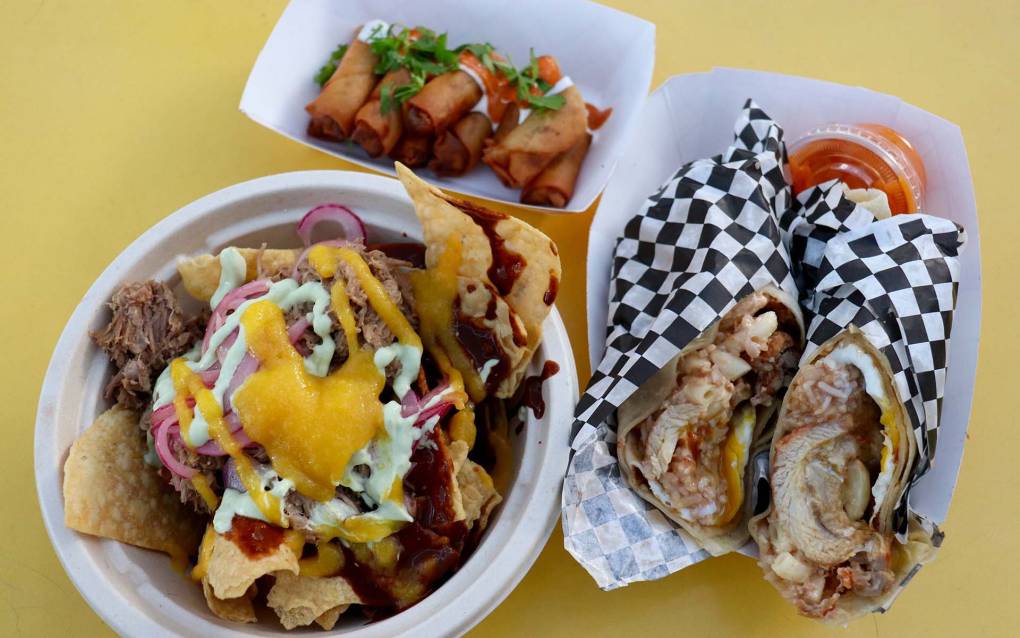
"caption": "Three dishes from Mestizo showcase the food truck's many cultural influences: Filipino lumpia; a Mexican burrito with fried chicken, gravy and mac salad; and chilaquiles topped with Hawaiian kalua pork.",
"description": null,
"title": "mestizo_threedishes-crop",
"credit": "Alan Chazaro",
"status": "inherit",
"altTag": "a burrito, chilaquiles, and lumpia are showcased on a yellow table outdoors",
"isLoading": false,
"fetchFailed": false
}
},
"audioPlayerReducer": {
"postId": "stream_live",
"isPaused": true,
"isPlaying": false,
"pfsActive": false,
"pledgeModalIsOpen": true,
"playerDrawerIsOpen": false,
"liveAudioPlayStartedAt": 0,
"liveAudioPlayContext": ""
},
"authorsReducer": {
"byline_arts_13935854": {
"type": "authors",
"id": "byline_arts_13935854",
"meta": {
"override": true
},
"slug": "byline_arts_13935854",
"name": "Kofi Ansong",
"isLoading": false
},
"ltsai": {
"type": "authors",
"id": "11743",
"meta": {
"index": "authors_1716337520",
"id": "11743",
"found": true
},
"name": "Luke Tsai",
"firstName": "Luke",
"lastName": "Tsai",
"slug": "ltsai",
"email": "ltsai@kqed.org",
"display_author_email": true,
"staff_mastheads": [
"arts"
],
"title": "Food Editor",
"bio": "Luke Tsai is KQED's food editor and resident stinky tofu connoisseur. Prior to KQED, he was an editor at Eater SF, \u003cem>San Francisco \u003c/em>magazine, and the \u003cem>East Bay Express\u003c/em>, and his work has also appeared in TASTE, the \u003cem>San Francisco Chronicle\u003c/em>, and the \u003cem>Best Food Writing\u003c/em> anthology. When he isn't writing or editing, you'll find him eating most everything he can get his hands on.",
"avatar": "https://secure.gravatar.com/avatar/1e59b45bf191526e7339d6ba46e33a57b2030d25c27660ecc64ea3cb863e34f7?s=600&d=blank&r=g",
"twitter": "theluketsai",
"bluesky": null,
"facebook": null,
"instagram": null,
"linkedin": null,
"sites": [
{
"site": "",
"roles": [
"editor"
]
},
{
"site": "arts",
"roles": [
"administrator"
]
},
{
"site": "news",
"roles": [
"editor",
"contributor"
]
},
{
"site": "bayareabites",
"roles": [
"editor"
]
},
{
"site": "food",
"roles": [
"editor"
]
}
],
"headData": {
"title": "Luke Tsai | KQED",
"description": "Food Editor",
"ogImgSrc": "https://secure.gravatar.com/avatar/1e59b45bf191526e7339d6ba46e33a57b2030d25c27660ecc64ea3cb863e34f7?s=600&d=blank&r=g",
"twImgSrc": "https://secure.gravatar.com/avatar/1e59b45bf191526e7339d6ba46e33a57b2030d25c27660ecc64ea3cb863e34f7?s=600&d=blank&r=g"
},
"isLoading": false,
"link": "/author/ltsai"
},
"achazaro": {
"type": "authors",
"id": "11748",
"meta": {
"index": "authors_1716337520",
"id": "11748",
"found": true
},
"name": "Alan Chazaro",
"firstName": "Alan",
"lastName": "Chazaro",
"slug": "achazaro",
"email": "agchazaro@gmail.com",
"display_author_email": true,
"staff_mastheads": [],
"title": "Food Writer and Reporter",
"bio": "Alan Chazaro is the author of \u003cem>This Is Not a Frank Ocean Cover Album\u003c/em> (Black Lawrence Press, 2019), \u003cem>Piñata Theory\u003c/em> (Black Lawrence Press, 2020), and \u003cem>Notes from the Eastern Span of the Bay Bridge\u003c/em> (Ghost City Press, 2021). He is a graduate of June Jordan’s Poetry for the People program at UC Berkeley and a former Lawrence Ferlinghetti Fellow at the University of San Francisco. He writes about sports, food, art, music, education, and culture while repping the Bay on \u003ca href=\"https://twitter.com/alan_chazaro\">Twitter\u003c/a> and \u003ca href=\"https://www.instagram.com/alan_chazaro/?hl=en\">Instagram\u003c/a> at @alan_chazaro.",
"avatar": "https://secure.gravatar.com/avatar/ea8b6dd970fc5c29e7a188e7d5861df7?s=600&d=blank&r=g",
"twitter": "alan_chazaro",
"facebook": null,
"instagram": null,
"linkedin": null,
"sites": [
{
"site": "arts",
"roles": [
"contributor"
]
},
{
"site": "news",
"roles": [
"editor"
]
}
],
"headData": {
"title": "Alan Chazaro | KQED",
"description": "Food Writer and Reporter",
"ogImgSrc": "https://secure.gravatar.com/avatar/ea8b6dd970fc5c29e7a188e7d5861df7?s=600&d=blank&r=g",
"twImgSrc": "https://secure.gravatar.com/avatar/ea8b6dd970fc5c29e7a188e7d5861df7?s=600&d=blank&r=g"
},
"isLoading": false,
"link": "/author/achazaro"
}
},
"pagesReducer": {
"arts_tag_food": {
"type": "terms",
"id": "arts_1297",
"meta": {
"index": "terms_1716263798",
"site": "arts",
"id": "1297",
"score": 7.4242826
},
"featImg": null,
"name": "food",
"description": null,
"taxonomy": "tag",
"headData": {
"twImgId": null,
"twTitle": null,
"ogTitle": null,
"ogImgId": null,
"twDescription": null,
"description": null,
"title": "food Archives | KQED Arts",
"ogDescription": null
},
"ttid": 1309,
"slug": "food",
"isLoading": false,
"title": "food",
"pageMeta": {
"site": "arts",
"WpPageTemplate": "page-topic-editorial",
"currentPage": 24
},
"blocks": [
{
"blockName": "kqed/post-list",
"attrs": {
"layout": "cardArticle2",
"query": "posts/arts?tag=food",
"seeMore": false,
"paginated": true,
"page": 24
}
},
{
"blockName": "kqed/ad"
}
]
}
},
"pfsSessionReducer": {},
"postsReducer": {
"stream_live": {
"type": "live",
"id": "stream_live",
"audioUrl": "https://streams.kqed.org/kqedradio",
"title": "Live Stream",
"excerpt": "Live Stream information currently unavailable.",
"link": "/radio",
"featImg": "",
"label": {
"name": "KQED Live",
"link": "/"
}
},
"stream_kqedNewscast": {
"type": "posts",
"id": "stream_kqedNewscast",
"audioUrl": "https://www.kqed.org/.stream/anon/radio/RDnews/newscast.mp3?_=1",
"title": "KQED Newscast",
"featImg": "",
"label": {
"name": "88.5 FM",
"link": "/"
}
},
"arts_13936332": {
"type": "posts",
"id": "arts_13936332",
"meta": {
"index": "posts_1716263798",
"site": "arts",
"id": "13936332",
"score": null,
"sort": [
1697137205000
]
},
"parent": 0,
"labelTerm": {},
"blocks": [],
"publishDate": 1697137205,
"format": "standard",
"title": "Oakland’s First and Only Haitian Restaurant Is a Knockout",
"headTitle": "Oakland’s First and Only Haitian Restaurant Is a Knockout | KQED",
"content": "\u003cp>Frantz Felix was tired of how the only time Americans ever seemed to talk about Haiti was in connection to some humanitarian disaster: a massive earthquake or mind-boggling act of government malfeasance. He wanted to show another side to his country of birth — the richness of its culture, the deliciousness of its foodways.\u003c/p>\n\u003cp>Last month, Felix opened \u003ca href=\"https://www.tchaka.online/\">T’chaka\u003c/a>, Oakland’s first and only Haitian restaurant, in the former \u003ca href=\"https://www.kqed.org/arts/13910410/miss-ollies-oakland-closing\">Miss Ollie\u003c/a>’s location in Old Oakland. And it only took one bite into a single dish — the unspeakably succulent chunks of fried, citrus-marinated pork known as griot (aka griyo) — for me to fully embrace what appears to be the restaurant’s central thesis: that Haitian food is freaking amazing.\u003c/p>\n\u003cp>For Felix, the path toward opening one of the Bay Area’s most exciting new restaurants started when he was a seven-year-old learning how to cook in his mother’s kitchen in Haiti. For the first 10 years after he relocated to the Bay Area, Felix was the kind of enthusiastic home cook that friends and family were always encouraging to open a restaurant — until finally, in 2009, he started selling Haitian food on weekends on the local festival circuit. Eventually, he parlayed that business into a food truck called Caribbean Spices, and then in 2019, seven months before the COVID lockdown hit, he opened a \u003ca href=\"https://caribbeanspicessanrafael.com/\">restaurant in San Rafael by the same name\u003c/a>.\u003c/p>\n\u003cp>T’chaka, on the other hand, is Felix’s most ambitious project yet. One of the reasons the new restaurant’s arrival is so heartening is because of its specific location: T’chaka’s predecessor at this corner spot at Swan’s Market was Miss Ollie’s, \u003ca href=\"https://www.kqed.org/arts/13910410/miss-ollies-oakland-closing\">a beacon for Afro-Caribbean cooking\u003c/a> until it closed last year. For more than 10 years, Miss Ollie’s was a destination restaurant for Caribbean folks from all over the Bay Area, including Felix, who says he always appreciated the love that the chef, Sarah Kirnon, \u003ca href=\"https://www.splendidtable.org/story/2019/07/24/food-spirituality-and-healing-chef-sarah-kirnons-personal-connection-to-haiti\">showed for Haitian cuisine\u003c/a> in particular.\u003c/p>\n\u003cp>“She’s like a pioneer to us,” he says, noting how few Caribbean restaurants existed locally when Miss Ollie’s first opened 11 years ago. “I take it as an honor to be in that location.”\u003c/p>\n\u003cp>[ad fullwidth]\u003c/p>\n\u003cp>There’s a kind of poetry to the city’s only Haitian restaurant taking up that mantle, but it’d all be for naught if the food didn’t actually hit. And hit it does, again and again. The aforementioned griot is essentially a flawless dish — deeply flavorful, juicy and tender with charred, crispy edges. I consider myself something of a pork connoisseur, and I’d easily put the dish at the very top of the top tier, especially once you factor in the A+ accompaniments. There were excellent rice and peas, sweet and savory plantains, the bright and tangy slaw known as pikliz and a punchy, mustard-hued house-made scotch bonnet hot sauce so delicious you’ll want to drizzle it on everything (and then buy a bottle to bring home).\u003c/p>\n\u003cp>Plainly stated, the dish is a knockout. It’s easy to see why it’s the national dish in Haiti — the first thing they’ll serve you after you get off the plane.\u003c/p>\n\u003cfigure id=\"attachment_13936341\" class=\"wp-caption alignnone\" style=\"max-width: 1920px\">\u003cimg loading=\"lazy\" decoding=\"async\" class=\"size-full wp-image-13936341\" src=\"https://ww2.kqed.org/app/uploads/sites/2/2023/10/tchaka_ackee.jpg\" alt=\"Saltfish and ackee: a scramble of ackee fruit (which looks like scrambled eggs) served on a blue plate with white rice, plantains and pikliz.\" width=\"1920\" height=\"1440\" srcset=\"https://cdn.kqed.org/wp-content/uploads/sites/2/2023/10/tchaka_ackee.jpg 1920w, https://cdn.kqed.org/wp-content/uploads/sites/2/2023/10/tchaka_ackee-800x600.jpg 800w, https://cdn.kqed.org/wp-content/uploads/sites/2/2023/10/tchaka_ackee-1020x765.jpg 1020w, https://cdn.kqed.org/wp-content/uploads/sites/2/2023/10/tchaka_ackee-160x120.jpg 160w, https://cdn.kqed.org/wp-content/uploads/sites/2/2023/10/tchaka_ackee-768x576.jpg 768w, https://cdn.kqed.org/wp-content/uploads/sites/2/2023/10/tchaka_ackee-1536x1152.jpg 1536w\" sizes=\"(max-width: 1920px) 100vw, 1920px\">\u003cfigcaption class=\"wp-caption-text\">Saltfish and ackee, a classic Caribbean brunch staple. \u003ccite>(Luke Tsai/KQED)\u003c/cite>\u003c/figcaption>\u003c/figure>\n\u003cp>For first-timers to the cuisine, Felix explains that all of the Caribbean islands use more or less the same ingredients and spices, but what sets Haitian cooking apart is the marination of the meats and the particulars of the cooking process — which, in Felix’s view, yields a particularly succulent take on jerk chicken and a lighter, more toothsome version of rice and peas.\u003c/p>\n\u003cp>“I’m not going to say the other islands don’t cook well,” he says. “But for sure, Haitian food is one of the best foods in the world.”\u003c/p>\n\u003cp>I wouldn’t even consider wading into the dangerous waters of adjudicating whether Haitian jerk chicken is better than the Jamaican version, or measuring how Haitian curry goat stacks up to its Bajan or Trinidadian counterparts. Suffice it to say that even though the griot ranks up there with the best things I’ve eaten this year, it might not have even been my favorite dish at T’chaka. That honor goes to the braised oxtails, a dish I’ll order anytime I see it on a menu, and this was as good as it gets — meaty beyond expectation, with all of the soft, gelatinous bits cooked to such a state of jiggly lusciousness that sucking on the bones was pure pleasure.\u003c/p>\n\u003cfigure id=\"attachment_13936342\" class=\"wp-caption alignnone\" style=\"max-width: 1920px\">\u003cimg loading=\"lazy\" decoding=\"async\" class=\"size-full wp-image-13936342\" src=\"https://ww2.kqed.org/app/uploads/sites/2/2023/10/tchaka_oxtails.jpg\" alt=\"A plate of Haitian-style braised oxtails, served with a mound of rice and peas, tostones and pikliz.\" width=\"1920\" height=\"1440\" srcset=\"https://cdn.kqed.org/wp-content/uploads/sites/2/2023/10/tchaka_oxtails.jpg 1920w, https://cdn.kqed.org/wp-content/uploads/sites/2/2023/10/tchaka_oxtails-800x600.jpg 800w, https://cdn.kqed.org/wp-content/uploads/sites/2/2023/10/tchaka_oxtails-1020x765.jpg 1020w, https://cdn.kqed.org/wp-content/uploads/sites/2/2023/10/tchaka_oxtails-160x120.jpg 160w, https://cdn.kqed.org/wp-content/uploads/sites/2/2023/10/tchaka_oxtails-768x576.jpg 768w, https://cdn.kqed.org/wp-content/uploads/sites/2/2023/10/tchaka_oxtails-1536x1152.jpg 1536w\" sizes=\"(max-width: 1920px) 100vw, 1920px\">\u003cfigcaption class=\"wp-caption-text\">T’chaka’s take on Caribbean braised oxtails is as good as it gets. \u003ccite>(Luke Tsai/KQED)\u003c/cite>\u003c/figcaption>\u003c/figure>\n\u003cp>There were also piping-hot fritters called akra, which imbued grated taro root with all the comforting qualities of a fast-food hash brown patty, but with no hint of grease. On the Sunday brunch menu, there was the Haitian version of saltfish and ackee, a fruit with the acidity of a tomato and the texture and appearance of scrambled eggs — delicious over plain white rice.\u003c/p>\n\u003cp>\u003cspan style=\"font-weight: 400\">[aside postID='arts_13910410,arts_13931303,arts_13931115']\u003c/span>All that and I haven’t even yet had a chance to try some of the more uniquely Haitian dishes on the menu — the crispy fried goat served on the bone, or the weekend-only t’chaka, the restaurant’s namesake dish, a soup made with beans, corn and salted pork. Felix chose the name to honor his mother, who passed away earlier this year. “My mom taught me pretty much everything,” he says. T’chaka was her favorite dish.\u003c/p>\n\u003cp>As delicious as the food at T’chaka is, Felix says his ambitions go even deeper than that. Every week, he says, it seems like there’s another negative news story about Haiti, and he wants his restaurant’s sun-dappled patio to be an antidote to all of that — a chance for diners in Oakland to get a taste of Haiti’s beautiful culture and amazing history of \u003ca href=\"https://www.newyorker.com/culture/culture-desk/the-haitian-revolution-and-the-hole-in-french-high-school-history\">anti-colonial resistance\u003c/a>.\u003c/p>\n\u003cp>“I consider myself an ambassador for Haiti,” Felix says. “I want to prove to them that Haiti is one of the best countries in the world.”\u003c/p>\n\u003cp>\u003cimg loading=\"lazy\" decoding=\"async\" class=\"alignnone size-full wp-image-12127869\" src=\"https://ww2.kqed.org/app/uploads/sites/2/2016/09/Q.Logo_.Break_.jpg\" alt=\"\" width=\"800\" height=\"78\" srcset=\"https://cdn.kqed.org/wp-content/uploads/sites/2/2016/09/Q.Logo_.Break_.jpg 800w, https://cdn.kqed.org/wp-content/uploads/sites/2/2016/09/Q.Logo_.Break_-400x39.jpg 400w, https://cdn.kqed.org/wp-content/uploads/sites/2/2016/09/Q.Logo_.Break_-768x75.jpg 768w\" sizes=\"(max-width: 800px) 100vw, 800px\">\u003c/p>\n\u003cp>[ad floatright]\u003c/p>\n\u003cp>\u003cem>\u003ca href=\"https://www.tchaka.online/\">T’chaka\u003c/a> is open Wed. through Sat. for lunch and dinner (11 a.m.–3 p.m. and 5–9 p.m.) and Sun. for all-day brunch (11 a.m.–6 p.m.). It’s located at Swan’s Market, 901 Washington St. in Oakland.\u003c/em>\u003c/p>\n\n",
"stats": {
"hasVideo": false,
"hasChartOrMap": false,
"hasAudio": false,
"hasPolis": false,
"wordCount": 1154,
"hasGoogleForm": false,
"hasGallery": false,
"hasHearkenModule": false,
"iframeSrcs": [],
"paragraphCount": 18
},
"modified": 1705003239,
"excerpt": "T’chaka brings soulful oxtails, griots and Caribbean spice to the old Miss Ollie’s location.",
"headData": {
"twImgId": "",
"twTitle": "Oakland’s First and Only Haitian Restaurant Is a Knockout",
"socialTitle": "T'chaka Is Oakland’s First and Only Haitian Restaurant %%page%% %%sep%% KQED",
"ogTitle": "Oakland’s First and Only Haitian Restaurant Is a Knockout",
"ogImgId": "",
"twDescription": "",
"description": "T’chaka brings soulful oxtails, griots and Caribbean spice to the old Miss Ollie’s location.",
"title": "T'chaka Is Oakland’s First and Only Haitian Restaurant | KQED",
"ogDescription": "",
"schema": {
"@context": "https://schema.org",
"@type": "Article",
"headline": "Oakland’s First and Only Haitian Restaurant Is a Knockout",
"datePublished": "2023-10-12T12:00:05-07:00",
"dateModified": "2024-01-11T12:00:39-08:00",
"image": "https://cdn.kqed.org/wp-content/uploads/2020/02/KQED-OG-Image@1x.png"
}
},
"guestAuthors": [],
"slug": "tchaka-haitian-restaurant-oakland",
"status": "publish",
"sourceUrl": "https://www.kqed.org/food",
"excludeFromSiteSearch": "Include",
"sticky": false,
"source": "Food",
"articleAge": "0",
"path": "/arts/13936332/tchaka-haitian-restaurant-oakland",
"audioTrackLength": null,
"parsedContent": [
{
"type": "contentString",
"content": "\u003cdiv class=\"post-body\">\u003cp>\u003cp>Frantz Felix was tired of how the only time Americans ever seemed to talk about Haiti was in connection to some humanitarian disaster: a massive earthquake or mind-boggling act of government malfeasance. He wanted to show another side to his country of birth — the richness of its culture, the deliciousness of its foodways.\u003c/p>\n\u003cp>Last month, Felix opened \u003ca href=\"https://www.tchaka.online/\">T’chaka\u003c/a>, Oakland’s first and only Haitian restaurant, in the former \u003ca href=\"https://www.kqed.org/arts/13910410/miss-ollies-oakland-closing\">Miss Ollie\u003c/a>’s location in Old Oakland. And it only took one bite into a single dish — the unspeakably succulent chunks of fried, citrus-marinated pork known as griot (aka griyo) — for me to fully embrace what appears to be the restaurant’s central thesis: that Haitian food is freaking amazing.\u003c/p>\n\u003cp>For Felix, the path toward opening one of the Bay Area’s most exciting new restaurants started when he was a seven-year-old learning how to cook in his mother’s kitchen in Haiti. For the first 10 years after he relocated to the Bay Area, Felix was the kind of enthusiastic home cook that friends and family were always encouraging to open a restaurant — until finally, in 2009, he started selling Haitian food on weekends on the local festival circuit. Eventually, he parlayed that business into a food truck called Caribbean Spices, and then in 2019, seven months before the COVID lockdown hit, he opened a \u003ca href=\"https://caribbeanspicessanrafael.com/\">restaurant in San Rafael by the same name\u003c/a>.\u003c/p>\n\u003cp>T’chaka, on the other hand, is Felix’s most ambitious project yet. One of the reasons the new restaurant’s arrival is so heartening is because of its specific location: T’chaka’s predecessor at this corner spot at Swan’s Market was Miss Ollie’s, \u003ca href=\"https://www.kqed.org/arts/13910410/miss-ollies-oakland-closing\">a beacon for Afro-Caribbean cooking\u003c/a> until it closed last year. For more than 10 years, Miss Ollie’s was a destination restaurant for Caribbean folks from all over the Bay Area, including Felix, who says he always appreciated the love that the chef, Sarah Kirnon, \u003ca href=\"https://www.splendidtable.org/story/2019/07/24/food-spirituality-and-healing-chef-sarah-kirnons-personal-connection-to-haiti\">showed for Haitian cuisine\u003c/a> in particular.\u003c/p>\n\u003cp>“She’s like a pioneer to us,” he says, noting how few Caribbean restaurants existed locally when Miss Ollie’s first opened 11 years ago. “I take it as an honor to be in that location.”\u003c/p>\n\u003cp>\u003c/p>\u003c/div>",
"attributes": {
"named": {},
"numeric": []
}
},
{
"type": "component",
"content": "",
"name": "ad",
"attributes": {
"named": {
"label": "fullwidth"
},
"numeric": [
"fullwidth"
]
}
},
{
"type": "contentString",
"content": "\u003cdiv class=\"post-body\">\u003cp>\u003c/p>\n\u003cp>There’s a kind of poetry to the city’s only Haitian restaurant taking up that mantle, but it’d all be for naught if the food didn’t actually hit. And hit it does, again and again. The aforementioned griot is essentially a flawless dish — deeply flavorful, juicy and tender with charred, crispy edges. I consider myself something of a pork connoisseur, and I’d easily put the dish at the very top of the top tier, especially once you factor in the A+ accompaniments. There were excellent rice and peas, sweet and savory plantains, the bright and tangy slaw known as pikliz and a punchy, mustard-hued house-made scotch bonnet hot sauce so delicious you’ll want to drizzle it on everything (and then buy a bottle to bring home).\u003c/p>\n\u003cp>Plainly stated, the dish is a knockout. It’s easy to see why it’s the national dish in Haiti — the first thing they’ll serve you after you get off the plane.\u003c/p>\n\u003cfigure id=\"attachment_13936341\" class=\"wp-caption alignnone\" style=\"max-width: 1920px\">\u003cimg loading=\"lazy\" decoding=\"async\" class=\"size-full wp-image-13936341\" src=\"https://ww2.kqed.org/app/uploads/sites/2/2023/10/tchaka_ackee.jpg\" alt=\"Saltfish and ackee: a scramble of ackee fruit (which looks like scrambled eggs) served on a blue plate with white rice, plantains and pikliz.\" width=\"1920\" height=\"1440\" srcset=\"https://cdn.kqed.org/wp-content/uploads/sites/2/2023/10/tchaka_ackee.jpg 1920w, https://cdn.kqed.org/wp-content/uploads/sites/2/2023/10/tchaka_ackee-800x600.jpg 800w, https://cdn.kqed.org/wp-content/uploads/sites/2/2023/10/tchaka_ackee-1020x765.jpg 1020w, https://cdn.kqed.org/wp-content/uploads/sites/2/2023/10/tchaka_ackee-160x120.jpg 160w, https://cdn.kqed.org/wp-content/uploads/sites/2/2023/10/tchaka_ackee-768x576.jpg 768w, https://cdn.kqed.org/wp-content/uploads/sites/2/2023/10/tchaka_ackee-1536x1152.jpg 1536w\" sizes=\"(max-width: 1920px) 100vw, 1920px\">\u003cfigcaption class=\"wp-caption-text\">Saltfish and ackee, a classic Caribbean brunch staple. \u003ccite>(Luke Tsai/KQED)\u003c/cite>\u003c/figcaption>\u003c/figure>\n\u003cp>For first-timers to the cuisine, Felix explains that all of the Caribbean islands use more or less the same ingredients and spices, but what sets Haitian cooking apart is the marination of the meats and the particulars of the cooking process — which, in Felix’s view, yields a particularly succulent take on jerk chicken and a lighter, more toothsome version of rice and peas.\u003c/p>\n\u003cp>“I’m not going to say the other islands don’t cook well,” he says. “But for sure, Haitian food is one of the best foods in the world.”\u003c/p>\n\u003cp>I wouldn’t even consider wading into the dangerous waters of adjudicating whether Haitian jerk chicken is better than the Jamaican version, or measuring how Haitian curry goat stacks up to its Bajan or Trinidadian counterparts. Suffice it to say that even though the griot ranks up there with the best things I’ve eaten this year, it might not have even been my favorite dish at T’chaka. That honor goes to the braised oxtails, a dish I’ll order anytime I see it on a menu, and this was as good as it gets — meaty beyond expectation, with all of the soft, gelatinous bits cooked to such a state of jiggly lusciousness that sucking on the bones was pure pleasure.\u003c/p>\n\u003cfigure id=\"attachment_13936342\" class=\"wp-caption alignnone\" style=\"max-width: 1920px\">\u003cimg loading=\"lazy\" decoding=\"async\" class=\"size-full wp-image-13936342\" src=\"https://ww2.kqed.org/app/uploads/sites/2/2023/10/tchaka_oxtails.jpg\" alt=\"A plate of Haitian-style braised oxtails, served with a mound of rice and peas, tostones and pikliz.\" width=\"1920\" height=\"1440\" srcset=\"https://cdn.kqed.org/wp-content/uploads/sites/2/2023/10/tchaka_oxtails.jpg 1920w, https://cdn.kqed.org/wp-content/uploads/sites/2/2023/10/tchaka_oxtails-800x600.jpg 800w, https://cdn.kqed.org/wp-content/uploads/sites/2/2023/10/tchaka_oxtails-1020x765.jpg 1020w, https://cdn.kqed.org/wp-content/uploads/sites/2/2023/10/tchaka_oxtails-160x120.jpg 160w, https://cdn.kqed.org/wp-content/uploads/sites/2/2023/10/tchaka_oxtails-768x576.jpg 768w, https://cdn.kqed.org/wp-content/uploads/sites/2/2023/10/tchaka_oxtails-1536x1152.jpg 1536w\" sizes=\"(max-width: 1920px) 100vw, 1920px\">\u003cfigcaption class=\"wp-caption-text\">T’chaka’s take on Caribbean braised oxtails is as good as it gets. \u003ccite>(Luke Tsai/KQED)\u003c/cite>\u003c/figcaption>\u003c/figure>\n\u003cp>There were also piping-hot fritters called akra, which imbued grated taro root with all the comforting qualities of a fast-food hash brown patty, but with no hint of grease. On the Sunday brunch menu, there was the Haitian version of saltfish and ackee, a fruit with the acidity of a tomato and the texture and appearance of scrambled eggs — delicious over plain white rice.\u003c/p>\n\u003cp>\u003cspan style=\"font-weight: 400\">\u003c/p>\u003c/div>",
"attributes": {
"named": {},
"numeric": []
}
},
{
"type": "component",
"content": "",
"name": "aside",
"attributes": {
"named": {
"postid": "arts_13910410,arts_13931303,arts_13931115",
"label": ""
},
"numeric": []
}
},
{
"type": "contentString",
"content": "\u003cdiv class=\"post-body\">\u003cp>\u003c/span>All that and I haven’t even yet had a chance to try some of the more uniquely Haitian dishes on the menu — the crispy fried goat served on the bone, or the weekend-only t’chaka, the restaurant’s namesake dish, a soup made with beans, corn and salted pork. Felix chose the name to honor his mother, who passed away earlier this year. “My mom taught me pretty much everything,” he says. T’chaka was her favorite dish.\u003c/p>\n\u003cp>As delicious as the food at T’chaka is, Felix says his ambitions go even deeper than that. Every week, he says, it seems like there’s another negative news story about Haiti, and he wants his restaurant’s sun-dappled patio to be an antidote to all of that — a chance for diners in Oakland to get a taste of Haiti’s beautiful culture and amazing history of \u003ca href=\"https://www.newyorker.com/culture/culture-desk/the-haitian-revolution-and-the-hole-in-french-high-school-history\">anti-colonial resistance\u003c/a>.\u003c/p>\n\u003cp>“I consider myself an ambassador for Haiti,” Felix says. “I want to prove to them that Haiti is one of the best countries in the world.”\u003c/p>\n\u003cp>\u003cimg loading=\"lazy\" decoding=\"async\" class=\"alignnone size-full wp-image-12127869\" src=\"https://ww2.kqed.org/app/uploads/sites/2/2016/09/Q.Logo_.Break_.jpg\" alt=\"\" width=\"800\" height=\"78\" srcset=\"https://cdn.kqed.org/wp-content/uploads/sites/2/2016/09/Q.Logo_.Break_.jpg 800w, https://cdn.kqed.org/wp-content/uploads/sites/2/2016/09/Q.Logo_.Break_-400x39.jpg 400w, https://cdn.kqed.org/wp-content/uploads/sites/2/2016/09/Q.Logo_.Break_-768x75.jpg 768w\" sizes=\"(max-width: 800px) 100vw, 800px\">\u003c/p>\n\u003cp>\u003c/p>\u003c/div>",
"attributes": {
"named": {},
"numeric": []
}
},
{
"type": "component",
"content": "",
"name": "ad",
"attributes": {
"named": {
"label": "floatright"
},
"numeric": [
"floatright"
]
}
},
{
"type": "contentString",
"content": "\u003cdiv class=\"post-body\">\u003cp>\u003c/p>\n\u003cp>\u003cem>\u003ca href=\"https://www.tchaka.online/\">T’chaka\u003c/a> is open Wed. through Sat. for lunch and dinner (11 a.m.–3 p.m. and 5–9 p.m.) and Sun. for all-day brunch (11 a.m.–6 p.m.). It’s located at Swan’s Market, 901 Washington St. in Oakland.\u003c/em>\u003c/p>\n\n\u003c/div>\u003c/p>",
"attributes": {
"named": {},
"numeric": []
}
}
],
"link": "/arts/13936332/tchaka-haitian-restaurant-oakland",
"authors": [
"11743"
],
"categories": [
"arts_1",
"arts_12276"
],
"tags": [
"arts_21619",
"arts_10278",
"arts_1297",
"arts_14354",
"arts_16934",
"arts_1143",
"arts_15755",
"arts_20105",
"arts_3595",
"arts_15752"
],
"featImg": "arts_13936339",
"label": "source_arts_13936332"
},
"arts_13935854": {
"type": "posts",
"id": "arts_13935854",
"meta": {
"index": "posts_1716263798",
"site": "arts",
"id": "13935854",
"score": null,
"sort": [
1696531294000
]
},
"parent": 0,
"labelTerm": {},
"blocks": [],
"publishDate": 1696531294,
"format": "aside",
"title": "How Miso Helped Me Find My Community in San Francisco",
"headTitle": "How Miso Helped Me Find My Community in San Francisco | KQED",
"content": "\u003cfigure id=\"attachment_13934485\" class=\"wp-caption alignnone\" style=\"max-width: 2000px\">\u003cimg loading=\"lazy\" decoding=\"async\" class=\"size-full wp-image-13934485\" src=\"https://ww2.kqed.org/app/uploads/sites/2/2023/09/RS68729__RPT2423-Enhanced-NR-KQED.jpg\" alt=\"A person sits on the hood of a car parked on the side of a street.\" width=\"2000\" height=\"1333\" srcset=\"https://cdn.kqed.org/wp-content/uploads/sites/2/2023/09/RS68729__RPT2423-Enhanced-NR-KQED.jpg 2000w, https://cdn.kqed.org/wp-content/uploads/sites/2/2023/09/RS68729__RPT2423-Enhanced-NR-KQED-800x533.jpg 800w, https://cdn.kqed.org/wp-content/uploads/sites/2/2023/09/RS68729__RPT2423-Enhanced-NR-KQED-1020x680.jpg 1020w, https://cdn.kqed.org/wp-content/uploads/sites/2/2023/09/RS68729__RPT2423-Enhanced-NR-KQED-160x107.jpg 160w, https://cdn.kqed.org/wp-content/uploads/sites/2/2023/09/RS68729__RPT2423-Enhanced-NR-KQED-768x512.jpg 768w, https://cdn.kqed.org/wp-content/uploads/sites/2/2023/09/RS68729__RPT2423-Enhanced-NR-KQED-1536x1024.jpg 1536w, https://cdn.kqed.org/wp-content/uploads/sites/2/2023/09/RS68729__RPT2423-Enhanced-NR-KQED-1920x1280.jpg 1920w\" sizes=\"(max-width: 2000px) 100vw, 2000px\">\u003cfigcaption class=\"wp-caption-text\">Kofi Ansong grabs a seat in front of Aedan Koji Kitchen, the fermented foods shop that helped him cultivate his newfound passion for miso. \u003ccite>(Raphael Timmons/KQED)\u003c/cite>\u003c/figcaption>\u003c/figure>\n\u003cp>[dropcap]I[/dropcap] knew nothing about miso when I moved to San Francisco.\u003c/p>\n\u003cp>For the whole first year, I felt out of place meandering the city’s foggy hills and longed to feel at home — or, short of that, to at least recreate the life I had back in New England. Instead of reaching out to new acquaintances, I socialized primarily through FaceTime calls with friends back East. Instead of exploring the city’s food scene, I frequently Ubered to familiar chain restaurants like Shake Shack. And when I cooked for myself, it was exclusively a spaghetti recipe I’d learned in high school.\u003c/p>\n\u003cp>This was back in 2021, and as I grappled with my own displacement, I was also becoming aware of the displacement around me. My new neighbors in the Mission consisted of well-to-do transplants and the houseless people that I passed by every day, splayed out along the sidewalks. The worst thing about it was my sense that I was becoming numb to these sights of human suffering. Was I doing anything to make San Francisco a better place? If not, I felt leaving the Bay was the only contribution I could make.\u003c/p>\n\u003cp>Amidst these tormented thoughts, one day I noticed my neighbor was reselling the Japanese chef’s Maori Murota’s book \u003ci>Japanese Home Cooking\u003c/i>. Honestly, I had no intention of breaking our tacit vow to only ever nod silently at one another. But the book’s cover had a drawing of a bowl of ramen — the preferred meal of my favorite childhood manga character, Naruto. Immediately, I wanted nothing more but to forget my present worries, binge-watch the Chunin Exams arc and scarf down a big bowl of noodles. I finally introduced myself to the neighbor, an interior designer named Seth, and bought the book.\u003c/p>\n\u003cfigure id=\"attachment_13935911\" class=\"wp-caption alignnone\" style=\"max-width: 1920px\">\u003cimg loading=\"lazy\" decoding=\"async\" class=\"size-full wp-image-13935911\" src=\"https://ww2.kqed.org/app/uploads/sites/2/2023/10/japanese-cookbook-cover_kofi.jpg\" alt=\"The cover of a cookbook titled 'Japanese Home Cooking' by Maori Murota. The cover illustration depicts a pair of chopsticks lifting half a soft-boiled egg from a bowl of ramen noodles.\" width=\"1920\" height=\"2400\" srcset=\"https://cdn.kqed.org/wp-content/uploads/sites/2/2023/10/japanese-cookbook-cover_kofi.jpg 1920w, https://cdn.kqed.org/wp-content/uploads/sites/2/2023/10/japanese-cookbook-cover_kofi-800x1000.jpg 800w, https://cdn.kqed.org/wp-content/uploads/sites/2/2023/10/japanese-cookbook-cover_kofi-1020x1275.jpg 1020w, https://cdn.kqed.org/wp-content/uploads/sites/2/2023/10/japanese-cookbook-cover_kofi-160x200.jpg 160w, https://cdn.kqed.org/wp-content/uploads/sites/2/2023/10/japanese-cookbook-cover_kofi-768x960.jpg 768w, https://cdn.kqed.org/wp-content/uploads/sites/2/2023/10/japanese-cookbook-cover_kofi-1229x1536.jpg 1229w, https://cdn.kqed.org/wp-content/uploads/sites/2/2023/10/japanese-cookbook-cover_kofi-1638x2048.jpg 1638w\" sizes=\"(max-width: 1920px) 100vw, 1920px\">\u003cfigcaption class=\"wp-caption-text\">The book that launched Ansong’s yearlong exploration of miso. \u003ccite>(Courtesy of Kofi Ansong)\u003c/cite>\u003c/figcaption>\u003c/figure>\n\u003cp>One obstacle remained: Murota’s instructions for preparing the broth, which called for hours of simmering and many different pots, intimidated novice-cook me. In contrast, Murota’s brown miso vegetable soup seemed more approachable, with a simple dashi base made by soaking shiitake mushrooms and kombu in water overnight. I was relieved that my local grocery store carried the soup’s key ingredient: brown miso paste.\u003c/p>\n\u003cp>[ad fullwidth]\u003c/p>\n\u003cp>Still, I wasn’t sure what to expect. Growing up in the suburbs of Connecticut didn’t lend itself to exposure to Japanese cuisine. My mother cooked foods from our Ghanaian heritage like banku, a ball of corn dough served in rich stew, and I understood it was the fermenting of the corn’s starches that gave the banku its bittersweetness. This thick, salty paste, made from fermented soybeans, was something different.\u003c/p>\n\u003cp>As it turned out, the vegetables I’d selected for the soup emerged transformed and delicious after being steeped in the miso broth. The radishes had mellowed and were now earthy rather than spicy. Tender potatoes made the soup creamy. The broth itself was excellent, each sip full of savory umami yet still refreshing. In short, I was hooked on miso.\u003c/p>\n\u003cfigure id=\"attachment_13934483\" class=\"wp-caption alignnone\" style=\"max-width: 2000px\">\u003cimg loading=\"lazy\" decoding=\"async\" class=\"size-full wp-image-13934483\" src=\"https://ww2.kqed.org/app/uploads/sites/2/2023/09/RS68712__RPT2207-KQED.jpg\" alt=\"A collection of mason jars of beans and preserves.\" width=\"2000\" height=\"1333\" srcset=\"https://cdn.kqed.org/wp-content/uploads/sites/2/2023/09/RS68712__RPT2207-KQED.jpg 2000w, https://cdn.kqed.org/wp-content/uploads/sites/2/2023/09/RS68712__RPT2207-KQED-800x533.jpg 800w, https://cdn.kqed.org/wp-content/uploads/sites/2/2023/09/RS68712__RPT2207-KQED-1020x680.jpg 1020w, https://cdn.kqed.org/wp-content/uploads/sites/2/2023/09/RS68712__RPT2207-KQED-160x107.jpg 160w, https://cdn.kqed.org/wp-content/uploads/sites/2/2023/09/RS68712__RPT2207-KQED-768x512.jpg 768w, https://cdn.kqed.org/wp-content/uploads/sites/2/2023/09/RS68712__RPT2207-KQED-1536x1024.jpg 1536w, https://cdn.kqed.org/wp-content/uploads/sites/2/2023/09/RS68712__RPT2207-KQED-1920x1280.jpg 1920w\" sizes=\"(max-width: 2000px) 100vw, 2000px\">\u003cfigcaption class=\"wp-caption-text\">Miso ingredients and products at San Francisco’s Aedan Koji Kitchen. \u003ccite>(Raphael Timmons/KQED)\u003c/cite>\u003c/figcaption>\u003c/figure>\n\u003cp>I soon began exploring more dishes I could make with the seasoning paste. Murota’s book contains a recipe for Japanese curry, and I found that adding miso deepened the sweetness from the apple and brought out the stew’s mouth-watering aromas. On another occasion, when I was recovering from a cold, I soothed myself with a cup of steaming hot water mixed with miso. I liked the nutty concoction so much that I now alternate between it and tea for breakfast.\u003c/p>\n\u003cp>Miso’s brilliance comes from both its versatility and complexity. It has an intricate flavor, and it’s also easy and rewarding to use. And my success with these new recipes encouraged me to embrace changes that extended beyond cooking.\u003c/p>\n\u003cp>For example, I wanted to share my newfound interest with others — and FaceTiming my friends on the East Coast was no longer cutting it. Two classmates I vaguely knew from college had also moved to San Francisco, and I decided to invite them to my first dinner party. I prepared a pot of my miso curry.\u003c/p>\n\u003cp>Before I knew it, Jason and I were discussing the merits of our respective approaches to chopping onions. As I squeezed a packet of miso into the stew, Daniel lamented that he forgot to bring the miso he had been cooking with.\u003c/p>\n\u003cfigure id=\"attachment_13934484\" class=\"wp-caption alignnone\" style=\"max-width: 2000px\">\u003cimg loading=\"lazy\" decoding=\"async\" class=\"size-full wp-image-13934484\" src=\"https://ww2.kqed.org/app/uploads/sites/2/2023/09/RS68722__RPT2326-KQED.jpg\" alt=\"People stick toothpicks into balls of rice covered in toppings.\" width=\"2000\" height=\"1333\" srcset=\"https://cdn.kqed.org/wp-content/uploads/sites/2/2023/09/RS68722__RPT2326-KQED.jpg 2000w, https://cdn.kqed.org/wp-content/uploads/sites/2/2023/09/RS68722__RPT2326-KQED-800x533.jpg 800w, https://cdn.kqed.org/wp-content/uploads/sites/2/2023/09/RS68722__RPT2326-KQED-1020x680.jpg 1020w, https://cdn.kqed.org/wp-content/uploads/sites/2/2023/09/RS68722__RPT2326-KQED-160x107.jpg 160w, https://cdn.kqed.org/wp-content/uploads/sites/2/2023/09/RS68722__RPT2326-KQED-768x512.jpg 768w, https://cdn.kqed.org/wp-content/uploads/sites/2/2023/09/RS68722__RPT2326-KQED-1536x1024.jpg 1536w, https://cdn.kqed.org/wp-content/uploads/sites/2/2023/09/RS68722__RPT2326-KQED-1920x1280.jpg 1920w\" sizes=\"(max-width: 2000px) 100vw, 2000px\">\u003cfigcaption class=\"wp-caption-text\">Rice balls topped with miso and other ingredients at Aedan Koji Kitchen. \u003ccite>(Raphael Timmons/KQED)\u003c/cite>\u003c/figcaption>\u003c/figure>\n\u003cp>Once we realized we were all aspiring cooks, any initial awkwardness melted away. The conversation rapidly bounced around from miso to cooking more generally to cooking memes and, finally, to whatever crossed our minds. Once we started eating the curry, however, the only sounds were our collective “mmms,” “wows” and slurps. We finished the meal so satisfied that we decided to start a biweekly dinner series, which has since become a cornerstone of my time in the Bay. These home-cooked meals provide the stability and comfort I longed for.\u003c/p>\n\u003cp>\u003cspan style=\"font-weight: 400\">[aside postID='arts_13929177,arts_13920714,arts_13929836']\u003c/span>The dinners have also introduced me to a host of new foods and people. It turned out that the miso Daniel had forgotten to bring was from \u003ca href=\"https://www.aedansf.com/koji-kitchen\">Aedan Koji Kitchen\u003c/a>, a specialty shop in the Mission that makes and sells Japanese fermented foods. He claimed that it was the best miso he had ever eaten. Later that week I purchased a tub of their country miso, fermented with barley. Dumping a spoonful into a new batch of curry gave it a hint of seaweed taste. I thought to myself, \u003ci>yeah, Daniel was right\u003c/i>. It really was the best miso I’d ever had.\u003c/p>\n\u003cp>Eventually, I took Koji Kitchen’s \u003ca href=\"https://www.aedansf.com/classes\">miso-making course\u003c/a>, taught by the store’s friendly, theatrical owner, Mariko Grady. As participants in the class pressed freshly fermented soybeans into mason jars, Grady exclaimed that the blend of bacteria on our hands would render each person’s miso unique, gesturing her hands in a claw-like motion to impersonate our hand germs. She instructed us only to make miso when we are happy because vibes — along with the germs — wind up getting imparted into the miso.\u003c/p>\n\u003cfigure id=\"attachment_13934480\" class=\"wp-caption alignnone\" style=\"max-width: 2000px\">\u003cimg loading=\"lazy\" decoding=\"async\" class=\"size-full wp-image-13934480\" src=\"https://ww2.kqed.org/app/uploads/sites/2/2023/09/RS68689__RPT1565-KQED.jpg\" alt=\"A person with a headband and glasses speaks in front of a group of people seated at a table in an indoor setting.\" width=\"2000\" height=\"1333\" srcset=\"https://cdn.kqed.org/wp-content/uploads/sites/2/2023/09/RS68689__RPT1565-KQED.jpg 2000w, https://cdn.kqed.org/wp-content/uploads/sites/2/2023/09/RS68689__RPT1565-KQED-800x533.jpg 800w, https://cdn.kqed.org/wp-content/uploads/sites/2/2023/09/RS68689__RPT1565-KQED-1020x680.jpg 1020w, https://cdn.kqed.org/wp-content/uploads/sites/2/2023/09/RS68689__RPT1565-KQED-160x107.jpg 160w, https://cdn.kqed.org/wp-content/uploads/sites/2/2023/09/RS68689__RPT1565-KQED-768x512.jpg 768w, https://cdn.kqed.org/wp-content/uploads/sites/2/2023/09/RS68689__RPT1565-KQED-1536x1024.jpg 1536w, https://cdn.kqed.org/wp-content/uploads/sites/2/2023/09/RS68689__RPT1565-KQED-1920x1280.jpg 1920w\" sizes=\"(max-width: 2000px) 100vw, 2000px\">\u003cfigcaption class=\"wp-caption-text\">Mariko Grady (center), owner of Aedan Koji Kitchen, explains the basics of making miso to the class. \u003ccite>(Raphael Timmons/KQED)\u003c/cite>\u003c/figcaption>\u003c/figure>\n\u003cp>Later, I learned that Grady had in fact co-founded a Japanese theater troupe with her college friends, and that she had acted with the troupe for 30 years before settling down in SF with her family. She never considered miso to be a big part of her life until she sold homemade miso to raise money for victims of the 2011 earthquake in Japan. The demand was so high that she embraced miso-making as a new career. She founded Aedan Fermented Foods as a farmers market stand in 2012 and opened her physical store in 2022. She’s now arguably the \u003ca href=\"https://www.sfchronicle.com/food/article/San-Francisco-is-getting-a-new-store-devoted-to-17076201.php\">most widely\u003c/a> \u003ca href=\"https://www.insidehook.com/article/food-drink-san-francisco/mariko-grady-aedan-miso\">acclaimed\u003c/a> \u003ca href=\"https://www.foodandwine.com/seasonings/aedan-miso-san-francisco-koji\">miso maker\u003c/a> in the Bay. For Grady, making miso has never been a predictable or solitary journey; her actions unexpectedly changed her and those around her.\u003c/p>\n\u003cp>This has been my experience with miso as well: More than anything, my interest in miso has provided me with a hobby to anchor myself in this strange and new city. It has emboldened me to cook whatever intrigues me, to embrace change more generally and to invite friends to accompany me along the way.\u003c/p>\n\u003cfigure id=\"attachment_13934481\" class=\"wp-caption alignnone\" style=\"max-width: 2000px\">\u003cimg loading=\"lazy\" decoding=\"async\" class=\"size-full wp-image-13934481\" src=\"https://ww2.kqed.org/app/uploads/sites/2/2023/09/RS68695__RPT1719-KQED.jpg\" alt=\"A person with a goatee smiles while holding a plastic container filled with a dark paste.\" width=\"2000\" height=\"1333\" srcset=\"https://cdn.kqed.org/wp-content/uploads/sites/2/2023/09/RS68695__RPT1719-KQED.jpg 2000w, https://cdn.kqed.org/wp-content/uploads/sites/2/2023/09/RS68695__RPT1719-KQED-800x533.jpg 800w, https://cdn.kqed.org/wp-content/uploads/sites/2/2023/09/RS68695__RPT1719-KQED-1020x680.jpg 1020w, https://cdn.kqed.org/wp-content/uploads/sites/2/2023/09/RS68695__RPT1719-KQED-160x107.jpg 160w, https://cdn.kqed.org/wp-content/uploads/sites/2/2023/09/RS68695__RPT1719-KQED-768x512.jpg 768w, https://cdn.kqed.org/wp-content/uploads/sites/2/2023/09/RS68695__RPT1719-KQED-1536x1024.jpg 1536w, https://cdn.kqed.org/wp-content/uploads/sites/2/2023/09/RS68695__RPT1719-KQED-1920x1280.jpg 1920w\" sizes=\"(max-width: 2000px) 100vw, 2000px\">\u003cfigcaption class=\"wp-caption-text\">The author holds a container of miso during a class at Aedan Koji Kitchen. \u003ccite>(Raphael Timmons/KQED)\u003c/cite>\u003c/figcaption>\u003c/figure>\n\u003cp>Just the other week, Jason and I took BART to Berkeley’s Tokyo Fish Market, determined to recreate a smoked toro, or tuna belly, that we had tried at a friend’s house. Back at my apartment, as the tendrils of smoke rose from the slices of blowtorched fish, Jason remarked that a day like this would have surprised him a year ago. I couldn’t have agreed more.\u003c/p>\n\u003cp>[ad floatright]\u003c/p>\n\u003cp>It had been over a year since I had Ubered to Shake Shack, and calling friends back East was no longer my default weekend activity. Because of miso, San Francisco has become a lot less lonely and a lot more tasty. And I am excited for whatever changes come next.\u003c/p>\n\n",
"stats": {
"hasVideo": false,
"hasChartOrMap": false,
"hasAudio": false,
"hasPolis": false,
"wordCount": 1460,
"hasGoogleForm": false,
"hasGallery": false,
"hasHearkenModule": false,
"iframeSrcs": [],
"paragraphCount": 20
},
"modified": 1705003272,
"excerpt": "A year of dinner parties and miso-making classes finally made me feel like I belonged.",
"headData": {
"twImgId": "",
"twTitle": "",
"ogTitle": "",
"ogImgId": "",
"twDescription": "",
"description": "A year of dinner parties and miso-making classes finally made me feel like I belonged.",
"title": "How Miso Helped Me Find My Community in San Francisco | KQED",
"ogDescription": "",
"schema": {
"@context": "https://schema.org",
"@type": "Article",
"headline": "How Miso Helped Me Find My Community in San Francisco",
"datePublished": "2023-10-05T11:41:34-07:00",
"dateModified": "2024-01-11T12:01:12-08:00",
"image": "https://cdn.kqed.org/wp-content/uploads/2020/02/KQED-OG-Image@1x.png"
}
},
"guestAuthors": [],
"slug": "miso-aedan-koji-kitchen-community-sf",
"status": "publish",
"sourceUrl": "https://www.kqed.org/food/",
"nprByline": "Kofi Ansong",
"excludeFromSiteSearch": "Include",
"sticky": false,
"source": "Food",
"showOnAuthorArchivePages": "No",
"articleAge": "0",
"path": "/arts/13935854/miso-aedan-koji-kitchen-community-sf",
"audioTrackLength": null,
"parsedContent": [
{
"type": "contentString",
"content": "\u003cdiv class=\"post-body\">\u003cp>\u003cfigure id=\"attachment_13934485\" class=\"wp-caption alignnone\" style=\"max-width: 2000px\">\u003cimg loading=\"lazy\" decoding=\"async\" class=\"size-full wp-image-13934485\" src=\"https://ww2.kqed.org/app/uploads/sites/2/2023/09/RS68729__RPT2423-Enhanced-NR-KQED.jpg\" alt=\"A person sits on the hood of a car parked on the side of a street.\" width=\"2000\" height=\"1333\" srcset=\"https://cdn.kqed.org/wp-content/uploads/sites/2/2023/09/RS68729__RPT2423-Enhanced-NR-KQED.jpg 2000w, https://cdn.kqed.org/wp-content/uploads/sites/2/2023/09/RS68729__RPT2423-Enhanced-NR-KQED-800x533.jpg 800w, https://cdn.kqed.org/wp-content/uploads/sites/2/2023/09/RS68729__RPT2423-Enhanced-NR-KQED-1020x680.jpg 1020w, https://cdn.kqed.org/wp-content/uploads/sites/2/2023/09/RS68729__RPT2423-Enhanced-NR-KQED-160x107.jpg 160w, https://cdn.kqed.org/wp-content/uploads/sites/2/2023/09/RS68729__RPT2423-Enhanced-NR-KQED-768x512.jpg 768w, https://cdn.kqed.org/wp-content/uploads/sites/2/2023/09/RS68729__RPT2423-Enhanced-NR-KQED-1536x1024.jpg 1536w, https://cdn.kqed.org/wp-content/uploads/sites/2/2023/09/RS68729__RPT2423-Enhanced-NR-KQED-1920x1280.jpg 1920w\" sizes=\"(max-width: 2000px) 100vw, 2000px\">\u003cfigcaption class=\"wp-caption-text\">Kofi Ansong grabs a seat in front of Aedan Koji Kitchen, the fermented foods shop that helped him cultivate his newfound passion for miso. \u003ccite>(Raphael Timmons/KQED)\u003c/cite>\u003c/figcaption>\u003c/figure>\n\u003cp>\u003c/p>\u003cp>\u003cspan class=\"utils-parseShortcode-shortcodes-__dropcapShortcode__dropcap\">I\u003c/span>\u003c/p>\u003cp> knew nothing about miso when I moved to San Francisco.\u003c/p>\n\u003cp>For the whole first year, I felt out of place meandering the city’s foggy hills and longed to feel at home — or, short of that, to at least recreate the life I had back in New England. Instead of reaching out to new acquaintances, I socialized primarily through FaceTime calls with friends back East. Instead of exploring the city’s food scene, I frequently Ubered to familiar chain restaurants like Shake Shack. And when I cooked for myself, it was exclusively a spaghetti recipe I’d learned in high school.\u003c/p>\n\u003cp>This was back in 2021, and as I grappled with my own displacement, I was also becoming aware of the displacement around me. My new neighbors in the Mission consisted of well-to-do transplants and the houseless people that I passed by every day, splayed out along the sidewalks. The worst thing about it was my sense that I was becoming numb to these sights of human suffering. Was I doing anything to make San Francisco a better place? If not, I felt leaving the Bay was the only contribution I could make.\u003c/p>\n\u003cp>Amidst these tormented thoughts, one day I noticed my neighbor was reselling the Japanese chef’s Maori Murota’s book \u003ci>Japanese Home Cooking\u003c/i>. Honestly, I had no intention of breaking our tacit vow to only ever nod silently at one another. But the book’s cover had a drawing of a bowl of ramen — the preferred meal of my favorite childhood manga character, Naruto. Immediately, I wanted nothing more but to forget my present worries, binge-watch the Chunin Exams arc and scarf down a big bowl of noodles. I finally introduced myself to the neighbor, an interior designer named Seth, and bought the book.\u003c/p>\n\u003cfigure id=\"attachment_13935911\" class=\"wp-caption alignnone\" style=\"max-width: 1920px\">\u003cimg loading=\"lazy\" decoding=\"async\" class=\"size-full wp-image-13935911\" src=\"https://ww2.kqed.org/app/uploads/sites/2/2023/10/japanese-cookbook-cover_kofi.jpg\" alt=\"The cover of a cookbook titled 'Japanese Home Cooking' by Maori Murota. The cover illustration depicts a pair of chopsticks lifting half a soft-boiled egg from a bowl of ramen noodles.\" width=\"1920\" height=\"2400\" srcset=\"https://cdn.kqed.org/wp-content/uploads/sites/2/2023/10/japanese-cookbook-cover_kofi.jpg 1920w, https://cdn.kqed.org/wp-content/uploads/sites/2/2023/10/japanese-cookbook-cover_kofi-800x1000.jpg 800w, https://cdn.kqed.org/wp-content/uploads/sites/2/2023/10/japanese-cookbook-cover_kofi-1020x1275.jpg 1020w, https://cdn.kqed.org/wp-content/uploads/sites/2/2023/10/japanese-cookbook-cover_kofi-160x200.jpg 160w, https://cdn.kqed.org/wp-content/uploads/sites/2/2023/10/japanese-cookbook-cover_kofi-768x960.jpg 768w, https://cdn.kqed.org/wp-content/uploads/sites/2/2023/10/japanese-cookbook-cover_kofi-1229x1536.jpg 1229w, https://cdn.kqed.org/wp-content/uploads/sites/2/2023/10/japanese-cookbook-cover_kofi-1638x2048.jpg 1638w\" sizes=\"(max-width: 1920px) 100vw, 1920px\">\u003cfigcaption class=\"wp-caption-text\">The book that launched Ansong’s yearlong exploration of miso. \u003ccite>(Courtesy of Kofi Ansong)\u003c/cite>\u003c/figcaption>\u003c/figure>\n\u003cp>One obstacle remained: Murota’s instructions for preparing the broth, which called for hours of simmering and many different pots, intimidated novice-cook me. In contrast, Murota’s brown miso vegetable soup seemed more approachable, with a simple dashi base made by soaking shiitake mushrooms and kombu in water overnight. I was relieved that my local grocery store carried the soup’s key ingredient: brown miso paste.\u003c/p>\n\u003cp>\u003c/p>\u003c/div>",
"attributes": {
"named": {},
"numeric": []
}
},
{
"type": "component",
"content": "",
"name": "ad",
"attributes": {
"named": {
"label": "fullwidth"
},
"numeric": [
"fullwidth"
]
}
},
{
"type": "contentString",
"content": "\u003cdiv class=\"post-body\">\u003cp>\u003c/p>\n\u003cp>Still, I wasn’t sure what to expect. Growing up in the suburbs of Connecticut didn’t lend itself to exposure to Japanese cuisine. My mother cooked foods from our Ghanaian heritage like banku, a ball of corn dough served in rich stew, and I understood it was the fermenting of the corn’s starches that gave the banku its bittersweetness. This thick, salty paste, made from fermented soybeans, was something different.\u003c/p>\n\u003cp>As it turned out, the vegetables I’d selected for the soup emerged transformed and delicious after being steeped in the miso broth. The radishes had mellowed and were now earthy rather than spicy. Tender potatoes made the soup creamy. The broth itself was excellent, each sip full of savory umami yet still refreshing. In short, I was hooked on miso.\u003c/p>\n\u003cfigure id=\"attachment_13934483\" class=\"wp-caption alignnone\" style=\"max-width: 2000px\">\u003cimg loading=\"lazy\" decoding=\"async\" class=\"size-full wp-image-13934483\" src=\"https://ww2.kqed.org/app/uploads/sites/2/2023/09/RS68712__RPT2207-KQED.jpg\" alt=\"A collection of mason jars of beans and preserves.\" width=\"2000\" height=\"1333\" srcset=\"https://cdn.kqed.org/wp-content/uploads/sites/2/2023/09/RS68712__RPT2207-KQED.jpg 2000w, https://cdn.kqed.org/wp-content/uploads/sites/2/2023/09/RS68712__RPT2207-KQED-800x533.jpg 800w, https://cdn.kqed.org/wp-content/uploads/sites/2/2023/09/RS68712__RPT2207-KQED-1020x680.jpg 1020w, https://cdn.kqed.org/wp-content/uploads/sites/2/2023/09/RS68712__RPT2207-KQED-160x107.jpg 160w, https://cdn.kqed.org/wp-content/uploads/sites/2/2023/09/RS68712__RPT2207-KQED-768x512.jpg 768w, https://cdn.kqed.org/wp-content/uploads/sites/2/2023/09/RS68712__RPT2207-KQED-1536x1024.jpg 1536w, https://cdn.kqed.org/wp-content/uploads/sites/2/2023/09/RS68712__RPT2207-KQED-1920x1280.jpg 1920w\" sizes=\"(max-width: 2000px) 100vw, 2000px\">\u003cfigcaption class=\"wp-caption-text\">Miso ingredients and products at San Francisco’s Aedan Koji Kitchen. \u003ccite>(Raphael Timmons/KQED)\u003c/cite>\u003c/figcaption>\u003c/figure>\n\u003cp>I soon began exploring more dishes I could make with the seasoning paste. Murota’s book contains a recipe for Japanese curry, and I found that adding miso deepened the sweetness from the apple and brought out the stew’s mouth-watering aromas. On another occasion, when I was recovering from a cold, I soothed myself with a cup of steaming hot water mixed with miso. I liked the nutty concoction so much that I now alternate between it and tea for breakfast.\u003c/p>\n\u003cp>Miso’s brilliance comes from both its versatility and complexity. It has an intricate flavor, and it’s also easy and rewarding to use. And my success with these new recipes encouraged me to embrace changes that extended beyond cooking.\u003c/p>\n\u003cp>For example, I wanted to share my newfound interest with others — and FaceTiming my friends on the East Coast was no longer cutting it. Two classmates I vaguely knew from college had also moved to San Francisco, and I decided to invite them to my first dinner party. I prepared a pot of my miso curry.\u003c/p>\n\u003cp>Before I knew it, Jason and I were discussing the merits of our respective approaches to chopping onions. As I squeezed a packet of miso into the stew, Daniel lamented that he forgot to bring the miso he had been cooking with.\u003c/p>\n\u003cfigure id=\"attachment_13934484\" class=\"wp-caption alignnone\" style=\"max-width: 2000px\">\u003cimg loading=\"lazy\" decoding=\"async\" class=\"size-full wp-image-13934484\" src=\"https://ww2.kqed.org/app/uploads/sites/2/2023/09/RS68722__RPT2326-KQED.jpg\" alt=\"People stick toothpicks into balls of rice covered in toppings.\" width=\"2000\" height=\"1333\" srcset=\"https://cdn.kqed.org/wp-content/uploads/sites/2/2023/09/RS68722__RPT2326-KQED.jpg 2000w, https://cdn.kqed.org/wp-content/uploads/sites/2/2023/09/RS68722__RPT2326-KQED-800x533.jpg 800w, https://cdn.kqed.org/wp-content/uploads/sites/2/2023/09/RS68722__RPT2326-KQED-1020x680.jpg 1020w, https://cdn.kqed.org/wp-content/uploads/sites/2/2023/09/RS68722__RPT2326-KQED-160x107.jpg 160w, https://cdn.kqed.org/wp-content/uploads/sites/2/2023/09/RS68722__RPT2326-KQED-768x512.jpg 768w, https://cdn.kqed.org/wp-content/uploads/sites/2/2023/09/RS68722__RPT2326-KQED-1536x1024.jpg 1536w, https://cdn.kqed.org/wp-content/uploads/sites/2/2023/09/RS68722__RPT2326-KQED-1920x1280.jpg 1920w\" sizes=\"(max-width: 2000px) 100vw, 2000px\">\u003cfigcaption class=\"wp-caption-text\">Rice balls topped with miso and other ingredients at Aedan Koji Kitchen. \u003ccite>(Raphael Timmons/KQED)\u003c/cite>\u003c/figcaption>\u003c/figure>\n\u003cp>Once we realized we were all aspiring cooks, any initial awkwardness melted away. The conversation rapidly bounced around from miso to cooking more generally to cooking memes and, finally, to whatever crossed our minds. Once we started eating the curry, however, the only sounds were our collective “mmms,” “wows” and slurps. We finished the meal so satisfied that we decided to start a biweekly dinner series, which has since become a cornerstone of my time in the Bay. These home-cooked meals provide the stability and comfort I longed for.\u003c/p>\n\u003cp>\u003cspan style=\"font-weight: 400\">\u003c/p>\u003c/div>",
"attributes": {
"named": {},
"numeric": []
}
},
{
"type": "component",
"content": "",
"name": "aside",
"attributes": {
"named": {
"postid": "arts_13929177,arts_13920714,arts_13929836",
"label": ""
},
"numeric": []
}
},
{
"type": "contentString",
"content": "\u003cdiv class=\"post-body\">\u003cp>\u003c/span>The dinners have also introduced me to a host of new foods and people. It turned out that the miso Daniel had forgotten to bring was from \u003ca href=\"https://www.aedansf.com/koji-kitchen\">Aedan Koji Kitchen\u003c/a>, a specialty shop in the Mission that makes and sells Japanese fermented foods. He claimed that it was the best miso he had ever eaten. Later that week I purchased a tub of their country miso, fermented with barley. Dumping a spoonful into a new batch of curry gave it a hint of seaweed taste. I thought to myself, \u003ci>yeah, Daniel was right\u003c/i>. It really was the best miso I’d ever had.\u003c/p>\n\u003cp>Eventually, I took Koji Kitchen’s \u003ca href=\"https://www.aedansf.com/classes\">miso-making course\u003c/a>, taught by the store’s friendly, theatrical owner, Mariko Grady. As participants in the class pressed freshly fermented soybeans into mason jars, Grady exclaimed that the blend of bacteria on our hands would render each person’s miso unique, gesturing her hands in a claw-like motion to impersonate our hand germs. She instructed us only to make miso when we are happy because vibes — along with the germs — wind up getting imparted into the miso.\u003c/p>\n\u003cfigure id=\"attachment_13934480\" class=\"wp-caption alignnone\" style=\"max-width: 2000px\">\u003cimg loading=\"lazy\" decoding=\"async\" class=\"size-full wp-image-13934480\" src=\"https://ww2.kqed.org/app/uploads/sites/2/2023/09/RS68689__RPT1565-KQED.jpg\" alt=\"A person with a headband and glasses speaks in front of a group of people seated at a table in an indoor setting.\" width=\"2000\" height=\"1333\" srcset=\"https://cdn.kqed.org/wp-content/uploads/sites/2/2023/09/RS68689__RPT1565-KQED.jpg 2000w, https://cdn.kqed.org/wp-content/uploads/sites/2/2023/09/RS68689__RPT1565-KQED-800x533.jpg 800w, https://cdn.kqed.org/wp-content/uploads/sites/2/2023/09/RS68689__RPT1565-KQED-1020x680.jpg 1020w, https://cdn.kqed.org/wp-content/uploads/sites/2/2023/09/RS68689__RPT1565-KQED-160x107.jpg 160w, https://cdn.kqed.org/wp-content/uploads/sites/2/2023/09/RS68689__RPT1565-KQED-768x512.jpg 768w, https://cdn.kqed.org/wp-content/uploads/sites/2/2023/09/RS68689__RPT1565-KQED-1536x1024.jpg 1536w, https://cdn.kqed.org/wp-content/uploads/sites/2/2023/09/RS68689__RPT1565-KQED-1920x1280.jpg 1920w\" sizes=\"(max-width: 2000px) 100vw, 2000px\">\u003cfigcaption class=\"wp-caption-text\">Mariko Grady (center), owner of Aedan Koji Kitchen, explains the basics of making miso to the class. \u003ccite>(Raphael Timmons/KQED)\u003c/cite>\u003c/figcaption>\u003c/figure>\n\u003cp>Later, I learned that Grady had in fact co-founded a Japanese theater troupe with her college friends, and that she had acted with the troupe for 30 years before settling down in SF with her family. She never considered miso to be a big part of her life until she sold homemade miso to raise money for victims of the 2011 earthquake in Japan. The demand was so high that she embraced miso-making as a new career. She founded Aedan Fermented Foods as a farmers market stand in 2012 and opened her physical store in 2022. She’s now arguably the \u003ca href=\"https://www.sfchronicle.com/food/article/San-Francisco-is-getting-a-new-store-devoted-to-17076201.php\">most widely\u003c/a> \u003ca href=\"https://www.insidehook.com/article/food-drink-san-francisco/mariko-grady-aedan-miso\">acclaimed\u003c/a> \u003ca href=\"https://www.foodandwine.com/seasonings/aedan-miso-san-francisco-koji\">miso maker\u003c/a> in the Bay. For Grady, making miso has never been a predictable or solitary journey; her actions unexpectedly changed her and those around her.\u003c/p>\n\u003cp>This has been my experience with miso as well: More than anything, my interest in miso has provided me with a hobby to anchor myself in this strange and new city. It has emboldened me to cook whatever intrigues me, to embrace change more generally and to invite friends to accompany me along the way.\u003c/p>\n\u003cfigure id=\"attachment_13934481\" class=\"wp-caption alignnone\" style=\"max-width: 2000px\">\u003cimg loading=\"lazy\" decoding=\"async\" class=\"size-full wp-image-13934481\" src=\"https://ww2.kqed.org/app/uploads/sites/2/2023/09/RS68695__RPT1719-KQED.jpg\" alt=\"A person with a goatee smiles while holding a plastic container filled with a dark paste.\" width=\"2000\" height=\"1333\" srcset=\"https://cdn.kqed.org/wp-content/uploads/sites/2/2023/09/RS68695__RPT1719-KQED.jpg 2000w, https://cdn.kqed.org/wp-content/uploads/sites/2/2023/09/RS68695__RPT1719-KQED-800x533.jpg 800w, https://cdn.kqed.org/wp-content/uploads/sites/2/2023/09/RS68695__RPT1719-KQED-1020x680.jpg 1020w, https://cdn.kqed.org/wp-content/uploads/sites/2/2023/09/RS68695__RPT1719-KQED-160x107.jpg 160w, https://cdn.kqed.org/wp-content/uploads/sites/2/2023/09/RS68695__RPT1719-KQED-768x512.jpg 768w, https://cdn.kqed.org/wp-content/uploads/sites/2/2023/09/RS68695__RPT1719-KQED-1536x1024.jpg 1536w, https://cdn.kqed.org/wp-content/uploads/sites/2/2023/09/RS68695__RPT1719-KQED-1920x1280.jpg 1920w\" sizes=\"(max-width: 2000px) 100vw, 2000px\">\u003cfigcaption class=\"wp-caption-text\">The author holds a container of miso during a class at Aedan Koji Kitchen. \u003ccite>(Raphael Timmons/KQED)\u003c/cite>\u003c/figcaption>\u003c/figure>\n\u003cp>Just the other week, Jason and I took BART to Berkeley’s Tokyo Fish Market, determined to recreate a smoked toro, or tuna belly, that we had tried at a friend’s house. Back at my apartment, as the tendrils of smoke rose from the slices of blowtorched fish, Jason remarked that a day like this would have surprised him a year ago. I couldn’t have agreed more.\u003c/p>\n\u003cp>\u003c/p>\u003c/div>",
"attributes": {
"named": {},
"numeric": []
}
},
{
"type": "component",
"content": "",
"name": "ad",
"attributes": {
"named": {
"label": "floatright"
},
"numeric": [
"floatright"
]
}
},
{
"type": "contentString",
"content": "\u003cdiv class=\"post-body\">\u003cp>\u003c/p>\n\u003cp>It had been over a year since I had Ubered to Shake Shack, and calling friends back East was no longer my default weekend activity. Because of miso, San Francisco has become a lot less lonely and a lot more tasty. And I am excited for whatever changes come next.\u003c/p>\n\n\u003c/div>\u003c/p>",
"attributes": {
"named": {},
"numeric": []
}
}
],
"link": "/arts/13935854/miso-aedan-koji-kitchen-community-sf",
"authors": [
"byline_arts_13935854"
],
"categories": [
"arts_1",
"arts_12276"
],
"tags": [
"arts_12830",
"arts_10278",
"arts_20052",
"arts_1297",
"arts_10685",
"arts_21732",
"arts_10426",
"arts_1146"
],
"featImg": "arts_13935899",
"label": "source_arts_13935854"
},
"arts_13935344": {
"type": "posts",
"id": "arts_13935344",
"meta": {
"index": "posts_1716263798",
"site": "arts",
"id": "13935344",
"score": null,
"sort": [
1695759453000
]
},
"guestAuthors": [],
"slug": "brazuca-brazilian-burger-acai-food-truck-richmond",
"title": "This Uniquely Brazilian, Corn-Topped Burger Is Served Outside an Açaí Shop in Richmond",
"publishDate": 1695759453,
"format": "standard",
"headTitle": "This Uniquely Brazilian, Corn-Topped Burger Is Served Outside an Açaí Shop in Richmond | KQED",
"labelTerm": {},
"content": "\u003cp>\u003cspan style=\"font-weight: 400\">On an episode of \u003ca href=\"https://explorepartsunknown.com/minas-gerais/bourdain-off-the-cuff-minas-gerais/\">\u003ci>Parts Unknown\u003c/i>\u003c/a>, the late food philosopher Anthony Bourdain had this to say about the unwavering swagger of Brazilians:\u003c/span>\u003c/p>\n\u003cp>“No beach? Hire a water truck. Economy in the shitter? Turn up the music and dance. It’s known here as the ‘little slippery way.’ You adapt. You survive. No matter what, you have a good time. And you don’t go it alone.”\u003c/p>\n\u003cp>Read: Brazilians can alchemize bad situations into good ones. They also know how to indulge — and how to feed others with whatever is at their disposal.\u003c/p>\n\u003cp>Few places in the Bay Area’s culinary scene uphold this spirit of Brasileiro transcendence as plainly as \u003ca href=\"https://www.instagram.com/brazuca.acaii/?hl=en\">Brazuca Açaí\u003c/a> and \u003ca href=\"https://www.instagram.com/brazucaburgerr/?hl=en\">Brazuca Burger\u003c/a> in Richmond. The açaí shop and food truck are owned by \u003ca href=\"https://www.richmondsol.org/semipro\">Christopher dos Santos\u003c/a>, a 21-year-old semi-professional soccer player, and his immigrant father, Romilson dos Santos. Between their two homestyle businesses, the dos Santos family serves açaí bowls, juices, salgados and various twists on Americana, like a Brazuca hot dog and the \u003ca href=\"https://www.sandwichtribunal.com/2022/12/the-xis-burger-of-southern-brazil/#:~:text=The%20sandwich%20Xis%2C%20short%20for,cheeseburger%20will%20be%20hubcap%2Dsized.\">Brazilian-style cheeseburger\u003c/a> — known to Brazilians as “x-tudo” or simply “x” (pronounced “chis” in Portuguese) — which is a cult favorite in some parts of Brazil.\u003c/p>\n\u003cp>With their unabashedly Brazilian approach to food, the dos Santoses are certainly standing out. And they’re doing it all from the ground up.\u003c/p>\n\u003cfigure id=\"attachment_13935357\" class=\"wp-caption alignnone\" style=\"max-width: 1920px\">\u003cimg loading=\"lazy\" decoding=\"async\" class=\"wp-image-13935357 size-full\" src=\"https://ww2.kqed.org/app/uploads/sites/2/2023/09/brazuca_truck.jpg\" alt='a 21-year-old man and his father stand in front of their food truck, which reads \"Brazuca Burger\"' width=\"1920\" height=\"1280\" srcset=\"https://cdn.kqed.org/wp-content/uploads/sites/2/2023/09/brazuca_truck.jpg 1920w, https://cdn.kqed.org/wp-content/uploads/sites/2/2023/09/brazuca_truck-800x533.jpg 800w, https://cdn.kqed.org/wp-content/uploads/sites/2/2023/09/brazuca_truck-1020x680.jpg 1020w, https://cdn.kqed.org/wp-content/uploads/sites/2/2023/09/brazuca_truck-160x107.jpg 160w, https://cdn.kqed.org/wp-content/uploads/sites/2/2023/09/brazuca_truck-768x512.jpg 768w, https://cdn.kqed.org/wp-content/uploads/sites/2/2023/09/brazuca_truck-1536x1024.jpg 1536w\" sizes=\"(max-width: 1920px) 100vw, 1920px\">\u003cfigcaption class=\"wp-caption-text\">Christian dos Santos, left, and his father, Romilson dos Santos stand in front of Romilson’s food truck in Richmond. \u003ccite>(Alan Chazaro)\u003c/cite>\u003c/figcaption>\u003c/figure>\n\u003cp>“[Before Brazuca], I was working at a warehouse sorting boxes. Every day I worked the whole day, then would leave for soccer practice. I slept for four, five hours. I was drained,” Christopher says. “I was 19. I had nothing — no business, no plans. A pastor at my church pulled me aside after service one day, and God spoke to me. I knew I would be blessed with a food business.”\u003c/p>\n\u003cp>[ad fullwidth]\u003c/p>\n\u003cp>When a shop in the area went out of business, the younger dos Santos felt divinely moved to invest in the location to open his Brazilian enterprise. Prior to that, his father had been selling food out of their home and was a former restaurant owner in his hometown of Goiânia, Brazil, before arriving in the Bay Area 25 years ago as an undocumented laborer. (He has since gained citizenship.)\u003c/p>\n\u003cp>Since opening Christopher’s açaí shop last year, the father-and-son duo have doubled down on their Brazilian pride by importing even more ingredients and ideas from South America to “bring the taste from back home.”\u003c/p>\n\u003cfigure id=\"attachment_13935354\" class=\"wp-caption alignnone\" style=\"max-width: 2400px\">\u003cimg loading=\"lazy\" decoding=\"async\" class=\"wp-image-13935354 size-full\" src=\"https://ww2.kqed.org/app/uploads/sites/2/2023/09/brazuca_juice_sign.jpg\" alt=\"a menu of juice and smoothie options inside a Brazilian eatery in Richmond\" width=\"2400\" height=\"1600\" srcset=\"https://cdn.kqed.org/wp-content/uploads/sites/2/2023/09/brazuca_juice_sign.jpg 2400w, https://cdn.kqed.org/wp-content/uploads/sites/2/2023/09/brazuca_juice_sign-800x533.jpg 800w, https://cdn.kqed.org/wp-content/uploads/sites/2/2023/09/brazuca_juice_sign-1020x680.jpg 1020w, https://cdn.kqed.org/wp-content/uploads/sites/2/2023/09/brazuca_juice_sign-160x107.jpg 160w, https://cdn.kqed.org/wp-content/uploads/sites/2/2023/09/brazuca_juice_sign-768x512.jpg 768w, https://cdn.kqed.org/wp-content/uploads/sites/2/2023/09/brazuca_juice_sign-1536x1024.jpg 1536w, https://cdn.kqed.org/wp-content/uploads/sites/2/2023/09/brazuca_juice_sign-2048x1365.jpg 2048w, https://cdn.kqed.org/wp-content/uploads/sites/2/2023/09/brazuca_juice_sign-1920x1280.jpg 1920w\" sizes=\"(max-width: 2400px) 100vw, 2400px\">\u003cfigcaption class=\"wp-caption-text\">In addition to acaí and burgers, the dos Santos family serves a variety of fresh smoothies and juices. \u003ccite>(Alan Chazaro)\u003c/cite>\u003c/figcaption>\u003c/figure>\n\u003cp>The burgers, like the vibrant energy of Brazilians, are massive and unbridled. For the elder dos Santos — a construction worker by day who runs the food truck in the evenings — Brazilian burgers remind him of his upbringing, which was defined by poverty and a relentless determination. Building out his food truck took over three years, and he focuses solely on the burgers, which were his idea to serve.\u003c/p>\n\u003cp>“I do it my way,” he says. “If you’re cooking just for the money, it’s not worth it. You have to cook from your heart. You have to put your ‘alma’ in it.”\u003c/p>\n\u003cp>Each loaded burger — and I don’t say that lightly — will likely fall apart in your feeble hands with each bite. The version I tried comes with the usual fixings of a large American cheeseburger, but adds pineapple, bacon, egg, ham, sausage, corn and potato straws. It seems odd at first. Yet, miraculously, it all works. After trying to cram it into your mouth, you’ll need to recalibrate your angle once you comprehend its epic proportions — and how different it is from any burger you’ve likely eaten.\u003c/p>\n\u003cp>While the dad is busy slinging “x-tudos” from his flamboyantly decorated yellow and purple food truck parked out front, the younger dos Santos prepares fresh juices (including dragon fruit, maracuya and acerola), açaí bowls (Brazilian or American style) and salgados (traditional small bites like coxinha and kibe) with the help of his brother, Matthew, and their mother, Leonice.\u003c/p>\n\u003cp>“We just love home-cooked meals,” Christopher says from inside the tiny restaurant’s open kitchen. “The authenticity is important. Condensed milk and powdered milk are common in Brazil. That’s why we have that option here. It’s not common [in açaí bowls] in the U.S., but I just decided to bring it to the people, Brazilian style.”\u003c/p>\n\u003cp>When it comes to notable Brazilian eats around here, there’s Cafe de Casa in South San Francisco — which the dos Santoses mention as one of their favorites in the region — and The Brazilian Spot on Valencia Street. There are Brazilian sandwich shops and steakhouses, and a handful of humble sit-downs where you can get a great plate of feijoada scattered around the Bay, too. But none of these quite capture the oddly angled imagination of Brazuca, with its simple, savory snacks and food truck lovingly snuggled on the corner of an unassuming neighborhood.\u003c/p>\n\u003cfigure id=\"attachment_13935364\" class=\"wp-caption alignnone\" style=\"max-width: 1920px\">\u003cimg loading=\"lazy\" decoding=\"async\" class=\"wp-image-13935364 size-full\" src=\"https://ww2.kqed.org/app/uploads/sites/2/2023/09/brazuca_facade.jpg\" alt=\"a colorful home that has been transformed into a Brazilian restaurant sits on a busy corner\" width=\"1920\" height=\"1280\" srcset=\"https://cdn.kqed.org/wp-content/uploads/sites/2/2023/09/brazuca_facade.jpg 1920w, https://cdn.kqed.org/wp-content/uploads/sites/2/2023/09/brazuca_facade-800x533.jpg 800w, https://cdn.kqed.org/wp-content/uploads/sites/2/2023/09/brazuca_facade-1020x680.jpg 1020w, https://cdn.kqed.org/wp-content/uploads/sites/2/2023/09/brazuca_facade-160x107.jpg 160w, https://cdn.kqed.org/wp-content/uploads/sites/2/2023/09/brazuca_facade-768x512.jpg 768w, https://cdn.kqed.org/wp-content/uploads/sites/2/2023/09/brazuca_facade-1536x1024.jpg 1536w\" sizes=\"(max-width: 1920px) 100vw, 1920px\">\u003cfigcaption class=\"wp-caption-text\">Brazuca Açaí is hard to miss on Barrett Ave. in Richmond. \u003ccite>(Alan Chazaro)\u003c/cite>\u003c/figcaption>\u003c/figure>\n\u003cp>Most of the time, Brazilian food in the United States gets flattened into a choice between high-end churrascarias — where the servers slice prime cuts of meat right in front of you in an endless, all-you-can-eat supply — or hyper-trendy açaí shops on posh avenues near a Lululemon. Rarely, however, will you find a Brazilian “lanchonete” — a style of working-class Brazilian luncheonette that serves bite-sized, fried and microwaved snacks on-the-go.\u003c/p>\n\u003cp>\u003cstrong>\u003cspan style=\"font-weight: 400\">[aside postID='arts_13930138,arts_13931115,arts_13933745']\u003c/span>\u003c/strong>At Brazuca, that’s the focus. Inside — away from the swirl of a busy neighborhood intersection beneath an I-80 overpass next to someone’s driveway with toys scattered out front, a cell phone repair shop and a tattoo parlor with a blow-up doll hanging above its entrance — you’ll be psychologically transported beyond U.S. borders. Whether sipping a tropical smoothie, spooning the legendary properties of purple açaí or munching on a batter-fried ball of shredded chicken, you’ll forget you’re in California for a moment. I know I did.\u003c/p>\n\u003cp>Painted in bold shades of yellow, green and purple, the house-turned-eatery emanates a funkified atmosphere that adds a feeling of legitimacy to it all. Though the two-story unit is crammed with a stairway that leads up to a micro dining area and not much else, it’s more than enough space for the dos Santos family. The elder dos Santos tells me how his country of origin has long been underscored by economic struggle, police wars and favelas (literal “slums,” in his words, that are haphazardly built on whatever slope of territory one can find). But here, he and his family have carved out a cement slice of Americanized success, and brought Brazil with them.\u003c/p>\n\u003cfigure id=\"attachment_13935360\" class=\"wp-caption alignnone\" style=\"max-width: 1920px\">\u003cimg loading=\"lazy\" decoding=\"async\" class=\"wp-image-13935360 size-full\" src=\"https://ww2.kqed.org/app/uploads/sites/2/2023/09/brazuca_acai.jpg\" alt=\"a Brazilian acai bowl with sliced bananas, strawberries and mango\" width=\"1920\" height=\"1280\" srcset=\"https://cdn.kqed.org/wp-content/uploads/sites/2/2023/09/brazuca_acai.jpg 1920w, https://cdn.kqed.org/wp-content/uploads/sites/2/2023/09/brazuca_acai-800x533.jpg 800w, https://cdn.kqed.org/wp-content/uploads/sites/2/2023/09/brazuca_acai-1020x680.jpg 1020w, https://cdn.kqed.org/wp-content/uploads/sites/2/2023/09/brazuca_acai-160x107.jpg 160w, https://cdn.kqed.org/wp-content/uploads/sites/2/2023/09/brazuca_acai-768x512.jpg 768w, https://cdn.kqed.org/wp-content/uploads/sites/2/2023/09/brazuca_acai-1536x1024.jpg 1536w\" sizes=\"(max-width: 1920px) 100vw, 1920px\">\u003cfigcaption class=\"wp-caption-text\">The Brazilian-style açaí bowl at Brazuca comes with a mix of condensed and powered milk. \u003ccite>(Alan Chazaro)\u003c/cite>\u003c/figcaption>\u003c/figure>\n\u003cp>Certainly, açaí is easy enough to find around the metro Bay Area. But I’ve never seen it presented in such a truly Brazilian context. Though Brazuca’s version is a bit sweet for my taste, it’s the little details like hyping up the powdered milk that remind me of my own trip to Brazil, where the interactive nature of street vendors is more of a loose freestyle than a formal transaction — and where it’s more about making human connection than it is about rushing on to the next thing on your to-do list.\u003c/p>\n\u003cp>In multiple visits to Brazuca, I’ve overheard patrons hanging out at the counter and chatting in Portuguese while a wall-mounted TV plays Brazilian news or soccer highlights. Time suddenly becomes warped — everything is slowed, relaxed. It’s unpretentious and even unconcerned, a hub of exchange where immigrant folks can casually loaf around to experience some level of comfort and familiarity.\u003c/p>\n\u003cp>Like Bourdain said, “You adapt. You survive. No matter what, you have a good time. And you don’t go it alone.”\u003c/p>\n\u003cfigure id=\"attachment_13935352\" class=\"wp-caption alignnone\" style=\"max-width: 1920px\">\u003cimg loading=\"lazy\" decoding=\"async\" class=\"wp-image-13935352 size-full\" src=\"https://ww2.kqed.org/app/uploads/sites/2/2023/09/brazuca_father_son.jpg\" alt=\"a 21-year-old man and his father stand in front of their a 21-year-old man and his father stand in front of their acai shop while smiling\" width=\"1920\" height=\"1280\" srcset=\"https://cdn.kqed.org/wp-content/uploads/sites/2/2023/09/brazuca_father_son.jpg 1920w, https://cdn.kqed.org/wp-content/uploads/sites/2/2023/09/brazuca_father_son-800x533.jpg 800w, https://cdn.kqed.org/wp-content/uploads/sites/2/2023/09/brazuca_father_son-1020x680.jpg 1020w, https://cdn.kqed.org/wp-content/uploads/sites/2/2023/09/brazuca_father_son-160x107.jpg 160w, https://cdn.kqed.org/wp-content/uploads/sites/2/2023/09/brazuca_father_son-768x512.jpg 768w, https://cdn.kqed.org/wp-content/uploads/sites/2/2023/09/brazuca_father_son-1536x1024.jpg 1536w\" sizes=\"(max-width: 1920px) 100vw, 1920px\">\u003cfigcaption class=\"wp-caption-text\">The hardworking dos Santoses embody a familial spirit at Brazuca. \u003ccite>(Alan Chazaro)\u003c/cite>\u003c/figcaption>\u003c/figure>\n\u003cp>\u003ci>\u003cimg loading=\"lazy\" decoding=\"async\" class=\"alignnone size-medium wp-image-12127869\" src=\"https://ww2.kqed.org/app/uploads/sites/2/2016/09/Q.Logo_.Break_-800x78.jpg\" alt=\"\" width=\"800\" height=\"78\" srcset=\"https://cdn.kqed.org/wp-content/uploads/sites/2/2016/09/Q.Logo_.Break_.jpg 800w, https://cdn.kqed.org/wp-content/uploads/sites/2/2016/09/Q.Logo_.Break_-400x39.jpg 400w, https://cdn.kqed.org/wp-content/uploads/sites/2/2016/09/Q.Logo_.Break_-768x75.jpg 768w\" sizes=\"(max-width: 800px) 100vw, 800px\">\u003c/i>\u003c/p>\n\u003cp>[ad floatright]\u003c/p>\n\u003cp>\u003ca href=\"https://www.instagram.com/brazuca.acaii/?hl=en\">\u003ci>Brazuca Açaí\u003c/i>\u003c/a>\u003ci> (4500 Barrett Ave. Unit B, Richmond) is open daily from 10 a.m. to 7 p.m., and until 8 p.m. on Sat. and Sun. The \u003c/i>\u003ca href=\"https://www.instagram.com/brazucaburgerr/?hl=en\">\u003ci>Brazuca Burger\u003c/i>\u003c/a>\u003ci> food truck is open daily from 6 p.m. to 11 p.m.\u003c/i>\u003c/p>\n\n",
"blocks": [],
"excerpt": "Off-beat Brazilian street food and açaí are the stars at this colorful food truck and family-owned restaurant.",
"status": "publish",
"parent": 0,
"modified": 1725910349,
"stats": {
"hasAudio": false,
"hasVideo": false,
"hasChartOrMap": false,
"iframeSrcs": [],
"hasGoogleForm": false,
"hasGallery": false,
"hasHearkenModule": false,
"hasPolis": false,
"paragraphCount": 24,
"wordCount": 1531
},
"headData": {
"title": "Brazuca Serves Unique Brazilian Burgers and Açaí in Richmond | KQED",
"description": "Off-beat Brazilian street food and açaí are the stars at this colorful food truck and family-owned restaurant.",
"ogTitle": "This Uniquely Brazilian, Corn-Topped Burger Is Served Outside an Açaí Shop in Richmond",
"ogDescription": "",
"ogImgId": "",
"twTitle": "This Uniquely Brazilian, Corn-Topped Burger Is Served Outside an Açaí Shop in Richmond",
"twDescription": "",
"twImgId": "",
"socialTitle": "Brazuca Serves Unique Brazilian Burgers and Açaí in Richmond %%page%% %%sep%% KQED",
"schema": {
"@context": "https://schema.org",
"@type": "Article",
"headline": "This Uniquely Brazilian, Corn-Topped Burger Is Served Outside an Açaí Shop in Richmond",
"datePublished": "2023-09-26T13:17:33-07:00",
"dateModified": "2024-09-09T12:32:29-07:00",
"image": "https://cdn.kqed.org/wp-content/uploads/2020/02/KQED-OG-Image@1x.png"
}
},
"source": "Food",
"sourceUrl": "https://www.kqed.org/food",
"sticky": false,
"excludeFromSiteSearch": "Include",
"articleAge": "0",
"path": "/arts/13935344/brazuca-brazilian-burger-acai-food-truck-richmond",
"audioTrackLength": null,
"parsedContent": [
{
"type": "contentString",
"content": "\u003cdiv class=\"post-body\">\u003cp>\u003cp>\u003cspan style=\"font-weight: 400\">On an episode of \u003ca href=\"https://explorepartsunknown.com/minas-gerais/bourdain-off-the-cuff-minas-gerais/\">\u003ci>Parts Unknown\u003c/i>\u003c/a>, the late food philosopher Anthony Bourdain had this to say about the unwavering swagger of Brazilians:\u003c/span>\u003c/p>\n\u003cp>“No beach? Hire a water truck. Economy in the shitter? Turn up the music and dance. It’s known here as the ‘little slippery way.’ You adapt. You survive. No matter what, you have a good time. And you don’t go it alone.”\u003c/p>\n\u003cp>Read: Brazilians can alchemize bad situations into good ones. They also know how to indulge — and how to feed others with whatever is at their disposal.\u003c/p>\n\u003cp>Few places in the Bay Area’s culinary scene uphold this spirit of Brasileiro transcendence as plainly as \u003ca href=\"https://www.instagram.com/brazuca.acaii/?hl=en\">Brazuca Açaí\u003c/a> and \u003ca href=\"https://www.instagram.com/brazucaburgerr/?hl=en\">Brazuca Burger\u003c/a> in Richmond. The açaí shop and food truck are owned by \u003ca href=\"https://www.richmondsol.org/semipro\">Christopher dos Santos\u003c/a>, a 21-year-old semi-professional soccer player, and his immigrant father, Romilson dos Santos. Between their two homestyle businesses, the dos Santos family serves açaí bowls, juices, salgados and various twists on Americana, like a Brazuca hot dog and the \u003ca href=\"https://www.sandwichtribunal.com/2022/12/the-xis-burger-of-southern-brazil/#:~:text=The%20sandwich%20Xis%2C%20short%20for,cheeseburger%20will%20be%20hubcap%2Dsized.\">Brazilian-style cheeseburger\u003c/a> — known to Brazilians as “x-tudo” or simply “x” (pronounced “chis” in Portuguese) — which is a cult favorite in some parts of Brazil.\u003c/p>\n\u003cp>With their unabashedly Brazilian approach to food, the dos Santoses are certainly standing out. And they’re doing it all from the ground up.\u003c/p>\n\u003cfigure id=\"attachment_13935357\" class=\"wp-caption alignnone\" style=\"max-width: 1920px\">\u003cimg loading=\"lazy\" decoding=\"async\" class=\"wp-image-13935357 size-full\" src=\"https://ww2.kqed.org/app/uploads/sites/2/2023/09/brazuca_truck.jpg\" alt='a 21-year-old man and his father stand in front of their food truck, which reads \"Brazuca Burger\"' width=\"1920\" height=\"1280\" srcset=\"https://cdn.kqed.org/wp-content/uploads/sites/2/2023/09/brazuca_truck.jpg 1920w, https://cdn.kqed.org/wp-content/uploads/sites/2/2023/09/brazuca_truck-800x533.jpg 800w, https://cdn.kqed.org/wp-content/uploads/sites/2/2023/09/brazuca_truck-1020x680.jpg 1020w, https://cdn.kqed.org/wp-content/uploads/sites/2/2023/09/brazuca_truck-160x107.jpg 160w, https://cdn.kqed.org/wp-content/uploads/sites/2/2023/09/brazuca_truck-768x512.jpg 768w, https://cdn.kqed.org/wp-content/uploads/sites/2/2023/09/brazuca_truck-1536x1024.jpg 1536w\" sizes=\"(max-width: 1920px) 100vw, 1920px\">\u003cfigcaption class=\"wp-caption-text\">Christian dos Santos, left, and his father, Romilson dos Santos stand in front of Romilson’s food truck in Richmond. \u003ccite>(Alan Chazaro)\u003c/cite>\u003c/figcaption>\u003c/figure>\n\u003cp>“[Before Brazuca], I was working at a warehouse sorting boxes. Every day I worked the whole day, then would leave for soccer practice. I slept for four, five hours. I was drained,” Christopher says. “I was 19. I had nothing — no business, no plans. A pastor at my church pulled me aside after service one day, and God spoke to me. I knew I would be blessed with a food business.”\u003c/p>\n\u003cp>\u003c/p>\u003c/div>",
"attributes": {
"named": {},
"numeric": []
}
},
{
"type": "component",
"content": "",
"name": "ad",
"attributes": {
"named": {
"label": "fullwidth"
},
"numeric": [
"fullwidth"
]
}
},
{
"type": "contentString",
"content": "\u003cdiv class=\"post-body\">\u003cp>\u003c/p>\n\u003cp>When a shop in the area went out of business, the younger dos Santos felt divinely moved to invest in the location to open his Brazilian enterprise. Prior to that, his father had been selling food out of their home and was a former restaurant owner in his hometown of Goiânia, Brazil, before arriving in the Bay Area 25 years ago as an undocumented laborer. (He has since gained citizenship.)\u003c/p>\n\u003cp>Since opening Christopher’s açaí shop last year, the father-and-son duo have doubled down on their Brazilian pride by importing even more ingredients and ideas from South America to “bring the taste from back home.”\u003c/p>\n\u003cfigure id=\"attachment_13935354\" class=\"wp-caption alignnone\" style=\"max-width: 2400px\">\u003cimg loading=\"lazy\" decoding=\"async\" class=\"wp-image-13935354 size-full\" src=\"https://ww2.kqed.org/app/uploads/sites/2/2023/09/brazuca_juice_sign.jpg\" alt=\"a menu of juice and smoothie options inside a Brazilian eatery in Richmond\" width=\"2400\" height=\"1600\" srcset=\"https://cdn.kqed.org/wp-content/uploads/sites/2/2023/09/brazuca_juice_sign.jpg 2400w, https://cdn.kqed.org/wp-content/uploads/sites/2/2023/09/brazuca_juice_sign-800x533.jpg 800w, https://cdn.kqed.org/wp-content/uploads/sites/2/2023/09/brazuca_juice_sign-1020x680.jpg 1020w, https://cdn.kqed.org/wp-content/uploads/sites/2/2023/09/brazuca_juice_sign-160x107.jpg 160w, https://cdn.kqed.org/wp-content/uploads/sites/2/2023/09/brazuca_juice_sign-768x512.jpg 768w, https://cdn.kqed.org/wp-content/uploads/sites/2/2023/09/brazuca_juice_sign-1536x1024.jpg 1536w, https://cdn.kqed.org/wp-content/uploads/sites/2/2023/09/brazuca_juice_sign-2048x1365.jpg 2048w, https://cdn.kqed.org/wp-content/uploads/sites/2/2023/09/brazuca_juice_sign-1920x1280.jpg 1920w\" sizes=\"(max-width: 2400px) 100vw, 2400px\">\u003cfigcaption class=\"wp-caption-text\">In addition to acaí and burgers, the dos Santos family serves a variety of fresh smoothies and juices. \u003ccite>(Alan Chazaro)\u003c/cite>\u003c/figcaption>\u003c/figure>\n\u003cp>The burgers, like the vibrant energy of Brazilians, are massive and unbridled. For the elder dos Santos — a construction worker by day who runs the food truck in the evenings — Brazilian burgers remind him of his upbringing, which was defined by poverty and a relentless determination. Building out his food truck took over three years, and he focuses solely on the burgers, which were his idea to serve.\u003c/p>\n\u003cp>“I do it my way,” he says. “If you’re cooking just for the money, it’s not worth it. You have to cook from your heart. You have to put your ‘alma’ in it.”\u003c/p>\n\u003cp>Each loaded burger — and I don’t say that lightly — will likely fall apart in your feeble hands with each bite. The version I tried comes with the usual fixings of a large American cheeseburger, but adds pineapple, bacon, egg, ham, sausage, corn and potato straws. It seems odd at first. Yet, miraculously, it all works. After trying to cram it into your mouth, you’ll need to recalibrate your angle once you comprehend its epic proportions — and how different it is from any burger you’ve likely eaten.\u003c/p>\n\u003cp>While the dad is busy slinging “x-tudos” from his flamboyantly decorated yellow and purple food truck parked out front, the younger dos Santos prepares fresh juices (including dragon fruit, maracuya and acerola), açaí bowls (Brazilian or American style) and salgados (traditional small bites like coxinha and kibe) with the help of his brother, Matthew, and their mother, Leonice.\u003c/p>\n\u003cp>“We just love home-cooked meals,” Christopher says from inside the tiny restaurant’s open kitchen. “The authenticity is important. Condensed milk and powdered milk are common in Brazil. That’s why we have that option here. It’s not common [in açaí bowls] in the U.S., but I just decided to bring it to the people, Brazilian style.”\u003c/p>\n\u003cp>When it comes to notable Brazilian eats around here, there’s Cafe de Casa in South San Francisco — which the dos Santoses mention as one of their favorites in the region — and The Brazilian Spot on Valencia Street. There are Brazilian sandwich shops and steakhouses, and a handful of humble sit-downs where you can get a great plate of feijoada scattered around the Bay, too. But none of these quite capture the oddly angled imagination of Brazuca, with its simple, savory snacks and food truck lovingly snuggled on the corner of an unassuming neighborhood.\u003c/p>\n\u003cfigure id=\"attachment_13935364\" class=\"wp-caption alignnone\" style=\"max-width: 1920px\">\u003cimg loading=\"lazy\" decoding=\"async\" class=\"wp-image-13935364 size-full\" src=\"https://ww2.kqed.org/app/uploads/sites/2/2023/09/brazuca_facade.jpg\" alt=\"a colorful home that has been transformed into a Brazilian restaurant sits on a busy corner\" width=\"1920\" height=\"1280\" srcset=\"https://cdn.kqed.org/wp-content/uploads/sites/2/2023/09/brazuca_facade.jpg 1920w, https://cdn.kqed.org/wp-content/uploads/sites/2/2023/09/brazuca_facade-800x533.jpg 800w, https://cdn.kqed.org/wp-content/uploads/sites/2/2023/09/brazuca_facade-1020x680.jpg 1020w, https://cdn.kqed.org/wp-content/uploads/sites/2/2023/09/brazuca_facade-160x107.jpg 160w, https://cdn.kqed.org/wp-content/uploads/sites/2/2023/09/brazuca_facade-768x512.jpg 768w, https://cdn.kqed.org/wp-content/uploads/sites/2/2023/09/brazuca_facade-1536x1024.jpg 1536w\" sizes=\"(max-width: 1920px) 100vw, 1920px\">\u003cfigcaption class=\"wp-caption-text\">Brazuca Açaí is hard to miss on Barrett Ave. in Richmond. \u003ccite>(Alan Chazaro)\u003c/cite>\u003c/figcaption>\u003c/figure>\n\u003cp>Most of the time, Brazilian food in the United States gets flattened into a choice between high-end churrascarias — where the servers slice prime cuts of meat right in front of you in an endless, all-you-can-eat supply — or hyper-trendy açaí shops on posh avenues near a Lululemon. Rarely, however, will you find a Brazilian “lanchonete” — a style of working-class Brazilian luncheonette that serves bite-sized, fried and microwaved snacks on-the-go.\u003c/p>\n\u003cp>\u003cstrong>\u003cspan style=\"font-weight: 400\">\u003c/p>\u003c/div>",
"attributes": {
"named": {},
"numeric": []
}
},
{
"type": "component",
"content": "",
"name": "aside",
"attributes": {
"named": {
"postid": "arts_13930138,arts_13931115,arts_13933745",
"label": ""
},
"numeric": []
}
},
{
"type": "contentString",
"content": "\u003cdiv class=\"post-body\">\u003cp>\u003c/span>\u003c/strong>At Brazuca, that’s the focus. Inside — away from the swirl of a busy neighborhood intersection beneath an I-80 overpass next to someone’s driveway with toys scattered out front, a cell phone repair shop and a tattoo parlor with a blow-up doll hanging above its entrance — you’ll be psychologically transported beyond U.S. borders. Whether sipping a tropical smoothie, spooning the legendary properties of purple açaí or munching on a batter-fried ball of shredded chicken, you’ll forget you’re in California for a moment. I know I did.\u003c/p>\n\u003cp>Painted in bold shades of yellow, green and purple, the house-turned-eatery emanates a funkified atmosphere that adds a feeling of legitimacy to it all. Though the two-story unit is crammed with a stairway that leads up to a micro dining area and not much else, it’s more than enough space for the dos Santos family. The elder dos Santos tells me how his country of origin has long been underscored by economic struggle, police wars and favelas (literal “slums,” in his words, that are haphazardly built on whatever slope of territory one can find). But here, he and his family have carved out a cement slice of Americanized success, and brought Brazil with them.\u003c/p>\n\u003cfigure id=\"attachment_13935360\" class=\"wp-caption alignnone\" style=\"max-width: 1920px\">\u003cimg loading=\"lazy\" decoding=\"async\" class=\"wp-image-13935360 size-full\" src=\"https://ww2.kqed.org/app/uploads/sites/2/2023/09/brazuca_acai.jpg\" alt=\"a Brazilian acai bowl with sliced bananas, strawberries and mango\" width=\"1920\" height=\"1280\" srcset=\"https://cdn.kqed.org/wp-content/uploads/sites/2/2023/09/brazuca_acai.jpg 1920w, https://cdn.kqed.org/wp-content/uploads/sites/2/2023/09/brazuca_acai-800x533.jpg 800w, https://cdn.kqed.org/wp-content/uploads/sites/2/2023/09/brazuca_acai-1020x680.jpg 1020w, https://cdn.kqed.org/wp-content/uploads/sites/2/2023/09/brazuca_acai-160x107.jpg 160w, https://cdn.kqed.org/wp-content/uploads/sites/2/2023/09/brazuca_acai-768x512.jpg 768w, https://cdn.kqed.org/wp-content/uploads/sites/2/2023/09/brazuca_acai-1536x1024.jpg 1536w\" sizes=\"(max-width: 1920px) 100vw, 1920px\">\u003cfigcaption class=\"wp-caption-text\">The Brazilian-style açaí bowl at Brazuca comes with a mix of condensed and powered milk. \u003ccite>(Alan Chazaro)\u003c/cite>\u003c/figcaption>\u003c/figure>\n\u003cp>Certainly, açaí is easy enough to find around the metro Bay Area. But I’ve never seen it presented in such a truly Brazilian context. Though Brazuca’s version is a bit sweet for my taste, it’s the little details like hyping up the powdered milk that remind me of my own trip to Brazil, where the interactive nature of street vendors is more of a loose freestyle than a formal transaction — and where it’s more about making human connection than it is about rushing on to the next thing on your to-do list.\u003c/p>\n\u003cp>In multiple visits to Brazuca, I’ve overheard patrons hanging out at the counter and chatting in Portuguese while a wall-mounted TV plays Brazilian news or soccer highlights. Time suddenly becomes warped — everything is slowed, relaxed. It’s unpretentious and even unconcerned, a hub of exchange where immigrant folks can casually loaf around to experience some level of comfort and familiarity.\u003c/p>\n\u003cp>Like Bourdain said, “You adapt. You survive. No matter what, you have a good time. And you don’t go it alone.”\u003c/p>\n\u003cfigure id=\"attachment_13935352\" class=\"wp-caption alignnone\" style=\"max-width: 1920px\">\u003cimg loading=\"lazy\" decoding=\"async\" class=\"wp-image-13935352 size-full\" src=\"https://ww2.kqed.org/app/uploads/sites/2/2023/09/brazuca_father_son.jpg\" alt=\"a 21-year-old man and his father stand in front of their a 21-year-old man and his father stand in front of their acai shop while smiling\" width=\"1920\" height=\"1280\" srcset=\"https://cdn.kqed.org/wp-content/uploads/sites/2/2023/09/brazuca_father_son.jpg 1920w, https://cdn.kqed.org/wp-content/uploads/sites/2/2023/09/brazuca_father_son-800x533.jpg 800w, https://cdn.kqed.org/wp-content/uploads/sites/2/2023/09/brazuca_father_son-1020x680.jpg 1020w, https://cdn.kqed.org/wp-content/uploads/sites/2/2023/09/brazuca_father_son-160x107.jpg 160w, https://cdn.kqed.org/wp-content/uploads/sites/2/2023/09/brazuca_father_son-768x512.jpg 768w, https://cdn.kqed.org/wp-content/uploads/sites/2/2023/09/brazuca_father_son-1536x1024.jpg 1536w\" sizes=\"(max-width: 1920px) 100vw, 1920px\">\u003cfigcaption class=\"wp-caption-text\">The hardworking dos Santoses embody a familial spirit at Brazuca. \u003ccite>(Alan Chazaro)\u003c/cite>\u003c/figcaption>\u003c/figure>\n\u003cp>\u003ci>\u003cimg loading=\"lazy\" decoding=\"async\" class=\"alignnone size-medium wp-image-12127869\" src=\"https://ww2.kqed.org/app/uploads/sites/2/2016/09/Q.Logo_.Break_-800x78.jpg\" alt=\"\" width=\"800\" height=\"78\" srcset=\"https://cdn.kqed.org/wp-content/uploads/sites/2/2016/09/Q.Logo_.Break_.jpg 800w, https://cdn.kqed.org/wp-content/uploads/sites/2/2016/09/Q.Logo_.Break_-400x39.jpg 400w, https://cdn.kqed.org/wp-content/uploads/sites/2/2016/09/Q.Logo_.Break_-768x75.jpg 768w\" sizes=\"(max-width: 800px) 100vw, 800px\">\u003c/i>\u003c/p>\n\u003cp>\u003c/p>\u003c/div>",
"attributes": {
"named": {},
"numeric": []
}
},
{
"type": "component",
"content": "",
"name": "ad",
"attributes": {
"named": {
"label": "floatright"
},
"numeric": [
"floatright"
]
}
},
{
"type": "contentString",
"content": "\u003cdiv class=\"post-body\">\u003cp>\u003c/p>\n\u003cp>\u003ca href=\"https://www.instagram.com/brazuca.acaii/?hl=en\">\u003ci>Brazuca Açaí\u003c/i>\u003c/a>\u003ci> (4500 Barrett Ave. Unit B, Richmond) is open daily from 10 a.m. to 7 p.m., and until 8 p.m. on Sat. and Sun. The \u003c/i>\u003ca href=\"https://www.instagram.com/brazucaburgerr/?hl=en\">\u003ci>Brazuca Burger\u003c/i>\u003c/a>\u003ci> food truck is open daily from 6 p.m. to 11 p.m.\u003c/i>\u003c/p>\n\n\u003c/div>\u003c/p>",
"attributes": {
"named": {},
"numeric": []
}
}
],
"link": "/arts/13935344/brazuca-brazilian-burger-acai-food-truck-richmond",
"authors": [
"11748"
],
"categories": [
"arts_1",
"arts_12276"
],
"tags": [
"arts_22300",
"arts_10278",
"arts_1297",
"arts_6341",
"arts_2479"
],
"featImg": "arts_13935362",
"label": "source_arts_13935344"
},
"arts_13934852": {
"type": "posts",
"id": "arts_13934852",
"meta": {
"index": "posts_1716263798",
"site": "arts",
"id": "13934852",
"score": null,
"sort": [
1695132020000
]
},
"guestAuthors": [],
"slug": "8-over-80-lena-turner",
"title": "How Lena Turner, a 93-Year-Old Japantown Legend, Brought Ramen to San Francisco",
"publishDate": 1695132020,
"format": "aside",
"headTitle": "How Lena Turner, a 93-Year-Old Japantown Legend, Brought Ramen to San Francisco | KQED",
"labelTerm": {},
"content": "\u003cfigure id=\"attachment_13934930\" class=\"wp-caption alignnone\" style=\"max-width: 1920px\">\u003cimg loading=\"lazy\" decoding=\"async\" class=\"size-full wp-image-13934930\" src=\"https://ww2.kqed.org/app/uploads/sites/2/2023/09/20230727-LenaTurner-26-JY-qut.jpg\" alt=\"An older woman in a white shawl smiles while seated in front of a stack of old photos.\" width=\"1920\" height=\"1280\" srcset=\"https://cdn.kqed.org/wp-content/uploads/sites/2/2023/09/20230727-LenaTurner-26-JY-qut.jpg 1920w, https://cdn.kqed.org/wp-content/uploads/sites/2/2023/09/20230727-LenaTurner-26-JY-qut-800x533.jpg 800w, https://cdn.kqed.org/wp-content/uploads/sites/2/2023/09/20230727-LenaTurner-26-JY-qut-1020x680.jpg 1020w, https://cdn.kqed.org/wp-content/uploads/sites/2/2023/09/20230727-LenaTurner-26-JY-qut-160x107.jpg 160w, https://cdn.kqed.org/wp-content/uploads/sites/2/2023/09/20230727-LenaTurner-26-JY-qut-768x512.jpg 768w, https://cdn.kqed.org/wp-content/uploads/sites/2/2023/09/20230727-LenaTurner-26-JY-qut-1536x1024.jpg 1536w\" sizes=\"(max-width: 1920px) 100vw, 1920px\">\u003cfigcaption class=\"wp-caption-text\">Lena Turner, 93, sits inside her now-closed restaurant, Chika & Sake. Turner has been a restauranteur in San Francisco’s Japantown for almost five decades. \u003ccite>(Juliana Yamada/KQED)\u003c/cite>\u003c/figcaption>\u003c/figure>\n\u003cp>\u003ci>This story is part of the series \u003ca href=\"http://kqed.org/8over80\">8 Over 80\u003c/a>, celebrating artists and cultural figures over the age of 80 who continue to shape the greater Bay Area.\u003c/i>\u003c/p>\n\u003cp>[dropcap]O[/dropcap]f all the ways to sum up the remarkable life of legendary San Francisco Japantown restaurateur Lena Turner, perhaps the simplest one is this: She was born to do business.\u003c/p>\n\u003cp>Still spry and active at the age of 93, Turner has been a Japantown fixture for nearly 50 years. She’s best known for opening Sapporo-ya, almost certainly San Francisco’s first ramen shop, in 1976. At the time, it was one of just a handful of restaurants in the U.S. specializing in what was, for most Americans, an obscure noodle dish. Sapporo-ya was also the first restaurant to open in Japantown’s shiny new Japan Center mall, helping lay the foundation for the neighborhood’s vibrant Japanese food scene of today.\u003c/p>\n\u003cp>In the decades since, Turner has opened and closed at least a half a dozen other restaurants, mostly in Japantown — the last one, \u003ca href=\"https://sf.eater.com/2022/11/10/23451369/new-sake-koryori-bar-san-francisco-japantown-chika\">Chika & Sake\u003c/a>, closed earlier this year. Even well into her 90s, she’d show up for work every day, taste the food, make small talk with the regulars. Anyone who’s done business in Japantown for more than a minute knows her by name.\u003c/p>\n\u003cp>Over lunch at Sanraku, a quiet sushi restaurant on the edge of Union Square, Turner worries over me like I’m her own kin. The tonkatsu is quite good, she tells me — and, after we both order it, insists on trading to give me the larger portion.\u003c/p>\n\u003cp>[ad fullwidth]\u003c/p>\n\u003cp>“I like business,” Turner says. “I don’t like depending on someone else’s money.”\u003c/p>\n\u003cp>Even when she was a young girl growing up in World War II–era Japan, she was already showing signs of that entrepreneurial, can-do spirit: As American fire bombs rained down on Tokyo, Turner was the one who, at just 13 or 14 years old, dodged strafing bullets, scoured the black market and bartered with local farmers — all to secure food for her family.\u003c/p>\n\u003cfigure id=\"attachment_13934865\" class=\"wp-caption alignnone\" style=\"max-width: 1920px\">\u003cimg loading=\"lazy\" decoding=\"async\" class=\"size-full wp-image-13934865\" src=\"https://ww2.kqed.org/app/uploads/sites/2/2023/09/20230727-LenaTurner-14-JY-qut.jpg\" alt=\"An older woman looks off into the distance while standing in the doorway of a restaurant.\" width=\"1920\" height=\"1280\" srcset=\"https://cdn.kqed.org/wp-content/uploads/sites/2/2023/09/20230727-LenaTurner-14-JY-qut.jpg 1920w, https://cdn.kqed.org/wp-content/uploads/sites/2/2023/09/20230727-LenaTurner-14-JY-qut-800x533.jpg 800w, https://cdn.kqed.org/wp-content/uploads/sites/2/2023/09/20230727-LenaTurner-14-JY-qut-1020x680.jpg 1020w, https://cdn.kqed.org/wp-content/uploads/sites/2/2023/09/20230727-LenaTurner-14-JY-qut-160x107.jpg 160w, https://cdn.kqed.org/wp-content/uploads/sites/2/2023/09/20230727-LenaTurner-14-JY-qut-768x512.jpg 768w, https://cdn.kqed.org/wp-content/uploads/sites/2/2023/09/20230727-LenaTurner-14-JY-qut-1536x1024.jpg 1536w\" sizes=\"(max-width: 1920px) 100vw, 1920px\">\u003cfigcaption class=\"wp-caption-text\">Turner opened and closed at least a half a dozen restaurants over the course of her career, the most famous of which was Sapporo-ya, likely San Francisco’s first ramen shop. \u003ccite>(Juliana Yamada/KQED)\u003c/cite>\u003c/figcaption>\u003c/figure>\n\u003cp>Outside of Japantown, not very many people know Turner’s name. But it’s for good reason that so many within the community look to her as a role model and an inspiration — and it isn’t \u003ci>just \u003c/i>because of her sharp business sense.\u003c/p>\n\u003cp>As her son, Eric Turner, told me again and again when asked to describe his mother: “She was fearless.”\u003c/p>\n\u003ch2>The smell of war\u003c/h2>\n\u003cp>Born in 1930, Turner (birth name Kamata Aoba) was the youngest daughter of a wealthy family in Tokyo’s Kojimachi district. Turner’s father, a professor, died when she was quite young, so by the time Japan entered World War II, her mother was teaching flower arrangement classes to support her three children.\u003c/p>\n\u003cp>Around that time, Hideki Tojo, Japan’s ultranationalist military leader (and, later, convicted war criminal) visited Turner’s junior high school, which his daughter also attended. His message to the teachers there? No more English was to be spoken or taught. And so, Turner says, “I could smell the war starting.”\u003c/p>\n\u003cp>[aside tag='8over80' label='More 8 Over 80']Before long, the American firebombing raids in Tokyo started in earnest. “Planes would come,” Turner recalls. “The sky is all red — everything burning, burning.” Soon, the family was forced to evacuate to an uncle’s house in the countryside.\u003c/p>\n\u003cp>Those two years Turner spent on the outskirts of Tokyo were a precursor to her long and distinguished career. Her brother had been drafted into the military, and her older sister, Midori, was very shy. But the family needed food to survive, so Turner — barely a teenager at the time — volunteered to travel back into the city to procure kimonos and other valuables from their home, jumping off the train before it reached the station so she could reuse the same ticket. These were dangerous excursions: Sometimes she’d dive onto the ground to avoid machine gun fire from war planes flying overhead.\u003c/p>\n\u003cp>Back in the countryside, Turner began to hone her business acumen, trading her cargo with local farmers in exchange for food and other necessities. It made sense, then, that after the war ended, Turner also became the family emissary to the black markets that many Japanese depended on for survival during those lean post-war years.\u003c/p>\n\u003cp>About a decade later, in 1956, Turner parlayed those early connections to buy up a large supply of mahjong dice and other trinkets and transported them to Brazil, where her brother had opened a Japanese souvenir shop — her first time dabbling in a big business venture.\u003c/p>\n\u003cfigure id=\"attachment_13934868\" class=\"wp-caption alignnone\" style=\"max-width: 1920px\">\u003cimg loading=\"lazy\" decoding=\"async\" class=\"size-full wp-image-13934868\" src=\"https://ww2.kqed.org/app/uploads/sites/2/2023/09/20230727-LenaTurner-29-JY-qut.jpg\" alt=\"Inside an album of old photos, a black-and-white photo of an Asian woman with tousled curls and hoop earrings.\" width=\"1920\" height=\"1280\" srcset=\"https://cdn.kqed.org/wp-content/uploads/sites/2/2023/09/20230727-LenaTurner-29-JY-qut.jpg 1920w, https://cdn.kqed.org/wp-content/uploads/sites/2/2023/09/20230727-LenaTurner-29-JY-qut-800x533.jpg 800w, https://cdn.kqed.org/wp-content/uploads/sites/2/2023/09/20230727-LenaTurner-29-JY-qut-1020x680.jpg 1020w, https://cdn.kqed.org/wp-content/uploads/sites/2/2023/09/20230727-LenaTurner-29-JY-qut-160x107.jpg 160w, https://cdn.kqed.org/wp-content/uploads/sites/2/2023/09/20230727-LenaTurner-29-JY-qut-768x512.jpg 768w, https://cdn.kqed.org/wp-content/uploads/sites/2/2023/09/20230727-LenaTurner-29-JY-qut-1536x1024.jpg 1536w\" sizes=\"(max-width: 1920px) 100vw, 1920px\">\u003cfigcaption class=\"wp-caption-text\">A photo of a young, glamorous Lena Turner, from when she worked as a model in her 20s. \u003ccite>(Juliana Yamada/KQED)\u003c/cite>\u003c/figcaption>\u003c/figure>\n\u003ch2>A legacy of love\u003c/h2>\n\u003cp>It would be another 20 years before she started her restaurant career in San Francisco — and in that time Turner lived a whole other life. In Tokyo in her 20s, she was a striking beauty who took on modeling jobs and went out dancing all the time. In photos from back then, she looks like a movie star — big, flashy hoop earrings, hair done up in stylishly tousled curls.\u003c/p>\n\u003cp>Naturally, all of the men in her life were in love with her. And so when Turner talks about those years now, she talks about a series of grand romances. There was the Russian, Alex, who would later go on to work for the KGB, and whom she credits for helping her to escape from her first, ill-fated marriage to an abusive Japanese man. She turned down Alex’s own proposal; a marriage would have included a move to the Soviet Union. (“I cannot stay in that cold place,” she remembers telling him.)\u003c/p>\n\u003cp>There was the handsome American Air Force pilot she met at a nightclub, whom she still talks about as her “best boyfriend,” with a dreamy look in her eye. And then there was Martin — poor Martin — the young Dutchman she fell in love with on the way to Brazil. He was working as an engineer on the boat, and by the end of the 42-day voyage, the two had gotten engaged. (“Every day I snuck into his room.”) Turner went back to Japan to wait for him, but right before he was supposed to visit, she got word that he had died in a tragic accident — hit by a car in Rotterdam. He was only 21.\u003c/p>\n\u003cp>It’s no wonder, then, that when I ask Turner what she hopes her lasting legacy will be, she doesn’t say anything about her restaurant empire or the various businesses that she has opened and closed. “Love,” she says instead. “And joy. That’s the best life I had. I’ve met very nice people.”\u003c/p>\n\u003cfigure id=\"attachment_13932218\" class=\"wp-caption alignnone\" style=\"max-width: 2000px\">\u003cimg loading=\"lazy\" decoding=\"async\" class=\"size-full wp-image-13932218\" src=\"https://ww2.kqed.org/app/uploads/sites/2/2023/07/RS67321_20230727-LenaTurner-18-JY-KQED.jpg\" alt=\"A photo of a young woman wearing a dress and a swimsuit in a photo album.\" width=\"2000\" height=\"1333\" srcset=\"https://cdn.kqed.org/wp-content/uploads/sites/2/2023/07/RS67321_20230727-LenaTurner-18-JY-KQED.jpg 2000w, https://cdn.kqed.org/wp-content/uploads/sites/2/2023/07/RS67321_20230727-LenaTurner-18-JY-KQED-800x533.jpg 800w, https://cdn.kqed.org/wp-content/uploads/sites/2/2023/07/RS67321_20230727-LenaTurner-18-JY-KQED-1020x680.jpg 1020w, https://cdn.kqed.org/wp-content/uploads/sites/2/2023/07/RS67321_20230727-LenaTurner-18-JY-KQED-160x107.jpg 160w, https://cdn.kqed.org/wp-content/uploads/sites/2/2023/07/RS67321_20230727-LenaTurner-18-JY-KQED-768x512.jpg 768w, https://cdn.kqed.org/wp-content/uploads/sites/2/2023/07/RS67321_20230727-LenaTurner-18-JY-KQED-1536x1024.jpg 1536w, https://cdn.kqed.org/wp-content/uploads/sites/2/2023/07/RS67321_20230727-LenaTurner-18-JY-KQED-1920x1280.jpg 1920w\" sizes=\"(max-width: 2000px) 100vw, 2000px\">\u003cfigcaption class=\"wp-caption-text\">By the time she opened her first restaurant in San Francisco, Turner had lived a whole other life that was full of romance. \u003ccite>(Juliana Yamada/KQED)\u003c/cite>\u003c/figcaption>\u003c/figure>\n\u003ch2>The accidental restaurateur\u003c/h2>\n\u003cp>It was love, finally, that brought Turner to the Bay Area in the early ’60s. She met her last husband, Jack Turner, an English jazz drummer, while she was helping her brother-in-law run a nightclub in Tokyo. The couple bounced around Oakland, Santa Monica and San José for a few years before Turner decided she would try to apply her business savvy in San Francisco’s Japantown.\u003c/p>\n\u003cp>“I didn’t have any money because musicians don’t make money,” she says. “My husband — you know, he’s an artist.”\u003c/p>\n\u003cp>[pullquote size='large']“I’m very good at sales. Anything I sell, everybody buys from me.”[/pullquote]It largely fell on Turner, then, to support her family. In Japantown, her first job was as a salesgirl selling reclining massage chairs, and she immediately found that all those years she’d spent negotiating with vendors on Tokyo’s black market had served her well. “I’m very good at sales,” she says. “Anything I sell, everybody buys from me. I sold \u003ci>a lot \u003c/i>of massage chairs.” For each one sold, she would get a $100 cash commission.\u003c/p>\n\u003cp>Encouraged by that success, Turner opened the first business of her own in 1969 — Kamata Pearls, a pearl oyster shop on Fisherman’s Wharf. Tourists would pay a couple bucks for an oyster from the tanks to see how many pearls were inside. Then, Turner would work her sales magic, convincing customers to turn their treasure into custom pendants or rings.\u003c/p>\n\u003cp>The business was so lucrative that copycats sprung up all along the Wharf and Pier 39, so, after a few years, Turner started looking for other opportunities. One of her jewelry contacts recommended her to Gido Shibata, the founder of the original Sapporo-ya in Los Angeles, likely the \u003ca href=\"https://www.sgvtribune.com/2016/07/25/where-restaurants-and-la-history-meet-at-delicious-little-tokyo/\">first ramen restaurant in America\u003c/a>. He was looking to expand to San Francisco and wanted Turner to partner with him.\u003c/p>\n\u003cp>It was a risky proposition. “I had never been a waitress,” Turner recalls. “I didn’t know anything about the restaurant business.” And ramen, specifically, was still an unknown quantity to American customers.\u003c/p>\n\u003cfigure id=\"attachment_13934871\" class=\"wp-caption alignnone\" style=\"max-width: 1920px\">\u003cimg loading=\"lazy\" decoding=\"async\" class=\"size-full wp-image-13934871\" src=\"https://ww2.kqed.org/app/uploads/sites/2/2023/09/20230727-LenaTurner-25-JY-qut.jpg\" alt=\"An older woman, seated, gestures with her hands as she tells a story. In front of her on the table is a stack of old photographs.\" width=\"1920\" height=\"1280\" srcset=\"https://cdn.kqed.org/wp-content/uploads/sites/2/2023/09/20230727-LenaTurner-25-JY-qut.jpg 1920w, https://cdn.kqed.org/wp-content/uploads/sites/2/2023/09/20230727-LenaTurner-25-JY-qut-800x533.jpg 800w, https://cdn.kqed.org/wp-content/uploads/sites/2/2023/09/20230727-LenaTurner-25-JY-qut-1020x680.jpg 1020w, https://cdn.kqed.org/wp-content/uploads/sites/2/2023/09/20230727-LenaTurner-25-JY-qut-160x107.jpg 160w, https://cdn.kqed.org/wp-content/uploads/sites/2/2023/09/20230727-LenaTurner-25-JY-qut-768x512.jpg 768w, https://cdn.kqed.org/wp-content/uploads/sites/2/2023/09/20230727-LenaTurner-25-JY-qut-1536x1024.jpg 1536w\" sizes=\"(max-width: 1920px) 100vw, 1920px\">\u003cfigcaption class=\"wp-caption-text\">With a stack of old photos in front of her, Turner reminisces about her early years in Japan. \u003ccite>(Juliana Yamada/KQED)\u003c/cite>\u003c/figcaption>\u003c/figure>\n\u003cp>Turner, forever undaunted, decided to give it a go. In the still-nascent Japan Center mall, she found a space that had previously been a training center for the Kikkoman soy sauce company. She brought in a ramen machine from Japan and set it up right next to the front window so passersby could see the noodles being made fresh every morning. Shibata sent a talented, hard-working chef, Yoshiaki, who got along with Turner so well that he wound up staying at the restaurant until she sold it in 2014. (“Forty years and we never got in a fight!” she exclaims.)\u003c/p>\n\u003cp>These days, there are at least six ramen shops within a one-block radius of the Japantown Peace Plaza. But when Sapporo-ya opened in 1976, it was the only one — and, as Turner recalls, the restaurant quickly became something of a sensation, with customers lining up outside before it opened each morning. At Sapporo-ya, the \u003ci>San Francisco Examiner \u003c/i>food critic Patricia Unterman wrote in her \u003ca href=\"https://www.newspapers.com/image/460907356/\">1983 review\u003c/a> of the restaurant, “the Japanese version of noodles and soup reaches new heights.” The dining room stayed busy late into the night — until 2 a.m. in those early years.\u003c/p>\n\u003cp>The restaurant’s success also helped mark a turning point for Japantown as a whole, on the heels of a \u003ca href=\"https://scholarworks.calstate.edu/downloads/dr26xz18v\">contentious redevelopment project\u003c/a>. When it first opened, the Japan Center mall had a decidedly corporate vibe, with much of its square footage dedicated to showrooms for big Japanese conglomerates like Hitachi and Mitsubishi. But with the advent of restaurants like Sapporo-ya and other small retail stores in the mid-’70s, the mall gradually shifted its focus to what we see today: mostly small local businesses rooted in Japanese and Japanese American cultural products.\u003c/p>\n\u003cfigure id=\"attachment_13934896\" class=\"wp-caption aligncenter\" style=\"max-width: 2000px\">\u003cimg loading=\"lazy\" decoding=\"async\" class=\"size-full wp-image-13934896\" src=\"https://ww2.kqed.org/app/uploads/sites/2/2023/09/PostWebster_Restaurants.jpg\" alt=\"Color photograph of long two-story white building with dark trim and cars parked along curb\" width=\"2000\" height=\"1359\" srcset=\"https://cdn.kqed.org/wp-content/uploads/sites/2/2023/09/PostWebster_Restaurants.jpg 2000w, https://cdn.kqed.org/wp-content/uploads/sites/2/2023/09/PostWebster_Restaurants-800x544.jpg 800w, https://cdn.kqed.org/wp-content/uploads/sites/2/2023/09/PostWebster_Restaurants-1020x693.jpg 1020w, https://cdn.kqed.org/wp-content/uploads/sites/2/2023/09/PostWebster_Restaurants-160x109.jpg 160w, https://cdn.kqed.org/wp-content/uploads/sites/2/2023/09/PostWebster_Restaurants-768x522.jpg 768w, https://cdn.kqed.org/wp-content/uploads/sites/2/2023/09/PostWebster_Restaurants-1536x1044.jpg 1536w, https://cdn.kqed.org/wp-content/uploads/sites/2/2023/09/PostWebster_Restaurants-1920x1305.jpg 1920w\" sizes=\"(max-width: 2000px) 100vw, 2000px\">\u003cfigcaption class=\"wp-caption-text\">The view southwest from Post and Webster Streets circa 1978. A sign for Fuku-Sushi and Sopporo-ya hangs near the entrance to the Japan Center mall. \u003ccite>(\u003ca href=\"https://digitalsf.org/islandora/object/islandora%3A202581?solr_nav%5Bid%5D=8729f00417c1be1bd5b7&solr_nav%5Bpage%5D=9&solr_nav%5Boffset%5D=6\">San Francisco History Center, San Francisco Public Library\u003c/a>)\u003c/cite>\u003c/figcaption>\u003c/figure>\n\u003cp>For Turner, the ramen shop was just the beginning. Within a couple of years, she’d opened a sushi restaurant called Fuku-Sushi in the same building, and then a bar and restaurant called Momiji. (By this point, the \u003ci>Examiner \u003c/i>was calling her “Japantown’s queen of sushi bars.”) For a while, she also had a fur coat business in the Japan Center, an outpost of her pearl shop in Redondo Beach, in Southern California, and another sushi restaurant, Nobuyuki, in the Outer Richmond. The Turner restaurant that recent Japantown visitors are probably most familiar with is \u003ca href=\"https://sf.eater.com/2020/10/23/21530789/takara-japantown-nari-japanese-comfort-food-outdoor-seating\">Takara\u003c/a>, a longtime Japan Center favorite for lunch bentos, which she bought a couple of years before the pandemic.\u003c/p>\n\u003cp>The glory years, though, were when Sapporo-ya and Fuku-Sushi were at the peak of their popularity, in the ’70s, ’80s and ’90s. Fuku, in particular, was a magnet for celebrities: Robin Williams, Keanu Reeves, Tony Curtis and Francis Ford Coppola all ate there. But while Turner collected their autographed photos to display, she was never especially starstruck. One time, she recalls, she came back to close the restaurant after having gone out dancing at the Tonga Room and her staff told her that Yoko Ono had stopped by — she’d requested a tatami room and walked into the restaurant barefoot. The time Keanu visited, Turner remembers one of her servers was so happy she burst into tears.\u003c/p>\n\u003cp>“I didn’t care,” Turner says. “I talked about the menu. I took his order.”\u003c/p>\n\u003cfigure id=\"attachment_13934949\" class=\"wp-caption alignnone\" style=\"max-width: 1707px\">\u003cimg loading=\"lazy\" decoding=\"async\" class=\"size-full wp-image-13934949\" src=\"https://ww2.kqed.org/app/uploads/sites/2/2023/09/20230727-LenaTurner-49-JY-qut-scaled.jpg\" alt=\"A black-and-white photo in an old photo album shows a young chef in a headband straining noodles over a big pot.\" width=\"1707\" height=\"2560\" srcset=\"https://cdn.kqed.org/wp-content/uploads/sites/2/2023/09/20230727-LenaTurner-49-JY-qut-scaled.jpg 1707w, https://cdn.kqed.org/wp-content/uploads/sites/2/2023/09/20230727-LenaTurner-49-JY-qut-800x1200.jpg 800w, https://cdn.kqed.org/wp-content/uploads/sites/2/2023/09/20230727-LenaTurner-49-JY-qut-1020x1530.jpg 1020w, https://cdn.kqed.org/wp-content/uploads/sites/2/2023/09/20230727-LenaTurner-49-JY-qut-160x240.jpg 160w, https://cdn.kqed.org/wp-content/uploads/sites/2/2023/09/20230727-LenaTurner-49-JY-qut-768x1152.jpg 768w, https://cdn.kqed.org/wp-content/uploads/sites/2/2023/09/20230727-LenaTurner-49-JY-qut-1024x1536.jpg 1024w, https://cdn.kqed.org/wp-content/uploads/sites/2/2023/09/20230727-LenaTurner-49-JY-qut-1365x2048.jpg 1365w\" sizes=\"(max-width: 1707px) 100vw, 1707px\">\u003cfigcaption class=\"wp-caption-text\">A photo of Yoshiaki, the ramen chef at Lena Turner’s restaurant Sapporo-ya, straining a batch of noodles during the restaurant’s early days. He and Turner worked together for nearly 40 years. \u003ccite>(Juliana Yamada/KQED)\u003c/cite>\u003c/figcaption>\u003c/figure>\n\u003cp>Mostly, Turner is just happy that she was able to provide a good life for her two children. She says it as though that were an easy thing. But her son, Eric, a real estate agent in San Francisco, remembers his mother being a superhero-like figure. He was about 11 years old when she opened Sapporo-ya, and the family was living in San Rafael at the time. Turner would get up early in the morning to fry fresh chicken for sandwiches — to, as Eric puts it, “send us off to school with the best meal she could give us.” Then she would drive back and forth between San Rafael and the city, often twice a day, so that she could spend time with the kids when they got home from school before heading back to the restaurant at night.\u003c/p>\n\u003cp>“She never complained,” Eric recalls. “There was no hesitation.”\u003c/p>\n\u003cp>Mostly, Eric says, he’s inspired by how strong his mother has always been. Even starting in a new industry that she’d never had any experience with, she moved forward with complete confidence.\u003c/p>\n\u003cp>“I look back on her legacy as someone who had no fear,” Eric says. “She was all of five foot tall, 100 pounds — no worries. She was all guts.”\u003c/p>\n\u003cfigure id=\"attachment_13932219\" class=\"wp-caption alignnone\" style=\"max-width: 2000px\">\u003cimg loading=\"lazy\" decoding=\"async\" class=\"size-full wp-image-13932219\" src=\"https://ww2.kqed.org/app/uploads/sites/2/2023/07/RS67327_20230727-LenaTurner-23-JY-KQED.jpg\" alt=\"Bottles and posters sit on shelves along a wall.\" width=\"2000\" height=\"1333\" srcset=\"https://cdn.kqed.org/wp-content/uploads/sites/2/2023/07/RS67327_20230727-LenaTurner-23-JY-KQED.jpg 2000w, https://cdn.kqed.org/wp-content/uploads/sites/2/2023/07/RS67327_20230727-LenaTurner-23-JY-KQED-800x533.jpg 800w, https://cdn.kqed.org/wp-content/uploads/sites/2/2023/07/RS67327_20230727-LenaTurner-23-JY-KQED-1020x680.jpg 1020w, https://cdn.kqed.org/wp-content/uploads/sites/2/2023/07/RS67327_20230727-LenaTurner-23-JY-KQED-160x107.jpg 160w, https://cdn.kqed.org/wp-content/uploads/sites/2/2023/07/RS67327_20230727-LenaTurner-23-JY-KQED-768x512.jpg 768w, https://cdn.kqed.org/wp-content/uploads/sites/2/2023/07/RS67327_20230727-LenaTurner-23-JY-KQED-1536x1024.jpg 1536w, https://cdn.kqed.org/wp-content/uploads/sites/2/2023/07/RS67327_20230727-LenaTurner-23-JY-KQED-1920x1280.jpg 1920w\" sizes=\"(max-width: 2000px) 100vw, 2000px\">\u003cfigcaption class=\"wp-caption-text\">Bottles of sake decorate the interior of the now-closed Chika & Sake, Turner’s final restaurant — at least for now. \u003ccite>(Juliana Yamada/KQED)\u003c/cite>\u003c/figcaption>\u003c/figure>\n\u003ch2>The next chapter\u003c/h2>\n\u003cp>In recent years, the difficulties of the pandemic have soured Turner on the restaurant industry. At the height of lockdown, she and the other tenants of Japan Center West were entangled in \u003ca href=\"https://sf.eater.com/21524071/japantown-japan-center-restaurants-sf-rent-negotiations-takara-kui-shin-bo\">prolonged dispute with their landlord\u003c/a>, a Beverly Hills–based developer that refused to give tenants any discount on back rent or maintenance fees, demanding the full amount — close to $20,000 a month for Takara — even when businesses in the mall weren’t allowed to open. The situation was so grim that when I spoke to Turner at the time, she essentially pronounced the neighborhood dead. “\u003ca href=\"https://sf.eater.com/21524071/japantown-japan-center-restaurants-sf-rent-negotiations-takara-kui-shin-bo\">I think Japantown is no more\u003c/a>,” she told me.\u003c/p>\n\u003cp>In the end, she wound up \u003ca href=\"https://sf.eater.com/2021/1/29/22254711/takara-sf-japantown-permanent-closure-japan-center-kiss-seafood\">closing Takara\u003c/a>. She opened a new restaurant, \u003ca href=\"https://www.kqed.org/arts/13906456/aoba-japantown-japanese-restaurant-lena-turner-takara\">Sushi Aoba\u003c/a>, a few blocks away on Laguna Street, then later rebranded it as \u003ca href=\"https://sf.eater.com/2022/11/10/23451369/new-sake-koryori-bar-san-francisco-japantown-chika\">Chika & Sake\u003c/a>, partnering with a local sake expert. But neither project worked out the way that Turner had hoped, and by this past spring she’d shuttered the space altogether.\u003c/p>\n\u003cp>Still, even at 93, Turner shows no signs of wanting to retire. Over the course of the many weeks we communicated for this story, she spoke constantly about wanting to find some new project. She says she’s sworn off restaurants for good — that there’s no way to make any money doing it. The young people she sees crowding into Japantown every weekend? “They have ice cream — they don’t eat food, young people.”\u003c/p>\n\u003cp>Eric, her son, wouldn’t rule anything out. Who’s to say she won’t get the itch a few months from now to bring San Francisco some new dish the city has never seen? Or that she won’t dive head-first into a completely different business?\u003c/p>\n\u003cp>“I always want to do different things,” she says. “Nobody was doing ramen. Nobody was doing jewelry shops. So I want to do it.”\u003c/p>\n\u003cfigure id=\"attachment_13932215\" class=\"wp-caption alignnone\" style=\"max-width: 2000px\">\u003cimg loading=\"lazy\" decoding=\"async\" class=\"size-full wp-image-13932215\" src=\"https://ww2.kqed.org/app/uploads/sites/2/2023/07/RS67307_20230727-LenaTurner-05-JY-KQED.jpg\" alt=\"An older person sits at counter indoors with posters hung on the wall behind them.\" width=\"2000\" height=\"1333\" srcset=\"https://cdn.kqed.org/wp-content/uploads/sites/2/2023/07/RS67307_20230727-LenaTurner-05-JY-KQED.jpg 2000w, https://cdn.kqed.org/wp-content/uploads/sites/2/2023/07/RS67307_20230727-LenaTurner-05-JY-KQED-800x533.jpg 800w, https://cdn.kqed.org/wp-content/uploads/sites/2/2023/07/RS67307_20230727-LenaTurner-05-JY-KQED-1020x680.jpg 1020w, https://cdn.kqed.org/wp-content/uploads/sites/2/2023/07/RS67307_20230727-LenaTurner-05-JY-KQED-160x107.jpg 160w, https://cdn.kqed.org/wp-content/uploads/sites/2/2023/07/RS67307_20230727-LenaTurner-05-JY-KQED-768x512.jpg 768w, https://cdn.kqed.org/wp-content/uploads/sites/2/2023/07/RS67307_20230727-LenaTurner-05-JY-KQED-1536x1024.jpg 1536w, https://cdn.kqed.org/wp-content/uploads/sites/2/2023/07/RS67307_20230727-LenaTurner-05-JY-KQED-1920x1280.jpg 1920w\" sizes=\"(max-width: 2000px) 100vw, 2000px\">\u003cfigcaption class=\"wp-caption-text\">Turner sits for a portrait in her now-closed Japantown restaurant, Chika and Sake. Even at 93, she’s still contemplating her next business move. \u003ccite>(Juliana Yamada/KQED)\u003c/cite>\u003c/figcaption>\u003c/figure>\n\u003cp>Mostly, she says, she feels gratitude for the amazing life that she has led — for all the people who have loved her, for this country that she now calls home. “When I hear the American national anthem, I am like this,” Turner says, clenching her fist on her chest. “This country raised me, not Japan.”\u003c/p>\n\u003cp>[ad floatright]\u003c/p>\n\u003cp>When she talks, it’s easy to see the young girl who bravely dodged bullets and jumped off moving trains to provide for her family — who never turned down an adventure. That willingness to try new things has made her a bedrock of the neighborhood. Turner still walks down to the Japan Center every day from her home on Van Ness. Every day, she’ll run into someone she knows — someone who’ll call out, “Lena! Lena!” and have a piece of gossip to share. Every day, she has a new story to tell.\u003c/p>\n\n",
"blocks": [],
"excerpt": "With a business sense honed in post-WWII black markets, she’s run restaurants in Japantown for nearly 50 years.",
"status": "publish",
"parent": 0,
"modified": 1726767280,
"stats": {
"hasAudio": false,
"hasVideo": false,
"hasChartOrMap": false,
"iframeSrcs": [],
"hasGoogleForm": false,
"hasGallery": false,
"hasHearkenModule": false,
"hasPolis": false,
"paragraphCount": 44,
"wordCount": 3113
},
"headData": {
"title": "How Lena Turner Brought Ramen to San Francisco | KQED",
"description": "With a business sense honed in post-WWII black markets, she’s run restaurants in Japantown for nearly 50 years.",
"ogTitle": "How Lena Turner, a 93-Year-Old Japantown Legend, Brought Ramen to San Francisco",
"ogDescription": "",
"ogImgId": "arts_13934930",
"twTitle": "How Lena Turner, a 93-Year-Old Japantown Legend, Brought Ramen to San Francisco",
"twDescription": "",
"twImgId": "arts_13934930",
"socialTitle": "How Lena Turner Brought Ramen to San Francisco %%page%% %%sep%% KQED",
"schema": {
"@context": "https://schema.org",
"@type": "Article",
"headline": "How Lena Turner, a 93-Year-Old Japantown Legend, Brought Ramen to San Francisco",
"datePublished": "2023-09-19T07:00:20-07:00",
"dateModified": "2024-09-19T10:34:40-07:00",
"image": "https://cdn.kqed.org/wp-content/uploads/2020/02/KQED-OG-Image@1x.png"
}
},
"source": "8 Over 80",
"sourceUrl": "https://www.kqed.org/8over80",
"sticky": false,
"templateType": "standard",
"featuredImageType": "standard",
"excludeFromSiteSearch": "Include",
"articleAge": "0",
"path": "/arts/13934852/8-over-80-lena-turner",
"audioTrackLength": null,
"parsedContent": [
{
"type": "contentString",
"content": "\u003cdiv class=\"post-body\">\u003cp>\u003cfigure id=\"attachment_13934930\" class=\"wp-caption alignnone\" style=\"max-width: 1920px\">\u003cimg loading=\"lazy\" decoding=\"async\" class=\"size-full wp-image-13934930\" src=\"https://ww2.kqed.org/app/uploads/sites/2/2023/09/20230727-LenaTurner-26-JY-qut.jpg\" alt=\"An older woman in a white shawl smiles while seated in front of a stack of old photos.\" width=\"1920\" height=\"1280\" srcset=\"https://cdn.kqed.org/wp-content/uploads/sites/2/2023/09/20230727-LenaTurner-26-JY-qut.jpg 1920w, https://cdn.kqed.org/wp-content/uploads/sites/2/2023/09/20230727-LenaTurner-26-JY-qut-800x533.jpg 800w, https://cdn.kqed.org/wp-content/uploads/sites/2/2023/09/20230727-LenaTurner-26-JY-qut-1020x680.jpg 1020w, https://cdn.kqed.org/wp-content/uploads/sites/2/2023/09/20230727-LenaTurner-26-JY-qut-160x107.jpg 160w, https://cdn.kqed.org/wp-content/uploads/sites/2/2023/09/20230727-LenaTurner-26-JY-qut-768x512.jpg 768w, https://cdn.kqed.org/wp-content/uploads/sites/2/2023/09/20230727-LenaTurner-26-JY-qut-1536x1024.jpg 1536w\" sizes=\"(max-width: 1920px) 100vw, 1920px\">\u003cfigcaption class=\"wp-caption-text\">Lena Turner, 93, sits inside her now-closed restaurant, Chika & Sake. Turner has been a restauranteur in San Francisco’s Japantown for almost five decades. \u003ccite>(Juliana Yamada/KQED)\u003c/cite>\u003c/figcaption>\u003c/figure>\n\u003cp>\u003ci>This story is part of the series \u003ca href=\"http://kqed.org/8over80\">8 Over 80\u003c/a>, celebrating artists and cultural figures over the age of 80 who continue to shape the greater Bay Area.\u003c/i>\u003c/p>\n\u003cp>\u003c/p>\u003cp>\u003cspan class=\"utils-parseShortcode-shortcodes-__dropcapShortcode__dropcap\">O\u003c/span>\u003c/p>\u003cp>f all the ways to sum up the remarkable life of legendary San Francisco Japantown restaurateur Lena Turner, perhaps the simplest one is this: She was born to do business.\u003c/p>\n\u003cp>Still spry and active at the age of 93, Turner has been a Japantown fixture for nearly 50 years. She’s best known for opening Sapporo-ya, almost certainly San Francisco’s first ramen shop, in 1976. At the time, it was one of just a handful of restaurants in the U.S. specializing in what was, for most Americans, an obscure noodle dish. Sapporo-ya was also the first restaurant to open in Japantown’s shiny new Japan Center mall, helping lay the foundation for the neighborhood’s vibrant Japanese food scene of today.\u003c/p>\n\u003cp>In the decades since, Turner has opened and closed at least a half a dozen other restaurants, mostly in Japantown — the last one, \u003ca href=\"https://sf.eater.com/2022/11/10/23451369/new-sake-koryori-bar-san-francisco-japantown-chika\">Chika & Sake\u003c/a>, closed earlier this year. Even well into her 90s, she’d show up for work every day, taste the food, make small talk with the regulars. Anyone who’s done business in Japantown for more than a minute knows her by name.\u003c/p>\n\u003cp>Over lunch at Sanraku, a quiet sushi restaurant on the edge of Union Square, Turner worries over me like I’m her own kin. The tonkatsu is quite good, she tells me — and, after we both order it, insists on trading to give me the larger portion.\u003c/p>\n\u003cp>\u003c/p>\u003c/div>",
"attributes": {
"named": {},
"numeric": []
}
},
{
"type": "component",
"content": "",
"name": "ad",
"attributes": {
"named": {
"label": "fullwidth"
},
"numeric": [
"fullwidth"
]
}
},
{
"type": "contentString",
"content": "\u003cdiv class=\"post-body\">\u003cp>\u003c/p>\n\u003cp>“I like business,” Turner says. “I don’t like depending on someone else’s money.”\u003c/p>\n\u003cp>Even when she was a young girl growing up in World War II–era Japan, she was already showing signs of that entrepreneurial, can-do spirit: As American fire bombs rained down on Tokyo, Turner was the one who, at just 13 or 14 years old, dodged strafing bullets, scoured the black market and bartered with local farmers — all to secure food for her family.\u003c/p>\n\u003cfigure id=\"attachment_13934865\" class=\"wp-caption alignnone\" style=\"max-width: 1920px\">\u003cimg loading=\"lazy\" decoding=\"async\" class=\"size-full wp-image-13934865\" src=\"https://ww2.kqed.org/app/uploads/sites/2/2023/09/20230727-LenaTurner-14-JY-qut.jpg\" alt=\"An older woman looks off into the distance while standing in the doorway of a restaurant.\" width=\"1920\" height=\"1280\" srcset=\"https://cdn.kqed.org/wp-content/uploads/sites/2/2023/09/20230727-LenaTurner-14-JY-qut.jpg 1920w, https://cdn.kqed.org/wp-content/uploads/sites/2/2023/09/20230727-LenaTurner-14-JY-qut-800x533.jpg 800w, https://cdn.kqed.org/wp-content/uploads/sites/2/2023/09/20230727-LenaTurner-14-JY-qut-1020x680.jpg 1020w, https://cdn.kqed.org/wp-content/uploads/sites/2/2023/09/20230727-LenaTurner-14-JY-qut-160x107.jpg 160w, https://cdn.kqed.org/wp-content/uploads/sites/2/2023/09/20230727-LenaTurner-14-JY-qut-768x512.jpg 768w, https://cdn.kqed.org/wp-content/uploads/sites/2/2023/09/20230727-LenaTurner-14-JY-qut-1536x1024.jpg 1536w\" sizes=\"(max-width: 1920px) 100vw, 1920px\">\u003cfigcaption class=\"wp-caption-text\">Turner opened and closed at least a half a dozen restaurants over the course of her career, the most famous of which was Sapporo-ya, likely San Francisco’s first ramen shop. \u003ccite>(Juliana Yamada/KQED)\u003c/cite>\u003c/figcaption>\u003c/figure>\n\u003cp>Outside of Japantown, not very many people know Turner’s name. But it’s for good reason that so many within the community look to her as a role model and an inspiration — and it isn’t \u003ci>just \u003c/i>because of her sharp business sense.\u003c/p>\n\u003cp>As her son, Eric Turner, told me again and again when asked to describe his mother: “She was fearless.”\u003c/p>\n\u003ch2>The smell of war\u003c/h2>\n\u003cp>Born in 1930, Turner (birth name Kamata Aoba) was the youngest daughter of a wealthy family in Tokyo’s Kojimachi district. Turner’s father, a professor, died when she was quite young, so by the time Japan entered World War II, her mother was teaching flower arrangement classes to support her three children.\u003c/p>\n\u003cp>Around that time, Hideki Tojo, Japan’s ultranationalist military leader (and, later, convicted war criminal) visited Turner’s junior high school, which his daughter also attended. His message to the teachers there? No more English was to be spoken or taught. And so, Turner says, “I could smell the war starting.”\u003c/p>\n\u003cp>\u003c/p>\u003c/div>",
"attributes": {
"named": {},
"numeric": []
}
},
{
"type": "component",
"content": "",
"name": "aside",
"attributes": {
"named": {
"tag": "8over80",
"label": "More 8 Over 80 "
},
"numeric": []
}
},
{
"type": "contentString",
"content": "\u003cdiv class=\"post-body\">\u003cp>Before long, the American firebombing raids in Tokyo started in earnest. “Planes would come,” Turner recalls. “The sky is all red — everything burning, burning.” Soon, the family was forced to evacuate to an uncle’s house in the countryside.\u003c/p>\n\u003cp>Those two years Turner spent on the outskirts of Tokyo were a precursor to her long and distinguished career. Her brother had been drafted into the military, and her older sister, Midori, was very shy. But the family needed food to survive, so Turner — barely a teenager at the time — volunteered to travel back into the city to procure kimonos and other valuables from their home, jumping off the train before it reached the station so she could reuse the same ticket. These were dangerous excursions: Sometimes she’d dive onto the ground to avoid machine gun fire from war planes flying overhead.\u003c/p>\n\u003cp>Back in the countryside, Turner began to hone her business acumen, trading her cargo with local farmers in exchange for food and other necessities. It made sense, then, that after the war ended, Turner also became the family emissary to the black markets that many Japanese depended on for survival during those lean post-war years.\u003c/p>\n\u003cp>About a decade later, in 1956, Turner parlayed those early connections to buy up a large supply of mahjong dice and other trinkets and transported them to Brazil, where her brother had opened a Japanese souvenir shop — her first time dabbling in a big business venture.\u003c/p>\n\u003cfigure id=\"attachment_13934868\" class=\"wp-caption alignnone\" style=\"max-width: 1920px\">\u003cimg loading=\"lazy\" decoding=\"async\" class=\"size-full wp-image-13934868\" src=\"https://ww2.kqed.org/app/uploads/sites/2/2023/09/20230727-LenaTurner-29-JY-qut.jpg\" alt=\"Inside an album of old photos, a black-and-white photo of an Asian woman with tousled curls and hoop earrings.\" width=\"1920\" height=\"1280\" srcset=\"https://cdn.kqed.org/wp-content/uploads/sites/2/2023/09/20230727-LenaTurner-29-JY-qut.jpg 1920w, https://cdn.kqed.org/wp-content/uploads/sites/2/2023/09/20230727-LenaTurner-29-JY-qut-800x533.jpg 800w, https://cdn.kqed.org/wp-content/uploads/sites/2/2023/09/20230727-LenaTurner-29-JY-qut-1020x680.jpg 1020w, https://cdn.kqed.org/wp-content/uploads/sites/2/2023/09/20230727-LenaTurner-29-JY-qut-160x107.jpg 160w, https://cdn.kqed.org/wp-content/uploads/sites/2/2023/09/20230727-LenaTurner-29-JY-qut-768x512.jpg 768w, https://cdn.kqed.org/wp-content/uploads/sites/2/2023/09/20230727-LenaTurner-29-JY-qut-1536x1024.jpg 1536w\" sizes=\"(max-width: 1920px) 100vw, 1920px\">\u003cfigcaption class=\"wp-caption-text\">A photo of a young, glamorous Lena Turner, from when she worked as a model in her 20s. \u003ccite>(Juliana Yamada/KQED)\u003c/cite>\u003c/figcaption>\u003c/figure>\n\u003ch2>A legacy of love\u003c/h2>\n\u003cp>It would be another 20 years before she started her restaurant career in San Francisco — and in that time Turner lived a whole other life. In Tokyo in her 20s, she was a striking beauty who took on modeling jobs and went out dancing all the time. In photos from back then, she looks like a movie star — big, flashy hoop earrings, hair done up in stylishly tousled curls.\u003c/p>\n\u003cp>Naturally, all of the men in her life were in love with her. And so when Turner talks about those years now, she talks about a series of grand romances. There was the Russian, Alex, who would later go on to work for the KGB, and whom she credits for helping her to escape from her first, ill-fated marriage to an abusive Japanese man. She turned down Alex’s own proposal; a marriage would have included a move to the Soviet Union. (“I cannot stay in that cold place,” she remembers telling him.)\u003c/p>\n\u003cp>There was the handsome American Air Force pilot she met at a nightclub, whom she still talks about as her “best boyfriend,” with a dreamy look in her eye. And then there was Martin — poor Martin — the young Dutchman she fell in love with on the way to Brazil. He was working as an engineer on the boat, and by the end of the 42-day voyage, the two had gotten engaged. (“Every day I snuck into his room.”) Turner went back to Japan to wait for him, but right before he was supposed to visit, she got word that he had died in a tragic accident — hit by a car in Rotterdam. He was only 21.\u003c/p>\n\u003cp>It’s no wonder, then, that when I ask Turner what she hopes her lasting legacy will be, she doesn’t say anything about her restaurant empire or the various businesses that she has opened and closed. “Love,” she says instead. “And joy. That’s the best life I had. I’ve met very nice people.”\u003c/p>\n\u003cfigure id=\"attachment_13932218\" class=\"wp-caption alignnone\" style=\"max-width: 2000px\">\u003cimg loading=\"lazy\" decoding=\"async\" class=\"size-full wp-image-13932218\" src=\"https://ww2.kqed.org/app/uploads/sites/2/2023/07/RS67321_20230727-LenaTurner-18-JY-KQED.jpg\" alt=\"A photo of a young woman wearing a dress and a swimsuit in a photo album.\" width=\"2000\" height=\"1333\" srcset=\"https://cdn.kqed.org/wp-content/uploads/sites/2/2023/07/RS67321_20230727-LenaTurner-18-JY-KQED.jpg 2000w, https://cdn.kqed.org/wp-content/uploads/sites/2/2023/07/RS67321_20230727-LenaTurner-18-JY-KQED-800x533.jpg 800w, https://cdn.kqed.org/wp-content/uploads/sites/2/2023/07/RS67321_20230727-LenaTurner-18-JY-KQED-1020x680.jpg 1020w, https://cdn.kqed.org/wp-content/uploads/sites/2/2023/07/RS67321_20230727-LenaTurner-18-JY-KQED-160x107.jpg 160w, https://cdn.kqed.org/wp-content/uploads/sites/2/2023/07/RS67321_20230727-LenaTurner-18-JY-KQED-768x512.jpg 768w, https://cdn.kqed.org/wp-content/uploads/sites/2/2023/07/RS67321_20230727-LenaTurner-18-JY-KQED-1536x1024.jpg 1536w, https://cdn.kqed.org/wp-content/uploads/sites/2/2023/07/RS67321_20230727-LenaTurner-18-JY-KQED-1920x1280.jpg 1920w\" sizes=\"(max-width: 2000px) 100vw, 2000px\">\u003cfigcaption class=\"wp-caption-text\">By the time she opened her first restaurant in San Francisco, Turner had lived a whole other life that was full of romance. \u003ccite>(Juliana Yamada/KQED)\u003c/cite>\u003c/figcaption>\u003c/figure>\n\u003ch2>The accidental restaurateur\u003c/h2>\n\u003cp>It was love, finally, that brought Turner to the Bay Area in the early ’60s. She met her last husband, Jack Turner, an English jazz drummer, while she was helping her brother-in-law run a nightclub in Tokyo. The couple bounced around Oakland, Santa Monica and San José for a few years before Turner decided she would try to apply her business savvy in San Francisco’s Japantown.\u003c/p>\n\u003cp>“I didn’t have any money because musicians don’t make money,” she says. “My husband — you know, he’s an artist.”\u003c/p>\n\u003cp>\u003c/p>\u003c/div>",
"attributes": {
"named": {},
"numeric": []
}
},
{
"type": "component",
"content": "“I’m very good at sales. Anything I sell, everybody buys from me.”",
"name": "pullquote",
"attributes": {
"named": {
"size": "large",
"label": ""
},
"numeric": []
}
},
{
"type": "contentString",
"content": "\u003cdiv class=\"post-body\">\u003cp>It largely fell on Turner, then, to support her family. In Japantown, her first job was as a salesgirl selling reclining massage chairs, and she immediately found that all those years she’d spent negotiating with vendors on Tokyo’s black market had served her well. “I’m very good at sales,” she says. “Anything I sell, everybody buys from me. I sold \u003ci>a lot \u003c/i>of massage chairs.” For each one sold, she would get a $100 cash commission.\u003c/p>\n\u003cp>Encouraged by that success, Turner opened the first business of her own in 1969 — Kamata Pearls, a pearl oyster shop on Fisherman’s Wharf. Tourists would pay a couple bucks for an oyster from the tanks to see how many pearls were inside. Then, Turner would work her sales magic, convincing customers to turn their treasure into custom pendants or rings.\u003c/p>\n\u003cp>The business was so lucrative that copycats sprung up all along the Wharf and Pier 39, so, after a few years, Turner started looking for other opportunities. One of her jewelry contacts recommended her to Gido Shibata, the founder of the original Sapporo-ya in Los Angeles, likely the \u003ca href=\"https://www.sgvtribune.com/2016/07/25/where-restaurants-and-la-history-meet-at-delicious-little-tokyo/\">first ramen restaurant in America\u003c/a>. He was looking to expand to San Francisco and wanted Turner to partner with him.\u003c/p>\n\u003cp>It was a risky proposition. “I had never been a waitress,” Turner recalls. “I didn’t know anything about the restaurant business.” And ramen, specifically, was still an unknown quantity to American customers.\u003c/p>\n\u003cfigure id=\"attachment_13934871\" class=\"wp-caption alignnone\" style=\"max-width: 1920px\">\u003cimg loading=\"lazy\" decoding=\"async\" class=\"size-full wp-image-13934871\" src=\"https://ww2.kqed.org/app/uploads/sites/2/2023/09/20230727-LenaTurner-25-JY-qut.jpg\" alt=\"An older woman, seated, gestures with her hands as she tells a story. In front of her on the table is a stack of old photographs.\" width=\"1920\" height=\"1280\" srcset=\"https://cdn.kqed.org/wp-content/uploads/sites/2/2023/09/20230727-LenaTurner-25-JY-qut.jpg 1920w, https://cdn.kqed.org/wp-content/uploads/sites/2/2023/09/20230727-LenaTurner-25-JY-qut-800x533.jpg 800w, https://cdn.kqed.org/wp-content/uploads/sites/2/2023/09/20230727-LenaTurner-25-JY-qut-1020x680.jpg 1020w, https://cdn.kqed.org/wp-content/uploads/sites/2/2023/09/20230727-LenaTurner-25-JY-qut-160x107.jpg 160w, https://cdn.kqed.org/wp-content/uploads/sites/2/2023/09/20230727-LenaTurner-25-JY-qut-768x512.jpg 768w, https://cdn.kqed.org/wp-content/uploads/sites/2/2023/09/20230727-LenaTurner-25-JY-qut-1536x1024.jpg 1536w\" sizes=\"(max-width: 1920px) 100vw, 1920px\">\u003cfigcaption class=\"wp-caption-text\">With a stack of old photos in front of her, Turner reminisces about her early years in Japan. \u003ccite>(Juliana Yamada/KQED)\u003c/cite>\u003c/figcaption>\u003c/figure>\n\u003cp>Turner, forever undaunted, decided to give it a go. In the still-nascent Japan Center mall, she found a space that had previously been a training center for the Kikkoman soy sauce company. She brought in a ramen machine from Japan and set it up right next to the front window so passersby could see the noodles being made fresh every morning. Shibata sent a talented, hard-working chef, Yoshiaki, who got along with Turner so well that he wound up staying at the restaurant until she sold it in 2014. (“Forty years and we never got in a fight!” she exclaims.)\u003c/p>\n\u003cp>These days, there are at least six ramen shops within a one-block radius of the Japantown Peace Plaza. But when Sapporo-ya opened in 1976, it was the only one — and, as Turner recalls, the restaurant quickly became something of a sensation, with customers lining up outside before it opened each morning. At Sapporo-ya, the \u003ci>San Francisco Examiner \u003c/i>food critic Patricia Unterman wrote in her \u003ca href=\"https://www.newspapers.com/image/460907356/\">1983 review\u003c/a> of the restaurant, “the Japanese version of noodles and soup reaches new heights.” The dining room stayed busy late into the night — until 2 a.m. in those early years.\u003c/p>\n\u003cp>The restaurant’s success also helped mark a turning point for Japantown as a whole, on the heels of a \u003ca href=\"https://scholarworks.calstate.edu/downloads/dr26xz18v\">contentious redevelopment project\u003c/a>. When it first opened, the Japan Center mall had a decidedly corporate vibe, with much of its square footage dedicated to showrooms for big Japanese conglomerates like Hitachi and Mitsubishi. But with the advent of restaurants like Sapporo-ya and other small retail stores in the mid-’70s, the mall gradually shifted its focus to what we see today: mostly small local businesses rooted in Japanese and Japanese American cultural products.\u003c/p>\n\u003cfigure id=\"attachment_13934896\" class=\"wp-caption aligncenter\" style=\"max-width: 2000px\">\u003cimg loading=\"lazy\" decoding=\"async\" class=\"size-full wp-image-13934896\" src=\"https://ww2.kqed.org/app/uploads/sites/2/2023/09/PostWebster_Restaurants.jpg\" alt=\"Color photograph of long two-story white building with dark trim and cars parked along curb\" width=\"2000\" height=\"1359\" srcset=\"https://cdn.kqed.org/wp-content/uploads/sites/2/2023/09/PostWebster_Restaurants.jpg 2000w, https://cdn.kqed.org/wp-content/uploads/sites/2/2023/09/PostWebster_Restaurants-800x544.jpg 800w, https://cdn.kqed.org/wp-content/uploads/sites/2/2023/09/PostWebster_Restaurants-1020x693.jpg 1020w, https://cdn.kqed.org/wp-content/uploads/sites/2/2023/09/PostWebster_Restaurants-160x109.jpg 160w, https://cdn.kqed.org/wp-content/uploads/sites/2/2023/09/PostWebster_Restaurants-768x522.jpg 768w, https://cdn.kqed.org/wp-content/uploads/sites/2/2023/09/PostWebster_Restaurants-1536x1044.jpg 1536w, https://cdn.kqed.org/wp-content/uploads/sites/2/2023/09/PostWebster_Restaurants-1920x1305.jpg 1920w\" sizes=\"(max-width: 2000px) 100vw, 2000px\">\u003cfigcaption class=\"wp-caption-text\">The view southwest from Post and Webster Streets circa 1978. A sign for Fuku-Sushi and Sopporo-ya hangs near the entrance to the Japan Center mall. \u003ccite>(\u003ca href=\"https://digitalsf.org/islandora/object/islandora%3A202581?solr_nav%5Bid%5D=8729f00417c1be1bd5b7&solr_nav%5Bpage%5D=9&solr_nav%5Boffset%5D=6\">San Francisco History Center, San Francisco Public Library\u003c/a>)\u003c/cite>\u003c/figcaption>\u003c/figure>\n\u003cp>For Turner, the ramen shop was just the beginning. Within a couple of years, she’d opened a sushi restaurant called Fuku-Sushi in the same building, and then a bar and restaurant called Momiji. (By this point, the \u003ci>Examiner \u003c/i>was calling her “Japantown’s queen of sushi bars.”) For a while, she also had a fur coat business in the Japan Center, an outpost of her pearl shop in Redondo Beach, in Southern California, and another sushi restaurant, Nobuyuki, in the Outer Richmond. The Turner restaurant that recent Japantown visitors are probably most familiar with is \u003ca href=\"https://sf.eater.com/2020/10/23/21530789/takara-japantown-nari-japanese-comfort-food-outdoor-seating\">Takara\u003c/a>, a longtime Japan Center favorite for lunch bentos, which she bought a couple of years before the pandemic.\u003c/p>\n\u003cp>The glory years, though, were when Sapporo-ya and Fuku-Sushi were at the peak of their popularity, in the ’70s, ’80s and ’90s. Fuku, in particular, was a magnet for celebrities: Robin Williams, Keanu Reeves, Tony Curtis and Francis Ford Coppola all ate there. But while Turner collected their autographed photos to display, she was never especially starstruck. One time, she recalls, she came back to close the restaurant after having gone out dancing at the Tonga Room and her staff told her that Yoko Ono had stopped by — she’d requested a tatami room and walked into the restaurant barefoot. The time Keanu visited, Turner remembers one of her servers was so happy she burst into tears.\u003c/p>\n\u003cp>“I didn’t care,” Turner says. “I talked about the menu. I took his order.”\u003c/p>\n\u003cfigure id=\"attachment_13934949\" class=\"wp-caption alignnone\" style=\"max-width: 1707px\">\u003cimg loading=\"lazy\" decoding=\"async\" class=\"size-full wp-image-13934949\" src=\"https://ww2.kqed.org/app/uploads/sites/2/2023/09/20230727-LenaTurner-49-JY-qut-scaled.jpg\" alt=\"A black-and-white photo in an old photo album shows a young chef in a headband straining noodles over a big pot.\" width=\"1707\" height=\"2560\" srcset=\"https://cdn.kqed.org/wp-content/uploads/sites/2/2023/09/20230727-LenaTurner-49-JY-qut-scaled.jpg 1707w, https://cdn.kqed.org/wp-content/uploads/sites/2/2023/09/20230727-LenaTurner-49-JY-qut-800x1200.jpg 800w, https://cdn.kqed.org/wp-content/uploads/sites/2/2023/09/20230727-LenaTurner-49-JY-qut-1020x1530.jpg 1020w, https://cdn.kqed.org/wp-content/uploads/sites/2/2023/09/20230727-LenaTurner-49-JY-qut-160x240.jpg 160w, https://cdn.kqed.org/wp-content/uploads/sites/2/2023/09/20230727-LenaTurner-49-JY-qut-768x1152.jpg 768w, https://cdn.kqed.org/wp-content/uploads/sites/2/2023/09/20230727-LenaTurner-49-JY-qut-1024x1536.jpg 1024w, https://cdn.kqed.org/wp-content/uploads/sites/2/2023/09/20230727-LenaTurner-49-JY-qut-1365x2048.jpg 1365w\" sizes=\"(max-width: 1707px) 100vw, 1707px\">\u003cfigcaption class=\"wp-caption-text\">A photo of Yoshiaki, the ramen chef at Lena Turner’s restaurant Sapporo-ya, straining a batch of noodles during the restaurant’s early days. He and Turner worked together for nearly 40 years. \u003ccite>(Juliana Yamada/KQED)\u003c/cite>\u003c/figcaption>\u003c/figure>\n\u003cp>Mostly, Turner is just happy that she was able to provide a good life for her two children. She says it as though that were an easy thing. But her son, Eric, a real estate agent in San Francisco, remembers his mother being a superhero-like figure. He was about 11 years old when she opened Sapporo-ya, and the family was living in San Rafael at the time. Turner would get up early in the morning to fry fresh chicken for sandwiches — to, as Eric puts it, “send us off to school with the best meal she could give us.” Then she would drive back and forth between San Rafael and the city, often twice a day, so that she could spend time with the kids when they got home from school before heading back to the restaurant at night.\u003c/p>\n\u003cp>“She never complained,” Eric recalls. “There was no hesitation.”\u003c/p>\n\u003cp>Mostly, Eric says, he’s inspired by how strong his mother has always been. Even starting in a new industry that she’d never had any experience with, she moved forward with complete confidence.\u003c/p>\n\u003cp>“I look back on her legacy as someone who had no fear,” Eric says. “She was all of five foot tall, 100 pounds — no worries. She was all guts.”\u003c/p>\n\u003cfigure id=\"attachment_13932219\" class=\"wp-caption alignnone\" style=\"max-width: 2000px\">\u003cimg loading=\"lazy\" decoding=\"async\" class=\"size-full wp-image-13932219\" src=\"https://ww2.kqed.org/app/uploads/sites/2/2023/07/RS67327_20230727-LenaTurner-23-JY-KQED.jpg\" alt=\"Bottles and posters sit on shelves along a wall.\" width=\"2000\" height=\"1333\" srcset=\"https://cdn.kqed.org/wp-content/uploads/sites/2/2023/07/RS67327_20230727-LenaTurner-23-JY-KQED.jpg 2000w, https://cdn.kqed.org/wp-content/uploads/sites/2/2023/07/RS67327_20230727-LenaTurner-23-JY-KQED-800x533.jpg 800w, https://cdn.kqed.org/wp-content/uploads/sites/2/2023/07/RS67327_20230727-LenaTurner-23-JY-KQED-1020x680.jpg 1020w, https://cdn.kqed.org/wp-content/uploads/sites/2/2023/07/RS67327_20230727-LenaTurner-23-JY-KQED-160x107.jpg 160w, https://cdn.kqed.org/wp-content/uploads/sites/2/2023/07/RS67327_20230727-LenaTurner-23-JY-KQED-768x512.jpg 768w, https://cdn.kqed.org/wp-content/uploads/sites/2/2023/07/RS67327_20230727-LenaTurner-23-JY-KQED-1536x1024.jpg 1536w, https://cdn.kqed.org/wp-content/uploads/sites/2/2023/07/RS67327_20230727-LenaTurner-23-JY-KQED-1920x1280.jpg 1920w\" sizes=\"(max-width: 2000px) 100vw, 2000px\">\u003cfigcaption class=\"wp-caption-text\">Bottles of sake decorate the interior of the now-closed Chika & Sake, Turner’s final restaurant — at least for now. \u003ccite>(Juliana Yamada/KQED)\u003c/cite>\u003c/figcaption>\u003c/figure>\n\u003ch2>The next chapter\u003c/h2>\n\u003cp>In recent years, the difficulties of the pandemic have soured Turner on the restaurant industry. At the height of lockdown, she and the other tenants of Japan Center West were entangled in \u003ca href=\"https://sf.eater.com/21524071/japantown-japan-center-restaurants-sf-rent-negotiations-takara-kui-shin-bo\">prolonged dispute with their landlord\u003c/a>, a Beverly Hills–based developer that refused to give tenants any discount on back rent or maintenance fees, demanding the full amount — close to $20,000 a month for Takara — even when businesses in the mall weren’t allowed to open. The situation was so grim that when I spoke to Turner at the time, she essentially pronounced the neighborhood dead. “\u003ca href=\"https://sf.eater.com/21524071/japantown-japan-center-restaurants-sf-rent-negotiations-takara-kui-shin-bo\">I think Japantown is no more\u003c/a>,” she told me.\u003c/p>\n\u003cp>In the end, she wound up \u003ca href=\"https://sf.eater.com/2021/1/29/22254711/takara-sf-japantown-permanent-closure-japan-center-kiss-seafood\">closing Takara\u003c/a>. She opened a new restaurant, \u003ca href=\"https://www.kqed.org/arts/13906456/aoba-japantown-japanese-restaurant-lena-turner-takara\">Sushi Aoba\u003c/a>, a few blocks away on Laguna Street, then later rebranded it as \u003ca href=\"https://sf.eater.com/2022/11/10/23451369/new-sake-koryori-bar-san-francisco-japantown-chika\">Chika & Sake\u003c/a>, partnering with a local sake expert. But neither project worked out the way that Turner had hoped, and by this past spring she’d shuttered the space altogether.\u003c/p>\n\u003cp>Still, even at 93, Turner shows no signs of wanting to retire. Over the course of the many weeks we communicated for this story, she spoke constantly about wanting to find some new project. She says she’s sworn off restaurants for good — that there’s no way to make any money doing it. The young people she sees crowding into Japantown every weekend? “They have ice cream — they don’t eat food, young people.”\u003c/p>\n\u003cp>Eric, her son, wouldn’t rule anything out. Who’s to say she won’t get the itch a few months from now to bring San Francisco some new dish the city has never seen? Or that she won’t dive head-first into a completely different business?\u003c/p>\n\u003cp>“I always want to do different things,” she says. “Nobody was doing ramen. Nobody was doing jewelry shops. So I want to do it.”\u003c/p>\n\u003cfigure id=\"attachment_13932215\" class=\"wp-caption alignnone\" style=\"max-width: 2000px\">\u003cimg loading=\"lazy\" decoding=\"async\" class=\"size-full wp-image-13932215\" src=\"https://ww2.kqed.org/app/uploads/sites/2/2023/07/RS67307_20230727-LenaTurner-05-JY-KQED.jpg\" alt=\"An older person sits at counter indoors with posters hung on the wall behind them.\" width=\"2000\" height=\"1333\" srcset=\"https://cdn.kqed.org/wp-content/uploads/sites/2/2023/07/RS67307_20230727-LenaTurner-05-JY-KQED.jpg 2000w, https://cdn.kqed.org/wp-content/uploads/sites/2/2023/07/RS67307_20230727-LenaTurner-05-JY-KQED-800x533.jpg 800w, https://cdn.kqed.org/wp-content/uploads/sites/2/2023/07/RS67307_20230727-LenaTurner-05-JY-KQED-1020x680.jpg 1020w, https://cdn.kqed.org/wp-content/uploads/sites/2/2023/07/RS67307_20230727-LenaTurner-05-JY-KQED-160x107.jpg 160w, https://cdn.kqed.org/wp-content/uploads/sites/2/2023/07/RS67307_20230727-LenaTurner-05-JY-KQED-768x512.jpg 768w, https://cdn.kqed.org/wp-content/uploads/sites/2/2023/07/RS67307_20230727-LenaTurner-05-JY-KQED-1536x1024.jpg 1536w, https://cdn.kqed.org/wp-content/uploads/sites/2/2023/07/RS67307_20230727-LenaTurner-05-JY-KQED-1920x1280.jpg 1920w\" sizes=\"(max-width: 2000px) 100vw, 2000px\">\u003cfigcaption class=\"wp-caption-text\">Turner sits for a portrait in her now-closed Japantown restaurant, Chika and Sake. Even at 93, she’s still contemplating her next business move. \u003ccite>(Juliana Yamada/KQED)\u003c/cite>\u003c/figcaption>\u003c/figure>\n\u003cp>Mostly, she says, she feels gratitude for the amazing life that she has led — for all the people who have loved her, for this country that she now calls home. “When I hear the American national anthem, I am like this,” Turner says, clenching her fist on her chest. “This country raised me, not Japan.”\u003c/p>\n\u003cp>\u003c/p>\u003c/div>",
"attributes": {
"named": {},
"numeric": []
}
},
{
"type": "component",
"content": "",
"name": "ad",
"attributes": {
"named": {
"label": "floatright"
},
"numeric": [
"floatright"
]
}
},
{
"type": "contentString",
"content": "\u003cdiv class=\"post-body\">\u003cp>\u003c/p>\n\u003cp>When she talks, it’s easy to see the young girl who bravely dodged bullets and jumped off moving trains to provide for her family — who never turned down an adventure. That willingness to try new things has made her a bedrock of the neighborhood. Turner still walks down to the Japan Center every day from her home on Van Ness. Every day, she’ll run into someone she knows — someone who’ll call out, “Lena! Lena!” and have a piece of gossip to share. Every day, she has a new story to tell.\u003c/p>\n\n\u003c/div>\u003c/p>",
"attributes": {
"named": {},
"numeric": []
}
}
],
"link": "/arts/13934852/8-over-80-lena-turner",
"authors": [
"11743"
],
"series": [
"arts_22317"
],
"categories": [
"arts_1",
"arts_12276",
"arts_235"
],
"tags": [
"arts_21553",
"arts_10278",
"arts_1297",
"arts_21732",
"arts_14294",
"arts_16173",
"arts_13915",
"arts_1146"
],
"featImg": "arts_13934892",
"label": "source_arts_13934852"
},
"arts_13934596": {
"type": "posts",
"id": "arts_13934596",
"meta": {
"index": "posts_1716263798",
"site": "arts",
"id": "13934596",
"score": null,
"sort": [
1694712615000
]
},
"guestAuthors": [],
"slug": "egg-pals-breakfast-sandwich-pop-up-hella-hungry",
"title": "These Weekend-Only Egg Sandwiches Are Worth Getting Out of Bed For",
"publishDate": 1694712615,
"format": "standard",
"headTitle": "These Weekend-Only Egg Sandwiches Are Worth Getting Out of Bed For | KQED",
"labelTerm": {},
"content": "\u003cp>\u003cstrong>\u003ci>¡Hella Hungry! is a column about Bay Area foodmakers, exploring the region’s culinary cultures through the mouth of a first-generation local.\u003c/i>\u003c/strong>\u003c/p>\n\u003cp>When it comes to weekend brunch foods, I’m a prickly curmudgeon. More than any other meal, a worthwhile brunching experience in the Bay Area often involves a line-down-the-block wait — and can quickly run up the bill, too. So if I’m exiting my house in pajamas and fur-lined Crocs to grub in the a.m., the food had better be damn good.\u003c/p>\n\u003cp>I’m elated to report, then, that \u003ca href=\"https://www.instagram.com/eggpals/\">Egg Pals\u003c/a> — a weekend-only pop-up serving breakfast sandwiches and snacks on the fly — is worth the post-sleep pilgrimage. Without the fancy buzz or overwrought allure of a high-profile eatery, these egg sandies served beneath a tarp are simply delicious. The pop-up’s recipe is refreshingly basic: It’s just two dudes making egg sandwiches.\u003c/p>\n\u003cp>Chris Morgan and Brack Defries met a decade ago while working in restaurants and bars around Oakland. They’ve since been running Egg Pals for just over a year. Whether tucked off to the side at an open-air vintage market or set up on a sidewalk, Egg Pals is delivering what Morgan calls the “upside down smiley face emoji” equivalent of a breakfast experience — more on that later. They pair the sandwiches with a rotating bevy of miscellaneous goodies (see: miso chocolate chip cookies, housemade potato chips, “wedgie” salads, carbonated margaritas and Arnold “Pal”-mers).\u003c/p>\n\u003cp>During our visit, my wife enjoyed a classic Egg Pal (two fried eggs, bacon, American cheese, herby mayo and pickled red onions on buttery brioche) while I crushed a Veggie Pal (fried eggs, roasted Jimmy Nardellos and smoked Gouda). In addition, they offer a revolving array of specialty sandwiches — a Spam melt, tomato melt, nectarine melt and katsu sandwich, to name a few — that vary with each event.\u003c/p>\n\u003cp>[ad fullwidth]\u003c/p>\n\u003cp>After sipping on a cold brew fizz topped with orange blossom foam from \u003ca href=\"https://www.instagram.com/mollysrefresher/?hl=en\">Molly’s Refresher\u003c/a>, a drinks-focused pop-up that regularly collaborates with the Pals, I felt affirmed in my decision to crawl out of bed on a slow Sunday morning.\u003c/p>\n\u003cp>Here’s what Morgan and Defries had to reveal about their breakfast sandwich revolution after a weekend of frying eggs for the people.\u003c/p>\n\u003cfigure id=\"attachment_13934756\" class=\"wp-caption alignnone\" style=\"max-width: 1920px\">\u003cimg loading=\"lazy\" decoding=\"async\" class=\"wp-image-13934756 size-full\" src=\"https://ww2.kqed.org/app/uploads/sites/2/2023/09/eggpals_chefs.jpg\" alt=\"two chefs prepare a dozen breakfast egg sandwiches outside beneath a tarp\" width=\"1920\" height=\"1280\" srcset=\"https://cdn.kqed.org/wp-content/uploads/sites/2/2023/09/eggpals_chefs.jpg 1920w, https://cdn.kqed.org/wp-content/uploads/sites/2/2023/09/eggpals_chefs-800x533.jpg 800w, https://cdn.kqed.org/wp-content/uploads/sites/2/2023/09/eggpals_chefs-1020x680.jpg 1020w, https://cdn.kqed.org/wp-content/uploads/sites/2/2023/09/eggpals_chefs-160x107.jpg 160w, https://cdn.kqed.org/wp-content/uploads/sites/2/2023/09/eggpals_chefs-768x512.jpg 768w, https://cdn.kqed.org/wp-content/uploads/sites/2/2023/09/eggpals_chefs-1536x1024.jpg 1536w\" sizes=\"(max-width: 1920px) 100vw, 1920px\">\u003cfigcaption class=\"wp-caption-text\">Chris Morgan (right) and Brack Defries (left) get cracking on a dozen egg sandwiches during their pop-up in Oakland. \u003ccite>(Briana Chazaro)\u003c/cite>\u003c/figcaption>\u003c/figure>\n\u003cp>\u003ci>This interview has been edited for length and clarity.\u003c/i>\u003c/p>\n\u003cp style=\"text-align: center\">********\u003c/p>\n\u003cp>\u003cb>Alan Chazaro: Let’s start off with the basics. What are your most popular breakfast egg sandwiches?\u003c/b>\u003c/p>\n\u003cp>\u003cb>Chris Morgan:\u003c/b> The Egg Pal and the Veg Pal are our signatures, so we always do those. The Egg Pal is always two fried eggs, American cheese, bacon, herby mayo and pickled onions on a brioche bun from \u003ca href=\"https://www.instagram.com/starterbakery/?hl=en\">Starter Bakery\u003c/a>.\u003c/p>\n\u003cp>\u003cb>Brack Defries:\u003c/b> The Veg Pal is fun, and we change the vegetables based on the season. The first one we ever did was with roasted delicata squash. People really liked that and still ask about it. It’ll be fun to bring that back once it starts popping up again. We also like to have some palate-cleansing options, since, you know, the food we serve is a rich, greasy, sloppy breakfast sandwich. We want to cut through that to balance it out.\u003c/p>\n\u003cp>\u003cstrong>Morgan:\u003c/strong> Some sides we generally have are our house potato chips made with our own seasoning and served with Blowhole Hot Mayo, which our friend makes in Oakland using rocoto pepper plants in his garden.\u003c/p>\n\u003cp>\u003cstrong>Defries:\u003c/strong> We just started doing a Pickle Pal, which people really like. It’s a similar set up to the Egg Pal, but with a mixture of housemade pickles — dill red onions, pickled cucumbers from my garden and some pickled carrots and pickled garlic. We’ll play around with that pickling variation [going forward].\u003c/p>\n\u003cp>\u003cb>What makes a perfect egg sandwich?\u003c/b>\u003c/p>\n\u003cp>\u003cstrong>Morgan:\u003c/strong> I just love a sloppy breakfast egg sandwich to start my day. It’s simple but indulgent.\u003c/p>\n\u003cp>\u003cstrong>Defries:\u003c/strong> The Egg Pal is designed as exactly what we would want to eat as our perfect breakfast sandwich. We were set on brioche. It’s soft, sweet. It’s a must. American cheese, also a must. Then you get the salty, smoky bacon to go with the cheesiness that becomes a sort of sauce. And the brightness of the onions with the herbiness of the mayo. It all gives some depth. It’s very simple, but it also has essential components.\u003c/p>\n\u003cfigure id=\"attachment_13934757\" class=\"wp-caption alignnone\" style=\"max-width: 1920px\">\u003cimg loading=\"lazy\" decoding=\"async\" class=\"wp-image-13934757 size-full\" src=\"https://ww2.kqed.org/app/uploads/sites/2/2023/09/eggpals_classic.jpg\" alt=\"sideview of an egg breakfast sandwich wrapped in tin foil\" width=\"1920\" height=\"1280\" srcset=\"https://cdn.kqed.org/wp-content/uploads/sites/2/2023/09/eggpals_classic.jpg 1920w, https://cdn.kqed.org/wp-content/uploads/sites/2/2023/09/eggpals_classic-800x533.jpg 800w, https://cdn.kqed.org/wp-content/uploads/sites/2/2023/09/eggpals_classic-1020x680.jpg 1020w, https://cdn.kqed.org/wp-content/uploads/sites/2/2023/09/eggpals_classic-160x107.jpg 160w, https://cdn.kqed.org/wp-content/uploads/sites/2/2023/09/eggpals_classic-768x512.jpg 768w, https://cdn.kqed.org/wp-content/uploads/sites/2/2023/09/eggpals_classic-1536x1024.jpg 1536w\" sizes=\"(max-width: 1920px) 100vw, 1920px\">\u003cfigcaption class=\"wp-caption-text\">The Egg Pal is a no-frills breakfast sandie, served on-the-go. \u003ccite>(Briana Chazaro)\u003c/cite>\u003c/figcaption>\u003c/figure>\n\u003cp>\u003cb>How long have you known each other, and how did Egg Pals become your thing? \u003c/b>\u003c/p>\n\u003cp>\u003cstrong>Defries:\u003c/strong> We met about 10 years ago. I was working at Kronnerburger with Chris’s partner at the time. So we would see each other a lot, just out and about in the area.\u003c/p>\n\u003cp>\u003cstrong>Morgan:\u003c/strong> I was at Starline at the time. We became better friends when we worked at \u003ca href=\"https://www.instagram.com/fishbirdizakaya/?hl=en\">Fish & Bird \u003c/a>together. That’s where we do our prep now, and that’s where we came up for the idea of this pop-up. Coming back from the pandemic, I had a friend opening a breakfast spot on the East Coast. I was talking about it with Brack, and it just seemed like a cool concept. There weren’t many places I could think of around the Bay for getting a quick, good breakfast sandwich. Not on my radar, at least. So I went out to New York and helped my friend for a few months and saw how it was done. Brack started our social media account and came up with the name. And a friend of ours who was doing Molly’s Refresher needed food. So we went from there.\u003c/p>\n\u003cp>\u003cstrong>Defries:\u003c/strong> Our concept was to keep things simplified but still use the bountiful ingredients and produce that we all love out here. We aim to keep it approachable but as delicious as possible, and that’s what we steer towards. We just hit our one-year anniversary a week ago.\u003c/p>\n\u003cp>\u003cstrong>Morgan:\u003c/strong> It’s a 50/50 split partnership. We prep all the food together. We split admin and errands. Brack runs our social media.\u003c/p>\n\u003cp>\u003cstrong>Defries:\u003c/strong> We refer to ourselves as co-owners because we each do a little bit of everything. Chris is the egg cooker, though (laughs). I run the \u003ca href=\"https://www.nytimes.com/2018/04/17/dining/restaurant-kitchen-expediters.html\">expo station\u003c/a> on the day of the pop-up or event. We really try to share our duties in leading it.\u003c/p>\n\u003cfigure id=\"attachment_13934759\" class=\"wp-caption alignnone\" style=\"max-width: 1920px\">\u003cimg loading=\"lazy\" decoding=\"async\" class=\"wp-image-13934759 size-full\" src=\"https://ww2.kqed.org/app/uploads/sites/2/2023/09/eggpals_mini.jpg\" alt=\"a collection of antique knick-knacks are playfully laid out on a table next to a hand painted sign that reads “eggs”\" width=\"1920\" height=\"1280\" srcset=\"https://cdn.kqed.org/wp-content/uploads/sites/2/2023/09/eggpals_mini.jpg 1920w, https://cdn.kqed.org/wp-content/uploads/sites/2/2023/09/eggpals_mini-800x533.jpg 800w, https://cdn.kqed.org/wp-content/uploads/sites/2/2023/09/eggpals_mini-1020x680.jpg 1020w, https://cdn.kqed.org/wp-content/uploads/sites/2/2023/09/eggpals_mini-160x107.jpg 160w, https://cdn.kqed.org/wp-content/uploads/sites/2/2023/09/eggpals_mini-768x512.jpg 768w, https://cdn.kqed.org/wp-content/uploads/sites/2/2023/09/eggpals_mini-1536x1024.jpg 1536w\" sizes=\"(max-width: 1920px) 100vw, 1920px\">\u003cfigcaption class=\"wp-caption-text\">According to Chris Morgan, Egg Pals has an “upside down smiley face” breakfast vibe. \u003ccite>(Briana Chazaro)\u003c/cite>\u003c/figcaption>\u003c/figure>\n\u003cp>\u003cb>How have your prior experiences in food informed what you do now? Are you still working day jobs elsewhere?\u003c/b>\u003c/p>\n\u003cp>\u003cstrong>Defries:\u003c/strong> I still do other work part time — bar consulting, pop-ups, beverage catering. I’ve worked in many kinds of restaurants in the past. I actually have helped to open a handful of restaurants; not intentionally, but just joining projects as they were starting out. You learn and absorb a lot of what to do and what not to do in those situations. It goes back to keeping things simple, straightforward. We wanted to start with our core idea and slowly build it out — staying focused without trying to do too much right away. You sometimes see expansion and doing too much early on instead of nailing down what your vision is.\u003c/p>\n\u003cp>\u003cstrong>Morgan:\u003c/strong> I have a part time job at a barbershop in Oakland as a shop person helping things run, cleaning up. I don’t cut hair (laughs). I stay away from the shears (laughs).\u003c/p>\n\u003cp>\u003cb>What are some challenges you’ve encountered while running your pop-up?\u003c/b>\u003c/p>\n\u003cp>\u003cstrong>\u003cspan style=\"font-weight: 400\">[aside postID='arts_13934248,arts_13931303,arts_13899700']\u003c/span>Defries:\u003c/strong> We started our business a year ago, and after three months eggs prices suddenly tripled. So yeah, that has been fun to navigate. It is leveling out more, but it’s still twice the price than when we first started out. To be honest, the cost of all goods has gone up in the last year alone. In the Bay, there are two sides to it all. It’s hard to find things, like a prep kitchen, because we can’t afford it. We’re looking around, but it’s crazy how expensive it is for just one or two days. We’re so grateful to those who have allowed us to use their space, like Fish and Bird, who are so gracious and accommodating for one day a week. We’d have a hard time without them. We have to store shit all over town: in our kitchens, at friends’, at other places we work at. We can’t have our own space quite yet, but we’re working towards that.\u003c/p>\n\u003cp>\u003cstrong>Morgan:\u003c/strong> This probably goes for most pop-ups, but just knowing how much food to bring to sell, managing that. The goal is to sell out because then you don’t have waste. But when we get so busy we sell out quickly, and people get disappointed when they show up and we’re all out. So we’ve had to dial that in over the year. We have a better sense now, especially if we’re returning to a place we’ve been before. We can land closer to the right amount. Usually, we make an average of 150 over-medium eggs in one outing.\u003c/p>\n\u003cp>\u003cb>What other foodmakers have you’ve drawn inspiration from?\u003c/b>\u003c/p>\n\u003cp>\u003cstrong>Defries: \u003c/strong>\u003ca href=\"https://www.instagram.com/tacososcar/\">Tacos Oscar\u003c/a> is one of my favorite places, good buddies of ours. They use seasonal, local produce and just combine flavors so well. Also, \u003ca href=\"https://www.instagram.com/rangelife_livermore/?hl=en\">Range Life\u003c/a> out in Livermore. Hands down a favorite place to eat. I worked with the chef for a while, and his palate is easily one of my favorites. Very classic New Californian food.\u003c/p>\n\u003cp>\u003cstrong>Morgan:\u003c/strong> As far as breakfast sandwiches, there used to be a spot called Jodie’s in Albany. Hole-in-the-wall kind of place. Jodie and his grandson Charles used to run it. When I first moved here, that’s where I went to feel at home. Outside of the Bay, there’s a place in New Orleans called Molly’s Rise and Shine, and they did everything so well and it inspired me to do breakfast foods. And Rosie’s in the Hudson Valley was a big influence; I was able to help open it, and it’s where I could first try out making only breakfast foods.\u003c/p>\n\u003cfigure id=\"attachment_13934755\" class=\"wp-caption alignleft\" style=\"max-width: 800px\">\u003cimg loading=\"lazy\" decoding=\"async\" class=\"size-medium wp-image-13934755\" src=\"https://ww2.kqed.org/app/uploads/sites/2/2023/09/eggpals_vibe-800x1200.jpg\" alt=\"a San Francisco tourism book is laid out on a patterned table outside next to a\" width=\"800\" height=\"1200\" srcset=\"https://cdn.kqed.org/wp-content/uploads/sites/2/2023/09/eggpals_vibe-800x1200.jpg 800w, https://cdn.kqed.org/wp-content/uploads/sites/2/2023/09/eggpals_vibe-1020x1530.jpg 1020w, https://cdn.kqed.org/wp-content/uploads/sites/2/2023/09/eggpals_vibe-160x240.jpg 160w, https://cdn.kqed.org/wp-content/uploads/sites/2/2023/09/eggpals_vibe-768x1152.jpg 768w, https://cdn.kqed.org/wp-content/uploads/sites/2/2023/09/eggpals_vibe-1024x1536.jpg 1024w, https://cdn.kqed.org/wp-content/uploads/sites/2/2023/09/eggpals_vibe-1365x2048.jpg 1365w, https://cdn.kqed.org/wp-content/uploads/sites/2/2023/09/eggpals_vibe-scaled.jpg 1707w\" sizes=\"(max-width: 800px) 100vw, 800px\">\u003cfigcaption class=\"wp-caption-text\">Egg Pals ephemera at Oakland’s Vintage Market in Jack London Square. \u003ccite>(Briana Chazaro)\u003c/cite>\u003c/figcaption>\u003c/figure>\n\u003cp>\u003cb>You mentioned moving to the East Bay. Where did you move from? And since arriving in the Bay, how has it shaped your sense of food?\u003c/b>\u003c/p>\n\u003cp>\u003cstrong>Morgan:\u003c/strong> I moved here in 2011, over 12 years ago. I was 19 when I moved. I only worked in one restaurant in my hometown, Asheville, North Carolina, before moving out. The Bay is definitely home now and has had a huge impact on the career path I’ve fallen into. I’ve gotten to work at awesome restaurants with amazing people here.\u003c/p>\n\u003cp>\u003cstrong>Brack:\u003c/strong> I’m from Missouri originally, north of Kansas City. I moved out about nine years ago. My partner at the time had a plan to move out here so I just tagged along. I worked in food a lot in Missouri, and I just got lucky here by getting a nice introduction in the food scene by working at Kronnerburger. I learned a lot from the chefs there about the abundance of delicious, year-round shit out here and the creative ways to use it all.\u003c/p>\n\u003cp>\u003cb>If you had to choose an emoji from your phone to represent your egg sandwiches, which would it be? To be clear, I searched some up before our interview, and the official name of what I would call the “yum face” emoji is actually called the “food savoring face,” but that just sounds hella clunky and basic.\u003c/b>\u003c/p>\n\u003cp>\u003cstrong>Morgan:\u003c/strong> Wow. This might just be personality-wise, but the upside down smiley face feels right. Or the one where the smiley face is kind of melting (laughs). Those two do it for me.\u003c/p>\n\u003cp>\u003cstrong>Defries:\u003c/strong> (Laughs). Maybe the one with the bright, smiling face and the hands out? We’re just goofing and having a good time. That’s what we try to embody with Egg Pals. We’re just talking shit to each other and having fun while we cook, and we hope that carries over to the food we serve. We want it to be a vibrant and fun experience.\u003c/p>\n\u003cp>\u003cstrong>Morgan:\u003c/strong> Also the handshaking emoji. Shout out to our friends who help us. When we pop up, there’s a cashier, a helper and some great friends we’ve made in the restaurant industry. It’s a rotating squad of pals who help us do this.\u003c/p>\n\u003cp>\u003ci>\u003cimg loading=\"lazy\" decoding=\"async\" class=\"alignnone size-medium wp-image-12127869\" src=\"https://ww2.kqed.org/app/uploads/sites/2/2016/09/Q.Logo_.Break_-800x78.jpg\" alt=\"\" width=\"800\" height=\"78\" srcset=\"https://cdn.kqed.org/wp-content/uploads/sites/2/2016/09/Q.Logo_.Break_.jpg 800w, https://cdn.kqed.org/wp-content/uploads/sites/2/2016/09/Q.Logo_.Break_-400x39.jpg 400w, https://cdn.kqed.org/wp-content/uploads/sites/2/2016/09/Q.Logo_.Break_-768x75.jpg 768w\" sizes=\"(max-width: 800px) 100vw, 800px\">\u003c/i>\u003c/p>\n\u003cp>[ad floatright]\u003c/p>\n\u003cp>\u003ca href=\"https://www.instagram.com/eggpals/\">\u003ci>Egg Pals\u003c/i>\u003c/a>\u003ci> will be popping up with \u003c/i>\u003ca href=\"https://www.instagram.com/calacacoffee/\">\u003ci>Calaca Coffee\u003c/i>\u003c/a>\u003ci> at the \u003c/i>\u003ca href=\"https://www.instagram.com/icasanfrancisco/?hl=en\">\u003ci>Institute of Contemporary Art SF\u003c/i>\u003c/a>\u003ci> (901 Minnesota St., San Francisco) on Sept. 16 and Sept. 17 from 10 a.m. to 2 p.m. They also plan to pop up at \u003c/i>\u003ca href=\"https://www.instagram.com/thecrownoak/?hl=en\">\u003ci>Crown Coffee Shop\u003c/i>\u003c/a>\u003ci> (2523 Broadway, Oakland) in October. Egg Pals rotates venues around the Bay Area every weekend. \u003ca href=\"https://www.instagram.com/eggpals/\">Check their page\u003c/a> for updated listings.\u003c/i>\u003c/p>\n\n",
"blocks": [],
"excerpt": "At Egg Pals, two friends are mastering the art of keeping breakfast fun and simple.",
"status": "publish",
"parent": 0,
"modified": 1727131816,
"stats": {
"hasAudio": false,
"hasVideo": false,
"hasChartOrMap": false,
"iframeSrcs": [],
"hasGoogleForm": false,
"hasGallery": false,
"hasHearkenModule": false,
"hasPolis": false,
"paragraphCount": 42,
"wordCount": 2289
},
"headData": {
"title": "Egg Pals' Breakfast Sandwiches Are Worth Getting Out of Bed For | KQED",
"description": "At Egg Pals, two friends are mastering the art of keeping breakfast fun and simple.",
"ogTitle": "These Weekend-Only Egg Sandwiches Are Worth Getting Out of Bed For",
"ogDescription": "",
"ogImgId": "",
"twTitle": "These Weekend-Only Egg Sandwiches Are Worth Getting Out of Bed For",
"twDescription": "",
"twImgId": "",
"socialTitle": "Egg Pals' Breakfast Sandwiches Are Worth Getting Out of Bed For %%page%% %%sep%% KQED",
"schema": {
"@context": "https://schema.org",
"@type": "Article",
"headline": "These Weekend-Only Egg Sandwiches Are Worth Getting Out of Bed For",
"datePublished": "2023-09-14T10:30:15-07:00",
"dateModified": "2024-09-23T15:50:16-07:00",
"image": "https://cdn.kqed.org/wp-content/uploads/2020/02/KQED-OG-Image@1x.png"
}
},
"source": "Food",
"sourceUrl": "https://www.kqed.org/food",
"sticky": false,
"excludeFromSiteSearch": "Include",
"articleAge": "0",
"path": "/arts/13934596/egg-pals-breakfast-sandwich-pop-up-hella-hungry",
"audioTrackLength": null,
"parsedContent": [
{
"type": "contentString",
"content": "\u003cdiv class=\"post-body\">\u003cp>\u003cp>\u003cstrong>\u003ci>¡Hella Hungry! is a column about Bay Area foodmakers, exploring the region’s culinary cultures through the mouth of a first-generation local.\u003c/i>\u003c/strong>\u003c/p>\n\u003cp>When it comes to weekend brunch foods, I’m a prickly curmudgeon. More than any other meal, a worthwhile brunching experience in the Bay Area often involves a line-down-the-block wait — and can quickly run up the bill, too. So if I’m exiting my house in pajamas and fur-lined Crocs to grub in the a.m., the food had better be damn good.\u003c/p>\n\u003cp>I’m elated to report, then, that \u003ca href=\"https://www.instagram.com/eggpals/\">Egg Pals\u003c/a> — a weekend-only pop-up serving breakfast sandwiches and snacks on the fly — is worth the post-sleep pilgrimage. Without the fancy buzz or overwrought allure of a high-profile eatery, these egg sandies served beneath a tarp are simply delicious. The pop-up’s recipe is refreshingly basic: It’s just two dudes making egg sandwiches.\u003c/p>\n\u003cp>Chris Morgan and Brack Defries met a decade ago while working in restaurants and bars around Oakland. They’ve since been running Egg Pals for just over a year. Whether tucked off to the side at an open-air vintage market or set up on a sidewalk, Egg Pals is delivering what Morgan calls the “upside down smiley face emoji” equivalent of a breakfast experience — more on that later. They pair the sandwiches with a rotating bevy of miscellaneous goodies (see: miso chocolate chip cookies, housemade potato chips, “wedgie” salads, carbonated margaritas and Arnold “Pal”-mers).\u003c/p>\n\u003cp>During our visit, my wife enjoyed a classic Egg Pal (two fried eggs, bacon, American cheese, herby mayo and pickled red onions on buttery brioche) while I crushed a Veggie Pal (fried eggs, roasted Jimmy Nardellos and smoked Gouda). In addition, they offer a revolving array of specialty sandwiches — a Spam melt, tomato melt, nectarine melt and katsu sandwich, to name a few — that vary with each event.\u003c/p>\n\u003cp>\u003c/p>\u003c/div>",
"attributes": {
"named": {},
"numeric": []
}
},
{
"type": "component",
"content": "",
"name": "ad",
"attributes": {
"named": {
"label": "fullwidth"
},
"numeric": [
"fullwidth"
]
}
},
{
"type": "contentString",
"content": "\u003cdiv class=\"post-body\">\u003cp>\u003c/p>\n\u003cp>After sipping on a cold brew fizz topped with orange blossom foam from \u003ca href=\"https://www.instagram.com/mollysrefresher/?hl=en\">Molly’s Refresher\u003c/a>, a drinks-focused pop-up that regularly collaborates with the Pals, I felt affirmed in my decision to crawl out of bed on a slow Sunday morning.\u003c/p>\n\u003cp>Here’s what Morgan and Defries had to reveal about their breakfast sandwich revolution after a weekend of frying eggs for the people.\u003c/p>\n\u003cfigure id=\"attachment_13934756\" class=\"wp-caption alignnone\" style=\"max-width: 1920px\">\u003cimg loading=\"lazy\" decoding=\"async\" class=\"wp-image-13934756 size-full\" src=\"https://ww2.kqed.org/app/uploads/sites/2/2023/09/eggpals_chefs.jpg\" alt=\"two chefs prepare a dozen breakfast egg sandwiches outside beneath a tarp\" width=\"1920\" height=\"1280\" srcset=\"https://cdn.kqed.org/wp-content/uploads/sites/2/2023/09/eggpals_chefs.jpg 1920w, https://cdn.kqed.org/wp-content/uploads/sites/2/2023/09/eggpals_chefs-800x533.jpg 800w, https://cdn.kqed.org/wp-content/uploads/sites/2/2023/09/eggpals_chefs-1020x680.jpg 1020w, https://cdn.kqed.org/wp-content/uploads/sites/2/2023/09/eggpals_chefs-160x107.jpg 160w, https://cdn.kqed.org/wp-content/uploads/sites/2/2023/09/eggpals_chefs-768x512.jpg 768w, https://cdn.kqed.org/wp-content/uploads/sites/2/2023/09/eggpals_chefs-1536x1024.jpg 1536w\" sizes=\"(max-width: 1920px) 100vw, 1920px\">\u003cfigcaption class=\"wp-caption-text\">Chris Morgan (right) and Brack Defries (left) get cracking on a dozen egg sandwiches during their pop-up in Oakland. \u003ccite>(Briana Chazaro)\u003c/cite>\u003c/figcaption>\u003c/figure>\n\u003cp>\u003ci>This interview has been edited for length and clarity.\u003c/i>\u003c/p>\n\u003cp style=\"text-align: center\">********\u003c/p>\n\u003cp>\u003cb>Alan Chazaro: Let’s start off with the basics. What are your most popular breakfast egg sandwiches?\u003c/b>\u003c/p>\n\u003cp>\u003cb>Chris Morgan:\u003c/b> The Egg Pal and the Veg Pal are our signatures, so we always do those. The Egg Pal is always two fried eggs, American cheese, bacon, herby mayo and pickled onions on a brioche bun from \u003ca href=\"https://www.instagram.com/starterbakery/?hl=en\">Starter Bakery\u003c/a>.\u003c/p>\n\u003cp>\u003cb>Brack Defries:\u003c/b> The Veg Pal is fun, and we change the vegetables based on the season. The first one we ever did was with roasted delicata squash. People really liked that and still ask about it. It’ll be fun to bring that back once it starts popping up again. We also like to have some palate-cleansing options, since, you know, the food we serve is a rich, greasy, sloppy breakfast sandwich. We want to cut through that to balance it out.\u003c/p>\n\u003cp>\u003cstrong>Morgan:\u003c/strong> Some sides we generally have are our house potato chips made with our own seasoning and served with Blowhole Hot Mayo, which our friend makes in Oakland using rocoto pepper plants in his garden.\u003c/p>\n\u003cp>\u003cstrong>Defries:\u003c/strong> We just started doing a Pickle Pal, which people really like. It’s a similar set up to the Egg Pal, but with a mixture of housemade pickles — dill red onions, pickled cucumbers from my garden and some pickled carrots and pickled garlic. We’ll play around with that pickling variation [going forward].\u003c/p>\n\u003cp>\u003cb>What makes a perfect egg sandwich?\u003c/b>\u003c/p>\n\u003cp>\u003cstrong>Morgan:\u003c/strong> I just love a sloppy breakfast egg sandwich to start my day. It’s simple but indulgent.\u003c/p>\n\u003cp>\u003cstrong>Defries:\u003c/strong> The Egg Pal is designed as exactly what we would want to eat as our perfect breakfast sandwich. We were set on brioche. It’s soft, sweet. It’s a must. American cheese, also a must. Then you get the salty, smoky bacon to go with the cheesiness that becomes a sort of sauce. And the brightness of the onions with the herbiness of the mayo. It all gives some depth. It’s very simple, but it also has essential components.\u003c/p>\n\u003cfigure id=\"attachment_13934757\" class=\"wp-caption alignnone\" style=\"max-width: 1920px\">\u003cimg loading=\"lazy\" decoding=\"async\" class=\"wp-image-13934757 size-full\" src=\"https://ww2.kqed.org/app/uploads/sites/2/2023/09/eggpals_classic.jpg\" alt=\"sideview of an egg breakfast sandwich wrapped in tin foil\" width=\"1920\" height=\"1280\" srcset=\"https://cdn.kqed.org/wp-content/uploads/sites/2/2023/09/eggpals_classic.jpg 1920w, https://cdn.kqed.org/wp-content/uploads/sites/2/2023/09/eggpals_classic-800x533.jpg 800w, https://cdn.kqed.org/wp-content/uploads/sites/2/2023/09/eggpals_classic-1020x680.jpg 1020w, https://cdn.kqed.org/wp-content/uploads/sites/2/2023/09/eggpals_classic-160x107.jpg 160w, https://cdn.kqed.org/wp-content/uploads/sites/2/2023/09/eggpals_classic-768x512.jpg 768w, https://cdn.kqed.org/wp-content/uploads/sites/2/2023/09/eggpals_classic-1536x1024.jpg 1536w\" sizes=\"(max-width: 1920px) 100vw, 1920px\">\u003cfigcaption class=\"wp-caption-text\">The Egg Pal is a no-frills breakfast sandie, served on-the-go. \u003ccite>(Briana Chazaro)\u003c/cite>\u003c/figcaption>\u003c/figure>\n\u003cp>\u003cb>How long have you known each other, and how did Egg Pals become your thing? \u003c/b>\u003c/p>\n\u003cp>\u003cstrong>Defries:\u003c/strong> We met about 10 years ago. I was working at Kronnerburger with Chris’s partner at the time. So we would see each other a lot, just out and about in the area.\u003c/p>\n\u003cp>\u003cstrong>Morgan:\u003c/strong> I was at Starline at the time. We became better friends when we worked at \u003ca href=\"https://www.instagram.com/fishbirdizakaya/?hl=en\">Fish & Bird \u003c/a>together. That’s where we do our prep now, and that’s where we came up for the idea of this pop-up. Coming back from the pandemic, I had a friend opening a breakfast spot on the East Coast. I was talking about it with Brack, and it just seemed like a cool concept. There weren’t many places I could think of around the Bay for getting a quick, good breakfast sandwich. Not on my radar, at least. So I went out to New York and helped my friend for a few months and saw how it was done. Brack started our social media account and came up with the name. And a friend of ours who was doing Molly’s Refresher needed food. So we went from there.\u003c/p>\n\u003cp>\u003cstrong>Defries:\u003c/strong> Our concept was to keep things simplified but still use the bountiful ingredients and produce that we all love out here. We aim to keep it approachable but as delicious as possible, and that’s what we steer towards. We just hit our one-year anniversary a week ago.\u003c/p>\n\u003cp>\u003cstrong>Morgan:\u003c/strong> It’s a 50/50 split partnership. We prep all the food together. We split admin and errands. Brack runs our social media.\u003c/p>\n\u003cp>\u003cstrong>Defries:\u003c/strong> We refer to ourselves as co-owners because we each do a little bit of everything. Chris is the egg cooker, though (laughs). I run the \u003ca href=\"https://www.nytimes.com/2018/04/17/dining/restaurant-kitchen-expediters.html\">expo station\u003c/a> on the day of the pop-up or event. We really try to share our duties in leading it.\u003c/p>\n\u003cfigure id=\"attachment_13934759\" class=\"wp-caption alignnone\" style=\"max-width: 1920px\">\u003cimg loading=\"lazy\" decoding=\"async\" class=\"wp-image-13934759 size-full\" src=\"https://ww2.kqed.org/app/uploads/sites/2/2023/09/eggpals_mini.jpg\" alt=\"a collection of antique knick-knacks are playfully laid out on a table next to a hand painted sign that reads “eggs”\" width=\"1920\" height=\"1280\" srcset=\"https://cdn.kqed.org/wp-content/uploads/sites/2/2023/09/eggpals_mini.jpg 1920w, https://cdn.kqed.org/wp-content/uploads/sites/2/2023/09/eggpals_mini-800x533.jpg 800w, https://cdn.kqed.org/wp-content/uploads/sites/2/2023/09/eggpals_mini-1020x680.jpg 1020w, https://cdn.kqed.org/wp-content/uploads/sites/2/2023/09/eggpals_mini-160x107.jpg 160w, https://cdn.kqed.org/wp-content/uploads/sites/2/2023/09/eggpals_mini-768x512.jpg 768w, https://cdn.kqed.org/wp-content/uploads/sites/2/2023/09/eggpals_mini-1536x1024.jpg 1536w\" sizes=\"(max-width: 1920px) 100vw, 1920px\">\u003cfigcaption class=\"wp-caption-text\">According to Chris Morgan, Egg Pals has an “upside down smiley face” breakfast vibe. \u003ccite>(Briana Chazaro)\u003c/cite>\u003c/figcaption>\u003c/figure>\n\u003cp>\u003cb>How have your prior experiences in food informed what you do now? Are you still working day jobs elsewhere?\u003c/b>\u003c/p>\n\u003cp>\u003cstrong>Defries:\u003c/strong> I still do other work part time — bar consulting, pop-ups, beverage catering. I’ve worked in many kinds of restaurants in the past. I actually have helped to open a handful of restaurants; not intentionally, but just joining projects as they were starting out. You learn and absorb a lot of what to do and what not to do in those situations. It goes back to keeping things simple, straightforward. We wanted to start with our core idea and slowly build it out — staying focused without trying to do too much right away. You sometimes see expansion and doing too much early on instead of nailing down what your vision is.\u003c/p>\n\u003cp>\u003cstrong>Morgan:\u003c/strong> I have a part time job at a barbershop in Oakland as a shop person helping things run, cleaning up. I don’t cut hair (laughs). I stay away from the shears (laughs).\u003c/p>\n\u003cp>\u003cb>What are some challenges you’ve encountered while running your pop-up?\u003c/b>\u003c/p>\n\u003cp>\u003cstrong>\u003cspan style=\"font-weight: 400\">\u003c/p>\u003c/div>",
"attributes": {
"named": {},
"numeric": []
}
},
{
"type": "component",
"content": "",
"name": "aside",
"attributes": {
"named": {
"postid": "arts_13934248,arts_13931303,arts_13899700",
"label": ""
},
"numeric": []
}
},
{
"type": "contentString",
"content": "\u003cdiv class=\"post-body\">\u003cp>\u003c/span>Defries:\u003c/strong> We started our business a year ago, and after three months eggs prices suddenly tripled. So yeah, that has been fun to navigate. It is leveling out more, but it’s still twice the price than when we first started out. To be honest, the cost of all goods has gone up in the last year alone. In the Bay, there are two sides to it all. It’s hard to find things, like a prep kitchen, because we can’t afford it. We’re looking around, but it’s crazy how expensive it is for just one or two days. We’re so grateful to those who have allowed us to use their space, like Fish and Bird, who are so gracious and accommodating for one day a week. We’d have a hard time without them. We have to store shit all over town: in our kitchens, at friends’, at other places we work at. We can’t have our own space quite yet, but we’re working towards that.\u003c/p>\n\u003cp>\u003cstrong>Morgan:\u003c/strong> This probably goes for most pop-ups, but just knowing how much food to bring to sell, managing that. The goal is to sell out because then you don’t have waste. But when we get so busy we sell out quickly, and people get disappointed when they show up and we’re all out. So we’ve had to dial that in over the year. We have a better sense now, especially if we’re returning to a place we’ve been before. We can land closer to the right amount. Usually, we make an average of 150 over-medium eggs in one outing.\u003c/p>\n\u003cp>\u003cb>What other foodmakers have you’ve drawn inspiration from?\u003c/b>\u003c/p>\n\u003cp>\u003cstrong>Defries: \u003c/strong>\u003ca href=\"https://www.instagram.com/tacososcar/\">Tacos Oscar\u003c/a> is one of my favorite places, good buddies of ours. They use seasonal, local produce and just combine flavors so well. Also, \u003ca href=\"https://www.instagram.com/rangelife_livermore/?hl=en\">Range Life\u003c/a> out in Livermore. Hands down a favorite place to eat. I worked with the chef for a while, and his palate is easily one of my favorites. Very classic New Californian food.\u003c/p>\n\u003cp>\u003cstrong>Morgan:\u003c/strong> As far as breakfast sandwiches, there used to be a spot called Jodie’s in Albany. Hole-in-the-wall kind of place. Jodie and his grandson Charles used to run it. When I first moved here, that’s where I went to feel at home. Outside of the Bay, there’s a place in New Orleans called Molly’s Rise and Shine, and they did everything so well and it inspired me to do breakfast foods. And Rosie’s in the Hudson Valley was a big influence; I was able to help open it, and it’s where I could first try out making only breakfast foods.\u003c/p>\n\u003cfigure id=\"attachment_13934755\" class=\"wp-caption alignleft\" style=\"max-width: 800px\">\u003cimg loading=\"lazy\" decoding=\"async\" class=\"size-medium wp-image-13934755\" src=\"https://ww2.kqed.org/app/uploads/sites/2/2023/09/eggpals_vibe-800x1200.jpg\" alt=\"a San Francisco tourism book is laid out on a patterned table outside next to a\" width=\"800\" height=\"1200\" srcset=\"https://cdn.kqed.org/wp-content/uploads/sites/2/2023/09/eggpals_vibe-800x1200.jpg 800w, https://cdn.kqed.org/wp-content/uploads/sites/2/2023/09/eggpals_vibe-1020x1530.jpg 1020w, https://cdn.kqed.org/wp-content/uploads/sites/2/2023/09/eggpals_vibe-160x240.jpg 160w, https://cdn.kqed.org/wp-content/uploads/sites/2/2023/09/eggpals_vibe-768x1152.jpg 768w, https://cdn.kqed.org/wp-content/uploads/sites/2/2023/09/eggpals_vibe-1024x1536.jpg 1024w, https://cdn.kqed.org/wp-content/uploads/sites/2/2023/09/eggpals_vibe-1365x2048.jpg 1365w, https://cdn.kqed.org/wp-content/uploads/sites/2/2023/09/eggpals_vibe-scaled.jpg 1707w\" sizes=\"(max-width: 800px) 100vw, 800px\">\u003cfigcaption class=\"wp-caption-text\">Egg Pals ephemera at Oakland’s Vintage Market in Jack London Square. \u003ccite>(Briana Chazaro)\u003c/cite>\u003c/figcaption>\u003c/figure>\n\u003cp>\u003cb>You mentioned moving to the East Bay. Where did you move from? And since arriving in the Bay, how has it shaped your sense of food?\u003c/b>\u003c/p>\n\u003cp>\u003cstrong>Morgan:\u003c/strong> I moved here in 2011, over 12 years ago. I was 19 when I moved. I only worked in one restaurant in my hometown, Asheville, North Carolina, before moving out. The Bay is definitely home now and has had a huge impact on the career path I’ve fallen into. I’ve gotten to work at awesome restaurants with amazing people here.\u003c/p>\n\u003cp>\u003cstrong>Brack:\u003c/strong> I’m from Missouri originally, north of Kansas City. I moved out about nine years ago. My partner at the time had a plan to move out here so I just tagged along. I worked in food a lot in Missouri, and I just got lucky here by getting a nice introduction in the food scene by working at Kronnerburger. I learned a lot from the chefs there about the abundance of delicious, year-round shit out here and the creative ways to use it all.\u003c/p>\n\u003cp>\u003cb>If you had to choose an emoji from your phone to represent your egg sandwiches, which would it be? To be clear, I searched some up before our interview, and the official name of what I would call the “yum face” emoji is actually called the “food savoring face,” but that just sounds hella clunky and basic.\u003c/b>\u003c/p>\n\u003cp>\u003cstrong>Morgan:\u003c/strong> Wow. This might just be personality-wise, but the upside down smiley face feels right. Or the one where the smiley face is kind of melting (laughs). Those two do it for me.\u003c/p>\n\u003cp>\u003cstrong>Defries:\u003c/strong> (Laughs). Maybe the one with the bright, smiling face and the hands out? We’re just goofing and having a good time. That’s what we try to embody with Egg Pals. We’re just talking shit to each other and having fun while we cook, and we hope that carries over to the food we serve. We want it to be a vibrant and fun experience.\u003c/p>\n\u003cp>\u003cstrong>Morgan:\u003c/strong> Also the handshaking emoji. Shout out to our friends who help us. When we pop up, there’s a cashier, a helper and some great friends we’ve made in the restaurant industry. It’s a rotating squad of pals who help us do this.\u003c/p>\n\u003cp>\u003ci>\u003cimg loading=\"lazy\" decoding=\"async\" class=\"alignnone size-medium wp-image-12127869\" src=\"https://ww2.kqed.org/app/uploads/sites/2/2016/09/Q.Logo_.Break_-800x78.jpg\" alt=\"\" width=\"800\" height=\"78\" srcset=\"https://cdn.kqed.org/wp-content/uploads/sites/2/2016/09/Q.Logo_.Break_.jpg 800w, https://cdn.kqed.org/wp-content/uploads/sites/2/2016/09/Q.Logo_.Break_-400x39.jpg 400w, https://cdn.kqed.org/wp-content/uploads/sites/2/2016/09/Q.Logo_.Break_-768x75.jpg 768w\" sizes=\"(max-width: 800px) 100vw, 800px\">\u003c/i>\u003c/p>\n\u003cp>\u003c/p>\u003c/div>",
"attributes": {
"named": {},
"numeric": []
}
},
{
"type": "component",
"content": "",
"name": "ad",
"attributes": {
"named": {
"label": "floatright"
},
"numeric": [
"floatright"
]
}
},
{
"type": "contentString",
"content": "\u003cdiv class=\"post-body\">\u003cp>\u003c/p>\n\u003cp>\u003ca href=\"https://www.instagram.com/eggpals/\">\u003ci>Egg Pals\u003c/i>\u003c/a>\u003ci> will be popping up with \u003c/i>\u003ca href=\"https://www.instagram.com/calacacoffee/\">\u003ci>Calaca Coffee\u003c/i>\u003c/a>\u003ci> at the \u003c/i>\u003ca href=\"https://www.instagram.com/icasanfrancisco/?hl=en\">\u003ci>Institute of Contemporary Art SF\u003c/i>\u003c/a>\u003ci> (901 Minnesota St., San Francisco) on Sept. 16 and Sept. 17 from 10 a.m. to 2 p.m. They also plan to pop up at \u003c/i>\u003ca href=\"https://www.instagram.com/thecrownoak/?hl=en\">\u003ci>Crown Coffee Shop\u003c/i>\u003c/a>\u003ci> (2523 Broadway, Oakland) in October. Egg Pals rotates venues around the Bay Area every weekend. \u003ca href=\"https://www.instagram.com/eggpals/\">Check their page\u003c/a> for updated listings.\u003c/i>\u003c/p>\n\n\u003c/div>\u003c/p>",
"attributes": {
"named": {},
"numeric": []
}
}
],
"link": "/arts/13934596/egg-pals-breakfast-sandwich-pop-up-hella-hungry",
"authors": [
"11748"
],
"series": [
"arts_22307"
],
"categories": [
"arts_1",
"arts_12276"
],
"tags": [
"arts_14873",
"arts_10278",
"arts_1297",
"arts_17573",
"arts_1143",
"arts_14089",
"arts_22211"
],
"featImg": "arts_13934760",
"label": "source_arts_13934596"
},
"arts_13934655": {
"type": "posts",
"id": "arts_13934655",
"meta": {
"index": "posts_1716263798",
"site": "arts",
"id": "13934655",
"score": null,
"sort": [
1694555787000
]
},
"parent": 0,
"labelTerm": {},
"blocks": [],
"publishDate": 1694555787,
"format": "standard",
"title": "Korean and Chinese Elders Come Together for a Night of Harvest Festival Storytelling",
"headTitle": "Korean and Chinese Elders Come Together for a Night of Harvest Festival Storytelling | KQED",
"content": "\u003cp>For the past two years, \u003ca href=\"https://www.instagram.com/ssiyagi/\">Ssi Ya Gi\u003c/a> has been fine-tuning its unique program for \u003ca href=\"https://www.kqed.org/arts/13930456/ssi-ya-gi-korean-immigrant-elders-cafe-ohlone-food-memories-pandemic-berkeley\">community outreach\u003c/a>: The organization’s volunteers have met with dozens of Korean elders in the Bay Area and Los Angeles, listening as they shared stories about their most cherished food memories — the boiled whale meat sold in one elder’s hometown, or the deliciously “shiny and greasy” rice that another elder harvested from his family’s rice farm.\u003c/p>\n\u003cp>Then they’ve turned those stories into \u003ca href=\"https://www.ssiyagi.com/portfolio-2\">zines\u003c/a>, preserving them as a record of history and a gorgeous art object that can be shared with the next generation.\u003c/p>\n\u003cp>It’s proved to be a winning formula for an organization born out of a desire to alleviate the profound loneliness that so many monolingual, homebound seniors in the Korean community experienced during the height of the pandemic: As it turns out, there’s no better way to connect with a person than to \u003ci>really\u003c/i> listen to their life story.\u003c/p>\n\u003cp>Now, Ssi Ya Gi is using its distinctive blend of food, elder outreach, oral history and DIY artmaking to build bridges with another community: Chinese seniors in Oakland Chinatown. On Thursday, Sept. 14, elders from the Bay Area’s Chinese and Korean communities will come together at Chinatown’s Lincoln Square Park for a night of cross-cultural story sharing and food.\u003c/p>\n\u003cp>Co-sponsored by the AAPI community–focused art nonprofit \u003ca href=\"https://www.cutfruitcollective.org/\">Cut Fruit Collective\u003c/a> and the \u003ca href=\"https://www.chinatownmemories.org/\">Oakland Chinatown Oral History Project\u003c/a>, the event will celebrate both Chuseok (the Korean harvest festival) and Chinese Mid-Autumn Festival.\u003c/p>\n\u003cp>[ad fullwidth]\u003c/p>\n\u003cp>First and foremost, it will be a night of storytelling, as the seniors share their personal — and often delicious — memories of Chuseok and Mid-Autumn Festival. In advance of the event, the three participating organizations worked with Asian American artists to create five new zines based on the Chuseok and Mid-Autumn Festival stories of Korean and Chinese elders in Oakland. The zines are trilingual (translated into English, Korean and Chinese), with titles like \u003ci>Lee Lee’s Mid-Autumn Festival \u003c/i>and \u003ci>Syeon Pyeon With Love\u003c/i>. Attendees can receive copies of the zines in exchange for a donation to support the community work of Ssi Ya Gi and Cut Fruit Collective.\u003c/p>\n\u003cfigure id=\"attachment_13934657\" class=\"wp-caption alignnone\" style=\"max-width: 1920px\">\u003cimg loading=\"lazy\" decoding=\"async\" class=\"size-full wp-image-13934657\" src=\"https://ww2.kqed.org/app/uploads/sites/2/2023/09/Chuseok-Mid-Autumn-Zines.jpg\" alt=\"Five illustrated zines with Korean, English and Chinese text, shown against a blue background.\" width=\"1920\" height=\"1440\" srcset=\"https://cdn.kqed.org/wp-content/uploads/sites/2/2023/09/Chuseok-Mid-Autumn-Zines.jpg 1920w, https://cdn.kqed.org/wp-content/uploads/sites/2/2023/09/Chuseok-Mid-Autumn-Zines-800x600.jpg 800w, https://cdn.kqed.org/wp-content/uploads/sites/2/2023/09/Chuseok-Mid-Autumn-Zines-1020x765.jpg 1020w, https://cdn.kqed.org/wp-content/uploads/sites/2/2023/09/Chuseok-Mid-Autumn-Zines-160x120.jpg 160w, https://cdn.kqed.org/wp-content/uploads/sites/2/2023/09/Chuseok-Mid-Autumn-Zines-768x576.jpg 768w, https://cdn.kqed.org/wp-content/uploads/sites/2/2023/09/Chuseok-Mid-Autumn-Zines-1536x1152.jpg 1536w\" sizes=\"(max-width: 1920px) 100vw, 1920px\">\u003cfigcaption class=\"wp-caption-text\">The five new zines preserve the food memories of Korean and Chinese seniors in Oakland. The stories have been translated into English, Korean and Chinese. \u003ccite>(Courtesy of Cut Fruit Collective)\u003c/cite>\u003c/figcaption>\u003c/figure>\n\u003cp>There will be a hands-on component as well. Ssi Ya Gi is creating a food altar, inspired by the \u003ca href=\"https://www.eater.com/21507882/korean-chuseok-2020-holiday-feast-celebrating-during-covid-19-pandemic\">charye table\u003c/a> that’s traditionally set during Chuseok as a memorial for one’s ancestors. Attendees will be invited to write or draw their own food memory, or a memory of a loved one, on a wishing ribbon that they can place on the altar. In exchange, they’ll get a sweet reward: a Cantonese-style mooncake, songpyeon (steamed rice cake shaped like a half moon) or mungwort bean powder injeolmi (another kind of steamed rice cake) — all treats traditionally served during the Chinese and Korean harvest festivals.\u003c/p>\n\u003cp>\u003cspan style=\"font-weight: 400\">[aside postID='arts_13930456,arts_13924280,arts_13908103']\u003c/span>Last fall, Ssi Ya Gi hosted \u003ca href=\"https://www.kqed.org/arts/13930456/ssi-ya-gi-korean-immigrant-elders-cafe-ohlone-food-memories-pandemic-berkeley\">a similar cross-cultural feast at Cafe Ohlone\u003c/a>, built around the Korean and Ohlone communities’ mutual appreciation of ingredients such as acorn and fernbrake. When I spoke to the organization’s founders at the time, they stressed that they wanted the dinner itself to be a gift to the elders who participated in the project — a way to thank them for passing on their hard-earned wisdom and their memories, which would otherwise be lost to history. Likewise, the Korean and Chinese elders who participated this time will break bread together at a more intimate private listening supper prior to the public celebration.\u003c/p>\n\u003cp>This time, afterwards, the rest of us will have a chance to thank them too.\u003c/p>\n\u003cp>\u003c/p>\n\u003cp>\u003ci>The Chuseok and Mid-Autumn Festival story sharing event will take place on Thursday, Sept. 14, 5–8 p.m. at Lincoln Square Park (261 11th St.) in Oakland Chinatown. The free event is part of Oakland Chinatown’s \u003c/i>\u003ca href=\"https://www.friendsoflincolnsquarepark.org/blog/summernights2023\">\u003ci>Lincoln Summer Nights\u003c/i>\u003c/a>\u003ci> series. Online \u003c/i>\u003ca href=\"https://givebutter.com/dLHeJj\">\u003ci>RSVP\u003c/i>\u003c/a>\u003ci> is optional.\u003c/i>\u003c/p>\n\n",
"stats": {
"hasVideo": false,
"hasChartOrMap": false,
"hasAudio": false,
"hasPolis": false,
"wordCount": 708,
"hasGoogleForm": false,
"hasGallery": false,
"hasHearkenModule": false,
"iframeSrcs": [],
"paragraphCount": 12
},
"modified": 1705005037,
"excerpt": "Ssi Ya Gi brings its unique fusion of food, oral history and zines to Oakland Chinatown.",
"headData": {
"twImgId": "",
"twTitle": "Korean and Chinese Elders Come Together for a Night of Harvest Festival Storytelling",
"socialTitle": "Korean and Chinese Elders Celebrate Chuseok, Mid-Autumn Festival in Oakland Chinatown %%page%% %%sep%% KQED",
"ogTitle": "Korean and Chinese Elders Come Together for a Night of Harvest Festival Storytelling",
"ogImgId": "",
"twDescription": "",
"description": "Ssi Ya Gi brings its unique fusion of food, oral history and zines to Oakland Chinatown.",
"title": "Korean and Chinese Elders Celebrate Chuseok, Mid-Autumn Festival in Oakland Chinatown | KQED",
"ogDescription": "",
"schema": {
"@context": "https://schema.org",
"@type": "Article",
"headline": "Korean and Chinese Elders Come Together for a Night of Harvest Festival Storytelling",
"datePublished": "2023-09-12T14:56:27-07:00",
"dateModified": "2024-01-11T12:30:37-08:00",
"image": "https://cdn.kqed.org/wp-content/uploads/2020/02/KQED-OG-Image@1x.png"
}
},
"guestAuthors": [],
"slug": "chuseok-mid-autumn-fesetival-oakland-chinatown-korean-chinese-elders-ssi-ya-gi",
"status": "publish",
"sourceUrl": "https://www.kqed.org/food",
"excludeFromSiteSearch": "Include",
"sticky": false,
"source": "Food",
"articleAge": "0",
"path": "/arts/13934655/chuseok-mid-autumn-fesetival-oakland-chinatown-korean-chinese-elders-ssi-ya-gi",
"audioTrackLength": null,
"parsedContent": [
{
"type": "contentString",
"content": "\u003cdiv class=\"post-body\">\u003cp>\u003cp>For the past two years, \u003ca href=\"https://www.instagram.com/ssiyagi/\">Ssi Ya Gi\u003c/a> has been fine-tuning its unique program for \u003ca href=\"https://www.kqed.org/arts/13930456/ssi-ya-gi-korean-immigrant-elders-cafe-ohlone-food-memories-pandemic-berkeley\">community outreach\u003c/a>: The organization’s volunteers have met with dozens of Korean elders in the Bay Area and Los Angeles, listening as they shared stories about their most cherished food memories — the boiled whale meat sold in one elder’s hometown, or the deliciously “shiny and greasy” rice that another elder harvested from his family’s rice farm.\u003c/p>\n\u003cp>Then they’ve turned those stories into \u003ca href=\"https://www.ssiyagi.com/portfolio-2\">zines\u003c/a>, preserving them as a record of history and a gorgeous art object that can be shared with the next generation.\u003c/p>\n\u003cp>It’s proved to be a winning formula for an organization born out of a desire to alleviate the profound loneliness that so many monolingual, homebound seniors in the Korean community experienced during the height of the pandemic: As it turns out, there’s no better way to connect with a person than to \u003ci>really\u003c/i> listen to their life story.\u003c/p>\n\u003cp>Now, Ssi Ya Gi is using its distinctive blend of food, elder outreach, oral history and DIY artmaking to build bridges with another community: Chinese seniors in Oakland Chinatown. On Thursday, Sept. 14, elders from the Bay Area’s Chinese and Korean communities will come together at Chinatown’s Lincoln Square Park for a night of cross-cultural story sharing and food.\u003c/p>\n\u003cp>Co-sponsored by the AAPI community–focused art nonprofit \u003ca href=\"https://www.cutfruitcollective.org/\">Cut Fruit Collective\u003c/a> and the \u003ca href=\"https://www.chinatownmemories.org/\">Oakland Chinatown Oral History Project\u003c/a>, the event will celebrate both Chuseok (the Korean harvest festival) and Chinese Mid-Autumn Festival.\u003c/p>\n\u003cp>\u003c/p>\u003c/div>",
"attributes": {
"named": {},
"numeric": []
}
},
{
"type": "component",
"content": "",
"name": "ad",
"attributes": {
"named": {
"label": "fullwidth"
},
"numeric": [
"fullwidth"
]
}
},
{
"type": "contentString",
"content": "\u003cdiv class=\"post-body\">\u003cp>\u003c/p>\n\u003cp>First and foremost, it will be a night of storytelling, as the seniors share their personal — and often delicious — memories of Chuseok and Mid-Autumn Festival. In advance of the event, the three participating organizations worked with Asian American artists to create five new zines based on the Chuseok and Mid-Autumn Festival stories of Korean and Chinese elders in Oakland. The zines are trilingual (translated into English, Korean and Chinese), with titles like \u003ci>Lee Lee’s Mid-Autumn Festival \u003c/i>and \u003ci>Syeon Pyeon With Love\u003c/i>. Attendees can receive copies of the zines in exchange for a donation to support the community work of Ssi Ya Gi and Cut Fruit Collective.\u003c/p>\n\u003cfigure id=\"attachment_13934657\" class=\"wp-caption alignnone\" style=\"max-width: 1920px\">\u003cimg loading=\"lazy\" decoding=\"async\" class=\"size-full wp-image-13934657\" src=\"https://ww2.kqed.org/app/uploads/sites/2/2023/09/Chuseok-Mid-Autumn-Zines.jpg\" alt=\"Five illustrated zines with Korean, English and Chinese text, shown against a blue background.\" width=\"1920\" height=\"1440\" srcset=\"https://cdn.kqed.org/wp-content/uploads/sites/2/2023/09/Chuseok-Mid-Autumn-Zines.jpg 1920w, https://cdn.kqed.org/wp-content/uploads/sites/2/2023/09/Chuseok-Mid-Autumn-Zines-800x600.jpg 800w, https://cdn.kqed.org/wp-content/uploads/sites/2/2023/09/Chuseok-Mid-Autumn-Zines-1020x765.jpg 1020w, https://cdn.kqed.org/wp-content/uploads/sites/2/2023/09/Chuseok-Mid-Autumn-Zines-160x120.jpg 160w, https://cdn.kqed.org/wp-content/uploads/sites/2/2023/09/Chuseok-Mid-Autumn-Zines-768x576.jpg 768w, https://cdn.kqed.org/wp-content/uploads/sites/2/2023/09/Chuseok-Mid-Autumn-Zines-1536x1152.jpg 1536w\" sizes=\"(max-width: 1920px) 100vw, 1920px\">\u003cfigcaption class=\"wp-caption-text\">The five new zines preserve the food memories of Korean and Chinese seniors in Oakland. The stories have been translated into English, Korean and Chinese. \u003ccite>(Courtesy of Cut Fruit Collective)\u003c/cite>\u003c/figcaption>\u003c/figure>\n\u003cp>There will be a hands-on component as well. Ssi Ya Gi is creating a food altar, inspired by the \u003ca href=\"https://www.eater.com/21507882/korean-chuseok-2020-holiday-feast-celebrating-during-covid-19-pandemic\">charye table\u003c/a> that’s traditionally set during Chuseok as a memorial for one’s ancestors. Attendees will be invited to write or draw their own food memory, or a memory of a loved one, on a wishing ribbon that they can place on the altar. In exchange, they’ll get a sweet reward: a Cantonese-style mooncake, songpyeon (steamed rice cake shaped like a half moon) or mungwort bean powder injeolmi (another kind of steamed rice cake) — all treats traditionally served during the Chinese and Korean harvest festivals.\u003c/p>\n\u003cp>\u003cspan style=\"font-weight: 400\">\u003c/p>\u003c/div>",
"attributes": {
"named": {},
"numeric": []
}
},
{
"type": "component",
"content": "",
"name": "aside",
"attributes": {
"named": {
"postid": "arts_13930456,arts_13924280,arts_13908103",
"label": ""
},
"numeric": []
}
},
{
"type": "contentString",
"content": "\u003cdiv class=\"post-body\">\u003cp>\u003c/span>Last fall, Ssi Ya Gi hosted \u003ca href=\"https://www.kqed.org/arts/13930456/ssi-ya-gi-korean-immigrant-elders-cafe-ohlone-food-memories-pandemic-berkeley\">a similar cross-cultural feast at Cafe Ohlone\u003c/a>, built around the Korean and Ohlone communities’ mutual appreciation of ingredients such as acorn and fernbrake. When I spoke to the organization’s founders at the time, they stressed that they wanted the dinner itself to be a gift to the elders who participated in the project — a way to thank them for passing on their hard-earned wisdom and their memories, which would otherwise be lost to history. Likewise, the Korean and Chinese elders who participated this time will break bread together at a more intimate private listening supper prior to the public celebration.\u003c/p>\n\u003cp>This time, afterwards, the rest of us will have a chance to thank them too.\u003c/p>\n\u003cp>\u003c/p>\n\u003cp>\u003ci>The Chuseok and Mid-Autumn Festival story sharing event will take place on Thursday, Sept. 14, 5–8 p.m. at Lincoln Square Park (261 11th St.) in Oakland Chinatown. The free event is part of Oakland Chinatown’s \u003c/i>\u003ca href=\"https://www.friendsoflincolnsquarepark.org/blog/summernights2023\">\u003ci>Lincoln Summer Nights\u003c/i>\u003c/a>\u003ci> series. Online \u003c/i>\u003ca href=\"https://givebutter.com/dLHeJj\">\u003ci>RSVP\u003c/i>\u003c/a>\u003ci> is optional.\u003c/i>\u003c/p>\n\n\u003c/div>\u003c/p>",
"attributes": {
"named": {},
"numeric": []
}
}
],
"link": "/arts/13934655/chuseok-mid-autumn-fesetival-oakland-chinatown-korean-chinese-elders-ssi-ya-gi",
"authors": [
"11743"
],
"programs": [
"arts_140"
],
"categories": [
"arts_1",
"arts_12276"
],
"tags": [
"arts_21727",
"arts_19525",
"arts_1297",
"arts_15803",
"arts_1694",
"arts_1143",
"arts_20871",
"arts_585",
"arts_914"
],
"featImg": "arts_13930535",
"label": "source_arts_13934655"
},
"arts_13933705": {
"type": "posts",
"id": "arts_13933705",
"meta": {
"index": "posts_1716263798",
"site": "arts",
"id": "13933705",
"score": null,
"sort": [
1692904690000
]
},
"parent": 0,
"labelTerm": {},
"blocks": [],
"publishDate": 1692904690,
"format": "standard",
"title": "Piñata-Flavored Ice Cream Nachos and Other Unique Bay Area Frozen Treats",
"headTitle": "Piñata-Flavored Ice Cream Nachos and Other Unique Bay Area Frozen Treats | KQED",
"content": "\u003cp>\u003cstrong>\u003cem>Find more of KQED’s picks for the \u003ca href=\"https://www.kqed.org/fallguide2023\">best fall 2023 events here\u003c/a>.\u003c/em>\u003c/strong>\u003c/p>\n\u003cp>After two weeks of driving around the Bay Area in pursuit of the region’s best cold desserts, one thing is clearer to me than ever: There are innumerably delicious ways to keep cool and refreshed around here during the notoriously hot months of September and October, from traditional ice cream parlors to funky pop-ups and soft serve stations inside Ethiopian cafes. You just need to know where to look.\u003c/p>\n\u003cp>To help with that, we’ve curated a short list of \u003ca href=\"https://www.kqed.org/arts/13933745/cold-food-hot-weather-sf-bay-area-fall-2023\">food businesses that can withstand any temperature\u003c/a> to deliver a rush of cold, sweet-toothed euphoria.\u003c/p>\n\u003ch2>\u003ca href=\"https://www.instagram.com/delacreamery/\">De La Creamery\u003c/a>\u003c/h2>\n\u003cp>\u003ci>Various East Bay locations\u003c/i>\u003c/p>\n\u003cp>Stephanie De La Cruz of De La Creamery is like a muralist when it comes to imagining her Mexican-forward ice creams. With splashes of bright color, a palette of spices and seasonal fruits and a complex sense of flavor, De La Creamery has become one of the Bay Area’s premier ice cream pop-ups. Exhibit A: “DLC ice cream nachos” — a party of ice cream (I chose the “piñata” flavor, which is like birthday cake but with generous chunks of crushed candy), house-made cinnamon churro chips, spicy salsa macha de cacahuète, chocolate or strawberry sauce and whipped cream. I can honestly say it’s one of the most transcendent ice cream experiences I’ve had — cool, sweet, spicy, delectable. For a more traditionalist approach, try her take on flavors like avocado, horchata, elote and cafe de olla — all concocted in De La Cruz’s experimental kitchen at the \u003ca href=\"https://loards.com/\">legendary local creamery Loard’s\u003c/a>.\u003c/p>\n\u003cfigure id=\"attachment_13933724\" class=\"wp-caption alignnone\" style=\"max-width: 1920px\">\u003cimg loading=\"lazy\" decoding=\"async\" class=\"wp-image-13933724 size-full\" src=\"https://ww2.kqed.org/app/uploads/sites/2/2023/08/double_rainbow_alanchazaro.jpg\" alt=\"a scoop of guava Italian ice and an ice cream cone inside an ice cream parlor\" width=\"1920\" height=\"1280\" srcset=\"https://cdn.kqed.org/wp-content/uploads/sites/2/2023/08/double_rainbow_alanchazaro.jpg 1920w, https://cdn.kqed.org/wp-content/uploads/sites/2/2023/08/double_rainbow_alanchazaro-800x533.jpg 800w, https://cdn.kqed.org/wp-content/uploads/sites/2/2023/08/double_rainbow_alanchazaro-1020x680.jpg 1020w, https://cdn.kqed.org/wp-content/uploads/sites/2/2023/08/double_rainbow_alanchazaro-160x107.jpg 160w, https://cdn.kqed.org/wp-content/uploads/sites/2/2023/08/double_rainbow_alanchazaro-768x512.jpg 768w, https://cdn.kqed.org/wp-content/uploads/sites/2/2023/08/double_rainbow_alanchazaro-1536x1024.jpg 1536w\" sizes=\"(max-width: 1920px) 100vw, 1920px\">\u003cfigcaption class=\"wp-caption-text\">A birthday cake cone and a scoop of guava Italian ice inside the retro Double Rainbow in Benicia. \u003ccite>(Alan Chazaro)\u003c/cite>\u003c/figcaption>\u003c/figure>\n\u003ch2>\u003ca href=\"https://www.beniciadoublerainbow.com/\">Double Rainbow\u003c/a>\u003c/h2>\n\u003cp>\u003ci>560 1st St. # A-105, Benicia\u003c/i>\u003c/p>\n\u003cp>[ad fullwidth]\u003c/p>\n\u003cp>If you grew up in the Bay Area, Double Rainbow likely carries some nostalgic value for you. Though the creamery began as a small-time operation on Coney Island in the 1950s, the business migrated west and opened its first brick-and-mortar in San Francisco in 1976. The original location no longer exists, but the retro outpost in Benicia has been rocking its oversized ice cream sundae–shaped chairs and neon signage since 1995. You can order a childhood favorite like the bubble gum flavor, or you can mix it up with a grilled s’mores ice cream sandwich. Various waffle cones (including birthday cake, red velvet and lavender) keep things interesting. And if you’re like me, you might opt for a fruit freeze featuring Italian ice from \u003ca href=\"https://gunthersicecream.com/\">Gunther’s of Sacramento\u003c/a> (offered only at this location). As a bonus, Benicia’s quiet downtown offers a breezy walk with a gorgeous view of the Carquinez Strait as it flows out into San Pablo Bay.\u003c/p>\n\u003cfigure id=\"attachment_13933823\" class=\"wp-caption alignnone\" style=\"max-width: 1920px\">\u003cimg loading=\"lazy\" decoding=\"async\" class=\"size-full wp-image-13933823\" src=\"https://ww2.kqed.org/app/uploads/sites/2/2023/08/huilaushan-mango_alanchazaro.jpg\" alt=\"a cold dessert dish that includes mango sorbet, mango chunks and mochi-like balls on a wooden counter\" width=\"1920\" height=\"1280\" srcset=\"https://cdn.kqed.org/wp-content/uploads/sites/2/2023/08/huilaushan-mango_alanchazaro.jpg 1920w, https://cdn.kqed.org/wp-content/uploads/sites/2/2023/08/huilaushan-mango_alanchazaro-800x533.jpg 800w, https://cdn.kqed.org/wp-content/uploads/sites/2/2023/08/huilaushan-mango_alanchazaro-1020x680.jpg 1020w, https://cdn.kqed.org/wp-content/uploads/sites/2/2023/08/huilaushan-mango_alanchazaro-160x107.jpg 160w, https://cdn.kqed.org/wp-content/uploads/sites/2/2023/08/huilaushan-mango_alanchazaro-768x512.jpg 768w, https://cdn.kqed.org/wp-content/uploads/sites/2/2023/08/huilaushan-mango_alanchazaro-1536x1024.jpg 1536w\" sizes=\"(max-width: 1920px) 100vw, 1920px\">\u003cfigcaption class=\"wp-caption-text\">The Hong Kong-style Mango Chewy Ball dessert is a hit at Hui Lau Shan in Berkeley. \u003ccite>(Alan Chazaro)\u003c/cite>\u003c/figcaption>\u003c/figure>\n\u003ch2>\u003ca href=\"https://www.hkhls.com/en/\">Hui Lau Shan\u003c/a>\u003c/h2>\n\u003cp>\u003ci>2282 Fulton St., Berkeley\u003c/i>\u003c/p>\n\u003cp>This tiny Hong Kongese storefront dishes out cold desserts two blocks from the Berkeley Art Museum. Though many Americans might be unaccustomed to ingredients like pomelo, \u003ca href=\"https://www.kqed.org/arts/13925835/durian-bay-area-love-letter-singaporean-culture\">durian\u003c/a> and sago (tapioca pearl–like gelatinous balls), Hui Lau Shan’s lineup of icy treats shouldn’t go unnoticed. The flagship dessert is the Mango Chewy Ball — a bowl of mango slush, mango sorbet, fresh mango chunks and spoonfuls of its addicting “chewy balls,” which resemble mochi. For first-timers, the dessert is at once familiar and worlds apart from anything you’ve likely had — and is so good that it has spawned a series of local knockoffs.\u003c/p>\n\u003cfigure id=\"attachment_13933728\" class=\"wp-caption alignnone\" style=\"max-width: 1920px\">\u003cimg loading=\"lazy\" decoding=\"async\" class=\"wp-image-13933728 size-full\" src=\"https://ww2.kqed.org/app/uploads/sites/2/2023/08/swensens_alanchazaro.jpg\" alt=\"a generous scoop of cherry ice cream on a white counter inside an ice cream parlor\" width=\"1920\" height=\"1280\" srcset=\"https://cdn.kqed.org/wp-content/uploads/sites/2/2023/08/swensens_alanchazaro.jpg 1920w, https://cdn.kqed.org/wp-content/uploads/sites/2/2023/08/swensens_alanchazaro-800x533.jpg 800w, https://cdn.kqed.org/wp-content/uploads/sites/2/2023/08/swensens_alanchazaro-1020x680.jpg 1020w, https://cdn.kqed.org/wp-content/uploads/sites/2/2023/08/swensens_alanchazaro-160x107.jpg 160w, https://cdn.kqed.org/wp-content/uploads/sites/2/2023/08/swensens_alanchazaro-768x512.jpg 768w, https://cdn.kqed.org/wp-content/uploads/sites/2/2023/08/swensens_alanchazaro-1536x1024.jpg 1536w\" sizes=\"(max-width: 1920px) 100vw, 1920px\">\u003cfigcaption class=\"wp-caption-text\">The Bordeaux Cherry at Swensen’s is this author’s personal favorite. \u003ccite>(Alan Chazaro)\u003c/cite>\u003c/figcaption>\u003c/figure>\n\u003ch2>\u003ca href=\"https://swensensofsf.com/\">Swensen’s\u003c/a>\u003c/h2>\n\u003cp>\u003ci>1999 Hyde St., San Francisco\u003c/i>\u003c/p>\n\u003cp>On a sleepy, tree-lined stretch of Union Street where the trolley scoots up and down steep inclines, you’ll find Swensen’s, an old-fashioned creamery that has been serving treats since 1948. The small interior has a quaint European vibe (note: there is no seating inside or outside), and even on a random Tuesday afternoon, there will likely be a line snaking out the door. But it’s worth the trek. Specializing in unique, nostalgic flavors like Swiss Orange Chip, the shop has also expanded its offerings over the decades to include lychee, Turkish coffee and their most popular order, Sticky Peanut Butter. My personal go-to is the Bordeaux Cherry, which doubles its potency when it’s served as a milkshake or — checks notes — a root beer float.\u003c/p>\n\u003cfigure id=\"attachment_13933830\" class=\"wp-caption alignnone\" style=\"max-width: 1920px\">\u003cimg loading=\"lazy\" decoding=\"async\" class=\"size-full wp-image-13933830\" src=\"https://ww2.kqed.org/app/uploads/sites/2/2023/08/nieves-cinco-de-mayo_alan_josh.jpg\" alt=\"the author holds up a plastic cup of Tejuino, which is a Mexican beverage made with masa and lime ice cream\" width=\"1920\" height=\"1280\" srcset=\"https://cdn.kqed.org/wp-content/uploads/sites/2/2023/08/nieves-cinco-de-mayo_alan_josh.jpg 1920w, https://cdn.kqed.org/wp-content/uploads/sites/2/2023/08/nieves-cinco-de-mayo_alan_josh-800x533.jpg 800w, https://cdn.kqed.org/wp-content/uploads/sites/2/2023/08/nieves-cinco-de-mayo_alan_josh-1020x680.jpg 1020w, https://cdn.kqed.org/wp-content/uploads/sites/2/2023/08/nieves-cinco-de-mayo_alan_josh-160x107.jpg 160w, https://cdn.kqed.org/wp-content/uploads/sites/2/2023/08/nieves-cinco-de-mayo_alan_josh-768x512.jpg 768w, https://cdn.kqed.org/wp-content/uploads/sites/2/2023/08/nieves-cinco-de-mayo_alan_josh-1536x1024.jpg 1536w\" sizes=\"(max-width: 1920px) 100vw, 1920px\">\u003cfigcaption class=\"wp-caption-text\">The author holds a cup of tejuino, a cold Mexican beverage made from maize and helado de limón, at Nieves Cinco de Mayo in Oakland. \u003ccite>(Joshua Decolongon)\u003c/cite>\u003c/figcaption>\u003c/figure>\n\u003ch2>\u003ca href=\"https://www.instagram.com/nievescincodemayooak/\">Nieves Cinco de Mayo\u003c/a>\u003c/h2>\n\u003cp>\u003ci>3340 E 12th St. Ste. 2, Oakland\u003c/i>\u003c/p>\n\u003cp>Located near Fruitvale BART, this old-school dessert kingdom serves your standard range of Mexican treats: helados (Mexican ice cream), gelatina (Mexican jello) and mangonadas (a smoothie-like mango beverage caked with chamoy). You won’t be upset with any of those. However, if you truly want to taste Mexico as a cold treat, I suggest the tejuino — a cold beverage mixture of masa (the maize dough used to make pupusas and tamales), helado de limón and a dash of salt. Commonly sold from DIY roadside stands in Mexico, it’s not a particularly popular drink in the States, but at Nieves Cinco de Mayo, it’s a hit. You’ll feel transported to a different country inside the shop with its colorful decor, bustling bakery and outdoor patio, where you can sit on a park bench and let your daily worries melt away while sipping on a tangy, liquified tortilla.\u003c/p>\n\u003cfigure id=\"attachment_13933725\" class=\"wp-caption alignnone\" style=\"max-width: 1920px\">\u003cimg loading=\"lazy\" decoding=\"async\" class=\"wp-image-13933725 size-full\" src=\"https://ww2.kqed.org/app/uploads/sites/2/2023/08/gardencreamery_alanchazaro.jpg\" alt=\"a scoop of purple ice cream is held up in front of a pink storefront in San Francisco\" width=\"1920\" height=\"1280\" srcset=\"https://cdn.kqed.org/wp-content/uploads/sites/2/2023/08/gardencreamery_alanchazaro.jpg 1920w, https://cdn.kqed.org/wp-content/uploads/sites/2/2023/08/gardencreamery_alanchazaro-800x533.jpg 800w, https://cdn.kqed.org/wp-content/uploads/sites/2/2023/08/gardencreamery_alanchazaro-1020x680.jpg 1020w, https://cdn.kqed.org/wp-content/uploads/sites/2/2023/08/gardencreamery_alanchazaro-160x107.jpg 160w, https://cdn.kqed.org/wp-content/uploads/sites/2/2023/08/gardencreamery_alanchazaro-768x512.jpg 768w, https://cdn.kqed.org/wp-content/uploads/sites/2/2023/08/gardencreamery_alanchazaro-1536x1024.jpg 1536w\" sizes=\"(max-width: 1920px) 100vw, 1920px\">\u003cfigcaption class=\"wp-caption-text\">Don’t be fooled by the size: This scoop of Ube Pandan at Garden Creamery in San Francisco packs a flavorful punch. \u003ccite>(Alan Chazaro)\u003c/cite>\u003c/figcaption>\u003c/figure>\n\u003ch2>\u003ca href=\"https://www.instagram.com/gardencreamery/?hl=en\">Garden Creamery\u003c/a>\u003c/h2>\n\u003cp>\u003ci>3566 20th St., San Francisco\u003c/i>\u003c/p>\n\u003cp>If you’re in the mood for a lovingly sourced, vibrantly fresh, Asian- and Hawaiian-inspired ice cream experience, this Mission scoopery is for you. Pasteurized on-site and made with Straus barista milk, Garden Creamery’s rich seasonal flavors regularly rotate based on what’s available, while mainstay favorites include spiced chai, black sesame, genmaicha and vegan coconut pandan. They’re all tasty enough to elicit an out-of-body experience. When owners Erin and Donny aren’t at a farmer’s market handpicking ingredients, they’ll likely be behind the counter to tell you about their latest creations (see: this summer’s \u003ca href=\"https://www.instagram.com/p/CvljH5_Mgrd/?hl=en\">Li Hing Lychee Sorbet\u003c/a>).\u003c/p>\n\u003cfigure id=\"attachment_13933727\" class=\"wp-caption alignnone\" style=\"max-width: 1920px\">\u003cimg loading=\"lazy\" decoding=\"async\" class=\"wp-image-13933727 size-full\" src=\"https://ww2.kqed.org/app/uploads/sites/2/2023/08/mygoodnesscreamery_alanchazaro.jpg\" alt=\"two cups of overflowing soft serve ice cream topped with strawberry cake and baklava \" width=\"1920\" height=\"1280\" srcset=\"https://cdn.kqed.org/wp-content/uploads/sites/2/2023/08/mygoodnesscreamery_alanchazaro.jpg 1920w, https://cdn.kqed.org/wp-content/uploads/sites/2/2023/08/mygoodnesscreamery_alanchazaro-800x533.jpg 800w, https://cdn.kqed.org/wp-content/uploads/sites/2/2023/08/mygoodnesscreamery_alanchazaro-1020x680.jpg 1020w, https://cdn.kqed.org/wp-content/uploads/sites/2/2023/08/mygoodnesscreamery_alanchazaro-160x107.jpg 160w, https://cdn.kqed.org/wp-content/uploads/sites/2/2023/08/mygoodnesscreamery_alanchazaro-768x512.jpg 768w, https://cdn.kqed.org/wp-content/uploads/sites/2/2023/08/mygoodnesscreamery_alanchazaro-1536x1024.jpg 1536w\" sizes=\"(max-width: 1920px) 100vw, 1920px\">\u003cfigcaption class=\"wp-caption-text\">Decadent cups of soft serve (topped with strawberry pound cake on the right, baklava on the left) at MyGoodness in Oakland. \u003ccite>(Alan Chazaro)\u003c/cite>\u003c/figcaption>\u003c/figure>\n\u003ch2>\u003ca href=\"https://www.instagram.com/mygoodnessus/?hl=en\">MyGoodness\u003c/a>\u003c/h2>\n\u003cp>\u003ci>2834 Lakeshore Ave., Oakland\u003c/i>\u003c/p>\n\u003cp>For all you soft-serve kings and queens, MyGoodness is swirling up a decadent storm along Lake Merritt’s shores. Launched in 2022, the small-scale business runs a long-term pop-up inside an Ethiopian cafe called Cafe Lakeview. What stands out here isn’t just the naked soft-serve ice cream; it’s the bold pairing of cold treats with other desserts like peach cobbler, strawberry pound cake, apple pie and German chocolate cake. Envision a generously piled cup of soft serve — with crumbling pieces of homemade apple pie or cake dumped on top. It’s not for the faint of mouth. During my visit, I opted for golden chunks of baklava — the flaky Turkish pastry layered with pistachios and honey — over classic vanilla.\u003c/p>\n\u003cfigure id=\"attachment_13933831\" class=\"wp-caption alignnone\" style=\"max-width: 1707px\">\u003cimg loading=\"lazy\" decoding=\"async\" class=\"size-full wp-image-13933831\" src=\"https://ww2.kqed.org/app/uploads/sites/2/2023/08/koolfi_noodler_josh-scaled.jpg\" alt=\"two ice cream-based desserts with Indian toppings and ingredients are displayed on a steel table\" width=\"1707\" height=\"2560\" srcset=\"https://cdn.kqed.org/wp-content/uploads/sites/2/2023/08/koolfi_noodler_josh-scaled.jpg 1707w, https://cdn.kqed.org/wp-content/uploads/sites/2/2023/08/koolfi_noodler_josh-800x1200.jpg 800w, https://cdn.kqed.org/wp-content/uploads/sites/2/2023/08/koolfi_noodler_josh-1020x1530.jpg 1020w, https://cdn.kqed.org/wp-content/uploads/sites/2/2023/08/koolfi_noodler_josh-160x240.jpg 160w, https://cdn.kqed.org/wp-content/uploads/sites/2/2023/08/koolfi_noodler_josh-768x1152.jpg 768w, https://cdn.kqed.org/wp-content/uploads/sites/2/2023/08/koolfi_noodler_josh-1024x1536.jpg 1024w, https://cdn.kqed.org/wp-content/uploads/sites/2/2023/08/koolfi_noodler_josh-1365x2048.jpg 1365w\" sizes=\"(max-width: 1707px) 100vw, 1707px\">\u003cfigcaption class=\"wp-caption-text\">The Falooda Noodler (left) and Gulab Jamun Sundae (right) highlight the Indian-inspired cold desserts at Koolfi in San Leandro. \u003ccite>(Joshua Decolongon)\u003c/cite>\u003c/figcaption>\u003c/figure>\n\u003ch2>\u003ca href=\"https://www.instagram.com/koolficreamery/\">Koolfi Creamery \u003c/a>\u003c/h2>\n\u003cp>\u003ci>599 MacArthur Blvd., San Leandro\u003c/i>\u003c/p>\n\u003cp>[ad floatright]\u003c/p>\n\u003cp>For an Indian-owned creamery that proudly slings \u003ca href=\"https://www.kqed.org/arts/13932089/indian-coffee-roaster-kaveri-berkeley\">Southern Indian kapi (coffee)\u003c/a> ice cream, swing by Koolfi in San Leandro. The specialty small-batch shop can scoop you anything from Mango Koolfi (made with Indian-imported mangoes) and Sweet Paan (betel leaf) to Bombay Butterscotch and Blueberry Goat Cheese. For an even more uniquely Indian experience, there’s the floral Gulab Jamun Sundae (in which the classic donut hole-esque dough ball marinated in sweet syrup gets buried under scoops of ice cream, rose petals and pistachios) or the Falooda Noodler (a sundae-like creation that includes rose water and vermicelli noodles).\u003c/p>\n\n",
"stats": {
"hasVideo": false,
"hasChartOrMap": false,
"hasAudio": false,
"hasPolis": false,
"wordCount": 1435,
"hasGoogleForm": false,
"hasGallery": false,
"hasHearkenModule": false,
"iframeSrcs": [],
"paragraphCount": 21
},
"modified": 1716247483,
"excerpt": "8 sweet ways to stay cool this fall.",
"headData": {
"twImgId": "",
"twTitle": "Piñata-Flavored Ice Cream Nachos and Other Unique Bay Area Frozen Treats",
"socialTitle": "The Best Bay Area Ice Cream and Other Unique Frozen Desserts %%page%% %%sep%% KQED",
"ogTitle": "Piñata-Flavored Ice Cream Nachos and Other Unique Bay Area Frozen Treats",
"ogImgId": "",
"twDescription": "",
"description": "8 sweet ways to stay cool this fall.",
"title": "The Best Bay Area Ice Cream and Other Unique Frozen Desserts | KQED",
"ogDescription": "",
"schema": {
"@context": "https://schema.org",
"@type": "Article",
"headline": "Piñata-Flavored Ice Cream Nachos and Other Unique Bay Area Frozen Treats",
"datePublished": "2023-08-24T12:18:10-07:00",
"dateModified": "2024-05-20T16:24:43-07:00",
"image": "https://cdn.kqed.org/wp-content/uploads/2020/02/KQED-OG-Image@1x.png"
}
},
"guestAuthors": [],
"slug": "best-ice-cream-frozen-desserts-sf-bay-area-fall-2023",
"status": "publish",
"sourceUrl": "https://www.kqed.org/fallguide2023",
"excludeFromSiteSearch": "Include",
"sticky": false,
"source": "Fall Guide 2023",
"articleAge": "0",
"path": "/arts/13933705/best-ice-cream-frozen-desserts-sf-bay-area-fall-2023",
"audioTrackLength": null,
"parsedContent": [
{
"type": "contentString",
"content": "\u003cdiv class=\"post-body\">\u003cp>\u003cp>\u003cstrong>\u003cem>Find more of KQED’s picks for the \u003ca href=\"https://www.kqed.org/fallguide2023\">best fall 2023 events here\u003c/a>.\u003c/em>\u003c/strong>\u003c/p>\n\u003cp>After two weeks of driving around the Bay Area in pursuit of the region’s best cold desserts, one thing is clearer to me than ever: There are innumerably delicious ways to keep cool and refreshed around here during the notoriously hot months of September and October, from traditional ice cream parlors to funky pop-ups and soft serve stations inside Ethiopian cafes. You just need to know where to look.\u003c/p>\n\u003cp>To help with that, we’ve curated a short list of \u003ca href=\"https://www.kqed.org/arts/13933745/cold-food-hot-weather-sf-bay-area-fall-2023\">food businesses that can withstand any temperature\u003c/a> to deliver a rush of cold, sweet-toothed euphoria.\u003c/p>\n\u003ch2>\u003ca href=\"https://www.instagram.com/delacreamery/\">De La Creamery\u003c/a>\u003c/h2>\n\u003cp>\u003ci>Various East Bay locations\u003c/i>\u003c/p>\n\u003cp>Stephanie De La Cruz of De La Creamery is like a muralist when it comes to imagining her Mexican-forward ice creams. With splashes of bright color, a palette of spices and seasonal fruits and a complex sense of flavor, De La Creamery has become one of the Bay Area’s premier ice cream pop-ups. Exhibit A: “DLC ice cream nachos” — a party of ice cream (I chose the “piñata” flavor, which is like birthday cake but with generous chunks of crushed candy), house-made cinnamon churro chips, spicy salsa macha de cacahuète, chocolate or strawberry sauce and whipped cream. I can honestly say it’s one of the most transcendent ice cream experiences I’ve had — cool, sweet, spicy, delectable. For a more traditionalist approach, try her take on flavors like avocado, horchata, elote and cafe de olla — all concocted in De La Cruz’s experimental kitchen at the \u003ca href=\"https://loards.com/\">legendary local creamery Loard’s\u003c/a>.\u003c/p>\n\u003cfigure id=\"attachment_13933724\" class=\"wp-caption alignnone\" style=\"max-width: 1920px\">\u003cimg loading=\"lazy\" decoding=\"async\" class=\"wp-image-13933724 size-full\" src=\"https://ww2.kqed.org/app/uploads/sites/2/2023/08/double_rainbow_alanchazaro.jpg\" alt=\"a scoop of guava Italian ice and an ice cream cone inside an ice cream parlor\" width=\"1920\" height=\"1280\" srcset=\"https://cdn.kqed.org/wp-content/uploads/sites/2/2023/08/double_rainbow_alanchazaro.jpg 1920w, https://cdn.kqed.org/wp-content/uploads/sites/2/2023/08/double_rainbow_alanchazaro-800x533.jpg 800w, https://cdn.kqed.org/wp-content/uploads/sites/2/2023/08/double_rainbow_alanchazaro-1020x680.jpg 1020w, https://cdn.kqed.org/wp-content/uploads/sites/2/2023/08/double_rainbow_alanchazaro-160x107.jpg 160w, https://cdn.kqed.org/wp-content/uploads/sites/2/2023/08/double_rainbow_alanchazaro-768x512.jpg 768w, https://cdn.kqed.org/wp-content/uploads/sites/2/2023/08/double_rainbow_alanchazaro-1536x1024.jpg 1536w\" sizes=\"(max-width: 1920px) 100vw, 1920px\">\u003cfigcaption class=\"wp-caption-text\">A birthday cake cone and a scoop of guava Italian ice inside the retro Double Rainbow in Benicia. \u003ccite>(Alan Chazaro)\u003c/cite>\u003c/figcaption>\u003c/figure>\n\u003ch2>\u003ca href=\"https://www.beniciadoublerainbow.com/\">Double Rainbow\u003c/a>\u003c/h2>\n\u003cp>\u003ci>560 1st St. # A-105, Benicia\u003c/i>\u003c/p>\n\u003cp>\u003c/p>\u003c/div>",
"attributes": {
"named": {},
"numeric": []
}
},
{
"type": "component",
"content": "",
"name": "ad",
"attributes": {
"named": {
"label": "fullwidth"
},
"numeric": [
"fullwidth"
]
}
},
{
"type": "contentString",
"content": "\u003cdiv class=\"post-body\">\u003cp>\u003c/p>\n\u003cp>If you grew up in the Bay Area, Double Rainbow likely carries some nostalgic value for you. Though the creamery began as a small-time operation on Coney Island in the 1950s, the business migrated west and opened its first brick-and-mortar in San Francisco in 1976. The original location no longer exists, but the retro outpost in Benicia has been rocking its oversized ice cream sundae–shaped chairs and neon signage since 1995. You can order a childhood favorite like the bubble gum flavor, or you can mix it up with a grilled s’mores ice cream sandwich. Various waffle cones (including birthday cake, red velvet and lavender) keep things interesting. And if you’re like me, you might opt for a fruit freeze featuring Italian ice from \u003ca href=\"https://gunthersicecream.com/\">Gunther’s of Sacramento\u003c/a> (offered only at this location). As a bonus, Benicia’s quiet downtown offers a breezy walk with a gorgeous view of the Carquinez Strait as it flows out into San Pablo Bay.\u003c/p>\n\u003cfigure id=\"attachment_13933823\" class=\"wp-caption alignnone\" style=\"max-width: 1920px\">\u003cimg loading=\"lazy\" decoding=\"async\" class=\"size-full wp-image-13933823\" src=\"https://ww2.kqed.org/app/uploads/sites/2/2023/08/huilaushan-mango_alanchazaro.jpg\" alt=\"a cold dessert dish that includes mango sorbet, mango chunks and mochi-like balls on a wooden counter\" width=\"1920\" height=\"1280\" srcset=\"https://cdn.kqed.org/wp-content/uploads/sites/2/2023/08/huilaushan-mango_alanchazaro.jpg 1920w, https://cdn.kqed.org/wp-content/uploads/sites/2/2023/08/huilaushan-mango_alanchazaro-800x533.jpg 800w, https://cdn.kqed.org/wp-content/uploads/sites/2/2023/08/huilaushan-mango_alanchazaro-1020x680.jpg 1020w, https://cdn.kqed.org/wp-content/uploads/sites/2/2023/08/huilaushan-mango_alanchazaro-160x107.jpg 160w, https://cdn.kqed.org/wp-content/uploads/sites/2/2023/08/huilaushan-mango_alanchazaro-768x512.jpg 768w, https://cdn.kqed.org/wp-content/uploads/sites/2/2023/08/huilaushan-mango_alanchazaro-1536x1024.jpg 1536w\" sizes=\"(max-width: 1920px) 100vw, 1920px\">\u003cfigcaption class=\"wp-caption-text\">The Hong Kong-style Mango Chewy Ball dessert is a hit at Hui Lau Shan in Berkeley. \u003ccite>(Alan Chazaro)\u003c/cite>\u003c/figcaption>\u003c/figure>\n\u003ch2>\u003ca href=\"https://www.hkhls.com/en/\">Hui Lau Shan\u003c/a>\u003c/h2>\n\u003cp>\u003ci>2282 Fulton St., Berkeley\u003c/i>\u003c/p>\n\u003cp>This tiny Hong Kongese storefront dishes out cold desserts two blocks from the Berkeley Art Museum. Though many Americans might be unaccustomed to ingredients like pomelo, \u003ca href=\"https://www.kqed.org/arts/13925835/durian-bay-area-love-letter-singaporean-culture\">durian\u003c/a> and sago (tapioca pearl–like gelatinous balls), Hui Lau Shan’s lineup of icy treats shouldn’t go unnoticed. The flagship dessert is the Mango Chewy Ball — a bowl of mango slush, mango sorbet, fresh mango chunks and spoonfuls of its addicting “chewy balls,” which resemble mochi. For first-timers, the dessert is at once familiar and worlds apart from anything you’ve likely had — and is so good that it has spawned a series of local knockoffs.\u003c/p>\n\u003cfigure id=\"attachment_13933728\" class=\"wp-caption alignnone\" style=\"max-width: 1920px\">\u003cimg loading=\"lazy\" decoding=\"async\" class=\"wp-image-13933728 size-full\" src=\"https://ww2.kqed.org/app/uploads/sites/2/2023/08/swensens_alanchazaro.jpg\" alt=\"a generous scoop of cherry ice cream on a white counter inside an ice cream parlor\" width=\"1920\" height=\"1280\" srcset=\"https://cdn.kqed.org/wp-content/uploads/sites/2/2023/08/swensens_alanchazaro.jpg 1920w, https://cdn.kqed.org/wp-content/uploads/sites/2/2023/08/swensens_alanchazaro-800x533.jpg 800w, https://cdn.kqed.org/wp-content/uploads/sites/2/2023/08/swensens_alanchazaro-1020x680.jpg 1020w, https://cdn.kqed.org/wp-content/uploads/sites/2/2023/08/swensens_alanchazaro-160x107.jpg 160w, https://cdn.kqed.org/wp-content/uploads/sites/2/2023/08/swensens_alanchazaro-768x512.jpg 768w, https://cdn.kqed.org/wp-content/uploads/sites/2/2023/08/swensens_alanchazaro-1536x1024.jpg 1536w\" sizes=\"(max-width: 1920px) 100vw, 1920px\">\u003cfigcaption class=\"wp-caption-text\">The Bordeaux Cherry at Swensen’s is this author’s personal favorite. \u003ccite>(Alan Chazaro)\u003c/cite>\u003c/figcaption>\u003c/figure>\n\u003ch2>\u003ca href=\"https://swensensofsf.com/\">Swensen’s\u003c/a>\u003c/h2>\n\u003cp>\u003ci>1999 Hyde St., San Francisco\u003c/i>\u003c/p>\n\u003cp>On a sleepy, tree-lined stretch of Union Street where the trolley scoots up and down steep inclines, you’ll find Swensen’s, an old-fashioned creamery that has been serving treats since 1948. The small interior has a quaint European vibe (note: there is no seating inside or outside), and even on a random Tuesday afternoon, there will likely be a line snaking out the door. But it’s worth the trek. Specializing in unique, nostalgic flavors like Swiss Orange Chip, the shop has also expanded its offerings over the decades to include lychee, Turkish coffee and their most popular order, Sticky Peanut Butter. My personal go-to is the Bordeaux Cherry, which doubles its potency when it’s served as a milkshake or — checks notes — a root beer float.\u003c/p>\n\u003cfigure id=\"attachment_13933830\" class=\"wp-caption alignnone\" style=\"max-width: 1920px\">\u003cimg loading=\"lazy\" decoding=\"async\" class=\"size-full wp-image-13933830\" src=\"https://ww2.kqed.org/app/uploads/sites/2/2023/08/nieves-cinco-de-mayo_alan_josh.jpg\" alt=\"the author holds up a plastic cup of Tejuino, which is a Mexican beverage made with masa and lime ice cream\" width=\"1920\" height=\"1280\" srcset=\"https://cdn.kqed.org/wp-content/uploads/sites/2/2023/08/nieves-cinco-de-mayo_alan_josh.jpg 1920w, https://cdn.kqed.org/wp-content/uploads/sites/2/2023/08/nieves-cinco-de-mayo_alan_josh-800x533.jpg 800w, https://cdn.kqed.org/wp-content/uploads/sites/2/2023/08/nieves-cinco-de-mayo_alan_josh-1020x680.jpg 1020w, https://cdn.kqed.org/wp-content/uploads/sites/2/2023/08/nieves-cinco-de-mayo_alan_josh-160x107.jpg 160w, https://cdn.kqed.org/wp-content/uploads/sites/2/2023/08/nieves-cinco-de-mayo_alan_josh-768x512.jpg 768w, https://cdn.kqed.org/wp-content/uploads/sites/2/2023/08/nieves-cinco-de-mayo_alan_josh-1536x1024.jpg 1536w\" sizes=\"(max-width: 1920px) 100vw, 1920px\">\u003cfigcaption class=\"wp-caption-text\">The author holds a cup of tejuino, a cold Mexican beverage made from maize and helado de limón, at Nieves Cinco de Mayo in Oakland. \u003ccite>(Joshua Decolongon)\u003c/cite>\u003c/figcaption>\u003c/figure>\n\u003ch2>\u003ca href=\"https://www.instagram.com/nievescincodemayooak/\">Nieves Cinco de Mayo\u003c/a>\u003c/h2>\n\u003cp>\u003ci>3340 E 12th St. Ste. 2, Oakland\u003c/i>\u003c/p>\n\u003cp>Located near Fruitvale BART, this old-school dessert kingdom serves your standard range of Mexican treats: helados (Mexican ice cream), gelatina (Mexican jello) and mangonadas (a smoothie-like mango beverage caked with chamoy). You won’t be upset with any of those. However, if you truly want to taste Mexico as a cold treat, I suggest the tejuino — a cold beverage mixture of masa (the maize dough used to make pupusas and tamales), helado de limón and a dash of salt. Commonly sold from DIY roadside stands in Mexico, it’s not a particularly popular drink in the States, but at Nieves Cinco de Mayo, it’s a hit. You’ll feel transported to a different country inside the shop with its colorful decor, bustling bakery and outdoor patio, where you can sit on a park bench and let your daily worries melt away while sipping on a tangy, liquified tortilla.\u003c/p>\n\u003cfigure id=\"attachment_13933725\" class=\"wp-caption alignnone\" style=\"max-width: 1920px\">\u003cimg loading=\"lazy\" decoding=\"async\" class=\"wp-image-13933725 size-full\" src=\"https://ww2.kqed.org/app/uploads/sites/2/2023/08/gardencreamery_alanchazaro.jpg\" alt=\"a scoop of purple ice cream is held up in front of a pink storefront in San Francisco\" width=\"1920\" height=\"1280\" srcset=\"https://cdn.kqed.org/wp-content/uploads/sites/2/2023/08/gardencreamery_alanchazaro.jpg 1920w, https://cdn.kqed.org/wp-content/uploads/sites/2/2023/08/gardencreamery_alanchazaro-800x533.jpg 800w, https://cdn.kqed.org/wp-content/uploads/sites/2/2023/08/gardencreamery_alanchazaro-1020x680.jpg 1020w, https://cdn.kqed.org/wp-content/uploads/sites/2/2023/08/gardencreamery_alanchazaro-160x107.jpg 160w, https://cdn.kqed.org/wp-content/uploads/sites/2/2023/08/gardencreamery_alanchazaro-768x512.jpg 768w, https://cdn.kqed.org/wp-content/uploads/sites/2/2023/08/gardencreamery_alanchazaro-1536x1024.jpg 1536w\" sizes=\"(max-width: 1920px) 100vw, 1920px\">\u003cfigcaption class=\"wp-caption-text\">Don’t be fooled by the size: This scoop of Ube Pandan at Garden Creamery in San Francisco packs a flavorful punch. \u003ccite>(Alan Chazaro)\u003c/cite>\u003c/figcaption>\u003c/figure>\n\u003ch2>\u003ca href=\"https://www.instagram.com/gardencreamery/?hl=en\">Garden Creamery\u003c/a>\u003c/h2>\n\u003cp>\u003ci>3566 20th St., San Francisco\u003c/i>\u003c/p>\n\u003cp>If you’re in the mood for a lovingly sourced, vibrantly fresh, Asian- and Hawaiian-inspired ice cream experience, this Mission scoopery is for you. Pasteurized on-site and made with Straus barista milk, Garden Creamery’s rich seasonal flavors regularly rotate based on what’s available, while mainstay favorites include spiced chai, black sesame, genmaicha and vegan coconut pandan. They’re all tasty enough to elicit an out-of-body experience. When owners Erin and Donny aren’t at a farmer’s market handpicking ingredients, they’ll likely be behind the counter to tell you about their latest creations (see: this summer’s \u003ca href=\"https://www.instagram.com/p/CvljH5_Mgrd/?hl=en\">Li Hing Lychee Sorbet\u003c/a>).\u003c/p>\n\u003cfigure id=\"attachment_13933727\" class=\"wp-caption alignnone\" style=\"max-width: 1920px\">\u003cimg loading=\"lazy\" decoding=\"async\" class=\"wp-image-13933727 size-full\" src=\"https://ww2.kqed.org/app/uploads/sites/2/2023/08/mygoodnesscreamery_alanchazaro.jpg\" alt=\"two cups of overflowing soft serve ice cream topped with strawberry cake and baklava \" width=\"1920\" height=\"1280\" srcset=\"https://cdn.kqed.org/wp-content/uploads/sites/2/2023/08/mygoodnesscreamery_alanchazaro.jpg 1920w, https://cdn.kqed.org/wp-content/uploads/sites/2/2023/08/mygoodnesscreamery_alanchazaro-800x533.jpg 800w, https://cdn.kqed.org/wp-content/uploads/sites/2/2023/08/mygoodnesscreamery_alanchazaro-1020x680.jpg 1020w, https://cdn.kqed.org/wp-content/uploads/sites/2/2023/08/mygoodnesscreamery_alanchazaro-160x107.jpg 160w, https://cdn.kqed.org/wp-content/uploads/sites/2/2023/08/mygoodnesscreamery_alanchazaro-768x512.jpg 768w, https://cdn.kqed.org/wp-content/uploads/sites/2/2023/08/mygoodnesscreamery_alanchazaro-1536x1024.jpg 1536w\" sizes=\"(max-width: 1920px) 100vw, 1920px\">\u003cfigcaption class=\"wp-caption-text\">Decadent cups of soft serve (topped with strawberry pound cake on the right, baklava on the left) at MyGoodness in Oakland. \u003ccite>(Alan Chazaro)\u003c/cite>\u003c/figcaption>\u003c/figure>\n\u003ch2>\u003ca href=\"https://www.instagram.com/mygoodnessus/?hl=en\">MyGoodness\u003c/a>\u003c/h2>\n\u003cp>\u003ci>2834 Lakeshore Ave., Oakland\u003c/i>\u003c/p>\n\u003cp>For all you soft-serve kings and queens, MyGoodness is swirling up a decadent storm along Lake Merritt’s shores. Launched in 2022, the small-scale business runs a long-term pop-up inside an Ethiopian cafe called Cafe Lakeview. What stands out here isn’t just the naked soft-serve ice cream; it’s the bold pairing of cold treats with other desserts like peach cobbler, strawberry pound cake, apple pie and German chocolate cake. Envision a generously piled cup of soft serve — with crumbling pieces of homemade apple pie or cake dumped on top. It’s not for the faint of mouth. During my visit, I opted for golden chunks of baklava — the flaky Turkish pastry layered with pistachios and honey — over classic vanilla.\u003c/p>\n\u003cfigure id=\"attachment_13933831\" class=\"wp-caption alignnone\" style=\"max-width: 1707px\">\u003cimg loading=\"lazy\" decoding=\"async\" class=\"size-full wp-image-13933831\" src=\"https://ww2.kqed.org/app/uploads/sites/2/2023/08/koolfi_noodler_josh-scaled.jpg\" alt=\"two ice cream-based desserts with Indian toppings and ingredients are displayed on a steel table\" width=\"1707\" height=\"2560\" srcset=\"https://cdn.kqed.org/wp-content/uploads/sites/2/2023/08/koolfi_noodler_josh-scaled.jpg 1707w, https://cdn.kqed.org/wp-content/uploads/sites/2/2023/08/koolfi_noodler_josh-800x1200.jpg 800w, https://cdn.kqed.org/wp-content/uploads/sites/2/2023/08/koolfi_noodler_josh-1020x1530.jpg 1020w, https://cdn.kqed.org/wp-content/uploads/sites/2/2023/08/koolfi_noodler_josh-160x240.jpg 160w, https://cdn.kqed.org/wp-content/uploads/sites/2/2023/08/koolfi_noodler_josh-768x1152.jpg 768w, https://cdn.kqed.org/wp-content/uploads/sites/2/2023/08/koolfi_noodler_josh-1024x1536.jpg 1024w, https://cdn.kqed.org/wp-content/uploads/sites/2/2023/08/koolfi_noodler_josh-1365x2048.jpg 1365w\" sizes=\"(max-width: 1707px) 100vw, 1707px\">\u003cfigcaption class=\"wp-caption-text\">The Falooda Noodler (left) and Gulab Jamun Sundae (right) highlight the Indian-inspired cold desserts at Koolfi in San Leandro. \u003ccite>(Joshua Decolongon)\u003c/cite>\u003c/figcaption>\u003c/figure>\n\u003ch2>\u003ca href=\"https://www.instagram.com/koolficreamery/\">Koolfi Creamery \u003c/a>\u003c/h2>\n\u003cp>\u003ci>599 MacArthur Blvd., San Leandro\u003c/i>\u003c/p>\n\u003cp>\u003c/p>\u003c/div>",
"attributes": {
"named": {},
"numeric": []
}
},
{
"type": "component",
"content": "",
"name": "ad",
"attributes": {
"named": {
"label": "floatright"
},
"numeric": [
"floatright"
]
}
},
{
"type": "contentString",
"content": "\u003cdiv class=\"post-body\">\u003cp>\u003c/p>\n\u003cp>For an Indian-owned creamery that proudly slings \u003ca href=\"https://www.kqed.org/arts/13932089/indian-coffee-roaster-kaveri-berkeley\">Southern Indian kapi (coffee)\u003c/a> ice cream, swing by Koolfi in San Leandro. The specialty small-batch shop can scoop you anything from Mango Koolfi (made with Indian-imported mangoes) and Sweet Paan (betel leaf) to Bombay Butterscotch and Blueberry Goat Cheese. For an even more uniquely Indian experience, there’s the floral Gulab Jamun Sundae (in which the classic donut hole-esque dough ball marinated in sweet syrup gets buried under scoops of ice cream, rose petals and pistachios) or the Falooda Noodler (a sundae-like creation that includes rose water and vermicelli noodles).\u003c/p>\n\n\u003c/div>\u003c/p>",
"attributes": {
"named": {},
"numeric": []
}
}
],
"link": "/arts/13933705/best-ice-cream-frozen-desserts-sf-bay-area-fall-2023",
"authors": [
"11748"
],
"programs": [
"arts_140"
],
"categories": [
"arts_1",
"arts_12276"
],
"tags": [
"arts_18849",
"arts_1270",
"arts_22144",
"arts_21522",
"arts_10278",
"arts_1297",
"arts_22078",
"arts_1143",
"arts_10172",
"arts_1635",
"arts_585"
],
"featImg": "arts_13933723",
"label": "source_arts_13933705"
},
"arts_13933745": {
"type": "posts",
"id": "arts_13933745",
"meta": {
"index": "posts_1716263798",
"site": "arts",
"id": "13933745",
"score": null,
"sort": [
1692897902000
]
},
"parent": 0,
"labelTerm": {},
"blocks": [],
"publishDate": 1692897902,
"format": "standard",
"title": "A Bay Area Guide to Cold Dishes for Hot Weather",
"headTitle": "A Bay Area Guide to Cold Dishes for Hot Weather | KQED",
"content": "\u003cp>\u003cstrong>\u003cem>Find more of KQED’s picks for the \u003ca href=\"https://www.kqed.org/fallguide2023\">best fall 2023 events here\u003c/a>.\u003c/em>\u003c/strong>\u003c/p>\n\u003cp>Heading into fall, there are certain fundamental truths every Bay Arean knows: that summer here is (mostly) a lie. That September tomatoes are sacrosanct. And that the hottest damned day of the year often falls on some random weekday in October. This is the season of \u003ci>not\u003c/i> lighting our stoves, when mostly all we want to do is drink aguas frescas inside an air-conditioned room.\u003c/p>\n\u003cp>Thankfully, our local food scene is well prepared for this seasonal scorching. Here are 10 of my favorite dishes to beat the heat.\u003c/p>\n\u003cfigure id=\"attachment_13933770\" class=\"wp-caption alignnone\" style=\"max-width: 1920px\">\u003cimg loading=\"lazy\" decoding=\"async\" class=\"size-full wp-image-13933770\" src=\"https://ww2.kqed.org/app/uploads/sites/2/2023/08/soba-ichi-cold-soba_LT.jpg\" alt=\"A plate of cold soba with dipping sauce and a side of tempura.\" width=\"1920\" height=\"1440\" srcset=\"https://cdn.kqed.org/wp-content/uploads/sites/2/2023/08/soba-ichi-cold-soba_LT.jpg 1920w, https://cdn.kqed.org/wp-content/uploads/sites/2/2023/08/soba-ichi-cold-soba_LT-800x600.jpg 800w, https://cdn.kqed.org/wp-content/uploads/sites/2/2023/08/soba-ichi-cold-soba_LT-1020x765.jpg 1020w, https://cdn.kqed.org/wp-content/uploads/sites/2/2023/08/soba-ichi-cold-soba_LT-160x120.jpg 160w, https://cdn.kqed.org/wp-content/uploads/sites/2/2023/08/soba-ichi-cold-soba_LT-768x576.jpg 768w, https://cdn.kqed.org/wp-content/uploads/sites/2/2023/08/soba-ichi-cold-soba_LT-1536x1152.jpg 1536w\" sizes=\"(max-width: 1920px) 100vw, 1920px\">\u003cfigcaption class=\"wp-caption-text\">Slurping cold, slippery soba on a hot day is an A+ sensory experience. \u003ccite>(Luke Tsai/KQED)\u003c/cite>\u003c/figcaption>\u003c/figure>\n\u003ch2>Cold Soba at Soba Ichi\u003c/h2>\n\u003cp>\u003cem>2311A Magnolia St., Oakland\u003c/em>\u003c/p>\n\u003cp>Hot days were simply \u003ci>made \u003c/i>for cold noodles — or is it the other way around? Either way, it’s hard for me to separate the two, and the few times a year when Bay Area temperatures edge toward triple digits, I start thinking about heading to West Oakland’s \u003ca href=\"https://www.instagram.com/sobaichi_oakland/?hl=en\">Soba Ichi\u003c/a> for a plate of soba. The restaurant serves these traditional buckwheat noodles a number of ways, of course, but my favorite is when the noodles are served cold with a dashi-based dipping sauce. Slurping those cold, slippery noodles while the sweat drips down your face: That’s an A+ sensory experience right there. An ice-cold lemon chu-hi also doesn’t hurt.\u003c/p>\n\u003cfigure id=\"attachment_13933775\" class=\"wp-caption alignnone\" style=\"max-width: 1920px\">\u003cimg loading=\"lazy\" decoding=\"async\" class=\"size-full wp-image-13933775\" src=\"https://ww2.kqed.org/app/uploads/sites/2/2023/08/pucquio-cebiche_LT.jpg\" alt=\"An elegantly plated Peruvian cebiche: raw fish topped with a crinkled piece of fried trout skin, with trout roe and assorted seaweeds arranged on the plate.\" width=\"1920\" height=\"1440\" srcset=\"https://cdn.kqed.org/wp-content/uploads/sites/2/2023/08/pucquio-cebiche_LT.jpg 1920w, https://cdn.kqed.org/wp-content/uploads/sites/2/2023/08/pucquio-cebiche_LT-800x600.jpg 800w, https://cdn.kqed.org/wp-content/uploads/sites/2/2023/08/pucquio-cebiche_LT-1020x765.jpg 1020w, https://cdn.kqed.org/wp-content/uploads/sites/2/2023/08/pucquio-cebiche_LT-160x120.jpg 160w, https://cdn.kqed.org/wp-content/uploads/sites/2/2023/08/pucquio-cebiche_LT-768x576.jpg 768w, https://cdn.kqed.org/wp-content/uploads/sites/2/2023/08/pucquio-cebiche_LT-1536x1152.jpg 1536w\" sizes=\"(max-width: 1920px) 100vw, 1920px\">\u003cfigcaption class=\"wp-caption-text\">The trout cebiche is notable for its undercurrent of briny ocean umami. \u003ccite>(Luke Tsai/KQED)\u003c/cite>\u003c/figcaption>\u003c/figure>\n\u003ch2>Cebiche at Pucquio\u003c/h2>\n\u003cp>\u003cem>5337 College Ave., Oakland\u003c/em>\u003c/p>\n\u003cp>[ad fullwidth]\u003c/p>\n\u003cp>On a sweltering hot day, sometimes the only thing I want to eat is chilled seafood — say, a simple poke bowl or a classic, caper-studded “Sicilian sashimi” from Swan Oyster Depot (if I didn’t have to wait in line for two hours). For me, the apex of this genre can be found at \u003ca href=\"https://www.pucquio.com/\">Pucquio\u003c/a>, an often-slept-on Peruvian joint where every cebiche on the menu is a stone cold killer. You’ll want to get a couple of them to share: The classic cebiche de pescado (made with rockfish during my recent visit) is bright and bracing, super-charged with a zip of citrusy ají limo chile heat. My favorite, though, is the comparatively mellow trout cebiche, which comes topped with crispy trout skin, as well as marinated trout roe that adds an undercurrent of briny ocean umami. Eat with a spoon so you can get a bit of each component in every bite.\u003c/p>\n\u003cfigure id=\"attachment_13933777\" class=\"wp-caption alignnone\" style=\"max-width: 1920px\">\u003cimg loading=\"lazy\" decoding=\"async\" class=\"size-full wp-image-13933777\" src=\"https://ww2.kqed.org/app/uploads/sites/2/2023/08/tigon-banh-hoi-2_LT.jpg\" alt=\"A spread of Vietnamese spring roll fillings next to a plate covered with lettuce and herbs.\" width=\"1920\" height=\"1280\" srcset=\"https://cdn.kqed.org/wp-content/uploads/sites/2/2023/08/tigon-banh-hoi-2_LT.jpg 1920w, https://cdn.kqed.org/wp-content/uploads/sites/2/2023/08/tigon-banh-hoi-2_LT-800x533.jpg 800w, https://cdn.kqed.org/wp-content/uploads/sites/2/2023/08/tigon-banh-hoi-2_LT-1020x680.jpg 1020w, https://cdn.kqed.org/wp-content/uploads/sites/2/2023/08/tigon-banh-hoi-2_LT-160x107.jpg 160w, https://cdn.kqed.org/wp-content/uploads/sites/2/2023/08/tigon-banh-hoi-2_LT-768x512.jpg 768w, https://cdn.kqed.org/wp-content/uploads/sites/2/2023/08/tigon-banh-hoi-2_LT-1536x1024.jpg 1536w\" sizes=\"(max-width: 1920px) 100vw, 1920px\">\u003cfigcaption class=\"wp-caption-text\">Fresh herbs and vegetables keep Tigon’s bánh hỏi light and refreshing. \u003ccite>(Luke Tsai/KQED)\u003c/cite>\u003c/figcaption>\u003c/figure>\n\u003ch2>Bánh Hỏi Dặc Biệt at Tigon\u003c/h2>\n\u003cp>\u003cem>10086 San Pablo Ave., El Cerrito\u003c/em>\u003c/p>\n\u003cp>You might already know that fresh spring rolls are a Vietnamese hot-weather staple — something about the combination of pliable rice paper wrapping, crisp lettuce, fresh herbs and, often, cold meat or shrimp that makes for such a refreshing bite. The bánh hỏi đặc biệt platter at El Cerrito’s criminally underrated \u003ca href=\"https://eatattigon.com/\">Tigon\u003c/a> takes this general principle and kicks it up eight or nine notches. The base of the platter is the tidy little rice noodle bundles known as bánh hỏi, on top of which the chef has arranged a huge spread of beef, chicken, shrimp, crispy egg rolls and fried bean curd. You dip a round of rice paper in warm water; arrange your meats, noodles and fresh herbs and vegetables on top; and voilà — a make-your-own spring roll party that’s festive and communal, without anyone having to break a sweat. Note well: The $38.50 đặc biệt platter is probably enough food to feed a family of four, but there’s also an option to pick just one or two proteins if you come in a smaller group.\u003c/p>\n\u003cfigure id=\"attachment_13933772\" class=\"wp-caption alignnone\" style=\"max-width: 1920px\">\u003cimg loading=\"lazy\" decoding=\"async\" class=\"size-full wp-image-13933772\" src=\"https://ww2.kqed.org/app/uploads/sites/2/2023/08/fil-am-cuisine-skewers_LT.jpg\" alt=\"Hand holding a white plastic takeout container of saucy meat skewers arranged over a bed of white rice.\" width=\"1920\" height=\"1440\" srcset=\"https://cdn.kqed.org/wp-content/uploads/sites/2/2023/08/fil-am-cuisine-skewers_LT.jpg 1920w, https://cdn.kqed.org/wp-content/uploads/sites/2/2023/08/fil-am-cuisine-skewers_LT-800x600.jpg 800w, https://cdn.kqed.org/wp-content/uploads/sites/2/2023/08/fil-am-cuisine-skewers_LT-1020x765.jpg 1020w, https://cdn.kqed.org/wp-content/uploads/sites/2/2023/08/fil-am-cuisine-skewers_LT-160x120.jpg 160w, https://cdn.kqed.org/wp-content/uploads/sites/2/2023/08/fil-am-cuisine-skewers_LT-768x576.jpg 768w, https://cdn.kqed.org/wp-content/uploads/sites/2/2023/08/fil-am-cuisine-skewers_LT-1536x1152.jpg 1536w\" sizes=\"(max-width: 1920px) 100vw, 1920px\">\u003cfigcaption class=\"wp-caption-text\">Daly City’s Fil-Am Cuisine offers exquisite summer barbecue vibes all year round. \u003ccite>(Luke Tsai/KQED)\u003c/cite>\u003c/figcaption>\u003c/figure>\n\u003ch2>BBQ Skewers at Fil-Am Cuisine\u003c/h2>\n\u003cp>\u003cem>66 School St., Daly City\u003c/em>\u003c/p>\n\u003cp>Every time I step inside this Daly City meat stick institution, the smell of a \u003ca href=\"https://www.kqed.org/arts/13915306/bbq-in-the-bay-series-intro-multicultural-barbecue-bay-area\">summer barbecue\u003c/a> hits me like a tidal wave of nostalgia. Fil-Am Cuisine boasts the same kind of sweet, charred meat and friendly Asian aunties that I associate with family get-togethers from when I was a kid. Even the prices seem like they’ve been time-warped from the early ’90s. Connoisseurs of crispy, carbonized edges, this is your spot. And whether you walk away with a fistful of skewered chicken or pork (why not both?), you can’t go wrong. Cash only.\u003c/p>\n\u003cfigure id=\"attachment_13933771\" class=\"wp-caption alignnone\" style=\"max-width: 1920px\">\u003cimg loading=\"lazy\" decoding=\"async\" class=\"size-full wp-image-13933771\" src=\"https://ww2.kqed.org/app/uploads/sites/2/2023/08/messob-veggie-combo_LT.jpg\" alt=\"An Ethiopian veggie combo: six colorful spreads dolloped on an injera-lined metal plate.\" width=\"1920\" height=\"1440\" srcset=\"https://cdn.kqed.org/wp-content/uploads/sites/2/2023/08/messob-veggie-combo_LT.jpg 1920w, https://cdn.kqed.org/wp-content/uploads/sites/2/2023/08/messob-veggie-combo_LT-800x600.jpg 800w, https://cdn.kqed.org/wp-content/uploads/sites/2/2023/08/messob-veggie-combo_LT-1020x765.jpg 1020w, https://cdn.kqed.org/wp-content/uploads/sites/2/2023/08/messob-veggie-combo_LT-160x120.jpg 160w, https://cdn.kqed.org/wp-content/uploads/sites/2/2023/08/messob-veggie-combo_LT-768x576.jpg 768w, https://cdn.kqed.org/wp-content/uploads/sites/2/2023/08/messob-veggie-combo_LT-1536x1152.jpg 1536w\" sizes=\"(max-width: 1920px) 100vw, 1920px\">\u003cfigcaption class=\"wp-caption-text\">The cool, garlicky buticha — the scrambled egg–like dip in the front-left quadrant — is part of what makes Messob’s veggie combo one of the best around. \u003ccite>(Luke Tsai/KQED)\u003c/cite>\u003c/figcaption>\u003c/figure>\n\u003ch2>Buticha at Messob\u003c/h2>\n\u003cp>\u003cem>4301 Piedmont Ave., Oakland\u003c/em>\u003c/p>\n\u003cp>My friend and \u003ca href=\"https://www.kqed.org/author/rgebreyesus\">former KQED food writer\u003c/a> Ruth Gebreyesus first \u003ca href=\"https://eastbayexpress.com/the-curious-history-of-the-eritrean-and-ethiopian-veggie-combo-2-1/\">turned me on to\u003c/a> the buticha at \u003ca href=\"https://www.facebook.com/messobethiopianrestaurant/\">Messob\u003c/a>. This easy-to-miss slip of an Ethiopian restaurant serves what might be my favorite veggie combo in the Bay — especially the iteration that comes with a scoop of cool, refreshing buticha. At lesser restaurants, this cold chickpea flour dip often resembles an onion-y hummus, or a bland egg salad of sorts. Messob’s buticha is more flavorful by several orders of magnitude, with a texture akin to soft-scrambled eggs and a garlicky punch that had me dipping my injera back into it again and again.\u003c/p>\n\u003cp>https://www.instagram.com/p/CctQwzzPfZE/\u003c/p>\n\u003ch2>Some Like It Harra at Reem’s\u003c/h2>\n\u003cp>\u003cem>2901 Mission St., San Francisco\u003c/em>\u003c/p>\n\u003cp>There’s something uniquely pleasing about scooping up a cool dip or spread with a hunk of warm, fresh bread. In some ways, that’s the whole organizing principle around \u003ca href=\"https://www.reemscalifornia.com/\">Reem’s\u003c/a>, an Arab bakery where the hot pita alone is worth the trip to the Mission. One of my favorite ways to eat it is with \u003ca href=\"https://www.kcet.org/shows/the-migrant-kitchen/reem-assils-labneh\">labneh\u003c/a>, a strained yogurt dish that’s a classic hot-weather treat in much of the Arab world. For her “Some Like It Harra,” chef Reem Assil spices up the labneh with garlic chile morita oil, toasted sesame seeds and a jammy soft-boiled egg. Perfect for \u003ca href=\"https://www.instagram.com/p/CjHGICVJbv5/?hl=en\">pita dunking\u003c/a>. (\u003cem>Note: Reem’s Mission location is temporarily closed and is expected to reopen after Labor Day weekend. Its smaller kiosk in the Ferry Building remains open.\u003c/em>)\u003c/p>\n\u003cfigure id=\"attachment_13933779\" class=\"wp-caption alignnone\" style=\"max-width: 1920px\">\u003cimg loading=\"lazy\" decoding=\"async\" class=\"size-full wp-image-13933779\" src=\"https://ww2.kqed.org/app/uploads/sites/2/2023/08/mandalay-tea-leaf-salad_courtesyFB.jpg\" alt=\"A Burmese tea leaf salad, premixing, with piles of various seeds and nuts arranged on the plate.\" width=\"1920\" height=\"1914\" srcset=\"https://cdn.kqed.org/wp-content/uploads/sites/2/2023/08/mandalay-tea-leaf-salad_courtesyFB.jpg 1920w, https://cdn.kqed.org/wp-content/uploads/sites/2/2023/08/mandalay-tea-leaf-salad_courtesyFB-800x798.jpg 800w, https://cdn.kqed.org/wp-content/uploads/sites/2/2023/08/mandalay-tea-leaf-salad_courtesyFB-1020x1017.jpg 1020w, https://cdn.kqed.org/wp-content/uploads/sites/2/2023/08/mandalay-tea-leaf-salad_courtesyFB-160x160.jpg 160w, https://cdn.kqed.org/wp-content/uploads/sites/2/2023/08/mandalay-tea-leaf-salad_courtesyFB-768x766.jpg 768w, https://cdn.kqed.org/wp-content/uploads/sites/2/2023/08/mandalay-tea-leaf-salad_courtesyFB-1536x1531.jpg 1536w\" sizes=\"(max-width: 1920px) 100vw, 1920px\">\u003cfigcaption class=\"wp-caption-text\">Mandalay’s fermented tea leaf salad is probably the most flavorful version in San Francisco. \u003ccite>(Courtesy of Mandalay/Facebook)\u003c/cite>\u003c/figcaption>\u003c/figure>\n\u003ch2>Tea Leaf Salad at Mandalay\u003c/h2>\n\u003cp>\u003cem>4348 California St., San Francisco\u003c/em>\u003c/p>\n\u003cp>If you tell me it’s so hot that you just want to eat salad for dinner, I’ll take that to mean we should go out for Burmese food. After all, Burmese tea leaf salads are one of the jewels of the Bay Area’s immigrant food scene. My favorite is \u003ca href=\"https://www.mandalaysf.com/\">Mandalay’s\u003c/a> extra-pungent version, which isn’t cut with any lettuce — just cabbage, a huge dollop of fermented tea leaves, lime, shrimp powder and an assortment of nuts, seeds and other crunchy-toasty things. Forget your boring tossed salads: Here’s a salad that manages to be refreshing, nutritious \u003ci>and \u003c/i>righteously funky.\u003c/p>\n\u003cfigure id=\"attachment_13933773\" class=\"wp-caption alignnone\" style=\"max-width: 1920px\">\u003cimg loading=\"lazy\" decoding=\"async\" class=\"size-full wp-image-13933773\" src=\"https://ww2.kqed.org/app/uploads/sites/2/2023/08/shugetsu-tsukemen_LT.jpg\" alt=\"A bowl of cold ramen noodles topped with grilled pork belly and a halved soft-boiled egg, with dipping broth served in a separate small bowl on the side.\" width=\"1920\" height=\"1440\" srcset=\"https://cdn.kqed.org/wp-content/uploads/sites/2/2023/08/shugetsu-tsukemen_LT.jpg 1920w, https://cdn.kqed.org/wp-content/uploads/sites/2/2023/08/shugetsu-tsukemen_LT-800x600.jpg 800w, https://cdn.kqed.org/wp-content/uploads/sites/2/2023/08/shugetsu-tsukemen_LT-1020x765.jpg 1020w, https://cdn.kqed.org/wp-content/uploads/sites/2/2023/08/shugetsu-tsukemen_LT-160x120.jpg 160w, https://cdn.kqed.org/wp-content/uploads/sites/2/2023/08/shugetsu-tsukemen_LT-768x576.jpg 768w, https://cdn.kqed.org/wp-content/uploads/sites/2/2023/08/shugetsu-tsukemen_LT-1536x1152.jpg 1536w\" sizes=\"(max-width: 1920px) 100vw, 1920px\">\u003cfigcaption class=\"wp-caption-text\">For many ramen aficionados, tsukemen is the preferred choice for muggy days when you don’t want to drink a steaming-hot bowl of soup. \u003ccite>(Luke Tsai/KQED)\u003c/cite>\u003c/figcaption>\u003c/figure>\n\u003ch2>Tsukemen at Shugetsu\u003c/h2>\n\u003cp>\u003cem>2944 S. Norfolk St., San Mateo\u003c/em>\u003c/p>\n\u003cp>I don’t know if there’s such a thing as “too hot for ramen,” but if I’m sweating even \u003ci>before\u003c/i> I sit down at the noodle counter, I’ll look to see if the menu includes tsukemen, or dipping noodles. Just like the best tsukemen shops in Tokyo, \u003ca href=\"https://shugetsu-ca.com/\">Shugetsu\u003c/a> lets you have whatever size bowl of thick, house-made noodles you want (regular, large or XL) for the same price, with the option to request them cold, as is traditional — both for cooling-off purposes and so that the noodles maintain their springy texture. The idea with tsukemen is to dip the noodles into a super-concentrated broth, too salty and intense to drink on its own, coating each bite with the perfect amount of flavor and fat. This is where Shugetsu shines: The rich, tangy dipping broth, blasted with dried-scallop umami, is simply fantastic. Pro tip: When you’ve slurped up your last noodle, ask the server for the “soup-wari,” a kettle of plain chicken soup that they pour into your remaining dipping broth — diluting it just enough so you can drink it like a normal, if uncommonly tasty, soup.\u003c/p>\n\u003cfigure id=\"attachment_13933776\" class=\"wp-caption alignnone\" style=\"max-width: 1920px\">\u003cimg loading=\"lazy\" decoding=\"async\" class=\"size-full wp-image-13933776\" src=\"https://ww2.kqed.org/app/uploads/sites/2/2023/08/oks-deli-tuna-salad_LT.jpg\" alt=\"The cross section of a tuna salad sandwich made with thick slices of milkbread.\" width=\"1920\" height=\"1440\" srcset=\"https://cdn.kqed.org/wp-content/uploads/sites/2/2023/08/oks-deli-tuna-salad_LT.jpg 1920w, https://cdn.kqed.org/wp-content/uploads/sites/2/2023/08/oks-deli-tuna-salad_LT-800x600.jpg 800w, https://cdn.kqed.org/wp-content/uploads/sites/2/2023/08/oks-deli-tuna-salad_LT-1020x765.jpg 1020w, https://cdn.kqed.org/wp-content/uploads/sites/2/2023/08/oks-deli-tuna-salad_LT-160x120.jpg 160w, https://cdn.kqed.org/wp-content/uploads/sites/2/2023/08/oks-deli-tuna-salad_LT-768x576.jpg 768w, https://cdn.kqed.org/wp-content/uploads/sites/2/2023/08/oks-deli-tuna-salad_LT-1536x1152.jpg 1536w\" sizes=\"(max-width: 1920px) 100vw, 1920px\">\u003cfigcaption class=\"wp-caption-text\">The conbini-style tuna salad sandwich features Kewpie-style mayonnaise and thick, bouncy milkbread. \u003ccite>(Luke Tsai/KQED)\u003c/cite>\u003c/figcaption>\u003c/figure>\n\u003ch2>Konbini Tuna Salad Sandwich at Ok’s Deli\u003c/h2>\n\u003cp>\u003cem>3932 Telegraph Ave., Oakland\u003c/em>\u003c/p>\n\u003cp>Deli sandwich weather means a short break from our usual programming of cheesesteaks and hot pastrami: It’s cold cut weather. Egg salad weather. At Oakland’s newish \u003ca href=\"https://www.instagram.com/oksdeli/\">Ok’s Deli\u003c/a>, most of the sandwiches have some Asian American twist — and just about every one of them is a certified hit. Lately, I’ve been especially enamored with the deli’s take on a tuna salad sandwich, which takes all of the classic elements — line-caught tuna; pickles, onion and celery chopped super-fine; and lots and lots of mayo — and Asia-fies them ever so slightly through the lens of Japan’s incredible convenience store sandwiches. So, the house mayo is \u003ca href=\"https://thetakeout.com/my-chemical-dependence-on-japanese-kewpie-mayo-1798251538\">Kewpie\u003c/a>-adjacent. The bread is Ok’s delightfully bouncy house-made milk bread. And the sandwich, as a whole? Refreshing as a cool blast of convenience store AC.\u003c/p>\n\u003cfigure id=\"attachment_13933778\" class=\"wp-caption alignnone\" style=\"max-width: 1920px\">\u003cimg loading=\"lazy\" decoding=\"async\" class=\"size-full wp-image-13933778\" src=\"https://ww2.kqed.org/app/uploads/sites/2/2023/08/bn-chicken-samgyetang_lt.jpg\" alt=\"A steaming vessel of chicken ginseng soup with a whole cornish hen.\" width=\"1920\" height=\"1440\" srcset=\"https://cdn.kqed.org/wp-content/uploads/sites/2/2023/08/bn-chicken-samgyetang_lt.jpg 1920w, https://cdn.kqed.org/wp-content/uploads/sites/2/2023/08/bn-chicken-samgyetang_lt-800x600.jpg 800w, https://cdn.kqed.org/wp-content/uploads/sites/2/2023/08/bn-chicken-samgyetang_lt-1020x765.jpg 1020w, https://cdn.kqed.org/wp-content/uploads/sites/2/2023/08/bn-chicken-samgyetang_lt-160x120.jpg 160w, https://cdn.kqed.org/wp-content/uploads/sites/2/2023/08/bn-chicken-samgyetang_lt-768x576.jpg 768w, https://cdn.kqed.org/wp-content/uploads/sites/2/2023/08/bn-chicken-samgyetang_lt-1536x1152.jpg 1536w\" sizes=\"(max-width: 1920px) 100vw, 1920px\">\u003cfigcaption class=\"wp-caption-text\">‘Fight fire with fire’ with BN Chicken’s soul-replenishing samgyetang. \u003ccite>(Luke Tsai/KQED)\u003c/cite>\u003c/figcaption>\u003c/figure>\n\u003ch2>Samgyetang at BN Chicken\u003c/h2>\n\u003cp>\u003cem>2725 El Camino Real, Santa Clara\u003c/em>\u003c/p>\n\u003cp>[ad floatright]\u003c/p>\n\u003cp>For those who like to zig when everyone else is zagging, consider that in Korea, it’s customary to eat samgyetang — a bubbling-hot chicken and ginseng soup — on the very hottest days of the year. The idea is that causing yourself to sweat \u003ci>more\u003c/i> actually cools you down; meanwhile, the medicinal properties of the soup’s ginseng, garlic and dried jujubes help refill your stamina bar. It’s “\u003ca href=\"https://tastecooking.com/summer-koreans-fight-fire-fire/\">fighting fire with fire\u003c/a>,” as Koreans are fond of saying. And there’s no better place to do it than at Santa Clara’s \u003ca href=\"http://bnchicken.com/\">BN Chicken\u003c/a>, an entire restaurant dedicated to the steamy, soul-replenishing pleasures of samgyetang. The soup comes in a stone bowl, which keeps things boiling-hot for the duration of your meal. Rip into the whole Cornish hen to dig into the glutinous rice and aromatics stuffed inside, and dip chunks of the tender meat in salt as you go. And if the hot soup approach isn’t working for you? Not to worry: BN Chicken also serves a top-notch version of the bracingly vinegary, ice-cold noodle soup known as naengmyeon.\u003c/p>\n\n",
"stats": {
"hasVideo": false,
"hasChartOrMap": false,
"hasAudio": false,
"hasPolis": false,
"wordCount": 1910,
"hasGoogleForm": false,
"hasGallery": false,
"hasHearkenModule": false,
"iframeSrcs": [],
"paragraphCount": 25
},
"modified": 1705005108,
"excerpt": "What to eat this fall (when it’s actually hot).",
"headData": {
"twImgId": "",
"twTitle": "A Bay Area Guide to Cold Dishes for Hot Weather",
"socialTitle": "The Bay Area's Best Cold Dishes to Eat in Hot Weather %%page%% %%sep%% KQED",
"ogTitle": "A Bay Area Guide to Cold Dishes for Hot Weather",
"ogImgId": "",
"twDescription": "",
"description": "What to eat this fall (when it’s actually hot).",
"title": "The Bay Area's Best Cold Dishes to Eat in Hot Weather | KQED",
"ogDescription": "",
"schema": {
"@context": "https://schema.org",
"@type": "Article",
"headline": "A Bay Area Guide to Cold Dishes for Hot Weather",
"datePublished": "2023-08-24T10:25:02-07:00",
"dateModified": "2024-01-11T12:31:48-08:00",
"image": "https://cdn.kqed.org/wp-content/uploads/2020/02/KQED-OG-Image@1x.png"
}
},
"guestAuthors": [],
"slug": "cold-food-hot-weather-sf-bay-area-fall-2023",
"status": "publish",
"sourceUrl": "https://www.kqed.org/fallguide2023",
"templateType": "standard",
"excludeFromSiteSearch": "Include",
"featuredImageType": "standard",
"sticky": false,
"source": "Fall Guide 2023",
"articleAge": "0",
"path": "/arts/13933745/cold-food-hot-weather-sf-bay-area-fall-2023",
"audioTrackLength": null,
"parsedContent": [
{
"type": "contentString",
"content": "\u003cdiv class=\"post-body\">\u003cp>\u003cp>\u003cstrong>\u003cem>Find more of KQED’s picks for the \u003ca href=\"https://www.kqed.org/fallguide2023\">best fall 2023 events here\u003c/a>.\u003c/em>\u003c/strong>\u003c/p>\n\u003cp>Heading into fall, there are certain fundamental truths every Bay Arean knows: that summer here is (mostly) a lie. That September tomatoes are sacrosanct. And that the hottest damned day of the year often falls on some random weekday in October. This is the season of \u003ci>not\u003c/i> lighting our stoves, when mostly all we want to do is drink aguas frescas inside an air-conditioned room.\u003c/p>\n\u003cp>Thankfully, our local food scene is well prepared for this seasonal scorching. Here are 10 of my favorite dishes to beat the heat.\u003c/p>\n\u003cfigure id=\"attachment_13933770\" class=\"wp-caption alignnone\" style=\"max-width: 1920px\">\u003cimg loading=\"lazy\" decoding=\"async\" class=\"size-full wp-image-13933770\" src=\"https://ww2.kqed.org/app/uploads/sites/2/2023/08/soba-ichi-cold-soba_LT.jpg\" alt=\"A plate of cold soba with dipping sauce and a side of tempura.\" width=\"1920\" height=\"1440\" srcset=\"https://cdn.kqed.org/wp-content/uploads/sites/2/2023/08/soba-ichi-cold-soba_LT.jpg 1920w, https://cdn.kqed.org/wp-content/uploads/sites/2/2023/08/soba-ichi-cold-soba_LT-800x600.jpg 800w, https://cdn.kqed.org/wp-content/uploads/sites/2/2023/08/soba-ichi-cold-soba_LT-1020x765.jpg 1020w, https://cdn.kqed.org/wp-content/uploads/sites/2/2023/08/soba-ichi-cold-soba_LT-160x120.jpg 160w, https://cdn.kqed.org/wp-content/uploads/sites/2/2023/08/soba-ichi-cold-soba_LT-768x576.jpg 768w, https://cdn.kqed.org/wp-content/uploads/sites/2/2023/08/soba-ichi-cold-soba_LT-1536x1152.jpg 1536w\" sizes=\"(max-width: 1920px) 100vw, 1920px\">\u003cfigcaption class=\"wp-caption-text\">Slurping cold, slippery soba on a hot day is an A+ sensory experience. \u003ccite>(Luke Tsai/KQED)\u003c/cite>\u003c/figcaption>\u003c/figure>\n\u003ch2>Cold Soba at Soba Ichi\u003c/h2>\n\u003cp>\u003cem>2311A Magnolia St., Oakland\u003c/em>\u003c/p>\n\u003cp>Hot days were simply \u003ci>made \u003c/i>for cold noodles — or is it the other way around? Either way, it’s hard for me to separate the two, and the few times a year when Bay Area temperatures edge toward triple digits, I start thinking about heading to West Oakland’s \u003ca href=\"https://www.instagram.com/sobaichi_oakland/?hl=en\">Soba Ichi\u003c/a> for a plate of soba. The restaurant serves these traditional buckwheat noodles a number of ways, of course, but my favorite is when the noodles are served cold with a dashi-based dipping sauce. Slurping those cold, slippery noodles while the sweat drips down your face: That’s an A+ sensory experience right there. An ice-cold lemon chu-hi also doesn’t hurt.\u003c/p>\n\u003cfigure id=\"attachment_13933775\" class=\"wp-caption alignnone\" style=\"max-width: 1920px\">\u003cimg loading=\"lazy\" decoding=\"async\" class=\"size-full wp-image-13933775\" src=\"https://ww2.kqed.org/app/uploads/sites/2/2023/08/pucquio-cebiche_LT.jpg\" alt=\"An elegantly plated Peruvian cebiche: raw fish topped with a crinkled piece of fried trout skin, with trout roe and assorted seaweeds arranged on the plate.\" width=\"1920\" height=\"1440\" srcset=\"https://cdn.kqed.org/wp-content/uploads/sites/2/2023/08/pucquio-cebiche_LT.jpg 1920w, https://cdn.kqed.org/wp-content/uploads/sites/2/2023/08/pucquio-cebiche_LT-800x600.jpg 800w, https://cdn.kqed.org/wp-content/uploads/sites/2/2023/08/pucquio-cebiche_LT-1020x765.jpg 1020w, https://cdn.kqed.org/wp-content/uploads/sites/2/2023/08/pucquio-cebiche_LT-160x120.jpg 160w, https://cdn.kqed.org/wp-content/uploads/sites/2/2023/08/pucquio-cebiche_LT-768x576.jpg 768w, https://cdn.kqed.org/wp-content/uploads/sites/2/2023/08/pucquio-cebiche_LT-1536x1152.jpg 1536w\" sizes=\"(max-width: 1920px) 100vw, 1920px\">\u003cfigcaption class=\"wp-caption-text\">The trout cebiche is notable for its undercurrent of briny ocean umami. \u003ccite>(Luke Tsai/KQED)\u003c/cite>\u003c/figcaption>\u003c/figure>\n\u003ch2>Cebiche at Pucquio\u003c/h2>\n\u003cp>\u003cem>5337 College Ave., Oakland\u003c/em>\u003c/p>\n\u003cp>\u003c/p>\u003c/div>",
"attributes": {
"named": {},
"numeric": []
}
},
{
"type": "component",
"content": "",
"name": "ad",
"attributes": {
"named": {
"label": "fullwidth"
},
"numeric": [
"fullwidth"
]
}
},
{
"type": "contentString",
"content": "\u003cdiv class=\"post-body\">\u003cp>\u003c/p>\n\u003cp>On a sweltering hot day, sometimes the only thing I want to eat is chilled seafood — say, a simple poke bowl or a classic, caper-studded “Sicilian sashimi” from Swan Oyster Depot (if I didn’t have to wait in line for two hours). For me, the apex of this genre can be found at \u003ca href=\"https://www.pucquio.com/\">Pucquio\u003c/a>, an often-slept-on Peruvian joint where every cebiche on the menu is a stone cold killer. You’ll want to get a couple of them to share: The classic cebiche de pescado (made with rockfish during my recent visit) is bright and bracing, super-charged with a zip of citrusy ají limo chile heat. My favorite, though, is the comparatively mellow trout cebiche, which comes topped with crispy trout skin, as well as marinated trout roe that adds an undercurrent of briny ocean umami. Eat with a spoon so you can get a bit of each component in every bite.\u003c/p>\n\u003cfigure id=\"attachment_13933777\" class=\"wp-caption alignnone\" style=\"max-width: 1920px\">\u003cimg loading=\"lazy\" decoding=\"async\" class=\"size-full wp-image-13933777\" src=\"https://ww2.kqed.org/app/uploads/sites/2/2023/08/tigon-banh-hoi-2_LT.jpg\" alt=\"A spread of Vietnamese spring roll fillings next to a plate covered with lettuce and herbs.\" width=\"1920\" height=\"1280\" srcset=\"https://cdn.kqed.org/wp-content/uploads/sites/2/2023/08/tigon-banh-hoi-2_LT.jpg 1920w, https://cdn.kqed.org/wp-content/uploads/sites/2/2023/08/tigon-banh-hoi-2_LT-800x533.jpg 800w, https://cdn.kqed.org/wp-content/uploads/sites/2/2023/08/tigon-banh-hoi-2_LT-1020x680.jpg 1020w, https://cdn.kqed.org/wp-content/uploads/sites/2/2023/08/tigon-banh-hoi-2_LT-160x107.jpg 160w, https://cdn.kqed.org/wp-content/uploads/sites/2/2023/08/tigon-banh-hoi-2_LT-768x512.jpg 768w, https://cdn.kqed.org/wp-content/uploads/sites/2/2023/08/tigon-banh-hoi-2_LT-1536x1024.jpg 1536w\" sizes=\"(max-width: 1920px) 100vw, 1920px\">\u003cfigcaption class=\"wp-caption-text\">Fresh herbs and vegetables keep Tigon’s bánh hỏi light and refreshing. \u003ccite>(Luke Tsai/KQED)\u003c/cite>\u003c/figcaption>\u003c/figure>\n\u003ch2>Bánh Hỏi Dặc Biệt at Tigon\u003c/h2>\n\u003cp>\u003cem>10086 San Pablo Ave., El Cerrito\u003c/em>\u003c/p>\n\u003cp>You might already know that fresh spring rolls are a Vietnamese hot-weather staple — something about the combination of pliable rice paper wrapping, crisp lettuce, fresh herbs and, often, cold meat or shrimp that makes for such a refreshing bite. The bánh hỏi đặc biệt platter at El Cerrito’s criminally underrated \u003ca href=\"https://eatattigon.com/\">Tigon\u003c/a> takes this general principle and kicks it up eight or nine notches. The base of the platter is the tidy little rice noodle bundles known as bánh hỏi, on top of which the chef has arranged a huge spread of beef, chicken, shrimp, crispy egg rolls and fried bean curd. You dip a round of rice paper in warm water; arrange your meats, noodles and fresh herbs and vegetables on top; and voilà — a make-your-own spring roll party that’s festive and communal, without anyone having to break a sweat. Note well: The $38.50 đặc biệt platter is probably enough food to feed a family of four, but there’s also an option to pick just one or two proteins if you come in a smaller group.\u003c/p>\n\u003cfigure id=\"attachment_13933772\" class=\"wp-caption alignnone\" style=\"max-width: 1920px\">\u003cimg loading=\"lazy\" decoding=\"async\" class=\"size-full wp-image-13933772\" src=\"https://ww2.kqed.org/app/uploads/sites/2/2023/08/fil-am-cuisine-skewers_LT.jpg\" alt=\"Hand holding a white plastic takeout container of saucy meat skewers arranged over a bed of white rice.\" width=\"1920\" height=\"1440\" srcset=\"https://cdn.kqed.org/wp-content/uploads/sites/2/2023/08/fil-am-cuisine-skewers_LT.jpg 1920w, https://cdn.kqed.org/wp-content/uploads/sites/2/2023/08/fil-am-cuisine-skewers_LT-800x600.jpg 800w, https://cdn.kqed.org/wp-content/uploads/sites/2/2023/08/fil-am-cuisine-skewers_LT-1020x765.jpg 1020w, https://cdn.kqed.org/wp-content/uploads/sites/2/2023/08/fil-am-cuisine-skewers_LT-160x120.jpg 160w, https://cdn.kqed.org/wp-content/uploads/sites/2/2023/08/fil-am-cuisine-skewers_LT-768x576.jpg 768w, https://cdn.kqed.org/wp-content/uploads/sites/2/2023/08/fil-am-cuisine-skewers_LT-1536x1152.jpg 1536w\" sizes=\"(max-width: 1920px) 100vw, 1920px\">\u003cfigcaption class=\"wp-caption-text\">Daly City’s Fil-Am Cuisine offers exquisite summer barbecue vibes all year round. \u003ccite>(Luke Tsai/KQED)\u003c/cite>\u003c/figcaption>\u003c/figure>\n\u003ch2>BBQ Skewers at Fil-Am Cuisine\u003c/h2>\n\u003cp>\u003cem>66 School St., Daly City\u003c/em>\u003c/p>\n\u003cp>Every time I step inside this Daly City meat stick institution, the smell of a \u003ca href=\"https://www.kqed.org/arts/13915306/bbq-in-the-bay-series-intro-multicultural-barbecue-bay-area\">summer barbecue\u003c/a> hits me like a tidal wave of nostalgia. Fil-Am Cuisine boasts the same kind of sweet, charred meat and friendly Asian aunties that I associate with family get-togethers from when I was a kid. Even the prices seem like they’ve been time-warped from the early ’90s. Connoisseurs of crispy, carbonized edges, this is your spot. And whether you walk away with a fistful of skewered chicken or pork (why not both?), you can’t go wrong. Cash only.\u003c/p>\n\u003cfigure id=\"attachment_13933771\" class=\"wp-caption alignnone\" style=\"max-width: 1920px\">\u003cimg loading=\"lazy\" decoding=\"async\" class=\"size-full wp-image-13933771\" src=\"https://ww2.kqed.org/app/uploads/sites/2/2023/08/messob-veggie-combo_LT.jpg\" alt=\"An Ethiopian veggie combo: six colorful spreads dolloped on an injera-lined metal plate.\" width=\"1920\" height=\"1440\" srcset=\"https://cdn.kqed.org/wp-content/uploads/sites/2/2023/08/messob-veggie-combo_LT.jpg 1920w, https://cdn.kqed.org/wp-content/uploads/sites/2/2023/08/messob-veggie-combo_LT-800x600.jpg 800w, https://cdn.kqed.org/wp-content/uploads/sites/2/2023/08/messob-veggie-combo_LT-1020x765.jpg 1020w, https://cdn.kqed.org/wp-content/uploads/sites/2/2023/08/messob-veggie-combo_LT-160x120.jpg 160w, https://cdn.kqed.org/wp-content/uploads/sites/2/2023/08/messob-veggie-combo_LT-768x576.jpg 768w, https://cdn.kqed.org/wp-content/uploads/sites/2/2023/08/messob-veggie-combo_LT-1536x1152.jpg 1536w\" sizes=\"(max-width: 1920px) 100vw, 1920px\">\u003cfigcaption class=\"wp-caption-text\">The cool, garlicky buticha — the scrambled egg–like dip in the front-left quadrant — is part of what makes Messob’s veggie combo one of the best around. \u003ccite>(Luke Tsai/KQED)\u003c/cite>\u003c/figcaption>\u003c/figure>\n\u003ch2>Buticha at Messob\u003c/h2>\n\u003cp>\u003cem>4301 Piedmont Ave., Oakland\u003c/em>\u003c/p>\n\u003cp>My friend and \u003ca href=\"https://www.kqed.org/author/rgebreyesus\">former KQED food writer\u003c/a> Ruth Gebreyesus first \u003ca href=\"https://eastbayexpress.com/the-curious-history-of-the-eritrean-and-ethiopian-veggie-combo-2-1/\">turned me on to\u003c/a> the buticha at \u003ca href=\"https://www.facebook.com/messobethiopianrestaurant/\">Messob\u003c/a>. This easy-to-miss slip of an Ethiopian restaurant serves what might be my favorite veggie combo in the Bay — especially the iteration that comes with a scoop of cool, refreshing buticha. At lesser restaurants, this cold chickpea flour dip often resembles an onion-y hummus, or a bland egg salad of sorts. Messob’s buticha is more flavorful by several orders of magnitude, with a texture akin to soft-scrambled eggs and a garlicky punch that had me dipping my injera back into it again and again.\u003c/p>\u003c/p>\u003c/div>",
"attributes": {
"named": {},
"numeric": []
}
},
{
"type": "component",
"content": "",
"name": "instagramLink",
"attributes": {
"named": {
"instagramUrl": "https://www.instagram.com/p/CctQwzzPfZE/"
},
"numeric": []
}
},
{
"type": "contentString",
"content": "\u003cdiv class=\"post-body\">\u003cp>\u003ch2>Some Like It Harra at Reem’s\u003c/h2>\n\u003cp>\u003cem>2901 Mission St., San Francisco\u003c/em>\u003c/p>\n\u003cp>There’s something uniquely pleasing about scooping up a cool dip or spread with a hunk of warm, fresh bread. In some ways, that’s the whole organizing principle around \u003ca href=\"https://www.reemscalifornia.com/\">Reem’s\u003c/a>, an Arab bakery where the hot pita alone is worth the trip to the Mission. One of my favorite ways to eat it is with \u003ca href=\"https://www.kcet.org/shows/the-migrant-kitchen/reem-assils-labneh\">labneh\u003c/a>, a strained yogurt dish that’s a classic hot-weather treat in much of the Arab world. For her “Some Like It Harra,” chef Reem Assil spices up the labneh with garlic chile morita oil, toasted sesame seeds and a jammy soft-boiled egg. Perfect for \u003ca href=\"https://www.instagram.com/p/CjHGICVJbv5/?hl=en\">pita dunking\u003c/a>. (\u003cem>Note: Reem’s Mission location is temporarily closed and is expected to reopen after Labor Day weekend. Its smaller kiosk in the Ferry Building remains open.\u003c/em>)\u003c/p>\n\u003cfigure id=\"attachment_13933779\" class=\"wp-caption alignnone\" style=\"max-width: 1920px\">\u003cimg loading=\"lazy\" decoding=\"async\" class=\"size-full wp-image-13933779\" src=\"https://ww2.kqed.org/app/uploads/sites/2/2023/08/mandalay-tea-leaf-salad_courtesyFB.jpg\" alt=\"A Burmese tea leaf salad, premixing, with piles of various seeds and nuts arranged on the plate.\" width=\"1920\" height=\"1914\" srcset=\"https://cdn.kqed.org/wp-content/uploads/sites/2/2023/08/mandalay-tea-leaf-salad_courtesyFB.jpg 1920w, https://cdn.kqed.org/wp-content/uploads/sites/2/2023/08/mandalay-tea-leaf-salad_courtesyFB-800x798.jpg 800w, https://cdn.kqed.org/wp-content/uploads/sites/2/2023/08/mandalay-tea-leaf-salad_courtesyFB-1020x1017.jpg 1020w, https://cdn.kqed.org/wp-content/uploads/sites/2/2023/08/mandalay-tea-leaf-salad_courtesyFB-160x160.jpg 160w, https://cdn.kqed.org/wp-content/uploads/sites/2/2023/08/mandalay-tea-leaf-salad_courtesyFB-768x766.jpg 768w, https://cdn.kqed.org/wp-content/uploads/sites/2/2023/08/mandalay-tea-leaf-salad_courtesyFB-1536x1531.jpg 1536w\" sizes=\"(max-width: 1920px) 100vw, 1920px\">\u003cfigcaption class=\"wp-caption-text\">Mandalay’s fermented tea leaf salad is probably the most flavorful version in San Francisco. \u003ccite>(Courtesy of Mandalay/Facebook)\u003c/cite>\u003c/figcaption>\u003c/figure>\n\u003ch2>Tea Leaf Salad at Mandalay\u003c/h2>\n\u003cp>\u003cem>4348 California St., San Francisco\u003c/em>\u003c/p>\n\u003cp>If you tell me it’s so hot that you just want to eat salad for dinner, I’ll take that to mean we should go out for Burmese food. After all, Burmese tea leaf salads are one of the jewels of the Bay Area’s immigrant food scene. My favorite is \u003ca href=\"https://www.mandalaysf.com/\">Mandalay’s\u003c/a> extra-pungent version, which isn’t cut with any lettuce — just cabbage, a huge dollop of fermented tea leaves, lime, shrimp powder and an assortment of nuts, seeds and other crunchy-toasty things. Forget your boring tossed salads: Here’s a salad that manages to be refreshing, nutritious \u003ci>and \u003c/i>righteously funky.\u003c/p>\n\u003cfigure id=\"attachment_13933773\" class=\"wp-caption alignnone\" style=\"max-width: 1920px\">\u003cimg loading=\"lazy\" decoding=\"async\" class=\"size-full wp-image-13933773\" src=\"https://ww2.kqed.org/app/uploads/sites/2/2023/08/shugetsu-tsukemen_LT.jpg\" alt=\"A bowl of cold ramen noodles topped with grilled pork belly and a halved soft-boiled egg, with dipping broth served in a separate small bowl on the side.\" width=\"1920\" height=\"1440\" srcset=\"https://cdn.kqed.org/wp-content/uploads/sites/2/2023/08/shugetsu-tsukemen_LT.jpg 1920w, https://cdn.kqed.org/wp-content/uploads/sites/2/2023/08/shugetsu-tsukemen_LT-800x600.jpg 800w, https://cdn.kqed.org/wp-content/uploads/sites/2/2023/08/shugetsu-tsukemen_LT-1020x765.jpg 1020w, https://cdn.kqed.org/wp-content/uploads/sites/2/2023/08/shugetsu-tsukemen_LT-160x120.jpg 160w, https://cdn.kqed.org/wp-content/uploads/sites/2/2023/08/shugetsu-tsukemen_LT-768x576.jpg 768w, https://cdn.kqed.org/wp-content/uploads/sites/2/2023/08/shugetsu-tsukemen_LT-1536x1152.jpg 1536w\" sizes=\"(max-width: 1920px) 100vw, 1920px\">\u003cfigcaption class=\"wp-caption-text\">For many ramen aficionados, tsukemen is the preferred choice for muggy days when you don’t want to drink a steaming-hot bowl of soup. \u003ccite>(Luke Tsai/KQED)\u003c/cite>\u003c/figcaption>\u003c/figure>\n\u003ch2>Tsukemen at Shugetsu\u003c/h2>\n\u003cp>\u003cem>2944 S. Norfolk St., San Mateo\u003c/em>\u003c/p>\n\u003cp>I don’t know if there’s such a thing as “too hot for ramen,” but if I’m sweating even \u003ci>before\u003c/i> I sit down at the noodle counter, I’ll look to see if the menu includes tsukemen, or dipping noodles. Just like the best tsukemen shops in Tokyo, \u003ca href=\"https://shugetsu-ca.com/\">Shugetsu\u003c/a> lets you have whatever size bowl of thick, house-made noodles you want (regular, large or XL) for the same price, with the option to request them cold, as is traditional — both for cooling-off purposes and so that the noodles maintain their springy texture. The idea with tsukemen is to dip the noodles into a super-concentrated broth, too salty and intense to drink on its own, coating each bite with the perfect amount of flavor and fat. This is where Shugetsu shines: The rich, tangy dipping broth, blasted with dried-scallop umami, is simply fantastic. Pro tip: When you’ve slurped up your last noodle, ask the server for the “soup-wari,” a kettle of plain chicken soup that they pour into your remaining dipping broth — diluting it just enough so you can drink it like a normal, if uncommonly tasty, soup.\u003c/p>\n\u003cfigure id=\"attachment_13933776\" class=\"wp-caption alignnone\" style=\"max-width: 1920px\">\u003cimg loading=\"lazy\" decoding=\"async\" class=\"size-full wp-image-13933776\" src=\"https://ww2.kqed.org/app/uploads/sites/2/2023/08/oks-deli-tuna-salad_LT.jpg\" alt=\"The cross section of a tuna salad sandwich made with thick slices of milkbread.\" width=\"1920\" height=\"1440\" srcset=\"https://cdn.kqed.org/wp-content/uploads/sites/2/2023/08/oks-deli-tuna-salad_LT.jpg 1920w, https://cdn.kqed.org/wp-content/uploads/sites/2/2023/08/oks-deli-tuna-salad_LT-800x600.jpg 800w, https://cdn.kqed.org/wp-content/uploads/sites/2/2023/08/oks-deli-tuna-salad_LT-1020x765.jpg 1020w, https://cdn.kqed.org/wp-content/uploads/sites/2/2023/08/oks-deli-tuna-salad_LT-160x120.jpg 160w, https://cdn.kqed.org/wp-content/uploads/sites/2/2023/08/oks-deli-tuna-salad_LT-768x576.jpg 768w, https://cdn.kqed.org/wp-content/uploads/sites/2/2023/08/oks-deli-tuna-salad_LT-1536x1152.jpg 1536w\" sizes=\"(max-width: 1920px) 100vw, 1920px\">\u003cfigcaption class=\"wp-caption-text\">The conbini-style tuna salad sandwich features Kewpie-style mayonnaise and thick, bouncy milkbread. \u003ccite>(Luke Tsai/KQED)\u003c/cite>\u003c/figcaption>\u003c/figure>\n\u003ch2>Konbini Tuna Salad Sandwich at Ok’s Deli\u003c/h2>\n\u003cp>\u003cem>3932 Telegraph Ave., Oakland\u003c/em>\u003c/p>\n\u003cp>Deli sandwich weather means a short break from our usual programming of cheesesteaks and hot pastrami: It’s cold cut weather. Egg salad weather. At Oakland’s newish \u003ca href=\"https://www.instagram.com/oksdeli/\">Ok’s Deli\u003c/a>, most of the sandwiches have some Asian American twist — and just about every one of them is a certified hit. Lately, I’ve been especially enamored with the deli’s take on a tuna salad sandwich, which takes all of the classic elements — line-caught tuna; pickles, onion and celery chopped super-fine; and lots and lots of mayo — and Asia-fies them ever so slightly through the lens of Japan’s incredible convenience store sandwiches. So, the house mayo is \u003ca href=\"https://thetakeout.com/my-chemical-dependence-on-japanese-kewpie-mayo-1798251538\">Kewpie\u003c/a>-adjacent. The bread is Ok’s delightfully bouncy house-made milk bread. And the sandwich, as a whole? Refreshing as a cool blast of convenience store AC.\u003c/p>\n\u003cfigure id=\"attachment_13933778\" class=\"wp-caption alignnone\" style=\"max-width: 1920px\">\u003cimg loading=\"lazy\" decoding=\"async\" class=\"size-full wp-image-13933778\" src=\"https://ww2.kqed.org/app/uploads/sites/2/2023/08/bn-chicken-samgyetang_lt.jpg\" alt=\"A steaming vessel of chicken ginseng soup with a whole cornish hen.\" width=\"1920\" height=\"1440\" srcset=\"https://cdn.kqed.org/wp-content/uploads/sites/2/2023/08/bn-chicken-samgyetang_lt.jpg 1920w, https://cdn.kqed.org/wp-content/uploads/sites/2/2023/08/bn-chicken-samgyetang_lt-800x600.jpg 800w, https://cdn.kqed.org/wp-content/uploads/sites/2/2023/08/bn-chicken-samgyetang_lt-1020x765.jpg 1020w, https://cdn.kqed.org/wp-content/uploads/sites/2/2023/08/bn-chicken-samgyetang_lt-160x120.jpg 160w, https://cdn.kqed.org/wp-content/uploads/sites/2/2023/08/bn-chicken-samgyetang_lt-768x576.jpg 768w, https://cdn.kqed.org/wp-content/uploads/sites/2/2023/08/bn-chicken-samgyetang_lt-1536x1152.jpg 1536w\" sizes=\"(max-width: 1920px) 100vw, 1920px\">\u003cfigcaption class=\"wp-caption-text\">‘Fight fire with fire’ with BN Chicken’s soul-replenishing samgyetang. \u003ccite>(Luke Tsai/KQED)\u003c/cite>\u003c/figcaption>\u003c/figure>\n\u003ch2>Samgyetang at BN Chicken\u003c/h2>\n\u003cp>\u003cem>2725 El Camino Real, Santa Clara\u003c/em>\u003c/p>\n\u003cp>\u003c/p>\u003c/div>",
"attributes": {
"named": {},
"numeric": []
}
},
{
"type": "component",
"content": "",
"name": "ad",
"attributes": {
"named": {
"label": "floatright"
},
"numeric": [
"floatright"
]
}
},
{
"type": "contentString",
"content": "\u003cdiv class=\"post-body\">\u003cp>\u003c/p>\n\u003cp>For those who like to zig when everyone else is zagging, consider that in Korea, it’s customary to eat samgyetang — a bubbling-hot chicken and ginseng soup — on the very hottest days of the year. The idea is that causing yourself to sweat \u003ci>more\u003c/i> actually cools you down; meanwhile, the medicinal properties of the soup’s ginseng, garlic and dried jujubes help refill your stamina bar. It’s “\u003ca href=\"https://tastecooking.com/summer-koreans-fight-fire-fire/\">fighting fire with fire\u003c/a>,” as Koreans are fond of saying. And there’s no better place to do it than at Santa Clara’s \u003ca href=\"http://bnchicken.com/\">BN Chicken\u003c/a>, an entire restaurant dedicated to the steamy, soul-replenishing pleasures of samgyetang. The soup comes in a stone bowl, which keeps things boiling-hot for the duration of your meal. Rip into the whole Cornish hen to dig into the glutinous rice and aromatics stuffed inside, and dip chunks of the tender meat in salt as you go. And if the hot soup approach isn’t working for you? Not to worry: BN Chicken also serves a top-notch version of the bracingly vinegary, ice-cold noodle soup known as naengmyeon.\u003c/p>\n\n\u003c/div>\u003c/p>",
"attributes": {
"named": {},
"numeric": []
}
}
],
"link": "/arts/13933745/cold-food-hot-weather-sf-bay-area-fall-2023",
"authors": [
"11743"
],
"programs": [
"arts_140"
],
"categories": [
"arts_1",
"arts_12276"
],
"tags": [
"arts_2854",
"arts_19355",
"arts_21761",
"arts_21522",
"arts_10278",
"arts_14183",
"arts_1297",
"arts_21732",
"arts_1143",
"arts_1146",
"arts_585",
"arts_15126"
],
"featImg": "arts_13933769",
"label": "source_arts_13933745"
},
"arts_13933283": {
"type": "posts",
"id": "arts_13933283",
"meta": {
"index": "posts_1716263798",
"site": "arts",
"id": "13933283",
"score": null,
"sort": [
1692218306000
]
},
"parent": 0,
"labelTerm": {},
"blocks": [],
"publishDate": 1692218306,
"format": "standard",
"title": "Your Favorite Filipino American Chef Was Probably a DJ or B-Boy Back in the Day",
"headTitle": "Your Favorite Filipino American Chef Was Probably a DJ or B-Boy Back in the Day | KQED",
"content": "\u003cp>You can’t tell the story of \u003ca href=\"https://www.kqed.org/bayareahiphop\">Bay Area hip-hop\u003c/a> without a tip of the cap to all of the Filipino Americans who helped shape the scene — from the legion of \u003ca href=\"https://www.kqed.org/arts/13812554/how-daly-citys-filipino-mobile-dj-scene-changed-hip-hop-forever\">mobile DJ crews\u003c/a> and B-boys/B-girls to the influential \u003ca href=\"https://www.kqed.org/arts/13905208/a-new-generation-of-filipino-hip-hop-builds-on-a-deep-bay-area-legacy\">emcees\u003c/a>, \u003ca href=\"https://www.kqed.org/arts/13924042/nump-hyphy-i-gott-grapes-interview\">producers\u003c/a> and graffiti artists. It makes sense, then, that the 2023 edition of \u003ca href=\"https://www.undiscoveredsf.com/\">Undiscovered SF\u003c/a>, San Francisco’s preeminent Filipino American culture fest, is framed as a months-long celebration of hip-hop. This year is \u003ca href=\"https://www.kqed.org/arts/13932076/bay-area-hip-hop-50th-anniversary-celebrations\">hip-hop’s 50th anniversary\u003c/a>, after all.\u003c/p>\n\u003cp>Still, when the block party kicks off in the SoMa Pilipinas cultural district on Aug. 19, one of the biggest draws will be the same thing that attracts a crowd to any big Filipino gathering: the food.\u003c/p>\n\u003cp>And as Desi Danganan — executive director of \u003ca href=\"https://www.kultivatelabs.org/\">Kultivate Labs\u003c/a>, the nonprofit that organizes the event — explains it, the Bay Area’s vibrant Fil-Am food scene today is itself deeply rooted in the community’s ties to hip-hop. Back in the ’80s, among Filipino Americans in the Bay, “everyone and their mom was a DJ,” Danganan recalls. Then there was a stretch of time when it seemed like everyone became a club promoter. Danganan remembers when he was in his twenties, the promotion crews running the nightclubs in SoMa were 90% Filipino.\u003c/p>\n\u003cp>These days? Those same folks are operating some of the region’s most popular food trucks and pop-up restaurants.\u003c/p>\n\u003cp>“All of a sudden, the new DJ was the chef,” Danganan says. “Chefs started popping up, rave-style, in places that weren’t necessarily kitchens.” He describes something akin to a DJ/dancer/club promoter to chef pipeline: Alex Retodo was a club promoter before he started rolling lumpia at \u003ca href=\"https://www.thelumpiacompany.com/\">the Lumpia Company\u003c/a>, which he co-owns with E-40. Evan Kidera was a rapper before he co-founded \u003ca href=\"https://www.instagram.com/senorsisig\">Señor Sisig\u003c/a> — arguably the single \u003ca href=\"https://sf.eater.com/2019/11/4/20946482/senor-sisig-filipino-open-mission-sf\">most famous Bay Area food truck\u003c/a>. The couple behind Filipino-Japanese pop-up \u003ca href=\"https://www.instagram.com/oxandtiger/\">Ox and Tiger\u003c/a> were dancers before they were chefs. So were the co-founders of the Chase Center food stall \u003ca href=\"http://www.instagram.com/thesarapshop\">Sarap Shop\u003c/a>. And Undiscovered SF booked Rod Reyes, of the San Jose–based food truck \u003ca href=\"https://www.instagram.com/baryakitchen\">Barya Kitchen\u003c/a>, as a DJ for one of the festival’s earliest incarnations, before he’d even started his food business.\u003c/p>\n\u003cfigure id=\"attachment_13933294\" class=\"wp-caption alignnone\" style=\"max-width: 1920px\">\u003cimg loading=\"lazy\" decoding=\"async\" class=\"size-full wp-image-13933294\" src=\"https://ww2.kqed.org/app/uploads/sites/2/2023/08/KultivateLabs_Undscvrd_food.jpg\" alt=\"Pork sisig served with a slice of lemon and a mound of white rice.\" width=\"1920\" height=\"2511\" srcset=\"https://cdn.kqed.org/wp-content/uploads/sites/2/2023/08/KultivateLabs_Undscvrd_food.jpg 1920w, https://cdn.kqed.org/wp-content/uploads/sites/2/2023/08/KultivateLabs_Undscvrd_food-800x1046.jpg 800w, https://cdn.kqed.org/wp-content/uploads/sites/2/2023/08/KultivateLabs_Undscvrd_food-1020x1334.jpg 1020w, https://cdn.kqed.org/wp-content/uploads/sites/2/2023/08/KultivateLabs_Undscvrd_food-160x209.jpg 160w, https://cdn.kqed.org/wp-content/uploads/sites/2/2023/08/KultivateLabs_Undscvrd_food-768x1004.jpg 768w, https://cdn.kqed.org/wp-content/uploads/sites/2/2023/08/KultivateLabs_Undscvrd_food-1174x1536.jpg 1174w, https://cdn.kqed.org/wp-content/uploads/sites/2/2023/08/KultivateLabs_Undscvrd_food-1566x2048.jpg 1566w\" sizes=\"(max-width: 1920px) 100vw, 1920px\">\u003cfigcaption class=\"wp-caption-text\">A plate of pork sisig from a previous edition of Undiscovered SF. The annual festival has always celebrated the Bay Area’s Filipino street food scene. \u003ccite>(Courtesy of Kultivate Labs)\u003c/cite>\u003c/figcaption>\u003c/figure>\n\u003cp>The kind of trajectory that Danganan describes isn’t uniquely Filipino, of course. Some of it is rooted in the \u003ca href=\"https://www.kqed.org/arts/13907726/e-40-goon-with-the-spoon-bay-area-rappers-food-entrepreneurs-hustle\">entrepreneurial spirit and hustle culture\u003c/a> that undergirds the whole Bay Area hip-hop scene. And if the Bay Area’s Filipino American community produced some of the most \u003ca href=\"https://www.kqed.org/arts/10777508/top-5-tracks-born-from-the-bay-areas-filipino-mobile-dj-scene\">legendary DJs in hip-hop history\u003c/a>, it’s only natural that that kind of creativity would also translate into other artistic endeavors. “They’re really gifted at taking ingredients and \u003ca href=\"https://www.kqed.org/arts/13898436/uncle-tito-filipino-comfort-food-soma-opening\">remixing them\u003c/a> to create something new,” Danganan explains — say, a bacon cheeseburger lumpia or a sisig burrito. The only difference? “Now they’re not beats. They’re flavors.”\u003c/p>\n\u003cp>[ad fullwidth]\u003c/p>\n\u003cp>\u003cspan style=\"font-weight: 400\">[aside postID='arts_13907726,arts_13905208,arts_13923127']\u003c/span>All of the aforementioned DJ- or dancer-turned-chefs — and many more — will be on hand to sling food for at least one iteration of this year’s Undiscovered SF block party. Organizers decided hip-hop’s big birthday was too monumental to limit to a single afternoon, so it’ll host three separate parties over the course of the next three months. Each one will have a specific theme: Aug. 19 will be “Classics and Throwbacks.” Sept. 16 will focus on “The Future.” And Oct. 21 will be “The Present.”\u003c/p>\n\u003cp>Food highlights at \u003ca href=\"https://www.undiscoveredsf.com/\">Aug. 19’s kickoff event\u003c/a> will include Señor Sisig and \u003ca href=\"https://www.kqed.org/arts/13926749/tasty-tings-jamaican-beef-patties-sf-oakland\">Tasty Tings\u003c/a>, whose Jamaican-Filipina-Chinese-Creole owner incorporates Filipino ingredients like longaniza pork into her Jamaican patties. The September and October lineups will include Barya Kitchen and a special collaboration between Ox and Tiger, Sarap Shop and lechon specialist \u003ca href=\"https://www.instagram.com/jeepneyguy/\">Jeepney Guy\u003c/a>.\u003c/p>\n\u003cfigure id=\"attachment_13933297\" class=\"wp-caption alignnone\" style=\"max-width: 1920px\">\u003cimg loading=\"lazy\" decoding=\"async\" class=\"size-full wp-image-13933297\" src=\"https://ww2.kqed.org/app/uploads/sites/2/2023/08/Turontastic_photo-from-Kultivate-Labs.jpg\" alt=\"A paper tray of turon (banana lumpia) topped with ube ice cream and sprinkled with ube crumbles.\" width=\"1920\" height=\"1279\" srcset=\"https://cdn.kqed.org/wp-content/uploads/sites/2/2023/08/Turontastic_photo-from-Kultivate-Labs.jpg 1920w, https://cdn.kqed.org/wp-content/uploads/sites/2/2023/08/Turontastic_photo-from-Kultivate-Labs-800x533.jpg 800w, https://cdn.kqed.org/wp-content/uploads/sites/2/2023/08/Turontastic_photo-from-Kultivate-Labs-1020x679.jpg 1020w, https://cdn.kqed.org/wp-content/uploads/sites/2/2023/08/Turontastic_photo-from-Kultivate-Labs-160x107.jpg 160w, https://cdn.kqed.org/wp-content/uploads/sites/2/2023/08/Turontastic_photo-from-Kultivate-Labs-768x512.jpg 768w, https://cdn.kqed.org/wp-content/uploads/sites/2/2023/08/Turontastic_photo-from-Kultivate-Labs-1536x1023.jpg 1536w\" sizes=\"(max-width: 1920px) 100vw, 1920px\">\u003cfigcaption class=\"wp-caption-text\">Turontastic’s take on turon, or banana lumpia, topped with ube ice cream. \u003ccite>(Courtesy of Kultivate Labs)\u003c/cite>\u003c/figcaption>\u003c/figure>\n\u003cp>According to Danganan, one of the local Filipino food scene’s newest trends is the proliferation of sweets shops and bakery pop-ups, many of which cropped up during the pandemic. This, too, will be reflected at Undiscovered SF: There will be plenty of ube treats to be had.\u003c/p>\n\u003cp>Most of the offerings will come from small local purveyors, with one notable exception. In a classic case of knowing your audience, representatives from SPAM HQ will be on hand to pass out free samples of the brand’s new flavor — maple-flavored Spam — to the assembled crowd of \u003ca href=\"https://www.theatlantic.com/podcasts/archive/2022/03/spam-wwii-history-hormel-canned-meat/629416/\">noted canned meat lovers\u003c/a>.\u003c/p>\n\u003cp>\u003cimg loading=\"lazy\" decoding=\"async\" class=\"alignnone size-full wp-image-12127869\" src=\"https://ww2.kqed.org/app/uploads/sites/2/2016/09/Q.Logo_.Break_.jpg\" alt=\"\" width=\"800\" height=\"78\" srcset=\"https://cdn.kqed.org/wp-content/uploads/sites/2/2016/09/Q.Logo_.Break_.jpg 800w, https://cdn.kqed.org/wp-content/uploads/sites/2/2016/09/Q.Logo_.Break_-400x39.jpg 400w, https://cdn.kqed.org/wp-content/uploads/sites/2/2016/09/Q.Logo_.Break_-768x75.jpg 768w\" sizes=\"(max-width: 800px) 100vw, 800px\">\u003c/p>\n\u003cp>\u003c/p>\n\u003cp>\u003ca href=\"https://www.undiscoveredsf.com/\">\u003ci>Undiscovered SF\u003c/i>\u003c/a>\u003ci> will host block parties in the SoMa Pilipinas cultural district, at and around The Parks @5M (44 Mary St., San Francisco) on Aug. 19, Sep. 16 and Oct. 21, from noon to 6 p.m.. The all-ages event is free and open to the public, but you can reserve a free ticket (and commemorative pin) \u003c/i>\u003ca href=\"https://www.undiscoveredsf.com/store/undiscovered-block-party-pin-2023\">\u003ci>online\u003c/i>\u003c/a>\u003ci>.\u003c/i>\u003c/p>\n\n",
"stats": {
"hasVideo": false,
"hasChartOrMap": false,
"hasAudio": false,
"hasPolis": false,
"wordCount": 901,
"hasGoogleForm": false,
"hasGallery": false,
"hasHearkenModule": false,
"iframeSrcs": [],
"paragraphCount": 14
},
"modified": 1705005144,
"excerpt": "Undiscovered SF celebrates the hip-hop origins of the Bay Area Filipino food scene.",
"headData": {
"twImgId": "",
"twTitle": "Your Favorite Filipino American Chef Was Probably a DJ or B-Boy Back in the Day",
"socialTitle": "Undiscovered SF Celebrates Bay Area Filipino Food's Hip-Hop Origins %%page%% %%sep%% KQED",
"ogTitle": "Your Favorite Filipino American Chef Was Probably a DJ or B-Boy Back in the Day",
"ogImgId": "",
"twDescription": "",
"description": "Undiscovered SF celebrates the hip-hop origins of the Bay Area Filipino food scene.",
"title": "Undiscovered SF Celebrates Bay Area Filipino Food's Hip-Hop Origins | KQED",
"ogDescription": "",
"schema": {
"@context": "https://schema.org",
"@type": "Article",
"headline": "Your Favorite Filipino American Chef Was Probably a DJ or B-Boy Back in the Day",
"datePublished": "2023-08-16T13:38:26-07:00",
"dateModified": "2024-01-11T12:32:24-08:00",
"image": "https://cdn.kqed.org/wp-content/uploads/2020/02/KQED-OG-Image@1x.png"
}
},
"guestAuthors": [],
"slug": "undiscovered-sf-2023-filipino-culture-festival-food-hip-hop-anniversary-soma",
"status": "publish",
"sourceUrl": "https://www.kqed.org/food",
"excludeFromSiteSearch": "Include",
"sticky": false,
"source": "Food",
"articleAge": "0",
"path": "/arts/13933283/undiscovered-sf-2023-filipino-culture-festival-food-hip-hop-anniversary-soma",
"audioTrackLength": null,
"parsedContent": [
{
"type": "contentString",
"content": "\u003cdiv class=\"post-body\">\u003cp>\u003cp>You can’t tell the story of \u003ca href=\"https://www.kqed.org/bayareahiphop\">Bay Area hip-hop\u003c/a> without a tip of the cap to all of the Filipino Americans who helped shape the scene — from the legion of \u003ca href=\"https://www.kqed.org/arts/13812554/how-daly-citys-filipino-mobile-dj-scene-changed-hip-hop-forever\">mobile DJ crews\u003c/a> and B-boys/B-girls to the influential \u003ca href=\"https://www.kqed.org/arts/13905208/a-new-generation-of-filipino-hip-hop-builds-on-a-deep-bay-area-legacy\">emcees\u003c/a>, \u003ca href=\"https://www.kqed.org/arts/13924042/nump-hyphy-i-gott-grapes-interview\">producers\u003c/a> and graffiti artists. It makes sense, then, that the 2023 edition of \u003ca href=\"https://www.undiscoveredsf.com/\">Undiscovered SF\u003c/a>, San Francisco’s preeminent Filipino American culture fest, is framed as a months-long celebration of hip-hop. This year is \u003ca href=\"https://www.kqed.org/arts/13932076/bay-area-hip-hop-50th-anniversary-celebrations\">hip-hop’s 50th anniversary\u003c/a>, after all.\u003c/p>\n\u003cp>Still, when the block party kicks off in the SoMa Pilipinas cultural district on Aug. 19, one of the biggest draws will be the same thing that attracts a crowd to any big Filipino gathering: the food.\u003c/p>\n\u003cp>And as Desi Danganan — executive director of \u003ca href=\"https://www.kultivatelabs.org/\">Kultivate Labs\u003c/a>, the nonprofit that organizes the event — explains it, the Bay Area’s vibrant Fil-Am food scene today is itself deeply rooted in the community’s ties to hip-hop. Back in the ’80s, among Filipino Americans in the Bay, “everyone and their mom was a DJ,” Danganan recalls. Then there was a stretch of time when it seemed like everyone became a club promoter. Danganan remembers when he was in his twenties, the promotion crews running the nightclubs in SoMa were 90% Filipino.\u003c/p>\n\u003cp>These days? Those same folks are operating some of the region’s most popular food trucks and pop-up restaurants.\u003c/p>\n\u003cp>“All of a sudden, the new DJ was the chef,” Danganan says. “Chefs started popping up, rave-style, in places that weren’t necessarily kitchens.” He describes something akin to a DJ/dancer/club promoter to chef pipeline: Alex Retodo was a club promoter before he started rolling lumpia at \u003ca href=\"https://www.thelumpiacompany.com/\">the Lumpia Company\u003c/a>, which he co-owns with E-40. Evan Kidera was a rapper before he co-founded \u003ca href=\"https://www.instagram.com/senorsisig\">Señor Sisig\u003c/a> — arguably the single \u003ca href=\"https://sf.eater.com/2019/11/4/20946482/senor-sisig-filipino-open-mission-sf\">most famous Bay Area food truck\u003c/a>. The couple behind Filipino-Japanese pop-up \u003ca href=\"https://www.instagram.com/oxandtiger/\">Ox and Tiger\u003c/a> were dancers before they were chefs. So were the co-founders of the Chase Center food stall \u003ca href=\"http://www.instagram.com/thesarapshop\">Sarap Shop\u003c/a>. And Undiscovered SF booked Rod Reyes, of the San Jose–based food truck \u003ca href=\"https://www.instagram.com/baryakitchen\">Barya Kitchen\u003c/a>, as a DJ for one of the festival’s earliest incarnations, before he’d even started his food business.\u003c/p>\n\u003cfigure id=\"attachment_13933294\" class=\"wp-caption alignnone\" style=\"max-width: 1920px\">\u003cimg loading=\"lazy\" decoding=\"async\" class=\"size-full wp-image-13933294\" src=\"https://ww2.kqed.org/app/uploads/sites/2/2023/08/KultivateLabs_Undscvrd_food.jpg\" alt=\"Pork sisig served with a slice of lemon and a mound of white rice.\" width=\"1920\" height=\"2511\" srcset=\"https://cdn.kqed.org/wp-content/uploads/sites/2/2023/08/KultivateLabs_Undscvrd_food.jpg 1920w, https://cdn.kqed.org/wp-content/uploads/sites/2/2023/08/KultivateLabs_Undscvrd_food-800x1046.jpg 800w, https://cdn.kqed.org/wp-content/uploads/sites/2/2023/08/KultivateLabs_Undscvrd_food-1020x1334.jpg 1020w, https://cdn.kqed.org/wp-content/uploads/sites/2/2023/08/KultivateLabs_Undscvrd_food-160x209.jpg 160w, https://cdn.kqed.org/wp-content/uploads/sites/2/2023/08/KultivateLabs_Undscvrd_food-768x1004.jpg 768w, https://cdn.kqed.org/wp-content/uploads/sites/2/2023/08/KultivateLabs_Undscvrd_food-1174x1536.jpg 1174w, https://cdn.kqed.org/wp-content/uploads/sites/2/2023/08/KultivateLabs_Undscvrd_food-1566x2048.jpg 1566w\" sizes=\"(max-width: 1920px) 100vw, 1920px\">\u003cfigcaption class=\"wp-caption-text\">A plate of pork sisig from a previous edition of Undiscovered SF. The annual festival has always celebrated the Bay Area’s Filipino street food scene. \u003ccite>(Courtesy of Kultivate Labs)\u003c/cite>\u003c/figcaption>\u003c/figure>\n\u003cp>The kind of trajectory that Danganan describes isn’t uniquely Filipino, of course. Some of it is rooted in the \u003ca href=\"https://www.kqed.org/arts/13907726/e-40-goon-with-the-spoon-bay-area-rappers-food-entrepreneurs-hustle\">entrepreneurial spirit and hustle culture\u003c/a> that undergirds the whole Bay Area hip-hop scene. And if the Bay Area’s Filipino American community produced some of the most \u003ca href=\"https://www.kqed.org/arts/10777508/top-5-tracks-born-from-the-bay-areas-filipino-mobile-dj-scene\">legendary DJs in hip-hop history\u003c/a>, it’s only natural that that kind of creativity would also translate into other artistic endeavors. “They’re really gifted at taking ingredients and \u003ca href=\"https://www.kqed.org/arts/13898436/uncle-tito-filipino-comfort-food-soma-opening\">remixing them\u003c/a> to create something new,” Danganan explains — say, a bacon cheeseburger lumpia or a sisig burrito. The only difference? “Now they’re not beats. They’re flavors.”\u003c/p>\n\u003cp>\u003c/p>\u003c/div>",
"attributes": {
"named": {},
"numeric": []
}
},
{
"type": "component",
"content": "",
"name": "ad",
"attributes": {
"named": {
"label": "fullwidth"
},
"numeric": [
"fullwidth"
]
}
},
{
"type": "contentString",
"content": "\u003cdiv class=\"post-body\">\u003cp>\u003c/p>\n\u003cp>\u003cspan style=\"font-weight: 400\">\u003c/p>\u003c/div>",
"attributes": {
"named": {},
"numeric": []
}
},
{
"type": "component",
"content": "",
"name": "aside",
"attributes": {
"named": {
"postid": "arts_13907726,arts_13905208,arts_13923127",
"label": ""
},
"numeric": []
}
},
{
"type": "contentString",
"content": "\u003cdiv class=\"post-body\">\u003cp>\u003c/span>All of the aforementioned DJ- or dancer-turned-chefs — and many more — will be on hand to sling food for at least one iteration of this year’s Undiscovered SF block party. Organizers decided hip-hop’s big birthday was too monumental to limit to a single afternoon, so it’ll host three separate parties over the course of the next three months. Each one will have a specific theme: Aug. 19 will be “Classics and Throwbacks.” Sept. 16 will focus on “The Future.” And Oct. 21 will be “The Present.”\u003c/p>\n\u003cp>Food highlights at \u003ca href=\"https://www.undiscoveredsf.com/\">Aug. 19’s kickoff event\u003c/a> will include Señor Sisig and \u003ca href=\"https://www.kqed.org/arts/13926749/tasty-tings-jamaican-beef-patties-sf-oakland\">Tasty Tings\u003c/a>, whose Jamaican-Filipina-Chinese-Creole owner incorporates Filipino ingredients like longaniza pork into her Jamaican patties. The September and October lineups will include Barya Kitchen and a special collaboration between Ox and Tiger, Sarap Shop and lechon specialist \u003ca href=\"https://www.instagram.com/jeepneyguy/\">Jeepney Guy\u003c/a>.\u003c/p>\n\u003cfigure id=\"attachment_13933297\" class=\"wp-caption alignnone\" style=\"max-width: 1920px\">\u003cimg loading=\"lazy\" decoding=\"async\" class=\"size-full wp-image-13933297\" src=\"https://ww2.kqed.org/app/uploads/sites/2/2023/08/Turontastic_photo-from-Kultivate-Labs.jpg\" alt=\"A paper tray of turon (banana lumpia) topped with ube ice cream and sprinkled with ube crumbles.\" width=\"1920\" height=\"1279\" srcset=\"https://cdn.kqed.org/wp-content/uploads/sites/2/2023/08/Turontastic_photo-from-Kultivate-Labs.jpg 1920w, https://cdn.kqed.org/wp-content/uploads/sites/2/2023/08/Turontastic_photo-from-Kultivate-Labs-800x533.jpg 800w, https://cdn.kqed.org/wp-content/uploads/sites/2/2023/08/Turontastic_photo-from-Kultivate-Labs-1020x679.jpg 1020w, https://cdn.kqed.org/wp-content/uploads/sites/2/2023/08/Turontastic_photo-from-Kultivate-Labs-160x107.jpg 160w, https://cdn.kqed.org/wp-content/uploads/sites/2/2023/08/Turontastic_photo-from-Kultivate-Labs-768x512.jpg 768w, https://cdn.kqed.org/wp-content/uploads/sites/2/2023/08/Turontastic_photo-from-Kultivate-Labs-1536x1023.jpg 1536w\" sizes=\"(max-width: 1920px) 100vw, 1920px\">\u003cfigcaption class=\"wp-caption-text\">Turontastic’s take on turon, or banana lumpia, topped with ube ice cream. \u003ccite>(Courtesy of Kultivate Labs)\u003c/cite>\u003c/figcaption>\u003c/figure>\n\u003cp>According to Danganan, one of the local Filipino food scene’s newest trends is the proliferation of sweets shops and bakery pop-ups, many of which cropped up during the pandemic. This, too, will be reflected at Undiscovered SF: There will be plenty of ube treats to be had.\u003c/p>\n\u003cp>Most of the offerings will come from small local purveyors, with one notable exception. In a classic case of knowing your audience, representatives from SPAM HQ will be on hand to pass out free samples of the brand’s new flavor — maple-flavored Spam — to the assembled crowd of \u003ca href=\"https://www.theatlantic.com/podcasts/archive/2022/03/spam-wwii-history-hormel-canned-meat/629416/\">noted canned meat lovers\u003c/a>.\u003c/p>\n\u003cp>\u003cimg loading=\"lazy\" decoding=\"async\" class=\"alignnone size-full wp-image-12127869\" src=\"https://ww2.kqed.org/app/uploads/sites/2/2016/09/Q.Logo_.Break_.jpg\" alt=\"\" width=\"800\" height=\"78\" srcset=\"https://cdn.kqed.org/wp-content/uploads/sites/2/2016/09/Q.Logo_.Break_.jpg 800w, https://cdn.kqed.org/wp-content/uploads/sites/2/2016/09/Q.Logo_.Break_-400x39.jpg 400w, https://cdn.kqed.org/wp-content/uploads/sites/2/2016/09/Q.Logo_.Break_-768x75.jpg 768w\" sizes=\"(max-width: 800px) 100vw, 800px\">\u003c/p>\n\u003cp>\u003c/p>\n\u003cp>\u003ca href=\"https://www.undiscoveredsf.com/\">\u003ci>Undiscovered SF\u003c/i>\u003c/a>\u003ci> will host block parties in the SoMa Pilipinas cultural district, at and around The Parks @5M (44 Mary St., San Francisco) on Aug. 19, Sep. 16 and Oct. 21, from noon to 6 p.m.. The all-ages event is free and open to the public, but you can reserve a free ticket (and commemorative pin) \u003c/i>\u003ca href=\"https://www.undiscoveredsf.com/store/undiscovered-block-party-pin-2023\">\u003ci>online\u003c/i>\u003c/a>\u003ci>.\u003c/i>\u003c/p>\n\n\u003c/div>\u003c/p>",
"attributes": {
"named": {},
"numeric": []
}
}
],
"link": "/arts/13933283/undiscovered-sf-2023-filipino-culture-festival-food-hip-hop-anniversary-soma",
"authors": [
"11743"
],
"programs": [
"arts_140"
],
"categories": [
"arts_1",
"arts_12276"
],
"tags": [
"arts_8505",
"arts_14082",
"arts_10278",
"arts_2855",
"arts_14183",
"arts_1297",
"arts_16375",
"arts_17223",
"arts_1146",
"arts_4903",
"arts_8836",
"arts_20354",
"arts_20116",
"arts_585"
],
"featImg": "arts_13933292",
"label": "source_arts_13933283"
},
"arts_13933138": {
"type": "posts",
"id": "arts_13933138",
"meta": {
"index": "posts_1716263798",
"site": "arts",
"id": "13933138",
"score": null,
"sort": [
1692047549000
]
},
"parent": 0,
"labelTerm": {},
"blocks": [],
"publishDate": 1692047549,
"format": "standard",
"title": "Berkeley's Bolita Celebrates the Delicate Art of Mexican Masa",
"headTitle": "Berkeley’s Bolita Celebrates the Delicate Art of Mexican Masa | KQED",
"content": "\u003cp>For Emmanuel Galvan, the founder of \u003ca href=\"https://www.instagram.com/bolitamasa/?hl=en\">Bolita Masa\u003c/a>, turning raw corn into maize dough is part of an ancestral magic.\u003c/p>\n\u003cp>“It’s the humble backbone of [Mexico],” says Galvan, whose Berkeley-based pop-up specializes in Mexican masa. “Corn allowed the Maya and Aztec empires to grow to their sizes as an incredibly important crop. There is so much mythology around it, and it’s instilled in being Mexican. I want to shine a light on that and the work it takes because making masa is fucking hard.”\u003c/p>\n\u003cp>How hard? Start with the fact that he begins by choosing from at least 13 corn varietals at his disposal — each with their own color, texture, flavor and purpose — hailing from wildly distinct regions of Mexico. On some days, Galvan and his team might handle over 200 pounds of corn, from bruised shades of blue and dusky purple kernels to the eternally glowing yellow of classic elote. Alchemizing this colorful crop into masa is as much a delicate art as it is a calculated science.\u003c/p>\n\u003cfigure id=\"attachment_13933157\" class=\"wp-caption alignnone\" style=\"max-width: 800px\">\u003cimg loading=\"lazy\" decoding=\"async\" class=\"size-medium wp-image-13933157\" src=\"https://ww2.kqed.org/app/uploads/sites/2/2023/08/bolita-tricolor-800x1200.jpg\" alt=\"tri color tortillas (yellow, blue and purple) are displayed on a tan plate inside the Berkeley kitchen where they were made\" width=\"800\" height=\"1200\" srcset=\"https://cdn.kqed.org/wp-content/uploads/sites/2/2023/08/bolita-tricolor-800x1200.jpg 800w, https://cdn.kqed.org/wp-content/uploads/sites/2/2023/08/bolita-tricolor-1020x1530.jpg 1020w, https://cdn.kqed.org/wp-content/uploads/sites/2/2023/08/bolita-tricolor-160x240.jpg 160w, https://cdn.kqed.org/wp-content/uploads/sites/2/2023/08/bolita-tricolor-768x1152.jpg 768w, https://cdn.kqed.org/wp-content/uploads/sites/2/2023/08/bolita-tricolor-1024x1536.jpg 1024w, https://cdn.kqed.org/wp-content/uploads/sites/2/2023/08/bolita-tricolor-1365x2048.jpg 1365w, https://cdn.kqed.org/wp-content/uploads/sites/2/2023/08/bolita-tricolor-scaled.jpg 1707w\" sizes=\"(max-width: 800px) 100vw, 800px\">\u003cfigcaption class=\"wp-caption-text\">These tri-color tortillas are displayed inside the Berkeley kitchen where they were made. \u003ccite>(Emmanuel Galvan)\u003c/cite>\u003c/figcaption>\u003c/figure>\n\u003cp>The 28-hour process involves a meticulous amount of measuring, weighing, boiling, soaking, softening and nixtamalizing that ends with a grinder made of volcanic stone crushing the wet, calcified kernels into fresh masa. The result is a nutritious staple in the Mexican and Central American diet that has become a literal foundation for culinary sustenance, forming the base for tamales, tacos, tlayudas, tetelas, tlacoyos, tostadas and more — including foods that don’t start with the letter “T,” such as pupusas.\u003c/p>\n\u003cp>[pullquote size=\"large\" align=\"right\"]“Alchemizing this colorful crop into masa is as much a delicate art as it is a calculated science.”[/pullquote]Bolita, which launched in 2020, sells their pre-packaged masas, as well as some of the Bay Area’s best salsas and moles, at the Mission Mercado farmers market in San Francisco. And the business is now expanding to Oakland’s Grand Lake Farmers Market on Saturdays. For Galvan, working with \u003ca href=\"https://www.instagram.com/tamoamx/?hl=en\">Tamao, an ethical corn supplier in Mexico City\u003c/a>, is a huge reason he can continue to operate. Tamao’s owner, Francisco Musi, maintains close partnerships with farmers around Mexico to bring in a diverse array of corn from 11 states — each with its own unique properties. As Galvan notes, Tamao sells strictly surplus produce that does not impact the local needs or economy in Mexico and de-prioritizes any U.S. demand.\u003c/p>\n\u003cp>[ad fullwidth]\u003c/p>\n\u003cp>\u003cspan style=\"font-weight: 400\">[aside postID='arts_13920076,arts_13931115,arts_13925233']\u003c/span>Most importantly, Galvan deeply honors what masa represents — and its holy place at the top of the Indigenous American food pyramid. The name Bolita comes from a varietal of Oaxacan corn, the bolita, which is round and sturdy, and is often used for making the largest tortillas. But it also reminds Galvan of his roots in Napa, where his immigrant father worked in the local vineyards. His mother would bring home commercially-made masa from the supermarket and have him and his siblings roll it into a ball (or “bolita”) to be pressed into tortillas.\u003c/p>\n\u003cp>Though Galvan prides himself in being able to sell some of the Bay Area’s freshest scratch-made masa for customers to take home as is, he can also throw down in the kitchen with his team of cooks. That’s because Bolita Masa also provides hot meals as a roaming pop-up that embraces various masa-based dishes.\u003c/p>\n\u003cfigure id=\"attachment_13933158\" class=\"wp-caption alignnone\" style=\"max-width: 800px\">\u003cimg loading=\"lazy\" decoding=\"async\" class=\"size-medium wp-image-13933158\" src=\"https://ww2.kqed.org/app/uploads/sites/2/2023/08/bolita1-candid-800x544.jpg\" alt=\"a Mexican American chef smiles inside the kitchen where he makes masa from scratch \" width=\"800\" height=\"544\" srcset=\"https://cdn.kqed.org/wp-content/uploads/sites/2/2023/08/bolita1-candid-800x544.jpg 800w, https://cdn.kqed.org/wp-content/uploads/sites/2/2023/08/bolita1-candid-1020x693.jpg 1020w, https://cdn.kqed.org/wp-content/uploads/sites/2/2023/08/bolita1-candid-160x109.jpg 160w, https://cdn.kqed.org/wp-content/uploads/sites/2/2023/08/bolita1-candid-768x522.jpg 768w, https://cdn.kqed.org/wp-content/uploads/sites/2/2023/08/bolita1-candid-1536x1044.jpg 1536w, https://cdn.kqed.org/wp-content/uploads/sites/2/2023/08/bolita1-candid.jpg 1920w\" sizes=\"(max-width: 800px) 100vw, 800px\">\u003cfigcaption class=\"wp-caption-text\">Emmanuel Galvan has been perfecting the delicate art of Mexican masa in Berkeley. \u003ccite>(ICA Fund/Cayce Clifford)\u003c/cite>\u003c/figcaption>\u003c/figure>\n\u003cp>One must-try for the uninitiated is Bolita’s tetela, a classic Oaxacan snack that Galvan describes as a “simple triangular pocket of masa filled with black beans, gooey quesillo and hoja santa.” For his upcoming one-off pop-up at Birba Wine Bar on Aug. 27, Galvan is preparing a sweet corn tamal with strawberry chamoy, along with a savory tamal stuffed with Jimmy Nardello peppers and quesillo. He tells me there will be four more masa-based dishes in the mix, too. With its newly acquired kitchen in Berkeley, Bolita seems to have found the right recipe.\u003c/p>\n\u003cp>“It’s an ingredient I’ve always been excited about,” Galvan says of his masa-based cuisine. “I’m not doing anything new. People have been using maize to make food for centuries. But I hope to show the importance of these ingredients as something that can be valued.”\u003c/p>\n\u003cp>\u003cimg loading=\"lazy\" decoding=\"async\" class=\"alignnone size-medium wp-image-12127869\" src=\"https://ww2.kqed.org/app/uploads/sites/2/2016/09/Q.Logo_.Break_-800x78.jpg\" alt=\"\" width=\"800\" height=\"78\" srcset=\"https://cdn.kqed.org/wp-content/uploads/sites/2/2016/09/Q.Logo_.Break_.jpg 800w, https://cdn.kqed.org/wp-content/uploads/sites/2/2016/09/Q.Logo_.Break_-400x39.jpg 400w, https://cdn.kqed.org/wp-content/uploads/sites/2/2016/09/Q.Logo_.Break_-768x75.jpg 768w\" sizes=\"(max-width: 800px) 100vw, 800px\">\u003c/p>\n\u003cp>\u003ca href=\"https://www.instagram.com/p/CtsbnGQrmzB/?img_index=1\">\u003ci>Bolita Masa\u003c/i>\u003c/a>\u003ci> sells pre-packed goods at \u003c/i>\u003ca href=\"https://www.instagram.com/missionmercado/?hl=en\">\u003ci>Mission Mercado\u003c/i>\u003c/a>\u003ci> (84 Bartlett St., San Francisco) every Thursday from 3 p.m. to 7 p.m. and \u003c/i>\u003ca href=\"https://www.agriculturalinstitute.org/grand-lake\">\u003ci>Grand Lake Farmers Market\u003c/i>\u003c/a>\u003ci> (746 Grand Ave., Oakland) on Saturdays from 9 a.m. to 2 p.m. \u003c/i>\u003c/p>\n\u003cp>\u003c/p>\n\u003cp>\u003ci>Bolita also appears as a regular food pop-up at \u003c/i>\u003ca href=\"https://www.instagram.com/hammerlingwines/?hl=en\">\u003ci>Hammerling Wines\u003c/i>\u003c/a>\u003ci> (1350 Fifth St., Berkeley) every first Friday of the month from 3 p.m. to 8 p.m. and will be serving food at \u003c/i>\u003ca href=\"https://www.instagram.com/birbawinebar/?hl=en\">\u003ci>Birba\u003c/i>\u003c/a>\u003ci> (458 Grove St., San Francisco) on Sun., Aug. 27 from 1 p.m. to 8 p.m.\u003c/i>\u003c/p>\n\n",
"stats": {
"hasVideo": false,
"hasChartOrMap": false,
"hasAudio": false,
"hasPolis": false,
"wordCount": 873,
"hasGoogleForm": false,
"hasGallery": false,
"hasHearkenModule": false,
"iframeSrcs": [],
"paragraphCount": 14
},
"modified": 1705005149,
"excerpt": "The pop-up specializes in scratch-made masa, tetelas, tamales and more.",
"headData": {
"twImgId": "",
"twTitle": "",
"ogTitle": "",
"ogImgId": "",
"twDescription": "",
"description": "The pop-up specializes in scratch-made masa, tetelas, tamales and more.",
"title": "Berkeley's Bolita Celebrates the Delicate Art of Mexican Masa | KQED",
"ogDescription": "",
"schema": {
"@context": "https://schema.org",
"@type": "Article",
"headline": "Berkeley's Bolita Celebrates the Delicate Art of Mexican Masa",
"datePublished": "2023-08-14T14:12:29-07:00",
"dateModified": "2024-01-11T12:32:29-08:00",
"image": "https://cdn.kqed.org/wp-content/uploads/2020/02/KQED-OG-Image@1x.png"
}
},
"guestAuthors": [],
"slug": "bolita-masa-berkeley-pop-up-farmers-market-tetelas-tamales",
"status": "publish",
"sourceUrl": "https://www.kqed.org/food",
"excludeFromSiteSearch": "Include",
"sticky": false,
"source": "Food",
"articleAge": "0",
"path": "/arts/13933138/bolita-masa-berkeley-pop-up-farmers-market-tetelas-tamales",
"audioTrackLength": null,
"parsedContent": [
{
"type": "contentString",
"content": "\u003cdiv class=\"post-body\">\u003cp>\u003cp>For Emmanuel Galvan, the founder of \u003ca href=\"https://www.instagram.com/bolitamasa/?hl=en\">Bolita Masa\u003c/a>, turning raw corn into maize dough is part of an ancestral magic.\u003c/p>\n\u003cp>“It’s the humble backbone of [Mexico],” says Galvan, whose Berkeley-based pop-up specializes in Mexican masa. “Corn allowed the Maya and Aztec empires to grow to their sizes as an incredibly important crop. There is so much mythology around it, and it’s instilled in being Mexican. I want to shine a light on that and the work it takes because making masa is fucking hard.”\u003c/p>\n\u003cp>How hard? Start with the fact that he begins by choosing from at least 13 corn varietals at his disposal — each with their own color, texture, flavor and purpose — hailing from wildly distinct regions of Mexico. On some days, Galvan and his team might handle over 200 pounds of corn, from bruised shades of blue and dusky purple kernels to the eternally glowing yellow of classic elote. Alchemizing this colorful crop into masa is as much a delicate art as it is a calculated science.\u003c/p>\n\u003cfigure id=\"attachment_13933157\" class=\"wp-caption alignnone\" style=\"max-width: 800px\">\u003cimg loading=\"lazy\" decoding=\"async\" class=\"size-medium wp-image-13933157\" src=\"https://ww2.kqed.org/app/uploads/sites/2/2023/08/bolita-tricolor-800x1200.jpg\" alt=\"tri color tortillas (yellow, blue and purple) are displayed on a tan plate inside the Berkeley kitchen where they were made\" width=\"800\" height=\"1200\" srcset=\"https://cdn.kqed.org/wp-content/uploads/sites/2/2023/08/bolita-tricolor-800x1200.jpg 800w, https://cdn.kqed.org/wp-content/uploads/sites/2/2023/08/bolita-tricolor-1020x1530.jpg 1020w, https://cdn.kqed.org/wp-content/uploads/sites/2/2023/08/bolita-tricolor-160x240.jpg 160w, https://cdn.kqed.org/wp-content/uploads/sites/2/2023/08/bolita-tricolor-768x1152.jpg 768w, https://cdn.kqed.org/wp-content/uploads/sites/2/2023/08/bolita-tricolor-1024x1536.jpg 1024w, https://cdn.kqed.org/wp-content/uploads/sites/2/2023/08/bolita-tricolor-1365x2048.jpg 1365w, https://cdn.kqed.org/wp-content/uploads/sites/2/2023/08/bolita-tricolor-scaled.jpg 1707w\" sizes=\"(max-width: 800px) 100vw, 800px\">\u003cfigcaption class=\"wp-caption-text\">These tri-color tortillas are displayed inside the Berkeley kitchen where they were made. \u003ccite>(Emmanuel Galvan)\u003c/cite>\u003c/figcaption>\u003c/figure>\n\u003cp>The 28-hour process involves a meticulous amount of measuring, weighing, boiling, soaking, softening and nixtamalizing that ends with a grinder made of volcanic stone crushing the wet, calcified kernels into fresh masa. The result is a nutritious staple in the Mexican and Central American diet that has become a literal foundation for culinary sustenance, forming the base for tamales, tacos, tlayudas, tetelas, tlacoyos, tostadas and more — including foods that don’t start with the letter “T,” such as pupusas.\u003c/p>\n\u003cp>\u003c/p>\u003c/div>",
"attributes": {
"named": {},
"numeric": []
}
},
{
"type": "component",
"content": "“Alchemizing this colorful crop into masa is as much a delicate art as it is a calculated science.”",
"name": "pullquote",
"attributes": {
"named": {
"size": "large",
"align": "right",
"label": ""
},
"numeric": []
}
},
{
"type": "contentString",
"content": "\u003cdiv class=\"post-body\">\u003cp>Bolita, which launched in 2020, sells their pre-packaged masas, as well as some of the Bay Area’s best salsas and moles, at the Mission Mercado farmers market in San Francisco. And the business is now expanding to Oakland’s Grand Lake Farmers Market on Saturdays. For Galvan, working with \u003ca href=\"https://www.instagram.com/tamoamx/?hl=en\">Tamao, an ethical corn supplier in Mexico City\u003c/a>, is a huge reason he can continue to operate. Tamao’s owner, Francisco Musi, maintains close partnerships with farmers around Mexico to bring in a diverse array of corn from 11 states — each with its own unique properties. As Galvan notes, Tamao sells strictly surplus produce that does not impact the local needs or economy in Mexico and de-prioritizes any U.S. demand.\u003c/p>\n\u003cp>\u003c/p>\u003c/div>",
"attributes": {
"named": {},
"numeric": []
}
},
{
"type": "component",
"content": "",
"name": "ad",
"attributes": {
"named": {
"label": "fullwidth"
},
"numeric": [
"fullwidth"
]
}
},
{
"type": "contentString",
"content": "\u003cdiv class=\"post-body\">\u003cp>\u003c/p>\n\u003cp>\u003cspan style=\"font-weight: 400\">\u003c/p>\u003c/div>",
"attributes": {
"named": {},
"numeric": []
}
},
{
"type": "component",
"content": "",
"name": "aside",
"attributes": {
"named": {
"postid": "arts_13920076,arts_13931115,arts_13925233",
"label": ""
},
"numeric": []
}
},
{
"type": "contentString",
"content": "\u003cdiv class=\"post-body\">\u003cp>\u003c/span>Most importantly, Galvan deeply honors what masa represents — and its holy place at the top of the Indigenous American food pyramid. The name Bolita comes from a varietal of Oaxacan corn, the bolita, which is round and sturdy, and is often used for making the largest tortillas. But it also reminds Galvan of his roots in Napa, where his immigrant father worked in the local vineyards. His mother would bring home commercially-made masa from the supermarket and have him and his siblings roll it into a ball (or “bolita”) to be pressed into tortillas.\u003c/p>\n\u003cp>Though Galvan prides himself in being able to sell some of the Bay Area’s freshest scratch-made masa for customers to take home as is, he can also throw down in the kitchen with his team of cooks. That’s because Bolita Masa also provides hot meals as a roaming pop-up that embraces various masa-based dishes.\u003c/p>\n\u003cfigure id=\"attachment_13933158\" class=\"wp-caption alignnone\" style=\"max-width: 800px\">\u003cimg loading=\"lazy\" decoding=\"async\" class=\"size-medium wp-image-13933158\" src=\"https://ww2.kqed.org/app/uploads/sites/2/2023/08/bolita1-candid-800x544.jpg\" alt=\"a Mexican American chef smiles inside the kitchen where he makes masa from scratch \" width=\"800\" height=\"544\" srcset=\"https://cdn.kqed.org/wp-content/uploads/sites/2/2023/08/bolita1-candid-800x544.jpg 800w, https://cdn.kqed.org/wp-content/uploads/sites/2/2023/08/bolita1-candid-1020x693.jpg 1020w, https://cdn.kqed.org/wp-content/uploads/sites/2/2023/08/bolita1-candid-160x109.jpg 160w, https://cdn.kqed.org/wp-content/uploads/sites/2/2023/08/bolita1-candid-768x522.jpg 768w, https://cdn.kqed.org/wp-content/uploads/sites/2/2023/08/bolita1-candid-1536x1044.jpg 1536w, https://cdn.kqed.org/wp-content/uploads/sites/2/2023/08/bolita1-candid.jpg 1920w\" sizes=\"(max-width: 800px) 100vw, 800px\">\u003cfigcaption class=\"wp-caption-text\">Emmanuel Galvan has been perfecting the delicate art of Mexican masa in Berkeley. \u003ccite>(ICA Fund/Cayce Clifford)\u003c/cite>\u003c/figcaption>\u003c/figure>\n\u003cp>One must-try for the uninitiated is Bolita’s tetela, a classic Oaxacan snack that Galvan describes as a “simple triangular pocket of masa filled with black beans, gooey quesillo and hoja santa.” For his upcoming one-off pop-up at Birba Wine Bar on Aug. 27, Galvan is preparing a sweet corn tamal with strawberry chamoy, along with a savory tamal stuffed with Jimmy Nardello peppers and quesillo. He tells me there will be four more masa-based dishes in the mix, too. With its newly acquired kitchen in Berkeley, Bolita seems to have found the right recipe.\u003c/p>\n\u003cp>“It’s an ingredient I’ve always been excited about,” Galvan says of his masa-based cuisine. “I’m not doing anything new. People have been using maize to make food for centuries. But I hope to show the importance of these ingredients as something that can be valued.”\u003c/p>\n\u003cp>\u003cimg loading=\"lazy\" decoding=\"async\" class=\"alignnone size-medium wp-image-12127869\" src=\"https://ww2.kqed.org/app/uploads/sites/2/2016/09/Q.Logo_.Break_-800x78.jpg\" alt=\"\" width=\"800\" height=\"78\" srcset=\"https://cdn.kqed.org/wp-content/uploads/sites/2/2016/09/Q.Logo_.Break_.jpg 800w, https://cdn.kqed.org/wp-content/uploads/sites/2/2016/09/Q.Logo_.Break_-400x39.jpg 400w, https://cdn.kqed.org/wp-content/uploads/sites/2/2016/09/Q.Logo_.Break_-768x75.jpg 768w\" sizes=\"(max-width: 800px) 100vw, 800px\">\u003c/p>\n\u003cp>\u003ca href=\"https://www.instagram.com/p/CtsbnGQrmzB/?img_index=1\">\u003ci>Bolita Masa\u003c/i>\u003c/a>\u003ci> sells pre-packed goods at \u003c/i>\u003ca href=\"https://www.instagram.com/missionmercado/?hl=en\">\u003ci>Mission Mercado\u003c/i>\u003c/a>\u003ci> (84 Bartlett St., San Francisco) every Thursday from 3 p.m. to 7 p.m. and \u003c/i>\u003ca href=\"https://www.agriculturalinstitute.org/grand-lake\">\u003ci>Grand Lake Farmers Market\u003c/i>\u003c/a>\u003ci> (746 Grand Ave., Oakland) on Saturdays from 9 a.m. to 2 p.m. \u003c/i>\u003c/p>\n\u003cp>\u003c/p>\n\u003cp>\u003ci>Bolita also appears as a regular food pop-up at \u003c/i>\u003ca href=\"https://www.instagram.com/hammerlingwines/?hl=en\">\u003ci>Hammerling Wines\u003c/i>\u003c/a>\u003ci> (1350 Fifth St., Berkeley) every first Friday of the month from 3 p.m. to 8 p.m. and will be serving food at \u003c/i>\u003ca href=\"https://www.instagram.com/birbawinebar/?hl=en\">\u003ci>Birba\u003c/i>\u003c/a>\u003ci> (458 Grove St., San Francisco) on Sun., Aug. 27 from 1 p.m. to 8 p.m.\u003c/i>\u003c/p>\n\n\u003c/div>\u003c/p>",
"attributes": {
"named": {},
"numeric": []
}
}
],
"link": "/arts/13933138/bolita-masa-berkeley-pop-up-farmers-market-tetelas-tamales",
"authors": [
"11748"
],
"programs": [
"arts_140"
],
"categories": [
"arts_1",
"arts_12276"
],
"tags": [
"arts_1270",
"arts_3419",
"arts_10278",
"arts_1297",
"arts_5542",
"arts_14985",
"arts_1257",
"arts_1855",
"arts_19757",
"arts_14984",
"arts_585"
],
"featImg": "arts_13933155",
"label": "source_arts_13933138"
},
"arts_13933006": {
"type": "posts",
"id": "arts_13933006",
"meta": {
"index": "posts_1716263798",
"site": "arts",
"id": "13933006",
"score": null,
"sort": [
1691778153000
]
},
"parent": 0,
"labelTerm": {},
"blocks": [],
"publishDate": 1691778153,
"format": "standard",
"title": "Why Hina Yakitori Won’t Reopen in San Francisco",
"headTitle": "Why Hina Yakitori Won’t Reopen in San Francisco | KQED",
"content": "\u003cp>When \u003ca href=\"https://www.instagram.com/hinayakitori/\">Hina Yakitori\u003c/a> first opened on Divisadero Street in 2019, San Francisco’s general dining public had a hard time making heads or tails of the place. Here, it seemed, was a restaurant specializing in the kind of grilled chicken skewers you could find for $5 or $6 a pop at any izakaya in town. But at Hina, there wasn’t any a la carte menu at all — just an “omakase style” tasting menu that would run you well over $100 a person for about half a pasture-raised chicken’s worth of food.\u003c/p>\n\u003cp>As far as anyone could tell, it was the \u003ca href=\"https://sf.eater.com/2019/9/26/20883995/hina-yakitori-sf-open-japanese-chicken-skewer-restaurant-omakase\">first restaurant of its kind in the U.S.\u003c/a>\u003c/p>\n\u003cp>Of course, even back in 2019, anyone who’d eaten at a high-end yakitori restaurant in Japan understood, immediately, what kind of restaurant Hina was striving to be. And anyone who had eaten at chef Tommy Cleary’s earlier, more casual version of Hina in Oakland understood that Cleary was a chicken magician — and that once you saw, \u003ca href=\"https://eastbayexpress.com/hina-yakitori-in-oakland-works-magic-with-whole-chickens-and-a-charcoal-grill-2-1/\">as I’d seen\u003c/a>, how delicious he could make the “crisp-edged, earthy chicken heart and the fatty, cartilaginous tail,” you could never again think of grilled chicken as a boring menu option.\u003c/p>\n\u003cp>But now, after four years and a host of accolades, Hina Yakitori — or this iteration of it, at least — is shutting it down. Last week, the restaurant announced that its \u003ca href=\"https://www.instagram.com/p/CvizrtXpWnY/\">last day of dinner service will be Aug. 31\u003c/a>.\u003c/p>\n\u003cfigure id=\"attachment_13933019\" class=\"wp-caption alignnone\" style=\"max-width: 1920px\">\u003cimg loading=\"lazy\" decoding=\"async\" class=\"size-full wp-image-13933019\" src=\"https://ww2.kqed.org/app/uploads/sites/2/2023/08/hina_tommy-cleary.jpg\" alt=\"A yakitori chef in a baseball cap and apron turns chicken skewers over a smoky charcoal gril.\" width=\"1920\" height=\"2539\" srcset=\"https://cdn.kqed.org/wp-content/uploads/sites/2/2023/08/hina_tommy-cleary.jpg 1920w, https://cdn.kqed.org/wp-content/uploads/sites/2/2023/08/hina_tommy-cleary-800x1058.jpg 800w, https://cdn.kqed.org/wp-content/uploads/sites/2/2023/08/hina_tommy-cleary-1020x1349.jpg 1020w, https://cdn.kqed.org/wp-content/uploads/sites/2/2023/08/hina_tommy-cleary-160x212.jpg 160w, https://cdn.kqed.org/wp-content/uploads/sites/2/2023/08/hina_tommy-cleary-768x1016.jpg 768w, https://cdn.kqed.org/wp-content/uploads/sites/2/2023/08/hina_tommy-cleary-1162x1536.jpg 1162w, https://cdn.kqed.org/wp-content/uploads/sites/2/2023/08/hina_tommy-cleary-1549x2048.jpg 1549w\" sizes=\"(max-width: 1920px) 100vw, 1920px\">\u003cfigcaption class=\"wp-caption-text\">Chef Tommy Cleary has been on the vanguard of a burgeoning yakitori movement here in the U.S. \u003ccite>(Courtesy of Hina Yakitori)\u003c/cite>\u003c/figcaption>\u003c/figure>\n\u003cp>Cleary says the ownership group’s decision to close can largely be attributed to a particularly brutal July when, for the first time in the four years since Hina opened, the restaurant had empty seats even on Friday and Saturday nights. “It just fell off a cliff,” he says.\u003c/p>\n\u003cp>[ad fullwidth]\u003c/p>\n\u003cp>And at least anecdotally, it isn’t just Hina that’s struggling. Cleary says all of his friends who run restaurants in San Francisco have seen similar drop-offs in business. Even at the buzziest, most highly acclaimed fine-dining restaurants, Cleary says, “you can just walk in.”\u003c/p>\n\u003cp>While it’s hard to pinpoint a single root cause, Cleary says he can’t help but feel like Hina’s recent doldrums are somehow connected to the broader narrative about San Francisco that’s getting blasted out in the media and \u003ca href=\"https://sfstandard.com/2022/06/04/total-recall-the-wechat-infowars-over-chesa-boudin/\">across WeChat group chats\u003c/a> right now — that the whole city has turned into some kind of \u003ca href=\"https://www.kqed.org/news/11880951/sf-leaders-say-robbery-and-theft-are-down-despite-narratives-of-rampant-crime\">lawless wasteland\u003c/a>. “The image that’s portrayed of San Francisco is not a good one,” he says. “For people outside the area, it’s like a punching bag.”\u003c/p>\n\u003cfigure id=\"attachment_13933022\" class=\"wp-caption alignnone\" style=\"max-width: 1920px\">\u003cimg loading=\"lazy\" decoding=\"async\" class=\"size-full wp-image-13933022\" src=\"https://ww2.kqed.org/app/uploads/sites/2/2023/08/hina_crackling.jpg\" alt=\"A square of crispy chicken skin topped with caviar.\" width=\"1920\" height=\"1280\" srcset=\"https://cdn.kqed.org/wp-content/uploads/sites/2/2023/08/hina_crackling.jpg 1920w, https://cdn.kqed.org/wp-content/uploads/sites/2/2023/08/hina_crackling-800x533.jpg 800w, https://cdn.kqed.org/wp-content/uploads/sites/2/2023/08/hina_crackling-1020x680.jpg 1020w, https://cdn.kqed.org/wp-content/uploads/sites/2/2023/08/hina_crackling-160x107.jpg 160w, https://cdn.kqed.org/wp-content/uploads/sites/2/2023/08/hina_crackling-768x512.jpg 768w, https://cdn.kqed.org/wp-content/uploads/sites/2/2023/08/hina_crackling-1536x1024.jpg 1536w\" sizes=\"(max-width: 1920px) 100vw, 1920px\">\u003cfigcaption class=\"wp-caption-text\">A non-skewer course featured crispy chicken skin topped with caviar. \u003ccite>(Luke Tsai)\u003c/cite>\u003c/figcaption>\u003c/figure>\n\u003cp>For a restaurant like Hina — a destination, special occasion spot for most diners — the downtick in out-of-town visitors has taken its toll. For instance, Cleary says he used to get a big chunk of business from overseas Chinese tourists, but all of that has dried up in the past year. “Even my uncle in Japan was like, ‘What’s going on in San Francisco?’”\u003c/p>\n\u003cp>Now, Cleary says he’s certain he doesn’t want to open another restaurant in San Francisco in the foreseeable future. But that doesn’t necessarily mean the end of the road for Hina. Cleary says he’s mulling over four different options at this point: He might reopen Hina more or less as it was — a tiny, boutique, omakase-style yakitori restaurant. Alternatively, he might open a more casual 40- or 50-seat izakaya. Or he might revive the fried chicken sandwich concept that he’d pivoted to during the height of the pandemic, when his \u003ca href=\"https://sf.eater.com/2021/1/21/22241119/hina-yakitori-yagenbori-nashville-hot-chicken-japanese-shichimi-togarashi\">take on Nashville hot chicken\u003c/a>, seasoned with a Japanese shichimi togarashi spice blend, was one of San Francisco’s most delicious lunchtime takeout options. Whichever restaurant concept he settles on, he’ll look for a space somewhere in the East Bay or in the San Mateo area, where he grew up.\u003c/p>\n\u003cfigure id=\"attachment_13907206\" class=\"wp-caption alignnone\" style=\"max-width: 2560px\">\u003cimg loading=\"lazy\" decoding=\"async\" class=\"size-full wp-image-13907206\" src=\"https://ww2.kqed.org/app/uploads/sites/2/2021/12/hina_sandwich_LT-scaled.jpg\" alt=\"A fried chicken sandwich in a plastic takeout container.\" width=\"2560\" height=\"1920\" srcset=\"https://cdn.kqed.org/wp-content/uploads/sites/2/2021/12/hina_sandwich_LT-scaled.jpg 2560w, https://cdn.kqed.org/wp-content/uploads/sites/2/2021/12/hina_sandwich_LT-800x600.jpg 800w, https://cdn.kqed.org/wp-content/uploads/sites/2/2021/12/hina_sandwich_LT-1020x765.jpg 1020w, https://cdn.kqed.org/wp-content/uploads/sites/2/2021/12/hina_sandwich_LT-160x120.jpg 160w, https://cdn.kqed.org/wp-content/uploads/sites/2/2021/12/hina_sandwich_LT-768x576.jpg 768w, https://cdn.kqed.org/wp-content/uploads/sites/2/2021/12/hina_sandwich_LT-1536x1152.jpg 1536w, https://cdn.kqed.org/wp-content/uploads/sites/2/2021/12/hina_sandwich_LT-2048x1536.jpg 2048w, https://cdn.kqed.org/wp-content/uploads/sites/2/2021/12/hina_sandwich_LT-1920x1440.jpg 1920w\" sizes=\"(max-width: 2560px) 100vw, 2560px\">\u003cfigcaption class=\"wp-caption-text\">Cleary’s Yogenbori fried chicken sandwich is a Tokyo-Nashville hybrid. \u003ccite>(Luke Tsai)\u003c/cite>\u003c/figcaption>\u003c/figure>\n\u003cp>The fourth option would be the most unexpected: Cleary is getting married in Thailand this winter, and he says he might just pack everything up and move there outright. Hina Yakitori would do pretty well in Thailand, he thinks.\u003c/p>\n\u003cp>What has felt especially bittersweet, Cleary says, is how many longtime customers rushed to make reservations after the initial closure \u003ca href=\"https://www.instagram.com/p/CvizrtXpWnY/\">announcement\u003c/a>. Within a day and half, they were fully booked for the rest of the month — a last gasp of business that came too late to save the restaurant.\u003c/p>\n\u003cp>\u003cspan style=\"font-weight: 400\">[aside postID='arts_13907197,arts_13926203,arts_13929494']\u003c/span>Meanwhile, Cleary had already planned a whole month’s worth of\u003ca href=\"https://www.instagram.com/p/CvgpFjIr1M6/?img_index=1\"> special collaboration dinners\u003c/a> in August featuring yakitori chefs from around the country. The original idea was to hype the restaurant up during this sluggish stretch, but the dinners were also meant to be a showcase for the burgeoning yakitori movement here in the U.S. These days, a growing number of pop-ups and restaurants are helping to expand people’s consciousness of the wide range of artistry one can achieve with hot charcoal and skewered chicken parts.\u003c/p>\n\u003cp>Take one of the guest chefs, Ozzie Mendoza Diaz, a Puerto Rican chef who did street-side yakitori pop-ups in New Orleans for years and is now in the process of opening a yakitori-focused izakaya called \u003ca href=\"https://www.instagram.com/fowlmouth_pr/\">Fowlmouth\u003c/a> on the island, in San Juan. A self-taught chef, Mendoza Diaz says he was inspired by the similarity between yakitori and pinchos — Puerto Rico’s own version of grilled meat on a stick. “Meat on a stick is cross-cultural as hell,” he tells me. And so his take on yakitori expresses traditional Puerto Rican flavors through the lens of techniques that are distinctly Japanese: His chicken oyster skewer with pigeon pea miso is a play on Puerto Rican arroz con gandules; his “pincho de pega’o” rice cake skewer celebrates Puerto Rican and Japanese people’s mutual love for the crunchy rice at the bottom of the pot.\u003c/p>\n\u003cp>https://www.instagram.com/p/CU71KkZFrxT/\u003c/p>\n\u003cp>While Hina is already completely booked for its Aug. 17 collab dinner with Mendoza Diaz — as it is through the end of its run — diners desperate for one last meal can still put themselves \u003ca href=\"https://www.exploretock.com/hinayakitori\">on a waitlist\u003c/a>.\u003c/p>\n\u003cp>Hina, of course, has been on the vanguard of this new yakitori movement. Though the guest chef dinners weren’t originally planned as an out-with-a-bang farewell celebration, Cleary believes they’ll show how vibrant and diverse the American yakitori scene is becoming — and how much it’s already grown since Hina first opened on Divisadero with the city’s unlikeliest omakase menu.\u003c/p>\n\u003cp>“We were almost there,” Cleary says. “The whole idea was to elevate that style to show people that yakitori is not just a cheap street food. It’s up there with people who do sushi — it’s just as respectable.”\u003c/p>\n\u003cp>\u003cimg loading=\"lazy\" decoding=\"async\" class=\"alignnone size-full wp-image-12127869\" src=\"https://ww2.kqed.org/app/uploads/sites/2/2016/09/Q.Logo_.Break_.jpg\" alt=\"\" width=\"800\" height=\"78\" srcset=\"https://cdn.kqed.org/wp-content/uploads/sites/2/2016/09/Q.Logo_.Break_.jpg 800w, https://cdn.kqed.org/wp-content/uploads/sites/2/2016/09/Q.Logo_.Break_-400x39.jpg 400w, https://cdn.kqed.org/wp-content/uploads/sites/2/2016/09/Q.Logo_.Break_-768x75.jpg 768w\" sizes=\"(max-width: 800px) 100vw, 800px\">\u003c/p>\n\u003cp>[ad floatright]\u003c/p>\n\u003cp>\u003ca href=\"https://www.instagram.com/hinayakitori/\">\u003ci>Hina Yakitori’s\u003c/i>\u003c/a>\u003ci> last official day of business at 808 Divisadero St., San Francisco, is Aug. 31. The standard omakase-style yakitori tasting menu is $165 per person; the special collaboration dinners are $200 per person. While the restaurant is currently fully booked through the end of its run, customers can put themselves on a waitlist through \u003c/i>\u003ca href=\"https://www.exploretock.com/hinayakitori\">\u003ci>Tock\u003c/i>\u003c/a>\u003ci>. \u003c/i>\u003c/p>\n\n",
"stats": {
"hasVideo": false,
"hasChartOrMap": false,
"hasAudio": false,
"hasPolis": false,
"wordCount": 1303,
"hasGoogleForm": false,
"hasGallery": false,
"hasHearkenModule": false,
"iframeSrcs": [],
"paragraphCount": 20
},
"modified": 1705005159,
"excerpt": "The groundbreaking yakitori restaurant changed the way diners thought about grilled chicken on a stick.",
"headData": {
"twImgId": "",
"twTitle": "Why Hina Yakitori Won’t Reopen in San Francisco",
"socialTitle": "Hina Yakitori, SF's Chicken Omakase Restaurant, Is Closing%%page%% %%sep%% KQED",
"ogTitle": "Why Hina Yakitori Won’t Reopen in San Francisco",
"ogImgId": "",
"twDescription": "",
"description": "The groundbreaking yakitori restaurant changed the way diners thought about grilled chicken on a stick.",
"title": "Hina Yakitori, SF's Chicken Omakase Restaurant, Is Closing | KQED",
"ogDescription": "",
"schema": {
"@context": "https://schema.org",
"@type": "Article",
"headline": "Why Hina Yakitori Won’t Reopen in San Francisco",
"datePublished": "2023-08-11T11:22:33-07:00",
"dateModified": "2024-01-11T12:32:39-08:00",
"image": "https://cdn.kqed.org/wp-content/uploads/2020/02/KQED-OG-Image@1x.png"
}
},
"guestAuthors": [],
"slug": "hina-yakitori-closing-grilled-chicken-omakase-san-francisco",
"status": "publish",
"sourceUrl": "https://www.kqed.org/food",
"excludeFromSiteSearch": "Include",
"sticky": false,
"source": "Food",
"articleAge": "0",
"path": "/arts/13933006/hina-yakitori-closing-grilled-chicken-omakase-san-francisco",
"audioTrackLength": null,
"parsedContent": [
{
"type": "contentString",
"content": "\u003cdiv class=\"post-body\">\u003cp>\u003cp>When \u003ca href=\"https://www.instagram.com/hinayakitori/\">Hina Yakitori\u003c/a> first opened on Divisadero Street in 2019, San Francisco’s general dining public had a hard time making heads or tails of the place. Here, it seemed, was a restaurant specializing in the kind of grilled chicken skewers you could find for $5 or $6 a pop at any izakaya in town. But at Hina, there wasn’t any a la carte menu at all — just an “omakase style” tasting menu that would run you well over $100 a person for about half a pasture-raised chicken’s worth of food.\u003c/p>\n\u003cp>As far as anyone could tell, it was the \u003ca href=\"https://sf.eater.com/2019/9/26/20883995/hina-yakitori-sf-open-japanese-chicken-skewer-restaurant-omakase\">first restaurant of its kind in the U.S.\u003c/a>\u003c/p>\n\u003cp>Of course, even back in 2019, anyone who’d eaten at a high-end yakitori restaurant in Japan understood, immediately, what kind of restaurant Hina was striving to be. And anyone who had eaten at chef Tommy Cleary’s earlier, more casual version of Hina in Oakland understood that Cleary was a chicken magician — and that once you saw, \u003ca href=\"https://eastbayexpress.com/hina-yakitori-in-oakland-works-magic-with-whole-chickens-and-a-charcoal-grill-2-1/\">as I’d seen\u003c/a>, how delicious he could make the “crisp-edged, earthy chicken heart and the fatty, cartilaginous tail,” you could never again think of grilled chicken as a boring menu option.\u003c/p>\n\u003cp>But now, after four years and a host of accolades, Hina Yakitori — or this iteration of it, at least — is shutting it down. Last week, the restaurant announced that its \u003ca href=\"https://www.instagram.com/p/CvizrtXpWnY/\">last day of dinner service will be Aug. 31\u003c/a>.\u003c/p>\n\u003cfigure id=\"attachment_13933019\" class=\"wp-caption alignnone\" style=\"max-width: 1920px\">\u003cimg loading=\"lazy\" decoding=\"async\" class=\"size-full wp-image-13933019\" src=\"https://ww2.kqed.org/app/uploads/sites/2/2023/08/hina_tommy-cleary.jpg\" alt=\"A yakitori chef in a baseball cap and apron turns chicken skewers over a smoky charcoal gril.\" width=\"1920\" height=\"2539\" srcset=\"https://cdn.kqed.org/wp-content/uploads/sites/2/2023/08/hina_tommy-cleary.jpg 1920w, https://cdn.kqed.org/wp-content/uploads/sites/2/2023/08/hina_tommy-cleary-800x1058.jpg 800w, https://cdn.kqed.org/wp-content/uploads/sites/2/2023/08/hina_tommy-cleary-1020x1349.jpg 1020w, https://cdn.kqed.org/wp-content/uploads/sites/2/2023/08/hina_tommy-cleary-160x212.jpg 160w, https://cdn.kqed.org/wp-content/uploads/sites/2/2023/08/hina_tommy-cleary-768x1016.jpg 768w, https://cdn.kqed.org/wp-content/uploads/sites/2/2023/08/hina_tommy-cleary-1162x1536.jpg 1162w, https://cdn.kqed.org/wp-content/uploads/sites/2/2023/08/hina_tommy-cleary-1549x2048.jpg 1549w\" sizes=\"(max-width: 1920px) 100vw, 1920px\">\u003cfigcaption class=\"wp-caption-text\">Chef Tommy Cleary has been on the vanguard of a burgeoning yakitori movement here in the U.S. \u003ccite>(Courtesy of Hina Yakitori)\u003c/cite>\u003c/figcaption>\u003c/figure>\n\u003cp>Cleary says the ownership group’s decision to close can largely be attributed to a particularly brutal July when, for the first time in the four years since Hina opened, the restaurant had empty seats even on Friday and Saturday nights. “It just fell off a cliff,” he says.\u003c/p>\n\u003cp>\u003c/p>\u003c/div>",
"attributes": {
"named": {},
"numeric": []
}
},
{
"type": "component",
"content": "",
"name": "ad",
"attributes": {
"named": {
"label": "fullwidth"
},
"numeric": [
"fullwidth"
]
}
},
{
"type": "contentString",
"content": "\u003cdiv class=\"post-body\">\u003cp>\u003c/p>\n\u003cp>And at least anecdotally, it isn’t just Hina that’s struggling. Cleary says all of his friends who run restaurants in San Francisco have seen similar drop-offs in business. Even at the buzziest, most highly acclaimed fine-dining restaurants, Cleary says, “you can just walk in.”\u003c/p>\n\u003cp>While it’s hard to pinpoint a single root cause, Cleary says he can’t help but feel like Hina’s recent doldrums are somehow connected to the broader narrative about San Francisco that’s getting blasted out in the media and \u003ca href=\"https://sfstandard.com/2022/06/04/total-recall-the-wechat-infowars-over-chesa-boudin/\">across WeChat group chats\u003c/a> right now — that the whole city has turned into some kind of \u003ca href=\"https://www.kqed.org/news/11880951/sf-leaders-say-robbery-and-theft-are-down-despite-narratives-of-rampant-crime\">lawless wasteland\u003c/a>. “The image that’s portrayed of San Francisco is not a good one,” he says. “For people outside the area, it’s like a punching bag.”\u003c/p>\n\u003cfigure id=\"attachment_13933022\" class=\"wp-caption alignnone\" style=\"max-width: 1920px\">\u003cimg loading=\"lazy\" decoding=\"async\" class=\"size-full wp-image-13933022\" src=\"https://ww2.kqed.org/app/uploads/sites/2/2023/08/hina_crackling.jpg\" alt=\"A square of crispy chicken skin topped with caviar.\" width=\"1920\" height=\"1280\" srcset=\"https://cdn.kqed.org/wp-content/uploads/sites/2/2023/08/hina_crackling.jpg 1920w, https://cdn.kqed.org/wp-content/uploads/sites/2/2023/08/hina_crackling-800x533.jpg 800w, https://cdn.kqed.org/wp-content/uploads/sites/2/2023/08/hina_crackling-1020x680.jpg 1020w, https://cdn.kqed.org/wp-content/uploads/sites/2/2023/08/hina_crackling-160x107.jpg 160w, https://cdn.kqed.org/wp-content/uploads/sites/2/2023/08/hina_crackling-768x512.jpg 768w, https://cdn.kqed.org/wp-content/uploads/sites/2/2023/08/hina_crackling-1536x1024.jpg 1536w\" sizes=\"(max-width: 1920px) 100vw, 1920px\">\u003cfigcaption class=\"wp-caption-text\">A non-skewer course featured crispy chicken skin topped with caviar. \u003ccite>(Luke Tsai)\u003c/cite>\u003c/figcaption>\u003c/figure>\n\u003cp>For a restaurant like Hina — a destination, special occasion spot for most diners — the downtick in out-of-town visitors has taken its toll. For instance, Cleary says he used to get a big chunk of business from overseas Chinese tourists, but all of that has dried up in the past year. “Even my uncle in Japan was like, ‘What’s going on in San Francisco?’”\u003c/p>\n\u003cp>Now, Cleary says he’s certain he doesn’t want to open another restaurant in San Francisco in the foreseeable future. But that doesn’t necessarily mean the end of the road for Hina. Cleary says he’s mulling over four different options at this point: He might reopen Hina more or less as it was — a tiny, boutique, omakase-style yakitori restaurant. Alternatively, he might open a more casual 40- or 50-seat izakaya. Or he might revive the fried chicken sandwich concept that he’d pivoted to during the height of the pandemic, when his \u003ca href=\"https://sf.eater.com/2021/1/21/22241119/hina-yakitori-yagenbori-nashville-hot-chicken-japanese-shichimi-togarashi\">take on Nashville hot chicken\u003c/a>, seasoned with a Japanese shichimi togarashi spice blend, was one of San Francisco’s most delicious lunchtime takeout options. Whichever restaurant concept he settles on, he’ll look for a space somewhere in the East Bay or in the San Mateo area, where he grew up.\u003c/p>\n\u003cfigure id=\"attachment_13907206\" class=\"wp-caption alignnone\" style=\"max-width: 2560px\">\u003cimg loading=\"lazy\" decoding=\"async\" class=\"size-full wp-image-13907206\" src=\"https://ww2.kqed.org/app/uploads/sites/2/2021/12/hina_sandwich_LT-scaled.jpg\" alt=\"A fried chicken sandwich in a plastic takeout container.\" width=\"2560\" height=\"1920\" srcset=\"https://cdn.kqed.org/wp-content/uploads/sites/2/2021/12/hina_sandwich_LT-scaled.jpg 2560w, https://cdn.kqed.org/wp-content/uploads/sites/2/2021/12/hina_sandwich_LT-800x600.jpg 800w, https://cdn.kqed.org/wp-content/uploads/sites/2/2021/12/hina_sandwich_LT-1020x765.jpg 1020w, https://cdn.kqed.org/wp-content/uploads/sites/2/2021/12/hina_sandwich_LT-160x120.jpg 160w, https://cdn.kqed.org/wp-content/uploads/sites/2/2021/12/hina_sandwich_LT-768x576.jpg 768w, https://cdn.kqed.org/wp-content/uploads/sites/2/2021/12/hina_sandwich_LT-1536x1152.jpg 1536w, https://cdn.kqed.org/wp-content/uploads/sites/2/2021/12/hina_sandwich_LT-2048x1536.jpg 2048w, https://cdn.kqed.org/wp-content/uploads/sites/2/2021/12/hina_sandwich_LT-1920x1440.jpg 1920w\" sizes=\"(max-width: 2560px) 100vw, 2560px\">\u003cfigcaption class=\"wp-caption-text\">Cleary’s Yogenbori fried chicken sandwich is a Tokyo-Nashville hybrid. \u003ccite>(Luke Tsai)\u003c/cite>\u003c/figcaption>\u003c/figure>\n\u003cp>The fourth option would be the most unexpected: Cleary is getting married in Thailand this winter, and he says he might just pack everything up and move there outright. Hina Yakitori would do pretty well in Thailand, he thinks.\u003c/p>\n\u003cp>What has felt especially bittersweet, Cleary says, is how many longtime customers rushed to make reservations after the initial closure \u003ca href=\"https://www.instagram.com/p/CvizrtXpWnY/\">announcement\u003c/a>. Within a day and half, they were fully booked for the rest of the month — a last gasp of business that came too late to save the restaurant.\u003c/p>\n\u003cp>\u003cspan style=\"font-weight: 400\">\u003c/p>\u003c/div>",
"attributes": {
"named": {},
"numeric": []
}
},
{
"type": "component",
"content": "",
"name": "aside",
"attributes": {
"named": {
"postid": "arts_13907197,arts_13926203,arts_13929494",
"label": ""
},
"numeric": []
}
},
{
"type": "contentString",
"content": "\u003cdiv class=\"post-body\">\u003cp>\u003c/span>Meanwhile, Cleary had already planned a whole month’s worth of\u003ca href=\"https://www.instagram.com/p/CvgpFjIr1M6/?img_index=1\"> special collaboration dinners\u003c/a> in August featuring yakitori chefs from around the country. The original idea was to hype the restaurant up during this sluggish stretch, but the dinners were also meant to be a showcase for the burgeoning yakitori movement here in the U.S. These days, a growing number of pop-ups and restaurants are helping to expand people’s consciousness of the wide range of artistry one can achieve with hot charcoal and skewered chicken parts.\u003c/p>\n\u003cp>Take one of the guest chefs, Ozzie Mendoza Diaz, a Puerto Rican chef who did street-side yakitori pop-ups in New Orleans for years and is now in the process of opening a yakitori-focused izakaya called \u003ca href=\"https://www.instagram.com/fowlmouth_pr/\">Fowlmouth\u003c/a> on the island, in San Juan. A self-taught chef, Mendoza Diaz says he was inspired by the similarity between yakitori and pinchos — Puerto Rico’s own version of grilled meat on a stick. “Meat on a stick is cross-cultural as hell,” he tells me. And so his take on yakitori expresses traditional Puerto Rican flavors through the lens of techniques that are distinctly Japanese: His chicken oyster skewer with pigeon pea miso is a play on Puerto Rican arroz con gandules; his “pincho de pega’o” rice cake skewer celebrates Puerto Rican and Japanese people’s mutual love for the crunchy rice at the bottom of the pot.\u003c/p>\u003c/p>\u003c/div>",
"attributes": {
"named": {},
"numeric": []
}
},
{
"type": "component",
"content": "",
"name": "instagramLink",
"attributes": {
"named": {
"instagramUrl": "https://www.instagram.com/p/CU71KkZFrxT/"
},
"numeric": []
}
},
{
"type": "contentString",
"content": "\u003cdiv class=\"post-body\">\u003cp>\u003cp>While Hina is already completely booked for its Aug. 17 collab dinner with Mendoza Diaz — as it is through the end of its run — diners desperate for one last meal can still put themselves \u003ca href=\"https://www.exploretock.com/hinayakitori\">on a waitlist\u003c/a>.\u003c/p>\n\u003cp>Hina, of course, has been on the vanguard of this new yakitori movement. Though the guest chef dinners weren’t originally planned as an out-with-a-bang farewell celebration, Cleary believes they’ll show how vibrant and diverse the American yakitori scene is becoming — and how much it’s already grown since Hina first opened on Divisadero with the city’s unlikeliest omakase menu.\u003c/p>\n\u003cp>“We were almost there,” Cleary says. “The whole idea was to elevate that style to show people that yakitori is not just a cheap street food. It’s up there with people who do sushi — it’s just as respectable.”\u003c/p>\n\u003cp>\u003cimg loading=\"lazy\" decoding=\"async\" class=\"alignnone size-full wp-image-12127869\" src=\"https://ww2.kqed.org/app/uploads/sites/2/2016/09/Q.Logo_.Break_.jpg\" alt=\"\" width=\"800\" height=\"78\" srcset=\"https://cdn.kqed.org/wp-content/uploads/sites/2/2016/09/Q.Logo_.Break_.jpg 800w, https://cdn.kqed.org/wp-content/uploads/sites/2/2016/09/Q.Logo_.Break_-400x39.jpg 400w, https://cdn.kqed.org/wp-content/uploads/sites/2/2016/09/Q.Logo_.Break_-768x75.jpg 768w\" sizes=\"(max-width: 800px) 100vw, 800px\">\u003c/p>\n\u003cp>\u003c/p>\u003c/div>",
"attributes": {
"named": {},
"numeric": []
}
},
{
"type": "component",
"content": "",
"name": "ad",
"attributes": {
"named": {
"label": "floatright"
},
"numeric": [
"floatright"
]
}
},
{
"type": "contentString",
"content": "\u003cdiv class=\"post-body\">\u003cp>\u003c/p>\n\u003cp>\u003ca href=\"https://www.instagram.com/hinayakitori/\">\u003ci>Hina Yakitori’s\u003c/i>\u003c/a>\u003ci> last official day of business at 808 Divisadero St., San Francisco, is Aug. 31. The standard omakase-style yakitori tasting menu is $165 per person; the special collaboration dinners are $200 per person. While the restaurant is currently fully booked through the end of its run, customers can put themselves on a waitlist through \u003c/i>\u003ca href=\"https://www.exploretock.com/hinayakitori\">\u003ci>Tock\u003c/i>\u003c/a>\u003ci>. \u003c/i>\u003c/p>\n\n\u003c/div>\u003c/p>",
"attributes": {
"named": {},
"numeric": []
}
}
],
"link": "/arts/13933006/hina-yakitori-closing-grilled-chicken-omakase-san-francisco",
"authors": [
"11743"
],
"programs": [
"arts_140"
],
"categories": [
"arts_1",
"arts_12276"
],
"tags": [
"arts_10278",
"arts_1297",
"arts_21732",
"arts_1146",
"arts_18250",
"arts_585",
"arts_20006"
],
"featImg": "arts_13933018",
"label": "source_arts_13933006"
},
"arts_13932574": {
"type": "posts",
"id": "arts_13932574",
"meta": {
"index": "posts_1716263798",
"site": "arts",
"id": "13932574",
"score": null,
"sort": [
1691431891000
]
},
"guestAuthors": [],
"slug": "mestizo-san-jose-filipino-food-truck-la-pulga-mexican-hawaiian",
"title": "A New San Jose Food Truck Fuses Filipino, Mexican and Hawaiian Flavors",
"publishDate": 1691431891,
"format": "standard",
"headTitle": "A New San Jose Food Truck Fuses Filipino, Mexican and Hawaiian Flavors | KQED",
"labelTerm": {},
"content": "\u003cp>\u003cb>\u003ci>¡Hella Hungry! is a column about Bay Area foodmakers, exploring the region’s culinary cultures through the mouth of a first-generation local.\u003c/i>\u003c/b>\u003c/p>\n\u003cp>\u003cspan style=\"font-weight: 400\">For anyone with childhood memories of growing up in the South Bay, San Jose’s Berryessa Flea Market — or “\u003c/span>\u003ca href=\"https://www.kqed.org/arts/13905374/la-pulga-san-jose-flea-market-redevelopment-eulogy\">\u003cspan style=\"font-weight: 400\">La Pulga\u003c/span>\u003c/a>\u003cspan style=\"font-weight: 400\">,” as it’s endearingly known — has long been a haven of joy, particularly for immigrant families. \u003c/span>\u003cspan style=\"font-weight: 400\">La Pulga truly had it all. \u003c/span>\u003c/p>\n\u003cp>\u003cspan style=\"font-weight: 400\">For as long as I can remember, the flea market has always been a humble space for entrepreneurial beginnings. At one point, my mom even ran her own stand selling used clothes there. \u003c/span>\u003c/p>\n\u003cp>\u003cspan style=\"font-weight: 400\">More recently, though, the historic flea market, like much of the region, has undergone seismic redevelopments. There’s now a BART station within walking distance, adding metropolitan accessibility to the formerly industrial area — but also \u003c/span>\u003ca href=\"https://www.kalw.org/economy-business-labor/2023-02-27/a-family-at-the-berryessa-flea-market-fights-to-stay\">\u003cspan style=\"font-weight: 400\">displacing many longtime, predominantly Latinx vendors\u003c/span>\u003c/a>\u003cspan style=\"font-weight: 400\">. Across the street, there’s a glamorous new condominium complex where a dusty parking lot used to be. It all underscores the ongoing contradictions of a region that is \u003c/span>\u003ca href=\"https://www.archpaper.com/2021/07/san-jose-berryessa-flea-market-replaced-by-sprawling-mixed-use-development/\">\u003cspan style=\"font-weight: 400\">yearning to grow\u003c/span>\u003c/a>\u003cspan style=\"font-weight: 400\"> while simultaneously introducing a new set of \u003c/span>\u003ca href=\"https://sanjosespotlight.com/san-jose-berryessa-flea-market-changes-prove-costly-for-vendors/\">\u003cspan style=\"font-weight: 400\">costly challenges for longtime community members\u003c/span>\u003c/a>\u003cspan style=\"font-weight: 400\">.\u003c/span>\u003c/p>\n\u003cp>\u003cspan style=\"font-weight: 400\">Despite its struggles and the ensuing public backlash, the Berryessa Flea Market — which is still among the largest open-air markets in the United States — remains vibrant in a different kind of way. There’s a funky beer garden with live music and a weekly Friday night market. The reimagined space has allowed emerging food makers to gain visibility by introducing an assortment of new cuisines and experiences.\u003c/span>\u003c/p>\n\u003cfigure id=\"attachment_13932716\" class=\"wp-caption alignnone\" style=\"max-width: 800px\">\u003cimg loading=\"lazy\" decoding=\"async\" class=\"size-medium wp-image-13932716\" src=\"https://ww2.kqed.org/app/uploads/sites/2/2023/08/mestizo_truck-800x533.jpg\" alt=\"a crowd gathers in front of a food truck in San Jose\" width=\"800\" height=\"533\" srcset=\"https://cdn.kqed.org/wp-content/uploads/sites/2/2023/08/mestizo_truck-800x533.jpg 800w, https://cdn.kqed.org/wp-content/uploads/sites/2/2023/08/mestizo_truck-1020x680.jpg 1020w, https://cdn.kqed.org/wp-content/uploads/sites/2/2023/08/mestizo_truck-160x107.jpg 160w, https://cdn.kqed.org/wp-content/uploads/sites/2/2023/08/mestizo_truck-768x512.jpg 768w, https://cdn.kqed.org/wp-content/uploads/sites/2/2023/08/mestizo_truck-1536x1024.jpg 1536w, https://cdn.kqed.org/wp-content/uploads/sites/2/2023/08/mestizo_truck.jpg 1920w\" sizes=\"(max-width: 800px) 100vw, 800px\">\u003cfigcaption class=\"wp-caption-text\">Mestizo is building a loyal following in the South Bay with appearances at La Pulga in San Jose. \u003ccite>(Alan Chazaro)\u003c/cite>\u003c/figcaption>\u003c/figure>\n\u003cp>\u003cspan style=\"font-weight: 400\">That new wave includes \u003c/span>\u003ca href=\"https://www.instagram.com/westaymixin/\">\u003cspan style=\"font-weight: 400\">Mestizo\u003c/span>\u003c/a>\u003cspan style=\"font-weight: 400\">, a homegrown trio of Filipino Americans who roll around the 408 in their food truck (not to be confused with San Francisco’s Yucatan-inspired food truck that has the same name). Childhood friends Keith Canda, Chris Zamora and Anthony Cruzet are dishing out fire meals of Filipino, Mexican and Hawaiian eats, including fried chicken mac salad burritos, tempura salmon tacos and “KaluaQuiles” — mole-bathed chilaquiles with fresh mango sauce and kalua pork. They also organized \u003c/span>\u003ca href=\"https://www.instagram.com/p/CtIC0ivL_DR/\">\u003cspan style=\"font-weight: 400\">San Jose’s first-ever lumpia eating contest\u003c/span>\u003c/a>\u003cspan style=\"font-weight: 400\"> and frequently collaborate with popular San Jose streetwear brands like \u003c/span>\u003ca href=\"https://www.instagram.com/cukui/\">\u003cspan style=\"font-weight: 400\">Cukui\u003c/span>\u003c/a>\u003cspan style=\"font-weight: 400\">, as well as a variety of local organizations — everything from low-rider bike clubs to \u003c/span>\u003ca href=\"https://www.kqed.org/arts/13930207/the-simpsons-flash-tattoo-party-parallax-art-studio-milpitas\">\u003cspan style=\"font-weight: 400\">tattoo shops\u003c/span>\u003c/a>\u003cspan style=\"font-weight: 400\">. \u003c/span>\u003c/p>\n\u003cp>[ad fullwidth]\u003c/p>\n\u003cp>\u003cspan style=\"font-weight: 400\">I swung by with my older brother and dad on a busy night earlier this summer to meet Mestizo’s crew and soak up some nostalgic vibes. It was the first time my family had been back to La Pulga together in decades.\u003c/span>\u003c/p>\n\u003cp>\u003ci>\u003cspan style=\"font-weight: 400\">This interview has been edited for length and clarity.\u003c/span>\u003c/i>\u003c/p>\n\u003cp style=\"text-align: center\">\u003cspan style=\"font-weight: 400\">********\u003c/span>\u003c/p>\n\u003cp>\u003cb>ALAN CHAZARO: When and how did you all launch your Mestizo food truck together?\u003c/b>\u003c/p>\n\u003cp>\u003cb>CHRIS ZAMORA:\u003c/b>\u003cspan style=\"font-weight: 400\"> We just started the truck this year. We wanted to come in and take it slow, but we’ve realized it’s all happening so quickly, especially this summer. It’s a culmination of our friendship over 20 years. We’ve always tried to find a project to work on together. We’re in three different industries as professionals, and we’ve never been able to officially collaborate on anything. This is that pinnacle for us. It’s not just getting together and partying like we did in our 20s. This has a deeper purpose.\u003c/span>\u003c/p>\n\u003cp>\u003cb>ANTHONY CRUZET:\u003c/b>\u003cspan style=\"font-weight: 400\"> We decided on a food truck because Keith already had a food truck from a business he was doing with his cousins in the past. He was thinking of selling it, and Chris looked at me and asked if we should just try to run our own food truck. It was literally that easy. Why not? It fell into place, and we’re figuring it out as we go.\u003c/span>\u003c/p>\n\u003cfigure id=\"attachment_13932710\" class=\"wp-caption alignnone\" style=\"max-width: 800px\">\u003cimg loading=\"lazy\" decoding=\"async\" class=\"size-medium wp-image-13932710\" src=\"https://ww2.kqed.org/app/uploads/sites/2/2023/08/mestizo_group_photo-800x533.jpg\" alt=\"a group of three friends stand in front of their new food truck in San Jose\" width=\"800\" height=\"533\" srcset=\"https://cdn.kqed.org/wp-content/uploads/sites/2/2023/08/mestizo_group_photo-800x533.jpg 800w, https://cdn.kqed.org/wp-content/uploads/sites/2/2023/08/mestizo_group_photo-1020x680.jpg 1020w, https://cdn.kqed.org/wp-content/uploads/sites/2/2023/08/mestizo_group_photo-160x107.jpg 160w, https://cdn.kqed.org/wp-content/uploads/sites/2/2023/08/mestizo_group_photo-768x512.jpg 768w, https://cdn.kqed.org/wp-content/uploads/sites/2/2023/08/mestizo_group_photo-1536x1024.jpg 1536w, https://cdn.kqed.org/wp-content/uploads/sites/2/2023/08/mestizo_group_photo.jpg 1920w\" sizes=\"(max-width: 800px) 100vw, 800px\">\u003cfigcaption class=\"wp-caption-text\">Mestizo owners Chris Zamora (left), Anthony Cruzet (center) and Keith Canda (right) have known each other since grade school. \u003ccite>(Alan Chazaro)\u003c/cite>\u003c/figcaption>\u003c/figure>\n\u003cp>\u003cb>Talk to me about the name and concept of Mestizo. Where does that come from, and what does it represent for you all as mixed Filipinos?\u003c/b>\u003c/p>\n\u003cp>\u003cb>ANTHONY:\u003c/b>\u003cspan style=\"font-weight: 400\"> In coming up with our name, we discussed the different kinds of foods we could do. It’s fusion, mixed. The definition of “mestizo” is being mixed race. We want our own version of that. I’m literally mestizo — half Filipino, half Mexican. So it’s a representation of myself. That’s connected with the foods we want to do, being Filipino-rooted with other influences.\u003c/span>\u003c/p>\n\u003cp>\u003cb>CHRIS: \u003c/b>\u003cspan style=\"font-weight: 400\">We also wanted flexibility with our menu. Some places only do Filipino food, but we wanted versatility to evolve our dishes over time. We’re all in different stages in our lives right now. Me and Ant just got back from Thailand, so we’re coming back with new flavors, new concepts. We want that evolutionary kind of experience to provide our community. Yes, we’re known for our fried-chicken-and-gravy burrito and our KaluaQuiles, but we can imagine new things, too.\u003c/span>\u003c/p>\n\u003cp>\u003cb>KEITH CANDA:\u003c/b>\u003cspan style=\"font-weight: 400\"> For me, Mestizo is a combination of a few things. All of us coming together is a mix of what we believe in, outside of food. We’re all mixed: We have different ideas, different goals, different careers. Then we put the food truck into play. Chris’s expertise in the kitchen. Ant in marketing and sales. And my little experience with running a food truck in the past. We stand by Mestizo because we believe in not just cultural fusion – Filipino, Hawaiian, Mexican – but in coming together as people with different skills.\u003c/span>\u003c/p>\n\u003cp>\u003cb>Describe your food. What’s an example of a popular dish on your menu? What makes Mestizo unique?\u003c/b>\u003c/p>\n\u003cp>\u003cb>CHRIS:\u003c/b>\u003cspan style=\"font-weight: 400\"> The “Stay Rooted” burrito has fried chicken, which comes from one of us tasting chicken karaage in Japan. The mac salad in the burrito is from another one of us who took a trip to Hawaii. And then the gravy rice is from my memory of KFC gravy as a kid. There’s no rice at KFC, but I’ve always wanted to put that gravy on rice. So that’s all of us in one dish, literally. \u003c/span>\u003c/p>\n\u003cfigure id=\"attachment_13932707\" class=\"wp-caption alignnone\" style=\"max-width: 800px\">\u003cimg loading=\"lazy\" decoding=\"async\" class=\"size-medium wp-image-13932707\" src=\"https://ww2.kqed.org/app/uploads/sites/2/2023/08/mestizo_burrito-800x533.jpg\" alt=\"a fried chicken burrito with Hawaiian mac salad is on display\" width=\"800\" height=\"533\" srcset=\"https://cdn.kqed.org/wp-content/uploads/sites/2/2023/08/mestizo_burrito-800x533.jpg 800w, https://cdn.kqed.org/wp-content/uploads/sites/2/2023/08/mestizo_burrito-1020x680.jpg 1020w, https://cdn.kqed.org/wp-content/uploads/sites/2/2023/08/mestizo_burrito-160x107.jpg 160w, https://cdn.kqed.org/wp-content/uploads/sites/2/2023/08/mestizo_burrito-768x512.jpg 768w, https://cdn.kqed.org/wp-content/uploads/sites/2/2023/08/mestizo_burrito-1536x1024.jpg 1536w, https://cdn.kqed.org/wp-content/uploads/sites/2/2023/08/mestizo_burrito.jpg 1920w\" sizes=\"(max-width: 800px) 100vw, 800px\">\u003cfigcaption class=\"wp-caption-text\">The “Stay Rooted” burrito, which features fried chicken, Hawaiian mac salad and gravy, inspired an accompanying T-shirt made in collaboration with Cukui Clothing. \u003ccite>(Alan Chazaro)\u003c/cite>\u003c/figcaption>\u003c/figure>\n\u003cp>\u003cspan style=\"font-weight: 400\">From a menu-building standpoint, what I think is unique about us is that it’s really just all of us and our wives literally putting ideas together from scratch. One time, Ant sent us a video of an ube grilled cheese sandwich using ube jam. The text messages just started going off after that, and I showed my wife, who had some of her own thoughts to add, and we just combined all of that into our own idea. So the concepts just build from there within our own little community. It comes from our travels, our experiences, our families.\u003c/span>\u003c/p>\n\u003cp>\u003cb>KEITH: \u003c/b>\u003cspan style=\"font-weight: 400\">Having a collaboration with Cukui with the Stay Rooted burrito adds another layer of community, too. We share a goal to bring the community together and collaborate, to give whatever we can offer. I work at a print shop that makes shirts for Cukui, and our businesses have grown up hand in hand because we’ve been printing for them for years. I just had the idea to offer a \u003c/span>\u003ca href=\"https://cukui.com/collections/mens/products/mestizo-x-cukui-lowrider-tee-cream\">\u003cspan style=\"font-weight: 400\">collaborative T-shirt\u003c/span>\u003c/a>\u003cspan style=\"font-weight: 400\"> as part of our menu. That’s the vibe we wanted. We bring those creative juices, our designs, the hype. Cukui has a super big following as it is. So having them to work with is huge.\u003c/span>\u003c/p>\n\u003cp>\u003cspan style=\"font-weight: 400\">And we [co-hosted] a lowrider bike anniversary event at History Park in San Jose with our T-shirts and food, so it’s a cross-pollination of businesses and representation. For the event, we partnered with \u003c/span>\u003ca href=\"https://www.instagram.com/shinysideupshow/?hl=en\">\u003cspan style=\"font-weight: 400\">Shiny Side Up\u003c/span>\u003c/a>\u003cspan style=\"font-weight: 400\"> from San Jose to design original shirts. That kind of community interaction is a staple for Mestizo.\u003c/span>\u003c/p>\n\u003cfigure id=\"attachment_13932714\" class=\"wp-caption alignleft\" style=\"max-width: 800px\">\u003cimg loading=\"lazy\" decoding=\"async\" class=\"size-medium wp-image-13932714\" src=\"https://ww2.kqed.org/app/uploads/sites/2/2023/08/mestizo_menushirts-800x1200.jpg\" alt=\"a food truck displays their food menu, along with custom t-shirts and basketball shorts\" width=\"800\" height=\"1200\" srcset=\"https://cdn.kqed.org/wp-content/uploads/sites/2/2023/08/mestizo_menushirts-800x1200.jpg 800w, https://cdn.kqed.org/wp-content/uploads/sites/2/2023/08/mestizo_menushirts-1020x1530.jpg 1020w, https://cdn.kqed.org/wp-content/uploads/sites/2/2023/08/mestizo_menushirts-160x240.jpg 160w, https://cdn.kqed.org/wp-content/uploads/sites/2/2023/08/mestizo_menushirts-768x1152.jpg 768w, https://cdn.kqed.org/wp-content/uploads/sites/2/2023/08/mestizo_menushirts-1024x1536.jpg 1024w, https://cdn.kqed.org/wp-content/uploads/sites/2/2023/08/mestizo_menushirts-1365x2048.jpg 1365w, https://cdn.kqed.org/wp-content/uploads/sites/2/2023/08/mestizo_menushirts-scaled.jpg 1707w\" sizes=\"(max-width: 800px) 100vw, 800px\">\u003cfigcaption class=\"wp-caption-text\">Mestizo regularly collaborates with boutique streetwear makers around the Bay Area for custom apparel at their events. \u003ccite>(Alan Chazaro)\u003c/cite>\u003c/figcaption>\u003c/figure>\n\u003cp>\u003cb>CHRIS:\u003c/b>\u003cspan style=\"font-weight: 400\"> It’s also with \u003c/span>\u003ca href=\"https://www.instagram.com/thecruisershop/\">\u003cspan style=\"font-weight: 400\">Cruiser Shop\u003c/span>\u003c/a>\u003cspan style=\"font-weight: 400\">, a custom bicycle shop [in Campbell]. It’s like a car show for bicycles. With food and custom clothing.\u003c/span>\u003c/p>\n\u003cp>\u003cb>You seem very rooted in San Jose and the South Bay. What’s your connection to the culture there?\u003c/b>\u003c/p>\n\u003cp>\u003cb>CHRIS:\u003c/b>\u003cspan style=\"font-weight: 400\"> We’re all born and raised in either Milpitas or San Jose. Ant and I went to kindergarten together, and we met Keith as teenagers. We all had Mustangs growing up and cruised together. That’s where it all kind of sparked from. I still have my ’73 Mach 1.\u003c/span>\u003c/p>\n\u003cp>\u003cb>ANTHONY:\u003c/b>\u003cspan style=\"font-weight: 400\"> Keith has a ’67. I got a ’70 fastback. \u003c/span>\u003c/p>\n\u003cp>\u003cb>KEITH:\u003c/b>\u003cspan style=\"font-weight: 400\"> Mine has a 298 engine with a cam, nothing too crazy. \u003c/span>\u003c/p>\n\u003cp>\u003cb>CHRIS:\u003c/b>\u003cspan style=\"font-weight: 400\"> Keith has a solid connection and foundation to San Jose and the brands and people here. I live in Milpitas now, but my cousins and I grew up in the Alum Rock area of East San Jose. That’s a whole thing to unravel in itself. There’s so much variety of cooking and food. Everyone has a favorite taco spot or torta spot, but there are so many to choose from that I think everyone finds their own way to stand out. It has influenced me and the way I cook and how we build menus by just taking the same simple ingredients to make our own magic. \u003c/span>\u003c/p>\n\u003cp>\u003cb>ANTHONY:\u003c/b>\u003cspan style=\"font-weight: 400\"> Keith is Mr. San Jose.\u003c/span>\u003c/p>\n\u003cp>\u003cb>What does “Mr. San Jose” have to say about the city’s food and culture?\u003c/b>\u003c/p>\n\u003cp>\u003cb>KEITH: \u003c/b>\u003cspan style=\"font-weight: 400\">San Jose has a huge reputation for great Mexican food. But once you cross into Milpitas, there are a few great Filipino spots for such a small city. We wanted to bring that together since we are accustomed to growing up eating at Jaliscos and off of Alum Rock. Without growing up in San Jose and tasting the different spices and recipes of authentic immigrant foods, we wouldn’t be doing this. We’re coming together collectively and putting that all on one plate. We’re strongly rooted in that.\u003c/span>\u003c/p>\n\u003cp>\u003cb>ANTHONY:\u003c/b>\u003cspan style=\"font-weight: 400\"> The South Bay is such a big melting pot. Our palates were forced to get accustomed to all these different flavors. Indian food with Vietnamese food across the street and Chinese food next door. That’s the whole idea of Mestizo. We don’t want to be in a box. We want to open our menu to anything we grew up eating around the South Bay. Maybe we’ll do Filipino and Indian. We can do that. We know those flavors. Let’s see what we can create and who we might collaborate with for that.\u003c/span>\u003c/p>\n\u003cp>\u003cb>What do you think of Filipino food in the Bay Area? Besides your own kitchens, where do you go for the best Filipino dishes and how does it compare to your experiences in the Philippines?\u003c/b>\u003c/p>\n\u003cp>\u003cb>CHRIS:\u003c/b>\u003cspan style=\"font-weight: 400\"> Around here, there’s \u003c/span>\u003ca href=\"http://www.mykalesa.com/\">\u003cspan style=\"font-weight: 400\">Kalesa\u003c/span>\u003c/a>\u003cspan style=\"font-weight: 400\">. That’s a sit-down. \u003c/span>\u003ca href=\"https://www.maxsrestaurantna.com/daly-city\">\u003cspan style=\"font-weight: 400\">Max’s\u003c/span>\u003c/a>\u003cspan style=\"font-weight: 400\">, even though it’s a global chain. But I think Filipino food is actually underrepresented overall. We’re seeing it a lot more now on food shows and the cooking channels of the world, but it’s still underrepresented. For a long time, it’s been represented to us as “turo turo.” That means “point point.” If you go to \u003c/span>\u003ca href=\"https://www.instagram.com/goldilocksph/?hl=en\">\u003cspan style=\"font-weight: 400\">Goldilocks\u003c/span>\u003c/a>\u003cspan style=\"font-weight: 400\">, you point at what you want to get. That’s what we were used to seeing growing up. But there’s a lot of space to explore where Filipino food is in the Bay Area right now and where it can be. \u003c/span>\u003c/p>\n\u003cfigure id=\"attachment_13932713\" class=\"wp-caption alignnone\" style=\"max-width: 800px\">\u003cimg loading=\"lazy\" decoding=\"async\" class=\"size-medium wp-image-13932713\" src=\"https://ww2.kqed.org/app/uploads/sites/2/2023/08/mestizo_lumpia-800x533.jpg\" alt=\"a plate of lumpia with orange sauce on display\" width=\"800\" height=\"533\" srcset=\"https://cdn.kqed.org/wp-content/uploads/sites/2/2023/08/mestizo_lumpia-800x533.jpg 800w, https://cdn.kqed.org/wp-content/uploads/sites/2/2023/08/mestizo_lumpia-1020x680.jpg 1020w, https://cdn.kqed.org/wp-content/uploads/sites/2/2023/08/mestizo_lumpia-160x107.jpg 160w, https://cdn.kqed.org/wp-content/uploads/sites/2/2023/08/mestizo_lumpia-768x512.jpg 768w, https://cdn.kqed.org/wp-content/uploads/sites/2/2023/08/mestizo_lumpia-1536x1024.jpg 1536w, https://cdn.kqed.org/wp-content/uploads/sites/2/2023/08/mestizo_lumpia.jpg 1920w\" sizes=\"(max-width: 800px) 100vw, 800px\">\u003cfigcaption class=\"wp-caption-text\">Pounds of “Mestizo Lumpia” were served in San Jose’s first ever lumpia eating contest earlier this year. \u003ccite>(Alan Chazaro)\u003c/cite>\u003c/figcaption>\u003c/figure>\n\u003cp>\u003cspan style=\"font-weight: 400\">We just got back from the Philippines recently. But even there, it’s not always represented well because the food is so connected to the U.S. nowadays. Burgers, fried chicken, hot dogs. You’ll find more of that than traditional Filipino food sometimes. For middle- and upper-class people, they don’t go out to eat Filipino food. Over there, there are thousands of islands, so there’s a thousand ways to make adobo, lumpia, all of it, and people do that at home. There’s this one dish I love with fish balls on a wooden stick. It’s barbecued street food from the Philippines. We want to do that kind of stuff.\u003c/span>\u003c/p>\n\u003cp>\u003cspan style=\"font-weight: 400\">[aside postID='arts_13928804,arts_13919707,arts_13905374']There’s also kamayan [a traditional Filipino method of eating with your bare hands]. Back in the day, during war times, the military was figuring out a way for generals and privates to share a table together. Typically, the tables were set up in ranks and separated. But they wanted a collaborative meal. So they laid out banana leaves on a big table and put rice and different proteins out for everyone to share. It’s called \u003c/span>\u003ca href=\"https://www.hungryhuy.com/kamayan-feast/\">\u003cspan style=\"font-weight: 400\">a “boodle fight,” a shared meal together\u003c/span>\u003c/a>\u003cspan style=\"font-weight: 400\">. No utensils, just hands. It’s an interesting way of eating, since it’s very primal, but also offers space for a different kind of connection. That’s something I’d like to experiment with but not with the food truck. Our vision with that is to set up an event at a park and essentially put the banana leaves out, the decor, and do private events for small groups of friends. It could be weird if you do that with a complete stranger. \u003c/span>\u003c/p>\n\u003cp>\u003cb>That sounds amazing. You also recently hosted San Jose’s first lumpia eating contest. Is there any chance we’ll see that again?\u003c/b>\u003c/p>\n\u003cp>\u003cb>CHRIS:\u003c/b>\u003cspan style=\"font-weight: 400\"> I’m the one who wants to do it every week [laughs]. We want to bring it back. My idea is to do a “champions league” lumpia eating contest. Champions from different events, from different parts of San Jose. But that’s still a dream in the conceptual stage. You do the math and you’re like, man, eating that much lumpia? We can do that. But then you see it, and it’s actually kind of hard to do.\u003c/span>\u003c/p>\n\u003cp>\u003cb>ANTHONY:\u003c/b>\u003cspan style=\"font-weight: 400\"> We’ve talked about doing it again. But with more than just pork lumpia, since that’s limiting for some people’s diet. We want to try to do something with \u003c/span>\u003ca href=\"https://www.kqed.org/arts/13907726/e-40-goon-with-the-spoon-bay-area-rappers-food-entrepreneurs-hustle\">\u003cspan style=\"font-weight: 400\">E-40’s Lumpia Company\u003c/span>\u003c/a>\u003cspan style=\"font-weight: 400\">. That would be dope to do something bigger featuring their lumpia and hosted by us. That’s just me putting that out into the universe.\u003c/span>\u003c/p>\n\u003cp>\u003cimg loading=\"lazy\" decoding=\"async\" class=\"alignnone size-medium wp-image-12127869\" src=\"https://ww2.kqed.org/app/uploads/sites/2/2016/09/Q.Logo_.Break_-800x78.jpg\" alt=\"\" width=\"800\" height=\"78\" srcset=\"https://cdn.kqed.org/wp-content/uploads/sites/2/2016/09/Q.Logo_.Break_.jpg 800w, https://cdn.kqed.org/wp-content/uploads/sites/2/2016/09/Q.Logo_.Break_-400x39.jpg 400w, https://cdn.kqed.org/wp-content/uploads/sites/2/2016/09/Q.Logo_.Break_-768x75.jpg 768w\" sizes=\"(max-width: 800px) 100vw, 800px\">\u003c/p>\n\u003cp>[ad floatright]\u003c/p>\n\u003cp>\u003ci>\u003cspan style=\"font-weight: 400\">The Mestizo food truck pops up at various events around the South Bay. Their next appearance at La Pulga (1590 Berryessa Rd., San Jose) will be for the flea market’s \u003c/span>\u003c/i>\u003ca href=\"https://gardenattheflea.com/event/bnm-taco-night-of-innovation/\">\u003ci>\u003cspan style=\"font-weight: 400\">Taco Night of Innovation\u003c/span>\u003c/i>\u003c/a>\u003ci>\u003cspan style=\"font-weight: 400\"> on Fri., Aug. 18. For updates, follow Mestizo \u003c/span>\u003c/i>\u003ca href=\"https://www.instagram.com/westaymixin/\">\u003ci>\u003cspan style=\"font-weight: 400\">on Instagram\u003c/span>\u003c/i>\u003c/a>\u003ci>\u003cspan style=\"font-weight: 400\">.\u003c/span>\u003c/i>\u003c/p>\n\n",
"blocks": [],
"excerpt": "Mestizo is making a name for itself in the South Bay's underground street food scene.",
"status": "publish",
"parent": 0,
"modified": 1727131836,
"stats": {
"hasAudio": false,
"hasVideo": false,
"hasChartOrMap": false,
"iframeSrcs": [],
"hasGoogleForm": false,
"hasGallery": false,
"hasHearkenModule": false,
"hasPolis": false,
"paragraphCount": 41,
"wordCount": 2566
},
"headData": {
"title": "Mestizo Food Truck in San Jose Fuses Filipino, Mexican and Hawaiian Flavors | KQED",
"description": "Mestizo is making a name for itself in the South Bay's underground street food scene.",
"ogTitle": "A New San Jose Food Truck Fuses Filipino, Mexican and Hawaiian Flavors",
"ogDescription": "",
"ogImgId": "",
"twTitle": "A New San Jose Food Truck Fuses Filipino, Mexican and Hawaiian Flavors",
"twDescription": "",
"twImgId": "",
"socialTitle": "Mestizo Food Truck in San Jose Fuses Filipino, Mexican and Hawaiian Flavors %%page%% %%sep%% KQED",
"schema": {
"@context": "https://schema.org",
"@type": "Article",
"headline": "A New San Jose Food Truck Fuses Filipino, Mexican and Hawaiian Flavors",
"datePublished": "2023-08-07T11:11:31-07:00",
"dateModified": "2024-09-23T15:50:36-07:00",
"image": "https://cdn.kqed.org/wp-content/uploads/2020/02/KQED-OG-Image@1x.png"
}
},
"source": "Food",
"sourceUrl": "https://www.kqed.org/food",
"sticky": false,
"excludeFromSiteSearch": "Include",
"articleAge": "0",
"path": "/arts/13932574/mestizo-san-jose-filipino-food-truck-la-pulga-mexican-hawaiian",
"audioTrackLength": null,
"parsedContent": [
{
"type": "contentString",
"content": "\u003cdiv class=\"post-body\">\u003cp>\u003cp>\u003cb>\u003ci>¡Hella Hungry! is a column about Bay Area foodmakers, exploring the region’s culinary cultures through the mouth of a first-generation local.\u003c/i>\u003c/b>\u003c/p>\n\u003cp>\u003cspan style=\"font-weight: 400\">For anyone with childhood memories of growing up in the South Bay, San Jose’s Berryessa Flea Market — or “\u003c/span>\u003ca href=\"https://www.kqed.org/arts/13905374/la-pulga-san-jose-flea-market-redevelopment-eulogy\">\u003cspan style=\"font-weight: 400\">La Pulga\u003c/span>\u003c/a>\u003cspan style=\"font-weight: 400\">,” as it’s endearingly known — has long been a haven of joy, particularly for immigrant families. \u003c/span>\u003cspan style=\"font-weight: 400\">La Pulga truly had it all. \u003c/span>\u003c/p>\n\u003cp>\u003cspan style=\"font-weight: 400\">For as long as I can remember, the flea market has always been a humble space for entrepreneurial beginnings. At one point, my mom even ran her own stand selling used clothes there. \u003c/span>\u003c/p>\n\u003cp>\u003cspan style=\"font-weight: 400\">More recently, though, the historic flea market, like much of the region, has undergone seismic redevelopments. There’s now a BART station within walking distance, adding metropolitan accessibility to the formerly industrial area — but also \u003c/span>\u003ca href=\"https://www.kalw.org/economy-business-labor/2023-02-27/a-family-at-the-berryessa-flea-market-fights-to-stay\">\u003cspan style=\"font-weight: 400\">displacing many longtime, predominantly Latinx vendors\u003c/span>\u003c/a>\u003cspan style=\"font-weight: 400\">. Across the street, there’s a glamorous new condominium complex where a dusty parking lot used to be. It all underscores the ongoing contradictions of a region that is \u003c/span>\u003ca href=\"https://www.archpaper.com/2021/07/san-jose-berryessa-flea-market-replaced-by-sprawling-mixed-use-development/\">\u003cspan style=\"font-weight: 400\">yearning to grow\u003c/span>\u003c/a>\u003cspan style=\"font-weight: 400\"> while simultaneously introducing a new set of \u003c/span>\u003ca href=\"https://sanjosespotlight.com/san-jose-berryessa-flea-market-changes-prove-costly-for-vendors/\">\u003cspan style=\"font-weight: 400\">costly challenges for longtime community members\u003c/span>\u003c/a>\u003cspan style=\"font-weight: 400\">.\u003c/span>\u003c/p>\n\u003cp>\u003cspan style=\"font-weight: 400\">Despite its struggles and the ensuing public backlash, the Berryessa Flea Market — which is still among the largest open-air markets in the United States — remains vibrant in a different kind of way. There’s a funky beer garden with live music and a weekly Friday night market. The reimagined space has allowed emerging food makers to gain visibility by introducing an assortment of new cuisines and experiences.\u003c/span>\u003c/p>\n\u003cfigure id=\"attachment_13932716\" class=\"wp-caption alignnone\" style=\"max-width: 800px\">\u003cimg loading=\"lazy\" decoding=\"async\" class=\"size-medium wp-image-13932716\" src=\"https://ww2.kqed.org/app/uploads/sites/2/2023/08/mestizo_truck-800x533.jpg\" alt=\"a crowd gathers in front of a food truck in San Jose\" width=\"800\" height=\"533\" srcset=\"https://cdn.kqed.org/wp-content/uploads/sites/2/2023/08/mestizo_truck-800x533.jpg 800w, https://cdn.kqed.org/wp-content/uploads/sites/2/2023/08/mestizo_truck-1020x680.jpg 1020w, https://cdn.kqed.org/wp-content/uploads/sites/2/2023/08/mestizo_truck-160x107.jpg 160w, https://cdn.kqed.org/wp-content/uploads/sites/2/2023/08/mestizo_truck-768x512.jpg 768w, https://cdn.kqed.org/wp-content/uploads/sites/2/2023/08/mestizo_truck-1536x1024.jpg 1536w, https://cdn.kqed.org/wp-content/uploads/sites/2/2023/08/mestizo_truck.jpg 1920w\" sizes=\"(max-width: 800px) 100vw, 800px\">\u003cfigcaption class=\"wp-caption-text\">Mestizo is building a loyal following in the South Bay with appearances at La Pulga in San Jose. \u003ccite>(Alan Chazaro)\u003c/cite>\u003c/figcaption>\u003c/figure>\n\u003cp>\u003cspan style=\"font-weight: 400\">That new wave includes \u003c/span>\u003ca href=\"https://www.instagram.com/westaymixin/\">\u003cspan style=\"font-weight: 400\">Mestizo\u003c/span>\u003c/a>\u003cspan style=\"font-weight: 400\">, a homegrown trio of Filipino Americans who roll around the 408 in their food truck (not to be confused with San Francisco’s Yucatan-inspired food truck that has the same name). Childhood friends Keith Canda, Chris Zamora and Anthony Cruzet are dishing out fire meals of Filipino, Mexican and Hawaiian eats, including fried chicken mac salad burritos, tempura salmon tacos and “KaluaQuiles” — mole-bathed chilaquiles with fresh mango sauce and kalua pork. They also organized \u003c/span>\u003ca href=\"https://www.instagram.com/p/CtIC0ivL_DR/\">\u003cspan style=\"font-weight: 400\">San Jose’s first-ever lumpia eating contest\u003c/span>\u003c/a>\u003cspan style=\"font-weight: 400\"> and frequently collaborate with popular San Jose streetwear brands like \u003c/span>\u003ca href=\"https://www.instagram.com/cukui/\">\u003cspan style=\"font-weight: 400\">Cukui\u003c/span>\u003c/a>\u003cspan style=\"font-weight: 400\">, as well as a variety of local organizations — everything from low-rider bike clubs to \u003c/span>\u003ca href=\"https://www.kqed.org/arts/13930207/the-simpsons-flash-tattoo-party-parallax-art-studio-milpitas\">\u003cspan style=\"font-weight: 400\">tattoo shops\u003c/span>\u003c/a>\u003cspan style=\"font-weight: 400\">. \u003c/span>\u003c/p>\n\u003cp>\u003c/p>\u003c/div>",
"attributes": {
"named": {},
"numeric": []
}
},
{
"type": "component",
"content": "",
"name": "ad",
"attributes": {
"named": {
"label": "fullwidth"
},
"numeric": [
"fullwidth"
]
}
},
{
"type": "contentString",
"content": "\u003cdiv class=\"post-body\">\u003cp>\u003c/p>\n\u003cp>\u003cspan style=\"font-weight: 400\">I swung by with my older brother and dad on a busy night earlier this summer to meet Mestizo’s crew and soak up some nostalgic vibes. It was the first time my family had been back to La Pulga together in decades.\u003c/span>\u003c/p>\n\u003cp>\u003ci>\u003cspan style=\"font-weight: 400\">This interview has been edited for length and clarity.\u003c/span>\u003c/i>\u003c/p>\n\u003cp style=\"text-align: center\">\u003cspan style=\"font-weight: 400\">********\u003c/span>\u003c/p>\n\u003cp>\u003cb>ALAN CHAZARO: When and how did you all launch your Mestizo food truck together?\u003c/b>\u003c/p>\n\u003cp>\u003cb>CHRIS ZAMORA:\u003c/b>\u003cspan style=\"font-weight: 400\"> We just started the truck this year. We wanted to come in and take it slow, but we’ve realized it’s all happening so quickly, especially this summer. It’s a culmination of our friendship over 20 years. We’ve always tried to find a project to work on together. We’re in three different industries as professionals, and we’ve never been able to officially collaborate on anything. This is that pinnacle for us. It’s not just getting together and partying like we did in our 20s. This has a deeper purpose.\u003c/span>\u003c/p>\n\u003cp>\u003cb>ANTHONY CRUZET:\u003c/b>\u003cspan style=\"font-weight: 400\"> We decided on a food truck because Keith already had a food truck from a business he was doing with his cousins in the past. He was thinking of selling it, and Chris looked at me and asked if we should just try to run our own food truck. It was literally that easy. Why not? It fell into place, and we’re figuring it out as we go.\u003c/span>\u003c/p>\n\u003cfigure id=\"attachment_13932710\" class=\"wp-caption alignnone\" style=\"max-width: 800px\">\u003cimg loading=\"lazy\" decoding=\"async\" class=\"size-medium wp-image-13932710\" src=\"https://ww2.kqed.org/app/uploads/sites/2/2023/08/mestizo_group_photo-800x533.jpg\" alt=\"a group of three friends stand in front of their new food truck in San Jose\" width=\"800\" height=\"533\" srcset=\"https://cdn.kqed.org/wp-content/uploads/sites/2/2023/08/mestizo_group_photo-800x533.jpg 800w, https://cdn.kqed.org/wp-content/uploads/sites/2/2023/08/mestizo_group_photo-1020x680.jpg 1020w, https://cdn.kqed.org/wp-content/uploads/sites/2/2023/08/mestizo_group_photo-160x107.jpg 160w, https://cdn.kqed.org/wp-content/uploads/sites/2/2023/08/mestizo_group_photo-768x512.jpg 768w, https://cdn.kqed.org/wp-content/uploads/sites/2/2023/08/mestizo_group_photo-1536x1024.jpg 1536w, https://cdn.kqed.org/wp-content/uploads/sites/2/2023/08/mestizo_group_photo.jpg 1920w\" sizes=\"(max-width: 800px) 100vw, 800px\">\u003cfigcaption class=\"wp-caption-text\">Mestizo owners Chris Zamora (left), Anthony Cruzet (center) and Keith Canda (right) have known each other since grade school. \u003ccite>(Alan Chazaro)\u003c/cite>\u003c/figcaption>\u003c/figure>\n\u003cp>\u003cb>Talk to me about the name and concept of Mestizo. Where does that come from, and what does it represent for you all as mixed Filipinos?\u003c/b>\u003c/p>\n\u003cp>\u003cb>ANTHONY:\u003c/b>\u003cspan style=\"font-weight: 400\"> In coming up with our name, we discussed the different kinds of foods we could do. It’s fusion, mixed. The definition of “mestizo” is being mixed race. We want our own version of that. I’m literally mestizo — half Filipino, half Mexican. So it’s a representation of myself. That’s connected with the foods we want to do, being Filipino-rooted with other influences.\u003c/span>\u003c/p>\n\u003cp>\u003cb>CHRIS: \u003c/b>\u003cspan style=\"font-weight: 400\">We also wanted flexibility with our menu. Some places only do Filipino food, but we wanted versatility to evolve our dishes over time. We’re all in different stages in our lives right now. Me and Ant just got back from Thailand, so we’re coming back with new flavors, new concepts. We want that evolutionary kind of experience to provide our community. Yes, we’re known for our fried-chicken-and-gravy burrito and our KaluaQuiles, but we can imagine new things, too.\u003c/span>\u003c/p>\n\u003cp>\u003cb>KEITH CANDA:\u003c/b>\u003cspan style=\"font-weight: 400\"> For me, Mestizo is a combination of a few things. All of us coming together is a mix of what we believe in, outside of food. We’re all mixed: We have different ideas, different goals, different careers. Then we put the food truck into play. Chris’s expertise in the kitchen. Ant in marketing and sales. And my little experience with running a food truck in the past. We stand by Mestizo because we believe in not just cultural fusion – Filipino, Hawaiian, Mexican – but in coming together as people with different skills.\u003c/span>\u003c/p>\n\u003cp>\u003cb>Describe your food. What’s an example of a popular dish on your menu? What makes Mestizo unique?\u003c/b>\u003c/p>\n\u003cp>\u003cb>CHRIS:\u003c/b>\u003cspan style=\"font-weight: 400\"> The “Stay Rooted” burrito has fried chicken, which comes from one of us tasting chicken karaage in Japan. The mac salad in the burrito is from another one of us who took a trip to Hawaii. And then the gravy rice is from my memory of KFC gravy as a kid. There’s no rice at KFC, but I’ve always wanted to put that gravy on rice. So that’s all of us in one dish, literally. \u003c/span>\u003c/p>\n\u003cfigure id=\"attachment_13932707\" class=\"wp-caption alignnone\" style=\"max-width: 800px\">\u003cimg loading=\"lazy\" decoding=\"async\" class=\"size-medium wp-image-13932707\" src=\"https://ww2.kqed.org/app/uploads/sites/2/2023/08/mestizo_burrito-800x533.jpg\" alt=\"a fried chicken burrito with Hawaiian mac salad is on display\" width=\"800\" height=\"533\" srcset=\"https://cdn.kqed.org/wp-content/uploads/sites/2/2023/08/mestizo_burrito-800x533.jpg 800w, https://cdn.kqed.org/wp-content/uploads/sites/2/2023/08/mestizo_burrito-1020x680.jpg 1020w, https://cdn.kqed.org/wp-content/uploads/sites/2/2023/08/mestizo_burrito-160x107.jpg 160w, https://cdn.kqed.org/wp-content/uploads/sites/2/2023/08/mestizo_burrito-768x512.jpg 768w, https://cdn.kqed.org/wp-content/uploads/sites/2/2023/08/mestizo_burrito-1536x1024.jpg 1536w, https://cdn.kqed.org/wp-content/uploads/sites/2/2023/08/mestizo_burrito.jpg 1920w\" sizes=\"(max-width: 800px) 100vw, 800px\">\u003cfigcaption class=\"wp-caption-text\">The “Stay Rooted” burrito, which features fried chicken, Hawaiian mac salad and gravy, inspired an accompanying T-shirt made in collaboration with Cukui Clothing. \u003ccite>(Alan Chazaro)\u003c/cite>\u003c/figcaption>\u003c/figure>\n\u003cp>\u003cspan style=\"font-weight: 400\">From a menu-building standpoint, what I think is unique about us is that it’s really just all of us and our wives literally putting ideas together from scratch. One time, Ant sent us a video of an ube grilled cheese sandwich using ube jam. The text messages just started going off after that, and I showed my wife, who had some of her own thoughts to add, and we just combined all of that into our own idea. So the concepts just build from there within our own little community. It comes from our travels, our experiences, our families.\u003c/span>\u003c/p>\n\u003cp>\u003cb>KEITH: \u003c/b>\u003cspan style=\"font-weight: 400\">Having a collaboration with Cukui with the Stay Rooted burrito adds another layer of community, too. We share a goal to bring the community together and collaborate, to give whatever we can offer. I work at a print shop that makes shirts for Cukui, and our businesses have grown up hand in hand because we’ve been printing for them for years. I just had the idea to offer a \u003c/span>\u003ca href=\"https://cukui.com/collections/mens/products/mestizo-x-cukui-lowrider-tee-cream\">\u003cspan style=\"font-weight: 400\">collaborative T-shirt\u003c/span>\u003c/a>\u003cspan style=\"font-weight: 400\"> as part of our menu. That’s the vibe we wanted. We bring those creative juices, our designs, the hype. Cukui has a super big following as it is. So having them to work with is huge.\u003c/span>\u003c/p>\n\u003cp>\u003cspan style=\"font-weight: 400\">And we [co-hosted] a lowrider bike anniversary event at History Park in San Jose with our T-shirts and food, so it’s a cross-pollination of businesses and representation. For the event, we partnered with \u003c/span>\u003ca href=\"https://www.instagram.com/shinysideupshow/?hl=en\">\u003cspan style=\"font-weight: 400\">Shiny Side Up\u003c/span>\u003c/a>\u003cspan style=\"font-weight: 400\"> from San Jose to design original shirts. That kind of community interaction is a staple for Mestizo.\u003c/span>\u003c/p>\n\u003cfigure id=\"attachment_13932714\" class=\"wp-caption alignleft\" style=\"max-width: 800px\">\u003cimg loading=\"lazy\" decoding=\"async\" class=\"size-medium wp-image-13932714\" src=\"https://ww2.kqed.org/app/uploads/sites/2/2023/08/mestizo_menushirts-800x1200.jpg\" alt=\"a food truck displays their food menu, along with custom t-shirts and basketball shorts\" width=\"800\" height=\"1200\" srcset=\"https://cdn.kqed.org/wp-content/uploads/sites/2/2023/08/mestizo_menushirts-800x1200.jpg 800w, https://cdn.kqed.org/wp-content/uploads/sites/2/2023/08/mestizo_menushirts-1020x1530.jpg 1020w, https://cdn.kqed.org/wp-content/uploads/sites/2/2023/08/mestizo_menushirts-160x240.jpg 160w, https://cdn.kqed.org/wp-content/uploads/sites/2/2023/08/mestizo_menushirts-768x1152.jpg 768w, https://cdn.kqed.org/wp-content/uploads/sites/2/2023/08/mestizo_menushirts-1024x1536.jpg 1024w, https://cdn.kqed.org/wp-content/uploads/sites/2/2023/08/mestizo_menushirts-1365x2048.jpg 1365w, https://cdn.kqed.org/wp-content/uploads/sites/2/2023/08/mestizo_menushirts-scaled.jpg 1707w\" sizes=\"(max-width: 800px) 100vw, 800px\">\u003cfigcaption class=\"wp-caption-text\">Mestizo regularly collaborates with boutique streetwear makers around the Bay Area for custom apparel at their events. \u003ccite>(Alan Chazaro)\u003c/cite>\u003c/figcaption>\u003c/figure>\n\u003cp>\u003cb>CHRIS:\u003c/b>\u003cspan style=\"font-weight: 400\"> It’s also with \u003c/span>\u003ca href=\"https://www.instagram.com/thecruisershop/\">\u003cspan style=\"font-weight: 400\">Cruiser Shop\u003c/span>\u003c/a>\u003cspan style=\"font-weight: 400\">, a custom bicycle shop [in Campbell]. It’s like a car show for bicycles. With food and custom clothing.\u003c/span>\u003c/p>\n\u003cp>\u003cb>You seem very rooted in San Jose and the South Bay. What’s your connection to the culture there?\u003c/b>\u003c/p>\n\u003cp>\u003cb>CHRIS:\u003c/b>\u003cspan style=\"font-weight: 400\"> We’re all born and raised in either Milpitas or San Jose. Ant and I went to kindergarten together, and we met Keith as teenagers. We all had Mustangs growing up and cruised together. That’s where it all kind of sparked from. I still have my ’73 Mach 1.\u003c/span>\u003c/p>\n\u003cp>\u003cb>ANTHONY:\u003c/b>\u003cspan style=\"font-weight: 400\"> Keith has a ’67. I got a ’70 fastback. \u003c/span>\u003c/p>\n\u003cp>\u003cb>KEITH:\u003c/b>\u003cspan style=\"font-weight: 400\"> Mine has a 298 engine with a cam, nothing too crazy. \u003c/span>\u003c/p>\n\u003cp>\u003cb>CHRIS:\u003c/b>\u003cspan style=\"font-weight: 400\"> Keith has a solid connection and foundation to San Jose and the brands and people here. I live in Milpitas now, but my cousins and I grew up in the Alum Rock area of East San Jose. That’s a whole thing to unravel in itself. There’s so much variety of cooking and food. Everyone has a favorite taco spot or torta spot, but there are so many to choose from that I think everyone finds their own way to stand out. It has influenced me and the way I cook and how we build menus by just taking the same simple ingredients to make our own magic. \u003c/span>\u003c/p>\n\u003cp>\u003cb>ANTHONY:\u003c/b>\u003cspan style=\"font-weight: 400\"> Keith is Mr. San Jose.\u003c/span>\u003c/p>\n\u003cp>\u003cb>What does “Mr. San Jose” have to say about the city’s food and culture?\u003c/b>\u003c/p>\n\u003cp>\u003cb>KEITH: \u003c/b>\u003cspan style=\"font-weight: 400\">San Jose has a huge reputation for great Mexican food. But once you cross into Milpitas, there are a few great Filipino spots for such a small city. We wanted to bring that together since we are accustomed to growing up eating at Jaliscos and off of Alum Rock. Without growing up in San Jose and tasting the different spices and recipes of authentic immigrant foods, we wouldn’t be doing this. We’re coming together collectively and putting that all on one plate. We’re strongly rooted in that.\u003c/span>\u003c/p>\n\u003cp>\u003cb>ANTHONY:\u003c/b>\u003cspan style=\"font-weight: 400\"> The South Bay is such a big melting pot. Our palates were forced to get accustomed to all these different flavors. Indian food with Vietnamese food across the street and Chinese food next door. That’s the whole idea of Mestizo. We don’t want to be in a box. We want to open our menu to anything we grew up eating around the South Bay. Maybe we’ll do Filipino and Indian. We can do that. We know those flavors. Let’s see what we can create and who we might collaborate with for that.\u003c/span>\u003c/p>\n\u003cp>\u003cb>What do you think of Filipino food in the Bay Area? Besides your own kitchens, where do you go for the best Filipino dishes and how does it compare to your experiences in the Philippines?\u003c/b>\u003c/p>\n\u003cp>\u003cb>CHRIS:\u003c/b>\u003cspan style=\"font-weight: 400\"> Around here, there’s \u003c/span>\u003ca href=\"http://www.mykalesa.com/\">\u003cspan style=\"font-weight: 400\">Kalesa\u003c/span>\u003c/a>\u003cspan style=\"font-weight: 400\">. That’s a sit-down. \u003c/span>\u003ca href=\"https://www.maxsrestaurantna.com/daly-city\">\u003cspan style=\"font-weight: 400\">Max’s\u003c/span>\u003c/a>\u003cspan style=\"font-weight: 400\">, even though it’s a global chain. But I think Filipino food is actually underrepresented overall. We’re seeing it a lot more now on food shows and the cooking channels of the world, but it’s still underrepresented. For a long time, it’s been represented to us as “turo turo.” That means “point point.” If you go to \u003c/span>\u003ca href=\"https://www.instagram.com/goldilocksph/?hl=en\">\u003cspan style=\"font-weight: 400\">Goldilocks\u003c/span>\u003c/a>\u003cspan style=\"font-weight: 400\">, you point at what you want to get. That’s what we were used to seeing growing up. But there’s a lot of space to explore where Filipino food is in the Bay Area right now and where it can be. \u003c/span>\u003c/p>\n\u003cfigure id=\"attachment_13932713\" class=\"wp-caption alignnone\" style=\"max-width: 800px\">\u003cimg loading=\"lazy\" decoding=\"async\" class=\"size-medium wp-image-13932713\" src=\"https://ww2.kqed.org/app/uploads/sites/2/2023/08/mestizo_lumpia-800x533.jpg\" alt=\"a plate of lumpia with orange sauce on display\" width=\"800\" height=\"533\" srcset=\"https://cdn.kqed.org/wp-content/uploads/sites/2/2023/08/mestizo_lumpia-800x533.jpg 800w, https://cdn.kqed.org/wp-content/uploads/sites/2/2023/08/mestizo_lumpia-1020x680.jpg 1020w, https://cdn.kqed.org/wp-content/uploads/sites/2/2023/08/mestizo_lumpia-160x107.jpg 160w, https://cdn.kqed.org/wp-content/uploads/sites/2/2023/08/mestizo_lumpia-768x512.jpg 768w, https://cdn.kqed.org/wp-content/uploads/sites/2/2023/08/mestizo_lumpia-1536x1024.jpg 1536w, https://cdn.kqed.org/wp-content/uploads/sites/2/2023/08/mestizo_lumpia.jpg 1920w\" sizes=\"(max-width: 800px) 100vw, 800px\">\u003cfigcaption class=\"wp-caption-text\">Pounds of “Mestizo Lumpia” were served in San Jose’s first ever lumpia eating contest earlier this year. \u003ccite>(Alan Chazaro)\u003c/cite>\u003c/figcaption>\u003c/figure>\n\u003cp>\u003cspan style=\"font-weight: 400\">We just got back from the Philippines recently. But even there, it’s not always represented well because the food is so connected to the U.S. nowadays. Burgers, fried chicken, hot dogs. You’ll find more of that than traditional Filipino food sometimes. For middle- and upper-class people, they don’t go out to eat Filipino food. Over there, there are thousands of islands, so there’s a thousand ways to make adobo, lumpia, all of it, and people do that at home. There’s this one dish I love with fish balls on a wooden stick. It’s barbecued street food from the Philippines. We want to do that kind of stuff.\u003c/span>\u003c/p>\n\u003cp>\u003cspan style=\"font-weight: 400\">\u003c/p>\u003c/div>",
"attributes": {
"named": {},
"numeric": []
}
},
{
"type": "component",
"content": "",
"name": "aside",
"attributes": {
"named": {
"postid": "arts_13928804,arts_13919707,arts_13905374",
"label": ""
},
"numeric": []
}
},
{
"type": "contentString",
"content": "\u003cdiv class=\"post-body\">\u003cp>There’s also kamayan [a traditional Filipino method of eating with your bare hands]. Back in the day, during war times, the military was figuring out a way for generals and privates to share a table together. Typically, the tables were set up in ranks and separated. But they wanted a collaborative meal. So they laid out banana leaves on a big table and put rice and different proteins out for everyone to share. It’s called \u003c/span>\u003ca href=\"https://www.hungryhuy.com/kamayan-feast/\">\u003cspan style=\"font-weight: 400\">a “boodle fight,” a shared meal together\u003c/span>\u003c/a>\u003cspan style=\"font-weight: 400\">. No utensils, just hands. It’s an interesting way of eating, since it’s very primal, but also offers space for a different kind of connection. That’s something I’d like to experiment with but not with the food truck. Our vision with that is to set up an event at a park and essentially put the banana leaves out, the decor, and do private events for small groups of friends. It could be weird if you do that with a complete stranger. \u003c/span>\u003c/p>\n\u003cp>\u003cb>That sounds amazing. You also recently hosted San Jose’s first lumpia eating contest. Is there any chance we’ll see that again?\u003c/b>\u003c/p>\n\u003cp>\u003cb>CHRIS:\u003c/b>\u003cspan style=\"font-weight: 400\"> I’m the one who wants to do it every week [laughs]. We want to bring it back. My idea is to do a “champions league” lumpia eating contest. Champions from different events, from different parts of San Jose. But that’s still a dream in the conceptual stage. You do the math and you’re like, man, eating that much lumpia? We can do that. But then you see it, and it’s actually kind of hard to do.\u003c/span>\u003c/p>\n\u003cp>\u003cb>ANTHONY:\u003c/b>\u003cspan style=\"font-weight: 400\"> We’ve talked about doing it again. But with more than just pork lumpia, since that’s limiting for some people’s diet. We want to try to do something with \u003c/span>\u003ca href=\"https://www.kqed.org/arts/13907726/e-40-goon-with-the-spoon-bay-area-rappers-food-entrepreneurs-hustle\">\u003cspan style=\"font-weight: 400\">E-40’s Lumpia Company\u003c/span>\u003c/a>\u003cspan style=\"font-weight: 400\">. That would be dope to do something bigger featuring their lumpia and hosted by us. That’s just me putting that out into the universe.\u003c/span>\u003c/p>\n\u003cp>\u003cimg loading=\"lazy\" decoding=\"async\" class=\"alignnone size-medium wp-image-12127869\" src=\"https://ww2.kqed.org/app/uploads/sites/2/2016/09/Q.Logo_.Break_-800x78.jpg\" alt=\"\" width=\"800\" height=\"78\" srcset=\"https://cdn.kqed.org/wp-content/uploads/sites/2/2016/09/Q.Logo_.Break_.jpg 800w, https://cdn.kqed.org/wp-content/uploads/sites/2/2016/09/Q.Logo_.Break_-400x39.jpg 400w, https://cdn.kqed.org/wp-content/uploads/sites/2/2016/09/Q.Logo_.Break_-768x75.jpg 768w\" sizes=\"(max-width: 800px) 100vw, 800px\">\u003c/p>\n\u003cp>\u003c/p>\u003c/div>",
"attributes": {
"named": {},
"numeric": []
}
},
{
"type": "component",
"content": "",
"name": "ad",
"attributes": {
"named": {
"label": "floatright"
},
"numeric": [
"floatright"
]
}
},
{
"type": "contentString",
"content": "\u003cdiv class=\"post-body\">\u003cp>\u003c/p>\n\u003cp>\u003ci>\u003cspan style=\"font-weight: 400\">The Mestizo food truck pops up at various events around the South Bay. Their next appearance at La Pulga (1590 Berryessa Rd., San Jose) will be for the flea market’s \u003c/span>\u003c/i>\u003ca href=\"https://gardenattheflea.com/event/bnm-taco-night-of-innovation/\">\u003ci>\u003cspan style=\"font-weight: 400\">Taco Night of Innovation\u003c/span>\u003c/i>\u003c/a>\u003ci>\u003cspan style=\"font-weight: 400\"> on Fri., Aug. 18. For updates, follow Mestizo \u003c/span>\u003c/i>\u003ca href=\"https://www.instagram.com/westaymixin/\">\u003ci>\u003cspan style=\"font-weight: 400\">on Instagram\u003c/span>\u003c/i>\u003c/a>\u003ci>\u003cspan style=\"font-weight: 400\">.\u003c/span>\u003c/i>\u003c/p>\n\n\u003c/div>\u003c/p>",
"attributes": {
"named": {},
"numeric": []
}
}
],
"link": "/arts/13932574/mestizo-san-jose-filipino-food-truck-la-pulga-mexican-hawaiian",
"authors": [
"11748"
],
"programs": [
"arts_140"
],
"series": [
"arts_22307"
],
"categories": [
"arts_1",
"arts_12276"
],
"tags": [
"arts_15945",
"arts_21731",
"arts_3419",
"arts_10278",
"arts_2855",
"arts_14183",
"arts_19125",
"arts_1297",
"arts_17573",
"arts_15942",
"arts_15892",
"arts_14985",
"arts_1084",
"arts_585"
],
"featImg": "arts_13932744",
"label": "source_arts_13932574"
}
},
"podcastsReducer": {
"isFetching": false,
"fetchFailed": false,
"hasFetched": false,
"podcasts": {}
},
"radioProgramsReducer": {
"isFetching": false,
"fetchFailed": false,
"hasFetched": false,
"radioPrograms": {}
},
"radioSearchSegmentsReducer": {},
"programsReducer": {
"all-things-considered": {
"id": "all-things-considered",
"title": "All Things Considered",
"info": "Every weekday, \u003cem>All Things Considered\u003c/em> hosts Robert Siegel, Audie Cornish, Ari Shapiro, and Kelly McEvers present the program's trademark mix of news, interviews, commentaries, reviews, and offbeat features. Michel Martin hosts on the weekends.",
"airtime": "MON-FRI 1pm-2pm, 4:30pm-6:30pm\u003cbr />SAT-SUN 5pm-6pm",
"imageSrc": "https://cdn.kqed.org/wp-content/uploads/2024/04/All-Things-Considered-Podcast-Tile-360x360-1.jpg",
"officialWebsiteLink": "https://www.npr.org/programs/all-things-considered/",
"meta": {
"site": "news",
"source": "npr"
},
"link": "/radio/program/all-things-considered"
},
"american-suburb-podcast": {
"id": "american-suburb-podcast",
"title": "American Suburb: The Podcast",
"tagline": "The flip side of gentrification, told through one town",
"info": "Gentrification is changing cities across America, forcing people from neighborhoods they have long called home. Call them the displaced. Now those priced out of the Bay Area are looking for a better life in an unlikely place. American Suburb follows this migration to one California town along the Delta, 45 miles from San Francisco. But is this once sleepy suburb ready for them?",
"imageSrc": "https://cdn.kqed.org/wp-content/uploads/2024/04/American-Suburb-Podcast-Tile-703x703-1.jpg",
"officialWebsiteLink": "/news/series/american-suburb-podcast",
"meta": {
"site": "news",
"source": "kqed",
"order": 19
},
"link": "/news/series/american-suburb-podcast/",
"subscribe": {
"npr": "https://rpb3r.app.goo.gl/RBrW",
"apple": "https://itunes.apple.com/WebObjects/MZStore.woa/wa/viewPodcast?mt=2&id=1287748328",
"tuneIn": "https://tunein.com/radio/American-Suburb-p1086805/",
"rss": "https://ww2.kqed.org/news/series/american-suburb-podcast/feed/podcast",
"google": "https://podcasts.google.com/feed/aHR0cHM6Ly9mZWVkcy5tZWdhcGhvbmUuZm0vS1FJTkMzMDExODgxNjA5"
}
},
"baycurious": {
"id": "baycurious",
"title": "Bay Curious",
"tagline": "Exploring the Bay Area, one question at a time",
"info": "KQED’s new podcast, Bay Curious, gets to the bottom of the mysteries — both profound and peculiar — that give the Bay Area its unique identity. And we’ll do it with your help! You ask the questions. You decide what Bay Curious investigates. And you join us on the journey to find the answers.",
"imageSrc": "https://cdn.kqed.org/wp-content/uploads/2024/04/Bay-Curious-Podcast-Tile-703x703-1.jpg",
"imageAlt": "KQED Bay Curious",
"officialWebsiteLink": "/news/series/baycurious",
"meta": {
"site": "news",
"source": "kqed",
"order": 3
},
"link": "/podcasts/baycurious",
"subscribe": {
"apple": "https://podcasts.apple.com/us/podcast/bay-curious/id1172473406",
"npr": "https://www.npr.org/podcasts/500557090/bay-curious",
"rss": "https://ww2.kqed.org/news/category/bay-curious-podcast/feed/podcast",
"amazon": "https://music.amazon.com/podcasts/9a90d476-aa04-455d-9a4c-0871ed6216d4/bay-curious",
"stitcher": "https://www.stitcher.com/podcast/kqed/bay-curious",
"spotify": "https://open.spotify.com/show/6O76IdmhixfijmhTZLIJ8k"
}
},
"bbc-world-service": {
"id": "bbc-world-service",
"title": "BBC World Service",
"info": "The day's top stories from BBC News compiled twice daily in the week, once at weekends.",
"airtime": "MON-FRI 9pm-10pm, TUE-FRI 1am-2am",
"imageSrc": "https://cdn.kqed.org/wp-content/uploads/2024/04/BBC-World-Service-Podcast-Tile-360x360-1.jpg",
"officialWebsiteLink": "https://www.bbc.co.uk/sounds/play/live:bbc_world_service",
"meta": {
"site": "news",
"source": "BBC World Service"
},
"link": "/radio/program/bbc-world-service",
"subscribe": {
"apple": "https://itunes.apple.com/us/podcast/global-news-podcast/id135067274?mt=2",
"tuneIn": "https://tunein.com/radio/BBC-World-Service-p455581/",
"rss": "https://podcasts.files.bbci.co.uk/p02nq0gn.rss"
}
},
"californiareport": {
"id": "californiareport",
"title": "The California Report",
"tagline": "California, day by day",
"info": "KQED’s statewide radio news program providing daily coverage of issues, trends and public policy decisions.",
"imageSrc": "https://cdn.kqed.org/wp-content/uploads/2024/04/The-California-Report-Podcast-Tile-703x703-1.jpg",
"imageAlt": "KQED The California Report",
"officialWebsiteLink": "/californiareport",
"meta": {
"site": "news",
"source": "kqed",
"order": 8
},
"link": "/californiareport",
"subscribe": {
"apple": "https://podcasts.apple.com/us/podcast/kqeds-the-california-report/id79681292",
"amazon": "https://music.amazon.com/podcasts/26099305-72af-4542-9dde-ac1807fe36d5/kqed-s-the-california-report",
"npr": "https://www.npr.org/podcasts/432285393/the-california-report",
"stitcher": "https://www.stitcher.com/podcast/kqedfm-kqeds-the-california-report-podcast-8838",
"rss": "https://ww2.kqed.org/news/tag/tcram/feed/podcast"
}
},
"californiareportmagazine": {
"id": "californiareportmagazine",
"title": "The California Report Magazine",
"tagline": "Your state, your stories",
"info": "Every week, The California Report Magazine takes you on a road trip for the ears: to visit the places and meet the people who make California unique. The in-depth storytelling podcast from the California Report.",
"airtime": "FRI 4:30pm-5pm, 6:30pm-7pm, 11pm-11:30pm",
"imageSrc": "https://cdn.kqed.org/wp-content/uploads/2024/04/The-California-Report-Magazine-Podcast-Tile-703x703-1.jpg",
"imageAlt": "KQED The California Report Magazine",
"officialWebsiteLink": "/californiareportmagazine",
"meta": {
"site": "news",
"source": "kqed",
"order": 10
},
"link": "/californiareportmagazine",
"subscribe": {
"apple": "https://podcasts.apple.com/us/podcast/the-california-report-magazine/id1314750545",
"google": "https://podcasts.google.com/feed/aHR0cHM6Ly9mZWVkcy5tZWdhcGhvbmUuZm0vS1FJTkM3NjkwNjk1OTAz",
"npr": "https://www.npr.org/podcasts/564733126/the-california-report-magazine",
"stitcher": "https://www.stitcher.com/podcast/kqed/the-california-report-magazine",
"rss": "https://ww2.kqed.org/news/tag/tcrmag/feed/podcast"
}
},
"city-arts": {
"id": "city-arts",
"title": "City Arts & Lectures",
"info": "A one-hour radio program to hear celebrated writers, artists and thinkers address contemporary ideas and values, often discussing the creative process. Please note: tapes or transcripts are not available",
"imageSrc": "https://ww2.kqed.org/radio/wp-content/uploads/sites/50/2018/05/cityartsandlecture-300x300.jpg",
"officialWebsiteLink": "https://www.cityarts.net/",
"airtime": "SUN 1pm-2pm, TUE 10pm, WED 1am",
"meta": {
"site": "news",
"source": "City Arts & Lectures"
},
"link": "https://www.cityarts.net",
"subscribe": {
"tuneIn": "https://tunein.com/radio/City-Arts-and-Lectures-p692/",
"rss": "https://www.cityarts.net/feed/"
}
},
"closealltabs": {
"id": "closealltabs",
"title": "Close All Tabs",
"tagline": "Your irreverent guide to the trends redefining our world",
"info": "Close All Tabs breaks down how digital culture shapes our world through thoughtful insights and irreverent humor.",
"imageSrc": "https://cdn.kqed.org/wp-content/uploads/2025/02/CAT_2_Tile-scaled.jpg",
"imageAlt": "KQED Close All Tabs",
"officialWebsiteLink": "/podcasts/closealltabs",
"meta": {
"site": "news",
"source": "kqed",
"order": 1
},
"link": "/podcasts/closealltabs",
"subscribe": {
"apple": "https://podcasts.apple.com/us/podcast/close-all-tabs/id214663465",
"rss": "https://feeds.megaphone.fm/KQINC6993880386",
"amazon": "https://music.amazon.com/podcasts/92d9d4ac-67a3-4eed-b10a-fb45d45b1ef2/close-all-tabs",
"spotify": "https://open.spotify.com/show/6LAJFHnGK1pYXYzv6SIol6?si=deb0cae19813417c"
}
},
"code-switch-life-kit": {
"id": "code-switch-life-kit",
"title": "Code Switch / Life Kit",
"info": "\u003cem>Code Switch\u003c/em>, which listeners will hear in the first part of the hour, has fearless and much-needed conversations about race. Hosted by journalists of color, the show tackles the subject of race head-on, exploring how it impacts every part of society — from politics and pop culture to history, sports and more.\u003cbr />\u003cbr />\u003cem>Life Kit\u003c/em>, which will be in the second part of the hour, guides you through spaces and feelings no one prepares you for — from finances to mental health, from workplace microaggressions to imposter syndrome, from relationships to parenting. The show features experts with real world experience and shares their knowledge. Because everyone needs a little help being human.\u003cbr />\u003cbr />\u003ca href=\"https://www.npr.org/podcasts/510312/codeswitch\">\u003cem>Code Switch\u003c/em> offical site and podcast\u003c/a>\u003cbr />\u003ca href=\"https://www.npr.org/lifekit\">\u003cem>Life Kit\u003c/em> offical site and podcast\u003c/a>\u003cbr />",
"airtime": "SUN 9pm-10pm",
"imageSrc": "https://cdn.kqed.org/wp-content/uploads/2024/04/Code-Switch-Life-Kit-Podcast-Tile-360x360-1.jpg",
"meta": {
"site": "radio",
"source": "npr"
},
"link": "/radio/program/code-switch-life-kit",
"subscribe": {
"apple": "https://podcasts.apple.com/podcast/1112190608?mt=2&at=11l79Y&ct=nprdirectory",
"google": "https://podcasts.google.com/feed/aHR0cHM6Ly93d3cubnByLm9yZy9yc3MvcG9kY2FzdC5waHA_aWQ9NTEwMzEy",
"spotify": "https://open.spotify.com/show/3bExJ9JQpkwNhoHvaIIuyV",
"rss": "https://feeds.npr.org/510312/podcast.xml"
}
},
"commonwealth-club": {
"id": "commonwealth-club",
"title": "Commonwealth Club of California Podcast",
"info": "The Commonwealth Club of California is the nation's oldest and largest public affairs forum. As a non-partisan forum, The Club brings to the public airwaves diverse viewpoints on important topics. The Club's weekly radio broadcast - the oldest in the U.S., dating back to 1924 - is carried across the nation on public radio stations and is now podcasting. Our website archive features audio of our recent programs, as well as selected speeches from our long and distinguished history. This podcast feed is usually updated twice a week and is always un-edited.",
"airtime": "THU 10pm, FRI 1am",
"imageSrc": "https://cdn.kqed.org/wp-content/uploads/2024/04/Commonwealth-Club-Podcast-Tile-360x360-1.jpg",
"officialWebsiteLink": "https://www.commonwealthclub.org/podcasts",
"meta": {
"site": "news",
"source": "Commonwealth Club of California"
},
"link": "/radio/program/commonwealth-club",
"subscribe": {
"apple": "https://itunes.apple.com/us/podcast/commonwealth-club-of-california-podcast/id976334034?mt=2",
"google": "https://podcasts.google.com/feed/aHR0cDovL3d3dy5jb21tb253ZWFsdGhjbHViLm9yZy9hdWRpby9wb2RjYXN0L3dlZWtseS54bWw",
"tuneIn": "https://tunein.com/radio/Commonwealth-Club-of-California-p1060/"
}
},
"forum": {
"id": "forum",
"title": "Forum",
"tagline": "The conversation starts here",
"info": "KQED’s live call-in program discussing local, state, national and international issues, as well as in-depth interviews.",
"airtime": "MON-FRI 9am-11am, 10pm-11pm",
"imageSrc": "https://cdn.kqed.org/wp-content/uploads/2024/04/Forum-Podcast-Tile-703x703-1.jpg",
"imageAlt": "KQED Forum with Mina Kim and Alexis Madrigal",
"officialWebsiteLink": "/forum",
"meta": {
"site": "news",
"source": "kqed",
"order": 9
},
"link": "/forum",
"subscribe": {
"apple": "https://podcasts.apple.com/us/podcast/kqeds-forum/id73329719",
"google": "https://podcasts.google.com/feed/aHR0cHM6Ly9mZWVkcy5tZWdhcGhvbmUuZm0vS1FJTkM5NTU3MzgxNjMz",
"npr": "https://www.npr.org/podcasts/432307980/forum",
"stitcher": "https://www.stitcher.com/podcast/kqedfm-kqeds-forum-podcast",
"rss": "https://feeds.megaphone.fm/KQINC9557381633"
}
},
"freakonomics-radio": {
"id": "freakonomics-radio",
"title": "Freakonomics Radio",
"info": "Freakonomics Radio is a one-hour award-winning podcast and public-radio project hosted by Stephen Dubner, with co-author Steve Levitt as a regular guest. It is produced in partnership with WNYC.",
"imageSrc": "https://ww2.kqed.org/news/wp-content/uploads/sites/10/2018/05/freakonomicsRadio.png",
"officialWebsiteLink": "http://freakonomics.com/",
"airtime": "SUN 1am-2am, SAT 3pm-4pm",
"meta": {
"site": "radio",
"source": "WNYC"
},
"link": "/radio/program/freakonomics-radio",
"subscribe": {
"npr": "https://rpb3r.app.goo.gl/4s8b",
"apple": "https://itunes.apple.com/us/podcast/freakonomics-radio/id354668519",
"tuneIn": "https://tunein.com/podcasts/WNYC-Podcasts/Freakonomics-Radio-p272293/",
"rss": "https://feeds.feedburner.com/freakonomicsradio"
}
},
"fresh-air": {
"id": "fresh-air",
"title": "Fresh Air",
"info": "Hosted by Terry Gross, \u003cem>Fresh Air from WHYY\u003c/em> is the Peabody Award-winning weekday magazine of contemporary arts and issues. One of public radio's most popular programs, Fresh Air features intimate conversations with today's biggest luminaries.",
"airtime": "MON-FRI 7pm-8pm",
"imageSrc": "https://cdn.kqed.org/wp-content/uploads/2024/04/Fresh-Air-Podcast-Tile-360x360-1.jpg",
"officialWebsiteLink": "https://www.npr.org/programs/fresh-air/",
"meta": {
"site": "radio",
"source": "npr"
},
"link": "/radio/program/fresh-air",
"subscribe": {
"npr": "https://rpb3r.app.goo.gl/4s8b",
"apple": "https://itunes.apple.com/WebObjects/MZStore.woa/wa/viewPodcast?s=143441&mt=2&id=214089682&at=11l79Y&ct=nprdirectory",
"tuneIn": "https://tunein.com/radio/Fresh-Air-p17/",
"rss": "https://feeds.npr.org/381444908/podcast.xml"
}
},
"here-and-now": {
"id": "here-and-now",
"title": "Here & Now",
"info": "A live production of NPR and WBUR Boston, in collaboration with stations across the country, Here & Now reflects the fluid world of news as it's happening in the middle of the day, with timely, in-depth news, interviews and conversation. Hosted by Robin Young, Jeremy Hobson and Tonya Mosley.",
"airtime": "MON-THU 11am-12pm",
"imageSrc": "https://cdn.kqed.org/wp-content/uploads/2024/04/Here-And-Now-Podcast-Tile-360x360-1.jpg",
"officialWebsiteLink": "http://www.wbur.org/hereandnow",
"meta": {
"site": "news",
"source": "npr"
},
"link": "/radio/program/here-and-now",
"subsdcribe": {
"apple": "https://itunes.apple.com/WebObjects/MZStore.woa/wa/viewPodcast?mt=2&id=426698661",
"tuneIn": "https://tunein.com/radio/Here--Now-p211/",
"rss": "https://feeds.npr.org/510051/podcast.xml"
}
},
"hidden-brain": {
"id": "hidden-brain",
"title": "Hidden Brain",
"info": "Shankar Vedantam uses science and storytelling to reveal the unconscious patterns that drive human behavior, shape our choices and direct our relationships.",
"imageSrc": "https://ww2.kqed.org/radio/wp-content/uploads/sites/50/2018/05/hiddenbrain.jpg",
"officialWebsiteLink": "https://www.npr.org/series/423302056/hidden-brain",
"airtime": "SUN 7pm-8pm",
"meta": {
"site": "news",
"source": "NPR"
},
"link": "/radio/program/hidden-brain",
"subscribe": {
"apple": "https://itunes.apple.com/us/podcast/hidden-brain/id1028908750?mt=2",
"tuneIn": "https://tunein.com/podcasts/Science-Podcasts/Hidden-Brain-p787503/",
"rss": "https://feeds.npr.org/510308/podcast.xml"
}
},
"how-i-built-this": {
"id": "how-i-built-this",
"title": "How I Built This with Guy Raz",
"info": "Guy Raz dives into the stories behind some of the world's best known companies. How I Built This weaves a narrative journey about innovators, entrepreneurs and idealists—and the movements they built.",
"imageSrc": "https://ww2.kqed.org/news/wp-content/uploads/sites/10/2018/05/howIBuiltThis.png",
"officialWebsiteLink": "https://www.npr.org/podcasts/510313/how-i-built-this",
"airtime": "SUN 7:30pm-8pm",
"meta": {
"site": "news",
"source": "npr"
},
"link": "/radio/program/how-i-built-this",
"subscribe": {
"npr": "https://rpb3r.app.goo.gl/3zxy",
"apple": "https://itunes.apple.com/us/podcast/how-i-built-this-with-guy-raz/id1150510297?mt=2",
"tuneIn": "https://tunein.com/podcasts/Arts--Culture-Podcasts/How-I-Built-This-p910896/",
"rss": "https://feeds.npr.org/510313/podcast.xml"
}
},
"hyphenacion": {
"id": "hyphenacion",
"title": "Hyphenación",
"tagline": "Where conversation and cultura meet",
"info": "What kind of no sabo word is Hyphenación? For us, it’s about living within a hyphenation. Like being a third-gen Mexican-American from the Texas border now living that Bay Area Chicano life. Like Xorje! Each week we bring together a couple of hyphenated Latinos to talk all about personal life choices: family, careers, relationships, belonging … everything is on the table. ",
"imageSrc": "https://cdn.kqed.org/wp-content/uploads/2025/03/Hyphenacion_FinalAssets_PodcastTile.png",
"imageAlt": "KQED Hyphenación",
"officialWebsiteLink": "/podcasts/hyphenacion",
"meta": {
"site": "news",
"source": "kqed",
"order": 15
},
"link": "/podcasts/hyphenacion",
"subscribe": {
"apple": "https://podcasts.apple.com/us/podcast/hyphenaci%C3%B3n/id1191591838",
"spotify": "https://open.spotify.com/show/2p3Fifq96nw9BPcmFdIq0o?si=39209f7b25774f38",
"youtube": "https://www.youtube.com/c/kqedarts",
"amazon": "https://music.amazon.com/podcasts/6c3dd23c-93fb-4aab-97ba-1725fa6315f1/hyphenaci%C3%B3n",
"rss": "https://feeds.megaphone.fm/KQINC2275451163"
}
},
"jerrybrown": {
"id": "jerrybrown",
"title": "The Political Mind of Jerry Brown",
"tagline": "Lessons from a lifetime in politics",
"info": "The Political Mind of Jerry Brown brings listeners the wisdom of the former Governor, Mayor, and presidential candidate. Scott Shafer interviewed Brown for more than 40 hours, covering the former governor's life and half-century in the political game – and Brown has some lessons he'd like to share. ",
"imageSrc": "https://cdn.kqed.org/wp-content/uploads/2024/04/The-Political-Mind-of-Jerry-Brown-Podcast-Tile-703x703-1.jpg",
"imageAlt": "KQED The Political Mind of Jerry Brown",
"officialWebsiteLink": "/podcasts/jerrybrown",
"meta": {
"site": "news",
"source": "kqed",
"order": 18
},
"link": "/podcasts/jerrybrown",
"subscribe": {
"npr": "https://www.npr.org/podcasts/790253322/the-political-mind-of-jerry-brown",
"apple": "https://itunes.apple.com/us/podcast/id1492194549",
"rss": "https://ww2.kqed.org/news/series/jerrybrown/feed/podcast/",
"tuneIn": "http://tun.in/pjGcK",
"stitcher": "https://www.stitcher.com/podcast/kqed/the-political-mind-of-jerry-brown",
"spotify": "https://open.spotify.com/show/54C1dmuyFyKMFttY6X2j6r?si=K8SgRCoISNK6ZbjpXrX5-w",
"amazon": "https://music.amazon.com/podcasts/44420f75-3b0e-4301-ab3b-16da6b09e543/the-political-mind-of-jerry-brown"
}
},
"latino-usa": {
"id": "latino-usa",
"title": "Latino USA",
"airtime": "MON 1am-2am, SUN 6pm-7pm",
"info": "Latino USA, the radio journal of news and culture, is the only national, English-language radio program produced from a Latino perspective.",
"imageSrc": "https://ww2.kqed.org/radio/wp-content/uploads/sites/50/2018/04/latinoUsa.jpg",
"officialWebsiteLink": "http://latinousa.org/",
"meta": {
"site": "news",
"source": "npr"
},
"link": "/radio/program/latino-usa",
"subscribe": {
"npr": "https://rpb3r.app.goo.gl/xtTd",
"apple": "https://itunes.apple.com/WebObjects/MZStore.woa/wa/viewPodcast?s=143441&mt=2&id=79681317&at=11l79Y&ct=nprdirectory",
"tuneIn": "https://tunein.com/radio/Latino-USA-p621/",
"rss": "https://feeds.npr.org/510016/podcast.xml"
}
},
"marketplace": {
"id": "marketplace",
"title": "Marketplace",
"info": "Our flagship program, helmed by Kai Ryssdal, examines what the day in money delivered, through stories, conversations, newsworthy numbers and more. Updated Monday through Friday at about 3:30 p.m. PT.",
"airtime": "MON-FRI 4pm-4:30pm, MON-WED 6:30pm-7pm",
"imageSrc": "https://cdn.kqed.org/wp-content/uploads/2024/04/Marketplace-Podcast-Tile-360x360-1.jpg",
"officialWebsiteLink": "https://www.marketplace.org/",
"meta": {
"site": "news",
"source": "American Public Media"
},
"link": "/radio/program/marketplace",
"subscribe": {
"apple": "https://itunes.apple.com/WebObjects/MZStore.woa/wa/viewPodcast?s=143441&mt=2&id=201853034&at=11l79Y&ct=nprdirectory",
"tuneIn": "https://tunein.com/radio/APM-Marketplace-p88/",
"rss": "https://feeds.publicradio.org/public_feeds/marketplace-pm/rss/rss"
}
},
"masters-of-scale": {
"id": "masters-of-scale",
"title": "Masters of Scale",
"info": "Masters of Scale is an original podcast in which LinkedIn co-founder and Greylock Partner Reid Hoffman sets out to describe and prove theories that explain how great entrepreneurs take their companies from zero to a gazillion in ingenious fashion.",
"airtime": "Every other Wednesday June 12 through October 16 at 8pm (repeats Thursdays at 2am)",
"imageSrc": "https://cdn.kqed.org/wp-content/uploads/2024/04/Masters-of-Scale-Podcast-Tile-360x360-1.jpg",
"officialWebsiteLink": "https://mastersofscale.com/",
"meta": {
"site": "radio",
"source": "WaitWhat"
},
"link": "/radio/program/masters-of-scale",
"subscribe": {
"apple": "http://mastersofscale.app.link/",
"rss": "https://rss.art19.com/masters-of-scale"
}
},
"mindshift": {
"id": "mindshift",
"title": "MindShift",
"tagline": "A podcast about the future of learning and how we raise our kids",
"info": "The MindShift podcast explores the innovations in education that are shaping how kids learn. Hosts Ki Sung and Katrina Schwartz introduce listeners to educators, researchers, parents and students who are developing effective ways to improve how kids learn. We cover topics like how fed-up administrators are developing surprising tactics to deal with classroom disruptions; how listening to podcasts are helping kids develop reading skills; the consequences of overparenting; and why interdisciplinary learning can engage students on all ends of the traditional achievement spectrum. This podcast is part of the MindShift education site, a division of KQED News. KQED is an NPR/PBS member station based in San Francisco. You can also visit the MindShift website for episodes and supplemental blog posts or tweet us \u003ca href=\"https://twitter.com/MindShiftKQED\">@MindShiftKQED\u003c/a> or visit us at \u003ca href=\"/mindshift\">MindShift.KQED.org\u003c/a>",
"imageSrc": "https://cdn.kqed.org/wp-content/uploads/2024/04/Mindshift-Podcast-Tile-703x703-1.jpg",
"imageAlt": "KQED MindShift: How We Will Learn",
"officialWebsiteLink": "/mindshift/",
"meta": {
"site": "news",
"source": "kqed",
"order": 12
},
"link": "/podcasts/mindshift",
"subscribe": {
"apple": "https://podcasts.apple.com/us/podcast/mindshift-podcast/id1078765985",
"google": "https://podcasts.google.com/feed/aHR0cHM6Ly9mZWVkcy5tZWdhcGhvbmUuZm0vS1FJTkM1NzY0NjAwNDI5",
"npr": "https://www.npr.org/podcasts/464615685/mind-shift-podcast",
"stitcher": "https://www.stitcher.com/podcast/kqed/stories-teachers-share",
"spotify": "https://open.spotify.com/show/0MxSpNYZKNprFLCl7eEtyx"
}
},
"morning-edition": {
"id": "morning-edition",
"title": "Morning Edition",
"info": "\u003cem>Morning Edition\u003c/em> takes listeners around the country and the world with multi-faceted stories and commentaries every weekday. Hosts Steve Inskeep, David Greene and Rachel Martin bring you the latest breaking news and features to prepare you for the day.",
"airtime": "MON-FRI 3am-9am",
"imageSrc": "https://cdn.kqed.org/wp-content/uploads/2024/04/Morning-Edition-Podcast-Tile-360x360-1.jpg",
"officialWebsiteLink": "https://www.npr.org/programs/morning-edition/",
"meta": {
"site": "news",
"source": "npr"
},
"link": "/radio/program/morning-edition"
},
"onourwatch": {
"id": "onourwatch",
"title": "On Our Watch",
"tagline": "Deeply-reported investigative journalism",
"info": "For decades, the process for how police police themselves has been inconsistent – if not opaque. In some states, like California, these proceedings were completely hidden. After a new police transparency law unsealed scores of internal affairs files, our reporters set out to examine these cases and the shadow world of police discipline. On Our Watch brings listeners into the rooms where officers are questioned and witnesses are interrogated to find out who this system is really protecting. Is it the officers, or the public they've sworn to serve?",
"imageSrc": "https://cdn.kqed.org/wp-content/uploads/2024/04/On-Our-Watch-Podcast-Tile-703x703-1.jpg",
"imageAlt": "On Our Watch from NPR and KQED",
"officialWebsiteLink": "/podcasts/onourwatch",
"meta": {
"site": "news",
"source": "kqed",
"order": 11
},
"link": "/podcasts/onourwatch",
"subscribe": {
"apple": "https://podcasts.apple.com/podcast/id1567098962",
"google": "https://podcasts.google.com/feed/aHR0cHM6Ly9mZWVkcy5ucHIub3JnLzUxMDM2MC9wb2RjYXN0LnhtbD9zYz1nb29nbGVwb2RjYXN0cw",
"npr": "https://rpb3r.app.goo.gl/onourwatch",
"spotify": "https://open.spotify.com/show/0OLWoyizopu6tY1XiuX70x",
"tuneIn": "https://tunein.com/radio/On-Our-Watch-p1436229/",
"stitcher": "https://www.stitcher.com/show/on-our-watch",
"rss": "https://feeds.npr.org/510360/podcast.xml"
}
},
"on-the-media": {
"id": "on-the-media",
"title": "On The Media",
"info": "Our weekly podcast explores how the media 'sausage' is made, casts an incisive eye on fluctuations in the marketplace of ideas, and examines threats to the freedom of information and expression in America and abroad. For one hour a week, the show tries to lift the veil from the process of \"making media,\" especially news media, because it's through that lens that we see the world and the world sees us",
"airtime": "SUN 2pm-3pm, MON 12am-1am",
"imageSrc": "https://ww2.kqed.org/radio/wp-content/uploads/sites/50/2018/04/onTheMedia.png",
"officialWebsiteLink": "https://www.wnycstudios.org/shows/otm",
"meta": {
"site": "news",
"source": "wnyc"
},
"link": "/radio/program/on-the-media",
"subscribe": {
"apple": "https://itunes.apple.com/us/podcast/on-the-media/id73330715?mt=2",
"tuneIn": "https://tunein.com/radio/On-the-Media-p69/",
"rss": "http://feeds.wnyc.org/onthemedia"
}
},
"pbs-newshour": {
"id": "pbs-newshour",
"title": "PBS NewsHour",
"info": "Analysis, background reports and updates from the PBS NewsHour putting today's news in context.",
"airtime": "MON-FRI 3pm-4pm",
"imageSrc": "https://cdn.kqed.org/wp-content/uploads/2024/04/PBS-News-Hour-Podcast-Tile-360x360-1.jpg",
"officialWebsiteLink": "https://www.pbs.org/newshour/",
"meta": {
"site": "news",
"source": "pbs"
},
"link": "/radio/program/pbs-newshour",
"subscribe": {
"apple": "https://itunes.apple.com/us/podcast/pbs-newshour-full-show/id394432287?mt=2",
"tuneIn": "https://tunein.com/radio/PBS-NewsHour---Full-Show-p425698/",
"rss": "https://www.pbs.org/newshour/feeds/rss/podcasts/show"
}
},
"perspectives": {
"id": "perspectives",
"title": "Perspectives",
"tagline": "KQED's series of daily listener commentaries since 1991",
"info": "KQED's series of daily listener commentaries since 1991.",
"imageSrc": "https://cdn.kqed.org/wp-content/uploads/2025/01/Perspectives_Tile_Final.jpg",
"imageAlt": "KQED Perspectives",
"officialWebsiteLink": "/perspectives/",
"meta": {
"site": "radio",
"source": "kqed",
"order": 14
},
"link": "/perspectives",
"subscribe": {
"apple": "https://podcasts.apple.com/us/podcast/id73801135",
"npr": "https://www.npr.org/podcasts/432309616/perspectives",
"rss": "https://ww2.kqed.org/perspectives/category/perspectives/feed/",
"google": "https://podcasts.google.com/feed/aHR0cHM6Ly93dzIua3FlZC5vcmcvcGVyc3BlY3RpdmVzL2NhdGVnb3J5L3BlcnNwZWN0aXZlcy9mZWVkLw"
}
},
"planet-money": {
"id": "planet-money",
"title": "Planet Money",
"info": "The economy explained. Imagine you could call up a friend and say, Meet me at the bar and tell me what's going on with the economy. Now imagine that's actually a fun evening.",
"airtime": "SUN 3pm-4pm",
"imageSrc": "https://ww2.kqed.org/radio/wp-content/uploads/sites/50/2018/04/planetmoney.jpg",
"officialWebsiteLink": "https://www.npr.org/sections/money/",
"meta": {
"site": "news",
"source": "npr"
},
"link": "/radio/program/planet-money",
"subscribe": {
"npr": "https://rpb3r.app.goo.gl/M4f5",
"apple": "https://itunes.apple.com/us/podcast/planet-money/id290783428?mt=2",
"tuneIn": "https://tunein.com/podcasts/Business--Economics-Podcasts/Planet-Money-p164680/",
"rss": "https://feeds.npr.org/510289/podcast.xml"
}
},
"politicalbreakdown": {
"id": "politicalbreakdown",
"title": "Political Breakdown",
"tagline": "Politics from a personal perspective",
"info": "Political Breakdown is a new series that explores the political intersection of California and the nation. Each week hosts Scott Shafer and Marisa Lagos are joined with a new special guest to unpack politics -- with personality — and offer an insider’s glimpse at how politics happens.",
"airtime": "THU 6:30pm-7pm",
"imageSrc": "https://cdn.kqed.org/wp-content/uploads/2024/04/Political-Breakdown-2024-Podcast-Tile-703x703-1.jpg",
"imageAlt": "KQED Political Breakdown",
"officialWebsiteLink": "/podcasts/politicalbreakdown",
"meta": {
"site": "radio",
"source": "kqed",
"order": 5
},
"link": "/podcasts/politicalbreakdown",
"subscribe": {
"apple": "https://podcasts.apple.com/us/podcast/political-breakdown/id1327641087",
"amazon": "https://music.amazon.com/podcasts/e0c2d153-ad36-4c8d-901d-f1da6a724824/political-breakdown",
"npr": "https://www.npr.org/podcasts/572155894/political-breakdown",
"stitcher": "https://www.stitcher.com/podcast/kqed/political-breakdown",
"spotify": "https://open.spotify.com/show/07RVyIjIdk2WDuVehvBMoN",
"rss": "https://ww2.kqed.org/news/tag/political-breakdown/feed/podcast"
}
},
"possible": {
"id": "possible",
"title": "Possible",
"info": "Possible is hosted by entrepreneur Reid Hoffman and writer Aria Finger. Together in Possible, Hoffman and Finger lead enlightening discussions about building a brighter collective future. The show features interviews with visionary guests like Trevor Noah, Sam Altman and Janette Sadik-Khan. Possible paints an optimistic portrait of the world we can create through science, policy, business, art and our shared humanity. It asks: What if everything goes right for once? How can we get there? Each episode also includes a short fiction story generated by advanced AI GPT-4, serving as a thought-provoking springboard to speculate how humanity could leverage technology for good.",
"airtime": "SUN 2pm",
"imageSrc": "https://cdn.kqed.org/wp-content/uploads/2024/04/Possible-Podcast-Tile-360x360-1.jpg",
"officialWebsiteLink": "https://www.possible.fm/",
"meta": {
"site": "news",
"source": "Possible"
},
"link": "/radio/program/possible",
"subscribe": {
"apple": "https://podcasts.apple.com/us/podcast/possible/id1677184070",
"spotify": "https://open.spotify.com/show/730YpdUSNlMyPQwNnyjp4k"
}
},
"pri-the-world": {
"id": "pri-the-world",
"title": "PRI's The World: Latest Edition",
"info": "Each weekday, host Marco Werman and his team of producers bring you the world's most interesting stories in an hour of radio that reminds us just how small our planet really is.",
"airtime": "MON-FRI 2pm-3pm",
"imageSrc": "https://cdn.kqed.org/wp-content/uploads/2024/04/The-World-Podcast-Tile-360x360-1.jpg",
"officialWebsiteLink": "https://www.pri.org/programs/the-world",
"meta": {
"site": "news",
"source": "PRI"
},
"link": "/radio/program/pri-the-world",
"subscribe": {
"apple": "https://itunes.apple.com/us/podcast/pris-the-world-latest-edition/id278196007?mt=2",
"tuneIn": "https://tunein.com/podcasts/News--Politics-Podcasts/PRIs-The-World-p24/",
"rss": "http://feeds.feedburner.com/pri/theworld"
}
},
"radiolab": {
"id": "radiolab",
"title": "Radiolab",
"info": "A two-time Peabody Award-winner, Radiolab is an investigation told through sounds and stories, and centered around one big idea. In the Radiolab world, information sounds like music and science and culture collide. Hosted by Jad Abumrad and Robert Krulwich, the show is designed for listeners who demand skepticism, but appreciate wonder. WNYC Studios is the producer of other leading podcasts including Freakonomics Radio, Death, Sex & Money, On the Media and many more.",
"airtime": "SUN 12am-1am, SAT 2pm-3pm",
"imageSrc": "https://ww2.kqed.org/radio/wp-content/uploads/sites/50/2018/04/radiolab1400.png",
"officialWebsiteLink": "https://www.wnycstudios.org/shows/radiolab/",
"meta": {
"site": "science",
"source": "WNYC"
},
"link": "/radio/program/radiolab",
"subscribe": {
"apple": "https://itunes.apple.com/us/podcast/radiolab/id152249110?mt=2",
"tuneIn": "https://tunein.com/radio/RadioLab-p68032/",
"rss": "https://feeds.wnyc.org/radiolab"
}
},
"reveal": {
"id": "reveal",
"title": "Reveal",
"info": "Created by The Center for Investigative Reporting and PRX, Reveal is public radios first one-hour weekly radio show and podcast dedicated to investigative reporting. Credible, fact based and without a partisan agenda, Reveal combines the power and artistry of driveway moment storytelling with data-rich reporting on critically important issues. The result is stories that inform and inspire, arming our listeners with information to right injustices, hold the powerful accountable and improve lives.Reveal is hosted by Al Letson and showcases the award-winning work of CIR and newsrooms large and small across the nation. In a radio and podcast market crowded with choices, Reveal focuses on important and often surprising stories that illuminate the world for our listeners.",
"airtime": "SAT 4pm-5pm",
"imageSrc": "https://ww2.kqed.org/radio/wp-content/uploads/sites/50/2018/04/reveal300px.png",
"officialWebsiteLink": "https://www.revealnews.org/episodes/",
"meta": {
"site": "news",
"source": "npr"
},
"link": "/radio/program/reveal",
"subscribe": {
"apple": "https://itunes.apple.com/us/podcast/reveal/id886009669",
"tuneIn": "https://tunein.com/radio/Reveal-p679597/",
"rss": "http://feeds.revealradio.org/revealpodcast"
}
},
"rightnowish": {
"id": "rightnowish",
"title": "Rightnowish",
"tagline": "Art is where you find it",
"info": "Rightnowish digs into life in the Bay Area right now… ish. Journalist Pendarvis Harshaw takes us to galleries painted on the sides of liquor stores in West Oakland. We'll dance in warehouses in the Bayview, make smoothies with kids in South Berkeley, and listen to classical music in a 1984 Cutlass Supreme in Richmond. Every week, Pen talks to movers and shakers about how the Bay Area shapes what they create, and how they shape the place we call home.",
"imageSrc": "https://cdn.kqed.org/wp-content/uploads/2024/04/Rightnowish-Podcast-Tile-500x500-1.jpg",
"imageAlt": "KQED Rightnowish with Pendarvis Harshaw",
"officialWebsiteLink": "/podcasts/rightnowish",
"meta": {
"site": "arts",
"source": "kqed",
"order": 16
},
"link": "/podcasts/rightnowish",
"subscribe": {
"npr": "https://www.npr.org/podcasts/721590300/rightnowish",
"rss": "https://ww2.kqed.org/arts/programs/rightnowish/feed/podcast",
"apple": "https://podcasts.apple.com/us/podcast/rightnowish/id1482187648",
"stitcher": "https://www.stitcher.com/podcast/kqed/rightnowish",
"google": "https://podcasts.google.com/feed/aHR0cHM6Ly9mZWVkcy5tZWdhcGhvbmUuZm0vS1FJTkMxMjU5MTY3NDc4",
"spotify": "https://open.spotify.com/show/7kEJuafTzTVan7B78ttz1I"
}
},
"science-friday": {
"id": "science-friday",
"title": "Science Friday",
"info": "Science Friday is a weekly science talk show, broadcast live over public radio stations nationwide. Each week, the show focuses on science topics that are in the news and tries to bring an educated, balanced discussion to bear on the scientific issues at hand. Panels of expert guests join host Ira Flatow, a veteran science journalist, to discuss science and to take questions from listeners during the call-in portion of the program.",
"airtime": "FRI 11am-1pm",
"imageSrc": "https://cdn.kqed.org/wp-content/uploads/2024/04/Science-Friday-Podcast-Tile-360x360-1.jpg",
"officialWebsiteLink": "https://www.wnycstudios.org/shows/science-friday",
"meta": {
"site": "news",
"source": "npr"
},
"link": "/radio/program/science-friday",
"subscribe": {
"apple": "https://itunes.apple.com/WebObjects/MZStore.woa/wa/viewPodcast?s=143441&mt=2&id=73329284&at=11l79Y&ct=nprdirectory",
"tuneIn": "https://tunein.com/radio/Science-Friday-p394/",
"rss": "http://feeds.wnyc.org/science-friday"
}
},
"snap-judgment": {
"id": "snap-judgment",
"title": "Snap Judgment",
"tagline": "Real stories with killer beats",
"info": "The Snap Judgment radio show and podcast mixes real stories with killer beats to produce cinematic, dramatic radio. Snap's musical brand of storytelling dares listeners to see the world through the eyes of another. This is storytelling... with a BEAT!! Snap first aired on public radio stations nationwide in July 2010. Today, Snap Judgment airs on over 450 public radio stations and is brought to the airwaves by KQED & PRX.",
"airtime": "SAT 1pm-2pm, 9pm-10pm",
"imageSrc": "https://cdn.kqed.org/wp-content/uploads/2024/05/Snap-Judgment-Podcast-Tile-703x703-1.jpg",
"imageAlt": "KQED Snap Judgment",
"officialWebsiteLink": "https://snapjudgment.org",
"meta": {
"site": "arts",
"source": "kqed",
"order": 4
},
"link": "https://snapjudgment.org",
"subscribe": {
"apple": "https://podcasts.apple.com/us/podcast/snap-judgment/id283657561",
"npr": "https://www.npr.org/podcasts/449018144/snap-judgment",
"stitcher": "https://www.pandora.com/podcast/snap-judgment/PC:241?source=stitcher-sunset",
"spotify": "https://open.spotify.com/show/3Cct7ZWmxHNAtLgBTqjC5v",
"rss": "https://snap.feed.snapjudgment.org/"
}
},
"soldout": {
"id": "soldout",
"title": "SOLD OUT: Rethinking Housing in America",
"tagline": "A new future for housing",
"info": "Sold Out: Rethinking Housing in America",
"imageSrc": "https://cdn.kqed.org/wp-content/uploads/2024/04/Sold-Out-Podcast-Tile-703x703-1.jpg",
"imageAlt": "KQED Sold Out: Rethinking Housing in America",
"officialWebsiteLink": "/podcasts/soldout",
"meta": {
"site": "news",
"source": "kqed",
"order": 13
},
"link": "/podcasts/soldout",
"subscribe": {
"npr": "https://www.npr.org/podcasts/911586047/s-o-l-d-o-u-t-a-new-future-for-housing",
"apple": "https://podcasts.apple.com/us/podcast/introducing-sold-out-rethinking-housing-in-america/id1531354937",
"rss": "https://feeds.megaphone.fm/soldout",
"spotify": "https://open.spotify.com/show/38dTBSk2ISFoPiyYNoKn1X",
"stitcher": "https://www.stitcher.com/podcast/kqed/sold-out-rethinking-housing-in-america",
"tunein": "https://tunein.com/radio/SOLD-OUT-Rethinking-Housing-in-America-p1365871/"
}
},
"spooked": {
"id": "spooked",
"title": "Spooked",
"tagline": "True-life supernatural stories",
"info": "",
"imageSrc": "https://cdn.kqed.org/wp-content/uploads/2024/10/Spooked-Podcast-Tile-703x703-1.jpg",
"imageAlt": "KQED Spooked",
"officialWebsiteLink": "https://spookedpodcast.org/",
"meta": {
"site": "news",
"source": "kqed",
"order": 7
},
"link": "https://spookedpodcast.org/",
"subscribe": {
"apple": "https://podcasts.apple.com/us/podcast/spooked/id1279361017",
"npr": "https://www.npr.org/podcasts/549547848/snap-judgment-presents-spooked",
"spotify": "https://open.spotify.com/show/76571Rfl3m7PLJQZKQIGCT",
"rss": "https://feeds.simplecast.com/TBotaapn"
}
},
"tech-nation": {
"id": "tech-nation",
"title": "Tech Nation Radio Podcast",
"info": "Tech Nation is a weekly public radio program, hosted by Dr. Moira Gunn. Founded in 1993, it has grown from a simple interview show to a multi-faceted production, featuring conversations with noted technology and science leaders, and a weekly science and technology-related commentary.",
"airtime": "FRI 10pm",
"imageSrc": "https://cdn.kqed.org/wp-content/uploads/2024/04/Tech-Nation-Radio-Podcast-Tile-360x360-1.jpg",
"officialWebsiteLink": "http://technation.podomatic.com/",
"meta": {
"site": "science",
"source": "Tech Nation Media"
},
"link": "/radio/program/tech-nation",
"subscribe": {
"rss": "https://technation.podomatic.com/rss2.xml"
}
},
"ted-radio-hour": {
"id": "ted-radio-hour",
"title": "TED Radio Hour",
"info": "The TED Radio Hour is a journey through fascinating ideas, astonishing inventions, fresh approaches to old problems, and new ways to think and create.",
"airtime": "SUN 3pm-4pm, SAT 10pm-11pm",
"imageSrc": "https://ww2.kqed.org/radio/wp-content/uploads/sites/50/2018/04/tedRadioHour.jpg",
"officialWebsiteLink": "https://www.npr.org/programs/ted-radio-hour/?showDate=2018-06-22",
"meta": {
"site": "news",
"source": "npr"
},
"link": "/radio/program/ted-radio-hour",
"subscribe": {
"npr": "https://rpb3r.app.goo.gl/8vsS",
"apple": "https://itunes.apple.com/WebObjects/MZStore.woa/wa/viewPodcast?s=143441&mt=2&id=523121474&at=11l79Y&ct=nprdirectory",
"tuneIn": "https://tunein.com/radio/TED-Radio-Hour-p418021/",
"rss": "https://feeds.npr.org/510298/podcast.xml"
}
},
"thebay": {
"id": "thebay",
"title": "The Bay",
"tagline": "Local news to keep you rooted",
"info": "Host Devin Katayama walks you through the biggest story of the day with reporters and newsmakers.",
"imageSrc": "https://cdn.kqed.org/wp-content/uploads/2024/04/The-Bay-Podcast-Tile-703x703-1.jpg",
"imageAlt": "KQED The Bay",
"officialWebsiteLink": "/podcasts/thebay",
"meta": {
"site": "radio",
"source": "kqed",
"order": 2
},
"link": "/podcasts/thebay",
"subscribe": {
"apple": "https://podcasts.apple.com/us/podcast/the-bay/id1350043452",
"amazon": "https://music.amazon.com/podcasts/d800ea4c-7a2c-42f2-b861-edaf78a5db0b/the-bay",
"npr": "https://www.npr.org/podcasts/586725995/the-bay",
"stitcher": "https://www.stitcher.com/podcast/kqed/the-bay",
"spotify": "https://open.spotify.com/show/4BIKBKIujizLHlIlBNaAqQ",
"rss": "https://feeds.megaphone.fm/KQINC8259786327"
}
},
"thelatest": {
"id": "thelatest",
"title": "The Latest",
"tagline": "Trusted local news in real time",
"info": "",
"imageSrc": "https://cdn.kqed.org/wp-content/uploads/2025/05/The-Latest-2025-Podcast-Tile-703x703-1.jpg",
"imageAlt": "KQED The Latest",
"officialWebsiteLink": "/thelatest",
"meta": {
"site": "news",
"source": "kqed",
"order": 6
},
"link": "/thelatest",
"subscribe": {
"apple": "https://podcasts.apple.com/us/podcast/the-latest-from-kqed/id1197721799",
"npr": "https://www.npr.org/podcasts/1257949365/the-latest-from-k-q-e-d",
"spotify": "https://open.spotify.com/show/5KIIXMgM9GTi5AepwOYvIZ?si=bd3053fec7244dba",
"rss": "https://feeds.megaphone.fm/KQINC9137121918"
}
},
"theleap": {
"id": "theleap",
"title": "The Leap",
"tagline": "What if you closed your eyes, and jumped?",
"info": "Stories about people making dramatic, risky changes, told by award-winning public radio reporter Judy Campbell.",
"imageSrc": "https://cdn.kqed.org/wp-content/uploads/2024/04/The-Leap-Podcast-Tile-703x703-1.jpg",
"imageAlt": "KQED The Leap",
"officialWebsiteLink": "/podcasts/theleap",
"meta": {
"site": "news",
"source": "kqed",
"order": 17
},
"link": "/podcasts/theleap",
"subscribe": {
"apple": "https://podcasts.apple.com/us/podcast/the-leap/id1046668171",
"npr": "https://www.npr.org/podcasts/447248267/the-leap",
"stitcher": "https://www.stitcher.com/podcast/kqed/the-leap",
"spotify": "https://open.spotify.com/show/3sSlVHHzU0ytLwuGs1SD1U",
"rss": "https://ww2.kqed.org/news/programs/the-leap/feed/podcast"
}
},
"the-moth-radio-hour": {
"id": "the-moth-radio-hour",
"title": "The Moth Radio Hour",
"info": "Since its launch in 1997, The Moth has presented thousands of true stories, told live and without notes, to standing-room-only crowds worldwide. Moth storytellers stand alone, under a spotlight, with only a microphone and a roomful of strangers. The storyteller and the audience embark on a high-wire act of shared experience which is both terrifying and exhilarating. Since 2008, The Moth podcast has featured many of our favorite stories told live on Moth stages around the country. For information on all of our programs and live events, visit themoth.org.",
"airtime": "SAT 8pm-9pm and SUN 11am-12pm",
"imageSrc": "https://ww2.kqed.org/radio/wp-content/uploads/sites/50/2018/04/theMoth.jpg",
"officialWebsiteLink": "https://themoth.org/",
"meta": {
"site": "arts",
"source": "prx"
},
"link": "/radio/program/the-moth-radio-hour",
"subscribe": {
"apple": "https://itunes.apple.com/us/podcast/the-moth-podcast/id275699983?mt=2",
"tuneIn": "https://tunein.com/radio/The-Moth-p273888/",
"rss": "http://feeds.themoth.org/themothpodcast"
}
},
"the-new-yorker-radio-hour": {
"id": "the-new-yorker-radio-hour",
"title": "The New Yorker Radio Hour",
"info": "The New Yorker Radio Hour is a weekly program presented by the magazine's editor, David Remnick, and produced by WNYC Studios and The New Yorker. Each episode features a diverse mix of interviews, profiles, storytelling, and an occasional burst of humor inspired by the magazine, and shaped by its writers, artists, and editors. This isn't a radio version of a magazine, but something all its own, reflecting the rich possibilities of audio storytelling and conversation. Theme music for the show was composed and performed by Merrill Garbus of tUnE-YArDs.",
"airtime": "SAT 10am-11am",
"imageSrc": "https://cdn.kqed.org/wp-content/uploads/2024/04/The-New-Yorker-Podcast-Tile-360x360-1.jpg",
"officialWebsiteLink": "https://www.wnycstudios.org/shows/tnyradiohour",
"meta": {
"site": "arts",
"source": "WNYC"
},
"link": "/radio/program/the-new-yorker-radio-hour",
"subscribe": {
"apple": "https://itunes.apple.com/us/podcast/id1050430296",
"tuneIn": "https://tunein.com/podcasts/WNYC-Podcasts/New-Yorker-Radio-Hour-p803804/",
"rss": "https://feeds.feedburner.com/newyorkerradiohour"
}
},
"the-sam-sanders-show": {
"id": "the-sam-sanders-show",
"title": "The Sam Sanders Show",
"info": "One of public radio's most dynamic voices, Sam Sanders helped launch The NPR Politics Podcast and hosted NPR's hit show It's Been A Minute. Now, the award-winning host returns with something brand new, The Sam Sanders Show. Every week, Sam Sanders and friends dig into the culture that shapes our lives: what's driving the biggest trends, how artists really think, and even the memes you can't stop scrolling past. Sam is beloved for his way of unpacking the world and bringing you up close to fresh currents and engaging conversations. The Sam Sanders Show is smart, funny and always a good time.",
"airtime": "FRI 12-1pm AND SAT 11am-12pm",
"imageSrc": "https://cdn.kqed.org/wp-content/uploads/2025/11/The-Sam-Sanders-Show-Podcast-Tile-400x400-1.jpg",
"officialWebsiteLink": "https://www.kcrw.com/shows/the-sam-sanders-show/latest",
"meta": {
"site": "arts",
"source": "KCRW"
},
"link": "https://www.kcrw.com/shows/the-sam-sanders-show/latest",
"subscribe": {
"rss": "https://feed.cdnstream1.com/zjb/feed/download/ac/28/59/ac28594c-e1d0-4231-8728-61865cdc80e8.xml"
}
},
"the-splendid-table": {
"id": "the-splendid-table",
"title": "The Splendid Table",
"info": "\u003cem>The Splendid Table\u003c/em> hosts our nation's conversations about cooking, sustainability and food culture.",
"imageSrc": "https://cdn.kqed.org/wp-content/uploads/2024/04/The-Splendid-Table-Podcast-Tile-360x360-1.jpg",
"officialWebsiteLink": "https://www.splendidtable.org/",
"airtime": "SUN 10-11 pm",
"meta": {
"site": "radio",
"source": "npr"
},
"link": "/radio/program/the-splendid-table"
},
"this-american-life": {
"id": "this-american-life",
"title": "This American Life",
"info": "This American Life is a weekly public radio show, heard by 2.2 million people on more than 500 stations. Another 2.5 million people download the weekly podcast. It is hosted by Ira Glass, produced in collaboration with Chicago Public Media, delivered to stations by PRX The Public Radio Exchange, and has won all of the major broadcasting awards.",
"airtime": "SAT 12pm-1pm, 7pm-8pm",
"imageSrc": "https://ww2.kqed.org/radio/wp-content/uploads/sites/50/2018/04/thisAmericanLife.png",
"officialWebsiteLink": "https://www.thisamericanlife.org/",
"meta": {
"site": "news",
"source": "wbez"
},
"link": "/radio/program/this-american-life",
"subscribe": {
"apple": "https://itunes.apple.com/WebObjects/MZStore.woa/wa/viewPodcast?s=143441&mt=2&id=201671138&at=11l79Y&ct=nprdirectory",
"rss": "https://www.thisamericanlife.org/podcast/rss.xml"
}
},
"tinydeskradio": {
"id": "tinydeskradio",
"title": "Tiny Desk Radio",
"info": "We're bringing the best of Tiny Desk to the airwaves, only on public radio.",
"airtime": "SUN 8pm and SAT 9pm",
"imageSrc": "https://cdn.kqed.org/wp-content/uploads/2025/04/300x300-For-Member-Station-Logo-Tiny-Desk-Radio-@2x.png",
"officialWebsiteLink": "https://www.npr.org/series/g-s1-52030/tiny-desk-radio",
"meta": {
"site": "news",
"source": "npr"
},
"link": "/radio/program/tinydeskradio",
"subscribe": {
"rss": "https://feeds.npr.org/g-s1-52030/rss.xml"
}
},
"wait-wait-dont-tell-me": {
"id": "wait-wait-dont-tell-me",
"title": "Wait Wait... Don't Tell Me!",
"info": "Peter Sagal and Bill Kurtis host the weekly NPR News quiz show alongside some of the best and brightest news and entertainment personalities.",
"airtime": "SUN 10am-11am, SAT 11am-12pm, SAT 6pm-7pm",
"imageSrc": "https://cdn.kqed.org/wp-content/uploads/2024/04/Wait-Wait-Podcast-Tile-300x300-1.jpg",
"officialWebsiteLink": "https://www.npr.org/programs/wait-wait-dont-tell-me/",
"meta": {
"site": "news",
"source": "npr"
},
"link": "/radio/program/wait-wait-dont-tell-me",
"subscribe": {
"npr": "https://rpb3r.app.goo.gl/Xogv",
"apple": "https://itunes.apple.com/WebObjects/MZStore.woa/wa/viewPodcast?s=143441&mt=2&id=121493804&at=11l79Y&ct=nprdirectory",
"tuneIn": "https://tunein.com/radio/Wait-Wait-Dont-Tell-Me-p46/",
"rss": "https://feeds.npr.org/344098539/podcast.xml"
}
},
"weekend-edition-saturday": {
"id": "weekend-edition-saturday",
"title": "Weekend Edition Saturday",
"info": "Weekend Edition Saturday wraps up the week's news and offers a mix of analysis and features on a wide range of topics, including arts, sports, entertainment, and human interest stories. The two-hour program is hosted by NPR's Peabody Award-winning Scott Simon.",
"airtime": "SAT 5am-10am",
"imageSrc": "https://cdn.kqed.org/wp-content/uploads/2024/04/Weekend-Edition-Podcast-Tile-360x360-1.jpg",
"officialWebsiteLink": "https://www.npr.org/programs/weekend-edition-saturday/",
"meta": {
"site": "news",
"source": "npr"
},
"link": "/radio/program/weekend-edition-saturday"
},
"weekend-edition-sunday": {
"id": "weekend-edition-sunday",
"title": "Weekend Edition Sunday",
"info": "Weekend Edition Sunday features interviews with newsmakers, artists, scientists, politicians, musicians, writers, theologians and historians. The program has covered news events from Nelson Mandela's 1990 release from a South African prison to the capture of Saddam Hussein.",
"airtime": "SUN 5am-10am",
"imageSrc": "https://cdn.kqed.org/wp-content/uploads/2024/04/Weekend-Edition-Podcast-Tile-360x360-1.jpg",
"officialWebsiteLink": "https://www.npr.org/programs/weekend-edition-sunday/",
"meta": {
"site": "news",
"source": "npr"
},
"link": "/radio/program/weekend-edition-sunday"
}
},
"racesReducer": {},
"racesGenElectionReducer": {},
"racesGenElection2026Reducer": {},
"radioSchedulesReducer": {},
"listsReducer": {
"posts/arts?tag=food": {
"isFetching": false,
"latestQuery": {
"from": 276,
"size": 12
},
"vitalsOnly": false,
"totalRequested": 12,
"isLoading": false,
"isLoadingMore": true,
"total": {
"value": 481,
"relation": "eq"
},
"items": [
"arts_13936332",
"arts_13935854",
"arts_13935344",
"arts_13934852",
"arts_13934596",
"arts_13934655",
"arts_13933705",
"arts_13933745",
"arts_13933283",
"arts_13933138",
"arts_13933006",
"arts_13932574"
],
"complete": true
}
},
"recallGuideReducer": {
"intros": {},
"policy": {},
"candidates": {}
},
"savedArticleReducer": {
"articles": [],
"status": {}
},
"newslettersReducer": {
"isFetching": false,
"fetchFailed": false,
"hasFetched": false,
"newsletters": {},
"isSubscribing": false,
"isUnsubscribing": false,
"subscribedNewsletters": {}
},
"termsReducer": {
"about": {
"name": "About",
"type": "terms",
"id": "about",
"slug": "about",
"link": "/about",
"taxonomy": "site"
},
"arts": {
"name": "Arts & Culture",
"grouping": [
"arts",
"pop",
"trulyca"
],
"description": "KQED Arts provides daily in-depth coverage of the Bay Area's music, art, film, performing arts, literature and arts news, as well as cultural commentary and criticism.",
"type": "terms",
"id": "arts",
"slug": "arts",
"link": "/arts",
"taxonomy": "site"
},
"artschool": {
"name": "Art School",
"parent": "arts",
"type": "terms",
"id": "artschool",
"slug": "artschool",
"link": "/artschool",
"taxonomy": "site"
},
"bayareabites": {
"name": "KQED food",
"grouping": [
"food",
"bayareabites",
"checkplease"
],
"parent": "food",
"type": "terms",
"id": "bayareabites",
"slug": "bayareabites",
"link": "/food",
"taxonomy": "site"
},
"bayareahiphop": {
"name": "Bay Area Hiphop",
"type": "terms",
"id": "bayareahiphop",
"slug": "bayareahiphop",
"link": "/bayareahiphop",
"taxonomy": "site"
},
"campaign21": {
"name": "Campaign 21",
"type": "terms",
"id": "campaign21",
"slug": "campaign21",
"link": "/campaign21",
"taxonomy": "site"
},
"careers": {
"name": "Careers",
"type": "terms",
"id": "careers",
"slug": "careers",
"link": "/careers",
"taxonomy": "site"
},
"checkplease": {
"name": "KQED food",
"grouping": [
"food",
"bayareabites",
"checkplease"
],
"parent": "food",
"type": "terms",
"id": "checkplease",
"slug": "checkplease",
"link": "/food",
"taxonomy": "site"
},
"education": {
"name": "Education",
"grouping": [
"education"
],
"type": "terms",
"id": "education",
"slug": "education",
"link": "/education",
"taxonomy": "site"
},
"elections": {
"name": "Elections",
"type": "terms",
"id": "elections",
"slug": "elections",
"link": "/elections",
"taxonomy": "site"
},
"events": {
"name": "Events",
"type": "terms",
"id": "events",
"slug": "events",
"link": "/events",
"taxonomy": "site"
},
"event": {
"name": "Event",
"alias": "events",
"type": "terms",
"id": "event",
"slug": "event",
"link": "/event",
"taxonomy": "site"
},
"filmschoolshorts": {
"name": "Film School Shorts",
"type": "terms",
"id": "filmschoolshorts",
"slug": "filmschoolshorts",
"link": "/filmschoolshorts",
"taxonomy": "site"
},
"food": {
"name": "KQED food",
"grouping": [
"food",
"bayareabites",
"checkplease"
],
"type": "terms",
"id": "food",
"slug": "food",
"link": "/food",
"taxonomy": "site"
},
"forum": {
"name": "Forum",
"relatedContentQuery": "posts/forum?",
"parent": "news",
"type": "terms",
"id": "forum",
"slug": "forum",
"link": "/forum",
"taxonomy": "site"
},
"futureofyou": {
"name": "Future of You",
"grouping": [
"science",
"futureofyou"
],
"parent": "science",
"type": "terms",
"id": "futureofyou",
"slug": "futureofyou",
"link": "/futureofyou",
"taxonomy": "site"
},
"jpepinheart": {
"name": "KQED food",
"relatedContentQuery": "posts/food,bayareabites,checkplease",
"parent": "food",
"type": "terms",
"id": "jpepinheart",
"slug": "jpepinheart",
"link": "/food",
"taxonomy": "site"
},
"liveblog": {
"name": "Live Blog",
"type": "terms",
"id": "liveblog",
"slug": "liveblog",
"link": "/liveblog",
"taxonomy": "site"
},
"livetv": {
"name": "Live TV",
"parent": "tv",
"type": "terms",
"id": "livetv",
"slug": "livetv",
"link": "/livetv",
"taxonomy": "site"
},
"lowdown": {
"name": "The Lowdown",
"relatedContentQuery": "posts/lowdown?",
"parent": "news",
"type": "terms",
"id": "lowdown",
"slug": "lowdown",
"link": "/lowdown",
"taxonomy": "site"
},
"mindshift": {
"name": "Mindshift",
"parent": "news",
"description": "MindShift explores the future of education by highlighting the innovative – and sometimes counterintuitive – ways educators and parents are helping all children succeed.",
"type": "terms",
"id": "mindshift",
"slug": "mindshift",
"link": "/mindshift",
"taxonomy": "site"
},
"news": {
"name": "News",
"grouping": [
"news",
"forum"
],
"type": "terms",
"id": "news",
"slug": "news",
"link": "/news",
"taxonomy": "site"
},
"newsletters": {
"name": "newsletters",
"type": "terms",
"id": "newsletters",
"slug": "newsletters",
"link": "/newsletters",
"taxonomy": "site"
},
"perspectives": {
"name": "Perspectives",
"parent": "radio",
"type": "terms",
"id": "perspectives",
"slug": "perspectives",
"link": "/perspectives",
"taxonomy": "site"
},
"podcasts": {
"name": "Podcasts",
"type": "terms",
"id": "podcasts",
"slug": "podcasts",
"link": "/podcasts",
"taxonomy": "site"
},
"pop": {
"name": "Pop",
"parent": "arts",
"type": "terms",
"id": "pop",
"slug": "pop",
"link": "/pop",
"taxonomy": "site"
},
"pressroom": {
"name": "Pressroom",
"type": "terms",
"id": "pressroom",
"slug": "pressroom",
"link": "/pressroom",
"taxonomy": "site"
},
"quest": {
"name": "Quest",
"parent": "science",
"type": "terms",
"id": "quest",
"slug": "quest",
"link": "/quest",
"taxonomy": "site"
},
"radio": {
"name": "Radio",
"grouping": [
"forum",
"perspectives"
],
"description": "Listen to KQED Public Radio – home of Forum and The California Report – on 88.5 FM in San Francisco, 89.3 FM in Sacramento, 88.3 FM in Santa Rosa and 88.1 FM in Martinez.",
"type": "terms",
"id": "radio",
"slug": "radio",
"link": "/radio",
"taxonomy": "site"
},
"root": {
"name": "KQED",
"image": "https://ww2.kqed.org/app/uploads/2020/02/KQED-OG-Image@1x.png",
"imageWidth": 1200,
"imageHeight": 630,
"headData": {
"title": "KQED | News, Radio, Podcasts, TV | Public Media for Northern California",
"description": "KQED provides public radio, television, and independent reporting on issues that matter to the Bay Area. We’re the NPR and PBS member station for Northern California."
},
"type": "terms",
"id": "root",
"slug": "root",
"link": "/root",
"taxonomy": "site"
},
"science": {
"name": "Science",
"grouping": [
"science",
"futureofyou"
],
"description": "KQED Science brings you award-winning science and environment coverage from the Bay Area and beyond.",
"type": "terms",
"id": "science",
"slug": "science",
"link": "/science",
"taxonomy": "site"
},
"stateofhealth": {
"name": "State of Health",
"parent": "science",
"type": "terms",
"id": "stateofhealth",
"slug": "stateofhealth",
"link": "/stateofhealth",
"taxonomy": "site"
},
"support": {
"name": "Support",
"type": "terms",
"id": "support",
"slug": "support",
"link": "/support",
"taxonomy": "site"
},
"thedolist": {
"name": "The Do List",
"parent": "arts",
"type": "terms",
"id": "thedolist",
"slug": "thedolist",
"link": "/thedolist",
"taxonomy": "site"
},
"trulyca": {
"name": "Truly CA",
"grouping": [
"arts",
"pop",
"trulyca"
],
"parent": "arts",
"type": "terms",
"id": "trulyca",
"slug": "trulyca",
"link": "/trulyca",
"taxonomy": "site"
},
"tv": {
"name": "TV",
"type": "terms",
"id": "tv",
"slug": "tv",
"link": "/tv",
"taxonomy": "site"
},
"voterguide": {
"name": "Voter Guide",
"parent": "elections",
"alias": "elections",
"type": "terms",
"id": "voterguide",
"slug": "voterguide",
"link": "/voterguide",
"taxonomy": "site"
},
"guiaelectoral": {
"name": "Guia Electoral",
"parent": "elections",
"alias": "elections",
"type": "terms",
"id": "guiaelectoral",
"slug": "guiaelectoral",
"link": "/guiaelectoral",
"taxonomy": "site"
},
"arts_tag_food": {
"isLoading": true
},
"arts_1297": {
"type": "terms",
"id": "arts_1297",
"meta": {
"index": "terms_1716263798",
"site": "arts",
"id": "1297",
"found": true
},
"relationships": {},
"featImg": null,
"name": "food",
"description": null,
"taxonomy": "tag",
"headData": {
"twImgId": null,
"twTitle": null,
"ogTitle": null,
"ogImgId": null,
"twDescription": null,
"description": null,
"title": "food Archives | KQED Arts",
"ogDescription": null
},
"ttid": 1309,
"slug": "food",
"isLoading": false,
"link": "/arts/tag/food"
},
"source_arts_13936332": {
"type": "terms",
"id": "source_arts_13936332",
"meta": {
"override": true
},
"name": "Food",
"link": "https://www.kqed.org/food",
"isLoading": false
},
"source_arts_13935854": {
"type": "terms",
"id": "source_arts_13935854",
"meta": {
"override": true
},
"name": "Food",
"link": "https://www.kqed.org/food/",
"isLoading": false
},
"source_arts_13935344": {
"type": "terms",
"id": "source_arts_13935344",
"meta": {
"override": true
},
"name": "Food",
"link": "https://www.kqed.org/food",
"isLoading": false
},
"source_arts_13934852": {
"type": "terms",
"id": "source_arts_13934852",
"meta": {
"override": true
},
"name": "8 Over 80",
"link": "https://www.kqed.org/8over80",
"isLoading": false
},
"source_arts_13934596": {
"type": "terms",
"id": "source_arts_13934596",
"meta": {
"override": true
},
"name": "Food",
"link": "https://www.kqed.org/food",
"isLoading": false
},
"source_arts_13934655": {
"type": "terms",
"id": "source_arts_13934655",
"meta": {
"override": true
},
"name": "Food",
"link": "https://www.kqed.org/food",
"isLoading": false
},
"source_arts_13933705": {
"type": "terms",
"id": "source_arts_13933705",
"meta": {
"override": true
},
"name": "Fall Guide 2023",
"link": "https://www.kqed.org/fallguide2023",
"isLoading": false
},
"source_arts_13933745": {
"type": "terms",
"id": "source_arts_13933745",
"meta": {
"override": true
},
"name": "Fall Guide 2023",
"link": "https://www.kqed.org/fallguide2023",
"isLoading": false
},
"source_arts_13933283": {
"type": "terms",
"id": "source_arts_13933283",
"meta": {
"override": true
},
"name": "Food",
"link": "https://www.kqed.org/food",
"isLoading": false
},
"source_arts_13933138": {
"type": "terms",
"id": "source_arts_13933138",
"meta": {
"override": true
},
"name": "Food",
"link": "https://www.kqed.org/food",
"isLoading": false
},
"source_arts_13933006": {
"type": "terms",
"id": "source_arts_13933006",
"meta": {
"override": true
},
"name": "Food",
"link": "https://www.kqed.org/food",
"isLoading": false
},
"source_arts_13932574": {
"type": "terms",
"id": "source_arts_13932574",
"meta": {
"override": true
},
"name": "Food",
"link": "https://www.kqed.org/food",
"isLoading": false
},
"arts_1": {
"type": "terms",
"id": "arts_1",
"meta": {
"index": "terms_1716263798",
"site": "arts",
"id": "1",
"found": true
},
"relationships": {},
"featImg": null,
"name": "Arts",
"description": null,
"taxonomy": "category",
"headData": {
"twImgId": null,
"twTitle": null,
"ogTitle": null,
"ogImgId": null,
"twDescription": null,
"description": null,
"title": "Arts Archives | KQED Arts",
"ogDescription": null
},
"ttid": 1,
"slug": "arts",
"isLoading": false,
"link": "/arts/category/arts"
},
"arts_12276": {
"type": "terms",
"id": "arts_12276",
"meta": {
"index": "terms_1716263798",
"site": "arts",
"id": "12276",
"found": true
},
"relationships": {},
"featImg": null,
"name": "Food",
"description": null,
"taxonomy": "category",
"headData": {
"twImgId": null,
"twTitle": null,
"ogTitle": null,
"ogImgId": null,
"twDescription": null,
"description": "Explore the Bay Area culinary scene through KQED's food stories, recipes, dining experiences, and stories from the diverse tastemakers that define the Bay's cuisines.",
"title": "Bay Area Food Archives, Articles, News, and Reviews | KQED",
"ogDescription": null
},
"ttid": 12288,
"slug": "food",
"isLoading": false,
"link": "/arts/category/food"
},
"arts_21619": {
"type": "terms",
"id": "arts_21619",
"meta": {
"index": "terms_1716263798",
"site": "arts",
"id": "21619",
"found": true
},
"relationships": {},
"featImg": null,
"name": "caribbean food",
"description": null,
"taxonomy": "tag",
"headData": {
"twImgId": null,
"twTitle": null,
"ogTitle": null,
"ogImgId": null,
"twDescription": null,
"description": null,
"title": "caribbean food Archives | KQED Arts",
"ogDescription": null
},
"ttid": 21631,
"slug": "caribbean-food",
"isLoading": false,
"link": "/arts/tag/caribbean-food"
},
"arts_10278": {
"type": "terms",
"id": "arts_10278",
"meta": {
"index": "terms_1716263798",
"site": "arts",
"id": "10278",
"found": true
},
"relationships": {},
"featImg": null,
"name": "featured-arts",
"description": null,
"taxonomy": "tag",
"headData": {
"twImgId": null,
"twTitle": null,
"ogTitle": null,
"ogImgId": null,
"twDescription": null,
"description": null,
"title": "featured-arts Archives | KQED Arts",
"ogDescription": null
},
"ttid": 10290,
"slug": "featured-arts",
"isLoading": false,
"link": "/arts/tag/featured-arts"
},
"arts_14354": {
"type": "terms",
"id": "arts_14354",
"meta": {
"index": "terms_1716263798",
"site": "arts",
"id": "14354",
"found": true
},
"relationships": {},
"featImg": null,
"name": "haiti",
"description": null,
"taxonomy": "tag",
"headData": {
"twImgId": null,
"twTitle": null,
"ogTitle": null,
"ogImgId": null,
"twDescription": null,
"description": null,
"title": "haiti Archives | KQED Arts",
"ogDescription": null
},
"ttid": 14366,
"slug": "haiti",
"isLoading": false,
"link": "/arts/tag/haiti"
},
"arts_16934": {
"type": "terms",
"id": "arts_16934",
"meta": {
"index": "terms_1716263798",
"site": "arts",
"id": "16934",
"found": true
},
"relationships": {},
"featImg": null,
"name": "miss ollie's",
"description": null,
"taxonomy": "tag",
"headData": {
"twImgId": null,
"twTitle": null,
"ogTitle": null,
"ogImgId": null,
"twDescription": null,
"description": null,
"title": "miss ollie's Archives | KQED Arts",
"ogDescription": null
},
"ttid": 16946,
"slug": "miss-ollies",
"isLoading": false,
"link": "/arts/tag/miss-ollies"
},
"arts_1143": {
"type": "terms",
"id": "arts_1143",
"meta": {
"index": "terms_1716263798",
"site": "arts",
"id": "1143",
"found": true
},
"relationships": {},
"featImg": null,
"name": "Oakland",
"description": null,
"taxonomy": "tag",
"headData": {
"twImgId": null,
"twTitle": null,
"ogTitle": null,
"ogImgId": null,
"twDescription": null,
"description": null,
"title": "Oakland Archives | KQED Arts",
"ogDescription": null
},
"ttid": 692,
"slug": "oakland",
"isLoading": false,
"link": "/arts/tag/oakland"
},
"arts_15755": {
"type": "terms",
"id": "arts_15755",
"meta": {
"index": "terms_1716263798",
"site": "arts",
"id": "15755",
"found": true
},
"relationships": {},
"featImg": null,
"name": "Old Oakland",
"description": null,
"taxonomy": "tag",
"headData": {
"twImgId": null,
"twTitle": null,
"ogTitle": null,
"ogImgId": null,
"twDescription": null,
"description": null,
"title": "Old Oakland Archives | KQED Arts",
"ogDescription": null
},
"ttid": 15767,
"slug": "old-oakland",
"isLoading": false,
"link": "/arts/tag/old-oakland"
},
"arts_20105": {
"type": "terms",
"id": "arts_20105",
"meta": {
"index": "terms_1716263798",
"site": "arts",
"id": "20105",
"found": true
},
"relationships": {},
"featImg": null,
"name": "oxtails",
"description": null,
"taxonomy": "tag",
"headData": {
"twImgId": null,
"twTitle": null,
"ogTitle": null,
"ogImgId": null,
"twDescription": null,
"description": null,
"title": "oxtails Archives | KQED Arts",
"ogDescription": null
},
"ttid": 20117,
"slug": "oxtails",
"isLoading": false,
"link": "/arts/tag/oxtails"
},
"arts_3595": {
"type": "terms",
"id": "arts_3595",
"meta": {
"index": "terms_1716263798",
"site": "arts",
"id": "3595",
"found": true
},
"relationships": {},
"featImg": null,
"name": "san rafael",
"description": null,
"taxonomy": "tag",
"headData": {
"twImgId": null,
"twTitle": null,
"ogTitle": null,
"ogImgId": null,
"twDescription": null,
"description": null,
"title": "san rafael Archives | KQED Arts",
"ogDescription": null
},
"ttid": 3607,
"slug": "san-rafael",
"isLoading": false,
"link": "/arts/tag/san-rafael"
},
"arts_15752": {
"type": "terms",
"id": "arts_15752",
"meta": {
"index": "terms_1716263798",
"site": "arts",
"id": "15752",
"found": true
},
"relationships": {},
"featImg": null,
"name": "Swan's Market",
"description": null,
"taxonomy": "tag",
"headData": {
"twImgId": null,
"twTitle": null,
"ogTitle": null,
"ogImgId": null,
"twDescription": null,
"description": null,
"title": "Swan's Market Archives | KQED Arts",
"ogDescription": null
},
"ttid": 15764,
"slug": "swans-market",
"isLoading": false,
"link": "/arts/tag/swans-market"
},
"arts_12830": {
"type": "terms",
"id": "arts_12830",
"meta": {
"index": "terms_1716263798",
"site": "arts",
"id": "12830",
"found": true
},
"relationships": {},
"featImg": null,
"name": "cooking",
"description": null,
"taxonomy": "tag",
"headData": {
"twImgId": null,
"twTitle": null,
"ogTitle": null,
"ogImgId": null,
"twDescription": null,
"description": null,
"title": "cooking Archives | KQED Arts",
"ogDescription": null
},
"ttid": 12842,
"slug": "cooking",
"isLoading": false,
"link": "/arts/tag/cooking"
},
"arts_20052": {
"type": "terms",
"id": "arts_20052",
"meta": {
"index": "terms_1716263798",
"site": "arts",
"id": "20052",
"found": true
},
"relationships": {},
"featImg": null,
"name": "fermentation",
"description": null,
"taxonomy": "tag",
"headData": {
"twImgId": null,
"twTitle": null,
"ogTitle": null,
"ogImgId": null,
"twDescription": null,
"description": null,
"title": "fermentation Archives | KQED Arts",
"ogDescription": null
},
"ttid": 20064,
"slug": "fermentation",
"isLoading": false,
"link": "/arts/tag/fermentation"
},
"arts_10685": {
"type": "terms",
"id": "arts_10685",
"meta": {
"index": "terms_1716263798",
"site": "arts",
"id": "10685",
"found": true
},
"relationships": {},
"featImg": null,
"name": "Home Cooking",
"description": null,
"taxonomy": "tag",
"headData": {
"twImgId": null,
"twTitle": null,
"ogTitle": null,
"ogImgId": null,
"twDescription": null,
"description": null,
"title": "Home Cooking Archives | KQED Arts",
"ogDescription": null
},
"ttid": 10697,
"slug": "home-cooking",
"isLoading": false,
"link": "/arts/tag/home-cooking"
},
"arts_21732": {
"type": "terms",
"id": "arts_21732",
"meta": {
"index": "terms_1716263798",
"site": "arts",
"id": "21732",
"found": true
},
"relationships": {},
"featImg": null,
"name": "japanese food",
"description": null,
"taxonomy": "tag",
"headData": {
"twImgId": null,
"twTitle": null,
"ogTitle": null,
"ogImgId": null,
"twDescription": null,
"description": null,
"title": "japanese food Archives | KQED Arts",
"ogDescription": null
},
"ttid": 21744,
"slug": "japanese-food",
"isLoading": false,
"link": "/arts/tag/japanese-food"
},
"arts_10426": {
"type": "terms",
"id": "arts_10426",
"meta": {
"index": "terms_1716263798",
"site": "arts",
"id": "10426",
"found": true
},
"relationships": {},
"featImg": null,
"name": "personal essay",
"description": null,
"taxonomy": "tag",
"headData": {
"twImgId": null,
"twTitle": null,
"ogTitle": null,
"ogImgId": null,
"twDescription": null,
"description": null,
"title": "personal essay Archives | KQED Arts",
"ogDescription": null
},
"ttid": 10438,
"slug": "personal-essay",
"isLoading": false,
"link": "/arts/tag/personal-essay"
},
"arts_1146": {
"type": "terms",
"id": "arts_1146",
"meta": {
"index": "terms_1716263798",
"site": "arts",
"id": "1146",
"found": true
},
"relationships": {},
"featImg": null,
"name": "San Francisco",
"description": null,
"taxonomy": "tag",
"headData": {
"twImgId": null,
"twTitle": null,
"ogTitle": null,
"ogImgId": null,
"twDescription": null,
"description": null,
"title": "San Francisco Archives | KQED Arts",
"ogDescription": null
},
"ttid": 701,
"slug": "san-francisco",
"isLoading": false,
"link": "/arts/tag/san-francisco"
},
"arts_22300": {
"type": "terms",
"id": "arts_22300",
"meta": {
"index": "terms_1716263798",
"site": "arts",
"id": "22300",
"found": true
},
"relationships": {},
"name": "brazilian food",
"slug": "brazilian-food",
"taxonomy": "tag",
"description": null,
"featImg": null,
"headData": {
"title": "brazilian food | KQED Arts",
"description": null,
"ogTitle": null,
"ogDescription": null,
"ogImgId": null,
"twTitle": null,
"twDescription": null,
"twImgId": null
},
"ttid": 22312,
"isLoading": false,
"link": "/arts/tag/brazilian-food"
},
"arts_6341": {
"type": "terms",
"id": "arts_6341",
"meta": {
"index": "terms_1716263798",
"site": "arts",
"id": "6341",
"found": true
},
"relationships": {},
"featImg": null,
"name": "juice",
"description": null,
"taxonomy": "tag",
"headData": {
"twImgId": null,
"twTitle": null,
"ogTitle": null,
"ogImgId": null,
"twDescription": null,
"description": null,
"title": "juice Archives | KQED Arts",
"ogDescription": null
},
"ttid": 6353,
"slug": "juice",
"isLoading": false,
"link": "/arts/tag/juice"
},
"arts_2479": {
"type": "terms",
"id": "arts_2479",
"meta": {
"index": "terms_1716263798",
"site": "arts",
"id": "2479",
"found": true
},
"relationships": {},
"featImg": null,
"name": "Richmond",
"description": null,
"taxonomy": "tag",
"headData": {
"twImgId": null,
"twTitle": null,
"ogTitle": null,
"ogImgId": null,
"twDescription": null,
"description": null,
"title": "Richmond Archives | KQED Arts",
"ogDescription": null
},
"ttid": 2491,
"slug": "richmond",
"isLoading": false,
"link": "/arts/tag/richmond"
},
"arts_22317": {
"type": "terms",
"id": "arts_22317",
"meta": {
"index": "terms_1716263798",
"site": "arts",
"id": "22317",
"found": true
},
"relationships": {},
"name": "8 Over 80",
"slug": "8-over-80",
"taxonomy": "series",
"description": null,
"featImg": null,
"headData": {
"title": "8 Over 80 | KQED Arts",
"description": null,
"ogTitle": null,
"ogDescription": null,
"ogImgId": null,
"twTitle": null,
"twDescription": null,
"twImgId": null
},
"ttid": 22329,
"isLoading": false,
"link": "/arts/series/8-over-80"
},
"arts_235": {
"type": "terms",
"id": "arts_235",
"meta": {
"index": "terms_1716263798",
"site": "arts",
"id": "235",
"found": true
},
"relationships": {},
"featImg": null,
"name": "News",
"description": null,
"taxonomy": "category",
"headData": {
"twImgId": null,
"twTitle": null,
"ogTitle": null,
"ogImgId": null,
"twDescription": null,
"description": null,
"title": "News Archives | KQED Arts",
"ogDescription": null
},
"ttid": 236,
"slug": "news",
"isLoading": false,
"link": "/arts/category/news"
},
"arts_21553": {
"type": "terms",
"id": "arts_21553",
"meta": {
"index": "terms_1716263798",
"site": "arts",
"id": "21553",
"found": true
},
"relationships": {},
"featImg": null,
"name": "8over80",
"description": null,
"taxonomy": "tag",
"headData": {
"twImgId": null,
"twTitle": null,
"ogTitle": null,
"ogImgId": null,
"twDescription": null,
"description": null,
"title": "8over80 Archives | KQED Arts",
"ogDescription": null
},
"ttid": 21565,
"slug": "8over80",
"isLoading": false,
"link": "/arts/tag/8over80"
},
"arts_14294": {
"type": "terms",
"id": "arts_14294",
"meta": {
"index": "terms_1716263798",
"site": "arts",
"id": "14294",
"found": true
},
"relationships": {},
"featImg": null,
"name": "japantown",
"description": null,
"taxonomy": "tag",
"headData": {
"twImgId": null,
"twTitle": null,
"ogTitle": null,
"ogImgId": null,
"twDescription": null,
"description": null,
"title": "japantown Archives | KQED Arts",
"ogDescription": null
},
"ttid": 14306,
"slug": "japantown",
"isLoading": false,
"link": "/arts/tag/japantown"
},
"arts_16173": {
"type": "terms",
"id": "arts_16173",
"meta": {
"index": "terms_1716263798",
"site": "arts",
"id": "16173",
"found": true
},
"relationships": {},
"featImg": null,
"name": "lena turner",
"description": null,
"taxonomy": "tag",
"headData": {
"twImgId": null,
"twTitle": null,
"ogTitle": null,
"ogImgId": null,
"twDescription": null,
"description": null,
"title": "lena turner Archives | KQED Arts",
"ogDescription": null
},
"ttid": 16185,
"slug": "lena-turner",
"isLoading": false,
"link": "/arts/tag/lena-turner"
},
"arts_13915": {
"type": "terms",
"id": "arts_13915",
"meta": {
"index": "terms_1716263798",
"site": "arts",
"id": "13915",
"found": true
},
"relationships": {},
"featImg": null,
"name": "ramen",
"description": null,
"taxonomy": "tag",
"headData": {
"twImgId": null,
"twTitle": null,
"ogTitle": null,
"ogImgId": null,
"twDescription": null,
"description": null,
"title": "ramen Archives | KQED Arts",
"ogDescription": null
},
"ttid": 13927,
"slug": "ramen",
"isLoading": false,
"link": "/arts/tag/ramen"
},
"arts_22307": {
"type": "terms",
"id": "arts_22307",
"meta": {
"index": "terms_1716263798",
"site": "arts",
"id": "22307",
"found": true
},
"relationships": {},
"name": "¡Hella Hungry!",
"slug": "hella-hungry",
"taxonomy": "series",
"description": null,
"featImg": null,
"headData": {
"title": "¡Hella Hungry! | KQED Arts",
"description": null,
"ogTitle": null,
"ogDescription": null,
"ogImgId": null,
"twTitle": null,
"twDescription": null,
"twImgId": null
},
"ttid": 22319,
"isLoading": false,
"link": "/arts/series/hella-hungry"
},
"arts_14873": {
"type": "terms",
"id": "arts_14873",
"meta": {
"index": "terms_1716263798",
"site": "arts",
"id": "14873",
"found": true
},
"relationships": {},
"featImg": null,
"name": "brunch",
"description": null,
"taxonomy": "tag",
"headData": {
"twImgId": null,
"twTitle": null,
"ogTitle": null,
"ogImgId": null,
"twDescription": null,
"description": null,
"title": "brunch Archives | KQED Arts",
"ogDescription": null
},
"ttid": 14885,
"slug": "brunch",
"isLoading": false,
"link": "/arts/tag/brunch"
},
"arts_17573": {
"type": "terms",
"id": "arts_17573",
"meta": {
"index": "terms_1716263798",
"site": "arts",
"id": "17573",
"found": true
},
"relationships": {},
"featImg": null,
"name": "hella hungry",
"description": null,
"taxonomy": "tag",
"headData": {
"twImgId": null,
"twTitle": null,
"socialTitle": "From Tamales to Trendy Toasts: Hella Hungry Tours Bay Area Flavors",
"ogTitle": null,
"ogImgId": null,
"twDescription": null,
"description": "KQED's food blog, Hella Hungry, dives into the Bay Area's diverse culinary scene. Discover hidden gems, meet passionate chefs, and explore the stories behind the flavors.",
"metaRobotsNoIndex": "index",
"title": "From Tamales to Trendy Toasts: Hella Hungry Tours Bay Area Flavors",
"ogDescription": null
},
"ttid": 17585,
"slug": "hella-hungry",
"isLoading": false,
"link": "/arts/tag/hella-hungry"
},
"arts_14089": {
"type": "terms",
"id": "arts_14089",
"meta": {
"index": "terms_1716263798",
"site": "arts",
"id": "14089",
"found": true
},
"relationships": {},
"featImg": null,
"name": "pop-up",
"description": null,
"taxonomy": "tag",
"headData": {
"twImgId": null,
"twTitle": null,
"ogTitle": null,
"ogImgId": null,
"twDescription": null,
"description": null,
"title": "pop-up Archives | KQED Arts",
"ogDescription": null
},
"ttid": 14101,
"slug": "pop-up",
"isLoading": false,
"link": "/arts/tag/pop-up"
},
"arts_22211": {
"type": "terms",
"id": "arts_22211",
"meta": {
"index": "terms_1716263798",
"site": "arts",
"id": "22211",
"found": true
},
"relationships": {},
"name": "sandwiches",
"slug": "sandwiches",
"taxonomy": "tag",
"description": null,
"featImg": null,
"headData": {
"title": "sandwiches Archives | KQED Arts",
"description": null,
"ogTitle": null,
"ogDescription": null,
"ogImgId": null,
"twTitle": null,
"twDescription": null,
"twImgId": null
},
"ttid": 22223,
"isLoading": false,
"link": "/arts/tag/sandwiches"
},
"arts_140": {
"type": "terms",
"id": "arts_140",
"meta": {
"index": "terms_1716263798",
"site": "arts",
"id": "140",
"found": true
},
"relationships": {},
"name": "The Do List",
"slug": "the-do-list",
"taxonomy": "program",
"description": null,
"featImg": "https://cdn.kqed.org/wp-content/uploads/sites/2/2015/11/The-Do-LIst-logo-2014-horizontal-015.png",
"headData": {
"title": "The Do List Archives | KQED Arts",
"description": null,
"ogTitle": null,
"ogDescription": null,
"ogImgId": null,
"twTitle": null,
"twDescription": null,
"twImgId": null
},
"ttid": 141,
"isLoading": false,
"link": "/arts/program/the-do-list"
},
"arts_21727": {
"type": "terms",
"id": "arts_21727",
"meta": {
"index": "terms_1716263798",
"site": "arts",
"id": "21727",
"found": true
},
"relationships": {},
"featImg": null,
"name": "chinese food",
"description": null,
"taxonomy": "tag",
"headData": {
"twImgId": null,
"twTitle": null,
"ogTitle": null,
"ogImgId": null,
"twDescription": null,
"description": null,
"title": "chinese food Archives | KQED Arts",
"ogDescription": null
},
"ttid": 21739,
"slug": "chinese-food",
"isLoading": false,
"link": "/arts/tag/chinese-food"
},
"arts_19525": {
"type": "terms",
"id": "arts_19525",
"meta": {
"index": "terms_1716263798",
"site": "arts",
"id": "19525",
"found": true
},
"relationships": {},
"featImg": null,
"name": "cut fruit collective",
"description": null,
"taxonomy": "tag",
"headData": {
"twImgId": null,
"twTitle": null,
"ogTitle": null,
"ogImgId": null,
"twDescription": null,
"description": null,
"title": "cut fruit collective Archives | KQED Arts",
"ogDescription": null
},
"ttid": 19537,
"slug": "cut-fruit-collective",
"isLoading": false,
"link": "/arts/tag/cut-fruit-collective"
},
"arts_15803": {
"type": "terms",
"id": "arts_15803",
"meta": {
"index": "terms_1716263798",
"site": "arts",
"id": "15803",
"found": true
},
"relationships": {},
"featImg": null,
"name": "korean food",
"description": null,
"taxonomy": "tag",
"headData": {
"twImgId": null,
"twTitle": null,
"ogTitle": null,
"ogImgId": null,
"twDescription": null,
"description": null,
"title": "korean food Archives | KQED Arts",
"ogDescription": null
},
"ttid": 15815,
"slug": "korean-food",
"isLoading": false,
"link": "/arts/tag/korean-food"
},
"arts_1694": {
"type": "terms",
"id": "arts_1694",
"meta": {
"index": "terms_1716263798",
"site": "arts",
"id": "1694",
"found": true
},
"relationships": {},
"featImg": null,
"name": "music festivals",
"description": null,
"taxonomy": "tag",
"headData": {
"twImgId": null,
"twTitle": null,
"ogTitle": null,
"ogImgId": null,
"twDescription": null,
"description": null,
"title": "music festivals Archives | KQED Arts",
"ogDescription": null
},
"ttid": 1706,
"slug": "music-festivals",
"isLoading": false,
"link": "/arts/tag/music-festivals"
},
"arts_20871": {
"type": "terms",
"id": "arts_20871",
"meta": {
"index": "terms_1716263798",
"site": "arts",
"id": "20871",
"found": true
},
"relationships": {},
"featImg": null,
"name": "Ssi Ya Gi",
"description": null,
"taxonomy": "tag",
"headData": {
"twImgId": null,
"twTitle": null,
"ogTitle": null,
"ogImgId": null,
"twDescription": null,
"description": null,
"title": "Ssi Ya Gi Archives | KQED Arts",
"ogDescription": null
},
"ttid": 20883,
"slug": "ssi-ya-gi",
"isLoading": false,
"link": "/arts/tag/ssi-ya-gi"
},
"arts_585": {
"type": "terms",
"id": "arts_585",
"meta": {
"index": "terms_1716263798",
"site": "arts",
"id": "585",
"found": true
},
"relationships": {},
"featImg": null,
"name": "thedolist",
"description": null,
"taxonomy": "tag",
"headData": {
"twImgId": null,
"twTitle": null,
"ogTitle": null,
"ogImgId": null,
"twDescription": null,
"description": null,
"title": "thedolist Archives | KQED Arts",
"ogDescription": null
},
"ttid": 590,
"slug": "thedolist",
"isLoading": false,
"link": "/arts/tag/thedolist"
},
"arts_914": {
"type": "terms",
"id": "arts_914",
"meta": {
"index": "terms_1716263798",
"site": "arts",
"id": "914",
"found": true
},
"relationships": {},
"featImg": null,
"name": "zines",
"description": null,
"taxonomy": "tag",
"headData": {
"twImgId": null,
"twTitle": null,
"ogTitle": null,
"ogImgId": null,
"twDescription": null,
"description": null,
"title": "zines Archives | KQED Arts",
"ogDescription": null
},
"ttid": 932,
"slug": "zines",
"isLoading": false,
"link": "/arts/tag/zines"
},
"arts_18849": {
"type": "terms",
"id": "arts_18849",
"meta": {
"index": "terms_1716263798",
"site": "arts",
"id": "18849",
"found": true
},
"relationships": {},
"featImg": null,
"name": "Benicia",
"description": null,
"taxonomy": "tag",
"headData": {
"twImgId": null,
"twTitle": null,
"ogTitle": null,
"ogImgId": null,
"twDescription": null,
"description": null,
"title": "Benicia Archives | KQED Arts",
"ogDescription": null
},
"ttid": 18861,
"slug": "benicia",
"isLoading": false,
"link": "/arts/tag/benicia"
},
"arts_1270": {
"type": "terms",
"id": "arts_1270",
"meta": {
"index": "terms_1716263798",
"site": "arts",
"id": "1270",
"found": true
},
"relationships": {},
"featImg": null,
"name": "Berkeley",
"description": null,
"taxonomy": "tag",
"headData": {
"twImgId": null,
"twTitle": null,
"ogTitle": null,
"ogImgId": null,
"twDescription": null,
"description": null,
"title": "Berkeley Archives | KQED Arts",
"ogDescription": null
},
"ttid": 1282,
"slug": "berkeley",
"isLoading": false,
"link": "/arts/tag/berkeley"
},
"arts_22144": {
"type": "terms",
"id": "arts_22144",
"meta": {
"index": "terms_1716263798",
"site": "arts",
"id": "22144",
"found": true
},
"relationships": {},
"featImg": null,
"name": "dessert",
"description": null,
"taxonomy": "tag",
"headData": {
"twImgId": null,
"twTitle": null,
"ogTitle": null,
"ogImgId": null,
"twDescription": null,
"description": null,
"title": "dessert Archives | KQED Arts",
"ogDescription": null
},
"ttid": 22156,
"slug": "dessert",
"isLoading": false,
"link": "/arts/tag/dessert"
},
"arts_21522": {
"type": "terms",
"id": "arts_21522",
"meta": {
"index": "terms_1716263798",
"site": "arts",
"id": "21522",
"found": true
},
"relationships": {},
"featImg": null,
"name": "fallguide2023",
"description": null,
"taxonomy": "tag",
"headData": {
"twImgId": null,
"twTitle": null,
"ogTitle": null,
"ogImgId": null,
"twDescription": null,
"description": null,
"title": "fallguide2023 Archives | KQED Arts",
"ogDescription": null
},
"ttid": 21534,
"slug": "fallguide2023",
"isLoading": false,
"link": "/arts/tag/fallguide2023"
},
"arts_22078": {
"type": "terms",
"id": "arts_22078",
"meta": {
"index": "terms_1716263798",
"site": "arts",
"id": "22078",
"found": true
},
"relationships": {},
"featImg": null,
"name": "ice cream",
"description": null,
"taxonomy": "tag",
"headData": {
"twImgId": null,
"twTitle": null,
"ogTitle": null,
"ogImgId": null,
"twDescription": null,
"description": null,
"title": "ice cream Archives | KQED Arts",
"ogDescription": null
},
"ttid": 22090,
"slug": "ice-cream",
"isLoading": false,
"link": "/arts/tag/ice-cream"
},
"arts_10172": {
"type": "terms",
"id": "arts_10172",
"meta": {
"index": "terms_1716263798",
"site": "arts",
"id": "10172",
"found": true
},
"relationships": {},
"featImg": null,
"name": "san francsico",
"description": null,
"taxonomy": "tag",
"headData": {
"twImgId": null,
"twTitle": null,
"ogTitle": null,
"ogImgId": null,
"twDescription": null,
"description": null,
"title": "san francsico Archives | KQED Arts",
"ogDescription": null
},
"ttid": 10184,
"slug": "san-francsico",
"isLoading": false,
"link": "/arts/tag/san-francsico"
},
"arts_1635": {
"type": "terms",
"id": "arts_1635",
"meta": {
"index": "terms_1716263798",
"site": "arts",
"id": "1635",
"found": true
},
"relationships": {},
"featImg": null,
"name": "San Leandro",
"description": null,
"taxonomy": "tag",
"headData": {
"twImgId": null,
"twTitle": null,
"ogTitle": null,
"ogImgId": null,
"twDescription": null,
"description": null,
"title": "San Leandro Archives | KQED Arts",
"ogDescription": null
},
"ttid": 1647,
"slug": "san-leandro",
"isLoading": false,
"link": "/arts/tag/san-leandro"
},
"arts_2854": {
"type": "terms",
"id": "arts_2854",
"meta": {
"index": "terms_1716263798",
"site": "arts",
"id": "2854",
"found": true
},
"relationships": {},
"featImg": null,
"name": "daly city",
"description": null,
"taxonomy": "tag",
"headData": {
"twImgId": null,
"twTitle": null,
"ogTitle": null,
"ogImgId": null,
"twDescription": null,
"description": null,
"title": "daly city Archives | KQED Arts",
"ogDescription": null
},
"ttid": 2866,
"slug": "daly-city",
"isLoading": false,
"link": "/arts/tag/daly-city"
},
"arts_19355": {
"type": "terms",
"id": "arts_19355",
"meta": {
"index": "terms_1716263798",
"site": "arts",
"id": "19355",
"found": true
},
"relationships": {},
"featImg": null,
"name": "El Cerrito",
"description": null,
"taxonomy": "tag",
"headData": {
"twImgId": null,
"twTitle": null,
"ogTitle": null,
"ogImgId": null,
"twDescription": null,
"description": null,
"title": "El Cerrito Archives | KQED Arts",
"ogDescription": null
},
"ttid": 19367,
"slug": "el-cerrito",
"isLoading": false,
"link": "/arts/tag/el-cerrito"
},
"arts_21761": {
"type": "terms",
"id": "arts_21761",
"meta": {
"index": "terms_1716263798",
"site": "arts",
"id": "21761",
"found": true
},
"relationships": {},
"featImg": null,
"name": "ethiopian food",
"description": null,
"taxonomy": "tag",
"headData": {
"twImgId": null,
"twTitle": null,
"ogTitle": null,
"ogImgId": null,
"twDescription": null,
"description": null,
"title": "ethiopian food Archives | KQED Arts",
"ogDescription": null
},
"ttid": 21773,
"slug": "ethiopian-food",
"isLoading": false,
"link": "/arts/tag/ethiopian-food"
},
"arts_14183": {
"type": "terms",
"id": "arts_14183",
"meta": {
"index": "terms_1716263798",
"site": "arts",
"id": "14183",
"found": true
},
"relationships": {},
"featImg": null,
"name": "Filipino food",
"description": null,
"taxonomy": "tag",
"headData": {
"twImgId": null,
"twTitle": null,
"ogTitle": null,
"ogImgId": null,
"twDescription": null,
"description": null,
"title": "Filipino food Archives | KQED Arts",
"ogDescription": null
},
"ttid": 14195,
"slug": "filipino-food",
"isLoading": false,
"link": "/arts/tag/filipino-food"
},
"arts_15126": {
"type": "terms",
"id": "arts_15126",
"meta": {
"index": "terms_1716263798",
"site": "arts",
"id": "15126",
"found": true
},
"relationships": {},
"featImg": null,
"name": "vietnamese food",
"description": null,
"taxonomy": "tag",
"headData": {
"twImgId": null,
"twTitle": null,
"ogTitle": null,
"ogImgId": null,
"twDescription": null,
"description": null,
"title": "vietnamese food Archives | KQED Arts",
"ogDescription": null
},
"ttid": 15138,
"slug": "vietnamese-food",
"isLoading": false,
"link": "/arts/tag/vietnamese-food"
},
"arts_8505": {
"type": "terms",
"id": "arts_8505",
"meta": {
"index": "terms_1716263798",
"site": "arts",
"id": "8505",
"found": true
},
"relationships": {},
"featImg": null,
"name": "bay area hip-hop",
"description": null,
"taxonomy": "tag",
"headData": {
"twImgId": null,
"twTitle": null,
"ogTitle": null,
"ogImgId": null,
"twDescription": null,
"description": null,
"title": "bay area hip-hop Archives | KQED Arts",
"ogDescription": null
},
"ttid": 8517,
"slug": "bay-area-hip-hop",
"isLoading": false,
"link": "/arts/tag/bay-area-hip-hop"
},
"arts_14082": {
"type": "terms",
"id": "arts_14082",
"meta": {
"index": "terms_1716263798",
"site": "arts",
"id": "14082",
"found": true
},
"relationships": {},
"featImg": null,
"name": "desi danganan",
"description": null,
"taxonomy": "tag",
"headData": {
"twImgId": null,
"twTitle": null,
"ogTitle": null,
"ogImgId": null,
"twDescription": null,
"description": null,
"title": "desi danganan Archives | KQED Arts",
"ogDescription": null
},
"ttid": 14094,
"slug": "desi-danganan",
"isLoading": false,
"link": "/arts/tag/desi-danganan"
},
"arts_2855": {
"type": "terms",
"id": "arts_2855",
"meta": {
"index": "terms_1716263798",
"site": "arts",
"id": "2855",
"found": true
},
"relationships": {},
"featImg": null,
"name": "Filipino",
"description": null,
"taxonomy": "tag",
"headData": {
"twImgId": null,
"twTitle": null,
"ogTitle": null,
"ogImgId": null,
"twDescription": null,
"description": null,
"title": "Filipino Archives | KQED Arts",
"ogDescription": null
},
"ttid": 2867,
"slug": "filipino",
"isLoading": false,
"link": "/arts/tag/filipino"
},
"arts_16375": {
"type": "terms",
"id": "arts_16375",
"meta": {
"index": "terms_1716263798",
"site": "arts",
"id": "16375",
"found": true
},
"relationships": {},
"featImg": null,
"name": "lumpia company",
"description": null,
"taxonomy": "tag",
"headData": {
"twImgId": null,
"twTitle": null,
"ogTitle": null,
"ogImgId": null,
"twDescription": null,
"description": null,
"title": "lumpia company Archives | KQED Arts",
"ogDescription": null
},
"ttid": 16387,
"slug": "lumpia-company",
"isLoading": false,
"link": "/arts/tag/lumpia-company"
},
"arts_17223": {
"type": "terms",
"id": "arts_17223",
"meta": {
"index": "terms_1716263798",
"site": "arts",
"id": "17223",
"found": true
},
"relationships": {},
"featImg": null,
"name": "mobile djs",
"description": null,
"taxonomy": "tag",
"headData": {
"twImgId": null,
"twTitle": null,
"ogTitle": null,
"ogImgId": null,
"twDescription": null,
"description": null,
"title": "mobile djs Archives | KQED Arts",
"ogDescription": null
},
"ttid": 17235,
"slug": "mobile-djs",
"isLoading": false,
"link": "/arts/tag/mobile-djs"
},
"arts_4903": {
"type": "terms",
"id": "arts_4903",
"meta": {
"index": "terms_1716263798",
"site": "arts",
"id": "4903",
"found": true
},
"relationships": {},
"featImg": null,
"name": "soma",
"description": null,
"taxonomy": "tag",
"headData": {
"twImgId": null,
"twTitle": null,
"ogTitle": null,
"ogImgId": null,
"twDescription": null,
"description": null,
"title": "soma Archives | KQED Arts",
"ogDescription": null
},
"ttid": 4915,
"slug": "soma",
"isLoading": false,
"link": "/arts/tag/soma"
},
"arts_8836": {
"type": "terms",
"id": "arts_8836",
"meta": {
"index": "terms_1716263798",
"site": "arts",
"id": "8836",
"found": true
},
"relationships": {},
"featImg": null,
"name": "SOMA Pilipinas",
"description": null,
"taxonomy": "tag",
"headData": {
"twImgId": null,
"twTitle": null,
"ogTitle": null,
"ogImgId": null,
"twDescription": null,
"description": null,
"title": "SOMA Pilipinas Archives | KQED Arts",
"ogDescription": null
},
"ttid": 8848,
"slug": "soma-pilipinas",
"isLoading": false,
"link": "/arts/tag/soma-pilipinas"
},
"arts_20354": {
"type": "terms",
"id": "arts_20354",
"meta": {
"index": "terms_1716263798",
"site": "arts",
"id": "20354",
"found": true
},
"relationships": {},
"featImg": null,
"name": "spam",
"description": null,
"taxonomy": "tag",
"headData": {
"twImgId": null,
"twTitle": null,
"ogTitle": null,
"ogImgId": null,
"twDescription": null,
"description": null,
"title": "spam Archives | KQED Arts",
"ogDescription": null
},
"ttid": 20366,
"slug": "spam",
"isLoading": false,
"link": "/arts/tag/spam"
},
"arts_20116": {
"type": "terms",
"id": "arts_20116",
"meta": {
"index": "terms_1716263798",
"site": "arts",
"id": "20116",
"found": true
},
"relationships": {},
"featImg": null,
"name": "tasty tings",
"description": null,
"taxonomy": "tag",
"headData": {
"twImgId": null,
"twTitle": null,
"ogTitle": null,
"ogImgId": null,
"twDescription": null,
"description": null,
"title": "tasty tings Archives | KQED Arts",
"ogDescription": null
},
"ttid": 20128,
"slug": "tasty-tings",
"isLoading": false,
"link": "/arts/tag/tasty-tings"
},
"arts_3419": {
"type": "terms",
"id": "arts_3419",
"meta": {
"index": "terms_1716263798",
"site": "arts",
"id": "3419",
"found": true
},
"relationships": {},
"featImg": null,
"name": "Chicano",
"description": null,
"taxonomy": "tag",
"headData": {
"twImgId": null,
"twTitle": null,
"ogTitle": null,
"ogImgId": null,
"twDescription": null,
"description": null,
"title": "Chicano Archives | KQED Arts",
"ogDescription": null
},
"ttid": 3431,
"slug": "chicano",
"isLoading": false,
"link": "/arts/tag/chicano"
},
"arts_5542": {
"type": "terms",
"id": "arts_5542",
"meta": {
"index": "terms_1716263798",
"site": "arts",
"id": "5542",
"found": true
},
"relationships": {},
"featImg": null,
"name": "grand lake",
"description": null,
"taxonomy": "tag",
"headData": {
"twImgId": null,
"twTitle": null,
"ogTitle": null,
"ogImgId": null,
"twDescription": null,
"description": null,
"title": "grand lake Archives | KQED Arts",
"ogDescription": null
},
"ttid": 5554,
"slug": "grand-lake",
"isLoading": false,
"link": "/arts/tag/grand-lake"
},
"arts_14985": {
"type": "terms",
"id": "arts_14985",
"meta": {
"index": "terms_1716263798",
"site": "arts",
"id": "14985",
"found": true
},
"relationships": {},
"featImg": null,
"name": "mexican food",
"description": null,
"taxonomy": "tag",
"headData": {
"twImgId": null,
"twTitle": null,
"ogTitle": null,
"ogImgId": null,
"twDescription": null,
"description": null,
"title": "mexican food Archives | KQED Arts",
"ogDescription": null
},
"ttid": 14997,
"slug": "mexican-food",
"isLoading": false,
"link": "/arts/tag/mexican-food"
},
"arts_1257": {
"type": "terms",
"id": "arts_1257",
"meta": {
"index": "terms_1716263798",
"site": "arts",
"id": "1257",
"found": true
},
"relationships": {},
"featImg": null,
"name": "Mission District",
"description": null,
"taxonomy": "tag",
"headData": {
"twImgId": null,
"twTitle": null,
"ogTitle": null,
"ogImgId": null,
"twDescription": null,
"description": null,
"title": "Mission District Archives | KQED Arts",
"ogDescription": null
},
"ttid": 1269,
"slug": "mission-district",
"isLoading": false,
"link": "/arts/tag/mission-district"
},
"arts_1855": {
"type": "terms",
"id": "arts_1855",
"meta": {
"index": "terms_1716263798",
"site": "arts",
"id": "1855",
"found": true
},
"relationships": {},
"featImg": null,
"name": "napa",
"description": null,
"taxonomy": "tag",
"headData": {
"twImgId": null,
"twTitle": null,
"ogTitle": null,
"ogImgId": null,
"twDescription": null,
"description": null,
"title": "napa Archives | KQED Arts",
"ogDescription": null
},
"ttid": 1867,
"slug": "napa",
"isLoading": false,
"link": "/arts/tag/napa"
},
"arts_19757": {
"type": "terms",
"id": "arts_19757",
"meta": {
"index": "terms_1716263798",
"site": "arts",
"id": "19757",
"found": true
},
"relationships": {},
"featImg": null,
"name": "nixtamalization",
"description": null,
"taxonomy": "tag",
"headData": {
"twImgId": null,
"twTitle": null,
"ogTitle": null,
"ogImgId": null,
"twDescription": null,
"description": null,
"title": "nixtamalization Archives | KQED Arts",
"ogDescription": null
},
"ttid": 19769,
"slug": "nixtamalization",
"isLoading": false,
"link": "/arts/tag/nixtamalization"
},
"arts_14984": {
"type": "terms",
"id": "arts_14984",
"meta": {
"index": "terms_1716263798",
"site": "arts",
"id": "14984",
"found": true
},
"relationships": {},
"featImg": null,
"name": "tacos",
"description": null,
"taxonomy": "tag",
"headData": {
"twImgId": null,
"twTitle": null,
"ogTitle": null,
"ogImgId": null,
"twDescription": null,
"description": null,
"title": "tacos Archives | KQED Arts",
"ogDescription": null
},
"ttid": 14996,
"slug": "tacos",
"isLoading": false,
"link": "/arts/tag/tacos"
},
"arts_18250": {
"type": "terms",
"id": "arts_18250",
"meta": {
"index": "terms_1716263798",
"site": "arts",
"id": "18250",
"found": true
},
"relationships": {},
"featImg": null,
"name": "tasting menu",
"description": null,
"taxonomy": "tag",
"headData": {
"twImgId": null,
"twTitle": null,
"ogTitle": null,
"ogImgId": null,
"twDescription": null,
"description": null,
"title": "tasting menu Archives | KQED Arts",
"ogDescription": null
},
"ttid": 18262,
"slug": "tasting-menu",
"isLoading": false,
"link": "/arts/tag/tasting-menu"
},
"arts_20006": {
"type": "terms",
"id": "arts_20006",
"meta": {
"index": "terms_1716263798",
"site": "arts",
"id": "20006",
"found": true
},
"relationships": {},
"featImg": null,
"name": "Tommy Cleary",
"description": null,
"taxonomy": "tag",
"headData": {
"twImgId": null,
"twTitle": null,
"ogTitle": null,
"ogImgId": null,
"twDescription": null,
"description": null,
"title": "Tommy Cleary Archives | KQED Arts",
"ogDescription": null
},
"ttid": 20018,
"slug": "tommy-cleary",
"isLoading": false,
"link": "/arts/tag/tommy-cleary"
},
"arts_15945": {
"type": "terms",
"id": "arts_15945",
"meta": {
"index": "terms_1716263798",
"site": "arts",
"id": "15945",
"found": true
},
"relationships": {},
"featImg": null,
"name": "Berryessa BART Urban Village",
"description": null,
"taxonomy": "tag",
"headData": {
"twImgId": null,
"twTitle": null,
"ogTitle": null,
"ogImgId": null,
"twDescription": null,
"description": null,
"title": "Berryessa BART Urban Village Archives | KQED Arts",
"ogDescription": null
},
"ttid": 15957,
"slug": "berryessa-bart-urban-village",
"isLoading": false,
"link": "/arts/tag/berryessa-bart-urban-village"
},
"arts_21731": {
"type": "terms",
"id": "arts_21731",
"meta": {
"index": "terms_1716263798",
"site": "arts",
"id": "21731",
"found": true
},
"relationships": {},
"featImg": null,
"name": "burrito",
"description": null,
"taxonomy": "tag",
"headData": {
"twImgId": null,
"twTitle": null,
"ogTitle": null,
"ogImgId": null,
"twDescription": null,
"description": null,
"title": "burrito Archives | KQED Arts",
"ogDescription": null
},
"ttid": 21743,
"slug": "burrito",
"isLoading": false,
"link": "/arts/tag/burrito"
},
"arts_19125": {
"type": "terms",
"id": "arts_19125",
"meta": {
"index": "terms_1716263798",
"site": "arts",
"id": "19125",
"found": true
},
"relationships": {},
"featImg": null,
"name": "flea markets",
"description": null,
"taxonomy": "tag",
"headData": {
"twImgId": null,
"twTitle": null,
"ogTitle": null,
"ogImgId": null,
"twDescription": null,
"description": null,
"title": "flea markets Archives | KQED Arts",
"ogDescription": null
},
"ttid": 19137,
"slug": "flea-markets",
"isLoading": false,
"link": "/arts/tag/flea-markets"
},
"arts_15942": {
"type": "terms",
"id": "arts_15942",
"meta": {
"index": "terms_1716263798",
"site": "arts",
"id": "15942",
"found": true
},
"relationships": {},
"featImg": null,
"name": "la pulga",
"description": null,
"taxonomy": "tag",
"headData": {
"twImgId": null,
"twTitle": null,
"ogTitle": null,
"ogImgId": null,
"twDescription": null,
"description": null,
"title": "la pulga Archives | KQED Arts",
"ogDescription": null
},
"ttid": 15954,
"slug": "la-pulga",
"isLoading": false,
"link": "/arts/tag/la-pulga"
},
"arts_15892": {
"type": "terms",
"id": "arts_15892",
"meta": {
"index": "terms_1716263798",
"site": "arts",
"id": "15892",
"found": true
},
"relationships": {},
"featImg": null,
"name": "lumpia",
"description": null,
"taxonomy": "tag",
"headData": {
"twImgId": null,
"twTitle": null,
"ogTitle": null,
"ogImgId": null,
"twDescription": null,
"description": null,
"title": "lumpia Archives | KQED Arts",
"ogDescription": null
},
"ttid": 15904,
"slug": "lumpia",
"isLoading": false,
"link": "/arts/tag/lumpia"
},
"arts_1084": {
"type": "terms",
"id": "arts_1084",
"meta": {
"index": "terms_1716263798",
"site": "arts",
"id": "1084",
"found": true
},
"relationships": {},
"featImg": null,
"name": "San Jose",
"description": null,
"taxonomy": "tag",
"headData": {
"twImgId": null,
"twTitle": null,
"ogTitle": null,
"ogImgId": null,
"twDescription": null,
"description": null,
"title": "San Jose Archives | KQED Arts",
"ogDescription": null
},
"ttid": 1101,
"slug": "san-jose",
"isLoading": false,
"link": "/arts/tag/san-jose"
}
},
"userPermissionsReducer": {
"wpLoggedIn": false
},
"eventsReducer": {},
"fssReducer": {},
"tvDailyScheduleReducer": {},
"tvWeeklyScheduleReducer": {},
"tvPrimetimeScheduleReducer": {},
"tvMonthlyScheduleReducer": {},
"userAccountReducer": {
"user": {
"email": null,
"emailStatus": "EMAIL_UNVALIDATED",
"loggedStatus": "LOGGED_OUT",
"loggingChecked": false,
"articles": [],
"firstName": null,
"lastName": null,
"phoneNumber": null,
"fetchingMembership": false,
"membershipError": false,
"memberships": [
{
"id": null,
"startDate": null,
"firstName": null,
"lastName": null,
"familyNumber": null,
"memberNumber": null,
"memberSince": null,
"expirationDate": null,
"pfsEligible": false,
"isSustaining": false,
"membershipLevel": "Prospect",
"membershipStatus": "Non Member",
"lastGiftDate": null,
"renewalDate": null,
"lastDonationAmount": null
}
]
},
"authModal": {
"isOpen": false,
"view": "LANDING_VIEW"
},
"error": null
},
"youthMediaReducer": {},
"checkPleaseReducer": {
"filterData": {
"region": {
"key": "Restaurant Region",
"filters": [
"Any Region"
]
},
"cuisine": {
"key": "Restaurant Cuisine",
"filters": [
"Any Cuisine"
]
}
},
"restaurantDataById": {},
"restaurantIdsSorted": [],
"error": null
},
"userAgentReducer": {
"userAgent": "Mozilla/5.0 AppleWebKit/537.36 (KHTML, like Gecko; compatible; ClaudeBot/1.0; +claudebot@anthropic.com)",
"isBot": true
},
"requestOutcomesReducer": {
"notFound": []
}
}