window.__IS_SSR__=true
window.__INITIAL_STATE__={
"attachmentsReducer": {
"audio_0": {
"type": "attachments",
"id": "audio_0",
"imgSizes": {
"kqedFullSize": {
"file": "https://ww2.kqed.org/news/wp-content/themes/KQED-unified/img/audio_bgs/background0.jpg"
}
}
},
"audio_1": {
"type": "attachments",
"id": "audio_1",
"imgSizes": {
"kqedFullSize": {
"file": "https://ww2.kqed.org/news/wp-content/themes/KQED-unified/img/audio_bgs/background1.jpg"
}
}
},
"audio_2": {
"type": "attachments",
"id": "audio_2",
"imgSizes": {
"kqedFullSize": {
"file": "https://ww2.kqed.org/news/wp-content/themes/KQED-unified/img/audio_bgs/background2.jpg"
}
}
},
"audio_3": {
"type": "attachments",
"id": "audio_3",
"imgSizes": {
"kqedFullSize": {
"file": "https://ww2.kqed.org/news/wp-content/themes/KQED-unified/img/audio_bgs/background3.jpg"
}
}
},
"audio_4": {
"type": "attachments",
"id": "audio_4",
"imgSizes": {
"kqedFullSize": {
"file": "https://ww2.kqed.org/news/wp-content/themes/KQED-unified/img/audio_bgs/background4.jpg"
}
}
},
"placeholder": {
"type": "attachments",
"id": "placeholder",
"imgSizes": {
"thumbnail": {
"file": "https://cdn.kqed.org/wp-content/uploads/2024/12/KQED-Default-Image-816638274-2000x1333-1-160x107.jpg",
"width": 160,
"height": 107,
"mimeType": "image/jpeg"
},
"medium": {
"file": "https://cdn.kqed.org/wp-content/uploads/2024/12/KQED-Default-Image-816638274-2000x1333-1-800x533.jpg",
"width": 800,
"height": 533,
"mimeType": "image/jpeg"
},
"medium_large": {
"file": "https://cdn.kqed.org/wp-content/uploads/2024/12/KQED-Default-Image-816638274-2000x1333-1-768x512.jpg",
"width": 768,
"height": 512,
"mimeType": "image/jpeg"
},
"large": {
"file": "https://cdn.kqed.org/wp-content/uploads/2024/12/KQED-Default-Image-816638274-2000x1333-1-1020x680.jpg",
"width": 1020,
"height": 680,
"mimeType": "image/jpeg"
},
"1536x1536": {
"file": "https://cdn.kqed.org/wp-content/uploads/2024/12/KQED-Default-Image-816638274-2000x1333-1-1536x1024.jpg",
"width": 1536,
"height": 1024,
"mimeType": "image/jpeg"
},
"fd-lrg": {
"file": "https://cdn.kqed.org/wp-content/uploads/2024/12/KQED-Default-Image-816638274-2000x1333-1-1536x1024.jpg",
"width": 1536,
"height": 1024,
"mimeType": "image/jpeg"
},
"fd-med": {
"file": "https://cdn.kqed.org/wp-content/uploads/2024/12/KQED-Default-Image-816638274-2000x1333-1-1020x680.jpg",
"width": 1020,
"height": 680,
"mimeType": "image/jpeg"
},
"fd-sm": {
"file": "https://cdn.kqed.org/wp-content/uploads/2024/12/KQED-Default-Image-816638274-2000x1333-1-800x533.jpg",
"width": 800,
"height": 533,
"mimeType": "image/jpeg"
},
"post-thumbnail": {
"file": "https://cdn.kqed.org/wp-content/uploads/2024/12/KQED-Default-Image-816638274-2000x1333-1-672x372.jpg",
"width": 672,
"height": 372,
"mimeType": "image/jpeg"
},
"twentyfourteen-full-width": {
"file": "https://cdn.kqed.org/wp-content/uploads/2024/12/KQED-Default-Image-816638274-2000x1333-1-1038x576.jpg",
"width": 1038,
"height": 576,
"mimeType": "image/jpeg"
},
"xxsmall": {
"file": "https://cdn.kqed.org/wp-content/uploads/2024/12/KQED-Default-Image-816638274-2000x1333-1-160x107.jpg",
"width": 160,
"height": 107,
"mimeType": "image/jpeg"
},
"xsmall": {
"file": "https://cdn.kqed.org/wp-content/uploads/2024/12/KQED-Default-Image-816638274-2000x1333-1-672x372.jpg",
"width": 672,
"height": 372,
"mimeType": "image/jpeg"
},
"small": {
"file": "https://cdn.kqed.org/wp-content/uploads/2024/12/KQED-Default-Image-816638274-2000x1333-1-672x372.jpg",
"width": 672,
"height": 372,
"mimeType": "image/jpeg"
},
"xlarge": {
"file": "https://cdn.kqed.org/wp-content/uploads/2024/12/KQED-Default-Image-816638274-2000x1333-1-1020x680.jpg",
"width": 1020,
"height": 680,
"mimeType": "image/jpeg"
},
"full-width": {
"file": "https://cdn.kqed.org/wp-content/uploads/2024/12/KQED-Default-Image-816638274-2000x1333-1-1920x1280.jpg",
"width": 1920,
"height": 1280,
"mimeType": "image/jpeg"
},
"guest-author-32": {
"file": "https://cdn.kqed.org/wp-content/uploads/2025/01/KQED-Default-Image-816638274-1333x1333-1-160x160.jpg",
"width": 32,
"height": 32,
"mimeType": "image/jpeg"
},
"guest-author-50": {
"file": "https://cdn.kqed.org/wp-content/uploads/2025/01/KQED-Default-Image-816638274-1333x1333-1-160x160.jpg",
"width": 50,
"height": 50,
"mimeType": "image/jpeg"
},
"guest-author-64": {
"file": "https://cdn.kqed.org/wp-content/uploads/2025/01/KQED-Default-Image-816638274-1333x1333-1-160x160.jpg",
"width": 64,
"height": 64,
"mimeType": "image/jpeg"
},
"guest-author-96": {
"file": "https://cdn.kqed.org/wp-content/uploads/2025/01/KQED-Default-Image-816638274-1333x1333-1-160x160.jpg",
"width": 96,
"height": 96,
"mimeType": "image/jpeg"
},
"guest-author-128": {
"file": "https://cdn.kqed.org/wp-content/uploads/2025/01/KQED-Default-Image-816638274-1333x1333-1-160x160.jpg",
"width": 128,
"height": 128,
"mimeType": "image/jpeg"
},
"detail": {
"file": "https://cdn.kqed.org/wp-content/uploads/2025/01/KQED-Default-Image-816638274-1333x1333-1-160x160.jpg",
"width": 160,
"height": 160,
"mimeType": "image/jpeg"
},
"kqedFullSize": {
"file": "https://cdn.kqed.org/wp-content/uploads/2024/12/KQED-Default-Image-816638274-2000x1333-1.jpg",
"width": 2000,
"height": 1333
}
}
},
"arts_13939146": {
"type": "attachments",
"id": "arts_13939146",
"meta": {
"index": "attachments_1716263798",
"site": "arts",
"id": "13939146",
"found": true
},
"parent": 13939138,
"imgSizes": {
"twentyfourteen-full-width": {
"file": "https://cdn.kqed.org/wp-content/uploads/sites/2/2023/12/masa-ramen-loco-moco-1038x576.jpg",
"width": 1038,
"mimeType": "image/jpeg",
"height": 576
},
"thumbnail": {
"file": "https://cdn.kqed.org/wp-content/uploads/sites/2/2023/12/masa-ramen-loco-moco-160x110.jpg",
"width": 160,
"mimeType": "image/jpeg",
"height": 110
},
"post-thumbnail": {
"file": "https://cdn.kqed.org/wp-content/uploads/sites/2/2023/12/masa-ramen-loco-moco-672x372.jpg",
"width": 672,
"mimeType": "image/jpeg",
"height": 372
},
"kqedFullSize": {
"file": "https://cdn.kqed.org/wp-content/uploads/sites/2/2023/12/masa-ramen-loco-moco.jpg",
"width": 1920,
"height": 1320
},
"large": {
"file": "https://cdn.kqed.org/wp-content/uploads/sites/2/2023/12/masa-ramen-loco-moco-1020x701.jpg",
"width": 1020,
"mimeType": "image/jpeg",
"height": 701
},
"1536x1536": {
"file": "https://cdn.kqed.org/wp-content/uploads/sites/2/2023/12/masa-ramen-loco-moco-1536x1056.jpg",
"width": 1536,
"mimeType": "image/jpeg",
"height": 1056
},
"medium": {
"file": "https://cdn.kqed.org/wp-content/uploads/sites/2/2023/12/masa-ramen-loco-moco-800x550.jpg",
"width": 800,
"mimeType": "image/jpeg",
"height": 550
},
"medium_large": {
"file": "https://cdn.kqed.org/wp-content/uploads/sites/2/2023/12/masa-ramen-loco-moco-768x528.jpg",
"width": 768,
"mimeType": "image/jpeg",
"height": 528
}
},
"publishDate": 1702068803,
"modified": 1702068948,
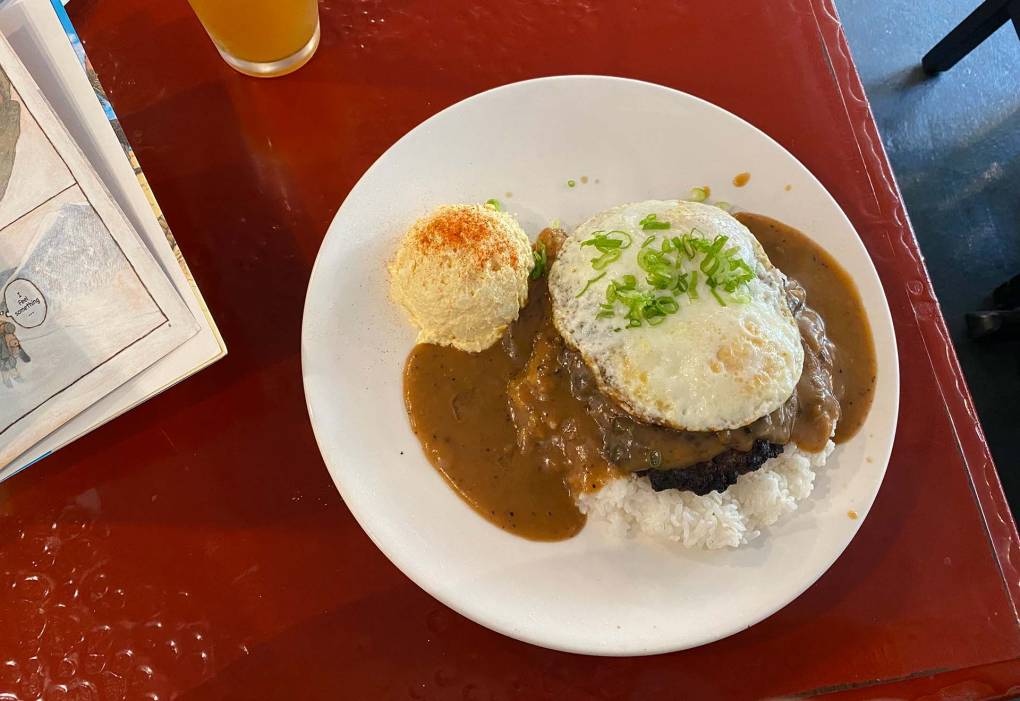
"caption": "At Berkeley's Masa Ramen, the Hawaiian dishes — like this gravy-drenched loco moco — are just as good as the actual ramen.",
"description": null,
"title": "masa ramen loco moco",
"credit": "Luke Tsai/KQED",
"status": "inherit",
"altTag": "A plate of gravy-drenched Hawaiian loco moco with two burger patties, a runny egg, a big mound of white rice and a scoop of potato salad.",
"isLoading": false,
"fetchFailed": false
},
"arts_13938804": {
"type": "attachments",
"id": "arts_13938804",
"meta": {
"index": "attachments_1716263798",
"site": "arts",
"id": "13938804",
"found": true
},
"parent": 13938798,
"imgSizes": {
"twentyfourteen-full-width": {
"file": "https://ww2.kqed.org/app/uploads/sites/2/2023/12/Bibingka-HR-PC_-Rezel-Kealoha-1038x576.jpg",
"width": 1038,
"mimeType": "image/jpeg",
"height": 576
},
"thumbnail": {
"file": "https://ww2.kqed.org/app/uploads/sites/2/2023/12/Bibingka-HR-PC_-Rezel-Kealoha-160x90.jpg",
"width": 160,
"mimeType": "image/jpeg",
"height": 90
},
"post-thumbnail": {
"file": "https://ww2.kqed.org/app/uploads/sites/2/2023/12/Bibingka-HR-PC_-Rezel-Kealoha-672x372.jpg",
"width": 672,
"mimeType": "image/jpeg",
"height": 372
},
"kqedFullSize": {
"file": "https://ww2.kqed.org/app/uploads/sites/2/2023/12/Bibingka-HR-PC_-Rezel-Kealoha.jpg",
"width": 2000,
"height": 1125
},
"large": {
"file": "https://ww2.kqed.org/app/uploads/sites/2/2023/12/Bibingka-HR-PC_-Rezel-Kealoha-1020x574.jpg",
"width": 1020,
"mimeType": "image/jpeg",
"height": 574
},
"1536x1536": {
"file": "https://ww2.kqed.org/app/uploads/sites/2/2023/12/Bibingka-HR-PC_-Rezel-Kealoha-1536x864.jpg",
"width": 1536,
"mimeType": "image/jpeg",
"height": 864
},
"full-width": {
"file": "https://ww2.kqed.org/app/uploads/sites/2/2023/12/Bibingka-HR-PC_-Rezel-Kealoha-1920x1080.jpg",
"width": 1920,
"mimeType": "image/jpeg",
"height": 1080
},
"medium": {
"file": "https://ww2.kqed.org/app/uploads/sites/2/2023/12/Bibingka-HR-PC_-Rezel-Kealoha-800x450.jpg",
"width": 800,
"mimeType": "image/jpeg",
"height": 450
},
"medium_large": {
"file": "https://ww2.kqed.org/app/uploads/sites/2/2023/12/Bibingka-HR-PC_-Rezel-Kealoha-768x432.jpg",
"width": 768,
"mimeType": "image/jpeg",
"height": 432
}
},
"publishDate": 1701461447,
"modified": 1701461613,
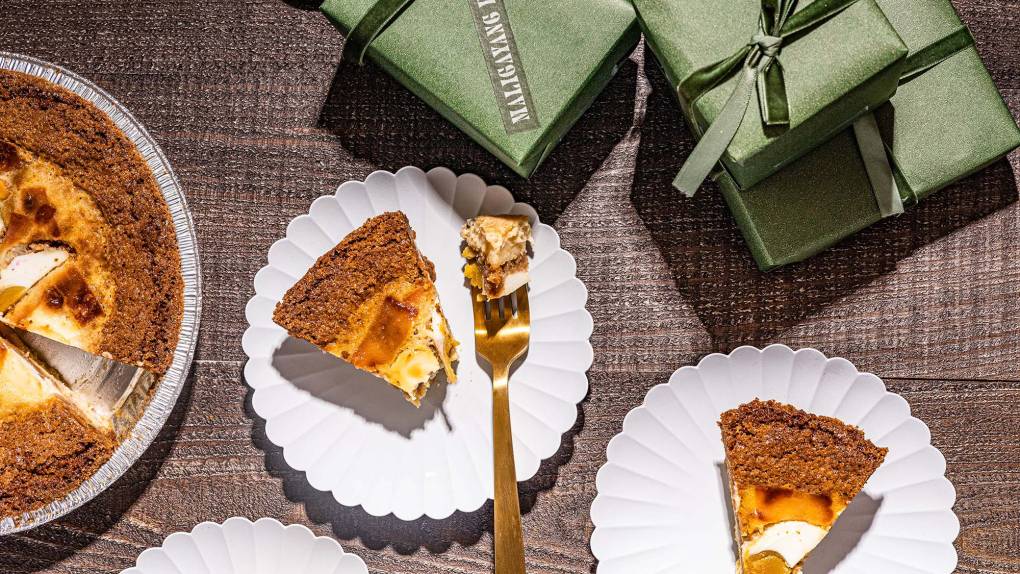
"caption": "Sweet Condesa's bibingka pie is inspired by a kind of coconut rice cake that's traditionally eaten for Christmas in the Philippines.",
"description": null,
"title": "Bibingka HR (PC_ Rezel Kealoha)",
"credit": "Courtesy of Rezel Kealoha",
"status": "inherit",
"altTag": "Overhead view of slices of custard pie on white plates, with gifts wrapped in green wrapping paper in the background.",
"isLoading": false,
"fetchFailed": false
},
"arts_13938624": {
"type": "attachments",
"id": "arts_13938624",
"meta": {
"index": "attachments_1716263798",
"site": "arts",
"id": "13938624",
"found": true
},
"parent": 13938619,
"imgSizes": {
"twentyfourteen-full-width": {
"file": "https://ww2.kqed.org/app/uploads/sites/2/2023/11/porch-party-ari-lead_celadon-loo-1038x576.jpg",
"width": 1038,
"mimeType": "image/jpeg",
"height": 576
},
"thumbnail": {
"file": "https://ww2.kqed.org/app/uploads/sites/2/2023/11/porch-party-ari-lead_celadon-loo-160x90.jpg",
"width": 160,
"mimeType": "image/jpeg",
"height": 90
},
"post-thumbnail": {
"file": "https://ww2.kqed.org/app/uploads/sites/2/2023/11/porch-party-ari-lead_celadon-loo-672x372.jpg",
"width": 672,
"mimeType": "image/jpeg",
"height": 372
},
"kqedFullSize": {
"file": "https://ww2.kqed.org/app/uploads/sites/2/2023/11/porch-party-ari-lead_celadon-loo.jpg",
"width": 1920,
"height": 1080
},
"large": {
"file": "https://ww2.kqed.org/app/uploads/sites/2/2023/11/porch-party-ari-lead_celadon-loo-1020x574.jpg",
"width": 1020,
"mimeType": "image/jpeg",
"height": 574
},
"1536x1536": {
"file": "https://ww2.kqed.org/app/uploads/sites/2/2023/11/porch-party-ari-lead_celadon-loo-1536x864.jpg",
"width": 1536,
"mimeType": "image/jpeg",
"height": 864
},
"medium": {
"file": "https://ww2.kqed.org/app/uploads/sites/2/2023/11/porch-party-ari-lead_celadon-loo-800x450.jpg",
"width": 800,
"mimeType": "image/jpeg",
"height": 450
},
"medium_large": {
"file": "https://ww2.kqed.org/app/uploads/sites/2/2023/11/porch-party-ari-lead_celadon-loo-768x432.jpg",
"width": 768,
"mimeType": "image/jpeg",
"height": 432
}
},
"publishDate": 1701219050,
"modified": 1701219366,
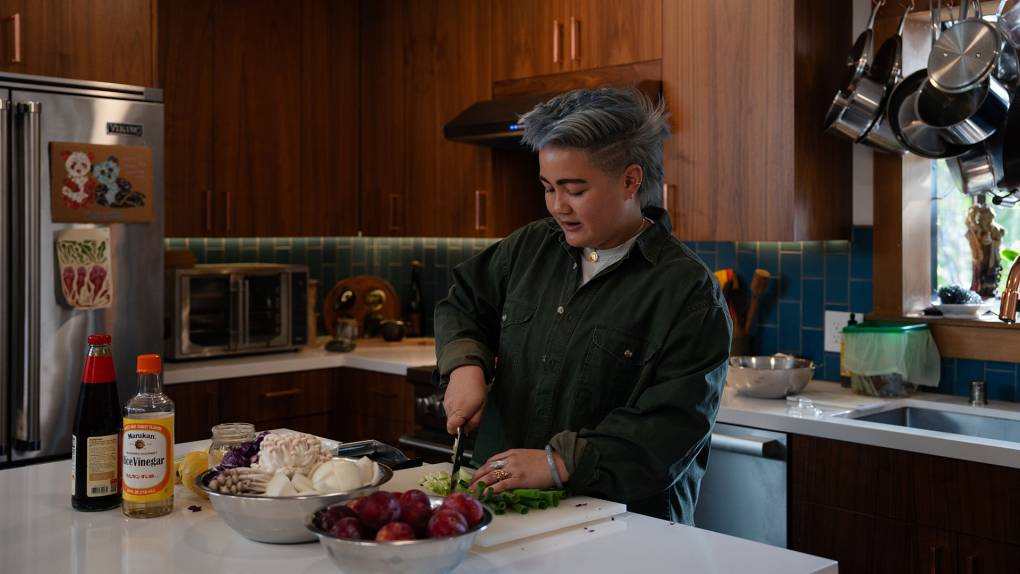
"caption": "Ari Louie preps vegetables in their home kitchen in West Oakland. Louie's pop-up, Porch Party, has become a local favorite, especially among the East Bay's artistic and activist communities.",
"description": null,
"title": "porch party - ari lead_celadon loo",
"credit": "Courtesy of Celadon Loo",
"status": "inherit",
"altTag": "A woman slices green onions in her home kitchen.",
"isLoading": false,
"fetchFailed": false
},
"arts_13938512": {
"type": "attachments",
"id": "arts_13938512",
"meta": {
"index": "attachments_1716263798",
"site": "arts",
"id": "13938512",
"found": true
},
"parent": 13938506,
"imgSizes": {
"twentyfourteen-full-width": {
"file": "https://ww2.kqed.org/app/uploads/sites/2/2023/11/Palaver-Canneloni-2-1038x576.jpg",
"width": 1038,
"mimeType": "image/jpeg",
"height": 576
},
"thumbnail": {
"file": "https://ww2.kqed.org/app/uploads/sites/2/2023/11/Palaver-Canneloni-2-160x100.jpg",
"width": 160,
"mimeType": "image/jpeg",
"height": 100
},
"post-thumbnail": {
"file": "https://ww2.kqed.org/app/uploads/sites/2/2023/11/Palaver-Canneloni-2-672x372.jpg",
"width": 672,
"mimeType": "image/jpeg",
"height": 372
},
"kqedFullSize": {
"file": "https://ww2.kqed.org/app/uploads/sites/2/2023/11/Palaver-Canneloni-2.jpg",
"width": 1920,
"height": 1200
},
"large": {
"file": "https://ww2.kqed.org/app/uploads/sites/2/2023/11/Palaver-Canneloni-2-1020x638.jpg",
"width": 1020,
"mimeType": "image/jpeg",
"height": 638
},
"1536x1536": {
"file": "https://ww2.kqed.org/app/uploads/sites/2/2023/11/Palaver-Canneloni-2-1536x960.jpg",
"width": 1536,
"mimeType": "image/jpeg",
"height": 960
},
"medium": {
"file": "https://ww2.kqed.org/app/uploads/sites/2/2023/11/Palaver-Canneloni-2-800x500.jpg",
"width": 800,
"mimeType": "image/jpeg",
"height": 500
},
"medium_large": {
"file": "https://ww2.kqed.org/app/uploads/sites/2/2023/11/Palaver-Canneloni-2-768x480.jpg",
"width": 768,
"mimeType": "image/jpeg",
"height": 480
}
},
"publishDate": 1701123620,
"modified": 1701123926,
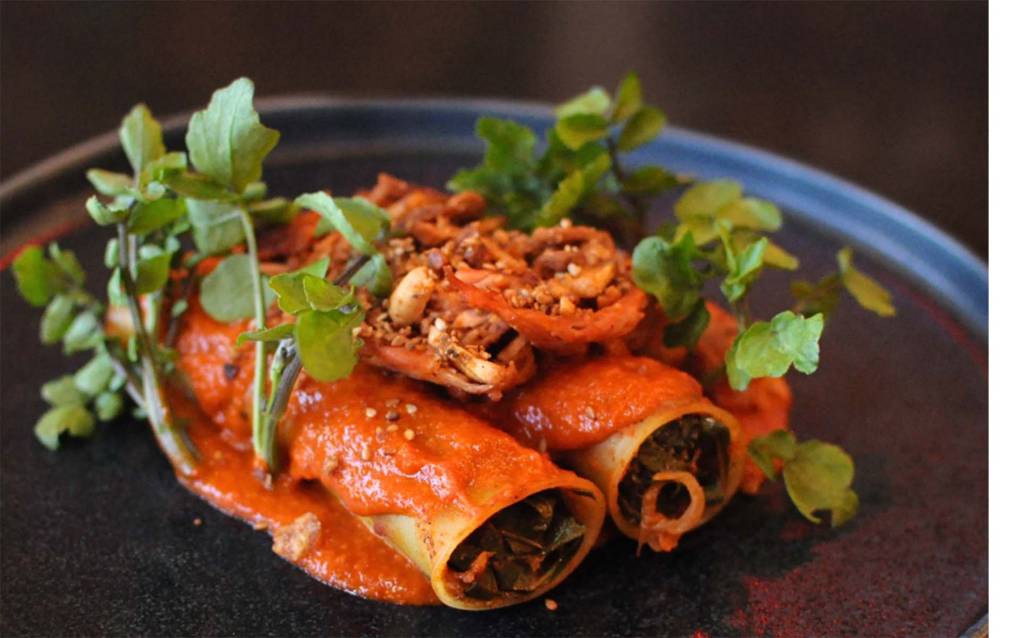
"caption": "A Ghanaian-inspired palaver canneloni features smoked turkey and stewed greens. The dish was one course in the Ghanaian-Ethiopian tasting menu that chef Selasie Dotse served at Oakland's Cafe Colucci in September. ",
"description": null,
"title": "Palaver Canneloni 2",
"credit": "Courtesy of e le aɖe Test Kitchen",
"status": "inherit",
"altTag": "Canneloni pasta tubes covered in a bright orange sauce and garnished with fresh herbs.",
"isLoading": false,
"fetchFailed": false
},
"arts_13936291": {
"type": "attachments",
"id": "arts_13936291",
"meta": {
"index": "attachments_1716263798",
"site": "arts",
"id": "13936291",
"found": true
},
"parent": 0,
"imgSizes": {
"twentyfourteen-full-width": {
"file": "https://ww2.kqed.org/app/uploads/sites/2/2023/10/20230927-Biggest-Pupusa-026-JY-KQED-1038x576.jpg",
"width": 1038,
"mimeType": "image/jpeg",
"height": 576
},
"thumbnail": {
"file": "https://ww2.kqed.org/app/uploads/sites/2/2023/10/20230927-Biggest-Pupusa-026-JY-KQED-160x107.jpg",
"width": 160,
"mimeType": "image/jpeg",
"height": 107
},
"post-thumbnail": {
"file": "https://ww2.kqed.org/app/uploads/sites/2/2023/10/20230927-Biggest-Pupusa-026-JY-KQED-672x372.jpg",
"width": 672,
"mimeType": "image/jpeg",
"height": 372
},
"kqedFullSize": {
"file": "https://ww2.kqed.org/app/uploads/sites/2/2023/10/20230927-Biggest-Pupusa-026-JY-KQED.jpg",
"width": 2000,
"height": 1333
},
"large": {
"file": "https://ww2.kqed.org/app/uploads/sites/2/2023/10/20230927-Biggest-Pupusa-026-JY-KQED-1020x680.jpg",
"width": 1020,
"mimeType": "image/jpeg",
"height": 680
},
"1536x1536": {
"file": "https://ww2.kqed.org/app/uploads/sites/2/2023/10/20230927-Biggest-Pupusa-026-JY-KQED-1536x1024.jpg",
"width": 1536,
"mimeType": "image/jpeg",
"height": 1024
},
"full-width": {
"file": "https://ww2.kqed.org/app/uploads/sites/2/2023/10/20230927-Biggest-Pupusa-026-JY-KQED-1920x1280.jpg",
"width": 1920,
"mimeType": "image/jpeg",
"height": 1280
},
"medium": {
"file": "https://ww2.kqed.org/app/uploads/sites/2/2023/10/20230927-Biggest-Pupusa-026-JY-KQED-800x533.jpg",
"width": 800,
"mimeType": "image/jpeg",
"height": 533
},
"medium_large": {
"file": "https://ww2.kqed.org/app/uploads/sites/2/2023/10/20230927-Biggest-Pupusa-026-JY-KQED-768x512.jpg",
"width": 768,
"mimeType": "image/jpeg",
"height": 512
}
},
"publishDate": 1697069614,
"modified": 1700269407,
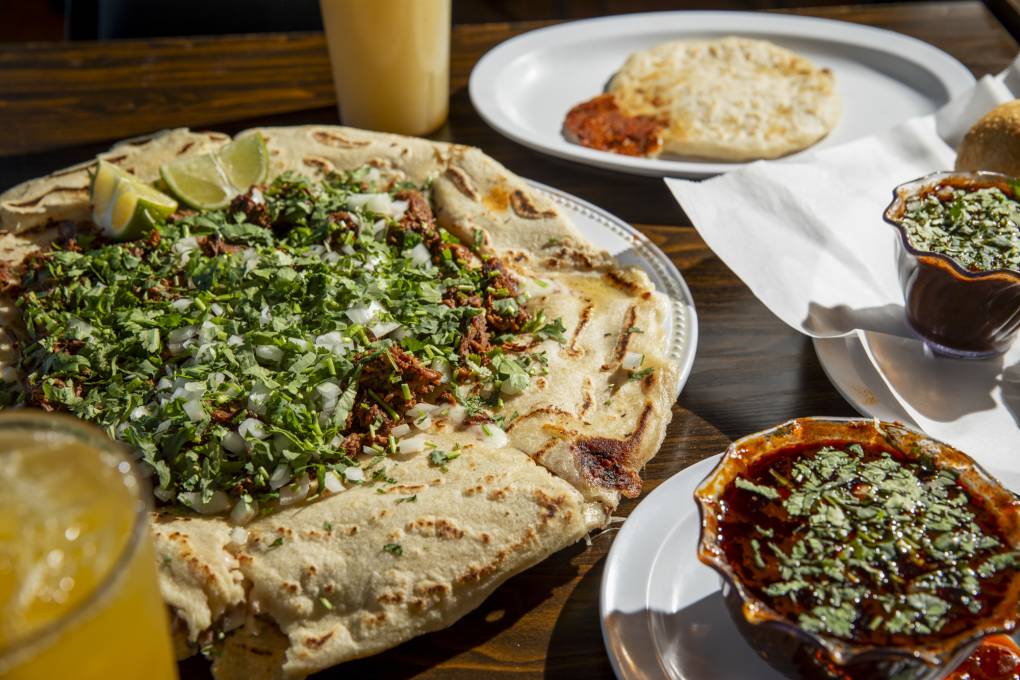
"caption": "The massive birria pupusa 'pizza' at Pupuseria Las Cabañas in Hayward.",
"description": null,
"title": "Biggest Pupusa",
"credit": "Juliana Yamada/KQED",
"status": "inherit",
"altTag": "A series of dishes and beverages on a table top.",
"isLoading": false,
"fetchFailed": false
},
"arts_13938177": {
"type": "attachments",
"id": "arts_13938177",
"meta": {
"index": "attachments_1716263798",
"site": "arts",
"id": "13938177",
"found": true
},
"parent": 13938161,
"imgSizes": {
"twentyfourteen-full-width": {
"file": "https://ww2.kqed.org/app/uploads/sites/2/2023/11/mini-pizza-bagels-1038x576.jpg",
"width": 1038,
"mimeType": "image/jpeg",
"height": 576
},
"thumbnail": {
"file": "https://ww2.kqed.org/app/uploads/sites/2/2023/11/mini-pizza-bagels-160x90.jpg",
"width": 160,
"mimeType": "image/jpeg",
"height": 90
},
"post-thumbnail": {
"file": "https://ww2.kqed.org/app/uploads/sites/2/2023/11/mini-pizza-bagels-672x372.jpg",
"width": 672,
"mimeType": "image/jpeg",
"height": 372
},
"kqedFullSize": {
"file": "https://ww2.kqed.org/app/uploads/sites/2/2023/11/mini-pizza-bagels.jpg",
"width": 1920,
"height": 1080
},
"large": {
"file": "https://ww2.kqed.org/app/uploads/sites/2/2023/11/mini-pizza-bagels-1020x574.jpg",
"width": 1020,
"mimeType": "image/jpeg",
"height": 574
},
"1536x1536": {
"file": "https://ww2.kqed.org/app/uploads/sites/2/2023/11/mini-pizza-bagels-1536x864.jpg",
"width": 1536,
"mimeType": "image/jpeg",
"height": 864
},
"medium": {
"file": "https://ww2.kqed.org/app/uploads/sites/2/2023/11/mini-pizza-bagels-800x450.jpg",
"width": 800,
"mimeType": "image/jpeg",
"height": 450
},
"medium_large": {
"file": "https://ww2.kqed.org/app/uploads/sites/2/2023/11/mini-pizza-bagels-768x432.jpg",
"width": 768,
"mimeType": "image/jpeg",
"height": 432
}
},
"publishDate": 1700180794,
"modified": 1700181615,
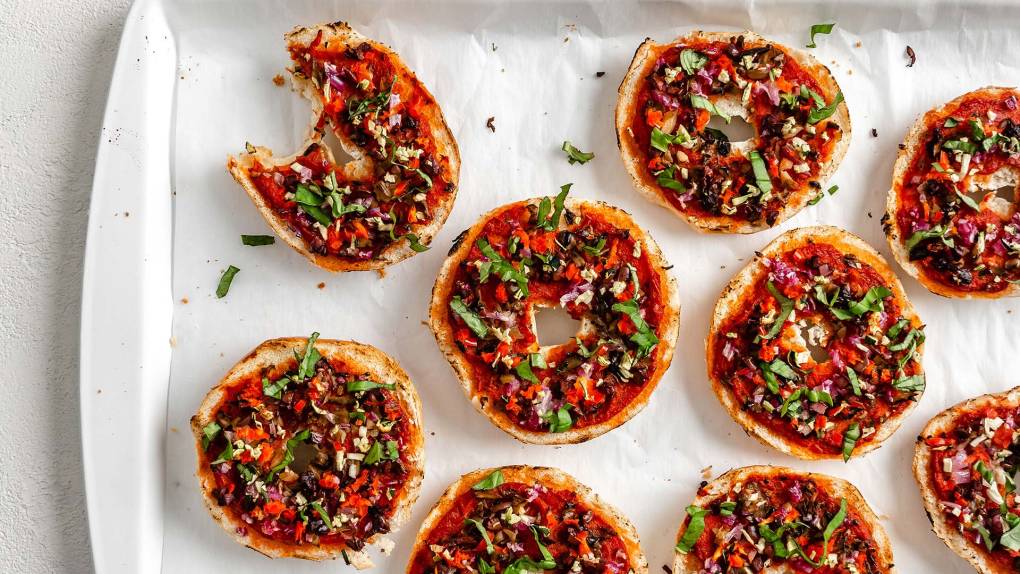
"caption": "Vegan cookbook author Toni Okamoto, posits that cooking plant-based food doesn't need to be expensive and super-time-consuming.",
"description": null,
"title": "mini-pizza-bagels",
"credit": "Courtesy of BenBella Books",
"status": "inherit",
"altTag": "A tray of miniature pizza bagels topped colorfully with chopped herbs and vegetables.",
"isLoading": false,
"fetchFailed": false
},
"arts_13937891": {
"type": "attachments",
"id": "arts_13937891",
"meta": {
"index": "attachments_1716263798",
"site": "arts",
"id": "13937891",
"found": true
},
"parent": 13937851,
"imgSizes": {
"twentyfourteen-full-width": {
"file": "https://ww2.kqed.org/app/uploads/sites/2/2023/11/ofrendas-tamale-1038x576.jpg",
"width": 1038,
"mimeType": "image/jpeg",
"height": 576
},
"thumbnail": {
"file": "https://ww2.kqed.org/app/uploads/sites/2/2023/11/ofrendas-tamale-160x110.jpg",
"width": 160,
"mimeType": "image/jpeg",
"height": 110
},
"post-thumbnail": {
"file": "https://ww2.kqed.org/app/uploads/sites/2/2023/11/ofrendas-tamale-672x372.jpg",
"width": 672,
"mimeType": "image/jpeg",
"height": 372
},
"kqedFullSize": {
"file": "https://ww2.kqed.org/app/uploads/sites/2/2023/11/ofrendas-tamale.jpg",
"width": 1920,
"height": 1320
},
"large": {
"file": "https://ww2.kqed.org/app/uploads/sites/2/2023/11/ofrendas-tamale-1020x701.jpg",
"width": 1020,
"mimeType": "image/jpeg",
"height": 701
},
"1536x1536": {
"file": "https://ww2.kqed.org/app/uploads/sites/2/2023/11/ofrendas-tamale-1536x1056.jpg",
"width": 1536,
"mimeType": "image/jpeg",
"height": 1056
},
"medium": {
"file": "https://ww2.kqed.org/app/uploads/sites/2/2023/11/ofrendas-tamale-800x550.jpg",
"width": 800,
"mimeType": "image/jpeg",
"height": 550
},
"medium_large": {
"file": "https://ww2.kqed.org/app/uploads/sites/2/2023/11/ofrendas-tamale-768x528.jpg",
"width": 768,
"mimeType": "image/jpeg",
"height": 528
}
},
"publishDate": 1699557652,
"modified": 1699557767,
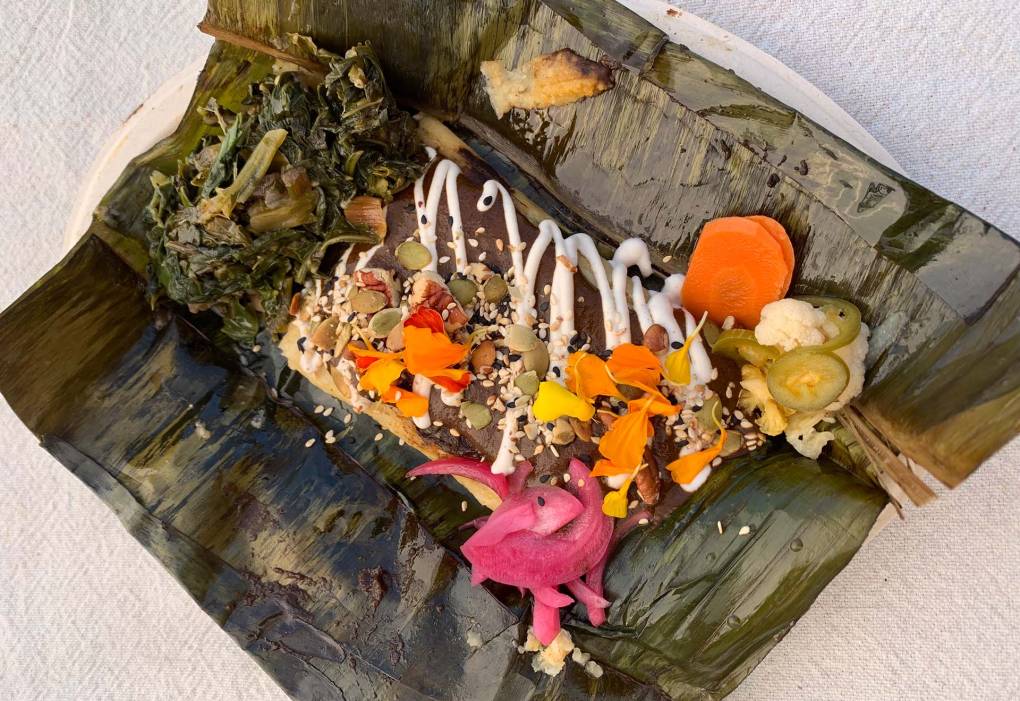
"caption": "Emmanuel Galvan's approach to tamal making is a reflection of his layered Mexican American experience.",
"description": null,
"title": "ofrendas tamale",
"credit": "Courtesy of Emmanuel Galvan",
"status": "inherit",
"altTag": "an open-faced tamale in banana leaf is decorated with a variety of colorful ingredients",
"isLoading": false,
"fetchFailed": false
},
"arts_13937823": {
"type": "attachments",
"id": "arts_13937823",
"meta": {
"index": "attachments_1716263798",
"site": "arts",
"id": "13937823",
"found": true
},
"parent": 13937806,
"imgSizes": {
"twentyfourteen-full-width": {
"file": "https://ww2.kqed.org/app/uploads/sites/2/2023/11/fuchsia-dunlop-2004-1038x576.jpg",
"width": 1038,
"mimeType": "image/jpeg",
"height": 576
},
"thumbnail": {
"file": "https://ww2.kqed.org/app/uploads/sites/2/2023/11/fuchsia-dunlop-2004-160x110.jpg",
"width": 160,
"mimeType": "image/jpeg",
"height": 110
},
"post-thumbnail": {
"file": "https://ww2.kqed.org/app/uploads/sites/2/2023/11/fuchsia-dunlop-2004-672x372.jpg",
"width": 672,
"mimeType": "image/jpeg",
"height": 372
},
"kqedFullSize": {
"file": "https://ww2.kqed.org/app/uploads/sites/2/2023/11/fuchsia-dunlop-2004.jpg",
"width": 1920,
"height": 1320
},
"large": {
"file": "https://ww2.kqed.org/app/uploads/sites/2/2023/11/fuchsia-dunlop-2004-1020x701.jpg",
"width": 1020,
"mimeType": "image/jpeg",
"height": 701
},
"1536x1536": {
"file": "https://ww2.kqed.org/app/uploads/sites/2/2023/11/fuchsia-dunlop-2004-1536x1056.jpg",
"width": 1536,
"mimeType": "image/jpeg",
"height": 1056
},
"medium": {
"file": "https://ww2.kqed.org/app/uploads/sites/2/2023/11/fuchsia-dunlop-2004-800x550.jpg",
"width": 800,
"mimeType": "image/jpeg",
"height": 550
},
"medium_large": {
"file": "https://ww2.kqed.org/app/uploads/sites/2/2023/11/fuchsia-dunlop-2004-768x528.jpg",
"width": 768,
"mimeType": "image/jpeg",
"height": 528
}
},
"publishDate": 1699489781,
"modified": 1699490187,
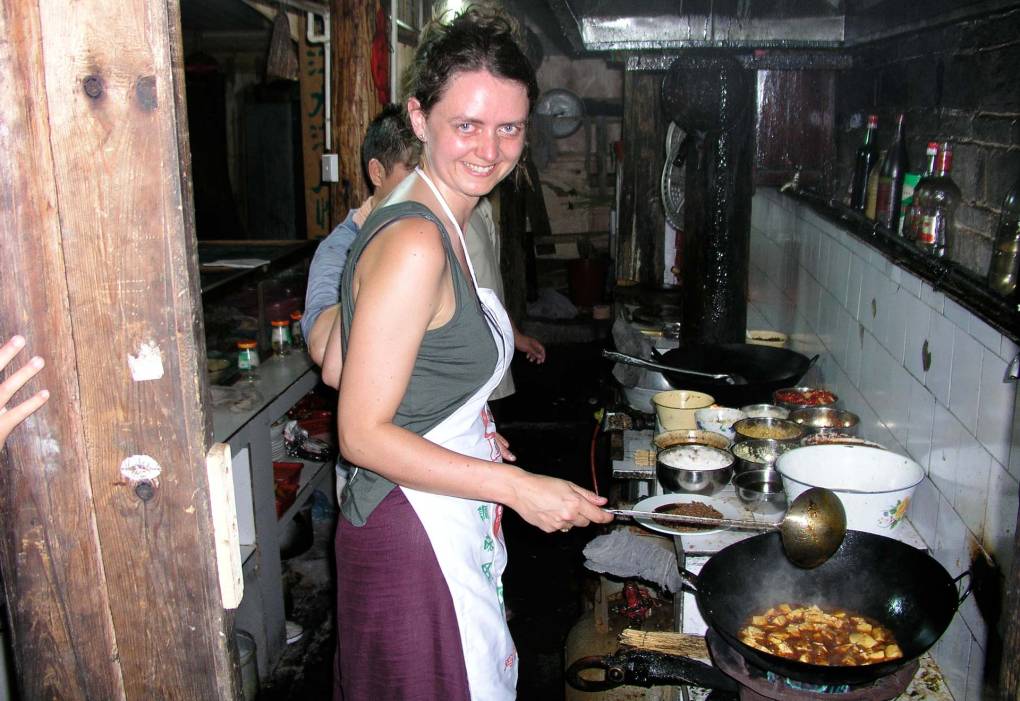
"caption": "Fuchsia Dunlop cooking in rural Hunan circa 2004. Dunlop's new book, 'Invitation to a Banquet,' explores the history and underlying philosophy of Chinese cooking through the stories of 30 dishes.",
"description": null,
"title": "fuchsia dunlop 2004",
"credit": "Courtesy of Fuchsia Dunlop",
"status": "inherit",
"altTag": "A young white woman in an apron cooks a dish in a wok in a traditional Chinese kitchen.",
"isLoading": false,
"fetchFailed": false
},
"arts_13937701": {
"type": "attachments",
"id": "arts_13937701",
"meta": {
"index": "attachments_1716263798",
"site": "arts",
"id": "13937701",
"found": true
},
"parent": 0,
"imgSizes": {
"twentyfourteen-full-width": {
"file": "https://ww2.kqed.org/app/uploads/sites/2/2023/11/231104-HowToFriendsgiving-21-BL-KQED-1038x576.jpg",
"width": 1038,
"mimeType": "image/jpeg",
"height": 576
},
"thumbnail": {
"file": "https://ww2.kqed.org/app/uploads/sites/2/2023/11/231104-HowToFriendsgiving-21-BL-KQED-160x107.jpg",
"width": 160,
"mimeType": "image/jpeg",
"height": 107
},
"post-thumbnail": {
"file": "https://ww2.kqed.org/app/uploads/sites/2/2023/11/231104-HowToFriendsgiving-21-BL-KQED-672x372.jpg",
"width": 672,
"mimeType": "image/jpeg",
"height": 372
},
"kqedFullSize": {
"file": "https://ww2.kqed.org/app/uploads/sites/2/2023/11/231104-HowToFriendsgiving-21-BL-KQED.jpg",
"width": 2000,
"height": 1333
},
"large": {
"file": "https://ww2.kqed.org/app/uploads/sites/2/2023/11/231104-HowToFriendsgiving-21-BL-KQED-1020x680.jpg",
"width": 1020,
"mimeType": "image/jpeg",
"height": 680
},
"1536x1536": {
"file": "https://ww2.kqed.org/app/uploads/sites/2/2023/11/231104-HowToFriendsgiving-21-BL-KQED-1536x1024.jpg",
"width": 1536,
"mimeType": "image/jpeg",
"height": 1024
},
"full-width": {
"file": "https://ww2.kqed.org/app/uploads/sites/2/2023/11/231104-HowToFriendsgiving-21-BL-KQED-1920x1280.jpg",
"width": 1920,
"mimeType": "image/jpeg",
"height": 1280
},
"medium": {
"file": "https://ww2.kqed.org/app/uploads/sites/2/2023/11/231104-HowToFriendsgiving-21-BL-KQED-800x533.jpg",
"width": 800,
"mimeType": "image/jpeg",
"height": 533
},
"medium_large": {
"file": "https://ww2.kqed.org/app/uploads/sites/2/2023/11/231104-HowToFriendsgiving-21-BL-KQED-768x512.jpg",
"width": 768,
"mimeType": "image/jpeg",
"height": 512
}
},
"publishDate": 1699330773,
"modified": 1699382001,
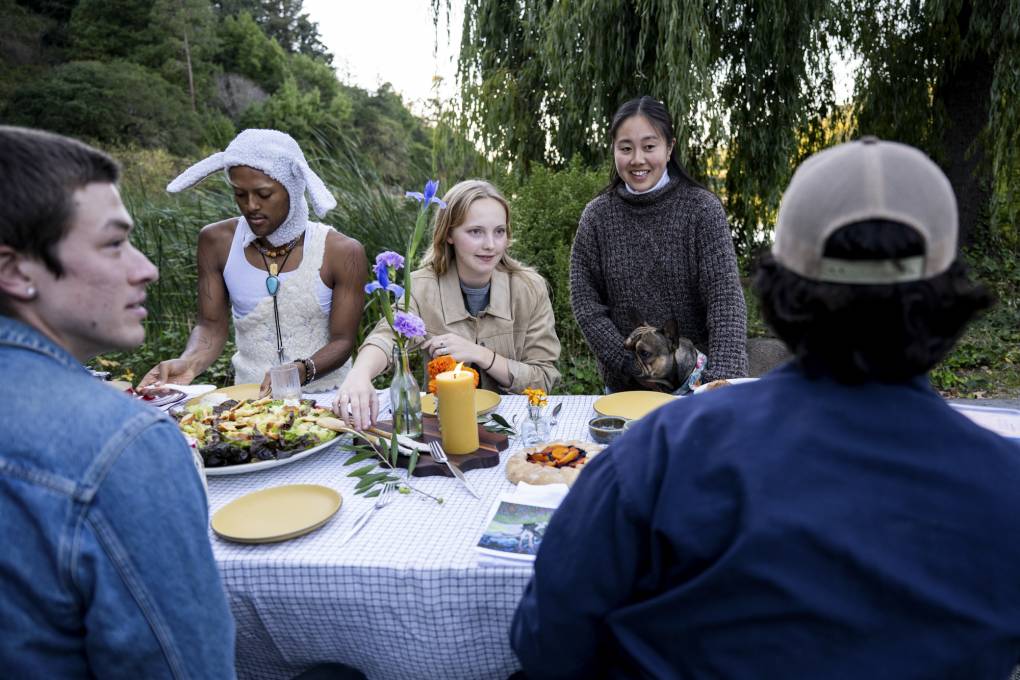
"caption": "Olivia Cruz Mayeda (right) hosts a Friendsgiving dinner for a group of friends at Lake Temescal in Oakland.",
"description": null,
"title": "231104-HowToFriendsgiving-21-BL-KQED",
"credit": "Beth LaBerge/KQED",
"status": "inherit",
"altTag": "A group of people talk around a picnic table set with a table cloth and a meal.",
"isLoading": false,
"fetchFailed": false
},
"arts_13937543": {
"type": "attachments",
"id": "arts_13937543",
"meta": {
"index": "attachments_1716263798",
"site": "arts",
"id": "13937543",
"found": true
},
"parent": 13937510,
"imgSizes": {
"twentyfourteen-full-width": {
"file": "https://ww2.kqed.org/app/uploads/sites/2/2023/11/fox-tale_queso-1038x576.jpg",
"width": 1038,
"mimeType": "image/jpeg",
"height": 576
},
"thumbnail": {
"file": "https://ww2.kqed.org/app/uploads/sites/2/2023/11/fox-tale_queso-160x90.jpg",
"width": 160,
"mimeType": "image/jpeg",
"height": 90
},
"post-thumbnail": {
"file": "https://ww2.kqed.org/app/uploads/sites/2/2023/11/fox-tale_queso-672x372.jpg",
"width": 672,
"mimeType": "image/jpeg",
"height": 372
},
"kqedFullSize": {
"file": "https://ww2.kqed.org/app/uploads/sites/2/2023/11/fox-tale_queso.jpg",
"width": 1920,
"height": 1080
},
"large": {
"file": "https://ww2.kqed.org/app/uploads/sites/2/2023/11/fox-tale_queso-1020x574.jpg",
"width": 1020,
"mimeType": "image/jpeg",
"height": 574
},
"1536x1536": {
"file": "https://ww2.kqed.org/app/uploads/sites/2/2023/11/fox-tale_queso-1536x864.jpg",
"width": 1536,
"mimeType": "image/jpeg",
"height": 864
},
"medium": {
"file": "https://ww2.kqed.org/app/uploads/sites/2/2023/11/fox-tale_queso-800x450.jpg",
"width": 800,
"mimeType": "image/jpeg",
"height": 450
},
"medium_large": {
"file": "https://ww2.kqed.org/app/uploads/sites/2/2023/11/fox-tale_queso-768x432.jpg",
"width": 768,
"mimeType": "image/jpeg",
"height": 432
}
},
"publishDate": 1699029535,
"modified": 1699029750,
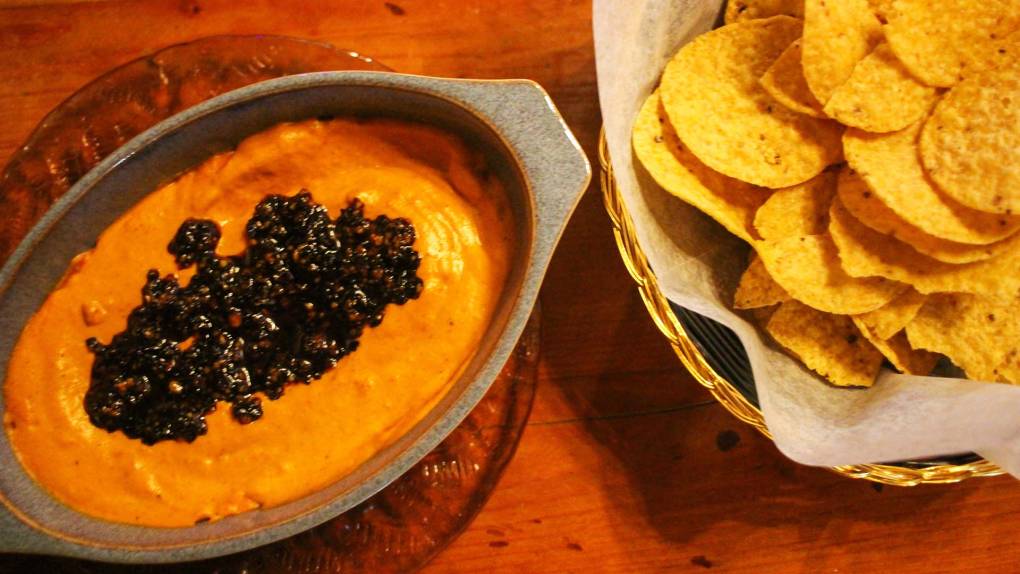
"caption": "At San Jose's Fox Tale Fermentation Project, the beer and the vegan food items — including this cashew-based queso — are made with fermented ingredients.",
"description": null,
"title": "fox tale_queso",
"credit": "Octavio Peña",
"status": "inherit",
"altTag": "A bowl of bright-orange vegan cashew \"queso\" topped with salsa macha, with a basket of tortilla chips on the side.",
"isLoading": false,
"fetchFailed": false
},
"arts_13937059": {
"type": "attachments",
"id": "arts_13937059",
"meta": {
"index": "attachments_1716263798",
"site": "arts",
"id": "13937059",
"found": true
},
"parent": 13937055,
"imgSizes": {
"twentyfourteen-full-width": {
"file": "https://ww2.kqed.org/app/uploads/sites/2/2023/10/kims-louisiana-fried-turkey_outdoor-turkeys-1038x576.jpg",
"width": 1038,
"mimeType": "image/jpeg",
"height": 576
},
"thumbnail": {
"file": "https://ww2.kqed.org/app/uploads/sites/2/2023/10/kims-louisiana-fried-turkey_outdoor-turkeys-160x90.jpg",
"width": 160,
"mimeType": "image/jpeg",
"height": 90
},
"post-thumbnail": {
"file": "https://ww2.kqed.org/app/uploads/sites/2/2023/10/kims-louisiana-fried-turkey_outdoor-turkeys-672x372.jpg",
"width": 672,
"mimeType": "image/jpeg",
"height": 372
},
"kqedFullSize": {
"file": "https://ww2.kqed.org/app/uploads/sites/2/2023/10/kims-louisiana-fried-turkey_outdoor-turkeys.jpg",
"width": 2000,
"height": 1125
},
"large": {
"file": "https://ww2.kqed.org/app/uploads/sites/2/2023/10/kims-louisiana-fried-turkey_outdoor-turkeys-1020x574.jpg",
"width": 1020,
"mimeType": "image/jpeg",
"height": 574
},
"1536x1536": {
"file": "https://ww2.kqed.org/app/uploads/sites/2/2023/10/kims-louisiana-fried-turkey_outdoor-turkeys-1536x864.jpg",
"width": 1536,
"mimeType": "image/jpeg",
"height": 864
},
"full-width": {
"file": "https://ww2.kqed.org/app/uploads/sites/2/2023/10/kims-louisiana-fried-turkey_outdoor-turkeys-1920x1080.jpg",
"width": 1920,
"mimeType": "image/jpeg",
"height": 1080
},
"medium": {
"file": "https://ww2.kqed.org/app/uploads/sites/2/2023/10/kims-louisiana-fried-turkey_outdoor-turkeys-800x450.jpg",
"width": 800,
"mimeType": "image/jpeg",
"height": 450
},
"medium_large": {
"file": "https://ww2.kqed.org/app/uploads/sites/2/2023/10/kims-louisiana-fried-turkey_outdoor-turkeys-768x432.jpg",
"width": 768,
"mimeType": "image/jpeg",
"height": 432
}
},
"publishDate": 1698356262,
"modified": 1698356436,
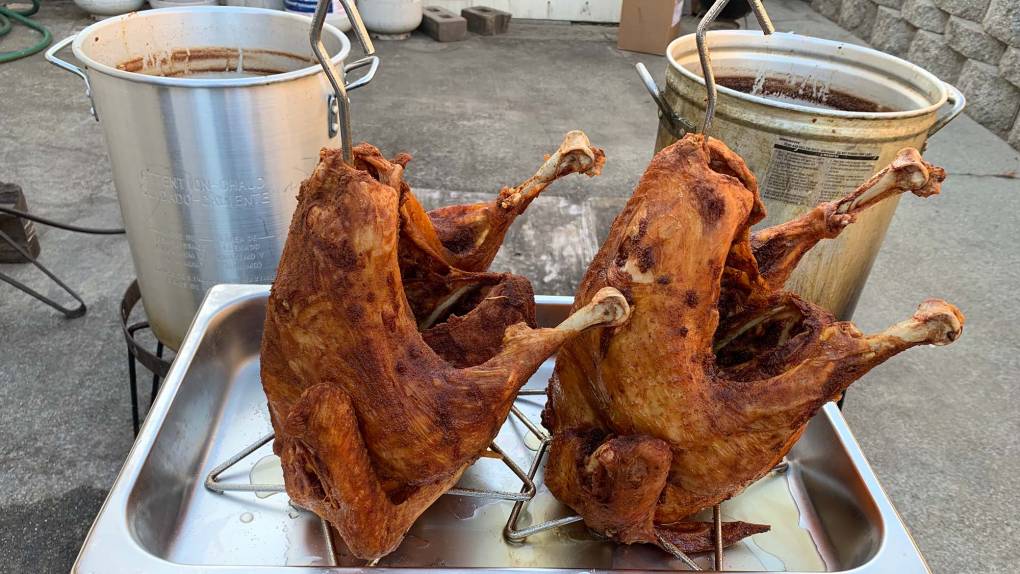
"caption": "Turkeys should only be fried outdoors and with extreme caution. In Richmond, Kim's Louisiana Fried Turkey & Stuff sells about 50 of the birds over Thanksgiving each year.",
"description": null,
"title": "kims louisiana fried turkey_outdoor turkeys",
"credit": "Courtesy of Kim's Louisiana Fried Turkey & Stuff",
"status": "inherit",
"altTag": "Two fried turkeys rest outdoors on a metal tray next to the large pots in which they were cooked.",
"isLoading": false,
"fetchFailed": false
},
"arts_13936382": {
"type": "attachments",
"id": "arts_13936382",
"meta": {
"index": "attachments_1716263798",
"site": "arts",
"id": "13936382",
"found": true
},
"parent": 13935891,
"imgSizes": {
"twentyfourteen-full-width": {
"file": "https://ww2.kqed.org/app/uploads/sites/2/2023/10/senor-sisig_sinigang-wings-1038x576.jpg",
"width": 1038,
"mimeType": "image/jpeg",
"height": 576
},
"thumbnail": {
"file": "https://ww2.kqed.org/app/uploads/sites/2/2023/10/senor-sisig_sinigang-wings-160x120.jpg",
"width": 160,
"mimeType": "image/jpeg",
"height": 120
},
"post-thumbnail": {
"file": "https://ww2.kqed.org/app/uploads/sites/2/2023/10/senor-sisig_sinigang-wings-672x372.jpg",
"width": 672,
"mimeType": "image/jpeg",
"height": 372
},
"kqedFullSize": {
"file": "https://ww2.kqed.org/app/uploads/sites/2/2023/10/senor-sisig_sinigang-wings.jpg",
"width": 2000,
"height": 1500
},
"large": {
"file": "https://ww2.kqed.org/app/uploads/sites/2/2023/10/senor-sisig_sinigang-wings-1020x765.jpg",
"width": 1020,
"mimeType": "image/jpeg",
"height": 765
},
"1536x1536": {
"file": "https://ww2.kqed.org/app/uploads/sites/2/2023/10/senor-sisig_sinigang-wings-1536x1152.jpg",
"width": 1536,
"mimeType": "image/jpeg",
"height": 1152
},
"full-width": {
"file": "https://ww2.kqed.org/app/uploads/sites/2/2023/10/senor-sisig_sinigang-wings-1920x1440.jpg",
"width": 1920,
"mimeType": "image/jpeg",
"height": 1440
},
"medium": {
"file": "https://ww2.kqed.org/app/uploads/sites/2/2023/10/senor-sisig_sinigang-wings-800x600.jpg",
"width": 800,
"mimeType": "image/jpeg",
"height": 600
},
"medium_large": {
"file": "https://ww2.kqed.org/app/uploads/sites/2/2023/10/senor-sisig_sinigang-wings-768x576.jpg",
"width": 768,
"mimeType": "image/jpeg",
"height": 576
}
},
"publishDate": 1697234352,
"modified": 1697242007,
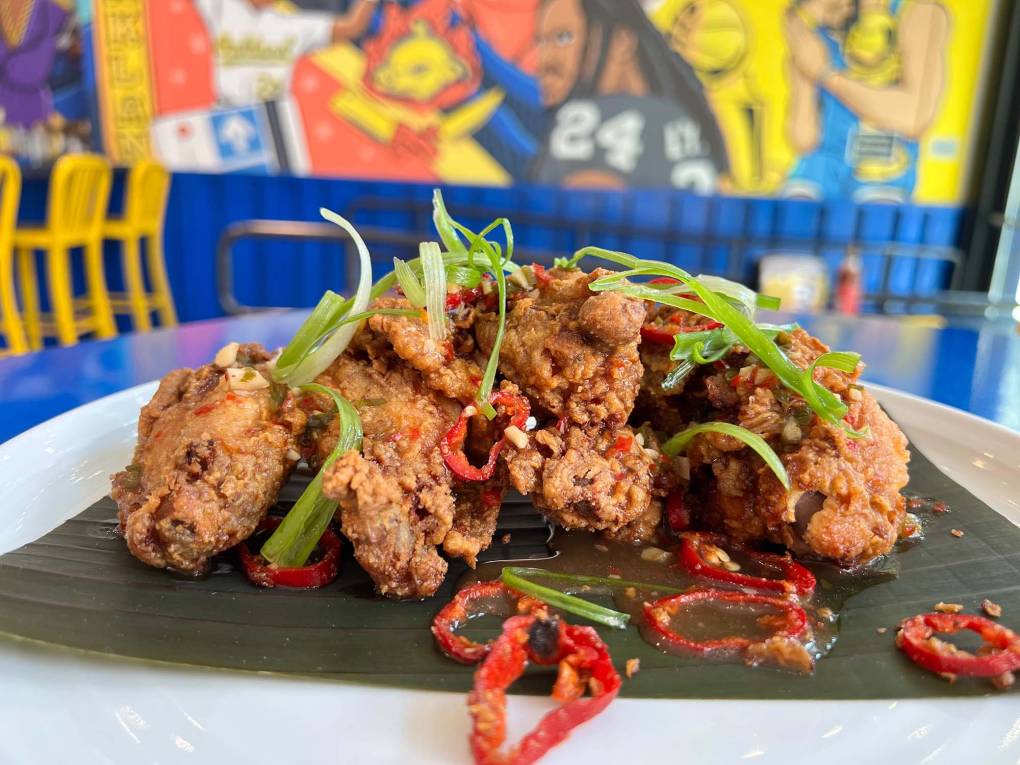
"caption": "Crispy wings tossed in sinagang seasoning. Paired with a spicy tamarind dipping sauce with green onion, cilantro, and garlic.",
"description": null,
"title": "senor sisig_sinigang wings",
"credit": "Courtesy of Señor Sisig",
"status": "inherit",
"altTag": "A plate of fried chicken wings garnished with red chilies and green onions.",
"isLoading": false,
"fetchFailed": false
}
},
"audioPlayerReducer": {
"postId": "stream_live",
"isPaused": true,
"isPlaying": false,
"pfsActive": false,
"pledgeModalIsOpen": true,
"playerDrawerIsOpen": false,
"liveAudioPlayStartedAt": 0,
"liveAudioPlayContext": ""
},
"authorsReducer": {
"byline_arts_13938619": {
"type": "authors",
"id": "byline_arts_13938619",
"meta": {
"override": true
},
"slug": "byline_arts_13938619",
"name": "Giovanna Lomanto",
"isLoading": false
},
"btorres": {
"type": "authors",
"id": "11666",
"meta": {
"index": "authors_1716337520",
"id": "11666",
"found": true
},
"name": "Blanca Torres",
"firstName": "Blanca",
"lastName": "Torres",
"slug": "btorres",
"email": "btorres@kqed.org",
"display_author_email": true,
"staff_mastheads": [
"news"
],
"title": "Producer, Forum",
"bio": "Blanca Torres brings sharp news judgement and keen sense of lively conversation to her work as producer for Forum. She loves producing shows that leave listeners feeling like they heard distinctive voices, learned something new and gained a fresh perspective.\r\n\r\nShe joined KQED in January of 2020 after 16 years of working as a newspaper reporter most recently at the \u003cem>San Francisco Business Times,\u003c/em> where she wrote about real estate and economic development. Before that, she covered a variety of beats including crime, education, retail, workplace, the economy, consumer issues, and small business for the \u003cem>Contra Costa Times, Baltimore Sun\u003c/em> and\u003cem> The Seattle Times\u003c/em>. In addition to reporting, she worked as an editorial writer and columnist for the \u003cem>Seattle Times\u003c/em>. From 2017 to 2020, Blanca won a total of ten awards from the National Association of Real Estate Editors and won first place for land use reporting from the California News Publishers Association two years in a row. She is also a member and former board member for the National Association of Hispanic Journalists.\r\n\r\nA native of the Pacific Northwest, Blanca earned her bachelor's degree from Vanderbilt University in Nashville and a master's in fine arts in creative writing at Mills College. She lives in the East Bay with her family.",
"avatar": "https://secure.gravatar.com/avatar/50b49d19b14a1eed34f26ebf4681152cdd81574ed21851100871ccd29e578cdc?s=600&d=blank&r=g",
"twitter": "@blancawrites",
"bluesky": null,
"facebook": null,
"instagram": null,
"linkedin": null,
"sites": [
{
"site": "arts",
"roles": [
"editor"
]
},
{
"site": "news",
"roles": [
"editor"
]
},
{
"site": "forum",
"roles": [
"editor"
]
}
],
"headData": {
"title": "Blanca Torres | KQED",
"description": "Producer, Forum",
"ogImgSrc": "https://secure.gravatar.com/avatar/50b49d19b14a1eed34f26ebf4681152cdd81574ed21851100871ccd29e578cdc?s=600&d=blank&r=g",
"twImgSrc": "https://secure.gravatar.com/avatar/50b49d19b14a1eed34f26ebf4681152cdd81574ed21851100871ccd29e578cdc?s=600&d=blank&r=g"
},
"isLoading": false,
"link": "/author/btorres"
},
"ltsai": {
"type": "authors",
"id": "11743",
"meta": {
"index": "authors_1716337520",
"id": "11743",
"found": true
},
"name": "Luke Tsai",
"firstName": "Luke",
"lastName": "Tsai",
"slug": "ltsai",
"email": "ltsai@kqed.org",
"display_author_email": true,
"staff_mastheads": [
"arts"
],
"title": "Food Editor",
"bio": "Luke Tsai is KQED's food editor and resident stinky tofu connoisseur. Prior to KQED, he was an editor at Eater SF, \u003cem>San Francisco \u003c/em>magazine, and the \u003cem>East Bay Express\u003c/em>, and his work has also appeared in TASTE, the \u003cem>San Francisco Chronicle\u003c/em>, and the \u003cem>Best Food Writing\u003c/em> anthology. When he isn't writing or editing, you'll find him eating most everything he can get his hands on.",
"avatar": "https://secure.gravatar.com/avatar/1e59b45bf191526e7339d6ba46e33a57b2030d25c27660ecc64ea3cb863e34f7?s=600&d=blank&r=g",
"twitter": "theluketsai",
"bluesky": null,
"facebook": null,
"instagram": null,
"linkedin": null,
"sites": [
{
"site": "",
"roles": [
"editor"
]
},
{
"site": "arts",
"roles": [
"administrator"
]
},
{
"site": "news",
"roles": [
"editor",
"contributor"
]
},
{
"site": "bayareabites",
"roles": [
"editor"
]
},
{
"site": "food",
"roles": [
"editor"
]
}
],
"headData": {
"title": "Luke Tsai | KQED",
"description": "Food Editor",
"ogImgSrc": "https://secure.gravatar.com/avatar/1e59b45bf191526e7339d6ba46e33a57b2030d25c27660ecc64ea3cb863e34f7?s=600&d=blank&r=g",
"twImgSrc": "https://secure.gravatar.com/avatar/1e59b45bf191526e7339d6ba46e33a57b2030d25c27660ecc64ea3cb863e34f7?s=600&d=blank&r=g"
},
"isLoading": false,
"link": "/author/ltsai"
},
"achazaro": {
"type": "authors",
"id": "11748",
"meta": {
"index": "authors_1716337520",
"id": "11748",
"found": true
},
"name": "Alan Chazaro",
"firstName": "Alan",
"lastName": "Chazaro",
"slug": "achazaro",
"email": "agchazaro@gmail.com",
"display_author_email": true,
"staff_mastheads": [],
"title": "Food Writer and Reporter",
"bio": "Alan Chazaro is the author of \u003cem>This Is Not a Frank Ocean Cover Album\u003c/em> (Black Lawrence Press, 2019), \u003cem>Piñata Theory\u003c/em> (Black Lawrence Press, 2020), and \u003cem>Notes from the Eastern Span of the Bay Bridge\u003c/em> (Ghost City Press, 2021). He is a graduate of June Jordan’s Poetry for the People program at UC Berkeley and a former Lawrence Ferlinghetti Fellow at the University of San Francisco. He writes about sports, food, art, music, education, and culture while repping the Bay on \u003ca href=\"https://twitter.com/alan_chazaro\">Twitter\u003c/a> and \u003ca href=\"https://www.instagram.com/alan_chazaro/?hl=en\">Instagram\u003c/a> at @alan_chazaro.",
"avatar": "https://secure.gravatar.com/avatar/ea8b6dd970fc5c29e7a188e7d5861df7?s=600&d=blank&r=g",
"twitter": "alan_chazaro",
"facebook": null,
"instagram": null,
"linkedin": null,
"sites": [
{
"site": "arts",
"roles": [
"contributor"
]
},
{
"site": "news",
"roles": [
"editor"
]
}
],
"headData": {
"title": "Alan Chazaro | KQED",
"description": "Food Writer and Reporter",
"ogImgSrc": "https://secure.gravatar.com/avatar/ea8b6dd970fc5c29e7a188e7d5861df7?s=600&d=blank&r=g",
"twImgSrc": "https://secure.gravatar.com/avatar/ea8b6dd970fc5c29e7a188e7d5861df7?s=600&d=blank&r=g"
},
"isLoading": false,
"link": "/author/achazaro"
},
"omayeda": {
"type": "authors",
"id": "11872",
"meta": {
"index": "authors_1716337520",
"id": "11872",
"found": true
},
"name": "Olivia Cruz Mayeda",
"firstName": "Olivia Cruz",
"lastName": "Mayeda",
"slug": "omayeda",
"email": "omayeda@kqed.org",
"display_author_email": false,
"staff_mastheads": [],
"title": "Reporter",
"bio": "Olivia Cruz Mayeda is a journalist covering style, culture and reparations in the Bay Area, a place that has been home to her family for over 100 years. Her writing has also appeared in the \u003cem>San Francisco Chronicle\u003c/em> and \u003cem>El Tecolote\u003c/em>.",
"avatar": "https://secure.gravatar.com/avatar/a8c0baa30219ce1071a9474f4c14141f?s=600&d=blank&r=g",
"twitter": null,
"facebook": null,
"instagram": null,
"linkedin": null,
"sites": [
{
"site": "arts",
"roles": [
"contributor"
]
}
],
"headData": {
"title": "Olivia Cruz Mayeda | KQED",
"description": "Reporter",
"ogImgSrc": "https://secure.gravatar.com/avatar/a8c0baa30219ce1071a9474f4c14141f?s=600&d=blank&r=g",
"twImgSrc": "https://secure.gravatar.com/avatar/a8c0baa30219ce1071a9474f4c14141f?s=600&d=blank&r=g"
},
"isLoading": false,
"link": "/author/omayeda"
},
"opena": {
"type": "authors",
"id": "11903",
"meta": {
"index": "authors_1716337520",
"id": "11903",
"found": true
},
"name": "Octavio Peña",
"firstName": "Octavio",
"lastName": "Peña",
"slug": "opena",
"email": "octaviopenagutierrez@gmail.com",
"display_author_email": false,
"staff_mastheads": [],
"title": "KQED Contributor",
"bio": null,
"avatar": "https://secure.gravatar.com/avatar/62850791380238ea3945ee72a3d56056477904792b41daaf11effa8780bab75d?s=600&d=blank&r=g",
"twitter": null,
"bluesky": null,
"facebook": null,
"instagram": null,
"linkedin": null,
"sites": [
{
"site": "arts",
"roles": [
"contributor"
]
}
],
"headData": {
"title": "Octavio Peña | KQED",
"description": "KQED Contributor",
"ogImgSrc": "https://secure.gravatar.com/avatar/62850791380238ea3945ee72a3d56056477904792b41daaf11effa8780bab75d?s=600&d=blank&r=g",
"twImgSrc": "https://secure.gravatar.com/avatar/62850791380238ea3945ee72a3d56056477904792b41daaf11effa8780bab75d?s=600&d=blank&r=g"
},
"isLoading": false,
"link": "/author/opena"
}
},
"pagesReducer": {
"arts_tag_food": {
"type": "terms",
"id": "arts_1297",
"meta": {
"index": "terms_1716263798",
"site": "arts",
"id": "1297",
"score": 7.4243016
},
"featImg": null,
"name": "food",
"description": null,
"taxonomy": "tag",
"headData": {
"twImgId": null,
"twTitle": null,
"ogTitle": null,
"ogImgId": null,
"twDescription": null,
"description": null,
"title": "food Archives | KQED Arts",
"ogDescription": null
},
"ttid": 1309,
"slug": "food",
"isLoading": false,
"title": "food",
"pageMeta": {
"site": "arts",
"WpPageTemplate": "page-topic-editorial",
"currentPage": 23
},
"blocks": [
{
"blockName": "kqed/post-list",
"attrs": {
"layout": "cardArticle2",
"query": "posts/arts?tag=food",
"seeMore": false,
"paginated": true,
"page": 23
}
},
{
"blockName": "kqed/ad"
}
]
}
},
"pfsSessionReducer": {},
"postsReducer": {
"stream_live": {
"type": "live",
"id": "stream_live",
"audioUrl": "https://streams.kqed.org/kqedradio",
"title": "Live Stream",
"excerpt": "Live Stream information currently unavailable.",
"link": "/radio",
"featImg": "",
"label": {
"name": "KQED Live",
"link": "/"
}
},
"stream_kqedNewscast": {
"type": "posts",
"id": "stream_kqedNewscast",
"audioUrl": "https://www.kqed.org/.stream/anon/radio/RDnews/newscast.mp3?_=1",
"title": "KQED Newscast",
"featImg": "",
"label": {
"name": "88.5 FM",
"link": "/"
}
},
"arts_13939138": {
"type": "posts",
"id": "arts_13939138",
"meta": {
"index": "posts_1716263798",
"site": "arts",
"id": "13939138",
"score": null,
"sort": [
1702069599000
]
},
"parent": 0,
"labelTerm": {},
"blocks": [],
"publishDate": 1702069599,
"format": "standard",
"title": "The Best Dishes I Ate in 2023",
"headTitle": "The Best Dishes I Ate in 2023 | KQED",
"content": "\u003cp>Whenever tragic things are happening around the world, food writers like to bring out that old saw about food bringing everyone together. \u003ca href=\"https://www.nytimes.com/2023/11/03/dining/israel-hamas-war-divides-american-chefs.html\">I don’t think it always does, really\u003c/a> — not when the problems and differences we face are so profound. But a good meal \u003ci>can\u003c/i> provide us with comfort, nourishment and a sense of community that helps us get through hard times.\u003c/p>\n\u003cp>Despite the headline, this list doesn’t \u003ci>necessarily\u003c/i> purport to identify the “best” version of any particular cuisine or dish. Instead, when I look back on 2023, these were the meals that brought me the most happiness. Some were from brand new restaurants; others were simply dishes I tried for the first time this year. In many cases, I returned to them again and again.\u003c/p>\n\u003cp>Here they are, then, presented in roughly the chronological order in which I ate them:\u003c/p>\n\u003cfigure id=\"attachment_13923360\" class=\"wp-caption alignnone\" style=\"max-width: 1920px\">\u003cimg loading=\"lazy\" decoding=\"async\" class=\"size-full wp-image-13923360\" src=\"https://cdn.kqed.org/wp-content/uploads/sites/2/2023/01/antojitos-guatemaltecos_churrasco_lead.jpg\" alt=\"Overhead view of a Guatemalan churrasco chapin plate: steak, rice, potato salad, fried plantains, cheese, and little tubs of salsa and refried beans.\" width=\"1920\" height=\"1200\" srcset=\"https://cdn.kqed.org/wp-content/uploads/sites/2/2023/01/antojitos-guatemaltecos_churrasco_lead.jpg 1920w, https://cdn.kqed.org/wp-content/uploads/sites/2/2023/01/antojitos-guatemaltecos_churrasco_lead-800x500.jpg 800w, https://cdn.kqed.org/wp-content/uploads/sites/2/2023/01/antojitos-guatemaltecos_churrasco_lead-1020x638.jpg 1020w, https://cdn.kqed.org/wp-content/uploads/sites/2/2023/01/antojitos-guatemaltecos_churrasco_lead-160x100.jpg 160w, https://cdn.kqed.org/wp-content/uploads/sites/2/2023/01/antojitos-guatemaltecos_churrasco_lead-768x480.jpg 768w, https://cdn.kqed.org/wp-content/uploads/sites/2/2023/01/antojitos-guatemaltecos_churrasco_lead-1536x960.jpg 1536w\" sizes=\"(max-width: 1920px) 100vw, 1920px\">\u003cfigcaption class=\"wp-caption-text\">The churrasco chapin is one of the very typical traditional Guatemalan plates that diners can find at Antojitos Guatemaltecos, a new restaurant in El Cerrito. \u003ccite>(Luke Tsai/KQED)\u003c/cite>\u003c/figcaption>\u003c/figure>\n\u003ch2>1. Churrasco chapin at Antojitos Guatemaltecos\u003c/h2>\n\u003cp>\u003ci>11252 San Pablo Ave., El Cerrito\u003c/i>\u003c/p>\n\u003cp>I’ve been an Antojitos Guatemaltecos evangelist for going on four years now, from back when it was just a little \u003ca href=\"https://www.kqed.org/arts/13913355/guatemalan-rice-tamales-antojitos-guatemaltecos-richmond\">tamal cart\u003c/a> I’d sometimes stumble upon, when the stars aligned, just a block away from my house. Now that the Aguilar family has opened a \u003ca href=\"https://www.kqed.org/arts/13923359/antojitos-guatemaltecos-guatemalan-restaurant-el-cerrito-tamales-pollo-campero\">full-blown restaurant\u003c/a> in El Cerrito, their tender, jiggly tamales still rank among the most delicious in the Bay, but I’ve been especially enamored with their expanded selection of homestyle Guatemalan entrees. The dish I keep coming back to is the churrasco chapin mixed grill plate, with its well-charred steak and sausage, fried plantains, queso fresco, seasoned rice and piping-hot tortillas — the perfect bit-of-this-and-that lunch or dinner.\u003c/p>\n\u003cfigure id=\"attachment_13926240\" class=\"wp-caption alignnone\" style=\"max-width: 1920px\">\u003cimg loading=\"lazy\" decoding=\"async\" class=\"size-full wp-image-13926240\" src=\"https://cdn.kqed.org/wp-content/uploads/sites/2/2023/03/ramen-champ_lead.jpg\" alt=\"Bowl of ramen with an exorbitant amount of toppings: bean sprouts, chopped raw garlic, pork belly, pork fat and marinated egg.\" width=\"1920\" height=\"1320\" srcset=\"https://cdn.kqed.org/wp-content/uploads/sites/2/2023/03/ramen-champ_lead.jpg 1920w, https://cdn.kqed.org/wp-content/uploads/sites/2/2023/03/ramen-champ_lead-800x550.jpg 800w, https://cdn.kqed.org/wp-content/uploads/sites/2/2023/03/ramen-champ_lead-1020x701.jpg 1020w, https://cdn.kqed.org/wp-content/uploads/sites/2/2023/03/ramen-champ_lead-160x110.jpg 160w, https://cdn.kqed.org/wp-content/uploads/sites/2/2023/03/ramen-champ_lead-768x528.jpg 768w, https://cdn.kqed.org/wp-content/uploads/sites/2/2023/03/ramen-champ_lead-1536x1056.jpg 1536w\" sizes=\"(max-width: 1920px) 100vw, 1920px\">\u003cfigcaption class=\"wp-caption-text\">Inspired by Tokyo’s legendary Ramen Jiro, the Buta MAX at Ramen Champ in San Jose comes overloaded with decadent toppings. \u003ccite>(Luke Tsai/KQED)\u003c/cite>\u003c/figcaption>\u003c/figure>\n\u003ch2>2. Buta MAX ramen at Ramen Champ\u003c/h2>\n\u003cp>\u003ci>6229 Santa Teresa Blvd., San Jose\u003c/i>\u003c/p>\n\u003cp>[ad fullwidth]\u003c/p>\n\u003cp>As I embark on my annual ritualistic fattening for the winter months, the dish I find myself thinking about all the time is Ramen Champ’s Buta MAX ramen — a bowl of noodles that is \u003ca href=\"https://www.kqed.org/arts/13926203/ramen-champ-jiro-style-ramen-cult-san-jose-tokyo\">as audacious and extreme as its name\u003c/a>. Modeled after Tokyo’s famous “Jiro-style” ramen, each super-sized bowl comes topped with extra-thick chunks of braised pork belly, an alarming amount of deliciously softened pork fat, and, most arresting of all, a preposterously large mound of bean sprouts, cabbage and raw garlic. It’s the most unique bowl of ramen I’ve ever eaten in the U.S. — and, on chilly nights when I can’t make it down to San Jose, the one that haunts my dreams.\u003c/p>\n\u003cfigure id=\"attachment_13931336\" class=\"wp-caption alignnone\" style=\"max-width: 2560px\">\u003cimg loading=\"lazy\" decoding=\"async\" class=\"size-full wp-image-13931336\" src=\"https://cdn.kqed.org/wp-content/uploads/sites/2/2023/07/lulu_mezze_lead-scaled.jpg\" alt=\"An abundant spread of Palestinian mezzes served on a circular wooden board.\" width=\"2560\" height=\"1920\" srcset=\"https://cdn.kqed.org/wp-content/uploads/sites/2/2023/07/lulu_mezze_lead-scaled.jpg 2560w, https://cdn.kqed.org/wp-content/uploads/sites/2/2023/07/lulu_mezze_lead-800x600.jpg 800w, https://cdn.kqed.org/wp-content/uploads/sites/2/2023/07/lulu_mezze_lead-1020x765.jpg 1020w, https://cdn.kqed.org/wp-content/uploads/sites/2/2023/07/lulu_mezze_lead-160x120.jpg 160w, https://cdn.kqed.org/wp-content/uploads/sites/2/2023/07/lulu_mezze_lead-768x576.jpg 768w, https://cdn.kqed.org/wp-content/uploads/sites/2/2023/07/lulu_mezze_lead-1536x1152.jpg 1536w, https://cdn.kqed.org/wp-content/uploads/sites/2/2023/07/lulu_mezze_lead-2048x1536.jpg 2048w, https://cdn.kqed.org/wp-content/uploads/sites/2/2023/07/lulu_mezze_lead-1920x1440.jpg 1920w\" sizes=\"(max-width: 2560px) 100vw, 2560px\">\u003cfigcaption class=\"wp-caption-text\">The mezze brunch board at Lulu in West Berkeley is a feast for the eyes and the tastebuds. \u003ccite>(Luke Tsai/KQED)\u003c/cite>\u003c/figcaption>\u003c/figure>\n\u003ch2>3. Mezze brunch board at Lulu\u003c/h2>\n\u003cp>\u003ci>1106 Solano Ave., Albany\u003c/i>\u003c/p>\n\u003cp>This glammed-up Palestinian brunch spot was one of my favorite discoveries of the 2023 — though I was clearly late to the party, as they were already booked up two or three weeks out by the time I managed to \u003ca href=\"https://www.kqed.org/arts/13931303/lulu-berkeley-hottest-brunch-palestinian-mezzes\">snag a reservation\u003c/a>. Everyone orders the mezze brunch board, which is chef Mona Leena Michael’s ingenious, gorgeously herb-bedecked spin on the kind of three-tier cake stand you might enjoy for afternoon tea. The spread of Palestinian-inspired breads, dips and assorted bite-size snacks is as fun to share as it is perfect for the ‘gram. It’s also shockingly delicious: I couldn’t stop double-dipping into the hummus crowned with pine nuts and shimeji mushrooms, and I could have eaten a whole tray of the falafel topped with a smear of black garlic tahini. (Note that the restaurant is in the process of moving to a new, larger location on Solano Avenue, with plans to kick off the new year with an expanded dinner menu.)\u003c/p>\n\u003cfigure id=\"attachment_13933769\" class=\"wp-caption alignnone\" style=\"max-width: 1920px\">\u003cimg loading=\"lazy\" decoding=\"async\" class=\"size-full wp-image-13933769\" src=\"https://cdn.kqed.org/wp-content/uploads/sites/2/2023/08/tigon-banh-hoi-crop_LT.jpg\" alt=\"An abundant platter of fillings for make-your-own Vietnamese spring rolls, with shrimp, beef, fried egg rolls and more.\" width=\"1920\" height=\"1200\" srcset=\"https://cdn.kqed.org/wp-content/uploads/sites/2/2023/08/tigon-banh-hoi-crop_LT.jpg 1920w, https://cdn.kqed.org/wp-content/uploads/sites/2/2023/08/tigon-banh-hoi-crop_LT-800x500.jpg 800w, https://cdn.kqed.org/wp-content/uploads/sites/2/2023/08/tigon-banh-hoi-crop_LT-1020x638.jpg 1020w, https://cdn.kqed.org/wp-content/uploads/sites/2/2023/08/tigon-banh-hoi-crop_LT-160x100.jpg 160w, https://cdn.kqed.org/wp-content/uploads/sites/2/2023/08/tigon-banh-hoi-crop_LT-768x480.jpg 768w, https://cdn.kqed.org/wp-content/uploads/sites/2/2023/08/tigon-banh-hoi-crop_LT-1536x960.jpg 1536w\" sizes=\"(max-width: 1920px) 100vw, 1920px\">\u003cfigcaption class=\"wp-caption-text\">Tigon’s make-your-own-spring-roll spread makes for a fun and refreshing communal dining experience. \u003ccite>(Luke Tsai/KQED)\u003c/cite>\u003c/figcaption>\u003c/figure>\n\u003ch2>4. Bánh hỏi dặc biệt at Tigon\u003c/h2>\n\u003cp>\u003ci>10086 San Pablo Ave., El Cerrito\u003c/i>\u003c/p>\n\u003cp>In the Tsai household, there probably isn’t any greater-in-demand restaurant than this sweet, family-owned Vietnamese spot, where we order the same thing every time: the bánh hỏi dặc biệt, a build-your-own spring roll platter that generously feeds my entire family of four. The plate comes loaded with all of the major animal groups (beef, pork, chicken and fried shrimp), crispy egg rolls and bean curd skin, little rice noodle nests (the bánh hỏi) and a whole boatload of fresh herbs and lettuces. Kids (and grown-ups!) love the process of dipping rounds of rice paper into warm water to soften them, piling on their chosen ingredients and then rolling the whole thing into a tight, tasty, refreshing bundle. I listed Tigon on my list of \u003ca href=\"https://www.kqed.org/arts/13933745/cold-food-hot-weather-sf-bay-area-fall-2023\">favorite places to eat during hot weather\u003c/a>, but the truth is, its bánh hỏi spread is the ultimate crowd-pleaser: I crave it all year long.\u003c/p>\n\u003cfigure id=\"attachment_13939147\" class=\"wp-caption alignnone\" style=\"max-width: 1920px\">\u003cimg loading=\"lazy\" decoding=\"async\" class=\"size-full wp-image-13939147\" src=\"https://cdn.kqed.org/wp-content/uploads/sites/2/2023/12/aman-cafe-roti.jpg\" alt=\"Crispy, flaky roti (Malaysian flatbread) served alongside a bowl of curried chicken and root vegetables on a paper-lined metal tray.\" width=\"1920\" height=\"1440\" srcset=\"https://cdn.kqed.org/wp-content/uploads/sites/2/2023/12/aman-cafe-roti.jpg 1920w, https://cdn.kqed.org/wp-content/uploads/sites/2/2023/12/aman-cafe-roti-800x600.jpg 800w, https://cdn.kqed.org/wp-content/uploads/sites/2/2023/12/aman-cafe-roti-1020x765.jpg 1020w, https://cdn.kqed.org/wp-content/uploads/sites/2/2023/12/aman-cafe-roti-160x120.jpg 160w, https://cdn.kqed.org/wp-content/uploads/sites/2/2023/12/aman-cafe-roti-768x576.jpg 768w, https://cdn.kqed.org/wp-content/uploads/sites/2/2023/12/aman-cafe-roti-1536x1152.jpg 1536w\" sizes=\"(max-width: 1920px) 100vw, 1920px\">\u003cfigcaption class=\"wp-caption-text\">Often relegated to appetizer status, the buttery, flaky roti at Aman Cafe is the star of the show. \u003ccite>(Luke Tsai/KQED)\u003c/cite>\u003c/figcaption>\u003c/figure>\n\u003ch2>5. Roti at Aman Cafe\u003c/h2>\n\u003cp>\u003ci>4021 Broadway, Oakland\u003c/i>\u003c/p>\n\u003cp>I’ll order roti for the table anytime I see it on a menu, then monopolize far more than my fair share and wonder forlornly, as I pick at the last crispy shards, where it all went. What a pleasure, then, to eat at a restaurant where these buttery, flaky flatbreads are the centerpiece of the meal — equally delicious swaddled around a curried stew of chicken and root vegetables like golden beet (a revelation!) as it is when dipped, more simply, in the restaurant’s signature creamy coconut sauce. And of course, for good measure, you’ve got to save room for a sweet, sugar-dusted roti for dessert.\u003c/p>\n\u003cfigure id=\"attachment_13939146\" class=\"wp-caption alignnone\" style=\"max-width: 1920px\">\u003cimg loading=\"lazy\" decoding=\"async\" class=\"size-full wp-image-13939146\" src=\"https://cdn.kqed.org/wp-content/uploads/sites/2/2023/12/masa-ramen-loco-moco.jpg\" alt=\"A plate of gravy-drenched Hawaiian loco moco with two burger patties, a runny egg, a big mound of white rice and a scoop of potato salad.\" width=\"1920\" height=\"1320\" srcset=\"https://cdn.kqed.org/wp-content/uploads/sites/2/2023/12/masa-ramen-loco-moco.jpg 1920w, https://cdn.kqed.org/wp-content/uploads/sites/2/2023/12/masa-ramen-loco-moco-800x550.jpg 800w, https://cdn.kqed.org/wp-content/uploads/sites/2/2023/12/masa-ramen-loco-moco-1020x701.jpg 1020w, https://cdn.kqed.org/wp-content/uploads/sites/2/2023/12/masa-ramen-loco-moco-160x110.jpg 160w, https://cdn.kqed.org/wp-content/uploads/sites/2/2023/12/masa-ramen-loco-moco-768x528.jpg 768w, https://cdn.kqed.org/wp-content/uploads/sites/2/2023/12/masa-ramen-loco-moco-1536x1056.jpg 1536w\" sizes=\"(max-width: 1920px) 100vw, 1920px\">\u003cfigcaption class=\"wp-caption-text\">Pure comfort food. \u003ccite>(Luke Tsai/KQED)\u003c/cite>\u003c/figcaption>\u003c/figure>\n\u003ch2>6. Loco moco at Masa Ramen\u003c/h2>\n\u003cp>\u003ci>1923 University Ave., Berkeley\u003c/i>\u003c/p>\n\u003cp>I’ve written before about how this Hawaiian-inspired shop serves some of the Bay Area’s \u003ca href=\"https://www.kqed.org/arts/13925701/masa-ramen-bistro-hawaiian-ramen-shop-berkeley-broke-da-mouf\">tastiest ramen\u003c/a>. Would it surprise you to know that the last three or four times I’ve eaten here, I didn’t order ramen at all? That’s because Masa’s Hawaiian dishes (the garlic shrimp, oxtail soup and island-style beef stew) are just as lovingly prepared — and if anything, good Hawaiian is even more of a rarity here in the Bay. The one I keep coming back to is the heroically portioned loco moco: two beef patties cooked so that they’re crispy around the edges, served in a pool of rich gravy with a runny egg, a scoop of potato salad and a big mound of rice. This is pure comfort food, the kind of thing I could eat every week without ever getting tired of it.\u003c/p>\n\u003cfigure id=\"attachment_13939148\" class=\"wp-caption alignnone\" style=\"max-width: 1920px\">\u003cimg loading=\"lazy\" decoding=\"async\" class=\"size-full wp-image-13939148\" src=\"https://cdn.kqed.org/wp-content/uploads/sites/2/2023/12/rize-up-k-pop.jpg\" alt=\"A slice of toasted sourdough bread on a white plate.\" width=\"1920\" height=\"1440\" srcset=\"https://cdn.kqed.org/wp-content/uploads/sites/2/2023/12/rize-up-k-pop.jpg 1920w, https://cdn.kqed.org/wp-content/uploads/sites/2/2023/12/rize-up-k-pop-800x600.jpg 800w, https://cdn.kqed.org/wp-content/uploads/sites/2/2023/12/rize-up-k-pop-1020x765.jpg 1020w, https://cdn.kqed.org/wp-content/uploads/sites/2/2023/12/rize-up-k-pop-160x120.jpg 160w, https://cdn.kqed.org/wp-content/uploads/sites/2/2023/12/rize-up-k-pop-768x576.jpg 768w, https://cdn.kqed.org/wp-content/uploads/sites/2/2023/12/rize-up-k-pop-1536x1152.jpg 1536w\" sizes=\"(max-width: 1920px) 100vw, 1920px\">\u003cfigcaption class=\"wp-caption-text\">A slice of toasted ‘K-Pop’ sourdough from Rize Up Bakery is a breakfast worth getting excited about. \u003ccite>(Luke Tsai/KQED)\u003c/cite>\u003c/figcaption>\u003c/figure>\n\u003ch2>7. K-Pop bread at Rize Up Bakery\u003c/h2>\n\u003cp>\u003ci>1160 Howard St., San Francisco (and \u003c/i>\u003ca href=\"https://rizeupsourdough.com/pages/where-you-can-find-our-bread\">\u003ci>various farmers market and retail locations\u003c/i>\u003c/a>\u003ci>)\u003c/i>\u003c/p>\n\u003cp>The most bourgeois food habit I’ve picked up in the past year is that almost every Sunday morning, I’ll go to the Marin Farmers Market to pick up a $16 loaf of sourdough. But not just any sourdough! In my house, we hold in highest regard Rize Up Bakery’s Korean-inspired “K-Pop” loaf — sourdough that has been infused with gochujang, flecked with toasted black sesame seeds and, most crucially, studded with whole cloves of sweet roasted garlic. Is it blasé to get excited about fancy toast from San Francisco in the year of our lord 2023? Let me tell you, dear reader: A slice of K-Pop, simply toasted and slathered with good butter, is a breakfast worth getting excited for.\u003c/p>\n\u003cfigure id=\"attachment_13939149\" class=\"wp-caption alignnone\" style=\"max-width: 1920px\">\u003cimg loading=\"lazy\" decoding=\"async\" class=\"size-full wp-image-13939149\" src=\"https://cdn.kqed.org/wp-content/uploads/sites/2/2023/12/messob-combo.jpg\" alt=\"A colorful spread of Ethiopian stews and sautes, served on an injera-lined round metal platter.\" width=\"1920\" height=\"1440\" srcset=\"https://cdn.kqed.org/wp-content/uploads/sites/2/2023/12/messob-combo.jpg 1920w, https://cdn.kqed.org/wp-content/uploads/sites/2/2023/12/messob-combo-800x600.jpg 800w, https://cdn.kqed.org/wp-content/uploads/sites/2/2023/12/messob-combo-1020x765.jpg 1020w, https://cdn.kqed.org/wp-content/uploads/sites/2/2023/12/messob-combo-160x120.jpg 160w, https://cdn.kqed.org/wp-content/uploads/sites/2/2023/12/messob-combo-768x576.jpg 768w, https://cdn.kqed.org/wp-content/uploads/sites/2/2023/12/messob-combo-1536x1152.jpg 1536w\" sizes=\"(max-width: 1920px) 100vw, 1920px\">\u003cfigcaption class=\"wp-caption-text\">Messob’s spectacular Ethiopian veggie combo — plus the lamb tibs, which is also excellent. \u003ccite>(Luke Tsai/KQED)\u003c/cite>\u003c/figcaption>\u003c/figure>\n\u003ch2>8. Veggie combo at Messob Ethiopian Restaurant\u003c/h2>\n\u003cp>\u003ci>4301 Piedmont Ave. B, Oakland\u003c/i>\u003c/p>\n\u003cp>\u003cspan style=\"color: #2b2b2b;font-weight: 400\">\u003cb>\u003cstrong>\u003cspan style=\"font-weight: 400\">[aside postID='arts_13921917,arts_13907197,arts_13933745']\u003c/span>\u003c/strong>\u003c/b>\u003c/span>The convention of lists like this is to highlight trendy new restaurants, and Messob certainly isn’t that: It’s been a quiet neighborhood staple on Piedmont Avenue going back more than 15 years. But somehow I’d never eaten Messob’s veggie combo until I went on a bit of an Ethiopian food kick this past summer. Just a few bites in, I’d already declared it my favorite version that I’ve had in the Bay. Each of the stews and sautés that make up this injera-lined rainbow wheel have such a distinct spice profile — the intense, berbere-inflected heat of the mushroom wot; the natural sweetness of the slow-cooked carrots and cabbage; the mild, luxuriously silky shiro that less generous Ethiopian spots force you to order as a separate entree; and, my favorite, the \u003ca href=\"https://www.kqed.org/arts/13933745/cold-food-hot-weather-sf-bay-area-fall-2023\">cool and garlicky chickpea flour dip known as buticha\u003c/a>. The flavors are so punched-up and brilliant, it’s made me realize that somehow I’ve been eating an awful lot of bland Ethiopian food over the years. Now that you know, you don’t have to make the same mistake.\u003c/p>\n\u003cfigure id=\"attachment_13933776\" class=\"wp-caption alignnone\" style=\"max-width: 1920px\">\u003cimg loading=\"lazy\" decoding=\"async\" class=\"size-full wp-image-13933776\" src=\"https://cdn.kqed.org/wp-content/uploads/sites/2/2023/08/oks-deli-tuna-salad_LT.jpg\" alt=\"The cross section of a tuna salad sandwich made with thick slices of milkbread.\" width=\"1920\" height=\"1440\" srcset=\"https://cdn.kqed.org/wp-content/uploads/sites/2/2023/08/oks-deli-tuna-salad_LT.jpg 1920w, https://cdn.kqed.org/wp-content/uploads/sites/2/2023/08/oks-deli-tuna-salad_LT-800x600.jpg 800w, https://cdn.kqed.org/wp-content/uploads/sites/2/2023/08/oks-deli-tuna-salad_LT-1020x765.jpg 1020w, https://cdn.kqed.org/wp-content/uploads/sites/2/2023/08/oks-deli-tuna-salad_LT-160x120.jpg 160w, https://cdn.kqed.org/wp-content/uploads/sites/2/2023/08/oks-deli-tuna-salad_LT-768x576.jpg 768w, https://cdn.kqed.org/wp-content/uploads/sites/2/2023/08/oks-deli-tuna-salad_LT-1536x1152.jpg 1536w\" sizes=\"(max-width: 1920px) 100vw, 1920px\">\u003cfigcaption class=\"wp-caption-text\">The conbini-style tuna salad sandwich features Kewpie-style mayonnaise and thick, bouncy milkbread. \u003ccite>(Luke Tsai/KQED)\u003c/cite>\u003c/figcaption>\u003c/figure>\n\u003ch2>9. Konbini tuna salad sandwich at Ok’s Deli\u003c/h2>\n\u003cp>\u003ci>3932 Telegraph Ave., Oakland\u003c/i>\u003c/p>\n\u003cp>Probably my favorite among the Bay Area’s new crop of “fancy” delicatessens, Ok’s serves a rotating lineup of classed-up classics with obvious cheffy touches: roast beef with caramelized onion Dijonnaise, Sichuan hot chicken and bánh mì loaded up with a thick stack of house-made Spam. It’s all good. But my favorite sandwich is the most minimalist one — a tuna salad sandwich modeled after the kind you might find in any convenience store in Japan. Everything about it is perfect: the lavishly bouncy milkbread; the eggy, Kewpie-adjacent mayonnaise; and the cool, clean simplicity of line-caught tuna mixed with just enough finely chopped onion, celery and pickles to give it a bit of a bite.\u003c/p>\n\u003cfigure id=\"attachment_13936342\" class=\"wp-caption alignnone\" style=\"max-width: 1920px\">\u003cimg loading=\"lazy\" decoding=\"async\" class=\"size-full wp-image-13936342\" src=\"https://cdn.kqed.org/wp-content/uploads/sites/2/2023/10/tchaka_oxtails.jpg\" alt=\"A plate of Haitian-style braised oxtails, served with a mound of rice and peas, tostones and pikliz.\" width=\"1920\" height=\"1440\" srcset=\"https://cdn.kqed.org/wp-content/uploads/sites/2/2023/10/tchaka_oxtails.jpg 1920w, https://cdn.kqed.org/wp-content/uploads/sites/2/2023/10/tchaka_oxtails-800x600.jpg 800w, https://cdn.kqed.org/wp-content/uploads/sites/2/2023/10/tchaka_oxtails-1020x765.jpg 1020w, https://cdn.kqed.org/wp-content/uploads/sites/2/2023/10/tchaka_oxtails-160x120.jpg 160w, https://cdn.kqed.org/wp-content/uploads/sites/2/2023/10/tchaka_oxtails-768x576.jpg 768w, https://cdn.kqed.org/wp-content/uploads/sites/2/2023/10/tchaka_oxtails-1536x1152.jpg 1536w\" sizes=\"(max-width: 1920px) 100vw, 1920px\">\u003cfigcaption class=\"wp-caption-text\">T’chaka’s take on Caribbean braised oxtails is as good as it gets. \u003ccite>(Luke Tsai/KQED)\u003c/cite>\u003c/figcaption>\u003c/figure>\n\u003ch2>10. Oxtails at T’chaka\u003c/h2>\n\u003cp>\u003ci>901 Washington St., Oakland\u003c/i>\u003c/p>\n\u003cp>[ad floatright]\u003c/p>\n\u003cp>In my life as a professional eater, it’s a relatively rare occasion that, three bites into a meal, I’m already sending out a bold-faced, all-caps text to every food-loving friend in my contact list. In 2023, \u003ca href=\"https://www.kqed.org/arts/13936332/tchaka-haitian-restaurant-oakland\">T’Chaka was that place\u003c/a>. The Haitian restaurant’s griots, a dish I’d never had before, are the platonic ideal of crispy pork: juicy, tender and full-flavored, with a satisfying crunch. Even better, the braised oxtails are about as good as I can imagine oxtails being — so succulent and luscious that I think about them constantly, months after I first sucked the whole plate of bones clean. To paraphrase what I said when I first reported on the restaurant: Plainly stated, T’Chaka is a knockout. Go eat there now.\u003c/p>\n\n",
"stats": {
"hasVideo": false,
"hasChartOrMap": false,
"hasAudio": false,
"hasPolis": false,
"wordCount": 1965,
"hasGoogleForm": false,
"hasGallery": false,
"hasHearkenModule": false,
"iframeSrcs": [],
"paragraphCount": 25
},
"modified": 1705003002,
"excerpt": "A year of extreme ramen, fancy toast and slow-cooked stews.\r\n",
"headData": {
"twImgId": "",
"twTitle": "The Best Dishes I Ate in 2023",
"socialTitle": "The Best Dishes in the Bay Area for 2023 %%page%% %%sep%% KQED",
"ogTitle": "The Best Dishes I Ate in 2023",
"ogImgId": "",
"twDescription": "",
"description": "A year of extreme ramen, fancy toast and slow-cooked stews.\r\n",
"title": "The Best Dishes in the Bay Area for 2023 | KQED",
"ogDescription": "",
"schema": {
"@context": "https://schema.org",
"@type": "Article",
"headline": "The Best Dishes I Ate in 2023",
"datePublished": "2023-12-08T13:06:39-08:00",
"dateModified": "2024-01-11T11:56:42-08:00",
"image": "https://cdn.kqed.org/wp-content/uploads/2020/02/KQED-OG-Image@1x.png"
}
},
"guestAuthors": [],
"slug": "best-dishes-sf-bay-area-2023",
"status": "publish",
"sourceUrl": "/food/",
"excludeFromSiteSearch": "Include",
"sticky": false,
"source": "Food",
"articleAge": "0",
"path": "/arts/13939138/best-dishes-sf-bay-area-2023",
"audioTrackLength": null,
"parsedContent": [
{
"type": "contentString",
"content": "\u003cdiv class=\"post-body\">\u003cp>\u003cp>Whenever tragic things are happening around the world, food writers like to bring out that old saw about food bringing everyone together. \u003ca href=\"https://www.nytimes.com/2023/11/03/dining/israel-hamas-war-divides-american-chefs.html\">I don’t think it always does, really\u003c/a> — not when the problems and differences we face are so profound. But a good meal \u003ci>can\u003c/i> provide us with comfort, nourishment and a sense of community that helps us get through hard times.\u003c/p>\n\u003cp>Despite the headline, this list doesn’t \u003ci>necessarily\u003c/i> purport to identify the “best” version of any particular cuisine or dish. Instead, when I look back on 2023, these were the meals that brought me the most happiness. Some were from brand new restaurants; others were simply dishes I tried for the first time this year. In many cases, I returned to them again and again.\u003c/p>\n\u003cp>Here they are, then, presented in roughly the chronological order in which I ate them:\u003c/p>\n\u003cfigure id=\"attachment_13923360\" class=\"wp-caption alignnone\" style=\"max-width: 1920px\">\u003cimg loading=\"lazy\" decoding=\"async\" class=\"size-full wp-image-13923360\" src=\"https://cdn.kqed.org/wp-content/uploads/sites/2/2023/01/antojitos-guatemaltecos_churrasco_lead.jpg\" alt=\"Overhead view of a Guatemalan churrasco chapin plate: steak, rice, potato salad, fried plantains, cheese, and little tubs of salsa and refried beans.\" width=\"1920\" height=\"1200\" srcset=\"https://cdn.kqed.org/wp-content/uploads/sites/2/2023/01/antojitos-guatemaltecos_churrasco_lead.jpg 1920w, https://cdn.kqed.org/wp-content/uploads/sites/2/2023/01/antojitos-guatemaltecos_churrasco_lead-800x500.jpg 800w, https://cdn.kqed.org/wp-content/uploads/sites/2/2023/01/antojitos-guatemaltecos_churrasco_lead-1020x638.jpg 1020w, https://cdn.kqed.org/wp-content/uploads/sites/2/2023/01/antojitos-guatemaltecos_churrasco_lead-160x100.jpg 160w, https://cdn.kqed.org/wp-content/uploads/sites/2/2023/01/antojitos-guatemaltecos_churrasco_lead-768x480.jpg 768w, https://cdn.kqed.org/wp-content/uploads/sites/2/2023/01/antojitos-guatemaltecos_churrasco_lead-1536x960.jpg 1536w\" sizes=\"(max-width: 1920px) 100vw, 1920px\">\u003cfigcaption class=\"wp-caption-text\">The churrasco chapin is one of the very typical traditional Guatemalan plates that diners can find at Antojitos Guatemaltecos, a new restaurant in El Cerrito. \u003ccite>(Luke Tsai/KQED)\u003c/cite>\u003c/figcaption>\u003c/figure>\n\u003ch2>1. Churrasco chapin at Antojitos Guatemaltecos\u003c/h2>\n\u003cp>\u003ci>11252 San Pablo Ave., El Cerrito\u003c/i>\u003c/p>\n\u003cp>I’ve been an Antojitos Guatemaltecos evangelist for going on four years now, from back when it was just a little \u003ca href=\"https://www.kqed.org/arts/13913355/guatemalan-rice-tamales-antojitos-guatemaltecos-richmond\">tamal cart\u003c/a> I’d sometimes stumble upon, when the stars aligned, just a block away from my house. Now that the Aguilar family has opened a \u003ca href=\"https://www.kqed.org/arts/13923359/antojitos-guatemaltecos-guatemalan-restaurant-el-cerrito-tamales-pollo-campero\">full-blown restaurant\u003c/a> in El Cerrito, their tender, jiggly tamales still rank among the most delicious in the Bay, but I’ve been especially enamored with their expanded selection of homestyle Guatemalan entrees. The dish I keep coming back to is the churrasco chapin mixed grill plate, with its well-charred steak and sausage, fried plantains, queso fresco, seasoned rice and piping-hot tortillas — the perfect bit-of-this-and-that lunch or dinner.\u003c/p>\n\u003cfigure id=\"attachment_13926240\" class=\"wp-caption alignnone\" style=\"max-width: 1920px\">\u003cimg loading=\"lazy\" decoding=\"async\" class=\"size-full wp-image-13926240\" src=\"https://cdn.kqed.org/wp-content/uploads/sites/2/2023/03/ramen-champ_lead.jpg\" alt=\"Bowl of ramen with an exorbitant amount of toppings: bean sprouts, chopped raw garlic, pork belly, pork fat and marinated egg.\" width=\"1920\" height=\"1320\" srcset=\"https://cdn.kqed.org/wp-content/uploads/sites/2/2023/03/ramen-champ_lead.jpg 1920w, https://cdn.kqed.org/wp-content/uploads/sites/2/2023/03/ramen-champ_lead-800x550.jpg 800w, https://cdn.kqed.org/wp-content/uploads/sites/2/2023/03/ramen-champ_lead-1020x701.jpg 1020w, https://cdn.kqed.org/wp-content/uploads/sites/2/2023/03/ramen-champ_lead-160x110.jpg 160w, https://cdn.kqed.org/wp-content/uploads/sites/2/2023/03/ramen-champ_lead-768x528.jpg 768w, https://cdn.kqed.org/wp-content/uploads/sites/2/2023/03/ramen-champ_lead-1536x1056.jpg 1536w\" sizes=\"(max-width: 1920px) 100vw, 1920px\">\u003cfigcaption class=\"wp-caption-text\">Inspired by Tokyo’s legendary Ramen Jiro, the Buta MAX at Ramen Champ in San Jose comes overloaded with decadent toppings. \u003ccite>(Luke Tsai/KQED)\u003c/cite>\u003c/figcaption>\u003c/figure>\n\u003ch2>2. Buta MAX ramen at Ramen Champ\u003c/h2>\n\u003cp>\u003ci>6229 Santa Teresa Blvd., San Jose\u003c/i>\u003c/p>\n\u003cp>\u003c/p>\u003c/div>",
"attributes": {
"named": {},
"numeric": []
}
},
{
"type": "component",
"content": "",
"name": "ad",
"attributes": {
"named": {
"label": "fullwidth"
},
"numeric": [
"fullwidth"
]
}
},
{
"type": "contentString",
"content": "\u003cdiv class=\"post-body\">\u003cp>\u003c/p>\n\u003cp>As I embark on my annual ritualistic fattening for the winter months, the dish I find myself thinking about all the time is Ramen Champ’s Buta MAX ramen — a bowl of noodles that is \u003ca href=\"https://www.kqed.org/arts/13926203/ramen-champ-jiro-style-ramen-cult-san-jose-tokyo\">as audacious and extreme as its name\u003c/a>. Modeled after Tokyo’s famous “Jiro-style” ramen, each super-sized bowl comes topped with extra-thick chunks of braised pork belly, an alarming amount of deliciously softened pork fat, and, most arresting of all, a preposterously large mound of bean sprouts, cabbage and raw garlic. It’s the most unique bowl of ramen I’ve ever eaten in the U.S. — and, on chilly nights when I can’t make it down to San Jose, the one that haunts my dreams.\u003c/p>\n\u003cfigure id=\"attachment_13931336\" class=\"wp-caption alignnone\" style=\"max-width: 2560px\">\u003cimg loading=\"lazy\" decoding=\"async\" class=\"size-full wp-image-13931336\" src=\"https://cdn.kqed.org/wp-content/uploads/sites/2/2023/07/lulu_mezze_lead-scaled.jpg\" alt=\"An abundant spread of Palestinian mezzes served on a circular wooden board.\" width=\"2560\" height=\"1920\" srcset=\"https://cdn.kqed.org/wp-content/uploads/sites/2/2023/07/lulu_mezze_lead-scaled.jpg 2560w, https://cdn.kqed.org/wp-content/uploads/sites/2/2023/07/lulu_mezze_lead-800x600.jpg 800w, https://cdn.kqed.org/wp-content/uploads/sites/2/2023/07/lulu_mezze_lead-1020x765.jpg 1020w, https://cdn.kqed.org/wp-content/uploads/sites/2/2023/07/lulu_mezze_lead-160x120.jpg 160w, https://cdn.kqed.org/wp-content/uploads/sites/2/2023/07/lulu_mezze_lead-768x576.jpg 768w, https://cdn.kqed.org/wp-content/uploads/sites/2/2023/07/lulu_mezze_lead-1536x1152.jpg 1536w, https://cdn.kqed.org/wp-content/uploads/sites/2/2023/07/lulu_mezze_lead-2048x1536.jpg 2048w, https://cdn.kqed.org/wp-content/uploads/sites/2/2023/07/lulu_mezze_lead-1920x1440.jpg 1920w\" sizes=\"(max-width: 2560px) 100vw, 2560px\">\u003cfigcaption class=\"wp-caption-text\">The mezze brunch board at Lulu in West Berkeley is a feast for the eyes and the tastebuds. \u003ccite>(Luke Tsai/KQED)\u003c/cite>\u003c/figcaption>\u003c/figure>\n\u003ch2>3. Mezze brunch board at Lulu\u003c/h2>\n\u003cp>\u003ci>1106 Solano Ave., Albany\u003c/i>\u003c/p>\n\u003cp>This glammed-up Palestinian brunch spot was one of my favorite discoveries of the 2023 — though I was clearly late to the party, as they were already booked up two or three weeks out by the time I managed to \u003ca href=\"https://www.kqed.org/arts/13931303/lulu-berkeley-hottest-brunch-palestinian-mezzes\">snag a reservation\u003c/a>. Everyone orders the mezze brunch board, which is chef Mona Leena Michael’s ingenious, gorgeously herb-bedecked spin on the kind of three-tier cake stand you might enjoy for afternoon tea. The spread of Palestinian-inspired breads, dips and assorted bite-size snacks is as fun to share as it is perfect for the ‘gram. It’s also shockingly delicious: I couldn’t stop double-dipping into the hummus crowned with pine nuts and shimeji mushrooms, and I could have eaten a whole tray of the falafel topped with a smear of black garlic tahini. (Note that the restaurant is in the process of moving to a new, larger location on Solano Avenue, with plans to kick off the new year with an expanded dinner menu.)\u003c/p>\n\u003cfigure id=\"attachment_13933769\" class=\"wp-caption alignnone\" style=\"max-width: 1920px\">\u003cimg loading=\"lazy\" decoding=\"async\" class=\"size-full wp-image-13933769\" src=\"https://cdn.kqed.org/wp-content/uploads/sites/2/2023/08/tigon-banh-hoi-crop_LT.jpg\" alt=\"An abundant platter of fillings for make-your-own Vietnamese spring rolls, with shrimp, beef, fried egg rolls and more.\" width=\"1920\" height=\"1200\" srcset=\"https://cdn.kqed.org/wp-content/uploads/sites/2/2023/08/tigon-banh-hoi-crop_LT.jpg 1920w, https://cdn.kqed.org/wp-content/uploads/sites/2/2023/08/tigon-banh-hoi-crop_LT-800x500.jpg 800w, https://cdn.kqed.org/wp-content/uploads/sites/2/2023/08/tigon-banh-hoi-crop_LT-1020x638.jpg 1020w, https://cdn.kqed.org/wp-content/uploads/sites/2/2023/08/tigon-banh-hoi-crop_LT-160x100.jpg 160w, https://cdn.kqed.org/wp-content/uploads/sites/2/2023/08/tigon-banh-hoi-crop_LT-768x480.jpg 768w, https://cdn.kqed.org/wp-content/uploads/sites/2/2023/08/tigon-banh-hoi-crop_LT-1536x960.jpg 1536w\" sizes=\"(max-width: 1920px) 100vw, 1920px\">\u003cfigcaption class=\"wp-caption-text\">Tigon’s make-your-own-spring-roll spread makes for a fun and refreshing communal dining experience. \u003ccite>(Luke Tsai/KQED)\u003c/cite>\u003c/figcaption>\u003c/figure>\n\u003ch2>4. Bánh hỏi dặc biệt at Tigon\u003c/h2>\n\u003cp>\u003ci>10086 San Pablo Ave., El Cerrito\u003c/i>\u003c/p>\n\u003cp>In the Tsai household, there probably isn’t any greater-in-demand restaurant than this sweet, family-owned Vietnamese spot, where we order the same thing every time: the bánh hỏi dặc biệt, a build-your-own spring roll platter that generously feeds my entire family of four. The plate comes loaded with all of the major animal groups (beef, pork, chicken and fried shrimp), crispy egg rolls and bean curd skin, little rice noodle nests (the bánh hỏi) and a whole boatload of fresh herbs and lettuces. Kids (and grown-ups!) love the process of dipping rounds of rice paper into warm water to soften them, piling on their chosen ingredients and then rolling the whole thing into a tight, tasty, refreshing bundle. I listed Tigon on my list of \u003ca href=\"https://www.kqed.org/arts/13933745/cold-food-hot-weather-sf-bay-area-fall-2023\">favorite places to eat during hot weather\u003c/a>, but the truth is, its bánh hỏi spread is the ultimate crowd-pleaser: I crave it all year long.\u003c/p>\n\u003cfigure id=\"attachment_13939147\" class=\"wp-caption alignnone\" style=\"max-width: 1920px\">\u003cimg loading=\"lazy\" decoding=\"async\" class=\"size-full wp-image-13939147\" src=\"https://cdn.kqed.org/wp-content/uploads/sites/2/2023/12/aman-cafe-roti.jpg\" alt=\"Crispy, flaky roti (Malaysian flatbread) served alongside a bowl of curried chicken and root vegetables on a paper-lined metal tray.\" width=\"1920\" height=\"1440\" srcset=\"https://cdn.kqed.org/wp-content/uploads/sites/2/2023/12/aman-cafe-roti.jpg 1920w, https://cdn.kqed.org/wp-content/uploads/sites/2/2023/12/aman-cafe-roti-800x600.jpg 800w, https://cdn.kqed.org/wp-content/uploads/sites/2/2023/12/aman-cafe-roti-1020x765.jpg 1020w, https://cdn.kqed.org/wp-content/uploads/sites/2/2023/12/aman-cafe-roti-160x120.jpg 160w, https://cdn.kqed.org/wp-content/uploads/sites/2/2023/12/aman-cafe-roti-768x576.jpg 768w, https://cdn.kqed.org/wp-content/uploads/sites/2/2023/12/aman-cafe-roti-1536x1152.jpg 1536w\" sizes=\"(max-width: 1920px) 100vw, 1920px\">\u003cfigcaption class=\"wp-caption-text\">Often relegated to appetizer status, the buttery, flaky roti at Aman Cafe is the star of the show. \u003ccite>(Luke Tsai/KQED)\u003c/cite>\u003c/figcaption>\u003c/figure>\n\u003ch2>5. Roti at Aman Cafe\u003c/h2>\n\u003cp>\u003ci>4021 Broadway, Oakland\u003c/i>\u003c/p>\n\u003cp>I’ll order roti for the table anytime I see it on a menu, then monopolize far more than my fair share and wonder forlornly, as I pick at the last crispy shards, where it all went. What a pleasure, then, to eat at a restaurant where these buttery, flaky flatbreads are the centerpiece of the meal — equally delicious swaddled around a curried stew of chicken and root vegetables like golden beet (a revelation!) as it is when dipped, more simply, in the restaurant’s signature creamy coconut sauce. And of course, for good measure, you’ve got to save room for a sweet, sugar-dusted roti for dessert.\u003c/p>\n\u003cfigure id=\"attachment_13939146\" class=\"wp-caption alignnone\" style=\"max-width: 1920px\">\u003cimg loading=\"lazy\" decoding=\"async\" class=\"size-full wp-image-13939146\" src=\"https://cdn.kqed.org/wp-content/uploads/sites/2/2023/12/masa-ramen-loco-moco.jpg\" alt=\"A plate of gravy-drenched Hawaiian loco moco with two burger patties, a runny egg, a big mound of white rice and a scoop of potato salad.\" width=\"1920\" height=\"1320\" srcset=\"https://cdn.kqed.org/wp-content/uploads/sites/2/2023/12/masa-ramen-loco-moco.jpg 1920w, https://cdn.kqed.org/wp-content/uploads/sites/2/2023/12/masa-ramen-loco-moco-800x550.jpg 800w, https://cdn.kqed.org/wp-content/uploads/sites/2/2023/12/masa-ramen-loco-moco-1020x701.jpg 1020w, https://cdn.kqed.org/wp-content/uploads/sites/2/2023/12/masa-ramen-loco-moco-160x110.jpg 160w, https://cdn.kqed.org/wp-content/uploads/sites/2/2023/12/masa-ramen-loco-moco-768x528.jpg 768w, https://cdn.kqed.org/wp-content/uploads/sites/2/2023/12/masa-ramen-loco-moco-1536x1056.jpg 1536w\" sizes=\"(max-width: 1920px) 100vw, 1920px\">\u003cfigcaption class=\"wp-caption-text\">Pure comfort food. \u003ccite>(Luke Tsai/KQED)\u003c/cite>\u003c/figcaption>\u003c/figure>\n\u003ch2>6. Loco moco at Masa Ramen\u003c/h2>\n\u003cp>\u003ci>1923 University Ave., Berkeley\u003c/i>\u003c/p>\n\u003cp>I’ve written before about how this Hawaiian-inspired shop serves some of the Bay Area’s \u003ca href=\"https://www.kqed.org/arts/13925701/masa-ramen-bistro-hawaiian-ramen-shop-berkeley-broke-da-mouf\">tastiest ramen\u003c/a>. Would it surprise you to know that the last three or four times I’ve eaten here, I didn’t order ramen at all? That’s because Masa’s Hawaiian dishes (the garlic shrimp, oxtail soup and island-style beef stew) are just as lovingly prepared — and if anything, good Hawaiian is even more of a rarity here in the Bay. The one I keep coming back to is the heroically portioned loco moco: two beef patties cooked so that they’re crispy around the edges, served in a pool of rich gravy with a runny egg, a scoop of potato salad and a big mound of rice. This is pure comfort food, the kind of thing I could eat every week without ever getting tired of it.\u003c/p>\n\u003cfigure id=\"attachment_13939148\" class=\"wp-caption alignnone\" style=\"max-width: 1920px\">\u003cimg loading=\"lazy\" decoding=\"async\" class=\"size-full wp-image-13939148\" src=\"https://cdn.kqed.org/wp-content/uploads/sites/2/2023/12/rize-up-k-pop.jpg\" alt=\"A slice of toasted sourdough bread on a white plate.\" width=\"1920\" height=\"1440\" srcset=\"https://cdn.kqed.org/wp-content/uploads/sites/2/2023/12/rize-up-k-pop.jpg 1920w, https://cdn.kqed.org/wp-content/uploads/sites/2/2023/12/rize-up-k-pop-800x600.jpg 800w, https://cdn.kqed.org/wp-content/uploads/sites/2/2023/12/rize-up-k-pop-1020x765.jpg 1020w, https://cdn.kqed.org/wp-content/uploads/sites/2/2023/12/rize-up-k-pop-160x120.jpg 160w, https://cdn.kqed.org/wp-content/uploads/sites/2/2023/12/rize-up-k-pop-768x576.jpg 768w, https://cdn.kqed.org/wp-content/uploads/sites/2/2023/12/rize-up-k-pop-1536x1152.jpg 1536w\" sizes=\"(max-width: 1920px) 100vw, 1920px\">\u003cfigcaption class=\"wp-caption-text\">A slice of toasted ‘K-Pop’ sourdough from Rize Up Bakery is a breakfast worth getting excited about. \u003ccite>(Luke Tsai/KQED)\u003c/cite>\u003c/figcaption>\u003c/figure>\n\u003ch2>7. K-Pop bread at Rize Up Bakery\u003c/h2>\n\u003cp>\u003ci>1160 Howard St., San Francisco (and \u003c/i>\u003ca href=\"https://rizeupsourdough.com/pages/where-you-can-find-our-bread\">\u003ci>various farmers market and retail locations\u003c/i>\u003c/a>\u003ci>)\u003c/i>\u003c/p>\n\u003cp>The most bourgeois food habit I’ve picked up in the past year is that almost every Sunday morning, I’ll go to the Marin Farmers Market to pick up a $16 loaf of sourdough. But not just any sourdough! In my house, we hold in highest regard Rize Up Bakery’s Korean-inspired “K-Pop” loaf — sourdough that has been infused with gochujang, flecked with toasted black sesame seeds and, most crucially, studded with whole cloves of sweet roasted garlic. Is it blasé to get excited about fancy toast from San Francisco in the year of our lord 2023? Let me tell you, dear reader: A slice of K-Pop, simply toasted and slathered with good butter, is a breakfast worth getting excited for.\u003c/p>\n\u003cfigure id=\"attachment_13939149\" class=\"wp-caption alignnone\" style=\"max-width: 1920px\">\u003cimg loading=\"lazy\" decoding=\"async\" class=\"size-full wp-image-13939149\" src=\"https://cdn.kqed.org/wp-content/uploads/sites/2/2023/12/messob-combo.jpg\" alt=\"A colorful spread of Ethiopian stews and sautes, served on an injera-lined round metal platter.\" width=\"1920\" height=\"1440\" srcset=\"https://cdn.kqed.org/wp-content/uploads/sites/2/2023/12/messob-combo.jpg 1920w, https://cdn.kqed.org/wp-content/uploads/sites/2/2023/12/messob-combo-800x600.jpg 800w, https://cdn.kqed.org/wp-content/uploads/sites/2/2023/12/messob-combo-1020x765.jpg 1020w, https://cdn.kqed.org/wp-content/uploads/sites/2/2023/12/messob-combo-160x120.jpg 160w, https://cdn.kqed.org/wp-content/uploads/sites/2/2023/12/messob-combo-768x576.jpg 768w, https://cdn.kqed.org/wp-content/uploads/sites/2/2023/12/messob-combo-1536x1152.jpg 1536w\" sizes=\"(max-width: 1920px) 100vw, 1920px\">\u003cfigcaption class=\"wp-caption-text\">Messob’s spectacular Ethiopian veggie combo — plus the lamb tibs, which is also excellent. \u003ccite>(Luke Tsai/KQED)\u003c/cite>\u003c/figcaption>\u003c/figure>\n\u003ch2>8. Veggie combo at Messob Ethiopian Restaurant\u003c/h2>\n\u003cp>\u003ci>4301 Piedmont Ave. B, Oakland\u003c/i>\u003c/p>\n\u003cp>\u003cspan style=\"color: #2b2b2b;font-weight: 400\">\u003cb>\u003cstrong>\u003cspan style=\"font-weight: 400\">\u003c/p>\u003c/div>",
"attributes": {
"named": {},
"numeric": []
}
},
{
"type": "component",
"content": "",
"name": "aside",
"attributes": {
"named": {
"postid": "arts_13921917,arts_13907197,arts_13933745",
"label": ""
},
"numeric": []
}
},
{
"type": "contentString",
"content": "\u003cdiv class=\"post-body\">\u003cp>\u003c/span>\u003c/strong>\u003c/b>\u003c/span>The convention of lists like this is to highlight trendy new restaurants, and Messob certainly isn’t that: It’s been a quiet neighborhood staple on Piedmont Avenue going back more than 15 years. But somehow I’d never eaten Messob’s veggie combo until I went on a bit of an Ethiopian food kick this past summer. Just a few bites in, I’d already declared it my favorite version that I’ve had in the Bay. Each of the stews and sautés that make up this injera-lined rainbow wheel have such a distinct spice profile — the intense, berbere-inflected heat of the mushroom wot; the natural sweetness of the slow-cooked carrots and cabbage; the mild, luxuriously silky shiro that less generous Ethiopian spots force you to order as a separate entree; and, my favorite, the \u003ca href=\"https://www.kqed.org/arts/13933745/cold-food-hot-weather-sf-bay-area-fall-2023\">cool and garlicky chickpea flour dip known as buticha\u003c/a>. The flavors are so punched-up and brilliant, it’s made me realize that somehow I’ve been eating an awful lot of bland Ethiopian food over the years. Now that you know, you don’t have to make the same mistake.\u003c/p>\n\u003cfigure id=\"attachment_13933776\" class=\"wp-caption alignnone\" style=\"max-width: 1920px\">\u003cimg loading=\"lazy\" decoding=\"async\" class=\"size-full wp-image-13933776\" src=\"https://cdn.kqed.org/wp-content/uploads/sites/2/2023/08/oks-deli-tuna-salad_LT.jpg\" alt=\"The cross section of a tuna salad sandwich made with thick slices of milkbread.\" width=\"1920\" height=\"1440\" srcset=\"https://cdn.kqed.org/wp-content/uploads/sites/2/2023/08/oks-deli-tuna-salad_LT.jpg 1920w, https://cdn.kqed.org/wp-content/uploads/sites/2/2023/08/oks-deli-tuna-salad_LT-800x600.jpg 800w, https://cdn.kqed.org/wp-content/uploads/sites/2/2023/08/oks-deli-tuna-salad_LT-1020x765.jpg 1020w, https://cdn.kqed.org/wp-content/uploads/sites/2/2023/08/oks-deli-tuna-salad_LT-160x120.jpg 160w, https://cdn.kqed.org/wp-content/uploads/sites/2/2023/08/oks-deli-tuna-salad_LT-768x576.jpg 768w, https://cdn.kqed.org/wp-content/uploads/sites/2/2023/08/oks-deli-tuna-salad_LT-1536x1152.jpg 1536w\" sizes=\"(max-width: 1920px) 100vw, 1920px\">\u003cfigcaption class=\"wp-caption-text\">The conbini-style tuna salad sandwich features Kewpie-style mayonnaise and thick, bouncy milkbread. \u003ccite>(Luke Tsai/KQED)\u003c/cite>\u003c/figcaption>\u003c/figure>\n\u003ch2>9. Konbini tuna salad sandwich at Ok’s Deli\u003c/h2>\n\u003cp>\u003ci>3932 Telegraph Ave., Oakland\u003c/i>\u003c/p>\n\u003cp>Probably my favorite among the Bay Area’s new crop of “fancy” delicatessens, Ok’s serves a rotating lineup of classed-up classics with obvious cheffy touches: roast beef with caramelized onion Dijonnaise, Sichuan hot chicken and bánh mì loaded up with a thick stack of house-made Spam. It’s all good. But my favorite sandwich is the most minimalist one — a tuna salad sandwich modeled after the kind you might find in any convenience store in Japan. Everything about it is perfect: the lavishly bouncy milkbread; the eggy, Kewpie-adjacent mayonnaise; and the cool, clean simplicity of line-caught tuna mixed with just enough finely chopped onion, celery and pickles to give it a bit of a bite.\u003c/p>\n\u003cfigure id=\"attachment_13936342\" class=\"wp-caption alignnone\" style=\"max-width: 1920px\">\u003cimg loading=\"lazy\" decoding=\"async\" class=\"size-full wp-image-13936342\" src=\"https://cdn.kqed.org/wp-content/uploads/sites/2/2023/10/tchaka_oxtails.jpg\" alt=\"A plate of Haitian-style braised oxtails, served with a mound of rice and peas, tostones and pikliz.\" width=\"1920\" height=\"1440\" srcset=\"https://cdn.kqed.org/wp-content/uploads/sites/2/2023/10/tchaka_oxtails.jpg 1920w, https://cdn.kqed.org/wp-content/uploads/sites/2/2023/10/tchaka_oxtails-800x600.jpg 800w, https://cdn.kqed.org/wp-content/uploads/sites/2/2023/10/tchaka_oxtails-1020x765.jpg 1020w, https://cdn.kqed.org/wp-content/uploads/sites/2/2023/10/tchaka_oxtails-160x120.jpg 160w, https://cdn.kqed.org/wp-content/uploads/sites/2/2023/10/tchaka_oxtails-768x576.jpg 768w, https://cdn.kqed.org/wp-content/uploads/sites/2/2023/10/tchaka_oxtails-1536x1152.jpg 1536w\" sizes=\"(max-width: 1920px) 100vw, 1920px\">\u003cfigcaption class=\"wp-caption-text\">T’chaka’s take on Caribbean braised oxtails is as good as it gets. \u003ccite>(Luke Tsai/KQED)\u003c/cite>\u003c/figcaption>\u003c/figure>\n\u003ch2>10. Oxtails at T’chaka\u003c/h2>\n\u003cp>\u003ci>901 Washington St., Oakland\u003c/i>\u003c/p>\n\u003cp>\u003c/p>\u003c/div>",
"attributes": {
"named": {},
"numeric": []
}
},
{
"type": "component",
"content": "",
"name": "ad",
"attributes": {
"named": {
"label": "floatright"
},
"numeric": [
"floatright"
]
}
},
{
"type": "contentString",
"content": "\u003cdiv class=\"post-body\">\u003cp>\u003c/p>\n\u003cp>In my life as a professional eater, it’s a relatively rare occasion that, three bites into a meal, I’m already sending out a bold-faced, all-caps text to every food-loving friend in my contact list. In 2023, \u003ca href=\"https://www.kqed.org/arts/13936332/tchaka-haitian-restaurant-oakland\">T’Chaka was that place\u003c/a>. The Haitian restaurant’s griots, a dish I’d never had before, are the platonic ideal of crispy pork: juicy, tender and full-flavored, with a satisfying crunch. Even better, the braised oxtails are about as good as I can imagine oxtails being — so succulent and luscious that I think about them constantly, months after I first sucked the whole plate of bones clean. To paraphrase what I said when I first reported on the restaurant: Plainly stated, T’Chaka is a knockout. Go eat there now.\u003c/p>\n\n\u003c/div>\u003c/p>",
"attributes": {
"named": {},
"numeric": []
}
}
],
"link": "/arts/13939138/best-dishes-sf-bay-area-2023",
"authors": [
"11743"
],
"categories": [
"arts_1",
"arts_12276"
],
"tags": [
"arts_16293",
"arts_21777",
"arts_10278",
"arts_1297"
],
"featImg": "arts_13939146",
"label": "source_arts_13939138"
},
"arts_13938798": {
"type": "posts",
"id": "arts_13938798",
"meta": {
"index": "posts_1716263798",
"site": "arts",
"id": "13938798",
"score": null,
"sort": [
1701462609000
]
},
"parent": 0,
"labelTerm": {},
"blocks": [],
"publishDate": 1701462609,
"format": "standard",
"title": "The Bay Area’s Famous ‘Pinay Pie Lady’ Gears Up for One Last Christmas Bake Sale",
"headTitle": "The Bay Area’s Famous ‘Pinay Pie Lady’ Gears Up for One Last Christmas Bake Sale | KQED",
"content": "\u003cp>For hundreds of Bay Area Filipinos, Christmas wouldn’t be Christmas without holiday pie — and not just any pie, but one of \u003ca href=\"https://sweetcondesapastries.com/\">Sweet Condesa’s\u003c/a> Filipino-inspired pies, which come in \u003ca href=\"https://www.kqed.org/arts/13906834/sweet-condesa-filipino-holiday-pie-bibingka\">nostalgic seasonal flavors\u003c/a> like bibingka and queso de bola.\u003c/p>\n\u003cp>Owner Melody Lorenzo, the Bay Area’s self-styled “\u003ca href=\"https://sweetcondesapastries.com/our-story\">Pinay Pie Lady\u003c/a>,” says the end-of-year holidays have always been Sweet Condesa’s busiest time. But this Christmas season will also be bittersweet: It’ll be the Filipino dessert shop’s last-ever holiday pie sale before it transitions from being a bakery business into more of a consulting agency next summer.\u003c/p>\n\u003cp>In other words, this might be the last year you’ll be able to secure an ube pie for your holiday table, short of having to bake one yourself.\u003c/p>\n\u003cp>Sweet Condesa’s graham-cracker-crust custard pies have enjoyed cult favorite status in the Bay ever since the pandemic \u003ca href=\"https://sf.eater.com/2020/11/9/21557156/sweet-condesa-filipino-bakery-ube-calamansi-turon-pie-thanksgiving-oakland\">turned Lorenzo’s baking side hustle into a full-time business\u003c/a>. But the past year has been particularly difficult, Lorenzo explains. She’d moved Sweet Condesa from Oakland to the old Tselogs location in San Francisco’s Mission District with the idea of setting up an in-person storefront — but then city inspectors wound up nixing that plan. To make up for that loss, Lorenzo redoubled her efforts on the events and wedding catering side of her business. But it has been slow going.\u003c/p>\n\u003cfigure id=\"attachment_13938806\" class=\"wp-caption alignnone\" style=\"max-width: 1707px\">\u003cimg loading=\"lazy\" decoding=\"async\" class=\"size-full wp-image-13938806\" src=\"https://ww2.kqed.org/app/uploads/sites/2/2023/12/Headshot-2-PC_-Hillary-Jeanne-Photography-scaled.jpg\" alt='A Filipina woman seated on a staircase poses for a portrait. The text on the front of her pink sweatshirt reads, \"100% Pinay\".' width=\"1707\" height=\"2560\" srcset=\"https://cdn.kqed.org/wp-content/uploads/sites/2/2023/12/Headshot-2-PC_-Hillary-Jeanne-Photography-scaled.jpg 1707w, https://cdn.kqed.org/wp-content/uploads/sites/2/2023/12/Headshot-2-PC_-Hillary-Jeanne-Photography-800x1200.jpg 800w, https://cdn.kqed.org/wp-content/uploads/sites/2/2023/12/Headshot-2-PC_-Hillary-Jeanne-Photography-1020x1530.jpg 1020w, https://cdn.kqed.org/wp-content/uploads/sites/2/2023/12/Headshot-2-PC_-Hillary-Jeanne-Photography-160x240.jpg 160w, https://cdn.kqed.org/wp-content/uploads/sites/2/2023/12/Headshot-2-PC_-Hillary-Jeanne-Photography-768x1152.jpg 768w, https://cdn.kqed.org/wp-content/uploads/sites/2/2023/12/Headshot-2-PC_-Hillary-Jeanne-Photography-1024x1536.jpg 1024w, https://cdn.kqed.org/wp-content/uploads/sites/2/2023/12/Headshot-2-PC_-Hillary-Jeanne-Photography-1365x2048.jpg 1365w, https://cdn.kqed.org/wp-content/uploads/sites/2/2023/12/Headshot-2-PC_-Hillary-Jeanne-Photography-1920x2880.jpg 1920w\" sizes=\"(max-width: 1707px) 100vw, 1707px\">\u003cfigcaption class=\"wp-caption-text\">Melody Lorenzo has been running Sweet Condesa as a full-time business since the start of the pandemic. \u003ccite>(Courtesy of Hillary Jeanne Photography)\u003c/cite>\u003c/figcaption>\u003c/figure>\n\u003cp>“I don’t know if it’s because of inflation, but [business] is not the same compared to the past,” she says. “Sales are down.”\u003c/p>\n\u003cp>[ad fullwidth]\u003c/p>\n\u003cp>And so, after having spent the last three years of the pandemic grinding away to keep the bakery afloat, Lorenzo says she’s going to reboot the business when her lease runs out at the end of July. Instead of selling baked goods herself, she wants to step outside the kitchen and turn Sweet Condesa into a resource for other aspiring small business owners, especially folks of color. Part of that will take the form of consulting and mentorship. She’d like to help other bakers who are new to the industry draft their business plans and navigate the permitting process. She’ll assist with recipe development and conduct baking and dessert decorating workshops. Eventually, she’d like to write a cookbook.\u003c/p>\n\u003cp>“Sweet Condesa isn’t going anywhere,” Lorenzo says. “It’s just sad that there’s not going to be holiday pies.”\u003c/p>\n\u003cfigure id=\"attachment_13938807\" class=\"wp-caption alignnone\" style=\"max-width: 1707px\">\u003cimg loading=\"lazy\" decoding=\"async\" class=\"size-full wp-image-13938807\" src=\"https://ww2.kqed.org/app/uploads/sites/2/2023/12/Puto-Bumbong-PC_-Rezel-Kealoha-vertical-scaled.jpg\" alt=\"A graham cracker crust pie topped with black glutinous rice, shredded coconut and sesame seeds.\" width=\"1707\" height=\"2560\" srcset=\"https://cdn.kqed.org/wp-content/uploads/sites/2/2023/12/Puto-Bumbong-PC_-Rezel-Kealoha-vertical-scaled.jpg 1707w, https://cdn.kqed.org/wp-content/uploads/sites/2/2023/12/Puto-Bumbong-PC_-Rezel-Kealoha-vertical-800x1200.jpg 800w, https://cdn.kqed.org/wp-content/uploads/sites/2/2023/12/Puto-Bumbong-PC_-Rezel-Kealoha-vertical-1020x1530.jpg 1020w, https://cdn.kqed.org/wp-content/uploads/sites/2/2023/12/Puto-Bumbong-PC_-Rezel-Kealoha-vertical-160x240.jpg 160w, https://cdn.kqed.org/wp-content/uploads/sites/2/2023/12/Puto-Bumbong-PC_-Rezel-Kealoha-vertical-768x1152.jpg 768w, https://cdn.kqed.org/wp-content/uploads/sites/2/2023/12/Puto-Bumbong-PC_-Rezel-Kealoha-vertical-1024x1536.jpg 1024w, https://cdn.kqed.org/wp-content/uploads/sites/2/2023/12/Puto-Bumbong-PC_-Rezel-Kealoha-vertical-1365x2048.jpg 1365w, https://cdn.kqed.org/wp-content/uploads/sites/2/2023/12/Puto-Bumbong-PC_-Rezel-Kealoha-vertical-1920x2880.jpg 1920w\" sizes=\"(max-width: 1707px) 100vw, 1707px\">\u003cfigcaption class=\"wp-caption-text\">The puto bumbong pie comes topped with shredded coconut, sesame seeds and muscovado sugar. \u003ccite>(Courtesy of Rezel Kealoha)\u003c/cite>\u003c/figcaption>\u003c/figure>\n\u003cp>\u003cspan style=\"color: #2b2b2b;font-weight: 400\">\u003cb>\u003cstrong>\u003cspan style=\"font-weight: 400\">[aside postID='arts_13923127,arts_13938479,arts_13936639']\u003c/span>\u003c/strong>\u003c/b>\u003c/span>For her final big “Pasko,” or Christmas, dessert drop, Lorenzo has brought back all of her \u003ca href=\"https://www.hotplate.com/sweetcondesapastries/504dbbae-0bf2-4dab-8527-f3ea805e088c\">signature holiday pies\u003c/a>, which draw inspiration from the items you would find at any traditional Filipino Christmas feast. There’s the bibingka pie, inspired by the steaming-hot coconut rice cakes that vendors in the Philippines sell after Christmas mass. There’s a savory-sweet pie that features queso de bola, a cheese that Filipinos traditionally eat for Christmas, and another one that incorporates the flavors of the purple steamed rice cakes known as puto bumbong. Sweet Condesa’s year-round classics will also be available — the tangy-sweet calamansi pie (the highlight of my family’s socially distanced Thanksgiving 2020) and, of course, the neon-purple ube pie. All of the pies have a cold custard base and a graham cracker crust.\u003c/p>\n\u003cp>This year, Lorenzo is also selling of mixed baker’s dozen of Pasko cookies, including a gingerbread-adjacent cookie that includes pieces of dried Philippine mango, a cookie inspired by Filipino hot chocolate and an “ube pie” cookie — a happy accident that Lorenzo created when she had to repurpose a less-than-aesthetic batch of pies.\u003c/p>\n\u003cfigure id=\"attachment_13938808\" class=\"wp-caption alignnone\" style=\"max-width: 2000px\">\u003cimg loading=\"lazy\" decoding=\"async\" class=\"size-full wp-image-13938808\" src=\"https://ww2.kqed.org/app/uploads/sites/2/2023/12/Pasko-Cookies.jpg\" alt=\"A plate of Christmas cookies surround by presents and other holiday-related decorative paraphernalia.\" width=\"2000\" height=\"1933\" srcset=\"https://cdn.kqed.org/wp-content/uploads/sites/2/2023/12/Pasko-Cookies.jpg 2000w, https://cdn.kqed.org/wp-content/uploads/sites/2/2023/12/Pasko-Cookies-800x773.jpg 800w, https://cdn.kqed.org/wp-content/uploads/sites/2/2023/12/Pasko-Cookies-1020x986.jpg 1020w, https://cdn.kqed.org/wp-content/uploads/sites/2/2023/12/Pasko-Cookies-160x155.jpg 160w, https://cdn.kqed.org/wp-content/uploads/sites/2/2023/12/Pasko-Cookies-768x742.jpg 768w, https://cdn.kqed.org/wp-content/uploads/sites/2/2023/12/Pasko-Cookies-1536x1485.jpg 1536w, https://cdn.kqed.org/wp-content/uploads/sites/2/2023/12/Pasko-Cookies-1920x1856.jpg 1920w\" sizes=\"(max-width: 2000px) 100vw, 2000px\">\u003cfigcaption class=\"wp-caption-text\">Lorenzo’s Christmas cookies incorporate Filipino ingredients such as dried mango and ube. \u003ccite>(Courtesy of Sweet Condesa)\u003c/cite>\u003c/figcaption>\u003c/figure>\n\u003cp>As Sweet Condesa’s post-bakery life nears, longtime customers will have to take solace in the fact that they’ll still have access to Lorenzo’s desserts for about eight more months. Even after the holiday pie sale ends, customers will still be able to order pies and other sweet treats \u003ca href=\"https://www.exploreneon.com/store/restaurant/486/?utm_source=sweetcondesa&utm_medium=partner&utm_campaign=fbb\">online\u003c/a>, for pickup and home delivery, twice a month. The desserts are also available three days a week at \u003ca href=\"https://www.abanicocoffee.com/\">Abanico Coffee Roasters\u003c/a> in the Mission. And Lorenzo will continue to do events catering and occasional afternoon tea pop-ups over that same time period, before she closes the books on this chapter of her business.\u003c/p>\n\u003cp>“I still want to do a lot of weddings,” she says.\u003c/p>\n\u003cp>\u003cimg loading=\"lazy\" decoding=\"async\" class=\"alignnone size-full wp-image-12127869\" src=\"https://ww2.kqed.org/app/uploads/sites/2/2016/09/Q.Logo_.Break_.jpg\" alt=\"\" width=\"800\" height=\"78\" srcset=\"https://cdn.kqed.org/wp-content/uploads/sites/2/2016/09/Q.Logo_.Break_.jpg 800w, https://cdn.kqed.org/wp-content/uploads/sites/2/2016/09/Q.Logo_.Break_-400x39.jpg 400w, https://cdn.kqed.org/wp-content/uploads/sites/2/2016/09/Q.Logo_.Break_-768x75.jpg 768w\" sizes=\"(max-width: 800px) 100vw, 800px\">\u003c/p>\n\u003cp>\u003c/p>\n\u003cp>\u003ci>\u003ca href=\"https://sweetcondesapastries.com/\">Sweet Condesa\u003c/a>’s \u003c/i>\u003ci>Christmas pre-sale\u003c/i>\u003ci> is open for \u003ca href=\"https://www.hotplate.com/sweetcondesapastries/504dbbae-0bf2-4dab-8527-f3ea805e088c\">online ordering\u003c/a> from now through Dec. 19. Pickup at the bakery’s Mission District headquarters (518 S. Van Ness, San Francisco) will take place on Friday, Dec. 22 and Saturday, Dec. 23. Limited home delivery is available for Dec. 21–22.\u003c/i>\u003c/p>\n\n",
"stats": {
"hasVideo": false,
"hasChartOrMap": false,
"hasAudio": false,
"hasPolis": false,
"wordCount": 884,
"hasGoogleForm": false,
"hasGallery": false,
"hasHearkenModule": false,
"iframeSrcs": [],
"paragraphCount": 15
},
"modified": 1716247646,
"excerpt": "Sweet Condesa’s ube and bibingka pies are a Filipino American holiday staple.",
"headData": {
"twImgId": "",
"twTitle": "",
"ogTitle": "",
"ogImgId": "",
"twDescription": "",
"description": "Sweet Condesa’s ube and bibingka pies are a Filipino American holiday staple.",
"title": "The Bay Area’s Famous ‘Pinay Pie Lady’ Gears Up for One Last Christmas Bake Sale | KQED",
"ogDescription": "",
"schema": {
"@context": "https://schema.org",
"@type": "Article",
"headline": "The Bay Area’s Famous ‘Pinay Pie Lady’ Gears Up for One Last Christmas Bake Sale",
"datePublished": "2023-12-01T12:30:09-08:00",
"dateModified": "2024-05-20T16:27:26-07:00",
"image": "https://cdn.kqed.org/wp-content/uploads/2020/02/KQED-OG-Image@1x.png"
}
},
"guestAuthors": [],
"slug": "filipino-christmas-pies-sweet-condesa-sf-pinay-pie-lady",
"status": "publish",
"sourceUrl": "https://www.kqed.org/food",
"excludeFromSiteSearch": "Include",
"sticky": false,
"source": "Food",
"articleAge": "0",
"path": "/arts/13938798/filipino-christmas-pies-sweet-condesa-sf-pinay-pie-lady",
"audioTrackLength": null,
"parsedContent": [
{
"type": "contentString",
"content": "\u003cdiv class=\"post-body\">\u003cp>\u003cp>For hundreds of Bay Area Filipinos, Christmas wouldn’t be Christmas without holiday pie — and not just any pie, but one of \u003ca href=\"https://sweetcondesapastries.com/\">Sweet Condesa’s\u003c/a> Filipino-inspired pies, which come in \u003ca href=\"https://www.kqed.org/arts/13906834/sweet-condesa-filipino-holiday-pie-bibingka\">nostalgic seasonal flavors\u003c/a> like bibingka and queso de bola.\u003c/p>\n\u003cp>Owner Melody Lorenzo, the Bay Area’s self-styled “\u003ca href=\"https://sweetcondesapastries.com/our-story\">Pinay Pie Lady\u003c/a>,” says the end-of-year holidays have always been Sweet Condesa’s busiest time. But this Christmas season will also be bittersweet: It’ll be the Filipino dessert shop’s last-ever holiday pie sale before it transitions from being a bakery business into more of a consulting agency next summer.\u003c/p>\n\u003cp>In other words, this might be the last year you’ll be able to secure an ube pie for your holiday table, short of having to bake one yourself.\u003c/p>\n\u003cp>Sweet Condesa’s graham-cracker-crust custard pies have enjoyed cult favorite status in the Bay ever since the pandemic \u003ca href=\"https://sf.eater.com/2020/11/9/21557156/sweet-condesa-filipino-bakery-ube-calamansi-turon-pie-thanksgiving-oakland\">turned Lorenzo’s baking side hustle into a full-time business\u003c/a>. But the past year has been particularly difficult, Lorenzo explains. She’d moved Sweet Condesa from Oakland to the old Tselogs location in San Francisco’s Mission District with the idea of setting up an in-person storefront — but then city inspectors wound up nixing that plan. To make up for that loss, Lorenzo redoubled her efforts on the events and wedding catering side of her business. But it has been slow going.\u003c/p>\n\u003cfigure id=\"attachment_13938806\" class=\"wp-caption alignnone\" style=\"max-width: 1707px\">\u003cimg loading=\"lazy\" decoding=\"async\" class=\"size-full wp-image-13938806\" src=\"https://ww2.kqed.org/app/uploads/sites/2/2023/12/Headshot-2-PC_-Hillary-Jeanne-Photography-scaled.jpg\" alt='A Filipina woman seated on a staircase poses for a portrait. The text on the front of her pink sweatshirt reads, \"100% Pinay\".' width=\"1707\" height=\"2560\" srcset=\"https://cdn.kqed.org/wp-content/uploads/sites/2/2023/12/Headshot-2-PC_-Hillary-Jeanne-Photography-scaled.jpg 1707w, https://cdn.kqed.org/wp-content/uploads/sites/2/2023/12/Headshot-2-PC_-Hillary-Jeanne-Photography-800x1200.jpg 800w, https://cdn.kqed.org/wp-content/uploads/sites/2/2023/12/Headshot-2-PC_-Hillary-Jeanne-Photography-1020x1530.jpg 1020w, https://cdn.kqed.org/wp-content/uploads/sites/2/2023/12/Headshot-2-PC_-Hillary-Jeanne-Photography-160x240.jpg 160w, https://cdn.kqed.org/wp-content/uploads/sites/2/2023/12/Headshot-2-PC_-Hillary-Jeanne-Photography-768x1152.jpg 768w, https://cdn.kqed.org/wp-content/uploads/sites/2/2023/12/Headshot-2-PC_-Hillary-Jeanne-Photography-1024x1536.jpg 1024w, https://cdn.kqed.org/wp-content/uploads/sites/2/2023/12/Headshot-2-PC_-Hillary-Jeanne-Photography-1365x2048.jpg 1365w, https://cdn.kqed.org/wp-content/uploads/sites/2/2023/12/Headshot-2-PC_-Hillary-Jeanne-Photography-1920x2880.jpg 1920w\" sizes=\"(max-width: 1707px) 100vw, 1707px\">\u003cfigcaption class=\"wp-caption-text\">Melody Lorenzo has been running Sweet Condesa as a full-time business since the start of the pandemic. \u003ccite>(Courtesy of Hillary Jeanne Photography)\u003c/cite>\u003c/figcaption>\u003c/figure>\n\u003cp>“I don’t know if it’s because of inflation, but [business] is not the same compared to the past,” she says. “Sales are down.”\u003c/p>\n\u003cp>\u003c/p>\u003c/div>",
"attributes": {
"named": {},
"numeric": []
}
},
{
"type": "component",
"content": "",
"name": "ad",
"attributes": {
"named": {
"label": "fullwidth"
},
"numeric": [
"fullwidth"
]
}
},
{
"type": "contentString",
"content": "\u003cdiv class=\"post-body\">\u003cp>\u003c/p>\n\u003cp>And so, after having spent the last three years of the pandemic grinding away to keep the bakery afloat, Lorenzo says she’s going to reboot the business when her lease runs out at the end of July. Instead of selling baked goods herself, she wants to step outside the kitchen and turn Sweet Condesa into a resource for other aspiring small business owners, especially folks of color. Part of that will take the form of consulting and mentorship. She’d like to help other bakers who are new to the industry draft their business plans and navigate the permitting process. She’ll assist with recipe development and conduct baking and dessert decorating workshops. Eventually, she’d like to write a cookbook.\u003c/p>\n\u003cp>“Sweet Condesa isn’t going anywhere,” Lorenzo says. “It’s just sad that there’s not going to be holiday pies.”\u003c/p>\n\u003cfigure id=\"attachment_13938807\" class=\"wp-caption alignnone\" style=\"max-width: 1707px\">\u003cimg loading=\"lazy\" decoding=\"async\" class=\"size-full wp-image-13938807\" src=\"https://ww2.kqed.org/app/uploads/sites/2/2023/12/Puto-Bumbong-PC_-Rezel-Kealoha-vertical-scaled.jpg\" alt=\"A graham cracker crust pie topped with black glutinous rice, shredded coconut and sesame seeds.\" width=\"1707\" height=\"2560\" srcset=\"https://cdn.kqed.org/wp-content/uploads/sites/2/2023/12/Puto-Bumbong-PC_-Rezel-Kealoha-vertical-scaled.jpg 1707w, https://cdn.kqed.org/wp-content/uploads/sites/2/2023/12/Puto-Bumbong-PC_-Rezel-Kealoha-vertical-800x1200.jpg 800w, https://cdn.kqed.org/wp-content/uploads/sites/2/2023/12/Puto-Bumbong-PC_-Rezel-Kealoha-vertical-1020x1530.jpg 1020w, https://cdn.kqed.org/wp-content/uploads/sites/2/2023/12/Puto-Bumbong-PC_-Rezel-Kealoha-vertical-160x240.jpg 160w, https://cdn.kqed.org/wp-content/uploads/sites/2/2023/12/Puto-Bumbong-PC_-Rezel-Kealoha-vertical-768x1152.jpg 768w, https://cdn.kqed.org/wp-content/uploads/sites/2/2023/12/Puto-Bumbong-PC_-Rezel-Kealoha-vertical-1024x1536.jpg 1024w, https://cdn.kqed.org/wp-content/uploads/sites/2/2023/12/Puto-Bumbong-PC_-Rezel-Kealoha-vertical-1365x2048.jpg 1365w, https://cdn.kqed.org/wp-content/uploads/sites/2/2023/12/Puto-Bumbong-PC_-Rezel-Kealoha-vertical-1920x2880.jpg 1920w\" sizes=\"(max-width: 1707px) 100vw, 1707px\">\u003cfigcaption class=\"wp-caption-text\">The puto bumbong pie comes topped with shredded coconut, sesame seeds and muscovado sugar. \u003ccite>(Courtesy of Rezel Kealoha)\u003c/cite>\u003c/figcaption>\u003c/figure>\n\u003cp>\u003cspan style=\"color: #2b2b2b;font-weight: 400\">\u003cb>\u003cstrong>\u003cspan style=\"font-weight: 400\">\u003c/p>\u003c/div>",
"attributes": {
"named": {},
"numeric": []
}
},
{
"type": "component",
"content": "",
"name": "aside",
"attributes": {
"named": {
"postid": "arts_13923127,arts_13938479,arts_13936639",
"label": ""
},
"numeric": []
}
},
{
"type": "contentString",
"content": "\u003cdiv class=\"post-body\">\u003cp>\u003c/span>\u003c/strong>\u003c/b>\u003c/span>For her final big “Pasko,” or Christmas, dessert drop, Lorenzo has brought back all of her \u003ca href=\"https://www.hotplate.com/sweetcondesapastries/504dbbae-0bf2-4dab-8527-f3ea805e088c\">signature holiday pies\u003c/a>, which draw inspiration from the items you would find at any traditional Filipino Christmas feast. There’s the bibingka pie, inspired by the steaming-hot coconut rice cakes that vendors in the Philippines sell after Christmas mass. There’s a savory-sweet pie that features queso de bola, a cheese that Filipinos traditionally eat for Christmas, and another one that incorporates the flavors of the purple steamed rice cakes known as puto bumbong. Sweet Condesa’s year-round classics will also be available — the tangy-sweet calamansi pie (the highlight of my family’s socially distanced Thanksgiving 2020) and, of course, the neon-purple ube pie. All of the pies have a cold custard base and a graham cracker crust.\u003c/p>\n\u003cp>This year, Lorenzo is also selling of mixed baker’s dozen of Pasko cookies, including a gingerbread-adjacent cookie that includes pieces of dried Philippine mango, a cookie inspired by Filipino hot chocolate and an “ube pie” cookie — a happy accident that Lorenzo created when she had to repurpose a less-than-aesthetic batch of pies.\u003c/p>\n\u003cfigure id=\"attachment_13938808\" class=\"wp-caption alignnone\" style=\"max-width: 2000px\">\u003cimg loading=\"lazy\" decoding=\"async\" class=\"size-full wp-image-13938808\" src=\"https://ww2.kqed.org/app/uploads/sites/2/2023/12/Pasko-Cookies.jpg\" alt=\"A plate of Christmas cookies surround by presents and other holiday-related decorative paraphernalia.\" width=\"2000\" height=\"1933\" srcset=\"https://cdn.kqed.org/wp-content/uploads/sites/2/2023/12/Pasko-Cookies.jpg 2000w, https://cdn.kqed.org/wp-content/uploads/sites/2/2023/12/Pasko-Cookies-800x773.jpg 800w, https://cdn.kqed.org/wp-content/uploads/sites/2/2023/12/Pasko-Cookies-1020x986.jpg 1020w, https://cdn.kqed.org/wp-content/uploads/sites/2/2023/12/Pasko-Cookies-160x155.jpg 160w, https://cdn.kqed.org/wp-content/uploads/sites/2/2023/12/Pasko-Cookies-768x742.jpg 768w, https://cdn.kqed.org/wp-content/uploads/sites/2/2023/12/Pasko-Cookies-1536x1485.jpg 1536w, https://cdn.kqed.org/wp-content/uploads/sites/2/2023/12/Pasko-Cookies-1920x1856.jpg 1920w\" sizes=\"(max-width: 2000px) 100vw, 2000px\">\u003cfigcaption class=\"wp-caption-text\">Lorenzo’s Christmas cookies incorporate Filipino ingredients such as dried mango and ube. \u003ccite>(Courtesy of Sweet Condesa)\u003c/cite>\u003c/figcaption>\u003c/figure>\n\u003cp>As Sweet Condesa’s post-bakery life nears, longtime customers will have to take solace in the fact that they’ll still have access to Lorenzo’s desserts for about eight more months. Even after the holiday pie sale ends, customers will still be able to order pies and other sweet treats \u003ca href=\"https://www.exploreneon.com/store/restaurant/486/?utm_source=sweetcondesa&utm_medium=partner&utm_campaign=fbb\">online\u003c/a>, for pickup and home delivery, twice a month. The desserts are also available three days a week at \u003ca href=\"https://www.abanicocoffee.com/\">Abanico Coffee Roasters\u003c/a> in the Mission. And Lorenzo will continue to do events catering and occasional afternoon tea pop-ups over that same time period, before she closes the books on this chapter of her business.\u003c/p>\n\u003cp>“I still want to do a lot of weddings,” she says.\u003c/p>\n\u003cp>\u003cimg loading=\"lazy\" decoding=\"async\" class=\"alignnone size-full wp-image-12127869\" src=\"https://ww2.kqed.org/app/uploads/sites/2/2016/09/Q.Logo_.Break_.jpg\" alt=\"\" width=\"800\" height=\"78\" srcset=\"https://cdn.kqed.org/wp-content/uploads/sites/2/2016/09/Q.Logo_.Break_.jpg 800w, https://cdn.kqed.org/wp-content/uploads/sites/2/2016/09/Q.Logo_.Break_-400x39.jpg 400w, https://cdn.kqed.org/wp-content/uploads/sites/2/2016/09/Q.Logo_.Break_-768x75.jpg 768w\" sizes=\"(max-width: 800px) 100vw, 800px\">\u003c/p>\n\u003cp>\u003c/p>\n\u003cp>\u003ci>\u003ca href=\"https://sweetcondesapastries.com/\">Sweet Condesa\u003c/a>’s \u003c/i>\u003ci>Christmas pre-sale\u003c/i>\u003ci> is open for \u003ca href=\"https://www.hotplate.com/sweetcondesapastries/504dbbae-0bf2-4dab-8527-f3ea805e088c\">online ordering\u003c/a> from now through Dec. 19. Pickup at the bakery’s Mission District headquarters (518 S. Van Ness, San Francisco) will take place on Friday, Dec. 22 and Saturday, Dec. 23. Limited home delivery is available for Dec. 21–22.\u003c/i>\u003c/p>\n\n\u003c/div>\u003c/p>",
"attributes": {
"named": {},
"numeric": []
}
}
],
"link": "/arts/13938798/filipino-christmas-pies-sweet-condesa-sf-pinay-pie-lady",
"authors": [
"11743"
],
"programs": [
"arts_140"
],
"categories": [
"arts_1",
"arts_12276"
],
"tags": [
"arts_3388",
"arts_22144",
"arts_10278",
"arts_14183",
"arts_1176",
"arts_1297",
"arts_3247",
"arts_1257",
"arts_1146",
"arts_585",
"arts_16240"
],
"featImg": "arts_13938804",
"label": "source_arts_13938798"
},
"arts_13938619": {
"type": "posts",
"id": "arts_13938619",
"meta": {
"index": "posts_1716263798",
"site": "arts",
"id": "13938619",
"score": null,
"sort": [
1701292122000
]
},
"parent": 0,
"labelTerm": {},
"blocks": [],
"publishDate": 1701292122,
"format": "standard",
"title": "A Home Cook's Porch Parties Are Helping Fuel the East Bay's Artistic Community",
"headTitle": "A Home Cook’s Porch Parties Are Helping Fuel the East Bay’s Artistic Community | KQED",
"content": "\u003cp>[dropcap]A[/dropcap]ri Louie throws porch parties. The schedule varies, but usually on Sundays, they’ll post a handwritten menu on \u003ca href=\"https://www.instagram.com/_porchparty_/\">Instagram\u003c/a>. And then on Tuesday, people from all over the East Bay flock to their porch in West Oakland to share a home-cooked meal, finding community in helpings of hot food and scratch-made buttermilk biscuits. For Louie, the informal “Porch Party” pop-ups are yet another step in their long journey of feeding people.\u003c/p>\n\u003cp>In layman’s terms, they say, “I am just your neighbor cooking for you in my kitchen.”\u003c/p>\n\u003cp>After tasting the fruits of the chef’s labor at several art events in Oakland, I began to recognize Louie as an East Bay staple. Our first chance meeting was at a celebration of queer art at \u003ca href=\"https://www.instagram.com/helvella.art/?hl=en\">Helvella Art\u003c/a>, where Louie plated up crispy pork belly with the perfect level of chewy crunch, and jasmine oat lattes that sang with floral notes and grounded nuttiness. The second was a West Oakland Farmers Market art sale, where they sold “chips ‘n’ fixin’s,” a hearty plate of tortilla chips topped with slow-stewed beans, fresh cotija cheese and a tangy-sweet yogurt slaw to tickle the tastebuds.\u003c/p>\n\u003cp>For each of these events, Louie’s three-dimensional flavor pairings paid homage to the many different food traditions that allow the Bay Area’s diasporic landscape to thrive. And their presence at art-focused events piqued my interest in how necessary the culinary arts are to feeding our inner artists — and how even mundane tasks can be a vehicle for creative expression.\u003c/p>\n\u003cp>At home in their kitchen on a recent Tuesday evening, Louie carefully moved pre-prepped ingredients into stir-fries, mixing in oyster sauces, vinegars and salts while a pot of jook simmered nearby. They worked quickly, cutting with precision and trimming scallions into perfect diagonals.\u003c/p>\n\u003cfigure id=\"attachment_13938627\" class=\"wp-caption alignnone\" style=\"max-width: 1707px\">\u003cimg loading=\"lazy\" decoding=\"async\" class=\"size-full wp-image-13938627\" src=\"https://ww2.kqed.org/app/uploads/sites/2/2023/11/porch-party-jook_celadon-loo-scaled.jpg\" alt=\"A bowl of jook (rice porridge) topped with scallions and stir-fried vegetables.\" width=\"1707\" height=\"2560\" srcset=\"https://cdn.kqed.org/wp-content/uploads/sites/2/2023/11/porch-party-jook_celadon-loo-scaled.jpg 1707w, https://cdn.kqed.org/wp-content/uploads/sites/2/2023/11/porch-party-jook_celadon-loo-800x1200.jpg 800w, https://cdn.kqed.org/wp-content/uploads/sites/2/2023/11/porch-party-jook_celadon-loo-1020x1529.jpg 1020w, https://cdn.kqed.org/wp-content/uploads/sites/2/2023/11/porch-party-jook_celadon-loo-160x240.jpg 160w, https://cdn.kqed.org/wp-content/uploads/sites/2/2023/11/porch-party-jook_celadon-loo-768x1152.jpg 768w, https://cdn.kqed.org/wp-content/uploads/sites/2/2023/11/porch-party-jook_celadon-loo-1024x1536.jpg 1024w, https://cdn.kqed.org/wp-content/uploads/sites/2/2023/11/porch-party-jook_celadon-loo-1366x2048.jpg 1366w\" sizes=\"(max-width: 1707px) 100vw, 1707px\">\u003cfigcaption class=\"wp-caption-text\">A bowl of Louie’s homemade jook — a labor of love. The chopsticks are from Louie’s grandmother’s Chinese restaurant. \u003ccite>(Courtesy of Celadon Loo)\u003c/cite>\u003c/figcaption>\u003c/figure>\n\u003cp>Louie has been cooking for as long as they can remember. Their grandmother owned a classic 1950s Chinese restaurant in the Southern California suburbs. Through that lineage, Louie immersed themselves in a world of restaurant tools, kitchen efficiency and the age-old habit of tasting as you go. Growing up in the San Gabriel Valley, Louie learned that community was something that thrived in the comfort of a home kitchen — and with the guidance of their father, who was also a talented home cook, they soon became the resident chef for the family’s big parties and annual gatherings.\u003c/p>\n\u003cp>[ad fullwidth]\u003c/p>\n\u003cp>For Louie, these early years weren’t particularly conventional. They left high school and graduated late, choosing to work as a campaigner for Hillary Clinton’s presidential bid in 2016. In the days following election night, they and their coworkers found themselves bereft. To break out of their funk, Louie leaned into their Jewish upbringing and cooked weekly Shabbat meals for campaigners in the Los Angeles Area. The process of breaking bread became a way for the group to bond, and together, they began to use those Friday night meals as a time to gather for community actions.\u003c/p>\n\u003cp>Eventually, Louie left L.A. to attend UC Berkeley and began working as a head cook at the Berkeley Student Co-ops. There, Louie and a team of five assistant cooks would serve 140 people (and any guests they brought) a four-course meal every week. The food — like beans hydrated in an overnight marinade or elaborate bowls of fresh noodles — quickly developed a reputation for its flavor and execution.\u003c/p>\n\u003cp>When the pandemic struck and massive protests over police violence erupted all around the country, Louie moved back home to L.A. and decided to raise money for Black Lives Matter by hosting a neighborhood bake sale — unbeknownst to their family. Louie’s mother, father and brothers came home to find flour on the floor, baking pans stacked in the sink, and a frantic baker. Thus, Louie’s subsequent attempts at activism came with a single caveat: They had to allow their family to help.\u003c/p>\n\u003cp>So began an entire operation. Louie’s father helped source ingredients. Their brother developed software to manage ordering. And Louie and their mother baked. Over the course of Louie’s year at home, they raised $34,000 for the movement.\u003cspan style=\"font-weight: 400\">[pullquote size=\"large\" align=\"right\"]‘Here, neighbors can have meaningful dialogue about community actions, their personal well-being \u003cem>and\u003c/em> the food at hand.’[/pullquote]\u003c/span>\u003c/p>\n\u003cp>Through that experience, Louie found their passion. Food was a way that communities could gather and celebrate. And Louie had witnessed firsthand the joy of creating both the space and opportunity for their neighbors to engage in community action. Initially, Louie’s idea was to enter the restaurant business to create physical spaces where people could share meals and conversation. But after several stints at high-end restaurants in Los Angeles and the Bay, Louie realized that they found their greatest joy in cooking meals for neighbors — at home. Thus, Porch Party was born. Louie hosted the first iteration in August of 2022.\u003c/p>\n\u003cp>Porch Party, in Louie’s words, is “here to serve and support and bring joy to artists, activists, creatives, and community-builders as we all do our part to destroy the racist capitalist imperialist heteropatriarchy.” Each week’s iteration has a new menu. Sometimes the pop-up takes the form of home deliveries or pickups. And, most importantly, sometimes there are actual, \u003ca href=\"https://www.instagram.com/p/C0M37b3OnIX/?img_index=1\">in-person porch parties\u003c/a>.\u003c/p>\n\u003cp>During these pop-ups, Louie’s house serves as a place where “things can get pretty intense,” meaning community members from all around the East Bay wind up engaging in large-group conversations that go beyond a simple “how are you.” While knowing your neighbor feels rarer than ever, Louie strives to create a space where guests can feed their body, their social calendar and their mind. Here, neighbors can have meaningful dialogue about community actions, their personal well-being \u003cem>and\u003c/em> the food at hand — all while fueling good causes.\u003c/p>\n\u003cfigure id=\"attachment_13938628\" class=\"wp-caption alignnone\" style=\"max-width: 1707px\">\u003cimg loading=\"lazy\" decoding=\"async\" class=\"size-full wp-image-13938628\" src=\"https://ww2.kqed.org/app/uploads/sites/2/2023/11/porch-party-ari-in-profile_celadon-loo-scaled.jpg\" alt=\"A woman stirs a large pot of jook with a soup spoon.\" width=\"1707\" height=\"2560\" srcset=\"https://cdn.kqed.org/wp-content/uploads/sites/2/2023/11/porch-party-ari-in-profile_celadon-loo-scaled.jpg 1707w, https://cdn.kqed.org/wp-content/uploads/sites/2/2023/11/porch-party-ari-in-profile_celadon-loo-800x1200.jpg 800w, https://cdn.kqed.org/wp-content/uploads/sites/2/2023/11/porch-party-ari-in-profile_celadon-loo-1020x1530.jpg 1020w, https://cdn.kqed.org/wp-content/uploads/sites/2/2023/11/porch-party-ari-in-profile_celadon-loo-160x240.jpg 160w, https://cdn.kqed.org/wp-content/uploads/sites/2/2023/11/porch-party-ari-in-profile_celadon-loo-768x1152.jpg 768w, https://cdn.kqed.org/wp-content/uploads/sites/2/2023/11/porch-party-ari-in-profile_celadon-loo-1024x1536.jpg 1024w, https://cdn.kqed.org/wp-content/uploads/sites/2/2023/11/porch-party-ari-in-profile_celadon-loo-1365x2048.jpg 1365w\" sizes=\"(max-width: 1707px) 100vw, 1707px\">\u003cfigcaption class=\"wp-caption-text\">Louie checks on the jook, which had a wonderful, pillowy texture. \u003ccite>(Courtesy of Celadon Loo)\u003c/cite>\u003c/figcaption>\u003c/figure>\n\u003cp>Recently, Louie’s Porch Party menus went viral because they were donating proceeds to the Palestinian Children’s Relief Fund, raising $1,600 in one week alone — and a total of \u003ca href=\"https://www.instagram.com/p/C0M37b3OnIX/\">about $6,600\u003c/a> over the course of a few pop-ups. The most recent pop-up split its proceeds between the Palestinian humanitarian aid nonprofit and the \u003ca href=\"https://sogoreate-landtrust.org/\">Sogorea Te’ Land Trust\u003c/a>, an indigenous land rematriation project whose work breathes life into more home kitchens in the Bay.\u003c/p>\n\u003cp>\u003cspan style=\"color: #2b2b2b;font-weight: 400\">\u003cb>\u003cstrong>\u003cspan style=\"font-weight: 400\">[aside postID='arts_13929177,arts_13938506,arts_13928345']\u003c/span>\u003c/strong>\u003c/b>When Louie offered me a sneak peek at that last Porch Party menu, I jumped at the chance. Louie had made a homemade chicken broth with ginger and chicken bones, and then used that stock to make a heavenly jook. The rice had softened to a pillowy texture, perfectly emulsifying within the salty broth and treasures of egg ribbons. They also served a heaping pile of stir-fried mushrooms, broccoli, shallots and purple cabbage, all tossed in chili oil and a slightly sweet, umami-filled sauce — a combination so delicious that I drizzled it onto my jook as well. Every bite was grounded in a surprising new dimension of flavor.\u003c/span>\u003c/p>\n\u003cp>Louie’s community work boasts the same characteristics as their culinary practices, letting the flavors of diverse lives mix and mingle to create a masterpiece. The chef’s big-picture dreams have evolved over the years — from becoming a rhetoric professor to a TV show host showcasing home cooks. Now, their biggest dream is to create art about what food means to our society. While serving piping hot meals, they want to gather folks around their literal and metaphoric table to engage in oral history, movement building and elevating stories of marginalized communities whose foods we eat every day.\u003c/p>\n\u003cp>After all, the story of food, to Louie, is a story about the people who make it happen. And, as the mind behind Porch Party, Louie wants to do both — the making and the telling.\u003c/p>\n\u003cp>\u003cimg loading=\"lazy\" decoding=\"async\" class=\"alignnone size-full wp-image-12127869\" src=\"https://ww2.kqed.org/app/uploads/sites/2/2016/09/Q.Logo_.Break_.jpg\" alt=\"\" width=\"800\" height=\"78\" srcset=\"https://cdn.kqed.org/wp-content/uploads/sites/2/2016/09/Q.Logo_.Break_.jpg 800w, https://cdn.kqed.org/wp-content/uploads/sites/2/2016/09/Q.Logo_.Break_-400x39.jpg 400w, https://cdn.kqed.org/wp-content/uploads/sites/2/2016/09/Q.Logo_.Break_-768x75.jpg 768w\" sizes=\"(max-width: 800px) 100vw, 800px\">\u003c/p>\n\u003cp>[ad floatright]\u003c/p>\n\u003cp>\u003cem>The next Porch Party pop-up will be an \u003ca href=\"https://www.instagram.com/p/C0M37b3OnIX/?img_index=1\">in-person brunch event\u003c/a> in West Oakland on Sunday, Dec. 3, from 11 a.m.–3 p.m. RSVP by \u003ca href=\"https://www.luckyporchparty.com/\">preordering online\u003c/a> by 1 p.m. on Friday, Dec. 1 (or whenever all of the food sells out). \u003c/em>\u003c/p>\n\n",
"stats": {
"hasVideo": false,
"hasChartOrMap": false,
"hasAudio": false,
"hasPolis": false,
"wordCount": 1457,
"hasGoogleForm": false,
"hasGallery": false,
"hasHearkenModule": false,
"iframeSrcs": [],
"paragraphCount": 21
},
"modified": 1705003046,
"excerpt": "Art, activism and home-cooked jook come together at this beloved West Oakland pop-up.",
"headData": {
"twImgId": "",
"twTitle": "A Home Cook's Porch Parties Are Helping Fuel the East Bay's Artistic Community",
"socialTitle": "West Oakland's 'Porch Party' Pop-Up Fuels Artists and Activists %%page%% %%sep%% KQED",
"ogTitle": "A Home Cook's Porch Parties Are Helping Fuel the East Bay's Artistic Community",
"ogImgId": "",
"twDescription": "",
"description": "Art, activism and home-cooked jook come together at this beloved West Oakland pop-up.",
"title": "West Oakland's 'Porch Party' Pop-Up Fuels Artists and Activists | KQED",
"ogDescription": "",
"schema": {
"@context": "https://schema.org",
"@type": "Article",
"headline": "A Home Cook's Porch Parties Are Helping Fuel the East Bay's Artistic Community",
"datePublished": "2023-11-29T13:08:42-08:00",
"dateModified": "2024-01-11T11:57:26-08:00",
"image": "https://cdn.kqed.org/wp-content/uploads/2020/02/KQED-OG-Image@1x.png"
}
},
"guestAuthors": [],
"slug": "porch-party-oakland-pop-up-art-activism-community",
"status": "publish",
"sourceUrl": "https://www.kqed.org/food",
"nprByline": "Giovanna Lomanto",
"excludeFromSiteSearch": "Include",
"sticky": false,
"source": "Food",
"showOnAuthorArchivePages": "No",
"articleAge": "0",
"path": "/arts/13938619/porch-party-oakland-pop-up-art-activism-community",
"audioTrackLength": null,
"parsedContent": [
{
"type": "contentString",
"content": "\u003cdiv class=\"post-body\">\u003cp>\u003cp>\u003c/p>\u003cp>\u003cspan class=\"utils-parseShortcode-shortcodes-__dropcapShortcode__dropcap\">A\u003c/span>\u003c/p>\u003cp>ri Louie throws porch parties. The schedule varies, but usually on Sundays, they’ll post a handwritten menu on \u003ca href=\"https://www.instagram.com/_porchparty_/\">Instagram\u003c/a>. And then on Tuesday, people from all over the East Bay flock to their porch in West Oakland to share a home-cooked meal, finding community in helpings of hot food and scratch-made buttermilk biscuits. For Louie, the informal “Porch Party” pop-ups are yet another step in their long journey of feeding people.\u003c/p>\n\u003cp>In layman’s terms, they say, “I am just your neighbor cooking for you in my kitchen.”\u003c/p>\n\u003cp>After tasting the fruits of the chef’s labor at several art events in Oakland, I began to recognize Louie as an East Bay staple. Our first chance meeting was at a celebration of queer art at \u003ca href=\"https://www.instagram.com/helvella.art/?hl=en\">Helvella Art\u003c/a>, where Louie plated up crispy pork belly with the perfect level of chewy crunch, and jasmine oat lattes that sang with floral notes and grounded nuttiness. The second was a West Oakland Farmers Market art sale, where they sold “chips ‘n’ fixin’s,” a hearty plate of tortilla chips topped with slow-stewed beans, fresh cotija cheese and a tangy-sweet yogurt slaw to tickle the tastebuds.\u003c/p>\n\u003cp>For each of these events, Louie’s three-dimensional flavor pairings paid homage to the many different food traditions that allow the Bay Area’s diasporic landscape to thrive. And their presence at art-focused events piqued my interest in how necessary the culinary arts are to feeding our inner artists — and how even mundane tasks can be a vehicle for creative expression.\u003c/p>\n\u003cp>At home in their kitchen on a recent Tuesday evening, Louie carefully moved pre-prepped ingredients into stir-fries, mixing in oyster sauces, vinegars and salts while a pot of jook simmered nearby. They worked quickly, cutting with precision and trimming scallions into perfect diagonals.\u003c/p>\n\u003cfigure id=\"attachment_13938627\" class=\"wp-caption alignnone\" style=\"max-width: 1707px\">\u003cimg loading=\"lazy\" decoding=\"async\" class=\"size-full wp-image-13938627\" src=\"https://ww2.kqed.org/app/uploads/sites/2/2023/11/porch-party-jook_celadon-loo-scaled.jpg\" alt=\"A bowl of jook (rice porridge) topped with scallions and stir-fried vegetables.\" width=\"1707\" height=\"2560\" srcset=\"https://cdn.kqed.org/wp-content/uploads/sites/2/2023/11/porch-party-jook_celadon-loo-scaled.jpg 1707w, https://cdn.kqed.org/wp-content/uploads/sites/2/2023/11/porch-party-jook_celadon-loo-800x1200.jpg 800w, https://cdn.kqed.org/wp-content/uploads/sites/2/2023/11/porch-party-jook_celadon-loo-1020x1529.jpg 1020w, https://cdn.kqed.org/wp-content/uploads/sites/2/2023/11/porch-party-jook_celadon-loo-160x240.jpg 160w, https://cdn.kqed.org/wp-content/uploads/sites/2/2023/11/porch-party-jook_celadon-loo-768x1152.jpg 768w, https://cdn.kqed.org/wp-content/uploads/sites/2/2023/11/porch-party-jook_celadon-loo-1024x1536.jpg 1024w, https://cdn.kqed.org/wp-content/uploads/sites/2/2023/11/porch-party-jook_celadon-loo-1366x2048.jpg 1366w\" sizes=\"(max-width: 1707px) 100vw, 1707px\">\u003cfigcaption class=\"wp-caption-text\">A bowl of Louie’s homemade jook — a labor of love. The chopsticks are from Louie’s grandmother’s Chinese restaurant. \u003ccite>(Courtesy of Celadon Loo)\u003c/cite>\u003c/figcaption>\u003c/figure>\n\u003cp>Louie has been cooking for as long as they can remember. Their grandmother owned a classic 1950s Chinese restaurant in the Southern California suburbs. Through that lineage, Louie immersed themselves in a world of restaurant tools, kitchen efficiency and the age-old habit of tasting as you go. Growing up in the San Gabriel Valley, Louie learned that community was something that thrived in the comfort of a home kitchen — and with the guidance of their father, who was also a talented home cook, they soon became the resident chef for the family’s big parties and annual gatherings.\u003c/p>\n\u003cp>\u003c/p>\u003c/div>",
"attributes": {
"named": {},
"numeric": []
}
},
{
"type": "component",
"content": "",
"name": "ad",
"attributes": {
"named": {
"label": "fullwidth"
},
"numeric": [
"fullwidth"
]
}
},
{
"type": "contentString",
"content": "\u003cdiv class=\"post-body\">\u003cp>\u003c/p>\n\u003cp>For Louie, these early years weren’t particularly conventional. They left high school and graduated late, choosing to work as a campaigner for Hillary Clinton’s presidential bid in 2016. In the days following election night, they and their coworkers found themselves bereft. To break out of their funk, Louie leaned into their Jewish upbringing and cooked weekly Shabbat meals for campaigners in the Los Angeles Area. The process of breaking bread became a way for the group to bond, and together, they began to use those Friday night meals as a time to gather for community actions.\u003c/p>\n\u003cp>Eventually, Louie left L.A. to attend UC Berkeley and began working as a head cook at the Berkeley Student Co-ops. There, Louie and a team of five assistant cooks would serve 140 people (and any guests they brought) a four-course meal every week. The food — like beans hydrated in an overnight marinade or elaborate bowls of fresh noodles — quickly developed a reputation for its flavor and execution.\u003c/p>\n\u003cp>When the pandemic struck and massive protests over police violence erupted all around the country, Louie moved back home to L.A. and decided to raise money for Black Lives Matter by hosting a neighborhood bake sale — unbeknownst to their family. Louie’s mother, father and brothers came home to find flour on the floor, baking pans stacked in the sink, and a frantic baker. Thus, Louie’s subsequent attempts at activism came with a single caveat: They had to allow their family to help.\u003c/p>\n\u003cp>So began an entire operation. Louie’s father helped source ingredients. Their brother developed software to manage ordering. And Louie and their mother baked. Over the course of Louie’s year at home, they raised $34,000 for the movement.\u003cspan style=\"font-weight: 400\">\u003c/p>\u003c/div>",
"attributes": {
"named": {},
"numeric": []
}
},
{
"type": "component",
"content": "‘Here, neighbors can have meaningful dialogue about community actions, their personal well-being \u003cem>and\u003c/em> the food at hand.’",
"name": "pullquote",
"attributes": {
"named": {
"size": "large",
"align": "right",
"label": ""
},
"numeric": []
}
},
{
"type": "contentString",
"content": "\u003cdiv class=\"post-body\">\u003cp>\u003c/span>\u003c/p>\n\u003cp>Through that experience, Louie found their passion. Food was a way that communities could gather and celebrate. And Louie had witnessed firsthand the joy of creating both the space and opportunity for their neighbors to engage in community action. Initially, Louie’s idea was to enter the restaurant business to create physical spaces where people could share meals and conversation. But after several stints at high-end restaurants in Los Angeles and the Bay, Louie realized that they found their greatest joy in cooking meals for neighbors — at home. Thus, Porch Party was born. Louie hosted the first iteration in August of 2022.\u003c/p>\n\u003cp>Porch Party, in Louie’s words, is “here to serve and support and bring joy to artists, activists, creatives, and community-builders as we all do our part to destroy the racist capitalist imperialist heteropatriarchy.” Each week’s iteration has a new menu. Sometimes the pop-up takes the form of home deliveries or pickups. And, most importantly, sometimes there are actual, \u003ca href=\"https://www.instagram.com/p/C0M37b3OnIX/?img_index=1\">in-person porch parties\u003c/a>.\u003c/p>\n\u003cp>During these pop-ups, Louie’s house serves as a place where “things can get pretty intense,” meaning community members from all around the East Bay wind up engaging in large-group conversations that go beyond a simple “how are you.” While knowing your neighbor feels rarer than ever, Louie strives to create a space where guests can feed their body, their social calendar and their mind. Here, neighbors can have meaningful dialogue about community actions, their personal well-being \u003cem>and\u003c/em> the food at hand — all while fueling good causes.\u003c/p>\n\u003cfigure id=\"attachment_13938628\" class=\"wp-caption alignnone\" style=\"max-width: 1707px\">\u003cimg loading=\"lazy\" decoding=\"async\" class=\"size-full wp-image-13938628\" src=\"https://ww2.kqed.org/app/uploads/sites/2/2023/11/porch-party-ari-in-profile_celadon-loo-scaled.jpg\" alt=\"A woman stirs a large pot of jook with a soup spoon.\" width=\"1707\" height=\"2560\" srcset=\"https://cdn.kqed.org/wp-content/uploads/sites/2/2023/11/porch-party-ari-in-profile_celadon-loo-scaled.jpg 1707w, https://cdn.kqed.org/wp-content/uploads/sites/2/2023/11/porch-party-ari-in-profile_celadon-loo-800x1200.jpg 800w, https://cdn.kqed.org/wp-content/uploads/sites/2/2023/11/porch-party-ari-in-profile_celadon-loo-1020x1530.jpg 1020w, https://cdn.kqed.org/wp-content/uploads/sites/2/2023/11/porch-party-ari-in-profile_celadon-loo-160x240.jpg 160w, https://cdn.kqed.org/wp-content/uploads/sites/2/2023/11/porch-party-ari-in-profile_celadon-loo-768x1152.jpg 768w, https://cdn.kqed.org/wp-content/uploads/sites/2/2023/11/porch-party-ari-in-profile_celadon-loo-1024x1536.jpg 1024w, https://cdn.kqed.org/wp-content/uploads/sites/2/2023/11/porch-party-ari-in-profile_celadon-loo-1365x2048.jpg 1365w\" sizes=\"(max-width: 1707px) 100vw, 1707px\">\u003cfigcaption class=\"wp-caption-text\">Louie checks on the jook, which had a wonderful, pillowy texture. \u003ccite>(Courtesy of Celadon Loo)\u003c/cite>\u003c/figcaption>\u003c/figure>\n\u003cp>Recently, Louie’s Porch Party menus went viral because they were donating proceeds to the Palestinian Children’s Relief Fund, raising $1,600 in one week alone — and a total of \u003ca href=\"https://www.instagram.com/p/C0M37b3OnIX/\">about $6,600\u003c/a> over the course of a few pop-ups. The most recent pop-up split its proceeds between the Palestinian humanitarian aid nonprofit and the \u003ca href=\"https://sogoreate-landtrust.org/\">Sogorea Te’ Land Trust\u003c/a>, an indigenous land rematriation project whose work breathes life into more home kitchens in the Bay.\u003c/p>\n\u003cp>\u003cspan style=\"color: #2b2b2b;font-weight: 400\">\u003cb>\u003cstrong>\u003cspan style=\"font-weight: 400\">\u003c/p>\u003c/div>",
"attributes": {
"named": {},
"numeric": []
}
},
{
"type": "component",
"content": "",
"name": "aside",
"attributes": {
"named": {
"postid": "arts_13929177,arts_13938506,arts_13928345",
"label": ""
},
"numeric": []
}
},
{
"type": "contentString",
"content": "\u003cdiv class=\"post-body\">\u003cp>\u003c/span>\u003c/strong>\u003c/b>When Louie offered me a sneak peek at that last Porch Party menu, I jumped at the chance. Louie had made a homemade chicken broth with ginger and chicken bones, and then used that stock to make a heavenly jook. The rice had softened to a pillowy texture, perfectly emulsifying within the salty broth and treasures of egg ribbons. They also served a heaping pile of stir-fried mushrooms, broccoli, shallots and purple cabbage, all tossed in chili oil and a slightly sweet, umami-filled sauce — a combination so delicious that I drizzled it onto my jook as well. Every bite was grounded in a surprising new dimension of flavor.\u003c/span>\u003c/p>\n\u003cp>Louie’s community work boasts the same characteristics as their culinary practices, letting the flavors of diverse lives mix and mingle to create a masterpiece. The chef’s big-picture dreams have evolved over the years — from becoming a rhetoric professor to a TV show host showcasing home cooks. Now, their biggest dream is to create art about what food means to our society. While serving piping hot meals, they want to gather folks around their literal and metaphoric table to engage in oral history, movement building and elevating stories of marginalized communities whose foods we eat every day.\u003c/p>\n\u003cp>After all, the story of food, to Louie, is a story about the people who make it happen. And, as the mind behind Porch Party, Louie wants to do both — the making and the telling.\u003c/p>\n\u003cp>\u003cimg loading=\"lazy\" decoding=\"async\" class=\"alignnone size-full wp-image-12127869\" src=\"https://ww2.kqed.org/app/uploads/sites/2/2016/09/Q.Logo_.Break_.jpg\" alt=\"\" width=\"800\" height=\"78\" srcset=\"https://cdn.kqed.org/wp-content/uploads/sites/2/2016/09/Q.Logo_.Break_.jpg 800w, https://cdn.kqed.org/wp-content/uploads/sites/2/2016/09/Q.Logo_.Break_-400x39.jpg 400w, https://cdn.kqed.org/wp-content/uploads/sites/2/2016/09/Q.Logo_.Break_-768x75.jpg 768w\" sizes=\"(max-width: 800px) 100vw, 800px\">\u003c/p>\n\u003cp>\u003c/p>\u003c/div>",
"attributes": {
"named": {},
"numeric": []
}
},
{
"type": "component",
"content": "",
"name": "ad",
"attributes": {
"named": {
"label": "floatright"
},
"numeric": [
"floatright"
]
}
},
{
"type": "contentString",
"content": "\u003cdiv class=\"post-body\">\u003cp>\u003c/p>\n\u003cp>\u003cem>The next Porch Party pop-up will be an \u003ca href=\"https://www.instagram.com/p/C0M37b3OnIX/?img_index=1\">in-person brunch event\u003c/a> in West Oakland on Sunday, Dec. 3, from 11 a.m.–3 p.m. RSVP by \u003ca href=\"https://www.luckyporchparty.com/\">preordering online\u003c/a> by 1 p.m. on Friday, Dec. 1 (or whenever all of the food sells out). \u003c/em>\u003c/p>\n\n\u003c/div>\u003c/p>",
"attributes": {
"named": {},
"numeric": []
}
}
],
"link": "/arts/13938619/porch-party-oakland-pop-up-art-activism-community",
"authors": [
"byline_arts_13938619"
],
"programs": [
"arts_140"
],
"categories": [
"arts_1",
"arts_12276"
],
"tags": [
"arts_4459",
"arts_21727",
"arts_5569",
"arts_10278",
"arts_1297",
"arts_1143",
"arts_21682",
"arts_14089",
"arts_585",
"arts_2533"
],
"featImg": "arts_13938624",
"label": "source_arts_13938619"
},
"arts_13938506": {
"type": "posts",
"id": "arts_13938506",
"meta": {
"index": "posts_1716263798",
"site": "arts",
"id": "13938506",
"score": null,
"sort": [
1701124776000
]
},
"parent": 0,
"labelTerm": {},
"blocks": [],
"publishDate": 1701124776,
"format": "standard",
"title": "A New Oakland Pop-Up Fuses Ethiopian and Ghanaian Cuisines",
"headTitle": "A New Oakland Pop-Up Fuses Ethiopian and Ghanaian Cuisines | KQED",
"content": "\u003cp>It has been a tumultuous year for Selasie Dotse. As one of just a \u003ca href=\"https://www.kqed.org/arts/13914092/ghana-pop-up-elade-test-kitchen-selasie-dotse-sf\">handful of prominent Black fine dining chefs in the Bay Area\u003c/a>, they’d been stoked to start a job at Hi Felicia, \u003ca href=\"https://sf.eater.com/2022/4/5/23011862/hi-felicia-new-restaurant-oakland-open-imana-fine-dining\">the new darling of Oakland’s upscale restaurant scene\u003c/a>. It was the first time Dotse had worked under a Black chef-owner, and the first time they were part of a team whose explicit goal was to shake up the exceedingly white, exclusionary world of longform tasting menus. And for a while, at least, the \u003ca href=\"https://oaklandside.org/2021/08/30/underground-oakland-supper-club-hi-felicia-isnt-afraid-of-the-spotlight/?gclid=Cj0KCQiA6vaqBhCbARIsACF9M6nWBHzKZtD6bmd4EMvPpdbRRnE_E2hcUZPU-eYb_j1FXiSRcFER3GsaAlJMEALw_wcB\">plaudits\u003c/a> \u003ca href=\"https://www.bonappetit.com/story/instagram-supper-club\">came\u003c/a> \u003ca href=\"https://www.sfchronicle.com/food/article/wildly-popular-fine-dining-pop-up-hi-felicia-has-16528202.php\">pouring\u003c/a> \u003ca href=\"https://guide.michelin.com/us/en/article/dining-out/california-new-additions-michelin-2022\">in\u003c/a> — until the restaurant imploded amid charges of \u003ca href=\"https://www.sfchronicle.com/food/restaurants/article/hi-felicia-oakland-18129975.php\">sexual harassment\u003c/a>, a toxic work environment and \u003ca href=\"https://www.sfchronicle.com/food/restaurants/article/hi-felicia-service-charge-18450080.php\">wage theft\u003c/a>.\u003c/p>\n\u003cp>“I once again realized that I was working for someone who didn’t share the same values and ideas about wanting to \u003ca href=\"https://sf.eater.com/21372187/bay-area-fine-dining-restaurants-racism-as-a-black-chef\">change the industry\u003c/a>,” Dotse says. “On top of that, I wasn’t being paid properly.”\u003c/p>\n\u003cp>The whole experience left such a bad taste in Dotse’s mouth that they’ve sworn off full-time restaurant gigs for the time being. Instead, they’re taking time to focus on their own pop-up business, \u003ca href=\"https://www.instagram.com/elade_tk/?hl=en\">e le aɖe Test Kitchen,\u003c/a> through which they collaborate with like-minded chefs who share an interest in using “elevated,” Michelin-level techniques to showcase Black and African foods, flavors and stories.\u003c/p>\n\u003cp>Dotse’s next event is a reprise of one of their most successful pop-ups so far: a collaboration with \u003ca href=\"https://cafecolucci.com/\">Cafe Colucci\u003c/a>, which was a stalwart of Telegraph Avenue’s bustling stretch of Ethiopian and Eritrean restaurants before it moved to its \u003ca href=\"https://www.sfchronicle.com/food/restaurants/article/The-secret-behind-one-of-the-Bay-Area-s-best-17596172.php\">new North Oakland location\u003c/a> last year. Dotse, who is of Ghanaian heritage, says they never really ate Ethiopian food before moving to the Bay Area, but that they’d been tinkering with dishes that incorporated berbere from Colucci’s affiliated spice business, \u003ca href=\"https://www.brundo.com/\">Brundo Spice Company\u003c/a>. So, when the restaurant offered the chef free use of their kitchen and back patio, with the only caveat being that the pop-up had to showcase Brundo’s spices, it was a no-brainer. “It’s hard finding a space that isn’t going to take most of my profit,” Dotse says.\u003c/p>\n\u003cfigure id=\"attachment_13938513\" class=\"wp-caption alignnone\" style=\"max-width: 1707px\">\u003cimg loading=\"lazy\" decoding=\"async\" class=\"size-full wp-image-13938513\" src=\"https://ww2.kqed.org/app/uploads/sites/2/2023/11/e-le-a%C9%96e-x-Brundo-dinner-1-scaled.jpg\" alt=\"Diners seated at a long outdoor table enjoy a meal while sitting under festive string lights.\" width=\"1707\" height=\"2560\" srcset=\"https://cdn.kqed.org/wp-content/uploads/sites/2/2023/11/e-le-aɖe-x-Brundo-dinner-1-scaled.jpg 1707w, https://cdn.kqed.org/wp-content/uploads/sites/2/2023/11/e-le-aɖe-x-Brundo-dinner-1-800x1200.jpg 800w, https://cdn.kqed.org/wp-content/uploads/sites/2/2023/11/e-le-aɖe-x-Brundo-dinner-1-1020x1530.jpg 1020w, https://cdn.kqed.org/wp-content/uploads/sites/2/2023/11/e-le-aɖe-x-Brundo-dinner-1-160x240.jpg 160w, https://cdn.kqed.org/wp-content/uploads/sites/2/2023/11/e-le-aɖe-x-Brundo-dinner-1-768x1152.jpg 768w, https://cdn.kqed.org/wp-content/uploads/sites/2/2023/11/e-le-aɖe-x-Brundo-dinner-1-1024x1536.jpg 1024w, https://cdn.kqed.org/wp-content/uploads/sites/2/2023/11/e-le-aɖe-x-Brundo-dinner-1-1365x2048.jpg 1365w\" sizes=\"(max-width: 1707px) 100vw, 1707px\">\u003cfigcaption class=\"wp-caption-text\">Dotse’s September event at Cafe Colucci was one of the chef’s most successful pop-ups. \u003ccite>(Courtesy of e le aɖe Test Kitchen)\u003c/cite>\u003c/figcaption>\u003c/figure>\n\u003cp>According to Dotse, the first edition of the Cafe Colucci pop-up, in September, was such a rousing success that they hope to continue them on a regular basis. Because the dinners are small and intimate — everyone seated around one long table — they expect the \u003ca href=\"https://www.exploretock.com/e-le-ade-test-kitchen/event/442849/e-le-ae-test-kitchen-x-brundo-ethiopian-spice-co\">next one\u003c/a>, on Dec. 17, to sell out in the next few days.\u003c/p>\n\u003cp>[ad fullwidth]\u003c/p>\n\u003cp>For Bay Area eaters who are used to restaurants that tend to flatten “African food” into a single, monolithic cuisine, the pop-up will provide an exciting exploration of diasporic flavors. For instance, at the first pop-up, Dotse served a take on Ethiopian kitfo–style beef tartare that was seasoned with the suya spices typically used for West African grilled meats instead of the traditional berbere. As a play on asa tibs, the Ethiopian fried fish dish, Dotse created a kind of fish taco, which they topped with a Ghanaian dried-shrimp chili condiment called shito — or “XO meets chili crunch,” as they describe it.\u003c/p>\n\u003cp>“There are some dishes that you can tell are Ethiopian, some Ghanaian and some that are a combination of the two,” Dotse says.\u003c/p>\n\u003cp>December’s Ghanaian-Ethiopian pop-up will feature mostly new dishes, including sambusas filled with berbere-spiced short ribs, and a variation on doro wat, the classic Ethiopian stewed chicken, made with roasted quail and soft-cooked quail eggs.\u003c/p>\n\u003cfigure id=\"attachment_13938514\" class=\"wp-caption alignnone\" style=\"max-width: 1920px\">\u003cimg loading=\"lazy\" decoding=\"async\" class=\"size-full wp-image-13938514\" src=\"https://ww2.kqed.org/app/uploads/sites/2/2023/11/Asa-Tibs-2.jpg\" alt='A fried fish \"taco\" served on injera lined with a shiso leaf.' width=\"1920\" height=\"1920\" srcset=\"https://cdn.kqed.org/wp-content/uploads/sites/2/2023/11/Asa-Tibs-2.jpg 1920w, https://cdn.kqed.org/wp-content/uploads/sites/2/2023/11/Asa-Tibs-2-800x800.jpg 800w, https://cdn.kqed.org/wp-content/uploads/sites/2/2023/11/Asa-Tibs-2-1020x1020.jpg 1020w, https://cdn.kqed.org/wp-content/uploads/sites/2/2023/11/Asa-Tibs-2-160x160.jpg 160w, https://cdn.kqed.org/wp-content/uploads/sites/2/2023/11/Asa-Tibs-2-768x768.jpg 768w, https://cdn.kqed.org/wp-content/uploads/sites/2/2023/11/Asa-Tibs-2-1536x1536.jpg 1536w\" sizes=\"(max-width: 1920px) 100vw, 1920px\">\u003cfigcaption class=\"wp-caption-text\">The asa tibs fish “taco” consisted of fried fish served on injera lined with shiso. \u003ccite>(Courtesy of e le aɖe Test Kitchen)\u003c/cite>\u003c/figcaption>\u003c/figure>\n\u003cp>Meanwhile, Cafe Colucci will provide an optional wine pairing for the meal, as well as an a la carte beverage selection that focuses on local Black winemakers such as \u003ca href=\"https://wachirawines.com/pages/our-story\">Chris Wachira\u003c/a> and the \u003ca href=\"https://www.mcbridesisters.com/\">McBride sisters\u003c/a>.\u003c/p>\n\u003cp>\u003cb>\u003cstrong>\u003cspan style=\"font-weight: 400\">[aside postID='arts_13914092,arts_13905230,arts_13917165']\u003c/span>\u003c/strong>\u003c/b>Dotse, for their part, says they do want to open a restaurant of their own eventually, but of course the road toward that goal is not an easy one — especially in a region as expensive and challenging for small business owners as the Bay Area. And Dotse acknowledges that the restaurant model that they want to create — a cooperative space that treats the employees’ well-being, not the customers’, as its top priority — may not be the most popular with investors. For now, the pop-ups are a way for them to put some of these ideas into practice.\u003c/p>\n\u003cp>“Bay Area restaurants, a lot of them say they want to change, but I haven’t really seen it,” Dotse says. “I decided to try to create this change that I’ve been trying to see.”\u003c/p>\n\u003cp>\u003cimg loading=\"lazy\" decoding=\"async\" class=\"alignnone size-full wp-image-12127869\" src=\"https://ww2.kqed.org/app/uploads/sites/2/2016/09/Q.Logo_.Break_.jpg\" alt=\"\" width=\"800\" height=\"78\" srcset=\"https://cdn.kqed.org/wp-content/uploads/sites/2/2016/09/Q.Logo_.Break_.jpg 800w, https://cdn.kqed.org/wp-content/uploads/sites/2/2016/09/Q.Logo_.Break_-400x39.jpg 400w, https://cdn.kqed.org/wp-content/uploads/sites/2/2016/09/Q.Logo_.Break_-768x75.jpg 768w\" sizes=\"(max-width: 800px) 100vw, 800px\">\u003c/p>\n\u003cp>\u003c/p>\n\u003cp>\u003ca href=\"https://www.instagram.com/elade_tk/?hl=en\">\u003ci>E le aɖe Test Kitchen\u003c/i>\u003c/a>\u003ci>’s next pop-up at Cafe Colucci (5849 San Pablo Ave., Oakland) takes place on Sunday, Dec. 17, from 6–9 p.m. A limited number of tickets ($150) for the eight-course dinner are available on \u003c/i>\u003ca href=\"https://www.exploretock.com/e-le-ade-test-kitchen/event/442849/e-le-ae-test-kitchen-x-brundo-ethiopian-spice-co\">\u003ci>Tock\u003c/i>\u003c/a>\u003ci>.\u003c/i>\u003c/p>\n\n",
"stats": {
"hasVideo": false,
"hasChartOrMap": false,
"hasAudio": false,
"hasPolis": false,
"wordCount": 909,
"hasGoogleForm": false,
"hasGallery": false,
"hasHearkenModule": false,
"iframeSrcs": [],
"paragraphCount": 15
},
"modified": 1705003056,
"excerpt": "Selasie Dotse teams up with Cafe Colucci to give East African spices a fine dining flourish.",
"headData": {
"twImgId": "",
"twTitle": "",
"ogTitle": "",
"ogImgId": "",
"twDescription": "",
"description": "Selasie Dotse teams up with Cafe Colucci to give East African spices a fine dining flourish.",
"title": "A New Oakland Pop-Up Fuses Ethiopian and Ghanaian Cuisines | KQED",
"ogDescription": "",
"schema": {
"@context": "https://schema.org",
"@type": "Article",
"headline": "A New Oakland Pop-Up Fuses Ethiopian and Ghanaian Cuisines",
"datePublished": "2023-11-27T14:39:36-08:00",
"dateModified": "2024-01-11T11:57:36-08:00",
"image": "https://cdn.kqed.org/wp-content/uploads/2020/02/KQED-OG-Image@1x.png"
}
},
"guestAuthors": [],
"slug": "cafe-colucci-pop-up-oakland-ethiopian-ghanaian-selasie-dotse",
"status": "publish",
"sourceUrl": "https://www.kqed.org/food/",
"excludeFromSiteSearch": "Include",
"sticky": false,
"source": "Food",
"articleAge": "0",
"path": "/arts/13938506/cafe-colucci-pop-up-oakland-ethiopian-ghanaian-selasie-dotse",
"audioTrackLength": null,
"parsedContent": [
{
"type": "contentString",
"content": "\u003cdiv class=\"post-body\">\u003cp>\u003cp>It has been a tumultuous year for Selasie Dotse. As one of just a \u003ca href=\"https://www.kqed.org/arts/13914092/ghana-pop-up-elade-test-kitchen-selasie-dotse-sf\">handful of prominent Black fine dining chefs in the Bay Area\u003c/a>, they’d been stoked to start a job at Hi Felicia, \u003ca href=\"https://sf.eater.com/2022/4/5/23011862/hi-felicia-new-restaurant-oakland-open-imana-fine-dining\">the new darling of Oakland’s upscale restaurant scene\u003c/a>. It was the first time Dotse had worked under a Black chef-owner, and the first time they were part of a team whose explicit goal was to shake up the exceedingly white, exclusionary world of longform tasting menus. And for a while, at least, the \u003ca href=\"https://oaklandside.org/2021/08/30/underground-oakland-supper-club-hi-felicia-isnt-afraid-of-the-spotlight/?gclid=Cj0KCQiA6vaqBhCbARIsACF9M6nWBHzKZtD6bmd4EMvPpdbRRnE_E2hcUZPU-eYb_j1FXiSRcFER3GsaAlJMEALw_wcB\">plaudits\u003c/a> \u003ca href=\"https://www.bonappetit.com/story/instagram-supper-club\">came\u003c/a> \u003ca href=\"https://www.sfchronicle.com/food/article/wildly-popular-fine-dining-pop-up-hi-felicia-has-16528202.php\">pouring\u003c/a> \u003ca href=\"https://guide.michelin.com/us/en/article/dining-out/california-new-additions-michelin-2022\">in\u003c/a> — until the restaurant imploded amid charges of \u003ca href=\"https://www.sfchronicle.com/food/restaurants/article/hi-felicia-oakland-18129975.php\">sexual harassment\u003c/a>, a toxic work environment and \u003ca href=\"https://www.sfchronicle.com/food/restaurants/article/hi-felicia-service-charge-18450080.php\">wage theft\u003c/a>.\u003c/p>\n\u003cp>“I once again realized that I was working for someone who didn’t share the same values and ideas about wanting to \u003ca href=\"https://sf.eater.com/21372187/bay-area-fine-dining-restaurants-racism-as-a-black-chef\">change the industry\u003c/a>,” Dotse says. “On top of that, I wasn’t being paid properly.”\u003c/p>\n\u003cp>The whole experience left such a bad taste in Dotse’s mouth that they’ve sworn off full-time restaurant gigs for the time being. Instead, they’re taking time to focus on their own pop-up business, \u003ca href=\"https://www.instagram.com/elade_tk/?hl=en\">e le aɖe Test Kitchen,\u003c/a> through which they collaborate with like-minded chefs who share an interest in using “elevated,” Michelin-level techniques to showcase Black and African foods, flavors and stories.\u003c/p>\n\u003cp>Dotse’s next event is a reprise of one of their most successful pop-ups so far: a collaboration with \u003ca href=\"https://cafecolucci.com/\">Cafe Colucci\u003c/a>, which was a stalwart of Telegraph Avenue’s bustling stretch of Ethiopian and Eritrean restaurants before it moved to its \u003ca href=\"https://www.sfchronicle.com/food/restaurants/article/The-secret-behind-one-of-the-Bay-Area-s-best-17596172.php\">new North Oakland location\u003c/a> last year. Dotse, who is of Ghanaian heritage, says they never really ate Ethiopian food before moving to the Bay Area, but that they’d been tinkering with dishes that incorporated berbere from Colucci’s affiliated spice business, \u003ca href=\"https://www.brundo.com/\">Brundo Spice Company\u003c/a>. So, when the restaurant offered the chef free use of their kitchen and back patio, with the only caveat being that the pop-up had to showcase Brundo’s spices, it was a no-brainer. “It’s hard finding a space that isn’t going to take most of my profit,” Dotse says.\u003c/p>\n\u003cfigure id=\"attachment_13938513\" class=\"wp-caption alignnone\" style=\"max-width: 1707px\">\u003cimg loading=\"lazy\" decoding=\"async\" class=\"size-full wp-image-13938513\" src=\"https://ww2.kqed.org/app/uploads/sites/2/2023/11/e-le-a%C9%96e-x-Brundo-dinner-1-scaled.jpg\" alt=\"Diners seated at a long outdoor table enjoy a meal while sitting under festive string lights.\" width=\"1707\" height=\"2560\" srcset=\"https://cdn.kqed.org/wp-content/uploads/sites/2/2023/11/e-le-aɖe-x-Brundo-dinner-1-scaled.jpg 1707w, https://cdn.kqed.org/wp-content/uploads/sites/2/2023/11/e-le-aɖe-x-Brundo-dinner-1-800x1200.jpg 800w, https://cdn.kqed.org/wp-content/uploads/sites/2/2023/11/e-le-aɖe-x-Brundo-dinner-1-1020x1530.jpg 1020w, https://cdn.kqed.org/wp-content/uploads/sites/2/2023/11/e-le-aɖe-x-Brundo-dinner-1-160x240.jpg 160w, https://cdn.kqed.org/wp-content/uploads/sites/2/2023/11/e-le-aɖe-x-Brundo-dinner-1-768x1152.jpg 768w, https://cdn.kqed.org/wp-content/uploads/sites/2/2023/11/e-le-aɖe-x-Brundo-dinner-1-1024x1536.jpg 1024w, https://cdn.kqed.org/wp-content/uploads/sites/2/2023/11/e-le-aɖe-x-Brundo-dinner-1-1365x2048.jpg 1365w\" sizes=\"(max-width: 1707px) 100vw, 1707px\">\u003cfigcaption class=\"wp-caption-text\">Dotse’s September event at Cafe Colucci was one of the chef’s most successful pop-ups. \u003ccite>(Courtesy of e le aɖe Test Kitchen)\u003c/cite>\u003c/figcaption>\u003c/figure>\n\u003cp>According to Dotse, the first edition of the Cafe Colucci pop-up, in September, was such a rousing success that they hope to continue them on a regular basis. Because the dinners are small and intimate — everyone seated around one long table — they expect the \u003ca href=\"https://www.exploretock.com/e-le-ade-test-kitchen/event/442849/e-le-ae-test-kitchen-x-brundo-ethiopian-spice-co\">next one\u003c/a>, on Dec. 17, to sell out in the next few days.\u003c/p>\n\u003cp>\u003c/p>\u003c/div>",
"attributes": {
"named": {},
"numeric": []
}
},
{
"type": "component",
"content": "",
"name": "ad",
"attributes": {
"named": {
"label": "fullwidth"
},
"numeric": [
"fullwidth"
]
}
},
{
"type": "contentString",
"content": "\u003cdiv class=\"post-body\">\u003cp>\u003c/p>\n\u003cp>For Bay Area eaters who are used to restaurants that tend to flatten “African food” into a single, monolithic cuisine, the pop-up will provide an exciting exploration of diasporic flavors. For instance, at the first pop-up, Dotse served a take on Ethiopian kitfo–style beef tartare that was seasoned with the suya spices typically used for West African grilled meats instead of the traditional berbere. As a play on asa tibs, the Ethiopian fried fish dish, Dotse created a kind of fish taco, which they topped with a Ghanaian dried-shrimp chili condiment called shito — or “XO meets chili crunch,” as they describe it.\u003c/p>\n\u003cp>“There are some dishes that you can tell are Ethiopian, some Ghanaian and some that are a combination of the two,” Dotse says.\u003c/p>\n\u003cp>December’s Ghanaian-Ethiopian pop-up will feature mostly new dishes, including sambusas filled with berbere-spiced short ribs, and a variation on doro wat, the classic Ethiopian stewed chicken, made with roasted quail and soft-cooked quail eggs.\u003c/p>\n\u003cfigure id=\"attachment_13938514\" class=\"wp-caption alignnone\" style=\"max-width: 1920px\">\u003cimg loading=\"lazy\" decoding=\"async\" class=\"size-full wp-image-13938514\" src=\"https://ww2.kqed.org/app/uploads/sites/2/2023/11/Asa-Tibs-2.jpg\" alt='A fried fish \"taco\" served on injera lined with a shiso leaf.' width=\"1920\" height=\"1920\" srcset=\"https://cdn.kqed.org/wp-content/uploads/sites/2/2023/11/Asa-Tibs-2.jpg 1920w, https://cdn.kqed.org/wp-content/uploads/sites/2/2023/11/Asa-Tibs-2-800x800.jpg 800w, https://cdn.kqed.org/wp-content/uploads/sites/2/2023/11/Asa-Tibs-2-1020x1020.jpg 1020w, https://cdn.kqed.org/wp-content/uploads/sites/2/2023/11/Asa-Tibs-2-160x160.jpg 160w, https://cdn.kqed.org/wp-content/uploads/sites/2/2023/11/Asa-Tibs-2-768x768.jpg 768w, https://cdn.kqed.org/wp-content/uploads/sites/2/2023/11/Asa-Tibs-2-1536x1536.jpg 1536w\" sizes=\"(max-width: 1920px) 100vw, 1920px\">\u003cfigcaption class=\"wp-caption-text\">The asa tibs fish “taco” consisted of fried fish served on injera lined with shiso. \u003ccite>(Courtesy of e le aɖe Test Kitchen)\u003c/cite>\u003c/figcaption>\u003c/figure>\n\u003cp>Meanwhile, Cafe Colucci will provide an optional wine pairing for the meal, as well as an a la carte beverage selection that focuses on local Black winemakers such as \u003ca href=\"https://wachirawines.com/pages/our-story\">Chris Wachira\u003c/a> and the \u003ca href=\"https://www.mcbridesisters.com/\">McBride sisters\u003c/a>.\u003c/p>\n\u003cp>\u003cb>\u003cstrong>\u003cspan style=\"font-weight: 400\">\u003c/p>\u003c/div>",
"attributes": {
"named": {},
"numeric": []
}
},
{
"type": "component",
"content": "",
"name": "aside",
"attributes": {
"named": {
"postid": "arts_13914092,arts_13905230,arts_13917165",
"label": ""
},
"numeric": []
}
},
{
"type": "contentString",
"content": "\u003cdiv class=\"post-body\">\u003cp>\u003c/span>\u003c/strong>\u003c/b>Dotse, for their part, says they do want to open a restaurant of their own eventually, but of course the road toward that goal is not an easy one — especially in a region as expensive and challenging for small business owners as the Bay Area. And Dotse acknowledges that the restaurant model that they want to create — a cooperative space that treats the employees’ well-being, not the customers’, as its top priority — may not be the most popular with investors. For now, the pop-ups are a way for them to put some of these ideas into practice.\u003c/p>\n\u003cp>“Bay Area restaurants, a lot of them say they want to change, but I haven’t really seen it,” Dotse says. “I decided to try to create this change that I’ve been trying to see.”\u003c/p>\n\u003cp>\u003cimg loading=\"lazy\" decoding=\"async\" class=\"alignnone size-full wp-image-12127869\" src=\"https://ww2.kqed.org/app/uploads/sites/2/2016/09/Q.Logo_.Break_.jpg\" alt=\"\" width=\"800\" height=\"78\" srcset=\"https://cdn.kqed.org/wp-content/uploads/sites/2/2016/09/Q.Logo_.Break_.jpg 800w, https://cdn.kqed.org/wp-content/uploads/sites/2/2016/09/Q.Logo_.Break_-400x39.jpg 400w, https://cdn.kqed.org/wp-content/uploads/sites/2/2016/09/Q.Logo_.Break_-768x75.jpg 768w\" sizes=\"(max-width: 800px) 100vw, 800px\">\u003c/p>\n\u003cp>\u003c/p>\n\u003cp>\u003ca href=\"https://www.instagram.com/elade_tk/?hl=en\">\u003ci>E le aɖe Test Kitchen\u003c/i>\u003c/a>\u003ci>’s next pop-up at Cafe Colucci (5849 San Pablo Ave., Oakland) takes place on Sunday, Dec. 17, from 6–9 p.m. A limited number of tickets ($150) for the eight-course dinner are available on \u003c/i>\u003ca href=\"https://www.exploretock.com/e-le-ade-test-kitchen/event/442849/e-le-ae-test-kitchen-x-brundo-ethiopian-spice-co\">\u003ci>Tock\u003c/i>\u003c/a>\u003ci>.\u003c/i>\u003c/p>\n\n\u003c/div>\u003c/p>",
"attributes": {
"named": {},
"numeric": []
}
}
],
"link": "/arts/13938506/cafe-colucci-pop-up-oakland-ethiopian-ghanaian-selasie-dotse",
"authors": [
"11743"
],
"programs": [
"arts_140"
],
"categories": [
"arts_1",
"arts_12276"
],
"tags": [
"arts_2438",
"arts_21761",
"arts_10278",
"arts_1297",
"arts_1143",
"arts_14089",
"arts_585"
],
"featImg": "arts_13938512",
"label": "source_arts_13938506"
},
"arts_13936325": {
"type": "posts",
"id": "arts_13936325",
"meta": {
"index": "posts_1716263798",
"site": "arts",
"id": "13936325",
"score": null,
"sort": [
1700511681000
]
},
"parent": 0,
"labelTerm": {},
"blocks": [],
"publishDate": 1700511681,
"format": "standard",
"title": "How Social Media Is Fueling a New Era of 'Latinextravagant' Restaurants",
"headTitle": "How Social Media Is Fueling a New Era of ‘Latinextravagant’ Restaurants | KQED",
"content": "\u003cp>[dropcap]C[/dropcap]apturing the enormity of Latinidad is impossible.\u003c/p>\n\u003cp>Our diasporas are simply too sprawling and unwieldy. We are too bass-thumping. Too slippery. Too regionally layered and linguistically varied. Too contradictory, too bombastic, too fragmented, too migratory. Sometimes too nepotistic. Perhaps too open-hearted? We definitely resist simple definitions. (We can’t even internally agree on whether we call ourselves Latino, Latina, Latinx, Latine or, my personal favorite, Latin@).\u003c/p>\n\u003cp>And I love us for that.\u003c/p>\n\u003cp>It makes sense, then, that our foods, which are equally hyphenated, uncategorizable and epic, push against the borders of tradition. Indeed, our culinary offerings are as sprawling and bold as our own communities are.\u003c/p>\n\u003cp>Picture a restaurant in Hayward that serves pupusas with the circumference of a pizza. Or, at a Dublin taqueria, a ridiculously gigantic bowl of phở birria next to a cake-sized pan dulce French toast that’ll feed an entire family. Down in San Jose, you can grub on generously-loaded baked potatoes topped with sour cream, jalapeños and al pastor. And in Richmond, when all else fails, there’s always the amalgam of Hot Cheetos on this and Doritos on that.\u003c/p>\n\u003cfigure id=\"attachment_13936289\" class=\"wp-caption alignnone\" style=\"max-width: 2000px\">\u003cimg loading=\"lazy\" decoding=\"async\" class=\"size-full wp-image-13936289\" src=\"https://ww2.kqed.org/app/uploads/sites/2/2023/10/20230927-Biggest-Pupusa-013-JY-KQED.jpg\" alt=\"A large pupusa cooking on a griddle is flipped using a pizza peel.\" width=\"2000\" height=\"1333\" srcset=\"https://cdn.kqed.org/wp-content/uploads/sites/2/2023/10/20230927-Biggest-Pupusa-013-JY-KQED.jpg 2000w, https://cdn.kqed.org/wp-content/uploads/sites/2/2023/10/20230927-Biggest-Pupusa-013-JY-KQED-800x533.jpg 800w, https://cdn.kqed.org/wp-content/uploads/sites/2/2023/10/20230927-Biggest-Pupusa-013-JY-KQED-1020x680.jpg 1020w, https://cdn.kqed.org/wp-content/uploads/sites/2/2023/10/20230927-Biggest-Pupusa-013-JY-KQED-160x107.jpg 160w, https://cdn.kqed.org/wp-content/uploads/sites/2/2023/10/20230927-Biggest-Pupusa-013-JY-KQED-768x512.jpg 768w, https://cdn.kqed.org/wp-content/uploads/sites/2/2023/10/20230927-Biggest-Pupusa-013-JY-KQED-1536x1024.jpg 1536w, https://cdn.kqed.org/wp-content/uploads/sites/2/2023/10/20230927-Biggest-Pupusa-013-JY-KQED-1920x1280.jpg 1920w\" sizes=\"(max-width: 2000px) 100vw, 2000px\">\u003cfigcaption class=\"wp-caption-text\">Flipping one of Las Cabañas’ oversized pupusas on the griddle. \u003ccite>(Juliana Yamada/KQED)\u003c/cite>\u003c/figcaption>\u003c/figure>\n\u003cp>In the words of \u003ca href=\"https://twitter.com/el_tragon_de_LA?ref_src=twsrc%5Egoogle%7Ctwcamp%5Eserp%7Ctwgr%5Eauthor\">L.A. Taco’s Memo Torres\u003c/a>, a journalist who often goes viral for showcasing imaginative Latinx meals, including both the \u003ca href=\"https://lataco.com/tiny-tamales-street-vendor\">tiniest\u003c/a> \u003cem>and\u003c/em> \u003ca href=\"https://lataco.com/biggest-tamales-torrance-los-angeles\">largest\u003c/a> tamales in L.A.: “Latinos can be extra flamboyant.” It’s true. When it comes to cooking and eating, we tend to possess a Super Saiyan level of confidence. It’s a state of being that I’ve taken to calling “Latinextravagant.”\u003c/p>\n\u003cp>[ad fullwidth]\u003c/p>\n\u003cp>The lifestyle doesn’t come without its flaws: cycles of dietary miseducation, questionable spending habits and social media vulturing. Certainly, the widespread influence of platforms like Instagram and TikTok has warped the foodscape, with businesses adjusting their models to meet the algorithm’s demands. But combining intergenerational family knowledge with internet trends is a major part of how today’s food businesses are able to thrive.\u003c/p>\n\u003cp>And no one seems to be doing it with as much out-of-pocket razzle dazzle as Latinx food entrepreneurs.\u003c/p>\n\u003ch2>\u003cb>Pupusas the Size of a Pizza\u003c/b>\u003c/h2>\n\u003cp>Perhaps no other eatery in the East Bay delivers a more Latinextravagant experience than Hayward’s \u003ca href=\"https://www.instagram.com/pupuseria_las_cabanas/\">Pupuseria Las Cabañas\u003c/a>. A Salvadoran sit-down with a full bar, Las Cabañas is best known for its pizza-sized pupusas and dizzying selection of margaritas. When I went on a weekend after 10 p.m., lines snaked out the door. It felt like I was stepping into a family celebration, with abuelos cracking jokes beside sleeping infants while college-aged friends buzzed around.[pullquote size=\"large\" align=\"right\"]‘Our foods, which are equally hyphenated, uncategorizable and epic, push against the borders of tradition.’[/pullquote]\u003c/p>\n\u003cp>Las Cabañas encapsulates the ways in which family legacy, comfort food, social media clout and intergenerational evolution intersect to create something uniquely appealing to modern eaters.\u003c/p>\n\u003cp>What does that look like? A plate of gargantuan pupusas locas. The dish hails from El Salvador, where larger-than-average pupusas have been cooked up for eons. But for owner Frankie Martinez, it’s about taking it over the top.\u003c/p>\n\u003cfigure id=\"attachment_13936288\" class=\"wp-caption alignnone\" style=\"max-width: 2000px\">\u003cimg loading=\"lazy\" decoding=\"async\" class=\"size-full wp-image-13936288\" src=\"https://ww2.kqed.org/app/uploads/sites/2/2023/10/20230927-Biggest-Pupusa-004-JY-KQED.jpg\" alt=\"A person with a goatee looks at the camera and leans against a wall inside a restaurant.\" width=\"2000\" height=\"1333\" srcset=\"https://cdn.kqed.org/wp-content/uploads/sites/2/2023/10/20230927-Biggest-Pupusa-004-JY-KQED.jpg 2000w, https://cdn.kqed.org/wp-content/uploads/sites/2/2023/10/20230927-Biggest-Pupusa-004-JY-KQED-800x533.jpg 800w, https://cdn.kqed.org/wp-content/uploads/sites/2/2023/10/20230927-Biggest-Pupusa-004-JY-KQED-1020x680.jpg 1020w, https://cdn.kqed.org/wp-content/uploads/sites/2/2023/10/20230927-Biggest-Pupusa-004-JY-KQED-160x107.jpg 160w, https://cdn.kqed.org/wp-content/uploads/sites/2/2023/10/20230927-Biggest-Pupusa-004-JY-KQED-768x512.jpg 768w, https://cdn.kqed.org/wp-content/uploads/sites/2/2023/10/20230927-Biggest-Pupusa-004-JY-KQED-1536x1024.jpg 1536w, https://cdn.kqed.org/wp-content/uploads/sites/2/2023/10/20230927-Biggest-Pupusa-004-JY-KQED-1920x1280.jpg 1920w\" sizes=\"(max-width: 2000px) 100vw, 2000px\">\u003cfigcaption class=\"wp-caption-text\">Pupuseria Las Cabańas owner Frankie Martinez poses for a portrait at his Hayward restaurant. \u003ccite>(Juliana Yamada/KQED)\u003c/cite>\u003c/figcaption>\u003c/figure>\n\u003cp>To make the pupusa loca, a giant lump of masa — which weighs several pounds and resembles a small medicine ball — gets flattened into something like pizza dough, then kneaded and knuckled into a girthy disc that gets filled with cheese and refried beans. The process to make a single pupusa loca takes roughly 10 minutes inside a narrow, scorching-hot kitchen. It’s finally plated with an optional birria topping.\u003c/p>\n\u003cp>Despite the somewhat gimmicky nature of the dish, there is an emphasis on made-from-scratch ingredients, giving the final product a fire-kissed freshness that can hold its own against pupusas of any diameter. Social media has played a role, too, in helping to increase the local pupuseria’s mojo.\u003c/p>\n\u003cp>“I never knew how much [social media] would impact our sales,” Martinez says. “I had to hire a lot more people, put more systems in place. It’s not just our regular customers anymore, we get people who don’t even know what a pupusa is, so we’ve had to train our workers on how to even explain it. People are coming and just showing us something they saw on their phones and telling us that’s what they want. They’re not even looking at our menus.”\u003c/p>\n\u003cfigure id=\"attachment_13936294\" class=\"wp-caption alignnone\" style=\"max-width: 2000px\">\u003cimg loading=\"lazy\" decoding=\"async\" class=\"size-full wp-image-13936294\" src=\"https://ww2.kqed.org/app/uploads/sites/2/2023/10/20230927-Biggest-Pupusa-033-JY-KQED.jpg\" alt=\"The interior of a restaurant with several tables full of customers.\" width=\"2000\" height=\"1333\" srcset=\"https://cdn.kqed.org/wp-content/uploads/sites/2/2023/10/20230927-Biggest-Pupusa-033-JY-KQED.jpg 2000w, https://cdn.kqed.org/wp-content/uploads/sites/2/2023/10/20230927-Biggest-Pupusa-033-JY-KQED-800x533.jpg 800w, https://cdn.kqed.org/wp-content/uploads/sites/2/2023/10/20230927-Biggest-Pupusa-033-JY-KQED-1020x680.jpg 1020w, https://cdn.kqed.org/wp-content/uploads/sites/2/2023/10/20230927-Biggest-Pupusa-033-JY-KQED-160x107.jpg 160w, https://cdn.kqed.org/wp-content/uploads/sites/2/2023/10/20230927-Biggest-Pupusa-033-JY-KQED-768x512.jpg 768w, https://cdn.kqed.org/wp-content/uploads/sites/2/2023/10/20230927-Biggest-Pupusa-033-JY-KQED-1536x1024.jpg 1536w, https://cdn.kqed.org/wp-content/uploads/sites/2/2023/10/20230927-Biggest-Pupusa-033-JY-KQED-1920x1280.jpg 1920w\" sizes=\"(max-width: 2000px) 100vw, 2000px\">\u003cfigcaption class=\"wp-caption-text\">The restaurant is known for its festive, party-like atmosphere. \u003ccite>(Juliana Yamada/KQED)\u003c/cite>\u003c/figcaption>\u003c/figure>\n\u003cp>According to Martinez, the pupusa loca is so large that he only knows of one patron who has single-mouthedly finished it. The rest? They order it, take a selfie, attempt a few bites, then box it up to go — in an actual pizza box. (I shamefully admit my wife and I only ate about half, but we tried, damn it.) Martinez is aware that the spectacle and presentation of his food is just as important as the quality. It’s all part of his strategy. And it’s working.\u003c/p>\n\u003cp>“Everybody is on TikTok and Instagram,” says Cesar Arroyo, \u003ca href=\"https://www.instagram.com/ieatcalifornia/\">a Bay Area food influencer\u003c/a> and Gen-Z immigrant from Mexico who went from working construction to consulting for restaurant owners like Martinez to promote brand growth. “Simple videos can go viral and save a whole business. It can sometimes be too much, to be honest with you. But you want to bring in a crowd. You want people to take a picture with something big. It’s exposure.”\u003c/p>\n\u003cp>While at Las Cabañas, you’ll also want to also check out their pupusa bombs — deep fried bolitas of masa stuffed with cheese, frijoles and, if you so desire, birria (what else?). They’re equally photogenic, with fun cheese pulls and gooey insides dripping out of the spherical pupusa shell. And if you’re feeling especially Latinextravagant, you can add an order of “Angelita’s Margarita.” Named after Martinez’s mother, the drink is an endearing tribute to the original “hustler” who first opened Las Cabañas in 2004. After she passed from an illness in 2015, Martinez has carried on his mother’s recipes but with a modernized, Instagram-friendly twist.\u003c/p>\n\u003cfigure id=\"attachment_13936292\" class=\"wp-caption alignnone\" style=\"max-width: 2000px\">\u003cimg loading=\"lazy\" decoding=\"async\" class=\"size-full wp-image-13936292\" src=\"https://ww2.kqed.org/app/uploads/sites/2/2023/10/20230927-Biggest-Pupusa-029-JY-KQED.jpg\" alt=\"A fork and knife cut into a filled fried-looking ball.\" width=\"2000\" height=\"1333\" srcset=\"https://cdn.kqed.org/wp-content/uploads/sites/2/2023/10/20230927-Biggest-Pupusa-029-JY-KQED.jpg 2000w, https://cdn.kqed.org/wp-content/uploads/sites/2/2023/10/20230927-Biggest-Pupusa-029-JY-KQED-800x533.jpg 800w, https://cdn.kqed.org/wp-content/uploads/sites/2/2023/10/20230927-Biggest-Pupusa-029-JY-KQED-1020x680.jpg 1020w, https://cdn.kqed.org/wp-content/uploads/sites/2/2023/10/20230927-Biggest-Pupusa-029-JY-KQED-160x107.jpg 160w, https://cdn.kqed.org/wp-content/uploads/sites/2/2023/10/20230927-Biggest-Pupusa-029-JY-KQED-768x512.jpg 768w, https://cdn.kqed.org/wp-content/uploads/sites/2/2023/10/20230927-Biggest-Pupusa-029-JY-KQED-1536x1024.jpg 1536w, https://cdn.kqed.org/wp-content/uploads/sites/2/2023/10/20230927-Biggest-Pupusa-029-JY-KQED-1920x1280.jpg 1920w\" sizes=\"(max-width: 2000px) 100vw, 2000px\">\u003cfigcaption class=\"wp-caption-text\">Cutting into the oozy, cheesy interior of a pupusa bomb. \u003ccite>(Juliana Yamada/KQED)\u003c/cite>\u003c/figcaption>\u003c/figure>\n\u003cp>The exposure has undoubtedly been good for Martinez’s family-owned business. He confirms a boost in clientele since he introduced the mammoth birria pupusas in 2018 that has been unlike anything previously seen in the restaurant’s multi-decade existence. This summer, numerous Bay Area food influencers — including Arroyo, whose IEatCalifornia account on Instagram has over 41,000 followers — have posted about the giant pupusa, which has led to \u003ca href=\"https://www.sfgate.com/food/article/bay-area-pupuseria-las-cabanas-giant-pupusa-18362742.php\">mainstream news outlets\u003c/a> catching on. I personally found out about the pupuseria when a friend DMed me a viral video of the pupusa loca earlier this year. Despite living in Hayward for years, I hadn’t known about Las Cabañas prior to seeing it on social media. [pullquote size=\"large\" align=\"right\" citation=\"Cesar Arroyo\"]‘You want to bring in a crowd. You want people to take a picture with something big.’[/pullquote]\u003c/p>\n\u003cp>“We started doing more social media, especially in 2020 when the pandemic happened,” Martinez says. “When my mom was around, she was skeptical of it. She wanted us to do TV commercials. But I told her people don’t watch those as much anymore. I know she would be proud of where the restaurant is today and she would understand and support it. She’d be like ‘What are you doing now, aye mijo? Que no son bayuncadas.’”\u003c/p>\n\u003cp>L.A. Taco’s Torres has noticed similar social media trends in Southern California, where many of the nation’s Latinx food trends — including \u003ca href=\"https://sf.eater.com/2019/11/21/20937687/el-garage-quesabirria-birria-taco-richmond-instagram\">quesabirria\u003c/a> — originally took off. “[Social media] is a way for people to empower their business in their own style. Any chef who wants to be out of pocket can [do so].”\u003c/p>\n\u003cblockquote class=\"tiktok-embed\" style=\"max-width: 605px;min-width: 325px\" cite=\"https://www.tiktok.com/@thesnacksensei/video/7284136103475481902\" data-video-id=\"7284136103475481902\">\n\u003csection>\u003ca title=\"@thesnacksensei\" href=\"https://www.tiktok.com/@thesnacksensei?refer=embed\" target=\"_blank\" rel=\"noopener\">@thesnacksensei\u003c/a> The Biggest Pupusas In The Bay Area! 📍 Pupuseria Las Cabanas In Hayward CA 🔥 \u003ca title=\"pupusas\" href=\"https://www.tiktok.com/tag/pupusas?refer=embed\" target=\"_blank\" rel=\"noopener\">#pupusas\u003c/a> \u003ca title=\"pupuseria\" href=\"https://www.tiktok.com/tag/pupuseria?refer=embed\" target=\"_blank\" rel=\"noopener\">#pupuseria\u003c/a> \u003ca title=\"bayarea\" href=\"https://www.tiktok.com/tag/bayarea?refer=embed\" target=\"_blank\" rel=\"noopener\">#bayarea\u003c/a> \u003ca title=\"♬ Wild Thing (Re-Recorded) - Tone-Loc\" href=\"https://www.tiktok.com/music/Wild-Thing-Re-Recorded-6717747275818387458?refer=embed\" target=\"_blank\" rel=\"noopener\">♬ Wild Thing (Re-Recorded) – Tone-Loc\u003c/a>\u003c/section>\n\u003c/blockquote>\n\u003cp>[tiktok]\u003cbr>\nHowever, it’s a flawed system — one that fosters a certain kind of gatekeeping, fetishization and even exploitation.\u003c/p>\n\u003cp>“The vultures of IG and TikTok, like anything, have a downside,” Torres continues. “With millions of followers, [some food influencers] charge $800 to $1,000 for an hour. That’s capitalism right there. I know a lot of influencers who invite me to eat with them, and their rates with vendors are fucking outrageous. But yeah, it’s catchy, to get on the map, to get attention. Especially for small vendors. Social media is where they can get their publicity for cheaper, even if influencers are charging an arm and an ass for content.”\u003c/p>\n\u003cp>Martinez hasn’t shied away from that approach, though, leveraging the Instagram-driven birria craze through popular food personalities like San Francisco’s \u003ca href=\"https://www.instagram.com/thesnacksensei/?hl=en\">Snack Sensei\u003c/a> to further blow up. The dynamic is complicated, as the social media buzz that comes with a made-for-glam dish like the pupusa loca is one of the easiest ways hard-working restaurateurs like Martinez can make their business stand out in a culinary landscape saturated with over-hyped content. It highlights this current generation of foodmakers’ larger struggles to present their cultural foods to a wider audience — foods that, in many cases, were simply overlooked in the past.\u003c/p>\n\u003cfigure id=\"attachment_13938219\" class=\"wp-caption alignnone\" style=\"max-width: 1920px\">\u003cimg loading=\"lazy\" decoding=\"async\" class=\"size-full wp-image-13938219\" src=\"https://ww2.kqed.org/app/uploads/sites/2/2023/11/20230927-Biggest-Pupusa-018-JY-qut.jpg\" alt=\"A female line cook uses a spatula to lift a giant pupusa onto a plate.\" width=\"1920\" height=\"1280\" srcset=\"https://cdn.kqed.org/wp-content/uploads/sites/2/2023/11/20230927-Biggest-Pupusa-018-JY-qut.jpg 1920w, https://cdn.kqed.org/wp-content/uploads/sites/2/2023/11/20230927-Biggest-Pupusa-018-JY-qut-800x533.jpg 800w, https://cdn.kqed.org/wp-content/uploads/sites/2/2023/11/20230927-Biggest-Pupusa-018-JY-qut-1020x680.jpg 1020w, https://cdn.kqed.org/wp-content/uploads/sites/2/2023/11/20230927-Biggest-Pupusa-018-JY-qut-160x107.jpg 160w, https://cdn.kqed.org/wp-content/uploads/sites/2/2023/11/20230927-Biggest-Pupusa-018-JY-qut-768x512.jpg 768w, https://cdn.kqed.org/wp-content/uploads/sites/2/2023/11/20230927-Biggest-Pupusa-018-JY-qut-1536x1024.jpg 1536w\" sizes=\"(max-width: 1920px) 100vw, 1920px\">\u003cfigcaption class=\"wp-caption-text\">Irma Morales, a cook at Las Cabañas, places a finished pupusa onto a plate. \u003ccite>(Juliana Yamada/KQED)\u003c/cite>\u003c/figcaption>\u003c/figure>\n\u003ch2>\u003cb>A Cultural Marriage of Birria and Phở\u003c/b>\u003c/h2>\n\u003cp>In one of Dublin’s sleepiest, least glamorous strip malls, you’ll find what may be the most underappreciated fusion eatery in our region: \u003ca href=\"https://www.instagram.com/taqueriaaztecadublinca/\">Taqueria Azteca\u003c/a>. Acquired in 1998 by Luong “Lu” Dang, a Vietnamese war refugee who arrived in the East Bay in the ‘70s, the shop has maintained its down-to-earth, homely Mexican vibes from previous ownership, while loudly introducing some of Dang’s zanier combinations, like Bochata (boba + horchata) and birria-filled bao.\u003c/p>\n\u003cp>Azteca is the proud home of quesabirria grilled cheese sandwiches and — my wife’s favorite — pan dulce French toast. Served on a massive, custom-made concha from \u003ca href=\"https://www.facebook.com/JuanitaMarketTracy/\">Juanita Market #4 in Tracy\u003c/a>, the dense, pink beauty is buttered up and prepared like any other French toast, with an optional tray of ham and eggs on the side. To be mega-clear, this pan dulce has the acreage of a cake, with a heft that can only be described as intimidating.\u003c/p>\n\u003cfigure id=\"attachment_13937819\" class=\"wp-caption alignnone\" style=\"max-width: 1200px\">\u003cimg loading=\"lazy\" decoding=\"async\" class=\"size-full wp-image-13937819\" src=\"https://ww2.kqed.org/app/uploads/sites/2/2023/11/IMG_5549.jpg\" alt=\"a tray of pink pan dulce french toast is topped with strawberries and served with a hefty side of eggs and ham\" width=\"1200\" height=\"800\" srcset=\"https://cdn.kqed.org/wp-content/uploads/sites/2/2023/11/IMG_5549.jpg 1200w, https://cdn.kqed.org/wp-content/uploads/sites/2/2023/11/IMG_5549-800x533.jpg 800w, https://cdn.kqed.org/wp-content/uploads/sites/2/2023/11/IMG_5549-1020x680.jpg 1020w, https://cdn.kqed.org/wp-content/uploads/sites/2/2023/11/IMG_5549-160x107.jpg 160w, https://cdn.kqed.org/wp-content/uploads/sites/2/2023/11/IMG_5549-768x512.jpg 768w\" sizes=\"(max-width: 1200px) 100vw, 1200px\">\u003cfigcaption class=\"wp-caption-text\">Taqueria Azteca’s pan dulce French toast is topped with strawberries and served with a hefty side of eggs and ham on a cafeteria-sized tray. \u003ccite>(Briana Chazaro)\u003c/cite>\u003c/figcaption>\u003c/figure>\n\u003cp>But the restaurant’s flagship item is its bone-in birria phở — an eye-popping amount of noodles swimming around in consommé broth, with a “dinosaur bone” of meat casually laid on top. For the average eater, it more than suffices as lunch and dinner.\u003c/p>\n\u003cp>“Years ago, I didn’t have the nuts to do this,” Dang says. “But the Bay Area has a huge Vietnamese and Latino community, so everyone loves to see it. At first we were all clumsy with it, but we found our rhythm and are learning how to do it properly. Ask the [Latino] cooks here what they eat. They’re the ones making stuff that’s personal to them, and we each add our own touches. We eat our own food every day.”\u003c/p>\n\u003cp>In Dang’s case, it’s not so much about pushing forward a family tradition as it is about fusing immigrant experiences. Married to Estefany Garcia, an immigrant from Michoacán, Dang has extensively toured various pueblos around Mexico, listing off dishes that even I — the son of Mexicans whose own mother lives in Veracruz — didn’t recognize, including corundas, uchepos and morisquetas. Together, Dang and Garcia are organically uniting their cultures through a genuine, love-bound exploration of their own brand of Latinextravagant cuisine.\u003c/p>\n\u003cfigure id=\"attachment_13937818\" class=\"wp-caption alignnone\" style=\"max-width: 1200px\">\u003cimg loading=\"lazy\" decoding=\"async\" class=\"size-full wp-image-13937818\" src=\"https://ww2.kqed.org/app/uploads/sites/2/2023/11/IMG_5541.jpg\" alt=\"a bone-in slab of Mexican birria is served in a giant bowl of Vietnamese pho\" width=\"1200\" height=\"800\" srcset=\"https://cdn.kqed.org/wp-content/uploads/sites/2/2023/11/IMG_5541.jpg 1200w, https://cdn.kqed.org/wp-content/uploads/sites/2/2023/11/IMG_5541-800x533.jpg 800w, https://cdn.kqed.org/wp-content/uploads/sites/2/2023/11/IMG_5541-1020x680.jpg 1020w, https://cdn.kqed.org/wp-content/uploads/sites/2/2023/11/IMG_5541-160x107.jpg 160w, https://cdn.kqed.org/wp-content/uploads/sites/2/2023/11/IMG_5541-768x512.jpg 768w\" sizes=\"(max-width: 1200px) 100vw, 1200px\">\u003cfigcaption class=\"wp-caption-text\">In Dublin, a bone-in slab of Mexican birria is served in a giant bowl of Vietnamese phở. \u003ccite>(Briana Chazaro)\u003c/cite>\u003c/figcaption>\u003c/figure>\n\u003cp>“It allows us to open up our kitchen in ways that are both traditional and non-traditional,” he says. “We’re always blending. At home, she might cook phở, and then she’ll make tinga and we’ll mix it. I added birria to bao, as well. The bao bun is a very different texture [from tortillas]. It’s soft and chewy and crispy, inside and out. It’s fun and easy to share. And it’s so damn good to eat.”\u003c/p>\n\u003cp>The internet has played a major role for Lu and Garcia’s concoctions, too.\u003c/p>\n\u003cp>“[Social media] is a communication channel unlike before,” says Lu. “I used to do TV and radio in the 2000s, and it was completely hit or miss. For small businesses like us, we can’t afford that. With Instagram, it levels the playing field. We eat with our eyes first. Something that we can do to grab your attention is to make it over-the-top.”\u003c/p>\n\u003cblockquote class=\"tiktok-embed\" style=\"max-width: 605px;min-width: 325px\" cite=\"https://www.tiktok.com/@bayareafoodz/video/7293918581539048734\" data-video-id=\"7293918581539048734\">\n\u003csection>\u003ca title=\"@bayareafoodz\" href=\"https://www.tiktok.com/@bayareafoodz?refer=embed\" target=\"_blank\" rel=\"noopener\">@bayareafoodz\u003c/a> Check out this Big ass taco i got from @taqueriaaztecadublin its get no better than this \u003ca title=\"bayarea\" href=\"https://www.tiktok.com/tag/bayarea?refer=embed\" target=\"_blank\" rel=\"noopener\">#bayarea\u003c/a> \u003ca title=\"tacos\" href=\"https://www.tiktok.com/tag/tacos?refer=embed\" target=\"_blank\" rel=\"noopener\">#tacos\u003c/a> \u003ca title=\"tacostuesday\" href=\"https://www.tiktok.com/tag/tacostuesday?refer=embed\" target=\"_blank\" rel=\"noopener\">#tacostuesday\u003c/a> \u003ca title=\"bayareafoodz\" href=\"https://www.tiktok.com/tag/bayareafoodz?refer=embed\" target=\"_blank\" rel=\"noopener\">#bayareafoodz\u003c/a> \u003ca title=\"♬ original sound - Bayareafoodz\" href=\"https://www.tiktok.com/music/original-sound-7293918667434773279?refer=embed\" target=\"_blank\" rel=\"noopener\">♬ original sound – Bayareafoodz\u003c/a>\u003c/section>\n\u003c/blockquote>\n\u003cp>[tiktok]\u003c/p>\n\u003cp>For a small, otherwise modest eatery where Latino construction workers, white suburban moms and Asian elders mingle, Azteca is among the most unexpectedly “epic” dining experiences I’ve found in the Bay. Lu is extremely passionate about keeping Azteca’s foods playful and inviting — a major element of Mexican food that attracted him when he first came to it as an outsider. It’s something that Latinextravagant foods tend to do: They compel others to join in and share.\u003c/p>\n\u003ch2>\u003cb>Beyond the Big Dishes\u003c/b>\u003c/h2>\n\u003cp>It’s not always about dishing out the largest super-sized taco on the block. It’s also about paying homage in smaller, but equally creative, ways. After all, there’s a reason antojitos locos (or “crazy snacks”) have also gone viral throughout Mexico and Central America, and have now reached the United States.\u003c/p>\n\u003cp>A recent favorite of mine is the Tostielote, an open-faced bag of Tostitos buried under esquites, parmesan cheese, sour cream, butter and mayonnaise. I recommend the version at \u003ca href=\"https://www.youtube.com/watch?v=J2_ptbtSSyQ\">Junior’s Roaster\u003c/a>, a food truck located in \u003ca href=\"https://www.kqed.org/news/11957907/this-is-our-city-san-joses-berryessa-flea-market-vendors-fight-to-stay\">the San José Flea Market\u003c/a>. There, you’ll encounter an old-school roasting machine that is used to prepare elotes, esquites and papas horneadas (baked potatoes). You can add any mix of meats (carne asada, al pastor, pollo asado), junk food (Flamin’ Hots, Ruffles, Takis) and hot sauces for a customized perfection.\u003c/p>\n\u003cfigure id=\"attachment_13914234\" class=\"wp-caption alignnone\" style=\"max-width: 2560px\">\u003cimg loading=\"lazy\" decoding=\"async\" class=\"size-full wp-image-13914234\" src=\"https://ww2.kqed.org/app/uploads/sites/2/2022/05/hotcheetoburrito_lead-scaled.jpg\" alt=\"A foil-wrapped burrito and a bag of Flamin' Hot Cheetos on red and white checkered butcher paper.\" width=\"2560\" height=\"1440\" srcset=\"https://cdn.kqed.org/wp-content/uploads/sites/2/2022/05/hotcheetoburrito_lead-scaled.jpg 2560w, https://cdn.kqed.org/wp-content/uploads/sites/2/2022/05/hotcheetoburrito_lead-800x450.jpg 800w, https://cdn.kqed.org/wp-content/uploads/sites/2/2022/05/hotcheetoburrito_lead-1020x574.jpg 1020w, https://cdn.kqed.org/wp-content/uploads/sites/2/2022/05/hotcheetoburrito_lead-160x90.jpg 160w, https://cdn.kqed.org/wp-content/uploads/sites/2/2022/05/hotcheetoburrito_lead-768x432.jpg 768w, https://cdn.kqed.org/wp-content/uploads/sites/2/2022/05/hotcheetoburrito_lead-1536x864.jpg 1536w, https://cdn.kqed.org/wp-content/uploads/sites/2/2022/05/hotcheetoburrito_lead-2048x1152.jpg 2048w, https://cdn.kqed.org/wp-content/uploads/sites/2/2022/05/hotcheetoburrito_lead-1920x1080.jpg 1920w\" sizes=\"(max-width: 2560px) 100vw, 2560px\">\u003cfigcaption class=\"wp-caption-text\">The Flamin’ Hot Cheeto burrito is by far the most popular item at Taqueria El Mezcal, which has locations in San Pablo, Hayward and San Lorenzo. \u003ccite>(Alan Chazaro)\u003c/cite>\u003c/figcaption>\u003c/figure>\n\u003cp>\u003ca href=\"https://www.instagram.com/elmezcalsanpablo/\">Taqueria El Mezcal\u003c/a>, a humble local chain with three locations scattered throughout the East Bay, is known for its fiery, snack-inspired dishes. \u003ca href=\"https://www.kqed.org/arts/13913985/hot-cheeto-burrito-taqueria-el-mezcal-richard-montanez-san-pablo\">Officially recognized by Chester Cheetah for its Hot Cheetos burrito\u003c/a>, the restaurant unveiled a new botana-inspired masterpiece this summer: the \u003ca href=\"https://twitter.com/alan_chazaro/status/1696339131289203181\">Doritos chilaquiles burrito\u003c/a>. It includes a bag’s worth of spicy nacho Doritos, refried beans, three fried eggs, crema, guacamole and your choice of meat.\u003c/p>\n\u003cp>\u003cb>\u003cstrong>\u003cspan style=\"font-weight: 400\">[aside postID='arts_13931115,arts_13920483,arts_13913985']\u003c/span>\u003c/strong>\u003c/b>None of these Latinextravagant foods are exactly calorie-conscious. And for the most part, that’s okay: The restaurants themselves wouldn’t suggest that customers eat this stuff every day, and they aren’t necessarily challenging anyone to take down a giant burrito or pupusa on their own, either. The super-sized dishes are meant to be novelty foods — a memorable experience rather than your daily source of sustenance. And in many cases, immigrant foodmakers are simply tailoring their menus in response to their TikTok and Instagram numbers, even bantering and discussing ideas with commenters in the reply sections.\u003c/p>\n\u003cp>It’s a recipe that has, at least so far, proven itself successful for the times.\u003c/p>\n\u003cp>“It’s mostly a marketing thing, but [Latinx businesses] do really think out of the box,” Arroyo, the influencer, says. “Some people don’t like it, but I believe in food bringing people together.”\u003c/p>\n\u003cp>When done well, the Latinextravagant approach to food attracts more people to the table than ever. At our core, Latinx diasporas are simply too big to be boxed in, and our foods could never fit inside any one nation’s stomach. But still, we try our best to share it with everyone else.\u003c/p>\n\u003cfigure id=\"attachment_13938220\" class=\"wp-caption alignnone\" style=\"max-width: 1920px\">\u003cimg loading=\"lazy\" decoding=\"async\" class=\"size-full wp-image-13938220\" src=\"https://ww2.kqed.org/app/uploads/sites/2/2023/11/20230927-Biggest-Pupusa-020-JY-qut.jpg\" alt=\"Rubber gloved hand sprinkles chopped cilantro onto an oversized pupusa topped the meat.\" width=\"1920\" height=\"1280\" srcset=\"https://cdn.kqed.org/wp-content/uploads/sites/2/2023/11/20230927-Biggest-Pupusa-020-JY-qut.jpg 1920w, https://cdn.kqed.org/wp-content/uploads/sites/2/2023/11/20230927-Biggest-Pupusa-020-JY-qut-800x533.jpg 800w, https://cdn.kqed.org/wp-content/uploads/sites/2/2023/11/20230927-Biggest-Pupusa-020-JY-qut-1020x680.jpg 1020w, https://cdn.kqed.org/wp-content/uploads/sites/2/2023/11/20230927-Biggest-Pupusa-020-JY-qut-160x107.jpg 160w, https://cdn.kqed.org/wp-content/uploads/sites/2/2023/11/20230927-Biggest-Pupusa-020-JY-qut-768x512.jpg 768w, https://cdn.kqed.org/wp-content/uploads/sites/2/2023/11/20230927-Biggest-Pupusa-020-JY-qut-1536x1024.jpg 1536w\" sizes=\"(max-width: 1920px) 100vw, 1920px\">\u003cfigcaption class=\"wp-caption-text\">The finishing touch: sprinkling chopped onions and cilantro onto a giant — and truly Latinextravagant — pupusa. \u003ccite>(Juliana Yamada/KQED)\u003c/cite>\u003c/figcaption>\u003c/figure>\n\u003cp>\u003cimg loading=\"lazy\" decoding=\"async\" class=\"alignnone size-full wp-image-12127869\" src=\"https://ww2.kqed.org/app/uploads/sites/2/2016/09/Q.Logo_.Break_.jpg\" alt=\"\" width=\"800\" height=\"78\" srcset=\"https://cdn.kqed.org/wp-content/uploads/sites/2/2016/09/Q.Logo_.Break_.jpg 800w, https://cdn.kqed.org/wp-content/uploads/sites/2/2016/09/Q.Logo_.Break_-400x39.jpg 400w, https://cdn.kqed.org/wp-content/uploads/sites/2/2016/09/Q.Logo_.Break_-768x75.jpg 768w\" sizes=\"(max-width: 800px) 100vw, 800px\">\u003c/p>\n\u003cp>[ad floatright]\u003c/p>\n\u003cp>\u003cem>\u003ca href=\"https://www.instagram.com/pupuseria_las_cabanas/\">Pupuseria Las Cabañas\u003c/a> is located at 30030 Mission Blvd. in Hayward. \u003ca href=\"https://www.instagram.com/taqueriaaztecadublinca/\">Taqueria Azteca\u003c/a> is located at 7155 Amador Plaza Rd. in Dublin.\u003c/em>\u003c/p>\n\n",
"stats": {
"hasVideo": false,
"hasChartOrMap": false,
"hasAudio": false,
"hasPolis": false,
"wordCount": 2980,
"hasGoogleForm": false,
"hasGallery": false,
"hasHearkenModule": false,
"iframeSrcs": [],
"paragraphCount": 44
},
"modified": 1714508000,
"excerpt": "The super-sized flamboyance of pupusas locas, Hot Cheetos burritos and birria pho.",
"headData": {
"twImgId": "",
"twTitle": "How Social Media Is Fueling a New Era of 'Latinextravagant' Restaurants",
"socialTitle": "The Bay Area's Biggest Pupusas, Burritos Are a Social Media Hit %%page%% %%sep%% KQED",
"ogTitle": "How Social Media Is Fueling a New Era of 'Latinextravagant' Restaurants",
"ogImgId": "",
"twDescription": "",
"description": "The super-sized flamboyance of pupusas locas, Hot Cheetos burritos and birria pho.",
"title": "The Bay Area's Biggest Pupusas, Burritos Are a Social Media Hit | KQED",
"ogDescription": "",
"schema": {
"@context": "https://schema.org",
"@type": "Article",
"headline": "How Social Media Is Fueling a New Era of 'Latinextravagant' Restaurants",
"datePublished": "2023-11-20T12:21:21-08:00",
"dateModified": "2024-04-30T13:13:20-07:00",
"image": "https://cdn.kqed.org/wp-content/uploads/2020/02/KQED-OG-Image@1x.png"
}
},
"guestAuthors": [],
"slug": "social-media-biggest-pupusas-burritos-instagram-tiktok-latinextravagant-bay-area",
"status": "publish",
"sourceUrl": "https://www.kqed.org/food",
"excludeFromSiteSearch": "Include",
"sticky": false,
"source": "Food",
"articleAge": "0",
"nprStoryId": "kqed-13936325",
"path": "/arts/13936325/social-media-biggest-pupusas-burritos-instagram-tiktok-latinextravagant-bay-area",
"audioTrackLength": null,
"parsedContent": [
{
"type": "contentString",
"content": "\u003cdiv class=\"post-body\">\u003cp>\u003cp>\u003c/p>\u003cp>\u003cspan class=\"utils-parseShortcode-shortcodes-__dropcapShortcode__dropcap\">C\u003c/span>\u003c/p>\u003cp>apturing the enormity of Latinidad is impossible.\u003c/p>\n\u003cp>Our diasporas are simply too sprawling and unwieldy. We are too bass-thumping. Too slippery. Too regionally layered and linguistically varied. Too contradictory, too bombastic, too fragmented, too migratory. Sometimes too nepotistic. Perhaps too open-hearted? We definitely resist simple definitions. (We can’t even internally agree on whether we call ourselves Latino, Latina, Latinx, Latine or, my personal favorite, Latin@).\u003c/p>\n\u003cp>And I love us for that.\u003c/p>\n\u003cp>It makes sense, then, that our foods, which are equally hyphenated, uncategorizable and epic, push against the borders of tradition. Indeed, our culinary offerings are as sprawling and bold as our own communities are.\u003c/p>\n\u003cp>Picture a restaurant in Hayward that serves pupusas with the circumference of a pizza. Or, at a Dublin taqueria, a ridiculously gigantic bowl of phở birria next to a cake-sized pan dulce French toast that’ll feed an entire family. Down in San Jose, you can grub on generously-loaded baked potatoes topped with sour cream, jalapeños and al pastor. And in Richmond, when all else fails, there’s always the amalgam of Hot Cheetos on this and Doritos on that.\u003c/p>\n\u003cfigure id=\"attachment_13936289\" class=\"wp-caption alignnone\" style=\"max-width: 2000px\">\u003cimg loading=\"lazy\" decoding=\"async\" class=\"size-full wp-image-13936289\" src=\"https://ww2.kqed.org/app/uploads/sites/2/2023/10/20230927-Biggest-Pupusa-013-JY-KQED.jpg\" alt=\"A large pupusa cooking on a griddle is flipped using a pizza peel.\" width=\"2000\" height=\"1333\" srcset=\"https://cdn.kqed.org/wp-content/uploads/sites/2/2023/10/20230927-Biggest-Pupusa-013-JY-KQED.jpg 2000w, https://cdn.kqed.org/wp-content/uploads/sites/2/2023/10/20230927-Biggest-Pupusa-013-JY-KQED-800x533.jpg 800w, https://cdn.kqed.org/wp-content/uploads/sites/2/2023/10/20230927-Biggest-Pupusa-013-JY-KQED-1020x680.jpg 1020w, https://cdn.kqed.org/wp-content/uploads/sites/2/2023/10/20230927-Biggest-Pupusa-013-JY-KQED-160x107.jpg 160w, https://cdn.kqed.org/wp-content/uploads/sites/2/2023/10/20230927-Biggest-Pupusa-013-JY-KQED-768x512.jpg 768w, https://cdn.kqed.org/wp-content/uploads/sites/2/2023/10/20230927-Biggest-Pupusa-013-JY-KQED-1536x1024.jpg 1536w, https://cdn.kqed.org/wp-content/uploads/sites/2/2023/10/20230927-Biggest-Pupusa-013-JY-KQED-1920x1280.jpg 1920w\" sizes=\"(max-width: 2000px) 100vw, 2000px\">\u003cfigcaption class=\"wp-caption-text\">Flipping one of Las Cabañas’ oversized pupusas on the griddle. \u003ccite>(Juliana Yamada/KQED)\u003c/cite>\u003c/figcaption>\u003c/figure>\n\u003cp>In the words of \u003ca href=\"https://twitter.com/el_tragon_de_LA?ref_src=twsrc%5Egoogle%7Ctwcamp%5Eserp%7Ctwgr%5Eauthor\">L.A. Taco’s Memo Torres\u003c/a>, a journalist who often goes viral for showcasing imaginative Latinx meals, including both the \u003ca href=\"https://lataco.com/tiny-tamales-street-vendor\">tiniest\u003c/a> \u003cem>and\u003c/em> \u003ca href=\"https://lataco.com/biggest-tamales-torrance-los-angeles\">largest\u003c/a> tamales in L.A.: “Latinos can be extra flamboyant.” It’s true. When it comes to cooking and eating, we tend to possess a Super Saiyan level of confidence. It’s a state of being that I’ve taken to calling “Latinextravagant.”\u003c/p>\n\u003cp>\u003c/p>\u003c/div>",
"attributes": {
"named": {},
"numeric": []
}
},
{
"type": "component",
"content": "",
"name": "ad",
"attributes": {
"named": {
"label": "fullwidth"
},
"numeric": [
"fullwidth"
]
}
},
{
"type": "contentString",
"content": "\u003cdiv class=\"post-body\">\u003cp>\u003c/p>\n\u003cp>The lifestyle doesn’t come without its flaws: cycles of dietary miseducation, questionable spending habits and social media vulturing. Certainly, the widespread influence of platforms like Instagram and TikTok has warped the foodscape, with businesses adjusting their models to meet the algorithm’s demands. But combining intergenerational family knowledge with internet trends is a major part of how today’s food businesses are able to thrive.\u003c/p>\n\u003cp>And no one seems to be doing it with as much out-of-pocket razzle dazzle as Latinx food entrepreneurs.\u003c/p>\n\u003ch2>\u003cb>Pupusas the Size of a Pizza\u003c/b>\u003c/h2>\n\u003cp>Perhaps no other eatery in the East Bay delivers a more Latinextravagant experience than Hayward’s \u003ca href=\"https://www.instagram.com/pupuseria_las_cabanas/\">Pupuseria Las Cabañas\u003c/a>. A Salvadoran sit-down with a full bar, Las Cabañas is best known for its pizza-sized pupusas and dizzying selection of margaritas. When I went on a weekend after 10 p.m., lines snaked out the door. It felt like I was stepping into a family celebration, with abuelos cracking jokes beside sleeping infants while college-aged friends buzzed around.\u003c/p>\u003c/div>",
"attributes": {
"named": {},
"numeric": []
}
},
{
"type": "component",
"content": "‘Our foods, which are equally hyphenated, uncategorizable and epic, push against the borders of tradition.’",
"name": "pullquote",
"attributes": {
"named": {
"size": "large",
"align": "right",
"label": ""
},
"numeric": []
}
},
{
"type": "contentString",
"content": "\u003cdiv class=\"post-body\">\u003cp>\u003c/p>\n\u003cp>Las Cabañas encapsulates the ways in which family legacy, comfort food, social media clout and intergenerational evolution intersect to create something uniquely appealing to modern eaters.\u003c/p>\n\u003cp>What does that look like? A plate of gargantuan pupusas locas. The dish hails from El Salvador, where larger-than-average pupusas have been cooked up for eons. But for owner Frankie Martinez, it’s about taking it over the top.\u003c/p>\n\u003cfigure id=\"attachment_13936288\" class=\"wp-caption alignnone\" style=\"max-width: 2000px\">\u003cimg loading=\"lazy\" decoding=\"async\" class=\"size-full wp-image-13936288\" src=\"https://ww2.kqed.org/app/uploads/sites/2/2023/10/20230927-Biggest-Pupusa-004-JY-KQED.jpg\" alt=\"A person with a goatee looks at the camera and leans against a wall inside a restaurant.\" width=\"2000\" height=\"1333\" srcset=\"https://cdn.kqed.org/wp-content/uploads/sites/2/2023/10/20230927-Biggest-Pupusa-004-JY-KQED.jpg 2000w, https://cdn.kqed.org/wp-content/uploads/sites/2/2023/10/20230927-Biggest-Pupusa-004-JY-KQED-800x533.jpg 800w, https://cdn.kqed.org/wp-content/uploads/sites/2/2023/10/20230927-Biggest-Pupusa-004-JY-KQED-1020x680.jpg 1020w, https://cdn.kqed.org/wp-content/uploads/sites/2/2023/10/20230927-Biggest-Pupusa-004-JY-KQED-160x107.jpg 160w, https://cdn.kqed.org/wp-content/uploads/sites/2/2023/10/20230927-Biggest-Pupusa-004-JY-KQED-768x512.jpg 768w, https://cdn.kqed.org/wp-content/uploads/sites/2/2023/10/20230927-Biggest-Pupusa-004-JY-KQED-1536x1024.jpg 1536w, https://cdn.kqed.org/wp-content/uploads/sites/2/2023/10/20230927-Biggest-Pupusa-004-JY-KQED-1920x1280.jpg 1920w\" sizes=\"(max-width: 2000px) 100vw, 2000px\">\u003cfigcaption class=\"wp-caption-text\">Pupuseria Las Cabańas owner Frankie Martinez poses for a portrait at his Hayward restaurant. \u003ccite>(Juliana Yamada/KQED)\u003c/cite>\u003c/figcaption>\u003c/figure>\n\u003cp>To make the pupusa loca, a giant lump of masa — which weighs several pounds and resembles a small medicine ball — gets flattened into something like pizza dough, then kneaded and knuckled into a girthy disc that gets filled with cheese and refried beans. The process to make a single pupusa loca takes roughly 10 minutes inside a narrow, scorching-hot kitchen. It’s finally plated with an optional birria topping.\u003c/p>\n\u003cp>Despite the somewhat gimmicky nature of the dish, there is an emphasis on made-from-scratch ingredients, giving the final product a fire-kissed freshness that can hold its own against pupusas of any diameter. Social media has played a role, too, in helping to increase the local pupuseria’s mojo.\u003c/p>\n\u003cp>“I never knew how much [social media] would impact our sales,” Martinez says. “I had to hire a lot more people, put more systems in place. It’s not just our regular customers anymore, we get people who don’t even know what a pupusa is, so we’ve had to train our workers on how to even explain it. People are coming and just showing us something they saw on their phones and telling us that’s what they want. They’re not even looking at our menus.”\u003c/p>\n\u003cfigure id=\"attachment_13936294\" class=\"wp-caption alignnone\" style=\"max-width: 2000px\">\u003cimg loading=\"lazy\" decoding=\"async\" class=\"size-full wp-image-13936294\" src=\"https://ww2.kqed.org/app/uploads/sites/2/2023/10/20230927-Biggest-Pupusa-033-JY-KQED.jpg\" alt=\"The interior of a restaurant with several tables full of customers.\" width=\"2000\" height=\"1333\" srcset=\"https://cdn.kqed.org/wp-content/uploads/sites/2/2023/10/20230927-Biggest-Pupusa-033-JY-KQED.jpg 2000w, https://cdn.kqed.org/wp-content/uploads/sites/2/2023/10/20230927-Biggest-Pupusa-033-JY-KQED-800x533.jpg 800w, https://cdn.kqed.org/wp-content/uploads/sites/2/2023/10/20230927-Biggest-Pupusa-033-JY-KQED-1020x680.jpg 1020w, https://cdn.kqed.org/wp-content/uploads/sites/2/2023/10/20230927-Biggest-Pupusa-033-JY-KQED-160x107.jpg 160w, https://cdn.kqed.org/wp-content/uploads/sites/2/2023/10/20230927-Biggest-Pupusa-033-JY-KQED-768x512.jpg 768w, https://cdn.kqed.org/wp-content/uploads/sites/2/2023/10/20230927-Biggest-Pupusa-033-JY-KQED-1536x1024.jpg 1536w, https://cdn.kqed.org/wp-content/uploads/sites/2/2023/10/20230927-Biggest-Pupusa-033-JY-KQED-1920x1280.jpg 1920w\" sizes=\"(max-width: 2000px) 100vw, 2000px\">\u003cfigcaption class=\"wp-caption-text\">The restaurant is known for its festive, party-like atmosphere. \u003ccite>(Juliana Yamada/KQED)\u003c/cite>\u003c/figcaption>\u003c/figure>\n\u003cp>According to Martinez, the pupusa loca is so large that he only knows of one patron who has single-mouthedly finished it. The rest? They order it, take a selfie, attempt a few bites, then box it up to go — in an actual pizza box. (I shamefully admit my wife and I only ate about half, but we tried, damn it.) Martinez is aware that the spectacle and presentation of his food is just as important as the quality. It’s all part of his strategy. And it’s working.\u003c/p>\n\u003cp>“Everybody is on TikTok and Instagram,” says Cesar Arroyo, \u003ca href=\"https://www.instagram.com/ieatcalifornia/\">a Bay Area food influencer\u003c/a> and Gen-Z immigrant from Mexico who went from working construction to consulting for restaurant owners like Martinez to promote brand growth. “Simple videos can go viral and save a whole business. It can sometimes be too much, to be honest with you. But you want to bring in a crowd. You want people to take a picture with something big. It’s exposure.”\u003c/p>\n\u003cp>While at Las Cabañas, you’ll also want to also check out their pupusa bombs — deep fried bolitas of masa stuffed with cheese, frijoles and, if you so desire, birria (what else?). They’re equally photogenic, with fun cheese pulls and gooey insides dripping out of the spherical pupusa shell. And if you’re feeling especially Latinextravagant, you can add an order of “Angelita’s Margarita.” Named after Martinez’s mother, the drink is an endearing tribute to the original “hustler” who first opened Las Cabañas in 2004. After she passed from an illness in 2015, Martinez has carried on his mother’s recipes but with a modernized, Instagram-friendly twist.\u003c/p>\n\u003cfigure id=\"attachment_13936292\" class=\"wp-caption alignnone\" style=\"max-width: 2000px\">\u003cimg loading=\"lazy\" decoding=\"async\" class=\"size-full wp-image-13936292\" src=\"https://ww2.kqed.org/app/uploads/sites/2/2023/10/20230927-Biggest-Pupusa-029-JY-KQED.jpg\" alt=\"A fork and knife cut into a filled fried-looking ball.\" width=\"2000\" height=\"1333\" srcset=\"https://cdn.kqed.org/wp-content/uploads/sites/2/2023/10/20230927-Biggest-Pupusa-029-JY-KQED.jpg 2000w, https://cdn.kqed.org/wp-content/uploads/sites/2/2023/10/20230927-Biggest-Pupusa-029-JY-KQED-800x533.jpg 800w, https://cdn.kqed.org/wp-content/uploads/sites/2/2023/10/20230927-Biggest-Pupusa-029-JY-KQED-1020x680.jpg 1020w, https://cdn.kqed.org/wp-content/uploads/sites/2/2023/10/20230927-Biggest-Pupusa-029-JY-KQED-160x107.jpg 160w, https://cdn.kqed.org/wp-content/uploads/sites/2/2023/10/20230927-Biggest-Pupusa-029-JY-KQED-768x512.jpg 768w, https://cdn.kqed.org/wp-content/uploads/sites/2/2023/10/20230927-Biggest-Pupusa-029-JY-KQED-1536x1024.jpg 1536w, https://cdn.kqed.org/wp-content/uploads/sites/2/2023/10/20230927-Biggest-Pupusa-029-JY-KQED-1920x1280.jpg 1920w\" sizes=\"(max-width: 2000px) 100vw, 2000px\">\u003cfigcaption class=\"wp-caption-text\">Cutting into the oozy, cheesy interior of a pupusa bomb. \u003ccite>(Juliana Yamada/KQED)\u003c/cite>\u003c/figcaption>\u003c/figure>\n\u003cp>The exposure has undoubtedly been good for Martinez’s family-owned business. He confirms a boost in clientele since he introduced the mammoth birria pupusas in 2018 that has been unlike anything previously seen in the restaurant’s multi-decade existence. This summer, numerous Bay Area food influencers — including Arroyo, whose IEatCalifornia account on Instagram has over 41,000 followers — have posted about the giant pupusa, which has led to \u003ca href=\"https://www.sfgate.com/food/article/bay-area-pupuseria-las-cabanas-giant-pupusa-18362742.php\">mainstream news outlets\u003c/a> catching on. I personally found out about the pupuseria when a friend DMed me a viral video of the pupusa loca earlier this year. Despite living in Hayward for years, I hadn’t known about Las Cabañas prior to seeing it on social media. \u003c/p>\u003c/div>",
"attributes": {
"named": {},
"numeric": []
}
},
{
"type": "component",
"content": "‘You want to bring in a crowd. You want people to take a picture with something big.’",
"name": "pullquote",
"attributes": {
"named": {
"size": "large",
"align": "right",
"citation": "Cesar Arroyo",
"label": ""
},
"numeric": []
}
},
{
"type": "contentString",
"content": "\u003cdiv class=\"post-body\">\u003cp>\u003c/p>\n\u003cp>“We started doing more social media, especially in 2020 when the pandemic happened,” Martinez says. “When my mom was around, she was skeptical of it. She wanted us to do TV commercials. But I told her people don’t watch those as much anymore. I know she would be proud of where the restaurant is today and she would understand and support it. She’d be like ‘What are you doing now, aye mijo? Que no son bayuncadas.’”\u003c/p>\n\u003cp>L.A. Taco’s Torres has noticed similar social media trends in Southern California, where many of the nation’s Latinx food trends — including \u003ca href=\"https://sf.eater.com/2019/11/21/20937687/el-garage-quesabirria-birria-taco-richmond-instagram\">quesabirria\u003c/a> — originally took off. “[Social media] is a way for people to empower their business in their own style. Any chef who wants to be out of pocket can [do so].”\u003c/p>\n\u003cblockquote class=\"tiktok-embed\" style=\"max-width: 605px;min-width: 325px\" cite=\"https://www.tiktok.com/@thesnacksensei/video/7284136103475481902\" data-video-id=\"7284136103475481902\">\n\u003csection>\u003ca title=\"@thesnacksensei\" href=\"https://www.tiktok.com/@thesnacksensei?refer=embed\" target=\"_blank\" rel=\"noopener\">@thesnacksensei\u003c/a> The Biggest Pupusas In The Bay Area! 📍 Pupuseria Las Cabanas In Hayward CA 🔥 \u003ca title=\"pupusas\" href=\"https://www.tiktok.com/tag/pupusas?refer=embed\" target=\"_blank\" rel=\"noopener\">#pupusas\u003c/a> \u003ca title=\"pupuseria\" href=\"https://www.tiktok.com/tag/pupuseria?refer=embed\" target=\"_blank\" rel=\"noopener\">#pupuseria\u003c/a> \u003ca title=\"bayarea\" href=\"https://www.tiktok.com/tag/bayarea?refer=embed\" target=\"_blank\" rel=\"noopener\">#bayarea\u003c/a> \u003ca title=\"♬ Wild Thing (Re-Recorded) - Tone-Loc\" href=\"https://www.tiktok.com/music/Wild-Thing-Re-Recorded-6717747275818387458?refer=embed\" target=\"_blank\" rel=\"noopener\">♬ Wild Thing (Re-Recorded) – Tone-Loc\u003c/a>\u003c/section>\n\u003c/blockquote>\n\u003cp>\u003c/p>\u003c/div>",
"attributes": {
"named": {},
"numeric": []
}
},
{
"type": "component",
"content": "",
"name": "tiktok",
"attributes": {
"named": {
"label": ""
},
"numeric": []
}
},
{
"type": "contentString",
"content": "\u003cdiv class=\"post-body\">\u003cp>\u003cbr>\nHowever, it’s a flawed system — one that fosters a certain kind of gatekeeping, fetishization and even exploitation.\u003c/p>\n\u003cp>“The vultures of IG and TikTok, like anything, have a downside,” Torres continues. “With millions of followers, [some food influencers] charge $800 to $1,000 for an hour. That’s capitalism right there. I know a lot of influencers who invite me to eat with them, and their rates with vendors are fucking outrageous. But yeah, it’s catchy, to get on the map, to get attention. Especially for small vendors. Social media is where they can get their publicity for cheaper, even if influencers are charging an arm and an ass for content.”\u003c/p>\n\u003cp>Martinez hasn’t shied away from that approach, though, leveraging the Instagram-driven birria craze through popular food personalities like San Francisco’s \u003ca href=\"https://www.instagram.com/thesnacksensei/?hl=en\">Snack Sensei\u003c/a> to further blow up. The dynamic is complicated, as the social media buzz that comes with a made-for-glam dish like the pupusa loca is one of the easiest ways hard-working restaurateurs like Martinez can make their business stand out in a culinary landscape saturated with over-hyped content. It highlights this current generation of foodmakers’ larger struggles to present their cultural foods to a wider audience — foods that, in many cases, were simply overlooked in the past.\u003c/p>\n\u003cfigure id=\"attachment_13938219\" class=\"wp-caption alignnone\" style=\"max-width: 1920px\">\u003cimg loading=\"lazy\" decoding=\"async\" class=\"size-full wp-image-13938219\" src=\"https://ww2.kqed.org/app/uploads/sites/2/2023/11/20230927-Biggest-Pupusa-018-JY-qut.jpg\" alt=\"A female line cook uses a spatula to lift a giant pupusa onto a plate.\" width=\"1920\" height=\"1280\" srcset=\"https://cdn.kqed.org/wp-content/uploads/sites/2/2023/11/20230927-Biggest-Pupusa-018-JY-qut.jpg 1920w, https://cdn.kqed.org/wp-content/uploads/sites/2/2023/11/20230927-Biggest-Pupusa-018-JY-qut-800x533.jpg 800w, https://cdn.kqed.org/wp-content/uploads/sites/2/2023/11/20230927-Biggest-Pupusa-018-JY-qut-1020x680.jpg 1020w, https://cdn.kqed.org/wp-content/uploads/sites/2/2023/11/20230927-Biggest-Pupusa-018-JY-qut-160x107.jpg 160w, https://cdn.kqed.org/wp-content/uploads/sites/2/2023/11/20230927-Biggest-Pupusa-018-JY-qut-768x512.jpg 768w, https://cdn.kqed.org/wp-content/uploads/sites/2/2023/11/20230927-Biggest-Pupusa-018-JY-qut-1536x1024.jpg 1536w\" sizes=\"(max-width: 1920px) 100vw, 1920px\">\u003cfigcaption class=\"wp-caption-text\">Irma Morales, a cook at Las Cabañas, places a finished pupusa onto a plate. \u003ccite>(Juliana Yamada/KQED)\u003c/cite>\u003c/figcaption>\u003c/figure>\n\u003ch2>\u003cb>A Cultural Marriage of Birria and Phở\u003c/b>\u003c/h2>\n\u003cp>In one of Dublin’s sleepiest, least glamorous strip malls, you’ll find what may be the most underappreciated fusion eatery in our region: \u003ca href=\"https://www.instagram.com/taqueriaaztecadublinca/\">Taqueria Azteca\u003c/a>. Acquired in 1998 by Luong “Lu” Dang, a Vietnamese war refugee who arrived in the East Bay in the ‘70s, the shop has maintained its down-to-earth, homely Mexican vibes from previous ownership, while loudly introducing some of Dang’s zanier combinations, like Bochata (boba + horchata) and birria-filled bao.\u003c/p>\n\u003cp>Azteca is the proud home of quesabirria grilled cheese sandwiches and — my wife’s favorite — pan dulce French toast. Served on a massive, custom-made concha from \u003ca href=\"https://www.facebook.com/JuanitaMarketTracy/\">Juanita Market #4 in Tracy\u003c/a>, the dense, pink beauty is buttered up and prepared like any other French toast, with an optional tray of ham and eggs on the side. To be mega-clear, this pan dulce has the acreage of a cake, with a heft that can only be described as intimidating.\u003c/p>\n\u003cfigure id=\"attachment_13937819\" class=\"wp-caption alignnone\" style=\"max-width: 1200px\">\u003cimg loading=\"lazy\" decoding=\"async\" class=\"size-full wp-image-13937819\" src=\"https://ww2.kqed.org/app/uploads/sites/2/2023/11/IMG_5549.jpg\" alt=\"a tray of pink pan dulce french toast is topped with strawberries and served with a hefty side of eggs and ham\" width=\"1200\" height=\"800\" srcset=\"https://cdn.kqed.org/wp-content/uploads/sites/2/2023/11/IMG_5549.jpg 1200w, https://cdn.kqed.org/wp-content/uploads/sites/2/2023/11/IMG_5549-800x533.jpg 800w, https://cdn.kqed.org/wp-content/uploads/sites/2/2023/11/IMG_5549-1020x680.jpg 1020w, https://cdn.kqed.org/wp-content/uploads/sites/2/2023/11/IMG_5549-160x107.jpg 160w, https://cdn.kqed.org/wp-content/uploads/sites/2/2023/11/IMG_5549-768x512.jpg 768w\" sizes=\"(max-width: 1200px) 100vw, 1200px\">\u003cfigcaption class=\"wp-caption-text\">Taqueria Azteca’s pan dulce French toast is topped with strawberries and served with a hefty side of eggs and ham on a cafeteria-sized tray. \u003ccite>(Briana Chazaro)\u003c/cite>\u003c/figcaption>\u003c/figure>\n\u003cp>But the restaurant’s flagship item is its bone-in birria phở — an eye-popping amount of noodles swimming around in consommé broth, with a “dinosaur bone” of meat casually laid on top. For the average eater, it more than suffices as lunch and dinner.\u003c/p>\n\u003cp>“Years ago, I didn’t have the nuts to do this,” Dang says. “But the Bay Area has a huge Vietnamese and Latino community, so everyone loves to see it. At first we were all clumsy with it, but we found our rhythm and are learning how to do it properly. Ask the [Latino] cooks here what they eat. They’re the ones making stuff that’s personal to them, and we each add our own touches. We eat our own food every day.”\u003c/p>\n\u003cp>In Dang’s case, it’s not so much about pushing forward a family tradition as it is about fusing immigrant experiences. Married to Estefany Garcia, an immigrant from Michoacán, Dang has extensively toured various pueblos around Mexico, listing off dishes that even I — the son of Mexicans whose own mother lives in Veracruz — didn’t recognize, including corundas, uchepos and morisquetas. Together, Dang and Garcia are organically uniting their cultures through a genuine, love-bound exploration of their own brand of Latinextravagant cuisine.\u003c/p>\n\u003cfigure id=\"attachment_13937818\" class=\"wp-caption alignnone\" style=\"max-width: 1200px\">\u003cimg loading=\"lazy\" decoding=\"async\" class=\"size-full wp-image-13937818\" src=\"https://ww2.kqed.org/app/uploads/sites/2/2023/11/IMG_5541.jpg\" alt=\"a bone-in slab of Mexican birria is served in a giant bowl of Vietnamese pho\" width=\"1200\" height=\"800\" srcset=\"https://cdn.kqed.org/wp-content/uploads/sites/2/2023/11/IMG_5541.jpg 1200w, https://cdn.kqed.org/wp-content/uploads/sites/2/2023/11/IMG_5541-800x533.jpg 800w, https://cdn.kqed.org/wp-content/uploads/sites/2/2023/11/IMG_5541-1020x680.jpg 1020w, https://cdn.kqed.org/wp-content/uploads/sites/2/2023/11/IMG_5541-160x107.jpg 160w, https://cdn.kqed.org/wp-content/uploads/sites/2/2023/11/IMG_5541-768x512.jpg 768w\" sizes=\"(max-width: 1200px) 100vw, 1200px\">\u003cfigcaption class=\"wp-caption-text\">In Dublin, a bone-in slab of Mexican birria is served in a giant bowl of Vietnamese phở. \u003ccite>(Briana Chazaro)\u003c/cite>\u003c/figcaption>\u003c/figure>\n\u003cp>“It allows us to open up our kitchen in ways that are both traditional and non-traditional,” he says. “We’re always blending. At home, she might cook phở, and then she’ll make tinga and we’ll mix it. I added birria to bao, as well. The bao bun is a very different texture [from tortillas]. It’s soft and chewy and crispy, inside and out. It’s fun and easy to share. And it’s so damn good to eat.”\u003c/p>\n\u003cp>The internet has played a major role for Lu and Garcia’s concoctions, too.\u003c/p>\n\u003cp>“[Social media] is a communication channel unlike before,” says Lu. “I used to do TV and radio in the 2000s, and it was completely hit or miss. For small businesses like us, we can’t afford that. With Instagram, it levels the playing field. We eat with our eyes first. Something that we can do to grab your attention is to make it over-the-top.”\u003c/p>\n\u003cblockquote class=\"tiktok-embed\" style=\"max-width: 605px;min-width: 325px\" cite=\"https://www.tiktok.com/@bayareafoodz/video/7293918581539048734\" data-video-id=\"7293918581539048734\">\n\u003csection>\u003ca title=\"@bayareafoodz\" href=\"https://www.tiktok.com/@bayareafoodz?refer=embed\" target=\"_blank\" rel=\"noopener\">@bayareafoodz\u003c/a> Check out this Big ass taco i got from @taqueriaaztecadublin its get no better than this \u003ca title=\"bayarea\" href=\"https://www.tiktok.com/tag/bayarea?refer=embed\" target=\"_blank\" rel=\"noopener\">#bayarea\u003c/a> \u003ca title=\"tacos\" href=\"https://www.tiktok.com/tag/tacos?refer=embed\" target=\"_blank\" rel=\"noopener\">#tacos\u003c/a> \u003ca title=\"tacostuesday\" href=\"https://www.tiktok.com/tag/tacostuesday?refer=embed\" target=\"_blank\" rel=\"noopener\">#tacostuesday\u003c/a> \u003ca title=\"bayareafoodz\" href=\"https://www.tiktok.com/tag/bayareafoodz?refer=embed\" target=\"_blank\" rel=\"noopener\">#bayareafoodz\u003c/a> \u003ca title=\"♬ original sound - Bayareafoodz\" href=\"https://www.tiktok.com/music/original-sound-7293918667434773279?refer=embed\" target=\"_blank\" rel=\"noopener\">♬ original sound – Bayareafoodz\u003c/a>\u003c/section>\n\u003c/blockquote>\n\u003cp>\u003c/p>\u003c/div>",
"attributes": {
"named": {},
"numeric": []
}
},
{
"type": "component",
"content": "",
"name": "tiktok",
"attributes": {
"named": {
"label": ""
},
"numeric": []
}
},
{
"type": "contentString",
"content": "\u003cdiv class=\"post-body\">\u003cp>\u003c/p>\n\u003cp>For a small, otherwise modest eatery where Latino construction workers, white suburban moms and Asian elders mingle, Azteca is among the most unexpectedly “epic” dining experiences I’ve found in the Bay. Lu is extremely passionate about keeping Azteca’s foods playful and inviting — a major element of Mexican food that attracted him when he first came to it as an outsider. It’s something that Latinextravagant foods tend to do: They compel others to join in and share.\u003c/p>\n\u003ch2>\u003cb>Beyond the Big Dishes\u003c/b>\u003c/h2>\n\u003cp>It’s not always about dishing out the largest super-sized taco on the block. It’s also about paying homage in smaller, but equally creative, ways. After all, there’s a reason antojitos locos (or “crazy snacks”) have also gone viral throughout Mexico and Central America, and have now reached the United States.\u003c/p>\n\u003cp>A recent favorite of mine is the Tostielote, an open-faced bag of Tostitos buried under esquites, parmesan cheese, sour cream, butter and mayonnaise. I recommend the version at \u003ca href=\"https://www.youtube.com/watch?v=J2_ptbtSSyQ\">Junior’s Roaster\u003c/a>, a food truck located in \u003ca href=\"https://www.kqed.org/news/11957907/this-is-our-city-san-joses-berryessa-flea-market-vendors-fight-to-stay\">the San José Flea Market\u003c/a>. There, you’ll encounter an old-school roasting machine that is used to prepare elotes, esquites and papas horneadas (baked potatoes). You can add any mix of meats (carne asada, al pastor, pollo asado), junk food (Flamin’ Hots, Ruffles, Takis) and hot sauces for a customized perfection.\u003c/p>\n\u003cfigure id=\"attachment_13914234\" class=\"wp-caption alignnone\" style=\"max-width: 2560px\">\u003cimg loading=\"lazy\" decoding=\"async\" class=\"size-full wp-image-13914234\" src=\"https://ww2.kqed.org/app/uploads/sites/2/2022/05/hotcheetoburrito_lead-scaled.jpg\" alt=\"A foil-wrapped burrito and a bag of Flamin' Hot Cheetos on red and white checkered butcher paper.\" width=\"2560\" height=\"1440\" srcset=\"https://cdn.kqed.org/wp-content/uploads/sites/2/2022/05/hotcheetoburrito_lead-scaled.jpg 2560w, https://cdn.kqed.org/wp-content/uploads/sites/2/2022/05/hotcheetoburrito_lead-800x450.jpg 800w, https://cdn.kqed.org/wp-content/uploads/sites/2/2022/05/hotcheetoburrito_lead-1020x574.jpg 1020w, https://cdn.kqed.org/wp-content/uploads/sites/2/2022/05/hotcheetoburrito_lead-160x90.jpg 160w, https://cdn.kqed.org/wp-content/uploads/sites/2/2022/05/hotcheetoburrito_lead-768x432.jpg 768w, https://cdn.kqed.org/wp-content/uploads/sites/2/2022/05/hotcheetoburrito_lead-1536x864.jpg 1536w, https://cdn.kqed.org/wp-content/uploads/sites/2/2022/05/hotcheetoburrito_lead-2048x1152.jpg 2048w, https://cdn.kqed.org/wp-content/uploads/sites/2/2022/05/hotcheetoburrito_lead-1920x1080.jpg 1920w\" sizes=\"(max-width: 2560px) 100vw, 2560px\">\u003cfigcaption class=\"wp-caption-text\">The Flamin’ Hot Cheeto burrito is by far the most popular item at Taqueria El Mezcal, which has locations in San Pablo, Hayward and San Lorenzo. \u003ccite>(Alan Chazaro)\u003c/cite>\u003c/figcaption>\u003c/figure>\n\u003cp>\u003ca href=\"https://www.instagram.com/elmezcalsanpablo/\">Taqueria El Mezcal\u003c/a>, a humble local chain with three locations scattered throughout the East Bay, is known for its fiery, snack-inspired dishes. \u003ca href=\"https://www.kqed.org/arts/13913985/hot-cheeto-burrito-taqueria-el-mezcal-richard-montanez-san-pablo\">Officially recognized by Chester Cheetah for its Hot Cheetos burrito\u003c/a>, the restaurant unveiled a new botana-inspired masterpiece this summer: the \u003ca href=\"https://twitter.com/alan_chazaro/status/1696339131289203181\">Doritos chilaquiles burrito\u003c/a>. It includes a bag’s worth of spicy nacho Doritos, refried beans, three fried eggs, crema, guacamole and your choice of meat.\u003c/p>\n\u003cp>\u003cb>\u003cstrong>\u003cspan style=\"font-weight: 400\">\u003c/p>\u003c/div>",
"attributes": {
"named": {},
"numeric": []
}
},
{
"type": "component",
"content": "",
"name": "aside",
"attributes": {
"named": {
"postid": "arts_13931115,arts_13920483,arts_13913985",
"label": ""
},
"numeric": []
}
},
{
"type": "contentString",
"content": "\u003cdiv class=\"post-body\">\u003cp>\u003c/span>\u003c/strong>\u003c/b>None of these Latinextravagant foods are exactly calorie-conscious. And for the most part, that’s okay: The restaurants themselves wouldn’t suggest that customers eat this stuff every day, and they aren’t necessarily challenging anyone to take down a giant burrito or pupusa on their own, either. The super-sized dishes are meant to be novelty foods — a memorable experience rather than your daily source of sustenance. And in many cases, immigrant foodmakers are simply tailoring their menus in response to their TikTok and Instagram numbers, even bantering and discussing ideas with commenters in the reply sections.\u003c/p>\n\u003cp>It’s a recipe that has, at least so far, proven itself successful for the times.\u003c/p>\n\u003cp>“It’s mostly a marketing thing, but [Latinx businesses] do really think out of the box,” Arroyo, the influencer, says. “Some people don’t like it, but I believe in food bringing people together.”\u003c/p>\n\u003cp>When done well, the Latinextravagant approach to food attracts more people to the table than ever. At our core, Latinx diasporas are simply too big to be boxed in, and our foods could never fit inside any one nation’s stomach. But still, we try our best to share it with everyone else.\u003c/p>\n\u003cfigure id=\"attachment_13938220\" class=\"wp-caption alignnone\" style=\"max-width: 1920px\">\u003cimg loading=\"lazy\" decoding=\"async\" class=\"size-full wp-image-13938220\" src=\"https://ww2.kqed.org/app/uploads/sites/2/2023/11/20230927-Biggest-Pupusa-020-JY-qut.jpg\" alt=\"Rubber gloved hand sprinkles chopped cilantro onto an oversized pupusa topped the meat.\" width=\"1920\" height=\"1280\" srcset=\"https://cdn.kqed.org/wp-content/uploads/sites/2/2023/11/20230927-Biggest-Pupusa-020-JY-qut.jpg 1920w, https://cdn.kqed.org/wp-content/uploads/sites/2/2023/11/20230927-Biggest-Pupusa-020-JY-qut-800x533.jpg 800w, https://cdn.kqed.org/wp-content/uploads/sites/2/2023/11/20230927-Biggest-Pupusa-020-JY-qut-1020x680.jpg 1020w, https://cdn.kqed.org/wp-content/uploads/sites/2/2023/11/20230927-Biggest-Pupusa-020-JY-qut-160x107.jpg 160w, https://cdn.kqed.org/wp-content/uploads/sites/2/2023/11/20230927-Biggest-Pupusa-020-JY-qut-768x512.jpg 768w, https://cdn.kqed.org/wp-content/uploads/sites/2/2023/11/20230927-Biggest-Pupusa-020-JY-qut-1536x1024.jpg 1536w\" sizes=\"(max-width: 1920px) 100vw, 1920px\">\u003cfigcaption class=\"wp-caption-text\">The finishing touch: sprinkling chopped onions and cilantro onto a giant — and truly Latinextravagant — pupusa. \u003ccite>(Juliana Yamada/KQED)\u003c/cite>\u003c/figcaption>\u003c/figure>\n\u003cp>\u003cimg loading=\"lazy\" decoding=\"async\" class=\"alignnone size-full wp-image-12127869\" src=\"https://ww2.kqed.org/app/uploads/sites/2/2016/09/Q.Logo_.Break_.jpg\" alt=\"\" width=\"800\" height=\"78\" srcset=\"https://cdn.kqed.org/wp-content/uploads/sites/2/2016/09/Q.Logo_.Break_.jpg 800w, https://cdn.kqed.org/wp-content/uploads/sites/2/2016/09/Q.Logo_.Break_-400x39.jpg 400w, https://cdn.kqed.org/wp-content/uploads/sites/2/2016/09/Q.Logo_.Break_-768x75.jpg 768w\" sizes=\"(max-width: 800px) 100vw, 800px\">\u003c/p>\n\u003cp>\u003c/p>\u003c/div>",
"attributes": {
"named": {},
"numeric": []
}
},
{
"type": "component",
"content": "",
"name": "ad",
"attributes": {
"named": {
"label": "floatright"
},
"numeric": [
"floatright"
]
}
},
{
"type": "contentString",
"content": "\u003cdiv class=\"post-body\">\u003cp>\u003c/p>\n\u003cp>\u003cem>\u003ca href=\"https://www.instagram.com/pupuseria_las_cabanas/\">Pupuseria Las Cabañas\u003c/a> is located at 30030 Mission Blvd. in Hayward. \u003ca href=\"https://www.instagram.com/taqueriaaztecadublinca/\">Taqueria Azteca\u003c/a> is located at 7155 Amador Plaza Rd. in Dublin.\u003c/em>\u003c/p>\n\n\u003c/div>\u003c/p>",
"attributes": {
"named": {},
"numeric": []
}
}
],
"link": "/arts/13936325/social-media-biggest-pupusas-burritos-instagram-tiktok-latinextravagant-bay-area",
"authors": [
"11748"
],
"categories": [
"arts_1",
"arts_12276"
],
"tags": [
"arts_10278",
"arts_1297",
"arts_2098",
"arts_5747",
"arts_14985",
"arts_21708",
"arts_14062",
"arts_2479",
"arts_22120",
"arts_2137",
"arts_8017"
],
"featImg": "arts_13936291",
"label": "source_arts_13936325"
},
"arts_13938161": {
"type": "posts",
"id": "arts_13938161",
"meta": {
"index": "posts_1716263798",
"site": "arts",
"id": "13938161",
"score": null,
"sort": [
1700247493000
]
},
"parent": 0,
"labelTerm": {},
"blocks": [],
"publishDate": 1700247493,
"format": "standard",
"title": "A New Cookbook Shows That Going Vegan Doesn't Have to Break Your Budget",
"headTitle": "A New Cookbook Shows That Going Vegan Doesn’t Have to Break Your Budget | KQED",
"content": "\u003cp>Toni Okamoto spent most of her childhood in Sacramento with her Mexican grandmother and Japanese grandfather.\u003c/p>\n\u003cp>From her grandmother, she learned to cook calabasitas, sopa de fideo and tacos of all kinds. From her grandfather, she learned the value of cultivating your own ingredients — he returned to work on the family farm after surviving World War II internment camps.\u003c/p>\n\u003cp>Those influences now show up fondly in Okamato’s work as a vegan cook, a path she started in 2007, when she was 20 years old.\u003c/p>\n\u003cp>Earlier this year, she released her fourth cookbook, \u003ca href=\"https://www.penguinrandomhouse.com/books/718948/plant-based-on-a-budget-quick-and-easy-by-toni-okamoto-foreword-by-michael-greger/\">\u003ci>Plant-Based on a Budget Quick & Easy\u003c/i>\u003c/a>, which offers vegan recipes that are inexpensive and culturally relevant. She’s on a mission to re-educate people on how to cook better for their health, well-being and bank accounts while staying true to their identities.\u003c/p>\n\u003cp>In that way, Okamoto’s work echoes that of other Northern California cookbook authors including\u003ca href=\"https://www.kqed.org/arts/13900311/bryant-terry-four-color-books-imprint-food-media-diversity\"> Bryant Terry\u003c/a>, Luz Calvo and Catriona Rueda Esquibel, whose \u003ca href=\"https://eastbayexpress.com/bay-area-professors-write-decolonial-mexican-cookbook-to-reclaim-the-traditional-foods-of-their-ancestors-2-1/\">decolonial approach\u003c/a> to cooking challenges the widely accepted narrative that cultural or “ethnic” foods are inherently unhealthy — and that they must showcase meat.\u003c/p>\n\u003cp>[ad fullwidth]\u003c/p>\n\u003cp>\u003cimg loading=\"lazy\" decoding=\"async\" class=\"alignnone size-full wp-image-13938179\" src=\"https://ww2.kqed.org/app/uploads/sites/2/2023/11/Plant-BasedonaBudget-QuickandEasy_FrontCover.jpg\" alt=\"\" width=\"1920\" height=\"2469\" srcset=\"https://cdn.kqed.org/wp-content/uploads/sites/2/2023/11/Plant-BasedonaBudget-QuickandEasy_FrontCover.jpg 1920w, https://cdn.kqed.org/wp-content/uploads/sites/2/2023/11/Plant-BasedonaBudget-QuickandEasy_FrontCover-800x1029.jpg 800w, https://cdn.kqed.org/wp-content/uploads/sites/2/2023/11/Plant-BasedonaBudget-QuickandEasy_FrontCover-1020x1312.jpg 1020w, https://cdn.kqed.org/wp-content/uploads/sites/2/2023/11/Plant-BasedonaBudget-QuickandEasy_FrontCover-160x206.jpg 160w, https://cdn.kqed.org/wp-content/uploads/sites/2/2023/11/Plant-BasedonaBudget-QuickandEasy_FrontCover-768x988.jpg 768w, https://cdn.kqed.org/wp-content/uploads/sites/2/2023/11/Plant-BasedonaBudget-QuickandEasy_FrontCover-1194x1536.jpg 1194w, https://cdn.kqed.org/wp-content/uploads/sites/2/2023/11/Plant-BasedonaBudget-QuickandEasy_FrontCover-1593x2048.jpg 1593w\" sizes=\"(max-width: 1920px) 100vw, 1920px\">\u003c/p>\n\u003cp>Okamoto’s new cookbook has a recipe for udon noodles with peanut sauce, sheet pan nachos, cauliflower fried rice and vanilla buttercream frosting. There is an entire section on grains and legumes, ranging from amaranth to Mexican-style rice.\u003c/p>\n\u003cp>Meanwhile, her sopa de fideo — a tomato broth–based pasta dish — is a version of a meal I make for my kids about once a week based on a recipe I learned from my mother. Okamoto spruces hers up by adding diced zucchini and fresh tomatoes for texture and using vegetable broth instead of chicken bouillon. It takes less than 15 minutes to prepare and tastes like a bowl of grandma hugs. It’s also the kind of dish that can be reduced to a few steps or dressed up with a bit of extra effort, which reflects another one of the book’s themes: Make your food as easy and simple as you want, and level up as you see fit.\u003c/p>\n\u003cp>The release of \u003ci>Plant-Based on a Budget Quick & Easy\u003c/i> also coincides with a time of steep inflation. In 2022, \u003ca href=\"https://www.ers.usda.gov/data-products/food-price-outlook/summary-findings/\">food prices shot up by 10 percent\u003c/a> and \u003ca href=\"https://www.ers.usda.gov/data-products/ag-and-food-statistics-charting-the-essentials/food-prices-and-spending/?topicId=2b168260-a717-4708-a264-cb354e815c67#:~:text=In%202022%2C%20the%20share%20of,on%20food%20away%20from%20home.\">consumers spent 11.3 percent of their disposable income on food\u003c/a> — the sharpest leap ever recorded by the U.S. Department of Agriculture. And so the book also teaches readers how to master the basics with an eye toward frugality — properly stocking your pantry, cooking enough for multiple meals and planning ingredient lists ahead of time to avoid over-buying.\u003c/p>\n\u003cp>I talked to Okamoto about her journey as a vegan cook, her tips for eating more plants and how she fights the perception that veganism is mostly just for wealthy white people.\u003c/p>\n\u003cp>\u003ci>This interview has been edited for length and clarity.\u003c/i>\u003c/p>\n\u003cp style=\"text-align: center\">***\u003c/p>\n\u003cp>\u003cb>Blanca Torres: There is a perception that healthy eating is expensive. What are your thoughts on that? \u003c/b>\u003c/p>\n\u003cp>\u003cb>Toni Okamoto:\u003c/b> There has been this narrative that’s been created that processed food and fast food are the more inexpensive route to go. But when I teach people how to eat healthy and on a budget and to think beyond one meal, a light bulb will go off in their head. It will become clear that this is the cheapest way to be eating. I buy things like rice and beans, some frozen vegetables, some fruit like bananas and some sunflower seeds that can really stretch me the entire week, and I’ve shown countless people how to do it.\u003c/p>\n\u003cfigure id=\"attachment_13938180\" class=\"wp-caption alignnone\" style=\"max-width: 1707px\">\u003cimg loading=\"lazy\" decoding=\"async\" class=\"size-full wp-image-13938180\" src=\"https://ww2.kqed.org/app/uploads/sites/2/2023/11/Toni-Michelle-Meal-Plans-Last-Day-94-1-1-scaled.jpg\" alt=\"A smiling woman in a white blouse holds up a grocery store receipt.\" width=\"1707\" height=\"2560\" srcset=\"https://cdn.kqed.org/wp-content/uploads/sites/2/2023/11/Toni-Michelle-Meal-Plans-Last-Day-94-1-1-scaled.jpg 1707w, https://cdn.kqed.org/wp-content/uploads/sites/2/2023/11/Toni-Michelle-Meal-Plans-Last-Day-94-1-1-800x1200.jpg 800w, https://cdn.kqed.org/wp-content/uploads/sites/2/2023/11/Toni-Michelle-Meal-Plans-Last-Day-94-1-1-1020x1530.jpg 1020w, https://cdn.kqed.org/wp-content/uploads/sites/2/2023/11/Toni-Michelle-Meal-Plans-Last-Day-94-1-1-160x240.jpg 160w, https://cdn.kqed.org/wp-content/uploads/sites/2/2023/11/Toni-Michelle-Meal-Plans-Last-Day-94-1-1-768x1152.jpg 768w, https://cdn.kqed.org/wp-content/uploads/sites/2/2023/11/Toni-Michelle-Meal-Plans-Last-Day-94-1-1-1024x1536.jpg 1024w, https://cdn.kqed.org/wp-content/uploads/sites/2/2023/11/Toni-Michelle-Meal-Plans-Last-Day-94-1-1-1365x2048.jpg 1365w\" sizes=\"(max-width: 1707px) 100vw, 1707px\">\u003cfigcaption class=\"wp-caption-text\">Okamoto shows off her budget-friendly meal planning skills. \u003ccite>(Michelle Cehn)\u003c/cite>\u003c/figcaption>\u003c/figure>\n\u003cp>\u003cb>Do you have basic tips that you start out with?\u003c/b>\u003c/p>\n\u003cp>I would start out by creating a meal plan and taking note of what you have in your pantry and your refrigerator already. Then I take a shopping list to the grocery store. It’s so stressful to go in there and see all the things that I want to buy. But if I stay the course, I will save a lot of money, which will ultimately make me happy. You can buy a whole large container of oats for about $2.50. I’ll do overnight oats with sliced banana and some raw sunflower seeds for breakfast. For my entrees throughout the work week, I’ll do something like a big pasta dish with some fruits and veggies, maybe a can of beans and marinara sauce. Very simple and also economical. Another idea would be chili using pantry staples like canned beans, canned corn, canned tomatoes. Those will all be inexpensive.\u003c/p>\n\u003cp>When I was on a very, very, extremely tight financial budget, living in a lot of debt, I chose to cook dried beans, and I would have to soak them the night before and then watch them on the stove for a few hours as they cooked. Now I don’t have that time and have a little bit more money, so I’m choosing cans.\u003c/p>\n\u003cp>\u003cb>You were vegetarian, and then you became vegan. How do you define being a vegan?\u003c/b>\u003c/p>\n\u003cp>[In college] I joined a vegetarian club on campus, solely so that I could receive extra credit. I found incredibly inspiring people who taught me that it was possible to be on a budget, to be tied culturally to food that you grew up eating and still be vegan.\u003c/p>\n\u003cp>\u003cb>Veganism often comes off as elitist or that it’s a “white people thing.” What are your thoughts on breaking those perceptions? \u003c/b>\u003c/p>\n\u003cp>Being vegan for the past 16 years, I see it is becoming far more diverse than ever. The Black community is \u003ca href=\"https://www.kqed.org/arts/13916044/sucka-free-soul-the-vegan-hood-chefs-honor-southern-heritage-with-a-frisco-twist\">leading\u003c/a> \u003ca href=\"https://www.kqed.org/arts/13906738/malibus-burgers-vegan-diner-breakfast-oakland\">the way\u003c/a> for people becoming more interested in vegan living. And I think it’s now not only about the ethics of the environment or animals, but so many people are looking at their families and the suffering that they’ve experienced health-wise. I am so inspired by the vegans of color out there using their platforms to educate people on the benefits of plant-based eating.\u003c/p>\n\u003cfigure id=\"attachment_13938181\" class=\"wp-caption alignnone\" style=\"max-width: 1920px\">\u003cimg loading=\"lazy\" decoding=\"async\" class=\"size-full wp-image-13938181\" src=\"https://ww2.kqed.org/app/uploads/sites/2/2023/11/Sesame-Ginger-Noodles.jpg\" alt=\"A bowl of sesame ginger noodles topped with tofu and sliced red pepper.\" width=\"1920\" height=\"1536\" srcset=\"https://cdn.kqed.org/wp-content/uploads/sites/2/2023/11/Sesame-Ginger-Noodles.jpg 1920w, https://cdn.kqed.org/wp-content/uploads/sites/2/2023/11/Sesame-Ginger-Noodles-800x640.jpg 800w, https://cdn.kqed.org/wp-content/uploads/sites/2/2023/11/Sesame-Ginger-Noodles-1020x816.jpg 1020w, https://cdn.kqed.org/wp-content/uploads/sites/2/2023/11/Sesame-Ginger-Noodles-160x128.jpg 160w, https://cdn.kqed.org/wp-content/uploads/sites/2/2023/11/Sesame-Ginger-Noodles-768x614.jpg 768w, https://cdn.kqed.org/wp-content/uploads/sites/2/2023/11/Sesame-Ginger-Noodles-1536x1229.jpg 1536w\" sizes=\"(max-width: 1920px) 100vw, 1920px\">\u003cfigcaption class=\"wp-caption-text\">Okamoto believes vegan dishes — like this bowl of sesame-ginger noodles — can and should reflect people’s cultural identities. \u003ccite>(Courtesy of BenBella Books)\u003c/cite>\u003c/figcaption>\u003c/figure>\n\u003cp>\u003cb>Why do you use the term “plant-based”? What do you think that means? \u003c/b>\u003c/p>\n\u003cp>\u003cb>\u003cstrong>\u003cspan style=\"font-weight: 400\">[aside postID='arts_13928345,arts_13916044,arts_13910234']\u003c/span>\u003c/strong>\u003c/b>I wanted to create a resource that was as inclusive as possible. I originally started \u003ci>Plant-Based on a Budget\u003c/i> to solve some of the issues that my own family was experiencing. There was type 2 diabetes and heart disease that were causing so much suffering and sadness. We lost some family members to those things, and they experienced hardships before that, like heart attacks and amputations. I wanted to relieve some of the pain points like cost when it came to eating healthier and combating those diet-related health issues.\u003c/p>\n\u003cp>There are a lot of struggles that people are facing in their lives. And it’s so easy to think that someone doesn’t care about their nutrition or what their children are eating. But the fact is that people really do care. They just don’t have the skill set and the knowledge to change their habits.\u003c/p>\n\u003cp>\u003cb>How did your upbringing influence your cooking? \u003c/b>\u003c/p>\n\u003cp>When my dad came back from the Navy after being deployed, I went to live with him. And we lived sort of the bachelor life together. I started eating foods that were more processed and more convenient. My dad worked a lot trying to give us the best life possible, so we relied on convenient foods like a can of chili and hot dogs or Hamburger Helper, things like that. It wasn’t until I ran track in high school that I started feeling ill all the time, and my concerned coach suggested that I cut back on red meats and fast food so that I could perform better, feel healthier. It was the first time I thought about the food I ate and how it impacted my health.\u003c/p>\n\u003cfigure id=\"attachment_13938182\" class=\"wp-caption alignnone\" style=\"max-width: 1920px\">\u003cimg loading=\"lazy\" decoding=\"async\" class=\"size-full wp-image-13938182\" src=\"https://ww2.kqed.org/app/uploads/sites/2/2023/11/Toni-Author-Photo.jpg\" alt=\"A woman seated outdoors next to a garden bed holds up a stalk of kale.\" width=\"1920\" height=\"1177\" srcset=\"https://cdn.kqed.org/wp-content/uploads/sites/2/2023/11/Toni-Author-Photo.jpg 1920w, https://cdn.kqed.org/wp-content/uploads/sites/2/2023/11/Toni-Author-Photo-800x490.jpg 800w, https://cdn.kqed.org/wp-content/uploads/sites/2/2023/11/Toni-Author-Photo-1020x625.jpg 1020w, https://cdn.kqed.org/wp-content/uploads/sites/2/2023/11/Toni-Author-Photo-160x98.jpg 160w, https://cdn.kqed.org/wp-content/uploads/sites/2/2023/11/Toni-Author-Photo-768x471.jpg 768w, https://cdn.kqed.org/wp-content/uploads/sites/2/2023/11/Toni-Author-Photo-1536x942.jpg 1536w\" sizes=\"(max-width: 1920px) 100vw, 1920px\">\u003cfigcaption class=\"wp-caption-text\">Okamoto believes most people can add more plant-based foods into their diet, even if it’s just one or two meals a week. \u003ccite>(Michelle Cehn)\u003c/cite>\u003c/figcaption>\u003c/figure>\n\u003cp>\u003cb>At first, your family disagreed with your decision to stop eating meat. Now that your parents have come around, what is that like for you?\u003c/b>\u003c/p>\n\u003cp>Ultimately, I think there’s a mutual love and respect that we’ve shared for each other that wants us to continue being close. And they want to see me happy. They want to see me thriving, They want to see me healthy. And they know that this is the path I believe is going to make those things possible. So they support it. I appreciate how they’ve opened their minds and hearts. My parents no longer buy meat-based chorizo, they buy Soyrizo. If you knew my parents beforehand, you would also really appreciate that change.\u003c/p>\n\u003cp>\u003cb>Do you have any general guidance for people interested in expanding their diet to include more vegan foods?\u003c/b>\u003c/p>\n\u003cp>[ad floatright]\u003c/p>\n\u003cp>You can start with Meatless Monday or “Vegan Before 6:00” or one or two vegan or vegetarian meals per week. Eating more plants is going to help your gut. It’s going to bring you more energy, provide your body with more nutrients, and those are all positive things. It’s about giving yourself space to make those changes and also grace when you’re not meeting your goals.\u003c/p>\n\n",
"stats": {
"hasVideo": false,
"hasChartOrMap": false,
"hasAudio": false,
"hasPolis": false,
"wordCount": 1624,
"hasGoogleForm": false,
"hasGallery": false,
"hasHearkenModule": false,
"iframeSrcs": [],
"paragraphCount": 31
},
"modified": 1705003083,
"excerpt": "Sacramento author Toni Okamoto is on a mission to counter the misconceptions about plant-based cooking.",
"headData": {
"twImgId": "",
"twTitle": "",
"ogTitle": "",
"ogImgId": "",
"twDescription": "",
"description": "Sacramento author Toni Okamoto is on a mission to counter the misconceptions about plant-based cooking.",
"title": "A New Cookbook Shows That Going Vegan Doesn't Have to Break Your Budget | KQED",
"ogDescription": "",
"schema": {
"@context": "https://schema.org",
"@type": "Article",
"headline": "A New Cookbook Shows That Going Vegan Doesn't Have to Break Your Budget",
"datePublished": "2023-11-17T10:58:13-08:00",
"dateModified": "2024-01-11T11:58:03-08:00",
"image": "https://cdn.kqed.org/wp-content/uploads/2020/02/KQED-OG-Image@1x.png"
}
},
"guestAuthors": [],
"slug": "vegan-cookbook-plant-based-budget-quick",
"status": "publish",
"sourceUrl": "/food/",
"excludeFromSiteSearch": "Include",
"sticky": false,
"source": "Food",
"articleAge": "0",
"path": "/arts/13938161/vegan-cookbook-plant-based-budget-quick",
"audioTrackLength": null,
"parsedContent": [
{
"type": "contentString",
"content": "\u003cdiv class=\"post-body\">\u003cp>\u003cp>Toni Okamoto spent most of her childhood in Sacramento with her Mexican grandmother and Japanese grandfather.\u003c/p>\n\u003cp>From her grandmother, she learned to cook calabasitas, sopa de fideo and tacos of all kinds. From her grandfather, she learned the value of cultivating your own ingredients — he returned to work on the family farm after surviving World War II internment camps.\u003c/p>\n\u003cp>Those influences now show up fondly in Okamato’s work as a vegan cook, a path she started in 2007, when she was 20 years old.\u003c/p>\n\u003cp>Earlier this year, she released her fourth cookbook, \u003ca href=\"https://www.penguinrandomhouse.com/books/718948/plant-based-on-a-budget-quick-and-easy-by-toni-okamoto-foreword-by-michael-greger/\">\u003ci>Plant-Based on a Budget Quick & Easy\u003c/i>\u003c/a>, which offers vegan recipes that are inexpensive and culturally relevant. She’s on a mission to re-educate people on how to cook better for their health, well-being and bank accounts while staying true to their identities.\u003c/p>\n\u003cp>In that way, Okamoto’s work echoes that of other Northern California cookbook authors including\u003ca href=\"https://www.kqed.org/arts/13900311/bryant-terry-four-color-books-imprint-food-media-diversity\"> Bryant Terry\u003c/a>, Luz Calvo and Catriona Rueda Esquibel, whose \u003ca href=\"https://eastbayexpress.com/bay-area-professors-write-decolonial-mexican-cookbook-to-reclaim-the-traditional-foods-of-their-ancestors-2-1/\">decolonial approach\u003c/a> to cooking challenges the widely accepted narrative that cultural or “ethnic” foods are inherently unhealthy — and that they must showcase meat.\u003c/p>\n\u003cp>\u003c/p>\u003c/div>",
"attributes": {
"named": {},
"numeric": []
}
},
{
"type": "component",
"content": "",
"name": "ad",
"attributes": {
"named": {
"label": "fullwidth"
},
"numeric": [
"fullwidth"
]
}
},
{
"type": "contentString",
"content": "\u003cdiv class=\"post-body\">\u003cp>\u003c/p>\n\u003cp>\u003cimg loading=\"lazy\" decoding=\"async\" class=\"alignnone size-full wp-image-13938179\" src=\"https://ww2.kqed.org/app/uploads/sites/2/2023/11/Plant-BasedonaBudget-QuickandEasy_FrontCover.jpg\" alt=\"\" width=\"1920\" height=\"2469\" srcset=\"https://cdn.kqed.org/wp-content/uploads/sites/2/2023/11/Plant-BasedonaBudget-QuickandEasy_FrontCover.jpg 1920w, https://cdn.kqed.org/wp-content/uploads/sites/2/2023/11/Plant-BasedonaBudget-QuickandEasy_FrontCover-800x1029.jpg 800w, https://cdn.kqed.org/wp-content/uploads/sites/2/2023/11/Plant-BasedonaBudget-QuickandEasy_FrontCover-1020x1312.jpg 1020w, https://cdn.kqed.org/wp-content/uploads/sites/2/2023/11/Plant-BasedonaBudget-QuickandEasy_FrontCover-160x206.jpg 160w, https://cdn.kqed.org/wp-content/uploads/sites/2/2023/11/Plant-BasedonaBudget-QuickandEasy_FrontCover-768x988.jpg 768w, https://cdn.kqed.org/wp-content/uploads/sites/2/2023/11/Plant-BasedonaBudget-QuickandEasy_FrontCover-1194x1536.jpg 1194w, https://cdn.kqed.org/wp-content/uploads/sites/2/2023/11/Plant-BasedonaBudget-QuickandEasy_FrontCover-1593x2048.jpg 1593w\" sizes=\"(max-width: 1920px) 100vw, 1920px\">\u003c/p>\n\u003cp>Okamoto’s new cookbook has a recipe for udon noodles with peanut sauce, sheet pan nachos, cauliflower fried rice and vanilla buttercream frosting. There is an entire section on grains and legumes, ranging from amaranth to Mexican-style rice.\u003c/p>\n\u003cp>Meanwhile, her sopa de fideo — a tomato broth–based pasta dish — is a version of a meal I make for my kids about once a week based on a recipe I learned from my mother. Okamoto spruces hers up by adding diced zucchini and fresh tomatoes for texture and using vegetable broth instead of chicken bouillon. It takes less than 15 minutes to prepare and tastes like a bowl of grandma hugs. It’s also the kind of dish that can be reduced to a few steps or dressed up with a bit of extra effort, which reflects another one of the book’s themes: Make your food as easy and simple as you want, and level up as you see fit.\u003c/p>\n\u003cp>The release of \u003ci>Plant-Based on a Budget Quick & Easy\u003c/i> also coincides with a time of steep inflation. In 2022, \u003ca href=\"https://www.ers.usda.gov/data-products/food-price-outlook/summary-findings/\">food prices shot up by 10 percent\u003c/a> and \u003ca href=\"https://www.ers.usda.gov/data-products/ag-and-food-statistics-charting-the-essentials/food-prices-and-spending/?topicId=2b168260-a717-4708-a264-cb354e815c67#:~:text=In%202022%2C%20the%20share%20of,on%20food%20away%20from%20home.\">consumers spent 11.3 percent of their disposable income on food\u003c/a> — the sharpest leap ever recorded by the U.S. Department of Agriculture. And so the book also teaches readers how to master the basics with an eye toward frugality — properly stocking your pantry, cooking enough for multiple meals and planning ingredient lists ahead of time to avoid over-buying.\u003c/p>\n\u003cp>I talked to Okamoto about her journey as a vegan cook, her tips for eating more plants and how she fights the perception that veganism is mostly just for wealthy white people.\u003c/p>\n\u003cp>\u003ci>This interview has been edited for length and clarity.\u003c/i>\u003c/p>\n\u003cp style=\"text-align: center\">***\u003c/p>\n\u003cp>\u003cb>Blanca Torres: There is a perception that healthy eating is expensive. What are your thoughts on that? \u003c/b>\u003c/p>\n\u003cp>\u003cb>Toni Okamoto:\u003c/b> There has been this narrative that’s been created that processed food and fast food are the more inexpensive route to go. But when I teach people how to eat healthy and on a budget and to think beyond one meal, a light bulb will go off in their head. It will become clear that this is the cheapest way to be eating. I buy things like rice and beans, some frozen vegetables, some fruit like bananas and some sunflower seeds that can really stretch me the entire week, and I’ve shown countless people how to do it.\u003c/p>\n\u003cfigure id=\"attachment_13938180\" class=\"wp-caption alignnone\" style=\"max-width: 1707px\">\u003cimg loading=\"lazy\" decoding=\"async\" class=\"size-full wp-image-13938180\" src=\"https://ww2.kqed.org/app/uploads/sites/2/2023/11/Toni-Michelle-Meal-Plans-Last-Day-94-1-1-scaled.jpg\" alt=\"A smiling woman in a white blouse holds up a grocery store receipt.\" width=\"1707\" height=\"2560\" srcset=\"https://cdn.kqed.org/wp-content/uploads/sites/2/2023/11/Toni-Michelle-Meal-Plans-Last-Day-94-1-1-scaled.jpg 1707w, https://cdn.kqed.org/wp-content/uploads/sites/2/2023/11/Toni-Michelle-Meal-Plans-Last-Day-94-1-1-800x1200.jpg 800w, https://cdn.kqed.org/wp-content/uploads/sites/2/2023/11/Toni-Michelle-Meal-Plans-Last-Day-94-1-1-1020x1530.jpg 1020w, https://cdn.kqed.org/wp-content/uploads/sites/2/2023/11/Toni-Michelle-Meal-Plans-Last-Day-94-1-1-160x240.jpg 160w, https://cdn.kqed.org/wp-content/uploads/sites/2/2023/11/Toni-Michelle-Meal-Plans-Last-Day-94-1-1-768x1152.jpg 768w, https://cdn.kqed.org/wp-content/uploads/sites/2/2023/11/Toni-Michelle-Meal-Plans-Last-Day-94-1-1-1024x1536.jpg 1024w, https://cdn.kqed.org/wp-content/uploads/sites/2/2023/11/Toni-Michelle-Meal-Plans-Last-Day-94-1-1-1365x2048.jpg 1365w\" sizes=\"(max-width: 1707px) 100vw, 1707px\">\u003cfigcaption class=\"wp-caption-text\">Okamoto shows off her budget-friendly meal planning skills. \u003ccite>(Michelle Cehn)\u003c/cite>\u003c/figcaption>\u003c/figure>\n\u003cp>\u003cb>Do you have basic tips that you start out with?\u003c/b>\u003c/p>\n\u003cp>I would start out by creating a meal plan and taking note of what you have in your pantry and your refrigerator already. Then I take a shopping list to the grocery store. It’s so stressful to go in there and see all the things that I want to buy. But if I stay the course, I will save a lot of money, which will ultimately make me happy. You can buy a whole large container of oats for about $2.50. I’ll do overnight oats with sliced banana and some raw sunflower seeds for breakfast. For my entrees throughout the work week, I’ll do something like a big pasta dish with some fruits and veggies, maybe a can of beans and marinara sauce. Very simple and also economical. Another idea would be chili using pantry staples like canned beans, canned corn, canned tomatoes. Those will all be inexpensive.\u003c/p>\n\u003cp>When I was on a very, very, extremely tight financial budget, living in a lot of debt, I chose to cook dried beans, and I would have to soak them the night before and then watch them on the stove for a few hours as they cooked. Now I don’t have that time and have a little bit more money, so I’m choosing cans.\u003c/p>\n\u003cp>\u003cb>You were vegetarian, and then you became vegan. How do you define being a vegan?\u003c/b>\u003c/p>\n\u003cp>[In college] I joined a vegetarian club on campus, solely so that I could receive extra credit. I found incredibly inspiring people who taught me that it was possible to be on a budget, to be tied culturally to food that you grew up eating and still be vegan.\u003c/p>\n\u003cp>\u003cb>Veganism often comes off as elitist or that it’s a “white people thing.” What are your thoughts on breaking those perceptions? \u003c/b>\u003c/p>\n\u003cp>Being vegan for the past 16 years, I see it is becoming far more diverse than ever. The Black community is \u003ca href=\"https://www.kqed.org/arts/13916044/sucka-free-soul-the-vegan-hood-chefs-honor-southern-heritage-with-a-frisco-twist\">leading\u003c/a> \u003ca href=\"https://www.kqed.org/arts/13906738/malibus-burgers-vegan-diner-breakfast-oakland\">the way\u003c/a> for people becoming more interested in vegan living. And I think it’s now not only about the ethics of the environment or animals, but so many people are looking at their families and the suffering that they’ve experienced health-wise. I am so inspired by the vegans of color out there using their platforms to educate people on the benefits of plant-based eating.\u003c/p>\n\u003cfigure id=\"attachment_13938181\" class=\"wp-caption alignnone\" style=\"max-width: 1920px\">\u003cimg loading=\"lazy\" decoding=\"async\" class=\"size-full wp-image-13938181\" src=\"https://ww2.kqed.org/app/uploads/sites/2/2023/11/Sesame-Ginger-Noodles.jpg\" alt=\"A bowl of sesame ginger noodles topped with tofu and sliced red pepper.\" width=\"1920\" height=\"1536\" srcset=\"https://cdn.kqed.org/wp-content/uploads/sites/2/2023/11/Sesame-Ginger-Noodles.jpg 1920w, https://cdn.kqed.org/wp-content/uploads/sites/2/2023/11/Sesame-Ginger-Noodles-800x640.jpg 800w, https://cdn.kqed.org/wp-content/uploads/sites/2/2023/11/Sesame-Ginger-Noodles-1020x816.jpg 1020w, https://cdn.kqed.org/wp-content/uploads/sites/2/2023/11/Sesame-Ginger-Noodles-160x128.jpg 160w, https://cdn.kqed.org/wp-content/uploads/sites/2/2023/11/Sesame-Ginger-Noodles-768x614.jpg 768w, https://cdn.kqed.org/wp-content/uploads/sites/2/2023/11/Sesame-Ginger-Noodles-1536x1229.jpg 1536w\" sizes=\"(max-width: 1920px) 100vw, 1920px\">\u003cfigcaption class=\"wp-caption-text\">Okamoto believes vegan dishes — like this bowl of sesame-ginger noodles — can and should reflect people’s cultural identities. \u003ccite>(Courtesy of BenBella Books)\u003c/cite>\u003c/figcaption>\u003c/figure>\n\u003cp>\u003cb>Why do you use the term “plant-based”? What do you think that means? \u003c/b>\u003c/p>\n\u003cp>\u003cb>\u003cstrong>\u003cspan style=\"font-weight: 400\">\u003c/p>\u003c/div>",
"attributes": {
"named": {},
"numeric": []
}
},
{
"type": "component",
"content": "",
"name": "aside",
"attributes": {
"named": {
"postid": "arts_13928345,arts_13916044,arts_13910234",
"label": ""
},
"numeric": []
}
},
{
"type": "contentString",
"content": "\u003cdiv class=\"post-body\">\u003cp>\u003c/span>\u003c/strong>\u003c/b>I wanted to create a resource that was as inclusive as possible. I originally started \u003ci>Plant-Based on a Budget\u003c/i> to solve some of the issues that my own family was experiencing. There was type 2 diabetes and heart disease that were causing so much suffering and sadness. We lost some family members to those things, and they experienced hardships before that, like heart attacks and amputations. I wanted to relieve some of the pain points like cost when it came to eating healthier and combating those diet-related health issues.\u003c/p>\n\u003cp>There are a lot of struggles that people are facing in their lives. And it’s so easy to think that someone doesn’t care about their nutrition or what their children are eating. But the fact is that people really do care. They just don’t have the skill set and the knowledge to change their habits.\u003c/p>\n\u003cp>\u003cb>How did your upbringing influence your cooking? \u003c/b>\u003c/p>\n\u003cp>When my dad came back from the Navy after being deployed, I went to live with him. And we lived sort of the bachelor life together. I started eating foods that were more processed and more convenient. My dad worked a lot trying to give us the best life possible, so we relied on convenient foods like a can of chili and hot dogs or Hamburger Helper, things like that. It wasn’t until I ran track in high school that I started feeling ill all the time, and my concerned coach suggested that I cut back on red meats and fast food so that I could perform better, feel healthier. It was the first time I thought about the food I ate and how it impacted my health.\u003c/p>\n\u003cfigure id=\"attachment_13938182\" class=\"wp-caption alignnone\" style=\"max-width: 1920px\">\u003cimg loading=\"lazy\" decoding=\"async\" class=\"size-full wp-image-13938182\" src=\"https://ww2.kqed.org/app/uploads/sites/2/2023/11/Toni-Author-Photo.jpg\" alt=\"A woman seated outdoors next to a garden bed holds up a stalk of kale.\" width=\"1920\" height=\"1177\" srcset=\"https://cdn.kqed.org/wp-content/uploads/sites/2/2023/11/Toni-Author-Photo.jpg 1920w, https://cdn.kqed.org/wp-content/uploads/sites/2/2023/11/Toni-Author-Photo-800x490.jpg 800w, https://cdn.kqed.org/wp-content/uploads/sites/2/2023/11/Toni-Author-Photo-1020x625.jpg 1020w, https://cdn.kqed.org/wp-content/uploads/sites/2/2023/11/Toni-Author-Photo-160x98.jpg 160w, https://cdn.kqed.org/wp-content/uploads/sites/2/2023/11/Toni-Author-Photo-768x471.jpg 768w, https://cdn.kqed.org/wp-content/uploads/sites/2/2023/11/Toni-Author-Photo-1536x942.jpg 1536w\" sizes=\"(max-width: 1920px) 100vw, 1920px\">\u003cfigcaption class=\"wp-caption-text\">Okamoto believes most people can add more plant-based foods into their diet, even if it’s just one or two meals a week. \u003ccite>(Michelle Cehn)\u003c/cite>\u003c/figcaption>\u003c/figure>\n\u003cp>\u003cb>At first, your family disagreed with your decision to stop eating meat. Now that your parents have come around, what is that like for you?\u003c/b>\u003c/p>\n\u003cp>Ultimately, I think there’s a mutual love and respect that we’ve shared for each other that wants us to continue being close. And they want to see me happy. They want to see me thriving, They want to see me healthy. And they know that this is the path I believe is going to make those things possible. So they support it. I appreciate how they’ve opened their minds and hearts. My parents no longer buy meat-based chorizo, they buy Soyrizo. If you knew my parents beforehand, you would also really appreciate that change.\u003c/p>\n\u003cp>\u003cb>Do you have any general guidance for people interested in expanding their diet to include more vegan foods?\u003c/b>\u003c/p>\n\u003cp>\u003c/p>\u003c/div>",
"attributes": {
"named": {},
"numeric": []
}
},
{
"type": "component",
"content": "",
"name": "ad",
"attributes": {
"named": {
"label": "floatright"
},
"numeric": [
"floatright"
]
}
},
{
"type": "contentString",
"content": "\u003cdiv class=\"post-body\">\u003cp>\u003c/p>\n\u003cp>You can start with Meatless Monday or “Vegan Before 6:00” or one or two vegan or vegetarian meals per week. Eating more plants is going to help your gut. It’s going to bring you more energy, provide your body with more nutrients, and those are all positive things. It’s about giving yourself space to make those changes and also grace when you’re not meeting your goals.\u003c/p>\n\n\u003c/div>\u003c/p>",
"attributes": {
"named": {},
"numeric": []
}
}
],
"link": "/arts/13938161/vegan-cookbook-plant-based-budget-quick",
"authors": [
"11666"
],
"categories": [
"arts_1",
"arts_12276"
],
"tags": [
"arts_16106",
"arts_1297",
"arts_21673",
"arts_877",
"arts_989",
"arts_5779",
"arts_14087"
],
"featImg": "arts_13938177",
"label": "source_arts_13938161"
},
"arts_13937851": {
"type": "posts",
"id": "arts_13937851",
"meta": {
"index": "posts_1716263798",
"site": "arts",
"id": "13937851",
"score": null,
"sort": [
1699571264000
]
},
"guestAuthors": [],
"slug": "ofrendas-mexican-immigration-dinner-bolita-masa-sf-ica",
"title": "A Team of All-Star Chefs Offers a ‘Multisensory Experience’ Inspired by Mexican Immigration",
"publishDate": 1699571264,
"format": "standard",
"headTitle": "A Team of All-Star Chefs Offers a ‘Multisensory Experience’ Inspired by Mexican Immigration | KQED",
"labelTerm": {},
"content": "\u003cp>\u003ca href=\"https://www.kqed.org/arts/13933138/bolita-masa-berkeley-pop-up-farmers-market-tetelas-tamales\">Emmanuel Galvan\u003c/a>, the Mexican American chef and founder of \u003ca href=\"https://www.instagram.com/bolitamasa/\">Berkeley’s Bolita Masa\u003c/a>, doesn’t know how to define home. It’s an elusive concept for the San Francisco resident who grew up in Napa Valley raised by Mexican immigrants.\u003c/p>\n\u003cp>“As the son of Jalisco, I don’t feel like I’m from there. I don’t feel Mexican enough,” Galvan says. “But I also don’t feel white enough to fit into [the United States]. As Mexican Americans, we’re battling that tension. [Food] is a way to address that.”\u003c/p>\n\u003cp>Luckily for the tortilla-loving gastronome, \u003ca href=\"https://www.kqed.org/arts/13933138/bolita-masa-berkeley-pop-up-farmers-market-tetelas-tamales\">his recipes are a way to explore his origin\u003c/a>: What is it? What does it taste like? And who gets invited to the table to experience it?\u003c/p>\n\u003cp>On Nov. 18, Galvan will explore the various textures and ingredients of being Mexican American by hosting “Ofrendas: Neither Here Nor There.” Co-organized with Jacob Croom of \u003ca href=\"https://www.instagram.com/my.friend.fernando/\">My Friend Fernando\u003c/a> (a Chicano supper club that migrates around the East Bay), the event will showcase five chefs from around the U.S. and Mexico in a “multisensory hour” of small bites, drinks, cumbia music and art at the \u003ca href=\"https://www.kqed.org/arts/tag/institute-for-contemporary-art\">Institute of Contemporary Art\u003c/a> in San Francisco’s Dogpatch.\u003c/p>\n\u003cp>In addition to Galvan and Croom, “Ofrendas” will feature Luna Vela of the James Beard Award-winning \u003ca href=\"https://www.instagram.com/nixtataqueria/\">Nixta Taqueria\u003c/a> in Austin; \u003ca href=\"https://atlanta.eater.com/2022/5/12/23067797/atlanta-chef-maricela-vega-launching-masa-tortilla-business-chico\">Maricela Vega\u003c/a>, who cut her teeth as the executive chef at Atlanta’s 8ARM; and Tony Ortiz, who originally hails from Zacatecas and recently launched \u003ca href=\"https://www.instagram.com/chileconmiel/?hl=en\">Chile Con Miel\u003c/a> in New York City. The \u003ca href=\"https://www.instagram.com/bsidebrujas/?hl=en\">B-Side Brujas\u003c/a> will also be in the house, spinning Spanish music vinyls.\u003c/p>\n\u003cfigure id=\"attachment_13937892\" class=\"wp-caption alignnone\" style=\"max-width: 1920px\">\u003cimg loading=\"lazy\" decoding=\"async\" class=\"size-full wp-image-13937892\" src=\"https://ww2.kqed.org/app/uploads/sites/2/2023/11/ofrendas-bowl.jpg\" alt=\"filled with Mexican soup presented against a bright pink backdrop\" width=\"1920\" height=\"2353\" srcset=\"https://cdn.kqed.org/wp-content/uploads/sites/2/2023/11/ofrendas-bowl.jpg 1920w, https://cdn.kqed.org/wp-content/uploads/sites/2/2023/11/ofrendas-bowl-800x980.jpg 800w, https://cdn.kqed.org/wp-content/uploads/sites/2/2023/11/ofrendas-bowl-1020x1250.jpg 1020w, https://cdn.kqed.org/wp-content/uploads/sites/2/2023/11/ofrendas-bowl-160x196.jpg 160w, https://cdn.kqed.org/wp-content/uploads/sites/2/2023/11/ofrendas-bowl-768x941.jpg 768w, https://cdn.kqed.org/wp-content/uploads/sites/2/2023/11/ofrendas-bowl-1253x1536.jpg 1253w, https://cdn.kqed.org/wp-content/uploads/sites/2/2023/11/ofrendas-bowl-1671x2048.jpg 1671w\" sizes=\"(max-width: 1920px) 100vw, 1920px\">\u003cfigcaption class=\"wp-caption-text\">Luna Vela’s tortilla bowls are an ode to childhood soups presented in an elevated form. \u003ccite>(Courtesy of Emmanuel Galvin)\u003c/cite>\u003c/figcaption>\u003c/figure>\n\u003cp>The meal itself won’t be a sit-down dinner. In fact, there won’t be any seating at all. Instead, guests are encouraged to mingle and explore — and to check out the artwork being displayed in the museum itself.\u003c/p>\n\u003cp>[ad fullwidth]\u003c/p>\n\u003cp>“Through these projects we learn more about who we are and get to express that a little bit more,” says Galvan. “We don’t always explore the actual tensions and the disparity that exists in Mexico. We’re trying to present history through the romance of its ingredients. Some of us will address it more directly in our dishes. Some of it will happen through conversations.”\u003c/p>\n\u003cp>The New York City–based Ortiz, for example, is preparing nicuatole, an indigenous Oaxacan corn gelatin dessert with fig leaf oil and quince. The red puree of his dish is intended to symbolize the loss of lives in \u003ca href=\"https://www.bbc.com/news/world-latin-america-67227493\">a tragic post-hurricane flood that recently devastated western Mexico\u003c/a>.\u003c/p>\n\u003cp>\u003cb>\u003cstrong>\u003cspan style=\"font-weight: 400\">[aside postID='arts_13933138,arts_13931115,arts_13920076']\u003c/span>\u003c/strong>\u003c/b>For Galvan’s part, his approach to tamal making is inherently representative of what he feels it’s like to be Mexican American: “Tamales are covered, and [eating one] is an unraveling to see what’s inside. There is a level of complexity about what’s hidden inside for people who want to engage with that. But if you don’t want to, it’s also just a tasty bite to enjoy.”\u003c/p>\n\u003cp>Other dishes will include grilled oysters, star-shaped tortilla bowls filled with sopa de estrellitas, and enchiladas bathed in a squash and sikil’pak (Mayan pumpkin seed) sauce.\u003c/p>\n\u003cp>“Growing up, [indigenous Mexican cuisine] was seen as icky or not sexy,” says Galvan. “But now it’s food that every chef wants to eat or make. This is our offering. An ofrenda.”\u003c/p>\n\u003cp>Galvan and Croom are paying the up-front costs of the event themselves, and they hope to continue offering it as a regular series throughout the Bay Area — which, for now, is home.\u003c/p>\n\u003cp>\u003cimg loading=\"lazy\" decoding=\"async\" class=\"alignnone size-full wp-image-12127869\" src=\"https://ww2.kqed.org/app/uploads/sites/2/2016/09/Q.Logo_.Break_.jpg\" alt=\"\" width=\"800\" height=\"78\" srcset=\"https://cdn.kqed.org/wp-content/uploads/sites/2/2016/09/Q.Logo_.Break_.jpg 800w, https://cdn.kqed.org/wp-content/uploads/sites/2/2016/09/Q.Logo_.Break_-400x39.jpg 400w, https://cdn.kqed.org/wp-content/uploads/sites/2/2016/09/Q.Logo_.Break_-768x75.jpg 768w\" sizes=\"(max-width: 800px) 100vw, 800px\">\u003c/p>\n\u003cp>\u003c/p>\n\u003cp>\u003cem>\u003ca href=\"https://www.icasf.org/calendar/157-ofrendas-neither-here-nor-there\">“Ofrendas: Neither Here Nor There”\u003c/a> will take place at the ICA SF (901 Minnesota St., San Francisco) on Sat., Nov. 18 from 6 to 9 p.m. \u003ca href=\"https://www.icasf.org/calendar/157-ofrendas-neither-here-nor-there\">Tickets are $75\u003c/a> per person and will include five small dishes, two beverages and access to \u003ca href=\"https://www.icasf.org/exhibitions\">the museum’s galleries\u003c/a>.\u003c/em>\u003c/p>\n\n",
"blocks": [],
"excerpt": "Mexican American foodmakers from around the country will serve dishes that explore their migratory heritages.",
"status": "publish",
"parent": 0,
"modified": 1729111912,
"stats": {
"hasAudio": false,
"hasVideo": false,
"hasChartOrMap": false,
"iframeSrcs": [],
"hasGoogleForm": false,
"hasGallery": false,
"hasHearkenModule": false,
"hasPolis": false,
"paragraphCount": 16,
"wordCount": 711
},
"headData": {
"title": "A Mexican American Pop-Up in SF Explores Immigration, Identity | KQED",
"description": "Mexican American foodmakers from around the country will serve dishes that explore their migratory heritages.",
"ogTitle": "A Team of All-Star Chefs Offers a ‘Multisensory Experience’ Inspired by Mexican Immigration",
"ogDescription": "",
"ogImgId": "",
"twTitle": "A Team of All-Star Chefs Offers a ‘Multisensory Experience’ Inspired by Mexican Immigration",
"twDescription": "",
"twImgId": "",
"socialTitle": "A Mexican American Pop-Up in SF Explores Immigration, Identity %%page%% %%sep%% KQED",
"schema": {
"@context": "https://schema.org",
"@type": "Article",
"headline": "A Team of All-Star Chefs Offers a ‘Multisensory Experience’ Inspired by Mexican Immigration",
"datePublished": "2023-11-09T15:07:44-08:00",
"dateModified": "2024-10-16T13:51:52-07:00",
"image": "https://cdn.kqed.org/wp-content/uploads/2020/02/KQED-OG-Image@1x.png"
}
},
"source": "Food",
"sourceUrl": "https://www.kqed.org/food",
"sticky": false,
"excludeFromSiteSearch": "Include",
"articleAge": "0",
"path": "/arts/13937851/ofrendas-mexican-immigration-dinner-bolita-masa-sf-ica",
"audioTrackLength": null,
"parsedContent": [
{
"type": "contentString",
"content": "\u003cdiv class=\"post-body\">\u003cp>\u003cp>\u003ca href=\"https://www.kqed.org/arts/13933138/bolita-masa-berkeley-pop-up-farmers-market-tetelas-tamales\">Emmanuel Galvan\u003c/a>, the Mexican American chef and founder of \u003ca href=\"https://www.instagram.com/bolitamasa/\">Berkeley’s Bolita Masa\u003c/a>, doesn’t know how to define home. It’s an elusive concept for the San Francisco resident who grew up in Napa Valley raised by Mexican immigrants.\u003c/p>\n\u003cp>“As the son of Jalisco, I don’t feel like I’m from there. I don’t feel Mexican enough,” Galvan says. “But I also don’t feel white enough to fit into [the United States]. As Mexican Americans, we’re battling that tension. [Food] is a way to address that.”\u003c/p>\n\u003cp>Luckily for the tortilla-loving gastronome, \u003ca href=\"https://www.kqed.org/arts/13933138/bolita-masa-berkeley-pop-up-farmers-market-tetelas-tamales\">his recipes are a way to explore his origin\u003c/a>: What is it? What does it taste like? And who gets invited to the table to experience it?\u003c/p>\n\u003cp>On Nov. 18, Galvan will explore the various textures and ingredients of being Mexican American by hosting “Ofrendas: Neither Here Nor There.” Co-organized with Jacob Croom of \u003ca href=\"https://www.instagram.com/my.friend.fernando/\">My Friend Fernando\u003c/a> (a Chicano supper club that migrates around the East Bay), the event will showcase five chefs from around the U.S. and Mexico in a “multisensory hour” of small bites, drinks, cumbia music and art at the \u003ca href=\"https://www.kqed.org/arts/tag/institute-for-contemporary-art\">Institute of Contemporary Art\u003c/a> in San Francisco’s Dogpatch.\u003c/p>\n\u003cp>In addition to Galvan and Croom, “Ofrendas” will feature Luna Vela of the James Beard Award-winning \u003ca href=\"https://www.instagram.com/nixtataqueria/\">Nixta Taqueria\u003c/a> in Austin; \u003ca href=\"https://atlanta.eater.com/2022/5/12/23067797/atlanta-chef-maricela-vega-launching-masa-tortilla-business-chico\">Maricela Vega\u003c/a>, who cut her teeth as the executive chef at Atlanta’s 8ARM; and Tony Ortiz, who originally hails from Zacatecas and recently launched \u003ca href=\"https://www.instagram.com/chileconmiel/?hl=en\">Chile Con Miel\u003c/a> in New York City. The \u003ca href=\"https://www.instagram.com/bsidebrujas/?hl=en\">B-Side Brujas\u003c/a> will also be in the house, spinning Spanish music vinyls.\u003c/p>\n\u003cfigure id=\"attachment_13937892\" class=\"wp-caption alignnone\" style=\"max-width: 1920px\">\u003cimg loading=\"lazy\" decoding=\"async\" class=\"size-full wp-image-13937892\" src=\"https://ww2.kqed.org/app/uploads/sites/2/2023/11/ofrendas-bowl.jpg\" alt=\"filled with Mexican soup presented against a bright pink backdrop\" width=\"1920\" height=\"2353\" srcset=\"https://cdn.kqed.org/wp-content/uploads/sites/2/2023/11/ofrendas-bowl.jpg 1920w, https://cdn.kqed.org/wp-content/uploads/sites/2/2023/11/ofrendas-bowl-800x980.jpg 800w, https://cdn.kqed.org/wp-content/uploads/sites/2/2023/11/ofrendas-bowl-1020x1250.jpg 1020w, https://cdn.kqed.org/wp-content/uploads/sites/2/2023/11/ofrendas-bowl-160x196.jpg 160w, https://cdn.kqed.org/wp-content/uploads/sites/2/2023/11/ofrendas-bowl-768x941.jpg 768w, https://cdn.kqed.org/wp-content/uploads/sites/2/2023/11/ofrendas-bowl-1253x1536.jpg 1253w, https://cdn.kqed.org/wp-content/uploads/sites/2/2023/11/ofrendas-bowl-1671x2048.jpg 1671w\" sizes=\"(max-width: 1920px) 100vw, 1920px\">\u003cfigcaption class=\"wp-caption-text\">Luna Vela’s tortilla bowls are an ode to childhood soups presented in an elevated form. \u003ccite>(Courtesy of Emmanuel Galvin)\u003c/cite>\u003c/figcaption>\u003c/figure>\n\u003cp>The meal itself won’t be a sit-down dinner. In fact, there won’t be any seating at all. Instead, guests are encouraged to mingle and explore — and to check out the artwork being displayed in the museum itself.\u003c/p>\n\u003cp>\u003c/p>\u003c/div>",
"attributes": {
"named": {},
"numeric": []
}
},
{
"type": "component",
"content": "",
"name": "ad",
"attributes": {
"named": {
"label": "fullwidth"
},
"numeric": [
"fullwidth"
]
}
},
{
"type": "contentString",
"content": "\u003cdiv class=\"post-body\">\u003cp>\u003c/p>\n\u003cp>“Through these projects we learn more about who we are and get to express that a little bit more,” says Galvan. “We don’t always explore the actual tensions and the disparity that exists in Mexico. We’re trying to present history through the romance of its ingredients. Some of us will address it more directly in our dishes. Some of it will happen through conversations.”\u003c/p>\n\u003cp>The New York City–based Ortiz, for example, is preparing nicuatole, an indigenous Oaxacan corn gelatin dessert with fig leaf oil and quince. The red puree of his dish is intended to symbolize the loss of lives in \u003ca href=\"https://www.bbc.com/news/world-latin-america-67227493\">a tragic post-hurricane flood that recently devastated western Mexico\u003c/a>.\u003c/p>\n\u003cp>\u003cb>\u003cstrong>\u003cspan style=\"font-weight: 400\">\u003c/p>\u003c/div>",
"attributes": {
"named": {},
"numeric": []
}
},
{
"type": "component",
"content": "",
"name": "aside",
"attributes": {
"named": {
"postid": "arts_13933138,arts_13931115,arts_13920076",
"label": ""
},
"numeric": []
}
},
{
"type": "contentString",
"content": "\u003cdiv class=\"post-body\">\u003cp>\u003c/span>\u003c/strong>\u003c/b>For Galvan’s part, his approach to tamal making is inherently representative of what he feels it’s like to be Mexican American: “Tamales are covered, and [eating one] is an unraveling to see what’s inside. There is a level of complexity about what’s hidden inside for people who want to engage with that. But if you don’t want to, it’s also just a tasty bite to enjoy.”\u003c/p>\n\u003cp>Other dishes will include grilled oysters, star-shaped tortilla bowls filled with sopa de estrellitas, and enchiladas bathed in a squash and sikil’pak (Mayan pumpkin seed) sauce.\u003c/p>\n\u003cp>“Growing up, [indigenous Mexican cuisine] was seen as icky or not sexy,” says Galvan. “But now it’s food that every chef wants to eat or make. This is our offering. An ofrenda.”\u003c/p>\n\u003cp>Galvan and Croom are paying the up-front costs of the event themselves, and they hope to continue offering it as a regular series throughout the Bay Area — which, for now, is home.\u003c/p>\n\u003cp>\u003cimg loading=\"lazy\" decoding=\"async\" class=\"alignnone size-full wp-image-12127869\" src=\"https://ww2.kqed.org/app/uploads/sites/2/2016/09/Q.Logo_.Break_.jpg\" alt=\"\" width=\"800\" height=\"78\" srcset=\"https://cdn.kqed.org/wp-content/uploads/sites/2/2016/09/Q.Logo_.Break_.jpg 800w, https://cdn.kqed.org/wp-content/uploads/sites/2/2016/09/Q.Logo_.Break_-400x39.jpg 400w, https://cdn.kqed.org/wp-content/uploads/sites/2/2016/09/Q.Logo_.Break_-768x75.jpg 768w\" sizes=\"(max-width: 800px) 100vw, 800px\">\u003c/p>\n\u003cp>\u003c/p>\n\u003cp>\u003cem>\u003ca href=\"https://www.icasf.org/calendar/157-ofrendas-neither-here-nor-there\">“Ofrendas: Neither Here Nor There”\u003c/a> will take place at the ICA SF (901 Minnesota St., San Francisco) on Sat., Nov. 18 from 6 to 9 p.m. \u003ca href=\"https://www.icasf.org/calendar/157-ofrendas-neither-here-nor-there\">Tickets are $75\u003c/a> per person and will include five small dishes, two beverages and access to \u003ca href=\"https://www.icasf.org/exhibitions\">the museum’s galleries\u003c/a>.\u003c/em>\u003c/p>\n\n\u003c/div>\u003c/p>",
"attributes": {
"named": {},
"numeric": []
}
}
],
"link": "/arts/13937851/ofrendas-mexican-immigration-dinner-bolita-masa-sf-ica",
"authors": [
"11748"
],
"programs": [
"arts_140"
],
"categories": [
"arts_1",
"arts_12276",
"arts_22352"
],
"tags": [
"arts_1297",
"arts_1773",
"arts_14985",
"arts_14089",
"arts_1146",
"arts_21729",
"arts_585"
],
"featImg": "arts_13937891",
"label": "source_arts_13937851"
},
"arts_13937806": {
"type": "posts",
"id": "arts_13937806",
"meta": {
"index": "posts_1716263798",
"site": "arts",
"id": "13937806",
"score": null,
"sort": [
1699492681000
]
},
"parent": 0,
"labelTerm": {},
"blocks": [],
"publishDate": 1699492681,
"format": "standard",
"title": "Fuchsia Dunlop Taught Me How to Cook Chinese Food",
"headTitle": "Fuchsia Dunlop Taught Me How to Cook Chinese Food | KQED",
"content": "\u003cp>For most of my adult life, I didn’t really know how to cook Chinese food. Once in a while, I’d attempt some big song and dance for a dinner party — scratch-made dumplings, say, or crispy roast pork belly. But the kind of \u003ca href=\"https://www.kqed.org/arts/13924997/the-woks-of-life-chinese-american-cookbook-berkeley-san-francisco-omnivore-books\">homey, everyday dishes I grew up on\u003c/a> as a first-generation immigrant kid? Those remained a mystery.\u003c/p>\n\u003cp>After I had children of my own, that ignorance started to feel like a personal failing: Americanized as my girls were certain to be, \u003ca href=\"https://www.ediblecommunities.com/recipes/the-best-congee/\">I couldn’t stand the idea\u003c/a> that they would grow up not knowing how to eat a proper family-style Chinese meal.\u003c/p>\n\u003cp>So, I set about trying to learn. This was eight or nine years ago, when reliable English-language recipes for home-style Chinese dishes were still relatively hard to find. When I snagged a copy of Fuchsia Dunlop’s \u003ca href=\"https://wwnorton.com/books/9780393089042\">\u003ci>Every Grain of Rice\u003c/i>\u003c/a>, it felt like I could finally unlock the puzzle box I’d been worrying over for years. Here, at last, was an English-language cookbook packed with straightforward recipes for the kind of simple Chinese dishes that I’d grown up on: pressed tofu stir-fried with green peppers, clams in black bean sauce, napa cabbage with dried shrimp. By the time I finished cooking my way through the book, I was well on my way to becoming the kind of competent Chinese home cook who could whip up three quick stir-fries in the time it takes a pot of rice to finish steaming. All thanks to the clear instruction of a mild-mannered white woman from the U.K.\u003c/p>\n\u003cp>Dunlop, of course, is a legend in the world of Chinese cookery. In the ’90s, she became the first Westerner to train at the prestigious Sichuan Higher Institute of Cuisine in Chengdu, China, and she has made a career out of translating China’s wildly diverse, and often wildly misunderstood, cuisines for a non-Chinese audience. She’s done it, too, with a humility and earnest curiosity that sets her apart from many of her \u003ca href=\"https://www.ocweekly.com/the-problem-isnt-rick-bayless-cooking-mexican-food-its-that-hes-a-thin-skinned-diva-7075113-2/\">“white expert” counterparts\u003c/a> in other cuisines: No one is quicker than Dunlop to deflect praise back to the Chinese chefs who have befriended her and taught her their secrets.\u003c/p>\n\u003cp>\u003cimg loading=\"lazy\" decoding=\"async\" class=\"alignnone size-full wp-image-13937825\" src=\"https://ww2.kqed.org/app/uploads/sites/2/2023/11/jacket-scaled.jpg\" alt=\"The book jacket for Fuchsia Dunlop's 'Invitation to a Banquet' depicts a colorful Chinese ceramic bowl against a light blue background.\" width=\"1695\" height=\"2560\" srcset=\"https://cdn.kqed.org/wp-content/uploads/sites/2/2023/11/jacket-scaled.jpg 1695w, https://cdn.kqed.org/wp-content/uploads/sites/2/2023/11/jacket-800x1208.jpg 800w, https://cdn.kqed.org/wp-content/uploads/sites/2/2023/11/jacket-1020x1540.jpg 1020w, https://cdn.kqed.org/wp-content/uploads/sites/2/2023/11/jacket-160x242.jpg 160w, https://cdn.kqed.org/wp-content/uploads/sites/2/2023/11/jacket-768x1160.jpg 768w, https://cdn.kqed.org/wp-content/uploads/sites/2/2023/11/jacket-1017x1536.jpg 1017w, https://cdn.kqed.org/wp-content/uploads/sites/2/2023/11/jacket-1356x2048.jpg 1356w\" sizes=\"(max-width: 1695px) 100vw, 1695px\">\u003c/p>\n\u003cp>[ad fullwidth]\u003c/p>\n\u003cp>Dunlop’s new book, \u003ci>Invitation to a Banquet\u003c/i>, isn’t a cookbook at all. Instead, it’s a meandering, often philosophical exploration of what Chinese food culture actually \u003ci>is —\u003c/i> and what it’s becoming — told through the story of 30 specific dishes. In one chapter, about a soup of wild catfish cheeks, she writes about the dozens of different food textures that the Chinese both admire and have highly specific words for. In another, she writes about a dish made by braising the cottony, seemingly inedible pith of a pomelo until it becomes ethereally delicious — a creation so ingenious that it flips the famous notion that Chinese people are willing to treat \u003ci>anything\u003c/i> vaguely edible as an ingredient entirely on its head.\u003c/p>\n\u003cp>“No other cuisine,” Dunlop writes of Chinese food, “has had such extraordinary influence or been so much loved, adopted and localized in so many countries.” At the same time, few other cuisines have been as shockingly misunderstood, especially in the West\u003ci>.\u003c/i>\u003c/p>\n\u003cp>On the eve of the book’s U.S. release — and ahead of her San Francisco book tour events on Nov. 13 and 14 — I spoke to Dunlop about new trends in American Chinese food, what Chinese people in China think of her books, and the uniquely British phenomenon of fish and chip shops that have been converted into Chinese restaurants.\u003c/p>\n\u003cp>\u003ci>The following interview has been edited for length and clarity.\u003c/i>\u003c/p>\n\u003cp style=\"text-align: center\">***\u003c/p>\n\u003cp>\u003cb>Luke Tsai: You’re probably best known for your cookbooks, but this new book, \u003c/b>\u003cb>\u003ci>Invitation to a Banquet\u003c/i>\u003c/b>\u003cb>, very much is not that — it’s more about the history and cultural context behind Chinese food. What inspired this project?\u003c/b>\u003c/p>\n\u003cp>\u003cb>Fuchsia Dunlop:\u003c/b> Well, I’ve been eating and thinking about Chinese food for about 30 years now, and there’s always been more that I wanted to say about it than you can reasonably do in the headnotes or introduction of a cookbook. The thing that was preoccupying me more and more is this weird injustice in the way that Chinese food is viewed internationally, which is that it’s incredibly popular globally, and it has been, in many places, for 100 years. But at the same time, people don’t really give it credit for being the sophisticated, extraordinarily diverse and wide-ranging cuisine that it is. Chinese food has been stuck in the kind of easy neighborhood or takeout brackets. And few people in the West have the chance to try really high-level Chinese food — these technically advanced, complicated dishes that are not recognized.\u003c/p>\n\u003cp>Another of the stereotypes that I really wanted to look at in the book is the old thing about the Chinese eating everything, which has always been seen in a really negative light in the West — this idea that it’s a poor country that’s a bit desperate, so they’ll eat anything. It’s true that the Chinese eat an extraordinary range of ingredients, and are much more adventurous than your typical Westerner. But I find this inspirational and joyful. And also at a time when we all have to think more creatively about how we eat because of environmental reasons, I think there’s so much to learn from this radically creative Chinese approach to making delicacies out of everything and not wasting anything.\u003c/p>\n\u003cfigure id=\"attachment_13937828\" class=\"wp-caption alignnone\" style=\"max-width: 1920px\">\u003cimg loading=\"lazy\" decoding=\"async\" class=\"size-full wp-image-13937828\" src=\"https://ww2.kqed.org/app/uploads/sites/2/2023/11/Fuchsia-Dunlop_Yuki-Sugiura.jpg\" alt=\"A cook in a striped apron poses for the camera while holding a plate of Chinese food.\" width=\"1920\" height=\"2401\" srcset=\"https://cdn.kqed.org/wp-content/uploads/sites/2/2023/11/Fuchsia-Dunlop_Yuki-Sugiura.jpg 1920w, https://cdn.kqed.org/wp-content/uploads/sites/2/2023/11/Fuchsia-Dunlop_Yuki-Sugiura-800x1000.jpg 800w, https://cdn.kqed.org/wp-content/uploads/sites/2/2023/11/Fuchsia-Dunlop_Yuki-Sugiura-1020x1276.jpg 1020w, https://cdn.kqed.org/wp-content/uploads/sites/2/2023/11/Fuchsia-Dunlop_Yuki-Sugiura-160x200.jpg 160w, https://cdn.kqed.org/wp-content/uploads/sites/2/2023/11/Fuchsia-Dunlop_Yuki-Sugiura-768x960.jpg 768w, https://cdn.kqed.org/wp-content/uploads/sites/2/2023/11/Fuchsia-Dunlop_Yuki-Sugiura-1228x1536.jpg 1228w, https://cdn.kqed.org/wp-content/uploads/sites/2/2023/11/Fuchsia-Dunlop_Yuki-Sugiura-1638x2048.jpg 1638w\" sizes=\"(max-width: 1920px) 100vw, 1920px\">\u003cfigcaption class=\"wp-caption-text\">Dunlop poses for a photo in her London kitchen. \u003ccite>(Yuki Sugiura)\u003c/cite>\u003c/figcaption>\u003c/figure>\n\u003cp>\u003cb>One of the parts of the book I found really interesting were the differences between British Chinese food and American Chinese food — the fact that Chinese food didn’t really take off in the U.K. until after the 1950s, for instance. What would you say are the main differences today?\u003c/b>\u003c/p>\n\u003cp>We have some parallels like chow mein and chop suey. In the U.K., we have sweet-and-sour pork balls with red sauce and also chips in curry sauce because that was another thing — that Chinese restaurants often took over fish and chip shops. We don’t have General Tso’s chicken, but we do have crispy duck with pancakes everywhere.\u003c/p>\n\u003cp>In America now, you have whole suburbs with enormous populations of Chinese from all over China. In the U.K., we don’t have anywhere like San Gabriel Valley or New York Chinatown. The amount of produce and the scale is much bigger than ours, and you’ve got a greater diversity of regional restaurants. We have a lot of Sichuan and a bit of Hunan in the U.K., but you’ve got so many Jiangnan or Shanghainese restaurants, which we don’t really have.\u003c/p>\n\u003cp>You’ve just got bigger centers of Chinese people in the U.S., and having more native Chinese people in an immigrant population makes the food much more “authentic,” in the sense that it’s closer to what people are actually eating in China.\u003c/p>\n\u003cp>\u003cb>What do you think of the Bay Area’s Chinese food scene, especially in terms of some of the new movements we’re seeing in more “modern” second- or third-generation Chinese American cuisine — the food being put out by chefs like Brandon Jew (of \u003c/b>\u003ca href=\"https://www.misterjius.com/\">\u003cb>Mister Jiu’s\u003c/b>\u003c/a>\u003cb>), who is hosting \u003ca href=\"https://www.exploretock.com/moongate-lounge-san-francisco/event/445082/invitation-to-a-banquet-cookbook-release-party-with-fuchsia-dunlop\">one of your San Francisco book events\u003c/a>?\u003c/b>\u003c/p>\n\u003cp>Not just in the Bay Area, but in America generally, I think it’s really interesting that there’s a whole lot of second- and third generation Chinese people who are doing interesting things that involve mixing up different cultural influences and working with their heritage but not being totally bound by it, which is really fun.\u003c/p>\n\u003cp>Another thing that I tried to bring out in the book is that Chinese food is so diverse and dynamic. In China itself, the food has always been responding to new cultures and new influences. The best example is Sichuanese food itself: They’ve only had chilies for a couple hundred years. They combined the chili with the ancient Chinese spice, the Sichuan pepper, and they created \u003ca href=\"https://www.nytimes.com/2021/01/20/magazine/mala-sicuhuan-peppercorn-recipe.html\">mala\u003c/a>. And now you can’t really imagine Sichuan food without it.\u003c/p>\n\u003cp>I’ve been traveling around for three decades now. Every time I go to China there’s some new craze, some new ingredient. Most of us have an affection and a reverence for tradition. But I think that can coexist with being creative — with breaking the tradition.\u003c/p>\n\u003cfigure id=\"attachment_13937831\" class=\"wp-caption alignnone\" style=\"max-width: 1803px\">\u003cimg loading=\"lazy\" decoding=\"async\" class=\"size-full wp-image-13937831\" src=\"https://ww2.kqed.org/app/uploads/sites/2/2023/11/fuchsia-dunlop-chinese-edition-scaled.jpg\" alt=\"The Chinese-language book jacket for the book 'Shark's Fin and Sichuan Pepper' depicts a woman bending down to talk to a Chinese woman seated in front of several bowls of soup.\" width=\"1803\" height=\"2560\" srcset=\"https://cdn.kqed.org/wp-content/uploads/sites/2/2023/11/fuchsia-dunlop-chinese-edition-scaled.jpg 1803w, https://cdn.kqed.org/wp-content/uploads/sites/2/2023/11/fuchsia-dunlop-chinese-edition-800x1136.jpg 800w, https://cdn.kqed.org/wp-content/uploads/sites/2/2023/11/fuchsia-dunlop-chinese-edition-1020x1448.jpg 1020w, https://cdn.kqed.org/wp-content/uploads/sites/2/2023/11/fuchsia-dunlop-chinese-edition-160x227.jpg 160w, https://cdn.kqed.org/wp-content/uploads/sites/2/2023/11/fuchsia-dunlop-chinese-edition-768x1090.jpg 768w, https://cdn.kqed.org/wp-content/uploads/sites/2/2023/11/fuchsia-dunlop-chinese-edition-1082x1536.jpg 1082w, https://cdn.kqed.org/wp-content/uploads/sites/2/2023/11/fuchsia-dunlop-chinese-edition-1442x2048.jpg 1442w\" sizes=\"(max-width: 1803px) 100vw, 1803px\">\u003cfigcaption class=\"wp-caption-text\">The book jacket for the Chinese edition of Dunlop’s 2008 food memoir, ‘Shark’s Fin and Sichuan Pepper.’\u003c/figcaption>\u003c/figure>\n\u003cp>\u003cb>It seems like you’re very conscious of your responsibility as the person who is introducing many people — even people of Chinese descent — to Chinese cooking. Do you think of your role as being primarily one of translating Chinese food culture to foreigners? Or have Chinese readers also become a part of your audience?\u003c/b>\u003c/p>\n\u003cp>\u003cb>\u003cstrong>\u003cspan style=\"font-weight: 400\">[aside postID='arts_13924997,arts_13927103,arts_13906189']\u003c/span>\u003c/strong>\u003c/b>When I started out, what I thought I was doing was writing about Chinese food for people who were not Chinese and didn’t grow up with it. That was the whole motivation, really. And so it’s been really surprising to me that actually the people who appreciate it the most tend to be people like you — who know Chinese food and love it, but don’t necessarily speak the language.\u003c/p>\n\u003cp>Now, four of my books have been published in China in Chinese — this one is the first book I’ve written that I knew would have a Chinese edition. So I suppose I’m not writing for only one audience anymore.\u003c/p>\n\u003cp>I am an outsider. I didn’t grow up with this, and I’m observing Chinese food from that outside viewpoint. On the other hand, I’m really trying to understand how food is eaten and understood in China itself — and to be fair and balanced about it.\u003c/p>\n\u003cp>Maybe that’s why Chinese people like it too. A lot of Chinese readers of the books tell me they find it really interesting. Somebody coming from outside notices things that you don’t really notice as the daily background of your life.\u003c/p>\n\u003cp>\u003cimg loading=\"lazy\" decoding=\"async\" class=\"alignnone size-full wp-image-12127869\" src=\"https://ww2.kqed.org/app/uploads/sites/2/2016/09/Q.Logo_.Break_.jpg\" alt=\"\" width=\"800\" height=\"78\" srcset=\"https://cdn.kqed.org/wp-content/uploads/sites/2/2016/09/Q.Logo_.Break_.jpg 800w, https://cdn.kqed.org/wp-content/uploads/sites/2/2016/09/Q.Logo_.Break_-400x39.jpg 400w, https://cdn.kqed.org/wp-content/uploads/sites/2/2016/09/Q.Logo_.Break_-768x75.jpg 768w\" sizes=\"(max-width: 800px) 100vw, 800px\">\u003c/p>\n\u003cp>[ad floatright]\u003c/p>\n\u003cp>\u003ci>On Monday, Nov. 13, Dunlop will appear in San Francisco for a book signing at \u003c/i>\u003ca href=\"https://www.instagram.com/p/CzAPdhzCnZ3/?img_index=1\">\u003ci>China Live\u003c/i>\u003c/a>\u003ci> (644 Broadway) from 2–4 p.m., and a book talk and signing at \u003c/i>\u003ca href=\"https://omnivorebooks.myshopify.com/collections/events/products/pre-order-chinese-fuchsia-dunlop-invitation-to-a-banquet-the-story-of-chinese-food-expected-october-10\">\u003ci>Omnivore Books\u003c/i>\u003c/a>\u003ci> (3885 Cesar Chavez St.) at 6:30 p.m.. On Tuesday, Nov. 14, she’ll appear at a ticketed release party at \u003c/i>\u003ca href=\"https://www.exploretock.com/moongate-lounge-san-francisco/\">\u003ci>Moongate Lounge\u003c/i>\u003c/a>\u003ci> (28 Waverly Pl.) from 6–9 p.m. \u003c/i>\u003c/p>\n\n",
"stats": {
"hasVideo": false,
"hasChartOrMap": false,
"hasAudio": false,
"hasPolis": false,
"wordCount": 1858,
"hasGoogleForm": false,
"hasGallery": false,
"hasHearkenModule": false,
"iframeSrcs": [],
"paragraphCount": 29
},
"modified": 1705003118,
"excerpt": "Her new book, ‘Invitation to a Banquet,’ goes beyond recipes to grapple with the very essence of the cuisine.",
"headData": {
"twImgId": "",
"twTitle": "Fuchsia Dunlop Taught Me How to Cook Chinese Food",
"socialTitle": "Fuchsia Dunlop's New Book Tells the Story Chinese Food %%page%% %%sep%% KQED",
"ogTitle": "Fuchsia Dunlop Taught Me How to Cook Chinese Food",
"ogImgId": "",
"twDescription": "",
"description": "Her new book, ‘Invitation to a Banquet,’ goes beyond recipes to grapple with the very essence of the cuisine.",
"title": "Fuchsia Dunlop's New Book Tells the Story Chinese Food | KQED",
"ogDescription": "",
"schema": {
"@context": "https://schema.org",
"@type": "Article",
"headline": "Fuchsia Dunlop Taught Me How to Cook Chinese Food",
"datePublished": "2023-11-08T17:18:01-08:00",
"dateModified": "2024-01-11T11:58:38-08:00",
"image": "https://cdn.kqed.org/wp-content/uploads/2020/02/KQED-OG-Image@1x.png"
}
},
"guestAuthors": [],
"slug": "fuchsia-dunlop-taught-me-how-to-cook-chinese-food",
"status": "publish",
"sourceUrl": "https://www.kqed.org/food",
"excludeFromSiteSearch": "Include",
"sticky": false,
"source": "Food",
"articleAge": "0",
"path": "/arts/13937806/fuchsia-dunlop-taught-me-how-to-cook-chinese-food",
"audioTrackLength": null,
"parsedContent": [
{
"type": "contentString",
"content": "\u003cdiv class=\"post-body\">\u003cp>\u003cp>For most of my adult life, I didn’t really know how to cook Chinese food. Once in a while, I’d attempt some big song and dance for a dinner party — scratch-made dumplings, say, or crispy roast pork belly. But the kind of \u003ca href=\"https://www.kqed.org/arts/13924997/the-woks-of-life-chinese-american-cookbook-berkeley-san-francisco-omnivore-books\">homey, everyday dishes I grew up on\u003c/a> as a first-generation immigrant kid? Those remained a mystery.\u003c/p>\n\u003cp>After I had children of my own, that ignorance started to feel like a personal failing: Americanized as my girls were certain to be, \u003ca href=\"https://www.ediblecommunities.com/recipes/the-best-congee/\">I couldn’t stand the idea\u003c/a> that they would grow up not knowing how to eat a proper family-style Chinese meal.\u003c/p>\n\u003cp>So, I set about trying to learn. This was eight or nine years ago, when reliable English-language recipes for home-style Chinese dishes were still relatively hard to find. When I snagged a copy of Fuchsia Dunlop’s \u003ca href=\"https://wwnorton.com/books/9780393089042\">\u003ci>Every Grain of Rice\u003c/i>\u003c/a>, it felt like I could finally unlock the puzzle box I’d been worrying over for years. Here, at last, was an English-language cookbook packed with straightforward recipes for the kind of simple Chinese dishes that I’d grown up on: pressed tofu stir-fried with green peppers, clams in black bean sauce, napa cabbage with dried shrimp. By the time I finished cooking my way through the book, I was well on my way to becoming the kind of competent Chinese home cook who could whip up three quick stir-fries in the time it takes a pot of rice to finish steaming. All thanks to the clear instruction of a mild-mannered white woman from the U.K.\u003c/p>\n\u003cp>Dunlop, of course, is a legend in the world of Chinese cookery. In the ’90s, she became the first Westerner to train at the prestigious Sichuan Higher Institute of Cuisine in Chengdu, China, and she has made a career out of translating China’s wildly diverse, and often wildly misunderstood, cuisines for a non-Chinese audience. She’s done it, too, with a humility and earnest curiosity that sets her apart from many of her \u003ca href=\"https://www.ocweekly.com/the-problem-isnt-rick-bayless-cooking-mexican-food-its-that-hes-a-thin-skinned-diva-7075113-2/\">“white expert” counterparts\u003c/a> in other cuisines: No one is quicker than Dunlop to deflect praise back to the Chinese chefs who have befriended her and taught her their secrets.\u003c/p>\n\u003cp>\u003cimg loading=\"lazy\" decoding=\"async\" class=\"alignnone size-full wp-image-13937825\" src=\"https://ww2.kqed.org/app/uploads/sites/2/2023/11/jacket-scaled.jpg\" alt=\"The book jacket for Fuchsia Dunlop's 'Invitation to a Banquet' depicts a colorful Chinese ceramic bowl against a light blue background.\" width=\"1695\" height=\"2560\" srcset=\"https://cdn.kqed.org/wp-content/uploads/sites/2/2023/11/jacket-scaled.jpg 1695w, https://cdn.kqed.org/wp-content/uploads/sites/2/2023/11/jacket-800x1208.jpg 800w, https://cdn.kqed.org/wp-content/uploads/sites/2/2023/11/jacket-1020x1540.jpg 1020w, https://cdn.kqed.org/wp-content/uploads/sites/2/2023/11/jacket-160x242.jpg 160w, https://cdn.kqed.org/wp-content/uploads/sites/2/2023/11/jacket-768x1160.jpg 768w, https://cdn.kqed.org/wp-content/uploads/sites/2/2023/11/jacket-1017x1536.jpg 1017w, https://cdn.kqed.org/wp-content/uploads/sites/2/2023/11/jacket-1356x2048.jpg 1356w\" sizes=\"(max-width: 1695px) 100vw, 1695px\">\u003c/p>\n\u003cp>\u003c/p>\u003c/div>",
"attributes": {
"named": {},
"numeric": []
}
},
{
"type": "component",
"content": "",
"name": "ad",
"attributes": {
"named": {
"label": "fullwidth"
},
"numeric": [
"fullwidth"
]
}
},
{
"type": "contentString",
"content": "\u003cdiv class=\"post-body\">\u003cp>\u003c/p>\n\u003cp>Dunlop’s new book, \u003ci>Invitation to a Banquet\u003c/i>, isn’t a cookbook at all. Instead, it’s a meandering, often philosophical exploration of what Chinese food culture actually \u003ci>is —\u003c/i> and what it’s becoming — told through the story of 30 specific dishes. In one chapter, about a soup of wild catfish cheeks, she writes about the dozens of different food textures that the Chinese both admire and have highly specific words for. In another, she writes about a dish made by braising the cottony, seemingly inedible pith of a pomelo until it becomes ethereally delicious — a creation so ingenious that it flips the famous notion that Chinese people are willing to treat \u003ci>anything\u003c/i> vaguely edible as an ingredient entirely on its head.\u003c/p>\n\u003cp>“No other cuisine,” Dunlop writes of Chinese food, “has had such extraordinary influence or been so much loved, adopted and localized in so many countries.” At the same time, few other cuisines have been as shockingly misunderstood, especially in the West\u003ci>.\u003c/i>\u003c/p>\n\u003cp>On the eve of the book’s U.S. release — and ahead of her San Francisco book tour events on Nov. 13 and 14 — I spoke to Dunlop about new trends in American Chinese food, what Chinese people in China think of her books, and the uniquely British phenomenon of fish and chip shops that have been converted into Chinese restaurants.\u003c/p>\n\u003cp>\u003ci>The following interview has been edited for length and clarity.\u003c/i>\u003c/p>\n\u003cp style=\"text-align: center\">***\u003c/p>\n\u003cp>\u003cb>Luke Tsai: You’re probably best known for your cookbooks, but this new book, \u003c/b>\u003cb>\u003ci>Invitation to a Banquet\u003c/i>\u003c/b>\u003cb>, very much is not that — it’s more about the history and cultural context behind Chinese food. What inspired this project?\u003c/b>\u003c/p>\n\u003cp>\u003cb>Fuchsia Dunlop:\u003c/b> Well, I’ve been eating and thinking about Chinese food for about 30 years now, and there’s always been more that I wanted to say about it than you can reasonably do in the headnotes or introduction of a cookbook. The thing that was preoccupying me more and more is this weird injustice in the way that Chinese food is viewed internationally, which is that it’s incredibly popular globally, and it has been, in many places, for 100 years. But at the same time, people don’t really give it credit for being the sophisticated, extraordinarily diverse and wide-ranging cuisine that it is. Chinese food has been stuck in the kind of easy neighborhood or takeout brackets. And few people in the West have the chance to try really high-level Chinese food — these technically advanced, complicated dishes that are not recognized.\u003c/p>\n\u003cp>Another of the stereotypes that I really wanted to look at in the book is the old thing about the Chinese eating everything, which has always been seen in a really negative light in the West — this idea that it’s a poor country that’s a bit desperate, so they’ll eat anything. It’s true that the Chinese eat an extraordinary range of ingredients, and are much more adventurous than your typical Westerner. But I find this inspirational and joyful. And also at a time when we all have to think more creatively about how we eat because of environmental reasons, I think there’s so much to learn from this radically creative Chinese approach to making delicacies out of everything and not wasting anything.\u003c/p>\n\u003cfigure id=\"attachment_13937828\" class=\"wp-caption alignnone\" style=\"max-width: 1920px\">\u003cimg loading=\"lazy\" decoding=\"async\" class=\"size-full wp-image-13937828\" src=\"https://ww2.kqed.org/app/uploads/sites/2/2023/11/Fuchsia-Dunlop_Yuki-Sugiura.jpg\" alt=\"A cook in a striped apron poses for the camera while holding a plate of Chinese food.\" width=\"1920\" height=\"2401\" srcset=\"https://cdn.kqed.org/wp-content/uploads/sites/2/2023/11/Fuchsia-Dunlop_Yuki-Sugiura.jpg 1920w, https://cdn.kqed.org/wp-content/uploads/sites/2/2023/11/Fuchsia-Dunlop_Yuki-Sugiura-800x1000.jpg 800w, https://cdn.kqed.org/wp-content/uploads/sites/2/2023/11/Fuchsia-Dunlop_Yuki-Sugiura-1020x1276.jpg 1020w, https://cdn.kqed.org/wp-content/uploads/sites/2/2023/11/Fuchsia-Dunlop_Yuki-Sugiura-160x200.jpg 160w, https://cdn.kqed.org/wp-content/uploads/sites/2/2023/11/Fuchsia-Dunlop_Yuki-Sugiura-768x960.jpg 768w, https://cdn.kqed.org/wp-content/uploads/sites/2/2023/11/Fuchsia-Dunlop_Yuki-Sugiura-1228x1536.jpg 1228w, https://cdn.kqed.org/wp-content/uploads/sites/2/2023/11/Fuchsia-Dunlop_Yuki-Sugiura-1638x2048.jpg 1638w\" sizes=\"(max-width: 1920px) 100vw, 1920px\">\u003cfigcaption class=\"wp-caption-text\">Dunlop poses for a photo in her London kitchen. \u003ccite>(Yuki Sugiura)\u003c/cite>\u003c/figcaption>\u003c/figure>\n\u003cp>\u003cb>One of the parts of the book I found really interesting were the differences between British Chinese food and American Chinese food — the fact that Chinese food didn’t really take off in the U.K. until after the 1950s, for instance. What would you say are the main differences today?\u003c/b>\u003c/p>\n\u003cp>We have some parallels like chow mein and chop suey. In the U.K., we have sweet-and-sour pork balls with red sauce and also chips in curry sauce because that was another thing — that Chinese restaurants often took over fish and chip shops. We don’t have General Tso’s chicken, but we do have crispy duck with pancakes everywhere.\u003c/p>\n\u003cp>In America now, you have whole suburbs with enormous populations of Chinese from all over China. In the U.K., we don’t have anywhere like San Gabriel Valley or New York Chinatown. The amount of produce and the scale is much bigger than ours, and you’ve got a greater diversity of regional restaurants. We have a lot of Sichuan and a bit of Hunan in the U.K., but you’ve got so many Jiangnan or Shanghainese restaurants, which we don’t really have.\u003c/p>\n\u003cp>You’ve just got bigger centers of Chinese people in the U.S., and having more native Chinese people in an immigrant population makes the food much more “authentic,” in the sense that it’s closer to what people are actually eating in China.\u003c/p>\n\u003cp>\u003cb>What do you think of the Bay Area’s Chinese food scene, especially in terms of some of the new movements we’re seeing in more “modern” second- or third-generation Chinese American cuisine — the food being put out by chefs like Brandon Jew (of \u003c/b>\u003ca href=\"https://www.misterjius.com/\">\u003cb>Mister Jiu’s\u003c/b>\u003c/a>\u003cb>), who is hosting \u003ca href=\"https://www.exploretock.com/moongate-lounge-san-francisco/event/445082/invitation-to-a-banquet-cookbook-release-party-with-fuchsia-dunlop\">one of your San Francisco book events\u003c/a>?\u003c/b>\u003c/p>\n\u003cp>Not just in the Bay Area, but in America generally, I think it’s really interesting that there’s a whole lot of second- and third generation Chinese people who are doing interesting things that involve mixing up different cultural influences and working with their heritage but not being totally bound by it, which is really fun.\u003c/p>\n\u003cp>Another thing that I tried to bring out in the book is that Chinese food is so diverse and dynamic. In China itself, the food has always been responding to new cultures and new influences. The best example is Sichuanese food itself: They’ve only had chilies for a couple hundred years. They combined the chili with the ancient Chinese spice, the Sichuan pepper, and they created \u003ca href=\"https://www.nytimes.com/2021/01/20/magazine/mala-sicuhuan-peppercorn-recipe.html\">mala\u003c/a>. And now you can’t really imagine Sichuan food without it.\u003c/p>\n\u003cp>I’ve been traveling around for three decades now. Every time I go to China there’s some new craze, some new ingredient. Most of us have an affection and a reverence for tradition. But I think that can coexist with being creative — with breaking the tradition.\u003c/p>\n\u003cfigure id=\"attachment_13937831\" class=\"wp-caption alignnone\" style=\"max-width: 1803px\">\u003cimg loading=\"lazy\" decoding=\"async\" class=\"size-full wp-image-13937831\" src=\"https://ww2.kqed.org/app/uploads/sites/2/2023/11/fuchsia-dunlop-chinese-edition-scaled.jpg\" alt=\"The Chinese-language book jacket for the book 'Shark's Fin and Sichuan Pepper' depicts a woman bending down to talk to a Chinese woman seated in front of several bowls of soup.\" width=\"1803\" height=\"2560\" srcset=\"https://cdn.kqed.org/wp-content/uploads/sites/2/2023/11/fuchsia-dunlop-chinese-edition-scaled.jpg 1803w, https://cdn.kqed.org/wp-content/uploads/sites/2/2023/11/fuchsia-dunlop-chinese-edition-800x1136.jpg 800w, https://cdn.kqed.org/wp-content/uploads/sites/2/2023/11/fuchsia-dunlop-chinese-edition-1020x1448.jpg 1020w, https://cdn.kqed.org/wp-content/uploads/sites/2/2023/11/fuchsia-dunlop-chinese-edition-160x227.jpg 160w, https://cdn.kqed.org/wp-content/uploads/sites/2/2023/11/fuchsia-dunlop-chinese-edition-768x1090.jpg 768w, https://cdn.kqed.org/wp-content/uploads/sites/2/2023/11/fuchsia-dunlop-chinese-edition-1082x1536.jpg 1082w, https://cdn.kqed.org/wp-content/uploads/sites/2/2023/11/fuchsia-dunlop-chinese-edition-1442x2048.jpg 1442w\" sizes=\"(max-width: 1803px) 100vw, 1803px\">\u003cfigcaption class=\"wp-caption-text\">The book jacket for the Chinese edition of Dunlop’s 2008 food memoir, ‘Shark’s Fin and Sichuan Pepper.’\u003c/figcaption>\u003c/figure>\n\u003cp>\u003cb>It seems like you’re very conscious of your responsibility as the person who is introducing many people — even people of Chinese descent — to Chinese cooking. Do you think of your role as being primarily one of translating Chinese food culture to foreigners? Or have Chinese readers also become a part of your audience?\u003c/b>\u003c/p>\n\u003cp>\u003cb>\u003cstrong>\u003cspan style=\"font-weight: 400\">\u003c/p>\u003c/div>",
"attributes": {
"named": {},
"numeric": []
}
},
{
"type": "component",
"content": "",
"name": "aside",
"attributes": {
"named": {
"postid": "arts_13924997,arts_13927103,arts_13906189",
"label": ""
},
"numeric": []
}
},
{
"type": "contentString",
"content": "\u003cdiv class=\"post-body\">\u003cp>\u003c/span>\u003c/strong>\u003c/b>When I started out, what I thought I was doing was writing about Chinese food for people who were not Chinese and didn’t grow up with it. That was the whole motivation, really. And so it’s been really surprising to me that actually the people who appreciate it the most tend to be people like you — who know Chinese food and love it, but don’t necessarily speak the language.\u003c/p>\n\u003cp>Now, four of my books have been published in China in Chinese — this one is the first book I’ve written that I knew would have a Chinese edition. So I suppose I’m not writing for only one audience anymore.\u003c/p>\n\u003cp>I am an outsider. I didn’t grow up with this, and I’m observing Chinese food from that outside viewpoint. On the other hand, I’m really trying to understand how food is eaten and understood in China itself — and to be fair and balanced about it.\u003c/p>\n\u003cp>Maybe that’s why Chinese people like it too. A lot of Chinese readers of the books tell me they find it really interesting. Somebody coming from outside notices things that you don’t really notice as the daily background of your life.\u003c/p>\n\u003cp>\u003cimg loading=\"lazy\" decoding=\"async\" class=\"alignnone size-full wp-image-12127869\" src=\"https://ww2.kqed.org/app/uploads/sites/2/2016/09/Q.Logo_.Break_.jpg\" alt=\"\" width=\"800\" height=\"78\" srcset=\"https://cdn.kqed.org/wp-content/uploads/sites/2/2016/09/Q.Logo_.Break_.jpg 800w, https://cdn.kqed.org/wp-content/uploads/sites/2/2016/09/Q.Logo_.Break_-400x39.jpg 400w, https://cdn.kqed.org/wp-content/uploads/sites/2/2016/09/Q.Logo_.Break_-768x75.jpg 768w\" sizes=\"(max-width: 800px) 100vw, 800px\">\u003c/p>\n\u003cp>\u003c/p>\u003c/div>",
"attributes": {
"named": {},
"numeric": []
}
},
{
"type": "component",
"content": "",
"name": "ad",
"attributes": {
"named": {
"label": "floatright"
},
"numeric": [
"floatright"
]
}
},
{
"type": "contentString",
"content": "\u003cdiv class=\"post-body\">\u003cp>\u003c/p>\n\u003cp>\u003ci>On Monday, Nov. 13, Dunlop will appear in San Francisco for a book signing at \u003c/i>\u003ca href=\"https://www.instagram.com/p/CzAPdhzCnZ3/?img_index=1\">\u003ci>China Live\u003c/i>\u003c/a>\u003ci> (644 Broadway) from 2–4 p.m., and a book talk and signing at \u003c/i>\u003ca href=\"https://omnivorebooks.myshopify.com/collections/events/products/pre-order-chinese-fuchsia-dunlop-invitation-to-a-banquet-the-story-of-chinese-food-expected-october-10\">\u003ci>Omnivore Books\u003c/i>\u003c/a>\u003ci> (3885 Cesar Chavez St.) at 6:30 p.m.. On Tuesday, Nov. 14, she’ll appear at a ticketed release party at \u003c/i>\u003ca href=\"https://www.exploretock.com/moongate-lounge-san-francisco/\">\u003ci>Moongate Lounge\u003c/i>\u003c/a>\u003ci> (28 Waverly Pl.) from 6–9 p.m. \u003c/i>\u003c/p>\n\n\u003c/div>\u003c/p>",
"attributes": {
"named": {},
"numeric": []
}
}
],
"link": "/arts/13937806/fuchsia-dunlop-taught-me-how-to-cook-chinese-food",
"authors": [
"11743"
],
"programs": [
"arts_140"
],
"categories": [
"arts_1",
"arts_12276"
],
"tags": [
"arts_21727",
"arts_16106",
"arts_10278",
"arts_1297",
"arts_1050",
"arts_989",
"arts_585"
],
"featImg": "arts_13937823",
"label": "source_arts_13937806"
},
"arts_13937608": {
"type": "posts",
"id": "arts_13937608",
"meta": {
"index": "posts_1716263798",
"site": "arts",
"id": "13937608",
"score": null,
"sort": [
1699383270000
]
},
"parent": 0,
"labelTerm": {},
"blocks": [],
"publishDate": 1699383270,
"format": "standard",
"title": "Friendsgiving: How to Glam Up the Superior 'Giving",
"headTitle": "Friendsgiving: How to Glam Up the Superior ‘Giving | KQED",
"content": "\u003cp>Friendsgiving is Thanksgiving’s chicer, less problematic cousin that guarantees you’ll only see people you actually want to see and eat food you actually want to eat. It’s a chill picnic at Lake Merritt with plenty of knit layers, a full sit-down at your apartment or a cramped cocktail party with half your guests sitting on your bed — it’s adaptable to whatever you’ve got going on. No formal invite needed: an “I’d love to have you over for a lil’ Friendsgiving on X date” text will make anyone feel loved and frankly elated.\u003c/p>\n\u003cp>Here are six guideposts to throwing a lovely, vibey Friendsgiving anywhere, be it a dank college dorm room or an overgrown backyard.\u003c/p>\n\u003ch2>\u003cb>1. A turkeyless Friendsgiving is more than fine.\u003c/b>\u003c/h2>\n\u003cp>A roast duck from Yung Kee in Oakland Chinatown bought a day in advance makes a beautiful substitute — it’s more unctuous than turkey, it’s basically no work on your part and it reheats spectacularly in an oven or microwave. Bonus points if you serve it with the head and beak still on because that’s very cool of you. Any celebratory protein works here, though: a poke bowl station with spicy tuna from \u003ca href=\"https://www.instagram.com/tokyofishmarket/?hl=en\">Tokyo Fish Market\u003c/a>, a wokful of eggplant adobo with tofu, a platter of nachos with carnitas you bought that morning.\u003c/p>\n\u003cfigure id=\"attachment_13937703\" class=\"wp-caption alignnone\" style=\"max-width: 2000px\">\u003cimg loading=\"lazy\" decoding=\"async\" class=\"size-full wp-image-13937703\" src=\"https://ww2.kqed.org/app/uploads/sites/2/2023/11/231104-HowToFriendsgiving-31-BL-KQED.jpg\" alt=\"A person serves themselves duck at a picnic table set with a table cloth and a meal.\" width=\"2000\" height=\"1333\" srcset=\"https://cdn.kqed.org/wp-content/uploads/sites/2/2023/11/231104-HowToFriendsgiving-31-BL-KQED.jpg 2000w, https://cdn.kqed.org/wp-content/uploads/sites/2/2023/11/231104-HowToFriendsgiving-31-BL-KQED-800x533.jpg 800w, https://cdn.kqed.org/wp-content/uploads/sites/2/2023/11/231104-HowToFriendsgiving-31-BL-KQED-1020x680.jpg 1020w, https://cdn.kqed.org/wp-content/uploads/sites/2/2023/11/231104-HowToFriendsgiving-31-BL-KQED-160x107.jpg 160w, https://cdn.kqed.org/wp-content/uploads/sites/2/2023/11/231104-HowToFriendsgiving-31-BL-KQED-768x512.jpg 768w, https://cdn.kqed.org/wp-content/uploads/sites/2/2023/11/231104-HowToFriendsgiving-31-BL-KQED-1536x1024.jpg 1536w, https://cdn.kqed.org/wp-content/uploads/sites/2/2023/11/231104-HowToFriendsgiving-31-BL-KQED-1920x1280.jpg 1920w\" sizes=\"(max-width: 2000px) 100vw, 2000px\">\u003cfigcaption class=\"wp-caption-text\">Roast duck from your favorite Chinatown barbecue shop makes for an excellent turkey alternative. \u003ccite>(Beth LaBerge/KQED)\u003c/cite>\u003c/figcaption>\u003c/figure>\n\u003ch2>\u003cb>2. Don’t overthink the guest list. \u003c/b>\u003c/h2>\n\u003cp>You’re delightful, and your friends are delightful. Don’t stress about who has what in common with who. They’re adults, and they’ll figure it out. Also, there’s no such thing as too small. If you roll with four people and one of them is your cat, do your thing!\u003c/p>\n\u003ch2>\u003cb>3. Punch bowls are very glam.\u003c/b>\u003c/h2>\n\u003cp>Some gin, seltzer, ice and honey in that cute bowl you thrifted and never use is easy and communal. You can dress it up with some sliced citrus or punchy herbs, but no absolute need. Some heated apple cider from the store — or \u003ca href=\"https://www.instagram.com/rainbow_orchards_ca/?hl=en\">Rainbow Orchards\u003c/a>’ farmers market stand — with additional warming spices from your pantry is also perfect.\u003c/p>\n\u003cfigure id=\"attachment_13937709\" class=\"wp-caption alignnone\" style=\"max-width: 1920px\">\u003cimg loading=\"lazy\" decoding=\"async\" class=\"size-full wp-image-13937709\" src=\"https://ww2.kqed.org/app/uploads/sites/2/2023/11/231104-HowToFriendsgiving-09-BL-qut.jpg\" alt=\"A colorful outdoor table setting with a black-and-white checkered tablecloth, candles and fresh flowers — plus a fruit galette and big platter of salad.\" width=\"1920\" height=\"1280\" srcset=\"https://cdn.kqed.org/wp-content/uploads/sites/2/2023/11/231104-HowToFriendsgiving-09-BL-qut.jpg 1920w, https://cdn.kqed.org/wp-content/uploads/sites/2/2023/11/231104-HowToFriendsgiving-09-BL-qut-800x533.jpg 800w, https://cdn.kqed.org/wp-content/uploads/sites/2/2023/11/231104-HowToFriendsgiving-09-BL-qut-1020x680.jpg 1020w, https://cdn.kqed.org/wp-content/uploads/sites/2/2023/11/231104-HowToFriendsgiving-09-BL-qut-160x107.jpg 160w, https://cdn.kqed.org/wp-content/uploads/sites/2/2023/11/231104-HowToFriendsgiving-09-BL-qut-768x512.jpg 768w, https://cdn.kqed.org/wp-content/uploads/sites/2/2023/11/231104-HowToFriendsgiving-09-BL-qut-1536x1024.jpg 1536w\" sizes=\"(max-width: 1920px) 100vw, 1920px\">\u003cfigcaption class=\"wp-caption-text\">A dinner table prepared by Olivia Cruz Mayeda for a Friendsgiving dinner she is hosting at Lake Temescal in Oakland, Calif., on Nov. 4, 2023. \u003ccite>(Beth LaBerge/KQED)\u003c/cite>\u003c/figcaption>\u003c/figure>\n\u003ch2>\u003cb>4. A lil’ ambience goes a very long way. \u003c/b>\u003c/h2>\n\u003cp>Even that half-burned candle in your bathroom and a handful of pretty plant stems from a walk around your neighborhood will make any table setting feel vibier. Lay some sprigs on the table for added organic dimension. If you have the budget, you can pick up some hand-dipped, flower-pressed (and not-already-in-your-bathroom) beeswax candles from Oakland artist \u003ca href=\"https://www.instagram.com/seraphimfairy/\">Seraphina Perkins\u003c/a> or a gorgeous paper lantern from \u003ca href=\"http://www.murasaki-oakland.com/Products/Lamps/lighting.html\">Murasaki\u003c/a> in Oakland. And a tablecloth — a vintage one from Berkeley’s \u003ca href=\"https://lacismuseum.org/\">Lacis Museum\u003c/a> or even just a bed sheet — will do some heavy lifting with minimal effort.\u003c/p>\n\u003cfigure id=\"attachment_13937704\" class=\"wp-caption alignnone\" style=\"max-width: 2000px\">\u003cimg loading=\"lazy\" decoding=\"async\" class=\"size-full wp-image-13937704\" src=\"https://ww2.kqed.org/app/uploads/sites/2/2023/11/231104-HowToFriendsgiving-38-BL-KQED.jpg\" alt=\"A person serves themselves brownish orange-colored ice cream at a picnic table set with a tablecloth and a meal.\" width=\"2000\" height=\"1333\" srcset=\"https://cdn.kqed.org/wp-content/uploads/sites/2/2023/11/231104-HowToFriendsgiving-38-BL-KQED.jpg 2000w, https://cdn.kqed.org/wp-content/uploads/sites/2/2023/11/231104-HowToFriendsgiving-38-BL-KQED-800x533.jpg 800w, https://cdn.kqed.org/wp-content/uploads/sites/2/2023/11/231104-HowToFriendsgiving-38-BL-KQED-1020x680.jpg 1020w, https://cdn.kqed.org/wp-content/uploads/sites/2/2023/11/231104-HowToFriendsgiving-38-BL-KQED-160x107.jpg 160w, https://cdn.kqed.org/wp-content/uploads/sites/2/2023/11/231104-HowToFriendsgiving-38-BL-KQED-768x512.jpg 768w, https://cdn.kqed.org/wp-content/uploads/sites/2/2023/11/231104-HowToFriendsgiving-38-BL-KQED-1536x1024.jpg 1536w, https://cdn.kqed.org/wp-content/uploads/sites/2/2023/11/231104-HowToFriendsgiving-38-BL-KQED-1920x1280.jpg 1920w\" sizes=\"(max-width: 2000px) 100vw, 2000px\">\u003cfigcaption class=\"wp-caption-text\">A sweet ending for a Friendsgiving feast: homemade Thai tea ice cream. \u003ccite>(Beth LaBerge/KQED)\u003c/cite>\u003c/figcaption>\u003c/figure>\n\u003ch2>\u003cb>5. Make the dessert you feel excited about.\u003c/b>\u003c/h2>\n\u003cp>\u003cb>\u003cstrong>\u003cspan style=\"font-weight: 400\">[aside postID='arts_13937055,arts_13923127']\u003c/span>\u003c/strong>\u003c/b>I’m swinging for homemade Thai tea ice cream this year, which is pretty rad and does adhere to the fall color theme. There won’t be any fussy uncles badgering you for not making a pumpkin pie, so dream big, and dream outside the Western canon: conchas from Casa Latina in Berkeley, knafeh from \u003ca href=\"https://www.instagram.com/reemscalifornia/?hl=en\">Reem’s\u003c/a>, a tub of ube-macapuno ice cream from \u003ca href=\"https://www.instagram.com/mitchellsicecreamsanfran/?hl=en\">Mitchell’s\u003c/a>. Something classic from the grocery store is fine too, but at the very least grab a small carton of heavy cream while you’re there. All you need is a whisk and a bowl to zhuzh up your Costco apple pie with ample dollops of hand-whipped cream. Enlisting the arm strength of your friends will make everyone feel helpful and involved.\u003c/p>\n\u003ch2>\u003cb>6. Finally, delegate — and let your friends lean into their strengths.\u003c/b>\u003c/h2>\n\u003cp>You know which of your friends you can count on to bring a gorgeous little roast veggie dish and which ones are too busy to call you back, much less bring the salad. Some people only have the capacity to bring themselves, and that’s cool too — we need someone to wash the dishes in our dishwasher-less kitchen anyway. Assigning aux to a friend is a nice way of saying, “I trust you with my life and the life of this party.” If you’re lucky, that will mean someone who’s made a playlist before the party even starts.\u003c/p>\n\u003cfigure id=\"attachment_13937698\" class=\"wp-caption alignnone\" style=\"max-width: 2000px\">\u003cimg loading=\"lazy\" decoding=\"async\" class=\"size-full wp-image-13937698\" src=\"https://ww2.kqed.org/app/uploads/sites/2/2023/11/231104-HowToFriendsgiving-03-BL-KQED.jpg\" alt=\"A dog pops up from beneath a picnic table laid with a tablecloth.\" width=\"2000\" height=\"1333\" srcset=\"https://cdn.kqed.org/wp-content/uploads/sites/2/2023/11/231104-HowToFriendsgiving-03-BL-KQED.jpg 2000w, https://cdn.kqed.org/wp-content/uploads/sites/2/2023/11/231104-HowToFriendsgiving-03-BL-KQED-800x533.jpg 800w, https://cdn.kqed.org/wp-content/uploads/sites/2/2023/11/231104-HowToFriendsgiving-03-BL-KQED-1020x680.jpg 1020w, https://cdn.kqed.org/wp-content/uploads/sites/2/2023/11/231104-HowToFriendsgiving-03-BL-KQED-160x107.jpg 160w, https://cdn.kqed.org/wp-content/uploads/sites/2/2023/11/231104-HowToFriendsgiving-03-BL-KQED-768x512.jpg 768w, https://cdn.kqed.org/wp-content/uploads/sites/2/2023/11/231104-HowToFriendsgiving-03-BL-KQED-1536x1024.jpg 1536w, https://cdn.kqed.org/wp-content/uploads/sites/2/2023/11/231104-HowToFriendsgiving-03-BL-KQED-1920x1280.jpg 1920w\" sizes=\"(max-width: 2000px) 100vw, 2000px\">\u003cfigcaption class=\"wp-caption-text\">A very happy Friendsgiving for Romeo the dog. \u003ccite>(Beth LaBerge/KQED)\u003c/cite>\u003c/figcaption>\u003c/figure>\n\u003cp>[ad fullwidth]\u003c/p>\u003cp>\u003c/p>\n",
"stats": {
"hasVideo": false,
"hasChartOrMap": false,
"hasAudio": false,
"hasPolis": false,
"wordCount": 821,
"hasGoogleForm": false,
"hasGallery": false,
"hasHearkenModule": false,
"iframeSrcs": [],
"paragraphCount": 10
},
"modified": 1705003128,
"excerpt": "Chinatown roast duck and not a pumpkin pie in sight.",
"headData": {
"twImgId": "",
"twTitle": "Friendsgiving: How to Glam Up the Superior 'Giving",
"socialTitle": "How to Host a Glam Friendsgiving %%page%% %%sep%% KQED",
"ogTitle": "Friendsgiving: How to Glam Up the Superior 'Giving",
"ogImgId": "",
"twDescription": "",
"description": "Chinatown roast duck and not a pumpkin pie in sight.",
"title": "How to Host a Glam Friendsgiving | KQED",
"ogDescription": "",
"schema": {
"@context": "https://schema.org",
"@type": "Article",
"headline": "Friendsgiving: How to Glam Up the Superior 'Giving",
"datePublished": "2023-11-07T10:54:30-08:00",
"dateModified": "2024-01-11T11:58:48-08:00",
"image": "https://cdn.kqed.org/wp-content/uploads/2020/02/KQED-OG-Image@1x.png"
}
},
"guestAuthors": [],
"slug": "how-to-host-friendsgiving",
"status": "publish",
"sourceUrl": "https://www.kqed.org/food/",
"templateType": "standard",
"excludeFromSiteSearch": "Include",
"featuredImageType": "standard",
"sticky": false,
"source": "Food",
"articleAge": "0",
"path": "/arts/13937608/how-to-host-friendsgiving",
"audioTrackLength": null,
"parsedContent": [
{
"type": "contentString",
"content": "\u003cdiv class=\"post-body\">\u003cp>\u003cp>Friendsgiving is Thanksgiving’s chicer, less problematic cousin that guarantees you’ll only see people you actually want to see and eat food you actually want to eat. It’s a chill picnic at Lake Merritt with plenty of knit layers, a full sit-down at your apartment or a cramped cocktail party with half your guests sitting on your bed — it’s adaptable to whatever you’ve got going on. No formal invite needed: an “I’d love to have you over for a lil’ Friendsgiving on X date” text will make anyone feel loved and frankly elated.\u003c/p>\n\u003cp>Here are six guideposts to throwing a lovely, vibey Friendsgiving anywhere, be it a dank college dorm room or an overgrown backyard.\u003c/p>\n\u003ch2>\u003cb>1. A turkeyless Friendsgiving is more than fine.\u003c/b>\u003c/h2>\n\u003cp>A roast duck from Yung Kee in Oakland Chinatown bought a day in advance makes a beautiful substitute — it’s more unctuous than turkey, it’s basically no work on your part and it reheats spectacularly in an oven or microwave. Bonus points if you serve it with the head and beak still on because that’s very cool of you. Any celebratory protein works here, though: a poke bowl station with spicy tuna from \u003ca href=\"https://www.instagram.com/tokyofishmarket/?hl=en\">Tokyo Fish Market\u003c/a>, a wokful of eggplant adobo with tofu, a platter of nachos with carnitas you bought that morning.\u003c/p>\n\u003cfigure id=\"attachment_13937703\" class=\"wp-caption alignnone\" style=\"max-width: 2000px\">\u003cimg loading=\"lazy\" decoding=\"async\" class=\"size-full wp-image-13937703\" src=\"https://ww2.kqed.org/app/uploads/sites/2/2023/11/231104-HowToFriendsgiving-31-BL-KQED.jpg\" alt=\"A person serves themselves duck at a picnic table set with a table cloth and a meal.\" width=\"2000\" height=\"1333\" srcset=\"https://cdn.kqed.org/wp-content/uploads/sites/2/2023/11/231104-HowToFriendsgiving-31-BL-KQED.jpg 2000w, https://cdn.kqed.org/wp-content/uploads/sites/2/2023/11/231104-HowToFriendsgiving-31-BL-KQED-800x533.jpg 800w, https://cdn.kqed.org/wp-content/uploads/sites/2/2023/11/231104-HowToFriendsgiving-31-BL-KQED-1020x680.jpg 1020w, https://cdn.kqed.org/wp-content/uploads/sites/2/2023/11/231104-HowToFriendsgiving-31-BL-KQED-160x107.jpg 160w, https://cdn.kqed.org/wp-content/uploads/sites/2/2023/11/231104-HowToFriendsgiving-31-BL-KQED-768x512.jpg 768w, https://cdn.kqed.org/wp-content/uploads/sites/2/2023/11/231104-HowToFriendsgiving-31-BL-KQED-1536x1024.jpg 1536w, https://cdn.kqed.org/wp-content/uploads/sites/2/2023/11/231104-HowToFriendsgiving-31-BL-KQED-1920x1280.jpg 1920w\" sizes=\"(max-width: 2000px) 100vw, 2000px\">\u003cfigcaption class=\"wp-caption-text\">Roast duck from your favorite Chinatown barbecue shop makes for an excellent turkey alternative. \u003ccite>(Beth LaBerge/KQED)\u003c/cite>\u003c/figcaption>\u003c/figure>\n\u003ch2>\u003cb>2. Don’t overthink the guest list. \u003c/b>\u003c/h2>\n\u003cp>You’re delightful, and your friends are delightful. Don’t stress about who has what in common with who. They’re adults, and they’ll figure it out. Also, there’s no such thing as too small. If you roll with four people and one of them is your cat, do your thing!\u003c/p>\n\u003ch2>\u003cb>3. Punch bowls are very glam.\u003c/b>\u003c/h2>\n\u003cp>Some gin, seltzer, ice and honey in that cute bowl you thrifted and never use is easy and communal. You can dress it up with some sliced citrus or punchy herbs, but no absolute need. Some heated apple cider from the store — or \u003ca href=\"https://www.instagram.com/rainbow_orchards_ca/?hl=en\">Rainbow Orchards\u003c/a>’ farmers market stand — with additional warming spices from your pantry is also perfect.\u003c/p>\n\u003cfigure id=\"attachment_13937709\" class=\"wp-caption alignnone\" style=\"max-width: 1920px\">\u003cimg loading=\"lazy\" decoding=\"async\" class=\"size-full wp-image-13937709\" src=\"https://ww2.kqed.org/app/uploads/sites/2/2023/11/231104-HowToFriendsgiving-09-BL-qut.jpg\" alt=\"A colorful outdoor table setting with a black-and-white checkered tablecloth, candles and fresh flowers — plus a fruit galette and big platter of salad.\" width=\"1920\" height=\"1280\" srcset=\"https://cdn.kqed.org/wp-content/uploads/sites/2/2023/11/231104-HowToFriendsgiving-09-BL-qut.jpg 1920w, https://cdn.kqed.org/wp-content/uploads/sites/2/2023/11/231104-HowToFriendsgiving-09-BL-qut-800x533.jpg 800w, https://cdn.kqed.org/wp-content/uploads/sites/2/2023/11/231104-HowToFriendsgiving-09-BL-qut-1020x680.jpg 1020w, https://cdn.kqed.org/wp-content/uploads/sites/2/2023/11/231104-HowToFriendsgiving-09-BL-qut-160x107.jpg 160w, https://cdn.kqed.org/wp-content/uploads/sites/2/2023/11/231104-HowToFriendsgiving-09-BL-qut-768x512.jpg 768w, https://cdn.kqed.org/wp-content/uploads/sites/2/2023/11/231104-HowToFriendsgiving-09-BL-qut-1536x1024.jpg 1536w\" sizes=\"(max-width: 1920px) 100vw, 1920px\">\u003cfigcaption class=\"wp-caption-text\">A dinner table prepared by Olivia Cruz Mayeda for a Friendsgiving dinner she is hosting at Lake Temescal in Oakland, Calif., on Nov. 4, 2023. \u003ccite>(Beth LaBerge/KQED)\u003c/cite>\u003c/figcaption>\u003c/figure>\n\u003ch2>\u003cb>4. A lil’ ambience goes a very long way. \u003c/b>\u003c/h2>\n\u003cp>Even that half-burned candle in your bathroom and a handful of pretty plant stems from a walk around your neighborhood will make any table setting feel vibier. Lay some sprigs on the table for added organic dimension. If you have the budget, you can pick up some hand-dipped, flower-pressed (and not-already-in-your-bathroom) beeswax candles from Oakland artist \u003ca href=\"https://www.instagram.com/seraphimfairy/\">Seraphina Perkins\u003c/a> or a gorgeous paper lantern from \u003ca href=\"http://www.murasaki-oakland.com/Products/Lamps/lighting.html\">Murasaki\u003c/a> in Oakland. And a tablecloth — a vintage one from Berkeley’s \u003ca href=\"https://lacismuseum.org/\">Lacis Museum\u003c/a> or even just a bed sheet — will do some heavy lifting with minimal effort.\u003c/p>\n\u003cfigure id=\"attachment_13937704\" class=\"wp-caption alignnone\" style=\"max-width: 2000px\">\u003cimg loading=\"lazy\" decoding=\"async\" class=\"size-full wp-image-13937704\" src=\"https://ww2.kqed.org/app/uploads/sites/2/2023/11/231104-HowToFriendsgiving-38-BL-KQED.jpg\" alt=\"A person serves themselves brownish orange-colored ice cream at a picnic table set with a tablecloth and a meal.\" width=\"2000\" height=\"1333\" srcset=\"https://cdn.kqed.org/wp-content/uploads/sites/2/2023/11/231104-HowToFriendsgiving-38-BL-KQED.jpg 2000w, https://cdn.kqed.org/wp-content/uploads/sites/2/2023/11/231104-HowToFriendsgiving-38-BL-KQED-800x533.jpg 800w, https://cdn.kqed.org/wp-content/uploads/sites/2/2023/11/231104-HowToFriendsgiving-38-BL-KQED-1020x680.jpg 1020w, https://cdn.kqed.org/wp-content/uploads/sites/2/2023/11/231104-HowToFriendsgiving-38-BL-KQED-160x107.jpg 160w, https://cdn.kqed.org/wp-content/uploads/sites/2/2023/11/231104-HowToFriendsgiving-38-BL-KQED-768x512.jpg 768w, https://cdn.kqed.org/wp-content/uploads/sites/2/2023/11/231104-HowToFriendsgiving-38-BL-KQED-1536x1024.jpg 1536w, https://cdn.kqed.org/wp-content/uploads/sites/2/2023/11/231104-HowToFriendsgiving-38-BL-KQED-1920x1280.jpg 1920w\" sizes=\"(max-width: 2000px) 100vw, 2000px\">\u003cfigcaption class=\"wp-caption-text\">A sweet ending for a Friendsgiving feast: homemade Thai tea ice cream. \u003ccite>(Beth LaBerge/KQED)\u003c/cite>\u003c/figcaption>\u003c/figure>\n\u003ch2>\u003cb>5. Make the dessert you feel excited about.\u003c/b>\u003c/h2>\n\u003cp>\u003cb>\u003cstrong>\u003cspan style=\"font-weight: 400\">\u003c/p>\u003c/div>",
"attributes": {
"named": {},
"numeric": []
}
},
{
"type": "component",
"content": "",
"name": "aside",
"attributes": {
"named": {
"postid": "arts_13937055,arts_13923127",
"label": ""
},
"numeric": []
}
},
{
"type": "contentString",
"content": "\u003cdiv class=\"post-body\">\u003cp>\u003c/span>\u003c/strong>\u003c/b>I’m swinging for homemade Thai tea ice cream this year, which is pretty rad and does adhere to the fall color theme. There won’t be any fussy uncles badgering you for not making a pumpkin pie, so dream big, and dream outside the Western canon: conchas from Casa Latina in Berkeley, knafeh from \u003ca href=\"https://www.instagram.com/reemscalifornia/?hl=en\">Reem’s\u003c/a>, a tub of ube-macapuno ice cream from \u003ca href=\"https://www.instagram.com/mitchellsicecreamsanfran/?hl=en\">Mitchell’s\u003c/a>. Something classic from the grocery store is fine too, but at the very least grab a small carton of heavy cream while you’re there. All you need is a whisk and a bowl to zhuzh up your Costco apple pie with ample dollops of hand-whipped cream. Enlisting the arm strength of your friends will make everyone feel helpful and involved.\u003c/p>\n\u003ch2>\u003cb>6. Finally, delegate — and let your friends lean into their strengths.\u003c/b>\u003c/h2>\n\u003cp>You know which of your friends you can count on to bring a gorgeous little roast veggie dish and which ones are too busy to call you back, much less bring the salad. Some people only have the capacity to bring themselves, and that’s cool too — we need someone to wash the dishes in our dishwasher-less kitchen anyway. Assigning aux to a friend is a nice way of saying, “I trust you with my life and the life of this party.” If you’re lucky, that will mean someone who’s made a playlist before the party even starts.\u003c/p>\n\u003cfigure id=\"attachment_13937698\" class=\"wp-caption alignnone\" style=\"max-width: 2000px\">\u003cimg loading=\"lazy\" decoding=\"async\" class=\"size-full wp-image-13937698\" src=\"https://ww2.kqed.org/app/uploads/sites/2/2023/11/231104-HowToFriendsgiving-03-BL-KQED.jpg\" alt=\"A dog pops up from beneath a picnic table laid with a tablecloth.\" width=\"2000\" height=\"1333\" srcset=\"https://cdn.kqed.org/wp-content/uploads/sites/2/2023/11/231104-HowToFriendsgiving-03-BL-KQED.jpg 2000w, https://cdn.kqed.org/wp-content/uploads/sites/2/2023/11/231104-HowToFriendsgiving-03-BL-KQED-800x533.jpg 800w, https://cdn.kqed.org/wp-content/uploads/sites/2/2023/11/231104-HowToFriendsgiving-03-BL-KQED-1020x680.jpg 1020w, https://cdn.kqed.org/wp-content/uploads/sites/2/2023/11/231104-HowToFriendsgiving-03-BL-KQED-160x107.jpg 160w, https://cdn.kqed.org/wp-content/uploads/sites/2/2023/11/231104-HowToFriendsgiving-03-BL-KQED-768x512.jpg 768w, https://cdn.kqed.org/wp-content/uploads/sites/2/2023/11/231104-HowToFriendsgiving-03-BL-KQED-1536x1024.jpg 1536w, https://cdn.kqed.org/wp-content/uploads/sites/2/2023/11/231104-HowToFriendsgiving-03-BL-KQED-1920x1280.jpg 1920w\" sizes=\"(max-width: 2000px) 100vw, 2000px\">\u003cfigcaption class=\"wp-caption-text\">A very happy Friendsgiving for Romeo the dog. \u003ccite>(Beth LaBerge/KQED)\u003c/cite>\u003c/figcaption>\u003c/figure>\n\u003cp>\u003c/p>\u003c/div>",
"attributes": {
"named": {},
"numeric": []
}
},
{
"type": "component",
"content": "",
"name": "ad",
"attributes": {
"named": {
"label": "fullwidth"
},
"numeric": [
"fullwidth"
]
}
},
{
"type": "contentString",
"content": "\u003cdiv class=\"post-body\">\u003cp>\u003c/p>\u003cp>\u003c/p>\n\u003c/div>\u003c/p>",
"attributes": {
"named": {},
"numeric": []
}
}
],
"link": "/arts/13937608/how-to-host-friendsgiving",
"authors": [
"11872"
],
"categories": [
"arts_1",
"arts_12276",
"arts_235"
],
"tags": [
"arts_2654",
"arts_10342",
"arts_10278",
"arts_1297",
"arts_1006",
"arts_1143",
"arts_6062"
],
"featImg": "arts_13937701",
"label": "source_arts_13937608"
},
"arts_13937510": {
"type": "posts",
"id": "arts_13937510",
"meta": {
"index": "posts_1716263798",
"site": "arts",
"id": "13937510",
"score": null,
"sort": [
1699030853000
]
},
"guestAuthors": [],
"slug": "this-san-jose-brewery-turns-mushrooms-into-beer-leftover-bread-into-miso",
"title": "This San Jose Brewery Turns Mushrooms Into Beer, Leftover Bread Into Miso",
"publishDate": 1699030853,
"format": "standard",
"headTitle": "This San Jose Brewery Turns Mushrooms Into Beer, Leftover Bread Into Miso | KQED",
"labelTerm": {},
"content": "\u003cp>At \u003ca href=\"https://www.instagram.com/foxtalefermentationproject/\">Fox Tale Fermentation Project\u003c/a>, cashews are blended into vegan queso, sourdough bread gets transformed into miso and whole oysters are brewed into beer.\u003c/p>\n\u003cp>As its name suggests, the downtown San Jose brewery is known for its experimental approach to its beers, which are made by fermenting special ingredients like rose petals or loquats \u003ca href=\"https://www.instagram.com/p/CvdoSWQR4Cu/?img_index=1\">foraged from the local community\u003c/a>. Owners Wendy Neff and Felipe Bravo started tinkering with fermentation in their garage before opening the brick-and-mortar location last April. By combining Neff’s experience as the head of Facebook’s fermented foods program and Bravo’s experience as a professional brewer, the couple grew their passion project into a now-thriving business. \u003ca href=\"https://www.hopculture.com/best-new-craft-beer-breweries/\">Hop Culture Magazine\u003c/a> even named it one of the best new breweries in the entire country.\u003c/p>\n\u003cp>What sets Fox Tale apart is its focus on finding new ways to use local ingredients.\u003c/p>\n\u003cp>“There are so many amazing producers around here,” Neff says. “Especially independently owned farms and gardens that are creating beautiful things. We’re getting really unique items and things you can’t find through a large produce company.”\u003c/p>\n\u003cfigure id=\"attachment_13937545\" class=\"wp-caption alignnone\" style=\"max-width: 1920px\">\u003cimg loading=\"lazy\" decoding=\"async\" class=\"size-full wp-image-13937545\" src=\"https://ww2.kqed.org/app/uploads/sites/2/2023/11/fox-tale_owners-courtesy.jpg\" alt=\"A man and woman in black T-shirts pose for a photo in front of a large kettle for brewing beer.\" width=\"1920\" height=\"1285\" srcset=\"https://cdn.kqed.org/wp-content/uploads/sites/2/2023/11/fox-tale_owners-courtesy.jpg 1920w, https://cdn.kqed.org/wp-content/uploads/sites/2/2023/11/fox-tale_owners-courtesy-800x535.jpg 800w, https://cdn.kqed.org/wp-content/uploads/sites/2/2023/11/fox-tale_owners-courtesy-1020x683.jpg 1020w, https://cdn.kqed.org/wp-content/uploads/sites/2/2023/11/fox-tale_owners-courtesy-160x107.jpg 160w, https://cdn.kqed.org/wp-content/uploads/sites/2/2023/11/fox-tale_owners-courtesy-768x514.jpg 768w, https://cdn.kqed.org/wp-content/uploads/sites/2/2023/11/fox-tale_owners-courtesy-1536x1028.jpg 1536w\" sizes=\"(max-width: 1920px) 100vw, 1920px\">\u003cfigcaption class=\"wp-caption-text\">Fox Tale owners Felipe Bravo (left) and Wendy Neff first started tinkering with fermentation in their Silicon Valley garage. \u003ccite>(Courtesy of Fox Tale Fermentation Project)\u003c/cite>\u003c/figcaption>\u003c/figure>\n\u003cp>Local gardens and beautiful produce aren’t typically associated with brewing beer. At Fox Tale, however, you can try a pale ale made with the tips of a grand fir tree or a black saison made with lacto-fermented oyster mushrooms. To make the latter beer, the \u003ca href=\"https://www.foxtalefermentationproject.com/shop/p/bottle-mkfh6-kpasp-p36hw-kssfk-gj6zs-l6pm7-m3xhl-bznkt\">Ouroboros\u003c/a>, Bravo also steeps actual oysters in the kettle — a technique that dates back to the 1800s when oyster shells were used to filter sediment when brewing stout beer. The Ouroboros is special because the fermentation develops the mushroom’s savory, seafood-like flavor, which in turn helps bring out the brininess of the oyster.\u003c/p>\n\u003cp>[ad fullwidth]\u003c/p>\n\u003cp>\u003cb>\u003cstrong>\u003cspan style=\"font-weight: 400\">[aside postID='arts_13935854,arts_13926565,arts_13925233']\u003c/span>\u003c/strong>\u003c/b>As Fox Tale’s chef and recipe developer, Neff extends this experimental approach to the brewery’s newly expanded vegan food menu, which visitors can enjoy at the cozy bar counter, with plants and warm-colored string lights hanging overhead.\u003c/p>\n\u003cp>One of the most popular menu items is the Tex-Mex style cashew queso, which Neff cultures with microbes to emulate the umami flavors present in dairy cheese. She uses cashews because they’re fatty and sweet like cheese, and then tops the queso with a salsa macha made with smoky pepitas, ancho chiles and vinegar made from tepache (a Mexican fermented pineapple drink). “The reason that I like fermentation,” Neff says, “is because it brings out dynamic flavors that things just don’t have on their own.”\u003c/p>\n\u003cp>Plant-based cheeses are often mocked for being poor imitations of cheese. But Fox Tale’s unctuous, golden-orange queso has a dense, creamy texture that I actually found superior to its dairy counterpart.\u003c/p>\n\u003cfigure id=\"attachment_13937546\" class=\"wp-caption alignnone\" style=\"max-width: 1920px\">\u003cimg loading=\"lazy\" decoding=\"async\" class=\"size-full wp-image-13937546\" src=\"https://ww2.kqed.org/app/uploads/sites/2/2023/11/fox-tale_fermented.jpg\" alt=\"A colorful plate of raw and pickled vegetables, dips and other assorted fermented foods.\" width=\"1920\" height=\"1280\" srcset=\"https://cdn.kqed.org/wp-content/uploads/sites/2/2023/11/fox-tale_fermented.jpg 1920w, https://cdn.kqed.org/wp-content/uploads/sites/2/2023/11/fox-tale_fermented-800x533.jpg 800w, https://cdn.kqed.org/wp-content/uploads/sites/2/2023/11/fox-tale_fermented-1020x680.jpg 1020w, https://cdn.kqed.org/wp-content/uploads/sites/2/2023/11/fox-tale_fermented-160x107.jpg 160w, https://cdn.kqed.org/wp-content/uploads/sites/2/2023/11/fox-tale_fermented-768x512.jpg 768w, https://cdn.kqed.org/wp-content/uploads/sites/2/2023/11/fox-tale_fermented-1536x1024.jpg 1536w\" sizes=\"(max-width: 1920px) 100vw, 1920px\">\u003cfigcaption class=\"wp-caption-text\">The house-fermented items platter is a must-order dish. \u003ccite>(Octavio Peña)\u003c/cite>\u003c/figcaption>\u003c/figure>\n\u003cp>Neff’s recipe development process varies from item to item, but the common denominator is her deep knowledge of fermentation. When she acquired quince and sugar rush peppers from a local farm, she combined them to make a fermented hot sauce that also includes rose hips, pink peppercorns and saffron — a floral mixture of ingredients inspired by Persian quince stew. Fox Tale’s sunflower spread, a staple of the house, combines fermented garlic, month-long fermented Meyer lemons, sunflower seeds and stinging nettle to create a tart, pungent dip. It’s served as part of the brewery’s house-fermented items platter — a must-order for first-time visitors who want to get a sense of the kitchen’s approach.\u003c/p>\n\u003cp>At Fox Tale, fermentation is more than just a way to develop interesting flavors, though. It also allows the kitchen to transform leftovers into something new, thus reducing food waste. For example, miso is traditionally made by fermenting soybeans, but Neff cleverly swaps out the soybeans for leftover sourdough bread, which has the high amounts of protein and starch needed to produce miso. In Neff’s golden chanterelle bucatini, the tangy, savory sourdough miso helps emulsify the liquids into a creamy sauce that pairs beautifully with black trumpet chili oil, tamari and roasted chanterelle mushrooms. What the dish shows, more broadly, is fermentation’s potential to turn something you would normally discard into something delicious — an approach that Neff and Bravo hope others will emulate.\u003c/p>\n\u003cfigure id=\"attachment_13937548\" class=\"wp-caption alignnone\" style=\"max-width: 1920px\">\u003cimg loading=\"lazy\" decoding=\"async\" class=\"size-full wp-image-13937548\" src=\"https://ww2.kqed.org/app/uploads/sites/2/2023/11/fox-tale_pasta-courtesy.jpg\" alt=\"A bowl of pasta topped with greens and golden chanterelle mushrooms.\" width=\"1920\" height=\"2560\" srcset=\"https://cdn.kqed.org/wp-content/uploads/sites/2/2023/11/fox-tale_pasta-courtesy.jpg 1920w, https://cdn.kqed.org/wp-content/uploads/sites/2/2023/11/fox-tale_pasta-courtesy-800x1067.jpg 800w, https://cdn.kqed.org/wp-content/uploads/sites/2/2023/11/fox-tale_pasta-courtesy-1020x1360.jpg 1020w, https://cdn.kqed.org/wp-content/uploads/sites/2/2023/11/fox-tale_pasta-courtesy-160x213.jpg 160w, https://cdn.kqed.org/wp-content/uploads/sites/2/2023/11/fox-tale_pasta-courtesy-768x1024.jpg 768w, https://cdn.kqed.org/wp-content/uploads/sites/2/2023/11/fox-tale_pasta-courtesy-1152x1536.jpg 1152w, https://cdn.kqed.org/wp-content/uploads/sites/2/2023/11/fox-tale_pasta-courtesy-1536x2048.jpg 1536w\" sizes=\"(max-width: 1920px) 100vw, 1920px\">\u003cfigcaption class=\"wp-caption-text\">Miso made with leftover sourdough bread forms the base for this golden chanterelle pasta dish. \u003ccite>(Courtesy of Fox Tale Fermentation Project)\u003c/cite>\u003c/figcaption>\u003c/figure>\n\u003cp>Indeed, Neff says she has always wanted Fox Tale to be more than a place where she sells stuff to people. She and Bravo also wanted to create a welcoming space. Toward that end, they’ve created collaborative menu items using ingredients provided by local environmental nonprofits like \u003ca href=\"https://www.ourcityforest.org/\">Our City Forest\u003c/a>. They host open mic events and “Drink and Doodle” art nights. And they are slowly forming a community of like-minded people who are interested in sourcing locally, foraging and fermenting — learning about the food that’s growing all around them.\u003c/p>\n\u003cp>“It’s the biggest thing that keeps us going,” Neff says. “[We] get to be a space where people share themselves.”\u003c/p>\n\u003cp>\u003cimg loading=\"lazy\" decoding=\"async\" class=\"alignnone size-full wp-image-12127869\" src=\"https://ww2.kqed.org/app/uploads/sites/2/2016/09/Q.Logo_.Break_.jpg\" alt=\"\" width=\"800\" height=\"78\" srcset=\"https://cdn.kqed.org/wp-content/uploads/sites/2/2016/09/Q.Logo_.Break_.jpg 800w, https://cdn.kqed.org/wp-content/uploads/sites/2/2016/09/Q.Logo_.Break_-400x39.jpg 400w, https://cdn.kqed.org/wp-content/uploads/sites/2/2016/09/Q.Logo_.Break_-768x75.jpg 768w\" sizes=\"(max-width: 800px) 100vw, 800px\">\u003c/p>\n\u003cp>\u003c/p>\n\u003cp>\u003ca href=\"https://www.foxtalefermentationproject.com/\">\u003ci>Fox Tale Fermentation Project\u003c/i>\u003c/a>\u003ci> is open Thu.–Mon. at 30 E. Santa Clara St. #120 in San Jose.\u003c/i>\u003c/p>\n\n",
"blocks": [],
"excerpt": "Fox Tale Fermentation Project shows off the power of fermenting local ingredients — in its beer and its vegan food menu.",
"status": "publish",
"parent": 0,
"modified": 1722619306,
"stats": {
"hasAudio": false,
"hasVideo": false,
"hasChartOrMap": false,
"iframeSrcs": [],
"hasGoogleForm": false,
"hasGallery": false,
"hasHearkenModule": false,
"hasPolis": false,
"paragraphCount": 16,
"wordCount": 933
},
"headData": {
"title": "San Jose's Fox Tale Fermentation Project Now Serves Vegan Food | KQED",
"description": "Fox Tale Fermentation Project shows off the power of fermenting local ingredients — in its beer and its vegan food menu.",
"ogTitle": "This San Jose Brewery Turns Mushrooms Into Beer, Leftover Bread Into Miso",
"ogDescription": "",
"ogImgId": "",
"twTitle": "This San Jose Brewery Turns Mushrooms Into Beer, Leftover Bread Into Miso",
"twDescription": "",
"twImgId": "",
"socialTitle": "San Jose's Fox Tale Fermentation Project Now Serves Vegan Food %%page%% %%sep%% KQED",
"schema": {
"@context": "https://schema.org",
"@type": "Article",
"headline": "This San Jose Brewery Turns Mushrooms Into Beer, Leftover Bread Into Miso",
"datePublished": "2023-11-03T10:00:53-07:00",
"dateModified": "2024-08-02T10:21:46-07:00",
"image": "https://cdn.kqed.org/wp-content/uploads/2020/02/KQED-OG-Image@1x.png"
}
},
"source": "Food",
"sourceUrl": "https://www.kqed.org/food/",
"sticky": false,
"excludeFromSiteSearch": "Include",
"showOnAuthorArchivePages": "Yes",
"articleAge": "0",
"path": "/arts/13937510/this-san-jose-brewery-turns-mushrooms-into-beer-leftover-bread-into-miso",
"audioTrackLength": null,
"parsedContent": [
{
"type": "contentString",
"content": "\u003cdiv class=\"post-body\">\u003cp>\u003cp>At \u003ca href=\"https://www.instagram.com/foxtalefermentationproject/\">Fox Tale Fermentation Project\u003c/a>, cashews are blended into vegan queso, sourdough bread gets transformed into miso and whole oysters are brewed into beer.\u003c/p>\n\u003cp>As its name suggests, the downtown San Jose brewery is known for its experimental approach to its beers, which are made by fermenting special ingredients like rose petals or loquats \u003ca href=\"https://www.instagram.com/p/CvdoSWQR4Cu/?img_index=1\">foraged from the local community\u003c/a>. Owners Wendy Neff and Felipe Bravo started tinkering with fermentation in their garage before opening the brick-and-mortar location last April. By combining Neff’s experience as the head of Facebook’s fermented foods program and Bravo’s experience as a professional brewer, the couple grew their passion project into a now-thriving business. \u003ca href=\"https://www.hopculture.com/best-new-craft-beer-breweries/\">Hop Culture Magazine\u003c/a> even named it one of the best new breweries in the entire country.\u003c/p>\n\u003cp>What sets Fox Tale apart is its focus on finding new ways to use local ingredients.\u003c/p>\n\u003cp>“There are so many amazing producers around here,” Neff says. “Especially independently owned farms and gardens that are creating beautiful things. We’re getting really unique items and things you can’t find through a large produce company.”\u003c/p>\n\u003cfigure id=\"attachment_13937545\" class=\"wp-caption alignnone\" style=\"max-width: 1920px\">\u003cimg loading=\"lazy\" decoding=\"async\" class=\"size-full wp-image-13937545\" src=\"https://ww2.kqed.org/app/uploads/sites/2/2023/11/fox-tale_owners-courtesy.jpg\" alt=\"A man and woman in black T-shirts pose for a photo in front of a large kettle for brewing beer.\" width=\"1920\" height=\"1285\" srcset=\"https://cdn.kqed.org/wp-content/uploads/sites/2/2023/11/fox-tale_owners-courtesy.jpg 1920w, https://cdn.kqed.org/wp-content/uploads/sites/2/2023/11/fox-tale_owners-courtesy-800x535.jpg 800w, https://cdn.kqed.org/wp-content/uploads/sites/2/2023/11/fox-tale_owners-courtesy-1020x683.jpg 1020w, https://cdn.kqed.org/wp-content/uploads/sites/2/2023/11/fox-tale_owners-courtesy-160x107.jpg 160w, https://cdn.kqed.org/wp-content/uploads/sites/2/2023/11/fox-tale_owners-courtesy-768x514.jpg 768w, https://cdn.kqed.org/wp-content/uploads/sites/2/2023/11/fox-tale_owners-courtesy-1536x1028.jpg 1536w\" sizes=\"(max-width: 1920px) 100vw, 1920px\">\u003cfigcaption class=\"wp-caption-text\">Fox Tale owners Felipe Bravo (left) and Wendy Neff first started tinkering with fermentation in their Silicon Valley garage. \u003ccite>(Courtesy of Fox Tale Fermentation Project)\u003c/cite>\u003c/figcaption>\u003c/figure>\n\u003cp>Local gardens and beautiful produce aren’t typically associated with brewing beer. At Fox Tale, however, you can try a pale ale made with the tips of a grand fir tree or a black saison made with lacto-fermented oyster mushrooms. To make the latter beer, the \u003ca href=\"https://www.foxtalefermentationproject.com/shop/p/bottle-mkfh6-kpasp-p36hw-kssfk-gj6zs-l6pm7-m3xhl-bznkt\">Ouroboros\u003c/a>, Bravo also steeps actual oysters in the kettle — a technique that dates back to the 1800s when oyster shells were used to filter sediment when brewing stout beer. The Ouroboros is special because the fermentation develops the mushroom’s savory, seafood-like flavor, which in turn helps bring out the brininess of the oyster.\u003c/p>\n\u003cp>\u003c/p>\u003c/div>",
"attributes": {
"named": {},
"numeric": []
}
},
{
"type": "component",
"content": "",
"name": "ad",
"attributes": {
"named": {
"label": "fullwidth"
},
"numeric": [
"fullwidth"
]
}
},
{
"type": "contentString",
"content": "\u003cdiv class=\"post-body\">\u003cp>\u003c/p>\n\u003cp>\u003cb>\u003cstrong>\u003cspan style=\"font-weight: 400\">\u003c/p>\u003c/div>",
"attributes": {
"named": {},
"numeric": []
}
},
{
"type": "component",
"content": "",
"name": "aside",
"attributes": {
"named": {
"postid": "arts_13935854,arts_13926565,arts_13925233",
"label": ""
},
"numeric": []
}
},
{
"type": "contentString",
"content": "\u003cdiv class=\"post-body\">\u003cp>\u003c/span>\u003c/strong>\u003c/b>As Fox Tale’s chef and recipe developer, Neff extends this experimental approach to the brewery’s newly expanded vegan food menu, which visitors can enjoy at the cozy bar counter, with plants and warm-colored string lights hanging overhead.\u003c/p>\n\u003cp>One of the most popular menu items is the Tex-Mex style cashew queso, which Neff cultures with microbes to emulate the umami flavors present in dairy cheese. She uses cashews because they’re fatty and sweet like cheese, and then tops the queso with a salsa macha made with smoky pepitas, ancho chiles and vinegar made from tepache (a Mexican fermented pineapple drink). “The reason that I like fermentation,” Neff says, “is because it brings out dynamic flavors that things just don’t have on their own.”\u003c/p>\n\u003cp>Plant-based cheeses are often mocked for being poor imitations of cheese. But Fox Tale’s unctuous, golden-orange queso has a dense, creamy texture that I actually found superior to its dairy counterpart.\u003c/p>\n\u003cfigure id=\"attachment_13937546\" class=\"wp-caption alignnone\" style=\"max-width: 1920px\">\u003cimg loading=\"lazy\" decoding=\"async\" class=\"size-full wp-image-13937546\" src=\"https://ww2.kqed.org/app/uploads/sites/2/2023/11/fox-tale_fermented.jpg\" alt=\"A colorful plate of raw and pickled vegetables, dips and other assorted fermented foods.\" width=\"1920\" height=\"1280\" srcset=\"https://cdn.kqed.org/wp-content/uploads/sites/2/2023/11/fox-tale_fermented.jpg 1920w, https://cdn.kqed.org/wp-content/uploads/sites/2/2023/11/fox-tale_fermented-800x533.jpg 800w, https://cdn.kqed.org/wp-content/uploads/sites/2/2023/11/fox-tale_fermented-1020x680.jpg 1020w, https://cdn.kqed.org/wp-content/uploads/sites/2/2023/11/fox-tale_fermented-160x107.jpg 160w, https://cdn.kqed.org/wp-content/uploads/sites/2/2023/11/fox-tale_fermented-768x512.jpg 768w, https://cdn.kqed.org/wp-content/uploads/sites/2/2023/11/fox-tale_fermented-1536x1024.jpg 1536w\" sizes=\"(max-width: 1920px) 100vw, 1920px\">\u003cfigcaption class=\"wp-caption-text\">The house-fermented items platter is a must-order dish. \u003ccite>(Octavio Peña)\u003c/cite>\u003c/figcaption>\u003c/figure>\n\u003cp>Neff’s recipe development process varies from item to item, but the common denominator is her deep knowledge of fermentation. When she acquired quince and sugar rush peppers from a local farm, she combined them to make a fermented hot sauce that also includes rose hips, pink peppercorns and saffron — a floral mixture of ingredients inspired by Persian quince stew. Fox Tale’s sunflower spread, a staple of the house, combines fermented garlic, month-long fermented Meyer lemons, sunflower seeds and stinging nettle to create a tart, pungent dip. It’s served as part of the brewery’s house-fermented items platter — a must-order for first-time visitors who want to get a sense of the kitchen’s approach.\u003c/p>\n\u003cp>At Fox Tale, fermentation is more than just a way to develop interesting flavors, though. It also allows the kitchen to transform leftovers into something new, thus reducing food waste. For example, miso is traditionally made by fermenting soybeans, but Neff cleverly swaps out the soybeans for leftover sourdough bread, which has the high amounts of protein and starch needed to produce miso. In Neff’s golden chanterelle bucatini, the tangy, savory sourdough miso helps emulsify the liquids into a creamy sauce that pairs beautifully with black trumpet chili oil, tamari and roasted chanterelle mushrooms. What the dish shows, more broadly, is fermentation’s potential to turn something you would normally discard into something delicious — an approach that Neff and Bravo hope others will emulate.\u003c/p>\n\u003cfigure id=\"attachment_13937548\" class=\"wp-caption alignnone\" style=\"max-width: 1920px\">\u003cimg loading=\"lazy\" decoding=\"async\" class=\"size-full wp-image-13937548\" src=\"https://ww2.kqed.org/app/uploads/sites/2/2023/11/fox-tale_pasta-courtesy.jpg\" alt=\"A bowl of pasta topped with greens and golden chanterelle mushrooms.\" width=\"1920\" height=\"2560\" srcset=\"https://cdn.kqed.org/wp-content/uploads/sites/2/2023/11/fox-tale_pasta-courtesy.jpg 1920w, https://cdn.kqed.org/wp-content/uploads/sites/2/2023/11/fox-tale_pasta-courtesy-800x1067.jpg 800w, https://cdn.kqed.org/wp-content/uploads/sites/2/2023/11/fox-tale_pasta-courtesy-1020x1360.jpg 1020w, https://cdn.kqed.org/wp-content/uploads/sites/2/2023/11/fox-tale_pasta-courtesy-160x213.jpg 160w, https://cdn.kqed.org/wp-content/uploads/sites/2/2023/11/fox-tale_pasta-courtesy-768x1024.jpg 768w, https://cdn.kqed.org/wp-content/uploads/sites/2/2023/11/fox-tale_pasta-courtesy-1152x1536.jpg 1152w, https://cdn.kqed.org/wp-content/uploads/sites/2/2023/11/fox-tale_pasta-courtesy-1536x2048.jpg 1536w\" sizes=\"(max-width: 1920px) 100vw, 1920px\">\u003cfigcaption class=\"wp-caption-text\">Miso made with leftover sourdough bread forms the base for this golden chanterelle pasta dish. \u003ccite>(Courtesy of Fox Tale Fermentation Project)\u003c/cite>\u003c/figcaption>\u003c/figure>\n\u003cp>Indeed, Neff says she has always wanted Fox Tale to be more than a place where she sells stuff to people. She and Bravo also wanted to create a welcoming space. Toward that end, they’ve created collaborative menu items using ingredients provided by local environmental nonprofits like \u003ca href=\"https://www.ourcityforest.org/\">Our City Forest\u003c/a>. They host open mic events and “Drink and Doodle” art nights. And they are slowly forming a community of like-minded people who are interested in sourcing locally, foraging and fermenting — learning about the food that’s growing all around them.\u003c/p>\n\u003cp>“It’s the biggest thing that keeps us going,” Neff says. “[We] get to be a space where people share themselves.”\u003c/p>\n\u003cp>\u003cimg loading=\"lazy\" decoding=\"async\" class=\"alignnone size-full wp-image-12127869\" src=\"https://ww2.kqed.org/app/uploads/sites/2/2016/09/Q.Logo_.Break_.jpg\" alt=\"\" width=\"800\" height=\"78\" srcset=\"https://cdn.kqed.org/wp-content/uploads/sites/2/2016/09/Q.Logo_.Break_.jpg 800w, https://cdn.kqed.org/wp-content/uploads/sites/2/2016/09/Q.Logo_.Break_-400x39.jpg 400w, https://cdn.kqed.org/wp-content/uploads/sites/2/2016/09/Q.Logo_.Break_-768x75.jpg 768w\" sizes=\"(max-width: 800px) 100vw, 800px\">\u003c/p>\n\u003cp>\u003c/p>\n\u003cp>\u003ca href=\"https://www.foxtalefermentationproject.com/\">\u003ci>Fox Tale Fermentation Project\u003c/i>\u003c/a>\u003ci> is open Thu.–Mon. at 30 E. Santa Clara St. #120 in San Jose.\u003c/i>\u003c/p>\n\n\u003c/div>\u003c/p>",
"attributes": {
"named": {},
"numeric": []
}
}
],
"link": "/arts/13937510/this-san-jose-brewery-turns-mushrooms-into-beer-leftover-bread-into-miso",
"authors": [
"11903"
],
"categories": [
"arts_1",
"arts_12276"
],
"tags": [
"arts_22245",
"arts_15443",
"arts_10278",
"arts_20052",
"arts_1297",
"arts_1084",
"arts_14087"
],
"featImg": "arts_13937543",
"label": "source_arts_13937510"
},
"arts_13937055": {
"type": "posts",
"id": "arts_13937055",
"meta": {
"index": "posts_1716263798",
"site": "arts",
"id": "13937055",
"score": null,
"sort": [
1698357603000
]
},
"parent": 0,
"labelTerm": {},
"blocks": [],
"publishDate": 1698357603,
"format": "standard",
"title": "Fried Turkey in the Bay Area? One Richmond Couple Has You Covered",
"headTitle": "Fried Turkey in the Bay Area? One Richmond Couple Has You Covered | KQED",
"content": "\u003cp>If you don’t know what you’re doing, you really don’t want to mess around with deep-frying a whole turkey.\u003c/p>\n\u003cp>“A lot of folks think it’s fun and games and look it up on YouTube,” says Phillip Mitchell, who runs \u003ca href=\"https://kims-louisiana-fried-turkey-stuff.business.site/?hl=en\">Kim’s Louisiana Fried Turkey & Stuff\u003c/a> in Richmond along with his wife, Kim Knox. “You drop a cold turkey in hot oil and it overflows, you could burn your house down.”\u003c/p>\n\u003cp>In other words, he says, “You can ruin your holiday real quick with just a few missteps.”\u003c/p>\n\u003cp>Mitchell, a veteran Bay Area restaurant manager, is happy to share the tricks of the trade with anyone who asks. (Firstly, you need to dip that big bird into the oil \u003ci>gradually\u003c/i>, nice and slow.) Luckily, fried turkey lovers in the Richmond area have a much simpler holiday option: They can just buy their turkey from Kim’s.\u003c/p>\n\u003cfigure id=\"attachment_13937061\" class=\"wp-caption alignnone\" style=\"max-width: 1920px\">\u003cimg loading=\"lazy\" decoding=\"async\" class=\"size-full wp-image-13937061\" src=\"https://ww2.kqed.org/app/uploads/sites/2/2023/10/kims-fried-turkey_owners.jpg\" alt=\"A Black couple, both wearing black, sit close together at a table in a restaurant.\" width=\"1920\" height=\"1280\" srcset=\"https://cdn.kqed.org/wp-content/uploads/sites/2/2023/10/kims-fried-turkey_owners.jpg 1920w, https://cdn.kqed.org/wp-content/uploads/sites/2/2023/10/kims-fried-turkey_owners-800x533.jpg 800w, https://cdn.kqed.org/wp-content/uploads/sites/2/2023/10/kims-fried-turkey_owners-1020x680.jpg 1020w, https://cdn.kqed.org/wp-content/uploads/sites/2/2023/10/kims-fried-turkey_owners-160x107.jpg 160w, https://cdn.kqed.org/wp-content/uploads/sites/2/2023/10/kims-fried-turkey_owners-768x512.jpg 768w, https://cdn.kqed.org/wp-content/uploads/sites/2/2023/10/kims-fried-turkey_owners-1536x1024.jpg 1536w\" sizes=\"(max-width: 1920px) 100vw, 1920px\">\u003cfigcaption class=\"wp-caption-text\">Phillip Mitchell (left) and Kim Knox have run their family-owned fried turkey business in Richmond for the past six years. \u003ccite>(Courtesy of Kim's Louisiana Fried Turkeys & Stuff)\u003c/cite>\u003c/figcaption>\u003c/figure>\n\u003cp>Like so many other niche food businesses in the Bay Area, \u003ca href=\"https://www.instagram.com/kimslouisianafried/\">Kim’s Louisiana Fried Turkey\u003c/a> began with a craving: Six years ago, Mitchell was looking for a place where he could buy a deep-fried turkey for Thanksgiving. That style of turkey has been a holiday tradition for Cajun folks in Louisiana \u003ca href=\"https://www.seriouseats.com/history-origins-southern-deep-fried-turkey-thanksgiving\">going back nearly 100 years\u003c/a>, and starting in the 1980s, it became something of a nationwide trend, especially in large swaths of the American South. A 1984 \u003ci>Times-Picayune \u003c/i>article about the dish helped set off a “\u003ca href=\"https://www.nola.com/entertainment_life/eat-drink/did-a-1984-times-picayune-article-kick-off-deep-fried-turkey-craze/article_881f545f-e6d9-5587-971a-c20ee767c717.html\">national cooking craze\u003c/a>” — and may have indirectly caused two houses in the New Orleans metropolitan area to burn down \u003ci>that very night.\u003c/i>\u003c/p>\n\u003cp>[ad fullwidth]\u003c/p>\n\u003cp>In Richmond, however, the dish did not seem to exist. So, Mitchell and Knox bought a fryer and set about starting a business. These days, they sell fried turkeys year-round, but their busy season is right now, from mid-October through March. On the three days leading up to Thanksgiving, Mitchell will cook 50 to 75 turkeys, all fried to order so that they’re crispy and piping hot when customers pick them up.\u003c/p>\n\u003cp>Mitchell, for his part, has honed his skills to the point where he’s now able to deep-fry six turkeys at a time — though, again, and it cannot be stressed enough, this isn’t something any backyard amateur should ever attempt.\u003c/p>\n\u003cp>Despite the hazards of the technique, the case for fried turkey is simple: Devotees like Mitchell and Knox say there’s no juicier or more flavorful way to prepare the bird. Too often, roast turkey functions as nothing more than a dry and bland canvas for the more interesting dishes in your holiday spread. Mitchell’s three-day process mitigates these pitfalls. First he brines the turkey for two days, then seasons it for an additional day, blanketing the bird with onion powder, garlic powder and a mixture of other spices.\u003c/p>\n\u003cfigure id=\"attachment_13937062\" class=\"wp-caption alignnone\" style=\"max-width: 1920px\">\u003cimg loading=\"lazy\" decoding=\"async\" class=\"size-full wp-image-13937062\" src=\"https://ww2.kqed.org/app/uploads/sites/2/2023/10/kims-louisiana-fried-turkey_indoor-turkey-scaled.jpg\" alt=\"A fried turkey shows off its crispy, golden-brown skin.\" width=\"1920\" height=\"2560\" srcset=\"https://cdn.kqed.org/wp-content/uploads/sites/2/2023/10/kims-louisiana-fried-turkey_indoor-turkey-scaled.jpg 1920w, https://cdn.kqed.org/wp-content/uploads/sites/2/2023/10/kims-louisiana-fried-turkey_indoor-turkey-800x1067.jpg 800w, https://cdn.kqed.org/wp-content/uploads/sites/2/2023/10/kims-louisiana-fried-turkey_indoor-turkey-1020x1360.jpg 1020w, https://cdn.kqed.org/wp-content/uploads/sites/2/2023/10/kims-louisiana-fried-turkey_indoor-turkey-160x213.jpg 160w, https://cdn.kqed.org/wp-content/uploads/sites/2/2023/10/kims-louisiana-fried-turkey_indoor-turkey-768x1024.jpg 768w, https://cdn.kqed.org/wp-content/uploads/sites/2/2023/10/kims-louisiana-fried-turkey_indoor-turkey-1152x1536.jpg 1152w, https://cdn.kqed.org/wp-content/uploads/sites/2/2023/10/kims-louisiana-fried-turkey_indoor-turkey-1536x2048.jpg 1536w\" sizes=\"(max-width: 1920px) 100vw, 1920px\">\u003cfigcaption class=\"wp-caption-text\">When cooked properly, a fried turkey features crispy skin and juicy, succulent meat that’s packed with flavor. \u003ccite>(Courtesy of Kim's Louisiana Fried Turkey & Stuff)\u003c/cite>\u003c/figcaption>\u003c/figure>\n\u003cp>The result, Knox says, is turkey that’s juicy, moist and “packed with flavor” all the way down to the bones, which many customers like to save for making soup. And while the true fried turkey connoisseur is going to want to plate their bird shortly after it comes out of the fryer to maximize the crispiness of the skin, the other virtue of this style of turkey is that it reheats extraordinarily well. In fact, Knox says, some customers will routinely pick up their fried turkeys early in the week in order to drive them down to L.A. or fly them out to Atlanta for Thanksgiving.\u003c/p>\n\u003cp>In addition to the turkeys, Kim’s also offers a selection of Southern-style sides for the holidays — including cornbread dressing, candied yams and New Orleans–style dirty rice. Knox, who was born and raised in Richmond, has family roots in Louisiana and says the side dishes are all family recipes for comfort foods that she and Mitchell grew up eating. “We tried to pick dishes that say family, that say Thanksgiving, that say good eating,” she says.\u003c/p>\n\u003cp>\u003cb>\u003cstrong>\u003cspan style=\"font-weight: 400\">[aside postID='arts_13935344,arts_13931115,arts_13906292']\u003c/span>\u003c/strong>\u003c/b>To reserve a turkey, customers should reach out directly to Kim’s by phone or via their \u003ca href=\"https://kims-louisiana-fried-turkey-stuff.business.site/?hl=en\">website\u003c/a> — ideally soon, if it’s for Thanksgiving. In a typical year, they’ll sell out sometime around the first week of November.\u003c/p>\n\u003cp>Meanwhile, the fried turkeys are only the start of the couple’s ambitions. Last year, Mitchell launched \u003ca href=\"https://www.rrhospitalityacademy.net/\">R&R Hospitality Academy\u003c/a>, a \u003ca href=\"https://richmondstandard.com/richmond/2022/09/26/rr-hospitality-academy-set-for-grand-opening-in-richmond/\">grassroots program\u003c/a> that trains young people from underserved communities who are looking to work in the hospitality industry or to start their own business. About six students have graduated from the program so far.\u003c/p>\n\u003cp>Eventually, Mitchell wants to bring all of his ventures together into one space — a community-focused events venue in Richmond that’ll have room for him to grow his training academy and offer live music from local bands in the evenings. Of course, Mitchell says, Kim’s Louisiana Fried Turkey will provide the food. And, of course, all of it will be delicious.\u003c/p>\n\u003cp>\u003cimg loading=\"lazy\" decoding=\"async\" class=\"alignnone size-full wp-image-12127869\" src=\"https://ww2.kqed.org/app/uploads/sites/2/2016/09/Q.Logo_.Break_.jpg\" alt=\"\" width=\"800\" height=\"78\" srcset=\"https://cdn.kqed.org/wp-content/uploads/sites/2/2016/09/Q.Logo_.Break_.jpg 800w, https://cdn.kqed.org/wp-content/uploads/sites/2/2016/09/Q.Logo_.Break_-400x39.jpg 400w, https://cdn.kqed.org/wp-content/uploads/sites/2/2016/09/Q.Logo_.Break_-768x75.jpg 768w\" sizes=\"(max-width: 800px) 100vw, 800px\">\u003c/p>\n\u003cp>\u003c/p>\n\u003cp>\u003ca href=\"https://kims-louisiana-fried-turkey-stuff.business.site/?hl=en\">\u003ci>Kim’s Fried Louisiana Fried Turkey & Stuff\u003c/i>\u003c/a>\u003ci> is now accepting Thanksgiving turkey orders, with each 13- to 16-pound turkey priced at $125 each and side dishes priced at $60 for a portion that can serve 10 to 12. Place orders via their website or by calling or texting 707-853-6826. There are pickup slots available throughout the week of Thanksgiving, including up until around 1 p.m. on Thanksgiving Day (Nov. 23).\u003c/i>\u003c/p>\n\n",
"stats": {
"hasVideo": false,
"hasChartOrMap": false,
"hasAudio": false,
"hasPolis": false,
"wordCount": 996,
"hasGoogleForm": false,
"hasGallery": false,
"hasHearkenModule": false,
"iframeSrcs": [],
"paragraphCount": 17
},
"modified": 1705003172,
"excerpt": "Kim’s Louisiana Fried Turkey wants to add a dose of flavor to your Thanksgiving table.",
"headData": {
"twImgId": "",
"twTitle": "Fried Turkey in the Bay Area? One Richmond Couple Has You Covered",
"socialTitle": "Where to Buy Fried Turkey for Thanksgiving in the Bay Area%%page%% %%sep%% KQED",
"ogTitle": "Fried Turkey in the Bay Area? One Richmond Couple Has You Covered",
"ogImgId": "",
"twDescription": "",
"description": "Kim’s Louisiana Fried Turkey wants to add a dose of flavor to your Thanksgiving table.",
"title": "Where to Buy Fried Turkey for Thanksgiving in the Bay Area | KQED",
"ogDescription": "",
"schema": {
"@context": "https://schema.org",
"@type": "Article",
"headline": "Fried Turkey in the Bay Area? One Richmond Couple Has You Covered",
"datePublished": "2023-10-26T15:00:03-07:00",
"dateModified": "2024-01-11T11:59:32-08:00",
"image": "https://cdn.kqed.org/wp-content/uploads/2020/02/KQED-OG-Image@1x.png"
}
},
"guestAuthors": [],
"slug": "fried-turkey-thanksgiving-kims-louisiana-richmond",
"status": "publish",
"sourceUrl": "https://www.kqed.org/food",
"excludeFromSiteSearch": "Include",
"sticky": false,
"source": "Food",
"articleAge": "0",
"path": "/arts/13937055/fried-turkey-thanksgiving-kims-louisiana-richmond",
"audioTrackLength": null,
"parsedContent": [
{
"type": "contentString",
"content": "\u003cdiv class=\"post-body\">\u003cp>\u003cp>If you don’t know what you’re doing, you really don’t want to mess around with deep-frying a whole turkey.\u003c/p>\n\u003cp>“A lot of folks think it’s fun and games and look it up on YouTube,” says Phillip Mitchell, who runs \u003ca href=\"https://kims-louisiana-fried-turkey-stuff.business.site/?hl=en\">Kim’s Louisiana Fried Turkey & Stuff\u003c/a> in Richmond along with his wife, Kim Knox. “You drop a cold turkey in hot oil and it overflows, you could burn your house down.”\u003c/p>\n\u003cp>In other words, he says, “You can ruin your holiday real quick with just a few missteps.”\u003c/p>\n\u003cp>Mitchell, a veteran Bay Area restaurant manager, is happy to share the tricks of the trade with anyone who asks. (Firstly, you need to dip that big bird into the oil \u003ci>gradually\u003c/i>, nice and slow.) Luckily, fried turkey lovers in the Richmond area have a much simpler holiday option: They can just buy their turkey from Kim’s.\u003c/p>\n\u003cfigure id=\"attachment_13937061\" class=\"wp-caption alignnone\" style=\"max-width: 1920px\">\u003cimg loading=\"lazy\" decoding=\"async\" class=\"size-full wp-image-13937061\" src=\"https://ww2.kqed.org/app/uploads/sites/2/2023/10/kims-fried-turkey_owners.jpg\" alt=\"A Black couple, both wearing black, sit close together at a table in a restaurant.\" width=\"1920\" height=\"1280\" srcset=\"https://cdn.kqed.org/wp-content/uploads/sites/2/2023/10/kims-fried-turkey_owners.jpg 1920w, https://cdn.kqed.org/wp-content/uploads/sites/2/2023/10/kims-fried-turkey_owners-800x533.jpg 800w, https://cdn.kqed.org/wp-content/uploads/sites/2/2023/10/kims-fried-turkey_owners-1020x680.jpg 1020w, https://cdn.kqed.org/wp-content/uploads/sites/2/2023/10/kims-fried-turkey_owners-160x107.jpg 160w, https://cdn.kqed.org/wp-content/uploads/sites/2/2023/10/kims-fried-turkey_owners-768x512.jpg 768w, https://cdn.kqed.org/wp-content/uploads/sites/2/2023/10/kims-fried-turkey_owners-1536x1024.jpg 1536w\" sizes=\"(max-width: 1920px) 100vw, 1920px\">\u003cfigcaption class=\"wp-caption-text\">Phillip Mitchell (left) and Kim Knox have run their family-owned fried turkey business in Richmond for the past six years. \u003ccite>(Courtesy of Kim's Louisiana Fried Turkeys & Stuff)\u003c/cite>\u003c/figcaption>\u003c/figure>\n\u003cp>Like so many other niche food businesses in the Bay Area, \u003ca href=\"https://www.instagram.com/kimslouisianafried/\">Kim’s Louisiana Fried Turkey\u003c/a> began with a craving: Six years ago, Mitchell was looking for a place where he could buy a deep-fried turkey for Thanksgiving. That style of turkey has been a holiday tradition for Cajun folks in Louisiana \u003ca href=\"https://www.seriouseats.com/history-origins-southern-deep-fried-turkey-thanksgiving\">going back nearly 100 years\u003c/a>, and starting in the 1980s, it became something of a nationwide trend, especially in large swaths of the American South. A 1984 \u003ci>Times-Picayune \u003c/i>article about the dish helped set off a “\u003ca href=\"https://www.nola.com/entertainment_life/eat-drink/did-a-1984-times-picayune-article-kick-off-deep-fried-turkey-craze/article_881f545f-e6d9-5587-971a-c20ee767c717.html\">national cooking craze\u003c/a>” — and may have indirectly caused two houses in the New Orleans metropolitan area to burn down \u003ci>that very night.\u003c/i>\u003c/p>\n\u003cp>\u003c/p>\u003c/div>",
"attributes": {
"named": {},
"numeric": []
}
},
{
"type": "component",
"content": "",
"name": "ad",
"attributes": {
"named": {
"label": "fullwidth"
},
"numeric": [
"fullwidth"
]
}
},
{
"type": "contentString",
"content": "\u003cdiv class=\"post-body\">\u003cp>\u003c/p>\n\u003cp>In Richmond, however, the dish did not seem to exist. So, Mitchell and Knox bought a fryer and set about starting a business. These days, they sell fried turkeys year-round, but their busy season is right now, from mid-October through March. On the three days leading up to Thanksgiving, Mitchell will cook 50 to 75 turkeys, all fried to order so that they’re crispy and piping hot when customers pick them up.\u003c/p>\n\u003cp>Mitchell, for his part, has honed his skills to the point where he’s now able to deep-fry six turkeys at a time — though, again, and it cannot be stressed enough, this isn’t something any backyard amateur should ever attempt.\u003c/p>\n\u003cp>Despite the hazards of the technique, the case for fried turkey is simple: Devotees like Mitchell and Knox say there’s no juicier or more flavorful way to prepare the bird. Too often, roast turkey functions as nothing more than a dry and bland canvas for the more interesting dishes in your holiday spread. Mitchell’s three-day process mitigates these pitfalls. First he brines the turkey for two days, then seasons it for an additional day, blanketing the bird with onion powder, garlic powder and a mixture of other spices.\u003c/p>\n\u003cfigure id=\"attachment_13937062\" class=\"wp-caption alignnone\" style=\"max-width: 1920px\">\u003cimg loading=\"lazy\" decoding=\"async\" class=\"size-full wp-image-13937062\" src=\"https://ww2.kqed.org/app/uploads/sites/2/2023/10/kims-louisiana-fried-turkey_indoor-turkey-scaled.jpg\" alt=\"A fried turkey shows off its crispy, golden-brown skin.\" width=\"1920\" height=\"2560\" srcset=\"https://cdn.kqed.org/wp-content/uploads/sites/2/2023/10/kims-louisiana-fried-turkey_indoor-turkey-scaled.jpg 1920w, https://cdn.kqed.org/wp-content/uploads/sites/2/2023/10/kims-louisiana-fried-turkey_indoor-turkey-800x1067.jpg 800w, https://cdn.kqed.org/wp-content/uploads/sites/2/2023/10/kims-louisiana-fried-turkey_indoor-turkey-1020x1360.jpg 1020w, https://cdn.kqed.org/wp-content/uploads/sites/2/2023/10/kims-louisiana-fried-turkey_indoor-turkey-160x213.jpg 160w, https://cdn.kqed.org/wp-content/uploads/sites/2/2023/10/kims-louisiana-fried-turkey_indoor-turkey-768x1024.jpg 768w, https://cdn.kqed.org/wp-content/uploads/sites/2/2023/10/kims-louisiana-fried-turkey_indoor-turkey-1152x1536.jpg 1152w, https://cdn.kqed.org/wp-content/uploads/sites/2/2023/10/kims-louisiana-fried-turkey_indoor-turkey-1536x2048.jpg 1536w\" sizes=\"(max-width: 1920px) 100vw, 1920px\">\u003cfigcaption class=\"wp-caption-text\">When cooked properly, a fried turkey features crispy skin and juicy, succulent meat that’s packed with flavor. \u003ccite>(Courtesy of Kim's Louisiana Fried Turkey & Stuff)\u003c/cite>\u003c/figcaption>\u003c/figure>\n\u003cp>The result, Knox says, is turkey that’s juicy, moist and “packed with flavor” all the way down to the bones, which many customers like to save for making soup. And while the true fried turkey connoisseur is going to want to plate their bird shortly after it comes out of the fryer to maximize the crispiness of the skin, the other virtue of this style of turkey is that it reheats extraordinarily well. In fact, Knox says, some customers will routinely pick up their fried turkeys early in the week in order to drive them down to L.A. or fly them out to Atlanta for Thanksgiving.\u003c/p>\n\u003cp>In addition to the turkeys, Kim’s also offers a selection of Southern-style sides for the holidays — including cornbread dressing, candied yams and New Orleans–style dirty rice. Knox, who was born and raised in Richmond, has family roots in Louisiana and says the side dishes are all family recipes for comfort foods that she and Mitchell grew up eating. “We tried to pick dishes that say family, that say Thanksgiving, that say good eating,” she says.\u003c/p>\n\u003cp>\u003cb>\u003cstrong>\u003cspan style=\"font-weight: 400\">\u003c/p>\u003c/div>",
"attributes": {
"named": {},
"numeric": []
}
},
{
"type": "component",
"content": "",
"name": "aside",
"attributes": {
"named": {
"postid": "arts_13935344,arts_13931115,arts_13906292",
"label": ""
},
"numeric": []
}
},
{
"type": "contentString",
"content": "\u003cdiv class=\"post-body\">\u003cp>\u003c/span>\u003c/strong>\u003c/b>To reserve a turkey, customers should reach out directly to Kim’s by phone or via their \u003ca href=\"https://kims-louisiana-fried-turkey-stuff.business.site/?hl=en\">website\u003c/a> — ideally soon, if it’s for Thanksgiving. In a typical year, they’ll sell out sometime around the first week of November.\u003c/p>\n\u003cp>Meanwhile, the fried turkeys are only the start of the couple’s ambitions. Last year, Mitchell launched \u003ca href=\"https://www.rrhospitalityacademy.net/\">R&R Hospitality Academy\u003c/a>, a \u003ca href=\"https://richmondstandard.com/richmond/2022/09/26/rr-hospitality-academy-set-for-grand-opening-in-richmond/\">grassroots program\u003c/a> that trains young people from underserved communities who are looking to work in the hospitality industry or to start their own business. About six students have graduated from the program so far.\u003c/p>\n\u003cp>Eventually, Mitchell wants to bring all of his ventures together into one space — a community-focused events venue in Richmond that’ll have room for him to grow his training academy and offer live music from local bands in the evenings. Of course, Mitchell says, Kim’s Louisiana Fried Turkey will provide the food. And, of course, all of it will be delicious.\u003c/p>\n\u003cp>\u003cimg loading=\"lazy\" decoding=\"async\" class=\"alignnone size-full wp-image-12127869\" src=\"https://ww2.kqed.org/app/uploads/sites/2/2016/09/Q.Logo_.Break_.jpg\" alt=\"\" width=\"800\" height=\"78\" srcset=\"https://cdn.kqed.org/wp-content/uploads/sites/2/2016/09/Q.Logo_.Break_.jpg 800w, https://cdn.kqed.org/wp-content/uploads/sites/2/2016/09/Q.Logo_.Break_-400x39.jpg 400w, https://cdn.kqed.org/wp-content/uploads/sites/2/2016/09/Q.Logo_.Break_-768x75.jpg 768w\" sizes=\"(max-width: 800px) 100vw, 800px\">\u003c/p>\n\u003cp>\u003c/p>\n\u003cp>\u003ca href=\"https://kims-louisiana-fried-turkey-stuff.business.site/?hl=en\">\u003ci>Kim’s Fried Louisiana Fried Turkey & Stuff\u003c/i>\u003c/a>\u003ci> is now accepting Thanksgiving turkey orders, with each 13- to 16-pound turkey priced at $125 each and side dishes priced at $60 for a portion that can serve 10 to 12. Place orders via their website or by calling or texting 707-853-6826. There are pickup slots available throughout the week of Thanksgiving, including up until around 1 p.m. on Thanksgiving Day (Nov. 23).\u003c/i>\u003c/p>\n\n\u003c/div>\u003c/p>",
"attributes": {
"named": {},
"numeric": []
}
}
],
"link": "/arts/13937055/fried-turkey-thanksgiving-kims-louisiana-richmond",
"authors": [
"11743"
],
"programs": [
"arts_140"
],
"categories": [
"arts_1",
"arts_12276"
],
"tags": [
"arts_5620",
"arts_10278",
"arts_1297",
"arts_2171",
"arts_2479",
"arts_6062",
"arts_585"
],
"featImg": "arts_13937059",
"label": "source_arts_13937055"
},
"arts_13935891": {
"type": "posts",
"id": "arts_13935891",
"meta": {
"index": "posts_1716263798",
"site": "arts",
"id": "13935891",
"score": null,
"sort": [
1697218467000
]
},
"parent": 0,
"labelTerm": {},
"blocks": [],
"publishDate": 1697218467,
"format": "standard",
"title": "Señor Sisig Is Hosting This Filipino Rapper’s ‘Very Good Food Tour’ in Oakland",
"headTitle": "Señor Sisig Is Hosting This Filipino Rapper’s ‘Very Good Food Tour’ in Oakland | KQED",
"content": "\u003cp>\u003cspan style=\"font-weight: 400\">P-P-\u003ca href=\"https://www.kqed.org/arts/tag/p-lo\">P-Lo\u003c/a>, \u003c/span>\u003cspan style=\"font-weight: 400\">time to bring the \u003c/span>\u003ci>\u003cspan style=\"font-weight: 400\">taste\u003c/span>\u003c/i>\u003cspan style=\"font-weight: 400\"> back\u003c/span>\u003cspan style=\"font-weight: 400\">. \u003c/span>\u003c/p>\n\u003cp>\u003cspan style=\"font-weight: 400\">Okay, that’s not an actual bar from a \u003c/span>\u003cspan style=\"font-weight: 400\">P-Lo\u003c/span>\u003cspan style=\"font-weight: 400\"> track. But it should be after the Filipino rapper and producer announced his own “Very Good Food Tour.”\u003c/span>\u003c/p>\n\u003cp>\u003cspan style=\"font-weight: 400\">“I’m pulling up around the country as we celebrate Filipino American History Month, and supporting small businesses,” P-Lo \u003c/span>\u003ca href=\"https://twitter.com/p_lo/status/1709035954156290326\">\u003cspan style=\"font-weight: 400\">tweeted out\u003c/span>\u003c/a>\u003cspan style=\"font-weight: 400\"> at the start of October. \u003c/span>\u003c/p>\n\u003cp>\u003cspan style=\"font-weight: 400\">With eight stops around North America — including Los Angeles, New York and Toronto — the roving series will highlight Filipino eateries in each community while providing music and merch for a family-friendly affair. Each location will also include a meet-and-greet with the Fil Am artist, who \u003c/span>recently finished touring for his fourth studio album, \u003cem>STUNNA\u003c/em>, and \u003cspan style=\"font-weight: 400\">has always shown an affinity for \u003c/span>\u003ca href=\"https://www.youtube.com/watch?v=lJYkVcpM6E0\">\u003cspan style=\"font-weight: 400\">his favorite food destinations.\u003c/span>\u003c/a>\u003c/p>\n\u003cp>\u003cspan style=\"font-weight: 400\">His latest culinary journey will begin in Southern California, where the rapper now resides. But his third stop will be \u003c/span>\u003ca href=\"https://www.instagram.com/senorsisig/?hl=en\">\u003cspan style=\"font-weight: 400\">Señor Sisig\u003c/span>\u003c/a>\u003cspan style=\"font-weight: 400\">, at the regional Filipino chain’s splashy Oakland expansion that \u003c/span>\u003ca href=\"https://www.sfgate.com/food/article/senor-sisig-opens-oakland-cantina-17902448.php\">\u003cspan style=\"font-weight: 400\">opened earlier this year\u003c/span>\u003c/a>\u003cspan style=\"font-weight: 400\">. \u003c/span>\u003c/p>\n\u003cp>[ad fullwidth]\u003c/p>\n\u003cp>\u003cspan style=\"font-weight: 400\">Señor Sisig might be the most popular Pinoy food brand in the Bay — it started out as a food truck in 2010 and was eventually \u003c/span>\u003ca href=\"https://www.youtube.com/watch?v=ErG-hLnDzSI\">\u003cspan style=\"font-weight: 400\">featured in a Mercedes-Benz commercial starring a hungry Klay Thompson.\u003c/span>\u003c/a>\u003cspan style=\"font-weight: 400\"> So it makes an ideal partner for the star-powered P-Lo, who already has a history with the business: They released a limited edition \u003c/span>\u003ca href=\"https://www.youtube.com/watch?v=oP8EmxoREUc\">\u003cspan style=\"font-weight: 400\">P-Lo ‘Rito\u003c/span>\u003c/a>\u003cspan style=\"font-weight: 400\"> (a California burrito with sweet longanisa, fried egg and habanero salsa) in 2021, and he \u003c/span>\u003ca href=\"https://www.instagram.com/p/Cr_O_ivO36E/\">\u003cspan style=\"font-weight: 400\">remixed his “Same Squad” song with a Señor Sisig theme\u003c/span>\u003c/a>\u003cspan style=\"font-weight: 400\"> this past summer.\u003c/span>\u003c/p>\n\u003cp>https://www.youtube.com/watch?v=oP8EmxoREUc\u003c/p>\n\u003cp> \u003c/p>\n\u003cp>\u003cspan style=\"font-weight: 400\">“It’s all part of what we feel brings people together in this world — food and music,” says Evan Kidera, the CEO and co-founder of Señor Sisig. “We’re all born and raised in the Bay, we rep the Bay, it’s an alignment of what we do in building our brands that people in the Bay gravitate towards. So why not put those pillars together and shine that light for others to come and enjoy?”\u003c/span>\u003c/p>\n\u003cp>\u003cspan style=\"font-weight: 400\">The menu items featured throughout P-Lo’s tour will change depending on the venue. This Señor Sisig stop will be especially worthwhile since it’s the homegrown Pinole rapper’s only Bay Area destination. Just like any worthwhile collaboration (see: \u003c/span>\u003ca href=\"https://www.kqed.org/search?q=e-40&site=all\">\u003cspan style=\"font-weight: 400\">E-40\u003c/span>\u003c/a>\u003cspan style=\"font-weight: 400\"> and Alex Retodo’s \u003c/span>\u003ca href=\"https://www.instagram.com/thelumpiacompany/?hl=en\">\u003cspan style=\"font-weight: 400\">The Lumpia Company\u003c/span>\u003c/a>\u003cspan style=\"font-weight: 400\">, which teamed up with Señor Sisig earlier this year to serve an Oakland-exclusive pork sisig lumpia), P-Lo will be adding his own sauce to Sisig’s recipe: sinigang wings with a spicy twist. \u003c/span>\u003c/p>\n\u003cfigure id=\"attachment_13863559\" class=\"wp-caption alignnone\" style=\"max-width: 800px\">\u003cimg loading=\"lazy\" decoding=\"async\" class=\"size-medium wp-image-13863559\" src=\"https://ww2.kqed.org/app/uploads/sites/2/2019/08/MG_6288-800x533.jpg\" alt=\"P-Lo at Outside Lands music festival in San Francisco, Aug. 9, 2019.\" width=\"800\" height=\"533\" srcset=\"https://cdn.kqed.org/wp-content/uploads/sites/2/2019/08/MG_6288.jpg 800w, https://cdn.kqed.org/wp-content/uploads/sites/2/2019/08/MG_6288-160x107.jpg 160w, https://cdn.kqed.org/wp-content/uploads/sites/2/2019/08/MG_6288-768x512.jpg 768w\" sizes=\"(max-width: 800px) 100vw, 800px\">\u003cfigcaption class=\"wp-caption-text\">P-Lo at Outside Lands music festival in San Francisco, Aug. 9, 2019. \u003ccite>(Estefany Gonzalez )\u003c/cite>\u003c/figcaption>\u003c/figure>\n\u003cp>\u003cspan style=\"font-weight: 400\">The event will also include a special cocktail and the premiere of a pre-recorded “\u003c/span>\u003ca href=\"https://www.kqed.org/arts/tag/tiny-desk-concert\">\u003cspan style=\"font-weight: 400\">Tiny Desk\u003c/span>\u003c/a>\u003cspan style=\"font-weight: 400\"> style” video of P-Lo performing his hit songs in-store.\u003c/span>\u003c/p>\n\u003cp>\u003cspan style=\"font-weight: 400\">P-Lo’s timing couldn’t be better. His “Very Good Food Tour” is part of a larger tsunami wave of \u003ca href=\"https://www.kqed.org/arts/tag/filipino-food\">Filipino American foodmakers\u003c/a> who have dominated the national food circuit with an array of \u003ca href=\"https://www.kqed.org/arts/13929263/ube-choco-taco-macs-by-icky-filipino-union-city\">ube-infused treats\u003c/a> and \u003ca href=\"https://www.youtube.com/shorts/ylmwBgb8_8U?app=desktop\">adobo-drenched dishes\u003c/a> lately.\u003c/span>\u003c/p>\n\u003cp>\u003cspan style=\"font-weight: 400\">[aside postID='arts_13929263,arts_13932574,arts_13933283']“It’s pretty obvious that there’s a Filipino food influence everywhere now,” Kidera says. “When we first opened in 2010, there really wasn’t much else besides traditional, family-owned Filipino spots that were serving pinuneg\u003c/span> \u003cspan style=\"font-weight: 400\">[blood sausage]. I love those spots religiously, but you couldn’t just go out and get anything like Señor Sisig and other Filipino foods for younger generations and non-Filipinos. Thai, Japanese, Chinese — they’ve all had food movements and hit their popularity. But Filipino food wasn’t really one of those, and now we’re growing to get to that point.”\u003c/span>\u003c/p>\n\u003cp>\u003cspan style=\"font-weight: 400\">It seems they’ve officially made it now. To be sure, whether you’re attending this particular function for Sisig’s eats or P-Lo’s beats, the Filipino food will be smacking and the Bay Area music will be slapping.\u003c/span>\u003c/p>\n\u003cp>\u003cimg loading=\"lazy\" decoding=\"async\" class=\"alignnone size-medium wp-image-12127869\" src=\"https://ww2.kqed.org/app/uploads/sites/2/2016/09/Q.Logo_.Break_-800x78.jpg\" alt=\"\" width=\"800\" height=\"78\" srcset=\"https://cdn.kqed.org/wp-content/uploads/sites/2/2016/09/Q.Logo_.Break_.jpg 800w, https://cdn.kqed.org/wp-content/uploads/sites/2/2016/09/Q.Logo_.Break_-400x39.jpg 400w, https://cdn.kqed.org/wp-content/uploads/sites/2/2016/09/Q.Logo_.Break_-768x75.jpg 768w\" sizes=\"(max-width: 800px) 100vw, 800px\">\u003c/p>\n\u003cp>\u003c/p>\n\u003cp>\u003ci>\u003cspan style=\"font-weight: 400\">\u003ca href=\"https://www.instagram.com/p_lo/?hl=en\">P-Lo’\u003c/a>s “Very Good Food Tour” will have its Bay Area stop at Señor Sisig (330 17th St., Oakland) on Sat., Oct. 21 from 4 to 7 p.m. The event is free to attend with \u003c/span>\u003c/i>\u003ca href=\"https://www.eventbrite.com/e/p-lo-presents-the-very-good-food-tour-oakland-tickets-727733880627\">\u003ci>\u003cspan style=\"font-weight: 400\">online RSVP\u003c/span>\u003c/i>\u003c/a>\u003ci>\u003cspan style=\"font-weight: 400\">.\u003c/span>\u003c/i>\u003c/p>\n\n",
"stats": {
"hasVideo": true,
"hasChartOrMap": false,
"hasAudio": false,
"hasPolis": false,
"wordCount": 777,
"hasGoogleForm": false,
"hasGallery": false,
"hasHearkenModule": false,
"iframeSrcs": [],
"paragraphCount": 16
},
"modified": 1705003237,
"excerpt": "P-Lo’s Bay Area food event will feature music, cocktails and sinigang chicken wings.",
"headData": {
"twImgId": "",
"twTitle": "Señor Sisig Is Hosting This Filipino Rapper’s ‘Very Good Food Tour’ in Oakland",
"socialTitle": "Señor Sisig Is Hosting P-Lo's Filipino Food Tour in Oakland %%page%% %%sep%% KQED",
"ogTitle": "Señor Sisig Is Hosting This Filipino Rapper’s ‘Very Good Food Tour’ in Oakland",
"ogImgId": "",
"twDescription": "",
"description": "P-Lo’s Bay Area food event will feature music, cocktails and sinigang chicken wings.",
"title": "Señor Sisig Is Hosting P-Lo's Filipino Food Tour in Oakland | KQED",
"ogDescription": "",
"schema": {
"@context": "https://schema.org",
"@type": "Article",
"headline": "Señor Sisig Is Hosting This Filipino Rapper’s ‘Very Good Food Tour’ in Oakland",
"datePublished": "2023-10-13T10:34:27-07:00",
"dateModified": "2024-01-11T12:00:37-08:00",
"image": "https://cdn.kqed.org/wp-content/uploads/2020/02/KQED-OG-Image@1x.png"
}
},
"guestAuthors": [],
"slug": "p-lo-senor-sisig-filipino-food-tour-oakland",
"status": "publish",
"sourceUrl": "https://www.kqed.org/food",
"excludeFromSiteSearch": "Include",
"sticky": false,
"source": "Food",
"articleAge": "0",
"path": "/arts/13935891/p-lo-senor-sisig-filipino-food-tour-oakland",
"audioTrackLength": null,
"parsedContent": [
{
"type": "contentString",
"content": "\u003cdiv class=\"post-body\">\u003cp>\u003cp>\u003cspan style=\"font-weight: 400\">P-P-\u003ca href=\"https://www.kqed.org/arts/tag/p-lo\">P-Lo\u003c/a>, \u003c/span>\u003cspan style=\"font-weight: 400\">time to bring the \u003c/span>\u003ci>\u003cspan style=\"font-weight: 400\">taste\u003c/span>\u003c/i>\u003cspan style=\"font-weight: 400\"> back\u003c/span>\u003cspan style=\"font-weight: 400\">. \u003c/span>\u003c/p>\n\u003cp>\u003cspan style=\"font-weight: 400\">Okay, that’s not an actual bar from a \u003c/span>\u003cspan style=\"font-weight: 400\">P-Lo\u003c/span>\u003cspan style=\"font-weight: 400\"> track. But it should be after the Filipino rapper and producer announced his own “Very Good Food Tour.”\u003c/span>\u003c/p>\n\u003cp>\u003cspan style=\"font-weight: 400\">“I’m pulling up around the country as we celebrate Filipino American History Month, and supporting small businesses,” P-Lo \u003c/span>\u003ca href=\"https://twitter.com/p_lo/status/1709035954156290326\">\u003cspan style=\"font-weight: 400\">tweeted out\u003c/span>\u003c/a>\u003cspan style=\"font-weight: 400\"> at the start of October. \u003c/span>\u003c/p>\n\u003cp>\u003cspan style=\"font-weight: 400\">With eight stops around North America — including Los Angeles, New York and Toronto — the roving series will highlight Filipino eateries in each community while providing music and merch for a family-friendly affair. Each location will also include a meet-and-greet with the Fil Am artist, who \u003c/span>recently finished touring for his fourth studio album, \u003cem>STUNNA\u003c/em>, and \u003cspan style=\"font-weight: 400\">has always shown an affinity for \u003c/span>\u003ca href=\"https://www.youtube.com/watch?v=lJYkVcpM6E0\">\u003cspan style=\"font-weight: 400\">his favorite food destinations.\u003c/span>\u003c/a>\u003c/p>\n\u003cp>\u003cspan style=\"font-weight: 400\">His latest culinary journey will begin in Southern California, where the rapper now resides. But his third stop will be \u003c/span>\u003ca href=\"https://www.instagram.com/senorsisig/?hl=en\">\u003cspan style=\"font-weight: 400\">Señor Sisig\u003c/span>\u003c/a>\u003cspan style=\"font-weight: 400\">, at the regional Filipino chain’s splashy Oakland expansion that \u003c/span>\u003ca href=\"https://www.sfgate.com/food/article/senor-sisig-opens-oakland-cantina-17902448.php\">\u003cspan style=\"font-weight: 400\">opened earlier this year\u003c/span>\u003c/a>\u003cspan style=\"font-weight: 400\">. \u003c/span>\u003c/p>\n\u003cp>\u003c/p>\u003c/div>",
"attributes": {
"named": {},
"numeric": []
}
},
{
"type": "component",
"content": "",
"name": "ad",
"attributes": {
"named": {
"label": "fullwidth"
},
"numeric": [
"fullwidth"
]
}
},
{
"type": "contentString",
"content": "\u003cdiv class=\"post-body\">\u003cp>\u003c/p>\n\u003cp>\u003cspan style=\"font-weight: 400\">Señor Sisig might be the most popular Pinoy food brand in the Bay — it started out as a food truck in 2010 and was eventually \u003c/span>\u003ca href=\"https://www.youtube.com/watch?v=ErG-hLnDzSI\">\u003cspan style=\"font-weight: 400\">featured in a Mercedes-Benz commercial starring a hungry Klay Thompson.\u003c/span>\u003c/a>\u003cspan style=\"font-weight: 400\"> So it makes an ideal partner for the star-powered P-Lo, who already has a history with the business: They released a limited edition \u003c/span>\u003ca href=\"https://www.youtube.com/watch?v=oP8EmxoREUc\">\u003cspan style=\"font-weight: 400\">P-Lo ‘Rito\u003c/span>\u003c/a>\u003cspan style=\"font-weight: 400\"> (a California burrito with sweet longanisa, fried egg and habanero salsa) in 2021, and he \u003c/span>\u003ca href=\"https://www.instagram.com/p/Cr_O_ivO36E/\">\u003cspan style=\"font-weight: 400\">remixed his “Same Squad” song with a Señor Sisig theme\u003c/span>\u003c/a>\u003cspan style=\"font-weight: 400\"> this past summer.\u003c/span>\u003c/p>\u003c/p>\u003cp>\u003cspan class='utils-parseShortcode-shortcodes-__youtubeShortcode__embedYoutube'>\n \u003cspan class='utils-parseShortcode-shortcodes-__youtubeShortcode__embedYoutubeInside'>\n \u003ciframe\n loading='lazy'\n class='utils-parseShortcode-shortcodes-__youtubeShortcode__youtubePlayer'\n type='text/html'\n src='//www.youtube.com/embed/oP8EmxoREUc'\n title='//www.youtube.com/embed/oP8EmxoREUc'\n allowfullscreen='true'\n style='border:0;'>\u003c/iframe>\n \u003c/span>\n \u003c/span>\u003c/p>\u003cp>\u003cp> \u003c/p>\n\u003cp>\u003cspan style=\"font-weight: 400\">“It’s all part of what we feel brings people together in this world — food and music,” says Evan Kidera, the CEO and co-founder of Señor Sisig. “We’re all born and raised in the Bay, we rep the Bay, it’s an alignment of what we do in building our brands that people in the Bay gravitate towards. So why not put those pillars together and shine that light for others to come and enjoy?”\u003c/span>\u003c/p>\n\u003cp>\u003cspan style=\"font-weight: 400\">The menu items featured throughout P-Lo’s tour will change depending on the venue. This Señor Sisig stop will be especially worthwhile since it’s the homegrown Pinole rapper’s only Bay Area destination. Just like any worthwhile collaboration (see: \u003c/span>\u003ca href=\"https://www.kqed.org/search?q=e-40&site=all\">\u003cspan style=\"font-weight: 400\">E-40\u003c/span>\u003c/a>\u003cspan style=\"font-weight: 400\"> and Alex Retodo’s \u003c/span>\u003ca href=\"https://www.instagram.com/thelumpiacompany/?hl=en\">\u003cspan style=\"font-weight: 400\">The Lumpia Company\u003c/span>\u003c/a>\u003cspan style=\"font-weight: 400\">, which teamed up with Señor Sisig earlier this year to serve an Oakland-exclusive pork sisig lumpia), P-Lo will be adding his own sauce to Sisig’s recipe: sinigang wings with a spicy twist. \u003c/span>\u003c/p>\n\u003cfigure id=\"attachment_13863559\" class=\"wp-caption alignnone\" style=\"max-width: 800px\">\u003cimg loading=\"lazy\" decoding=\"async\" class=\"size-medium wp-image-13863559\" src=\"https://ww2.kqed.org/app/uploads/sites/2/2019/08/MG_6288-800x533.jpg\" alt=\"P-Lo at Outside Lands music festival in San Francisco, Aug. 9, 2019.\" width=\"800\" height=\"533\" srcset=\"https://cdn.kqed.org/wp-content/uploads/sites/2/2019/08/MG_6288.jpg 800w, https://cdn.kqed.org/wp-content/uploads/sites/2/2019/08/MG_6288-160x107.jpg 160w, https://cdn.kqed.org/wp-content/uploads/sites/2/2019/08/MG_6288-768x512.jpg 768w\" sizes=\"(max-width: 800px) 100vw, 800px\">\u003cfigcaption class=\"wp-caption-text\">P-Lo at Outside Lands music festival in San Francisco, Aug. 9, 2019. \u003ccite>(Estefany Gonzalez )\u003c/cite>\u003c/figcaption>\u003c/figure>\n\u003cp>\u003cspan style=\"font-weight: 400\">The event will also include a special cocktail and the premiere of a pre-recorded “\u003c/span>\u003ca href=\"https://www.kqed.org/arts/tag/tiny-desk-concert\">\u003cspan style=\"font-weight: 400\">Tiny Desk\u003c/span>\u003c/a>\u003cspan style=\"font-weight: 400\"> style” video of P-Lo performing his hit songs in-store.\u003c/span>\u003c/p>\n\u003cp>\u003cspan style=\"font-weight: 400\">P-Lo’s timing couldn’t be better. His “Very Good Food Tour” is part of a larger tsunami wave of \u003ca href=\"https://www.kqed.org/arts/tag/filipino-food\">Filipino American foodmakers\u003c/a> who have dominated the national food circuit with an array of \u003ca href=\"https://www.kqed.org/arts/13929263/ube-choco-taco-macs-by-icky-filipino-union-city\">ube-infused treats\u003c/a> and \u003ca href=\"https://www.youtube.com/shorts/ylmwBgb8_8U?app=desktop\">adobo-drenched dishes\u003c/a> lately.\u003c/span>\u003c/p>\n\u003cp>\u003cspan style=\"font-weight: 400\">\u003c/p>\u003c/div>",
"attributes": {
"named": {},
"numeric": []
}
},
{
"type": "component",
"content": "",
"name": "aside",
"attributes": {
"named": {
"postid": "arts_13929263,arts_13932574,arts_13933283",
"label": ""
},
"numeric": []
}
},
{
"type": "contentString",
"content": "\u003cdiv class=\"post-body\">\u003cp>“It’s pretty obvious that there’s a Filipino food influence everywhere now,” Kidera says. “When we first opened in 2010, there really wasn’t much else besides traditional, family-owned Filipino spots that were serving pinuneg\u003c/span> \u003cspan style=\"font-weight: 400\">[blood sausage]. I love those spots religiously, but you couldn’t just go out and get anything like Señor Sisig and other Filipino foods for younger generations and non-Filipinos. Thai, Japanese, Chinese — they’ve all had food movements and hit their popularity. But Filipino food wasn’t really one of those, and now we’re growing to get to that point.”\u003c/span>\u003c/p>\n\u003cp>\u003cspan style=\"font-weight: 400\">It seems they’ve officially made it now. To be sure, whether you’re attending this particular function for Sisig’s eats or P-Lo’s beats, the Filipino food will be smacking and the Bay Area music will be slapping.\u003c/span>\u003c/p>\n\u003cp>\u003cimg loading=\"lazy\" decoding=\"async\" class=\"alignnone size-medium wp-image-12127869\" src=\"https://ww2.kqed.org/app/uploads/sites/2/2016/09/Q.Logo_.Break_-800x78.jpg\" alt=\"\" width=\"800\" height=\"78\" srcset=\"https://cdn.kqed.org/wp-content/uploads/sites/2/2016/09/Q.Logo_.Break_.jpg 800w, https://cdn.kqed.org/wp-content/uploads/sites/2/2016/09/Q.Logo_.Break_-400x39.jpg 400w, https://cdn.kqed.org/wp-content/uploads/sites/2/2016/09/Q.Logo_.Break_-768x75.jpg 768w\" sizes=\"(max-width: 800px) 100vw, 800px\">\u003c/p>\n\u003cp>\u003c/p>\n\u003cp>\u003ci>\u003cspan style=\"font-weight: 400\">\u003ca href=\"https://www.instagram.com/p_lo/?hl=en\">P-Lo’\u003c/a>s “Very Good Food Tour” will have its Bay Area stop at Señor Sisig (330 17th St., Oakland) on Sat., Oct. 21 from 4 to 7 p.m. The event is free to attend with \u003c/span>\u003c/i>\u003ca href=\"https://www.eventbrite.com/e/p-lo-presents-the-very-good-food-tour-oakland-tickets-727733880627\">\u003ci>\u003cspan style=\"font-weight: 400\">online RSVP\u003c/span>\u003c/i>\u003c/a>\u003ci>\u003cspan style=\"font-weight: 400\">.\u003c/span>\u003c/i>\u003c/p>\n\n\u003c/div>\u003c/p>",
"attributes": {
"named": {},
"numeric": []
}
}
],
"link": "/arts/13935891/p-lo-senor-sisig-filipino-food-tour-oakland",
"authors": [
"11748"
],
"programs": [
"arts_140"
],
"categories": [
"arts_1",
"arts_12276"
],
"tags": [
"arts_1601",
"arts_2855",
"arts_14183",
"arts_1297",
"arts_16375",
"arts_1803",
"arts_585"
],
"featImg": "arts_13936382",
"label": "source_arts_13935891"
}
},
"podcastsReducer": {
"isFetching": false,
"fetchFailed": false,
"hasFetched": false,
"podcasts": {}
},
"radioProgramsReducer": {
"isFetching": false,
"fetchFailed": false,
"hasFetched": false,
"radioPrograms": {}
},
"radioSearchSegmentsReducer": {},
"programsReducer": {
"all-things-considered": {
"id": "all-things-considered",
"title": "All Things Considered",
"info": "Every weekday, \u003cem>All Things Considered\u003c/em> hosts Robert Siegel, Audie Cornish, Ari Shapiro, and Kelly McEvers present the program's trademark mix of news, interviews, commentaries, reviews, and offbeat features. Michel Martin hosts on the weekends.",
"airtime": "MON-FRI 1pm-2pm, 4:30pm-6:30pm\u003cbr />SAT-SUN 5pm-6pm",
"imageSrc": "https://cdn.kqed.org/wp-content/uploads/2024/04/All-Things-Considered-Podcast-Tile-360x360-1.jpg",
"officialWebsiteLink": "https://www.npr.org/programs/all-things-considered/",
"meta": {
"site": "news",
"source": "npr"
},
"link": "/radio/program/all-things-considered"
},
"american-suburb-podcast": {
"id": "american-suburb-podcast",
"title": "American Suburb: The Podcast",
"tagline": "The flip side of gentrification, told through one town",
"info": "Gentrification is changing cities across America, forcing people from neighborhoods they have long called home. Call them the displaced. Now those priced out of the Bay Area are looking for a better life in an unlikely place. American Suburb follows this migration to one California town along the Delta, 45 miles from San Francisco. But is this once sleepy suburb ready for them?",
"imageSrc": "https://cdn.kqed.org/wp-content/uploads/2024/04/American-Suburb-Podcast-Tile-703x703-1.jpg",
"officialWebsiteLink": "/news/series/american-suburb-podcast",
"meta": {
"site": "news",
"source": "kqed",
"order": 19
},
"link": "/news/series/american-suburb-podcast/",
"subscribe": {
"npr": "https://rpb3r.app.goo.gl/RBrW",
"apple": "https://itunes.apple.com/WebObjects/MZStore.woa/wa/viewPodcast?mt=2&id=1287748328",
"tuneIn": "https://tunein.com/radio/American-Suburb-p1086805/",
"rss": "https://ww2.kqed.org/news/series/american-suburb-podcast/feed/podcast",
"google": "https://podcasts.google.com/feed/aHR0cHM6Ly9mZWVkcy5tZWdhcGhvbmUuZm0vS1FJTkMzMDExODgxNjA5"
}
},
"baycurious": {
"id": "baycurious",
"title": "Bay Curious",
"tagline": "Exploring the Bay Area, one question at a time",
"info": "KQED’s new podcast, Bay Curious, gets to the bottom of the mysteries — both profound and peculiar — that give the Bay Area its unique identity. And we’ll do it with your help! You ask the questions. You decide what Bay Curious investigates. And you join us on the journey to find the answers.",
"imageSrc": "https://cdn.kqed.org/wp-content/uploads/2024/04/Bay-Curious-Podcast-Tile-703x703-1.jpg",
"imageAlt": "KQED Bay Curious",
"officialWebsiteLink": "/news/series/baycurious",
"meta": {
"site": "news",
"source": "kqed",
"order": 3
},
"link": "/podcasts/baycurious",
"subscribe": {
"apple": "https://podcasts.apple.com/us/podcast/bay-curious/id1172473406",
"npr": "https://www.npr.org/podcasts/500557090/bay-curious",
"rss": "https://ww2.kqed.org/news/category/bay-curious-podcast/feed/podcast",
"amazon": "https://music.amazon.com/podcasts/9a90d476-aa04-455d-9a4c-0871ed6216d4/bay-curious",
"stitcher": "https://www.stitcher.com/podcast/kqed/bay-curious",
"spotify": "https://open.spotify.com/show/6O76IdmhixfijmhTZLIJ8k"
}
},
"bbc-world-service": {
"id": "bbc-world-service",
"title": "BBC World Service",
"info": "The day's top stories from BBC News compiled twice daily in the week, once at weekends.",
"airtime": "MON-FRI 9pm-10pm, TUE-FRI 1am-2am",
"imageSrc": "https://cdn.kqed.org/wp-content/uploads/2024/04/BBC-World-Service-Podcast-Tile-360x360-1.jpg",
"officialWebsiteLink": "https://www.bbc.co.uk/sounds/play/live:bbc_world_service",
"meta": {
"site": "news",
"source": "BBC World Service"
},
"link": "/radio/program/bbc-world-service",
"subscribe": {
"apple": "https://itunes.apple.com/us/podcast/global-news-podcast/id135067274?mt=2",
"tuneIn": "https://tunein.com/radio/BBC-World-Service-p455581/",
"rss": "https://podcasts.files.bbci.co.uk/p02nq0gn.rss"
}
},
"californiareport": {
"id": "californiareport",
"title": "The California Report",
"tagline": "California, day by day",
"info": "KQED’s statewide radio news program providing daily coverage of issues, trends and public policy decisions.",
"imageSrc": "https://cdn.kqed.org/wp-content/uploads/2024/04/The-California-Report-Podcast-Tile-703x703-1.jpg",
"imageAlt": "KQED The California Report",
"officialWebsiteLink": "/californiareport",
"meta": {
"site": "news",
"source": "kqed",
"order": 8
},
"link": "/californiareport",
"subscribe": {
"apple": "https://podcasts.apple.com/us/podcast/kqeds-the-california-report/id79681292",
"amazon": "https://music.amazon.com/podcasts/26099305-72af-4542-9dde-ac1807fe36d5/kqed-s-the-california-report",
"npr": "https://www.npr.org/podcasts/432285393/the-california-report",
"stitcher": "https://www.stitcher.com/podcast/kqedfm-kqeds-the-california-report-podcast-8838",
"rss": "https://ww2.kqed.org/news/tag/tcram/feed/podcast"
}
},
"californiareportmagazine": {
"id": "californiareportmagazine",
"title": "The California Report Magazine",
"tagline": "Your state, your stories",
"info": "Every week, The California Report Magazine takes you on a road trip for the ears: to visit the places and meet the people who make California unique. The in-depth storytelling podcast from the California Report.",
"airtime": "FRI 4:30pm-5pm, 6:30pm-7pm, 11pm-11:30pm",
"imageSrc": "https://cdn.kqed.org/wp-content/uploads/2024/04/The-California-Report-Magazine-Podcast-Tile-703x703-1.jpg",
"imageAlt": "KQED The California Report Magazine",
"officialWebsiteLink": "/californiareportmagazine",
"meta": {
"site": "news",
"source": "kqed",
"order": 10
},
"link": "/californiareportmagazine",
"subscribe": {
"apple": "https://podcasts.apple.com/us/podcast/the-california-report-magazine/id1314750545",
"google": "https://podcasts.google.com/feed/aHR0cHM6Ly9mZWVkcy5tZWdhcGhvbmUuZm0vS1FJTkM3NjkwNjk1OTAz",
"npr": "https://www.npr.org/podcasts/564733126/the-california-report-magazine",
"stitcher": "https://www.stitcher.com/podcast/kqed/the-california-report-magazine",
"rss": "https://ww2.kqed.org/news/tag/tcrmag/feed/podcast"
}
},
"city-arts": {
"id": "city-arts",
"title": "City Arts & Lectures",
"info": "A one-hour radio program to hear celebrated writers, artists and thinkers address contemporary ideas and values, often discussing the creative process. Please note: tapes or transcripts are not available",
"imageSrc": "https://ww2.kqed.org/radio/wp-content/uploads/sites/50/2018/05/cityartsandlecture-300x300.jpg",
"officialWebsiteLink": "https://www.cityarts.net/",
"airtime": "SUN 1pm-2pm, TUE 10pm, WED 1am",
"meta": {
"site": "news",
"source": "City Arts & Lectures"
},
"link": "https://www.cityarts.net",
"subscribe": {
"tuneIn": "https://tunein.com/radio/City-Arts-and-Lectures-p692/",
"rss": "https://www.cityarts.net/feed/"
}
},
"closealltabs": {
"id": "closealltabs",
"title": "Close All Tabs",
"tagline": "Your irreverent guide to the trends redefining our world",
"info": "Close All Tabs breaks down how digital culture shapes our world through thoughtful insights and irreverent humor.",
"imageSrc": "https://cdn.kqed.org/wp-content/uploads/2025/02/CAT_2_Tile-scaled.jpg",
"imageAlt": "KQED Close All Tabs",
"officialWebsiteLink": "/podcasts/closealltabs",
"meta": {
"site": "news",
"source": "kqed",
"order": 1
},
"link": "/podcasts/closealltabs",
"subscribe": {
"apple": "https://podcasts.apple.com/us/podcast/close-all-tabs/id214663465",
"rss": "https://feeds.megaphone.fm/KQINC6993880386",
"amazon": "https://music.amazon.com/podcasts/92d9d4ac-67a3-4eed-b10a-fb45d45b1ef2/close-all-tabs",
"spotify": "https://open.spotify.com/show/6LAJFHnGK1pYXYzv6SIol6?si=deb0cae19813417c"
}
},
"code-switch-life-kit": {
"id": "code-switch-life-kit",
"title": "Code Switch / Life Kit",
"info": "\u003cem>Code Switch\u003c/em>, which listeners will hear in the first part of the hour, has fearless and much-needed conversations about race. Hosted by journalists of color, the show tackles the subject of race head-on, exploring how it impacts every part of society — from politics and pop culture to history, sports and more.\u003cbr />\u003cbr />\u003cem>Life Kit\u003c/em>, which will be in the second part of the hour, guides you through spaces and feelings no one prepares you for — from finances to mental health, from workplace microaggressions to imposter syndrome, from relationships to parenting. The show features experts with real world experience and shares their knowledge. Because everyone needs a little help being human.\u003cbr />\u003cbr />\u003ca href=\"https://www.npr.org/podcasts/510312/codeswitch\">\u003cem>Code Switch\u003c/em> offical site and podcast\u003c/a>\u003cbr />\u003ca href=\"https://www.npr.org/lifekit\">\u003cem>Life Kit\u003c/em> offical site and podcast\u003c/a>\u003cbr />",
"airtime": "SUN 9pm-10pm",
"imageSrc": "https://cdn.kqed.org/wp-content/uploads/2024/04/Code-Switch-Life-Kit-Podcast-Tile-360x360-1.jpg",
"meta": {
"site": "radio",
"source": "npr"
},
"link": "/radio/program/code-switch-life-kit",
"subscribe": {
"apple": "https://podcasts.apple.com/podcast/1112190608?mt=2&at=11l79Y&ct=nprdirectory",
"google": "https://podcasts.google.com/feed/aHR0cHM6Ly93d3cubnByLm9yZy9yc3MvcG9kY2FzdC5waHA_aWQ9NTEwMzEy",
"spotify": "https://open.spotify.com/show/3bExJ9JQpkwNhoHvaIIuyV",
"rss": "https://feeds.npr.org/510312/podcast.xml"
}
},
"commonwealth-club": {
"id": "commonwealth-club",
"title": "Commonwealth Club of California Podcast",
"info": "The Commonwealth Club of California is the nation's oldest and largest public affairs forum. As a non-partisan forum, The Club brings to the public airwaves diverse viewpoints on important topics. The Club's weekly radio broadcast - the oldest in the U.S., dating back to 1924 - is carried across the nation on public radio stations and is now podcasting. Our website archive features audio of our recent programs, as well as selected speeches from our long and distinguished history. This podcast feed is usually updated twice a week and is always un-edited.",
"airtime": "THU 10pm, FRI 1am",
"imageSrc": "https://cdn.kqed.org/wp-content/uploads/2024/04/Commonwealth-Club-Podcast-Tile-360x360-1.jpg",
"officialWebsiteLink": "https://www.commonwealthclub.org/podcasts",
"meta": {
"site": "news",
"source": "Commonwealth Club of California"
},
"link": "/radio/program/commonwealth-club",
"subscribe": {
"apple": "https://itunes.apple.com/us/podcast/commonwealth-club-of-california-podcast/id976334034?mt=2",
"google": "https://podcasts.google.com/feed/aHR0cDovL3d3dy5jb21tb253ZWFsdGhjbHViLm9yZy9hdWRpby9wb2RjYXN0L3dlZWtseS54bWw",
"tuneIn": "https://tunein.com/radio/Commonwealth-Club-of-California-p1060/"
}
},
"forum": {
"id": "forum",
"title": "Forum",
"tagline": "The conversation starts here",
"info": "KQED’s live call-in program discussing local, state, national and international issues, as well as in-depth interviews.",
"airtime": "MON-FRI 9am-11am, 10pm-11pm",
"imageSrc": "https://cdn.kqed.org/wp-content/uploads/2024/04/Forum-Podcast-Tile-703x703-1.jpg",
"imageAlt": "KQED Forum with Mina Kim and Alexis Madrigal",
"officialWebsiteLink": "/forum",
"meta": {
"site": "news",
"source": "kqed",
"order": 9
},
"link": "/forum",
"subscribe": {
"apple": "https://podcasts.apple.com/us/podcast/kqeds-forum/id73329719",
"google": "https://podcasts.google.com/feed/aHR0cHM6Ly9mZWVkcy5tZWdhcGhvbmUuZm0vS1FJTkM5NTU3MzgxNjMz",
"npr": "https://www.npr.org/podcasts/432307980/forum",
"stitcher": "https://www.stitcher.com/podcast/kqedfm-kqeds-forum-podcast",
"rss": "https://feeds.megaphone.fm/KQINC9557381633"
}
},
"freakonomics-radio": {
"id": "freakonomics-radio",
"title": "Freakonomics Radio",
"info": "Freakonomics Radio is a one-hour award-winning podcast and public-radio project hosted by Stephen Dubner, with co-author Steve Levitt as a regular guest. It is produced in partnership with WNYC.",
"imageSrc": "https://ww2.kqed.org/news/wp-content/uploads/sites/10/2018/05/freakonomicsRadio.png",
"officialWebsiteLink": "http://freakonomics.com/",
"airtime": "SUN 1am-2am, SAT 3pm-4pm",
"meta": {
"site": "radio",
"source": "WNYC"
},
"link": "/radio/program/freakonomics-radio",
"subscribe": {
"npr": "https://rpb3r.app.goo.gl/4s8b",
"apple": "https://itunes.apple.com/us/podcast/freakonomics-radio/id354668519",
"tuneIn": "https://tunein.com/podcasts/WNYC-Podcasts/Freakonomics-Radio-p272293/",
"rss": "https://feeds.feedburner.com/freakonomicsradio"
}
},
"fresh-air": {
"id": "fresh-air",
"title": "Fresh Air",
"info": "Hosted by Terry Gross, \u003cem>Fresh Air from WHYY\u003c/em> is the Peabody Award-winning weekday magazine of contemporary arts and issues. One of public radio's most popular programs, Fresh Air features intimate conversations with today's biggest luminaries.",
"airtime": "MON-FRI 7pm-8pm",
"imageSrc": "https://cdn.kqed.org/wp-content/uploads/2024/04/Fresh-Air-Podcast-Tile-360x360-1.jpg",
"officialWebsiteLink": "https://www.npr.org/programs/fresh-air/",
"meta": {
"site": "radio",
"source": "npr"
},
"link": "/radio/program/fresh-air",
"subscribe": {
"npr": "https://rpb3r.app.goo.gl/4s8b",
"apple": "https://itunes.apple.com/WebObjects/MZStore.woa/wa/viewPodcast?s=143441&mt=2&id=214089682&at=11l79Y&ct=nprdirectory",
"tuneIn": "https://tunein.com/radio/Fresh-Air-p17/",
"rss": "https://feeds.npr.org/381444908/podcast.xml"
}
},
"here-and-now": {
"id": "here-and-now",
"title": "Here & Now",
"info": "A live production of NPR and WBUR Boston, in collaboration with stations across the country, Here & Now reflects the fluid world of news as it's happening in the middle of the day, with timely, in-depth news, interviews and conversation. Hosted by Robin Young, Jeremy Hobson and Tonya Mosley.",
"airtime": "MON-THU 11am-12pm",
"imageSrc": "https://cdn.kqed.org/wp-content/uploads/2024/04/Here-And-Now-Podcast-Tile-360x360-1.jpg",
"officialWebsiteLink": "http://www.wbur.org/hereandnow",
"meta": {
"site": "news",
"source": "npr"
},
"link": "/radio/program/here-and-now",
"subsdcribe": {
"apple": "https://itunes.apple.com/WebObjects/MZStore.woa/wa/viewPodcast?mt=2&id=426698661",
"tuneIn": "https://tunein.com/radio/Here--Now-p211/",
"rss": "https://feeds.npr.org/510051/podcast.xml"
}
},
"hidden-brain": {
"id": "hidden-brain",
"title": "Hidden Brain",
"info": "Shankar Vedantam uses science and storytelling to reveal the unconscious patterns that drive human behavior, shape our choices and direct our relationships.",
"imageSrc": "https://ww2.kqed.org/radio/wp-content/uploads/sites/50/2018/05/hiddenbrain.jpg",
"officialWebsiteLink": "https://www.npr.org/series/423302056/hidden-brain",
"airtime": "SUN 7pm-8pm",
"meta": {
"site": "news",
"source": "NPR"
},
"link": "/radio/program/hidden-brain",
"subscribe": {
"apple": "https://itunes.apple.com/us/podcast/hidden-brain/id1028908750?mt=2",
"tuneIn": "https://tunein.com/podcasts/Science-Podcasts/Hidden-Brain-p787503/",
"rss": "https://feeds.npr.org/510308/podcast.xml"
}
},
"how-i-built-this": {
"id": "how-i-built-this",
"title": "How I Built This with Guy Raz",
"info": "Guy Raz dives into the stories behind some of the world's best known companies. How I Built This weaves a narrative journey about innovators, entrepreneurs and idealists—and the movements they built.",
"imageSrc": "https://ww2.kqed.org/news/wp-content/uploads/sites/10/2018/05/howIBuiltThis.png",
"officialWebsiteLink": "https://www.npr.org/podcasts/510313/how-i-built-this",
"airtime": "SUN 7:30pm-8pm",
"meta": {
"site": "news",
"source": "npr"
},
"link": "/radio/program/how-i-built-this",
"subscribe": {
"npr": "https://rpb3r.app.goo.gl/3zxy",
"apple": "https://itunes.apple.com/us/podcast/how-i-built-this-with-guy-raz/id1150510297?mt=2",
"tuneIn": "https://tunein.com/podcasts/Arts--Culture-Podcasts/How-I-Built-This-p910896/",
"rss": "https://feeds.npr.org/510313/podcast.xml"
}
},
"hyphenacion": {
"id": "hyphenacion",
"title": "Hyphenación",
"tagline": "Where conversation and cultura meet",
"info": "What kind of no sabo word is Hyphenación? For us, it’s about living within a hyphenation. Like being a third-gen Mexican-American from the Texas border now living that Bay Area Chicano life. Like Xorje! Each week we bring together a couple of hyphenated Latinos to talk all about personal life choices: family, careers, relationships, belonging … everything is on the table. ",
"imageSrc": "https://cdn.kqed.org/wp-content/uploads/2025/03/Hyphenacion_FinalAssets_PodcastTile.png",
"imageAlt": "KQED Hyphenación",
"officialWebsiteLink": "/podcasts/hyphenacion",
"meta": {
"site": "news",
"source": "kqed",
"order": 15
},
"link": "/podcasts/hyphenacion",
"subscribe": {
"apple": "https://podcasts.apple.com/us/podcast/hyphenaci%C3%B3n/id1191591838",
"spotify": "https://open.spotify.com/show/2p3Fifq96nw9BPcmFdIq0o?si=39209f7b25774f38",
"youtube": "https://www.youtube.com/c/kqedarts",
"amazon": "https://music.amazon.com/podcasts/6c3dd23c-93fb-4aab-97ba-1725fa6315f1/hyphenaci%C3%B3n",
"rss": "https://feeds.megaphone.fm/KQINC2275451163"
}
},
"jerrybrown": {
"id": "jerrybrown",
"title": "The Political Mind of Jerry Brown",
"tagline": "Lessons from a lifetime in politics",
"info": "The Political Mind of Jerry Brown brings listeners the wisdom of the former Governor, Mayor, and presidential candidate. Scott Shafer interviewed Brown for more than 40 hours, covering the former governor's life and half-century in the political game – and Brown has some lessons he'd like to share. ",
"imageSrc": "https://cdn.kqed.org/wp-content/uploads/2024/04/The-Political-Mind-of-Jerry-Brown-Podcast-Tile-703x703-1.jpg",
"imageAlt": "KQED The Political Mind of Jerry Brown",
"officialWebsiteLink": "/podcasts/jerrybrown",
"meta": {
"site": "news",
"source": "kqed",
"order": 18
},
"link": "/podcasts/jerrybrown",
"subscribe": {
"npr": "https://www.npr.org/podcasts/790253322/the-political-mind-of-jerry-brown",
"apple": "https://itunes.apple.com/us/podcast/id1492194549",
"rss": "https://ww2.kqed.org/news/series/jerrybrown/feed/podcast/",
"tuneIn": "http://tun.in/pjGcK",
"stitcher": "https://www.stitcher.com/podcast/kqed/the-political-mind-of-jerry-brown",
"spotify": "https://open.spotify.com/show/54C1dmuyFyKMFttY6X2j6r?si=K8SgRCoISNK6ZbjpXrX5-w",
"amazon": "https://music.amazon.com/podcasts/44420f75-3b0e-4301-ab3b-16da6b09e543/the-political-mind-of-jerry-brown"
}
},
"latino-usa": {
"id": "latino-usa",
"title": "Latino USA",
"airtime": "MON 1am-2am, SUN 6pm-7pm",
"info": "Latino USA, the radio journal of news and culture, is the only national, English-language radio program produced from a Latino perspective.",
"imageSrc": "https://ww2.kqed.org/radio/wp-content/uploads/sites/50/2018/04/latinoUsa.jpg",
"officialWebsiteLink": "http://latinousa.org/",
"meta": {
"site": "news",
"source": "npr"
},
"link": "/radio/program/latino-usa",
"subscribe": {
"npr": "https://rpb3r.app.goo.gl/xtTd",
"apple": "https://itunes.apple.com/WebObjects/MZStore.woa/wa/viewPodcast?s=143441&mt=2&id=79681317&at=11l79Y&ct=nprdirectory",
"tuneIn": "https://tunein.com/radio/Latino-USA-p621/",
"rss": "https://feeds.npr.org/510016/podcast.xml"
}
},
"marketplace": {
"id": "marketplace",
"title": "Marketplace",
"info": "Our flagship program, helmed by Kai Ryssdal, examines what the day in money delivered, through stories, conversations, newsworthy numbers and more. Updated Monday through Friday at about 3:30 p.m. PT.",
"airtime": "MON-FRI 4pm-4:30pm, MON-WED 6:30pm-7pm",
"imageSrc": "https://cdn.kqed.org/wp-content/uploads/2024/04/Marketplace-Podcast-Tile-360x360-1.jpg",
"officialWebsiteLink": "https://www.marketplace.org/",
"meta": {
"site": "news",
"source": "American Public Media"
},
"link": "/radio/program/marketplace",
"subscribe": {
"apple": "https://itunes.apple.com/WebObjects/MZStore.woa/wa/viewPodcast?s=143441&mt=2&id=201853034&at=11l79Y&ct=nprdirectory",
"tuneIn": "https://tunein.com/radio/APM-Marketplace-p88/",
"rss": "https://feeds.publicradio.org/public_feeds/marketplace-pm/rss/rss"
}
},
"masters-of-scale": {
"id": "masters-of-scale",
"title": "Masters of Scale",
"info": "Masters of Scale is an original podcast in which LinkedIn co-founder and Greylock Partner Reid Hoffman sets out to describe and prove theories that explain how great entrepreneurs take their companies from zero to a gazillion in ingenious fashion.",
"airtime": "Every other Wednesday June 12 through October 16 at 8pm (repeats Thursdays at 2am)",
"imageSrc": "https://cdn.kqed.org/wp-content/uploads/2024/04/Masters-of-Scale-Podcast-Tile-360x360-1.jpg",
"officialWebsiteLink": "https://mastersofscale.com/",
"meta": {
"site": "radio",
"source": "WaitWhat"
},
"link": "/radio/program/masters-of-scale",
"subscribe": {
"apple": "http://mastersofscale.app.link/",
"rss": "https://rss.art19.com/masters-of-scale"
}
},
"mindshift": {
"id": "mindshift",
"title": "MindShift",
"tagline": "A podcast about the future of learning and how we raise our kids",
"info": "The MindShift podcast explores the innovations in education that are shaping how kids learn. Hosts Ki Sung and Katrina Schwartz introduce listeners to educators, researchers, parents and students who are developing effective ways to improve how kids learn. We cover topics like how fed-up administrators are developing surprising tactics to deal with classroom disruptions; how listening to podcasts are helping kids develop reading skills; the consequences of overparenting; and why interdisciplinary learning can engage students on all ends of the traditional achievement spectrum. This podcast is part of the MindShift education site, a division of KQED News. KQED is an NPR/PBS member station based in San Francisco. You can also visit the MindShift website for episodes and supplemental blog posts or tweet us \u003ca href=\"https://twitter.com/MindShiftKQED\">@MindShiftKQED\u003c/a> or visit us at \u003ca href=\"/mindshift\">MindShift.KQED.org\u003c/a>",
"imageSrc": "https://cdn.kqed.org/wp-content/uploads/2024/04/Mindshift-Podcast-Tile-703x703-1.jpg",
"imageAlt": "KQED MindShift: How We Will Learn",
"officialWebsiteLink": "/mindshift/",
"meta": {
"site": "news",
"source": "kqed",
"order": 12
},
"link": "/podcasts/mindshift",
"subscribe": {
"apple": "https://podcasts.apple.com/us/podcast/mindshift-podcast/id1078765985",
"google": "https://podcasts.google.com/feed/aHR0cHM6Ly9mZWVkcy5tZWdhcGhvbmUuZm0vS1FJTkM1NzY0NjAwNDI5",
"npr": "https://www.npr.org/podcasts/464615685/mind-shift-podcast",
"stitcher": "https://www.stitcher.com/podcast/kqed/stories-teachers-share",
"spotify": "https://open.spotify.com/show/0MxSpNYZKNprFLCl7eEtyx"
}
},
"morning-edition": {
"id": "morning-edition",
"title": "Morning Edition",
"info": "\u003cem>Morning Edition\u003c/em> takes listeners around the country and the world with multi-faceted stories and commentaries every weekday. Hosts Steve Inskeep, David Greene and Rachel Martin bring you the latest breaking news and features to prepare you for the day.",
"airtime": "MON-FRI 3am-9am",
"imageSrc": "https://cdn.kqed.org/wp-content/uploads/2024/04/Morning-Edition-Podcast-Tile-360x360-1.jpg",
"officialWebsiteLink": "https://www.npr.org/programs/morning-edition/",
"meta": {
"site": "news",
"source": "npr"
},
"link": "/radio/program/morning-edition"
},
"onourwatch": {
"id": "onourwatch",
"title": "On Our Watch",
"tagline": "Deeply-reported investigative journalism",
"info": "For decades, the process for how police police themselves has been inconsistent – if not opaque. In some states, like California, these proceedings were completely hidden. After a new police transparency law unsealed scores of internal affairs files, our reporters set out to examine these cases and the shadow world of police discipline. On Our Watch brings listeners into the rooms where officers are questioned and witnesses are interrogated to find out who this system is really protecting. Is it the officers, or the public they've sworn to serve?",
"imageSrc": "https://cdn.kqed.org/wp-content/uploads/2024/04/On-Our-Watch-Podcast-Tile-703x703-1.jpg",
"imageAlt": "On Our Watch from NPR and KQED",
"officialWebsiteLink": "/podcasts/onourwatch",
"meta": {
"site": "news",
"source": "kqed",
"order": 11
},
"link": "/podcasts/onourwatch",
"subscribe": {
"apple": "https://podcasts.apple.com/podcast/id1567098962",
"google": "https://podcasts.google.com/feed/aHR0cHM6Ly9mZWVkcy5ucHIub3JnLzUxMDM2MC9wb2RjYXN0LnhtbD9zYz1nb29nbGVwb2RjYXN0cw",
"npr": "https://rpb3r.app.goo.gl/onourwatch",
"spotify": "https://open.spotify.com/show/0OLWoyizopu6tY1XiuX70x",
"tuneIn": "https://tunein.com/radio/On-Our-Watch-p1436229/",
"stitcher": "https://www.stitcher.com/show/on-our-watch",
"rss": "https://feeds.npr.org/510360/podcast.xml"
}
},
"on-the-media": {
"id": "on-the-media",
"title": "On The Media",
"info": "Our weekly podcast explores how the media 'sausage' is made, casts an incisive eye on fluctuations in the marketplace of ideas, and examines threats to the freedom of information and expression in America and abroad. For one hour a week, the show tries to lift the veil from the process of \"making media,\" especially news media, because it's through that lens that we see the world and the world sees us",
"airtime": "SUN 2pm-3pm, MON 12am-1am",
"imageSrc": "https://ww2.kqed.org/radio/wp-content/uploads/sites/50/2018/04/onTheMedia.png",
"officialWebsiteLink": "https://www.wnycstudios.org/shows/otm",
"meta": {
"site": "news",
"source": "wnyc"
},
"link": "/radio/program/on-the-media",
"subscribe": {
"apple": "https://itunes.apple.com/us/podcast/on-the-media/id73330715?mt=2",
"tuneIn": "https://tunein.com/radio/On-the-Media-p69/",
"rss": "http://feeds.wnyc.org/onthemedia"
}
},
"pbs-newshour": {
"id": "pbs-newshour",
"title": "PBS NewsHour",
"info": "Analysis, background reports and updates from the PBS NewsHour putting today's news in context.",
"airtime": "MON-FRI 3pm-4pm",
"imageSrc": "https://cdn.kqed.org/wp-content/uploads/2024/04/PBS-News-Hour-Podcast-Tile-360x360-1.jpg",
"officialWebsiteLink": "https://www.pbs.org/newshour/",
"meta": {
"site": "news",
"source": "pbs"
},
"link": "/radio/program/pbs-newshour",
"subscribe": {
"apple": "https://itunes.apple.com/us/podcast/pbs-newshour-full-show/id394432287?mt=2",
"tuneIn": "https://tunein.com/radio/PBS-NewsHour---Full-Show-p425698/",
"rss": "https://www.pbs.org/newshour/feeds/rss/podcasts/show"
}
},
"perspectives": {
"id": "perspectives",
"title": "Perspectives",
"tagline": "KQED's series of daily listener commentaries since 1991",
"info": "KQED's series of daily listener commentaries since 1991.",
"imageSrc": "https://cdn.kqed.org/wp-content/uploads/2025/01/Perspectives_Tile_Final.jpg",
"imageAlt": "KQED Perspectives",
"officialWebsiteLink": "/perspectives/",
"meta": {
"site": "radio",
"source": "kqed",
"order": 14
},
"link": "/perspectives",
"subscribe": {
"apple": "https://podcasts.apple.com/us/podcast/id73801135",
"npr": "https://www.npr.org/podcasts/432309616/perspectives",
"rss": "https://ww2.kqed.org/perspectives/category/perspectives/feed/",
"google": "https://podcasts.google.com/feed/aHR0cHM6Ly93dzIua3FlZC5vcmcvcGVyc3BlY3RpdmVzL2NhdGVnb3J5L3BlcnNwZWN0aXZlcy9mZWVkLw"
}
},
"planet-money": {
"id": "planet-money",
"title": "Planet Money",
"info": "The economy explained. Imagine you could call up a friend and say, Meet me at the bar and tell me what's going on with the economy. Now imagine that's actually a fun evening.",
"airtime": "SUN 3pm-4pm",
"imageSrc": "https://ww2.kqed.org/radio/wp-content/uploads/sites/50/2018/04/planetmoney.jpg",
"officialWebsiteLink": "https://www.npr.org/sections/money/",
"meta": {
"site": "news",
"source": "npr"
},
"link": "/radio/program/planet-money",
"subscribe": {
"npr": "https://rpb3r.app.goo.gl/M4f5",
"apple": "https://itunes.apple.com/us/podcast/planet-money/id290783428?mt=2",
"tuneIn": "https://tunein.com/podcasts/Business--Economics-Podcasts/Planet-Money-p164680/",
"rss": "https://feeds.npr.org/510289/podcast.xml"
}
},
"politicalbreakdown": {
"id": "politicalbreakdown",
"title": "Political Breakdown",
"tagline": "Politics from a personal perspective",
"info": "Political Breakdown is a new series that explores the political intersection of California and the nation. Each week hosts Scott Shafer and Marisa Lagos are joined with a new special guest to unpack politics -- with personality — and offer an insider’s glimpse at how politics happens.",
"airtime": "THU 6:30pm-7pm",
"imageSrc": "https://cdn.kqed.org/wp-content/uploads/2024/04/Political-Breakdown-2024-Podcast-Tile-703x703-1.jpg",
"imageAlt": "KQED Political Breakdown",
"officialWebsiteLink": "/podcasts/politicalbreakdown",
"meta": {
"site": "radio",
"source": "kqed",
"order": 5
},
"link": "/podcasts/politicalbreakdown",
"subscribe": {
"apple": "https://podcasts.apple.com/us/podcast/political-breakdown/id1327641087",
"amazon": "https://music.amazon.com/podcasts/e0c2d153-ad36-4c8d-901d-f1da6a724824/political-breakdown",
"npr": "https://www.npr.org/podcasts/572155894/political-breakdown",
"stitcher": "https://www.stitcher.com/podcast/kqed/political-breakdown",
"spotify": "https://open.spotify.com/show/07RVyIjIdk2WDuVehvBMoN",
"rss": "https://ww2.kqed.org/news/tag/political-breakdown/feed/podcast"
}
},
"possible": {
"id": "possible",
"title": "Possible",
"info": "Possible is hosted by entrepreneur Reid Hoffman and writer Aria Finger. Together in Possible, Hoffman and Finger lead enlightening discussions about building a brighter collective future. The show features interviews with visionary guests like Trevor Noah, Sam Altman and Janette Sadik-Khan. Possible paints an optimistic portrait of the world we can create through science, policy, business, art and our shared humanity. It asks: What if everything goes right for once? How can we get there? Each episode also includes a short fiction story generated by advanced AI GPT-4, serving as a thought-provoking springboard to speculate how humanity could leverage technology for good.",
"airtime": "SUN 2pm",
"imageSrc": "https://cdn.kqed.org/wp-content/uploads/2024/04/Possible-Podcast-Tile-360x360-1.jpg",
"officialWebsiteLink": "https://www.possible.fm/",
"meta": {
"site": "news",
"source": "Possible"
},
"link": "/radio/program/possible",
"subscribe": {
"apple": "https://podcasts.apple.com/us/podcast/possible/id1677184070",
"spotify": "https://open.spotify.com/show/730YpdUSNlMyPQwNnyjp4k"
}
},
"pri-the-world": {
"id": "pri-the-world",
"title": "PRI's The World: Latest Edition",
"info": "Each weekday, host Marco Werman and his team of producers bring you the world's most interesting stories in an hour of radio that reminds us just how small our planet really is.",
"airtime": "MON-FRI 2pm-3pm",
"imageSrc": "https://cdn.kqed.org/wp-content/uploads/2024/04/The-World-Podcast-Tile-360x360-1.jpg",
"officialWebsiteLink": "https://www.pri.org/programs/the-world",
"meta": {
"site": "news",
"source": "PRI"
},
"link": "/radio/program/pri-the-world",
"subscribe": {
"apple": "https://itunes.apple.com/us/podcast/pris-the-world-latest-edition/id278196007?mt=2",
"tuneIn": "https://tunein.com/podcasts/News--Politics-Podcasts/PRIs-The-World-p24/",
"rss": "http://feeds.feedburner.com/pri/theworld"
}
},
"radiolab": {
"id": "radiolab",
"title": "Radiolab",
"info": "A two-time Peabody Award-winner, Radiolab is an investigation told through sounds and stories, and centered around one big idea. In the Radiolab world, information sounds like music and science and culture collide. Hosted by Jad Abumrad and Robert Krulwich, the show is designed for listeners who demand skepticism, but appreciate wonder. WNYC Studios is the producer of other leading podcasts including Freakonomics Radio, Death, Sex & Money, On the Media and many more.",
"airtime": "SUN 12am-1am, SAT 2pm-3pm",
"imageSrc": "https://ww2.kqed.org/radio/wp-content/uploads/sites/50/2018/04/radiolab1400.png",
"officialWebsiteLink": "https://www.wnycstudios.org/shows/radiolab/",
"meta": {
"site": "science",
"source": "WNYC"
},
"link": "/radio/program/radiolab",
"subscribe": {
"apple": "https://itunes.apple.com/us/podcast/radiolab/id152249110?mt=2",
"tuneIn": "https://tunein.com/radio/RadioLab-p68032/",
"rss": "https://feeds.wnyc.org/radiolab"
}
},
"reveal": {
"id": "reveal",
"title": "Reveal",
"info": "Created by The Center for Investigative Reporting and PRX, Reveal is public radios first one-hour weekly radio show and podcast dedicated to investigative reporting. Credible, fact based and without a partisan agenda, Reveal combines the power and artistry of driveway moment storytelling with data-rich reporting on critically important issues. The result is stories that inform and inspire, arming our listeners with information to right injustices, hold the powerful accountable and improve lives.Reveal is hosted by Al Letson and showcases the award-winning work of CIR and newsrooms large and small across the nation. In a radio and podcast market crowded with choices, Reveal focuses on important and often surprising stories that illuminate the world for our listeners.",
"airtime": "SAT 4pm-5pm",
"imageSrc": "https://ww2.kqed.org/radio/wp-content/uploads/sites/50/2018/04/reveal300px.png",
"officialWebsiteLink": "https://www.revealnews.org/episodes/",
"meta": {
"site": "news",
"source": "npr"
},
"link": "/radio/program/reveal",
"subscribe": {
"apple": "https://itunes.apple.com/us/podcast/reveal/id886009669",
"tuneIn": "https://tunein.com/radio/Reveal-p679597/",
"rss": "http://feeds.revealradio.org/revealpodcast"
}
},
"rightnowish": {
"id": "rightnowish",
"title": "Rightnowish",
"tagline": "Art is where you find it",
"info": "Rightnowish digs into life in the Bay Area right now… ish. Journalist Pendarvis Harshaw takes us to galleries painted on the sides of liquor stores in West Oakland. We'll dance in warehouses in the Bayview, make smoothies with kids in South Berkeley, and listen to classical music in a 1984 Cutlass Supreme in Richmond. Every week, Pen talks to movers and shakers about how the Bay Area shapes what they create, and how they shape the place we call home.",
"imageSrc": "https://cdn.kqed.org/wp-content/uploads/2024/04/Rightnowish-Podcast-Tile-500x500-1.jpg",
"imageAlt": "KQED Rightnowish with Pendarvis Harshaw",
"officialWebsiteLink": "/podcasts/rightnowish",
"meta": {
"site": "arts",
"source": "kqed",
"order": 16
},
"link": "/podcasts/rightnowish",
"subscribe": {
"npr": "https://www.npr.org/podcasts/721590300/rightnowish",
"rss": "https://ww2.kqed.org/arts/programs/rightnowish/feed/podcast",
"apple": "https://podcasts.apple.com/us/podcast/rightnowish/id1482187648",
"stitcher": "https://www.stitcher.com/podcast/kqed/rightnowish",
"google": "https://podcasts.google.com/feed/aHR0cHM6Ly9mZWVkcy5tZWdhcGhvbmUuZm0vS1FJTkMxMjU5MTY3NDc4",
"spotify": "https://open.spotify.com/show/7kEJuafTzTVan7B78ttz1I"
}
},
"science-friday": {
"id": "science-friday",
"title": "Science Friday",
"info": "Science Friday is a weekly science talk show, broadcast live over public radio stations nationwide. Each week, the show focuses on science topics that are in the news and tries to bring an educated, balanced discussion to bear on the scientific issues at hand. Panels of expert guests join host Ira Flatow, a veteran science journalist, to discuss science and to take questions from listeners during the call-in portion of the program.",
"airtime": "FRI 11am-1pm",
"imageSrc": "https://cdn.kqed.org/wp-content/uploads/2024/04/Science-Friday-Podcast-Tile-360x360-1.jpg",
"officialWebsiteLink": "https://www.wnycstudios.org/shows/science-friday",
"meta": {
"site": "news",
"source": "npr"
},
"link": "/radio/program/science-friday",
"subscribe": {
"apple": "https://itunes.apple.com/WebObjects/MZStore.woa/wa/viewPodcast?s=143441&mt=2&id=73329284&at=11l79Y&ct=nprdirectory",
"tuneIn": "https://tunein.com/radio/Science-Friday-p394/",
"rss": "http://feeds.wnyc.org/science-friday"
}
},
"snap-judgment": {
"id": "snap-judgment",
"title": "Snap Judgment",
"tagline": "Real stories with killer beats",
"info": "The Snap Judgment radio show and podcast mixes real stories with killer beats to produce cinematic, dramatic radio. Snap's musical brand of storytelling dares listeners to see the world through the eyes of another. This is storytelling... with a BEAT!! Snap first aired on public radio stations nationwide in July 2010. Today, Snap Judgment airs on over 450 public radio stations and is brought to the airwaves by KQED & PRX.",
"airtime": "SAT 1pm-2pm, 9pm-10pm",
"imageSrc": "https://cdn.kqed.org/wp-content/uploads/2024/05/Snap-Judgment-Podcast-Tile-703x703-1.jpg",
"imageAlt": "KQED Snap Judgment",
"officialWebsiteLink": "https://snapjudgment.org",
"meta": {
"site": "arts",
"source": "kqed",
"order": 4
},
"link": "https://snapjudgment.org",
"subscribe": {
"apple": "https://podcasts.apple.com/us/podcast/snap-judgment/id283657561",
"npr": "https://www.npr.org/podcasts/449018144/snap-judgment",
"stitcher": "https://www.pandora.com/podcast/snap-judgment/PC:241?source=stitcher-sunset",
"spotify": "https://open.spotify.com/show/3Cct7ZWmxHNAtLgBTqjC5v",
"rss": "https://snap.feed.snapjudgment.org/"
}
},
"soldout": {
"id": "soldout",
"title": "SOLD OUT: Rethinking Housing in America",
"tagline": "A new future for housing",
"info": "Sold Out: Rethinking Housing in America",
"imageSrc": "https://cdn.kqed.org/wp-content/uploads/2024/04/Sold-Out-Podcast-Tile-703x703-1.jpg",
"imageAlt": "KQED Sold Out: Rethinking Housing in America",
"officialWebsiteLink": "/podcasts/soldout",
"meta": {
"site": "news",
"source": "kqed",
"order": 13
},
"link": "/podcasts/soldout",
"subscribe": {
"npr": "https://www.npr.org/podcasts/911586047/s-o-l-d-o-u-t-a-new-future-for-housing",
"apple": "https://podcasts.apple.com/us/podcast/introducing-sold-out-rethinking-housing-in-america/id1531354937",
"rss": "https://feeds.megaphone.fm/soldout",
"spotify": "https://open.spotify.com/show/38dTBSk2ISFoPiyYNoKn1X",
"stitcher": "https://www.stitcher.com/podcast/kqed/sold-out-rethinking-housing-in-america",
"tunein": "https://tunein.com/radio/SOLD-OUT-Rethinking-Housing-in-America-p1365871/"
}
},
"spooked": {
"id": "spooked",
"title": "Spooked",
"tagline": "True-life supernatural stories",
"info": "",
"imageSrc": "https://cdn.kqed.org/wp-content/uploads/2024/10/Spooked-Podcast-Tile-703x703-1.jpg",
"imageAlt": "KQED Spooked",
"officialWebsiteLink": "https://spookedpodcast.org/",
"meta": {
"site": "news",
"source": "kqed",
"order": 7
},
"link": "https://spookedpodcast.org/",
"subscribe": {
"apple": "https://podcasts.apple.com/us/podcast/spooked/id1279361017",
"npr": "https://www.npr.org/podcasts/549547848/snap-judgment-presents-spooked",
"spotify": "https://open.spotify.com/show/76571Rfl3m7PLJQZKQIGCT",
"rss": "https://feeds.simplecast.com/TBotaapn"
}
},
"tech-nation": {
"id": "tech-nation",
"title": "Tech Nation Radio Podcast",
"info": "Tech Nation is a weekly public radio program, hosted by Dr. Moira Gunn. Founded in 1993, it has grown from a simple interview show to a multi-faceted production, featuring conversations with noted technology and science leaders, and a weekly science and technology-related commentary.",
"airtime": "FRI 10pm",
"imageSrc": "https://cdn.kqed.org/wp-content/uploads/2024/04/Tech-Nation-Radio-Podcast-Tile-360x360-1.jpg",
"officialWebsiteLink": "http://technation.podomatic.com/",
"meta": {
"site": "science",
"source": "Tech Nation Media"
},
"link": "/radio/program/tech-nation",
"subscribe": {
"rss": "https://technation.podomatic.com/rss2.xml"
}
},
"ted-radio-hour": {
"id": "ted-radio-hour",
"title": "TED Radio Hour",
"info": "The TED Radio Hour is a journey through fascinating ideas, astonishing inventions, fresh approaches to old problems, and new ways to think and create.",
"airtime": "SUN 3pm-4pm, SAT 10pm-11pm",
"imageSrc": "https://ww2.kqed.org/radio/wp-content/uploads/sites/50/2018/04/tedRadioHour.jpg",
"officialWebsiteLink": "https://www.npr.org/programs/ted-radio-hour/?showDate=2018-06-22",
"meta": {
"site": "news",
"source": "npr"
},
"link": "/radio/program/ted-radio-hour",
"subscribe": {
"npr": "https://rpb3r.app.goo.gl/8vsS",
"apple": "https://itunes.apple.com/WebObjects/MZStore.woa/wa/viewPodcast?s=143441&mt=2&id=523121474&at=11l79Y&ct=nprdirectory",
"tuneIn": "https://tunein.com/radio/TED-Radio-Hour-p418021/",
"rss": "https://feeds.npr.org/510298/podcast.xml"
}
},
"thebay": {
"id": "thebay",
"title": "The Bay",
"tagline": "Local news to keep you rooted",
"info": "Host Devin Katayama walks you through the biggest story of the day with reporters and newsmakers.",
"imageSrc": "https://cdn.kqed.org/wp-content/uploads/2024/04/The-Bay-Podcast-Tile-703x703-1.jpg",
"imageAlt": "KQED The Bay",
"officialWebsiteLink": "/podcasts/thebay",
"meta": {
"site": "radio",
"source": "kqed",
"order": 2
},
"link": "/podcasts/thebay",
"subscribe": {
"apple": "https://podcasts.apple.com/us/podcast/the-bay/id1350043452",
"amazon": "https://music.amazon.com/podcasts/d800ea4c-7a2c-42f2-b861-edaf78a5db0b/the-bay",
"npr": "https://www.npr.org/podcasts/586725995/the-bay",
"stitcher": "https://www.stitcher.com/podcast/kqed/the-bay",
"spotify": "https://open.spotify.com/show/4BIKBKIujizLHlIlBNaAqQ",
"rss": "https://feeds.megaphone.fm/KQINC8259786327"
}
},
"thelatest": {
"id": "thelatest",
"title": "The Latest",
"tagline": "Trusted local news in real time",
"info": "",
"imageSrc": "https://cdn.kqed.org/wp-content/uploads/2025/05/The-Latest-2025-Podcast-Tile-703x703-1.jpg",
"imageAlt": "KQED The Latest",
"officialWebsiteLink": "/thelatest",
"meta": {
"site": "news",
"source": "kqed",
"order": 6
},
"link": "/thelatest",
"subscribe": {
"apple": "https://podcasts.apple.com/us/podcast/the-latest-from-kqed/id1197721799",
"npr": "https://www.npr.org/podcasts/1257949365/the-latest-from-k-q-e-d",
"spotify": "https://open.spotify.com/show/5KIIXMgM9GTi5AepwOYvIZ?si=bd3053fec7244dba",
"rss": "https://feeds.megaphone.fm/KQINC9137121918"
}
},
"theleap": {
"id": "theleap",
"title": "The Leap",
"tagline": "What if you closed your eyes, and jumped?",
"info": "Stories about people making dramatic, risky changes, told by award-winning public radio reporter Judy Campbell.",
"imageSrc": "https://cdn.kqed.org/wp-content/uploads/2024/04/The-Leap-Podcast-Tile-703x703-1.jpg",
"imageAlt": "KQED The Leap",
"officialWebsiteLink": "/podcasts/theleap",
"meta": {
"site": "news",
"source": "kqed",
"order": 17
},
"link": "/podcasts/theleap",
"subscribe": {
"apple": "https://podcasts.apple.com/us/podcast/the-leap/id1046668171",
"npr": "https://www.npr.org/podcasts/447248267/the-leap",
"stitcher": "https://www.stitcher.com/podcast/kqed/the-leap",
"spotify": "https://open.spotify.com/show/3sSlVHHzU0ytLwuGs1SD1U",
"rss": "https://ww2.kqed.org/news/programs/the-leap/feed/podcast"
}
},
"the-moth-radio-hour": {
"id": "the-moth-radio-hour",
"title": "The Moth Radio Hour",
"info": "Since its launch in 1997, The Moth has presented thousands of true stories, told live and without notes, to standing-room-only crowds worldwide. Moth storytellers stand alone, under a spotlight, with only a microphone and a roomful of strangers. The storyteller and the audience embark on a high-wire act of shared experience which is both terrifying and exhilarating. Since 2008, The Moth podcast has featured many of our favorite stories told live on Moth stages around the country. For information on all of our programs and live events, visit themoth.org.",
"airtime": "SAT 8pm-9pm and SUN 11am-12pm",
"imageSrc": "https://ww2.kqed.org/radio/wp-content/uploads/sites/50/2018/04/theMoth.jpg",
"officialWebsiteLink": "https://themoth.org/",
"meta": {
"site": "arts",
"source": "prx"
},
"link": "/radio/program/the-moth-radio-hour",
"subscribe": {
"apple": "https://itunes.apple.com/us/podcast/the-moth-podcast/id275699983?mt=2",
"tuneIn": "https://tunein.com/radio/The-Moth-p273888/",
"rss": "http://feeds.themoth.org/themothpodcast"
}
},
"the-new-yorker-radio-hour": {
"id": "the-new-yorker-radio-hour",
"title": "The New Yorker Radio Hour",
"info": "The New Yorker Radio Hour is a weekly program presented by the magazine's editor, David Remnick, and produced by WNYC Studios and The New Yorker. Each episode features a diverse mix of interviews, profiles, storytelling, and an occasional burst of humor inspired by the magazine, and shaped by its writers, artists, and editors. This isn't a radio version of a magazine, but something all its own, reflecting the rich possibilities of audio storytelling and conversation. Theme music for the show was composed and performed by Merrill Garbus of tUnE-YArDs.",
"airtime": "SAT 10am-11am",
"imageSrc": "https://cdn.kqed.org/wp-content/uploads/2024/04/The-New-Yorker-Podcast-Tile-360x360-1.jpg",
"officialWebsiteLink": "https://www.wnycstudios.org/shows/tnyradiohour",
"meta": {
"site": "arts",
"source": "WNYC"
},
"link": "/radio/program/the-new-yorker-radio-hour",
"subscribe": {
"apple": "https://itunes.apple.com/us/podcast/id1050430296",
"tuneIn": "https://tunein.com/podcasts/WNYC-Podcasts/New-Yorker-Radio-Hour-p803804/",
"rss": "https://feeds.feedburner.com/newyorkerradiohour"
}
},
"the-sam-sanders-show": {
"id": "the-sam-sanders-show",
"title": "The Sam Sanders Show",
"info": "One of public radio's most dynamic voices, Sam Sanders helped launch The NPR Politics Podcast and hosted NPR's hit show It's Been A Minute. Now, the award-winning host returns with something brand new, The Sam Sanders Show. Every week, Sam Sanders and friends dig into the culture that shapes our lives: what's driving the biggest trends, how artists really think, and even the memes you can't stop scrolling past. Sam is beloved for his way of unpacking the world and bringing you up close to fresh currents and engaging conversations. The Sam Sanders Show is smart, funny and always a good time.",
"airtime": "FRI 12-1pm AND SAT 11am-12pm",
"imageSrc": "https://cdn.kqed.org/wp-content/uploads/2025/11/The-Sam-Sanders-Show-Podcast-Tile-400x400-1.jpg",
"officialWebsiteLink": "https://www.kcrw.com/shows/the-sam-sanders-show/latest",
"meta": {
"site": "arts",
"source": "KCRW"
},
"link": "https://www.kcrw.com/shows/the-sam-sanders-show/latest",
"subscribe": {
"rss": "https://feed.cdnstream1.com/zjb/feed/download/ac/28/59/ac28594c-e1d0-4231-8728-61865cdc80e8.xml"
}
},
"the-splendid-table": {
"id": "the-splendid-table",
"title": "The Splendid Table",
"info": "\u003cem>The Splendid Table\u003c/em> hosts our nation's conversations about cooking, sustainability and food culture.",
"imageSrc": "https://cdn.kqed.org/wp-content/uploads/2024/04/The-Splendid-Table-Podcast-Tile-360x360-1.jpg",
"officialWebsiteLink": "https://www.splendidtable.org/",
"airtime": "SUN 10-11 pm",
"meta": {
"site": "radio",
"source": "npr"
},
"link": "/radio/program/the-splendid-table"
},
"this-american-life": {
"id": "this-american-life",
"title": "This American Life",
"info": "This American Life is a weekly public radio show, heard by 2.2 million people on more than 500 stations. Another 2.5 million people download the weekly podcast. It is hosted by Ira Glass, produced in collaboration with Chicago Public Media, delivered to stations by PRX The Public Radio Exchange, and has won all of the major broadcasting awards.",
"airtime": "SAT 12pm-1pm, 7pm-8pm",
"imageSrc": "https://ww2.kqed.org/radio/wp-content/uploads/sites/50/2018/04/thisAmericanLife.png",
"officialWebsiteLink": "https://www.thisamericanlife.org/",
"meta": {
"site": "news",
"source": "wbez"
},
"link": "/radio/program/this-american-life",
"subscribe": {
"apple": "https://itunes.apple.com/WebObjects/MZStore.woa/wa/viewPodcast?s=143441&mt=2&id=201671138&at=11l79Y&ct=nprdirectory",
"rss": "https://www.thisamericanlife.org/podcast/rss.xml"
}
},
"tinydeskradio": {
"id": "tinydeskradio",
"title": "Tiny Desk Radio",
"info": "We're bringing the best of Tiny Desk to the airwaves, only on public radio.",
"airtime": "SUN 8pm and SAT 9pm",
"imageSrc": "https://cdn.kqed.org/wp-content/uploads/2025/04/300x300-For-Member-Station-Logo-Tiny-Desk-Radio-@2x.png",
"officialWebsiteLink": "https://www.npr.org/series/g-s1-52030/tiny-desk-radio",
"meta": {
"site": "news",
"source": "npr"
},
"link": "/radio/program/tinydeskradio",
"subscribe": {
"rss": "https://feeds.npr.org/g-s1-52030/rss.xml"
}
},
"wait-wait-dont-tell-me": {
"id": "wait-wait-dont-tell-me",
"title": "Wait Wait... Don't Tell Me!",
"info": "Peter Sagal and Bill Kurtis host the weekly NPR News quiz show alongside some of the best and brightest news and entertainment personalities.",
"airtime": "SUN 10am-11am, SAT 11am-12pm, SAT 6pm-7pm",
"imageSrc": "https://cdn.kqed.org/wp-content/uploads/2024/04/Wait-Wait-Podcast-Tile-300x300-1.jpg",
"officialWebsiteLink": "https://www.npr.org/programs/wait-wait-dont-tell-me/",
"meta": {
"site": "news",
"source": "npr"
},
"link": "/radio/program/wait-wait-dont-tell-me",
"subscribe": {
"npr": "https://rpb3r.app.goo.gl/Xogv",
"apple": "https://itunes.apple.com/WebObjects/MZStore.woa/wa/viewPodcast?s=143441&mt=2&id=121493804&at=11l79Y&ct=nprdirectory",
"tuneIn": "https://tunein.com/radio/Wait-Wait-Dont-Tell-Me-p46/",
"rss": "https://feeds.npr.org/344098539/podcast.xml"
}
},
"weekend-edition-saturday": {
"id": "weekend-edition-saturday",
"title": "Weekend Edition Saturday",
"info": "Weekend Edition Saturday wraps up the week's news and offers a mix of analysis and features on a wide range of topics, including arts, sports, entertainment, and human interest stories. The two-hour program is hosted by NPR's Peabody Award-winning Scott Simon.",
"airtime": "SAT 5am-10am",
"imageSrc": "https://cdn.kqed.org/wp-content/uploads/2024/04/Weekend-Edition-Podcast-Tile-360x360-1.jpg",
"officialWebsiteLink": "https://www.npr.org/programs/weekend-edition-saturday/",
"meta": {
"site": "news",
"source": "npr"
},
"link": "/radio/program/weekend-edition-saturday"
},
"weekend-edition-sunday": {
"id": "weekend-edition-sunday",
"title": "Weekend Edition Sunday",
"info": "Weekend Edition Sunday features interviews with newsmakers, artists, scientists, politicians, musicians, writers, theologians and historians. The program has covered news events from Nelson Mandela's 1990 release from a South African prison to the capture of Saddam Hussein.",
"airtime": "SUN 5am-10am",
"imageSrc": "https://cdn.kqed.org/wp-content/uploads/2024/04/Weekend-Edition-Podcast-Tile-360x360-1.jpg",
"officialWebsiteLink": "https://www.npr.org/programs/weekend-edition-sunday/",
"meta": {
"site": "news",
"source": "npr"
},
"link": "/radio/program/weekend-edition-sunday"
}
},
"racesReducer": {},
"racesGenElectionReducer": {},
"racesGenElection2026Reducer": {},
"radioSchedulesReducer": {},
"listsReducer": {
"posts/arts?tag=food": {
"isFetching": false,
"latestQuery": {
"from": 264,
"size": 12
},
"vitalsOnly": false,
"totalRequested": 12,
"isLoading": false,
"isLoadingMore": true,
"total": {
"value": 481,
"relation": "eq"
},
"items": [
"arts_13939138",
"arts_13938798",
"arts_13938619",
"arts_13938506",
"arts_13936325",
"arts_13938161",
"arts_13937851",
"arts_13937806",
"arts_13937608",
"arts_13937510",
"arts_13937055",
"arts_13935891"
],
"complete": true
}
},
"recallGuideReducer": {
"intros": {},
"policy": {},
"candidates": {}
},
"savedArticleReducer": {
"articles": [],
"status": {}
},
"newslettersReducer": {
"isFetching": false,
"fetchFailed": false,
"hasFetched": false,
"newsletters": {},
"isSubscribing": false,
"isUnsubscribing": false,
"subscribedNewsletters": {}
},
"termsReducer": {
"about": {
"name": "About",
"type": "terms",
"id": "about",
"slug": "about",
"link": "/about",
"taxonomy": "site"
},
"arts": {
"name": "Arts & Culture",
"grouping": [
"arts",
"pop",
"trulyca"
],
"description": "KQED Arts provides daily in-depth coverage of the Bay Area's music, art, film, performing arts, literature and arts news, as well as cultural commentary and criticism.",
"type": "terms",
"id": "arts",
"slug": "arts",
"link": "/arts",
"taxonomy": "site"
},
"artschool": {
"name": "Art School",
"parent": "arts",
"type": "terms",
"id": "artschool",
"slug": "artschool",
"link": "/artschool",
"taxonomy": "site"
},
"bayareabites": {
"name": "KQED food",
"grouping": [
"food",
"bayareabites",
"checkplease"
],
"parent": "food",
"type": "terms",
"id": "bayareabites",
"slug": "bayareabites",
"link": "/food",
"taxonomy": "site"
},
"bayareahiphop": {
"name": "Bay Area Hiphop",
"type": "terms",
"id": "bayareahiphop",
"slug": "bayareahiphop",
"link": "/bayareahiphop",
"taxonomy": "site"
},
"campaign21": {
"name": "Campaign 21",
"type": "terms",
"id": "campaign21",
"slug": "campaign21",
"link": "/campaign21",
"taxonomy": "site"
},
"careers": {
"name": "Careers",
"type": "terms",
"id": "careers",
"slug": "careers",
"link": "/careers",
"taxonomy": "site"
},
"checkplease": {
"name": "KQED food",
"grouping": [
"food",
"bayareabites",
"checkplease"
],
"parent": "food",
"type": "terms",
"id": "checkplease",
"slug": "checkplease",
"link": "/food",
"taxonomy": "site"
},
"education": {
"name": "Education",
"grouping": [
"education"
],
"type": "terms",
"id": "education",
"slug": "education",
"link": "/education",
"taxonomy": "site"
},
"elections": {
"name": "Elections",
"type": "terms",
"id": "elections",
"slug": "elections",
"link": "/elections",
"taxonomy": "site"
},
"events": {
"name": "Events",
"type": "terms",
"id": "events",
"slug": "events",
"link": "/events",
"taxonomy": "site"
},
"event": {
"name": "Event",
"alias": "events",
"type": "terms",
"id": "event",
"slug": "event",
"link": "/event",
"taxonomy": "site"
},
"filmschoolshorts": {
"name": "Film School Shorts",
"type": "terms",
"id": "filmschoolshorts",
"slug": "filmschoolshorts",
"link": "/filmschoolshorts",
"taxonomy": "site"
},
"food": {
"name": "KQED food",
"grouping": [
"food",
"bayareabites",
"checkplease"
],
"type": "terms",
"id": "food",
"slug": "food",
"link": "/food",
"taxonomy": "site"
},
"forum": {
"name": "Forum",
"relatedContentQuery": "posts/forum?",
"parent": "news",
"type": "terms",
"id": "forum",
"slug": "forum",
"link": "/forum",
"taxonomy": "site"
},
"futureofyou": {
"name": "Future of You",
"grouping": [
"science",
"futureofyou"
],
"parent": "science",
"type": "terms",
"id": "futureofyou",
"slug": "futureofyou",
"link": "/futureofyou",
"taxonomy": "site"
},
"jpepinheart": {
"name": "KQED food",
"relatedContentQuery": "posts/food,bayareabites,checkplease",
"parent": "food",
"type": "terms",
"id": "jpepinheart",
"slug": "jpepinheart",
"link": "/food",
"taxonomy": "site"
},
"liveblog": {
"name": "Live Blog",
"type": "terms",
"id": "liveblog",
"slug": "liveblog",
"link": "/liveblog",
"taxonomy": "site"
},
"livetv": {
"name": "Live TV",
"parent": "tv",
"type": "terms",
"id": "livetv",
"slug": "livetv",
"link": "/livetv",
"taxonomy": "site"
},
"lowdown": {
"name": "The Lowdown",
"relatedContentQuery": "posts/lowdown?",
"parent": "news",
"type": "terms",
"id": "lowdown",
"slug": "lowdown",
"link": "/lowdown",
"taxonomy": "site"
},
"mindshift": {
"name": "Mindshift",
"parent": "news",
"description": "MindShift explores the future of education by highlighting the innovative – and sometimes counterintuitive – ways educators and parents are helping all children succeed.",
"type": "terms",
"id": "mindshift",
"slug": "mindshift",
"link": "/mindshift",
"taxonomy": "site"
},
"news": {
"name": "News",
"grouping": [
"news",
"forum"
],
"type": "terms",
"id": "news",
"slug": "news",
"link": "/news",
"taxonomy": "site"
},
"newsletters": {
"name": "newsletters",
"type": "terms",
"id": "newsletters",
"slug": "newsletters",
"link": "/newsletters",
"taxonomy": "site"
},
"perspectives": {
"name": "Perspectives",
"parent": "radio",
"type": "terms",
"id": "perspectives",
"slug": "perspectives",
"link": "/perspectives",
"taxonomy": "site"
},
"podcasts": {
"name": "Podcasts",
"type": "terms",
"id": "podcasts",
"slug": "podcasts",
"link": "/podcasts",
"taxonomy": "site"
},
"pop": {
"name": "Pop",
"parent": "arts",
"type": "terms",
"id": "pop",
"slug": "pop",
"link": "/pop",
"taxonomy": "site"
},
"pressroom": {
"name": "Pressroom",
"type": "terms",
"id": "pressroom",
"slug": "pressroom",
"link": "/pressroom",
"taxonomy": "site"
},
"quest": {
"name": "Quest",
"parent": "science",
"type": "terms",
"id": "quest",
"slug": "quest",
"link": "/quest",
"taxonomy": "site"
},
"radio": {
"name": "Radio",
"grouping": [
"forum",
"perspectives"
],
"description": "Listen to KQED Public Radio – home of Forum and The California Report – on 88.5 FM in San Francisco, 89.3 FM in Sacramento, 88.3 FM in Santa Rosa and 88.1 FM in Martinez.",
"type": "terms",
"id": "radio",
"slug": "radio",
"link": "/radio",
"taxonomy": "site"
},
"root": {
"name": "KQED",
"image": "https://ww2.kqed.org/app/uploads/2020/02/KQED-OG-Image@1x.png",
"imageWidth": 1200,
"imageHeight": 630,
"headData": {
"title": "KQED | News, Radio, Podcasts, TV | Public Media for Northern California",
"description": "KQED provides public radio, television, and independent reporting on issues that matter to the Bay Area. We’re the NPR and PBS member station for Northern California."
},
"type": "terms",
"id": "root",
"slug": "root",
"link": "/root",
"taxonomy": "site"
},
"science": {
"name": "Science",
"grouping": [
"science",
"futureofyou"
],
"description": "KQED Science brings you award-winning science and environment coverage from the Bay Area and beyond.",
"type": "terms",
"id": "science",
"slug": "science",
"link": "/science",
"taxonomy": "site"
},
"stateofhealth": {
"name": "State of Health",
"parent": "science",
"type": "terms",
"id": "stateofhealth",
"slug": "stateofhealth",
"link": "/stateofhealth",
"taxonomy": "site"
},
"support": {
"name": "Support",
"type": "terms",
"id": "support",
"slug": "support",
"link": "/support",
"taxonomy": "site"
},
"thedolist": {
"name": "The Do List",
"parent": "arts",
"type": "terms",
"id": "thedolist",
"slug": "thedolist",
"link": "/thedolist",
"taxonomy": "site"
},
"trulyca": {
"name": "Truly CA",
"grouping": [
"arts",
"pop",
"trulyca"
],
"parent": "arts",
"type": "terms",
"id": "trulyca",
"slug": "trulyca",
"link": "/trulyca",
"taxonomy": "site"
},
"tv": {
"name": "TV",
"type": "terms",
"id": "tv",
"slug": "tv",
"link": "/tv",
"taxonomy": "site"
},
"voterguide": {
"name": "Voter Guide",
"parent": "elections",
"alias": "elections",
"type": "terms",
"id": "voterguide",
"slug": "voterguide",
"link": "/voterguide",
"taxonomy": "site"
},
"guiaelectoral": {
"name": "Guia Electoral",
"parent": "elections",
"alias": "elections",
"type": "terms",
"id": "guiaelectoral",
"slug": "guiaelectoral",
"link": "/guiaelectoral",
"taxonomy": "site"
},
"arts_tag_food": {
"isLoading": true
},
"arts_1297": {
"type": "terms",
"id": "arts_1297",
"meta": {
"index": "terms_1716263798",
"site": "arts",
"id": "1297",
"found": true
},
"relationships": {},
"featImg": null,
"name": "food",
"description": null,
"taxonomy": "tag",
"headData": {
"twImgId": null,
"twTitle": null,
"ogTitle": null,
"ogImgId": null,
"twDescription": null,
"description": null,
"title": "food Archives | KQED Arts",
"ogDescription": null
},
"ttid": 1309,
"slug": "food",
"isLoading": false,
"link": "/arts/tag/food"
},
"source_arts_13939138": {
"type": "terms",
"id": "source_arts_13939138",
"meta": {
"override": true
},
"name": "Food",
"link": "/food/",
"isLoading": false
},
"source_arts_13938798": {
"type": "terms",
"id": "source_arts_13938798",
"meta": {
"override": true
},
"name": "Food",
"link": "https://www.kqed.org/food",
"isLoading": false
},
"source_arts_13938619": {
"type": "terms",
"id": "source_arts_13938619",
"meta": {
"override": true
},
"name": "Food",
"link": "https://www.kqed.org/food",
"isLoading": false
},
"source_arts_13938506": {
"type": "terms",
"id": "source_arts_13938506",
"meta": {
"override": true
},
"name": "Food",
"link": "https://www.kqed.org/food/",
"isLoading": false
},
"source_arts_13936325": {
"type": "terms",
"id": "source_arts_13936325",
"meta": {
"override": true
},
"name": "Food",
"link": "https://www.kqed.org/food",
"isLoading": false
},
"source_arts_13938161": {
"type": "terms",
"id": "source_arts_13938161",
"meta": {
"override": true
},
"name": "Food",
"link": "/food/",
"isLoading": false
},
"source_arts_13937851": {
"type": "terms",
"id": "source_arts_13937851",
"meta": {
"override": true
},
"name": "Food",
"link": "https://www.kqed.org/food",
"isLoading": false
},
"source_arts_13937806": {
"type": "terms",
"id": "source_arts_13937806",
"meta": {
"override": true
},
"name": "Food",
"link": "https://www.kqed.org/food",
"isLoading": false
},
"source_arts_13937608": {
"type": "terms",
"id": "source_arts_13937608",
"meta": {
"override": true
},
"name": "Food",
"link": "https://www.kqed.org/food/",
"isLoading": false
},
"source_arts_13937510": {
"type": "terms",
"id": "source_arts_13937510",
"meta": {
"override": true
},
"name": "Food",
"link": "https://www.kqed.org/food/",
"isLoading": false
},
"source_arts_13937055": {
"type": "terms",
"id": "source_arts_13937055",
"meta": {
"override": true
},
"name": "Food",
"link": "https://www.kqed.org/food",
"isLoading": false
},
"source_arts_13935891": {
"type": "terms",
"id": "source_arts_13935891",
"meta": {
"override": true
},
"name": "Food",
"link": "https://www.kqed.org/food",
"isLoading": false
},
"arts_1": {
"type": "terms",
"id": "arts_1",
"meta": {
"index": "terms_1716263798",
"site": "arts",
"id": "1",
"found": true
},
"relationships": {},
"featImg": null,
"name": "Arts",
"description": null,
"taxonomy": "category",
"headData": {
"twImgId": null,
"twTitle": null,
"ogTitle": null,
"ogImgId": null,
"twDescription": null,
"description": null,
"title": "Arts Archives | KQED Arts",
"ogDescription": null
},
"ttid": 1,
"slug": "arts",
"isLoading": false,
"link": "/arts/category/arts"
},
"arts_12276": {
"type": "terms",
"id": "arts_12276",
"meta": {
"index": "terms_1716263798",
"site": "arts",
"id": "12276",
"found": true
},
"relationships": {},
"featImg": null,
"name": "Food",
"description": null,
"taxonomy": "category",
"headData": {
"twImgId": null,
"twTitle": null,
"ogTitle": null,
"ogImgId": null,
"twDescription": null,
"description": "Explore the Bay Area culinary scene through KQED's food stories, recipes, dining experiences, and stories from the diverse tastemakers that define the Bay's cuisines.",
"title": "Bay Area Food Archives, Articles, News, and Reviews | KQED",
"ogDescription": null
},
"ttid": 12288,
"slug": "food",
"isLoading": false,
"link": "/arts/category/food"
},
"arts_16293": {
"type": "terms",
"id": "arts_16293",
"meta": {
"index": "terms_1716263798",
"site": "arts",
"id": "16293",
"found": true
},
"relationships": {},
"featImg": null,
"name": "best dishes",
"description": null,
"taxonomy": "tag",
"headData": {
"twImgId": null,
"twTitle": null,
"ogTitle": null,
"ogImgId": null,
"twDescription": null,
"description": null,
"title": "best dishes Archives | KQED Arts",
"ogDescription": null
},
"ttid": 16305,
"slug": "best-dishes",
"isLoading": false,
"link": "/arts/tag/best-dishes"
},
"arts_21777": {
"type": "terms",
"id": "arts_21777",
"meta": {
"index": "terms_1716263798",
"site": "arts",
"id": "21777",
"found": true
},
"relationships": {},
"featImg": null,
"name": "best of 2023",
"description": null,
"taxonomy": "tag",
"headData": {
"twImgId": null,
"twTitle": null,
"ogTitle": null,
"ogImgId": null,
"twDescription": null,
"description": null,
"title": "best of 2023 Archives | KQED Arts",
"ogDescription": null
},
"ttid": 21789,
"slug": "best-of-2023",
"isLoading": false,
"link": "/arts/tag/best-of-2023"
},
"arts_10278": {
"type": "terms",
"id": "arts_10278",
"meta": {
"index": "terms_1716263798",
"site": "arts",
"id": "10278",
"found": true
},
"relationships": {},
"featImg": null,
"name": "featured-arts",
"description": null,
"taxonomy": "tag",
"headData": {
"twImgId": null,
"twTitle": null,
"ogTitle": null,
"ogImgId": null,
"twDescription": null,
"description": null,
"title": "featured-arts Archives | KQED Arts",
"ogDescription": null
},
"ttid": 10290,
"slug": "featured-arts",
"isLoading": false,
"link": "/arts/tag/featured-arts"
},
"arts_140": {
"type": "terms",
"id": "arts_140",
"meta": {
"index": "terms_1716263798",
"site": "arts",
"id": "140",
"found": true
},
"relationships": {},
"name": "The Do List",
"slug": "the-do-list",
"taxonomy": "program",
"description": null,
"featImg": "https://cdn.kqed.org/wp-content/uploads/sites/2/2015/11/The-Do-LIst-logo-2014-horizontal-015.png",
"headData": {
"title": "The Do List Archives | KQED Arts",
"description": null,
"ogTitle": null,
"ogDescription": null,
"ogImgId": null,
"twTitle": null,
"twDescription": null,
"twImgId": null
},
"ttid": 141,
"isLoading": false,
"link": "/arts/program/the-do-list"
},
"arts_3388": {
"type": "terms",
"id": "arts_3388",
"meta": {
"index": "terms_1716263798",
"site": "arts",
"id": "3388",
"found": true
},
"relationships": {},
"featImg": null,
"name": "christmas",
"description": null,
"taxonomy": "tag",
"headData": {
"twImgId": null,
"twTitle": null,
"ogTitle": null,
"ogImgId": null,
"twDescription": null,
"description": null,
"title": "christmas Archives | KQED Arts",
"ogDescription": null
},
"ttid": 3400,
"slug": "christmas",
"isLoading": false,
"link": "/arts/tag/christmas"
},
"arts_22144": {
"type": "terms",
"id": "arts_22144",
"meta": {
"index": "terms_1716263798",
"site": "arts",
"id": "22144",
"found": true
},
"relationships": {},
"featImg": null,
"name": "dessert",
"description": null,
"taxonomy": "tag",
"headData": {
"twImgId": null,
"twTitle": null,
"ogTitle": null,
"ogImgId": null,
"twDescription": null,
"description": null,
"title": "dessert Archives | KQED Arts",
"ogDescription": null
},
"ttid": 22156,
"slug": "dessert",
"isLoading": false,
"link": "/arts/tag/dessert"
},
"arts_14183": {
"type": "terms",
"id": "arts_14183",
"meta": {
"index": "terms_1716263798",
"site": "arts",
"id": "14183",
"found": true
},
"relationships": {},
"featImg": null,
"name": "Filipino food",
"description": null,
"taxonomy": "tag",
"headData": {
"twImgId": null,
"twTitle": null,
"ogTitle": null,
"ogImgId": null,
"twDescription": null,
"description": null,
"title": "Filipino food Archives | KQED Arts",
"ogDescription": null
},
"ttid": 14195,
"slug": "filipino-food",
"isLoading": false,
"link": "/arts/tag/filipino-food"
},
"arts_1176": {
"type": "terms",
"id": "arts_1176",
"meta": {
"index": "terms_1716263798",
"site": "arts",
"id": "1176",
"found": true
},
"relationships": {},
"featImg": null,
"name": "Filipino-American",
"description": null,
"taxonomy": "tag",
"headData": {
"twImgId": null,
"twTitle": null,
"ogTitle": null,
"ogImgId": null,
"twDescription": null,
"description": null,
"title": "Filipino-American Archives | KQED Arts",
"ogDescription": null
},
"ttid": 1188,
"slug": "filipino-american",
"isLoading": false,
"link": "/arts/tag/filipino-american"
},
"arts_3247": {
"type": "terms",
"id": "arts_3247",
"meta": {
"index": "terms_1716263798",
"site": "arts",
"id": "3247",
"found": true
},
"relationships": {},
"featImg": null,
"name": "holidays",
"description": null,
"taxonomy": "tag",
"headData": {
"twImgId": null,
"twTitle": null,
"ogTitle": null,
"ogImgId": null,
"twDescription": null,
"description": null,
"title": "holidays Archives | KQED Arts",
"ogDescription": null
},
"ttid": 3259,
"slug": "holidays",
"isLoading": false,
"link": "/arts/tag/holidays"
},
"arts_1257": {
"type": "terms",
"id": "arts_1257",
"meta": {
"index": "terms_1716263798",
"site": "arts",
"id": "1257",
"found": true
},
"relationships": {},
"featImg": null,
"name": "Mission District",
"description": null,
"taxonomy": "tag",
"headData": {
"twImgId": null,
"twTitle": null,
"ogTitle": null,
"ogImgId": null,
"twDescription": null,
"description": null,
"title": "Mission District Archives | KQED Arts",
"ogDescription": null
},
"ttid": 1269,
"slug": "mission-district",
"isLoading": false,
"link": "/arts/tag/mission-district"
},
"arts_1146": {
"type": "terms",
"id": "arts_1146",
"meta": {
"index": "terms_1716263798",
"site": "arts",
"id": "1146",
"found": true
},
"relationships": {},
"featImg": null,
"name": "San Francisco",
"description": null,
"taxonomy": "tag",
"headData": {
"twImgId": null,
"twTitle": null,
"ogTitle": null,
"ogImgId": null,
"twDescription": null,
"description": null,
"title": "San Francisco Archives | KQED Arts",
"ogDescription": null
},
"ttid": 701,
"slug": "san-francisco",
"isLoading": false,
"link": "/arts/tag/san-francisco"
},
"arts_585": {
"type": "terms",
"id": "arts_585",
"meta": {
"index": "terms_1716263798",
"site": "arts",
"id": "585",
"found": true
},
"relationships": {},
"featImg": null,
"name": "thedolist",
"description": null,
"taxonomy": "tag",
"headData": {
"twImgId": null,
"twTitle": null,
"ogTitle": null,
"ogImgId": null,
"twDescription": null,
"description": null,
"title": "thedolist Archives | KQED Arts",
"ogDescription": null
},
"ttid": 590,
"slug": "thedolist",
"isLoading": false,
"link": "/arts/tag/thedolist"
},
"arts_16240": {
"type": "terms",
"id": "arts_16240",
"meta": {
"index": "terms_1716263798",
"site": "arts",
"id": "16240",
"found": true
},
"relationships": {},
"featImg": null,
"name": "ube",
"description": null,
"taxonomy": "tag",
"headData": {
"twImgId": null,
"twTitle": null,
"ogTitle": null,
"ogImgId": null,
"twDescription": null,
"description": null,
"title": "ube Archives | KQED Arts",
"ogDescription": null
},
"ttid": 16252,
"slug": "ube",
"isLoading": false,
"link": "/arts/tag/ube"
},
"arts_4459": {
"type": "terms",
"id": "arts_4459",
"meta": {
"index": "terms_1716263798",
"site": "arts",
"id": "4459",
"found": true
},
"relationships": {},
"featImg": null,
"name": "activism",
"description": null,
"taxonomy": "tag",
"headData": {
"twImgId": null,
"twTitle": null,
"ogTitle": null,
"ogImgId": null,
"twDescription": null,
"description": null,
"title": "activism Archives | KQED Arts",
"ogDescription": null
},
"ttid": 4471,
"slug": "activism",
"isLoading": false,
"link": "/arts/tag/activism"
},
"arts_21727": {
"type": "terms",
"id": "arts_21727",
"meta": {
"index": "terms_1716263798",
"site": "arts",
"id": "21727",
"found": true
},
"relationships": {},
"featImg": null,
"name": "chinese food",
"description": null,
"taxonomy": "tag",
"headData": {
"twImgId": null,
"twTitle": null,
"ogTitle": null,
"ogImgId": null,
"twDescription": null,
"description": null,
"title": "chinese food Archives | KQED Arts",
"ogDescription": null
},
"ttid": 21739,
"slug": "chinese-food",
"isLoading": false,
"link": "/arts/tag/chinese-food"
},
"arts_5569": {
"type": "terms",
"id": "arts_5569",
"meta": {
"index": "terms_1716263798",
"site": "arts",
"id": "5569",
"found": true
},
"relationships": {},
"featImg": null,
"name": "east bay",
"description": null,
"taxonomy": "tag",
"headData": {
"twImgId": null,
"twTitle": null,
"ogTitle": null,
"ogImgId": null,
"twDescription": null,
"description": null,
"title": "east bay Archives | KQED Arts",
"ogDescription": null
},
"ttid": 5581,
"slug": "east-bay",
"isLoading": false,
"link": "/arts/tag/east-bay"
},
"arts_1143": {
"type": "terms",
"id": "arts_1143",
"meta": {
"index": "terms_1716263798",
"site": "arts",
"id": "1143",
"found": true
},
"relationships": {},
"featImg": null,
"name": "Oakland",
"description": null,
"taxonomy": "tag",
"headData": {
"twImgId": null,
"twTitle": null,
"ogTitle": null,
"ogImgId": null,
"twDescription": null,
"description": null,
"title": "Oakland Archives | KQED Arts",
"ogDescription": null
},
"ttid": 692,
"slug": "oakland",
"isLoading": false,
"link": "/arts/tag/oakland"
},
"arts_21682": {
"type": "terms",
"id": "arts_21682",
"meta": {
"index": "terms_1716263798",
"site": "arts",
"id": "21682",
"found": true
},
"relationships": {},
"featImg": null,
"name": "palestine",
"description": null,
"taxonomy": "tag",
"headData": {
"twImgId": null,
"twTitle": null,
"ogTitle": null,
"ogImgId": null,
"twDescription": null,
"description": null,
"title": "palestine Archives | KQED Arts",
"ogDescription": null
},
"ttid": 21694,
"slug": "palestine",
"isLoading": false,
"link": "/arts/tag/palestine"
},
"arts_14089": {
"type": "terms",
"id": "arts_14089",
"meta": {
"index": "terms_1716263798",
"site": "arts",
"id": "14089",
"found": true
},
"relationships": {},
"featImg": null,
"name": "pop-up",
"description": null,
"taxonomy": "tag",
"headData": {
"twImgId": null,
"twTitle": null,
"ogTitle": null,
"ogImgId": null,
"twDescription": null,
"description": null,
"title": "pop-up Archives | KQED Arts",
"ogDescription": null
},
"ttid": 14101,
"slug": "pop-up",
"isLoading": false,
"link": "/arts/tag/pop-up"
},
"arts_2533": {
"type": "terms",
"id": "arts_2533",
"meta": {
"index": "terms_1716263798",
"site": "arts",
"id": "2533",
"found": true
},
"relationships": {},
"featImg": null,
"name": "West Oakland",
"description": null,
"taxonomy": "tag",
"headData": {
"twImgId": null,
"twTitle": null,
"ogTitle": null,
"ogImgId": null,
"twDescription": null,
"description": null,
"title": "West Oakland Archives | KQED Arts",
"ogDescription": null
},
"ttid": 2545,
"slug": "west-oakland",
"isLoading": false,
"link": "/arts/tag/west-oakland"
},
"arts_2438": {
"type": "terms",
"id": "arts_2438",
"meta": {
"index": "terms_1716263798",
"site": "arts",
"id": "2438",
"found": true
},
"relationships": {},
"featImg": null,
"name": "African diaspora",
"description": null,
"taxonomy": "tag",
"headData": {
"twImgId": null,
"twTitle": null,
"ogTitle": null,
"ogImgId": null,
"twDescription": null,
"description": null,
"title": "African diaspora Archives | KQED Arts",
"ogDescription": null
},
"ttid": 2450,
"slug": "african-diaspora",
"isLoading": false,
"link": "/arts/tag/african-diaspora"
},
"arts_21761": {
"type": "terms",
"id": "arts_21761",
"meta": {
"index": "terms_1716263798",
"site": "arts",
"id": "21761",
"found": true
},
"relationships": {},
"featImg": null,
"name": "ethiopian food",
"description": null,
"taxonomy": "tag",
"headData": {
"twImgId": null,
"twTitle": null,
"ogTitle": null,
"ogImgId": null,
"twDescription": null,
"description": null,
"title": "ethiopian food Archives | KQED Arts",
"ogDescription": null
},
"ttid": 21773,
"slug": "ethiopian-food",
"isLoading": false,
"link": "/arts/tag/ethiopian-food"
},
"arts_2098": {
"type": "terms",
"id": "arts_2098",
"meta": {
"index": "terms_1716263798",
"site": "arts",
"id": "2098",
"found": true
},
"relationships": {},
"featImg": null,
"name": "instagram",
"description": null,
"taxonomy": "tag",
"headData": {
"twImgId": null,
"twTitle": null,
"ogTitle": null,
"ogImgId": null,
"twDescription": null,
"description": null,
"title": "instagram Archives | KQED Arts",
"ogDescription": null
},
"ttid": 2110,
"slug": "instagram",
"isLoading": false,
"link": "/arts/tag/instagram"
},
"arts_5747": {
"type": "terms",
"id": "arts_5747",
"meta": {
"index": "terms_1716263798",
"site": "arts",
"id": "5747",
"found": true
},
"relationships": {},
"featImg": null,
"name": "latinx",
"description": null,
"taxonomy": "tag",
"headData": {
"twImgId": null,
"twTitle": null,
"ogTitle": null,
"ogImgId": null,
"twDescription": null,
"description": null,
"title": "latinx Archives | KQED Arts",
"ogDescription": null
},
"ttid": 5759,
"slug": "latinx",
"isLoading": false,
"link": "/arts/tag/latinx"
},
"arts_14985": {
"type": "terms",
"id": "arts_14985",
"meta": {
"index": "terms_1716263798",
"site": "arts",
"id": "14985",
"found": true
},
"relationships": {},
"featImg": null,
"name": "mexican food",
"description": null,
"taxonomy": "tag",
"headData": {
"twImgId": null,
"twTitle": null,
"ogTitle": null,
"ogImgId": null,
"twDescription": null,
"description": null,
"title": "mexican food Archives | KQED Arts",
"ogDescription": null
},
"ttid": 14997,
"slug": "mexican-food",
"isLoading": false,
"link": "/arts/tag/mexican-food"
},
"arts_21708": {
"type": "terms",
"id": "arts_21708",
"meta": {
"index": "terms_1716263798",
"site": "arts",
"id": "21708",
"found": true
},
"relationships": {},
"featImg": null,
"name": "pupusas",
"description": null,
"taxonomy": "tag",
"headData": {
"twImgId": null,
"twTitle": null,
"ogTitle": null,
"ogImgId": null,
"twDescription": null,
"description": null,
"title": "pupusas Archives | KQED Arts",
"ogDescription": null
},
"ttid": 21720,
"slug": "pupusas",
"isLoading": false,
"link": "/arts/tag/pupusas"
},
"arts_14062": {
"type": "terms",
"id": "arts_14062",
"meta": {
"index": "terms_1716263798",
"site": "arts",
"id": "14062",
"found": true
},
"relationships": {},
"featImg": null,
"name": "quesabirria",
"description": null,
"taxonomy": "tag",
"headData": {
"twImgId": null,
"twTitle": null,
"ogTitle": null,
"ogImgId": null,
"twDescription": null,
"description": null,
"title": "quesabirria Archives | KQED Arts",
"ogDescription": null
},
"ttid": 14074,
"slug": "quesabirria",
"isLoading": false,
"link": "/arts/tag/quesabirria"
},
"arts_2479": {
"type": "terms",
"id": "arts_2479",
"meta": {
"index": "terms_1716263798",
"site": "arts",
"id": "2479",
"found": true
},
"relationships": {},
"featImg": null,
"name": "Richmond",
"description": null,
"taxonomy": "tag",
"headData": {
"twImgId": null,
"twTitle": null,
"ogTitle": null,
"ogImgId": null,
"twDescription": null,
"description": null,
"title": "Richmond Archives | KQED Arts",
"ogDescription": null
},
"ttid": 2491,
"slug": "richmond",
"isLoading": false,
"link": "/arts/tag/richmond"
},
"arts_22120": {
"type": "terms",
"id": "arts_22120",
"meta": {
"index": "terms_1716263798",
"site": "arts",
"id": "22120",
"found": true
},
"relationships": {},
"featImg": null,
"name": "salvadoran food",
"description": null,
"taxonomy": "tag",
"headData": {
"twImgId": null,
"twTitle": null,
"ogTitle": null,
"ogImgId": null,
"twDescription": null,
"description": null,
"title": "salvadoran food Archives | KQED Arts",
"ogDescription": null
},
"ttid": 22132,
"slug": "salvadoran-food",
"isLoading": false,
"link": "/arts/tag/salvadoran-food"
},
"arts_2137": {
"type": "terms",
"id": "arts_2137",
"meta": {
"index": "terms_1716263798",
"site": "arts",
"id": "2137",
"found": true
},
"relationships": {},
"featImg": null,
"name": "social media",
"description": null,
"taxonomy": "tag",
"headData": {
"twImgId": null,
"twTitle": null,
"ogTitle": null,
"ogImgId": null,
"twDescription": null,
"description": null,
"title": "social media Archives | KQED Arts",
"ogDescription": null
},
"ttid": 2149,
"slug": "social-media",
"isLoading": false,
"link": "/arts/tag/social-media"
},
"arts_8017": {
"type": "terms",
"id": "arts_8017",
"meta": {
"index": "terms_1716263798",
"site": "arts",
"id": "8017",
"found": true
},
"relationships": {},
"featImg": null,
"name": "tiktok",
"description": null,
"taxonomy": "tag",
"headData": {
"twImgId": null,
"twTitle": null,
"ogTitle": null,
"ogImgId": null,
"twDescription": null,
"description": null,
"title": "tiktok Archives | KQED Arts",
"ogDescription": null
},
"ttid": 8029,
"slug": "tiktok",
"isLoading": false,
"link": "/arts/tag/tiktok"
},
"arts_16106": {
"type": "terms",
"id": "arts_16106",
"meta": {
"index": "terms_1716263798",
"site": "arts",
"id": "16106",
"found": true
},
"relationships": {},
"featImg": null,
"name": "cookbook",
"description": null,
"taxonomy": "tag",
"headData": {
"twImgId": null,
"twTitle": null,
"ogTitle": null,
"ogImgId": null,
"twDescription": null,
"description": null,
"title": "cookbook Archives | KQED Arts",
"ogDescription": null
},
"ttid": 16118,
"slug": "cookbook",
"isLoading": false,
"link": "/arts/tag/cookbook"
},
"arts_21673": {
"type": "terms",
"id": "arts_21673",
"meta": {
"index": "terms_1716263798",
"site": "arts",
"id": "21673",
"found": true
},
"relationships": {},
"featImg": null,
"name": "japanese american",
"description": null,
"taxonomy": "tag",
"headData": {
"twImgId": null,
"twTitle": null,
"ogTitle": null,
"ogImgId": null,
"twDescription": null,
"description": null,
"title": "japanese american Archives | KQED Arts",
"ogDescription": null
},
"ttid": 21685,
"slug": "japanese-american",
"isLoading": false,
"link": "/arts/tag/japanese-american"
},
"arts_877": {
"type": "terms",
"id": "arts_877",
"meta": {
"index": "terms_1716263798",
"site": "arts",
"id": "877",
"found": true
},
"relationships": {},
"featImg": null,
"name": "Mexican American",
"description": null,
"taxonomy": "tag",
"headData": {
"twImgId": null,
"twTitle": null,
"ogTitle": null,
"ogImgId": null,
"twDescription": null,
"description": null,
"title": "Mexican American Archives | KQED Arts",
"ogDescription": null
},
"ttid": 895,
"slug": "mexican-american",
"isLoading": false,
"link": "/arts/tag/mexican-american"
},
"arts_989": {
"type": "terms",
"id": "arts_989",
"meta": {
"index": "terms_1716263798",
"site": "arts",
"id": "989",
"found": true
},
"relationships": {},
"featImg": null,
"name": "Q&A",
"description": null,
"taxonomy": "tag",
"headData": {
"twImgId": null,
"twTitle": null,
"ogTitle": null,
"ogImgId": null,
"twDescription": null,
"description": null,
"title": "Q&A Archives | KQED Arts",
"ogDescription": null
},
"ttid": 1007,
"slug": "qa",
"isLoading": false,
"link": "/arts/tag/qa"
},
"arts_5779": {
"type": "terms",
"id": "arts_5779",
"meta": {
"index": "terms_1716263798",
"site": "arts",
"id": "5779",
"found": true
},
"relationships": {},
"featImg": null,
"name": "sacramento",
"description": null,
"taxonomy": "tag",
"headData": {
"twImgId": null,
"twTitle": null,
"ogTitle": null,
"ogImgId": null,
"twDescription": null,
"description": null,
"title": "sacramento Archives | KQED Arts",
"ogDescription": null
},
"ttid": 5791,
"slug": "sacramento",
"isLoading": false,
"link": "/arts/tag/sacramento"
},
"arts_14087": {
"type": "terms",
"id": "arts_14087",
"meta": {
"index": "terms_1716263798",
"site": "arts",
"id": "14087",
"found": true
},
"relationships": {},
"featImg": null,
"name": "vegan",
"description": null,
"taxonomy": "tag",
"headData": {
"twImgId": null,
"twTitle": null,
"ogTitle": null,
"ogImgId": null,
"twDescription": null,
"description": null,
"title": "vegan Archives | KQED Arts",
"ogDescription": null
},
"ttid": 14099,
"slug": "vegan",
"isLoading": false,
"link": "/arts/tag/vegan"
},
"arts_22352": {
"type": "terms",
"id": "arts_22352",
"meta": {
"index": "terms_1716263798",
"site": "arts",
"id": "22352",
"found": true
},
"relationships": {},
"name": "Immigration",
"slug": "immigration",
"taxonomy": "category",
"description": null,
"featImg": null,
"headData": {
"title": "Immigration | KQED Arts",
"description": null,
"ogTitle": null,
"ogDescription": null,
"ogImgId": null,
"twTitle": null,
"twDescription": null,
"twImgId": null
},
"ttid": 22364,
"isLoading": false,
"link": "/arts/category/immigration"
},
"arts_1773": {
"type": "terms",
"id": "arts_1773",
"meta": {
"index": "terms_1716263798",
"site": "arts",
"id": "1773",
"found": true
},
"relationships": {},
"featImg": null,
"name": "immigration",
"description": null,
"taxonomy": "tag",
"headData": {
"twImgId": null,
"twTitle": null,
"ogTitle": null,
"ogImgId": null,
"twDescription": null,
"description": null,
"title": "immigration Archives | KQED Arts",
"ogDescription": null
},
"ttid": 1785,
"slug": "immigration",
"isLoading": false,
"link": "/arts/tag/immigration"
},
"arts_21729": {
"type": "terms",
"id": "arts_21729",
"meta": {
"index": "terms_1716263798",
"site": "arts",
"id": "21729",
"found": true
},
"relationships": {},
"featImg": null,
"name": "tamales",
"description": null,
"taxonomy": "tag",
"headData": {
"twImgId": null,
"twTitle": null,
"ogTitle": null,
"ogImgId": null,
"twDescription": null,
"description": null,
"title": "tamales Archives | KQED Arts",
"ogDescription": null
},
"ttid": 21741,
"slug": "tamales",
"isLoading": false,
"link": "/arts/tag/tamales"
},
"arts_1050": {
"type": "terms",
"id": "arts_1050",
"meta": {
"index": "terms_1716263798",
"site": "arts",
"id": "1050",
"found": true
},
"relationships": {},
"featImg": null,
"name": "interview",
"description": null,
"taxonomy": "tag",
"headData": {
"twImgId": null,
"twTitle": null,
"ogTitle": null,
"ogImgId": null,
"twDescription": null,
"description": null,
"title": "interview Archives | KQED Arts",
"ogDescription": null
},
"ttid": 1067,
"slug": "interview",
"isLoading": false,
"link": "/arts/tag/interview"
},
"arts_235": {
"type": "terms",
"id": "arts_235",
"meta": {
"index": "terms_1716263798",
"site": "arts",
"id": "235",
"found": true
},
"relationships": {},
"featImg": null,
"name": "News",
"description": null,
"taxonomy": "category",
"headData": {
"twImgId": null,
"twTitle": null,
"ogTitle": null,
"ogImgId": null,
"twDescription": null,
"description": null,
"title": "News Archives | KQED Arts",
"ogDescription": null
},
"ttid": 236,
"slug": "news",
"isLoading": false,
"link": "/arts/category/news"
},
"arts_2654": {
"type": "terms",
"id": "arts_2654",
"meta": {
"index": "terms_1716263798",
"site": "arts",
"id": "2654",
"found": true
},
"relationships": {},
"featImg": null,
"name": "chinatown",
"description": null,
"taxonomy": "tag",
"headData": {
"twImgId": null,
"twTitle": null,
"ogTitle": null,
"ogImgId": null,
"twDescription": null,
"description": null,
"title": "chinatown Archives | KQED Arts",
"ogDescription": null
},
"ttid": 2666,
"slug": "chinatown",
"isLoading": false,
"link": "/arts/tag/chinatown"
},
"arts_10342": {
"type": "terms",
"id": "arts_10342",
"meta": {
"index": "terms_1716263798",
"site": "arts",
"id": "10342",
"found": true
},
"relationships": {},
"featImg": null,
"name": "editorspick",
"description": null,
"taxonomy": "tag",
"headData": {
"twImgId": null,
"twTitle": null,
"ogTitle": null,
"ogImgId": null,
"twDescription": null,
"description": null,
"title": "editorspick Archives | KQED Arts",
"ogDescription": null
},
"ttid": 10354,
"slug": "editorspick",
"isLoading": false,
"link": "/arts/tag/editorspick"
},
"arts_1006": {
"type": "terms",
"id": "arts_1006",
"meta": {
"index": "terms_1716263798",
"site": "arts",
"id": "1006",
"found": true
},
"relationships": {},
"featImg": null,
"name": "guide",
"description": null,
"taxonomy": "tag",
"headData": {
"twImgId": null,
"twTitle": null,
"ogTitle": null,
"ogImgId": null,
"twDescription": null,
"description": null,
"title": "guide Archives | KQED Arts",
"ogDescription": null
},
"ttid": 1023,
"slug": "guide",
"isLoading": false,
"link": "/arts/tag/guide"
},
"arts_6062": {
"type": "terms",
"id": "arts_6062",
"meta": {
"index": "terms_1716263798",
"site": "arts",
"id": "6062",
"found": true
},
"relationships": {},
"featImg": null,
"name": "thanksgiving",
"description": null,
"taxonomy": "tag",
"headData": {
"twImgId": null,
"twTitle": null,
"ogTitle": null,
"ogImgId": null,
"twDescription": null,
"description": null,
"title": "thanksgiving Archives | KQED Arts",
"ogDescription": null
},
"ttid": 6074,
"slug": "thanksgiving",
"isLoading": false,
"link": "/arts/tag/thanksgiving"
},
"arts_22245": {
"type": "terms",
"id": "arts_22245",
"meta": {
"index": "terms_1716263798",
"site": "arts",
"id": "22245",
"found": true
},
"relationships": {},
"name": "bar",
"slug": "bar",
"taxonomy": "tag",
"description": null,
"featImg": null,
"headData": {
"title": "bar Archives | KQED Arts",
"description": null,
"ogTitle": null,
"ogDescription": null,
"ogImgId": null,
"twTitle": null,
"twDescription": null,
"twImgId": null
},
"ttid": 22257,
"isLoading": false,
"link": "/arts/tag/bar"
},
"arts_15443": {
"type": "terms",
"id": "arts_15443",
"meta": {
"index": "terms_1716263798",
"site": "arts",
"id": "15443",
"found": true
},
"relationships": {},
"featImg": null,
"name": "beer",
"description": null,
"taxonomy": "tag",
"headData": {
"twImgId": null,
"twTitle": null,
"ogTitle": null,
"ogImgId": null,
"twDescription": null,
"description": null,
"title": "beer Archives | KQED Arts",
"ogDescription": null
},
"ttid": 15455,
"slug": "beer",
"isLoading": false,
"link": "/arts/tag/beer"
},
"arts_20052": {
"type": "terms",
"id": "arts_20052",
"meta": {
"index": "terms_1716263798",
"site": "arts",
"id": "20052",
"found": true
},
"relationships": {},
"featImg": null,
"name": "fermentation",
"description": null,
"taxonomy": "tag",
"headData": {
"twImgId": null,
"twTitle": null,
"ogTitle": null,
"ogImgId": null,
"twDescription": null,
"description": null,
"title": "fermentation Archives | KQED Arts",
"ogDescription": null
},
"ttid": 20064,
"slug": "fermentation",
"isLoading": false,
"link": "/arts/tag/fermentation"
},
"arts_1084": {
"type": "terms",
"id": "arts_1084",
"meta": {
"index": "terms_1716263798",
"site": "arts",
"id": "1084",
"found": true
},
"relationships": {},
"featImg": null,
"name": "San Jose",
"description": null,
"taxonomy": "tag",
"headData": {
"twImgId": null,
"twTitle": null,
"ogTitle": null,
"ogImgId": null,
"twDescription": null,
"description": null,
"title": "San Jose Archives | KQED Arts",
"ogDescription": null
},
"ttid": 1101,
"slug": "san-jose",
"isLoading": false,
"link": "/arts/tag/san-jose"
},
"arts_5620": {
"type": "terms",
"id": "arts_5620",
"meta": {
"index": "terms_1716263798",
"site": "arts",
"id": "5620",
"found": true
},
"relationships": {},
"featImg": null,
"name": "cajun",
"description": null,
"taxonomy": "tag",
"headData": {
"twImgId": null,
"twTitle": null,
"ogTitle": null,
"ogImgId": null,
"twDescription": null,
"description": null,
"title": "cajun Archives | KQED Arts",
"ogDescription": null
},
"ttid": 5632,
"slug": "cajun",
"isLoading": false,
"link": "/arts/tag/cajun"
},
"arts_2171": {
"type": "terms",
"id": "arts_2171",
"meta": {
"index": "terms_1716263798",
"site": "arts",
"id": "2171",
"found": true
},
"relationships": {},
"featImg": null,
"name": "New Orleans",
"description": null,
"taxonomy": "tag",
"headData": {
"twImgId": null,
"twTitle": null,
"ogTitle": null,
"ogImgId": null,
"twDescription": null,
"description": null,
"title": "New Orleans Archives | KQED Arts",
"ogDescription": null
},
"ttid": 2183,
"slug": "new-orleans",
"isLoading": false,
"link": "/arts/tag/new-orleans"
},
"arts_1601": {
"type": "terms",
"id": "arts_1601",
"meta": {
"index": "terms_1716263798",
"site": "arts",
"id": "1601",
"found": true
},
"relationships": {},
"featImg": null,
"name": "E-40",
"description": null,
"taxonomy": "tag",
"headData": {
"twImgId": null,
"twTitle": null,
"ogTitle": null,
"ogImgId": null,
"twDescription": null,
"description": null,
"title": "E-40 Archives | KQED Arts",
"ogDescription": null
},
"ttid": 1613,
"slug": "e-40",
"isLoading": false,
"link": "/arts/tag/e-40"
},
"arts_2855": {
"type": "terms",
"id": "arts_2855",
"meta": {
"index": "terms_1716263798",
"site": "arts",
"id": "2855",
"found": true
},
"relationships": {},
"featImg": null,
"name": "Filipino",
"description": null,
"taxonomy": "tag",
"headData": {
"twImgId": null,
"twTitle": null,
"ogTitle": null,
"ogImgId": null,
"twDescription": null,
"description": null,
"title": "Filipino Archives | KQED Arts",
"ogDescription": null
},
"ttid": 2867,
"slug": "filipino",
"isLoading": false,
"link": "/arts/tag/filipino"
},
"arts_16375": {
"type": "terms",
"id": "arts_16375",
"meta": {
"index": "terms_1716263798",
"site": "arts",
"id": "16375",
"found": true
},
"relationships": {},
"featImg": null,
"name": "lumpia company",
"description": null,
"taxonomy": "tag",
"headData": {
"twImgId": null,
"twTitle": null,
"ogTitle": null,
"ogImgId": null,
"twDescription": null,
"description": null,
"title": "lumpia company Archives | KQED Arts",
"ogDescription": null
},
"ttid": 16387,
"slug": "lumpia-company",
"isLoading": false,
"link": "/arts/tag/lumpia-company"
},
"arts_1803": {
"type": "terms",
"id": "arts_1803",
"meta": {
"index": "terms_1716263798",
"site": "arts",
"id": "1803",
"found": true
},
"relationships": {},
"name": "P-Lo",
"slug": "p-lo",
"taxonomy": "tag",
"description": null,
"featImg": null,
"headData": {
"title": "P-Lo | KQED Arts",
"description": null,
"ogTitle": null,
"ogDescription": null,
"ogImgId": null,
"twTitle": null,
"twDescription": null,
"twImgId": null
},
"ttid": 1815,
"isLoading": false,
"link": "/arts/tag/p-lo"
}
},
"userPermissionsReducer": {
"wpLoggedIn": false
},
"eventsReducer": {},
"fssReducer": {},
"tvDailyScheduleReducer": {},
"tvWeeklyScheduleReducer": {},
"tvPrimetimeScheduleReducer": {},
"tvMonthlyScheduleReducer": {},
"userAccountReducer": {
"user": {
"email": null,
"emailStatus": "EMAIL_UNVALIDATED",
"loggedStatus": "LOGGED_OUT",
"loggingChecked": false,
"articles": [],
"firstName": null,
"lastName": null,
"phoneNumber": null,
"fetchingMembership": false,
"membershipError": false,
"memberships": [
{
"id": null,
"startDate": null,
"firstName": null,
"lastName": null,
"familyNumber": null,
"memberNumber": null,
"memberSince": null,
"expirationDate": null,
"pfsEligible": false,
"isSustaining": false,
"membershipLevel": "Prospect",
"membershipStatus": "Non Member",
"lastGiftDate": null,
"renewalDate": null,
"lastDonationAmount": null
}
]
},
"authModal": {
"isOpen": false,
"view": "LANDING_VIEW"
},
"error": null
},
"youthMediaReducer": {},
"checkPleaseReducer": {
"filterData": {
"region": {
"key": "Restaurant Region",
"filters": [
"Any Region"
]
},
"cuisine": {
"key": "Restaurant Cuisine",
"filters": [
"Any Cuisine"
]
}
},
"restaurantDataById": {},
"restaurantIdsSorted": [],
"error": null
},
"userAgentReducer": {
"userAgent": "Mozilla/5.0 AppleWebKit/537.36 (KHTML, like Gecko; compatible; ClaudeBot/1.0; +claudebot@anthropic.com)",
"isBot": true
},
"requestOutcomesReducer": {
"notFound": []
}
}