window.__IS_SSR__=true
window.__INITIAL_STATE__={
"attachmentsReducer": {
"audio_0": {
"type": "attachments",
"id": "audio_0",
"imgSizes": {
"kqedFullSize": {
"file": "https://ww2.kqed.org/news/wp-content/themes/KQED-unified/img/audio_bgs/background0.jpg"
}
}
},
"audio_1": {
"type": "attachments",
"id": "audio_1",
"imgSizes": {
"kqedFullSize": {
"file": "https://ww2.kqed.org/news/wp-content/themes/KQED-unified/img/audio_bgs/background1.jpg"
}
}
},
"audio_2": {
"type": "attachments",
"id": "audio_2",
"imgSizes": {
"kqedFullSize": {
"file": "https://ww2.kqed.org/news/wp-content/themes/KQED-unified/img/audio_bgs/background2.jpg"
}
}
},
"audio_3": {
"type": "attachments",
"id": "audio_3",
"imgSizes": {
"kqedFullSize": {
"file": "https://ww2.kqed.org/news/wp-content/themes/KQED-unified/img/audio_bgs/background3.jpg"
}
}
},
"audio_4": {
"type": "attachments",
"id": "audio_4",
"imgSizes": {
"kqedFullSize": {
"file": "https://ww2.kqed.org/news/wp-content/themes/KQED-unified/img/audio_bgs/background4.jpg"
}
}
},
"placeholder": {
"type": "attachments",
"id": "placeholder",
"imgSizes": {
"thumbnail": {
"file": "https://cdn.kqed.org/wp-content/uploads/2024/12/KQED-Default-Image-816638274-2000x1333-1-160x107.jpg",
"width": 160,
"height": 107,
"mimeType": "image/jpeg"
},
"medium": {
"file": "https://cdn.kqed.org/wp-content/uploads/2024/12/KQED-Default-Image-816638274-2000x1333-1-800x533.jpg",
"width": 800,
"height": 533,
"mimeType": "image/jpeg"
},
"medium_large": {
"file": "https://cdn.kqed.org/wp-content/uploads/2024/12/KQED-Default-Image-816638274-2000x1333-1-768x512.jpg",
"width": 768,
"height": 512,
"mimeType": "image/jpeg"
},
"large": {
"file": "https://cdn.kqed.org/wp-content/uploads/2024/12/KQED-Default-Image-816638274-2000x1333-1-1020x680.jpg",
"width": 1020,
"height": 680,
"mimeType": "image/jpeg"
},
"1536x1536": {
"file": "https://cdn.kqed.org/wp-content/uploads/2024/12/KQED-Default-Image-816638274-2000x1333-1-1536x1024.jpg",
"width": 1536,
"height": 1024,
"mimeType": "image/jpeg"
},
"fd-lrg": {
"file": "https://cdn.kqed.org/wp-content/uploads/2024/12/KQED-Default-Image-816638274-2000x1333-1-1536x1024.jpg",
"width": 1536,
"height": 1024,
"mimeType": "image/jpeg"
},
"fd-med": {
"file": "https://cdn.kqed.org/wp-content/uploads/2024/12/KQED-Default-Image-816638274-2000x1333-1-1020x680.jpg",
"width": 1020,
"height": 680,
"mimeType": "image/jpeg"
},
"fd-sm": {
"file": "https://cdn.kqed.org/wp-content/uploads/2024/12/KQED-Default-Image-816638274-2000x1333-1-800x533.jpg",
"width": 800,
"height": 533,
"mimeType": "image/jpeg"
},
"post-thumbnail": {
"file": "https://cdn.kqed.org/wp-content/uploads/2024/12/KQED-Default-Image-816638274-2000x1333-1-672x372.jpg",
"width": 672,
"height": 372,
"mimeType": "image/jpeg"
},
"twentyfourteen-full-width": {
"file": "https://cdn.kqed.org/wp-content/uploads/2024/12/KQED-Default-Image-816638274-2000x1333-1-1038x576.jpg",
"width": 1038,
"height": 576,
"mimeType": "image/jpeg"
},
"xxsmall": {
"file": "https://cdn.kqed.org/wp-content/uploads/2024/12/KQED-Default-Image-816638274-2000x1333-1-160x107.jpg",
"width": 160,
"height": 107,
"mimeType": "image/jpeg"
},
"xsmall": {
"file": "https://cdn.kqed.org/wp-content/uploads/2024/12/KQED-Default-Image-816638274-2000x1333-1-672x372.jpg",
"width": 672,
"height": 372,
"mimeType": "image/jpeg"
},
"small": {
"file": "https://cdn.kqed.org/wp-content/uploads/2024/12/KQED-Default-Image-816638274-2000x1333-1-672x372.jpg",
"width": 672,
"height": 372,
"mimeType": "image/jpeg"
},
"xlarge": {
"file": "https://cdn.kqed.org/wp-content/uploads/2024/12/KQED-Default-Image-816638274-2000x1333-1-1020x680.jpg",
"width": 1020,
"height": 680,
"mimeType": "image/jpeg"
},
"full-width": {
"file": "https://cdn.kqed.org/wp-content/uploads/2024/12/KQED-Default-Image-816638274-2000x1333-1-1920x1280.jpg",
"width": 1920,
"height": 1280,
"mimeType": "image/jpeg"
},
"guest-author-32": {
"file": "https://cdn.kqed.org/wp-content/uploads/2025/01/KQED-Default-Image-816638274-1333x1333-1-160x160.jpg",
"width": 32,
"height": 32,
"mimeType": "image/jpeg"
},
"guest-author-50": {
"file": "https://cdn.kqed.org/wp-content/uploads/2025/01/KQED-Default-Image-816638274-1333x1333-1-160x160.jpg",
"width": 50,
"height": 50,
"mimeType": "image/jpeg"
},
"guest-author-64": {
"file": "https://cdn.kqed.org/wp-content/uploads/2025/01/KQED-Default-Image-816638274-1333x1333-1-160x160.jpg",
"width": 64,
"height": 64,
"mimeType": "image/jpeg"
},
"guest-author-96": {
"file": "https://cdn.kqed.org/wp-content/uploads/2025/01/KQED-Default-Image-816638274-1333x1333-1-160x160.jpg",
"width": 96,
"height": 96,
"mimeType": "image/jpeg"
},
"guest-author-128": {
"file": "https://cdn.kqed.org/wp-content/uploads/2025/01/KQED-Default-Image-816638274-1333x1333-1-160x160.jpg",
"width": 128,
"height": 128,
"mimeType": "image/jpeg"
},
"detail": {
"file": "https://cdn.kqed.org/wp-content/uploads/2025/01/KQED-Default-Image-816638274-1333x1333-1-160x160.jpg",
"width": 160,
"height": 160,
"mimeType": "image/jpeg"
},
"kqedFullSize": {
"file": "https://cdn.kqed.org/wp-content/uploads/2024/12/KQED-Default-Image-816638274-2000x1333-1.jpg",
"width": 2000,
"height": 1333
}
}
},
"arts_13970540": {
"type": "attachments",
"id": "arts_13970540",
"meta": {
"index": "attachments_1716263798",
"site": "arts",
"id": "13970540",
"found": true
},
"title": "GettyImages-1321917915",
"publishDate": 1737506325,
"status": "inherit",
"parent": 0,
"modified": 1737506412,
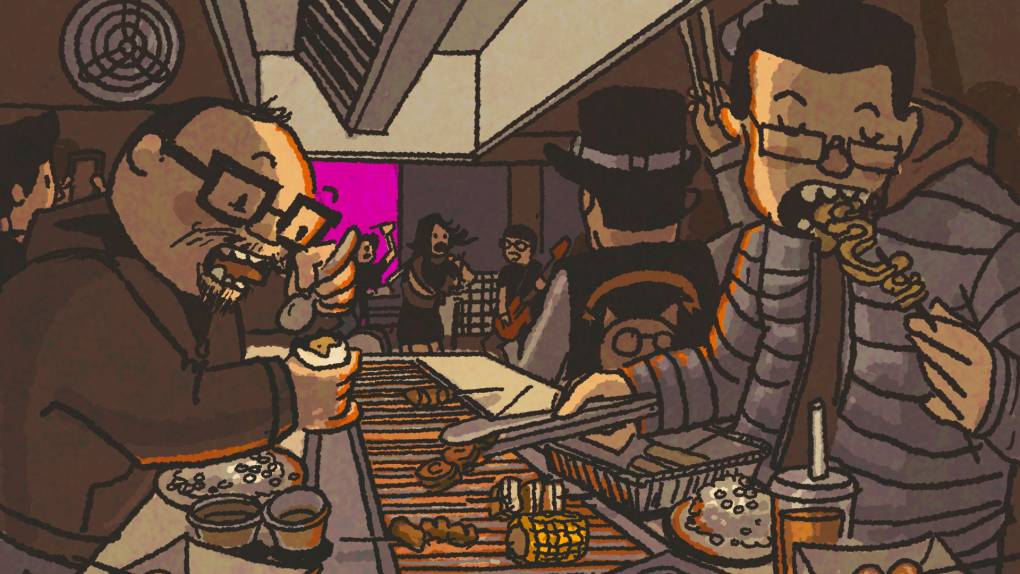
"caption": "Charles Phan in 2010, posing at Slanted Door next to a dish of seafood with crispy egg noodle.",
"credit": "Michael Macor/The San Francisco Chronicle via Getty Images",
"altTag": "man in chef jacket smiles with noodle dish displayed at elbow in large restaurant",
"description": null,
"imgSizes": {
"medium": {
"file": "https://cdn.kqed.org/wp-content/uploads/sites/2/2025/01/GettyImages-1321917915-800x533.jpg",
"width": 800,
"height": 533,
"mimeType": "image/jpeg"
},
"large": {
"file": "https://cdn.kqed.org/wp-content/uploads/sites/2/2025/01/GettyImages-1321917915-1020x680.jpg",
"width": 1020,
"height": 680,
"mimeType": "image/jpeg"
},
"thumbnail": {
"file": "https://cdn.kqed.org/wp-content/uploads/sites/2/2025/01/GettyImages-1321917915-160x107.jpg",
"width": 160,
"height": 107,
"mimeType": "image/jpeg"
},
"medium_large": {
"file": "https://cdn.kqed.org/wp-content/uploads/sites/2/2025/01/GettyImages-1321917915-768x512.jpg",
"width": 768,
"height": 512,
"mimeType": "image/jpeg"
},
"1536x1536": {
"file": "https://cdn.kqed.org/wp-content/uploads/sites/2/2025/01/GettyImages-1321917915-1536x1024.jpg",
"width": 1536,
"height": 1024,
"mimeType": "image/jpeg"
},
"post-thumbnail": {
"file": "https://cdn.kqed.org/wp-content/uploads/sites/2/2025/01/GettyImages-1321917915-672x372.jpg",
"width": 672,
"height": 372,
"mimeType": "image/jpeg"
},
"twentyfourteen-full-width": {
"file": "https://cdn.kqed.org/wp-content/uploads/sites/2/2025/01/GettyImages-1321917915-1038x576.jpg",
"width": 1038,
"height": 576,
"mimeType": "image/jpeg"
},
"full-width": {
"file": "https://cdn.kqed.org/wp-content/uploads/sites/2/2025/01/GettyImages-1321917915-1920x1280.jpg",
"width": 1920,
"height": 1280,
"mimeType": "image/jpeg"
},
"kqedFullSize": {
"file": "https://cdn.kqed.org/wp-content/uploads/sites/2/2025/01/GettyImages-1321917915.jpg",
"width": 2000,
"height": 1333
}
},
"isLoading": false,
"fetchFailed": false
},
"arts_13970442": {
"type": "attachments",
"id": "arts_13970442",
"meta": {
"index": "attachments_1716263798",
"site": "arts",
"id": "13970442",
"found": true
},
"title": "haililao2-crop",
"publishDate": 1737074922,
"status": "inherit",
"parent": 0,
"modified": 1737075068,
"caption": "At HaiDiLao, dinner might come with a tableside 'dancing noodle' show. The high-end hot pot restaurant's Fremont location is open until 2 a.m. every night.",
"credit": "Thien Pham",
"altTag": "Illustration: Two men watch a noodle maker while eating hot pot.",
"description": null,
"imgSizes": {
"medium": {
"file": "https://cdn.kqed.org/wp-content/uploads/sites/2/2025/01/haililao2-crop-800x450.jpg",
"width": 800,
"height": 450,
"mimeType": "image/jpeg"
},
"large": {
"file": "https://cdn.kqed.org/wp-content/uploads/sites/2/2025/01/haililao2-crop-1020x574.jpg",
"width": 1020,
"height": 574,
"mimeType": "image/jpeg"
},
"thumbnail": {
"file": "https://cdn.kqed.org/wp-content/uploads/sites/2/2025/01/haililao2-crop-160x90.jpg",
"width": 160,
"height": 90,
"mimeType": "image/jpeg"
},
"medium_large": {
"file": "https://cdn.kqed.org/wp-content/uploads/sites/2/2025/01/haililao2-crop-768x432.jpg",
"width": 768,
"height": 432,
"mimeType": "image/jpeg"
},
"1536x1536": {
"file": "https://cdn.kqed.org/wp-content/uploads/sites/2/2025/01/haililao2-crop-1536x864.jpg",
"width": 1536,
"height": 864,
"mimeType": "image/jpeg"
},
"post-thumbnail": {
"file": "https://cdn.kqed.org/wp-content/uploads/sites/2/2025/01/haililao2-crop-672x372.jpg",
"width": 672,
"height": 372,
"mimeType": "image/jpeg"
},
"twentyfourteen-full-width": {
"file": "https://cdn.kqed.org/wp-content/uploads/sites/2/2025/01/haililao2-crop-1038x576.jpg",
"width": 1038,
"height": 576,
"mimeType": "image/jpeg"
},
"kqedFullSize": {
"file": "https://cdn.kqed.org/wp-content/uploads/sites/2/2025/01/haililao2-crop.jpg",
"width": 1920,
"height": 1080
}
},
"isLoading": false,
"fetchFailed": false
},
"arts_13970238": {
"type": "attachments",
"id": "arts_13970238",
"meta": {
"index": "attachments_1716263798",
"site": "arts",
"id": "13970238",
"found": true
},
"title": "harajuku totoro",
"publishDate": 1736820343,
"status": "inherit",
"parent": 13970225,
"modified": 1736820577,
"caption": "Kids dressed as Disney/Pixar characters pose for a picture with Totoro at a past Harajuku Foodie Fest event. The Benicia-based festival series combines anime, kawaii culture and local street food vendors.",
"credit": "Courtesy of Harajuku Marketplace",
"altTag": "Children dressed up as Pixar and Disney characters pose in front of a giant stuffed Totoro.",
"description": null,
"imgSizes": {
"medium": {
"file": "https://cdn.kqed.org/wp-content/uploads/sites/2/2025/01/harajuku-totoro-800x550.jpg",
"width": 800,
"height": 550,
"mimeType": "image/jpeg"
},
"large": {
"file": "https://cdn.kqed.org/wp-content/uploads/sites/2/2025/01/harajuku-totoro-1020x701.jpg",
"width": 1020,
"height": 701,
"mimeType": "image/jpeg"
},
"thumbnail": {
"file": "https://cdn.kqed.org/wp-content/uploads/sites/2/2025/01/harajuku-totoro-160x110.jpg",
"width": 160,
"height": 110,
"mimeType": "image/jpeg"
},
"medium_large": {
"file": "https://cdn.kqed.org/wp-content/uploads/sites/2/2025/01/harajuku-totoro-768x528.jpg",
"width": 768,
"height": 528,
"mimeType": "image/jpeg"
},
"1536x1536": {
"file": "https://cdn.kqed.org/wp-content/uploads/sites/2/2025/01/harajuku-totoro-1536x1056.jpg",
"width": 1536,
"height": 1056,
"mimeType": "image/jpeg"
},
"post-thumbnail": {
"file": "https://cdn.kqed.org/wp-content/uploads/sites/2/2025/01/harajuku-totoro-672x372.jpg",
"width": 672,
"height": 372,
"mimeType": "image/jpeg"
},
"twentyfourteen-full-width": {
"file": "https://cdn.kqed.org/wp-content/uploads/sites/2/2025/01/harajuku-totoro-1038x576.jpg",
"width": 1038,
"height": 576,
"mimeType": "image/jpeg"
},
"full-width": {
"file": "https://cdn.kqed.org/wp-content/uploads/sites/2/2025/01/harajuku-totoro-1920x1320.jpg",
"width": 1920,
"height": 1320,
"mimeType": "image/jpeg"
},
"kqedFullSize": {
"file": "https://cdn.kqed.org/wp-content/uploads/sites/2/2025/01/harajuku-totoro.jpg",
"width": 2000,
"height": 1375
}
},
"isLoading": false,
"fetchFailed": false
},
"arts_13969927": {
"type": "attachments",
"id": "arts_13969927",
"meta": {
"index": "attachments_1716263798",
"site": "arts",
"id": "13969927",
"found": true
},
"title": "Hijau_Lisa Maria and Ryan Prawiradjaja",
"publishDate": 1735857182,
"status": "inherit",
"parent": 13969923,
"modified": 1735921901,
"caption": "Lisa Maria (left) and Ryan Prawiradjaja started Hijau in February 2024. The coffee pop-up is a regular at San Jose's Rose Garden Farmers Market.",
"credit": "Octavio Peña",
"altTag": "Two baristas posing for a portrait in front of an outdoor coffee stand.",
"description": null,
"imgSizes": {
"medium": {
"file": "https://cdn.kqed.org/wp-content/uploads/sites/2/2025/01/Hijau_Lisa-Maria-and-Ryan-Prawiradjaja-800x450.jpg",
"width": 800,
"height": 450,
"mimeType": "image/jpeg"
},
"large": {
"file": "https://cdn.kqed.org/wp-content/uploads/sites/2/2025/01/Hijau_Lisa-Maria-and-Ryan-Prawiradjaja-1020x574.jpg",
"width": 1020,
"height": 574,
"mimeType": "image/jpeg"
},
"thumbnail": {
"file": "https://cdn.kqed.org/wp-content/uploads/sites/2/2025/01/Hijau_Lisa-Maria-and-Ryan-Prawiradjaja-160x90.jpg",
"width": 160,
"height": 90,
"mimeType": "image/jpeg"
},
"medium_large": {
"file": "https://cdn.kqed.org/wp-content/uploads/sites/2/2025/01/Hijau_Lisa-Maria-and-Ryan-Prawiradjaja-768x432.jpg",
"width": 768,
"height": 432,
"mimeType": "image/jpeg"
},
"1536x1536": {
"file": "https://cdn.kqed.org/wp-content/uploads/sites/2/2025/01/Hijau_Lisa-Maria-and-Ryan-Prawiradjaja-1536x864.jpg",
"width": 1536,
"height": 864,
"mimeType": "image/jpeg"
},
"post-thumbnail": {
"file": "https://cdn.kqed.org/wp-content/uploads/sites/2/2025/01/Hijau_Lisa-Maria-and-Ryan-Prawiradjaja-672x372.jpg",
"width": 672,
"height": 372,
"mimeType": "image/jpeg"
},
"twentyfourteen-full-width": {
"file": "https://cdn.kqed.org/wp-content/uploads/sites/2/2025/01/Hijau_Lisa-Maria-and-Ryan-Prawiradjaja-1038x576.jpg",
"width": 1038,
"height": 576,
"mimeType": "image/jpeg"
},
"full-width": {
"file": "https://cdn.kqed.org/wp-content/uploads/sites/2/2025/01/Hijau_Lisa-Maria-and-Ryan-Prawiradjaja-1920x1080.jpg",
"width": 1920,
"height": 1080,
"mimeType": "image/jpeg"
},
"kqedFullSize": {
"file": "https://cdn.kqed.org/wp-content/uploads/sites/2/2025/01/Hijau_Lisa-Maria-and-Ryan-Prawiradjaja.jpg",
"width": 2000,
"height": 1125
}
},
"isLoading": false,
"fetchFailed": false
},
"arts_13969684": {
"type": "attachments",
"id": "arts_13969684",
"meta": {
"index": "attachments_1716263798",
"site": "arts",
"id": "13969684",
"found": true
},
"title": "241125-UndercoverCrabInfluencer-35-BL",
"publishDate": 1734638957,
"status": "inherit",
"parent": 0,
"modified": 1734641094,
"caption": "Kaitlyn Bui spends her days fishing for Dungeness crab at Ocean Beach in San Francisco. A Sunset District resident, Bui started posting fishing videos in 2023 and now has a large following on TikTok and Instagram.",
"credit": "Beth LaBerge/KQED",
"altTag": "A woman on the beach bundled up in a raincoat and winter beanie smiles as she gazes out toward the sea.",
"description": null,
"imgSizes": {
"medium": {
"file": "https://cdn.kqed.org/wp-content/uploads/sites/2/2024/12/241125-UndercoverCrabInfluencer-35-BL-800x533.jpg",
"width": 800,
"height": 533,
"mimeType": "image/jpeg"
},
"large": {
"file": "https://cdn.kqed.org/wp-content/uploads/sites/2/2024/12/241125-UndercoverCrabInfluencer-35-BL-1020x679.jpg",
"width": 1020,
"height": 679,
"mimeType": "image/jpeg"
},
"thumbnail": {
"file": "https://cdn.kqed.org/wp-content/uploads/sites/2/2024/12/241125-UndercoverCrabInfluencer-35-BL-160x107.jpg",
"width": 160,
"height": 107,
"mimeType": "image/jpeg"
},
"medium_large": {
"file": "https://cdn.kqed.org/wp-content/uploads/sites/2/2024/12/241125-UndercoverCrabInfluencer-35-BL-768x511.jpg",
"width": 768,
"height": 511,
"mimeType": "image/jpeg"
},
"1536x1536": {
"file": "https://cdn.kqed.org/wp-content/uploads/sites/2/2024/12/241125-UndercoverCrabInfluencer-35-BL-1536x1023.jpg",
"width": 1536,
"height": 1023,
"mimeType": "image/jpeg"
},
"post-thumbnail": {
"file": "https://cdn.kqed.org/wp-content/uploads/sites/2/2024/12/241125-UndercoverCrabInfluencer-35-BL-672x372.jpg",
"width": 672,
"height": 372,
"mimeType": "image/jpeg"
},
"twentyfourteen-full-width": {
"file": "https://cdn.kqed.org/wp-content/uploads/sites/2/2024/12/241125-UndercoverCrabInfluencer-35-BL-1038x576.jpg",
"width": 1038,
"height": 576,
"mimeType": "image/jpeg"
},
"full-width": {
"file": "https://cdn.kqed.org/wp-content/uploads/sites/2/2024/12/241125-UndercoverCrabInfluencer-35-BL-1920x1279.jpg",
"width": 1920,
"height": 1279,
"mimeType": "image/jpeg"
},
"kqedFullSize": {
"file": "https://cdn.kqed.org/wp-content/uploads/sites/2/2024/12/241125-UndercoverCrabInfluencer-35-BL.jpg",
"width": 2000,
"height": 1332
}
},
"isLoading": false,
"fetchFailed": false
},
"arts_13969636": {
"type": "attachments",
"id": "arts_13969636",
"meta": {
"index": "attachments_1716263798",
"site": "arts",
"id": "13969636",
"found": true
},
"title": "fillmore holiday-lead",
"publishDate": 1734570097,
"status": "inherit",
"parent": 13969633,
"modified": 1735840117,
"caption": "This year's Fillmore Holiday Night Market will feature a host of family-friendly activities, including machine-generated snow.",
"credit": "Zoe Hertz, courtesy of Citizen Film",
"altTag": "Children in winter coats enjoy artificial snowfall at an outdoor festival.",
"description": null,
"imgSizes": {
"medium": {
"file": "https://cdn.kqed.org/wp-content/uploads/sites/2/2024/12/fillmore-holiday-lead-800x450.jpg",
"width": 800,
"height": 450,
"mimeType": "image/jpeg"
},
"large": {
"file": "https://cdn.kqed.org/wp-content/uploads/sites/2/2024/12/fillmore-holiday-lead-1020x574.jpg",
"width": 1020,
"height": 574,
"mimeType": "image/jpeg"
},
"thumbnail": {
"file": "https://cdn.kqed.org/wp-content/uploads/sites/2/2024/12/fillmore-holiday-lead-160x90.jpg",
"width": 160,
"height": 90,
"mimeType": "image/jpeg"
},
"medium_large": {
"file": "https://cdn.kqed.org/wp-content/uploads/sites/2/2024/12/fillmore-holiday-lead-768x432.jpg",
"width": 768,
"height": 432,
"mimeType": "image/jpeg"
},
"1536x1536": {
"file": "https://cdn.kqed.org/wp-content/uploads/sites/2/2024/12/fillmore-holiday-lead-1536x864.jpg",
"width": 1536,
"height": 864,
"mimeType": "image/jpeg"
},
"post-thumbnail": {
"file": "https://cdn.kqed.org/wp-content/uploads/sites/2/2024/12/fillmore-holiday-lead-672x372.jpg",
"width": 672,
"height": 372,
"mimeType": "image/jpeg"
},
"twentyfourteen-full-width": {
"file": "https://cdn.kqed.org/wp-content/uploads/sites/2/2024/12/fillmore-holiday-lead-1038x576.jpg",
"width": 1038,
"height": 576,
"mimeType": "image/jpeg"
},
"full-width": {
"file": "https://cdn.kqed.org/wp-content/uploads/sites/2/2024/12/fillmore-holiday-lead-1920x1080.jpg",
"width": 1920,
"height": 1080,
"mimeType": "image/jpeg"
},
"kqedFullSize": {
"file": "https://cdn.kqed.org/wp-content/uploads/sites/2/2024/12/fillmore-holiday-lead.jpg",
"width": 2000,
"height": 1125
}
},
"isLoading": false,
"fetchFailed": false
},
"arts_13969489": {
"type": "attachments",
"id": "arts_13969489",
"meta": {
"index": "attachments_1716263798",
"site": "arts",
"id": "13969489",
"found": true
},
"title": "shucking 16x9",
"publishDate": 1734119619,
"status": "inherit",
"parent": 13969477,
"modified": 1734119717,
"caption": "The author films her son as he shucks oysters for the first time at Point Reyes. ",
"credit": "Courtesy of Rocky Rivera",
"altTag": "A woman holds up her cellphone to film a young man shucking oysters on the beach.",
"description": null,
"imgSizes": {
"medium": {
"file": "https://cdn.kqed.org/wp-content/uploads/sites/2/2024/12/shucking-16x9-1-800x450.jpg",
"width": 800,
"height": 450,
"mimeType": "image/jpeg"
},
"large": {
"file": "https://cdn.kqed.org/wp-content/uploads/sites/2/2024/12/shucking-16x9-1-1020x574.jpg",
"width": 1020,
"height": 574,
"mimeType": "image/jpeg"
},
"thumbnail": {
"file": "https://cdn.kqed.org/wp-content/uploads/sites/2/2024/12/shucking-16x9-1-160x90.jpg",
"width": 160,
"height": 90,
"mimeType": "image/jpeg"
},
"medium_large": {
"file": "https://cdn.kqed.org/wp-content/uploads/sites/2/2024/12/shucking-16x9-1-768x432.jpg",
"width": 768,
"height": 432,
"mimeType": "image/jpeg"
},
"1536x1536": {
"file": "https://cdn.kqed.org/wp-content/uploads/sites/2/2024/12/shucking-16x9-1-1536x864.jpg",
"width": 1536,
"height": 864,
"mimeType": "image/jpeg"
},
"post-thumbnail": {
"file": "https://cdn.kqed.org/wp-content/uploads/sites/2/2024/12/shucking-16x9-1-672x372.jpg",
"width": 672,
"height": 372,
"mimeType": "image/jpeg"
},
"twentyfourteen-full-width": {
"file": "https://cdn.kqed.org/wp-content/uploads/sites/2/2024/12/shucking-16x9-1-1038x576.jpg",
"width": 1038,
"height": 576,
"mimeType": "image/jpeg"
},
"full-width": {
"file": "https://cdn.kqed.org/wp-content/uploads/sites/2/2024/12/shucking-16x9-1-1920x1080.jpg",
"width": 1920,
"height": 1080,
"mimeType": "image/jpeg"
},
"kqedFullSize": {
"file": "https://cdn.kqed.org/wp-content/uploads/sites/2/2024/12/shucking-16x9-1.jpg",
"width": 2000,
"height": 1125
}
},
"isLoading": false,
"fetchFailed": false
},
"arts_13969094": {
"type": "attachments",
"id": "arts_13969094",
"meta": {
"index": "attachments_1716263798",
"site": "arts",
"id": "13969094",
"found": true
},
"title": "Nellasplace1-crop",
"publishDate": 1733445614,
"status": "inherit",
"parent": 13969092,
"modified": 1733445712,
"caption": "Nella's Place has a quiet, down-home elegance. The San Leandro soul food spot also serves some of the Bay Area's tastiest gumbo.",
"credit": "Thien Pham",
"altTag": "Illustration: Two men devour several plates of soul food: gumbo, a fried seafood platter, smothered pork chops.",
"description": null,
"imgSizes": {
"medium": {
"file": "https://cdn.kqed.org/wp-content/uploads/sites/2/2024/12/Nellasplace1-crop-800x450.jpg",
"width": 800,
"height": 450,
"mimeType": "image/jpeg"
},
"large": {
"file": "https://cdn.kqed.org/wp-content/uploads/sites/2/2024/12/Nellasplace1-crop-1020x574.jpg",
"width": 1020,
"height": 574,
"mimeType": "image/jpeg"
},
"thumbnail": {
"file": "https://cdn.kqed.org/wp-content/uploads/sites/2/2024/12/Nellasplace1-crop-160x90.jpg",
"width": 160,
"height": 90,
"mimeType": "image/jpeg"
},
"medium_large": {
"file": "https://cdn.kqed.org/wp-content/uploads/sites/2/2024/12/Nellasplace1-crop-768x432.jpg",
"width": 768,
"height": 432,
"mimeType": "image/jpeg"
},
"1536x1536": {
"file": "https://cdn.kqed.org/wp-content/uploads/sites/2/2024/12/Nellasplace1-crop-1536x864.jpg",
"width": 1536,
"height": 864,
"mimeType": "image/jpeg"
},
"post-thumbnail": {
"file": "https://cdn.kqed.org/wp-content/uploads/sites/2/2024/12/Nellasplace1-crop-672x372.jpg",
"width": 672,
"height": 372,
"mimeType": "image/jpeg"
},
"twentyfourteen-full-width": {
"file": "https://cdn.kqed.org/wp-content/uploads/sites/2/2024/12/Nellasplace1-crop-1038x576.jpg",
"width": 1038,
"height": 576,
"mimeType": "image/jpeg"
},
"kqedFullSize": {
"file": "https://cdn.kqed.org/wp-content/uploads/sites/2/2024/12/Nellasplace1-crop.jpg",
"width": 1920,
"height": 1080
}
},
"isLoading": false,
"fetchFailed": false
},
"arts_13962177": {
"type": "attachments",
"id": "arts_13962177",
"meta": {
"index": "attachments_1716263798",
"site": "arts",
"id": "13962177",
"found": true
},
"title": "20240804_KQED_FIKSCUE_ML_0223-KQED_1",
"publishDate": 1722981312,
"status": "inherit",
"parent": 13962220,
"modified": 1723059680,
"caption": "A tray with fried rice, smoked brisket, a dino beef rib bone and jalapeño-cheese beef sausage is seen at Fikscue Craft BBQ in Alameda on August 4, 2024. Husband-and-wife team Fik and Reka Saleh opened Fikscue as a pop-up in 2020 before they began serving Texas-style barbecue and Indonesian dishes from their current brick-and-mortar restaurant in Alameda last November. ",
"credit": "Marissa Leshnov for KQED",
"altTag": "A tray of barbecue includes a dino beef rib, a slice of brisket, a sausage, and a cardboard try of fried rice.",
"description": null,
"imgSizes": {
"medium": {
"file": "https://cdn.kqed.org/wp-content/uploads/sites/2/2024/08/20240804_KQED_FIKSCUE_ML_0223-KQED_1-800x533.jpg",
"width": 800,
"height": 533,
"mimeType": "image/jpeg"
},
"large": {
"file": "https://cdn.kqed.org/wp-content/uploads/sites/2/2024/08/20240804_KQED_FIKSCUE_ML_0223-KQED_1-1020x680.jpg",
"width": 1020,
"height": 680,
"mimeType": "image/jpeg"
},
"thumbnail": {
"file": "https://cdn.kqed.org/wp-content/uploads/sites/2/2024/08/20240804_KQED_FIKSCUE_ML_0223-KQED_1-160x107.jpg",
"width": 160,
"height": 107,
"mimeType": "image/jpeg"
},
"medium_large": {
"file": "https://cdn.kqed.org/wp-content/uploads/sites/2/2024/08/20240804_KQED_FIKSCUE_ML_0223-KQED_1-768x512.jpg",
"width": 768,
"height": 512,
"mimeType": "image/jpeg"
},
"1536x1536": {
"file": "https://cdn.kqed.org/wp-content/uploads/sites/2/2024/08/20240804_KQED_FIKSCUE_ML_0223-KQED_1-1536x1024.jpg",
"width": 1536,
"height": 1024,
"mimeType": "image/jpeg"
},
"post-thumbnail": {
"file": "https://cdn.kqed.org/wp-content/uploads/sites/2/2024/08/20240804_KQED_FIKSCUE_ML_0223-KQED_1-672x372.jpg",
"width": 672,
"height": 372,
"mimeType": "image/jpeg"
},
"twentyfourteen-full-width": {
"file": "https://cdn.kqed.org/wp-content/uploads/sites/2/2024/08/20240804_KQED_FIKSCUE_ML_0223-KQED_1-1038x576.jpg",
"width": 1038,
"height": 576,
"mimeType": "image/jpeg"
},
"full-width": {
"file": "https://cdn.kqed.org/wp-content/uploads/sites/2/2024/08/20240804_KQED_FIKSCUE_ML_0223-KQED_1-1920x1280.jpg",
"width": 1920,
"height": 1280,
"mimeType": "image/jpeg"
},
"kqedFullSize": {
"file": "https://cdn.kqed.org/wp-content/uploads/sites/2/2024/08/20240804_KQED_FIKSCUE_ML_0223-KQED_1.jpg",
"width": 2000,
"height": 1333
}
},
"isLoading": false,
"fetchFailed": false
},
"arts_13968715": {
"type": "attachments",
"id": "arts_13968715",
"meta": {
"index": "attachments_1716263798",
"site": "arts",
"id": "13968715",
"found": true
},
"title": "cocktail time",
"publishDate": 1732667972,
"status": "inherit",
"parent": 13968712,
"modified": 1732668063,
"caption": "Is there a way to prevent the unpleasant symptoms that come with a heavy night of drinking? Experts weigh in on common hangover myths.",
"credit": "Photo illustration by Becky Harlan/NPR",
"altTag": "Four female friends make a toast at a party.",
"description": null,
"imgSizes": {
"medium": {
"file": "https://cdn.kqed.org/wp-content/uploads/sites/2/2024/11/cocktail-times-800x533.jpg",
"width": 800,
"height": 533,
"mimeType": "image/jpeg"
},
"large": {
"file": "https://cdn.kqed.org/wp-content/uploads/sites/2/2024/11/cocktail-times-1020x680.jpg",
"width": 1020,
"height": 680,
"mimeType": "image/jpeg"
},
"thumbnail": {
"file": "https://cdn.kqed.org/wp-content/uploads/sites/2/2024/11/cocktail-times-160x107.jpg",
"width": 160,
"height": 107,
"mimeType": "image/jpeg"
},
"medium_large": {
"file": "https://cdn.kqed.org/wp-content/uploads/sites/2/2024/11/cocktail-times-768x512.jpg",
"width": 768,
"height": 512,
"mimeType": "image/jpeg"
},
"1536x1536": {
"file": "https://cdn.kqed.org/wp-content/uploads/sites/2/2024/11/cocktail-times-1536x1024.jpg",
"width": 1536,
"height": 1024,
"mimeType": "image/jpeg"
},
"post-thumbnail": {
"file": "https://cdn.kqed.org/wp-content/uploads/sites/2/2024/11/cocktail-times-672x372.jpg",
"width": 672,
"height": 372,
"mimeType": "image/jpeg"
},
"twentyfourteen-full-width": {
"file": "https://cdn.kqed.org/wp-content/uploads/sites/2/2024/11/cocktail-times-1038x576.jpg",
"width": 1038,
"height": 576,
"mimeType": "image/jpeg"
},
"full-width": {
"file": "https://cdn.kqed.org/wp-content/uploads/sites/2/2024/11/cocktail-times-1920x1280.jpg",
"width": 1920,
"height": 1280,
"mimeType": "image/jpeg"
},
"kqedFullSize": {
"file": "https://cdn.kqed.org/wp-content/uploads/sites/2/2024/11/cocktail-times.jpg",
"width": 2000,
"height": 1333
}
},
"isLoading": false,
"fetchFailed": false
},
"arts_13968673": {
"type": "attachments",
"id": "arts_13968673",
"meta": {
"index": "attachments_1716263798",
"site": "arts",
"id": "13968673",
"found": true
},
"title": "choco",
"publishDate": 1732652987,
"status": "inherit",
"parent": 13968664,
"modified": 1732653011,
"caption": "An assortment of chocolate bars from Chocopologie. ",
"credit": "Katie Workman via AP",
"altTag": null,
"description": null,
"imgSizes": {
"medium": {
"file": "https://cdn.kqed.org/wp-content/uploads/sites/2/2024/11/choco-800x536.png",
"width": 800,
"height": 536,
"mimeType": "image/png"
},
"large": {
"file": "https://cdn.kqed.org/wp-content/uploads/sites/2/2024/11/choco-1020x683.png",
"width": 1020,
"height": 683,
"mimeType": "image/png"
},
"thumbnail": {
"file": "https://cdn.kqed.org/wp-content/uploads/sites/2/2024/11/choco-160x107.png",
"width": 160,
"height": 107,
"mimeType": "image/png"
},
"medium_large": {
"file": "https://cdn.kqed.org/wp-content/uploads/sites/2/2024/11/choco-768x514.png",
"width": 768,
"height": 514,
"mimeType": "image/png"
},
"1536x1536": {
"file": "https://cdn.kqed.org/wp-content/uploads/sites/2/2024/11/choco-1536x1028.png",
"width": 1536,
"height": 1028,
"mimeType": "image/png"
},
"post-thumbnail": {
"file": "https://cdn.kqed.org/wp-content/uploads/sites/2/2024/11/choco-672x372.png",
"width": 672,
"height": 372,
"mimeType": "image/png"
},
"twentyfourteen-full-width": {
"file": "https://cdn.kqed.org/wp-content/uploads/sites/2/2024/11/choco-1038x576.png",
"width": 1038,
"height": 576,
"mimeType": "image/png"
},
"full-width": {
"file": "https://cdn.kqed.org/wp-content/uploads/sites/2/2024/11/choco-1920x1285.png",
"width": 1920,
"height": 1285,
"mimeType": "image/png"
},
"kqedFullSize": {
"file": "https://cdn.kqed.org/wp-content/uploads/sites/2/2024/11/choco.png",
"width": 2000,
"height": 1339
}
},
"isLoading": false,
"fetchFailed": false
},
"arts_13968603": {
"type": "attachments",
"id": "arts_13968603",
"meta": {
"index": "attachments_1716263798",
"site": "arts",
"id": "13968603",
"found": true
},
"title": "Turkey Thigh Confit",
"publishDate": 1732559377,
"status": "inherit",
"parent": 13968602,
"modified": 1732560016,
"caption": "Turkey Thigh Confit is a delicious main course that you can make well ahead of Thanksgiving.",
"credit": "Steve Klise/America's Test Kitchen",
"altTag": "Turkey Thigh Confit with Citrus-Mustard Sauce Styled Food Shot",
"description": null,
"imgSizes": {
"medium": {
"file": "https://cdn.kqed.org/wp-content/uploads/sites/2/2024/11/atk-turkey-800x533.jpeg",
"width": 800,
"height": 533,
"mimeType": "image/jpeg"
},
"large": {
"file": "https://cdn.kqed.org/wp-content/uploads/sites/2/2024/11/atk-turkey-1020x680.jpeg",
"width": 1020,
"height": 680,
"mimeType": "image/jpeg"
},
"thumbnail": {
"file": "https://cdn.kqed.org/wp-content/uploads/sites/2/2024/11/atk-turkey-160x107.jpeg",
"width": 160,
"height": 107,
"mimeType": "image/jpeg"
},
"medium_large": {
"file": "https://cdn.kqed.org/wp-content/uploads/sites/2/2024/11/atk-turkey-768x512.jpeg",
"width": 768,
"height": 512,
"mimeType": "image/jpeg"
},
"post-thumbnail": {
"file": "https://cdn.kqed.org/wp-content/uploads/sites/2/2024/11/atk-turkey-672x372.jpeg",
"width": 672,
"height": 372,
"mimeType": "image/jpeg"
},
"twentyfourteen-full-width": {
"file": "https://cdn.kqed.org/wp-content/uploads/sites/2/2024/11/atk-turkey-1038x576.jpeg",
"width": 1038,
"height": 576,
"mimeType": "image/jpeg"
},
"kqedFullSize": {
"file": "https://cdn.kqed.org/wp-content/uploads/sites/2/2024/11/atk-turkey.jpeg",
"width": 1440,
"height": 960
}
},
"isLoading": false,
"fetchFailed": false
}
},
"audioPlayerReducer": {
"postId": "stream_live",
"isPaused": true,
"isPlaying": false,
"pfsActive": false,
"pledgeModalIsOpen": true,
"playerDrawerIsOpen": false,
"liveAudioPlayStartedAt": 0,
"liveAudioPlayContext": ""
},
"authorsReducer": {
"byline_arts_13968712": {
"type": "authors",
"id": "byline_arts_13968712",
"meta": {
"override": true
},
"slug": "byline_arts_13968712",
"name": "Andee Tagle, NPR",
"isLoading": false
},
"byline_arts_13968664": {
"type": "authors",
"id": "byline_arts_13968664",
"meta": {
"override": true
},
"slug": "byline_arts_13968664",
"name": "Katie Workman, Associated Press",
"isLoading": false
},
"byline_arts_13968602": {
"type": "authors",
"id": "byline_arts_13968602",
"meta": {
"override": true
},
"slug": "byline_arts_13968602",
"name": "Barry Gordemer, NPR",
"isLoading": false
},
"ltsai": {
"type": "authors",
"id": "11743",
"meta": {
"index": "authors_1716337520",
"id": "11743",
"found": true
},
"name": "Luke Tsai",
"firstName": "Luke",
"lastName": "Tsai",
"slug": "ltsai",
"email": "ltsai@kqed.org",
"display_author_email": true,
"staff_mastheads": [
"arts"
],
"title": "Food Editor",
"bio": "Luke Tsai is KQED's food editor and resident stinky tofu connoisseur. Prior to KQED, he was an editor at Eater SF, \u003cem>San Francisco \u003c/em>magazine, and the \u003cem>East Bay Express\u003c/em>, and his work has also appeared in TASTE, the \u003cem>San Francisco Chronicle\u003c/em>, and the \u003cem>Best Food Writing\u003c/em> anthology. When he isn't writing or editing, you'll find him eating most everything he can get his hands on.",
"avatar": "https://secure.gravatar.com/avatar/1e59b45bf191526e7339d6ba46e33a57b2030d25c27660ecc64ea3cb863e34f7?s=600&d=blank&r=g",
"twitter": "theluketsai",
"bluesky": null,
"facebook": null,
"instagram": null,
"linkedin": null,
"sites": [
{
"site": "",
"roles": [
"editor"
]
},
{
"site": "arts",
"roles": [
"administrator"
]
},
{
"site": "news",
"roles": [
"editor",
"contributor"
]
},
{
"site": "bayareabites",
"roles": [
"editor"
]
},
{
"site": "food",
"roles": [
"editor"
]
}
],
"headData": {
"title": "Luke Tsai | KQED",
"description": "Food Editor",
"ogImgSrc": "https://secure.gravatar.com/avatar/1e59b45bf191526e7339d6ba46e33a57b2030d25c27660ecc64ea3cb863e34f7?s=600&d=blank&r=g",
"twImgSrc": "https://secure.gravatar.com/avatar/1e59b45bf191526e7339d6ba46e33a57b2030d25c27660ecc64ea3cb863e34f7?s=600&d=blank&r=g"
},
"isLoading": false,
"link": "/author/ltsai"
},
"tpham": {
"type": "authors",
"id": "11753",
"meta": {
"index": "authors_1716337520",
"id": "11753",
"found": true
},
"name": "Thien Pham",
"firstName": "Thien",
"lastName": "Pham",
"slug": "tpham",
"email": "thiendog@gmail.com",
"display_author_email": false,
"staff_mastheads": [],
"title": "KQED Contributor",
"bio": null,
"avatar": "https://secure.gravatar.com/avatar/fa68ed7d6a785e5294a7bb79a3f409c3?s=600&d=blank&r=g",
"twitter": null,
"facebook": null,
"instagram": null,
"linkedin": null,
"sites": [
{
"site": "arts",
"roles": [
"contributor"
]
}
],
"headData": {
"title": "Thien Pham | KQED",
"description": "KQED Contributor",
"ogImgSrc": "https://secure.gravatar.com/avatar/fa68ed7d6a785e5294a7bb79a3f409c3?s=600&d=blank&r=g",
"twImgSrc": "https://secure.gravatar.com/avatar/fa68ed7d6a785e5294a7bb79a3f409c3?s=600&d=blank&r=g"
},
"isLoading": false,
"link": "/author/tpham"
},
"rockyrivera": {
"type": "authors",
"id": "11846",
"meta": {
"index": "authors_1716337520",
"id": "11846",
"found": true
},
"name": "Rocky Rivera",
"firstName": "Rocky",
"lastName": "Rivera",
"slug": "rockyrivera",
"email": "ms.rocky.rivera@gmail.com",
"display_author_email": false,
"staff_mastheads": [],
"title": "KQED Contributor",
"bio": "Rocky Rivera is a journalist, emcee, author and activist from San Francisco. She has released four albums through her label, Beatrock Music, and a ten-volume mixtape series with DJ Roza. She released her first book in 2021, entitled \u003cem>Snakeskin: Essays by Rocky Rivera\u003c/em>. Her latest album dropped in September 2024 and is called \"Long Kiss Goodnight\" with emcee/producer Otayo Dubb. She currently writes the Frisco Foodies column as a love letter to her hometown.",
"avatar": "https://secure.gravatar.com/avatar/946241ee2c59e6040607dfc75240d91b?s=600&d=blank&r=g",
"twitter": null,
"facebook": "https://m.facebook.com/rockyriveramusic",
"instagram": "https://instagram.com/rockyrivera",
"linkedin": "https://www.linkedin.com/in/krishtinedeleon/",
"sites": [
{
"site": "arts",
"roles": [
"author"
]
}
],
"headData": {
"title": "Rocky Rivera | KQED",
"description": "KQED Contributor",
"ogImgSrc": "https://secure.gravatar.com/avatar/946241ee2c59e6040607dfc75240d91b?s=600&d=blank&r=g",
"twImgSrc": "https://secure.gravatar.com/avatar/946241ee2c59e6040607dfc75240d91b?s=600&d=blank&r=g"
},
"isLoading": false,
"link": "/author/rockyrivera"
},
"opena": {
"type": "authors",
"id": "11903",
"meta": {
"index": "authors_1716337520",
"id": "11903",
"found": true
},
"name": "Octavio Peña",
"firstName": "Octavio",
"lastName": "Peña",
"slug": "opena",
"email": "octaviopenagutierrez@gmail.com",
"display_author_email": false,
"staff_mastheads": [],
"title": "KQED Contributor",
"bio": null,
"avatar": "https://secure.gravatar.com/avatar/8fb464e0c705ab58fc9d18e06211557c?s=600&d=blank&r=g",
"twitter": null,
"facebook": null,
"instagram": null,
"linkedin": null,
"sites": [
{
"site": "arts",
"roles": [
"contributor"
]
}
],
"headData": {
"title": "Octavio Peña | KQED",
"description": "KQED Contributor",
"ogImgSrc": "https://secure.gravatar.com/avatar/8fb464e0c705ab58fc9d18e06211557c?s=600&d=blank&r=g",
"twImgSrc": "https://secure.gravatar.com/avatar/8fb464e0c705ab58fc9d18e06211557c?s=600&d=blank&r=g"
},
"isLoading": false,
"link": "/author/opena"
}
},
"pagesReducer": {
"arts_tag_food": {
"type": "terms",
"id": "arts_1297",
"meta": {
"index": "terms_1716263798",
"site": "arts",
"id": "1297",
"score": 7.4215064
},
"featImg": null,
"name": "food",
"description": null,
"taxonomy": "tag",
"headData": {
"twImgId": null,
"twTitle": null,
"ogTitle": null,
"ogImgId": null,
"twDescription": null,
"description": null,
"title": "food Archives | KQED Arts",
"ogDescription": null
},
"ttid": 1309,
"slug": "food",
"isLoading": false,
"title": "food",
"pageMeta": {
"site": "arts",
"WpPageTemplate": "page-topic-editorial",
"currentPage": 11
},
"blocks": [
{
"blockName": "kqed/post-list",
"attrs": {
"layout": "cardArticle2",
"query": "posts/arts?tag=food",
"seeMore": false,
"paginated": true,
"page": 11
}
},
{
"blockName": "kqed/ad"
}
]
}
},
"pfsSessionReducer": {},
"postsReducer": {
"stream_live": {
"type": "live",
"id": "stream_live",
"audioUrl": "https://streams.kqed.org/kqedradio",
"title": "Live Stream",
"excerpt": "Live Stream information currently unavailable.",
"link": "/radio",
"featImg": "",
"label": {
"name": "KQED Live",
"link": "/"
}
},
"stream_kqedNewscast": {
"type": "posts",
"id": "stream_kqedNewscast",
"audioUrl": "https://www.kqed.org/.stream/anon/radio/RDnews/newscast.mp3?_=1",
"title": "KQED Newscast",
"featImg": "",
"label": {
"name": "88.5 FM",
"link": "/"
}
},
"arts_13970535": {
"type": "posts",
"id": "arts_13970535",
"meta": {
"index": "posts_1716263798",
"site": "arts",
"id": "13970535",
"score": null,
"sort": [
1737506570000
]
},
"guestAuthors": [],
"slug": "charles-phan-the-innovative-chef-of-sfs-slanted-door-has-died",
"title": "Charles Phan, the Innovative Chef of SF’s Slanted Door, Has Died",
"publishDate": 1737506570,
"format": "audio",
"headTitle": "Charles Phan, the Innovative Chef of SF’s Slanted Door, Has Died | KQED",
"labelTerm": {},
"content": "\u003cp>Charles Phan, the influential chef who opened San Francisco’s \u003ca href=\"https://slanteddoor.com/\">Slanted Door\u003c/a> restaurant and popularized a new style of modern California-Vietnamese cuisine, died unexpectedly on Jan. 20. He was 62 years old.\u003c/p>\n\u003cp>This morning, Slanted Door’s Instagram account announced, “It is with profound sadness that we share the heartbreaking news of the unexpected passing of our beloved leader, visionary and friend, Chef Charles Phan, due to cardiac arrest.”\u003c/p>\n\u003cp>Born in Đà Lạt, Vietnam in 1962, Phan came to San Francisco as a refugee after the fall of Saigon, along with his family, at the age of 13. He studied at UC Berkeley for three years, \u003ca href=\"https://www.nytimes.com/2004/04/07/dining/the-chef-charles-phan-the-flavors-of-vietnam-captured-in-a-pot.html\">dabbling in architecture and clothing design\u003c/a>, before eventually deciding to open a Vietnamese restaurant — despite never having cooked professionally prior to that.\u003c/p>\n\u003cp>Before Phan opened the original Slanted Door on Valencia Street in 1995, the Bay Area had already established itself as a global destination for California cuisine — a food movement that grew out of restaurants like Berkeley’s Chez Panisse, with their focus on relatively simple preparations of seasonal ingredients sourced from local farmers. But while there was an abundance of Cal-Italian and Cal-French restaurants at the time, up until then no one else in the Bay Area had really applied that model to Vietnamese food — or any of the other non-European, so-called “ethnic” cuisines, really.\u003c/p>\n\u003cp>https://www.youtube.com/watch?v=2um-VO8rh2U\u003c/p>\n\u003cp>[ad fullwidth]\u003c/p>\n\u003cp>That was Phan’s real innovation. Inspired by restaurants like Chez Panisse and Zuni Cafe, the self-taught chef created now-iconic dishes like his cellophane noodles with Dungeness crab; \u003ca href=\"https://www.nytimes.com/2004/04/07/dining/the-chef-charles-phan-the-flavors-of-vietnam-captured-in-a-pot.html\">grapefruit and jicama salad\u003c/a>; and fish-sauce caramel claypot chicken, made with boneless, skinless cuts to \u003ca href=\"https://food52.com/recipes/82718-caramelized-black-pepper-chicken-recipe?srsltid=AfmBOoq5AXchy8LTn-_HvaW5Y7IS5b-XbWDo8cn_tMI12Sj-bJyNy8bW\">accommodate Western sensibilities\u003c/a>. The combination of Slanted Door’s very Bay Area farm-to-table approach to traditional Vietnamese comfort food dishes and its upscale, Westernized style of service was an immediate hit.\u003c/p>\n\u003cp>“I’ll always remember my early visits to the Slanted Door on Valencia,” Sylvan Mishima Brackett, the chef-owner of the Cal-Japanese izakaya Rintaro, \u003ca href=\"https://www.instagram.com/p/DFF_t-3Pnja/c/17886933588192156/\">wrote on Instagram\u003c/a>. “The energy was incredible and the food was exciting and fresh and new.”\u003c/p>\n\u003cp>And when Slanted Door moved to its grand waterfront location at the Ferry Building in 2004, it became one of the most famous restaurants in all of San Francisco — and, for a number of years, the city’s \u003ca href=\"https://sf.eater.com/2015/10/16/9556499/san-franciscos-top-grossing-restaurants-2014\">single most lucrative restaurant\u003c/a>.\u003c/p>\n\u003cp>In many ways, Slanted Door’s success paved the way for today’s diverse landscape of California cuisine — the thrilling array of Cal-Viet, Cal-Moroccan, Cal-Cantonese and Cal-Creole restaurants that help define the Bay Area dining scene, reinterpreting their respective cuisines through a Northern Californian lens.\u003c/p>\n\u003cp>In more recent years, Slanted Door may have fallen slightly out of fashion — the restaurant wasn’t written about quite as frequently, or as glowingly, by the local food media as it was during its heyday in the 2000s and 2010s. Its Ferry Building flagship restaurant never reopened after shutting down at the start of the pandemic. Still, Slanted Door’s remaining locations in Napa, San Ramon and Beaune, France, continue to draw crowds. During the pandemic, Phan also opened a casual sandwich shop, Chuck’s Takeaway, in the Mission. And, to bring the chef’s legacy full circle, Slanted Door was slated to \u003ca href=\"https://sf.eater.com/2024/8/27/24229731/slanted-door-returns-valencia-street-san-francisco\">move back to its much smaller original location\u003c/a> on Valencia Street later this spring.\u003c/p>\n\u003cp>\u003c/p>\n\u003cp>Meanwhile, Phan’s career continues to inspire a whole generation of younger Asian American chefs. As Oakland chef Tu David Phu \u003ca href=\"https://www.instagram.com/p/DFF_t-3Pnja/c/18030677216621318/?img_index=1\">posted on Instagram\u003c/a>, “I/we stand on the shoulders of Chef Charles. It was because [of] him it was possible for chefs like myself to find a way.”\u003c/p>\n\n",
"blocks": [],
"excerpt": "His wildly successful restaurants popularized ‘Cal-Vietnamese’ cuisine.",
"status": "publish",
"parent": 0,
"modified": 1737748429,
"stats": {
"hasAudio": false,
"hasVideo": true,
"hasChartOrMap": false,
"iframeSrcs": [],
"hasGoogleForm": false,
"hasGallery": false,
"hasHearkenModule": false,
"hasPolis": false,
"paragraphCount": 12,
"wordCount": 649
},
"headData": {
"title": "Charles Phan, the Innovative Chef of SF’s Slanted Door, Has Died | KQED",
"description": "His wildly successful restaurants popularized ‘Cal-Vietnamese’ cuisine.",
"ogTitle": "",
"ogDescription": "",
"ogImgId": "",
"twTitle": "",
"twDescription": "",
"twImgId": "",
"schema": {
"@context": "https://schema.org",
"@type": "Article",
"headline": "Charles Phan, the Innovative Chef of SF’s Slanted Door, Has Died",
"datePublished": "2025-01-21T16:42:50-08:00",
"dateModified": "2025-01-24T11:53:49-08:00",
"image": "https://cdn.kqed.org/wp-content/uploads/2020/02/KQED-OG-Image@1x.png"
}
},
"source": "Food",
"sourceUrl": "https://www.kqed.org/food",
"audioUrl": "https://traffic.omny.fm/d/clips/0af137ef-751e-4b19-a055-aaef00d2d578/ffca7e9f-6831-41c5-bcaf-aaef00f5a073/a60ae950-2237-4045-afc1-b26f01160f48/audio.mp3",
"sticky": false,
"nprStoryId": "kqed-13970535",
"excludeFromSiteSearch": "Include",
"articleAge": "0",
"path": "/arts/13970535/charles-phan-the-innovative-chef-of-sfs-slanted-door-has-died",
"audioTrackLength": null,
"parsedContent": [
{
"type": "contentString",
"content": "\u003cdiv class=\"post-body\">\u003cp>\u003cp>Charles Phan, the influential chef who opened San Francisco’s \u003ca href=\"https://slanteddoor.com/\">Slanted Door\u003c/a> restaurant and popularized a new style of modern California-Vietnamese cuisine, died unexpectedly on Jan. 20. He was 62 years old.\u003c/p>\n\u003cp>This morning, Slanted Door’s Instagram account announced, “It is with profound sadness that we share the heartbreaking news of the unexpected passing of our beloved leader, visionary and friend, Chef Charles Phan, due to cardiac arrest.”\u003c/p>\n\u003cp>Born in Đà Lạt, Vietnam in 1962, Phan came to San Francisco as a refugee after the fall of Saigon, along with his family, at the age of 13. He studied at UC Berkeley for three years, \u003ca href=\"https://www.nytimes.com/2004/04/07/dining/the-chef-charles-phan-the-flavors-of-vietnam-captured-in-a-pot.html\">dabbling in architecture and clothing design\u003c/a>, before eventually deciding to open a Vietnamese restaurant — despite never having cooked professionally prior to that.\u003c/p>\n\u003cp>Before Phan opened the original Slanted Door on Valencia Street in 1995, the Bay Area had already established itself as a global destination for California cuisine — a food movement that grew out of restaurants like Berkeley’s Chez Panisse, with their focus on relatively simple preparations of seasonal ingredients sourced from local farmers. But while there was an abundance of Cal-Italian and Cal-French restaurants at the time, up until then no one else in the Bay Area had really applied that model to Vietnamese food — or any of the other non-European, so-called “ethnic” cuisines, really.\u003c/p>\u003c/p>\u003cp>\u003cspan class='utils-parseShortcode-shortcodes-__youtubeShortcode__embedYoutube'>\n \u003cspan class='utils-parseShortcode-shortcodes-__youtubeShortcode__embedYoutubeInside'>\n \u003ciframe\n loading='lazy'\n class='utils-parseShortcode-shortcodes-__youtubeShortcode__youtubePlayer'\n type='text/html'\n src='//www.youtube.com/embed/2um-VO8rh2U'\n title='//www.youtube.com/embed/2um-VO8rh2U'\n allowfullscreen='true'\n style='border:0;'>\u003c/iframe>\n \u003c/span>\n \u003c/span>\u003c/p>\u003cp>\u003cp>\u003c/p>\u003c/div>",
"attributes": {
"named": {},
"numeric": []
}
},
{
"type": "component",
"content": "",
"name": "ad",
"attributes": {
"named": {
"label": "fullwidth"
},
"numeric": [
"fullwidth"
]
}
},
{
"type": "contentString",
"content": "\u003cdiv class=\"post-body\">\u003cp>\u003c/p>\n\u003cp>That was Phan’s real innovation. Inspired by restaurants like Chez Panisse and Zuni Cafe, the self-taught chef created now-iconic dishes like his cellophane noodles with Dungeness crab; \u003ca href=\"https://www.nytimes.com/2004/04/07/dining/the-chef-charles-phan-the-flavors-of-vietnam-captured-in-a-pot.html\">grapefruit and jicama salad\u003c/a>; and fish-sauce caramel claypot chicken, made with boneless, skinless cuts to \u003ca href=\"https://food52.com/recipes/82718-caramelized-black-pepper-chicken-recipe?srsltid=AfmBOoq5AXchy8LTn-_HvaW5Y7IS5b-XbWDo8cn_tMI12Sj-bJyNy8bW\">accommodate Western sensibilities\u003c/a>. The combination of Slanted Door’s very Bay Area farm-to-table approach to traditional Vietnamese comfort food dishes and its upscale, Westernized style of service was an immediate hit.\u003c/p>\n\u003cp>“I’ll always remember my early visits to the Slanted Door on Valencia,” Sylvan Mishima Brackett, the chef-owner of the Cal-Japanese izakaya Rintaro, \u003ca href=\"https://www.instagram.com/p/DFF_t-3Pnja/c/17886933588192156/\">wrote on Instagram\u003c/a>. “The energy was incredible and the food was exciting and fresh and new.”\u003c/p>\n\u003cp>And when Slanted Door moved to its grand waterfront location at the Ferry Building in 2004, it became one of the most famous restaurants in all of San Francisco — and, for a number of years, the city’s \u003ca href=\"https://sf.eater.com/2015/10/16/9556499/san-franciscos-top-grossing-restaurants-2014\">single most lucrative restaurant\u003c/a>.\u003c/p>\n\u003cp>In many ways, Slanted Door’s success paved the way for today’s diverse landscape of California cuisine — the thrilling array of Cal-Viet, Cal-Moroccan, Cal-Cantonese and Cal-Creole restaurants that help define the Bay Area dining scene, reinterpreting their respective cuisines through a Northern Californian lens.\u003c/p>\n\u003cp>In more recent years, Slanted Door may have fallen slightly out of fashion — the restaurant wasn’t written about quite as frequently, or as glowingly, by the local food media as it was during its heyday in the 2000s and 2010s. Its Ferry Building flagship restaurant never reopened after shutting down at the start of the pandemic. Still, Slanted Door’s remaining locations in Napa, San Ramon and Beaune, France, continue to draw crowds. During the pandemic, Phan also opened a casual sandwich shop, Chuck’s Takeaway, in the Mission. And, to bring the chef’s legacy full circle, Slanted Door was slated to \u003ca href=\"https://sf.eater.com/2024/8/27/24229731/slanted-door-returns-valencia-street-san-francisco\">move back to its much smaller original location\u003c/a> on Valencia Street later this spring.\u003c/p>\n\u003cp>\u003c/p>\n\u003cp>Meanwhile, Phan’s career continues to inspire a whole generation of younger Asian American chefs. As Oakland chef Tu David Phu \u003ca href=\"https://www.instagram.com/p/DFF_t-3Pnja/c/18030677216621318/?img_index=1\">posted on Instagram\u003c/a>, “I/we stand on the shoulders of Chef Charles. It was because [of] him it was possible for chefs like myself to find a way.”\u003c/p>\n\n\u003c/div>\u003c/p>",
"attributes": {
"named": {},
"numeric": []
}
}
],
"link": "/arts/13970535/charles-phan-the-innovative-chef-of-sfs-slanted-door-has-died",
"authors": [
"11743"
],
"categories": [
"arts_1",
"arts_12276",
"arts_235"
],
"tags": [
"arts_10278",
"arts_1297",
"arts_21789",
"arts_1146",
"arts_15126"
],
"featImg": "arts_13970540",
"label": "source_arts_13970535"
},
"arts_13970445": {
"type": "posts",
"id": "arts_13970445",
"meta": {
"index": "posts_1716263798",
"site": "arts",
"id": "13970445",
"score": null,
"sort": [
1737076268000
]
},
"guestAuthors": [],
"slug": "haidilao-hot-pot-fremont-late-night",
"title": "HaiDiLao Brings a Bit of Razzle Dazzle to Fremont’s Late-Night Hot Pot Scene",
"publishDate": 1737076268,
"format": "aside",
"headTitle": "HaiDiLao Brings a Bit of Razzle Dazzle to Fremont’s Late-Night Hot Pot Scene | KQED",
"labelTerm": {},
"content": "\u003cfigure id=\"attachment_13970444\" class=\"wp-caption alignnone\" style=\"max-width: 1920px\">\u003cimg loading=\"lazy\" decoding=\"async\" class=\"size-full wp-image-13970444\" src=\"https://cdn.kqed.org/wp-content/uploads/sites/2/2025/01/haililao2.jpg\" alt=\"Illustration: Two men watch a noodle maker while eating hot pot.\" width=\"1920\" height=\"1920\" srcset=\"https://cdn.kqed.org/wp-content/uploads/sites/2/2025/01/haililao2.jpg 1920w, https://cdn.kqed.org/wp-content/uploads/sites/2/2025/01/haililao2-800x800.jpg 800w, https://cdn.kqed.org/wp-content/uploads/sites/2/2025/01/haililao2-1020x1020.jpg 1020w, https://cdn.kqed.org/wp-content/uploads/sites/2/2025/01/haililao2-160x160.jpg 160w, https://cdn.kqed.org/wp-content/uploads/sites/2/2025/01/haililao2-768x768.jpg 768w, https://cdn.kqed.org/wp-content/uploads/sites/2/2025/01/haililao2-1536x1536.jpg 1536w\" sizes=\"auto, (max-width: 1920px) 100vw, 1920px\">\u003cfigcaption class=\"wp-caption-text\">At HaiDiLao, dinner might come with a tableside ‘dancing noodle’ show. The high-end hot pot restaurant’s Fremont location is open until 2 a.m. every night. \u003ccite>(Thien Pham)\u003c/cite>\u003c/figcaption>\u003c/figure>\n\u003cp>\u003ca href=\"https://www.kqed.org/arts/tag/the-midnight-diners\">\u003ci>The Midnight Diners\u003c/i>\u003c/a>\u003ci> is a regular collaboration between KQED food editor Luke Tsai and graphic novelist \u003c/i>\u003ca href=\"https://www.instagram.com/thiendog/?hl=en\">\u003ci>Thien Pham\u003c/i>\u003c/a>\u003ci>. Follow them each week as they explore the hot pot restaurants, taco carts and 24-hour casino buffets that make up the Bay Area’s after-hours dining scene.\u003c/i>\u003c/p>\n\u003cp>When I was growing up in my immigrant Chinese-Taiwanese household in the ’80s and ’90s, my family thought of hot pot as the humblest of home foods — perfect for cold, lazy days when you couldn’t be bothered to cook, but not really even a meal suitable for company, much less something you’d splurge on at a fancy restaurant.\u003c/p>\n\u003cp>We never could have imagined today’s landscape of pristine malatang bars and all-you-can-eat \u003ca href=\"https://www.kqed.org/arts/13965215/all-you-can-eat-wagyu-beef-hot-pot-shabu-shabu-mikiya-santa-clara\">wagyu beef shabu shabu\u003c/a>. Who could have guessed that hot pot would become a trendy luxury food, with high-end mega-chains multiplying across East Asia and eventually landing here in the Bay? And in many neighborhoods, these epicenters of hot, bubbling broth might be the only restaurant in the general vicinity that’s open late.\u003c/p>\n\u003cp>That’s how we ended up at \u003ca href=\"https://www.instagram.com/haidilao_us/?hl=en\">HaiDiLao\u003c/a> in a Fremont strip mall at 10 o’clock on a Friday night, sliding into an open booth inside a bright, expansive dining room packed mostly with young Asian Americans. The restaurant is open until 2 a.m. every night, and its late-night hours are especially appealing to the budget-minded: On weekends starting at 9:30 p.m. (and 8:30 on weekdays), there’s a 31% happy hour discount on all hot pot dishes — or, as it’s phrased in Chinese, “69% price.” (Nice.)\u003c/p>\n\u003cp>If you’ve heard of HaiDiLao, that’s probably because it’s literally the largest, most successful hot pot chain in the world, with an estimated \u003ca href=\"https://www.forbes.com/sites/blakemorgan/2024/05/15/the-5-secrets-of-haidilaos-114b-dollar-customer-experience-success/\">$14 billion market cap\u003c/a> and more than 1,300 locations in China, its home base, alone. In Asia, the chain is ubiquitous enough that hot pot snobs consider it tacky, with some haters going so far as to call it the “\u003ca href=\"https://www.reddit.com/r/Taipei/comments/189mw16/comment/kbsd3je/\">overpriced McDonald’s of hot pot restaurants\u003c/a>.” Here in the Bay Area, however, it’s still a relative novelty, with just one other location (in Cupertino) — and both the food and the experience are good enough to outshine most of the local competition.\u003c/p>\n\u003cp>[ad fullwidth]\u003c/p>\n\u003cp>HaiDiLao’s claim to fame is its focus on providing a more luxurious, pampering approach to the customer experience, which expresses itself in what felt to me like particularly Chinese ways. The overflow waiting area (basically a bar counter) has several Chinese checkers boards, that little magnetic fishing game that every Chinese kid played when they were little and even an electronic eyeglass cleaner. You also get a whole apron, not just a bib, to keep your clothes clean of splattering broth. And little R2-D2–sized robot trolleys bring your raw ingredients to the table because why not?\u003c/p>\n\u003cfigure id=\"attachment_13970443\" class=\"wp-caption alignnone\" style=\"max-width: 1920px\">\u003cimg loading=\"lazy\" decoding=\"async\" class=\"size-full wp-image-13970443\" src=\"https://cdn.kqed.org/wp-content/uploads/sites/2/2025/01/haililao.jpg\" alt=\"Illustration: Exterior of a restaurant. The sign reads "Haidilao Hot Pot," and there's a statue of a panda in a cape in front.\" width=\"1920\" height=\"1920\" srcset=\"https://cdn.kqed.org/wp-content/uploads/sites/2/2025/01/haililao.jpg 1920w, https://cdn.kqed.org/wp-content/uploads/sites/2/2025/01/haililao-800x800.jpg 800w, https://cdn.kqed.org/wp-content/uploads/sites/2/2025/01/haililao-1020x1020.jpg 1020w, https://cdn.kqed.org/wp-content/uploads/sites/2/2025/01/haililao-160x160.jpg 160w, https://cdn.kqed.org/wp-content/uploads/sites/2/2025/01/haililao-768x768.jpg 768w, https://cdn.kqed.org/wp-content/uploads/sites/2/2025/01/haililao-1536x1536.jpg 1536w\" sizes=\"auto, (max-width: 1920px) 100vw, 1920px\">\u003cfigcaption class=\"wp-caption-text\">The global mega-chain currently has two Bay Area outposts, in Fremont and Cupertino. \u003ccite>(Thien Pham)\u003c/cite>\u003c/figcaption>\u003c/figure>\n\u003cp>Even with the late-night discount, this is an expensive meal — easily upwards of $50 a person depending on your appetite and ordering discipline, which puts it in the same price tier as the fanciest all-you-can-eat joints. So it’s good that the food mostly stacks up.\u003c/p>\n\u003cp>Start with the soup base, which HaiDiLao offers in eight varieties, listed on the iPad menu from spiciest (the Chengdu-style beef tallow hot pot brimming with red chilies) to not spicy at all (say, the mushroom- or tomato-based broths). We opted for a split pot, with the medium-hot spicy pork bone broth and a more mild broth made with pork stomach and chicken. The former was flecked pieces of kimchi, for a bit of a Korean vibe, and had a good depth of the flavor. The latter — our favorite — had the subtle medicinal quality of a home-cooked broth and a slight gaminess from the slices of chewy, tender stomach. This is one you actually want to drink as a soup, especially on a cold night. (Pro tip: If at the end of the meal you tell the server, “I like your soup base” — in English or Mandarin — they’ll give you an extra bag of broth to bring home with your leftovers.)\u003c/p>\n\u003cp>We were also impressed by the sheer variety of offerings beyond the typical plates of thinly sliced meat. The fresh seafood options are especially robust. We loved the thick, lush slices of marinated basa, which came pre-seasoned, deliciously, with a hint of numbing Sichuan peppercorn. One of the more unusual offerings were little cigars of shrimp paste wrapped in some kind of spongy fungus and crowned with a scattering of flying fish roe at the tip. Once they firmed up in the broth, they bore an unfortunate resemblance to half-flaccid penises — but uncommonly tasty ones, especially when dipped into the garlicky sesame paste dipping sauce that I’d concocted at the serve-yourself sauce station.\u003c/p>\n\u003cp>\u003cspan style=\"font-weight: 400\">\u003cspan style=\"color: #2b2b2b;font-weight: 400\">[aside postID='arts_13969092,arts_13965215,arts_13952384']\u003c/span>\u003c/span>And even though HaiDiLao doesn’t boast the innately decadent all-you-can-eat model of a high-end buffet like \u003ca href=\"https://www.kqed.org/arts/13965215/all-you-can-eat-wagyu-beef-hot-pot-shabu-shabu-mikiya-santa-clara\">Mikiya\u003c/a>, it does have its own elements of razzle dazzle and charm that help make for a fun night out. Wagyu lovers can splurge on the “wagyu tree,” which, true to its name, is a big mound of ice upon which they’ve arranged a portion of extremely well-marbled Japanese beef so that it does resemble a pink, meaty Christmas tree. Is it Instagram and TikTok bait? Of course. Is the meat some of the most extraordinarily soft and tender I’ve had for hot pot? Also yes.\u003c/p>\n\u003cp>Most memorably, for just $5, you can order a tableside “dancing noodle” show, inspired by the style of flashy hand-pulled noodle-making you’ll see in parts of northern China. In our case, it turned out to be a young Latino guy who pulled up to our table and asked if we had any song requests before queuing up Pitbull’s “DJ Got Us Falling in Love” on his phone. The performance that followed was akin to watching a pizza man at a rave, as he stretched a piece of dough longer and longer, spinning it around, over his head and behind his back, whipping the noodle toward us — just kidding! — and causing it to form quick ripples. (Afterward, he explained that he’d started at HaiDiLao as a busboy and basically taught himself how to pull noodles just by watching the previous Chinese noodle master, who didn’t speak any English. Immigrants! They get the job done.)\u003c/p>\n\u003cp>We were so distracted by the song and dance of it all — a spectacle I never could have imagined as a young, naive hot pot eater — that we almost forgot to fish the finished noodles out of the broth. Even gone a bit soft, they were thoroughly, slurpably enjoyable.\u003c/p>\n\u003chr>\n\u003cp>[ad floatright]\u003c/p>\n\u003cp>\u003ci>HaiDiLao Hot Pot’s Fremont location is open Mon. to Thu. 11:30 a.m.–2 a.m. and Fri. to Sun. 11 a.m.–2 a.m. at 43349 Boscell Rd. The restaurant also has a location in Cupertino.\u003c/i>\u003c/p>\n\n",
"blocks": [],
"excerpt": "The Chinese mega-chain's East Bay outpost is open until 2 a.m. every night.",
"status": "publish",
"parent": 0,
"modified": 1737076268,
"stats": {
"hasAudio": false,
"hasVideo": false,
"hasChartOrMap": false,
"iframeSrcs": [],
"hasGoogleForm": false,
"hasGallery": false,
"hasHearkenModule": false,
"hasPolis": false,
"paragraphCount": 15,
"wordCount": 1290
},
"headData": {
"title": "HaiDiLao Brings Late-Night Hot Pot to Fremont | KQED",
"description": "The Chinese mega-chain's East Bay outpost is open until 2 a.m. every night.",
"ogTitle": "HaiDiLao Brings a Bit of Razzle Dazzle to Fremont’s Late-Night Hot Pot Scene",
"ogDescription": "",
"ogImgId": "",
"twTitle": "HaiDiLao Brings a Bit of Razzle Dazzle to Fremont’s Late-Night Hot Pot Scene",
"twDescription": "",
"twImgId": "",
"socialTitle": "HaiDiLao Brings Late-Night Hot Pot to Fremont %%page%% %%sep%% KQED",
"schema": {
"@context": "https://schema.org",
"@type": "Article",
"headline": "HaiDiLao Brings a Bit of Razzle Dazzle to Fremont’s Late-Night Hot Pot Scene",
"datePublished": "2025-01-16T17:11:08-08:00",
"dateModified": "2025-01-16T17:11:08-08:00",
"image": "https://cdn.kqed.org/wp-content/uploads/2020/02/KQED-OG-Image@1x.png"
}
},
"source": "The Midnight Diners",
"sourceUrl": "https://www.kqed.org/arts/tag/the-midnight-diners",
"sticky": false,
"nprStoryId": "kqed-13970445",
"excludeFromSiteSearch": "Include",
"articleAge": "0",
"path": "/arts/13970445/haidilao-hot-pot-fremont-late-night",
"audioTrackLength": null,
"parsedContent": [
{
"type": "contentString",
"content": "\u003cdiv class=\"post-body\">\u003cp>\u003cfigure id=\"attachment_13970444\" class=\"wp-caption alignnone\" style=\"max-width: 1920px\">\u003cimg loading=\"lazy\" decoding=\"async\" class=\"size-full wp-image-13970444\" src=\"https://cdn.kqed.org/wp-content/uploads/sites/2/2025/01/haililao2.jpg\" alt=\"Illustration: Two men watch a noodle maker while eating hot pot.\" width=\"1920\" height=\"1920\" srcset=\"https://cdn.kqed.org/wp-content/uploads/sites/2/2025/01/haililao2.jpg 1920w, https://cdn.kqed.org/wp-content/uploads/sites/2/2025/01/haililao2-800x800.jpg 800w, https://cdn.kqed.org/wp-content/uploads/sites/2/2025/01/haililao2-1020x1020.jpg 1020w, https://cdn.kqed.org/wp-content/uploads/sites/2/2025/01/haililao2-160x160.jpg 160w, https://cdn.kqed.org/wp-content/uploads/sites/2/2025/01/haililao2-768x768.jpg 768w, https://cdn.kqed.org/wp-content/uploads/sites/2/2025/01/haililao2-1536x1536.jpg 1536w\" sizes=\"auto, (max-width: 1920px) 100vw, 1920px\">\u003cfigcaption class=\"wp-caption-text\">At HaiDiLao, dinner might come with a tableside ‘dancing noodle’ show. The high-end hot pot restaurant’s Fremont location is open until 2 a.m. every night. \u003ccite>(Thien Pham)\u003c/cite>\u003c/figcaption>\u003c/figure>\n\u003cp>\u003ca href=\"https://www.kqed.org/arts/tag/the-midnight-diners\">\u003ci>The Midnight Diners\u003c/i>\u003c/a>\u003ci> is a regular collaboration between KQED food editor Luke Tsai and graphic novelist \u003c/i>\u003ca href=\"https://www.instagram.com/thiendog/?hl=en\">\u003ci>Thien Pham\u003c/i>\u003c/a>\u003ci>. Follow them each week as they explore the hot pot restaurants, taco carts and 24-hour casino buffets that make up the Bay Area’s after-hours dining scene.\u003c/i>\u003c/p>\n\u003cp>When I was growing up in my immigrant Chinese-Taiwanese household in the ’80s and ’90s, my family thought of hot pot as the humblest of home foods — perfect for cold, lazy days when you couldn’t be bothered to cook, but not really even a meal suitable for company, much less something you’d splurge on at a fancy restaurant.\u003c/p>\n\u003cp>We never could have imagined today’s landscape of pristine malatang bars and all-you-can-eat \u003ca href=\"https://www.kqed.org/arts/13965215/all-you-can-eat-wagyu-beef-hot-pot-shabu-shabu-mikiya-santa-clara\">wagyu beef shabu shabu\u003c/a>. Who could have guessed that hot pot would become a trendy luxury food, with high-end mega-chains multiplying across East Asia and eventually landing here in the Bay? And in many neighborhoods, these epicenters of hot, bubbling broth might be the only restaurant in the general vicinity that’s open late.\u003c/p>\n\u003cp>That’s how we ended up at \u003ca href=\"https://www.instagram.com/haidilao_us/?hl=en\">HaiDiLao\u003c/a> in a Fremont strip mall at 10 o’clock on a Friday night, sliding into an open booth inside a bright, expansive dining room packed mostly with young Asian Americans. The restaurant is open until 2 a.m. every night, and its late-night hours are especially appealing to the budget-minded: On weekends starting at 9:30 p.m. (and 8:30 on weekdays), there’s a 31% happy hour discount on all hot pot dishes — or, as it’s phrased in Chinese, “69% price.” (Nice.)\u003c/p>\n\u003cp>If you’ve heard of HaiDiLao, that’s probably because it’s literally the largest, most successful hot pot chain in the world, with an estimated \u003ca href=\"https://www.forbes.com/sites/blakemorgan/2024/05/15/the-5-secrets-of-haidilaos-114b-dollar-customer-experience-success/\">$14 billion market cap\u003c/a> and more than 1,300 locations in China, its home base, alone. In Asia, the chain is ubiquitous enough that hot pot snobs consider it tacky, with some haters going so far as to call it the “\u003ca href=\"https://www.reddit.com/r/Taipei/comments/189mw16/comment/kbsd3je/\">overpriced McDonald’s of hot pot restaurants\u003c/a>.” Here in the Bay Area, however, it’s still a relative novelty, with just one other location (in Cupertino) — and both the food and the experience are good enough to outshine most of the local competition.\u003c/p>\n\u003cp>\u003c/p>\u003c/div>",
"attributes": {
"named": {},
"numeric": []
}
},
{
"type": "component",
"content": "",
"name": "ad",
"attributes": {
"named": {
"label": "fullwidth"
},
"numeric": [
"fullwidth"
]
}
},
{
"type": "contentString",
"content": "\u003cdiv class=\"post-body\">\u003cp>\u003c/p>\n\u003cp>HaiDiLao’s claim to fame is its focus on providing a more luxurious, pampering approach to the customer experience, which expresses itself in what felt to me like particularly Chinese ways. The overflow waiting area (basically a bar counter) has several Chinese checkers boards, that little magnetic fishing game that every Chinese kid played when they were little and even an electronic eyeglass cleaner. You also get a whole apron, not just a bib, to keep your clothes clean of splattering broth. And little R2-D2–sized robot trolleys bring your raw ingredients to the table because why not?\u003c/p>\n\u003cfigure id=\"attachment_13970443\" class=\"wp-caption alignnone\" style=\"max-width: 1920px\">\u003cimg loading=\"lazy\" decoding=\"async\" class=\"size-full wp-image-13970443\" src=\"https://cdn.kqed.org/wp-content/uploads/sites/2/2025/01/haililao.jpg\" alt=\"Illustration: Exterior of a restaurant. The sign reads "Haidilao Hot Pot," and there's a statue of a panda in a cape in front.\" width=\"1920\" height=\"1920\" srcset=\"https://cdn.kqed.org/wp-content/uploads/sites/2/2025/01/haililao.jpg 1920w, https://cdn.kqed.org/wp-content/uploads/sites/2/2025/01/haililao-800x800.jpg 800w, https://cdn.kqed.org/wp-content/uploads/sites/2/2025/01/haililao-1020x1020.jpg 1020w, https://cdn.kqed.org/wp-content/uploads/sites/2/2025/01/haililao-160x160.jpg 160w, https://cdn.kqed.org/wp-content/uploads/sites/2/2025/01/haililao-768x768.jpg 768w, https://cdn.kqed.org/wp-content/uploads/sites/2/2025/01/haililao-1536x1536.jpg 1536w\" sizes=\"auto, (max-width: 1920px) 100vw, 1920px\">\u003cfigcaption class=\"wp-caption-text\">The global mega-chain currently has two Bay Area outposts, in Fremont and Cupertino. \u003ccite>(Thien Pham)\u003c/cite>\u003c/figcaption>\u003c/figure>\n\u003cp>Even with the late-night discount, this is an expensive meal — easily upwards of $50 a person depending on your appetite and ordering discipline, which puts it in the same price tier as the fanciest all-you-can-eat joints. So it’s good that the food mostly stacks up.\u003c/p>\n\u003cp>Start with the soup base, which HaiDiLao offers in eight varieties, listed on the iPad menu from spiciest (the Chengdu-style beef tallow hot pot brimming with red chilies) to not spicy at all (say, the mushroom- or tomato-based broths). We opted for a split pot, with the medium-hot spicy pork bone broth and a more mild broth made with pork stomach and chicken. The former was flecked pieces of kimchi, for a bit of a Korean vibe, and had a good depth of the flavor. The latter — our favorite — had the subtle medicinal quality of a home-cooked broth and a slight gaminess from the slices of chewy, tender stomach. This is one you actually want to drink as a soup, especially on a cold night. (Pro tip: If at the end of the meal you tell the server, “I like your soup base” — in English or Mandarin — they’ll give you an extra bag of broth to bring home with your leftovers.)\u003c/p>\n\u003cp>We were also impressed by the sheer variety of offerings beyond the typical plates of thinly sliced meat. The fresh seafood options are especially robust. We loved the thick, lush slices of marinated basa, which came pre-seasoned, deliciously, with a hint of numbing Sichuan peppercorn. One of the more unusual offerings were little cigars of shrimp paste wrapped in some kind of spongy fungus and crowned with a scattering of flying fish roe at the tip. Once they firmed up in the broth, they bore an unfortunate resemblance to half-flaccid penises — but uncommonly tasty ones, especially when dipped into the garlicky sesame paste dipping sauce that I’d concocted at the serve-yourself sauce station.\u003c/p>\n\u003cp>\u003cspan style=\"font-weight: 400\">\u003cspan style=\"color: #2b2b2b;font-weight: 400\">\u003c/p>\u003c/div>",
"attributes": {
"named": {},
"numeric": []
}
},
{
"type": "component",
"content": "",
"name": "aside",
"attributes": {
"named": {
"postid": "arts_13969092,arts_13965215,arts_13952384",
"label": ""
},
"numeric": []
}
},
{
"type": "contentString",
"content": "\u003cdiv class=\"post-body\">\u003cp>\u003c/span>\u003c/span>And even though HaiDiLao doesn’t boast the innately decadent all-you-can-eat model of a high-end buffet like \u003ca href=\"https://www.kqed.org/arts/13965215/all-you-can-eat-wagyu-beef-hot-pot-shabu-shabu-mikiya-santa-clara\">Mikiya\u003c/a>, it does have its own elements of razzle dazzle and charm that help make for a fun night out. Wagyu lovers can splurge on the “wagyu tree,” which, true to its name, is a big mound of ice upon which they’ve arranged a portion of extremely well-marbled Japanese beef so that it does resemble a pink, meaty Christmas tree. Is it Instagram and TikTok bait? Of course. Is the meat some of the most extraordinarily soft and tender I’ve had for hot pot? Also yes.\u003c/p>\n\u003cp>Most memorably, for just $5, you can order a tableside “dancing noodle” show, inspired by the style of flashy hand-pulled noodle-making you’ll see in parts of northern China. In our case, it turned out to be a young Latino guy who pulled up to our table and asked if we had any song requests before queuing up Pitbull’s “DJ Got Us Falling in Love” on his phone. The performance that followed was akin to watching a pizza man at a rave, as he stretched a piece of dough longer and longer, spinning it around, over his head and behind his back, whipping the noodle toward us — just kidding! — and causing it to form quick ripples. (Afterward, he explained that he’d started at HaiDiLao as a busboy and basically taught himself how to pull noodles just by watching the previous Chinese noodle master, who didn’t speak any English. Immigrants! They get the job done.)\u003c/p>\n\u003cp>We were so distracted by the song and dance of it all — a spectacle I never could have imagined as a young, naive hot pot eater — that we almost forgot to fish the finished noodles out of the broth. Even gone a bit soft, they were thoroughly, slurpably enjoyable.\u003c/p>\n\u003chr>\n\u003cp>\u003c/p>\u003c/div>",
"attributes": {
"named": {},
"numeric": []
}
},
{
"type": "component",
"content": "",
"name": "ad",
"attributes": {
"named": {
"label": "floatright"
},
"numeric": [
"floatright"
]
}
},
{
"type": "contentString",
"content": "\u003cdiv class=\"post-body\">\u003cp>\u003c/p>\n\u003cp>\u003ci>HaiDiLao Hot Pot’s Fremont location is open Mon. to Thu. 11:30 a.m.–2 a.m. and Fri. to Sun. 11 a.m.–2 a.m. at 43349 Boscell Rd. The restaurant also has a location in Cupertino.\u003c/i>\u003c/p>\n\n\u003c/div>\u003c/p>",
"attributes": {
"named": {},
"numeric": []
}
}
],
"link": "/arts/13970445/haidilao-hot-pot-fremont-late-night",
"authors": [
"11743",
"11753"
],
"series": [
"arts_22316"
],
"categories": [
"arts_1",
"arts_12276"
],
"tags": [
"arts_21727",
"arts_10278",
"arts_1297",
"arts_7496",
"arts_8805",
"arts_21928"
],
"featImg": "arts_13970442",
"label": "source_arts_13970445"
},
"arts_13970225": {
"type": "posts",
"id": "arts_13970225",
"meta": {
"index": "posts_1716263798",
"site": "arts",
"id": "13970225",
"score": null,
"sort": [
1736874052000
]
},
"guestAuthors": [],
"slug": "the-bay-areas-cutest-food-festival-is-throwing-a-lumpia-party",
"title": "The Bay Area’s Cutest Food Festival Is Throwing a Lumpia Party",
"publishDate": 1736874052,
"format": "standard",
"headTitle": "The Bay Area’s Cutest Food Festival Is Throwing a Lumpia Party | KQED",
"labelTerm": {},
"content": "\u003cp>Samantha Larot’s idea for the \u003ca href=\"https://www.instagram.com/harajukumarketplace/?hl=en%5C\">Harajuku Foodie Fest\u003c/a> was a simple one: By the summer of 2023, she’d been throwing successful food and craft pop-ups for much of the pandemic, starting with a handful of vendors outside her \u003ca href=\"https://aquarianplants.com/\">plant shop in Benicia\u003c/a> and eventually moving to the nearby City Park when she outgrew that space. She’d also been a lifelong lover of \u003ca href=\"https://www.kqed.org/arts/tag/anime\">anime\u003c/a>, Japanese art and “kawaii” culture — everything cute and pastel pink.\u003c/p>\n\u003cp>Why not combine the two?\u003c/p>\n\u003cp>So was born the first Harajuku Marketplace, in August of 2023, and it drew such a huge, enthusiastic crowd — more than 13,000 attendees from all over Northern California — that Larot knew she had to do it again. (“It was meant to be a one-off,” she says.) Now, Larot hosts the self-described “cutest foodie marketplace” in the Bay two to three times a month, both in Benicia and beyond, catering to the (very large) subset of Bay Area food lovers who also dabble in cosplay and Hello Kitty merch.\u003c/p>\n\u003cp>\u003cspan style=\"font-weight: 400\">[aside postID='arts_13935285,arts_13932574']\u003c/span>“They’re nostalgic characters for our [generation],” Larot says. “A lot of our parents who grew up in the ’90s bring their kids, so it’s fun for them too.”\u003c/p>\n\u003cp>The \u003ca href=\"https://www.eventbrite.com/e/lumpia-fest-tickets-1013205513967\">latest iteration of the festival\u003c/a>, which will be held at Daly City’s Cow Palace on Saturday, Jan. 18, will have an additional theme: It will double as a \u003ca href=\"https://www.kqed.org/arts/tag/lumpia\">lumpia\u003c/a> party. As Larot notes, one of the main differences between the Harajuku festival and other Bay Area manga or anime events is its emphasis on local street food vendors — 30 in all for Saturday’s event. It’s at least as much a food festival as it is an anime marketplace. As for the lumpia theme, Larot explains, “I’m Filipino. And I wanted to start including some of my culture.”\u003c/p>\n\u003cfigure id=\"attachment_13970239\" class=\"wp-caption alignnone\" style=\"max-width: 2000px\">\u003cimg loading=\"lazy\" decoding=\"async\" class=\"size-full wp-image-13970239\" src=\"https://cdn.kqed.org/wp-content/uploads/sites/2/2025/01/harajuku-composite.jpg\" alt=\"Left: a food vendor shows off a box of lumpia. Right: a festival attendee dressed as a character from 'One Piece' holds a tray of skewered meats.\" width=\"2000\" height=\"1500\" srcset=\"https://cdn.kqed.org/wp-content/uploads/sites/2/2025/01/harajuku-composite.jpg 2000w, https://cdn.kqed.org/wp-content/uploads/sites/2/2025/01/harajuku-composite-800x600.jpg 800w, https://cdn.kqed.org/wp-content/uploads/sites/2/2025/01/harajuku-composite-1020x765.jpg 1020w, https://cdn.kqed.org/wp-content/uploads/sites/2/2025/01/harajuku-composite-160x120.jpg 160w, https://cdn.kqed.org/wp-content/uploads/sites/2/2025/01/harajuku-composite-768x576.jpg 768w, https://cdn.kqed.org/wp-content/uploads/sites/2/2025/01/harajuku-composite-1536x1152.jpg 1536w, https://cdn.kqed.org/wp-content/uploads/sites/2/2025/01/harajuku-composite-1920x1440.jpg 1920w\" sizes=\"auto, (max-width: 2000px) 100vw, 2000px\">\u003cfigcaption class=\"wp-caption-text\">Left: A vendor at a past edition of Harajuku Lumpia Fest. Right: A festival attendee dressed as Monkey D. Luffy from ‘One Piece.’ \u003ccite>(Courtesy of Harajuku Marketplace)\u003c/cite>\u003c/figcaption>\u003c/figure>\n\u003cp>For Harajuku Lumpia Fest, that means a whole host of Filipino food vendors, running the gamut from \u003ca href=\"https://www.instagram.com/lasangpinoy_tusoktusok/\">Lasang Pinoy\u003c/a>, a traditional street food vendor hawking meat skewers and classic lumpia Shanghai, to \u003ca href=\"https://www.instagram.com/lumpiabucket/\">Lumpia Bucket\u003c/a>, which is known for selling massive buckets of lumpia either layered with chicharon or overloaded, Jack in the Box–style, with \u003ca href=\"https://www.instagram.com/p/C-wfIqvRwnL/\">lettuce, sour cream and cheese\u003c/a>. Plenty of non-Filipino vendors, including longtime Harajuku favorites like Vallejo’s \u003ca href=\"https://www.instagram.com/sushiobsessionvallejo/?hl=en\">Sushi Obsession\u003c/a> (known for its “sushi nachos”), will also be in attendance.\u003c/p>\n\u003cp>[ad fullwidth]\u003c/p>\n\u003cp>And since this \u003ci>is\u003c/i>, at the end of the day, an event focused on cute merch, the first 500 attendees will receive a free lumpia-themed tote bag, and the first 150 will receive a Lumpia Fest T-shirt.\u003c/p>\n\u003cp>On the art side of things, Larot says the Harajuku events are also much more locally focused than most anime conventions. “Some vendors will have \u003ci>Pokémon\u003c/i>, \u003ci>Sailor Moon\u003c/i> and Studio Ghibli,” she says. “But we also have local artists creating original artwork that you’re not going to find anywhere else.”\u003c/p>\n\u003cfigure id=\"attachment_13970240\" class=\"wp-caption alignnone\" style=\"max-width: 1707px\">\u003cimg loading=\"lazy\" decoding=\"async\" class=\"size-full wp-image-13970240\" src=\"https://cdn.kqed.org/wp-content/uploads/sites/2/2025/01/harajuku-cosplay-scaled.jpg\" alt=\"Two festival attendees dressed like anime characters.\" width=\"1707\" height=\"2560\" srcset=\"https://cdn.kqed.org/wp-content/uploads/sites/2/2025/01/harajuku-cosplay-scaled.jpg 1707w, https://cdn.kqed.org/wp-content/uploads/sites/2/2025/01/harajuku-cosplay-800x1200.jpg 800w, https://cdn.kqed.org/wp-content/uploads/sites/2/2025/01/harajuku-cosplay-1020x1530.jpg 1020w, https://cdn.kqed.org/wp-content/uploads/sites/2/2025/01/harajuku-cosplay-160x240.jpg 160w, https://cdn.kqed.org/wp-content/uploads/sites/2/2025/01/harajuku-cosplay-768x1152.jpg 768w, https://cdn.kqed.org/wp-content/uploads/sites/2/2025/01/harajuku-cosplay-1024x1536.jpg 1024w, https://cdn.kqed.org/wp-content/uploads/sites/2/2025/01/harajuku-cosplay-1365x2048.jpg 1365w, https://cdn.kqed.org/wp-content/uploads/sites/2/2025/01/harajuku-cosplay-1920x2880.jpg 1920w\" sizes=\"auto, (max-width: 1707px) 100vw, 1707px\">\u003cfigcaption class=\"wp-caption-text\">Festival attendees are encouraged to come decked out in their most ‘kawaii’ outfits. \u003ccite>(Courtesy of Harajuku Marketplace)\u003c/cite>\u003c/figcaption>\u003c/figure>\n\u003cp>The Jan. 18 festival is actually a makeup rain date after the original event was washed out by the spate of wet weather in mid-December (though the Cow Palace is an indoor space, many of the food vendors set up outside). Given the catastrophic wildfires that have swept through Los Angeles in the interim, the festival is also offering tickets that include a “The Bay Loves L.A.” fundraiser tote bag, with proceeds going toward fire relief.\u003c/p>\n\u003chr>\n\u003cp>\u003c/p>\n\u003cp>\u003ci>Harajuku Lumpia Fest takes place on Saturday, Jan. 18, 10 a.m.–5 p.m., at Cow Palace (2600 Geneva Ave.) in Daly City. \u003c/i>\u003ca href=\"https://www.eventbrite.com/e/lumpia-fest-tickets-1013205513967\">\u003ci>Tickets\u003c/i>\u003c/a>\u003ci> start at $5 with online early registration.\u003c/i>\u003c/p>\n\n",
"blocks": [],
"excerpt": "Harajuku Foodie Fest comes to the Cow Palace in Daly City.",
"status": "publish",
"parent": 0,
"modified": 1736821263,
"stats": {
"hasAudio": false,
"hasVideo": false,
"hasChartOrMap": false,
"iframeSrcs": [],
"hasGoogleForm": false,
"hasGallery": false,
"hasHearkenModule": false,
"hasPolis": false,
"paragraphCount": 12,
"wordCount": 683
},
"headData": {
"title": "The Bay Area’s Cutest Food Festival Is Throwing a Lumpia Party | KQED",
"description": "Harajuku Foodie Fest comes to the Cow Palace in Daly City.",
"ogTitle": "",
"ogDescription": "",
"ogImgId": "",
"twTitle": "",
"twDescription": "",
"twImgId": "",
"schema": {
"@context": "https://schema.org",
"@type": "Article",
"headline": "The Bay Area’s Cutest Food Festival Is Throwing a Lumpia Party",
"datePublished": "2025-01-14T09:00:52-08:00",
"dateModified": "2025-01-13T18:21:03-08:00",
"image": "https://cdn.kqed.org/wp-content/uploads/2020/02/KQED-OG-Image@1x.png"
}
},
"source": "Food",
"sourceUrl": "https://www.kqed.org/food",
"sticky": false,
"excludeFromSiteSearch": "Include",
"articleAge": "0",
"path": "/arts/13970225/the-bay-areas-cutest-food-festival-is-throwing-a-lumpia-party",
"audioTrackLength": null,
"parsedContent": [
{
"type": "contentString",
"content": "\u003cdiv class=\"post-body\">\u003cp>\u003cp>Samantha Larot’s idea for the \u003ca href=\"https://www.instagram.com/harajukumarketplace/?hl=en%5C\">Harajuku Foodie Fest\u003c/a> was a simple one: By the summer of 2023, she’d been throwing successful food and craft pop-ups for much of the pandemic, starting with a handful of vendors outside her \u003ca href=\"https://aquarianplants.com/\">plant shop in Benicia\u003c/a> and eventually moving to the nearby City Park when she outgrew that space. She’d also been a lifelong lover of \u003ca href=\"https://www.kqed.org/arts/tag/anime\">anime\u003c/a>, Japanese art and “kawaii” culture — everything cute and pastel pink.\u003c/p>\n\u003cp>Why not combine the two?\u003c/p>\n\u003cp>So was born the first Harajuku Marketplace, in August of 2023, and it drew such a huge, enthusiastic crowd — more than 13,000 attendees from all over Northern California — that Larot knew she had to do it again. (“It was meant to be a one-off,” she says.) Now, Larot hosts the self-described “cutest foodie marketplace” in the Bay two to three times a month, both in Benicia and beyond, catering to the (very large) subset of Bay Area food lovers who also dabble in cosplay and Hello Kitty merch.\u003c/p>\n\u003cp>\u003cspan style=\"font-weight: 400\">\u003c/p>\u003c/div>",
"attributes": {
"named": {},
"numeric": []
}
},
{
"type": "component",
"content": "",
"name": "aside",
"attributes": {
"named": {
"postid": "arts_13935285,arts_13932574",
"label": ""
},
"numeric": []
}
},
{
"type": "contentString",
"content": "\u003cdiv class=\"post-body\">\u003cp>\u003c/span>“They’re nostalgic characters for our [generation],” Larot says. “A lot of our parents who grew up in the ’90s bring their kids, so it’s fun for them too.”\u003c/p>\n\u003cp>The \u003ca href=\"https://www.eventbrite.com/e/lumpia-fest-tickets-1013205513967\">latest iteration of the festival\u003c/a>, which will be held at Daly City’s Cow Palace on Saturday, Jan. 18, will have an additional theme: It will double as a \u003ca href=\"https://www.kqed.org/arts/tag/lumpia\">lumpia\u003c/a> party. As Larot notes, one of the main differences between the Harajuku festival and other Bay Area manga or anime events is its emphasis on local street food vendors — 30 in all for Saturday’s event. It’s at least as much a food festival as it is an anime marketplace. As for the lumpia theme, Larot explains, “I’m Filipino. And I wanted to start including some of my culture.”\u003c/p>\n\u003cfigure id=\"attachment_13970239\" class=\"wp-caption alignnone\" style=\"max-width: 2000px\">\u003cimg loading=\"lazy\" decoding=\"async\" class=\"size-full wp-image-13970239\" src=\"https://cdn.kqed.org/wp-content/uploads/sites/2/2025/01/harajuku-composite.jpg\" alt=\"Left: a food vendor shows off a box of lumpia. Right: a festival attendee dressed as a character from 'One Piece' holds a tray of skewered meats.\" width=\"2000\" height=\"1500\" srcset=\"https://cdn.kqed.org/wp-content/uploads/sites/2/2025/01/harajuku-composite.jpg 2000w, https://cdn.kqed.org/wp-content/uploads/sites/2/2025/01/harajuku-composite-800x600.jpg 800w, https://cdn.kqed.org/wp-content/uploads/sites/2/2025/01/harajuku-composite-1020x765.jpg 1020w, https://cdn.kqed.org/wp-content/uploads/sites/2/2025/01/harajuku-composite-160x120.jpg 160w, https://cdn.kqed.org/wp-content/uploads/sites/2/2025/01/harajuku-composite-768x576.jpg 768w, https://cdn.kqed.org/wp-content/uploads/sites/2/2025/01/harajuku-composite-1536x1152.jpg 1536w, https://cdn.kqed.org/wp-content/uploads/sites/2/2025/01/harajuku-composite-1920x1440.jpg 1920w\" sizes=\"auto, (max-width: 2000px) 100vw, 2000px\">\u003cfigcaption class=\"wp-caption-text\">Left: A vendor at a past edition of Harajuku Lumpia Fest. Right: A festival attendee dressed as Monkey D. Luffy from ‘One Piece.’ \u003ccite>(Courtesy of Harajuku Marketplace)\u003c/cite>\u003c/figcaption>\u003c/figure>\n\u003cp>For Harajuku Lumpia Fest, that means a whole host of Filipino food vendors, running the gamut from \u003ca href=\"https://www.instagram.com/lasangpinoy_tusoktusok/\">Lasang Pinoy\u003c/a>, a traditional street food vendor hawking meat skewers and classic lumpia Shanghai, to \u003ca href=\"https://www.instagram.com/lumpiabucket/\">Lumpia Bucket\u003c/a>, which is known for selling massive buckets of lumpia either layered with chicharon or overloaded, Jack in the Box–style, with \u003ca href=\"https://www.instagram.com/p/C-wfIqvRwnL/\">lettuce, sour cream and cheese\u003c/a>. Plenty of non-Filipino vendors, including longtime Harajuku favorites like Vallejo’s \u003ca href=\"https://www.instagram.com/sushiobsessionvallejo/?hl=en\">Sushi Obsession\u003c/a> (known for its “sushi nachos”), will also be in attendance.\u003c/p>\n\u003cp>\u003c/p>\u003c/div>",
"attributes": {
"named": {},
"numeric": []
}
},
{
"type": "component",
"content": "",
"name": "ad",
"attributes": {
"named": {
"label": "fullwidth"
},
"numeric": [
"fullwidth"
]
}
},
{
"type": "contentString",
"content": "\u003cdiv class=\"post-body\">\u003cp>\u003c/p>\n\u003cp>And since this \u003ci>is\u003c/i>, at the end of the day, an event focused on cute merch, the first 500 attendees will receive a free lumpia-themed tote bag, and the first 150 will receive a Lumpia Fest T-shirt.\u003c/p>\n\u003cp>On the art side of things, Larot says the Harajuku events are also much more locally focused than most anime conventions. “Some vendors will have \u003ci>Pokémon\u003c/i>, \u003ci>Sailor Moon\u003c/i> and Studio Ghibli,” she says. “But we also have local artists creating original artwork that you’re not going to find anywhere else.”\u003c/p>\n\u003cfigure id=\"attachment_13970240\" class=\"wp-caption alignnone\" style=\"max-width: 1707px\">\u003cimg loading=\"lazy\" decoding=\"async\" class=\"size-full wp-image-13970240\" src=\"https://cdn.kqed.org/wp-content/uploads/sites/2/2025/01/harajuku-cosplay-scaled.jpg\" alt=\"Two festival attendees dressed like anime characters.\" width=\"1707\" height=\"2560\" srcset=\"https://cdn.kqed.org/wp-content/uploads/sites/2/2025/01/harajuku-cosplay-scaled.jpg 1707w, https://cdn.kqed.org/wp-content/uploads/sites/2/2025/01/harajuku-cosplay-800x1200.jpg 800w, https://cdn.kqed.org/wp-content/uploads/sites/2/2025/01/harajuku-cosplay-1020x1530.jpg 1020w, https://cdn.kqed.org/wp-content/uploads/sites/2/2025/01/harajuku-cosplay-160x240.jpg 160w, https://cdn.kqed.org/wp-content/uploads/sites/2/2025/01/harajuku-cosplay-768x1152.jpg 768w, https://cdn.kqed.org/wp-content/uploads/sites/2/2025/01/harajuku-cosplay-1024x1536.jpg 1024w, https://cdn.kqed.org/wp-content/uploads/sites/2/2025/01/harajuku-cosplay-1365x2048.jpg 1365w, https://cdn.kqed.org/wp-content/uploads/sites/2/2025/01/harajuku-cosplay-1920x2880.jpg 1920w\" sizes=\"auto, (max-width: 1707px) 100vw, 1707px\">\u003cfigcaption class=\"wp-caption-text\">Festival attendees are encouraged to come decked out in their most ‘kawaii’ outfits. \u003ccite>(Courtesy of Harajuku Marketplace)\u003c/cite>\u003c/figcaption>\u003c/figure>\n\u003cp>The Jan. 18 festival is actually a makeup rain date after the original event was washed out by the spate of wet weather in mid-December (though the Cow Palace is an indoor space, many of the food vendors set up outside). Given the catastrophic wildfires that have swept through Los Angeles in the interim, the festival is also offering tickets that include a “The Bay Loves L.A.” fundraiser tote bag, with proceeds going toward fire relief.\u003c/p>\n\u003chr>\n\u003cp>\u003c/p>\n\u003cp>\u003ci>Harajuku Lumpia Fest takes place on Saturday, Jan. 18, 10 a.m.–5 p.m., at Cow Palace (2600 Geneva Ave.) in Daly City. \u003c/i>\u003ca href=\"https://www.eventbrite.com/e/lumpia-fest-tickets-1013205513967\">\u003ci>Tickets\u003c/i>\u003c/a>\u003ci> start at $5 with online early registration.\u003c/i>\u003c/p>\n\n\u003c/div>\u003c/p>",
"attributes": {
"named": {},
"numeric": []
}
}
],
"link": "/arts/13970225/the-bay-areas-cutest-food-festival-is-throwing-a-lumpia-party",
"authors": [
"11743"
],
"programs": [
"arts_140"
],
"categories": [
"arts_1",
"arts_12276",
"arts_22313"
],
"tags": [
"arts_22013",
"arts_18849",
"arts_2854",
"arts_10278",
"arts_22068",
"arts_14183",
"arts_1297",
"arts_15892",
"arts_585"
],
"featImg": "arts_13970238",
"label": "source_arts_13970225"
},
"arts_13969923": {
"type": "posts",
"id": "arts_13969923",
"meta": {
"index": "posts_1716263798",
"site": "arts",
"id": "13969923",
"score": null,
"sort": [
1735858207000
]
},
"guestAuthors": [],
"slug": "hijau-indonesian-coffee-pop-up-pandan-latte-san-jose",
"title": "An Indonesian Coffee Pop-up Brings Pandan Lattes to San Jose",
"publishDate": 1735858207,
"format": "standard",
"headTitle": "An Indonesian Coffee Pop-up Brings Pandan Lattes to San Jose | KQED",
"labelTerm": {},
"content": "\u003cp>Indonesian coffee shops are sprouting up in the Bay Area, introducing local caffeine hounds to aromatic, uniquely tropical drinks. The newest addition to the scene is Hijau, a coffee pop-up in San Jose known for crafting lattes with flavors like pineapple, coconut, lemongrass and ginger.\u003c/p>\n\u003cp>South Bay residents Lisa Maria and Ryan Prawiradjaja started Hijau in February of 2024. Maria was born and raised in Bekasi, the largest city in West Java, Indonesia, and immigrated to the United States 15 years ago for college. But when she was laid off from her job as a product manager at a tech startup last year, she decided to revisit an earlier dream. “I’ve always thought about starting a coffee shop,” Maria says. “My mom and dad were coffee roasters in the ’80s.”\u003c/p>\n\u003cp>Her parents’ business supplied roasted coffee beans to local vendors in Bekasi. Maria was too young to enjoy the beverage at the time, but she remembers the aroma of coffee in her childhood home. Now, she and her husband are continuing the tradition by bringing the smell of freshly brewed coffee into the life of their newborn daughter.\u003c/p>\n\u003cfigure id=\"attachment_13969932\" class=\"wp-caption alignnone\" style=\"max-width: 2000px\">\u003cimg loading=\"lazy\" decoding=\"async\" class=\"size-full wp-image-13969932\" src=\"https://cdn.kqed.org/wp-content/uploads/sites/2/2025/01/Wedang-Latte-2.jpg\" alt=\"Overhead view of a latte with foam milk art, topped with a slice of roasted ginger.\" width=\"2000\" height=\"1333\" srcset=\"https://cdn.kqed.org/wp-content/uploads/sites/2/2025/01/Wedang-Latte-2.jpg 2000w, https://cdn.kqed.org/wp-content/uploads/sites/2/2025/01/Wedang-Latte-2-800x533.jpg 800w, https://cdn.kqed.org/wp-content/uploads/sites/2/2025/01/Wedang-Latte-2-1020x680.jpg 1020w, https://cdn.kqed.org/wp-content/uploads/sites/2/2025/01/Wedang-Latte-2-160x107.jpg 160w, https://cdn.kqed.org/wp-content/uploads/sites/2/2025/01/Wedang-Latte-2-768x512.jpg 768w, https://cdn.kqed.org/wp-content/uploads/sites/2/2025/01/Wedang-Latte-2-1536x1024.jpg 1536w, https://cdn.kqed.org/wp-content/uploads/sites/2/2025/01/Wedang-Latte-2-1920x1280.jpg 1920w\" sizes=\"auto, (max-width: 2000px) 100vw, 2000px\">\u003cfigcaption class=\"wp-caption-text\">Inspired by a traditional Indonesian hot drink, Hijau’s wedang latte comes topped with a slice of torched ginger. \u003ccite>(Octavio Peña)\u003c/cite>\u003c/figcaption>\u003c/figure>\n\u003cp>So what exactly makes Hijau’s approach to coffee specifically Indonesian? For starters, some of the drinks are based on traditional Indonesian treats. As Maria puts it, “I think of coffee as my canvas to introduce Indonesian flavors.” Klepon, a pandan rice ball coated with shredded coconut and filled with molten palm sugar, inspired a latte made with pandan-infused palm sugar syrup, coconut milk and a coconut-flake garnish. Nastar, a bite-sized pineapple jam tart, gets reconstructed into a pineapple syrup–spiked latte humming with notes of clove and cinnamon. While the drinks are based on desserts, they’re not cloyingly sweet. Instead, they’re fine-tuned to allow the delicate flavors to shine through.\u003c/p>\n\u003cp>For other drinks, Maria and Prawiradjaja drew inspiration from wedang, a category of hot drinks that can be made with peanuts, mung beans or ginger. Hijau’s wedang latte is made by infusing palm sugar syrup with torched ginger and lemongrass. It’s influenced by wedang jahe, a hot ginger drink popular in the highlands. Maria describes it as a seasonal alternative to a pumpkin spice latte. “We don’t even have that kind of coffee flavor in Indonesia,” says Maria. “So I can take inspiration from what is existing and introduce that flavor in coffee.”\u003c/p>\n\u003cp>[ad fullwidth]\u003c/p>\n\u003cp>Pandan, an aromatic leaf commonly used in Southeast Asian cooking, is a buzzy ingredient at cafes and pastry shops around the Bay, but Maria felt that many renditions weren’t living up to the herb’s potential. “I was underwhelmed by the flavor,” says Maria, “I couldn’t taste the fragrance. I really wanted to represent it well.” Her pandan latte is subtle, grassy and bright green — it’s Maria’s favorite creation and the shop’s most popular drink.\u003c/p>\n\u003cfigure id=\"attachment_13969933\" class=\"wp-caption alignnone\" style=\"max-width: 2000px\">\u003cimg loading=\"lazy\" decoding=\"async\" class=\"size-full wp-image-13969933\" src=\"https://cdn.kqed.org/wp-content/uploads/sites/2/2025/01/Iced-Pandan-Latte.jpg\" alt=\"Iced coffee drink mixed with green-tinted milk.\" width=\"2000\" height=\"1333\" srcset=\"https://cdn.kqed.org/wp-content/uploads/sites/2/2025/01/Iced-Pandan-Latte.jpg 2000w, https://cdn.kqed.org/wp-content/uploads/sites/2/2025/01/Iced-Pandan-Latte-800x533.jpg 800w, https://cdn.kqed.org/wp-content/uploads/sites/2/2025/01/Iced-Pandan-Latte-1020x680.jpg 1020w, https://cdn.kqed.org/wp-content/uploads/sites/2/2025/01/Iced-Pandan-Latte-160x107.jpg 160w, https://cdn.kqed.org/wp-content/uploads/sites/2/2025/01/Iced-Pandan-Latte-768x512.jpg 768w, https://cdn.kqed.org/wp-content/uploads/sites/2/2025/01/Iced-Pandan-Latte-1536x1024.jpg 1536w, https://cdn.kqed.org/wp-content/uploads/sites/2/2025/01/Iced-Pandan-Latte-1920x1280.jpg 1920w\" sizes=\"auto, (max-width: 2000px) 100vw, 2000px\">\u003cfigcaption class=\"wp-caption-text\">An iced pandan latte — Hijau’s most popular drink. \u003ccite>(Octavio Peña)\u003c/cite>\u003c/figcaption>\u003c/figure>\n\u003cp>In the Bay Area, you won’t come across many bakeries offering freshly baked nastar or restaurants serving klepon for dessert. “Indonesia is the fourth most populous country in the world and the largest economy in Southeast Asia,” says Maria. “Why aren’t there more Indonesian establishments here?” In the past few years, a handful of Indonesian restaurants have opened up and gotten some buzz for their takes on classic dishes like \u003ca href=\"https://www.kqed.org/arts/13908798/bakso-indonesian-street-food-noodle-soup-dgrobak-richmond\">bakso\u003c/a> and \u003ca href=\"https://www.kqed.org/arts/13962220/fikscue-best-indonesian-texas-barbecue-smoked-brisket-alameda\">beef rendang\u003c/a>.\u003c/p>\n\u003cp>\u003cspan style=\"font-weight: 400\">\u003cspan style=\"color: #2b2b2b;font-weight: 400\">[aside postID='arts_13963228,arts_13962220,arts_13929177']\u003c/span>\u003c/span>While Indonesia is one of the top coffee-producing countries in the world, its coffee is not as popular in the U.S. as the roasts coming from other, more well-known coffee regions (in South and Central America, for instance). Coffee beans from the Indonesian island of Sumatra have long been a staple at third-wave coffee shops, but until recently, there weren’t any cafes that used these beans exclusively or that specialized in Indonesian-inspired coffee drinks. So far there are only a couple other spots — most notably \u003ca href=\"https://www.kqed.org/arts/13963228/indonesian-high-tea-kopi-bar-sandai-walnut-creek\">Kopi Bar\u003c/a> in Walnut Creek and Kopiku in San Francisco, which both source Indonesian coffee beans through Beaneka Coffee, a local roastery. Hijau doesn’t use Indonesian beans yet but plans to in the next phase of the business.\u003c/p>\n\u003cp>Maria believes part of the reason Indonesian cuisine is underrepresented in the Bay Area is due to the relatively recent arrival of that immigrant community. It wasn’t until the ’80s and ’90s that there was a large wave of Indonesian immigration to the States, she explains.\u003c/p>\n\u003cp>“A lot of us put our roots down here,” says Maria. “More Indonesians are settling down in the U.S. and they want to keep the heritage and tastes of home here.”\u003c/p>\n\u003cfigure id=\"attachment_13969934\" class=\"wp-caption alignnone\" style=\"max-width: 2000px\">\u003cimg loading=\"lazy\" decoding=\"async\" class=\"size-full wp-image-13969934\" src=\"https://cdn.kqed.org/wp-content/uploads/sites/2/2025/01/Pouring-Milk.jpg\" alt=\"Close-up of a barista pour milk into a coffee drink.\" width=\"2000\" height=\"1333\" srcset=\"https://cdn.kqed.org/wp-content/uploads/sites/2/2025/01/Pouring-Milk.jpg 2000w, https://cdn.kqed.org/wp-content/uploads/sites/2/2025/01/Pouring-Milk-800x533.jpg 800w, https://cdn.kqed.org/wp-content/uploads/sites/2/2025/01/Pouring-Milk-1020x680.jpg 1020w, https://cdn.kqed.org/wp-content/uploads/sites/2/2025/01/Pouring-Milk-160x107.jpg 160w, https://cdn.kqed.org/wp-content/uploads/sites/2/2025/01/Pouring-Milk-768x512.jpg 768w, https://cdn.kqed.org/wp-content/uploads/sites/2/2025/01/Pouring-Milk-1536x1024.jpg 1536w, https://cdn.kqed.org/wp-content/uploads/sites/2/2025/01/Pouring-Milk-1920x1280.jpg 1920w\" sizes=\"auto, (max-width: 2000px) 100vw, 2000px\">\u003cfigcaption class=\"wp-caption-text\">A barista pours milk into one of Hijau’s Indonesian-inspired specialty coffee drinks. \u003ccite>(Octavio Peña)\u003c/cite>\u003c/figcaption>\u003c/figure>\n\u003cp>She hopes that Hijau inspires more Indonesians to start their own businesses in the Bay Area. Her goal is to hook coffee lovers with Indonesian flavors before introducing them to the terroir of coffee beans from across Indonesia — specifically, those produced through giling basah (wet grinding), a process that originated in Indonesia that creates a distinct woody, earthy flavor.\u003c/p>\n\u003cp>The couple plans to eventually open a brick-and-mortar coffee shop where they can continue to connect with the community. “It’s a bridge between my roots and future legacy,” says Maria. “I want our daughter to have her heritage represented when she grows up.”\u003c/p>\n\u003chr>\n\u003cp>\u003c/p>\n\u003cp>\u003ca href=\"https://www.instagram.com/wearehijau/\">\u003ci>Hijau\u003c/i>\u003c/a>\u003ci> pops up at the San Jose Rose Garden farmers market (577 Dana Ave) every Saturday. They’ll have two more pop-ups this winter — on Jan. 4 and 11, from 9 a.m.–1 p.m. — before taking a break until March 15, For more information about future pop-ups, check out Hijau’s \u003c/i>\u003ca href=\"https://www.instagram.com/wearehijau/\">\u003ci>Instagram page\u003c/i>\u003c/a>\u003ci>.\u003c/i>\u003c/p>\n\n",
"blocks": [],
"excerpt": "At Hijau, coffee drinks are infused with tropical flavors like pineapple and torched lemongrass.",
"status": "publish",
"parent": 0,
"modified": 1735921908,
"stats": {
"hasAudio": false,
"hasVideo": false,
"hasChartOrMap": false,
"iframeSrcs": [],
"hasGoogleForm": false,
"hasGallery": false,
"hasHearkenModule": false,
"hasPolis": false,
"paragraphCount": 15,
"wordCount": 1053
},
"headData": {
"title": "An Indonesian Coffee Pop-up Brings Pandan Lattes to San Jose | KQED",
"description": "At Hijau, coffee drinks are infused with tropical flavors like pineapple and torched lemongrass.",
"ogTitle": "",
"ogDescription": "",
"ogImgId": "",
"twTitle": "",
"twDescription": "",
"twImgId": "",
"schema": {
"@context": "https://schema.org",
"@type": "Article",
"headline": "An Indonesian Coffee Pop-up Brings Pandan Lattes to San Jose",
"datePublished": "2025-01-02T14:50:07-08:00",
"dateModified": "2025-01-03T08:31:48-08:00",
"image": "https://cdn.kqed.org/wp-content/uploads/2020/02/KQED-OG-Image@1x.png"
}
},
"source": "Food",
"sourceUrl": "https://www.kqed.org/food",
"sticky": false,
"nprStoryId": "kqed-13969923",
"excludeFromSiteSearch": "Include",
"articleAge": "0",
"path": "/arts/13969923/hijau-indonesian-coffee-pop-up-pandan-latte-san-jose",
"audioTrackLength": null,
"parsedContent": [
{
"type": "contentString",
"content": "\u003cdiv class=\"post-body\">\u003cp>\u003cp>Indonesian coffee shops are sprouting up in the Bay Area, introducing local caffeine hounds to aromatic, uniquely tropical drinks. The newest addition to the scene is Hijau, a coffee pop-up in San Jose known for crafting lattes with flavors like pineapple, coconut, lemongrass and ginger.\u003c/p>\n\u003cp>South Bay residents Lisa Maria and Ryan Prawiradjaja started Hijau in February of 2024. Maria was born and raised in Bekasi, the largest city in West Java, Indonesia, and immigrated to the United States 15 years ago for college. But when she was laid off from her job as a product manager at a tech startup last year, she decided to revisit an earlier dream. “I’ve always thought about starting a coffee shop,” Maria says. “My mom and dad were coffee roasters in the ’80s.”\u003c/p>\n\u003cp>Her parents’ business supplied roasted coffee beans to local vendors in Bekasi. Maria was too young to enjoy the beverage at the time, but she remembers the aroma of coffee in her childhood home. Now, she and her husband are continuing the tradition by bringing the smell of freshly brewed coffee into the life of their newborn daughter.\u003c/p>\n\u003cfigure id=\"attachment_13969932\" class=\"wp-caption alignnone\" style=\"max-width: 2000px\">\u003cimg loading=\"lazy\" decoding=\"async\" class=\"size-full wp-image-13969932\" src=\"https://cdn.kqed.org/wp-content/uploads/sites/2/2025/01/Wedang-Latte-2.jpg\" alt=\"Overhead view of a latte with foam milk art, topped with a slice of roasted ginger.\" width=\"2000\" height=\"1333\" srcset=\"https://cdn.kqed.org/wp-content/uploads/sites/2/2025/01/Wedang-Latte-2.jpg 2000w, https://cdn.kqed.org/wp-content/uploads/sites/2/2025/01/Wedang-Latte-2-800x533.jpg 800w, https://cdn.kqed.org/wp-content/uploads/sites/2/2025/01/Wedang-Latte-2-1020x680.jpg 1020w, https://cdn.kqed.org/wp-content/uploads/sites/2/2025/01/Wedang-Latte-2-160x107.jpg 160w, https://cdn.kqed.org/wp-content/uploads/sites/2/2025/01/Wedang-Latte-2-768x512.jpg 768w, https://cdn.kqed.org/wp-content/uploads/sites/2/2025/01/Wedang-Latte-2-1536x1024.jpg 1536w, https://cdn.kqed.org/wp-content/uploads/sites/2/2025/01/Wedang-Latte-2-1920x1280.jpg 1920w\" sizes=\"auto, (max-width: 2000px) 100vw, 2000px\">\u003cfigcaption class=\"wp-caption-text\">Inspired by a traditional Indonesian hot drink, Hijau’s wedang latte comes topped with a slice of torched ginger. \u003ccite>(Octavio Peña)\u003c/cite>\u003c/figcaption>\u003c/figure>\n\u003cp>So what exactly makes Hijau’s approach to coffee specifically Indonesian? For starters, some of the drinks are based on traditional Indonesian treats. As Maria puts it, “I think of coffee as my canvas to introduce Indonesian flavors.” Klepon, a pandan rice ball coated with shredded coconut and filled with molten palm sugar, inspired a latte made with pandan-infused palm sugar syrup, coconut milk and a coconut-flake garnish. Nastar, a bite-sized pineapple jam tart, gets reconstructed into a pineapple syrup–spiked latte humming with notes of clove and cinnamon. While the drinks are based on desserts, they’re not cloyingly sweet. Instead, they’re fine-tuned to allow the delicate flavors to shine through.\u003c/p>\n\u003cp>For other drinks, Maria and Prawiradjaja drew inspiration from wedang, a category of hot drinks that can be made with peanuts, mung beans or ginger. Hijau’s wedang latte is made by infusing palm sugar syrup with torched ginger and lemongrass. It’s influenced by wedang jahe, a hot ginger drink popular in the highlands. Maria describes it as a seasonal alternative to a pumpkin spice latte. “We don’t even have that kind of coffee flavor in Indonesia,” says Maria. “So I can take inspiration from what is existing and introduce that flavor in coffee.”\u003c/p>\n\u003cp>\u003c/p>\u003c/div>",
"attributes": {
"named": {},
"numeric": []
}
},
{
"type": "component",
"content": "",
"name": "ad",
"attributes": {
"named": {
"label": "fullwidth"
},
"numeric": [
"fullwidth"
]
}
},
{
"type": "contentString",
"content": "\u003cdiv class=\"post-body\">\u003cp>\u003c/p>\n\u003cp>Pandan, an aromatic leaf commonly used in Southeast Asian cooking, is a buzzy ingredient at cafes and pastry shops around the Bay, but Maria felt that many renditions weren’t living up to the herb’s potential. “I was underwhelmed by the flavor,” says Maria, “I couldn’t taste the fragrance. I really wanted to represent it well.” Her pandan latte is subtle, grassy and bright green — it’s Maria’s favorite creation and the shop’s most popular drink.\u003c/p>\n\u003cfigure id=\"attachment_13969933\" class=\"wp-caption alignnone\" style=\"max-width: 2000px\">\u003cimg loading=\"lazy\" decoding=\"async\" class=\"size-full wp-image-13969933\" src=\"https://cdn.kqed.org/wp-content/uploads/sites/2/2025/01/Iced-Pandan-Latte.jpg\" alt=\"Iced coffee drink mixed with green-tinted milk.\" width=\"2000\" height=\"1333\" srcset=\"https://cdn.kqed.org/wp-content/uploads/sites/2/2025/01/Iced-Pandan-Latte.jpg 2000w, https://cdn.kqed.org/wp-content/uploads/sites/2/2025/01/Iced-Pandan-Latte-800x533.jpg 800w, https://cdn.kqed.org/wp-content/uploads/sites/2/2025/01/Iced-Pandan-Latte-1020x680.jpg 1020w, https://cdn.kqed.org/wp-content/uploads/sites/2/2025/01/Iced-Pandan-Latte-160x107.jpg 160w, https://cdn.kqed.org/wp-content/uploads/sites/2/2025/01/Iced-Pandan-Latte-768x512.jpg 768w, https://cdn.kqed.org/wp-content/uploads/sites/2/2025/01/Iced-Pandan-Latte-1536x1024.jpg 1536w, https://cdn.kqed.org/wp-content/uploads/sites/2/2025/01/Iced-Pandan-Latte-1920x1280.jpg 1920w\" sizes=\"auto, (max-width: 2000px) 100vw, 2000px\">\u003cfigcaption class=\"wp-caption-text\">An iced pandan latte — Hijau’s most popular drink. \u003ccite>(Octavio Peña)\u003c/cite>\u003c/figcaption>\u003c/figure>\n\u003cp>In the Bay Area, you won’t come across many bakeries offering freshly baked nastar or restaurants serving klepon for dessert. “Indonesia is the fourth most populous country in the world and the largest economy in Southeast Asia,” says Maria. “Why aren’t there more Indonesian establishments here?” In the past few years, a handful of Indonesian restaurants have opened up and gotten some buzz for their takes on classic dishes like \u003ca href=\"https://www.kqed.org/arts/13908798/bakso-indonesian-street-food-noodle-soup-dgrobak-richmond\">bakso\u003c/a> and \u003ca href=\"https://www.kqed.org/arts/13962220/fikscue-best-indonesian-texas-barbecue-smoked-brisket-alameda\">beef rendang\u003c/a>.\u003c/p>\n\u003cp>\u003cspan style=\"font-weight: 400\">\u003cspan style=\"color: #2b2b2b;font-weight: 400\">\u003c/p>\u003c/div>",
"attributes": {
"named": {},
"numeric": []
}
},
{
"type": "component",
"content": "",
"name": "aside",
"attributes": {
"named": {
"postid": "arts_13963228,arts_13962220,arts_13929177",
"label": ""
},
"numeric": []
}
},
{
"type": "contentString",
"content": "\u003cdiv class=\"post-body\">\u003cp>\u003c/span>\u003c/span>While Indonesia is one of the top coffee-producing countries in the world, its coffee is not as popular in the U.S. as the roasts coming from other, more well-known coffee regions (in South and Central America, for instance). Coffee beans from the Indonesian island of Sumatra have long been a staple at third-wave coffee shops, but until recently, there weren’t any cafes that used these beans exclusively or that specialized in Indonesian-inspired coffee drinks. So far there are only a couple other spots — most notably \u003ca href=\"https://www.kqed.org/arts/13963228/indonesian-high-tea-kopi-bar-sandai-walnut-creek\">Kopi Bar\u003c/a> in Walnut Creek and Kopiku in San Francisco, which both source Indonesian coffee beans through Beaneka Coffee, a local roastery. Hijau doesn’t use Indonesian beans yet but plans to in the next phase of the business.\u003c/p>\n\u003cp>Maria believes part of the reason Indonesian cuisine is underrepresented in the Bay Area is due to the relatively recent arrival of that immigrant community. It wasn’t until the ’80s and ’90s that there was a large wave of Indonesian immigration to the States, she explains.\u003c/p>\n\u003cp>“A lot of us put our roots down here,” says Maria. “More Indonesians are settling down in the U.S. and they want to keep the heritage and tastes of home here.”\u003c/p>\n\u003cfigure id=\"attachment_13969934\" class=\"wp-caption alignnone\" style=\"max-width: 2000px\">\u003cimg loading=\"lazy\" decoding=\"async\" class=\"size-full wp-image-13969934\" src=\"https://cdn.kqed.org/wp-content/uploads/sites/2/2025/01/Pouring-Milk.jpg\" alt=\"Close-up of a barista pour milk into a coffee drink.\" width=\"2000\" height=\"1333\" srcset=\"https://cdn.kqed.org/wp-content/uploads/sites/2/2025/01/Pouring-Milk.jpg 2000w, https://cdn.kqed.org/wp-content/uploads/sites/2/2025/01/Pouring-Milk-800x533.jpg 800w, https://cdn.kqed.org/wp-content/uploads/sites/2/2025/01/Pouring-Milk-1020x680.jpg 1020w, https://cdn.kqed.org/wp-content/uploads/sites/2/2025/01/Pouring-Milk-160x107.jpg 160w, https://cdn.kqed.org/wp-content/uploads/sites/2/2025/01/Pouring-Milk-768x512.jpg 768w, https://cdn.kqed.org/wp-content/uploads/sites/2/2025/01/Pouring-Milk-1536x1024.jpg 1536w, https://cdn.kqed.org/wp-content/uploads/sites/2/2025/01/Pouring-Milk-1920x1280.jpg 1920w\" sizes=\"auto, (max-width: 2000px) 100vw, 2000px\">\u003cfigcaption class=\"wp-caption-text\">A barista pours milk into one of Hijau’s Indonesian-inspired specialty coffee drinks. \u003ccite>(Octavio Peña)\u003c/cite>\u003c/figcaption>\u003c/figure>\n\u003cp>She hopes that Hijau inspires more Indonesians to start their own businesses in the Bay Area. Her goal is to hook coffee lovers with Indonesian flavors before introducing them to the terroir of coffee beans from across Indonesia — specifically, those produced through giling basah (wet grinding), a process that originated in Indonesia that creates a distinct woody, earthy flavor.\u003c/p>\n\u003cp>The couple plans to eventually open a brick-and-mortar coffee shop where they can continue to connect with the community. “It’s a bridge between my roots and future legacy,” says Maria. “I want our daughter to have her heritage represented when she grows up.”\u003c/p>\n\u003chr>\n\u003cp>\u003c/p>\n\u003cp>\u003ca href=\"https://www.instagram.com/wearehijau/\">\u003ci>Hijau\u003c/i>\u003c/a>\u003ci> pops up at the San Jose Rose Garden farmers market (577 Dana Ave) every Saturday. They’ll have two more pop-ups this winter — on Jan. 4 and 11, from 9 a.m.–1 p.m. — before taking a break until March 15, For more information about future pop-ups, check out Hijau’s \u003c/i>\u003ca href=\"https://www.instagram.com/wearehijau/\">\u003ci>Instagram page\u003c/i>\u003c/a>\u003ci>.\u003c/i>\u003c/p>\n\n\u003c/div>\u003c/p>",
"attributes": {
"named": {},
"numeric": []
}
}
],
"link": "/arts/13969923/hijau-indonesian-coffee-pop-up-pandan-latte-san-jose",
"authors": [
"11903"
],
"programs": [
"arts_140"
],
"categories": [
"arts_1",
"arts_12276"
],
"tags": [
"arts_20950",
"arts_22099",
"arts_10278",
"arts_1297",
"arts_22255",
"arts_14089",
"arts_1084",
"arts_2475",
"arts_585"
],
"featImg": "arts_13969927",
"label": "source_arts_13969923"
},
"arts_13969644": {
"type": "posts",
"id": "arts_13969644",
"meta": {
"index": "posts_1716263798",
"site": "arts",
"id": "13969644",
"score": null,
"sort": [
1734644065000
]
},
"guestAuthors": [],
"slug": "dungeness-crab-fishing-influencer-tiktok-san-francisco-ocean-beach",
"title": "Meet the San Francisco Influencer Getting Gen Z Girls Excited About Crab Fishing",
"publishDate": 1734644065,
"format": "standard",
"headTitle": "Meet the San Francisco Influencer Getting Gen Z Girls Excited About Crab Fishing | KQED",
"labelTerm": {},
"content": "\u003cp>[dropcap]O[/dropcap]n a rainy, windswept afternoon in November, Kaitlyn Bui stands near the water’s edge on Ocean Beach, casting a reel into the sea.\u003c/p>\n\u003cp>It’s a few weeks into the recreational crab fishing season here in the Bay Area, and \u003ca href=\"https://www.sfchronicle.com/bayarea/article/crab-season-19964429.php\">at least a month\u003c/a> before any local Dungeness crabs will hit the markets. So Bui is out here doing the same thing all the fishermen in San Francisco are trying to do — catch some fresh \u003ca href=\"https://www.kqed.org/news/12015975/yes-you-can-still-catch-fresh-local-dungeness-crab-for-thanksgiving\">Dungeness for Thanksgiving\u003c/a>. She looks like any other veteran crabber: rain jacket and winter beanie, waterproof waders tucked into fishing boots. Layers upon layers upon layers.\u003c/p>\n\u003cp>But if you’re active on certain corners of the Bay Area’s social media ecosystem (say, foodie Instagram or outdoorsy TikTok), then you might recognize Bui for who she is: the most popular crab fishing influencer in the Bay. The Crab-fluencer-in-Chief of Ocean Beach, if you will. She has more than 200,000 followers on \u003ca href=\"https://www.instagram.com/kaitlynbui/\">Instagram\u003c/a>, and she’s even bigger on \u003ca href=\"https://www.tiktok.com/@kaitlyn_bui?lang=en\">TikTok\u003c/a>, where she’s amassed more than 440,000 followers and over 13 million likes. All told, Bui has done well enough that she’s able to make a full-time job of it.\u003c/p>\n\u003cp>On her social media accounts, Bui’s videos of herself fishing — almost exclusively for Dungeness crabs, almost always on Ocean Beach — routinely garner millions of views. Many of them hit the same basic beats: Here’s Bui \u003ca href=\"https://www.instagram.com/reel/C23TD9-P8zZ/\">going to the market\u003c/a> to buy some fresh squid or mackerel to use as bait. There she is on the beach pulling in a crab that’s \u003ca href=\"https://wildlife.ca.gov/Fishing/Ocean/Regulations/Fishing-Map/San-Francisco#dungeness\">too small to keep\u003c/a>, so she gives it a little piece of squid as a snack before releasing it back into the sea. Now, finally, she catches a keeper, which she brings back home to her mom, who cooks it up to feed the family. End scene.\u003c/p>\n\u003cfigure id=\"attachment_13969681\" class=\"wp-caption alignnone\" style=\"max-width: 2000px\">\u003cimg loading=\"lazy\" decoding=\"async\" class=\"size-full wp-image-13969681\" src=\"https://cdn.kqed.org/wp-content/uploads/sites/2/2024/12/241125-UndercoverCrabInfluencer-03-BL.jpg\" alt=\"A woman on the beach fishes with a fishing pole on a foggy day.\" width=\"2000\" height=\"1332\" srcset=\"https://cdn.kqed.org/wp-content/uploads/sites/2/2024/12/241125-UndercoverCrabInfluencer-03-BL.jpg 2000w, https://cdn.kqed.org/wp-content/uploads/sites/2/2024/12/241125-UndercoverCrabInfluencer-03-BL-800x533.jpg 800w, https://cdn.kqed.org/wp-content/uploads/sites/2/2024/12/241125-UndercoverCrabInfluencer-03-BL-1020x679.jpg 1020w, https://cdn.kqed.org/wp-content/uploads/sites/2/2024/12/241125-UndercoverCrabInfluencer-03-BL-160x107.jpg 160w, https://cdn.kqed.org/wp-content/uploads/sites/2/2024/12/241125-UndercoverCrabInfluencer-03-BL-768x511.jpg 768w, https://cdn.kqed.org/wp-content/uploads/sites/2/2024/12/241125-UndercoverCrabInfluencer-03-BL-1536x1023.jpg 1536w, https://cdn.kqed.org/wp-content/uploads/sites/2/2024/12/241125-UndercoverCrabInfluencer-03-BL-1920x1279.jpg 1920w\" sizes=\"auto, (max-width: 2000px) 100vw, 2000px\">\u003cfigcaption class=\"wp-caption-text\">Bui reels in her fishing line on a rainy, windswept day in late November 2024. \u003ccite>(Beth LaBerge/KQED)\u003c/cite>\u003c/figcaption>\u003c/figure>\n\u003cp>The videos’ popularity has less to do with the fishing itself and more to do with Bui’s ebullient personality. Her trademark catchphrases are “oh my goodness” and “holy cow,” both of which she’s prone to saying, breathlessly and in full sincerity, multiple times in a single video. And when she does catch a crab — or, more recently, a \u003ca href=\"https://www.tiktok.com/@kaitlyn_bui/video/7416109523129142571?lang=en\">huge striped bass\u003c/a> — she’s so giddy, she can hardly contain herself.\u003c/p>\n\u003cp>[ad fullwidth]\u003c/p>\n\u003cp>Bui’s tagline on social media is “undercover crab fisherman” — because, as she explains, she doesn’t really look like anyone’s idea of a fisherman, much less a serious crab fisherman. She’s a young Asian American woman in a hobby that’s dominated by older men. She’s petite and unintimidating in stature — “5’3” on a good, sunny day,” she likes to say. And, to set her apart even from the food (and food-adjacent) influencers, she doesn’t even \u003ci>eat \u003c/i>the crabs she catches. (She does love eating crab, she explains, but feels squeamish about eating creatures she’s seen alive — so she just brings them home for her family to enjoy.)\u003c/p>\n\u003cblockquote class=\"tiktok-embed\" style=\"max-width: 605px;min-width: 325px\" cite=\"https://www.tiktok.com/@kaitlyn_bui/video/7199812444674346283\" data-video-id=\"7199812444674346283\">\n\u003csection>\u003ca title=\"@kaitlyn_bui\" href=\"https://www.tiktok.com/@kaitlyn_bui?refer=embed\" target=\"_blank\" rel=\"noopener\">@kaitlyn_bui\u003c/a> Do you want to see how my mom cooks the crab??😗🦀 \u003ca title=\"crab\" href=\"https://www.tiktok.com/tag/crab?refer=embed\" target=\"_blank\" rel=\"noopener\">#crab\u003c/a> \u003ca title=\"crabfishing\" href=\"https://www.tiktok.com/tag/crabfishing?refer=embed\" target=\"_blank\" rel=\"noopener\">#crabfishing\u003c/a> \u003ca title=\"crabbing\" href=\"https://www.tiktok.com/tag/crabbing?refer=embed\" target=\"_blank\" rel=\"noopener\">#crabbing\u003c/a> \u003ca title=\"dungenesscrab\" href=\"https://www.tiktok.com/tag/dungenesscrab?refer=embed\" target=\"_blank\" rel=\"noopener\">#dungenesscrab\u003c/a> \u003ca title=\"fisherwoman\" href=\"https://www.tiktok.com/tag/fisherwoman?refer=embed\" target=\"_blank\" rel=\"noopener\">#fisherwoman\u003c/a> \u003ca title=\"fishingvlog\" href=\"https://www.tiktok.com/tag/fishingvlog?refer=embed\" target=\"_blank\" rel=\"noopener\">#fishingvlog\u003c/a> \u003ca title=\"♬ original sound - Kaitlyn Bui\" href=\"https://www.tiktok.com/music/original-sound-7199812547816704814?refer=embed\" target=\"_blank\" rel=\"noopener\">♬ original sound – Kaitlyn Bui\u003c/a>\u003c/section>\n\u003c/blockquote>\n\u003cp>[tiktok]\u003c/p>\n\u003cp>Those differences make Bui’s videos appealingly down-to-earth. And they’re helping to spark a new interest in Dungeness crab fishing in her tens of thousands of young, Gen Z followers — especially among young women who may not have had any previous interest in fishing.\u003c/p>\n\u003cp>“I try to make it look fun,” she says. “If it looks miserable, people aren’t going to want to do that. And there’s enough miserable stuff out there.”\u003c/p>\n\u003cfigure id=\"attachment_13969682\" class=\"wp-caption alignnone\" style=\"max-width: 2000px\">\u003cimg loading=\"lazy\" decoding=\"async\" class=\"size-full wp-image-13969682\" src=\"https://cdn.kqed.org/wp-content/uploads/sites/2/2024/12/241125-UndercoverCrabInfluencer-07-BL.jpg\" alt=\"A fisherman shows off her snare trap, which is made to look like Hello Kitty.\" width=\"2000\" height=\"1332\" srcset=\"https://cdn.kqed.org/wp-content/uploads/sites/2/2024/12/241125-UndercoverCrabInfluencer-07-BL.jpg 2000w, https://cdn.kqed.org/wp-content/uploads/sites/2/2024/12/241125-UndercoverCrabInfluencer-07-BL-800x533.jpg 800w, https://cdn.kqed.org/wp-content/uploads/sites/2/2024/12/241125-UndercoverCrabInfluencer-07-BL-1020x679.jpg 1020w, https://cdn.kqed.org/wp-content/uploads/sites/2/2024/12/241125-UndercoverCrabInfluencer-07-BL-160x107.jpg 160w, https://cdn.kqed.org/wp-content/uploads/sites/2/2024/12/241125-UndercoverCrabInfluencer-07-BL-768x511.jpg 768w, https://cdn.kqed.org/wp-content/uploads/sites/2/2024/12/241125-UndercoverCrabInfluencer-07-BL-1536x1023.jpg 1536w, https://cdn.kqed.org/wp-content/uploads/sites/2/2024/12/241125-UndercoverCrabInfluencer-07-BL-1920x1279.jpg 1920w\" sizes=\"auto, (max-width: 2000px) 100vw, 2000px\">\u003cfigcaption class=\"wp-caption-text\">Bui shows off her Hello Kitty snare trap. \u003ccite>(Beth LaBerge/KQED)\u003c/cite>\u003c/figcaption>\u003c/figure>\n\u003cp>Back on the water, Bui — who grew up on Taraval Street, just steps away from Ocean Beach — demonstrates her fishing technique: Like all the other fishermen on the beach, she’s fishing for crabs using a snare trap, essentially a little cage that she stuffs full of frozen squid. (On this particular outing, she’s using a Hello Kitty snare made for her by a local craftsman, \u003ca href=\"https://www.crabslayer.com/\">Ken the Crab Slayer\u003c/a> — one of the perks of being a high-profile influencer.) Attached to the snare are six plastic loops; if a crab reaches its claw in to try to eat the bait, it’ll get caught in the loops so you can reel it in.\u003c/p>\n\u003cp>Bui casts the reel out, sets the rod down into the long pole she’s dug into the sand, and waits for a few minutes before pulling in the line. If a crab has taken the bait, she reels it in. If not, she casts the reel out again and starts the whole process over again. Rinse and repeat, often for four or five hours in the cold and wind.About three hours in, Bui has only caught two little crabs that are too small to keep. But the lack of success doesn’t seem to have sunk her spirits at all.\u003c/p>\n\u003cp>“Who wants to be inside and warm?” she quips, cackling. “Where’s the sense of adventure in that?”\u003c/p>\n\u003cfigure id=\"attachment_13969685\" class=\"wp-caption alignnone\" style=\"max-width: 2000px\">\u003cimg loading=\"lazy\" decoding=\"async\" class=\"size-full wp-image-13969685\" src=\"https://cdn.kqed.org/wp-content/uploads/sites/2/2024/12/241125-UndercoverCrabInfluencer-40-47-BL.jpg\" alt=\"Left: A fisherman holds up her fishing line with a crab that she caught on the end. Right: She measures the crab to see if it's large enough to keep.\" width=\"2000\" height=\"1235\" srcset=\"https://cdn.kqed.org/wp-content/uploads/sites/2/2024/12/241125-UndercoverCrabInfluencer-40-47-BL.jpg 2000w, https://cdn.kqed.org/wp-content/uploads/sites/2/2024/12/241125-UndercoverCrabInfluencer-40-47-BL-800x494.jpg 800w, https://cdn.kqed.org/wp-content/uploads/sites/2/2024/12/241125-UndercoverCrabInfluencer-40-47-BL-1020x630.jpg 1020w, https://cdn.kqed.org/wp-content/uploads/sites/2/2024/12/241125-UndercoverCrabInfluencer-40-47-BL-160x99.jpg 160w, https://cdn.kqed.org/wp-content/uploads/sites/2/2024/12/241125-UndercoverCrabInfluencer-40-47-BL-768x474.jpg 768w, https://cdn.kqed.org/wp-content/uploads/sites/2/2024/12/241125-UndercoverCrabInfluencer-40-47-BL-1536x948.jpg 1536w, https://cdn.kqed.org/wp-content/uploads/sites/2/2024/12/241125-UndercoverCrabInfluencer-40-47-BL-1920x1186.jpg 1920w\" sizes=\"auto, (max-width: 2000px) 100vw, 2000px\">\u003cfigcaption class=\"wp-caption-text\">(Left) Kaitlyn Bui holds up a Dungeness crab she caught and later released. (Right) She measures the crab to see if it meets the 5¾ inch minimum requirement. It doesn’t. \u003ccite>(Beth LaBerge/KQED)\u003c/cite>\u003c/figcaption>\u003c/figure>\n\u003cp>[dropcap]N[/dropcap]ot every social media influencer has a compelling superhero (or supervillain?) origin story, but Bui remembers hers as clear as day.\u003c/p>\n\u003cp>Back in 2020, Bui had never tried crab fishing, or even really thought about doing it. (“I didn’t grow up in a very outdoorsy family,” she explains.) At the time, she was a pre-med student at UC Riverside in the thick of yet another semester of pandemic Zoom school. While staying at her parents’ house in the Outer Sunset, she started taking leisurely walks from Taraval down to Ocean Beach, mostly just to keep herself from going stir-crazy.\u003c/p>\n\u003cp>It was November, so the recreational Dungeness crab season had just gotten underway, and the beach was packed with fishermen. When she approached one of the old-timers, he explained that everyone was fishing for crabs, and he showed her the snare traps he was using to catch them.\u003c/p>\n\u003cp>Bui was fascinated. But at the end of the conversation, she recalls, the fisherman said something that stuck in her craw. “He was like, ‘It’s okay, though. Cute little girls like you don’t need to learn this. You can make friends with someone who’ll catch them for you.”\u003c/p>\n\u003cp>To Bui, it felt like a dare. “I was thinking, ‘I’ll show him. I’ll show him how I get the crabs!’” She went home, binged on crab fishing videos on YouTube and bought a bunch of gear. Then she went back down to Ocean Beach and fished all week, until she finally reeled in her first Dungeness. Just like that, she was hooked. “Everybody should have a chance to try this,” she remembers thinking.\u003c/p>\n\u003cdiv class=\"mceTemp\">\u003c/div>\n\u003cfigure id=\"attachment_13969686\" class=\"wp-caption alignnone\" style=\"max-width: 2000px\">\u003cimg loading=\"lazy\" decoding=\"async\" class=\"size-full wp-image-13969686\" src=\"https://cdn.kqed.org/wp-content/uploads/sites/2/2024/12/241125-UndercoverCrabInfluencer-50-BL.jpg\" alt=\"A fisherman holds up a Dungeness crab holding a piece of squid in its claw.\" width=\"2000\" height=\"1332\" srcset=\"https://cdn.kqed.org/wp-content/uploads/sites/2/2024/12/241125-UndercoverCrabInfluencer-50-BL.jpg 2000w, https://cdn.kqed.org/wp-content/uploads/sites/2/2024/12/241125-UndercoverCrabInfluencer-50-BL-800x533.jpg 800w, https://cdn.kqed.org/wp-content/uploads/sites/2/2024/12/241125-UndercoverCrabInfluencer-50-BL-1020x679.jpg 1020w, https://cdn.kqed.org/wp-content/uploads/sites/2/2024/12/241125-UndercoverCrabInfluencer-50-BL-160x107.jpg 160w, https://cdn.kqed.org/wp-content/uploads/sites/2/2024/12/241125-UndercoverCrabInfluencer-50-BL-768x511.jpg 768w, https://cdn.kqed.org/wp-content/uploads/sites/2/2024/12/241125-UndercoverCrabInfluencer-50-BL-1536x1023.jpg 1536w, https://cdn.kqed.org/wp-content/uploads/sites/2/2024/12/241125-UndercoverCrabInfluencer-50-BL-1920x1279.jpg 1920w\" sizes=\"auto, (max-width: 2000px) 100vw, 2000px\">\u003cfigcaption class=\"wp-caption-text\">Kaitlyn Bui feeds each undersized Dungeness crab a small piece of squid before releasing it. \u003ccite>(Beth LaBerge/KQED)\u003c/cite>\u003c/figcaption>\u003c/figure>\n\u003cp>Two more years passed, though, before Bui posted her first crab fishing video. By then, she was getting ready to move down to Riverside to start medical school through their feeder program. But she had started questioning her career choice. While she’d dreamed of becoming a doctor ever since she was a child — when her mother was diagnosed with thyroid cancer — she wasn’t enjoying her classes. In fact, she’d started doing content creation on the side, as a fashion influencer, posting videos on how to style cargo pants and low-rise trousers, just as a creative outlet.\u003c/p>\n\u003cp>Meanwhile, Bui says, none of her friends in college even believed her when she told them how she’d started crab fishing. So she decided to make a video to prove it — a \u003ca href=\"https://www.tiktok.com/@kaitlyn_bui/video/7195027421895085355?lang=en\">two-minute-long vlog\u003c/a> in which Bui baits her trap with squid, casts out her reel, gets her pants soaked in the process and, finally, catches a keeper, all with her trademark ebullience. She posted the video on TikTok last January, on the same account where she’d been posting her fashion content. She didn’t promote it, or even tell much of anyone she was doing it, she says, because she felt some sense of shame about being an influencer instead of, say, saving the world as a doctor. (“As Bay Area kids, we’re taught to shoot for the moon and land on the moon,” she says.)\u003c/p>\n\u003cp>That first video immediately went viral, with more than a million views. She posted a second crab fishing video and then a third, and those went viral too. In fact, of the first 10 fishing videos that Bui posted, eight of them all logged well over a million views. Brand partnership offers started trickling in. At that point, Bui thought to herself, “Is this, like, a \u003ci>job\u003c/i> now?”\u003c/p>\n\u003cp>As it turns out, it was. She gave up her medical school plans for good, and she’s been doing crab fishing content creation full-time ever since. In the pre-med student to crab fishing influencer pipeline, she is (probably) one of one.\u003c/p>\n\u003cfigure id=\"attachment_13969709\" class=\"wp-caption alignnone\" style=\"max-width: 2000px\">\u003cimg loading=\"lazy\" decoding=\"async\" class=\"size-full wp-image-13969709\" src=\"https://cdn.kqed.org/wp-content/uploads/sites/2/2024/12/241125-UndercoverCrabInfluencer-21-BL_qed.jpg\" alt=\"A fisherman holds her fishing pole as she walks back in from the edge of the water.\" width=\"2000\" height=\"1333\" srcset=\"https://cdn.kqed.org/wp-content/uploads/sites/2/2024/12/241125-UndercoverCrabInfluencer-21-BL_qed.jpg 2000w, https://cdn.kqed.org/wp-content/uploads/sites/2/2024/12/241125-UndercoverCrabInfluencer-21-BL_qed-800x533.jpg 800w, https://cdn.kqed.org/wp-content/uploads/sites/2/2024/12/241125-UndercoverCrabInfluencer-21-BL_qed-1020x680.jpg 1020w, https://cdn.kqed.org/wp-content/uploads/sites/2/2024/12/241125-UndercoverCrabInfluencer-21-BL_qed-160x107.jpg 160w, https://cdn.kqed.org/wp-content/uploads/sites/2/2024/12/241125-UndercoverCrabInfluencer-21-BL_qed-768x512.jpg 768w, https://cdn.kqed.org/wp-content/uploads/sites/2/2024/12/241125-UndercoverCrabInfluencer-21-BL_qed-1536x1024.jpg 1536w, https://cdn.kqed.org/wp-content/uploads/sites/2/2024/12/241125-UndercoverCrabInfluencer-21-BL_qed-1920x1280.jpg 1920w\" sizes=\"auto, (max-width: 2000px) 100vw, 2000px\">\u003cfigcaption class=\"wp-caption-text\">Bui says hosting her own travel show would be a ‘bucket list’ item. \u003ccite>(Beth LaBerge/KQED)\u003c/cite>\u003c/figcaption>\u003c/figure>\n\u003cp>Bui certainly isn’t the only fishing influencer in the Bay Area — though, just two years in, she already has the most popular account focused almost exclusively on crab fishing. Right from the start, however, Bui saw that her approach was fundamentally different from most of the other big, prominent influencers in the space — accounts like \u003ca href=\"https://www.youtube.com/@FishermansLife\">Fisherman’s Life\u003c/a>, which has more than a million subscribers on YouTube. First of all, Bui says, almost all of the popular fishing influencers are men, and their videos are mostly instructional — the expert guidance of a trained professional teaching you how to do a thing.\u003c/p>\n\u003cp>Bui enjoys watching those videos too, but, as she explains, “I’m definitely not trying to teach anybody. If anything, I’m constantly learning, still, and just trying to make sure I’m doing everything by the book.” She comes at it from the perspective of an eager, self-effacing enthusiast — and it’s that contagious enthusiasm that has made her videos such a hit.\u003c/p>\n\u003cp>\u003cspan style=\"color: #2b2b2b;font-weight: 400\">\u003cb>\u003cstrong>\u003cspan style=\"font-weight: 400\">[aside postID='arts_13923127,arts_13951914,arts_13969477']\u003c/span>\u003c/strong>\u003c/b>\u003c/span>What she noticed right away, too, is that many of the comments posted in response to her videos were written by young Gen Z girls — the same young women who’d been following her for her fashion content, some of them as young as high school or middle school age.\u003c/p>\n\u003cp>“A lot of girls were saying that they wanted to try crab fishing, but they were so scared,” Bui says. “And I was just like, ‘Go do it!’ Girls \u003ci>could \u003c/i>do it. My own excitement and curiosity pushed all that other stuff aside.”\u003c/p>\n\u003cp>Indeed, the whole Dungeness crabbing scene, both as a \u003ca href=\"https://eastbayexpress.com/shell-shocked-1/\">vocation\u003c/a> and as a hobby, is predominantly male and middle-aged or older. Bui hopes her videos will encourage other young women to take up crab fishing — to “invite others to be in this space” who haven’t felt welcome there before. “I hope it makes them feel a little bit more empowered to try it out.” She’s one of a small but growing number of \u003ca href=\"https://www.instagram.com/anniesfishtales/?hl=en\">women\u003c/a> \u003ca href=\"https://www.instagram.com/glitterandgills/?hl=en\">in the Bay Area\u003c/a> who are using their platform as influencers to make the local fishing scene feel a little bit more inclusive and diverse.\u003c/p>\n\u003cp>After all, Bui says, “There’s no textbook guidelines for being a content creator, let alone an Asian woman fishing content creator.” Why not try to make a difference?\u003c/p>\n\u003cfigure id=\"attachment_13969707\" class=\"wp-caption alignnone\" style=\"max-width: 2000px\">\u003cimg loading=\"lazy\" decoding=\"async\" class=\"size-full wp-image-13969707\" src=\"https://cdn.kqed.org/wp-content/uploads/sites/2/2024/12/kaitlyn-with-crabs.jpg\" alt='A woman in a trucker hat that reads \"Crabby\" holds up two large Dungeness crabs.' width=\"2000\" height=\"2500\" srcset=\"https://cdn.kqed.org/wp-content/uploads/sites/2/2024/12/kaitlyn-with-crabs.jpg 2000w, https://cdn.kqed.org/wp-content/uploads/sites/2/2024/12/kaitlyn-with-crabs-800x1000.jpg 800w, https://cdn.kqed.org/wp-content/uploads/sites/2/2024/12/kaitlyn-with-crabs-1020x1275.jpg 1020w, https://cdn.kqed.org/wp-content/uploads/sites/2/2024/12/kaitlyn-with-crabs-160x200.jpg 160w, https://cdn.kqed.org/wp-content/uploads/sites/2/2024/12/kaitlyn-with-crabs-768x960.jpg 768w, https://cdn.kqed.org/wp-content/uploads/sites/2/2024/12/kaitlyn-with-crabs-1229x1536.jpg 1229w, https://cdn.kqed.org/wp-content/uploads/sites/2/2024/12/kaitlyn-with-crabs-1638x2048.jpg 1638w, https://cdn.kqed.org/wp-content/uploads/sites/2/2024/12/kaitlyn-with-crabs-1920x2400.jpg 1920w\" sizes=\"auto, (max-width: 2000px) 100vw, 2000px\">\u003cfigcaption class=\"wp-caption-text\">Bui had better luck on an earlier outing. Here, she holds up the two large crabs that she caught. \u003ccite>(Kaitlyn Bui)\u003c/cite>\u003c/figcaption>\u003c/figure>\n\u003cp>[dropcap]T[/dropcap]here are, of course, limitations to a full-time content creator posting videos of the same style of crab fishing on the same stretch of Ocean Beach over and over again — though, one year in, Bui’s enthusiasm has mostly managed to keep things fresh.\u003c/p>\n\u003cp>Still, she’s started branching out into making videos about \u003ca href=\"https://www.tiktok.com/@kaitlyn_bui/video/7416109523129142571?lang=en\">other kinds of fishing\u003c/a> too. When Bui was on vacation in Hawaii with her family this past summer, she connected with the local fishing guide behind a popular Instagram account, \u003ca href=\"https://www.instagram.com/alohafishinghawaii/\">Aloha Fishing Hawaii\u003c/a>. He took her out casting for bonefish (a.k.a. the seventh-fastest fish in the world!), using tiny live crabs as bait as a nod to the influencer’s “crab girl” alter-ego. The two-part video she posted about the adventure is classic Kaitlyn Bui content: There are four or five “\u003ca href=\"https://www.instagram.com/reel/C9dIGIaiFGr/\">holy cows\u003c/a>” in the first five seconds, and the viewer is left with a sense of fun and genuine wonder, culminating in the moment when Bui — spoiler alert! — \u003ca href=\"https://www.instagram.com/reel/C9h-Kg6iCoW/\">reels in the dang fish\u003c/a>.\u003c/p>\n\u003cp>Given Bui’s natural charisma in these videos, it’s easy to imagine a possible next phase for her career, a couple years down the road, as a travel show host on Netflix or the Discovery Channel — a sort of seafood-focused, Asian American Anthony Bourdain for Gen Z.\u003c/p>\n\u003cp>The prospect has crossed Bui’s mind. A show like that, on a big national platform, would be a “bucket list” item, she says. In each episode, maybe she would travel to a different location and join a local fisherman to catch whichever sea creature is the regional delicacy — and then she’d go home with them for dinner. “I would see how those families cook it and enjoy it together,” she says. “I think that’s a centuries-old way of respecting your family that’s getting kind of rare these days.”\u003c/p>\n\u003cfigure id=\"attachment_13969683\" class=\"wp-caption alignnone\" style=\"max-width: 2000px\">\u003cimg loading=\"lazy\" decoding=\"async\" class=\"size-full wp-image-13969683\" src=\"https://cdn.kqed.org/wp-content/uploads/sites/2/2024/12/241125-UndercoverCrabInfluencer-30-BL.jpg\" alt=\"Overhead drone photo of a fisherman wading into the choppy waters on the edge of the beach.\" width=\"2000\" height=\"1333\" srcset=\"https://cdn.kqed.org/wp-content/uploads/sites/2/2024/12/241125-UndercoverCrabInfluencer-30-BL.jpg 2000w, https://cdn.kqed.org/wp-content/uploads/sites/2/2024/12/241125-UndercoverCrabInfluencer-30-BL-800x533.jpg 800w, https://cdn.kqed.org/wp-content/uploads/sites/2/2024/12/241125-UndercoverCrabInfluencer-30-BL-1020x680.jpg 1020w, https://cdn.kqed.org/wp-content/uploads/sites/2/2024/12/241125-UndercoverCrabInfluencer-30-BL-160x107.jpg 160w, https://cdn.kqed.org/wp-content/uploads/sites/2/2024/12/241125-UndercoverCrabInfluencer-30-BL-768x512.jpg 768w, https://cdn.kqed.org/wp-content/uploads/sites/2/2024/12/241125-UndercoverCrabInfluencer-30-BL-1536x1024.jpg 1536w, https://cdn.kqed.org/wp-content/uploads/sites/2/2024/12/241125-UndercoverCrabInfluencer-30-BL-1920x1280.jpg 1920w\" sizes=\"auto, (max-width: 2000px) 100vw, 2000px\">\u003cfigcaption class=\"wp-caption-text\">Bui wades into the choppy waters at Ocean Beach. \u003ccite>(Beth LaBerge/KQED)\u003c/cite>\u003c/figcaption>\u003c/figure>\n\u003cp>Meanwhile, she hopes the videos she’s posting on TikTok and Instagram now are, in their own way, honoring \u003ci>her\u003c/i> family. In addition to the way she catches the crabs, she often documents how her mother cooks them — stir-fried with ginger and scallions, or roasted, Bay Area-style, with a boatload of garlic and butter. And as our region’s number one Gen Z crab-fluencer, she’s also passing on those traditions — and that spark of fun and excitement — to a new generation.\u003c/p>\n\u003cp>Back on the beach, Bui stays out at the edge of the water, fishing in the rain, until dark — when her mother calls to tell her to come home. At the end of the day, all she has to show for her efforts are a couple more too-small crabs that she release back into the sea. But a few days later, she’s back at it again, and this time she’s rewarded with two good-sized keepers — a feast for the family.\u003c/p>\n\u003cp>[ad floatright]\u003c/p>\n\u003cp>“I never get anything right on the first try,” she says. “I’m definitely a try four, try five type of girl.”\u003c/p>\n\u003chr>\n\n",
"blocks": [],
"excerpt": "Kaitlyn Bui might be the Bay Area's most popular 'undercover' Dungeness crab fisherman.",
"status": "publish",
"parent": 0,
"modified": 1734654031,
"stats": {
"hasAudio": false,
"hasVideo": false,
"hasChartOrMap": false,
"iframeSrcs": [],
"hasGoogleForm": false,
"hasGallery": false,
"hasHearkenModule": false,
"hasPolis": false,
"paragraphCount": 36,
"wordCount": 2687
},
"headData": {
"title": "Meet the SF Influencer Getting Gen Z Girls Excited About Dungeness Crab Fishing | KQED",
"description": "Kaitlyn Bui might be the Bay Area's most popular 'undercover' Dungeness crab fisherman.",
"ogTitle": "Meet the San Francisco Influencer Getting Gen Z Girls Excited About Crab Fishing",
"ogDescription": "",
"ogImgId": "",
"twTitle": "Meet the San Francisco Influencer Getting Gen Z Girls Excited About Crab Fishing",
"twDescription": "",
"twImgId": "",
"socialTitle": "Meet the SF Influencer Getting Gen Z Girls Excited About Dungeness Crab Fishing %%page%% %%sep%% KQED",
"schema": {
"@context": "https://schema.org",
"@type": "Article",
"headline": "Meet the San Francisco Influencer Getting Gen Z Girls Excited About Crab Fishing",
"datePublished": "2024-12-19T13:34:25-08:00",
"dateModified": "2024-12-19T16:20:31-08:00",
"image": "https://cdn.kqed.org/wp-content/uploads/2020/02/KQED-OG-Image@1x.png"
}
},
"source": "Food",
"sourceUrl": "https://www.kqed.org/food",
"sticky": false,
"nprStoryId": "kqed-13969644",
"excludeFromSiteSearch": "Include",
"articleAge": "0",
"path": "/arts/13969644/dungeness-crab-fishing-influencer-tiktok-san-francisco-ocean-beach",
"audioTrackLength": null,
"parsedContent": [
{
"type": "contentString",
"content": "\u003cdiv class=\"post-body\">\u003cp>\u003cp>\u003c/p>\u003cp>\u003cspan class=\"utils-parseShortcode-shortcodes-__dropcapShortcode__dropcap\">O\u003c/span>\u003c/p>\u003cp>n a rainy, windswept afternoon in November, Kaitlyn Bui stands near the water’s edge on Ocean Beach, casting a reel into the sea.\u003c/p>\n\u003cp>It’s a few weeks into the recreational crab fishing season here in the Bay Area, and \u003ca href=\"https://www.sfchronicle.com/bayarea/article/crab-season-19964429.php\">at least a month\u003c/a> before any local Dungeness crabs will hit the markets. So Bui is out here doing the same thing all the fishermen in San Francisco are trying to do — catch some fresh \u003ca href=\"https://www.kqed.org/news/12015975/yes-you-can-still-catch-fresh-local-dungeness-crab-for-thanksgiving\">Dungeness for Thanksgiving\u003c/a>. She looks like any other veteran crabber: rain jacket and winter beanie, waterproof waders tucked into fishing boots. Layers upon layers upon layers.\u003c/p>\n\u003cp>But if you’re active on certain corners of the Bay Area’s social media ecosystem (say, foodie Instagram or outdoorsy TikTok), then you might recognize Bui for who she is: the most popular crab fishing influencer in the Bay. The Crab-fluencer-in-Chief of Ocean Beach, if you will. She has more than 200,000 followers on \u003ca href=\"https://www.instagram.com/kaitlynbui/\">Instagram\u003c/a>, and she’s even bigger on \u003ca href=\"https://www.tiktok.com/@kaitlyn_bui?lang=en\">TikTok\u003c/a>, where she’s amassed more than 440,000 followers and over 13 million likes. All told, Bui has done well enough that she’s able to make a full-time job of it.\u003c/p>\n\u003cp>On her social media accounts, Bui’s videos of herself fishing — almost exclusively for Dungeness crabs, almost always on Ocean Beach — routinely garner millions of views. Many of them hit the same basic beats: Here’s Bui \u003ca href=\"https://www.instagram.com/reel/C23TD9-P8zZ/\">going to the market\u003c/a> to buy some fresh squid or mackerel to use as bait. There she is on the beach pulling in a crab that’s \u003ca href=\"https://wildlife.ca.gov/Fishing/Ocean/Regulations/Fishing-Map/San-Francisco#dungeness\">too small to keep\u003c/a>, so she gives it a little piece of squid as a snack before releasing it back into the sea. Now, finally, she catches a keeper, which she brings back home to her mom, who cooks it up to feed the family. End scene.\u003c/p>\n\u003cfigure id=\"attachment_13969681\" class=\"wp-caption alignnone\" style=\"max-width: 2000px\">\u003cimg loading=\"lazy\" decoding=\"async\" class=\"size-full wp-image-13969681\" src=\"https://cdn.kqed.org/wp-content/uploads/sites/2/2024/12/241125-UndercoverCrabInfluencer-03-BL.jpg\" alt=\"A woman on the beach fishes with a fishing pole on a foggy day.\" width=\"2000\" height=\"1332\" srcset=\"https://cdn.kqed.org/wp-content/uploads/sites/2/2024/12/241125-UndercoverCrabInfluencer-03-BL.jpg 2000w, https://cdn.kqed.org/wp-content/uploads/sites/2/2024/12/241125-UndercoverCrabInfluencer-03-BL-800x533.jpg 800w, https://cdn.kqed.org/wp-content/uploads/sites/2/2024/12/241125-UndercoverCrabInfluencer-03-BL-1020x679.jpg 1020w, https://cdn.kqed.org/wp-content/uploads/sites/2/2024/12/241125-UndercoverCrabInfluencer-03-BL-160x107.jpg 160w, https://cdn.kqed.org/wp-content/uploads/sites/2/2024/12/241125-UndercoverCrabInfluencer-03-BL-768x511.jpg 768w, https://cdn.kqed.org/wp-content/uploads/sites/2/2024/12/241125-UndercoverCrabInfluencer-03-BL-1536x1023.jpg 1536w, https://cdn.kqed.org/wp-content/uploads/sites/2/2024/12/241125-UndercoverCrabInfluencer-03-BL-1920x1279.jpg 1920w\" sizes=\"auto, (max-width: 2000px) 100vw, 2000px\">\u003cfigcaption class=\"wp-caption-text\">Bui reels in her fishing line on a rainy, windswept day in late November 2024. \u003ccite>(Beth LaBerge/KQED)\u003c/cite>\u003c/figcaption>\u003c/figure>\n\u003cp>The videos’ popularity has less to do with the fishing itself and more to do with Bui’s ebullient personality. Her trademark catchphrases are “oh my goodness” and “holy cow,” both of which she’s prone to saying, breathlessly and in full sincerity, multiple times in a single video. And when she does catch a crab — or, more recently, a \u003ca href=\"https://www.tiktok.com/@kaitlyn_bui/video/7416109523129142571?lang=en\">huge striped bass\u003c/a> — she’s so giddy, she can hardly contain herself.\u003c/p>\n\u003cp>\u003c/p>\u003c/div>",
"attributes": {
"named": {},
"numeric": []
}
},
{
"type": "component",
"content": "",
"name": "ad",
"attributes": {
"named": {
"label": "fullwidth"
},
"numeric": [
"fullwidth"
]
}
},
{
"type": "contentString",
"content": "\u003cdiv class=\"post-body\">\u003cp>\u003c/p>\n\u003cp>Bui’s tagline on social media is “undercover crab fisherman” — because, as she explains, she doesn’t really look like anyone’s idea of a fisherman, much less a serious crab fisherman. She’s a young Asian American woman in a hobby that’s dominated by older men. She’s petite and unintimidating in stature — “5’3” on a good, sunny day,” she likes to say. And, to set her apart even from the food (and food-adjacent) influencers, she doesn’t even \u003ci>eat \u003c/i>the crabs she catches. (She does love eating crab, she explains, but feels squeamish about eating creatures she’s seen alive — so she just brings them home for her family to enjoy.)\u003c/p>\n\u003cblockquote class=\"tiktok-embed\" style=\"max-width: 605px;min-width: 325px\" cite=\"https://www.tiktok.com/@kaitlyn_bui/video/7199812444674346283\" data-video-id=\"7199812444674346283\">\n\u003csection>\u003ca title=\"@kaitlyn_bui\" href=\"https://www.tiktok.com/@kaitlyn_bui?refer=embed\" target=\"_blank\" rel=\"noopener\">@kaitlyn_bui\u003c/a> Do you want to see how my mom cooks the crab??😗🦀 \u003ca title=\"crab\" href=\"https://www.tiktok.com/tag/crab?refer=embed\" target=\"_blank\" rel=\"noopener\">#crab\u003c/a> \u003ca title=\"crabfishing\" href=\"https://www.tiktok.com/tag/crabfishing?refer=embed\" target=\"_blank\" rel=\"noopener\">#crabfishing\u003c/a> \u003ca title=\"crabbing\" href=\"https://www.tiktok.com/tag/crabbing?refer=embed\" target=\"_blank\" rel=\"noopener\">#crabbing\u003c/a> \u003ca title=\"dungenesscrab\" href=\"https://www.tiktok.com/tag/dungenesscrab?refer=embed\" target=\"_blank\" rel=\"noopener\">#dungenesscrab\u003c/a> \u003ca title=\"fisherwoman\" href=\"https://www.tiktok.com/tag/fisherwoman?refer=embed\" target=\"_blank\" rel=\"noopener\">#fisherwoman\u003c/a> \u003ca title=\"fishingvlog\" href=\"https://www.tiktok.com/tag/fishingvlog?refer=embed\" target=\"_blank\" rel=\"noopener\">#fishingvlog\u003c/a> \u003ca title=\"♬ original sound - Kaitlyn Bui\" href=\"https://www.tiktok.com/music/original-sound-7199812547816704814?refer=embed\" target=\"_blank\" rel=\"noopener\">♬ original sound – Kaitlyn Bui\u003c/a>\u003c/section>\n\u003c/blockquote>\n\u003cp>\u003c/p>\u003c/div>",
"attributes": {
"named": {},
"numeric": []
}
},
{
"type": "component",
"content": "",
"name": "tiktok",
"attributes": {
"named": {
"label": ""
},
"numeric": []
}
},
{
"type": "contentString",
"content": "\u003cdiv class=\"post-body\">\u003cp>\u003c/p>\n\u003cp>Those differences make Bui’s videos appealingly down-to-earth. And they’re helping to spark a new interest in Dungeness crab fishing in her tens of thousands of young, Gen Z followers — especially among young women who may not have had any previous interest in fishing.\u003c/p>\n\u003cp>“I try to make it look fun,” she says. “If it looks miserable, people aren’t going to want to do that. And there’s enough miserable stuff out there.”\u003c/p>\n\u003cfigure id=\"attachment_13969682\" class=\"wp-caption alignnone\" style=\"max-width: 2000px\">\u003cimg loading=\"lazy\" decoding=\"async\" class=\"size-full wp-image-13969682\" src=\"https://cdn.kqed.org/wp-content/uploads/sites/2/2024/12/241125-UndercoverCrabInfluencer-07-BL.jpg\" alt=\"A fisherman shows off her snare trap, which is made to look like Hello Kitty.\" width=\"2000\" height=\"1332\" srcset=\"https://cdn.kqed.org/wp-content/uploads/sites/2/2024/12/241125-UndercoverCrabInfluencer-07-BL.jpg 2000w, https://cdn.kqed.org/wp-content/uploads/sites/2/2024/12/241125-UndercoverCrabInfluencer-07-BL-800x533.jpg 800w, https://cdn.kqed.org/wp-content/uploads/sites/2/2024/12/241125-UndercoverCrabInfluencer-07-BL-1020x679.jpg 1020w, https://cdn.kqed.org/wp-content/uploads/sites/2/2024/12/241125-UndercoverCrabInfluencer-07-BL-160x107.jpg 160w, https://cdn.kqed.org/wp-content/uploads/sites/2/2024/12/241125-UndercoverCrabInfluencer-07-BL-768x511.jpg 768w, https://cdn.kqed.org/wp-content/uploads/sites/2/2024/12/241125-UndercoverCrabInfluencer-07-BL-1536x1023.jpg 1536w, https://cdn.kqed.org/wp-content/uploads/sites/2/2024/12/241125-UndercoverCrabInfluencer-07-BL-1920x1279.jpg 1920w\" sizes=\"auto, (max-width: 2000px) 100vw, 2000px\">\u003cfigcaption class=\"wp-caption-text\">Bui shows off her Hello Kitty snare trap. \u003ccite>(Beth LaBerge/KQED)\u003c/cite>\u003c/figcaption>\u003c/figure>\n\u003cp>Back on the water, Bui — who grew up on Taraval Street, just steps away from Ocean Beach — demonstrates her fishing technique: Like all the other fishermen on the beach, she’s fishing for crabs using a snare trap, essentially a little cage that she stuffs full of frozen squid. (On this particular outing, she’s using a Hello Kitty snare made for her by a local craftsman, \u003ca href=\"https://www.crabslayer.com/\">Ken the Crab Slayer\u003c/a> — one of the perks of being a high-profile influencer.) Attached to the snare are six plastic loops; if a crab reaches its claw in to try to eat the bait, it’ll get caught in the loops so you can reel it in.\u003c/p>\n\u003cp>Bui casts the reel out, sets the rod down into the long pole she’s dug into the sand, and waits for a few minutes before pulling in the line. If a crab has taken the bait, she reels it in. If not, she casts the reel out again and starts the whole process over again. Rinse and repeat, often for four or five hours in the cold and wind.About three hours in, Bui has only caught two little crabs that are too small to keep. But the lack of success doesn’t seem to have sunk her spirits at all.\u003c/p>\n\u003cp>“Who wants to be inside and warm?” she quips, cackling. “Where’s the sense of adventure in that?”\u003c/p>\n\u003cfigure id=\"attachment_13969685\" class=\"wp-caption alignnone\" style=\"max-width: 2000px\">\u003cimg loading=\"lazy\" decoding=\"async\" class=\"size-full wp-image-13969685\" src=\"https://cdn.kqed.org/wp-content/uploads/sites/2/2024/12/241125-UndercoverCrabInfluencer-40-47-BL.jpg\" alt=\"Left: A fisherman holds up her fishing line with a crab that she caught on the end. Right: She measures the crab to see if it's large enough to keep.\" width=\"2000\" height=\"1235\" srcset=\"https://cdn.kqed.org/wp-content/uploads/sites/2/2024/12/241125-UndercoverCrabInfluencer-40-47-BL.jpg 2000w, https://cdn.kqed.org/wp-content/uploads/sites/2/2024/12/241125-UndercoverCrabInfluencer-40-47-BL-800x494.jpg 800w, https://cdn.kqed.org/wp-content/uploads/sites/2/2024/12/241125-UndercoverCrabInfluencer-40-47-BL-1020x630.jpg 1020w, https://cdn.kqed.org/wp-content/uploads/sites/2/2024/12/241125-UndercoverCrabInfluencer-40-47-BL-160x99.jpg 160w, https://cdn.kqed.org/wp-content/uploads/sites/2/2024/12/241125-UndercoverCrabInfluencer-40-47-BL-768x474.jpg 768w, https://cdn.kqed.org/wp-content/uploads/sites/2/2024/12/241125-UndercoverCrabInfluencer-40-47-BL-1536x948.jpg 1536w, https://cdn.kqed.org/wp-content/uploads/sites/2/2024/12/241125-UndercoverCrabInfluencer-40-47-BL-1920x1186.jpg 1920w\" sizes=\"auto, (max-width: 2000px) 100vw, 2000px\">\u003cfigcaption class=\"wp-caption-text\">(Left) Kaitlyn Bui holds up a Dungeness crab she caught and later released. (Right) She measures the crab to see if it meets the 5¾ inch minimum requirement. It doesn’t. \u003ccite>(Beth LaBerge/KQED)\u003c/cite>\u003c/figcaption>\u003c/figure>\n\u003cp>\u003c/p>\u003cp>\u003cspan class=\"utils-parseShortcode-shortcodes-__dropcapShortcode__dropcap\">N\u003c/span>\u003c/p>\u003cp>ot every social media influencer has a compelling superhero (or supervillain?) origin story, but Bui remembers hers as clear as day.\u003c/p>\n\u003cp>Back in 2020, Bui had never tried crab fishing, or even really thought about doing it. (“I didn’t grow up in a very outdoorsy family,” she explains.) At the time, she was a pre-med student at UC Riverside in the thick of yet another semester of pandemic Zoom school. While staying at her parents’ house in the Outer Sunset, she started taking leisurely walks from Taraval down to Ocean Beach, mostly just to keep herself from going stir-crazy.\u003c/p>\n\u003cp>It was November, so the recreational Dungeness crab season had just gotten underway, and the beach was packed with fishermen. When she approached one of the old-timers, he explained that everyone was fishing for crabs, and he showed her the snare traps he was using to catch them.\u003c/p>\n\u003cp>Bui was fascinated. But at the end of the conversation, she recalls, the fisherman said something that stuck in her craw. “He was like, ‘It’s okay, though. Cute little girls like you don’t need to learn this. You can make friends with someone who’ll catch them for you.”\u003c/p>\n\u003cp>To Bui, it felt like a dare. “I was thinking, ‘I’ll show him. I’ll show him how I get the crabs!’” She went home, binged on crab fishing videos on YouTube and bought a bunch of gear. Then she went back down to Ocean Beach and fished all week, until she finally reeled in her first Dungeness. Just like that, she was hooked. “Everybody should have a chance to try this,” she remembers thinking.\u003c/p>\n\u003cdiv class=\"mceTemp\">\u003c/div>\n\u003cfigure id=\"attachment_13969686\" class=\"wp-caption alignnone\" style=\"max-width: 2000px\">\u003cimg loading=\"lazy\" decoding=\"async\" class=\"size-full wp-image-13969686\" src=\"https://cdn.kqed.org/wp-content/uploads/sites/2/2024/12/241125-UndercoverCrabInfluencer-50-BL.jpg\" alt=\"A fisherman holds up a Dungeness crab holding a piece of squid in its claw.\" width=\"2000\" height=\"1332\" srcset=\"https://cdn.kqed.org/wp-content/uploads/sites/2/2024/12/241125-UndercoverCrabInfluencer-50-BL.jpg 2000w, https://cdn.kqed.org/wp-content/uploads/sites/2/2024/12/241125-UndercoverCrabInfluencer-50-BL-800x533.jpg 800w, https://cdn.kqed.org/wp-content/uploads/sites/2/2024/12/241125-UndercoverCrabInfluencer-50-BL-1020x679.jpg 1020w, https://cdn.kqed.org/wp-content/uploads/sites/2/2024/12/241125-UndercoverCrabInfluencer-50-BL-160x107.jpg 160w, https://cdn.kqed.org/wp-content/uploads/sites/2/2024/12/241125-UndercoverCrabInfluencer-50-BL-768x511.jpg 768w, https://cdn.kqed.org/wp-content/uploads/sites/2/2024/12/241125-UndercoverCrabInfluencer-50-BL-1536x1023.jpg 1536w, https://cdn.kqed.org/wp-content/uploads/sites/2/2024/12/241125-UndercoverCrabInfluencer-50-BL-1920x1279.jpg 1920w\" sizes=\"auto, (max-width: 2000px) 100vw, 2000px\">\u003cfigcaption class=\"wp-caption-text\">Kaitlyn Bui feeds each undersized Dungeness crab a small piece of squid before releasing it. \u003ccite>(Beth LaBerge/KQED)\u003c/cite>\u003c/figcaption>\u003c/figure>\n\u003cp>Two more years passed, though, before Bui posted her first crab fishing video. By then, she was getting ready to move down to Riverside to start medical school through their feeder program. But she had started questioning her career choice. While she’d dreamed of becoming a doctor ever since she was a child — when her mother was diagnosed with thyroid cancer — she wasn’t enjoying her classes. In fact, she’d started doing content creation on the side, as a fashion influencer, posting videos on how to style cargo pants and low-rise trousers, just as a creative outlet.\u003c/p>\n\u003cp>Meanwhile, Bui says, none of her friends in college even believed her when she told them how she’d started crab fishing. So she decided to make a video to prove it — a \u003ca href=\"https://www.tiktok.com/@kaitlyn_bui/video/7195027421895085355?lang=en\">two-minute-long vlog\u003c/a> in which Bui baits her trap with squid, casts out her reel, gets her pants soaked in the process and, finally, catches a keeper, all with her trademark ebullience. She posted the video on TikTok last January, on the same account where she’d been posting her fashion content. She didn’t promote it, or even tell much of anyone she was doing it, she says, because she felt some sense of shame about being an influencer instead of, say, saving the world as a doctor. (“As Bay Area kids, we’re taught to shoot for the moon and land on the moon,” she says.)\u003c/p>\n\u003cp>That first video immediately went viral, with more than a million views. She posted a second crab fishing video and then a third, and those went viral too. In fact, of the first 10 fishing videos that Bui posted, eight of them all logged well over a million views. Brand partnership offers started trickling in. At that point, Bui thought to herself, “Is this, like, a \u003ci>job\u003c/i> now?”\u003c/p>\n\u003cp>As it turns out, it was. She gave up her medical school plans for good, and she’s been doing crab fishing content creation full-time ever since. In the pre-med student to crab fishing influencer pipeline, she is (probably) one of one.\u003c/p>\n\u003cfigure id=\"attachment_13969709\" class=\"wp-caption alignnone\" style=\"max-width: 2000px\">\u003cimg loading=\"lazy\" decoding=\"async\" class=\"size-full wp-image-13969709\" src=\"https://cdn.kqed.org/wp-content/uploads/sites/2/2024/12/241125-UndercoverCrabInfluencer-21-BL_qed.jpg\" alt=\"A fisherman holds her fishing pole as she walks back in from the edge of the water.\" width=\"2000\" height=\"1333\" srcset=\"https://cdn.kqed.org/wp-content/uploads/sites/2/2024/12/241125-UndercoverCrabInfluencer-21-BL_qed.jpg 2000w, https://cdn.kqed.org/wp-content/uploads/sites/2/2024/12/241125-UndercoverCrabInfluencer-21-BL_qed-800x533.jpg 800w, https://cdn.kqed.org/wp-content/uploads/sites/2/2024/12/241125-UndercoverCrabInfluencer-21-BL_qed-1020x680.jpg 1020w, https://cdn.kqed.org/wp-content/uploads/sites/2/2024/12/241125-UndercoverCrabInfluencer-21-BL_qed-160x107.jpg 160w, https://cdn.kqed.org/wp-content/uploads/sites/2/2024/12/241125-UndercoverCrabInfluencer-21-BL_qed-768x512.jpg 768w, https://cdn.kqed.org/wp-content/uploads/sites/2/2024/12/241125-UndercoverCrabInfluencer-21-BL_qed-1536x1024.jpg 1536w, https://cdn.kqed.org/wp-content/uploads/sites/2/2024/12/241125-UndercoverCrabInfluencer-21-BL_qed-1920x1280.jpg 1920w\" sizes=\"auto, (max-width: 2000px) 100vw, 2000px\">\u003cfigcaption class=\"wp-caption-text\">Bui says hosting her own travel show would be a ‘bucket list’ item. \u003ccite>(Beth LaBerge/KQED)\u003c/cite>\u003c/figcaption>\u003c/figure>\n\u003cp>Bui certainly isn’t the only fishing influencer in the Bay Area — though, just two years in, she already has the most popular account focused almost exclusively on crab fishing. Right from the start, however, Bui saw that her approach was fundamentally different from most of the other big, prominent influencers in the space — accounts like \u003ca href=\"https://www.youtube.com/@FishermansLife\">Fisherman’s Life\u003c/a>, which has more than a million subscribers on YouTube. First of all, Bui says, almost all of the popular fishing influencers are men, and their videos are mostly instructional — the expert guidance of a trained professional teaching you how to do a thing.\u003c/p>\n\u003cp>Bui enjoys watching those videos too, but, as she explains, “I’m definitely not trying to teach anybody. If anything, I’m constantly learning, still, and just trying to make sure I’m doing everything by the book.” She comes at it from the perspective of an eager, self-effacing enthusiast — and it’s that contagious enthusiasm that has made her videos such a hit.\u003c/p>\n\u003cp>\u003cspan style=\"color: #2b2b2b;font-weight: 400\">\u003cb>\u003cstrong>\u003cspan style=\"font-weight: 400\">\u003c/p>\u003c/div>",
"attributes": {
"named": {},
"numeric": []
}
},
{
"type": "component",
"content": "",
"name": "aside",
"attributes": {
"named": {
"postid": "arts_13923127,arts_13951914,arts_13969477",
"label": ""
},
"numeric": []
}
},
{
"type": "contentString",
"content": "\u003cdiv class=\"post-body\">\u003cp>\u003c/span>\u003c/strong>\u003c/b>\u003c/span>What she noticed right away, too, is that many of the comments posted in response to her videos were written by young Gen Z girls — the same young women who’d been following her for her fashion content, some of them as young as high school or middle school age.\u003c/p>\n\u003cp>“A lot of girls were saying that they wanted to try crab fishing, but they were so scared,” Bui says. “And I was just like, ‘Go do it!’ Girls \u003ci>could \u003c/i>do it. My own excitement and curiosity pushed all that other stuff aside.”\u003c/p>\n\u003cp>Indeed, the whole Dungeness crabbing scene, both as a \u003ca href=\"https://eastbayexpress.com/shell-shocked-1/\">vocation\u003c/a> and as a hobby, is predominantly male and middle-aged or older. Bui hopes her videos will encourage other young women to take up crab fishing — to “invite others to be in this space” who haven’t felt welcome there before. “I hope it makes them feel a little bit more empowered to try it out.” She’s one of a small but growing number of \u003ca href=\"https://www.instagram.com/anniesfishtales/?hl=en\">women\u003c/a> \u003ca href=\"https://www.instagram.com/glitterandgills/?hl=en\">in the Bay Area\u003c/a> who are using their platform as influencers to make the local fishing scene feel a little bit more inclusive and diverse.\u003c/p>\n\u003cp>After all, Bui says, “There’s no textbook guidelines for being a content creator, let alone an Asian woman fishing content creator.” Why not try to make a difference?\u003c/p>\n\u003cfigure id=\"attachment_13969707\" class=\"wp-caption alignnone\" style=\"max-width: 2000px\">\u003cimg loading=\"lazy\" decoding=\"async\" class=\"size-full wp-image-13969707\" src=\"https://cdn.kqed.org/wp-content/uploads/sites/2/2024/12/kaitlyn-with-crabs.jpg\" alt='A woman in a trucker hat that reads \"Crabby\" holds up two large Dungeness crabs.' width=\"2000\" height=\"2500\" srcset=\"https://cdn.kqed.org/wp-content/uploads/sites/2/2024/12/kaitlyn-with-crabs.jpg 2000w, https://cdn.kqed.org/wp-content/uploads/sites/2/2024/12/kaitlyn-with-crabs-800x1000.jpg 800w, https://cdn.kqed.org/wp-content/uploads/sites/2/2024/12/kaitlyn-with-crabs-1020x1275.jpg 1020w, https://cdn.kqed.org/wp-content/uploads/sites/2/2024/12/kaitlyn-with-crabs-160x200.jpg 160w, https://cdn.kqed.org/wp-content/uploads/sites/2/2024/12/kaitlyn-with-crabs-768x960.jpg 768w, https://cdn.kqed.org/wp-content/uploads/sites/2/2024/12/kaitlyn-with-crabs-1229x1536.jpg 1229w, https://cdn.kqed.org/wp-content/uploads/sites/2/2024/12/kaitlyn-with-crabs-1638x2048.jpg 1638w, https://cdn.kqed.org/wp-content/uploads/sites/2/2024/12/kaitlyn-with-crabs-1920x2400.jpg 1920w\" sizes=\"auto, (max-width: 2000px) 100vw, 2000px\">\u003cfigcaption class=\"wp-caption-text\">Bui had better luck on an earlier outing. Here, she holds up the two large crabs that she caught. \u003ccite>(Kaitlyn Bui)\u003c/cite>\u003c/figcaption>\u003c/figure>\n\u003cp>\u003c/p>\u003cp>\u003cspan class=\"utils-parseShortcode-shortcodes-__dropcapShortcode__dropcap\">T\u003c/span>\u003c/p>\u003cp>here are, of course, limitations to a full-time content creator posting videos of the same style of crab fishing on the same stretch of Ocean Beach over and over again — though, one year in, Bui’s enthusiasm has mostly managed to keep things fresh.\u003c/p>\n\u003cp>Still, she’s started branching out into making videos about \u003ca href=\"https://www.tiktok.com/@kaitlyn_bui/video/7416109523129142571?lang=en\">other kinds of fishing\u003c/a> too. When Bui was on vacation in Hawaii with her family this past summer, she connected with the local fishing guide behind a popular Instagram account, \u003ca href=\"https://www.instagram.com/alohafishinghawaii/\">Aloha Fishing Hawaii\u003c/a>. He took her out casting for bonefish (a.k.a. the seventh-fastest fish in the world!), using tiny live crabs as bait as a nod to the influencer’s “crab girl” alter-ego. The two-part video she posted about the adventure is classic Kaitlyn Bui content: There are four or five “\u003ca href=\"https://www.instagram.com/reel/C9dIGIaiFGr/\">holy cows\u003c/a>” in the first five seconds, and the viewer is left with a sense of fun and genuine wonder, culminating in the moment when Bui — spoiler alert! — \u003ca href=\"https://www.instagram.com/reel/C9h-Kg6iCoW/\">reels in the dang fish\u003c/a>.\u003c/p>\n\u003cp>Given Bui’s natural charisma in these videos, it’s easy to imagine a possible next phase for her career, a couple years down the road, as a travel show host on Netflix or the Discovery Channel — a sort of seafood-focused, Asian American Anthony Bourdain for Gen Z.\u003c/p>\n\u003cp>The prospect has crossed Bui’s mind. A show like that, on a big national platform, would be a “bucket list” item, she says. In each episode, maybe she would travel to a different location and join a local fisherman to catch whichever sea creature is the regional delicacy — and then she’d go home with them for dinner. “I would see how those families cook it and enjoy it together,” she says. “I think that’s a centuries-old way of respecting your family that’s getting kind of rare these days.”\u003c/p>\n\u003cfigure id=\"attachment_13969683\" class=\"wp-caption alignnone\" style=\"max-width: 2000px\">\u003cimg loading=\"lazy\" decoding=\"async\" class=\"size-full wp-image-13969683\" src=\"https://cdn.kqed.org/wp-content/uploads/sites/2/2024/12/241125-UndercoverCrabInfluencer-30-BL.jpg\" alt=\"Overhead drone photo of a fisherman wading into the choppy waters on the edge of the beach.\" width=\"2000\" height=\"1333\" srcset=\"https://cdn.kqed.org/wp-content/uploads/sites/2/2024/12/241125-UndercoverCrabInfluencer-30-BL.jpg 2000w, https://cdn.kqed.org/wp-content/uploads/sites/2/2024/12/241125-UndercoverCrabInfluencer-30-BL-800x533.jpg 800w, https://cdn.kqed.org/wp-content/uploads/sites/2/2024/12/241125-UndercoverCrabInfluencer-30-BL-1020x680.jpg 1020w, https://cdn.kqed.org/wp-content/uploads/sites/2/2024/12/241125-UndercoverCrabInfluencer-30-BL-160x107.jpg 160w, https://cdn.kqed.org/wp-content/uploads/sites/2/2024/12/241125-UndercoverCrabInfluencer-30-BL-768x512.jpg 768w, https://cdn.kqed.org/wp-content/uploads/sites/2/2024/12/241125-UndercoverCrabInfluencer-30-BL-1536x1024.jpg 1536w, https://cdn.kqed.org/wp-content/uploads/sites/2/2024/12/241125-UndercoverCrabInfluencer-30-BL-1920x1280.jpg 1920w\" sizes=\"auto, (max-width: 2000px) 100vw, 2000px\">\u003cfigcaption class=\"wp-caption-text\">Bui wades into the choppy waters at Ocean Beach. \u003ccite>(Beth LaBerge/KQED)\u003c/cite>\u003c/figcaption>\u003c/figure>\n\u003cp>Meanwhile, she hopes the videos she’s posting on TikTok and Instagram now are, in their own way, honoring \u003ci>her\u003c/i> family. In addition to the way she catches the crabs, she often documents how her mother cooks them — stir-fried with ginger and scallions, or roasted, Bay Area-style, with a boatload of garlic and butter. And as our region’s number one Gen Z crab-fluencer, she’s also passing on those traditions — and that spark of fun and excitement — to a new generation.\u003c/p>\n\u003cp>Back on the beach, Bui stays out at the edge of the water, fishing in the rain, until dark — when her mother calls to tell her to come home. At the end of the day, all she has to show for her efforts are a couple more too-small crabs that she release back into the sea. But a few days later, she’s back at it again, and this time she’s rewarded with two good-sized keepers — a feast for the family.\u003c/p>\n\u003cp>\u003c/p>\u003c/div>",
"attributes": {
"named": {},
"numeric": []
}
},
{
"type": "component",
"content": "",
"name": "ad",
"attributes": {
"named": {
"label": "floatright"
},
"numeric": [
"floatright"
]
}
},
{
"type": "contentString",
"content": "\u003cdiv class=\"post-body\">\u003cp>\u003c/p>\n\u003cp>“I never get anything right on the first try,” she says. “I’m definitely a try four, try five type of girl.”\u003c/p>\n\u003chr>\n\n\u003c/div>\u003c/p>",
"attributes": {
"named": {},
"numeric": []
}
}
],
"link": "/arts/13969644/dungeness-crab-fishing-influencer-tiktok-san-francisco-ocean-beach",
"authors": [
"11743"
],
"categories": [
"arts_1",
"arts_12276"
],
"tags": [
"arts_4672",
"arts_22386",
"arts_10278",
"arts_22088",
"arts_1297",
"arts_2098",
"arts_1146",
"arts_2137",
"arts_8017"
],
"featImg": "arts_13969684",
"label": "source_arts_13969644"
},
"arts_13969633": {
"type": "posts",
"id": "arts_13969633",
"meta": {
"index": "posts_1716263798",
"site": "arts",
"id": "13969633",
"score": null,
"sort": [
1734570923000
]
},
"guestAuthors": [],
"slug": "fillmore-holiday-night-market-black-displacement-harlem-of-the-west",
"title": "The Fillmore Holiday Night Market Wants to Bring Back SF’s Old ‘Harlem of the West’",
"publishDate": 1734570923,
"format": "standard",
"headTitle": "The Fillmore Holiday Night Market Wants to Bring Back SF’s Old ‘Harlem of the West’ | KQED",
"labelTerm": {},
"content": "\u003cp>San Franciscans who are too young to have lived through the Fillmore District’s heyday, during the 1940s and ’50s, have probably heard stories about \u003ca href=\"https://www.kqed.org/news/11825401/how-urban-renewal-decimated-the-fillmore-district-and-took-jazz-with-it\">the “Harlem of the West.”\u003c/a> Back then, Fillmore Street was packed with Black-owned restaurants, barber shops and nightclubs, and jazz legends like Billie Holiday routinely swung through the neighborhood to perform during their West Coast tours.\u003c/p>\n\u003cp>And anyone who’s paid attention to the long and steady displacement of the city’s Black population, now dwindled down to something like \u003ca href=\"https://www.threepointnineartcollective.com/#:~:text=History,of%20a%20diverse%20San%20Francisco.\">4\u003c/a> or \u003ca href=\"https://belonging.berkeley.edu/most-segregated-cities-bay-area-2020\">5%\u003c/a>, knows that today’s Fillmore \u003ca href=\"https://capitalbnews.org/san-francisco-black-neighborhood/\">doesn’t look anything like that\u003c/a>.\u003c/p>\n\u003cp>Tamara Walker is one of many Black San Franciscans who would like to change that. For the third year in a row, Walker’s event production company, Burge LLC, is organizing the \u003ca href=\"https://www.eventbrite.com/e/holiday-night-market-wlyfe-jennings-vendors-kids-wonderland-more-free-tickets-1083574984949?aff=oddtdtcreator\">Fillmore Holiday Night Market\u003c/a>, a night market and block party centered on the local Black community. The idea, she says, is to bring back a slice of that old Harlem of the West — at least for one night.\u003c/p>\n\u003cp>“A lot of people moved out of the city, and now they live in the East Bay and other places,” Walker says. “This particular event drives them back here to the Fillmore.”\u003c/p>\n\u003cfigure id=\"attachment_13969637\" class=\"wp-caption alignnone\" style=\"max-width: 2000px\">\u003cimg loading=\"lazy\" decoding=\"async\" class=\"size-full wp-image-13969637\" src=\"https://cdn.kqed.org/wp-content/uploads/sites/2/2024/12/fillmore-holiday-santa.jpg\" alt=\"Santa Claus poses for a photo with a baby.\" width=\"2000\" height=\"1333\" srcset=\"https://cdn.kqed.org/wp-content/uploads/sites/2/2024/12/fillmore-holiday-santa.jpg 2000w, https://cdn.kqed.org/wp-content/uploads/sites/2/2024/12/fillmore-holiday-santa-800x533.jpg 800w, https://cdn.kqed.org/wp-content/uploads/sites/2/2024/12/fillmore-holiday-santa-1020x680.jpg 1020w, https://cdn.kqed.org/wp-content/uploads/sites/2/2024/12/fillmore-holiday-santa-160x107.jpg 160w, https://cdn.kqed.org/wp-content/uploads/sites/2/2024/12/fillmore-holiday-santa-768x512.jpg 768w, https://cdn.kqed.org/wp-content/uploads/sites/2/2024/12/fillmore-holiday-santa-1536x1024.jpg 1536w, https://cdn.kqed.org/wp-content/uploads/sites/2/2024/12/fillmore-holiday-santa-1920x1280.jpg 1920w\" sizes=\"auto, (max-width: 2000px) 100vw, 2000px\">\u003cfigcaption class=\"wp-caption-text\">Santa poses for a photo with a baby at last year’s holiday night market. \u003ccite>(Zoe Hertz, courtesy of Citizen Film)\u003c/cite>\u003c/figcaption>\u003c/figure>\n\u003cp>This year’s holiday market will take place on Friday, Dec. 20. Co-sponsors include the nonprofit Livable City and Citizen Film, a documentary film company, with some additional funding from San Francisco’s Office of Economic and Workforce Development.\u003c/p>\n\u003cp>[ad fullwidth]\u003c/p>\n\u003cp>The holiday block party has always been set up as a night market. Even before it \u003ca href=\"https://www.kqed.org/arts/13963258/bay-area-night-markets-food-fall-guide-2024\">became trendy\u003c/a> to brand big community events that way, Walker says, Black folks were gathering together in the streets for big reunions or celebrations: “It was just something that we did as a culture. You dressed up; you wore your finest. You came out so everybody could see your family.”\u003c/p>\n\u003cp>This year’s market will feature free cookies and hot chocolate, a toy giveaway and live snow and arts and crafts for the kids. For folks looking to pick up last-minute holiday gifts, a variety of Black- and brown-owned retail businesses will have booths set up to sell their wares. And, of course, there will be plenty of food, with vendors selling everything from oxtails and fried fish to banana pudding. \u003ca href=\"https://www.kqed.org/arts/13956178/minnie-bells-soul-food-restaurant-fillmore-sf-opening\">Minnie Bell’s\u003c/a>, a fried chicken restaurant that opened in the neighborhood this past summer — explicitly because the owner wanted to revitalize Black business in the area — will be open for business right on Fillmore (though it won’t have a booth at the market).\u003c/p>\n\u003cfigure id=\"attachment_13969638\" class=\"wp-caption alignnone\" style=\"max-width: 2000px\">\u003cimg loading=\"lazy\" decoding=\"async\" class=\"size-full wp-image-13969638\" src=\"https://cdn.kqed.org/wp-content/uploads/sites/2/2024/12/fillmore-holiday-stew.jpg\" alt=\"An outdoor vendor ladles stew into a bowl at night.\" width=\"2000\" height=\"1333\" srcset=\"https://cdn.kqed.org/wp-content/uploads/sites/2/2024/12/fillmore-holiday-stew.jpg 2000w, https://cdn.kqed.org/wp-content/uploads/sites/2/2024/12/fillmore-holiday-stew-800x533.jpg 800w, https://cdn.kqed.org/wp-content/uploads/sites/2/2024/12/fillmore-holiday-stew-1020x680.jpg 1020w, https://cdn.kqed.org/wp-content/uploads/sites/2/2024/12/fillmore-holiday-stew-160x107.jpg 160w, https://cdn.kqed.org/wp-content/uploads/sites/2/2024/12/fillmore-holiday-stew-768x512.jpg 768w, https://cdn.kqed.org/wp-content/uploads/sites/2/2024/12/fillmore-holiday-stew-1536x1024.jpg 1536w, https://cdn.kqed.org/wp-content/uploads/sites/2/2024/12/fillmore-holiday-stew-1920x1280.jpg 1920w\" sizes=\"auto, (max-width: 2000px) 100vw, 2000px\">\u003cfigcaption class=\"wp-caption-text\">A food vendor ladles out a bowl of stew at last year’s holiday night market. \u003ccite>(Zoe Hertz, courtesy of Citizen Film)\u003c/cite>\u003c/figcaption>\u003c/figure>\n\u003cp>Live performances will include a local jazz band, line dancing and, the headliner, the R&B singer Lyfe Jennings.\u003c/p>\n\u003cp>\u003cspan style=\"color: #2b2b2b;font-weight: 400\">\u003cb>\u003cstrong>\u003cspan style=\"font-weight: 400\">[aside postID='arts_13956178,arts_13874853,arts_13969092']\u003c/span>\u003c/strong>\u003c/b>\u003c/span>But the biggest thing, Walker says, is for the night market to be a big community gathering for the Fillmore, new and old. It will attract Black folks who were displaced and now live out in Stockton or Antioch. And it’ll also be a celebration of today’s Fillmore, which has large Asian, Russian and Eritrean populations, and is also still home to one of the largest concentrations of African Americans in the city.\u003c/p>\n\u003cp>The event is meant to boost the morale of the Fillmore, she says, and to remind everyone that Black San Francisco is still here: “We’re vibrant. We’re not leaving.”\u003c/p>\n\u003cp>“We have a Black Santa,” Walker says. “It’s important for these kids to see families that look like them, even if there’s only 3% of us — and that we are still doing business here, so the next generation knows that they can also be entrepreneurs.”\u003c/p>\n\u003chr>\n\u003cp>\u003c/p>\n\u003cp>\u003ci>This year’s Fillmore Holiday Night Market will be on Friday, Dec. 20, from 5–9 p.m., around the intersection of Fillmore and O’Farrell streets. It’s a free event, but organizers are asking guests to \u003c/i>\u003ca href=\"https://www.eventbrite.com/e/holiday-night-market-wlyfe-jennings-vendors-kids-wonderland-more-free-tickets-1083574984949?aff=oddtdtcreator\">\u003ci>RSVP online\u003c/i>\u003c/a>\u003ci> so that they know how many people to expect.\u003c/i>\u003c/p>\n\n",
"blocks": [],
"excerpt": "The block party will be a celebration of Black San Francisco, past and present.",
"status": "publish",
"parent": 0,
"modified": 1735840198,
"stats": {
"hasAudio": false,
"hasVideo": false,
"hasChartOrMap": false,
"iframeSrcs": [],
"hasGoogleForm": false,
"hasGallery": false,
"hasHearkenModule": false,
"hasPolis": false,
"paragraphCount": 14,
"wordCount": 740
},
"headData": {
"title": "The Fillmore Holiday Night Market Wants to Bring Back SF’s Old ‘Harlem of the West’ | KQED",
"description": "The block party will be a celebration of Black San Francisco, past and present.",
"ogTitle": "",
"ogDescription": "",
"ogImgId": "",
"twTitle": "",
"twDescription": "",
"twImgId": "",
"schema": {
"@context": "https://schema.org",
"@type": "Article",
"headline": "The Fillmore Holiday Night Market Wants to Bring Back SF’s Old ‘Harlem of the West’",
"datePublished": "2024-12-18T17:15:23-08:00",
"dateModified": "2025-01-02T09:49:58-08:00",
"image": "https://cdn.kqed.org/wp-content/uploads/2020/02/KQED-OG-Image@1x.png"
}
},
"source": "Food",
"sourceUrl": "https://www.kqed.org/food",
"sticky": false,
"nprStoryId": "kqed-13969633",
"excludeFromSiteSearch": "Include",
"articleAge": "0",
"path": "/arts/13969633/fillmore-holiday-night-market-black-displacement-harlem-of-the-west",
"audioTrackLength": null,
"parsedContent": [
{
"type": "contentString",
"content": "\u003cdiv class=\"post-body\">\u003cp>\u003cp>San Franciscans who are too young to have lived through the Fillmore District’s heyday, during the 1940s and ’50s, have probably heard stories about \u003ca href=\"https://www.kqed.org/news/11825401/how-urban-renewal-decimated-the-fillmore-district-and-took-jazz-with-it\">the “Harlem of the West.”\u003c/a> Back then, Fillmore Street was packed with Black-owned restaurants, barber shops and nightclubs, and jazz legends like Billie Holiday routinely swung through the neighborhood to perform during their West Coast tours.\u003c/p>\n\u003cp>And anyone who’s paid attention to the long and steady displacement of the city’s Black population, now dwindled down to something like \u003ca href=\"https://www.threepointnineartcollective.com/#:~:text=History,of%20a%20diverse%20San%20Francisco.\">4\u003c/a> or \u003ca href=\"https://belonging.berkeley.edu/most-segregated-cities-bay-area-2020\">5%\u003c/a>, knows that today’s Fillmore \u003ca href=\"https://capitalbnews.org/san-francisco-black-neighborhood/\">doesn’t look anything like that\u003c/a>.\u003c/p>\n\u003cp>Tamara Walker is one of many Black San Franciscans who would like to change that. For the third year in a row, Walker’s event production company, Burge LLC, is organizing the \u003ca href=\"https://www.eventbrite.com/e/holiday-night-market-wlyfe-jennings-vendors-kids-wonderland-more-free-tickets-1083574984949?aff=oddtdtcreator\">Fillmore Holiday Night Market\u003c/a>, a night market and block party centered on the local Black community. The idea, she says, is to bring back a slice of that old Harlem of the West — at least for one night.\u003c/p>\n\u003cp>“A lot of people moved out of the city, and now they live in the East Bay and other places,” Walker says. “This particular event drives them back here to the Fillmore.”\u003c/p>\n\u003cfigure id=\"attachment_13969637\" class=\"wp-caption alignnone\" style=\"max-width: 2000px\">\u003cimg loading=\"lazy\" decoding=\"async\" class=\"size-full wp-image-13969637\" src=\"https://cdn.kqed.org/wp-content/uploads/sites/2/2024/12/fillmore-holiday-santa.jpg\" alt=\"Santa Claus poses for a photo with a baby.\" width=\"2000\" height=\"1333\" srcset=\"https://cdn.kqed.org/wp-content/uploads/sites/2/2024/12/fillmore-holiday-santa.jpg 2000w, https://cdn.kqed.org/wp-content/uploads/sites/2/2024/12/fillmore-holiday-santa-800x533.jpg 800w, https://cdn.kqed.org/wp-content/uploads/sites/2/2024/12/fillmore-holiday-santa-1020x680.jpg 1020w, https://cdn.kqed.org/wp-content/uploads/sites/2/2024/12/fillmore-holiday-santa-160x107.jpg 160w, https://cdn.kqed.org/wp-content/uploads/sites/2/2024/12/fillmore-holiday-santa-768x512.jpg 768w, https://cdn.kqed.org/wp-content/uploads/sites/2/2024/12/fillmore-holiday-santa-1536x1024.jpg 1536w, https://cdn.kqed.org/wp-content/uploads/sites/2/2024/12/fillmore-holiday-santa-1920x1280.jpg 1920w\" sizes=\"auto, (max-width: 2000px) 100vw, 2000px\">\u003cfigcaption class=\"wp-caption-text\">Santa poses for a photo with a baby at last year’s holiday night market. \u003ccite>(Zoe Hertz, courtesy of Citizen Film)\u003c/cite>\u003c/figcaption>\u003c/figure>\n\u003cp>This year’s holiday market will take place on Friday, Dec. 20. Co-sponsors include the nonprofit Livable City and Citizen Film, a documentary film company, with some additional funding from San Francisco’s Office of Economic and Workforce Development.\u003c/p>\n\u003cp>\u003c/p>\u003c/div>",
"attributes": {
"named": {},
"numeric": []
}
},
{
"type": "component",
"content": "",
"name": "ad",
"attributes": {
"named": {
"label": "fullwidth"
},
"numeric": [
"fullwidth"
]
}
},
{
"type": "contentString",
"content": "\u003cdiv class=\"post-body\">\u003cp>\u003c/p>\n\u003cp>The holiday block party has always been set up as a night market. Even before it \u003ca href=\"https://www.kqed.org/arts/13963258/bay-area-night-markets-food-fall-guide-2024\">became trendy\u003c/a> to brand big community events that way, Walker says, Black folks were gathering together in the streets for big reunions or celebrations: “It was just something that we did as a culture. You dressed up; you wore your finest. You came out so everybody could see your family.”\u003c/p>\n\u003cp>This year’s market will feature free cookies and hot chocolate, a toy giveaway and live snow and arts and crafts for the kids. For folks looking to pick up last-minute holiday gifts, a variety of Black- and brown-owned retail businesses will have booths set up to sell their wares. And, of course, there will be plenty of food, with vendors selling everything from oxtails and fried fish to banana pudding. \u003ca href=\"https://www.kqed.org/arts/13956178/minnie-bells-soul-food-restaurant-fillmore-sf-opening\">Minnie Bell’s\u003c/a>, a fried chicken restaurant that opened in the neighborhood this past summer — explicitly because the owner wanted to revitalize Black business in the area — will be open for business right on Fillmore (though it won’t have a booth at the market).\u003c/p>\n\u003cfigure id=\"attachment_13969638\" class=\"wp-caption alignnone\" style=\"max-width: 2000px\">\u003cimg loading=\"lazy\" decoding=\"async\" class=\"size-full wp-image-13969638\" src=\"https://cdn.kqed.org/wp-content/uploads/sites/2/2024/12/fillmore-holiday-stew.jpg\" alt=\"An outdoor vendor ladles stew into a bowl at night.\" width=\"2000\" height=\"1333\" srcset=\"https://cdn.kqed.org/wp-content/uploads/sites/2/2024/12/fillmore-holiday-stew.jpg 2000w, https://cdn.kqed.org/wp-content/uploads/sites/2/2024/12/fillmore-holiday-stew-800x533.jpg 800w, https://cdn.kqed.org/wp-content/uploads/sites/2/2024/12/fillmore-holiday-stew-1020x680.jpg 1020w, https://cdn.kqed.org/wp-content/uploads/sites/2/2024/12/fillmore-holiday-stew-160x107.jpg 160w, https://cdn.kqed.org/wp-content/uploads/sites/2/2024/12/fillmore-holiday-stew-768x512.jpg 768w, https://cdn.kqed.org/wp-content/uploads/sites/2/2024/12/fillmore-holiday-stew-1536x1024.jpg 1536w, https://cdn.kqed.org/wp-content/uploads/sites/2/2024/12/fillmore-holiday-stew-1920x1280.jpg 1920w\" sizes=\"auto, (max-width: 2000px) 100vw, 2000px\">\u003cfigcaption class=\"wp-caption-text\">A food vendor ladles out a bowl of stew at last year’s holiday night market. \u003ccite>(Zoe Hertz, courtesy of Citizen Film)\u003c/cite>\u003c/figcaption>\u003c/figure>\n\u003cp>Live performances will include a local jazz band, line dancing and, the headliner, the R&B singer Lyfe Jennings.\u003c/p>\n\u003cp>\u003cspan style=\"color: #2b2b2b;font-weight: 400\">\u003cb>\u003cstrong>\u003cspan style=\"font-weight: 400\">\u003c/p>\u003c/div>",
"attributes": {
"named": {},
"numeric": []
}
},
{
"type": "component",
"content": "",
"name": "aside",
"attributes": {
"named": {
"postid": "arts_13956178,arts_13874853,arts_13969092",
"label": ""
},
"numeric": []
}
},
{
"type": "contentString",
"content": "\u003cdiv class=\"post-body\">\u003cp>\u003c/span>\u003c/strong>\u003c/b>\u003c/span>But the biggest thing, Walker says, is for the night market to be a big community gathering for the Fillmore, new and old. It will attract Black folks who were displaced and now live out in Stockton or Antioch. And it’ll also be a celebration of today’s Fillmore, which has large Asian, Russian and Eritrean populations, and is also still home to one of the largest concentrations of African Americans in the city.\u003c/p>\n\u003cp>The event is meant to boost the morale of the Fillmore, she says, and to remind everyone that Black San Francisco is still here: “We’re vibrant. We’re not leaving.”\u003c/p>\n\u003cp>“We have a Black Santa,” Walker says. “It’s important for these kids to see families that look like them, even if there’s only 3% of us — and that we are still doing business here, so the next generation knows that they can also be entrepreneurs.”\u003c/p>\n\u003chr>\n\u003cp>\u003c/p>\n\u003cp>\u003ci>This year’s Fillmore Holiday Night Market will be on Friday, Dec. 20, from 5–9 p.m., around the intersection of Fillmore and O’Farrell streets. It’s a free event, but organizers are asking guests to \u003c/i>\u003ca href=\"https://www.eventbrite.com/e/holiday-night-market-wlyfe-jennings-vendors-kids-wonderland-more-free-tickets-1083574984949?aff=oddtdtcreator\">\u003ci>RSVP online\u003c/i>\u003c/a>\u003ci> so that they know how many people to expect.\u003c/i>\u003c/p>\n\n\u003c/div>\u003c/p>",
"attributes": {
"named": {},
"numeric": []
}
}
],
"link": "/arts/13969633/fillmore-holiday-night-market-black-displacement-harlem-of-the-west",
"authors": [
"11743"
],
"programs": [
"arts_140"
],
"categories": [
"arts_1",
"arts_12276",
"arts_22313"
],
"tags": [
"arts_5914",
"arts_10278",
"arts_1806",
"arts_1297",
"arts_1332",
"arts_21753",
"arts_3247",
"arts_1146",
"arts_585"
],
"featImg": "arts_13969636",
"label": "source_arts_13969633"
},
"arts_13969477": {
"type": "posts",
"id": "arts_13969477",
"meta": {
"index": "posts_1716263798",
"site": "arts",
"id": "13969477",
"score": null,
"sort": [
1734120462000
]
},
"guestAuthors": [],
"slug": "oysters-bay-area-multicultural-tomales-bay",
"title": "How I Fell in Love With the Oyster, One of the Bay Area’s Great Multicultural Treats",
"publishDate": 1734120462,
"format": "standard",
"headTitle": "How I Fell in Love With the Oyster, One of the Bay Area’s Great Multicultural Treats | KQED",
"labelTerm": {},
"content": "\u003cp>\u003cstrong>\u003cem>Frisco Foodies is a recurring column in which a San Francisco local shares food memories of growing up in a now rapidly changing city.\u003c/em>\u003c/strong>\u003c/p>\n\u003cp>[dropcap]I[/dropcap]n college on the weekends, a couple of friends and I used to grab a big bag of oysters from Pacific Supermarket, and a box of Coronas and Smirnoff Ice, and then we’d barbecue those bad boys up on the grill with a soy-sauce-lemon-hot-sauce mixture to drizzle over top. We weren’t picky about what kind of oysters they were or how ethically they were raised, or whether the name of the month had an “r” in it to indicate the safest season to eat them. We just loved the ritual of taking our time eating and catching up.\u003c/p>\n\u003cp>We called ourselves the Oyster Crew, and for every perfect five we shucked, there was always one oyster that was a little too large to swallow in one bite or too full of crunchy sand in its belly. Those we half-swallowed and forced down before they’d almost re-emerge in a beer burp. But a quick fist-pound to the chest, eyes watering, and we were back in the game, ready for the next round of oysters steaming hot off the grill.\u003c/p>\n\u003cp>Since then, I’ve had my fair share of oysters: raw Kumamotos by the dozen in Sausalito and baked Rockefellers in New York’s Grand Central Station. I’ve eaten them fried up in cornmeal and overstuffed into a po’ boy in Oakland and, my personal favorite, char-grilled in Creole spices and butter with a golden Parmesan crust in New Orleans. I just can’t get enough of these bivalves, their briny liquor coating my taste buds as they slip whole, uninterrupted down my throat. While opining on the oyster’s characteristics could get downright, ermm, sexual, its aphrodisiac qualities are probably why it turned from a poor man’s food to a sophisticated symbol of luxury. I even remember a \u003ca href=\"https://blog.richardland.com/the-punky-brewster-episode-with-the-oysters/\">\u003ci>Punky Brewster\u003c/i> episode\u003c/a> where an oyster accidentally slipped down Punky’s dress during a fancy dinner party while she pretended to relish this rich-person delicacy.\u003c/p>\n\u003cfigure id=\"attachment_13969490\" class=\"wp-caption alignnone\" style=\"max-width: 2000px\">\u003cimg loading=\"lazy\" decoding=\"async\" class=\"size-full wp-image-13969490\" src=\"https://cdn.kqed.org/wp-content/uploads/sites/2/2024/12/new-orleans-oysters.jpg\" alt=\"Grilled oysters topped with rounds of bread.\" width=\"2000\" height=\"2000\" srcset=\"https://cdn.kqed.org/wp-content/uploads/sites/2/2024/12/new-orleans-oysters.jpg 2000w, https://cdn.kqed.org/wp-content/uploads/sites/2/2024/12/new-orleans-oysters-800x800.jpg 800w, https://cdn.kqed.org/wp-content/uploads/sites/2/2024/12/new-orleans-oysters-1020x1020.jpg 1020w, https://cdn.kqed.org/wp-content/uploads/sites/2/2024/12/new-orleans-oysters-160x160.jpg 160w, https://cdn.kqed.org/wp-content/uploads/sites/2/2024/12/new-orleans-oysters-768x768.jpg 768w, https://cdn.kqed.org/wp-content/uploads/sites/2/2024/12/new-orleans-oysters-1536x1536.jpg 1536w, https://cdn.kqed.org/wp-content/uploads/sites/2/2024/12/new-orleans-oysters-1920x1920.jpg 1920w\" sizes=\"auto, (max-width: 2000px) 100vw, 2000px\">\u003cfigcaption class=\"wp-caption-text\">Char-grilled oysters, New Orleans style. \u003ccite>(Rocky Rivera)\u003c/cite>\u003c/figcaption>\u003c/figure>\n\u003cp>After college, I whet my expensive appetite for oysters on various $1 oyster days around the Bay Area: in Berkeley at Skates on the Bay, at Woodhouse Fish Company on Tuesdays, and sitting on a dock in Oakland on a gorgeous day at Lake Chalet. These feasts taught me that I could certainly pound a dozen solo or “to the face,” and also that I would have to make more money to support this habit — especially now that rising costs have made these deals a distant memory.\u003c/p>\n\u003cp>[ad fullwidth]\u003c/p>\n\u003cp>Anyway, with the Oyster Crew it was always the quality of time, not the quantity of oysters eaten, that made the experience so worthwhile. And in all these years, no restaurant meal was ever quite able to recreate that feeling.\u003c/p>\n\u003cp>Recently, though, I finally found the perfect conditions for one of those old-school oyster roasts. On a late summer weekend, my family headed to Point Reyes National Park, to a tiny, secluded beach that only allowed 40 cars in at a time. My cousins and I wanted one last hurrah before the school year started, and since the best oysters were only a couple miles up the coast we did a potluck of our favorite dishes to complement them. The night before, I prepared a batch of my favorite \u003ca href=\"https://www.kqed.org/arts/13900855/garlic-noodles-sf-bay-area-iconic-foods-thanh-long-smellys\">San Francisco-style garlic noodles\u003c/a> and made a compound butter with Creole seasoning, minced garlic and parsley to melt over the oysters while they cooked. I bought a French baguette to slice and put on top along with a sprinkling of Pecorino cheese, to replicate those chargrilled oysters I’d loved so much in New Orleans. And to spoon over the oysters we planned on eating raw, I had a Guamanian-style finadené — made with coconut vinegar, minced Thai chilis, green onions and soy sauce — marinating in a large Mason jar in the fridge.\u003c/p>\n\u003cp>When we pulled up to the lot roundabout at Point Reyes, \u003ca href=\"https://www.kqed.org/forum/2010101888186/bay-area-oyster-culture-with-luke-tsai\">it was mostly Asian and Latino families\u003c/a>, and a Filipino biker gang called the Crispy Patas, who had set up big oyster picnics like ours. Like most of the Bay Area’s most famous oyster spots, the multiethnic crowd was a far cry from the mostly Caucasian-inclined demo that you might associate with your typical New England–style seaside oyster feast. I was all for it.\u003c/p>\n\u003cfigure id=\"attachment_13969491\" class=\"wp-caption alignnone\" style=\"max-width: 2000px\">\u003cimg loading=\"lazy\" decoding=\"async\" class=\"size-full wp-image-13969491\" src=\"https://cdn.kqed.org/wp-content/uploads/sites/2/2024/12/shucking-square.jpg\" alt=\"A young man leans over a picnic table as he shucks oysters.\" width=\"2000\" height=\"2000\" srcset=\"https://cdn.kqed.org/wp-content/uploads/sites/2/2024/12/shucking-square.jpg 2000w, https://cdn.kqed.org/wp-content/uploads/sites/2/2024/12/shucking-square-800x800.jpg 800w, https://cdn.kqed.org/wp-content/uploads/sites/2/2024/12/shucking-square-1020x1020.jpg 1020w, https://cdn.kqed.org/wp-content/uploads/sites/2/2024/12/shucking-square-160x160.jpg 160w, https://cdn.kqed.org/wp-content/uploads/sites/2/2024/12/shucking-square-768x768.jpg 768w, https://cdn.kqed.org/wp-content/uploads/sites/2/2024/12/shucking-square-1536x1536.jpg 1536w, https://cdn.kqed.org/wp-content/uploads/sites/2/2024/12/shucking-square-1920x1920.jpg 1920w\" sizes=\"auto, (max-width: 2000px) 100vw, 2000px\">\u003cfigcaption class=\"wp-caption-text\">The food tastes better when you have to work for it. \u003ccite>(Rocky Rivera)\u003c/cite>\u003c/figcaption>\u003c/figure>\n\u003cp>Once we got out to the beach, my teenage son, Kahlil, got his first lesson in shucking oysters. “Look for the hinge,” I’d say, as he struggled through his first couple broken-shelled halves. I’ve always had the philosophy that when you have to work hard for your meal, it tastes that much better. That oyster roast aroma wafted to the edges of the beach, garnering comments from hungry strangers who passed our site and yelled, “Smells great over there!”\u003c/p>\n\u003cp>Of all the oysters I’d devoured, I finally found a combination that I could eat happily for the rest of my life.\u003c/p>\n\u003cp style=\"text-align: center\">***\u003c/p>\n\u003cp>It’s hard not to feel spoiled and a little bit smug when you live this close to some of the best oysters in the world. Locals and transplants alike have been feasting on them since time immemorial, or at least for as long as we could document the evidence that Indigenous peoples left behind.\u003c/p>\n\u003cp>Across Tomales Bay estuary is Drake’s Bay, one of the first places where the Indigenous Miwok came into contact with European settlers. It was a stop on the Manila Galleon route, a highly-guarded secret transpacific route that Spaniards charted from Acapulco and the Americas to China via the Philippines — and, for thousands of years, the coastal waters also teemed with Olympia oysters, the only species native to the West Coast. As indicated by the giant shellmounds — or ancient heaps of oyster shells — piled up around the bay, Indigenous populations, including the Miwoks and the Ohlones have been enjoying this seaside delicacy for years as a key part of their diet.\u003c/p>\n\u003cp>During the Gold Rush, entrepreneurs imported Atlantic oysters from the East Coast and introduced them into the local waters, where they thrived for a number of years, serving as an inexpensive source of protein for the working class. Around this time, the Hangtown Fry — the Bay Area’s most famous oyster dish — was invented by a miner from Shirttail Bend loaded with nuggets and gold dust. As the story goes, he walked into a saloon and asked for the most expensive meal on the menu. Oysters and eggs happened to be the priciest ingredients they had on hand.\u003c/p>\n\u003cp>\u003cspan style=\"font-weight: 400\">[aside postID='arts_13961723,arts_13923127,forum_2010101888186']\u003c/span>The oysters most closely associated with the Bay Area today are actually Pacific oysters, like Miyagis and Kumamatos, brought over from Japan in the 1930s. Hog Island Oyster Company, the most prominent oyster farm in Tomales Bay, is known for its Pacific Sweetwaters and Kumamotos, and it’s also one of the local companies \u003ca href=\"https://www.kqed.org/news/11857703/san-francisco-bay-once-teemed-with-oysters-what-happened\">helping to bring back the native Olympias\u003c/a>.\u003c/p>\n\u003cp>Founded by three marine biologists in 1983, the company uses ecologically friendly techniques like “off-bottom” farming to minimize the impact on seabeds and enhance water quality. (No sandy bellies for me to accidentally burp up later.) But the oysters are still affected by climate change and the acidification of the ocean, which threaten their habitats.\u003c/p>\n\u003cp>Given how much more expensive everything has gotten, it makes sense that we can no longer enjoy our venerated $1 oyster days, though some places like Waterbar, Mission Rock and Park Chalet in Golden Gate Park serve them at \u003ci>close\u003c/i> to that price during happy hour. And a serendipitous grocery run clued me in on the fact that Whole Foods, of all places, still sells dollar oysters at their raw bar on Fridays only — though they’ll require a little elbow grease to shuck yourself.\u003c/p>\n\u003cp>But even without those bargains, I’ve still enjoyed myself as an ostreaphile, delighting in the flavors only an immigrant population could introduce, like the surprising sweetness of a strawberry purée paired with chili jam and fried shallots on the dressed oyster I enjoyed at Jo’s Modern Thai in Oakland (before the \u003ca href=\"https://www.sfchronicle.com/food/restaurants/article/jos-modern-thai-turmoil-19878283.php\">original chef left\u003c/a>). Or the spicy tang of calamansi-habanero sauce on the Royal Miyagis at Abacá on Fisherman’s Wharf. When I did a poll on my Instagram Stories, people shared so many different favorite ways to eat oysters: with jeow som (what my friend calls “Cambodian crack sauce”), with a simple squeeze of lemon or fresh grated horseradish, or “fried hard like a mofo on a bistro salad.”\u003c/p>\n\u003cp>Whether the oyster is prepared simply to highlight its “merroir” (the marine equivalent of terroir\u003ci>)\u003c/i>, or made intricate like the histories of the populations that overlapped to bring it here, it’s the perfect blank canvas to project a uniquely Bay Arean identity that people can enjoy, their way.\u003c/p>\n\u003cfigure id=\"attachment_13969492\" class=\"wp-caption alignnone\" style=\"max-width: 2000px\">\u003cimg loading=\"lazy\" decoding=\"async\" class=\"size-full wp-image-13969492\" src=\"https://cdn.kqed.org/wp-content/uploads/sites/2/2024/12/rocky-oyster-square.jpg\" alt=\"A woman in sunglasses raises her arms in excitement with a platter of raw oysters on ice on the picnic table in front of her.\" width=\"2000\" height=\"2000\" srcset=\"https://cdn.kqed.org/wp-content/uploads/sites/2/2024/12/rocky-oyster-square.jpg 2000w, https://cdn.kqed.org/wp-content/uploads/sites/2/2024/12/rocky-oyster-square-800x800.jpg 800w, https://cdn.kqed.org/wp-content/uploads/sites/2/2024/12/rocky-oyster-square-1020x1020.jpg 1020w, https://cdn.kqed.org/wp-content/uploads/sites/2/2024/12/rocky-oyster-square-160x160.jpg 160w, https://cdn.kqed.org/wp-content/uploads/sites/2/2024/12/rocky-oyster-square-768x768.jpg 768w, https://cdn.kqed.org/wp-content/uploads/sites/2/2024/12/rocky-oyster-square-1536x1536.jpg 1536w, https://cdn.kqed.org/wp-content/uploads/sites/2/2024/12/rocky-oyster-square-1920x1920.jpg 1920w\" sizes=\"auto, (max-width: 2000px) 100vw, 2000px\">\u003cfigcaption class=\"wp-caption-text\">A dozen raw oysters at Hog Island’s Tomales Bay location. \u003ccite>(Courtesy of Rocky Rivera)\u003c/cite>\u003c/figcaption>\u003c/figure>\n\u003cp>For my birthday — as consolation for being born a winter baby — I once again feasted on local oysters to my heart’s content. Tired of waiting for \u003ca href=\"https://www.kqed.org/arts/13923127/dungeness-crab-fishing-filipino-american-treasure-island-san-francisco\">Dungeness crab\u003c/a> season to open, in true Sagittarius fashion, I took matters into my own hands and made a reservation for two at the Tomales Bay location of Hog Island Oyster Company. There was nothing fancy about the meal, but they were nice enough to give us the best seats in the house, a seaside picnic bench overlooking the pristine marshlands of the estuary, while I ate dozens of oysters that were sourced mere steps away. The spicy Calabrian chili–baked oysters at Hog Island’s Marin Mart location had stolen my heart during the previous year’s birthday celebration, but it had always been a dream of mine to see the original location — to take in the merrior that made these particular Sweetwaters so special.\u003c/p>\n\u003cp>\u003cspan style=\"font-weight: 400\">[aside postID='arts_13940501']\u003c/span>Not yet even noontime, I downed a dozen raw with mignonette and Tabasco, while I waited for the bourbon-chipotle barbecued oysters to arrive hot off the grill. When they did, I couldn’t get enough of the buttery sauce left at the bottom that I sopped up with bread, the slight tingle left on my lips from the chipotle.\u003c/p>\n\u003cp>When the last grilled oyster was finished, still piping hot, we motioned the server for another dozen, an expensive decision that allowed us some more time to take in the gorgeous surroundings (no cell service to distract you!) and another steaming tray cooked to order. It was a perfect way to reflect on the year, be grateful to the land, the people who take care of it and feed us, and waterways we must sustain to enjoy future birthdays like this one.\u003c/p>\n\u003cp>After all, I know we’ll be back again next year, either beachin’ it up with the cousins or bringing my kids with us back to Tomales Bay next time. Those kids love oysters now too, even my six-year old, and I might have to save my pennies all year for this new iteration of the Oyster Crew.\u003c/p>\n\u003chr>\n\u003cp>[ad floatright]\u003c/p>\n\u003cp>\u003cem>\u003ca href=\"https://www.kqed.org/arts/13921079/mom-tribute-dia-de-los-muertos-filipino-food-altar-frisco-foodies\">Rocky Rivera\u003c/a> is a journalist, emcee, author and activist from San Francisco. She has released four albums through her label, Beatrock Music, and a ten-volume mixtape series with DJ Roza — her most recent album,\u003c/em> Long Kiss Goodnight\u003cem>, dropped in Sept. 2024\u003c/em>.\u003cem> She released her first book, entitled \u003c/em>Snakeskin: Essays by Rocky Rivera, \u003cem>in 2021\u003c/em>\u003cem>.\u003c/em>\u003c/p>\n\n",
"blocks": [],
"excerpt": "From epic, Cajun-spiced oyster roasts on the beach to raw Sweetwaters eaten practically plain.",
"status": "publish",
"parent": 0,
"modified": 1734121057,
"stats": {
"hasAudio": false,
"hasVideo": false,
"hasChartOrMap": false,
"iframeSrcs": [],
"hasGoogleForm": false,
"hasGallery": false,
"hasHearkenModule": false,
"hasPolis": false,
"paragraphCount": 25,
"wordCount": 2021
},
"headData": {
"title": "Oysters Are One of the Bay Area’s Great Multicultural Foods | KQED",
"description": "From epic, Cajun-spiced oyster roasts on the beach to raw Sweetwaters eaten practically plain.",
"ogTitle": "How I Fell in Love With the Oyster, One of the Bay Area’s Great Multicultural Treats",
"ogDescription": "",
"ogImgId": "",
"twTitle": "How I Fell in Love With the Oyster, One of the Bay Area’s Great Multicultural Treats",
"twDescription": "",
"twImgId": "",
"socialTitle": "Oysters Are One of the Bay Area’s Great Multicultural Foods %%page%% %%sep%% KQED",
"schema": {
"@context": "https://schema.org",
"@type": "Article",
"headline": "How I Fell in Love With the Oyster, One of the Bay Area’s Great Multicultural Treats",
"datePublished": "2024-12-13T12:07:42-08:00",
"dateModified": "2024-12-13T12:17:37-08:00",
"image": "https://cdn.kqed.org/wp-content/uploads/2020/02/KQED-OG-Image@1x.png"
}
},
"source": "Frisco Foodies",
"sourceUrl": "https://www.kqed.org/arts/tag/frisco-foodies",
"sticky": false,
"nprStoryId": "kqed-13969477",
"excludeFromSiteSearch": "Include",
"articleAge": "0",
"path": "/arts/13969477/oysters-bay-area-multicultural-tomales-bay",
"audioTrackLength": null,
"parsedContent": [
{
"type": "contentString",
"content": "\u003cdiv class=\"post-body\">\u003cp>\u003cp>\u003cstrong>\u003cem>Frisco Foodies is a recurring column in which a San Francisco local shares food memories of growing up in a now rapidly changing city.\u003c/em>\u003c/strong>\u003c/p>\n\u003cp>\u003c/p>\u003cp>\u003cspan class=\"utils-parseShortcode-shortcodes-__dropcapShortcode__dropcap\">I\u003c/span>\u003c/p>\u003cp>n college on the weekends, a couple of friends and I used to grab a big bag of oysters from Pacific Supermarket, and a box of Coronas and Smirnoff Ice, and then we’d barbecue those bad boys up on the grill with a soy-sauce-lemon-hot-sauce mixture to drizzle over top. We weren’t picky about what kind of oysters they were or how ethically they were raised, or whether the name of the month had an “r” in it to indicate the safest season to eat them. We just loved the ritual of taking our time eating and catching up.\u003c/p>\n\u003cp>We called ourselves the Oyster Crew, and for every perfect five we shucked, there was always one oyster that was a little too large to swallow in one bite or too full of crunchy sand in its belly. Those we half-swallowed and forced down before they’d almost re-emerge in a beer burp. But a quick fist-pound to the chest, eyes watering, and we were back in the game, ready for the next round of oysters steaming hot off the grill.\u003c/p>\n\u003cp>Since then, I’ve had my fair share of oysters: raw Kumamotos by the dozen in Sausalito and baked Rockefellers in New York’s Grand Central Station. I’ve eaten them fried up in cornmeal and overstuffed into a po’ boy in Oakland and, my personal favorite, char-grilled in Creole spices and butter with a golden Parmesan crust in New Orleans. I just can’t get enough of these bivalves, their briny liquor coating my taste buds as they slip whole, uninterrupted down my throat. While opining on the oyster’s characteristics could get downright, ermm, sexual, its aphrodisiac qualities are probably why it turned from a poor man’s food to a sophisticated symbol of luxury. I even remember a \u003ca href=\"https://blog.richardland.com/the-punky-brewster-episode-with-the-oysters/\">\u003ci>Punky Brewster\u003c/i> episode\u003c/a> where an oyster accidentally slipped down Punky’s dress during a fancy dinner party while she pretended to relish this rich-person delicacy.\u003c/p>\n\u003cfigure id=\"attachment_13969490\" class=\"wp-caption alignnone\" style=\"max-width: 2000px\">\u003cimg loading=\"lazy\" decoding=\"async\" class=\"size-full wp-image-13969490\" src=\"https://cdn.kqed.org/wp-content/uploads/sites/2/2024/12/new-orleans-oysters.jpg\" alt=\"Grilled oysters topped with rounds of bread.\" width=\"2000\" height=\"2000\" srcset=\"https://cdn.kqed.org/wp-content/uploads/sites/2/2024/12/new-orleans-oysters.jpg 2000w, https://cdn.kqed.org/wp-content/uploads/sites/2/2024/12/new-orleans-oysters-800x800.jpg 800w, https://cdn.kqed.org/wp-content/uploads/sites/2/2024/12/new-orleans-oysters-1020x1020.jpg 1020w, https://cdn.kqed.org/wp-content/uploads/sites/2/2024/12/new-orleans-oysters-160x160.jpg 160w, https://cdn.kqed.org/wp-content/uploads/sites/2/2024/12/new-orleans-oysters-768x768.jpg 768w, https://cdn.kqed.org/wp-content/uploads/sites/2/2024/12/new-orleans-oysters-1536x1536.jpg 1536w, https://cdn.kqed.org/wp-content/uploads/sites/2/2024/12/new-orleans-oysters-1920x1920.jpg 1920w\" sizes=\"auto, (max-width: 2000px) 100vw, 2000px\">\u003cfigcaption class=\"wp-caption-text\">Char-grilled oysters, New Orleans style. \u003ccite>(Rocky Rivera)\u003c/cite>\u003c/figcaption>\u003c/figure>\n\u003cp>After college, I whet my expensive appetite for oysters on various $1 oyster days around the Bay Area: in Berkeley at Skates on the Bay, at Woodhouse Fish Company on Tuesdays, and sitting on a dock in Oakland on a gorgeous day at Lake Chalet. These feasts taught me that I could certainly pound a dozen solo or “to the face,” and also that I would have to make more money to support this habit — especially now that rising costs have made these deals a distant memory.\u003c/p>\n\u003cp>\u003c/p>\u003c/div>",
"attributes": {
"named": {},
"numeric": []
}
},
{
"type": "component",
"content": "",
"name": "ad",
"attributes": {
"named": {
"label": "fullwidth"
},
"numeric": [
"fullwidth"
]
}
},
{
"type": "contentString",
"content": "\u003cdiv class=\"post-body\">\u003cp>\u003c/p>\n\u003cp>Anyway, with the Oyster Crew it was always the quality of time, not the quantity of oysters eaten, that made the experience so worthwhile. And in all these years, no restaurant meal was ever quite able to recreate that feeling.\u003c/p>\n\u003cp>Recently, though, I finally found the perfect conditions for one of those old-school oyster roasts. On a late summer weekend, my family headed to Point Reyes National Park, to a tiny, secluded beach that only allowed 40 cars in at a time. My cousins and I wanted one last hurrah before the school year started, and since the best oysters were only a couple miles up the coast we did a potluck of our favorite dishes to complement them. The night before, I prepared a batch of my favorite \u003ca href=\"https://www.kqed.org/arts/13900855/garlic-noodles-sf-bay-area-iconic-foods-thanh-long-smellys\">San Francisco-style garlic noodles\u003c/a> and made a compound butter with Creole seasoning, minced garlic and parsley to melt over the oysters while they cooked. I bought a French baguette to slice and put on top along with a sprinkling of Pecorino cheese, to replicate those chargrilled oysters I’d loved so much in New Orleans. And to spoon over the oysters we planned on eating raw, I had a Guamanian-style finadené — made with coconut vinegar, minced Thai chilis, green onions and soy sauce — marinating in a large Mason jar in the fridge.\u003c/p>\n\u003cp>When we pulled up to the lot roundabout at Point Reyes, \u003ca href=\"https://www.kqed.org/forum/2010101888186/bay-area-oyster-culture-with-luke-tsai\">it was mostly Asian and Latino families\u003c/a>, and a Filipino biker gang called the Crispy Patas, who had set up big oyster picnics like ours. Like most of the Bay Area’s most famous oyster spots, the multiethnic crowd was a far cry from the mostly Caucasian-inclined demo that you might associate with your typical New England–style seaside oyster feast. I was all for it.\u003c/p>\n\u003cfigure id=\"attachment_13969491\" class=\"wp-caption alignnone\" style=\"max-width: 2000px\">\u003cimg loading=\"lazy\" decoding=\"async\" class=\"size-full wp-image-13969491\" src=\"https://cdn.kqed.org/wp-content/uploads/sites/2/2024/12/shucking-square.jpg\" alt=\"A young man leans over a picnic table as he shucks oysters.\" width=\"2000\" height=\"2000\" srcset=\"https://cdn.kqed.org/wp-content/uploads/sites/2/2024/12/shucking-square.jpg 2000w, https://cdn.kqed.org/wp-content/uploads/sites/2/2024/12/shucking-square-800x800.jpg 800w, https://cdn.kqed.org/wp-content/uploads/sites/2/2024/12/shucking-square-1020x1020.jpg 1020w, https://cdn.kqed.org/wp-content/uploads/sites/2/2024/12/shucking-square-160x160.jpg 160w, https://cdn.kqed.org/wp-content/uploads/sites/2/2024/12/shucking-square-768x768.jpg 768w, https://cdn.kqed.org/wp-content/uploads/sites/2/2024/12/shucking-square-1536x1536.jpg 1536w, https://cdn.kqed.org/wp-content/uploads/sites/2/2024/12/shucking-square-1920x1920.jpg 1920w\" sizes=\"auto, (max-width: 2000px) 100vw, 2000px\">\u003cfigcaption class=\"wp-caption-text\">The food tastes better when you have to work for it. \u003ccite>(Rocky Rivera)\u003c/cite>\u003c/figcaption>\u003c/figure>\n\u003cp>Once we got out to the beach, my teenage son, Kahlil, got his first lesson in shucking oysters. “Look for the hinge,” I’d say, as he struggled through his first couple broken-shelled halves. I’ve always had the philosophy that when you have to work hard for your meal, it tastes that much better. That oyster roast aroma wafted to the edges of the beach, garnering comments from hungry strangers who passed our site and yelled, “Smells great over there!”\u003c/p>\n\u003cp>Of all the oysters I’d devoured, I finally found a combination that I could eat happily for the rest of my life.\u003c/p>\n\u003cp style=\"text-align: center\">***\u003c/p>\n\u003cp>It’s hard not to feel spoiled and a little bit smug when you live this close to some of the best oysters in the world. Locals and transplants alike have been feasting on them since time immemorial, or at least for as long as we could document the evidence that Indigenous peoples left behind.\u003c/p>\n\u003cp>Across Tomales Bay estuary is Drake’s Bay, one of the first places where the Indigenous Miwok came into contact with European settlers. It was a stop on the Manila Galleon route, a highly-guarded secret transpacific route that Spaniards charted from Acapulco and the Americas to China via the Philippines — and, for thousands of years, the coastal waters also teemed with Olympia oysters, the only species native to the West Coast. As indicated by the giant shellmounds — or ancient heaps of oyster shells — piled up around the bay, Indigenous populations, including the Miwoks and the Ohlones have been enjoying this seaside delicacy for years as a key part of their diet.\u003c/p>\n\u003cp>During the Gold Rush, entrepreneurs imported Atlantic oysters from the East Coast and introduced them into the local waters, where they thrived for a number of years, serving as an inexpensive source of protein for the working class. Around this time, the Hangtown Fry — the Bay Area’s most famous oyster dish — was invented by a miner from Shirttail Bend loaded with nuggets and gold dust. As the story goes, he walked into a saloon and asked for the most expensive meal on the menu. Oysters and eggs happened to be the priciest ingredients they had on hand.\u003c/p>\n\u003cp>\u003cspan style=\"font-weight: 400\">\u003c/p>\u003c/div>",
"attributes": {
"named": {},
"numeric": []
}
},
{
"type": "component",
"content": "",
"name": "aside",
"attributes": {
"named": {
"postid": "arts_13961723,arts_13923127,forum_2010101888186",
"label": ""
},
"numeric": []
}
},
{
"type": "contentString",
"content": "\u003cdiv class=\"post-body\">\u003cp>\u003c/span>The oysters most closely associated with the Bay Area today are actually Pacific oysters, like Miyagis and Kumamatos, brought over from Japan in the 1930s. Hog Island Oyster Company, the most prominent oyster farm in Tomales Bay, is known for its Pacific Sweetwaters and Kumamotos, and it’s also one of the local companies \u003ca href=\"https://www.kqed.org/news/11857703/san-francisco-bay-once-teemed-with-oysters-what-happened\">helping to bring back the native Olympias\u003c/a>.\u003c/p>\n\u003cp>Founded by three marine biologists in 1983, the company uses ecologically friendly techniques like “off-bottom” farming to minimize the impact on seabeds and enhance water quality. (No sandy bellies for me to accidentally burp up later.) But the oysters are still affected by climate change and the acidification of the ocean, which threaten their habitats.\u003c/p>\n\u003cp>Given how much more expensive everything has gotten, it makes sense that we can no longer enjoy our venerated $1 oyster days, though some places like Waterbar, Mission Rock and Park Chalet in Golden Gate Park serve them at \u003ci>close\u003c/i> to that price during happy hour. And a serendipitous grocery run clued me in on the fact that Whole Foods, of all places, still sells dollar oysters at their raw bar on Fridays only — though they’ll require a little elbow grease to shuck yourself.\u003c/p>\n\u003cp>But even without those bargains, I’ve still enjoyed myself as an ostreaphile, delighting in the flavors only an immigrant population could introduce, like the surprising sweetness of a strawberry purée paired with chili jam and fried shallots on the dressed oyster I enjoyed at Jo’s Modern Thai in Oakland (before the \u003ca href=\"https://www.sfchronicle.com/food/restaurants/article/jos-modern-thai-turmoil-19878283.php\">original chef left\u003c/a>). Or the spicy tang of calamansi-habanero sauce on the Royal Miyagis at Abacá on Fisherman’s Wharf. When I did a poll on my Instagram Stories, people shared so many different favorite ways to eat oysters: with jeow som (what my friend calls “Cambodian crack sauce”), with a simple squeeze of lemon or fresh grated horseradish, or “fried hard like a mofo on a bistro salad.”\u003c/p>\n\u003cp>Whether the oyster is prepared simply to highlight its “merroir” (the marine equivalent of terroir\u003ci>)\u003c/i>, or made intricate like the histories of the populations that overlapped to bring it here, it’s the perfect blank canvas to project a uniquely Bay Arean identity that people can enjoy, their way.\u003c/p>\n\u003cfigure id=\"attachment_13969492\" class=\"wp-caption alignnone\" style=\"max-width: 2000px\">\u003cimg loading=\"lazy\" decoding=\"async\" class=\"size-full wp-image-13969492\" src=\"https://cdn.kqed.org/wp-content/uploads/sites/2/2024/12/rocky-oyster-square.jpg\" alt=\"A woman in sunglasses raises her arms in excitement with a platter of raw oysters on ice on the picnic table in front of her.\" width=\"2000\" height=\"2000\" srcset=\"https://cdn.kqed.org/wp-content/uploads/sites/2/2024/12/rocky-oyster-square.jpg 2000w, https://cdn.kqed.org/wp-content/uploads/sites/2/2024/12/rocky-oyster-square-800x800.jpg 800w, https://cdn.kqed.org/wp-content/uploads/sites/2/2024/12/rocky-oyster-square-1020x1020.jpg 1020w, https://cdn.kqed.org/wp-content/uploads/sites/2/2024/12/rocky-oyster-square-160x160.jpg 160w, https://cdn.kqed.org/wp-content/uploads/sites/2/2024/12/rocky-oyster-square-768x768.jpg 768w, https://cdn.kqed.org/wp-content/uploads/sites/2/2024/12/rocky-oyster-square-1536x1536.jpg 1536w, https://cdn.kqed.org/wp-content/uploads/sites/2/2024/12/rocky-oyster-square-1920x1920.jpg 1920w\" sizes=\"auto, (max-width: 2000px) 100vw, 2000px\">\u003cfigcaption class=\"wp-caption-text\">A dozen raw oysters at Hog Island’s Tomales Bay location. \u003ccite>(Courtesy of Rocky Rivera)\u003c/cite>\u003c/figcaption>\u003c/figure>\n\u003cp>For my birthday — as consolation for being born a winter baby — I once again feasted on local oysters to my heart’s content. Tired of waiting for \u003ca href=\"https://www.kqed.org/arts/13923127/dungeness-crab-fishing-filipino-american-treasure-island-san-francisco\">Dungeness crab\u003c/a> season to open, in true Sagittarius fashion, I took matters into my own hands and made a reservation for two at the Tomales Bay location of Hog Island Oyster Company. There was nothing fancy about the meal, but they were nice enough to give us the best seats in the house, a seaside picnic bench overlooking the pristine marshlands of the estuary, while I ate dozens of oysters that were sourced mere steps away. The spicy Calabrian chili–baked oysters at Hog Island’s Marin Mart location had stolen my heart during the previous year’s birthday celebration, but it had always been a dream of mine to see the original location — to take in the merrior that made these particular Sweetwaters so special.\u003c/p>\n\u003cp>\u003cspan style=\"font-weight: 400\">\u003c/p>\u003c/div>",
"attributes": {
"named": {},
"numeric": []
}
},
{
"type": "component",
"content": "",
"name": "aside",
"attributes": {
"named": {
"postid": "arts_13940501",
"label": ""
},
"numeric": []
}
},
{
"type": "contentString",
"content": "\u003cdiv class=\"post-body\">\u003cp>\u003c/span>Not yet even noontime, I downed a dozen raw with mignonette and Tabasco, while I waited for the bourbon-chipotle barbecued oysters to arrive hot off the grill. When they did, I couldn’t get enough of the buttery sauce left at the bottom that I sopped up with bread, the slight tingle left on my lips from the chipotle.\u003c/p>\n\u003cp>When the last grilled oyster was finished, still piping hot, we motioned the server for another dozen, an expensive decision that allowed us some more time to take in the gorgeous surroundings (no cell service to distract you!) and another steaming tray cooked to order. It was a perfect way to reflect on the year, be grateful to the land, the people who take care of it and feed us, and waterways we must sustain to enjoy future birthdays like this one.\u003c/p>\n\u003cp>After all, I know we’ll be back again next year, either beachin’ it up with the cousins or bringing my kids with us back to Tomales Bay next time. Those kids love oysters now too, even my six-year old, and I might have to save my pennies all year for this new iteration of the Oyster Crew.\u003c/p>\n\u003chr>\n\u003cp>\u003c/p>\u003c/div>",
"attributes": {
"named": {},
"numeric": []
}
},
{
"type": "component",
"content": "",
"name": "ad",
"attributes": {
"named": {
"label": "floatright"
},
"numeric": [
"floatright"
]
}
},
{
"type": "contentString",
"content": "\u003cdiv class=\"post-body\">\u003cp>\u003c/p>\n\u003cp>\u003cem>\u003ca href=\"https://www.kqed.org/arts/13921079/mom-tribute-dia-de-los-muertos-filipino-food-altar-frisco-foodies\">Rocky Rivera\u003c/a> is a journalist, emcee, author and activist from San Francisco. She has released four albums through her label, Beatrock Music, and a ten-volume mixtape series with DJ Roza — her most recent album,\u003c/em> Long Kiss Goodnight\u003cem>, dropped in Sept. 2024\u003c/em>.\u003cem> She released her first book, entitled \u003c/em>Snakeskin: Essays by Rocky Rivera, \u003cem>in 2021\u003c/em>\u003cem>.\u003c/em>\u003c/p>\n\n\u003c/div>\u003c/p>",
"attributes": {
"named": {},
"numeric": []
}
}
],
"link": "/arts/13969477/oysters-bay-area-multicultural-tomales-bay",
"authors": [
"11846"
],
"categories": [
"arts_1",
"arts_12276"
],
"tags": [
"arts_10278",
"arts_1297",
"arts_18971",
"arts_7515",
"arts_22384",
"arts_10426"
],
"featImg": "arts_13969489",
"label": "source_arts_13969477"
},
"arts_13969092": {
"type": "posts",
"id": "arts_13969092",
"meta": {
"index": "posts_1716263798",
"site": "arts",
"id": "13969092",
"score": null,
"sort": [
1733447240000
]
},
"guestAuthors": [],
"slug": "late-night-soul-food-gumbo-san-leandro-nellas-place",
"title": "This Soul Food Spot in San Leandro Serves Some of the Tastiest Gumbo in the Bay",
"publishDate": 1733447240,
"format": "aside",
"headTitle": "This Soul Food Spot in San Leandro Serves Some of the Tastiest Gumbo in the Bay | KQED",
"labelTerm": {},
"content": "\u003cfigure id=\"attachment_13969095\" class=\"wp-caption alignnone\" style=\"max-width: 1920px\">\u003cimg loading=\"lazy\" decoding=\"async\" class=\"size-full wp-image-13969095\" src=\"https://cdn.kqed.org/wp-content/uploads/sites/2/2024/12/Nellasplace1.jpg\" alt=\"Illustration: Two men devour several plates of soul food: gumbo, a fried seafood platter, smothered pork chops.\" width=\"1920\" height=\"1920\" srcset=\"https://cdn.kqed.org/wp-content/uploads/sites/2/2024/12/Nellasplace1.jpg 1920w, https://cdn.kqed.org/wp-content/uploads/sites/2/2024/12/Nellasplace1-800x800.jpg 800w, https://cdn.kqed.org/wp-content/uploads/sites/2/2024/12/Nellasplace1-1020x1020.jpg 1020w, https://cdn.kqed.org/wp-content/uploads/sites/2/2024/12/Nellasplace1-160x160.jpg 160w, https://cdn.kqed.org/wp-content/uploads/sites/2/2024/12/Nellasplace1-768x768.jpg 768w, https://cdn.kqed.org/wp-content/uploads/sites/2/2024/12/Nellasplace1-1536x1536.jpg 1536w\" sizes=\"auto, (max-width: 1920px) 100vw, 1920px\">\u003cfigcaption class=\"wp-caption-text\">Nella’s Place has a quiet, down-home elegance. The San Leandro soul food spot also serves some of the Bay Area’s tastiest gumbo. \u003ccite>(Thien Pham)\u003c/cite>\u003c/figcaption>\u003c/figure>\n\u003cp>\u003ca href=\"https://www.kqed.org/arts/tag/the-midnight-diners\">\u003ci>The Midnight Diners\u003c/i>\u003c/a>\u003ci> is a regular collaboration between KQED food editor Luke Tsai and graphic novelist \u003c/i>\u003ca href=\"https://www.instagram.com/thiendog/?hl=en\">\u003ci>Thien Pham\u003c/i>\u003c/a>\u003ci>. Follow them each week as they explore the hot pot restaurants, taco carts and 24-hour casino buffets that make up the Bay Area’s after-hours dining scene.\u003c/i>\u003c/p>\n\u003cp>Walking into \u003ca href=\"https://www.instagram.com/nellasplace1/\">Nella’s Place\u003c/a>, a soul food restaurant on a quiet corner in San Leandro, feels like stepping into the living room of a particularly stylish auntie. The color scheme is all silver and white: bedazzled vases, three-ring chandeliers, curtains and tablecloths. Some of it is brand new with the tags still on, like you’re at a furniture showroom. The speakers play a steady stream of smooth R&B slow jams from the 1970s — deep cuts from the likes of Rose Royce and The Stylistics.\u003c/p>\n\u003cp>All in all, the place has a quiet, down-home, distinctly grown-up kind of elegance. Oh, and also: There’s a pot of gumbo simmering on the stove, and you swear it smells better than anything you’ve smelled before.\u003c/p>\n\u003cp>We had driven down to Nella’s — which until recently went by “Sistas Soul Food Kafe” — late on a Friday night expressly because we were in the mood for soul food. The restaurant is open until 10 p.m. and does its last call at 9:30 (we made it just in time) — so it’s pushing up against the border of what might rightfully be categorized as a late-night food spot. Then again, with so many Bay Area soul food spots turning their lights out by 8 o’clock, the ability to get a hold of a plate of smothered turkey wings after 9 felt downright miraculous.\u003c/p>\n\u003cp>On the night of our visit, there was a steady stream of takeout customers all the way up until closing time. Almost all of them were older Black men, in their 60s or 70s, stopping in by themselves to pick up a late dinner — in my experience, a sure sign that the food was going to be a hit.\u003c/p>\n\u003cfigure id=\"attachment_13969099\" class=\"wp-caption alignnone\" style=\"max-width: 1920px\">\u003cimg loading=\"lazy\" decoding=\"async\" class=\"size-full wp-image-13969099\" src=\"https://cdn.kqed.org/wp-content/uploads/sites/2/2024/12/Nellasplace-2.jpg\" alt=\"Illustration: Exterior of a restaurant at night. The sign reads, "Nella's Place" in ornate lettering.\" width=\"1920\" height=\"1920\" srcset=\"https://cdn.kqed.org/wp-content/uploads/sites/2/2024/12/Nellasplace-2.jpg 1920w, https://cdn.kqed.org/wp-content/uploads/sites/2/2024/12/Nellasplace-2-800x800.jpg 800w, https://cdn.kqed.org/wp-content/uploads/sites/2/2024/12/Nellasplace-2-1020x1020.jpg 1020w, https://cdn.kqed.org/wp-content/uploads/sites/2/2024/12/Nellasplace-2-160x160.jpg 160w, https://cdn.kqed.org/wp-content/uploads/sites/2/2024/12/Nellasplace-2-768x768.jpg 768w, https://cdn.kqed.org/wp-content/uploads/sites/2/2024/12/Nellasplace-2-1536x1536.jpg 1536w\" sizes=\"auto, (max-width: 1920px) 100vw, 1920px\">\u003cfigcaption class=\"wp-caption-text\">The restaurant is located on a quiet corner in San Leandro. \u003ccite>(Thien Pham)\u003c/cite>\u003c/figcaption>\u003c/figure>\n\u003cp>It certainly didn’t disappoint. Start with the restaurant’s signature gumbo, which even in its smaller “lunch”-size portion came in an enormous bowl filled to the brim with andouille sausage, chicken slow-simmered long enough that even the bones had nearly disintegrated, and a big, generous pile of crab legs. And the broth! It was dark and smoky, savory and briny like the sea. I don’t want to say it was the best gumbo I’ve ever eaten in the Bay, but it’s hard for me to recall a better version. We licked the bowl clean even though we knew it meant we’d never finish all the other food we’d ordered.\u003c/p>\n\u003cp>[ad fullwidth]\u003c/p>\n\u003cp>And what a spread it was. There were pork chops smothered in a thick, savory gravy, the meat still tender and juicy after being batter-fried — on the saltier side, but delicious over white rice. (The owner also brought over a sample of her turkey chops — the breast sliced into thick “chops” and prepared the same way — and we liked those even better.) There was a sublimely oozy version of mac and cheese, made with the big, extra-wide elbows and spiked with jalapeños. There was even crisp stir-fried cabbage — a refreshing vegetable addition to an otherwise heavy meal.\u003c/p>\n\u003cp>\u003cspan style=\"font-weight: 400\">\u003cspan style=\"color: #2b2b2b;font-weight: 400\">[aside postID='arts_13968142,arts_13953702,arts_13952384']\u003c/span>\u003c/span>Of course we had to try the fried fish too, and the basa was top-tier, light and crisp without a hint of extra grease. It went especially well with Nella’s potato salad, which had been blended until it was smooth and airy-light, almost like whipped potatoes, with that bright, classic Southern flavor profile.\u003c/p>\n\u003cp>At that point, we didn’t really have room for dessert, but it was hard to resist the charms of the banana pudding cake, which was phenomenal — moist and not too sweet, and studded with soft Nilla Wafers.\u003c/p>\n\u003cp>We were properly stuffed, then, with a big clamshell container of leftovers under each arm, when we stumbled out into the night, the smell of gumbo and pork gravy on our breaths. We listened to the voices of the old men busting each other’s chops inside the Black barbershop next door and made plans to come back soon — even if it was just for a slice of cake.\u003c/p>\n\u003chr>\n\u003cp>\u003c/p>\n\u003cp>\u003ca href=\"https://nellasplace.com/\">\u003ci>Nella’s Place\u003c/i>\u003c/a>\u003ci> is open Wednesday through Sunday 5 –10 p.m. at 571 Bancroft Ave. in San Leandro. Last call for food orders is at 9:30.\u003c/i>\u003c/p>\n\n",
"blocks": [],
"excerpt": "Nella’s Place is the rare soul food spot that’s open fairly late.",
"status": "publish",
"parent": 0,
"modified": 1733593101,
"stats": {
"hasAudio": false,
"hasVideo": false,
"hasChartOrMap": false,
"iframeSrcs": [],
"hasGoogleForm": false,
"hasGallery": false,
"hasHearkenModule": false,
"hasPolis": false,
"paragraphCount": 13,
"wordCount": 841
},
"headData": {
"title": "Nella's Place in San Leandro Serves Some of the Best Gumbo in the Bay | KQED",
"description": "Nella’s Place is the rare soul food spot that’s open fairly late.",
"ogTitle": "This Soul Food Spot in San Leandro Serves Some of the Tastiest Gumbo in the Bay",
"ogDescription": "",
"ogImgId": "",
"twTitle": "This Soul Food Spot in San Leandro Serves Some of the Tastiest Gumbo in the Bay",
"twDescription": "",
"twImgId": "",
"socialTitle": "Nella's Place in San Leandro Serves Some of the Best Gumbo in the Bay %%page%% %%sep%% KQED",
"schema": {
"@context": "https://schema.org",
"@type": "Article",
"headline": "This Soul Food Spot in San Leandro Serves Some of the Tastiest Gumbo in the Bay",
"datePublished": "2024-12-05T17:07:20-08:00",
"dateModified": "2024-12-07T09:38:21-08:00",
"image": "https://cdn.kqed.org/wp-content/uploads/2020/02/KQED-OG-Image@1x.png"
}
},
"source": "The Midnight Diners",
"sourceUrl": "https://www.kqed.org/arts/series/midnight-diners",
"sticky": false,
"nprStoryId": "kqed-13969092",
"excludeFromSiteSearch": "Include",
"articleAge": "0",
"path": "/arts/13969092/late-night-soul-food-gumbo-san-leandro-nellas-place",
"audioTrackLength": null,
"parsedContent": [
{
"type": "contentString",
"content": "\u003cdiv class=\"post-body\">\u003cp>\u003cfigure id=\"attachment_13969095\" class=\"wp-caption alignnone\" style=\"max-width: 1920px\">\u003cimg loading=\"lazy\" decoding=\"async\" class=\"size-full wp-image-13969095\" src=\"https://cdn.kqed.org/wp-content/uploads/sites/2/2024/12/Nellasplace1.jpg\" alt=\"Illustration: Two men devour several plates of soul food: gumbo, a fried seafood platter, smothered pork chops.\" width=\"1920\" height=\"1920\" srcset=\"https://cdn.kqed.org/wp-content/uploads/sites/2/2024/12/Nellasplace1.jpg 1920w, https://cdn.kqed.org/wp-content/uploads/sites/2/2024/12/Nellasplace1-800x800.jpg 800w, https://cdn.kqed.org/wp-content/uploads/sites/2/2024/12/Nellasplace1-1020x1020.jpg 1020w, https://cdn.kqed.org/wp-content/uploads/sites/2/2024/12/Nellasplace1-160x160.jpg 160w, https://cdn.kqed.org/wp-content/uploads/sites/2/2024/12/Nellasplace1-768x768.jpg 768w, https://cdn.kqed.org/wp-content/uploads/sites/2/2024/12/Nellasplace1-1536x1536.jpg 1536w\" sizes=\"auto, (max-width: 1920px) 100vw, 1920px\">\u003cfigcaption class=\"wp-caption-text\">Nella’s Place has a quiet, down-home elegance. The San Leandro soul food spot also serves some of the Bay Area’s tastiest gumbo. \u003ccite>(Thien Pham)\u003c/cite>\u003c/figcaption>\u003c/figure>\n\u003cp>\u003ca href=\"https://www.kqed.org/arts/tag/the-midnight-diners\">\u003ci>The Midnight Diners\u003c/i>\u003c/a>\u003ci> is a regular collaboration between KQED food editor Luke Tsai and graphic novelist \u003c/i>\u003ca href=\"https://www.instagram.com/thiendog/?hl=en\">\u003ci>Thien Pham\u003c/i>\u003c/a>\u003ci>. Follow them each week as they explore the hot pot restaurants, taco carts and 24-hour casino buffets that make up the Bay Area’s after-hours dining scene.\u003c/i>\u003c/p>\n\u003cp>Walking into \u003ca href=\"https://www.instagram.com/nellasplace1/\">Nella’s Place\u003c/a>, a soul food restaurant on a quiet corner in San Leandro, feels like stepping into the living room of a particularly stylish auntie. The color scheme is all silver and white: bedazzled vases, three-ring chandeliers, curtains and tablecloths. Some of it is brand new with the tags still on, like you’re at a furniture showroom. The speakers play a steady stream of smooth R&B slow jams from the 1970s — deep cuts from the likes of Rose Royce and The Stylistics.\u003c/p>\n\u003cp>All in all, the place has a quiet, down-home, distinctly grown-up kind of elegance. Oh, and also: There’s a pot of gumbo simmering on the stove, and you swear it smells better than anything you’ve smelled before.\u003c/p>\n\u003cp>We had driven down to Nella’s — which until recently went by “Sistas Soul Food Kafe” — late on a Friday night expressly because we were in the mood for soul food. The restaurant is open until 10 p.m. and does its last call at 9:30 (we made it just in time) — so it’s pushing up against the border of what might rightfully be categorized as a late-night food spot. Then again, with so many Bay Area soul food spots turning their lights out by 8 o’clock, the ability to get a hold of a plate of smothered turkey wings after 9 felt downright miraculous.\u003c/p>\n\u003cp>On the night of our visit, there was a steady stream of takeout customers all the way up until closing time. Almost all of them were older Black men, in their 60s or 70s, stopping in by themselves to pick up a late dinner — in my experience, a sure sign that the food was going to be a hit.\u003c/p>\n\u003cfigure id=\"attachment_13969099\" class=\"wp-caption alignnone\" style=\"max-width: 1920px\">\u003cimg loading=\"lazy\" decoding=\"async\" class=\"size-full wp-image-13969099\" src=\"https://cdn.kqed.org/wp-content/uploads/sites/2/2024/12/Nellasplace-2.jpg\" alt=\"Illustration: Exterior of a restaurant at night. The sign reads, "Nella's Place" in ornate lettering.\" width=\"1920\" height=\"1920\" srcset=\"https://cdn.kqed.org/wp-content/uploads/sites/2/2024/12/Nellasplace-2.jpg 1920w, https://cdn.kqed.org/wp-content/uploads/sites/2/2024/12/Nellasplace-2-800x800.jpg 800w, https://cdn.kqed.org/wp-content/uploads/sites/2/2024/12/Nellasplace-2-1020x1020.jpg 1020w, https://cdn.kqed.org/wp-content/uploads/sites/2/2024/12/Nellasplace-2-160x160.jpg 160w, https://cdn.kqed.org/wp-content/uploads/sites/2/2024/12/Nellasplace-2-768x768.jpg 768w, https://cdn.kqed.org/wp-content/uploads/sites/2/2024/12/Nellasplace-2-1536x1536.jpg 1536w\" sizes=\"auto, (max-width: 1920px) 100vw, 1920px\">\u003cfigcaption class=\"wp-caption-text\">The restaurant is located on a quiet corner in San Leandro. \u003ccite>(Thien Pham)\u003c/cite>\u003c/figcaption>\u003c/figure>\n\u003cp>It certainly didn’t disappoint. Start with the restaurant’s signature gumbo, which even in its smaller “lunch”-size portion came in an enormous bowl filled to the brim with andouille sausage, chicken slow-simmered long enough that even the bones had nearly disintegrated, and a big, generous pile of crab legs. And the broth! It was dark and smoky, savory and briny like the sea. I don’t want to say it was the best gumbo I’ve ever eaten in the Bay, but it’s hard for me to recall a better version. We licked the bowl clean even though we knew it meant we’d never finish all the other food we’d ordered.\u003c/p>\n\u003cp>\u003c/p>\u003c/div>",
"attributes": {
"named": {},
"numeric": []
}
},
{
"type": "component",
"content": "",
"name": "ad",
"attributes": {
"named": {
"label": "fullwidth"
},
"numeric": [
"fullwidth"
]
}
},
{
"type": "contentString",
"content": "\u003cdiv class=\"post-body\">\u003cp>\u003c/p>\n\u003cp>And what a spread it was. There were pork chops smothered in a thick, savory gravy, the meat still tender and juicy after being batter-fried — on the saltier side, but delicious over white rice. (The owner also brought over a sample of her turkey chops — the breast sliced into thick “chops” and prepared the same way — and we liked those even better.) There was a sublimely oozy version of mac and cheese, made with the big, extra-wide elbows and spiked with jalapeños. There was even crisp stir-fried cabbage — a refreshing vegetable addition to an otherwise heavy meal.\u003c/p>\n\u003cp>\u003cspan style=\"font-weight: 400\">\u003cspan style=\"color: #2b2b2b;font-weight: 400\">\u003c/p>\u003c/div>",
"attributes": {
"named": {},
"numeric": []
}
},
{
"type": "component",
"content": "",
"name": "aside",
"attributes": {
"named": {
"postid": "arts_13968142,arts_13953702,arts_13952384",
"label": ""
},
"numeric": []
}
},
{
"type": "contentString",
"content": "\u003cdiv class=\"post-body\">\u003cp>\u003c/span>\u003c/span>Of course we had to try the fried fish too, and the basa was top-tier, light and crisp without a hint of extra grease. It went especially well with Nella’s potato salad, which had been blended until it was smooth and airy-light, almost like whipped potatoes, with that bright, classic Southern flavor profile.\u003c/p>\n\u003cp>At that point, we didn’t really have room for dessert, but it was hard to resist the charms of the banana pudding cake, which was phenomenal — moist and not too sweet, and studded with soft Nilla Wafers.\u003c/p>\n\u003cp>We were properly stuffed, then, with a big clamshell container of leftovers under each arm, when we stumbled out into the night, the smell of gumbo and pork gravy on our breaths. We listened to the voices of the old men busting each other’s chops inside the Black barbershop next door and made plans to come back soon — even if it was just for a slice of cake.\u003c/p>\n\u003chr>\n\u003cp>\u003c/p>\n\u003cp>\u003ca href=\"https://nellasplace.com/\">\u003ci>Nella’s Place\u003c/i>\u003c/a>\u003ci> is open Wednesday through Sunday 5 –10 p.m. at 571 Bancroft Ave. in San Leandro. Last call for food orders is at 9:30.\u003c/i>\u003c/p>\n\n\u003c/div>\u003c/p>",
"attributes": {
"named": {},
"numeric": []
}
}
],
"link": "/arts/13969092/late-night-soul-food-gumbo-san-leandro-nellas-place",
"authors": [
"11743",
"11753"
],
"series": [
"arts_22316"
],
"categories": [
"arts_1",
"arts_12276"
],
"tags": [
"arts_5620",
"arts_10278",
"arts_1297",
"arts_8805",
"arts_1635",
"arts_14729",
"arts_21928"
],
"featImg": "arts_13969094",
"label": "source_arts_13969092"
},
"arts_13968986": {
"type": "posts",
"id": "arts_13968986",
"meta": {
"index": "posts_1716263798",
"site": "arts",
"id": "13968986",
"score": null,
"sort": [
1733337701000
]
},
"guestAuthors": [],
"slug": "best-dishes-bay-area-2024",
"title": "The Best Dishes I Ate in 2024",
"publishDate": 1733337701,
"format": "standard",
"headTitle": "The Best Dishes I Ate in 2024 | KQED",
"labelTerm": {},
"content": "\u003cp>For me, the first four years (!) of this decade in Bay Area food were largely defined by \u003ca href=\"https://www.kqed.org/arts/13907197/best-dishes-bay-area-2021\">pandemic-era\u003c/a> \u003ca href=\"https://www.kqed.org/arts/13921917/best-dishes-bay-area-2022\">takeout\u003c/a> and \u003ca href=\"https://www.kqed.org/arts/13939138/best-dishes-sf-bay-area-2023\">cozy meals eaten close to home\u003c/a>. In many ways, I felt as though my whole world had contracted, as more and more interactions were filtered through Zoom meetings, QR codes and delivery apps. So, this year I really wanted to get back to exploring the entirety of the Bay Area food scene in a more robust and deliberate way — its creative pop-ups; its distant, outer-suburban enclaves; and, especially, its underappreciated \u003ca href=\"https://www.kqed.org/arts/tag/the-midnight-diners\">late-night haunts\u003c/a>.\u003c/p>\n\u003cp>The good news? The scene is just as delicious and joyous as ever. Here, then, are 10 of my favorite dishes from 2024, presented in roughly the chronological order in which I ate them:\u003c/p>\n\u003cfigure id=\"attachment_13968991\" class=\"wp-caption alignnone\" style=\"max-width: 2000px\">\u003cimg loading=\"lazy\" decoding=\"async\" class=\"size-full wp-image-13968991\" src=\"https://cdn.kqed.org/wp-content/uploads/sites/2/2024/12/egglicious-gotala.jpg\" alt=\"A large platter topped with grated hard-boiled eggs in green sauce, a fried egg, and two rolls.\" width=\"2000\" height=\"1500\" srcset=\"https://cdn.kqed.org/wp-content/uploads/sites/2/2024/12/egglicious-gotala.jpg 2000w, https://cdn.kqed.org/wp-content/uploads/sites/2/2024/12/egglicious-gotala-800x600.jpg 800w, https://cdn.kqed.org/wp-content/uploads/sites/2/2024/12/egglicious-gotala-1020x765.jpg 1020w, https://cdn.kqed.org/wp-content/uploads/sites/2/2024/12/egglicious-gotala-160x120.jpg 160w, https://cdn.kqed.org/wp-content/uploads/sites/2/2024/12/egglicious-gotala-768x576.jpg 768w, https://cdn.kqed.org/wp-content/uploads/sites/2/2024/12/egglicious-gotala-1536x1152.jpg 1536w, https://cdn.kqed.org/wp-content/uploads/sites/2/2024/12/egglicious-gotala-1920x1440.jpg 1920w\" sizes=\"auto, (max-width: 2000px) 100vw, 2000px\">\u003cfigcaption class=\"wp-caption-text\">The egg gotala is a star of Egglicious’s egg-centric menu. \u003ccite>(Luke Tsai/KQED)\u003c/cite>\u003c/figcaption>\u003c/figure>\n\u003ch2>1. Surti egg gotala at Egglicious India\u003c/h2>\n\u003cp>\u003cem>4996 Stevens Creek Blvd., San Jose\u003c/em>\u003c/p>\n\u003cp>I’ve always been a big egg person, but no restaurant exploded my view of how many different ways you might cook a chicken egg than Egglicious, San Jose’s fully “eggetarian” Indian restaurant, where a single dish might include three or four different imaginative egg preparations. I was especially amazed by the Surti egg gotala, a kind of thick curry topped with both a runny-yolked fried egg and a couple of hard-boiled eggs grated into coarse white shavings that resembled shredded mozzarella cheese. Scooped up with fluffy pav rolls, it was the most flavorful three-egg plate I’d eaten in years.\u003c/p>\n\u003cfigure id=\"attachment_13968993\" class=\"wp-caption alignnone\" style=\"max-width: 2000px\">\u003cimg loading=\"lazy\" decoding=\"async\" class=\"size-full wp-image-13968993\" src=\"https://cdn.kqed.org/wp-content/uploads/sites/2/2024/12/a-one-crab.jpg\" alt=\"A whole Dungeness crab served on a plate over a bed of French fries.\" width=\"2000\" height=\"1500\" srcset=\"https://cdn.kqed.org/wp-content/uploads/sites/2/2024/12/a-one-crab.jpg 2000w, https://cdn.kqed.org/wp-content/uploads/sites/2/2024/12/a-one-crab-800x600.jpg 800w, https://cdn.kqed.org/wp-content/uploads/sites/2/2024/12/a-one-crab-1020x765.jpg 1020w, https://cdn.kqed.org/wp-content/uploads/sites/2/2024/12/a-one-crab-160x120.jpg 160w, https://cdn.kqed.org/wp-content/uploads/sites/2/2024/12/a-one-crab-768x576.jpg 768w, https://cdn.kqed.org/wp-content/uploads/sites/2/2024/12/a-one-crab-1536x1152.jpg 1536w, https://cdn.kqed.org/wp-content/uploads/sites/2/2024/12/a-one-crab-1920x1440.jpg 1920w\" sizes=\"auto, (max-width: 2000px) 100vw, 2000px\">\u003cfigcaption class=\"wp-caption-text\">A-One Kitchen serves one of the best garlic butter Dungeness crabs in the Bay. \u003ccite>(Luke Tsai/KQED)\u003c/cite>\u003c/figcaption>\u003c/figure>\n\u003ch2>2. Garlic butter crab at A-One Kitchen\u003c/h2>\n\u003cp>\u003cem>677 San Mateo Ave., San Bruno\u003c/em>\u003c/p>\n\u003cp>[ad fullwidth]\u003c/p>\n\u003cp>Because of my ongoing \u003ca href=\"https://www.kqed.org/arts/tag/the-midnight-diners\">Midnight Diners\u003c/a> series, this has largely been a year of exploring the Bay Area’s much-disparaged late-night food scene, which, to be totally transparent, I only had modest hopes for at the start of the project. But I remember exactly when my expectations flipped on their head: dinner at \u003ca href=\"https://www.kqed.org/arts/13951914/dungeness-crab-garlic-noodles-san-bruno-late-night\">A-One Kitchen\u003c/a>, a festive Thai-Chinese spot across the street from the Artichoke Joe’s casino that stays open until 1 a.m. We feasted on garlicky, butter-soaked roast Dungeness crab and heaping plates of garlic noodles, and everything was so delicious, it made me realize that in some cases the Bay Area’s late-night food is also its best food — straight up. No caveats necessary.\u003c/p>\n\u003cfigure id=\"attachment_13968994\" class=\"wp-caption alignnone\" style=\"max-width: 2000px\">\u003cimg loading=\"lazy\" decoding=\"async\" class=\"size-full wp-image-13968994\" src=\"https://cdn.kqed.org/wp-content/uploads/sites/2/2024/12/e-lade-suya.jpg\" alt=\"A fried meat pie, plated elegantly next to a sprig of green herbs.\" width=\"2000\" height=\"1500\" srcset=\"https://cdn.kqed.org/wp-content/uploads/sites/2/2024/12/e-lade-suya.jpg 2000w, https://cdn.kqed.org/wp-content/uploads/sites/2/2024/12/e-lade-suya-800x600.jpg 800w, https://cdn.kqed.org/wp-content/uploads/sites/2/2024/12/e-lade-suya-1020x765.jpg 1020w, https://cdn.kqed.org/wp-content/uploads/sites/2/2024/12/e-lade-suya-160x120.jpg 160w, https://cdn.kqed.org/wp-content/uploads/sites/2/2024/12/e-lade-suya-768x576.jpg 768w, https://cdn.kqed.org/wp-content/uploads/sites/2/2024/12/e-lade-suya-1536x1152.jpg 1536w, https://cdn.kqed.org/wp-content/uploads/sites/2/2024/12/e-lade-suya-1920x1440.jpg 1920w\" sizes=\"auto, (max-width: 2000px) 100vw, 2000px\">\u003cfigcaption class=\"wp-caption-text\">The suya meat pie at E Le Aɖe’s Ghanaian-Ethiopian pop-up. \u003ccite>(Luke Tsai/KQED)\u003c/cite>\u003c/figcaption>\u003c/figure>\n\u003ch2>3. Meat pie at E Le Aɖe Test Kitchen Pop-Up at Cafe Colucci\u003c/h2>\n\u003cp>\u003cem>5849 San Pablo Ave., Oakland\u003c/em>\u003c/p>\n\u003cp>My favorite fine dining meal of the year was a Ghanaian-Ethiopian fusion pop-up by Chef Selasie Dotse, hosted on the back patio at Cafe Colucci. As a person who sometimes finds tasting menu food a little bit samey-samey, this was the cannon blast of bold diasporic flavors I was looking for: a yam pave spiked with fiery chile-and-tomato hot sauce that knocked me upside the head, rockfish “kitfo” and injera reimagined as a kind of fish taco, and on and on. My favorite was the chef’s take on suya — the spice rub applied, in this case, to braised oxtail that was stuffed inside a gorgeous, flaky pastry, with a side of zippy peanut romesco sauce for dipping. Delicious. (Unfortunately, Dotse’s \u003ca href=\"https://www.kqed.org/arts/13938506/cafe-colucci-pop-up-oakland-ethiopian-ghanaian-selasie-dotse\">E Le Aɖe pop-up series\u003c/a> ended shortly after the dinner I attended, and the chef is \u003ca href=\"https://www.instagram.com/p/DDEGI77xeXd/?img_index=1\">moving to the East Coast\u003c/a>. But \u003ca href=\"https://www.instagram.com/cafecolucci/?hl=en\">Cafe Colucci’s\u003c/a> patio is worth keeping an eye on as it’s become a regular landing spot for similarly audacious pop-ups.)\u003c/p>\n\u003cfigure id=\"attachment_13968995\" class=\"wp-caption alignnone\" style=\"max-width: 2000px\">\u003cimg loading=\"lazy\" decoding=\"async\" class=\"size-full wp-image-13968995\" src=\"https://cdn.kqed.org/wp-content/uploads/sites/2/2024/12/cajun-bistro-7-crawfish.jpg\" alt=\"Crawfish boil in a plastic bag.\" width=\"2000\" height=\"1500\" srcset=\"https://cdn.kqed.org/wp-content/uploads/sites/2/2024/12/cajun-bistro-7-crawfish.jpg 2000w, https://cdn.kqed.org/wp-content/uploads/sites/2/2024/12/cajun-bistro-7-crawfish-800x600.jpg 800w, https://cdn.kqed.org/wp-content/uploads/sites/2/2024/12/cajun-bistro-7-crawfish-1020x765.jpg 1020w, https://cdn.kqed.org/wp-content/uploads/sites/2/2024/12/cajun-bistro-7-crawfish-160x120.jpg 160w, https://cdn.kqed.org/wp-content/uploads/sites/2/2024/12/cajun-bistro-7-crawfish-768x576.jpg 768w, https://cdn.kqed.org/wp-content/uploads/sites/2/2024/12/cajun-bistro-7-crawfish-1536x1152.jpg 1536w, https://cdn.kqed.org/wp-content/uploads/sites/2/2024/12/cajun-bistro-7-crawfish-1920x1440.jpg 1920w\" sizes=\"auto, (max-width: 2000px) 100vw, 2000px\">\u003cfigcaption class=\"wp-caption-text\">A bag of goodness at Cajun Bistro 7. \u003ccite>(Luke Tsai/KQED)\u003c/cite>\u003c/figcaption>\u003c/figure>\n\u003ch2>4. Crawfish boil at Cajun Bistro 7\u003c/h2>\n\u003cp>\u003cem>3005 Silver Creek Rd. Ste. 116, San Jose\u003c/em>\u003c/p>\n\u003cp>Maybe the best crawfish I’ve ever eaten in my life can be found at this little San Jose strip mall spot that serves \u003ca href=\"https://www.kqed.org/arts/13954983/viet-cajun-seafood-crawfish-boil-san-jose-late-night\">Viet-Cajun seafood boils until 4 a.m. every night\u003c/a> (because each day’s shipment of live crawfish comes in from Louisiana — or the Sacramento delta during the off season — at 5). Cajun Bistro 7’s creamy, garlicky seafood-boil sauces are extremely addicting, but it was the freshness of the little crustaceans themselves that blew my mind — so plump, toothsome and naturally sweet.\u003c/p>\n\u003cfigure id=\"attachment_13968996\" class=\"wp-caption alignnone\" style=\"max-width: 2000px\">\u003cimg loading=\"lazy\" decoding=\"async\" class=\"size-full wp-image-13968996\" src=\"https://cdn.kqed.org/wp-content/uploads/sites/2/2024/12/ping-yang-bing-soo.jpg\" alt=\"Watermelon balls and shave ice served inside the watermelon rind.\" width=\"2000\" height=\"1500\" srcset=\"https://cdn.kqed.org/wp-content/uploads/sites/2/2024/12/ping-yang-bing-soo.jpg 2000w, https://cdn.kqed.org/wp-content/uploads/sites/2/2024/12/ping-yang-bing-soo-800x600.jpg 800w, https://cdn.kqed.org/wp-content/uploads/sites/2/2024/12/ping-yang-bing-soo-1020x765.jpg 1020w, https://cdn.kqed.org/wp-content/uploads/sites/2/2024/12/ping-yang-bing-soo-160x120.jpg 160w, https://cdn.kqed.org/wp-content/uploads/sites/2/2024/12/ping-yang-bing-soo-768x576.jpg 768w, https://cdn.kqed.org/wp-content/uploads/sites/2/2024/12/ping-yang-bing-soo-1536x1152.jpg 1536w, https://cdn.kqed.org/wp-content/uploads/sites/2/2024/12/ping-yang-bing-soo-1920x1440.jpg 1920w\" sizes=\"auto, (max-width: 2000px) 100vw, 2000px\">\u003cfigcaption class=\"wp-caption-text\">The watermelon bing soo at Ping Yang is a showstopper. \u003ccite>(Luke Tsai/KQED)\u003c/cite>\u003c/figcaption>\u003c/figure>\n\u003ch2>5. Watermelon bing soo at Ping Yang\u003c/h2>\n\u003cp>\u003cem>955 Larkin St., San Francisco\u003c/em>\u003c/p>\n\u003cp>It would be hard to orchestrate a more perfect meal of homey comfort food than \u003ca href=\"https://www.kqed.org/arts/13957599/late-night-thai-food-dessert-sf-ping-yang\">the dinner I had at this cozy Thai cafe\u003c/a> this spring: pad see ew topped with wok-seared pork jowl and a simple Thai omelette over jasmine rice. Dessert, on the other hand, was a straight-up showstopper: a giant bing soo (Korean shaved ice) served inside a hollowed-out watermelon rind and piled high with melon balls that looked like gleaming bright red jewels. But while the presentation may have been flashy, the pleasures of this bing soo were just as plain and comforting as the rest of the meal — ripe, juicy fruit and sweet, condensed milk–infused ice shaved so finely it was like digging my spoon into the fluffiest freshly fallen powder snow.\u003c/p>\n\u003cfigure id=\"attachment_13968997\" class=\"wp-caption alignnone\" style=\"max-width: 2000px\">\u003cimg loading=\"lazy\" decoding=\"async\" class=\"size-full wp-image-13968997\" src=\"https://cdn.kqed.org/wp-content/uploads/sites/2/2024/12/piglet-douhua.jpg\" alt=\"Whipped tofu pudding topped with crushed sesame brittle.\" width=\"2000\" height=\"1500\" srcset=\"https://cdn.kqed.org/wp-content/uploads/sites/2/2024/12/piglet-douhua.jpg 2000w, https://cdn.kqed.org/wp-content/uploads/sites/2/2024/12/piglet-douhua-800x600.jpg 800w, https://cdn.kqed.org/wp-content/uploads/sites/2/2024/12/piglet-douhua-1020x765.jpg 1020w, https://cdn.kqed.org/wp-content/uploads/sites/2/2024/12/piglet-douhua-160x120.jpg 160w, https://cdn.kqed.org/wp-content/uploads/sites/2/2024/12/piglet-douhua-768x576.jpg 768w, https://cdn.kqed.org/wp-content/uploads/sites/2/2024/12/piglet-douhua-1536x1152.jpg 1536w, https://cdn.kqed.org/wp-content/uploads/sites/2/2024/12/piglet-douhua-1920x1440.jpg 1920w\" sizes=\"auto, (max-width: 2000px) 100vw, 2000px\">\u003cfigcaption class=\"wp-caption-text\">Piglet & Co.’s take on dou hua, or tofu pudding, made for an ingenious dessert. \u003ccite>(Luke Tsai/KQED)\u003c/cite>\u003c/figcaption>\u003c/figure>\n\u003ch2>6. Strawberry and dou hua at Piglet & Co.\u003c/h2>\n\u003cp>\u003cem>2170 Mission St., San Francisco\u003c/em>\u003c/p>\n\u003cp>Speaking of dessert, the most memorable dish of my first meal at Piglet & Co. — a stylish, Taiwanese-inspired fusion spot in the Mission — was the chefs’ take on douhua, or tofu pudding, a ginger-syrup-soaked treat I’d enjoyed, hot or cold, during trips to Taipei ever since I was a kid. In Piglet & Co.’s ingenious version, the tofu was blended and whipped, so that it took on the texture of an airy mousse. On top, there was a layer of crushed sesame brittle and a few sprigs of fresh mint; fresh strawberries were hidden underneath. The overall effect was magical: like a nostalgic bowl of Lunar New Year’s tangyuan zhuzhed up with a dash of Bay Area summer.\u003c/p>\n\u003cfigure id=\"attachment_13962178\" class=\"wp-caption alignnone\" style=\"max-width: 2000px\">\u003cimg loading=\"lazy\" decoding=\"async\" class=\"size-full wp-image-13962178\" src=\"https://cdn.kqed.org/wp-content/uploads/sites/2/2024/08/20240804_KQED_FIKSCUE_ML_0219-KQED-2.jpg\" alt='A huge smoked \"dinosaur\" beef rib on a paper-lined tray.' width=\"2000\" height=\"1333\" srcset=\"https://cdn.kqed.org/wp-content/uploads/sites/2/2024/08/20240804_KQED_FIKSCUE_ML_0219-KQED-2.jpg 2000w, https://cdn.kqed.org/wp-content/uploads/sites/2/2024/08/20240804_KQED_FIKSCUE_ML_0219-KQED-2-800x533.jpg 800w, https://cdn.kqed.org/wp-content/uploads/sites/2/2024/08/20240804_KQED_FIKSCUE_ML_0219-KQED-2-1020x680.jpg 1020w, https://cdn.kqed.org/wp-content/uploads/sites/2/2024/08/20240804_KQED_FIKSCUE_ML_0219-KQED-2-160x107.jpg 160w, https://cdn.kqed.org/wp-content/uploads/sites/2/2024/08/20240804_KQED_FIKSCUE_ML_0219-KQED-2-768x512.jpg 768w, https://cdn.kqed.org/wp-content/uploads/sites/2/2024/08/20240804_KQED_FIKSCUE_ML_0219-KQED-2-1536x1024.jpg 1536w, https://cdn.kqed.org/wp-content/uploads/sites/2/2024/08/20240804_KQED_FIKSCUE_ML_0219-KQED-2-1920x1280.jpg 1920w\" sizes=\"auto, (max-width: 2000px) 100vw, 2000px\">\u003cfigcaption class=\"wp-caption-text\">A dino beef rib at Fikscue in Alameda. \u003ccite>(Marissa Leshnov for KQED)\u003c/cite>\u003c/figcaption>\u003c/figure>\n\u003ch2>7. Dino beef rib at Fikscue\u003c/h2>\n\u003cp>\u003cem>1708 Park St., Alameda\u003c/em>\u003c/p>\n\u003cp>In the months since I \u003ca href=\"https://www.kqed.org/arts/13962220/fikscue-best-indonesian-texas-barbecue-smoked-brisket-alameda\">first wrote about it\u003c/a>, this scrappy, self-styled “Indo-Tex” barbecue spot in Alameda has blown up even more, getting named one of the best new restaurants in the entire country by national outlets like \u003ca href=\"https://www.eater.com/24282771/best-new-restaurants-america-2024\">Eater\u003c/a> and \u003ca href=\"https://www.nytimes.com/interactive/2024/dining/best-restaurants-america.html#fikscue\">\u003ci>The New York Times\u003c/i>\u003c/a>, and gearing up to open a flashy \u003ca href=\"https://chasecenter.com/news/thrive-city-announces-addition-of-fikscue-craft-barbecue-20240816/\">new location at the Chase Center\u003c/a>. The thing about Fikscue is that Chef Fik Saleh’s Texas-style ’cue is good enough to make this list all on its own — I still daydream about the gigantic dino beef rib, which was so tender and fatty that it wobbled obscenely each time I nudged the meat with my fork. But the genius of Fikscue is how well the barbecue goes with all of the Indonesian side dishes — the peanut slaw, creamy kale curry and smoke-kissed nasi goreng fried rice.\u003c/p>\n\u003cfigure id=\"attachment_13968998\" class=\"wp-caption alignnone\" style=\"max-width: 2000px\">\u003cimg loading=\"lazy\" decoding=\"async\" class=\"size-full wp-image-13968998\" src=\"https://cdn.kqed.org/wp-content/uploads/sites/2/2024/12/go-duck-yourself-duck.jpg\" alt=\"A plate of Cantonese roast duck.\" width=\"2000\" height=\"1500\" srcset=\"https://cdn.kqed.org/wp-content/uploads/sites/2/2024/12/go-duck-yourself-duck.jpg 2000w, https://cdn.kqed.org/wp-content/uploads/sites/2/2024/12/go-duck-yourself-duck-800x600.jpg 800w, https://cdn.kqed.org/wp-content/uploads/sites/2/2024/12/go-duck-yourself-duck-1020x765.jpg 1020w, https://cdn.kqed.org/wp-content/uploads/sites/2/2024/12/go-duck-yourself-duck-160x120.jpg 160w, https://cdn.kqed.org/wp-content/uploads/sites/2/2024/12/go-duck-yourself-duck-768x576.jpg 768w, https://cdn.kqed.org/wp-content/uploads/sites/2/2024/12/go-duck-yourself-duck-1536x1152.jpg 1536w, https://cdn.kqed.org/wp-content/uploads/sites/2/2024/12/go-duck-yourself-duck-1920x1440.jpg 1920w\" sizes=\"auto, (max-width: 2000px) 100vw, 2000px\">\u003cfigcaption class=\"wp-caption-text\">Go Duck Yourself’s signature Cantonese roast duck. \u003ccite>(Luke Tsai/KQED)\u003c/cite>\u003c/figcaption>\u003c/figure>\n\u003ch2>8. Cantonese barbecue at Go Duck Yourself\u003c/h2>\n\u003cp>\u003cem>439 Cortland Ave., San Francisco\u003c/em>\u003c/p>\n\u003cp>Late in the pandemic, my favorite old-school SF Chinatown butcher shop, \u003ca href=\"https://www.kqed.org/arts/13913478/bird-flu-duck-shortage-san-francisco-chinatown-hing-lung\">Hing Lung Company\u003c/a>, relocated to Bernal Heights, built out a handsome new dining room, adopted a jokey new moniker — and somehow the food got even better?? Maybe it’s because I finally got to taste the \u003ca href=\"https://www.sfchronicle.com/food/article/Brothers-reinvent-their-father-s-meat-shop-in-12375005.php\">Cheung brothers’\u003c/a> Cantonese barbecue the way God intended it to be eaten: hot and fresh without having sat for 20 minutes in a takeout box. What I still can’t decide for the life of me, though, is which I love more: the roast pork belly, with its immaculately crunchy skin, or the absurdly juicy (and conveniently deboned) duck, which was especially delicious drizzled with soy sauce and rendered fat over hot white rice. Luckily, you don’t have to choose.\u003c/p>\n\u003cfigure id=\"attachment_13968999\" class=\"wp-caption alignnone\" style=\"max-width: 2000px\">\u003cimg loading=\"lazy\" decoding=\"async\" class=\"size-full wp-image-13968999\" src=\"https://cdn.kqed.org/wp-content/uploads/sites/2/2024/12/het-say-stall.jpg\" alt='A night market stall with a hand-written sign that reads, \"Het Say.\"' width=\"2000\" height=\"1500\" srcset=\"https://cdn.kqed.org/wp-content/uploads/sites/2/2024/12/het-say-stall.jpg 2000w, https://cdn.kqed.org/wp-content/uploads/sites/2/2024/12/het-say-stall-800x600.jpg 800w, https://cdn.kqed.org/wp-content/uploads/sites/2/2024/12/het-say-stall-1020x765.jpg 1020w, https://cdn.kqed.org/wp-content/uploads/sites/2/2024/12/het-say-stall-160x120.jpg 160w, https://cdn.kqed.org/wp-content/uploads/sites/2/2024/12/het-say-stall-768x576.jpg 768w, https://cdn.kqed.org/wp-content/uploads/sites/2/2024/12/het-say-stall-1536x1152.jpg 1536w, https://cdn.kqed.org/wp-content/uploads/sites/2/2024/12/het-say-stall-1920x1440.jpg 1920w\" sizes=\"auto, (max-width: 2000px) 100vw, 2000px\">\u003cfigcaption class=\"wp-caption-text\">Hết Sẩy’s stall at the Story Road Night Market in October 2024. \u003ccite>(Luke Tsai/KQED)\u003c/cite>\u003c/figcaption>\u003c/figure>\n\u003ch2>9. Charcoal-grilled ribs at Hết Sẩy\u003c/h2>\n\u003cp>\u003cem>Various locations, San Jose\u003c/em>\u003c/p>\n\u003cp>After years of reading rave reviews of this \u003ca href=\"https://www.kqed.org/news/11963136/flavor-profile-beyond-banh-mi-san-jose-pop-up-plays-with-classics-of-vietnamese-cuisine\">homegrown Vietnamese pop-up\u003c/a>, I had my first Hết Sẩy experience at San Jose’s new \u003ca href=\"https://www.kqed.org/arts/13961537/san-jose-night-market-vietnamese-grand-century-mall\">Story Road Night Market\u003c/a> — easily the \u003ca href=\"https://www.kqed.org/arts/13961537/san-jose-night-market-vietnamese-grand-century-mall\">most night market-y night market\u003c/a> I’ve been to in the Bay. And Hết Sẩy’s offerings were the best dishes we ate all night: the flaky little curry-chicken hand pie, fragrant with lemongrass, and most delicious of all, the pork ribs, grilled over a charcoal fire that one of Hết Sẩy’s chefs tended to lovingly with a bamboo fan so that the entire mall parking lot was suffused with the seductive smell of charred meat. Old-school cooking! The ribs were impossibly succulent and savory, topped with a bright and funky fish sauce and calamansi dressing that lingered on my fingers deliciously for the rest of the night.\u003c/p>\n\u003cfigure id=\"attachment_13969000\" class=\"wp-caption alignnone\" style=\"max-width: 2000px\">\u003cimg loading=\"lazy\" decoding=\"async\" class=\"size-full wp-image-13969000\" src=\"https://cdn.kqed.org/wp-content/uploads/sites/2/2024/12/taishan-eel-claypot-rice.jpg\" alt=\"Cooked rice in a claypot.\" width=\"2000\" height=\"1500\" srcset=\"https://cdn.kqed.org/wp-content/uploads/sites/2/2024/12/taishan-eel-claypot-rice.jpg 2000w, https://cdn.kqed.org/wp-content/uploads/sites/2/2024/12/taishan-eel-claypot-rice-800x600.jpg 800w, https://cdn.kqed.org/wp-content/uploads/sites/2/2024/12/taishan-eel-claypot-rice-1020x765.jpg 1020w, https://cdn.kqed.org/wp-content/uploads/sites/2/2024/12/taishan-eel-claypot-rice-160x120.jpg 160w, https://cdn.kqed.org/wp-content/uploads/sites/2/2024/12/taishan-eel-claypot-rice-768x576.jpg 768w, https://cdn.kqed.org/wp-content/uploads/sites/2/2024/12/taishan-eel-claypot-rice-1536x1152.jpg 1536w, https://cdn.kqed.org/wp-content/uploads/sites/2/2024/12/taishan-eel-claypot-rice-1920x1440.jpg 1920w\" sizes=\"auto, (max-width: 2000px) 100vw, 2000px\">\u003cfigcaption class=\"wp-caption-text\">The yellow eel claypot rice is one of Taishan Cuisine’s signature dishes. \u003ccite>(Luke Tsai/KQED)\u003c/cite>\u003c/figcaption>\u003c/figure>\n\u003ch2>10. Yellow eel claypot rice at Taishan Cuisine\u003c/h2>\n\u003cp>\u003cem>781 Broadway, San Francisco\u003c/em>\u003c/p>\n\u003cp>[ad floatright]\u003c/p>\n\u003cp>Another \u003ca href=\"https://www.kqed.org/arts/13967564/taishan-cuisine-san-francisco-chinatown-late-night-food\">Midnight Diners fave\u003c/a>, Taishan Cuisine is a repository of homey, comforting Toisan dishes — the cuisine of San Francisco’s earliest Chinese immigrants. Of particular note: the yellow eel claypot rice (or any of the other claypot rice dishes, really), which glistens with the uber-aromatic sheen of rendered fish fat. I loved breaking off shards of the crispy, toasty rice crust at the bottom of the pot to eat over the course of the meal. To be able to enjoy such a dish at 3 a.m. on any night of the week? What a dream.\u003c/p>\n\n",
"blocks": [],
"excerpt": "A year of crispy claypot rice, Indo-Tex barbecue and late-night crawfish boils.",
"status": "publish",
"parent": 0,
"modified": 1733337701,
"stats": {
"hasAudio": false,
"hasVideo": false,
"hasChartOrMap": false,
"iframeSrcs": [],
"hasGoogleForm": false,
"hasGallery": false,
"hasHearkenModule": false,
"hasPolis": false,
"paragraphCount": 24,
"wordCount": 1749
},
"headData": {
"title": "The Best Dishes I Ate in 2024 | KQED",
"description": "A year of crispy claypot rice, Indo-Tex barbecue and late-night crawfish boils.",
"ogTitle": "",
"ogDescription": "",
"ogImgId": "",
"twTitle": "",
"twDescription": "",
"twImgId": "",
"schema": {
"@context": "https://schema.org",
"@type": "Article",
"headline": "The Best Dishes I Ate in 2024",
"datePublished": "2024-12-04T10:41:41-08:00",
"dateModified": "2024-12-04T10:41:41-08:00",
"image": "https://cdn.kqed.org/wp-content/uploads/2020/02/KQED-OG-Image@1x.png"
}
},
"primaryCategory": {
"termId": 12276,
"slug": "food",
"name": "Food"
},
"source": "Food",
"sourceUrl": "https://www.kqed.org/food",
"sticky": false,
"nprStoryId": "kqed-13968986",
"excludeFromSiteSearch": "Include",
"articleAge": "0",
"path": "/arts/13968986/best-dishes-bay-area-2024",
"audioTrackLength": null,
"parsedContent": [
{
"type": "contentString",
"content": "\u003cdiv class=\"post-body\">\u003cp>\u003cp>For me, the first four years (!) of this decade in Bay Area food were largely defined by \u003ca href=\"https://www.kqed.org/arts/13907197/best-dishes-bay-area-2021\">pandemic-era\u003c/a> \u003ca href=\"https://www.kqed.org/arts/13921917/best-dishes-bay-area-2022\">takeout\u003c/a> and \u003ca href=\"https://www.kqed.org/arts/13939138/best-dishes-sf-bay-area-2023\">cozy meals eaten close to home\u003c/a>. In many ways, I felt as though my whole world had contracted, as more and more interactions were filtered through Zoom meetings, QR codes and delivery apps. So, this year I really wanted to get back to exploring the entirety of the Bay Area food scene in a more robust and deliberate way — its creative pop-ups; its distant, outer-suburban enclaves; and, especially, its underappreciated \u003ca href=\"https://www.kqed.org/arts/tag/the-midnight-diners\">late-night haunts\u003c/a>.\u003c/p>\n\u003cp>The good news? The scene is just as delicious and joyous as ever. Here, then, are 10 of my favorite dishes from 2024, presented in roughly the chronological order in which I ate them:\u003c/p>\n\u003cfigure id=\"attachment_13968991\" class=\"wp-caption alignnone\" style=\"max-width: 2000px\">\u003cimg loading=\"lazy\" decoding=\"async\" class=\"size-full wp-image-13968991\" src=\"https://cdn.kqed.org/wp-content/uploads/sites/2/2024/12/egglicious-gotala.jpg\" alt=\"A large platter topped with grated hard-boiled eggs in green sauce, a fried egg, and two rolls.\" width=\"2000\" height=\"1500\" srcset=\"https://cdn.kqed.org/wp-content/uploads/sites/2/2024/12/egglicious-gotala.jpg 2000w, https://cdn.kqed.org/wp-content/uploads/sites/2/2024/12/egglicious-gotala-800x600.jpg 800w, https://cdn.kqed.org/wp-content/uploads/sites/2/2024/12/egglicious-gotala-1020x765.jpg 1020w, https://cdn.kqed.org/wp-content/uploads/sites/2/2024/12/egglicious-gotala-160x120.jpg 160w, https://cdn.kqed.org/wp-content/uploads/sites/2/2024/12/egglicious-gotala-768x576.jpg 768w, https://cdn.kqed.org/wp-content/uploads/sites/2/2024/12/egglicious-gotala-1536x1152.jpg 1536w, https://cdn.kqed.org/wp-content/uploads/sites/2/2024/12/egglicious-gotala-1920x1440.jpg 1920w\" sizes=\"auto, (max-width: 2000px) 100vw, 2000px\">\u003cfigcaption class=\"wp-caption-text\">The egg gotala is a star of Egglicious’s egg-centric menu. \u003ccite>(Luke Tsai/KQED)\u003c/cite>\u003c/figcaption>\u003c/figure>\n\u003ch2>1. Surti egg gotala at Egglicious India\u003c/h2>\n\u003cp>\u003cem>4996 Stevens Creek Blvd., San Jose\u003c/em>\u003c/p>\n\u003cp>I’ve always been a big egg person, but no restaurant exploded my view of how many different ways you might cook a chicken egg than Egglicious, San Jose’s fully “eggetarian” Indian restaurant, where a single dish might include three or four different imaginative egg preparations. I was especially amazed by the Surti egg gotala, a kind of thick curry topped with both a runny-yolked fried egg and a couple of hard-boiled eggs grated into coarse white shavings that resembled shredded mozzarella cheese. Scooped up with fluffy pav rolls, it was the most flavorful three-egg plate I’d eaten in years.\u003c/p>\n\u003cfigure id=\"attachment_13968993\" class=\"wp-caption alignnone\" style=\"max-width: 2000px\">\u003cimg loading=\"lazy\" decoding=\"async\" class=\"size-full wp-image-13968993\" src=\"https://cdn.kqed.org/wp-content/uploads/sites/2/2024/12/a-one-crab.jpg\" alt=\"A whole Dungeness crab served on a plate over a bed of French fries.\" width=\"2000\" height=\"1500\" srcset=\"https://cdn.kqed.org/wp-content/uploads/sites/2/2024/12/a-one-crab.jpg 2000w, https://cdn.kqed.org/wp-content/uploads/sites/2/2024/12/a-one-crab-800x600.jpg 800w, https://cdn.kqed.org/wp-content/uploads/sites/2/2024/12/a-one-crab-1020x765.jpg 1020w, https://cdn.kqed.org/wp-content/uploads/sites/2/2024/12/a-one-crab-160x120.jpg 160w, https://cdn.kqed.org/wp-content/uploads/sites/2/2024/12/a-one-crab-768x576.jpg 768w, https://cdn.kqed.org/wp-content/uploads/sites/2/2024/12/a-one-crab-1536x1152.jpg 1536w, https://cdn.kqed.org/wp-content/uploads/sites/2/2024/12/a-one-crab-1920x1440.jpg 1920w\" sizes=\"auto, (max-width: 2000px) 100vw, 2000px\">\u003cfigcaption class=\"wp-caption-text\">A-One Kitchen serves one of the best garlic butter Dungeness crabs in the Bay. \u003ccite>(Luke Tsai/KQED)\u003c/cite>\u003c/figcaption>\u003c/figure>\n\u003ch2>2. Garlic butter crab at A-One Kitchen\u003c/h2>\n\u003cp>\u003cem>677 San Mateo Ave., San Bruno\u003c/em>\u003c/p>\n\u003cp>\u003c/p>\u003c/div>",
"attributes": {
"named": {},
"numeric": []
}
},
{
"type": "component",
"content": "",
"name": "ad",
"attributes": {
"named": {
"label": "fullwidth"
},
"numeric": [
"fullwidth"
]
}
},
{
"type": "contentString",
"content": "\u003cdiv class=\"post-body\">\u003cp>\u003c/p>\n\u003cp>Because of my ongoing \u003ca href=\"https://www.kqed.org/arts/tag/the-midnight-diners\">Midnight Diners\u003c/a> series, this has largely been a year of exploring the Bay Area’s much-disparaged late-night food scene, which, to be totally transparent, I only had modest hopes for at the start of the project. But I remember exactly when my expectations flipped on their head: dinner at \u003ca href=\"https://www.kqed.org/arts/13951914/dungeness-crab-garlic-noodles-san-bruno-late-night\">A-One Kitchen\u003c/a>, a festive Thai-Chinese spot across the street from the Artichoke Joe’s casino that stays open until 1 a.m. We feasted on garlicky, butter-soaked roast Dungeness crab and heaping plates of garlic noodles, and everything was so delicious, it made me realize that in some cases the Bay Area’s late-night food is also its best food — straight up. No caveats necessary.\u003c/p>\n\u003cfigure id=\"attachment_13968994\" class=\"wp-caption alignnone\" style=\"max-width: 2000px\">\u003cimg loading=\"lazy\" decoding=\"async\" class=\"size-full wp-image-13968994\" src=\"https://cdn.kqed.org/wp-content/uploads/sites/2/2024/12/e-lade-suya.jpg\" alt=\"A fried meat pie, plated elegantly next to a sprig of green herbs.\" width=\"2000\" height=\"1500\" srcset=\"https://cdn.kqed.org/wp-content/uploads/sites/2/2024/12/e-lade-suya.jpg 2000w, https://cdn.kqed.org/wp-content/uploads/sites/2/2024/12/e-lade-suya-800x600.jpg 800w, https://cdn.kqed.org/wp-content/uploads/sites/2/2024/12/e-lade-suya-1020x765.jpg 1020w, https://cdn.kqed.org/wp-content/uploads/sites/2/2024/12/e-lade-suya-160x120.jpg 160w, https://cdn.kqed.org/wp-content/uploads/sites/2/2024/12/e-lade-suya-768x576.jpg 768w, https://cdn.kqed.org/wp-content/uploads/sites/2/2024/12/e-lade-suya-1536x1152.jpg 1536w, https://cdn.kqed.org/wp-content/uploads/sites/2/2024/12/e-lade-suya-1920x1440.jpg 1920w\" sizes=\"auto, (max-width: 2000px) 100vw, 2000px\">\u003cfigcaption class=\"wp-caption-text\">The suya meat pie at E Le Aɖe’s Ghanaian-Ethiopian pop-up. \u003ccite>(Luke Tsai/KQED)\u003c/cite>\u003c/figcaption>\u003c/figure>\n\u003ch2>3. Meat pie at E Le Aɖe Test Kitchen Pop-Up at Cafe Colucci\u003c/h2>\n\u003cp>\u003cem>5849 San Pablo Ave., Oakland\u003c/em>\u003c/p>\n\u003cp>My favorite fine dining meal of the year was a Ghanaian-Ethiopian fusion pop-up by Chef Selasie Dotse, hosted on the back patio at Cafe Colucci. As a person who sometimes finds tasting menu food a little bit samey-samey, this was the cannon blast of bold diasporic flavors I was looking for: a yam pave spiked with fiery chile-and-tomato hot sauce that knocked me upside the head, rockfish “kitfo” and injera reimagined as a kind of fish taco, and on and on. My favorite was the chef’s take on suya — the spice rub applied, in this case, to braised oxtail that was stuffed inside a gorgeous, flaky pastry, with a side of zippy peanut romesco sauce for dipping. Delicious. (Unfortunately, Dotse’s \u003ca href=\"https://www.kqed.org/arts/13938506/cafe-colucci-pop-up-oakland-ethiopian-ghanaian-selasie-dotse\">E Le Aɖe pop-up series\u003c/a> ended shortly after the dinner I attended, and the chef is \u003ca href=\"https://www.instagram.com/p/DDEGI77xeXd/?img_index=1\">moving to the East Coast\u003c/a>. But \u003ca href=\"https://www.instagram.com/cafecolucci/?hl=en\">Cafe Colucci’s\u003c/a> patio is worth keeping an eye on as it’s become a regular landing spot for similarly audacious pop-ups.)\u003c/p>\n\u003cfigure id=\"attachment_13968995\" class=\"wp-caption alignnone\" style=\"max-width: 2000px\">\u003cimg loading=\"lazy\" decoding=\"async\" class=\"size-full wp-image-13968995\" src=\"https://cdn.kqed.org/wp-content/uploads/sites/2/2024/12/cajun-bistro-7-crawfish.jpg\" alt=\"Crawfish boil in a plastic bag.\" width=\"2000\" height=\"1500\" srcset=\"https://cdn.kqed.org/wp-content/uploads/sites/2/2024/12/cajun-bistro-7-crawfish.jpg 2000w, https://cdn.kqed.org/wp-content/uploads/sites/2/2024/12/cajun-bistro-7-crawfish-800x600.jpg 800w, https://cdn.kqed.org/wp-content/uploads/sites/2/2024/12/cajun-bistro-7-crawfish-1020x765.jpg 1020w, https://cdn.kqed.org/wp-content/uploads/sites/2/2024/12/cajun-bistro-7-crawfish-160x120.jpg 160w, https://cdn.kqed.org/wp-content/uploads/sites/2/2024/12/cajun-bistro-7-crawfish-768x576.jpg 768w, https://cdn.kqed.org/wp-content/uploads/sites/2/2024/12/cajun-bistro-7-crawfish-1536x1152.jpg 1536w, https://cdn.kqed.org/wp-content/uploads/sites/2/2024/12/cajun-bistro-7-crawfish-1920x1440.jpg 1920w\" sizes=\"auto, (max-width: 2000px) 100vw, 2000px\">\u003cfigcaption class=\"wp-caption-text\">A bag of goodness at Cajun Bistro 7. \u003ccite>(Luke Tsai/KQED)\u003c/cite>\u003c/figcaption>\u003c/figure>\n\u003ch2>4. Crawfish boil at Cajun Bistro 7\u003c/h2>\n\u003cp>\u003cem>3005 Silver Creek Rd. Ste. 116, San Jose\u003c/em>\u003c/p>\n\u003cp>Maybe the best crawfish I’ve ever eaten in my life can be found at this little San Jose strip mall spot that serves \u003ca href=\"https://www.kqed.org/arts/13954983/viet-cajun-seafood-crawfish-boil-san-jose-late-night\">Viet-Cajun seafood boils until 4 a.m. every night\u003c/a> (because each day’s shipment of live crawfish comes in from Louisiana — or the Sacramento delta during the off season — at 5). Cajun Bistro 7’s creamy, garlicky seafood-boil sauces are extremely addicting, but it was the freshness of the little crustaceans themselves that blew my mind — so plump, toothsome and naturally sweet.\u003c/p>\n\u003cfigure id=\"attachment_13968996\" class=\"wp-caption alignnone\" style=\"max-width: 2000px\">\u003cimg loading=\"lazy\" decoding=\"async\" class=\"size-full wp-image-13968996\" src=\"https://cdn.kqed.org/wp-content/uploads/sites/2/2024/12/ping-yang-bing-soo.jpg\" alt=\"Watermelon balls and shave ice served inside the watermelon rind.\" width=\"2000\" height=\"1500\" srcset=\"https://cdn.kqed.org/wp-content/uploads/sites/2/2024/12/ping-yang-bing-soo.jpg 2000w, https://cdn.kqed.org/wp-content/uploads/sites/2/2024/12/ping-yang-bing-soo-800x600.jpg 800w, https://cdn.kqed.org/wp-content/uploads/sites/2/2024/12/ping-yang-bing-soo-1020x765.jpg 1020w, https://cdn.kqed.org/wp-content/uploads/sites/2/2024/12/ping-yang-bing-soo-160x120.jpg 160w, https://cdn.kqed.org/wp-content/uploads/sites/2/2024/12/ping-yang-bing-soo-768x576.jpg 768w, https://cdn.kqed.org/wp-content/uploads/sites/2/2024/12/ping-yang-bing-soo-1536x1152.jpg 1536w, https://cdn.kqed.org/wp-content/uploads/sites/2/2024/12/ping-yang-bing-soo-1920x1440.jpg 1920w\" sizes=\"auto, (max-width: 2000px) 100vw, 2000px\">\u003cfigcaption class=\"wp-caption-text\">The watermelon bing soo at Ping Yang is a showstopper. \u003ccite>(Luke Tsai/KQED)\u003c/cite>\u003c/figcaption>\u003c/figure>\n\u003ch2>5. Watermelon bing soo at Ping Yang\u003c/h2>\n\u003cp>\u003cem>955 Larkin St., San Francisco\u003c/em>\u003c/p>\n\u003cp>It would be hard to orchestrate a more perfect meal of homey comfort food than \u003ca href=\"https://www.kqed.org/arts/13957599/late-night-thai-food-dessert-sf-ping-yang\">the dinner I had at this cozy Thai cafe\u003c/a> this spring: pad see ew topped with wok-seared pork jowl and a simple Thai omelette over jasmine rice. Dessert, on the other hand, was a straight-up showstopper: a giant bing soo (Korean shaved ice) served inside a hollowed-out watermelon rind and piled high with melon balls that looked like gleaming bright red jewels. But while the presentation may have been flashy, the pleasures of this bing soo were just as plain and comforting as the rest of the meal — ripe, juicy fruit and sweet, condensed milk–infused ice shaved so finely it was like digging my spoon into the fluffiest freshly fallen powder snow.\u003c/p>\n\u003cfigure id=\"attachment_13968997\" class=\"wp-caption alignnone\" style=\"max-width: 2000px\">\u003cimg loading=\"lazy\" decoding=\"async\" class=\"size-full wp-image-13968997\" src=\"https://cdn.kqed.org/wp-content/uploads/sites/2/2024/12/piglet-douhua.jpg\" alt=\"Whipped tofu pudding topped with crushed sesame brittle.\" width=\"2000\" height=\"1500\" srcset=\"https://cdn.kqed.org/wp-content/uploads/sites/2/2024/12/piglet-douhua.jpg 2000w, https://cdn.kqed.org/wp-content/uploads/sites/2/2024/12/piglet-douhua-800x600.jpg 800w, https://cdn.kqed.org/wp-content/uploads/sites/2/2024/12/piglet-douhua-1020x765.jpg 1020w, https://cdn.kqed.org/wp-content/uploads/sites/2/2024/12/piglet-douhua-160x120.jpg 160w, https://cdn.kqed.org/wp-content/uploads/sites/2/2024/12/piglet-douhua-768x576.jpg 768w, https://cdn.kqed.org/wp-content/uploads/sites/2/2024/12/piglet-douhua-1536x1152.jpg 1536w, https://cdn.kqed.org/wp-content/uploads/sites/2/2024/12/piglet-douhua-1920x1440.jpg 1920w\" sizes=\"auto, (max-width: 2000px) 100vw, 2000px\">\u003cfigcaption class=\"wp-caption-text\">Piglet & Co.’s take on dou hua, or tofu pudding, made for an ingenious dessert. \u003ccite>(Luke Tsai/KQED)\u003c/cite>\u003c/figcaption>\u003c/figure>\n\u003ch2>6. Strawberry and dou hua at Piglet & Co.\u003c/h2>\n\u003cp>\u003cem>2170 Mission St., San Francisco\u003c/em>\u003c/p>\n\u003cp>Speaking of dessert, the most memorable dish of my first meal at Piglet & Co. — a stylish, Taiwanese-inspired fusion spot in the Mission — was the chefs’ take on douhua, or tofu pudding, a ginger-syrup-soaked treat I’d enjoyed, hot or cold, during trips to Taipei ever since I was a kid. In Piglet & Co.’s ingenious version, the tofu was blended and whipped, so that it took on the texture of an airy mousse. On top, there was a layer of crushed sesame brittle and a few sprigs of fresh mint; fresh strawberries were hidden underneath. The overall effect was magical: like a nostalgic bowl of Lunar New Year’s tangyuan zhuzhed up with a dash of Bay Area summer.\u003c/p>\n\u003cfigure id=\"attachment_13962178\" class=\"wp-caption alignnone\" style=\"max-width: 2000px\">\u003cimg loading=\"lazy\" decoding=\"async\" class=\"size-full wp-image-13962178\" src=\"https://cdn.kqed.org/wp-content/uploads/sites/2/2024/08/20240804_KQED_FIKSCUE_ML_0219-KQED-2.jpg\" alt='A huge smoked \"dinosaur\" beef rib on a paper-lined tray.' width=\"2000\" height=\"1333\" srcset=\"https://cdn.kqed.org/wp-content/uploads/sites/2/2024/08/20240804_KQED_FIKSCUE_ML_0219-KQED-2.jpg 2000w, https://cdn.kqed.org/wp-content/uploads/sites/2/2024/08/20240804_KQED_FIKSCUE_ML_0219-KQED-2-800x533.jpg 800w, https://cdn.kqed.org/wp-content/uploads/sites/2/2024/08/20240804_KQED_FIKSCUE_ML_0219-KQED-2-1020x680.jpg 1020w, https://cdn.kqed.org/wp-content/uploads/sites/2/2024/08/20240804_KQED_FIKSCUE_ML_0219-KQED-2-160x107.jpg 160w, https://cdn.kqed.org/wp-content/uploads/sites/2/2024/08/20240804_KQED_FIKSCUE_ML_0219-KQED-2-768x512.jpg 768w, https://cdn.kqed.org/wp-content/uploads/sites/2/2024/08/20240804_KQED_FIKSCUE_ML_0219-KQED-2-1536x1024.jpg 1536w, https://cdn.kqed.org/wp-content/uploads/sites/2/2024/08/20240804_KQED_FIKSCUE_ML_0219-KQED-2-1920x1280.jpg 1920w\" sizes=\"auto, (max-width: 2000px) 100vw, 2000px\">\u003cfigcaption class=\"wp-caption-text\">A dino beef rib at Fikscue in Alameda. \u003ccite>(Marissa Leshnov for KQED)\u003c/cite>\u003c/figcaption>\u003c/figure>\n\u003ch2>7. Dino beef rib at Fikscue\u003c/h2>\n\u003cp>\u003cem>1708 Park St., Alameda\u003c/em>\u003c/p>\n\u003cp>In the months since I \u003ca href=\"https://www.kqed.org/arts/13962220/fikscue-best-indonesian-texas-barbecue-smoked-brisket-alameda\">first wrote about it\u003c/a>, this scrappy, self-styled “Indo-Tex” barbecue spot in Alameda has blown up even more, getting named one of the best new restaurants in the entire country by national outlets like \u003ca href=\"https://www.eater.com/24282771/best-new-restaurants-america-2024\">Eater\u003c/a> and \u003ca href=\"https://www.nytimes.com/interactive/2024/dining/best-restaurants-america.html#fikscue\">\u003ci>The New York Times\u003c/i>\u003c/a>, and gearing up to open a flashy \u003ca href=\"https://chasecenter.com/news/thrive-city-announces-addition-of-fikscue-craft-barbecue-20240816/\">new location at the Chase Center\u003c/a>. The thing about Fikscue is that Chef Fik Saleh’s Texas-style ’cue is good enough to make this list all on its own — I still daydream about the gigantic dino beef rib, which was so tender and fatty that it wobbled obscenely each time I nudged the meat with my fork. But the genius of Fikscue is how well the barbecue goes with all of the Indonesian side dishes — the peanut slaw, creamy kale curry and smoke-kissed nasi goreng fried rice.\u003c/p>\n\u003cfigure id=\"attachment_13968998\" class=\"wp-caption alignnone\" style=\"max-width: 2000px\">\u003cimg loading=\"lazy\" decoding=\"async\" class=\"size-full wp-image-13968998\" src=\"https://cdn.kqed.org/wp-content/uploads/sites/2/2024/12/go-duck-yourself-duck.jpg\" alt=\"A plate of Cantonese roast duck.\" width=\"2000\" height=\"1500\" srcset=\"https://cdn.kqed.org/wp-content/uploads/sites/2/2024/12/go-duck-yourself-duck.jpg 2000w, https://cdn.kqed.org/wp-content/uploads/sites/2/2024/12/go-duck-yourself-duck-800x600.jpg 800w, https://cdn.kqed.org/wp-content/uploads/sites/2/2024/12/go-duck-yourself-duck-1020x765.jpg 1020w, https://cdn.kqed.org/wp-content/uploads/sites/2/2024/12/go-duck-yourself-duck-160x120.jpg 160w, https://cdn.kqed.org/wp-content/uploads/sites/2/2024/12/go-duck-yourself-duck-768x576.jpg 768w, https://cdn.kqed.org/wp-content/uploads/sites/2/2024/12/go-duck-yourself-duck-1536x1152.jpg 1536w, https://cdn.kqed.org/wp-content/uploads/sites/2/2024/12/go-duck-yourself-duck-1920x1440.jpg 1920w\" sizes=\"auto, (max-width: 2000px) 100vw, 2000px\">\u003cfigcaption class=\"wp-caption-text\">Go Duck Yourself’s signature Cantonese roast duck. \u003ccite>(Luke Tsai/KQED)\u003c/cite>\u003c/figcaption>\u003c/figure>\n\u003ch2>8. Cantonese barbecue at Go Duck Yourself\u003c/h2>\n\u003cp>\u003cem>439 Cortland Ave., San Francisco\u003c/em>\u003c/p>\n\u003cp>Late in the pandemic, my favorite old-school SF Chinatown butcher shop, \u003ca href=\"https://www.kqed.org/arts/13913478/bird-flu-duck-shortage-san-francisco-chinatown-hing-lung\">Hing Lung Company\u003c/a>, relocated to Bernal Heights, built out a handsome new dining room, adopted a jokey new moniker — and somehow the food got even better?? Maybe it’s because I finally got to taste the \u003ca href=\"https://www.sfchronicle.com/food/article/Brothers-reinvent-their-father-s-meat-shop-in-12375005.php\">Cheung brothers’\u003c/a> Cantonese barbecue the way God intended it to be eaten: hot and fresh without having sat for 20 minutes in a takeout box. What I still can’t decide for the life of me, though, is which I love more: the roast pork belly, with its immaculately crunchy skin, or the absurdly juicy (and conveniently deboned) duck, which was especially delicious drizzled with soy sauce and rendered fat over hot white rice. Luckily, you don’t have to choose.\u003c/p>\n\u003cfigure id=\"attachment_13968999\" class=\"wp-caption alignnone\" style=\"max-width: 2000px\">\u003cimg loading=\"lazy\" decoding=\"async\" class=\"size-full wp-image-13968999\" src=\"https://cdn.kqed.org/wp-content/uploads/sites/2/2024/12/het-say-stall.jpg\" alt='A night market stall with a hand-written sign that reads, \"Het Say.\"' width=\"2000\" height=\"1500\" srcset=\"https://cdn.kqed.org/wp-content/uploads/sites/2/2024/12/het-say-stall.jpg 2000w, https://cdn.kqed.org/wp-content/uploads/sites/2/2024/12/het-say-stall-800x600.jpg 800w, https://cdn.kqed.org/wp-content/uploads/sites/2/2024/12/het-say-stall-1020x765.jpg 1020w, https://cdn.kqed.org/wp-content/uploads/sites/2/2024/12/het-say-stall-160x120.jpg 160w, https://cdn.kqed.org/wp-content/uploads/sites/2/2024/12/het-say-stall-768x576.jpg 768w, https://cdn.kqed.org/wp-content/uploads/sites/2/2024/12/het-say-stall-1536x1152.jpg 1536w, https://cdn.kqed.org/wp-content/uploads/sites/2/2024/12/het-say-stall-1920x1440.jpg 1920w\" sizes=\"auto, (max-width: 2000px) 100vw, 2000px\">\u003cfigcaption class=\"wp-caption-text\">Hết Sẩy’s stall at the Story Road Night Market in October 2024. \u003ccite>(Luke Tsai/KQED)\u003c/cite>\u003c/figcaption>\u003c/figure>\n\u003ch2>9. Charcoal-grilled ribs at Hết Sẩy\u003c/h2>\n\u003cp>\u003cem>Various locations, San Jose\u003c/em>\u003c/p>\n\u003cp>After years of reading rave reviews of this \u003ca href=\"https://www.kqed.org/news/11963136/flavor-profile-beyond-banh-mi-san-jose-pop-up-plays-with-classics-of-vietnamese-cuisine\">homegrown Vietnamese pop-up\u003c/a>, I had my first Hết Sẩy experience at San Jose’s new \u003ca href=\"https://www.kqed.org/arts/13961537/san-jose-night-market-vietnamese-grand-century-mall\">Story Road Night Market\u003c/a> — easily the \u003ca href=\"https://www.kqed.org/arts/13961537/san-jose-night-market-vietnamese-grand-century-mall\">most night market-y night market\u003c/a> I’ve been to in the Bay. And Hết Sẩy’s offerings were the best dishes we ate all night: the flaky little curry-chicken hand pie, fragrant with lemongrass, and most delicious of all, the pork ribs, grilled over a charcoal fire that one of Hết Sẩy’s chefs tended to lovingly with a bamboo fan so that the entire mall parking lot was suffused with the seductive smell of charred meat. Old-school cooking! The ribs were impossibly succulent and savory, topped with a bright and funky fish sauce and calamansi dressing that lingered on my fingers deliciously for the rest of the night.\u003c/p>\n\u003cfigure id=\"attachment_13969000\" class=\"wp-caption alignnone\" style=\"max-width: 2000px\">\u003cimg loading=\"lazy\" decoding=\"async\" class=\"size-full wp-image-13969000\" src=\"https://cdn.kqed.org/wp-content/uploads/sites/2/2024/12/taishan-eel-claypot-rice.jpg\" alt=\"Cooked rice in a claypot.\" width=\"2000\" height=\"1500\" srcset=\"https://cdn.kqed.org/wp-content/uploads/sites/2/2024/12/taishan-eel-claypot-rice.jpg 2000w, https://cdn.kqed.org/wp-content/uploads/sites/2/2024/12/taishan-eel-claypot-rice-800x600.jpg 800w, https://cdn.kqed.org/wp-content/uploads/sites/2/2024/12/taishan-eel-claypot-rice-1020x765.jpg 1020w, https://cdn.kqed.org/wp-content/uploads/sites/2/2024/12/taishan-eel-claypot-rice-160x120.jpg 160w, https://cdn.kqed.org/wp-content/uploads/sites/2/2024/12/taishan-eel-claypot-rice-768x576.jpg 768w, https://cdn.kqed.org/wp-content/uploads/sites/2/2024/12/taishan-eel-claypot-rice-1536x1152.jpg 1536w, https://cdn.kqed.org/wp-content/uploads/sites/2/2024/12/taishan-eel-claypot-rice-1920x1440.jpg 1920w\" sizes=\"auto, (max-width: 2000px) 100vw, 2000px\">\u003cfigcaption class=\"wp-caption-text\">The yellow eel claypot rice is one of Taishan Cuisine’s signature dishes. \u003ccite>(Luke Tsai/KQED)\u003c/cite>\u003c/figcaption>\u003c/figure>\n\u003ch2>10. Yellow eel claypot rice at Taishan Cuisine\u003c/h2>\n\u003cp>\u003cem>781 Broadway, San Francisco\u003c/em>\u003c/p>\n\u003cp>\u003c/p>\u003c/div>",
"attributes": {
"named": {},
"numeric": []
}
},
{
"type": "component",
"content": "",
"name": "ad",
"attributes": {
"named": {
"label": "floatright"
},
"numeric": [
"floatright"
]
}
},
{
"type": "contentString",
"content": "\u003cdiv class=\"post-body\">\u003cp>\u003c/p>\n\u003cp>Another \u003ca href=\"https://www.kqed.org/arts/13967564/taishan-cuisine-san-francisco-chinatown-late-night-food\">Midnight Diners fave\u003c/a>, Taishan Cuisine is a repository of homey, comforting Toisan dishes — the cuisine of San Francisco’s earliest Chinese immigrants. Of particular note: the yellow eel claypot rice (or any of the other claypot rice dishes, really), which glistens with the uber-aromatic sheen of rendered fish fat. I loved breaking off shards of the crispy, toasty rice crust at the bottom of the pot to eat over the course of the meal. To be able to enjoy such a dish at 3 a.m. on any night of the week? What a dream.\u003c/p>\n\n\u003c/div>\u003c/p>",
"attributes": {
"named": {},
"numeric": []
}
}
],
"link": "/arts/13968986/best-dishes-bay-area-2024",
"authors": [
"11743"
],
"categories": [
"arts_1",
"arts_12276"
],
"tags": [
"arts_14987",
"arts_16293",
"arts_22377",
"arts_10278",
"arts_1297",
"arts_1143",
"arts_21929",
"arts_1146",
"arts_1084",
"arts_2475"
],
"featImg": "arts_13962177",
"label": "source_arts_13968986"
},
"arts_13968712": {
"type": "posts",
"id": "arts_13968712",
"meta": {
"index": "posts_1716263798",
"site": "arts",
"id": "13968712",
"score": null,
"sort": [
1732729583000
]
},
"guestAuthors": [],
"slug": "myths-about-avoiding-hangovers-holiday-cocktails",
"title": "Beer Before Liquor? Busting 6 Popular Myths About Hangovers",
"publishDate": 1732729583,
"format": "standard",
"headTitle": "Beer Before Liquor? Busting 6 Popular Myths About Hangovers | KQED",
"labelTerm": {},
"content": "\u003cp>\u003ca href=\"https://www.kqed.org/news/11936480/the-science-behind-hangovers\">Hangover\u003c/a> cures are a dime a dozen. Guzzle a few raw eggs. Take an aspirin before bed. Chug a beer in the morning.\u003c/p>\n\u003cp>These remedies promise to banish some of the nasty symptoms that can come with drinking way too much alcohol: headache, nausea, vertigo, anxiety — or all of the above.\u003c/p>\n\u003cp>[aside postid='arts_13968478']But is there truth to any of these claims? Unfortunately, no, says Dr. \u003ca href=\"https://www.uhhospitals.org/doctors/Marino-Ryan-1275948648\">Ryan Marino\u003c/a>, a medical toxicologist and an emergency physician at University Hospitals Cleveland Medical Center. “I wish there was some magic drink everyone could have, but there isn’t.”\u003c/p>\n\u003cp>The only surefire way to prevent a hangover is to abstain from drinking, he says. And once you have a hangover, the only thing that will get you over it is time.\u003c/p>\n\u003cp>If you plan to drink alcohol and want to reduce potential symptoms, practice moderation, he says. That means limiting your alcohol intake to one drink a day or less for women, and two drinks a day or less for men, according to the Department of Health and Human Services.\u003c/p>\n\u003cp>[ad fullwidth]\u003c/p>\n\u003cp>Experts break down the science behind six common hangover myths — and explain how alcohol affects your body.\u003c/p>\n\u003cp>\u003cimg loading=\"lazy\" decoding=\"async\" class=\"aligncenter size-full wp-image-13968713\" src=\"https://cdn.kqed.org/wp-content/uploads/sites/2/2024/11/lk-hangover-anxiety-harlan-19-scaled.jpeg\" alt=\"A black hip flask stands before a very dark shadow.\" width=\"2560\" height=\"1707\" srcset=\"https://cdn.kqed.org/wp-content/uploads/sites/2/2024/11/lk-hangover-anxiety-harlan-19-scaled.jpeg 2560w, https://cdn.kqed.org/wp-content/uploads/sites/2/2024/11/lk-hangover-anxiety-harlan-19-800x533.jpeg 800w, https://cdn.kqed.org/wp-content/uploads/sites/2/2024/11/lk-hangover-anxiety-harlan-19-1020x680.jpeg 1020w, https://cdn.kqed.org/wp-content/uploads/sites/2/2024/11/lk-hangover-anxiety-harlan-19-160x107.jpeg 160w, https://cdn.kqed.org/wp-content/uploads/sites/2/2024/11/lk-hangover-anxiety-harlan-19-768x512.jpeg 768w, https://cdn.kqed.org/wp-content/uploads/sites/2/2024/11/lk-hangover-anxiety-harlan-19-1536x1024.jpeg 1536w, https://cdn.kqed.org/wp-content/uploads/sites/2/2024/11/lk-hangover-anxiety-harlan-19-2048x1365.jpeg 2048w, https://cdn.kqed.org/wp-content/uploads/sites/2/2024/11/lk-hangover-anxiety-harlan-19-1920x1280.jpeg 1920w\" sizes=\"(max-width: 2560px) 100vw, 2560px\">\u003c/p>\n\u003ch2>Myth: All hangovers are the same.\u003c/h2>\n\u003cp>The symptoms and severity of your hangover — like your alcohol tolerance — depends on many factors, says Marino. That includes age, weight, gender, ethnicity, family history, nutritional status, smoker status, mood, health conditions or whether you’re taking any medications.\u003c/p>\n\u003cp>[aside postid='arts_13968491']“Your hangover is going to be different from everyone else you know,” he says. For example, while one person might experience headaches and vomiting after just one drink, another might throw back whiskey gingers all night and wake up feeling tired but otherwise unscathed.\u003c/p>\n\u003cp>In fact, some people may not experience any symptoms. According to \u003ca href=\"https://pmc.ncbi.nlm.nih.gov/articles/PMC6761819/#:~:text=A%20survey%20by%20Harburg%20and,least%20some%20of%20the%20time.\">one study\u003c/a>, about 25% of people who drink to intoxication don’t have hangovers at all.\u003c/p>\n\u003cp>The length of hangovers can also vary. They can last 24 hours or longer depending on how much you drank, according to the National Institute on Alcohol Abuse and Alcoholism.\u003c/p>\n\u003ch2>Myth: You can prevent a hangover by drinking water or using hydration supplements.\u003c/h2>\n\u003cp>Alcohol increases urine production, so it’s true that dehydration can often contribute to the hurt of a hangover.\u003c/p>\n\u003cp>But that’s only one symptom of over-imbibing, says Marino. Drinking can cause inflammation, gastrointestinal irritation, disrupted sleep and low blood sugar. It also exposes you to acetaldehyde, a toxic byproduct produced when your body metabolizes alcohol, that can damage your cells and tissues.\u003c/p>\n\u003cp>Don’t expect products like sports drinks, vitamin-infused patches or hydration packets to work any miracles before or after a night on the town, says Marino. While they may keep you hydrated, they likely won’t address any other hangover symptoms.\u003c/p>\n\u003cp>But drinking water or other hydrating beverages during a night out is still a good idea, he says. It can help you practice moderation and remind you to space out your drinks.\u003c/p>\n\u003ch2>Myth: A “hair of the dog” can stop a hangover in its tracks.\u003c/h2>\n\u003cfigure class=\"wp-block-image size-large\">\u003cimg decoding=\"async\" src=\"https://npr.brightspotcdn.com/dims3/default/strip/false/crop/4500x3000+0+0/resize/1200/quality/75/format/jpeg/?url=http%3A%2F%2Fnpr-brightspot.s3.amazonaws.com%2F33%2F26%2F232a5ac44ae7b97b7fef052c180e%2Flk-dry-january-newsletter-harlan-3.jpg\" alt=\"Some people say that that consuming another drink will cure your hangover. In reality, you're just delaying any negative symptoms that may arise when the alcohol leaves your system, says Dr. Ryan Marino, a medical toxicologist and an emergency physician. \">\u003cfigcaption>Some people say that that consuming another drink will cure your hangover. In reality, you’re just delaying any negative symptoms that may arise when the alcohol leaves your system, says \u003ca href=\"https://www.uhhospitals.org/doctors/Marino-Ryan-1275948648\">Dr. Ryan Marino\u003c/a>, a medical toxicologist and an emergency physician.\u003cbr>\n\u003ccite> (Photo illustration by Becky Harlan | NPR)\u003c/cite>\u003c/figcaption>\u003c/figure>\n\u003cp>Some people think that a “hair of the dog,” an alcoholic beverage consumed the morning after a night of heavy drinking, can help cure a hangover.\u003c/p>\n\u003cp>It may offer some temporary relief by raising your alcohol levels and masking symptoms like jitteriness or anxiety, says Marino. “But your hangover is just going to be pushed down the road.”\u003c/p>\n\u003cp>[aside postid='arts_13968257']A hangover can be a mild form of alcohol withdrawal, according to the NIAAA. Hangover symptoms peak — and likely, feel their worst — when the body’s blood alcohol concentration returns to zero.\u003c/p>\n\u003cp>Eventually, that bloody mary you had at brunch will leave your system, and you’ll have to deal with the aftermath. You’re not doing yourself any favors by piling on, says Marino.\u003c/p>\n\u003ch2>Myth: Beer before liquor, never been sicker. Liquor before beer, in the clear.\u003c/h2>\n\u003cfigure class=\"wp-block-image size-large\">\u003cimg decoding=\"async\" src=\"https://npr.brightspotcdn.com/dims3/default/strip/false/crop/4500x3000+0+0/resize/1200/quality/75/format/jpeg/?url=http%3A%2F%2Fnpr-brightspot.s3.amazonaws.com%2F66%2F5e%2Fb9fb39c04623a123ee7d74884404%2Flk-dry-january-newsletter-harlan-4-copy.jpg\" alt=\"The severity of your hangover does not depend on the order of drinks you consume, says Marino.\">\u003cfigcaption>The severity of your hangover does not depend on the order of drinks you consume, says Marino. \u003ccite> (Photo Illustration by Becky Harlan | NPR)\u003c/cite>\u003c/figcaption>\u003c/figure>\n\u003cp>Some people swear by this adage. But in general, it’s not the order of alcohol that determines the severity of your hangover, says Marino. It’s how much you consume.\u003c/p>\n\u003cp>You’re likely to drink more alcohol in a shorter amount of time if you kick off your night with hard liquor, he says. It makes you inebriated faster — and you may feel inclined to drink more than you would slowly sipping a beer.\u003c/p>\n\u003cp>Some kinds of liquors may make hangovers more unpleasant. According to research, dark liquors like bourbon and brandy contain higher levels of congeners, or the chemicals produced during the fermentation process that give an alcohol its distinctive taste, smell and color. Generally speaking, \u003ca href=\"https://pmc.ncbi.nlm.nih.gov/articles/PMC3674844/\">the more congeners an alcohol has, the worse the hangover is likely to be\u003c/a>.\u003c/p>\n\u003ch2>Myth: Taking painkillers before bed can help you get ahead of hangover symptoms.\u003c/h2>\n\u003cp>While it’s a common practice to reach for over-the-counter pain relievers to try and minimize your headache in the morning, Marino says you could potentially do a lot more harm than good.\u003c/p>\n\u003cp>[aside postid='arts_13968600']Consuming just one alcoholic drink a day with non-steroidal anti-inflammatory drugs like Advil, Aleve or aspirin can increase your risk of gastrointestinal bleeding by 37%, \u003ca href=\"https://www.niaaa.nih.gov/health-professionals-communities/core-resource-on-alcohol/alcohol-medication-interactions-potentially-dangerous-mixes#:~:text=Combining%20them%20with%20alcohol%20significantly%20increases%20the%20risk.&text=Consuming%20up%20to%201%20drink,over%2Dthe%2Dcounter%20analgesic.\">\u003cu>according to the NIAAA.\u003c/u>\u003c/a>\u003c/p>\n\u003cp>When you combine alcohol with drugs containing acetaminophen, like Tylenol, you run the risk of liver damage, according to the NIAAA. Ingesting too much of one or both substances can be toxic to the liver. For that reason, the Food and Drug Administration advises against drinking when taking any medicine that includes acetaminophen.\u003c/p>\n\u003cp>If you’re taking any type of medication, proceed with caution, says Marino. \u003cstrong>“\u003c/strong>Even if your medication doesn’t have a label that says ‘Do not take with alcohol’, that doesn’t mean you can’t be affected.”\u003c/p>\n\u003ch2>Myth: Hangover symptoms are physical.\u003c/h2>\n\u003cfigure class=\"wp-block-image size-large\">\u003cimg decoding=\"async\" src=\"https://npr.brightspotcdn.com/dims3/default/strip/false/crop/4500x3000+0+0/resize/1200/quality/75/format/jpeg/?url=http%3A%2F%2Fnpr-brightspot.s3.amazonaws.com%2F2b%2Fc3%2Fdf7ad02e432c9b7ebd346e6db046%2Flk-dry-january-newsletter-harlan-2.jpg\" alt=\"While alcohol can initially have a calming effect, for many people it has the opposite effect once it starts to leave your system, says Dr. Nzinga Harrison, a physician specializing in psychiatry and addiction medicine.\">\u003cfigcaption>While alcohol can initially have a calming effect, for many people it has the opposite effect once it starts to leave your system, says \u003ca href=\"https://www.nzingaharrisonmd.com/\">Dr. Nzinga Harrison\u003c/a>, a physician specializing in psychiatry and addiction medicine. \u003ccite> (Photo illustration by Becky Harlan | NPR)\u003c/cite>\u003c/figcaption>\u003c/figure>\n\u003cp>It can also affect your mental health. Drinking too much can make you feel overwhelmed, irritated or on edge. And there’s a term for it that’s been trending on social media: “hangxiety.”\u003c/p>\n\u003cp>While alcohol can initially have a calming effect, your body can rebound as it leaves your system, causing a surge in adrenaline, a racing heartbeat or feelings of worry or stress, says \u003ca href=\"https://www.nzingaharrisonmd.com/\">Dr. Nzinga Harrison\u003c/a>, a physician specializing in psychiatry and addiction medicine.\u003c/p>\n\u003cp>It’s a tricky symptom to identify. You can experience hangxiety after even just one drink, says Harrison. And “it can come before physical symptoms or without physical symptoms at all.”\u003c/p>\n\u003cp>[aside postid='arts_13968602']To combat hangxiety, Harrison suggests doing activities to bring down your adrenaline levels, like mindfulness and meditation, and bring up your dopamine — like spending time with friends and getting lots of sunshine.\u003c/p>\n\u003cp>And while the only way to fully prevent hangxiety and hangovers is to abstain from alcohol, she says it helps to go into social situations in the best possible headspace. Before you go to that party, drink water, eat well and make sure you’re surrounded by people who make you feel positive and connected.\u003c/p>\n\u003cp>“All of that biologically and psychologically may not prevent the hangxiety entirely, but will decrease the severity of the hangxiety,” says Harrison.\u003c/p>\n\u003cp>\u003cem>A quick note: If alcohol is causing you stress or harm, seek medical advice. There are a variety of treatments, including counseling, medications and support groups, to help people who want to end that dependency. This includes Alcoholics Anonymous, which has helped countless people. This \u003c/em>\u003ca href=\"https://alcoholtreatment.niaaa.nih.gov/\">\u003cem>\u003cu>NIAAA guide\u003c/u>\u003c/em>\u003c/a>\u003cem> can help you find a program that’s right for you.\u003c/em>\u003c/p>\n\u003chr>\n\u003cp>\u003cem>The digital story was edited by Malaka Gharib. The visual producer is Beck Harlan.\u003c/em>\u003c/p>\n\u003cp>[ad floatright]\u003c/p>\n\u003cp>\u003cem>Want more Life Kit? Subscribe to our weekly newsletter and get expert advice on topics like money, relationships, health and more. \u003c/em>\u003ca href=\"https://www.npr.org/newsletter/life-kit\">\u003cem>Click here to subscribe now\u003c/em>\u003c/a>\u003cem>.\u003c/em>\u003c/p>\n\n",
"blocks": [],
"excerpt": "People have a lot of opinions about how to cure a hangover. Are any of them true? ",
"status": "publish",
"parent": 0,
"modified": 1733175710,
"stats": {
"hasAudio": false,
"hasVideo": false,
"hasChartOrMap": false,
"iframeSrcs": [],
"hasGoogleForm": false,
"hasGallery": false,
"hasHearkenModule": false,
"hasPolis": false,
"paragraphCount": 37,
"wordCount": 1443
},
"headData": {
"title": "6 Popular Myths About Hangovers and Trying to Avoid Them | KQED",
"description": "People have a lot of opinions about how to cure a hangover. Are any of them true? ",
"ogTitle": "Beer Before Liquor? Busting 6 Popular Myths About Hangovers",
"ogDescription": "",
"ogImgId": "",
"twTitle": "Beer Before Liquor? Busting 6 Popular Myths About Hangovers",
"twDescription": "",
"twImgId": "",
"socialTitle": "6 Popular Myths About Hangovers and Trying to Avoid Them%%page%% %%sep%% KQED",
"schema": {
"@context": "https://schema.org",
"@type": "Article",
"headline": "Beer Before Liquor? Busting 6 Popular Myths About Hangovers",
"datePublished": "2024-11-27T09:46:23-08:00",
"dateModified": "2024-12-02T13:41:50-08:00",
"image": "https://cdn.kqed.org/wp-content/uploads/2020/02/KQED-OG-Image@1x.png"
}
},
"source": "Food",
"sourceUrl": "https://www.kqed.org/food",
"sticky": false,
"nprByline": "Andee Tagle, NPR",
"nprStoryId": "g-s1-35893",
"nprHtmlLink": "https://www.npr.org/2024/11/26/g-s1-35893/beer-before-liquor-busting-6-popular-myths-about-hangovers",
"nprRetrievedStory": "1",
"nprPubDate": "2024-11-26T14:56:00.349-05:00",
"nprStoryDate": "2024-11-26T14:56:00.349-05:00",
"nprLastModifiedDate": "2024-11-26T16:02:43.824-05:00",
"nprAudio": "https://traffic.megaphone.fm/NPR4342887569.mp3",
"templateType": "standard",
"featuredImageType": "standard",
"excludeFromSiteSearch": "Include",
"showOnAuthorArchivePages": "No",
"articleAge": "0",
"path": "/arts/13968712/myths-about-avoiding-hangovers-holiday-cocktails",
"audioUrl": "https://traffic.megaphone.fm/NPR4342887569.mp3",
"audioTrackLength": null,
"parsedContent": [
{
"type": "contentString",
"content": "\u003cdiv class=\"post-body\">\u003cp>\u003cp>\u003ca href=\"https://www.kqed.org/news/11936480/the-science-behind-hangovers\">Hangover\u003c/a> cures are a dime a dozen. Guzzle a few raw eggs. Take an aspirin before bed. Chug a beer in the morning.\u003c/p>\n\u003cp>These remedies promise to banish some of the nasty symptoms that can come with drinking way too much alcohol: headache, nausea, vertigo, anxiety — or all of the above.\u003c/p>\n\u003cp>\u003c/p>\u003c/div>",
"attributes": {
"named": {},
"numeric": []
}
},
{
"type": "component",
"content": "",
"name": "aside",
"attributes": {
"named": {
"postid": "arts_13968478",
"label": ""
},
"numeric": []
}
},
{
"type": "contentString",
"content": "\u003cdiv class=\"post-body\">\u003cp>But is there truth to any of these claims? Unfortunately, no, says Dr. \u003ca href=\"https://www.uhhospitals.org/doctors/Marino-Ryan-1275948648\">Ryan Marino\u003c/a>, a medical toxicologist and an emergency physician at University Hospitals Cleveland Medical Center. “I wish there was some magic drink everyone could have, but there isn’t.”\u003c/p>\n\u003cp>The only surefire way to prevent a hangover is to abstain from drinking, he says. And once you have a hangover, the only thing that will get you over it is time.\u003c/p>\n\u003cp>If you plan to drink alcohol and want to reduce potential symptoms, practice moderation, he says. That means limiting your alcohol intake to one drink a day or less for women, and two drinks a day or less for men, according to the Department of Health and Human Services.\u003c/p>\n\u003cp>\u003c/p>\u003c/div>",
"attributes": {
"named": {},
"numeric": []
}
},
{
"type": "component",
"content": "",
"name": "ad",
"attributes": {
"named": {
"label": "fullwidth"
},
"numeric": [
"fullwidth"
]
}
},
{
"type": "contentString",
"content": "\u003cdiv class=\"post-body\">\u003cp>\u003c/p>\n\u003cp>Experts break down the science behind six common hangover myths — and explain how alcohol affects your body.\u003c/p>\n\u003cp>\u003cimg loading=\"lazy\" decoding=\"async\" class=\"aligncenter size-full wp-image-13968713\" src=\"https://cdn.kqed.org/wp-content/uploads/sites/2/2024/11/lk-hangover-anxiety-harlan-19-scaled.jpeg\" alt=\"A black hip flask stands before a very dark shadow.\" width=\"2560\" height=\"1707\" srcset=\"https://cdn.kqed.org/wp-content/uploads/sites/2/2024/11/lk-hangover-anxiety-harlan-19-scaled.jpeg 2560w, https://cdn.kqed.org/wp-content/uploads/sites/2/2024/11/lk-hangover-anxiety-harlan-19-800x533.jpeg 800w, https://cdn.kqed.org/wp-content/uploads/sites/2/2024/11/lk-hangover-anxiety-harlan-19-1020x680.jpeg 1020w, https://cdn.kqed.org/wp-content/uploads/sites/2/2024/11/lk-hangover-anxiety-harlan-19-160x107.jpeg 160w, https://cdn.kqed.org/wp-content/uploads/sites/2/2024/11/lk-hangover-anxiety-harlan-19-768x512.jpeg 768w, https://cdn.kqed.org/wp-content/uploads/sites/2/2024/11/lk-hangover-anxiety-harlan-19-1536x1024.jpeg 1536w, https://cdn.kqed.org/wp-content/uploads/sites/2/2024/11/lk-hangover-anxiety-harlan-19-2048x1365.jpeg 2048w, https://cdn.kqed.org/wp-content/uploads/sites/2/2024/11/lk-hangover-anxiety-harlan-19-1920x1280.jpeg 1920w\" sizes=\"(max-width: 2560px) 100vw, 2560px\">\u003c/p>\n\u003ch2>Myth: All hangovers are the same.\u003c/h2>\n\u003cp>The symptoms and severity of your hangover — like your alcohol tolerance — depends on many factors, says Marino. That includes age, weight, gender, ethnicity, family history, nutritional status, smoker status, mood, health conditions or whether you’re taking any medications.\u003c/p>\n\u003cp>\u003c/p>\u003c/div>",
"attributes": {
"named": {},
"numeric": []
}
},
{
"type": "component",
"content": "",
"name": "aside",
"attributes": {
"named": {
"postid": "arts_13968491",
"label": ""
},
"numeric": []
}
},
{
"type": "contentString",
"content": "\u003cdiv class=\"post-body\">\u003cp>“Your hangover is going to be different from everyone else you know,” he says. For example, while one person might experience headaches and vomiting after just one drink, another might throw back whiskey gingers all night and wake up feeling tired but otherwise unscathed.\u003c/p>\n\u003cp>In fact, some people may not experience any symptoms. According to \u003ca href=\"https://pmc.ncbi.nlm.nih.gov/articles/PMC6761819/#:~:text=A%20survey%20by%20Harburg%20and,least%20some%20of%20the%20time.\">one study\u003c/a>, about 25% of people who drink to intoxication don’t have hangovers at all.\u003c/p>\n\u003cp>The length of hangovers can also vary. They can last 24 hours or longer depending on how much you drank, according to the National Institute on Alcohol Abuse and Alcoholism.\u003c/p>\n\u003ch2>Myth: You can prevent a hangover by drinking water or using hydration supplements.\u003c/h2>\n\u003cp>Alcohol increases urine production, so it’s true that dehydration can often contribute to the hurt of a hangover.\u003c/p>\n\u003cp>But that’s only one symptom of over-imbibing, says Marino. Drinking can cause inflammation, gastrointestinal irritation, disrupted sleep and low blood sugar. It also exposes you to acetaldehyde, a toxic byproduct produced when your body metabolizes alcohol, that can damage your cells and tissues.\u003c/p>\n\u003cp>Don’t expect products like sports drinks, vitamin-infused patches or hydration packets to work any miracles before or after a night on the town, says Marino. While they may keep you hydrated, they likely won’t address any other hangover symptoms.\u003c/p>\n\u003cp>But drinking water or other hydrating beverages during a night out is still a good idea, he says. It can help you practice moderation and remind you to space out your drinks.\u003c/p>\n\u003ch2>Myth: A “hair of the dog” can stop a hangover in its tracks.\u003c/h2>\n\u003cfigure class=\"wp-block-image size-large\">\u003cimg decoding=\"async\" src=\"https://npr.brightspotcdn.com/dims3/default/strip/false/crop/4500x3000+0+0/resize/1200/quality/75/format/jpeg/?url=http%3A%2F%2Fnpr-brightspot.s3.amazonaws.com%2F33%2F26%2F232a5ac44ae7b97b7fef052c180e%2Flk-dry-january-newsletter-harlan-3.jpg\" alt=\"Some people say that that consuming another drink will cure your hangover. In reality, you're just delaying any negative symptoms that may arise when the alcohol leaves your system, says Dr. Ryan Marino, a medical toxicologist and an emergency physician. \">\u003cfigcaption>Some people say that that consuming another drink will cure your hangover. In reality, you’re just delaying any negative symptoms that may arise when the alcohol leaves your system, says \u003ca href=\"https://www.uhhospitals.org/doctors/Marino-Ryan-1275948648\">Dr. Ryan Marino\u003c/a>, a medical toxicologist and an emergency physician.\u003cbr>\n\u003ccite> (Photo illustration by Becky Harlan | NPR)\u003c/cite>\u003c/figcaption>\u003c/figure>\n\u003cp>Some people think that a “hair of the dog,” an alcoholic beverage consumed the morning after a night of heavy drinking, can help cure a hangover.\u003c/p>\n\u003cp>It may offer some temporary relief by raising your alcohol levels and masking symptoms like jitteriness or anxiety, says Marino. “But your hangover is just going to be pushed down the road.”\u003c/p>\n\u003cp>\u003c/p>\u003c/div>",
"attributes": {
"named": {},
"numeric": []
}
},
{
"type": "component",
"content": "",
"name": "aside",
"attributes": {
"named": {
"postid": "arts_13968257",
"label": ""
},
"numeric": []
}
},
{
"type": "contentString",
"content": "\u003cdiv class=\"post-body\">\u003cp>A hangover can be a mild form of alcohol withdrawal, according to the NIAAA. Hangover symptoms peak — and likely, feel their worst — when the body’s blood alcohol concentration returns to zero.\u003c/p>\n\u003cp>Eventually, that bloody mary you had at brunch will leave your system, and you’ll have to deal with the aftermath. You’re not doing yourself any favors by piling on, says Marino.\u003c/p>\n\u003ch2>Myth: Beer before liquor, never been sicker. Liquor before beer, in the clear.\u003c/h2>\n\u003cfigure class=\"wp-block-image size-large\">\u003cimg decoding=\"async\" src=\"https://npr.brightspotcdn.com/dims3/default/strip/false/crop/4500x3000+0+0/resize/1200/quality/75/format/jpeg/?url=http%3A%2F%2Fnpr-brightspot.s3.amazonaws.com%2F66%2F5e%2Fb9fb39c04623a123ee7d74884404%2Flk-dry-january-newsletter-harlan-4-copy.jpg\" alt=\"The severity of your hangover does not depend on the order of drinks you consume, says Marino.\">\u003cfigcaption>The severity of your hangover does not depend on the order of drinks you consume, says Marino. \u003ccite> (Photo Illustration by Becky Harlan | NPR)\u003c/cite>\u003c/figcaption>\u003c/figure>\n\u003cp>Some people swear by this adage. But in general, it’s not the order of alcohol that determines the severity of your hangover, says Marino. It’s how much you consume.\u003c/p>\n\u003cp>You’re likely to drink more alcohol in a shorter amount of time if you kick off your night with hard liquor, he says. It makes you inebriated faster — and you may feel inclined to drink more than you would slowly sipping a beer.\u003c/p>\n\u003cp>Some kinds of liquors may make hangovers more unpleasant. According to research, dark liquors like bourbon and brandy contain higher levels of congeners, or the chemicals produced during the fermentation process that give an alcohol its distinctive taste, smell and color. Generally speaking, \u003ca href=\"https://pmc.ncbi.nlm.nih.gov/articles/PMC3674844/\">the more congeners an alcohol has, the worse the hangover is likely to be\u003c/a>.\u003c/p>\n\u003ch2>Myth: Taking painkillers before bed can help you get ahead of hangover symptoms.\u003c/h2>\n\u003cp>While it’s a common practice to reach for over-the-counter pain relievers to try and minimize your headache in the morning, Marino says you could potentially do a lot more harm than good.\u003c/p>\n\u003cp>\u003c/p>\u003c/div>",
"attributes": {
"named": {},
"numeric": []
}
},
{
"type": "component",
"content": "",
"name": "aside",
"attributes": {
"named": {
"postid": "arts_13968600",
"label": ""
},
"numeric": []
}
},
{
"type": "contentString",
"content": "\u003cdiv class=\"post-body\">\u003cp>Consuming just one alcoholic drink a day with non-steroidal anti-inflammatory drugs like Advil, Aleve or aspirin can increase your risk of gastrointestinal bleeding by 37%, \u003ca href=\"https://www.niaaa.nih.gov/health-professionals-communities/core-resource-on-alcohol/alcohol-medication-interactions-potentially-dangerous-mixes#:~:text=Combining%20them%20with%20alcohol%20significantly%20increases%20the%20risk.&text=Consuming%20up%20to%201%20drink,over%2Dthe%2Dcounter%20analgesic.\">\u003cu>according to the NIAAA.\u003c/u>\u003c/a>\u003c/p>\n\u003cp>When you combine alcohol with drugs containing acetaminophen, like Tylenol, you run the risk of liver damage, according to the NIAAA. Ingesting too much of one or both substances can be toxic to the liver. For that reason, the Food and Drug Administration advises against drinking when taking any medicine that includes acetaminophen.\u003c/p>\n\u003cp>If you’re taking any type of medication, proceed with caution, says Marino. \u003cstrong>“\u003c/strong>Even if your medication doesn’t have a label that says ‘Do not take with alcohol’, that doesn’t mean you can’t be affected.”\u003c/p>\n\u003ch2>Myth: Hangover symptoms are physical.\u003c/h2>\n\u003cfigure class=\"wp-block-image size-large\">\u003cimg decoding=\"async\" src=\"https://npr.brightspotcdn.com/dims3/default/strip/false/crop/4500x3000+0+0/resize/1200/quality/75/format/jpeg/?url=http%3A%2F%2Fnpr-brightspot.s3.amazonaws.com%2F2b%2Fc3%2Fdf7ad02e432c9b7ebd346e6db046%2Flk-dry-january-newsletter-harlan-2.jpg\" alt=\"While alcohol can initially have a calming effect, for many people it has the opposite effect once it starts to leave your system, says Dr. Nzinga Harrison, a physician specializing in psychiatry and addiction medicine.\">\u003cfigcaption>While alcohol can initially have a calming effect, for many people it has the opposite effect once it starts to leave your system, says \u003ca href=\"https://www.nzingaharrisonmd.com/\">Dr. Nzinga Harrison\u003c/a>, a physician specializing in psychiatry and addiction medicine. \u003ccite> (Photo illustration by Becky Harlan | NPR)\u003c/cite>\u003c/figcaption>\u003c/figure>\n\u003cp>It can also affect your mental health. Drinking too much can make you feel overwhelmed, irritated or on edge. And there’s a term for it that’s been trending on social media: “hangxiety.”\u003c/p>\n\u003cp>While alcohol can initially have a calming effect, your body can rebound as it leaves your system, causing a surge in adrenaline, a racing heartbeat or feelings of worry or stress, says \u003ca href=\"https://www.nzingaharrisonmd.com/\">Dr. Nzinga Harrison\u003c/a>, a physician specializing in psychiatry and addiction medicine.\u003c/p>\n\u003cp>It’s a tricky symptom to identify. You can experience hangxiety after even just one drink, says Harrison. And “it can come before physical symptoms or without physical symptoms at all.”\u003c/p>\n\u003cp>\u003c/p>\u003c/div>",
"attributes": {
"named": {},
"numeric": []
}
},
{
"type": "component",
"content": "",
"name": "aside",
"attributes": {
"named": {
"postid": "arts_13968602",
"label": ""
},
"numeric": []
}
},
{
"type": "contentString",
"content": "\u003cdiv class=\"post-body\">\u003cp>To combat hangxiety, Harrison suggests doing activities to bring down your adrenaline levels, like mindfulness and meditation, and bring up your dopamine — like spending time with friends and getting lots of sunshine.\u003c/p>\n\u003cp>And while the only way to fully prevent hangxiety and hangovers is to abstain from alcohol, she says it helps to go into social situations in the best possible headspace. Before you go to that party, drink water, eat well and make sure you’re surrounded by people who make you feel positive and connected.\u003c/p>\n\u003cp>“All of that biologically and psychologically may not prevent the hangxiety entirely, but will decrease the severity of the hangxiety,” says Harrison.\u003c/p>\n\u003cp>\u003cem>A quick note: If alcohol is causing you stress or harm, seek medical advice. There are a variety of treatments, including counseling, medications and support groups, to help people who want to end that dependency. This includes Alcoholics Anonymous, which has helped countless people. This \u003c/em>\u003ca href=\"https://alcoholtreatment.niaaa.nih.gov/\">\u003cem>\u003cu>NIAAA guide\u003c/u>\u003c/em>\u003c/a>\u003cem> can help you find a program that’s right for you.\u003c/em>\u003c/p>\n\u003chr>\n\u003cp>\u003cem>The digital story was edited by Malaka Gharib. The visual producer is Beck Harlan.\u003c/em>\u003c/p>\n\u003cp>\u003c/p>\u003c/div>",
"attributes": {
"named": {},
"numeric": []
}
},
{
"type": "component",
"content": "",
"name": "ad",
"attributes": {
"named": {
"label": "floatright"
},
"numeric": [
"floatright"
]
}
},
{
"type": "contentString",
"content": "\u003cdiv class=\"post-body\">\u003cp>\u003c/p>\n\u003cp>\u003cem>Want more Life Kit? Subscribe to our weekly newsletter and get expert advice on topics like money, relationships, health and more. \u003c/em>\u003ca href=\"https://www.npr.org/newsletter/life-kit\">\u003cem>Click here to subscribe now\u003c/em>\u003c/a>\u003cem>.\u003c/em>\u003c/p>\n\n\u003c/div>\u003c/p>",
"attributes": {
"named": {},
"numeric": []
}
}
],
"link": "/arts/13968712/myths-about-avoiding-hangovers-holiday-cocktails",
"authors": [
"byline_arts_13968712"
],
"categories": [
"arts_1",
"arts_12276"
],
"tags": [
"arts_21742",
"arts_1297",
"arts_3247",
"arts_6062"
],
"affiliates": [
"arts_137"
],
"featImg": "arts_13968715",
"label": "source_arts_13968712"
},
"arts_13968664": {
"type": "posts",
"id": "arts_13968664",
"meta": {
"index": "posts_1716263798",
"site": "arts",
"id": "13968664",
"score": null,
"sort": [
1732721455000
]
},
"guestAuthors": [],
"slug": "great-gifts-for-food-lovers-under-50-dollars-2024-gift-guide",
"title": "Small, Luxury Foods Under $50 Are Great as Stocking Stuffers or Other Gifts",
"publishDate": 1732721455,
"format": "standard",
"headTitle": "Small, Luxury Foods Under $50 Are Great as Stocking Stuffers or Other Gifts | KQED",
"labelTerm": {},
"content": "\u003cp>If you have an avid cook or food lover in your life, your gifting opportunities these days are vast and deep. There are authentic ingredients and creative concoctions in brick-and-mortar shops and online. The global pantry beckons. Plus, in many cases, the packaging is gorgeous!\u003c/p>\n\u003cp>Many of these affordable luxuries can be tucked into a stocking, but they also make great presents for a co-worker, mail carrier, nephew or teacher. As a slightly compulsive and obsessive gift giver, matching the right edible treat to the recipient is my jam (another great gifting option!).\u003c/p>\n\u003cp>All of these items cost under $50, but make a big splash.\u003c/p>\n\u003cp>Let’s go!\u003c/p>\n\u003ch2>Ah, nuts\u003c/h2>\n\u003cp>Two Chinese American friends took the flavors of their favorite childhood treats and transformed them into sweet spreads, ready to be slathered on toast, apples or just eaten with a spoon. Rooted Fare sells spreads like Crunchy Black Sesame Butter (inspired by tang yuan, a Lunar New Year dessert ), Pineapple Cake Cashew Butter, and Chinese Almond Cookie Butter. $15 per jar.\u003c/p>\n\u003cp>[ad fullwidth]\u003c/p>\n\u003cp>Il Colle del Gusto makes some sweet and unusual nut-based spreads with an Italian twist: Coarse Hazelnut and Cocoa, Crunchy Peanut, and Sicilian Pistachio, all blended with olive oil. Swirl them into ice cream, slather them onto toast. Each jar under $10.\u003c/p>\n\u003cp>Related: Sesame lovers will be delighted with either an assortment of tahini products such as Chocolate Sesame Sauce, or a tub of flaky, melt-in-your-mouth halva in flavors like cardamom and pistachio from Seed + Mill. Some great gift sets available for under $50.\u003c/p>\n\u003ch2>The crunchiest\u003c/h2>\n\u003cfigure id=\"attachment_13968674\" class=\"wp-caption aligncenter\" style=\"max-width: 2000px\">\u003cimg loading=\"lazy\" decoding=\"async\" class=\"size-full wp-image-13968674\" src=\"https://cdn.kqed.org/wp-content/uploads/sites/2/2024/11/fly-by.png\" alt=\"A gift box and several jars sit on top of a white marble surface.\" width=\"2000\" height=\"1361\" srcset=\"https://cdn.kqed.org/wp-content/uploads/sites/2/2024/11/fly-by.png 2000w, https://cdn.kqed.org/wp-content/uploads/sites/2/2024/11/fly-by-800x544.png 800w, https://cdn.kqed.org/wp-content/uploads/sites/2/2024/11/fly-by-1020x694.png 1020w, https://cdn.kqed.org/wp-content/uploads/sites/2/2024/11/fly-by-160x109.png 160w, https://cdn.kqed.org/wp-content/uploads/sites/2/2024/11/fly-by-768x523.png 768w, https://cdn.kqed.org/wp-content/uploads/sites/2/2024/11/fly-by-1536x1045.png 1536w, https://cdn.kqed.org/wp-content/uploads/sites/2/2024/11/fly-by-1920x1307.png 1920w\" sizes=\"(max-width: 2000px) 100vw, 2000px\">\u003cfigcaption class=\"wp-caption-text\">A variety of chili crunch products. \u003ccite>(Katie Workman via AP)\u003c/cite>\u003c/figcaption>\u003c/figure>\n\u003cp>Chile crunch condiments have taken the cooking world by storm, and there are some highly giftable options.\u003c/p>\n\u003cp>Fly By Jing makes a large assortment of Asian-inspired chile crunches, and they have some attractively packaged gift sets for the holidays. The mini sampler set is around $20.\u003c/p>\n\u003cp>The aptly named Chile Crunch sells several varieties of their crunchy condiment, including hot, chipotle, mild and original, all for about $13 per jar.\u003c/p>\n\u003cp>Somos’ Salsa Macha Mexican Chili Crisps explode with texture thanks to a whole lot of nuts and seeds. Scoop these spicy-crunchy sauces over everything from avocado toast to tacos — and try the sweeter one on ice cream! The gift set of two comes with a cute spoon for $35.\u003c/p>\n\u003ch2>Feeling saucy\u003c/h2>\n\u003cp>Chef Patricia Quintana has created a line of salsas, sauces, dressings and condiments that preserves the heritage of traditional Mexican cooking. Treat someone to a jar of Achiote sauce or Pineapple Habanero Salsa (and hope you get invited over for the ensuing meal). $15 to $20 per jar.\u003c/p>\n\u003cp>Ever heard of Secret Aardvark sauces? You might be tempted to spread the word. This Caribbean/Tex-Mex line of condiments has a big following for what they call their “flavor that kicks you in the mouth.” There are many choices, including Drunken Jerk Jamaican Marinade, and Aardvark Habanero Hot Sauce. $10 each, with combo packs starting at $20.\u003c/p>\n\u003ch2>Something fishy\u003c/h2>\n\u003cfigure id=\"attachment_13968675\" class=\"wp-caption aligncenter\" style=\"max-width: 1854px\">\u003cimg loading=\"lazy\" decoding=\"async\" class=\"size-full wp-image-13968675\" src=\"https://cdn.kqed.org/wp-content/uploads/sites/2/2024/11/fish.png\" alt=\"\" width=\"1854\" height=\"2000\" srcset=\"https://cdn.kqed.org/wp-content/uploads/sites/2/2024/11/fish.png 1854w, https://cdn.kqed.org/wp-content/uploads/sites/2/2024/11/fish-800x863.png 800w, https://cdn.kqed.org/wp-content/uploads/sites/2/2024/11/fish-1020x1100.png 1020w, https://cdn.kqed.org/wp-content/uploads/sites/2/2024/11/fish-160x173.png 160w, https://cdn.kqed.org/wp-content/uploads/sites/2/2024/11/fish-768x828.png 768w, https://cdn.kqed.org/wp-content/uploads/sites/2/2024/11/fish-1424x1536.png 1424w\" sizes=\"(max-width: 1854px) 100vw, 1854px\">\u003cfigcaption class=\"wp-caption-text\">A variety of tinned fish. \u003ccite>(Katie Workman via AP)\u003c/cite>\u003c/figcaption>\u003c/figure>\n\u003cp>Tinned fish is also having a blockbuster culinary moment (and in many cases the packaging is super fun). Fishwife cans ethically sourced fish, like salmon, anchovies and trout, from around the world, with some attractive gift boxes under $50.\u003c/p>\n\u003cp>La Narval focuses on combinations of fish and sauce, such as their mussels in Spanish sauce. Each tin is about $10.\u003c/p>\n\u003ch2>Just a nibble\u003c/h2>\n\u003cp>The Drinks Bakery creates savory snacks with flavor profiles meant to match up perfectly with your favorite libations. Munch on a Lancashire Cheese and Spring Onion biscuit with a hoppy IPA or a sauvignon blanc. Serve the Parmesan, Toasted Pine Nut and Basil biscuits with a whiskey highball or champagne. Choose from small or larger boxes.\u003c/p>\n\u003ch2>Oil and vinegar\u003c/h2>\n\u003cfigure id=\"attachment_13968676\" class=\"wp-caption aligncenter\" style=\"max-width: 1764px\">\u003cimg loading=\"lazy\" decoding=\"async\" class=\"size-full wp-image-13968676\" src=\"https://cdn.kqed.org/wp-content/uploads/sites/2/2024/11/oil.png\" alt=\"\" width=\"1764\" height=\"2000\" srcset=\"https://cdn.kqed.org/wp-content/uploads/sites/2/2024/11/oil.png 1764w, https://cdn.kqed.org/wp-content/uploads/sites/2/2024/11/oil-800x907.png 800w, https://cdn.kqed.org/wp-content/uploads/sites/2/2024/11/oil-1020x1156.png 1020w, https://cdn.kqed.org/wp-content/uploads/sites/2/2024/11/oil-160x181.png 160w, https://cdn.kqed.org/wp-content/uploads/sites/2/2024/11/oil-768x871.png 768w, https://cdn.kqed.org/wp-content/uploads/sites/2/2024/11/oil-1355x1536.png 1355w\" sizes=\"(max-width: 1764px) 100vw, 1764px\">\u003cfigcaption class=\"wp-caption-text\">A selection of oils and vinegars. \u003ccite>(Katie Workman via AP)\u003c/cite>\u003c/figcaption>\u003c/figure>\n\u003cp>I can’t think of a food gift I’m happier to see than a high-quality bottle of oil or vinegar, two of the most-used ingredients in my kitchen. Bona Fortuna’s selection of Sicilian olive oils is fresh and fragrant, and their aged balsamic vinegars are thick, sweet and rich. The Invecchiato 7-Year Aged Balsamic Vinegar of Modena, for instance, sells for $44.95; Forte Extra Virgin Olive Oil from $10.95 to $39.95.\u003c/p>\n\u003cp>Metafora olive oil comes in a beautiful bottle and is a nice introduction to Portuguese olive oil. $40.\u003c/p>\n\u003cp>Alvear makes lovely Andalusian sherry vinegars. For the salad makers and Spanish chefs in your life, think about gifting one each of the bottles, a sweet and a dry, about $20 a pop.\u003c/p>\n\u003ch2>Fancy pants\u003c/h2>\n\u003cp>Tartuflanghe makes all sorts of luxury ingredients infused with white and black truffles. Elevate your cooking game with truffle-infused butters with flavors like porcini or anchovy (about $10 each). Pick up a box of decadent, truffle-flavored Tartufissima 19 for $32. Or how about a little jar of black truffle pearls, which look like caviar, and are the most elegant way to finish off a risotto or a deviled egg ($40)?\u003c/p>\n\u003ch2>Sweet delicacies\u003c/h2>\n\u003cfigure id=\"attachment_13968672\" class=\"wp-caption aligncenter\" style=\"max-width: 2000px\">\u003cimg loading=\"lazy\" decoding=\"async\" class=\"size-full wp-image-13968672\" src=\"https://cdn.kqed.org/wp-content/uploads/sites/2/2024/11/sanders.png\" alt=\"\" width=\"2000\" height=\"1353\" srcset=\"https://cdn.kqed.org/wp-content/uploads/sites/2/2024/11/sanders.png 2000w, https://cdn.kqed.org/wp-content/uploads/sites/2/2024/11/sanders-800x541.png 800w, https://cdn.kqed.org/wp-content/uploads/sites/2/2024/11/sanders-1020x690.png 1020w, https://cdn.kqed.org/wp-content/uploads/sites/2/2024/11/sanders-160x108.png 160w, https://cdn.kqed.org/wp-content/uploads/sites/2/2024/11/sanders-768x520.png 768w, https://cdn.kqed.org/wp-content/uploads/sites/2/2024/11/sanders-1536x1039.png 1536w, https://cdn.kqed.org/wp-content/uploads/sites/2/2024/11/sanders-1920x1299.png 1920w\" sizes=\"(max-width: 2000px) 100vw, 2000px\">\u003cfigcaption class=\"wp-caption-text\">Two bags of sea salt caramels from Sanders. \u003ccite>(Katie Workman via AP)\u003c/cite>\u003c/figcaption>\u003c/figure>\n\u003cp>’Tis the season for sweet things, but there’s no need to settle for the same old bonbons.\u003c/p>\n\u003cp>Sanders is known for decadent, chocolate-covered caramels, and this holiday season they have some limited-edition flavors. Do you know someone who might like a bag of bourbon, maple or peppermint dark-chocolate sea-salt caramels? I do! $10.\u003c/p>\n\u003cp>Perhaps you’ve seen the elegant Lady M layered crepe cakes? Well this holiday, try their more portable and giftable Holiday Crepe Biscuit Collection. Eight wedge-shaped boxes contain a delicate crepe biscuit with fillings such as vanilla, chocolate hazelnut and green tea. $28.\u003c/p>\n\u003cp>André’s Confiserie Suisse makes handmade chocolate with deep rich flavor, a result of generations of Swiss chocolate-making expertise. Some unusual classics include the Nussbergerli Sticks, a mix of caramel, candied orange peel and nuts, covered in either dark or milk chocolate, as well as a lovely assortment of chocolate-covered almonds. Also check out the festive, almond-stuffed chocolate pinecones, a cute edible ornament. Offerings start at $7.\u003c/p>\n\u003cp>There are chocolate bars and then there are chocolate bars. At Chocopologie, it’s hard to decide among the creative confections. Burnt Caramel Hawaiian Sea Salt? A S’Mores Bar that includes organic graham crackers and vegan marshmallows? At $10 each, you might need to buy a few.\u003c/p>\n\u003cp>The bakers you know will love playing around with the Salted Caramel Crumbles from Kitty Keller. These toffee-like crumbles are made from the butter and salted caramel of Brittany, France, and can be used to finish all kinds of sweet treats with a crunchy little panache. $12.\u003c/p>\n\u003cp>[ad floatright]\u003c/p>\n\u003cp>I could go on (quite clearly), but suffice it to say that a little special treat can have a big impact. Those stockings aren’t going to stuff themselves!\u003c/p>\n\n",
"blocks": [],
"excerpt": "In 2024, authentic ingredients and creative concoctions abound. The global pantry beckons!",
"status": "publish",
"parent": 0,
"modified": 1732721754,
"stats": {
"hasAudio": false,
"hasVideo": false,
"hasChartOrMap": false,
"iframeSrcs": [],
"hasGoogleForm": false,
"hasGallery": false,
"hasHearkenModule": false,
"hasPolis": false,
"paragraphCount": 29,
"wordCount": 1182
},
"headData": {
"title": "Tastiest Gifts Under $50 for the Food Lover in Your Life | KQED",
"description": "In 2024, authentic ingredients and creative concoctions abound. The global pantry beckons!",
"ogTitle": "Small, Luxury Foods Under $50 Are Great as Stocking Stuffers or Other Gifts",
"ogDescription": "",
"ogImgId": "",
"twTitle": "Small, Luxury Foods Under $50 Are Great as Stocking Stuffers or Other Gifts",
"twDescription": "",
"twImgId": "",
"socialTitle": "Tastiest Gifts Under $50 for the Food Lover in Your Life %%page%% %%sep%% KQED",
"schema": {
"@context": "https://schema.org",
"@type": "Article",
"headline": "Small, Luxury Foods Under $50 Are Great as Stocking Stuffers or Other Gifts",
"datePublished": "2024-11-27T07:30:55-08:00",
"dateModified": "2024-11-27T07:35:54-08:00",
"image": "https://cdn.kqed.org/wp-content/uploads/2020/02/KQED-OG-Image@1x.png"
}
},
"source": "Food",
"sourceUrl": "https://www.kqed.org/food",
"sticky": false,
"nprByline": "Katie Workman, Associated Press",
"nprStoryId": "kqed-13968664",
"templateType": "standard",
"featuredImageType": "standard",
"excludeFromSiteSearch": "Include",
"showOnAuthorArchivePages": "No",
"articleAge": "0",
"path": "/arts/13968664/great-gifts-for-food-lovers-under-50-dollars-2024-gift-guide",
"audioTrackLength": null,
"parsedContent": [
{
"type": "contentString",
"content": "\u003cdiv class=\"post-body\">\u003cp>\u003cp>If you have an avid cook or food lover in your life, your gifting opportunities these days are vast and deep. There are authentic ingredients and creative concoctions in brick-and-mortar shops and online. The global pantry beckons. Plus, in many cases, the packaging is gorgeous!\u003c/p>\n\u003cp>Many of these affordable luxuries can be tucked into a stocking, but they also make great presents for a co-worker, mail carrier, nephew or teacher. As a slightly compulsive and obsessive gift giver, matching the right edible treat to the recipient is my jam (another great gifting option!).\u003c/p>\n\u003cp>All of these items cost under $50, but make a big splash.\u003c/p>\n\u003cp>Let’s go!\u003c/p>\n\u003ch2>Ah, nuts\u003c/h2>\n\u003cp>Two Chinese American friends took the flavors of their favorite childhood treats and transformed them into sweet spreads, ready to be slathered on toast, apples or just eaten with a spoon. Rooted Fare sells spreads like Crunchy Black Sesame Butter (inspired by tang yuan, a Lunar New Year dessert ), Pineapple Cake Cashew Butter, and Chinese Almond Cookie Butter. $15 per jar.\u003c/p>\n\u003cp>\u003c/p>\u003c/div>",
"attributes": {
"named": {},
"numeric": []
}
},
{
"type": "component",
"content": "",
"name": "ad",
"attributes": {
"named": {
"label": "fullwidth"
},
"numeric": [
"fullwidth"
]
}
},
{
"type": "contentString",
"content": "\u003cdiv class=\"post-body\">\u003cp>\u003c/p>\n\u003cp>Il Colle del Gusto makes some sweet and unusual nut-based spreads with an Italian twist: Coarse Hazelnut and Cocoa, Crunchy Peanut, and Sicilian Pistachio, all blended with olive oil. Swirl them into ice cream, slather them onto toast. Each jar under $10.\u003c/p>\n\u003cp>Related: Sesame lovers will be delighted with either an assortment of tahini products such as Chocolate Sesame Sauce, or a tub of flaky, melt-in-your-mouth halva in flavors like cardamom and pistachio from Seed + Mill. Some great gift sets available for under $50.\u003c/p>\n\u003ch2>The crunchiest\u003c/h2>\n\u003cfigure id=\"attachment_13968674\" class=\"wp-caption aligncenter\" style=\"max-width: 2000px\">\u003cimg loading=\"lazy\" decoding=\"async\" class=\"size-full wp-image-13968674\" src=\"https://cdn.kqed.org/wp-content/uploads/sites/2/2024/11/fly-by.png\" alt=\"A gift box and several jars sit on top of a white marble surface.\" width=\"2000\" height=\"1361\" srcset=\"https://cdn.kqed.org/wp-content/uploads/sites/2/2024/11/fly-by.png 2000w, https://cdn.kqed.org/wp-content/uploads/sites/2/2024/11/fly-by-800x544.png 800w, https://cdn.kqed.org/wp-content/uploads/sites/2/2024/11/fly-by-1020x694.png 1020w, https://cdn.kqed.org/wp-content/uploads/sites/2/2024/11/fly-by-160x109.png 160w, https://cdn.kqed.org/wp-content/uploads/sites/2/2024/11/fly-by-768x523.png 768w, https://cdn.kqed.org/wp-content/uploads/sites/2/2024/11/fly-by-1536x1045.png 1536w, https://cdn.kqed.org/wp-content/uploads/sites/2/2024/11/fly-by-1920x1307.png 1920w\" sizes=\"(max-width: 2000px) 100vw, 2000px\">\u003cfigcaption class=\"wp-caption-text\">A variety of chili crunch products. \u003ccite>(Katie Workman via AP)\u003c/cite>\u003c/figcaption>\u003c/figure>\n\u003cp>Chile crunch condiments have taken the cooking world by storm, and there are some highly giftable options.\u003c/p>\n\u003cp>Fly By Jing makes a large assortment of Asian-inspired chile crunches, and they have some attractively packaged gift sets for the holidays. The mini sampler set is around $20.\u003c/p>\n\u003cp>The aptly named Chile Crunch sells several varieties of their crunchy condiment, including hot, chipotle, mild and original, all for about $13 per jar.\u003c/p>\n\u003cp>Somos’ Salsa Macha Mexican Chili Crisps explode with texture thanks to a whole lot of nuts and seeds. Scoop these spicy-crunchy sauces over everything from avocado toast to tacos — and try the sweeter one on ice cream! The gift set of two comes with a cute spoon for $35.\u003c/p>\n\u003ch2>Feeling saucy\u003c/h2>\n\u003cp>Chef Patricia Quintana has created a line of salsas, sauces, dressings and condiments that preserves the heritage of traditional Mexican cooking. Treat someone to a jar of Achiote sauce or Pineapple Habanero Salsa (and hope you get invited over for the ensuing meal). $15 to $20 per jar.\u003c/p>\n\u003cp>Ever heard of Secret Aardvark sauces? You might be tempted to spread the word. This Caribbean/Tex-Mex line of condiments has a big following for what they call their “flavor that kicks you in the mouth.” There are many choices, including Drunken Jerk Jamaican Marinade, and Aardvark Habanero Hot Sauce. $10 each, with combo packs starting at $20.\u003c/p>\n\u003ch2>Something fishy\u003c/h2>\n\u003cfigure id=\"attachment_13968675\" class=\"wp-caption aligncenter\" style=\"max-width: 1854px\">\u003cimg loading=\"lazy\" decoding=\"async\" class=\"size-full wp-image-13968675\" src=\"https://cdn.kqed.org/wp-content/uploads/sites/2/2024/11/fish.png\" alt=\"\" width=\"1854\" height=\"2000\" srcset=\"https://cdn.kqed.org/wp-content/uploads/sites/2/2024/11/fish.png 1854w, https://cdn.kqed.org/wp-content/uploads/sites/2/2024/11/fish-800x863.png 800w, https://cdn.kqed.org/wp-content/uploads/sites/2/2024/11/fish-1020x1100.png 1020w, https://cdn.kqed.org/wp-content/uploads/sites/2/2024/11/fish-160x173.png 160w, https://cdn.kqed.org/wp-content/uploads/sites/2/2024/11/fish-768x828.png 768w, https://cdn.kqed.org/wp-content/uploads/sites/2/2024/11/fish-1424x1536.png 1424w\" sizes=\"(max-width: 1854px) 100vw, 1854px\">\u003cfigcaption class=\"wp-caption-text\">A variety of tinned fish. \u003ccite>(Katie Workman via AP)\u003c/cite>\u003c/figcaption>\u003c/figure>\n\u003cp>Tinned fish is also having a blockbuster culinary moment (and in many cases the packaging is super fun). Fishwife cans ethically sourced fish, like salmon, anchovies and trout, from around the world, with some attractive gift boxes under $50.\u003c/p>\n\u003cp>La Narval focuses on combinations of fish and sauce, such as their mussels in Spanish sauce. Each tin is about $10.\u003c/p>\n\u003ch2>Just a nibble\u003c/h2>\n\u003cp>The Drinks Bakery creates savory snacks with flavor profiles meant to match up perfectly with your favorite libations. Munch on a Lancashire Cheese and Spring Onion biscuit with a hoppy IPA or a sauvignon blanc. Serve the Parmesan, Toasted Pine Nut and Basil biscuits with a whiskey highball or champagne. Choose from small or larger boxes.\u003c/p>\n\u003ch2>Oil and vinegar\u003c/h2>\n\u003cfigure id=\"attachment_13968676\" class=\"wp-caption aligncenter\" style=\"max-width: 1764px\">\u003cimg loading=\"lazy\" decoding=\"async\" class=\"size-full wp-image-13968676\" src=\"https://cdn.kqed.org/wp-content/uploads/sites/2/2024/11/oil.png\" alt=\"\" width=\"1764\" height=\"2000\" srcset=\"https://cdn.kqed.org/wp-content/uploads/sites/2/2024/11/oil.png 1764w, https://cdn.kqed.org/wp-content/uploads/sites/2/2024/11/oil-800x907.png 800w, https://cdn.kqed.org/wp-content/uploads/sites/2/2024/11/oil-1020x1156.png 1020w, https://cdn.kqed.org/wp-content/uploads/sites/2/2024/11/oil-160x181.png 160w, https://cdn.kqed.org/wp-content/uploads/sites/2/2024/11/oil-768x871.png 768w, https://cdn.kqed.org/wp-content/uploads/sites/2/2024/11/oil-1355x1536.png 1355w\" sizes=\"(max-width: 1764px) 100vw, 1764px\">\u003cfigcaption class=\"wp-caption-text\">A selection of oils and vinegars. \u003ccite>(Katie Workman via AP)\u003c/cite>\u003c/figcaption>\u003c/figure>\n\u003cp>I can’t think of a food gift I’m happier to see than a high-quality bottle of oil or vinegar, two of the most-used ingredients in my kitchen. Bona Fortuna’s selection of Sicilian olive oils is fresh and fragrant, and their aged balsamic vinegars are thick, sweet and rich. The Invecchiato 7-Year Aged Balsamic Vinegar of Modena, for instance, sells for $44.95; Forte Extra Virgin Olive Oil from $10.95 to $39.95.\u003c/p>\n\u003cp>Metafora olive oil comes in a beautiful bottle and is a nice introduction to Portuguese olive oil. $40.\u003c/p>\n\u003cp>Alvear makes lovely Andalusian sherry vinegars. For the salad makers and Spanish chefs in your life, think about gifting one each of the bottles, a sweet and a dry, about $20 a pop.\u003c/p>\n\u003ch2>Fancy pants\u003c/h2>\n\u003cp>Tartuflanghe makes all sorts of luxury ingredients infused with white and black truffles. Elevate your cooking game with truffle-infused butters with flavors like porcini or anchovy (about $10 each). Pick up a box of decadent, truffle-flavored Tartufissima 19 for $32. Or how about a little jar of black truffle pearls, which look like caviar, and are the most elegant way to finish off a risotto or a deviled egg ($40)?\u003c/p>\n\u003ch2>Sweet delicacies\u003c/h2>\n\u003cfigure id=\"attachment_13968672\" class=\"wp-caption aligncenter\" style=\"max-width: 2000px\">\u003cimg loading=\"lazy\" decoding=\"async\" class=\"size-full wp-image-13968672\" src=\"https://cdn.kqed.org/wp-content/uploads/sites/2/2024/11/sanders.png\" alt=\"\" width=\"2000\" height=\"1353\" srcset=\"https://cdn.kqed.org/wp-content/uploads/sites/2/2024/11/sanders.png 2000w, https://cdn.kqed.org/wp-content/uploads/sites/2/2024/11/sanders-800x541.png 800w, https://cdn.kqed.org/wp-content/uploads/sites/2/2024/11/sanders-1020x690.png 1020w, https://cdn.kqed.org/wp-content/uploads/sites/2/2024/11/sanders-160x108.png 160w, https://cdn.kqed.org/wp-content/uploads/sites/2/2024/11/sanders-768x520.png 768w, https://cdn.kqed.org/wp-content/uploads/sites/2/2024/11/sanders-1536x1039.png 1536w, https://cdn.kqed.org/wp-content/uploads/sites/2/2024/11/sanders-1920x1299.png 1920w\" sizes=\"(max-width: 2000px) 100vw, 2000px\">\u003cfigcaption class=\"wp-caption-text\">Two bags of sea salt caramels from Sanders. \u003ccite>(Katie Workman via AP)\u003c/cite>\u003c/figcaption>\u003c/figure>\n\u003cp>’Tis the season for sweet things, but there’s no need to settle for the same old bonbons.\u003c/p>\n\u003cp>Sanders is known for decadent, chocolate-covered caramels, and this holiday season they have some limited-edition flavors. Do you know someone who might like a bag of bourbon, maple or peppermint dark-chocolate sea-salt caramels? I do! $10.\u003c/p>\n\u003cp>Perhaps you’ve seen the elegant Lady M layered crepe cakes? Well this holiday, try their more portable and giftable Holiday Crepe Biscuit Collection. Eight wedge-shaped boxes contain a delicate crepe biscuit with fillings such as vanilla, chocolate hazelnut and green tea. $28.\u003c/p>\n\u003cp>André’s Confiserie Suisse makes handmade chocolate with deep rich flavor, a result of generations of Swiss chocolate-making expertise. Some unusual classics include the Nussbergerli Sticks, a mix of caramel, candied orange peel and nuts, covered in either dark or milk chocolate, as well as a lovely assortment of chocolate-covered almonds. Also check out the festive, almond-stuffed chocolate pinecones, a cute edible ornament. Offerings start at $7.\u003c/p>\n\u003cp>There are chocolate bars and then there are chocolate bars. At Chocopologie, it’s hard to decide among the creative confections. Burnt Caramel Hawaiian Sea Salt? A S’Mores Bar that includes organic graham crackers and vegan marshmallows? At $10 each, you might need to buy a few.\u003c/p>\n\u003cp>The bakers you know will love playing around with the Salted Caramel Crumbles from Kitty Keller. These toffee-like crumbles are made from the butter and salted caramel of Brittany, France, and can be used to finish all kinds of sweet treats with a crunchy little panache. $12.\u003c/p>\n\u003cp>\u003c/p>\u003c/div>",
"attributes": {
"named": {},
"numeric": []
}
},
{
"type": "component",
"content": "",
"name": "ad",
"attributes": {
"named": {
"label": "floatright"
},
"numeric": [
"floatright"
]
}
},
{
"type": "contentString",
"content": "\u003cdiv class=\"post-body\">\u003cp>\u003c/p>\n\u003cp>I could go on (quite clearly), but suffice it to say that a little special treat can have a big impact. Those stockings aren’t going to stuff themselves!\u003c/p>\n\n\u003c/div>\u003c/p>",
"attributes": {
"named": {},
"numeric": []
}
}
],
"link": "/arts/13968664/great-gifts-for-food-lovers-under-50-dollars-2024-gift-guide",
"authors": [
"byline_arts_13968664"
],
"categories": [
"arts_1",
"arts_12276",
"arts_75"
],
"tags": [
"arts_1297",
"arts_1006",
"arts_3247"
],
"featImg": "arts_13968673",
"label": "source_arts_13968664"
},
"arts_13968602": {
"type": "posts",
"id": "arts_13968602",
"meta": {
"index": "posts_1716263798",
"site": "arts",
"id": "13968602",
"score": null,
"sort": [
1732565660000
]
},
"guestAuthors": [],
"slug": "easy-thanksgiving-recipes-to-prepare-in-advance-turkey-confit-gravy-dan-souza",
"title": "Tips From a Top Chef to Beat Holiday Cooking Stress",
"publishDate": 1732565660,
"format": "standard",
"headTitle": "Tips From a Top Chef to Beat Holiday Cooking Stress | KQED",
"labelTerm": {},
"content": "\u003cp>The recipe for a traditional Thanksgiving dinner includes a pinch of frenzy, a dash of angst and a sprinkle of panic. It’s a race against time to get everything baked, broiled, simmered and sautéed before friends and family arrive.\u003c/p>\n\u003cp>“I have an opinion on this that might be a bit controversial. You really shouldn’t be cooking on Thanksgiving,” Dan Souza, chief content officer for \u003cem>America’s Test Kitchen\u003c/em>, told A Martínez from NPR’s \u003cem>Morning Edition\u003c/em>.\u003c/p>\n\u003cp>[aside postid='arts_13968257']Souza’s tips aren’t about serving old food to your family and friends. For him, the key to a stress-free holiday meal is simply cooking in advance.\u003c/p>\n\u003cp>“I want to be clear, I’m not telling you to go order Thanksgiving from someone else and have it brought in. I want you to have home-cooked food. But the real key to Thanksgiving is making the meal ahead of time so [on Thanksgiving day] you’re in reheat mode. You’re only cooking maybe a couple things through and plating the rest. It can be very, very low stress,” Souza said.\u003c/p>\n\u003cp>Many dishes can be made days, even weeks early, without sacrificing taste, texture and enjoyment.\u003c/p>\n\u003cp>[ad fullwidth]\u003c/p>\n\u003cp>Here are some of his tips:\u003c/p>\n\u003ch2>\u003cstrong>Turkey\u003c/strong>\u003c/h2>\n\u003cp>“We have a fabulous recipe for \u003ca href=\"https://www.americastestkitchen.com/recipes/13314-turkey-thigh-confit-with-citrus-mustard-sauce\">turkey thigh confit\u003c/a>. You’re basically taking the dark meat and salting it. You’re letting it cure for a day, and then you’re slowly cooking it in fat, cooling it in that fat, and then storing it in the fridge. You can do this a week in advance and it continues to get better over that week. The same way a stew is a little bit better the next day in the fridge. It gets better. Day of [Thanksgiving] you’re taking it out and roasting it in a hot oven for 15 minutes. And that’s it.”\u003c/p>\n\u003ch2>\u003cstrong>Gravy\u003c/strong>\u003c/h2>\n\u003cp>“You can make your gravy at least a week ahead. And then [on Thanksgiving] day, all you’re doing is adding some drippings from your roasted turkey to sort-of bump up the flavor.”\u003c/p>\n\u003cfigure class=\"wp-block-image size-large\">\u003cimg decoding=\"async\" src=\"https://npr.brightspotcdn.com/dims3/default/strip/false/crop/1179x720+0+0/resize/1200/quality/75/format/jpeg/?url=http%3A%2F%2Fnpr-brightspot.s3.amazonaws.com%2Fa0%2F45%2Fad18c27042ef8432d238db2ed49e%2Fatk-salad.jpg\" alt=\"This kale salad can be made a day ahead of time and still taste fresh and delicious on Thanksgiving\">\u003cfigcaption>This kale salad can be made a day ahead of time and still taste fresh and delicious on Thanksgiving \u003cem>\u003ccite> (Beth Fuller/America’s Test Kitchen)\u003c/cite>\u003c/em>\u003c/figcaption>\u003c/figure>\n\u003ch2>\u003cstrong>Salad\u003c/strong>\u003c/h2>\n\u003cp>“We have a \u003ca href=\"https://www.americastestkitchen.com/recipes/15183-kale-salad-with-radishes-grapefruit-and-candied-pepitas\">kale salad\u003c/a> with a vinaigrette dressing that you can make the day before. The vinaigrette actually breaks down the kale a little bit, which is a really good thing. Kale is a sturdy, sturdy green. It’s not really meant for salads. But when you add the vinaigrette it’s better the next day.”\u003c/p>\n\u003ch2>\u003cstrong>Dinner Rolls\u003c/strong>\u003c/h2>\n\u003cp>“We have a recipe for \u003ca href=\"https://www.americastestkitchen.com/recipes/15184-make-way-ahead-dinner-rolls\">make-way-ahead dinner rolls\u003c/a>. We bake them almost all the way through, but they still look a little bit blonde. You can freeze them up to six weeks in advance.”\u003c/p>\n\u003cfigure class=\"wp-block-image size-large\">\u003cimg decoding=\"async\" src=\"https://npr.brightspotcdn.com/dims3/default/strip/false/crop/995x720+0+0/resize/1200/quality/75/format/jpeg/?url=http%3A%2F%2Fnpr-brightspot.s3.amazonaws.com%2Fc6%2F9e%2F99a0c9e2420ba76abdf41a4f8cf8%2Fatk-rolls.jpg\" alt=\"These dinner rolls can be prepared weeks in advance, frozen and then fluffed back to life on Thanksgiving day.\">\u003cfigcaption>These dinner rolls can be prepared weeks in advance, frozen and then fluffed back to life on Thanksgiving day. \u003ccite> (Carl Tremblay/America’s Test Kitchen)\u003c/cite>\u003c/figcaption>\u003c/figure>\n\u003cp>On Thanksgiving day, put them in the oven for 10 minutes and they brown up. Souza says they look and taste great.\u003c/p>\n\u003cp>Souza says if you plan ahead, you’ll spend most of Thanksgiving reheating instead of cooking.\u003c/p>\n\u003cp>“The turkey thigh confit takes 15 minutes, 10 minutes to reheat your gravy, 10 minutes to bake your rolls and you plate up your kale salad. All your pies are made ahead and you’re done.”\u003c/p>\n\u003cp>\u003c/p>\n\u003cp>And no one has to know how easy it was.\u003c/p>\n\n",
"blocks": [],
"excerpt": "Dan Souza, chief content officer for ‘America's Test Kitchen,’ says many Thanksgiving dishes can be made well in advance.",
"status": "publish",
"parent": 0,
"modified": 1732575856,
"stats": {
"hasAudio": false,
"hasVideo": false,
"hasChartOrMap": false,
"iframeSrcs": [],
"hasGoogleForm": false,
"hasGallery": false,
"hasHearkenModule": false,
"hasPolis": false,
"paragraphCount": 16,
"wordCount": 618
},
"headData": {
"title": "Delicious Recipes to Help Avoid Thanksgiving Stress | KQED",
"description": "Dan Souza, chief content officer for ‘America's Test Kitchen,’ says many Thanksgiving dishes can be made well in advance.",
"ogTitle": "Tips From a Top Chef to Beat Holiday Cooking Stress",
"ogDescription": "",
"ogImgId": "",
"twTitle": "Tips From a Top Chef to Beat Holiday Cooking Stress",
"twDescription": "",
"twImgId": "",
"socialTitle": "Delicious Recipes to Help Avoid Thanksgiving Stress %%page%% %%sep%% KQED",
"schema": {
"@context": "https://schema.org",
"@type": "Article",
"headline": "Tips From a Top Chef to Beat Holiday Cooking Stress",
"datePublished": "2024-11-25T12:14:20-08:00",
"dateModified": "2024-11-25T15:04:16-08:00",
"image": "https://cdn.kqed.org/wp-content/uploads/2020/02/KQED-OG-Image@1x.png"
}
},
"source": "Food",
"sourceUrl": "https://www.kqed.org/food",
"sticky": false,
"nprByline": "Barry Gordemer, NPR",
"nprStoryId": "nx-s1-5191684",
"nprHtmlLink": "https://www.npr.org/2024/11/25/nx-s1-5191684/tips-from-a-top-chef-to-beat-holiday-cooking-stress",
"nprRetrievedStory": "1",
"nprPubDate": "2024-11-25T05:00:00-05:00",
"nprStoryDate": "2024-11-25T05:00:00-05:00",
"nprLastModifiedDate": "2024-11-25T12:05:30.221-05:00",
"nprAudio": "https://ondemand.npr.org/anon.npr-mp3/npr/me/2024/11/20241125_me_make-ahead_thanksgiving.mp3?size=6571199&d=410658&e=nx-s1-5191684",
"templateType": "standard",
"featuredImageType": "standard",
"excludeFromSiteSearch": "Include",
"showOnAuthorArchivePages": "No",
"articleAge": "0",
"path": "/arts/13968602/easy-thanksgiving-recipes-to-prepare-in-advance-turkey-confit-gravy-dan-souza",
"audioUrl": "https://ondemand.npr.org/anon.npr-mp3/npr/me/2024/11/20241125_me_make-ahead_thanksgiving.mp3?size=6571199&d=410658&e=nx-s1-5191684",
"audioTrackLength": null,
"parsedContent": [
{
"type": "contentString",
"content": "\u003cdiv class=\"post-body\">\u003cp>\u003cp>The recipe for a traditional Thanksgiving dinner includes a pinch of frenzy, a dash of angst and a sprinkle of panic. It’s a race against time to get everything baked, broiled, simmered and sautéed before friends and family arrive.\u003c/p>\n\u003cp>“I have an opinion on this that might be a bit controversial. You really shouldn’t be cooking on Thanksgiving,” Dan Souza, chief content officer for \u003cem>America’s Test Kitchen\u003c/em>, told A Martínez from NPR’s \u003cem>Morning Edition\u003c/em>.\u003c/p>\n\u003cp>\u003c/p>\u003c/div>",
"attributes": {
"named": {},
"numeric": []
}
},
{
"type": "component",
"content": "",
"name": "aside",
"attributes": {
"named": {
"postid": "arts_13968257",
"label": ""
},
"numeric": []
}
},
{
"type": "contentString",
"content": "\u003cdiv class=\"post-body\">\u003cp>Souza’s tips aren’t about serving old food to your family and friends. For him, the key to a stress-free holiday meal is simply cooking in advance.\u003c/p>\n\u003cp>“I want to be clear, I’m not telling you to go order Thanksgiving from someone else and have it brought in. I want you to have home-cooked food. But the real key to Thanksgiving is making the meal ahead of time so [on Thanksgiving day] you’re in reheat mode. You’re only cooking maybe a couple things through and plating the rest. It can be very, very low stress,” Souza said.\u003c/p>\n\u003cp>Many dishes can be made days, even weeks early, without sacrificing taste, texture and enjoyment.\u003c/p>\n\u003cp>\u003c/p>\u003c/div>",
"attributes": {
"named": {},
"numeric": []
}
},
{
"type": "component",
"content": "",
"name": "ad",
"attributes": {
"named": {
"label": "fullwidth"
},
"numeric": [
"fullwidth"
]
}
},
{
"type": "contentString",
"content": "\u003cdiv class=\"post-body\">\u003cp>\u003c/p>\n\u003cp>Here are some of his tips:\u003c/p>\n\u003ch2>\u003cstrong>Turkey\u003c/strong>\u003c/h2>\n\u003cp>“We have a fabulous recipe for \u003ca href=\"https://www.americastestkitchen.com/recipes/13314-turkey-thigh-confit-with-citrus-mustard-sauce\">turkey thigh confit\u003c/a>. You’re basically taking the dark meat and salting it. You’re letting it cure for a day, and then you’re slowly cooking it in fat, cooling it in that fat, and then storing it in the fridge. You can do this a week in advance and it continues to get better over that week. The same way a stew is a little bit better the next day in the fridge. It gets better. Day of [Thanksgiving] you’re taking it out and roasting it in a hot oven for 15 minutes. And that’s it.”\u003c/p>\n\u003ch2>\u003cstrong>Gravy\u003c/strong>\u003c/h2>\n\u003cp>“You can make your gravy at least a week ahead. And then [on Thanksgiving] day, all you’re doing is adding some drippings from your roasted turkey to sort-of bump up the flavor.”\u003c/p>\n\u003cfigure class=\"wp-block-image size-large\">\u003cimg decoding=\"async\" src=\"https://npr.brightspotcdn.com/dims3/default/strip/false/crop/1179x720+0+0/resize/1200/quality/75/format/jpeg/?url=http%3A%2F%2Fnpr-brightspot.s3.amazonaws.com%2Fa0%2F45%2Fad18c27042ef8432d238db2ed49e%2Fatk-salad.jpg\" alt=\"This kale salad can be made a day ahead of time and still taste fresh and delicious on Thanksgiving\">\u003cfigcaption>This kale salad can be made a day ahead of time and still taste fresh and delicious on Thanksgiving \u003cem>\u003ccite> (Beth Fuller/America’s Test Kitchen)\u003c/cite>\u003c/em>\u003c/figcaption>\u003c/figure>\n\u003ch2>\u003cstrong>Salad\u003c/strong>\u003c/h2>\n\u003cp>“We have a \u003ca href=\"https://www.americastestkitchen.com/recipes/15183-kale-salad-with-radishes-grapefruit-and-candied-pepitas\">kale salad\u003c/a> with a vinaigrette dressing that you can make the day before. The vinaigrette actually breaks down the kale a little bit, which is a really good thing. Kale is a sturdy, sturdy green. It’s not really meant for salads. But when you add the vinaigrette it’s better the next day.”\u003c/p>\n\u003ch2>\u003cstrong>Dinner Rolls\u003c/strong>\u003c/h2>\n\u003cp>“We have a recipe for \u003ca href=\"https://www.americastestkitchen.com/recipes/15184-make-way-ahead-dinner-rolls\">make-way-ahead dinner rolls\u003c/a>. We bake them almost all the way through, but they still look a little bit blonde. You can freeze them up to six weeks in advance.”\u003c/p>\n\u003cfigure class=\"wp-block-image size-large\">\u003cimg decoding=\"async\" src=\"https://npr.brightspotcdn.com/dims3/default/strip/false/crop/995x720+0+0/resize/1200/quality/75/format/jpeg/?url=http%3A%2F%2Fnpr-brightspot.s3.amazonaws.com%2Fc6%2F9e%2F99a0c9e2420ba76abdf41a4f8cf8%2Fatk-rolls.jpg\" alt=\"These dinner rolls can be prepared weeks in advance, frozen and then fluffed back to life on Thanksgiving day.\">\u003cfigcaption>These dinner rolls can be prepared weeks in advance, frozen and then fluffed back to life on Thanksgiving day. \u003ccite> (Carl Tremblay/America’s Test Kitchen)\u003c/cite>\u003c/figcaption>\u003c/figure>\n\u003cp>On Thanksgiving day, put them in the oven for 10 minutes and they brown up. Souza says they look and taste great.\u003c/p>\n\u003cp>Souza says if you plan ahead, you’ll spend most of Thanksgiving reheating instead of cooking.\u003c/p>\n\u003cp>“The turkey thigh confit takes 15 minutes, 10 minutes to reheat your gravy, 10 minutes to bake your rolls and you plate up your kale salad. All your pies are made ahead and you’re done.”\u003c/p>\n\u003cp>\u003c/p>\n\u003cp>And no one has to know how easy it was.\u003c/p>\n\n\u003c/div>\u003c/p>",
"attributes": {
"named": {},
"numeric": []
}
}
],
"link": "/arts/13968602/easy-thanksgiving-recipes-to-prepare-in-advance-turkey-confit-gravy-dan-souza",
"authors": [
"byline_arts_13968602"
],
"categories": [
"arts_1",
"arts_12276"
],
"tags": [
"arts_21742",
"arts_1297",
"arts_3247",
"arts_22288",
"arts_6062"
],
"affiliates": [
"arts_137"
],
"featImg": "arts_13968603",
"label": "source_arts_13968602"
}
},
"podcastsReducer": {
"isFetching": false,
"fetchFailed": false,
"hasFetched": false,
"podcasts": {}
},
"radioProgramsReducer": {
"isFetching": false,
"fetchFailed": false,
"hasFetched": false,
"radioPrograms": {}
},
"programsReducer": {
"all-things-considered": {
"id": "all-things-considered",
"title": "All Things Considered",
"info": "Every weekday, \u003cem>All Things Considered\u003c/em> hosts Robert Siegel, Audie Cornish, Ari Shapiro, and Kelly McEvers present the program's trademark mix of news, interviews, commentaries, reviews, and offbeat features. Michel Martin hosts on the weekends.",
"airtime": "MON-FRI 1pm-2pm, 4:30pm-6:30pm\u003cbr />SAT-SUN 5pm-6pm",
"imageSrc": "https://cdn.kqed.org/wp-content/uploads/2024/04/All-Things-Considered-Podcast-Tile-360x360-1.jpg",
"officialWebsiteLink": "https://www.npr.org/programs/all-things-considered/",
"meta": {
"site": "news",
"source": "npr"
},
"link": "/radio/program/all-things-considered"
},
"american-suburb-podcast": {
"id": "american-suburb-podcast",
"title": "American Suburb: The Podcast",
"tagline": "The flip side of gentrification, told through one town",
"info": "Gentrification is changing cities across America, forcing people from neighborhoods they have long called home. Call them the displaced. Now those priced out of the Bay Area are looking for a better life in an unlikely place. American Suburb follows this migration to one California town along the Delta, 45 miles from San Francisco. But is this once sleepy suburb ready for them?",
"imageSrc": "https://cdn.kqed.org/wp-content/uploads/2024/04/American-Suburb-Podcast-Tile-703x703-1.jpg",
"officialWebsiteLink": "/news/series/american-suburb-podcast",
"meta": {
"site": "news",
"source": "kqed",
"order": 19
},
"link": "/news/series/american-suburb-podcast/",
"subscribe": {
"npr": "https://rpb3r.app.goo.gl/RBrW",
"apple": "https://itunes.apple.com/WebObjects/MZStore.woa/wa/viewPodcast?mt=2&id=1287748328",
"tuneIn": "https://tunein.com/radio/American-Suburb-p1086805/",
"rss": "https://ww2.kqed.org/news/series/american-suburb-podcast/feed/podcast",
"google": "https://podcasts.google.com/feed/aHR0cHM6Ly9mZWVkcy5tZWdhcGhvbmUuZm0vS1FJTkMzMDExODgxNjA5"
}
},
"baycurious": {
"id": "baycurious",
"title": "Bay Curious",
"tagline": "Exploring the Bay Area, one question at a time",
"info": "KQED’s new podcast, Bay Curious, gets to the bottom of the mysteries — both profound and peculiar — that give the Bay Area its unique identity. And we’ll do it with your help! You ask the questions. You decide what Bay Curious investigates. And you join us on the journey to find the answers.",
"imageSrc": "https://cdn.kqed.org/wp-content/uploads/2024/04/Bay-Curious-Podcast-Tile-703x703-1.jpg",
"imageAlt": "KQED Bay Curious",
"officialWebsiteLink": "/news/series/baycurious",
"meta": {
"site": "news",
"source": "kqed",
"order": 3
},
"link": "/podcasts/baycurious",
"subscribe": {
"apple": "https://podcasts.apple.com/us/podcast/bay-curious/id1172473406",
"npr": "https://www.npr.org/podcasts/500557090/bay-curious",
"rss": "https://ww2.kqed.org/news/category/bay-curious-podcast/feed/podcast",
"amazon": "https://music.amazon.com/podcasts/9a90d476-aa04-455d-9a4c-0871ed6216d4/bay-curious",
"stitcher": "https://www.stitcher.com/podcast/kqed/bay-curious",
"spotify": "https://open.spotify.com/show/6O76IdmhixfijmhTZLIJ8k"
}
},
"bbc-world-service": {
"id": "bbc-world-service",
"title": "BBC World Service",
"info": "The day's top stories from BBC News compiled twice daily in the week, once at weekends.",
"airtime": "MON-FRI 9pm-10pm, TUE-FRI 1am-2am",
"imageSrc": "https://cdn.kqed.org/wp-content/uploads/2024/04/BBC-World-Service-Podcast-Tile-360x360-1.jpg",
"officialWebsiteLink": "https://www.bbc.co.uk/sounds/play/live:bbc_world_service",
"meta": {
"site": "news",
"source": "BBC World Service"
},
"link": "/radio/program/bbc-world-service",
"subscribe": {
"apple": "https://itunes.apple.com/us/podcast/global-news-podcast/id135067274?mt=2",
"tuneIn": "https://tunein.com/radio/BBC-World-Service-p455581/",
"rss": "https://podcasts.files.bbci.co.uk/p02nq0gn.rss"
}
},
"californiareport": {
"id": "californiareport",
"title": "The California Report",
"tagline": "California, day by day",
"info": "KQED’s statewide radio news program providing daily coverage of issues, trends and public policy decisions.",
"imageSrc": "https://cdn.kqed.org/wp-content/uploads/2024/04/The-California-Report-Podcast-Tile-703x703-1.jpg",
"imageAlt": "KQED The California Report",
"officialWebsiteLink": "/californiareport",
"meta": {
"site": "news",
"source": "kqed",
"order": 8
},
"link": "/californiareport",
"subscribe": {
"apple": "https://podcasts.apple.com/us/podcast/kqeds-the-california-report/id79681292",
"amazon": "https://music.amazon.com/podcasts/26099305-72af-4542-9dde-ac1807fe36d5/kqed-s-the-california-report",
"npr": "https://www.npr.org/podcasts/432285393/the-california-report",
"stitcher": "https://www.stitcher.com/podcast/kqedfm-kqeds-the-california-report-podcast-8838",
"rss": "https://ww2.kqed.org/news/tag/tcram/feed/podcast"
}
},
"californiareportmagazine": {
"id": "californiareportmagazine",
"title": "The California Report Magazine",
"tagline": "Your state, your stories",
"info": "Every week, The California Report Magazine takes you on a road trip for the ears: to visit the places and meet the people who make California unique. The in-depth storytelling podcast from the California Report.",
"airtime": "FRI 4:30pm-5pm, 6:30pm-7pm, 11pm-11:30pm",
"imageSrc": "https://cdn.kqed.org/wp-content/uploads/2024/04/The-California-Report-Magazine-Podcast-Tile-703x703-1.jpg",
"imageAlt": "KQED The California Report Magazine",
"officialWebsiteLink": "/californiareportmagazine",
"meta": {
"site": "news",
"source": "kqed",
"order": 10
},
"link": "/californiareportmagazine",
"subscribe": {
"apple": "https://podcasts.apple.com/us/podcast/the-california-report-magazine/id1314750545",
"google": "https://podcasts.google.com/feed/aHR0cHM6Ly9mZWVkcy5tZWdhcGhvbmUuZm0vS1FJTkM3NjkwNjk1OTAz",
"npr": "https://www.npr.org/podcasts/564733126/the-california-report-magazine",
"stitcher": "https://www.stitcher.com/podcast/kqed/the-california-report-magazine",
"rss": "https://ww2.kqed.org/news/tag/tcrmag/feed/podcast"
}
},
"city-arts": {
"id": "city-arts",
"title": "City Arts & Lectures",
"info": "A one-hour radio program to hear celebrated writers, artists and thinkers address contemporary ideas and values, often discussing the creative process. Please note: tapes or transcripts are not available",
"imageSrc": "https://ww2.kqed.org/radio/wp-content/uploads/sites/50/2018/05/cityartsandlecture-300x300.jpg",
"officialWebsiteLink": "https://www.cityarts.net/",
"airtime": "SUN 1pm-2pm, TUE 10pm, WED 1am",
"meta": {
"site": "news",
"source": "City Arts & Lectures"
},
"link": "https://www.cityarts.net",
"subscribe": {
"tuneIn": "https://tunein.com/radio/City-Arts-and-Lectures-p692/",
"rss": "https://www.cityarts.net/feed/"
}
},
"closealltabs": {
"id": "closealltabs",
"title": "Close All Tabs",
"tagline": "Your irreverent guide to the trends redefining our world",
"info": "Close All Tabs breaks down how digital culture shapes our world through thoughtful insights and irreverent humor.",
"imageSrc": "https://cdn.kqed.org/wp-content/uploads/2025/02/CAT_2_Tile-scaled.jpg",
"imageAlt": "KQED Close All Tabs",
"officialWebsiteLink": "/podcasts/closealltabs",
"meta": {
"site": "news",
"source": "kqed",
"order": 1
},
"link": "/podcasts/closealltabs",
"subscribe": {
"apple": "https://podcasts.apple.com/us/podcast/close-all-tabs/id214663465",
"rss": "https://feeds.megaphone.fm/KQINC6993880386",
"amazon": "https://music.amazon.com/podcasts/92d9d4ac-67a3-4eed-b10a-fb45d45b1ef2/close-all-tabs",
"spotify": "https://open.spotify.com/show/6LAJFHnGK1pYXYzv6SIol6?si=deb0cae19813417c"
}
},
"code-switch-life-kit": {
"id": "code-switch-life-kit",
"title": "Code Switch / Life Kit",
"info": "\u003cem>Code Switch\u003c/em>, which listeners will hear in the first part of the hour, has fearless and much-needed conversations about race. Hosted by journalists of color, the show tackles the subject of race head-on, exploring how it impacts every part of society — from politics and pop culture to history, sports and more.\u003cbr />\u003cbr />\u003cem>Life Kit\u003c/em>, which will be in the second part of the hour, guides you through spaces and feelings no one prepares you for — from finances to mental health, from workplace microaggressions to imposter syndrome, from relationships to parenting. The show features experts with real world experience and shares their knowledge. Because everyone needs a little help being human.\u003cbr />\u003cbr />\u003ca href=\"https://www.npr.org/podcasts/510312/codeswitch\">\u003cem>Code Switch\u003c/em> offical site and podcast\u003c/a>\u003cbr />\u003ca href=\"https://www.npr.org/lifekit\">\u003cem>Life Kit\u003c/em> offical site and podcast\u003c/a>\u003cbr />",
"airtime": "SUN 9pm-10pm",
"imageSrc": "https://cdn.kqed.org/wp-content/uploads/2024/04/Code-Switch-Life-Kit-Podcast-Tile-360x360-1.jpg",
"meta": {
"site": "radio",
"source": "npr"
},
"link": "/radio/program/code-switch-life-kit",
"subscribe": {
"apple": "https://podcasts.apple.com/podcast/1112190608?mt=2&at=11l79Y&ct=nprdirectory",
"google": "https://podcasts.google.com/feed/aHR0cHM6Ly93d3cubnByLm9yZy9yc3MvcG9kY2FzdC5waHA_aWQ9NTEwMzEy",
"spotify": "https://open.spotify.com/show/3bExJ9JQpkwNhoHvaIIuyV",
"rss": "https://feeds.npr.org/510312/podcast.xml"
}
},
"commonwealth-club": {
"id": "commonwealth-club",
"title": "Commonwealth Club of California Podcast",
"info": "The Commonwealth Club of California is the nation's oldest and largest public affairs forum. As a non-partisan forum, The Club brings to the public airwaves diverse viewpoints on important topics. The Club's weekly radio broadcast - the oldest in the U.S., dating back to 1924 - is carried across the nation on public radio stations and is now podcasting. Our website archive features audio of our recent programs, as well as selected speeches from our long and distinguished history. This podcast feed is usually updated twice a week and is always un-edited.",
"airtime": "THU 10pm, FRI 1am",
"imageSrc": "https://cdn.kqed.org/wp-content/uploads/2024/04/Commonwealth-Club-Podcast-Tile-360x360-1.jpg",
"officialWebsiteLink": "https://www.commonwealthclub.org/podcasts",
"meta": {
"site": "news",
"source": "Commonwealth Club of California"
},
"link": "/radio/program/commonwealth-club",
"subscribe": {
"apple": "https://itunes.apple.com/us/podcast/commonwealth-club-of-california-podcast/id976334034?mt=2",
"google": "https://podcasts.google.com/feed/aHR0cDovL3d3dy5jb21tb253ZWFsdGhjbHViLm9yZy9hdWRpby9wb2RjYXN0L3dlZWtseS54bWw",
"tuneIn": "https://tunein.com/radio/Commonwealth-Club-of-California-p1060/"
}
},
"forum": {
"id": "forum",
"title": "Forum",
"tagline": "The conversation starts here",
"info": "KQED’s live call-in program discussing local, state, national and international issues, as well as in-depth interviews.",
"airtime": "MON-FRI 9am-11am, 10pm-11pm",
"imageSrc": "https://cdn.kqed.org/wp-content/uploads/2024/04/Forum-Podcast-Tile-703x703-1.jpg",
"imageAlt": "KQED Forum with Mina Kim and Alexis Madrigal",
"officialWebsiteLink": "/forum",
"meta": {
"site": "news",
"source": "kqed",
"order": 9
},
"link": "/forum",
"subscribe": {
"apple": "https://podcasts.apple.com/us/podcast/kqeds-forum/id73329719",
"google": "https://podcasts.google.com/feed/aHR0cHM6Ly9mZWVkcy5tZWdhcGhvbmUuZm0vS1FJTkM5NTU3MzgxNjMz",
"npr": "https://www.npr.org/podcasts/432307980/forum",
"stitcher": "https://www.stitcher.com/podcast/kqedfm-kqeds-forum-podcast",
"rss": "https://feeds.megaphone.fm/KQINC9557381633"
}
},
"freakonomics-radio": {
"id": "freakonomics-radio",
"title": "Freakonomics Radio",
"info": "Freakonomics Radio is a one-hour award-winning podcast and public-radio project hosted by Stephen Dubner, with co-author Steve Levitt as a regular guest. It is produced in partnership with WNYC.",
"imageSrc": "https://ww2.kqed.org/news/wp-content/uploads/sites/10/2018/05/freakonomicsRadio.png",
"officialWebsiteLink": "http://freakonomics.com/",
"airtime": "SUN 1am-2am, SAT 3pm-4pm",
"meta": {
"site": "radio",
"source": "WNYC"
},
"link": "/radio/program/freakonomics-radio",
"subscribe": {
"npr": "https://rpb3r.app.goo.gl/4s8b",
"apple": "https://itunes.apple.com/us/podcast/freakonomics-radio/id354668519",
"tuneIn": "https://tunein.com/podcasts/WNYC-Podcasts/Freakonomics-Radio-p272293/",
"rss": "https://feeds.feedburner.com/freakonomicsradio"
}
},
"fresh-air": {
"id": "fresh-air",
"title": "Fresh Air",
"info": "Hosted by Terry Gross, \u003cem>Fresh Air from WHYY\u003c/em> is the Peabody Award-winning weekday magazine of contemporary arts and issues. One of public radio's most popular programs, Fresh Air features intimate conversations with today's biggest luminaries.",
"airtime": "MON-FRI 7pm-8pm",
"imageSrc": "https://cdn.kqed.org/wp-content/uploads/2024/04/Fresh-Air-Podcast-Tile-360x360-1.jpg",
"officialWebsiteLink": "https://www.npr.org/programs/fresh-air/",
"meta": {
"site": "radio",
"source": "npr"
},
"link": "/radio/program/fresh-air",
"subscribe": {
"npr": "https://rpb3r.app.goo.gl/4s8b",
"apple": "https://itunes.apple.com/WebObjects/MZStore.woa/wa/viewPodcast?s=143441&mt=2&id=214089682&at=11l79Y&ct=nprdirectory",
"tuneIn": "https://tunein.com/radio/Fresh-Air-p17/",
"rss": "https://feeds.npr.org/381444908/podcast.xml"
}
},
"here-and-now": {
"id": "here-and-now",
"title": "Here & Now",
"info": "A live production of NPR and WBUR Boston, in collaboration with stations across the country, Here & Now reflects the fluid world of news as it's happening in the middle of the day, with timely, in-depth news, interviews and conversation. Hosted by Robin Young, Jeremy Hobson and Tonya Mosley.",
"airtime": "MON-THU 11am-12pm",
"imageSrc": "https://cdn.kqed.org/wp-content/uploads/2024/04/Here-And-Now-Podcast-Tile-360x360-1.jpg",
"officialWebsiteLink": "http://www.wbur.org/hereandnow",
"meta": {
"site": "news",
"source": "npr"
},
"link": "/radio/program/here-and-now",
"subsdcribe": {
"apple": "https://itunes.apple.com/WebObjects/MZStore.woa/wa/viewPodcast?mt=2&id=426698661",
"tuneIn": "https://tunein.com/radio/Here--Now-p211/",
"rss": "https://feeds.npr.org/510051/podcast.xml"
}
},
"hidden-brain": {
"id": "hidden-brain",
"title": "Hidden Brain",
"info": "Shankar Vedantam uses science and storytelling to reveal the unconscious patterns that drive human behavior, shape our choices and direct our relationships.",
"imageSrc": "https://ww2.kqed.org/radio/wp-content/uploads/sites/50/2018/05/hiddenbrain.jpg",
"officialWebsiteLink": "https://www.npr.org/series/423302056/hidden-brain",
"airtime": "SUN 7pm-8pm",
"meta": {
"site": "news",
"source": "NPR"
},
"link": "/radio/program/hidden-brain",
"subscribe": {
"apple": "https://itunes.apple.com/us/podcast/hidden-brain/id1028908750?mt=2",
"tuneIn": "https://tunein.com/podcasts/Science-Podcasts/Hidden-Brain-p787503/",
"rss": "https://feeds.npr.org/510308/podcast.xml"
}
},
"how-i-built-this": {
"id": "how-i-built-this",
"title": "How I Built This with Guy Raz",
"info": "Guy Raz dives into the stories behind some of the world's best known companies. How I Built This weaves a narrative journey about innovators, entrepreneurs and idealists—and the movements they built.",
"imageSrc": "https://ww2.kqed.org/news/wp-content/uploads/sites/10/2018/05/howIBuiltThis.png",
"officialWebsiteLink": "https://www.npr.org/podcasts/510313/how-i-built-this",
"airtime": "SUN 7:30pm-8pm",
"meta": {
"site": "news",
"source": "npr"
},
"link": "/radio/program/how-i-built-this",
"subscribe": {
"npr": "https://rpb3r.app.goo.gl/3zxy",
"apple": "https://itunes.apple.com/us/podcast/how-i-built-this-with-guy-raz/id1150510297?mt=2",
"tuneIn": "https://tunein.com/podcasts/Arts--Culture-Podcasts/How-I-Built-This-p910896/",
"rss": "https://feeds.npr.org/510313/podcast.xml"
}
},
"hyphenacion": {
"id": "hyphenacion",
"title": "Hyphenación",
"tagline": "Where conversation and cultura meet",
"info": "What kind of no sabo word is Hyphenación? For us, it’s about living within a hyphenation. Like being a third-gen Mexican-American from the Texas border now living that Bay Area Chicano life. Like Xorje! Each week we bring together a couple of hyphenated Latinos to talk all about personal life choices: family, careers, relationships, belonging … everything is on the table. ",
"imageSrc": "https://cdn.kqed.org/wp-content/uploads/2025/03/Hyphenacion_FinalAssets_PodcastTile.png",
"imageAlt": "KQED Hyphenación",
"officialWebsiteLink": "/podcasts/hyphenacion",
"meta": {
"site": "news",
"source": "kqed",
"order": 15
},
"link": "/podcasts/hyphenacion",
"subscribe": {
"apple": "https://podcasts.apple.com/us/podcast/hyphenaci%C3%B3n/id1191591838",
"spotify": "https://open.spotify.com/show/2p3Fifq96nw9BPcmFdIq0o?si=39209f7b25774f38",
"youtube": "https://www.youtube.com/c/kqedarts",
"amazon": "https://music.amazon.com/podcasts/6c3dd23c-93fb-4aab-97ba-1725fa6315f1/hyphenaci%C3%B3n",
"rss": "https://feeds.megaphone.fm/KQINC2275451163"
}
},
"jerrybrown": {
"id": "jerrybrown",
"title": "The Political Mind of Jerry Brown",
"tagline": "Lessons from a lifetime in politics",
"info": "The Political Mind of Jerry Brown brings listeners the wisdom of the former Governor, Mayor, and presidential candidate. Scott Shafer interviewed Brown for more than 40 hours, covering the former governor's life and half-century in the political game and Brown has some lessons he'd like to share. ",
"imageSrc": "https://cdn.kqed.org/wp-content/uploads/2024/04/The-Political-Mind-of-Jerry-Brown-Podcast-Tile-703x703-1.jpg",
"imageAlt": "KQED The Political Mind of Jerry Brown",
"officialWebsiteLink": "/podcasts/jerrybrown",
"meta": {
"site": "news",
"source": "kqed",
"order": 18
},
"link": "/podcasts/jerrybrown",
"subscribe": {
"npr": "https://www.npr.org/podcasts/790253322/the-political-mind-of-jerry-brown",
"apple": "https://itunes.apple.com/us/podcast/id1492194549",
"rss": "https://ww2.kqed.org/news/series/jerrybrown/feed/podcast/",
"tuneIn": "http://tun.in/pjGcK",
"stitcher": "https://www.stitcher.com/podcast/kqed/the-political-mind-of-jerry-brown",
"spotify": "https://open.spotify.com/show/54C1dmuyFyKMFttY6X2j6r?si=K8SgRCoISNK6ZbjpXrX5-w",
"amazon": "https://music.amazon.com/podcasts/44420f75-3b0e-4301-ab3b-16da6b09e543/the-political-mind-of-jerry-brown"
}
},
"latino-usa": {
"id": "latino-usa",
"title": "Latino USA",
"airtime": "MON 1am-2am, SUN 6pm-7pm",
"info": "Latino USA, the radio journal of news and culture, is the only national, English-language radio program produced from a Latino perspective.",
"imageSrc": "https://ww2.kqed.org/radio/wp-content/uploads/sites/50/2018/04/latinoUsa.jpg",
"officialWebsiteLink": "http://latinousa.org/",
"meta": {
"site": "news",
"source": "npr"
},
"link": "/radio/program/latino-usa",
"subscribe": {
"npr": "https://rpb3r.app.goo.gl/xtTd",
"apple": "https://itunes.apple.com/WebObjects/MZStore.woa/wa/viewPodcast?s=143441&mt=2&id=79681317&at=11l79Y&ct=nprdirectory",
"tuneIn": "https://tunein.com/radio/Latino-USA-p621/",
"rss": "https://feeds.npr.org/510016/podcast.xml"
}
},
"marketplace": {
"id": "marketplace",
"title": "Marketplace",
"info": "Our flagship program, helmed by Kai Ryssdal, examines what the day in money delivered, through stories, conversations, newsworthy numbers and more. Updated Monday through Friday at about 3:30 p.m. PT.",
"airtime": "MON-FRI 4pm-4:30pm, MON-WED 6:30pm-7pm",
"imageSrc": "https://cdn.kqed.org/wp-content/uploads/2024/04/Marketplace-Podcast-Tile-360x360-1.jpg",
"officialWebsiteLink": "https://www.marketplace.org/",
"meta": {
"site": "news",
"source": "American Public Media"
},
"link": "/radio/program/marketplace",
"subscribe": {
"apple": "https://itunes.apple.com/WebObjects/MZStore.woa/wa/viewPodcast?s=143441&mt=2&id=201853034&at=11l79Y&ct=nprdirectory",
"tuneIn": "https://tunein.com/radio/APM-Marketplace-p88/",
"rss": "https://feeds.publicradio.org/public_feeds/marketplace-pm/rss/rss"
}
},
"masters-of-scale": {
"id": "masters-of-scale",
"title": "Masters of Scale",
"info": "Masters of Scale is an original podcast in which LinkedIn co-founder and Greylock Partner Reid Hoffman sets out to describe and prove theories that explain how great entrepreneurs take their companies from zero to a gazillion in ingenious fashion.",
"airtime": "Every other Wednesday June 12 through October 16 at 8pm (repeats Thursdays at 2am)",
"imageSrc": "https://cdn.kqed.org/wp-content/uploads/2024/04/Masters-of-Scale-Podcast-Tile-360x360-1.jpg",
"officialWebsiteLink": "https://mastersofscale.com/",
"meta": {
"site": "radio",
"source": "WaitWhat"
},
"link": "/radio/program/masters-of-scale",
"subscribe": {
"apple": "http://mastersofscale.app.link/",
"rss": "https://rss.art19.com/masters-of-scale"
}
},
"mindshift": {
"id": "mindshift",
"title": "MindShift",
"tagline": "A podcast about the future of learning and how we raise our kids",
"info": "The MindShift podcast explores the innovations in education that are shaping how kids learn. Hosts Ki Sung and Katrina Schwartz introduce listeners to educators, researchers, parents and students who are developing effective ways to improve how kids learn. We cover topics like how fed-up administrators are developing surprising tactics to deal with classroom disruptions; how listening to podcasts are helping kids develop reading skills; the consequences of overparenting; and why interdisciplinary learning can engage students on all ends of the traditional achievement spectrum. This podcast is part of the MindShift education site, a division of KQED News. KQED is an NPR/PBS member station based in San Francisco. You can also visit the MindShift website for episodes and supplemental blog posts or tweet us \u003ca href=\"https://twitter.com/MindShiftKQED\">@MindShiftKQED\u003c/a> or visit us at \u003ca href=\"/mindshift\">MindShift.KQED.org\u003c/a>",
"imageSrc": "https://cdn.kqed.org/wp-content/uploads/2024/04/Mindshift-Podcast-Tile-703x703-1.jpg",
"imageAlt": "KQED MindShift: How We Will Learn",
"officialWebsiteLink": "/mindshift/",
"meta": {
"site": "news",
"source": "kqed",
"order": 12
},
"link": "/podcasts/mindshift",
"subscribe": {
"apple": "https://podcasts.apple.com/us/podcast/mindshift-podcast/id1078765985",
"google": "https://podcasts.google.com/feed/aHR0cHM6Ly9mZWVkcy5tZWdhcGhvbmUuZm0vS1FJTkM1NzY0NjAwNDI5",
"npr": "https://www.npr.org/podcasts/464615685/mind-shift-podcast",
"stitcher": "https://www.stitcher.com/podcast/kqed/stories-teachers-share",
"spotify": "https://open.spotify.com/show/0MxSpNYZKNprFLCl7eEtyx"
}
},
"morning-edition": {
"id": "morning-edition",
"title": "Morning Edition",
"info": "\u003cem>Morning Edition\u003c/em> takes listeners around the country and the world with multi-faceted stories and commentaries every weekday. Hosts Steve Inskeep, David Greene and Rachel Martin bring you the latest breaking news and features to prepare you for the day.",
"airtime": "MON-FRI 3am-9am",
"imageSrc": "https://cdn.kqed.org/wp-content/uploads/2024/04/Morning-Edition-Podcast-Tile-360x360-1.jpg",
"officialWebsiteLink": "https://www.npr.org/programs/morning-edition/",
"meta": {
"site": "news",
"source": "npr"
},
"link": "/radio/program/morning-edition"
},
"onourwatch": {
"id": "onourwatch",
"title": "On Our Watch",
"tagline": "Deeply-reported investigative journalism",
"info": "For decades, the process for how police police themselves has been inconsistent – if not opaque. In some states, like California, these proceedings were completely hidden. After a new police transparency law unsealed scores of internal affairs files, our reporters set out to examine these cases and the shadow world of police discipline. On Our Watch brings listeners into the rooms where officers are questioned and witnesses are interrogated to find out who this system is really protecting. Is it the officers, or the public they've sworn to serve?",
"imageSrc": "https://cdn.kqed.org/wp-content/uploads/2024/04/On-Our-Watch-Podcast-Tile-703x703-1.jpg",
"imageAlt": "On Our Watch from NPR and KQED",
"officialWebsiteLink": "/podcasts/onourwatch",
"meta": {
"site": "news",
"source": "kqed",
"order": 11
},
"link": "/podcasts/onourwatch",
"subscribe": {
"apple": "https://podcasts.apple.com/podcast/id1567098962",
"google": "https://podcasts.google.com/feed/aHR0cHM6Ly9mZWVkcy5ucHIub3JnLzUxMDM2MC9wb2RjYXN0LnhtbD9zYz1nb29nbGVwb2RjYXN0cw",
"npr": "https://rpb3r.app.goo.gl/onourwatch",
"spotify": "https://open.spotify.com/show/0OLWoyizopu6tY1XiuX70x",
"tuneIn": "https://tunein.com/radio/On-Our-Watch-p1436229/",
"stitcher": "https://www.stitcher.com/show/on-our-watch",
"rss": "https://feeds.npr.org/510360/podcast.xml"
}
},
"on-the-media": {
"id": "on-the-media",
"title": "On The Media",
"info": "Our weekly podcast explores how the media 'sausage' is made, casts an incisive eye on fluctuations in the marketplace of ideas, and examines threats to the freedom of information and expression in America and abroad. For one hour a week, the show tries to lift the veil from the process of \"making media,\" especially news media, because it's through that lens that we see the world and the world sees us",
"airtime": "SUN 2pm-3pm, MON 12am-1am",
"imageSrc": "https://ww2.kqed.org/radio/wp-content/uploads/sites/50/2018/04/onTheMedia.png",
"officialWebsiteLink": "https://www.wnycstudios.org/shows/otm",
"meta": {
"site": "news",
"source": "wnyc"
},
"link": "/radio/program/on-the-media",
"subscribe": {
"apple": "https://itunes.apple.com/us/podcast/on-the-media/id73330715?mt=2",
"tuneIn": "https://tunein.com/radio/On-the-Media-p69/",
"rss": "http://feeds.wnyc.org/onthemedia"
}
},
"pbs-newshour": {
"id": "pbs-newshour",
"title": "PBS NewsHour",
"info": "Analysis, background reports and updates from the PBS NewsHour putting today's news in context.",
"airtime": "MON-FRI 3pm-4pm",
"imageSrc": "https://cdn.kqed.org/wp-content/uploads/2024/04/PBS-News-Hour-Podcast-Tile-360x360-1.jpg",
"officialWebsiteLink": "https://www.pbs.org/newshour/",
"meta": {
"site": "news",
"source": "pbs"
},
"link": "/radio/program/pbs-newshour",
"subscribe": {
"apple": "https://itunes.apple.com/us/podcast/pbs-newshour-full-show/id394432287?mt=2",
"tuneIn": "https://tunein.com/radio/PBS-NewsHour---Full-Show-p425698/",
"rss": "https://www.pbs.org/newshour/feeds/rss/podcasts/show"
}
},
"perspectives": {
"id": "perspectives",
"title": "Perspectives",
"tagline": "KQED's series of daily listener commentaries since 1991",
"info": "KQED's series of daily listener commentaries since 1991.",
"imageSrc": "https://cdn.kqed.org/wp-content/uploads/2025/01/Perspectives_Tile_Final.jpg",
"imageAlt": "KQED Perspectives",
"officialWebsiteLink": "/perspectives/",
"meta": {
"site": "radio",
"source": "kqed",
"order": 14
},
"link": "/perspectives",
"subscribe": {
"apple": "https://podcasts.apple.com/us/podcast/id73801135",
"npr": "https://www.npr.org/podcasts/432309616/perspectives",
"rss": "https://ww2.kqed.org/perspectives/category/perspectives/feed/",
"google": "https://podcasts.google.com/feed/aHR0cHM6Ly93dzIua3FlZC5vcmcvcGVyc3BlY3RpdmVzL2NhdGVnb3J5L3BlcnNwZWN0aXZlcy9mZWVkLw"
}
},
"planet-money": {
"id": "planet-money",
"title": "Planet Money",
"info": "The economy explained. Imagine you could call up a friend and say, Meet me at the bar and tell me what's going on with the economy. Now imagine that's actually a fun evening.",
"airtime": "SUN 3pm-4pm",
"imageSrc": "https://ww2.kqed.org/radio/wp-content/uploads/sites/50/2018/04/planetmoney.jpg",
"officialWebsiteLink": "https://www.npr.org/sections/money/",
"meta": {
"site": "news",
"source": "npr"
},
"link": "/radio/program/planet-money",
"subscribe": {
"npr": "https://rpb3r.app.goo.gl/M4f5",
"apple": "https://itunes.apple.com/us/podcast/planet-money/id290783428?mt=2",
"tuneIn": "https://tunein.com/podcasts/Business--Economics-Podcasts/Planet-Money-p164680/",
"rss": "https://feeds.npr.org/510289/podcast.xml"
}
},
"politicalbreakdown": {
"id": "politicalbreakdown",
"title": "Political Breakdown",
"tagline": "Politics from a personal perspective",
"info": "Political Breakdown is a new series that explores the political intersection of California and the nation. Each week hosts Scott Shafer and Marisa Lagos are joined with a new special guest to unpack politics -- with personality — and offer an insider’s glimpse at how politics happens.",
"airtime": "THU 6:30pm-7pm",
"imageSrc": "https://cdn.kqed.org/wp-content/uploads/2024/04/Political-Breakdown-2024-Podcast-Tile-703x703-1.jpg",
"imageAlt": "KQED Political Breakdown",
"officialWebsiteLink": "/podcasts/politicalbreakdown",
"meta": {
"site": "radio",
"source": "kqed",
"order": 5
},
"link": "/podcasts/politicalbreakdown",
"subscribe": {
"apple": "https://podcasts.apple.com/us/podcast/political-breakdown/id1327641087",
"amazon": "https://music.amazon.com/podcasts/e0c2d153-ad36-4c8d-901d-f1da6a724824/political-breakdown",
"npr": "https://www.npr.org/podcasts/572155894/political-breakdown",
"stitcher": "https://www.stitcher.com/podcast/kqed/political-breakdown",
"spotify": "https://open.spotify.com/show/07RVyIjIdk2WDuVehvBMoN",
"rss": "https://ww2.kqed.org/news/tag/political-breakdown/feed/podcast"
}
},
"possible": {
"id": "possible",
"title": "Possible",
"info": "Possible is hosted by entrepreneur Reid Hoffman and writer Aria Finger. Together in Possible, Hoffman and Finger lead enlightening discussions about building a brighter collective future. The show features interviews with visionary guests like Trevor Noah, Sam Altman and Janette Sadik-Khan. Possible paints an optimistic portrait of the world we can create through science, policy, business, art and our shared humanity. It asks: What if everything goes right for once? How can we get there? Each episode also includes a short fiction story generated by advanced AI GPT-4, serving as a thought-provoking springboard to speculate how humanity could leverage technology for good.",
"airtime": "SUN 2pm",
"imageSrc": "https://cdn.kqed.org/wp-content/uploads/2024/04/Possible-Podcast-Tile-360x360-1.jpg",
"officialWebsiteLink": "https://www.possible.fm/",
"meta": {
"site": "news",
"source": "Possible"
},
"link": "/radio/program/possible",
"subscribe": {
"apple": "https://podcasts.apple.com/us/podcast/possible/id1677184070",
"spotify": "https://open.spotify.com/show/730YpdUSNlMyPQwNnyjp4k"
}
},
"pri-the-world": {
"id": "pri-the-world",
"title": "PRI's The World: Latest Edition",
"info": "Each weekday, host Marco Werman and his team of producers bring you the world's most interesting stories in an hour of radio that reminds us just how small our planet really is.",
"airtime": "MON-FRI 2pm-3pm",
"imageSrc": "https://cdn.kqed.org/wp-content/uploads/2024/04/The-World-Podcast-Tile-360x360-1.jpg",
"officialWebsiteLink": "https://www.pri.org/programs/the-world",
"meta": {
"site": "news",
"source": "PRI"
},
"link": "/radio/program/pri-the-world",
"subscribe": {
"apple": "https://itunes.apple.com/us/podcast/pris-the-world-latest-edition/id278196007?mt=2",
"tuneIn": "https://tunein.com/podcasts/News--Politics-Podcasts/PRIs-The-World-p24/",
"rss": "http://feeds.feedburner.com/pri/theworld"
}
},
"radiolab": {
"id": "radiolab",
"title": "Radiolab",
"info": "A two-time Peabody Award-winner, Radiolab is an investigation told through sounds and stories, and centered around one big idea. In the Radiolab world, information sounds like music and science and culture collide. Hosted by Jad Abumrad and Robert Krulwich, the show is designed for listeners who demand skepticism, but appreciate wonder. WNYC Studios is the producer of other leading podcasts including Freakonomics Radio, Death, Sex & Money, On the Media and many more.",
"airtime": "SUN 12am-1am, SAT 2pm-3pm",
"imageSrc": "https://ww2.kqed.org/radio/wp-content/uploads/sites/50/2018/04/radiolab1400.png",
"officialWebsiteLink": "https://www.wnycstudios.org/shows/radiolab/",
"meta": {
"site": "science",
"source": "WNYC"
},
"link": "/radio/program/radiolab",
"subscribe": {
"apple": "https://itunes.apple.com/us/podcast/radiolab/id152249110?mt=2",
"tuneIn": "https://tunein.com/radio/RadioLab-p68032/",
"rss": "https://feeds.wnyc.org/radiolab"
}
},
"reveal": {
"id": "reveal",
"title": "Reveal",
"info": "Created by The Center for Investigative Reporting and PRX, Reveal is public radios first one-hour weekly radio show and podcast dedicated to investigative reporting. Credible, fact based and without a partisan agenda, Reveal combines the power and artistry of driveway moment storytelling with data-rich reporting on critically important issues. The result is stories that inform and inspire, arming our listeners with information to right injustices, hold the powerful accountable and improve lives.Reveal is hosted by Al Letson and showcases the award-winning work of CIR and newsrooms large and small across the nation. In a radio and podcast market crowded with choices, Reveal focuses on important and often surprising stories that illuminate the world for our listeners.",
"airtime": "SAT 4pm-5pm",
"imageSrc": "https://ww2.kqed.org/radio/wp-content/uploads/sites/50/2018/04/reveal300px.png",
"officialWebsiteLink": "https://www.revealnews.org/episodes/",
"meta": {
"site": "news",
"source": "npr"
},
"link": "/radio/program/reveal",
"subscribe": {
"apple": "https://itunes.apple.com/us/podcast/reveal/id886009669",
"tuneIn": "https://tunein.com/radio/Reveal-p679597/",
"rss": "http://feeds.revealradio.org/revealpodcast"
}
},
"rightnowish": {
"id": "rightnowish",
"title": "Rightnowish",
"tagline": "Art is where you find it",
"info": "Rightnowish digs into life in the Bay Area right now… ish. Journalist Pendarvis Harshaw takes us to galleries painted on the sides of liquor stores in West Oakland. We'll dance in warehouses in the Bayview, make smoothies with kids in South Berkeley, and listen to classical music in a 1984 Cutlass Supreme in Richmond. Every week, Pen talks to movers and shakers about how the Bay Area shapes what they create, and how they shape the place we call home.",
"imageSrc": "https://cdn.kqed.org/wp-content/uploads/2024/04/Rightnowish-Podcast-Tile-500x500-1.jpg",
"imageAlt": "KQED Rightnowish with Pendarvis Harshaw",
"officialWebsiteLink": "/podcasts/rightnowish",
"meta": {
"site": "arts",
"source": "kqed",
"order": 16
},
"link": "/podcasts/rightnowish",
"subscribe": {
"npr": "https://www.npr.org/podcasts/721590300/rightnowish",
"rss": "https://ww2.kqed.org/arts/programs/rightnowish/feed/podcast",
"apple": "https://podcasts.apple.com/us/podcast/rightnowish/id1482187648",
"stitcher": "https://www.stitcher.com/podcast/kqed/rightnowish",
"google": "https://podcasts.google.com/feed/aHR0cHM6Ly9mZWVkcy5tZWdhcGhvbmUuZm0vS1FJTkMxMjU5MTY3NDc4",
"spotify": "https://open.spotify.com/show/7kEJuafTzTVan7B78ttz1I"
}
},
"science-friday": {
"id": "science-friday",
"title": "Science Friday",
"info": "Science Friday is a weekly science talk show, broadcast live over public radio stations nationwide. Each week, the show focuses on science topics that are in the news and tries to bring an educated, balanced discussion to bear on the scientific issues at hand. Panels of expert guests join host Ira Flatow, a veteran science journalist, to discuss science and to take questions from listeners during the call-in portion of the program.",
"airtime": "FRI 11am-1pm",
"imageSrc": "https://cdn.kqed.org/wp-content/uploads/2024/04/Science-Friday-Podcast-Tile-360x360-1.jpg",
"officialWebsiteLink": "https://www.wnycstudios.org/shows/science-friday",
"meta": {
"site": "news",
"source": "npr"
},
"link": "/radio/program/science-friday",
"subscribe": {
"apple": "https://itunes.apple.com/WebObjects/MZStore.woa/wa/viewPodcast?s=143441&mt=2&id=73329284&at=11l79Y&ct=nprdirectory",
"tuneIn": "https://tunein.com/radio/Science-Friday-p394/",
"rss": "http://feeds.wnyc.org/science-friday"
}
},
"snap-judgment": {
"id": "snap-judgment",
"title": "Snap Judgment",
"tagline": "Real stories with killer beats",
"info": "The Snap Judgment radio show and podcast mixes real stories with killer beats to produce cinematic, dramatic radio. Snap's musical brand of storytelling dares listeners to see the world through the eyes of another. This is storytelling... with a BEAT!! Snap first aired on public radio stations nationwide in July 2010. Today, Snap Judgment airs on over 450 public radio stations and is brought to the airwaves by KQED & PRX.",
"airtime": "SAT 1pm-2pm, 9pm-10pm",
"imageSrc": "https://cdn.kqed.org/wp-content/uploads/2024/05/Snap-Judgment-Podcast-Tile-703x703-1.jpg",
"imageAlt": "KQED Snap Judgment",
"officialWebsiteLink": "https://snapjudgment.org",
"meta": {
"site": "arts",
"source": "kqed",
"order": 4
},
"link": "https://snapjudgment.org",
"subscribe": {
"apple": "https://podcasts.apple.com/us/podcast/snap-judgment/id283657561",
"npr": "https://www.npr.org/podcasts/449018144/snap-judgment",
"stitcher": "https://www.pandora.com/podcast/snap-judgment/PC:241?source=stitcher-sunset",
"spotify": "https://open.spotify.com/show/3Cct7ZWmxHNAtLgBTqjC5v",
"rss": "https://snap.feed.snapjudgment.org/"
}
},
"soldout": {
"id": "soldout",
"title": "SOLD OUT: Rethinking Housing in America",
"tagline": "A new future for housing",
"info": "Sold Out: Rethinking Housing in America",
"imageSrc": "https://cdn.kqed.org/wp-content/uploads/2024/04/Sold-Out-Podcast-Tile-703x703-1.jpg",
"imageAlt": "KQED Sold Out: Rethinking Housing in America",
"officialWebsiteLink": "/podcasts/soldout",
"meta": {
"site": "news",
"source": "kqed",
"order": 13
},
"link": "/podcasts/soldout",
"subscribe": {
"npr": "https://www.npr.org/podcasts/911586047/s-o-l-d-o-u-t-a-new-future-for-housing",
"apple": "https://podcasts.apple.com/us/podcast/introducing-sold-out-rethinking-housing-in-america/id1531354937",
"rss": "https://feeds.megaphone.fm/soldout",
"spotify": "https://open.spotify.com/show/38dTBSk2ISFoPiyYNoKn1X",
"stitcher": "https://www.stitcher.com/podcast/kqed/sold-out-rethinking-housing-in-america",
"tunein": "https://tunein.com/radio/SOLD-OUT-Rethinking-Housing-in-America-p1365871/"
}
},
"spooked": {
"id": "spooked",
"title": "Spooked",
"tagline": "True-life supernatural stories",
"info": "",
"imageSrc": "https://cdn.kqed.org/wp-content/uploads/2024/10/Spooked-Podcast-Tile-703x703-1.jpg",
"imageAlt": "KQED Spooked",
"officialWebsiteLink": "https://spookedpodcast.org/",
"meta": {
"site": "news",
"source": "kqed",
"order": 7
},
"link": "https://spookedpodcast.org/",
"subscribe": {
"apple": "https://podcasts.apple.com/us/podcast/spooked/id1279361017",
"npr": "https://www.npr.org/podcasts/549547848/snap-judgment-presents-spooked",
"spotify": "https://open.spotify.com/show/76571Rfl3m7PLJQZKQIGCT",
"rss": "https://feeds.simplecast.com/TBotaapn"
}
},
"tech-nation": {
"id": "tech-nation",
"title": "Tech Nation Radio Podcast",
"info": "Tech Nation is a weekly public radio program, hosted by Dr. Moira Gunn. Founded in 1993, it has grown from a simple interview show to a multi-faceted production, featuring conversations with noted technology and science leaders, and a weekly science and technology-related commentary.",
"airtime": "FRI 10pm",
"imageSrc": "https://cdn.kqed.org/wp-content/uploads/2024/04/Tech-Nation-Radio-Podcast-Tile-360x360-1.jpg",
"officialWebsiteLink": "http://technation.podomatic.com/",
"meta": {
"site": "science",
"source": "Tech Nation Media"
},
"link": "/radio/program/tech-nation",
"subscribe": {
"rss": "https://technation.podomatic.com/rss2.xml"
}
},
"ted-radio-hour": {
"id": "ted-radio-hour",
"title": "TED Radio Hour",
"info": "The TED Radio Hour is a journey through fascinating ideas, astonishing inventions, fresh approaches to old problems, and new ways to think and create.",
"airtime": "SUN 3pm-4pm, SAT 10pm-11pm",
"imageSrc": "https://ww2.kqed.org/radio/wp-content/uploads/sites/50/2018/04/tedRadioHour.jpg",
"officialWebsiteLink": "https://www.npr.org/programs/ted-radio-hour/?showDate=2018-06-22",
"meta": {
"site": "news",
"source": "npr"
},
"link": "/radio/program/ted-radio-hour",
"subscribe": {
"npr": "https://rpb3r.app.goo.gl/8vsS",
"apple": "https://itunes.apple.com/WebObjects/MZStore.woa/wa/viewPodcast?s=143441&mt=2&id=523121474&at=11l79Y&ct=nprdirectory",
"tuneIn": "https://tunein.com/radio/TED-Radio-Hour-p418021/",
"rss": "https://feeds.npr.org/510298/podcast.xml"
}
},
"thebay": {
"id": "thebay",
"title": "The Bay",
"tagline": "Local news to keep you rooted",
"info": "Host Devin Katayama walks you through the biggest story of the day with reporters and newsmakers.",
"imageSrc": "https://cdn.kqed.org/wp-content/uploads/2024/04/The-Bay-Podcast-Tile-703x703-1.jpg",
"imageAlt": "KQED The Bay",
"officialWebsiteLink": "/podcasts/thebay",
"meta": {
"site": "radio",
"source": "kqed",
"order": 2
},
"link": "/podcasts/thebay",
"subscribe": {
"apple": "https://podcasts.apple.com/us/podcast/the-bay/id1350043452",
"amazon": "https://music.amazon.com/podcasts/d800ea4c-7a2c-42f2-b861-edaf78a5db0b/the-bay",
"npr": "https://www.npr.org/podcasts/586725995/the-bay",
"stitcher": "https://www.stitcher.com/podcast/kqed/the-bay",
"spotify": "https://open.spotify.com/show/4BIKBKIujizLHlIlBNaAqQ",
"rss": "https://feeds.megaphone.fm/KQINC8259786327"
}
},
"thelatest": {
"id": "thelatest",
"title": "The Latest",
"tagline": "Trusted local news in real time",
"info": "",
"imageSrc": "https://cdn.kqed.org/wp-content/uploads/2025/05/The-Latest-2025-Podcast-Tile-703x703-1.jpg",
"imageAlt": "KQED The Latest",
"officialWebsiteLink": "/thelatest",
"meta": {
"site": "news",
"source": "kqed",
"order": 6
},
"link": "/thelatest",
"subscribe": {
"apple": "https://podcasts.apple.com/us/podcast/the-latest-from-kqed/id1197721799",
"npr": "https://www.npr.org/podcasts/1257949365/the-latest-from-k-q-e-d",
"spotify": "https://open.spotify.com/show/5KIIXMgM9GTi5AepwOYvIZ?si=bd3053fec7244dba",
"rss": "https://feeds.megaphone.fm/KQINC9137121918"
}
},
"theleap": {
"id": "theleap",
"title": "The Leap",
"tagline": "What if you closed your eyes, and jumped?",
"info": "Stories about people making dramatic, risky changes, told by award-winning public radio reporter Judy Campbell.",
"imageSrc": "https://cdn.kqed.org/wp-content/uploads/2024/04/The-Leap-Podcast-Tile-703x703-1.jpg",
"imageAlt": "KQED The Leap",
"officialWebsiteLink": "/podcasts/theleap",
"meta": {
"site": "news",
"source": "kqed",
"order": 17
},
"link": "/podcasts/theleap",
"subscribe": {
"apple": "https://podcasts.apple.com/us/podcast/the-leap/id1046668171",
"npr": "https://www.npr.org/podcasts/447248267/the-leap",
"stitcher": "https://www.stitcher.com/podcast/kqed/the-leap",
"spotify": "https://open.spotify.com/show/3sSlVHHzU0ytLwuGs1SD1U",
"rss": "https://ww2.kqed.org/news/programs/the-leap/feed/podcast"
}
},
"the-moth-radio-hour": {
"id": "the-moth-radio-hour",
"title": "The Moth Radio Hour",
"info": "Since its launch in 1997, The Moth has presented thousands of true stories, told live and without notes, to standing-room-only crowds worldwide. Moth storytellers stand alone, under a spotlight, with only a microphone and a roomful of strangers. The storyteller and the audience embark on a high-wire act of shared experience which is both terrifying and exhilarating. Since 2008, The Moth podcast has featured many of our favorite stories told live on Moth stages around the country. For information on all of our programs and live events, visit themoth.org.",
"airtime": "SAT 8pm-9pm and SUN 11am-12pm",
"imageSrc": "https://ww2.kqed.org/radio/wp-content/uploads/sites/50/2018/04/theMoth.jpg",
"officialWebsiteLink": "https://themoth.org/",
"meta": {
"site": "arts",
"source": "prx"
},
"link": "/radio/program/the-moth-radio-hour",
"subscribe": {
"apple": "https://itunes.apple.com/us/podcast/the-moth-podcast/id275699983?mt=2",
"tuneIn": "https://tunein.com/radio/The-Moth-p273888/",
"rss": "http://feeds.themoth.org/themothpodcast"
}
},
"the-new-yorker-radio-hour": {
"id": "the-new-yorker-radio-hour",
"title": "The New Yorker Radio Hour",
"info": "The New Yorker Radio Hour is a weekly program presented by the magazine's editor, David Remnick, and produced by WNYC Studios and The New Yorker. Each episode features a diverse mix of interviews, profiles, storytelling, and an occasional burst of humor inspired by the magazine, and shaped by its writers, artists, and editors. This isn't a radio version of a magazine, but something all its own, reflecting the rich possibilities of audio storytelling and conversation. Theme music for the show was composed and performed by Merrill Garbus of tUnE-YArDs.",
"airtime": "SAT 10am-11am",
"imageSrc": "https://cdn.kqed.org/wp-content/uploads/2024/04/The-New-Yorker-Podcast-Tile-360x360-1.jpg",
"officialWebsiteLink": "https://www.wnycstudios.org/shows/tnyradiohour",
"meta": {
"site": "arts",
"source": "WNYC"
},
"link": "/radio/program/the-new-yorker-radio-hour",
"subscribe": {
"apple": "https://itunes.apple.com/us/podcast/id1050430296",
"tuneIn": "https://tunein.com/podcasts/WNYC-Podcasts/New-Yorker-Radio-Hour-p803804/",
"rss": "https://feeds.feedburner.com/newyorkerradiohour"
}
},
"the-sam-sanders-show": {
"id": "the-sam-sanders-show",
"title": "The Sam Sanders Show",
"info": "One of public radio's most dynamic voices, Sam Sanders helped launch The NPR Politics Podcast and hosted NPR's hit show It's Been A Minute. Now, the award-winning host returns with something brand new, The Sam Sanders Show. Every week, Sam Sanders and friends dig into the culture that shapes our lives: what's driving the biggest trends, how artists really think, and even the memes you can't stop scrolling past. Sam is beloved for his way of unpacking the world and bringing you up close to fresh currents and engaging conversations. The Sam Sanders Show is smart, funny and always a good time.",
"airtime": "FRI 12-1pm AND SAT 11am-12pm",
"imageSrc": "https://cdn.kqed.org/wp-content/uploads/2025/11/The-Sam-Sanders-Show-Podcast-Tile-400x400-1.jpg",
"officialWebsiteLink": "https://www.kcrw.com/shows/the-sam-sanders-show/latest",
"meta": {
"site": "arts",
"source": "KCRW"
},
"link": "https://www.kcrw.com/shows/the-sam-sanders-show/latest",
"subscribe": {
"rss": "https://feed.cdnstream1.com/zjb/feed/download/ac/28/59/ac28594c-e1d0-4231-8728-61865cdc80e8.xml"
}
},
"the-splendid-table": {
"id": "the-splendid-table",
"title": "The Splendid Table",
"info": "\u003cem>The Splendid Table\u003c/em> hosts our nation's conversations about cooking, sustainability and food culture.",
"imageSrc": "https://cdn.kqed.org/wp-content/uploads/2024/04/The-Splendid-Table-Podcast-Tile-360x360-1.jpg",
"officialWebsiteLink": "https://www.splendidtable.org/",
"airtime": "SUN 10-11 pm",
"meta": {
"site": "radio",
"source": "npr"
},
"link": "/radio/program/the-splendid-table"
},
"this-american-life": {
"id": "this-american-life",
"title": "This American Life",
"info": "This American Life is a weekly public radio show, heard by 2.2 million people on more than 500 stations. Another 2.5 million people download the weekly podcast. It is hosted by Ira Glass, produced in collaboration with Chicago Public Media, delivered to stations by PRX The Public Radio Exchange, and has won all of the major broadcasting awards.",
"airtime": "SAT 12pm-1pm, 7pm-8pm",
"imageSrc": "https://ww2.kqed.org/radio/wp-content/uploads/sites/50/2018/04/thisAmericanLife.png",
"officialWebsiteLink": "https://www.thisamericanlife.org/",
"meta": {
"site": "news",
"source": "wbez"
},
"link": "/radio/program/this-american-life",
"subscribe": {
"apple": "https://itunes.apple.com/WebObjects/MZStore.woa/wa/viewPodcast?s=143441&mt=2&id=201671138&at=11l79Y&ct=nprdirectory",
"rss": "https://www.thisamericanlife.org/podcast/rss.xml"
}
},
"tinydeskradio": {
"id": "tinydeskradio",
"title": "Tiny Desk Radio",
"info": "We're bringing the best of Tiny Desk to the airwaves, only on public radio.",
"airtime": "SUN 8pm and SAT 9pm",
"imageSrc": "https://cdn.kqed.org/wp-content/uploads/2025/04/300x300-For-Member-Station-Logo-Tiny-Desk-Radio-@2x.png",
"officialWebsiteLink": "https://www.npr.org/series/g-s1-52030/tiny-desk-radio",
"meta": {
"site": "news",
"source": "npr"
},
"link": "/radio/program/tinydeskradio",
"subscribe": {
"rss": "https://feeds.npr.org/g-s1-52030/rss.xml"
}
},
"wait-wait-dont-tell-me": {
"id": "wait-wait-dont-tell-me",
"title": "Wait Wait... Don't Tell Me!",
"info": "Peter Sagal and Bill Kurtis host the weekly NPR News quiz show alongside some of the best and brightest news and entertainment personalities.",
"airtime": "SUN 10am-11am, SAT 11am-12pm, SAT 6pm-7pm",
"imageSrc": "https://cdn.kqed.org/wp-content/uploads/2024/04/Wait-Wait-Podcast-Tile-300x300-1.jpg",
"officialWebsiteLink": "https://www.npr.org/programs/wait-wait-dont-tell-me/",
"meta": {
"site": "news",
"source": "npr"
},
"link": "/radio/program/wait-wait-dont-tell-me",
"subscribe": {
"npr": "https://rpb3r.app.goo.gl/Xogv",
"apple": "https://itunes.apple.com/WebObjects/MZStore.woa/wa/viewPodcast?s=143441&mt=2&id=121493804&at=11l79Y&ct=nprdirectory",
"tuneIn": "https://tunein.com/radio/Wait-Wait-Dont-Tell-Me-p46/",
"rss": "https://feeds.npr.org/344098539/podcast.xml"
}
},
"weekend-edition-saturday": {
"id": "weekend-edition-saturday",
"title": "Weekend Edition Saturday",
"info": "Weekend Edition Saturday wraps up the week's news and offers a mix of analysis and features on a wide range of topics, including arts, sports, entertainment, and human interest stories. The two-hour program is hosted by NPR's Peabody Award-winning Scott Simon.",
"airtime": "SAT 5am-10am",
"imageSrc": "https://cdn.kqed.org/wp-content/uploads/2024/04/Weekend-Edition-Podcast-Tile-360x360-1.jpg",
"officialWebsiteLink": "https://www.npr.org/programs/weekend-edition-saturday/",
"meta": {
"site": "news",
"source": "npr"
},
"link": "/radio/program/weekend-edition-saturday"
},
"weekend-edition-sunday": {
"id": "weekend-edition-sunday",
"title": "Weekend Edition Sunday",
"info": "Weekend Edition Sunday features interviews with newsmakers, artists, scientists, politicians, musicians, writers, theologians and historians. The program has covered news events from Nelson Mandela's 1990 release from a South African prison to the capture of Saddam Hussein.",
"airtime": "SUN 5am-10am",
"imageSrc": "https://cdn.kqed.org/wp-content/uploads/2024/04/Weekend-Edition-Podcast-Tile-360x360-1.jpg",
"officialWebsiteLink": "https://www.npr.org/programs/weekend-edition-sunday/",
"meta": {
"site": "news",
"source": "npr"
},
"link": "/radio/program/weekend-edition-sunday"
}
},
"racesReducer": {},
"racesGenElectionReducer": {},
"racesGenElection2026Reducer": {},
"radioSchedulesReducer": {},
"listsReducer": {
"posts/arts?tag=food": {
"isFetching": false,
"latestQuery": {
"from": 120,
"size": 12
},
"vitalsOnly": false,
"totalRequested": 12,
"isLoading": false,
"isLoadingMore": true,
"total": {
"value": 468,
"relation": "eq"
},
"items": [
"arts_13970535",
"arts_13970445",
"arts_13970225",
"arts_13969923",
"arts_13969644",
"arts_13969633",
"arts_13969477",
"arts_13969092",
"arts_13968986",
"arts_13968712",
"arts_13968664",
"arts_13968602"
],
"complete": true
}
},
"recallGuideReducer": {
"intros": {},
"policy": {},
"candidates": {}
},
"savedArticleReducer": {
"articles": [],
"status": {}
},
"newslettersReducer": {
"isFetching": false,
"fetchFailed": false,
"hasFetched": false,
"newsletters": {},
"isSubscribing": false,
"isUnsubscribing": false,
"subscribedNewsletters": {}
},
"termsReducer": {
"about": {
"name": "About",
"type": "terms",
"id": "about",
"slug": "about",
"link": "/about",
"taxonomy": "site"
},
"arts": {
"name": "Arts & Culture",
"grouping": [
"arts",
"pop",
"trulyca"
],
"description": "KQED Arts provides daily in-depth coverage of the Bay Area's music, art, film, performing arts, literature and arts news, as well as cultural commentary and criticism.",
"type": "terms",
"id": "arts",
"slug": "arts",
"link": "/arts",
"taxonomy": "site"
},
"artschool": {
"name": "Art School",
"parent": "arts",
"type": "terms",
"id": "artschool",
"slug": "artschool",
"link": "/artschool",
"taxonomy": "site"
},
"bayareabites": {
"name": "KQED food",
"grouping": [
"food",
"bayareabites",
"checkplease"
],
"parent": "food",
"type": "terms",
"id": "bayareabites",
"slug": "bayareabites",
"link": "/food",
"taxonomy": "site"
},
"bayareahiphop": {
"name": "Bay Area Hiphop",
"type": "terms",
"id": "bayareahiphop",
"slug": "bayareahiphop",
"link": "/bayareahiphop",
"taxonomy": "site"
},
"campaign21": {
"name": "Campaign 21",
"type": "terms",
"id": "campaign21",
"slug": "campaign21",
"link": "/campaign21",
"taxonomy": "site"
},
"careers": {
"name": "Careers",
"type": "terms",
"id": "careers",
"slug": "careers",
"link": "/careers",
"taxonomy": "site"
},
"checkplease": {
"name": "KQED food",
"grouping": [
"food",
"bayareabites",
"checkplease"
],
"parent": "food",
"type": "terms",
"id": "checkplease",
"slug": "checkplease",
"link": "/food",
"taxonomy": "site"
},
"education": {
"name": "Education",
"grouping": [
"education"
],
"type": "terms",
"id": "education",
"slug": "education",
"link": "/education",
"taxonomy": "site"
},
"elections": {
"name": "Elections",
"type": "terms",
"id": "elections",
"slug": "elections",
"link": "/elections",
"taxonomy": "site"
},
"events": {
"name": "Events",
"type": "terms",
"id": "events",
"slug": "events",
"link": "/events",
"taxonomy": "site"
},
"event": {
"name": "Event",
"alias": "events",
"type": "terms",
"id": "event",
"slug": "event",
"link": "/event",
"taxonomy": "site"
},
"filmschoolshorts": {
"name": "Film School Shorts",
"type": "terms",
"id": "filmschoolshorts",
"slug": "filmschoolshorts",
"link": "/filmschoolshorts",
"taxonomy": "site"
},
"food": {
"name": "KQED food",
"grouping": [
"food",
"bayareabites",
"checkplease"
],
"type": "terms",
"id": "food",
"slug": "food",
"link": "/food",
"taxonomy": "site"
},
"forum": {
"name": "Forum",
"relatedContentQuery": "posts/forum?",
"parent": "news",
"type": "terms",
"id": "forum",
"slug": "forum",
"link": "/forum",
"taxonomy": "site"
},
"futureofyou": {
"name": "Future of You",
"grouping": [
"science",
"futureofyou"
],
"parent": "science",
"type": "terms",
"id": "futureofyou",
"slug": "futureofyou",
"link": "/futureofyou",
"taxonomy": "site"
},
"jpepinheart": {
"name": "KQED food",
"relatedContentQuery": "posts/food,bayareabites,checkplease",
"parent": "food",
"type": "terms",
"id": "jpepinheart",
"slug": "jpepinheart",
"link": "/food",
"taxonomy": "site"
},
"liveblog": {
"name": "Live Blog",
"type": "terms",
"id": "liveblog",
"slug": "liveblog",
"link": "/liveblog",
"taxonomy": "site"
},
"livetv": {
"name": "Live TV",
"parent": "tv",
"type": "terms",
"id": "livetv",
"slug": "livetv",
"link": "/livetv",
"taxonomy": "site"
},
"lowdown": {
"name": "The Lowdown",
"relatedContentQuery": "posts/lowdown?",
"parent": "news",
"type": "terms",
"id": "lowdown",
"slug": "lowdown",
"link": "/lowdown",
"taxonomy": "site"
},
"mindshift": {
"name": "Mindshift",
"parent": "news",
"description": "MindShift explores the future of education by highlighting the innovative – and sometimes counterintuitive – ways educators and parents are helping all children succeed.",
"type": "terms",
"id": "mindshift",
"slug": "mindshift",
"link": "/mindshift",
"taxonomy": "site"
},
"news": {
"name": "News",
"grouping": [
"news",
"forum"
],
"type": "terms",
"id": "news",
"slug": "news",
"link": "/news",
"taxonomy": "site"
},
"newsletters": {
"name": "newsletters",
"type": "terms",
"id": "newsletters",
"slug": "newsletters",
"link": "/newsletters",
"taxonomy": "site"
},
"perspectives": {
"name": "Perspectives",
"parent": "radio",
"type": "terms",
"id": "perspectives",
"slug": "perspectives",
"link": "/perspectives",
"taxonomy": "site"
},
"podcasts": {
"name": "Podcasts",
"type": "terms",
"id": "podcasts",
"slug": "podcasts",
"link": "/podcasts",
"taxonomy": "site"
},
"pop": {
"name": "Pop",
"parent": "arts",
"type": "terms",
"id": "pop",
"slug": "pop",
"link": "/pop",
"taxonomy": "site"
},
"pressroom": {
"name": "Pressroom",
"type": "terms",
"id": "pressroom",
"slug": "pressroom",
"link": "/pressroom",
"taxonomy": "site"
},
"quest": {
"name": "Quest",
"parent": "science",
"type": "terms",
"id": "quest",
"slug": "quest",
"link": "/quest",
"taxonomy": "site"
},
"radio": {
"name": "Radio",
"grouping": [
"forum",
"perspectives"
],
"description": "Listen to KQED Public Radio – home of Forum and The California Report – on 88.5 FM in San Francisco, 89.3 FM in Sacramento, 88.3 FM in Santa Rosa and 88.1 FM in Martinez.",
"type": "terms",
"id": "radio",
"slug": "radio",
"link": "/radio",
"taxonomy": "site"
},
"root": {
"name": "KQED",
"image": "https://ww2.kqed.org/app/uploads/2020/02/KQED-OG-Image@1x.png",
"imageWidth": 1200,
"imageHeight": 630,
"headData": {
"title": "KQED | News, Radio, Podcasts, TV | Public Media for Northern California",
"description": "KQED provides public radio, television, and independent reporting on issues that matter to the Bay Area. We’re the NPR and PBS member station for Northern California."
},
"type": "terms",
"id": "root",
"slug": "root",
"link": "/root",
"taxonomy": "site"
},
"science": {
"name": "Science",
"grouping": [
"science",
"futureofyou"
],
"description": "KQED Science brings you award-winning science and environment coverage from the Bay Area and beyond.",
"type": "terms",
"id": "science",
"slug": "science",
"link": "/science",
"taxonomy": "site"
},
"stateofhealth": {
"name": "State of Health",
"parent": "science",
"type": "terms",
"id": "stateofhealth",
"slug": "stateofhealth",
"link": "/stateofhealth",
"taxonomy": "site"
},
"support": {
"name": "Support",
"type": "terms",
"id": "support",
"slug": "support",
"link": "/support",
"taxonomy": "site"
},
"thedolist": {
"name": "The Do List",
"parent": "arts",
"type": "terms",
"id": "thedolist",
"slug": "thedolist",
"link": "/thedolist",
"taxonomy": "site"
},
"trulyca": {
"name": "Truly CA",
"grouping": [
"arts",
"pop",
"trulyca"
],
"parent": "arts",
"type": "terms",
"id": "trulyca",
"slug": "trulyca",
"link": "/trulyca",
"taxonomy": "site"
},
"tv": {
"name": "TV",
"type": "terms",
"id": "tv",
"slug": "tv",
"link": "/tv",
"taxonomy": "site"
},
"voterguide": {
"name": "Voter Guide",
"parent": "elections",
"alias": "elections",
"type": "terms",
"id": "voterguide",
"slug": "voterguide",
"link": "/voterguide",
"taxonomy": "site"
},
"guiaelectoral": {
"name": "Guia Electoral",
"parent": "elections",
"alias": "elections",
"type": "terms",
"id": "guiaelectoral",
"slug": "guiaelectoral",
"link": "/guiaelectoral",
"taxonomy": "site"
},
"arts_tag_food": {
"isLoading": true
},
"arts_1297": {
"type": "terms",
"id": "arts_1297",
"meta": {
"index": "terms_1716263798",
"site": "arts",
"id": "1297",
"found": true
},
"relationships": {},
"featImg": null,
"name": "food",
"description": null,
"taxonomy": "tag",
"headData": {
"twImgId": null,
"twTitle": null,
"ogTitle": null,
"ogImgId": null,
"twDescription": null,
"description": null,
"title": "food Archives | KQED Arts",
"ogDescription": null
},
"ttid": 1309,
"slug": "food",
"isLoading": false,
"link": "/arts/tag/food"
},
"source_arts_13970535": {
"type": "terms",
"id": "source_arts_13970535",
"meta": {
"override": true
},
"name": "Food",
"link": "https://www.kqed.org/food",
"isLoading": false
},
"source_arts_13970445": {
"type": "terms",
"id": "source_arts_13970445",
"meta": {
"override": true
},
"name": "The Midnight Diners",
"link": "https://www.kqed.org/arts/tag/the-midnight-diners",
"isLoading": false
},
"source_arts_13970225": {
"type": "terms",
"id": "source_arts_13970225",
"meta": {
"override": true
},
"name": "Food",
"link": "https://www.kqed.org/food",
"isLoading": false
},
"source_arts_13969923": {
"type": "terms",
"id": "source_arts_13969923",
"meta": {
"override": true
},
"name": "Food",
"link": "https://www.kqed.org/food",
"isLoading": false
},
"source_arts_13969644": {
"type": "terms",
"id": "source_arts_13969644",
"meta": {
"override": true
},
"name": "Food",
"link": "https://www.kqed.org/food",
"isLoading": false
},
"source_arts_13969633": {
"type": "terms",
"id": "source_arts_13969633",
"meta": {
"override": true
},
"name": "Food",
"link": "https://www.kqed.org/food",
"isLoading": false
},
"source_arts_13969477": {
"type": "terms",
"id": "source_arts_13969477",
"meta": {
"override": true
},
"name": "Frisco Foodies",
"link": "https://www.kqed.org/arts/tag/frisco-foodies",
"isLoading": false
},
"source_arts_13969092": {
"type": "terms",
"id": "source_arts_13969092",
"meta": {
"override": true
},
"name": "The Midnight Diners",
"link": "https://www.kqed.org/arts/series/midnight-diners",
"isLoading": false
},
"source_arts_13968986": {
"type": "terms",
"id": "source_arts_13968986",
"meta": {
"override": true
},
"name": "Food",
"link": "https://www.kqed.org/food",
"isLoading": false
},
"source_arts_13968712": {
"type": "terms",
"id": "source_arts_13968712",
"meta": {
"override": true
},
"name": "Food",
"link": "https://www.kqed.org/food",
"isLoading": false
},
"source_arts_13968664": {
"type": "terms",
"id": "source_arts_13968664",
"meta": {
"override": true
},
"name": "Food",
"link": "https://www.kqed.org/food",
"isLoading": false
},
"source_arts_13968602": {
"type": "terms",
"id": "source_arts_13968602",
"meta": {
"override": true
},
"name": "Food",
"link": "https://www.kqed.org/food",
"isLoading": false
},
"arts_1": {
"type": "terms",
"id": "arts_1",
"meta": {
"index": "terms_1716263798",
"site": "arts",
"id": "1",
"found": true
},
"relationships": {},
"featImg": null,
"name": "Arts",
"description": null,
"taxonomy": "category",
"headData": {
"twImgId": null,
"twTitle": null,
"ogTitle": null,
"ogImgId": null,
"twDescription": null,
"description": null,
"title": "Arts Archives | KQED Arts",
"ogDescription": null
},
"ttid": 1,
"slug": "arts",
"isLoading": false,
"link": "/arts/category/arts"
},
"arts_12276": {
"type": "terms",
"id": "arts_12276",
"meta": {
"index": "terms_1716263798",
"site": "arts",
"id": "12276",
"found": true
},
"relationships": {},
"featImg": null,
"name": "Food",
"description": null,
"taxonomy": "category",
"headData": {
"twImgId": null,
"twTitle": null,
"ogTitle": null,
"ogImgId": null,
"twDescription": null,
"description": "Explore the Bay Area culinary scene through KQED's food stories, recipes, dining experiences, and stories from the diverse tastemakers that define the Bay's cuisines.",
"title": "Bay Area Food Archives, Articles, News, and Reviews | KQED",
"ogDescription": null
},
"ttid": 12288,
"slug": "food",
"isLoading": false,
"link": "/arts/category/food"
},
"arts_235": {
"type": "terms",
"id": "arts_235",
"meta": {
"index": "terms_1716263798",
"site": "arts",
"id": "235",
"found": true
},
"relationships": {},
"featImg": null,
"name": "News",
"description": null,
"taxonomy": "category",
"headData": {
"twImgId": null,
"twTitle": null,
"ogTitle": null,
"ogImgId": null,
"twDescription": null,
"description": null,
"title": "News Archives | KQED Arts",
"ogDescription": null
},
"ttid": 236,
"slug": "news",
"isLoading": false,
"link": "/arts/category/news"
},
"arts_10278": {
"type": "terms",
"id": "arts_10278",
"meta": {
"index": "terms_1716263798",
"site": "arts",
"id": "10278",
"found": true
},
"relationships": {},
"featImg": null,
"name": "featured-arts",
"description": null,
"taxonomy": "tag",
"headData": {
"twImgId": null,
"twTitle": null,
"ogTitle": null,
"ogImgId": null,
"twDescription": null,
"description": null,
"title": "featured-arts Archives | KQED Arts",
"ogDescription": null
},
"ttid": 10290,
"slug": "featured-arts",
"isLoading": false,
"link": "/arts/tag/featured-arts"
},
"arts_21789": {
"type": "terms",
"id": "arts_21789",
"meta": {
"index": "terms_1716263798",
"site": "arts",
"id": "21789",
"found": true
},
"relationships": {},
"featImg": null,
"name": "obituary",
"description": null,
"taxonomy": "tag",
"headData": {
"twImgId": null,
"twTitle": null,
"ogTitle": null,
"ogImgId": null,
"twDescription": null,
"description": null,
"title": "obituary Archives | KQED Arts",
"ogDescription": null
},
"ttid": 21801,
"slug": "obituary",
"isLoading": false,
"link": "/arts/tag/obituary"
},
"arts_1146": {
"type": "terms",
"id": "arts_1146",
"meta": {
"index": "terms_1716263798",
"site": "arts",
"id": "1146",
"found": true
},
"relationships": {},
"featImg": null,
"name": "San Francisco",
"description": null,
"taxonomy": "tag",
"headData": {
"twImgId": null,
"twTitle": null,
"ogTitle": null,
"ogImgId": null,
"twDescription": null,
"description": null,
"title": "San Francisco Archives | KQED Arts",
"ogDescription": null
},
"ttid": 701,
"slug": "san-francisco",
"isLoading": false,
"link": "/arts/tag/san-francisco"
},
"arts_15126": {
"type": "terms",
"id": "arts_15126",
"meta": {
"index": "terms_1716263798",
"site": "arts",
"id": "15126",
"found": true
},
"relationships": {},
"featImg": null,
"name": "vietnamese food",
"description": null,
"taxonomy": "tag",
"headData": {
"twImgId": null,
"twTitle": null,
"ogTitle": null,
"ogImgId": null,
"twDescription": null,
"description": null,
"title": "vietnamese food Archives | KQED Arts",
"ogDescription": null
},
"ttid": 15138,
"slug": "vietnamese-food",
"isLoading": false,
"link": "/arts/tag/vietnamese-food"
},
"arts_21866": {
"type": "terms",
"id": "arts_21866",
"meta": {
"index": "terms_1716263798",
"site": "arts",
"id": "21866",
"found": true
},
"relationships": {},
"featImg": null,
"name": "Arts and Culture",
"description": null,
"taxonomy": "interest",
"headData": {
"twImgId": null,
"twTitle": null,
"ogTitle": null,
"ogImgId": null,
"twDescription": null,
"description": null,
"title": "Arts and Culture Archives | KQED Arts",
"ogDescription": null
},
"ttid": 21878,
"slug": "arts-and-culture",
"isLoading": false,
"link": "/arts/interest/arts-and-culture"
},
"arts_21868": {
"type": "terms",
"id": "arts_21868",
"meta": {
"index": "terms_1716263798",
"site": "arts",
"id": "21868",
"found": true
},
"relationships": {},
"featImg": null,
"name": "California",
"description": null,
"taxonomy": "interest",
"headData": {
"twImgId": null,
"twTitle": null,
"ogTitle": null,
"ogImgId": null,
"twDescription": null,
"description": null,
"title": "California Archives | KQED Arts",
"ogDescription": null
},
"ttid": 21880,
"slug": "california",
"isLoading": false,
"link": "/arts/interest/california"
},
"arts_21865": {
"type": "terms",
"id": "arts_21865",
"meta": {
"index": "terms_1716263798",
"site": "arts",
"id": "21865",
"found": true
},
"relationships": {},
"featImg": null,
"name": "Food and Drink",
"description": null,
"taxonomy": "interest",
"headData": {
"twImgId": null,
"twTitle": null,
"ogTitle": null,
"ogImgId": null,
"twDescription": null,
"description": null,
"title": "Food and Drink Archives | KQED Arts",
"ogDescription": null
},
"ttid": 21877,
"slug": "food-and-drink",
"isLoading": false,
"link": "/arts/interest/food-and-drink"
},
"arts_21863": {
"type": "terms",
"id": "arts_21863",
"meta": {
"index": "terms_1716263798",
"site": "arts",
"id": "21863",
"found": true
},
"relationships": {},
"featImg": null,
"name": "News",
"description": null,
"taxonomy": "interest",
"headData": {
"twImgId": null,
"twTitle": null,
"ogTitle": null,
"ogImgId": null,
"twDescription": null,
"description": null,
"title": "News Archives | KQED Arts",
"ogDescription": null
},
"ttid": 21875,
"slug": "news",
"isLoading": false,
"link": "/arts/interest/news"
},
"arts_21859": {
"type": "terms",
"id": "arts_21859",
"meta": {
"index": "terms_1716263798",
"site": "arts",
"id": "21859",
"found": true
},
"relationships": {},
"featImg": null,
"name": "San Francisco",
"description": null,
"taxonomy": "interest",
"headData": {
"twImgId": null,
"twTitle": null,
"ogTitle": null,
"ogImgId": null,
"twDescription": null,
"description": null,
"title": "San Francisco Archives | KQED Arts",
"ogDescription": null
},
"ttid": 21871,
"slug": "san-francisco",
"isLoading": false,
"link": "/arts/interest/san-francisco"
},
"arts_22316": {
"type": "terms",
"id": "arts_22316",
"meta": {
"index": "terms_1716263798",
"site": "arts",
"id": "22316",
"found": true
},
"relationships": {},
"name": "The Midnight Diners",
"slug": "midnight-diners",
"taxonomy": "series",
"description": null,
"featImg": null,
"headData": {
"title": "The Midnight Diners | KQED Arts",
"description": null,
"ogTitle": null,
"ogDescription": null,
"ogImgId": null,
"twTitle": null,
"twDescription": null,
"twImgId": null
},
"ttid": 22328,
"isLoading": false,
"link": "/arts/series/midnight-diners"
},
"arts_21727": {
"type": "terms",
"id": "arts_21727",
"meta": {
"index": "terms_1716263798",
"site": "arts",
"id": "21727",
"found": true
},
"relationships": {},
"featImg": null,
"name": "chinese food",
"description": null,
"taxonomy": "tag",
"headData": {
"twImgId": null,
"twTitle": null,
"ogTitle": null,
"ogImgId": null,
"twDescription": null,
"description": null,
"title": "chinese food Archives | KQED Arts",
"ogDescription": null
},
"ttid": 21739,
"slug": "chinese-food",
"isLoading": false,
"link": "/arts/tag/chinese-food"
},
"arts_7496": {
"type": "terms",
"id": "arts_7496",
"meta": {
"index": "terms_1716263798",
"site": "arts",
"id": "7496",
"found": true
},
"relationships": {},
"featImg": null,
"name": "Fremont",
"description": null,
"taxonomy": "tag",
"headData": {
"twImgId": null,
"twTitle": null,
"ogTitle": null,
"ogImgId": null,
"twDescription": null,
"description": null,
"title": "Fremont Archives | KQED Arts",
"ogDescription": null
},
"ttid": 7508,
"slug": "fremont",
"isLoading": false,
"link": "/arts/tag/fremont"
},
"arts_8805": {
"type": "terms",
"id": "arts_8805",
"meta": {
"index": "terms_1716263798",
"site": "arts",
"id": "8805",
"found": true
},
"relationships": {},
"featImg": null,
"name": "late night",
"description": null,
"taxonomy": "tag",
"headData": {
"twImgId": null,
"twTitle": null,
"ogTitle": null,
"ogImgId": null,
"twDescription": null,
"description": null,
"title": "late night Archives | KQED Arts",
"ogDescription": null
},
"ttid": 8817,
"slug": "late-night",
"isLoading": false,
"link": "/arts/tag/late-night"
},
"arts_21928": {
"type": "terms",
"id": "arts_21928",
"meta": {
"index": "terms_1716263798",
"site": "arts",
"id": "21928",
"found": true
},
"relationships": {},
"featImg": null,
"name": "The Midnight Diners",
"description": "The Midnight Diners is a regular collaboration between KQED food editor Luke Tsai and artist Thien Pham. Follow them each week as they explore the hot pot restaurants, taco carts and 24-hour casino buffets that make up the Bay Area’s after-hours dining scene.",
"taxonomy": "tag",
"headData": {
"twImgId": null,
"twTitle": null,
"ogTitle": null,
"ogImgId": null,
"twDescription": null,
"description": "The Midnight Diners is a regular collaboration between KQED food editor Luke Tsai and artist Thien Pham. Follow them each week as they explore the hot pot restaurants, taco carts and 24-hour casino buffets that make up the Bay Area’s after-hours dining scene.",
"title": "The Midnight Diners Archives | KQED Arts",
"ogDescription": null
},
"ttid": 21940,
"slug": "the-midnight-diners",
"isLoading": false,
"link": "/arts/tag/the-midnight-diners"
},
"arts_21871": {
"type": "terms",
"id": "arts_21871",
"meta": {
"index": "terms_1716263798",
"site": "arts",
"id": "21871",
"found": true
},
"relationships": {},
"featImg": null,
"name": "East Bay",
"description": null,
"taxonomy": "interest",
"headData": {
"twImgId": null,
"twTitle": null,
"ogTitle": null,
"ogImgId": null,
"twDescription": null,
"description": null,
"title": "East Bay Archives | KQED Arts",
"ogDescription": null
},
"ttid": 21883,
"slug": "east-bay",
"isLoading": false,
"link": "/arts/interest/east-bay"
},
"arts_21879": {
"type": "terms",
"id": "arts_21879",
"meta": {
"index": "terms_1716263798",
"site": "arts",
"id": "21879",
"found": true
},
"relationships": {},
"featImg": null,
"name": "Entertainment",
"description": null,
"taxonomy": "interest",
"headData": {
"twImgId": null,
"twTitle": null,
"ogTitle": null,
"ogImgId": null,
"twDescription": null,
"description": null,
"title": "Entertainment Archives | KQED Arts",
"ogDescription": null
},
"ttid": 21891,
"slug": "entertainment",
"isLoading": false,
"link": "/arts/interest/entertainment"
},
"arts_21861": {
"type": "terms",
"id": "arts_21861",
"meta": {
"index": "terms_1716263798",
"site": "arts",
"id": "21861",
"found": true
},
"relationships": {},
"featImg": null,
"name": "South Bay",
"description": null,
"taxonomy": "interest",
"headData": {
"twImgId": null,
"twTitle": null,
"ogTitle": null,
"ogImgId": null,
"twDescription": null,
"description": null,
"title": "South Bay Archives | KQED Arts",
"ogDescription": null
},
"ttid": 21873,
"slug": "south-bay",
"isLoading": false,
"link": "/arts/interest/south-bay"
},
"arts_140": {
"type": "terms",
"id": "arts_140",
"meta": {
"index": "terms_1716263798",
"site": "arts",
"id": "140",
"found": true
},
"relationships": {},
"name": "The Do List",
"slug": "the-do-list",
"taxonomy": "program",
"description": null,
"featImg": "https://cdn.kqed.org/wp-content/uploads/sites/2/2015/11/The-Do-LIst-logo-2014-horizontal-015.png",
"headData": {
"title": "The Do List Archives | KQED Arts",
"description": null,
"ogTitle": null,
"ogDescription": null,
"ogImgId": null,
"twTitle": null,
"twDescription": null,
"twImgId": null
},
"ttid": 141,
"isLoading": false,
"link": "/arts/program/the-do-list"
},
"arts_22313": {
"type": "terms",
"id": "arts_22313",
"meta": {
"index": "terms_1716263798",
"site": "arts",
"id": "22313",
"found": true
},
"relationships": {},
"name": "The Do List",
"slug": "the-do-list",
"taxonomy": "category",
"description": null,
"featImg": null,
"headData": {
"title": "The Do List | KQED Arts",
"description": null,
"ogTitle": null,
"ogDescription": null,
"ogImgId": null,
"twTitle": null,
"twDescription": null,
"twImgId": null
},
"ttid": 22325,
"isLoading": false,
"link": "/arts/category/the-do-list"
},
"arts_22013": {
"type": "terms",
"id": "arts_22013",
"meta": {
"index": "terms_1716263798",
"site": "arts",
"id": "22013",
"found": true
},
"relationships": {},
"featImg": null,
"name": "anime",
"description": null,
"taxonomy": "tag",
"headData": {
"twImgId": null,
"twTitle": null,
"ogTitle": null,
"ogImgId": null,
"twDescription": null,
"description": null,
"title": "anime Archives | KQED Arts",
"ogDescription": null
},
"ttid": 22025,
"slug": "anime",
"isLoading": false,
"link": "/arts/tag/anime"
},
"arts_18849": {
"type": "terms",
"id": "arts_18849",
"meta": {
"index": "terms_1716263798",
"site": "arts",
"id": "18849",
"found": true
},
"relationships": {},
"featImg": null,
"name": "Benicia",
"description": null,
"taxonomy": "tag",
"headData": {
"twImgId": null,
"twTitle": null,
"ogTitle": null,
"ogImgId": null,
"twDescription": null,
"description": null,
"title": "Benicia Archives | KQED Arts",
"ogDescription": null
},
"ttid": 18861,
"slug": "benicia",
"isLoading": false,
"link": "/arts/tag/benicia"
},
"arts_2854": {
"type": "terms",
"id": "arts_2854",
"meta": {
"index": "terms_1716263798",
"site": "arts",
"id": "2854",
"found": true
},
"relationships": {},
"featImg": null,
"name": "daly city",
"description": null,
"taxonomy": "tag",
"headData": {
"twImgId": null,
"twTitle": null,
"ogTitle": null,
"ogImgId": null,
"twDescription": null,
"description": null,
"title": "daly city Archives | KQED Arts",
"ogDescription": null
},
"ttid": 2866,
"slug": "daly-city",
"isLoading": false,
"link": "/arts/tag/daly-city"
},
"arts_22068": {
"type": "terms",
"id": "arts_22068",
"meta": {
"index": "terms_1716263798",
"site": "arts",
"id": "22068",
"found": true
},
"relationships": {},
"featImg": null,
"name": "festivals",
"description": null,
"taxonomy": "tag",
"headData": {
"twImgId": null,
"twTitle": null,
"ogTitle": null,
"ogImgId": null,
"twDescription": null,
"description": null,
"title": "festivals Archives | KQED Arts",
"ogDescription": null
},
"ttid": 22080,
"slug": "festivals",
"isLoading": false,
"link": "/arts/tag/festivals"
},
"arts_14183": {
"type": "terms",
"id": "arts_14183",
"meta": {
"index": "terms_1716263798",
"site": "arts",
"id": "14183",
"found": true
},
"relationships": {},
"featImg": null,
"name": "Filipino food",
"description": null,
"taxonomy": "tag",
"headData": {
"twImgId": null,
"twTitle": null,
"ogTitle": null,
"ogImgId": null,
"twDescription": null,
"description": null,
"title": "Filipino food Archives | KQED Arts",
"ogDescription": null
},
"ttid": 14195,
"slug": "filipino-food",
"isLoading": false,
"link": "/arts/tag/filipino-food"
},
"arts_15892": {
"type": "terms",
"id": "arts_15892",
"meta": {
"index": "terms_1716263798",
"site": "arts",
"id": "15892",
"found": true
},
"relationships": {},
"featImg": null,
"name": "lumpia",
"description": null,
"taxonomy": "tag",
"headData": {
"twImgId": null,
"twTitle": null,
"ogTitle": null,
"ogImgId": null,
"twDescription": null,
"description": null,
"title": "lumpia Archives | KQED Arts",
"ogDescription": null
},
"ttid": 15904,
"slug": "lumpia",
"isLoading": false,
"link": "/arts/tag/lumpia"
},
"arts_585": {
"type": "terms",
"id": "arts_585",
"meta": {
"index": "terms_1716263798",
"site": "arts",
"id": "585",
"found": true
},
"relationships": {},
"featImg": null,
"name": "thedolist",
"description": null,
"taxonomy": "tag",
"headData": {
"twImgId": null,
"twTitle": null,
"ogTitle": null,
"ogImgId": null,
"twDescription": null,
"description": null,
"title": "thedolist Archives | KQED Arts",
"ogDescription": null
},
"ttid": 590,
"slug": "thedolist",
"isLoading": false,
"link": "/arts/tag/thedolist"
},
"arts_21870": {
"type": "terms",
"id": "arts_21870",
"meta": {
"index": "terms_1716263798",
"site": "arts",
"id": "21870",
"found": true
},
"relationships": {},
"featImg": null,
"name": "Events",
"description": null,
"taxonomy": "interest",
"headData": {
"twImgId": null,
"twTitle": null,
"ogTitle": null,
"ogImgId": null,
"twDescription": null,
"description": null,
"title": "Events Archives | KQED Arts",
"ogDescription": null
},
"ttid": 21882,
"slug": "events",
"isLoading": false,
"link": "/arts/interest/events"
},
"arts_21873": {
"type": "terms",
"id": "arts_21873",
"meta": {
"index": "terms_1716263798",
"site": "arts",
"id": "21873",
"found": true
},
"relationships": {},
"featImg": null,
"name": "North Bay",
"description": null,
"taxonomy": "interest",
"headData": {
"twImgId": null,
"twTitle": null,
"ogTitle": null,
"ogImgId": null,
"twDescription": null,
"description": null,
"title": "North Bay Archives | KQED Arts",
"ogDescription": null
},
"ttid": 21885,
"slug": "north-bay",
"isLoading": false,
"link": "/arts/interest/north-bay"
},
"arts_21874": {
"type": "terms",
"id": "arts_21874",
"meta": {
"index": "terms_1716263798",
"site": "arts",
"id": "21874",
"found": true
},
"relationships": {},
"featImg": null,
"name": "Peninsula",
"description": null,
"taxonomy": "interest",
"headData": {
"twImgId": null,
"twTitle": null,
"ogTitle": null,
"ogImgId": null,
"twDescription": null,
"description": null,
"title": "Peninsula Archives | KQED Arts",
"ogDescription": null
},
"ttid": 21886,
"slug": "peninsula",
"isLoading": false,
"link": "/arts/interest/peninsula"
},
"arts_20950": {
"type": "terms",
"id": "arts_20950",
"meta": {
"index": "terms_1716263798",
"site": "arts",
"id": "20950",
"found": true
},
"relationships": {},
"featImg": null,
"name": "coffee shops",
"description": null,
"taxonomy": "tag",
"headData": {
"twImgId": null,
"twTitle": null,
"ogTitle": null,
"ogImgId": null,
"twDescription": null,
"description": null,
"title": "coffee shops Archives | KQED Arts",
"ogDescription": null
},
"ttid": 20962,
"slug": "coffee-shops",
"isLoading": false,
"link": "/arts/tag/coffee-shops"
},
"arts_22099": {
"type": "terms",
"id": "arts_22099",
"meta": {
"index": "terms_1716263798",
"site": "arts",
"id": "22099",
"found": true
},
"relationships": {},
"featImg": null,
"name": "farmers market",
"description": null,
"taxonomy": "tag",
"headData": {
"twImgId": null,
"twTitle": null,
"ogTitle": null,
"ogImgId": null,
"twDescription": null,
"description": null,
"title": "farmers market Archives | KQED Arts",
"ogDescription": null
},
"ttid": 22111,
"slug": "farmers-market",
"isLoading": false,
"link": "/arts/tag/farmers-market"
},
"arts_22255": {
"type": "terms",
"id": "arts_22255",
"meta": {
"index": "terms_1716263798",
"site": "arts",
"id": "22255",
"found": true
},
"relationships": {},
"name": "indonesian food",
"slug": "indonesian-food",
"taxonomy": "tag",
"description": null,
"featImg": null,
"headData": {
"title": "indonesian food Archives | KQED Arts",
"description": null,
"ogTitle": null,
"ogDescription": null,
"ogImgId": null,
"twTitle": null,
"twDescription": null,
"twImgId": null
},
"ttid": 22267,
"isLoading": false,
"link": "/arts/tag/indonesian-food"
},
"arts_14089": {
"type": "terms",
"id": "arts_14089",
"meta": {
"index": "terms_1716263798",
"site": "arts",
"id": "14089",
"found": true
},
"relationships": {},
"featImg": null,
"name": "pop-up",
"description": null,
"taxonomy": "tag",
"headData": {
"twImgId": null,
"twTitle": null,
"ogTitle": null,
"ogImgId": null,
"twDescription": null,
"description": null,
"title": "pop-up Archives | KQED Arts",
"ogDescription": null
},
"ttid": 14101,
"slug": "pop-up",
"isLoading": false,
"link": "/arts/tag/pop-up"
},
"arts_1084": {
"type": "terms",
"id": "arts_1084",
"meta": {
"index": "terms_1716263798",
"site": "arts",
"id": "1084",
"found": true
},
"relationships": {},
"featImg": null,
"name": "San Jose",
"description": null,
"taxonomy": "tag",
"headData": {
"twImgId": null,
"twTitle": null,
"ogTitle": null,
"ogImgId": null,
"twDescription": null,
"description": null,
"title": "San Jose Archives | KQED Arts",
"ogDescription": null
},
"ttid": 1101,
"slug": "san-jose",
"isLoading": false,
"link": "/arts/tag/san-jose"
},
"arts_2475": {
"type": "terms",
"id": "arts_2475",
"meta": {
"index": "terms_1716263798",
"site": "arts",
"id": "2475",
"found": true
},
"relationships": {},
"featImg": null,
"name": "South Bay",
"description": null,
"taxonomy": "tag",
"headData": {
"twImgId": null,
"twTitle": null,
"ogTitle": null,
"ogImgId": null,
"twDescription": null,
"description": null,
"title": "South Bay Archives | KQED Arts",
"ogDescription": null
},
"ttid": 2487,
"slug": "south-bay",
"isLoading": false,
"link": "/arts/tag/south-bay"
},
"arts_4672": {
"type": "terms",
"id": "arts_4672",
"meta": {
"index": "terms_1716263798",
"site": "arts",
"id": "4672",
"found": true
},
"relationships": {},
"featImg": null,
"name": "Asian American",
"description": null,
"taxonomy": "tag",
"headData": {
"twImgId": null,
"twTitle": null,
"ogTitle": null,
"ogImgId": null,
"twDescription": null,
"description": null,
"title": "Asian American Archives | KQED Arts",
"ogDescription": null
},
"ttid": 4684,
"slug": "asian-american",
"isLoading": false,
"link": "/arts/tag/asian-american"
},
"arts_22386": {
"type": "terms",
"id": "arts_22386",
"meta": {
"index": "terms_1716263798",
"site": "arts",
"id": "22386",
"found": true
},
"relationships": {},
"name": "Dungeness crab",
"slug": "dungeness-crab",
"taxonomy": "tag",
"description": null,
"featImg": null,
"headData": {
"title": "Dungeness crab | KQED Arts",
"description": null,
"ogTitle": null,
"ogDescription": null,
"ogImgId": null,
"twTitle": null,
"twDescription": null,
"twImgId": null
},
"ttid": 22398,
"isLoading": false,
"link": "/arts/tag/dungeness-crab"
},
"arts_22088": {
"type": "terms",
"id": "arts_22088",
"meta": {
"index": "terms_1716263798",
"site": "arts",
"id": "22088",
"found": true
},
"relationships": {},
"featImg": null,
"name": "Fishing",
"description": null,
"taxonomy": "tag",
"headData": {
"twImgId": null,
"twTitle": null,
"ogTitle": null,
"ogImgId": null,
"twDescription": null,
"description": null,
"title": "Fishing Archives | KQED Arts",
"ogDescription": null
},
"ttid": 22100,
"slug": "fishing",
"isLoading": false,
"link": "/arts/tag/fishing"
},
"arts_2098": {
"type": "terms",
"id": "arts_2098",
"meta": {
"index": "terms_1716263798",
"site": "arts",
"id": "2098",
"found": true
},
"relationships": {},
"featImg": null,
"name": "instagram",
"description": null,
"taxonomy": "tag",
"headData": {
"twImgId": null,
"twTitle": null,
"ogTitle": null,
"ogImgId": null,
"twDescription": null,
"description": null,
"title": "instagram Archives | KQED Arts",
"ogDescription": null
},
"ttid": 2110,
"slug": "instagram",
"isLoading": false,
"link": "/arts/tag/instagram"
},
"arts_2137": {
"type": "terms",
"id": "arts_2137",
"meta": {
"index": "terms_1716263798",
"site": "arts",
"id": "2137",
"found": true
},
"relationships": {},
"featImg": null,
"name": "social media",
"description": null,
"taxonomy": "tag",
"headData": {
"twImgId": null,
"twTitle": null,
"ogTitle": null,
"ogImgId": null,
"twDescription": null,
"description": null,
"title": "social media Archives | KQED Arts",
"ogDescription": null
},
"ttid": 2149,
"slug": "social-media",
"isLoading": false,
"link": "/arts/tag/social-media"
},
"arts_8017": {
"type": "terms",
"id": "arts_8017",
"meta": {
"index": "terms_1716263798",
"site": "arts",
"id": "8017",
"found": true
},
"relationships": {},
"featImg": null,
"name": "tiktok",
"description": null,
"taxonomy": "tag",
"headData": {
"twImgId": null,
"twTitle": null,
"ogTitle": null,
"ogImgId": null,
"twDescription": null,
"description": null,
"title": "tiktok Archives | KQED Arts",
"ogDescription": null
},
"ttid": 8029,
"slug": "tiktok",
"isLoading": false,
"link": "/arts/tag/tiktok"
},
"arts_5914": {
"type": "terms",
"id": "arts_5914",
"meta": {
"index": "terms_1716263798",
"site": "arts",
"id": "5914",
"found": true
},
"relationships": {},
"featImg": null,
"name": "displacement",
"description": null,
"taxonomy": "tag",
"headData": {
"twImgId": null,
"twTitle": null,
"ogTitle": null,
"ogImgId": null,
"twDescription": null,
"description": null,
"title": "displacement Archives | KQED Arts",
"ogDescription": null
},
"ttid": 5926,
"slug": "displacement",
"isLoading": false,
"link": "/arts/tag/displacement"
},
"arts_1806": {
"type": "terms",
"id": "arts_1806",
"meta": {
"index": "terms_1716263798",
"site": "arts",
"id": "1806",
"found": true
},
"relationships": {},
"featImg": null,
"name": "fillmore",
"description": null,
"taxonomy": "tag",
"headData": {
"twImgId": null,
"twTitle": null,
"ogTitle": null,
"ogImgId": null,
"twDescription": null,
"description": null,
"title": "fillmore Archives | KQED Arts",
"ogDescription": null
},
"ttid": 1818,
"slug": "fillmore",
"isLoading": false,
"link": "/arts/tag/fillmore"
},
"arts_1332": {
"type": "terms",
"id": "arts_1332",
"meta": {
"index": "terms_1716263798",
"site": "arts",
"id": "1332",
"found": true
},
"relationships": {},
"featImg": null,
"name": "gentrification",
"description": null,
"taxonomy": "tag",
"headData": {
"twImgId": null,
"twTitle": null,
"ogTitle": null,
"ogImgId": null,
"twDescription": null,
"description": null,
"title": "gentrification Archives | KQED Arts",
"ogDescription": null
},
"ttid": 1344,
"slug": "gentrification",
"isLoading": false,
"link": "/arts/tag/gentrification"
},
"arts_21753": {
"type": "terms",
"id": "arts_21753",
"meta": {
"index": "terms_1716263798",
"site": "arts",
"id": "21753",
"found": true
},
"relationships": {},
"featImg": null,
"name": "Holiday Market",
"description": null,
"taxonomy": "tag",
"headData": {
"twImgId": null,
"twTitle": null,
"ogTitle": null,
"ogImgId": null,
"twDescription": null,
"description": null,
"title": "Holiday Market Archives | KQED Arts",
"ogDescription": null
},
"ttid": 21765,
"slug": "holiday-market",
"isLoading": false,
"link": "/arts/tag/holiday-market"
},
"arts_3247": {
"type": "terms",
"id": "arts_3247",
"meta": {
"index": "terms_1716263798",
"site": "arts",
"id": "3247",
"found": true
},
"relationships": {},
"featImg": null,
"name": "holidays",
"description": null,
"taxonomy": "tag",
"headData": {
"twImgId": null,
"twTitle": null,
"ogTitle": null,
"ogImgId": null,
"twDescription": null,
"description": null,
"title": "holidays Archives | KQED Arts",
"ogDescription": null
},
"ttid": 3259,
"slug": "holidays",
"isLoading": false,
"link": "/arts/tag/holidays"
},
"arts_18971": {
"type": "terms",
"id": "arts_18971",
"meta": {
"index": "terms_1716263798",
"site": "arts",
"id": "18971",
"found": true
},
"relationships": {},
"featImg": null,
"name": "frisco foodies",
"description": null,
"taxonomy": "tag",
"headData": {
"twImgId": null,
"twTitle": null,
"ogTitle": null,
"ogImgId": null,
"twDescription": null,
"description": null,
"title": "frisco foodies Archives | KQED Arts",
"ogDescription": null
},
"ttid": 18983,
"slug": "frisco-foodies",
"isLoading": false,
"link": "/arts/tag/frisco-foodies"
},
"arts_7515": {
"type": "terms",
"id": "arts_7515",
"meta": {
"index": "terms_1716263798",
"site": "arts",
"id": "7515",
"found": true
},
"relationships": {},
"featImg": null,
"name": "north bay",
"description": null,
"taxonomy": "tag",
"headData": {
"twImgId": null,
"twTitle": null,
"ogTitle": null,
"ogImgId": null,
"twDescription": null,
"description": null,
"title": "north bay Archives | KQED Arts",
"ogDescription": null
},
"ttid": 7527,
"slug": "north-bay",
"isLoading": false,
"link": "/arts/tag/north-bay"
},
"arts_22384": {
"type": "terms",
"id": "arts_22384",
"meta": {
"index": "terms_1716263798",
"site": "arts",
"id": "22384",
"found": true
},
"relationships": {},
"name": "oysters",
"slug": "oysters",
"taxonomy": "tag",
"description": null,
"featImg": null,
"headData": {
"title": "oysters | KQED Arts",
"description": null,
"ogTitle": null,
"ogDescription": null,
"ogImgId": null,
"twTitle": null,
"twDescription": null,
"twImgId": null
},
"ttid": 22396,
"isLoading": false,
"link": "/arts/tag/oysters"
},
"arts_10426": {
"type": "terms",
"id": "arts_10426",
"meta": {
"index": "terms_1716263798",
"site": "arts",
"id": "10426",
"found": true
},
"relationships": {},
"featImg": null,
"name": "personal essay",
"description": null,
"taxonomy": "tag",
"headData": {
"twImgId": null,
"twTitle": null,
"ogTitle": null,
"ogImgId": null,
"twDescription": null,
"description": null,
"title": "personal essay Archives | KQED Arts",
"ogDescription": null
},
"ttid": 10438,
"slug": "personal-essay",
"isLoading": false,
"link": "/arts/tag/personal-essay"
},
"arts_21860": {
"type": "terms",
"id": "arts_21860",
"meta": {
"index": "terms_1716263798",
"site": "arts",
"id": "21860",
"found": true
},
"relationships": {},
"featImg": null,
"name": "Oakland",
"description": null,
"taxonomy": "interest",
"headData": {
"twImgId": null,
"twTitle": null,
"ogTitle": null,
"ogImgId": null,
"twDescription": null,
"description": null,
"title": "Oakland Archives | KQED Arts",
"ogDescription": null
},
"ttid": 21872,
"slug": "oakland",
"isLoading": false,
"link": "/arts/interest/oakland"
},
"arts_5620": {
"type": "terms",
"id": "arts_5620",
"meta": {
"index": "terms_1716263798",
"site": "arts",
"id": "5620",
"found": true
},
"relationships": {},
"featImg": null,
"name": "cajun",
"description": null,
"taxonomy": "tag",
"headData": {
"twImgId": null,
"twTitle": null,
"ogTitle": null,
"ogImgId": null,
"twDescription": null,
"description": null,
"title": "cajun Archives | KQED Arts",
"ogDescription": null
},
"ttid": 5632,
"slug": "cajun",
"isLoading": false,
"link": "/arts/tag/cajun"
},
"arts_1635": {
"type": "terms",
"id": "arts_1635",
"meta": {
"index": "terms_1716263798",
"site": "arts",
"id": "1635",
"found": true
},
"relationships": {},
"featImg": null,
"name": "San Leandro",
"description": null,
"taxonomy": "tag",
"headData": {
"twImgId": null,
"twTitle": null,
"ogTitle": null,
"ogImgId": null,
"twDescription": null,
"description": null,
"title": "San Leandro Archives | KQED Arts",
"ogDescription": null
},
"ttid": 1647,
"slug": "san-leandro",
"isLoading": false,
"link": "/arts/tag/san-leandro"
},
"arts_14729": {
"type": "terms",
"id": "arts_14729",
"meta": {
"index": "terms_1716263798",
"site": "arts",
"id": "14729",
"found": true
},
"relationships": {},
"featImg": null,
"name": "soul food",
"description": null,
"taxonomy": "tag",
"headData": {
"twImgId": null,
"twTitle": null,
"ogTitle": null,
"ogImgId": null,
"twDescription": null,
"description": null,
"title": "soul food Archives | KQED Arts",
"ogDescription": null
},
"ttid": 14741,
"slug": "soul-food",
"isLoading": false,
"link": "/arts/tag/soul-food"
},
"arts_14987": {
"type": "terms",
"id": "arts_14987",
"meta": {
"index": "terms_1716263798",
"site": "arts",
"id": "14987",
"found": true
},
"relationships": {},
"featImg": null,
"name": "Alameda",
"description": null,
"taxonomy": "tag",
"headData": {
"twImgId": null,
"twTitle": null,
"ogTitle": null,
"ogImgId": null,
"twDescription": null,
"description": null,
"title": "Alameda Archives | KQED Arts",
"ogDescription": null
},
"ttid": 14999,
"slug": "alameda",
"isLoading": false,
"link": "/arts/tag/alameda"
},
"arts_16293": {
"type": "terms",
"id": "arts_16293",
"meta": {
"index": "terms_1716263798",
"site": "arts",
"id": "16293",
"found": true
},
"relationships": {},
"featImg": null,
"name": "best dishes",
"description": null,
"taxonomy": "tag",
"headData": {
"twImgId": null,
"twTitle": null,
"ogTitle": null,
"ogImgId": null,
"twDescription": null,
"description": null,
"title": "best dishes Archives | KQED Arts",
"ogDescription": null
},
"ttid": 16305,
"slug": "best-dishes",
"isLoading": false,
"link": "/arts/tag/best-dishes"
},
"arts_22377": {
"type": "terms",
"id": "arts_22377",
"meta": {
"index": "terms_1716263798",
"site": "arts",
"id": "22377",
"found": true
},
"relationships": {},
"name": "Best of 2024",
"slug": "best-of-2024",
"taxonomy": "tag",
"description": null,
"featImg": null,
"headData": {
"title": "Best of 2024 | KQED Arts",
"description": null,
"ogTitle": null,
"ogDescription": null,
"ogImgId": null,
"twTitle": null,
"twDescription": null,
"twImgId": null
},
"ttid": 22389,
"isLoading": false,
"link": "/arts/tag/best-of-2024"
},
"arts_1143": {
"type": "terms",
"id": "arts_1143",
"meta": {
"index": "terms_1716263798",
"site": "arts",
"id": "1143",
"found": true
},
"relationships": {},
"featImg": null,
"name": "Oakland",
"description": null,
"taxonomy": "tag",
"headData": {
"twImgId": null,
"twTitle": null,
"ogTitle": null,
"ogImgId": null,
"twDescription": null,
"description": null,
"title": "Oakland Archives | KQED Arts",
"ogDescription": null
},
"ttid": 692,
"slug": "oakland",
"isLoading": false,
"link": "/arts/tag/oakland"
},
"arts_21929": {
"type": "terms",
"id": "arts_21929",
"meta": {
"index": "terms_1716263798",
"site": "arts",
"id": "21929",
"found": true
},
"relationships": {},
"featImg": null,
"name": "San Bruno",
"description": null,
"taxonomy": "tag",
"headData": {
"twImgId": null,
"twTitle": null,
"ogTitle": null,
"ogImgId": null,
"twDescription": null,
"description": null,
"title": "San Bruno Archives | KQED Arts",
"ogDescription": null
},
"ttid": 21941,
"slug": "san-bruno",
"isLoading": false,
"link": "/arts/tag/san-bruno"
},
"arts_21742": {
"type": "terms",
"id": "arts_21742",
"meta": {
"index": "terms_1716263798",
"site": "arts",
"id": "21742",
"found": true
},
"relationships": {},
"featImg": null,
"name": "audience-news",
"description": null,
"taxonomy": "tag",
"headData": {
"twImgId": null,
"twTitle": null,
"ogTitle": null,
"ogImgId": null,
"twDescription": null,
"description": null,
"title": "audience-news Archives | KQED Arts",
"ogDescription": null
},
"ttid": 21754,
"slug": "audience-news",
"isLoading": false,
"link": "/arts/tag/audience-news"
},
"arts_6062": {
"type": "terms",
"id": "arts_6062",
"meta": {
"index": "terms_1716263798",
"site": "arts",
"id": "6062",
"found": true
},
"relationships": {},
"featImg": null,
"name": "thanksgiving",
"description": null,
"taxonomy": "tag",
"headData": {
"twImgId": null,
"twTitle": null,
"ogTitle": null,
"ogImgId": null,
"twDescription": null,
"description": null,
"title": "thanksgiving Archives | KQED Arts",
"ogDescription": null
},
"ttid": 6074,
"slug": "thanksgiving",
"isLoading": false,
"link": "/arts/tag/thanksgiving"
},
"arts_137": {
"type": "terms",
"id": "arts_137",
"meta": {
"index": "terms_1716263798",
"site": "arts",
"id": "137",
"found": true
},
"relationships": {},
"featImg": "https://ww2.kqed.org/app/uploads/sites/2/2014/04/logo-npr-lg1.png",
"name": "NPR",
"description": null,
"taxonomy": "affiliate",
"headData": {
"twImgId": null,
"twTitle": null,
"ogTitle": null,
"ogImgId": null,
"twDescription": null,
"description": null,
"title": "NPR Archives | KQED Arts",
"ogDescription": null
},
"ttid": 138,
"slug": "npr",
"isLoading": false,
"link": "/arts/affiliate/npr"
},
"arts_75": {
"type": "terms",
"id": "arts_75",
"meta": {
"index": "terms_1716263798",
"site": "arts",
"id": "75",
"found": true
},
"relationships": {},
"featImg": null,
"name": "Pop Culture",
"description": null,
"taxonomy": "category",
"headData": {
"twImgId": null,
"twTitle": null,
"ogTitle": null,
"ogImgId": null,
"twDescription": null,
"description": null,
"title": "Pop Culture Archives | KQED Arts",
"ogDescription": null
},
"ttid": 76,
"slug": "popculture",
"isLoading": false,
"link": "/arts/category/popculture"
},
"arts_1006": {
"type": "terms",
"id": "arts_1006",
"meta": {
"index": "terms_1716263798",
"site": "arts",
"id": "1006",
"found": true
},
"relationships": {},
"featImg": null,
"name": "guide",
"description": null,
"taxonomy": "tag",
"headData": {
"twImgId": null,
"twTitle": null,
"ogTitle": null,
"ogImgId": null,
"twDescription": null,
"description": null,
"title": "guide Archives | KQED Arts",
"ogDescription": null
},
"ttid": 1023,
"slug": "guide",
"isLoading": false,
"link": "/arts/tag/guide"
},
"arts_22288": {
"type": "terms",
"id": "arts_22288",
"meta": {
"index": "terms_1716263798",
"site": "arts",
"id": "22288",
"found": true
},
"relationships": {},
"name": "recipes",
"slug": "recipes",
"taxonomy": "tag",
"description": null,
"featImg": null,
"headData": {
"title": "recipes | KQED Arts",
"description": null,
"ogTitle": null,
"ogDescription": null,
"ogImgId": null,
"twTitle": null,
"twDescription": null,
"twImgId": null
},
"ttid": 22300,
"isLoading": false,
"link": "/arts/tag/recipes"
}
},
"userPermissionsReducer": {
"wpLoggedIn": false
},
"eventsReducer": {},
"fssReducer": {},
"tvDailyScheduleReducer": {},
"tvWeeklyScheduleReducer": {},
"tvPrimetimeScheduleReducer": {},
"tvMonthlyScheduleReducer": {},
"userAccountReducer": {
"user": {
"email": null,
"emailStatus": "EMAIL_UNVALIDATED",
"loggedStatus": "LOGGED_OUT",
"loggingChecked": false,
"articles": [],
"firstName": null,
"lastName": null,
"phoneNumber": null,
"fetchingMembership": false,
"membershipError": false,
"memberships": [
{
"id": null,
"startDate": null,
"firstName": null,
"lastName": null,
"familyNumber": null,
"memberNumber": null,
"memberSince": null,
"expirationDate": null,
"pfsEligible": false,
"isSustaining": false,
"membershipLevel": "Prospect",
"membershipStatus": "Non Member",
"lastGiftDate": null,
"renewalDate": null,
"lastDonationAmount": null
}
]
},
"authModal": {
"isOpen": false,
"view": "LANDING_VIEW"
},
"error": null
},
"youthMediaReducer": {},
"checkPleaseReducer": {
"filterData": {
"region": {
"key": "Restaurant Region",
"filters": [
"Any Region"
]
},
"cuisine": {
"key": "Restaurant Cuisine",
"filters": [
"Any Cuisine"
]
}
},
"restaurantDataById": {},
"restaurantIdsSorted": [],
"error": null
},
"userAgentReducer": {
"userAgent": "Mozilla/5.0 AppleWebKit/537.36 (KHTML, like Gecko; compatible; ClaudeBot/1.0; +claudebot@anthropic.com)",
"isBot": true
}
}