window.__IS_SSR__=true
window.__INITIAL_STATE__={
"attachmentsReducer": {
"audio_0": {
"type": "attachments",
"id": "audio_0",
"imgSizes": {
"kqedFullSize": {
"file": "https://ww2.kqed.org/news/wp-content/themes/KQED-unified/img/audio_bgs/background0.jpg"
}
}
},
"audio_1": {
"type": "attachments",
"id": "audio_1",
"imgSizes": {
"kqedFullSize": {
"file": "https://ww2.kqed.org/news/wp-content/themes/KQED-unified/img/audio_bgs/background1.jpg"
}
}
},
"audio_2": {
"type": "attachments",
"id": "audio_2",
"imgSizes": {
"kqedFullSize": {
"file": "https://ww2.kqed.org/news/wp-content/themes/KQED-unified/img/audio_bgs/background2.jpg"
}
}
},
"audio_3": {
"type": "attachments",
"id": "audio_3",
"imgSizes": {
"kqedFullSize": {
"file": "https://ww2.kqed.org/news/wp-content/themes/KQED-unified/img/audio_bgs/background3.jpg"
}
}
},
"audio_4": {
"type": "attachments",
"id": "audio_4",
"imgSizes": {
"kqedFullSize": {
"file": "https://ww2.kqed.org/news/wp-content/themes/KQED-unified/img/audio_bgs/background4.jpg"
}
}
},
"placeholder": {
"type": "attachments",
"id": "placeholder",
"imgSizes": {
"thumbnail": {
"file": "https://cdn.kqed.org/wp-content/uploads/2024/12/KQED-Default-Image-816638274-2000x1333-1-160x107.jpg",
"width": 160,
"height": 107,
"mimeType": "image/jpeg"
},
"medium": {
"file": "https://cdn.kqed.org/wp-content/uploads/2024/12/KQED-Default-Image-816638274-2000x1333-1-800x533.jpg",
"width": 800,
"height": 533,
"mimeType": "image/jpeg"
},
"medium_large": {
"file": "https://cdn.kqed.org/wp-content/uploads/2024/12/KQED-Default-Image-816638274-2000x1333-1-768x512.jpg",
"width": 768,
"height": 512,
"mimeType": "image/jpeg"
},
"large": {
"file": "https://cdn.kqed.org/wp-content/uploads/2024/12/KQED-Default-Image-816638274-2000x1333-1-1020x680.jpg",
"width": 1020,
"height": 680,
"mimeType": "image/jpeg"
},
"1536x1536": {
"file": "https://cdn.kqed.org/wp-content/uploads/2024/12/KQED-Default-Image-816638274-2000x1333-1-1536x1024.jpg",
"width": 1536,
"height": 1024,
"mimeType": "image/jpeg"
},
"fd-lrg": {
"file": "https://cdn.kqed.org/wp-content/uploads/2024/12/KQED-Default-Image-816638274-2000x1333-1-1536x1024.jpg",
"width": 1536,
"height": 1024,
"mimeType": "image/jpeg"
},
"fd-med": {
"file": "https://cdn.kqed.org/wp-content/uploads/2024/12/KQED-Default-Image-816638274-2000x1333-1-1020x680.jpg",
"width": 1020,
"height": 680,
"mimeType": "image/jpeg"
},
"fd-sm": {
"file": "https://cdn.kqed.org/wp-content/uploads/2024/12/KQED-Default-Image-816638274-2000x1333-1-800x533.jpg",
"width": 800,
"height": 533,
"mimeType": "image/jpeg"
},
"post-thumbnail": {
"file": "https://cdn.kqed.org/wp-content/uploads/2024/12/KQED-Default-Image-816638274-2000x1333-1-672x372.jpg",
"width": 672,
"height": 372,
"mimeType": "image/jpeg"
},
"twentyfourteen-full-width": {
"file": "https://cdn.kqed.org/wp-content/uploads/2024/12/KQED-Default-Image-816638274-2000x1333-1-1038x576.jpg",
"width": 1038,
"height": 576,
"mimeType": "image/jpeg"
},
"xxsmall": {
"file": "https://cdn.kqed.org/wp-content/uploads/2024/12/KQED-Default-Image-816638274-2000x1333-1-160x107.jpg",
"width": 160,
"height": 107,
"mimeType": "image/jpeg"
},
"xsmall": {
"file": "https://cdn.kqed.org/wp-content/uploads/2024/12/KQED-Default-Image-816638274-2000x1333-1-672x372.jpg",
"width": 672,
"height": 372,
"mimeType": "image/jpeg"
},
"small": {
"file": "https://cdn.kqed.org/wp-content/uploads/2024/12/KQED-Default-Image-816638274-2000x1333-1-672x372.jpg",
"width": 672,
"height": 372,
"mimeType": "image/jpeg"
},
"xlarge": {
"file": "https://cdn.kqed.org/wp-content/uploads/2024/12/KQED-Default-Image-816638274-2000x1333-1-1020x680.jpg",
"width": 1020,
"height": 680,
"mimeType": "image/jpeg"
},
"full-width": {
"file": "https://cdn.kqed.org/wp-content/uploads/2024/12/KQED-Default-Image-816638274-2000x1333-1-1920x1280.jpg",
"width": 1920,
"height": 1280,
"mimeType": "image/jpeg"
},
"guest-author-32": {
"file": "https://cdn.kqed.org/wp-content/uploads/2025/01/KQED-Default-Image-816638274-1333x1333-1-160x160.jpg",
"width": 32,
"height": 32,
"mimeType": "image/jpeg"
},
"guest-author-50": {
"file": "https://cdn.kqed.org/wp-content/uploads/2025/01/KQED-Default-Image-816638274-1333x1333-1-160x160.jpg",
"width": 50,
"height": 50,
"mimeType": "image/jpeg"
},
"guest-author-64": {
"file": "https://cdn.kqed.org/wp-content/uploads/2025/01/KQED-Default-Image-816638274-1333x1333-1-160x160.jpg",
"width": 64,
"height": 64,
"mimeType": "image/jpeg"
},
"guest-author-96": {
"file": "https://cdn.kqed.org/wp-content/uploads/2025/01/KQED-Default-Image-816638274-1333x1333-1-160x160.jpg",
"width": 96,
"height": 96,
"mimeType": "image/jpeg"
},
"guest-author-128": {
"file": "https://cdn.kqed.org/wp-content/uploads/2025/01/KQED-Default-Image-816638274-1333x1333-1-160x160.jpg",
"width": 128,
"height": 128,
"mimeType": "image/jpeg"
},
"detail": {
"file": "https://cdn.kqed.org/wp-content/uploads/2025/01/KQED-Default-Image-816638274-1333x1333-1-160x160.jpg",
"width": 160,
"height": 160,
"mimeType": "image/jpeg"
},
"kqedFullSize": {
"file": "https://cdn.kqed.org/wp-content/uploads/2024/12/KQED-Default-Image-816638274-2000x1333-1.jpg",
"width": 2000,
"height": 1333
}
}
},
"arts_13926633": {
"type": "attachments",
"id": "arts_13926633",
"meta": {
"index": "attachments_1716263798",
"site": "arts",
"id": "13926633",
"found": true
},
"parent": 13926618,
"imgSizes": {
"twentyfourteen-full-width": {
"file": "https://ww2.kqed.org/app/uploads/sites/2/2023/03/Halo-Halo-Baked-Alaska-c-Nico-Schinco_cropped-1038x576.jpg",
"width": 1038,
"mimeType": "image/jpeg",
"height": 576
},
"thumbnail": {
"file": "https://ww2.kqed.org/app/uploads/sites/2/2023/03/Halo-Halo-Baked-Alaska-c-Nico-Schinco_cropped-160x90.jpg",
"width": 160,
"mimeType": "image/jpeg",
"height": 90
},
"post-thumbnail": {
"file": "https://ww2.kqed.org/app/uploads/sites/2/2023/03/Halo-Halo-Baked-Alaska-c-Nico-Schinco_cropped-672x372.jpg",
"width": 672,
"mimeType": "image/jpeg",
"height": 372
},
"kqedFullSize": {
"file": "https://ww2.kqed.org/app/uploads/sites/2/2023/03/Halo-Halo-Baked-Alaska-c-Nico-Schinco_cropped.jpg",
"width": 1920,
"height": 1080
},
"large": {
"file": "https://ww2.kqed.org/app/uploads/sites/2/2023/03/Halo-Halo-Baked-Alaska-c-Nico-Schinco_cropped-1020x574.jpg",
"width": 1020,
"mimeType": "image/jpeg",
"height": 574
},
"1536x1536": {
"file": "https://ww2.kqed.org/app/uploads/sites/2/2023/03/Halo-Halo-Baked-Alaska-c-Nico-Schinco_cropped-1536x864.jpg",
"width": 1536,
"mimeType": "image/jpeg",
"height": 864
},
"medium": {
"file": "https://ww2.kqed.org/app/uploads/sites/2/2023/03/Halo-Halo-Baked-Alaska-c-Nico-Schinco_cropped-800x450.jpg",
"width": 800,
"mimeType": "image/jpeg",
"height": 450
},
"medium_large": {
"file": "https://ww2.kqed.org/app/uploads/sites/2/2023/03/Halo-Halo-Baked-Alaska-c-Nico-Schinco_cropped-768x432.jpg",
"width": 768,
"mimeType": "image/jpeg",
"height": 432
}
},
"publishDate": 1679429614,
"modified": 1679429807,
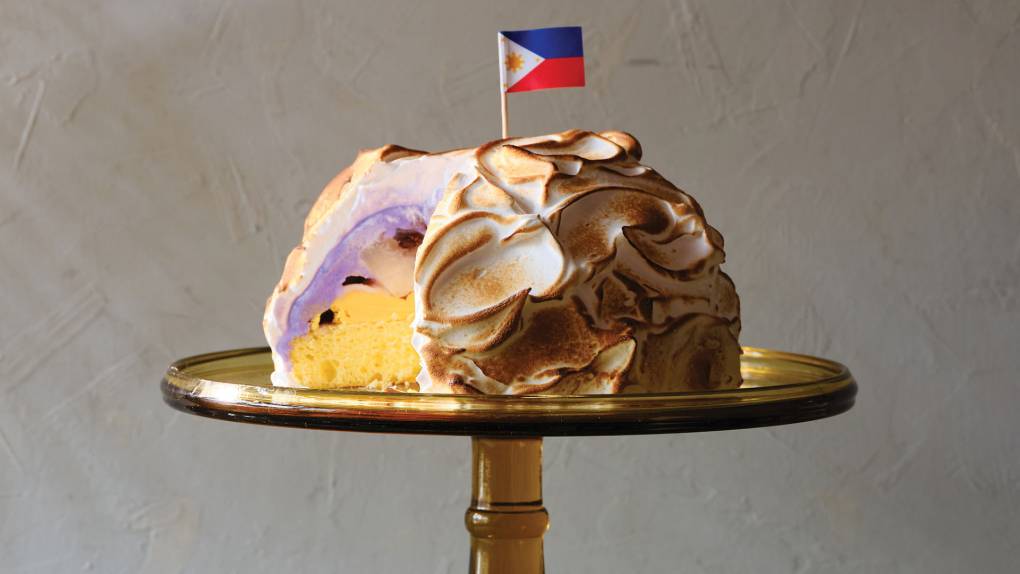
"caption": "The halo-halo baked Alaska has ube-flavored ice cream inside. The dessert is emblematic the cross-cultural approach in Abi Balingit's new cookbook, 'Mayumu.'",
"description": null,
"title": "Halo-Halo Baked Alaska (c) Nico Schinco_cropped",
"credit": "Nico Schinco",
"status": "inherit",
"altTag": "A baked Alaska dessert with a small Filipino flag inserted on top, displayed on a cake stand.",
"isLoading": false,
"fetchFailed": false
},
"arts_13923163": {
"type": "attachments",
"id": "arts_13923163",
"meta": {
"index": "attachments_1716263798",
"site": "arts",
"id": "13923163",
"found": true
},
"parent": 13923127,
"imgSizes": {
"twentyfourteen-full-width": {
"file": "https://ww2.kqed.org/app/uploads/sites/2/2022/12/RS61780_015_KQEDArts_RockyRiveraCrabbing_12192022-qut-1038x576.jpg",
"width": 1038,
"mimeType": "image/jpeg",
"height": 576
},
"thumbnail": {
"file": "https://ww2.kqed.org/app/uploads/sites/2/2022/12/RS61780_015_KQEDArts_RockyRiveraCrabbing_12192022-qut-160x90.jpg",
"width": 160,
"mimeType": "image/jpeg",
"height": 90
},
"post-thumbnail": {
"file": "https://ww2.kqed.org/app/uploads/sites/2/2022/12/RS61780_015_KQEDArts_RockyRiveraCrabbing_12192022-qut-672x372.jpg",
"width": 672,
"mimeType": "image/jpeg",
"height": 372
},
"kqedFullSize": {
"file": "https://ww2.kqed.org/app/uploads/sites/2/2022/12/RS61780_015_KQEDArts_RockyRiveraCrabbing_12192022-qut.jpg",
"width": 1920,
"height": 1080
},
"large": {
"file": "https://ww2.kqed.org/app/uploads/sites/2/2022/12/RS61780_015_KQEDArts_RockyRiveraCrabbing_12192022-qut-1020x574.jpg",
"width": 1020,
"mimeType": "image/jpeg",
"height": 574
},
"1536x1536": {
"file": "https://ww2.kqed.org/app/uploads/sites/2/2022/12/RS61780_015_KQEDArts_RockyRiveraCrabbing_12192022-qut-1536x864.jpg",
"width": 1536,
"mimeType": "image/jpeg",
"height": 864
},
"medium": {
"file": "https://ww2.kqed.org/app/uploads/sites/2/2022/12/RS61780_015_KQEDArts_RockyRiveraCrabbing_12192022-qut-800x450.jpg",
"width": 800,
"mimeType": "image/jpeg",
"height": 450
},
"medium_large": {
"file": "https://ww2.kqed.org/app/uploads/sites/2/2022/12/RS61780_015_KQEDArts_RockyRiveraCrabbing_12192022-qut-768x432.jpg",
"width": 768,
"mimeType": "image/jpeg",
"height": 432
}
},
"publishDate": 1672436410,
"modified": 1672438696,
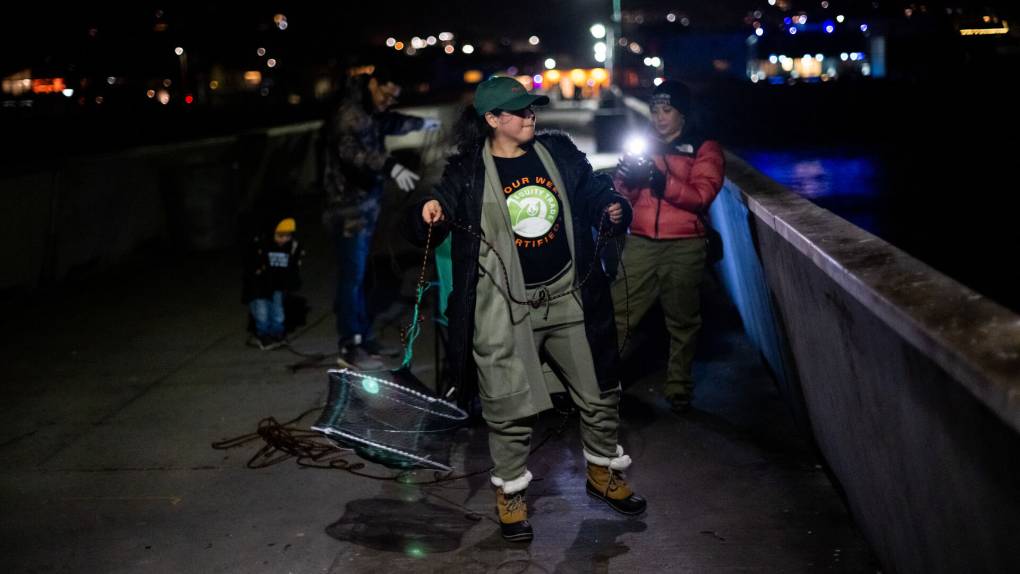
"caption": "The author (right) looks on as her cousin Nina Parks prepares to throw a crab net into the water at the Pacifica Municipal Pier.",
"description": null,
"title": "RS61780_015_KQEDArts_RockyRiveraCrabbing_12192022-qut",
"credit": "Beth LaBerge/KQED",
"status": "inherit",
"altTag": "A woman prepares to toss a crab net over the edge of a pier at night.",
"isLoading": false,
"fetchFailed": false
},
"arts_13921113": {
"type": "attachments",
"id": "arts_13921113",
"meta": {
"index": "attachments_1716263798",
"site": "arts",
"id": "13921113",
"found": true
},
"parent": 13921079,
"imgSizes": {
"twentyfourteen-full-width": {
"file": "https://ww2.kqed.org/app/uploads/sites/2/2022/10/rockyrivera-mom-1038x576.jpg",
"width": 1038,
"mimeType": "image/jpeg",
"height": 576
},
"thumbnail": {
"file": "https://ww2.kqed.org/app/uploads/sites/2/2022/10/rockyrivera-mom-160x90.jpg",
"width": 160,
"mimeType": "image/jpeg",
"height": 90
},
"post-thumbnail": {
"file": "https://ww2.kqed.org/app/uploads/sites/2/2022/10/rockyrivera-mom-672x372.jpg",
"width": 672,
"mimeType": "image/jpeg",
"height": 372
},
"kqedFullSize": {
"file": "https://ww2.kqed.org/app/uploads/sites/2/2022/10/rockyrivera-mom-scaled.jpg",
"width": 2560,
"height": 1440
},
"2048x2048": {
"file": "https://ww2.kqed.org/app/uploads/sites/2/2022/10/rockyrivera-mom-2048x1152.jpg",
"width": 2048,
"mimeType": "image/jpeg",
"height": 1152
},
"large": {
"file": "https://ww2.kqed.org/app/uploads/sites/2/2022/10/rockyrivera-mom-1020x574.jpg",
"width": 1020,
"mimeType": "image/jpeg",
"height": 574
},
"1536x1536": {
"file": "https://ww2.kqed.org/app/uploads/sites/2/2022/10/rockyrivera-mom-1536x864.jpg",
"width": 1536,
"mimeType": "image/jpeg",
"height": 864
},
"full-width": {
"file": "https://ww2.kqed.org/app/uploads/sites/2/2022/10/rockyrivera-mom-1920x1080.jpg",
"width": 1920,
"mimeType": "image/jpeg",
"height": 1080
},
"medium": {
"file": "https://ww2.kqed.org/app/uploads/sites/2/2022/10/rockyrivera-mom-800x450.jpg",
"width": 800,
"mimeType": "image/jpeg",
"height": 450
},
"medium_large": {
"file": "https://ww2.kqed.org/app/uploads/sites/2/2022/10/rockyrivera-mom-768x432.jpg",
"width": 768,
"mimeType": "image/jpeg",
"height": 432
}
},
"publishDate": 1667248180,
"modified": 1667260048,
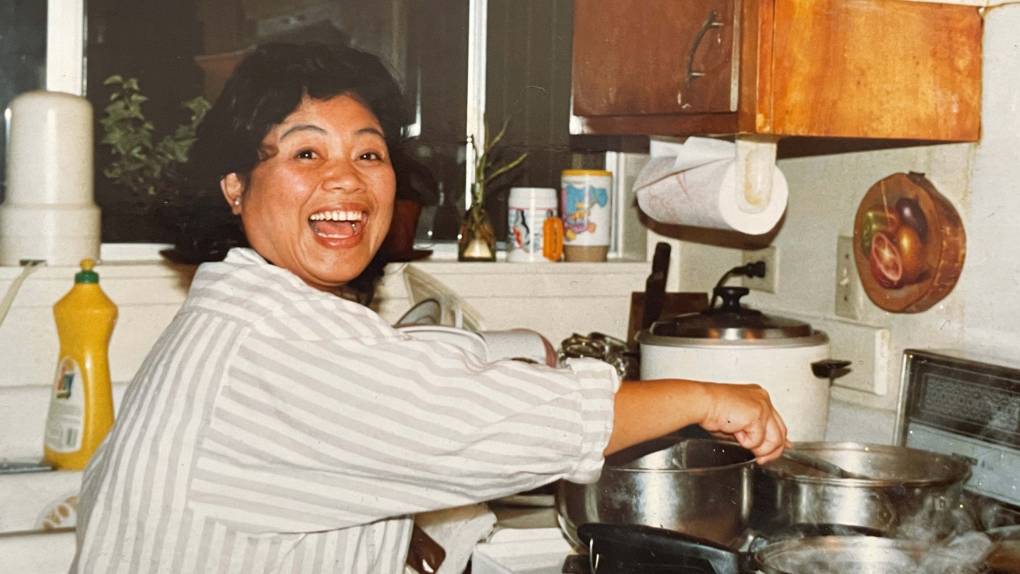
"caption": "The author's mother, Doris T. de Leon, tends to a pot on the stove in this photo taken during the early '90s. She was the one who taught her daughters what it meant to be a \"foodie.\"",
"description": null,
"title": "rockyrivera mom",
"credit": "Courtesy of Rocky Rivera",
"status": "inherit",
"altTag": "A woman looking up at the camera and smiling with delight as she tends to a pot on the stove.",
"isLoading": false,
"fetchFailed": false
},
"arts_13919718": {
"type": "attachments",
"id": "arts_13919718",
"meta": {
"index": "attachments_1716263798",
"site": "arts",
"id": "13919718",
"found": true
},
"parent": 13919707,
"imgSizes": {
"twentyfourteen-full-width": {
"file": "https://ww2.kqed.org/app/uploads/sites/2/2022/09/ellis-bakery_ensaymadas-crop-1038x576.jpg",
"width": 1038,
"mimeType": "image/jpeg",
"height": 576
},
"thumbnail": {
"file": "https://ww2.kqed.org/app/uploads/sites/2/2022/09/ellis-bakery_ensaymadas-crop-160x100.jpg",
"width": 160,
"mimeType": "image/jpeg",
"height": 100
},
"post-thumbnail": {
"file": "https://ww2.kqed.org/app/uploads/sites/2/2022/09/ellis-bakery_ensaymadas-crop-672x372.jpg",
"width": 672,
"mimeType": "image/jpeg",
"height": 372
},
"kqedFullSize": {
"file": "https://ww2.kqed.org/app/uploads/sites/2/2022/09/ellis-bakery_ensaymadas-crop-scaled.jpg",
"width": 2560,
"height": 1600
},
"2048x2048": {
"file": "https://ww2.kqed.org/app/uploads/sites/2/2022/09/ellis-bakery_ensaymadas-crop-2048x1280.jpg",
"width": 2048,
"mimeType": "image/jpeg",
"height": 1280
},
"large": {
"file": "https://ww2.kqed.org/app/uploads/sites/2/2022/09/ellis-bakery_ensaymadas-crop-1020x638.jpg",
"width": 1020,
"mimeType": "image/jpeg",
"height": 638
},
"1536x1536": {
"file": "https://ww2.kqed.org/app/uploads/sites/2/2022/09/ellis-bakery_ensaymadas-crop-1536x960.jpg",
"width": 1536,
"mimeType": "image/jpeg",
"height": 960
},
"full-width": {
"file": "https://ww2.kqed.org/app/uploads/sites/2/2022/09/ellis-bakery_ensaymadas-crop-1920x1200.jpg",
"width": 1920,
"mimeType": "image/jpeg",
"height": 1200
},
"medium": {
"file": "https://ww2.kqed.org/app/uploads/sites/2/2022/09/ellis-bakery_ensaymadas-crop-800x500.jpg",
"width": 800,
"mimeType": "image/jpeg",
"height": 500
},
"medium_large": {
"file": "https://ww2.kqed.org/app/uploads/sites/2/2022/09/ellis-bakery_ensaymadas-crop-768x480.jpg",
"width": 768,
"mimeType": "image/jpeg",
"height": 480
}
},
"publishDate": 1664313092,
"modified": 1664313214,
"caption": "Khristian Rabul displays a tray of pandesal at Ellis Creamery, located at the back of a National gas station in Tracy.",
"description": null,
"title": "ellis bakery_ensaymadas-crop",
"credit": "Alan Chazaro",
"status": "inherit",
"altTag": "a Filipino foodmaker holds a baking tray of savory rolls known as \"pandesal\"",
"isLoading": false,
"fetchFailed": false
},
"arts_13917816": {
"type": "attachments",
"id": "arts_13917816",
"meta": {
"index": "attachments_1716263798",
"site": "arts",
"id": "13917816",
"found": true
},
"parent": 13917810,
"imgSizes": {
"twentyfourteen-full-width": {
"file": "https://ww2.kqed.org/app/uploads/sites/2/2022/08/Lumpia-Lands_featured-1038x576.jpg",
"width": 1038,
"mimeType": "image/jpeg",
"height": 576
},
"thumbnail": {
"file": "https://ww2.kqed.org/app/uploads/sites/2/2022/08/Lumpia-Lands_featured-160x100.jpg",
"width": 160,
"mimeType": "image/jpeg",
"height": 100
},
"post-thumbnail": {
"file": "https://ww2.kqed.org/app/uploads/sites/2/2022/08/Lumpia-Lands_featured-672x372.jpg",
"width": 672,
"mimeType": "image/jpeg",
"height": 372
},
"kqedFullSize": {
"file": "https://ww2.kqed.org/app/uploads/sites/2/2022/08/Lumpia-Lands_featured.jpg",
"width": 1440,
"height": 900
},
"large": {
"file": "https://ww2.kqed.org/app/uploads/sites/2/2022/08/Lumpia-Lands_featured-1020x638.jpg",
"width": 1020,
"mimeType": "image/jpeg",
"height": 638
},
"medium": {
"file": "https://ww2.kqed.org/app/uploads/sites/2/2022/08/Lumpia-Lands_featured-800x500.jpg",
"width": 800,
"mimeType": "image/jpeg",
"height": 500
},
"medium_large": {
"file": "https://ww2.kqed.org/app/uploads/sites/2/2022/08/Lumpia-Lands_featured-768x480.jpg",
"width": 768,
"mimeType": "image/jpeg",
"height": 480
}
},
"publishDate": 1660853422,
"modified": 1660860558,
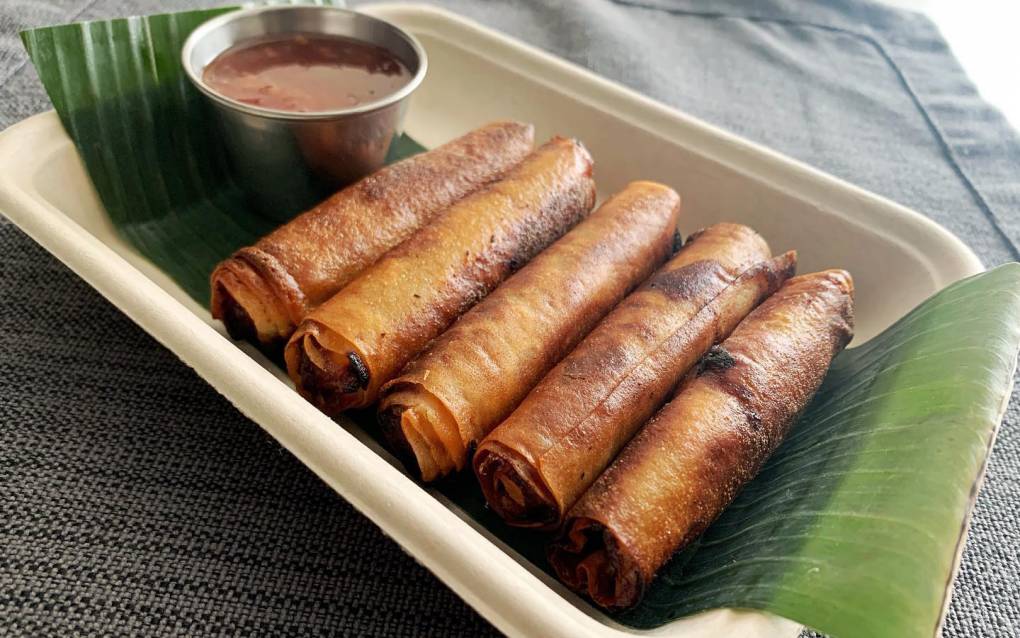
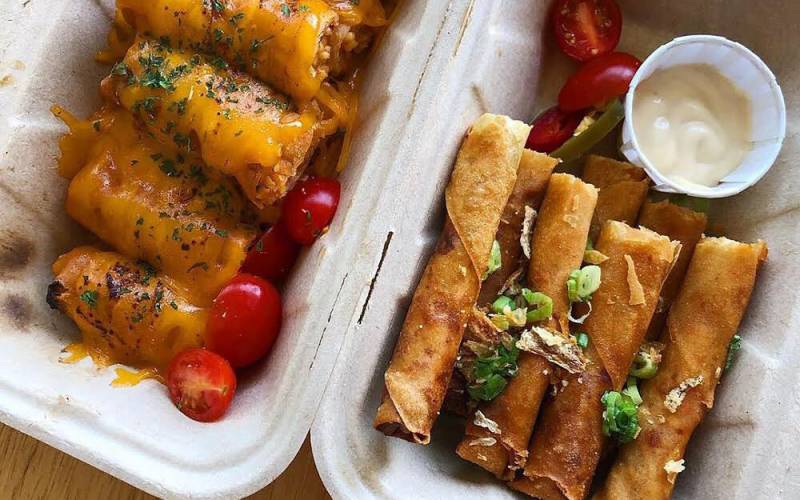
"caption": "A sample of the crispy, golden-brown goodness that will be on display at District Six's Lumpia Lands Filipino food festival.",
"description": null,
"title": "Lumpia Lands_featured",
"credit": "Courtesy of Barya Kitchen",
"status": "inherit",
"altTag": "A cardboard try with five golden-brown lumpia, with dipping sauce on the side.",
"isLoading": false,
"fetchFailed": false
},
"arts_13915583": {
"type": "attachments",
"id": "arts_13915583",
"meta": {
"index": "attachments_1716263798",
"site": "arts",
"id": "13915583",
"found": true
},
"parent": 13915581,
"imgSizes": {
"twentyfourteen-full-width": {
"file": "https://ww2.kqed.org/app/uploads/sites/2/2022/06/Lechon_Thumbnail-1038x576.png",
"width": 1038,
"mimeType": "image/png",
"height": 576
},
"thumbnail": {
"file": "https://ww2.kqed.org/app/uploads/sites/2/2022/06/Lechon_Thumbnail-160x90.png",
"width": 160,
"mimeType": "image/png",
"height": 90
},
"post-thumbnail": {
"file": "https://ww2.kqed.org/app/uploads/sites/2/2022/06/Lechon_Thumbnail-672x372.png",
"width": 672,
"mimeType": "image/png",
"height": 372
},
"kqedFullSize": {
"file": "https://ww2.kqed.org/app/uploads/sites/2/2022/06/Lechon_Thumbnail.png",
"width": 1920,
"height": 1080
},
"large": {
"file": "https://ww2.kqed.org/app/uploads/sites/2/2022/06/Lechon_Thumbnail-1020x574.png",
"width": 1020,
"mimeType": "image/png",
"height": 574
},
"1536x1536": {
"file": "https://ww2.kqed.org/app/uploads/sites/2/2022/06/Lechon_Thumbnail-1536x864.png",
"width": 1536,
"mimeType": "image/png",
"height": 864
},
"medium": {
"file": "https://ww2.kqed.org/app/uploads/sites/2/2022/06/Lechon_Thumbnail-800x450.png",
"width": 800,
"mimeType": "image/png",
"height": 450
},
"medium_large": {
"file": "https://ww2.kqed.org/app/uploads/sites/2/2022/06/Lechon_Thumbnail-768x432.png",
"width": 768,
"mimeType": "image/png",
"height": 432
}
},
"publishDate": 1656549164,
"modified": 1656549331,
"caption": "In order to serve whole pig lechon—a Filipino party staple—first the crispy skin has to be separated from the meat.",
"description": null,
"title": "Lechon_Thumbnail",
"credit": "Kristen Murakoshi",
"status": "inherit",
"altTag": "A whole roast pig being carved at the table, its head still intact; an illustration of stylized blue flames shoots up behind it. Text reads, \"BBQ in the Bay.\"",
"isLoading": false,
"fetchFailed": false
},
"arts_13914753": {
"type": "attachments",
"id": "arts_13914753",
"meta": {
"index": "attachments_1716263798",
"site": "arts",
"id": "13914753",
"found": true
},
"parent": 13914750,
"imgSizes": {
"twentyfourteen-full-width": {
"file": "https://ww2.kqed.org/app/uploads/sites/2/2022/06/InayDilasay_featured-1038x576.jpg",
"width": 1038,
"mimeType": "image/jpeg",
"height": 576
},
"thumbnail": {
"file": "https://ww2.kqed.org/app/uploads/sites/2/2022/06/InayDilasay_featured-160x90.jpg",
"width": 160,
"mimeType": "image/jpeg",
"height": 90
},
"post-thumbnail": {
"file": "https://ww2.kqed.org/app/uploads/sites/2/2022/06/InayDilasay_featured-672x372.jpg",
"width": 672,
"mimeType": "image/jpeg",
"height": 372
},
"kqedFullSize": {
"file": "https://ww2.kqed.org/app/uploads/sites/2/2022/06/InayDilasay_featured-scaled.jpg",
"width": 2560,
"height": 1440
},
"2048x2048": {
"file": "https://ww2.kqed.org/app/uploads/sites/2/2022/06/InayDilasay_featured-2048x1152.jpg",
"width": 2048,
"mimeType": "image/jpeg",
"height": 1152
},
"large": {
"file": "https://ww2.kqed.org/app/uploads/sites/2/2022/06/InayDilasay_featured-1020x574.jpg",
"width": 1020,
"mimeType": "image/jpeg",
"height": 574
},
"1536x1536": {
"file": "https://ww2.kqed.org/app/uploads/sites/2/2022/06/InayDilasay_featured-1536x864.jpg",
"width": 1536,
"mimeType": "image/jpeg",
"height": 864
},
"full-width": {
"file": "https://ww2.kqed.org/app/uploads/sites/2/2022/06/InayDilasay_featured-1920x1080.jpg",
"width": 1920,
"mimeType": "image/jpeg",
"height": 1080
},
"medium": {
"file": "https://ww2.kqed.org/app/uploads/sites/2/2022/06/InayDilasay_featured-800x450.jpg",
"width": 800,
"mimeType": "image/jpeg",
"height": 450
},
"medium_large": {
"file": "https://ww2.kqed.org/app/uploads/sites/2/2022/06/InayDilasay_featured-768x432.jpg",
"width": 768,
"mimeType": "image/jpeg",
"height": 432
}
},
"publishDate": 1655155236,
"modified": 1655155448,
"caption": "Actors Aaron Orpilla (left), Giancarlo Cariola, Faye Lacanilao, Sunshine Roque, Reg Clay and Golda Sargento share a toast in a scene from 'Inay Dalisay's World Famous Lechon.'",
"description": null,
"title": "InayDilasay_featured",
"credit": "Paciano Triunfo",
"status": "inherit",
"altTag": null,
"isLoading": false,
"fetchFailed": false
},
"arts_13913846": {
"type": "attachments",
"id": "arts_13913846",
"meta": {
"index": "attachments_1716263798",
"site": "arts",
"id": "13913846",
"found": true
},
"parent": 13913828,
"imgSizes": {
"twentyfourteen-full-width": {
"file": "https://ww2.kqed.org/app/uploads/sites/2/2022/05/Lucky37_draft2-1038x576.jpg",
"width": 1038,
"mimeType": "image/jpeg",
"height": 576
},
"thumbnail": {
"file": "https://ww2.kqed.org/app/uploads/sites/2/2022/05/Lucky37_draft2-160x90.jpg",
"width": 160,
"mimeType": "image/jpeg",
"height": 90
},
"post-thumbnail": {
"file": "https://ww2.kqed.org/app/uploads/sites/2/2022/05/Lucky37_draft2-672x372.jpg",
"width": 672,
"mimeType": "image/jpeg",
"height": 372
},
"kqedFullSize": {
"file": "https://ww2.kqed.org/app/uploads/sites/2/2022/05/Lucky37_draft2.jpg",
"width": 1920,
"height": 1080
},
"large": {
"file": "https://ww2.kqed.org/app/uploads/sites/2/2022/05/Lucky37_draft2-1020x574.jpg",
"width": 1020,
"mimeType": "image/jpeg",
"height": 574
},
"1536x1536": {
"file": "https://ww2.kqed.org/app/uploads/sites/2/2022/05/Lucky37_draft2-1536x864.jpg",
"width": 1536,
"mimeType": "image/jpeg",
"height": 864
},
"medium": {
"file": "https://ww2.kqed.org/app/uploads/sites/2/2022/05/Lucky37_draft2-800x450.jpg",
"width": 800,
"mimeType": "image/jpeg",
"height": 450
},
"medium_large": {
"file": "https://ww2.kqed.org/app/uploads/sites/2/2022/05/Lucky37_draft2-768x432.jpg",
"width": 768,
"mimeType": "image/jpeg",
"height": 432
}
},
"publishDate": 1653345716,
"modified": 1653345892,
"caption": "Lucky Three Seven co-owner Jun Anaba was known for his love for the Oakland community—and for his son Kiah.",
"description": null,
"title": "Lucky37_draft2",
"credit": "Photo of Anabo and son courtesy of Mark Legaspi and family; photo of Lucky Three Seven by Brian Watt",
"status": "inherit",
"altTag": "Image of a man and his son, overlaid over a background photo of Lucky Three Seven restaurant, with its jackpot-themed mural.",
"isLoading": false,
"fetchFailed": false
},
"arts_13912049": {
"type": "attachments",
"id": "arts_13912049",
"meta": {
"index": "attachments_1716263798",
"site": "arts",
"id": "13912049",
"found": true
},
"parent": 13912001,
"imgSizes": {
"twentyfourteen-full-width": {
"file": "https://ww2.kqed.org/app/uploads/sites/2/2022/04/yumyams_bukobakes_crop-1038x576.jpg",
"width": 1038,
"mimeType": "image/jpeg",
"height": 576
},
"thumbnail": {
"file": "https://ww2.kqed.org/app/uploads/sites/2/2022/04/yumyams_bukobakes_crop-160x90.jpg",
"width": 160,
"mimeType": "image/jpeg",
"height": 90
},
"post-thumbnail": {
"file": "https://ww2.kqed.org/app/uploads/sites/2/2022/04/yumyams_bukobakes_crop-672x372.jpg",
"width": 672,
"mimeType": "image/jpeg",
"height": 372
},
"kqedFullSize": {
"file": "https://ww2.kqed.org/app/uploads/sites/2/2022/04/yumyams_bukobakes_crop.jpg",
"width": 1258,
"height": 707
},
"large": {
"file": "https://ww2.kqed.org/app/uploads/sites/2/2022/04/yumyams_bukobakes_crop-1020x573.jpg",
"width": 1020,
"mimeType": "image/jpeg",
"height": 573
},
"medium": {
"file": "https://ww2.kqed.org/app/uploads/sites/2/2022/04/yumyams_bukobakes_crop-800x450.jpg",
"width": 800,
"mimeType": "image/jpeg",
"height": 450
},
"medium_large": {
"file": "https://ww2.kqed.org/app/uploads/sites/2/2022/04/yumyams_bukobakes_crop-768x432.jpg",
"width": 768,
"mimeType": "image/jpeg",
"height": 432
}
},
"publishDate": 1650298851,
"modified": 1650298887,
"caption": "A box of assorted ube treats from San Francisco's Buko Bakes—one of 23 vendors who will be on hand at this year's Yum Yams festival.",
"description": null,
"title": "yumyams_bukobakes_crop",
"credit": "Buko Bakes",
"status": "inherit",
"altTag": "A box of purple ube baked treats from Buko Bakes",
"isLoading": false,
"fetchFailed": false
},
"arts_13906835": {
"type": "attachments",
"id": "arts_13906835",
"meta": {
"index": "attachments_1716263798",
"site": "arts",
"id": "13906835",
"found": true
},
"parent": 13906834,
"imgSizes": {
"twentyfourteen-full-width": {
"file": "https://ww2.kqed.org/app/uploads/sites/2/2021/12/sweet-condesa_babingka-pie_crop-1038x576.jpg",
"width": 1038,
"mimeType": "image/jpeg",
"height": 576
},
"thumbnail": {
"file": "https://ww2.kqed.org/app/uploads/sites/2/2021/12/sweet-condesa_babingka-pie_crop-160x110.jpg",
"width": 160,
"mimeType": "image/jpeg",
"height": 110
},
"post-thumbnail": {
"file": "https://ww2.kqed.org/app/uploads/sites/2/2021/12/sweet-condesa_babingka-pie_crop-672x372.jpg",
"width": 672,
"mimeType": "image/jpeg",
"height": 372
},
"kqedFullSize": {
"file": "https://ww2.kqed.org/app/uploads/sites/2/2021/12/sweet-condesa_babingka-pie_crop.jpg",
"width": 1801,
"height": 1238
},
"large": {
"file": "https://ww2.kqed.org/app/uploads/sites/2/2021/12/sweet-condesa_babingka-pie_crop-1020x701.jpg",
"width": 1020,
"mimeType": "image/jpeg",
"height": 701
},
"1536x1536": {
"file": "https://ww2.kqed.org/app/uploads/sites/2/2021/12/sweet-condesa_babingka-pie_crop-1536x1056.jpg",
"width": 1536,
"mimeType": "image/jpeg",
"height": 1056
},
"medium": {
"file": "https://ww2.kqed.org/app/uploads/sites/2/2021/12/sweet-condesa_babingka-pie_crop-800x550.jpg",
"width": 800,
"mimeType": "image/jpeg",
"height": 550
},
"medium_large": {
"file": "https://ww2.kqed.org/app/uploads/sites/2/2021/12/sweet-condesa_babingka-pie_crop-768x528.jpg",
"width": 768,
"mimeType": "image/jpeg",
"height": 528
}
},
"publishDate": 1638569594,
"modified": 1638569698,
"caption": "The bibingka pie is Sweet Condesa's reinterpretation of the classic Filipino holiday treat.",
"description": null,
"title": "sweet condesa_babingka pie_crop",
"credit": "Rezel Kealoha",
"status": "inherit",
"altTag": "Slices of a custard pie on plates, laid out on top of a Christmas-themed evergreen tree backdrop.",
"isLoading": false,
"fetchFailed": false
},
"arts_13902181": {
"type": "attachments",
"id": "arts_13902181",
"meta": {
"index": "attachments_1716263798",
"site": "arts",
"id": "13902181",
"found": true
},
"parent": 13901710,
"imgSizes": {
"twentyfourteen-full-width": {
"file": "https://ww2.kqed.org/app/uploads/sites/2/2021/08/JeepneyGuy_lechon-1038x576.jpg",
"width": 1038,
"mimeType": "image/jpeg",
"height": 576
},
"thumbnail": {
"file": "https://ww2.kqed.org/app/uploads/sites/2/2021/08/JeepneyGuy_lechon-160x90.jpg",
"width": 160,
"mimeType": "image/jpeg",
"height": 90
},
"post-thumbnail": {
"file": "https://ww2.kqed.org/app/uploads/sites/2/2021/08/JeepneyGuy_lechon-672x372.jpg",
"width": 672,
"mimeType": "image/jpeg",
"height": 372
},
"kqedFullSize": {
"file": "https://ww2.kqed.org/app/uploads/sites/2/2021/08/JeepneyGuy_lechon-scaled.jpg",
"width": 2560,
"height": 1440
},
"2048x2048": {
"file": "https://ww2.kqed.org/app/uploads/sites/2/2021/08/JeepneyGuy_lechon-2048x1152.jpg",
"width": 2048,
"mimeType": "image/jpeg",
"height": 1152
},
"large": {
"file": "https://ww2.kqed.org/app/uploads/sites/2/2021/08/JeepneyGuy_lechon-1020x574.jpg",
"width": 1020,
"mimeType": "image/jpeg",
"height": 574
},
"1536x1536": {
"file": "https://ww2.kqed.org/app/uploads/sites/2/2021/08/JeepneyGuy_lechon-1536x864.jpg",
"width": 1536,
"mimeType": "image/jpeg",
"height": 864
},
"full-width": {
"file": "https://ww2.kqed.org/app/uploads/sites/2/2021/08/JeepneyGuy_lechon-1920x1080.jpg",
"width": 1920,
"mimeType": "image/jpeg",
"height": 1080
},
"medium": {
"file": "https://ww2.kqed.org/app/uploads/sites/2/2021/08/JeepneyGuy_lechon-800x450.jpg",
"width": 800,
"mimeType": "image/jpeg",
"height": 450
},
"medium_large": {
"file": "https://ww2.kqed.org/app/uploads/sites/2/2021/08/JeepneyGuy_lechon-768x432.jpg",
"width": 768,
"mimeType": "image/jpeg",
"height": 432
}
},
"publishDate": 1630421602,
"modified": 1630421737,
"caption": "Jeepney Guy's gloriously crisp-skinned lechon will be one of the highlights of the Undiscovered SF Filipino culture crawl.",
"description": "Jeepney Guy's gloriously crisp-skinned lechon will be one of the highlights of the Undiscovered SF Filipino culture crawl.",
"title": "JeepneyGuy_lechon",
"credit": "Jeepney Guy",
"status": "inherit",
"altTag": "Cross section view of Jeepney Guy's lechon-style roast pork belly with crispy skin.",
"isLoading": false,
"fetchFailed": false
},
"arts_13902157": {
"type": "attachments",
"id": "arts_13902157",
"meta": {
"index": "attachments_1716263798",
"site": "arts",
"id": "13902157",
"found": true
},
"parent": 13901710,
"imgSizes": {
"twentyfourteen-full-width": {
"file": "https://ww2.kqed.org/app/uploads/sites/2/2021/08/lumpiapalooza_crop-1000x576.jpg",
"width": 1000,
"mimeType": "image/jpeg",
"height": 576
},
"thumbnail": {
"file": "https://ww2.kqed.org/app/uploads/sites/2/2021/08/lumpiapalooza_crop-160x100.jpg",
"width": 160,
"mimeType": "image/jpeg",
"height": 100
},
"post-thumbnail": {
"file": "https://ww2.kqed.org/app/uploads/sites/2/2021/08/lumpiapalooza_crop-672x372.jpg",
"width": 672,
"mimeType": "image/jpeg",
"height": 372
},
"kqedFullSize": {
"file": "https://ww2.kqed.org/app/uploads/sites/2/2021/08/lumpiapalooza_crop.jpg",
"width": 1000,
"height": 625
},
"medium": {
"file": "https://ww2.kqed.org/app/uploads/sites/2/2021/08/lumpiapalooza_crop-800x500.jpg",
"width": 800,
"mimeType": "image/jpeg",
"height": 500
},
"medium_large": {
"file": "https://ww2.kqed.org/app/uploads/sites/2/2021/08/lumpiapalooza_crop-768x480.jpg",
"width": 768,
"mimeType": "image/jpeg",
"height": 480
}
},
"publishDate": 1630366433,
"modified": 1634939572,
"caption": "Two of the many different takes on lumpia that you might find at LumpiaPalooza.",
"description": null,
"title": "lumpiapalooza_crop",
"credit": "District Six",
"status": "inherit",
"altTag": "Two different types of lumpia in a cardboard takeout tray.",
"isLoading": false,
"fetchFailed": false
}
},
"audioPlayerReducer": {
"postId": "stream_live",
"isPaused": true,
"isPlaying": false,
"pfsActive": false,
"pledgeModalIsOpen": true,
"playerDrawerIsOpen": false,
"liveAudioPlayStartedAt": 0,
"liveAudioPlayContext": ""
},
"authorsReducer": {
"byline_arts_13915581": {
"type": "authors",
"id": "byline_arts_13915581",
"meta": {
"override": true
},
"slug": "byline_arts_13915581",
"name": "Rocky Rivera",
"isLoading": false
},
"ltsai": {
"type": "authors",
"id": "11743",
"meta": {
"index": "authors_1716337520",
"id": "11743",
"found": true
},
"name": "Luke Tsai",
"firstName": "Luke",
"lastName": "Tsai",
"slug": "ltsai",
"email": "ltsai@kqed.org",
"display_author_email": true,
"staff_mastheads": [
"arts"
],
"title": "Food Editor",
"bio": "Luke Tsai is KQED's food editor and resident stinky tofu connoisseur. Prior to KQED, he was an editor at Eater SF, \u003cem>San Francisco \u003c/em>magazine, and the \u003cem>East Bay Express\u003c/em>, and his work has also appeared in TASTE, the \u003cem>San Francisco Chronicle\u003c/em>, and the \u003cem>Best Food Writing\u003c/em> anthology. When he isn't writing or editing, you'll find him eating most everything he can get his hands on.",
"avatar": "https://secure.gravatar.com/avatar/1e59b45bf191526e7339d6ba46e33a57b2030d25c27660ecc64ea3cb863e34f7?s=600&d=blank&r=g",
"twitter": "theluketsai",
"bluesky": null,
"facebook": null,
"instagram": null,
"linkedin": null,
"sites": [
{
"site": "",
"roles": [
"editor"
]
},
{
"site": "arts",
"roles": [
"administrator"
]
},
{
"site": "news",
"roles": [
"editor",
"contributor"
]
},
{
"site": "bayareabites",
"roles": [
"editor"
]
},
{
"site": "food",
"roles": [
"editor"
]
}
],
"headData": {
"title": "Luke Tsai | KQED",
"description": "Food Editor",
"ogImgSrc": "https://secure.gravatar.com/avatar/1e59b45bf191526e7339d6ba46e33a57b2030d25c27660ecc64ea3cb863e34f7?s=600&d=blank&r=g",
"twImgSrc": "https://secure.gravatar.com/avatar/1e59b45bf191526e7339d6ba46e33a57b2030d25c27660ecc64ea3cb863e34f7?s=600&d=blank&r=g"
},
"isLoading": false,
"link": "/author/ltsai"
},
"achazaro": {
"type": "authors",
"id": "11748",
"meta": {
"index": "authors_1716337520",
"id": "11748",
"found": true
},
"name": "Alan Chazaro",
"firstName": "Alan",
"lastName": "Chazaro",
"slug": "achazaro",
"email": "agchazaro@gmail.com",
"display_author_email": true,
"staff_mastheads": [],
"title": "Food Writer and Reporter",
"bio": "Alan Chazaro is the author of \u003cem>This Is Not a Frank Ocean Cover Album\u003c/em> (Black Lawrence Press, 2019), \u003cem>Piñata Theory\u003c/em> (Black Lawrence Press, 2020), and \u003cem>Notes from the Eastern Span of the Bay Bridge\u003c/em> (Ghost City Press, 2021). He is a graduate of June Jordan’s Poetry for the People program at UC Berkeley and a former Lawrence Ferlinghetti Fellow at the University of San Francisco. He writes about sports, food, art, music, education, and culture while repping the Bay on \u003ca href=\"https://twitter.com/alan_chazaro\">Twitter\u003c/a> and \u003ca href=\"https://www.instagram.com/alan_chazaro/?hl=en\">Instagram\u003c/a> at @alan_chazaro.",
"avatar": "https://secure.gravatar.com/avatar/ea8b6dd970fc5c29e7a188e7d5861df7?s=600&d=blank&r=g",
"twitter": "alan_chazaro",
"facebook": null,
"instagram": null,
"linkedin": null,
"sites": [
{
"site": "arts",
"roles": [
"contributor"
]
},
{
"site": "news",
"roles": [
"editor"
]
}
],
"headData": {
"title": "Alan Chazaro | KQED",
"description": "Food Writer and Reporter",
"ogImgSrc": "https://secure.gravatar.com/avatar/ea8b6dd970fc5c29e7a188e7d5861df7?s=600&d=blank&r=g",
"twImgSrc": "https://secure.gravatar.com/avatar/ea8b6dd970fc5c29e7a188e7d5861df7?s=600&d=blank&r=g"
},
"isLoading": false,
"link": "/author/achazaro"
},
"athapliyal": {
"type": "authors",
"id": "11766",
"meta": {
"index": "authors_1716337520",
"id": "11766",
"found": true
},
"name": "Adesh Thapliyal",
"firstName": "Adesh",
"lastName": "Thapliyal",
"slug": "athapliyal",
"email": "athapliyal@kqed.org",
"display_author_email": false,
"staff_mastheads": [],
"title": "KQED Contributor",
"bio": "Adesh Thapliyal is KQED Arts' Editorial Intern. Previously, he wrote for the experimental newsletter \u003cem>Tone Glow\u003c/em> and the pop music blog \u003cem>The Singles Jukebox\u003c/em>.",
"avatar": "https://secure.gravatar.com/avatar/25c945182616a5283c4f746e7017bca3?s=600&d=blank&r=g",
"twitter": null,
"facebook": null,
"instagram": null,
"linkedin": null,
"sites": [
{
"site": "arts",
"roles": [
"author"
]
}
],
"headData": {
"title": "Adesh Thapliyal | KQED",
"description": "KQED Contributor",
"ogImgSrc": "https://secure.gravatar.com/avatar/25c945182616a5283c4f746e7017bca3?s=600&d=blank&r=g",
"twImgSrc": "https://secure.gravatar.com/avatar/25c945182616a5283c4f746e7017bca3?s=600&d=blank&r=g"
},
"isLoading": false,
"link": "/author/athapliyal"
},
"rockyrivera": {
"type": "authors",
"id": "11846",
"meta": {
"index": "authors_1716337520",
"id": "11846",
"found": true
},
"name": "Rocky Rivera",
"firstName": "Rocky",
"lastName": "Rivera",
"slug": "rockyrivera",
"email": "ms.rocky.rivera@gmail.com",
"display_author_email": false,
"staff_mastheads": [],
"title": "KQED Contributor",
"bio": "Rocky Rivera is a journalist, emcee, author and activist from San Francisco. She has released four albums through her label, Beatrock Music, and a ten-volume mixtape series with DJ Roza. She released her first book in 2021, entitled \u003cem>Snakeskin: Essays by Rocky Rivera\u003c/em>. Her latest album dropped in September 2024 and is called \"Long Kiss Goodnight\" with emcee/producer Otayo Dubb. She currently writes the Frisco Foodies column as a love letter to her hometown.",
"avatar": "https://secure.gravatar.com/avatar/946241ee2c59e6040607dfc75240d91b?s=600&d=blank&r=g",
"twitter": null,
"facebook": "https://m.facebook.com/rockyriveramusic",
"instagram": "https://instagram.com/rockyrivera",
"linkedin": "https://www.linkedin.com/in/krishtinedeleon/",
"sites": [
{
"site": "arts",
"roles": [
"author"
]
}
],
"headData": {
"title": "Rocky Rivera | KQED",
"description": "KQED Contributor",
"ogImgSrc": "https://secure.gravatar.com/avatar/946241ee2c59e6040607dfc75240d91b?s=600&d=blank&r=g",
"twImgSrc": "https://secure.gravatar.com/avatar/946241ee2c59e6040607dfc75240d91b?s=600&d=blank&r=g"
},
"isLoading": false,
"link": "/author/rockyrivera"
}
},
"pagesReducer": {
"arts_tag_filipino-food": {
"type": "terms",
"id": "arts_14183",
"meta": {
"index": "terms_1716263798",
"site": "arts",
"id": "14183",
"score": 9.304556
},
"featImg": null,
"name": "Filipino food",
"description": null,
"taxonomy": "tag",
"headData": {
"twImgId": null,
"twTitle": null,
"ogTitle": null,
"ogImgId": null,
"twDescription": null,
"description": null,
"title": "Filipino food Archives | KQED Arts",
"ogDescription": null
},
"ttid": 14195,
"slug": "filipino-food",
"isLoading": false,
"title": "Filipino food",
"pageMeta": {
"site": "arts",
"WpPageTemplate": "page-topic-editorial",
"currentPage": 3
},
"blocks": [
{
"blockName": "kqed/post-list",
"attrs": {
"layout": "cardArticle2",
"query": "posts/arts?tag=filipino-food",
"seeMore": false,
"paginated": true,
"page": 3
}
},
{
"blockName": "kqed/ad"
}
]
}
},
"pfsSessionReducer": {},
"postsReducer": {
"stream_live": {
"type": "live",
"id": "stream_live",
"audioUrl": "https://streams.kqed.org/kqedradio",
"title": "Live Stream",
"excerpt": "Live Stream information currently unavailable.",
"link": "/radio",
"featImg": "",
"label": {
"name": "KQED Live",
"link": "/"
}
},
"stream_kqedNewscast": {
"type": "posts",
"id": "stream_kqedNewscast",
"audioUrl": "https://www.kqed.org/.stream/anon/radio/RDnews/newscast.mp3?_=1",
"title": "KQED Newscast",
"featImg": "",
"label": {
"name": "88.5 FM",
"link": "/"
}
},
"arts_13926618": {
"type": "posts",
"id": "arts_13926618",
"meta": {
"index": "posts_1716263798",
"site": "arts",
"id": "13926618",
"score": null,
"sort": [
1679431313000
]
},
"parent": 0,
"labelTerm": {},
"blocks": [],
"publishDate": 1679431313,
"format": "standard",
"title": "Abi Balingit's Dessert Cookbook Is a Love Letter to the Bay Area's Filipino Bakeries",
"headTitle": "Abi Balingit’s Dessert Cookbook Is a Love Letter to the Bay Area’s Filipino Bakeries | KQED",
"content": "\u003cp>Growing up, I assumed fruit custard was a uniquely Indian food, no different than khichdi or palak paneer. Chilled fruit custard, sweetened with apples, bananas and grapes, made frequent appearances at my mother’s dinner parties, indistinguishable from other milky Indian desserts like kheer or shrikhand. I never saw anything similar to it in American restaurants or at my white friends’ houses: How could I guess it was anything other than Indian?\u003c/p>\n\u003cp>“Oh my god, I thought the same thing about fruit salad and Filipinos,” confesses \u003ca href=\"https://theduskykitchen.com/\">blogger\u003c/a>, baker and recipe developer extraordinaire Abi Balingit. We are chatting about her new memoir-cum-cookbook \u003ca href=\"https://www.indiebound.org/book/9780063244061\">\u003ci>Mayumu\u003c/i>: \u003ci>Filipino American Desserts Remixed\u003c/i>\u003c/a>\u003ci>,\u003c/i> which documents the sweets she ate and made growing up in the Bay Area’s thriving Filipino communities.\u003c/p>\n\u003cp>“Our fruit salad has canned fruit, too, but we add more Filipino stuff like coconut jellies and sugar palm fruit, so I always thought it was 100 percent Filipino,” Balingit says. “Another product of colonialism and imperialism for sure.”\u003c/p>\n\u003cp>Our respective fruit salads and custards reflect a bizarre quirk of history, where the legacy of colonization and globalization has influenced our food to the point where the term “fusion” doesn’t really mean much. Asian cooking has \u003ci>been \u003c/i>fused with Western culture. So why not make, say, a baked Alaska with ube ice cream — the tantalizing dessert displayed on the cover of \u003ci>Mayumu\u003c/i>? Or a jello salad buko pandan?\u003c/p>\n\u003cfigure id=\"attachment_13926636\" class=\"wp-caption alignnone\" style=\"max-width: 1920px\">\u003cimg loading=\"lazy\" decoding=\"async\" class=\"size-full wp-image-13926636\" src=\"https://ww2.kqed.org/app/uploads/sites/2/2023/03/Mayumu-cover.jpg\" alt='Cover of a cookbook with a photo of a slice of baked Alaska with ube ice cream on the inside. Text reads, \"Mayumu, Filipino American Desserts Remixed.\"' width=\"1920\" height=\"2469\" srcset=\"https://cdn.kqed.org/wp-content/uploads/sites/2/2023/03/Mayumu-cover.jpg 1920w, https://cdn.kqed.org/wp-content/uploads/sites/2/2023/03/Mayumu-cover-800x1029.jpg 800w, https://cdn.kqed.org/wp-content/uploads/sites/2/2023/03/Mayumu-cover-1020x1312.jpg 1020w, https://cdn.kqed.org/wp-content/uploads/sites/2/2023/03/Mayumu-cover-160x206.jpg 160w, https://cdn.kqed.org/wp-content/uploads/sites/2/2023/03/Mayumu-cover-768x988.jpg 768w, https://cdn.kqed.org/wp-content/uploads/sites/2/2023/03/Mayumu-cover-1194x1536.jpg 1194w, https://cdn.kqed.org/wp-content/uploads/sites/2/2023/03/Mayumu-cover-1593x2048.jpg 1593w\" sizes=\"(max-width: 1920px) 100vw, 1920px\">\u003cfigcaption class=\"wp-caption-text\">The cookbook was published by HarperCollins in February 2023. \u003ccite>(Courtesy of HarperCollins)\u003c/cite>\u003c/figcaption>\u003c/figure>\n\u003cp>“Obviously, growing up in America, the desserts are cupcakes, cakes and cookies — and these are things in the Philippines, too,” says Balingit. “I went to Seafood City or the small Filipino market and saw coco pie and ube pie, but at the same time I went to Safeway or Albertson’s and saw, like, Hostess and Little Debbie’s. There was nothing weird about it to me, there was no sense of foreignness or discomfort.”\u003c/p>\n\u003cp>[ad fullwidth]\u003c/p>\n\u003cp>For Balingit, \u003ci>Mayumu\u003c/i> isn’t just a cookbook. It is a snapshot of growing up Filipino American in California. While the book exhaustively covers how to make every Filipino dessert one is likely to find behind the glass case at a Union City bakery — from bibingka to pandesal to kutsinta – Balingit adds little elements drawn from the porous, pan-Asian culture of the Bay. Her bibingka, for example, is topped with melted White Rabbit candies, which she fondly remembers coveting at 99 Ranch, while her pastillas, a chewy candy made from condensed milk, are flavored with matcha powder, that boba-shop staple.\u003c/p>\n\u003cp>The book is split into five parts, each named after towns Balingit resided in and accompanied by short reflections about what each location meant to her. Balingit was born in San Jose, moved to Stockton when she was six years old, went to UC Berkeley for college and finally flew off to New York City for work. The sequencing of the recipes tracks Balingit’s development as a baker: Early parts of the book cover Filipino classics like puto and biko, done relatively simply, while later parts show off her matured virtuosity and broader cultural horizons — leche flan infused with chai, cookies flavored with karekare or adobo.\u003c/p>\n\u003cfigure id=\"attachment_13926637\" class=\"wp-caption alignnone\" style=\"max-width: 1920px\">\u003cimg loading=\"lazy\" decoding=\"async\" class=\"size-full wp-image-13926637\" src=\"https://ww2.kqed.org/app/uploads/sites/2/2023/03/Abi-Balingit-author-photo.jpg\" alt=\"Portrait of cookbook author Abi Balingit, who wears a colorful apron that matches her pink and green hair.\" width=\"1920\" height=\"2238\" srcset=\"https://cdn.kqed.org/wp-content/uploads/sites/2/2023/03/Abi-Balingit-author-photo.jpg 1920w, https://cdn.kqed.org/wp-content/uploads/sites/2/2023/03/Abi-Balingit-author-photo-800x933.jpg 800w, https://cdn.kqed.org/wp-content/uploads/sites/2/2023/03/Abi-Balingit-author-photo-1020x1189.jpg 1020w, https://cdn.kqed.org/wp-content/uploads/sites/2/2023/03/Abi-Balingit-author-photo-160x187.jpg 160w, https://cdn.kqed.org/wp-content/uploads/sites/2/2023/03/Abi-Balingit-author-photo-768x895.jpg 768w, https://cdn.kqed.org/wp-content/uploads/sites/2/2023/03/Abi-Balingit-author-photo-1318x1536.jpg 1318w, https://cdn.kqed.org/wp-content/uploads/sites/2/2023/03/Abi-Balingit-author-photo-1757x2048.jpg 1757w\" sizes=\"(max-width: 1920px) 100vw, 1920px\">\u003cfigcaption class=\"wp-caption-text\">Balingit spent her formative years in San Jose and Stockton.\u003c/figcaption>\u003c/figure>\n\u003cp>It’s not always a forward arc. Sometimes, Balingit doubles back. She puts her basic pandesal recipe in the fourth chapter, set in Brooklyn. After leaving the Bay’s plentiful Filipino bakeries behind, she had little choice but to make the bread on her own.\u003c/p>\n\u003cp>“Bakeries are so essential for daily life,” says Balingit, wistfully. “Growing up, I don’t think my parents made pandesal ever; I would be surprised if anyone in San Jose or Stockton did. The bakeries do such a good job already.”\u003c/p>\n\u003cp>\u003ci>Mayumu \u003c/i>is littered with references to Bay Area Filipino bakeries — the famous chains \u003ca href=\"https://www.goldilocks-usa.com/\">Goldilocks\u003c/a> and \u003ca href=\"https://valeriostropicalbakeshop.com/\">Valerio’s\u003c/a> in particular get big shoutouts — that innovated with items like monggo-swirled brioche loaves and ube tres leches cakes. And the Fil-Am urge for baked goods and candy doesn’t just stop at strictly Filipino joints. Balingit also pays tribute to Costco madeleines and poppy seed muffins, gas station Twinkies and even Midwestern Buckeye candies, introduced to a young Balingit by a friend studying at Ohio State University. All done, of course, with a Filipino twist: The madeleines are lychee flavored, the Twinkies use Filipino mamon instead of sponge cake, the Buckeyes swap out fudge for yema (a Filipino egg custard).\u003c/p>\n\u003cfigure id=\"attachment_13926638\" class=\"wp-caption alignnone\" style=\"max-width: 1920px\">\u003cimg loading=\"lazy\" decoding=\"async\" class=\"size-full wp-image-13926638\" src=\"https://ww2.kqed.org/app/uploads/sites/2/2023/03/Lychee-Madeleines-with-Hibiscus-Tea-Glaze-Dried-Rose-Petals-c-Nico-Schinco_edit.jpg\" alt=\"A bowl of madeleines topped with dried rose petals and a purple-pink hibiscus glaze.\" width=\"1920\" height=\"2347\" srcset=\"https://cdn.kqed.org/wp-content/uploads/sites/2/2023/03/Lychee-Madeleines-with-Hibiscus-Tea-Glaze-Dried-Rose-Petals-c-Nico-Schinco_edit.jpg 1920w, https://cdn.kqed.org/wp-content/uploads/sites/2/2023/03/Lychee-Madeleines-with-Hibiscus-Tea-Glaze-Dried-Rose-Petals-c-Nico-Schinco_edit-800x978.jpg 800w, https://cdn.kqed.org/wp-content/uploads/sites/2/2023/03/Lychee-Madeleines-with-Hibiscus-Tea-Glaze-Dried-Rose-Petals-c-Nico-Schinco_edit-1020x1247.jpg 1020w, https://cdn.kqed.org/wp-content/uploads/sites/2/2023/03/Lychee-Madeleines-with-Hibiscus-Tea-Glaze-Dried-Rose-Petals-c-Nico-Schinco_edit-160x196.jpg 160w, https://cdn.kqed.org/wp-content/uploads/sites/2/2023/03/Lychee-Madeleines-with-Hibiscus-Tea-Glaze-Dried-Rose-Petals-c-Nico-Schinco_edit-768x939.jpg 768w, https://cdn.kqed.org/wp-content/uploads/sites/2/2023/03/Lychee-Madeleines-with-Hibiscus-Tea-Glaze-Dried-Rose-Petals-c-Nico-Schinco_edit-1257x1536.jpg 1257w, https://cdn.kqed.org/wp-content/uploads/sites/2/2023/03/Lychee-Madeleines-with-Hibiscus-Tea-Glaze-Dried-Rose-Petals-c-Nico-Schinco_edit-1675x2048.jpg 1675w\" sizes=\"(max-width: 1920px) 100vw, 1920px\">\u003cfigcaption class=\"wp-caption-text\">Balingit’s madeleines are flavored with lychee and have a hibiscus tea glaze. \u003ccite>(Nico Schinco)\u003c/cite>\u003c/figcaption>\u003c/figure>\n\u003cp>Despite the legacy of generations of Asian American pastry chefs working in places like Valerio’s, very few have had the opportunity to write at length about their work. Balingit and I ended our conversation trying to come up with previous books in this niche, but we couldn’t think of any. Hours of additional Googling on my part only turned up a scant few: Aileen Chung Belshe’s hard-to-find \u003ci>Hawaiian Sweets, Treats And Eats\u003c/i>, Pichet Ong’s \u003ci>Sweet Spot\u003c/i> and Kristina Cho’s recently released \u003ci>Mooncakes and Milk Bread\u003c/i>.\u003c/p>\n\u003cp>[aside postID='arts_13919707,arts_13924997,arts_13896138']“It wasn’t smooth sailing trying to get this book sold to a publisher,” Balingit admits. “99 percent of publishers said no because it was so niche — not just a Filipino American cookbook, but a dessert cookbook as well. It shouldn’t be like that. Nobody would bat an eye if this was an Italian American dessert book.”\u003c/p>\n\u003cp>Luckily, Balingit connected with a Korean American editor at Harvest, an imprint of HarperCollins, who took a chance on her work.\u003c/p>\n\u003cp>“It sucks, but that’s the beauty of all these new diaspora cookbooks coming out,” says Balingit. “Hopefully we’re breaking the mold a bit and making it easier for people to justify why their foods matter.”\u003c/p>\n\u003cp>\u003cimg loading=\"lazy\" decoding=\"async\" class=\"aligncenter size-full wp-image-12904247\" src=\"https://ww2.kqed.org/app/uploads/sites/2/2017/03/Q.Logo_.Break_-400x39.jpg\" alt=\"\" width=\"400\" height=\"39\" srcset=\"https://cdn.kqed.org/wp-content/uploads/sites/2/2017/03/Q.Logo_.Break_-400x39.jpg 400w, https://cdn.kqed.org/wp-content/uploads/sites/2/2017/03/Q.Logo_.Break_-400x39-160x16.jpg 160w, https://cdn.kqed.org/wp-content/uploads/sites/2/2017/03/Q.Logo_.Break_-400x39-240x23.jpg 240w, https://cdn.kqed.org/wp-content/uploads/sites/2/2017/03/Q.Logo_.Break_-400x39-375x37.jpg 375w\" sizes=\"(max-width: 400px) 100vw, 400px\">\u003c/p>\n\u003cp>\u003c/p>\n\u003cp>\u003ci>To promote \u003c/i>\u003ca href=\"https://www.indiebound.org/book/9780063244061\">Mayumu\u003c/a>\u003ci>, Balingit is hosting meet-and-greets at Omnivore Books (3885 Cesar Chavez St., San Francisco) on \u003c/i>\u003ca href=\"https://www.instagram.com/p/Cpxqxe6u0fc/\">\u003ci>Sat., March 25\u003c/i>\u003c/a>\u003ci> and the San Francisco Public Library’s Excelsior branch (4400 Mission St., San Francisco) on \u003c/i>\u003ca href=\"https://sfpl.org/events/2023/03/26/author-abi-balingit-mayumu\">\u003ci>Sunday, March 26\u003c/i>\u003c/a>\u003ci>. \u003c/i>\u003c/p>\n\n",
"stats": {
"hasVideo": false,
"hasChartOrMap": false,
"hasAudio": false,
"hasPolis": false,
"wordCount": 1072,
"hasGoogleForm": false,
"hasGallery": false,
"hasHearkenModule": false,
"iframeSrcs": [],
"paragraphCount": 18
},
"modified": 1705005717,
"excerpt": "In 'Mayumu,' the madeleines taste like lychee, and the baked Alaska comes filled with ube ice cream.",
"headData": {
"twImgId": "",
"twTitle": "This New Dessert Cookbook Is a Love Letter to the Bay Area's Filipino Bakeries",
"socialTitle": "Abi Balingit's Filipino Dessert Cookbook, Mayumu, Celebrates the Bay Area's Filipino Bakeries %%page%% %%sep%% KQED",
"ogTitle": "This New Dessert Cookbook Is a Love Letter to the Bay Area's Filipino Bakeries",
"ogImgId": "",
"twDescription": "",
"description": "In 'Mayumu,' the madeleines taste like lychee, and the baked Alaska comes filled with ube ice cream.",
"title": "Abi Balingit's Filipino Dessert Cookbook, Mayumu, Celebrates the Bay Area's Filipino Bakeries | KQED",
"ogDescription": "",
"schema": {
"@context": "https://schema.org",
"@type": "Article",
"headline": "Abi Balingit's Dessert Cookbook Is a Love Letter to the Bay Area's Filipino Bakeries",
"datePublished": "2023-03-21T13:41:53-07:00",
"dateModified": "2024-01-11T12:41:57-08:00",
"image": "https://cdn.kqed.org/wp-content/uploads/2020/02/KQED-OG-Image@1x.png"
}
},
"guestAuthors": [],
"slug": "mayumu-abi-balingit-filipino-desserts-cookbook-bay-area-san-jose",
"status": "publish",
"sourceUrl": "/food/",
"excludeFromSiteSearch": "Include",
"sticky": false,
"source": "Food",
"articleAge": "0",
"path": "/arts/13926618/mayumu-abi-balingit-filipino-desserts-cookbook-bay-area-san-jose",
"audioTrackLength": null,
"parsedContent": [
{
"type": "contentString",
"content": "\u003cdiv class=\"post-body\">\u003cp>\u003cp>Growing up, I assumed fruit custard was a uniquely Indian food, no different than khichdi or palak paneer. Chilled fruit custard, sweetened with apples, bananas and grapes, made frequent appearances at my mother’s dinner parties, indistinguishable from other milky Indian desserts like kheer or shrikhand. I never saw anything similar to it in American restaurants or at my white friends’ houses: How could I guess it was anything other than Indian?\u003c/p>\n\u003cp>“Oh my god, I thought the same thing about fruit salad and Filipinos,” confesses \u003ca href=\"https://theduskykitchen.com/\">blogger\u003c/a>, baker and recipe developer extraordinaire Abi Balingit. We are chatting about her new memoir-cum-cookbook \u003ca href=\"https://www.indiebound.org/book/9780063244061\">\u003ci>Mayumu\u003c/i>: \u003ci>Filipino American Desserts Remixed\u003c/i>\u003c/a>\u003ci>,\u003c/i> which documents the sweets she ate and made growing up in the Bay Area’s thriving Filipino communities.\u003c/p>\n\u003cp>“Our fruit salad has canned fruit, too, but we add more Filipino stuff like coconut jellies and sugar palm fruit, so I always thought it was 100 percent Filipino,” Balingit says. “Another product of colonialism and imperialism for sure.”\u003c/p>\n\u003cp>Our respective fruit salads and custards reflect a bizarre quirk of history, where the legacy of colonization and globalization has influenced our food to the point where the term “fusion” doesn’t really mean much. Asian cooking has \u003ci>been \u003c/i>fused with Western culture. So why not make, say, a baked Alaska with ube ice cream — the tantalizing dessert displayed on the cover of \u003ci>Mayumu\u003c/i>? Or a jello salad buko pandan?\u003c/p>\n\u003cfigure id=\"attachment_13926636\" class=\"wp-caption alignnone\" style=\"max-width: 1920px\">\u003cimg loading=\"lazy\" decoding=\"async\" class=\"size-full wp-image-13926636\" src=\"https://ww2.kqed.org/app/uploads/sites/2/2023/03/Mayumu-cover.jpg\" alt='Cover of a cookbook with a photo of a slice of baked Alaska with ube ice cream on the inside. Text reads, \"Mayumu, Filipino American Desserts Remixed.\"' width=\"1920\" height=\"2469\" srcset=\"https://cdn.kqed.org/wp-content/uploads/sites/2/2023/03/Mayumu-cover.jpg 1920w, https://cdn.kqed.org/wp-content/uploads/sites/2/2023/03/Mayumu-cover-800x1029.jpg 800w, https://cdn.kqed.org/wp-content/uploads/sites/2/2023/03/Mayumu-cover-1020x1312.jpg 1020w, https://cdn.kqed.org/wp-content/uploads/sites/2/2023/03/Mayumu-cover-160x206.jpg 160w, https://cdn.kqed.org/wp-content/uploads/sites/2/2023/03/Mayumu-cover-768x988.jpg 768w, https://cdn.kqed.org/wp-content/uploads/sites/2/2023/03/Mayumu-cover-1194x1536.jpg 1194w, https://cdn.kqed.org/wp-content/uploads/sites/2/2023/03/Mayumu-cover-1593x2048.jpg 1593w\" sizes=\"(max-width: 1920px) 100vw, 1920px\">\u003cfigcaption class=\"wp-caption-text\">The cookbook was published by HarperCollins in February 2023. \u003ccite>(Courtesy of HarperCollins)\u003c/cite>\u003c/figcaption>\u003c/figure>\n\u003cp>“Obviously, growing up in America, the desserts are cupcakes, cakes and cookies — and these are things in the Philippines, too,” says Balingit. “I went to Seafood City or the small Filipino market and saw coco pie and ube pie, but at the same time I went to Safeway or Albertson’s and saw, like, Hostess and Little Debbie’s. There was nothing weird about it to me, there was no sense of foreignness or discomfort.”\u003c/p>\n\u003cp>\u003c/p>\u003c/div>",
"attributes": {
"named": {},
"numeric": []
}
},
{
"type": "component",
"content": "",
"name": "ad",
"attributes": {
"named": {
"label": "fullwidth"
},
"numeric": [
"fullwidth"
]
}
},
{
"type": "contentString",
"content": "\u003cdiv class=\"post-body\">\u003cp>\u003c/p>\n\u003cp>For Balingit, \u003ci>Mayumu\u003c/i> isn’t just a cookbook. It is a snapshot of growing up Filipino American in California. While the book exhaustively covers how to make every Filipino dessert one is likely to find behind the glass case at a Union City bakery — from bibingka to pandesal to kutsinta – Balingit adds little elements drawn from the porous, pan-Asian culture of the Bay. Her bibingka, for example, is topped with melted White Rabbit candies, which she fondly remembers coveting at 99 Ranch, while her pastillas, a chewy candy made from condensed milk, are flavored with matcha powder, that boba-shop staple.\u003c/p>\n\u003cp>The book is split into five parts, each named after towns Balingit resided in and accompanied by short reflections about what each location meant to her. Balingit was born in San Jose, moved to Stockton when she was six years old, went to UC Berkeley for college and finally flew off to New York City for work. The sequencing of the recipes tracks Balingit’s development as a baker: Early parts of the book cover Filipino classics like puto and biko, done relatively simply, while later parts show off her matured virtuosity and broader cultural horizons — leche flan infused with chai, cookies flavored with karekare or adobo.\u003c/p>\n\u003cfigure id=\"attachment_13926637\" class=\"wp-caption alignnone\" style=\"max-width: 1920px\">\u003cimg loading=\"lazy\" decoding=\"async\" class=\"size-full wp-image-13926637\" src=\"https://ww2.kqed.org/app/uploads/sites/2/2023/03/Abi-Balingit-author-photo.jpg\" alt=\"Portrait of cookbook author Abi Balingit, who wears a colorful apron that matches her pink and green hair.\" width=\"1920\" height=\"2238\" srcset=\"https://cdn.kqed.org/wp-content/uploads/sites/2/2023/03/Abi-Balingit-author-photo.jpg 1920w, https://cdn.kqed.org/wp-content/uploads/sites/2/2023/03/Abi-Balingit-author-photo-800x933.jpg 800w, https://cdn.kqed.org/wp-content/uploads/sites/2/2023/03/Abi-Balingit-author-photo-1020x1189.jpg 1020w, https://cdn.kqed.org/wp-content/uploads/sites/2/2023/03/Abi-Balingit-author-photo-160x187.jpg 160w, https://cdn.kqed.org/wp-content/uploads/sites/2/2023/03/Abi-Balingit-author-photo-768x895.jpg 768w, https://cdn.kqed.org/wp-content/uploads/sites/2/2023/03/Abi-Balingit-author-photo-1318x1536.jpg 1318w, https://cdn.kqed.org/wp-content/uploads/sites/2/2023/03/Abi-Balingit-author-photo-1757x2048.jpg 1757w\" sizes=\"(max-width: 1920px) 100vw, 1920px\">\u003cfigcaption class=\"wp-caption-text\">Balingit spent her formative years in San Jose and Stockton.\u003c/figcaption>\u003c/figure>\n\u003cp>It’s not always a forward arc. Sometimes, Balingit doubles back. She puts her basic pandesal recipe in the fourth chapter, set in Brooklyn. After leaving the Bay’s plentiful Filipino bakeries behind, she had little choice but to make the bread on her own.\u003c/p>\n\u003cp>“Bakeries are so essential for daily life,” says Balingit, wistfully. “Growing up, I don’t think my parents made pandesal ever; I would be surprised if anyone in San Jose or Stockton did. The bakeries do such a good job already.”\u003c/p>\n\u003cp>\u003ci>Mayumu \u003c/i>is littered with references to Bay Area Filipino bakeries — the famous chains \u003ca href=\"https://www.goldilocks-usa.com/\">Goldilocks\u003c/a> and \u003ca href=\"https://valeriostropicalbakeshop.com/\">Valerio’s\u003c/a> in particular get big shoutouts — that innovated with items like monggo-swirled brioche loaves and ube tres leches cakes. And the Fil-Am urge for baked goods and candy doesn’t just stop at strictly Filipino joints. Balingit also pays tribute to Costco madeleines and poppy seed muffins, gas station Twinkies and even Midwestern Buckeye candies, introduced to a young Balingit by a friend studying at Ohio State University. All done, of course, with a Filipino twist: The madeleines are lychee flavored, the Twinkies use Filipino mamon instead of sponge cake, the Buckeyes swap out fudge for yema (a Filipino egg custard).\u003c/p>\n\u003cfigure id=\"attachment_13926638\" class=\"wp-caption alignnone\" style=\"max-width: 1920px\">\u003cimg loading=\"lazy\" decoding=\"async\" class=\"size-full wp-image-13926638\" src=\"https://ww2.kqed.org/app/uploads/sites/2/2023/03/Lychee-Madeleines-with-Hibiscus-Tea-Glaze-Dried-Rose-Petals-c-Nico-Schinco_edit.jpg\" alt=\"A bowl of madeleines topped with dried rose petals and a purple-pink hibiscus glaze.\" width=\"1920\" height=\"2347\" srcset=\"https://cdn.kqed.org/wp-content/uploads/sites/2/2023/03/Lychee-Madeleines-with-Hibiscus-Tea-Glaze-Dried-Rose-Petals-c-Nico-Schinco_edit.jpg 1920w, https://cdn.kqed.org/wp-content/uploads/sites/2/2023/03/Lychee-Madeleines-with-Hibiscus-Tea-Glaze-Dried-Rose-Petals-c-Nico-Schinco_edit-800x978.jpg 800w, https://cdn.kqed.org/wp-content/uploads/sites/2/2023/03/Lychee-Madeleines-with-Hibiscus-Tea-Glaze-Dried-Rose-Petals-c-Nico-Schinco_edit-1020x1247.jpg 1020w, https://cdn.kqed.org/wp-content/uploads/sites/2/2023/03/Lychee-Madeleines-with-Hibiscus-Tea-Glaze-Dried-Rose-Petals-c-Nico-Schinco_edit-160x196.jpg 160w, https://cdn.kqed.org/wp-content/uploads/sites/2/2023/03/Lychee-Madeleines-with-Hibiscus-Tea-Glaze-Dried-Rose-Petals-c-Nico-Schinco_edit-768x939.jpg 768w, https://cdn.kqed.org/wp-content/uploads/sites/2/2023/03/Lychee-Madeleines-with-Hibiscus-Tea-Glaze-Dried-Rose-Petals-c-Nico-Schinco_edit-1257x1536.jpg 1257w, https://cdn.kqed.org/wp-content/uploads/sites/2/2023/03/Lychee-Madeleines-with-Hibiscus-Tea-Glaze-Dried-Rose-Petals-c-Nico-Schinco_edit-1675x2048.jpg 1675w\" sizes=\"(max-width: 1920px) 100vw, 1920px\">\u003cfigcaption class=\"wp-caption-text\">Balingit’s madeleines are flavored with lychee and have a hibiscus tea glaze. \u003ccite>(Nico Schinco)\u003c/cite>\u003c/figcaption>\u003c/figure>\n\u003cp>Despite the legacy of generations of Asian American pastry chefs working in places like Valerio’s, very few have had the opportunity to write at length about their work. Balingit and I ended our conversation trying to come up with previous books in this niche, but we couldn’t think of any. Hours of additional Googling on my part only turned up a scant few: Aileen Chung Belshe’s hard-to-find \u003ci>Hawaiian Sweets, Treats And Eats\u003c/i>, Pichet Ong’s \u003ci>Sweet Spot\u003c/i> and Kristina Cho’s recently released \u003ci>Mooncakes and Milk Bread\u003c/i>.\u003c/p>\n\u003cp>\u003c/p>\u003c/div>",
"attributes": {
"named": {},
"numeric": []
}
},
{
"type": "component",
"content": "",
"name": "aside",
"attributes": {
"named": {
"postid": "arts_13919707,arts_13924997,arts_13896138",
"label": ""
},
"numeric": []
}
},
{
"type": "contentString",
"content": "\u003cdiv class=\"post-body\">\u003cp>“It wasn’t smooth sailing trying to get this book sold to a publisher,” Balingit admits. “99 percent of publishers said no because it was so niche — not just a Filipino American cookbook, but a dessert cookbook as well. It shouldn’t be like that. Nobody would bat an eye if this was an Italian American dessert book.”\u003c/p>\n\u003cp>Luckily, Balingit connected with a Korean American editor at Harvest, an imprint of HarperCollins, who took a chance on her work.\u003c/p>\n\u003cp>“It sucks, but that’s the beauty of all these new diaspora cookbooks coming out,” says Balingit. “Hopefully we’re breaking the mold a bit and making it easier for people to justify why their foods matter.”\u003c/p>\n\u003cp>\u003cimg loading=\"lazy\" decoding=\"async\" class=\"aligncenter size-full wp-image-12904247\" src=\"https://ww2.kqed.org/app/uploads/sites/2/2017/03/Q.Logo_.Break_-400x39.jpg\" alt=\"\" width=\"400\" height=\"39\" srcset=\"https://cdn.kqed.org/wp-content/uploads/sites/2/2017/03/Q.Logo_.Break_-400x39.jpg 400w, https://cdn.kqed.org/wp-content/uploads/sites/2/2017/03/Q.Logo_.Break_-400x39-160x16.jpg 160w, https://cdn.kqed.org/wp-content/uploads/sites/2/2017/03/Q.Logo_.Break_-400x39-240x23.jpg 240w, https://cdn.kqed.org/wp-content/uploads/sites/2/2017/03/Q.Logo_.Break_-400x39-375x37.jpg 375w\" sizes=\"(max-width: 400px) 100vw, 400px\">\u003c/p>\n\u003cp>\u003c/p>\n\u003cp>\u003ci>To promote \u003c/i>\u003ca href=\"https://www.indiebound.org/book/9780063244061\">Mayumu\u003c/a>\u003ci>, Balingit is hosting meet-and-greets at Omnivore Books (3885 Cesar Chavez St., San Francisco) on \u003c/i>\u003ca href=\"https://www.instagram.com/p/Cpxqxe6u0fc/\">\u003ci>Sat., March 25\u003c/i>\u003c/a>\u003ci> and the San Francisco Public Library’s Excelsior branch (4400 Mission St., San Francisco) on \u003c/i>\u003ca href=\"https://sfpl.org/events/2023/03/26/author-abi-balingit-mayumu\">\u003ci>Sunday, March 26\u003c/i>\u003c/a>\u003ci>. \u003c/i>\u003c/p>\n\n\u003c/div>\u003c/p>",
"attributes": {
"named": {},
"numeric": []
}
}
],
"link": "/arts/13926618/mayumu-abi-balingit-filipino-desserts-cookbook-bay-area-san-jose",
"authors": [
"11766"
],
"programs": [
"arts_140"
],
"categories": [
"arts_1",
"arts_12276"
],
"tags": [
"arts_4672",
"arts_16106",
"arts_10278",
"arts_2855",
"arts_14183",
"arts_1176",
"arts_1297",
"arts_1084",
"arts_585",
"arts_16240"
],
"featImg": "arts_13926633",
"label": "source_arts_13926618"
},
"arts_13923127": {
"type": "posts",
"id": "arts_13923127",
"meta": {
"index": "posts_1716263798",
"site": "arts",
"id": "13923127",
"score": null,
"sort": [
1672772965000
]
},
"guestAuthors": [],
"slug": "dungeness-crab-fishing-filipino-american-treasure-island-san-francisco",
"title": "As a Filipino American, Dungeness Crab Was Part of My OG San Francisco Childhood",
"publishDate": 1672772965,
"format": "standard",
"headTitle": "As a Filipino American, Dungeness Crab Was Part of My OG San Francisco Childhood | KQED",
"labelTerm": {},
"content": "\u003cp>\u003cstrong>\u003cem>Frisco Foodies is a recurring column in which a San Francisco local shares food memories of growing up in a now rapidly changing city.\u003c/em>\u003c/strong>\u003c/p>\n\u003cp>[dropcap]I[/dropcap] never learned how to fish when I was growing up in San Francisco, but I did learn how to go crabbing. We lived on Treasure Island — or T.I., as the locals call it — back when the man-made island was still an active naval base. All through my childhood, I was surrounded by the damp, salty smell of waves crashing upon an artificial seawall — the cawing of gulls, faint tapping of metal hooks on flagpoles and ever-present foghorn in the distance.\u003c/p>\n\u003cp>On winter nights, when the weather permitted, my friends and I would bundle up and walk out onto the wooden pier with a crab net, a package of defrosted chicken thighs ready to be strapped into the bait cage. As a kid, it was staying up late that made it exciting — the fattest Dungeness mostly fed at night. As a teenager, it was the camaraderie of wind-whipped faces and timing our beers to when we pulled up the net to examine our haul. I learned how to pick a stray crab up off a net — from behind — before it could scuttle away on the pier, then flip it over to see if we were lucky enough to get some roe out of the catch.\u003c/p>\n\u003cp>When our eyes started drooping and our stomachs started growling, we’d head back to the house for a feast.\u003c/p>\n\u003cfigure id=\"attachment_13923170\" class=\"wp-caption alignnone\" style=\"max-width: 1920px\">\u003cimg loading=\"lazy\" decoding=\"async\" class=\"size-full wp-image-13923170\" src=\"https://ww2.kqed.org/app/uploads/sites/2/2022/12/RS61775_009_KQEDArts_RockyRiveraCrabbing_12192022-qut.jpg\" alt=\"Rocky Rivera watches from a camping chair while her cousin-in-law prepares a crab net.\" width=\"1920\" height=\"1280\" srcset=\"https://cdn.kqed.org/wp-content/uploads/sites/2/2022/12/RS61775_009_KQEDArts_RockyRiveraCrabbing_12192022-qut.jpg 1920w, https://cdn.kqed.org/wp-content/uploads/sites/2/2022/12/RS61775_009_KQEDArts_RockyRiveraCrabbing_12192022-qut-800x533.jpg 800w, https://cdn.kqed.org/wp-content/uploads/sites/2/2022/12/RS61775_009_KQEDArts_RockyRiveraCrabbing_12192022-qut-1020x680.jpg 1020w, https://cdn.kqed.org/wp-content/uploads/sites/2/2022/12/RS61775_009_KQEDArts_RockyRiveraCrabbing_12192022-qut-160x107.jpg 160w, https://cdn.kqed.org/wp-content/uploads/sites/2/2022/12/RS61775_009_KQEDArts_RockyRiveraCrabbing_12192022-qut-768x512.jpg 768w, https://cdn.kqed.org/wp-content/uploads/sites/2/2022/12/RS61775_009_KQEDArts_RockyRiveraCrabbing_12192022-qut-1536x1024.jpg 1536w\" sizes=\"auto, (max-width: 1920px) 100vw, 1920px\">\u003cfigcaption class=\"wp-caption-text\">Rocky Rivera watches while her cousin-in-law, Alyssa Tiglao (foreground), prepares the crab net at the Pacifica Municipal Pier. \u003ccite>(Beth LaBerge/KQED)\u003c/cite>\u003c/figcaption>\u003c/figure>\n\u003cp>Every Filipino American knows that the first order of duty after placing the crabs in the sink is to cook the rice, which was the only other dish we’d prepare to make it a full meal. Someone would boil the water or fire up the oven, and then each household would cook the crab according to their preferred method. Most of us boiled them in seawater (or salted water) to season the meat. We learned to first freeze the crabs to make them sleepy, then throw them in a steamer pot so that they retained their natural salinity.\u003c/p>\n\u003cp>[ad fullwidth]\u003c/p>\n\u003cp>My sister always took the additional step of cracking each joint and pouring melted butter with garlic, tarragon, chili flakes and lemongrass over the crabs, then placing them in a hot oven to roast. Those extra ten minutes elevated the whole experience.\u003c/p>\n\u003cp>When the crab was finally ready to eat, the rice pot went still steaming to the table, along with a saucer of tiltilan for each person so we could dip the crab into the mixture of cane vinegar, smashed garlic, salt and pepper before scooping up rice with our hands. Food always tasted better kamayan-style. After each delicious bite, we’d spoon crab liver and roe over the hot rice and savor the luxurious flavor that had only cost us our sleep and mild hypothermia — a cost we were always willing to pay. Each of us would eat at least three Dungeness apiece.\u003c/p>\n\u003cfigure id=\"attachment_13923173\" class=\"wp-caption alignnone\" style=\"max-width: 1920px\">\u003cimg loading=\"lazy\" decoding=\"async\" class=\"size-full wp-image-13923173\" src=\"https://ww2.kqed.org/app/uploads/sites/2/2022/12/RS61768_005_KQEDArts_RockyRiveraCrabbing_12192022-qut.jpg\" alt=\"Hands tying the rope knots on a crab net.\" width=\"1920\" height=\"1280\" srcset=\"https://cdn.kqed.org/wp-content/uploads/sites/2/2022/12/RS61768_005_KQEDArts_RockyRiveraCrabbing_12192022-qut.jpg 1920w, https://cdn.kqed.org/wp-content/uploads/sites/2/2022/12/RS61768_005_KQEDArts_RockyRiveraCrabbing_12192022-qut-800x533.jpg 800w, https://cdn.kqed.org/wp-content/uploads/sites/2/2022/12/RS61768_005_KQEDArts_RockyRiveraCrabbing_12192022-qut-1020x680.jpg 1020w, https://cdn.kqed.org/wp-content/uploads/sites/2/2022/12/RS61768_005_KQEDArts_RockyRiveraCrabbing_12192022-qut-160x107.jpg 160w, https://cdn.kqed.org/wp-content/uploads/sites/2/2022/12/RS61768_005_KQEDArts_RockyRiveraCrabbing_12192022-qut-768x512.jpg 768w, https://cdn.kqed.org/wp-content/uploads/sites/2/2022/12/RS61768_005_KQEDArts_RockyRiveraCrabbing_12192022-qut-1536x1024.jpg 1536w\" sizes=\"auto, (max-width: 1920px) 100vw, 1920px\">\u003cfigcaption class=\"wp-caption-text\">Tying the rope knots on the crab net. \u003ccite>(Beth LaBerge/KQED)\u003c/cite>\u003c/figcaption>\u003c/figure>\n\u003cp>For Filipinos, our connection with crabs is baked right into the culture. According to old folk tales, Tambanokano was a gigantic crab who was a child of the Sun and Moon. He lived in a hole in the bottom of the ocean and controlled the tides with his movement. He was so powerful that every time he opened and closed his eyes, a bolt of lightning would flash.\u003c/p>\n\u003cp>\u003cspan style=\"font-weight: 400\">[aside postID='arts_13921079,arts_13915581']\u003c/span>Sometimes when Tambanokano would argue with his parents, he became so upset with his mother, the Moon, that he would chase after her and try to swallow her. The villagers would come out with their drums and scare him away in order to save the Moon — an early explanation for what I assume were lunar eclipses.\u003c/p>\n\u003cp>I thought about those stories during the last dog days of summer this past year, on a day forecasted to be so hot that I’d schemed a coastal escape the night before. I wanted to get an early start toward Highway 1 from Oakland to beat the inland heat, so I called my cousin Nina in Pacifica, crossing my fingers that she was around for an impromptu beach day.\u003c/p>\n\u003cp>I parked at her place, migrating my beach bag to the backseat of her car while she recited, “Hail Mary, full of grace, let us find a parking space.” It must have worked because someone left, and Nina busted a U so fast on the 1, we got honked at. We waved them off. As locals, sometimes audacity is all we got when it comes to prime parking. By 11 a.m. the cars were so backed up along the 1 that they looked like a glittering snake on the cliffside.\u003c/p>\n\u003cfigure id=\"attachment_13923175\" class=\"wp-caption alignnone\" style=\"max-width: 1920px\">\u003cimg loading=\"lazy\" decoding=\"async\" class=\"wp-image-13923175 size-full\" src=\"https://ww2.kqed.org/app/uploads/sites/2/2022/12/RS61783_022_KQEDArts_RockyRiveraCrabbing_12192022-qut.jpg\" alt=\"One tiny crab scuttling along the edge of a crab net.\" width=\"1920\" height=\"1280\" srcset=\"https://cdn.kqed.org/wp-content/uploads/sites/2/2022/12/RS61783_022_KQEDArts_RockyRiveraCrabbing_12192022-qut.jpg 1920w, https://cdn.kqed.org/wp-content/uploads/sites/2/2022/12/RS61783_022_KQEDArts_RockyRiveraCrabbing_12192022-qut-800x533.jpg 800w, https://cdn.kqed.org/wp-content/uploads/sites/2/2022/12/RS61783_022_KQEDArts_RockyRiveraCrabbing_12192022-qut-1020x680.jpg 1020w, https://cdn.kqed.org/wp-content/uploads/sites/2/2022/12/RS61783_022_KQEDArts_RockyRiveraCrabbing_12192022-qut-160x107.jpg 160w, https://cdn.kqed.org/wp-content/uploads/sites/2/2022/12/RS61783_022_KQEDArts_RockyRiveraCrabbing_12192022-qut-768x512.jpg 768w, https://cdn.kqed.org/wp-content/uploads/sites/2/2022/12/RS61783_022_KQEDArts_RockyRiveraCrabbing_12192022-qut-1536x1024.jpg 1536w\" sizes=\"auto, (max-width: 1920px) 100vw, 1920px\">\u003cfigcaption class=\"wp-caption-text\">One tiny Dungeness crab — too small to keep — scuttles around the edge of the net. \u003ccite>(Beth LaBerge/KQED)\u003c/cite>\u003c/figcaption>\u003c/figure>\n\u003cp>[aside link1='https://youtu.be/4Ewc9krGDBQ?t=122,Watch: Fishing for the Best Catches at Pillar Point Harbor' hero='https://ww2.kqed.org/app/uploads/sites/2/2022/12/Screen-Shot-2022-12-30-at-4.32.13-PM-e1672447239257.png' heroURL='https://youtu.be/4Ewc9krGDBQ?t=122']After soaking up all the rays I could get, I decided to cool off in the surf, which was when a big wave sent something tumbling onto my legs. It was a full-grown Dungeness crab, so close to me I instinctively bent down to pick it up off the sand. In that split second, I thought, “Wait…what do I look like bringing in a whole-ass crab with no cooler to put it in? With my bare hands?!” In that moment of hesitation, the ocean washed the crab away. When I looked over at Nina, I saw a crab at her feet, too, right before it was carried away by an incoming wave.\u003c/p>\n\u003cp>All we could do was shake our heads at the Disney \u003ci>Moana\u003c/i>-like ocean experience. And to both of us?\u003c/p>\n\u003cp>In all the times my cousins and I played in the ocean together as kids, it had never gifted us a Dungeness to our feet. But now, thousands of miles away from our motherland, the ancestors were kind enough to show themselves through this duo of surfing crabs. Maybe the great Tambonokano was still working his magic on the tides and waves, after all.\u003c/p>\n\u003cfigure id=\"attachment_13923178\" class=\"wp-caption alignnone\" style=\"max-width: 1920px\">\u003cimg loading=\"lazy\" decoding=\"async\" class=\"size-full wp-image-13923178\" src=\"https://ww2.kqed.org/app/uploads/sites/2/2022/12/RS61769_003_KQEDArts_RockyRiveraCrabbing_12192022-qut.jpg\" alt=\"A toddler, bundled up in warm winter clothes, eats a cracker during a family crabbing trip.\" width=\"1920\" height=\"1280\" srcset=\"https://cdn.kqed.org/wp-content/uploads/sites/2/2022/12/RS61769_003_KQEDArts_RockyRiveraCrabbing_12192022-qut.jpg 1920w, https://cdn.kqed.org/wp-content/uploads/sites/2/2022/12/RS61769_003_KQEDArts_RockyRiveraCrabbing_12192022-qut-800x533.jpg 800w, https://cdn.kqed.org/wp-content/uploads/sites/2/2022/12/RS61769_003_KQEDArts_RockyRiveraCrabbing_12192022-qut-1020x680.jpg 1020w, https://cdn.kqed.org/wp-content/uploads/sites/2/2022/12/RS61769_003_KQEDArts_RockyRiveraCrabbing_12192022-qut-160x107.jpg 160w, https://cdn.kqed.org/wp-content/uploads/sites/2/2022/12/RS61769_003_KQEDArts_RockyRiveraCrabbing_12192022-qut-768x512.jpg 768w, https://cdn.kqed.org/wp-content/uploads/sites/2/2022/12/RS61769_003_KQEDArts_RockyRiveraCrabbing_12192022-qut-1536x1024.jpg 1536w\" sizes=\"auto, (max-width: 1920px) 100vw, 1920px\">\u003cfigcaption class=\"wp-caption-text\">The author’s nephew, Kannon Scott-de Leon, on his first crabbing trip. \u003ccite>(Beth LaBerge/KQED)\u003c/cite>\u003c/figcaption>\u003c/figure>\n\u003cp>For the past four years, our family’s crab tradition has been postponed later and later due to the spread of toxic algae in the warming western waters where the Dungeness crabs live. This year’s commercial crab season was supposed to start on Dec. 1, my birthday, before it got pushed back again to the 31st. We’ve played it safe and waited patiently, but the only redeeming quality about having a birthday in December is crab season. Real Frisco heads know this.\u003c/p>\n\u003cp>But with the price of everything in our city going up, and pollution pushing our annual crab feasts further back, this pastime could be soon over by the time my daughter is old enough to throw her own crab net into the Bay.\u003c/p>\n\u003cp>\u003cspan style=\"font-weight: 400\">[pullquote size=\"large\" align=\"right\"]“Maybe that’s the mark of a real San Franciscan: that you love something that no longer exists, or that’s slipping away before your very eyes.”[/pullquote]\u003c/span>The wooden pier on Treasure Island where my family used to crab was condemned, then demolished, a couple years back, replaced by a small ferry pier. And catching Dungeness within the San Francisco Bay hasn’t been legal since the early 2000s anyway. Recently, a young architectural intern showed me a render of plans for the new T.I., in which glass-covered condo skyscrapers would replace the old aviation museum and soldier barracks. Even though those of us who grew up in the tiny island community always knew about the real estate potential and million-dollar view, it’s still strange to see the construction cranes \u003ca href=\"https://youtu.be/qJVTQi1KXzg\">making those changes a reality\u003c/a>.\u003c/p>\n\u003cp>Maybe that’s the mark of a real San Franciscan: that you love something that no longer exists, or that’s slipping away before your very eyes.\u003c/p>\n\u003cfigure id=\"attachment_13923179\" class=\"wp-caption alignnone\" style=\"max-width: 1920px\">\u003cimg loading=\"lazy\" decoding=\"async\" class=\"size-full wp-image-13923179\" src=\"https://ww2.kqed.org/app/uploads/sites/2/2022/12/RS61788_024_KQEDArts_RockyRiveraCrabbing_12192022-qut.jpg\" alt=\"A nighttime family portrait taken on the pier in Pacifica.\" width=\"1920\" height=\"1280\" srcset=\"https://cdn.kqed.org/wp-content/uploads/sites/2/2022/12/RS61788_024_KQEDArts_RockyRiveraCrabbing_12192022-qut.jpg 1920w, https://cdn.kqed.org/wp-content/uploads/sites/2/2022/12/RS61788_024_KQEDArts_RockyRiveraCrabbing_12192022-qut-800x533.jpg 800w, https://cdn.kqed.org/wp-content/uploads/sites/2/2022/12/RS61788_024_KQEDArts_RockyRiveraCrabbing_12192022-qut-1020x680.jpg 1020w, https://cdn.kqed.org/wp-content/uploads/sites/2/2022/12/RS61788_024_KQEDArts_RockyRiveraCrabbing_12192022-qut-160x107.jpg 160w, https://cdn.kqed.org/wp-content/uploads/sites/2/2022/12/RS61788_024_KQEDArts_RockyRiveraCrabbing_12192022-qut-768x512.jpg 768w, https://cdn.kqed.org/wp-content/uploads/sites/2/2022/12/RS61788_024_KQEDArts_RockyRiveraCrabbing_12192022-qut-1536x1024.jpg 1536w\" sizes=\"auto, (max-width: 1920px) 100vw, 1920px\">\u003cfigcaption class=\"wp-caption-text\">For Rocky Rivera, crab fishing has always been a family affair. Pictured from left to right: Alyssa Tiglao, Kannon Scott-de Leon, Mark Scott-de Leon, Makai Scott-de Leon, Nina Parks and Rivera. \u003ccite>(Beth LaBerge/KQED)\u003c/cite>\u003c/figcaption>\u003c/figure>\n\u003cp>Yet at the start of every crab season, I still splurge. On Christmas, when my sister is in town, we head over to Ranch 99 or the Pacific Supermarket on Alemany Ave. and prepare a whole platter in the way we know best, extra steps and all. We don’t forget to pick up some newspapers outside of the store — no one reads ’em anyway — and drape them over the table to absorb the butter and hold the shells.\u003c/p>\n\u003cp>I tell myself that with all the practice from childhood, I could have caught Tambanokano himself with my bare hands. But that magical crab wouldn’t have been pleased. Every responsible crabber knows that we only take what’s necessary and leave the rest for next year’s catch.\u003c/p>\n\u003cp>\u003cimg loading=\"lazy\" decoding=\"async\" class=\"aligncenter size-full wp-image-12904247\" src=\"https://ww2.kqed.org/app/uploads/sites/2/2017/03/Q.Logo_.Break_-400x39.jpg\" alt=\"\" width=\"400\" height=\"39\" srcset=\"https://cdn.kqed.org/wp-content/uploads/sites/2/2017/03/Q.Logo_.Break_-400x39.jpg 400w, https://cdn.kqed.org/wp-content/uploads/sites/2/2017/03/Q.Logo_.Break_-400x39-160x16.jpg 160w, https://cdn.kqed.org/wp-content/uploads/sites/2/2017/03/Q.Logo_.Break_-400x39-240x23.jpg 240w, https://cdn.kqed.org/wp-content/uploads/sites/2/2017/03/Q.Logo_.Break_-400x39-375x37.jpg 375w\" sizes=\"auto, (max-width: 400px) 100vw, 400px\">\u003c/p>\n\u003cp>[ad floatright]\u003c/p>\n\u003cp>\u003cem>\u003ca href=\"https://www.kqed.org/arts/13921079/mom-tribute-dia-de-los-muertos-filipino-food-altar-frisco-foodies\">Rocky Rivera\u003c/a> is a journalist, emcee, author and activist from San Francisco. She has four musical projects out, three of those with her label Beatrock Music. She released her first book last year, entitled \u003c/em>Snakeskin: Essays by Rocky Rivera\u003cem>.\u003c/em>\u003c/p>\n\n",
"blocks": [],
"excerpt": "The author's memories of crab fishing on Treasure Island are in danger of becoming a relic of the past.",
"status": "publish",
"parent": 0,
"modified": 1734635440,
"stats": {
"hasAudio": false,
"hasVideo": false,
"hasChartOrMap": false,
"iframeSrcs": [],
"hasGoogleForm": false,
"hasGallery": false,
"hasHearkenModule": false,
"hasPolis": false,
"paragraphCount": 24,
"wordCount": 1651
},
"headData": {
"title": "As a Filipino American, Dungeness Crab Was Part of My OG San Francisco Childhood | KQED",
"description": "The author's memories of crab fishing on Treasure Island are in danger of becoming a relic of the past.",
"ogTitle": "",
"ogDescription": "",
"ogImgId": "",
"twTitle": "",
"twDescription": "",
"twImgId": "",
"schema": {
"@context": "https://schema.org",
"@type": "Article",
"headline": "As a Filipino American, Dungeness Crab Was Part of My OG San Francisco Childhood",
"datePublished": "2023-01-03T11:09:25-08:00",
"dateModified": "2024-12-19T11:10:40-08:00",
"image": "https://cdn.kqed.org/wp-content/uploads/2020/02/KQED-OG-Image@1x.png"
}
},
"source": "Frisco Foodies",
"sourceUrl": "https://www.kqed.org/arts/tag/frisco-foodies",
"sticky": false,
"templateType": "standard",
"featuredImageType": "standard",
"excludeFromSiteSearch": "Include",
"showOnAuthorArchivePages": "No",
"articleAge": "0",
"path": "/arts/13923127/dungeness-crab-fishing-filipino-american-treasure-island-san-francisco",
"audioTrackLength": null,
"parsedContent": [
{
"type": "contentString",
"content": "\u003cdiv class=\"post-body\">\u003cp>\u003cp>\u003cstrong>\u003cem>Frisco Foodies is a recurring column in which a San Francisco local shares food memories of growing up in a now rapidly changing city.\u003c/em>\u003c/strong>\u003c/p>\n\u003cp>\u003c/p>\u003cp>\u003cspan class=\"utils-parseShortcode-shortcodes-__dropcapShortcode__dropcap\">I\u003c/span>\u003c/p>\u003cp> never learned how to fish when I was growing up in San Francisco, but I did learn how to go crabbing. We lived on Treasure Island — or T.I., as the locals call it — back when the man-made island was still an active naval base. All through my childhood, I was surrounded by the damp, salty smell of waves crashing upon an artificial seawall — the cawing of gulls, faint tapping of metal hooks on flagpoles and ever-present foghorn in the distance.\u003c/p>\n\u003cp>On winter nights, when the weather permitted, my friends and I would bundle up and walk out onto the wooden pier with a crab net, a package of defrosted chicken thighs ready to be strapped into the bait cage. As a kid, it was staying up late that made it exciting — the fattest Dungeness mostly fed at night. As a teenager, it was the camaraderie of wind-whipped faces and timing our beers to when we pulled up the net to examine our haul. I learned how to pick a stray crab up off a net — from behind — before it could scuttle away on the pier, then flip it over to see if we were lucky enough to get some roe out of the catch.\u003c/p>\n\u003cp>When our eyes started drooping and our stomachs started growling, we’d head back to the house for a feast.\u003c/p>\n\u003cfigure id=\"attachment_13923170\" class=\"wp-caption alignnone\" style=\"max-width: 1920px\">\u003cimg loading=\"lazy\" decoding=\"async\" class=\"size-full wp-image-13923170\" src=\"https://ww2.kqed.org/app/uploads/sites/2/2022/12/RS61775_009_KQEDArts_RockyRiveraCrabbing_12192022-qut.jpg\" alt=\"Rocky Rivera watches from a camping chair while her cousin-in-law prepares a crab net.\" width=\"1920\" height=\"1280\" srcset=\"https://cdn.kqed.org/wp-content/uploads/sites/2/2022/12/RS61775_009_KQEDArts_RockyRiveraCrabbing_12192022-qut.jpg 1920w, https://cdn.kqed.org/wp-content/uploads/sites/2/2022/12/RS61775_009_KQEDArts_RockyRiveraCrabbing_12192022-qut-800x533.jpg 800w, https://cdn.kqed.org/wp-content/uploads/sites/2/2022/12/RS61775_009_KQEDArts_RockyRiveraCrabbing_12192022-qut-1020x680.jpg 1020w, https://cdn.kqed.org/wp-content/uploads/sites/2/2022/12/RS61775_009_KQEDArts_RockyRiveraCrabbing_12192022-qut-160x107.jpg 160w, https://cdn.kqed.org/wp-content/uploads/sites/2/2022/12/RS61775_009_KQEDArts_RockyRiveraCrabbing_12192022-qut-768x512.jpg 768w, https://cdn.kqed.org/wp-content/uploads/sites/2/2022/12/RS61775_009_KQEDArts_RockyRiveraCrabbing_12192022-qut-1536x1024.jpg 1536w\" sizes=\"auto, (max-width: 1920px) 100vw, 1920px\">\u003cfigcaption class=\"wp-caption-text\">Rocky Rivera watches while her cousin-in-law, Alyssa Tiglao (foreground), prepares the crab net at the Pacifica Municipal Pier. \u003ccite>(Beth LaBerge/KQED)\u003c/cite>\u003c/figcaption>\u003c/figure>\n\u003cp>Every Filipino American knows that the first order of duty after placing the crabs in the sink is to cook the rice, which was the only other dish we’d prepare to make it a full meal. Someone would boil the water or fire up the oven, and then each household would cook the crab according to their preferred method. Most of us boiled them in seawater (or salted water) to season the meat. We learned to first freeze the crabs to make them sleepy, then throw them in a steamer pot so that they retained their natural salinity.\u003c/p>\n\u003cp>\u003c/p>\u003c/div>",
"attributes": {
"named": {},
"numeric": []
}
},
{
"type": "component",
"content": "",
"name": "ad",
"attributes": {
"named": {
"label": "fullwidth"
},
"numeric": [
"fullwidth"
]
}
},
{
"type": "contentString",
"content": "\u003cdiv class=\"post-body\">\u003cp>\u003c/p>\n\u003cp>My sister always took the additional step of cracking each joint and pouring melted butter with garlic, tarragon, chili flakes and lemongrass over the crabs, then placing them in a hot oven to roast. Those extra ten minutes elevated the whole experience.\u003c/p>\n\u003cp>When the crab was finally ready to eat, the rice pot went still steaming to the table, along with a saucer of tiltilan for each person so we could dip the crab into the mixture of cane vinegar, smashed garlic, salt and pepper before scooping up rice with our hands. Food always tasted better kamayan-style. After each delicious bite, we’d spoon crab liver and roe over the hot rice and savor the luxurious flavor that had only cost us our sleep and mild hypothermia — a cost we were always willing to pay. Each of us would eat at least three Dungeness apiece.\u003c/p>\n\u003cfigure id=\"attachment_13923173\" class=\"wp-caption alignnone\" style=\"max-width: 1920px\">\u003cimg loading=\"lazy\" decoding=\"async\" class=\"size-full wp-image-13923173\" src=\"https://ww2.kqed.org/app/uploads/sites/2/2022/12/RS61768_005_KQEDArts_RockyRiveraCrabbing_12192022-qut.jpg\" alt=\"Hands tying the rope knots on a crab net.\" width=\"1920\" height=\"1280\" srcset=\"https://cdn.kqed.org/wp-content/uploads/sites/2/2022/12/RS61768_005_KQEDArts_RockyRiveraCrabbing_12192022-qut.jpg 1920w, https://cdn.kqed.org/wp-content/uploads/sites/2/2022/12/RS61768_005_KQEDArts_RockyRiveraCrabbing_12192022-qut-800x533.jpg 800w, https://cdn.kqed.org/wp-content/uploads/sites/2/2022/12/RS61768_005_KQEDArts_RockyRiveraCrabbing_12192022-qut-1020x680.jpg 1020w, https://cdn.kqed.org/wp-content/uploads/sites/2/2022/12/RS61768_005_KQEDArts_RockyRiveraCrabbing_12192022-qut-160x107.jpg 160w, https://cdn.kqed.org/wp-content/uploads/sites/2/2022/12/RS61768_005_KQEDArts_RockyRiveraCrabbing_12192022-qut-768x512.jpg 768w, https://cdn.kqed.org/wp-content/uploads/sites/2/2022/12/RS61768_005_KQEDArts_RockyRiveraCrabbing_12192022-qut-1536x1024.jpg 1536w\" sizes=\"auto, (max-width: 1920px) 100vw, 1920px\">\u003cfigcaption class=\"wp-caption-text\">Tying the rope knots on the crab net. \u003ccite>(Beth LaBerge/KQED)\u003c/cite>\u003c/figcaption>\u003c/figure>\n\u003cp>For Filipinos, our connection with crabs is baked right into the culture. According to old folk tales, Tambanokano was a gigantic crab who was a child of the Sun and Moon. He lived in a hole in the bottom of the ocean and controlled the tides with his movement. He was so powerful that every time he opened and closed his eyes, a bolt of lightning would flash.\u003c/p>\n\u003cp>\u003cspan style=\"font-weight: 400\">\u003c/p>\u003c/div>",
"attributes": {
"named": {},
"numeric": []
}
},
{
"type": "component",
"content": "",
"name": "aside",
"attributes": {
"named": {
"postid": "arts_13921079,arts_13915581",
"label": ""
},
"numeric": []
}
},
{
"type": "contentString",
"content": "\u003cdiv class=\"post-body\">\u003cp>\u003c/span>Sometimes when Tambanokano would argue with his parents, he became so upset with his mother, the Moon, that he would chase after her and try to swallow her. The villagers would come out with their drums and scare him away in order to save the Moon — an early explanation for what I assume were lunar eclipses.\u003c/p>\n\u003cp>I thought about those stories during the last dog days of summer this past year, on a day forecasted to be so hot that I’d schemed a coastal escape the night before. I wanted to get an early start toward Highway 1 from Oakland to beat the inland heat, so I called my cousin Nina in Pacifica, crossing my fingers that she was around for an impromptu beach day.\u003c/p>\n\u003cp>I parked at her place, migrating my beach bag to the backseat of her car while she recited, “Hail Mary, full of grace, let us find a parking space.” It must have worked because someone left, and Nina busted a U so fast on the 1, we got honked at. We waved them off. As locals, sometimes audacity is all we got when it comes to prime parking. By 11 a.m. the cars were so backed up along the 1 that they looked like a glittering snake on the cliffside.\u003c/p>\n\u003cfigure id=\"attachment_13923175\" class=\"wp-caption alignnone\" style=\"max-width: 1920px\">\u003cimg loading=\"lazy\" decoding=\"async\" class=\"wp-image-13923175 size-full\" src=\"https://ww2.kqed.org/app/uploads/sites/2/2022/12/RS61783_022_KQEDArts_RockyRiveraCrabbing_12192022-qut.jpg\" alt=\"One tiny crab scuttling along the edge of a crab net.\" width=\"1920\" height=\"1280\" srcset=\"https://cdn.kqed.org/wp-content/uploads/sites/2/2022/12/RS61783_022_KQEDArts_RockyRiveraCrabbing_12192022-qut.jpg 1920w, https://cdn.kqed.org/wp-content/uploads/sites/2/2022/12/RS61783_022_KQEDArts_RockyRiveraCrabbing_12192022-qut-800x533.jpg 800w, https://cdn.kqed.org/wp-content/uploads/sites/2/2022/12/RS61783_022_KQEDArts_RockyRiveraCrabbing_12192022-qut-1020x680.jpg 1020w, https://cdn.kqed.org/wp-content/uploads/sites/2/2022/12/RS61783_022_KQEDArts_RockyRiveraCrabbing_12192022-qut-160x107.jpg 160w, https://cdn.kqed.org/wp-content/uploads/sites/2/2022/12/RS61783_022_KQEDArts_RockyRiveraCrabbing_12192022-qut-768x512.jpg 768w, https://cdn.kqed.org/wp-content/uploads/sites/2/2022/12/RS61783_022_KQEDArts_RockyRiveraCrabbing_12192022-qut-1536x1024.jpg 1536w\" sizes=\"auto, (max-width: 1920px) 100vw, 1920px\">\u003cfigcaption class=\"wp-caption-text\">One tiny Dungeness crab — too small to keep — scuttles around the edge of the net. \u003ccite>(Beth LaBerge/KQED)\u003c/cite>\u003c/figcaption>\u003c/figure>\n\u003cp>\u003c/p>\u003c/div>",
"attributes": {
"named": {},
"numeric": []
}
},
{
"type": "component",
"content": "",
"name": "aside",
"attributes": {
"named": {
"link1": "https://youtu.be/4Ewc9krGDBQ?t=122,Watch: Fishing for the Best Catches at Pillar Point Harbor",
"hero": "https://ww2.kqed.org/app/uploads/sites/2/2022/12/Screen-Shot-2022-12-30-at-4.32.13-PM-e1672447239257.png",
"herourl": "https://youtu.be/4Ewc9krGDBQ?t=122",
"label": ""
},
"numeric": []
}
},
{
"type": "contentString",
"content": "\u003cdiv class=\"post-body\">\u003cp>After soaking up all the rays I could get, I decided to cool off in the surf, which was when a big wave sent something tumbling onto my legs. It was a full-grown Dungeness crab, so close to me I instinctively bent down to pick it up off the sand. In that split second, I thought, “Wait…what do I look like bringing in a whole-ass crab with no cooler to put it in? With my bare hands?!” In that moment of hesitation, the ocean washed the crab away. When I looked over at Nina, I saw a crab at her feet, too, right before it was carried away by an incoming wave.\u003c/p>\n\u003cp>All we could do was shake our heads at the Disney \u003ci>Moana\u003c/i>-like ocean experience. And to both of us?\u003c/p>\n\u003cp>In all the times my cousins and I played in the ocean together as kids, it had never gifted us a Dungeness to our feet. But now, thousands of miles away from our motherland, the ancestors were kind enough to show themselves through this duo of surfing crabs. Maybe the great Tambonokano was still working his magic on the tides and waves, after all.\u003c/p>\n\u003cfigure id=\"attachment_13923178\" class=\"wp-caption alignnone\" style=\"max-width: 1920px\">\u003cimg loading=\"lazy\" decoding=\"async\" class=\"size-full wp-image-13923178\" src=\"https://ww2.kqed.org/app/uploads/sites/2/2022/12/RS61769_003_KQEDArts_RockyRiveraCrabbing_12192022-qut.jpg\" alt=\"A toddler, bundled up in warm winter clothes, eats a cracker during a family crabbing trip.\" width=\"1920\" height=\"1280\" srcset=\"https://cdn.kqed.org/wp-content/uploads/sites/2/2022/12/RS61769_003_KQEDArts_RockyRiveraCrabbing_12192022-qut.jpg 1920w, https://cdn.kqed.org/wp-content/uploads/sites/2/2022/12/RS61769_003_KQEDArts_RockyRiveraCrabbing_12192022-qut-800x533.jpg 800w, https://cdn.kqed.org/wp-content/uploads/sites/2/2022/12/RS61769_003_KQEDArts_RockyRiveraCrabbing_12192022-qut-1020x680.jpg 1020w, https://cdn.kqed.org/wp-content/uploads/sites/2/2022/12/RS61769_003_KQEDArts_RockyRiveraCrabbing_12192022-qut-160x107.jpg 160w, https://cdn.kqed.org/wp-content/uploads/sites/2/2022/12/RS61769_003_KQEDArts_RockyRiveraCrabbing_12192022-qut-768x512.jpg 768w, https://cdn.kqed.org/wp-content/uploads/sites/2/2022/12/RS61769_003_KQEDArts_RockyRiveraCrabbing_12192022-qut-1536x1024.jpg 1536w\" sizes=\"auto, (max-width: 1920px) 100vw, 1920px\">\u003cfigcaption class=\"wp-caption-text\">The author’s nephew, Kannon Scott-de Leon, on his first crabbing trip. \u003ccite>(Beth LaBerge/KQED)\u003c/cite>\u003c/figcaption>\u003c/figure>\n\u003cp>For the past four years, our family’s crab tradition has been postponed later and later due to the spread of toxic algae in the warming western waters where the Dungeness crabs live. This year’s commercial crab season was supposed to start on Dec. 1, my birthday, before it got pushed back again to the 31st. We’ve played it safe and waited patiently, but the only redeeming quality about having a birthday in December is crab season. Real Frisco heads know this.\u003c/p>\n\u003cp>But with the price of everything in our city going up, and pollution pushing our annual crab feasts further back, this pastime could be soon over by the time my daughter is old enough to throw her own crab net into the Bay.\u003c/p>\n\u003cp>\u003cspan style=\"font-weight: 400\">\u003c/p>\u003c/div>",
"attributes": {
"named": {},
"numeric": []
}
},
{
"type": "component",
"content": "“Maybe that’s the mark of a real San Franciscan: that you love something that no longer exists, or that’s slipping away before your very eyes.”",
"name": "pullquote",
"attributes": {
"named": {
"size": "large",
"align": "right",
"label": ""
},
"numeric": []
}
},
{
"type": "contentString",
"content": "\u003cdiv class=\"post-body\">\u003cp>\u003c/span>The wooden pier on Treasure Island where my family used to crab was condemned, then demolished, a couple years back, replaced by a small ferry pier. And catching Dungeness within the San Francisco Bay hasn’t been legal since the early 2000s anyway. Recently, a young architectural intern showed me a render of plans for the new T.I., in which glass-covered condo skyscrapers would replace the old aviation museum and soldier barracks. Even though those of us who grew up in the tiny island community always knew about the real estate potential and million-dollar view, it’s still strange to see the construction cranes \u003ca href=\"https://youtu.be/qJVTQi1KXzg\">making those changes a reality\u003c/a>.\u003c/p>\n\u003cp>Maybe that’s the mark of a real San Franciscan: that you love something that no longer exists, or that’s slipping away before your very eyes.\u003c/p>\n\u003cfigure id=\"attachment_13923179\" class=\"wp-caption alignnone\" style=\"max-width: 1920px\">\u003cimg loading=\"lazy\" decoding=\"async\" class=\"size-full wp-image-13923179\" src=\"https://ww2.kqed.org/app/uploads/sites/2/2022/12/RS61788_024_KQEDArts_RockyRiveraCrabbing_12192022-qut.jpg\" alt=\"A nighttime family portrait taken on the pier in Pacifica.\" width=\"1920\" height=\"1280\" srcset=\"https://cdn.kqed.org/wp-content/uploads/sites/2/2022/12/RS61788_024_KQEDArts_RockyRiveraCrabbing_12192022-qut.jpg 1920w, https://cdn.kqed.org/wp-content/uploads/sites/2/2022/12/RS61788_024_KQEDArts_RockyRiveraCrabbing_12192022-qut-800x533.jpg 800w, https://cdn.kqed.org/wp-content/uploads/sites/2/2022/12/RS61788_024_KQEDArts_RockyRiveraCrabbing_12192022-qut-1020x680.jpg 1020w, https://cdn.kqed.org/wp-content/uploads/sites/2/2022/12/RS61788_024_KQEDArts_RockyRiveraCrabbing_12192022-qut-160x107.jpg 160w, https://cdn.kqed.org/wp-content/uploads/sites/2/2022/12/RS61788_024_KQEDArts_RockyRiveraCrabbing_12192022-qut-768x512.jpg 768w, https://cdn.kqed.org/wp-content/uploads/sites/2/2022/12/RS61788_024_KQEDArts_RockyRiveraCrabbing_12192022-qut-1536x1024.jpg 1536w\" sizes=\"auto, (max-width: 1920px) 100vw, 1920px\">\u003cfigcaption class=\"wp-caption-text\">For Rocky Rivera, crab fishing has always been a family affair. Pictured from left to right: Alyssa Tiglao, Kannon Scott-de Leon, Mark Scott-de Leon, Makai Scott-de Leon, Nina Parks and Rivera. \u003ccite>(Beth LaBerge/KQED)\u003c/cite>\u003c/figcaption>\u003c/figure>\n\u003cp>Yet at the start of every crab season, I still splurge. On Christmas, when my sister is in town, we head over to Ranch 99 or the Pacific Supermarket on Alemany Ave. and prepare a whole platter in the way we know best, extra steps and all. We don’t forget to pick up some newspapers outside of the store — no one reads ’em anyway — and drape them over the table to absorb the butter and hold the shells.\u003c/p>\n\u003cp>I tell myself that with all the practice from childhood, I could have caught Tambanokano himself with my bare hands. But that magical crab wouldn’t have been pleased. Every responsible crabber knows that we only take what’s necessary and leave the rest for next year’s catch.\u003c/p>\n\u003cp>\u003cimg loading=\"lazy\" decoding=\"async\" class=\"aligncenter size-full wp-image-12904247\" src=\"https://ww2.kqed.org/app/uploads/sites/2/2017/03/Q.Logo_.Break_-400x39.jpg\" alt=\"\" width=\"400\" height=\"39\" srcset=\"https://cdn.kqed.org/wp-content/uploads/sites/2/2017/03/Q.Logo_.Break_-400x39.jpg 400w, https://cdn.kqed.org/wp-content/uploads/sites/2/2017/03/Q.Logo_.Break_-400x39-160x16.jpg 160w, https://cdn.kqed.org/wp-content/uploads/sites/2/2017/03/Q.Logo_.Break_-400x39-240x23.jpg 240w, https://cdn.kqed.org/wp-content/uploads/sites/2/2017/03/Q.Logo_.Break_-400x39-375x37.jpg 375w\" sizes=\"auto, (max-width: 400px) 100vw, 400px\">\u003c/p>\n\u003cp>\u003c/p>\u003c/div>",
"attributes": {
"named": {},
"numeric": []
}
},
{
"type": "component",
"content": "",
"name": "ad",
"attributes": {
"named": {
"label": "floatright"
},
"numeric": [
"floatright"
]
}
},
{
"type": "contentString",
"content": "\u003cdiv class=\"post-body\">\u003cp>\u003c/p>\n\u003cp>\u003cem>\u003ca href=\"https://www.kqed.org/arts/13921079/mom-tribute-dia-de-los-muertos-filipino-food-altar-frisco-foodies\">Rocky Rivera\u003c/a> is a journalist, emcee, author and activist from San Francisco. She has four musical projects out, three of those with her label Beatrock Music. She released her first book last year, entitled \u003c/em>Snakeskin: Essays by Rocky Rivera\u003cem>.\u003c/em>\u003c/p>\n\n\u003c/div>\u003c/p>",
"attributes": {
"named": {},
"numeric": []
}
}
],
"link": "/arts/13923127/dungeness-crab-fishing-filipino-american-treasure-island-san-francisco",
"authors": [
"11846"
],
"categories": [
"arts_1",
"arts_12276"
],
"tags": [
"arts_22386",
"arts_10278",
"arts_14183",
"arts_1176",
"arts_18971",
"arts_1332",
"arts_10426",
"arts_1146",
"arts_1925"
],
"featImg": "arts_13923163",
"label": "source_arts_13923127"
},
"arts_13921079": {
"type": "posts",
"id": "arts_13921079",
"meta": {
"index": "posts_1716263798",
"site": "arts",
"id": "13921079",
"score": null,
"sort": [
1667252805000
]
},
"parent": 0,
"labelTerm": {},
"blocks": [],
"publishDate": 1667252805,
"format": "standard",
"title": "A Food Altar for My Mom, Who Taught Me to Love to Eat",
"headTitle": "A Food Altar for My Mom, Who Taught Me to Love to Eat | KQED",
"content": "\u003cp>\u003cstrong>\u003cem>Frisco Foodies is a recurring column in which a San Francisco local shares food memories of growing up in a now rapidly changing city.\u003c/em>\u003c/strong>\u003c/p>\n\u003cp>[dropcap]W[/dropcap]hen I lost my mom in May of 2020, two months after lockdown, I couldn’t mourn in a normal way. Instead of hugs and in-person condolences, I received pings on my Venmo account from all my cousins telling me to order takeout instead of cooking. Not that I could have. I could barely stand up in the shower. The grief was so heavy amidst the isolation of shelter in place that all I can remember was the silence — and the occasional knock on the door for a flower shop delivery or a Caviar order.\u003c/p>\n\u003cp>I found a Filipino restaurant in Oakland called \u003ca href=\"https://tipunan.com/\">Tipunan\u003c/a> that delivered beef rib sinigang soup with the perfect amount of tamarind sourness and crispy pork belly karé karé, with its golden, peanut butter-based sauce and side of fermented shrimp paste to cut through the fat. Of all the condolences sent, this one felt the most appropriate. After all, I had learned to taste food through my mother’s hands when she \u003ci>subu\u003c/i>’d me as a baby and, later, through the cultural sensibilities I inherited from being born in the Philippines — acquiring a palate for things like ampalaya (bitter melon) and burong mustasa (fermented mustard greens).\u003c/p>\n\u003cp>I grew up quite literally in the middle of the Bay on Treasure Island Naval Base, but my mother was the true bridge between two cities, two hemispheres and two cultures.\u003c/p>\n\u003cp>She was also the one who taught me to be a foodie. I remember how my mom would fix plates of Filipino-style spaghetti for the construction workers working on our building, and how she’d take me to Pier 39 to eat Dungeness crab and clam chowder with oyster crackers, a cacophony of sea lions nearby. I remember perusing Japantown with her after her massage appointments, sipping toasted rice tea and eating green tea ice cream at Kintetsu Mall. I remember how she brought home sugarcane from the Alemany farmers market. My sisters and I would crunch down and suck up the sweet juice before spitting out the stalk like some kid version of chewing tobacco.\u003c/p>\n\u003cfigure id=\"attachment_13921119\" class=\"wp-caption alignnone\" style=\"max-width: 1920px\">\u003cimg loading=\"lazy\" decoding=\"async\" class=\"size-full wp-image-13921119\" src=\"https://ww2.kqed.org/app/uploads/sites/2/2022/10/rocky-treasure-island.jpg\" alt=\"A young girl with windswept hair dressed in all red; the pier and waterfront at Treasure Island is in the background.\" width=\"1920\" height=\"1440\" srcset=\"https://cdn.kqed.org/wp-content/uploads/sites/2/2022/10/rocky-treasure-island.jpg 1920w, https://cdn.kqed.org/wp-content/uploads/sites/2/2022/10/rocky-treasure-island-800x600.jpg 800w, https://cdn.kqed.org/wp-content/uploads/sites/2/2022/10/rocky-treasure-island-1020x765.jpg 1020w, https://cdn.kqed.org/wp-content/uploads/sites/2/2022/10/rocky-treasure-island-160x120.jpg 160w, https://cdn.kqed.org/wp-content/uploads/sites/2/2022/10/rocky-treasure-island-768x576.jpg 768w, https://cdn.kqed.org/wp-content/uploads/sites/2/2022/10/rocky-treasure-island-1536x1152.jpg 1536w\" sizes=\"(max-width: 1920px) 100vw, 1920px\">\u003cfigcaption class=\"wp-caption-text\">The author as a child at the waterfront on Treasure Island, where she grew up. \u003ccite>(Courtesy of Rocky Rivera)\u003c/cite>\u003c/figcaption>\u003c/figure>\n\u003cp>The eldest of ten siblings, my mom always woke up at dawn to cook breakfast, most likely silog-style: vinegar-marinated milkfish or salted dried fish with rice and a side of fresh tomato, mango and onion. She’d go back to sleep while everyone else ate. She taught me my native language, Kapampangan, and told me that our people were the best chefs in the Philippines. She even used to brag about raising me a vegetarian — after all, we had access to canned veg-meat in our hometown years before it hit the American mainstream. (These days it would be more accurate to call us flexitarians. We Filipinos \u003ca href=\"https://www.kqed.org/arts/13914750/inay-dalisay-world-famous-lechon-vegan-filipino-play-bindlestiff\">have a hard time\u003c/a> parting with \u003ca href=\"https://www.kqed.org/arts/13915581/lechon-filipino-american-party-oriental-food-market-concord\">meat\u003c/a> entirely.)\u003c/p>\n\u003cp>[ad fullwidth]\u003c/p>\n\u003cp>Throughout my adolescence, my mom expressed the truest love language of an Asian mother, bringing me cut cantaloupes, persimmons and mangoes to my room while I was doing my homework. “Tin … anak … mangan na ka (you eat now),” she’d say to me. It’s no wonder that Filipinos greet each other not with pleasantries, but with inquiries of whether you’ve eaten yet.\u003c/p>\n\u003cp>For me, being a foodie always meant that I enjoyed everyone else’s cooking — my mom’s, my sister’s, my grandma’s, my Tita Lita’s — but never dared to learn or replicate. Why would I when I could just enjoy the fruits of their labor? But now that my daughter is the same age I was when my family immigrated to San Francisco, I’ve learned to cook a few signature dishes: garlic noodles, made with copious amounts of butter, and my Lolo Pepé’s catfish adobo recipe, which my mother passed down to me — with no measurements, of course. It would depend on what was in Mom’s fridge that day. It always required a tomato soft enough to thicken the sauce undetected. But sometimes it would have pepperoncini or jalapeños in it. Sometimes lemongrass. My mother cooked it whenever my partner was in town because he was pescatarian and it was his favorite dish she made.\u003c/p>\n\u003cfigure id=\"attachment_13921125\" class=\"wp-caption alignnone\" style=\"max-width: 1707px\">\u003cimg loading=\"lazy\" decoding=\"async\" class=\"size-full wp-image-13921125\" src=\"https://ww2.kqed.org/app/uploads/sites/2/2022/10/food-altar_full-scaled.jpg\" alt=\"A home altar for honoring the ancestors, covered with framed photos, decorative skulls and food offerings.\" width=\"1707\" height=\"2560\" srcset=\"https://cdn.kqed.org/wp-content/uploads/sites/2/2022/10/food-altar_full-scaled.jpg 1707w, https://cdn.kqed.org/wp-content/uploads/sites/2/2022/10/food-altar_full-800x1200.jpg 800w, https://cdn.kqed.org/wp-content/uploads/sites/2/2022/10/food-altar_full-1020x1529.jpg 1020w, https://cdn.kqed.org/wp-content/uploads/sites/2/2022/10/food-altar_full-160x240.jpg 160w, https://cdn.kqed.org/wp-content/uploads/sites/2/2022/10/food-altar_full-768x1152.jpg 768w, https://cdn.kqed.org/wp-content/uploads/sites/2/2022/10/food-altar_full-1024x1536.jpg 1024w, https://cdn.kqed.org/wp-content/uploads/sites/2/2022/10/food-altar_full-1366x2048.jpg 1366w\" sizes=\"(max-width: 1707px) 100vw, 1707px\">\u003cfigcaption class=\"wp-caption-text\">The author’s home altar for honoring her ancestors. At the very top are framed photos of her mother and her father-in-law Danny. \u003ccite>(Fernando Godinez)\u003c/cite>\u003c/figcaption>\u003c/figure>\n\u003cp>Mom, my Lola Luz and my Tita Lita — who passed away in January — are all gone now. It’s up to my sisters, cousins and I to keep those food memories going, if only to thread our past with our future. These days, I try to continue the Kapampangan traditions with my kids while also incorporating our Americanized palates. I inherited a white-cheddar-and-thyme corn pudding recipe from Tita Lita, who cooked like a Filipina Ina Garten on steroids. Every year, she would roast a separate display turkey to serve alongside the cut pieces of the one she’d already carved — mainly for aesthetics but also to feed our huge family.\u003c/p>\n\u003cp>At her memorial this past January, I made the corn pudding for the family and silently noted the differences in taste due to my use of extra large eggs and the fact that I hadn’t let the batter come to room temperature before baking. Even in death, mine couldn’t compare. I plan on perfecting it this year, and every year after, for Turkey Day.\u003c/p>\n\u003cfigure id=\"attachment_13921122\" class=\"wp-caption alignnone\" style=\"max-width: 1125px\">\u003cimg loading=\"lazy\" decoding=\"async\" class=\"size-full wp-image-13921122\" src=\"https://ww2.kqed.org/app/uploads/sites/2/2022/10/Tita-Lita.jpg\" alt=\"An older woman in a red apron sets up a huge spread of food for an outdoor family gathering.\" width=\"1125\" height=\"844\" srcset=\"https://cdn.kqed.org/wp-content/uploads/sites/2/2022/10/Tita-Lita.jpg 1125w, https://cdn.kqed.org/wp-content/uploads/sites/2/2022/10/Tita-Lita-800x600.jpg 800w, https://cdn.kqed.org/wp-content/uploads/sites/2/2022/10/Tita-Lita-1020x765.jpg 1020w, https://cdn.kqed.org/wp-content/uploads/sites/2/2022/10/Tita-Lita-160x120.jpg 160w, https://cdn.kqed.org/wp-content/uploads/sites/2/2022/10/Tita-Lita-768x576.jpg 768w\" sizes=\"(max-width: 1125px) 100vw, 1125px\">\u003cfigcaption class=\"wp-caption-text\">Tita Lita was like a Filipino Ina Garten, known for cooking up an enormous spread of food for family gatherings. \u003ccite>(Courtesy of Rocky Rivera)\u003c/cite>\u003c/figcaption>\u003c/figure>\n\u003cp>A few months after my mom passed, during that brief moment in the pandemic when things opened up and closed just as fast, I was able to secure a tattoo appointment. In honor of my departed mom, I chose a young picture of her, along with a young San Francisco skyline — no Salesforce Tower in sight — with the Bay Bridge as a backdrop. At the bottom, in curlicued script, are the words “Frisco Queen.” The image represents a time when my mom came here to build a new life as a nurse, a choice to immigrate to this very place and make it our new home. Through every hardship, she was always there for her kids: She was the one who pulled me out of school on my birthday and took me shopping at the downtown FAO Schwartz (RIP), or at the dress shops on Mission after visits to the dentist. She was the one who handled things the first time I got stung by a bee, on the 14 Mission, slamming her thick nursing book once with a heavy thud.\u003c/p>\n\u003cp>\u003cspan style=\"font-weight: 400\">[pullquote size=\"large\" align=\"right\"]“It was because of my mom that I am proud to be a first-generation immigrant daughter — that my identity, though split, could pledge no true allegiance to either side.”[/pullquote]\u003c/span>As the artist — another Frisco native, as we call ourselves — buzzed away at my right thigh, I meditated on the physical pain that felt like a conduit to what I was going through emotionally. It was cathartic. It was heartbreaking. But it was an emblem of survival for me, an homage to my mother and to the place she brought me that I now call home.\u003c/p>\n\u003cp>For much of my life, I wished I was “Born and Raised” like my friends who were delivered at St. Luke’s (RIP) or General Hospital in the city. But it was because of my mom that I am proud to be a first-generation immigrant daughter — that my identity, though split, could pledge no true allegiance to either side, but took only the best of both worlds: the Philippines \u003ci>and\u003c/i> Frisco.\u003c/p>\n\u003cfigure id=\"attachment_13921127\" class=\"wp-caption alignnone\" style=\"max-width: 1920px\">\u003cimg loading=\"lazy\" decoding=\"async\" class=\"size-full wp-image-13921127\" src=\"https://ww2.kqed.org/app/uploads/sites/2/2022/10/Mama-Tattoo.jpg\" alt='A thigh tattoo shows a young woman standing in front of the San Francisco skyline, with the words \"Frisco Queen\" written underneath in cursive.' width=\"1920\" height=\"2560\" srcset=\"https://cdn.kqed.org/wp-content/uploads/sites/2/2022/10/Mama-Tattoo.jpg 1920w, https://cdn.kqed.org/wp-content/uploads/sites/2/2022/10/Mama-Tattoo-800x1067.jpg 800w, https://cdn.kqed.org/wp-content/uploads/sites/2/2022/10/Mama-Tattoo-1020x1360.jpg 1020w, https://cdn.kqed.org/wp-content/uploads/sites/2/2022/10/Mama-Tattoo-160x213.jpg 160w, https://cdn.kqed.org/wp-content/uploads/sites/2/2022/10/Mama-Tattoo-768x1024.jpg 768w, https://cdn.kqed.org/wp-content/uploads/sites/2/2022/10/Mama-Tattoo-1152x1536.jpg 1152w, https://cdn.kqed.org/wp-content/uploads/sites/2/2022/10/Mama-Tattoo-1536x2048.jpg 1536w\" sizes=\"(max-width: 1920px) 100vw, 1920px\">\u003cfigcaption class=\"wp-caption-text\">A tattoo to honor a true “Frisco Queen.” \u003ccite>(Rocky Rivera)\u003c/cite>\u003c/figcaption>\u003c/figure>\n\u003cp>When I moved out on my own after college in the early aughts, I created an altar in my home to honor my ancestors. It was a way for me to stay spiritually connected while rejecting colonizer-imposed Catholicism. At first, it only contained my pictures of my grandfather and my Aunt Agnes, who had passed away at 33. When we moved the altar to the outside balcony, the sugar skulls were soon invaded by pests, the ceremonial chocolate from Colombia eaten and the altar toppled by roof rats. After that, I moved it back inside. Now, it’s crowded with loved ones who passed within the last five years, the most impactful being my father-in-law, my Tita Lita and, of course, my mother.\u003c/p>\n\u003cp>\u003cspan style=\"font-weight: 400\">[aside postID='arts_13915581,arts_13913828']\u003c/span>I was too broken to make a food altar for my mother on Araw ng mga Patay (All Saints Day), the Filipino version of Día de los Muertos, the year she passed. I was too sad to even feed myself and instead ordered Tipunan again to comfort myself, the takeout cartons taking the place of the traditional catfish adobo she had taught me to make.\u003c/p>\n\u003cp>The last time she visited us in Oakland, my mother soared over the zoo in the gondola, laughing as she pointed out all the animals below she could prepare adobo-style. Toward the end of her life, as her health deteriorated, she began to only speak to me in Kapampangan. It was a gift that I was still able to understand her. Meanwhile, my Tita Lita, who famously never cooked Filipino food during the holidays, began to request it from us as she recovered from her first stroke, and again a decade later while succumbing to her next. And my father-in-law, Danny, used to order sisig for every family party after I requested it just one time, even though half of his biological children are now vegan.\u003c/p>\n\u003cfigure id=\"attachment_13921129\" class=\"wp-caption alignnone\" style=\"max-width: 1707px\">\u003cimg loading=\"lazy\" decoding=\"async\" class=\"size-full wp-image-13921129\" src=\"https://ww2.kqed.org/app/uploads/sites/2/2022/10/altar-sisig-scaled.jpg\" alt=\"Close-up of a section of a home altar, with a plate of Filipino sisig on display as an offering to the dead.\" width=\"1707\" height=\"2560\" srcset=\"https://cdn.kqed.org/wp-content/uploads/sites/2/2022/10/altar-sisig-scaled.jpg 1707w, https://cdn.kqed.org/wp-content/uploads/sites/2/2022/10/altar-sisig-800x1200.jpg 800w, https://cdn.kqed.org/wp-content/uploads/sites/2/2022/10/altar-sisig-1020x1529.jpg 1020w, https://cdn.kqed.org/wp-content/uploads/sites/2/2022/10/altar-sisig-160x240.jpg 160w, https://cdn.kqed.org/wp-content/uploads/sites/2/2022/10/altar-sisig-768x1152.jpg 768w, https://cdn.kqed.org/wp-content/uploads/sites/2/2022/10/altar-sisig-1024x1536.jpg 1024w, https://cdn.kqed.org/wp-content/uploads/sites/2/2022/10/altar-sisig-1366x2048.jpg 1366w\" sizes=\"(max-width: 1707px) 100vw, 1707px\">\u003cfigcaption class=\"wp-caption-text\">The plate of sisig is an offering to the author’s father-in-law, who insisted on ordering it for family parties even after many of his children became vegan. \u003ccite>(Fernando Godinez)\u003c/cite>\u003c/figcaption>\u003c/figure>\n\u003cp>The comfort of familiarity is too strong in the end, especially as we are close to death. And as immigrants and children of immigrants, our relationship to food is the strongest relationship we have to culture and lineage, because food is made and prepared with love when it is made at home.\u003c/p>\n\u003cp>This Día de los Muertos, I am returning to that food altar with my recently passed loved ones in mind. Persimmons for Mom and Tita Lita, their favorite winter fruit. A mango for my motherland (and the name of the enchi ball python we bought to celebrate \u003ca href=\"https://www.kqed.org/arts/13894648/rapper-and-activist-rocky-rivera-embraces-growth-in-her-first-book-snakeskin\">the release of my book\u003c/a> — and to keep future roof rats away). A plate of sisig for my father-in-law. A joint for my boy Dex, who just passed from cancer. And a plate of garlic noodles for the Frisco that only exists in my memories now, made with love by Yours Truly.\u003c/p>\n\u003cp>As we eat and savor each bite with our ancestors, remembering places and names that no longer exist on this earthly plane, we say thank you for the sustenance. And the memories. This will be our first holiday without many of them, and I can only hope to be half the foodie they were.\u003c/p>\n\u003cp>\u003cimg loading=\"lazy\" decoding=\"async\" class=\"size-full wp-image-13921131\" src=\"https://ww2.kqed.org/app/uploads/sites/2/2022/10/mom-altar-scaled.jpg\" alt=\"A framed photo of an older Filipino woman in a polka dotted blouse.\" width=\"1707\" height=\"2560\" srcset=\"https://cdn.kqed.org/wp-content/uploads/sites/2/2022/10/mom-altar-scaled.jpg 1707w, https://cdn.kqed.org/wp-content/uploads/sites/2/2022/10/mom-altar-800x1200.jpg 800w, https://cdn.kqed.org/wp-content/uploads/sites/2/2022/10/mom-altar-1020x1529.jpg 1020w, https://cdn.kqed.org/wp-content/uploads/sites/2/2022/10/mom-altar-160x240.jpg 160w, https://cdn.kqed.org/wp-content/uploads/sites/2/2022/10/mom-altar-768x1152.jpg 768w, https://cdn.kqed.org/wp-content/uploads/sites/2/2022/10/mom-altar-1024x1536.jpg 1024w, https://cdn.kqed.org/wp-content/uploads/sites/2/2022/10/mom-altar-1366x2048.jpg 1366w\" sizes=\"(max-width: 1707px) 100vw, 1707px\">\u003c/p>\n\u003cp>\u003cimg loading=\"lazy\" decoding=\"async\" class=\"aligncenter size-full wp-image-12904247\" src=\"https://ww2.kqed.org/app/uploads/sites/2/2017/03/Q.Logo_.Break_-400x39.jpg\" alt=\"\" width=\"400\" height=\"39\" srcset=\"https://cdn.kqed.org/wp-content/uploads/sites/2/2017/03/Q.Logo_.Break_-400x39.jpg 400w, https://cdn.kqed.org/wp-content/uploads/sites/2/2017/03/Q.Logo_.Break_-400x39-160x16.jpg 160w, https://cdn.kqed.org/wp-content/uploads/sites/2/2017/03/Q.Logo_.Break_-400x39-240x23.jpg 240w, https://cdn.kqed.org/wp-content/uploads/sites/2/2017/03/Q.Logo_.Break_-400x39-375x37.jpg 375w\" sizes=\"(max-width: 400px) 100vw, 400px\">\u003c/p>\n\u003cp>[ad floatright]\u003c/p>\n\u003cp>\u003cem>\u003ca href=\"https://www.kqed.org/arts/13921079/mom-tribute-dia-de-los-muertos-filipino-food-altar-frisco-foodies\">Rocky Rivera\u003c/a> is a journalist, emcee, author and activist from San Francisco. She has four musical projects out, three of those with her label Beatrock Music. She released her first book last year, entitled \u003c/em>Snakeskin: Essays by Rocky Rivera\u003cem>.\u003c/em>\u003c/p>\n\n",
"stats": {
"hasVideo": false,
"hasChartOrMap": false,
"hasAudio": false,
"hasPolis": false,
"wordCount": 2001,
"hasGoogleForm": false,
"hasGallery": false,
"hasHearkenModule": false,
"iframeSrcs": [],
"paragraphCount": 24
},
"modified": 1705006202,
"excerpt": "She was our family's original 'foodie' — the one who built our bridge between San Francisco and the Philippines. ",
"headData": {
"twImgId": "",
"twTitle": "A Food Altar for My Mom, Who Taught Me to Love to Eat",
"socialTitle": "A Día de los Muertos Tribute to My Mom, Who Taught Me to Love to Eat %%page%% %%sep%% KQED",
"ogTitle": "A Food Altar for My Mom, Who Taught Me to Love to Eat",
"ogImgId": "",
"twDescription": "",
"description": "She was our family's original 'foodie' — the one who built our bridge between San Francisco and the Philippines. ",
"title": "A Día de los Muertos Tribute to My Mom, Who Taught Me to Love to Eat | KQED",
"ogDescription": "",
"schema": {
"@context": "https://schema.org",
"@type": "Article",
"headline": "A Food Altar for My Mom, Who Taught Me to Love to Eat",
"datePublished": "2022-10-31T14:46:45-07:00",
"dateModified": "2024-01-11T12:50:02-08:00",
"image": "https://cdn.kqed.org/wp-content/uploads/2020/02/KQED-OG-Image@1x.png"
}
},
"guestAuthors": [],
"slug": "mom-tribute-dia-de-los-muertos-filipino-food-altar-frisco-foodies",
"status": "publish",
"sourceUrl": "https://www.kqed.org/food",
"templateType": "standard",
"excludeFromSiteSearch": "Include",
"featuredImageType": "standard",
"sticky": false,
"source": "Frisco Foodies",
"showOnAuthorArchivePages": "No",
"articleAge": "0",
"path": "/arts/13921079/mom-tribute-dia-de-los-muertos-filipino-food-altar-frisco-foodies",
"audioTrackLength": null,
"parsedContent": [
{
"type": "contentString",
"content": "\u003cdiv class=\"post-body\">\u003cp>\u003cp>\u003cstrong>\u003cem>Frisco Foodies is a recurring column in which a San Francisco local shares food memories of growing up in a now rapidly changing city.\u003c/em>\u003c/strong>\u003c/p>\n\u003cp>\u003c/p>\u003cp>\u003cspan class=\"utils-parseShortcode-shortcodes-__dropcapShortcode__dropcap\">W\u003c/span>\u003c/p>\u003cp>hen I lost my mom in May of 2020, two months after lockdown, I couldn’t mourn in a normal way. Instead of hugs and in-person condolences, I received pings on my Venmo account from all my cousins telling me to order takeout instead of cooking. Not that I could have. I could barely stand up in the shower. The grief was so heavy amidst the isolation of shelter in place that all I can remember was the silence — and the occasional knock on the door for a flower shop delivery or a Caviar order.\u003c/p>\n\u003cp>I found a Filipino restaurant in Oakland called \u003ca href=\"https://tipunan.com/\">Tipunan\u003c/a> that delivered beef rib sinigang soup with the perfect amount of tamarind sourness and crispy pork belly karé karé, with its golden, peanut butter-based sauce and side of fermented shrimp paste to cut through the fat. Of all the condolences sent, this one felt the most appropriate. After all, I had learned to taste food through my mother’s hands when she \u003ci>subu\u003c/i>’d me as a baby and, later, through the cultural sensibilities I inherited from being born in the Philippines — acquiring a palate for things like ampalaya (bitter melon) and burong mustasa (fermented mustard greens).\u003c/p>\n\u003cp>I grew up quite literally in the middle of the Bay on Treasure Island Naval Base, but my mother was the true bridge between two cities, two hemispheres and two cultures.\u003c/p>\n\u003cp>She was also the one who taught me to be a foodie. I remember how my mom would fix plates of Filipino-style spaghetti for the construction workers working on our building, and how she’d take me to Pier 39 to eat Dungeness crab and clam chowder with oyster crackers, a cacophony of sea lions nearby. I remember perusing Japantown with her after her massage appointments, sipping toasted rice tea and eating green tea ice cream at Kintetsu Mall. I remember how she brought home sugarcane from the Alemany farmers market. My sisters and I would crunch down and suck up the sweet juice before spitting out the stalk like some kid version of chewing tobacco.\u003c/p>\n\u003cfigure id=\"attachment_13921119\" class=\"wp-caption alignnone\" style=\"max-width: 1920px\">\u003cimg loading=\"lazy\" decoding=\"async\" class=\"size-full wp-image-13921119\" src=\"https://ww2.kqed.org/app/uploads/sites/2/2022/10/rocky-treasure-island.jpg\" alt=\"A young girl with windswept hair dressed in all red; the pier and waterfront at Treasure Island is in the background.\" width=\"1920\" height=\"1440\" srcset=\"https://cdn.kqed.org/wp-content/uploads/sites/2/2022/10/rocky-treasure-island.jpg 1920w, https://cdn.kqed.org/wp-content/uploads/sites/2/2022/10/rocky-treasure-island-800x600.jpg 800w, https://cdn.kqed.org/wp-content/uploads/sites/2/2022/10/rocky-treasure-island-1020x765.jpg 1020w, https://cdn.kqed.org/wp-content/uploads/sites/2/2022/10/rocky-treasure-island-160x120.jpg 160w, https://cdn.kqed.org/wp-content/uploads/sites/2/2022/10/rocky-treasure-island-768x576.jpg 768w, https://cdn.kqed.org/wp-content/uploads/sites/2/2022/10/rocky-treasure-island-1536x1152.jpg 1536w\" sizes=\"(max-width: 1920px) 100vw, 1920px\">\u003cfigcaption class=\"wp-caption-text\">The author as a child at the waterfront on Treasure Island, where she grew up. \u003ccite>(Courtesy of Rocky Rivera)\u003c/cite>\u003c/figcaption>\u003c/figure>\n\u003cp>The eldest of ten siblings, my mom always woke up at dawn to cook breakfast, most likely silog-style: vinegar-marinated milkfish or salted dried fish with rice and a side of fresh tomato, mango and onion. She’d go back to sleep while everyone else ate. She taught me my native language, Kapampangan, and told me that our people were the best chefs in the Philippines. She even used to brag about raising me a vegetarian — after all, we had access to canned veg-meat in our hometown years before it hit the American mainstream. (These days it would be more accurate to call us flexitarians. We Filipinos \u003ca href=\"https://www.kqed.org/arts/13914750/inay-dalisay-world-famous-lechon-vegan-filipino-play-bindlestiff\">have a hard time\u003c/a> parting with \u003ca href=\"https://www.kqed.org/arts/13915581/lechon-filipino-american-party-oriental-food-market-concord\">meat\u003c/a> entirely.)\u003c/p>\n\u003cp>\u003c/p>\u003c/div>",
"attributes": {
"named": {},
"numeric": []
}
},
{
"type": "component",
"content": "",
"name": "ad",
"attributes": {
"named": {
"label": "fullwidth"
},
"numeric": [
"fullwidth"
]
}
},
{
"type": "contentString",
"content": "\u003cdiv class=\"post-body\">\u003cp>\u003c/p>\n\u003cp>Throughout my adolescence, my mom expressed the truest love language of an Asian mother, bringing me cut cantaloupes, persimmons and mangoes to my room while I was doing my homework. “Tin … anak … mangan na ka (you eat now),” she’d say to me. It’s no wonder that Filipinos greet each other not with pleasantries, but with inquiries of whether you’ve eaten yet.\u003c/p>\n\u003cp>For me, being a foodie always meant that I enjoyed everyone else’s cooking — my mom’s, my sister’s, my grandma’s, my Tita Lita’s — but never dared to learn or replicate. Why would I when I could just enjoy the fruits of their labor? But now that my daughter is the same age I was when my family immigrated to San Francisco, I’ve learned to cook a few signature dishes: garlic noodles, made with copious amounts of butter, and my Lolo Pepé’s catfish adobo recipe, which my mother passed down to me — with no measurements, of course. It would depend on what was in Mom’s fridge that day. It always required a tomato soft enough to thicken the sauce undetected. But sometimes it would have pepperoncini or jalapeños in it. Sometimes lemongrass. My mother cooked it whenever my partner was in town because he was pescatarian and it was his favorite dish she made.\u003c/p>\n\u003cfigure id=\"attachment_13921125\" class=\"wp-caption alignnone\" style=\"max-width: 1707px\">\u003cimg loading=\"lazy\" decoding=\"async\" class=\"size-full wp-image-13921125\" src=\"https://ww2.kqed.org/app/uploads/sites/2/2022/10/food-altar_full-scaled.jpg\" alt=\"A home altar for honoring the ancestors, covered with framed photos, decorative skulls and food offerings.\" width=\"1707\" height=\"2560\" srcset=\"https://cdn.kqed.org/wp-content/uploads/sites/2/2022/10/food-altar_full-scaled.jpg 1707w, https://cdn.kqed.org/wp-content/uploads/sites/2/2022/10/food-altar_full-800x1200.jpg 800w, https://cdn.kqed.org/wp-content/uploads/sites/2/2022/10/food-altar_full-1020x1529.jpg 1020w, https://cdn.kqed.org/wp-content/uploads/sites/2/2022/10/food-altar_full-160x240.jpg 160w, https://cdn.kqed.org/wp-content/uploads/sites/2/2022/10/food-altar_full-768x1152.jpg 768w, https://cdn.kqed.org/wp-content/uploads/sites/2/2022/10/food-altar_full-1024x1536.jpg 1024w, https://cdn.kqed.org/wp-content/uploads/sites/2/2022/10/food-altar_full-1366x2048.jpg 1366w\" sizes=\"(max-width: 1707px) 100vw, 1707px\">\u003cfigcaption class=\"wp-caption-text\">The author’s home altar for honoring her ancestors. At the very top are framed photos of her mother and her father-in-law Danny. \u003ccite>(Fernando Godinez)\u003c/cite>\u003c/figcaption>\u003c/figure>\n\u003cp>Mom, my Lola Luz and my Tita Lita — who passed away in January — are all gone now. It’s up to my sisters, cousins and I to keep those food memories going, if only to thread our past with our future. These days, I try to continue the Kapampangan traditions with my kids while also incorporating our Americanized palates. I inherited a white-cheddar-and-thyme corn pudding recipe from Tita Lita, who cooked like a Filipina Ina Garten on steroids. Every year, she would roast a separate display turkey to serve alongside the cut pieces of the one she’d already carved — mainly for aesthetics but also to feed our huge family.\u003c/p>\n\u003cp>At her memorial this past January, I made the corn pudding for the family and silently noted the differences in taste due to my use of extra large eggs and the fact that I hadn’t let the batter come to room temperature before baking. Even in death, mine couldn’t compare. I plan on perfecting it this year, and every year after, for Turkey Day.\u003c/p>\n\u003cfigure id=\"attachment_13921122\" class=\"wp-caption alignnone\" style=\"max-width: 1125px\">\u003cimg loading=\"lazy\" decoding=\"async\" class=\"size-full wp-image-13921122\" src=\"https://ww2.kqed.org/app/uploads/sites/2/2022/10/Tita-Lita.jpg\" alt=\"An older woman in a red apron sets up a huge spread of food for an outdoor family gathering.\" width=\"1125\" height=\"844\" srcset=\"https://cdn.kqed.org/wp-content/uploads/sites/2/2022/10/Tita-Lita.jpg 1125w, https://cdn.kqed.org/wp-content/uploads/sites/2/2022/10/Tita-Lita-800x600.jpg 800w, https://cdn.kqed.org/wp-content/uploads/sites/2/2022/10/Tita-Lita-1020x765.jpg 1020w, https://cdn.kqed.org/wp-content/uploads/sites/2/2022/10/Tita-Lita-160x120.jpg 160w, https://cdn.kqed.org/wp-content/uploads/sites/2/2022/10/Tita-Lita-768x576.jpg 768w\" sizes=\"(max-width: 1125px) 100vw, 1125px\">\u003cfigcaption class=\"wp-caption-text\">Tita Lita was like a Filipino Ina Garten, known for cooking up an enormous spread of food for family gatherings. \u003ccite>(Courtesy of Rocky Rivera)\u003c/cite>\u003c/figcaption>\u003c/figure>\n\u003cp>A few months after my mom passed, during that brief moment in the pandemic when things opened up and closed just as fast, I was able to secure a tattoo appointment. In honor of my departed mom, I chose a young picture of her, along with a young San Francisco skyline — no Salesforce Tower in sight — with the Bay Bridge as a backdrop. At the bottom, in curlicued script, are the words “Frisco Queen.” The image represents a time when my mom came here to build a new life as a nurse, a choice to immigrate to this very place and make it our new home. Through every hardship, she was always there for her kids: She was the one who pulled me out of school on my birthday and took me shopping at the downtown FAO Schwartz (RIP), or at the dress shops on Mission after visits to the dentist. She was the one who handled things the first time I got stung by a bee, on the 14 Mission, slamming her thick nursing book once with a heavy thud.\u003c/p>\n\u003cp>\u003cspan style=\"font-weight: 400\">\u003c/p>\u003c/div>",
"attributes": {
"named": {},
"numeric": []
}
},
{
"type": "component",
"content": "“It was because of my mom that I am proud to be a first-generation immigrant daughter — that my identity, though split, could pledge no true allegiance to either side.”",
"name": "pullquote",
"attributes": {
"named": {
"size": "large",
"align": "right",
"label": ""
},
"numeric": []
}
},
{
"type": "contentString",
"content": "\u003cdiv class=\"post-body\">\u003cp>\u003c/span>As the artist — another Frisco native, as we call ourselves — buzzed away at my right thigh, I meditated on the physical pain that felt like a conduit to what I was going through emotionally. It was cathartic. It was heartbreaking. But it was an emblem of survival for me, an homage to my mother and to the place she brought me that I now call home.\u003c/p>\n\u003cp>For much of my life, I wished I was “Born and Raised” like my friends who were delivered at St. Luke’s (RIP) or General Hospital in the city. But it was because of my mom that I am proud to be a first-generation immigrant daughter — that my identity, though split, could pledge no true allegiance to either side, but took only the best of both worlds: the Philippines \u003ci>and\u003c/i> Frisco.\u003c/p>\n\u003cfigure id=\"attachment_13921127\" class=\"wp-caption alignnone\" style=\"max-width: 1920px\">\u003cimg loading=\"lazy\" decoding=\"async\" class=\"size-full wp-image-13921127\" src=\"https://ww2.kqed.org/app/uploads/sites/2/2022/10/Mama-Tattoo.jpg\" alt='A thigh tattoo shows a young woman standing in front of the San Francisco skyline, with the words \"Frisco Queen\" written underneath in cursive.' width=\"1920\" height=\"2560\" srcset=\"https://cdn.kqed.org/wp-content/uploads/sites/2/2022/10/Mama-Tattoo.jpg 1920w, https://cdn.kqed.org/wp-content/uploads/sites/2/2022/10/Mama-Tattoo-800x1067.jpg 800w, https://cdn.kqed.org/wp-content/uploads/sites/2/2022/10/Mama-Tattoo-1020x1360.jpg 1020w, https://cdn.kqed.org/wp-content/uploads/sites/2/2022/10/Mama-Tattoo-160x213.jpg 160w, https://cdn.kqed.org/wp-content/uploads/sites/2/2022/10/Mama-Tattoo-768x1024.jpg 768w, https://cdn.kqed.org/wp-content/uploads/sites/2/2022/10/Mama-Tattoo-1152x1536.jpg 1152w, https://cdn.kqed.org/wp-content/uploads/sites/2/2022/10/Mama-Tattoo-1536x2048.jpg 1536w\" sizes=\"(max-width: 1920px) 100vw, 1920px\">\u003cfigcaption class=\"wp-caption-text\">A tattoo to honor a true “Frisco Queen.” \u003ccite>(Rocky Rivera)\u003c/cite>\u003c/figcaption>\u003c/figure>\n\u003cp>When I moved out on my own after college in the early aughts, I created an altar in my home to honor my ancestors. It was a way for me to stay spiritually connected while rejecting colonizer-imposed Catholicism. At first, it only contained my pictures of my grandfather and my Aunt Agnes, who had passed away at 33. When we moved the altar to the outside balcony, the sugar skulls were soon invaded by pests, the ceremonial chocolate from Colombia eaten and the altar toppled by roof rats. After that, I moved it back inside. Now, it’s crowded with loved ones who passed within the last five years, the most impactful being my father-in-law, my Tita Lita and, of course, my mother.\u003c/p>\n\u003cp>\u003cspan style=\"font-weight: 400\">\u003c/p>\u003c/div>",
"attributes": {
"named": {},
"numeric": []
}
},
{
"type": "component",
"content": "",
"name": "aside",
"attributes": {
"named": {
"postid": "arts_13915581,arts_13913828",
"label": ""
},
"numeric": []
}
},
{
"type": "contentString",
"content": "\u003cdiv class=\"post-body\">\u003cp>\u003c/span>I was too broken to make a food altar for my mother on Araw ng mga Patay (All Saints Day), the Filipino version of Día de los Muertos, the year she passed. I was too sad to even feed myself and instead ordered Tipunan again to comfort myself, the takeout cartons taking the place of the traditional catfish adobo she had taught me to make.\u003c/p>\n\u003cp>The last time she visited us in Oakland, my mother soared over the zoo in the gondola, laughing as she pointed out all the animals below she could prepare adobo-style. Toward the end of her life, as her health deteriorated, she began to only speak to me in Kapampangan. It was a gift that I was still able to understand her. Meanwhile, my Tita Lita, who famously never cooked Filipino food during the holidays, began to request it from us as she recovered from her first stroke, and again a decade later while succumbing to her next. And my father-in-law, Danny, used to order sisig for every family party after I requested it just one time, even though half of his biological children are now vegan.\u003c/p>\n\u003cfigure id=\"attachment_13921129\" class=\"wp-caption alignnone\" style=\"max-width: 1707px\">\u003cimg loading=\"lazy\" decoding=\"async\" class=\"size-full wp-image-13921129\" src=\"https://ww2.kqed.org/app/uploads/sites/2/2022/10/altar-sisig-scaled.jpg\" alt=\"Close-up of a section of a home altar, with a plate of Filipino sisig on display as an offering to the dead.\" width=\"1707\" height=\"2560\" srcset=\"https://cdn.kqed.org/wp-content/uploads/sites/2/2022/10/altar-sisig-scaled.jpg 1707w, https://cdn.kqed.org/wp-content/uploads/sites/2/2022/10/altar-sisig-800x1200.jpg 800w, https://cdn.kqed.org/wp-content/uploads/sites/2/2022/10/altar-sisig-1020x1529.jpg 1020w, https://cdn.kqed.org/wp-content/uploads/sites/2/2022/10/altar-sisig-160x240.jpg 160w, https://cdn.kqed.org/wp-content/uploads/sites/2/2022/10/altar-sisig-768x1152.jpg 768w, https://cdn.kqed.org/wp-content/uploads/sites/2/2022/10/altar-sisig-1024x1536.jpg 1024w, https://cdn.kqed.org/wp-content/uploads/sites/2/2022/10/altar-sisig-1366x2048.jpg 1366w\" sizes=\"(max-width: 1707px) 100vw, 1707px\">\u003cfigcaption class=\"wp-caption-text\">The plate of sisig is an offering to the author’s father-in-law, who insisted on ordering it for family parties even after many of his children became vegan. \u003ccite>(Fernando Godinez)\u003c/cite>\u003c/figcaption>\u003c/figure>\n\u003cp>The comfort of familiarity is too strong in the end, especially as we are close to death. And as immigrants and children of immigrants, our relationship to food is the strongest relationship we have to culture and lineage, because food is made and prepared with love when it is made at home.\u003c/p>\n\u003cp>This Día de los Muertos, I am returning to that food altar with my recently passed loved ones in mind. Persimmons for Mom and Tita Lita, their favorite winter fruit. A mango for my motherland (and the name of the enchi ball python we bought to celebrate \u003ca href=\"https://www.kqed.org/arts/13894648/rapper-and-activist-rocky-rivera-embraces-growth-in-her-first-book-snakeskin\">the release of my book\u003c/a> — and to keep future roof rats away). A plate of sisig for my father-in-law. A joint for my boy Dex, who just passed from cancer. And a plate of garlic noodles for the Frisco that only exists in my memories now, made with love by Yours Truly.\u003c/p>\n\u003cp>As we eat and savor each bite with our ancestors, remembering places and names that no longer exist on this earthly plane, we say thank you for the sustenance. And the memories. This will be our first holiday without many of them, and I can only hope to be half the foodie they were.\u003c/p>\n\u003cp>\u003cimg loading=\"lazy\" decoding=\"async\" class=\"size-full wp-image-13921131\" src=\"https://ww2.kqed.org/app/uploads/sites/2/2022/10/mom-altar-scaled.jpg\" alt=\"A framed photo of an older Filipino woman in a polka dotted blouse.\" width=\"1707\" height=\"2560\" srcset=\"https://cdn.kqed.org/wp-content/uploads/sites/2/2022/10/mom-altar-scaled.jpg 1707w, https://cdn.kqed.org/wp-content/uploads/sites/2/2022/10/mom-altar-800x1200.jpg 800w, https://cdn.kqed.org/wp-content/uploads/sites/2/2022/10/mom-altar-1020x1529.jpg 1020w, https://cdn.kqed.org/wp-content/uploads/sites/2/2022/10/mom-altar-160x240.jpg 160w, https://cdn.kqed.org/wp-content/uploads/sites/2/2022/10/mom-altar-768x1152.jpg 768w, https://cdn.kqed.org/wp-content/uploads/sites/2/2022/10/mom-altar-1024x1536.jpg 1024w, https://cdn.kqed.org/wp-content/uploads/sites/2/2022/10/mom-altar-1366x2048.jpg 1366w\" sizes=\"(max-width: 1707px) 100vw, 1707px\">\u003c/p>\n\u003cp>\u003cimg loading=\"lazy\" decoding=\"async\" class=\"aligncenter size-full wp-image-12904247\" src=\"https://ww2.kqed.org/app/uploads/sites/2/2017/03/Q.Logo_.Break_-400x39.jpg\" alt=\"\" width=\"400\" height=\"39\" srcset=\"https://cdn.kqed.org/wp-content/uploads/sites/2/2017/03/Q.Logo_.Break_-400x39.jpg 400w, https://cdn.kqed.org/wp-content/uploads/sites/2/2017/03/Q.Logo_.Break_-400x39-160x16.jpg 160w, https://cdn.kqed.org/wp-content/uploads/sites/2/2017/03/Q.Logo_.Break_-400x39-240x23.jpg 240w, https://cdn.kqed.org/wp-content/uploads/sites/2/2017/03/Q.Logo_.Break_-400x39-375x37.jpg 375w\" sizes=\"(max-width: 400px) 100vw, 400px\">\u003c/p>\n\u003cp>\u003c/p>\u003c/div>",
"attributes": {
"named": {},
"numeric": []
}
},
{
"type": "component",
"content": "",
"name": "ad",
"attributes": {
"named": {
"label": "floatright"
},
"numeric": [
"floatright"
]
}
},
{
"type": "contentString",
"content": "\u003cdiv class=\"post-body\">\u003cp>\u003c/p>\n\u003cp>\u003cem>\u003ca href=\"https://www.kqed.org/arts/13921079/mom-tribute-dia-de-los-muertos-filipino-food-altar-frisco-foodies\">Rocky Rivera\u003c/a> is a journalist, emcee, author and activist from San Francisco. She has four musical projects out, three of those with her label Beatrock Music. She released her first book last year, entitled \u003c/em>Snakeskin: Essays by Rocky Rivera\u003cem>.\u003c/em>\u003c/p>\n\n\u003c/div>\u003c/p>",
"attributes": {
"named": {},
"numeric": []
}
}
],
"link": "/arts/13921079/mom-tribute-dia-de-los-muertos-filipino-food-altar-frisco-foodies",
"authors": [
"11846"
],
"categories": [
"arts_1",
"arts_12276"
],
"tags": [
"arts_2839",
"arts_10342",
"arts_10278",
"arts_14183",
"arts_1297",
"arts_18971",
"arts_2838",
"arts_1143",
"arts_10426",
"arts_1146"
],
"featImg": "arts_13921113",
"label": "source_arts_13921079"
},
"arts_13919707": {
"type": "posts",
"id": "arts_13919707",
"meta": {
"index": "posts_1716263798",
"site": "arts",
"id": "13919707",
"score": null,
"sort": [
1664377257000
]
},
"guestAuthors": [],
"slug": "ellis-creamery-filipino-ice-cream-bakery-halo-halo-gas-station-tracy",
"title": "This Filipino Gas Station Dessert Shop Is Among NorCal’s Most Delicious Secrets",
"publishDate": 1664377257,
"format": "standard",
"headTitle": "This Filipino Gas Station Dessert Shop Is Among NorCal’s Most Delicious Secrets | KQED",
"labelTerm": {},
"content": "\u003cp>[dropcap]Y[/dropcap]ou would never guess it, but there’s something transcendent about an otherwise bland National gas station on W. Grant Line Rd. in Tracy. On first appearance, it seems like any ordinary stop point in U.S. suburbia: People pull up in a hurry, fill up on petro, then hop back into their whips and speed off onto a multi-lane road on their way to whatever American Dream they are chasing.\u003c/p>\n\u003cp>But between a Black Bear Diner and RV Center, right along Interstate 205, hides a clandestine gem exploding with Pinoy favorites. Here, at \u003ca href=\"https://www.instagram.com/ellis.creamery/\">Ellis Creamery\u003c/a>, Khristian Rabut experiments with distinctly Filipino ingredients to perfect his ice cream recipes while his wife Marie provides a full lineup of Filipino baked goods.\u003c/p>\n\u003cp>The concept originally began in 2020, when Marie—who works full-time in healthcare—started a home-based business called Marie’s Kitchen as a way to explore her passion for baking. At the time, she wanted to supplement her income and provide a creative outlet. After gaining local recognition, she expanded her business and brought in her husband, Khristian, who purchased their brick-and-mortar gas station location in 2021, taking over the already existing Ellis Creamery. They also hired Khristian’s cousin, Carl Ongwico, to serve as the business’s in-house “ice cream expert.”\u003c/p>\n\u003cp>Together, the family is bringing some of the hottest (and coldest) treats from the Philippine islands to Northern California.\u003c/p>\n\u003cp>“We went back to food we knew in the Philippines,” Khristian says. “We tried to copy the way we remember eating in the Philippines. It gave us something to focus on during the pandemic, besides our day jobs.”\u003c/p>\n\u003cfigure id=\"attachment_13919720\" class=\"wp-caption alignnone\" style=\"max-width: 800px\">\u003cimg loading=\"lazy\" decoding=\"async\" class=\"size-medium wp-image-13919720\" src=\"https://ww2.kqed.org/app/uploads/sites/2/2022/09/ellis_silvana-800x533.jpg\" alt=\"a Filipino cookie, known as a silvana, is sliced open to reveal layers of meringue and butter cream\" width=\"800\" height=\"533\" srcset=\"https://cdn.kqed.org/wp-content/uploads/sites/2/2022/09/ellis_silvana-800x533.jpg 800w, https://cdn.kqed.org/wp-content/uploads/sites/2/2022/09/ellis_silvana-1020x680.jpg 1020w, https://cdn.kqed.org/wp-content/uploads/sites/2/2022/09/ellis_silvana-160x107.jpg 160w, https://cdn.kqed.org/wp-content/uploads/sites/2/2022/09/ellis_silvana-768x512.jpg 768w, https://cdn.kqed.org/wp-content/uploads/sites/2/2022/09/ellis_silvana-1536x1024.jpg 1536w, https://cdn.kqed.org/wp-content/uploads/sites/2/2022/09/ellis_silvana-2048x1365.jpg 2048w, https://cdn.kqed.org/wp-content/uploads/sites/2/2022/09/ellis_silvana-1920x1280.jpg 1920w\" sizes=\"(max-width: 800px) 100vw, 800px\">\u003cfigcaption class=\"wp-caption-text\">A Filipino silvana is sliced open to reveal layers of meringue and butter cream. \u003ccite>(Alan Chazaro)\u003c/cite>\u003c/figcaption>\u003c/figure>\n\u003cp>Khristian first immigrated to San Jose from Lucena, a territory in the Quezon province located south of Manila. He arrived in Silicon Valley in 2007 with a work visa as part of the tech industry’s massive influx of talent from around the globe. Initially, he worked as a consultant trainer with companies like PG&E, Cypress and Infineon.\u003c/p>\n\u003cp>[ad fullwidth]\u003c/p>\n\u003cp>In California, he met Marie—also from Lucena—and the couple returned to their hometown to marry in 2009. When they moved back to San Jose, they realized the cost of living was steeper than they could afford, and with their first child on the way, they made the decision to move an hour east to the commuter city of Tracy in 2014. It’s a migratory trend that still continues today, nearly a decade later.\u003c/p>\n\u003cp>“[Tracy] is diverse. I’d guess there’s as many Latinos and Asians here as in the Bay,” Khristian says. “People are still moving in. We are one of the oldest, first residents in our area. Everyone on our street is new, all people who moved from the Bay. And most of them commute for work to the Bay.”\u003c/p>\n\u003cp>It’s a pattern that has created a cultural tapestry in Tracy where a small, family-owned operation like Ellis Creamery can thrive—despite being hidden inside an otherwise unremarkable gas station along a strip-mall lined road.\u003c/p>\n\u003cp>The convenience store at this particular National Petroleum location looks just like the ones you can find at any local gas station. Except, all the way in the back corner, there’s a full-blown bakery and ice cream counter where you can fill up on another kind of fuel: sugar. It’s an unexpected but deliciously welcome surprise.\u003c/p>\n\u003cp>Ellis Creamery isn’t where you go to get a scoop of vanilla or chocolate chip ice cream, though they serve that, too. Instead, it’s where you go when you’re in need of tropically-tinted, Pacific-inspired flavors. You might opt for a refreshing scoop of “Kalamansi sherbet”—an “Asian lime” flavor, as Khristian describes it, with enough tang, zip and acid to balance the sugary goodness you’re sure to consume during your visit.\u003c/p>\n\u003cp>Khristian notes how certain flavors like pistachio are popular, particularly among South Asian customers, he says. Other customers may be seeking specialty flavors, like “Ube Cookies and Cream”—a sundae-like original invention which includes a scoop of ube ice cream piled on top of homemade, Oreo-laced cookies and cream.\u003c/p>\n\u003cfigure id=\"attachment_13919722\" class=\"wp-caption alignnone\" style=\"max-width: 800px\">\u003cimg loading=\"lazy\" decoding=\"async\" class=\"size-medium wp-image-13919722\" src=\"https://ww2.kqed.org/app/uploads/sites/2/2022/09/ellis_ice-cream-800x1200.jpg\" alt=\"the owner of Ellis Creamery holds up a clear cup of purple ube ice cream with an extra scoop of cookies-and-cream\" width=\"800\" height=\"1200\" srcset=\"https://cdn.kqed.org/wp-content/uploads/sites/2/2022/09/ellis_ice-cream-800x1200.jpg 800w, https://cdn.kqed.org/wp-content/uploads/sites/2/2022/09/ellis_ice-cream-1020x1530.jpg 1020w, https://cdn.kqed.org/wp-content/uploads/sites/2/2022/09/ellis_ice-cream-160x240.jpg 160w, https://cdn.kqed.org/wp-content/uploads/sites/2/2022/09/ellis_ice-cream-768x1152.jpg 768w, https://cdn.kqed.org/wp-content/uploads/sites/2/2022/09/ellis_ice-cream-1024x1536.jpg 1024w, https://cdn.kqed.org/wp-content/uploads/sites/2/2022/09/ellis_ice-cream-1365x2048.jpg 1365w, https://cdn.kqed.org/wp-content/uploads/sites/2/2022/09/ellis_ice-cream-1920x2880.jpg 1920w, https://cdn.kqed.org/wp-content/uploads/sites/2/2022/09/ellis_ice-cream-scaled.jpg 1707w\" sizes=\"(max-width: 800px) 100vw, 800px\">\u003cfigcaption class=\"wp-caption-text\">Ube Cookies and Cream is one of Ellis Creamery’s original flavor mixes. \u003ccite>(Alan Chazaro)\u003c/cite>\u003c/figcaption>\u003c/figure>\n\u003cp>“Nothing goes to waste in the Philippines,” Khristian tells me during my visit. “We like to mix things together. By adding something familiar like Oreos or bananas to ube, it not only becomes familiar to more people, but it keeps us from wasting any of our products.”\u003c/p>\n\u003cp>The concept of recycling what’s left over to enhance existing flavors is fully apparent in their version of halo-halo (Tagalog for “mixed”), the unofficial national dessert of the Philippines. The treat includes the usual shaved ice, ube ice cream, sweet kidney beans, coconut jelly and condensed milk—but, at Ellis Creamery, it also comes topped with crushed meringue, an ingredient that’s used in their other products: Filipino cakes and cookies such as Sans Rivals and Silvanas.\u003c/p>\n\u003cp>“Having the bakery is a business strategy,” Marie explains. “Ice cream is a seasonal business. We have to be strategic about how we sell during winter. If you look at most Filipino bakeries or ice cream shops, you might get some cookies and brownies, or ice cream. But here we offer more, we offer it all. And we’re using brands and flavors that we used to eat in the Philippines for authenticity.”\u003c/p>\n\u003cp>Marie heads the full-fledged baking side of the operation, coming up with recipes in the little bit of free time she has when she isn’t working her full-time role in nursing. Some of her favorites include the Sans Rival (a meringue cake with butter cream filling and crushed nuts such as pistachios covering the outer layer) and ensaymada (a Filipino-style sweet bread that begins as a butter bun brioche roll and ends as a decoratively covered dessert featuring some combination of ube buttercream, parmesan cheese, green tea frosting or dulce de leche).\u003c/p>\n\u003cp>The bakery does custom orders for large private events, and is known for its creative mix of cakes, savory items like pandesal and, starting this fall, meat-filled empanadas.\u003c/p>\n\u003cp>“For me, personally, I wanted to fulfill a family dream,” Khristian says. “Marie’s dream was always to own a shop—a pastry shop, to be known as a good baker. My goal was to fulfill that dream. We’re fortunate to have a knack for food and to be able to serve others our passion.”\u003c/p>\n\u003cp>\u003cspan style=\"font-weight: 400\">[aside postID='arts_13898436,arts_13915581,arts_13901303']\u003c/span>During my time in the kitchen, I was introduced to more Filipino flavors and traditions than I’ve ever known. It felt like I was running a food marathon around the Pacific islands—with Khristian leading the way. Salty breads, crunchy rolls, savory fillings, sweet bites, cold spoonfuls. But it may have been the Silvanas that most left their mark on my taste buds.\u003c/p>\n\u003cp>The cake-like cookies are layered and crispy—covered in smashed nuts on the exterior—yet fluffy and chewy inside, creating a heavenly balance of hard and soft, easy and resistant, sweet and salty.\u003c/p>\n\u003cp>Also not lacking in size or flavor are the ensaymadas—a veritable overload of Filipino indulgence packed into a cupcake-sized goodie. The sheer amount of customizable ingredients and toppings alone are worth the drive to this hard-to-spot business. But I assure you, it’s there. And once you’ve gone, you’ll wish every gas station had an Ellis Creamery.\u003c/p>\n\u003cp>For many Bay Area residents, it’s hard to find the time (and gas funds, ironically) to make the drive over to a gas station in Tracy. Unfortunately, a business like Ellis Creamery doesn’t receive the same amount of attention or support as their hustle merits. The lack of foot traffic is a major hindrance.\u003c/p>\n\u003cp>But Ellis Creamery is ready to enter its second year of operation, and with that, they are ready to grow. In the meantime, the business is hitting up markets and events all over the Bay, from Daly City to Vallejo.\u003c/p>\n\u003cfigure id=\"attachment_13919724\" class=\"wp-caption alignnone\" style=\"max-width: 800px\">\u003cimg loading=\"lazy\" decoding=\"async\" class=\"size-medium wp-image-13919724\" src=\"https://ww2.kqed.org/app/uploads/sites/2/2022/09/ellis_group-portrait-800x533.jpg\" alt=\"three Ellis Creamery workers display a tray of six ensaymadas, which are Filipino sweet rolls that resemble cupcakes\" width=\"800\" height=\"533\" srcset=\"https://cdn.kqed.org/wp-content/uploads/sites/2/2022/09/ellis_group-portrait-800x533.jpg 800w, https://cdn.kqed.org/wp-content/uploads/sites/2/2022/09/ellis_group-portrait-1020x680.jpg 1020w, https://cdn.kqed.org/wp-content/uploads/sites/2/2022/09/ellis_group-portrait-160x107.jpg 160w, https://cdn.kqed.org/wp-content/uploads/sites/2/2022/09/ellis_group-portrait-768x512.jpg 768w, https://cdn.kqed.org/wp-content/uploads/sites/2/2022/09/ellis_group-portrait-1536x1024.jpg 1536w, https://cdn.kqed.org/wp-content/uploads/sites/2/2022/09/ellis_group-portrait-2048x1365.jpg 2048w, https://cdn.kqed.org/wp-content/uploads/sites/2/2022/09/ellis_group-portrait-1920x1280.jpg 1920w\" sizes=\"(max-width: 800px) 100vw, 800px\">\u003cfigcaption class=\"wp-caption-text\">Khristian Rabut (left), stands with his employees, Roxanne Simon (center) and Carl Ongwico (right) after making a fresh batch of ensaymadas together. \u003ccite>(Alan Chazaro)\u003c/cite>\u003c/figcaption>\u003c/figure>\n\u003cp>“In Tracy, we’re like a hidden secret,” Khristian says. “Most of our customers here are Asian. But when we do events in the Bay Area, we sell out fast, and many of our customers are diverse. For some of them, it’s their first time trying ube and we also get to introduce them to Filipino pastries.”\u003c/p>\n\u003cp>Though it isn’t yet official, they are currently in the process of filing the paperwork for a potential location in downtown San Jose. If all goes as planned, the new venue would be central to a large base of new clientele, particularly students at San Jose State University. It would give Ellis Creamery a foothold in Silicon Valley—the place where it all started for this Filipino couple with a sweet tooth.\u003c/p>\n\u003cp>\u003cimg loading=\"lazy\" decoding=\"async\" class=\"alignnone size-full wp-image-12904247\" src=\"https://ww2.kqed.org/app/uploads/sites/2/2017/03/Q.Logo_.Break_-400x39.jpg\" alt=\"\" width=\"400\" height=\"39\" srcset=\"https://cdn.kqed.org/wp-content/uploads/sites/2/2017/03/Q.Logo_.Break_-400x39.jpg 400w, https://cdn.kqed.org/wp-content/uploads/sites/2/2017/03/Q.Logo_.Break_-400x39-160x16.jpg 160w, https://cdn.kqed.org/wp-content/uploads/sites/2/2017/03/Q.Logo_.Break_-400x39-240x23.jpg 240w, https://cdn.kqed.org/wp-content/uploads/sites/2/2017/03/Q.Logo_.Break_-400x39-375x37.jpg 375w\" sizes=\"(max-width: 400px) 100vw, 400px\">\u003c/p>\n\u003cp>\u003cem>\u003ca href=\"https://www.instagram.com/ellis.creamery/\">Ellis Creamery\u003c/a> is located inside the National gas station at \u003cspan class=\"LrzXr\">2420 W. Grant Line Rd., Tracy. It is open Tuesday–Saturday from 9am to 7 pm, and Sunday from noon to 5pm.\u003c/span>\u003c/em>\u003c/p>\n\u003cp>[ad floatright]\u003c/p>\n\u003cp>Upcoming pop-up events include a\u003cem> \u003ca href=\"https://www.instagram.com/reel/Ci1PJBWAJSR/?igshid=YmMyMTA2M2Y%3D\">Filipino American History event\u003c/a> (Pamanas Plantas, 1615B Solano Ave., Berkeley) on Oct. 8 and \u003c/em>\u003cem>the \u003ca href=\"https://www.kpsfopen.org/\">Kunal Patel San Francisco Open\u003c/a> (Goldman Tennis Center, \u003cspan class=\"LrzXr\">50 Bowling Green Dr., San Francisco\u003c/span>) Oct. 15–16.\u003c/em>\u003c/p>\n\n",
"blocks": [],
"excerpt": "Ellis Creamery sells halo-halo, ensaymadas and other Filipino treats inside a gas station in Tracy.",
"status": "publish",
"parent": 0,
"modified": 1721778727,
"stats": {
"hasAudio": false,
"hasVideo": false,
"hasChartOrMap": false,
"iframeSrcs": [],
"hasGoogleForm": false,
"hasGallery": false,
"hasHearkenModule": false,
"hasPolis": false,
"paragraphCount": 30,
"wordCount": 1684
},
"headData": {
"title": "Ellis Creamery Sells Filipino Ice Cream Inside a Gas Station in Tracy | KQED",
"description": "Ellis Creamery sells halo-halo, ensaymadas and other Filipino treats inside a gas station in Tracy.",
"ogTitle": "This Filipino Gas Station Dessert Shop Is Among NorCal’s Most Delicious Secrets",
"ogDescription": "",
"ogImgId": "",
"twTitle": "This Filipino Gas Station Dessert Shop Is Among NorCal’s Most Delicious Secrets",
"twDescription": "",
"twImgId": "",
"socialTitle": "Ellis Creamery Sells Filipino Ice Cream Inside a Gas Station in Tracy %%page%% %%sep%% KQED",
"schema": {
"@context": "https://schema.org",
"@type": "Article",
"headline": "This Filipino Gas Station Dessert Shop Is Among NorCal’s Most Delicious Secrets",
"datePublished": "2022-09-28T08:00:57-07:00",
"dateModified": "2024-07-23T16:52:07-07:00",
"image": "https://cdn.kqed.org/wp-content/uploads/2020/02/KQED-OG-Image@1x.png"
}
},
"source": "Food",
"sourceUrl": "https://www.kqed.org/food",
"audioUrl": "https://traffic.omny.fm/d/clips/0af137ef-751e-4b19-a055-aaef00d2d578/ffca7e9f-6831-41c5-bcaf-aaef00f5a073/5ff51955-b844-4375-ae01-b0eb014c81f3/audio.mp3",
"sticky": false,
"templateType": "standard",
"featuredImageType": "standard",
"excludeFromSiteSearch": "Include",
"articleAge": "0",
"path": "/arts/13919707/ellis-creamery-filipino-ice-cream-bakery-halo-halo-gas-station-tracy",
"audioTrackLength": null,
"parsedContent": [
{
"type": "contentString",
"content": "\u003cdiv class=\"post-body\">\u003cp>\u003cp>\u003c/p>\u003cp>\u003cspan class=\"utils-parseShortcode-shortcodes-__dropcapShortcode__dropcap\">Y\u003c/span>\u003c/p>\u003cp>ou would never guess it, but there’s something transcendent about an otherwise bland National gas station on W. Grant Line Rd. in Tracy. On first appearance, it seems like any ordinary stop point in U.S. suburbia: People pull up in a hurry, fill up on petro, then hop back into their whips and speed off onto a multi-lane road on their way to whatever American Dream they are chasing.\u003c/p>\n\u003cp>But between a Black Bear Diner and RV Center, right along Interstate 205, hides a clandestine gem exploding with Pinoy favorites. Here, at \u003ca href=\"https://www.instagram.com/ellis.creamery/\">Ellis Creamery\u003c/a>, Khristian Rabut experiments with distinctly Filipino ingredients to perfect his ice cream recipes while his wife Marie provides a full lineup of Filipino baked goods.\u003c/p>\n\u003cp>The concept originally began in 2020, when Marie—who works full-time in healthcare—started a home-based business called Marie’s Kitchen as a way to explore her passion for baking. At the time, she wanted to supplement her income and provide a creative outlet. After gaining local recognition, she expanded her business and brought in her husband, Khristian, who purchased their brick-and-mortar gas station location in 2021, taking over the already existing Ellis Creamery. They also hired Khristian’s cousin, Carl Ongwico, to serve as the business’s in-house “ice cream expert.”\u003c/p>\n\u003cp>Together, the family is bringing some of the hottest (and coldest) treats from the Philippine islands to Northern California.\u003c/p>\n\u003cp>“We went back to food we knew in the Philippines,” Khristian says. “We tried to copy the way we remember eating in the Philippines. It gave us something to focus on during the pandemic, besides our day jobs.”\u003c/p>\n\u003cfigure id=\"attachment_13919720\" class=\"wp-caption alignnone\" style=\"max-width: 800px\">\u003cimg loading=\"lazy\" decoding=\"async\" class=\"size-medium wp-image-13919720\" src=\"https://ww2.kqed.org/app/uploads/sites/2/2022/09/ellis_silvana-800x533.jpg\" alt=\"a Filipino cookie, known as a silvana, is sliced open to reveal layers of meringue and butter cream\" width=\"800\" height=\"533\" srcset=\"https://cdn.kqed.org/wp-content/uploads/sites/2/2022/09/ellis_silvana-800x533.jpg 800w, https://cdn.kqed.org/wp-content/uploads/sites/2/2022/09/ellis_silvana-1020x680.jpg 1020w, https://cdn.kqed.org/wp-content/uploads/sites/2/2022/09/ellis_silvana-160x107.jpg 160w, https://cdn.kqed.org/wp-content/uploads/sites/2/2022/09/ellis_silvana-768x512.jpg 768w, https://cdn.kqed.org/wp-content/uploads/sites/2/2022/09/ellis_silvana-1536x1024.jpg 1536w, https://cdn.kqed.org/wp-content/uploads/sites/2/2022/09/ellis_silvana-2048x1365.jpg 2048w, https://cdn.kqed.org/wp-content/uploads/sites/2/2022/09/ellis_silvana-1920x1280.jpg 1920w\" sizes=\"(max-width: 800px) 100vw, 800px\">\u003cfigcaption class=\"wp-caption-text\">A Filipino silvana is sliced open to reveal layers of meringue and butter cream. \u003ccite>(Alan Chazaro)\u003c/cite>\u003c/figcaption>\u003c/figure>\n\u003cp>Khristian first immigrated to San Jose from Lucena, a territory in the Quezon province located south of Manila. He arrived in Silicon Valley in 2007 with a work visa as part of the tech industry’s massive influx of talent from around the globe. Initially, he worked as a consultant trainer with companies like PG&E, Cypress and Infineon.\u003c/p>\n\u003cp>\u003c/p>\u003c/div>",
"attributes": {
"named": {},
"numeric": []
}
},
{
"type": "component",
"content": "",
"name": "ad",
"attributes": {
"named": {
"label": "fullwidth"
},
"numeric": [
"fullwidth"
]
}
},
{
"type": "contentString",
"content": "\u003cdiv class=\"post-body\">\u003cp>\u003c/p>\n\u003cp>In California, he met Marie—also from Lucena—and the couple returned to their hometown to marry in 2009. When they moved back to San Jose, they realized the cost of living was steeper than they could afford, and with their first child on the way, they made the decision to move an hour east to the commuter city of Tracy in 2014. It’s a migratory trend that still continues today, nearly a decade later.\u003c/p>\n\u003cp>“[Tracy] is diverse. I’d guess there’s as many Latinos and Asians here as in the Bay,” Khristian says. “People are still moving in. We are one of the oldest, first residents in our area. Everyone on our street is new, all people who moved from the Bay. And most of them commute for work to the Bay.”\u003c/p>\n\u003cp>It’s a pattern that has created a cultural tapestry in Tracy where a small, family-owned operation like Ellis Creamery can thrive—despite being hidden inside an otherwise unremarkable gas station along a strip-mall lined road.\u003c/p>\n\u003cp>The convenience store at this particular National Petroleum location looks just like the ones you can find at any local gas station. Except, all the way in the back corner, there’s a full-blown bakery and ice cream counter where you can fill up on another kind of fuel: sugar. It’s an unexpected but deliciously welcome surprise.\u003c/p>\n\u003cp>Ellis Creamery isn’t where you go to get a scoop of vanilla or chocolate chip ice cream, though they serve that, too. Instead, it’s where you go when you’re in need of tropically-tinted, Pacific-inspired flavors. You might opt for a refreshing scoop of “Kalamansi sherbet”—an “Asian lime” flavor, as Khristian describes it, with enough tang, zip and acid to balance the sugary goodness you’re sure to consume during your visit.\u003c/p>\n\u003cp>Khristian notes how certain flavors like pistachio are popular, particularly among South Asian customers, he says. Other customers may be seeking specialty flavors, like “Ube Cookies and Cream”—a sundae-like original invention which includes a scoop of ube ice cream piled on top of homemade, Oreo-laced cookies and cream.\u003c/p>\n\u003cfigure id=\"attachment_13919722\" class=\"wp-caption alignnone\" style=\"max-width: 800px\">\u003cimg loading=\"lazy\" decoding=\"async\" class=\"size-medium wp-image-13919722\" src=\"https://ww2.kqed.org/app/uploads/sites/2/2022/09/ellis_ice-cream-800x1200.jpg\" alt=\"the owner of Ellis Creamery holds up a clear cup of purple ube ice cream with an extra scoop of cookies-and-cream\" width=\"800\" height=\"1200\" srcset=\"https://cdn.kqed.org/wp-content/uploads/sites/2/2022/09/ellis_ice-cream-800x1200.jpg 800w, https://cdn.kqed.org/wp-content/uploads/sites/2/2022/09/ellis_ice-cream-1020x1530.jpg 1020w, https://cdn.kqed.org/wp-content/uploads/sites/2/2022/09/ellis_ice-cream-160x240.jpg 160w, https://cdn.kqed.org/wp-content/uploads/sites/2/2022/09/ellis_ice-cream-768x1152.jpg 768w, https://cdn.kqed.org/wp-content/uploads/sites/2/2022/09/ellis_ice-cream-1024x1536.jpg 1024w, https://cdn.kqed.org/wp-content/uploads/sites/2/2022/09/ellis_ice-cream-1365x2048.jpg 1365w, https://cdn.kqed.org/wp-content/uploads/sites/2/2022/09/ellis_ice-cream-1920x2880.jpg 1920w, https://cdn.kqed.org/wp-content/uploads/sites/2/2022/09/ellis_ice-cream-scaled.jpg 1707w\" sizes=\"(max-width: 800px) 100vw, 800px\">\u003cfigcaption class=\"wp-caption-text\">Ube Cookies and Cream is one of Ellis Creamery’s original flavor mixes. \u003ccite>(Alan Chazaro)\u003c/cite>\u003c/figcaption>\u003c/figure>\n\u003cp>“Nothing goes to waste in the Philippines,” Khristian tells me during my visit. “We like to mix things together. By adding something familiar like Oreos or bananas to ube, it not only becomes familiar to more people, but it keeps us from wasting any of our products.”\u003c/p>\n\u003cp>The concept of recycling what’s left over to enhance existing flavors is fully apparent in their version of halo-halo (Tagalog for “mixed”), the unofficial national dessert of the Philippines. The treat includes the usual shaved ice, ube ice cream, sweet kidney beans, coconut jelly and condensed milk—but, at Ellis Creamery, it also comes topped with crushed meringue, an ingredient that’s used in their other products: Filipino cakes and cookies such as Sans Rivals and Silvanas.\u003c/p>\n\u003cp>“Having the bakery is a business strategy,” Marie explains. “Ice cream is a seasonal business. We have to be strategic about how we sell during winter. If you look at most Filipino bakeries or ice cream shops, you might get some cookies and brownies, or ice cream. But here we offer more, we offer it all. And we’re using brands and flavors that we used to eat in the Philippines for authenticity.”\u003c/p>\n\u003cp>Marie heads the full-fledged baking side of the operation, coming up with recipes in the little bit of free time she has when she isn’t working her full-time role in nursing. Some of her favorites include the Sans Rival (a meringue cake with butter cream filling and crushed nuts such as pistachios covering the outer layer) and ensaymada (a Filipino-style sweet bread that begins as a butter bun brioche roll and ends as a decoratively covered dessert featuring some combination of ube buttercream, parmesan cheese, green tea frosting or dulce de leche).\u003c/p>\n\u003cp>The bakery does custom orders for large private events, and is known for its creative mix of cakes, savory items like pandesal and, starting this fall, meat-filled empanadas.\u003c/p>\n\u003cp>“For me, personally, I wanted to fulfill a family dream,” Khristian says. “Marie’s dream was always to own a shop—a pastry shop, to be known as a good baker. My goal was to fulfill that dream. We’re fortunate to have a knack for food and to be able to serve others our passion.”\u003c/p>\n\u003cp>\u003cspan style=\"font-weight: 400\">\u003c/p>\u003c/div>",
"attributes": {
"named": {},
"numeric": []
}
},
{
"type": "component",
"content": "",
"name": "aside",
"attributes": {
"named": {
"postid": "arts_13898436,arts_13915581,arts_13901303",
"label": ""
},
"numeric": []
}
},
{
"type": "contentString",
"content": "\u003cdiv class=\"post-body\">\u003cp>\u003c/span>During my time in the kitchen, I was introduced to more Filipino flavors and traditions than I’ve ever known. It felt like I was running a food marathon around the Pacific islands—with Khristian leading the way. Salty breads, crunchy rolls, savory fillings, sweet bites, cold spoonfuls. But it may have been the Silvanas that most left their mark on my taste buds.\u003c/p>\n\u003cp>The cake-like cookies are layered and crispy—covered in smashed nuts on the exterior—yet fluffy and chewy inside, creating a heavenly balance of hard and soft, easy and resistant, sweet and salty.\u003c/p>\n\u003cp>Also not lacking in size or flavor are the ensaymadas—a veritable overload of Filipino indulgence packed into a cupcake-sized goodie. The sheer amount of customizable ingredients and toppings alone are worth the drive to this hard-to-spot business. But I assure you, it’s there. And once you’ve gone, you’ll wish every gas station had an Ellis Creamery.\u003c/p>\n\u003cp>For many Bay Area residents, it’s hard to find the time (and gas funds, ironically) to make the drive over to a gas station in Tracy. Unfortunately, a business like Ellis Creamery doesn’t receive the same amount of attention or support as their hustle merits. The lack of foot traffic is a major hindrance.\u003c/p>\n\u003cp>But Ellis Creamery is ready to enter its second year of operation, and with that, they are ready to grow. In the meantime, the business is hitting up markets and events all over the Bay, from Daly City to Vallejo.\u003c/p>\n\u003cfigure id=\"attachment_13919724\" class=\"wp-caption alignnone\" style=\"max-width: 800px\">\u003cimg loading=\"lazy\" decoding=\"async\" class=\"size-medium wp-image-13919724\" src=\"https://ww2.kqed.org/app/uploads/sites/2/2022/09/ellis_group-portrait-800x533.jpg\" alt=\"three Ellis Creamery workers display a tray of six ensaymadas, which are Filipino sweet rolls that resemble cupcakes\" width=\"800\" height=\"533\" srcset=\"https://cdn.kqed.org/wp-content/uploads/sites/2/2022/09/ellis_group-portrait-800x533.jpg 800w, https://cdn.kqed.org/wp-content/uploads/sites/2/2022/09/ellis_group-portrait-1020x680.jpg 1020w, https://cdn.kqed.org/wp-content/uploads/sites/2/2022/09/ellis_group-portrait-160x107.jpg 160w, https://cdn.kqed.org/wp-content/uploads/sites/2/2022/09/ellis_group-portrait-768x512.jpg 768w, https://cdn.kqed.org/wp-content/uploads/sites/2/2022/09/ellis_group-portrait-1536x1024.jpg 1536w, https://cdn.kqed.org/wp-content/uploads/sites/2/2022/09/ellis_group-portrait-2048x1365.jpg 2048w, https://cdn.kqed.org/wp-content/uploads/sites/2/2022/09/ellis_group-portrait-1920x1280.jpg 1920w\" sizes=\"(max-width: 800px) 100vw, 800px\">\u003cfigcaption class=\"wp-caption-text\">Khristian Rabut (left), stands with his employees, Roxanne Simon (center) and Carl Ongwico (right) after making a fresh batch of ensaymadas together. \u003ccite>(Alan Chazaro)\u003c/cite>\u003c/figcaption>\u003c/figure>\n\u003cp>“In Tracy, we’re like a hidden secret,” Khristian says. “Most of our customers here are Asian. But when we do events in the Bay Area, we sell out fast, and many of our customers are diverse. For some of them, it’s their first time trying ube and we also get to introduce them to Filipino pastries.”\u003c/p>\n\u003cp>Though it isn’t yet official, they are currently in the process of filing the paperwork for a potential location in downtown San Jose. If all goes as planned, the new venue would be central to a large base of new clientele, particularly students at San Jose State University. It would give Ellis Creamery a foothold in Silicon Valley—the place where it all started for this Filipino couple with a sweet tooth.\u003c/p>\n\u003cp>\u003cimg loading=\"lazy\" decoding=\"async\" class=\"alignnone size-full wp-image-12904247\" src=\"https://ww2.kqed.org/app/uploads/sites/2/2017/03/Q.Logo_.Break_-400x39.jpg\" alt=\"\" width=\"400\" height=\"39\" srcset=\"https://cdn.kqed.org/wp-content/uploads/sites/2/2017/03/Q.Logo_.Break_-400x39.jpg 400w, https://cdn.kqed.org/wp-content/uploads/sites/2/2017/03/Q.Logo_.Break_-400x39-160x16.jpg 160w, https://cdn.kqed.org/wp-content/uploads/sites/2/2017/03/Q.Logo_.Break_-400x39-240x23.jpg 240w, https://cdn.kqed.org/wp-content/uploads/sites/2/2017/03/Q.Logo_.Break_-400x39-375x37.jpg 375w\" sizes=\"(max-width: 400px) 100vw, 400px\">\u003c/p>\n\u003cp>\u003cem>\u003ca href=\"https://www.instagram.com/ellis.creamery/\">Ellis Creamery\u003c/a> is located inside the National gas station at \u003cspan class=\"LrzXr\">2420 W. Grant Line Rd., Tracy. It is open Tuesday–Saturday from 9am to 7 pm, and Sunday from noon to 5pm.\u003c/span>\u003c/em>\u003c/p>\n\u003cp>\u003c/p>\u003c/div>",
"attributes": {
"named": {},
"numeric": []
}
},
{
"type": "component",
"content": "",
"name": "ad",
"attributes": {
"named": {
"label": "floatright"
},
"numeric": [
"floatright"
]
}
},
{
"type": "contentString",
"content": "\u003cdiv class=\"post-body\">\u003cp>\u003c/p>\n\u003cp>Upcoming pop-up events include a\u003cem> \u003ca href=\"https://www.instagram.com/reel/Ci1PJBWAJSR/?igshid=YmMyMTA2M2Y%3D\">Filipino American History event\u003c/a> (Pamanas Plantas, 1615B Solano Ave., Berkeley) on Oct. 8 and \u003c/em>\u003cem>the \u003ca href=\"https://www.kpsfopen.org/\">Kunal Patel San Francisco Open\u003c/a> (Goldman Tennis Center, \u003cspan class=\"LrzXr\">50 Bowling Green Dr., San Francisco\u003c/span>) Oct. 15–16.\u003c/em>\u003c/p>\n\n\u003c/div>\u003c/p>",
"attributes": {
"named": {},
"numeric": []
}
}
],
"link": "/arts/13919707/ellis-creamery-filipino-ice-cream-bakery-halo-halo-gas-station-tracy",
"authors": [
"11748"
],
"categories": [
"arts_1",
"arts_12276"
],
"tags": [
"arts_22144",
"arts_10342",
"arts_10278",
"arts_2855",
"arts_14183",
"arts_22078",
"arts_16240"
],
"featImg": "arts_13919718",
"label": "source_arts_13919707"
},
"arts_13917810": {
"type": "posts",
"id": "arts_13917810",
"meta": {
"index": "posts_1716263798",
"site": "arts",
"id": "13917810",
"score": null,
"sort": [
1660854699000
]
},
"parent": 0,
"labelTerm": {},
"blocks": [],
"publishDate": 1660854699,
"format": "standard",
"title": "At Lumpia Lands, Filipino Flavor Is the Star of the Show",
"headTitle": "At Lumpia Lands, Filipino Flavor Is the Star of the Show | KQED",
"content": "\u003cp>\u003cspan style=\"font-weight: 400\">In the Philippines, a “palengke” is a one-stop outdoor market where everything can be found—from food and alcohol to furniture, jewelry and even cockfights. These are crucial outposts where locals gather to share news, exchange ideas and connect.\u003c/span>\u003c/p>\n\u003cp>\u003cspan style=\"font-weight: 400\">That’s the concept that inspired Anthony Schlander (aka \u003c/span>\u003ca href=\"https://www.instagram.com/anthonypresents/?hl=en\">\u003cspan style=\"font-weight: 400\">Anthony Presents\u003c/span>\u003c/a>\u003cspan style=\"font-weight: 400\">), the local Filipino American entrepreneur and creative director at San Francisco’s \u003c/span>\u003ca href=\"https://www.instagram.com/districtsixsf/?hl=en\">\u003cspan style=\"font-weight: 400\">District Six\u003c/span>\u003c/a>\u003cspan style=\"font-weight: 400\">, to launch Lumpia Lands.\u003c/span>\u003c/p>\n\u003cp>\u003cspan style=\"font-weight: 400\">District Six’s Aug. 21 event will feature no fewer than 10 vendors—all Filipino-owned—who will be on hand at the open-air entertainment venue to celebrate Filipino flavors, culture and unity.\u003c/span>\u003c/p>\n\u003cp>\u003cspan style=\"font-weight: 400\">“It’s a festival with Filipino talent from all over the country,” Schlander says. “A lot of us don’t have the knowledge or bridges to grow. We don’t all know how to market. But if we can all be in the same area together, we can buy food from our vendors, we can support our small businesses. If they win, we all win.”\u003c/span>\u003c/p>\n\u003cp>\u003cspan style=\"font-weight: 400\">The festival is part of a bigger series of events at District Six—including \u003c/span>\u003ca href=\"https://youtu.be/YLnBcR44_VM?t=1265\">\u003cspan style=\"font-weight: 400\">Ube Fest\u003c/span>\u003c/a>\u003cspan style=\"font-weight: 400\"> earlier this year—that promote “family friendly” experiences centered on various diasporic cultures with Bay Area roots.\u003c/span>\u003c/p>\n\u003cfigure id=\"attachment_13917818\" class=\"wp-caption alignnone\" style=\"max-width: 2560px\">\u003cimg loading=\"lazy\" decoding=\"async\" class=\"size-full wp-image-13917818\" src=\"https://ww2.kqed.org/app/uploads/sites/2/2022/08/Lumpia-Lands_district-six-crowd-scaled.jpg\" alt=\"A crowd of festival attendees, many of them holding beer cans, on a beautiful sunny day.\" width=\"2560\" height=\"1707\" srcset=\"https://cdn.kqed.org/wp-content/uploads/sites/2/2022/08/Lumpia-Lands_district-six-crowd-scaled.jpg 2560w, https://cdn.kqed.org/wp-content/uploads/sites/2/2022/08/Lumpia-Lands_district-six-crowd-800x533.jpg 800w, https://cdn.kqed.org/wp-content/uploads/sites/2/2022/08/Lumpia-Lands_district-six-crowd-1020x680.jpg 1020w, https://cdn.kqed.org/wp-content/uploads/sites/2/2022/08/Lumpia-Lands_district-six-crowd-160x107.jpg 160w, https://cdn.kqed.org/wp-content/uploads/sites/2/2022/08/Lumpia-Lands_district-six-crowd-768x512.jpg 768w, https://cdn.kqed.org/wp-content/uploads/sites/2/2022/08/Lumpia-Lands_district-six-crowd-1536x1024.jpg 1536w, https://cdn.kqed.org/wp-content/uploads/sites/2/2022/08/Lumpia-Lands_district-six-crowd-2048x1365.jpg 2048w, https://cdn.kqed.org/wp-content/uploads/sites/2/2022/08/Lumpia-Lands_district-six-crowd-1920x1280.jpg 1920w\" sizes=\"(max-width: 2560px) 100vw, 2560px\">\u003cfigcaption class=\"wp-caption-text\">A crowd of happy festival-goers at a previous District Six event. \u003ccite>(Courtesy of Carla Jay)\u003c/cite>\u003c/figcaption>\u003c/figure>\n\u003cp>\u003cspan style=\"font-weight: 400\">Lumpia Lands is the perfect example of this. It’s a spoof on \u003c/span>\u003ca href=\"https://www.kqed.org/arts/13917310/outside-lands-2022-photos-review\">\u003cspan style=\"font-weight: 400\">Outside Lands (the massive annual music festival whose famous acts and concert-goers take over Golden Gate Park each summer\u003c/span>\u003c/a>\u003cspan style=\"font-weight: 400\">), but with a significantly smaller, hyper-local and food-centric vibe that features live performances from Filipino artists like VRO and DJ Marcus Lee.\u003c/span>\u003c/p>\n\u003cp>[ad fullwidth]\u003c/p>\n\u003cp>\u003cspan style=\"font-weight: 400\">Of course, there will be hella lumpia, too. From traditional pork lumpia to vegetarian versions, there will be more than enough options for any connoisseur of the Filipino egg rolls.\u003c/span>\u003c/p>\n\u003cp>\u003cspan style=\"font-weight: 400\">“My favorite is shrimp lumpia from Lumpia Company, but don’t tell my mom,” Schlander says. \u003c/span>\u003c/p>\n\u003cp>\u003cspan style=\"font-weight: 400\">[aside postID='arts_13915581,arts_13913828']The lineup for the day will include food pop-ups from \u003c/span>\u003ca href=\"https://www.instagram.com/draeslemonade/\">\u003cspan style=\"font-weight: 400\">Drae’s Lemonade\u003c/span>\u003c/a>\u003cspan style=\"font-weight: 400\"> (fresh lemonade and cocktails), \u003c/span>\u003ca href=\"https://www.instagram.com/iriesbites/\">\u003cspan style=\"font-weight: 400\">Iries Bites\u003c/span>\u003c/a>\u003cspan style=\"font-weight: 400\"> (sweet items like madeleines dipped in ube as well as chocolate-covered mangoes), Made By Grace (BBQ skewers) and \u003c/span>\u003ca href=\"https://www.instagram.com/lilalijocatering/?hl=en\">\u003cspan style=\"font-weight: 400\">Lil Alijo\u003c/span>\u003c/a>\u003cspan style=\"font-weight: 400\"> (crab lumpia), among others. (The aforementioned District Six regular \u003c/span>\u003ca href=\"https://www.kqed.org/arts/13907726/e-40-goon-with-the-spoon-bay-area-rappers-food-entrepreneurs-hustle\">\u003cspan style=\"font-weight: 400\">Lumpia Company—which is co-owned by hip-hip entrepreneur E-40\u003c/span>\u003c/a>\u003cspan style=\"font-weight: 400\"> and his business partner, Alex Retodo—won’t be able to make it this time due to scheduling conflicts.) Each vendor is planning an exclusive Lumpia Lands item. \u003c/span>\u003c/p>\n\u003cp>\u003cspan style=\"font-weight: 400\">Schlander is emphatic that the event is not solely for Filipino patrons, nor is it lumpia exclusive. There will be candle makers. There will be clothing brands. There will be essential oils. There will be entertainers. And at the center of it all: Filipino flavor. Because that’s what a “palengke” is all about.\u003c/span>\u003c/p>\n\u003cp>\u003cspan style=\"font-weight: 400\">“We can impact the economy [with these events],” he says. “A lot of these folks are small business owners. With Lumpia Lands, as a Filipino, I’m fortunate enough to help lead a part of this larger Filipino renaissance.”\u003c/span>\u003c/p>\n\u003cp>\u003cimg loading=\"lazy\" decoding=\"async\" class=\"aligncenter size-full wp-image-12904247\" src=\"https://ww2.kqed.org/app/uploads/sites/2/2017/03/Q.Logo_.Break_-400x39.jpg\" alt=\"\" width=\"400\" height=\"39\" srcset=\"https://cdn.kqed.org/wp-content/uploads/sites/2/2017/03/Q.Logo_.Break_-400x39.jpg 400w, https://cdn.kqed.org/wp-content/uploads/sites/2/2017/03/Q.Logo_.Break_-400x39-160x16.jpg 160w, https://cdn.kqed.org/wp-content/uploads/sites/2/2017/03/Q.Logo_.Break_-400x39-240x23.jpg 240w, https://cdn.kqed.org/wp-content/uploads/sites/2/2017/03/Q.Logo_.Break_-400x39-375x37.jpg 375w\" sizes=\"(max-width: 400px) 100vw, 400px\">\u003c/p>\n\u003cp>\u003c/p>\n\u003cp>\u003ca href=\"https://dothebay.com/events/2022/8/20/lumpia-lands-2022-tickets\">\u003ci>\u003cspan style=\"font-weight: 400\">Lumpia Lands\u003c/span>\u003c/i>\u003c/a>\u003ci>\u003cspan style=\"font-weight: 400\"> takes place at District Six (428 11th St., San Francisco) on Sunday, Aug. 21, from noon–5pm (it had previously been scheduled for Sat., Aug 20). Individual tickets are $5; group table reservations are $50. Buying tickets in advance is highly recommended.\u003c/span>\u003c/i>\u003c/p>\n\n",
"stats": {
"hasVideo": false,
"hasChartOrMap": false,
"hasAudio": false,
"hasPolis": false,
"wordCount": 591,
"hasGoogleForm": false,
"hasGallery": false,
"hasHearkenModule": false,
"iframeSrcs": [],
"paragraphCount": 15
},
"modified": 1705006476,
"excerpt": "The District Six festival's headliners include ube-dipped cake, lemonade cocktails and, of course, hella lumpia.",
"headData": {
"twImgId": "",
"twTitle": "At Lumpia Lands, Filipino Flavor Is the Star of the Show",
"socialTitle": "At This SF Lumpia Festival, Filipino Flavor Is the Star of the Show %%page%% %%sep%% KQED",
"ogTitle": "At Lumpia Lands, Filipino Flavor Is the Star of the Show",
"ogImgId": "",
"twDescription": "",
"description": "The District Six festival's headliners include ube-dipped cake, lemonade cocktails and, of course, hella lumpia.",
"title": "At This SF Lumpia Festival, Filipino Flavor Is the Star of the Show | KQED",
"ogDescription": "",
"schema": {
"@context": "https://schema.org",
"@type": "Article",
"headline": "At Lumpia Lands, Filipino Flavor Is the Star of the Show",
"datePublished": "2022-08-18T13:31:39-07:00",
"dateModified": "2024-01-11T12:54:36-08:00",
"image": "https://cdn.kqed.org/wp-content/uploads/2020/02/KQED-OG-Image@1x.png"
}
},
"guestAuthors": [],
"slug": "lumpia-festival-filipino-food-district-six-sf",
"status": "publish",
"sourceUrl": "https://www.kqed.org/food",
"excludeFromSiteSearch": "Include",
"sticky": false,
"source": "Food",
"path": "/arts/13917810/lumpia-festival-filipino-food-district-six-sf",
"audioTrackLength": null,
"parsedContent": [
{
"type": "contentString",
"content": "\u003cdiv class=\"post-body\">\u003cp>\u003cp>\u003cspan style=\"font-weight: 400\">In the Philippines, a “palengke” is a one-stop outdoor market where everything can be found—from food and alcohol to furniture, jewelry and even cockfights. These are crucial outposts where locals gather to share news, exchange ideas and connect.\u003c/span>\u003c/p>\n\u003cp>\u003cspan style=\"font-weight: 400\">That’s the concept that inspired Anthony Schlander (aka \u003c/span>\u003ca href=\"https://www.instagram.com/anthonypresents/?hl=en\">\u003cspan style=\"font-weight: 400\">Anthony Presents\u003c/span>\u003c/a>\u003cspan style=\"font-weight: 400\">), the local Filipino American entrepreneur and creative director at San Francisco’s \u003c/span>\u003ca href=\"https://www.instagram.com/districtsixsf/?hl=en\">\u003cspan style=\"font-weight: 400\">District Six\u003c/span>\u003c/a>\u003cspan style=\"font-weight: 400\">, to launch Lumpia Lands.\u003c/span>\u003c/p>\n\u003cp>\u003cspan style=\"font-weight: 400\">District Six’s Aug. 21 event will feature no fewer than 10 vendors—all Filipino-owned—who will be on hand at the open-air entertainment venue to celebrate Filipino flavors, culture and unity.\u003c/span>\u003c/p>\n\u003cp>\u003cspan style=\"font-weight: 400\">“It’s a festival with Filipino talent from all over the country,” Schlander says. “A lot of us don’t have the knowledge or bridges to grow. We don’t all know how to market. But if we can all be in the same area together, we can buy food from our vendors, we can support our small businesses. If they win, we all win.”\u003c/span>\u003c/p>\n\u003cp>\u003cspan style=\"font-weight: 400\">The festival is part of a bigger series of events at District Six—including \u003c/span>\u003ca href=\"https://youtu.be/YLnBcR44_VM?t=1265\">\u003cspan style=\"font-weight: 400\">Ube Fest\u003c/span>\u003c/a>\u003cspan style=\"font-weight: 400\"> earlier this year—that promote “family friendly” experiences centered on various diasporic cultures with Bay Area roots.\u003c/span>\u003c/p>\n\u003cfigure id=\"attachment_13917818\" class=\"wp-caption alignnone\" style=\"max-width: 2560px\">\u003cimg loading=\"lazy\" decoding=\"async\" class=\"size-full wp-image-13917818\" src=\"https://ww2.kqed.org/app/uploads/sites/2/2022/08/Lumpia-Lands_district-six-crowd-scaled.jpg\" alt=\"A crowd of festival attendees, many of them holding beer cans, on a beautiful sunny day.\" width=\"2560\" height=\"1707\" srcset=\"https://cdn.kqed.org/wp-content/uploads/sites/2/2022/08/Lumpia-Lands_district-six-crowd-scaled.jpg 2560w, https://cdn.kqed.org/wp-content/uploads/sites/2/2022/08/Lumpia-Lands_district-six-crowd-800x533.jpg 800w, https://cdn.kqed.org/wp-content/uploads/sites/2/2022/08/Lumpia-Lands_district-six-crowd-1020x680.jpg 1020w, https://cdn.kqed.org/wp-content/uploads/sites/2/2022/08/Lumpia-Lands_district-six-crowd-160x107.jpg 160w, https://cdn.kqed.org/wp-content/uploads/sites/2/2022/08/Lumpia-Lands_district-six-crowd-768x512.jpg 768w, https://cdn.kqed.org/wp-content/uploads/sites/2/2022/08/Lumpia-Lands_district-six-crowd-1536x1024.jpg 1536w, https://cdn.kqed.org/wp-content/uploads/sites/2/2022/08/Lumpia-Lands_district-six-crowd-2048x1365.jpg 2048w, https://cdn.kqed.org/wp-content/uploads/sites/2/2022/08/Lumpia-Lands_district-six-crowd-1920x1280.jpg 1920w\" sizes=\"(max-width: 2560px) 100vw, 2560px\">\u003cfigcaption class=\"wp-caption-text\">A crowd of happy festival-goers at a previous District Six event. \u003ccite>(Courtesy of Carla Jay)\u003c/cite>\u003c/figcaption>\u003c/figure>\n\u003cp>\u003cspan style=\"font-weight: 400\">Lumpia Lands is the perfect example of this. It’s a spoof on \u003c/span>\u003ca href=\"https://www.kqed.org/arts/13917310/outside-lands-2022-photos-review\">\u003cspan style=\"font-weight: 400\">Outside Lands (the massive annual music festival whose famous acts and concert-goers take over Golden Gate Park each summer\u003c/span>\u003c/a>\u003cspan style=\"font-weight: 400\">), but with a significantly smaller, hyper-local and food-centric vibe that features live performances from Filipino artists like VRO and DJ Marcus Lee.\u003c/span>\u003c/p>\n\u003cp>\u003c/p>\u003c/div>",
"attributes": {
"named": {},
"numeric": []
}
},
{
"type": "component",
"content": "",
"name": "ad",
"attributes": {
"named": {
"label": "fullwidth"
},
"numeric": [
"fullwidth"
]
}
},
{
"type": "contentString",
"content": "\u003cdiv class=\"post-body\">\u003cp>\u003c/p>\n\u003cp>\u003cspan style=\"font-weight: 400\">Of course, there will be hella lumpia, too. From traditional pork lumpia to vegetarian versions, there will be more than enough options for any connoisseur of the Filipino egg rolls.\u003c/span>\u003c/p>\n\u003cp>\u003cspan style=\"font-weight: 400\">“My favorite is shrimp lumpia from Lumpia Company, but don’t tell my mom,” Schlander says. \u003c/span>\u003c/p>\n\u003cp>\u003cspan style=\"font-weight: 400\">\u003c/p>\u003c/div>",
"attributes": {
"named": {},
"numeric": []
}
},
{
"type": "component",
"content": "",
"name": "aside",
"attributes": {
"named": {
"postid": "arts_13915581,arts_13913828",
"label": ""
},
"numeric": []
}
},
{
"type": "contentString",
"content": "\u003cdiv class=\"post-body\">\u003cp>The lineup for the day will include food pop-ups from \u003c/span>\u003ca href=\"https://www.instagram.com/draeslemonade/\">\u003cspan style=\"font-weight: 400\">Drae’s Lemonade\u003c/span>\u003c/a>\u003cspan style=\"font-weight: 400\"> (fresh lemonade and cocktails), \u003c/span>\u003ca href=\"https://www.instagram.com/iriesbites/\">\u003cspan style=\"font-weight: 400\">Iries Bites\u003c/span>\u003c/a>\u003cspan style=\"font-weight: 400\"> (sweet items like madeleines dipped in ube as well as chocolate-covered mangoes), Made By Grace (BBQ skewers) and \u003c/span>\u003ca href=\"https://www.instagram.com/lilalijocatering/?hl=en\">\u003cspan style=\"font-weight: 400\">Lil Alijo\u003c/span>\u003c/a>\u003cspan style=\"font-weight: 400\"> (crab lumpia), among others. (The aforementioned District Six regular \u003c/span>\u003ca href=\"https://www.kqed.org/arts/13907726/e-40-goon-with-the-spoon-bay-area-rappers-food-entrepreneurs-hustle\">\u003cspan style=\"font-weight: 400\">Lumpia Company—which is co-owned by hip-hip entrepreneur E-40\u003c/span>\u003c/a>\u003cspan style=\"font-weight: 400\"> and his business partner, Alex Retodo—won’t be able to make it this time due to scheduling conflicts.) Each vendor is planning an exclusive Lumpia Lands item. \u003c/span>\u003c/p>\n\u003cp>\u003cspan style=\"font-weight: 400\">Schlander is emphatic that the event is not solely for Filipino patrons, nor is it lumpia exclusive. There will be candle makers. There will be clothing brands. There will be essential oils. There will be entertainers. And at the center of it all: Filipino flavor. Because that’s what a “palengke” is all about.\u003c/span>\u003c/p>\n\u003cp>\u003cspan style=\"font-weight: 400\">“We can impact the economy [with these events],” he says. “A lot of these folks are small business owners. With Lumpia Lands, as a Filipino, I’m fortunate enough to help lead a part of this larger Filipino renaissance.”\u003c/span>\u003c/p>\n\u003cp>\u003cimg loading=\"lazy\" decoding=\"async\" class=\"aligncenter size-full wp-image-12904247\" src=\"https://ww2.kqed.org/app/uploads/sites/2/2017/03/Q.Logo_.Break_-400x39.jpg\" alt=\"\" width=\"400\" height=\"39\" srcset=\"https://cdn.kqed.org/wp-content/uploads/sites/2/2017/03/Q.Logo_.Break_-400x39.jpg 400w, https://cdn.kqed.org/wp-content/uploads/sites/2/2017/03/Q.Logo_.Break_-400x39-160x16.jpg 160w, https://cdn.kqed.org/wp-content/uploads/sites/2/2017/03/Q.Logo_.Break_-400x39-240x23.jpg 240w, https://cdn.kqed.org/wp-content/uploads/sites/2/2017/03/Q.Logo_.Break_-400x39-375x37.jpg 375w\" sizes=\"(max-width: 400px) 100vw, 400px\">\u003c/p>\n\u003cp>\u003c/p>\n\u003cp>\u003ca href=\"https://dothebay.com/events/2022/8/20/lumpia-lands-2022-tickets\">\u003ci>\u003cspan style=\"font-weight: 400\">Lumpia Lands\u003c/span>\u003c/i>\u003c/a>\u003ci>\u003cspan style=\"font-weight: 400\"> takes place at District Six (428 11th St., San Francisco) on Sunday, Aug. 21, from noon–5pm (it had previously been scheduled for Sat., Aug 20). Individual tickets are $5; group table reservations are $50. Buying tickets in advance is highly recommended.\u003c/span>\u003c/i>\u003c/p>\n\n\u003c/div>\u003c/p>",
"attributes": {
"named": {},
"numeric": []
}
}
],
"link": "/arts/13917810/lumpia-festival-filipino-food-district-six-sf",
"authors": [
"11748"
],
"programs": [
"arts_140"
],
"categories": [
"arts_1",
"arts_12276"
],
"tags": [
"arts_10278",
"arts_14183",
"arts_1297",
"arts_1146",
"arts_585"
],
"featImg": "arts_13917816",
"label": "source_arts_13917810"
},
"arts_13915581": {
"type": "posts",
"id": "arts_13915581",
"meta": {
"index": "posts_1716263798",
"site": "arts",
"id": "13915581",
"score": null,
"sort": [
1656600328000
]
},
"parent": 0,
"labelTerm": {},
"blocks": [],
"publishDate": 1656600328,
"format": "standard",
"title": "For Filipino Americans, Lechon Is at the Heart of Every Party",
"headTitle": "For Filipino Americans, Lechon Is at the Heart of Every Party | KQED",
"content": "\u003cp>\u003cem>\u003ci data-stringify-type=\"italic\">KQED’s \u003c/i>\u003c/em>BBQ in the Bay\u003cem>\u003ci data-stringify-type=\"italic\"> is a \u003ca href=\"https://www.kqed.org/bbq\">series of stories\u003c/a> exploring the Bay Area’s multicultural barbecue scene. New installments will post every day from June 28–July 1. \u003c/i>\u003c/em>\u003c/p>\n\u003cp>\u003cspan style=\"font-weight: 400\">[dropcap]T[/dropcap]here’s a fiesta happening at the Winslow Center in Concord to celebrate a young bio science major’s graduation from UC Irvine. Upstairs, in the decorated banquet hall, Marilu Pho welcomes guests to her daughter Taylor’s graduation party while Polynesian dancers hurriedly get dressed before their performance begins. “Sorry, the boba people aren’t here yet,” Pho apologizes, detailing all the food she ordered. In addition to the boba station, there’s also a taco bar and a company on hand to make Filipino-style paella. \u003c/span>\u003c/p>\n\u003cp>\u003cspan style=\"font-weight: 400\">But the star of the spread—and of any Filipino party—is the crackly, golden-skinned roast pig known as lechon. Spanish colonizers in the 1600s chose that name to describe the suckling pigs they saw native Filipinos slowly roasting whole over coals. But people in the Philippines have been serving some version of lechon to mark special occasions since well before that, starting when their Austronesian ancestors settled in the islands and brought domesticated pigs and other animals. \u003c/span>\u003c/p>\n\u003cp>\u003cspan style=\"font-weight: 400\">For their daughter’s graduation party, the Pho family has ordered their lechon from Concord’s Oriental Food Market, a Filipino grocer and catering company, whose owners cooked the 60-pound pig in an industrial-sized roaster just a few hours before the party. It makes for a beautiful centerpiece: perfectly golden-brown skin on all sides, steaming in places where the meat is falling away from the bone, from its snout and perma-grin to the end of its piggy tail.\u003c/span>\u003c/p>\n\u003cp>\u003cspan style=\"font-weight: 400\">With large gatherings suspended for more than two years because of COVID-19, this particular pig seems even more celebratory than usual. I ask Marilu, “Why the lechon?” After all, the rest of the party’s multicultural spread is as modern as it is diverse. \u003c/span>\u003c/p>\n\u003cp>[ad fullwidth]\u003c/p>\n\u003cp>\u003cspan style=\"font-weight: 400\">She says simply, “Because it’s tradition, you know?”\u003c/span>\u003c/p>\n\u003cp>\u003cspan style=\"font-weight: 400\">For Filipino Americans like me, lechon isn’t only a tradition passed down by our parents and grandparents; it’s also a point of pride. I come from a region in the Philippines called Pampanga, which the late chef Anthony Bourdain praised for having the best food in the entire country. “Pampanga first, Philippines second?” he asked his host the first time his show \u003c/span>\u003ci>\u003cspan style=\"font-weight: 400\">No Reservations\u003c/span>\u003c/i>\u003cspan style=\"font-weight: 400\"> filmed an episode in Manila. In other words, we Kampampangans know our food. But for Filipinos, our love of lechon transcends even regional loyalties. Like it did with our ancestors, this allegiance traveled with us to America to remind us of home, no matter how far we actually were from our loved ones. There is no fiesta worth having without our lechon—it’s our national dish, alongside adobo and lumpia.\u003c/span>\u003c/p>\n\u003cfigure id=\"attachment_13915594\" class=\"wp-caption alignnone\" style=\"max-width: 2560px\">\u003cimg loading=\"lazy\" decoding=\"async\" class=\"size-full wp-image-13915594\" src=\"https://ww2.kqed.org/app/uploads/sites/2/2022/06/KQED-Lechon-06182022-Murakoshi-24-scaled.jpg\" alt=\"The head of roast pig, still attached, next to a tray that holds the pig's crispy skin.\" width=\"2560\" height=\"1707\" srcset=\"https://cdn.kqed.org/wp-content/uploads/sites/2/2022/06/KQED-Lechon-06182022-Murakoshi-24-scaled.jpg 2560w, https://cdn.kqed.org/wp-content/uploads/sites/2/2022/06/KQED-Lechon-06182022-Murakoshi-24-800x533.jpg 800w, https://cdn.kqed.org/wp-content/uploads/sites/2/2022/06/KQED-Lechon-06182022-Murakoshi-24-1020x680.jpg 1020w, https://cdn.kqed.org/wp-content/uploads/sites/2/2022/06/KQED-Lechon-06182022-Murakoshi-24-160x107.jpg 160w, https://cdn.kqed.org/wp-content/uploads/sites/2/2022/06/KQED-Lechon-06182022-Murakoshi-24-768x512.jpg 768w, https://cdn.kqed.org/wp-content/uploads/sites/2/2022/06/KQED-Lechon-06182022-Murakoshi-24-1536x1024.jpg 1536w, https://cdn.kqed.org/wp-content/uploads/sites/2/2022/06/KQED-Lechon-06182022-Murakoshi-24-2048x1365.jpg 2048w, https://cdn.kqed.org/wp-content/uploads/sites/2/2022/06/KQED-Lechon-06182022-Murakoshi-24-1920x1280.jpg 1920w\" sizes=\"(max-width: 2560px) 100vw, 2560px\">\u003cfigcaption class=\"wp-caption-text\">The lechon is ready to be served. \u003ccite>(Kristen Murakoshi)\u003c/cite>\u003c/figcaption>\u003c/figure>\n\u003cp>\u003cspan style=\"font-weight: 400\">In that same episode of \u003c/span>\u003ci>\u003cspan style=\"font-weight: 400\">No Reservations\u003c/span>\u003c/i>\u003cspan style=\"font-weight: 400\">, Bourdain travels to Cebu—the birthplace of lechon—and declares it “the best pig ever,” thus cementing his legacy as the Philippines’ favorite American chef. It meant something for him to say that: Bourdain had traveled the world 10 times over; he’d eaten the most delicious things in the most iconic food cities. But he’d decided that lechon was the best. And of course, he was right.\u003c/span>\u003c/p>\n\u003ch2>\u003cspan style=\"font-weight: 400\">The Taste of Childhood\u003c/span>\u003c/h2>\n\u003cp>\u003cspan style=\"font-weight: 400\">Back to the party: It’s Ed Pho’s first time breaking down the lechon, but he’s done his research. Everyone stands around to watch him pull one whole side of the crunchy skin away from the succulent meat, which is still hot from being taken off the spit less than an hour before. For early-arriving guests, it’s a rare opportunity to see this process; usually, the pig seems to just arrive already divided and ready to eat. While he works at the pig with a pair of big kitchen shears, Ed regales us with his knowledge of lechon. His ethnic background is Vietnamese, but he married into Marilu’s big Filipino family. \u003c/span>\u003c/p>\n\u003cp>\u003cspan style=\"font-weight: 400\">“In Cebu, they stuff it with lots of herbs and lemongrass,” he says, “but this one is done Manila-style.” The Manila style relies less on stuffing the pig with tamarind and lemongrass and more on classic preparation: garlic salt, bay leaves, fresh-cracked pepper. But it’s all about the lechon sauce. As he nears the bottom of the pig, he pulls off a tender morsel for me to taste. “This is the best part,” he says excitedly, gesturing toward the plates for me to do the honors of the first official bite. \u003c/span>\u003c/p>\n\u003cfigure id=\"attachment_13915593\" class=\"wp-caption alignnone\" style=\"max-width: 2560px\">\u003cimg loading=\"lazy\" decoding=\"async\" class=\"size-full wp-image-13915593\" src=\"https://ww2.kqed.org/app/uploads/sites/2/2022/06/KQED-Lechon-06182022-Murakoshi-22-scaled.jpg\" alt=\"Man cuts a piece of meat from a whole roast pig while a woman wearing a face mask watches.\" width=\"2560\" height=\"1707\" srcset=\"https://cdn.kqed.org/wp-content/uploads/sites/2/2022/06/KQED-Lechon-06182022-Murakoshi-22-scaled.jpg 2560w, https://cdn.kqed.org/wp-content/uploads/sites/2/2022/06/KQED-Lechon-06182022-Murakoshi-22-800x533.jpg 800w, https://cdn.kqed.org/wp-content/uploads/sites/2/2022/06/KQED-Lechon-06182022-Murakoshi-22-1020x680.jpg 1020w, https://cdn.kqed.org/wp-content/uploads/sites/2/2022/06/KQED-Lechon-06182022-Murakoshi-22-160x107.jpg 160w, https://cdn.kqed.org/wp-content/uploads/sites/2/2022/06/KQED-Lechon-06182022-Murakoshi-22-768x512.jpg 768w, https://cdn.kqed.org/wp-content/uploads/sites/2/2022/06/KQED-Lechon-06182022-Murakoshi-22-1536x1024.jpg 1536w, https://cdn.kqed.org/wp-content/uploads/sites/2/2022/06/KQED-Lechon-06182022-Murakoshi-22-2048x1365.jpg 2048w, https://cdn.kqed.org/wp-content/uploads/sites/2/2022/06/KQED-Lechon-06182022-Murakoshi-22-1920x1280.jpg 1920w\" sizes=\"(max-width: 2560px) 100vw, 2560px\">\u003cfigcaption class=\"wp-caption-text\">Ed Pho, right, serves lechon to the author. Pho ordered the lechon from Oriental Food Market for his daughter’s college graduation celebration. \u003ccite>(Kristen Murakoshi)\u003c/cite>\u003c/figcaption>\u003c/figure>\n\u003cp>\u003cspan style=\"font-weight: 400\">I take the piece in reverence and spoon over some homemade lechon sauce—a sweet, liver-based gravy that Oriental Food Market chef Alex Gaerlan had sent along with the pig. I sandwich the meat between two pieces of crackling and take a loud, obnoxiously crispy bite.\u003c/span>\u003c/p>\n\u003cp>\u003cspan style=\"font-weight: 400\">It tastes like childhood to me. When I was a kid, a whole lechon was reserved only for weddings and golden anniversaries. I remember being eye-level to many of these lechons at family parties, macabrely willing myself into a staring contest while I wondered whose family dog would get to enjoy an ear, maybe even a leftover hind quarter. And as a Philippine-born, American-raised citizen, as I got older, I started to realize that the tradition of serving lechon at family parties seemed to be happening less and less often. Maybe it’s the \u003ca href=\"https://www.kqed.org/arts/13914750/inay-dalisay-world-famous-lechon-vegan-filipino-play-bindlestiff\">health-consciousness of Filipino Americans\u003c/a> who are adopting more plant-based diets, or the fact that we no longer live barangay-style, in clans of large extended families. \u003c/span>\u003c/p>\n\u003cp>\u003cspan style=\"font-weight: 400\">[pullquote size=\"large\" align=\"right\"]“We are Filipinos. We roast and eat pig. This Is What We Do.”[/pullquote]The last lechon I remember eating was one I chose myself in the backyard of my grandparents’ home in Concepcion, Tarlac, when I was 15 years old. I chose the fattest of two pigs in the sty and sprayed it off with the hose. The next morning, I was awakened by the squealing pig being taken to the slaughter. When it returned a few hours later in the bottom of my cousin’s tricycle, it was already flayed and ready to be roasted. \u003c/span>\u003c/p>\n\u003cp>\u003cspan style=\"font-weight: 400\">When that lechon was presented at the fiesta for my Lolo and Lola’s 50th anniversary, the guilt of swine assassination made way to furtive acceptance: We are Filipinos. We roast and eat pig. This Is What We Do.\u003c/span>\u003c/p>\n\u003ch2>\u003cspan style=\"font-weight: 400\">Sari-Sari Store\u003c/span>\u003c/h2>\n\u003cp>\u003cspan style=\"font-weight: 400\">Where, then, do Bay Area Filipino Americans go when they need a whole pig for a party? In the Concord area, the answer is clear: Oriental Food Market. \u003c/span>\u003c/p>\n\u003cp>\u003cspan style=\"font-weight: 400\">A few hours before the Pho family’s graduation fiesta, co-owner Sherrie Gaerlan welcomes patrons to the shop while keeping an eye on her husband Alex as he roasts the lechon in the back. The front of the store is Sherrie’s domain. It’s where she sells small tubs of garlic peanuts, rents out Filipino DVDs and even helps customers purchase the “cheapest air fares to Philippines,” according to the yellow sign emblazoned over the front window. There are two clocks on the wall showing the time difference between the Philippines and California and a stack of business cards with both her and her husband’s names on the front. \u003c/span>\u003c/p>\n\u003cfigure id=\"attachment_13915595\" class=\"wp-caption alignnone\" style=\"max-width: 2560px\">\u003cimg loading=\"lazy\" decoding=\"async\" class=\"size-full wp-image-13915595\" src=\"https://ww2.kqed.org/app/uploads/sites/2/2022/06/KQED-Lechon-06182022-Murakoshi-27-scaled.jpg\" alt=\"Woman stands behind the counter of a small Filipino grocery store.\" width=\"2560\" height=\"1707\" srcset=\"https://cdn.kqed.org/wp-content/uploads/sites/2/2022/06/KQED-Lechon-06182022-Murakoshi-27-scaled.jpg 2560w, https://cdn.kqed.org/wp-content/uploads/sites/2/2022/06/KQED-Lechon-06182022-Murakoshi-27-800x533.jpg 800w, https://cdn.kqed.org/wp-content/uploads/sites/2/2022/06/KQED-Lechon-06182022-Murakoshi-27-1020x680.jpg 1020w, https://cdn.kqed.org/wp-content/uploads/sites/2/2022/06/KQED-Lechon-06182022-Murakoshi-27-160x107.jpg 160w, https://cdn.kqed.org/wp-content/uploads/sites/2/2022/06/KQED-Lechon-06182022-Murakoshi-27-768x512.jpg 768w, https://cdn.kqed.org/wp-content/uploads/sites/2/2022/06/KQED-Lechon-06182022-Murakoshi-27-1536x1024.jpg 1536w, https://cdn.kqed.org/wp-content/uploads/sites/2/2022/06/KQED-Lechon-06182022-Murakoshi-27-2048x1365.jpg 2048w, https://cdn.kqed.org/wp-content/uploads/sites/2/2022/06/KQED-Lechon-06182022-Murakoshi-27-1920x1280.jpg 1920w\" sizes=\"(max-width: 2560px) 100vw, 2560px\">\u003cfigcaption class=\"wp-caption-text\">From behind the front counter of Concord’s Oriental Food Market, co-owner Sherrie Gaerlan rents out Filipino DVDs, arranges air travel and occasionally even plays matchmaker for customers. \u003ccite>(Kristen Murakoshi)\u003c/cite>\u003c/figcaption>\u003c/figure>\n\u003cp>\u003cspan style=\"font-weight: 400\">“It was my idea to buy this business,” Gaerlan says, recalling her decision to take over the grocery store that had served Concord’s Fil-Am community since 1983. She remembers eying the gem of a location on her way to work as a subrogation specialist at the car insurance company AAA down the street. Eventually, Alex also left his job as a contractor for FedEx and began cooking in the back to help out. \u003c/span>\u003c/p>\n\u003cp>\u003cspan style=\"font-weight: 400\">According to Sherrie, the persistence required for her position as a subrogation specialist—to go after at-fault drivers’ insurance companies to recoup costs for accident victims—gave her the resolve to eventually take over Oriental Food Market. “If I put this same amount of work in my own business,” she remembers thinking back then, “I may be able to go somewhere, so that’s what encouraged me to look for a business to run.”\u003c/span>\u003c/p>\n\u003cp>\u003cspan style=\"font-weight: 400\">“When we took the business over, Oriental Food Market, they kept the name. I was never really a fan of that name,” the Gaerlans’ eldest child, Graham, says, laughing. “It’s been around, it was a staple in the community for a long time. It was really all over the place. But they figured it out.” \u003c/span>\u003c/p>\n\u003cp>\u003cspan style=\"font-weight: 400\">When the family immigrated from the Philippines in 1991, Graham remembers being home after school with his younger sister and waiting all day for his parents to come home. Still, he grappled with why his mom would purchase such a fixer-upper of a business during his senior year of high school. “I didn’t really understand the passion for starting a business that had so many different avenues. You’re talking about a sari-sari store,” he says, using the Tagalog term for a neighborhood convenience store. “It can also be catering and cooked food.” \u003c/span>\u003c/p>\n\u003cfigure id=\"attachment_13915592\" class=\"wp-caption alignnone\" style=\"max-width: 2560px\">\u003cimg loading=\"lazy\" decoding=\"async\" class=\"size-full wp-image-13915592\" src=\"https://ww2.kqed.org/app/uploads/sites/2/2022/06/KQED-Lechon-06182022-Murakoshi-19-scaled.jpg\" alt=\"Exterior facade of Oriental Food Market, with signs in the window advertising lumpia and cheap airfare to the Philippines.\" width=\"2560\" height=\"1707\" srcset=\"https://cdn.kqed.org/wp-content/uploads/sites/2/2022/06/KQED-Lechon-06182022-Murakoshi-19-scaled.jpg 2560w, https://cdn.kqed.org/wp-content/uploads/sites/2/2022/06/KQED-Lechon-06182022-Murakoshi-19-800x533.jpg 800w, https://cdn.kqed.org/wp-content/uploads/sites/2/2022/06/KQED-Lechon-06182022-Murakoshi-19-1020x680.jpg 1020w, https://cdn.kqed.org/wp-content/uploads/sites/2/2022/06/KQED-Lechon-06182022-Murakoshi-19-160x107.jpg 160w, https://cdn.kqed.org/wp-content/uploads/sites/2/2022/06/KQED-Lechon-06182022-Murakoshi-19-768x512.jpg 768w, https://cdn.kqed.org/wp-content/uploads/sites/2/2022/06/KQED-Lechon-06182022-Murakoshi-19-1536x1024.jpg 1536w, https://cdn.kqed.org/wp-content/uploads/sites/2/2022/06/KQED-Lechon-06182022-Murakoshi-19-2048x1365.jpg 2048w, https://cdn.kqed.org/wp-content/uploads/sites/2/2022/06/KQED-Lechon-06182022-Murakoshi-19-1920x1280.jpg 1920w\" sizes=\"(max-width: 2560px) 100vw, 2560px\">\u003cfigcaption class=\"wp-caption-text\">Oriental Food Market has been a touchpoint for Filipino Americans in the Concord area since 1983. \u003ccite>(Kristen Murakoshi)\u003c/cite>\u003c/figcaption>\u003c/figure>\n\u003cp>\u003cspan style=\"font-weight: 400\">Judging from the wide array of services Sherrie offers at the front of the store, OFM still provides a touchpoint for many Filipinos longing for home. Graham, who credits his own work ethic to watching his parents grind, likens their boldness and “entrepreneur spirit” to the sacrificial decisions many immigrants make leaving their motherland. \u003c/span>\u003c/p>\n\u003cp>\u003cspan style=\"font-weight: 400\">“When we were in the Philippines, my mom would often tell me that when she was pregnant with me, she would go around and sell pre-packed sandwiches at the bank she worked at. This is her, 21 years old, hustling. My mom has always been that way.”\u003c/span>\u003c/p>\n\u003ch2>\u003cspan style=\"font-weight: 400\">Competing With Giants\u003c/span>\u003c/h2>\n\u003cp>\u003cspan style=\"font-weight: 400\">In the end, the roast pigs are what saved the business.\u003c/span>\u003c/p>\n\u003cp>\u003cspan style=\"font-weight: 400\">Alex lifts the finished lechon out of the industrial roaster he bought over a decade ago. He rests the pig inside of three coconut milk boxes lined with banana leaves. This particular specimen is 10 pounds heavier than most of the pigs he roasts, and he likes it that way. When Alex taught himself how to cook Filipino food and, later, lechon, he looked for a high-quality supplier that took care of the animals from feed to slaughter. He found it in Oakland-based company \u003ca href=\"http://pacagri.com/\">PacAgri Foods\u003c/a>. He wanted to rid the Filipino catering world of skinny tableside lechons. \u003c/span>\u003c/p>\n\u003cfigure id=\"attachment_13915588\" class=\"wp-caption alignnone\" style=\"max-width: 2560px\">\u003cimg loading=\"lazy\" decoding=\"async\" class=\"size-full wp-image-13915588\" src=\"https://ww2.kqed.org/app/uploads/sites/2/2022/06/KQED-Lechon-06182022-Murakoshi-7-scaled.jpg\" alt=\"A whole roast pig, its skin golden-brown, still mounted on a spit-roaster.\" width=\"2560\" height=\"1707\" srcset=\"https://cdn.kqed.org/wp-content/uploads/sites/2/2022/06/KQED-Lechon-06182022-Murakoshi-7-scaled.jpg 2560w, https://cdn.kqed.org/wp-content/uploads/sites/2/2022/06/KQED-Lechon-06182022-Murakoshi-7-800x533.jpg 800w, https://cdn.kqed.org/wp-content/uploads/sites/2/2022/06/KQED-Lechon-06182022-Murakoshi-7-1020x680.jpg 1020w, https://cdn.kqed.org/wp-content/uploads/sites/2/2022/06/KQED-Lechon-06182022-Murakoshi-7-160x107.jpg 160w, https://cdn.kqed.org/wp-content/uploads/sites/2/2022/06/KQED-Lechon-06182022-Murakoshi-7-768x512.jpg 768w, https://cdn.kqed.org/wp-content/uploads/sites/2/2022/06/KQED-Lechon-06182022-Murakoshi-7-1536x1024.jpg 1536w, https://cdn.kqed.org/wp-content/uploads/sites/2/2022/06/KQED-Lechon-06182022-Murakoshi-7-2048x1365.jpg 2048w, https://cdn.kqed.org/wp-content/uploads/sites/2/2022/06/KQED-Lechon-06182022-Murakoshi-7-1920x1280.jpg 1920w\" sizes=\"(max-width: 2560px) 100vw, 2560px\">\u003cfigcaption class=\"wp-caption-text\">A few hours before the start of the Pho family’s party, the lechon had just finished roasting at Oriental Food Market. \u003ccite>(Kristen Murakoshi)\u003c/cite>\u003c/figcaption>\u003c/figure>\n\u003cp>\u003cspan style=\"font-weight: 400\">It was this passion for quality that allowed OFM to survive in the catering world, where Alex took the basics he learned growing up in the Philippines and applied it to their new venture. “My mom is from Pampanga but she grew up in Manila already. Usually Kapampangans, they love to cook, right? You know, my mom doesn’t know how to cook.” \u003c/span>\u003c/p>\n\u003cp>\u003cspan style=\"font-weight: 400\">Still, Alex’s self-taught repertoire was good enough to compete with the “giants” who moved into Concord in 2009: Seafood City and Ranch 99. These large-chain Asian mega-supermarkets swallowed up nearly every Filipino and small Asian grocer in the area. Back then, Sherrie \u003c/span>\u003ca href=\"https://www.eastbaytimes.com/2009/09/11/small-asian-groceries-face-new-competition-in-chains/\">\u003cspan style=\"font-weight: 400\">hadn’t yet figured out what might save her business\u003c/span>\u003c/a>\u003cspan style=\"font-weight: 400\">, with the “giants” not just competing with their vast inventory and cheaper prices, but also poaching customers who wanted the other services that OFM provided, like passport renewal and sending remittances home. Sherrie and Alex didn’t know it then, but the lechon catering services that they introduced around that time were what would keep their little store going for another decade plus.\u003c/span>\u003c/p>\n\u003cp>\u003cspan style=\"font-weight: 400\">It’s that same adaptability and ingenuity that has sustained the market through a tragic two years of COVID-related business closures in the restaurant industry. “The catering stopped, because no one wants to do any other parties because of COVID,” Sherrie explains. “But what made us survive was all these apps: DoorDash, UberEats and Postmates. We never closed.”\u003c/span>\u003c/p>\n\u003cfigure id=\"attachment_13915591\" class=\"wp-caption alignnone\" style=\"max-width: 2560px\">\u003cimg loading=\"lazy\" decoding=\"async\" class=\"size-full wp-image-13915591\" src=\"https://ww2.kqed.org/app/uploads/sites/2/2022/06/KQED-Lechon-06182022-Murakoshi-16-scaled.jpg\" alt=\"Man cuts a piece of pork belly lechon from behind the counter of the grocer's steam table display.\" width=\"2560\" height=\"1707\" srcset=\"https://cdn.kqed.org/wp-content/uploads/sites/2/2022/06/KQED-Lechon-06182022-Murakoshi-16-scaled.jpg 2560w, https://cdn.kqed.org/wp-content/uploads/sites/2/2022/06/KQED-Lechon-06182022-Murakoshi-16-800x533.jpg 800w, https://cdn.kqed.org/wp-content/uploads/sites/2/2022/06/KQED-Lechon-06182022-Murakoshi-16-1020x680.jpg 1020w, https://cdn.kqed.org/wp-content/uploads/sites/2/2022/06/KQED-Lechon-06182022-Murakoshi-16-160x107.jpg 160w, https://cdn.kqed.org/wp-content/uploads/sites/2/2022/06/KQED-Lechon-06182022-Murakoshi-16-768x512.jpg 768w, https://cdn.kqed.org/wp-content/uploads/sites/2/2022/06/KQED-Lechon-06182022-Murakoshi-16-1536x1024.jpg 1536w, https://cdn.kqed.org/wp-content/uploads/sites/2/2022/06/KQED-Lechon-06182022-Murakoshi-16-2048x1365.jpg 2048w, https://cdn.kqed.org/wp-content/uploads/sites/2/2022/06/KQED-Lechon-06182022-Murakoshi-16-1920x1280.jpg 1920w\" sizes=\"(max-width: 2560px) 100vw, 2560px\">\u003cfigcaption class=\"wp-caption-text\">Lechon is also one of the turo turo steam table offerings at Oriental Food Market. \u003ccite>(Kristen Murakoshi)\u003c/cite>\u003c/figcaption>\u003c/figure>\n\u003cp>\u003cspan style=\"font-weight: 400\">Even as many of their neighbors were forced to close their doors, she recalls, the steady stream of online orders kept Oriental Food Market afloat: “So I told my husband, ‘See how the Good Lord helped us? When one door closes, three doors open.’ I’m almost crying now, to remember those times, ‘cause it’s not easy, you know?” \u003c/span>\u003c/p>\n\u003cp>\u003cspan style=\"font-weight: 400\">[aside postID='arts_13915312,arts_13915387,arts_13915489' label='More BBQ']For now, even as the Filipino parties have started up again, Alex can only handle two orders of lechon a weekend. He’s having trouble finding help, like every restaurant has after the pandemic. But his lechon business is still known for being the best in the area. For now, it’s also one of the only fully operational sites that’s still roasting whole pigs. While Sherrie used to do all of the cooking at home, now she won’t even step into the back kitchen—Alex’s domain—because knowing their roles well is what helped this mom-and-pop survive two decades.\u003c/span>\u003c/p>\n\u003cp>\u003cspan style=\"font-weight: 400\">“Even when he cooks sinigang\u003c/span>\u003ci>\u003cspan style=\"font-weight: 400\">, \u003c/span>\u003c/i>\u003cspan style=\"font-weight: 400\">he puts good gulay,” Sherrie says of her husband’s kitchen skills. “It’s not like nalanta, or already old. He doesn’t want to compromise on the ingredients because he said, ‘I can be a good cook, but it may not turn out good if I put not-so-good ingredients.’” \u003c/span>\u003c/p>\n\u003cfigure id=\"attachment_13915586\" class=\"wp-caption alignnone\" style=\"max-width: 2560px\">\u003cimg loading=\"lazy\" decoding=\"async\" class=\"size-full wp-image-13915586\" src=\"https://ww2.kqed.org/app/uploads/sites/2/2022/06/KQED-Lechon-06182022-Murakoshi-3-scaled.jpg\" alt=\"Husband and wife stand behind the front counter of their small Filipino grocer and takeout shop.\" width=\"2560\" height=\"1707\" srcset=\"https://cdn.kqed.org/wp-content/uploads/sites/2/2022/06/KQED-Lechon-06182022-Murakoshi-3-scaled.jpg 2560w, https://cdn.kqed.org/wp-content/uploads/sites/2/2022/06/KQED-Lechon-06182022-Murakoshi-3-800x533.jpg 800w, https://cdn.kqed.org/wp-content/uploads/sites/2/2022/06/KQED-Lechon-06182022-Murakoshi-3-1020x680.jpg 1020w, https://cdn.kqed.org/wp-content/uploads/sites/2/2022/06/KQED-Lechon-06182022-Murakoshi-3-160x107.jpg 160w, https://cdn.kqed.org/wp-content/uploads/sites/2/2022/06/KQED-Lechon-06182022-Murakoshi-3-768x512.jpg 768w, https://cdn.kqed.org/wp-content/uploads/sites/2/2022/06/KQED-Lechon-06182022-Murakoshi-3-1536x1024.jpg 1536w, https://cdn.kqed.org/wp-content/uploads/sites/2/2022/06/KQED-Lechon-06182022-Murakoshi-3-2048x1365.jpg 2048w, https://cdn.kqed.org/wp-content/uploads/sites/2/2022/06/KQED-Lechon-06182022-Murakoshi-3-1920x1280.jpg 1920w\" sizes=\"(max-width: 2560px) 100vw, 2560px\">\u003cfigcaption class=\"wp-caption-text\">Owners Alex and Sherrie Gaerlan stand at the front counter of Oriental Food Market. \u003ccite>(Kristen Murakoshi)\u003c/cite>\u003c/figcaption>\u003c/figure>\n\u003cp>\u003cspan style=\"font-weight: 400\">You can still find Sherrie in her domain—the front of the shop—as she focuses on her clientele that she’s remained close with. She knows that with Seafood City and Ranch 99, the employees just work there. They don’t really care about each and every customer that walks in the door. “I used to be a matchmaker here, I used to be ‘Sister Sherrie’ ’cause people would come and just pour their hearts out. Where can you get that? That a person would trust their innermost problems, and then tell you and then get their worries [out], and you provide them your advice. But that’s just me,” she laughs. “That’s how I do business, the personal touch. There’s a story behind each bite.”\u003c/span>\u003c/p>\n\u003ch2>\u003cspan style=\"font-weight: 400\">All the Gusto\u003c/span>\u003c/h2>\n\u003cp>\u003cspan style=\"font-weight: 400\">Back at the graduation party, the lechon tasting gives way to more offerings of food and drink—more ways for the host to show they care about their guests like a true Filipino. Though the food is a bridge back home for many of us balikbayans, it’s the sincere hospitality and warmth for everyone at the party that makes us family, even if we are not. \u003c/span>\u003c/p>\n\u003cp>\u003cspan style=\"font-weight: 400\">“Have you eaten yet?” the elders ask, and you must always pretend you have not. No matter how full you are, how stuffed to the brim with party food you become, you must not turn down a piece of the prized lechon because you never know when a party like this will come again—if we are even allowed to gather like this again. \u003c/span>\u003c/p>\n\u003cp>\u003cspan style=\"font-weight: 400\">So you take a plate, you take a bite, and you savor it the way it’s meant to be appreciated—with panache and all the gusto of your ancestors’ spirit. Just don’t forget the sauce.\u003c/span>\u003c/p>\n\u003cfigure id=\"attachment_13915597\" class=\"wp-caption alignnone\" style=\"max-width: 2560px\">\u003cimg loading=\"lazy\" decoding=\"async\" class=\"size-full wp-image-13915597\" src=\"https://ww2.kqed.org/app/uploads/sites/2/2022/06/KQED-Lechon-06182022-Murakoshi-26-scaled.jpg\" alt=\"A Filipino lechon with the meat and skin removed; the head is still attached and intact.\" width=\"2560\" height=\"1707\" srcset=\"https://cdn.kqed.org/wp-content/uploads/sites/2/2022/06/KQED-Lechon-06182022-Murakoshi-26-scaled.jpg 2560w, https://cdn.kqed.org/wp-content/uploads/sites/2/2022/06/KQED-Lechon-06182022-Murakoshi-26-800x533.jpg 800w, https://cdn.kqed.org/wp-content/uploads/sites/2/2022/06/KQED-Lechon-06182022-Murakoshi-26-1020x680.jpg 1020w, https://cdn.kqed.org/wp-content/uploads/sites/2/2022/06/KQED-Lechon-06182022-Murakoshi-26-160x107.jpg 160w, https://cdn.kqed.org/wp-content/uploads/sites/2/2022/06/KQED-Lechon-06182022-Murakoshi-26-768x512.jpg 768w, https://cdn.kqed.org/wp-content/uploads/sites/2/2022/06/KQED-Lechon-06182022-Murakoshi-26-1536x1024.jpg 1536w, https://cdn.kqed.org/wp-content/uploads/sites/2/2022/06/KQED-Lechon-06182022-Murakoshi-26-2048x1365.jpg 2048w, https://cdn.kqed.org/wp-content/uploads/sites/2/2022/06/KQED-Lechon-06182022-Murakoshi-26-1920x1280.jpg 1920w\" sizes=\"(max-width: 2560px) 100vw, 2560px\">\u003cfigcaption class=\"wp-caption-text\">The lechon is all carved and ready to eat. \u003ccite>(Kristen Murakoshi)\u003c/cite>\u003c/figcaption>\u003c/figure>\n\u003cp>\u003cimg loading=\"lazy\" decoding=\"async\" class=\"aligncenter size-full wp-image-12904247\" src=\"https://ww2.kqed.org/app/uploads/sites/2/2017/03/Q.Logo_.Break_-400x39.jpg\" alt=\"\" width=\"400\" height=\"39\" srcset=\"https://cdn.kqed.org/wp-content/uploads/sites/2/2017/03/Q.Logo_.Break_-400x39.jpg 400w, https://cdn.kqed.org/wp-content/uploads/sites/2/2017/03/Q.Logo_.Break_-400x39-160x16.jpg 160w, https://cdn.kqed.org/wp-content/uploads/sites/2/2017/03/Q.Logo_.Break_-400x39-240x23.jpg 240w, https://cdn.kqed.org/wp-content/uploads/sites/2/2017/03/Q.Logo_.Break_-400x39-375x37.jpg 375w\" sizes=\"(max-width: 400px) 100vw, 400px\">\u003c/p>\n\u003cp>[ad floatright]\u003c/p>\n\u003cp>\u003cem>\u003ca href=\"https://www.rockyrivera.com/\">Rocky Rivera\u003c/a> is a journalist, emcee, author and activist from San Francisco. She has four musical projects out, three of those with her label Beatrock Music. She released her first book last year, entitled \u003c/em>Snakeskin: Essays by Rocky Rivera\u003cem>.\u003c/em>\u003c/p>\n\n",
"stats": {
"hasVideo": false,
"hasChartOrMap": false,
"hasAudio": false,
"hasPolis": false,
"wordCount": 2876,
"hasGoogleForm": false,
"hasGallery": false,
"hasHearkenModule": false,
"iframeSrcs": [],
"paragraphCount": 38
},
"modified": 1705006666,
"excerpt": "For Concord's Oriental Food Market, the whole roast pigs are a matter of tradition. They also may have saved the business.",
"headData": {
"twImgId": "",
"twTitle": "",
"ogTitle": "",
"ogImgId": "",
"twDescription": "",
"description": "For Concord's Oriental Food Market, the whole roast pigs are a matter of tradition. They also may have saved the business.",
"title": "For Filipino Americans, Lechon Is at the Heart of Every Party | KQED",
"ogDescription": "",
"schema": {
"@context": "https://schema.org",
"@type": "Article",
"headline": "For Filipino Americans, Lechon Is at the Heart of Every Party",
"datePublished": "2022-06-30T07:45:28-07:00",
"dateModified": "2024-01-11T12:57:46-08:00",
"image": "https://cdn.kqed.org/wp-content/uploads/2020/02/KQED-OG-Image@1x.png"
}
},
"guestAuthors": [],
"slug": "lechon-filipino-american-party-oriental-food-market-concord",
"status": "publish",
"sourceUrl": "https://www.kqed.org/bbq",
"nprByline": "Rocky Rivera",
"excludeFromSiteSearch": "Include",
"sticky": false,
"source": "BBQ in the Bay",
"showOnAuthorArchivePages": "No",
"articleAge": "0",
"path": "/arts/13915581/lechon-filipino-american-party-oriental-food-market-concord",
"audioTrackLength": null,
"parsedContent": [
{
"type": "contentString",
"content": "\u003cdiv class=\"post-body\">\u003cp>\u003cp>\u003cem>\u003ci data-stringify-type=\"italic\">KQED’s \u003c/i>\u003c/em>BBQ in the Bay\u003cem>\u003ci data-stringify-type=\"italic\"> is a \u003ca href=\"https://www.kqed.org/bbq\">series of stories\u003c/a> exploring the Bay Area’s multicultural barbecue scene. New installments will post every day from June 28–July 1. \u003c/i>\u003c/em>\u003c/p>\n\u003cp>\u003cspan style=\"font-weight: 400\">\u003c/p>\u003cp>\u003cspan class=\"utils-parseShortcode-shortcodes-__dropcapShortcode__dropcap\">T\u003c/span>\u003c/p>\u003cp>here’s a fiesta happening at the Winslow Center in Concord to celebrate a young bio science major’s graduation from UC Irvine. Upstairs, in the decorated banquet hall, Marilu Pho welcomes guests to her daughter Taylor’s graduation party while Polynesian dancers hurriedly get dressed before their performance begins. “Sorry, the boba people aren’t here yet,” Pho apologizes, detailing all the food she ordered. In addition to the boba station, there’s also a taco bar and a company on hand to make Filipino-style paella. \u003c/span>\u003c/p>\n\u003cp>\u003cspan style=\"font-weight: 400\">But the star of the spread—and of any Filipino party—is the crackly, golden-skinned roast pig known as lechon. Spanish colonizers in the 1600s chose that name to describe the suckling pigs they saw native Filipinos slowly roasting whole over coals. But people in the Philippines have been serving some version of lechon to mark special occasions since well before that, starting when their Austronesian ancestors settled in the islands and brought domesticated pigs and other animals. \u003c/span>\u003c/p>\n\u003cp>\u003cspan style=\"font-weight: 400\">For their daughter’s graduation party, the Pho family has ordered their lechon from Concord’s Oriental Food Market, a Filipino grocer and catering company, whose owners cooked the 60-pound pig in an industrial-sized roaster just a few hours before the party. It makes for a beautiful centerpiece: perfectly golden-brown skin on all sides, steaming in places where the meat is falling away from the bone, from its snout and perma-grin to the end of its piggy tail.\u003c/span>\u003c/p>\n\u003cp>\u003cspan style=\"font-weight: 400\">With large gatherings suspended for more than two years because of COVID-19, this particular pig seems even more celebratory than usual. I ask Marilu, “Why the lechon?” After all, the rest of the party’s multicultural spread is as modern as it is diverse. \u003c/span>\u003c/p>\n\u003cp>\u003c/p>\u003c/div>",
"attributes": {
"named": {},
"numeric": []
}
},
{
"type": "component",
"content": "",
"name": "ad",
"attributes": {
"named": {
"label": "fullwidth"
},
"numeric": [
"fullwidth"
]
}
},
{
"type": "contentString",
"content": "\u003cdiv class=\"post-body\">\u003cp>\u003c/p>\n\u003cp>\u003cspan style=\"font-weight: 400\">She says simply, “Because it’s tradition, you know?”\u003c/span>\u003c/p>\n\u003cp>\u003cspan style=\"font-weight: 400\">For Filipino Americans like me, lechon isn’t only a tradition passed down by our parents and grandparents; it’s also a point of pride. I come from a region in the Philippines called Pampanga, which the late chef Anthony Bourdain praised for having the best food in the entire country. “Pampanga first, Philippines second?” he asked his host the first time his show \u003c/span>\u003ci>\u003cspan style=\"font-weight: 400\">No Reservations\u003c/span>\u003c/i>\u003cspan style=\"font-weight: 400\"> filmed an episode in Manila. In other words, we Kampampangans know our food. But for Filipinos, our love of lechon transcends even regional loyalties. Like it did with our ancestors, this allegiance traveled with us to America to remind us of home, no matter how far we actually were from our loved ones. There is no fiesta worth having without our lechon—it’s our national dish, alongside adobo and lumpia.\u003c/span>\u003c/p>\n\u003cfigure id=\"attachment_13915594\" class=\"wp-caption alignnone\" style=\"max-width: 2560px\">\u003cimg loading=\"lazy\" decoding=\"async\" class=\"size-full wp-image-13915594\" src=\"https://ww2.kqed.org/app/uploads/sites/2/2022/06/KQED-Lechon-06182022-Murakoshi-24-scaled.jpg\" alt=\"The head of roast pig, still attached, next to a tray that holds the pig's crispy skin.\" width=\"2560\" height=\"1707\" srcset=\"https://cdn.kqed.org/wp-content/uploads/sites/2/2022/06/KQED-Lechon-06182022-Murakoshi-24-scaled.jpg 2560w, https://cdn.kqed.org/wp-content/uploads/sites/2/2022/06/KQED-Lechon-06182022-Murakoshi-24-800x533.jpg 800w, https://cdn.kqed.org/wp-content/uploads/sites/2/2022/06/KQED-Lechon-06182022-Murakoshi-24-1020x680.jpg 1020w, https://cdn.kqed.org/wp-content/uploads/sites/2/2022/06/KQED-Lechon-06182022-Murakoshi-24-160x107.jpg 160w, https://cdn.kqed.org/wp-content/uploads/sites/2/2022/06/KQED-Lechon-06182022-Murakoshi-24-768x512.jpg 768w, https://cdn.kqed.org/wp-content/uploads/sites/2/2022/06/KQED-Lechon-06182022-Murakoshi-24-1536x1024.jpg 1536w, https://cdn.kqed.org/wp-content/uploads/sites/2/2022/06/KQED-Lechon-06182022-Murakoshi-24-2048x1365.jpg 2048w, https://cdn.kqed.org/wp-content/uploads/sites/2/2022/06/KQED-Lechon-06182022-Murakoshi-24-1920x1280.jpg 1920w\" sizes=\"(max-width: 2560px) 100vw, 2560px\">\u003cfigcaption class=\"wp-caption-text\">The lechon is ready to be served. \u003ccite>(Kristen Murakoshi)\u003c/cite>\u003c/figcaption>\u003c/figure>\n\u003cp>\u003cspan style=\"font-weight: 400\">In that same episode of \u003c/span>\u003ci>\u003cspan style=\"font-weight: 400\">No Reservations\u003c/span>\u003c/i>\u003cspan style=\"font-weight: 400\">, Bourdain travels to Cebu—the birthplace of lechon—and declares it “the best pig ever,” thus cementing his legacy as the Philippines’ favorite American chef. It meant something for him to say that: Bourdain had traveled the world 10 times over; he’d eaten the most delicious things in the most iconic food cities. But he’d decided that lechon was the best. And of course, he was right.\u003c/span>\u003c/p>\n\u003ch2>\u003cspan style=\"font-weight: 400\">The Taste of Childhood\u003c/span>\u003c/h2>\n\u003cp>\u003cspan style=\"font-weight: 400\">Back to the party: It’s Ed Pho’s first time breaking down the lechon, but he’s done his research. Everyone stands around to watch him pull one whole side of the crunchy skin away from the succulent meat, which is still hot from being taken off the spit less than an hour before. For early-arriving guests, it’s a rare opportunity to see this process; usually, the pig seems to just arrive already divided and ready to eat. While he works at the pig with a pair of big kitchen shears, Ed regales us with his knowledge of lechon. His ethnic background is Vietnamese, but he married into Marilu’s big Filipino family. \u003c/span>\u003c/p>\n\u003cp>\u003cspan style=\"font-weight: 400\">“In Cebu, they stuff it with lots of herbs and lemongrass,” he says, “but this one is done Manila-style.” The Manila style relies less on stuffing the pig with tamarind and lemongrass and more on classic preparation: garlic salt, bay leaves, fresh-cracked pepper. But it’s all about the lechon sauce. As he nears the bottom of the pig, he pulls off a tender morsel for me to taste. “This is the best part,” he says excitedly, gesturing toward the plates for me to do the honors of the first official bite. \u003c/span>\u003c/p>\n\u003cfigure id=\"attachment_13915593\" class=\"wp-caption alignnone\" style=\"max-width: 2560px\">\u003cimg loading=\"lazy\" decoding=\"async\" class=\"size-full wp-image-13915593\" src=\"https://ww2.kqed.org/app/uploads/sites/2/2022/06/KQED-Lechon-06182022-Murakoshi-22-scaled.jpg\" alt=\"Man cuts a piece of meat from a whole roast pig while a woman wearing a face mask watches.\" width=\"2560\" height=\"1707\" srcset=\"https://cdn.kqed.org/wp-content/uploads/sites/2/2022/06/KQED-Lechon-06182022-Murakoshi-22-scaled.jpg 2560w, https://cdn.kqed.org/wp-content/uploads/sites/2/2022/06/KQED-Lechon-06182022-Murakoshi-22-800x533.jpg 800w, https://cdn.kqed.org/wp-content/uploads/sites/2/2022/06/KQED-Lechon-06182022-Murakoshi-22-1020x680.jpg 1020w, https://cdn.kqed.org/wp-content/uploads/sites/2/2022/06/KQED-Lechon-06182022-Murakoshi-22-160x107.jpg 160w, https://cdn.kqed.org/wp-content/uploads/sites/2/2022/06/KQED-Lechon-06182022-Murakoshi-22-768x512.jpg 768w, https://cdn.kqed.org/wp-content/uploads/sites/2/2022/06/KQED-Lechon-06182022-Murakoshi-22-1536x1024.jpg 1536w, https://cdn.kqed.org/wp-content/uploads/sites/2/2022/06/KQED-Lechon-06182022-Murakoshi-22-2048x1365.jpg 2048w, https://cdn.kqed.org/wp-content/uploads/sites/2/2022/06/KQED-Lechon-06182022-Murakoshi-22-1920x1280.jpg 1920w\" sizes=\"(max-width: 2560px) 100vw, 2560px\">\u003cfigcaption class=\"wp-caption-text\">Ed Pho, right, serves lechon to the author. Pho ordered the lechon from Oriental Food Market for his daughter’s college graduation celebration. \u003ccite>(Kristen Murakoshi)\u003c/cite>\u003c/figcaption>\u003c/figure>\n\u003cp>\u003cspan style=\"font-weight: 400\">I take the piece in reverence and spoon over some homemade lechon sauce—a sweet, liver-based gravy that Oriental Food Market chef Alex Gaerlan had sent along with the pig. I sandwich the meat between two pieces of crackling and take a loud, obnoxiously crispy bite.\u003c/span>\u003c/p>\n\u003cp>\u003cspan style=\"font-weight: 400\">It tastes like childhood to me. When I was a kid, a whole lechon was reserved only for weddings and golden anniversaries. I remember being eye-level to many of these lechons at family parties, macabrely willing myself into a staring contest while I wondered whose family dog would get to enjoy an ear, maybe even a leftover hind quarter. And as a Philippine-born, American-raised citizen, as I got older, I started to realize that the tradition of serving lechon at family parties seemed to be happening less and less often. Maybe it’s the \u003ca href=\"https://www.kqed.org/arts/13914750/inay-dalisay-world-famous-lechon-vegan-filipino-play-bindlestiff\">health-consciousness of Filipino Americans\u003c/a> who are adopting more plant-based diets, or the fact that we no longer live barangay-style, in clans of large extended families. \u003c/span>\u003c/p>\n\u003cp>\u003cspan style=\"font-weight: 400\">\u003c/p>\u003c/div>",
"attributes": {
"named": {},
"numeric": []
}
},
{
"type": "component",
"content": "“We are Filipinos. We roast and eat pig. This Is What We Do.”",
"name": "pullquote",
"attributes": {
"named": {
"size": "large",
"align": "right",
"label": ""
},
"numeric": []
}
},
{
"type": "contentString",
"content": "\u003cdiv class=\"post-body\">\u003cp>The last lechon I remember eating was one I chose myself in the backyard of my grandparents’ home in Concepcion, Tarlac, when I was 15 years old. I chose the fattest of two pigs in the sty and sprayed it off with the hose. The next morning, I was awakened by the squealing pig being taken to the slaughter. When it returned a few hours later in the bottom of my cousin’s tricycle, it was already flayed and ready to be roasted. \u003c/span>\u003c/p>\n\u003cp>\u003cspan style=\"font-weight: 400\">When that lechon was presented at the fiesta for my Lolo and Lola’s 50th anniversary, the guilt of swine assassination made way to furtive acceptance: We are Filipinos. We roast and eat pig. This Is What We Do.\u003c/span>\u003c/p>\n\u003ch2>\u003cspan style=\"font-weight: 400\">Sari-Sari Store\u003c/span>\u003c/h2>\n\u003cp>\u003cspan style=\"font-weight: 400\">Where, then, do Bay Area Filipino Americans go when they need a whole pig for a party? In the Concord area, the answer is clear: Oriental Food Market. \u003c/span>\u003c/p>\n\u003cp>\u003cspan style=\"font-weight: 400\">A few hours before the Pho family’s graduation fiesta, co-owner Sherrie Gaerlan welcomes patrons to the shop while keeping an eye on her husband Alex as he roasts the lechon in the back. The front of the store is Sherrie’s domain. It’s where she sells small tubs of garlic peanuts, rents out Filipino DVDs and even helps customers purchase the “cheapest air fares to Philippines,” according to the yellow sign emblazoned over the front window. There are two clocks on the wall showing the time difference between the Philippines and California and a stack of business cards with both her and her husband’s names on the front. \u003c/span>\u003c/p>\n\u003cfigure id=\"attachment_13915595\" class=\"wp-caption alignnone\" style=\"max-width: 2560px\">\u003cimg loading=\"lazy\" decoding=\"async\" class=\"size-full wp-image-13915595\" src=\"https://ww2.kqed.org/app/uploads/sites/2/2022/06/KQED-Lechon-06182022-Murakoshi-27-scaled.jpg\" alt=\"Woman stands behind the counter of a small Filipino grocery store.\" width=\"2560\" height=\"1707\" srcset=\"https://cdn.kqed.org/wp-content/uploads/sites/2/2022/06/KQED-Lechon-06182022-Murakoshi-27-scaled.jpg 2560w, https://cdn.kqed.org/wp-content/uploads/sites/2/2022/06/KQED-Lechon-06182022-Murakoshi-27-800x533.jpg 800w, https://cdn.kqed.org/wp-content/uploads/sites/2/2022/06/KQED-Lechon-06182022-Murakoshi-27-1020x680.jpg 1020w, https://cdn.kqed.org/wp-content/uploads/sites/2/2022/06/KQED-Lechon-06182022-Murakoshi-27-160x107.jpg 160w, https://cdn.kqed.org/wp-content/uploads/sites/2/2022/06/KQED-Lechon-06182022-Murakoshi-27-768x512.jpg 768w, https://cdn.kqed.org/wp-content/uploads/sites/2/2022/06/KQED-Lechon-06182022-Murakoshi-27-1536x1024.jpg 1536w, https://cdn.kqed.org/wp-content/uploads/sites/2/2022/06/KQED-Lechon-06182022-Murakoshi-27-2048x1365.jpg 2048w, https://cdn.kqed.org/wp-content/uploads/sites/2/2022/06/KQED-Lechon-06182022-Murakoshi-27-1920x1280.jpg 1920w\" sizes=\"(max-width: 2560px) 100vw, 2560px\">\u003cfigcaption class=\"wp-caption-text\">From behind the front counter of Concord’s Oriental Food Market, co-owner Sherrie Gaerlan rents out Filipino DVDs, arranges air travel and occasionally even plays matchmaker for customers. \u003ccite>(Kristen Murakoshi)\u003c/cite>\u003c/figcaption>\u003c/figure>\n\u003cp>\u003cspan style=\"font-weight: 400\">“It was my idea to buy this business,” Gaerlan says, recalling her decision to take over the grocery store that had served Concord’s Fil-Am community since 1983. She remembers eying the gem of a location on her way to work as a subrogation specialist at the car insurance company AAA down the street. Eventually, Alex also left his job as a contractor for FedEx and began cooking in the back to help out. \u003c/span>\u003c/p>\n\u003cp>\u003cspan style=\"font-weight: 400\">According to Sherrie, the persistence required for her position as a subrogation specialist—to go after at-fault drivers’ insurance companies to recoup costs for accident victims—gave her the resolve to eventually take over Oriental Food Market. “If I put this same amount of work in my own business,” she remembers thinking back then, “I may be able to go somewhere, so that’s what encouraged me to look for a business to run.”\u003c/span>\u003c/p>\n\u003cp>\u003cspan style=\"font-weight: 400\">“When we took the business over, Oriental Food Market, they kept the name. I was never really a fan of that name,” the Gaerlans’ eldest child, Graham, says, laughing. “It’s been around, it was a staple in the community for a long time. It was really all over the place. But they figured it out.” \u003c/span>\u003c/p>\n\u003cp>\u003cspan style=\"font-weight: 400\">When the family immigrated from the Philippines in 1991, Graham remembers being home after school with his younger sister and waiting all day for his parents to come home. Still, he grappled with why his mom would purchase such a fixer-upper of a business during his senior year of high school. “I didn’t really understand the passion for starting a business that had so many different avenues. You’re talking about a sari-sari store,” he says, using the Tagalog term for a neighborhood convenience store. “It can also be catering and cooked food.” \u003c/span>\u003c/p>\n\u003cfigure id=\"attachment_13915592\" class=\"wp-caption alignnone\" style=\"max-width: 2560px\">\u003cimg loading=\"lazy\" decoding=\"async\" class=\"size-full wp-image-13915592\" src=\"https://ww2.kqed.org/app/uploads/sites/2/2022/06/KQED-Lechon-06182022-Murakoshi-19-scaled.jpg\" alt=\"Exterior facade of Oriental Food Market, with signs in the window advertising lumpia and cheap airfare to the Philippines.\" width=\"2560\" height=\"1707\" srcset=\"https://cdn.kqed.org/wp-content/uploads/sites/2/2022/06/KQED-Lechon-06182022-Murakoshi-19-scaled.jpg 2560w, https://cdn.kqed.org/wp-content/uploads/sites/2/2022/06/KQED-Lechon-06182022-Murakoshi-19-800x533.jpg 800w, https://cdn.kqed.org/wp-content/uploads/sites/2/2022/06/KQED-Lechon-06182022-Murakoshi-19-1020x680.jpg 1020w, https://cdn.kqed.org/wp-content/uploads/sites/2/2022/06/KQED-Lechon-06182022-Murakoshi-19-160x107.jpg 160w, https://cdn.kqed.org/wp-content/uploads/sites/2/2022/06/KQED-Lechon-06182022-Murakoshi-19-768x512.jpg 768w, https://cdn.kqed.org/wp-content/uploads/sites/2/2022/06/KQED-Lechon-06182022-Murakoshi-19-1536x1024.jpg 1536w, https://cdn.kqed.org/wp-content/uploads/sites/2/2022/06/KQED-Lechon-06182022-Murakoshi-19-2048x1365.jpg 2048w, https://cdn.kqed.org/wp-content/uploads/sites/2/2022/06/KQED-Lechon-06182022-Murakoshi-19-1920x1280.jpg 1920w\" sizes=\"(max-width: 2560px) 100vw, 2560px\">\u003cfigcaption class=\"wp-caption-text\">Oriental Food Market has been a touchpoint for Filipino Americans in the Concord area since 1983. \u003ccite>(Kristen Murakoshi)\u003c/cite>\u003c/figcaption>\u003c/figure>\n\u003cp>\u003cspan style=\"font-weight: 400\">Judging from the wide array of services Sherrie offers at the front of the store, OFM still provides a touchpoint for many Filipinos longing for home. Graham, who credits his own work ethic to watching his parents grind, likens their boldness and “entrepreneur spirit” to the sacrificial decisions many immigrants make leaving their motherland. \u003c/span>\u003c/p>\n\u003cp>\u003cspan style=\"font-weight: 400\">“When we were in the Philippines, my mom would often tell me that when she was pregnant with me, she would go around and sell pre-packed sandwiches at the bank she worked at. This is her, 21 years old, hustling. My mom has always been that way.”\u003c/span>\u003c/p>\n\u003ch2>\u003cspan style=\"font-weight: 400\">Competing With Giants\u003c/span>\u003c/h2>\n\u003cp>\u003cspan style=\"font-weight: 400\">In the end, the roast pigs are what saved the business.\u003c/span>\u003c/p>\n\u003cp>\u003cspan style=\"font-weight: 400\">Alex lifts the finished lechon out of the industrial roaster he bought over a decade ago. He rests the pig inside of three coconut milk boxes lined with banana leaves. This particular specimen is 10 pounds heavier than most of the pigs he roasts, and he likes it that way. When Alex taught himself how to cook Filipino food and, later, lechon, he looked for a high-quality supplier that took care of the animals from feed to slaughter. He found it in Oakland-based company \u003ca href=\"http://pacagri.com/\">PacAgri Foods\u003c/a>. He wanted to rid the Filipino catering world of skinny tableside lechons. \u003c/span>\u003c/p>\n\u003cfigure id=\"attachment_13915588\" class=\"wp-caption alignnone\" style=\"max-width: 2560px\">\u003cimg loading=\"lazy\" decoding=\"async\" class=\"size-full wp-image-13915588\" src=\"https://ww2.kqed.org/app/uploads/sites/2/2022/06/KQED-Lechon-06182022-Murakoshi-7-scaled.jpg\" alt=\"A whole roast pig, its skin golden-brown, still mounted on a spit-roaster.\" width=\"2560\" height=\"1707\" srcset=\"https://cdn.kqed.org/wp-content/uploads/sites/2/2022/06/KQED-Lechon-06182022-Murakoshi-7-scaled.jpg 2560w, https://cdn.kqed.org/wp-content/uploads/sites/2/2022/06/KQED-Lechon-06182022-Murakoshi-7-800x533.jpg 800w, https://cdn.kqed.org/wp-content/uploads/sites/2/2022/06/KQED-Lechon-06182022-Murakoshi-7-1020x680.jpg 1020w, https://cdn.kqed.org/wp-content/uploads/sites/2/2022/06/KQED-Lechon-06182022-Murakoshi-7-160x107.jpg 160w, https://cdn.kqed.org/wp-content/uploads/sites/2/2022/06/KQED-Lechon-06182022-Murakoshi-7-768x512.jpg 768w, https://cdn.kqed.org/wp-content/uploads/sites/2/2022/06/KQED-Lechon-06182022-Murakoshi-7-1536x1024.jpg 1536w, https://cdn.kqed.org/wp-content/uploads/sites/2/2022/06/KQED-Lechon-06182022-Murakoshi-7-2048x1365.jpg 2048w, https://cdn.kqed.org/wp-content/uploads/sites/2/2022/06/KQED-Lechon-06182022-Murakoshi-7-1920x1280.jpg 1920w\" sizes=\"(max-width: 2560px) 100vw, 2560px\">\u003cfigcaption class=\"wp-caption-text\">A few hours before the start of the Pho family’s party, the lechon had just finished roasting at Oriental Food Market. \u003ccite>(Kristen Murakoshi)\u003c/cite>\u003c/figcaption>\u003c/figure>\n\u003cp>\u003cspan style=\"font-weight: 400\">It was this passion for quality that allowed OFM to survive in the catering world, where Alex took the basics he learned growing up in the Philippines and applied it to their new venture. “My mom is from Pampanga but she grew up in Manila already. Usually Kapampangans, they love to cook, right? You know, my mom doesn’t know how to cook.” \u003c/span>\u003c/p>\n\u003cp>\u003cspan style=\"font-weight: 400\">Still, Alex’s self-taught repertoire was good enough to compete with the “giants” who moved into Concord in 2009: Seafood City and Ranch 99. These large-chain Asian mega-supermarkets swallowed up nearly every Filipino and small Asian grocer in the area. Back then, Sherrie \u003c/span>\u003ca href=\"https://www.eastbaytimes.com/2009/09/11/small-asian-groceries-face-new-competition-in-chains/\">\u003cspan style=\"font-weight: 400\">hadn’t yet figured out what might save her business\u003c/span>\u003c/a>\u003cspan style=\"font-weight: 400\">, with the “giants” not just competing with their vast inventory and cheaper prices, but also poaching customers who wanted the other services that OFM provided, like passport renewal and sending remittances home. Sherrie and Alex didn’t know it then, but the lechon catering services that they introduced around that time were what would keep their little store going for another decade plus.\u003c/span>\u003c/p>\n\u003cp>\u003cspan style=\"font-weight: 400\">It’s that same adaptability and ingenuity that has sustained the market through a tragic two years of COVID-related business closures in the restaurant industry. “The catering stopped, because no one wants to do any other parties because of COVID,” Sherrie explains. “But what made us survive was all these apps: DoorDash, UberEats and Postmates. We never closed.”\u003c/span>\u003c/p>\n\u003cfigure id=\"attachment_13915591\" class=\"wp-caption alignnone\" style=\"max-width: 2560px\">\u003cimg loading=\"lazy\" decoding=\"async\" class=\"size-full wp-image-13915591\" src=\"https://ww2.kqed.org/app/uploads/sites/2/2022/06/KQED-Lechon-06182022-Murakoshi-16-scaled.jpg\" alt=\"Man cuts a piece of pork belly lechon from behind the counter of the grocer's steam table display.\" width=\"2560\" height=\"1707\" srcset=\"https://cdn.kqed.org/wp-content/uploads/sites/2/2022/06/KQED-Lechon-06182022-Murakoshi-16-scaled.jpg 2560w, https://cdn.kqed.org/wp-content/uploads/sites/2/2022/06/KQED-Lechon-06182022-Murakoshi-16-800x533.jpg 800w, https://cdn.kqed.org/wp-content/uploads/sites/2/2022/06/KQED-Lechon-06182022-Murakoshi-16-1020x680.jpg 1020w, https://cdn.kqed.org/wp-content/uploads/sites/2/2022/06/KQED-Lechon-06182022-Murakoshi-16-160x107.jpg 160w, https://cdn.kqed.org/wp-content/uploads/sites/2/2022/06/KQED-Lechon-06182022-Murakoshi-16-768x512.jpg 768w, https://cdn.kqed.org/wp-content/uploads/sites/2/2022/06/KQED-Lechon-06182022-Murakoshi-16-1536x1024.jpg 1536w, https://cdn.kqed.org/wp-content/uploads/sites/2/2022/06/KQED-Lechon-06182022-Murakoshi-16-2048x1365.jpg 2048w, https://cdn.kqed.org/wp-content/uploads/sites/2/2022/06/KQED-Lechon-06182022-Murakoshi-16-1920x1280.jpg 1920w\" sizes=\"(max-width: 2560px) 100vw, 2560px\">\u003cfigcaption class=\"wp-caption-text\">Lechon is also one of the turo turo steam table offerings at Oriental Food Market. \u003ccite>(Kristen Murakoshi)\u003c/cite>\u003c/figcaption>\u003c/figure>\n\u003cp>\u003cspan style=\"font-weight: 400\">Even as many of their neighbors were forced to close their doors, she recalls, the steady stream of online orders kept Oriental Food Market afloat: “So I told my husband, ‘See how the Good Lord helped us? When one door closes, three doors open.’ I’m almost crying now, to remember those times, ‘cause it’s not easy, you know?” \u003c/span>\u003c/p>\n\u003cp>\u003cspan style=\"font-weight: 400\">\u003c/p>\u003c/div>",
"attributes": {
"named": {},
"numeric": []
}
},
{
"type": "component",
"content": "",
"name": "aside",
"attributes": {
"named": {
"postid": "arts_13915312,arts_13915387,arts_13915489",
"label": "More BBQ "
},
"numeric": []
}
},
{
"type": "contentString",
"content": "\u003cdiv class=\"post-body\">\u003cp>For now, even as the Filipino parties have started up again, Alex can only handle two orders of lechon a weekend. He’s having trouble finding help, like every restaurant has after the pandemic. But his lechon business is still known for being the best in the area. For now, it’s also one of the only fully operational sites that’s still roasting whole pigs. While Sherrie used to do all of the cooking at home, now she won’t even step into the back kitchen—Alex’s domain—because knowing their roles well is what helped this mom-and-pop survive two decades.\u003c/span>\u003c/p>\n\u003cp>\u003cspan style=\"font-weight: 400\">“Even when he cooks sinigang\u003c/span>\u003ci>\u003cspan style=\"font-weight: 400\">, \u003c/span>\u003c/i>\u003cspan style=\"font-weight: 400\">he puts good gulay,” Sherrie says of her husband’s kitchen skills. “It’s not like nalanta, or already old. He doesn’t want to compromise on the ingredients because he said, ‘I can be a good cook, but it may not turn out good if I put not-so-good ingredients.’” \u003c/span>\u003c/p>\n\u003cfigure id=\"attachment_13915586\" class=\"wp-caption alignnone\" style=\"max-width: 2560px\">\u003cimg loading=\"lazy\" decoding=\"async\" class=\"size-full wp-image-13915586\" src=\"https://ww2.kqed.org/app/uploads/sites/2/2022/06/KQED-Lechon-06182022-Murakoshi-3-scaled.jpg\" alt=\"Husband and wife stand behind the front counter of their small Filipino grocer and takeout shop.\" width=\"2560\" height=\"1707\" srcset=\"https://cdn.kqed.org/wp-content/uploads/sites/2/2022/06/KQED-Lechon-06182022-Murakoshi-3-scaled.jpg 2560w, https://cdn.kqed.org/wp-content/uploads/sites/2/2022/06/KQED-Lechon-06182022-Murakoshi-3-800x533.jpg 800w, https://cdn.kqed.org/wp-content/uploads/sites/2/2022/06/KQED-Lechon-06182022-Murakoshi-3-1020x680.jpg 1020w, https://cdn.kqed.org/wp-content/uploads/sites/2/2022/06/KQED-Lechon-06182022-Murakoshi-3-160x107.jpg 160w, https://cdn.kqed.org/wp-content/uploads/sites/2/2022/06/KQED-Lechon-06182022-Murakoshi-3-768x512.jpg 768w, https://cdn.kqed.org/wp-content/uploads/sites/2/2022/06/KQED-Lechon-06182022-Murakoshi-3-1536x1024.jpg 1536w, https://cdn.kqed.org/wp-content/uploads/sites/2/2022/06/KQED-Lechon-06182022-Murakoshi-3-2048x1365.jpg 2048w, https://cdn.kqed.org/wp-content/uploads/sites/2/2022/06/KQED-Lechon-06182022-Murakoshi-3-1920x1280.jpg 1920w\" sizes=\"(max-width: 2560px) 100vw, 2560px\">\u003cfigcaption class=\"wp-caption-text\">Owners Alex and Sherrie Gaerlan stand at the front counter of Oriental Food Market. \u003ccite>(Kristen Murakoshi)\u003c/cite>\u003c/figcaption>\u003c/figure>\n\u003cp>\u003cspan style=\"font-weight: 400\">You can still find Sherrie in her domain—the front of the shop—as she focuses on her clientele that she’s remained close with. She knows that with Seafood City and Ranch 99, the employees just work there. They don’t really care about each and every customer that walks in the door. “I used to be a matchmaker here, I used to be ‘Sister Sherrie’ ’cause people would come and just pour their hearts out. Where can you get that? That a person would trust their innermost problems, and then tell you and then get their worries [out], and you provide them your advice. But that’s just me,” she laughs. “That’s how I do business, the personal touch. There’s a story behind each bite.”\u003c/span>\u003c/p>\n\u003ch2>\u003cspan style=\"font-weight: 400\">All the Gusto\u003c/span>\u003c/h2>\n\u003cp>\u003cspan style=\"font-weight: 400\">Back at the graduation party, the lechon tasting gives way to more offerings of food and drink—more ways for the host to show they care about their guests like a true Filipino. Though the food is a bridge back home for many of us balikbayans, it’s the sincere hospitality and warmth for everyone at the party that makes us family, even if we are not. \u003c/span>\u003c/p>\n\u003cp>\u003cspan style=\"font-weight: 400\">“Have you eaten yet?” the elders ask, and you must always pretend you have not. No matter how full you are, how stuffed to the brim with party food you become, you must not turn down a piece of the prized lechon because you never know when a party like this will come again—if we are even allowed to gather like this again. \u003c/span>\u003c/p>\n\u003cp>\u003cspan style=\"font-weight: 400\">So you take a plate, you take a bite, and you savor it the way it’s meant to be appreciated—with panache and all the gusto of your ancestors’ spirit. Just don’t forget the sauce.\u003c/span>\u003c/p>\n\u003cfigure id=\"attachment_13915597\" class=\"wp-caption alignnone\" style=\"max-width: 2560px\">\u003cimg loading=\"lazy\" decoding=\"async\" class=\"size-full wp-image-13915597\" src=\"https://ww2.kqed.org/app/uploads/sites/2/2022/06/KQED-Lechon-06182022-Murakoshi-26-scaled.jpg\" alt=\"A Filipino lechon with the meat and skin removed; the head is still attached and intact.\" width=\"2560\" height=\"1707\" srcset=\"https://cdn.kqed.org/wp-content/uploads/sites/2/2022/06/KQED-Lechon-06182022-Murakoshi-26-scaled.jpg 2560w, https://cdn.kqed.org/wp-content/uploads/sites/2/2022/06/KQED-Lechon-06182022-Murakoshi-26-800x533.jpg 800w, https://cdn.kqed.org/wp-content/uploads/sites/2/2022/06/KQED-Lechon-06182022-Murakoshi-26-1020x680.jpg 1020w, https://cdn.kqed.org/wp-content/uploads/sites/2/2022/06/KQED-Lechon-06182022-Murakoshi-26-160x107.jpg 160w, https://cdn.kqed.org/wp-content/uploads/sites/2/2022/06/KQED-Lechon-06182022-Murakoshi-26-768x512.jpg 768w, https://cdn.kqed.org/wp-content/uploads/sites/2/2022/06/KQED-Lechon-06182022-Murakoshi-26-1536x1024.jpg 1536w, https://cdn.kqed.org/wp-content/uploads/sites/2/2022/06/KQED-Lechon-06182022-Murakoshi-26-2048x1365.jpg 2048w, https://cdn.kqed.org/wp-content/uploads/sites/2/2022/06/KQED-Lechon-06182022-Murakoshi-26-1920x1280.jpg 1920w\" sizes=\"(max-width: 2560px) 100vw, 2560px\">\u003cfigcaption class=\"wp-caption-text\">The lechon is all carved and ready to eat. \u003ccite>(Kristen Murakoshi)\u003c/cite>\u003c/figcaption>\u003c/figure>\n\u003cp>\u003cimg loading=\"lazy\" decoding=\"async\" class=\"aligncenter size-full wp-image-12904247\" src=\"https://ww2.kqed.org/app/uploads/sites/2/2017/03/Q.Logo_.Break_-400x39.jpg\" alt=\"\" width=\"400\" height=\"39\" srcset=\"https://cdn.kqed.org/wp-content/uploads/sites/2/2017/03/Q.Logo_.Break_-400x39.jpg 400w, https://cdn.kqed.org/wp-content/uploads/sites/2/2017/03/Q.Logo_.Break_-400x39-160x16.jpg 160w, https://cdn.kqed.org/wp-content/uploads/sites/2/2017/03/Q.Logo_.Break_-400x39-240x23.jpg 240w, https://cdn.kqed.org/wp-content/uploads/sites/2/2017/03/Q.Logo_.Break_-400x39-375x37.jpg 375w\" sizes=\"(max-width: 400px) 100vw, 400px\">\u003c/p>\n\u003cp>\u003c/p>\u003c/div>",
"attributes": {
"named": {},
"numeric": []
}
},
{
"type": "component",
"content": "",
"name": "ad",
"attributes": {
"named": {
"label": "floatright"
},
"numeric": [
"floatright"
]
}
},
{
"type": "contentString",
"content": "\u003cdiv class=\"post-body\">\u003cp>\u003c/p>\n\u003cp>\u003cem>\u003ca href=\"https://www.rockyrivera.com/\">Rocky Rivera\u003c/a> is a journalist, emcee, author and activist from San Francisco. She has four musical projects out, three of those with her label Beatrock Music. She released her first book last year, entitled \u003c/em>Snakeskin: Essays by Rocky Rivera\u003cem>.\u003c/em>\u003c/p>\n\n\u003c/div>\u003c/p>",
"attributes": {
"named": {},
"numeric": []
}
}
],
"link": "/arts/13915581/lechon-filipino-american-party-oriental-food-market-concord",
"authors": [
"byline_arts_13915581"
],
"categories": [
"arts_1",
"arts_12276"
],
"tags": [
"arts_13831",
"arts_17893",
"arts_8080",
"arts_10278",
"arts_14183",
"arts_1297"
],
"featImg": "arts_13915583",
"label": "source_arts_13915581"
},
"arts_13914750": {
"type": "posts",
"id": "arts_13914750",
"meta": {
"index": "posts_1716263798",
"site": "arts",
"id": "13914750",
"score": null,
"sort": [
1655162887000
]
},
"parent": 0,
"labelTerm": {},
"blocks": [],
"publishDate": 1655162887,
"format": "standard",
"title": "A New Filipino American Play Asks: Is There Such a Thing as Too Much Lechon?",
"headTitle": "A New Filipino American Play Asks: Is There Such a Thing as Too Much Lechon? | KQED",
"content": "\u003cp>Oliver Saria knows about the glory of a lechon—the crunch and crackle when you cut into the pig’s fat-rendered skin, the juicy succulence of its slow-roasted flesh. The San Francisco-based playwright grew up eating enormous portions of whole pig lechon at big Filipino family gatherings, and he says the dish came to symbolize all of the joy and abundance of Filipino food culture.\u003c/p>\n\u003cp>“Nothing says fiesta like lechon,” says Saria, the managing director at San Francisco’s \u003ca href=\"https://www.bindlestiffstudio.org/\" target=\"_blank\" rel=\"noopener noreferrer\">Bindlestiff Studio\u003c/a>, which touts itself as the only black box theater in the United States dedicated to showcasing Filipino American performing arts. “There was not a full celebration if you didn’t have a lechon.”\u003c/p>\n\u003cp>But the last few years caused Saria to rethink his relationship to Filipino food, especially as several members of the local Filipino American artistic community died young due to complications from diabetes and heart disease. Then the pandemic happened, and people who were laid off from their jobs were left with no safety net. Saria had to drive one Bindlestiff staff member to the emergency room because he had lost his health insurance and was rationing his diabetes medication. “He likely could have died that night,” Saria recalls.\u003c/p>\n\u003cfigure id=\"attachment_13914755\" class=\"wp-caption alignnone\" style=\"max-width: 2560px\">\u003cimg loading=\"lazy\" decoding=\"async\" class=\"size-full wp-image-13914755\" src=\"https://ww2.kqed.org/app/uploads/sites/2/2022/06/1.Bindlestiff_Inay-Dalisay_Playwright-scaled.jpg\" alt=\"Playwright Oliver Saria posing for a headshot wearing a red and black checkered shirt.\" width=\"2560\" height=\"1707\" srcset=\"https://cdn.kqed.org/wp-content/uploads/sites/2/2022/06/1.Bindlestiff_Inay-Dalisay_Playwright-scaled.jpg 2560w, https://cdn.kqed.org/wp-content/uploads/sites/2/2022/06/1.Bindlestiff_Inay-Dalisay_Playwright-800x533.jpg 800w, https://cdn.kqed.org/wp-content/uploads/sites/2/2022/06/1.Bindlestiff_Inay-Dalisay_Playwright-1020x680.jpg 1020w, https://cdn.kqed.org/wp-content/uploads/sites/2/2022/06/1.Bindlestiff_Inay-Dalisay_Playwright-160x107.jpg 160w, https://cdn.kqed.org/wp-content/uploads/sites/2/2022/06/1.Bindlestiff_Inay-Dalisay_Playwright-768x512.jpg 768w, https://cdn.kqed.org/wp-content/uploads/sites/2/2022/06/1.Bindlestiff_Inay-Dalisay_Playwright-1536x1024.jpg 1536w, https://cdn.kqed.org/wp-content/uploads/sites/2/2022/06/1.Bindlestiff_Inay-Dalisay_Playwright-2048x1366.jpg 2048w, https://cdn.kqed.org/wp-content/uploads/sites/2/2022/06/1.Bindlestiff_Inay-Dalisay_Playwright-1920x1280.jpg 1920w\" sizes=\"(max-width: 2560px) 100vw, 2560px\">\u003cfigcaption class=\"wp-caption-text\">Playwright Oliver Saria wrote ‘Inay Dalisay’ as a way for Filipino Americans to start a conversation about their foodways. \u003ccite>(Paciano Triunfo)\u003c/cite>\u003c/figcaption>\u003c/figure>\n\u003cp>Saria looked at data showing that Filipino Americans have some of the highest rates of diabetes, hypertension and heart disease. “Growing up as a Filipino American, I realized a lot of that was rooted in the food we ate,” he says. “It’s a lot of meat and rice.” \u003c/p>\n\u003cp>Is there such a thing, then, as \u003ci>too much\u003c/i> lechon? Saria’s new play, \u003ca href=\"https://www.bindlestiffstudio.org/inay-dalisay\" target=\"_blanl\" rel=\"noopener noreferrer\">\u003ci>Inay Dalisay’s World Famous Lechon\u003c/i>\u003c/a>, takes on that question. Directed by Aureen Almario, the play will make its world debut this week at Bindlestiff, in the heart of the SoMa neighborhood’s Filipino cultural district, with a two-weekend run June 16–25. It’s the theater’s first full-length stage production since before the pandemic.\u003c/p>\n\u003cp>[ad fullwidth]\u003c/p>\n\u003cp>The play is set in the Labis family’s “dirty kitchen,” a fully decked out backyard kitchen where the characters gather together for a series of big family meals—and where they dive into some of these broader questions about health, diet and traditional Filipino foodways. It’s all meant to be handled with a light touch. (\u003ci>Inay Dalisay\u003c/i> is being marketed as a “raucous comedy,” after all.)\u003c/p>\n\u003cp>“The play isn’t about denigrating Filipino food or only talking about how unhealthy it is,” Saria stresses. “But it is trying to bring up the topic in the community.”\u003c/p>\n\u003cp>Inay Dalisay is the mother of one of the characters in the play, and her legendary lechon recipe serves as one of the play’s recurring motifs. But a vegan, fake-meat lechon also makes an appearance—a nod, in part, to the large number of Filipino vegans that Bindlestiff itself has on staff. \u003c/p>\n\u003cp>Meanwhile, vegan Filipino chefs like the Bay Area’s own \u003ca href=\"https://sf.eater.com/2020/10/26/21531184/nicks-on-mission-nicks-on-grand-closed-vegan-filipino-chef-reina-montenegro\" target=\"_blank\" rel=\"noopener noreferrer\">Reina Montenegro\u003c/a>, who was a consultant on the play, have faced pushback from Filipino Americans who question the authenticity of their food. It’s a complicated issue, Saria acknowledges—one that isn’t as simple as saying that Filipinos just need to stop eating meat. \u003c/p>\n\u003cp>“You can’t really replace the taste of lechon,” he says. “I say it in the play: It’s like the purest expression of pork. Vegan food cannot be an ersatz substitute if the exact flavor is what you’re looking for.” \u003c/p>\n\u003cp>[aside postID='arts_13913828,arts_13912001']For Saria, part of the answer lies in really embracing the healthy dishes and fresh ingredients that already exist in Filipino cuisine. “Vegetables are not often thought of as celebratory food. The play makes a case for celebrating those often-ignored ingredients,” he says.\u003c/p>\n\u003cp>What \u003ci>Inay Dalisay’s World Famous Lechon\u003c/i> attempts to do, then, is straddle a tricky line—to ask audience members to reexamine their own foodways, but to do it in a culturally appropriate way. And it’s not something that only applies to Filipino Americans. Many Black, Latinx and Indigenous communities are also dealing with similar health crises, Saria points out.\u003c/p>\n\u003cp>“How do we adopt new customs without losing our identity?” Saria says.\u003c/p>\n\u003cp>\u003cimg loading=\"lazy\" decoding=\"async\" src=\"https://ww2.kqed.org/app/uploads/sites/2/2016/09/Q.Logo_.Break_.jpg\" alt=\"\" width=\"800\" height=\"78\" class=\"aligncenter size-full wp-image-12127869\" srcset=\"https://cdn.kqed.org/wp-content/uploads/sites/2/2016/09/Q.Logo_.Break_.jpg 800w, https://cdn.kqed.org/wp-content/uploads/sites/2/2016/09/Q.Logo_.Break_-400x39.jpg 400w, https://cdn.kqed.org/wp-content/uploads/sites/2/2016/09/Q.Logo_.Break_-768x75.jpg 768w\" sizes=\"(max-width: 800px) 100vw, 800px\">\u003c/p>\n\u003cp>\u003c/p>\n\u003cp>\u003ci>‘Inay Dalisay’s World Famous Lechon’ is playing at Bindlestiff Studio on Thursdays and Saturdays at 8pm, June 16–25, with an additional 4pm matinee on Saturday, June 18. Tickets are $30 ($20 for students and seniors). \u003ca href=\"https://www.bindlestiffstudio.org/inay-dalisay\" target=\"_blank\" rel=\"noopener noreferrer\">Details here\u003c/a>.\u003c/i>\u003c/p>\n\n",
"stats": {
"hasVideo": false,
"hasChartOrMap": false,
"hasAudio": false,
"hasPolis": false,
"wordCount": 821,
"hasGoogleForm": false,
"hasGallery": false,
"hasHearkenModule": false,
"iframeSrcs": [],
"paragraphCount": 17
},
"modified": 1705006736,
"excerpt": "‘Inay Dalisay’s World Famous Lechon’ debuts at SF’s Bindlestiff Studio on June 16.",
"headData": {
"twImgId": "",
"twTitle": "A New Filipino American Play Asks: Is There Such a Thing as Too Much Lechon?",
"socialTitle": "‘Inay Dalisay’s World Famous Lechon’: A Filipino Foodways Play %%page%% %%sep%% KQED",
"ogTitle": "A New Filipino American Play Asks: Is There Such a Thing as Too Much Lechon?",
"ogImgId": "",
"twDescription": "",
"description": "‘Inay Dalisay’s World Famous Lechon’ debuts at SF’s Bindlestiff Studio on June 16.",
"title": "‘Inay Dalisay’s World Famous Lechon’: A Filipino Foodways Play | KQED",
"ogDescription": "",
"schema": {
"@context": "https://schema.org",
"@type": "Article",
"headline": "A New Filipino American Play Asks: Is There Such a Thing as Too Much Lechon?",
"datePublished": "2022-06-13T16:28:07-07:00",
"dateModified": "2024-01-11T12:58:56-08:00",
"image": "https://cdn.kqed.org/wp-content/uploads/2020/02/KQED-OG-Image@1x.png"
}
},
"guestAuthors": [],
"slug": "inay-dalisay-world-famous-lechon-vegan-filipino-play-bindlestiff",
"status": "publish",
"sourceUrl": "/food/",
"templateType": "standard",
"excludeFromSiteSearch": "Include",
"featuredImageType": "standard",
"sticky": false,
"source": "Food",
"path": "/arts/13914750/inay-dalisay-world-famous-lechon-vegan-filipino-play-bindlestiff",
"audioTrackLength": null,
"parsedContent": [
{
"type": "contentString",
"content": "\u003cdiv class=\"post-body\">\u003cp>\u003cp>Oliver Saria knows about the glory of a lechon—the crunch and crackle when you cut into the pig’s fat-rendered skin, the juicy succulence of its slow-roasted flesh. The San Francisco-based playwright grew up eating enormous portions of whole pig lechon at big Filipino family gatherings, and he says the dish came to symbolize all of the joy and abundance of Filipino food culture.\u003c/p>\n\u003cp>“Nothing says fiesta like lechon,” says Saria, the managing director at San Francisco’s \u003ca href=\"https://www.bindlestiffstudio.org/\" target=\"_blank\" rel=\"noopener noreferrer\">Bindlestiff Studio\u003c/a>, which touts itself as the only black box theater in the United States dedicated to showcasing Filipino American performing arts. “There was not a full celebration if you didn’t have a lechon.”\u003c/p>\n\u003cp>But the last few years caused Saria to rethink his relationship to Filipino food, especially as several members of the local Filipino American artistic community died young due to complications from diabetes and heart disease. Then the pandemic happened, and people who were laid off from their jobs were left with no safety net. Saria had to drive one Bindlestiff staff member to the emergency room because he had lost his health insurance and was rationing his diabetes medication. “He likely could have died that night,” Saria recalls.\u003c/p>\n\u003cfigure id=\"attachment_13914755\" class=\"wp-caption alignnone\" style=\"max-width: 2560px\">\u003cimg loading=\"lazy\" decoding=\"async\" class=\"size-full wp-image-13914755\" src=\"https://ww2.kqed.org/app/uploads/sites/2/2022/06/1.Bindlestiff_Inay-Dalisay_Playwright-scaled.jpg\" alt=\"Playwright Oliver Saria posing for a headshot wearing a red and black checkered shirt.\" width=\"2560\" height=\"1707\" srcset=\"https://cdn.kqed.org/wp-content/uploads/sites/2/2022/06/1.Bindlestiff_Inay-Dalisay_Playwright-scaled.jpg 2560w, https://cdn.kqed.org/wp-content/uploads/sites/2/2022/06/1.Bindlestiff_Inay-Dalisay_Playwright-800x533.jpg 800w, https://cdn.kqed.org/wp-content/uploads/sites/2/2022/06/1.Bindlestiff_Inay-Dalisay_Playwright-1020x680.jpg 1020w, https://cdn.kqed.org/wp-content/uploads/sites/2/2022/06/1.Bindlestiff_Inay-Dalisay_Playwright-160x107.jpg 160w, https://cdn.kqed.org/wp-content/uploads/sites/2/2022/06/1.Bindlestiff_Inay-Dalisay_Playwright-768x512.jpg 768w, https://cdn.kqed.org/wp-content/uploads/sites/2/2022/06/1.Bindlestiff_Inay-Dalisay_Playwright-1536x1024.jpg 1536w, https://cdn.kqed.org/wp-content/uploads/sites/2/2022/06/1.Bindlestiff_Inay-Dalisay_Playwright-2048x1366.jpg 2048w, https://cdn.kqed.org/wp-content/uploads/sites/2/2022/06/1.Bindlestiff_Inay-Dalisay_Playwright-1920x1280.jpg 1920w\" sizes=\"(max-width: 2560px) 100vw, 2560px\">\u003cfigcaption class=\"wp-caption-text\">Playwright Oliver Saria wrote ‘Inay Dalisay’ as a way for Filipino Americans to start a conversation about their foodways. \u003ccite>(Paciano Triunfo)\u003c/cite>\u003c/figcaption>\u003c/figure>\n\u003cp>Saria looked at data showing that Filipino Americans have some of the highest rates of diabetes, hypertension and heart disease. “Growing up as a Filipino American, I realized a lot of that was rooted in the food we ate,” he says. “It’s a lot of meat and rice.” \u003c/p>\n\u003cp>Is there such a thing, then, as \u003ci>too much\u003c/i> lechon? Saria’s new play, \u003ca href=\"https://www.bindlestiffstudio.org/inay-dalisay\" target=\"_blanl\" rel=\"noopener noreferrer\">\u003ci>Inay Dalisay’s World Famous Lechon\u003c/i>\u003c/a>, takes on that question. Directed by Aureen Almario, the play will make its world debut this week at Bindlestiff, in the heart of the SoMa neighborhood’s Filipino cultural district, with a two-weekend run June 16–25. It’s the theater’s first full-length stage production since before the pandemic.\u003c/p>\n\u003cp>\u003c/p>\u003c/div>",
"attributes": {
"named": {},
"numeric": []
}
},
{
"type": "component",
"content": "",
"name": "ad",
"attributes": {
"named": {
"label": "fullwidth"
},
"numeric": [
"fullwidth"
]
}
},
{
"type": "contentString",
"content": "\u003cdiv class=\"post-body\">\u003cp>\u003c/p>\n\u003cp>The play is set in the Labis family’s “dirty kitchen,” a fully decked out backyard kitchen where the characters gather together for a series of big family meals—and where they dive into some of these broader questions about health, diet and traditional Filipino foodways. It’s all meant to be handled with a light touch. (\u003ci>Inay Dalisay\u003c/i> is being marketed as a “raucous comedy,” after all.)\u003c/p>\n\u003cp>“The play isn’t about denigrating Filipino food or only talking about how unhealthy it is,” Saria stresses. “But it is trying to bring up the topic in the community.”\u003c/p>\n\u003cp>Inay Dalisay is the mother of one of the characters in the play, and her legendary lechon recipe serves as one of the play’s recurring motifs. But a vegan, fake-meat lechon also makes an appearance—a nod, in part, to the large number of Filipino vegans that Bindlestiff itself has on staff. \u003c/p>\n\u003cp>Meanwhile, vegan Filipino chefs like the Bay Area’s own \u003ca href=\"https://sf.eater.com/2020/10/26/21531184/nicks-on-mission-nicks-on-grand-closed-vegan-filipino-chef-reina-montenegro\" target=\"_blank\" rel=\"noopener noreferrer\">Reina Montenegro\u003c/a>, who was a consultant on the play, have faced pushback from Filipino Americans who question the authenticity of their food. It’s a complicated issue, Saria acknowledges—one that isn’t as simple as saying that Filipinos just need to stop eating meat. \u003c/p>\n\u003cp>“You can’t really replace the taste of lechon,” he says. “I say it in the play: It’s like the purest expression of pork. Vegan food cannot be an ersatz substitute if the exact flavor is what you’re looking for.” \u003c/p>\n\u003cp>\u003c/p>\u003c/div>",
"attributes": {
"named": {},
"numeric": []
}
},
{
"type": "component",
"content": "",
"name": "aside",
"attributes": {
"named": {
"postid": "arts_13913828,arts_13912001",
"label": ""
},
"numeric": []
}
},
{
"type": "contentString",
"content": "\u003cdiv class=\"post-body\">\u003cp>For Saria, part of the answer lies in really embracing the healthy dishes and fresh ingredients that already exist in Filipino cuisine. “Vegetables are not often thought of as celebratory food. The play makes a case for celebrating those often-ignored ingredients,” he says.\u003c/p>\n\u003cp>What \u003ci>Inay Dalisay’s World Famous Lechon\u003c/i> attempts to do, then, is straddle a tricky line—to ask audience members to reexamine their own foodways, but to do it in a culturally appropriate way. And it’s not something that only applies to Filipino Americans. Many Black, Latinx and Indigenous communities are also dealing with similar health crises, Saria points out.\u003c/p>\n\u003cp>“How do we adopt new customs without losing our identity?” Saria says.\u003c/p>\n\u003cp>\u003cimg loading=\"lazy\" decoding=\"async\" src=\"https://ww2.kqed.org/app/uploads/sites/2/2016/09/Q.Logo_.Break_.jpg\" alt=\"\" width=\"800\" height=\"78\" class=\"aligncenter size-full wp-image-12127869\" srcset=\"https://cdn.kqed.org/wp-content/uploads/sites/2/2016/09/Q.Logo_.Break_.jpg 800w, https://cdn.kqed.org/wp-content/uploads/sites/2/2016/09/Q.Logo_.Break_-400x39.jpg 400w, https://cdn.kqed.org/wp-content/uploads/sites/2/2016/09/Q.Logo_.Break_-768x75.jpg 768w\" sizes=\"(max-width: 800px) 100vw, 800px\">\u003c/p>\n\u003cp>\u003c/p>\n\u003cp>\u003ci>‘Inay Dalisay’s World Famous Lechon’ is playing at Bindlestiff Studio on Thursdays and Saturdays at 8pm, June 16–25, with an additional 4pm matinee on Saturday, June 18. Tickets are $30 ($20 for students and seniors). \u003ca href=\"https://www.bindlestiffstudio.org/inay-dalisay\" target=\"_blank\" rel=\"noopener noreferrer\">Details here\u003c/a>.\u003c/i>\u003c/p>\n\n\u003c/div>\u003c/p>",
"attributes": {
"named": {},
"numeric": []
}
}
],
"link": "/arts/13914750/inay-dalisay-world-famous-lechon-vegan-filipino-play-bindlestiff",
"authors": [
"11743"
],
"programs": [
"arts_140"
],
"categories": [
"arts_1",
"arts_12276"
],
"tags": [
"arts_10278",
"arts_14183",
"arts_9598",
"arts_8836",
"arts_1072",
"arts_585",
"arts_14087"
],
"featImg": "arts_13914753",
"label": "source_arts_13914750"
},
"arts_13913828": {
"type": "posts",
"id": "arts_13913828",
"meta": {
"index": "posts_1716263798",
"site": "arts",
"id": "13913828",
"score": null,
"sort": [
1653346532000
]
},
"parent": 0,
"labelTerm": {},
"blocks": [],
"publishDate": 1653346532,
"format": "standard",
"title": "Remembering Lucky Three Seven’s Jun Anabo, a ‘Pare’ for All of Oakland",
"headTitle": "Remembering Lucky Three Seven’s Jun Anabo, a ‘Pare’ for All of Oakland | KQED",
"content": "\u003cp>\u003cspan style=\"font-weight: 400\">Artgel Fernando “Jun” Anabo Jr., the co-owner of one of Oakland’s most popular Filipino restaurants, was shot and killed last Wednesday night. He had been standing in front of the restaurant, \u003c/span>\u003ca href=\"https://www.instagram.com/luckythreeseven/\">\u003cspan style=\"font-weight: 400\">Lucky Three Seven\u003c/span>\u003c/a>\u003cspan style=\"font-weight: 400\">, with his 11-year-old son Kiah \u003c/span>\u003ca href=\"https://www.sfchronicle.com/crime/article/Co-owner-of-beloved-Oakland-Filipino-restaurant-17184101.php#photo-22498128\">\u003cspan style=\"font-weight: 400\">when gunfire erupted\u003c/span>\u003c/a>\u003cspan style=\"font-weight: 400\">. Anabo died at Highland Hospital shortly thereafter. He was 39 years old.\u003c/span>\u003c/p>\n\u003cp>\u003cspan style=\"font-weight: 400\">Born and raised in Oakland, Anabo was a sound engineer by trade before getting into the restaurant business. He loved to blast hip-hop and throw big, rollicking block parties in the stretch of East Oakland where the restaurant’s bright-red facade is located, at the corner of Fruitvale and Brookdale avenues. Friends and family members describe him as an incredible father and a neighborhood fixture—the type of person who was always willing to lend a hand, who always put his Oakland community and Filipino community first. You’d rarely ever see him without a big smile on his face.\u003c/span>\u003c/p>\n\u003cp>\u003cspan style=\"font-weight: 400\">When I \u003c/span>\u003ca href=\"https://eastbayexpress.com/feeling-lucky-1/\">\u003cspan style=\"font-weight: 400\">reviewed\u003c/span>\u003c/a>\u003cspan style=\"font-weight: 400\"> Lucky Three Seven a few months after it opened in 2013, I wrote that Anabo had “an easy swagger and a street-hawker’s gift of gab.” Over the years, every time I called to ask about some news about the restaurant, Anabo would say at least two or three things that made me laugh out loud. “What are you, a \u003c/span>\u003ci>\u003cspan style=\"font-weight: 400\">saint\u003c/span>\u003c/i>\u003cspan style=\"font-weight: 400\">?” he blurted one time, when I told him he shouldn’t try to give me free food. \u003c/span>\u003c/p>\n\u003cp>\u003cspan style=\"font-weight: 400\">For several months, Anabo was mildly obsessed with the fact that he didn’t know what I looked like, since I’d only eaten at the restaurant as an anonymous critic. “Was that you? Were you just here?” he would text me out of the blue. “Did you just pick up an order of lumpia?”\u003c/span>\u003c/p>\n\u003cp>\u003cspan style=\"font-weight: 400\">Mark Legaspi, Anabo’s cousin and fellow Lucky Three Seven co-owner, says that was just the kind of energy that he always had. Anabo was the youngest in their group of cousins who grew up together, inseparable, in Oakland and Alameda. As a kid, he was a “jokester,” Legaspi says. A child of the ’80s, he loved \u003c/span>\u003ci>\u003cspan style=\"font-weight: 400\">The Karate Kid\u003c/span>\u003c/i>\u003cspan style=\"font-weight: 400\"> more than anything—he would dress up in a gi and imitate the karate moves from the movie.\u003c/span>\u003c/p>\n\u003cp>[ad fullwidth]\u003c/p>\n\u003cp>\u003cspan style=\"font-weight: 400\">Later, when they became partners at Lucky Three Seven, Legaspi was more involved with the cooking and recipe development, while Anabo handled the finances and business operations. The two would sometimes butt heads, as cousins do, but never argued for long. What Legaspi admired most was his cousin’s “crazy mind” and how well he worked with his hands—the way Anabo was able to MacGyver homemade designs for the restaurant, like its custom sound system, which he built using a car stereo. \u003c/span>\u003c/p>\n\u003cfigure id=\"attachment_13913841\" class=\"wp-caption aligncenter\" style=\"max-width: 2048px\">\u003cimg loading=\"lazy\" decoding=\"async\" class=\"size-full wp-image-13913841\" src=\"https://ww2.kqed.org/app/uploads/sites/2/2022/05/luckythreeseven_memorial.jpg\" alt=\"A memorial to Jun Anaba, with flowers, candles and photos, set up outside Lucky Three Seven restaurant.\" width=\"2048\" height=\"1152\" srcset=\"https://cdn.kqed.org/wp-content/uploads/sites/2/2022/05/luckythreeseven_memorial.jpg 2048w, https://cdn.kqed.org/wp-content/uploads/sites/2/2022/05/luckythreeseven_memorial-800x450.jpg 800w, https://cdn.kqed.org/wp-content/uploads/sites/2/2022/05/luckythreeseven_memorial-1020x574.jpg 1020w, https://cdn.kqed.org/wp-content/uploads/sites/2/2022/05/luckythreeseven_memorial-160x90.jpg 160w, https://cdn.kqed.org/wp-content/uploads/sites/2/2022/05/luckythreeseven_memorial-768x432.jpg 768w, https://cdn.kqed.org/wp-content/uploads/sites/2/2022/05/luckythreeseven_memorial-1536x864.jpg 1536w, https://cdn.kqed.org/wp-content/uploads/sites/2/2022/05/luckythreeseven_memorial-1920x1080.jpg 1920w\" sizes=\"(max-width: 2048px) 100vw, 2048px\">\u003cfigcaption class=\"wp-caption-text\">A memorial to Anabo set up in front of Lucky Three Seven. The restaurant was closed over the weekend as Anabo’s family grieved his death. \u003ccite>(Brian Watt)\u003c/cite>\u003c/figcaption>\u003c/figure>\n\u003cp>\u003cspan style=\"font-weight: 400\">Edward Wooley, a.k.a. \u003c/span>\u003ca href=\"https://www.instagram.com/chefsmelly/\">\u003cspan style=\"font-weight: 400\">Chef Smelly\u003c/span>\u003c/a>\u003cspan style=\"font-weight: 400\">, says he met Anabo about six years ago. After seeing each other on Instagram for years, as part of the broader Oakland food community, Wooley finally stopped by Lucky Three Seven to introduce himself. “They accepted me as a brother,” Wooley says of Anabo and his crew. Every time he came by to pick up food, Anabo and Legaspi would sit him down inside the restaurant’s cramped interior and offer him a shot of Hennessy. \u003c/span>\u003c/p>\n\u003cp>\u003cspan style=\"font-weight: 400\">It would have been the same for me, if I’d ever had the chance to introduce myself to Anabo properly, Wooley tells me. He would have treated me like family too: “He’d say, ‘Come on in! Come have a shot! Do you want to smoke a blunt?’” \u003c/span>\u003c/p>\n\u003cp>\u003cspan style=\"font-weight: 400\">“He was just a nice, genuine dude,” Wooley says.\u003c/span>\u003c/p>\n\u003cp>\u003cspan style=\"font-weight: 400\">Anabo and Legaspi were also pioneers in the \u003c/span>\u003ca href=\"https://www.sfchronicle.com/food/restaurants/article/filipino-food-restaurants-hayward-union-city-16969628.php\">\u003cspan style=\"font-weight: 400\">East Bay’s now-thriving Filipino food scene\u003c/span>\u003c/a>\u003cspan style=\"font-weight: 400\">. The restaurant predated the current wave of trendy Filipino restaurants that have crossed over into mainstream popularity, bringing old-school “turo-turo” (or “point-point”) style steam table fare to a new audience. \u003c/span>\u003c/p>\n\u003cp>\u003cspan style=\"font-weight: 400\">“Lucky Three Seven became an introduction for Oakland to real Filipino food,” says Filipino American rapper \u003ca href=\"https://eastbayexpress.com/its-easy-filipino-rapper-nump-enters-cannabis-delivery-service/\" target=\"_blank\" rel=\"noopener noreferrer\">Dustin “Nump” Perfetto\u003c/a>, a close friend of Anabo’s. “It’s a big staple in The Town, and it really helped other Filipino brands get exposure.” \u003c/span>\u003c/p>\n\u003cp>\u003cspan style=\"font-weight: 400\">To this day, the restaurant is a place where purists can find a homey, genuinely pungent version of oxtail kare-kare, but it’s also where newcomers to the cuisine can enjoy crowd pleasers like the spicy G-Fire wings or the jumbo-size lumpia. It has always been a true neighborhood joint, beloved by folks of all different cultural backgrounds. (“I think Black people went there the most,” Wooley says.)\u003c/span>\u003c/p>\n\u003cfigure id=\"attachment_13913850\" class=\"wp-caption aligncenter\" style=\"max-width: 621px\">\u003cimg loading=\"lazy\" decoding=\"async\" class=\"size-full wp-image-13913850\" src=\"https://ww2.kqed.org/app/uploads/sites/2/2022/05/jun_son2.jpg\" alt=\"A boy holds a wad of cash underneath his chin while his father looks on to the side.\" width=\"621\" height=\"771\" srcset=\"https://cdn.kqed.org/wp-content/uploads/sites/2/2022/05/jun_son2.jpg 621w, https://cdn.kqed.org/wp-content/uploads/sites/2/2022/05/jun_son2-160x199.jpg 160w\" sizes=\"(max-width: 621px) 100vw, 621px\">\u003cfigcaption class=\"wp-caption-text\">Anabo and his son Kiah were like best friends. \u003ccite>(Photo courtesy of Mark Legaspi and family)\u003c/cite>\u003c/figcaption>\u003c/figure>\n\u003cp>\u003cspan style=\"font-weight: 400\">Much of the reason why the restaurant has been embraced by so many different communities had to do with Anabo—gregarious, charismatic, a man of the people.\u003c/span>\u003c/p>\n\u003cp>\u003cspan style=\"font-weight: 400\">“He was my ‘pare,’ my partner, a day-one supporter of anything I did,” says Perfetto, using the Tagalog term for a close male friend. “His love was so big; this boy had the biggest heart. I’ve never seen him not help another person.”\u003c/span>\u003c/p>\n\u003cp>\u003cspan style=\"font-weight: 400\">That’s why Anabo came up with the idea of having an entire day every year, right before Christmas, when Lucky Three Seven would give away free food to the community. It’s why the restaurant routinely collected donations of school supplies to give away to Oakland youth. And, Perfetto says, it’s also why Anabo would talk all the time about how much he wanted Filipinos and Filipino Americans to come together—“uniting so the culture could blow the fuck up.” \u003c/span>\u003c/p>\n\u003cp>\u003cspan style=\"font-weight: 400\">“He was for the hood, for the homies,” Perfetto says.\u003c/span>\u003c/p>\n\u003cp>\u003cspan style=\"font-weight: 400\">“’What does this business do for the people?’” says Evan Kidera, co-owner of the Filipino American fusion burrito spot \u003c/span>\u003ca href=\"https://www.senorsisig.com/\">\u003cspan style=\"font-weight: 400\">Señor Sisig\u003c/span>\u003c/a>\u003cspan style=\"font-weight: 400\">, who was close with both Anabo and Legaspi. “That’s how he lived his life.”\u003c/span>\u003c/p>\n\u003cp>\u003cspan style=\"font-weight: 400\">[pullquote size=\"large\" align=\"right\" citation=\"Dustin 'Nump' Perfetto\"]“[Jun’s] love was so big … I’ve never seen him not help another person.”[/pullquote]Co Pollard, who runs a barbecue and \u003c/span>\u003ca href=\"https://eastbayexpress.com/east-oaklands-grilled-links-kings-1/\">\u003cspan style=\"font-weight: 400\">grilled links business\u003c/span>\u003c/a>\u003cspan style=\"font-weight: 400\"> called \u003c/span>\u003ca href=\"https://www.instagram.com/hotdogco/\">\u003cspan style=\"font-weight: 400\">Hotdogco\u003c/span>\u003c/a>\u003cspan style=\"font-weight: 400\">, first met Anabo as a Lucky Three Seven customer. Soon, the two began meeting up at the local Restaurant Depot to do their shopping, talk about how business was going and “swap education,” Pollard says. As it turns out, his son and Anabo’s son Kiah are good friends who have been in the same class since kindergarten—the running joke among the teachers was that if you had Lucky Three Seven and Hotdogco in the same class, you could expect to get the hook-up with delicious food every day.\u003c/span>\u003c/p>\n\u003cp>\u003cspan style=\"font-weight: 400\">For Pollard, that’s the deepest tragedy of Anabo’s death. “I’m just torn up for his son,” Pollard says. “The bond they had, everybody could see it. He was his best friend.” \u003c/span>\u003c/p>\n\u003cp>\u003cspan style=\"font-weight: 400\">Everyone who knew Anabo talked about how great of a dad he was, and how close the father and son were. “His son was with him, always. You knew his son was his world,” Señor Sisig’s Kidera says. “That’s the next level of heartbreak.” \u003c/span>\u003c/p>\n\u003cp>\u003cspan style=\"font-weight: 400\">Anabo’s family has set up a \u003c/span>\u003ca href=\"https://www.gofundme.com/f/my-brothers-wish-for-kiah?utm_campaign=p_cp+share-sheet&utm_medium=copy_link_all&utm_source=customer\">\u003cspan style=\"font-weight: 400\">GoFundMe fundraiser\u003c/span>\u003c/a>\u003cspan style=\"font-weight: 400\"> to provide for Kiah’s future, setting a target goal of $20,000. As of this posting, it has received more than $95,000 in donations.\u003c/span>\u003c/p>\n\u003cp>\u003cspan style=\"font-weight: 400\">[aside postID='arts_13901303,arts_13900855,arts_13898436']For now, Lucky Three Seven has closed its doors as Anabo’s family members recover from the shock of his death. “We have entered a time of uncertainty,” the restaurant wrote in an \u003c/span>\u003ca href=\"https://www.instagram.com/p/Cdu4mo2urNE/\">\u003cspan style=\"font-weight: 400\">Instagram post\u003c/span>\u003c/a>\u003cspan style=\"font-weight: 400\">. “And although Jun would want us to keep it moving and keep it pushing … we find ourselves lost without him.”\u003c/span>\u003c/p>\n\u003cp>\u003cspan style=\"font-weight: 400\">The restaurant remained closed over the weekend, with a small memorial for Anabo covered with flowers and candles set up in front. Meanwhile, the investigation into Anabo’s shooting is ongoing, and the Oakland Police Department has yet to make any arrests.\u003c/span>\u003c/p>\n\u003cp>\u003cspan style=\"font-weight: 400\">Legaspi, for his part, vows to honor his cousin’s memory by making Lucky Three Seven even bigger and better. “I’m going to make [Jun] proud,” Legaspi says. “I’m going to keep these doors open. And everything I make, it’s going to be with me and his son. So his son’s going to be taken care of.”\u003c/span>\u003c/p>\n\u003cp>\u003ci>\u003cspan style=\"font-weight: 400\">Alan Chazaro contributed reporting for this story.\u003c/span>\u003c/i>\u003c/p>\n\u003cp>\u003cimg loading=\"lazy\" decoding=\"async\" class=\"aligncenter size-full wp-image-12904247\" src=\"https://ww2.kqed.org/app/uploads/sites/2/2017/03/Q.Logo_.Break_-400x39.jpg\" alt=\"\" width=\"400\" height=\"39\" srcset=\"https://cdn.kqed.org/wp-content/uploads/sites/2/2017/03/Q.Logo_.Break_-400x39.jpg 400w, https://cdn.kqed.org/wp-content/uploads/sites/2/2017/03/Q.Logo_.Break_-400x39-160x16.jpg 160w, https://cdn.kqed.org/wp-content/uploads/sites/2/2017/03/Q.Logo_.Break_-400x39-240x23.jpg 240w, https://cdn.kqed.org/wp-content/uploads/sites/2/2017/03/Q.Logo_.Break_-400x39-375x37.jpg 375w\" sizes=\"(max-width: 400px) 100vw, 400px\">\u003c/p>\n\u003cp>[ad floatright]\u003c/p>\n\u003cp>\u003cem>\u003ca href=\"https://www.instagram.com/luckythreeseven/\">Lucky Three Seven\u003c/a> is located at 2868 Fruitvale Ave. in Oakland.\u003c/em>\u003c/p>\n\n",
"stats": {
"hasVideo": false,
"hasChartOrMap": false,
"hasAudio": false,
"hasPolis": false,
"wordCount": 1570,
"hasGoogleForm": false,
"hasGallery": false,
"hasHearkenModule": false,
"iframeSrcs": [],
"paragraphCount": 29
},
"modified": 1705006813,
"excerpt": "The co-owner of the popular Filipino restaurant was shot and killed at age 39.",
"headData": {
"twImgId": "",
"twTitle": "Remembering Lucky Three Seven’s Jun Anabo, a ‘Pare’ for All of Oakland",
"socialTitle": "Remembering Lucky Three Seven’s Jun Anabo, a Beloved Filipino Restaurateur in Oakland %%page%% %%sep%% KQED",
"ogTitle": "Remembering Lucky Three Seven’s Jun Anabo, a ‘Pare’ for All of Oakland",
"ogImgId": "",
"twDescription": "",
"description": "The co-owner of the popular Filipino restaurant was shot and killed at age 39.",
"title": "Remembering Lucky Three Seven’s Jun Anabo, a Beloved Filipino Restaurateur in Oakland | KQED",
"ogDescription": "",
"schema": {
"@context": "https://schema.org",
"@type": "Article",
"headline": "Remembering Lucky Three Seven’s Jun Anabo, a ‘Pare’ for All of Oakland",
"datePublished": "2022-05-23T15:55:32-07:00",
"dateModified": "2024-01-11T13:00:13-08:00",
"image": "https://cdn.kqed.org/wp-content/uploads/2020/02/KQED-OG-Image@1x.png"
}
},
"guestAuthors": [],
"slug": "jun-anabo-lucky-three-seven-filipino-oakland-eulogy",
"status": "publish",
"sourceUrl": "/food/",
"templateType": "standard",
"excludeFromSiteSearch": "Include",
"featuredImageType": "standard",
"sticky": false,
"source": "Food",
"path": "/arts/13913828/jun-anabo-lucky-three-seven-filipino-oakland-eulogy",
"audioTrackLength": null,
"parsedContent": [
{
"type": "contentString",
"content": "\u003cdiv class=\"post-body\">\u003cp>\u003cp>\u003cspan style=\"font-weight: 400\">Artgel Fernando “Jun” Anabo Jr., the co-owner of one of Oakland’s most popular Filipino restaurants, was shot and killed last Wednesday night. He had been standing in front of the restaurant, \u003c/span>\u003ca href=\"https://www.instagram.com/luckythreeseven/\">\u003cspan style=\"font-weight: 400\">Lucky Three Seven\u003c/span>\u003c/a>\u003cspan style=\"font-weight: 400\">, with his 11-year-old son Kiah \u003c/span>\u003ca href=\"https://www.sfchronicle.com/crime/article/Co-owner-of-beloved-Oakland-Filipino-restaurant-17184101.php#photo-22498128\">\u003cspan style=\"font-weight: 400\">when gunfire erupted\u003c/span>\u003c/a>\u003cspan style=\"font-weight: 400\">. Anabo died at Highland Hospital shortly thereafter. He was 39 years old.\u003c/span>\u003c/p>\n\u003cp>\u003cspan style=\"font-weight: 400\">Born and raised in Oakland, Anabo was a sound engineer by trade before getting into the restaurant business. He loved to blast hip-hop and throw big, rollicking block parties in the stretch of East Oakland where the restaurant’s bright-red facade is located, at the corner of Fruitvale and Brookdale avenues. Friends and family members describe him as an incredible father and a neighborhood fixture—the type of person who was always willing to lend a hand, who always put his Oakland community and Filipino community first. You’d rarely ever see him without a big smile on his face.\u003c/span>\u003c/p>\n\u003cp>\u003cspan style=\"font-weight: 400\">When I \u003c/span>\u003ca href=\"https://eastbayexpress.com/feeling-lucky-1/\">\u003cspan style=\"font-weight: 400\">reviewed\u003c/span>\u003c/a>\u003cspan style=\"font-weight: 400\"> Lucky Three Seven a few months after it opened in 2013, I wrote that Anabo had “an easy swagger and a street-hawker’s gift of gab.” Over the years, every time I called to ask about some news about the restaurant, Anabo would say at least two or three things that made me laugh out loud. “What are you, a \u003c/span>\u003ci>\u003cspan style=\"font-weight: 400\">saint\u003c/span>\u003c/i>\u003cspan style=\"font-weight: 400\">?” he blurted one time, when I told him he shouldn’t try to give me free food. \u003c/span>\u003c/p>\n\u003cp>\u003cspan style=\"font-weight: 400\">For several months, Anabo was mildly obsessed with the fact that he didn’t know what I looked like, since I’d only eaten at the restaurant as an anonymous critic. “Was that you? Were you just here?” he would text me out of the blue. “Did you just pick up an order of lumpia?”\u003c/span>\u003c/p>\n\u003cp>\u003cspan style=\"font-weight: 400\">Mark Legaspi, Anabo’s cousin and fellow Lucky Three Seven co-owner, says that was just the kind of energy that he always had. Anabo was the youngest in their group of cousins who grew up together, inseparable, in Oakland and Alameda. As a kid, he was a “jokester,” Legaspi says. A child of the ’80s, he loved \u003c/span>\u003ci>\u003cspan style=\"font-weight: 400\">The Karate Kid\u003c/span>\u003c/i>\u003cspan style=\"font-weight: 400\"> more than anything—he would dress up in a gi and imitate the karate moves from the movie.\u003c/span>\u003c/p>\n\u003cp>\u003c/p>\u003c/div>",
"attributes": {
"named": {},
"numeric": []
}
},
{
"type": "component",
"content": "",
"name": "ad",
"attributes": {
"named": {
"label": "fullwidth"
},
"numeric": [
"fullwidth"
]
}
},
{
"type": "contentString",
"content": "\u003cdiv class=\"post-body\">\u003cp>\u003c/p>\n\u003cp>\u003cspan style=\"font-weight: 400\">Later, when they became partners at Lucky Three Seven, Legaspi was more involved with the cooking and recipe development, while Anabo handled the finances and business operations. The two would sometimes butt heads, as cousins do, but never argued for long. What Legaspi admired most was his cousin’s “crazy mind” and how well he worked with his hands—the way Anabo was able to MacGyver homemade designs for the restaurant, like its custom sound system, which he built using a car stereo. \u003c/span>\u003c/p>\n\u003cfigure id=\"attachment_13913841\" class=\"wp-caption aligncenter\" style=\"max-width: 2048px\">\u003cimg loading=\"lazy\" decoding=\"async\" class=\"size-full wp-image-13913841\" src=\"https://ww2.kqed.org/app/uploads/sites/2/2022/05/luckythreeseven_memorial.jpg\" alt=\"A memorial to Jun Anaba, with flowers, candles and photos, set up outside Lucky Three Seven restaurant.\" width=\"2048\" height=\"1152\" srcset=\"https://cdn.kqed.org/wp-content/uploads/sites/2/2022/05/luckythreeseven_memorial.jpg 2048w, https://cdn.kqed.org/wp-content/uploads/sites/2/2022/05/luckythreeseven_memorial-800x450.jpg 800w, https://cdn.kqed.org/wp-content/uploads/sites/2/2022/05/luckythreeseven_memorial-1020x574.jpg 1020w, https://cdn.kqed.org/wp-content/uploads/sites/2/2022/05/luckythreeseven_memorial-160x90.jpg 160w, https://cdn.kqed.org/wp-content/uploads/sites/2/2022/05/luckythreeseven_memorial-768x432.jpg 768w, https://cdn.kqed.org/wp-content/uploads/sites/2/2022/05/luckythreeseven_memorial-1536x864.jpg 1536w, https://cdn.kqed.org/wp-content/uploads/sites/2/2022/05/luckythreeseven_memorial-1920x1080.jpg 1920w\" sizes=\"(max-width: 2048px) 100vw, 2048px\">\u003cfigcaption class=\"wp-caption-text\">A memorial to Anabo set up in front of Lucky Three Seven. The restaurant was closed over the weekend as Anabo’s family grieved his death. \u003ccite>(Brian Watt)\u003c/cite>\u003c/figcaption>\u003c/figure>\n\u003cp>\u003cspan style=\"font-weight: 400\">Edward Wooley, a.k.a. \u003c/span>\u003ca href=\"https://www.instagram.com/chefsmelly/\">\u003cspan style=\"font-weight: 400\">Chef Smelly\u003c/span>\u003c/a>\u003cspan style=\"font-weight: 400\">, says he met Anabo about six years ago. After seeing each other on Instagram for years, as part of the broader Oakland food community, Wooley finally stopped by Lucky Three Seven to introduce himself. “They accepted me as a brother,” Wooley says of Anabo and his crew. Every time he came by to pick up food, Anabo and Legaspi would sit him down inside the restaurant’s cramped interior and offer him a shot of Hennessy. \u003c/span>\u003c/p>\n\u003cp>\u003cspan style=\"font-weight: 400\">It would have been the same for me, if I’d ever had the chance to introduce myself to Anabo properly, Wooley tells me. He would have treated me like family too: “He’d say, ‘Come on in! Come have a shot! Do you want to smoke a blunt?’” \u003c/span>\u003c/p>\n\u003cp>\u003cspan style=\"font-weight: 400\">“He was just a nice, genuine dude,” Wooley says.\u003c/span>\u003c/p>\n\u003cp>\u003cspan style=\"font-weight: 400\">Anabo and Legaspi were also pioneers in the \u003c/span>\u003ca href=\"https://www.sfchronicle.com/food/restaurants/article/filipino-food-restaurants-hayward-union-city-16969628.php\">\u003cspan style=\"font-weight: 400\">East Bay’s now-thriving Filipino food scene\u003c/span>\u003c/a>\u003cspan style=\"font-weight: 400\">. The restaurant predated the current wave of trendy Filipino restaurants that have crossed over into mainstream popularity, bringing old-school “turo-turo” (or “point-point”) style steam table fare to a new audience. \u003c/span>\u003c/p>\n\u003cp>\u003cspan style=\"font-weight: 400\">“Lucky Three Seven became an introduction for Oakland to real Filipino food,” says Filipino American rapper \u003ca href=\"https://eastbayexpress.com/its-easy-filipino-rapper-nump-enters-cannabis-delivery-service/\" target=\"_blank\" rel=\"noopener noreferrer\">Dustin “Nump” Perfetto\u003c/a>, a close friend of Anabo’s. “It’s a big staple in The Town, and it really helped other Filipino brands get exposure.” \u003c/span>\u003c/p>\n\u003cp>\u003cspan style=\"font-weight: 400\">To this day, the restaurant is a place where purists can find a homey, genuinely pungent version of oxtail kare-kare, but it’s also where newcomers to the cuisine can enjoy crowd pleasers like the spicy G-Fire wings or the jumbo-size lumpia. It has always been a true neighborhood joint, beloved by folks of all different cultural backgrounds. (“I think Black people went there the most,” Wooley says.)\u003c/span>\u003c/p>\n\u003cfigure id=\"attachment_13913850\" class=\"wp-caption aligncenter\" style=\"max-width: 621px\">\u003cimg loading=\"lazy\" decoding=\"async\" class=\"size-full wp-image-13913850\" src=\"https://ww2.kqed.org/app/uploads/sites/2/2022/05/jun_son2.jpg\" alt=\"A boy holds a wad of cash underneath his chin while his father looks on to the side.\" width=\"621\" height=\"771\" srcset=\"https://cdn.kqed.org/wp-content/uploads/sites/2/2022/05/jun_son2.jpg 621w, https://cdn.kqed.org/wp-content/uploads/sites/2/2022/05/jun_son2-160x199.jpg 160w\" sizes=\"(max-width: 621px) 100vw, 621px\">\u003cfigcaption class=\"wp-caption-text\">Anabo and his son Kiah were like best friends. \u003ccite>(Photo courtesy of Mark Legaspi and family)\u003c/cite>\u003c/figcaption>\u003c/figure>\n\u003cp>\u003cspan style=\"font-weight: 400\">Much of the reason why the restaurant has been embraced by so many different communities had to do with Anabo—gregarious, charismatic, a man of the people.\u003c/span>\u003c/p>\n\u003cp>\u003cspan style=\"font-weight: 400\">“He was my ‘pare,’ my partner, a day-one supporter of anything I did,” says Perfetto, using the Tagalog term for a close male friend. “His love was so big; this boy had the biggest heart. I’ve never seen him not help another person.”\u003c/span>\u003c/p>\n\u003cp>\u003cspan style=\"font-weight: 400\">That’s why Anabo came up with the idea of having an entire day every year, right before Christmas, when Lucky Three Seven would give away free food to the community. It’s why the restaurant routinely collected donations of school supplies to give away to Oakland youth. And, Perfetto says, it’s also why Anabo would talk all the time about how much he wanted Filipinos and Filipino Americans to come together—“uniting so the culture could blow the fuck up.” \u003c/span>\u003c/p>\n\u003cp>\u003cspan style=\"font-weight: 400\">“He was for the hood, for the homies,” Perfetto says.\u003c/span>\u003c/p>\n\u003cp>\u003cspan style=\"font-weight: 400\">“’What does this business do for the people?’” says Evan Kidera, co-owner of the Filipino American fusion burrito spot \u003c/span>\u003ca href=\"https://www.senorsisig.com/\">\u003cspan style=\"font-weight: 400\">Señor Sisig\u003c/span>\u003c/a>\u003cspan style=\"font-weight: 400\">, who was close with both Anabo and Legaspi. “That’s how he lived his life.”\u003c/span>\u003c/p>\n\u003cp>\u003cspan style=\"font-weight: 400\">\u003c/p>\u003c/div>",
"attributes": {
"named": {},
"numeric": []
}
},
{
"type": "component",
"content": "“[Jun’s] love was so big … I’ve never seen him not help another person.”",
"name": "pullquote",
"attributes": {
"named": {
"size": "large",
"align": "right",
"citation": "Dustin 'Nump' Perfetto",
"label": ""
},
"numeric": []
}
},
{
"type": "contentString",
"content": "\u003cdiv class=\"post-body\">\u003cp>Co Pollard, who runs a barbecue and \u003c/span>\u003ca href=\"https://eastbayexpress.com/east-oaklands-grilled-links-kings-1/\">\u003cspan style=\"font-weight: 400\">grilled links business\u003c/span>\u003c/a>\u003cspan style=\"font-weight: 400\"> called \u003c/span>\u003ca href=\"https://www.instagram.com/hotdogco/\">\u003cspan style=\"font-weight: 400\">Hotdogco\u003c/span>\u003c/a>\u003cspan style=\"font-weight: 400\">, first met Anabo as a Lucky Three Seven customer. Soon, the two began meeting up at the local Restaurant Depot to do their shopping, talk about how business was going and “swap education,” Pollard says. As it turns out, his son and Anabo’s son Kiah are good friends who have been in the same class since kindergarten—the running joke among the teachers was that if you had Lucky Three Seven and Hotdogco in the same class, you could expect to get the hook-up with delicious food every day.\u003c/span>\u003c/p>\n\u003cp>\u003cspan style=\"font-weight: 400\">For Pollard, that’s the deepest tragedy of Anabo’s death. “I’m just torn up for his son,” Pollard says. “The bond they had, everybody could see it. He was his best friend.” \u003c/span>\u003c/p>\n\u003cp>\u003cspan style=\"font-weight: 400\">Everyone who knew Anabo talked about how great of a dad he was, and how close the father and son were. “His son was with him, always. You knew his son was his world,” Señor Sisig’s Kidera says. “That’s the next level of heartbreak.” \u003c/span>\u003c/p>\n\u003cp>\u003cspan style=\"font-weight: 400\">Anabo’s family has set up a \u003c/span>\u003ca href=\"https://www.gofundme.com/f/my-brothers-wish-for-kiah?utm_campaign=p_cp+share-sheet&utm_medium=copy_link_all&utm_source=customer\">\u003cspan style=\"font-weight: 400\">GoFundMe fundraiser\u003c/span>\u003c/a>\u003cspan style=\"font-weight: 400\"> to provide for Kiah’s future, setting a target goal of $20,000. As of this posting, it has received more than $95,000 in donations.\u003c/span>\u003c/p>\n\u003cp>\u003cspan style=\"font-weight: 400\">\u003c/p>\u003c/div>",
"attributes": {
"named": {},
"numeric": []
}
},
{
"type": "component",
"content": "",
"name": "aside",
"attributes": {
"named": {
"postid": "arts_13901303,arts_13900855,arts_13898436",
"label": ""
},
"numeric": []
}
},
{
"type": "contentString",
"content": "\u003cdiv class=\"post-body\">\u003cp>For now, Lucky Three Seven has closed its doors as Anabo’s family members recover from the shock of his death. “We have entered a time of uncertainty,” the restaurant wrote in an \u003c/span>\u003ca href=\"https://www.instagram.com/p/Cdu4mo2urNE/\">\u003cspan style=\"font-weight: 400\">Instagram post\u003c/span>\u003c/a>\u003cspan style=\"font-weight: 400\">. “And although Jun would want us to keep it moving and keep it pushing … we find ourselves lost without him.”\u003c/span>\u003c/p>\n\u003cp>\u003cspan style=\"font-weight: 400\">The restaurant remained closed over the weekend, with a small memorial for Anabo covered with flowers and candles set up in front. Meanwhile, the investigation into Anabo’s shooting is ongoing, and the Oakland Police Department has yet to make any arrests.\u003c/span>\u003c/p>\n\u003cp>\u003cspan style=\"font-weight: 400\">Legaspi, for his part, vows to honor his cousin’s memory by making Lucky Three Seven even bigger and better. “I’m going to make [Jun] proud,” Legaspi says. “I’m going to keep these doors open. And everything I make, it’s going to be with me and his son. So his son’s going to be taken care of.”\u003c/span>\u003c/p>\n\u003cp>\u003ci>\u003cspan style=\"font-weight: 400\">Alan Chazaro contributed reporting for this story.\u003c/span>\u003c/i>\u003c/p>\n\u003cp>\u003cimg loading=\"lazy\" decoding=\"async\" class=\"aligncenter size-full wp-image-12904247\" src=\"https://ww2.kqed.org/app/uploads/sites/2/2017/03/Q.Logo_.Break_-400x39.jpg\" alt=\"\" width=\"400\" height=\"39\" srcset=\"https://cdn.kqed.org/wp-content/uploads/sites/2/2017/03/Q.Logo_.Break_-400x39.jpg 400w, https://cdn.kqed.org/wp-content/uploads/sites/2/2017/03/Q.Logo_.Break_-400x39-160x16.jpg 160w, https://cdn.kqed.org/wp-content/uploads/sites/2/2017/03/Q.Logo_.Break_-400x39-240x23.jpg 240w, https://cdn.kqed.org/wp-content/uploads/sites/2/2017/03/Q.Logo_.Break_-400x39-375x37.jpg 375w\" sizes=\"(max-width: 400px) 100vw, 400px\">\u003c/p>\n\u003cp>\u003c/p>\u003c/div>",
"attributes": {
"named": {},
"numeric": []
}
},
{
"type": "component",
"content": "",
"name": "ad",
"attributes": {
"named": {
"label": "floatright"
},
"numeric": [
"floatright"
]
}
},
{
"type": "contentString",
"content": "\u003cdiv class=\"post-body\">\u003cp>\u003c/p>\n\u003cp>\u003cem>\u003ca href=\"https://www.instagram.com/luckythreeseven/\">Lucky Three Seven\u003c/a> is located at 2868 Fruitvale Ave. in Oakland.\u003c/em>\u003c/p>\n\n\u003c/div>\u003c/p>",
"attributes": {
"named": {},
"numeric": []
}
}
],
"link": "/arts/13913828/jun-anabo-lucky-three-seven-filipino-oakland-eulogy",
"authors": [
"11743"
],
"categories": [
"arts_1",
"arts_12276"
],
"tags": [
"arts_5016",
"arts_10278",
"arts_14183",
"arts_1297",
"arts_7944",
"arts_831",
"arts_8330",
"arts_1143",
"arts_1091"
],
"featImg": "arts_13913846",
"label": "source_arts_13913828"
},
"arts_13912001": {
"type": "posts",
"id": "arts_13912001",
"meta": {
"index": "posts_1716263798",
"site": "arts",
"id": "13912001",
"score": null,
"sort": [
1650301200000
]
},
"parent": 0,
"labelTerm": {},
"blocks": [],
"publishDate": 1650301200,
"format": "aside",
"title": "For Filipino Americans, There’s No Color More Delicious Than Ube Purple",
"headTitle": "For Filipino Americans, There’s No Color More Delicious Than Ube Purple | KQED",
"content": "\u003cfigure id=\"attachment_13912048\" class=\"wp-caption alignnone\" style=\"max-width: 1258px\">\u003cimg loading=\"lazy\" decoding=\"async\" class=\"size-full wp-image-13912048\" src=\"https://ww2.kqed.org/app/uploads/sites/2/2022/04/yumyams_bukobakes.jpeg\" alt=\"A box of purple ube baked treats from Buko Bakes\" width=\"1258\" height=\"1128\" srcset=\"https://cdn.kqed.org/wp-content/uploads/sites/2/2022/04/yumyams_bukobakes.jpeg 1258w, https://cdn.kqed.org/wp-content/uploads/sites/2/2022/04/yumyams_bukobakes-800x717.jpeg 800w, https://cdn.kqed.org/wp-content/uploads/sites/2/2022/04/yumyams_bukobakes-1020x915.jpeg 1020w, https://cdn.kqed.org/wp-content/uploads/sites/2/2022/04/yumyams_bukobakes-160x143.jpeg 160w, https://cdn.kqed.org/wp-content/uploads/sites/2/2022/04/yumyams_bukobakes-768x689.jpeg 768w\" sizes=\"(max-width: 1258px) 100vw, 1258px\">\u003cfigcaption class=\"wp-caption-text\">A box of assorted ube treats from San Francisco’s Buko Bakes—one of 23 vendors who will be on hand at this year’s Yum Yams festival. \u003ccite>(Buko Bakes)\u003c/cite>\u003c/figcaption>\u003c/figure>\n\u003cp>When Gemma Ballesteros opened her Filipino bakery \u003ca href=\"https://www.marleystreats.com/\" target=\"_blank\" rel=\"noopener noreferrer\">Marley’s Treats\u003c/a> 11 years ago, she says, her ube-flavored cupcakes weren’t especially popular.\u003c/p>\n\u003cp>Sure, ube was a nostalgic taste for Filipino Americans. But influencers hadn’t yet given the purple sweet potatoes the title of world’s \u003ca href=\"https://www.refinery29.com/en-us/2016/09/123743/ube-instagram\">\u003cspan style=\"font-weight: 400\">most Instagrammable food\u003c/span>\u003c/a>\u003cspan style=\"font-weight: 400\">. And they certainly hadn’t yet become such a sensation here in Northern California that event planners would be inspired to organize not one, not two, but \u003ci>three\u003c/i> separate ube festivals on consecutive weekends. Literally.\u003c/span>\u003c/p>\n\u003cp>“It just became a craze,” says Ballesteros. It’s not for nothing that the \u003ca href=\"https://www.instagram.com/marleystreats/?hl=en\">\u003cspan style=\"font-weight: 400\">branding for her Hayward bakery\u003c/span>\u003c/a>\u003cspan style=\"font-weight: 400\"> leans \u003c/span>\u003ci>\u003cspan style=\"font-weight: 400\">hard\u003c/span>\u003c/i>\u003cspan style=\"font-weight: 400\"> into ube’s distinctive bright purple hue, which itself has become a marker of cultural pride and identity for many Bay Area Filipinos.\u003c/span>\u003c/p>\n\u003cp>\u003cspan style=\"font-weight: 400\">It’s against this backdrop that Kapwa Gardens, the SoMa Filipino cultural district’s \u003c/span>\u003ca href=\"https://www.kqed.org/arts/13895671/somas-kapwa-gardens-offer-a-lush-space-for-community-growth\">\u003cspan style=\"font-weight: 400\">new outdoor event space\u003c/span>\u003c/a>\u003cspan style=\"font-weight: 400\">, hosts the venue’s second annual “celebration of all things ube,” \u003c/span>\u003ca href=\"https://www.kapwagardens.com/events/yum-yams-2022\">\u003cspan style=\"font-weight: 400\">Yum Yams\u003c/span>\u003c/a>\u003cspan style=\"font-weight: 400\">, on Saturday, April 23. This year, 23 different vendors will be decked out in their finest bright-purple regalia, spread between Kapwa’s main courtyard and an adjacent alleyway (dubbed “Ube Alley”). In addition to the usual array of halo-halos and ube cookies, doughnuts and ice creams, a number of savory options will be on hand: ube on a hot dog, or as part of the most Filipino American of fusion plates—\u003c/span>\u003ca href=\"https://www.instagram.com/p/COhGFwlD3PR/\">\u003cspan style=\"font-weight: 400\">chicken lumpia with ube waffles\u003c/span>\u003c/a>\u003cspan style=\"font-weight: 400\">. If you have someone in your life who’d kill for a pair of ube-themed earrings, this is your kind of food festival.\u003c/span>\u003c/p>\n\u003cp>\u003cspan style=\"font-weight: 400\">(We might as well go ahead and designate April as National Ube Month while we’re at it: Yum Yams comes on the heels of this past weekend’s equally stacked \u003c/span>\u003ca href=\"https://www.instagram.com/p/CcYUr1OJ1Vk/\">\u003cspan style=\"font-weight: 400\">Ube Festival\u003c/span>\u003c/a>\u003cspan style=\"font-weight: 400\"> in Tracy. And, for the truly dedicated ube superfan, it’ll serve as warm-up for next weekend’s (unrelated) \u003c/span>\u003ca href=\"https://www.eventbrite.com/e/district-six-presents-ube-fest-2022-tickets-293528801547\">\u003cspan style=\"font-weight: 400\">Ube Fest\u003c/span>\u003c/a>\u003cspan style=\"font-weight: 400\"> at San Francisco’s District Six.)\u003c/span>\u003c/p>\n\u003cfigure id=\"attachment_13912051\" class=\"wp-caption alignnone\" style=\"max-width: 1242px\">\u003cimg loading=\"lazy\" decoding=\"async\" class=\"size-full wp-image-13912051\" src=\"https://ww2.kqed.org/app/uploads/sites/2/2022/04/MarleysTreats.jpeg\" alt=\"Two ube cupcakes, ube pandesals and ube flan cheesecakes, against a white background.\" width=\"1242\" height=\"1235\" srcset=\"https://cdn.kqed.org/wp-content/uploads/sites/2/2022/04/MarleysTreats.jpeg 1242w, https://cdn.kqed.org/wp-content/uploads/sites/2/2022/04/MarleysTreats-800x795.jpeg 800w, https://cdn.kqed.org/wp-content/uploads/sites/2/2022/04/MarleysTreats-1020x1014.jpeg 1020w, https://cdn.kqed.org/wp-content/uploads/sites/2/2022/04/MarleysTreats-160x159.jpeg 160w, https://cdn.kqed.org/wp-content/uploads/sites/2/2022/04/MarleysTreats-768x764.jpeg 768w\" sizes=\"(max-width: 1242px) 100vw, 1242px\">\u003cfigcaption class=\"wp-caption-text\">Ube cupcakes, “flandesals” and ube flan cheesecakes—all from Hayward-based Marley’s Treats, where the ube desserts are by far the most popular items. \u003ccite>(Marley's Treats)\u003c/cite>\u003c/figcaption>\u003c/figure>\n\u003cp>\u003cspan style=\"font-weight: 400\">Kapwa Gardens general manager Marissa Macayan acknowledges that there’s a certain trendiness to the current ube craze—that the purple tuber is “really in its time right now.” At the same time, she stresses \u003c/span>\u003ca href=\"https://www.kapwagardens.com/blog/more-than-a-trend-the-history-of-ube?mc_cid=9f93382763&mc_eid=UNIQID\">\u003cspan style=\"font-weight: 400\">ube’s cultural significance for Filipinos\u003c/span>\u003c/a>\u003cspan style=\"font-weight: 400\"> across generations. “If you grew up eating halo-halo, you’re going to feel some kind of way when you have your first bite of [an ube dessert],” Macayan says. For her, anything ube-flavored always conjures up memories of having shaved ice with her family during the summertime. \u003c/span>\u003c/p>\n\u003cp>[ad fullwidth]\u003c/p>\n\u003cp>\u003cspan style=\"font-weight: 400\">[aside postID='arts_13911775,arts_13906834,arts_13901303']Likewise, Ballesteros of Marley’s Treats says one of her foundational food memories is of eating ube halaya—a sweet jam—spread on toast. “It’s what my grandma gave me for breakfast,” she says. Now, Ballesteros says, her ube-flavored treats are by far the most popular items at the Hayward bakery and its affiliated food truck, which combined sell everything from ube flan cheesecake to ube “flandesal” (an ube-filled version of the sweet roll known as pandesal) to spicy ube ice cream—all on offer at Saturday’s Yum Yams event.\u003c/span>\u003c/p>\n\u003cp>\u003cspan style=\"font-weight: 400\">And even as popular as ube has gotten in recent years, Ballesteros says she still gets a kick out of the moment when a customer comes into her bakery and, drawn in by the eye-catching purple color, tries an ube-flavored treat for the very first time. \u003c/span>\u003c/p>\n\u003cp>\u003cspan style=\"font-weight: 400\">“It’s a cool way to learn about other cultures—a way to tell a story,” say Kapwa Garden’s Macayan about the Bay Area’s ube renaissance. “For Filipinos, a lot of how we share our culture is through our cuisine.”\u003c/span>\u003c/p>\n\u003cp>\u003cimg loading=\"lazy\" decoding=\"async\" class=\"aligncenter size-full wp-image-12904247\" src=\"https://ww2.kqed.org/app/uploads/sites/2/2017/03/Q.Logo_.Break_-400x39.jpg\" alt=\"\" width=\"400\" height=\"39\" srcset=\"https://cdn.kqed.org/wp-content/uploads/sites/2/2017/03/Q.Logo_.Break_-400x39.jpg 400w, https://cdn.kqed.org/wp-content/uploads/sites/2/2017/03/Q.Logo_.Break_-400x39-160x16.jpg 160w, https://cdn.kqed.org/wp-content/uploads/sites/2/2017/03/Q.Logo_.Break_-400x39-240x23.jpg 240w, https://cdn.kqed.org/wp-content/uploads/sites/2/2017/03/Q.Logo_.Break_-400x39-375x37.jpg 375w\" sizes=\"(max-width: 400px) 100vw, 400px\">\u003c/p>\n\u003cp>\u003c/p>\n\u003cp>\u003cem>\u003ca href=\"https://www.kapwagardens.com/events/yum-yams-2022\">\u003cspan style=\"font-weight: 400\">Yum Yams\u003c/span>\u003c/a>\u003cspan style=\"font-weight: 400\"> takes place at Kapwa Gardens (967 Mission St., San Francisco) on Saturday, April 23, from noon–5 pm. Tickets are $5, which include a $4 voucher that can be used at any vendor. Buying tickets in advance is highly recommended as the event is expected to sell out.\u003c/span>\u003c/em>\u003c/p>\n\n",
"stats": {
"hasVideo": false,
"hasChartOrMap": false,
"hasAudio": false,
"hasPolis": false,
"wordCount": 772,
"hasGoogleForm": false,
"hasGallery": false,
"hasHearkenModule": false,
"iframeSrcs": [],
"paragraphCount": 13
},
"modified": 1705006967,
"excerpt": "Yum Yams, a celebration of all things ube, splashes down in San Francisco on April 23.",
"headData": {
"twImgId": "",
"twTitle": "",
"ogTitle": "",
"ogImgId": "",
"twDescription": "",
"description": "Yum Yams, a celebration of all things ube, splashes down in San Francisco on April 23.",
"title": "For Filipino Americans, There’s No Color More Delicious Than Ube Purple | KQED",
"ogDescription": "",
"schema": {
"@context": "https://schema.org",
"@type": "Article",
"headline": "For Filipino Americans, There’s No Color More Delicious Than Ube Purple",
"datePublished": "2022-04-18T10:00:00-07:00",
"dateModified": "2024-01-11T13:02:47-08:00",
"image": "https://cdn.kqed.org/wp-content/uploads/2020/02/KQED-OG-Image@1x.png"
}
},
"guestAuthors": [],
"slug": "ube-festival-filipino-kapwa-gardens-yum-yams-san-francisco-marleys-treats",
"status": "publish",
"sourceUrl": "/food/",
"templateType": "standard",
"excludeFromSiteSearch": "Include",
"featuredImageType": "standard",
"sticky": false,
"source": "Food",
"path": "/arts/13912001/ube-festival-filipino-kapwa-gardens-yum-yams-san-francisco-marleys-treats",
"audioTrackLength": null,
"parsedContent": [
{
"type": "contentString",
"content": "\u003cdiv class=\"post-body\">\u003cp>\u003cfigure id=\"attachment_13912048\" class=\"wp-caption alignnone\" style=\"max-width: 1258px\">\u003cimg loading=\"lazy\" decoding=\"async\" class=\"size-full wp-image-13912048\" src=\"https://ww2.kqed.org/app/uploads/sites/2/2022/04/yumyams_bukobakes.jpeg\" alt=\"A box of purple ube baked treats from Buko Bakes\" width=\"1258\" height=\"1128\" srcset=\"https://cdn.kqed.org/wp-content/uploads/sites/2/2022/04/yumyams_bukobakes.jpeg 1258w, https://cdn.kqed.org/wp-content/uploads/sites/2/2022/04/yumyams_bukobakes-800x717.jpeg 800w, https://cdn.kqed.org/wp-content/uploads/sites/2/2022/04/yumyams_bukobakes-1020x915.jpeg 1020w, https://cdn.kqed.org/wp-content/uploads/sites/2/2022/04/yumyams_bukobakes-160x143.jpeg 160w, https://cdn.kqed.org/wp-content/uploads/sites/2/2022/04/yumyams_bukobakes-768x689.jpeg 768w\" sizes=\"(max-width: 1258px) 100vw, 1258px\">\u003cfigcaption class=\"wp-caption-text\">A box of assorted ube treats from San Francisco’s Buko Bakes—one of 23 vendors who will be on hand at this year’s Yum Yams festival. \u003ccite>(Buko Bakes)\u003c/cite>\u003c/figcaption>\u003c/figure>\n\u003cp>When Gemma Ballesteros opened her Filipino bakery \u003ca href=\"https://www.marleystreats.com/\" target=\"_blank\" rel=\"noopener noreferrer\">Marley’s Treats\u003c/a> 11 years ago, she says, her ube-flavored cupcakes weren’t especially popular.\u003c/p>\n\u003cp>Sure, ube was a nostalgic taste for Filipino Americans. But influencers hadn’t yet given the purple sweet potatoes the title of world’s \u003ca href=\"https://www.refinery29.com/en-us/2016/09/123743/ube-instagram\">\u003cspan style=\"font-weight: 400\">most Instagrammable food\u003c/span>\u003c/a>\u003cspan style=\"font-weight: 400\">. And they certainly hadn’t yet become such a sensation here in Northern California that event planners would be inspired to organize not one, not two, but \u003ci>three\u003c/i> separate ube festivals on consecutive weekends. Literally.\u003c/span>\u003c/p>\n\u003cp>“It just became a craze,” says Ballesteros. It’s not for nothing that the \u003ca href=\"https://www.instagram.com/marleystreats/?hl=en\">\u003cspan style=\"font-weight: 400\">branding for her Hayward bakery\u003c/span>\u003c/a>\u003cspan style=\"font-weight: 400\"> leans \u003c/span>\u003ci>\u003cspan style=\"font-weight: 400\">hard\u003c/span>\u003c/i>\u003cspan style=\"font-weight: 400\"> into ube’s distinctive bright purple hue, which itself has become a marker of cultural pride and identity for many Bay Area Filipinos.\u003c/span>\u003c/p>\n\u003cp>\u003cspan style=\"font-weight: 400\">It’s against this backdrop that Kapwa Gardens, the SoMa Filipino cultural district’s \u003c/span>\u003ca href=\"https://www.kqed.org/arts/13895671/somas-kapwa-gardens-offer-a-lush-space-for-community-growth\">\u003cspan style=\"font-weight: 400\">new outdoor event space\u003c/span>\u003c/a>\u003cspan style=\"font-weight: 400\">, hosts the venue’s second annual “celebration of all things ube,” \u003c/span>\u003ca href=\"https://www.kapwagardens.com/events/yum-yams-2022\">\u003cspan style=\"font-weight: 400\">Yum Yams\u003c/span>\u003c/a>\u003cspan style=\"font-weight: 400\">, on Saturday, April 23. This year, 23 different vendors will be decked out in their finest bright-purple regalia, spread between Kapwa’s main courtyard and an adjacent alleyway (dubbed “Ube Alley”). In addition to the usual array of halo-halos and ube cookies, doughnuts and ice creams, a number of savory options will be on hand: ube on a hot dog, or as part of the most Filipino American of fusion plates—\u003c/span>\u003ca href=\"https://www.instagram.com/p/COhGFwlD3PR/\">\u003cspan style=\"font-weight: 400\">chicken lumpia with ube waffles\u003c/span>\u003c/a>\u003cspan style=\"font-weight: 400\">. If you have someone in your life who’d kill for a pair of ube-themed earrings, this is your kind of food festival.\u003c/span>\u003c/p>\n\u003cp>\u003cspan style=\"font-weight: 400\">(We might as well go ahead and designate April as National Ube Month while we’re at it: Yum Yams comes on the heels of this past weekend’s equally stacked \u003c/span>\u003ca href=\"https://www.instagram.com/p/CcYUr1OJ1Vk/\">\u003cspan style=\"font-weight: 400\">Ube Festival\u003c/span>\u003c/a>\u003cspan style=\"font-weight: 400\"> in Tracy. And, for the truly dedicated ube superfan, it’ll serve as warm-up for next weekend’s (unrelated) \u003c/span>\u003ca href=\"https://www.eventbrite.com/e/district-six-presents-ube-fest-2022-tickets-293528801547\">\u003cspan style=\"font-weight: 400\">Ube Fest\u003c/span>\u003c/a>\u003cspan style=\"font-weight: 400\"> at San Francisco’s District Six.)\u003c/span>\u003c/p>\n\u003cfigure id=\"attachment_13912051\" class=\"wp-caption alignnone\" style=\"max-width: 1242px\">\u003cimg loading=\"lazy\" decoding=\"async\" class=\"size-full wp-image-13912051\" src=\"https://ww2.kqed.org/app/uploads/sites/2/2022/04/MarleysTreats.jpeg\" alt=\"Two ube cupcakes, ube pandesals and ube flan cheesecakes, against a white background.\" width=\"1242\" height=\"1235\" srcset=\"https://cdn.kqed.org/wp-content/uploads/sites/2/2022/04/MarleysTreats.jpeg 1242w, https://cdn.kqed.org/wp-content/uploads/sites/2/2022/04/MarleysTreats-800x795.jpeg 800w, https://cdn.kqed.org/wp-content/uploads/sites/2/2022/04/MarleysTreats-1020x1014.jpeg 1020w, https://cdn.kqed.org/wp-content/uploads/sites/2/2022/04/MarleysTreats-160x159.jpeg 160w, https://cdn.kqed.org/wp-content/uploads/sites/2/2022/04/MarleysTreats-768x764.jpeg 768w\" sizes=\"(max-width: 1242px) 100vw, 1242px\">\u003cfigcaption class=\"wp-caption-text\">Ube cupcakes, “flandesals” and ube flan cheesecakes—all from Hayward-based Marley’s Treats, where the ube desserts are by far the most popular items. \u003ccite>(Marley's Treats)\u003c/cite>\u003c/figcaption>\u003c/figure>\n\u003cp>\u003cspan style=\"font-weight: 400\">Kapwa Gardens general manager Marissa Macayan acknowledges that there’s a certain trendiness to the current ube craze—that the purple tuber is “really in its time right now.” At the same time, she stresses \u003c/span>\u003ca href=\"https://www.kapwagardens.com/blog/more-than-a-trend-the-history-of-ube?mc_cid=9f93382763&mc_eid=UNIQID\">\u003cspan style=\"font-weight: 400\">ube’s cultural significance for Filipinos\u003c/span>\u003c/a>\u003cspan style=\"font-weight: 400\"> across generations. “If you grew up eating halo-halo, you’re going to feel some kind of way when you have your first bite of [an ube dessert],” Macayan says. For her, anything ube-flavored always conjures up memories of having shaved ice with her family during the summertime. \u003c/span>\u003c/p>\n\u003cp>\u003c/p>\u003c/div>",
"attributes": {
"named": {},
"numeric": []
}
},
{
"type": "component",
"content": "",
"name": "ad",
"attributes": {
"named": {
"label": "fullwidth"
},
"numeric": [
"fullwidth"
]
}
},
{
"type": "contentString",
"content": "\u003cdiv class=\"post-body\">\u003cp>\u003c/p>\n\u003cp>\u003cspan style=\"font-weight: 400\">\u003c/p>\u003c/div>",
"attributes": {
"named": {},
"numeric": []
}
},
{
"type": "component",
"content": "",
"name": "aside",
"attributes": {
"named": {
"postid": "arts_13911775,arts_13906834,arts_13901303",
"label": ""
},
"numeric": []
}
},
{
"type": "contentString",
"content": "\u003cdiv class=\"post-body\">\u003cp>Likewise, Ballesteros of Marley’s Treats says one of her foundational food memories is of eating ube halaya—a sweet jam—spread on toast. “It’s what my grandma gave me for breakfast,” she says. Now, Ballesteros says, her ube-flavored treats are by far the most popular items at the Hayward bakery and its affiliated food truck, which combined sell everything from ube flan cheesecake to ube “flandesal” (an ube-filled version of the sweet roll known as pandesal) to spicy ube ice cream—all on offer at Saturday’s Yum Yams event.\u003c/span>\u003c/p>\n\u003cp>\u003cspan style=\"font-weight: 400\">And even as popular as ube has gotten in recent years, Ballesteros says she still gets a kick out of the moment when a customer comes into her bakery and, drawn in by the eye-catching purple color, tries an ube-flavored treat for the very first time. \u003c/span>\u003c/p>\n\u003cp>\u003cspan style=\"font-weight: 400\">“It’s a cool way to learn about other cultures—a way to tell a story,” say Kapwa Garden’s Macayan about the Bay Area’s ube renaissance. “For Filipinos, a lot of how we share our culture is through our cuisine.”\u003c/span>\u003c/p>\n\u003cp>\u003cimg loading=\"lazy\" decoding=\"async\" class=\"aligncenter size-full wp-image-12904247\" src=\"https://ww2.kqed.org/app/uploads/sites/2/2017/03/Q.Logo_.Break_-400x39.jpg\" alt=\"\" width=\"400\" height=\"39\" srcset=\"https://cdn.kqed.org/wp-content/uploads/sites/2/2017/03/Q.Logo_.Break_-400x39.jpg 400w, https://cdn.kqed.org/wp-content/uploads/sites/2/2017/03/Q.Logo_.Break_-400x39-160x16.jpg 160w, https://cdn.kqed.org/wp-content/uploads/sites/2/2017/03/Q.Logo_.Break_-400x39-240x23.jpg 240w, https://cdn.kqed.org/wp-content/uploads/sites/2/2017/03/Q.Logo_.Break_-400x39-375x37.jpg 375w\" sizes=\"(max-width: 400px) 100vw, 400px\">\u003c/p>\n\u003cp>\u003c/p>\n\u003cp>\u003cem>\u003ca href=\"https://www.kapwagardens.com/events/yum-yams-2022\">\u003cspan style=\"font-weight: 400\">Yum Yams\u003c/span>\u003c/a>\u003cspan style=\"font-weight: 400\"> takes place at Kapwa Gardens (967 Mission St., San Francisco) on Saturday, April 23, from noon–5 pm. Tickets are $5, which include a $4 voucher that can be used at any vendor. Buying tickets in advance is highly recommended as the event is expected to sell out.\u003c/span>\u003c/em>\u003c/p>\n\n\u003c/div>\u003c/p>",
"attributes": {
"named": {},
"numeric": []
}
}
],
"link": "/arts/13912001/ube-festival-filipino-kapwa-gardens-yum-yams-san-francisco-marleys-treats",
"authors": [
"11743"
],
"programs": [
"arts_140"
],
"categories": [
"arts_1",
"arts_12276"
],
"tags": [
"arts_10278",
"arts_2855",
"arts_14183",
"arts_1297",
"arts_1146",
"arts_4903",
"arts_8836",
"arts_585",
"arts_16240"
],
"featImg": "arts_13912049",
"label": "source_arts_13912001"
},
"arts_13906834": {
"type": "posts",
"id": "arts_13906834",
"meta": {
"index": "posts_1716263798",
"site": "arts",
"id": "13906834",
"score": null,
"sort": [
1638571421000
]
},
"parent": 0,
"labelTerm": {},
"blocks": [],
"publishDate": 1638571421,
"format": "standard",
"title": "At This Oakland Bakery, Filipino Christmas Comes in the Form of a Pie",
"headTitle": "At This Oakland Bakery, Filipino Christmas Comes in the Form of a Pie | KQED",
"content": "\u003cp>\u003cspan style=\"font-weight: 400\">Melody Lorenzo remembers that after Christmas mass every year when she was growing up in the Philippines, vendors would gather outside the church to sell steaming hot bibingka—coconut rice cakes baked over charcoal, in terra cotta pots lined with banana leaves. The vendors would top the cakes with butter, salted egg and freshly shaved coconut. “You’d eat it hot and fresh,” Lorenzo recalls.\u003c/span>\u003c/p>\n\u003cp>\u003cspan style=\"font-weight: 400\">Now the proprietor of \u003c/span>\u003ca href=\"https://sweetcondesapastries.com/\">\u003cspan style=\"font-weight: 400\">Sweet Condesa\u003c/span>\u003c/a>\u003cspan style=\"font-weight: 400\">, an Oakland-based pastry and dessert business, Lorenzo wanted to bring that childhood Christmas memory to life for her customers—especially Filipino customers who haven’t been able to travel back to their homeland during the pandemic. But instead of serving the traditional rice cakes, Lorenzo will work in her chosen medium this holiday season: She’s making graham cracker–crusted custard pies inspired by the flavors of bibingka and other classic Filipino holiday treats like queso de bola.\u003c/span>\u003c/p>\n\u003cp>\u003cspan style=\"font-weight: 400\">The pies are available for pre-order starting on Dec. 3, with holiday pickup dates in San Francisco and Oakland on Dec. 23 and 24, respectively.\u003c/span>\u003c/p>\n\u003cfigure id=\"attachment_13906837\" class=\"wp-caption alignleft\" style=\"max-width: 1280px\">\u003cimg loading=\"lazy\" decoding=\"async\" class=\"size-full wp-image-13906837\" src=\"https://ww2.kqed.org/app/uploads/sites/2/2021/12/sweet-condesa_puto-bumbong-hr-3.jpg\" alt=\"Slice of purple pie topped with shaved coconut on wooden plate.\" width=\"1280\" height=\"1920\" srcset=\"https://cdn.kqed.org/wp-content/uploads/sites/2/2021/12/sweet-condesa_puto-bumbong-hr-3.jpg 1280w, https://cdn.kqed.org/wp-content/uploads/sites/2/2021/12/sweet-condesa_puto-bumbong-hr-3-800x1200.jpg 800w, https://cdn.kqed.org/wp-content/uploads/sites/2/2021/12/sweet-condesa_puto-bumbong-hr-3-1020x1530.jpg 1020w, https://cdn.kqed.org/wp-content/uploads/sites/2/2021/12/sweet-condesa_puto-bumbong-hr-3-160x240.jpg 160w, https://cdn.kqed.org/wp-content/uploads/sites/2/2021/12/sweet-condesa_puto-bumbong-hr-3-768x1152.jpg 768w, https://cdn.kqed.org/wp-content/uploads/sites/2/2021/12/sweet-condesa_puto-bumbong-hr-3-1024x1536.jpg 1024w\" sizes=\"(max-width: 1280px) 100vw, 1280px\">\u003cfigcaption class=\"wp-caption-text\">The puto bumbong pie incorporates black glutinous rice into its custard base. \u003ccite>(Rezel Kealoha)\u003c/cite>\u003c/figcaption>\u003c/figure>\n\u003cp>\u003cspan style=\"font-weight: 400\">Sweet Condesa first came to prominence last year, at the peak of the pandemic, when Lorenzo released her first lineup of Filipino-inspired pies just in time for the holidays—unique creations like a halo-halo pie, a key lime-like calamansi pie and an ube pie that’ll give any Thanksgiving pumpkin pie a run for its money. (That one remains Sweet Condesa’s best-seller.) “You cannot find pies like this anywhere else,” Lorenzo says—though she says she’s subsequently seen other Filipino bakeries jump on the trend.\u003c/span>\u003c/p>\n\u003cp>\u003cspan style=\"font-weight: 400\">The Christmas pies are deconstructed versions of the original desserts with a custard base. The bibingka pie, which she introduced last year, features a coconut custard that Lorenzo tops with cheese and salted egg—“just to kind of mimic that original flavor,” she says.\u003c/span>\u003c/p>\n\u003cp>[ad fullwidth]\u003c/p>\n\u003cp>\u003cspan style=\"font-weight: 400\">This year, Lorenzo is also introducing two new flavors. The queso de bola pie features the iconic red wax–wrapped semi-hard cheese—Edam cheese from the Netherlands—that serves as the centerpiece of a traditional Filipino Noche Buena, or Christmas Eve feast. Traditionally, you’d just cut slices of the cheese and eat them inside a warm pan de sal bread roll, maybe with a slice of good ham. “\u003c/span>\u003cspan style=\"font-weight: 400\">Queso de bola is the star of Christmas,” \u003c/span>\u003cspan style=\"font-weight: 400\">as Lorenzo puts it. For her queso de bola pie, she simply grates the cheese into and on top of the custard base, creating a pleasant salty-sweet effect.\u003c/span>\u003c/p>\n\u003cp>\u003cspan style=\"font-weight: 400\">[aside postID='arts_13901303,arts_13902814']Another holiday pie draws its inspiration from puto bumbong, a kind of purple rice cake that’s steamed inside bamboo tubes. Lorenzo’s pie interpretation incorporates grains of black glutinous rice in the custard, and the whole thing gets topped with the traditional puto bumbong garnishes: shredded coconut, muscovado sugar and sesame seeds.\u003c/span>\u003c/p>\n\u003cp>\u003cspan style=\"font-weight: 400\">Sweet Condesa’s ube pie—the bright-purple perennial favorite—will also be available.\u003c/span>\u003c/p>\n\u003cp>\u003cspan style=\"font-weight: 400\">Given that many non-Filipinos may have never heard of puto bumbong or queso de bola, Sweet Condesa’s customer base tends to be predominantly Filipino. But Lorenzo says she’s taking the holidays as an opportunity to reach out to a more diverse market. \u003c/span>\u003c/p>\n\u003cp>\u003cspan style=\"font-weight: 400\">“Maybe you teach customers about the history or origins of the dish,” Lorenzo says. “The more you educate them about these ingredients, then they say, ‘Oh, okay, that’s interesting.’ Then they’ll be more eager to try it.”\u003c/span>\u003c/p>\n\u003cp>\u003cimg loading=\"lazy\" decoding=\"async\" class=\"aligncenter size-full wp-image-12904247\" src=\"https://ww2.kqed.org/app/uploads/sites/2/2017/03/Q.Logo_.Break_-400x39.jpg\" alt=\"\" width=\"400\" height=\"39\" srcset=\"https://cdn.kqed.org/wp-content/uploads/sites/2/2017/03/Q.Logo_.Break_-400x39.jpg 400w, https://cdn.kqed.org/wp-content/uploads/sites/2/2017/03/Q.Logo_.Break_-400x39-160x16.jpg 160w, https://cdn.kqed.org/wp-content/uploads/sites/2/2017/03/Q.Logo_.Break_-400x39-240x23.jpg 240w, https://cdn.kqed.org/wp-content/uploads/sites/2/2017/03/Q.Logo_.Break_-400x39-375x37.jpg 375w\" sizes=\"(max-width: 400px) 100vw, 400px\">\u003c/p>\n\u003cp>\u003c/p>\n\u003cp>\u003ci>\u003cspan style=\"font-weight: 400\">Sweet Condesa’s holiday pies are available for pre-order, in limited quantities, \u003c/span>\u003c/i>\u003ca href=\"https://sweetcondesapastries.com/pasko-pie-collection\">\u003ci>\u003cspan style=\"font-weight: 400\">via the bakery’s website\u003c/span>\u003c/i>\u003c/a>\u003ci>\u003cspan style=\"font-weight: 400\">. They’re priced at $48–$52 each for a 9-inch pie. Holiday pie pickup will be on Dec. 23, 3–5pm, at Victory Hall (360 Ritch St.) in San Francisco, or Dec. 24, 1–4pm, at Sweet Condesa’s West Oakland commercial kitchen at 3015 Adeline St.\u003c/span>\u003c/i>\u003c/p>\n\n",
"stats": {
"hasVideo": false,
"hasChartOrMap": false,
"hasAudio": false,
"hasPolis": false,
"wordCount": 702,
"hasGoogleForm": false,
"hasGallery": false,
"hasHearkenModule": false,
"iframeSrcs": [],
"paragraphCount": 14
},
"modified": 1716247670,
"excerpt": "Sweet Condesa rings in the holidays with pies inspired by bibingka, queso de bola and other classic Filipino treats.",
"headData": {
"twImgId": "",
"twTitle": "",
"ogTitle": "",
"ogImgId": "",
"twDescription": "",
"description": "Sweet Condesa rings in the holidays with pies inspired by bibingka, queso de bola and other classic Filipino treats.",
"title": "At This Oakland Bakery, Filipino Christmas Comes in the Form of a Pie | KQED",
"ogDescription": "",
"schema": {
"@context": "https://schema.org",
"@type": "Article",
"headline": "At This Oakland Bakery, Filipino Christmas Comes in the Form of a Pie",
"datePublished": "2021-12-03T14:43:41-08:00",
"dateModified": "2024-05-20T16:27:50-07:00",
"image": "https://cdn.kqed.org/wp-content/uploads/2020/02/KQED-OG-Image@1x.png"
}
},
"guestAuthors": [],
"slug": "sweet-condesa-filipino-holiday-pie-bibingka",
"status": "publish",
"sourceUrl": "https://www.kqed.org/food",
"templateType": "standard",
"excludeFromSiteSearch": "Include",
"featuredImageType": "standard",
"sticky": false,
"source": "Food",
"articleAge": "0",
"path": "/arts/13906834/sweet-condesa-filipino-holiday-pie-bibingka",
"audioTrackLength": null,
"parsedContent": [
{
"type": "contentString",
"content": "\u003cdiv class=\"post-body\">\u003cp>\u003cp>\u003cspan style=\"font-weight: 400\">Melody Lorenzo remembers that after Christmas mass every year when she was growing up in the Philippines, vendors would gather outside the church to sell steaming hot bibingka—coconut rice cakes baked over charcoal, in terra cotta pots lined with banana leaves. The vendors would top the cakes with butter, salted egg and freshly shaved coconut. “You’d eat it hot and fresh,” Lorenzo recalls.\u003c/span>\u003c/p>\n\u003cp>\u003cspan style=\"font-weight: 400\">Now the proprietor of \u003c/span>\u003ca href=\"https://sweetcondesapastries.com/\">\u003cspan style=\"font-weight: 400\">Sweet Condesa\u003c/span>\u003c/a>\u003cspan style=\"font-weight: 400\">, an Oakland-based pastry and dessert business, Lorenzo wanted to bring that childhood Christmas memory to life for her customers—especially Filipino customers who haven’t been able to travel back to their homeland during the pandemic. But instead of serving the traditional rice cakes, Lorenzo will work in her chosen medium this holiday season: She’s making graham cracker–crusted custard pies inspired by the flavors of bibingka and other classic Filipino holiday treats like queso de bola.\u003c/span>\u003c/p>\n\u003cp>\u003cspan style=\"font-weight: 400\">The pies are available for pre-order starting on Dec. 3, with holiday pickup dates in San Francisco and Oakland on Dec. 23 and 24, respectively.\u003c/span>\u003c/p>\n\u003cfigure id=\"attachment_13906837\" class=\"wp-caption alignleft\" style=\"max-width: 1280px\">\u003cimg loading=\"lazy\" decoding=\"async\" class=\"size-full wp-image-13906837\" src=\"https://ww2.kqed.org/app/uploads/sites/2/2021/12/sweet-condesa_puto-bumbong-hr-3.jpg\" alt=\"Slice of purple pie topped with shaved coconut on wooden plate.\" width=\"1280\" height=\"1920\" srcset=\"https://cdn.kqed.org/wp-content/uploads/sites/2/2021/12/sweet-condesa_puto-bumbong-hr-3.jpg 1280w, https://cdn.kqed.org/wp-content/uploads/sites/2/2021/12/sweet-condesa_puto-bumbong-hr-3-800x1200.jpg 800w, https://cdn.kqed.org/wp-content/uploads/sites/2/2021/12/sweet-condesa_puto-bumbong-hr-3-1020x1530.jpg 1020w, https://cdn.kqed.org/wp-content/uploads/sites/2/2021/12/sweet-condesa_puto-bumbong-hr-3-160x240.jpg 160w, https://cdn.kqed.org/wp-content/uploads/sites/2/2021/12/sweet-condesa_puto-bumbong-hr-3-768x1152.jpg 768w, https://cdn.kqed.org/wp-content/uploads/sites/2/2021/12/sweet-condesa_puto-bumbong-hr-3-1024x1536.jpg 1024w\" sizes=\"(max-width: 1280px) 100vw, 1280px\">\u003cfigcaption class=\"wp-caption-text\">The puto bumbong pie incorporates black glutinous rice into its custard base. \u003ccite>(Rezel Kealoha)\u003c/cite>\u003c/figcaption>\u003c/figure>\n\u003cp>\u003cspan style=\"font-weight: 400\">Sweet Condesa first came to prominence last year, at the peak of the pandemic, when Lorenzo released her first lineup of Filipino-inspired pies just in time for the holidays—unique creations like a halo-halo pie, a key lime-like calamansi pie and an ube pie that’ll give any Thanksgiving pumpkin pie a run for its money. (That one remains Sweet Condesa’s best-seller.) “You cannot find pies like this anywhere else,” Lorenzo says—though she says she’s subsequently seen other Filipino bakeries jump on the trend.\u003c/span>\u003c/p>\n\u003cp>\u003cspan style=\"font-weight: 400\">The Christmas pies are deconstructed versions of the original desserts with a custard base. The bibingka pie, which she introduced last year, features a coconut custard that Lorenzo tops with cheese and salted egg—“just to kind of mimic that original flavor,” she says.\u003c/span>\u003c/p>\n\u003cp>\u003c/p>\u003c/div>",
"attributes": {
"named": {},
"numeric": []
}
},
{
"type": "component",
"content": "",
"name": "ad",
"attributes": {
"named": {
"label": "fullwidth"
},
"numeric": [
"fullwidth"
]
}
},
{
"type": "contentString",
"content": "\u003cdiv class=\"post-body\">\u003cp>\u003c/p>\n\u003cp>\u003cspan style=\"font-weight: 400\">This year, Lorenzo is also introducing two new flavors. The queso de bola pie features the iconic red wax–wrapped semi-hard cheese—Edam cheese from the Netherlands—that serves as the centerpiece of a traditional Filipino Noche Buena, or Christmas Eve feast. Traditionally, you’d just cut slices of the cheese and eat them inside a warm pan de sal bread roll, maybe with a slice of good ham. “\u003c/span>\u003cspan style=\"font-weight: 400\">Queso de bola is the star of Christmas,” \u003c/span>\u003cspan style=\"font-weight: 400\">as Lorenzo puts it. For her queso de bola pie, she simply grates the cheese into and on top of the custard base, creating a pleasant salty-sweet effect.\u003c/span>\u003c/p>\n\u003cp>\u003cspan style=\"font-weight: 400\">\u003c/p>\u003c/div>",
"attributes": {
"named": {},
"numeric": []
}
},
{
"type": "component",
"content": "",
"name": "aside",
"attributes": {
"named": {
"postid": "arts_13901303,arts_13902814",
"label": ""
},
"numeric": []
}
},
{
"type": "contentString",
"content": "\u003cdiv class=\"post-body\">\u003cp>Another holiday pie draws its inspiration from puto bumbong, a kind of purple rice cake that’s steamed inside bamboo tubes. Lorenzo’s pie interpretation incorporates grains of black glutinous rice in the custard, and the whole thing gets topped with the traditional puto bumbong garnishes: shredded coconut, muscovado sugar and sesame seeds.\u003c/span>\u003c/p>\n\u003cp>\u003cspan style=\"font-weight: 400\">Sweet Condesa’s ube pie—the bright-purple perennial favorite—will also be available.\u003c/span>\u003c/p>\n\u003cp>\u003cspan style=\"font-weight: 400\">Given that many non-Filipinos may have never heard of puto bumbong or queso de bola, Sweet Condesa’s customer base tends to be predominantly Filipino. But Lorenzo says she’s taking the holidays as an opportunity to reach out to a more diverse market. \u003c/span>\u003c/p>\n\u003cp>\u003cspan style=\"font-weight: 400\">“Maybe you teach customers about the history or origins of the dish,” Lorenzo says. “The more you educate them about these ingredients, then they say, ‘Oh, okay, that’s interesting.’ Then they’ll be more eager to try it.”\u003c/span>\u003c/p>\n\u003cp>\u003cimg loading=\"lazy\" decoding=\"async\" class=\"aligncenter size-full wp-image-12904247\" src=\"https://ww2.kqed.org/app/uploads/sites/2/2017/03/Q.Logo_.Break_-400x39.jpg\" alt=\"\" width=\"400\" height=\"39\" srcset=\"https://cdn.kqed.org/wp-content/uploads/sites/2/2017/03/Q.Logo_.Break_-400x39.jpg 400w, https://cdn.kqed.org/wp-content/uploads/sites/2/2017/03/Q.Logo_.Break_-400x39-160x16.jpg 160w, https://cdn.kqed.org/wp-content/uploads/sites/2/2017/03/Q.Logo_.Break_-400x39-240x23.jpg 240w, https://cdn.kqed.org/wp-content/uploads/sites/2/2017/03/Q.Logo_.Break_-400x39-375x37.jpg 375w\" sizes=\"(max-width: 400px) 100vw, 400px\">\u003c/p>\n\u003cp>\u003c/p>\n\u003cp>\u003ci>\u003cspan style=\"font-weight: 400\">Sweet Condesa’s holiday pies are available for pre-order, in limited quantities, \u003c/span>\u003c/i>\u003ca href=\"https://sweetcondesapastries.com/pasko-pie-collection\">\u003ci>\u003cspan style=\"font-weight: 400\">via the bakery’s website\u003c/span>\u003c/i>\u003c/a>\u003ci>\u003cspan style=\"font-weight: 400\">. They’re priced at $48–$52 each for a 9-inch pie. Holiday pie pickup will be on Dec. 23, 3–5pm, at Victory Hall (360 Ritch St.) in San Francisco, or Dec. 24, 1–4pm, at Sweet Condesa’s West Oakland commercial kitchen at 3015 Adeline St.\u003c/span>\u003c/i>\u003c/p>\n\n\u003c/div>\u003c/p>",
"attributes": {
"named": {},
"numeric": []
}
}
],
"link": "/arts/13906834/sweet-condesa-filipino-holiday-pie-bibingka",
"authors": [
"11743"
],
"categories": [
"arts_1",
"arts_12276"
],
"tags": [
"arts_3388",
"arts_22144",
"arts_10278",
"arts_14183",
"arts_16240"
],
"featImg": "arts_13906835",
"label": "source_arts_13906834"
},
"arts_13901710": {
"type": "posts",
"id": "arts_13901710",
"meta": {
"index": "posts_1716263798",
"site": "arts",
"id": "13901710",
"score": null,
"sort": [
1630450822000
]
},
"parent": 0,
"labelTerm": {},
"blocks": [],
"publishDate": 1630450822,
"format": "standard",
"title": "This Fall, Bay Area Food Events Emphasize Culture and Community",
"headTitle": "This Fall, Bay Area Food Events Emphasize Culture and Community | KQED",
"content": "\u003cp>\u003cspan style=\"font-weight: 400\">It’s no secret that fall is the real Bay Area summer, when temperatures push into the 80s and 90s—and, air quality permitting, food lovers loosen their pants and head outdoors for the region’s biggest and most highly anticipated food festivals. It’s stunt taco season. Fried food on a stick season. \u003c/span>\u003c/p>\n\u003cp>\u003ca href=\"https://www.kqed.org/arts/tag/fallarts2021\" target=\"_blank\" rel=\"noopener noreferrer\">\u003cimg loading=\"lazy\" decoding=\"async\" class=\"alignleft size-full wp-image-13901773\" src=\"https://ww2.kqed.org/app/uploads/sites/2/2021/08/FallArtsPreview2021_400x400_blue.jpg\" alt=\"\" width=\"200\" height=\"200\" srcset=\"https://cdn.kqed.org/wp-content/uploads/sites/2/2021/08/FallArtsPreview2021_400x400_blue.jpg 400w, https://cdn.kqed.org/wp-content/uploads/sites/2/2021/08/FallArtsPreview2021_400x400_blue-160x160.jpg 160w\" sizes=\"(max-width: 200px) 100vw, 200px\">\u003c/a>\u003c/p>\n\u003cp>\u003cspan style=\"font-weight: 400\">This year, of course, the delta variant had something to say about all that, and concerns about super spreader events put the kibosh on the largest of these in-person gatherings. Eat Real Fest was canceled \u003c/span>\u003ca href=\"https://www.instagram.com/p/CPTRnx3BvGp/\">\u003cspan style=\"font-weight: 400\">months ago\u003c/span>\u003c/a>\u003cspan style=\"font-weight: 400\">. \u003c/span>\u003ca href=\"https://lacocinasf.org/event-calendar/sf-food-festival\">\u003cspan style=\"font-weight: 400\">La Cocina’s annual San Francisco Street Food Festival\u003c/span>\u003c/a>\u003cspan style=\"font-weight: 400\"> won’t be happening this October.\u003c/span>\u003c/p>\n\u003cp>\u003cspan style=\"font-weight: 400\">Still, this fall does offer some of the first opportunities food lovers have had in a year and a half to gather in person—mostly outdoors, with masks—with a few hundred other mooncake connoisseurs or vegan burrito enthusiasts. In fact, this year’s small but mighty slate of food festivals looks more community-oriented and culturally significant than ever. Feel more comfortable chilling out at home with a virtual event? We’ve got a few options for you as well.\u003c/span>\u003c/p>\n\u003cp>\u003ci>\u003cb>Reminder:\u003c/b> COVID precautions remain in flux. Proof of vaccination is a requirement for many indoor events. Before making plans, and again before arrival, be sure to check event websites for the latest protocols.\u003c/i>\u003c/p>\n\u003cfigure id=\"attachment_13901744\" class=\"wp-caption aligncenter\" style=\"max-width: 827px\">\u003cimg loading=\"lazy\" decoding=\"async\" class=\"size-full wp-image-13901744\" src=\"https://ww2.kqed.org/app/uploads/sites/2/2021/08/De-La-Tierra-burrito_Bizerkeley.jpg\" alt=\"Hand holding a burrito split open so you can see the cross section of the filling: rice, refried beans, avocado.\" width=\"827\" height=\"961\" srcset=\"https://cdn.kqed.org/wp-content/uploads/sites/2/2021/08/De-La-Tierra-burrito_Bizerkeley.jpg 827w, https://cdn.kqed.org/wp-content/uploads/sites/2/2021/08/De-La-Tierra-burrito_Bizerkeley-800x930.jpg 800w, https://cdn.kqed.org/wp-content/uploads/sites/2/2021/08/De-La-Tierra-burrito_Bizerkeley-160x186.jpg 160w, https://cdn.kqed.org/wp-content/uploads/sites/2/2021/08/De-La-Tierra-burrito_Bizerkeley-768x892.jpg 768w\" sizes=\"(max-width: 827px) 100vw, 827px\">\u003cfigcaption class=\"wp-caption-text\">A vegan burrito from De La Tierra Mexican Food. \u003ccite>(Erika Hazel)\u003c/cite>\u003c/figcaption>\u003c/figure>\n\u003ch2>Bizerkeley Food Festival\u003c/h2>\n\u003cp>\u003ci>2727 Milvia Street, Berkeley\u003cbr>\nSeptember 5, 2021, 11am–5pm\u003cbr>\n\u003ca href=\"https://www.thebizerkeleyvegan.com/foodfest\" target=\"_blank\" rel=\"noopener noreferrer\">Details here\u003c/a>\u003c/i>\u003c/p>\n\u003cp>[ad fullwidth]\u003c/p>\n\u003cp>\u003cspan style=\"font-weight: 400\">Touted as Berkeley’s first ever dedicated vegan food festival, the Bizerkeley is the brainchild of Erika Hazel, a \u003ca href=\"https://www.thebizerkeleyvegan.com/\">vegan food blogger\u003c/a> and first-time festival organizer whose stated goal is to bring all of California’s most amazing vegan food to her adopted hometown—a daylong event held in Sports Basement’s spacious parking lot. In order to help attendees to experience the breadth and depth of today’s vegan scene, Hazel says the curated vendor lineup won’t include any duplicate cuisines: Brisbane-based \u003c/span>\u003ca href=\"https://chefreina.com/\">\u003cspan style=\"font-weight: 400\">Chef Reina\u003c/span>\u003c/a>\u003cspan style=\"font-weight: 400\"> will have the only booth selling Filipino food; \u003c/span>\u003ca href=\"https://www.calidawg.com/\">\u003cspan style=\"font-weight: 400\">Cali Dawg\u003c/span>\u003c/a>\u003cspan style=\"font-weight: 400\">, a popular pop-up from the Central Coast, will be the only one selling vegan hot dogs.\u003c/span>\u003c/p>\n\u003cp>\u003cspan style=\"font-weight: 400\">The idea, Hazel says, is to change the way that vegan food is perceived—even in famously vegan-friendly Berkeley. “It’s not just rabbit food,” she says. “It can be lasagna, ribs, hot dogs.”\u003c/span>\u003c/p>\n\u003cp>\u003cspan style=\"font-weight: 400\">Tickets ($5) for the masked, socially-distanced event must be purchased online in advance, with 50 percent of proceeds benefiting \u003c/span>\u003ca href=\"https://friendsofbacs.org/\">\u003cspan style=\"font-weight: 400\">Friends of Berkeley Animal Care Services\u003c/span>\u003c/a>\u003cspan style=\"font-weight: 400\">. On the day of the event itself, everything will be sold a la carte, and each booth is required to offer at least one affordable $5 option.\u003c/span>\u003c/p>\n\u003cfigure id=\"attachment_13901757\" class=\"wp-caption aligncenter\" style=\"max-width: 2560px\">\u003cimg loading=\"lazy\" decoding=\"async\" class=\"size-full wp-image-13901757\" src=\"https://ww2.kqed.org/app/uploads/sites/2/2021/08/midautumnfestival_goodgoodeatz-scaled.jpg\" alt=\"Schoolchildren in face masks stringing up paper lanterns in Clinton Park, Oakland.\" width=\"2560\" height=\"1920\" srcset=\"https://cdn.kqed.org/wp-content/uploads/sites/2/2021/08/midautumnfestival_goodgoodeatz-scaled.jpg 2560w, https://cdn.kqed.org/wp-content/uploads/sites/2/2021/08/midautumnfestival_goodgoodeatz-800x600.jpg 800w, https://cdn.kqed.org/wp-content/uploads/sites/2/2021/08/midautumnfestival_goodgoodeatz-1020x765.jpg 1020w, https://cdn.kqed.org/wp-content/uploads/sites/2/2021/08/midautumnfestival_goodgoodeatz-160x120.jpg 160w, https://cdn.kqed.org/wp-content/uploads/sites/2/2021/08/midautumnfestival_goodgoodeatz-768x576.jpg 768w, https://cdn.kqed.org/wp-content/uploads/sites/2/2021/08/midautumnfestival_goodgoodeatz-1536x1152.jpg 1536w, https://cdn.kqed.org/wp-content/uploads/sites/2/2021/08/midautumnfestival_goodgoodeatz-2048x1536.jpg 2048w, https://cdn.kqed.org/wp-content/uploads/sites/2/2021/08/midautumnfestival_goodgoodeatz-1920x1440.jpg 1920w\" sizes=\"(max-width: 2560px) 100vw, 2560px\">\u003cfigcaption class=\"wp-caption-text\">Children string up paper lanterns at Clinton Park during the 2020 edition of the Little Saigon Mid-Autumn Festival. \u003ccite>(Good Good Eatz)\u003c/cite>\u003c/figcaption>\u003c/figure>\n\u003ch2>Oakland Little Saigon Mid-Autumn Festival\u003c/h2>\n\u003cp>\u003ci>Clinton Park, Oakland\u003cbr>\nSeptember 18, 2021, noon–5pm\u003cbr>\n\u003ca href=\"https://www.instagram.com/p/CTsCJRmJA9C/\" target=\"_blank\" rel=\"noopener noreferrer\">Details here\u003c/a>\u003c/i>\u003c/p>\n\u003cp>\u003cspan style=\"font-weight: 400\">To prepare for Eastlake Little Saigon’s big Mid-Autumn Festival celebration, the nonprofit Good Good Eatz and the Oakland Vietnamese Chamber of Commerce are distributing 2,000 colorful paper lanterns to four local schools so that the students can paint and decorate them. On Sept. 18, the lanterns will light up dozens of restaurants around Eastlake, acting as beacons to draw customers toward delicious pho and banh mi at neighborhood standards like Pho Vy, Pho Mekong and Cam Huong. \u003c/span>\u003c/p>\n\u003cp>\u003cspan style=\"font-weight: 400\">Continuing an \u003c/span>\u003ca href=\"https://www.kqed.org/arts/13900641/pokemon-go-little-saigon-oakland-vietnamese-food\">\u003cspan style=\"font-weight: 400\">ongoing cross-promotion with Pokémon Go developer Niantic\u003c/span>\u003c/a>\u003cspan style=\"font-weight: 400\">, many of the restaurants and markets will be designated as Pokéstops, where players of the augmented reality game can accrue power-ups. In further keeping with the Vietnamese emphasis of Mid-Autumn Festival as a children’s holiday—like Halloween for Americans, Good Good Eatz co-founder Trinh Banh explains—kids will be able to go around and collect miniature mooncakes and other goodies from many of the participating merchants.\u003c/span>\u003c/p>\n\u003cp>\u003cspan style=\"font-weight: 400\">This will be a masked event, and COVID vaccination and testing will be available at Clinton Park.\u003c/span>\u003c/p>\n\u003cfigure id=\"attachment_13901761\" class=\"wp-caption aligncenter\" style=\"max-width: 2006px\">\u003cimg loading=\"lazy\" decoding=\"async\" class=\"size-full wp-image-13901761\" src=\"https://ww2.kqed.org/app/uploads/sites/2/2021/08/gochujang_sarahkim-lee-scaled.jpg\" alt=\"Deep red gochujang Korean pepper paste in a traditional earthenware pot.\" width=\"2006\" height=\"2560\" srcset=\"https://cdn.kqed.org/wp-content/uploads/sites/2/2021/08/gochujang_sarahkim-lee-scaled.jpg 2006w, https://cdn.kqed.org/wp-content/uploads/sites/2/2021/08/gochujang_sarahkim-lee-800x1021.jpg 800w, https://cdn.kqed.org/wp-content/uploads/sites/2/2021/08/gochujang_sarahkim-lee-1020x1302.jpg 1020w, https://cdn.kqed.org/wp-content/uploads/sites/2/2021/08/gochujang_sarahkim-lee-160x204.jpg 160w, https://cdn.kqed.org/wp-content/uploads/sites/2/2021/08/gochujang_sarahkim-lee-768x980.jpg 768w, https://cdn.kqed.org/wp-content/uploads/sites/2/2021/08/gochujang_sarahkim-lee-1204x1536.jpg 1204w, https://cdn.kqed.org/wp-content/uploads/sites/2/2021/08/gochujang_sarahkim-lee-1605x2048.jpg 1605w, https://cdn.kqed.org/wp-content/uploads/sites/2/2021/08/gochujang_sarahkim-lee-1920x2450.jpg 1920w\" sizes=\"(max-width: 2006px) 100vw, 2006px\">\u003cfigcaption class=\"wp-caption-text\">Homemade gochujang in a traditional earthenware pot. \u003ccite>(Sarah Kim-Lee)\u003c/cite>\u003c/figcaption>\u003c/figure>\n\u003ch2>K-Food Gochujang Festival\u003c/h2>\n\u003cp>\u003ci>Presidio of San Francisco, Presidio Theatre Outdoor Plaza\u003cbr>\nSeptember 18, 2021, 11am–2pm\u003cbr>\n\u003ca href=\"https://www.instagram.com/p/CTN-0DfJvbL/\" target=\"_blank\" rel=\"noopener noreferrer\">Details here\u003c/a>\u003c/i>\u003c/p>\n\u003cp>\u003cspan style=\"font-weight: 400\">San Francisco’s Korean Consulate was all set to bring back its in-person Chuseok Festival (i.e., Korean harvest festival) when the delta variant put a damper on plans for such a large gathering. The good news is that while the Chuseok Festival is going all virtual (see below), the organizers had at least one smaller outdoor event in their back pocket, and it’s a rare treat: a gochujang-making class, with all of the materials—including the onggi, or traditional earthenware vessel—provided free of charge. Perhaps best known to American diners as the hot pepper paste used in bibimbap, gochujang is something that many Korean families no longer know how to make in the traditional way, according to event organizer Sarah Kim-Lee. “It’s a dying art in a way,” she says. \u003c/span>\u003c/p>\n\u003cp>\u003cspan style=\"font-weight: 400\">Luckily enough for participants in the workshop, Sun-Young Chang, author of the pioneering cookbook \u003c/span>\u003ci>\u003cspan style=\"font-weight: 400\">A Korean Mother’s Cooking Notes\u003c/span>\u003c/i>\u003cspan style=\"font-weight: 400\">, will walk them through the process of preparing the gochujang and wrapping it beautifully inside the onggi, and participants will bring home the finished product, which will need to ferment at home for three months before it’s ready to eat. \u003c/span>\u003c/p>\n\u003cp>\u003cspan style=\"font-weight: 400\">Spots are extremely limited, so if you’d like to sign up, email Kim-Lee ASAP at koreancookingsf@gmail.com. It’s also fine to just come as a spectator, especially since there will be four local chefs on hand to demonstrate how to cook with gochujang. Proof of vaccination or negative COVID test will be required for admission.\u003c/span>\u003c/p>\n\u003cfigure id=\"attachment_13901763\" class=\"wp-caption aligncenter\" style=\"max-width: 2038px\">\u003cimg loading=\"lazy\" decoding=\"async\" class=\"size-full wp-image-13901763\" src=\"https://ww2.kqed.org/app/uploads/sites/2/2021/08/KapwaGardens1_MogliMaureal.jpg\" alt='Colorfully painted bus with a \"SOMA Pilipinas\" sign in front.' width=\"2038\" height=\"1366\" srcset=\"https://cdn.kqed.org/wp-content/uploads/sites/2/2021/08/KapwaGardens1_MogliMaureal.jpg 2038w, https://cdn.kqed.org/wp-content/uploads/sites/2/2021/08/KapwaGardens1_MogliMaureal-800x536.jpg 800w, https://cdn.kqed.org/wp-content/uploads/sites/2/2021/08/KapwaGardens1_MogliMaureal-1020x684.jpg 1020w, https://cdn.kqed.org/wp-content/uploads/sites/2/2021/08/KapwaGardens1_MogliMaureal-160x107.jpg 160w, https://cdn.kqed.org/wp-content/uploads/sites/2/2021/08/KapwaGardens1_MogliMaureal-768x515.jpg 768w, https://cdn.kqed.org/wp-content/uploads/sites/2/2021/08/KapwaGardens1_MogliMaureal-1536x1030.jpg 1536w, https://cdn.kqed.org/wp-content/uploads/sites/2/2021/08/KapwaGardens1_MogliMaureal-1920x1287.jpg 1920w\" sizes=\"(max-width: 2038px) 100vw, 2038px\">\u003cfigcaption class=\"wp-caption-text\">A colorfully painted “SOMA Pilipinas” bus marks the entrance to Kapwa Gardens, one of the Culture Crawl’s featured venues. \u003ccite>(Mogli Maureal)\u003c/cite>\u003c/figcaption>\u003c/figure>\n\u003ch2>Undiscovered SF Culture Crawl 2021\u003c/h2>\n\u003cp>\u003ci>Mission Street between 3rd and 7th, San Francisco; virtual\u003cbr>\nOctober 16, 2021, noon–6pm\u003cbr>\n\u003ca href=\"https://www.undiscoveredsf.com/culture-crawl-2021\" target=\"_blank\" rel=\"noopener noreferrer\">Details here\u003c/a>\u003c/i>\u003c/p>\n\u003cp>\u003cspan style=\"font-weight: 400\">In pre-COVID times, Undiscovered SF’s periodic night markets were a blast of local Filipino American culture at its finest and most rollicking—the DJs, b-boys, traditional folk dancers and, of course, a taste of the most delicious Filipino food the Bay Area has to offer. This year’s edition will be a bit of a hybrid: For social distancing reasons, the live events—the DJ sets and other performances, the food pop-ups, the streetwear and jewelry vendors—will be spread across three indoor and outdoor venues, together forming a “culture crawl” meant to encourage guests to explore all that the \u003c/span>\u003cspan style=\"font-weight: 400\">SOMA Pilipinas corridor has to offer. For those in it primarily for the lechon (or the sisig or the halo-halo), a food passport will allow customers to access one menu item at every vendor for one fixed price. Confirmed vendors include Jeepney Guy (the local lechon master) and Barya Kitchen.\u003c/span>\u003c/p>\n\u003cp>\u003cspan style=\"font-weight: 400\">Meanwhile, those who feel more comfortable avoiding the crowds don’t need to worry about missing out entirely: All of the performances and workshops will be livestreamed.\u003c/span>\u003c/p>\n\u003cfigure id=\"attachment_13901766\" class=\"wp-caption aligncenter\" style=\"max-width: 2048px\">\u003cimg loading=\"lazy\" decoding=\"async\" class=\"size-full wp-image-13901766\" src=\"https://ww2.kqed.org/app/uploads/sites/2/2021/08/chuseokfestival2020_cookingdemo.jpg\" alt=\"Woman dressed in traditional Korean clothing prepares a dish made with instant noodles.\" width=\"2048\" height=\"1536\" srcset=\"https://cdn.kqed.org/wp-content/uploads/sites/2/2021/08/chuseokfestival2020_cookingdemo.jpg 2048w, https://cdn.kqed.org/wp-content/uploads/sites/2/2021/08/chuseokfestival2020_cookingdemo-800x600.jpg 800w, https://cdn.kqed.org/wp-content/uploads/sites/2/2021/08/chuseokfestival2020_cookingdemo-1020x765.jpg 1020w, https://cdn.kqed.org/wp-content/uploads/sites/2/2021/08/chuseokfestival2020_cookingdemo-160x120.jpg 160w, https://cdn.kqed.org/wp-content/uploads/sites/2/2021/08/chuseokfestival2020_cookingdemo-768x576.jpg 768w, https://cdn.kqed.org/wp-content/uploads/sites/2/2021/08/chuseokfestival2020_cookingdemo-1536x1152.jpg 1536w, https://cdn.kqed.org/wp-content/uploads/sites/2/2021/08/chuseokfestival2020_cookingdemo-1920x1440.jpg 1920w\" sizes=\"(max-width: 2048px) 100vw, 2048px\">\u003cfigcaption class=\"wp-caption-text\">A cook demonstrates how to make jjapaguri, a dish made with instant noodles, during the 2020 edition of the virtual Chuseok Festival. \u003ccite>(San Francisco Chuseok Festival)\u003c/cite>\u003c/figcaption>\u003c/figure>\n\u003ch2>Chuseok Festival\u003c/h2>\n\u003cp>\u003ci>Virtual\u003cbr>\nOct. 20–Oct. 27, 2021\u003cbr>\n\u003ca href=\"https://koreancentersf.org/chuseok2021/\" target=\"_blank\" rel=\"noopener noreferrer\">Details here\u003c/a>\u003c/i>\u003c/p>\n\u003cp>\u003cspan style=\"font-weight: 400\">The organizers of San Francisco’s annual Chuseok Festival made a hard pivot just a couple of weeks ago, cancelling their plans for a large, extensive in-person event to instead focus their efforts on building an entire week’s worth of free, all-virtual festivities. Few of those plans have been finalized yet, but the organizers confirm that there will be a number of food and beverage workshops in the mix—perhaps a demonstration of how to make makgeolli, the milky Korean home brew, for instance. \u003c/span>\u003c/p>\n\u003cfigure id=\"attachment_13902156\" class=\"wp-caption aligncenter\" style=\"max-width: 1000px\">\u003cimg loading=\"lazy\" decoding=\"async\" class=\"size-full wp-image-13902156\" src=\"https://ww2.kqed.org/app/uploads/sites/2/2021/08/lumpia_districtsix.jpg\" alt=\"Two different kinds of lumpia in a cardboard takeout container.\" width=\"1000\" height=\"1000\" srcset=\"https://cdn.kqed.org/wp-content/uploads/sites/2/2021/08/lumpia_districtsix.jpg 1000w, https://cdn.kqed.org/wp-content/uploads/sites/2/2021/08/lumpia_districtsix-800x800.jpg 800w, https://cdn.kqed.org/wp-content/uploads/sites/2/2021/08/lumpia_districtsix-160x160.jpg 160w, https://cdn.kqed.org/wp-content/uploads/sites/2/2021/08/lumpia_districtsix-768x768.jpg 768w\" sizes=\"(max-width: 1000px) 100vw, 1000px\">\u003cfigcaption class=\"wp-caption-text\">LumpiaPalooza will be a celebration of all things lumpia. \u003ccite>(District Six)\u003c/cite>\u003c/figcaption>\u003c/figure>\n\u003ch2>LumpiaPalooza\u003c/h2>\n\u003cp>\u003ci>District Six, 428 11th Street, San Francisco\u003cbr>\nOct. 23–Oct. 24, 2021\u003cbr>\n\u003ca href=\"https://www.eventbrite.com/e/lumpiapalooza-tickets-165622835359?aff=ebdsoporgprofile\" target=\"_blank\" rel=\"noopener noreferrer\">Details here\u003c/a>\u003c/i>\u003c/p>\n\u003cp>\u003cspan style=\"font-weight: 400\">In just before the end of Filipino American History Month, LumpiaPalooza is, of course, a celebration of all things lumpia. Ten different vendors, including Oakland’s \u003c/span>\u003ca href=\"https://www.instagram.com/thelumpiacompany/?hl=en\">\u003cspan style=\"font-weight: 400\">Lumpia Company\u003c/span>\u003c/a>\u003cspan style=\"font-weight: 400\"> and Hayward-based \u003c/span>\u003ca href=\"https://www.instagram.com/marleystreats/?hl=en\">\u003cspan style=\"font-weight: 400\">Marley’s Treats\u003c/span>\u003c/a>\u003cspan style=\"font-weight: 400\">, will each offer their own signature version of the quintessential Filipino deep-fried treat—from traditional pork- and chicken-filled versions to dessert lumpia, vegan lumpia and unorthodox, hybridized creations inspired by cheeseburgers or elote. And, for the brave of heart, there will be a lumpia eating contest too. \u003c/span>\u003c/p>\n\u003cp>\u003cspan style=\"font-weight: 400\">Because of COVID safety concerns, this year’s LumpiaPalooza will be spread across two days to help reduce the crowds, and District Six’s 18,000-square-foot outdoor space should allow for plenty of social distancing. That said, folks should come expecting a party—especially with legendary hype man Fran Boogie hosting and Bay Area icon DJ Shortkut behind the decks.\u003c/span>\u003c/p>\n\u003cfigure id=\"attachment_13902133\" class=\"wp-caption aligncenter\" style=\"max-width: 2560px\">\u003cimg loading=\"lazy\" decoding=\"async\" class=\"size-full wp-image-13902133\" src=\"https://ww2.kqed.org/app/uploads/sites/2/2021/08/dia-display_unitycouncil-scaled.jpg\" alt=\"A Día de los Muertos family altar display featuring a skull wearing a face mask. \" width=\"2560\" height=\"1920\" srcset=\"https://cdn.kqed.org/wp-content/uploads/sites/2/2021/08/dia-display_unitycouncil-scaled.jpg 2560w, https://cdn.kqed.org/wp-content/uploads/sites/2/2021/08/dia-display_unitycouncil-800x600.jpg 800w, https://cdn.kqed.org/wp-content/uploads/sites/2/2021/08/dia-display_unitycouncil-1020x765.jpg 1020w, https://cdn.kqed.org/wp-content/uploads/sites/2/2021/08/dia-display_unitycouncil-160x120.jpg 160w, https://cdn.kqed.org/wp-content/uploads/sites/2/2021/08/dia-display_unitycouncil-768x576.jpg 768w, https://cdn.kqed.org/wp-content/uploads/sites/2/2021/08/dia-display_unitycouncil-1536x1152.jpg 1536w, https://cdn.kqed.org/wp-content/uploads/sites/2/2021/08/dia-display_unitycouncil-2048x1536.jpg 2048w, https://cdn.kqed.org/wp-content/uploads/sites/2/2021/08/dia-display_unitycouncil-1920x1440.jpg 1920w\" sizes=\"(max-width: 2560px) 100vw, 2560px\">\u003cfigcaption class=\"wp-caption-text\">This year’s Día de los Muertos Festival will be a socially distanced event. \u003ccite>(The Unity Council)\u003c/cite>\u003c/figcaption>\u003c/figure>\n\u003ch2>Día de los Muertos Festival and Fruitvale Restaurant Week\u003c/h2>\n\u003cp>\u003ci>International Boulevard, from Fruitvale Ave. to 40th Ave., Oakland\u003cbr>\nOct. 24–Oct. 31, 2021\u003cbr>\n\u003ca href=\"https://diaoakland.com/?ltclid=77d11583-837a-4d21-90d6-8c9422880804\" target=\"_blank\" rel=\"noopener noreferrer\">Details here\u003c/a>\u003c/i>\u003c/p>\n\u003cp>\u003cspan style=\"font-weight: 400\">Normally one of the busiest and most lively days of the year in Oakland’s heavily Mexican and Latin American Fruitvale district, this year’s Día de los Muertos Festival will mark a \u003c/span>\u003ci>\u003cspan style=\"font-weight: 400\">partial\u003c/span>\u003c/i>\u003cspan style=\"font-weight: 400\"> return to the before-times celebration of this holiday honoring the dead. The jaw-droppingly athletic Aztec dancers, the sleek lowriders and the moving and intricately assembled ofrendas will all be back for this year’s festival, which takes place Oct. 31, says \u003c/span>\u003cspan style=\"font-weight: 400\">Itzel Diaz-Romo\u003c/span>\u003cspan style=\"font-weight: 400\">, the I\u003c/span>\u003cspan style=\"font-weight: 400\">nterim Director of Development & Communications for the \u003c/span>\u003cspan style=\"font-weight: 400\">Unity Council, which is organizing the event. The performances and displays will just be spread out throughout the district to prevent crowds from accumulating at any one place. COVID vaccines and testing will be available on site.\u003c/span>\u003c/p>\n\u003cp>\u003cspan style=\"font-weight: 400\">The biggest difference, for food lovers, is that there won’t be any street vendors hawking tamales or pupusas this year. Instead, in an effort to support local restaurants, the week leading up to Día de los Muertos has been designated, as it was last year, as Fruitvale Restaurant Week. Details are still being finalized, but it’s likely that all participating restaurants will offer a $20 meal deal that includes a drink.\u003c/span>\u003c/p>\n\u003cfigure id=\"attachment_13901765\" class=\"wp-caption aligncenter\" style=\"max-width: 2560px\">\u003cimg loading=\"lazy\" decoding=\"async\" class=\"size-full wp-image-13901765\" src=\"https://ww2.kqed.org/app/uploads/sites/2/2021/08/Kimchi-Cookoff02-scaled.jpg\" alt=\"A collage of images from the 2020 Kimchi Cook-Off.\" width=\"2560\" height=\"1222\" srcset=\"https://cdn.kqed.org/wp-content/uploads/sites/2/2021/08/Kimchi-Cookoff02-scaled.jpg 2560w, https://cdn.kqed.org/wp-content/uploads/sites/2/2021/08/Kimchi-Cookoff02-800x382.jpg 800w, https://cdn.kqed.org/wp-content/uploads/sites/2/2021/08/Kimchi-Cookoff02-1020x487.jpg 1020w, https://cdn.kqed.org/wp-content/uploads/sites/2/2021/08/Kimchi-Cookoff02-160x76.jpg 160w, https://cdn.kqed.org/wp-content/uploads/sites/2/2021/08/Kimchi-Cookoff02-768x367.jpg 768w, https://cdn.kqed.org/wp-content/uploads/sites/2/2021/08/Kimchi-Cookoff02-1536x733.jpg 1536w, https://cdn.kqed.org/wp-content/uploads/sites/2/2021/08/Kimchi-Cookoff02-2048x977.jpg 2048w, https://cdn.kqed.org/wp-content/uploads/sites/2/2021/08/Kimchi-Cookoff02-1920x916.jpg 1920w\" sizes=\"(max-width: 2560px) 100vw, 2560px\">\u003cfigcaption class=\"wp-caption-text\">A collage of images from the 2020 Kimchi Cook-Off. \u003ccite>(Kimchi Cook-Off)\u003c/cite>\u003c/figcaption>\u003c/figure>\n\u003ch2>Korean Kimchi Festival and Cook-Off\u003c/h2>\n\u003cp>\u003ci>The Culinary Institute of America at Copia, Napa\u003cbr>\nNovember 7, 2021\u003cbr>\n\u003ca href=\"https://www.facebook.com/KoreanKimchiFestivalinSF\" target=\"_blank\" rel=\"noopener noreferrer\">Details here\u003c/a>\u003c/i>\u003c/p>\n\u003cp>\u003cspan style=\"font-weight: 400\">For those looking for a more hands-on food event, a kimchi cook-off might be just the thing. Part of an international series sponsored by the Jongga kimchi company in partnership with prominent culinary schools, this year’s Bay Area edition will take place at the CIA at Copia in downtown Napa, pitting eight finalists against each other to cook their own original recipes that incorporate kimchi. Top finishers will take home cash prizes. Kimchi enthusiasts who think they’ve got the right stuff simply need to submit an \u003c/span>\u003ca href=\"https://www.facebook.com/events/207820298049424/?ref=newsfeed\">\u003cspan style=\"font-weight: 400\">audition video\u003c/span>\u003c/a> to apply\u003cspan style=\"font-weight: 400\">.\u003c/span>\u003c/p>\n\u003cp>[ad floatright]\u003c/p>\n\u003cp>\u003cspan style=\"font-weight: 400\">Festival director HJ Park says the original plan was to allow up to 200 audience members—each of whom would take home a DIY kimchi goodie bag—but since it’s an indoor event, those plans are up in the air. Either way, the whole competition will be livestreamed via the event’s \u003c/span>\u003ca href=\"https://www.facebook.com/KoreanKimchiFestivalinSF\">\u003cspan style=\"font-weight: 400\">Facebook page\u003c/span>\u003c/a>\u003cspan style=\"font-weight: 400\">.\u003c/span>\u003c/p>\n\n",
"stats": {
"hasVideo": false,
"hasChartOrMap": false,
"hasAudio": false,
"hasPolis": false,
"wordCount": 1993,
"hasGoogleForm": false,
"hasGallery": false,
"hasHearkenModule": false,
"iframeSrcs": [],
"paragraphCount": 33
},
"modified": 1705007829,
"excerpt": "In our fall preview of food events, you'll find lumpia, kimchi, pho, gochujang, banh mi and more.",
"headData": {
"twImgId": "",
"twTitle": "",
"ogTitle": "",
"ogImgId": "",
"twDescription": "",
"description": "In our fall preview of food events, you'll find lumpia, kimchi, pho, gochujang, banh mi and more.",
"title": "This Fall, Bay Area Food Events Emphasize Culture and Community | KQED",
"ogDescription": "",
"schema": {
"@context": "https://schema.org",
"@type": "Article",
"headline": "This Fall, Bay Area Food Events Emphasize Culture and Community",
"datePublished": "2021-08-31T16:00:22-07:00",
"dateModified": "2024-01-11T13:17:09-08:00",
"image": "https://cdn.kqed.org/wp-content/uploads/2020/02/KQED-OG-Image@1x.png"
}
},
"guestAuthors": [],
"slug": "food-events-fall-2021",
"status": "publish",
"sourceUrl": "https://www.kqed.org/arts/tag/fallarts2021",
"templateType": "standard",
"featuredImageType": "standard",
"sticky": false,
"source": "Fall Arts Guide 2021",
"path": "/arts/13901710/food-events-fall-2021",
"audioTrackLength": null,
"parsedContent": [
{
"type": "contentString",
"content": "\u003cdiv class=\"post-body\">\u003cp>\u003cp>\u003cspan style=\"font-weight: 400\">It’s no secret that fall is the real Bay Area summer, when temperatures push into the 80s and 90s—and, air quality permitting, food lovers loosen their pants and head outdoors for the region’s biggest and most highly anticipated food festivals. It’s stunt taco season. Fried food on a stick season. \u003c/span>\u003c/p>\n\u003cp>\u003ca href=\"https://www.kqed.org/arts/tag/fallarts2021\" target=\"_blank\" rel=\"noopener noreferrer\">\u003cimg loading=\"lazy\" decoding=\"async\" class=\"alignleft size-full wp-image-13901773\" src=\"https://ww2.kqed.org/app/uploads/sites/2/2021/08/FallArtsPreview2021_400x400_blue.jpg\" alt=\"\" width=\"200\" height=\"200\" srcset=\"https://cdn.kqed.org/wp-content/uploads/sites/2/2021/08/FallArtsPreview2021_400x400_blue.jpg 400w, https://cdn.kqed.org/wp-content/uploads/sites/2/2021/08/FallArtsPreview2021_400x400_blue-160x160.jpg 160w\" sizes=\"(max-width: 200px) 100vw, 200px\">\u003c/a>\u003c/p>\n\u003cp>\u003cspan style=\"font-weight: 400\">This year, of course, the delta variant had something to say about all that, and concerns about super spreader events put the kibosh on the largest of these in-person gatherings. Eat Real Fest was canceled \u003c/span>\u003ca href=\"https://www.instagram.com/p/CPTRnx3BvGp/\">\u003cspan style=\"font-weight: 400\">months ago\u003c/span>\u003c/a>\u003cspan style=\"font-weight: 400\">. \u003c/span>\u003ca href=\"https://lacocinasf.org/event-calendar/sf-food-festival\">\u003cspan style=\"font-weight: 400\">La Cocina’s annual San Francisco Street Food Festival\u003c/span>\u003c/a>\u003cspan style=\"font-weight: 400\"> won’t be happening this October.\u003c/span>\u003c/p>\n\u003cp>\u003cspan style=\"font-weight: 400\">Still, this fall does offer some of the first opportunities food lovers have had in a year and a half to gather in person—mostly outdoors, with masks—with a few hundred other mooncake connoisseurs or vegan burrito enthusiasts. In fact, this year’s small but mighty slate of food festivals looks more community-oriented and culturally significant than ever. Feel more comfortable chilling out at home with a virtual event? We’ve got a few options for you as well.\u003c/span>\u003c/p>\n\u003cp>\u003ci>\u003cb>Reminder:\u003c/b> COVID precautions remain in flux. Proof of vaccination is a requirement for many indoor events. Before making plans, and again before arrival, be sure to check event websites for the latest protocols.\u003c/i>\u003c/p>\n\u003cfigure id=\"attachment_13901744\" class=\"wp-caption aligncenter\" style=\"max-width: 827px\">\u003cimg loading=\"lazy\" decoding=\"async\" class=\"size-full wp-image-13901744\" src=\"https://ww2.kqed.org/app/uploads/sites/2/2021/08/De-La-Tierra-burrito_Bizerkeley.jpg\" alt=\"Hand holding a burrito split open so you can see the cross section of the filling: rice, refried beans, avocado.\" width=\"827\" height=\"961\" srcset=\"https://cdn.kqed.org/wp-content/uploads/sites/2/2021/08/De-La-Tierra-burrito_Bizerkeley.jpg 827w, https://cdn.kqed.org/wp-content/uploads/sites/2/2021/08/De-La-Tierra-burrito_Bizerkeley-800x930.jpg 800w, https://cdn.kqed.org/wp-content/uploads/sites/2/2021/08/De-La-Tierra-burrito_Bizerkeley-160x186.jpg 160w, https://cdn.kqed.org/wp-content/uploads/sites/2/2021/08/De-La-Tierra-burrito_Bizerkeley-768x892.jpg 768w\" sizes=\"(max-width: 827px) 100vw, 827px\">\u003cfigcaption class=\"wp-caption-text\">A vegan burrito from De La Tierra Mexican Food. \u003ccite>(Erika Hazel)\u003c/cite>\u003c/figcaption>\u003c/figure>\n\u003ch2>Bizerkeley Food Festival\u003c/h2>\n\u003cp>\u003ci>2727 Milvia Street, Berkeley\u003cbr>\nSeptember 5, 2021, 11am–5pm\u003cbr>\n\u003ca href=\"https://www.thebizerkeleyvegan.com/foodfest\" target=\"_blank\" rel=\"noopener noreferrer\">Details here\u003c/a>\u003c/i>\u003c/p>\n\u003cp>\u003c/p>\u003c/div>",
"attributes": {
"named": {},
"numeric": []
}
},
{
"type": "component",
"content": "",
"name": "ad",
"attributes": {
"named": {
"label": "fullwidth"
},
"numeric": [
"fullwidth"
]
}
},
{
"type": "contentString",
"content": "\u003cdiv class=\"post-body\">\u003cp>\u003c/p>\n\u003cp>\u003cspan style=\"font-weight: 400\">Touted as Berkeley’s first ever dedicated vegan food festival, the Bizerkeley is the brainchild of Erika Hazel, a \u003ca href=\"https://www.thebizerkeleyvegan.com/\">vegan food blogger\u003c/a> and first-time festival organizer whose stated goal is to bring all of California’s most amazing vegan food to her adopted hometown—a daylong event held in Sports Basement’s spacious parking lot. In order to help attendees to experience the breadth and depth of today’s vegan scene, Hazel says the curated vendor lineup won’t include any duplicate cuisines: Brisbane-based \u003c/span>\u003ca href=\"https://chefreina.com/\">\u003cspan style=\"font-weight: 400\">Chef Reina\u003c/span>\u003c/a>\u003cspan style=\"font-weight: 400\"> will have the only booth selling Filipino food; \u003c/span>\u003ca href=\"https://www.calidawg.com/\">\u003cspan style=\"font-weight: 400\">Cali Dawg\u003c/span>\u003c/a>\u003cspan style=\"font-weight: 400\">, a popular pop-up from the Central Coast, will be the only one selling vegan hot dogs.\u003c/span>\u003c/p>\n\u003cp>\u003cspan style=\"font-weight: 400\">The idea, Hazel says, is to change the way that vegan food is perceived—even in famously vegan-friendly Berkeley. “It’s not just rabbit food,” she says. “It can be lasagna, ribs, hot dogs.”\u003c/span>\u003c/p>\n\u003cp>\u003cspan style=\"font-weight: 400\">Tickets ($5) for the masked, socially-distanced event must be purchased online in advance, with 50 percent of proceeds benefiting \u003c/span>\u003ca href=\"https://friendsofbacs.org/\">\u003cspan style=\"font-weight: 400\">Friends of Berkeley Animal Care Services\u003c/span>\u003c/a>\u003cspan style=\"font-weight: 400\">. On the day of the event itself, everything will be sold a la carte, and each booth is required to offer at least one affordable $5 option.\u003c/span>\u003c/p>\n\u003cfigure id=\"attachment_13901757\" class=\"wp-caption aligncenter\" style=\"max-width: 2560px\">\u003cimg loading=\"lazy\" decoding=\"async\" class=\"size-full wp-image-13901757\" src=\"https://ww2.kqed.org/app/uploads/sites/2/2021/08/midautumnfestival_goodgoodeatz-scaled.jpg\" alt=\"Schoolchildren in face masks stringing up paper lanterns in Clinton Park, Oakland.\" width=\"2560\" height=\"1920\" srcset=\"https://cdn.kqed.org/wp-content/uploads/sites/2/2021/08/midautumnfestival_goodgoodeatz-scaled.jpg 2560w, https://cdn.kqed.org/wp-content/uploads/sites/2/2021/08/midautumnfestival_goodgoodeatz-800x600.jpg 800w, https://cdn.kqed.org/wp-content/uploads/sites/2/2021/08/midautumnfestival_goodgoodeatz-1020x765.jpg 1020w, https://cdn.kqed.org/wp-content/uploads/sites/2/2021/08/midautumnfestival_goodgoodeatz-160x120.jpg 160w, https://cdn.kqed.org/wp-content/uploads/sites/2/2021/08/midautumnfestival_goodgoodeatz-768x576.jpg 768w, https://cdn.kqed.org/wp-content/uploads/sites/2/2021/08/midautumnfestival_goodgoodeatz-1536x1152.jpg 1536w, https://cdn.kqed.org/wp-content/uploads/sites/2/2021/08/midautumnfestival_goodgoodeatz-2048x1536.jpg 2048w, https://cdn.kqed.org/wp-content/uploads/sites/2/2021/08/midautumnfestival_goodgoodeatz-1920x1440.jpg 1920w\" sizes=\"(max-width: 2560px) 100vw, 2560px\">\u003cfigcaption class=\"wp-caption-text\">Children string up paper lanterns at Clinton Park during the 2020 edition of the Little Saigon Mid-Autumn Festival. \u003ccite>(Good Good Eatz)\u003c/cite>\u003c/figcaption>\u003c/figure>\n\u003ch2>Oakland Little Saigon Mid-Autumn Festival\u003c/h2>\n\u003cp>\u003ci>Clinton Park, Oakland\u003cbr>\nSeptember 18, 2021, noon–5pm\u003cbr>\n\u003ca href=\"https://www.instagram.com/p/CTsCJRmJA9C/\" target=\"_blank\" rel=\"noopener noreferrer\">Details here\u003c/a>\u003c/i>\u003c/p>\n\u003cp>\u003cspan style=\"font-weight: 400\">To prepare for Eastlake Little Saigon’s big Mid-Autumn Festival celebration, the nonprofit Good Good Eatz and the Oakland Vietnamese Chamber of Commerce are distributing 2,000 colorful paper lanterns to four local schools so that the students can paint and decorate them. On Sept. 18, the lanterns will light up dozens of restaurants around Eastlake, acting as beacons to draw customers toward delicious pho and banh mi at neighborhood standards like Pho Vy, Pho Mekong and Cam Huong. \u003c/span>\u003c/p>\n\u003cp>\u003cspan style=\"font-weight: 400\">Continuing an \u003c/span>\u003ca href=\"https://www.kqed.org/arts/13900641/pokemon-go-little-saigon-oakland-vietnamese-food\">\u003cspan style=\"font-weight: 400\">ongoing cross-promotion with Pokémon Go developer Niantic\u003c/span>\u003c/a>\u003cspan style=\"font-weight: 400\">, many of the restaurants and markets will be designated as Pokéstops, where players of the augmented reality game can accrue power-ups. In further keeping with the Vietnamese emphasis of Mid-Autumn Festival as a children’s holiday—like Halloween for Americans, Good Good Eatz co-founder Trinh Banh explains—kids will be able to go around and collect miniature mooncakes and other goodies from many of the participating merchants.\u003c/span>\u003c/p>\n\u003cp>\u003cspan style=\"font-weight: 400\">This will be a masked event, and COVID vaccination and testing will be available at Clinton Park.\u003c/span>\u003c/p>\n\u003cfigure id=\"attachment_13901761\" class=\"wp-caption aligncenter\" style=\"max-width: 2006px\">\u003cimg loading=\"lazy\" decoding=\"async\" class=\"size-full wp-image-13901761\" src=\"https://ww2.kqed.org/app/uploads/sites/2/2021/08/gochujang_sarahkim-lee-scaled.jpg\" alt=\"Deep red gochujang Korean pepper paste in a traditional earthenware pot.\" width=\"2006\" height=\"2560\" srcset=\"https://cdn.kqed.org/wp-content/uploads/sites/2/2021/08/gochujang_sarahkim-lee-scaled.jpg 2006w, https://cdn.kqed.org/wp-content/uploads/sites/2/2021/08/gochujang_sarahkim-lee-800x1021.jpg 800w, https://cdn.kqed.org/wp-content/uploads/sites/2/2021/08/gochujang_sarahkim-lee-1020x1302.jpg 1020w, https://cdn.kqed.org/wp-content/uploads/sites/2/2021/08/gochujang_sarahkim-lee-160x204.jpg 160w, https://cdn.kqed.org/wp-content/uploads/sites/2/2021/08/gochujang_sarahkim-lee-768x980.jpg 768w, https://cdn.kqed.org/wp-content/uploads/sites/2/2021/08/gochujang_sarahkim-lee-1204x1536.jpg 1204w, https://cdn.kqed.org/wp-content/uploads/sites/2/2021/08/gochujang_sarahkim-lee-1605x2048.jpg 1605w, https://cdn.kqed.org/wp-content/uploads/sites/2/2021/08/gochujang_sarahkim-lee-1920x2450.jpg 1920w\" sizes=\"(max-width: 2006px) 100vw, 2006px\">\u003cfigcaption class=\"wp-caption-text\">Homemade gochujang in a traditional earthenware pot. \u003ccite>(Sarah Kim-Lee)\u003c/cite>\u003c/figcaption>\u003c/figure>\n\u003ch2>K-Food Gochujang Festival\u003c/h2>\n\u003cp>\u003ci>Presidio of San Francisco, Presidio Theatre Outdoor Plaza\u003cbr>\nSeptember 18, 2021, 11am–2pm\u003cbr>\n\u003ca href=\"https://www.instagram.com/p/CTN-0DfJvbL/\" target=\"_blank\" rel=\"noopener noreferrer\">Details here\u003c/a>\u003c/i>\u003c/p>\n\u003cp>\u003cspan style=\"font-weight: 400\">San Francisco’s Korean Consulate was all set to bring back its in-person Chuseok Festival (i.e., Korean harvest festival) when the delta variant put a damper on plans for such a large gathering. The good news is that while the Chuseok Festival is going all virtual (see below), the organizers had at least one smaller outdoor event in their back pocket, and it’s a rare treat: a gochujang-making class, with all of the materials—including the onggi, or traditional earthenware vessel—provided free of charge. Perhaps best known to American diners as the hot pepper paste used in bibimbap, gochujang is something that many Korean families no longer know how to make in the traditional way, according to event organizer Sarah Kim-Lee. “It’s a dying art in a way,” she says. \u003c/span>\u003c/p>\n\u003cp>\u003cspan style=\"font-weight: 400\">Luckily enough for participants in the workshop, Sun-Young Chang, author of the pioneering cookbook \u003c/span>\u003ci>\u003cspan style=\"font-weight: 400\">A Korean Mother’s Cooking Notes\u003c/span>\u003c/i>\u003cspan style=\"font-weight: 400\">, will walk them through the process of preparing the gochujang and wrapping it beautifully inside the onggi, and participants will bring home the finished product, which will need to ferment at home for three months before it’s ready to eat. \u003c/span>\u003c/p>\n\u003cp>\u003cspan style=\"font-weight: 400\">Spots are extremely limited, so if you’d like to sign up, email Kim-Lee ASAP at koreancookingsf@gmail.com. It’s also fine to just come as a spectator, especially since there will be four local chefs on hand to demonstrate how to cook with gochujang. Proof of vaccination or negative COVID test will be required for admission.\u003c/span>\u003c/p>\n\u003cfigure id=\"attachment_13901763\" class=\"wp-caption aligncenter\" style=\"max-width: 2038px\">\u003cimg loading=\"lazy\" decoding=\"async\" class=\"size-full wp-image-13901763\" src=\"https://ww2.kqed.org/app/uploads/sites/2/2021/08/KapwaGardens1_MogliMaureal.jpg\" alt='Colorfully painted bus with a \"SOMA Pilipinas\" sign in front.' width=\"2038\" height=\"1366\" srcset=\"https://cdn.kqed.org/wp-content/uploads/sites/2/2021/08/KapwaGardens1_MogliMaureal.jpg 2038w, https://cdn.kqed.org/wp-content/uploads/sites/2/2021/08/KapwaGardens1_MogliMaureal-800x536.jpg 800w, https://cdn.kqed.org/wp-content/uploads/sites/2/2021/08/KapwaGardens1_MogliMaureal-1020x684.jpg 1020w, https://cdn.kqed.org/wp-content/uploads/sites/2/2021/08/KapwaGardens1_MogliMaureal-160x107.jpg 160w, https://cdn.kqed.org/wp-content/uploads/sites/2/2021/08/KapwaGardens1_MogliMaureal-768x515.jpg 768w, https://cdn.kqed.org/wp-content/uploads/sites/2/2021/08/KapwaGardens1_MogliMaureal-1536x1030.jpg 1536w, https://cdn.kqed.org/wp-content/uploads/sites/2/2021/08/KapwaGardens1_MogliMaureal-1920x1287.jpg 1920w\" sizes=\"(max-width: 2038px) 100vw, 2038px\">\u003cfigcaption class=\"wp-caption-text\">A colorfully painted “SOMA Pilipinas” bus marks the entrance to Kapwa Gardens, one of the Culture Crawl’s featured venues. \u003ccite>(Mogli Maureal)\u003c/cite>\u003c/figcaption>\u003c/figure>\n\u003ch2>Undiscovered SF Culture Crawl 2021\u003c/h2>\n\u003cp>\u003ci>Mission Street between 3rd and 7th, San Francisco; virtual\u003cbr>\nOctober 16, 2021, noon–6pm\u003cbr>\n\u003ca href=\"https://www.undiscoveredsf.com/culture-crawl-2021\" target=\"_blank\" rel=\"noopener noreferrer\">Details here\u003c/a>\u003c/i>\u003c/p>\n\u003cp>\u003cspan style=\"font-weight: 400\">In pre-COVID times, Undiscovered SF’s periodic night markets were a blast of local Filipino American culture at its finest and most rollicking—the DJs, b-boys, traditional folk dancers and, of course, a taste of the most delicious Filipino food the Bay Area has to offer. This year’s edition will be a bit of a hybrid: For social distancing reasons, the live events—the DJ sets and other performances, the food pop-ups, the streetwear and jewelry vendors—will be spread across three indoor and outdoor venues, together forming a “culture crawl” meant to encourage guests to explore all that the \u003c/span>\u003cspan style=\"font-weight: 400\">SOMA Pilipinas corridor has to offer. For those in it primarily for the lechon (or the sisig or the halo-halo), a food passport will allow customers to access one menu item at every vendor for one fixed price. Confirmed vendors include Jeepney Guy (the local lechon master) and Barya Kitchen.\u003c/span>\u003c/p>\n\u003cp>\u003cspan style=\"font-weight: 400\">Meanwhile, those who feel more comfortable avoiding the crowds don’t need to worry about missing out entirely: All of the performances and workshops will be livestreamed.\u003c/span>\u003c/p>\n\u003cfigure id=\"attachment_13901766\" class=\"wp-caption aligncenter\" style=\"max-width: 2048px\">\u003cimg loading=\"lazy\" decoding=\"async\" class=\"size-full wp-image-13901766\" src=\"https://ww2.kqed.org/app/uploads/sites/2/2021/08/chuseokfestival2020_cookingdemo.jpg\" alt=\"Woman dressed in traditional Korean clothing prepares a dish made with instant noodles.\" width=\"2048\" height=\"1536\" srcset=\"https://cdn.kqed.org/wp-content/uploads/sites/2/2021/08/chuseokfestival2020_cookingdemo.jpg 2048w, https://cdn.kqed.org/wp-content/uploads/sites/2/2021/08/chuseokfestival2020_cookingdemo-800x600.jpg 800w, https://cdn.kqed.org/wp-content/uploads/sites/2/2021/08/chuseokfestival2020_cookingdemo-1020x765.jpg 1020w, https://cdn.kqed.org/wp-content/uploads/sites/2/2021/08/chuseokfestival2020_cookingdemo-160x120.jpg 160w, https://cdn.kqed.org/wp-content/uploads/sites/2/2021/08/chuseokfestival2020_cookingdemo-768x576.jpg 768w, https://cdn.kqed.org/wp-content/uploads/sites/2/2021/08/chuseokfestival2020_cookingdemo-1536x1152.jpg 1536w, https://cdn.kqed.org/wp-content/uploads/sites/2/2021/08/chuseokfestival2020_cookingdemo-1920x1440.jpg 1920w\" sizes=\"(max-width: 2048px) 100vw, 2048px\">\u003cfigcaption class=\"wp-caption-text\">A cook demonstrates how to make jjapaguri, a dish made with instant noodles, during the 2020 edition of the virtual Chuseok Festival. \u003ccite>(San Francisco Chuseok Festival)\u003c/cite>\u003c/figcaption>\u003c/figure>\n\u003ch2>Chuseok Festival\u003c/h2>\n\u003cp>\u003ci>Virtual\u003cbr>\nOct. 20–Oct. 27, 2021\u003cbr>\n\u003ca href=\"https://koreancentersf.org/chuseok2021/\" target=\"_blank\" rel=\"noopener noreferrer\">Details here\u003c/a>\u003c/i>\u003c/p>\n\u003cp>\u003cspan style=\"font-weight: 400\">The organizers of San Francisco’s annual Chuseok Festival made a hard pivot just a couple of weeks ago, cancelling their plans for a large, extensive in-person event to instead focus their efforts on building an entire week’s worth of free, all-virtual festivities. Few of those plans have been finalized yet, but the organizers confirm that there will be a number of food and beverage workshops in the mix—perhaps a demonstration of how to make makgeolli, the milky Korean home brew, for instance. \u003c/span>\u003c/p>\n\u003cfigure id=\"attachment_13902156\" class=\"wp-caption aligncenter\" style=\"max-width: 1000px\">\u003cimg loading=\"lazy\" decoding=\"async\" class=\"size-full wp-image-13902156\" src=\"https://ww2.kqed.org/app/uploads/sites/2/2021/08/lumpia_districtsix.jpg\" alt=\"Two different kinds of lumpia in a cardboard takeout container.\" width=\"1000\" height=\"1000\" srcset=\"https://cdn.kqed.org/wp-content/uploads/sites/2/2021/08/lumpia_districtsix.jpg 1000w, https://cdn.kqed.org/wp-content/uploads/sites/2/2021/08/lumpia_districtsix-800x800.jpg 800w, https://cdn.kqed.org/wp-content/uploads/sites/2/2021/08/lumpia_districtsix-160x160.jpg 160w, https://cdn.kqed.org/wp-content/uploads/sites/2/2021/08/lumpia_districtsix-768x768.jpg 768w\" sizes=\"(max-width: 1000px) 100vw, 1000px\">\u003cfigcaption class=\"wp-caption-text\">LumpiaPalooza will be a celebration of all things lumpia. \u003ccite>(District Six)\u003c/cite>\u003c/figcaption>\u003c/figure>\n\u003ch2>LumpiaPalooza\u003c/h2>\n\u003cp>\u003ci>District Six, 428 11th Street, San Francisco\u003cbr>\nOct. 23–Oct. 24, 2021\u003cbr>\n\u003ca href=\"https://www.eventbrite.com/e/lumpiapalooza-tickets-165622835359?aff=ebdsoporgprofile\" target=\"_blank\" rel=\"noopener noreferrer\">Details here\u003c/a>\u003c/i>\u003c/p>\n\u003cp>\u003cspan style=\"font-weight: 400\">In just before the end of Filipino American History Month, LumpiaPalooza is, of course, a celebration of all things lumpia. Ten different vendors, including Oakland’s \u003c/span>\u003ca href=\"https://www.instagram.com/thelumpiacompany/?hl=en\">\u003cspan style=\"font-weight: 400\">Lumpia Company\u003c/span>\u003c/a>\u003cspan style=\"font-weight: 400\"> and Hayward-based \u003c/span>\u003ca href=\"https://www.instagram.com/marleystreats/?hl=en\">\u003cspan style=\"font-weight: 400\">Marley’s Treats\u003c/span>\u003c/a>\u003cspan style=\"font-weight: 400\">, will each offer their own signature version of the quintessential Filipino deep-fried treat—from traditional pork- and chicken-filled versions to dessert lumpia, vegan lumpia and unorthodox, hybridized creations inspired by cheeseburgers or elote. And, for the brave of heart, there will be a lumpia eating contest too. \u003c/span>\u003c/p>\n\u003cp>\u003cspan style=\"font-weight: 400\">Because of COVID safety concerns, this year’s LumpiaPalooza will be spread across two days to help reduce the crowds, and District Six’s 18,000-square-foot outdoor space should allow for plenty of social distancing. That said, folks should come expecting a party—especially with legendary hype man Fran Boogie hosting and Bay Area icon DJ Shortkut behind the decks.\u003c/span>\u003c/p>\n\u003cfigure id=\"attachment_13902133\" class=\"wp-caption aligncenter\" style=\"max-width: 2560px\">\u003cimg loading=\"lazy\" decoding=\"async\" class=\"size-full wp-image-13902133\" src=\"https://ww2.kqed.org/app/uploads/sites/2/2021/08/dia-display_unitycouncil-scaled.jpg\" alt=\"A Día de los Muertos family altar display featuring a skull wearing a face mask. \" width=\"2560\" height=\"1920\" srcset=\"https://cdn.kqed.org/wp-content/uploads/sites/2/2021/08/dia-display_unitycouncil-scaled.jpg 2560w, https://cdn.kqed.org/wp-content/uploads/sites/2/2021/08/dia-display_unitycouncil-800x600.jpg 800w, https://cdn.kqed.org/wp-content/uploads/sites/2/2021/08/dia-display_unitycouncil-1020x765.jpg 1020w, https://cdn.kqed.org/wp-content/uploads/sites/2/2021/08/dia-display_unitycouncil-160x120.jpg 160w, https://cdn.kqed.org/wp-content/uploads/sites/2/2021/08/dia-display_unitycouncil-768x576.jpg 768w, https://cdn.kqed.org/wp-content/uploads/sites/2/2021/08/dia-display_unitycouncil-1536x1152.jpg 1536w, https://cdn.kqed.org/wp-content/uploads/sites/2/2021/08/dia-display_unitycouncil-2048x1536.jpg 2048w, https://cdn.kqed.org/wp-content/uploads/sites/2/2021/08/dia-display_unitycouncil-1920x1440.jpg 1920w\" sizes=\"(max-width: 2560px) 100vw, 2560px\">\u003cfigcaption class=\"wp-caption-text\">This year’s Día de los Muertos Festival will be a socially distanced event. \u003ccite>(The Unity Council)\u003c/cite>\u003c/figcaption>\u003c/figure>\n\u003ch2>Día de los Muertos Festival and Fruitvale Restaurant Week\u003c/h2>\n\u003cp>\u003ci>International Boulevard, from Fruitvale Ave. to 40th Ave., Oakland\u003cbr>\nOct. 24–Oct. 31, 2021\u003cbr>\n\u003ca href=\"https://diaoakland.com/?ltclid=77d11583-837a-4d21-90d6-8c9422880804\" target=\"_blank\" rel=\"noopener noreferrer\">Details here\u003c/a>\u003c/i>\u003c/p>\n\u003cp>\u003cspan style=\"font-weight: 400\">Normally one of the busiest and most lively days of the year in Oakland’s heavily Mexican and Latin American Fruitvale district, this year’s Día de los Muertos Festival will mark a \u003c/span>\u003ci>\u003cspan style=\"font-weight: 400\">partial\u003c/span>\u003c/i>\u003cspan style=\"font-weight: 400\"> return to the before-times celebration of this holiday honoring the dead. The jaw-droppingly athletic Aztec dancers, the sleek lowriders and the moving and intricately assembled ofrendas will all be back for this year’s festival, which takes place Oct. 31, says \u003c/span>\u003cspan style=\"font-weight: 400\">Itzel Diaz-Romo\u003c/span>\u003cspan style=\"font-weight: 400\">, the I\u003c/span>\u003cspan style=\"font-weight: 400\">nterim Director of Development & Communications for the \u003c/span>\u003cspan style=\"font-weight: 400\">Unity Council, which is organizing the event. The performances and displays will just be spread out throughout the district to prevent crowds from accumulating at any one place. COVID vaccines and testing will be available on site.\u003c/span>\u003c/p>\n\u003cp>\u003cspan style=\"font-weight: 400\">The biggest difference, for food lovers, is that there won’t be any street vendors hawking tamales or pupusas this year. Instead, in an effort to support local restaurants, the week leading up to Día de los Muertos has been designated, as it was last year, as Fruitvale Restaurant Week. Details are still being finalized, but it’s likely that all participating restaurants will offer a $20 meal deal that includes a drink.\u003c/span>\u003c/p>\n\u003cfigure id=\"attachment_13901765\" class=\"wp-caption aligncenter\" style=\"max-width: 2560px\">\u003cimg loading=\"lazy\" decoding=\"async\" class=\"size-full wp-image-13901765\" src=\"https://ww2.kqed.org/app/uploads/sites/2/2021/08/Kimchi-Cookoff02-scaled.jpg\" alt=\"A collage of images from the 2020 Kimchi Cook-Off.\" width=\"2560\" height=\"1222\" srcset=\"https://cdn.kqed.org/wp-content/uploads/sites/2/2021/08/Kimchi-Cookoff02-scaled.jpg 2560w, https://cdn.kqed.org/wp-content/uploads/sites/2/2021/08/Kimchi-Cookoff02-800x382.jpg 800w, https://cdn.kqed.org/wp-content/uploads/sites/2/2021/08/Kimchi-Cookoff02-1020x487.jpg 1020w, https://cdn.kqed.org/wp-content/uploads/sites/2/2021/08/Kimchi-Cookoff02-160x76.jpg 160w, https://cdn.kqed.org/wp-content/uploads/sites/2/2021/08/Kimchi-Cookoff02-768x367.jpg 768w, https://cdn.kqed.org/wp-content/uploads/sites/2/2021/08/Kimchi-Cookoff02-1536x733.jpg 1536w, https://cdn.kqed.org/wp-content/uploads/sites/2/2021/08/Kimchi-Cookoff02-2048x977.jpg 2048w, https://cdn.kqed.org/wp-content/uploads/sites/2/2021/08/Kimchi-Cookoff02-1920x916.jpg 1920w\" sizes=\"(max-width: 2560px) 100vw, 2560px\">\u003cfigcaption class=\"wp-caption-text\">A collage of images from the 2020 Kimchi Cook-Off. \u003ccite>(Kimchi Cook-Off)\u003c/cite>\u003c/figcaption>\u003c/figure>\n\u003ch2>Korean Kimchi Festival and Cook-Off\u003c/h2>\n\u003cp>\u003ci>The Culinary Institute of America at Copia, Napa\u003cbr>\nNovember 7, 2021\u003cbr>\n\u003ca href=\"https://www.facebook.com/KoreanKimchiFestivalinSF\" target=\"_blank\" rel=\"noopener noreferrer\">Details here\u003c/a>\u003c/i>\u003c/p>\n\u003cp>\u003cspan style=\"font-weight: 400\">For those looking for a more hands-on food event, a kimchi cook-off might be just the thing. Part of an international series sponsored by the Jongga kimchi company in partnership with prominent culinary schools, this year’s Bay Area edition will take place at the CIA at Copia in downtown Napa, pitting eight finalists against each other to cook their own original recipes that incorporate kimchi. Top finishers will take home cash prizes. Kimchi enthusiasts who think they’ve got the right stuff simply need to submit an \u003c/span>\u003ca href=\"https://www.facebook.com/events/207820298049424/?ref=newsfeed\">\u003cspan style=\"font-weight: 400\">audition video\u003c/span>\u003c/a> to apply\u003cspan style=\"font-weight: 400\">.\u003c/span>\u003c/p>\n\u003cp>\u003c/p>\u003c/div>",
"attributes": {
"named": {},
"numeric": []
}
},
{
"type": "component",
"content": "",
"name": "ad",
"attributes": {
"named": {
"label": "floatright"
},
"numeric": [
"floatright"
]
}
},
{
"type": "contentString",
"content": "\u003cdiv class=\"post-body\">\u003cp>\u003c/p>\n\u003cp>\u003cspan style=\"font-weight: 400\">Festival director HJ Park says the original plan was to allow up to 200 audience members—each of whom would take home a DIY kimchi goodie bag—but since it’s an indoor event, those plans are up in the air. Either way, the whole competition will be livestreamed via the event’s \u003c/span>\u003ca href=\"https://www.facebook.com/KoreanKimchiFestivalinSF\">\u003cspan style=\"font-weight: 400\">Facebook page\u003c/span>\u003c/a>\u003cspan style=\"font-weight: 400\">.\u003c/span>\u003c/p>\n\n\u003c/div>\u003c/p>",
"attributes": {
"named": {},
"numeric": []
}
}
],
"link": "/arts/13901710/food-events-fall-2021",
"authors": [
"11743"
],
"programs": [
"arts_140"
],
"categories": [
"arts_1",
"arts_12276"
],
"tags": [
"arts_15290",
"arts_15307",
"arts_10278",
"arts_14183",
"arts_1297",
"arts_1694",
"arts_585",
"arts_14087"
],
"featImg": "arts_13902181",
"label": "source_arts_13901710"
},
"arts_13905106": {
"type": "posts",
"id": "arts_13905106",
"meta": {
"index": "posts_1716263798",
"site": "arts",
"id": "13905106",
"score": null,
"sort": [
1630445758000
]
},
"parent": 0,
"labelTerm": {},
"blocks": [],
"publishDate": 1630445758,
"format": "standard",
"title": "Eat Lumpia to Your Heart's Content at This Year's LumpiaPalooza",
"headTitle": "Eat Lumpia to Your Heart’s Content at This Year’s LumpiaPalooza | KQED",
"content": "\u003cp>In just before the end of Filipino American History Month, LumpiaPalooza is, of course, a celebration of all things lumpia. Ten different vendors, including Oakland’s \u003ca href=\"https://www.instagram.com/thelumpiacompany/?hl=en\">Lumpia Company\u003c/a> and Hayward-based \u003ca href=\"https://www.instagram.com/marleystreats/?hl=en\">Marley’s Treats\u003c/a>, will each offer their own signature version of the quintessential Filipino deep-fried treat—from traditional pork- and chicken-filled versions to dessert lumpia, vegan lumpia and unorthodox, hybridized creations inspired by cheeseburgers or elote. And, for the brave of heart, there will be a lumpia eating contest too.\u003c/p>\n\u003cp>Because of COVID safety concerns, this year’s LumpiaPalooza will be spread across two days to help reduce the crowds, and District Six’s 18,000-square-foot outdoor space should allow for plenty of social distancing. That said, folks should come expecting a party—especially with legendary hype man Fran Boogie hosting and Bay Area icon DJ Shortkut behind the decks.\u003c/p>\n\u003cp>\u003cem>LumpiaPalooza takes place at District Six (428 11th Street, San Francisco) on Oct. 23–24, 11am–4pm. Details \u003ca href=\"https://www.eventbrite.com/e/lumpiapalooza-tickets-165622835359?aff=ebdsoporgprofile\">here\u003c/a>.\u003c/em>\u003c/p>\n\u003cp>[ad fullwidth]\u003c/p>\u003cp>\u003c/p>\n",
"stats": {
"hasVideo": false,
"hasChartOrMap": false,
"hasAudio": false,
"hasPolis": false,
"wordCount": 177,
"hasGoogleForm": false,
"hasGallery": false,
"hasHearkenModule": false,
"iframeSrcs": [],
"paragraphCount": 5
},
"modified": 1705007833,
"excerpt": "The celebration of Filipino fried goodness returns to SF in person for the first time since the pandemic.",
"headData": {
"twImgId": "",
"twTitle": "",
"ogTitle": "",
"ogImgId": "",
"twDescription": "",
"description": "The celebration of Filipino fried goodness returns to SF in person for the first time since the pandemic.",
"title": "Eat Lumpia to Your Heart's Content at This Year's LumpiaPalooza | KQED",
"ogDescription": "",
"schema": {
"@context": "https://schema.org",
"@type": "Article",
"headline": "Eat Lumpia to Your Heart's Content at This Year's LumpiaPalooza",
"datePublished": "2021-08-31T14:35:58-07:00",
"dateModified": "2024-01-11T13:17:13-08:00",
"image": "https://cdn.kqed.org/wp-content/uploads/2020/02/KQED-OG-Image@1x.png"
}
},
"guestAuthors": [],
"slug": "eat-lumpia-to-your-hearts-content-at-this-years-lumpiapalooza",
"status": "publish",
"sourceUrl": "/food/",
"sticky": false,
"source": "Food",
"path": "/arts/13905106/eat-lumpia-to-your-hearts-content-at-this-years-lumpiapalooza",
"audioTrackLength": null,
"parsedContent": [
{
"type": "contentString",
"content": "\u003cdiv class=\"post-body\">\u003cp>\u003cp>In just before the end of Filipino American History Month, LumpiaPalooza is, of course, a celebration of all things lumpia. Ten different vendors, including Oakland’s \u003ca href=\"https://www.instagram.com/thelumpiacompany/?hl=en\">Lumpia Company\u003c/a> and Hayward-based \u003ca href=\"https://www.instagram.com/marleystreats/?hl=en\">Marley’s Treats\u003c/a>, will each offer their own signature version of the quintessential Filipino deep-fried treat—from traditional pork- and chicken-filled versions to dessert lumpia, vegan lumpia and unorthodox, hybridized creations inspired by cheeseburgers or elote. And, for the brave of heart, there will be a lumpia eating contest too.\u003c/p>\n\u003cp>Because of COVID safety concerns, this year’s LumpiaPalooza will be spread across two days to help reduce the crowds, and District Six’s 18,000-square-foot outdoor space should allow for plenty of social distancing. That said, folks should come expecting a party—especially with legendary hype man Fran Boogie hosting and Bay Area icon DJ Shortkut behind the decks.\u003c/p>\n\u003cp>\u003cem>LumpiaPalooza takes place at District Six (428 11th Street, San Francisco) on Oct. 23–24, 11am–4pm. Details \u003ca href=\"https://www.eventbrite.com/e/lumpiapalooza-tickets-165622835359?aff=ebdsoporgprofile\">here\u003c/a>.\u003c/em>\u003c/p>\n\u003cp>\u003c/p>\u003c/div>",
"attributes": {
"named": {},
"numeric": []
}
},
{
"type": "component",
"content": "",
"name": "ad",
"attributes": {
"named": {
"label": "fullwidth"
},
"numeric": [
"fullwidth"
]
}
},
{
"type": "contentString",
"content": "\u003cdiv class=\"post-body\">\u003cp>\u003c/p>\u003cp>\u003c/p>\n\u003c/div>\u003c/p>",
"attributes": {
"named": {},
"numeric": []
}
}
],
"link": "/arts/13905106/eat-lumpia-to-your-hearts-content-at-this-years-lumpiapalooza",
"authors": [
"11743"
],
"programs": [
"arts_140"
],
"categories": [
"arts_1",
"arts_12276"
],
"tags": [
"arts_14183",
"arts_1146",
"arts_585"
],
"featImg": "arts_13902157",
"label": "source_arts_13905106"
}
},
"podcastsReducer": {
"isFetching": false,
"fetchFailed": false,
"hasFetched": false,
"podcasts": {}
},
"radioProgramsReducer": {
"isFetching": false,
"fetchFailed": false,
"hasFetched": false,
"radioPrograms": {}
},
"radioSearchSegmentsReducer": {},
"programsReducer": {
"all-things-considered": {
"id": "all-things-considered",
"title": "All Things Considered",
"info": "Every weekday, \u003cem>All Things Considered\u003c/em> hosts Robert Siegel, Audie Cornish, Ari Shapiro, and Kelly McEvers present the program's trademark mix of news, interviews, commentaries, reviews, and offbeat features. Michel Martin hosts on the weekends.",
"airtime": "MON-FRI 1pm-2pm, 4:30pm-6:30pm\u003cbr />SAT-SUN 5pm-6pm",
"imageSrc": "https://cdn.kqed.org/wp-content/uploads/2024/04/All-Things-Considered-Podcast-Tile-360x360-1.jpg",
"officialWebsiteLink": "https://www.npr.org/programs/all-things-considered/",
"meta": {
"site": "news",
"source": "npr"
},
"link": "/radio/program/all-things-considered"
},
"american-suburb-podcast": {
"id": "american-suburb-podcast",
"title": "American Suburb: The Podcast",
"tagline": "The flip side of gentrification, told through one town",
"info": "Gentrification is changing cities across America, forcing people from neighborhoods they have long called home. Call them the displaced. Now those priced out of the Bay Area are looking for a better life in an unlikely place. American Suburb follows this migration to one California town along the Delta, 45 miles from San Francisco. But is this once sleepy suburb ready for them?",
"imageSrc": "https://cdn.kqed.org/wp-content/uploads/2024/04/American-Suburb-Podcast-Tile-703x703-1.jpg",
"officialWebsiteLink": "/news/series/american-suburb-podcast",
"meta": {
"site": "news",
"source": "kqed",
"order": 19
},
"link": "/news/series/american-suburb-podcast/",
"subscribe": {
"npr": "https://rpb3r.app.goo.gl/RBrW",
"apple": "https://itunes.apple.com/WebObjects/MZStore.woa/wa/viewPodcast?mt=2&id=1287748328",
"tuneIn": "https://tunein.com/radio/American-Suburb-p1086805/",
"rss": "https://ww2.kqed.org/news/series/american-suburb-podcast/feed/podcast",
"google": "https://podcasts.google.com/feed/aHR0cHM6Ly9mZWVkcy5tZWdhcGhvbmUuZm0vS1FJTkMzMDExODgxNjA5"
}
},
"baycurious": {
"id": "baycurious",
"title": "Bay Curious",
"tagline": "Exploring the Bay Area, one question at a time",
"info": "KQED’s new podcast, Bay Curious, gets to the bottom of the mysteries — both profound and peculiar — that give the Bay Area its unique identity. And we’ll do it with your help! You ask the questions. You decide what Bay Curious investigates. And you join us on the journey to find the answers.",
"imageSrc": "https://cdn.kqed.org/wp-content/uploads/2024/04/Bay-Curious-Podcast-Tile-703x703-1.jpg",
"imageAlt": "KQED Bay Curious",
"officialWebsiteLink": "/news/series/baycurious",
"meta": {
"site": "news",
"source": "kqed",
"order": 3
},
"link": "/podcasts/baycurious",
"subscribe": {
"apple": "https://podcasts.apple.com/us/podcast/bay-curious/id1172473406",
"npr": "https://www.npr.org/podcasts/500557090/bay-curious",
"rss": "https://ww2.kqed.org/news/category/bay-curious-podcast/feed/podcast",
"amazon": "https://music.amazon.com/podcasts/9a90d476-aa04-455d-9a4c-0871ed6216d4/bay-curious",
"stitcher": "https://www.stitcher.com/podcast/kqed/bay-curious",
"spotify": "https://open.spotify.com/show/6O76IdmhixfijmhTZLIJ8k"
}
},
"bbc-world-service": {
"id": "bbc-world-service",
"title": "BBC World Service",
"info": "The day's top stories from BBC News compiled twice daily in the week, once at weekends.",
"airtime": "MON-FRI 9pm-10pm, TUE-FRI 1am-2am",
"imageSrc": "https://cdn.kqed.org/wp-content/uploads/2024/04/BBC-World-Service-Podcast-Tile-360x360-1.jpg",
"officialWebsiteLink": "https://www.bbc.co.uk/sounds/play/live:bbc_world_service",
"meta": {
"site": "news",
"source": "BBC World Service"
},
"link": "/radio/program/bbc-world-service",
"subscribe": {
"apple": "https://itunes.apple.com/us/podcast/global-news-podcast/id135067274?mt=2",
"tuneIn": "https://tunein.com/radio/BBC-World-Service-p455581/",
"rss": "https://podcasts.files.bbci.co.uk/p02nq0gn.rss"
}
},
"californiareport": {
"id": "californiareport",
"title": "The California Report",
"tagline": "California, day by day",
"info": "KQED’s statewide radio news program providing daily coverage of issues, trends and public policy decisions.",
"imageSrc": "https://cdn.kqed.org/wp-content/uploads/2024/04/The-California-Report-Podcast-Tile-703x703-1.jpg",
"imageAlt": "KQED The California Report",
"officialWebsiteLink": "/californiareport",
"meta": {
"site": "news",
"source": "kqed",
"order": 8
},
"link": "/californiareport",
"subscribe": {
"apple": "https://podcasts.apple.com/us/podcast/kqeds-the-california-report/id79681292",
"amazon": "https://music.amazon.com/podcasts/26099305-72af-4542-9dde-ac1807fe36d5/kqed-s-the-california-report",
"npr": "https://www.npr.org/podcasts/432285393/the-california-report",
"stitcher": "https://www.stitcher.com/podcast/kqedfm-kqeds-the-california-report-podcast-8838",
"rss": "https://ww2.kqed.org/news/tag/tcram/feed/podcast"
}
},
"californiareportmagazine": {
"id": "californiareportmagazine",
"title": "The California Report Magazine",
"tagline": "Your state, your stories",
"info": "Every week, The California Report Magazine takes you on a road trip for the ears: to visit the places and meet the people who make California unique. The in-depth storytelling podcast from the California Report.",
"airtime": "FRI 4:30pm-5pm, 6:30pm-7pm, 11pm-11:30pm",
"imageSrc": "https://cdn.kqed.org/wp-content/uploads/2024/04/The-California-Report-Magazine-Podcast-Tile-703x703-1.jpg",
"imageAlt": "KQED The California Report Magazine",
"officialWebsiteLink": "/californiareportmagazine",
"meta": {
"site": "news",
"source": "kqed",
"order": 10
},
"link": "/californiareportmagazine",
"subscribe": {
"apple": "https://podcasts.apple.com/us/podcast/the-california-report-magazine/id1314750545",
"google": "https://podcasts.google.com/feed/aHR0cHM6Ly9mZWVkcy5tZWdhcGhvbmUuZm0vS1FJTkM3NjkwNjk1OTAz",
"npr": "https://www.npr.org/podcasts/564733126/the-california-report-magazine",
"stitcher": "https://www.stitcher.com/podcast/kqed/the-california-report-magazine",
"rss": "https://ww2.kqed.org/news/tag/tcrmag/feed/podcast"
}
},
"city-arts": {
"id": "city-arts",
"title": "City Arts & Lectures",
"info": "A one-hour radio program to hear celebrated writers, artists and thinkers address contemporary ideas and values, often discussing the creative process. Please note: tapes or transcripts are not available",
"imageSrc": "https://ww2.kqed.org/radio/wp-content/uploads/sites/50/2018/05/cityartsandlecture-300x300.jpg",
"officialWebsiteLink": "https://www.cityarts.net/",
"airtime": "SUN 1pm-2pm, TUE 10pm, WED 1am",
"meta": {
"site": "news",
"source": "City Arts & Lectures"
},
"link": "https://www.cityarts.net",
"subscribe": {
"tuneIn": "https://tunein.com/radio/City-Arts-and-Lectures-p692/",
"rss": "https://www.cityarts.net/feed/"
}
},
"closealltabs": {
"id": "closealltabs",
"title": "Close All Tabs",
"tagline": "Your irreverent guide to the trends redefining our world",
"info": "Close All Tabs breaks down how digital culture shapes our world through thoughtful insights and irreverent humor.",
"imageSrc": "https://cdn.kqed.org/wp-content/uploads/2025/02/CAT_2_Tile-scaled.jpg",
"imageAlt": "KQED Close All Tabs",
"officialWebsiteLink": "/podcasts/closealltabs",
"meta": {
"site": "news",
"source": "kqed",
"order": 1
},
"link": "/podcasts/closealltabs",
"subscribe": {
"apple": "https://podcasts.apple.com/us/podcast/close-all-tabs/id214663465",
"rss": "https://feeds.megaphone.fm/KQINC6993880386",
"amazon": "https://music.amazon.com/podcasts/92d9d4ac-67a3-4eed-b10a-fb45d45b1ef2/close-all-tabs",
"spotify": "https://open.spotify.com/show/6LAJFHnGK1pYXYzv6SIol6?si=deb0cae19813417c"
}
},
"code-switch-life-kit": {
"id": "code-switch-life-kit",
"title": "Code Switch / Life Kit",
"info": "\u003cem>Code Switch\u003c/em>, which listeners will hear in the first part of the hour, has fearless and much-needed conversations about race. Hosted by journalists of color, the show tackles the subject of race head-on, exploring how it impacts every part of society — from politics and pop culture to history, sports and more.\u003cbr />\u003cbr />\u003cem>Life Kit\u003c/em>, which will be in the second part of the hour, guides you through spaces and feelings no one prepares you for — from finances to mental health, from workplace microaggressions to imposter syndrome, from relationships to parenting. The show features experts with real world experience and shares their knowledge. Because everyone needs a little help being human.\u003cbr />\u003cbr />\u003ca href=\"https://www.npr.org/podcasts/510312/codeswitch\">\u003cem>Code Switch\u003c/em> offical site and podcast\u003c/a>\u003cbr />\u003ca href=\"https://www.npr.org/lifekit\">\u003cem>Life Kit\u003c/em> offical site and podcast\u003c/a>\u003cbr />",
"airtime": "SUN 9pm-10pm",
"imageSrc": "https://cdn.kqed.org/wp-content/uploads/2024/04/Code-Switch-Life-Kit-Podcast-Tile-360x360-1.jpg",
"meta": {
"site": "radio",
"source": "npr"
},
"link": "/radio/program/code-switch-life-kit",
"subscribe": {
"apple": "https://podcasts.apple.com/podcast/1112190608?mt=2&at=11l79Y&ct=nprdirectory",
"google": "https://podcasts.google.com/feed/aHR0cHM6Ly93d3cubnByLm9yZy9yc3MvcG9kY2FzdC5waHA_aWQ9NTEwMzEy",
"spotify": "https://open.spotify.com/show/3bExJ9JQpkwNhoHvaIIuyV",
"rss": "https://feeds.npr.org/510312/podcast.xml"
}
},
"commonwealth-club": {
"id": "commonwealth-club",
"title": "Commonwealth Club of California Podcast",
"info": "The Commonwealth Club of California is the nation's oldest and largest public affairs forum. As a non-partisan forum, The Club brings to the public airwaves diverse viewpoints on important topics. The Club's weekly radio broadcast - the oldest in the U.S., dating back to 1924 - is carried across the nation on public radio stations and is now podcasting. Our website archive features audio of our recent programs, as well as selected speeches from our long and distinguished history. This podcast feed is usually updated twice a week and is always un-edited.",
"airtime": "THU 10pm, FRI 1am",
"imageSrc": "https://cdn.kqed.org/wp-content/uploads/2024/04/Commonwealth-Club-Podcast-Tile-360x360-1.jpg",
"officialWebsiteLink": "https://www.commonwealthclub.org/podcasts",
"meta": {
"site": "news",
"source": "Commonwealth Club of California"
},
"link": "/radio/program/commonwealth-club",
"subscribe": {
"apple": "https://itunes.apple.com/us/podcast/commonwealth-club-of-california-podcast/id976334034?mt=2",
"google": "https://podcasts.google.com/feed/aHR0cDovL3d3dy5jb21tb253ZWFsdGhjbHViLm9yZy9hdWRpby9wb2RjYXN0L3dlZWtseS54bWw",
"tuneIn": "https://tunein.com/radio/Commonwealth-Club-of-California-p1060/"
}
},
"forum": {
"id": "forum",
"title": "Forum",
"tagline": "The conversation starts here",
"info": "KQED’s live call-in program discussing local, state, national and international issues, as well as in-depth interviews.",
"airtime": "MON-FRI 9am-11am, 10pm-11pm",
"imageSrc": "https://cdn.kqed.org/wp-content/uploads/2024/04/Forum-Podcast-Tile-703x703-1.jpg",
"imageAlt": "KQED Forum with Mina Kim and Alexis Madrigal",
"officialWebsiteLink": "/forum",
"meta": {
"site": "news",
"source": "kqed",
"order": 9
},
"link": "/forum",
"subscribe": {
"apple": "https://podcasts.apple.com/us/podcast/kqeds-forum/id73329719",
"google": "https://podcasts.google.com/feed/aHR0cHM6Ly9mZWVkcy5tZWdhcGhvbmUuZm0vS1FJTkM5NTU3MzgxNjMz",
"npr": "https://www.npr.org/podcasts/432307980/forum",
"stitcher": "https://www.stitcher.com/podcast/kqedfm-kqeds-forum-podcast",
"rss": "https://feeds.megaphone.fm/KQINC9557381633"
}
},
"freakonomics-radio": {
"id": "freakonomics-radio",
"title": "Freakonomics Radio",
"info": "Freakonomics Radio is a one-hour award-winning podcast and public-radio project hosted by Stephen Dubner, with co-author Steve Levitt as a regular guest. It is produced in partnership with WNYC.",
"imageSrc": "https://ww2.kqed.org/news/wp-content/uploads/sites/10/2018/05/freakonomicsRadio.png",
"officialWebsiteLink": "http://freakonomics.com/",
"airtime": "SUN 1am-2am, SAT 3pm-4pm",
"meta": {
"site": "radio",
"source": "WNYC"
},
"link": "/radio/program/freakonomics-radio",
"subscribe": {
"npr": "https://rpb3r.app.goo.gl/4s8b",
"apple": "https://itunes.apple.com/us/podcast/freakonomics-radio/id354668519",
"tuneIn": "https://tunein.com/podcasts/WNYC-Podcasts/Freakonomics-Radio-p272293/",
"rss": "https://feeds.feedburner.com/freakonomicsradio"
}
},
"fresh-air": {
"id": "fresh-air",
"title": "Fresh Air",
"info": "Hosted by Terry Gross, \u003cem>Fresh Air from WHYY\u003c/em> is the Peabody Award-winning weekday magazine of contemporary arts and issues. One of public radio's most popular programs, Fresh Air features intimate conversations with today's biggest luminaries.",
"airtime": "MON-FRI 7pm-8pm",
"imageSrc": "https://cdn.kqed.org/wp-content/uploads/2024/04/Fresh-Air-Podcast-Tile-360x360-1.jpg",
"officialWebsiteLink": "https://www.npr.org/programs/fresh-air/",
"meta": {
"site": "radio",
"source": "npr"
},
"link": "/radio/program/fresh-air",
"subscribe": {
"npr": "https://rpb3r.app.goo.gl/4s8b",
"apple": "https://itunes.apple.com/WebObjects/MZStore.woa/wa/viewPodcast?s=143441&mt=2&id=214089682&at=11l79Y&ct=nprdirectory",
"tuneIn": "https://tunein.com/radio/Fresh-Air-p17/",
"rss": "https://feeds.npr.org/381444908/podcast.xml"
}
},
"here-and-now": {
"id": "here-and-now",
"title": "Here & Now",
"info": "A live production of NPR and WBUR Boston, in collaboration with stations across the country, Here & Now reflects the fluid world of news as it's happening in the middle of the day, with timely, in-depth news, interviews and conversation. Hosted by Robin Young, Jeremy Hobson and Tonya Mosley.",
"airtime": "MON-THU 11am-12pm",
"imageSrc": "https://cdn.kqed.org/wp-content/uploads/2024/04/Here-And-Now-Podcast-Tile-360x360-1.jpg",
"officialWebsiteLink": "http://www.wbur.org/hereandnow",
"meta": {
"site": "news",
"source": "npr"
},
"link": "/radio/program/here-and-now",
"subsdcribe": {
"apple": "https://itunes.apple.com/WebObjects/MZStore.woa/wa/viewPodcast?mt=2&id=426698661",
"tuneIn": "https://tunein.com/radio/Here--Now-p211/",
"rss": "https://feeds.npr.org/510051/podcast.xml"
}
},
"hidden-brain": {
"id": "hidden-brain",
"title": "Hidden Brain",
"info": "Shankar Vedantam uses science and storytelling to reveal the unconscious patterns that drive human behavior, shape our choices and direct our relationships.",
"imageSrc": "https://ww2.kqed.org/radio/wp-content/uploads/sites/50/2018/05/hiddenbrain.jpg",
"officialWebsiteLink": "https://www.npr.org/series/423302056/hidden-brain",
"airtime": "SUN 7pm-8pm",
"meta": {
"site": "news",
"source": "NPR"
},
"link": "/radio/program/hidden-brain",
"subscribe": {
"apple": "https://itunes.apple.com/us/podcast/hidden-brain/id1028908750?mt=2",
"tuneIn": "https://tunein.com/podcasts/Science-Podcasts/Hidden-Brain-p787503/",
"rss": "https://feeds.npr.org/510308/podcast.xml"
}
},
"how-i-built-this": {
"id": "how-i-built-this",
"title": "How I Built This with Guy Raz",
"info": "Guy Raz dives into the stories behind some of the world's best known companies. How I Built This weaves a narrative journey about innovators, entrepreneurs and idealists—and the movements they built.",
"imageSrc": "https://ww2.kqed.org/news/wp-content/uploads/sites/10/2018/05/howIBuiltThis.png",
"officialWebsiteLink": "https://www.npr.org/podcasts/510313/how-i-built-this",
"airtime": "SUN 7:30pm-8pm",
"meta": {
"site": "news",
"source": "npr"
},
"link": "/radio/program/how-i-built-this",
"subscribe": {
"npr": "https://rpb3r.app.goo.gl/3zxy",
"apple": "https://itunes.apple.com/us/podcast/how-i-built-this-with-guy-raz/id1150510297?mt=2",
"tuneIn": "https://tunein.com/podcasts/Arts--Culture-Podcasts/How-I-Built-This-p910896/",
"rss": "https://feeds.npr.org/510313/podcast.xml"
}
},
"hyphenacion": {
"id": "hyphenacion",
"title": "Hyphenación",
"tagline": "Where conversation and cultura meet",
"info": "What kind of no sabo word is Hyphenación? For us, it’s about living within a hyphenation. Like being a third-gen Mexican-American from the Texas border now living that Bay Area Chicano life. Like Xorje! Each week we bring together a couple of hyphenated Latinos to talk all about personal life choices: family, careers, relationships, belonging … everything is on the table. ",
"imageSrc": "https://cdn.kqed.org/wp-content/uploads/2025/03/Hyphenacion_FinalAssets_PodcastTile.png",
"imageAlt": "KQED Hyphenación",
"officialWebsiteLink": "/podcasts/hyphenacion",
"meta": {
"site": "news",
"source": "kqed",
"order": 15
},
"link": "/podcasts/hyphenacion",
"subscribe": {
"apple": "https://podcasts.apple.com/us/podcast/hyphenaci%C3%B3n/id1191591838",
"spotify": "https://open.spotify.com/show/2p3Fifq96nw9BPcmFdIq0o?si=39209f7b25774f38",
"youtube": "https://www.youtube.com/c/kqedarts",
"amazon": "https://music.amazon.com/podcasts/6c3dd23c-93fb-4aab-97ba-1725fa6315f1/hyphenaci%C3%B3n",
"rss": "https://feeds.megaphone.fm/KQINC2275451163"
}
},
"jerrybrown": {
"id": "jerrybrown",
"title": "The Political Mind of Jerry Brown",
"tagline": "Lessons from a lifetime in politics",
"info": "The Political Mind of Jerry Brown brings listeners the wisdom of the former Governor, Mayor, and presidential candidate. Scott Shafer interviewed Brown for more than 40 hours, covering the former governor's life and half-century in the political game – and Brown has some lessons he'd like to share. ",
"imageSrc": "https://cdn.kqed.org/wp-content/uploads/2024/04/The-Political-Mind-of-Jerry-Brown-Podcast-Tile-703x703-1.jpg",
"imageAlt": "KQED The Political Mind of Jerry Brown",
"officialWebsiteLink": "/podcasts/jerrybrown",
"meta": {
"site": "news",
"source": "kqed",
"order": 18
},
"link": "/podcasts/jerrybrown",
"subscribe": {
"npr": "https://www.npr.org/podcasts/790253322/the-political-mind-of-jerry-brown",
"apple": "https://itunes.apple.com/us/podcast/id1492194549",
"rss": "https://ww2.kqed.org/news/series/jerrybrown/feed/podcast/",
"tuneIn": "http://tun.in/pjGcK",
"stitcher": "https://www.stitcher.com/podcast/kqed/the-political-mind-of-jerry-brown",
"spotify": "https://open.spotify.com/show/54C1dmuyFyKMFttY6X2j6r?si=K8SgRCoISNK6ZbjpXrX5-w",
"amazon": "https://music.amazon.com/podcasts/44420f75-3b0e-4301-ab3b-16da6b09e543/the-political-mind-of-jerry-brown"
}
},
"latino-usa": {
"id": "latino-usa",
"title": "Latino USA",
"airtime": "MON 1am-2am, SUN 6pm-7pm",
"info": "Latino USA, the radio journal of news and culture, is the only national, English-language radio program produced from a Latino perspective.",
"imageSrc": "https://ww2.kqed.org/radio/wp-content/uploads/sites/50/2018/04/latinoUsa.jpg",
"officialWebsiteLink": "http://latinousa.org/",
"meta": {
"site": "news",
"source": "npr"
},
"link": "/radio/program/latino-usa",
"subscribe": {
"npr": "https://rpb3r.app.goo.gl/xtTd",
"apple": "https://itunes.apple.com/WebObjects/MZStore.woa/wa/viewPodcast?s=143441&mt=2&id=79681317&at=11l79Y&ct=nprdirectory",
"tuneIn": "https://tunein.com/radio/Latino-USA-p621/",
"rss": "https://feeds.npr.org/510016/podcast.xml"
}
},
"marketplace": {
"id": "marketplace",
"title": "Marketplace",
"info": "Our flagship program, helmed by Kai Ryssdal, examines what the day in money delivered, through stories, conversations, newsworthy numbers and more. Updated Monday through Friday at about 3:30 p.m. PT.",
"airtime": "MON-FRI 4pm-4:30pm, MON-WED 6:30pm-7pm",
"imageSrc": "https://cdn.kqed.org/wp-content/uploads/2024/04/Marketplace-Podcast-Tile-360x360-1.jpg",
"officialWebsiteLink": "https://www.marketplace.org/",
"meta": {
"site": "news",
"source": "American Public Media"
},
"link": "/radio/program/marketplace",
"subscribe": {
"apple": "https://itunes.apple.com/WebObjects/MZStore.woa/wa/viewPodcast?s=143441&mt=2&id=201853034&at=11l79Y&ct=nprdirectory",
"tuneIn": "https://tunein.com/radio/APM-Marketplace-p88/",
"rss": "https://feeds.publicradio.org/public_feeds/marketplace-pm/rss/rss"
}
},
"masters-of-scale": {
"id": "masters-of-scale",
"title": "Masters of Scale",
"info": "Masters of Scale is an original podcast in which LinkedIn co-founder and Greylock Partner Reid Hoffman sets out to describe and prove theories that explain how great entrepreneurs take their companies from zero to a gazillion in ingenious fashion.",
"airtime": "Every other Wednesday June 12 through October 16 at 8pm (repeats Thursdays at 2am)",
"imageSrc": "https://cdn.kqed.org/wp-content/uploads/2024/04/Masters-of-Scale-Podcast-Tile-360x360-1.jpg",
"officialWebsiteLink": "https://mastersofscale.com/",
"meta": {
"site": "radio",
"source": "WaitWhat"
},
"link": "/radio/program/masters-of-scale",
"subscribe": {
"apple": "http://mastersofscale.app.link/",
"rss": "https://rss.art19.com/masters-of-scale"
}
},
"mindshift": {
"id": "mindshift",
"title": "MindShift",
"tagline": "A podcast about the future of learning and how we raise our kids",
"info": "The MindShift podcast explores the innovations in education that are shaping how kids learn. Hosts Ki Sung and Katrina Schwartz introduce listeners to educators, researchers, parents and students who are developing effective ways to improve how kids learn. We cover topics like how fed-up administrators are developing surprising tactics to deal with classroom disruptions; how listening to podcasts are helping kids develop reading skills; the consequences of overparenting; and why interdisciplinary learning can engage students on all ends of the traditional achievement spectrum. This podcast is part of the MindShift education site, a division of KQED News. KQED is an NPR/PBS member station based in San Francisco. You can also visit the MindShift website for episodes and supplemental blog posts or tweet us \u003ca href=\"https://twitter.com/MindShiftKQED\">@MindShiftKQED\u003c/a> or visit us at \u003ca href=\"/mindshift\">MindShift.KQED.org\u003c/a>",
"imageSrc": "https://cdn.kqed.org/wp-content/uploads/2024/04/Mindshift-Podcast-Tile-703x703-1.jpg",
"imageAlt": "KQED MindShift: How We Will Learn",
"officialWebsiteLink": "/mindshift/",
"meta": {
"site": "news",
"source": "kqed",
"order": 12
},
"link": "/podcasts/mindshift",
"subscribe": {
"apple": "https://podcasts.apple.com/us/podcast/mindshift-podcast/id1078765985",
"google": "https://podcasts.google.com/feed/aHR0cHM6Ly9mZWVkcy5tZWdhcGhvbmUuZm0vS1FJTkM1NzY0NjAwNDI5",
"npr": "https://www.npr.org/podcasts/464615685/mind-shift-podcast",
"stitcher": "https://www.stitcher.com/podcast/kqed/stories-teachers-share",
"spotify": "https://open.spotify.com/show/0MxSpNYZKNprFLCl7eEtyx"
}
},
"morning-edition": {
"id": "morning-edition",
"title": "Morning Edition",
"info": "\u003cem>Morning Edition\u003c/em> takes listeners around the country and the world with multi-faceted stories and commentaries every weekday. Hosts Steve Inskeep, David Greene and Rachel Martin bring you the latest breaking news and features to prepare you for the day.",
"airtime": "MON-FRI 3am-9am",
"imageSrc": "https://cdn.kqed.org/wp-content/uploads/2024/04/Morning-Edition-Podcast-Tile-360x360-1.jpg",
"officialWebsiteLink": "https://www.npr.org/programs/morning-edition/",
"meta": {
"site": "news",
"source": "npr"
},
"link": "/radio/program/morning-edition"
},
"onourwatch": {
"id": "onourwatch",
"title": "On Our Watch",
"tagline": "Deeply-reported investigative journalism",
"info": "For decades, the process for how police police themselves has been inconsistent – if not opaque. In some states, like California, these proceedings were completely hidden. After a new police transparency law unsealed scores of internal affairs files, our reporters set out to examine these cases and the shadow world of police discipline. On Our Watch brings listeners into the rooms where officers are questioned and witnesses are interrogated to find out who this system is really protecting. Is it the officers, or the public they've sworn to serve?",
"imageSrc": "https://cdn.kqed.org/wp-content/uploads/2024/04/On-Our-Watch-Podcast-Tile-703x703-1.jpg",
"imageAlt": "On Our Watch from NPR and KQED",
"officialWebsiteLink": "/podcasts/onourwatch",
"meta": {
"site": "news",
"source": "kqed",
"order": 11
},
"link": "/podcasts/onourwatch",
"subscribe": {
"apple": "https://podcasts.apple.com/podcast/id1567098962",
"google": "https://podcasts.google.com/feed/aHR0cHM6Ly9mZWVkcy5ucHIub3JnLzUxMDM2MC9wb2RjYXN0LnhtbD9zYz1nb29nbGVwb2RjYXN0cw",
"npr": "https://rpb3r.app.goo.gl/onourwatch",
"spotify": "https://open.spotify.com/show/0OLWoyizopu6tY1XiuX70x",
"tuneIn": "https://tunein.com/radio/On-Our-Watch-p1436229/",
"stitcher": "https://www.stitcher.com/show/on-our-watch",
"rss": "https://feeds.npr.org/510360/podcast.xml"
}
},
"on-the-media": {
"id": "on-the-media",
"title": "On The Media",
"info": "Our weekly podcast explores how the media 'sausage' is made, casts an incisive eye on fluctuations in the marketplace of ideas, and examines threats to the freedom of information and expression in America and abroad. For one hour a week, the show tries to lift the veil from the process of \"making media,\" especially news media, because it's through that lens that we see the world and the world sees us",
"airtime": "SUN 2pm-3pm, MON 12am-1am",
"imageSrc": "https://ww2.kqed.org/radio/wp-content/uploads/sites/50/2018/04/onTheMedia.png",
"officialWebsiteLink": "https://www.wnycstudios.org/shows/otm",
"meta": {
"site": "news",
"source": "wnyc"
},
"link": "/radio/program/on-the-media",
"subscribe": {
"apple": "https://itunes.apple.com/us/podcast/on-the-media/id73330715?mt=2",
"tuneIn": "https://tunein.com/radio/On-the-Media-p69/",
"rss": "http://feeds.wnyc.org/onthemedia"
}
},
"pbs-newshour": {
"id": "pbs-newshour",
"title": "PBS NewsHour",
"info": "Analysis, background reports and updates from the PBS NewsHour putting today's news in context.",
"airtime": "MON-FRI 3pm-4pm",
"imageSrc": "https://cdn.kqed.org/wp-content/uploads/2024/04/PBS-News-Hour-Podcast-Tile-360x360-1.jpg",
"officialWebsiteLink": "https://www.pbs.org/newshour/",
"meta": {
"site": "news",
"source": "pbs"
},
"link": "/radio/program/pbs-newshour",
"subscribe": {
"apple": "https://itunes.apple.com/us/podcast/pbs-newshour-full-show/id394432287?mt=2",
"tuneIn": "https://tunein.com/radio/PBS-NewsHour---Full-Show-p425698/",
"rss": "https://www.pbs.org/newshour/feeds/rss/podcasts/show"
}
},
"perspectives": {
"id": "perspectives",
"title": "Perspectives",
"tagline": "KQED's series of daily listener commentaries since 1991",
"info": "KQED's series of daily listener commentaries since 1991.",
"imageSrc": "https://cdn.kqed.org/wp-content/uploads/2025/01/Perspectives_Tile_Final.jpg",
"imageAlt": "KQED Perspectives",
"officialWebsiteLink": "/perspectives/",
"meta": {
"site": "radio",
"source": "kqed",
"order": 14
},
"link": "/perspectives",
"subscribe": {
"apple": "https://podcasts.apple.com/us/podcast/id73801135",
"npr": "https://www.npr.org/podcasts/432309616/perspectives",
"rss": "https://ww2.kqed.org/perspectives/category/perspectives/feed/",
"google": "https://podcasts.google.com/feed/aHR0cHM6Ly93dzIua3FlZC5vcmcvcGVyc3BlY3RpdmVzL2NhdGVnb3J5L3BlcnNwZWN0aXZlcy9mZWVkLw"
}
},
"planet-money": {
"id": "planet-money",
"title": "Planet Money",
"info": "The economy explained. Imagine you could call up a friend and say, Meet me at the bar and tell me what's going on with the economy. Now imagine that's actually a fun evening.",
"airtime": "SUN 3pm-4pm",
"imageSrc": "https://ww2.kqed.org/radio/wp-content/uploads/sites/50/2018/04/planetmoney.jpg",
"officialWebsiteLink": "https://www.npr.org/sections/money/",
"meta": {
"site": "news",
"source": "npr"
},
"link": "/radio/program/planet-money",
"subscribe": {
"npr": "https://rpb3r.app.goo.gl/M4f5",
"apple": "https://itunes.apple.com/us/podcast/planet-money/id290783428?mt=2",
"tuneIn": "https://tunein.com/podcasts/Business--Economics-Podcasts/Planet-Money-p164680/",
"rss": "https://feeds.npr.org/510289/podcast.xml"
}
},
"politicalbreakdown": {
"id": "politicalbreakdown",
"title": "Political Breakdown",
"tagline": "Politics from a personal perspective",
"info": "Political Breakdown is a new series that explores the political intersection of California and the nation. Each week hosts Scott Shafer and Marisa Lagos are joined with a new special guest to unpack politics -- with personality — and offer an insider’s glimpse at how politics happens.",
"airtime": "THU 6:30pm-7pm",
"imageSrc": "https://cdn.kqed.org/wp-content/uploads/2024/04/Political-Breakdown-2024-Podcast-Tile-703x703-1.jpg",
"imageAlt": "KQED Political Breakdown",
"officialWebsiteLink": "/podcasts/politicalbreakdown",
"meta": {
"site": "radio",
"source": "kqed",
"order": 5
},
"link": "/podcasts/politicalbreakdown",
"subscribe": {
"apple": "https://podcasts.apple.com/us/podcast/political-breakdown/id1327641087",
"amazon": "https://music.amazon.com/podcasts/e0c2d153-ad36-4c8d-901d-f1da6a724824/political-breakdown",
"npr": "https://www.npr.org/podcasts/572155894/political-breakdown",
"stitcher": "https://www.stitcher.com/podcast/kqed/political-breakdown",
"spotify": "https://open.spotify.com/show/07RVyIjIdk2WDuVehvBMoN",
"rss": "https://ww2.kqed.org/news/tag/political-breakdown/feed/podcast"
}
},
"possible": {
"id": "possible",
"title": "Possible",
"info": "Possible is hosted by entrepreneur Reid Hoffman and writer Aria Finger. Together in Possible, Hoffman and Finger lead enlightening discussions about building a brighter collective future. The show features interviews with visionary guests like Trevor Noah, Sam Altman and Janette Sadik-Khan. Possible paints an optimistic portrait of the world we can create through science, policy, business, art and our shared humanity. It asks: What if everything goes right for once? How can we get there? Each episode also includes a short fiction story generated by advanced AI GPT-4, serving as a thought-provoking springboard to speculate how humanity could leverage technology for good.",
"airtime": "SUN 2pm",
"imageSrc": "https://cdn.kqed.org/wp-content/uploads/2024/04/Possible-Podcast-Tile-360x360-1.jpg",
"officialWebsiteLink": "https://www.possible.fm/",
"meta": {
"site": "news",
"source": "Possible"
},
"link": "/radio/program/possible",
"subscribe": {
"apple": "https://podcasts.apple.com/us/podcast/possible/id1677184070",
"spotify": "https://open.spotify.com/show/730YpdUSNlMyPQwNnyjp4k"
}
},
"pri-the-world": {
"id": "pri-the-world",
"title": "PRI's The World: Latest Edition",
"info": "Each weekday, host Marco Werman and his team of producers bring you the world's most interesting stories in an hour of radio that reminds us just how small our planet really is.",
"airtime": "MON-FRI 2pm-3pm",
"imageSrc": "https://cdn.kqed.org/wp-content/uploads/2024/04/The-World-Podcast-Tile-360x360-1.jpg",
"officialWebsiteLink": "https://www.pri.org/programs/the-world",
"meta": {
"site": "news",
"source": "PRI"
},
"link": "/radio/program/pri-the-world",
"subscribe": {
"apple": "https://itunes.apple.com/us/podcast/pris-the-world-latest-edition/id278196007?mt=2",
"tuneIn": "https://tunein.com/podcasts/News--Politics-Podcasts/PRIs-The-World-p24/",
"rss": "http://feeds.feedburner.com/pri/theworld"
}
},
"radiolab": {
"id": "radiolab",
"title": "Radiolab",
"info": "A two-time Peabody Award-winner, Radiolab is an investigation told through sounds and stories, and centered around one big idea. In the Radiolab world, information sounds like music and science and culture collide. Hosted by Jad Abumrad and Robert Krulwich, the show is designed for listeners who demand skepticism, but appreciate wonder. WNYC Studios is the producer of other leading podcasts including Freakonomics Radio, Death, Sex & Money, On the Media and many more.",
"airtime": "SUN 12am-1am, SAT 2pm-3pm",
"imageSrc": "https://ww2.kqed.org/radio/wp-content/uploads/sites/50/2018/04/radiolab1400.png",
"officialWebsiteLink": "https://www.wnycstudios.org/shows/radiolab/",
"meta": {
"site": "science",
"source": "WNYC"
},
"link": "/radio/program/radiolab",
"subscribe": {
"apple": "https://itunes.apple.com/us/podcast/radiolab/id152249110?mt=2",
"tuneIn": "https://tunein.com/radio/RadioLab-p68032/",
"rss": "https://feeds.wnyc.org/radiolab"
}
},
"reveal": {
"id": "reveal",
"title": "Reveal",
"info": "Created by The Center for Investigative Reporting and PRX, Reveal is public radios first one-hour weekly radio show and podcast dedicated to investigative reporting. Credible, fact based and without a partisan agenda, Reveal combines the power and artistry of driveway moment storytelling with data-rich reporting on critically important issues. The result is stories that inform and inspire, arming our listeners with information to right injustices, hold the powerful accountable and improve lives.Reveal is hosted by Al Letson and showcases the award-winning work of CIR and newsrooms large and small across the nation. In a radio and podcast market crowded with choices, Reveal focuses on important and often surprising stories that illuminate the world for our listeners.",
"airtime": "SAT 4pm-5pm",
"imageSrc": "https://ww2.kqed.org/radio/wp-content/uploads/sites/50/2018/04/reveal300px.png",
"officialWebsiteLink": "https://www.revealnews.org/episodes/",
"meta": {
"site": "news",
"source": "npr"
},
"link": "/radio/program/reveal",
"subscribe": {
"apple": "https://itunes.apple.com/us/podcast/reveal/id886009669",
"tuneIn": "https://tunein.com/radio/Reveal-p679597/",
"rss": "http://feeds.revealradio.org/revealpodcast"
}
},
"rightnowish": {
"id": "rightnowish",
"title": "Rightnowish",
"tagline": "Art is where you find it",
"info": "Rightnowish digs into life in the Bay Area right now… ish. Journalist Pendarvis Harshaw takes us to galleries painted on the sides of liquor stores in West Oakland. We'll dance in warehouses in the Bayview, make smoothies with kids in South Berkeley, and listen to classical music in a 1984 Cutlass Supreme in Richmond. Every week, Pen talks to movers and shakers about how the Bay Area shapes what they create, and how they shape the place we call home.",
"imageSrc": "https://cdn.kqed.org/wp-content/uploads/2024/04/Rightnowish-Podcast-Tile-500x500-1.jpg",
"imageAlt": "KQED Rightnowish with Pendarvis Harshaw",
"officialWebsiteLink": "/podcasts/rightnowish",
"meta": {
"site": "arts",
"source": "kqed",
"order": 16
},
"link": "/podcasts/rightnowish",
"subscribe": {
"npr": "https://www.npr.org/podcasts/721590300/rightnowish",
"rss": "https://ww2.kqed.org/arts/programs/rightnowish/feed/podcast",
"apple": "https://podcasts.apple.com/us/podcast/rightnowish/id1482187648",
"stitcher": "https://www.stitcher.com/podcast/kqed/rightnowish",
"google": "https://podcasts.google.com/feed/aHR0cHM6Ly9mZWVkcy5tZWdhcGhvbmUuZm0vS1FJTkMxMjU5MTY3NDc4",
"spotify": "https://open.spotify.com/show/7kEJuafTzTVan7B78ttz1I"
}
},
"science-friday": {
"id": "science-friday",
"title": "Science Friday",
"info": "Science Friday is a weekly science talk show, broadcast live over public radio stations nationwide. Each week, the show focuses on science topics that are in the news and tries to bring an educated, balanced discussion to bear on the scientific issues at hand. Panels of expert guests join host Ira Flatow, a veteran science journalist, to discuss science and to take questions from listeners during the call-in portion of the program.",
"airtime": "FRI 11am-1pm",
"imageSrc": "https://cdn.kqed.org/wp-content/uploads/2024/04/Science-Friday-Podcast-Tile-360x360-1.jpg",
"officialWebsiteLink": "https://www.wnycstudios.org/shows/science-friday",
"meta": {
"site": "news",
"source": "npr"
},
"link": "/radio/program/science-friday",
"subscribe": {
"apple": "https://itunes.apple.com/WebObjects/MZStore.woa/wa/viewPodcast?s=143441&mt=2&id=73329284&at=11l79Y&ct=nprdirectory",
"tuneIn": "https://tunein.com/radio/Science-Friday-p394/",
"rss": "http://feeds.wnyc.org/science-friday"
}
},
"snap-judgment": {
"id": "snap-judgment",
"title": "Snap Judgment",
"tagline": "Real stories with killer beats",
"info": "The Snap Judgment radio show and podcast mixes real stories with killer beats to produce cinematic, dramatic radio. Snap's musical brand of storytelling dares listeners to see the world through the eyes of another. This is storytelling... with a BEAT!! Snap first aired on public radio stations nationwide in July 2010. Today, Snap Judgment airs on over 450 public radio stations and is brought to the airwaves by KQED & PRX.",
"airtime": "SAT 1pm-2pm, 9pm-10pm",
"imageSrc": "https://cdn.kqed.org/wp-content/uploads/2024/05/Snap-Judgment-Podcast-Tile-703x703-1.jpg",
"imageAlt": "KQED Snap Judgment",
"officialWebsiteLink": "https://snapjudgment.org",
"meta": {
"site": "arts",
"source": "kqed",
"order": 4
},
"link": "https://snapjudgment.org",
"subscribe": {
"apple": "https://podcasts.apple.com/us/podcast/snap-judgment/id283657561",
"npr": "https://www.npr.org/podcasts/449018144/snap-judgment",
"stitcher": "https://www.pandora.com/podcast/snap-judgment/PC:241?source=stitcher-sunset",
"spotify": "https://open.spotify.com/show/3Cct7ZWmxHNAtLgBTqjC5v",
"rss": "https://snap.feed.snapjudgment.org/"
}
},
"soldout": {
"id": "soldout",
"title": "SOLD OUT: Rethinking Housing in America",
"tagline": "A new future for housing",
"info": "Sold Out: Rethinking Housing in America",
"imageSrc": "https://cdn.kqed.org/wp-content/uploads/2024/04/Sold-Out-Podcast-Tile-703x703-1.jpg",
"imageAlt": "KQED Sold Out: Rethinking Housing in America",
"officialWebsiteLink": "/podcasts/soldout",
"meta": {
"site": "news",
"source": "kqed",
"order": 13
},
"link": "/podcasts/soldout",
"subscribe": {
"npr": "https://www.npr.org/podcasts/911586047/s-o-l-d-o-u-t-a-new-future-for-housing",
"apple": "https://podcasts.apple.com/us/podcast/introducing-sold-out-rethinking-housing-in-america/id1531354937",
"rss": "https://feeds.megaphone.fm/soldout",
"spotify": "https://open.spotify.com/show/38dTBSk2ISFoPiyYNoKn1X",
"stitcher": "https://www.stitcher.com/podcast/kqed/sold-out-rethinking-housing-in-america",
"tunein": "https://tunein.com/radio/SOLD-OUT-Rethinking-Housing-in-America-p1365871/"
}
},
"spooked": {
"id": "spooked",
"title": "Spooked",
"tagline": "True-life supernatural stories",
"info": "",
"imageSrc": "https://cdn.kqed.org/wp-content/uploads/2024/10/Spooked-Podcast-Tile-703x703-1.jpg",
"imageAlt": "KQED Spooked",
"officialWebsiteLink": "https://spookedpodcast.org/",
"meta": {
"site": "news",
"source": "kqed",
"order": 7
},
"link": "https://spookedpodcast.org/",
"subscribe": {
"apple": "https://podcasts.apple.com/us/podcast/spooked/id1279361017",
"npr": "https://www.npr.org/podcasts/549547848/snap-judgment-presents-spooked",
"spotify": "https://open.spotify.com/show/76571Rfl3m7PLJQZKQIGCT",
"rss": "https://feeds.simplecast.com/TBotaapn"
}
},
"tech-nation": {
"id": "tech-nation",
"title": "Tech Nation Radio Podcast",
"info": "Tech Nation is a weekly public radio program, hosted by Dr. Moira Gunn. Founded in 1993, it has grown from a simple interview show to a multi-faceted production, featuring conversations with noted technology and science leaders, and a weekly science and technology-related commentary.",
"airtime": "FRI 10pm",
"imageSrc": "https://cdn.kqed.org/wp-content/uploads/2024/04/Tech-Nation-Radio-Podcast-Tile-360x360-1.jpg",
"officialWebsiteLink": "http://technation.podomatic.com/",
"meta": {
"site": "science",
"source": "Tech Nation Media"
},
"link": "/radio/program/tech-nation",
"subscribe": {
"rss": "https://technation.podomatic.com/rss2.xml"
}
},
"ted-radio-hour": {
"id": "ted-radio-hour",
"title": "TED Radio Hour",
"info": "The TED Radio Hour is a journey through fascinating ideas, astonishing inventions, fresh approaches to old problems, and new ways to think and create.",
"airtime": "SUN 3pm-4pm, SAT 10pm-11pm",
"imageSrc": "https://ww2.kqed.org/radio/wp-content/uploads/sites/50/2018/04/tedRadioHour.jpg",
"officialWebsiteLink": "https://www.npr.org/programs/ted-radio-hour/?showDate=2018-06-22",
"meta": {
"site": "news",
"source": "npr"
},
"link": "/radio/program/ted-radio-hour",
"subscribe": {
"npr": "https://rpb3r.app.goo.gl/8vsS",
"apple": "https://itunes.apple.com/WebObjects/MZStore.woa/wa/viewPodcast?s=143441&mt=2&id=523121474&at=11l79Y&ct=nprdirectory",
"tuneIn": "https://tunein.com/radio/TED-Radio-Hour-p418021/",
"rss": "https://feeds.npr.org/510298/podcast.xml"
}
},
"thebay": {
"id": "thebay",
"title": "The Bay",
"tagline": "Local news to keep you rooted",
"info": "Host Devin Katayama walks you through the biggest story of the day with reporters and newsmakers.",
"imageSrc": "https://cdn.kqed.org/wp-content/uploads/2024/04/The-Bay-Podcast-Tile-703x703-1.jpg",
"imageAlt": "KQED The Bay",
"officialWebsiteLink": "/podcasts/thebay",
"meta": {
"site": "radio",
"source": "kqed",
"order": 2
},
"link": "/podcasts/thebay",
"subscribe": {
"apple": "https://podcasts.apple.com/us/podcast/the-bay/id1350043452",
"amazon": "https://music.amazon.com/podcasts/d800ea4c-7a2c-42f2-b861-edaf78a5db0b/the-bay",
"npr": "https://www.npr.org/podcasts/586725995/the-bay",
"stitcher": "https://www.stitcher.com/podcast/kqed/the-bay",
"spotify": "https://open.spotify.com/show/4BIKBKIujizLHlIlBNaAqQ",
"rss": "https://feeds.megaphone.fm/KQINC8259786327"
}
},
"thelatest": {
"id": "thelatest",
"title": "The Latest",
"tagline": "Trusted local news in real time",
"info": "",
"imageSrc": "https://cdn.kqed.org/wp-content/uploads/2025/05/The-Latest-2025-Podcast-Tile-703x703-1.jpg",
"imageAlt": "KQED The Latest",
"officialWebsiteLink": "/thelatest",
"meta": {
"site": "news",
"source": "kqed",
"order": 6
},
"link": "/thelatest",
"subscribe": {
"apple": "https://podcasts.apple.com/us/podcast/the-latest-from-kqed/id1197721799",
"npr": "https://www.npr.org/podcasts/1257949365/the-latest-from-k-q-e-d",
"spotify": "https://open.spotify.com/show/5KIIXMgM9GTi5AepwOYvIZ?si=bd3053fec7244dba",
"rss": "https://feeds.megaphone.fm/KQINC9137121918"
}
},
"theleap": {
"id": "theleap",
"title": "The Leap",
"tagline": "What if you closed your eyes, and jumped?",
"info": "Stories about people making dramatic, risky changes, told by award-winning public radio reporter Judy Campbell.",
"imageSrc": "https://cdn.kqed.org/wp-content/uploads/2024/04/The-Leap-Podcast-Tile-703x703-1.jpg",
"imageAlt": "KQED The Leap",
"officialWebsiteLink": "/podcasts/theleap",
"meta": {
"site": "news",
"source": "kqed",
"order": 17
},
"link": "/podcasts/theleap",
"subscribe": {
"apple": "https://podcasts.apple.com/us/podcast/the-leap/id1046668171",
"npr": "https://www.npr.org/podcasts/447248267/the-leap",
"stitcher": "https://www.stitcher.com/podcast/kqed/the-leap",
"spotify": "https://open.spotify.com/show/3sSlVHHzU0ytLwuGs1SD1U",
"rss": "https://ww2.kqed.org/news/programs/the-leap/feed/podcast"
}
},
"the-moth-radio-hour": {
"id": "the-moth-radio-hour",
"title": "The Moth Radio Hour",
"info": "Since its launch in 1997, The Moth has presented thousands of true stories, told live and without notes, to standing-room-only crowds worldwide. Moth storytellers stand alone, under a spotlight, with only a microphone and a roomful of strangers. The storyteller and the audience embark on a high-wire act of shared experience which is both terrifying and exhilarating. Since 2008, The Moth podcast has featured many of our favorite stories told live on Moth stages around the country. For information on all of our programs and live events, visit themoth.org.",
"airtime": "SAT 8pm-9pm and SUN 11am-12pm",
"imageSrc": "https://ww2.kqed.org/radio/wp-content/uploads/sites/50/2018/04/theMoth.jpg",
"officialWebsiteLink": "https://themoth.org/",
"meta": {
"site": "arts",
"source": "prx"
},
"link": "/radio/program/the-moth-radio-hour",
"subscribe": {
"apple": "https://itunes.apple.com/us/podcast/the-moth-podcast/id275699983?mt=2",
"tuneIn": "https://tunein.com/radio/The-Moth-p273888/",
"rss": "http://feeds.themoth.org/themothpodcast"
}
},
"the-new-yorker-radio-hour": {
"id": "the-new-yorker-radio-hour",
"title": "The New Yorker Radio Hour",
"info": "The New Yorker Radio Hour is a weekly program presented by the magazine's editor, David Remnick, and produced by WNYC Studios and The New Yorker. Each episode features a diverse mix of interviews, profiles, storytelling, and an occasional burst of humor inspired by the magazine, and shaped by its writers, artists, and editors. This isn't a radio version of a magazine, but something all its own, reflecting the rich possibilities of audio storytelling and conversation. Theme music for the show was composed and performed by Merrill Garbus of tUnE-YArDs.",
"airtime": "SAT 10am-11am",
"imageSrc": "https://cdn.kqed.org/wp-content/uploads/2024/04/The-New-Yorker-Podcast-Tile-360x360-1.jpg",
"officialWebsiteLink": "https://www.wnycstudios.org/shows/tnyradiohour",
"meta": {
"site": "arts",
"source": "WNYC"
},
"link": "/radio/program/the-new-yorker-radio-hour",
"subscribe": {
"apple": "https://itunes.apple.com/us/podcast/id1050430296",
"tuneIn": "https://tunein.com/podcasts/WNYC-Podcasts/New-Yorker-Radio-Hour-p803804/",
"rss": "https://feeds.feedburner.com/newyorkerradiohour"
}
},
"the-sam-sanders-show": {
"id": "the-sam-sanders-show",
"title": "The Sam Sanders Show",
"info": "One of public radio's most dynamic voices, Sam Sanders helped launch The NPR Politics Podcast and hosted NPR's hit show It's Been A Minute. Now, the award-winning host returns with something brand new, The Sam Sanders Show. Every week, Sam Sanders and friends dig into the culture that shapes our lives: what's driving the biggest trends, how artists really think, and even the memes you can't stop scrolling past. Sam is beloved for his way of unpacking the world and bringing you up close to fresh currents and engaging conversations. The Sam Sanders Show is smart, funny and always a good time.",
"airtime": "FRI 12-1pm AND SAT 11am-12pm",
"imageSrc": "https://cdn.kqed.org/wp-content/uploads/2025/11/The-Sam-Sanders-Show-Podcast-Tile-400x400-1.jpg",
"officialWebsiteLink": "https://www.kcrw.com/shows/the-sam-sanders-show/latest",
"meta": {
"site": "arts",
"source": "KCRW"
},
"link": "https://www.kcrw.com/shows/the-sam-sanders-show/latest",
"subscribe": {
"rss": "https://feed.cdnstream1.com/zjb/feed/download/ac/28/59/ac28594c-e1d0-4231-8728-61865cdc80e8.xml"
}
},
"the-splendid-table": {
"id": "the-splendid-table",
"title": "The Splendid Table",
"info": "\u003cem>The Splendid Table\u003c/em> hosts our nation's conversations about cooking, sustainability and food culture.",
"imageSrc": "https://cdn.kqed.org/wp-content/uploads/2024/04/The-Splendid-Table-Podcast-Tile-360x360-1.jpg",
"officialWebsiteLink": "https://www.splendidtable.org/",
"airtime": "SUN 10-11 pm",
"meta": {
"site": "radio",
"source": "npr"
},
"link": "/radio/program/the-splendid-table"
},
"this-american-life": {
"id": "this-american-life",
"title": "This American Life",
"info": "This American Life is a weekly public radio show, heard by 2.2 million people on more than 500 stations. Another 2.5 million people download the weekly podcast. It is hosted by Ira Glass, produced in collaboration with Chicago Public Media, delivered to stations by PRX The Public Radio Exchange, and has won all of the major broadcasting awards.",
"airtime": "SAT 12pm-1pm, 7pm-8pm",
"imageSrc": "https://ww2.kqed.org/radio/wp-content/uploads/sites/50/2018/04/thisAmericanLife.png",
"officialWebsiteLink": "https://www.thisamericanlife.org/",
"meta": {
"site": "news",
"source": "wbez"
},
"link": "/radio/program/this-american-life",
"subscribe": {
"apple": "https://itunes.apple.com/WebObjects/MZStore.woa/wa/viewPodcast?s=143441&mt=2&id=201671138&at=11l79Y&ct=nprdirectory",
"rss": "https://www.thisamericanlife.org/podcast/rss.xml"
}
},
"tinydeskradio": {
"id": "tinydeskradio",
"title": "Tiny Desk Radio",
"info": "We're bringing the best of Tiny Desk to the airwaves, only on public radio.",
"airtime": "SUN 8pm and SAT 9pm",
"imageSrc": "https://cdn.kqed.org/wp-content/uploads/2025/04/300x300-For-Member-Station-Logo-Tiny-Desk-Radio-@2x.png",
"officialWebsiteLink": "https://www.npr.org/series/g-s1-52030/tiny-desk-radio",
"meta": {
"site": "news",
"source": "npr"
},
"link": "/radio/program/tinydeskradio",
"subscribe": {
"rss": "https://feeds.npr.org/g-s1-52030/rss.xml"
}
},
"wait-wait-dont-tell-me": {
"id": "wait-wait-dont-tell-me",
"title": "Wait Wait... Don't Tell Me!",
"info": "Peter Sagal and Bill Kurtis host the weekly NPR News quiz show alongside some of the best and brightest news and entertainment personalities.",
"airtime": "SUN 10am-11am, SAT 11am-12pm, SAT 6pm-7pm",
"imageSrc": "https://cdn.kqed.org/wp-content/uploads/2024/04/Wait-Wait-Podcast-Tile-300x300-1.jpg",
"officialWebsiteLink": "https://www.npr.org/programs/wait-wait-dont-tell-me/",
"meta": {
"site": "news",
"source": "npr"
},
"link": "/radio/program/wait-wait-dont-tell-me",
"subscribe": {
"npr": "https://rpb3r.app.goo.gl/Xogv",
"apple": "https://itunes.apple.com/WebObjects/MZStore.woa/wa/viewPodcast?s=143441&mt=2&id=121493804&at=11l79Y&ct=nprdirectory",
"tuneIn": "https://tunein.com/radio/Wait-Wait-Dont-Tell-Me-p46/",
"rss": "https://feeds.npr.org/344098539/podcast.xml"
}
},
"weekend-edition-saturday": {
"id": "weekend-edition-saturday",
"title": "Weekend Edition Saturday",
"info": "Weekend Edition Saturday wraps up the week's news and offers a mix of analysis and features on a wide range of topics, including arts, sports, entertainment, and human interest stories. The two-hour program is hosted by NPR's Peabody Award-winning Scott Simon.",
"airtime": "SAT 5am-10am",
"imageSrc": "https://cdn.kqed.org/wp-content/uploads/2024/04/Weekend-Edition-Podcast-Tile-360x360-1.jpg",
"officialWebsiteLink": "https://www.npr.org/programs/weekend-edition-saturday/",
"meta": {
"site": "news",
"source": "npr"
},
"link": "/radio/program/weekend-edition-saturday"
},
"weekend-edition-sunday": {
"id": "weekend-edition-sunday",
"title": "Weekend Edition Sunday",
"info": "Weekend Edition Sunday features interviews with newsmakers, artists, scientists, politicians, musicians, writers, theologians and historians. The program has covered news events from Nelson Mandela's 1990 release from a South African prison to the capture of Saddam Hussein.",
"airtime": "SUN 5am-10am",
"imageSrc": "https://cdn.kqed.org/wp-content/uploads/2024/04/Weekend-Edition-Podcast-Tile-360x360-1.jpg",
"officialWebsiteLink": "https://www.npr.org/programs/weekend-edition-sunday/",
"meta": {
"site": "news",
"source": "npr"
},
"link": "/radio/program/weekend-edition-sunday"
}
},
"racesReducer": {},
"racesGenElectionReducer": {},
"racesGenElection2026Reducer": {},
"radioSchedulesReducer": {},
"listsReducer": {
"posts/arts?tag=filipino-food": {
"isFetching": false,
"latestQuery": {
"from": 24,
"size": 12
},
"vitalsOnly": false,
"totalRequested": 12,
"isLoading": false,
"isLoadingMore": true,
"total": {
"value": 40,
"relation": "eq"
},
"items": [
"arts_13926618",
"arts_13923127",
"arts_13921079",
"arts_13919707",
"arts_13917810",
"arts_13915581",
"arts_13914750",
"arts_13913828",
"arts_13912001",
"arts_13906834",
"arts_13901710",
"arts_13905106"
],
"complete": true
}
},
"recallGuideReducer": {
"intros": {},
"policy": {},
"candidates": {}
},
"savedArticleReducer": {
"articles": [],
"status": {}
},
"newslettersReducer": {
"isFetching": false,
"fetchFailed": false,
"hasFetched": false,
"newsletters": {},
"isSubscribing": false,
"isUnsubscribing": false,
"subscribedNewsletters": {}
},
"termsReducer": {
"about": {
"name": "About",
"type": "terms",
"id": "about",
"slug": "about",
"link": "/about",
"taxonomy": "site"
},
"arts": {
"name": "Arts & Culture",
"grouping": [
"arts",
"pop",
"trulyca"
],
"description": "KQED Arts provides daily in-depth coverage of the Bay Area's music, art, film, performing arts, literature and arts news, as well as cultural commentary and criticism.",
"type": "terms",
"id": "arts",
"slug": "arts",
"link": "/arts",
"taxonomy": "site"
},
"artschool": {
"name": "Art School",
"parent": "arts",
"type": "terms",
"id": "artschool",
"slug": "artschool",
"link": "/artschool",
"taxonomy": "site"
},
"bayareabites": {
"name": "KQED food",
"grouping": [
"food",
"bayareabites",
"checkplease"
],
"parent": "food",
"type": "terms",
"id": "bayareabites",
"slug": "bayareabites",
"link": "/food",
"taxonomy": "site"
},
"bayareahiphop": {
"name": "Bay Area Hiphop",
"type": "terms",
"id": "bayareahiphop",
"slug": "bayareahiphop",
"link": "/bayareahiphop",
"taxonomy": "site"
},
"campaign21": {
"name": "Campaign 21",
"type": "terms",
"id": "campaign21",
"slug": "campaign21",
"link": "/campaign21",
"taxonomy": "site"
},
"careers": {
"name": "Careers",
"type": "terms",
"id": "careers",
"slug": "careers",
"link": "/careers",
"taxonomy": "site"
},
"checkplease": {
"name": "KQED food",
"grouping": [
"food",
"bayareabites",
"checkplease"
],
"parent": "food",
"type": "terms",
"id": "checkplease",
"slug": "checkplease",
"link": "/food",
"taxonomy": "site"
},
"education": {
"name": "Education",
"grouping": [
"education"
],
"type": "terms",
"id": "education",
"slug": "education",
"link": "/education",
"taxonomy": "site"
},
"elections": {
"name": "Elections",
"type": "terms",
"id": "elections",
"slug": "elections",
"link": "/elections",
"taxonomy": "site"
},
"events": {
"name": "Events",
"type": "terms",
"id": "events",
"slug": "events",
"link": "/events",
"taxonomy": "site"
},
"event": {
"name": "Event",
"alias": "events",
"type": "terms",
"id": "event",
"slug": "event",
"link": "/event",
"taxonomy": "site"
},
"filmschoolshorts": {
"name": "Film School Shorts",
"type": "terms",
"id": "filmschoolshorts",
"slug": "filmschoolshorts",
"link": "/filmschoolshorts",
"taxonomy": "site"
},
"food": {
"name": "KQED food",
"grouping": [
"food",
"bayareabites",
"checkplease"
],
"type": "terms",
"id": "food",
"slug": "food",
"link": "/food",
"taxonomy": "site"
},
"forum": {
"name": "Forum",
"relatedContentQuery": "posts/forum?",
"parent": "news",
"type": "terms",
"id": "forum",
"slug": "forum",
"link": "/forum",
"taxonomy": "site"
},
"futureofyou": {
"name": "Future of You",
"grouping": [
"science",
"futureofyou"
],
"parent": "science",
"type": "terms",
"id": "futureofyou",
"slug": "futureofyou",
"link": "/futureofyou",
"taxonomy": "site"
},
"jpepinheart": {
"name": "KQED food",
"relatedContentQuery": "posts/food,bayareabites,checkplease",
"parent": "food",
"type": "terms",
"id": "jpepinheart",
"slug": "jpepinheart",
"link": "/food",
"taxonomy": "site"
},
"liveblog": {
"name": "Live Blog",
"type": "terms",
"id": "liveblog",
"slug": "liveblog",
"link": "/liveblog",
"taxonomy": "site"
},
"livetv": {
"name": "Live TV",
"parent": "tv",
"type": "terms",
"id": "livetv",
"slug": "livetv",
"link": "/livetv",
"taxonomy": "site"
},
"lowdown": {
"name": "The Lowdown",
"relatedContentQuery": "posts/lowdown?",
"parent": "news",
"type": "terms",
"id": "lowdown",
"slug": "lowdown",
"link": "/lowdown",
"taxonomy": "site"
},
"mindshift": {
"name": "Mindshift",
"parent": "news",
"description": "MindShift explores the future of education by highlighting the innovative – and sometimes counterintuitive – ways educators and parents are helping all children succeed.",
"type": "terms",
"id": "mindshift",
"slug": "mindshift",
"link": "/mindshift",
"taxonomy": "site"
},
"news": {
"name": "News",
"grouping": [
"news",
"forum"
],
"type": "terms",
"id": "news",
"slug": "news",
"link": "/news",
"taxonomy": "site"
},
"newsletters": {
"name": "newsletters",
"type": "terms",
"id": "newsletters",
"slug": "newsletters",
"link": "/newsletters",
"taxonomy": "site"
},
"perspectives": {
"name": "Perspectives",
"parent": "radio",
"type": "terms",
"id": "perspectives",
"slug": "perspectives",
"link": "/perspectives",
"taxonomy": "site"
},
"podcasts": {
"name": "Podcasts",
"type": "terms",
"id": "podcasts",
"slug": "podcasts",
"link": "/podcasts",
"taxonomy": "site"
},
"pop": {
"name": "Pop",
"parent": "arts",
"type": "terms",
"id": "pop",
"slug": "pop",
"link": "/pop",
"taxonomy": "site"
},
"pressroom": {
"name": "Pressroom",
"type": "terms",
"id": "pressroom",
"slug": "pressroom",
"link": "/pressroom",
"taxonomy": "site"
},
"quest": {
"name": "Quest",
"parent": "science",
"type": "terms",
"id": "quest",
"slug": "quest",
"link": "/quest",
"taxonomy": "site"
},
"radio": {
"name": "Radio",
"grouping": [
"forum",
"perspectives"
],
"description": "Listen to KQED Public Radio – home of Forum and The California Report – on 88.5 FM in San Francisco, 89.3 FM in Sacramento, 88.3 FM in Santa Rosa and 88.1 FM in Martinez.",
"type": "terms",
"id": "radio",
"slug": "radio",
"link": "/radio",
"taxonomy": "site"
},
"root": {
"name": "KQED",
"image": "https://ww2.kqed.org/app/uploads/2020/02/KQED-OG-Image@1x.png",
"imageWidth": 1200,
"imageHeight": 630,
"headData": {
"title": "KQED | News, Radio, Podcasts, TV | Public Media for Northern California",
"description": "KQED provides public radio, television, and independent reporting on issues that matter to the Bay Area. We’re the NPR and PBS member station for Northern California."
},
"type": "terms",
"id": "root",
"slug": "root",
"link": "/root",
"taxonomy": "site"
},
"science": {
"name": "Science",
"grouping": [
"science",
"futureofyou"
],
"description": "KQED Science brings you award-winning science and environment coverage from the Bay Area and beyond.",
"type": "terms",
"id": "science",
"slug": "science",
"link": "/science",
"taxonomy": "site"
},
"stateofhealth": {
"name": "State of Health",
"parent": "science",
"type": "terms",
"id": "stateofhealth",
"slug": "stateofhealth",
"link": "/stateofhealth",
"taxonomy": "site"
},
"support": {
"name": "Support",
"type": "terms",
"id": "support",
"slug": "support",
"link": "/support",
"taxonomy": "site"
},
"thedolist": {
"name": "The Do List",
"parent": "arts",
"type": "terms",
"id": "thedolist",
"slug": "thedolist",
"link": "/thedolist",
"taxonomy": "site"
},
"trulyca": {
"name": "Truly CA",
"grouping": [
"arts",
"pop",
"trulyca"
],
"parent": "arts",
"type": "terms",
"id": "trulyca",
"slug": "trulyca",
"link": "/trulyca",
"taxonomy": "site"
},
"tv": {
"name": "TV",
"type": "terms",
"id": "tv",
"slug": "tv",
"link": "/tv",
"taxonomy": "site"
},
"voterguide": {
"name": "Voter Guide",
"parent": "elections",
"alias": "elections",
"type": "terms",
"id": "voterguide",
"slug": "voterguide",
"link": "/voterguide",
"taxonomy": "site"
},
"guiaelectoral": {
"name": "Guia Electoral",
"parent": "elections",
"alias": "elections",
"type": "terms",
"id": "guiaelectoral",
"slug": "guiaelectoral",
"link": "/guiaelectoral",
"taxonomy": "site"
},
"arts_tag_filipino-food": {
"isLoading": true
},
"arts_14183": {
"type": "terms",
"id": "arts_14183",
"meta": {
"index": "terms_1716263798",
"site": "arts",
"id": "14183",
"found": true
},
"relationships": {},
"featImg": null,
"name": "Filipino food",
"description": null,
"taxonomy": "tag",
"headData": {
"twImgId": null,
"twTitle": null,
"ogTitle": null,
"ogImgId": null,
"twDescription": null,
"description": null,
"title": "Filipino food Archives | KQED Arts",
"ogDescription": null
},
"ttid": 14195,
"slug": "filipino-food",
"isLoading": false,
"link": "/arts/tag/filipino-food"
},
"source_arts_13926618": {
"type": "terms",
"id": "source_arts_13926618",
"meta": {
"override": true
},
"name": "Food",
"link": "/food/",
"isLoading": false
},
"source_arts_13923127": {
"type": "terms",
"id": "source_arts_13923127",
"meta": {
"override": true
},
"name": "Frisco Foodies",
"link": "https://www.kqed.org/arts/tag/frisco-foodies",
"isLoading": false
},
"source_arts_13921079": {
"type": "terms",
"id": "source_arts_13921079",
"meta": {
"override": true
},
"name": "Frisco Foodies",
"link": "https://www.kqed.org/food",
"isLoading": false
},
"source_arts_13919707": {
"type": "terms",
"id": "source_arts_13919707",
"meta": {
"override": true
},
"name": "Food",
"link": "https://www.kqed.org/food",
"isLoading": false
},
"source_arts_13917810": {
"type": "terms",
"id": "source_arts_13917810",
"meta": {
"override": true
},
"name": "Food",
"link": "https://www.kqed.org/food",
"isLoading": false
},
"source_arts_13915581": {
"type": "terms",
"id": "source_arts_13915581",
"meta": {
"override": true
},
"name": "BBQ in the Bay",
"link": "https://www.kqed.org/bbq",
"isLoading": false
},
"source_arts_13914750": {
"type": "terms",
"id": "source_arts_13914750",
"meta": {
"override": true
},
"name": "Food",
"link": "/food/",
"isLoading": false
},
"source_arts_13913828": {
"type": "terms",
"id": "source_arts_13913828",
"meta": {
"override": true
},
"name": "Food",
"link": "/food/",
"isLoading": false
},
"source_arts_13912001": {
"type": "terms",
"id": "source_arts_13912001",
"meta": {
"override": true
},
"name": "Food",
"link": "/food/",
"isLoading": false
},
"source_arts_13906834": {
"type": "terms",
"id": "source_arts_13906834",
"meta": {
"override": true
},
"name": "Food",
"link": "https://www.kqed.org/food",
"isLoading": false
},
"source_arts_13901710": {
"type": "terms",
"id": "source_arts_13901710",
"meta": {
"override": true
},
"name": "Fall Arts Guide 2021",
"link": "https://www.kqed.org/arts/tag/fallarts2021",
"isLoading": false
},
"source_arts_13905106": {
"type": "terms",
"id": "source_arts_13905106",
"meta": {
"override": true
},
"name": "Food",
"link": "/food/",
"isLoading": false
},
"arts_140": {
"type": "terms",
"id": "arts_140",
"meta": {
"index": "terms_1716263798",
"site": "arts",
"id": "140",
"found": true
},
"relationships": {},
"name": "The Do List",
"slug": "the-do-list",
"taxonomy": "program",
"description": null,
"featImg": "https://cdn.kqed.org/wp-content/uploads/sites/2/2015/11/The-Do-LIst-logo-2014-horizontal-015.png",
"headData": {
"title": "The Do List Archives | KQED Arts",
"description": null,
"ogTitle": null,
"ogDescription": null,
"ogImgId": null,
"twTitle": null,
"twDescription": null,
"twImgId": null
},
"ttid": 141,
"isLoading": false,
"link": "/arts/program/the-do-list"
},
"arts_1": {
"type": "terms",
"id": "arts_1",
"meta": {
"index": "terms_1716263798",
"site": "arts",
"id": "1",
"found": true
},
"relationships": {},
"featImg": null,
"name": "Arts",
"description": null,
"taxonomy": "category",
"headData": {
"twImgId": null,
"twTitle": null,
"ogTitle": null,
"ogImgId": null,
"twDescription": null,
"description": null,
"title": "Arts Archives | KQED Arts",
"ogDescription": null
},
"ttid": 1,
"slug": "arts",
"isLoading": false,
"link": "/arts/category/arts"
},
"arts_12276": {
"type": "terms",
"id": "arts_12276",
"meta": {
"index": "terms_1716263798",
"site": "arts",
"id": "12276",
"found": true
},
"relationships": {},
"featImg": null,
"name": "Food",
"description": null,
"taxonomy": "category",
"headData": {
"twImgId": null,
"twTitle": null,
"ogTitle": null,
"ogImgId": null,
"twDescription": null,
"description": "Explore the Bay Area culinary scene through KQED's food stories, recipes, dining experiences, and stories from the diverse tastemakers that define the Bay's cuisines.",
"title": "Bay Area Food Archives, Articles, News, and Reviews | KQED",
"ogDescription": null
},
"ttid": 12288,
"slug": "food",
"isLoading": false,
"link": "/arts/category/food"
},
"arts_4672": {
"type": "terms",
"id": "arts_4672",
"meta": {
"index": "terms_1716263798",
"site": "arts",
"id": "4672",
"found": true
},
"relationships": {},
"featImg": null,
"name": "Asian American",
"description": null,
"taxonomy": "tag",
"headData": {
"twImgId": null,
"twTitle": null,
"ogTitle": null,
"ogImgId": null,
"twDescription": null,
"description": null,
"title": "Asian American Archives | KQED Arts",
"ogDescription": null
},
"ttid": 4684,
"slug": "asian-american",
"isLoading": false,
"link": "/arts/tag/asian-american"
},
"arts_16106": {
"type": "terms",
"id": "arts_16106",
"meta": {
"index": "terms_1716263798",
"site": "arts",
"id": "16106",
"found": true
},
"relationships": {},
"featImg": null,
"name": "cookbook",
"description": null,
"taxonomy": "tag",
"headData": {
"twImgId": null,
"twTitle": null,
"ogTitle": null,
"ogImgId": null,
"twDescription": null,
"description": null,
"title": "cookbook Archives | KQED Arts",
"ogDescription": null
},
"ttid": 16118,
"slug": "cookbook",
"isLoading": false,
"link": "/arts/tag/cookbook"
},
"arts_10278": {
"type": "terms",
"id": "arts_10278",
"meta": {
"index": "terms_1716263798",
"site": "arts",
"id": "10278",
"found": true
},
"relationships": {},
"featImg": null,
"name": "featured-arts",
"description": null,
"taxonomy": "tag",
"headData": {
"twImgId": null,
"twTitle": null,
"ogTitle": null,
"ogImgId": null,
"twDescription": null,
"description": null,
"title": "featured-arts Archives | KQED Arts",
"ogDescription": null
},
"ttid": 10290,
"slug": "featured-arts",
"isLoading": false,
"link": "/arts/tag/featured-arts"
},
"arts_2855": {
"type": "terms",
"id": "arts_2855",
"meta": {
"index": "terms_1716263798",
"site": "arts",
"id": "2855",
"found": true
},
"relationships": {},
"featImg": null,
"name": "Filipino",
"description": null,
"taxonomy": "tag",
"headData": {
"twImgId": null,
"twTitle": null,
"ogTitle": null,
"ogImgId": null,
"twDescription": null,
"description": null,
"title": "Filipino Archives | KQED Arts",
"ogDescription": null
},
"ttid": 2867,
"slug": "filipino",
"isLoading": false,
"link": "/arts/tag/filipino"
},
"arts_1176": {
"type": "terms",
"id": "arts_1176",
"meta": {
"index": "terms_1716263798",
"site": "arts",
"id": "1176",
"found": true
},
"relationships": {},
"featImg": null,
"name": "Filipino-American",
"description": null,
"taxonomy": "tag",
"headData": {
"twImgId": null,
"twTitle": null,
"ogTitle": null,
"ogImgId": null,
"twDescription": null,
"description": null,
"title": "Filipino-American Archives | KQED Arts",
"ogDescription": null
},
"ttid": 1188,
"slug": "filipino-american",
"isLoading": false,
"link": "/arts/tag/filipino-american"
},
"arts_1297": {
"type": "terms",
"id": "arts_1297",
"meta": {
"index": "terms_1716263798",
"site": "arts",
"id": "1297",
"found": true
},
"relationships": {},
"featImg": null,
"name": "food",
"description": null,
"taxonomy": "tag",
"headData": {
"twImgId": null,
"twTitle": null,
"ogTitle": null,
"ogImgId": null,
"twDescription": null,
"description": null,
"title": "food Archives | KQED Arts",
"ogDescription": null
},
"ttid": 1309,
"slug": "food",
"isLoading": false,
"link": "/arts/tag/food"
},
"arts_1084": {
"type": "terms",
"id": "arts_1084",
"meta": {
"index": "terms_1716263798",
"site": "arts",
"id": "1084",
"found": true
},
"relationships": {},
"featImg": null,
"name": "San Jose",
"description": null,
"taxonomy": "tag",
"headData": {
"twImgId": null,
"twTitle": null,
"ogTitle": null,
"ogImgId": null,
"twDescription": null,
"description": null,
"title": "San Jose Archives | KQED Arts",
"ogDescription": null
},
"ttid": 1101,
"slug": "san-jose",
"isLoading": false,
"link": "/arts/tag/san-jose"
},
"arts_585": {
"type": "terms",
"id": "arts_585",
"meta": {
"index": "terms_1716263798",
"site": "arts",
"id": "585",
"found": true
},
"relationships": {},
"featImg": null,
"name": "thedolist",
"description": null,
"taxonomy": "tag",
"headData": {
"twImgId": null,
"twTitle": null,
"ogTitle": null,
"ogImgId": null,
"twDescription": null,
"description": null,
"title": "thedolist Archives | KQED Arts",
"ogDescription": null
},
"ttid": 590,
"slug": "thedolist",
"isLoading": false,
"link": "/arts/tag/thedolist"
},
"arts_16240": {
"type": "terms",
"id": "arts_16240",
"meta": {
"index": "terms_1716263798",
"site": "arts",
"id": "16240",
"found": true
},
"relationships": {},
"featImg": null,
"name": "ube",
"description": null,
"taxonomy": "tag",
"headData": {
"twImgId": null,
"twTitle": null,
"ogTitle": null,
"ogImgId": null,
"twDescription": null,
"description": null,
"title": "ube Archives | KQED Arts",
"ogDescription": null
},
"ttid": 16252,
"slug": "ube",
"isLoading": false,
"link": "/arts/tag/ube"
},
"arts_22386": {
"type": "terms",
"id": "arts_22386",
"meta": {
"index": "terms_1716263798",
"site": "arts",
"id": "22386",
"found": true
},
"relationships": {},
"name": "Dungeness crab",
"slug": "dungeness-crab",
"taxonomy": "tag",
"description": null,
"featImg": null,
"headData": {
"title": "Dungeness crab | KQED Arts",
"description": null,
"ogTitle": null,
"ogDescription": null,
"ogImgId": null,
"twTitle": null,
"twDescription": null,
"twImgId": null
},
"ttid": 22398,
"isLoading": false,
"link": "/arts/tag/dungeness-crab"
},
"arts_18971": {
"type": "terms",
"id": "arts_18971",
"meta": {
"index": "terms_1716263798",
"site": "arts",
"id": "18971",
"found": true
},
"relationships": {},
"featImg": null,
"name": "frisco foodies",
"description": null,
"taxonomy": "tag",
"headData": {
"twImgId": null,
"twTitle": null,
"ogTitle": null,
"ogImgId": null,
"twDescription": null,
"description": null,
"title": "frisco foodies Archives | KQED Arts",
"ogDescription": null
},
"ttid": 18983,
"slug": "frisco-foodies",
"isLoading": false,
"link": "/arts/tag/frisco-foodies"
},
"arts_1332": {
"type": "terms",
"id": "arts_1332",
"meta": {
"index": "terms_1716263798",
"site": "arts",
"id": "1332",
"found": true
},
"relationships": {},
"featImg": null,
"name": "gentrification",
"description": null,
"taxonomy": "tag",
"headData": {
"twImgId": null,
"twTitle": null,
"ogTitle": null,
"ogImgId": null,
"twDescription": null,
"description": null,
"title": "gentrification Archives | KQED Arts",
"ogDescription": null
},
"ttid": 1344,
"slug": "gentrification",
"isLoading": false,
"link": "/arts/tag/gentrification"
},
"arts_10426": {
"type": "terms",
"id": "arts_10426",
"meta": {
"index": "terms_1716263798",
"site": "arts",
"id": "10426",
"found": true
},
"relationships": {},
"featImg": null,
"name": "personal essay",
"description": null,
"taxonomy": "tag",
"headData": {
"twImgId": null,
"twTitle": null,
"ogTitle": null,
"ogImgId": null,
"twDescription": null,
"description": null,
"title": "personal essay Archives | KQED Arts",
"ogDescription": null
},
"ttid": 10438,
"slug": "personal-essay",
"isLoading": false,
"link": "/arts/tag/personal-essay"
},
"arts_1146": {
"type": "terms",
"id": "arts_1146",
"meta": {
"index": "terms_1716263798",
"site": "arts",
"id": "1146",
"found": true
},
"relationships": {},
"featImg": null,
"name": "San Francisco",
"description": null,
"taxonomy": "tag",
"headData": {
"twImgId": null,
"twTitle": null,
"ogTitle": null,
"ogImgId": null,
"twDescription": null,
"description": null,
"title": "San Francisco Archives | KQED Arts",
"ogDescription": null
},
"ttid": 701,
"slug": "san-francisco",
"isLoading": false,
"link": "/arts/tag/san-francisco"
},
"arts_1925": {
"type": "terms",
"id": "arts_1925",
"meta": {
"index": "terms_1716263798",
"site": "arts",
"id": "1925",
"found": true
},
"relationships": {},
"featImg": null,
"name": "treasure island",
"description": null,
"taxonomy": "tag",
"headData": {
"twImgId": null,
"twTitle": null,
"ogTitle": null,
"ogImgId": null,
"twDescription": null,
"description": null,
"title": "treasure island Archives | KQED Arts",
"ogDescription": null
},
"ttid": 1937,
"slug": "treasure-island",
"isLoading": false,
"link": "/arts/tag/treasure-island"
},
"arts_2839": {
"type": "terms",
"id": "arts_2839",
"meta": {
"index": "terms_1716263798",
"site": "arts",
"id": "2839",
"found": true
},
"relationships": {},
"featImg": null,
"name": "dia de los muertos",
"description": null,
"taxonomy": "tag",
"headData": {
"twImgId": null,
"twTitle": null,
"ogTitle": null,
"ogImgId": null,
"twDescription": null,
"description": null,
"title": "dia de los muertos Archives | KQED Arts",
"ogDescription": null
},
"ttid": 2851,
"slug": "dia-de-los-muertos",
"isLoading": false,
"link": "/arts/tag/dia-de-los-muertos"
},
"arts_10342": {
"type": "terms",
"id": "arts_10342",
"meta": {
"index": "terms_1716263798",
"site": "arts",
"id": "10342",
"found": true
},
"relationships": {},
"featImg": null,
"name": "editorspick",
"description": null,
"taxonomy": "tag",
"headData": {
"twImgId": null,
"twTitle": null,
"ogTitle": null,
"ogImgId": null,
"twDescription": null,
"description": null,
"title": "editorspick Archives | KQED Arts",
"ogDescription": null
},
"ttid": 10354,
"slug": "editorspick",
"isLoading": false,
"link": "/arts/tag/editorspick"
},
"arts_2838": {
"type": "terms",
"id": "arts_2838",
"meta": {
"index": "terms_1716263798",
"site": "arts",
"id": "2838",
"found": true
},
"relationships": {},
"featImg": null,
"name": "grief",
"description": null,
"taxonomy": "tag",
"headData": {
"twImgId": null,
"twTitle": null,
"ogTitle": null,
"ogImgId": null,
"twDescription": null,
"description": null,
"title": "grief Archives | KQED Arts",
"ogDescription": null
},
"ttid": 2850,
"slug": "grief",
"isLoading": false,
"link": "/arts/tag/grief"
},
"arts_1143": {
"type": "terms",
"id": "arts_1143",
"meta": {
"index": "terms_1716263798",
"site": "arts",
"id": "1143",
"found": true
},
"relationships": {},
"featImg": null,
"name": "Oakland",
"description": null,
"taxonomy": "tag",
"headData": {
"twImgId": null,
"twTitle": null,
"ogTitle": null,
"ogImgId": null,
"twDescription": null,
"description": null,
"title": "Oakland Archives | KQED Arts",
"ogDescription": null
},
"ttid": 692,
"slug": "oakland",
"isLoading": false,
"link": "/arts/tag/oakland"
},
"arts_22144": {
"type": "terms",
"id": "arts_22144",
"meta": {
"index": "terms_1716263798",
"site": "arts",
"id": "22144",
"found": true
},
"relationships": {},
"featImg": null,
"name": "dessert",
"description": null,
"taxonomy": "tag",
"headData": {
"twImgId": null,
"twTitle": null,
"ogTitle": null,
"ogImgId": null,
"twDescription": null,
"description": null,
"title": "dessert Archives | KQED Arts",
"ogDescription": null
},
"ttid": 22156,
"slug": "dessert",
"isLoading": false,
"link": "/arts/tag/dessert"
},
"arts_22078": {
"type": "terms",
"id": "arts_22078",
"meta": {
"index": "terms_1716263798",
"site": "arts",
"id": "22078",
"found": true
},
"relationships": {},
"featImg": null,
"name": "ice cream",
"description": null,
"taxonomy": "tag",
"headData": {
"twImgId": null,
"twTitle": null,
"ogTitle": null,
"ogImgId": null,
"twDescription": null,
"description": null,
"title": "ice cream Archives | KQED Arts",
"ogDescription": null
},
"ttid": 22090,
"slug": "ice-cream",
"isLoading": false,
"link": "/arts/tag/ice-cream"
},
"arts_13831": {
"type": "terms",
"id": "arts_13831",
"meta": {
"index": "terms_1716263798",
"site": "arts",
"id": "13831",
"found": true
},
"relationships": {},
"featImg": null,
"name": "barbecue",
"description": null,
"taxonomy": "tag",
"headData": {
"twImgId": null,
"twTitle": null,
"ogTitle": null,
"ogImgId": null,
"twDescription": null,
"description": null,
"title": "barbecue Archives | KQED Arts",
"ogDescription": null
},
"ttid": 13843,
"slug": "barbecue",
"isLoading": false,
"link": "/arts/tag/barbecue"
},
"arts_17893": {
"type": "terms",
"id": "arts_17893",
"meta": {
"index": "terms_1716263798",
"site": "arts",
"id": "17893",
"found": true
},
"relationships": {},
"featImg": null,
"name": "bbqinthebay",
"description": null,
"taxonomy": "tag",
"headData": {
"twImgId": null,
"twTitle": null,
"ogTitle": null,
"ogImgId": null,
"twDescription": null,
"description": null,
"title": "bbqinthebay Archives | KQED Arts",
"ogDescription": null
},
"ttid": 17905,
"slug": "bbqinthebay",
"isLoading": false,
"link": "/arts/tag/bbqinthebay"
},
"arts_8080": {
"type": "terms",
"id": "arts_8080",
"meta": {
"index": "terms_1716263798",
"site": "arts",
"id": "8080",
"found": true
},
"relationships": {},
"featImg": null,
"name": "concord",
"description": null,
"taxonomy": "tag",
"headData": {
"twImgId": null,
"twTitle": null,
"ogTitle": null,
"ogImgId": null,
"twDescription": null,
"description": null,
"title": "concord Archives | KQED Arts",
"ogDescription": null
},
"ttid": 8092,
"slug": "concord",
"isLoading": false,
"link": "/arts/tag/concord"
},
"arts_9598": {
"type": "terms",
"id": "arts_9598",
"meta": {
"index": "terms_1716263798",
"site": "arts",
"id": "9598",
"found": true
},
"relationships": {},
"featImg": null,
"name": "health",
"description": null,
"taxonomy": "tag",
"headData": {
"twImgId": null,
"twTitle": null,
"ogTitle": null,
"ogImgId": null,
"twDescription": null,
"description": null,
"title": "health Archives | KQED Arts",
"ogDescription": null
},
"ttid": 9610,
"slug": "health",
"isLoading": false,
"link": "/arts/tag/health"
},
"arts_8836": {
"type": "terms",
"id": "arts_8836",
"meta": {
"index": "terms_1716263798",
"site": "arts",
"id": "8836",
"found": true
},
"relationships": {},
"featImg": null,
"name": "SOMA Pilipinas",
"description": null,
"taxonomy": "tag",
"headData": {
"twImgId": null,
"twTitle": null,
"ogTitle": null,
"ogImgId": null,
"twDescription": null,
"description": null,
"title": "SOMA Pilipinas Archives | KQED Arts",
"ogDescription": null
},
"ttid": 8848,
"slug": "soma-pilipinas",
"isLoading": false,
"link": "/arts/tag/soma-pilipinas"
},
"arts_1072": {
"type": "terms",
"id": "arts_1072",
"meta": {
"index": "terms_1716263798",
"site": "arts",
"id": "1072",
"found": true
},
"relationships": {},
"featImg": null,
"name": "theater",
"description": null,
"taxonomy": "tag",
"headData": {
"twImgId": null,
"twTitle": null,
"ogTitle": null,
"ogImgId": null,
"twDescription": null,
"description": null,
"title": "theater Archives | KQED Arts",
"ogDescription": null
},
"ttid": 1089,
"slug": "theater",
"isLoading": false,
"link": "/arts/tag/theater"
},
"arts_14087": {
"type": "terms",
"id": "arts_14087",
"meta": {
"index": "terms_1716263798",
"site": "arts",
"id": "14087",
"found": true
},
"relationships": {},
"featImg": null,
"name": "vegan",
"description": null,
"taxonomy": "tag",
"headData": {
"twImgId": null,
"twTitle": null,
"ogTitle": null,
"ogImgId": null,
"twDescription": null,
"description": null,
"title": "vegan Archives | KQED Arts",
"ogDescription": null
},
"ttid": 14099,
"slug": "vegan",
"isLoading": false,
"link": "/arts/tag/vegan"
},
"arts_5016": {
"type": "terms",
"id": "arts_5016",
"meta": {
"index": "terms_1716263798",
"site": "arts",
"id": "5016",
"found": true
},
"relationships": {},
"featImg": null,
"name": "east oakland",
"description": null,
"taxonomy": "tag",
"headData": {
"twImgId": null,
"twTitle": null,
"ogTitle": null,
"ogImgId": null,
"twDescription": null,
"description": null,
"title": "east oakland Archives | KQED Arts",
"ogDescription": null
},
"ttid": 5028,
"slug": "east-oakland",
"isLoading": false,
"link": "/arts/tag/east-oakland"
},
"arts_7944": {
"type": "terms",
"id": "arts_7944",
"meta": {
"index": "terms_1716263798",
"site": "arts",
"id": "7944",
"found": true
},
"relationships": {},
"featImg": null,
"name": "fruitvale",
"description": null,
"taxonomy": "tag",
"headData": {
"twImgId": null,
"twTitle": null,
"ogTitle": null,
"ogImgId": null,
"twDescription": null,
"description": null,
"title": "fruitvale Archives | KQED Arts",
"ogDescription": null
},
"ttid": 7956,
"slug": "fruitvale",
"isLoading": false,
"link": "/arts/tag/fruitvale"
},
"arts_831": {
"type": "terms",
"id": "arts_831",
"meta": {
"index": "terms_1716263798",
"site": "arts",
"id": "831",
"found": true
},
"relationships": {},
"featImg": null,
"name": "Hip Hop",
"description": null,
"taxonomy": "tag",
"headData": {
"twImgId": null,
"twTitle": null,
"socialTitle": "Fresh Off the Streets: Get Amped by the Bay's Hottest Hip-Hop Stories",
"ogTitle": null,
"ogImgId": null,
"twDescription": null,
"description": "Discover rising stars, hidden gems, and live events that'll keep your head nodding. Find your next favorite local hip hop artist right here.",
"metaRobotsNoIndex": "index",
"title": "Fresh Off the Streets: Get Amped by the Bay's Hottest Hip-Hop Stories",
"ogDescription": null
},
"ttid": 849,
"slug": "hip-hop",
"isLoading": false,
"link": "/arts/tag/hip-hop"
},
"arts_8330": {
"type": "terms",
"id": "arts_8330",
"meta": {
"index": "terms_1716263798",
"site": "arts",
"id": "8330",
"found": true
},
"relationships": {},
"featImg": null,
"name": "Lucky 37",
"description": null,
"taxonomy": "tag",
"headData": {
"twImgId": null,
"twTitle": null,
"ogTitle": null,
"ogImgId": null,
"twDescription": null,
"description": null,
"title": "Lucky 37 Archives | KQED Arts",
"ogDescription": null
},
"ttid": 8342,
"slug": "lucky-37",
"isLoading": false,
"link": "/arts/tag/lucky-37"
},
"arts_1091": {
"type": "terms",
"id": "arts_1091",
"meta": {
"index": "terms_1716263798",
"site": "arts",
"id": "1091",
"found": true
},
"relationships": {},
"featImg": null,
"name": "obit",
"description": null,
"taxonomy": "tag",
"headData": {
"twImgId": null,
"twTitle": null,
"ogTitle": null,
"ogImgId": null,
"twDescription": null,
"description": null,
"title": "obit Archives | KQED Arts",
"ogDescription": null
},
"ttid": 1108,
"slug": "obit",
"isLoading": false,
"link": "/arts/tag/obit"
},
"arts_4903": {
"type": "terms",
"id": "arts_4903",
"meta": {
"index": "terms_1716263798",
"site": "arts",
"id": "4903",
"found": true
},
"relationships": {},
"featImg": null,
"name": "soma",
"description": null,
"taxonomy": "tag",
"headData": {
"twImgId": null,
"twTitle": null,
"ogTitle": null,
"ogImgId": null,
"twDescription": null,
"description": null,
"title": "soma Archives | KQED Arts",
"ogDescription": null
},
"ttid": 4915,
"slug": "soma",
"isLoading": false,
"link": "/arts/tag/soma"
},
"arts_3388": {
"type": "terms",
"id": "arts_3388",
"meta": {
"index": "terms_1716263798",
"site": "arts",
"id": "3388",
"found": true
},
"relationships": {},
"featImg": null,
"name": "christmas",
"description": null,
"taxonomy": "tag",
"headData": {
"twImgId": null,
"twTitle": null,
"ogTitle": null,
"ogImgId": null,
"twDescription": null,
"description": null,
"title": "christmas Archives | KQED Arts",
"ogDescription": null
},
"ttid": 3400,
"slug": "christmas",
"isLoading": false,
"link": "/arts/tag/christmas"
},
"arts_15290": {
"type": "terms",
"id": "arts_15290",
"meta": {
"index": "terms_1716263798",
"site": "arts",
"id": "15290",
"found": true
},
"relationships": {},
"featImg": null,
"name": "fall arts guide 2021",
"description": null,
"taxonomy": "tag",
"headData": {
"twImgId": null,
"twTitle": null,
"ogTitle": null,
"ogImgId": null,
"twDescription": null,
"description": null,
"title": "fall arts guide 2021 Archives | KQED Arts",
"ogDescription": null
},
"ttid": 15302,
"slug": "fall-arts-guide-2021",
"isLoading": false,
"link": "/arts/tag/fall-arts-guide-2021"
},
"arts_15307": {
"type": "terms",
"id": "arts_15307",
"meta": {
"index": "terms_1716263798",
"site": "arts",
"id": "15307",
"found": true
},
"relationships": {},
"featImg": null,
"name": "Fall Arts Preview 2021",
"description": "\u003cimg src=\"https://ww2.kqed.org/app/uploads/sites/2/2021/08/FallArtsPreview2021_400x400_blue.jpg\" alt=\"\" width=\"200\" height=\"200\" class=\"aligncenter size-full wp-image-13901773\" />\r\n\r\n\u003cbr>\u003cbr>\r\n\r\nOur staff and contributors pick the top arts events for the fall in the Bay Area.\r\n\r\n\u003cbr>\u003cbr>\r\n\r\n\u003cem>\u003cstrong>Reminder\u003c/strong>: COVID precautions remain in flux. Proof of vaccination is a requirement for many indoor events. Before making plans, and again before arrival, be sure to check event websites for the latest protocols.\u003c/em>",
"taxonomy": "tag",
"headData": {
"twImgId": null,
"twTitle": null,
"ogTitle": null,
"ogImgId": null,
"twDescription": null,
"description": "Our staff and contributors pick the top arts events for the fall in the Bay Area. Reminder: COVID precautions remain in flux. Proof of vaccination is a requirement for many indoor events. Before making plans, and again before arrival, be sure to check event websites for the latest protocols.",
"title": "Fall Arts Preview 2021 Archives | KQED Arts",
"ogDescription": null
},
"ttid": 15319,
"slug": "fallarts2021",
"isLoading": false,
"link": "/arts/tag/fallarts2021"
},
"arts_1694": {
"type": "terms",
"id": "arts_1694",
"meta": {
"index": "terms_1716263798",
"site": "arts",
"id": "1694",
"found": true
},
"relationships": {},
"featImg": null,
"name": "music festivals",
"description": null,
"taxonomy": "tag",
"headData": {
"twImgId": null,
"twTitle": null,
"ogTitle": null,
"ogImgId": null,
"twDescription": null,
"description": null,
"title": "music festivals Archives | KQED Arts",
"ogDescription": null
},
"ttid": 1706,
"slug": "music-festivals",
"isLoading": false,
"link": "/arts/tag/music-festivals"
}
},
"userPermissionsReducer": {
"wpLoggedIn": false
},
"eventsReducer": {},
"fssReducer": {},
"tvDailyScheduleReducer": {},
"tvWeeklyScheduleReducer": {},
"tvPrimetimeScheduleReducer": {},
"tvMonthlyScheduleReducer": {},
"userAccountReducer": {
"user": {
"email": null,
"emailStatus": "EMAIL_UNVALIDATED",
"loggedStatus": "LOGGED_OUT",
"loggingChecked": false,
"articles": [],
"firstName": null,
"lastName": null,
"phoneNumber": null,
"fetchingMembership": false,
"membershipError": false,
"memberships": [
{
"id": null,
"startDate": null,
"firstName": null,
"lastName": null,
"familyNumber": null,
"memberNumber": null,
"memberSince": null,
"expirationDate": null,
"pfsEligible": false,
"isSustaining": false,
"membershipLevel": "Prospect",
"membershipStatus": "Non Member",
"lastGiftDate": null,
"renewalDate": null,
"lastDonationAmount": null
}
]
},
"authModal": {
"isOpen": false,
"view": "LANDING_VIEW"
},
"error": null
},
"youthMediaReducer": {},
"checkPleaseReducer": {
"filterData": {
"region": {
"key": "Restaurant Region",
"filters": [
"Any Region"
]
},
"cuisine": {
"key": "Restaurant Cuisine",
"filters": [
"Any Cuisine"
]
}
},
"restaurantDataById": {},
"restaurantIdsSorted": [],
"error": null
},
"userAgentReducer": {
"userAgent": "Mozilla/5.0 AppleWebKit/537.36 (KHTML, like Gecko; compatible; ClaudeBot/1.0; +claudebot@anthropic.com)",
"isBot": true
},
"requestOutcomesReducer": {
"notFound": []
}
}