window.__IS_SSR__=true
window.__INITIAL_STATE__={
"attachmentsReducer": {
"audio_0": {
"type": "attachments",
"id": "audio_0",
"imgSizes": {
"kqedFullSize": {
"file": "https://ww2.kqed.org/news/wp-content/themes/KQED-unified/img/audio_bgs/background0.jpg"
}
}
},
"audio_1": {
"type": "attachments",
"id": "audio_1",
"imgSizes": {
"kqedFullSize": {
"file": "https://ww2.kqed.org/news/wp-content/themes/KQED-unified/img/audio_bgs/background1.jpg"
}
}
},
"audio_2": {
"type": "attachments",
"id": "audio_2",
"imgSizes": {
"kqedFullSize": {
"file": "https://ww2.kqed.org/news/wp-content/themes/KQED-unified/img/audio_bgs/background2.jpg"
}
}
},
"audio_3": {
"type": "attachments",
"id": "audio_3",
"imgSizes": {
"kqedFullSize": {
"file": "https://ww2.kqed.org/news/wp-content/themes/KQED-unified/img/audio_bgs/background3.jpg"
}
}
},
"audio_4": {
"type": "attachments",
"id": "audio_4",
"imgSizes": {
"kqedFullSize": {
"file": "https://ww2.kqed.org/news/wp-content/themes/KQED-unified/img/audio_bgs/background4.jpg"
}
}
},
"placeholder": {
"type": "attachments",
"id": "placeholder",
"imgSizes": {
"thumbnail": {
"file": "https://cdn.kqed.org/wp-content/uploads/2024/12/KQED-Default-Image-816638274-2000x1333-1-160x107.jpg",
"width": 160,
"height": 107,
"mimeType": "image/jpeg"
},
"medium": {
"file": "https://cdn.kqed.org/wp-content/uploads/2024/12/KQED-Default-Image-816638274-2000x1333-1-800x533.jpg",
"width": 800,
"height": 533,
"mimeType": "image/jpeg"
},
"medium_large": {
"file": "https://cdn.kqed.org/wp-content/uploads/2024/12/KQED-Default-Image-816638274-2000x1333-1-768x512.jpg",
"width": 768,
"height": 512,
"mimeType": "image/jpeg"
},
"large": {
"file": "https://cdn.kqed.org/wp-content/uploads/2024/12/KQED-Default-Image-816638274-2000x1333-1-1020x680.jpg",
"width": 1020,
"height": 680,
"mimeType": "image/jpeg"
},
"1536x1536": {
"file": "https://cdn.kqed.org/wp-content/uploads/2024/12/KQED-Default-Image-816638274-2000x1333-1-1536x1024.jpg",
"width": 1536,
"height": 1024,
"mimeType": "image/jpeg"
},
"fd-lrg": {
"file": "https://cdn.kqed.org/wp-content/uploads/2024/12/KQED-Default-Image-816638274-2000x1333-1-1536x1024.jpg",
"width": 1536,
"height": 1024,
"mimeType": "image/jpeg"
},
"fd-med": {
"file": "https://cdn.kqed.org/wp-content/uploads/2024/12/KQED-Default-Image-816638274-2000x1333-1-1020x680.jpg",
"width": 1020,
"height": 680,
"mimeType": "image/jpeg"
},
"fd-sm": {
"file": "https://cdn.kqed.org/wp-content/uploads/2024/12/KQED-Default-Image-816638274-2000x1333-1-800x533.jpg",
"width": 800,
"height": 533,
"mimeType": "image/jpeg"
},
"post-thumbnail": {
"file": "https://cdn.kqed.org/wp-content/uploads/2024/12/KQED-Default-Image-816638274-2000x1333-1-672x372.jpg",
"width": 672,
"height": 372,
"mimeType": "image/jpeg"
},
"twentyfourteen-full-width": {
"file": "https://cdn.kqed.org/wp-content/uploads/2024/12/KQED-Default-Image-816638274-2000x1333-1-1038x576.jpg",
"width": 1038,
"height": 576,
"mimeType": "image/jpeg"
},
"xxsmall": {
"file": "https://cdn.kqed.org/wp-content/uploads/2024/12/KQED-Default-Image-816638274-2000x1333-1-160x107.jpg",
"width": 160,
"height": 107,
"mimeType": "image/jpeg"
},
"xsmall": {
"file": "https://cdn.kqed.org/wp-content/uploads/2024/12/KQED-Default-Image-816638274-2000x1333-1-672x372.jpg",
"width": 672,
"height": 372,
"mimeType": "image/jpeg"
},
"small": {
"file": "https://cdn.kqed.org/wp-content/uploads/2024/12/KQED-Default-Image-816638274-2000x1333-1-672x372.jpg",
"width": 672,
"height": 372,
"mimeType": "image/jpeg"
},
"xlarge": {
"file": "https://cdn.kqed.org/wp-content/uploads/2024/12/KQED-Default-Image-816638274-2000x1333-1-1020x680.jpg",
"width": 1020,
"height": 680,
"mimeType": "image/jpeg"
},
"full-width": {
"file": "https://cdn.kqed.org/wp-content/uploads/2024/12/KQED-Default-Image-816638274-2000x1333-1-1920x1280.jpg",
"width": 1920,
"height": 1280,
"mimeType": "image/jpeg"
},
"guest-author-32": {
"file": "https://cdn.kqed.org/wp-content/uploads/2025/01/KQED-Default-Image-816638274-1333x1333-1-160x160.jpg",
"width": 32,
"height": 32,
"mimeType": "image/jpeg"
},
"guest-author-50": {
"file": "https://cdn.kqed.org/wp-content/uploads/2025/01/KQED-Default-Image-816638274-1333x1333-1-160x160.jpg",
"width": 50,
"height": 50,
"mimeType": "image/jpeg"
},
"guest-author-64": {
"file": "https://cdn.kqed.org/wp-content/uploads/2025/01/KQED-Default-Image-816638274-1333x1333-1-160x160.jpg",
"width": 64,
"height": 64,
"mimeType": "image/jpeg"
},
"guest-author-96": {
"file": "https://cdn.kqed.org/wp-content/uploads/2025/01/KQED-Default-Image-816638274-1333x1333-1-160x160.jpg",
"width": 96,
"height": 96,
"mimeType": "image/jpeg"
},
"guest-author-128": {
"file": "https://cdn.kqed.org/wp-content/uploads/2025/01/KQED-Default-Image-816638274-1333x1333-1-160x160.jpg",
"width": 128,
"height": 128,
"mimeType": "image/jpeg"
},
"detail": {
"file": "https://cdn.kqed.org/wp-content/uploads/2025/01/KQED-Default-Image-816638274-1333x1333-1-160x160.jpg",
"width": 160,
"height": 160,
"mimeType": "image/jpeg"
},
"kqedFullSize": {
"file": "https://cdn.kqed.org/wp-content/uploads/2024/12/KQED-Default-Image-816638274-2000x1333-1.jpg",
"width": 2000,
"height": 1333
}
}
},
"arts_13955283": {
"type": "attachments",
"id": "arts_13955283",
"meta": {
"index": "attachments_1716263798",
"site": "arts",
"id": "13955283",
"found": true
},
"parent": 13955219,
"imgSizes": {
"twentyfourteen-full-width": {
"file": "https://cdn.kqed.org/wp-content/uploads/sites/2/2024/04/UbeCookies_COVER-1038x576.jpg",
"width": 1038,
"mimeType": "image/jpeg",
"height": 576
},
"thumbnail": {
"file": "https://cdn.kqed.org/wp-content/uploads/sites/2/2024/04/UbeCookies_COVER-160x107.jpg",
"width": 160,
"mimeType": "image/jpeg",
"height": 107
},
"post-thumbnail": {
"file": "https://cdn.kqed.org/wp-content/uploads/sites/2/2024/04/UbeCookies_COVER-672x372.jpg",
"width": 672,
"mimeType": "image/jpeg",
"height": 372
},
"kqedFullSize": {
"file": "https://cdn.kqed.org/wp-content/uploads/sites/2/2024/04/UbeCookies_COVER.jpg",
"width": 1920,
"height": 1280
},
"large": {
"file": "https://cdn.kqed.org/wp-content/uploads/sites/2/2024/04/UbeCookies_COVER-1020x680.jpg",
"width": 1020,
"mimeType": "image/jpeg",
"height": 680
},
"1536x1536": {
"file": "https://cdn.kqed.org/wp-content/uploads/sites/2/2024/04/UbeCookies_COVER-1536x1024.jpg",
"width": 1536,
"mimeType": "image/jpeg",
"height": 1024
},
"medium": {
"file": "https://cdn.kqed.org/wp-content/uploads/sites/2/2024/04/UbeCookies_COVER-800x533.jpg",
"width": 800,
"mimeType": "image/jpeg",
"height": 533
},
"medium_large": {
"file": "https://cdn.kqed.org/wp-content/uploads/sites/2/2024/04/UbeCookies_COVER-768x512.jpg",
"width": 768,
"mimeType": "image/jpeg",
"height": 512
}
},
"publishDate": 1712093821,
"modified": 1712093858,
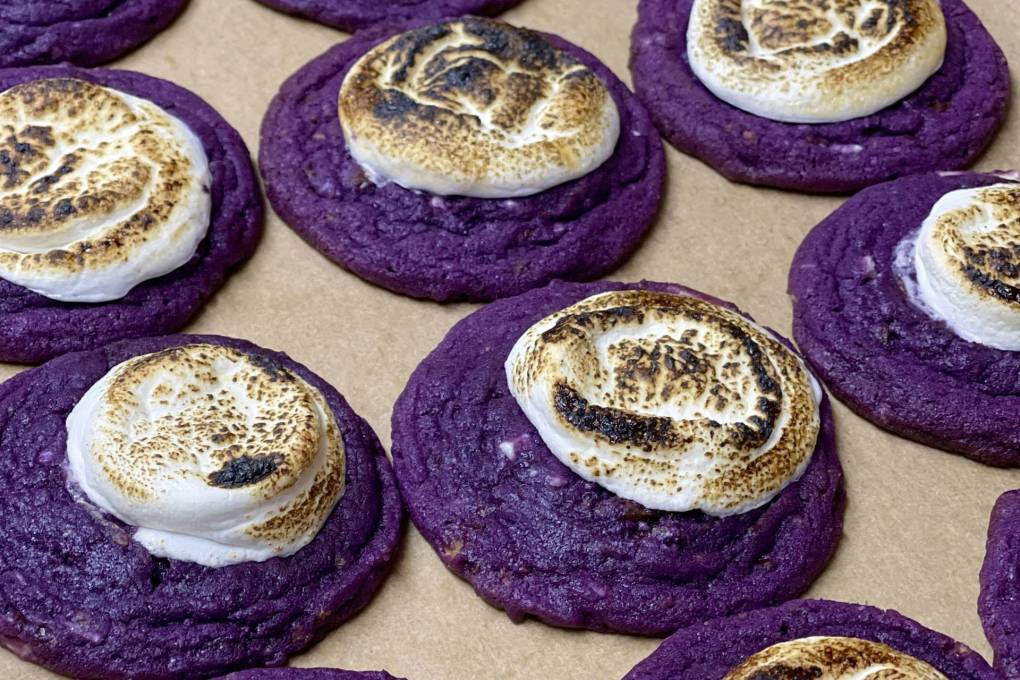
"caption": "Ube-related treats, like these ube cookies, have become some of the most Insgragrammable food content in recent years.",
"description": null,
"title": "UbeCookies_COVER",
"credit": "Courtesy Macs By Icky",
"status": "inherit",
"altTag": "a fresh batch of purple ube cookies with toasted marshmallow are laid out by the dozen",
"isLoading": false,
"fetchFailed": false
},
"arts_13940177": {
"type": "attachments",
"id": "arts_13940177",
"meta": {
"index": "attachments_1716263798",
"site": "arts",
"id": "13940177",
"found": true
},
"parent": 13940127,
"imgSizes": {
"twentyfourteen-full-width": {
"file": "https://cdn.kqed.org/wp-content/uploads/sites/2/2024/01/ube-cannoli_crop-1038x576.jpg",
"width": 1038,
"mimeType": "image/jpeg",
"height": 576
},
"thumbnail": {
"file": "https://cdn.kqed.org/wp-content/uploads/sites/2/2024/01/ube-cannoli_crop-160x90.jpg",
"width": 160,
"mimeType": "image/jpeg",
"height": 90
},
"post-thumbnail": {
"file": "https://cdn.kqed.org/wp-content/uploads/sites/2/2024/01/ube-cannoli_crop-672x372.jpg",
"width": 672,
"mimeType": "image/jpeg",
"height": 372
},
"kqedFullSize": {
"file": "https://cdn.kqed.org/wp-content/uploads/sites/2/2024/01/ube-cannoli_crop.jpg",
"width": 1920,
"height": 1080
},
"large": {
"file": "https://cdn.kqed.org/wp-content/uploads/sites/2/2024/01/ube-cannoli_crop-1020x574.jpg",
"width": 1020,
"mimeType": "image/jpeg",
"height": 574
},
"1536x1536": {
"file": "https://cdn.kqed.org/wp-content/uploads/sites/2/2024/01/ube-cannoli_crop-1536x864.jpg",
"width": 1536,
"mimeType": "image/jpeg",
"height": 864
},
"medium": {
"file": "https://cdn.kqed.org/wp-content/uploads/sites/2/2024/01/ube-cannoli_crop-800x450.jpg",
"width": 800,
"mimeType": "image/jpeg",
"height": 450
},
"medium_large": {
"file": "https://cdn.kqed.org/wp-content/uploads/sites/2/2024/01/ube-cannoli_crop-768x432.jpg",
"width": 768,
"mimeType": "image/jpeg",
"height": 432
}
},
"publishDate": 1704770669,
"modified": 1704826521,
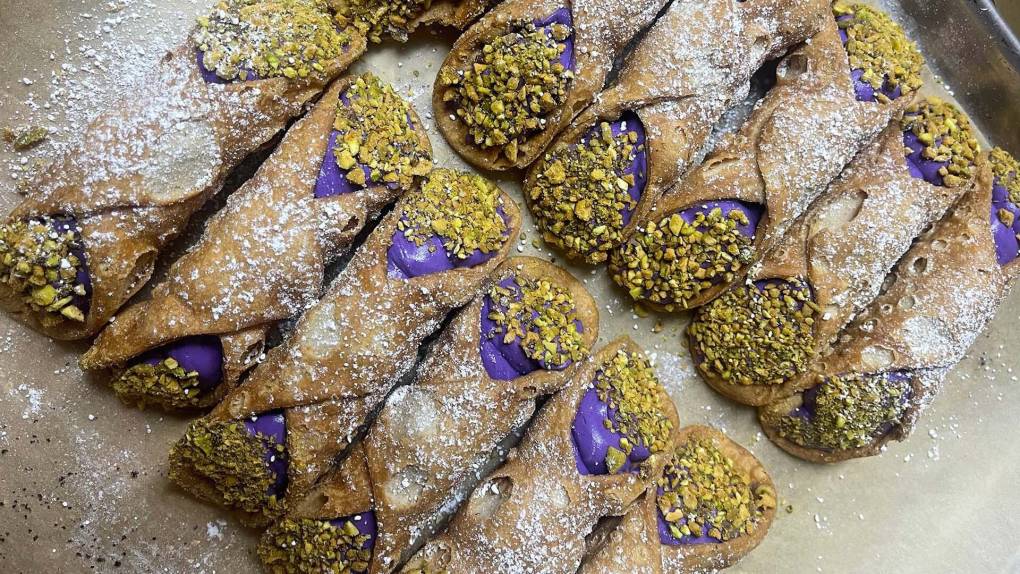
"caption": "As a pop-up, Macs By Icky went viral with their variety of Filipino-forward desserts, like ube cannoli.",
"description": null,
"title": "ube-cannoli_crop",
"credit": "Courtesy of Victoria Sablan",
"status": "inherit",
"altTag": "a tray of ube-flavored cannolis with pistachio crumbs",
"isLoading": false,
"fetchFailed": false
},
"arts_13938804": {
"type": "attachments",
"id": "arts_13938804",
"meta": {
"index": "attachments_1716263798",
"site": "arts",
"id": "13938804",
"found": true
},
"parent": 13938798,
"imgSizes": {
"twentyfourteen-full-width": {
"file": "https://ww2.kqed.org/app/uploads/sites/2/2023/12/Bibingka-HR-PC_-Rezel-Kealoha-1038x576.jpg",
"width": 1038,
"mimeType": "image/jpeg",
"height": 576
},
"thumbnail": {
"file": "https://ww2.kqed.org/app/uploads/sites/2/2023/12/Bibingka-HR-PC_-Rezel-Kealoha-160x90.jpg",
"width": 160,
"mimeType": "image/jpeg",
"height": 90
},
"post-thumbnail": {
"file": "https://ww2.kqed.org/app/uploads/sites/2/2023/12/Bibingka-HR-PC_-Rezel-Kealoha-672x372.jpg",
"width": 672,
"mimeType": "image/jpeg",
"height": 372
},
"kqedFullSize": {
"file": "https://ww2.kqed.org/app/uploads/sites/2/2023/12/Bibingka-HR-PC_-Rezel-Kealoha.jpg",
"width": 2000,
"height": 1125
},
"large": {
"file": "https://ww2.kqed.org/app/uploads/sites/2/2023/12/Bibingka-HR-PC_-Rezel-Kealoha-1020x574.jpg",
"width": 1020,
"mimeType": "image/jpeg",
"height": 574
},
"1536x1536": {
"file": "https://ww2.kqed.org/app/uploads/sites/2/2023/12/Bibingka-HR-PC_-Rezel-Kealoha-1536x864.jpg",
"width": 1536,
"mimeType": "image/jpeg",
"height": 864
},
"full-width": {
"file": "https://ww2.kqed.org/app/uploads/sites/2/2023/12/Bibingka-HR-PC_-Rezel-Kealoha-1920x1080.jpg",
"width": 1920,
"mimeType": "image/jpeg",
"height": 1080
},
"medium": {
"file": "https://ww2.kqed.org/app/uploads/sites/2/2023/12/Bibingka-HR-PC_-Rezel-Kealoha-800x450.jpg",
"width": 800,
"mimeType": "image/jpeg",
"height": 450
},
"medium_large": {
"file": "https://ww2.kqed.org/app/uploads/sites/2/2023/12/Bibingka-HR-PC_-Rezel-Kealoha-768x432.jpg",
"width": 768,
"mimeType": "image/jpeg",
"height": 432
}
},
"publishDate": 1701461447,
"modified": 1701461613,
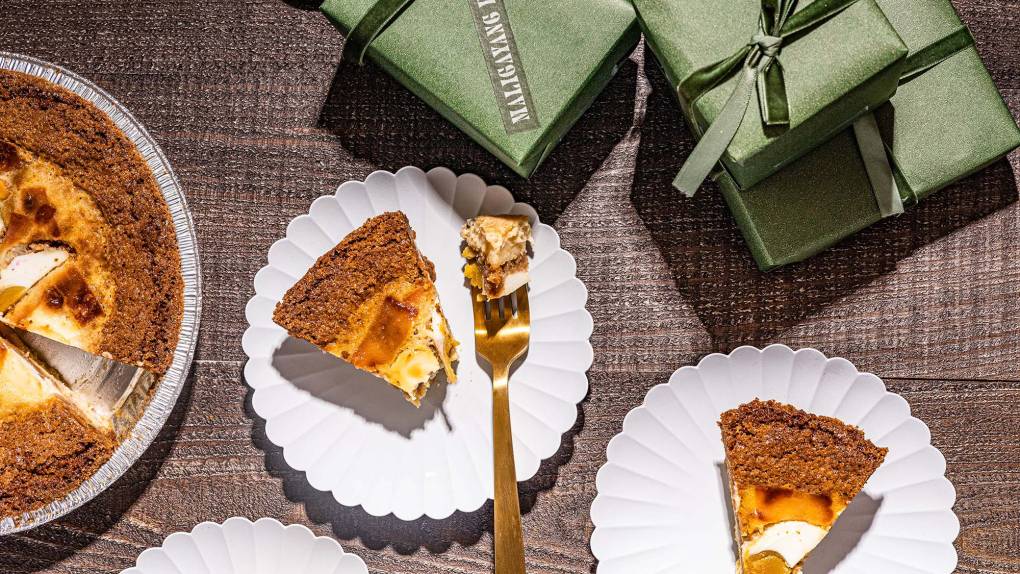
"caption": "Sweet Condesa's bibingka pie is inspired by a kind of coconut rice cake that's traditionally eaten for Christmas in the Philippines.",
"description": null,
"title": "Bibingka HR (PC_ Rezel Kealoha)",
"credit": "Courtesy of Rezel Kealoha",
"status": "inherit",
"altTag": "Overhead view of slices of custard pie on white plates, with gifts wrapped in green wrapping paper in the background.",
"isLoading": false,
"fetchFailed": false
},
"arts_13936936": {
"type": "attachments",
"id": "arts_13936936",
"meta": {
"index": "attachments_1716263798",
"site": "arts",
"id": "13936936",
"found": true
},
"title": "231021-PLoFoodInterview-036-BL-KQED",
"publishDate": 1698189810,
"status": "inherit",
"parent": 0,
"modified": 1764893544,
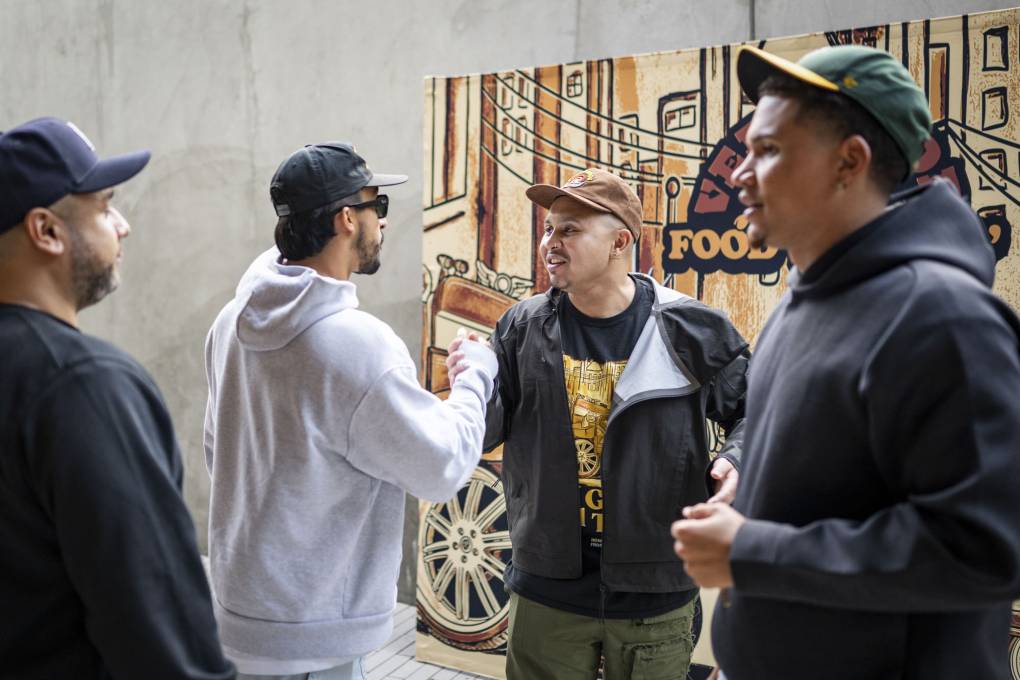
"caption": "P-Lo greets guests during the rapper and producer's Very Good Food Tour at Señor Sisig in Oakland.",
"credit": "Beth LaBerge/KQED",
"altTag": "Two people greet each other in an outdoor setting.",
"description": null,
"imgSizes": {
"medium": {
"file": "https://cdn.kqed.org/wp-content/uploads/sites/2/2023/10/231021-PLoFoodInterview-036-BL-KQED-800x533.jpg",
"width": 800,
"height": 533,
"mimeType": "image/jpeg"
},
"large": {
"file": "https://cdn.kqed.org/wp-content/uploads/sites/2/2023/10/231021-PLoFoodInterview-036-BL-KQED-1020x680.jpg",
"width": 1020,
"height": 680,
"mimeType": "image/jpeg"
},
"thumbnail": {
"file": "https://cdn.kqed.org/wp-content/uploads/sites/2/2023/10/231021-PLoFoodInterview-036-BL-KQED-160x107.jpg",
"width": 160,
"height": 107,
"mimeType": "image/jpeg"
},
"medium_large": {
"file": "https://cdn.kqed.org/wp-content/uploads/sites/2/2023/10/231021-PLoFoodInterview-036-BL-KQED-768x512.jpg",
"width": 768,
"height": 512,
"mimeType": "image/jpeg"
},
"1536x1536": {
"file": "https://cdn.kqed.org/wp-content/uploads/sites/2/2023/10/231021-PLoFoodInterview-036-BL-KQED-1536x1024.jpg",
"width": 1536,
"height": 1024,
"mimeType": "image/jpeg"
},
"post-thumbnail": {
"file": "https://cdn.kqed.org/wp-content/uploads/sites/2/2023/10/231021-PLoFoodInterview-036-BL-KQED-672x372.jpg",
"width": 672,
"height": 372,
"mimeType": "image/jpeg"
},
"twentyfourteen-full-width": {
"file": "https://cdn.kqed.org/wp-content/uploads/sites/2/2023/10/231021-PLoFoodInterview-036-BL-KQED-1038x576.jpg",
"width": 1038,
"height": 576,
"mimeType": "image/jpeg"
},
"full-width": {
"file": "https://cdn.kqed.org/wp-content/uploads/sites/2/2023/10/231021-PLoFoodInterview-036-BL-KQED-1920x1280.jpg",
"width": 1920,
"height": 1280,
"mimeType": "image/jpeg"
},
"kqedFullSize": {
"file": "https://cdn.kqed.org/wp-content/uploads/sites/2/2023/10/231021-PLoFoodInterview-036-BL-KQED.jpg",
"width": 2000,
"height": 1333
}
},
"isLoading": false,
"fetchFailed": false
},
"arts_13936650": {
"type": "attachments",
"id": "arts_13936650",
"meta": {
"index": "attachments_1716263798",
"site": "arts",
"id": "13936650",
"found": true
},
"parent": 13936639,
"imgSizes": {
"twentyfourteen-full-width": {
"file": "https://ww2.kqed.org/app/uploads/sites/2/2023/10/juborrito_portrait-1038x576.jpg",
"width": 1038,
"mimeType": "image/jpeg",
"height": 576
},
"thumbnail": {
"file": "https://ww2.kqed.org/app/uploads/sites/2/2023/10/juborrito_portrait-160x107.jpg",
"width": 160,
"mimeType": "image/jpeg",
"height": 107
},
"post-thumbnail": {
"file": "https://ww2.kqed.org/app/uploads/sites/2/2023/10/juborrito_portrait-672x372.jpg",
"width": 672,
"mimeType": "image/jpeg",
"height": 372
},
"kqedFullSize": {
"file": "https://ww2.kqed.org/app/uploads/sites/2/2023/10/juborrito_portrait.jpg",
"width": 1920,
"height": 1280
},
"large": {
"file": "https://ww2.kqed.org/app/uploads/sites/2/2023/10/juborrito_portrait-1020x680.jpg",
"width": 1020,
"mimeType": "image/jpeg",
"height": 680
},
"1536x1536": {
"file": "https://ww2.kqed.org/app/uploads/sites/2/2023/10/juborrito_portrait-1536x1024.jpg",
"width": 1536,
"mimeType": "image/jpeg",
"height": 1024
},
"medium": {
"file": "https://ww2.kqed.org/app/uploads/sites/2/2023/10/juborrito_portrait-800x533.jpg",
"width": 800,
"mimeType": "image/jpeg",
"height": 533
},
"medium_large": {
"file": "https://ww2.kqed.org/app/uploads/sites/2/2023/10/juborrito_portrait-768x512.jpg",
"width": 768,
"mimeType": "image/jpeg",
"height": 512
}
},
"publishDate": 1697665778,
"modified": 1697670819,
"caption": "The Nemedez brothers (Averill, left; Jason, center; Brian, right) in front of Iguanas taqueria in downtown San Jose, where they debuted their \"Juborrito\" in October.",
"description": null,
"title": "juborrito_portrait",
"credit": "Alan Chazaro",
"status": "inherit",
"altTag": "three brothers proudly stand in front of a taqueria in San Jose",
"isLoading": false,
"fetchFailed": false
},
"arts_13936382": {
"type": "attachments",
"id": "arts_13936382",
"meta": {
"index": "attachments_1716263798",
"site": "arts",
"id": "13936382",
"found": true
},
"parent": 13935891,
"imgSizes": {
"twentyfourteen-full-width": {
"file": "https://ww2.kqed.org/app/uploads/sites/2/2023/10/senor-sisig_sinigang-wings-1038x576.jpg",
"width": 1038,
"mimeType": "image/jpeg",
"height": 576
},
"thumbnail": {
"file": "https://ww2.kqed.org/app/uploads/sites/2/2023/10/senor-sisig_sinigang-wings-160x120.jpg",
"width": 160,
"mimeType": "image/jpeg",
"height": 120
},
"post-thumbnail": {
"file": "https://ww2.kqed.org/app/uploads/sites/2/2023/10/senor-sisig_sinigang-wings-672x372.jpg",
"width": 672,
"mimeType": "image/jpeg",
"height": 372
},
"kqedFullSize": {
"file": "https://ww2.kqed.org/app/uploads/sites/2/2023/10/senor-sisig_sinigang-wings.jpg",
"width": 2000,
"height": 1500
},
"large": {
"file": "https://ww2.kqed.org/app/uploads/sites/2/2023/10/senor-sisig_sinigang-wings-1020x765.jpg",
"width": 1020,
"mimeType": "image/jpeg",
"height": 765
},
"1536x1536": {
"file": "https://ww2.kqed.org/app/uploads/sites/2/2023/10/senor-sisig_sinigang-wings-1536x1152.jpg",
"width": 1536,
"mimeType": "image/jpeg",
"height": 1152
},
"full-width": {
"file": "https://ww2.kqed.org/app/uploads/sites/2/2023/10/senor-sisig_sinigang-wings-1920x1440.jpg",
"width": 1920,
"mimeType": "image/jpeg",
"height": 1440
},
"medium": {
"file": "https://ww2.kqed.org/app/uploads/sites/2/2023/10/senor-sisig_sinigang-wings-800x600.jpg",
"width": 800,
"mimeType": "image/jpeg",
"height": 600
},
"medium_large": {
"file": "https://ww2.kqed.org/app/uploads/sites/2/2023/10/senor-sisig_sinigang-wings-768x576.jpg",
"width": 768,
"mimeType": "image/jpeg",
"height": 576
}
},
"publishDate": 1697234352,
"modified": 1697242007,
"caption": "Crispy wings tossed in sinagang seasoning. Paired with a spicy tamarind dipping sauce with green onion, cilantro, and garlic.",
"description": null,
"title": "senor sisig_sinigang wings",
"credit": "Courtesy of Señor Sisig",
"status": "inherit",
"altTag": "A plate of fried chicken wings garnished with red chilies and green onions.",
"isLoading": false,
"fetchFailed": false
},
"arts_13935581": {
"type": "attachments",
"id": "arts_13935581",
"meta": {
"index": "attachments_1716263798",
"site": "arts",
"id": "13935581",
"found": true
},
"parent": 13935114,
"imgSizes": {
"twentyfourteen-full-width": {
"file": "https://ww2.kqed.org/app/uploads/sites/2/2023/09/everybodyeats-1038x576.jpg",
"width": 1038,
"mimeType": "image/jpeg",
"height": 576
},
"thumbnail": {
"file": "https://ww2.kqed.org/app/uploads/sites/2/2023/09/everybodyeats-160x90.jpg",
"width": 160,
"mimeType": "image/jpeg",
"height": 90
},
"post-thumbnail": {
"file": "https://ww2.kqed.org/app/uploads/sites/2/2023/09/everybodyeats-672x372.jpg",
"width": 672,
"mimeType": "image/jpeg",
"height": 372
},
"kqedFullSize": {
"file": "https://ww2.kqed.org/app/uploads/sites/2/2023/09/everybodyeats.jpg",
"width": 1920,
"height": 1080
},
"large": {
"file": "https://ww2.kqed.org/app/uploads/sites/2/2023/09/everybodyeats-1020x574.jpg",
"width": 1020,
"mimeType": "image/jpeg",
"height": 574
},
"1536x1536": {
"file": "https://ww2.kqed.org/app/uploads/sites/2/2023/09/everybodyeats-1536x864.jpg",
"width": 1536,
"mimeType": "image/jpeg",
"height": 864
},
"medium": {
"file": "https://ww2.kqed.org/app/uploads/sites/2/2023/09/everybodyeats-800x450.jpg",
"width": 800,
"mimeType": "image/jpeg",
"height": 450
},
"medium_large": {
"file": "https://ww2.kqed.org/app/uploads/sites/2/2023/09/everybodyeats-768x432.jpg",
"width": 768,
"mimeType": "image/jpeg",
"height": 432
}
},
"publishDate": 1696010857,
"modified": 1696013196,
"caption": "Now in its second year, Everybody Eats is the brainchild of Savs founder Mike Liwanag (left). The community-focused streetwear and food festival will feature popular street food vendors like Macs by Icky and Señor Sisig.",
"description": null,
"title": "everybodyeats",
"credit": "Photo of Mike Liwanag and Christian Martin by Jordan Jimenez; ice cream taco photo courtesy of Macs by Icky; burrito photo courtesy of Señor Sisig",
"status": "inherit",
"altTag": "A collage of photographs: On the left, two Asian American men mug for the camera in sunglasses, baseball caps, and T-shirts that read \"Everybody Eats\"; on the top right are three chocolate-dipped ice cream tacos; on the bottom right, a hand holds up a burrito with the Golden Gate Bridge as the backdrop.",
"isLoading": false,
"fetchFailed": false
},
"arts_13933769": {
"type": "attachments",
"id": "arts_13933769",
"meta": {
"index": "attachments_1716263798",
"site": "arts",
"id": "13933769",
"found": true
},
"parent": 13933745,
"imgSizes": {
"twentyfourteen-full-width": {
"file": "https://ww2.kqed.org/app/uploads/sites/2/2023/08/tigon-banh-hoi-crop_LT-1038x576.jpg",
"width": 1038,
"mimeType": "image/jpeg",
"height": 576
},
"thumbnail": {
"file": "https://ww2.kqed.org/app/uploads/sites/2/2023/08/tigon-banh-hoi-crop_LT-160x100.jpg",
"width": 160,
"mimeType": "image/jpeg",
"height": 100
},
"post-thumbnail": {
"file": "https://ww2.kqed.org/app/uploads/sites/2/2023/08/tigon-banh-hoi-crop_LT-672x372.jpg",
"width": 672,
"mimeType": "image/jpeg",
"height": 372
},
"kqedFullSize": {
"file": "https://ww2.kqed.org/app/uploads/sites/2/2023/08/tigon-banh-hoi-crop_LT.jpg",
"width": 1920,
"height": 1200
},
"large": {
"file": "https://ww2.kqed.org/app/uploads/sites/2/2023/08/tigon-banh-hoi-crop_LT-1020x638.jpg",
"width": 1020,
"mimeType": "image/jpeg",
"height": 638
},
"1536x1536": {
"file": "https://ww2.kqed.org/app/uploads/sites/2/2023/08/tigon-banh-hoi-crop_LT-1536x960.jpg",
"width": 1536,
"mimeType": "image/jpeg",
"height": 960
},
"medium": {
"file": "https://ww2.kqed.org/app/uploads/sites/2/2023/08/tigon-banh-hoi-crop_LT-800x500.jpg",
"width": 800,
"mimeType": "image/jpeg",
"height": 500
},
"medium_large": {
"file": "https://ww2.kqed.org/app/uploads/sites/2/2023/08/tigon-banh-hoi-crop_LT-768x480.jpg",
"width": 768,
"mimeType": "image/jpeg",
"height": 480
}
},
"publishDate": 1692836117,
"modified": 1692836307,
"caption": "Tigon's make-your-own-spring-roll spread makes for a fun and refreshing communal dining experience.",
"description": null,
"title": "tigon banh hoi-crop_LT",
"credit": "Luke Tsai/KQED",
"status": "inherit",
"altTag": "An abundant platter of fillings for make-your-own Vietnamese spring rolls, with shrimp, beef, fried egg rolls and more.",
"isLoading": false,
"fetchFailed": false
},
"arts_13933292": {
"type": "attachments",
"id": "arts_13933292",
"meta": {
"index": "attachments_1716263798",
"site": "arts",
"id": "13933292",
"found": true
},
"parent": 13933283,
"imgSizes": {
"twentyfourteen-full-width": {
"file": "https://ww2.kqed.org/app/uploads/sites/2/2023/08/The-Lumpia-Company_photos-from-Kultivate-Labs-1038x576.jpg",
"width": 1038,
"mimeType": "image/jpeg",
"height": 576
},
"thumbnail": {
"file": "https://ww2.kqed.org/app/uploads/sites/2/2023/08/The-Lumpia-Company_photos-from-Kultivate-Labs-160x100.jpg",
"width": 160,
"mimeType": "image/jpeg",
"height": 100
},
"post-thumbnail": {
"file": "https://ww2.kqed.org/app/uploads/sites/2/2023/08/The-Lumpia-Company_photos-from-Kultivate-Labs-672x372.jpg",
"width": 672,
"mimeType": "image/jpeg",
"height": 372
},
"kqedFullSize": {
"file": "https://ww2.kqed.org/app/uploads/sites/2/2023/08/The-Lumpia-Company_photos-from-Kultivate-Labs.jpg",
"width": 1920,
"height": 1200
},
"large": {
"file": "https://ww2.kqed.org/app/uploads/sites/2/2023/08/The-Lumpia-Company_photos-from-Kultivate-Labs-1020x638.jpg",
"width": 1020,
"mimeType": "image/jpeg",
"height": 638
},
"1536x1536": {
"file": "https://ww2.kqed.org/app/uploads/sites/2/2023/08/The-Lumpia-Company_photos-from-Kultivate-Labs-1536x960.jpg",
"width": 1536,
"mimeType": "image/jpeg",
"height": 960
},
"medium": {
"file": "https://ww2.kqed.org/app/uploads/sites/2/2023/08/The-Lumpia-Company_photos-from-Kultivate-Labs-800x500.jpg",
"width": 800,
"mimeType": "image/jpeg",
"height": 500
},
"medium_large": {
"file": "https://ww2.kqed.org/app/uploads/sites/2/2023/08/The-Lumpia-Company_photos-from-Kultivate-Labs-768x480.jpg",
"width": 768,
"mimeType": "image/jpeg",
"height": 480
}
},
"publishDate": 1692217237,
"modified": 1692217393,
"caption": "One of the Lumpia Company's remixed lumpia. Founder Alex Retodo was a club promoter before he became a chef. He's one of the Bay Area's many Filipino American food entrepreneurs who have roots in the region's hip-hop scene.",
"description": null,
"title": "The Lumpia Company_photos from Kultivate Labs",
"credit": "Courtesy of Kultivate Labs",
"status": "inherit",
"altTag": "A plate of lumpia topped with slices of hard-boiled egg.",
"isLoading": false,
"fetchFailed": false
},
"arts_13932744": {
"type": "attachments",
"id": "arts_13932744",
"meta": {
"index": "attachments_1716263798",
"site": "arts",
"id": "13932744",
"found": true
},
"parent": 13932574,
"imgSizes": {
"twentyfourteen-full-width": {
"file": "https://ww2.kqed.org/app/uploads/sites/2/2023/08/mestizo_threedishes-crop-1038x576.jpg",
"width": 1038,
"mimeType": "image/jpeg",
"height": 576
},
"thumbnail": {
"file": "https://ww2.kqed.org/app/uploads/sites/2/2023/08/mestizo_threedishes-crop-160x100.jpg",
"width": 160,
"mimeType": "image/jpeg",
"height": 100
},
"post-thumbnail": {
"file": "https://ww2.kqed.org/app/uploads/sites/2/2023/08/mestizo_threedishes-crop-672x372.jpg",
"width": 672,
"mimeType": "image/jpeg",
"height": 372
},
"kqedFullSize": {
"file": "https://ww2.kqed.org/app/uploads/sites/2/2023/08/mestizo_threedishes-crop.jpg",
"width": 1920,
"height": 1200
},
"large": {
"file": "https://ww2.kqed.org/app/uploads/sites/2/2023/08/mestizo_threedishes-crop-1020x638.jpg",
"width": 1020,
"mimeType": "image/jpeg",
"height": 638
},
"1536x1536": {
"file": "https://ww2.kqed.org/app/uploads/sites/2/2023/08/mestizo_threedishes-crop-1536x960.jpg",
"width": 1536,
"mimeType": "image/jpeg",
"height": 960
},
"medium": {
"file": "https://ww2.kqed.org/app/uploads/sites/2/2023/08/mestizo_threedishes-crop-800x500.jpg",
"width": 800,
"mimeType": "image/jpeg",
"height": 500
},
"medium_large": {
"file": "https://ww2.kqed.org/app/uploads/sites/2/2023/08/mestizo_threedishes-crop-768x480.jpg",
"width": 768,
"mimeType": "image/jpeg",
"height": 480
}
},
"publishDate": 1691430790,
"modified": 1691431062,
"caption": "Three dishes from Mestizo showcase the food truck's many cultural influences: Filipino lumpia; a Mexican burrito with fried chicken, gravy and mac salad; and chilaquiles topped with Hawaiian kalua pork.",
"description": null,
"title": "mestizo_threedishes-crop",
"credit": "Alan Chazaro",
"status": "inherit",
"altTag": "a burrito, chilaquiles, and lumpia are showcased on a yellow table outdoors",
"isLoading": false,
"fetchFailed": false
},
"arts_13929323": {
"type": "attachments",
"id": "arts_13929323",
"meta": {
"index": "attachments_1716263798",
"site": "arts",
"id": "13929323",
"found": true
},
"parent": 13929263,
"imgSizes": {
"twentyfourteen-full-width": {
"file": "https://ww2.kqed.org/app/uploads/sites/2/2023/05/ube-choco-taco-1038x576.jpg",
"width": 1038,
"mimeType": "image/jpeg",
"height": 576
},
"thumbnail": {
"file": "https://ww2.kqed.org/app/uploads/sites/2/2023/05/ube-choco-taco-160x90.jpg",
"width": 160,
"mimeType": "image/jpeg",
"height": 90
},
"post-thumbnail": {
"file": "https://ww2.kqed.org/app/uploads/sites/2/2023/05/ube-choco-taco-672x372.jpg",
"width": 672,
"mimeType": "image/jpeg",
"height": 372
},
"kqedFullSize": {
"file": "https://ww2.kqed.org/app/uploads/sites/2/2023/05/ube-choco-taco.jpg",
"width": 1920,
"height": 1080
},
"large": {
"file": "https://ww2.kqed.org/app/uploads/sites/2/2023/05/ube-choco-taco-1020x574.jpg",
"width": 1020,
"mimeType": "image/jpeg",
"height": 574
},
"1536x1536": {
"file": "https://ww2.kqed.org/app/uploads/sites/2/2023/05/ube-choco-taco-1536x864.jpg",
"width": 1536,
"mimeType": "image/jpeg",
"height": 864
},
"medium": {
"file": "https://ww2.kqed.org/app/uploads/sites/2/2023/05/ube-choco-taco-800x450.jpg",
"width": 800,
"mimeType": "image/jpeg",
"height": 450
},
"medium_large": {
"file": "https://ww2.kqed.org/app/uploads/sites/2/2023/05/ube-choco-taco-768x432.jpg",
"width": 768,
"mimeType": "image/jpeg",
"height": 432
}
},
"publishDate": 1684365732,
"modified": 1684366251,
"caption": "Macs by Icky is known for its Bay Area take on the famous Klondike's Choco Taco. The frozen treats are available in several flavors — including, most strikingly, a version that features crushed pistachios and ube ice cream (right). ",
"description": null,
"title": "ube choco taco",
"credit": "Courtesy of Macs by Icky",
"status": "inherit",
"altTag": "Three ice cream tacos in assorted flavors.",
"isLoading": false,
"fetchFailed": false
},
"arts_13926978": {
"type": "attachments",
"id": "arts_13926978",
"meta": {
"index": "attachments_1716263798",
"site": "arts",
"id": "13926978",
"found": true
},
"parent": 13926749,
"imgSizes": {
"twentyfourteen-full-width": {
"file": "https://ww2.kqed.org/app/uploads/sites/2/2023/03/tasty_tings_spread-crop-1038x576.jpg",
"width": 1038,
"mimeType": "image/jpeg",
"height": 576
},
"thumbnail": {
"file": "https://ww2.kqed.org/app/uploads/sites/2/2023/03/tasty_tings_spread-crop-160x90.jpg",
"width": 160,
"mimeType": "image/jpeg",
"height": 90
},
"post-thumbnail": {
"file": "https://ww2.kqed.org/app/uploads/sites/2/2023/03/tasty_tings_spread-crop-672x372.jpg",
"width": 672,
"mimeType": "image/jpeg",
"height": 372
},
"kqedFullSize": {
"file": "https://ww2.kqed.org/app/uploads/sites/2/2023/03/tasty_tings_spread-crop.jpg",
"width": 1920,
"height": 1080
},
"large": {
"file": "https://ww2.kqed.org/app/uploads/sites/2/2023/03/tasty_tings_spread-crop-1020x574.jpg",
"width": 1020,
"mimeType": "image/jpeg",
"height": 574
},
"1536x1536": {
"file": "https://ww2.kqed.org/app/uploads/sites/2/2023/03/tasty_tings_spread-crop-1536x864.jpg",
"width": 1536,
"mimeType": "image/jpeg",
"height": 864
},
"medium": {
"file": "https://ww2.kqed.org/app/uploads/sites/2/2023/03/tasty_tings_spread-crop-800x450.jpg",
"width": 800,
"mimeType": "image/jpeg",
"height": 450
},
"medium_large": {
"file": "https://ww2.kqed.org/app/uploads/sites/2/2023/03/tasty_tings_spread-crop-768x432.jpg",
"width": 768,
"mimeType": "image/jpeg",
"height": 432
}
},
"publishDate": 1679938763,
"modified": 1679938965,
"caption": "A colorful spread of Tasty Tings' Jamaican beef patties.",
"description": null,
"title": "tasty_tings_spread-crop",
"credit": "Elliott Alexander",
"status": "inherit",
"altTag": "A colorful spread of Jamaican beef patties on a table",
"isLoading": false,
"fetchFailed": false
}
},
"audioPlayerReducer": {
"postId": "stream_live",
"isPaused": true,
"isPlaying": false,
"pfsActive": false,
"pledgeModalIsOpen": true,
"playerDrawerIsOpen": false,
"liveAudioPlayStartedAt": 0,
"liveAudioPlayContext": ""
},
"authorsReducer": {
"ltsai": {
"type": "authors",
"id": "11743",
"meta": {
"index": "authors_1716337520",
"id": "11743",
"found": true
},
"name": "Luke Tsai",
"firstName": "Luke",
"lastName": "Tsai",
"slug": "ltsai",
"email": "ltsai@kqed.org",
"display_author_email": true,
"staff_mastheads": [
"arts"
],
"title": "Food Editor",
"bio": "Luke Tsai is KQED's food editor and resident stinky tofu connoisseur. Prior to KQED, he was an editor at Eater SF, \u003cem>San Francisco \u003c/em>magazine, and the \u003cem>East Bay Express\u003c/em>, and his work has also appeared in TASTE, the \u003cem>San Francisco Chronicle\u003c/em>, and the \u003cem>Best Food Writing\u003c/em> anthology. When he isn't writing or editing, you'll find him eating most everything he can get his hands on.",
"avatar": "https://secure.gravatar.com/avatar/1e59b45bf191526e7339d6ba46e33a57b2030d25c27660ecc64ea3cb863e34f7?s=600&d=blank&r=g",
"twitter": "theluketsai",
"bluesky": null,
"facebook": null,
"instagram": null,
"linkedin": null,
"sites": [
{
"site": "",
"roles": [
"editor"
]
},
{
"site": "arts",
"roles": [
"administrator"
]
},
{
"site": "news",
"roles": [
"editor",
"contributor"
]
},
{
"site": "bayareabites",
"roles": [
"editor"
]
},
{
"site": "food",
"roles": [
"editor"
]
}
],
"headData": {
"title": "Luke Tsai | KQED",
"description": "Food Editor",
"ogImgSrc": "https://secure.gravatar.com/avatar/1e59b45bf191526e7339d6ba46e33a57b2030d25c27660ecc64ea3cb863e34f7?s=600&d=blank&r=g",
"twImgSrc": "https://secure.gravatar.com/avatar/1e59b45bf191526e7339d6ba46e33a57b2030d25c27660ecc64ea3cb863e34f7?s=600&d=blank&r=g"
},
"isLoading": false,
"link": "/author/ltsai"
},
"achazaro": {
"type": "authors",
"id": "11748",
"meta": {
"index": "authors_1716337520",
"id": "11748",
"found": true
},
"name": "Alan Chazaro",
"firstName": "Alan",
"lastName": "Chazaro",
"slug": "achazaro",
"email": "agchazaro@gmail.com",
"display_author_email": true,
"staff_mastheads": [],
"title": "Food Writer and Reporter",
"bio": "Alan Chazaro is the author of \u003cem>This Is Not a Frank Ocean Cover Album\u003c/em> (Black Lawrence Press, 2019), \u003cem>Piñata Theory\u003c/em> (Black Lawrence Press, 2020), and \u003cem>Notes from the Eastern Span of the Bay Bridge\u003c/em> (Ghost City Press, 2021). He is a graduate of June Jordan’s Poetry for the People program at UC Berkeley and a former Lawrence Ferlinghetti Fellow at the University of San Francisco. He writes about sports, food, art, music, education, and culture while repping the Bay on \u003ca href=\"https://twitter.com/alan_chazaro\">Twitter\u003c/a> and \u003ca href=\"https://www.instagram.com/alan_chazaro/?hl=en\">Instagram\u003c/a> at @alan_chazaro.",
"avatar": "https://secure.gravatar.com/avatar/ea8b6dd970fc5c29e7a188e7d5861df7?s=600&d=blank&r=g",
"twitter": "alan_chazaro",
"facebook": null,
"instagram": null,
"linkedin": null,
"sites": [
{
"site": "arts",
"roles": [
"contributor"
]
},
{
"site": "news",
"roles": [
"editor"
]
}
],
"headData": {
"title": "Alan Chazaro | KQED",
"description": "Food Writer and Reporter",
"ogImgSrc": "https://secure.gravatar.com/avatar/ea8b6dd970fc5c29e7a188e7d5861df7?s=600&d=blank&r=g",
"twImgSrc": "https://secure.gravatar.com/avatar/ea8b6dd970fc5c29e7a188e7d5861df7?s=600&d=blank&r=g"
},
"isLoading": false,
"link": "/author/achazaro"
}
},
"pagesReducer": {
"arts_tag_filipino-food": {
"type": "terms",
"id": "arts_14183",
"meta": {
"index": "terms_1716263798",
"site": "arts",
"id": "14183",
"score": 9.304556
},
"featImg": null,
"name": "Filipino food",
"description": null,
"taxonomy": "tag",
"headData": {
"twImgId": null,
"twTitle": null,
"ogTitle": null,
"ogImgId": null,
"twDescription": null,
"description": null,
"title": "Filipino food Archives | KQED Arts",
"ogDescription": null
},
"ttid": 14195,
"slug": "filipino-food",
"isLoading": false,
"title": "Filipino food",
"pageMeta": {
"site": "arts",
"WpPageTemplate": "page-topic-editorial",
"currentPage": 2
},
"blocks": [
{
"blockName": "kqed/post-list",
"attrs": {
"layout": "cardArticle2",
"query": "posts/arts?tag=filipino-food",
"seeMore": false,
"paginated": true,
"page": 2
}
},
{
"blockName": "kqed/ad"
}
]
}
},
"pfsSessionReducer": {},
"postsReducer": {
"stream_live": {
"type": "live",
"id": "stream_live",
"audioUrl": "https://streams.kqed.org/kqedradio",
"title": "Live Stream",
"excerpt": "Live Stream information currently unavailable.",
"link": "/radio",
"featImg": "",
"label": {
"name": "KQED Live",
"link": "/"
}
},
"stream_kqedNewscast": {
"type": "posts",
"id": "stream_kqedNewscast",
"audioUrl": "https://www.kqed.org/.stream/anon/radio/RDnews/newscast.mp3?_=1",
"title": "KQED Newscast",
"featImg": "",
"label": {
"name": "88.5 FM",
"link": "/"
}
},
"arts_13955219": {
"type": "posts",
"id": "arts_13955219",
"meta": {
"index": "posts_1716263798",
"site": "arts",
"id": "13955219",
"score": null,
"sort": [
1712094125000
]
},
"guestAuthors": [],
"slug": "ube-fest-2024-filipino-food-san-francisco-district-six",
"title": "This Year’s Ube Fest Will Be More Ube-licious Than Ever",
"publishDate": 1712094125,
"format": "standard",
"headTitle": "This Year’s Ube Fest Will Be More Ube-licious Than Ever | KQED",
"labelTerm": {},
"content": "\u003cp>Two years ago, my food writing colleague Luke Tsai noticed \u003ca href=\"https://www.kqed.org/arts/13912001/ube-festival-filipino-kapwa-gardens-yum-yams-san-francisco-marleys-treats\">a significant rise in ube-related events\u003c/a> happening during in the spring. He predicted a delectable future: “We might as well go ahead and designate April as National Ube Month.”\u003c/p>\n\u003cp>Well, he’s right. On Sunday, April 7, San Francisco’s District Six will host their largest ever \u003ca href=\"https://www.eventbrite.com/e/the-ube-festival-tickets-821207883887\">Ube Fest\u003c/a>.\u003c/p>\n\u003cp>Certainly you’ve either heard of or eaten ube at this point. The sweet, starchy and iconically purple yam from the Philippines has had the Bay Area’s most creative foodmakers under a lavender spell for years. But it’s something that has always held weight in the Filipino American community. And at the outdoor market of Ube Fest, a squad of over 20 local vendors will showcase their favorite ingredient’s delicious versatility. \u003c/p>\n\u003cfigure id=\"attachment_13912051\" class=\"wp-caption alignnone\" style=\"max-width: 1242px\">\u003cimg loading=\"lazy\" decoding=\"async\" class=\"size-full wp-image-13912051\" src=\"https://cdn.kqed.org/wp-content/uploads/sites/2/2022/04/MarleysTreats.jpeg\" alt=\"Two ube cupcakes, ube pandesals and ube flan cheesecakes, against a white background.\" width=\"1242\" height=\"1235\" srcset=\"https://cdn.kqed.org/wp-content/uploads/sites/2/2022/04/MarleysTreats.jpeg 1242w, https://cdn.kqed.org/wp-content/uploads/sites/2/2022/04/MarleysTreats-800x795.jpeg 800w, https://cdn.kqed.org/wp-content/uploads/sites/2/2022/04/MarleysTreats-1020x1014.jpeg 1020w, https://cdn.kqed.org/wp-content/uploads/sites/2/2022/04/MarleysTreats-160x159.jpeg 160w, https://cdn.kqed.org/wp-content/uploads/sites/2/2022/04/MarleysTreats-768x764.jpeg 768w\" sizes=\"(max-width: 1242px) 100vw, 1242px\">\u003cfigcaption class=\"wp-caption-text\">Ube cupcakes, ‘flandesals’ and ube flan cheesecakes — all from Hayward-based Marley’s Treats, where the ube desserts are by far the most popular items. \u003ccite>(Marley's Treats)\u003c/cite>\u003c/figcaption>\u003c/figure>\n\u003cp>“I’m excited that everyone is catching on because it deserves the spotlight,” says Joseph Alcasabas, co-owner of \u003ca href=\"https://www.kqed.org/arts/13898436/uncle-tito-filipino-comfort-food-soma-opening\">SoMa’s cool Filipino American eatery Uncle Tito\u003c/a>, who will be serving two varieties of ube at the festival. “It’s just eye catching out of the gate, right? The bold purple has you wondering what it tastes like. That builds curiosity within foodie culture. And then the taste delivers.”\u003c/p>\n\u003cp>Uncle Tito’s head chef Vincent Dayao will prepare a rice bowl with the rice seasoned using ube and coconut milk to give the white grains a natural purple dye.\u003c/p>\n\u003cp>[ad fullwidth]\u003c/p>\n\u003cp>And that’s not even the tip of the purple iceberg.\u003c/p>\n\u003cp>Ube salsa on tacos. Ube dessert bars. Ube lemonade. Ube cookies. Ube kettle corn. Ube musubi. Ube pies. Ube nachos? (That last one isn’t actually a thing yet, but it should be — and rest assured that Uncle Tito will be serving their “bistek chistek nachos,” which is a play on a Philly cheesesteak and Filipino bistek in the glorious form of Mexican tortilla chips.)\u003c/p>\n\u003cp>Food vendors will include other San Francisco and East Bay favorites like \u003ca href=\"https://www.instagram.com/senorsisig/?hl=en\">Señor Sisig\u003c/a>, \u003ca href=\"https://www.instagram.com/alpastorpapi415/?hl=en\">Al Pastor Papi\u003c/a> and \u003ca href=\"https://www.instagram.com/marleystreats/?hl=en\">Marley’s Treats\u003c/a>. There will also be DJs, local nonprofits, pop-up clothing and botanical shops, and even a booth to learn more about baseball in the Philippines. \u003c/p>\n\u003cfigure id=\"attachment_13898461\" class=\"wp-caption alignnone\" style=\"max-width: 1707px\">\u003cimg loading=\"lazy\" decoding=\"async\" class=\"size-full wp-image-13898461\" src=\"https://cdn.kqed.org/wp-content/uploads/sites/2/2021/06/UncleTito_Valerios-scaled.jpg\" alt=\"Ube buns and Milo banana creme lumpia on a white plate, dusted with powdered sugar.\" width=\"1707\" height=\"2560\" srcset=\"https://cdn.kqed.org/wp-content/uploads/sites/2/2021/06/UncleTito_Valerios-scaled.jpg 1707w, https://cdn.kqed.org/wp-content/uploads/sites/2/2021/06/UncleTito_Valerios-800x1200.jpg 800w, https://cdn.kqed.org/wp-content/uploads/sites/2/2021/06/UncleTito_Valerios-1020x1530.jpg 1020w, https://cdn.kqed.org/wp-content/uploads/sites/2/2021/06/UncleTito_Valerios-160x240.jpg 160w, https://cdn.kqed.org/wp-content/uploads/sites/2/2021/06/UncleTito_Valerios-768x1152.jpg 768w, https://cdn.kqed.org/wp-content/uploads/sites/2/2021/06/UncleTito_Valerios-1024x1536.jpg 1024w, https://cdn.kqed.org/wp-content/uploads/sites/2/2021/06/UncleTito_Valerios-1365x2048.jpg 1365w, https://cdn.kqed.org/wp-content/uploads/sites/2/2021/06/UncleTito_Valerios-1920x2880.jpg 1920w\" sizes=\"(max-width: 1707px) 100vw, 1707px\">\u003cfigcaption class=\"wp-caption-text\">The ube buns are a collaboration with Valerio’s Tropical Bakeshop, a staple of the local Filipino community. \u003ccite>(Alan Chazaro)\u003c/cite>\u003c/figcaption>\u003c/figure>\n\u003cp>Recently returned from a lengthy stay in the Philippines, the event’s organizer, Anthony Schlander of \u003ca href=\"https://www.instagram.com/anthonypresents/\">Anthony Presents\u003c/a>, is eager to share his renewed connection to his parents’ homeland with Bay Area eaters and hypebeasts alike.\u003c/p>\n\u003cp>“I took a mental break last year, but I’m going to put my efforts back into food and community events [in the Bay Area] this year,” Schlander says. “[This year’s Ube Festival] will actually be our busiest one ever. Ube is purple gold.”\u003c/p>\n\u003cp>For him, ube is a gateway into learning more about what the Philippines have to offer. It just happens to be a flavorful starting point.\u003c/p>\n\u003cp>\u003cimg loading=\"lazy\" decoding=\"async\" class=\"alignnone size-full wp-image-12127869\" src=\"https://cdn.kqed.org/wp-content/uploads/sites/2/2016/09/Q.Logo_.Break_.jpg\" alt=\"\" width=\"800\" height=\"78\" srcset=\"https://cdn.kqed.org/wp-content/uploads/sites/2/2016/09/Q.Logo_.Break_.jpg 800w, https://cdn.kqed.org/wp-content/uploads/sites/2/2016/09/Q.Logo_.Break_-400x39.jpg 400w, https://cdn.kqed.org/wp-content/uploads/sites/2/2016/09/Q.Logo_.Break_-768x75.jpg 768w\" sizes=\"(max-width: 800px) 100vw, 800px\">\u003c/p>\n\u003cp>\u003c/p>\n\u003cp>\u003ci>The Ube Festival will take place at \u003ca href=\"https://www.instagram.com/districtsixsf/?hl=en\">District Six\u003c/a> (428 11th St., San Francisco) on Sunday, April 7 from 12–5 p.m. \u003ca href=\"https://www.eventbrite.com/e/the-ube-festival-tickets-821207883887\">Tickets are available here\u003c/a>.\u003c/i>\u003c/p>\n\n",
"blocks": [],
"excerpt": "The annual festival returns April 7 to San Francisco’s District Six with over 20 local vendors.",
"status": "publish",
"parent": 0,
"modified": 1726701760,
"stats": {
"hasAudio": false,
"hasVideo": false,
"hasChartOrMap": false,
"iframeSrcs": [],
"hasGoogleForm": false,
"hasGallery": false,
"hasHearkenModule": false,
"hasPolis": false,
"paragraphCount": 15,
"wordCount": 577
},
"headData": {
"title": "This Year’s Ube Fest Will Be More Ube-licious Than Ever | KQED",
"description": "The annual festival returns April 7 to San Francisco’s District Six with over 20 local vendors.",
"ogTitle": "",
"ogDescription": "",
"ogImgId": "",
"twTitle": "",
"twDescription": "",
"twImgId": "",
"schema": {
"@context": "https://schema.org",
"@type": "Article",
"headline": "This Year’s Ube Fest Will Be More Ube-licious Than Ever",
"datePublished": "2024-04-02T14:42:05-07:00",
"dateModified": "2024-09-18T16:22:40-07:00",
"image": "https://cdn.kqed.org/wp-content/uploads/2020/02/KQED-OG-Image@1x.png"
}
},
"source": "The Do List",
"sticky": false,
"templateType": "standard",
"featuredImageType": "standard",
"excludeFromSiteSearch": "Include",
"articleAge": "0",
"path": "/arts/13955219/ube-fest-2024-filipino-food-san-francisco-district-six",
"audioTrackLength": null,
"parsedContent": [
{
"type": "contentString",
"content": "\u003cdiv class=\"post-body\">\u003cp>\u003cp>Two years ago, my food writing colleague Luke Tsai noticed \u003ca href=\"https://www.kqed.org/arts/13912001/ube-festival-filipino-kapwa-gardens-yum-yams-san-francisco-marleys-treats\">a significant rise in ube-related events\u003c/a> happening during in the spring. He predicted a delectable future: “We might as well go ahead and designate April as National Ube Month.”\u003c/p>\n\u003cp>Well, he’s right. On Sunday, April 7, San Francisco’s District Six will host their largest ever \u003ca href=\"https://www.eventbrite.com/e/the-ube-festival-tickets-821207883887\">Ube Fest\u003c/a>.\u003c/p>\n\u003cp>Certainly you’ve either heard of or eaten ube at this point. The sweet, starchy and iconically purple yam from the Philippines has had the Bay Area’s most creative foodmakers under a lavender spell for years. But it’s something that has always held weight in the Filipino American community. And at the outdoor market of Ube Fest, a squad of over 20 local vendors will showcase their favorite ingredient’s delicious versatility. \u003c/p>\n\u003cfigure id=\"attachment_13912051\" class=\"wp-caption alignnone\" style=\"max-width: 1242px\">\u003cimg loading=\"lazy\" decoding=\"async\" class=\"size-full wp-image-13912051\" src=\"https://cdn.kqed.org/wp-content/uploads/sites/2/2022/04/MarleysTreats.jpeg\" alt=\"Two ube cupcakes, ube pandesals and ube flan cheesecakes, against a white background.\" width=\"1242\" height=\"1235\" srcset=\"https://cdn.kqed.org/wp-content/uploads/sites/2/2022/04/MarleysTreats.jpeg 1242w, https://cdn.kqed.org/wp-content/uploads/sites/2/2022/04/MarleysTreats-800x795.jpeg 800w, https://cdn.kqed.org/wp-content/uploads/sites/2/2022/04/MarleysTreats-1020x1014.jpeg 1020w, https://cdn.kqed.org/wp-content/uploads/sites/2/2022/04/MarleysTreats-160x159.jpeg 160w, https://cdn.kqed.org/wp-content/uploads/sites/2/2022/04/MarleysTreats-768x764.jpeg 768w\" sizes=\"(max-width: 1242px) 100vw, 1242px\">\u003cfigcaption class=\"wp-caption-text\">Ube cupcakes, ‘flandesals’ and ube flan cheesecakes — all from Hayward-based Marley’s Treats, where the ube desserts are by far the most popular items. \u003ccite>(Marley's Treats)\u003c/cite>\u003c/figcaption>\u003c/figure>\n\u003cp>“I’m excited that everyone is catching on because it deserves the spotlight,” says Joseph Alcasabas, co-owner of \u003ca href=\"https://www.kqed.org/arts/13898436/uncle-tito-filipino-comfort-food-soma-opening\">SoMa’s cool Filipino American eatery Uncle Tito\u003c/a>, who will be serving two varieties of ube at the festival. “It’s just eye catching out of the gate, right? The bold purple has you wondering what it tastes like. That builds curiosity within foodie culture. And then the taste delivers.”\u003c/p>\n\u003cp>Uncle Tito’s head chef Vincent Dayao will prepare a rice bowl with the rice seasoned using ube and coconut milk to give the white grains a natural purple dye.\u003c/p>\n\u003cp>\u003c/p>\u003c/div>",
"attributes": {
"named": {},
"numeric": []
}
},
{
"type": "component",
"content": "",
"name": "ad",
"attributes": {
"named": {
"label": "fullwidth"
},
"numeric": [
"fullwidth"
]
}
},
{
"type": "contentString",
"content": "\u003cdiv class=\"post-body\">\u003cp>\u003c/p>\n\u003cp>And that’s not even the tip of the purple iceberg.\u003c/p>\n\u003cp>Ube salsa on tacos. Ube dessert bars. Ube lemonade. Ube cookies. Ube kettle corn. Ube musubi. Ube pies. Ube nachos? (That last one isn’t actually a thing yet, but it should be — and rest assured that Uncle Tito will be serving their “bistek chistek nachos,” which is a play on a Philly cheesesteak and Filipino bistek in the glorious form of Mexican tortilla chips.)\u003c/p>\n\u003cp>Food vendors will include other San Francisco and East Bay favorites like \u003ca href=\"https://www.instagram.com/senorsisig/?hl=en\">Señor Sisig\u003c/a>, \u003ca href=\"https://www.instagram.com/alpastorpapi415/?hl=en\">Al Pastor Papi\u003c/a> and \u003ca href=\"https://www.instagram.com/marleystreats/?hl=en\">Marley’s Treats\u003c/a>. There will also be DJs, local nonprofits, pop-up clothing and botanical shops, and even a booth to learn more about baseball in the Philippines. \u003c/p>\n\u003cfigure id=\"attachment_13898461\" class=\"wp-caption alignnone\" style=\"max-width: 1707px\">\u003cimg loading=\"lazy\" decoding=\"async\" class=\"size-full wp-image-13898461\" src=\"https://cdn.kqed.org/wp-content/uploads/sites/2/2021/06/UncleTito_Valerios-scaled.jpg\" alt=\"Ube buns and Milo banana creme lumpia on a white plate, dusted with powdered sugar.\" width=\"1707\" height=\"2560\" srcset=\"https://cdn.kqed.org/wp-content/uploads/sites/2/2021/06/UncleTito_Valerios-scaled.jpg 1707w, https://cdn.kqed.org/wp-content/uploads/sites/2/2021/06/UncleTito_Valerios-800x1200.jpg 800w, https://cdn.kqed.org/wp-content/uploads/sites/2/2021/06/UncleTito_Valerios-1020x1530.jpg 1020w, https://cdn.kqed.org/wp-content/uploads/sites/2/2021/06/UncleTito_Valerios-160x240.jpg 160w, https://cdn.kqed.org/wp-content/uploads/sites/2/2021/06/UncleTito_Valerios-768x1152.jpg 768w, https://cdn.kqed.org/wp-content/uploads/sites/2/2021/06/UncleTito_Valerios-1024x1536.jpg 1024w, https://cdn.kqed.org/wp-content/uploads/sites/2/2021/06/UncleTito_Valerios-1365x2048.jpg 1365w, https://cdn.kqed.org/wp-content/uploads/sites/2/2021/06/UncleTito_Valerios-1920x2880.jpg 1920w\" sizes=\"(max-width: 1707px) 100vw, 1707px\">\u003cfigcaption class=\"wp-caption-text\">The ube buns are a collaboration with Valerio’s Tropical Bakeshop, a staple of the local Filipino community. \u003ccite>(Alan Chazaro)\u003c/cite>\u003c/figcaption>\u003c/figure>\n\u003cp>Recently returned from a lengthy stay in the Philippines, the event’s organizer, Anthony Schlander of \u003ca href=\"https://www.instagram.com/anthonypresents/\">Anthony Presents\u003c/a>, is eager to share his renewed connection to his parents’ homeland with Bay Area eaters and hypebeasts alike.\u003c/p>\n\u003cp>“I took a mental break last year, but I’m going to put my efforts back into food and community events [in the Bay Area] this year,” Schlander says. “[This year’s Ube Festival] will actually be our busiest one ever. Ube is purple gold.”\u003c/p>\n\u003cp>For him, ube is a gateway into learning more about what the Philippines have to offer. It just happens to be a flavorful starting point.\u003c/p>\n\u003cp>\u003cimg loading=\"lazy\" decoding=\"async\" class=\"alignnone size-full wp-image-12127869\" src=\"https://cdn.kqed.org/wp-content/uploads/sites/2/2016/09/Q.Logo_.Break_.jpg\" alt=\"\" width=\"800\" height=\"78\" srcset=\"https://cdn.kqed.org/wp-content/uploads/sites/2/2016/09/Q.Logo_.Break_.jpg 800w, https://cdn.kqed.org/wp-content/uploads/sites/2/2016/09/Q.Logo_.Break_-400x39.jpg 400w, https://cdn.kqed.org/wp-content/uploads/sites/2/2016/09/Q.Logo_.Break_-768x75.jpg 768w\" sizes=\"(max-width: 800px) 100vw, 800px\">\u003c/p>\n\u003cp>\u003c/p>\n\u003cp>\u003ci>The Ube Festival will take place at \u003ca href=\"https://www.instagram.com/districtsixsf/?hl=en\">District Six\u003c/a> (428 11th St., San Francisco) on Sunday, April 7 from 12–5 p.m. \u003ca href=\"https://www.eventbrite.com/e/the-ube-festival-tickets-821207883887\">Tickets are available here\u003c/a>.\u003c/i>\u003c/p>\n\n\u003c/div>\u003c/p>",
"attributes": {
"named": {},
"numeric": []
}
}
],
"link": "/arts/13955219/ube-fest-2024-filipino-food-san-francisco-district-six",
"authors": [
"11748"
],
"programs": [
"arts_140"
],
"categories": [
"arts_1",
"arts_12276"
],
"tags": [
"arts_2855",
"arts_14183",
"arts_1176",
"arts_1297",
"arts_1146",
"arts_4903",
"arts_8836",
"arts_585",
"arts_16240"
],
"featImg": "arts_13955283",
"label": "source_arts_13955219"
},
"arts_13940127": {
"type": "posts",
"id": "arts_13940127",
"meta": {
"index": "posts_1716263798",
"site": "arts",
"id": "13940127",
"score": null,
"sort": [
1704827424000
]
},
"parent": 0,
"labelTerm": {},
"blocks": [],
"publishDate": 1704827424,
"format": "standard",
"title": "Cult Favorite Filipino Dessert Pop-Up Opens First Storefront in Union City",
"headTitle": "Cult Favorite Filipino Dessert Pop-Up Opens First Storefront in Union City | KQED",
"content": "\u003cp>If any food craze has grown since the start of the pandemic, it’s the deliciously colorful injection of everyone’s favorite Filipino ingredient: \u003ca href=\"https://www.kqed.org/arts/13912001/ube-festival-filipino-kapwa-gardens-yum-yams-san-francisco-marleys-treats\">ube\u003c/a>. In recent years, the yam has made its purply splash in \u003ca href=\"https://www.kqed.org/news/11963721/how-sfs-rize-up-sourdough-puts-black-bakers-on-the-map\">sourdough bread\u003c/a>, lemonade, \u003ca href=\"https://www.kqed.org/arts/13926618/mayumu-abi-balingit-filipino-desserts-cookbook-bay-area-san-jose\">tres leches cake\u003c/a>, cookies, grilled cheese sandwiches and good old-fashioned American holiday \u003ca href=\"https://www.kqed.org/arts/13938798/filipino-christmas-pies-sweet-condesa-sf-pinay-pie-lady\">pies\u003c/a>.\u003c/p>\n\u003cp>As writer Jessica Reyes put it in a recent \u003ca href=\"https://www.pastemagazine.com/food/ube/ube-just-keeps-getting-more-popular\">\u003cem>Paste \u003c/em>article\u003c/a>, “Ube isn’t exactly the newest food trend anymore, but it’s getting more popular by the year.”\u003c/p>\n\u003cp>Among local foodmakers serving the sweet treat, \u003ca href=\"http://link\">Macs By Icky’s\u003c/a> creativity has stood out. The modest Union City pop-up has set trends with out-of-pocket desserts like its ube cannoli, ube muddy mix and — \u003ca href=\"https://www.kqed.org/arts/13929263/ube-choco-taco-macs-by-icky-filipino-union-city\">its biggest viral creation\u003c/a> — the ube choco taco.\u003c/p>\n\u003cp>Now, the shop’s Filipino purveyors have been rewarded for their culinary ingenuity and community amplification with their first brick and mortar: Macs By Icky Cafe. The new storefront will have its grand opening in Union City on Saturday, Jan. 13, after a limited test run at the end of December.\u003c/p>\n\u003cfigure id=\"attachment_13929323\" class=\"wp-caption alignnone\" style=\"max-width: 1920px\">\u003cimg loading=\"lazy\" decoding=\"async\" class=\"size-full wp-image-13929323\" src=\"https://cdn.kqed.org/wp-content/uploads/sites/2/2023/05/ube-choco-taco.jpg\" alt=\"Three ice cream tacos in assorted flavors.\" width=\"1920\" height=\"1080\" srcset=\"https://cdn.kqed.org/wp-content/uploads/sites/2/2023/05/ube-choco-taco.jpg 1920w, https://cdn.kqed.org/wp-content/uploads/sites/2/2023/05/ube-choco-taco-800x450.jpg 800w, https://cdn.kqed.org/wp-content/uploads/sites/2/2023/05/ube-choco-taco-1020x574.jpg 1020w, https://cdn.kqed.org/wp-content/uploads/sites/2/2023/05/ube-choco-taco-160x90.jpg 160w, https://cdn.kqed.org/wp-content/uploads/sites/2/2023/05/ube-choco-taco-768x432.jpg 768w, https://cdn.kqed.org/wp-content/uploads/sites/2/2023/05/ube-choco-taco-1536x864.jpg 1536w\" sizes=\"(max-width: 1920px) 100vw, 1920px\">\u003cfigcaption class=\"wp-caption-text\">Macs by Icky is known for its Bay Area take on the famous Klondike’s Choco Taco. The frozen treats are available in several flavors — including, most strikingly, a version that features crushed pistachios and ube ice cream (right). \u003ccite>(Courtesy of Macs by Icky)\u003c/cite>\u003c/figcaption>\u003c/figure>\n\u003cp>Macs By Icky began as a home kitchen project when Victoria Sablan casually made a batch of ube-infused treats to give to her pharmacy staff during National Nurses Week. After an explosion of requests for more, she launched the business as a side hustle with her husband, Frank, in 2019.\u003c/p>\n\u003cp>[ad fullwidth]\u003c/p>\n\u003cp>“We couldn’t keep up with the demand at first. People [would] hunt us down at pop-up events,” Sablan says. Eventually, her passion grew into a regular pop-up series at Union City’s \u003ca href=\"https://www.instagram.com/birdhausbeergarden/\">Birdhaus\u003c/a> dubbed “UC The Vibes.”\u003c/p>\n\u003cp>The menu at the new cafe will feature many of the sugary items that initially put Macs By Icky on the map, including the aforementioned choco tacos. But the Sablans are also adding new desserts, beverages and even savory bites to the mix. New items include calamansi iced tea, cinnamon sugar croissant waffles, ube-vanilla swirl soft serve, dragon fruit lemonade, espresso drinks and tocino Spam sliders.\u003c/p>\n\u003cfigure id=\"attachment_13940210\" class=\"wp-caption alignnone\" style=\"max-width: 1920px\">\u003cimg loading=\"lazy\" decoding=\"async\" class=\"size-full wp-image-13940210\" src=\"https://cdn.kqed.org/wp-content/uploads/sites/2/2024/01/macs-by-icky-sandwich_crop.jpg\" alt=\"a breakfast sandwich with melting cheese displayed on a table\" width=\"1920\" height=\"1920\" srcset=\"https://cdn.kqed.org/wp-content/uploads/sites/2/2024/01/macs-by-icky-sandwich_crop.jpg 1920w, https://cdn.kqed.org/wp-content/uploads/sites/2/2024/01/macs-by-icky-sandwich_crop-800x800.jpg 800w, https://cdn.kqed.org/wp-content/uploads/sites/2/2024/01/macs-by-icky-sandwich_crop-1020x1020.jpg 1020w, https://cdn.kqed.org/wp-content/uploads/sites/2/2024/01/macs-by-icky-sandwich_crop-160x160.jpg 160w, https://cdn.kqed.org/wp-content/uploads/sites/2/2024/01/macs-by-icky-sandwich_crop-768x768.jpg 768w, https://cdn.kqed.org/wp-content/uploads/sites/2/2024/01/macs-by-icky-sandwich_crop-1536x1536.jpg 1536w\" sizes=\"(max-width: 1920px) 100vw, 1920px\">\u003cfigcaption class=\"wp-caption-text\">For the first time, Macs By Icky will be serving breakfast sandwiches and other savory items. \u003ccite>(Courtesy of Victoria Sablan)\u003c/cite>\u003c/figcaption>\u003c/figure>\n\u003cp>Of course, \u003ca href=\"https://www.kqed.org/arts/13919707/ellis-creamery-filipino-ice-cream-bakery-halo-halo-gas-station-tracy\">traditional Filipino favorites like halo-halo and pandasal\u003c/a> will be copiously supplied as well. And for hypebeasts who enjoy being well fed, there will be a commemorative merch drop from \u003ca href=\"https://www.instagram.com/whocaressupplyco/?hl=en\">Who Cares? Supply Co.\u003c/a> (the prótegés of \u003ca href=\"https://www.kqed.org/arts/13935114/everybody-eats-streetwear-food-festival-savs-sf\">Bay Area Filipino streetwear savant, Mike Liwang\u003c/a>) on opening day.\u003c/p>\n\u003cp>\u003cspan style=\"font-weight: 400\">[aside postID='arts_13929263,arts_13938479']\u003c/span>The cafe is poetically located inside the Loyola Building, \u003ca href=\"https://www.eastbaytimes.com/2006/12/30/exhibit-honors-first-mayor-of-alvarado-prominent-filipino-wwii-vet-owned-auto-shop-and-restaurant/\">a historic building for local Filipinos\u003c/a> that formerly housed Paddy’s Coffee Shop, which Sablan frequented as a teenager. The Sablans first pursued the space on a whim in September of 2023, after being encouraged by friends. The couple didn’t anticipate starting the New Year with a new storefront, but when one thing led to another, they found themselves signing a lease on the same exact day as their dating anniversary.\u003c/p>\n\u003cp>At a time when restaurants and small businesses seem to be struggling more than ever, it’s an encouraging sign to see Macs By Icky — a homegrown, DIY operation in an overlooked East Bay suburb — taking a major step forward.\u003c/p>\n\u003cfigure id=\"attachment_13940209\" class=\"wp-caption alignnone\" style=\"max-width: 1920px\">\u003cimg loading=\"lazy\" decoding=\"async\" class=\"size-full wp-image-13940209\" src=\"https://cdn.kqed.org/wp-content/uploads/sites/2/2024/01/macs-by-icky-owners_crop.jpg\" alt=\"a young Filipino couple stands in their newly opened cafe\" width=\"1920\" height=\"1920\" srcset=\"https://cdn.kqed.org/wp-content/uploads/sites/2/2024/01/macs-by-icky-owners_crop.jpg 1920w, https://cdn.kqed.org/wp-content/uploads/sites/2/2024/01/macs-by-icky-owners_crop-800x800.jpg 800w, https://cdn.kqed.org/wp-content/uploads/sites/2/2024/01/macs-by-icky-owners_crop-1020x1020.jpg 1020w, https://cdn.kqed.org/wp-content/uploads/sites/2/2024/01/macs-by-icky-owners_crop-160x160.jpg 160w, https://cdn.kqed.org/wp-content/uploads/sites/2/2024/01/macs-by-icky-owners_crop-768x768.jpg 768w, https://cdn.kqed.org/wp-content/uploads/sites/2/2024/01/macs-by-icky-owners_crop-1536x1536.jpg 1536w\" sizes=\"(max-width: 1920px) 100vw, 1920px\">\u003cfigcaption class=\"wp-caption-text\">Victoria Sablan and her husband, Frank, celebrate their opening of Macs By Icky Cafe in Union City. \u003ccite>(Courtesy of Victoria Sablan)\u003c/cite>\u003c/figcaption>\u003c/figure>\n\u003cp>Perhaps the only thing sweeter than ube right now is the Sablans’ commitment to giving their hometown something to be proud of. They’ve already received tremendous community support throughout their announcement and soft opening, and they’re grateful for the love they’ve gotten from their diaspora and beyond.\u003c/p>\n\u003cp>“It feels right because it’s what we know, what we grew up around,” Sablan says. “We are grateful for the community that stands behind us. [The Loyola Building] is truly a gem in Union City. It’s a historic Filipino building in our city and we wanted to keep that history going.”\u003c/p>\n\u003cp>\u003ci>\u003cimg loading=\"lazy\" decoding=\"async\" class=\"alignnone size-full wp-image-12127869\" src=\"https://cdn.kqed.org/wp-content/uploads/sites/2/2016/09/Q.Logo_.Break_.jpg\" alt=\"\" width=\"800\" height=\"78\" srcset=\"https://cdn.kqed.org/wp-content/uploads/sites/2/2016/09/Q.Logo_.Break_.jpg 800w, https://cdn.kqed.org/wp-content/uploads/sites/2/2016/09/Q.Logo_.Break_-400x39.jpg 400w, https://cdn.kqed.org/wp-content/uploads/sites/2/2016/09/Q.Logo_.Break_-768x75.jpg 768w\" sizes=\"(max-width: 800px) 100vw, 800px\">\u003c/i>\u003c/p>\n\u003cp>\u003cem>\u003ca href=\"http://link\">Macs By Icky Cafe\u003c/a> (3900 Smith St., Union City) will host its grand opening on Sat., Jan. 13, from noon to 5 p.m. \u003ca href=\"https://www.eventbrite.com/e/macs-by-icky-cafe-grand-opening-tickets-767839046257\">RSVP here\u003c/a>.\u003c/em>\u003c/p>\n\u003cp>\u003c/p>\n\u003cp>\u003cem>KQED Live’s “Desserts and DJs” event on Wednesday, Feb. 14, will feature Macs By Icky, as well as other Filipino food makers and DJs. \u003ca href=\"https://www.kqed.org/event/3948\">Tickets here\u003c/a>.\u003c/em>\u003c/p>\n\n",
"stats": {
"hasVideo": false,
"hasChartOrMap": false,
"hasAudio": false,
"hasPolis": false,
"wordCount": 794,
"hasGoogleForm": false,
"hasGallery": false,
"hasHearkenModule": false,
"iframeSrcs": [],
"paragraphCount": 17
},
"modified": 1716247586,
"excerpt": "Ube-vanilla soft serve, tocino Spam sliders and calamansi iced tea headline the grand opening of Macs By Icky Cafe.",
"headData": {
"twImgId": "",
"twTitle": "Cult Favorite Filipino Dessert Pop-Up Opens First Storefront in Union City",
"socialTitle": "Macs By Icky Filipino Dessert Pop-Up Opens Cafe in Union City %%page%% %%sep%% KQED",
"ogTitle": "Cult Favorite Filipino Dessert Pop-Up Opens First Storefront in Union City",
"ogImgId": "",
"twDescription": "",
"description": "Ube-vanilla soft serve, tocino Spam sliders and calamansi iced tea headline the grand opening of Macs By Icky Cafe.",
"title": "Macs By Icky Filipino Dessert Pop-Up Opens Cafe in Union City | KQED",
"ogDescription": "",
"schema": {
"@context": "https://schema.org",
"@type": "Article",
"headline": "Cult Favorite Filipino Dessert Pop-Up Opens First Storefront in Union City",
"datePublished": "2024-01-09T11:10:24-08:00",
"dateModified": "2024-05-20T16:26:26-07:00",
"image": "https://cdn.kqed.org/wp-content/uploads/2020/02/KQED-OG-Image@1x.png"
}
},
"guestAuthors": [],
"slug": "macs-by-icky-cafe-filipino-desserts-union-city-brick-and-mortar",
"status": "publish",
"sourceUrl": "https://www.kqed.org/food",
"excludeFromSiteSearch": "Include",
"sticky": false,
"source": "Food",
"articleAge": "0",
"path": "/arts/13940127/macs-by-icky-cafe-filipino-desserts-union-city-brick-and-mortar",
"audioTrackLength": null,
"parsedContent": [
{
"type": "contentString",
"content": "\u003cdiv class=\"post-body\">\u003cp>\u003cp>If any food craze has grown since the start of the pandemic, it’s the deliciously colorful injection of everyone’s favorite Filipino ingredient: \u003ca href=\"https://www.kqed.org/arts/13912001/ube-festival-filipino-kapwa-gardens-yum-yams-san-francisco-marleys-treats\">ube\u003c/a>. In recent years, the yam has made its purply splash in \u003ca href=\"https://www.kqed.org/news/11963721/how-sfs-rize-up-sourdough-puts-black-bakers-on-the-map\">sourdough bread\u003c/a>, lemonade, \u003ca href=\"https://www.kqed.org/arts/13926618/mayumu-abi-balingit-filipino-desserts-cookbook-bay-area-san-jose\">tres leches cake\u003c/a>, cookies, grilled cheese sandwiches and good old-fashioned American holiday \u003ca href=\"https://www.kqed.org/arts/13938798/filipino-christmas-pies-sweet-condesa-sf-pinay-pie-lady\">pies\u003c/a>.\u003c/p>\n\u003cp>As writer Jessica Reyes put it in a recent \u003ca href=\"https://www.pastemagazine.com/food/ube/ube-just-keeps-getting-more-popular\">\u003cem>Paste \u003c/em>article\u003c/a>, “Ube isn’t exactly the newest food trend anymore, but it’s getting more popular by the year.”\u003c/p>\n\u003cp>Among local foodmakers serving the sweet treat, \u003ca href=\"http://link\">Macs By Icky’s\u003c/a> creativity has stood out. The modest Union City pop-up has set trends with out-of-pocket desserts like its ube cannoli, ube muddy mix and — \u003ca href=\"https://www.kqed.org/arts/13929263/ube-choco-taco-macs-by-icky-filipino-union-city\">its biggest viral creation\u003c/a> — the ube choco taco.\u003c/p>\n\u003cp>Now, the shop’s Filipino purveyors have been rewarded for their culinary ingenuity and community amplification with their first brick and mortar: Macs By Icky Cafe. The new storefront will have its grand opening in Union City on Saturday, Jan. 13, after a limited test run at the end of December.\u003c/p>\n\u003cfigure id=\"attachment_13929323\" class=\"wp-caption alignnone\" style=\"max-width: 1920px\">\u003cimg loading=\"lazy\" decoding=\"async\" class=\"size-full wp-image-13929323\" src=\"https://cdn.kqed.org/wp-content/uploads/sites/2/2023/05/ube-choco-taco.jpg\" alt=\"Three ice cream tacos in assorted flavors.\" width=\"1920\" height=\"1080\" srcset=\"https://cdn.kqed.org/wp-content/uploads/sites/2/2023/05/ube-choco-taco.jpg 1920w, https://cdn.kqed.org/wp-content/uploads/sites/2/2023/05/ube-choco-taco-800x450.jpg 800w, https://cdn.kqed.org/wp-content/uploads/sites/2/2023/05/ube-choco-taco-1020x574.jpg 1020w, https://cdn.kqed.org/wp-content/uploads/sites/2/2023/05/ube-choco-taco-160x90.jpg 160w, https://cdn.kqed.org/wp-content/uploads/sites/2/2023/05/ube-choco-taco-768x432.jpg 768w, https://cdn.kqed.org/wp-content/uploads/sites/2/2023/05/ube-choco-taco-1536x864.jpg 1536w\" sizes=\"(max-width: 1920px) 100vw, 1920px\">\u003cfigcaption class=\"wp-caption-text\">Macs by Icky is known for its Bay Area take on the famous Klondike’s Choco Taco. The frozen treats are available in several flavors — including, most strikingly, a version that features crushed pistachios and ube ice cream (right). \u003ccite>(Courtesy of Macs by Icky)\u003c/cite>\u003c/figcaption>\u003c/figure>\n\u003cp>Macs By Icky began as a home kitchen project when Victoria Sablan casually made a batch of ube-infused treats to give to her pharmacy staff during National Nurses Week. After an explosion of requests for more, she launched the business as a side hustle with her husband, Frank, in 2019.\u003c/p>\n\u003cp>\u003c/p>\u003c/div>",
"attributes": {
"named": {},
"numeric": []
}
},
{
"type": "component",
"content": "",
"name": "ad",
"attributes": {
"named": {
"label": "fullwidth"
},
"numeric": [
"fullwidth"
]
}
},
{
"type": "contentString",
"content": "\u003cdiv class=\"post-body\">\u003cp>\u003c/p>\n\u003cp>“We couldn’t keep up with the demand at first. People [would] hunt us down at pop-up events,” Sablan says. Eventually, her passion grew into a regular pop-up series at Union City’s \u003ca href=\"https://www.instagram.com/birdhausbeergarden/\">Birdhaus\u003c/a> dubbed “UC The Vibes.”\u003c/p>\n\u003cp>The menu at the new cafe will feature many of the sugary items that initially put Macs By Icky on the map, including the aforementioned choco tacos. But the Sablans are also adding new desserts, beverages and even savory bites to the mix. New items include calamansi iced tea, cinnamon sugar croissant waffles, ube-vanilla swirl soft serve, dragon fruit lemonade, espresso drinks and tocino Spam sliders.\u003c/p>\n\u003cfigure id=\"attachment_13940210\" class=\"wp-caption alignnone\" style=\"max-width: 1920px\">\u003cimg loading=\"lazy\" decoding=\"async\" class=\"size-full wp-image-13940210\" src=\"https://cdn.kqed.org/wp-content/uploads/sites/2/2024/01/macs-by-icky-sandwich_crop.jpg\" alt=\"a breakfast sandwich with melting cheese displayed on a table\" width=\"1920\" height=\"1920\" srcset=\"https://cdn.kqed.org/wp-content/uploads/sites/2/2024/01/macs-by-icky-sandwich_crop.jpg 1920w, https://cdn.kqed.org/wp-content/uploads/sites/2/2024/01/macs-by-icky-sandwich_crop-800x800.jpg 800w, https://cdn.kqed.org/wp-content/uploads/sites/2/2024/01/macs-by-icky-sandwich_crop-1020x1020.jpg 1020w, https://cdn.kqed.org/wp-content/uploads/sites/2/2024/01/macs-by-icky-sandwich_crop-160x160.jpg 160w, https://cdn.kqed.org/wp-content/uploads/sites/2/2024/01/macs-by-icky-sandwich_crop-768x768.jpg 768w, https://cdn.kqed.org/wp-content/uploads/sites/2/2024/01/macs-by-icky-sandwich_crop-1536x1536.jpg 1536w\" sizes=\"(max-width: 1920px) 100vw, 1920px\">\u003cfigcaption class=\"wp-caption-text\">For the first time, Macs By Icky will be serving breakfast sandwiches and other savory items. \u003ccite>(Courtesy of Victoria Sablan)\u003c/cite>\u003c/figcaption>\u003c/figure>\n\u003cp>Of course, \u003ca href=\"https://www.kqed.org/arts/13919707/ellis-creamery-filipino-ice-cream-bakery-halo-halo-gas-station-tracy\">traditional Filipino favorites like halo-halo and pandasal\u003c/a> will be copiously supplied as well. And for hypebeasts who enjoy being well fed, there will be a commemorative merch drop from \u003ca href=\"https://www.instagram.com/whocaressupplyco/?hl=en\">Who Cares? Supply Co.\u003c/a> (the prótegés of \u003ca href=\"https://www.kqed.org/arts/13935114/everybody-eats-streetwear-food-festival-savs-sf\">Bay Area Filipino streetwear savant, Mike Liwang\u003c/a>) on opening day.\u003c/p>\n\u003cp>\u003cspan style=\"font-weight: 400\">\u003c/p>\u003c/div>",
"attributes": {
"named": {},
"numeric": []
}
},
{
"type": "component",
"content": "",
"name": "aside",
"attributes": {
"named": {
"postid": "arts_13929263,arts_13938479",
"label": ""
},
"numeric": []
}
},
{
"type": "contentString",
"content": "\u003cdiv class=\"post-body\">\u003cp>\u003c/span>The cafe is poetically located inside the Loyola Building, \u003ca href=\"https://www.eastbaytimes.com/2006/12/30/exhibit-honors-first-mayor-of-alvarado-prominent-filipino-wwii-vet-owned-auto-shop-and-restaurant/\">a historic building for local Filipinos\u003c/a> that formerly housed Paddy’s Coffee Shop, which Sablan frequented as a teenager. The Sablans first pursued the space on a whim in September of 2023, after being encouraged by friends. The couple didn’t anticipate starting the New Year with a new storefront, but when one thing led to another, they found themselves signing a lease on the same exact day as their dating anniversary.\u003c/p>\n\u003cp>At a time when restaurants and small businesses seem to be struggling more than ever, it’s an encouraging sign to see Macs By Icky — a homegrown, DIY operation in an overlooked East Bay suburb — taking a major step forward.\u003c/p>\n\u003cfigure id=\"attachment_13940209\" class=\"wp-caption alignnone\" style=\"max-width: 1920px\">\u003cimg loading=\"lazy\" decoding=\"async\" class=\"size-full wp-image-13940209\" src=\"https://cdn.kqed.org/wp-content/uploads/sites/2/2024/01/macs-by-icky-owners_crop.jpg\" alt=\"a young Filipino couple stands in their newly opened cafe\" width=\"1920\" height=\"1920\" srcset=\"https://cdn.kqed.org/wp-content/uploads/sites/2/2024/01/macs-by-icky-owners_crop.jpg 1920w, https://cdn.kqed.org/wp-content/uploads/sites/2/2024/01/macs-by-icky-owners_crop-800x800.jpg 800w, https://cdn.kqed.org/wp-content/uploads/sites/2/2024/01/macs-by-icky-owners_crop-1020x1020.jpg 1020w, https://cdn.kqed.org/wp-content/uploads/sites/2/2024/01/macs-by-icky-owners_crop-160x160.jpg 160w, https://cdn.kqed.org/wp-content/uploads/sites/2/2024/01/macs-by-icky-owners_crop-768x768.jpg 768w, https://cdn.kqed.org/wp-content/uploads/sites/2/2024/01/macs-by-icky-owners_crop-1536x1536.jpg 1536w\" sizes=\"(max-width: 1920px) 100vw, 1920px\">\u003cfigcaption class=\"wp-caption-text\">Victoria Sablan and her husband, Frank, celebrate their opening of Macs By Icky Cafe in Union City. \u003ccite>(Courtesy of Victoria Sablan)\u003c/cite>\u003c/figcaption>\u003c/figure>\n\u003cp>Perhaps the only thing sweeter than ube right now is the Sablans’ commitment to giving their hometown something to be proud of. They’ve already received tremendous community support throughout their announcement and soft opening, and they’re grateful for the love they’ve gotten from their diaspora and beyond.\u003c/p>\n\u003cp>“It feels right because it’s what we know, what we grew up around,” Sablan says. “We are grateful for the community that stands behind us. [The Loyola Building] is truly a gem in Union City. It’s a historic Filipino building in our city and we wanted to keep that history going.”\u003c/p>\n\u003cp>\u003ci>\u003cimg loading=\"lazy\" decoding=\"async\" class=\"alignnone size-full wp-image-12127869\" src=\"https://cdn.kqed.org/wp-content/uploads/sites/2/2016/09/Q.Logo_.Break_.jpg\" alt=\"\" width=\"800\" height=\"78\" srcset=\"https://cdn.kqed.org/wp-content/uploads/sites/2/2016/09/Q.Logo_.Break_.jpg 800w, https://cdn.kqed.org/wp-content/uploads/sites/2/2016/09/Q.Logo_.Break_-400x39.jpg 400w, https://cdn.kqed.org/wp-content/uploads/sites/2/2016/09/Q.Logo_.Break_-768x75.jpg 768w\" sizes=\"(max-width: 800px) 100vw, 800px\">\u003c/i>\u003c/p>\n\u003cp>\u003cem>\u003ca href=\"http://link\">Macs By Icky Cafe\u003c/a> (3900 Smith St., Union City) will host its grand opening on Sat., Jan. 13, from noon to 5 p.m. \u003ca href=\"https://www.eventbrite.com/e/macs-by-icky-cafe-grand-opening-tickets-767839046257\">RSVP here\u003c/a>.\u003c/em>\u003c/p>\n\u003cp>\u003c/p>\n\u003cp>\u003cem>KQED Live’s “Desserts and DJs” event on Wednesday, Feb. 14, will feature Macs By Icky, as well as other Filipino food makers and DJs. \u003ca href=\"https://www.kqed.org/event/3948\">Tickets here\u003c/a>.\u003c/em>\u003c/p>\n\n\u003c/div>\u003c/p>",
"attributes": {
"named": {},
"numeric": []
}
}
],
"link": "/arts/13940127/macs-by-icky-cafe-filipino-desserts-union-city-brick-and-mortar",
"authors": [
"11748"
],
"programs": [
"arts_140"
],
"categories": [
"arts_1",
"arts_12276"
],
"tags": [
"arts_22144",
"arts_14183",
"arts_1297",
"arts_22078",
"arts_14089",
"arts_585",
"arts_16240",
"arts_18037"
],
"featImg": "arts_13940177",
"label": "source_arts_13940127"
},
"arts_13938798": {
"type": "posts",
"id": "arts_13938798",
"meta": {
"index": "posts_1716263798",
"site": "arts",
"id": "13938798",
"score": null,
"sort": [
1701462609000
]
},
"parent": 0,
"labelTerm": {},
"blocks": [],
"publishDate": 1701462609,
"format": "standard",
"title": "The Bay Area’s Famous ‘Pinay Pie Lady’ Gears Up for One Last Christmas Bake Sale",
"headTitle": "The Bay Area’s Famous ‘Pinay Pie Lady’ Gears Up for One Last Christmas Bake Sale | KQED",
"content": "\u003cp>For hundreds of Bay Area Filipinos, Christmas wouldn’t be Christmas without holiday pie — and not just any pie, but one of \u003ca href=\"https://sweetcondesapastries.com/\">Sweet Condesa’s\u003c/a> Filipino-inspired pies, which come in \u003ca href=\"https://www.kqed.org/arts/13906834/sweet-condesa-filipino-holiday-pie-bibingka\">nostalgic seasonal flavors\u003c/a> like bibingka and queso de bola.\u003c/p>\n\u003cp>Owner Melody Lorenzo, the Bay Area’s self-styled “\u003ca href=\"https://sweetcondesapastries.com/our-story\">Pinay Pie Lady\u003c/a>,” says the end-of-year holidays have always been Sweet Condesa’s busiest time. But this Christmas season will also be bittersweet: It’ll be the Filipino dessert shop’s last-ever holiday pie sale before it transitions from being a bakery business into more of a consulting agency next summer.\u003c/p>\n\u003cp>In other words, this might be the last year you’ll be able to secure an ube pie for your holiday table, short of having to bake one yourself.\u003c/p>\n\u003cp>Sweet Condesa’s graham-cracker-crust custard pies have enjoyed cult favorite status in the Bay ever since the pandemic \u003ca href=\"https://sf.eater.com/2020/11/9/21557156/sweet-condesa-filipino-bakery-ube-calamansi-turon-pie-thanksgiving-oakland\">turned Lorenzo’s baking side hustle into a full-time business\u003c/a>. But the past year has been particularly difficult, Lorenzo explains. She’d moved Sweet Condesa from Oakland to the old Tselogs location in San Francisco’s Mission District with the idea of setting up an in-person storefront — but then city inspectors wound up nixing that plan. To make up for that loss, Lorenzo redoubled her efforts on the events and wedding catering side of her business. But it has been slow going.\u003c/p>\n\u003cfigure id=\"attachment_13938806\" class=\"wp-caption alignnone\" style=\"max-width: 1707px\">\u003cimg loading=\"lazy\" decoding=\"async\" class=\"size-full wp-image-13938806\" src=\"https://ww2.kqed.org/app/uploads/sites/2/2023/12/Headshot-2-PC_-Hillary-Jeanne-Photography-scaled.jpg\" alt='A Filipina woman seated on a staircase poses for a portrait. The text on the front of her pink sweatshirt reads, \"100% Pinay\".' width=\"1707\" height=\"2560\" srcset=\"https://cdn.kqed.org/wp-content/uploads/sites/2/2023/12/Headshot-2-PC_-Hillary-Jeanne-Photography-scaled.jpg 1707w, https://cdn.kqed.org/wp-content/uploads/sites/2/2023/12/Headshot-2-PC_-Hillary-Jeanne-Photography-800x1200.jpg 800w, https://cdn.kqed.org/wp-content/uploads/sites/2/2023/12/Headshot-2-PC_-Hillary-Jeanne-Photography-1020x1530.jpg 1020w, https://cdn.kqed.org/wp-content/uploads/sites/2/2023/12/Headshot-2-PC_-Hillary-Jeanne-Photography-160x240.jpg 160w, https://cdn.kqed.org/wp-content/uploads/sites/2/2023/12/Headshot-2-PC_-Hillary-Jeanne-Photography-768x1152.jpg 768w, https://cdn.kqed.org/wp-content/uploads/sites/2/2023/12/Headshot-2-PC_-Hillary-Jeanne-Photography-1024x1536.jpg 1024w, https://cdn.kqed.org/wp-content/uploads/sites/2/2023/12/Headshot-2-PC_-Hillary-Jeanne-Photography-1365x2048.jpg 1365w, https://cdn.kqed.org/wp-content/uploads/sites/2/2023/12/Headshot-2-PC_-Hillary-Jeanne-Photography-1920x2880.jpg 1920w\" sizes=\"(max-width: 1707px) 100vw, 1707px\">\u003cfigcaption class=\"wp-caption-text\">Melody Lorenzo has been running Sweet Condesa as a full-time business since the start of the pandemic. \u003ccite>(Courtesy of Hillary Jeanne Photography)\u003c/cite>\u003c/figcaption>\u003c/figure>\n\u003cp>“I don’t know if it’s because of inflation, but [business] is not the same compared to the past,” she says. “Sales are down.”\u003c/p>\n\u003cp>[ad fullwidth]\u003c/p>\n\u003cp>And so, after having spent the last three years of the pandemic grinding away to keep the bakery afloat, Lorenzo says she’s going to reboot the business when her lease runs out at the end of July. Instead of selling baked goods herself, she wants to step outside the kitchen and turn Sweet Condesa into a resource for other aspiring small business owners, especially folks of color. Part of that will take the form of consulting and mentorship. She’d like to help other bakers who are new to the industry draft their business plans and navigate the permitting process. She’ll assist with recipe development and conduct baking and dessert decorating workshops. Eventually, she’d like to write a cookbook.\u003c/p>\n\u003cp>“Sweet Condesa isn’t going anywhere,” Lorenzo says. “It’s just sad that there’s not going to be holiday pies.”\u003c/p>\n\u003cfigure id=\"attachment_13938807\" class=\"wp-caption alignnone\" style=\"max-width: 1707px\">\u003cimg loading=\"lazy\" decoding=\"async\" class=\"size-full wp-image-13938807\" src=\"https://ww2.kqed.org/app/uploads/sites/2/2023/12/Puto-Bumbong-PC_-Rezel-Kealoha-vertical-scaled.jpg\" alt=\"A graham cracker crust pie topped with black glutinous rice, shredded coconut and sesame seeds.\" width=\"1707\" height=\"2560\" srcset=\"https://cdn.kqed.org/wp-content/uploads/sites/2/2023/12/Puto-Bumbong-PC_-Rezel-Kealoha-vertical-scaled.jpg 1707w, https://cdn.kqed.org/wp-content/uploads/sites/2/2023/12/Puto-Bumbong-PC_-Rezel-Kealoha-vertical-800x1200.jpg 800w, https://cdn.kqed.org/wp-content/uploads/sites/2/2023/12/Puto-Bumbong-PC_-Rezel-Kealoha-vertical-1020x1530.jpg 1020w, https://cdn.kqed.org/wp-content/uploads/sites/2/2023/12/Puto-Bumbong-PC_-Rezel-Kealoha-vertical-160x240.jpg 160w, https://cdn.kqed.org/wp-content/uploads/sites/2/2023/12/Puto-Bumbong-PC_-Rezel-Kealoha-vertical-768x1152.jpg 768w, https://cdn.kqed.org/wp-content/uploads/sites/2/2023/12/Puto-Bumbong-PC_-Rezel-Kealoha-vertical-1024x1536.jpg 1024w, https://cdn.kqed.org/wp-content/uploads/sites/2/2023/12/Puto-Bumbong-PC_-Rezel-Kealoha-vertical-1365x2048.jpg 1365w, https://cdn.kqed.org/wp-content/uploads/sites/2/2023/12/Puto-Bumbong-PC_-Rezel-Kealoha-vertical-1920x2880.jpg 1920w\" sizes=\"(max-width: 1707px) 100vw, 1707px\">\u003cfigcaption class=\"wp-caption-text\">The puto bumbong pie comes topped with shredded coconut, sesame seeds and muscovado sugar. \u003ccite>(Courtesy of Rezel Kealoha)\u003c/cite>\u003c/figcaption>\u003c/figure>\n\u003cp>\u003cspan style=\"color: #2b2b2b;font-weight: 400\">\u003cb>\u003cstrong>\u003cspan style=\"font-weight: 400\">[aside postID='arts_13923127,arts_13938479,arts_13936639']\u003c/span>\u003c/strong>\u003c/b>\u003c/span>For her final big “Pasko,” or Christmas, dessert drop, Lorenzo has brought back all of her \u003ca href=\"https://www.hotplate.com/sweetcondesapastries/504dbbae-0bf2-4dab-8527-f3ea805e088c\">signature holiday pies\u003c/a>, which draw inspiration from the items you would find at any traditional Filipino Christmas feast. There’s the bibingka pie, inspired by the steaming-hot coconut rice cakes that vendors in the Philippines sell after Christmas mass. There’s a savory-sweet pie that features queso de bola, a cheese that Filipinos traditionally eat for Christmas, and another one that incorporates the flavors of the purple steamed rice cakes known as puto bumbong. Sweet Condesa’s year-round classics will also be available — the tangy-sweet calamansi pie (the highlight of my family’s socially distanced Thanksgiving 2020) and, of course, the neon-purple ube pie. All of the pies have a cold custard base and a graham cracker crust.\u003c/p>\n\u003cp>This year, Lorenzo is also selling of mixed baker’s dozen of Pasko cookies, including a gingerbread-adjacent cookie that includes pieces of dried Philippine mango, a cookie inspired by Filipino hot chocolate and an “ube pie” cookie — a happy accident that Lorenzo created when she had to repurpose a less-than-aesthetic batch of pies.\u003c/p>\n\u003cfigure id=\"attachment_13938808\" class=\"wp-caption alignnone\" style=\"max-width: 2000px\">\u003cimg loading=\"lazy\" decoding=\"async\" class=\"size-full wp-image-13938808\" src=\"https://ww2.kqed.org/app/uploads/sites/2/2023/12/Pasko-Cookies.jpg\" alt=\"A plate of Christmas cookies surround by presents and other holiday-related decorative paraphernalia.\" width=\"2000\" height=\"1933\" srcset=\"https://cdn.kqed.org/wp-content/uploads/sites/2/2023/12/Pasko-Cookies.jpg 2000w, https://cdn.kqed.org/wp-content/uploads/sites/2/2023/12/Pasko-Cookies-800x773.jpg 800w, https://cdn.kqed.org/wp-content/uploads/sites/2/2023/12/Pasko-Cookies-1020x986.jpg 1020w, https://cdn.kqed.org/wp-content/uploads/sites/2/2023/12/Pasko-Cookies-160x155.jpg 160w, https://cdn.kqed.org/wp-content/uploads/sites/2/2023/12/Pasko-Cookies-768x742.jpg 768w, https://cdn.kqed.org/wp-content/uploads/sites/2/2023/12/Pasko-Cookies-1536x1485.jpg 1536w, https://cdn.kqed.org/wp-content/uploads/sites/2/2023/12/Pasko-Cookies-1920x1856.jpg 1920w\" sizes=\"(max-width: 2000px) 100vw, 2000px\">\u003cfigcaption class=\"wp-caption-text\">Lorenzo’s Christmas cookies incorporate Filipino ingredients such as dried mango and ube. \u003ccite>(Courtesy of Sweet Condesa)\u003c/cite>\u003c/figcaption>\u003c/figure>\n\u003cp>As Sweet Condesa’s post-bakery life nears, longtime customers will have to take solace in the fact that they’ll still have access to Lorenzo’s desserts for about eight more months. Even after the holiday pie sale ends, customers will still be able to order pies and other sweet treats \u003ca href=\"https://www.exploreneon.com/store/restaurant/486/?utm_source=sweetcondesa&utm_medium=partner&utm_campaign=fbb\">online\u003c/a>, for pickup and home delivery, twice a month. The desserts are also available three days a week at \u003ca href=\"https://www.abanicocoffee.com/\">Abanico Coffee Roasters\u003c/a> in the Mission. And Lorenzo will continue to do events catering and occasional afternoon tea pop-ups over that same time period, before she closes the books on this chapter of her business.\u003c/p>\n\u003cp>“I still want to do a lot of weddings,” she says.\u003c/p>\n\u003cp>\u003cimg loading=\"lazy\" decoding=\"async\" class=\"alignnone size-full wp-image-12127869\" src=\"https://ww2.kqed.org/app/uploads/sites/2/2016/09/Q.Logo_.Break_.jpg\" alt=\"\" width=\"800\" height=\"78\" srcset=\"https://cdn.kqed.org/wp-content/uploads/sites/2/2016/09/Q.Logo_.Break_.jpg 800w, https://cdn.kqed.org/wp-content/uploads/sites/2/2016/09/Q.Logo_.Break_-400x39.jpg 400w, https://cdn.kqed.org/wp-content/uploads/sites/2/2016/09/Q.Logo_.Break_-768x75.jpg 768w\" sizes=\"(max-width: 800px) 100vw, 800px\">\u003c/p>\n\u003cp>\u003c/p>\n\u003cp>\u003ci>\u003ca href=\"https://sweetcondesapastries.com/\">Sweet Condesa\u003c/a>’s \u003c/i>\u003ci>Christmas pre-sale\u003c/i>\u003ci> is open for \u003ca href=\"https://www.hotplate.com/sweetcondesapastries/504dbbae-0bf2-4dab-8527-f3ea805e088c\">online ordering\u003c/a> from now through Dec. 19. Pickup at the bakery’s Mission District headquarters (518 S. Van Ness, San Francisco) will take place on Friday, Dec. 22 and Saturday, Dec. 23. Limited home delivery is available for Dec. 21–22.\u003c/i>\u003c/p>\n\n",
"stats": {
"hasVideo": false,
"hasChartOrMap": false,
"hasAudio": false,
"hasPolis": false,
"wordCount": 884,
"hasGoogleForm": false,
"hasGallery": false,
"hasHearkenModule": false,
"iframeSrcs": [],
"paragraphCount": 15
},
"modified": 1716247646,
"excerpt": "Sweet Condesa’s ube and bibingka pies are a Filipino American holiday staple.",
"headData": {
"twImgId": "",
"twTitle": "",
"ogTitle": "",
"ogImgId": "",
"twDescription": "",
"description": "Sweet Condesa’s ube and bibingka pies are a Filipino American holiday staple.",
"title": "The Bay Area’s Famous ‘Pinay Pie Lady’ Gears Up for One Last Christmas Bake Sale | KQED",
"ogDescription": "",
"schema": {
"@context": "https://schema.org",
"@type": "Article",
"headline": "The Bay Area’s Famous ‘Pinay Pie Lady’ Gears Up for One Last Christmas Bake Sale",
"datePublished": "2023-12-01T12:30:09-08:00",
"dateModified": "2024-05-20T16:27:26-07:00",
"image": "https://cdn.kqed.org/wp-content/uploads/2020/02/KQED-OG-Image@1x.png"
}
},
"guestAuthors": [],
"slug": "filipino-christmas-pies-sweet-condesa-sf-pinay-pie-lady",
"status": "publish",
"sourceUrl": "https://www.kqed.org/food",
"excludeFromSiteSearch": "Include",
"sticky": false,
"source": "Food",
"articleAge": "0",
"path": "/arts/13938798/filipino-christmas-pies-sweet-condesa-sf-pinay-pie-lady",
"audioTrackLength": null,
"parsedContent": [
{
"type": "contentString",
"content": "\u003cdiv class=\"post-body\">\u003cp>\u003cp>For hundreds of Bay Area Filipinos, Christmas wouldn’t be Christmas without holiday pie — and not just any pie, but one of \u003ca href=\"https://sweetcondesapastries.com/\">Sweet Condesa’s\u003c/a> Filipino-inspired pies, which come in \u003ca href=\"https://www.kqed.org/arts/13906834/sweet-condesa-filipino-holiday-pie-bibingka\">nostalgic seasonal flavors\u003c/a> like bibingka and queso de bola.\u003c/p>\n\u003cp>Owner Melody Lorenzo, the Bay Area’s self-styled “\u003ca href=\"https://sweetcondesapastries.com/our-story\">Pinay Pie Lady\u003c/a>,” says the end-of-year holidays have always been Sweet Condesa’s busiest time. But this Christmas season will also be bittersweet: It’ll be the Filipino dessert shop’s last-ever holiday pie sale before it transitions from being a bakery business into more of a consulting agency next summer.\u003c/p>\n\u003cp>In other words, this might be the last year you’ll be able to secure an ube pie for your holiday table, short of having to bake one yourself.\u003c/p>\n\u003cp>Sweet Condesa’s graham-cracker-crust custard pies have enjoyed cult favorite status in the Bay ever since the pandemic \u003ca href=\"https://sf.eater.com/2020/11/9/21557156/sweet-condesa-filipino-bakery-ube-calamansi-turon-pie-thanksgiving-oakland\">turned Lorenzo’s baking side hustle into a full-time business\u003c/a>. But the past year has been particularly difficult, Lorenzo explains. She’d moved Sweet Condesa from Oakland to the old Tselogs location in San Francisco’s Mission District with the idea of setting up an in-person storefront — but then city inspectors wound up nixing that plan. To make up for that loss, Lorenzo redoubled her efforts on the events and wedding catering side of her business. But it has been slow going.\u003c/p>\n\u003cfigure id=\"attachment_13938806\" class=\"wp-caption alignnone\" style=\"max-width: 1707px\">\u003cimg loading=\"lazy\" decoding=\"async\" class=\"size-full wp-image-13938806\" src=\"https://ww2.kqed.org/app/uploads/sites/2/2023/12/Headshot-2-PC_-Hillary-Jeanne-Photography-scaled.jpg\" alt='A Filipina woman seated on a staircase poses for a portrait. The text on the front of her pink sweatshirt reads, \"100% Pinay\".' width=\"1707\" height=\"2560\" srcset=\"https://cdn.kqed.org/wp-content/uploads/sites/2/2023/12/Headshot-2-PC_-Hillary-Jeanne-Photography-scaled.jpg 1707w, https://cdn.kqed.org/wp-content/uploads/sites/2/2023/12/Headshot-2-PC_-Hillary-Jeanne-Photography-800x1200.jpg 800w, https://cdn.kqed.org/wp-content/uploads/sites/2/2023/12/Headshot-2-PC_-Hillary-Jeanne-Photography-1020x1530.jpg 1020w, https://cdn.kqed.org/wp-content/uploads/sites/2/2023/12/Headshot-2-PC_-Hillary-Jeanne-Photography-160x240.jpg 160w, https://cdn.kqed.org/wp-content/uploads/sites/2/2023/12/Headshot-2-PC_-Hillary-Jeanne-Photography-768x1152.jpg 768w, https://cdn.kqed.org/wp-content/uploads/sites/2/2023/12/Headshot-2-PC_-Hillary-Jeanne-Photography-1024x1536.jpg 1024w, https://cdn.kqed.org/wp-content/uploads/sites/2/2023/12/Headshot-2-PC_-Hillary-Jeanne-Photography-1365x2048.jpg 1365w, https://cdn.kqed.org/wp-content/uploads/sites/2/2023/12/Headshot-2-PC_-Hillary-Jeanne-Photography-1920x2880.jpg 1920w\" sizes=\"(max-width: 1707px) 100vw, 1707px\">\u003cfigcaption class=\"wp-caption-text\">Melody Lorenzo has been running Sweet Condesa as a full-time business since the start of the pandemic. \u003ccite>(Courtesy of Hillary Jeanne Photography)\u003c/cite>\u003c/figcaption>\u003c/figure>\n\u003cp>“I don’t know if it’s because of inflation, but [business] is not the same compared to the past,” she says. “Sales are down.”\u003c/p>\n\u003cp>\u003c/p>\u003c/div>",
"attributes": {
"named": {},
"numeric": []
}
},
{
"type": "component",
"content": "",
"name": "ad",
"attributes": {
"named": {
"label": "fullwidth"
},
"numeric": [
"fullwidth"
]
}
},
{
"type": "contentString",
"content": "\u003cdiv class=\"post-body\">\u003cp>\u003c/p>\n\u003cp>And so, after having spent the last three years of the pandemic grinding away to keep the bakery afloat, Lorenzo says she’s going to reboot the business when her lease runs out at the end of July. Instead of selling baked goods herself, she wants to step outside the kitchen and turn Sweet Condesa into a resource for other aspiring small business owners, especially folks of color. Part of that will take the form of consulting and mentorship. She’d like to help other bakers who are new to the industry draft their business plans and navigate the permitting process. She’ll assist with recipe development and conduct baking and dessert decorating workshops. Eventually, she’d like to write a cookbook.\u003c/p>\n\u003cp>“Sweet Condesa isn’t going anywhere,” Lorenzo says. “It’s just sad that there’s not going to be holiday pies.”\u003c/p>\n\u003cfigure id=\"attachment_13938807\" class=\"wp-caption alignnone\" style=\"max-width: 1707px\">\u003cimg loading=\"lazy\" decoding=\"async\" class=\"size-full wp-image-13938807\" src=\"https://ww2.kqed.org/app/uploads/sites/2/2023/12/Puto-Bumbong-PC_-Rezel-Kealoha-vertical-scaled.jpg\" alt=\"A graham cracker crust pie topped with black glutinous rice, shredded coconut and sesame seeds.\" width=\"1707\" height=\"2560\" srcset=\"https://cdn.kqed.org/wp-content/uploads/sites/2/2023/12/Puto-Bumbong-PC_-Rezel-Kealoha-vertical-scaled.jpg 1707w, https://cdn.kqed.org/wp-content/uploads/sites/2/2023/12/Puto-Bumbong-PC_-Rezel-Kealoha-vertical-800x1200.jpg 800w, https://cdn.kqed.org/wp-content/uploads/sites/2/2023/12/Puto-Bumbong-PC_-Rezel-Kealoha-vertical-1020x1530.jpg 1020w, https://cdn.kqed.org/wp-content/uploads/sites/2/2023/12/Puto-Bumbong-PC_-Rezel-Kealoha-vertical-160x240.jpg 160w, https://cdn.kqed.org/wp-content/uploads/sites/2/2023/12/Puto-Bumbong-PC_-Rezel-Kealoha-vertical-768x1152.jpg 768w, https://cdn.kqed.org/wp-content/uploads/sites/2/2023/12/Puto-Bumbong-PC_-Rezel-Kealoha-vertical-1024x1536.jpg 1024w, https://cdn.kqed.org/wp-content/uploads/sites/2/2023/12/Puto-Bumbong-PC_-Rezel-Kealoha-vertical-1365x2048.jpg 1365w, https://cdn.kqed.org/wp-content/uploads/sites/2/2023/12/Puto-Bumbong-PC_-Rezel-Kealoha-vertical-1920x2880.jpg 1920w\" sizes=\"(max-width: 1707px) 100vw, 1707px\">\u003cfigcaption class=\"wp-caption-text\">The puto bumbong pie comes topped with shredded coconut, sesame seeds and muscovado sugar. \u003ccite>(Courtesy of Rezel Kealoha)\u003c/cite>\u003c/figcaption>\u003c/figure>\n\u003cp>\u003cspan style=\"color: #2b2b2b;font-weight: 400\">\u003cb>\u003cstrong>\u003cspan style=\"font-weight: 400\">\u003c/p>\u003c/div>",
"attributes": {
"named": {},
"numeric": []
}
},
{
"type": "component",
"content": "",
"name": "aside",
"attributes": {
"named": {
"postid": "arts_13923127,arts_13938479,arts_13936639",
"label": ""
},
"numeric": []
}
},
{
"type": "contentString",
"content": "\u003cdiv class=\"post-body\">\u003cp>\u003c/span>\u003c/strong>\u003c/b>\u003c/span>For her final big “Pasko,” or Christmas, dessert drop, Lorenzo has brought back all of her \u003ca href=\"https://www.hotplate.com/sweetcondesapastries/504dbbae-0bf2-4dab-8527-f3ea805e088c\">signature holiday pies\u003c/a>, which draw inspiration from the items you would find at any traditional Filipino Christmas feast. There’s the bibingka pie, inspired by the steaming-hot coconut rice cakes that vendors in the Philippines sell after Christmas mass. There’s a savory-sweet pie that features queso de bola, a cheese that Filipinos traditionally eat for Christmas, and another one that incorporates the flavors of the purple steamed rice cakes known as puto bumbong. Sweet Condesa’s year-round classics will also be available — the tangy-sweet calamansi pie (the highlight of my family’s socially distanced Thanksgiving 2020) and, of course, the neon-purple ube pie. All of the pies have a cold custard base and a graham cracker crust.\u003c/p>\n\u003cp>This year, Lorenzo is also selling of mixed baker’s dozen of Pasko cookies, including a gingerbread-adjacent cookie that includes pieces of dried Philippine mango, a cookie inspired by Filipino hot chocolate and an “ube pie” cookie — a happy accident that Lorenzo created when she had to repurpose a less-than-aesthetic batch of pies.\u003c/p>\n\u003cfigure id=\"attachment_13938808\" class=\"wp-caption alignnone\" style=\"max-width: 2000px\">\u003cimg loading=\"lazy\" decoding=\"async\" class=\"size-full wp-image-13938808\" src=\"https://ww2.kqed.org/app/uploads/sites/2/2023/12/Pasko-Cookies.jpg\" alt=\"A plate of Christmas cookies surround by presents and other holiday-related decorative paraphernalia.\" width=\"2000\" height=\"1933\" srcset=\"https://cdn.kqed.org/wp-content/uploads/sites/2/2023/12/Pasko-Cookies.jpg 2000w, https://cdn.kqed.org/wp-content/uploads/sites/2/2023/12/Pasko-Cookies-800x773.jpg 800w, https://cdn.kqed.org/wp-content/uploads/sites/2/2023/12/Pasko-Cookies-1020x986.jpg 1020w, https://cdn.kqed.org/wp-content/uploads/sites/2/2023/12/Pasko-Cookies-160x155.jpg 160w, https://cdn.kqed.org/wp-content/uploads/sites/2/2023/12/Pasko-Cookies-768x742.jpg 768w, https://cdn.kqed.org/wp-content/uploads/sites/2/2023/12/Pasko-Cookies-1536x1485.jpg 1536w, https://cdn.kqed.org/wp-content/uploads/sites/2/2023/12/Pasko-Cookies-1920x1856.jpg 1920w\" sizes=\"(max-width: 2000px) 100vw, 2000px\">\u003cfigcaption class=\"wp-caption-text\">Lorenzo’s Christmas cookies incorporate Filipino ingredients such as dried mango and ube. \u003ccite>(Courtesy of Sweet Condesa)\u003c/cite>\u003c/figcaption>\u003c/figure>\n\u003cp>As Sweet Condesa’s post-bakery life nears, longtime customers will have to take solace in the fact that they’ll still have access to Lorenzo’s desserts for about eight more months. Even after the holiday pie sale ends, customers will still be able to order pies and other sweet treats \u003ca href=\"https://www.exploreneon.com/store/restaurant/486/?utm_source=sweetcondesa&utm_medium=partner&utm_campaign=fbb\">online\u003c/a>, for pickup and home delivery, twice a month. The desserts are also available three days a week at \u003ca href=\"https://www.abanicocoffee.com/\">Abanico Coffee Roasters\u003c/a> in the Mission. And Lorenzo will continue to do events catering and occasional afternoon tea pop-ups over that same time period, before she closes the books on this chapter of her business.\u003c/p>\n\u003cp>“I still want to do a lot of weddings,” she says.\u003c/p>\n\u003cp>\u003cimg loading=\"lazy\" decoding=\"async\" class=\"alignnone size-full wp-image-12127869\" src=\"https://ww2.kqed.org/app/uploads/sites/2/2016/09/Q.Logo_.Break_.jpg\" alt=\"\" width=\"800\" height=\"78\" srcset=\"https://cdn.kqed.org/wp-content/uploads/sites/2/2016/09/Q.Logo_.Break_.jpg 800w, https://cdn.kqed.org/wp-content/uploads/sites/2/2016/09/Q.Logo_.Break_-400x39.jpg 400w, https://cdn.kqed.org/wp-content/uploads/sites/2/2016/09/Q.Logo_.Break_-768x75.jpg 768w\" sizes=\"(max-width: 800px) 100vw, 800px\">\u003c/p>\n\u003cp>\u003c/p>\n\u003cp>\u003ci>\u003ca href=\"https://sweetcondesapastries.com/\">Sweet Condesa\u003c/a>’s \u003c/i>\u003ci>Christmas pre-sale\u003c/i>\u003ci> is open for \u003ca href=\"https://www.hotplate.com/sweetcondesapastries/504dbbae-0bf2-4dab-8527-f3ea805e088c\">online ordering\u003c/a> from now through Dec. 19. Pickup at the bakery’s Mission District headquarters (518 S. Van Ness, San Francisco) will take place on Friday, Dec. 22 and Saturday, Dec. 23. Limited home delivery is available for Dec. 21–22.\u003c/i>\u003c/p>\n\n\u003c/div>\u003c/p>",
"attributes": {
"named": {},
"numeric": []
}
}
],
"link": "/arts/13938798/filipino-christmas-pies-sweet-condesa-sf-pinay-pie-lady",
"authors": [
"11743"
],
"programs": [
"arts_140"
],
"categories": [
"arts_1",
"arts_12276"
],
"tags": [
"arts_3388",
"arts_22144",
"arts_10278",
"arts_14183",
"arts_1176",
"arts_1297",
"arts_3247",
"arts_1257",
"arts_1146",
"arts_585",
"arts_16240"
],
"featImg": "arts_13938804",
"label": "source_arts_13938798"
},
"arts_13938479": {
"type": "posts",
"id": "arts_13938479",
"meta": {
"index": "posts_1716263798",
"site": "arts",
"id": "13938479",
"score": null,
"sort": [
1701279931000
]
},
"guestAuthors": [],
"slug": "p-lo-filipino-food-bay-area-hella-hungry",
"title": "P-Lo Is Feeding the Bay Area With More Than Just His Music",
"publishDate": 1701279931,
"format": "standard",
"headTitle": "P-Lo Is Feeding the Bay Area With More Than Just His Music | KQED",
"labelTerm": {},
"content": "\u003cp>\u003cspan style=\"font-weight: 400\">Earlier this season, the team formerly known as the Oakland Raiders won a pivotal Sunday Night Football game in Las Vegas. Afterwards, the players celebrated in their locker room while blasting Bay Area rap anthems and puffing cigars.\u003c/span>\u003c/p>\n\u003cp>\u003cspan style=\"font-weight: 400\">The song of choice for the adrenalized group? \u003c/span>\u003ca href=\"https://www.kqed.org/arts/tag/p-lo\">\u003cspan style=\"font-weight: 400\">P-Lo\u003c/span>\u003c/a>\u003cspan style=\"font-weight: 400\">’s “Light This Bitch Up.”\u003c/span>\u003c/p>\n\u003cp>\u003cspan style=\"font-weight: 400\">In many ways, P-Lo has become one of the Bay Area’s avatars for winning, having ascended to stardom as a multi-platinum producer and lyricist after starting out as a founding member of \u003c/span>\u003ca href=\"https://www.kqed.org/arts/13938026/hbk-gang-iamsu-jay-anthony-p-lo-sage-gemini\">\u003cspan style=\"font-weight: 400\">HBK Gang\u003c/span>\u003c/a>\u003cspan style=\"font-weight: 400\">. His resume includes producing hits for all of your favorite rappers and \u003c/span>\u003cspan style=\"font-weight: 400\">collaborating with the Golden State Warriors for events like \u003ca href=\"https://www.youtube.com/watch?v=8HQr2HSrZU0\">Filipino Heritage Night\u003c/a>\u003c/span>\u003cspan style=\"font-weight: 400\"> at Chase Center, where he often receives energetic daps from the 3-point god, Steph Curry, himself. \u003c/span>\u003c/p>\n\u003cp>\u003cspan style=\"font-weight: 400\">The versatile Filipino from Pinole isn’t just popular among sports celebrities, though; he’s also beloved in the Bay’s expansive food world. \u003c/span>\u003cspan style=\"font-weight: 400\">In recent years, P-Lo has steadily furthered his place in the culinary ecosystem by partnering with notable food brands. He’s \u003c/span>\u003cspan style=\"font-weight: 400\">\u003ca href=\"https://www.kqed.org/arts/13935891/p-lo-senor-sisig-filipino-food-tour-oakland\">twice collaborated with San Francisco’s iconic Señor Sisig\u003c/a> to create his own signature burrito and chicken wings\u003c/span>\u003cspan style=\"font-weight: 400\">. He also organized a star-studded, transnational “\u003c/span>\u003ca href=\"https://twitter.com/p_lo/status/1709035954156290326\">\u003cspan style=\"font-weight: 400\">Very Good Food Tour\u003c/span>\u003c/a>\u003cspan style=\"font-weight: 400\">” to celebrate Filipino American History Month this summer. Did I mention \u003c/span>\u003cspan style=\"font-weight: 400\">his music is featured in a nationwide \u003ca href=\"https://www.youtube.com/watch?v=8j62YJP6yWQ\">Wingstop commercial\u003c/a>\u003c/span>\u003cspan style=\"font-weight: 400\">?\u003c/span>\u003c/p>\n\u003cfigure id=\"attachment_13936934\" class=\"wp-caption alignnone\" style=\"max-width: 2000px\">\u003cimg loading=\"lazy\" decoding=\"async\" class=\"size-full wp-image-13936934\" src=\"https://ww2.kqed.org/app/uploads/sites/2/2023/10/231021-PLoFoodInterview-029-BL-KQED.jpg\" alt=\"An indoor space filled with people with murals on the wall.\" width=\"2000\" height=\"1333\" srcset=\"https://cdn.kqed.org/wp-content/uploads/sites/2/2023/10/231021-PLoFoodInterview-029-BL-KQED.jpg 2000w, https://cdn.kqed.org/wp-content/uploads/sites/2/2023/10/231021-PLoFoodInterview-029-BL-KQED-800x533.jpg 800w, https://cdn.kqed.org/wp-content/uploads/sites/2/2023/10/231021-PLoFoodInterview-029-BL-KQED-1020x680.jpg 1020w, https://cdn.kqed.org/wp-content/uploads/sites/2/2023/10/231021-PLoFoodInterview-029-BL-KQED-160x107.jpg 160w, https://cdn.kqed.org/wp-content/uploads/sites/2/2023/10/231021-PLoFoodInterview-029-BL-KQED-768x512.jpg 768w, https://cdn.kqed.org/wp-content/uploads/sites/2/2023/10/231021-PLoFoodInterview-029-BL-KQED-1536x1024.jpg 1536w, https://cdn.kqed.org/wp-content/uploads/sites/2/2023/10/231021-PLoFoodInterview-029-BL-KQED-1920x1280.jpg 1920w\" sizes=\"(max-width: 2000px) 100vw, 2000px\">\u003cfigcaption class=\"wp-caption-text\">A crowd fills Señor Sisig during P-Lo’s Very Good Food Tour. \u003ccite>(Beth LaBerge/KQED)\u003c/cite>\u003c/figcaption>\u003c/figure>\n\u003cp>\u003cspan style=\"font-weight: 400\">It only felt right that I caught up with \u003c/span>\u003ca href=\"https://open.spotify.com/album/6GsGCToyCrO0PokU9RQSjM\">\u003cspan style=\"font-weight: 400\">STUNNA\u003c/span>\u003c/a>\u003cspan style=\"font-weight: 400\">. After sitting down with the artist in San Francisco to watch a Friday night Warriors game on TV, I slid by his sold-out food event in Oakland the following afternoon to grub on wings. He spoke to me about sustaining intergenerational love, cooking up independent success and staying well-fed in the Bay.\u003c/span>\u003c/p>\n\u003cp>[ad fullwidth]\u003c/p>\n\u003cp>\u003ci>\u003cspan style=\"font-weight: 400\">This interview has been edited for length and clarity.\u003c/span>\u003c/i>\u003c/p>\n\u003cp style=\"text-align: center\">\u003cspan style=\"font-weight: 400\">********\u003c/span>\u003c/p>\n\u003cp>\u003cb>Alan Chazaro: I recently spoke with \u003c/b>\u003ca href=\"https://www.kqed.org/arts/13931355/michael-sneed-is-more-than-a-vibe-hes-a-symbol-for-oakland\">\u003cb>Oakland rapper Michael Sneed\u003c/b>\u003c/a>\u003cb>, and he credited you and your older brother, Kuya Beats, as being mentors to his generation. It’s something I hear often when speaking to younger artists around our region.\u003c/b>\u003c/p>\n\u003cp>\u003cb>P-Lo:\u003c/b>\u003cspan style=\"font-weight: 400\"> That’s something my brother instilled in me because he’s always been a teacher. Also, I think that’s like, you know, that we’re from here. I want to be able to usher in the new. You know what I’m saying? ‘Cause I’m not going to be doing it forever. I want to be able to make sure that the next generation don’t have to go through all the bruises and bumps that generations before them did. I just wanna be able to pass down the game.\u003c/span>\u003c/p>\n\u003cp>\u003cb>Tell me about your Very Good Food Tour. You hit eight cities around North America during Filipino American History Month to promote small Filipino-owned businesses.\u003c/b>\u003c/p>\n\u003cp>\u003cspan style=\"font-weight: 400\">It really started out just doing a bunch of stuff with \u003c/span>\u003ca href=\"https://www.kqed.org/arts/13935891/p-lo-senor-sisig-filipino-food-tour-oakland\">\u003cspan style=\"font-weight: 400\">Señor Sisig\u003c/span>\u003c/a>\u003cspan style=\"font-weight: 400\">. I love food. I love culture. I love learning about not just my culture but other people’s cultures — which is something in the Bay that we grew up on. Our friends are from hella places. All my friends come from different backgrounds. They knew so much about Filipino culture just from being around me, and I know about their cultures from being around them. It’s an exchange, and I wanted to continue that exchange on a larger scale. As humans, that’s how we move forward. The world needs that right now. There’s so much division — narratives in the media, financial. Know what I’m saying? Any way I can bring people together, whether music, food, culture, I’m gonna try my best to do that.\u003c/span>\u003c/p>\n\u003cp>\u003cb>So how did you select the restaurants in each city?\u003c/b>\u003c/p>\n\u003cp>\u003cspan style=\"font-weight: 400\">I tapped in with folks in each community. I like to know what the cool restaurants are, and when we’re going to these places, I like to know where my friends and the people living there go. I like to learn from those communities so we can, you know, do things correctly. How can we get ourselves involved there? That’s important to me, connecting with the people and sharing each other’s platforms. Restaurants have their own platforms, I have mine, so it’s beneficial to both parties.\u003c/span>\u003c/p>\n\u003cfigure id=\"attachment_13936933\" class=\"wp-caption alignnone\" style=\"max-width: 2000px\">\u003cimg loading=\"lazy\" decoding=\"async\" class=\"size-full wp-image-13936933\" src=\"https://ww2.kqed.org/app/uploads/sites/2/2023/10/231021-PLoFoodInterview-025-BL-KQED.jpg\" alt=\"A dish of fried chicken next to a purple drink in a tall glass.\" width=\"2000\" height=\"1333\" srcset=\"https://cdn.kqed.org/wp-content/uploads/sites/2/2023/10/231021-PLoFoodInterview-025-BL-KQED.jpg 2000w, https://cdn.kqed.org/wp-content/uploads/sites/2/2023/10/231021-PLoFoodInterview-025-BL-KQED-800x533.jpg 800w, https://cdn.kqed.org/wp-content/uploads/sites/2/2023/10/231021-PLoFoodInterview-025-BL-KQED-1020x680.jpg 1020w, https://cdn.kqed.org/wp-content/uploads/sites/2/2023/10/231021-PLoFoodInterview-025-BL-KQED-160x107.jpg 160w, https://cdn.kqed.org/wp-content/uploads/sites/2/2023/10/231021-PLoFoodInterview-025-BL-KQED-768x512.jpg 768w, https://cdn.kqed.org/wp-content/uploads/sites/2/2023/10/231021-PLoFoodInterview-025-BL-KQED-1536x1024.jpg 1536w, https://cdn.kqed.org/wp-content/uploads/sites/2/2023/10/231021-PLoFoodInterview-025-BL-KQED-1920x1280.jpg 1920w\" sizes=\"(max-width: 2000px) 100vw, 2000px\">\u003cfigcaption class=\"wp-caption-text\">P-Lo’s signature special during his food tour stop at Señor Sisig: crispy wings tossed in sinagang seasoning. \u003ccite>(Beth LaBerge/KQED)\u003c/cite>\u003c/figcaption>\u003c/figure>\n\u003cp>\u003cb>You’re also creating an original dish for each venue.\u003c/b>\u003c/p>\n\u003cp>\u003cspan style=\"font-weight: 400\">Exactly. We’re doing that collaboration to make it even more saucy. It’s cool because music brings people together and so does food, so it’s a perfect meshing. Food is an art form. Just like you can taste when something is made with love, you can hear when something is made with love. It has a certain soul to it. That’s just energy being transferred in both cases. People never forget how you made them feel.\u003c/span>\u003c/p>\n\u003cp>\u003cb>As far as feeding the people, you’ve been cooking up Bay Area hits for years now. Is there a certain dish or restaurant in the Bay that you think gives people a similar feeling of regional pride and identity as your music does?\u003c/b>\u003c/p>\n\u003cp>\u003cspan style=\"font-weight: 400\">For me, whenever I come back home from being away, it’s usually going to the Mission for a burrito. I actually got into an argument with some dudes on L.A. radio telling them that [the best] burritos come from San Francisco, and they were like “hell no, this and that,” and I’m like bro, look it up. You know, \u003c/span>\u003ca href=\"https://www.kqed.org/news/11961178/what-is-a-mission-style-burrito-maybe-a-myth\">\u003cspan style=\"font-weight: 400\">what many people think of burritos nowadays, that style, that came from San Francisco\u003c/span>\u003c/a>\u003cspan style=\"font-weight: 400\">.\u003c/span>\u003c/p>\n\u003cp>\u003cb>You can never go wrong with a burrito. In the past, you’ve actually teamed up with the chefs at Señor Sisig to make your own signature burrito. This time around, you’re doing spicy sinigang chicken wings with them. What draws you to working with Señor Sisig?\u003c/b>\u003c/p>\n\u003cp>\u003cspan style=\"font-weight: 400\">Man, it’s just a fusion that represents who I am. My Filipino background is rooted in family, and on top of that I have my Bay Area background rooted in music. So that’s what this collab is about, in a dish. I love spicy food. I got that from my dad; he hella likes spicy food. I recently learned that spicy food releases endorphins and shit like that.\u003c/span>\u003c/p>\n\u003cp>\u003cb>Is there a strong culture of spicy foods in the Philippines? \u003c/b>\u003c/p>\n\u003cp>\u003cspan style=\"font-weight: 400\">Bro, me and my homie literally just got back from the Philippines, and we were talking about this. There’s not really spice like that, to be honest. At Sisig, you can add jalapeños and peppers, but in general Filipino food is not very spicy. But I still love hella spices, spicy sauces, things like that on my food.[pullquote size=\"large\" align=\"right\" citation=\"P-Lo\"]‘Now you’re seeing ube at Trader Joe’s and Starbucks and things like that. That’s amazing, that’s cool. Growing up, you didn’t really see that as much.’[/pullquote]\u003c/span>\u003c/p>\n\u003cp>\u003cb>What restaurant, besides Señor Sisig, were you most looking forward to on your food tour?\u003c/b>\u003c/p>\n\u003cp>\u003ca href=\"https://www.instagram.com/bbs.bbs.bbs.bbs.bbs/?hl=en\">\u003cspan style=\"font-weight: 400\">BBs\u003c/span>\u003c/a>\u003cspan style=\"font-weight: 400\"> in Toronto. I’ve been visiting Toronto pretty frequently and I like eating there. \u003c/span>\u003ca href=\"https://guide.michelin.com/us/en/ontario/toronto/restaurant/bb-s\">\u003cspan style=\"font-weight: 400\">They were just added to the Michelin guide\u003c/span>\u003c/a>\u003cspan style=\"font-weight: 400\"> (one of 11 Filipino restaurants to do so). Toronto kinda reminds me of here. How the Filipino culture is ingrained. Everyone in Toronto has a Filipino friend. That feels like home to me. One of the gifts of doing this is being able to connect with more people and experience different cultures. It’s not the same everywhere, so growing up in the Bay you think the world is like this. But it’s not. The more I grow older and understand how special it is to be in a place like this, it’s been amazing.\u003c/span>\u003c/p>\n\u003cp>\u003cb>Have you noticed a rise in the popularity of Filipino food trends everywhere in recent years? And how do you feel about that?\u003c/b>\u003c/p>\n\u003cp>\u003cspan style=\"font-weight: 400\">Definitely. Filipinos really only been here for like 50, 60 years. We started coming over in the 60s, 70s. I think over time it’s just grown, and now is the moment for this. We have roots here now. We got critical mass. Now it’s time for the take over [laughs]. Now you’re seeing ube at Trader Joe’s and Starbucks and things like that. That’s amazing, that’s cool. Growing up, you didn’t really see that as much. I’m for it, man. That’s one of the reasons why we even started doing this tour and these collaborations. I want people to feel pride in who they are. Most of the time people have to suppress how they grew up or their backgrounds in order to fit in. \u003c/span>\u003c/p>\n\u003cp>\u003cspan style=\"font-weight: 400\">But man, from the reactions so far of people who have come to our events, it’s been dope. Our team definitely likes to think outside of the box and create experiences in other ways, and not just always buying a ticket to one of my concerts. How do we create an experience that’s unique to us? This felt like the perfect thing. This encompasses what I’m fully about.\u003c/span>\u003c/p>\n\u003cfigure id=\"attachment_13936935\" class=\"wp-caption alignnone\" style=\"max-width: 2000px\">\u003cimg loading=\"lazy\" decoding=\"async\" class=\"size-full wp-image-13936935\" src=\"https://ww2.kqed.org/app/uploads/sites/2/2023/10/231021-PLoFoodInterview-030-BL-KQED.jpg\" alt=\"A vinyl album with the photo of a person in a baseball cap on it beside a trucker hat with the words "Very Good Food Tour 23'" written on it.\" width=\"2000\" height=\"1333\" srcset=\"https://cdn.kqed.org/wp-content/uploads/sites/2/2023/10/231021-PLoFoodInterview-030-BL-KQED.jpg 2000w, https://cdn.kqed.org/wp-content/uploads/sites/2/2023/10/231021-PLoFoodInterview-030-BL-KQED-800x533.jpg 800w, https://cdn.kqed.org/wp-content/uploads/sites/2/2023/10/231021-PLoFoodInterview-030-BL-KQED-1020x680.jpg 1020w, https://cdn.kqed.org/wp-content/uploads/sites/2/2023/10/231021-PLoFoodInterview-030-BL-KQED-160x107.jpg 160w, https://cdn.kqed.org/wp-content/uploads/sites/2/2023/10/231021-PLoFoodInterview-030-BL-KQED-768x512.jpg 768w, https://cdn.kqed.org/wp-content/uploads/sites/2/2023/10/231021-PLoFoodInterview-030-BL-KQED-1536x1024.jpg 1536w, https://cdn.kqed.org/wp-content/uploads/sites/2/2023/10/231021-PLoFoodInterview-030-BL-KQED-1920x1280.jpg 1920w\" sizes=\"(max-width: 2000px) 100vw, 2000px\">\u003cfigcaption class=\"wp-caption-text\">Merch from P-Lo’s Very Good Food Tour. \u003ccite>(Beth LaBerge/KQED)\u003c/cite>\u003c/figcaption>\u003c/figure>\n\u003cp>\u003cb>What defines Filipino food for you?\u003c/b>\u003c/p>\n\u003cp>\u003cspan style=\"font-weight: 400\">The hominess of it.\u003c/span>\u003c/p>\n\u003cp>\u003cb>Sorry, do you mean that as in “homely” or “homie”?\u003c/b>\u003c/p>\n\u003cp>\u003cspan style=\"font-weight: 400\">I mean like that feeling of being at home.\u003c/span>\u003cb> \u003c/b>\u003c/p>\n\u003cp>\u003cb>Got you. I thought you meant it as sharing it with your homies, because that works too. But being centered on the home is definitely on point as well, especially for immigrant diasporas.\u003c/b>\u003c/p>\n\u003cp>\u003cspan style=\"font-weight: 400\">Oh yeah, totally [laughs]. They both work. My parents are immigrants, so that experience of eating Filipino food at the house, or at a homie’s house, it’s gotta be that for me. I do like the elevated versions of Filipino food though. I appreciate that. Taking it to the next level. But nothing beats when your mom or auntie cooks it. And that’s something I don’t want to leave out. It should feel homely.\u003c/span>\u003c/p>\n\u003cp>\u003cb>I’ve been thinking a lot about the random intersection of Bay Area slang in rap songs and food. Obviously, E-40 is responsible for most of it. Does anything come to mind for you?\u003c/b>\u003c/p>\n\u003cp>\u003cspan style=\"font-weight: 400\">[Laughs]. Yeah, E-40 is responsible for probably 90% of that. Um, let me think. I know \u003c/span>\u003ca href=\"https://www.kqed.org/arts/13908052/food-doesnt-slap\">\u003cspan style=\"font-weight: 400\">food definitely doesn’t slap\u003c/span>\u003c/a>\u003cspan style=\"font-weight: 400\">. That’s where I draw the line. Someone said that on TikTok and completely butchered it. That’s not how it’s used. That’s just not it. But yeah, I also talk about chicken in my songs. Referencing money. That’s just something I’ve heard in conversation that I started using in my music.\u003c/span>\u003c/p>\n\u003cp>\u003cb>What’s inspiring you musically right now?\u003c/b>\u003cspan style=\"font-weight: 400\"> \u003c/span>\u003c/p>\n\u003cp>\u003cspan style=\"font-weight: 400\">I’ve been listening to \u003c/span>\u003ca href=\"https://www.instagram.com/jordanward/\">\u003cspan style=\"font-weight: 400\">Jordan Ward\u003c/span>\u003c/a>\u003cspan style=\"font-weight: 400\">. He’s tight. \u003c/span>\u003ca href=\"https://www.instagram.com/4karri/?hl=en\">\u003cspan style=\"font-weight: 400\">Karri\u003c/span>\u003c/a>\u003cspan style=\"font-weight: 400\"> — he has a song out called “3am in Oakland.” He’s a Filipino kid, too. He’s super tight. \u003c/span>\u003ca href=\"https://www.instagram.com/sneedlovesu/\">\u003cspan style=\"font-weight: 400\">Michael Sneed\u003c/span>\u003c/a>\u003cspan style=\"font-weight: 400\">. He’s very unique. He’s been out in L.A. working in our studio, going back and forth to the Bay. Watching him create and get it has been super cool. He’s one of the purest people I know. That’s inspiring to be around.\u003c/span>\u003c/p>\n\u003cp>https://www.youtube.com/watch?v=RGOmeRPuYhQ\u003c/p>\n\u003cp> \u003c/p>\n\u003cp>\u003cb>You’re considered one of the Bay Area’s biggest voices right now. You’re vocal about different issues like positive community representation, the Warriors and supporting one another. How does it feel to be in that position now?\u003c/b>\u003c/p>\n\u003cp>\u003cspan style=\"font-weight: 400\">I’m just grateful, man. I want to keep growing, no matter how big or small, on every level. That’s a credit to the people around me. They allow me to think in progressive ways and bring new ideas to life. It’s truly that, to be honest. Having the right people. And always being open to learning. \u003c/span>\u003ca href=\"https://twitter.com/gucci1017/status/1017765522555981829\">\u003cspan style=\"font-weight: 400\">Gucci Mane said something like, “If you not growing, you dead.”\u003c/span>\u003c/a>\u003cspan style=\"font-weight: 400\"> If something’s not growing, it’s finished. So I like to be a permanent student, to embrace the youth, the next generation. Anybody that came out the Bay, I’ve tried to bring them on tour with me. ALLBLACK, [22nd] Jim, Rexx Life Raj, Caleborate, Sneed. Just embracing that growth no matter what.\u003c/span>\u003c/p>\n\u003cp>\u003cb>Who played that role for you when you were coming up?\u003c/b>\u003c/p>\n\u003cp>\u003cspan style=\"font-weight: 400\">[aside postID='arts_13934248,arts_13936325,arts_13932574']For me, Kool John and IAMSU!, it really starts there as a member of Heartbreak Gang. Iamsu! and Kool John really gave me all the confidence to do what I’m doing, and they showed me the way. Sage, too. G-Eazy played a huge part and taught me some game. Shit, 40. Uncle Earl. Just having phone conversations with him, or him calling me to get my opinion on things. That’s surreal. I grew up on him. Being around all of them. They gave me that push like, “Bruh, you can really do this.” Being a producer at first, people thought I could only do that. SU! and Kool John pushed me to actually be on songs. \u003c/span>\u003c/p>\n\u003cp>\u003ca href=\"https://www.kqed.org/arts/13938026/hbk-gang-iamsu-jay-anthony-p-lo-sage-gemini\">\u003cb>HBK Gang has played a tremendous role in the Bay Area’s artistic renaissance\u003c/b>\u003c/a>\u003cb> over the past decade. Looking back on it, what influence do you think you all had?\u003c/b>\u003c/p>\n\u003cp>\u003cspan style=\"font-weight: 400\">That era set the table for pretty much the future of Bay Area music. There wasn’t really anything for the soundscape in the Bay at the time, in terms of production, what it all sounded like, and fashion at the time as well. We did collabs with Pink Dolphin, stuff like that. People weren’t doing collabs with clothing brands. Like any Bay Area story, we’re always ahead of the times.\u003c/span>\u003c/p>\n\u003cp>\u003cb>Where do you think that inventiveness comes from in Bay Area people?\u003c/b>\u003c/p>\n\u003cp>\u003cspan style=\"font-weight: 400\">We’re all like hippies, for real. We’re eccentric. And eclectic. It may be the drugs, maybe something in the water. Our water, our air, it’s really good. That’s important. I really think it makes us function in a way that’s different from the rest of the world. We also get exposed to a lot here, and we find beauty in the imperfections. \u003c/span>\u003c/p>\n\u003cp>\u003cb>I agree. We’re blessed and bipped at the same time.\u003c/b>\u003c/p>\n\u003cp>\u003cspan style=\"font-weight: 400\">Exactly. I got homies in the tech world, and I got homies in jail right now. Growing up with that spectrum is wide. That makes us worldly people. You can drop a Bay Area person anywhere and they’ll be alright. And you can always spot us out by just playing Too $hort’s “Blow the Whistle.”\u003c/span>\u003c/p>\n\u003cfigure id=\"attachment_13936937\" class=\"wp-caption alignnone\" style=\"max-width: 2000px\">\u003cimg loading=\"lazy\" decoding=\"async\" class=\"size-full wp-image-13936937\" src=\"https://ww2.kqed.org/app/uploads/sites/2/2023/10/231021-PLoFoodInterview-008-BL-KQED-1.jpg\" alt=\"Two people stand together talking as one holds a young child.\" width=\"2000\" height=\"1333\" srcset=\"https://cdn.kqed.org/wp-content/uploads/sites/2/2023/10/231021-PLoFoodInterview-008-BL-KQED-1.jpg 2000w, https://cdn.kqed.org/wp-content/uploads/sites/2/2023/10/231021-PLoFoodInterview-008-BL-KQED-1-800x533.jpg 800w, https://cdn.kqed.org/wp-content/uploads/sites/2/2023/10/231021-PLoFoodInterview-008-BL-KQED-1-1020x680.jpg 1020w, https://cdn.kqed.org/wp-content/uploads/sites/2/2023/10/231021-PLoFoodInterview-008-BL-KQED-1-160x107.jpg 160w, https://cdn.kqed.org/wp-content/uploads/sites/2/2023/10/231021-PLoFoodInterview-008-BL-KQED-1-768x512.jpg 768w, https://cdn.kqed.org/wp-content/uploads/sites/2/2023/10/231021-PLoFoodInterview-008-BL-KQED-1-1536x1024.jpg 1536w, https://cdn.kqed.org/wp-content/uploads/sites/2/2023/10/231021-PLoFoodInterview-008-BL-KQED-1-1920x1280.jpg 1920w\" sizes=\"(max-width: 2000px) 100vw, 2000px\">\u003cfigcaption class=\"wp-caption-text\">KQED reporter Alan Chazaro holds his son Maceo while posing with P-Lo at Señor Sisig. \u003ccite>(Beth LaBerge/KQED)\u003c/cite>\u003c/figcaption>\u003c/figure>\n\u003cp>[ad floatright]\u003c/p>\n\u003cp>\u003cimg loading=\"lazy\" decoding=\"async\" class=\"alignnone size-full wp-image-12127869\" src=\"https://ww2.kqed.org/app/uploads/sites/2/2016/09/Q.Logo_.Break_.jpg\" alt=\"\" width=\"800\" height=\"78\" srcset=\"https://cdn.kqed.org/wp-content/uploads/sites/2/2016/09/Q.Logo_.Break_.jpg 800w, https://cdn.kqed.org/wp-content/uploads/sites/2/2016/09/Q.Logo_.Break_-400x39.jpg 400w, https://cdn.kqed.org/wp-content/uploads/sites/2/2016/09/Q.Logo_.Break_-768x75.jpg 768w\" sizes=\"(max-width: 800px) 100vw, 800px\">\u003c/p>\n\n",
"blocks": [],
"excerpt": "The local star talks about the importance of intergenerational support — and reminds us that food doesn’t slap.",
"status": "publish",
"parent": 0,
"modified": 1727131797,
"stats": {
"hasAudio": false,
"hasVideo": true,
"hasChartOrMap": false,
"iframeSrcs": [],
"hasGoogleForm": false,
"hasGallery": false,
"hasHearkenModule": false,
"hasPolis": false,
"paragraphCount": 48,
"wordCount": 2624
},
"headData": {
"title": "P-Lo Is Feeding the Bay Area With Filipino Food Collaborations | KQED",
"description": "The local star talks about the importance of intergenerational support — and reminds us that food doesn’t slap.",
"ogTitle": "P-Lo Is Feeding the Bay Area With More Than Just His Music",
"ogDescription": "",
"ogImgId": "",
"twTitle": "P-Lo Is Feeding the Bay Area With More Than Just His Music",
"twDescription": "",
"twImgId": "",
"socialTitle": "P-Lo Is Feeding the Bay Area With Filipino Food Collaborations %%page%% %%sep%% KQED",
"schema": {
"@context": "https://schema.org",
"@type": "Article",
"headline": "P-Lo Is Feeding the Bay Area With More Than Just His Music",
"datePublished": "2023-11-29T09:45:31-08:00",
"dateModified": "2024-09-23T15:49:57-07:00",
"image": "https://cdn.kqed.org/wp-content/uploads/2020/02/KQED-OG-Image@1x.png"
}
},
"source": "Food",
"sourceUrl": "https://www.kqed.org/food",
"sticky": false,
"excludeFromSiteSearch": "Include",
"articleAge": "0",
"path": "/arts/13938479/p-lo-filipino-food-bay-area-hella-hungry",
"audioTrackLength": null,
"parsedContent": [
{
"type": "contentString",
"content": "\u003cdiv class=\"post-body\">\u003cp>\u003cp>\u003cspan style=\"font-weight: 400\">Earlier this season, the team formerly known as the Oakland Raiders won a pivotal Sunday Night Football game in Las Vegas. Afterwards, the players celebrated in their locker room while blasting Bay Area rap anthems and puffing cigars.\u003c/span>\u003c/p>\n\u003cp>\u003cspan style=\"font-weight: 400\">The song of choice for the adrenalized group? \u003c/span>\u003ca href=\"https://www.kqed.org/arts/tag/p-lo\">\u003cspan style=\"font-weight: 400\">P-Lo\u003c/span>\u003c/a>\u003cspan style=\"font-weight: 400\">’s “Light This Bitch Up.”\u003c/span>\u003c/p>\n\u003cp>\u003cspan style=\"font-weight: 400\">In many ways, P-Lo has become one of the Bay Area’s avatars for winning, having ascended to stardom as a multi-platinum producer and lyricist after starting out as a founding member of \u003c/span>\u003ca href=\"https://www.kqed.org/arts/13938026/hbk-gang-iamsu-jay-anthony-p-lo-sage-gemini\">\u003cspan style=\"font-weight: 400\">HBK Gang\u003c/span>\u003c/a>\u003cspan style=\"font-weight: 400\">. His resume includes producing hits for all of your favorite rappers and \u003c/span>\u003cspan style=\"font-weight: 400\">collaborating with the Golden State Warriors for events like \u003ca href=\"https://www.youtube.com/watch?v=8HQr2HSrZU0\">Filipino Heritage Night\u003c/a>\u003c/span>\u003cspan style=\"font-weight: 400\"> at Chase Center, where he often receives energetic daps from the 3-point god, Steph Curry, himself. \u003c/span>\u003c/p>\n\u003cp>\u003cspan style=\"font-weight: 400\">The versatile Filipino from Pinole isn’t just popular among sports celebrities, though; he’s also beloved in the Bay’s expansive food world. \u003c/span>\u003cspan style=\"font-weight: 400\">In recent years, P-Lo has steadily furthered his place in the culinary ecosystem by partnering with notable food brands. He’s \u003c/span>\u003cspan style=\"font-weight: 400\">\u003ca href=\"https://www.kqed.org/arts/13935891/p-lo-senor-sisig-filipino-food-tour-oakland\">twice collaborated with San Francisco’s iconic Señor Sisig\u003c/a> to create his own signature burrito and chicken wings\u003c/span>\u003cspan style=\"font-weight: 400\">. He also organized a star-studded, transnational “\u003c/span>\u003ca href=\"https://twitter.com/p_lo/status/1709035954156290326\">\u003cspan style=\"font-weight: 400\">Very Good Food Tour\u003c/span>\u003c/a>\u003cspan style=\"font-weight: 400\">” to celebrate Filipino American History Month this summer. Did I mention \u003c/span>\u003cspan style=\"font-weight: 400\">his music is featured in a nationwide \u003ca href=\"https://www.youtube.com/watch?v=8j62YJP6yWQ\">Wingstop commercial\u003c/a>\u003c/span>\u003cspan style=\"font-weight: 400\">?\u003c/span>\u003c/p>\n\u003cfigure id=\"attachment_13936934\" class=\"wp-caption alignnone\" style=\"max-width: 2000px\">\u003cimg loading=\"lazy\" decoding=\"async\" class=\"size-full wp-image-13936934\" src=\"https://ww2.kqed.org/app/uploads/sites/2/2023/10/231021-PLoFoodInterview-029-BL-KQED.jpg\" alt=\"An indoor space filled with people with murals on the wall.\" width=\"2000\" height=\"1333\" srcset=\"https://cdn.kqed.org/wp-content/uploads/sites/2/2023/10/231021-PLoFoodInterview-029-BL-KQED.jpg 2000w, https://cdn.kqed.org/wp-content/uploads/sites/2/2023/10/231021-PLoFoodInterview-029-BL-KQED-800x533.jpg 800w, https://cdn.kqed.org/wp-content/uploads/sites/2/2023/10/231021-PLoFoodInterview-029-BL-KQED-1020x680.jpg 1020w, https://cdn.kqed.org/wp-content/uploads/sites/2/2023/10/231021-PLoFoodInterview-029-BL-KQED-160x107.jpg 160w, https://cdn.kqed.org/wp-content/uploads/sites/2/2023/10/231021-PLoFoodInterview-029-BL-KQED-768x512.jpg 768w, https://cdn.kqed.org/wp-content/uploads/sites/2/2023/10/231021-PLoFoodInterview-029-BL-KQED-1536x1024.jpg 1536w, https://cdn.kqed.org/wp-content/uploads/sites/2/2023/10/231021-PLoFoodInterview-029-BL-KQED-1920x1280.jpg 1920w\" sizes=\"(max-width: 2000px) 100vw, 2000px\">\u003cfigcaption class=\"wp-caption-text\">A crowd fills Señor Sisig during P-Lo’s Very Good Food Tour. \u003ccite>(Beth LaBerge/KQED)\u003c/cite>\u003c/figcaption>\u003c/figure>\n\u003cp>\u003cspan style=\"font-weight: 400\">It only felt right that I caught up with \u003c/span>\u003ca href=\"https://open.spotify.com/album/6GsGCToyCrO0PokU9RQSjM\">\u003cspan style=\"font-weight: 400\">STUNNA\u003c/span>\u003c/a>\u003cspan style=\"font-weight: 400\">. After sitting down with the artist in San Francisco to watch a Friday night Warriors game on TV, I slid by his sold-out food event in Oakland the following afternoon to grub on wings. He spoke to me about sustaining intergenerational love, cooking up independent success and staying well-fed in the Bay.\u003c/span>\u003c/p>\n\u003cp>\u003c/p>\u003c/div>",
"attributes": {
"named": {},
"numeric": []
}
},
{
"type": "component",
"content": "",
"name": "ad",
"attributes": {
"named": {
"label": "fullwidth"
},
"numeric": [
"fullwidth"
]
}
},
{
"type": "contentString",
"content": "\u003cdiv class=\"post-body\">\u003cp>\u003c/p>\n\u003cp>\u003ci>\u003cspan style=\"font-weight: 400\">This interview has been edited for length and clarity.\u003c/span>\u003c/i>\u003c/p>\n\u003cp style=\"text-align: center\">\u003cspan style=\"font-weight: 400\">********\u003c/span>\u003c/p>\n\u003cp>\u003cb>Alan Chazaro: I recently spoke with \u003c/b>\u003ca href=\"https://www.kqed.org/arts/13931355/michael-sneed-is-more-than-a-vibe-hes-a-symbol-for-oakland\">\u003cb>Oakland rapper Michael Sneed\u003c/b>\u003c/a>\u003cb>, and he credited you and your older brother, Kuya Beats, as being mentors to his generation. It’s something I hear often when speaking to younger artists around our region.\u003c/b>\u003c/p>\n\u003cp>\u003cb>P-Lo:\u003c/b>\u003cspan style=\"font-weight: 400\"> That’s something my brother instilled in me because he’s always been a teacher. Also, I think that’s like, you know, that we’re from here. I want to be able to usher in the new. You know what I’m saying? ‘Cause I’m not going to be doing it forever. I want to be able to make sure that the next generation don’t have to go through all the bruises and bumps that generations before them did. I just wanna be able to pass down the game.\u003c/span>\u003c/p>\n\u003cp>\u003cb>Tell me about your Very Good Food Tour. You hit eight cities around North America during Filipino American History Month to promote small Filipino-owned businesses.\u003c/b>\u003c/p>\n\u003cp>\u003cspan style=\"font-weight: 400\">It really started out just doing a bunch of stuff with \u003c/span>\u003ca href=\"https://www.kqed.org/arts/13935891/p-lo-senor-sisig-filipino-food-tour-oakland\">\u003cspan style=\"font-weight: 400\">Señor Sisig\u003c/span>\u003c/a>\u003cspan style=\"font-weight: 400\">. I love food. I love culture. I love learning about not just my culture but other people’s cultures — which is something in the Bay that we grew up on. Our friends are from hella places. All my friends come from different backgrounds. They knew so much about Filipino culture just from being around me, and I know about their cultures from being around them. It’s an exchange, and I wanted to continue that exchange on a larger scale. As humans, that’s how we move forward. The world needs that right now. There’s so much division — narratives in the media, financial. Know what I’m saying? Any way I can bring people together, whether music, food, culture, I’m gonna try my best to do that.\u003c/span>\u003c/p>\n\u003cp>\u003cb>So how did you select the restaurants in each city?\u003c/b>\u003c/p>\n\u003cp>\u003cspan style=\"font-weight: 400\">I tapped in with folks in each community. I like to know what the cool restaurants are, and when we’re going to these places, I like to know where my friends and the people living there go. I like to learn from those communities so we can, you know, do things correctly. How can we get ourselves involved there? That’s important to me, connecting with the people and sharing each other’s platforms. Restaurants have their own platforms, I have mine, so it’s beneficial to both parties.\u003c/span>\u003c/p>\n\u003cfigure id=\"attachment_13936933\" class=\"wp-caption alignnone\" style=\"max-width: 2000px\">\u003cimg loading=\"lazy\" decoding=\"async\" class=\"size-full wp-image-13936933\" src=\"https://ww2.kqed.org/app/uploads/sites/2/2023/10/231021-PLoFoodInterview-025-BL-KQED.jpg\" alt=\"A dish of fried chicken next to a purple drink in a tall glass.\" width=\"2000\" height=\"1333\" srcset=\"https://cdn.kqed.org/wp-content/uploads/sites/2/2023/10/231021-PLoFoodInterview-025-BL-KQED.jpg 2000w, https://cdn.kqed.org/wp-content/uploads/sites/2/2023/10/231021-PLoFoodInterview-025-BL-KQED-800x533.jpg 800w, https://cdn.kqed.org/wp-content/uploads/sites/2/2023/10/231021-PLoFoodInterview-025-BL-KQED-1020x680.jpg 1020w, https://cdn.kqed.org/wp-content/uploads/sites/2/2023/10/231021-PLoFoodInterview-025-BL-KQED-160x107.jpg 160w, https://cdn.kqed.org/wp-content/uploads/sites/2/2023/10/231021-PLoFoodInterview-025-BL-KQED-768x512.jpg 768w, https://cdn.kqed.org/wp-content/uploads/sites/2/2023/10/231021-PLoFoodInterview-025-BL-KQED-1536x1024.jpg 1536w, https://cdn.kqed.org/wp-content/uploads/sites/2/2023/10/231021-PLoFoodInterview-025-BL-KQED-1920x1280.jpg 1920w\" sizes=\"(max-width: 2000px) 100vw, 2000px\">\u003cfigcaption class=\"wp-caption-text\">P-Lo’s signature special during his food tour stop at Señor Sisig: crispy wings tossed in sinagang seasoning. \u003ccite>(Beth LaBerge/KQED)\u003c/cite>\u003c/figcaption>\u003c/figure>\n\u003cp>\u003cb>You’re also creating an original dish for each venue.\u003c/b>\u003c/p>\n\u003cp>\u003cspan style=\"font-weight: 400\">Exactly. We’re doing that collaboration to make it even more saucy. It’s cool because music brings people together and so does food, so it’s a perfect meshing. Food is an art form. Just like you can taste when something is made with love, you can hear when something is made with love. It has a certain soul to it. That’s just energy being transferred in both cases. People never forget how you made them feel.\u003c/span>\u003c/p>\n\u003cp>\u003cb>As far as feeding the people, you’ve been cooking up Bay Area hits for years now. Is there a certain dish or restaurant in the Bay that you think gives people a similar feeling of regional pride and identity as your music does?\u003c/b>\u003c/p>\n\u003cp>\u003cspan style=\"font-weight: 400\">For me, whenever I come back home from being away, it’s usually going to the Mission for a burrito. I actually got into an argument with some dudes on L.A. radio telling them that [the best] burritos come from San Francisco, and they were like “hell no, this and that,” and I’m like bro, look it up. You know, \u003c/span>\u003ca href=\"https://www.kqed.org/news/11961178/what-is-a-mission-style-burrito-maybe-a-myth\">\u003cspan style=\"font-weight: 400\">what many people think of burritos nowadays, that style, that came from San Francisco\u003c/span>\u003c/a>\u003cspan style=\"font-weight: 400\">.\u003c/span>\u003c/p>\n\u003cp>\u003cb>You can never go wrong with a burrito. In the past, you’ve actually teamed up with the chefs at Señor Sisig to make your own signature burrito. This time around, you’re doing spicy sinigang chicken wings with them. What draws you to working with Señor Sisig?\u003c/b>\u003c/p>\n\u003cp>\u003cspan style=\"font-weight: 400\">Man, it’s just a fusion that represents who I am. My Filipino background is rooted in family, and on top of that I have my Bay Area background rooted in music. So that’s what this collab is about, in a dish. I love spicy food. I got that from my dad; he hella likes spicy food. I recently learned that spicy food releases endorphins and shit like that.\u003c/span>\u003c/p>\n\u003cp>\u003cb>Is there a strong culture of spicy foods in the Philippines? \u003c/b>\u003c/p>\n\u003cp>\u003cspan style=\"font-weight: 400\">Bro, me and my homie literally just got back from the Philippines, and we were talking about this. There’s not really spice like that, to be honest. At Sisig, you can add jalapeños and peppers, but in general Filipino food is not very spicy. But I still love hella spices, spicy sauces, things like that on my food.\u003c/p>\u003c/div>",
"attributes": {
"named": {},
"numeric": []
}
},
{
"type": "component",
"content": "‘Now you’re seeing ube at Trader Joe’s and Starbucks and things like that. That’s amazing, that’s cool. Growing up, you didn’t really see that as much.’",
"name": "pullquote",
"attributes": {
"named": {
"size": "large",
"align": "right",
"citation": "P-Lo",
"label": ""
},
"numeric": []
}
},
{
"type": "contentString",
"content": "\u003cdiv class=\"post-body\">\u003cp>\u003c/span>\u003c/p>\n\u003cp>\u003cb>What restaurant, besides Señor Sisig, were you most looking forward to on your food tour?\u003c/b>\u003c/p>\n\u003cp>\u003ca href=\"https://www.instagram.com/bbs.bbs.bbs.bbs.bbs/?hl=en\">\u003cspan style=\"font-weight: 400\">BBs\u003c/span>\u003c/a>\u003cspan style=\"font-weight: 400\"> in Toronto. I’ve been visiting Toronto pretty frequently and I like eating there. \u003c/span>\u003ca href=\"https://guide.michelin.com/us/en/ontario/toronto/restaurant/bb-s\">\u003cspan style=\"font-weight: 400\">They were just added to the Michelin guide\u003c/span>\u003c/a>\u003cspan style=\"font-weight: 400\"> (one of 11 Filipino restaurants to do so). Toronto kinda reminds me of here. How the Filipino culture is ingrained. Everyone in Toronto has a Filipino friend. That feels like home to me. One of the gifts of doing this is being able to connect with more people and experience different cultures. It’s not the same everywhere, so growing up in the Bay you think the world is like this. But it’s not. The more I grow older and understand how special it is to be in a place like this, it’s been amazing.\u003c/span>\u003c/p>\n\u003cp>\u003cb>Have you noticed a rise in the popularity of Filipino food trends everywhere in recent years? And how do you feel about that?\u003c/b>\u003c/p>\n\u003cp>\u003cspan style=\"font-weight: 400\">Definitely. Filipinos really only been here for like 50, 60 years. We started coming over in the 60s, 70s. I think over time it’s just grown, and now is the moment for this. We have roots here now. We got critical mass. Now it’s time for the take over [laughs]. Now you’re seeing ube at Trader Joe’s and Starbucks and things like that. That’s amazing, that’s cool. Growing up, you didn’t really see that as much. I’m for it, man. That’s one of the reasons why we even started doing this tour and these collaborations. I want people to feel pride in who they are. Most of the time people have to suppress how they grew up or their backgrounds in order to fit in. \u003c/span>\u003c/p>\n\u003cp>\u003cspan style=\"font-weight: 400\">But man, from the reactions so far of people who have come to our events, it’s been dope. Our team definitely likes to think outside of the box and create experiences in other ways, and not just always buying a ticket to one of my concerts. How do we create an experience that’s unique to us? This felt like the perfect thing. This encompasses what I’m fully about.\u003c/span>\u003c/p>\n\u003cfigure id=\"attachment_13936935\" class=\"wp-caption alignnone\" style=\"max-width: 2000px\">\u003cimg loading=\"lazy\" decoding=\"async\" class=\"size-full wp-image-13936935\" src=\"https://ww2.kqed.org/app/uploads/sites/2/2023/10/231021-PLoFoodInterview-030-BL-KQED.jpg\" alt=\"A vinyl album with the photo of a person in a baseball cap on it beside a trucker hat with the words "Very Good Food Tour 23'" written on it.\" width=\"2000\" height=\"1333\" srcset=\"https://cdn.kqed.org/wp-content/uploads/sites/2/2023/10/231021-PLoFoodInterview-030-BL-KQED.jpg 2000w, https://cdn.kqed.org/wp-content/uploads/sites/2/2023/10/231021-PLoFoodInterview-030-BL-KQED-800x533.jpg 800w, https://cdn.kqed.org/wp-content/uploads/sites/2/2023/10/231021-PLoFoodInterview-030-BL-KQED-1020x680.jpg 1020w, https://cdn.kqed.org/wp-content/uploads/sites/2/2023/10/231021-PLoFoodInterview-030-BL-KQED-160x107.jpg 160w, https://cdn.kqed.org/wp-content/uploads/sites/2/2023/10/231021-PLoFoodInterview-030-BL-KQED-768x512.jpg 768w, https://cdn.kqed.org/wp-content/uploads/sites/2/2023/10/231021-PLoFoodInterview-030-BL-KQED-1536x1024.jpg 1536w, https://cdn.kqed.org/wp-content/uploads/sites/2/2023/10/231021-PLoFoodInterview-030-BL-KQED-1920x1280.jpg 1920w\" sizes=\"(max-width: 2000px) 100vw, 2000px\">\u003cfigcaption class=\"wp-caption-text\">Merch from P-Lo’s Very Good Food Tour. \u003ccite>(Beth LaBerge/KQED)\u003c/cite>\u003c/figcaption>\u003c/figure>\n\u003cp>\u003cb>What defines Filipino food for you?\u003c/b>\u003c/p>\n\u003cp>\u003cspan style=\"font-weight: 400\">The hominess of it.\u003c/span>\u003c/p>\n\u003cp>\u003cb>Sorry, do you mean that as in “homely” or “homie”?\u003c/b>\u003c/p>\n\u003cp>\u003cspan style=\"font-weight: 400\">I mean like that feeling of being at home.\u003c/span>\u003cb> \u003c/b>\u003c/p>\n\u003cp>\u003cb>Got you. I thought you meant it as sharing it with your homies, because that works too. But being centered on the home is definitely on point as well, especially for immigrant diasporas.\u003c/b>\u003c/p>\n\u003cp>\u003cspan style=\"font-weight: 400\">Oh yeah, totally [laughs]. They both work. My parents are immigrants, so that experience of eating Filipino food at the house, or at a homie’s house, it’s gotta be that for me. I do like the elevated versions of Filipino food though. I appreciate that. Taking it to the next level. But nothing beats when your mom or auntie cooks it. And that’s something I don’t want to leave out. It should feel homely.\u003c/span>\u003c/p>\n\u003cp>\u003cb>I’ve been thinking a lot about the random intersection of Bay Area slang in rap songs and food. Obviously, E-40 is responsible for most of it. Does anything come to mind for you?\u003c/b>\u003c/p>\n\u003cp>\u003cspan style=\"font-weight: 400\">[Laughs]. Yeah, E-40 is responsible for probably 90% of that. Um, let me think. I know \u003c/span>\u003ca href=\"https://www.kqed.org/arts/13908052/food-doesnt-slap\">\u003cspan style=\"font-weight: 400\">food definitely doesn’t slap\u003c/span>\u003c/a>\u003cspan style=\"font-weight: 400\">. That’s where I draw the line. Someone said that on TikTok and completely butchered it. That’s not how it’s used. That’s just not it. But yeah, I also talk about chicken in my songs. Referencing money. That’s just something I’ve heard in conversation that I started using in my music.\u003c/span>\u003c/p>\n\u003cp>\u003cb>What’s inspiring you musically right now?\u003c/b>\u003cspan style=\"font-weight: 400\"> \u003c/span>\u003c/p>\n\u003cp>\u003cspan style=\"font-weight: 400\">I’ve been listening to \u003c/span>\u003ca href=\"https://www.instagram.com/jordanward/\">\u003cspan style=\"font-weight: 400\">Jordan Ward\u003c/span>\u003c/a>\u003cspan style=\"font-weight: 400\">. He’s tight. \u003c/span>\u003ca href=\"https://www.instagram.com/4karri/?hl=en\">\u003cspan style=\"font-weight: 400\">Karri\u003c/span>\u003c/a>\u003cspan style=\"font-weight: 400\"> — he has a song out called “3am in Oakland.” He’s a Filipino kid, too. He’s super tight. \u003c/span>\u003ca href=\"https://www.instagram.com/sneedlovesu/\">\u003cspan style=\"font-weight: 400\">Michael Sneed\u003c/span>\u003c/a>\u003cspan style=\"font-weight: 400\">. He’s very unique. He’s been out in L.A. working in our studio, going back and forth to the Bay. Watching him create and get it has been super cool. He’s one of the purest people I know. That’s inspiring to be around.\u003c/span>\u003c/p>\u003c/p>\u003cp>\u003cspan class='utils-parseShortcode-shortcodes-__youtubeShortcode__embedYoutube'>\n \u003cspan class='utils-parseShortcode-shortcodes-__youtubeShortcode__embedYoutubeInside'>\n \u003ciframe\n loading='lazy'\n class='utils-parseShortcode-shortcodes-__youtubeShortcode__youtubePlayer'\n type='text/html'\n src='//www.youtube.com/embed/RGOmeRPuYhQ'\n title='//www.youtube.com/embed/RGOmeRPuYhQ'\n allowfullscreen='true'\n style='border:0;'>\u003c/iframe>\n \u003c/span>\n \u003c/span>\u003c/p>\u003cp>\u003cp> \u003c/p>\n\u003cp>\u003cb>You’re considered one of the Bay Area’s biggest voices right now. You’re vocal about different issues like positive community representation, the Warriors and supporting one another. How does it feel to be in that position now?\u003c/b>\u003c/p>\n\u003cp>\u003cspan style=\"font-weight: 400\">I’m just grateful, man. I want to keep growing, no matter how big or small, on every level. That’s a credit to the people around me. They allow me to think in progressive ways and bring new ideas to life. It’s truly that, to be honest. Having the right people. And always being open to learning. \u003c/span>\u003ca href=\"https://twitter.com/gucci1017/status/1017765522555981829\">\u003cspan style=\"font-weight: 400\">Gucci Mane said something like, “If you not growing, you dead.”\u003c/span>\u003c/a>\u003cspan style=\"font-weight: 400\"> If something’s not growing, it’s finished. So I like to be a permanent student, to embrace the youth, the next generation. Anybody that came out the Bay, I’ve tried to bring them on tour with me. ALLBLACK, [22nd] Jim, Rexx Life Raj, Caleborate, Sneed. Just embracing that growth no matter what.\u003c/span>\u003c/p>\n\u003cp>\u003cb>Who played that role for you when you were coming up?\u003c/b>\u003c/p>\n\u003cp>\u003cspan style=\"font-weight: 400\">\u003c/p>\u003c/div>",
"attributes": {
"named": {},
"numeric": []
}
},
{
"type": "component",
"content": "",
"name": "aside",
"attributes": {
"named": {
"postid": "arts_13934248,arts_13936325,arts_13932574",
"label": ""
},
"numeric": []
}
},
{
"type": "contentString",
"content": "\u003cdiv class=\"post-body\">\u003cp>For me, Kool John and IAMSU!, it really starts there as a member of Heartbreak Gang. Iamsu! and Kool John really gave me all the confidence to do what I’m doing, and they showed me the way. Sage, too. G-Eazy played a huge part and taught me some game. Shit, 40. Uncle Earl. Just having phone conversations with him, or him calling me to get my opinion on things. That’s surreal. I grew up on him. Being around all of them. They gave me that push like, “Bruh, you can really do this.” Being a producer at first, people thought I could only do that. SU! and Kool John pushed me to actually be on songs. \u003c/span>\u003c/p>\n\u003cp>\u003ca href=\"https://www.kqed.org/arts/13938026/hbk-gang-iamsu-jay-anthony-p-lo-sage-gemini\">\u003cb>HBK Gang has played a tremendous role in the Bay Area’s artistic renaissance\u003c/b>\u003c/a>\u003cb> over the past decade. Looking back on it, what influence do you think you all had?\u003c/b>\u003c/p>\n\u003cp>\u003cspan style=\"font-weight: 400\">That era set the table for pretty much the future of Bay Area music. There wasn’t really anything for the soundscape in the Bay at the time, in terms of production, what it all sounded like, and fashion at the time as well. We did collabs with Pink Dolphin, stuff like that. People weren’t doing collabs with clothing brands. Like any Bay Area story, we’re always ahead of the times.\u003c/span>\u003c/p>\n\u003cp>\u003cb>Where do you think that inventiveness comes from in Bay Area people?\u003c/b>\u003c/p>\n\u003cp>\u003cspan style=\"font-weight: 400\">We’re all like hippies, for real. We’re eccentric. And eclectic. It may be the drugs, maybe something in the water. Our water, our air, it’s really good. That’s important. I really think it makes us function in a way that’s different from the rest of the world. We also get exposed to a lot here, and we find beauty in the imperfections. \u003c/span>\u003c/p>\n\u003cp>\u003cb>I agree. We’re blessed and bipped at the same time.\u003c/b>\u003c/p>\n\u003cp>\u003cspan style=\"font-weight: 400\">Exactly. I got homies in the tech world, and I got homies in jail right now. Growing up with that spectrum is wide. That makes us worldly people. You can drop a Bay Area person anywhere and they’ll be alright. And you can always spot us out by just playing Too $hort’s “Blow the Whistle.”\u003c/span>\u003c/p>\n\u003cfigure id=\"attachment_13936937\" class=\"wp-caption alignnone\" style=\"max-width: 2000px\">\u003cimg loading=\"lazy\" decoding=\"async\" class=\"size-full wp-image-13936937\" src=\"https://ww2.kqed.org/app/uploads/sites/2/2023/10/231021-PLoFoodInterview-008-BL-KQED-1.jpg\" alt=\"Two people stand together talking as one holds a young child.\" width=\"2000\" height=\"1333\" srcset=\"https://cdn.kqed.org/wp-content/uploads/sites/2/2023/10/231021-PLoFoodInterview-008-BL-KQED-1.jpg 2000w, https://cdn.kqed.org/wp-content/uploads/sites/2/2023/10/231021-PLoFoodInterview-008-BL-KQED-1-800x533.jpg 800w, https://cdn.kqed.org/wp-content/uploads/sites/2/2023/10/231021-PLoFoodInterview-008-BL-KQED-1-1020x680.jpg 1020w, https://cdn.kqed.org/wp-content/uploads/sites/2/2023/10/231021-PLoFoodInterview-008-BL-KQED-1-160x107.jpg 160w, https://cdn.kqed.org/wp-content/uploads/sites/2/2023/10/231021-PLoFoodInterview-008-BL-KQED-1-768x512.jpg 768w, https://cdn.kqed.org/wp-content/uploads/sites/2/2023/10/231021-PLoFoodInterview-008-BL-KQED-1-1536x1024.jpg 1536w, https://cdn.kqed.org/wp-content/uploads/sites/2/2023/10/231021-PLoFoodInterview-008-BL-KQED-1-1920x1280.jpg 1920w\" sizes=\"(max-width: 2000px) 100vw, 2000px\">\u003cfigcaption class=\"wp-caption-text\">KQED reporter Alan Chazaro holds his son Maceo while posing with P-Lo at Señor Sisig. \u003ccite>(Beth LaBerge/KQED)\u003c/cite>\u003c/figcaption>\u003c/figure>\n\u003cp>\u003c/p>\u003c/div>",
"attributes": {
"named": {},
"numeric": []
}
},
{
"type": "component",
"content": "",
"name": "ad",
"attributes": {
"named": {
"label": "floatright"
},
"numeric": [
"floatright"
]
}
},
{
"type": "contentString",
"content": "\u003cdiv class=\"post-body\">\u003cp>\u003c/p>\n\u003cp>\u003cimg loading=\"lazy\" decoding=\"async\" class=\"alignnone size-full wp-image-12127869\" src=\"https://ww2.kqed.org/app/uploads/sites/2/2016/09/Q.Logo_.Break_.jpg\" alt=\"\" width=\"800\" height=\"78\" srcset=\"https://cdn.kqed.org/wp-content/uploads/sites/2/2016/09/Q.Logo_.Break_.jpg 800w, https://cdn.kqed.org/wp-content/uploads/sites/2/2016/09/Q.Logo_.Break_-400x39.jpg 400w, https://cdn.kqed.org/wp-content/uploads/sites/2/2016/09/Q.Logo_.Break_-768x75.jpg 768w\" sizes=\"(max-width: 800px) 100vw, 800px\">\u003c/p>\n\n\u003c/div>\u003c/p>",
"attributes": {
"named": {},
"numeric": []
}
}
],
"link": "/arts/13938479/p-lo-filipino-food-bay-area-hella-hungry",
"authors": [
"11748"
],
"series": [
"arts_22307"
],
"categories": [
"arts_1",
"arts_12276"
],
"tags": [
"arts_5397",
"arts_10278",
"arts_14183",
"arts_1176",
"arts_20220",
"arts_17573",
"arts_1803"
],
"featImg": "arts_13936936",
"label": "source_arts_13938479"
},
"arts_13936639": {
"type": "posts",
"id": "arts_13936639",
"meta": {
"index": "posts_1716263798",
"site": "arts",
"id": "13936639",
"score": null,
"sort": [
1697738286000
]
},
"guestAuthors": [],
"slug": "jubo-iguanas-filipino-burrito-juborrito-collaboration-san-jose",
"title": "Spam and Garlic Tots in Your Burrito? These San Jose Brothers Are Starting the Trend",
"publishDate": 1697738286,
"format": "standard",
"headTitle": "Spam and Garlic Tots in Your Burrito? These San Jose Brothers Are Starting the Trend | KQED",
"labelTerm": {},
"content": "\u003cp>\u003ci>\u003cspan style=\"font-weight: 400\">¡Hella Hungry! is a column about Bay Area foodmakers, exploring the region’s culinary cultures through the mouth of a first-generation local.\u003c/span>\u003c/i>\u003c/p>\n\u003cp>\u003cspan style=\"font-weight: 400\">There’s a fresh energy bubbling in \u003c/span>\u003ca href=\"https://www.kqed.org/sanjosefood\">\u003cspan style=\"font-weight: 400\">San Jose\u003c/span>\u003c/a>\u003cspan style=\"font-weight: 400\">. Though some might assume Silicon Valley’s capital lacks the cosmopolitan grandeur of San Francisco or the bohemian flair of the East Bay, I implore you to spend an evening on foot in the sprawling downtown. You won’t find any true epicenter. Instead, you’ll encounter scattershot offerings of reinvigorated creativity: a \u003c/span>\u003ca href=\"https://www.instagram.com/goodtimebarsj/?hl=en\">\u003cspan style=\"font-weight: 400\">natural wine haven\u003c/span>\u003c/a>\u003cspan style=\"font-weight: 400\">, a \u003c/span>\u003ca href=\"https://www.instagram.com/sliceofhomage/?hl=en\">\u003cspan style=\"font-weight: 400\">nightlife-fueled pizzeria\u003c/span>\u003c/a>\u003cspan style=\"font-weight: 400\"> and a \u003c/span>\u003ca href=\"https://www.instagram.com/conazucarcafe/?hl=en\">\u003cspan style=\"font-weight: 400\">Mexican cafe that serves the largest pan dulce\u003c/span>\u003c/a>\u003cspan style=\"font-weight: 400\"> you’ll ever try to cram into your not-wide-enough mouth.\u003c/span>\u003c/p>\n\u003cp>\u003cspan style=\"font-weight: 400\">Forget about Google, Facebook, Tesla and Apple. I’m talking about the real creators — lifelong community members, musicians, immigrants, clothing makers and small business owners who carefully alchemize the soulful ingredients of their home to provide a delicious, shareable experience.\u003c/span>\u003c/p>\n\u003cp>\u003cspan style=\"font-weight: 400\">For streetwear label \u003c/span>\u003ca href=\"https://www.instagram.com/juboclothing/\">\u003cspan style=\"font-weight: 400\">Jubo Clothing\u003c/span>\u003c/a>\u003cspan style=\"font-weight: 400\"> and the zany, family-owned taqueria, \u003c/span>\u003ca href=\"https://www.instagram.com/iguanasburritozilla/\">\u003cspan style=\"font-weight: 400\">Iguanas\u003c/span>\u003c/a>\u003cspan style=\"font-weight: 400\">, the recipe is as simple as remixing a California classic. It’s called the Juborrito, a limited-time item on a menu that has been feeding hungry San Jose State students since 1994. The gold-wrapped burrito — stuffed with Spam, garlic tots, scrambled eggs, cheese and Zilla Sauce (a housemade concoction of orange-hued spiciness) — is surprisingly fluffy to the bite and jam-packed with memories of childhood comfort. \u003c/span>\u003c/p>\n\u003cp>\u003cspan style=\"font-weight: 400\">For an extra kick, customers who purchase the burrito can also buy a custom shirt designed by Jubo’s Nemedez brothers (Jason, 30; Averill, 27; Brian, 22). Their effort is a subtle homage to classic San Jose streetwear brands like \u003c/span>\u003ca href=\"https://www.instagram.com/breezyexcursion/\">\u003cspan style=\"font-weight: 400\">Breezy Excursion\u003c/span>\u003c/a>\u003cspan style=\"font-weight: 400\">, which used to host T-shirt giveaways at Iguanas when they were growing up.\u003c/span>\u003c/p>\n\u003cfigure id=\"attachment_13936648\" class=\"wp-caption alignnone\" style=\"max-width: 1920px\">\u003cimg loading=\"lazy\" decoding=\"async\" class=\"wp-image-13936648 size-full\" src=\"https://ww2.kqed.org/app/uploads/sites/2/2023/10/juborrito_taters.jpg\" alt=\"inside a taqueria's kitchen, four burritos are being prepared with tater tots as a prominent ingredient\" width=\"1920\" height=\"1280\" srcset=\"https://cdn.kqed.org/wp-content/uploads/sites/2/2023/10/juborrito_taters.jpg 1920w, https://cdn.kqed.org/wp-content/uploads/sites/2/2023/10/juborrito_taters-800x533.jpg 800w, https://cdn.kqed.org/wp-content/uploads/sites/2/2023/10/juborrito_taters-1020x680.jpg 1020w, https://cdn.kqed.org/wp-content/uploads/sites/2/2023/10/juborrito_taters-160x107.jpg 160w, https://cdn.kqed.org/wp-content/uploads/sites/2/2023/10/juborrito_taters-768x512.jpg 768w, https://cdn.kqed.org/wp-content/uploads/sites/2/2023/10/juborrito_taters-1536x1024.jpg 1536w\" sizes=\"(max-width: 1920px) 100vw, 1920px\">\u003cfigcaption class=\"wp-caption-text\">“Juborritos” (which feature garlic tater tots and Spam) are prepared inside Iguanas in San Jose.\u003c/figcaption>\u003c/figure>\n\u003cp>\u003cspan style=\"font-weight: 400\">To learn about the 408’s subcultural depths, I kicked it with the first-generation Filipino trendsetting brothers, who pulled up a chair for me to eat at their table. With burritos binding us all together, we reflected on what it means to be from a place that isn’t always embraced.\u003c/span>\u003c/p>\n\u003cp>[ad fullwidth]\u003c/p>\n\u003cp>\u003ci>\u003cspan style=\"font-weight: 400\">This interview has been edited for length and clarity.\u003c/span>\u003c/i>\u003c/p>\n\u003cp style=\"text-align: center\">\u003ci>\u003cspan style=\"font-weight: 400\">********\u003c/span>\u003c/i>\u003c/p>\n\u003cp>\u003cb>Alan Chazaro: Iguanas is the home of the famed \u003c/b>\u003ca href=\"https://youtu.be/7SDU7-4VBfY\">\u003cb>“Burritozilla” — a five-pound, 18-inch burrito\u003c/b>\u003c/a>\u003cb>. Your burrito, the Juborrito, isn’t as epic in scale, but it’s a fresh take on your Filipino upbringing. How did the idea for your burrito collab come about?\u003c/b>\u003c/p>\n\u003cp>\u003cb>Jason Nemedez:\u003c/b>\u003cspan style=\"font-weight: 400\"> We wanted to recreate a popular Filipino breakfast. \u003c/span>\u003c/p>\n\u003cfigure id=\"attachment_13936649\" class=\"wp-caption alignright\" style=\"max-width: 1558px\">\u003cimg loading=\"lazy\" decoding=\"async\" class=\"wp-image-13936649 size-full\" src=\"https://ww2.kqed.org/app/uploads/sites/2/2023/10/juborrito_poster-scaled.jpg\" alt='a Godzilla-themed poster shows a burrito named \"Juborrito\" inside a San Jose taqueria' width=\"1558\" height=\"2560\" srcset=\"https://cdn.kqed.org/wp-content/uploads/sites/2/2023/10/juborrito_poster-scaled.jpg 1558w, https://cdn.kqed.org/wp-content/uploads/sites/2/2023/10/juborrito_poster-800x1315.jpg 800w, https://cdn.kqed.org/wp-content/uploads/sites/2/2023/10/juborrito_poster-1020x1676.jpg 1020w, https://cdn.kqed.org/wp-content/uploads/sites/2/2023/10/juborrito_poster-160x263.jpg 160w, https://cdn.kqed.org/wp-content/uploads/sites/2/2023/10/juborrito_poster-768x1262.jpg 768w, https://cdn.kqed.org/wp-content/uploads/sites/2/2023/10/juborrito_poster-935x1536.jpg 935w, https://cdn.kqed.org/wp-content/uploads/sites/2/2023/10/juborrito_poster-1246x2048.jpg 1246w\" sizes=\"(max-width: 1558px) 100vw, 1558px\">\u003cfigcaption class=\"wp-caption-text\">A “Juborrito” poster inside Iguanas, a taqueria known for their massive “Burritozilla.” \u003ccite>(Alan Chazaro)\u003c/cite>\u003c/figcaption>\u003c/figure>\n\u003cp>\u003cb>Averill Nemedez:\u003c/b>\u003cspan style=\"font-weight: 400\"> Garlic fried rice, eggs, Spam. Know what I’m saying? We used to eat that all the time.\u003c/span>\u003c/p>\n\u003cp>\u003cb>Jason: \u003c/b>\u003cspan style=\"font-weight: 400\">That’s it. It’s like a breakfast burrito. But we’ll eat Spam anytime of the day. \u003c/span>\u003c/p>\n\u003cp>\u003cb>Brian Nemedez: \u003c/b>\u003cspan style=\"font-weight: 400\">This is our first time working with Iguanas. We would always come and line up for events here for free T-shirt Fridays. Get a burrito and steak fries. It was the spot to go to.\u003c/span>\u003c/p>\n\u003cp>\u003cb>Jason:\u003c/b>\u003cspan style=\"font-weight: 400\"> It’s also like, what other restaurant is doing cool shit like that? Iguanas has always been open to that. We grew up eating the food and coming to events here. We’re paying our dues. \u003c/span>\u003c/p>\n\u003cp>\u003cb>Brian:\u003c/b>\u003cspan style=\"font-weight: 400\"> [San Jose rapper] \u003c/span>\u003ca href=\"https://www.instagram.com/reyresurreccion/\">\u003cspan style=\"font-weight: 400\">Rey Resurreccion\u003c/span>\u003c/a>\u003cspan style=\"font-weight: 400\"> is how we actually got it rolling. \u003c/span>\u003c/p>\n\u003cp>\u003cb>Jason: \u003c/b>\u003cspan style=\"font-weight: 400\">He linked us up together. He was cool with the owner here. We’re just reaching new audiences, you know.\u003c/span>\u003c/p>\n\u003cp>\u003cb>I’ve never had Spam in a burrito. It’s definitely not common in Mexican cuisine. Was that even an option on the menu at Iguanas before this? \u003c/b>\u003c/p>\n\u003cp>\u003cb>Brian:\u003c/b>\u003cspan style=\"font-weight: 400\"> Nah, we didn’t know we could even add an ingredient like that. They added it just for this.\u003c/span>\u003c/p>\n\u003cp>\u003cb>Averill:\u003c/b>\u003cspan style=\"font-weight: 400\"> It reminded us of, like, a \u003ca href=\"https://www.instagram.com/p/CGx0fcuBrzA/\">tosilog burrito\u003c/a>. The owners said we could do it.\u003c/span>\u003c/p>\n\u003cp>\u003cb>Jason:\u003c/b>\u003cspan style=\"font-weight: 400\"> On the day of the debut event, they actually ran out of Spam. \u003c/span>\u003ca href=\"https://www.instagram.com/p/Cx1S--qyqIn/\">\u003cspan style=\"font-weight: 400\">The crowd was lined up all around the block\u003c/span>\u003c/a>\u003cspan style=\"font-weight: 400\">. It was crazy.\u003c/span>\u003c/p>\n\u003cp>\u003cb>I’ve noticed a rise in popularity and demand for Filipino brands and foods lately, like ube. \u003c/b>\u003c/p>\n\u003cp>\u003cb>Brian: \u003c/b>\u003cspan style=\"font-weight: 400\">There’s ube lattes now.\u003c/span>\u003c/p>\n\u003cp>\u003cb>Jason: \u003c/b>\u003cspan style=\"font-weight: 400\">I think that’s cool, it gives more exposure to our culture. That’s sick. But we need to go a little bit deeper into it. Not just the basic stuff like adobo.\u003c/span>\u003c/p>\n\u003cp>\u003cb>Averill: \u003c/b>\u003cspan style=\"font-weight: 400\">Man, kare-kare [a peanut-sauce stew with oxtails].\u003c/span>\u003c/p>\n\u003cp>\u003cb>Jason: \u003c/b>\u003cspan style=\"font-weight: 400\">Yeah, kare-kare is fire. \u003c/span>\u003c/p>\n\u003cp>\u003cb>You’re mostly known for your clothing. Where does your brand’s name, Jubo, come from? You started out by doing graffiti, right?\u003c/b>\u003c/p>\n\u003cp>\u003cb>Jason: \u003c/b>\u003cspan style=\"font-weight: 400\">I used to have another tagging\u003c/span> \u003cspan style=\"font-weight: 400\">name, but then I got caught. So my brother Averill gave me the name Jubo. I didn’t want to get caught again, so I transitioned into making T-shirts. We all used to draw back then, and then we would all sign it. My signature was always “Jubo.” When I started DJing, people would say, “Aye, Jubo, play that slap,” and that’s where I got that from. That leveled up to us designing and turning it all into a logo. It became a well-known name where we grew up. It just became its own thing.\u003c/span>\u003c/p>\n\u003cfigure id=\"attachment_13936645\" class=\"wp-caption alignnone\" style=\"max-width: 1920px\">\u003cimg loading=\"lazy\" decoding=\"async\" class=\"wp-image-13936645 size-full\" src=\"https://ww2.kqed.org/app/uploads/sites/2/2023/10/juborrito_collab_swag.jpg\" alt=\"a San Jose artist showcases a shirt he designed for a local taqueria\" width=\"1920\" height=\"1280\" srcset=\"https://cdn.kqed.org/wp-content/uploads/sites/2/2023/10/juborrito_collab_swag.jpg 1920w, https://cdn.kqed.org/wp-content/uploads/sites/2/2023/10/juborrito_collab_swag-800x533.jpg 800w, https://cdn.kqed.org/wp-content/uploads/sites/2/2023/10/juborrito_collab_swag-1020x680.jpg 1020w, https://cdn.kqed.org/wp-content/uploads/sites/2/2023/10/juborrito_collab_swag-160x107.jpg 160w, https://cdn.kqed.org/wp-content/uploads/sites/2/2023/10/juborrito_collab_swag-768x512.jpg 768w, https://cdn.kqed.org/wp-content/uploads/sites/2/2023/10/juborrito_collab_swag-1536x1024.jpg 1536w\" sizes=\"(max-width: 1920px) 100vw, 1920px\">\u003cfigcaption class=\"wp-caption-text\">Averill Nemedez shows off his Iguanas and Juborrito collaborative T-shirt. \u003ccite>(Alan Chazaro)\u003c/cite>\u003c/figcaption>\u003c/figure>\n\u003cp>\u003cb>When did you start actually making T-shirts?\u003c/b>\u003c/p>\n\u003cp>\u003cb>Jason: \u003c/b>\u003cspan style=\"font-weight: 400\">We’ve been into it since middle school. At first we made stencils using manila folders and an Exacto knife. Then I bought a screen printing press when I was in high school. Eventually Jubo became official in about 2018.\u003c/span>\u003c/p>\n\u003cp>\u003cb>Averill: \u003c/b>\u003cspan style=\"font-weight: 400\">We had a brand before that, back in high school. But it was a wack brand.\u003c/span>\u003c/p>\n\u003cp>\u003cb>Jason: \u003c/b>\u003cspan style=\"font-weight: 400\">Yeah, no one has to know about that [laughs]. I just used Microsoft Word, which was hard, because it’s not meant for design.\u003c/span>\u003c/p>\n\u003cp>\u003cb>Averill: \u003c/b>\u003cspan style=\"font-weight: 400\">And Microsoft Paint. We just printed things out.\u003c/span>\u003c/p>\n\u003cp>\u003cb>Jason: \u003c/b>\u003cspan style=\"font-weight: 400\">After high school,\u003c/span> \u003cspan style=\"font-weight: 400\">I took a few classes at Evergreen Valley College. The teacher pushed me to do more. She gave me my first art show. She taught me hella shit about mock-ups, the process. But then I went to San Jose State, and it felt completely different. They didn’t care about what I wanted to do. I was working at a car wrapping spot at the time, learning different things. I also worked at a custom print shop in the mall. So I dropped out. Having those design experiences, I was able to teach Averill and Brian what to do. Now those guys are better than me.\u003c/span>\u003c/p>\n\u003cp>\u003cb>How has San Jose shaped your approach to clothing, fashion and community?\u003c/b>\u003c/p>\n\u003cp>\u003cb>Jason: \u003c/b>\u003cspan style=\"font-weight: 400\">We’ve been here our whole lives. People from here are built different, you know? You gotta hustle and have multiple streams of income. You gotta figure out how to make it. My mom immigrated here from the Philippines and had three different hustles at once. She had a 9 to 5 and then she would sell blankets at night. She would sell fish and longaniza, too. \u003c/span>\u003c/p>\n\u003cp>\u003cb>Averill: \u003c/b>\u003cspan style=\"font-weight: 400\">Jewelry.\u003c/span>\u003c/p>\n\u003cp>\u003cb>Brian:\u003c/b>\u003cspan style=\"font-weight: 400\"> Toys and shit. \u003c/span>\u003c/p>\n\u003cp>\u003cb>Jason: \u003c/b>\u003cspan style=\"font-weight: 400\">Exactly. When we were younger, we’d go on drop-offs with her ’til midnight. Bruh, I used to hate it, but now we do drop-offs for our own products. Now I get it. She did that for us to be able to thrive out here.\u003c/span>\u003c/p>\n\u003cp>\u003cb> Besides family (shout out immigrant parents), who has influenced you to pursue your creative passions?\u003c/b>\u003c/p>\n\u003cp>\u003cb>Averill: \u003c/b>\u003cspan style=\"font-weight: 400\">\u003ca href=\"https://www.kqed.org/arts/13907726/e-40-goon-with-the-spoon-bay-area-rappers-food-entrepreneurs-hustle\">E-40\u003c/a> did it out the trunk, independently. \u003c/span>\u003c/p>\n\u003cp>\u003cb>Jason: \u003c/b>\u003cspan style=\"font-weight: 400\">Yeah, he’s basically a millionaire out the trunk. But for me, \u003c/span>\u003ca href=\"https://www.kqed.org/arts/10141391/dream-but-dont-sleep-remembering-mike-dream-francisco\">\u003cspan style=\"font-weight: 400\">[TDK] Dream\u003c/span>\u003c/a>\u003cspan style=\"font-weight: 400\"> was a big influence. He was a Filipino dude doing graffiti. He did commercial shit, but he also had his own style. I realized there was something you could do with graffiti. \u003c/span>\u003c/p>\n\u003cfigure id=\"attachment_13936644\" class=\"wp-caption alignnone\" style=\"max-width: 1920px\">\u003cimg loading=\"lazy\" decoding=\"async\" class=\"wp-image-13936644 size-full\" src=\"https://ww2.kqed.org/app/uploads/sites/2/2023/10/juborrito_back.jpg\" alt=\"three brothers stand with their backs to the camera inside a taqueria\" width=\"1920\" height=\"1280\" srcset=\"https://cdn.kqed.org/wp-content/uploads/sites/2/2023/10/juborrito_back.jpg 1920w, https://cdn.kqed.org/wp-content/uploads/sites/2/2023/10/juborrito_back-800x533.jpg 800w, https://cdn.kqed.org/wp-content/uploads/sites/2/2023/10/juborrito_back-1020x680.jpg 1020w, https://cdn.kqed.org/wp-content/uploads/sites/2/2023/10/juborrito_back-160x107.jpg 160w, https://cdn.kqed.org/wp-content/uploads/sites/2/2023/10/juborrito_back-768x512.jpg 768w, https://cdn.kqed.org/wp-content/uploads/sites/2/2023/10/juborrito_back-1536x1024.jpg 1536w\" sizes=\"(max-width: 1920px) 100vw, 1920px\">\u003cfigcaption class=\"wp-caption-text\">The Nemedez brothers (Averill, right; Jason, center; Brian, left) oversee the making of “Juborritos” at Iguanas in San Jose. \u003ccite>(Alan Chazaro)\u003c/cite>\u003c/figcaption>\u003c/figure>\n\u003cp>\u003cb>What makes clothing your ideal medium for self-expression?\u003c/b>\u003c/p>\n\u003cp>\u003cb>Averill: \u003c/b>\u003cspan style=\"font-weight: 400\">Clothing is very personal. It’s about what’s comfortable to you. Nobody really has any say in what you choose to put on. It’s you. Other opinions don’t matter.\u003c/span>\u003c/p>\n\u003cp>\u003cb>Brian: \u003c/b>\u003cspan style=\"font-weight: 400\">It’s cool because it gives you an outlet to show who you are. We make shit inspired by what we like. Musical artists, cartoons, sports, movies we watched growing up. You can display it all without saying a word. Someone might see you and identify with you, they might be able to relate and connect off that.\u003c/span>\u003c/p>\n\u003cp>\u003cb>Jason: \u003c/b>\u003cspan style=\"font-weight: 400\">Before us, San Jose had a big renaissance in terms of streetwear and creative outlets. Breezy was a top brand. Cukui. Headliners. Holloway. They all came up together. And it came with the music at the time like Rey Res, City Shawn, The Bangerz, Cutso and them. And \u003c/span>\u003ca href=\"https://www.kqed.org/arts/13907735/remembering-traxamillion-whose-beats-defined-the-bay-area-sound\">\u003cspan style=\"font-weight: 400\">Traxamillion\u003c/span>\u003c/a>\u003cspan style=\"font-weight: 400\">, RIP. We actually made merch for him. In 2020 he had a Street Fighter album [\u003c/span>\u003ca href=\"https://open.spotify.com/album/4qpg7wKEQK4yaLrMvoRP4f\">\u003ci>\u003cspan style=\"font-weight: 400\">Super Beat Fighter\u003c/span>\u003c/i>\u003c/a>\u003cspan style=\"font-weight: 400\">], and \u003c/span>\u003ca href=\"https://www.traxamillion.com/products/black-super-beat-fighter-slapp-edition-t-shirt\">\u003cspan style=\"font-weight: 400\">he asked me to give Ryu a durag instead of a headband\u003c/span>\u003c/a>\u003cspan style=\"font-weight: 400\">. All that got us excited for designing clothes.\u003c/span>\u003c/p>\n\u003cp>\u003cb>What do you think outsiders misunderstand or overlook about San Jose?\u003c/b>\u003c/p>\n\u003cp>\u003cb>Brian: \u003c/b>\u003cspan style=\"font-weight: 400\">The creative scene. We’re surrounded by all this technology, everyone just thinks of that. \u003c/span>\u003c/p>\n\u003cp>\u003cb>\u003cstrong>\u003cspan style=\"font-weight: 400\">[aside postID='arts_13904835,arts_13920483,arts_13932574']\u003c/span>\u003c/strong>Averill: \u003c/b>\u003cspan style=\"font-weight: 400\">You have to be in it to know what’s going on. If you’re from the outside, you wouldn’t know. \u003c/span>\u003c/p>\n\u003cp>\u003cb>Jason: \u003c/b>\u003cspan style=\"font-weight: 400\">We’re also neighboring San Francisco and Oakland, which are more prominent. But San Jose for sure has its own style. \u003c/span>\u003c/p>\n\u003cp>\u003cb>Averill: \u003c/b>\u003cspan style=\"font-weight: 400\">We have a chip on our shoulder.\u003c/span>\u003c/p>\n\u003cp>\u003cb>Jason: \u003c/b>\u003cspan style=\"font-weight: 400\">Yeah. I like to say I’m from San Jose and not the Bay Area. When I tell people I’m from the Bay they’re like, “So, San Francisco?” and I’m like, “Nah, that’s an hour away.” I think something that plays a part in that is we don’t really have any music venues here, so artists don’t really come out here unless they’re huge like Drake and can sell out the SAP Center. So a lot of people just skip over us.\u003c/span>\u003c/p>\n\u003cfigure id=\"attachment_13936647\" class=\"wp-caption alignnone\" style=\"max-width: 1920px\">\u003cimg loading=\"lazy\" decoding=\"async\" class=\"wp-image-13936647 size-full\" src=\"https://ww2.kqed.org/app/uploads/sites/2/2023/10/juborrito_gold_cropped.jpg\" alt=\"a gold-foil wrapped burrito is displayed on an outdoor table\" width=\"1920\" height=\"1080\" srcset=\"https://cdn.kqed.org/wp-content/uploads/sites/2/2023/10/juborrito_gold_cropped.jpg 1920w, https://cdn.kqed.org/wp-content/uploads/sites/2/2023/10/juborrito_gold_cropped-800x450.jpg 800w, https://cdn.kqed.org/wp-content/uploads/sites/2/2023/10/juborrito_gold_cropped-1020x574.jpg 1020w, https://cdn.kqed.org/wp-content/uploads/sites/2/2023/10/juborrito_gold_cropped-160x90.jpg 160w, https://cdn.kqed.org/wp-content/uploads/sites/2/2023/10/juborrito_gold_cropped-768x432.jpg 768w, https://cdn.kqed.org/wp-content/uploads/sites/2/2023/10/juborrito_gold_cropped-1536x864.jpg 1536w\" sizes=\"(max-width: 1920px) 100vw, 1920px\">\u003cfigcaption class=\"wp-caption-text\">The limited-edition “Juborrito” (which includes Spam, garlic tater tots, cheese, and egg) is inspired by classic Filipino breakfast meals.\u003c/figcaption>\u003c/figure>\n\u003cp>\u003cb>So how is San Jose’s style different from other parts of the Bay?\u003c/b>\u003c/p>\n\u003cp>\u003cb>Jason: \u003c/b>\u003cspan style=\"font-weight: 400\">Someone once told me that they think of San Jose more like L.A. rather than San Francisco or Oakland. Because we have hella lowriders. That’s huge here. That Chicano influence is fasho big out here. \u003c/span>\u003c/p>\n\u003cp>\u003cb>Averill: \u003c/b>\u003cspan style=\"font-weight: 400\">It’s kind of that vintage style, too. That workwear. \u003c/span>\u003c/p>\n\u003cp>\u003cb>Brian: \u003c/b>\u003cspan style=\"font-weight: 400\">And skate culture.\u003c/span>\u003c/p>\n\u003cp>\u003cb>How are you keeping that San Jose style alive? Where can the people find you?\u003c/b>\u003c/p>\n\u003cp>\u003cb>Jason:\u003c/b>\u003cspan style=\"font-weight: 400\"> We have a brick-and-mortar shop in Japantown. It’s called \u003c/span>\u003ca href=\"https://www.instagram.com/coldwater.sj/\">\u003cspan style=\"font-weight: 400\">Coldwater\u003c/span>\u003c/a>\u003cspan style=\"font-weight: 400\">. It’s an ode to our grandma, who lived on Coldwater Drive, where we grew up. We each sell our own separate brands there, and Jubo Clothing is our team brand.\u003c/span>\u003c/p>\n\u003cp>\u003cb>Brian:\u003c/b>\u003cspan style=\"font-weight: 400\"> My brand is \u003c/span>\u003ca href=\"https://www.instagram.com/madebyrila/\">\u003cspan style=\"font-weight: 400\">Made by Rila\u003c/span>\u003c/a>\u003cspan style=\"font-weight: 400\">. I do a lot of custom hats. Shirts. I did a skateboard recently.\u003c/span>\u003c/p>\n\u003cp>\u003cb>Averill:\u003c/b>\u003cspan style=\"font-weight: 400\"> Mine is \u003c/span>\u003ca href=\"https://www.instagram.com/bigavegetpaid/\">\u003cspan style=\"font-weight: 400\">Big Ave Get Paid\u003c/span>\u003c/a>\u003cspan style=\"font-weight: 400\">. I make graphic designs on shirts. I want to try doing jackets in the future. \u003c/span>\u003c/p>\n\u003cp>\u003cb>Jason:\u003c/b> \u003ca href=\"https://www.instagram.com/juboslaps/\">\u003cspan style=\"font-weight: 400\">Jubo Slaps\u003c/span>\u003c/a>\u003cspan style=\"font-weight: 400\"> is my personal brand. It’s all just a reflection of San Jose and our experiences growing up here.\u003c/span>\u003c/p>\n\u003cp>\u003cimg loading=\"lazy\" decoding=\"async\" class=\"alignnone size-medium wp-image-12127869\" src=\"https://ww2.kqed.org/app/uploads/sites/2/2016/09/Q.Logo_.Break_-800x78.jpg\" alt=\"\" width=\"800\" height=\"78\" srcset=\"https://cdn.kqed.org/wp-content/uploads/sites/2/2016/09/Q.Logo_.Break_.jpg 800w, https://cdn.kqed.org/wp-content/uploads/sites/2/2016/09/Q.Logo_.Break_-400x39.jpg 400w, https://cdn.kqed.org/wp-content/uploads/sites/2/2016/09/Q.Logo_.Break_-768x75.jpg 768w\" sizes=\"(max-width: 800px) 100vw, 800px\">\u003c/p>\n\u003cp>[ad floatright]\u003c/p>\n\u003cp>\u003ci>\u003cspan style=\"font-weight: 400\">The Juborrito will be served at all three \u003c/span>\u003c/i>\u003ca href=\"https://www.instagram.com/iguanasburritozilla/\">\u003ci>\u003cspan style=\"font-weight: 400\">Iguanas\u003c/span>\u003c/i>\u003c/a>\u003ci>\u003cspan style=\"font-weight: 400\"> locations (330 S. Third St., San Jose; 4848 San\u003c/span>\u003c/i> \u003ci>\u003cspan style=\"font-weight: 400\">Felipe Rd., San Jose; 4300 Great America Pkwy., Santa Clara) through the end of November. \u003c/span>\u003c/i>\u003ca href=\"https://www.instagram.com/coldwater.sj/\">\u003ci>\u003cspan style=\"font-weight: 400\">Coldwater\u003c/span>\u003c/i>\u003c/a>\u003ci>\u003cspan style=\"font-weight: 400\"> (205 Jackson St., San Jose) is open Thu. through Sun., from 12:30 to 5 p.m. (6 p.m. on weekends).\u003c/span>\u003c/i>\u003c/p>\n\n",
"blocks": [],
"excerpt": "Iguanas and the Jubo streetwear brand team up for an epic Filipino-Mexican collaboration.",
"status": "publish",
"parent": 0,
"modified": 1727131805,
"stats": {
"hasAudio": false,
"hasVideo": false,
"hasChartOrMap": false,
"iframeSrcs": [],
"hasGoogleForm": false,
"hasGallery": false,
"hasHearkenModule": false,
"hasPolis": false,
"paragraphCount": 62,
"wordCount": 2068
},
"headData": {
"title": "San Jose's Jubo and Iguanas Create a Mexican-Filipino Burrito | KQED",
"description": "Iguanas and the Jubo streetwear brand team up for an epic Filipino-Mexican collaboration.",
"ogTitle": "Spam and Garlic Tots in Your Burrito? These San Jose Brothers Are Starting the Trend",
"ogDescription": "",
"ogImgId": "",
"twTitle": "Spam and Garlic Tots in Your Burrito? These San Jose Brothers Are Starting the Trend",
"twDescription": "",
"twImgId": "",
"socialTitle": "San Jose's Jubo and Iguanas Create a Mexican-Filipino Burrito %%page%% %%sep%% KQED",
"schema": {
"@context": "https://schema.org",
"@type": "Article",
"headline": "Spam and Garlic Tots in Your Burrito? These San Jose Brothers Are Starting the Trend",
"datePublished": "2023-10-19T10:58:06-07:00",
"dateModified": "2024-09-23T15:50:05-07:00",
"image": "https://cdn.kqed.org/wp-content/uploads/2020/02/KQED-OG-Image@1x.png"
}
},
"source": "Food",
"sourceUrl": "https://www.kqed.org/food",
"sticky": false,
"excludeFromSiteSearch": "Include",
"articleAge": "0",
"path": "/arts/13936639/jubo-iguanas-filipino-burrito-juborrito-collaboration-san-jose",
"audioTrackLength": null,
"parsedContent": [
{
"type": "contentString",
"content": "\u003cdiv class=\"post-body\">\u003cp>\u003cp>\u003ci>\u003cspan style=\"font-weight: 400\">¡Hella Hungry! is a column about Bay Area foodmakers, exploring the region’s culinary cultures through the mouth of a first-generation local.\u003c/span>\u003c/i>\u003c/p>\n\u003cp>\u003cspan style=\"font-weight: 400\">There’s a fresh energy bubbling in \u003c/span>\u003ca href=\"https://www.kqed.org/sanjosefood\">\u003cspan style=\"font-weight: 400\">San Jose\u003c/span>\u003c/a>\u003cspan style=\"font-weight: 400\">. Though some might assume Silicon Valley’s capital lacks the cosmopolitan grandeur of San Francisco or the bohemian flair of the East Bay, I implore you to spend an evening on foot in the sprawling downtown. You won’t find any true epicenter. Instead, you’ll encounter scattershot offerings of reinvigorated creativity: a \u003c/span>\u003ca href=\"https://www.instagram.com/goodtimebarsj/?hl=en\">\u003cspan style=\"font-weight: 400\">natural wine haven\u003c/span>\u003c/a>\u003cspan style=\"font-weight: 400\">, a \u003c/span>\u003ca href=\"https://www.instagram.com/sliceofhomage/?hl=en\">\u003cspan style=\"font-weight: 400\">nightlife-fueled pizzeria\u003c/span>\u003c/a>\u003cspan style=\"font-weight: 400\"> and a \u003c/span>\u003ca href=\"https://www.instagram.com/conazucarcafe/?hl=en\">\u003cspan style=\"font-weight: 400\">Mexican cafe that serves the largest pan dulce\u003c/span>\u003c/a>\u003cspan style=\"font-weight: 400\"> you’ll ever try to cram into your not-wide-enough mouth.\u003c/span>\u003c/p>\n\u003cp>\u003cspan style=\"font-weight: 400\">Forget about Google, Facebook, Tesla and Apple. I’m talking about the real creators — lifelong community members, musicians, immigrants, clothing makers and small business owners who carefully alchemize the soulful ingredients of their home to provide a delicious, shareable experience.\u003c/span>\u003c/p>\n\u003cp>\u003cspan style=\"font-weight: 400\">For streetwear label \u003c/span>\u003ca href=\"https://www.instagram.com/juboclothing/\">\u003cspan style=\"font-weight: 400\">Jubo Clothing\u003c/span>\u003c/a>\u003cspan style=\"font-weight: 400\"> and the zany, family-owned taqueria, \u003c/span>\u003ca href=\"https://www.instagram.com/iguanasburritozilla/\">\u003cspan style=\"font-weight: 400\">Iguanas\u003c/span>\u003c/a>\u003cspan style=\"font-weight: 400\">, the recipe is as simple as remixing a California classic. It’s called the Juborrito, a limited-time item on a menu that has been feeding hungry San Jose State students since 1994. The gold-wrapped burrito — stuffed with Spam, garlic tots, scrambled eggs, cheese and Zilla Sauce (a housemade concoction of orange-hued spiciness) — is surprisingly fluffy to the bite and jam-packed with memories of childhood comfort. \u003c/span>\u003c/p>\n\u003cp>\u003cspan style=\"font-weight: 400\">For an extra kick, customers who purchase the burrito can also buy a custom shirt designed by Jubo’s Nemedez brothers (Jason, 30; Averill, 27; Brian, 22). Their effort is a subtle homage to classic San Jose streetwear brands like \u003c/span>\u003ca href=\"https://www.instagram.com/breezyexcursion/\">\u003cspan style=\"font-weight: 400\">Breezy Excursion\u003c/span>\u003c/a>\u003cspan style=\"font-weight: 400\">, which used to host T-shirt giveaways at Iguanas when they were growing up.\u003c/span>\u003c/p>\n\u003cfigure id=\"attachment_13936648\" class=\"wp-caption alignnone\" style=\"max-width: 1920px\">\u003cimg loading=\"lazy\" decoding=\"async\" class=\"wp-image-13936648 size-full\" src=\"https://ww2.kqed.org/app/uploads/sites/2/2023/10/juborrito_taters.jpg\" alt=\"inside a taqueria's kitchen, four burritos are being prepared with tater tots as a prominent ingredient\" width=\"1920\" height=\"1280\" srcset=\"https://cdn.kqed.org/wp-content/uploads/sites/2/2023/10/juborrito_taters.jpg 1920w, https://cdn.kqed.org/wp-content/uploads/sites/2/2023/10/juborrito_taters-800x533.jpg 800w, https://cdn.kqed.org/wp-content/uploads/sites/2/2023/10/juborrito_taters-1020x680.jpg 1020w, https://cdn.kqed.org/wp-content/uploads/sites/2/2023/10/juborrito_taters-160x107.jpg 160w, https://cdn.kqed.org/wp-content/uploads/sites/2/2023/10/juborrito_taters-768x512.jpg 768w, https://cdn.kqed.org/wp-content/uploads/sites/2/2023/10/juborrito_taters-1536x1024.jpg 1536w\" sizes=\"(max-width: 1920px) 100vw, 1920px\">\u003cfigcaption class=\"wp-caption-text\">“Juborritos” (which feature garlic tater tots and Spam) are prepared inside Iguanas in San Jose.\u003c/figcaption>\u003c/figure>\n\u003cp>\u003cspan style=\"font-weight: 400\">To learn about the 408’s subcultural depths, I kicked it with the first-generation Filipino trendsetting brothers, who pulled up a chair for me to eat at their table. With burritos binding us all together, we reflected on what it means to be from a place that isn’t always embraced.\u003c/span>\u003c/p>\n\u003cp>\u003c/p>\u003c/div>",
"attributes": {
"named": {},
"numeric": []
}
},
{
"type": "component",
"content": "",
"name": "ad",
"attributes": {
"named": {
"label": "fullwidth"
},
"numeric": [
"fullwidth"
]
}
},
{
"type": "contentString",
"content": "\u003cdiv class=\"post-body\">\u003cp>\u003c/p>\n\u003cp>\u003ci>\u003cspan style=\"font-weight: 400\">This interview has been edited for length and clarity.\u003c/span>\u003c/i>\u003c/p>\n\u003cp style=\"text-align: center\">\u003ci>\u003cspan style=\"font-weight: 400\">********\u003c/span>\u003c/i>\u003c/p>\n\u003cp>\u003cb>Alan Chazaro: Iguanas is the home of the famed \u003c/b>\u003ca href=\"https://youtu.be/7SDU7-4VBfY\">\u003cb>“Burritozilla” — a five-pound, 18-inch burrito\u003c/b>\u003c/a>\u003cb>. Your burrito, the Juborrito, isn’t as epic in scale, but it’s a fresh take on your Filipino upbringing. How did the idea for your burrito collab come about?\u003c/b>\u003c/p>\n\u003cp>\u003cb>Jason Nemedez:\u003c/b>\u003cspan style=\"font-weight: 400\"> We wanted to recreate a popular Filipino breakfast. \u003c/span>\u003c/p>\n\u003cfigure id=\"attachment_13936649\" class=\"wp-caption alignright\" style=\"max-width: 1558px\">\u003cimg loading=\"lazy\" decoding=\"async\" class=\"wp-image-13936649 size-full\" src=\"https://ww2.kqed.org/app/uploads/sites/2/2023/10/juborrito_poster-scaled.jpg\" alt='a Godzilla-themed poster shows a burrito named \"Juborrito\" inside a San Jose taqueria' width=\"1558\" height=\"2560\" srcset=\"https://cdn.kqed.org/wp-content/uploads/sites/2/2023/10/juborrito_poster-scaled.jpg 1558w, https://cdn.kqed.org/wp-content/uploads/sites/2/2023/10/juborrito_poster-800x1315.jpg 800w, https://cdn.kqed.org/wp-content/uploads/sites/2/2023/10/juborrito_poster-1020x1676.jpg 1020w, https://cdn.kqed.org/wp-content/uploads/sites/2/2023/10/juborrito_poster-160x263.jpg 160w, https://cdn.kqed.org/wp-content/uploads/sites/2/2023/10/juborrito_poster-768x1262.jpg 768w, https://cdn.kqed.org/wp-content/uploads/sites/2/2023/10/juborrito_poster-935x1536.jpg 935w, https://cdn.kqed.org/wp-content/uploads/sites/2/2023/10/juborrito_poster-1246x2048.jpg 1246w\" sizes=\"(max-width: 1558px) 100vw, 1558px\">\u003cfigcaption class=\"wp-caption-text\">A “Juborrito” poster inside Iguanas, a taqueria known for their massive “Burritozilla.” \u003ccite>(Alan Chazaro)\u003c/cite>\u003c/figcaption>\u003c/figure>\n\u003cp>\u003cb>Averill Nemedez:\u003c/b>\u003cspan style=\"font-weight: 400\"> Garlic fried rice, eggs, Spam. Know what I’m saying? We used to eat that all the time.\u003c/span>\u003c/p>\n\u003cp>\u003cb>Jason: \u003c/b>\u003cspan style=\"font-weight: 400\">That’s it. It’s like a breakfast burrito. But we’ll eat Spam anytime of the day. \u003c/span>\u003c/p>\n\u003cp>\u003cb>Brian Nemedez: \u003c/b>\u003cspan style=\"font-weight: 400\">This is our first time working with Iguanas. We would always come and line up for events here for free T-shirt Fridays. Get a burrito and steak fries. It was the spot to go to.\u003c/span>\u003c/p>\n\u003cp>\u003cb>Jason:\u003c/b>\u003cspan style=\"font-weight: 400\"> It’s also like, what other restaurant is doing cool shit like that? Iguanas has always been open to that. We grew up eating the food and coming to events here. We’re paying our dues. \u003c/span>\u003c/p>\n\u003cp>\u003cb>Brian:\u003c/b>\u003cspan style=\"font-weight: 400\"> [San Jose rapper] \u003c/span>\u003ca href=\"https://www.instagram.com/reyresurreccion/\">\u003cspan style=\"font-weight: 400\">Rey Resurreccion\u003c/span>\u003c/a>\u003cspan style=\"font-weight: 400\"> is how we actually got it rolling. \u003c/span>\u003c/p>\n\u003cp>\u003cb>Jason: \u003c/b>\u003cspan style=\"font-weight: 400\">He linked us up together. He was cool with the owner here. We’re just reaching new audiences, you know.\u003c/span>\u003c/p>\n\u003cp>\u003cb>I’ve never had Spam in a burrito. It’s definitely not common in Mexican cuisine. Was that even an option on the menu at Iguanas before this? \u003c/b>\u003c/p>\n\u003cp>\u003cb>Brian:\u003c/b>\u003cspan style=\"font-weight: 400\"> Nah, we didn’t know we could even add an ingredient like that. They added it just for this.\u003c/span>\u003c/p>\n\u003cp>\u003cb>Averill:\u003c/b>\u003cspan style=\"font-weight: 400\"> It reminded us of, like, a \u003ca href=\"https://www.instagram.com/p/CGx0fcuBrzA/\">tosilog burrito\u003c/a>. The owners said we could do it.\u003c/span>\u003c/p>\n\u003cp>\u003cb>Jason:\u003c/b>\u003cspan style=\"font-weight: 400\"> On the day of the debut event, they actually ran out of Spam. \u003c/span>\u003ca href=\"https://www.instagram.com/p/Cx1S--qyqIn/\">\u003cspan style=\"font-weight: 400\">The crowd was lined up all around the block\u003c/span>\u003c/a>\u003cspan style=\"font-weight: 400\">. It was crazy.\u003c/span>\u003c/p>\n\u003cp>\u003cb>I’ve noticed a rise in popularity and demand for Filipino brands and foods lately, like ube. \u003c/b>\u003c/p>\n\u003cp>\u003cb>Brian: \u003c/b>\u003cspan style=\"font-weight: 400\">There’s ube lattes now.\u003c/span>\u003c/p>\n\u003cp>\u003cb>Jason: \u003c/b>\u003cspan style=\"font-weight: 400\">I think that’s cool, it gives more exposure to our culture. That’s sick. But we need to go a little bit deeper into it. Not just the basic stuff like adobo.\u003c/span>\u003c/p>\n\u003cp>\u003cb>Averill: \u003c/b>\u003cspan style=\"font-weight: 400\">Man, kare-kare [a peanut-sauce stew with oxtails].\u003c/span>\u003c/p>\n\u003cp>\u003cb>Jason: \u003c/b>\u003cspan style=\"font-weight: 400\">Yeah, kare-kare is fire. \u003c/span>\u003c/p>\n\u003cp>\u003cb>You’re mostly known for your clothing. Where does your brand’s name, Jubo, come from? You started out by doing graffiti, right?\u003c/b>\u003c/p>\n\u003cp>\u003cb>Jason: \u003c/b>\u003cspan style=\"font-weight: 400\">I used to have another tagging\u003c/span> \u003cspan style=\"font-weight: 400\">name, but then I got caught. So my brother Averill gave me the name Jubo. I didn’t want to get caught again, so I transitioned into making T-shirts. We all used to draw back then, and then we would all sign it. My signature was always “Jubo.” When I started DJing, people would say, “Aye, Jubo, play that slap,” and that’s where I got that from. That leveled up to us designing and turning it all into a logo. It became a well-known name where we grew up. It just became its own thing.\u003c/span>\u003c/p>\n\u003cfigure id=\"attachment_13936645\" class=\"wp-caption alignnone\" style=\"max-width: 1920px\">\u003cimg loading=\"lazy\" decoding=\"async\" class=\"wp-image-13936645 size-full\" src=\"https://ww2.kqed.org/app/uploads/sites/2/2023/10/juborrito_collab_swag.jpg\" alt=\"a San Jose artist showcases a shirt he designed for a local taqueria\" width=\"1920\" height=\"1280\" srcset=\"https://cdn.kqed.org/wp-content/uploads/sites/2/2023/10/juborrito_collab_swag.jpg 1920w, https://cdn.kqed.org/wp-content/uploads/sites/2/2023/10/juborrito_collab_swag-800x533.jpg 800w, https://cdn.kqed.org/wp-content/uploads/sites/2/2023/10/juborrito_collab_swag-1020x680.jpg 1020w, https://cdn.kqed.org/wp-content/uploads/sites/2/2023/10/juborrito_collab_swag-160x107.jpg 160w, https://cdn.kqed.org/wp-content/uploads/sites/2/2023/10/juborrito_collab_swag-768x512.jpg 768w, https://cdn.kqed.org/wp-content/uploads/sites/2/2023/10/juborrito_collab_swag-1536x1024.jpg 1536w\" sizes=\"(max-width: 1920px) 100vw, 1920px\">\u003cfigcaption class=\"wp-caption-text\">Averill Nemedez shows off his Iguanas and Juborrito collaborative T-shirt. \u003ccite>(Alan Chazaro)\u003c/cite>\u003c/figcaption>\u003c/figure>\n\u003cp>\u003cb>When did you start actually making T-shirts?\u003c/b>\u003c/p>\n\u003cp>\u003cb>Jason: \u003c/b>\u003cspan style=\"font-weight: 400\">We’ve been into it since middle school. At first we made stencils using manila folders and an Exacto knife. Then I bought a screen printing press when I was in high school. Eventually Jubo became official in about 2018.\u003c/span>\u003c/p>\n\u003cp>\u003cb>Averill: \u003c/b>\u003cspan style=\"font-weight: 400\">We had a brand before that, back in high school. But it was a wack brand.\u003c/span>\u003c/p>\n\u003cp>\u003cb>Jason: \u003c/b>\u003cspan style=\"font-weight: 400\">Yeah, no one has to know about that [laughs]. I just used Microsoft Word, which was hard, because it’s not meant for design.\u003c/span>\u003c/p>\n\u003cp>\u003cb>Averill: \u003c/b>\u003cspan style=\"font-weight: 400\">And Microsoft Paint. We just printed things out.\u003c/span>\u003c/p>\n\u003cp>\u003cb>Jason: \u003c/b>\u003cspan style=\"font-weight: 400\">After high school,\u003c/span> \u003cspan style=\"font-weight: 400\">I took a few classes at Evergreen Valley College. The teacher pushed me to do more. She gave me my first art show. She taught me hella shit about mock-ups, the process. But then I went to San Jose State, and it felt completely different. They didn’t care about what I wanted to do. I was working at a car wrapping spot at the time, learning different things. I also worked at a custom print shop in the mall. So I dropped out. Having those design experiences, I was able to teach Averill and Brian what to do. Now those guys are better than me.\u003c/span>\u003c/p>\n\u003cp>\u003cb>How has San Jose shaped your approach to clothing, fashion and community?\u003c/b>\u003c/p>\n\u003cp>\u003cb>Jason: \u003c/b>\u003cspan style=\"font-weight: 400\">We’ve been here our whole lives. People from here are built different, you know? You gotta hustle and have multiple streams of income. You gotta figure out how to make it. My mom immigrated here from the Philippines and had three different hustles at once. She had a 9 to 5 and then she would sell blankets at night. She would sell fish and longaniza, too. \u003c/span>\u003c/p>\n\u003cp>\u003cb>Averill: \u003c/b>\u003cspan style=\"font-weight: 400\">Jewelry.\u003c/span>\u003c/p>\n\u003cp>\u003cb>Brian:\u003c/b>\u003cspan style=\"font-weight: 400\"> Toys and shit. \u003c/span>\u003c/p>\n\u003cp>\u003cb>Jason: \u003c/b>\u003cspan style=\"font-weight: 400\">Exactly. When we were younger, we’d go on drop-offs with her ’til midnight. Bruh, I used to hate it, but now we do drop-offs for our own products. Now I get it. She did that for us to be able to thrive out here.\u003c/span>\u003c/p>\n\u003cp>\u003cb> Besides family (shout out immigrant parents), who has influenced you to pursue your creative passions?\u003c/b>\u003c/p>\n\u003cp>\u003cb>Averill: \u003c/b>\u003cspan style=\"font-weight: 400\">\u003ca href=\"https://www.kqed.org/arts/13907726/e-40-goon-with-the-spoon-bay-area-rappers-food-entrepreneurs-hustle\">E-40\u003c/a> did it out the trunk, independently. \u003c/span>\u003c/p>\n\u003cp>\u003cb>Jason: \u003c/b>\u003cspan style=\"font-weight: 400\">Yeah, he’s basically a millionaire out the trunk. But for me, \u003c/span>\u003ca href=\"https://www.kqed.org/arts/10141391/dream-but-dont-sleep-remembering-mike-dream-francisco\">\u003cspan style=\"font-weight: 400\">[TDK] Dream\u003c/span>\u003c/a>\u003cspan style=\"font-weight: 400\"> was a big influence. He was a Filipino dude doing graffiti. He did commercial shit, but he also had his own style. I realized there was something you could do with graffiti. \u003c/span>\u003c/p>\n\u003cfigure id=\"attachment_13936644\" class=\"wp-caption alignnone\" style=\"max-width: 1920px\">\u003cimg loading=\"lazy\" decoding=\"async\" class=\"wp-image-13936644 size-full\" src=\"https://ww2.kqed.org/app/uploads/sites/2/2023/10/juborrito_back.jpg\" alt=\"three brothers stand with their backs to the camera inside a taqueria\" width=\"1920\" height=\"1280\" srcset=\"https://cdn.kqed.org/wp-content/uploads/sites/2/2023/10/juborrito_back.jpg 1920w, https://cdn.kqed.org/wp-content/uploads/sites/2/2023/10/juborrito_back-800x533.jpg 800w, https://cdn.kqed.org/wp-content/uploads/sites/2/2023/10/juborrito_back-1020x680.jpg 1020w, https://cdn.kqed.org/wp-content/uploads/sites/2/2023/10/juborrito_back-160x107.jpg 160w, https://cdn.kqed.org/wp-content/uploads/sites/2/2023/10/juborrito_back-768x512.jpg 768w, https://cdn.kqed.org/wp-content/uploads/sites/2/2023/10/juborrito_back-1536x1024.jpg 1536w\" sizes=\"(max-width: 1920px) 100vw, 1920px\">\u003cfigcaption class=\"wp-caption-text\">The Nemedez brothers (Averill, right; Jason, center; Brian, left) oversee the making of “Juborritos” at Iguanas in San Jose. \u003ccite>(Alan Chazaro)\u003c/cite>\u003c/figcaption>\u003c/figure>\n\u003cp>\u003cb>What makes clothing your ideal medium for self-expression?\u003c/b>\u003c/p>\n\u003cp>\u003cb>Averill: \u003c/b>\u003cspan style=\"font-weight: 400\">Clothing is very personal. It’s about what’s comfortable to you. Nobody really has any say in what you choose to put on. It’s you. Other opinions don’t matter.\u003c/span>\u003c/p>\n\u003cp>\u003cb>Brian: \u003c/b>\u003cspan style=\"font-weight: 400\">It’s cool because it gives you an outlet to show who you are. We make shit inspired by what we like. Musical artists, cartoons, sports, movies we watched growing up. You can display it all without saying a word. Someone might see you and identify with you, they might be able to relate and connect off that.\u003c/span>\u003c/p>\n\u003cp>\u003cb>Jason: \u003c/b>\u003cspan style=\"font-weight: 400\">Before us, San Jose had a big renaissance in terms of streetwear and creative outlets. Breezy was a top brand. Cukui. Headliners. Holloway. They all came up together. And it came with the music at the time like Rey Res, City Shawn, The Bangerz, Cutso and them. And \u003c/span>\u003ca href=\"https://www.kqed.org/arts/13907735/remembering-traxamillion-whose-beats-defined-the-bay-area-sound\">\u003cspan style=\"font-weight: 400\">Traxamillion\u003c/span>\u003c/a>\u003cspan style=\"font-weight: 400\">, RIP. We actually made merch for him. In 2020 he had a Street Fighter album [\u003c/span>\u003ca href=\"https://open.spotify.com/album/4qpg7wKEQK4yaLrMvoRP4f\">\u003ci>\u003cspan style=\"font-weight: 400\">Super Beat Fighter\u003c/span>\u003c/i>\u003c/a>\u003cspan style=\"font-weight: 400\">], and \u003c/span>\u003ca href=\"https://www.traxamillion.com/products/black-super-beat-fighter-slapp-edition-t-shirt\">\u003cspan style=\"font-weight: 400\">he asked me to give Ryu a durag instead of a headband\u003c/span>\u003c/a>\u003cspan style=\"font-weight: 400\">. All that got us excited for designing clothes.\u003c/span>\u003c/p>\n\u003cp>\u003cb>What do you think outsiders misunderstand or overlook about San Jose?\u003c/b>\u003c/p>\n\u003cp>\u003cb>Brian: \u003c/b>\u003cspan style=\"font-weight: 400\">The creative scene. We’re surrounded by all this technology, everyone just thinks of that. \u003c/span>\u003c/p>\n\u003cp>\u003cb>\u003cstrong>\u003cspan style=\"font-weight: 400\">\u003c/p>\u003c/div>",
"attributes": {
"named": {},
"numeric": []
}
},
{
"type": "component",
"content": "",
"name": "aside",
"attributes": {
"named": {
"postid": "arts_13904835,arts_13920483,arts_13932574",
"label": ""
},
"numeric": []
}
},
{
"type": "contentString",
"content": "\u003cdiv class=\"post-body\">\u003cp>\u003c/span>\u003c/strong>Averill: \u003c/b>\u003cspan style=\"font-weight: 400\">You have to be in it to know what’s going on. If you’re from the outside, you wouldn’t know. \u003c/span>\u003c/p>\n\u003cp>\u003cb>Jason: \u003c/b>\u003cspan style=\"font-weight: 400\">We’re also neighboring San Francisco and Oakland, which are more prominent. But San Jose for sure has its own style. \u003c/span>\u003c/p>\n\u003cp>\u003cb>Averill: \u003c/b>\u003cspan style=\"font-weight: 400\">We have a chip on our shoulder.\u003c/span>\u003c/p>\n\u003cp>\u003cb>Jason: \u003c/b>\u003cspan style=\"font-weight: 400\">Yeah. I like to say I’m from San Jose and not the Bay Area. When I tell people I’m from the Bay they’re like, “So, San Francisco?” and I’m like, “Nah, that’s an hour away.” I think something that plays a part in that is we don’t really have any music venues here, so artists don’t really come out here unless they’re huge like Drake and can sell out the SAP Center. So a lot of people just skip over us.\u003c/span>\u003c/p>\n\u003cfigure id=\"attachment_13936647\" class=\"wp-caption alignnone\" style=\"max-width: 1920px\">\u003cimg loading=\"lazy\" decoding=\"async\" class=\"wp-image-13936647 size-full\" src=\"https://ww2.kqed.org/app/uploads/sites/2/2023/10/juborrito_gold_cropped.jpg\" alt=\"a gold-foil wrapped burrito is displayed on an outdoor table\" width=\"1920\" height=\"1080\" srcset=\"https://cdn.kqed.org/wp-content/uploads/sites/2/2023/10/juborrito_gold_cropped.jpg 1920w, https://cdn.kqed.org/wp-content/uploads/sites/2/2023/10/juborrito_gold_cropped-800x450.jpg 800w, https://cdn.kqed.org/wp-content/uploads/sites/2/2023/10/juborrito_gold_cropped-1020x574.jpg 1020w, https://cdn.kqed.org/wp-content/uploads/sites/2/2023/10/juborrito_gold_cropped-160x90.jpg 160w, https://cdn.kqed.org/wp-content/uploads/sites/2/2023/10/juborrito_gold_cropped-768x432.jpg 768w, https://cdn.kqed.org/wp-content/uploads/sites/2/2023/10/juborrito_gold_cropped-1536x864.jpg 1536w\" sizes=\"(max-width: 1920px) 100vw, 1920px\">\u003cfigcaption class=\"wp-caption-text\">The limited-edition “Juborrito” (which includes Spam, garlic tater tots, cheese, and egg) is inspired by classic Filipino breakfast meals.\u003c/figcaption>\u003c/figure>\n\u003cp>\u003cb>So how is San Jose’s style different from other parts of the Bay?\u003c/b>\u003c/p>\n\u003cp>\u003cb>Jason: \u003c/b>\u003cspan style=\"font-weight: 400\">Someone once told me that they think of San Jose more like L.A. rather than San Francisco or Oakland. Because we have hella lowriders. That’s huge here. That Chicano influence is fasho big out here. \u003c/span>\u003c/p>\n\u003cp>\u003cb>Averill: \u003c/b>\u003cspan style=\"font-weight: 400\">It’s kind of that vintage style, too. That workwear. \u003c/span>\u003c/p>\n\u003cp>\u003cb>Brian: \u003c/b>\u003cspan style=\"font-weight: 400\">And skate culture.\u003c/span>\u003c/p>\n\u003cp>\u003cb>How are you keeping that San Jose style alive? Where can the people find you?\u003c/b>\u003c/p>\n\u003cp>\u003cb>Jason:\u003c/b>\u003cspan style=\"font-weight: 400\"> We have a brick-and-mortar shop in Japantown. It’s called \u003c/span>\u003ca href=\"https://www.instagram.com/coldwater.sj/\">\u003cspan style=\"font-weight: 400\">Coldwater\u003c/span>\u003c/a>\u003cspan style=\"font-weight: 400\">. It’s an ode to our grandma, who lived on Coldwater Drive, where we grew up. We each sell our own separate brands there, and Jubo Clothing is our team brand.\u003c/span>\u003c/p>\n\u003cp>\u003cb>Brian:\u003c/b>\u003cspan style=\"font-weight: 400\"> My brand is \u003c/span>\u003ca href=\"https://www.instagram.com/madebyrila/\">\u003cspan style=\"font-weight: 400\">Made by Rila\u003c/span>\u003c/a>\u003cspan style=\"font-weight: 400\">. I do a lot of custom hats. Shirts. I did a skateboard recently.\u003c/span>\u003c/p>\n\u003cp>\u003cb>Averill:\u003c/b>\u003cspan style=\"font-weight: 400\"> Mine is \u003c/span>\u003ca href=\"https://www.instagram.com/bigavegetpaid/\">\u003cspan style=\"font-weight: 400\">Big Ave Get Paid\u003c/span>\u003c/a>\u003cspan style=\"font-weight: 400\">. I make graphic designs on shirts. I want to try doing jackets in the future. \u003c/span>\u003c/p>\n\u003cp>\u003cb>Jason:\u003c/b> \u003ca href=\"https://www.instagram.com/juboslaps/\">\u003cspan style=\"font-weight: 400\">Jubo Slaps\u003c/span>\u003c/a>\u003cspan style=\"font-weight: 400\"> is my personal brand. It’s all just a reflection of San Jose and our experiences growing up here.\u003c/span>\u003c/p>\n\u003cp>\u003cimg loading=\"lazy\" decoding=\"async\" class=\"alignnone size-medium wp-image-12127869\" src=\"https://ww2.kqed.org/app/uploads/sites/2/2016/09/Q.Logo_.Break_-800x78.jpg\" alt=\"\" width=\"800\" height=\"78\" srcset=\"https://cdn.kqed.org/wp-content/uploads/sites/2/2016/09/Q.Logo_.Break_.jpg 800w, https://cdn.kqed.org/wp-content/uploads/sites/2/2016/09/Q.Logo_.Break_-400x39.jpg 400w, https://cdn.kqed.org/wp-content/uploads/sites/2/2016/09/Q.Logo_.Break_-768x75.jpg 768w\" sizes=\"(max-width: 800px) 100vw, 800px\">\u003c/p>\n\u003cp>\u003c/p>\u003c/div>",
"attributes": {
"named": {},
"numeric": []
}
},
{
"type": "component",
"content": "",
"name": "ad",
"attributes": {
"named": {
"label": "floatright"
},
"numeric": [
"floatright"
]
}
},
{
"type": "contentString",
"content": "\u003cdiv class=\"post-body\">\u003cp>\u003c/p>\n\u003cp>\u003ci>\u003cspan style=\"font-weight: 400\">The Juborrito will be served at all three \u003c/span>\u003c/i>\u003ca href=\"https://www.instagram.com/iguanasburritozilla/\">\u003ci>\u003cspan style=\"font-weight: 400\">Iguanas\u003c/span>\u003c/i>\u003c/a>\u003ci>\u003cspan style=\"font-weight: 400\"> locations (330 S. Third St., San Jose; 4848 San\u003c/span>\u003c/i> \u003ci>\u003cspan style=\"font-weight: 400\">Felipe Rd., San Jose; 4300 Great America Pkwy., Santa Clara) through the end of November. \u003c/span>\u003c/i>\u003ca href=\"https://www.instagram.com/coldwater.sj/\">\u003ci>\u003cspan style=\"font-weight: 400\">Coldwater\u003c/span>\u003c/i>\u003c/a>\u003ci>\u003cspan style=\"font-weight: 400\"> (205 Jackson St., San Jose) is open Thu. through Sun., from 12:30 to 5 p.m. (6 p.m. on weekends).\u003c/span>\u003c/i>\u003c/p>\n\n\u003c/div>\u003c/p>",
"attributes": {
"named": {},
"numeric": []
}
}
],
"link": "/arts/13936639/jubo-iguanas-filipino-burrito-juborrito-collaboration-san-jose",
"authors": [
"11748"
],
"series": [
"arts_22307"
],
"categories": [
"arts_1",
"arts_12276"
],
"tags": [
"arts_1331",
"arts_21731",
"arts_1696",
"arts_10278",
"arts_2855",
"arts_14183",
"arts_17573",
"arts_14985",
"arts_1084",
"arts_20354"
],
"featImg": "arts_13936650",
"label": "source_arts_13936639"
},
"arts_13935891": {
"type": "posts",
"id": "arts_13935891",
"meta": {
"index": "posts_1716263798",
"site": "arts",
"id": "13935891",
"score": null,
"sort": [
1697218467000
]
},
"parent": 0,
"labelTerm": {},
"blocks": [],
"publishDate": 1697218467,
"format": "standard",
"title": "Señor Sisig Is Hosting This Filipino Rapper’s ‘Very Good Food Tour’ in Oakland",
"headTitle": "Señor Sisig Is Hosting This Filipino Rapper’s ‘Very Good Food Tour’ in Oakland | KQED",
"content": "\u003cp>\u003cspan style=\"font-weight: 400\">P-P-\u003ca href=\"https://www.kqed.org/arts/tag/p-lo\">P-Lo\u003c/a>, \u003c/span>\u003cspan style=\"font-weight: 400\">time to bring the \u003c/span>\u003ci>\u003cspan style=\"font-weight: 400\">taste\u003c/span>\u003c/i>\u003cspan style=\"font-weight: 400\"> back\u003c/span>\u003cspan style=\"font-weight: 400\">. \u003c/span>\u003c/p>\n\u003cp>\u003cspan style=\"font-weight: 400\">Okay, that’s not an actual bar from a \u003c/span>\u003cspan style=\"font-weight: 400\">P-Lo\u003c/span>\u003cspan style=\"font-weight: 400\"> track. But it should be after the Filipino rapper and producer announced his own “Very Good Food Tour.”\u003c/span>\u003c/p>\n\u003cp>\u003cspan style=\"font-weight: 400\">“I’m pulling up around the country as we celebrate Filipino American History Month, and supporting small businesses,” P-Lo \u003c/span>\u003ca href=\"https://twitter.com/p_lo/status/1709035954156290326\">\u003cspan style=\"font-weight: 400\">tweeted out\u003c/span>\u003c/a>\u003cspan style=\"font-weight: 400\"> at the start of October. \u003c/span>\u003c/p>\n\u003cp>\u003cspan style=\"font-weight: 400\">With eight stops around North America — including Los Angeles, New York and Toronto — the roving series will highlight Filipino eateries in each community while providing music and merch for a family-friendly affair. Each location will also include a meet-and-greet with the Fil Am artist, who \u003c/span>recently finished touring for his fourth studio album, \u003cem>STUNNA\u003c/em>, and \u003cspan style=\"font-weight: 400\">has always shown an affinity for \u003c/span>\u003ca href=\"https://www.youtube.com/watch?v=lJYkVcpM6E0\">\u003cspan style=\"font-weight: 400\">his favorite food destinations.\u003c/span>\u003c/a>\u003c/p>\n\u003cp>\u003cspan style=\"font-weight: 400\">His latest culinary journey will begin in Southern California, where the rapper now resides. But his third stop will be \u003c/span>\u003ca href=\"https://www.instagram.com/senorsisig/?hl=en\">\u003cspan style=\"font-weight: 400\">Señor Sisig\u003c/span>\u003c/a>\u003cspan style=\"font-weight: 400\">, at the regional Filipino chain’s splashy Oakland expansion that \u003c/span>\u003ca href=\"https://www.sfgate.com/food/article/senor-sisig-opens-oakland-cantina-17902448.php\">\u003cspan style=\"font-weight: 400\">opened earlier this year\u003c/span>\u003c/a>\u003cspan style=\"font-weight: 400\">. \u003c/span>\u003c/p>\n\u003cp>[ad fullwidth]\u003c/p>\n\u003cp>\u003cspan style=\"font-weight: 400\">Señor Sisig might be the most popular Pinoy food brand in the Bay — it started out as a food truck in 2010 and was eventually \u003c/span>\u003ca href=\"https://www.youtube.com/watch?v=ErG-hLnDzSI\">\u003cspan style=\"font-weight: 400\">featured in a Mercedes-Benz commercial starring a hungry Klay Thompson.\u003c/span>\u003c/a>\u003cspan style=\"font-weight: 400\"> So it makes an ideal partner for the star-powered P-Lo, who already has a history with the business: They released a limited edition \u003c/span>\u003ca href=\"https://www.youtube.com/watch?v=oP8EmxoREUc\">\u003cspan style=\"font-weight: 400\">P-Lo ‘Rito\u003c/span>\u003c/a>\u003cspan style=\"font-weight: 400\"> (a California burrito with sweet longanisa, fried egg and habanero salsa) in 2021, and he \u003c/span>\u003ca href=\"https://www.instagram.com/p/Cr_O_ivO36E/\">\u003cspan style=\"font-weight: 400\">remixed his “Same Squad” song with a Señor Sisig theme\u003c/span>\u003c/a>\u003cspan style=\"font-weight: 400\"> this past summer.\u003c/span>\u003c/p>\n\u003cp>https://www.youtube.com/watch?v=oP8EmxoREUc\u003c/p>\n\u003cp> \u003c/p>\n\u003cp>\u003cspan style=\"font-weight: 400\">“It’s all part of what we feel brings people together in this world — food and music,” says Evan Kidera, the CEO and co-founder of Señor Sisig. “We’re all born and raised in the Bay, we rep the Bay, it’s an alignment of what we do in building our brands that people in the Bay gravitate towards. So why not put those pillars together and shine that light for others to come and enjoy?”\u003c/span>\u003c/p>\n\u003cp>\u003cspan style=\"font-weight: 400\">The menu items featured throughout P-Lo’s tour will change depending on the venue. This Señor Sisig stop will be especially worthwhile since it’s the homegrown Pinole rapper’s only Bay Area destination. Just like any worthwhile collaboration (see: \u003c/span>\u003ca href=\"https://www.kqed.org/search?q=e-40&site=all\">\u003cspan style=\"font-weight: 400\">E-40\u003c/span>\u003c/a>\u003cspan style=\"font-weight: 400\"> and Alex Retodo’s \u003c/span>\u003ca href=\"https://www.instagram.com/thelumpiacompany/?hl=en\">\u003cspan style=\"font-weight: 400\">The Lumpia Company\u003c/span>\u003c/a>\u003cspan style=\"font-weight: 400\">, which teamed up with Señor Sisig earlier this year to serve an Oakland-exclusive pork sisig lumpia), P-Lo will be adding his own sauce to Sisig’s recipe: sinigang wings with a spicy twist. \u003c/span>\u003c/p>\n\u003cfigure id=\"attachment_13863559\" class=\"wp-caption alignnone\" style=\"max-width: 800px\">\u003cimg loading=\"lazy\" decoding=\"async\" class=\"size-medium wp-image-13863559\" src=\"https://ww2.kqed.org/app/uploads/sites/2/2019/08/MG_6288-800x533.jpg\" alt=\"P-Lo at Outside Lands music festival in San Francisco, Aug. 9, 2019.\" width=\"800\" height=\"533\" srcset=\"https://cdn.kqed.org/wp-content/uploads/sites/2/2019/08/MG_6288.jpg 800w, https://cdn.kqed.org/wp-content/uploads/sites/2/2019/08/MG_6288-160x107.jpg 160w, https://cdn.kqed.org/wp-content/uploads/sites/2/2019/08/MG_6288-768x512.jpg 768w\" sizes=\"(max-width: 800px) 100vw, 800px\">\u003cfigcaption class=\"wp-caption-text\">P-Lo at Outside Lands music festival in San Francisco, Aug. 9, 2019. \u003ccite>(Estefany Gonzalez )\u003c/cite>\u003c/figcaption>\u003c/figure>\n\u003cp>\u003cspan style=\"font-weight: 400\">The event will also include a special cocktail and the premiere of a pre-recorded “\u003c/span>\u003ca href=\"https://www.kqed.org/arts/tag/tiny-desk-concert\">\u003cspan style=\"font-weight: 400\">Tiny Desk\u003c/span>\u003c/a>\u003cspan style=\"font-weight: 400\"> style” video of P-Lo performing his hit songs in-store.\u003c/span>\u003c/p>\n\u003cp>\u003cspan style=\"font-weight: 400\">P-Lo’s timing couldn’t be better. His “Very Good Food Tour” is part of a larger tsunami wave of \u003ca href=\"https://www.kqed.org/arts/tag/filipino-food\">Filipino American foodmakers\u003c/a> who have dominated the national food circuit with an array of \u003ca href=\"https://www.kqed.org/arts/13929263/ube-choco-taco-macs-by-icky-filipino-union-city\">ube-infused treats\u003c/a> and \u003ca href=\"https://www.youtube.com/shorts/ylmwBgb8_8U?app=desktop\">adobo-drenched dishes\u003c/a> lately.\u003c/span>\u003c/p>\n\u003cp>\u003cspan style=\"font-weight: 400\">[aside postID='arts_13929263,arts_13932574,arts_13933283']“It’s pretty obvious that there’s a Filipino food influence everywhere now,” Kidera says. “When we first opened in 2010, there really wasn’t much else besides traditional, family-owned Filipino spots that were serving pinuneg\u003c/span> \u003cspan style=\"font-weight: 400\">[blood sausage]. I love those spots religiously, but you couldn’t just go out and get anything like Señor Sisig and other Filipino foods for younger generations and non-Filipinos. Thai, Japanese, Chinese — they’ve all had food movements and hit their popularity. But Filipino food wasn’t really one of those, and now we’re growing to get to that point.”\u003c/span>\u003c/p>\n\u003cp>\u003cspan style=\"font-weight: 400\">It seems they’ve officially made it now. To be sure, whether you’re attending this particular function for Sisig’s eats or P-Lo’s beats, the Filipino food will be smacking and the Bay Area music will be slapping.\u003c/span>\u003c/p>\n\u003cp>\u003cimg loading=\"lazy\" decoding=\"async\" class=\"alignnone size-medium wp-image-12127869\" src=\"https://ww2.kqed.org/app/uploads/sites/2/2016/09/Q.Logo_.Break_-800x78.jpg\" alt=\"\" width=\"800\" height=\"78\" srcset=\"https://cdn.kqed.org/wp-content/uploads/sites/2/2016/09/Q.Logo_.Break_.jpg 800w, https://cdn.kqed.org/wp-content/uploads/sites/2/2016/09/Q.Logo_.Break_-400x39.jpg 400w, https://cdn.kqed.org/wp-content/uploads/sites/2/2016/09/Q.Logo_.Break_-768x75.jpg 768w\" sizes=\"(max-width: 800px) 100vw, 800px\">\u003c/p>\n\u003cp>\u003c/p>\n\u003cp>\u003ci>\u003cspan style=\"font-weight: 400\">\u003ca href=\"https://www.instagram.com/p_lo/?hl=en\">P-Lo’\u003c/a>s “Very Good Food Tour” will have its Bay Area stop at Señor Sisig (330 17th St., Oakland) on Sat., Oct. 21 from 4 to 7 p.m. The event is free to attend with \u003c/span>\u003c/i>\u003ca href=\"https://www.eventbrite.com/e/p-lo-presents-the-very-good-food-tour-oakland-tickets-727733880627\">\u003ci>\u003cspan style=\"font-weight: 400\">online RSVP\u003c/span>\u003c/i>\u003c/a>\u003ci>\u003cspan style=\"font-weight: 400\">.\u003c/span>\u003c/i>\u003c/p>\n\n",
"stats": {
"hasVideo": true,
"hasChartOrMap": false,
"hasAudio": false,
"hasPolis": false,
"wordCount": 777,
"hasGoogleForm": false,
"hasGallery": false,
"hasHearkenModule": false,
"iframeSrcs": [],
"paragraphCount": 16
},
"modified": 1705003237,
"excerpt": "P-Lo’s Bay Area food event will feature music, cocktails and sinigang chicken wings.",
"headData": {
"twImgId": "",
"twTitle": "Señor Sisig Is Hosting This Filipino Rapper’s ‘Very Good Food Tour’ in Oakland",
"socialTitle": "Señor Sisig Is Hosting P-Lo's Filipino Food Tour in Oakland %%page%% %%sep%% KQED",
"ogTitle": "Señor Sisig Is Hosting This Filipino Rapper’s ‘Very Good Food Tour’ in Oakland",
"ogImgId": "",
"twDescription": "",
"description": "P-Lo’s Bay Area food event will feature music, cocktails and sinigang chicken wings.",
"title": "Señor Sisig Is Hosting P-Lo's Filipino Food Tour in Oakland | KQED",
"ogDescription": "",
"schema": {
"@context": "https://schema.org",
"@type": "Article",
"headline": "Señor Sisig Is Hosting This Filipino Rapper’s ‘Very Good Food Tour’ in Oakland",
"datePublished": "2023-10-13T10:34:27-07:00",
"dateModified": "2024-01-11T12:00:37-08:00",
"image": "https://cdn.kqed.org/wp-content/uploads/2020/02/KQED-OG-Image@1x.png"
}
},
"guestAuthors": [],
"slug": "p-lo-senor-sisig-filipino-food-tour-oakland",
"status": "publish",
"sourceUrl": "https://www.kqed.org/food",
"excludeFromSiteSearch": "Include",
"sticky": false,
"source": "Food",
"articleAge": "0",
"path": "/arts/13935891/p-lo-senor-sisig-filipino-food-tour-oakland",
"audioTrackLength": null,
"parsedContent": [
{
"type": "contentString",
"content": "\u003cdiv class=\"post-body\">\u003cp>\u003cp>\u003cspan style=\"font-weight: 400\">P-P-\u003ca href=\"https://www.kqed.org/arts/tag/p-lo\">P-Lo\u003c/a>, \u003c/span>\u003cspan style=\"font-weight: 400\">time to bring the \u003c/span>\u003ci>\u003cspan style=\"font-weight: 400\">taste\u003c/span>\u003c/i>\u003cspan style=\"font-weight: 400\"> back\u003c/span>\u003cspan style=\"font-weight: 400\">. \u003c/span>\u003c/p>\n\u003cp>\u003cspan style=\"font-weight: 400\">Okay, that’s not an actual bar from a \u003c/span>\u003cspan style=\"font-weight: 400\">P-Lo\u003c/span>\u003cspan style=\"font-weight: 400\"> track. But it should be after the Filipino rapper and producer announced his own “Very Good Food Tour.”\u003c/span>\u003c/p>\n\u003cp>\u003cspan style=\"font-weight: 400\">“I’m pulling up around the country as we celebrate Filipino American History Month, and supporting small businesses,” P-Lo \u003c/span>\u003ca href=\"https://twitter.com/p_lo/status/1709035954156290326\">\u003cspan style=\"font-weight: 400\">tweeted out\u003c/span>\u003c/a>\u003cspan style=\"font-weight: 400\"> at the start of October. \u003c/span>\u003c/p>\n\u003cp>\u003cspan style=\"font-weight: 400\">With eight stops around North America — including Los Angeles, New York and Toronto — the roving series will highlight Filipino eateries in each community while providing music and merch for a family-friendly affair. Each location will also include a meet-and-greet with the Fil Am artist, who \u003c/span>recently finished touring for his fourth studio album, \u003cem>STUNNA\u003c/em>, and \u003cspan style=\"font-weight: 400\">has always shown an affinity for \u003c/span>\u003ca href=\"https://www.youtube.com/watch?v=lJYkVcpM6E0\">\u003cspan style=\"font-weight: 400\">his favorite food destinations.\u003c/span>\u003c/a>\u003c/p>\n\u003cp>\u003cspan style=\"font-weight: 400\">His latest culinary journey will begin in Southern California, where the rapper now resides. But his third stop will be \u003c/span>\u003ca href=\"https://www.instagram.com/senorsisig/?hl=en\">\u003cspan style=\"font-weight: 400\">Señor Sisig\u003c/span>\u003c/a>\u003cspan style=\"font-weight: 400\">, at the regional Filipino chain’s splashy Oakland expansion that \u003c/span>\u003ca href=\"https://www.sfgate.com/food/article/senor-sisig-opens-oakland-cantina-17902448.php\">\u003cspan style=\"font-weight: 400\">opened earlier this year\u003c/span>\u003c/a>\u003cspan style=\"font-weight: 400\">. \u003c/span>\u003c/p>\n\u003cp>\u003c/p>\u003c/div>",
"attributes": {
"named": {},
"numeric": []
}
},
{
"type": "component",
"content": "",
"name": "ad",
"attributes": {
"named": {
"label": "fullwidth"
},
"numeric": [
"fullwidth"
]
}
},
{
"type": "contentString",
"content": "\u003cdiv class=\"post-body\">\u003cp>\u003c/p>\n\u003cp>\u003cspan style=\"font-weight: 400\">Señor Sisig might be the most popular Pinoy food brand in the Bay — it started out as a food truck in 2010 and was eventually \u003c/span>\u003ca href=\"https://www.youtube.com/watch?v=ErG-hLnDzSI\">\u003cspan style=\"font-weight: 400\">featured in a Mercedes-Benz commercial starring a hungry Klay Thompson.\u003c/span>\u003c/a>\u003cspan style=\"font-weight: 400\"> So it makes an ideal partner for the star-powered P-Lo, who already has a history with the business: They released a limited edition \u003c/span>\u003ca href=\"https://www.youtube.com/watch?v=oP8EmxoREUc\">\u003cspan style=\"font-weight: 400\">P-Lo ‘Rito\u003c/span>\u003c/a>\u003cspan style=\"font-weight: 400\"> (a California burrito with sweet longanisa, fried egg and habanero salsa) in 2021, and he \u003c/span>\u003ca href=\"https://www.instagram.com/p/Cr_O_ivO36E/\">\u003cspan style=\"font-weight: 400\">remixed his “Same Squad” song with a Señor Sisig theme\u003c/span>\u003c/a>\u003cspan style=\"font-weight: 400\"> this past summer.\u003c/span>\u003c/p>\u003c/p>\u003cp>\u003cspan class='utils-parseShortcode-shortcodes-__youtubeShortcode__embedYoutube'>\n \u003cspan class='utils-parseShortcode-shortcodes-__youtubeShortcode__embedYoutubeInside'>\n \u003ciframe\n loading='lazy'\n class='utils-parseShortcode-shortcodes-__youtubeShortcode__youtubePlayer'\n type='text/html'\n src='//www.youtube.com/embed/oP8EmxoREUc'\n title='//www.youtube.com/embed/oP8EmxoREUc'\n allowfullscreen='true'\n style='border:0;'>\u003c/iframe>\n \u003c/span>\n \u003c/span>\u003c/p>\u003cp>\u003cp> \u003c/p>\n\u003cp>\u003cspan style=\"font-weight: 400\">“It’s all part of what we feel brings people together in this world — food and music,” says Evan Kidera, the CEO and co-founder of Señor Sisig. “We’re all born and raised in the Bay, we rep the Bay, it’s an alignment of what we do in building our brands that people in the Bay gravitate towards. So why not put those pillars together and shine that light for others to come and enjoy?”\u003c/span>\u003c/p>\n\u003cp>\u003cspan style=\"font-weight: 400\">The menu items featured throughout P-Lo’s tour will change depending on the venue. This Señor Sisig stop will be especially worthwhile since it’s the homegrown Pinole rapper’s only Bay Area destination. Just like any worthwhile collaboration (see: \u003c/span>\u003ca href=\"https://www.kqed.org/search?q=e-40&site=all\">\u003cspan style=\"font-weight: 400\">E-40\u003c/span>\u003c/a>\u003cspan style=\"font-weight: 400\"> and Alex Retodo’s \u003c/span>\u003ca href=\"https://www.instagram.com/thelumpiacompany/?hl=en\">\u003cspan style=\"font-weight: 400\">The Lumpia Company\u003c/span>\u003c/a>\u003cspan style=\"font-weight: 400\">, which teamed up with Señor Sisig earlier this year to serve an Oakland-exclusive pork sisig lumpia), P-Lo will be adding his own sauce to Sisig’s recipe: sinigang wings with a spicy twist. \u003c/span>\u003c/p>\n\u003cfigure id=\"attachment_13863559\" class=\"wp-caption alignnone\" style=\"max-width: 800px\">\u003cimg loading=\"lazy\" decoding=\"async\" class=\"size-medium wp-image-13863559\" src=\"https://ww2.kqed.org/app/uploads/sites/2/2019/08/MG_6288-800x533.jpg\" alt=\"P-Lo at Outside Lands music festival in San Francisco, Aug. 9, 2019.\" width=\"800\" height=\"533\" srcset=\"https://cdn.kqed.org/wp-content/uploads/sites/2/2019/08/MG_6288.jpg 800w, https://cdn.kqed.org/wp-content/uploads/sites/2/2019/08/MG_6288-160x107.jpg 160w, https://cdn.kqed.org/wp-content/uploads/sites/2/2019/08/MG_6288-768x512.jpg 768w\" sizes=\"(max-width: 800px) 100vw, 800px\">\u003cfigcaption class=\"wp-caption-text\">P-Lo at Outside Lands music festival in San Francisco, Aug. 9, 2019. \u003ccite>(Estefany Gonzalez )\u003c/cite>\u003c/figcaption>\u003c/figure>\n\u003cp>\u003cspan style=\"font-weight: 400\">The event will also include a special cocktail and the premiere of a pre-recorded “\u003c/span>\u003ca href=\"https://www.kqed.org/arts/tag/tiny-desk-concert\">\u003cspan style=\"font-weight: 400\">Tiny Desk\u003c/span>\u003c/a>\u003cspan style=\"font-weight: 400\"> style” video of P-Lo performing his hit songs in-store.\u003c/span>\u003c/p>\n\u003cp>\u003cspan style=\"font-weight: 400\">P-Lo’s timing couldn’t be better. His “Very Good Food Tour” is part of a larger tsunami wave of \u003ca href=\"https://www.kqed.org/arts/tag/filipino-food\">Filipino American foodmakers\u003c/a> who have dominated the national food circuit with an array of \u003ca href=\"https://www.kqed.org/arts/13929263/ube-choco-taco-macs-by-icky-filipino-union-city\">ube-infused treats\u003c/a> and \u003ca href=\"https://www.youtube.com/shorts/ylmwBgb8_8U?app=desktop\">adobo-drenched dishes\u003c/a> lately.\u003c/span>\u003c/p>\n\u003cp>\u003cspan style=\"font-weight: 400\">\u003c/p>\u003c/div>",
"attributes": {
"named": {},
"numeric": []
}
},
{
"type": "component",
"content": "",
"name": "aside",
"attributes": {
"named": {
"postid": "arts_13929263,arts_13932574,arts_13933283",
"label": ""
},
"numeric": []
}
},
{
"type": "contentString",
"content": "\u003cdiv class=\"post-body\">\u003cp>“It’s pretty obvious that there’s a Filipino food influence everywhere now,” Kidera says. “When we first opened in 2010, there really wasn’t much else besides traditional, family-owned Filipino spots that were serving pinuneg\u003c/span> \u003cspan style=\"font-weight: 400\">[blood sausage]. I love those spots religiously, but you couldn’t just go out and get anything like Señor Sisig and other Filipino foods for younger generations and non-Filipinos. Thai, Japanese, Chinese — they’ve all had food movements and hit their popularity. But Filipino food wasn’t really one of those, and now we’re growing to get to that point.”\u003c/span>\u003c/p>\n\u003cp>\u003cspan style=\"font-weight: 400\">It seems they’ve officially made it now. To be sure, whether you’re attending this particular function for Sisig’s eats or P-Lo’s beats, the Filipino food will be smacking and the Bay Area music will be slapping.\u003c/span>\u003c/p>\n\u003cp>\u003cimg loading=\"lazy\" decoding=\"async\" class=\"alignnone size-medium wp-image-12127869\" src=\"https://ww2.kqed.org/app/uploads/sites/2/2016/09/Q.Logo_.Break_-800x78.jpg\" alt=\"\" width=\"800\" height=\"78\" srcset=\"https://cdn.kqed.org/wp-content/uploads/sites/2/2016/09/Q.Logo_.Break_.jpg 800w, https://cdn.kqed.org/wp-content/uploads/sites/2/2016/09/Q.Logo_.Break_-400x39.jpg 400w, https://cdn.kqed.org/wp-content/uploads/sites/2/2016/09/Q.Logo_.Break_-768x75.jpg 768w\" sizes=\"(max-width: 800px) 100vw, 800px\">\u003c/p>\n\u003cp>\u003c/p>\n\u003cp>\u003ci>\u003cspan style=\"font-weight: 400\">\u003ca href=\"https://www.instagram.com/p_lo/?hl=en\">P-Lo’\u003c/a>s “Very Good Food Tour” will have its Bay Area stop at Señor Sisig (330 17th St., Oakland) on Sat., Oct. 21 from 4 to 7 p.m. The event is free to attend with \u003c/span>\u003c/i>\u003ca href=\"https://www.eventbrite.com/e/p-lo-presents-the-very-good-food-tour-oakland-tickets-727733880627\">\u003ci>\u003cspan style=\"font-weight: 400\">online RSVP\u003c/span>\u003c/i>\u003c/a>\u003ci>\u003cspan style=\"font-weight: 400\">.\u003c/span>\u003c/i>\u003c/p>\n\n\u003c/div>\u003c/p>",
"attributes": {
"named": {},
"numeric": []
}
}
],
"link": "/arts/13935891/p-lo-senor-sisig-filipino-food-tour-oakland",
"authors": [
"11748"
],
"programs": [
"arts_140"
],
"categories": [
"arts_1",
"arts_12276"
],
"tags": [
"arts_1601",
"arts_2855",
"arts_14183",
"arts_1297",
"arts_16375",
"arts_1803",
"arts_585"
],
"featImg": "arts_13936382",
"label": "source_arts_13935891"
},
"arts_13935114": {
"type": "posts",
"id": "arts_13935114",
"meta": {
"index": "posts_1716263798",
"site": "arts",
"id": "13935114",
"score": null,
"sort": [
1696264258000
]
},
"parent": 0,
"labelTerm": {},
"blocks": [],
"publishDate": 1696264258,
"format": "standard",
"title": "A Bay Area Streetwear Legend Wants Everyone to Eat",
"headTitle": "A Bay Area Streetwear Legend Wants Everyone to Eat | KQED",
"content": "\u003cp>Over a decade ago, Mike Liwanag — the founder of the \u003ca href=\"https://www.instagram.com/savsbrand/?hl=en\">Savs clothing brand\u003c/a> — began his career in streetwear by selling Manny Pacquiao shirts “out the trunk” without any permission or permits.\u003c/p>\n\u003cp>At the time, social media wasn’t much of an option. So instead of selling direct-to-customer online, he had to hustle outside of popular venues where Pacquiao’s fights were being broadcasted. The young Filipino American clothing maker blew up in 2008 after selling over 20,000 shirts in four fights. The hype even reached Pacquiao himself.\u003c/p>\n\u003cp>“I was working 80 to 90 hours a week with a full-time job, just selling in the streets, and [Pacquiao] found out and invited me to meet him,” Liwanag says. “I was nervous at first, but we chopped it up and he gave us his blessing. He’s a real one. He could’ve sued us. Instead I was able to stack my bread and quit my job.”\u003c/p>\n\u003cp>In 2012 he founded Savs, one of the region’s premier clothing brands that specializes in custom sports apparel, basketball shorts and Filipino American drip. You may have seen their \u003ca href=\"https://savs.co/collections/collabs/products/savs-x-the-lumpia-company-jersey-green-collar\">retro baseball jerseys — with “Lumpia” scripted across the chest\u003c/a> — at an A’s or Giants game.\u003c/p>\n\u003cp>Liwanag has since become \u003ca href=\"https://www.youtube.com/watch?app=desktop&v=Krc8JHwQHFc\">a godfather of Bay Area streetwear\u003c/a>. A veteran in the game, he’s helped launch other viral Filipino-owned brands — namely, \u003ca href=\"https://whocaressupplyco.com/\">Who Cares?\u003c/a> and \u003ca href=\"https://collectandselect.com/\">Collect and Select\u003c/a> — and continues finding ways to give back to his community.\u003c/p>\n\u003cp>[ad fullwidth]\u003c/p>\n\u003cp>His latest idea? A food and clothing festival called \u003ca href=\"https://www.eventbrite.com/e/the-everybody-eats-festival-tickets-706380451947\">Everybody Eats\u003c/a>.\u003c/p>\n\u003cp>Co-organized by San Francisco event mogul \u003ca href=\"https://www.instagram.com/anthonypresents/?hl=en\">Anthony Presents\u003c/a>, as well as the aforementioned Who Cares? and Collect and Select — two independent brands run by a pair of brothers who got their start as Liwanag’s teenage employees — Everybody Eats is rooted in family-style celebration, flavorful culture and collective wealth. The annual festival cross-stitches homegrown Bay Area platforms together through music, special-edition apparel, social advocacy and, of course, food. From heavyweights like World Famous Hot Boys and Señor Sisig — whose owners Liwanag has been close with since his early days — to up-and-comers like \u003ca href=\"https://www.instagram.com/busog.ba/?hl=en\">Busog\u003c/a> (Tagalog for “full”), Vatos Tacos and \u003ca href=\"https://www.kqed.org/arts/13929263/ube-choco-taco-macs-by-icky-filipino-union-city\">Macs By Icky\u003c/a>, the event will offer plenty of ways to eat, literally.\u003c/p>\n\u003cfigure id=\"attachment_13935586\" class=\"wp-caption alignnone\" style=\"max-width: 1920px\">\u003cimg loading=\"lazy\" decoding=\"async\" class=\"size-full wp-image-13935586\" src=\"https://ww2.kqed.org/app/uploads/sites/2/2023/09/EverybodyEats-snapback.jpg\" alt=\"A man pulls the brim of a green baseball cap down over his eyes. The cap's logo reads, "Everybody Eats."\" width=\"1920\" height=\"2400\" srcset=\"https://cdn.kqed.org/wp-content/uploads/sites/2/2023/09/EverybodyEats-snapback.jpg 1920w, https://cdn.kqed.org/wp-content/uploads/sites/2/2023/09/EverybodyEats-snapback-800x1000.jpg 800w, https://cdn.kqed.org/wp-content/uploads/sites/2/2023/09/EverybodyEats-snapback-1020x1275.jpg 1020w, https://cdn.kqed.org/wp-content/uploads/sites/2/2023/09/EverybodyEats-snapback-160x200.jpg 160w, https://cdn.kqed.org/wp-content/uploads/sites/2/2023/09/EverybodyEats-snapback-768x960.jpg 768w, https://cdn.kqed.org/wp-content/uploads/sites/2/2023/09/EverybodyEats-snapback-1229x1536.jpg 1229w, https://cdn.kqed.org/wp-content/uploads/sites/2/2023/09/EverybodyEats-snapback-1638x2048.jpg 1638w\" sizes=\"(max-width: 1920px) 100vw, 1920px\">\u003cfigcaption class=\"wp-caption-text\">A limited-edition snapback from 2022’s inaugural Everybody Eats festival. The cap was a collaboration between Who Cares? and Savs. \u003ccite>(Courtesy of Hometeam.Films)\u003c/cite>\u003c/figcaption>\u003c/figure>\n\u003cp>In addition, local clothing brands including Bass Resources (owned by East Bay rapper P-Lo), Dirty Pesos, Breed, Beyond Deadstock, Adapt and \u003ca href=\"https://www.kqed.org/arts/13923522/jordan-jimenez-jsquared-visuals-viral-nba-photos-pop-up-gallery-show\">JSquared\u003c/a>’s Maraud will be in attendance.\u003c/p>\n\u003cp>\u003cspan style=\"font-weight: 400\">[aside postID='arts_13929263,arts_13923522,arts_13932574']\u003c/span>“It’s tied closely to how we live, how we work, how we interact,” says Liwanag. “The saying \u003ca href=\"https://savs.co/products/savs-x-whocares-everybody-eats-trimless-hoop-shorts\">‘everybody eats’ was made popular in [the 2002 film] \u003ci>Paid In Full\u003c/i>\u003c/a>, and it just represents doing what you gotta do and giving back. The pie is big enough for everyone to get a slice.”\u003c/p>\n\u003cp>The event initially started in 2022 as a 10-year-anniversary celebration for Savs, but has since expanded into a yearly showcase for brands that Liwanag is a fan of. Speaking with him is like taking a seminar on purpose-driven entrepreneurialism. Inspired by artists like \u003ca href=\"https://www.kqed.org/arts/13891732/from-vallejo-an-intimate-video-series-putting-on-for-the-bay\">Vallejo’s LaRussell\u003c/a> — who often centers his business model on free or give-what-you-can experiences — it’s clear that Liwanag is dedicated to uplifting the Bay Area’s creative community by serving others.\u003c/p>\n\u003cp>“It’s not about the money. It’s about the freedom and ability to help others realize their dreams,” says Liwanag. “We’re making [Everybody Eats] a free community event where people can feel good and fund charities. That’s more gratifying than a paycheck for me at this point.”\u003c/p>\n\u003cp>\u003cimg loading=\"lazy\" decoding=\"async\" class=\"alignnone size-medium wp-image-12127869\" src=\"https://ww2.kqed.org/app/uploads/sites/2/2016/09/Q.Logo_.Break_-800x78.jpg\" alt=\"\" width=\"800\" height=\"78\" srcset=\"https://cdn.kqed.org/wp-content/uploads/sites/2/2016/09/Q.Logo_.Break_.jpg 800w, https://cdn.kqed.org/wp-content/uploads/sites/2/2016/09/Q.Logo_.Break_-400x39.jpg 400w, https://cdn.kqed.org/wp-content/uploads/sites/2/2016/09/Q.Logo_.Break_-768x75.jpg 768w\" sizes=\"(max-width: 800px) 100vw, 800px\">\u003c/p>\n\u003cp>\u003c/p>\n\u003cp>\u003ca href=\"https://www.eventbrite.com/e/the-everybody-eats-festival-tickets-706380451947\">\u003ci>Everybody Eats\u003c/i>\u003c/a>\u003ci> will feature over 30 foodmakers and clothing brands in addition to music and guest speakers. It will take place on Sat., Oct. 7 from noon to 5 p.m. at The Crossing (200 Folsom St., San Francisco).\u003c/i>\u003c/p>\n\n",
"stats": {
"hasVideo": false,
"hasChartOrMap": false,
"hasAudio": false,
"hasPolis": false,
"wordCount": 711,
"hasGoogleForm": false,
"hasGallery": false,
"hasHearkenModule": false,
"iframeSrcs": [],
"paragraphCount": 15
},
"modified": 1705003298,
"excerpt": "Savs' Everybody Eats festival brings together the Bay Area’s best food and fashion.",
"headData": {
"twImgId": "",
"twTitle": "A Bay Area Streetwear Legend Wants Everyone to Eat",
"socialTitle": "'Everybody Eats' Is Savs' Food and Streetwear Festival%%sep%% KQED",
"ogTitle": "A Bay Area Streetwear Legend Wants Everyone to Eat",
"ogImgId": "",
"twDescription": "",
"description": "Savs' Everybody Eats festival brings together the Bay Area’s best food and fashion.",
"title": "'Everybody Eats' Is Savs' Food and Streetwear Festival| KQED",
"ogDescription": "",
"schema": {
"@context": "https://schema.org",
"@type": "Article",
"headline": "A Bay Area Streetwear Legend Wants Everyone to Eat",
"datePublished": "2023-10-02T09:30:58-07:00",
"dateModified": "2024-01-11T12:01:38-08:00",
"image": "https://cdn.kqed.org/wp-content/uploads/2020/02/KQED-OG-Image@1x.png"
}
},
"guestAuthors": [],
"slug": "everybody-eats-streetwear-food-festival-savs-sf",
"status": "publish",
"sourceUrl": "/food/",
"excludeFromSiteSearch": "Include",
"sticky": false,
"source": "Food",
"articleAge": "0",
"path": "/arts/13935114/everybody-eats-streetwear-food-festival-savs-sf",
"audioTrackLength": null,
"parsedContent": [
{
"type": "contentString",
"content": "\u003cdiv class=\"post-body\">\u003cp>\u003cp>Over a decade ago, Mike Liwanag — the founder of the \u003ca href=\"https://www.instagram.com/savsbrand/?hl=en\">Savs clothing brand\u003c/a> — began his career in streetwear by selling Manny Pacquiao shirts “out the trunk” without any permission or permits.\u003c/p>\n\u003cp>At the time, social media wasn’t much of an option. So instead of selling direct-to-customer online, he had to hustle outside of popular venues where Pacquiao’s fights were being broadcasted. The young Filipino American clothing maker blew up in 2008 after selling over 20,000 shirts in four fights. The hype even reached Pacquiao himself.\u003c/p>\n\u003cp>“I was working 80 to 90 hours a week with a full-time job, just selling in the streets, and [Pacquiao] found out and invited me to meet him,” Liwanag says. “I was nervous at first, but we chopped it up and he gave us his blessing. He’s a real one. He could’ve sued us. Instead I was able to stack my bread and quit my job.”\u003c/p>\n\u003cp>In 2012 he founded Savs, one of the region’s premier clothing brands that specializes in custom sports apparel, basketball shorts and Filipino American drip. You may have seen their \u003ca href=\"https://savs.co/collections/collabs/products/savs-x-the-lumpia-company-jersey-green-collar\">retro baseball jerseys — with “Lumpia” scripted across the chest\u003c/a> — at an A’s or Giants game.\u003c/p>\n\u003cp>Liwanag has since become \u003ca href=\"https://www.youtube.com/watch?app=desktop&v=Krc8JHwQHFc\">a godfather of Bay Area streetwear\u003c/a>. A veteran in the game, he’s helped launch other viral Filipino-owned brands — namely, \u003ca href=\"https://whocaressupplyco.com/\">Who Cares?\u003c/a> and \u003ca href=\"https://collectandselect.com/\">Collect and Select\u003c/a> — and continues finding ways to give back to his community.\u003c/p>\n\u003cp>\u003c/p>\u003c/div>",
"attributes": {
"named": {},
"numeric": []
}
},
{
"type": "component",
"content": "",
"name": "ad",
"attributes": {
"named": {
"label": "fullwidth"
},
"numeric": [
"fullwidth"
]
}
},
{
"type": "contentString",
"content": "\u003cdiv class=\"post-body\">\u003cp>\u003c/p>\n\u003cp>His latest idea? A food and clothing festival called \u003ca href=\"https://www.eventbrite.com/e/the-everybody-eats-festival-tickets-706380451947\">Everybody Eats\u003c/a>.\u003c/p>\n\u003cp>Co-organized by San Francisco event mogul \u003ca href=\"https://www.instagram.com/anthonypresents/?hl=en\">Anthony Presents\u003c/a>, as well as the aforementioned Who Cares? and Collect and Select — two independent brands run by a pair of brothers who got their start as Liwanag’s teenage employees — Everybody Eats is rooted in family-style celebration, flavorful culture and collective wealth. The annual festival cross-stitches homegrown Bay Area platforms together through music, special-edition apparel, social advocacy and, of course, food. From heavyweights like World Famous Hot Boys and Señor Sisig — whose owners Liwanag has been close with since his early days — to up-and-comers like \u003ca href=\"https://www.instagram.com/busog.ba/?hl=en\">Busog\u003c/a> (Tagalog for “full”), Vatos Tacos and \u003ca href=\"https://www.kqed.org/arts/13929263/ube-choco-taco-macs-by-icky-filipino-union-city\">Macs By Icky\u003c/a>, the event will offer plenty of ways to eat, literally.\u003c/p>\n\u003cfigure id=\"attachment_13935586\" class=\"wp-caption alignnone\" style=\"max-width: 1920px\">\u003cimg loading=\"lazy\" decoding=\"async\" class=\"size-full wp-image-13935586\" src=\"https://ww2.kqed.org/app/uploads/sites/2/2023/09/EverybodyEats-snapback.jpg\" alt=\"A man pulls the brim of a green baseball cap down over his eyes. The cap's logo reads, "Everybody Eats."\" width=\"1920\" height=\"2400\" srcset=\"https://cdn.kqed.org/wp-content/uploads/sites/2/2023/09/EverybodyEats-snapback.jpg 1920w, https://cdn.kqed.org/wp-content/uploads/sites/2/2023/09/EverybodyEats-snapback-800x1000.jpg 800w, https://cdn.kqed.org/wp-content/uploads/sites/2/2023/09/EverybodyEats-snapback-1020x1275.jpg 1020w, https://cdn.kqed.org/wp-content/uploads/sites/2/2023/09/EverybodyEats-snapback-160x200.jpg 160w, https://cdn.kqed.org/wp-content/uploads/sites/2/2023/09/EverybodyEats-snapback-768x960.jpg 768w, https://cdn.kqed.org/wp-content/uploads/sites/2/2023/09/EverybodyEats-snapback-1229x1536.jpg 1229w, https://cdn.kqed.org/wp-content/uploads/sites/2/2023/09/EverybodyEats-snapback-1638x2048.jpg 1638w\" sizes=\"(max-width: 1920px) 100vw, 1920px\">\u003cfigcaption class=\"wp-caption-text\">A limited-edition snapback from 2022’s inaugural Everybody Eats festival. The cap was a collaboration between Who Cares? and Savs. \u003ccite>(Courtesy of Hometeam.Films)\u003c/cite>\u003c/figcaption>\u003c/figure>\n\u003cp>In addition, local clothing brands including Bass Resources (owned by East Bay rapper P-Lo), Dirty Pesos, Breed, Beyond Deadstock, Adapt and \u003ca href=\"https://www.kqed.org/arts/13923522/jordan-jimenez-jsquared-visuals-viral-nba-photos-pop-up-gallery-show\">JSquared\u003c/a>’s Maraud will be in attendance.\u003c/p>\n\u003cp>\u003cspan style=\"font-weight: 400\">\u003c/p>\u003c/div>",
"attributes": {
"named": {},
"numeric": []
}
},
{
"type": "component",
"content": "",
"name": "aside",
"attributes": {
"named": {
"postid": "arts_13929263,arts_13923522,arts_13932574",
"label": ""
},
"numeric": []
}
},
{
"type": "contentString",
"content": "\u003cdiv class=\"post-body\">\u003cp>\u003c/span>“It’s tied closely to how we live, how we work, how we interact,” says Liwanag. “The saying \u003ca href=\"https://savs.co/products/savs-x-whocares-everybody-eats-trimless-hoop-shorts\">‘everybody eats’ was made popular in [the 2002 film] \u003ci>Paid In Full\u003c/i>\u003c/a>, and it just represents doing what you gotta do and giving back. The pie is big enough for everyone to get a slice.”\u003c/p>\n\u003cp>The event initially started in 2022 as a 10-year-anniversary celebration for Savs, but has since expanded into a yearly showcase for brands that Liwanag is a fan of. Speaking with him is like taking a seminar on purpose-driven entrepreneurialism. Inspired by artists like \u003ca href=\"https://www.kqed.org/arts/13891732/from-vallejo-an-intimate-video-series-putting-on-for-the-bay\">Vallejo’s LaRussell\u003c/a> — who often centers his business model on free or give-what-you-can experiences — it’s clear that Liwanag is dedicated to uplifting the Bay Area’s creative community by serving others.\u003c/p>\n\u003cp>“It’s not about the money. It’s about the freedom and ability to help others realize their dreams,” says Liwanag. “We’re making [Everybody Eats] a free community event where people can feel good and fund charities. That’s more gratifying than a paycheck for me at this point.”\u003c/p>\n\u003cp>\u003cimg loading=\"lazy\" decoding=\"async\" class=\"alignnone size-medium wp-image-12127869\" src=\"https://ww2.kqed.org/app/uploads/sites/2/2016/09/Q.Logo_.Break_-800x78.jpg\" alt=\"\" width=\"800\" height=\"78\" srcset=\"https://cdn.kqed.org/wp-content/uploads/sites/2/2016/09/Q.Logo_.Break_.jpg 800w, https://cdn.kqed.org/wp-content/uploads/sites/2/2016/09/Q.Logo_.Break_-400x39.jpg 400w, https://cdn.kqed.org/wp-content/uploads/sites/2/2016/09/Q.Logo_.Break_-768x75.jpg 768w\" sizes=\"(max-width: 800px) 100vw, 800px\">\u003c/p>\n\u003cp>\u003c/p>\n\u003cp>\u003ca href=\"https://www.eventbrite.com/e/the-everybody-eats-festival-tickets-706380451947\">\u003ci>Everybody Eats\u003c/i>\u003c/a>\u003ci> will feature over 30 foodmakers and clothing brands in addition to music and guest speakers. It will take place on Sat., Oct. 7 from noon to 5 p.m. at The Crossing (200 Folsom St., San Francisco).\u003c/i>\u003c/p>\n\n\u003c/div>\u003c/p>",
"attributes": {
"named": {},
"numeric": []
}
}
],
"link": "/arts/13935114/everybody-eats-streetwear-food-festival-savs-sf",
"authors": [
"11748"
],
"programs": [
"arts_140"
],
"categories": [
"arts_1",
"arts_12276"
],
"tags": [
"arts_1696",
"arts_2855",
"arts_14183",
"arts_1146",
"arts_585"
],
"featImg": "arts_13935581",
"label": "source_arts_13935114"
},
"arts_13933745": {
"type": "posts",
"id": "arts_13933745",
"meta": {
"index": "posts_1716263798",
"site": "arts",
"id": "13933745",
"score": null,
"sort": [
1692897902000
]
},
"parent": 0,
"labelTerm": {},
"blocks": [],
"publishDate": 1692897902,
"format": "standard",
"title": "A Bay Area Guide to Cold Dishes for Hot Weather",
"headTitle": "A Bay Area Guide to Cold Dishes for Hot Weather | KQED",
"content": "\u003cp>\u003cstrong>\u003cem>Find more of KQED’s picks for the \u003ca href=\"https://www.kqed.org/fallguide2023\">best fall 2023 events here\u003c/a>.\u003c/em>\u003c/strong>\u003c/p>\n\u003cp>Heading into fall, there are certain fundamental truths every Bay Arean knows: that summer here is (mostly) a lie. That September tomatoes are sacrosanct. And that the hottest damned day of the year often falls on some random weekday in October. This is the season of \u003ci>not\u003c/i> lighting our stoves, when mostly all we want to do is drink aguas frescas inside an air-conditioned room.\u003c/p>\n\u003cp>Thankfully, our local food scene is well prepared for this seasonal scorching. Here are 10 of my favorite dishes to beat the heat.\u003c/p>\n\u003cfigure id=\"attachment_13933770\" class=\"wp-caption alignnone\" style=\"max-width: 1920px\">\u003cimg loading=\"lazy\" decoding=\"async\" class=\"size-full wp-image-13933770\" src=\"https://ww2.kqed.org/app/uploads/sites/2/2023/08/soba-ichi-cold-soba_LT.jpg\" alt=\"A plate of cold soba with dipping sauce and a side of tempura.\" width=\"1920\" height=\"1440\" srcset=\"https://cdn.kqed.org/wp-content/uploads/sites/2/2023/08/soba-ichi-cold-soba_LT.jpg 1920w, https://cdn.kqed.org/wp-content/uploads/sites/2/2023/08/soba-ichi-cold-soba_LT-800x600.jpg 800w, https://cdn.kqed.org/wp-content/uploads/sites/2/2023/08/soba-ichi-cold-soba_LT-1020x765.jpg 1020w, https://cdn.kqed.org/wp-content/uploads/sites/2/2023/08/soba-ichi-cold-soba_LT-160x120.jpg 160w, https://cdn.kqed.org/wp-content/uploads/sites/2/2023/08/soba-ichi-cold-soba_LT-768x576.jpg 768w, https://cdn.kqed.org/wp-content/uploads/sites/2/2023/08/soba-ichi-cold-soba_LT-1536x1152.jpg 1536w\" sizes=\"(max-width: 1920px) 100vw, 1920px\">\u003cfigcaption class=\"wp-caption-text\">Slurping cold, slippery soba on a hot day is an A+ sensory experience. \u003ccite>(Luke Tsai/KQED)\u003c/cite>\u003c/figcaption>\u003c/figure>\n\u003ch2>Cold Soba at Soba Ichi\u003c/h2>\n\u003cp>\u003cem>2311A Magnolia St., Oakland\u003c/em>\u003c/p>\n\u003cp>Hot days were simply \u003ci>made \u003c/i>for cold noodles — or is it the other way around? Either way, it’s hard for me to separate the two, and the few times a year when Bay Area temperatures edge toward triple digits, I start thinking about heading to West Oakland’s \u003ca href=\"https://www.instagram.com/sobaichi_oakland/?hl=en\">Soba Ichi\u003c/a> for a plate of soba. The restaurant serves these traditional buckwheat noodles a number of ways, of course, but my favorite is when the noodles are served cold with a dashi-based dipping sauce. Slurping those cold, slippery noodles while the sweat drips down your face: That’s an A+ sensory experience right there. An ice-cold lemon chu-hi also doesn’t hurt.\u003c/p>\n\u003cfigure id=\"attachment_13933775\" class=\"wp-caption alignnone\" style=\"max-width: 1920px\">\u003cimg loading=\"lazy\" decoding=\"async\" class=\"size-full wp-image-13933775\" src=\"https://ww2.kqed.org/app/uploads/sites/2/2023/08/pucquio-cebiche_LT.jpg\" alt=\"An elegantly plated Peruvian cebiche: raw fish topped with a crinkled piece of fried trout skin, with trout roe and assorted seaweeds arranged on the plate.\" width=\"1920\" height=\"1440\" srcset=\"https://cdn.kqed.org/wp-content/uploads/sites/2/2023/08/pucquio-cebiche_LT.jpg 1920w, https://cdn.kqed.org/wp-content/uploads/sites/2/2023/08/pucquio-cebiche_LT-800x600.jpg 800w, https://cdn.kqed.org/wp-content/uploads/sites/2/2023/08/pucquio-cebiche_LT-1020x765.jpg 1020w, https://cdn.kqed.org/wp-content/uploads/sites/2/2023/08/pucquio-cebiche_LT-160x120.jpg 160w, https://cdn.kqed.org/wp-content/uploads/sites/2/2023/08/pucquio-cebiche_LT-768x576.jpg 768w, https://cdn.kqed.org/wp-content/uploads/sites/2/2023/08/pucquio-cebiche_LT-1536x1152.jpg 1536w\" sizes=\"(max-width: 1920px) 100vw, 1920px\">\u003cfigcaption class=\"wp-caption-text\">The trout cebiche is notable for its undercurrent of briny ocean umami. \u003ccite>(Luke Tsai/KQED)\u003c/cite>\u003c/figcaption>\u003c/figure>\n\u003ch2>Cebiche at Pucquio\u003c/h2>\n\u003cp>\u003cem>5337 College Ave., Oakland\u003c/em>\u003c/p>\n\u003cp>[ad fullwidth]\u003c/p>\n\u003cp>On a sweltering hot day, sometimes the only thing I want to eat is chilled seafood — say, a simple poke bowl or a classic, caper-studded “Sicilian sashimi” from Swan Oyster Depot (if I didn’t have to wait in line for two hours). For me, the apex of this genre can be found at \u003ca href=\"https://www.pucquio.com/\">Pucquio\u003c/a>, an often-slept-on Peruvian joint where every cebiche on the menu is a stone cold killer. You’ll want to get a couple of them to share: The classic cebiche de pescado (made with rockfish during my recent visit) is bright and bracing, super-charged with a zip of citrusy ají limo chile heat. My favorite, though, is the comparatively mellow trout cebiche, which comes topped with crispy trout skin, as well as marinated trout roe that adds an undercurrent of briny ocean umami. Eat with a spoon so you can get a bit of each component in every bite.\u003c/p>\n\u003cfigure id=\"attachment_13933777\" class=\"wp-caption alignnone\" style=\"max-width: 1920px\">\u003cimg loading=\"lazy\" decoding=\"async\" class=\"size-full wp-image-13933777\" src=\"https://ww2.kqed.org/app/uploads/sites/2/2023/08/tigon-banh-hoi-2_LT.jpg\" alt=\"A spread of Vietnamese spring roll fillings next to a plate covered with lettuce and herbs.\" width=\"1920\" height=\"1280\" srcset=\"https://cdn.kqed.org/wp-content/uploads/sites/2/2023/08/tigon-banh-hoi-2_LT.jpg 1920w, https://cdn.kqed.org/wp-content/uploads/sites/2/2023/08/tigon-banh-hoi-2_LT-800x533.jpg 800w, https://cdn.kqed.org/wp-content/uploads/sites/2/2023/08/tigon-banh-hoi-2_LT-1020x680.jpg 1020w, https://cdn.kqed.org/wp-content/uploads/sites/2/2023/08/tigon-banh-hoi-2_LT-160x107.jpg 160w, https://cdn.kqed.org/wp-content/uploads/sites/2/2023/08/tigon-banh-hoi-2_LT-768x512.jpg 768w, https://cdn.kqed.org/wp-content/uploads/sites/2/2023/08/tigon-banh-hoi-2_LT-1536x1024.jpg 1536w\" sizes=\"(max-width: 1920px) 100vw, 1920px\">\u003cfigcaption class=\"wp-caption-text\">Fresh herbs and vegetables keep Tigon’s bánh hỏi light and refreshing. \u003ccite>(Luke Tsai/KQED)\u003c/cite>\u003c/figcaption>\u003c/figure>\n\u003ch2>Bánh Hỏi Dặc Biệt at Tigon\u003c/h2>\n\u003cp>\u003cem>10086 San Pablo Ave., El Cerrito\u003c/em>\u003c/p>\n\u003cp>You might already know that fresh spring rolls are a Vietnamese hot-weather staple — something about the combination of pliable rice paper wrapping, crisp lettuce, fresh herbs and, often, cold meat or shrimp that makes for such a refreshing bite. The bánh hỏi đặc biệt platter at El Cerrito’s criminally underrated \u003ca href=\"https://eatattigon.com/\">Tigon\u003c/a> takes this general principle and kicks it up eight or nine notches. The base of the platter is the tidy little rice noodle bundles known as bánh hỏi, on top of which the chef has arranged a huge spread of beef, chicken, shrimp, crispy egg rolls and fried bean curd. You dip a round of rice paper in warm water; arrange your meats, noodles and fresh herbs and vegetables on top; and voilà — a make-your-own spring roll party that’s festive and communal, without anyone having to break a sweat. Note well: The $38.50 đặc biệt platter is probably enough food to feed a family of four, but there’s also an option to pick just one or two proteins if you come in a smaller group.\u003c/p>\n\u003cfigure id=\"attachment_13933772\" class=\"wp-caption alignnone\" style=\"max-width: 1920px\">\u003cimg loading=\"lazy\" decoding=\"async\" class=\"size-full wp-image-13933772\" src=\"https://ww2.kqed.org/app/uploads/sites/2/2023/08/fil-am-cuisine-skewers_LT.jpg\" alt=\"Hand holding a white plastic takeout container of saucy meat skewers arranged over a bed of white rice.\" width=\"1920\" height=\"1440\" srcset=\"https://cdn.kqed.org/wp-content/uploads/sites/2/2023/08/fil-am-cuisine-skewers_LT.jpg 1920w, https://cdn.kqed.org/wp-content/uploads/sites/2/2023/08/fil-am-cuisine-skewers_LT-800x600.jpg 800w, https://cdn.kqed.org/wp-content/uploads/sites/2/2023/08/fil-am-cuisine-skewers_LT-1020x765.jpg 1020w, https://cdn.kqed.org/wp-content/uploads/sites/2/2023/08/fil-am-cuisine-skewers_LT-160x120.jpg 160w, https://cdn.kqed.org/wp-content/uploads/sites/2/2023/08/fil-am-cuisine-skewers_LT-768x576.jpg 768w, https://cdn.kqed.org/wp-content/uploads/sites/2/2023/08/fil-am-cuisine-skewers_LT-1536x1152.jpg 1536w\" sizes=\"(max-width: 1920px) 100vw, 1920px\">\u003cfigcaption class=\"wp-caption-text\">Daly City’s Fil-Am Cuisine offers exquisite summer barbecue vibes all year round. \u003ccite>(Luke Tsai/KQED)\u003c/cite>\u003c/figcaption>\u003c/figure>\n\u003ch2>BBQ Skewers at Fil-Am Cuisine\u003c/h2>\n\u003cp>\u003cem>66 School St., Daly City\u003c/em>\u003c/p>\n\u003cp>Every time I step inside this Daly City meat stick institution, the smell of a \u003ca href=\"https://www.kqed.org/arts/13915306/bbq-in-the-bay-series-intro-multicultural-barbecue-bay-area\">summer barbecue\u003c/a> hits me like a tidal wave of nostalgia. Fil-Am Cuisine boasts the same kind of sweet, charred meat and friendly Asian aunties that I associate with family get-togethers from when I was a kid. Even the prices seem like they’ve been time-warped from the early ’90s. Connoisseurs of crispy, carbonized edges, this is your spot. And whether you walk away with a fistful of skewered chicken or pork (why not both?), you can’t go wrong. Cash only.\u003c/p>\n\u003cfigure id=\"attachment_13933771\" class=\"wp-caption alignnone\" style=\"max-width: 1920px\">\u003cimg loading=\"lazy\" decoding=\"async\" class=\"size-full wp-image-13933771\" src=\"https://ww2.kqed.org/app/uploads/sites/2/2023/08/messob-veggie-combo_LT.jpg\" alt=\"An Ethiopian veggie combo: six colorful spreads dolloped on an injera-lined metal plate.\" width=\"1920\" height=\"1440\" srcset=\"https://cdn.kqed.org/wp-content/uploads/sites/2/2023/08/messob-veggie-combo_LT.jpg 1920w, https://cdn.kqed.org/wp-content/uploads/sites/2/2023/08/messob-veggie-combo_LT-800x600.jpg 800w, https://cdn.kqed.org/wp-content/uploads/sites/2/2023/08/messob-veggie-combo_LT-1020x765.jpg 1020w, https://cdn.kqed.org/wp-content/uploads/sites/2/2023/08/messob-veggie-combo_LT-160x120.jpg 160w, https://cdn.kqed.org/wp-content/uploads/sites/2/2023/08/messob-veggie-combo_LT-768x576.jpg 768w, https://cdn.kqed.org/wp-content/uploads/sites/2/2023/08/messob-veggie-combo_LT-1536x1152.jpg 1536w\" sizes=\"(max-width: 1920px) 100vw, 1920px\">\u003cfigcaption class=\"wp-caption-text\">The cool, garlicky buticha — the scrambled egg–like dip in the front-left quadrant — is part of what makes Messob’s veggie combo one of the best around. \u003ccite>(Luke Tsai/KQED)\u003c/cite>\u003c/figcaption>\u003c/figure>\n\u003ch2>Buticha at Messob\u003c/h2>\n\u003cp>\u003cem>4301 Piedmont Ave., Oakland\u003c/em>\u003c/p>\n\u003cp>My friend and \u003ca href=\"https://www.kqed.org/author/rgebreyesus\">former KQED food writer\u003c/a> Ruth Gebreyesus first \u003ca href=\"https://eastbayexpress.com/the-curious-history-of-the-eritrean-and-ethiopian-veggie-combo-2-1/\">turned me on to\u003c/a> the buticha at \u003ca href=\"https://www.facebook.com/messobethiopianrestaurant/\">Messob\u003c/a>. This easy-to-miss slip of an Ethiopian restaurant serves what might be my favorite veggie combo in the Bay — especially the iteration that comes with a scoop of cool, refreshing buticha. At lesser restaurants, this cold chickpea flour dip often resembles an onion-y hummus, or a bland egg salad of sorts. Messob’s buticha is more flavorful by several orders of magnitude, with a texture akin to soft-scrambled eggs and a garlicky punch that had me dipping my injera back into it again and again.\u003c/p>\n\u003cp>https://www.instagram.com/p/CctQwzzPfZE/\u003c/p>\n\u003ch2>Some Like It Harra at Reem’s\u003c/h2>\n\u003cp>\u003cem>2901 Mission St., San Francisco\u003c/em>\u003c/p>\n\u003cp>There’s something uniquely pleasing about scooping up a cool dip or spread with a hunk of warm, fresh bread. In some ways, that’s the whole organizing principle around \u003ca href=\"https://www.reemscalifornia.com/\">Reem’s\u003c/a>, an Arab bakery where the hot pita alone is worth the trip to the Mission. One of my favorite ways to eat it is with \u003ca href=\"https://www.kcet.org/shows/the-migrant-kitchen/reem-assils-labneh\">labneh\u003c/a>, a strained yogurt dish that’s a classic hot-weather treat in much of the Arab world. For her “Some Like It Harra,” chef Reem Assil spices up the labneh with garlic chile morita oil, toasted sesame seeds and a jammy soft-boiled egg. Perfect for \u003ca href=\"https://www.instagram.com/p/CjHGICVJbv5/?hl=en\">pita dunking\u003c/a>. (\u003cem>Note: Reem’s Mission location is temporarily closed and is expected to reopen after Labor Day weekend. Its smaller kiosk in the Ferry Building remains open.\u003c/em>)\u003c/p>\n\u003cfigure id=\"attachment_13933779\" class=\"wp-caption alignnone\" style=\"max-width: 1920px\">\u003cimg loading=\"lazy\" decoding=\"async\" class=\"size-full wp-image-13933779\" src=\"https://ww2.kqed.org/app/uploads/sites/2/2023/08/mandalay-tea-leaf-salad_courtesyFB.jpg\" alt=\"A Burmese tea leaf salad, premixing, with piles of various seeds and nuts arranged on the plate.\" width=\"1920\" height=\"1914\" srcset=\"https://cdn.kqed.org/wp-content/uploads/sites/2/2023/08/mandalay-tea-leaf-salad_courtesyFB.jpg 1920w, https://cdn.kqed.org/wp-content/uploads/sites/2/2023/08/mandalay-tea-leaf-salad_courtesyFB-800x798.jpg 800w, https://cdn.kqed.org/wp-content/uploads/sites/2/2023/08/mandalay-tea-leaf-salad_courtesyFB-1020x1017.jpg 1020w, https://cdn.kqed.org/wp-content/uploads/sites/2/2023/08/mandalay-tea-leaf-salad_courtesyFB-160x160.jpg 160w, https://cdn.kqed.org/wp-content/uploads/sites/2/2023/08/mandalay-tea-leaf-salad_courtesyFB-768x766.jpg 768w, https://cdn.kqed.org/wp-content/uploads/sites/2/2023/08/mandalay-tea-leaf-salad_courtesyFB-1536x1531.jpg 1536w\" sizes=\"(max-width: 1920px) 100vw, 1920px\">\u003cfigcaption class=\"wp-caption-text\">Mandalay’s fermented tea leaf salad is probably the most flavorful version in San Francisco. \u003ccite>(Courtesy of Mandalay/Facebook)\u003c/cite>\u003c/figcaption>\u003c/figure>\n\u003ch2>Tea Leaf Salad at Mandalay\u003c/h2>\n\u003cp>\u003cem>4348 California St., San Francisco\u003c/em>\u003c/p>\n\u003cp>If you tell me it’s so hot that you just want to eat salad for dinner, I’ll take that to mean we should go out for Burmese food. After all, Burmese tea leaf salads are one of the jewels of the Bay Area’s immigrant food scene. My favorite is \u003ca href=\"https://www.mandalaysf.com/\">Mandalay’s\u003c/a> extra-pungent version, which isn’t cut with any lettuce — just cabbage, a huge dollop of fermented tea leaves, lime, shrimp powder and an assortment of nuts, seeds and other crunchy-toasty things. Forget your boring tossed salads: Here’s a salad that manages to be refreshing, nutritious \u003ci>and \u003c/i>righteously funky.\u003c/p>\n\u003cfigure id=\"attachment_13933773\" class=\"wp-caption alignnone\" style=\"max-width: 1920px\">\u003cimg loading=\"lazy\" decoding=\"async\" class=\"size-full wp-image-13933773\" src=\"https://ww2.kqed.org/app/uploads/sites/2/2023/08/shugetsu-tsukemen_LT.jpg\" alt=\"A bowl of cold ramen noodles topped with grilled pork belly and a halved soft-boiled egg, with dipping broth served in a separate small bowl on the side.\" width=\"1920\" height=\"1440\" srcset=\"https://cdn.kqed.org/wp-content/uploads/sites/2/2023/08/shugetsu-tsukemen_LT.jpg 1920w, https://cdn.kqed.org/wp-content/uploads/sites/2/2023/08/shugetsu-tsukemen_LT-800x600.jpg 800w, https://cdn.kqed.org/wp-content/uploads/sites/2/2023/08/shugetsu-tsukemen_LT-1020x765.jpg 1020w, https://cdn.kqed.org/wp-content/uploads/sites/2/2023/08/shugetsu-tsukemen_LT-160x120.jpg 160w, https://cdn.kqed.org/wp-content/uploads/sites/2/2023/08/shugetsu-tsukemen_LT-768x576.jpg 768w, https://cdn.kqed.org/wp-content/uploads/sites/2/2023/08/shugetsu-tsukemen_LT-1536x1152.jpg 1536w\" sizes=\"(max-width: 1920px) 100vw, 1920px\">\u003cfigcaption class=\"wp-caption-text\">For many ramen aficionados, tsukemen is the preferred choice for muggy days when you don’t want to drink a steaming-hot bowl of soup. \u003ccite>(Luke Tsai/KQED)\u003c/cite>\u003c/figcaption>\u003c/figure>\n\u003ch2>Tsukemen at Shugetsu\u003c/h2>\n\u003cp>\u003cem>2944 S. Norfolk St., San Mateo\u003c/em>\u003c/p>\n\u003cp>I don’t know if there’s such a thing as “too hot for ramen,” but if I’m sweating even \u003ci>before\u003c/i> I sit down at the noodle counter, I’ll look to see if the menu includes tsukemen, or dipping noodles. Just like the best tsukemen shops in Tokyo, \u003ca href=\"https://shugetsu-ca.com/\">Shugetsu\u003c/a> lets you have whatever size bowl of thick, house-made noodles you want (regular, large or XL) for the same price, with the option to request them cold, as is traditional — both for cooling-off purposes and so that the noodles maintain their springy texture. The idea with tsukemen is to dip the noodles into a super-concentrated broth, too salty and intense to drink on its own, coating each bite with the perfect amount of flavor and fat. This is where Shugetsu shines: The rich, tangy dipping broth, blasted with dried-scallop umami, is simply fantastic. Pro tip: When you’ve slurped up your last noodle, ask the server for the “soup-wari,” a kettle of plain chicken soup that they pour into your remaining dipping broth — diluting it just enough so you can drink it like a normal, if uncommonly tasty, soup.\u003c/p>\n\u003cfigure id=\"attachment_13933776\" class=\"wp-caption alignnone\" style=\"max-width: 1920px\">\u003cimg loading=\"lazy\" decoding=\"async\" class=\"size-full wp-image-13933776\" src=\"https://ww2.kqed.org/app/uploads/sites/2/2023/08/oks-deli-tuna-salad_LT.jpg\" alt=\"The cross section of a tuna salad sandwich made with thick slices of milkbread.\" width=\"1920\" height=\"1440\" srcset=\"https://cdn.kqed.org/wp-content/uploads/sites/2/2023/08/oks-deli-tuna-salad_LT.jpg 1920w, https://cdn.kqed.org/wp-content/uploads/sites/2/2023/08/oks-deli-tuna-salad_LT-800x600.jpg 800w, https://cdn.kqed.org/wp-content/uploads/sites/2/2023/08/oks-deli-tuna-salad_LT-1020x765.jpg 1020w, https://cdn.kqed.org/wp-content/uploads/sites/2/2023/08/oks-deli-tuna-salad_LT-160x120.jpg 160w, https://cdn.kqed.org/wp-content/uploads/sites/2/2023/08/oks-deli-tuna-salad_LT-768x576.jpg 768w, https://cdn.kqed.org/wp-content/uploads/sites/2/2023/08/oks-deli-tuna-salad_LT-1536x1152.jpg 1536w\" sizes=\"(max-width: 1920px) 100vw, 1920px\">\u003cfigcaption class=\"wp-caption-text\">The conbini-style tuna salad sandwich features Kewpie-style mayonnaise and thick, bouncy milkbread. \u003ccite>(Luke Tsai/KQED)\u003c/cite>\u003c/figcaption>\u003c/figure>\n\u003ch2>Konbini Tuna Salad Sandwich at Ok’s Deli\u003c/h2>\n\u003cp>\u003cem>3932 Telegraph Ave., Oakland\u003c/em>\u003c/p>\n\u003cp>Deli sandwich weather means a short break from our usual programming of cheesesteaks and hot pastrami: It’s cold cut weather. Egg salad weather. At Oakland’s newish \u003ca href=\"https://www.instagram.com/oksdeli/\">Ok’s Deli\u003c/a>, most of the sandwiches have some Asian American twist — and just about every one of them is a certified hit. Lately, I’ve been especially enamored with the deli’s take on a tuna salad sandwich, which takes all of the classic elements — line-caught tuna; pickles, onion and celery chopped super-fine; and lots and lots of mayo — and Asia-fies them ever so slightly through the lens of Japan’s incredible convenience store sandwiches. So, the house mayo is \u003ca href=\"https://thetakeout.com/my-chemical-dependence-on-japanese-kewpie-mayo-1798251538\">Kewpie\u003c/a>-adjacent. The bread is Ok’s delightfully bouncy house-made milk bread. And the sandwich, as a whole? Refreshing as a cool blast of convenience store AC.\u003c/p>\n\u003cfigure id=\"attachment_13933778\" class=\"wp-caption alignnone\" style=\"max-width: 1920px\">\u003cimg loading=\"lazy\" decoding=\"async\" class=\"size-full wp-image-13933778\" src=\"https://ww2.kqed.org/app/uploads/sites/2/2023/08/bn-chicken-samgyetang_lt.jpg\" alt=\"A steaming vessel of chicken ginseng soup with a whole cornish hen.\" width=\"1920\" height=\"1440\" srcset=\"https://cdn.kqed.org/wp-content/uploads/sites/2/2023/08/bn-chicken-samgyetang_lt.jpg 1920w, https://cdn.kqed.org/wp-content/uploads/sites/2/2023/08/bn-chicken-samgyetang_lt-800x600.jpg 800w, https://cdn.kqed.org/wp-content/uploads/sites/2/2023/08/bn-chicken-samgyetang_lt-1020x765.jpg 1020w, https://cdn.kqed.org/wp-content/uploads/sites/2/2023/08/bn-chicken-samgyetang_lt-160x120.jpg 160w, https://cdn.kqed.org/wp-content/uploads/sites/2/2023/08/bn-chicken-samgyetang_lt-768x576.jpg 768w, https://cdn.kqed.org/wp-content/uploads/sites/2/2023/08/bn-chicken-samgyetang_lt-1536x1152.jpg 1536w\" sizes=\"(max-width: 1920px) 100vw, 1920px\">\u003cfigcaption class=\"wp-caption-text\">‘Fight fire with fire’ with BN Chicken’s soul-replenishing samgyetang. \u003ccite>(Luke Tsai/KQED)\u003c/cite>\u003c/figcaption>\u003c/figure>\n\u003ch2>Samgyetang at BN Chicken\u003c/h2>\n\u003cp>\u003cem>2725 El Camino Real, Santa Clara\u003c/em>\u003c/p>\n\u003cp>[ad floatright]\u003c/p>\n\u003cp>For those who like to zig when everyone else is zagging, consider that in Korea, it’s customary to eat samgyetang — a bubbling-hot chicken and ginseng soup — on the very hottest days of the year. The idea is that causing yourself to sweat \u003ci>more\u003c/i> actually cools you down; meanwhile, the medicinal properties of the soup’s ginseng, garlic and dried jujubes help refill your stamina bar. It’s “\u003ca href=\"https://tastecooking.com/summer-koreans-fight-fire-fire/\">fighting fire with fire\u003c/a>,” as Koreans are fond of saying. And there’s no better place to do it than at Santa Clara’s \u003ca href=\"http://bnchicken.com/\">BN Chicken\u003c/a>, an entire restaurant dedicated to the steamy, soul-replenishing pleasures of samgyetang. The soup comes in a stone bowl, which keeps things boiling-hot for the duration of your meal. Rip into the whole Cornish hen to dig into the glutinous rice and aromatics stuffed inside, and dip chunks of the tender meat in salt as you go. And if the hot soup approach isn’t working for you? Not to worry: BN Chicken also serves a top-notch version of the bracingly vinegary, ice-cold noodle soup known as naengmyeon.\u003c/p>\n\n",
"stats": {
"hasVideo": false,
"hasChartOrMap": false,
"hasAudio": false,
"hasPolis": false,
"wordCount": 1910,
"hasGoogleForm": false,
"hasGallery": false,
"hasHearkenModule": false,
"iframeSrcs": [],
"paragraphCount": 25
},
"modified": 1705005108,
"excerpt": "What to eat this fall (when it’s actually hot).",
"headData": {
"twImgId": "",
"twTitle": "A Bay Area Guide to Cold Dishes for Hot Weather",
"socialTitle": "The Bay Area's Best Cold Dishes to Eat in Hot Weather %%page%% %%sep%% KQED",
"ogTitle": "A Bay Area Guide to Cold Dishes for Hot Weather",
"ogImgId": "",
"twDescription": "",
"description": "What to eat this fall (when it’s actually hot).",
"title": "The Bay Area's Best Cold Dishes to Eat in Hot Weather | KQED",
"ogDescription": "",
"schema": {
"@context": "https://schema.org",
"@type": "Article",
"headline": "A Bay Area Guide to Cold Dishes for Hot Weather",
"datePublished": "2023-08-24T10:25:02-07:00",
"dateModified": "2024-01-11T12:31:48-08:00",
"image": "https://cdn.kqed.org/wp-content/uploads/2020/02/KQED-OG-Image@1x.png"
}
},
"guestAuthors": [],
"slug": "cold-food-hot-weather-sf-bay-area-fall-2023",
"status": "publish",
"sourceUrl": "https://www.kqed.org/fallguide2023",
"templateType": "standard",
"excludeFromSiteSearch": "Include",
"featuredImageType": "standard",
"sticky": false,
"source": "Fall Guide 2023",
"articleAge": "0",
"path": "/arts/13933745/cold-food-hot-weather-sf-bay-area-fall-2023",
"audioTrackLength": null,
"parsedContent": [
{
"type": "contentString",
"content": "\u003cdiv class=\"post-body\">\u003cp>\u003cp>\u003cstrong>\u003cem>Find more of KQED’s picks for the \u003ca href=\"https://www.kqed.org/fallguide2023\">best fall 2023 events here\u003c/a>.\u003c/em>\u003c/strong>\u003c/p>\n\u003cp>Heading into fall, there are certain fundamental truths every Bay Arean knows: that summer here is (mostly) a lie. That September tomatoes are sacrosanct. And that the hottest damned day of the year often falls on some random weekday in October. This is the season of \u003ci>not\u003c/i> lighting our stoves, when mostly all we want to do is drink aguas frescas inside an air-conditioned room.\u003c/p>\n\u003cp>Thankfully, our local food scene is well prepared for this seasonal scorching. Here are 10 of my favorite dishes to beat the heat.\u003c/p>\n\u003cfigure id=\"attachment_13933770\" class=\"wp-caption alignnone\" style=\"max-width: 1920px\">\u003cimg loading=\"lazy\" decoding=\"async\" class=\"size-full wp-image-13933770\" src=\"https://ww2.kqed.org/app/uploads/sites/2/2023/08/soba-ichi-cold-soba_LT.jpg\" alt=\"A plate of cold soba with dipping sauce and a side of tempura.\" width=\"1920\" height=\"1440\" srcset=\"https://cdn.kqed.org/wp-content/uploads/sites/2/2023/08/soba-ichi-cold-soba_LT.jpg 1920w, https://cdn.kqed.org/wp-content/uploads/sites/2/2023/08/soba-ichi-cold-soba_LT-800x600.jpg 800w, https://cdn.kqed.org/wp-content/uploads/sites/2/2023/08/soba-ichi-cold-soba_LT-1020x765.jpg 1020w, https://cdn.kqed.org/wp-content/uploads/sites/2/2023/08/soba-ichi-cold-soba_LT-160x120.jpg 160w, https://cdn.kqed.org/wp-content/uploads/sites/2/2023/08/soba-ichi-cold-soba_LT-768x576.jpg 768w, https://cdn.kqed.org/wp-content/uploads/sites/2/2023/08/soba-ichi-cold-soba_LT-1536x1152.jpg 1536w\" sizes=\"(max-width: 1920px) 100vw, 1920px\">\u003cfigcaption class=\"wp-caption-text\">Slurping cold, slippery soba on a hot day is an A+ sensory experience. \u003ccite>(Luke Tsai/KQED)\u003c/cite>\u003c/figcaption>\u003c/figure>\n\u003ch2>Cold Soba at Soba Ichi\u003c/h2>\n\u003cp>\u003cem>2311A Magnolia St., Oakland\u003c/em>\u003c/p>\n\u003cp>Hot days were simply \u003ci>made \u003c/i>for cold noodles — or is it the other way around? Either way, it’s hard for me to separate the two, and the few times a year when Bay Area temperatures edge toward triple digits, I start thinking about heading to West Oakland’s \u003ca href=\"https://www.instagram.com/sobaichi_oakland/?hl=en\">Soba Ichi\u003c/a> for a plate of soba. The restaurant serves these traditional buckwheat noodles a number of ways, of course, but my favorite is when the noodles are served cold with a dashi-based dipping sauce. Slurping those cold, slippery noodles while the sweat drips down your face: That’s an A+ sensory experience right there. An ice-cold lemon chu-hi also doesn’t hurt.\u003c/p>\n\u003cfigure id=\"attachment_13933775\" class=\"wp-caption alignnone\" style=\"max-width: 1920px\">\u003cimg loading=\"lazy\" decoding=\"async\" class=\"size-full wp-image-13933775\" src=\"https://ww2.kqed.org/app/uploads/sites/2/2023/08/pucquio-cebiche_LT.jpg\" alt=\"An elegantly plated Peruvian cebiche: raw fish topped with a crinkled piece of fried trout skin, with trout roe and assorted seaweeds arranged on the plate.\" width=\"1920\" height=\"1440\" srcset=\"https://cdn.kqed.org/wp-content/uploads/sites/2/2023/08/pucquio-cebiche_LT.jpg 1920w, https://cdn.kqed.org/wp-content/uploads/sites/2/2023/08/pucquio-cebiche_LT-800x600.jpg 800w, https://cdn.kqed.org/wp-content/uploads/sites/2/2023/08/pucquio-cebiche_LT-1020x765.jpg 1020w, https://cdn.kqed.org/wp-content/uploads/sites/2/2023/08/pucquio-cebiche_LT-160x120.jpg 160w, https://cdn.kqed.org/wp-content/uploads/sites/2/2023/08/pucquio-cebiche_LT-768x576.jpg 768w, https://cdn.kqed.org/wp-content/uploads/sites/2/2023/08/pucquio-cebiche_LT-1536x1152.jpg 1536w\" sizes=\"(max-width: 1920px) 100vw, 1920px\">\u003cfigcaption class=\"wp-caption-text\">The trout cebiche is notable for its undercurrent of briny ocean umami. \u003ccite>(Luke Tsai/KQED)\u003c/cite>\u003c/figcaption>\u003c/figure>\n\u003ch2>Cebiche at Pucquio\u003c/h2>\n\u003cp>\u003cem>5337 College Ave., Oakland\u003c/em>\u003c/p>\n\u003cp>\u003c/p>\u003c/div>",
"attributes": {
"named": {},
"numeric": []
}
},
{
"type": "component",
"content": "",
"name": "ad",
"attributes": {
"named": {
"label": "fullwidth"
},
"numeric": [
"fullwidth"
]
}
},
{
"type": "contentString",
"content": "\u003cdiv class=\"post-body\">\u003cp>\u003c/p>\n\u003cp>On a sweltering hot day, sometimes the only thing I want to eat is chilled seafood — say, a simple poke bowl or a classic, caper-studded “Sicilian sashimi” from Swan Oyster Depot (if I didn’t have to wait in line for two hours). For me, the apex of this genre can be found at \u003ca href=\"https://www.pucquio.com/\">Pucquio\u003c/a>, an often-slept-on Peruvian joint where every cebiche on the menu is a stone cold killer. You’ll want to get a couple of them to share: The classic cebiche de pescado (made with rockfish during my recent visit) is bright and bracing, super-charged with a zip of citrusy ají limo chile heat. My favorite, though, is the comparatively mellow trout cebiche, which comes topped with crispy trout skin, as well as marinated trout roe that adds an undercurrent of briny ocean umami. Eat with a spoon so you can get a bit of each component in every bite.\u003c/p>\n\u003cfigure id=\"attachment_13933777\" class=\"wp-caption alignnone\" style=\"max-width: 1920px\">\u003cimg loading=\"lazy\" decoding=\"async\" class=\"size-full wp-image-13933777\" src=\"https://ww2.kqed.org/app/uploads/sites/2/2023/08/tigon-banh-hoi-2_LT.jpg\" alt=\"A spread of Vietnamese spring roll fillings next to a plate covered with lettuce and herbs.\" width=\"1920\" height=\"1280\" srcset=\"https://cdn.kqed.org/wp-content/uploads/sites/2/2023/08/tigon-banh-hoi-2_LT.jpg 1920w, https://cdn.kqed.org/wp-content/uploads/sites/2/2023/08/tigon-banh-hoi-2_LT-800x533.jpg 800w, https://cdn.kqed.org/wp-content/uploads/sites/2/2023/08/tigon-banh-hoi-2_LT-1020x680.jpg 1020w, https://cdn.kqed.org/wp-content/uploads/sites/2/2023/08/tigon-banh-hoi-2_LT-160x107.jpg 160w, https://cdn.kqed.org/wp-content/uploads/sites/2/2023/08/tigon-banh-hoi-2_LT-768x512.jpg 768w, https://cdn.kqed.org/wp-content/uploads/sites/2/2023/08/tigon-banh-hoi-2_LT-1536x1024.jpg 1536w\" sizes=\"(max-width: 1920px) 100vw, 1920px\">\u003cfigcaption class=\"wp-caption-text\">Fresh herbs and vegetables keep Tigon’s bánh hỏi light and refreshing. \u003ccite>(Luke Tsai/KQED)\u003c/cite>\u003c/figcaption>\u003c/figure>\n\u003ch2>Bánh Hỏi Dặc Biệt at Tigon\u003c/h2>\n\u003cp>\u003cem>10086 San Pablo Ave., El Cerrito\u003c/em>\u003c/p>\n\u003cp>You might already know that fresh spring rolls are a Vietnamese hot-weather staple — something about the combination of pliable rice paper wrapping, crisp lettuce, fresh herbs and, often, cold meat or shrimp that makes for such a refreshing bite. The bánh hỏi đặc biệt platter at El Cerrito’s criminally underrated \u003ca href=\"https://eatattigon.com/\">Tigon\u003c/a> takes this general principle and kicks it up eight or nine notches. The base of the platter is the tidy little rice noodle bundles known as bánh hỏi, on top of which the chef has arranged a huge spread of beef, chicken, shrimp, crispy egg rolls and fried bean curd. You dip a round of rice paper in warm water; arrange your meats, noodles and fresh herbs and vegetables on top; and voilà — a make-your-own spring roll party that’s festive and communal, without anyone having to break a sweat. Note well: The $38.50 đặc biệt platter is probably enough food to feed a family of four, but there’s also an option to pick just one or two proteins if you come in a smaller group.\u003c/p>\n\u003cfigure id=\"attachment_13933772\" class=\"wp-caption alignnone\" style=\"max-width: 1920px\">\u003cimg loading=\"lazy\" decoding=\"async\" class=\"size-full wp-image-13933772\" src=\"https://ww2.kqed.org/app/uploads/sites/2/2023/08/fil-am-cuisine-skewers_LT.jpg\" alt=\"Hand holding a white plastic takeout container of saucy meat skewers arranged over a bed of white rice.\" width=\"1920\" height=\"1440\" srcset=\"https://cdn.kqed.org/wp-content/uploads/sites/2/2023/08/fil-am-cuisine-skewers_LT.jpg 1920w, https://cdn.kqed.org/wp-content/uploads/sites/2/2023/08/fil-am-cuisine-skewers_LT-800x600.jpg 800w, https://cdn.kqed.org/wp-content/uploads/sites/2/2023/08/fil-am-cuisine-skewers_LT-1020x765.jpg 1020w, https://cdn.kqed.org/wp-content/uploads/sites/2/2023/08/fil-am-cuisine-skewers_LT-160x120.jpg 160w, https://cdn.kqed.org/wp-content/uploads/sites/2/2023/08/fil-am-cuisine-skewers_LT-768x576.jpg 768w, https://cdn.kqed.org/wp-content/uploads/sites/2/2023/08/fil-am-cuisine-skewers_LT-1536x1152.jpg 1536w\" sizes=\"(max-width: 1920px) 100vw, 1920px\">\u003cfigcaption class=\"wp-caption-text\">Daly City’s Fil-Am Cuisine offers exquisite summer barbecue vibes all year round. \u003ccite>(Luke Tsai/KQED)\u003c/cite>\u003c/figcaption>\u003c/figure>\n\u003ch2>BBQ Skewers at Fil-Am Cuisine\u003c/h2>\n\u003cp>\u003cem>66 School St., Daly City\u003c/em>\u003c/p>\n\u003cp>Every time I step inside this Daly City meat stick institution, the smell of a \u003ca href=\"https://www.kqed.org/arts/13915306/bbq-in-the-bay-series-intro-multicultural-barbecue-bay-area\">summer barbecue\u003c/a> hits me like a tidal wave of nostalgia. Fil-Am Cuisine boasts the same kind of sweet, charred meat and friendly Asian aunties that I associate with family get-togethers from when I was a kid. Even the prices seem like they’ve been time-warped from the early ’90s. Connoisseurs of crispy, carbonized edges, this is your spot. And whether you walk away with a fistful of skewered chicken or pork (why not both?), you can’t go wrong. Cash only.\u003c/p>\n\u003cfigure id=\"attachment_13933771\" class=\"wp-caption alignnone\" style=\"max-width: 1920px\">\u003cimg loading=\"lazy\" decoding=\"async\" class=\"size-full wp-image-13933771\" src=\"https://ww2.kqed.org/app/uploads/sites/2/2023/08/messob-veggie-combo_LT.jpg\" alt=\"An Ethiopian veggie combo: six colorful spreads dolloped on an injera-lined metal plate.\" width=\"1920\" height=\"1440\" srcset=\"https://cdn.kqed.org/wp-content/uploads/sites/2/2023/08/messob-veggie-combo_LT.jpg 1920w, https://cdn.kqed.org/wp-content/uploads/sites/2/2023/08/messob-veggie-combo_LT-800x600.jpg 800w, https://cdn.kqed.org/wp-content/uploads/sites/2/2023/08/messob-veggie-combo_LT-1020x765.jpg 1020w, https://cdn.kqed.org/wp-content/uploads/sites/2/2023/08/messob-veggie-combo_LT-160x120.jpg 160w, https://cdn.kqed.org/wp-content/uploads/sites/2/2023/08/messob-veggie-combo_LT-768x576.jpg 768w, https://cdn.kqed.org/wp-content/uploads/sites/2/2023/08/messob-veggie-combo_LT-1536x1152.jpg 1536w\" sizes=\"(max-width: 1920px) 100vw, 1920px\">\u003cfigcaption class=\"wp-caption-text\">The cool, garlicky buticha — the scrambled egg–like dip in the front-left quadrant — is part of what makes Messob’s veggie combo one of the best around. \u003ccite>(Luke Tsai/KQED)\u003c/cite>\u003c/figcaption>\u003c/figure>\n\u003ch2>Buticha at Messob\u003c/h2>\n\u003cp>\u003cem>4301 Piedmont Ave., Oakland\u003c/em>\u003c/p>\n\u003cp>My friend and \u003ca href=\"https://www.kqed.org/author/rgebreyesus\">former KQED food writer\u003c/a> Ruth Gebreyesus first \u003ca href=\"https://eastbayexpress.com/the-curious-history-of-the-eritrean-and-ethiopian-veggie-combo-2-1/\">turned me on to\u003c/a> the buticha at \u003ca href=\"https://www.facebook.com/messobethiopianrestaurant/\">Messob\u003c/a>. This easy-to-miss slip of an Ethiopian restaurant serves what might be my favorite veggie combo in the Bay — especially the iteration that comes with a scoop of cool, refreshing buticha. At lesser restaurants, this cold chickpea flour dip often resembles an onion-y hummus, or a bland egg salad of sorts. Messob’s buticha is more flavorful by several orders of magnitude, with a texture akin to soft-scrambled eggs and a garlicky punch that had me dipping my injera back into it again and again.\u003c/p>\u003c/p>\u003c/div>",
"attributes": {
"named": {},
"numeric": []
}
},
{
"type": "component",
"content": "",
"name": "instagramLink",
"attributes": {
"named": {
"instagramUrl": "https://www.instagram.com/p/CctQwzzPfZE/"
},
"numeric": []
}
},
{
"type": "contentString",
"content": "\u003cdiv class=\"post-body\">\u003cp>\u003ch2>Some Like It Harra at Reem’s\u003c/h2>\n\u003cp>\u003cem>2901 Mission St., San Francisco\u003c/em>\u003c/p>\n\u003cp>There’s something uniquely pleasing about scooping up a cool dip or spread with a hunk of warm, fresh bread. In some ways, that’s the whole organizing principle around \u003ca href=\"https://www.reemscalifornia.com/\">Reem’s\u003c/a>, an Arab bakery where the hot pita alone is worth the trip to the Mission. One of my favorite ways to eat it is with \u003ca href=\"https://www.kcet.org/shows/the-migrant-kitchen/reem-assils-labneh\">labneh\u003c/a>, a strained yogurt dish that’s a classic hot-weather treat in much of the Arab world. For her “Some Like It Harra,” chef Reem Assil spices up the labneh with garlic chile morita oil, toasted sesame seeds and a jammy soft-boiled egg. Perfect for \u003ca href=\"https://www.instagram.com/p/CjHGICVJbv5/?hl=en\">pita dunking\u003c/a>. (\u003cem>Note: Reem’s Mission location is temporarily closed and is expected to reopen after Labor Day weekend. Its smaller kiosk in the Ferry Building remains open.\u003c/em>)\u003c/p>\n\u003cfigure id=\"attachment_13933779\" class=\"wp-caption alignnone\" style=\"max-width: 1920px\">\u003cimg loading=\"lazy\" decoding=\"async\" class=\"size-full wp-image-13933779\" src=\"https://ww2.kqed.org/app/uploads/sites/2/2023/08/mandalay-tea-leaf-salad_courtesyFB.jpg\" alt=\"A Burmese tea leaf salad, premixing, with piles of various seeds and nuts arranged on the plate.\" width=\"1920\" height=\"1914\" srcset=\"https://cdn.kqed.org/wp-content/uploads/sites/2/2023/08/mandalay-tea-leaf-salad_courtesyFB.jpg 1920w, https://cdn.kqed.org/wp-content/uploads/sites/2/2023/08/mandalay-tea-leaf-salad_courtesyFB-800x798.jpg 800w, https://cdn.kqed.org/wp-content/uploads/sites/2/2023/08/mandalay-tea-leaf-salad_courtesyFB-1020x1017.jpg 1020w, https://cdn.kqed.org/wp-content/uploads/sites/2/2023/08/mandalay-tea-leaf-salad_courtesyFB-160x160.jpg 160w, https://cdn.kqed.org/wp-content/uploads/sites/2/2023/08/mandalay-tea-leaf-salad_courtesyFB-768x766.jpg 768w, https://cdn.kqed.org/wp-content/uploads/sites/2/2023/08/mandalay-tea-leaf-salad_courtesyFB-1536x1531.jpg 1536w\" sizes=\"(max-width: 1920px) 100vw, 1920px\">\u003cfigcaption class=\"wp-caption-text\">Mandalay’s fermented tea leaf salad is probably the most flavorful version in San Francisco. \u003ccite>(Courtesy of Mandalay/Facebook)\u003c/cite>\u003c/figcaption>\u003c/figure>\n\u003ch2>Tea Leaf Salad at Mandalay\u003c/h2>\n\u003cp>\u003cem>4348 California St., San Francisco\u003c/em>\u003c/p>\n\u003cp>If you tell me it’s so hot that you just want to eat salad for dinner, I’ll take that to mean we should go out for Burmese food. After all, Burmese tea leaf salads are one of the jewels of the Bay Area’s immigrant food scene. My favorite is \u003ca href=\"https://www.mandalaysf.com/\">Mandalay’s\u003c/a> extra-pungent version, which isn’t cut with any lettuce — just cabbage, a huge dollop of fermented tea leaves, lime, shrimp powder and an assortment of nuts, seeds and other crunchy-toasty things. Forget your boring tossed salads: Here’s a salad that manages to be refreshing, nutritious \u003ci>and \u003c/i>righteously funky.\u003c/p>\n\u003cfigure id=\"attachment_13933773\" class=\"wp-caption alignnone\" style=\"max-width: 1920px\">\u003cimg loading=\"lazy\" decoding=\"async\" class=\"size-full wp-image-13933773\" src=\"https://ww2.kqed.org/app/uploads/sites/2/2023/08/shugetsu-tsukemen_LT.jpg\" alt=\"A bowl of cold ramen noodles topped with grilled pork belly and a halved soft-boiled egg, with dipping broth served in a separate small bowl on the side.\" width=\"1920\" height=\"1440\" srcset=\"https://cdn.kqed.org/wp-content/uploads/sites/2/2023/08/shugetsu-tsukemen_LT.jpg 1920w, https://cdn.kqed.org/wp-content/uploads/sites/2/2023/08/shugetsu-tsukemen_LT-800x600.jpg 800w, https://cdn.kqed.org/wp-content/uploads/sites/2/2023/08/shugetsu-tsukemen_LT-1020x765.jpg 1020w, https://cdn.kqed.org/wp-content/uploads/sites/2/2023/08/shugetsu-tsukemen_LT-160x120.jpg 160w, https://cdn.kqed.org/wp-content/uploads/sites/2/2023/08/shugetsu-tsukemen_LT-768x576.jpg 768w, https://cdn.kqed.org/wp-content/uploads/sites/2/2023/08/shugetsu-tsukemen_LT-1536x1152.jpg 1536w\" sizes=\"(max-width: 1920px) 100vw, 1920px\">\u003cfigcaption class=\"wp-caption-text\">For many ramen aficionados, tsukemen is the preferred choice for muggy days when you don’t want to drink a steaming-hot bowl of soup. \u003ccite>(Luke Tsai/KQED)\u003c/cite>\u003c/figcaption>\u003c/figure>\n\u003ch2>Tsukemen at Shugetsu\u003c/h2>\n\u003cp>\u003cem>2944 S. Norfolk St., San Mateo\u003c/em>\u003c/p>\n\u003cp>I don’t know if there’s such a thing as “too hot for ramen,” but if I’m sweating even \u003ci>before\u003c/i> I sit down at the noodle counter, I’ll look to see if the menu includes tsukemen, or dipping noodles. Just like the best tsukemen shops in Tokyo, \u003ca href=\"https://shugetsu-ca.com/\">Shugetsu\u003c/a> lets you have whatever size bowl of thick, house-made noodles you want (regular, large or XL) for the same price, with the option to request them cold, as is traditional — both for cooling-off purposes and so that the noodles maintain their springy texture. The idea with tsukemen is to dip the noodles into a super-concentrated broth, too salty and intense to drink on its own, coating each bite with the perfect amount of flavor and fat. This is where Shugetsu shines: The rich, tangy dipping broth, blasted with dried-scallop umami, is simply fantastic. Pro tip: When you’ve slurped up your last noodle, ask the server for the “soup-wari,” a kettle of plain chicken soup that they pour into your remaining dipping broth — diluting it just enough so you can drink it like a normal, if uncommonly tasty, soup.\u003c/p>\n\u003cfigure id=\"attachment_13933776\" class=\"wp-caption alignnone\" style=\"max-width: 1920px\">\u003cimg loading=\"lazy\" decoding=\"async\" class=\"size-full wp-image-13933776\" src=\"https://ww2.kqed.org/app/uploads/sites/2/2023/08/oks-deli-tuna-salad_LT.jpg\" alt=\"The cross section of a tuna salad sandwich made with thick slices of milkbread.\" width=\"1920\" height=\"1440\" srcset=\"https://cdn.kqed.org/wp-content/uploads/sites/2/2023/08/oks-deli-tuna-salad_LT.jpg 1920w, https://cdn.kqed.org/wp-content/uploads/sites/2/2023/08/oks-deli-tuna-salad_LT-800x600.jpg 800w, https://cdn.kqed.org/wp-content/uploads/sites/2/2023/08/oks-deli-tuna-salad_LT-1020x765.jpg 1020w, https://cdn.kqed.org/wp-content/uploads/sites/2/2023/08/oks-deli-tuna-salad_LT-160x120.jpg 160w, https://cdn.kqed.org/wp-content/uploads/sites/2/2023/08/oks-deli-tuna-salad_LT-768x576.jpg 768w, https://cdn.kqed.org/wp-content/uploads/sites/2/2023/08/oks-deli-tuna-salad_LT-1536x1152.jpg 1536w\" sizes=\"(max-width: 1920px) 100vw, 1920px\">\u003cfigcaption class=\"wp-caption-text\">The conbini-style tuna salad sandwich features Kewpie-style mayonnaise and thick, bouncy milkbread. \u003ccite>(Luke Tsai/KQED)\u003c/cite>\u003c/figcaption>\u003c/figure>\n\u003ch2>Konbini Tuna Salad Sandwich at Ok’s Deli\u003c/h2>\n\u003cp>\u003cem>3932 Telegraph Ave., Oakland\u003c/em>\u003c/p>\n\u003cp>Deli sandwich weather means a short break from our usual programming of cheesesteaks and hot pastrami: It’s cold cut weather. Egg salad weather. At Oakland’s newish \u003ca href=\"https://www.instagram.com/oksdeli/\">Ok’s Deli\u003c/a>, most of the sandwiches have some Asian American twist — and just about every one of them is a certified hit. Lately, I’ve been especially enamored with the deli’s take on a tuna salad sandwich, which takes all of the classic elements — line-caught tuna; pickles, onion and celery chopped super-fine; and lots and lots of mayo — and Asia-fies them ever so slightly through the lens of Japan’s incredible convenience store sandwiches. So, the house mayo is \u003ca href=\"https://thetakeout.com/my-chemical-dependence-on-japanese-kewpie-mayo-1798251538\">Kewpie\u003c/a>-adjacent. The bread is Ok’s delightfully bouncy house-made milk bread. And the sandwich, as a whole? Refreshing as a cool blast of convenience store AC.\u003c/p>\n\u003cfigure id=\"attachment_13933778\" class=\"wp-caption alignnone\" style=\"max-width: 1920px\">\u003cimg loading=\"lazy\" decoding=\"async\" class=\"size-full wp-image-13933778\" src=\"https://ww2.kqed.org/app/uploads/sites/2/2023/08/bn-chicken-samgyetang_lt.jpg\" alt=\"A steaming vessel of chicken ginseng soup with a whole cornish hen.\" width=\"1920\" height=\"1440\" srcset=\"https://cdn.kqed.org/wp-content/uploads/sites/2/2023/08/bn-chicken-samgyetang_lt.jpg 1920w, https://cdn.kqed.org/wp-content/uploads/sites/2/2023/08/bn-chicken-samgyetang_lt-800x600.jpg 800w, https://cdn.kqed.org/wp-content/uploads/sites/2/2023/08/bn-chicken-samgyetang_lt-1020x765.jpg 1020w, https://cdn.kqed.org/wp-content/uploads/sites/2/2023/08/bn-chicken-samgyetang_lt-160x120.jpg 160w, https://cdn.kqed.org/wp-content/uploads/sites/2/2023/08/bn-chicken-samgyetang_lt-768x576.jpg 768w, https://cdn.kqed.org/wp-content/uploads/sites/2/2023/08/bn-chicken-samgyetang_lt-1536x1152.jpg 1536w\" sizes=\"(max-width: 1920px) 100vw, 1920px\">\u003cfigcaption class=\"wp-caption-text\">‘Fight fire with fire’ with BN Chicken’s soul-replenishing samgyetang. \u003ccite>(Luke Tsai/KQED)\u003c/cite>\u003c/figcaption>\u003c/figure>\n\u003ch2>Samgyetang at BN Chicken\u003c/h2>\n\u003cp>\u003cem>2725 El Camino Real, Santa Clara\u003c/em>\u003c/p>\n\u003cp>\u003c/p>\u003c/div>",
"attributes": {
"named": {},
"numeric": []
}
},
{
"type": "component",
"content": "",
"name": "ad",
"attributes": {
"named": {
"label": "floatright"
},
"numeric": [
"floatright"
]
}
},
{
"type": "contentString",
"content": "\u003cdiv class=\"post-body\">\u003cp>\u003c/p>\n\u003cp>For those who like to zig when everyone else is zagging, consider that in Korea, it’s customary to eat samgyetang — a bubbling-hot chicken and ginseng soup — on the very hottest days of the year. The idea is that causing yourself to sweat \u003ci>more\u003c/i> actually cools you down; meanwhile, the medicinal properties of the soup’s ginseng, garlic and dried jujubes help refill your stamina bar. It’s “\u003ca href=\"https://tastecooking.com/summer-koreans-fight-fire-fire/\">fighting fire with fire\u003c/a>,” as Koreans are fond of saying. And there’s no better place to do it than at Santa Clara’s \u003ca href=\"http://bnchicken.com/\">BN Chicken\u003c/a>, an entire restaurant dedicated to the steamy, soul-replenishing pleasures of samgyetang. The soup comes in a stone bowl, which keeps things boiling-hot for the duration of your meal. Rip into the whole Cornish hen to dig into the glutinous rice and aromatics stuffed inside, and dip chunks of the tender meat in salt as you go. And if the hot soup approach isn’t working for you? Not to worry: BN Chicken also serves a top-notch version of the bracingly vinegary, ice-cold noodle soup known as naengmyeon.\u003c/p>\n\n\u003c/div>\u003c/p>",
"attributes": {
"named": {},
"numeric": []
}
}
],
"link": "/arts/13933745/cold-food-hot-weather-sf-bay-area-fall-2023",
"authors": [
"11743"
],
"programs": [
"arts_140"
],
"categories": [
"arts_1",
"arts_12276"
],
"tags": [
"arts_2854",
"arts_19355",
"arts_21761",
"arts_21522",
"arts_10278",
"arts_14183",
"arts_1297",
"arts_21732",
"arts_1143",
"arts_1146",
"arts_585",
"arts_15126"
],
"featImg": "arts_13933769",
"label": "source_arts_13933745"
},
"arts_13933283": {
"type": "posts",
"id": "arts_13933283",
"meta": {
"index": "posts_1716263798",
"site": "arts",
"id": "13933283",
"score": null,
"sort": [
1692218306000
]
},
"parent": 0,
"labelTerm": {},
"blocks": [],
"publishDate": 1692218306,
"format": "standard",
"title": "Your Favorite Filipino American Chef Was Probably a DJ or B-Boy Back in the Day",
"headTitle": "Your Favorite Filipino American Chef Was Probably a DJ or B-Boy Back in the Day | KQED",
"content": "\u003cp>You can’t tell the story of \u003ca href=\"https://www.kqed.org/bayareahiphop\">Bay Area hip-hop\u003c/a> without a tip of the cap to all of the Filipino Americans who helped shape the scene — from the legion of \u003ca href=\"https://www.kqed.org/arts/13812554/how-daly-citys-filipino-mobile-dj-scene-changed-hip-hop-forever\">mobile DJ crews\u003c/a> and B-boys/B-girls to the influential \u003ca href=\"https://www.kqed.org/arts/13905208/a-new-generation-of-filipino-hip-hop-builds-on-a-deep-bay-area-legacy\">emcees\u003c/a>, \u003ca href=\"https://www.kqed.org/arts/13924042/nump-hyphy-i-gott-grapes-interview\">producers\u003c/a> and graffiti artists. It makes sense, then, that the 2023 edition of \u003ca href=\"https://www.undiscoveredsf.com/\">Undiscovered SF\u003c/a>, San Francisco’s preeminent Filipino American culture fest, is framed as a months-long celebration of hip-hop. This year is \u003ca href=\"https://www.kqed.org/arts/13932076/bay-area-hip-hop-50th-anniversary-celebrations\">hip-hop’s 50th anniversary\u003c/a>, after all.\u003c/p>\n\u003cp>Still, when the block party kicks off in the SoMa Pilipinas cultural district on Aug. 19, one of the biggest draws will be the same thing that attracts a crowd to any big Filipino gathering: the food.\u003c/p>\n\u003cp>And as Desi Danganan — executive director of \u003ca href=\"https://www.kultivatelabs.org/\">Kultivate Labs\u003c/a>, the nonprofit that organizes the event — explains it, the Bay Area’s vibrant Fil-Am food scene today is itself deeply rooted in the community’s ties to hip-hop. Back in the ’80s, among Filipino Americans in the Bay, “everyone and their mom was a DJ,” Danganan recalls. Then there was a stretch of time when it seemed like everyone became a club promoter. Danganan remembers when he was in his twenties, the promotion crews running the nightclubs in SoMa were 90% Filipino.\u003c/p>\n\u003cp>These days? Those same folks are operating some of the region’s most popular food trucks and pop-up restaurants.\u003c/p>\n\u003cp>“All of a sudden, the new DJ was the chef,” Danganan says. “Chefs started popping up, rave-style, in places that weren’t necessarily kitchens.” He describes something akin to a DJ/dancer/club promoter to chef pipeline: Alex Retodo was a club promoter before he started rolling lumpia at \u003ca href=\"https://www.thelumpiacompany.com/\">the Lumpia Company\u003c/a>, which he co-owns with E-40. Evan Kidera was a rapper before he co-founded \u003ca href=\"https://www.instagram.com/senorsisig\">Señor Sisig\u003c/a> — arguably the single \u003ca href=\"https://sf.eater.com/2019/11/4/20946482/senor-sisig-filipino-open-mission-sf\">most famous Bay Area food truck\u003c/a>. The couple behind Filipino-Japanese pop-up \u003ca href=\"https://www.instagram.com/oxandtiger/\">Ox and Tiger\u003c/a> were dancers before they were chefs. So were the co-founders of the Chase Center food stall \u003ca href=\"http://www.instagram.com/thesarapshop\">Sarap Shop\u003c/a>. And Undiscovered SF booked Rod Reyes, of the San Jose–based food truck \u003ca href=\"https://www.instagram.com/baryakitchen\">Barya Kitchen\u003c/a>, as a DJ for one of the festival’s earliest incarnations, before he’d even started his food business.\u003c/p>\n\u003cfigure id=\"attachment_13933294\" class=\"wp-caption alignnone\" style=\"max-width: 1920px\">\u003cimg loading=\"lazy\" decoding=\"async\" class=\"size-full wp-image-13933294\" src=\"https://ww2.kqed.org/app/uploads/sites/2/2023/08/KultivateLabs_Undscvrd_food.jpg\" alt=\"Pork sisig served with a slice of lemon and a mound of white rice.\" width=\"1920\" height=\"2511\" srcset=\"https://cdn.kqed.org/wp-content/uploads/sites/2/2023/08/KultivateLabs_Undscvrd_food.jpg 1920w, https://cdn.kqed.org/wp-content/uploads/sites/2/2023/08/KultivateLabs_Undscvrd_food-800x1046.jpg 800w, https://cdn.kqed.org/wp-content/uploads/sites/2/2023/08/KultivateLabs_Undscvrd_food-1020x1334.jpg 1020w, https://cdn.kqed.org/wp-content/uploads/sites/2/2023/08/KultivateLabs_Undscvrd_food-160x209.jpg 160w, https://cdn.kqed.org/wp-content/uploads/sites/2/2023/08/KultivateLabs_Undscvrd_food-768x1004.jpg 768w, https://cdn.kqed.org/wp-content/uploads/sites/2/2023/08/KultivateLabs_Undscvrd_food-1174x1536.jpg 1174w, https://cdn.kqed.org/wp-content/uploads/sites/2/2023/08/KultivateLabs_Undscvrd_food-1566x2048.jpg 1566w\" sizes=\"(max-width: 1920px) 100vw, 1920px\">\u003cfigcaption class=\"wp-caption-text\">A plate of pork sisig from a previous edition of Undiscovered SF. The annual festival has always celebrated the Bay Area’s Filipino street food scene. \u003ccite>(Courtesy of Kultivate Labs)\u003c/cite>\u003c/figcaption>\u003c/figure>\n\u003cp>The kind of trajectory that Danganan describes isn’t uniquely Filipino, of course. Some of it is rooted in the \u003ca href=\"https://www.kqed.org/arts/13907726/e-40-goon-with-the-spoon-bay-area-rappers-food-entrepreneurs-hustle\">entrepreneurial spirit and hustle culture\u003c/a> that undergirds the whole Bay Area hip-hop scene. And if the Bay Area’s Filipino American community produced some of the most \u003ca href=\"https://www.kqed.org/arts/10777508/top-5-tracks-born-from-the-bay-areas-filipino-mobile-dj-scene\">legendary DJs in hip-hop history\u003c/a>, it’s only natural that that kind of creativity would also translate into other artistic endeavors. “They’re really gifted at taking ingredients and \u003ca href=\"https://www.kqed.org/arts/13898436/uncle-tito-filipino-comfort-food-soma-opening\">remixing them\u003c/a> to create something new,” Danganan explains — say, a bacon cheeseburger lumpia or a sisig burrito. The only difference? “Now they’re not beats. They’re flavors.”\u003c/p>\n\u003cp>[ad fullwidth]\u003c/p>\n\u003cp>\u003cspan style=\"font-weight: 400\">[aside postID='arts_13907726,arts_13905208,arts_13923127']\u003c/span>All of the aforementioned DJ- or dancer-turned-chefs — and many more — will be on hand to sling food for at least one iteration of this year’s Undiscovered SF block party. Organizers decided hip-hop’s big birthday was too monumental to limit to a single afternoon, so it’ll host three separate parties over the course of the next three months. Each one will have a specific theme: Aug. 19 will be “Classics and Throwbacks.” Sept. 16 will focus on “The Future.” And Oct. 21 will be “The Present.”\u003c/p>\n\u003cp>Food highlights at \u003ca href=\"https://www.undiscoveredsf.com/\">Aug. 19’s kickoff event\u003c/a> will include Señor Sisig and \u003ca href=\"https://www.kqed.org/arts/13926749/tasty-tings-jamaican-beef-patties-sf-oakland\">Tasty Tings\u003c/a>, whose Jamaican-Filipina-Chinese-Creole owner incorporates Filipino ingredients like longaniza pork into her Jamaican patties. The September and October lineups will include Barya Kitchen and a special collaboration between Ox and Tiger, Sarap Shop and lechon specialist \u003ca href=\"https://www.instagram.com/jeepneyguy/\">Jeepney Guy\u003c/a>.\u003c/p>\n\u003cfigure id=\"attachment_13933297\" class=\"wp-caption alignnone\" style=\"max-width: 1920px\">\u003cimg loading=\"lazy\" decoding=\"async\" class=\"size-full wp-image-13933297\" src=\"https://ww2.kqed.org/app/uploads/sites/2/2023/08/Turontastic_photo-from-Kultivate-Labs.jpg\" alt=\"A paper tray of turon (banana lumpia) topped with ube ice cream and sprinkled with ube crumbles.\" width=\"1920\" height=\"1279\" srcset=\"https://cdn.kqed.org/wp-content/uploads/sites/2/2023/08/Turontastic_photo-from-Kultivate-Labs.jpg 1920w, https://cdn.kqed.org/wp-content/uploads/sites/2/2023/08/Turontastic_photo-from-Kultivate-Labs-800x533.jpg 800w, https://cdn.kqed.org/wp-content/uploads/sites/2/2023/08/Turontastic_photo-from-Kultivate-Labs-1020x679.jpg 1020w, https://cdn.kqed.org/wp-content/uploads/sites/2/2023/08/Turontastic_photo-from-Kultivate-Labs-160x107.jpg 160w, https://cdn.kqed.org/wp-content/uploads/sites/2/2023/08/Turontastic_photo-from-Kultivate-Labs-768x512.jpg 768w, https://cdn.kqed.org/wp-content/uploads/sites/2/2023/08/Turontastic_photo-from-Kultivate-Labs-1536x1023.jpg 1536w\" sizes=\"(max-width: 1920px) 100vw, 1920px\">\u003cfigcaption class=\"wp-caption-text\">Turontastic’s take on turon, or banana lumpia, topped with ube ice cream. \u003ccite>(Courtesy of Kultivate Labs)\u003c/cite>\u003c/figcaption>\u003c/figure>\n\u003cp>According to Danganan, one of the local Filipino food scene’s newest trends is the proliferation of sweets shops and bakery pop-ups, many of which cropped up during the pandemic. This, too, will be reflected at Undiscovered SF: There will be plenty of ube treats to be had.\u003c/p>\n\u003cp>Most of the offerings will come from small local purveyors, with one notable exception. In a classic case of knowing your audience, representatives from SPAM HQ will be on hand to pass out free samples of the brand’s new flavor — maple-flavored Spam — to the assembled crowd of \u003ca href=\"https://www.theatlantic.com/podcasts/archive/2022/03/spam-wwii-history-hormel-canned-meat/629416/\">noted canned meat lovers\u003c/a>.\u003c/p>\n\u003cp>\u003cimg loading=\"lazy\" decoding=\"async\" class=\"alignnone size-full wp-image-12127869\" src=\"https://ww2.kqed.org/app/uploads/sites/2/2016/09/Q.Logo_.Break_.jpg\" alt=\"\" width=\"800\" height=\"78\" srcset=\"https://cdn.kqed.org/wp-content/uploads/sites/2/2016/09/Q.Logo_.Break_.jpg 800w, https://cdn.kqed.org/wp-content/uploads/sites/2/2016/09/Q.Logo_.Break_-400x39.jpg 400w, https://cdn.kqed.org/wp-content/uploads/sites/2/2016/09/Q.Logo_.Break_-768x75.jpg 768w\" sizes=\"(max-width: 800px) 100vw, 800px\">\u003c/p>\n\u003cp>\u003c/p>\n\u003cp>\u003ca href=\"https://www.undiscoveredsf.com/\">\u003ci>Undiscovered SF\u003c/i>\u003c/a>\u003ci> will host block parties in the SoMa Pilipinas cultural district, at and around The Parks @5M (44 Mary St., San Francisco) on Aug. 19, Sep. 16 and Oct. 21, from noon to 6 p.m.. The all-ages event is free and open to the public, but you can reserve a free ticket (and commemorative pin) \u003c/i>\u003ca href=\"https://www.undiscoveredsf.com/store/undiscovered-block-party-pin-2023\">\u003ci>online\u003c/i>\u003c/a>\u003ci>.\u003c/i>\u003c/p>\n\n",
"stats": {
"hasVideo": false,
"hasChartOrMap": false,
"hasAudio": false,
"hasPolis": false,
"wordCount": 901,
"hasGoogleForm": false,
"hasGallery": false,
"hasHearkenModule": false,
"iframeSrcs": [],
"paragraphCount": 14
},
"modified": 1705005144,
"excerpt": "Undiscovered SF celebrates the hip-hop origins of the Bay Area Filipino food scene.",
"headData": {
"twImgId": "",
"twTitle": "Your Favorite Filipino American Chef Was Probably a DJ or B-Boy Back in the Day",
"socialTitle": "Undiscovered SF Celebrates Bay Area Filipino Food's Hip-Hop Origins %%page%% %%sep%% KQED",
"ogTitle": "Your Favorite Filipino American Chef Was Probably a DJ or B-Boy Back in the Day",
"ogImgId": "",
"twDescription": "",
"description": "Undiscovered SF celebrates the hip-hop origins of the Bay Area Filipino food scene.",
"title": "Undiscovered SF Celebrates Bay Area Filipino Food's Hip-Hop Origins | KQED",
"ogDescription": "",
"schema": {
"@context": "https://schema.org",
"@type": "Article",
"headline": "Your Favorite Filipino American Chef Was Probably a DJ or B-Boy Back in the Day",
"datePublished": "2023-08-16T13:38:26-07:00",
"dateModified": "2024-01-11T12:32:24-08:00",
"image": "https://cdn.kqed.org/wp-content/uploads/2020/02/KQED-OG-Image@1x.png"
}
},
"guestAuthors": [],
"slug": "undiscovered-sf-2023-filipino-culture-festival-food-hip-hop-anniversary-soma",
"status": "publish",
"sourceUrl": "https://www.kqed.org/food",
"excludeFromSiteSearch": "Include",
"sticky": false,
"source": "Food",
"articleAge": "0",
"path": "/arts/13933283/undiscovered-sf-2023-filipino-culture-festival-food-hip-hop-anniversary-soma",
"audioTrackLength": null,
"parsedContent": [
{
"type": "contentString",
"content": "\u003cdiv class=\"post-body\">\u003cp>\u003cp>You can’t tell the story of \u003ca href=\"https://www.kqed.org/bayareahiphop\">Bay Area hip-hop\u003c/a> without a tip of the cap to all of the Filipino Americans who helped shape the scene — from the legion of \u003ca href=\"https://www.kqed.org/arts/13812554/how-daly-citys-filipino-mobile-dj-scene-changed-hip-hop-forever\">mobile DJ crews\u003c/a> and B-boys/B-girls to the influential \u003ca href=\"https://www.kqed.org/arts/13905208/a-new-generation-of-filipino-hip-hop-builds-on-a-deep-bay-area-legacy\">emcees\u003c/a>, \u003ca href=\"https://www.kqed.org/arts/13924042/nump-hyphy-i-gott-grapes-interview\">producers\u003c/a> and graffiti artists. It makes sense, then, that the 2023 edition of \u003ca href=\"https://www.undiscoveredsf.com/\">Undiscovered SF\u003c/a>, San Francisco’s preeminent Filipino American culture fest, is framed as a months-long celebration of hip-hop. This year is \u003ca href=\"https://www.kqed.org/arts/13932076/bay-area-hip-hop-50th-anniversary-celebrations\">hip-hop’s 50th anniversary\u003c/a>, after all.\u003c/p>\n\u003cp>Still, when the block party kicks off in the SoMa Pilipinas cultural district on Aug. 19, one of the biggest draws will be the same thing that attracts a crowd to any big Filipino gathering: the food.\u003c/p>\n\u003cp>And as Desi Danganan — executive director of \u003ca href=\"https://www.kultivatelabs.org/\">Kultivate Labs\u003c/a>, the nonprofit that organizes the event — explains it, the Bay Area’s vibrant Fil-Am food scene today is itself deeply rooted in the community’s ties to hip-hop. Back in the ’80s, among Filipino Americans in the Bay, “everyone and their mom was a DJ,” Danganan recalls. Then there was a stretch of time when it seemed like everyone became a club promoter. Danganan remembers when he was in his twenties, the promotion crews running the nightclubs in SoMa were 90% Filipino.\u003c/p>\n\u003cp>These days? Those same folks are operating some of the region’s most popular food trucks and pop-up restaurants.\u003c/p>\n\u003cp>“All of a sudden, the new DJ was the chef,” Danganan says. “Chefs started popping up, rave-style, in places that weren’t necessarily kitchens.” He describes something akin to a DJ/dancer/club promoter to chef pipeline: Alex Retodo was a club promoter before he started rolling lumpia at \u003ca href=\"https://www.thelumpiacompany.com/\">the Lumpia Company\u003c/a>, which he co-owns with E-40. Evan Kidera was a rapper before he co-founded \u003ca href=\"https://www.instagram.com/senorsisig\">Señor Sisig\u003c/a> — arguably the single \u003ca href=\"https://sf.eater.com/2019/11/4/20946482/senor-sisig-filipino-open-mission-sf\">most famous Bay Area food truck\u003c/a>. The couple behind Filipino-Japanese pop-up \u003ca href=\"https://www.instagram.com/oxandtiger/\">Ox and Tiger\u003c/a> were dancers before they were chefs. So were the co-founders of the Chase Center food stall \u003ca href=\"http://www.instagram.com/thesarapshop\">Sarap Shop\u003c/a>. And Undiscovered SF booked Rod Reyes, of the San Jose–based food truck \u003ca href=\"https://www.instagram.com/baryakitchen\">Barya Kitchen\u003c/a>, as a DJ for one of the festival’s earliest incarnations, before he’d even started his food business.\u003c/p>\n\u003cfigure id=\"attachment_13933294\" class=\"wp-caption alignnone\" style=\"max-width: 1920px\">\u003cimg loading=\"lazy\" decoding=\"async\" class=\"size-full wp-image-13933294\" src=\"https://ww2.kqed.org/app/uploads/sites/2/2023/08/KultivateLabs_Undscvrd_food.jpg\" alt=\"Pork sisig served with a slice of lemon and a mound of white rice.\" width=\"1920\" height=\"2511\" srcset=\"https://cdn.kqed.org/wp-content/uploads/sites/2/2023/08/KultivateLabs_Undscvrd_food.jpg 1920w, https://cdn.kqed.org/wp-content/uploads/sites/2/2023/08/KultivateLabs_Undscvrd_food-800x1046.jpg 800w, https://cdn.kqed.org/wp-content/uploads/sites/2/2023/08/KultivateLabs_Undscvrd_food-1020x1334.jpg 1020w, https://cdn.kqed.org/wp-content/uploads/sites/2/2023/08/KultivateLabs_Undscvrd_food-160x209.jpg 160w, https://cdn.kqed.org/wp-content/uploads/sites/2/2023/08/KultivateLabs_Undscvrd_food-768x1004.jpg 768w, https://cdn.kqed.org/wp-content/uploads/sites/2/2023/08/KultivateLabs_Undscvrd_food-1174x1536.jpg 1174w, https://cdn.kqed.org/wp-content/uploads/sites/2/2023/08/KultivateLabs_Undscvrd_food-1566x2048.jpg 1566w\" sizes=\"(max-width: 1920px) 100vw, 1920px\">\u003cfigcaption class=\"wp-caption-text\">A plate of pork sisig from a previous edition of Undiscovered SF. The annual festival has always celebrated the Bay Area’s Filipino street food scene. \u003ccite>(Courtesy of Kultivate Labs)\u003c/cite>\u003c/figcaption>\u003c/figure>\n\u003cp>The kind of trajectory that Danganan describes isn’t uniquely Filipino, of course. Some of it is rooted in the \u003ca href=\"https://www.kqed.org/arts/13907726/e-40-goon-with-the-spoon-bay-area-rappers-food-entrepreneurs-hustle\">entrepreneurial spirit and hustle culture\u003c/a> that undergirds the whole Bay Area hip-hop scene. And if the Bay Area’s Filipino American community produced some of the most \u003ca href=\"https://www.kqed.org/arts/10777508/top-5-tracks-born-from-the-bay-areas-filipino-mobile-dj-scene\">legendary DJs in hip-hop history\u003c/a>, it’s only natural that that kind of creativity would also translate into other artistic endeavors. “They’re really gifted at taking ingredients and \u003ca href=\"https://www.kqed.org/arts/13898436/uncle-tito-filipino-comfort-food-soma-opening\">remixing them\u003c/a> to create something new,” Danganan explains — say, a bacon cheeseburger lumpia or a sisig burrito. The only difference? “Now they’re not beats. They’re flavors.”\u003c/p>\n\u003cp>\u003c/p>\u003c/div>",
"attributes": {
"named": {},
"numeric": []
}
},
{
"type": "component",
"content": "",
"name": "ad",
"attributes": {
"named": {
"label": "fullwidth"
},
"numeric": [
"fullwidth"
]
}
},
{
"type": "contentString",
"content": "\u003cdiv class=\"post-body\">\u003cp>\u003c/p>\n\u003cp>\u003cspan style=\"font-weight: 400\">\u003c/p>\u003c/div>",
"attributes": {
"named": {},
"numeric": []
}
},
{
"type": "component",
"content": "",
"name": "aside",
"attributes": {
"named": {
"postid": "arts_13907726,arts_13905208,arts_13923127",
"label": ""
},
"numeric": []
}
},
{
"type": "contentString",
"content": "\u003cdiv class=\"post-body\">\u003cp>\u003c/span>All of the aforementioned DJ- or dancer-turned-chefs — and many more — will be on hand to sling food for at least one iteration of this year’s Undiscovered SF block party. Organizers decided hip-hop’s big birthday was too monumental to limit to a single afternoon, so it’ll host three separate parties over the course of the next three months. Each one will have a specific theme: Aug. 19 will be “Classics and Throwbacks.” Sept. 16 will focus on “The Future.” And Oct. 21 will be “The Present.”\u003c/p>\n\u003cp>Food highlights at \u003ca href=\"https://www.undiscoveredsf.com/\">Aug. 19’s kickoff event\u003c/a> will include Señor Sisig and \u003ca href=\"https://www.kqed.org/arts/13926749/tasty-tings-jamaican-beef-patties-sf-oakland\">Tasty Tings\u003c/a>, whose Jamaican-Filipina-Chinese-Creole owner incorporates Filipino ingredients like longaniza pork into her Jamaican patties. The September and October lineups will include Barya Kitchen and a special collaboration between Ox and Tiger, Sarap Shop and lechon specialist \u003ca href=\"https://www.instagram.com/jeepneyguy/\">Jeepney Guy\u003c/a>.\u003c/p>\n\u003cfigure id=\"attachment_13933297\" class=\"wp-caption alignnone\" style=\"max-width: 1920px\">\u003cimg loading=\"lazy\" decoding=\"async\" class=\"size-full wp-image-13933297\" src=\"https://ww2.kqed.org/app/uploads/sites/2/2023/08/Turontastic_photo-from-Kultivate-Labs.jpg\" alt=\"A paper tray of turon (banana lumpia) topped with ube ice cream and sprinkled with ube crumbles.\" width=\"1920\" height=\"1279\" srcset=\"https://cdn.kqed.org/wp-content/uploads/sites/2/2023/08/Turontastic_photo-from-Kultivate-Labs.jpg 1920w, https://cdn.kqed.org/wp-content/uploads/sites/2/2023/08/Turontastic_photo-from-Kultivate-Labs-800x533.jpg 800w, https://cdn.kqed.org/wp-content/uploads/sites/2/2023/08/Turontastic_photo-from-Kultivate-Labs-1020x679.jpg 1020w, https://cdn.kqed.org/wp-content/uploads/sites/2/2023/08/Turontastic_photo-from-Kultivate-Labs-160x107.jpg 160w, https://cdn.kqed.org/wp-content/uploads/sites/2/2023/08/Turontastic_photo-from-Kultivate-Labs-768x512.jpg 768w, https://cdn.kqed.org/wp-content/uploads/sites/2/2023/08/Turontastic_photo-from-Kultivate-Labs-1536x1023.jpg 1536w\" sizes=\"(max-width: 1920px) 100vw, 1920px\">\u003cfigcaption class=\"wp-caption-text\">Turontastic’s take on turon, or banana lumpia, topped with ube ice cream. \u003ccite>(Courtesy of Kultivate Labs)\u003c/cite>\u003c/figcaption>\u003c/figure>\n\u003cp>According to Danganan, one of the local Filipino food scene’s newest trends is the proliferation of sweets shops and bakery pop-ups, many of which cropped up during the pandemic. This, too, will be reflected at Undiscovered SF: There will be plenty of ube treats to be had.\u003c/p>\n\u003cp>Most of the offerings will come from small local purveyors, with one notable exception. In a classic case of knowing your audience, representatives from SPAM HQ will be on hand to pass out free samples of the brand’s new flavor — maple-flavored Spam — to the assembled crowd of \u003ca href=\"https://www.theatlantic.com/podcasts/archive/2022/03/spam-wwii-history-hormel-canned-meat/629416/\">noted canned meat lovers\u003c/a>.\u003c/p>\n\u003cp>\u003cimg loading=\"lazy\" decoding=\"async\" class=\"alignnone size-full wp-image-12127869\" src=\"https://ww2.kqed.org/app/uploads/sites/2/2016/09/Q.Logo_.Break_.jpg\" alt=\"\" width=\"800\" height=\"78\" srcset=\"https://cdn.kqed.org/wp-content/uploads/sites/2/2016/09/Q.Logo_.Break_.jpg 800w, https://cdn.kqed.org/wp-content/uploads/sites/2/2016/09/Q.Logo_.Break_-400x39.jpg 400w, https://cdn.kqed.org/wp-content/uploads/sites/2/2016/09/Q.Logo_.Break_-768x75.jpg 768w\" sizes=\"(max-width: 800px) 100vw, 800px\">\u003c/p>\n\u003cp>\u003c/p>\n\u003cp>\u003ca href=\"https://www.undiscoveredsf.com/\">\u003ci>Undiscovered SF\u003c/i>\u003c/a>\u003ci> will host block parties in the SoMa Pilipinas cultural district, at and around The Parks @5M (44 Mary St., San Francisco) on Aug. 19, Sep. 16 and Oct. 21, from noon to 6 p.m.. The all-ages event is free and open to the public, but you can reserve a free ticket (and commemorative pin) \u003c/i>\u003ca href=\"https://www.undiscoveredsf.com/store/undiscovered-block-party-pin-2023\">\u003ci>online\u003c/i>\u003c/a>\u003ci>.\u003c/i>\u003c/p>\n\n\u003c/div>\u003c/p>",
"attributes": {
"named": {},
"numeric": []
}
}
],
"link": "/arts/13933283/undiscovered-sf-2023-filipino-culture-festival-food-hip-hop-anniversary-soma",
"authors": [
"11743"
],
"programs": [
"arts_140"
],
"categories": [
"arts_1",
"arts_12276"
],
"tags": [
"arts_8505",
"arts_14082",
"arts_10278",
"arts_2855",
"arts_14183",
"arts_1297",
"arts_16375",
"arts_17223",
"arts_1146",
"arts_4903",
"arts_8836",
"arts_20354",
"arts_20116",
"arts_585"
],
"featImg": "arts_13933292",
"label": "source_arts_13933283"
},
"arts_13932574": {
"type": "posts",
"id": "arts_13932574",
"meta": {
"index": "posts_1716263798",
"site": "arts",
"id": "13932574",
"score": null,
"sort": [
1691431891000
]
},
"guestAuthors": [],
"slug": "mestizo-san-jose-filipino-food-truck-la-pulga-mexican-hawaiian",
"title": "A New San Jose Food Truck Fuses Filipino, Mexican and Hawaiian Flavors",
"publishDate": 1691431891,
"format": "standard",
"headTitle": "A New San Jose Food Truck Fuses Filipino, Mexican and Hawaiian Flavors | KQED",
"labelTerm": {},
"content": "\u003cp>\u003cb>\u003ci>¡Hella Hungry! is a column about Bay Area foodmakers, exploring the region’s culinary cultures through the mouth of a first-generation local.\u003c/i>\u003c/b>\u003c/p>\n\u003cp>\u003cspan style=\"font-weight: 400\">For anyone with childhood memories of growing up in the South Bay, San Jose’s Berryessa Flea Market — or “\u003c/span>\u003ca href=\"https://www.kqed.org/arts/13905374/la-pulga-san-jose-flea-market-redevelopment-eulogy\">\u003cspan style=\"font-weight: 400\">La Pulga\u003c/span>\u003c/a>\u003cspan style=\"font-weight: 400\">,” as it’s endearingly known — has long been a haven of joy, particularly for immigrant families. \u003c/span>\u003cspan style=\"font-weight: 400\">La Pulga truly had it all. \u003c/span>\u003c/p>\n\u003cp>\u003cspan style=\"font-weight: 400\">For as long as I can remember, the flea market has always been a humble space for entrepreneurial beginnings. At one point, my mom even ran her own stand selling used clothes there. \u003c/span>\u003c/p>\n\u003cp>\u003cspan style=\"font-weight: 400\">More recently, though, the historic flea market, like much of the region, has undergone seismic redevelopments. There’s now a BART station within walking distance, adding metropolitan accessibility to the formerly industrial area — but also \u003c/span>\u003ca href=\"https://www.kalw.org/economy-business-labor/2023-02-27/a-family-at-the-berryessa-flea-market-fights-to-stay\">\u003cspan style=\"font-weight: 400\">displacing many longtime, predominantly Latinx vendors\u003c/span>\u003c/a>\u003cspan style=\"font-weight: 400\">. Across the street, there’s a glamorous new condominium complex where a dusty parking lot used to be. It all underscores the ongoing contradictions of a region that is \u003c/span>\u003ca href=\"https://www.archpaper.com/2021/07/san-jose-berryessa-flea-market-replaced-by-sprawling-mixed-use-development/\">\u003cspan style=\"font-weight: 400\">yearning to grow\u003c/span>\u003c/a>\u003cspan style=\"font-weight: 400\"> while simultaneously introducing a new set of \u003c/span>\u003ca href=\"https://sanjosespotlight.com/san-jose-berryessa-flea-market-changes-prove-costly-for-vendors/\">\u003cspan style=\"font-weight: 400\">costly challenges for longtime community members\u003c/span>\u003c/a>\u003cspan style=\"font-weight: 400\">.\u003c/span>\u003c/p>\n\u003cp>\u003cspan style=\"font-weight: 400\">Despite its struggles and the ensuing public backlash, the Berryessa Flea Market — which is still among the largest open-air markets in the United States — remains vibrant in a different kind of way. There’s a funky beer garden with live music and a weekly Friday night market. The reimagined space has allowed emerging food makers to gain visibility by introducing an assortment of new cuisines and experiences.\u003c/span>\u003c/p>\n\u003cfigure id=\"attachment_13932716\" class=\"wp-caption alignnone\" style=\"max-width: 800px\">\u003cimg loading=\"lazy\" decoding=\"async\" class=\"size-medium wp-image-13932716\" src=\"https://ww2.kqed.org/app/uploads/sites/2/2023/08/mestizo_truck-800x533.jpg\" alt=\"a crowd gathers in front of a food truck in San Jose\" width=\"800\" height=\"533\" srcset=\"https://cdn.kqed.org/wp-content/uploads/sites/2/2023/08/mestizo_truck-800x533.jpg 800w, https://cdn.kqed.org/wp-content/uploads/sites/2/2023/08/mestizo_truck-1020x680.jpg 1020w, https://cdn.kqed.org/wp-content/uploads/sites/2/2023/08/mestizo_truck-160x107.jpg 160w, https://cdn.kqed.org/wp-content/uploads/sites/2/2023/08/mestizo_truck-768x512.jpg 768w, https://cdn.kqed.org/wp-content/uploads/sites/2/2023/08/mestizo_truck-1536x1024.jpg 1536w, https://cdn.kqed.org/wp-content/uploads/sites/2/2023/08/mestizo_truck.jpg 1920w\" sizes=\"(max-width: 800px) 100vw, 800px\">\u003cfigcaption class=\"wp-caption-text\">Mestizo is building a loyal following in the South Bay with appearances at La Pulga in San Jose. \u003ccite>(Alan Chazaro)\u003c/cite>\u003c/figcaption>\u003c/figure>\n\u003cp>\u003cspan style=\"font-weight: 400\">That new wave includes \u003c/span>\u003ca href=\"https://www.instagram.com/westaymixin/\">\u003cspan style=\"font-weight: 400\">Mestizo\u003c/span>\u003c/a>\u003cspan style=\"font-weight: 400\">, a homegrown trio of Filipino Americans who roll around the 408 in their food truck (not to be confused with San Francisco’s Yucatan-inspired food truck that has the same name). Childhood friends Keith Canda, Chris Zamora and Anthony Cruzet are dishing out fire meals of Filipino, Mexican and Hawaiian eats, including fried chicken mac salad burritos, tempura salmon tacos and “KaluaQuiles” — mole-bathed chilaquiles with fresh mango sauce and kalua pork. They also organized \u003c/span>\u003ca href=\"https://www.instagram.com/p/CtIC0ivL_DR/\">\u003cspan style=\"font-weight: 400\">San Jose’s first-ever lumpia eating contest\u003c/span>\u003c/a>\u003cspan style=\"font-weight: 400\"> and frequently collaborate with popular San Jose streetwear brands like \u003c/span>\u003ca href=\"https://www.instagram.com/cukui/\">\u003cspan style=\"font-weight: 400\">Cukui\u003c/span>\u003c/a>\u003cspan style=\"font-weight: 400\">, as well as a variety of local organizations — everything from low-rider bike clubs to \u003c/span>\u003ca href=\"https://www.kqed.org/arts/13930207/the-simpsons-flash-tattoo-party-parallax-art-studio-milpitas\">\u003cspan style=\"font-weight: 400\">tattoo shops\u003c/span>\u003c/a>\u003cspan style=\"font-weight: 400\">. \u003c/span>\u003c/p>\n\u003cp>[ad fullwidth]\u003c/p>\n\u003cp>\u003cspan style=\"font-weight: 400\">I swung by with my older brother and dad on a busy night earlier this summer to meet Mestizo’s crew and soak up some nostalgic vibes. It was the first time my family had been back to La Pulga together in decades.\u003c/span>\u003c/p>\n\u003cp>\u003ci>\u003cspan style=\"font-weight: 400\">This interview has been edited for length and clarity.\u003c/span>\u003c/i>\u003c/p>\n\u003cp style=\"text-align: center\">\u003cspan style=\"font-weight: 400\">********\u003c/span>\u003c/p>\n\u003cp>\u003cb>ALAN CHAZARO: When and how did you all launch your Mestizo food truck together?\u003c/b>\u003c/p>\n\u003cp>\u003cb>CHRIS ZAMORA:\u003c/b>\u003cspan style=\"font-weight: 400\"> We just started the truck this year. We wanted to come in and take it slow, but we’ve realized it’s all happening so quickly, especially this summer. It’s a culmination of our friendship over 20 years. We’ve always tried to find a project to work on together. We’re in three different industries as professionals, and we’ve never been able to officially collaborate on anything. This is that pinnacle for us. It’s not just getting together and partying like we did in our 20s. This has a deeper purpose.\u003c/span>\u003c/p>\n\u003cp>\u003cb>ANTHONY CRUZET:\u003c/b>\u003cspan style=\"font-weight: 400\"> We decided on a food truck because Keith already had a food truck from a business he was doing with his cousins in the past. He was thinking of selling it, and Chris looked at me and asked if we should just try to run our own food truck. It was literally that easy. Why not? It fell into place, and we’re figuring it out as we go.\u003c/span>\u003c/p>\n\u003cfigure id=\"attachment_13932710\" class=\"wp-caption alignnone\" style=\"max-width: 800px\">\u003cimg loading=\"lazy\" decoding=\"async\" class=\"size-medium wp-image-13932710\" src=\"https://ww2.kqed.org/app/uploads/sites/2/2023/08/mestizo_group_photo-800x533.jpg\" alt=\"a group of three friends stand in front of their new food truck in San Jose\" width=\"800\" height=\"533\" srcset=\"https://cdn.kqed.org/wp-content/uploads/sites/2/2023/08/mestizo_group_photo-800x533.jpg 800w, https://cdn.kqed.org/wp-content/uploads/sites/2/2023/08/mestizo_group_photo-1020x680.jpg 1020w, https://cdn.kqed.org/wp-content/uploads/sites/2/2023/08/mestizo_group_photo-160x107.jpg 160w, https://cdn.kqed.org/wp-content/uploads/sites/2/2023/08/mestizo_group_photo-768x512.jpg 768w, https://cdn.kqed.org/wp-content/uploads/sites/2/2023/08/mestizo_group_photo-1536x1024.jpg 1536w, https://cdn.kqed.org/wp-content/uploads/sites/2/2023/08/mestizo_group_photo.jpg 1920w\" sizes=\"(max-width: 800px) 100vw, 800px\">\u003cfigcaption class=\"wp-caption-text\">Mestizo owners Chris Zamora (left), Anthony Cruzet (center) and Keith Canda (right) have known each other since grade school. \u003ccite>(Alan Chazaro)\u003c/cite>\u003c/figcaption>\u003c/figure>\n\u003cp>\u003cb>Talk to me about the name and concept of Mestizo. Where does that come from, and what does it represent for you all as mixed Filipinos?\u003c/b>\u003c/p>\n\u003cp>\u003cb>ANTHONY:\u003c/b>\u003cspan style=\"font-weight: 400\"> In coming up with our name, we discussed the different kinds of foods we could do. It’s fusion, mixed. The definition of “mestizo” is being mixed race. We want our own version of that. I’m literally mestizo — half Filipino, half Mexican. So it’s a representation of myself. That’s connected with the foods we want to do, being Filipino-rooted with other influences.\u003c/span>\u003c/p>\n\u003cp>\u003cb>CHRIS: \u003c/b>\u003cspan style=\"font-weight: 400\">We also wanted flexibility with our menu. Some places only do Filipino food, but we wanted versatility to evolve our dishes over time. We’re all in different stages in our lives right now. Me and Ant just got back from Thailand, so we’re coming back with new flavors, new concepts. We want that evolutionary kind of experience to provide our community. Yes, we’re known for our fried-chicken-and-gravy burrito and our KaluaQuiles, but we can imagine new things, too.\u003c/span>\u003c/p>\n\u003cp>\u003cb>KEITH CANDA:\u003c/b>\u003cspan style=\"font-weight: 400\"> For me, Mestizo is a combination of a few things. All of us coming together is a mix of what we believe in, outside of food. We’re all mixed: We have different ideas, different goals, different careers. Then we put the food truck into play. Chris’s expertise in the kitchen. Ant in marketing and sales. And my little experience with running a food truck in the past. We stand by Mestizo because we believe in not just cultural fusion – Filipino, Hawaiian, Mexican – but in coming together as people with different skills.\u003c/span>\u003c/p>\n\u003cp>\u003cb>Describe your food. What’s an example of a popular dish on your menu? What makes Mestizo unique?\u003c/b>\u003c/p>\n\u003cp>\u003cb>CHRIS:\u003c/b>\u003cspan style=\"font-weight: 400\"> The “Stay Rooted” burrito has fried chicken, which comes from one of us tasting chicken karaage in Japan. The mac salad in the burrito is from another one of us who took a trip to Hawaii. And then the gravy rice is from my memory of KFC gravy as a kid. There’s no rice at KFC, but I’ve always wanted to put that gravy on rice. So that’s all of us in one dish, literally. \u003c/span>\u003c/p>\n\u003cfigure id=\"attachment_13932707\" class=\"wp-caption alignnone\" style=\"max-width: 800px\">\u003cimg loading=\"lazy\" decoding=\"async\" class=\"size-medium wp-image-13932707\" src=\"https://ww2.kqed.org/app/uploads/sites/2/2023/08/mestizo_burrito-800x533.jpg\" alt=\"a fried chicken burrito with Hawaiian mac salad is on display\" width=\"800\" height=\"533\" srcset=\"https://cdn.kqed.org/wp-content/uploads/sites/2/2023/08/mestizo_burrito-800x533.jpg 800w, https://cdn.kqed.org/wp-content/uploads/sites/2/2023/08/mestizo_burrito-1020x680.jpg 1020w, https://cdn.kqed.org/wp-content/uploads/sites/2/2023/08/mestizo_burrito-160x107.jpg 160w, https://cdn.kqed.org/wp-content/uploads/sites/2/2023/08/mestizo_burrito-768x512.jpg 768w, https://cdn.kqed.org/wp-content/uploads/sites/2/2023/08/mestizo_burrito-1536x1024.jpg 1536w, https://cdn.kqed.org/wp-content/uploads/sites/2/2023/08/mestizo_burrito.jpg 1920w\" sizes=\"(max-width: 800px) 100vw, 800px\">\u003cfigcaption class=\"wp-caption-text\">The “Stay Rooted” burrito, which features fried chicken, Hawaiian mac salad and gravy, inspired an accompanying T-shirt made in collaboration with Cukui Clothing. \u003ccite>(Alan Chazaro)\u003c/cite>\u003c/figcaption>\u003c/figure>\n\u003cp>\u003cspan style=\"font-weight: 400\">From a menu-building standpoint, what I think is unique about us is that it’s really just all of us and our wives literally putting ideas together from scratch. One time, Ant sent us a video of an ube grilled cheese sandwich using ube jam. The text messages just started going off after that, and I showed my wife, who had some of her own thoughts to add, and we just combined all of that into our own idea. So the concepts just build from there within our own little community. It comes from our travels, our experiences, our families.\u003c/span>\u003c/p>\n\u003cp>\u003cb>KEITH: \u003c/b>\u003cspan style=\"font-weight: 400\">Having a collaboration with Cukui with the Stay Rooted burrito adds another layer of community, too. We share a goal to bring the community together and collaborate, to give whatever we can offer. I work at a print shop that makes shirts for Cukui, and our businesses have grown up hand in hand because we’ve been printing for them for years. I just had the idea to offer a \u003c/span>\u003ca href=\"https://cukui.com/collections/mens/products/mestizo-x-cukui-lowrider-tee-cream\">\u003cspan style=\"font-weight: 400\">collaborative T-shirt\u003c/span>\u003c/a>\u003cspan style=\"font-weight: 400\"> as part of our menu. That’s the vibe we wanted. We bring those creative juices, our designs, the hype. Cukui has a super big following as it is. So having them to work with is huge.\u003c/span>\u003c/p>\n\u003cp>\u003cspan style=\"font-weight: 400\">And we [co-hosted] a lowrider bike anniversary event at History Park in San Jose with our T-shirts and food, so it’s a cross-pollination of businesses and representation. For the event, we partnered with \u003c/span>\u003ca href=\"https://www.instagram.com/shinysideupshow/?hl=en\">\u003cspan style=\"font-weight: 400\">Shiny Side Up\u003c/span>\u003c/a>\u003cspan style=\"font-weight: 400\"> from San Jose to design original shirts. That kind of community interaction is a staple for Mestizo.\u003c/span>\u003c/p>\n\u003cfigure id=\"attachment_13932714\" class=\"wp-caption alignleft\" style=\"max-width: 800px\">\u003cimg loading=\"lazy\" decoding=\"async\" class=\"size-medium wp-image-13932714\" src=\"https://ww2.kqed.org/app/uploads/sites/2/2023/08/mestizo_menushirts-800x1200.jpg\" alt=\"a food truck displays their food menu, along with custom t-shirts and basketball shorts\" width=\"800\" height=\"1200\" srcset=\"https://cdn.kqed.org/wp-content/uploads/sites/2/2023/08/mestizo_menushirts-800x1200.jpg 800w, https://cdn.kqed.org/wp-content/uploads/sites/2/2023/08/mestizo_menushirts-1020x1530.jpg 1020w, https://cdn.kqed.org/wp-content/uploads/sites/2/2023/08/mestizo_menushirts-160x240.jpg 160w, https://cdn.kqed.org/wp-content/uploads/sites/2/2023/08/mestizo_menushirts-768x1152.jpg 768w, https://cdn.kqed.org/wp-content/uploads/sites/2/2023/08/mestizo_menushirts-1024x1536.jpg 1024w, https://cdn.kqed.org/wp-content/uploads/sites/2/2023/08/mestizo_menushirts-1365x2048.jpg 1365w, https://cdn.kqed.org/wp-content/uploads/sites/2/2023/08/mestizo_menushirts-scaled.jpg 1707w\" sizes=\"(max-width: 800px) 100vw, 800px\">\u003cfigcaption class=\"wp-caption-text\">Mestizo regularly collaborates with boutique streetwear makers around the Bay Area for custom apparel at their events. \u003ccite>(Alan Chazaro)\u003c/cite>\u003c/figcaption>\u003c/figure>\n\u003cp>\u003cb>CHRIS:\u003c/b>\u003cspan style=\"font-weight: 400\"> It’s also with \u003c/span>\u003ca href=\"https://www.instagram.com/thecruisershop/\">\u003cspan style=\"font-weight: 400\">Cruiser Shop\u003c/span>\u003c/a>\u003cspan style=\"font-weight: 400\">, a custom bicycle shop [in Campbell]. It’s like a car show for bicycles. With food and custom clothing.\u003c/span>\u003c/p>\n\u003cp>\u003cb>You seem very rooted in San Jose and the South Bay. What’s your connection to the culture there?\u003c/b>\u003c/p>\n\u003cp>\u003cb>CHRIS:\u003c/b>\u003cspan style=\"font-weight: 400\"> We’re all born and raised in either Milpitas or San Jose. Ant and I went to kindergarten together, and we met Keith as teenagers. We all had Mustangs growing up and cruised together. That’s where it all kind of sparked from. I still have my ’73 Mach 1.\u003c/span>\u003c/p>\n\u003cp>\u003cb>ANTHONY:\u003c/b>\u003cspan style=\"font-weight: 400\"> Keith has a ’67. I got a ’70 fastback. \u003c/span>\u003c/p>\n\u003cp>\u003cb>KEITH:\u003c/b>\u003cspan style=\"font-weight: 400\"> Mine has a 298 engine with a cam, nothing too crazy. \u003c/span>\u003c/p>\n\u003cp>\u003cb>CHRIS:\u003c/b>\u003cspan style=\"font-weight: 400\"> Keith has a solid connection and foundation to San Jose and the brands and people here. I live in Milpitas now, but my cousins and I grew up in the Alum Rock area of East San Jose. That’s a whole thing to unravel in itself. There’s so much variety of cooking and food. Everyone has a favorite taco spot or torta spot, but there are so many to choose from that I think everyone finds their own way to stand out. It has influenced me and the way I cook and how we build menus by just taking the same simple ingredients to make our own magic. \u003c/span>\u003c/p>\n\u003cp>\u003cb>ANTHONY:\u003c/b>\u003cspan style=\"font-weight: 400\"> Keith is Mr. San Jose.\u003c/span>\u003c/p>\n\u003cp>\u003cb>What does “Mr. San Jose” have to say about the city’s food and culture?\u003c/b>\u003c/p>\n\u003cp>\u003cb>KEITH: \u003c/b>\u003cspan style=\"font-weight: 400\">San Jose has a huge reputation for great Mexican food. But once you cross into Milpitas, there are a few great Filipino spots for such a small city. We wanted to bring that together since we are accustomed to growing up eating at Jaliscos and off of Alum Rock. Without growing up in San Jose and tasting the different spices and recipes of authentic immigrant foods, we wouldn’t be doing this. We’re coming together collectively and putting that all on one plate. We’re strongly rooted in that.\u003c/span>\u003c/p>\n\u003cp>\u003cb>ANTHONY:\u003c/b>\u003cspan style=\"font-weight: 400\"> The South Bay is such a big melting pot. Our palates were forced to get accustomed to all these different flavors. Indian food with Vietnamese food across the street and Chinese food next door. That’s the whole idea of Mestizo. We don’t want to be in a box. We want to open our menu to anything we grew up eating around the South Bay. Maybe we’ll do Filipino and Indian. We can do that. We know those flavors. Let’s see what we can create and who we might collaborate with for that.\u003c/span>\u003c/p>\n\u003cp>\u003cb>What do you think of Filipino food in the Bay Area? Besides your own kitchens, where do you go for the best Filipino dishes and how does it compare to your experiences in the Philippines?\u003c/b>\u003c/p>\n\u003cp>\u003cb>CHRIS:\u003c/b>\u003cspan style=\"font-weight: 400\"> Around here, there’s \u003c/span>\u003ca href=\"http://www.mykalesa.com/\">\u003cspan style=\"font-weight: 400\">Kalesa\u003c/span>\u003c/a>\u003cspan style=\"font-weight: 400\">. That’s a sit-down. \u003c/span>\u003ca href=\"https://www.maxsrestaurantna.com/daly-city\">\u003cspan style=\"font-weight: 400\">Max’s\u003c/span>\u003c/a>\u003cspan style=\"font-weight: 400\">, even though it’s a global chain. But I think Filipino food is actually underrepresented overall. We’re seeing it a lot more now on food shows and the cooking channels of the world, but it’s still underrepresented. For a long time, it’s been represented to us as “turo turo.” That means “point point.” If you go to \u003c/span>\u003ca href=\"https://www.instagram.com/goldilocksph/?hl=en\">\u003cspan style=\"font-weight: 400\">Goldilocks\u003c/span>\u003c/a>\u003cspan style=\"font-weight: 400\">, you point at what you want to get. That’s what we were used to seeing growing up. But there’s a lot of space to explore where Filipino food is in the Bay Area right now and where it can be. \u003c/span>\u003c/p>\n\u003cfigure id=\"attachment_13932713\" class=\"wp-caption alignnone\" style=\"max-width: 800px\">\u003cimg loading=\"lazy\" decoding=\"async\" class=\"size-medium wp-image-13932713\" src=\"https://ww2.kqed.org/app/uploads/sites/2/2023/08/mestizo_lumpia-800x533.jpg\" alt=\"a plate of lumpia with orange sauce on display\" width=\"800\" height=\"533\" srcset=\"https://cdn.kqed.org/wp-content/uploads/sites/2/2023/08/mestizo_lumpia-800x533.jpg 800w, https://cdn.kqed.org/wp-content/uploads/sites/2/2023/08/mestizo_lumpia-1020x680.jpg 1020w, https://cdn.kqed.org/wp-content/uploads/sites/2/2023/08/mestizo_lumpia-160x107.jpg 160w, https://cdn.kqed.org/wp-content/uploads/sites/2/2023/08/mestizo_lumpia-768x512.jpg 768w, https://cdn.kqed.org/wp-content/uploads/sites/2/2023/08/mestizo_lumpia-1536x1024.jpg 1536w, https://cdn.kqed.org/wp-content/uploads/sites/2/2023/08/mestizo_lumpia.jpg 1920w\" sizes=\"(max-width: 800px) 100vw, 800px\">\u003cfigcaption class=\"wp-caption-text\">Pounds of “Mestizo Lumpia” were served in San Jose’s first ever lumpia eating contest earlier this year. \u003ccite>(Alan Chazaro)\u003c/cite>\u003c/figcaption>\u003c/figure>\n\u003cp>\u003cspan style=\"font-weight: 400\">We just got back from the Philippines recently. But even there, it’s not always represented well because the food is so connected to the U.S. nowadays. Burgers, fried chicken, hot dogs. You’ll find more of that than traditional Filipino food sometimes. For middle- and upper-class people, they don’t go out to eat Filipino food. Over there, there are thousands of islands, so there’s a thousand ways to make adobo, lumpia, all of it, and people do that at home. There’s this one dish I love with fish balls on a wooden stick. It’s barbecued street food from the Philippines. We want to do that kind of stuff.\u003c/span>\u003c/p>\n\u003cp>\u003cspan style=\"font-weight: 400\">[aside postID='arts_13928804,arts_13919707,arts_13905374']There’s also kamayan [a traditional Filipino method of eating with your bare hands]. Back in the day, during war times, the military was figuring out a way for generals and privates to share a table together. Typically, the tables were set up in ranks and separated. But they wanted a collaborative meal. So they laid out banana leaves on a big table and put rice and different proteins out for everyone to share. It’s called \u003c/span>\u003ca href=\"https://www.hungryhuy.com/kamayan-feast/\">\u003cspan style=\"font-weight: 400\">a “boodle fight,” a shared meal together\u003c/span>\u003c/a>\u003cspan style=\"font-weight: 400\">. No utensils, just hands. It’s an interesting way of eating, since it’s very primal, but also offers space for a different kind of connection. That’s something I’d like to experiment with but not with the food truck. Our vision with that is to set up an event at a park and essentially put the banana leaves out, the decor, and do private events for small groups of friends. It could be weird if you do that with a complete stranger. \u003c/span>\u003c/p>\n\u003cp>\u003cb>That sounds amazing. You also recently hosted San Jose’s first lumpia eating contest. Is there any chance we’ll see that again?\u003c/b>\u003c/p>\n\u003cp>\u003cb>CHRIS:\u003c/b>\u003cspan style=\"font-weight: 400\"> I’m the one who wants to do it every week [laughs]. We want to bring it back. My idea is to do a “champions league” lumpia eating contest. Champions from different events, from different parts of San Jose. But that’s still a dream in the conceptual stage. You do the math and you’re like, man, eating that much lumpia? We can do that. But then you see it, and it’s actually kind of hard to do.\u003c/span>\u003c/p>\n\u003cp>\u003cb>ANTHONY:\u003c/b>\u003cspan style=\"font-weight: 400\"> We’ve talked about doing it again. But with more than just pork lumpia, since that’s limiting for some people’s diet. We want to try to do something with \u003c/span>\u003ca href=\"https://www.kqed.org/arts/13907726/e-40-goon-with-the-spoon-bay-area-rappers-food-entrepreneurs-hustle\">\u003cspan style=\"font-weight: 400\">E-40’s Lumpia Company\u003c/span>\u003c/a>\u003cspan style=\"font-weight: 400\">. That would be dope to do something bigger featuring their lumpia and hosted by us. That’s just me putting that out into the universe.\u003c/span>\u003c/p>\n\u003cp>\u003cimg loading=\"lazy\" decoding=\"async\" class=\"alignnone size-medium wp-image-12127869\" src=\"https://ww2.kqed.org/app/uploads/sites/2/2016/09/Q.Logo_.Break_-800x78.jpg\" alt=\"\" width=\"800\" height=\"78\" srcset=\"https://cdn.kqed.org/wp-content/uploads/sites/2/2016/09/Q.Logo_.Break_.jpg 800w, https://cdn.kqed.org/wp-content/uploads/sites/2/2016/09/Q.Logo_.Break_-400x39.jpg 400w, https://cdn.kqed.org/wp-content/uploads/sites/2/2016/09/Q.Logo_.Break_-768x75.jpg 768w\" sizes=\"(max-width: 800px) 100vw, 800px\">\u003c/p>\n\u003cp>[ad floatright]\u003c/p>\n\u003cp>\u003ci>\u003cspan style=\"font-weight: 400\">The Mestizo food truck pops up at various events around the South Bay. Their next appearance at La Pulga (1590 Berryessa Rd., San Jose) will be for the flea market’s \u003c/span>\u003c/i>\u003ca href=\"https://gardenattheflea.com/event/bnm-taco-night-of-innovation/\">\u003ci>\u003cspan style=\"font-weight: 400\">Taco Night of Innovation\u003c/span>\u003c/i>\u003c/a>\u003ci>\u003cspan style=\"font-weight: 400\"> on Fri., Aug. 18. For updates, follow Mestizo \u003c/span>\u003c/i>\u003ca href=\"https://www.instagram.com/westaymixin/\">\u003ci>\u003cspan style=\"font-weight: 400\">on Instagram\u003c/span>\u003c/i>\u003c/a>\u003ci>\u003cspan style=\"font-weight: 400\">.\u003c/span>\u003c/i>\u003c/p>\n\n",
"blocks": [],
"excerpt": "Mestizo is making a name for itself in the South Bay's underground street food scene.",
"status": "publish",
"parent": 0,
"modified": 1727131836,
"stats": {
"hasAudio": false,
"hasVideo": false,
"hasChartOrMap": false,
"iframeSrcs": [],
"hasGoogleForm": false,
"hasGallery": false,
"hasHearkenModule": false,
"hasPolis": false,
"paragraphCount": 41,
"wordCount": 2566
},
"headData": {
"title": "Mestizo Food Truck in San Jose Fuses Filipino, Mexican and Hawaiian Flavors | KQED",
"description": "Mestizo is making a name for itself in the South Bay's underground street food scene.",
"ogTitle": "A New San Jose Food Truck Fuses Filipino, Mexican and Hawaiian Flavors",
"ogDescription": "",
"ogImgId": "",
"twTitle": "A New San Jose Food Truck Fuses Filipino, Mexican and Hawaiian Flavors",
"twDescription": "",
"twImgId": "",
"socialTitle": "Mestizo Food Truck in San Jose Fuses Filipino, Mexican and Hawaiian Flavors %%page%% %%sep%% KQED",
"schema": {
"@context": "https://schema.org",
"@type": "Article",
"headline": "A New San Jose Food Truck Fuses Filipino, Mexican and Hawaiian Flavors",
"datePublished": "2023-08-07T11:11:31-07:00",
"dateModified": "2024-09-23T15:50:36-07:00",
"image": "https://cdn.kqed.org/wp-content/uploads/2020/02/KQED-OG-Image@1x.png"
}
},
"source": "Food",
"sourceUrl": "https://www.kqed.org/food",
"sticky": false,
"excludeFromSiteSearch": "Include",
"articleAge": "0",
"path": "/arts/13932574/mestizo-san-jose-filipino-food-truck-la-pulga-mexican-hawaiian",
"audioTrackLength": null,
"parsedContent": [
{
"type": "contentString",
"content": "\u003cdiv class=\"post-body\">\u003cp>\u003cp>\u003cb>\u003ci>¡Hella Hungry! is a column about Bay Area foodmakers, exploring the region’s culinary cultures through the mouth of a first-generation local.\u003c/i>\u003c/b>\u003c/p>\n\u003cp>\u003cspan style=\"font-weight: 400\">For anyone with childhood memories of growing up in the South Bay, San Jose’s Berryessa Flea Market — or “\u003c/span>\u003ca href=\"https://www.kqed.org/arts/13905374/la-pulga-san-jose-flea-market-redevelopment-eulogy\">\u003cspan style=\"font-weight: 400\">La Pulga\u003c/span>\u003c/a>\u003cspan style=\"font-weight: 400\">,” as it’s endearingly known — has long been a haven of joy, particularly for immigrant families. \u003c/span>\u003cspan style=\"font-weight: 400\">La Pulga truly had it all. \u003c/span>\u003c/p>\n\u003cp>\u003cspan style=\"font-weight: 400\">For as long as I can remember, the flea market has always been a humble space for entrepreneurial beginnings. At one point, my mom even ran her own stand selling used clothes there. \u003c/span>\u003c/p>\n\u003cp>\u003cspan style=\"font-weight: 400\">More recently, though, the historic flea market, like much of the region, has undergone seismic redevelopments. There’s now a BART station within walking distance, adding metropolitan accessibility to the formerly industrial area — but also \u003c/span>\u003ca href=\"https://www.kalw.org/economy-business-labor/2023-02-27/a-family-at-the-berryessa-flea-market-fights-to-stay\">\u003cspan style=\"font-weight: 400\">displacing many longtime, predominantly Latinx vendors\u003c/span>\u003c/a>\u003cspan style=\"font-weight: 400\">. Across the street, there’s a glamorous new condominium complex where a dusty parking lot used to be. It all underscores the ongoing contradictions of a region that is \u003c/span>\u003ca href=\"https://www.archpaper.com/2021/07/san-jose-berryessa-flea-market-replaced-by-sprawling-mixed-use-development/\">\u003cspan style=\"font-weight: 400\">yearning to grow\u003c/span>\u003c/a>\u003cspan style=\"font-weight: 400\"> while simultaneously introducing a new set of \u003c/span>\u003ca href=\"https://sanjosespotlight.com/san-jose-berryessa-flea-market-changes-prove-costly-for-vendors/\">\u003cspan style=\"font-weight: 400\">costly challenges for longtime community members\u003c/span>\u003c/a>\u003cspan style=\"font-weight: 400\">.\u003c/span>\u003c/p>\n\u003cp>\u003cspan style=\"font-weight: 400\">Despite its struggles and the ensuing public backlash, the Berryessa Flea Market — which is still among the largest open-air markets in the United States — remains vibrant in a different kind of way. There’s a funky beer garden with live music and a weekly Friday night market. The reimagined space has allowed emerging food makers to gain visibility by introducing an assortment of new cuisines and experiences.\u003c/span>\u003c/p>\n\u003cfigure id=\"attachment_13932716\" class=\"wp-caption alignnone\" style=\"max-width: 800px\">\u003cimg loading=\"lazy\" decoding=\"async\" class=\"size-medium wp-image-13932716\" src=\"https://ww2.kqed.org/app/uploads/sites/2/2023/08/mestizo_truck-800x533.jpg\" alt=\"a crowd gathers in front of a food truck in San Jose\" width=\"800\" height=\"533\" srcset=\"https://cdn.kqed.org/wp-content/uploads/sites/2/2023/08/mestizo_truck-800x533.jpg 800w, https://cdn.kqed.org/wp-content/uploads/sites/2/2023/08/mestizo_truck-1020x680.jpg 1020w, https://cdn.kqed.org/wp-content/uploads/sites/2/2023/08/mestizo_truck-160x107.jpg 160w, https://cdn.kqed.org/wp-content/uploads/sites/2/2023/08/mestizo_truck-768x512.jpg 768w, https://cdn.kqed.org/wp-content/uploads/sites/2/2023/08/mestizo_truck-1536x1024.jpg 1536w, https://cdn.kqed.org/wp-content/uploads/sites/2/2023/08/mestizo_truck.jpg 1920w\" sizes=\"(max-width: 800px) 100vw, 800px\">\u003cfigcaption class=\"wp-caption-text\">Mestizo is building a loyal following in the South Bay with appearances at La Pulga in San Jose. \u003ccite>(Alan Chazaro)\u003c/cite>\u003c/figcaption>\u003c/figure>\n\u003cp>\u003cspan style=\"font-weight: 400\">That new wave includes \u003c/span>\u003ca href=\"https://www.instagram.com/westaymixin/\">\u003cspan style=\"font-weight: 400\">Mestizo\u003c/span>\u003c/a>\u003cspan style=\"font-weight: 400\">, a homegrown trio of Filipino Americans who roll around the 408 in their food truck (not to be confused with San Francisco’s Yucatan-inspired food truck that has the same name). Childhood friends Keith Canda, Chris Zamora and Anthony Cruzet are dishing out fire meals of Filipino, Mexican and Hawaiian eats, including fried chicken mac salad burritos, tempura salmon tacos and “KaluaQuiles” — mole-bathed chilaquiles with fresh mango sauce and kalua pork. They also organized \u003c/span>\u003ca href=\"https://www.instagram.com/p/CtIC0ivL_DR/\">\u003cspan style=\"font-weight: 400\">San Jose’s first-ever lumpia eating contest\u003c/span>\u003c/a>\u003cspan style=\"font-weight: 400\"> and frequently collaborate with popular San Jose streetwear brands like \u003c/span>\u003ca href=\"https://www.instagram.com/cukui/\">\u003cspan style=\"font-weight: 400\">Cukui\u003c/span>\u003c/a>\u003cspan style=\"font-weight: 400\">, as well as a variety of local organizations — everything from low-rider bike clubs to \u003c/span>\u003ca href=\"https://www.kqed.org/arts/13930207/the-simpsons-flash-tattoo-party-parallax-art-studio-milpitas\">\u003cspan style=\"font-weight: 400\">tattoo shops\u003c/span>\u003c/a>\u003cspan style=\"font-weight: 400\">. \u003c/span>\u003c/p>\n\u003cp>\u003c/p>\u003c/div>",
"attributes": {
"named": {},
"numeric": []
}
},
{
"type": "component",
"content": "",
"name": "ad",
"attributes": {
"named": {
"label": "fullwidth"
},
"numeric": [
"fullwidth"
]
}
},
{
"type": "contentString",
"content": "\u003cdiv class=\"post-body\">\u003cp>\u003c/p>\n\u003cp>\u003cspan style=\"font-weight: 400\">I swung by with my older brother and dad on a busy night earlier this summer to meet Mestizo’s crew and soak up some nostalgic vibes. It was the first time my family had been back to La Pulga together in decades.\u003c/span>\u003c/p>\n\u003cp>\u003ci>\u003cspan style=\"font-weight: 400\">This interview has been edited for length and clarity.\u003c/span>\u003c/i>\u003c/p>\n\u003cp style=\"text-align: center\">\u003cspan style=\"font-weight: 400\">********\u003c/span>\u003c/p>\n\u003cp>\u003cb>ALAN CHAZARO: When and how did you all launch your Mestizo food truck together?\u003c/b>\u003c/p>\n\u003cp>\u003cb>CHRIS ZAMORA:\u003c/b>\u003cspan style=\"font-weight: 400\"> We just started the truck this year. We wanted to come in and take it slow, but we’ve realized it’s all happening so quickly, especially this summer. It’s a culmination of our friendship over 20 years. We’ve always tried to find a project to work on together. We’re in three different industries as professionals, and we’ve never been able to officially collaborate on anything. This is that pinnacle for us. It’s not just getting together and partying like we did in our 20s. This has a deeper purpose.\u003c/span>\u003c/p>\n\u003cp>\u003cb>ANTHONY CRUZET:\u003c/b>\u003cspan style=\"font-weight: 400\"> We decided on a food truck because Keith already had a food truck from a business he was doing with his cousins in the past. He was thinking of selling it, and Chris looked at me and asked if we should just try to run our own food truck. It was literally that easy. Why not? It fell into place, and we’re figuring it out as we go.\u003c/span>\u003c/p>\n\u003cfigure id=\"attachment_13932710\" class=\"wp-caption alignnone\" style=\"max-width: 800px\">\u003cimg loading=\"lazy\" decoding=\"async\" class=\"size-medium wp-image-13932710\" src=\"https://ww2.kqed.org/app/uploads/sites/2/2023/08/mestizo_group_photo-800x533.jpg\" alt=\"a group of three friends stand in front of their new food truck in San Jose\" width=\"800\" height=\"533\" srcset=\"https://cdn.kqed.org/wp-content/uploads/sites/2/2023/08/mestizo_group_photo-800x533.jpg 800w, https://cdn.kqed.org/wp-content/uploads/sites/2/2023/08/mestizo_group_photo-1020x680.jpg 1020w, https://cdn.kqed.org/wp-content/uploads/sites/2/2023/08/mestizo_group_photo-160x107.jpg 160w, https://cdn.kqed.org/wp-content/uploads/sites/2/2023/08/mestizo_group_photo-768x512.jpg 768w, https://cdn.kqed.org/wp-content/uploads/sites/2/2023/08/mestizo_group_photo-1536x1024.jpg 1536w, https://cdn.kqed.org/wp-content/uploads/sites/2/2023/08/mestizo_group_photo.jpg 1920w\" sizes=\"(max-width: 800px) 100vw, 800px\">\u003cfigcaption class=\"wp-caption-text\">Mestizo owners Chris Zamora (left), Anthony Cruzet (center) and Keith Canda (right) have known each other since grade school. \u003ccite>(Alan Chazaro)\u003c/cite>\u003c/figcaption>\u003c/figure>\n\u003cp>\u003cb>Talk to me about the name and concept of Mestizo. Where does that come from, and what does it represent for you all as mixed Filipinos?\u003c/b>\u003c/p>\n\u003cp>\u003cb>ANTHONY:\u003c/b>\u003cspan style=\"font-weight: 400\"> In coming up with our name, we discussed the different kinds of foods we could do. It’s fusion, mixed. The definition of “mestizo” is being mixed race. We want our own version of that. I’m literally mestizo — half Filipino, half Mexican. So it’s a representation of myself. That’s connected with the foods we want to do, being Filipino-rooted with other influences.\u003c/span>\u003c/p>\n\u003cp>\u003cb>CHRIS: \u003c/b>\u003cspan style=\"font-weight: 400\">We also wanted flexibility with our menu. Some places only do Filipino food, but we wanted versatility to evolve our dishes over time. We’re all in different stages in our lives right now. Me and Ant just got back from Thailand, so we’re coming back with new flavors, new concepts. We want that evolutionary kind of experience to provide our community. Yes, we’re known for our fried-chicken-and-gravy burrito and our KaluaQuiles, but we can imagine new things, too.\u003c/span>\u003c/p>\n\u003cp>\u003cb>KEITH CANDA:\u003c/b>\u003cspan style=\"font-weight: 400\"> For me, Mestizo is a combination of a few things. All of us coming together is a mix of what we believe in, outside of food. We’re all mixed: We have different ideas, different goals, different careers. Then we put the food truck into play. Chris’s expertise in the kitchen. Ant in marketing and sales. And my little experience with running a food truck in the past. We stand by Mestizo because we believe in not just cultural fusion – Filipino, Hawaiian, Mexican – but in coming together as people with different skills.\u003c/span>\u003c/p>\n\u003cp>\u003cb>Describe your food. What’s an example of a popular dish on your menu? What makes Mestizo unique?\u003c/b>\u003c/p>\n\u003cp>\u003cb>CHRIS:\u003c/b>\u003cspan style=\"font-weight: 400\"> The “Stay Rooted” burrito has fried chicken, which comes from one of us tasting chicken karaage in Japan. The mac salad in the burrito is from another one of us who took a trip to Hawaii. And then the gravy rice is from my memory of KFC gravy as a kid. There’s no rice at KFC, but I’ve always wanted to put that gravy on rice. So that’s all of us in one dish, literally. \u003c/span>\u003c/p>\n\u003cfigure id=\"attachment_13932707\" class=\"wp-caption alignnone\" style=\"max-width: 800px\">\u003cimg loading=\"lazy\" decoding=\"async\" class=\"size-medium wp-image-13932707\" src=\"https://ww2.kqed.org/app/uploads/sites/2/2023/08/mestizo_burrito-800x533.jpg\" alt=\"a fried chicken burrito with Hawaiian mac salad is on display\" width=\"800\" height=\"533\" srcset=\"https://cdn.kqed.org/wp-content/uploads/sites/2/2023/08/mestizo_burrito-800x533.jpg 800w, https://cdn.kqed.org/wp-content/uploads/sites/2/2023/08/mestizo_burrito-1020x680.jpg 1020w, https://cdn.kqed.org/wp-content/uploads/sites/2/2023/08/mestizo_burrito-160x107.jpg 160w, https://cdn.kqed.org/wp-content/uploads/sites/2/2023/08/mestizo_burrito-768x512.jpg 768w, https://cdn.kqed.org/wp-content/uploads/sites/2/2023/08/mestizo_burrito-1536x1024.jpg 1536w, https://cdn.kqed.org/wp-content/uploads/sites/2/2023/08/mestizo_burrito.jpg 1920w\" sizes=\"(max-width: 800px) 100vw, 800px\">\u003cfigcaption class=\"wp-caption-text\">The “Stay Rooted” burrito, which features fried chicken, Hawaiian mac salad and gravy, inspired an accompanying T-shirt made in collaboration with Cukui Clothing. \u003ccite>(Alan Chazaro)\u003c/cite>\u003c/figcaption>\u003c/figure>\n\u003cp>\u003cspan style=\"font-weight: 400\">From a menu-building standpoint, what I think is unique about us is that it’s really just all of us and our wives literally putting ideas together from scratch. One time, Ant sent us a video of an ube grilled cheese sandwich using ube jam. The text messages just started going off after that, and I showed my wife, who had some of her own thoughts to add, and we just combined all of that into our own idea. So the concepts just build from there within our own little community. It comes from our travels, our experiences, our families.\u003c/span>\u003c/p>\n\u003cp>\u003cb>KEITH: \u003c/b>\u003cspan style=\"font-weight: 400\">Having a collaboration with Cukui with the Stay Rooted burrito adds another layer of community, too. We share a goal to bring the community together and collaborate, to give whatever we can offer. I work at a print shop that makes shirts for Cukui, and our businesses have grown up hand in hand because we’ve been printing for them for years. I just had the idea to offer a \u003c/span>\u003ca href=\"https://cukui.com/collections/mens/products/mestizo-x-cukui-lowrider-tee-cream\">\u003cspan style=\"font-weight: 400\">collaborative T-shirt\u003c/span>\u003c/a>\u003cspan style=\"font-weight: 400\"> as part of our menu. That’s the vibe we wanted. We bring those creative juices, our designs, the hype. Cukui has a super big following as it is. So having them to work with is huge.\u003c/span>\u003c/p>\n\u003cp>\u003cspan style=\"font-weight: 400\">And we [co-hosted] a lowrider bike anniversary event at History Park in San Jose with our T-shirts and food, so it’s a cross-pollination of businesses and representation. For the event, we partnered with \u003c/span>\u003ca href=\"https://www.instagram.com/shinysideupshow/?hl=en\">\u003cspan style=\"font-weight: 400\">Shiny Side Up\u003c/span>\u003c/a>\u003cspan style=\"font-weight: 400\"> from San Jose to design original shirts. That kind of community interaction is a staple for Mestizo.\u003c/span>\u003c/p>\n\u003cfigure id=\"attachment_13932714\" class=\"wp-caption alignleft\" style=\"max-width: 800px\">\u003cimg loading=\"lazy\" decoding=\"async\" class=\"size-medium wp-image-13932714\" src=\"https://ww2.kqed.org/app/uploads/sites/2/2023/08/mestizo_menushirts-800x1200.jpg\" alt=\"a food truck displays their food menu, along with custom t-shirts and basketball shorts\" width=\"800\" height=\"1200\" srcset=\"https://cdn.kqed.org/wp-content/uploads/sites/2/2023/08/mestizo_menushirts-800x1200.jpg 800w, https://cdn.kqed.org/wp-content/uploads/sites/2/2023/08/mestizo_menushirts-1020x1530.jpg 1020w, https://cdn.kqed.org/wp-content/uploads/sites/2/2023/08/mestizo_menushirts-160x240.jpg 160w, https://cdn.kqed.org/wp-content/uploads/sites/2/2023/08/mestizo_menushirts-768x1152.jpg 768w, https://cdn.kqed.org/wp-content/uploads/sites/2/2023/08/mestizo_menushirts-1024x1536.jpg 1024w, https://cdn.kqed.org/wp-content/uploads/sites/2/2023/08/mestizo_menushirts-1365x2048.jpg 1365w, https://cdn.kqed.org/wp-content/uploads/sites/2/2023/08/mestizo_menushirts-scaled.jpg 1707w\" sizes=\"(max-width: 800px) 100vw, 800px\">\u003cfigcaption class=\"wp-caption-text\">Mestizo regularly collaborates with boutique streetwear makers around the Bay Area for custom apparel at their events. \u003ccite>(Alan Chazaro)\u003c/cite>\u003c/figcaption>\u003c/figure>\n\u003cp>\u003cb>CHRIS:\u003c/b>\u003cspan style=\"font-weight: 400\"> It’s also with \u003c/span>\u003ca href=\"https://www.instagram.com/thecruisershop/\">\u003cspan style=\"font-weight: 400\">Cruiser Shop\u003c/span>\u003c/a>\u003cspan style=\"font-weight: 400\">, a custom bicycle shop [in Campbell]. It’s like a car show for bicycles. With food and custom clothing.\u003c/span>\u003c/p>\n\u003cp>\u003cb>You seem very rooted in San Jose and the South Bay. What’s your connection to the culture there?\u003c/b>\u003c/p>\n\u003cp>\u003cb>CHRIS:\u003c/b>\u003cspan style=\"font-weight: 400\"> We’re all born and raised in either Milpitas or San Jose. Ant and I went to kindergarten together, and we met Keith as teenagers. We all had Mustangs growing up and cruised together. That’s where it all kind of sparked from. I still have my ’73 Mach 1.\u003c/span>\u003c/p>\n\u003cp>\u003cb>ANTHONY:\u003c/b>\u003cspan style=\"font-weight: 400\"> Keith has a ’67. I got a ’70 fastback. \u003c/span>\u003c/p>\n\u003cp>\u003cb>KEITH:\u003c/b>\u003cspan style=\"font-weight: 400\"> Mine has a 298 engine with a cam, nothing too crazy. \u003c/span>\u003c/p>\n\u003cp>\u003cb>CHRIS:\u003c/b>\u003cspan style=\"font-weight: 400\"> Keith has a solid connection and foundation to San Jose and the brands and people here. I live in Milpitas now, but my cousins and I grew up in the Alum Rock area of East San Jose. That’s a whole thing to unravel in itself. There’s so much variety of cooking and food. Everyone has a favorite taco spot or torta spot, but there are so many to choose from that I think everyone finds their own way to stand out. It has influenced me and the way I cook and how we build menus by just taking the same simple ingredients to make our own magic. \u003c/span>\u003c/p>\n\u003cp>\u003cb>ANTHONY:\u003c/b>\u003cspan style=\"font-weight: 400\"> Keith is Mr. San Jose.\u003c/span>\u003c/p>\n\u003cp>\u003cb>What does “Mr. San Jose” have to say about the city’s food and culture?\u003c/b>\u003c/p>\n\u003cp>\u003cb>KEITH: \u003c/b>\u003cspan style=\"font-weight: 400\">San Jose has a huge reputation for great Mexican food. But once you cross into Milpitas, there are a few great Filipino spots for such a small city. We wanted to bring that together since we are accustomed to growing up eating at Jaliscos and off of Alum Rock. Without growing up in San Jose and tasting the different spices and recipes of authentic immigrant foods, we wouldn’t be doing this. We’re coming together collectively and putting that all on one plate. We’re strongly rooted in that.\u003c/span>\u003c/p>\n\u003cp>\u003cb>ANTHONY:\u003c/b>\u003cspan style=\"font-weight: 400\"> The South Bay is such a big melting pot. Our palates were forced to get accustomed to all these different flavors. Indian food with Vietnamese food across the street and Chinese food next door. That’s the whole idea of Mestizo. We don’t want to be in a box. We want to open our menu to anything we grew up eating around the South Bay. Maybe we’ll do Filipino and Indian. We can do that. We know those flavors. Let’s see what we can create and who we might collaborate with for that.\u003c/span>\u003c/p>\n\u003cp>\u003cb>What do you think of Filipino food in the Bay Area? Besides your own kitchens, where do you go for the best Filipino dishes and how does it compare to your experiences in the Philippines?\u003c/b>\u003c/p>\n\u003cp>\u003cb>CHRIS:\u003c/b>\u003cspan style=\"font-weight: 400\"> Around here, there’s \u003c/span>\u003ca href=\"http://www.mykalesa.com/\">\u003cspan style=\"font-weight: 400\">Kalesa\u003c/span>\u003c/a>\u003cspan style=\"font-weight: 400\">. That’s a sit-down. \u003c/span>\u003ca href=\"https://www.maxsrestaurantna.com/daly-city\">\u003cspan style=\"font-weight: 400\">Max’s\u003c/span>\u003c/a>\u003cspan style=\"font-weight: 400\">, even though it’s a global chain. But I think Filipino food is actually underrepresented overall. We’re seeing it a lot more now on food shows and the cooking channels of the world, but it’s still underrepresented. For a long time, it’s been represented to us as “turo turo.” That means “point point.” If you go to \u003c/span>\u003ca href=\"https://www.instagram.com/goldilocksph/?hl=en\">\u003cspan style=\"font-weight: 400\">Goldilocks\u003c/span>\u003c/a>\u003cspan style=\"font-weight: 400\">, you point at what you want to get. That’s what we were used to seeing growing up. But there’s a lot of space to explore where Filipino food is in the Bay Area right now and where it can be. \u003c/span>\u003c/p>\n\u003cfigure id=\"attachment_13932713\" class=\"wp-caption alignnone\" style=\"max-width: 800px\">\u003cimg loading=\"lazy\" decoding=\"async\" class=\"size-medium wp-image-13932713\" src=\"https://ww2.kqed.org/app/uploads/sites/2/2023/08/mestizo_lumpia-800x533.jpg\" alt=\"a plate of lumpia with orange sauce on display\" width=\"800\" height=\"533\" srcset=\"https://cdn.kqed.org/wp-content/uploads/sites/2/2023/08/mestizo_lumpia-800x533.jpg 800w, https://cdn.kqed.org/wp-content/uploads/sites/2/2023/08/mestizo_lumpia-1020x680.jpg 1020w, https://cdn.kqed.org/wp-content/uploads/sites/2/2023/08/mestizo_lumpia-160x107.jpg 160w, https://cdn.kqed.org/wp-content/uploads/sites/2/2023/08/mestizo_lumpia-768x512.jpg 768w, https://cdn.kqed.org/wp-content/uploads/sites/2/2023/08/mestizo_lumpia-1536x1024.jpg 1536w, https://cdn.kqed.org/wp-content/uploads/sites/2/2023/08/mestizo_lumpia.jpg 1920w\" sizes=\"(max-width: 800px) 100vw, 800px\">\u003cfigcaption class=\"wp-caption-text\">Pounds of “Mestizo Lumpia” were served in San Jose’s first ever lumpia eating contest earlier this year. \u003ccite>(Alan Chazaro)\u003c/cite>\u003c/figcaption>\u003c/figure>\n\u003cp>\u003cspan style=\"font-weight: 400\">We just got back from the Philippines recently. But even there, it’s not always represented well because the food is so connected to the U.S. nowadays. Burgers, fried chicken, hot dogs. You’ll find more of that than traditional Filipino food sometimes. For middle- and upper-class people, they don’t go out to eat Filipino food. Over there, there are thousands of islands, so there’s a thousand ways to make adobo, lumpia, all of it, and people do that at home. There’s this one dish I love with fish balls on a wooden stick. It’s barbecued street food from the Philippines. We want to do that kind of stuff.\u003c/span>\u003c/p>\n\u003cp>\u003cspan style=\"font-weight: 400\">\u003c/p>\u003c/div>",
"attributes": {
"named": {},
"numeric": []
}
},
{
"type": "component",
"content": "",
"name": "aside",
"attributes": {
"named": {
"postid": "arts_13928804,arts_13919707,arts_13905374",
"label": ""
},
"numeric": []
}
},
{
"type": "contentString",
"content": "\u003cdiv class=\"post-body\">\u003cp>There’s also kamayan [a traditional Filipino method of eating with your bare hands]. Back in the day, during war times, the military was figuring out a way for generals and privates to share a table together. Typically, the tables were set up in ranks and separated. But they wanted a collaborative meal. So they laid out banana leaves on a big table and put rice and different proteins out for everyone to share. It’s called \u003c/span>\u003ca href=\"https://www.hungryhuy.com/kamayan-feast/\">\u003cspan style=\"font-weight: 400\">a “boodle fight,” a shared meal together\u003c/span>\u003c/a>\u003cspan style=\"font-weight: 400\">. No utensils, just hands. It’s an interesting way of eating, since it’s very primal, but also offers space for a different kind of connection. That’s something I’d like to experiment with but not with the food truck. Our vision with that is to set up an event at a park and essentially put the banana leaves out, the decor, and do private events for small groups of friends. It could be weird if you do that with a complete stranger. \u003c/span>\u003c/p>\n\u003cp>\u003cb>That sounds amazing. You also recently hosted San Jose’s first lumpia eating contest. Is there any chance we’ll see that again?\u003c/b>\u003c/p>\n\u003cp>\u003cb>CHRIS:\u003c/b>\u003cspan style=\"font-weight: 400\"> I’m the one who wants to do it every week [laughs]. We want to bring it back. My idea is to do a “champions league” lumpia eating contest. Champions from different events, from different parts of San Jose. But that’s still a dream in the conceptual stage. You do the math and you’re like, man, eating that much lumpia? We can do that. But then you see it, and it’s actually kind of hard to do.\u003c/span>\u003c/p>\n\u003cp>\u003cb>ANTHONY:\u003c/b>\u003cspan style=\"font-weight: 400\"> We’ve talked about doing it again. But with more than just pork lumpia, since that’s limiting for some people’s diet. We want to try to do something with \u003c/span>\u003ca href=\"https://www.kqed.org/arts/13907726/e-40-goon-with-the-spoon-bay-area-rappers-food-entrepreneurs-hustle\">\u003cspan style=\"font-weight: 400\">E-40’s Lumpia Company\u003c/span>\u003c/a>\u003cspan style=\"font-weight: 400\">. That would be dope to do something bigger featuring their lumpia and hosted by us. That’s just me putting that out into the universe.\u003c/span>\u003c/p>\n\u003cp>\u003cimg loading=\"lazy\" decoding=\"async\" class=\"alignnone size-medium wp-image-12127869\" src=\"https://ww2.kqed.org/app/uploads/sites/2/2016/09/Q.Logo_.Break_-800x78.jpg\" alt=\"\" width=\"800\" height=\"78\" srcset=\"https://cdn.kqed.org/wp-content/uploads/sites/2/2016/09/Q.Logo_.Break_.jpg 800w, https://cdn.kqed.org/wp-content/uploads/sites/2/2016/09/Q.Logo_.Break_-400x39.jpg 400w, https://cdn.kqed.org/wp-content/uploads/sites/2/2016/09/Q.Logo_.Break_-768x75.jpg 768w\" sizes=\"(max-width: 800px) 100vw, 800px\">\u003c/p>\n\u003cp>\u003c/p>\u003c/div>",
"attributes": {
"named": {},
"numeric": []
}
},
{
"type": "component",
"content": "",
"name": "ad",
"attributes": {
"named": {
"label": "floatright"
},
"numeric": [
"floatright"
]
}
},
{
"type": "contentString",
"content": "\u003cdiv class=\"post-body\">\u003cp>\u003c/p>\n\u003cp>\u003ci>\u003cspan style=\"font-weight: 400\">The Mestizo food truck pops up at various events around the South Bay. Their next appearance at La Pulga (1590 Berryessa Rd., San Jose) will be for the flea market’s \u003c/span>\u003c/i>\u003ca href=\"https://gardenattheflea.com/event/bnm-taco-night-of-innovation/\">\u003ci>\u003cspan style=\"font-weight: 400\">Taco Night of Innovation\u003c/span>\u003c/i>\u003c/a>\u003ci>\u003cspan style=\"font-weight: 400\"> on Fri., Aug. 18. For updates, follow Mestizo \u003c/span>\u003c/i>\u003ca href=\"https://www.instagram.com/westaymixin/\">\u003ci>\u003cspan style=\"font-weight: 400\">on Instagram\u003c/span>\u003c/i>\u003c/a>\u003ci>\u003cspan style=\"font-weight: 400\">.\u003c/span>\u003c/i>\u003c/p>\n\n\u003c/div>\u003c/p>",
"attributes": {
"named": {},
"numeric": []
}
}
],
"link": "/arts/13932574/mestizo-san-jose-filipino-food-truck-la-pulga-mexican-hawaiian",
"authors": [
"11748"
],
"programs": [
"arts_140"
],
"series": [
"arts_22307"
],
"categories": [
"arts_1",
"arts_12276"
],
"tags": [
"arts_15945",
"arts_21731",
"arts_3419",
"arts_10278",
"arts_2855",
"arts_14183",
"arts_19125",
"arts_1297",
"arts_17573",
"arts_15942",
"arts_15892",
"arts_14985",
"arts_1084",
"arts_585"
],
"featImg": "arts_13932744",
"label": "source_arts_13932574"
},
"arts_13929263": {
"type": "posts",
"id": "arts_13929263",
"meta": {
"index": "posts_1716263798",
"site": "arts",
"id": "13929263",
"score": null,
"sort": [
1684425609000
]
},
"parent": 0,
"labelTerm": {},
"blocks": [],
"publishDate": 1684425609,
"format": "standard",
"title": "Ube Ice Cream Tacos Are the Bay Area’s Homegrown Answer to the Choco Taco",
"headTitle": "Ube Ice Cream Tacos Are the Bay Area’s Homegrown Answer to the Choco Taco | KQED",
"content": "\u003cp>The ube renaissance is real. And in the Bay Area, we’re at the epicenter of its deliciously purple core.\u003c/p>\n\u003cp>With the popular Filipino ingredient blitzing the food scene — appearing everywhere from the cover of \u003ca href=\"https://www.kqed.org/arts/13926618/mayumu-abi-balingit-filipino-desserts-cookbook-bay-area-san-jose\">Abi Balingit’s viral cookbook, \u003ci>Mayumu\u003c/i>\u003c/a>, to the aisles of Trader Joe’s — the tropical yam has blown up to become, arguably, the biggest regional crossover hit since \u003ca href=\"https://sf.eater.com/2019/11/21/20937687/el-garage-quesabirria-birria-taco-richmond-instagram\">the Mexican quesabirria craze\u003c/a>. Utilizing its distinct lilac color and starchy versatility, today’s Filipino American food makers have revolutionized the way ube is being presented to, and consumed by, anyone with a mouth — in the form of pretzels, breads, cookies, jams, cocktails and more.\u003c/p>\n\u003cp>Perhaps its most genius iteration to date? \u003ca href=\"https://www.instagram.com/macs.by.icky/\">Macs by Icky\u003c/a>‘s ube ice cream taco — a homemade waffle cone folded and dipped in ube white chocolate, then stuffed with ube ice cream and sprinkled with crushed pistachios. Naturally, it resembles \u003ca href=\"https://www.bonappetit.com/story/choco-taco-discontinued-klondike\">Klondike’s famously discontinued Choco Taco\u003c/a>.\u003c/p>\n\u003cp>The new Bay Area spinoff originated with Victoria Sablan, a Filipina American from Union City who remembers ordering Choco Tacos as a kid when Taco Bell and roving ice cream trucks prominently sold the frozen treat. Its discontinuation felt like losing a part of childhood. So Sablan decided to bring it back by adding her own vibrant touch: ube.\u003c/p>\n\u003cp>“Ube wasn’t as readily available as it is now,” Sablan says about her lifelong love of the delicacy. “You couldn’t just buy ube ice cream at any grocery store. It was a specialty. If I came home from school and there was ube, I didn’t want to share, and I didn’t ask where my parents got it from.”\u003c/p>\n\u003cfigure id=\"attachment_13929303\" class=\"wp-caption alignnone\" style=\"max-width: 1920px\">\u003cimg loading=\"lazy\" decoding=\"async\" class=\"size-full wp-image-13929303\" src=\"https://ww2.kqed.org/app/uploads/sites/2/2023/05/ube-cannoli.jpg\" alt=\"A tray of cannoli stuffed with ube cream and sprinkled with crushed pistachios. \" width=\"1920\" height=\"1440\" srcset=\"https://cdn.kqed.org/wp-content/uploads/sites/2/2023/05/ube-cannoli.jpg 1920w, https://cdn.kqed.org/wp-content/uploads/sites/2/2023/05/ube-cannoli-800x600.jpg 800w, https://cdn.kqed.org/wp-content/uploads/sites/2/2023/05/ube-cannoli-1020x765.jpg 1020w, https://cdn.kqed.org/wp-content/uploads/sites/2/2023/05/ube-cannoli-160x120.jpg 160w, https://cdn.kqed.org/wp-content/uploads/sites/2/2023/05/ube-cannoli-768x576.jpg 768w, https://cdn.kqed.org/wp-content/uploads/sites/2/2023/05/ube-cannoli-1536x1152.jpg 1536w\" sizes=\"(max-width: 1920px) 100vw, 1920px\">\u003cfigcaption class=\"wp-caption-text\">Ube features prominently across the Macs by Icky menu. Pictured here: ube pistachio cannoli. \u003ccite>(Courtesy of Macs by Icky)\u003c/cite>\u003c/figcaption>\u003c/figure>\n\u003cp>Sablan, who began baking as a young girl in a multi-generational immigrant home, has experimented with ube -based goods since high school. These days, her practice and creativity are paying off. In recent years, you can find her family-run side business, Macs by Icky, posted up around the Union City, Newark and Fremont area. An East Bay flavor come across in everything she does.\u003c/p>\n\u003cp>[ad fullwidth]\u003c/p>\n\u003cp>“People have always called me Icky,” says Sablan, who has a full-time job in healthcare. “And ‘Macs’ is because I started out making macarons, and because of my husband — he likes Mac Dre.”\u003c/p>\n\u003cp>Her professional food efforts began accidentally in 2019 when Sablan made bags of “muddy mix” — a variation of “puppy chow,” the Midwestern sweet snack — for her pharmacy staff during nurse appreciation week. Shortly after, friends wanted more, so she \u003ca href=\"https://www.instagram.com/p/Cn6E62-uewo/\">playfully added ube and Oreo chunks\u003c/a> for an infusion she’d never tasted elsewhere. After that, friends and family clamored for more. She’s been using her imagination to create Filipinoized desserts ever since, from ube ricotta cannolis to “ubenana” (ube and banana) pudding.[pullquote size=\"large\" align=\"right\" citation=\"Victoria Sablan\"]‘Everyone in the Bay Area is a little Filipino. When other people see our foods, they trust our taste.’[/pullquote]\u003c/p>\n\u003cp>As she enters her early 30s, Sablan — along with her husband, Frank, a Filipino-Chamorro who attended the same high school as her — are mashing the ube gas pedal with their uniquely Pinoy, extremely millennial creations. And they’re making a (purple) mark on Union City’s underground food scene.\u003c/p>\n\u003cp>“It’s popping off,” she says. “Especially in the Bay, where there’s hella Filipinos. We’re very open [as a community], so our friends become Filipino even if they’re not. Everyone in the Bay Area is a little Filipino. When other people see our foods, they trust our taste.”\u003c/p>\n\u003cp>In addition to co-managing Macs By Icky on their spare weekends, Sablan and her husband also host monthly events for other foodmakers. Their flagship function, “\u003ca href=\"https://www.instagram.com/p/Cr_moMQvWDq/\">UC the Vibes\u003c/a>,” brings a rotating cast of established and emerging small businesses to Union City’s \u003ca href=\"https://www.birdhausbeergarden.com/\">Birdhaus Beer Garden\u003c/a> for a day party, which includes musical performances from local artists like popular Union City rapper \u003ca href=\"https://www.instagram.com/darrellmedellin/?hl=en\">Darrell Medellin\u003c/a>, along with live DJs, merch and, of course, food that smacks.\u003c/p>\n\u003cp>The community gathering began in 2021 when the Sablans were cited by the city for selling food without a permit. Since the couple was largely focused on their professional careers, they didn’t have much time or space to learn about the logistical and legal aspects of running a food business. After their experience with Alameda County’s health department, which Sablan says wasn’t easy, they decided to undergo their own entrepreneurial education in order to teach other community members how to level up their hustles professionally.\u003c/p>\n\u003cp>“Someone complained to Union City about us [selling food]. We honestly didn’t know,” says Sablan. “People sell tamales down the street, or small plates, so we didn’t think anything of it. There’s not any education on it. If you call the health department, they’re not that helpful and no one coaches you through it.”\u003c/p>\n\u003cfigure id=\"attachment_13929306\" class=\"wp-caption alignnone\" style=\"max-width: 1760px\">\u003cimg loading=\"lazy\" decoding=\"async\" class=\"size-full wp-image-13929306\" src=\"https://ww2.kqed.org/app/uploads/sites/2/2023/05/ubenana-scaled.jpg\" alt=\"Small jars of purple banana-ube cream pudding, topped with crushed pistachios.\" width=\"1760\" height=\"2560\" srcset=\"https://cdn.kqed.org/wp-content/uploads/sites/2/2023/05/ubenana-scaled.jpg 1760w, https://cdn.kqed.org/wp-content/uploads/sites/2/2023/05/ubenana-800x1164.jpg 800w, https://cdn.kqed.org/wp-content/uploads/sites/2/2023/05/ubenana-1020x1484.jpg 1020w, https://cdn.kqed.org/wp-content/uploads/sites/2/2023/05/ubenana-160x233.jpg 160w, https://cdn.kqed.org/wp-content/uploads/sites/2/2023/05/ubenana-768x1117.jpg 768w, https://cdn.kqed.org/wp-content/uploads/sites/2/2023/05/ubenana-1056x1536.jpg 1056w, https://cdn.kqed.org/wp-content/uploads/sites/2/2023/05/ubenana-1408x2048.jpg 1408w\" sizes=\"(max-width: 1760px) 100vw, 1760px\">\u003cfigcaption class=\"wp-caption-text\">‘Ubenana,’ the pop-up’s bright purple reinterpretation of a classic banana cream pudding. \u003ccite>(Courtesy of Macs by Icky)\u003c/cite>\u003c/figcaption>\u003c/figure>\n\u003cp>These days, Macs By Icky is adored in the local “food vending family,” regularly collaborating with and learning from successful pop-up hits like \u003ca href=\"https://www.instagram.com/alpastorpapi415/?hl=en\">Al Pastor Papi\u003c/a> and \u003ca href=\"https://www.instagram.com/pineapplewhips/\">Pineapple Whips\u003c/a> while simultaneously mentoring nascent, homegrown operations like \u003ca href=\"https://www.instagram.com/anthonyskitchen__/\">Anthony’s Kitchen\u003c/a> — a Hawaiian shrimp food slinger that got its at the Sablans’ events and has since expanded to other venues.\u003c/p>\n\u003cp>Like many immigrant-raised entrepreneurs, the Sablans have learned how to leverage their come-up in order to help feed other aspiring makers.\u003c/p>\n\u003cp>“We get vendors and coach them, walking them through how to get insurance and how to get a permit with the health department, so that after an event [like UC the Vibes] they can flourish and do it around the Bay Area if they want to,” Sablan says. “We want to offer our knowledge. There’s room for everyone to eat.”\u003c/p>\n\u003cp>\u003cspan style=\"font-weight: 400\">[aside postID='arts_13926618,arts_13928804,arts_13919707']\u003c/span>A relatively small community with an outsized Filipino population, Union City hasn’t necessarily been known as a hub for exciting Bay Area cuisine in the past. Squished between Oakland and San Jose, and overshadowed by the larger neighboring communities of Hayward and Fremont, Union City is a place where many Bay Areans only go to visit extended family. That hasn’t stopped Macs By Icky — it has only gassed them up to go harder in the food game for their city.\u003c/p>\n\u003cp>At 6.64%, \u003ca href=\"https://www.asianjournal.com/usa/dateline-usa/pew-research-over-4-2m-filipino-americans-in-the-us/\">the Bay Area boasts the highest percentage of Filipino Americans per capita\u003c/a> of any metro region on the United States mainland, eclipsed only by Hawaii. And \u003ca href=\"https://www.pewresearch.org/social-trends/fact-sheet/asian-americans-filipinos-in-the-u-s/#top-10-u-s-metropolitan-areas-by-filipino-population-2019\">given that 50% of Filipino Americans were born in the U.S.\u003c/a>, compared to an average of 43% for other Asian diasporas, Fil Ams have mastered the art of cultural fusion and generational translation.\u003c/p>\n\u003cp>Union City is a textbook example. \u003ca href=\"https://zipatlas.com/us/ca/city-comparison/percentage-filipino-population.htm\">An impressive 20% of the city’s households are Filipino households\u003c/a>, making it pound for pound one of the most Filipino-saturated places in the nation — the ideal birthplace for a certified Bay Area dessert like the ube ice cream taco.\u003c/p>\n\u003cp>Rather than picking up shop and catering to trendier parts of the Bay, the Sablans are inviting other parts of the Bay to experience what their home city has got to offer, sometimes straight off their porch.\u003c/p>\n\u003cp>“[Union City] gets overlooked a lot, but it’s what we know,” says Sablan. “We like it here because we’re near both of our parents, our friends and his grandparents. Even though we’re fully established with our business now, we’re still doing it from home.”\u003c/p>\n\u003cp>\u003cimg loading=\"lazy\" decoding=\"async\" class=\"aligncenter size-full wp-image-12127869\" src=\"https://ww2.kqed.org/app/uploads/sites/2/2016/09/Q.Logo_.Break_.jpg\" alt=\"\" width=\"800\" height=\"78\" srcset=\"https://cdn.kqed.org/wp-content/uploads/sites/2/2016/09/Q.Logo_.Break_.jpg 800w, https://cdn.kqed.org/wp-content/uploads/sites/2/2016/09/Q.Logo_.Break_-400x39.jpg 400w, https://cdn.kqed.org/wp-content/uploads/sites/2/2016/09/Q.Logo_.Break_-768x75.jpg 768w\" sizes=\"(max-width: 800px) 100vw, 800px\">\u003c/p>\n\u003cp>[ad floatright]\u003c/p>\n\u003cp>\u003ci>The next edition of \u003c/i>\u003ca href=\"https://www.instagram.com/p/CsE3RrsyrZF/\">\u003ci>UC the Vibes\u003c/i>\u003c/a>\u003ci> will be held on Sun., May 21, at Birdhaus Beer Garden (3821 Smith St., Union City) from 11 a.m. to 4 p.m. The pop-up event will take a break in June, but return to Birdhaus on Sun., July 23.\u003c/i>\u003c/p>\n\n",
"stats": {
"hasVideo": false,
"hasChartOrMap": false,
"hasAudio": false,
"hasPolis": false,
"wordCount": 1413,
"hasGoogleForm": false,
"hasGallery": false,
"hasHearkenModule": false,
"iframeSrcs": [],
"paragraphCount": 25
},
"modified": 1716247623,
"excerpt": "Filipino pop-up Macs by Icky is making its mark on Union City's underground food scene.",
"headData": {
"twImgId": "",
"twTitle": "Ube Ice Cream Tacos Are the Bay Area's Homegrown Answer to the Choco Taco",
"socialTitle": "Ube Choco Tacos Are a Homegrown Bay Area Treat %%page%% %%sep%% KQED",
"ogTitle": "Ube Ice Cream Tacos Are the Bay Area's Homegrown Answer to the Choco Taco",
"ogImgId": "",
"twDescription": "",
"description": "Filipino pop-up Macs by Icky is making its mark on Union City's underground food scene.",
"title": "Ube Choco Tacos Are a Homegrown Bay Area Treat | KQED",
"ogDescription": "",
"schema": {
"@context": "https://schema.org",
"@type": "Article",
"headline": "Ube Ice Cream Tacos Are the Bay Area’s Homegrown Answer to the Choco Taco",
"datePublished": "2023-05-18T09:00:09-07:00",
"dateModified": "2024-05-20T16:27:03-07:00",
"image": "https://cdn.kqed.org/wp-content/uploads/2020/02/KQED-OG-Image@1x.png"
}
},
"guestAuthors": [],
"slug": "ube-choco-taco-macs-by-icky-filipino-union-city",
"status": "publish",
"sourceUrl": "https://www.kqed.org/food",
"excludeFromSiteSearch": "Include",
"sticky": false,
"source": "Food",
"articleAge": "0",
"path": "/arts/13929263/ube-choco-taco-macs-by-icky-filipino-union-city",
"audioTrackLength": null,
"parsedContent": [
{
"type": "contentString",
"content": "\u003cdiv class=\"post-body\">\u003cp>\u003cp>The ube renaissance is real. And in the Bay Area, we’re at the epicenter of its deliciously purple core.\u003c/p>\n\u003cp>With the popular Filipino ingredient blitzing the food scene — appearing everywhere from the cover of \u003ca href=\"https://www.kqed.org/arts/13926618/mayumu-abi-balingit-filipino-desserts-cookbook-bay-area-san-jose\">Abi Balingit’s viral cookbook, \u003ci>Mayumu\u003c/i>\u003c/a>, to the aisles of Trader Joe’s — the tropical yam has blown up to become, arguably, the biggest regional crossover hit since \u003ca href=\"https://sf.eater.com/2019/11/21/20937687/el-garage-quesabirria-birria-taco-richmond-instagram\">the Mexican quesabirria craze\u003c/a>. Utilizing its distinct lilac color and starchy versatility, today’s Filipino American food makers have revolutionized the way ube is being presented to, and consumed by, anyone with a mouth — in the form of pretzels, breads, cookies, jams, cocktails and more.\u003c/p>\n\u003cp>Perhaps its most genius iteration to date? \u003ca href=\"https://www.instagram.com/macs.by.icky/\">Macs by Icky\u003c/a>‘s ube ice cream taco — a homemade waffle cone folded and dipped in ube white chocolate, then stuffed with ube ice cream and sprinkled with crushed pistachios. Naturally, it resembles \u003ca href=\"https://www.bonappetit.com/story/choco-taco-discontinued-klondike\">Klondike’s famously discontinued Choco Taco\u003c/a>.\u003c/p>\n\u003cp>The new Bay Area spinoff originated with Victoria Sablan, a Filipina American from Union City who remembers ordering Choco Tacos as a kid when Taco Bell and roving ice cream trucks prominently sold the frozen treat. Its discontinuation felt like losing a part of childhood. So Sablan decided to bring it back by adding her own vibrant touch: ube.\u003c/p>\n\u003cp>“Ube wasn’t as readily available as it is now,” Sablan says about her lifelong love of the delicacy. “You couldn’t just buy ube ice cream at any grocery store. It was a specialty. If I came home from school and there was ube, I didn’t want to share, and I didn’t ask where my parents got it from.”\u003c/p>\n\u003cfigure id=\"attachment_13929303\" class=\"wp-caption alignnone\" style=\"max-width: 1920px\">\u003cimg loading=\"lazy\" decoding=\"async\" class=\"size-full wp-image-13929303\" src=\"https://ww2.kqed.org/app/uploads/sites/2/2023/05/ube-cannoli.jpg\" alt=\"A tray of cannoli stuffed with ube cream and sprinkled with crushed pistachios. \" width=\"1920\" height=\"1440\" srcset=\"https://cdn.kqed.org/wp-content/uploads/sites/2/2023/05/ube-cannoli.jpg 1920w, https://cdn.kqed.org/wp-content/uploads/sites/2/2023/05/ube-cannoli-800x600.jpg 800w, https://cdn.kqed.org/wp-content/uploads/sites/2/2023/05/ube-cannoli-1020x765.jpg 1020w, https://cdn.kqed.org/wp-content/uploads/sites/2/2023/05/ube-cannoli-160x120.jpg 160w, https://cdn.kqed.org/wp-content/uploads/sites/2/2023/05/ube-cannoli-768x576.jpg 768w, https://cdn.kqed.org/wp-content/uploads/sites/2/2023/05/ube-cannoli-1536x1152.jpg 1536w\" sizes=\"(max-width: 1920px) 100vw, 1920px\">\u003cfigcaption class=\"wp-caption-text\">Ube features prominently across the Macs by Icky menu. Pictured here: ube pistachio cannoli. \u003ccite>(Courtesy of Macs by Icky)\u003c/cite>\u003c/figcaption>\u003c/figure>\n\u003cp>Sablan, who began baking as a young girl in a multi-generational immigrant home, has experimented with ube -based goods since high school. These days, her practice and creativity are paying off. In recent years, you can find her family-run side business, Macs by Icky, posted up around the Union City, Newark and Fremont area. An East Bay flavor come across in everything she does.\u003c/p>\n\u003cp>\u003c/p>\u003c/div>",
"attributes": {
"named": {},
"numeric": []
}
},
{
"type": "component",
"content": "",
"name": "ad",
"attributes": {
"named": {
"label": "fullwidth"
},
"numeric": [
"fullwidth"
]
}
},
{
"type": "contentString",
"content": "\u003cdiv class=\"post-body\">\u003cp>\u003c/p>\n\u003cp>“People have always called me Icky,” says Sablan, who has a full-time job in healthcare. “And ‘Macs’ is because I started out making macarons, and because of my husband — he likes Mac Dre.”\u003c/p>\n\u003cp>Her professional food efforts began accidentally in 2019 when Sablan made bags of “muddy mix” — a variation of “puppy chow,” the Midwestern sweet snack — for her pharmacy staff during nurse appreciation week. Shortly after, friends wanted more, so she \u003ca href=\"https://www.instagram.com/p/Cn6E62-uewo/\">playfully added ube and Oreo chunks\u003c/a> for an infusion she’d never tasted elsewhere. After that, friends and family clamored for more. She’s been using her imagination to create Filipinoized desserts ever since, from ube ricotta cannolis to “ubenana” (ube and banana) pudding.\u003c/p>\u003c/div>",
"attributes": {
"named": {},
"numeric": []
}
},
{
"type": "component",
"content": "‘Everyone in the Bay Area is a little Filipino. When other people see our foods, they trust our taste.’",
"name": "pullquote",
"attributes": {
"named": {
"size": "large",
"align": "right",
"citation": "Victoria Sablan",
"label": ""
},
"numeric": []
}
},
{
"type": "contentString",
"content": "\u003cdiv class=\"post-body\">\u003cp>\u003c/p>\n\u003cp>As she enters her early 30s, Sablan — along with her husband, Frank, a Filipino-Chamorro who attended the same high school as her — are mashing the ube gas pedal with their uniquely Pinoy, extremely millennial creations. And they’re making a (purple) mark on Union City’s underground food scene.\u003c/p>\n\u003cp>“It’s popping off,” she says. “Especially in the Bay, where there’s hella Filipinos. We’re very open [as a community], so our friends become Filipino even if they’re not. Everyone in the Bay Area is a little Filipino. When other people see our foods, they trust our taste.”\u003c/p>\n\u003cp>In addition to co-managing Macs By Icky on their spare weekends, Sablan and her husband also host monthly events for other foodmakers. Their flagship function, “\u003ca href=\"https://www.instagram.com/p/Cr_moMQvWDq/\">UC the Vibes\u003c/a>,” brings a rotating cast of established and emerging small businesses to Union City’s \u003ca href=\"https://www.birdhausbeergarden.com/\">Birdhaus Beer Garden\u003c/a> for a day party, which includes musical performances from local artists like popular Union City rapper \u003ca href=\"https://www.instagram.com/darrellmedellin/?hl=en\">Darrell Medellin\u003c/a>, along with live DJs, merch and, of course, food that smacks.\u003c/p>\n\u003cp>The community gathering began in 2021 when the Sablans were cited by the city for selling food without a permit. Since the couple was largely focused on their professional careers, they didn’t have much time or space to learn about the logistical and legal aspects of running a food business. After their experience with Alameda County’s health department, which Sablan says wasn’t easy, they decided to undergo their own entrepreneurial education in order to teach other community members how to level up their hustles professionally.\u003c/p>\n\u003cp>“Someone complained to Union City about us [selling food]. We honestly didn’t know,” says Sablan. “People sell tamales down the street, or small plates, so we didn’t think anything of it. There’s not any education on it. If you call the health department, they’re not that helpful and no one coaches you through it.”\u003c/p>\n\u003cfigure id=\"attachment_13929306\" class=\"wp-caption alignnone\" style=\"max-width: 1760px\">\u003cimg loading=\"lazy\" decoding=\"async\" class=\"size-full wp-image-13929306\" src=\"https://ww2.kqed.org/app/uploads/sites/2/2023/05/ubenana-scaled.jpg\" alt=\"Small jars of purple banana-ube cream pudding, topped with crushed pistachios.\" width=\"1760\" height=\"2560\" srcset=\"https://cdn.kqed.org/wp-content/uploads/sites/2/2023/05/ubenana-scaled.jpg 1760w, https://cdn.kqed.org/wp-content/uploads/sites/2/2023/05/ubenana-800x1164.jpg 800w, https://cdn.kqed.org/wp-content/uploads/sites/2/2023/05/ubenana-1020x1484.jpg 1020w, https://cdn.kqed.org/wp-content/uploads/sites/2/2023/05/ubenana-160x233.jpg 160w, https://cdn.kqed.org/wp-content/uploads/sites/2/2023/05/ubenana-768x1117.jpg 768w, https://cdn.kqed.org/wp-content/uploads/sites/2/2023/05/ubenana-1056x1536.jpg 1056w, https://cdn.kqed.org/wp-content/uploads/sites/2/2023/05/ubenana-1408x2048.jpg 1408w\" sizes=\"(max-width: 1760px) 100vw, 1760px\">\u003cfigcaption class=\"wp-caption-text\">‘Ubenana,’ the pop-up’s bright purple reinterpretation of a classic banana cream pudding. \u003ccite>(Courtesy of Macs by Icky)\u003c/cite>\u003c/figcaption>\u003c/figure>\n\u003cp>These days, Macs By Icky is adored in the local “food vending family,” regularly collaborating with and learning from successful pop-up hits like \u003ca href=\"https://www.instagram.com/alpastorpapi415/?hl=en\">Al Pastor Papi\u003c/a> and \u003ca href=\"https://www.instagram.com/pineapplewhips/\">Pineapple Whips\u003c/a> while simultaneously mentoring nascent, homegrown operations like \u003ca href=\"https://www.instagram.com/anthonyskitchen__/\">Anthony’s Kitchen\u003c/a> — a Hawaiian shrimp food slinger that got its at the Sablans’ events and has since expanded to other venues.\u003c/p>\n\u003cp>Like many immigrant-raised entrepreneurs, the Sablans have learned how to leverage their come-up in order to help feed other aspiring makers.\u003c/p>\n\u003cp>“We get vendors and coach them, walking them through how to get insurance and how to get a permit with the health department, so that after an event [like UC the Vibes] they can flourish and do it around the Bay Area if they want to,” Sablan says. “We want to offer our knowledge. There’s room for everyone to eat.”\u003c/p>\n\u003cp>\u003cspan style=\"font-weight: 400\">\u003c/p>\u003c/div>",
"attributes": {
"named": {},
"numeric": []
}
},
{
"type": "component",
"content": "",
"name": "aside",
"attributes": {
"named": {
"postid": "arts_13926618,arts_13928804,arts_13919707",
"label": ""
},
"numeric": []
}
},
{
"type": "contentString",
"content": "\u003cdiv class=\"post-body\">\u003cp>\u003c/span>A relatively small community with an outsized Filipino population, Union City hasn’t necessarily been known as a hub for exciting Bay Area cuisine in the past. Squished between Oakland and San Jose, and overshadowed by the larger neighboring communities of Hayward and Fremont, Union City is a place where many Bay Areans only go to visit extended family. That hasn’t stopped Macs By Icky — it has only gassed them up to go harder in the food game for their city.\u003c/p>\n\u003cp>At 6.64%, \u003ca href=\"https://www.asianjournal.com/usa/dateline-usa/pew-research-over-4-2m-filipino-americans-in-the-us/\">the Bay Area boasts the highest percentage of Filipino Americans per capita\u003c/a> of any metro region on the United States mainland, eclipsed only by Hawaii. And \u003ca href=\"https://www.pewresearch.org/social-trends/fact-sheet/asian-americans-filipinos-in-the-u-s/#top-10-u-s-metropolitan-areas-by-filipino-population-2019\">given that 50% of Filipino Americans were born in the U.S.\u003c/a>, compared to an average of 43% for other Asian diasporas, Fil Ams have mastered the art of cultural fusion and generational translation.\u003c/p>\n\u003cp>Union City is a textbook example. \u003ca href=\"https://zipatlas.com/us/ca/city-comparison/percentage-filipino-population.htm\">An impressive 20% of the city’s households are Filipino households\u003c/a>, making it pound for pound one of the most Filipino-saturated places in the nation — the ideal birthplace for a certified Bay Area dessert like the ube ice cream taco.\u003c/p>\n\u003cp>Rather than picking up shop and catering to trendier parts of the Bay, the Sablans are inviting other parts of the Bay to experience what their home city has got to offer, sometimes straight off their porch.\u003c/p>\n\u003cp>“[Union City] gets overlooked a lot, but it’s what we know,” says Sablan. “We like it here because we’re near both of our parents, our friends and his grandparents. Even though we’re fully established with our business now, we’re still doing it from home.”\u003c/p>\n\u003cp>\u003cimg loading=\"lazy\" decoding=\"async\" class=\"aligncenter size-full wp-image-12127869\" src=\"https://ww2.kqed.org/app/uploads/sites/2/2016/09/Q.Logo_.Break_.jpg\" alt=\"\" width=\"800\" height=\"78\" srcset=\"https://cdn.kqed.org/wp-content/uploads/sites/2/2016/09/Q.Logo_.Break_.jpg 800w, https://cdn.kqed.org/wp-content/uploads/sites/2/2016/09/Q.Logo_.Break_-400x39.jpg 400w, https://cdn.kqed.org/wp-content/uploads/sites/2/2016/09/Q.Logo_.Break_-768x75.jpg 768w\" sizes=\"(max-width: 800px) 100vw, 800px\">\u003c/p>\n\u003cp>\u003c/p>\u003c/div>",
"attributes": {
"named": {},
"numeric": []
}
},
{
"type": "component",
"content": "",
"name": "ad",
"attributes": {
"named": {
"label": "floatright"
},
"numeric": [
"floatright"
]
}
},
{
"type": "contentString",
"content": "\u003cdiv class=\"post-body\">\u003cp>\u003c/p>\n\u003cp>\u003ci>The next edition of \u003c/i>\u003ca href=\"https://www.instagram.com/p/CsE3RrsyrZF/\">\u003ci>UC the Vibes\u003c/i>\u003c/a>\u003ci> will be held on Sun., May 21, at Birdhaus Beer Garden (3821 Smith St., Union City) from 11 a.m. to 4 p.m. The pop-up event will take a break in June, but return to Birdhaus on Sun., July 23.\u003c/i>\u003c/p>\n\n\u003c/div>\u003c/p>",
"attributes": {
"named": {},
"numeric": []
}
}
],
"link": "/arts/13929263/ube-choco-taco-macs-by-icky-filipino-union-city",
"authors": [
"11748"
],
"programs": [
"arts_140"
],
"categories": [
"arts_1",
"arts_12276"
],
"tags": [
"arts_22144",
"arts_10278",
"arts_2855",
"arts_14183",
"arts_22078",
"arts_17464",
"arts_585",
"arts_16240",
"arts_18037"
],
"featImg": "arts_13929323",
"label": "source_arts_13929263"
},
"arts_13926749": {
"type": "posts",
"id": "arts_13926749",
"meta": {
"index": "posts_1716263798",
"site": "arts",
"id": "13926749",
"score": null,
"sort": [
1679946321000
]
},
"guestAuthors": [],
"slug": "tasty-tings-jamaican-beef-patties-sf-oakland",
"title": "Tasty Tings Is an Underground Jamaican Patty Party in the Bay",
"publishDate": 1679946321,
"format": "standard",
"headTitle": "Tasty Tings Is an Underground Jamaican Patty Party in the Bay | KQED",
"labelTerm": {},
"content": "\u003cp>\u003cb>\u003ci>¡Hella Hungry! is a column about Bay Area foodmakers, exploring the region’s culinary cultures through the mouth of a first-\u003c/i>\u003c/b>\u003cb>generation\u003c/b>\u003cb>\u003ci> local.\u003c/i>\u003c/b>\u003c/p>\n\u003cp>Jamaican beef patties are one of those foods you can only truly appreciate if you’ve ever lived outside of the Bay Area. Hefty enough to satiate your stomach, compact enough to grub on while walking to the bus stop and packing enough kick to light up your taste buds, these patties are a quintessentially Caribbean street food that West Coast cities generally lack.\u003c/p>\n\u003cp>It wasn’t until I migrated to the East Coast, where the Caribbean population is far more sizable than it is in California, that I fell in love with the gold-flaked zing of the Jamaican patty. Similar to an empanada, the patties are warm, spicy, beefed up and — very importantly — affordable enough to buy with whatever dollar bills you have crinkled up in your pockets. Often stuffed with various combinations of meats or veggies, Jamaican patties are a versatile vessel for deliciousness. They got me through my coldest winters in Boston and proved to be a worthy substitute for the street tacos I sorely missed, especially after late-night functions.\u003c/p>\n\u003cp>Ever since returning to the Bay, I’ve noticed the lack of Caribbean patties here. I missed them. So you can understand my excitement when I found Tasty Tings, a one-woman pop-up run by Bayview born-and-raised Alyssa Magdaluyo, who was vending the Jamaican baked goods on a sidewalk in Oakland. I immediately stopped what I was doing, crossed the street and ordered a few to take home to my wife, who misses Jamaican beef patties even more than I do.\u003c/p>\n\u003cfigure id=\"attachment_13926981\" class=\"wp-caption alignnone\" style=\"max-width: 1920px\">\u003cimg loading=\"lazy\" decoding=\"async\" class=\"size-full wp-image-13926981\" src=\"https://ww2.kqed.org/app/uploads/sites/2/2023/03/tasty-tings-owner.jpg\" alt=\"The owner of Tasty Tings poses in front of a sign for her Jamaican food pop up.\" width=\"1920\" height=\"1908\" srcset=\"https://cdn.kqed.org/wp-content/uploads/sites/2/2023/03/tasty-tings-owner.jpg 1920w, https://cdn.kqed.org/wp-content/uploads/sites/2/2023/03/tasty-tings-owner-800x795.jpg 800w, https://cdn.kqed.org/wp-content/uploads/sites/2/2023/03/tasty-tings-owner-1020x1014.jpg 1020w, https://cdn.kqed.org/wp-content/uploads/sites/2/2023/03/tasty-tings-owner-160x159.jpg 160w, https://cdn.kqed.org/wp-content/uploads/sites/2/2023/03/tasty-tings-owner-768x763.jpg 768w, https://cdn.kqed.org/wp-content/uploads/sites/2/2023/03/tasty-tings-owner-1536x1526.jpg 1536w\" sizes=\"(max-width: 1920px) 100vw, 1920px\">\u003cfigcaption class=\"wp-caption-text\">Alyssa Magdaluyo poses at a food pop-up event. \u003ccite>(Courtesy of Tasty Tings)\u003c/cite>\u003c/figcaption>\u003c/figure>\n\u003cp>Magdaluyo, who is a mix of Jamaican, Filipina, Chinese and Creole heritages, uses her food as a way to console herself and others. “I love eating,” she says. “But also I love being able to feed. To be able to share food with others is the most comforting experience.”\u003c/p>\n\u003cp>[ad fullwidth]\u003c/p>\n\u003cp>Here’s what the 28-year-old had to say about her Frisco flavors — served with a dash of Caribbean fire.\u003c/p>\n\u003cp>\u003ci>This interview has been edited for length and clarity.\u003c/i>\u003c/p>\n\u003cp style=\"text-align: center\">\u003ci>********\u003c/i>\u003c/p>\n\u003cp>\u003cb>Alan Chazaro: You’re a full-time food hustler. How did you get into foodmaking?\u003c/b>\u003c/p>\n\u003cp>\u003cb>Alyssa Magdaluyo: \u003c/b>I just love cooking. I’m the youngest of three siblings. By the time I was born my mom was over cooking. It was always make-your-own-dinner night. The fridge was always stocked, so that was an entryway into cooking. Growing up, I’ve always wanted [to own] a bakery or restaurant or to be a food columnist, but living in San Francisco is hella expensive to eat out all the time. Cooking became a survival thing and a way to eat food I can’t afford.\u003c/p>\n\u003cp>\u003cb>Why did you start Tasty Tings?\u003c/b>\u003c/p>\n\u003cp>I wanted to hit up Jamaica, the motherland — but then COVID happened. I hit up the Philippines before that though. I also visited New Orleans since I’m Creole. Since I couldn’t go to Jamaica, I started experimenting more with patties, and I put it on social media. People just wanted to keep eating my food. This is my third official year since shelter in place. Every year I’m just surprised. I think I’ll have to get a job serving again, but my people and my community have always held me and supported me. Like damn, I make really good food, and I hold it to the standards of any job I’ve ever had.\u003c/p>\n\u003cp>\u003cb>Tell us about the Jamaican-style patties you serve.\u003c/b>\u003c/p>\n\u003cp>It’s like an empanada. I do a lentil one — lentils stewed in coconut cream and garlic. You can tell I’m Filipino because of all the garlic (laughs). I love the mushroom, too. It’s spicy jerk mushroom and bell peppers. Sometimes I be making it a little too spicy ‘cause the marinade gets absorbed into the dough (laughs). The beef and cheese are really popular. I like cheese, so I’m always trying to add more cheese. The shrimp one is really fire — jerk shrimp with cheese. It has caramelized leeks and bell peppers. And curry chicken was my other favorite.\u003c/p>\n\u003cp>Every year I try to do another [flavor] and perfect it. I usually do a sweet one for fun — coconut condensed milk and bananas. I wanna do a plantain one, a spicy one. But it would be hella dense. I’m trying to mix it up this year. October is Filipino Heritage Month, and I do try to do Filipino flavors, like longaniza. It’s longaniza pork in spicy papaya salad with an egg. It’s difficult putting that together.\u003c/p>\n\u003cfigure id=\"attachment_13926977\" class=\"wp-caption alignnone\" style=\"max-width: 800px\">\u003cimg loading=\"lazy\" decoding=\"async\" class=\"size-medium wp-image-13926977\" src=\"https://ww2.kqed.org/app/uploads/sites/2/2023/03/tasty_tings_beef-800x534.jpg\" alt=\"A Jamaican beef patty on a wooden table\" width=\"800\" height=\"534\" srcset=\"https://cdn.kqed.org/wp-content/uploads/sites/2/2023/03/tasty_tings_beef-800x534.jpg 800w, https://cdn.kqed.org/wp-content/uploads/sites/2/2023/03/tasty_tings_beef-1020x681.jpg 1020w, https://cdn.kqed.org/wp-content/uploads/sites/2/2023/03/tasty_tings_beef-160x107.jpg 160w, https://cdn.kqed.org/wp-content/uploads/sites/2/2023/03/tasty_tings_beef-768x513.jpg 768w, https://cdn.kqed.org/wp-content/uploads/sites/2/2023/03/tasty_tings_beef-1536x1026.jpg 1536w, https://cdn.kqed.org/wp-content/uploads/sites/2/2023/03/tasty_tings_beef.jpg 1920w\" sizes=\"(max-width: 800px) 100vw, 800px\">\u003cfigcaption class=\"wp-caption-text\">A classic Jamaican beef patty from Tasty Tings. \u003ccite>(Elliott Alexander)\u003c/cite>\u003c/figcaption>\u003c/figure>\n\u003cp>\u003cb>What’s your process for making a batch of patties?\u003c/b>\u003c/p>\n\u003cp>I have a prep station at my house. It’s in my living room. It’s all super small-batch. I can probably yield 150 max. I usually just get everything from the store — Mandela or Berkeley Bowl, they have all those special seasonings. I used the smoked salt for the chicken and the jerk because it gives it that flavor since I can’t barbecue mushrooms. Jerk is like Jamaican-style barbecue, basically. I’m trying to infuse those flavors without actually grilling. I just be going crazy looking at patties after that (laughs).\u003c/p>\n\u003cp>\u003cb>You proudly grew up in San Francisco. How does that influence your approach?\u003c/b>\u003c/p>\n\u003cp>[aside postID='arts_13925984,arts_13922141,arts_13926878']I went to school in Pac Heights, and all my classmates were Chinese. And I lived in Bayview where all my neighbors were Black. They each saw me as the other. I just rolled with it. I lived on a hill, right in the middle, so I just created a balance. Took what I liked and kept it pushing.\u003c/p>\n\u003cp>Being from the city and watching it change all the time, especially from living in Bayview, you see it all change, and it’s disheartening. Police corruption, community issues. I like to walk down 24th Street to remember I live here, I’m from here. That’s a mental health walk for me. I’m so grateful. SF breaks my heart so much, but I still love it. It’s like a relationship. I ride so hard for being on this land, but it’s disheartening when it doesn’t want to push you forward also.\u003c/p>\n\u003cp>\u003cb>You often collaborate with local artists, including \u003c/b>\u003ca href=\"https://www.kqed.org/arts/13910221/family-not-a-group-san-francisco-rap\">\u003cb>Family Not A Group\u003c/b>\u003c/a>\u003cb>, the San Francisco collective. What’s your connection to them?\u003c/b>\u003c/p>\n\u003cp>I fucking love FNG. Shout out to all 17 of y’all. I honestly have a personal relationship with everyone in FNG. Just from being raised in this city. The artist hub [in San Francisco] is so small. It makes sense for us to use our platforms to help each other. I wouldn’t be where I’m at without having the support of my community. It’s a beautiful space to be a part of. I’ve known \u003ca href=\"https://www.instagram.com/thejenset/?hl=en\">DJ Jenset\u003c/a> since we were 15. \u003ca href=\"https://www.instagram.com/everybodylovezmike/\">Mike Evans\u003c/a> and \u003ca href=\"https://www.instagram.com/baghead.fng/\">Baghead\u003c/a> I knew from when we were in the Mario Woods Coalition together. I love being around them. Seeing them all together is even better because we’ve shared experiences together. FNG reminds me that we exist.\u003c/p>\n\u003cp>\u003cb>What’s the \u003c/b>\u003ca href=\"https://www.facebook.com/justice4mariowoodscoalition/\">\u003cb>Mario Woods Coalition\u003c/b>\u003c/a>\u003cb>?\u003c/b>\u003c/p>\n\u003cp>It was a grip of people combating police brutality. We had meetings and set up protest dates. Being in that space helped me. I didn’t really have a group of friends in my community until I went to those meetings. Thank god I wasn’t the only one worrying about this. I was happy I found a safe space where we were trying to do something about it and not just being terrorized.\u003c/p>\n\u003cp>\u003cb>What’s one thing about San Francisco you think outsiders might not understand?\u003c/b>\u003c/p>\n\u003cp>It’s pushed out so many people. [But] the community is what makes it beautiful. It’s not Lands End hype. [That’s] so fake. This isn’t what people are here for. They want the art, the music, the community leaders, the muralists.\u003c/p>\n\u003cp>[pullquote size=\"large\" align=\"right\" citation=\"Alyssa Magdaluyo\"]“I think of it not like a capitalistic transaction but an energy exchange. I’ll nourish you, and you help me nourish myself.”[/pullquote]I honestly got evicted out of my family home five years ago, and I came to Oakland. I didn’t think I would enjoy it… well that’s not true. I just love my home [in SF]. But I’ve learned about a new community, and Oakland holds it down. I’m eternally grateful to stay in the Bay. But I love my home and being able to feed you guys and go to all these cool shows.\u003c/p>\n\u003cp>\u003cb>Do you have any favorite beef patty hideouts in the Bay Area besides your own?\u003c/b>\u003c/p>\n\u003cp>I honestly haven’t had many beef patties in the Bay. \u003ca href=\"https://www.instagram.com/peachespatties/?hl=en\">Peaches Patties\u003c/a> — she was at Outside Lands. Those are freakin’ good. I honestly went to New York and did some research and development (laughs). There’s this one in New York, I wish i could tell you where it was, a Senegalese spot; they make these curry goat patties. So good. But I’m not handling goat. That’s just next level.\u003c/p>\n\u003cp>\u003cb>What are the realities of operating a pop-up food business in the Bay?\u003c/b>\u003c/p>\n\u003cp>Just trying to find a balance between handling and saving my mental health and physical health and not burning out — having better boundaries. I can’t overextend myself and make 250 patties to sell out. I’m staying in my lane of 100 to 50 small-batch [so I can] have a real connection with the people I’m vending to rather than having only a transactional moment. I didn’t start it for that. This was a passion project to share comfort with friends and my community [during the pandemic], and it extended to a lot of people who needed food vendors. I think of it not like a capitalistic transaction but an energy exchange. I’ll nourish you, and you help me nourish myself.\u003c/p>\n\u003cp>\u003cimg loading=\"lazy\" decoding=\"async\" class=\"size-full wp-image-12904247 aligncenter\" src=\"https://ww2.kqed.org/app/uploads/sites/2/2017/03/Q.Logo_.Break_-400x39.jpg\" alt=\"\" width=\"400\" height=\"39\" srcset=\"https://cdn.kqed.org/wp-content/uploads/sites/2/2017/03/Q.Logo_.Break_-400x39.jpg 400w, https://cdn.kqed.org/wp-content/uploads/sites/2/2017/03/Q.Logo_.Break_-400x39-160x16.jpg 160w, https://cdn.kqed.org/wp-content/uploads/sites/2/2017/03/Q.Logo_.Break_-400x39-240x23.jpg 240w, https://cdn.kqed.org/wp-content/uploads/sites/2/2017/03/Q.Logo_.Break_-400x39-375x37.jpg 375w\" sizes=\"(max-width: 400px) 100vw, 400px\">\u003c/p>\n\u003cp>[ad floatright]\u003c/p>\n\u003cp>\u003ci>Follow \u003c/i>\u003ca href=\"https://www.instagram.com/tasty_tings/\">\u003ci>Tasty Tings\u003c/i>\u003c/a>\u003ci> on Instagram for announcements on pop-up events and locations around the Bay Area. Catering is also available; send inquiries to \u003c/i>\u003ca href=\"mailto:tastytings@gmail.com\">\u003ci>tastytings@gmail.com\u003c/i>\u003c/a>\u003ci>.\u003cbr>\n\u003c/i>\u003c/p>\n\n",
"blocks": [],
"excerpt": "The pop-up's creative flavors include spicy jerk mushrooms, stewed lentils and even Filipino longaniza pork.",
"status": "publish",
"parent": 0,
"modified": 1727131892,
"stats": {
"hasAudio": false,
"hasVideo": false,
"hasChartOrMap": false,
"iframeSrcs": [],
"hasGoogleForm": false,
"hasGallery": false,
"hasHearkenModule": false,
"hasPolis": false,
"paragraphCount": 34,
"wordCount": 1821
},
"headData": {
"title": "Tasty Tings Is an Underground Jamaican Patty Party in Oakland and SF | KQED",
"description": "The pop-up's creative flavors include spicy jerk mushrooms, stewed lentils and even Filipino longaniza pork.",
"ogTitle": "Tasty Tings Is an Underground Jamaican Patty Party in the Bay",
"ogDescription": "",
"ogImgId": "",
"twTitle": "Tasty Tings Is an Underground Jamaican Patty Party in the Bay",
"twDescription": "",
"twImgId": "",
"socialTitle": "Tasty Tings Is an Underground Jamaican Patty Party in Oakland and SF %%page%% %%sep%% KQED",
"schema": {
"@context": "https://schema.org",
"@type": "Article",
"headline": "Tasty Tings Is an Underground Jamaican Patty Party in the Bay",
"datePublished": "2023-03-27T12:45:21-07:00",
"dateModified": "2024-09-23T15:51:32-07:00",
"image": "https://cdn.kqed.org/wp-content/uploads/2020/02/KQED-OG-Image@1x.png"
}
},
"source": "Food",
"sourceUrl": "https://www.kqed.org/food",
"sticky": false,
"excludeFromSiteSearch": "Include",
"articleAge": "0",
"path": "/arts/13926749/tasty-tings-jamaican-beef-patties-sf-oakland",
"audioTrackLength": null,
"parsedContent": [
{
"type": "contentString",
"content": "\u003cdiv class=\"post-body\">\u003cp>\u003cp>\u003cb>\u003ci>¡Hella Hungry! is a column about Bay Area foodmakers, exploring the region’s culinary cultures through the mouth of a first-\u003c/i>\u003c/b>\u003cb>generation\u003c/b>\u003cb>\u003ci> local.\u003c/i>\u003c/b>\u003c/p>\n\u003cp>Jamaican beef patties are one of those foods you can only truly appreciate if you’ve ever lived outside of the Bay Area. Hefty enough to satiate your stomach, compact enough to grub on while walking to the bus stop and packing enough kick to light up your taste buds, these patties are a quintessentially Caribbean street food that West Coast cities generally lack.\u003c/p>\n\u003cp>It wasn’t until I migrated to the East Coast, where the Caribbean population is far more sizable than it is in California, that I fell in love with the gold-flaked zing of the Jamaican patty. Similar to an empanada, the patties are warm, spicy, beefed up and — very importantly — affordable enough to buy with whatever dollar bills you have crinkled up in your pockets. Often stuffed with various combinations of meats or veggies, Jamaican patties are a versatile vessel for deliciousness. They got me through my coldest winters in Boston and proved to be a worthy substitute for the street tacos I sorely missed, especially after late-night functions.\u003c/p>\n\u003cp>Ever since returning to the Bay, I’ve noticed the lack of Caribbean patties here. I missed them. So you can understand my excitement when I found Tasty Tings, a one-woman pop-up run by Bayview born-and-raised Alyssa Magdaluyo, who was vending the Jamaican baked goods on a sidewalk in Oakland. I immediately stopped what I was doing, crossed the street and ordered a few to take home to my wife, who misses Jamaican beef patties even more than I do.\u003c/p>\n\u003cfigure id=\"attachment_13926981\" class=\"wp-caption alignnone\" style=\"max-width: 1920px\">\u003cimg loading=\"lazy\" decoding=\"async\" class=\"size-full wp-image-13926981\" src=\"https://ww2.kqed.org/app/uploads/sites/2/2023/03/tasty-tings-owner.jpg\" alt=\"The owner of Tasty Tings poses in front of a sign for her Jamaican food pop up.\" width=\"1920\" height=\"1908\" srcset=\"https://cdn.kqed.org/wp-content/uploads/sites/2/2023/03/tasty-tings-owner.jpg 1920w, https://cdn.kqed.org/wp-content/uploads/sites/2/2023/03/tasty-tings-owner-800x795.jpg 800w, https://cdn.kqed.org/wp-content/uploads/sites/2/2023/03/tasty-tings-owner-1020x1014.jpg 1020w, https://cdn.kqed.org/wp-content/uploads/sites/2/2023/03/tasty-tings-owner-160x159.jpg 160w, https://cdn.kqed.org/wp-content/uploads/sites/2/2023/03/tasty-tings-owner-768x763.jpg 768w, https://cdn.kqed.org/wp-content/uploads/sites/2/2023/03/tasty-tings-owner-1536x1526.jpg 1536w\" sizes=\"(max-width: 1920px) 100vw, 1920px\">\u003cfigcaption class=\"wp-caption-text\">Alyssa Magdaluyo poses at a food pop-up event. \u003ccite>(Courtesy of Tasty Tings)\u003c/cite>\u003c/figcaption>\u003c/figure>\n\u003cp>Magdaluyo, who is a mix of Jamaican, Filipina, Chinese and Creole heritages, uses her food as a way to console herself and others. “I love eating,” she says. “But also I love being able to feed. To be able to share food with others is the most comforting experience.”\u003c/p>\n\u003cp>\u003c/p>\u003c/div>",
"attributes": {
"named": {},
"numeric": []
}
},
{
"type": "component",
"content": "",
"name": "ad",
"attributes": {
"named": {
"label": "fullwidth"
},
"numeric": [
"fullwidth"
]
}
},
{
"type": "contentString",
"content": "\u003cdiv class=\"post-body\">\u003cp>\u003c/p>\n\u003cp>Here’s what the 28-year-old had to say about her Frisco flavors — served with a dash of Caribbean fire.\u003c/p>\n\u003cp>\u003ci>This interview has been edited for length and clarity.\u003c/i>\u003c/p>\n\u003cp style=\"text-align: center\">\u003ci>********\u003c/i>\u003c/p>\n\u003cp>\u003cb>Alan Chazaro: You’re a full-time food hustler. How did you get into foodmaking?\u003c/b>\u003c/p>\n\u003cp>\u003cb>Alyssa Magdaluyo: \u003c/b>I just love cooking. I’m the youngest of three siblings. By the time I was born my mom was over cooking. It was always make-your-own-dinner night. The fridge was always stocked, so that was an entryway into cooking. Growing up, I’ve always wanted [to own] a bakery or restaurant or to be a food columnist, but living in San Francisco is hella expensive to eat out all the time. Cooking became a survival thing and a way to eat food I can’t afford.\u003c/p>\n\u003cp>\u003cb>Why did you start Tasty Tings?\u003c/b>\u003c/p>\n\u003cp>I wanted to hit up Jamaica, the motherland — but then COVID happened. I hit up the Philippines before that though. I also visited New Orleans since I’m Creole. Since I couldn’t go to Jamaica, I started experimenting more with patties, and I put it on social media. People just wanted to keep eating my food. This is my third official year since shelter in place. Every year I’m just surprised. I think I’ll have to get a job serving again, but my people and my community have always held me and supported me. Like damn, I make really good food, and I hold it to the standards of any job I’ve ever had.\u003c/p>\n\u003cp>\u003cb>Tell us about the Jamaican-style patties you serve.\u003c/b>\u003c/p>\n\u003cp>It’s like an empanada. I do a lentil one — lentils stewed in coconut cream and garlic. You can tell I’m Filipino because of all the garlic (laughs). I love the mushroom, too. It’s spicy jerk mushroom and bell peppers. Sometimes I be making it a little too spicy ‘cause the marinade gets absorbed into the dough (laughs). The beef and cheese are really popular. I like cheese, so I’m always trying to add more cheese. The shrimp one is really fire — jerk shrimp with cheese. It has caramelized leeks and bell peppers. And curry chicken was my other favorite.\u003c/p>\n\u003cp>Every year I try to do another [flavor] and perfect it. I usually do a sweet one for fun — coconut condensed milk and bananas. I wanna do a plantain one, a spicy one. But it would be hella dense. I’m trying to mix it up this year. October is Filipino Heritage Month, and I do try to do Filipino flavors, like longaniza. It’s longaniza pork in spicy papaya salad with an egg. It’s difficult putting that together.\u003c/p>\n\u003cfigure id=\"attachment_13926977\" class=\"wp-caption alignnone\" style=\"max-width: 800px\">\u003cimg loading=\"lazy\" decoding=\"async\" class=\"size-medium wp-image-13926977\" src=\"https://ww2.kqed.org/app/uploads/sites/2/2023/03/tasty_tings_beef-800x534.jpg\" alt=\"A Jamaican beef patty on a wooden table\" width=\"800\" height=\"534\" srcset=\"https://cdn.kqed.org/wp-content/uploads/sites/2/2023/03/tasty_tings_beef-800x534.jpg 800w, https://cdn.kqed.org/wp-content/uploads/sites/2/2023/03/tasty_tings_beef-1020x681.jpg 1020w, https://cdn.kqed.org/wp-content/uploads/sites/2/2023/03/tasty_tings_beef-160x107.jpg 160w, https://cdn.kqed.org/wp-content/uploads/sites/2/2023/03/tasty_tings_beef-768x513.jpg 768w, https://cdn.kqed.org/wp-content/uploads/sites/2/2023/03/tasty_tings_beef-1536x1026.jpg 1536w, https://cdn.kqed.org/wp-content/uploads/sites/2/2023/03/tasty_tings_beef.jpg 1920w\" sizes=\"(max-width: 800px) 100vw, 800px\">\u003cfigcaption class=\"wp-caption-text\">A classic Jamaican beef patty from Tasty Tings. \u003ccite>(Elliott Alexander)\u003c/cite>\u003c/figcaption>\u003c/figure>\n\u003cp>\u003cb>What’s your process for making a batch of patties?\u003c/b>\u003c/p>\n\u003cp>I have a prep station at my house. It’s in my living room. It’s all super small-batch. I can probably yield 150 max. I usually just get everything from the store — Mandela or Berkeley Bowl, they have all those special seasonings. I used the smoked salt for the chicken and the jerk because it gives it that flavor since I can’t barbecue mushrooms. Jerk is like Jamaican-style barbecue, basically. I’m trying to infuse those flavors without actually grilling. I just be going crazy looking at patties after that (laughs).\u003c/p>\n\u003cp>\u003cb>You proudly grew up in San Francisco. How does that influence your approach?\u003c/b>\u003c/p>\n\u003cp>\u003c/p>\u003c/div>",
"attributes": {
"named": {},
"numeric": []
}
},
{
"type": "component",
"content": "",
"name": "aside",
"attributes": {
"named": {
"postid": "arts_13925984,arts_13922141,arts_13926878",
"label": ""
},
"numeric": []
}
},
{
"type": "contentString",
"content": "\u003cdiv class=\"post-body\">\u003cp>I went to school in Pac Heights, and all my classmates were Chinese. And I lived in Bayview where all my neighbors were Black. They each saw me as the other. I just rolled with it. I lived on a hill, right in the middle, so I just created a balance. Took what I liked and kept it pushing.\u003c/p>\n\u003cp>Being from the city and watching it change all the time, especially from living in Bayview, you see it all change, and it’s disheartening. Police corruption, community issues. I like to walk down 24th Street to remember I live here, I’m from here. That’s a mental health walk for me. I’m so grateful. SF breaks my heart so much, but I still love it. It’s like a relationship. I ride so hard for being on this land, but it’s disheartening when it doesn’t want to push you forward also.\u003c/p>\n\u003cp>\u003cb>You often collaborate with local artists, including \u003c/b>\u003ca href=\"https://www.kqed.org/arts/13910221/family-not-a-group-san-francisco-rap\">\u003cb>Family Not A Group\u003c/b>\u003c/a>\u003cb>, the San Francisco collective. What’s your connection to them?\u003c/b>\u003c/p>\n\u003cp>I fucking love FNG. Shout out to all 17 of y’all. I honestly have a personal relationship with everyone in FNG. Just from being raised in this city. The artist hub [in San Francisco] is so small. It makes sense for us to use our platforms to help each other. I wouldn’t be where I’m at without having the support of my community. It’s a beautiful space to be a part of. I’ve known \u003ca href=\"https://www.instagram.com/thejenset/?hl=en\">DJ Jenset\u003c/a> since we were 15. \u003ca href=\"https://www.instagram.com/everybodylovezmike/\">Mike Evans\u003c/a> and \u003ca href=\"https://www.instagram.com/baghead.fng/\">Baghead\u003c/a> I knew from when we were in the Mario Woods Coalition together. I love being around them. Seeing them all together is even better because we’ve shared experiences together. FNG reminds me that we exist.\u003c/p>\n\u003cp>\u003cb>What’s the \u003c/b>\u003ca href=\"https://www.facebook.com/justice4mariowoodscoalition/\">\u003cb>Mario Woods Coalition\u003c/b>\u003c/a>\u003cb>?\u003c/b>\u003c/p>\n\u003cp>It was a grip of people combating police brutality. We had meetings and set up protest dates. Being in that space helped me. I didn’t really have a group of friends in my community until I went to those meetings. Thank god I wasn’t the only one worrying about this. I was happy I found a safe space where we were trying to do something about it and not just being terrorized.\u003c/p>\n\u003cp>\u003cb>What’s one thing about San Francisco you think outsiders might not understand?\u003c/b>\u003c/p>\n\u003cp>It’s pushed out so many people. [But] the community is what makes it beautiful. It’s not Lands End hype. [That’s] so fake. This isn’t what people are here for. They want the art, the music, the community leaders, the muralists.\u003c/p>\n\u003cp>\u003c/p>\u003c/div>",
"attributes": {
"named": {},
"numeric": []
}
},
{
"type": "component",
"content": "“I think of it not like a capitalistic transaction but an energy exchange. I’ll nourish you, and you help me nourish myself.”",
"name": "pullquote",
"attributes": {
"named": {
"size": "large",
"align": "right",
"citation": "Alyssa Magdaluyo",
"label": ""
},
"numeric": []
}
},
{
"type": "contentString",
"content": "\u003cdiv class=\"post-body\">\u003cp>I honestly got evicted out of my family home five years ago, and I came to Oakland. I didn’t think I would enjoy it… well that’s not true. I just love my home [in SF]. But I’ve learned about a new community, and Oakland holds it down. I’m eternally grateful to stay in the Bay. But I love my home and being able to feed you guys and go to all these cool shows.\u003c/p>\n\u003cp>\u003cb>Do you have any favorite beef patty hideouts in the Bay Area besides your own?\u003c/b>\u003c/p>\n\u003cp>I honestly haven’t had many beef patties in the Bay. \u003ca href=\"https://www.instagram.com/peachespatties/?hl=en\">Peaches Patties\u003c/a> — she was at Outside Lands. Those are freakin’ good. I honestly went to New York and did some research and development (laughs). There’s this one in New York, I wish i could tell you where it was, a Senegalese spot; they make these curry goat patties. So good. But I’m not handling goat. That’s just next level.\u003c/p>\n\u003cp>\u003cb>What are the realities of operating a pop-up food business in the Bay?\u003c/b>\u003c/p>\n\u003cp>Just trying to find a balance between handling and saving my mental health and physical health and not burning out — having better boundaries. I can’t overextend myself and make 250 patties to sell out. I’m staying in my lane of 100 to 50 small-batch [so I can] have a real connection with the people I’m vending to rather than having only a transactional moment. I didn’t start it for that. This was a passion project to share comfort with friends and my community [during the pandemic], and it extended to a lot of people who needed food vendors. I think of it not like a capitalistic transaction but an energy exchange. I’ll nourish you, and you help me nourish myself.\u003c/p>\n\u003cp>\u003cimg loading=\"lazy\" decoding=\"async\" class=\"size-full wp-image-12904247 aligncenter\" src=\"https://ww2.kqed.org/app/uploads/sites/2/2017/03/Q.Logo_.Break_-400x39.jpg\" alt=\"\" width=\"400\" height=\"39\" srcset=\"https://cdn.kqed.org/wp-content/uploads/sites/2/2017/03/Q.Logo_.Break_-400x39.jpg 400w, https://cdn.kqed.org/wp-content/uploads/sites/2/2017/03/Q.Logo_.Break_-400x39-160x16.jpg 160w, https://cdn.kqed.org/wp-content/uploads/sites/2/2017/03/Q.Logo_.Break_-400x39-240x23.jpg 240w, https://cdn.kqed.org/wp-content/uploads/sites/2/2017/03/Q.Logo_.Break_-400x39-375x37.jpg 375w\" sizes=\"(max-width: 400px) 100vw, 400px\">\u003c/p>\n\u003cp>\u003c/p>\u003c/div>",
"attributes": {
"named": {},
"numeric": []
}
},
{
"type": "component",
"content": "",
"name": "ad",
"attributes": {
"named": {
"label": "floatright"
},
"numeric": [
"floatright"
]
}
},
{
"type": "contentString",
"content": "\u003cdiv class=\"post-body\">\u003cp>\u003c/p>\n\u003cp>\u003ci>Follow \u003c/i>\u003ca href=\"https://www.instagram.com/tasty_tings/\">\u003ci>Tasty Tings\u003c/i>\u003c/a>\u003ci> on Instagram for announcements on pop-up events and locations around the Bay Area. Catering is also available; send inquiries to \u003c/i>\u003ca href=\"mailto:tastytings@gmail.com\">\u003ci>tastytings@gmail.com\u003c/i>\u003c/a>\u003ci>.\u003cbr>\n\u003c/i>\u003c/p>\n\n\u003c/div>\u003c/p>",
"attributes": {
"named": {},
"numeric": []
}
}
],
"link": "/arts/13926749/tasty-tings-jamaican-beef-patties-sf-oakland",
"authors": [
"11748"
],
"series": [
"arts_22307"
],
"categories": [
"arts_1",
"arts_12276"
],
"tags": [
"arts_4018",
"arts_21619",
"arts_10278",
"arts_14183",
"arts_1297",
"arts_17573",
"arts_831",
"arts_1143",
"arts_20116"
],
"featImg": "arts_13926978",
"label": "source_arts_13926749"
}
},
"podcastsReducer": {
"isFetching": false,
"fetchFailed": false,
"hasFetched": false,
"podcasts": {}
},
"radioProgramsReducer": {
"isFetching": false,
"fetchFailed": false,
"hasFetched": false,
"radioPrograms": {}
},
"radioSearchSegmentsReducer": {},
"programsReducer": {
"all-things-considered": {
"id": "all-things-considered",
"title": "All Things Considered",
"info": "Every weekday, \u003cem>All Things Considered\u003c/em> hosts Robert Siegel, Audie Cornish, Ari Shapiro, and Kelly McEvers present the program's trademark mix of news, interviews, commentaries, reviews, and offbeat features. Michel Martin hosts on the weekends.",
"airtime": "MON-FRI 1pm-2pm, 4:30pm-6:30pm\u003cbr />SAT-SUN 5pm-6pm",
"imageSrc": "https://cdn.kqed.org/wp-content/uploads/2024/04/All-Things-Considered-Podcast-Tile-360x360-1.jpg",
"officialWebsiteLink": "https://www.npr.org/programs/all-things-considered/",
"meta": {
"site": "news",
"source": "npr"
},
"link": "/radio/program/all-things-considered"
},
"american-suburb-podcast": {
"id": "american-suburb-podcast",
"title": "American Suburb: The Podcast",
"tagline": "The flip side of gentrification, told through one town",
"info": "Gentrification is changing cities across America, forcing people from neighborhoods they have long called home. Call them the displaced. Now those priced out of the Bay Area are looking for a better life in an unlikely place. American Suburb follows this migration to one California town along the Delta, 45 miles from San Francisco. But is this once sleepy suburb ready for them?",
"imageSrc": "https://cdn.kqed.org/wp-content/uploads/2024/04/American-Suburb-Podcast-Tile-703x703-1.jpg",
"officialWebsiteLink": "/news/series/american-suburb-podcast",
"meta": {
"site": "news",
"source": "kqed",
"order": 19
},
"link": "/news/series/american-suburb-podcast/",
"subscribe": {
"npr": "https://rpb3r.app.goo.gl/RBrW",
"apple": "https://itunes.apple.com/WebObjects/MZStore.woa/wa/viewPodcast?mt=2&id=1287748328",
"tuneIn": "https://tunein.com/radio/American-Suburb-p1086805/",
"rss": "https://ww2.kqed.org/news/series/american-suburb-podcast/feed/podcast",
"google": "https://podcasts.google.com/feed/aHR0cHM6Ly9mZWVkcy5tZWdhcGhvbmUuZm0vS1FJTkMzMDExODgxNjA5"
}
},
"baycurious": {
"id": "baycurious",
"title": "Bay Curious",
"tagline": "Exploring the Bay Area, one question at a time",
"info": "KQED’s new podcast, Bay Curious, gets to the bottom of the mysteries — both profound and peculiar — that give the Bay Area its unique identity. And we’ll do it with your help! You ask the questions. You decide what Bay Curious investigates. And you join us on the journey to find the answers.",
"imageSrc": "https://cdn.kqed.org/wp-content/uploads/2024/04/Bay-Curious-Podcast-Tile-703x703-1.jpg",
"imageAlt": "KQED Bay Curious",
"officialWebsiteLink": "/news/series/baycurious",
"meta": {
"site": "news",
"source": "kqed",
"order": 3
},
"link": "/podcasts/baycurious",
"subscribe": {
"apple": "https://podcasts.apple.com/us/podcast/bay-curious/id1172473406",
"npr": "https://www.npr.org/podcasts/500557090/bay-curious",
"rss": "https://ww2.kqed.org/news/category/bay-curious-podcast/feed/podcast",
"amazon": "https://music.amazon.com/podcasts/9a90d476-aa04-455d-9a4c-0871ed6216d4/bay-curious",
"stitcher": "https://www.stitcher.com/podcast/kqed/bay-curious",
"spotify": "https://open.spotify.com/show/6O76IdmhixfijmhTZLIJ8k"
}
},
"bbc-world-service": {
"id": "bbc-world-service",
"title": "BBC World Service",
"info": "The day's top stories from BBC News compiled twice daily in the week, once at weekends.",
"airtime": "MON-FRI 9pm-10pm, TUE-FRI 1am-2am",
"imageSrc": "https://cdn.kqed.org/wp-content/uploads/2024/04/BBC-World-Service-Podcast-Tile-360x360-1.jpg",
"officialWebsiteLink": "https://www.bbc.co.uk/sounds/play/live:bbc_world_service",
"meta": {
"site": "news",
"source": "BBC World Service"
},
"link": "/radio/program/bbc-world-service",
"subscribe": {
"apple": "https://itunes.apple.com/us/podcast/global-news-podcast/id135067274?mt=2",
"tuneIn": "https://tunein.com/radio/BBC-World-Service-p455581/",
"rss": "https://podcasts.files.bbci.co.uk/p02nq0gn.rss"
}
},
"californiareport": {
"id": "californiareport",
"title": "The California Report",
"tagline": "California, day by day",
"info": "KQED’s statewide radio news program providing daily coverage of issues, trends and public policy decisions.",
"imageSrc": "https://cdn.kqed.org/wp-content/uploads/2024/04/The-California-Report-Podcast-Tile-703x703-1.jpg",
"imageAlt": "KQED The California Report",
"officialWebsiteLink": "/californiareport",
"meta": {
"site": "news",
"source": "kqed",
"order": 8
},
"link": "/californiareport",
"subscribe": {
"apple": "https://podcasts.apple.com/us/podcast/kqeds-the-california-report/id79681292",
"amazon": "https://music.amazon.com/podcasts/26099305-72af-4542-9dde-ac1807fe36d5/kqed-s-the-california-report",
"npr": "https://www.npr.org/podcasts/432285393/the-california-report",
"stitcher": "https://www.stitcher.com/podcast/kqedfm-kqeds-the-california-report-podcast-8838",
"rss": "https://ww2.kqed.org/news/tag/tcram/feed/podcast"
}
},
"californiareportmagazine": {
"id": "californiareportmagazine",
"title": "The California Report Magazine",
"tagline": "Your state, your stories",
"info": "Every week, The California Report Magazine takes you on a road trip for the ears: to visit the places and meet the people who make California unique. The in-depth storytelling podcast from the California Report.",
"airtime": "FRI 4:30pm-5pm, 6:30pm-7pm, 11pm-11:30pm",
"imageSrc": "https://cdn.kqed.org/wp-content/uploads/2024/04/The-California-Report-Magazine-Podcast-Tile-703x703-1.jpg",
"imageAlt": "KQED The California Report Magazine",
"officialWebsiteLink": "/californiareportmagazine",
"meta": {
"site": "news",
"source": "kqed",
"order": 10
},
"link": "/californiareportmagazine",
"subscribe": {
"apple": "https://podcasts.apple.com/us/podcast/the-california-report-magazine/id1314750545",
"google": "https://podcasts.google.com/feed/aHR0cHM6Ly9mZWVkcy5tZWdhcGhvbmUuZm0vS1FJTkM3NjkwNjk1OTAz",
"npr": "https://www.npr.org/podcasts/564733126/the-california-report-magazine",
"stitcher": "https://www.stitcher.com/podcast/kqed/the-california-report-magazine",
"rss": "https://ww2.kqed.org/news/tag/tcrmag/feed/podcast"
}
},
"city-arts": {
"id": "city-arts",
"title": "City Arts & Lectures",
"info": "A one-hour radio program to hear celebrated writers, artists and thinkers address contemporary ideas and values, often discussing the creative process. Please note: tapes or transcripts are not available",
"imageSrc": "https://ww2.kqed.org/radio/wp-content/uploads/sites/50/2018/05/cityartsandlecture-300x300.jpg",
"officialWebsiteLink": "https://www.cityarts.net/",
"airtime": "SUN 1pm-2pm, TUE 10pm, WED 1am",
"meta": {
"site": "news",
"source": "City Arts & Lectures"
},
"link": "https://www.cityarts.net",
"subscribe": {
"tuneIn": "https://tunein.com/radio/City-Arts-and-Lectures-p692/",
"rss": "https://www.cityarts.net/feed/"
}
},
"closealltabs": {
"id": "closealltabs",
"title": "Close All Tabs",
"tagline": "Your irreverent guide to the trends redefining our world",
"info": "Close All Tabs breaks down how digital culture shapes our world through thoughtful insights and irreverent humor.",
"imageSrc": "https://cdn.kqed.org/wp-content/uploads/2025/02/CAT_2_Tile-scaled.jpg",
"imageAlt": "KQED Close All Tabs",
"officialWebsiteLink": "/podcasts/closealltabs",
"meta": {
"site": "news",
"source": "kqed",
"order": 1
},
"link": "/podcasts/closealltabs",
"subscribe": {
"apple": "https://podcasts.apple.com/us/podcast/close-all-tabs/id214663465",
"rss": "https://feeds.megaphone.fm/KQINC6993880386",
"amazon": "https://music.amazon.com/podcasts/92d9d4ac-67a3-4eed-b10a-fb45d45b1ef2/close-all-tabs",
"spotify": "https://open.spotify.com/show/6LAJFHnGK1pYXYzv6SIol6?si=deb0cae19813417c"
}
},
"code-switch-life-kit": {
"id": "code-switch-life-kit",
"title": "Code Switch / Life Kit",
"info": "\u003cem>Code Switch\u003c/em>, which listeners will hear in the first part of the hour, has fearless and much-needed conversations about race. Hosted by journalists of color, the show tackles the subject of race head-on, exploring how it impacts every part of society — from politics and pop culture to history, sports and more.\u003cbr />\u003cbr />\u003cem>Life Kit\u003c/em>, which will be in the second part of the hour, guides you through spaces and feelings no one prepares you for — from finances to mental health, from workplace microaggressions to imposter syndrome, from relationships to parenting. The show features experts with real world experience and shares their knowledge. Because everyone needs a little help being human.\u003cbr />\u003cbr />\u003ca href=\"https://www.npr.org/podcasts/510312/codeswitch\">\u003cem>Code Switch\u003c/em> offical site and podcast\u003c/a>\u003cbr />\u003ca href=\"https://www.npr.org/lifekit\">\u003cem>Life Kit\u003c/em> offical site and podcast\u003c/a>\u003cbr />",
"airtime": "SUN 9pm-10pm",
"imageSrc": "https://cdn.kqed.org/wp-content/uploads/2024/04/Code-Switch-Life-Kit-Podcast-Tile-360x360-1.jpg",
"meta": {
"site": "radio",
"source": "npr"
},
"link": "/radio/program/code-switch-life-kit",
"subscribe": {
"apple": "https://podcasts.apple.com/podcast/1112190608?mt=2&at=11l79Y&ct=nprdirectory",
"google": "https://podcasts.google.com/feed/aHR0cHM6Ly93d3cubnByLm9yZy9yc3MvcG9kY2FzdC5waHA_aWQ9NTEwMzEy",
"spotify": "https://open.spotify.com/show/3bExJ9JQpkwNhoHvaIIuyV",
"rss": "https://feeds.npr.org/510312/podcast.xml"
}
},
"commonwealth-club": {
"id": "commonwealth-club",
"title": "Commonwealth Club of California Podcast",
"info": "The Commonwealth Club of California is the nation's oldest and largest public affairs forum. As a non-partisan forum, The Club brings to the public airwaves diverse viewpoints on important topics. The Club's weekly radio broadcast - the oldest in the U.S., dating back to 1924 - is carried across the nation on public radio stations and is now podcasting. Our website archive features audio of our recent programs, as well as selected speeches from our long and distinguished history. This podcast feed is usually updated twice a week and is always un-edited.",
"airtime": "THU 10pm, FRI 1am",
"imageSrc": "https://cdn.kqed.org/wp-content/uploads/2024/04/Commonwealth-Club-Podcast-Tile-360x360-1.jpg",
"officialWebsiteLink": "https://www.commonwealthclub.org/podcasts",
"meta": {
"site": "news",
"source": "Commonwealth Club of California"
},
"link": "/radio/program/commonwealth-club",
"subscribe": {
"apple": "https://itunes.apple.com/us/podcast/commonwealth-club-of-california-podcast/id976334034?mt=2",
"google": "https://podcasts.google.com/feed/aHR0cDovL3d3dy5jb21tb253ZWFsdGhjbHViLm9yZy9hdWRpby9wb2RjYXN0L3dlZWtseS54bWw",
"tuneIn": "https://tunein.com/radio/Commonwealth-Club-of-California-p1060/"
}
},
"forum": {
"id": "forum",
"title": "Forum",
"tagline": "The conversation starts here",
"info": "KQED’s live call-in program discussing local, state, national and international issues, as well as in-depth interviews.",
"airtime": "MON-FRI 9am-11am, 10pm-11pm",
"imageSrc": "https://cdn.kqed.org/wp-content/uploads/2024/04/Forum-Podcast-Tile-703x703-1.jpg",
"imageAlt": "KQED Forum with Mina Kim and Alexis Madrigal",
"officialWebsiteLink": "/forum",
"meta": {
"site": "news",
"source": "kqed",
"order": 9
},
"link": "/forum",
"subscribe": {
"apple": "https://podcasts.apple.com/us/podcast/kqeds-forum/id73329719",
"google": "https://podcasts.google.com/feed/aHR0cHM6Ly9mZWVkcy5tZWdhcGhvbmUuZm0vS1FJTkM5NTU3MzgxNjMz",
"npr": "https://www.npr.org/podcasts/432307980/forum",
"stitcher": "https://www.stitcher.com/podcast/kqedfm-kqeds-forum-podcast",
"rss": "https://feeds.megaphone.fm/KQINC9557381633"
}
},
"freakonomics-radio": {
"id": "freakonomics-radio",
"title": "Freakonomics Radio",
"info": "Freakonomics Radio is a one-hour award-winning podcast and public-radio project hosted by Stephen Dubner, with co-author Steve Levitt as a regular guest. It is produced in partnership with WNYC.",
"imageSrc": "https://ww2.kqed.org/news/wp-content/uploads/sites/10/2018/05/freakonomicsRadio.png",
"officialWebsiteLink": "http://freakonomics.com/",
"airtime": "SUN 1am-2am, SAT 3pm-4pm",
"meta": {
"site": "radio",
"source": "WNYC"
},
"link": "/radio/program/freakonomics-radio",
"subscribe": {
"npr": "https://rpb3r.app.goo.gl/4s8b",
"apple": "https://itunes.apple.com/us/podcast/freakonomics-radio/id354668519",
"tuneIn": "https://tunein.com/podcasts/WNYC-Podcasts/Freakonomics-Radio-p272293/",
"rss": "https://feeds.feedburner.com/freakonomicsradio"
}
},
"fresh-air": {
"id": "fresh-air",
"title": "Fresh Air",
"info": "Hosted by Terry Gross, \u003cem>Fresh Air from WHYY\u003c/em> is the Peabody Award-winning weekday magazine of contemporary arts and issues. One of public radio's most popular programs, Fresh Air features intimate conversations with today's biggest luminaries.",
"airtime": "MON-FRI 7pm-8pm",
"imageSrc": "https://cdn.kqed.org/wp-content/uploads/2024/04/Fresh-Air-Podcast-Tile-360x360-1.jpg",
"officialWebsiteLink": "https://www.npr.org/programs/fresh-air/",
"meta": {
"site": "radio",
"source": "npr"
},
"link": "/radio/program/fresh-air",
"subscribe": {
"npr": "https://rpb3r.app.goo.gl/4s8b",
"apple": "https://itunes.apple.com/WebObjects/MZStore.woa/wa/viewPodcast?s=143441&mt=2&id=214089682&at=11l79Y&ct=nprdirectory",
"tuneIn": "https://tunein.com/radio/Fresh-Air-p17/",
"rss": "https://feeds.npr.org/381444908/podcast.xml"
}
},
"here-and-now": {
"id": "here-and-now",
"title": "Here & Now",
"info": "A live production of NPR and WBUR Boston, in collaboration with stations across the country, Here & Now reflects the fluid world of news as it's happening in the middle of the day, with timely, in-depth news, interviews and conversation. Hosted by Robin Young, Jeremy Hobson and Tonya Mosley.",
"airtime": "MON-THU 11am-12pm",
"imageSrc": "https://cdn.kqed.org/wp-content/uploads/2024/04/Here-And-Now-Podcast-Tile-360x360-1.jpg",
"officialWebsiteLink": "http://www.wbur.org/hereandnow",
"meta": {
"site": "news",
"source": "npr"
},
"link": "/radio/program/here-and-now",
"subsdcribe": {
"apple": "https://itunes.apple.com/WebObjects/MZStore.woa/wa/viewPodcast?mt=2&id=426698661",
"tuneIn": "https://tunein.com/radio/Here--Now-p211/",
"rss": "https://feeds.npr.org/510051/podcast.xml"
}
},
"hidden-brain": {
"id": "hidden-brain",
"title": "Hidden Brain",
"info": "Shankar Vedantam uses science and storytelling to reveal the unconscious patterns that drive human behavior, shape our choices and direct our relationships.",
"imageSrc": "https://ww2.kqed.org/radio/wp-content/uploads/sites/50/2018/05/hiddenbrain.jpg",
"officialWebsiteLink": "https://www.npr.org/series/423302056/hidden-brain",
"airtime": "SUN 7pm-8pm",
"meta": {
"site": "news",
"source": "NPR"
},
"link": "/radio/program/hidden-brain",
"subscribe": {
"apple": "https://itunes.apple.com/us/podcast/hidden-brain/id1028908750?mt=2",
"tuneIn": "https://tunein.com/podcasts/Science-Podcasts/Hidden-Brain-p787503/",
"rss": "https://feeds.npr.org/510308/podcast.xml"
}
},
"how-i-built-this": {
"id": "how-i-built-this",
"title": "How I Built This with Guy Raz",
"info": "Guy Raz dives into the stories behind some of the world's best known companies. How I Built This weaves a narrative journey about innovators, entrepreneurs and idealists—and the movements they built.",
"imageSrc": "https://ww2.kqed.org/news/wp-content/uploads/sites/10/2018/05/howIBuiltThis.png",
"officialWebsiteLink": "https://www.npr.org/podcasts/510313/how-i-built-this",
"airtime": "SUN 7:30pm-8pm",
"meta": {
"site": "news",
"source": "npr"
},
"link": "/radio/program/how-i-built-this",
"subscribe": {
"npr": "https://rpb3r.app.goo.gl/3zxy",
"apple": "https://itunes.apple.com/us/podcast/how-i-built-this-with-guy-raz/id1150510297?mt=2",
"tuneIn": "https://tunein.com/podcasts/Arts--Culture-Podcasts/How-I-Built-This-p910896/",
"rss": "https://feeds.npr.org/510313/podcast.xml"
}
},
"hyphenacion": {
"id": "hyphenacion",
"title": "Hyphenación",
"tagline": "Where conversation and cultura meet",
"info": "What kind of no sabo word is Hyphenación? For us, it’s about living within a hyphenation. Like being a third-gen Mexican-American from the Texas border now living that Bay Area Chicano life. Like Xorje! Each week we bring together a couple of hyphenated Latinos to talk all about personal life choices: family, careers, relationships, belonging … everything is on the table. ",
"imageSrc": "https://cdn.kqed.org/wp-content/uploads/2025/03/Hyphenacion_FinalAssets_PodcastTile.png",
"imageAlt": "KQED Hyphenación",
"officialWebsiteLink": "/podcasts/hyphenacion",
"meta": {
"site": "news",
"source": "kqed",
"order": 15
},
"link": "/podcasts/hyphenacion",
"subscribe": {
"apple": "https://podcasts.apple.com/us/podcast/hyphenaci%C3%B3n/id1191591838",
"spotify": "https://open.spotify.com/show/2p3Fifq96nw9BPcmFdIq0o?si=39209f7b25774f38",
"youtube": "https://www.youtube.com/c/kqedarts",
"amazon": "https://music.amazon.com/podcasts/6c3dd23c-93fb-4aab-97ba-1725fa6315f1/hyphenaci%C3%B3n",
"rss": "https://feeds.megaphone.fm/KQINC2275451163"
}
},
"jerrybrown": {
"id": "jerrybrown",
"title": "The Political Mind of Jerry Brown",
"tagline": "Lessons from a lifetime in politics",
"info": "The Political Mind of Jerry Brown brings listeners the wisdom of the former Governor, Mayor, and presidential candidate. Scott Shafer interviewed Brown for more than 40 hours, covering the former governor's life and half-century in the political game – and Brown has some lessons he'd like to share. ",
"imageSrc": "https://cdn.kqed.org/wp-content/uploads/2024/04/The-Political-Mind-of-Jerry-Brown-Podcast-Tile-703x703-1.jpg",
"imageAlt": "KQED The Political Mind of Jerry Brown",
"officialWebsiteLink": "/podcasts/jerrybrown",
"meta": {
"site": "news",
"source": "kqed",
"order": 18
},
"link": "/podcasts/jerrybrown",
"subscribe": {
"npr": "https://www.npr.org/podcasts/790253322/the-political-mind-of-jerry-brown",
"apple": "https://itunes.apple.com/us/podcast/id1492194549",
"rss": "https://ww2.kqed.org/news/series/jerrybrown/feed/podcast/",
"tuneIn": "http://tun.in/pjGcK",
"stitcher": "https://www.stitcher.com/podcast/kqed/the-political-mind-of-jerry-brown",
"spotify": "https://open.spotify.com/show/54C1dmuyFyKMFttY6X2j6r?si=K8SgRCoISNK6ZbjpXrX5-w",
"amazon": "https://music.amazon.com/podcasts/44420f75-3b0e-4301-ab3b-16da6b09e543/the-political-mind-of-jerry-brown"
}
},
"latino-usa": {
"id": "latino-usa",
"title": "Latino USA",
"airtime": "MON 1am-2am, SUN 6pm-7pm",
"info": "Latino USA, the radio journal of news and culture, is the only national, English-language radio program produced from a Latino perspective.",
"imageSrc": "https://ww2.kqed.org/radio/wp-content/uploads/sites/50/2018/04/latinoUsa.jpg",
"officialWebsiteLink": "http://latinousa.org/",
"meta": {
"site": "news",
"source": "npr"
},
"link": "/radio/program/latino-usa",
"subscribe": {
"npr": "https://rpb3r.app.goo.gl/xtTd",
"apple": "https://itunes.apple.com/WebObjects/MZStore.woa/wa/viewPodcast?s=143441&mt=2&id=79681317&at=11l79Y&ct=nprdirectory",
"tuneIn": "https://tunein.com/radio/Latino-USA-p621/",
"rss": "https://feeds.npr.org/510016/podcast.xml"
}
},
"marketplace": {
"id": "marketplace",
"title": "Marketplace",
"info": "Our flagship program, helmed by Kai Ryssdal, examines what the day in money delivered, through stories, conversations, newsworthy numbers and more. Updated Monday through Friday at about 3:30 p.m. PT.",
"airtime": "MON-FRI 4pm-4:30pm, MON-WED 6:30pm-7pm",
"imageSrc": "https://cdn.kqed.org/wp-content/uploads/2024/04/Marketplace-Podcast-Tile-360x360-1.jpg",
"officialWebsiteLink": "https://www.marketplace.org/",
"meta": {
"site": "news",
"source": "American Public Media"
},
"link": "/radio/program/marketplace",
"subscribe": {
"apple": "https://itunes.apple.com/WebObjects/MZStore.woa/wa/viewPodcast?s=143441&mt=2&id=201853034&at=11l79Y&ct=nprdirectory",
"tuneIn": "https://tunein.com/radio/APM-Marketplace-p88/",
"rss": "https://feeds.publicradio.org/public_feeds/marketplace-pm/rss/rss"
}
},
"masters-of-scale": {
"id": "masters-of-scale",
"title": "Masters of Scale",
"info": "Masters of Scale is an original podcast in which LinkedIn co-founder and Greylock Partner Reid Hoffman sets out to describe and prove theories that explain how great entrepreneurs take their companies from zero to a gazillion in ingenious fashion.",
"airtime": "Every other Wednesday June 12 through October 16 at 8pm (repeats Thursdays at 2am)",
"imageSrc": "https://cdn.kqed.org/wp-content/uploads/2024/04/Masters-of-Scale-Podcast-Tile-360x360-1.jpg",
"officialWebsiteLink": "https://mastersofscale.com/",
"meta": {
"site": "radio",
"source": "WaitWhat"
},
"link": "/radio/program/masters-of-scale",
"subscribe": {
"apple": "http://mastersofscale.app.link/",
"rss": "https://rss.art19.com/masters-of-scale"
}
},
"mindshift": {
"id": "mindshift",
"title": "MindShift",
"tagline": "A podcast about the future of learning and how we raise our kids",
"info": "The MindShift podcast explores the innovations in education that are shaping how kids learn. Hosts Ki Sung and Katrina Schwartz introduce listeners to educators, researchers, parents and students who are developing effective ways to improve how kids learn. We cover topics like how fed-up administrators are developing surprising tactics to deal with classroom disruptions; how listening to podcasts are helping kids develop reading skills; the consequences of overparenting; and why interdisciplinary learning can engage students on all ends of the traditional achievement spectrum. This podcast is part of the MindShift education site, a division of KQED News. KQED is an NPR/PBS member station based in San Francisco. You can also visit the MindShift website for episodes and supplemental blog posts or tweet us \u003ca href=\"https://twitter.com/MindShiftKQED\">@MindShiftKQED\u003c/a> or visit us at \u003ca href=\"/mindshift\">MindShift.KQED.org\u003c/a>",
"imageSrc": "https://cdn.kqed.org/wp-content/uploads/2024/04/Mindshift-Podcast-Tile-703x703-1.jpg",
"imageAlt": "KQED MindShift: How We Will Learn",
"officialWebsiteLink": "/mindshift/",
"meta": {
"site": "news",
"source": "kqed",
"order": 12
},
"link": "/podcasts/mindshift",
"subscribe": {
"apple": "https://podcasts.apple.com/us/podcast/mindshift-podcast/id1078765985",
"google": "https://podcasts.google.com/feed/aHR0cHM6Ly9mZWVkcy5tZWdhcGhvbmUuZm0vS1FJTkM1NzY0NjAwNDI5",
"npr": "https://www.npr.org/podcasts/464615685/mind-shift-podcast",
"stitcher": "https://www.stitcher.com/podcast/kqed/stories-teachers-share",
"spotify": "https://open.spotify.com/show/0MxSpNYZKNprFLCl7eEtyx"
}
},
"morning-edition": {
"id": "morning-edition",
"title": "Morning Edition",
"info": "\u003cem>Morning Edition\u003c/em> takes listeners around the country and the world with multi-faceted stories and commentaries every weekday. Hosts Steve Inskeep, David Greene and Rachel Martin bring you the latest breaking news and features to prepare you for the day.",
"airtime": "MON-FRI 3am-9am",
"imageSrc": "https://cdn.kqed.org/wp-content/uploads/2024/04/Morning-Edition-Podcast-Tile-360x360-1.jpg",
"officialWebsiteLink": "https://www.npr.org/programs/morning-edition/",
"meta": {
"site": "news",
"source": "npr"
},
"link": "/radio/program/morning-edition"
},
"onourwatch": {
"id": "onourwatch",
"title": "On Our Watch",
"tagline": "Deeply-reported investigative journalism",
"info": "For decades, the process for how police police themselves has been inconsistent – if not opaque. In some states, like California, these proceedings were completely hidden. After a new police transparency law unsealed scores of internal affairs files, our reporters set out to examine these cases and the shadow world of police discipline. On Our Watch brings listeners into the rooms where officers are questioned and witnesses are interrogated to find out who this system is really protecting. Is it the officers, or the public they've sworn to serve?",
"imageSrc": "https://cdn.kqed.org/wp-content/uploads/2024/04/On-Our-Watch-Podcast-Tile-703x703-1.jpg",
"imageAlt": "On Our Watch from NPR and KQED",
"officialWebsiteLink": "/podcasts/onourwatch",
"meta": {
"site": "news",
"source": "kqed",
"order": 11
},
"link": "/podcasts/onourwatch",
"subscribe": {
"apple": "https://podcasts.apple.com/podcast/id1567098962",
"google": "https://podcasts.google.com/feed/aHR0cHM6Ly9mZWVkcy5ucHIub3JnLzUxMDM2MC9wb2RjYXN0LnhtbD9zYz1nb29nbGVwb2RjYXN0cw",
"npr": "https://rpb3r.app.goo.gl/onourwatch",
"spotify": "https://open.spotify.com/show/0OLWoyizopu6tY1XiuX70x",
"tuneIn": "https://tunein.com/radio/On-Our-Watch-p1436229/",
"stitcher": "https://www.stitcher.com/show/on-our-watch",
"rss": "https://feeds.npr.org/510360/podcast.xml"
}
},
"on-the-media": {
"id": "on-the-media",
"title": "On The Media",
"info": "Our weekly podcast explores how the media 'sausage' is made, casts an incisive eye on fluctuations in the marketplace of ideas, and examines threats to the freedom of information and expression in America and abroad. For one hour a week, the show tries to lift the veil from the process of \"making media,\" especially news media, because it's through that lens that we see the world and the world sees us",
"airtime": "SUN 2pm-3pm, MON 12am-1am",
"imageSrc": "https://ww2.kqed.org/radio/wp-content/uploads/sites/50/2018/04/onTheMedia.png",
"officialWebsiteLink": "https://www.wnycstudios.org/shows/otm",
"meta": {
"site": "news",
"source": "wnyc"
},
"link": "/radio/program/on-the-media",
"subscribe": {
"apple": "https://itunes.apple.com/us/podcast/on-the-media/id73330715?mt=2",
"tuneIn": "https://tunein.com/radio/On-the-Media-p69/",
"rss": "http://feeds.wnyc.org/onthemedia"
}
},
"pbs-newshour": {
"id": "pbs-newshour",
"title": "PBS NewsHour",
"info": "Analysis, background reports and updates from the PBS NewsHour putting today's news in context.",
"airtime": "MON-FRI 3pm-4pm",
"imageSrc": "https://cdn.kqed.org/wp-content/uploads/2024/04/PBS-News-Hour-Podcast-Tile-360x360-1.jpg",
"officialWebsiteLink": "https://www.pbs.org/newshour/",
"meta": {
"site": "news",
"source": "pbs"
},
"link": "/radio/program/pbs-newshour",
"subscribe": {
"apple": "https://itunes.apple.com/us/podcast/pbs-newshour-full-show/id394432287?mt=2",
"tuneIn": "https://tunein.com/radio/PBS-NewsHour---Full-Show-p425698/",
"rss": "https://www.pbs.org/newshour/feeds/rss/podcasts/show"
}
},
"perspectives": {
"id": "perspectives",
"title": "Perspectives",
"tagline": "KQED's series of daily listener commentaries since 1991",
"info": "KQED's series of daily listener commentaries since 1991.",
"imageSrc": "https://cdn.kqed.org/wp-content/uploads/2025/01/Perspectives_Tile_Final.jpg",
"imageAlt": "KQED Perspectives",
"officialWebsiteLink": "/perspectives/",
"meta": {
"site": "radio",
"source": "kqed",
"order": 14
},
"link": "/perspectives",
"subscribe": {
"apple": "https://podcasts.apple.com/us/podcast/id73801135",
"npr": "https://www.npr.org/podcasts/432309616/perspectives",
"rss": "https://ww2.kqed.org/perspectives/category/perspectives/feed/",
"google": "https://podcasts.google.com/feed/aHR0cHM6Ly93dzIua3FlZC5vcmcvcGVyc3BlY3RpdmVzL2NhdGVnb3J5L3BlcnNwZWN0aXZlcy9mZWVkLw"
}
},
"planet-money": {
"id": "planet-money",
"title": "Planet Money",
"info": "The economy explained. Imagine you could call up a friend and say, Meet me at the bar and tell me what's going on with the economy. Now imagine that's actually a fun evening.",
"airtime": "SUN 3pm-4pm",
"imageSrc": "https://ww2.kqed.org/radio/wp-content/uploads/sites/50/2018/04/planetmoney.jpg",
"officialWebsiteLink": "https://www.npr.org/sections/money/",
"meta": {
"site": "news",
"source": "npr"
},
"link": "/radio/program/planet-money",
"subscribe": {
"npr": "https://rpb3r.app.goo.gl/M4f5",
"apple": "https://itunes.apple.com/us/podcast/planet-money/id290783428?mt=2",
"tuneIn": "https://tunein.com/podcasts/Business--Economics-Podcasts/Planet-Money-p164680/",
"rss": "https://feeds.npr.org/510289/podcast.xml"
}
},
"politicalbreakdown": {
"id": "politicalbreakdown",
"title": "Political Breakdown",
"tagline": "Politics from a personal perspective",
"info": "Political Breakdown is a new series that explores the political intersection of California and the nation. Each week hosts Scott Shafer and Marisa Lagos are joined with a new special guest to unpack politics -- with personality — and offer an insider’s glimpse at how politics happens.",
"airtime": "THU 6:30pm-7pm",
"imageSrc": "https://cdn.kqed.org/wp-content/uploads/2024/04/Political-Breakdown-2024-Podcast-Tile-703x703-1.jpg",
"imageAlt": "KQED Political Breakdown",
"officialWebsiteLink": "/podcasts/politicalbreakdown",
"meta": {
"site": "radio",
"source": "kqed",
"order": 5
},
"link": "/podcasts/politicalbreakdown",
"subscribe": {
"apple": "https://podcasts.apple.com/us/podcast/political-breakdown/id1327641087",
"amazon": "https://music.amazon.com/podcasts/e0c2d153-ad36-4c8d-901d-f1da6a724824/political-breakdown",
"npr": "https://www.npr.org/podcasts/572155894/political-breakdown",
"stitcher": "https://www.stitcher.com/podcast/kqed/political-breakdown",
"spotify": "https://open.spotify.com/show/07RVyIjIdk2WDuVehvBMoN",
"rss": "https://ww2.kqed.org/news/tag/political-breakdown/feed/podcast"
}
},
"possible": {
"id": "possible",
"title": "Possible",
"info": "Possible is hosted by entrepreneur Reid Hoffman and writer Aria Finger. Together in Possible, Hoffman and Finger lead enlightening discussions about building a brighter collective future. The show features interviews with visionary guests like Trevor Noah, Sam Altman and Janette Sadik-Khan. Possible paints an optimistic portrait of the world we can create through science, policy, business, art and our shared humanity. It asks: What if everything goes right for once? How can we get there? Each episode also includes a short fiction story generated by advanced AI GPT-4, serving as a thought-provoking springboard to speculate how humanity could leverage technology for good.",
"airtime": "SUN 2pm",
"imageSrc": "https://cdn.kqed.org/wp-content/uploads/2024/04/Possible-Podcast-Tile-360x360-1.jpg",
"officialWebsiteLink": "https://www.possible.fm/",
"meta": {
"site": "news",
"source": "Possible"
},
"link": "/radio/program/possible",
"subscribe": {
"apple": "https://podcasts.apple.com/us/podcast/possible/id1677184070",
"spotify": "https://open.spotify.com/show/730YpdUSNlMyPQwNnyjp4k"
}
},
"pri-the-world": {
"id": "pri-the-world",
"title": "PRI's The World: Latest Edition",
"info": "Each weekday, host Marco Werman and his team of producers bring you the world's most interesting stories in an hour of radio that reminds us just how small our planet really is.",
"airtime": "MON-FRI 2pm-3pm",
"imageSrc": "https://cdn.kqed.org/wp-content/uploads/2024/04/The-World-Podcast-Tile-360x360-1.jpg",
"officialWebsiteLink": "https://www.pri.org/programs/the-world",
"meta": {
"site": "news",
"source": "PRI"
},
"link": "/radio/program/pri-the-world",
"subscribe": {
"apple": "https://itunes.apple.com/us/podcast/pris-the-world-latest-edition/id278196007?mt=2",
"tuneIn": "https://tunein.com/podcasts/News--Politics-Podcasts/PRIs-The-World-p24/",
"rss": "http://feeds.feedburner.com/pri/theworld"
}
},
"radiolab": {
"id": "radiolab",
"title": "Radiolab",
"info": "A two-time Peabody Award-winner, Radiolab is an investigation told through sounds and stories, and centered around one big idea. In the Radiolab world, information sounds like music and science and culture collide. Hosted by Jad Abumrad and Robert Krulwich, the show is designed for listeners who demand skepticism, but appreciate wonder. WNYC Studios is the producer of other leading podcasts including Freakonomics Radio, Death, Sex & Money, On the Media and many more.",
"airtime": "SUN 12am-1am, SAT 2pm-3pm",
"imageSrc": "https://ww2.kqed.org/radio/wp-content/uploads/sites/50/2018/04/radiolab1400.png",
"officialWebsiteLink": "https://www.wnycstudios.org/shows/radiolab/",
"meta": {
"site": "science",
"source": "WNYC"
},
"link": "/radio/program/radiolab",
"subscribe": {
"apple": "https://itunes.apple.com/us/podcast/radiolab/id152249110?mt=2",
"tuneIn": "https://tunein.com/radio/RadioLab-p68032/",
"rss": "https://feeds.wnyc.org/radiolab"
}
},
"reveal": {
"id": "reveal",
"title": "Reveal",
"info": "Created by The Center for Investigative Reporting and PRX, Reveal is public radios first one-hour weekly radio show and podcast dedicated to investigative reporting. Credible, fact based and without a partisan agenda, Reveal combines the power and artistry of driveway moment storytelling with data-rich reporting on critically important issues. The result is stories that inform and inspire, arming our listeners with information to right injustices, hold the powerful accountable and improve lives.Reveal is hosted by Al Letson and showcases the award-winning work of CIR and newsrooms large and small across the nation. In a radio and podcast market crowded with choices, Reveal focuses on important and often surprising stories that illuminate the world for our listeners.",
"airtime": "SAT 4pm-5pm",
"imageSrc": "https://ww2.kqed.org/radio/wp-content/uploads/sites/50/2018/04/reveal300px.png",
"officialWebsiteLink": "https://www.revealnews.org/episodes/",
"meta": {
"site": "news",
"source": "npr"
},
"link": "/radio/program/reveal",
"subscribe": {
"apple": "https://itunes.apple.com/us/podcast/reveal/id886009669",
"tuneIn": "https://tunein.com/radio/Reveal-p679597/",
"rss": "http://feeds.revealradio.org/revealpodcast"
}
},
"rightnowish": {
"id": "rightnowish",
"title": "Rightnowish",
"tagline": "Art is where you find it",
"info": "Rightnowish digs into life in the Bay Area right now… ish. Journalist Pendarvis Harshaw takes us to galleries painted on the sides of liquor stores in West Oakland. We'll dance in warehouses in the Bayview, make smoothies with kids in South Berkeley, and listen to classical music in a 1984 Cutlass Supreme in Richmond. Every week, Pen talks to movers and shakers about how the Bay Area shapes what they create, and how they shape the place we call home.",
"imageSrc": "https://cdn.kqed.org/wp-content/uploads/2024/04/Rightnowish-Podcast-Tile-500x500-1.jpg",
"imageAlt": "KQED Rightnowish with Pendarvis Harshaw",
"officialWebsiteLink": "/podcasts/rightnowish",
"meta": {
"site": "arts",
"source": "kqed",
"order": 16
},
"link": "/podcasts/rightnowish",
"subscribe": {
"npr": "https://www.npr.org/podcasts/721590300/rightnowish",
"rss": "https://ww2.kqed.org/arts/programs/rightnowish/feed/podcast",
"apple": "https://podcasts.apple.com/us/podcast/rightnowish/id1482187648",
"stitcher": "https://www.stitcher.com/podcast/kqed/rightnowish",
"google": "https://podcasts.google.com/feed/aHR0cHM6Ly9mZWVkcy5tZWdhcGhvbmUuZm0vS1FJTkMxMjU5MTY3NDc4",
"spotify": "https://open.spotify.com/show/7kEJuafTzTVan7B78ttz1I"
}
},
"science-friday": {
"id": "science-friday",
"title": "Science Friday",
"info": "Science Friday is a weekly science talk show, broadcast live over public radio stations nationwide. Each week, the show focuses on science topics that are in the news and tries to bring an educated, balanced discussion to bear on the scientific issues at hand. Panels of expert guests join host Ira Flatow, a veteran science journalist, to discuss science and to take questions from listeners during the call-in portion of the program.",
"airtime": "FRI 11am-1pm",
"imageSrc": "https://cdn.kqed.org/wp-content/uploads/2024/04/Science-Friday-Podcast-Tile-360x360-1.jpg",
"officialWebsiteLink": "https://www.wnycstudios.org/shows/science-friday",
"meta": {
"site": "news",
"source": "npr"
},
"link": "/radio/program/science-friday",
"subscribe": {
"apple": "https://itunes.apple.com/WebObjects/MZStore.woa/wa/viewPodcast?s=143441&mt=2&id=73329284&at=11l79Y&ct=nprdirectory",
"tuneIn": "https://tunein.com/radio/Science-Friday-p394/",
"rss": "http://feeds.wnyc.org/science-friday"
}
},
"snap-judgment": {
"id": "snap-judgment",
"title": "Snap Judgment",
"tagline": "Real stories with killer beats",
"info": "The Snap Judgment radio show and podcast mixes real stories with killer beats to produce cinematic, dramatic radio. Snap's musical brand of storytelling dares listeners to see the world through the eyes of another. This is storytelling... with a BEAT!! Snap first aired on public radio stations nationwide in July 2010. Today, Snap Judgment airs on over 450 public radio stations and is brought to the airwaves by KQED & PRX.",
"airtime": "SAT 1pm-2pm, 9pm-10pm",
"imageSrc": "https://cdn.kqed.org/wp-content/uploads/2024/05/Snap-Judgment-Podcast-Tile-703x703-1.jpg",
"imageAlt": "KQED Snap Judgment",
"officialWebsiteLink": "https://snapjudgment.org",
"meta": {
"site": "arts",
"source": "kqed",
"order": 4
},
"link": "https://snapjudgment.org",
"subscribe": {
"apple": "https://podcasts.apple.com/us/podcast/snap-judgment/id283657561",
"npr": "https://www.npr.org/podcasts/449018144/snap-judgment",
"stitcher": "https://www.pandora.com/podcast/snap-judgment/PC:241?source=stitcher-sunset",
"spotify": "https://open.spotify.com/show/3Cct7ZWmxHNAtLgBTqjC5v",
"rss": "https://snap.feed.snapjudgment.org/"
}
},
"soldout": {
"id": "soldout",
"title": "SOLD OUT: Rethinking Housing in America",
"tagline": "A new future for housing",
"info": "Sold Out: Rethinking Housing in America",
"imageSrc": "https://cdn.kqed.org/wp-content/uploads/2024/04/Sold-Out-Podcast-Tile-703x703-1.jpg",
"imageAlt": "KQED Sold Out: Rethinking Housing in America",
"officialWebsiteLink": "/podcasts/soldout",
"meta": {
"site": "news",
"source": "kqed",
"order": 13
},
"link": "/podcasts/soldout",
"subscribe": {
"npr": "https://www.npr.org/podcasts/911586047/s-o-l-d-o-u-t-a-new-future-for-housing",
"apple": "https://podcasts.apple.com/us/podcast/introducing-sold-out-rethinking-housing-in-america/id1531354937",
"rss": "https://feeds.megaphone.fm/soldout",
"spotify": "https://open.spotify.com/show/38dTBSk2ISFoPiyYNoKn1X",
"stitcher": "https://www.stitcher.com/podcast/kqed/sold-out-rethinking-housing-in-america",
"tunein": "https://tunein.com/radio/SOLD-OUT-Rethinking-Housing-in-America-p1365871/"
}
},
"spooked": {
"id": "spooked",
"title": "Spooked",
"tagline": "True-life supernatural stories",
"info": "",
"imageSrc": "https://cdn.kqed.org/wp-content/uploads/2024/10/Spooked-Podcast-Tile-703x703-1.jpg",
"imageAlt": "KQED Spooked",
"officialWebsiteLink": "https://spookedpodcast.org/",
"meta": {
"site": "news",
"source": "kqed",
"order": 7
},
"link": "https://spookedpodcast.org/",
"subscribe": {
"apple": "https://podcasts.apple.com/us/podcast/spooked/id1279361017",
"npr": "https://www.npr.org/podcasts/549547848/snap-judgment-presents-spooked",
"spotify": "https://open.spotify.com/show/76571Rfl3m7PLJQZKQIGCT",
"rss": "https://feeds.simplecast.com/TBotaapn"
}
},
"tech-nation": {
"id": "tech-nation",
"title": "Tech Nation Radio Podcast",
"info": "Tech Nation is a weekly public radio program, hosted by Dr. Moira Gunn. Founded in 1993, it has grown from a simple interview show to a multi-faceted production, featuring conversations with noted technology and science leaders, and a weekly science and technology-related commentary.",
"airtime": "FRI 10pm",
"imageSrc": "https://cdn.kqed.org/wp-content/uploads/2024/04/Tech-Nation-Radio-Podcast-Tile-360x360-1.jpg",
"officialWebsiteLink": "http://technation.podomatic.com/",
"meta": {
"site": "science",
"source": "Tech Nation Media"
},
"link": "/radio/program/tech-nation",
"subscribe": {
"rss": "https://technation.podomatic.com/rss2.xml"
}
},
"ted-radio-hour": {
"id": "ted-radio-hour",
"title": "TED Radio Hour",
"info": "The TED Radio Hour is a journey through fascinating ideas, astonishing inventions, fresh approaches to old problems, and new ways to think and create.",
"airtime": "SUN 3pm-4pm, SAT 10pm-11pm",
"imageSrc": "https://ww2.kqed.org/radio/wp-content/uploads/sites/50/2018/04/tedRadioHour.jpg",
"officialWebsiteLink": "https://www.npr.org/programs/ted-radio-hour/?showDate=2018-06-22",
"meta": {
"site": "news",
"source": "npr"
},
"link": "/radio/program/ted-radio-hour",
"subscribe": {
"npr": "https://rpb3r.app.goo.gl/8vsS",
"apple": "https://itunes.apple.com/WebObjects/MZStore.woa/wa/viewPodcast?s=143441&mt=2&id=523121474&at=11l79Y&ct=nprdirectory",
"tuneIn": "https://tunein.com/radio/TED-Radio-Hour-p418021/",
"rss": "https://feeds.npr.org/510298/podcast.xml"
}
},
"thebay": {
"id": "thebay",
"title": "The Bay",
"tagline": "Local news to keep you rooted",
"info": "Host Devin Katayama walks you through the biggest story of the day with reporters and newsmakers.",
"imageSrc": "https://cdn.kqed.org/wp-content/uploads/2024/04/The-Bay-Podcast-Tile-703x703-1.jpg",
"imageAlt": "KQED The Bay",
"officialWebsiteLink": "/podcasts/thebay",
"meta": {
"site": "radio",
"source": "kqed",
"order": 2
},
"link": "/podcasts/thebay",
"subscribe": {
"apple": "https://podcasts.apple.com/us/podcast/the-bay/id1350043452",
"amazon": "https://music.amazon.com/podcasts/d800ea4c-7a2c-42f2-b861-edaf78a5db0b/the-bay",
"npr": "https://www.npr.org/podcasts/586725995/the-bay",
"stitcher": "https://www.stitcher.com/podcast/kqed/the-bay",
"spotify": "https://open.spotify.com/show/4BIKBKIujizLHlIlBNaAqQ",
"rss": "https://feeds.megaphone.fm/KQINC8259786327"
}
},
"thelatest": {
"id": "thelatest",
"title": "The Latest",
"tagline": "Trusted local news in real time",
"info": "",
"imageSrc": "https://cdn.kqed.org/wp-content/uploads/2025/05/The-Latest-2025-Podcast-Tile-703x703-1.jpg",
"imageAlt": "KQED The Latest",
"officialWebsiteLink": "/thelatest",
"meta": {
"site": "news",
"source": "kqed",
"order": 6
},
"link": "/thelatest",
"subscribe": {
"apple": "https://podcasts.apple.com/us/podcast/the-latest-from-kqed/id1197721799",
"npr": "https://www.npr.org/podcasts/1257949365/the-latest-from-k-q-e-d",
"spotify": "https://open.spotify.com/show/5KIIXMgM9GTi5AepwOYvIZ?si=bd3053fec7244dba",
"rss": "https://feeds.megaphone.fm/KQINC9137121918"
}
},
"theleap": {
"id": "theleap",
"title": "The Leap",
"tagline": "What if you closed your eyes, and jumped?",
"info": "Stories about people making dramatic, risky changes, told by award-winning public radio reporter Judy Campbell.",
"imageSrc": "https://cdn.kqed.org/wp-content/uploads/2024/04/The-Leap-Podcast-Tile-703x703-1.jpg",
"imageAlt": "KQED The Leap",
"officialWebsiteLink": "/podcasts/theleap",
"meta": {
"site": "news",
"source": "kqed",
"order": 17
},
"link": "/podcasts/theleap",
"subscribe": {
"apple": "https://podcasts.apple.com/us/podcast/the-leap/id1046668171",
"npr": "https://www.npr.org/podcasts/447248267/the-leap",
"stitcher": "https://www.stitcher.com/podcast/kqed/the-leap",
"spotify": "https://open.spotify.com/show/3sSlVHHzU0ytLwuGs1SD1U",
"rss": "https://ww2.kqed.org/news/programs/the-leap/feed/podcast"
}
},
"the-moth-radio-hour": {
"id": "the-moth-radio-hour",
"title": "The Moth Radio Hour",
"info": "Since its launch in 1997, The Moth has presented thousands of true stories, told live and without notes, to standing-room-only crowds worldwide. Moth storytellers stand alone, under a spotlight, with only a microphone and a roomful of strangers. The storyteller and the audience embark on a high-wire act of shared experience which is both terrifying and exhilarating. Since 2008, The Moth podcast has featured many of our favorite stories told live on Moth stages around the country. For information on all of our programs and live events, visit themoth.org.",
"airtime": "SAT 8pm-9pm and SUN 11am-12pm",
"imageSrc": "https://ww2.kqed.org/radio/wp-content/uploads/sites/50/2018/04/theMoth.jpg",
"officialWebsiteLink": "https://themoth.org/",
"meta": {
"site": "arts",
"source": "prx"
},
"link": "/radio/program/the-moth-radio-hour",
"subscribe": {
"apple": "https://itunes.apple.com/us/podcast/the-moth-podcast/id275699983?mt=2",
"tuneIn": "https://tunein.com/radio/The-Moth-p273888/",
"rss": "http://feeds.themoth.org/themothpodcast"
}
},
"the-new-yorker-radio-hour": {
"id": "the-new-yorker-radio-hour",
"title": "The New Yorker Radio Hour",
"info": "The New Yorker Radio Hour is a weekly program presented by the magazine's editor, David Remnick, and produced by WNYC Studios and The New Yorker. Each episode features a diverse mix of interviews, profiles, storytelling, and an occasional burst of humor inspired by the magazine, and shaped by its writers, artists, and editors. This isn't a radio version of a magazine, but something all its own, reflecting the rich possibilities of audio storytelling and conversation. Theme music for the show was composed and performed by Merrill Garbus of tUnE-YArDs.",
"airtime": "SAT 10am-11am",
"imageSrc": "https://cdn.kqed.org/wp-content/uploads/2024/04/The-New-Yorker-Podcast-Tile-360x360-1.jpg",
"officialWebsiteLink": "https://www.wnycstudios.org/shows/tnyradiohour",
"meta": {
"site": "arts",
"source": "WNYC"
},
"link": "/radio/program/the-new-yorker-radio-hour",
"subscribe": {
"apple": "https://itunes.apple.com/us/podcast/id1050430296",
"tuneIn": "https://tunein.com/podcasts/WNYC-Podcasts/New-Yorker-Radio-Hour-p803804/",
"rss": "https://feeds.feedburner.com/newyorkerradiohour"
}
},
"the-sam-sanders-show": {
"id": "the-sam-sanders-show",
"title": "The Sam Sanders Show",
"info": "One of public radio's most dynamic voices, Sam Sanders helped launch The NPR Politics Podcast and hosted NPR's hit show It's Been A Minute. Now, the award-winning host returns with something brand new, The Sam Sanders Show. Every week, Sam Sanders and friends dig into the culture that shapes our lives: what's driving the biggest trends, how artists really think, and even the memes you can't stop scrolling past. Sam is beloved for his way of unpacking the world and bringing you up close to fresh currents and engaging conversations. The Sam Sanders Show is smart, funny and always a good time.",
"airtime": "FRI 12-1pm AND SAT 11am-12pm",
"imageSrc": "https://cdn.kqed.org/wp-content/uploads/2025/11/The-Sam-Sanders-Show-Podcast-Tile-400x400-1.jpg",
"officialWebsiteLink": "https://www.kcrw.com/shows/the-sam-sanders-show/latest",
"meta": {
"site": "arts",
"source": "KCRW"
},
"link": "https://www.kcrw.com/shows/the-sam-sanders-show/latest",
"subscribe": {
"rss": "https://feed.cdnstream1.com/zjb/feed/download/ac/28/59/ac28594c-e1d0-4231-8728-61865cdc80e8.xml"
}
},
"the-splendid-table": {
"id": "the-splendid-table",
"title": "The Splendid Table",
"info": "\u003cem>The Splendid Table\u003c/em> hosts our nation's conversations about cooking, sustainability and food culture.",
"imageSrc": "https://cdn.kqed.org/wp-content/uploads/2024/04/The-Splendid-Table-Podcast-Tile-360x360-1.jpg",
"officialWebsiteLink": "https://www.splendidtable.org/",
"airtime": "SUN 10-11 pm",
"meta": {
"site": "radio",
"source": "npr"
},
"link": "/radio/program/the-splendid-table"
},
"this-american-life": {
"id": "this-american-life",
"title": "This American Life",
"info": "This American Life is a weekly public radio show, heard by 2.2 million people on more than 500 stations. Another 2.5 million people download the weekly podcast. It is hosted by Ira Glass, produced in collaboration with Chicago Public Media, delivered to stations by PRX The Public Radio Exchange, and has won all of the major broadcasting awards.",
"airtime": "SAT 12pm-1pm, 7pm-8pm",
"imageSrc": "https://ww2.kqed.org/radio/wp-content/uploads/sites/50/2018/04/thisAmericanLife.png",
"officialWebsiteLink": "https://www.thisamericanlife.org/",
"meta": {
"site": "news",
"source": "wbez"
},
"link": "/radio/program/this-american-life",
"subscribe": {
"apple": "https://itunes.apple.com/WebObjects/MZStore.woa/wa/viewPodcast?s=143441&mt=2&id=201671138&at=11l79Y&ct=nprdirectory",
"rss": "https://www.thisamericanlife.org/podcast/rss.xml"
}
},
"tinydeskradio": {
"id": "tinydeskradio",
"title": "Tiny Desk Radio",
"info": "We're bringing the best of Tiny Desk to the airwaves, only on public radio.",
"airtime": "SUN 8pm and SAT 9pm",
"imageSrc": "https://cdn.kqed.org/wp-content/uploads/2025/04/300x300-For-Member-Station-Logo-Tiny-Desk-Radio-@2x.png",
"officialWebsiteLink": "https://www.npr.org/series/g-s1-52030/tiny-desk-radio",
"meta": {
"site": "news",
"source": "npr"
},
"link": "/radio/program/tinydeskradio",
"subscribe": {
"rss": "https://feeds.npr.org/g-s1-52030/rss.xml"
}
},
"wait-wait-dont-tell-me": {
"id": "wait-wait-dont-tell-me",
"title": "Wait Wait... Don't Tell Me!",
"info": "Peter Sagal and Bill Kurtis host the weekly NPR News quiz show alongside some of the best and brightest news and entertainment personalities.",
"airtime": "SUN 10am-11am, SAT 11am-12pm, SAT 6pm-7pm",
"imageSrc": "https://cdn.kqed.org/wp-content/uploads/2024/04/Wait-Wait-Podcast-Tile-300x300-1.jpg",
"officialWebsiteLink": "https://www.npr.org/programs/wait-wait-dont-tell-me/",
"meta": {
"site": "news",
"source": "npr"
},
"link": "/radio/program/wait-wait-dont-tell-me",
"subscribe": {
"npr": "https://rpb3r.app.goo.gl/Xogv",
"apple": "https://itunes.apple.com/WebObjects/MZStore.woa/wa/viewPodcast?s=143441&mt=2&id=121493804&at=11l79Y&ct=nprdirectory",
"tuneIn": "https://tunein.com/radio/Wait-Wait-Dont-Tell-Me-p46/",
"rss": "https://feeds.npr.org/344098539/podcast.xml"
}
},
"weekend-edition-saturday": {
"id": "weekend-edition-saturday",
"title": "Weekend Edition Saturday",
"info": "Weekend Edition Saturday wraps up the week's news and offers a mix of analysis and features on a wide range of topics, including arts, sports, entertainment, and human interest stories. The two-hour program is hosted by NPR's Peabody Award-winning Scott Simon.",
"airtime": "SAT 5am-10am",
"imageSrc": "https://cdn.kqed.org/wp-content/uploads/2024/04/Weekend-Edition-Podcast-Tile-360x360-1.jpg",
"officialWebsiteLink": "https://www.npr.org/programs/weekend-edition-saturday/",
"meta": {
"site": "news",
"source": "npr"
},
"link": "/radio/program/weekend-edition-saturday"
},
"weekend-edition-sunday": {
"id": "weekend-edition-sunday",
"title": "Weekend Edition Sunday",
"info": "Weekend Edition Sunday features interviews with newsmakers, artists, scientists, politicians, musicians, writers, theologians and historians. The program has covered news events from Nelson Mandela's 1990 release from a South African prison to the capture of Saddam Hussein.",
"airtime": "SUN 5am-10am",
"imageSrc": "https://cdn.kqed.org/wp-content/uploads/2024/04/Weekend-Edition-Podcast-Tile-360x360-1.jpg",
"officialWebsiteLink": "https://www.npr.org/programs/weekend-edition-sunday/",
"meta": {
"site": "news",
"source": "npr"
},
"link": "/radio/program/weekend-edition-sunday"
}
},
"racesReducer": {},
"racesGenElectionReducer": {},
"racesGenElection2026Reducer": {},
"radioSchedulesReducer": {},
"listsReducer": {
"posts/arts?tag=filipino-food": {
"isFetching": false,
"latestQuery": {
"from": 12,
"size": 12
},
"vitalsOnly": false,
"totalRequested": 12,
"isLoading": false,
"isLoadingMore": true,
"total": {
"value": 40,
"relation": "eq"
},
"items": [
"arts_13955219",
"arts_13940127",
"arts_13938798",
"arts_13938479",
"arts_13936639",
"arts_13935891",
"arts_13935114",
"arts_13933745",
"arts_13933283",
"arts_13932574",
"arts_13929263",
"arts_13926749"
],
"complete": true
}
},
"recallGuideReducer": {
"intros": {},
"policy": {},
"candidates": {}
},
"savedArticleReducer": {
"articles": [],
"status": {}
},
"newslettersReducer": {
"isFetching": false,
"fetchFailed": false,
"hasFetched": false,
"newsletters": {},
"isSubscribing": false,
"isUnsubscribing": false,
"subscribedNewsletters": {}
},
"termsReducer": {
"about": {
"name": "About",
"type": "terms",
"id": "about",
"slug": "about",
"link": "/about",
"taxonomy": "site"
},
"arts": {
"name": "Arts & Culture",
"grouping": [
"arts",
"pop",
"trulyca"
],
"description": "KQED Arts provides daily in-depth coverage of the Bay Area's music, art, film, performing arts, literature and arts news, as well as cultural commentary and criticism.",
"type": "terms",
"id": "arts",
"slug": "arts",
"link": "/arts",
"taxonomy": "site"
},
"artschool": {
"name": "Art School",
"parent": "arts",
"type": "terms",
"id": "artschool",
"slug": "artschool",
"link": "/artschool",
"taxonomy": "site"
},
"bayareabites": {
"name": "KQED food",
"grouping": [
"food",
"bayareabites",
"checkplease"
],
"parent": "food",
"type": "terms",
"id": "bayareabites",
"slug": "bayareabites",
"link": "/food",
"taxonomy": "site"
},
"bayareahiphop": {
"name": "Bay Area Hiphop",
"type": "terms",
"id": "bayareahiphop",
"slug": "bayareahiphop",
"link": "/bayareahiphop",
"taxonomy": "site"
},
"campaign21": {
"name": "Campaign 21",
"type": "terms",
"id": "campaign21",
"slug": "campaign21",
"link": "/campaign21",
"taxonomy": "site"
},
"careers": {
"name": "Careers",
"type": "terms",
"id": "careers",
"slug": "careers",
"link": "/careers",
"taxonomy": "site"
},
"checkplease": {
"name": "KQED food",
"grouping": [
"food",
"bayareabites",
"checkplease"
],
"parent": "food",
"type": "terms",
"id": "checkplease",
"slug": "checkplease",
"link": "/food",
"taxonomy": "site"
},
"education": {
"name": "Education",
"grouping": [
"education"
],
"type": "terms",
"id": "education",
"slug": "education",
"link": "/education",
"taxonomy": "site"
},
"elections": {
"name": "Elections",
"type": "terms",
"id": "elections",
"slug": "elections",
"link": "/elections",
"taxonomy": "site"
},
"events": {
"name": "Events",
"type": "terms",
"id": "events",
"slug": "events",
"link": "/events",
"taxonomy": "site"
},
"event": {
"name": "Event",
"alias": "events",
"type": "terms",
"id": "event",
"slug": "event",
"link": "/event",
"taxonomy": "site"
},
"filmschoolshorts": {
"name": "Film School Shorts",
"type": "terms",
"id": "filmschoolshorts",
"slug": "filmschoolshorts",
"link": "/filmschoolshorts",
"taxonomy": "site"
},
"food": {
"name": "KQED food",
"grouping": [
"food",
"bayareabites",
"checkplease"
],
"type": "terms",
"id": "food",
"slug": "food",
"link": "/food",
"taxonomy": "site"
},
"forum": {
"name": "Forum",
"relatedContentQuery": "posts/forum?",
"parent": "news",
"type": "terms",
"id": "forum",
"slug": "forum",
"link": "/forum",
"taxonomy": "site"
},
"futureofyou": {
"name": "Future of You",
"grouping": [
"science",
"futureofyou"
],
"parent": "science",
"type": "terms",
"id": "futureofyou",
"slug": "futureofyou",
"link": "/futureofyou",
"taxonomy": "site"
},
"jpepinheart": {
"name": "KQED food",
"relatedContentQuery": "posts/food,bayareabites,checkplease",
"parent": "food",
"type": "terms",
"id": "jpepinheart",
"slug": "jpepinheart",
"link": "/food",
"taxonomy": "site"
},
"liveblog": {
"name": "Live Blog",
"type": "terms",
"id": "liveblog",
"slug": "liveblog",
"link": "/liveblog",
"taxonomy": "site"
},
"livetv": {
"name": "Live TV",
"parent": "tv",
"type": "terms",
"id": "livetv",
"slug": "livetv",
"link": "/livetv",
"taxonomy": "site"
},
"lowdown": {
"name": "The Lowdown",
"relatedContentQuery": "posts/lowdown?",
"parent": "news",
"type": "terms",
"id": "lowdown",
"slug": "lowdown",
"link": "/lowdown",
"taxonomy": "site"
},
"mindshift": {
"name": "Mindshift",
"parent": "news",
"description": "MindShift explores the future of education by highlighting the innovative – and sometimes counterintuitive – ways educators and parents are helping all children succeed.",
"type": "terms",
"id": "mindshift",
"slug": "mindshift",
"link": "/mindshift",
"taxonomy": "site"
},
"news": {
"name": "News",
"grouping": [
"news",
"forum"
],
"type": "terms",
"id": "news",
"slug": "news",
"link": "/news",
"taxonomy": "site"
},
"newsletters": {
"name": "newsletters",
"type": "terms",
"id": "newsletters",
"slug": "newsletters",
"link": "/newsletters",
"taxonomy": "site"
},
"perspectives": {
"name": "Perspectives",
"parent": "radio",
"type": "terms",
"id": "perspectives",
"slug": "perspectives",
"link": "/perspectives",
"taxonomy": "site"
},
"podcasts": {
"name": "Podcasts",
"type": "terms",
"id": "podcasts",
"slug": "podcasts",
"link": "/podcasts",
"taxonomy": "site"
},
"pop": {
"name": "Pop",
"parent": "arts",
"type": "terms",
"id": "pop",
"slug": "pop",
"link": "/pop",
"taxonomy": "site"
},
"pressroom": {
"name": "Pressroom",
"type": "terms",
"id": "pressroom",
"slug": "pressroom",
"link": "/pressroom",
"taxonomy": "site"
},
"quest": {
"name": "Quest",
"parent": "science",
"type": "terms",
"id": "quest",
"slug": "quest",
"link": "/quest",
"taxonomy": "site"
},
"radio": {
"name": "Radio",
"grouping": [
"forum",
"perspectives"
],
"description": "Listen to KQED Public Radio – home of Forum and The California Report – on 88.5 FM in San Francisco, 89.3 FM in Sacramento, 88.3 FM in Santa Rosa and 88.1 FM in Martinez.",
"type": "terms",
"id": "radio",
"slug": "radio",
"link": "/radio",
"taxonomy": "site"
},
"root": {
"name": "KQED",
"image": "https://ww2.kqed.org/app/uploads/2020/02/KQED-OG-Image@1x.png",
"imageWidth": 1200,
"imageHeight": 630,
"headData": {
"title": "KQED | News, Radio, Podcasts, TV | Public Media for Northern California",
"description": "KQED provides public radio, television, and independent reporting on issues that matter to the Bay Area. We’re the NPR and PBS member station for Northern California."
},
"type": "terms",
"id": "root",
"slug": "root",
"link": "/root",
"taxonomy": "site"
},
"science": {
"name": "Science",
"grouping": [
"science",
"futureofyou"
],
"description": "KQED Science brings you award-winning science and environment coverage from the Bay Area and beyond.",
"type": "terms",
"id": "science",
"slug": "science",
"link": "/science",
"taxonomy": "site"
},
"stateofhealth": {
"name": "State of Health",
"parent": "science",
"type": "terms",
"id": "stateofhealth",
"slug": "stateofhealth",
"link": "/stateofhealth",
"taxonomy": "site"
},
"support": {
"name": "Support",
"type": "terms",
"id": "support",
"slug": "support",
"link": "/support",
"taxonomy": "site"
},
"thedolist": {
"name": "The Do List",
"parent": "arts",
"type": "terms",
"id": "thedolist",
"slug": "thedolist",
"link": "/thedolist",
"taxonomy": "site"
},
"trulyca": {
"name": "Truly CA",
"grouping": [
"arts",
"pop",
"trulyca"
],
"parent": "arts",
"type": "terms",
"id": "trulyca",
"slug": "trulyca",
"link": "/trulyca",
"taxonomy": "site"
},
"tv": {
"name": "TV",
"type": "terms",
"id": "tv",
"slug": "tv",
"link": "/tv",
"taxonomy": "site"
},
"voterguide": {
"name": "Voter Guide",
"parent": "elections",
"alias": "elections",
"type": "terms",
"id": "voterguide",
"slug": "voterguide",
"link": "/voterguide",
"taxonomy": "site"
},
"guiaelectoral": {
"name": "Guia Electoral",
"parent": "elections",
"alias": "elections",
"type": "terms",
"id": "guiaelectoral",
"slug": "guiaelectoral",
"link": "/guiaelectoral",
"taxonomy": "site"
},
"arts_tag_filipino-food": {
"isLoading": true
},
"arts_14183": {
"type": "terms",
"id": "arts_14183",
"meta": {
"index": "terms_1716263798",
"site": "arts",
"id": "14183",
"found": true
},
"relationships": {},
"featImg": null,
"name": "Filipino food",
"description": null,
"taxonomy": "tag",
"headData": {
"twImgId": null,
"twTitle": null,
"ogTitle": null,
"ogImgId": null,
"twDescription": null,
"description": null,
"title": "Filipino food Archives | KQED Arts",
"ogDescription": null
},
"ttid": 14195,
"slug": "filipino-food",
"isLoading": false,
"link": "/arts/tag/filipino-food"
},
"source_arts_13955219": {
"type": "terms",
"id": "source_arts_13955219",
"meta": {
"override": true
},
"name": "The Do List",
"isLoading": false
},
"source_arts_13940127": {
"type": "terms",
"id": "source_arts_13940127",
"meta": {
"override": true
},
"name": "Food",
"link": "https://www.kqed.org/food",
"isLoading": false
},
"source_arts_13938798": {
"type": "terms",
"id": "source_arts_13938798",
"meta": {
"override": true
},
"name": "Food",
"link": "https://www.kqed.org/food",
"isLoading": false
},
"source_arts_13938479": {
"type": "terms",
"id": "source_arts_13938479",
"meta": {
"override": true
},
"name": "Food",
"link": "https://www.kqed.org/food",
"isLoading": false
},
"source_arts_13936639": {
"type": "terms",
"id": "source_arts_13936639",
"meta": {
"override": true
},
"name": "Food",
"link": "https://www.kqed.org/food",
"isLoading": false
},
"source_arts_13935891": {
"type": "terms",
"id": "source_arts_13935891",
"meta": {
"override": true
},
"name": "Food",
"link": "https://www.kqed.org/food",
"isLoading": false
},
"source_arts_13935114": {
"type": "terms",
"id": "source_arts_13935114",
"meta": {
"override": true
},
"name": "Food",
"link": "/food/",
"isLoading": false
},
"source_arts_13933745": {
"type": "terms",
"id": "source_arts_13933745",
"meta": {
"override": true
},
"name": "Fall Guide 2023",
"link": "https://www.kqed.org/fallguide2023",
"isLoading": false
},
"source_arts_13933283": {
"type": "terms",
"id": "source_arts_13933283",
"meta": {
"override": true
},
"name": "Food",
"link": "https://www.kqed.org/food",
"isLoading": false
},
"source_arts_13932574": {
"type": "terms",
"id": "source_arts_13932574",
"meta": {
"override": true
},
"name": "Food",
"link": "https://www.kqed.org/food",
"isLoading": false
},
"source_arts_13929263": {
"type": "terms",
"id": "source_arts_13929263",
"meta": {
"override": true
},
"name": "Food",
"link": "https://www.kqed.org/food",
"isLoading": false
},
"source_arts_13926749": {
"type": "terms",
"id": "source_arts_13926749",
"meta": {
"override": true
},
"name": "Food",
"link": "https://www.kqed.org/food",
"isLoading": false
},
"arts_140": {
"type": "terms",
"id": "arts_140",
"meta": {
"index": "terms_1716263798",
"site": "arts",
"id": "140",
"found": true
},
"relationships": {},
"name": "The Do List",
"slug": "the-do-list",
"taxonomy": "program",
"description": null,
"featImg": "https://cdn.kqed.org/wp-content/uploads/sites/2/2015/11/The-Do-LIst-logo-2014-horizontal-015.png",
"headData": {
"title": "The Do List Archives | KQED Arts",
"description": null,
"ogTitle": null,
"ogDescription": null,
"ogImgId": null,
"twTitle": null,
"twDescription": null,
"twImgId": null
},
"ttid": 141,
"isLoading": false,
"link": "/arts/program/the-do-list"
},
"arts_1": {
"type": "terms",
"id": "arts_1",
"meta": {
"index": "terms_1716263798",
"site": "arts",
"id": "1",
"found": true
},
"relationships": {},
"featImg": null,
"name": "Arts",
"description": null,
"taxonomy": "category",
"headData": {
"twImgId": null,
"twTitle": null,
"ogTitle": null,
"ogImgId": null,
"twDescription": null,
"description": null,
"title": "Arts Archives | KQED Arts",
"ogDescription": null
},
"ttid": 1,
"slug": "arts",
"isLoading": false,
"link": "/arts/category/arts"
},
"arts_12276": {
"type": "terms",
"id": "arts_12276",
"meta": {
"index": "terms_1716263798",
"site": "arts",
"id": "12276",
"found": true
},
"relationships": {},
"featImg": null,
"name": "Food",
"description": null,
"taxonomy": "category",
"headData": {
"twImgId": null,
"twTitle": null,
"ogTitle": null,
"ogImgId": null,
"twDescription": null,
"description": "Explore the Bay Area culinary scene through KQED's food stories, recipes, dining experiences, and stories from the diverse tastemakers that define the Bay's cuisines.",
"title": "Bay Area Food Archives, Articles, News, and Reviews | KQED",
"ogDescription": null
},
"ttid": 12288,
"slug": "food",
"isLoading": false,
"link": "/arts/category/food"
},
"arts_2855": {
"type": "terms",
"id": "arts_2855",
"meta": {
"index": "terms_1716263798",
"site": "arts",
"id": "2855",
"found": true
},
"relationships": {},
"featImg": null,
"name": "Filipino",
"description": null,
"taxonomy": "tag",
"headData": {
"twImgId": null,
"twTitle": null,
"ogTitle": null,
"ogImgId": null,
"twDescription": null,
"description": null,
"title": "Filipino Archives | KQED Arts",
"ogDescription": null
},
"ttid": 2867,
"slug": "filipino",
"isLoading": false,
"link": "/arts/tag/filipino"
},
"arts_1176": {
"type": "terms",
"id": "arts_1176",
"meta": {
"index": "terms_1716263798",
"site": "arts",
"id": "1176",
"found": true
},
"relationships": {},
"featImg": null,
"name": "Filipino-American",
"description": null,
"taxonomy": "tag",
"headData": {
"twImgId": null,
"twTitle": null,
"ogTitle": null,
"ogImgId": null,
"twDescription": null,
"description": null,
"title": "Filipino-American Archives | KQED Arts",
"ogDescription": null
},
"ttid": 1188,
"slug": "filipino-american",
"isLoading": false,
"link": "/arts/tag/filipino-american"
},
"arts_1297": {
"type": "terms",
"id": "arts_1297",
"meta": {
"index": "terms_1716263798",
"site": "arts",
"id": "1297",
"found": true
},
"relationships": {},
"featImg": null,
"name": "food",
"description": null,
"taxonomy": "tag",
"headData": {
"twImgId": null,
"twTitle": null,
"ogTitle": null,
"ogImgId": null,
"twDescription": null,
"description": null,
"title": "food Archives | KQED Arts",
"ogDescription": null
},
"ttid": 1309,
"slug": "food",
"isLoading": false,
"link": "/arts/tag/food"
},
"arts_1146": {
"type": "terms",
"id": "arts_1146",
"meta": {
"index": "terms_1716263798",
"site": "arts",
"id": "1146",
"found": true
},
"relationships": {},
"featImg": null,
"name": "San Francisco",
"description": null,
"taxonomy": "tag",
"headData": {
"twImgId": null,
"twTitle": null,
"ogTitle": null,
"ogImgId": null,
"twDescription": null,
"description": null,
"title": "San Francisco Archives | KQED Arts",
"ogDescription": null
},
"ttid": 701,
"slug": "san-francisco",
"isLoading": false,
"link": "/arts/tag/san-francisco"
},
"arts_4903": {
"type": "terms",
"id": "arts_4903",
"meta": {
"index": "terms_1716263798",
"site": "arts",
"id": "4903",
"found": true
},
"relationships": {},
"featImg": null,
"name": "soma",
"description": null,
"taxonomy": "tag",
"headData": {
"twImgId": null,
"twTitle": null,
"ogTitle": null,
"ogImgId": null,
"twDescription": null,
"description": null,
"title": "soma Archives | KQED Arts",
"ogDescription": null
},
"ttid": 4915,
"slug": "soma",
"isLoading": false,
"link": "/arts/tag/soma"
},
"arts_8836": {
"type": "terms",
"id": "arts_8836",
"meta": {
"index": "terms_1716263798",
"site": "arts",
"id": "8836",
"found": true
},
"relationships": {},
"featImg": null,
"name": "SOMA Pilipinas",
"description": null,
"taxonomy": "tag",
"headData": {
"twImgId": null,
"twTitle": null,
"ogTitle": null,
"ogImgId": null,
"twDescription": null,
"description": null,
"title": "SOMA Pilipinas Archives | KQED Arts",
"ogDescription": null
},
"ttid": 8848,
"slug": "soma-pilipinas",
"isLoading": false,
"link": "/arts/tag/soma-pilipinas"
},
"arts_585": {
"type": "terms",
"id": "arts_585",
"meta": {
"index": "terms_1716263798",
"site": "arts",
"id": "585",
"found": true
},
"relationships": {},
"featImg": null,
"name": "thedolist",
"description": null,
"taxonomy": "tag",
"headData": {
"twImgId": null,
"twTitle": null,
"ogTitle": null,
"ogImgId": null,
"twDescription": null,
"description": null,
"title": "thedolist Archives | KQED Arts",
"ogDescription": null
},
"ttid": 590,
"slug": "thedolist",
"isLoading": false,
"link": "/arts/tag/thedolist"
},
"arts_16240": {
"type": "terms",
"id": "arts_16240",
"meta": {
"index": "terms_1716263798",
"site": "arts",
"id": "16240",
"found": true
},
"relationships": {},
"featImg": null,
"name": "ube",
"description": null,
"taxonomy": "tag",
"headData": {
"twImgId": null,
"twTitle": null,
"ogTitle": null,
"ogImgId": null,
"twDescription": null,
"description": null,
"title": "ube Archives | KQED Arts",
"ogDescription": null
},
"ttid": 16252,
"slug": "ube",
"isLoading": false,
"link": "/arts/tag/ube"
},
"arts_21866": {
"type": "terms",
"id": "arts_21866",
"meta": {
"index": "terms_1716263798",
"site": "arts",
"id": "21866",
"found": true
},
"relationships": {},
"featImg": null,
"name": "Arts and Culture",
"description": null,
"taxonomy": "interest",
"headData": {
"twImgId": null,
"twTitle": null,
"ogTitle": null,
"ogImgId": null,
"twDescription": null,
"description": null,
"title": "Arts and Culture Archives | KQED Arts",
"ogDescription": null
},
"ttid": 21878,
"slug": "arts-and-culture",
"isLoading": false,
"link": "/arts/interest/arts-and-culture"
},
"arts_21865": {
"type": "terms",
"id": "arts_21865",
"meta": {
"index": "terms_1716263798",
"site": "arts",
"id": "21865",
"found": true
},
"relationships": {},
"featImg": null,
"name": "Food and Drink",
"description": null,
"taxonomy": "interest",
"headData": {
"twImgId": null,
"twTitle": null,
"ogTitle": null,
"ogImgId": null,
"twDescription": null,
"description": null,
"title": "Food and Drink Archives | KQED Arts",
"ogDescription": null
},
"ttid": 21877,
"slug": "food-and-drink",
"isLoading": false,
"link": "/arts/interest/food-and-drink"
},
"arts_21859": {
"type": "terms",
"id": "arts_21859",
"meta": {
"index": "terms_1716263798",
"site": "arts",
"id": "21859",
"found": true
},
"relationships": {},
"featImg": null,
"name": "San Francisco",
"description": null,
"taxonomy": "interest",
"headData": {
"twImgId": null,
"twTitle": null,
"ogTitle": null,
"ogImgId": null,
"twDescription": null,
"description": null,
"title": "San Francisco Archives | KQED Arts",
"ogDescription": null
},
"ttid": 21871,
"slug": "san-francisco",
"isLoading": false,
"link": "/arts/interest/san-francisco"
},
"arts_22144": {
"type": "terms",
"id": "arts_22144",
"meta": {
"index": "terms_1716263798",
"site": "arts",
"id": "22144",
"found": true
},
"relationships": {},
"featImg": null,
"name": "dessert",
"description": null,
"taxonomy": "tag",
"headData": {
"twImgId": null,
"twTitle": null,
"ogTitle": null,
"ogImgId": null,
"twDescription": null,
"description": null,
"title": "dessert Archives | KQED Arts",
"ogDescription": null
},
"ttid": 22156,
"slug": "dessert",
"isLoading": false,
"link": "/arts/tag/dessert"
},
"arts_22078": {
"type": "terms",
"id": "arts_22078",
"meta": {
"index": "terms_1716263798",
"site": "arts",
"id": "22078",
"found": true
},
"relationships": {},
"featImg": null,
"name": "ice cream",
"description": null,
"taxonomy": "tag",
"headData": {
"twImgId": null,
"twTitle": null,
"ogTitle": null,
"ogImgId": null,
"twDescription": null,
"description": null,
"title": "ice cream Archives | KQED Arts",
"ogDescription": null
},
"ttid": 22090,
"slug": "ice-cream",
"isLoading": false,
"link": "/arts/tag/ice-cream"
},
"arts_14089": {
"type": "terms",
"id": "arts_14089",
"meta": {
"index": "terms_1716263798",
"site": "arts",
"id": "14089",
"found": true
},
"relationships": {},
"featImg": null,
"name": "pop-up",
"description": null,
"taxonomy": "tag",
"headData": {
"twImgId": null,
"twTitle": null,
"ogTitle": null,
"ogImgId": null,
"twDescription": null,
"description": null,
"title": "pop-up Archives | KQED Arts",
"ogDescription": null
},
"ttid": 14101,
"slug": "pop-up",
"isLoading": false,
"link": "/arts/tag/pop-up"
},
"arts_18037": {
"type": "terms",
"id": "arts_18037",
"meta": {
"index": "terms_1716263798",
"site": "arts",
"id": "18037",
"found": true
},
"relationships": {},
"featImg": null,
"name": "Union City",
"description": null,
"taxonomy": "tag",
"headData": {
"twImgId": null,
"twTitle": null,
"ogTitle": null,
"ogImgId": null,
"twDescription": null,
"description": null,
"title": "Union City Archives | KQED Arts",
"ogDescription": null
},
"ttid": 18049,
"slug": "union-city",
"isLoading": false,
"link": "/arts/tag/union-city"
},
"arts_3388": {
"type": "terms",
"id": "arts_3388",
"meta": {
"index": "terms_1716263798",
"site": "arts",
"id": "3388",
"found": true
},
"relationships": {},
"featImg": null,
"name": "christmas",
"description": null,
"taxonomy": "tag",
"headData": {
"twImgId": null,
"twTitle": null,
"ogTitle": null,
"ogImgId": null,
"twDescription": null,
"description": null,
"title": "christmas Archives | KQED Arts",
"ogDescription": null
},
"ttid": 3400,
"slug": "christmas",
"isLoading": false,
"link": "/arts/tag/christmas"
},
"arts_10278": {
"type": "terms",
"id": "arts_10278",
"meta": {
"index": "terms_1716263798",
"site": "arts",
"id": "10278",
"found": true
},
"relationships": {},
"featImg": null,
"name": "featured-arts",
"description": null,
"taxonomy": "tag",
"headData": {
"twImgId": null,
"twTitle": null,
"ogTitle": null,
"ogImgId": null,
"twDescription": null,
"description": null,
"title": "featured-arts Archives | KQED Arts",
"ogDescription": null
},
"ttid": 10290,
"slug": "featured-arts",
"isLoading": false,
"link": "/arts/tag/featured-arts"
},
"arts_3247": {
"type": "terms",
"id": "arts_3247",
"meta": {
"index": "terms_1716263798",
"site": "arts",
"id": "3247",
"found": true
},
"relationships": {},
"featImg": null,
"name": "holidays",
"description": null,
"taxonomy": "tag",
"headData": {
"twImgId": null,
"twTitle": null,
"ogTitle": null,
"ogImgId": null,
"twDescription": null,
"description": null,
"title": "holidays Archives | KQED Arts",
"ogDescription": null
},
"ttid": 3259,
"slug": "holidays",
"isLoading": false,
"link": "/arts/tag/holidays"
},
"arts_1257": {
"type": "terms",
"id": "arts_1257",
"meta": {
"index": "terms_1716263798",
"site": "arts",
"id": "1257",
"found": true
},
"relationships": {},
"featImg": null,
"name": "Mission District",
"description": null,
"taxonomy": "tag",
"headData": {
"twImgId": null,
"twTitle": null,
"ogTitle": null,
"ogImgId": null,
"twDescription": null,
"description": null,
"title": "Mission District Archives | KQED Arts",
"ogDescription": null
},
"ttid": 1269,
"slug": "mission-district",
"isLoading": false,
"link": "/arts/tag/mission-district"
},
"arts_22307": {
"type": "terms",
"id": "arts_22307",
"meta": {
"index": "terms_1716263798",
"site": "arts",
"id": "22307",
"found": true
},
"relationships": {},
"name": "¡Hella Hungry!",
"slug": "hella-hungry",
"taxonomy": "series",
"description": null,
"featImg": null,
"headData": {
"title": "¡Hella Hungry! | KQED Arts",
"description": null,
"ogTitle": null,
"ogDescription": null,
"ogImgId": null,
"twTitle": null,
"twDescription": null,
"twImgId": null
},
"ttid": 22319,
"isLoading": false,
"link": "/arts/series/hella-hungry"
},
"arts_5397": {
"type": "terms",
"id": "arts_5397",
"meta": {
"index": "terms_1716263798",
"site": "arts",
"id": "5397",
"found": true
},
"relationships": {},
"featImg": null,
"name": "bay area rap",
"description": null,
"taxonomy": "tag",
"headData": {
"twImgId": null,
"twTitle": null,
"ogTitle": null,
"ogImgId": null,
"twDescription": null,
"description": null,
"title": "bay area rap Archives | KQED Arts",
"ogDescription": null
},
"ttid": 5409,
"slug": "bay-area-rap",
"isLoading": false,
"link": "/arts/tag/bay-area-rap"
},
"arts_20220": {
"type": "terms",
"id": "arts_20220",
"meta": {
"index": "terms_1716263798",
"site": "arts",
"id": "20220",
"found": true
},
"relationships": {},
"featImg": null,
"name": "HBK",
"description": null,
"taxonomy": "tag",
"headData": {
"twImgId": null,
"twTitle": null,
"ogTitle": null,
"ogImgId": null,
"twDescription": null,
"description": null,
"title": "HBK Archives | KQED Arts",
"ogDescription": null
},
"ttid": 20232,
"slug": "hbk",
"isLoading": false,
"link": "/arts/tag/hbk"
},
"arts_17573": {
"type": "terms",
"id": "arts_17573",
"meta": {
"index": "terms_1716263798",
"site": "arts",
"id": "17573",
"found": true
},
"relationships": {},
"featImg": null,
"name": "hella hungry",
"description": null,
"taxonomy": "tag",
"headData": {
"twImgId": null,
"twTitle": null,
"socialTitle": "From Tamales to Trendy Toasts: Hella Hungry Tours Bay Area Flavors",
"ogTitle": null,
"ogImgId": null,
"twDescription": null,
"description": "KQED's food blog, Hella Hungry, dives into the Bay Area's diverse culinary scene. Discover hidden gems, meet passionate chefs, and explore the stories behind the flavors.",
"metaRobotsNoIndex": "index",
"title": "From Tamales to Trendy Toasts: Hella Hungry Tours Bay Area Flavors",
"ogDescription": null
},
"ttid": 17585,
"slug": "hella-hungry",
"isLoading": false,
"link": "/arts/tag/hella-hungry"
},
"arts_1803": {
"type": "terms",
"id": "arts_1803",
"meta": {
"index": "terms_1716263798",
"site": "arts",
"id": "1803",
"found": true
},
"relationships": {},
"name": "P-Lo",
"slug": "p-lo",
"taxonomy": "tag",
"description": null,
"featImg": null,
"headData": {
"title": "P-Lo | KQED Arts",
"description": null,
"ogTitle": null,
"ogDescription": null,
"ogImgId": null,
"twTitle": null,
"twDescription": null,
"twImgId": null
},
"ttid": 1815,
"isLoading": false,
"link": "/arts/tag/p-lo"
},
"arts_1331": {
"type": "terms",
"id": "arts_1331",
"meta": {
"index": "terms_1716263798",
"site": "arts",
"id": "1331",
"found": true
},
"relationships": {},
"featImg": null,
"name": "bay area",
"description": null,
"taxonomy": "tag",
"headData": {
"twImgId": null,
"twTitle": null,
"ogTitle": null,
"ogImgId": null,
"twDescription": null,
"description": null,
"title": "bay area Archives | KQED Arts",
"ogDescription": null
},
"ttid": 1343,
"slug": "bay-area",
"isLoading": false,
"link": "/arts/tag/bay-area"
},
"arts_21731": {
"type": "terms",
"id": "arts_21731",
"meta": {
"index": "terms_1716263798",
"site": "arts",
"id": "21731",
"found": true
},
"relationships": {},
"featImg": null,
"name": "burrito",
"description": null,
"taxonomy": "tag",
"headData": {
"twImgId": null,
"twTitle": null,
"ogTitle": null,
"ogImgId": null,
"twDescription": null,
"description": null,
"title": "burrito Archives | KQED Arts",
"ogDescription": null
},
"ttid": 21743,
"slug": "burrito",
"isLoading": false,
"link": "/arts/tag/burrito"
},
"arts_1696": {
"type": "terms",
"id": "arts_1696",
"meta": {
"index": "terms_1716263798",
"site": "arts",
"id": "1696",
"found": true
},
"relationships": {},
"featImg": null,
"name": "fashion",
"description": null,
"taxonomy": "tag",
"headData": {
"twImgId": null,
"twTitle": null,
"ogTitle": null,
"ogImgId": null,
"twDescription": null,
"description": null,
"title": "fashion Archives | KQED Arts",
"ogDescription": null
},
"ttid": 1708,
"slug": "fashion",
"isLoading": false,
"link": "/arts/tag/fashion"
},
"arts_14985": {
"type": "terms",
"id": "arts_14985",
"meta": {
"index": "terms_1716263798",
"site": "arts",
"id": "14985",
"found": true
},
"relationships": {},
"featImg": null,
"name": "mexican food",
"description": null,
"taxonomy": "tag",
"headData": {
"twImgId": null,
"twTitle": null,
"ogTitle": null,
"ogImgId": null,
"twDescription": null,
"description": null,
"title": "mexican food Archives | KQED Arts",
"ogDescription": null
},
"ttid": 14997,
"slug": "mexican-food",
"isLoading": false,
"link": "/arts/tag/mexican-food"
},
"arts_1084": {
"type": "terms",
"id": "arts_1084",
"meta": {
"index": "terms_1716263798",
"site": "arts",
"id": "1084",
"found": true
},
"relationships": {},
"featImg": null,
"name": "San Jose",
"description": null,
"taxonomy": "tag",
"headData": {
"twImgId": null,
"twTitle": null,
"ogTitle": null,
"ogImgId": null,
"twDescription": null,
"description": null,
"title": "San Jose Archives | KQED Arts",
"ogDescription": null
},
"ttid": 1101,
"slug": "san-jose",
"isLoading": false,
"link": "/arts/tag/san-jose"
},
"arts_20354": {
"type": "terms",
"id": "arts_20354",
"meta": {
"index": "terms_1716263798",
"site": "arts",
"id": "20354",
"found": true
},
"relationships": {},
"featImg": null,
"name": "spam",
"description": null,
"taxonomy": "tag",
"headData": {
"twImgId": null,
"twTitle": null,
"ogTitle": null,
"ogImgId": null,
"twDescription": null,
"description": null,
"title": "spam Archives | KQED Arts",
"ogDescription": null
},
"ttid": 20366,
"slug": "spam",
"isLoading": false,
"link": "/arts/tag/spam"
},
"arts_1601": {
"type": "terms",
"id": "arts_1601",
"meta": {
"index": "terms_1716263798",
"site": "arts",
"id": "1601",
"found": true
},
"relationships": {},
"featImg": null,
"name": "E-40",
"description": null,
"taxonomy": "tag",
"headData": {
"twImgId": null,
"twTitle": null,
"ogTitle": null,
"ogImgId": null,
"twDescription": null,
"description": null,
"title": "E-40 Archives | KQED Arts",
"ogDescription": null
},
"ttid": 1613,
"slug": "e-40",
"isLoading": false,
"link": "/arts/tag/e-40"
},
"arts_16375": {
"type": "terms",
"id": "arts_16375",
"meta": {
"index": "terms_1716263798",
"site": "arts",
"id": "16375",
"found": true
},
"relationships": {},
"featImg": null,
"name": "lumpia company",
"description": null,
"taxonomy": "tag",
"headData": {
"twImgId": null,
"twTitle": null,
"ogTitle": null,
"ogImgId": null,
"twDescription": null,
"description": null,
"title": "lumpia company Archives | KQED Arts",
"ogDescription": null
},
"ttid": 16387,
"slug": "lumpia-company",
"isLoading": false,
"link": "/arts/tag/lumpia-company"
},
"arts_2854": {
"type": "terms",
"id": "arts_2854",
"meta": {
"index": "terms_1716263798",
"site": "arts",
"id": "2854",
"found": true
},
"relationships": {},
"featImg": null,
"name": "daly city",
"description": null,
"taxonomy": "tag",
"headData": {
"twImgId": null,
"twTitle": null,
"ogTitle": null,
"ogImgId": null,
"twDescription": null,
"description": null,
"title": "daly city Archives | KQED Arts",
"ogDescription": null
},
"ttid": 2866,
"slug": "daly-city",
"isLoading": false,
"link": "/arts/tag/daly-city"
},
"arts_19355": {
"type": "terms",
"id": "arts_19355",
"meta": {
"index": "terms_1716263798",
"site": "arts",
"id": "19355",
"found": true
},
"relationships": {},
"featImg": null,
"name": "El Cerrito",
"description": null,
"taxonomy": "tag",
"headData": {
"twImgId": null,
"twTitle": null,
"ogTitle": null,
"ogImgId": null,
"twDescription": null,
"description": null,
"title": "El Cerrito Archives | KQED Arts",
"ogDescription": null
},
"ttid": 19367,
"slug": "el-cerrito",
"isLoading": false,
"link": "/arts/tag/el-cerrito"
},
"arts_21761": {
"type": "terms",
"id": "arts_21761",
"meta": {
"index": "terms_1716263798",
"site": "arts",
"id": "21761",
"found": true
},
"relationships": {},
"featImg": null,
"name": "ethiopian food",
"description": null,
"taxonomy": "tag",
"headData": {
"twImgId": null,
"twTitle": null,
"ogTitle": null,
"ogImgId": null,
"twDescription": null,
"description": null,
"title": "ethiopian food Archives | KQED Arts",
"ogDescription": null
},
"ttid": 21773,
"slug": "ethiopian-food",
"isLoading": false,
"link": "/arts/tag/ethiopian-food"
},
"arts_21522": {
"type": "terms",
"id": "arts_21522",
"meta": {
"index": "terms_1716263798",
"site": "arts",
"id": "21522",
"found": true
},
"relationships": {},
"featImg": null,
"name": "fallguide2023",
"description": null,
"taxonomy": "tag",
"headData": {
"twImgId": null,
"twTitle": null,
"ogTitle": null,
"ogImgId": null,
"twDescription": null,
"description": null,
"title": "fallguide2023 Archives | KQED Arts",
"ogDescription": null
},
"ttid": 21534,
"slug": "fallguide2023",
"isLoading": false,
"link": "/arts/tag/fallguide2023"
},
"arts_21732": {
"type": "terms",
"id": "arts_21732",
"meta": {
"index": "terms_1716263798",
"site": "arts",
"id": "21732",
"found": true
},
"relationships": {},
"featImg": null,
"name": "japanese food",
"description": null,
"taxonomy": "tag",
"headData": {
"twImgId": null,
"twTitle": null,
"ogTitle": null,
"ogImgId": null,
"twDescription": null,
"description": null,
"title": "japanese food Archives | KQED Arts",
"ogDescription": null
},
"ttid": 21744,
"slug": "japanese-food",
"isLoading": false,
"link": "/arts/tag/japanese-food"
},
"arts_1143": {
"type": "terms",
"id": "arts_1143",
"meta": {
"index": "terms_1716263798",
"site": "arts",
"id": "1143",
"found": true
},
"relationships": {},
"featImg": null,
"name": "Oakland",
"description": null,
"taxonomy": "tag",
"headData": {
"twImgId": null,
"twTitle": null,
"ogTitle": null,
"ogImgId": null,
"twDescription": null,
"description": null,
"title": "Oakland Archives | KQED Arts",
"ogDescription": null
},
"ttid": 692,
"slug": "oakland",
"isLoading": false,
"link": "/arts/tag/oakland"
},
"arts_15126": {
"type": "terms",
"id": "arts_15126",
"meta": {
"index": "terms_1716263798",
"site": "arts",
"id": "15126",
"found": true
},
"relationships": {},
"featImg": null,
"name": "vietnamese food",
"description": null,
"taxonomy": "tag",
"headData": {
"twImgId": null,
"twTitle": null,
"ogTitle": null,
"ogImgId": null,
"twDescription": null,
"description": null,
"title": "vietnamese food Archives | KQED Arts",
"ogDescription": null
},
"ttid": 15138,
"slug": "vietnamese-food",
"isLoading": false,
"link": "/arts/tag/vietnamese-food"
},
"arts_8505": {
"type": "terms",
"id": "arts_8505",
"meta": {
"index": "terms_1716263798",
"site": "arts",
"id": "8505",
"found": true
},
"relationships": {},
"featImg": null,
"name": "bay area hip-hop",
"description": null,
"taxonomy": "tag",
"headData": {
"twImgId": null,
"twTitle": null,
"ogTitle": null,
"ogImgId": null,
"twDescription": null,
"description": null,
"title": "bay area hip-hop Archives | KQED Arts",
"ogDescription": null
},
"ttid": 8517,
"slug": "bay-area-hip-hop",
"isLoading": false,
"link": "/arts/tag/bay-area-hip-hop"
},
"arts_14082": {
"type": "terms",
"id": "arts_14082",
"meta": {
"index": "terms_1716263798",
"site": "arts",
"id": "14082",
"found": true
},
"relationships": {},
"featImg": null,
"name": "desi danganan",
"description": null,
"taxonomy": "tag",
"headData": {
"twImgId": null,
"twTitle": null,
"ogTitle": null,
"ogImgId": null,
"twDescription": null,
"description": null,
"title": "desi danganan Archives | KQED Arts",
"ogDescription": null
},
"ttid": 14094,
"slug": "desi-danganan",
"isLoading": false,
"link": "/arts/tag/desi-danganan"
},
"arts_17223": {
"type": "terms",
"id": "arts_17223",
"meta": {
"index": "terms_1716263798",
"site": "arts",
"id": "17223",
"found": true
},
"relationships": {},
"featImg": null,
"name": "mobile djs",
"description": null,
"taxonomy": "tag",
"headData": {
"twImgId": null,
"twTitle": null,
"ogTitle": null,
"ogImgId": null,
"twDescription": null,
"description": null,
"title": "mobile djs Archives | KQED Arts",
"ogDescription": null
},
"ttid": 17235,
"slug": "mobile-djs",
"isLoading": false,
"link": "/arts/tag/mobile-djs"
},
"arts_20116": {
"type": "terms",
"id": "arts_20116",
"meta": {
"index": "terms_1716263798",
"site": "arts",
"id": "20116",
"found": true
},
"relationships": {},
"featImg": null,
"name": "tasty tings",
"description": null,
"taxonomy": "tag",
"headData": {
"twImgId": null,
"twTitle": null,
"ogTitle": null,
"ogImgId": null,
"twDescription": null,
"description": null,
"title": "tasty tings Archives | KQED Arts",
"ogDescription": null
},
"ttid": 20128,
"slug": "tasty-tings",
"isLoading": false,
"link": "/arts/tag/tasty-tings"
},
"arts_15945": {
"type": "terms",
"id": "arts_15945",
"meta": {
"index": "terms_1716263798",
"site": "arts",
"id": "15945",
"found": true
},
"relationships": {},
"featImg": null,
"name": "Berryessa BART Urban Village",
"description": null,
"taxonomy": "tag",
"headData": {
"twImgId": null,
"twTitle": null,
"ogTitle": null,
"ogImgId": null,
"twDescription": null,
"description": null,
"title": "Berryessa BART Urban Village Archives | KQED Arts",
"ogDescription": null
},
"ttid": 15957,
"slug": "berryessa-bart-urban-village",
"isLoading": false,
"link": "/arts/tag/berryessa-bart-urban-village"
},
"arts_3419": {
"type": "terms",
"id": "arts_3419",
"meta": {
"index": "terms_1716263798",
"site": "arts",
"id": "3419",
"found": true
},
"relationships": {},
"featImg": null,
"name": "Chicano",
"description": null,
"taxonomy": "tag",
"headData": {
"twImgId": null,
"twTitle": null,
"ogTitle": null,
"ogImgId": null,
"twDescription": null,
"description": null,
"title": "Chicano Archives | KQED Arts",
"ogDescription": null
},
"ttid": 3431,
"slug": "chicano",
"isLoading": false,
"link": "/arts/tag/chicano"
},
"arts_19125": {
"type": "terms",
"id": "arts_19125",
"meta": {
"index": "terms_1716263798",
"site": "arts",
"id": "19125",
"found": true
},
"relationships": {},
"featImg": null,
"name": "flea markets",
"description": null,
"taxonomy": "tag",
"headData": {
"twImgId": null,
"twTitle": null,
"ogTitle": null,
"ogImgId": null,
"twDescription": null,
"description": null,
"title": "flea markets Archives | KQED Arts",
"ogDescription": null
},
"ttid": 19137,
"slug": "flea-markets",
"isLoading": false,
"link": "/arts/tag/flea-markets"
},
"arts_15942": {
"type": "terms",
"id": "arts_15942",
"meta": {
"index": "terms_1716263798",
"site": "arts",
"id": "15942",
"found": true
},
"relationships": {},
"featImg": null,
"name": "la pulga",
"description": null,
"taxonomy": "tag",
"headData": {
"twImgId": null,
"twTitle": null,
"ogTitle": null,
"ogImgId": null,
"twDescription": null,
"description": null,
"title": "la pulga Archives | KQED Arts",
"ogDescription": null
},
"ttid": 15954,
"slug": "la-pulga",
"isLoading": false,
"link": "/arts/tag/la-pulga"
},
"arts_15892": {
"type": "terms",
"id": "arts_15892",
"meta": {
"index": "terms_1716263798",
"site": "arts",
"id": "15892",
"found": true
},
"relationships": {},
"featImg": null,
"name": "lumpia",
"description": null,
"taxonomy": "tag",
"headData": {
"twImgId": null,
"twTitle": null,
"ogTitle": null,
"ogImgId": null,
"twDescription": null,
"description": null,
"title": "lumpia Archives | KQED Arts",
"ogDescription": null
},
"ttid": 15904,
"slug": "lumpia",
"isLoading": false,
"link": "/arts/tag/lumpia"
},
"arts_17464": {
"type": "terms",
"id": "arts_17464",
"meta": {
"index": "terms_1716263798",
"site": "arts",
"id": "17464",
"found": true
},
"relationships": {},
"featImg": null,
"name": "Mac Dre",
"description": null,
"taxonomy": "tag",
"headData": {
"twImgId": null,
"twTitle": null,
"ogTitle": null,
"ogImgId": null,
"twDescription": null,
"description": null,
"title": "Mac Dre Archives | KQED Arts",
"ogDescription": null
},
"ttid": 17476,
"slug": "mac-dre",
"isLoading": false,
"link": "/arts/tag/mac-dre"
},
"arts_4018": {
"type": "terms",
"id": "arts_4018",
"meta": {
"index": "terms_1716263798",
"site": "arts",
"id": "4018",
"found": true
},
"relationships": {},
"featImg": null,
"name": "bayview",
"description": null,
"taxonomy": "tag",
"headData": {
"twImgId": null,
"twTitle": null,
"ogTitle": null,
"ogImgId": null,
"twDescription": null,
"description": null,
"title": "bayview Archives | KQED Arts",
"ogDescription": null
},
"ttid": 4030,
"slug": "bayview",
"isLoading": false,
"link": "/arts/tag/bayview"
},
"arts_21619": {
"type": "terms",
"id": "arts_21619",
"meta": {
"index": "terms_1716263798",
"site": "arts",
"id": "21619",
"found": true
},
"relationships": {},
"featImg": null,
"name": "caribbean food",
"description": null,
"taxonomy": "tag",
"headData": {
"twImgId": null,
"twTitle": null,
"ogTitle": null,
"ogImgId": null,
"twDescription": null,
"description": null,
"title": "caribbean food Archives | KQED Arts",
"ogDescription": null
},
"ttid": 21631,
"slug": "caribbean-food",
"isLoading": false,
"link": "/arts/tag/caribbean-food"
},
"arts_831": {
"type": "terms",
"id": "arts_831",
"meta": {
"index": "terms_1716263798",
"site": "arts",
"id": "831",
"found": true
},
"relationships": {},
"featImg": null,
"name": "Hip Hop",
"description": null,
"taxonomy": "tag",
"headData": {
"twImgId": null,
"twTitle": null,
"socialTitle": "Fresh Off the Streets: Get Amped by the Bay's Hottest Hip-Hop Stories",
"ogTitle": null,
"ogImgId": null,
"twDescription": null,
"description": "Discover rising stars, hidden gems, and live events that'll keep your head nodding. Find your next favorite local hip hop artist right here.",
"metaRobotsNoIndex": "index",
"title": "Fresh Off the Streets: Get Amped by the Bay's Hottest Hip-Hop Stories",
"ogDescription": null
},
"ttid": 849,
"slug": "hip-hop",
"isLoading": false,
"link": "/arts/tag/hip-hop"
}
},
"userPermissionsReducer": {
"wpLoggedIn": false
},
"eventsReducer": {},
"fssReducer": {},
"tvDailyScheduleReducer": {},
"tvWeeklyScheduleReducer": {},
"tvPrimetimeScheduleReducer": {},
"tvMonthlyScheduleReducer": {},
"userAccountReducer": {
"user": {
"email": null,
"emailStatus": "EMAIL_UNVALIDATED",
"loggedStatus": "LOGGED_OUT",
"loggingChecked": false,
"articles": [],
"firstName": null,
"lastName": null,
"phoneNumber": null,
"fetchingMembership": false,
"membershipError": false,
"memberships": [
{
"id": null,
"startDate": null,
"firstName": null,
"lastName": null,
"familyNumber": null,
"memberNumber": null,
"memberSince": null,
"expirationDate": null,
"pfsEligible": false,
"isSustaining": false,
"membershipLevel": "Prospect",
"membershipStatus": "Non Member",
"lastGiftDate": null,
"renewalDate": null,
"lastDonationAmount": null
}
]
},
"authModal": {
"isOpen": false,
"view": "LANDING_VIEW"
},
"error": null
},
"youthMediaReducer": {},
"checkPleaseReducer": {
"filterData": {
"region": {
"key": "Restaurant Region",
"filters": [
"Any Region"
]
},
"cuisine": {
"key": "Restaurant Cuisine",
"filters": [
"Any Cuisine"
]
}
},
"restaurantDataById": {},
"restaurantIdsSorted": [],
"error": null
},
"userAgentReducer": {
"userAgent": "Mozilla/5.0 AppleWebKit/537.36 (KHTML, like Gecko; compatible; ClaudeBot/1.0; +claudebot@anthropic.com)",
"isBot": true
},
"requestOutcomesReducer": {
"notFound": []
}
}