window.__IS_SSR__=true
window.__INITIAL_STATE__={
"attachmentsReducer": {
"audio_0": {
"type": "attachments",
"id": "audio_0",
"imgSizes": {
"kqedFullSize": {
"file": "https://ww2.kqed.org/news/wp-content/themes/KQED-unified/img/audio_bgs/background0.jpg"
}
}
},
"audio_1": {
"type": "attachments",
"id": "audio_1",
"imgSizes": {
"kqedFullSize": {
"file": "https://ww2.kqed.org/news/wp-content/themes/KQED-unified/img/audio_bgs/background1.jpg"
}
}
},
"audio_2": {
"type": "attachments",
"id": "audio_2",
"imgSizes": {
"kqedFullSize": {
"file": "https://ww2.kqed.org/news/wp-content/themes/KQED-unified/img/audio_bgs/background2.jpg"
}
}
},
"audio_3": {
"type": "attachments",
"id": "audio_3",
"imgSizes": {
"kqedFullSize": {
"file": "https://ww2.kqed.org/news/wp-content/themes/KQED-unified/img/audio_bgs/background3.jpg"
}
}
},
"audio_4": {
"type": "attachments",
"id": "audio_4",
"imgSizes": {
"kqedFullSize": {
"file": "https://ww2.kqed.org/news/wp-content/themes/KQED-unified/img/audio_bgs/background4.jpg"
}
}
},
"placeholder": {
"type": "attachments",
"id": "placeholder",
"imgSizes": {
"thumbnail": {
"file": "https://cdn.kqed.org/wp-content/uploads/2024/12/KQED-Default-Image-816638274-2000x1333-1-160x107.jpg",
"width": 160,
"height": 107,
"mimeType": "image/jpeg"
},
"medium": {
"file": "https://cdn.kqed.org/wp-content/uploads/2024/12/KQED-Default-Image-816638274-2000x1333-1-800x533.jpg",
"width": 800,
"height": 533,
"mimeType": "image/jpeg"
},
"medium_large": {
"file": "https://cdn.kqed.org/wp-content/uploads/2024/12/KQED-Default-Image-816638274-2000x1333-1-768x512.jpg",
"width": 768,
"height": 512,
"mimeType": "image/jpeg"
},
"large": {
"file": "https://cdn.kqed.org/wp-content/uploads/2024/12/KQED-Default-Image-816638274-2000x1333-1-1020x680.jpg",
"width": 1020,
"height": 680,
"mimeType": "image/jpeg"
},
"1536x1536": {
"file": "https://cdn.kqed.org/wp-content/uploads/2024/12/KQED-Default-Image-816638274-2000x1333-1-1536x1024.jpg",
"width": 1536,
"height": 1024,
"mimeType": "image/jpeg"
},
"fd-lrg": {
"file": "https://cdn.kqed.org/wp-content/uploads/2024/12/KQED-Default-Image-816638274-2000x1333-1-1536x1024.jpg",
"width": 1536,
"height": 1024,
"mimeType": "image/jpeg"
},
"fd-med": {
"file": "https://cdn.kqed.org/wp-content/uploads/2024/12/KQED-Default-Image-816638274-2000x1333-1-1020x680.jpg",
"width": 1020,
"height": 680,
"mimeType": "image/jpeg"
},
"fd-sm": {
"file": "https://cdn.kqed.org/wp-content/uploads/2024/12/KQED-Default-Image-816638274-2000x1333-1-800x533.jpg",
"width": 800,
"height": 533,
"mimeType": "image/jpeg"
},
"post-thumbnail": {
"file": "https://cdn.kqed.org/wp-content/uploads/2024/12/KQED-Default-Image-816638274-2000x1333-1-672x372.jpg",
"width": 672,
"height": 372,
"mimeType": "image/jpeg"
},
"twentyfourteen-full-width": {
"file": "https://cdn.kqed.org/wp-content/uploads/2024/12/KQED-Default-Image-816638274-2000x1333-1-1038x576.jpg",
"width": 1038,
"height": 576,
"mimeType": "image/jpeg"
},
"xxsmall": {
"file": "https://cdn.kqed.org/wp-content/uploads/2024/12/KQED-Default-Image-816638274-2000x1333-1-160x107.jpg",
"width": 160,
"height": 107,
"mimeType": "image/jpeg"
},
"xsmall": {
"file": "https://cdn.kqed.org/wp-content/uploads/2024/12/KQED-Default-Image-816638274-2000x1333-1-672x372.jpg",
"width": 672,
"height": 372,
"mimeType": "image/jpeg"
},
"small": {
"file": "https://cdn.kqed.org/wp-content/uploads/2024/12/KQED-Default-Image-816638274-2000x1333-1-672x372.jpg",
"width": 672,
"height": 372,
"mimeType": "image/jpeg"
},
"xlarge": {
"file": "https://cdn.kqed.org/wp-content/uploads/2024/12/KQED-Default-Image-816638274-2000x1333-1-1020x680.jpg",
"width": 1020,
"height": 680,
"mimeType": "image/jpeg"
},
"full-width": {
"file": "https://cdn.kqed.org/wp-content/uploads/2024/12/KQED-Default-Image-816638274-2000x1333-1-1920x1280.jpg",
"width": 1920,
"height": 1280,
"mimeType": "image/jpeg"
},
"guest-author-32": {
"file": "https://cdn.kqed.org/wp-content/uploads/2025/01/KQED-Default-Image-816638274-1333x1333-1-160x160.jpg",
"width": 32,
"height": 32,
"mimeType": "image/jpeg"
},
"guest-author-50": {
"file": "https://cdn.kqed.org/wp-content/uploads/2025/01/KQED-Default-Image-816638274-1333x1333-1-160x160.jpg",
"width": 50,
"height": 50,
"mimeType": "image/jpeg"
},
"guest-author-64": {
"file": "https://cdn.kqed.org/wp-content/uploads/2025/01/KQED-Default-Image-816638274-1333x1333-1-160x160.jpg",
"width": 64,
"height": 64,
"mimeType": "image/jpeg"
},
"guest-author-96": {
"file": "https://cdn.kqed.org/wp-content/uploads/2025/01/KQED-Default-Image-816638274-1333x1333-1-160x160.jpg",
"width": 96,
"height": 96,
"mimeType": "image/jpeg"
},
"guest-author-128": {
"file": "https://cdn.kqed.org/wp-content/uploads/2025/01/KQED-Default-Image-816638274-1333x1333-1-160x160.jpg",
"width": 128,
"height": 128,
"mimeType": "image/jpeg"
},
"detail": {
"file": "https://cdn.kqed.org/wp-content/uploads/2025/01/KQED-Default-Image-816638274-1333x1333-1-160x160.jpg",
"width": 160,
"height": 160,
"mimeType": "image/jpeg"
},
"kqedFullSize": {
"file": "https://cdn.kqed.org/wp-content/uploads/2024/12/KQED-Default-Image-816638274-2000x1333-1.jpg",
"width": 2000,
"height": 1333
}
}
},
"arts_13923984": {
"type": "attachments",
"id": "arts_13923984",
"meta": {
"index": "attachments_1716263798",
"site": "arts",
"id": "13923984",
"found": true
},
"parent": 13923980,
"imgSizes": {
"twentyfourteen-full-width": {
"file": "https://ww2.kqed.org/app/uploads/sites/2/2023/01/Screen-Shot-2023-01-23-at-10.37.16-AM-1038x576.png",
"width": 1038,
"mimeType": "image/png",
"height": 576
},
"thumbnail": {
"file": "https://ww2.kqed.org/app/uploads/sites/2/2023/01/Screen-Shot-2023-01-23-at-10.37.16-AM-160x104.png",
"width": 160,
"mimeType": "image/png",
"height": 104
},
"post-thumbnail": {
"file": "https://ww2.kqed.org/app/uploads/sites/2/2023/01/Screen-Shot-2023-01-23-at-10.37.16-AM-672x372.png",
"width": 672,
"mimeType": "image/png",
"height": 372
},
"kqedFullSize": {
"file": "https://ww2.kqed.org/app/uploads/sites/2/2023/01/Screen-Shot-2023-01-23-at-10.37.16-AM.png",
"width": 1932,
"height": 1252
},
"large": {
"file": "https://ww2.kqed.org/app/uploads/sites/2/2023/01/Screen-Shot-2023-01-23-at-10.37.16-AM-1020x661.png",
"width": 1020,
"mimeType": "image/png",
"height": 661
},
"1536x1536": {
"file": "https://ww2.kqed.org/app/uploads/sites/2/2023/01/Screen-Shot-2023-01-23-at-10.37.16-AM-1536x995.png",
"width": 1536,
"mimeType": "image/png",
"height": 995
},
"full-width": {
"file": "https://ww2.kqed.org/app/uploads/sites/2/2023/01/Screen-Shot-2023-01-23-at-10.37.16-AM-1920x1244.png",
"width": 1920,
"mimeType": "image/png",
"height": 1244
},
"medium": {
"file": "https://ww2.kqed.org/app/uploads/sites/2/2023/01/Screen-Shot-2023-01-23-at-10.37.16-AM-800x518.png",
"width": 800,
"mimeType": "image/png",
"height": 518
},
"medium_large": {
"file": "https://ww2.kqed.org/app/uploads/sites/2/2023/01/Screen-Shot-2023-01-23-at-10.37.16-AM-768x498.png",
"width": 768,
"mimeType": "image/png",
"height": 498
}
},
"publishDate": 1674499049,
"modified": 1674499185,
"caption": "Members of the Grant Avenue Follies, a senior cabaret dance troupe based in San Francisco’s Chinatown, collaborated with rapper Jason Chu on the Lunar New Year song “That Lunar Cheer.”",
"description": null,
"title": "Members of the Grant Avenue Follies, a senior cabaret dance troupe based in San Francisco’s Chinatown, collaborated with rapper Jason Chu on the Lunar New Year song “That Lunar Cheer.”",
"credit": "IW Group",
"status": "inherit",
"altTag": "A young Asian man crouches on the floor wearing track suit and red beanie, with a proud expression. Behind him three senior Asian women pose in red Adidas track suits.",
"isLoading": false,
"fetchFailed": false
},
"arts_13920982": {
"type": "attachments",
"id": "arts_13920982",
"meta": {
"index": "attachments_1716263798",
"site": "arts",
"id": "13920982",
"found": true
},
"parent": 13920974,
"imgSizes": {
"twentyfourteen-full-width": {
"file": "https://ww2.kqed.org/app/uploads/sites/2/2022/10/image3-1038x576.jpg",
"width": 1038,
"mimeType": "image/jpeg",
"height": 576
},
"thumbnail": {
"file": "https://ww2.kqed.org/app/uploads/sites/2/2022/10/image3-160x107.jpg",
"width": 160,
"mimeType": "image/jpeg",
"height": 107
},
"post-thumbnail": {
"file": "https://ww2.kqed.org/app/uploads/sites/2/2022/10/image3-672x372.jpg",
"width": 672,
"mimeType": "image/jpeg",
"height": 372
},
"kqedFullSize": {
"file": "https://ww2.kqed.org/app/uploads/sites/2/2022/10/image3.jpg",
"width": 1999,
"height": 1333
},
"large": {
"file": "https://ww2.kqed.org/app/uploads/sites/2/2022/10/image3-1020x680.jpg",
"width": 1020,
"mimeType": "image/jpeg",
"height": 680
},
"1536x1536": {
"file": "https://ww2.kqed.org/app/uploads/sites/2/2022/10/image3-1536x1024.jpg",
"width": 1536,
"mimeType": "image/jpeg",
"height": 1024
},
"full-width": {
"file": "https://ww2.kqed.org/app/uploads/sites/2/2022/10/image3-1920x1280.jpg",
"width": 1920,
"mimeType": "image/jpeg",
"height": 1280
},
"medium": {
"file": "https://ww2.kqed.org/app/uploads/sites/2/2022/10/image3-800x533.jpg",
"width": 800,
"mimeType": "image/jpeg",
"height": 533
},
"medium_large": {
"file": "https://ww2.kqed.org/app/uploads/sites/2/2022/10/image3-768x512.jpg",
"width": 768,
"mimeType": "image/jpeg",
"height": 512
}
},
"publishDate": 1666906512,
"modified": 1666907082,
"caption": "Artist Hoi-yu Tsang is creating self-guided tours based on Chinatown residents’ stories.",
"description": null,
"title": "image3",
"credit": "Kristie Song",
"status": "inherit",
"altTag": "Smiling person with glasses and bucket hat",
"isLoading": false,
"fetchFailed": false
},
"arts_13918735": {
"type": "attachments",
"id": "arts_13918735",
"meta": {
"index": "attachments_1716263798",
"site": "arts",
"id": "13918735",
"found": true
},
"parent": 13918733,
"imgSizes": {
"twentyfourteen-full-width": {
"file": "https://ww2.kqed.org/app/uploads/sites/2/2022/09/workshop-2-1038x576.jpg",
"width": 1038,
"mimeType": "image/jpeg",
"height": 576
},
"thumbnail": {
"file": "https://ww2.kqed.org/app/uploads/sites/2/2022/09/workshop-2-160x120.jpg",
"width": 160,
"mimeType": "image/jpeg",
"height": 120
},
"post-thumbnail": {
"file": "https://ww2.kqed.org/app/uploads/sites/2/2022/09/workshop-2-672x372.jpg",
"width": 672,
"mimeType": "image/jpeg",
"height": 372
},
"kqedFullSize": {
"file": "https://ww2.kqed.org/app/uploads/sites/2/2022/09/workshop-2-scaled.jpg",
"width": 2560,
"height": 1920
},
"2048x2048": {
"file": "https://ww2.kqed.org/app/uploads/sites/2/2022/09/workshop-2-2048x1536.jpg",
"width": 2048,
"mimeType": "image/jpeg",
"height": 1536
},
"large": {
"file": "https://ww2.kqed.org/app/uploads/sites/2/2022/09/workshop-2-1020x765.jpg",
"width": 1020,
"mimeType": "image/jpeg",
"height": 765
},
"1536x1536": {
"file": "https://ww2.kqed.org/app/uploads/sites/2/2022/09/workshop-2-1536x1152.jpg",
"width": 1536,
"mimeType": "image/jpeg",
"height": 1152
},
"full-width": {
"file": "https://ww2.kqed.org/app/uploads/sites/2/2022/09/workshop-2-1920x1440.jpg",
"width": 1920,
"mimeType": "image/jpeg",
"height": 1440
},
"medium": {
"file": "https://ww2.kqed.org/app/uploads/sites/2/2022/09/workshop-2-800x600.jpg",
"width": 800,
"mimeType": "image/jpeg",
"height": 600
},
"medium_large": {
"file": "https://ww2.kqed.org/app/uploads/sites/2/2022/09/workshop-2-768x576.jpg",
"width": 768,
"mimeType": "image/jpeg",
"height": 576
}
},
"publishDate": 1662485417,
"modified": 1662485457,
"caption": "Chinatown SRO residents draw mooncake designs at a workshop organized by artist Connie Zheng for the Mooncake Harvest Party. ",
"description": null,
"title": "workshop 2",
"credit": "YY Zhu ",
"status": "inherit",
"altTag": null,
"isLoading": false,
"fetchFailed": false
},
"arts_13915187": {
"type": "attachments",
"id": "arts_13915187",
"meta": {
"index": "attachments_1716263798",
"site": "arts",
"id": "13915187",
"found": true
},
"parent": 13914487,
"imgSizes": {
"twentyfourteen-full-width": {
"file": "https://ww2.kqed.org/app/uploads/sites/2/2022/06/June2022MaryMammon-1038x576.jpg",
"width": 1038,
"mimeType": "image/jpeg",
"height": 576
},
"thumbnail": {
"file": "https://ww2.kqed.org/app/uploads/sites/2/2022/06/June2022MaryMammon-160x90.jpg",
"width": 160,
"mimeType": "image/jpeg",
"height": 90
},
"post-thumbnail": {
"file": "https://ww2.kqed.org/app/uploads/sites/2/2022/06/June2022MaryMammon-672x372.jpg",
"width": 672,
"mimeType": "image/jpeg",
"height": 372
},
"kqedFullSize": {
"file": "https://ww2.kqed.org/app/uploads/sites/2/2022/06/June2022MaryMammon.jpg",
"width": 1920,
"height": 1080
},
"large": {
"file": "https://ww2.kqed.org/app/uploads/sites/2/2022/06/June2022MaryMammon-1020x574.jpg",
"width": 1020,
"mimeType": "image/jpeg",
"height": 574
},
"1536x1536": {
"file": "https://ww2.kqed.org/app/uploads/sites/2/2022/06/June2022MaryMammon-1536x864.jpg",
"width": 1536,
"mimeType": "image/jpeg",
"height": 864
},
"medium": {
"file": "https://ww2.kqed.org/app/uploads/sites/2/2022/06/June2022MaryMammon-800x450.jpg",
"width": 800,
"mimeType": "image/jpeg",
"height": 450
},
"medium_large": {
"file": "https://ww2.kqed.org/app/uploads/sites/2/2022/06/June2022MaryMammon-768x432.jpg",
"width": 768,
"mimeType": "image/jpeg",
"height": 432
}
},
"publishDate": 1656024255,
"modified": 1656024361,
"caption": null,
"description": null,
"title": "June2022MaryMammon",
"credit": null,
"status": "inherit",
"altTag": "An attractive young Asian-American woman poses seductively, lying on her front, with manicured hands folded across her chest.",
"isLoading": false,
"fetchFailed": false
},
"arts_13915070": {
"type": "attachments",
"id": "arts_13915070",
"meta": {
"index": "attachments_1716263798",
"site": "arts",
"id": "13915070",
"found": true
},
"parent": 13915067,
"imgSizes": {
"twentyfourteen-full-width": {
"file": "https://ww2.kqed.org/app/uploads/sites/2/2022/06/Featured-Artist-of-the-Week-1-1038x576.png",
"width": 1038,
"mimeType": "image/png",
"height": 576
},
"thumbnail": {
"file": "https://ww2.kqed.org/app/uploads/sites/2/2022/06/Featured-Artist-of-the-Week-1-160x90.png",
"width": 160,
"mimeType": "image/png",
"height": 90
},
"post-thumbnail": {
"file": "https://ww2.kqed.org/app/uploads/sites/2/2022/06/Featured-Artist-of-the-Week-1-672x372.png",
"width": 672,
"mimeType": "image/png",
"height": 372
},
"kqedFullSize": {
"file": "https://ww2.kqed.org/app/uploads/sites/2/2022/06/Featured-Artist-of-the-Week-1.png",
"width": 1920,
"height": 1080
},
"large": {
"file": "https://ww2.kqed.org/app/uploads/sites/2/2022/06/Featured-Artist-of-the-Week-1-1020x574.png",
"width": 1020,
"mimeType": "image/png",
"height": 574
},
"1536x1536": {
"file": "https://ww2.kqed.org/app/uploads/sites/2/2022/06/Featured-Artist-of-the-Week-1-1536x864.png",
"width": 1536,
"mimeType": "image/png",
"height": 864
},
"medium": {
"file": "https://ww2.kqed.org/app/uploads/sites/2/2022/06/Featured-Artist-of-the-Week-1-800x450.png",
"width": 800,
"mimeType": "image/png",
"height": 450
},
"medium_large": {
"file": "https://ww2.kqed.org/app/uploads/sites/2/2022/06/Featured-Artist-of-the-Week-1-768x432.png",
"width": 768,
"mimeType": "image/png",
"height": 432
}
},
"publishDate": 1655838484,
"modified": 1656001742,
"caption": "Megan Lowe in 'Maw Jaw.' ",
"description": null,
"title": "Featured Artist of the Week: Megan Lowe",
"credit": "Maurice Ramirez",
"status": "inherit",
"altTag": "Dancer in blue dress hangs sideways from street pole in outdoor setting. Text reads \"Megan Lowe: Featured Artist of the Week\"",
"isLoading": false,
"fetchFailed": false
},
"arts_13913511": {
"type": "attachments",
"id": "arts_13913511",
"meta": {
"index": "attachments_1716263798",
"site": "arts",
"id": "13913511",
"found": true
},
"parent": 13913478,
"imgSizes": {
"twentyfourteen-full-width": {
"file": "https://ww2.kqed.org/app/uploads/sites/2/2022/05/hing-lung-father-sons-pete-lee-1038x576.jpg",
"width": 1038,
"mimeType": "image/jpeg",
"height": 576
},
"thumbnail": {
"file": "https://ww2.kqed.org/app/uploads/sites/2/2022/05/hing-lung-father-sons-pete-lee-160x100.jpg",
"width": 160,
"mimeType": "image/jpeg",
"height": 100
},
"post-thumbnail": {
"file": "https://ww2.kqed.org/app/uploads/sites/2/2022/05/hing-lung-father-sons-pete-lee-672x372.jpg",
"width": 672,
"mimeType": "image/jpeg",
"height": 372
},
"kqedFullSize": {
"file": "https://ww2.kqed.org/app/uploads/sites/2/2022/05/hing-lung-father-sons-pete-lee-scaled.jpg",
"width": 2560,
"height": 1600
},
"2048x2048": {
"file": "https://ww2.kqed.org/app/uploads/sites/2/2022/05/hing-lung-father-sons-pete-lee-2048x1280.jpg",
"width": 2048,
"mimeType": "image/jpeg",
"height": 1280
},
"large": {
"file": "https://ww2.kqed.org/app/uploads/sites/2/2022/05/hing-lung-father-sons-pete-lee-1020x637.jpg",
"width": 1020,
"mimeType": "image/jpeg",
"height": 637
},
"1536x1536": {
"file": "https://ww2.kqed.org/app/uploads/sites/2/2022/05/hing-lung-father-sons-pete-lee-1536x960.jpg",
"width": 1536,
"mimeType": "image/jpeg",
"height": 960
},
"full-width": {
"file": "https://ww2.kqed.org/app/uploads/sites/2/2022/05/hing-lung-father-sons-pete-lee-1920x1200.jpg",
"width": 1920,
"mimeType": "image/jpeg",
"height": 1200
},
"medium": {
"file": "https://ww2.kqed.org/app/uploads/sites/2/2022/05/hing-lung-father-sons-pete-lee-800x500.jpg",
"width": 800,
"mimeType": "image/jpeg",
"height": 500
},
"medium_large": {
"file": "https://ww2.kqed.org/app/uploads/sites/2/2022/05/hing-lung-father-sons-pete-lee-768x480.jpg",
"width": 768,
"mimeType": "image/jpeg",
"height": 480
}
},
"publishDate": 1652849017,
"modified": 1652849219,
"caption": "Eric (left), Wing and Simon Cheung show off a selection of roasted meats from their Cantonese barbecue shop, Hing Lung Meat Company. The restaurant was forced to close temporarily due to a duck shortage.",
"description": null,
"title": "hing lung father sons-pete lee",
"credit": "Pete Lee",
"status": "inherit",
"altTag": "A father and two brothers—all Chinese American—hold up a selection of barbecued meats inside their restaurant.",
"isLoading": false,
"fetchFailed": false
},
"arts_13912592": {
"type": "attachments",
"id": "arts_13912592",
"meta": {
"index": "attachments_1716263798",
"site": "arts",
"id": "13912592",
"found": true
},
"parent": 13912590,
"imgSizes": {
"twentyfourteen-full-width": {
"file": "https://ww2.kqed.org/app/uploads/sites/2/2022/04/Zhao_PeachBlossomSpring_05_COVER-1038x576.jpg",
"width": 1038,
"mimeType": "image/jpeg",
"height": 576
},
"thumbnail": {
"file": "https://ww2.kqed.org/app/uploads/sites/2/2022/04/Zhao_PeachBlossomSpring_05_COVER-160x90.jpg",
"width": 160,
"mimeType": "image/jpeg",
"height": 90
},
"post-thumbnail": {
"file": "https://ww2.kqed.org/app/uploads/sites/2/2022/04/Zhao_PeachBlossomSpring_05_COVER-672x372.jpg",
"width": 672,
"mimeType": "image/jpeg",
"height": 372
},
"kqedFullSize": {
"file": "https://ww2.kqed.org/app/uploads/sites/2/2022/04/Zhao_PeachBlossomSpring_05_COVER.jpg",
"width": 1500,
"height": 844
},
"large": {
"file": "https://ww2.kqed.org/app/uploads/sites/2/2022/04/Zhao_PeachBlossomSpring_05_COVER-1020x574.jpg",
"width": 1020,
"mimeType": "image/jpeg",
"height": 574
},
"medium": {
"file": "https://ww2.kqed.org/app/uploads/sites/2/2022/04/Zhao_PeachBlossomSpring_05_COVER-800x450.jpg",
"width": 800,
"mimeType": "image/jpeg",
"height": 450
},
"medium_large": {
"file": "https://ww2.kqed.org/app/uploads/sites/2/2022/04/Zhao_PeachBlossomSpring_05_COVER-768x432.jpg",
"width": 768,
"mimeType": "image/jpeg",
"height": 432
}
},
"publishDate": 1651103878,
"modified": 1651103988,
"caption": "A detail of Haoyun Erin Zhao's 'Peach Blossom Spring 桃花源記,' on view 3–10pm on Wentworth Place in San Francisco's Chinatown.",
"description": null,
"title": "Zhao_PeachBlossomSpring_05_COVER",
"credit": null,
"status": "inherit",
"altTag": null,
"isLoading": false,
"fetchFailed": false
},
"arts_13904475": {
"type": "attachments",
"id": "arts_13904475",
"meta": {
"index": "attachments_1716263798",
"site": "arts",
"id": "13904475",
"found": true
},
"parent": 13904467,
"imgSizes": {
"twentyfourteen-full-width": {
"file": "https://ww2.kqed.org/app/uploads/sites/2/2021/10/RS51834_Frank-Sinatra-Pat-Chin-and-club-owner-Andy-Wong-qut-960x576.jpg",
"width": 960,
"mimeType": "image/jpeg",
"height": 576
},
"thumbnail": {
"file": "https://ww2.kqed.org/app/uploads/sites/2/2021/10/RS51834_Frank-Sinatra-Pat-Chin-and-club-owner-Andy-Wong-qut-160x100.jpg",
"width": 160,
"mimeType": "image/jpeg",
"height": 100
},
"post-thumbnail": {
"file": "https://ww2.kqed.org/app/uploads/sites/2/2021/10/RS51834_Frank-Sinatra-Pat-Chin-and-club-owner-Andy-Wong-qut-672x372.jpg",
"width": 672,
"mimeType": "image/jpeg",
"height": 372
},
"kqedFullSize": {
"file": "https://ww2.kqed.org/app/uploads/sites/2/2021/10/RS51834_Frank-Sinatra-Pat-Chin-and-club-owner-Andy-Wong-qut.jpg",
"width": 960,
"height": 598
},
"medium": {
"file": "https://ww2.kqed.org/app/uploads/sites/2/2021/10/RS51834_Frank-Sinatra-Pat-Chin-and-club-owner-Andy-Wong-qut-800x498.jpg",
"width": 800,
"mimeType": "image/jpeg",
"height": 498
},
"medium_large": {
"file": "https://ww2.kqed.org/app/uploads/sites/2/2021/10/RS51834_Frank-Sinatra-Pat-Chin-and-club-owner-Andy-Wong-qut-768x478.jpg",
"width": 768,
"mimeType": "image/jpeg",
"height": 478
}
},
"publishDate": 1633995847,
"modified": 1633996300,
"caption": "Former Chinese Sky Room chorus Girl Pat Chin poses with Frank Sinatra and club owner Andy Wong, circa 1957. The photo hangs on the wall at The Showgirl Magic Museum -- one of many souvenirs from Chinatown's glory days as a nightlife destination.",
"description": "Male figure on left in a suit - Frank Sinatra. Center figure is chorus girl Pat Chin. On the right, also in a suit, is male club owner Andy Wong.",
"title": "RS51834_Frank Sinatra Pat Chin and club owner Andy Wong-qut",
"credit": "Courtesy Pat Chin/Showgirl Magic Museum",
"status": "inherit",
"altTag": null,
"isLoading": false,
"fetchFailed": false
},
"arts_13903960": {
"type": "attachments",
"id": "arts_13903960",
"meta": {
"index": "attachments_1716263798",
"site": "arts",
"id": "13903960",
"found": true
},
"parent": 13903860,
"imgSizes": {
"twentyfourteen-full-width": {
"file": "https://ww2.kqed.org/app/uploads/sites/2/2021/09/Children_on_Bridge_at_Portsmouth_Square_COVER-1038x576.jpg",
"width": 1038,
"mimeType": "image/jpeg",
"height": 576
},
"thumbnail": {
"file": "https://ww2.kqed.org/app/uploads/sites/2/2021/09/Children_on_Bridge_at_Portsmouth_Square_COVER-160x90.jpg",
"width": 160,
"mimeType": "image/jpeg",
"height": 90
},
"post-thumbnail": {
"file": "https://ww2.kqed.org/app/uploads/sites/2/2021/09/Children_on_Bridge_at_Portsmouth_Square_COVER-672x372.jpg",
"width": 672,
"mimeType": "image/jpeg",
"height": 372
},
"kqedFullSize": {
"file": "https://ww2.kqed.org/app/uploads/sites/2/2021/09/Children_on_Bridge_at_Portsmouth_Square_COVER.jpg",
"width": 1920,
"height": 1080
},
"large": {
"file": "https://ww2.kqed.org/app/uploads/sites/2/2021/09/Children_on_Bridge_at_Portsmouth_Square_COVER-1020x574.jpg",
"width": 1020,
"mimeType": "image/jpeg",
"height": 574
},
"1536x1536": {
"file": "https://ww2.kqed.org/app/uploads/sites/2/2021/09/Children_on_Bridge_at_Portsmouth_Square_COVER-1536x864.jpg",
"width": 1536,
"mimeType": "image/jpeg",
"height": 864
},
"medium": {
"file": "https://ww2.kqed.org/app/uploads/sites/2/2021/09/Children_on_Bridge_at_Portsmouth_Square_COVER-800x450.jpg",
"width": 800,
"mimeType": "image/jpeg",
"height": 450
},
"medium_large": {
"file": "https://ww2.kqed.org/app/uploads/sites/2/2021/09/Children_on_Bridge_at_Portsmouth_Square_COVER-768x432.jpg",
"width": 768,
"mimeType": "image/jpeg",
"height": 432
}
},
"publishDate": 1632934930,
"modified": 1632935124,
"caption": "Lenore Chinn, 'Children on Bridge at Portsmouth Square,' 2019.",
"description": "Lenore Chinn, 'Children on Bridge at Portsmouth Square,' 2019.",
"title": "Children_on_Bridge_at_Portsmouth_Square_COVER",
"credit": "Courtesy of the artist",
"status": "inherit",
"altTag": null,
"isLoading": false,
"fetchFailed": false
},
"arts_13902480": {
"type": "attachments",
"id": "arts_13902480",
"meta": {
"index": "attachments_1716263798",
"site": "arts",
"id": "13902480",
"found": true
},
"parent": 13902470,
"imgSizes": {
"twentyfourteen-full-width": {
"file": "https://ww2.kqed.org/app/uploads/sites/2/2021/09/ShangChiMuniHistory.MUNI_-1038x576.jpg",
"width": 1038,
"mimeType": "image/jpeg",
"height": 576
},
"thumbnail": {
"file": "https://ww2.kqed.org/app/uploads/sites/2/2021/09/ShangChiMuniHistory.MUNI_-160x83.jpg",
"width": 160,
"mimeType": "image/jpeg",
"height": 83
},
"post-thumbnail": {
"file": "https://ww2.kqed.org/app/uploads/sites/2/2021/09/ShangChiMuniHistory.MUNI_-672x372.jpg",
"width": 672,
"mimeType": "image/jpeg",
"height": 372
},
"kqedFullSize": {
"file": "https://ww2.kqed.org/app/uploads/sites/2/2021/09/ShangChiMuniHistory.MUNI_.jpg",
"width": 1920,
"height": 1000
},
"large": {
"file": "https://ww2.kqed.org/app/uploads/sites/2/2021/09/ShangChiMuniHistory.MUNI_-1020x531.jpg",
"width": 1020,
"mimeType": "image/jpeg",
"height": 531
},
"1536x1536": {
"file": "https://ww2.kqed.org/app/uploads/sites/2/2021/09/ShangChiMuniHistory.MUNI_-1536x800.jpg",
"width": 1536,
"mimeType": "image/jpeg",
"height": 800
},
"medium": {
"file": "https://ww2.kqed.org/app/uploads/sites/2/2021/09/ShangChiMuniHistory.MUNI_-800x417.jpg",
"width": 800,
"mimeType": "image/jpeg",
"height": 417
},
"medium_large": {
"file": "https://ww2.kqed.org/app/uploads/sites/2/2021/09/ShangChiMuniHistory.MUNI_-768x400.jpg",
"width": 768,
"mimeType": "image/jpeg",
"height": 400
}
},
"publishDate": 1630682251,
"modified": 1630682351,
"caption": "Left, Shang-Chi mixes it up on a 1-California Muni bus headed through the Stockton Street Tunnel. Right, Chinatown advocates celebrate the launch of a Muni line that travels through that tunnel, a gateway for the local Chinese community.",
"description": "Left, Shang-Chi mixes it up on a 1-California Muni bus headed through the Stockton Street Tunnel. Right, Chinatown advocates celebrate the launch of a Muni line that travels through that tunnel, a gateway for the local Chinese community.",
"title": "ShangChiMuniHistory.MUNI",
"credit": "Disney/Courtesy Chinatown TRIP/Photo illustration by KQED",
"status": "inherit",
"altTag": null,
"isLoading": false,
"fetchFailed": false
},
"arts_13901786": {
"type": "attachments",
"id": "arts_13901786",
"meta": {
"index": "attachments_1716263798",
"site": "arts",
"id": "13901786",
"found": true
},
"parent": 13897608,
"imgSizes": {
"twentyfourteen-full-width": {
"file": "https://ww2.kqed.org/app/uploads/sites/2/2021/08/MargaretChung_Final-1038x576.jpg",
"width": 1038,
"mimeType": "image/jpeg",
"height": 576
},
"thumbnail": {
"file": "https://ww2.kqed.org/app/uploads/sites/2/2021/08/MargaretChung_Final-160x90.jpg",
"width": 160,
"mimeType": "image/jpeg",
"height": 90
},
"post-thumbnail": {
"file": "https://ww2.kqed.org/app/uploads/sites/2/2021/08/MargaretChung_Final-672x372.jpg",
"width": 672,
"mimeType": "image/jpeg",
"height": 372
},
"kqedFullSize": {
"file": "https://ww2.kqed.org/app/uploads/sites/2/2021/08/MargaretChung_Final.jpg",
"width": 1920,
"height": 1080
},
"large": {
"file": "https://ww2.kqed.org/app/uploads/sites/2/2021/08/MargaretChung_Final-1020x574.jpg",
"width": 1020,
"mimeType": "image/jpeg",
"height": 574
},
"1536x1536": {
"file": "https://ww2.kqed.org/app/uploads/sites/2/2021/08/MargaretChung_Final-1536x864.jpg",
"width": 1536,
"mimeType": "image/jpeg",
"height": 864
},
"medium": {
"file": "https://ww2.kqed.org/app/uploads/sites/2/2021/08/MargaretChung_Final-800x450.jpg",
"width": 800,
"mimeType": "image/jpeg",
"height": 450
},
"medium_large": {
"file": "https://ww2.kqed.org/app/uploads/sites/2/2021/08/MargaretChung_Final-768x432.jpg",
"width": 768,
"mimeType": "image/jpeg",
"height": 432
}
},
"publishDate": 1629842673,
"modified": 1636502286,
"caption": "Margaret Chung in 1909, posing in an automobile. Her love of sports cars would later become common knowledge around San Francisco. ",
"description": "Margaret Chung in 1909, posing in an automobile. Her love of sports cars would later become common knowledge around San Francisco. ",
"title": "Margaret Chung in 1909, posing in an automobile. Her love of sports cars would later become common knowledge around San Francisco.",
"credit": "Shades of L.A. Archives, Los Angeles Public Library",
"status": "inherit",
"altTag": "A Chinese American woman in her twenties sits behind the steering wheel of a vintage car, wearing a smart hat and grey suit, a small bow tied at her neck.",
"isLoading": false,
"fetchFailed": false
},
"arts_13898188": {
"type": "attachments",
"id": "arts_13898188",
"meta": {
"index": "attachments_1716263798",
"site": "arts",
"id": "13898188",
"found": true
},
"parent": 13898185,
"imgSizes": {
"twentyfourteen-full-width": {
"file": "https://ww2.kqed.org/app/uploads/sites/2/2021/06/LunchboxMoments_main-1038x576.jpg",
"width": 1038,
"mimeType": "image/jpeg",
"height": 576
},
"thumbnail": {
"file": "https://ww2.kqed.org/app/uploads/sites/2/2021/06/LunchboxMoments_main-160x90.jpg",
"width": 160,
"mimeType": "image/jpeg",
"height": 90
},
"post-thumbnail": {
"file": "https://ww2.kqed.org/app/uploads/sites/2/2021/06/LunchboxMoments_main-672x372.jpg",
"width": 672,
"mimeType": "image/jpeg",
"height": 372
},
"kqedFullSize": {
"file": "https://ww2.kqed.org/app/uploads/sites/2/2021/06/LunchboxMoments_main-scaled.jpg",
"width": 2560,
"height": 1440
},
"2048x2048": {
"file": "https://ww2.kqed.org/app/uploads/sites/2/2021/06/LunchboxMoments_main-2048x1152.jpg",
"width": 2048,
"mimeType": "image/jpeg",
"height": 1152
},
"large": {
"file": "https://ww2.kqed.org/app/uploads/sites/2/2021/06/LunchboxMoments_main-1020x574.jpg",
"width": 1020,
"mimeType": "image/jpeg",
"height": 574
},
"1536x1536": {
"file": "https://ww2.kqed.org/app/uploads/sites/2/2021/06/LunchboxMoments_main-1536x864.jpg",
"width": 1536,
"mimeType": "image/jpeg",
"height": 864
},
"full-width": {
"file": "https://ww2.kqed.org/app/uploads/sites/2/2021/06/LunchboxMoments_main-1920x1080.jpg",
"width": 1920,
"mimeType": "image/jpeg",
"height": 1080
},
"medium": {
"file": "https://ww2.kqed.org/app/uploads/sites/2/2021/06/LunchboxMoments_main-800x450.jpg",
"width": 800,
"mimeType": "image/jpeg",
"height": 450
},
"medium_large": {
"file": "https://ww2.kqed.org/app/uploads/sites/2/2021/06/LunchboxMoments_main-768x432.jpg",
"width": 768,
"mimeType": "image/jpeg",
"height": 432
}
},
"publishDate": 1622662920,
"modified": 1622663669,
"caption": "The bento-themed cover of the \"Lunchbox Moments\" zine, flanked by two of the featured illustrations.",
"description": "The bento-themed cover of the \"Lunchbox Moments\" zine, flanked by two of the featured illustrations.",
"title": "LunchboxMoments_main",
"credit": "Left to right: Shizue Seigel, Haylie Chan and Jeffrey Liu, Kingston Xu",
"status": "inherit",
"altTag": "Three side by side illustrations: a pink, old-fashioned stove with a Chinese takeout carton on top and a scroll of text coming out of the oven; a bento box with simple shapes representing an egg, a fish, a mound of rice; a ancient Terra Cotta Warrior statue holding a gigantic fork.",
"isLoading": false,
"fetchFailed": false
}
},
"audioPlayerReducer": {
"postId": "stream_live",
"isPaused": true,
"isPlaying": false,
"pfsActive": false,
"pledgeModalIsOpen": true,
"playerDrawerIsOpen": false,
"liveAudioPlayStartedAt": 0,
"liveAudioPlayContext": ""
},
"authorsReducer": {
"byline_arts_13923980": {
"type": "authors",
"id": "byline_arts_13923980",
"meta": {
"override": true
},
"slug": "byline_arts_13923980",
"name": "Chloe Veltman",
"isLoading": false
},
"shotchkiss": {
"type": "authors",
"id": "61",
"meta": {
"index": "authors_1716337520",
"id": "61",
"found": true
},
"name": "Sarah Hotchkiss",
"firstName": "Sarah",
"lastName": "Hotchkiss",
"slug": "shotchkiss",
"email": "shotchkiss@kqed.org",
"display_author_email": true,
"staff_mastheads": [
"arts"
],
"title": "Senior Editor",
"bio": "Sarah Hotchkiss is a San Francisco \u003ca href=\"http://www.sarahhotchkiss.com\">artist\u003c/a> and arts writer. In 2019, she received the Dorothea & Leo Rabkin Foundation grant for visual art journalism and in 2020 she received a Society of Professional Journalists, Northern California award for excellence in arts and culture reporting.",
"avatar": "https://secure.gravatar.com/avatar/bc662df144b3d27fd8b1b6f1c2a420d34e91e53154d411bb7ad353cc8b6cea8d?s=600&d=blank&r=g",
"twitter": null,
"bluesky": null,
"facebook": null,
"instagram": null,
"linkedin": null,
"sites": [
{
"site": "",
"roles": [
"editor"
]
},
{
"site": "arts",
"roles": [
"Contributor",
"administrator"
]
},
{
"site": "artschool",
"roles": [
"administrator"
]
},
{
"site": "news",
"roles": [
"editor"
]
},
{
"site": "pop",
"roles": [
"administrator"
]
},
{
"site": "bayareabites",
"roles": [
"editor"
]
},
{
"site": "spark",
"roles": [
"editor"
]
},
{
"site": "checkplease",
"roles": [
"editor"
]
}
],
"headData": {
"title": "Sarah Hotchkiss | KQED",
"description": "Senior Editor",
"ogImgSrc": "https://secure.gravatar.com/avatar/bc662df144b3d27fd8b1b6f1c2a420d34e91e53154d411bb7ad353cc8b6cea8d?s=600&d=blank&r=g",
"twImgSrc": "https://secure.gravatar.com/avatar/bc662df144b3d27fd8b1b6f1c2a420d34e91e53154d411bb7ad353cc8b6cea8d?s=600&d=blank&r=g"
},
"isLoading": false,
"link": "/author/shotchkiss"
},
"rseikaly": {
"type": "authors",
"id": "77",
"meta": {
"index": "authors_1716337520",
"id": "77",
"found": true
},
"name": "Roula Seikaly",
"firstName": "Roula",
"lastName": "Seikaly",
"slug": "rseikaly",
"email": "roula@roulaseikaly.com",
"display_author_email": false,
"staff_mastheads": [],
"title": "KQED Contributor",
"bio": "Roula Seikaly in an independent writer and curator based in Berkeley, California, and Senior Editor at \u003ca href=\"http://hafny.org/\">Humble Arts Foundation\u003c/a>. She has curated exhibitions at Colorado Photographic Arts Center, Filter Photo Festival, Blue Sky Gallery, SF Camerawork, SOMArts, and the Utah Museum of Arts. She is a regular contributor to Photograph, Hyerallergic, BOMB Magazine, and KQED Arts.",
"avatar": "https://secure.gravatar.com/avatar/771cde409896af1326a07050f2e4e489?s=600&d=blank&r=g",
"twitter": null,
"facebook": null,
"instagram": null,
"linkedin": null,
"sites": [
{
"site": "arts",
"roles": [
"Contributor",
"contributor"
]
}
],
"headData": {
"title": "Roula Seikaly | KQED",
"description": "KQED Contributor",
"ogImgSrc": "https://secure.gravatar.com/avatar/771cde409896af1326a07050f2e4e489?s=600&d=blank&r=g",
"twImgSrc": "https://secure.gravatar.com/avatar/771cde409896af1326a07050f2e4e489?s=600&d=blank&r=g"
},
"isLoading": false,
"link": "/author/rseikaly"
},
"cveltman": {
"type": "authors",
"id": "8608",
"meta": {
"index": "authors_1716337520",
"id": "8608",
"found": true
},
"name": "Chloe Veltman",
"firstName": "Chloe",
"lastName": "Veltman",
"slug": "cveltman",
"email": "cveltman@kqed.org",
"display_author_email": true,
"staff_mastheads": [],
"title": "Arts and Culture Reporter",
"bio": "Chloe Veltman is a former arts and culture reporter for KQED. Prior to joining the organization, she launched and led the arts bureau at Colorado Public Radio, served as the Bay Area's culture columnist for the New York Times, and was the founder, host and executive producer of VoiceBox, a national award-winning weekly podcast/radio show and live events series all about the human voice. Chloe is the recipient of numerous prizes, grants and fellowships including a Webby Award for her work on interactive storytelling, both the John S Knight Journalism Fellowship and Humanities Center Fellowship at Stanford University, the Sundance Arts Writing Fellowship and a Library of Congress Research Fellowship. She is the author of the book \"On Acting\" and has appeared as a guest lecturer at Yale University and the San Francisco Conservatory of Music among other institutions. She holds a BA in english literature from King's College, Cambridge, and a Masters in Dramaturgy from the Central School of Speech and Drama/Harvard Institute for Advanced Theater Training.\r\n\u003ca href=\"https://www.chloeveltman.com\">www.chloeveltman.com\u003c/a>",
"avatar": "https://secure.gravatar.com/avatar/55403394b00a1ddab683952c2eb2cf85?s=600&d=blank&r=g",
"twitter": "chloeveltman",
"facebook": null,
"instagram": null,
"linkedin": null,
"sites": [
{
"site": "arts",
"roles": []
},
{
"site": "news",
"roles": [
"author"
]
},
{
"site": "pop",
"roles": [
"editor"
]
},
{
"site": "science",
"roles": []
}
],
"headData": {
"title": "Chloe Veltman | KQED",
"description": "Arts and Culture Reporter",
"ogImgSrc": "https://secure.gravatar.com/avatar/55403394b00a1ddab683952c2eb2cf85?s=600&d=blank&r=g",
"twImgSrc": "https://secure.gravatar.com/avatar/55403394b00a1ddab683952c2eb2cf85?s=600&d=blank&r=g"
},
"isLoading": false,
"link": "/author/cveltman"
},
"ralexandra": {
"type": "authors",
"id": "11242",
"meta": {
"index": "authors_1716337520",
"id": "11242",
"found": true
},
"name": "Rae Alexandra",
"firstName": "Rae",
"lastName": "Alexandra",
"slug": "ralexandra",
"email": "ralexandra@kqed.org",
"display_author_email": true,
"staff_mastheads": [
"arts"
],
"title": "Reporter/Producer",
"bio": "Rae Alexandra is a Reporter/Producer for KQED Arts & Culture, and the creator/author of the \u003ca href=\"https://www.kqed.org/arts/program/rebel-girls-from-bay-area-history\">Rebel Girls From Bay Area History\u003c/a> and \u003ca href=\"https://www.kqed.org/bizarrebayarea\">Bizarre Bay Area\u003c/a> series. Her debut book, \u003ca href=\"https://citylights.com/politics-current-events-history/unsung-heroines35-women-who-changed/\">Unsung Heroines: 35 Women Who Changed the Bay Area\u003c/a> was published by City Lights in March 2026. In 2023, Rae was awarded an SPJ Excellence in Journalism Award for Arts & Culture. Rae was born and raised in Wales and subsequently — even after two decades in Northern California — still uses phrases that regularly baffle her coworkers.",
"avatar": "https://secure.gravatar.com/avatar/edfee8176c80cc0a382b051190f5341997df378a934a5774dcb0977732dfd401?s=600&d=blank&r=g",
"twitter": null,
"bluesky": null,
"facebook": null,
"instagram": null,
"linkedin": null,
"sites": [
{
"site": "arts",
"roles": [
"editor"
]
},
{
"site": "news",
"roles": [
"editor"
]
},
{
"site": "pop",
"roles": [
"editor"
]
},
{
"site": "bayareabites",
"roles": [
"editor"
]
},
{
"site": "science",
"roles": [
"editor"
]
}
],
"headData": {
"title": "Rae Alexandra | KQED",
"description": "Reporter/Producer",
"ogImgSrc": "https://secure.gravatar.com/avatar/edfee8176c80cc0a382b051190f5341997df378a934a5774dcb0977732dfd401?s=600&d=blank&r=g",
"twImgSrc": "https://secure.gravatar.com/avatar/edfee8176c80cc0a382b051190f5341997df378a934a5774dcb0977732dfd401?s=600&d=blank&r=g"
},
"isLoading": false,
"link": "/author/ralexandra"
},
"jrodriguez": {
"type": "authors",
"id": "11690",
"meta": {
"index": "authors_1716337520",
"id": "11690",
"found": true
},
"name": "Joe Fitzgerald Rodriguez",
"firstName": "Joe",
"lastName": "Fitzgerald Rodriguez",
"slug": "jrodriguez",
"email": "jrodriguez@kqed.org",
"display_author_email": true,
"staff_mastheads": [
"news"
],
"title": "Reporter and Producer",
"bio": "Joe Fitzgerald Rodriguez is a reporter and digital producer for KQED covering politics. Joe most recently wrote for the \u003cem>San Francisco Examiner\u003c/em> as a political columnist covering The City. He was raised in San Francisco and has spent his reporting career in his beloved, foggy, city by the bay. Joe was 12-years-old when he conducted his first interview in journalism, grilling former San Francisco Mayor Willie Brown for the Marina Middle School newspaper, \u003cem>The Penguin Press, \u003c/em>and he continues to report on the San Francisco Bay Area to this day.",
"avatar": "https://secure.gravatar.com/avatar/2247beb0564c1e9c62228d5649d2edac?s=600&d=blank&r=g",
"twitter": "FitztheReporter",
"facebook": null,
"instagram": "https://www.instagram.com/fitzthereporter/",
"linkedin": null,
"sites": [
{
"site": "",
"roles": [
"editor"
]
},
{
"site": "arts",
"roles": [
"editor"
]
},
{
"site": "news",
"roles": [
"editor"
]
},
{
"site": "science",
"roles": [
"editor"
]
},
{
"site": "elections",
"roles": [
"editor"
]
},
{
"site": "liveblog",
"roles": [
"editor"
]
}
],
"headData": {
"title": "Joe Fitzgerald Rodriguez | KQED",
"description": "Reporter and Producer",
"ogImgSrc": "https://secure.gravatar.com/avatar/2247beb0564c1e9c62228d5649d2edac?s=600&d=blank&r=g",
"twImgSrc": "https://secure.gravatar.com/avatar/2247beb0564c1e9c62228d5649d2edac?s=600&d=blank&r=g"
},
"isLoading": false,
"link": "/author/jrodriguez"
},
"ltsai": {
"type": "authors",
"id": "11743",
"meta": {
"index": "authors_1716337520",
"id": "11743",
"found": true
},
"name": "Luke Tsai",
"firstName": "Luke",
"lastName": "Tsai",
"slug": "ltsai",
"email": "ltsai@kqed.org",
"display_author_email": true,
"staff_mastheads": [
"arts"
],
"title": "Food Editor",
"bio": "Luke Tsai is KQED's food editor and resident stinky tofu connoisseur. Prior to KQED, he was an editor at Eater SF, \u003cem>San Francisco \u003c/em>magazine, and the \u003cem>East Bay Express\u003c/em>, and his work has also appeared in TASTE, the \u003cem>San Francisco Chronicle\u003c/em>, and the \u003cem>Best Food Writing\u003c/em> anthology. When he isn't writing or editing, you'll find him eating most everything he can get his hands on.",
"avatar": "https://secure.gravatar.com/avatar/1e59b45bf191526e7339d6ba46e33a57b2030d25c27660ecc64ea3cb863e34f7?s=600&d=blank&r=g",
"twitter": "theluketsai",
"bluesky": null,
"facebook": null,
"instagram": null,
"linkedin": null,
"sites": [
{
"site": "",
"roles": [
"editor"
]
},
{
"site": "arts",
"roles": [
"administrator"
]
},
{
"site": "news",
"roles": [
"editor",
"contributor"
]
},
{
"site": "bayareabites",
"roles": [
"editor"
]
},
{
"site": "food",
"roles": [
"editor"
]
}
],
"headData": {
"title": "Luke Tsai | KQED",
"description": "Food Editor",
"ogImgSrc": "https://secure.gravatar.com/avatar/1e59b45bf191526e7339d6ba46e33a57b2030d25c27660ecc64ea3cb863e34f7?s=600&d=blank&r=g",
"twImgSrc": "https://secure.gravatar.com/avatar/1e59b45bf191526e7339d6ba46e33a57b2030d25c27660ecc64ea3cb863e34f7?s=600&d=blank&r=g"
},
"isLoading": false,
"link": "/author/ltsai"
},
"jebrahemi": {
"type": "authors",
"id": "11771",
"meta": {
"index": "authors_1716337520",
"id": "11771",
"found": true
},
"name": "Justin Ebrahemi",
"firstName": "Justin",
"lastName": "Ebrahemi",
"slug": "jebrahemi",
"email": "jebrahemi@kqed.org",
"display_author_email": true,
"staff_mastheads": [],
"title": "Digital Engagement Manager",
"bio": "Justin Ebrahemi is a San Francisco-based writer and poet. As the Digital Engagement Manager he helps bring KQED Arts' work into local communities both in the Bay and nationally. Previously, Justin worked for the SF performing arts organization, CounterPulse, and his writing has been published in Dancers Group, SFMOMA's Open Space, and various arts zines. Catch Justin biking through the city or baking vegan treats on the weekend.",
"avatar": "https://secure.gravatar.com/avatar/86cbbf64bf8c82d2a74d305c1760c365?s=600&d=blank&r=g",
"twitter": "JustinEbrahemi",
"facebook": null,
"instagram": null,
"linkedin": null,
"sites": [
{
"site": "arts",
"roles": [
"subscriber"
]
}
],
"headData": {
"title": "Justin Ebrahemi | KQED",
"description": "Digital Engagement Manager",
"ogImgSrc": "https://secure.gravatar.com/avatar/86cbbf64bf8c82d2a74d305c1760c365?s=600&d=blank&r=g",
"twImgSrc": "https://secure.gravatar.com/avatar/86cbbf64bf8c82d2a74d305c1760c365?s=600&d=blank&r=g"
},
"isLoading": false,
"link": "/author/jebrahemi"
},
"ksong": {
"type": "authors",
"id": "11813",
"meta": {
"index": "authors_1716337520",
"id": "11813",
"found": true
},
"name": "Kristie Song",
"firstName": "Kristie",
"lastName": "Song",
"slug": "ksong",
"email": "ksong@kqed.org",
"display_author_email": false,
"staff_mastheads": [],
"title": "Editorial Intern ",
"bio": "Kristie Song is an Arts & Culture Intern at KQED. She is currently a graduate student at UC Berkeley, where she studies audio and multimedia journalism. Previously, she covered the local community for Oakland North, produced episodes for The Science of Happiness, and served as news director for KUCI, UC Irvine’s radio station. Outside of reporting, she likes drawing comics, listening to angsty rock, and practicing the guitar.",
"avatar": "https://secure.gravatar.com/avatar/c1149e78c3c44f92d4945a8ab0711af6?s=600&d=blank&r=g",
"twitter": null,
"facebook": null,
"instagram": null,
"linkedin": null,
"sites": [
{
"site": "arts",
"roles": [
"editor"
]
}
],
"headData": {
"title": "Kristie Song | KQED",
"description": "Editorial Intern ",
"ogImgSrc": "https://secure.gravatar.com/avatar/c1149e78c3c44f92d4945a8ab0711af6?s=600&d=blank&r=g",
"twImgSrc": "https://secure.gravatar.com/avatar/c1149e78c3c44f92d4945a8ab0711af6?s=600&d=blank&r=g"
},
"isLoading": false,
"link": "/author/ksong"
}
},
"pagesReducer": {
"arts_tag_chinatown": {
"type": "terms",
"id": "arts_2654",
"meta": {
"index": "terms_1716263798",
"site": "arts",
"id": "2654",
"score": 8.934054
},
"featImg": null,
"name": "chinatown",
"description": null,
"taxonomy": "tag",
"headData": {
"twImgId": null,
"twTitle": null,
"ogTitle": null,
"ogImgId": null,
"twDescription": null,
"description": null,
"title": "chinatown Archives | KQED Arts",
"ogDescription": null
},
"ttid": 2666,
"slug": "chinatown",
"isLoading": false,
"title": "chinatown",
"pageMeta": {
"site": "arts",
"WpPageTemplate": "page-topic-editorial",
"currentPage": 3
},
"blocks": [
{
"blockName": "kqed/post-list",
"attrs": {
"layout": "cardArticle2",
"query": "posts/arts?tag=chinatown",
"seeMore": false,
"paginated": true,
"page": 3
}
},
{
"blockName": "kqed/ad"
}
]
}
},
"pfsSessionReducer": {},
"postsReducer": {
"stream_live": {
"type": "live",
"id": "stream_live",
"audioUrl": "https://streams.kqed.org/kqedradio",
"title": "Live Stream",
"excerpt": "Live Stream information currently unavailable.",
"link": "/radio",
"featImg": "",
"label": {
"name": "KQED Live",
"link": "/"
}
},
"stream_kqedNewscast": {
"type": "posts",
"id": "stream_kqedNewscast",
"audioUrl": "https://www.kqed.org/.stream/anon/radio/RDnews/newscast.mp3?_=1",
"title": "KQED Newscast",
"featImg": "",
"label": {
"name": "88.5 FM",
"link": "/"
}
},
"arts_13923980": {
"type": "posts",
"id": "arts_13923980",
"meta": {
"index": "posts_1716263798",
"site": "arts",
"id": "13923980",
"score": null,
"sort": [
1674511390000
]
},
"guestAuthors": [],
"slug": "san-francisco-chinatown-seniors-welcome-in-the-lunar-new-year-with-rap",
"title": "San Francisco Chinatown Seniors Welcome in the Lunar New Year With Rap",
"publishDate": 1674511390,
"format": "standard",
"headTitle": "San Francisco Chinatown Seniors Welcome in the Lunar New Year With Rap | KQED",
"labelTerm": {
"term": 137,
"site": "arts"
},
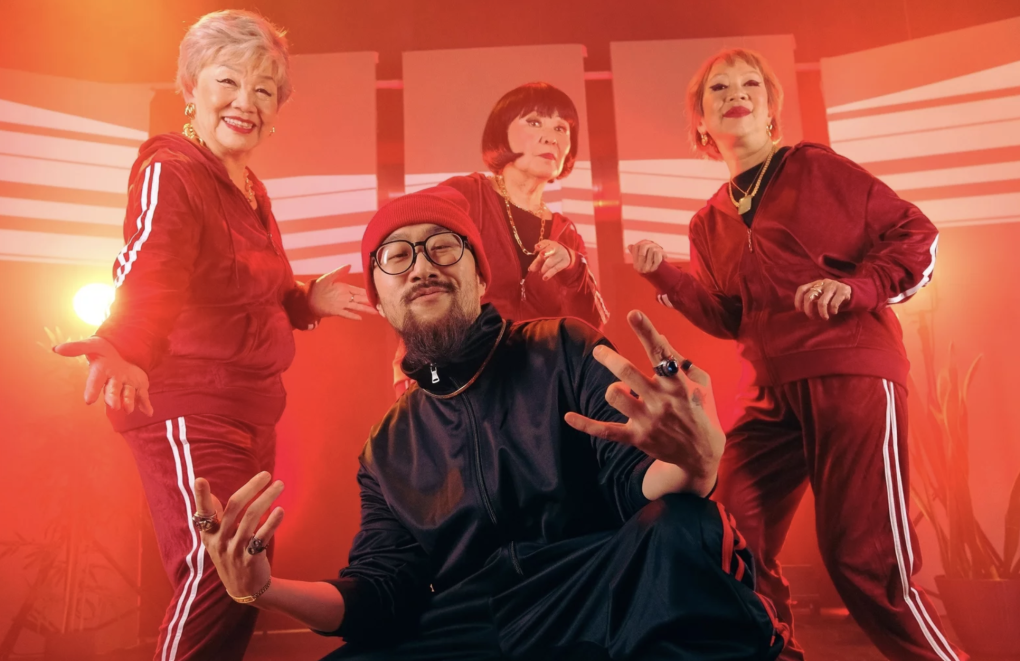
"content": "\u003cp>A cabaret dance troupe of elders from San Francisco’s Chinatown has released a rap track and video celebrating the \u003ca href=\"https://www.npr.org/2023/01/20/1150070528/these-lunar-new-year-dishes-remind-those-who-make-them-of-their-family-and-frien\">Lunar New Year\u003c/a>.\u003c/p>\n\u003cp>[aside postid='arts_13923317']“\u003ca href=\"https://www.facebook.com/watch/?v=1600909627034398&t=0\" target=\"_blank\" rel=\"noopener noreferrer\">That Lunar Cheer\u003c/a>,” a collaboration between the \u003ca href=\"http://grantavenuefollies.com\">Grant Avenue Follies\u003c/a> and Los Angeles-based rapper \u003ca href=\"http://jasonchumusic.com\">Jason Chu\u003c/a>, hippety-hops into the Year of the Rabbit with calls for food, family and fun.\u003c/p>\n\u003cp>“We’ve been through a couple challenging years and we want to wish everybody a happy new year as well as making sure that it will be a peaceful and healthy new year. That is very important to us,” Follies co-founder Cynthia Yee told NPR. “We have customs that have to be followed, such as cleaning the house before New Year’s Day to sweep away all the bad luck and welcome the new.”\u003c/p>\n\u003cp>\u003c!-- iframe plugin v.4.3 wordpress.org/plugins/iframe/ -->\u003cbr>\n\u003ciframe loading=\"lazy\" src=\"https://www.facebook.com/plugins/video.php?height=314&href=https%3A%2F%2Fwww.facebook.com%2FAARPAAPI%2Fvideos%2F1600909627034398%2F&show_text=false&width=560&t=0\" width=\"560\" height=\"314\" style=\"border:none;overflow:hidden\" scrolling=\"no\" frameborder=\"0\" allowfullscreen=\"true\" allow=\"autoplay; clipboard-write; encrypted-media; picture-in-picture; web-share\" class=\"iframe-class\">\u003c/iframe>\u003c/p>\n\u003cp>The video was was funded by the AARP, a nonprofit interest group focusing on issues affecting those over the age of 50.\u003c/p>\n\u003ch3>No strangers to hip-hop\u003c/h3>\n\u003cp>The 12 members of the Follies, aged between 61 and 87, might be steeped in tap dance and the songs of the 1950s and ‘60s. But they are no strangers to hip-hop.\u003c/p>\n\u003cp>[ad fullwidth]\u003c/p>\n\u003cp>\u003cem>That Lunar Cheer\u003c/em> is the group’s third rap track to date. The Follies’ song protesting violence against people of Asian descent, \u003cem>Gai Mou Sou Rap \u003c/em>(named after the chicken feature dusters that Chinese parents traditionally use around the home, and also use to spank naughty children), has garnered nearly 90,000 views on YouTube since debuting in May 2021.\u003c/p>\n\u003cp>Follies founder Yee said she feels a connection to the hip-hop genre.\u003c/p>\n\u003cp>‘What better way to express ourselves through poetry, which is a song with rap,” she said.\u003c/p>\n\u003cp>[aside postid='arts_13923548']Their dedication to the art form impressed rapper Chu, who wrote \u003cem>That Lunar Cheer\u003c/em>, and has a strong background in community activism as well as music.\u003c/p>\n\u003cp>“These ladies are strong and feisty and creative,” Chu told NPR. “Getting to collaborate with them is exactly the kind of art I love making — something that highlights culture and community in a way that’s fun and empowering.”\u003c/p>\n\u003cp>\u003c/p>\n\u003cp>Yee added she hopes the song exemplifies the values of the Year of the Rabbit: “Mostly very quiet, very lovable, very fuzzy-wuzzy, and of course all about having lots of family,” she said. “The Year of the Rabbit is about multiplying everything, whether that’s children, grandchildren or money.”\u003c/p>\n\u003cdiv class=\"fullattribution\">\u003cem>Copyright 2023 NPR. To see more, \u003ca href=\"https://www.npr.org\" target=\"_blank\" rel=\"noopener noreferrer\">visit NPR\u003c/a>.\u003cimg decoding=\"async\" src=\"https://www.google-analytics.com/__utm.gif?utmac=UA-5828686-4&utmdt=San+Francisco+Chinatown+seniors+welcome+in+the+Lunar+New+Year+with+rap+&utme=8(APIKey)9(MDAxOTAwOTE4MDEyMTkxMDAzNjczZDljZA004)\">\u003c/em>\u003c/div>\n\n",
"blocks": [],
"excerpt": "The Grant Avenue Follies are steeped in tap dance and songs of the 1950s and ‘60s — but they are no strangers to hip-hop.",
"status": "publish",
"parent": 0,
"modified": 1726771155,
"stats": {
"hasAudio": false,
"hasVideo": false,
"hasChartOrMap": false,
"iframeSrcs": [],
"hasGoogleForm": false,
"hasGallery": false,
"hasHearkenModule": false,
"hasPolis": false,
"paragraphCount": 14,
"wordCount": 436
},
"headData": {
"title": "San Francisco Chinatown Seniors Welcome in the Lunar New Year With Rap | KQED",
"description": "The Grant Avenue Follies are steeped in tap dance and songs of the 1950s and ‘60s — but they are no strangers to hip-hop.",
"ogTitle": "",
"ogDescription": "",
"ogImgId": "",
"twTitle": "",
"twDescription": "",
"twImgId": "",
"schema": {
"@context": "https://schema.org",
"@type": "Article",
"headline": "San Francisco Chinatown Seniors Welcome in the Lunar New Year With Rap",
"datePublished": "2023-01-23T14:03:10-08:00",
"dateModified": "2024-09-19T11:39:15-07:00",
"image": "https://cdn.kqed.org/wp-content/uploads/2020/02/KQED-OG-Image@1x.png"
}
},
"sticky": false,
"nprByline": "Chloe Veltman",
"nprImageAgency": "IW Group",
"nprStoryId": "1150602538",
"nprApiLink": "http://api.npr.org/query?id=1150602538&apiKey=MDAxOTAwOTE4MDEyMTkxMDAzNjczZDljZA004",
"nprHtmlLink": "https://www.npr.org/2023/01/22/1150602538/san-francisco-chinatown-senior-rap-lunar-new-year?ft=nprml&f=1150602538",
"nprRetrievedStory": "1",
"nprPubDate": "Sun, 22 Jan 2023 05:00:00 -0500",
"nprStoryDate": "Sun, 22 Jan 2023 05:00:41 -0500",
"nprLastModifiedDate": "Sun, 22 Jan 2023 05:00:41 -0500",
"templateType": "standard",
"featuredImageType": "standard",
"excludeFromSiteSearch": "Include",
"showOnAuthorArchivePages": "No",
"articleAge": "0",
"path": "/arts/13923980/san-francisco-chinatown-seniors-welcome-in-the-lunar-new-year-with-rap",
"audioTrackLength": null,
"parsedContent": [
{
"type": "contentString",
"content": "\u003cdiv class=\"post-body\">\u003cp>\u003cp>A cabaret dance troupe of elders from San Francisco’s Chinatown has released a rap track and video celebrating the \u003ca href=\"https://www.npr.org/2023/01/20/1150070528/these-lunar-new-year-dishes-remind-those-who-make-them-of-their-family-and-frien\">Lunar New Year\u003c/a>.\u003c/p>\n\u003cp>\u003c/p>\u003c/div>",
"attributes": {
"named": {},
"numeric": []
}
},
{
"type": "component",
"content": "",
"name": "aside",
"attributes": {
"named": {
"postid": "arts_13923317",
"label": ""
},
"numeric": []
}
},
{
"type": "contentString",
"content": "\u003cdiv class=\"post-body\">\u003cp>“\u003ca href=\"https://www.facebook.com/watch/?v=1600909627034398&t=0\" target=\"_blank\" rel=\"noopener noreferrer\">That Lunar Cheer\u003c/a>,” a collaboration between the \u003ca href=\"http://grantavenuefollies.com\">Grant Avenue Follies\u003c/a> and Los Angeles-based rapper \u003ca href=\"http://jasonchumusic.com\">Jason Chu\u003c/a>, hippety-hops into the Year of the Rabbit with calls for food, family and fun.\u003c/p>\n\u003cp>“We’ve been through a couple challenging years and we want to wish everybody a happy new year as well as making sure that it will be a peaceful and healthy new year. That is very important to us,” Follies co-founder Cynthia Yee told NPR. “We have customs that have to be followed, such as cleaning the house before New Year’s Day to sweep away all the bad luck and welcome the new.”\u003c/p>\n\u003cp>\u003c!-- iframe plugin v.4.3 wordpress.org/plugins/iframe/ -->\u003cbr>\n\u003ciframe loading=\"lazy\" src=\"https://www.facebook.com/plugins/video.php?height=314&href=https%3A%2F%2Fwww.facebook.com%2FAARPAAPI%2Fvideos%2F1600909627034398%2F&show_text=false&width=560&t=0\" width=\"560\" height=\"314\" style=\"border:none;overflow:hidden\" scrolling=\"no\" frameborder=\"0\" allowfullscreen=\"true\" allow=\"autoplay; clipboard-write; encrypted-media; picture-in-picture; web-share\" class=\"iframe-class\">\u003c/iframe>\u003c/p>\n\u003cp>The video was was funded by the AARP, a nonprofit interest group focusing on issues affecting those over the age of 50.\u003c/p>\n\u003ch3>No strangers to hip-hop\u003c/h3>\n\u003cp>The 12 members of the Follies, aged between 61 and 87, might be steeped in tap dance and the songs of the 1950s and ‘60s. But they are no strangers to hip-hop.\u003c/p>\n\u003cp>\u003c/p>\u003c/div>",
"attributes": {
"named": {},
"numeric": []
}
},
{
"type": "component",
"content": "",
"name": "ad",
"attributes": {
"named": {
"label": "fullwidth"
},
"numeric": [
"fullwidth"
]
}
},
{
"type": "contentString",
"content": "\u003cdiv class=\"post-body\">\u003cp>\u003c/p>\n\u003cp>\u003cem>That Lunar Cheer\u003c/em> is the group’s third rap track to date. The Follies’ song protesting violence against people of Asian descent, \u003cem>Gai Mou Sou Rap \u003c/em>(named after the chicken feature dusters that Chinese parents traditionally use around the home, and also use to spank naughty children), has garnered nearly 90,000 views on YouTube since debuting in May 2021.\u003c/p>\n\u003cp>Follies founder Yee said she feels a connection to the hip-hop genre.\u003c/p>\n\u003cp>‘What better way to express ourselves through poetry, which is a song with rap,” she said.\u003c/p>\n\u003cp>\u003c/p>\u003c/div>",
"attributes": {
"named": {},
"numeric": []
}
},
{
"type": "component",
"content": "",
"name": "aside",
"attributes": {
"named": {
"postid": "arts_13923548",
"label": ""
},
"numeric": []
}
},
{
"type": "contentString",
"content": "\u003cdiv class=\"post-body\">\u003cp>Their dedication to the art form impressed rapper Chu, who wrote \u003cem>That Lunar Cheer\u003c/em>, and has a strong background in community activism as well as music.\u003c/p>\n\u003cp>“These ladies are strong and feisty and creative,” Chu told NPR. “Getting to collaborate with them is exactly the kind of art I love making — something that highlights culture and community in a way that’s fun and empowering.”\u003c/p>\n\u003cp>\u003c/p>\n\u003cp>Yee added she hopes the song exemplifies the values of the Year of the Rabbit: “Mostly very quiet, very lovable, very fuzzy-wuzzy, and of course all about having lots of family,” she said. “The Year of the Rabbit is about multiplying everything, whether that’s children, grandchildren or money.”\u003c/p>\n\u003cdiv class=\"fullattribution\">\u003cem>Copyright 2023 NPR. To see more, \u003ca href=\"https://www.npr.org\" target=\"_blank\" rel=\"noopener noreferrer\">visit NPR\u003c/a>.\u003cimg decoding=\"async\" src=\"https://www.google-analytics.com/__utm.gif?utmac=UA-5828686-4&utmdt=San+Francisco+Chinatown+seniors+welcome+in+the+Lunar+New+Year+with+rap+&utme=8(APIKey)9(MDAxOTAwOTE4MDEyMTkxMDAzNjczZDljZA004)\">\u003c/em>\u003c/div>\n\n\u003c/div>\u003c/p>",
"attributes": {
"named": {},
"numeric": []
}
}
],
"link": "/arts/13923980/san-francisco-chinatown-seniors-welcome-in-the-lunar-new-year-with-rap",
"authors": [
"byline_arts_13923980"
],
"categories": [
"arts_1",
"arts_966",
"arts_69"
],
"tags": [
"arts_2654",
"arts_831",
"arts_13164",
"arts_1146"
],
"affiliates": [
"arts_137"
],
"featImg": "arts_13923984",
"label": "arts_137"
},
"arts_13920974": {
"type": "posts",
"id": "arts_13920974",
"meta": {
"index": "posts_1716263798",
"site": "arts",
"id": "13920974",
"score": null,
"sort": [
1666907696000
]
},
"parent": 0,
"labelTerm": {
"site": "arts",
"term": 140
},
"blocks": [],
"publishDate": 1666907696,
"format": "standard",
"title": "‘Simple Interactions’ Bridges the Sounds of Hong Kong and SF’s Chinatown at 41 Ross",
"headTitle": "‘Simple Interactions’ Bridges the Sounds of Hong Kong and SF’s Chinatown at 41 Ross | KQED",
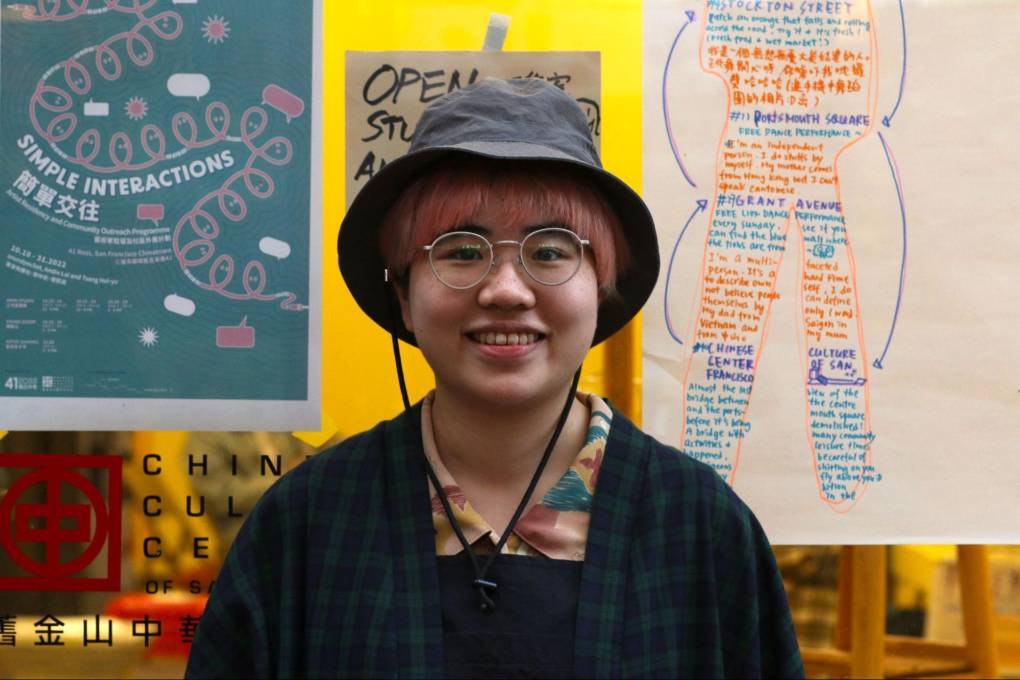
"content": "\u003cp>Hidden within one of San Francisco Chinatown’s many narrow alleyways, 41 Ross is a small creative oasis that hosts interactive artist residencies and community programs. From now through Oct. 31, \u003ca href=\"https://www.41ross.org/residency\">the studio is inviting visitors\u003c/a> to tinker with various handcrafted sound devices, listen to ambient sound transported from Hong Kong, and explore self-guided sound tours based on stories submitted by Chinatown residents — all created by current 41 Ross’ resident artists, the Hong Kong-based \u003ca href=\"https://www.instagram.com/andiosound/?hl=en\">Andio Lai\u003c/a>, \u003ca href=\"https://www.instagram.com/hoiyu.t/?hl=en\">Hoi-yu Tsang\u003c/a> and \u003ca href=\"https://www.instagram.com/soundpocket_hk/?hl=en\">soundpocket\u003c/a>.\u003c/p>\n\u003cp>[aside postID='arts_13918733'] Soundpocket program leaders Mandy Chan and Vanessa Lai have long been fascinated with the ways sound is replicated and transformed across the world. On their walks around the neighborhood, they listened to the rush of cable cars on Powell and Kearny Streets, along with the high voices of hawkers selling produce on Stockton Street — all reminiscent of the sounds of trams and street markets in their native Hong Kong. Turning corners, they could hear the shuffling of mahjong tiles and the chatter of elderly residents echoing from nearby parks. “And usually you cannot see them — you can only hear the sound,” says Lai. “That’s what interests us. It’s actually the same in Hong Kong.” \u003c/p>\n\u003cp>Soundpocket was formed in 2008 to provide education and resources dedicated to the ways sound can enrich and shape art and culture. In 2012, the organization launched \u003ca href=\"https://www.thelibrarybysoundpocket.org.hk/listen/\">The Library by soundpocket\u003c/a>, an online sound database featuring ambient noise collected by Hong Kong residents. The library has since expanded to include an adjacent project titled \u003ci>Sound Scoop\u003c/i>, which includes sounds gathered both locally and overseas. By collecting sounds and making them accessible for all, Chan and Lai hope to encourage people to be more present in their daily lives: to take in what is around them sonically and think about how these sounds can bring about a different kind of correspondence and reflection. \u003c/p>\n\u003cfigure id=\"attachment_13920981\" class=\"wp-caption aligncenter\" style=\"max-width: 1999px\">\u003cimg loading=\"lazy\" decoding=\"async\" src=\"https://ww2.kqed.org/app/uploads/sites/2/2022/10/image2.jpg\" alt='View through door to yellow interior with \"open studio\" taped to glass' width=\"1999\" height=\"1333\" class=\"size-full wp-image-13920981\" srcset=\"https://cdn.kqed.org/wp-content/uploads/sites/2/2022/10/image2.jpg 1999w, https://cdn.kqed.org/wp-content/uploads/sites/2/2022/10/image2-800x533.jpg 800w, https://cdn.kqed.org/wp-content/uploads/sites/2/2022/10/image2-1020x680.jpg 1020w, https://cdn.kqed.org/wp-content/uploads/sites/2/2022/10/image2-160x107.jpg 160w, https://cdn.kqed.org/wp-content/uploads/sites/2/2022/10/image2-768x512.jpg 768w, https://cdn.kqed.org/wp-content/uploads/sites/2/2022/10/image2-1536x1024.jpg 1536w, https://cdn.kqed.org/wp-content/uploads/sites/2/2022/10/image2-1920x1280.jpg 1920w\" sizes=\"(max-width: 1999px) 100vw, 1999px\">\u003cfigcaption class=\"wp-caption-text\">The 41 Ross space in San Francisco’s Chinatown. \u003ccite>(Kristie Song)\u003c/cite>\u003c/figcaption>\u003c/figure>\n\u003cp>“We wanted people to try to stop for a little while and listen to what sounds you could hear,” says Chan. “Is an airplane flying around? Is a train passing by somewhere in a few blocks? Is there someone playing mahjong or listening to the radio at home? This is how we can observe our community and the people living in it.”\u003c/p>\n\u003cp>Chan and Lai will present various sounds from Hong Kong and Chinatown at a listening station in 41 Ross. Attendees will also be able to view a corresponding map on the wall as they listen. Keeping in mind the interactiveness of the space, Chan and Lai also hope that attendees will then seek the sounds themselves when they leave the building — or perhaps keep their ears open for new ones. \u003c/p>\n\u003cp>[ad fullwidth]\u003c/p>\n\u003cp>Machine artist and fellow 41 Ross resident Andio Lai wanted to create a project that blended history and technology. Just before arriving in San Francisco, he became interested in Chinatown’s Telephone Exchange from the early 1900s, where residents had to have their phone calls manually patched through by operators working on switchboards. When reviewing old photos, he noticed that these operators looked “the same as people playing electronic instruments” like synthesizers. He decided to gather objects and spare parts from local residents to recreate the patching mechanism and other sound devices for attendees to operate and play with. \u003c/p>\n\u003cp>Strewn across his table are various inexplicable items: a pair of bright pink doll heads, wooden takeout chopsticks, a tin cup, rusted coins and torn- out sketchbook pages with rough approximations of his plans. Full of whimsy and reinvention, Lai’s work is playful but still grounded in community. By building on everyday artifacts donated by local residents, he revisits a past of old technology through a present that has long moved on from those days.\u003c/p>\n\u003cfigure id=\"attachment_13920980\" class=\"wp-caption aligncenter\" style=\"max-width: 1999px\">\u003cimg loading=\"lazy\" decoding=\"async\" src=\"https://ww2.kqed.org/app/uploads/sites/2/2022/10/image1.jpg\" alt=\"View over shoulder of man working at table, sketches taped to wall\" width=\"1999\" height=\"1333\" class=\"size-full wp-image-13920980\" srcset=\"https://cdn.kqed.org/wp-content/uploads/sites/2/2022/10/image1.jpg 1999w, https://cdn.kqed.org/wp-content/uploads/sites/2/2022/10/image1-800x533.jpg 800w, https://cdn.kqed.org/wp-content/uploads/sites/2/2022/10/image1-1020x680.jpg 1020w, https://cdn.kqed.org/wp-content/uploads/sites/2/2022/10/image1-160x107.jpg 160w, https://cdn.kqed.org/wp-content/uploads/sites/2/2022/10/image1-768x512.jpg 768w, https://cdn.kqed.org/wp-content/uploads/sites/2/2022/10/image1-1536x1024.jpg 1536w, https://cdn.kqed.org/wp-content/uploads/sites/2/2022/10/image1-1920x1280.jpg 1920w\" sizes=\"(max-width: 1999px) 100vw, 1999px\">\u003cfigcaption class=\"wp-caption-text\">Andio Lai is building sound devices from objects collected from the community. \u003ccite>(Kristie Song)\u003c/cite>\u003c/figcaption>\u003c/figure>\n\u003cp>When defining community, artist Hoi-yu Tsang is zooming in microscopically and thinking about how individuals comprise a greater whole. Since the beginning of the residency, Tsang has been wandering around Chinatown, bright pink sticky pad and neon orange pencil in tow, interviewing local residents. “One question that I will ask everyone is how they define themselves,” says Tsang. After asking about favorite spots and daily routines, she soon realized that many people were excited to discuss their stories — to flesh out the details of their lives that they hadn’t been able to before. In a couple of weeks, Tsang had collected over 50 interviews filled with rich histories and anecdotes tied to various places in Chinatown. \u003c/p>\n\u003cp>She began to sketch her interviewees’ silhouettes on the back wall in 41 Ross, filling their shapes with the stories they had told her. Attendees will be able to draw out slips of paper that have numbers corresponding to the silhouettes and then set out on self-guided tours based on the oral interviews. They’ll be able to see, hear and experience the places that have been important to so many residents living in Chinatown — some of whom have lived there for decades.\u003c/p>\n\u003cp>As they enter the last week of their residency, the artists feel bittersweet about leaving San Francisco soon. “My brain is still digesting,” Andio laughs, wishing he had a bit more time to engage with the local community. But in their brief stay at 41 Ross, they’ve been able to sonically expand upon questions of identity and home. They’ve noted the vast similarities between Chinatown and Hong Kong: standing at any intersection in either place, you can hear Cantonese being spoken by locals, early 2000s Mandopop songs coming out of video rental stores, and the rustling of plastic bags filling with produce at open markets. Yet, they realize, there is something inimitable about both locations. And though the differences are minute, it only takes stopping to listen to find them. \u003c/p>\n\u003cp>\u003cimg loading=\"lazy\" decoding=\"async\" src=\"https://ww2.kqed.org/app/uploads/sites/2/2016/09/Q.Logo_.Break_.jpg\" alt=\"\" width=\"800\" height=\"78\" class=\"aligncenter size-full wp-image-12127869\" srcset=\"https://cdn.kqed.org/wp-content/uploads/sites/2/2016/09/Q.Logo_.Break_.jpg 800w, https://cdn.kqed.org/wp-content/uploads/sites/2/2016/09/Q.Logo_.Break_-400x39.jpg 400w, https://cdn.kqed.org/wp-content/uploads/sites/2/2016/09/Q.Logo_.Break_-768x75.jpg 768w\" sizes=\"(max-width: 800px) 100vw, 800px\">\u003c/p>\n\u003cp>\u003c/p>\n\u003cp>\u003ci>‘Simple Interactions’ is on view at 41 Ross through Monday, Oct. 31. The artists will be speaking about their work on Saturday, Oct. 29, 3–5 p.m. \u003ca href=\"https://www.41ross.org/residency\">Details here\u003c/a>. \u003c/i>\u003c/p>\n\n",
"stats": {
"hasVideo": false,
"hasChartOrMap": false,
"hasAudio": false,
"hasPolis": false,
"wordCount": 1047,
"hasGoogleForm": false,
"hasGallery": false,
"hasHearkenModule": false,
"iframeSrcs": [],
"paragraphCount": 14
},
"modified": 1705006217,
"excerpt": "Resident artists from Hong Kong invite visitors to be more present by paying attention to their local soundscapes.",
"headData": {
"twImgId": "",
"twTitle": "‘Simple Interactions’ Bridges the Sounds of Hong Kong and SF’s Chinatown at 41 Ross",
"socialTitle": "‘Simple Interactions’ at 41 Ross: Sounds from SF and Hong Kong %%page%% %%sep%% KQED",
"ogTitle": "‘Simple Interactions’ Bridges the Sounds of Hong Kong and SF’s Chinatown at 41 Ross",
"ogImgId": "",
"twDescription": "",
"description": "Resident artists from Hong Kong invite visitors to be more present by paying attention to their local soundscapes.",
"title": "‘Simple Interactions’ at 41 Ross: Sounds from SF and Hong Kong | KQED",
"ogDescription": "",
"schema": {
"@context": "https://schema.org",
"@type": "Article",
"headline": "‘Simple Interactions’ Bridges the Sounds of Hong Kong and SF’s Chinatown at 41 Ross",
"datePublished": "2022-10-27T14:54:56-07:00",
"dateModified": "2024-01-11T12:50:17-08:00",
"image": "https://cdn.kqed.org/wp-content/uploads/2020/02/KQED-OG-Image@1x.png"
}
},
"guestAuthors": [],
"slug": "simple-interactions-soundscapes-hong-kong-san-francisco-chinatown-41-ross",
"status": "publish",
"templateType": "standard",
"excludeFromSiteSearch": "Include",
"featuredImageType": "standard",
"sticky": false,
"path": "/arts/13920974/simple-interactions-soundscapes-hong-kong-san-francisco-chinatown-41-ross",
"audioTrackLength": null,
"parsedContent": [
{
"type": "contentString",
"content": "\u003cdiv class=\"post-body\">\u003cp>\u003cp>Hidden within one of San Francisco Chinatown’s many narrow alleyways, 41 Ross is a small creative oasis that hosts interactive artist residencies and community programs. From now through Oct. 31, \u003ca href=\"https://www.41ross.org/residency\">the studio is inviting visitors\u003c/a> to tinker with various handcrafted sound devices, listen to ambient sound transported from Hong Kong, and explore self-guided sound tours based on stories submitted by Chinatown residents — all created by current 41 Ross’ resident artists, the Hong Kong-based \u003ca href=\"https://www.instagram.com/andiosound/?hl=en\">Andio Lai\u003c/a>, \u003ca href=\"https://www.instagram.com/hoiyu.t/?hl=en\">Hoi-yu Tsang\u003c/a> and \u003ca href=\"https://www.instagram.com/soundpocket_hk/?hl=en\">soundpocket\u003c/a>.\u003c/p>\n\u003cp>\u003c/p>\u003c/div>",
"attributes": {
"named": {},
"numeric": []
}
},
{
"type": "component",
"content": "",
"name": "aside",
"attributes": {
"named": {
"postid": "arts_13918733",
"label": ""
},
"numeric": []
}
},
{
"type": "contentString",
"content": "\u003cdiv class=\"post-body\">\u003cp> Soundpocket program leaders Mandy Chan and Vanessa Lai have long been fascinated with the ways sound is replicated and transformed across the world. On their walks around the neighborhood, they listened to the rush of cable cars on Powell and Kearny Streets, along with the high voices of hawkers selling produce on Stockton Street — all reminiscent of the sounds of trams and street markets in their native Hong Kong. Turning corners, they could hear the shuffling of mahjong tiles and the chatter of elderly residents echoing from nearby parks. “And usually you cannot see them — you can only hear the sound,” says Lai. “That’s what interests us. It’s actually the same in Hong Kong.” \u003c/p>\n\u003cp>Soundpocket was formed in 2008 to provide education and resources dedicated to the ways sound can enrich and shape art and culture. In 2012, the organization launched \u003ca href=\"https://www.thelibrarybysoundpocket.org.hk/listen/\">The Library by soundpocket\u003c/a>, an online sound database featuring ambient noise collected by Hong Kong residents. The library has since expanded to include an adjacent project titled \u003ci>Sound Scoop\u003c/i>, which includes sounds gathered both locally and overseas. By collecting sounds and making them accessible for all, Chan and Lai hope to encourage people to be more present in their daily lives: to take in what is around them sonically and think about how these sounds can bring about a different kind of correspondence and reflection. \u003c/p>\n\u003cfigure id=\"attachment_13920981\" class=\"wp-caption aligncenter\" style=\"max-width: 1999px\">\u003cimg loading=\"lazy\" decoding=\"async\" src=\"https://ww2.kqed.org/app/uploads/sites/2/2022/10/image2.jpg\" alt='View through door to yellow interior with \"open studio\" taped to glass' width=\"1999\" height=\"1333\" class=\"size-full wp-image-13920981\" srcset=\"https://cdn.kqed.org/wp-content/uploads/sites/2/2022/10/image2.jpg 1999w, https://cdn.kqed.org/wp-content/uploads/sites/2/2022/10/image2-800x533.jpg 800w, https://cdn.kqed.org/wp-content/uploads/sites/2/2022/10/image2-1020x680.jpg 1020w, https://cdn.kqed.org/wp-content/uploads/sites/2/2022/10/image2-160x107.jpg 160w, https://cdn.kqed.org/wp-content/uploads/sites/2/2022/10/image2-768x512.jpg 768w, https://cdn.kqed.org/wp-content/uploads/sites/2/2022/10/image2-1536x1024.jpg 1536w, https://cdn.kqed.org/wp-content/uploads/sites/2/2022/10/image2-1920x1280.jpg 1920w\" sizes=\"(max-width: 1999px) 100vw, 1999px\">\u003cfigcaption class=\"wp-caption-text\">The 41 Ross space in San Francisco’s Chinatown. \u003ccite>(Kristie Song)\u003c/cite>\u003c/figcaption>\u003c/figure>\n\u003cp>“We wanted people to try to stop for a little while and listen to what sounds you could hear,” says Chan. “Is an airplane flying around? Is a train passing by somewhere in a few blocks? Is there someone playing mahjong or listening to the radio at home? This is how we can observe our community and the people living in it.”\u003c/p>\n\u003cp>Chan and Lai will present various sounds from Hong Kong and Chinatown at a listening station in 41 Ross. Attendees will also be able to view a corresponding map on the wall as they listen. Keeping in mind the interactiveness of the space, Chan and Lai also hope that attendees will then seek the sounds themselves when they leave the building — or perhaps keep their ears open for new ones. \u003c/p>\n\u003cp>\u003c/p>\u003c/div>",
"attributes": {
"named": {},
"numeric": []
}
},
{
"type": "component",
"content": "",
"name": "ad",
"attributes": {
"named": {
"label": "fullwidth"
},
"numeric": [
"fullwidth"
]
}
},
{
"type": "contentString",
"content": "\u003cdiv class=\"post-body\">\u003cp>\u003c/p>\n\u003cp>Machine artist and fellow 41 Ross resident Andio Lai wanted to create a project that blended history and technology. Just before arriving in San Francisco, he became interested in Chinatown’s Telephone Exchange from the early 1900s, where residents had to have their phone calls manually patched through by operators working on switchboards. When reviewing old photos, he noticed that these operators looked “the same as people playing electronic instruments” like synthesizers. He decided to gather objects and spare parts from local residents to recreate the patching mechanism and other sound devices for attendees to operate and play with. \u003c/p>\n\u003cp>Strewn across his table are various inexplicable items: a pair of bright pink doll heads, wooden takeout chopsticks, a tin cup, rusted coins and torn- out sketchbook pages with rough approximations of his plans. Full of whimsy and reinvention, Lai’s work is playful but still grounded in community. By building on everyday artifacts donated by local residents, he revisits a past of old technology through a present that has long moved on from those days.\u003c/p>\n\u003cfigure id=\"attachment_13920980\" class=\"wp-caption aligncenter\" style=\"max-width: 1999px\">\u003cimg loading=\"lazy\" decoding=\"async\" src=\"https://ww2.kqed.org/app/uploads/sites/2/2022/10/image1.jpg\" alt=\"View over shoulder of man working at table, sketches taped to wall\" width=\"1999\" height=\"1333\" class=\"size-full wp-image-13920980\" srcset=\"https://cdn.kqed.org/wp-content/uploads/sites/2/2022/10/image1.jpg 1999w, https://cdn.kqed.org/wp-content/uploads/sites/2/2022/10/image1-800x533.jpg 800w, https://cdn.kqed.org/wp-content/uploads/sites/2/2022/10/image1-1020x680.jpg 1020w, https://cdn.kqed.org/wp-content/uploads/sites/2/2022/10/image1-160x107.jpg 160w, https://cdn.kqed.org/wp-content/uploads/sites/2/2022/10/image1-768x512.jpg 768w, https://cdn.kqed.org/wp-content/uploads/sites/2/2022/10/image1-1536x1024.jpg 1536w, https://cdn.kqed.org/wp-content/uploads/sites/2/2022/10/image1-1920x1280.jpg 1920w\" sizes=\"(max-width: 1999px) 100vw, 1999px\">\u003cfigcaption class=\"wp-caption-text\">Andio Lai is building sound devices from objects collected from the community. \u003ccite>(Kristie Song)\u003c/cite>\u003c/figcaption>\u003c/figure>\n\u003cp>When defining community, artist Hoi-yu Tsang is zooming in microscopically and thinking about how individuals comprise a greater whole. Since the beginning of the residency, Tsang has been wandering around Chinatown, bright pink sticky pad and neon orange pencil in tow, interviewing local residents. “One question that I will ask everyone is how they define themselves,” says Tsang. After asking about favorite spots and daily routines, she soon realized that many people were excited to discuss their stories — to flesh out the details of their lives that they hadn’t been able to before. In a couple of weeks, Tsang had collected over 50 interviews filled with rich histories and anecdotes tied to various places in Chinatown. \u003c/p>\n\u003cp>She began to sketch her interviewees’ silhouettes on the back wall in 41 Ross, filling their shapes with the stories they had told her. Attendees will be able to draw out slips of paper that have numbers corresponding to the silhouettes and then set out on self-guided tours based on the oral interviews. They’ll be able to see, hear and experience the places that have been important to so many residents living in Chinatown — some of whom have lived there for decades.\u003c/p>\n\u003cp>As they enter the last week of their residency, the artists feel bittersweet about leaving San Francisco soon. “My brain is still digesting,” Andio laughs, wishing he had a bit more time to engage with the local community. But in their brief stay at 41 Ross, they’ve been able to sonically expand upon questions of identity and home. They’ve noted the vast similarities between Chinatown and Hong Kong: standing at any intersection in either place, you can hear Cantonese being spoken by locals, early 2000s Mandopop songs coming out of video rental stores, and the rustling of plastic bags filling with produce at open markets. Yet, they realize, there is something inimitable about both locations. And though the differences are minute, it only takes stopping to listen to find them. \u003c/p>\n\u003cp>\u003cimg loading=\"lazy\" decoding=\"async\" src=\"https://ww2.kqed.org/app/uploads/sites/2/2016/09/Q.Logo_.Break_.jpg\" alt=\"\" width=\"800\" height=\"78\" class=\"aligncenter size-full wp-image-12127869\" srcset=\"https://cdn.kqed.org/wp-content/uploads/sites/2/2016/09/Q.Logo_.Break_.jpg 800w, https://cdn.kqed.org/wp-content/uploads/sites/2/2016/09/Q.Logo_.Break_-400x39.jpg 400w, https://cdn.kqed.org/wp-content/uploads/sites/2/2016/09/Q.Logo_.Break_-768x75.jpg 768w\" sizes=\"(max-width: 800px) 100vw, 800px\">\u003c/p>\n\u003cp>\u003c/p>\n\u003cp>\u003ci>‘Simple Interactions’ is on view at 41 Ross through Monday, Oct. 31. The artists will be speaking about their work on Saturday, Oct. 29, 3–5 p.m. \u003ca href=\"https://www.41ross.org/residency\">Details here\u003c/a>. \u003c/i>\u003c/p>\n\n\u003c/div>\u003c/p>",
"attributes": {
"named": {},
"numeric": []
}
}
],
"link": "/arts/13920974/simple-interactions-soundscapes-hong-kong-san-francisco-chinatown-41-ross",
"authors": [
"11813"
],
"programs": [
"arts_140"
],
"categories": [
"arts_1"
],
"tags": [
"arts_2654",
"arts_585"
],
"featImg": "arts_13920982",
"label": "arts_140"
},
"arts_13918733": {
"type": "posts",
"id": "arts_13918733",
"meta": {
"index": "posts_1716263798",
"site": "arts",
"id": "13918733",
"score": null,
"sort": [
1662490376000
]
},
"guestAuthors": [],
"slug": "41-ross-celebrates-mid-autumn-festival-with-mooncakes-and-community",
"title": "41 Ross Celebrates Mid-Autumn Festival with Mooncakes and Community",
"publishDate": 1662490376,
"format": "standard",
"headTitle": "41 Ross Celebrates Mid-Autumn Festival with Mooncakes and Community | KQED",
"labelTerm": {},
"content": "\u003cp>Like magic, a gleaming, gold and red metal box decorated with ornate flowers would appear on my family’s kitchen counter every September. I’d exchange playful glances with my baba in the morning. Later that night, we’d open the box in the backyard, unveiling perfect rows of mooncakes: dense, sweet pastries filled with various pastes and dried egg yolk. Like many others in the Chinese diaspora, I looked forward to the Mid-Autumn Festival as another opportunity to connect with my parents—who, under the glow of a full moon and warm from celebrations, were more forthcoming about themselves.\u003c/p>\n\u003cp>This feeling of warmth and community is something that artist \u003ca href=\"https://www.instagram.com/yconniezheng/\" target=\"_blank\" rel=\"noopener noreferrer\">Connie Zheng\u003c/a> is carrying into her upcoming Mooncake Harvest Party on Sept. 8 at \u003ca href=\"https://www.41ross.org/\" target=\"_blank\" rel=\"noopener noreferrer\">41 Ross\u003c/a>—a community art space created by \u003ca href=\"https://www.chinatowncdc.org/\" target=\"_blank\" rel=\"noopener noreferrer\">The Chinatown Community Development Center\u003c/a> and the \u003ca href=\"https://www.cccsf.us/\" target=\"_blank\" rel=\"noopener noreferrer\">Chinese Culture Center of San Francisco\u003c/a>—for an evening of poetry readings, food, music and conversation. Attendees will also be able to observe Zheng’s \u003cem>Table to Farm\u003c/em> exhibit, a culmination of her efforts in collaborating with local Chinatown residents during her residency at 41 Ross.\u003c/p>\n\u003cp>Inside the space, the walls are painted yellow and decorated with a collection of luminous watercolor paintings, ink drawings and a map documenting Asian farmworker history in California. “I’ve been thinking of it as an invitation for visitors to critically reconsider and rethink farm-to-table pathways through a diasporic Asian perspective,” said Zheng. “And to think of Chinatown as a center place of food culture and food history, rather than a marginal place.”\u003c/p>\n\u003cp>Zheng’s active efforts to contextualize and redirect attention to Asian food culture have inspired fellow artists preparing to perform at Thursday’s Mooncake Harvest Party. Poet \u003ca href=\"https://www.instagram.com/poetshelley/\" target=\"_blank\" rel=\"noopener noreferrer\">Shelley Wong\u003c/a> will read work that “name checks” the nostalgia of her adolescence, shouting out icons like Hello Kitty and Michelle Kwan, and reminiscing about her favorite memories of Chinatown restaurants.\u003c/p>\n\u003cp>“I’m just so happy to share the work with others and to write poems from joy—write the poems that I wanted to have as a young person,” said Wong. “And to share in a room with people who understand and know the references without me having to explain them, who know who Claudia Kishi is and know what jook is.”\u003c/p>\n\u003cp>[ad fullwidth]\u003c/p>\n\u003cp>Will Liang and Jason Du, a DJ duo known as \u003ca href=\"https://www.instagram.com/r.e.d.beans/\" target=\"_blank\" rel=\"noopener noreferrer\">redbeans\u003c/a>, similarly experience their art and music through a lens of nostalgia, reclamation and queer diasporic joy. Ready to feed off the energy of the crowd and each other, Liang and Du are in control of the sonic environment of Thursday’s party. They’ll be mixing together older Chinese pop songs with experimental sounds that are both cathartic and healing, and hyping each other up. “I love being Will’s backup dancer,” said Du, laughing.\u003c/p>\n\u003cp>The night will lead up to the unveiling of mooncakes designed by San Francisco Chinatown SRO residents and Zheng, with the assistance of local favorites \u003ca href=\"https://www.gardenbakerysf.com/\" target=\"_blank\" rel=\"noopener noreferrer\">Garden Bakery\u003c/a> and Yummy Bakery. The process has been challenging: first, there were the several rounds of design edits. Then, there was the arduous process of translating the designs into 3D models and molds, and then testing them. Zheng credits the local creative scene for stepping up to help her during each step of the way—the night is as much a celebration of their collective efforts as it is of her own.\u003c/p>\n\u003cp>“It feels like the relationships I built over time are really fruiting in this beautiful way—people whose work I’ve admired and consider friends,” said Zheng. “I now have this opportunity to create a platform and build space and a container to bring together folks whose work I really like. It was like a harvest of sorts.”\u003cimg loading=\"lazy\" decoding=\"async\" class=\"aligncenter size-medium wp-image-12127869\" src=\"https://ww2.kqed.org/app/uploads/sites/2/2016/09/Q.Logo_.Break_-800x78.jpg\" alt=\"\" width=\"800\" height=\"78\" srcset=\"https://cdn.kqed.org/wp-content/uploads/sites/2/2016/09/Q.Logo_.Break_.jpg 800w, https://cdn.kqed.org/wp-content/uploads/sites/2/2016/09/Q.Logo_.Break_-400x39.jpg 400w, https://cdn.kqed.org/wp-content/uploads/sites/2/2016/09/Q.Logo_.Break_-768x75.jpg 768w\" sizes=\"(max-width: 800px) 100vw, 800px\">\u003c/p>\n\u003cp>\u003c/p>\n\u003cp>\u003cem>The Mooncake Harvest Party, hosted by Connie Zheng, takes place at 41 Ross in San Francisco on Sept. 8, 6-9pm. \u003ca href=\"https://www.eventbrite.com/e/mooncake-harvest-party-hosted-by-connie-zheng-tickets-404909413957\" target=\"_blank\" rel=\"noopener noreferrer\">Tickets and details here\u003c/a>.\u003c/em>\u003c/p>\n\n",
"blocks": [],
"excerpt": "Artist Connie Zheng's Mooncake Harvest Party features poetry, music and a new take on traditional Chinese treats. ",
"status": "publish",
"parent": 0,
"modified": 1726759299,
"stats": {
"hasAudio": false,
"hasVideo": false,
"hasChartOrMap": false,
"iframeSrcs": [],
"hasGoogleForm": false,
"hasGallery": false,
"hasHearkenModule": false,
"hasPolis": false,
"paragraphCount": 11,
"wordCount": 684
},
"headData": {
"title": "41 Ross Celebrates Mid-Autumn Festival with Mooncakes and Community | KQED",
"description": "Artist Connie Zheng's Mooncake Harvest Party features poetry, music and a new take on traditional Chinese treats. ",
"ogTitle": "",
"ogDescription": "",
"ogImgId": "",
"twTitle": "",
"twDescription": "",
"twImgId": "",
"schema": {
"@context": "https://schema.org",
"@type": "Article",
"headline": "41 Ross Celebrates Mid-Autumn Festival with Mooncakes and Community",
"datePublished": "2022-09-06T11:52:56-07:00",
"dateModified": "2024-09-19T08:21:39-07:00",
"image": "https://cdn.kqed.org/wp-content/uploads/2020/02/KQED-OG-Image@1x.png"
}
},
"source": "Food",
"sourceUrl": "/food/",
"sticky": false,
"templateType": "standard",
"featuredImageType": "standard",
"excludeFromSiteSearch": "Include",
"path": "/arts/13918733/41-ross-celebrates-mid-autumn-festival-with-mooncakes-and-community",
"audioTrackLength": null,
"parsedContent": [
{
"type": "contentString",
"content": "\u003cdiv class=\"post-body\">\u003cp>\u003cp>Like magic, a gleaming, gold and red metal box decorated with ornate flowers would appear on my family’s kitchen counter every September. I’d exchange playful glances with my baba in the morning. Later that night, we’d open the box in the backyard, unveiling perfect rows of mooncakes: dense, sweet pastries filled with various pastes and dried egg yolk. Like many others in the Chinese diaspora, I looked forward to the Mid-Autumn Festival as another opportunity to connect with my parents—who, under the glow of a full moon and warm from celebrations, were more forthcoming about themselves.\u003c/p>\n\u003cp>This feeling of warmth and community is something that artist \u003ca href=\"https://www.instagram.com/yconniezheng/\" target=\"_blank\" rel=\"noopener noreferrer\">Connie Zheng\u003c/a> is carrying into her upcoming Mooncake Harvest Party on Sept. 8 at \u003ca href=\"https://www.41ross.org/\" target=\"_blank\" rel=\"noopener noreferrer\">41 Ross\u003c/a>—a community art space created by \u003ca href=\"https://www.chinatowncdc.org/\" target=\"_blank\" rel=\"noopener noreferrer\">The Chinatown Community Development Center\u003c/a> and the \u003ca href=\"https://www.cccsf.us/\" target=\"_blank\" rel=\"noopener noreferrer\">Chinese Culture Center of San Francisco\u003c/a>—for an evening of poetry readings, food, music and conversation. Attendees will also be able to observe Zheng’s \u003cem>Table to Farm\u003c/em> exhibit, a culmination of her efforts in collaborating with local Chinatown residents during her residency at 41 Ross.\u003c/p>\n\u003cp>Inside the space, the walls are painted yellow and decorated with a collection of luminous watercolor paintings, ink drawings and a map documenting Asian farmworker history in California. “I’ve been thinking of it as an invitation for visitors to critically reconsider and rethink farm-to-table pathways through a diasporic Asian perspective,” said Zheng. “And to think of Chinatown as a center place of food culture and food history, rather than a marginal place.”\u003c/p>\n\u003cp>Zheng’s active efforts to contextualize and redirect attention to Asian food culture have inspired fellow artists preparing to perform at Thursday’s Mooncake Harvest Party. Poet \u003ca href=\"https://www.instagram.com/poetshelley/\" target=\"_blank\" rel=\"noopener noreferrer\">Shelley Wong\u003c/a> will read work that “name checks” the nostalgia of her adolescence, shouting out icons like Hello Kitty and Michelle Kwan, and reminiscing about her favorite memories of Chinatown restaurants.\u003c/p>\n\u003cp>“I’m just so happy to share the work with others and to write poems from joy—write the poems that I wanted to have as a young person,” said Wong. “And to share in a room with people who understand and know the references without me having to explain them, who know who Claudia Kishi is and know what jook is.”\u003c/p>\n\u003cp>\u003c/p>\u003c/div>",
"attributes": {
"named": {},
"numeric": []
}
},
{
"type": "component",
"content": "",
"name": "ad",
"attributes": {
"named": {
"label": "fullwidth"
},
"numeric": [
"fullwidth"
]
}
},
{
"type": "contentString",
"content": "\u003cdiv class=\"post-body\">\u003cp>\u003c/p>\n\u003cp>Will Liang and Jason Du, a DJ duo known as \u003ca href=\"https://www.instagram.com/r.e.d.beans/\" target=\"_blank\" rel=\"noopener noreferrer\">redbeans\u003c/a>, similarly experience their art and music through a lens of nostalgia, reclamation and queer diasporic joy. Ready to feed off the energy of the crowd and each other, Liang and Du are in control of the sonic environment of Thursday’s party. They’ll be mixing together older Chinese pop songs with experimental sounds that are both cathartic and healing, and hyping each other up. “I love being Will’s backup dancer,” said Du, laughing.\u003c/p>\n\u003cp>The night will lead up to the unveiling of mooncakes designed by San Francisco Chinatown SRO residents and Zheng, with the assistance of local favorites \u003ca href=\"https://www.gardenbakerysf.com/\" target=\"_blank\" rel=\"noopener noreferrer\">Garden Bakery\u003c/a> and Yummy Bakery. The process has been challenging: first, there were the several rounds of design edits. Then, there was the arduous process of translating the designs into 3D models and molds, and then testing them. Zheng credits the local creative scene for stepping up to help her during each step of the way—the night is as much a celebration of their collective efforts as it is of her own.\u003c/p>\n\u003cp>“It feels like the relationships I built over time are really fruiting in this beautiful way—people whose work I’ve admired and consider friends,” said Zheng. “I now have this opportunity to create a platform and build space and a container to bring together folks whose work I really like. It was like a harvest of sorts.”\u003cimg loading=\"lazy\" decoding=\"async\" class=\"aligncenter size-medium wp-image-12127869\" src=\"https://ww2.kqed.org/app/uploads/sites/2/2016/09/Q.Logo_.Break_-800x78.jpg\" alt=\"\" width=\"800\" height=\"78\" srcset=\"https://cdn.kqed.org/wp-content/uploads/sites/2/2016/09/Q.Logo_.Break_.jpg 800w, https://cdn.kqed.org/wp-content/uploads/sites/2/2016/09/Q.Logo_.Break_-400x39.jpg 400w, https://cdn.kqed.org/wp-content/uploads/sites/2/2016/09/Q.Logo_.Break_-768x75.jpg 768w\" sizes=\"(max-width: 800px) 100vw, 800px\">\u003c/p>\n\u003cp>\u003c/p>\n\u003cp>\u003cem>The Mooncake Harvest Party, hosted by Connie Zheng, takes place at 41 Ross in San Francisco on Sept. 8, 6-9pm. \u003ca href=\"https://www.eventbrite.com/e/mooncake-harvest-party-hosted-by-connie-zheng-tickets-404909413957\" target=\"_blank\" rel=\"noopener noreferrer\">Tickets and details here\u003c/a>.\u003c/em>\u003c/p>\n\n\u003c/div>\u003c/p>",
"attributes": {
"named": {},
"numeric": []
}
}
],
"link": "/arts/13918733/41-ross-celebrates-mid-autumn-festival-with-mooncakes-and-community",
"authors": [
"11813"
],
"programs": [
"arts_140"
],
"categories": [
"arts_1",
"arts_12276"
],
"tags": [
"arts_2654",
"arts_10278",
"arts_1694",
"arts_585"
],
"featImg": "arts_13918735",
"label": "source_arts_13918733"
},
"arts_13914487": {
"type": "posts",
"id": "arts_13914487",
"meta": {
"index": "posts_1716263798",
"site": "arts",
"id": "13914487",
"score": null,
"sort": [
1656652020000
]
},
"guestAuthors": [],
"slug": "the-chinatown-nightclub-dancer-who-helped-squash-asian-stereotypes",
"title": "The Chinatown Nightclub Dancer Who Helped Squash Asian Stereotypes",
"publishDate": 1656652020,
"format": "standard",
"headTitle": "The Chinatown Nightclub Dancer Who Helped Squash Asian Stereotypes | KQED",
"labelTerm": {},
"content": "\u003cp>[dropcap]I[/dropcap]n the 1930s, young Asian American women living in San Francisco didn’t have a lot of job prospects. At home, these women often faced limiting cultural expectations. And in the wider non-Asian community, discrimination against them was rife. Secretarial and administration positions were off limits, and even the most beautiful and talented girls couldn’t find regular work as models or actors. For those unwilling to rush into marriage or work manual labor jobs, employment options were few and far between.\u003c/p>\n\u003cp>After prohibition ended in 1933, however, new opportunities arose. For those brave enough to embrace the thrills and spills of city nightlife, the new bars and nightclubs that began opening all over Chinatown offered jobs. Bold young Asian American women became singers, dancers and showgirls, and entertained packed rooms of diverse audiences. In the process, they helped buck racist stereotypes about Asian Americans common in the Bay Area at the time.\u003c/p>\n\u003cp>One of these women was Mary Mammon.\u003c/p>\n\u003cp>[aside postid='arts_13895374']For the first 16 years of her life, Mammon lived in Clifton, Arizona—a small town that was overwhelmingly white, but still welcoming to her family. When Mammon’s grandmother got sick, her mom—originally from San Francisco—moved Mammon and her five older siblings to the city by the bay. Mammon was immediately struck by how segregated it was.\u003c/p>\n\u003cp>“At one time,” she told Arthur Dong for his \u003ca href=\"https://www.goodreads.com/book/show/28958446-forbidden-city-usa?from_search=true&from_srp=true&qid=y4gDuKbP6M&rank=1\" target=\"_blank\" rel=\"noopener noreferrer\">\u003cem>Forbidden City USA\u003c/em>\u003c/a> book, “the boundary line was Broadway. The Italians didn’t cross over to the Chinese side and the Chinese didn’t cross over to that side without causing some sort of fracas … [At] one time, the parks had signs that said ‘No Chinese or dogs allowed.'”\u003c/p>\n\u003cp>[ad fullwidth]\u003c/p>\n\u003cp>Faced with few other options, in 1936 Mammon tried her hand as a cocktail waitress at the Chinese Pagoda, situated at 830 Grant Ave. (The bar makes a very brief appearance in the 1960 film \u003ca href=\"https://www.imdb.com/title/tt0054197/?ref_=fn_al_tt_1\" target=\"_blank\" rel=\"noopener noreferrer\">\u003cem>Portrait in Black\u003c/em>\u003c/a>.) A popular trend at the time was to have singing wait staff, so Mammon quickly became accustomed to performing. Though never formally trained, she had gravitated towards singing and dancing since she was a little girl. In high school, she was a member of the Glee Club, and a huge fan of Fred Astaire, Ginger Rogers, Dick Powell and Ruby Keeler. Mammon jumped at the opportunity to perform for an audience.\u003c/p>\n\u003cp>One of Mammon’s most popular numbers at the Pagoda was “\u003ca href=\"https://www.youtube.com/watch?v=fJcdNr-WIvA\" target=\"_blank\" rel=\"noopener noreferrer\">A-Tisket-A-Tasket\u003c/a>,” the jazz standard popularized by Ella Fitzgerald. Legend has it that, after seeing Mammon perform it one night, Herb Caen expressed confusion in his \u003cem>Chronicle\u003c/em> column over why an Asian girl would perform such a song. At the time, most Americans had simply never seen people of Asian descent singing anything other than traditional Chinese opera.\u003c/p>\n\u003cp>Mammon actively looked for performing gigs that wouldn’t require her to also wait tables. She reached out to chorus lines across San Francisco and was turned down by all of them. “They didn’t think a Chinese could do it,” she told the \u003cem>Sydney Morning Herald\u003c/em> in 1992. “Most people thought that Blacks had a lot of rhythm and Orientals had none.”\u003c/p>\n\u003cfigure id=\"attachment_13915033\" class=\"wp-caption aligncenter\" style=\"max-width: 800px\">\u003cimg loading=\"lazy\" decoding=\"async\" class=\"size-medium wp-image-13915033\" src=\"https://ww2.kqed.org/app/uploads/sites/2/2022/06/Mary-Mammon-C-800x479.png\" alt=\"\" width=\"800\" height=\"479\" srcset=\"https://cdn.kqed.org/wp-content/uploads/sites/2/2022/06/Mary-Mammon-C-800x479.png 800w, https://cdn.kqed.org/wp-content/uploads/sites/2/2022/06/Mary-Mammon-C-1020x610.png 1020w, https://cdn.kqed.org/wp-content/uploads/sites/2/2022/06/Mary-Mammon-C-160x96.png 160w, https://cdn.kqed.org/wp-content/uploads/sites/2/2022/06/Mary-Mammon-C-768x459.png 768w, https://cdn.kqed.org/wp-content/uploads/sites/2/2022/06/Mary-Mammon-C-1536x919.png 1536w, https://cdn.kqed.org/wp-content/uploads/sites/2/2022/06/Mary-Mammon-C-2048x1225.png 2048w, https://cdn.kqed.org/wp-content/uploads/sites/2/2022/06/Mary-Mammon-C-1920x1149.png 1920w\" sizes=\"auto, (max-width: 800px) 100vw, 800px\">\u003cfigcaption class=\"wp-caption-text\">A fashion-forward Mary Mammon is seen at the center of a Forbidden City table in the 1940s. To her right is her friend and dance partner Dottie Sun. On either side of them sit two servicemen and another friend. \u003ccite>('Forbidden City USA' documentary)\u003c/cite>\u003c/figcaption>\u003c/figure>\n\u003cp>In December of 1938, Mammon was finally given the chance to expand her skills when the first Chinese nightclub in America opened at 363 Sutter Street. Its name was Forbidden City, and it was the brainchild of Charlie Low, a bar owner originally from Nevada. Low was encouraged to open the club by his second wife Li Tei Ming—a singer who was looking for stages to perform on. When Mammon auditioned for the second-floor club, she was welcomed with open arms—she was one of the few chorus girls there with any experience at all.\u003c/p>\n\u003cp>“I shared the tastes of middle America,” Mary said in 1992. “The nightclubs were not a cultural shock to me. They were quite nice. The days of the speakeasy were gone. I mainly remember that we had a lot of fun at Charlie Low’s club, doing what we wanted to do. People were curious about us.”\u003c/p>\n\u003cp>The club limped through its first year, struggling to find its tone and audience. But once it did, it inspired a rash of copycats in Chinatown. The Chinese Skyroom, Club Shanghai, Kubla Khan and Lion’s Den all swiftly followed in Forbidden City’s footsteps, offering the same joyful blend of Asian and American cultures. The change in the neighborhood was not welcomed by everyone—and the female performers were judged most harshly of all.\u003c/p>\n\u003cp>[aside postid='arts_13902628']“The Chinese families in San Francisco looked down on such things,” Mammon explained in \u003cem>Forbidden City USA\u003c/em>. “Show your legs out there for people to see? It was unheard of! Girls were taught to grow up and keep house, and we were supposed to get married at a certain time, and we were supposed to know how to take care of a house, and take of the children, and take care of your husband. This was just not part of the Chinese culture.”\u003c/p>\n\u003cp>In Arthur Dong’s \u003ca href=\"https://www.imdb.com/title/tt0121292/?ref_=fn_al_tt_1\" target=\"_blank\" rel=\"noopener noreferrer\">1989 documentary, \u003cem>Forbidden City USA\u003c/em>\u003c/a>, Jadin Wong, one of Mammon’s fellow dancers, recalled: “We used to get letters from Chinese people telling us that we should be ashamed of ourselves doing what we do for a living, dancing in a nightclub.” Singer Frances Chun added: “[It] was shocking for the Chinese community, and confusing for the Caucasian people.” One former patron named Gladys Hu explained that “it was quite a scandalous place to be going, because you had showgirls in skimpy costumes.”\u003c/p>\n\u003cp>In the midst of it all, Mammon and her friends remained impervious to the criticism and, for the most part, had a ball—despite being underpaid for their labor.\u003c/p>\n\u003cp>[dropcap]B[/dropcap]y the 1940s, Mammon and her Forbidden City cohorts were nationwide sensations. \u003cem>Life\u003c/em> magazine had garnered the club national attention in 1938 with an article outlining the ways it filled “a local cultural need” in San Francisco. But it was during World War II when word really began to spread, thanks to the servicemen who visited Forbidden City whenever granted leave in the Bay. Once word spread throughout the military, the press was quick to follow.\u003c/p>\n\u003cp>One newsreel of the time introduced Forbidden City’s chorus girls in a beach setting. Wearing traditional Chinese dresses, the women begin the segment with what the newscaster describes as an “age-old dance” in order to “welcome Springtime.” After a few moments, the seemingly demure women run behind a screen, fling off their clothes and emerge gleefully in modern swimsuits for a dance routine on the sand. Each of the Forbidden City dancers looks thrilled to play into, and then flip, the common Asian American stereotypes of the day.\u003c/p>\n\u003cfigure id=\"attachment_13915135\" class=\"wp-caption aligncenter\" style=\"max-width: 800px\">\u003cimg loading=\"lazy\" decoding=\"async\" class=\"size-medium wp-image-13915135\" src=\"https://ww2.kqed.org/app/uploads/sites/2/2022/06/Screen-Shot-2022-06-22-at-3.30.17-PM-800x922.png\" alt=\"\" width=\"800\" height=\"922\" srcset=\"https://cdn.kqed.org/wp-content/uploads/sites/2/2022/06/Screen-Shot-2022-06-22-at-3.30.17-PM-800x922.png 800w, https://cdn.kqed.org/wp-content/uploads/sites/2/2022/06/Screen-Shot-2022-06-22-at-3.30.17-PM-160x184.png 160w, https://cdn.kqed.org/wp-content/uploads/sites/2/2022/06/Screen-Shot-2022-06-22-at-3.30.17-PM-768x886.png 768w, https://cdn.kqed.org/wp-content/uploads/sites/2/2022/06/Screen-Shot-2022-06-22-at-3.30.17-PM.png 836w\" sizes=\"auto, (max-width: 800px) 100vw, 800px\">\u003cfigcaption class=\"wp-caption-text\">The Associated Press picture story about Mary Mammon, titled “Chinatown Girl,” as seen in the Bangor Daily News, July 4, 1941. \u003ccite>(Bangor Daily News)\u003c/cite>\u003c/figcaption>\u003c/figure>\n\u003cp>In June of 1941, a syndicated Associated Press article presented a day in the life of Mammon. Chinatown, the report said, “once was reputed to hold all the sins and exotic charms of Old China, but a new generation, modern and American, has sprung up.” After a series of fluffy and frivolous photos of Mammon performing, shopping, eating, studying, sunbathing, and walking through Chinatown in fashionable garb, the story concluded with a salient point.\u003c/p>\n\u003cp>“Tourists may mourn the passing of the old Chinatown customs and fixtures,” it said, “but for Mary and girls like her it has meant emancipation.”\u003c/p>\n\u003cp>[aside postid='arts_13897608']The coverage gave Forbidden City yet another boost, and it began attracting celebrities. Bing Crosby, Bob Hope, Alfred Hitchcock, John Wayne and Ronald Reagan all paid the club a visit. Now and again, Mammon and other dancers, including Hazel Jay and Dottie Sun, hit the road to show audiences across America what they could do. The \u003cem>Chinese Follies\u003c/em> tour was one such jaunt.\u003c/p>\n\u003cp>With the 1950s came a new wave of pop culture icons and a cultural shift that left Forbidden City and other nightclubs like it looking increasingly dated. Low finally sold the club in 1962. By that time, Mammon was a single mom of two sons, having married in 1947 and divorced in 1955. When the club closed, she hung up her dancing shoes and took a grocery clerk job at Safeway. Mammon never lost her love of music, though. In retirement, she sang in choirs and danced at the Berkeley Chinese Senior Center, where she was an active volunteer.\u003c/p>\n\u003cp>Mary Mammon died in 2002 at the age of 84, a beloved great-grandmother who never forgot her nightclub days. The determination she showed in her younger years to live life on her own terms was not only an inspiration to other women at the time—it also transformed how white America saw a new generation of Asian Americans. That everyone had such a good time in the process is just the cherry on top.\u003c/p>\n\u003cp>\u003cimg loading=\"lazy\" decoding=\"async\" class=\"aligncenter size-medium wp-image-12127869\" src=\"https://ww2.kqed.org/arts/wp-content/uploads/sites/2/2016/09/Q.Logo_.Break_-800x78.jpg\" alt=\"\" width=\"800\" height=\"78\" srcset=\"https://cdn.kqed.org/wp-content/uploads/sites/2/2016/09/Q.Logo_.Break_.jpg 800w, https://cdn.kqed.org/wp-content/uploads/sites/2/2016/09/Q.Logo_.Break_-400x39.jpg 400w, https://cdn.kqed.org/wp-content/uploads/sites/2/2016/09/Q.Logo_.Break_-768x75.jpg 768w\" sizes=\"auto, (max-width: 800px) 100vw, 800px\">\u003c/p>\n\u003cp>\u003cem>To learn about other Rebel Girls from Bay Area History, visit the \u003ca href=\"https://www.kqed.org/rebelgirls\" target=\"_blank\" rel=\"noopener noreferrer\">Rebel Girls homepage\u003c/a>.\u003c/em>\u003c/p>\n\u003cp>[ad floatright]\u003c/p>\n\u003cp>\u003cem>A book celebrating women from the Rebel Girls series, \u003ca href=\"https://citylights.com/politics-current-events-history/unsung-heroines35-women-who-changed/\">‘Unsung Heroines: 35 Women Who Changed the Bay Area,’\u003c/a> is available now from City Lights.\u003c/em>\u003c/p>\n\n",
"blocks": [],
"excerpt": "Mary Mammon worked as one of the first chorus girls at Forbidden City, America's first Chinese nightclub.",
"status": "publish",
"parent": 0,
"modified": 1769719991,
"stats": {
"hasAudio": false,
"hasVideo": false,
"hasChartOrMap": false,
"iframeSrcs": [],
"hasGoogleForm": false,
"hasGallery": false,
"hasHearkenModule": false,
"hasPolis": false,
"paragraphCount": 26,
"wordCount": 1644
},
"headData": {
"title": "The Chinatown Nightclub Dancer Who Helped Squash Asian Stereotypes | KQED",
"description": "Mary Mammon worked as one of the first chorus girls at Forbidden City, America's first Chinese nightclub.",
"ogTitle": "",
"ogDescription": "",
"ogImgId": "",
"twTitle": "",
"twDescription": "",
"twImgId": "",
"schema": {
"@context": "https://schema.org",
"@type": "Article",
"headline": "The Chinatown Nightclub Dancer Who Helped Squash Asian Stereotypes",
"datePublished": "2022-06-30T22:07:00-07:00",
"dateModified": "2026-01-29T12:53:11-08:00",
"image": "https://cdn.kqed.org/wp-content/uploads/2020/02/KQED-OG-Image@1x.png"
}
},
"primaryCategory": {
"termId": 1,
"slug": "arts",
"name": "Arts"
},
"source": "Rebel Girls",
"sourceUrl": "https://www.kqed.org/rebelgirls",
"audioUrl": "https://traffic.omny.fm/d/clips/0af137ef-751e-4b19-a055-aaef00d2d578/ffca7e9f-6831-4[…]f-aaef00f5a073/06db166f-4e06-46d8-acc6-aee60166a408/audio.mp3",
"sticky": false,
"templateType": "standard",
"featuredImageType": "standard",
"excludeFromSiteSearch": "Include",
"articleAge": "0",
"path": "/arts/13914487/the-chinatown-nightclub-dancer-who-helped-squash-asian-stereotypes",
"audioTrackLength": null,
"parsedContent": [
{
"type": "contentString",
"content": "\u003cdiv class=\"post-body\">\u003cp>\u003cp>\u003c/p>\u003cp>\u003cspan class=\"utils-parseShortcode-shortcodes-__dropcapShortcode__dropcap\">I\u003c/span>\u003c/p>\u003cp>n the 1930s, young Asian American women living in San Francisco didn’t have a lot of job prospects. At home, these women often faced limiting cultural expectations. And in the wider non-Asian community, discrimination against them was rife. Secretarial and administration positions were off limits, and even the most beautiful and talented girls couldn’t find regular work as models or actors. For those unwilling to rush into marriage or work manual labor jobs, employment options were few and far between.\u003c/p>\n\u003cp>After prohibition ended in 1933, however, new opportunities arose. For those brave enough to embrace the thrills and spills of city nightlife, the new bars and nightclubs that began opening all over Chinatown offered jobs. Bold young Asian American women became singers, dancers and showgirls, and entertained packed rooms of diverse audiences. In the process, they helped buck racist stereotypes about Asian Americans common in the Bay Area at the time.\u003c/p>\n\u003cp>One of these women was Mary Mammon.\u003c/p>\n\u003cp>\u003c/p>\u003c/div>",
"attributes": {
"named": {},
"numeric": []
}
},
{
"type": "component",
"content": "",
"name": "aside",
"attributes": {
"named": {
"postid": "arts_13895374",
"label": ""
},
"numeric": []
}
},
{
"type": "contentString",
"content": "\u003cdiv class=\"post-body\">\u003cp>For the first 16 years of her life, Mammon lived in Clifton, Arizona—a small town that was overwhelmingly white, but still welcoming to her family. When Mammon’s grandmother got sick, her mom—originally from San Francisco—moved Mammon and her five older siblings to the city by the bay. Mammon was immediately struck by how segregated it was.\u003c/p>\n\u003cp>“At one time,” she told Arthur Dong for his \u003ca href=\"https://www.goodreads.com/book/show/28958446-forbidden-city-usa?from_search=true&from_srp=true&qid=y4gDuKbP6M&rank=1\" target=\"_blank\" rel=\"noopener noreferrer\">\u003cem>Forbidden City USA\u003c/em>\u003c/a> book, “the boundary line was Broadway. The Italians didn’t cross over to the Chinese side and the Chinese didn’t cross over to that side without causing some sort of fracas … [At] one time, the parks had signs that said ‘No Chinese or dogs allowed.'”\u003c/p>\n\u003cp>\u003c/p>\u003c/div>",
"attributes": {
"named": {},
"numeric": []
}
},
{
"type": "component",
"content": "",
"name": "ad",
"attributes": {
"named": {
"label": "fullwidth"
},
"numeric": [
"fullwidth"
]
}
},
{
"type": "contentString",
"content": "\u003cdiv class=\"post-body\">\u003cp>\u003c/p>\n\u003cp>Faced with few other options, in 1936 Mammon tried her hand as a cocktail waitress at the Chinese Pagoda, situated at 830 Grant Ave. (The bar makes a very brief appearance in the 1960 film \u003ca href=\"https://www.imdb.com/title/tt0054197/?ref_=fn_al_tt_1\" target=\"_blank\" rel=\"noopener noreferrer\">\u003cem>Portrait in Black\u003c/em>\u003c/a>.) A popular trend at the time was to have singing wait staff, so Mammon quickly became accustomed to performing. Though never formally trained, she had gravitated towards singing and dancing since she was a little girl. In high school, she was a member of the Glee Club, and a huge fan of Fred Astaire, Ginger Rogers, Dick Powell and Ruby Keeler. Mammon jumped at the opportunity to perform for an audience.\u003c/p>\n\u003cp>One of Mammon’s most popular numbers at the Pagoda was “\u003ca href=\"https://www.youtube.com/watch?v=fJcdNr-WIvA\" target=\"_blank\" rel=\"noopener noreferrer\">A-Tisket-A-Tasket\u003c/a>,” the jazz standard popularized by Ella Fitzgerald. Legend has it that, after seeing Mammon perform it one night, Herb Caen expressed confusion in his \u003cem>Chronicle\u003c/em> column over why an Asian girl would perform such a song. At the time, most Americans had simply never seen people of Asian descent singing anything other than traditional Chinese opera.\u003c/p>\n\u003cp>Mammon actively looked for performing gigs that wouldn’t require her to also wait tables. She reached out to chorus lines across San Francisco and was turned down by all of them. “They didn’t think a Chinese could do it,” she told the \u003cem>Sydney Morning Herald\u003c/em> in 1992. “Most people thought that Blacks had a lot of rhythm and Orientals had none.”\u003c/p>\n\u003cfigure id=\"attachment_13915033\" class=\"wp-caption aligncenter\" style=\"max-width: 800px\">\u003cimg loading=\"lazy\" decoding=\"async\" class=\"size-medium wp-image-13915033\" src=\"https://ww2.kqed.org/app/uploads/sites/2/2022/06/Mary-Mammon-C-800x479.png\" alt=\"\" width=\"800\" height=\"479\" srcset=\"https://cdn.kqed.org/wp-content/uploads/sites/2/2022/06/Mary-Mammon-C-800x479.png 800w, https://cdn.kqed.org/wp-content/uploads/sites/2/2022/06/Mary-Mammon-C-1020x610.png 1020w, https://cdn.kqed.org/wp-content/uploads/sites/2/2022/06/Mary-Mammon-C-160x96.png 160w, https://cdn.kqed.org/wp-content/uploads/sites/2/2022/06/Mary-Mammon-C-768x459.png 768w, https://cdn.kqed.org/wp-content/uploads/sites/2/2022/06/Mary-Mammon-C-1536x919.png 1536w, https://cdn.kqed.org/wp-content/uploads/sites/2/2022/06/Mary-Mammon-C-2048x1225.png 2048w, https://cdn.kqed.org/wp-content/uploads/sites/2/2022/06/Mary-Mammon-C-1920x1149.png 1920w\" sizes=\"auto, (max-width: 800px) 100vw, 800px\">\u003cfigcaption class=\"wp-caption-text\">A fashion-forward Mary Mammon is seen at the center of a Forbidden City table in the 1940s. To her right is her friend and dance partner Dottie Sun. On either side of them sit two servicemen and another friend. \u003ccite>('Forbidden City USA' documentary)\u003c/cite>\u003c/figcaption>\u003c/figure>\n\u003cp>In December of 1938, Mammon was finally given the chance to expand her skills when the first Chinese nightclub in America opened at 363 Sutter Street. Its name was Forbidden City, and it was the brainchild of Charlie Low, a bar owner originally from Nevada. Low was encouraged to open the club by his second wife Li Tei Ming—a singer who was looking for stages to perform on. When Mammon auditioned for the second-floor club, she was welcomed with open arms—she was one of the few chorus girls there with any experience at all.\u003c/p>\n\u003cp>“I shared the tastes of middle America,” Mary said in 1992. “The nightclubs were not a cultural shock to me. They were quite nice. The days of the speakeasy were gone. I mainly remember that we had a lot of fun at Charlie Low’s club, doing what we wanted to do. People were curious about us.”\u003c/p>\n\u003cp>The club limped through its first year, struggling to find its tone and audience. But once it did, it inspired a rash of copycats in Chinatown. The Chinese Skyroom, Club Shanghai, Kubla Khan and Lion’s Den all swiftly followed in Forbidden City’s footsteps, offering the same joyful blend of Asian and American cultures. The change in the neighborhood was not welcomed by everyone—and the female performers were judged most harshly of all.\u003c/p>\n\u003cp>\u003c/p>\u003c/div>",
"attributes": {
"named": {},
"numeric": []
}
},
{
"type": "component",
"content": "",
"name": "aside",
"attributes": {
"named": {
"postid": "arts_13902628",
"label": ""
},
"numeric": []
}
},
{
"type": "contentString",
"content": "\u003cdiv class=\"post-body\">\u003cp>“The Chinese families in San Francisco looked down on such things,” Mammon explained in \u003cem>Forbidden City USA\u003c/em>. “Show your legs out there for people to see? It was unheard of! Girls were taught to grow up and keep house, and we were supposed to get married at a certain time, and we were supposed to know how to take care of a house, and take of the children, and take care of your husband. This was just not part of the Chinese culture.”\u003c/p>\n\u003cp>In Arthur Dong’s \u003ca href=\"https://www.imdb.com/title/tt0121292/?ref_=fn_al_tt_1\" target=\"_blank\" rel=\"noopener noreferrer\">1989 documentary, \u003cem>Forbidden City USA\u003c/em>\u003c/a>, Jadin Wong, one of Mammon’s fellow dancers, recalled: “We used to get letters from Chinese people telling us that we should be ashamed of ourselves doing what we do for a living, dancing in a nightclub.” Singer Frances Chun added: “[It] was shocking for the Chinese community, and confusing for the Caucasian people.” One former patron named Gladys Hu explained that “it was quite a scandalous place to be going, because you had showgirls in skimpy costumes.”\u003c/p>\n\u003cp>In the midst of it all, Mammon and her friends remained impervious to the criticism and, for the most part, had a ball—despite being underpaid for their labor.\u003c/p>\n\u003cp>\u003c/p>\u003cp>\u003cspan class=\"utils-parseShortcode-shortcodes-__dropcapShortcode__dropcap\">B\u003c/span>\u003c/p>\u003cp>y the 1940s, Mammon and her Forbidden City cohorts were nationwide sensations. \u003cem>Life\u003c/em> magazine had garnered the club national attention in 1938 with an article outlining the ways it filled “a local cultural need” in San Francisco. But it was during World War II when word really began to spread, thanks to the servicemen who visited Forbidden City whenever granted leave in the Bay. Once word spread throughout the military, the press was quick to follow.\u003c/p>\n\u003cp>One newsreel of the time introduced Forbidden City’s chorus girls in a beach setting. Wearing traditional Chinese dresses, the women begin the segment with what the newscaster describes as an “age-old dance” in order to “welcome Springtime.” After a few moments, the seemingly demure women run behind a screen, fling off their clothes and emerge gleefully in modern swimsuits for a dance routine on the sand. Each of the Forbidden City dancers looks thrilled to play into, and then flip, the common Asian American stereotypes of the day.\u003c/p>\n\u003cfigure id=\"attachment_13915135\" class=\"wp-caption aligncenter\" style=\"max-width: 800px\">\u003cimg loading=\"lazy\" decoding=\"async\" class=\"size-medium wp-image-13915135\" src=\"https://ww2.kqed.org/app/uploads/sites/2/2022/06/Screen-Shot-2022-06-22-at-3.30.17-PM-800x922.png\" alt=\"\" width=\"800\" height=\"922\" srcset=\"https://cdn.kqed.org/wp-content/uploads/sites/2/2022/06/Screen-Shot-2022-06-22-at-3.30.17-PM-800x922.png 800w, https://cdn.kqed.org/wp-content/uploads/sites/2/2022/06/Screen-Shot-2022-06-22-at-3.30.17-PM-160x184.png 160w, https://cdn.kqed.org/wp-content/uploads/sites/2/2022/06/Screen-Shot-2022-06-22-at-3.30.17-PM-768x886.png 768w, https://cdn.kqed.org/wp-content/uploads/sites/2/2022/06/Screen-Shot-2022-06-22-at-3.30.17-PM.png 836w\" sizes=\"auto, (max-width: 800px) 100vw, 800px\">\u003cfigcaption class=\"wp-caption-text\">The Associated Press picture story about Mary Mammon, titled “Chinatown Girl,” as seen in the Bangor Daily News, July 4, 1941. \u003ccite>(Bangor Daily News)\u003c/cite>\u003c/figcaption>\u003c/figure>\n\u003cp>In June of 1941, a syndicated Associated Press article presented a day in the life of Mammon. Chinatown, the report said, “once was reputed to hold all the sins and exotic charms of Old China, but a new generation, modern and American, has sprung up.” After a series of fluffy and frivolous photos of Mammon performing, shopping, eating, studying, sunbathing, and walking through Chinatown in fashionable garb, the story concluded with a salient point.\u003c/p>\n\u003cp>“Tourists may mourn the passing of the old Chinatown customs and fixtures,” it said, “but for Mary and girls like her it has meant emancipation.”\u003c/p>\n\u003cp>\u003c/p>\u003c/div>",
"attributes": {
"named": {},
"numeric": []
}
},
{
"type": "component",
"content": "",
"name": "aside",
"attributes": {
"named": {
"postid": "arts_13897608",
"label": ""
},
"numeric": []
}
},
{
"type": "contentString",
"content": "\u003cdiv class=\"post-body\">\u003cp>The coverage gave Forbidden City yet another boost, and it began attracting celebrities. Bing Crosby, Bob Hope, Alfred Hitchcock, John Wayne and Ronald Reagan all paid the club a visit. Now and again, Mammon and other dancers, including Hazel Jay and Dottie Sun, hit the road to show audiences across America what they could do. The \u003cem>Chinese Follies\u003c/em> tour was one such jaunt.\u003c/p>\n\u003cp>With the 1950s came a new wave of pop culture icons and a cultural shift that left Forbidden City and other nightclubs like it looking increasingly dated. Low finally sold the club in 1962. By that time, Mammon was a single mom of two sons, having married in 1947 and divorced in 1955. When the club closed, she hung up her dancing shoes and took a grocery clerk job at Safeway. Mammon never lost her love of music, though. In retirement, she sang in choirs and danced at the Berkeley Chinese Senior Center, where she was an active volunteer.\u003c/p>\n\u003cp>Mary Mammon died in 2002 at the age of 84, a beloved great-grandmother who never forgot her nightclub days. The determination she showed in her younger years to live life on her own terms was not only an inspiration to other women at the time—it also transformed how white America saw a new generation of Asian Americans. That everyone had such a good time in the process is just the cherry on top.\u003c/p>\n\u003cp>\u003cimg loading=\"lazy\" decoding=\"async\" class=\"aligncenter size-medium wp-image-12127869\" src=\"https://ww2.kqed.org/arts/wp-content/uploads/sites/2/2016/09/Q.Logo_.Break_-800x78.jpg\" alt=\"\" width=\"800\" height=\"78\" srcset=\"https://cdn.kqed.org/wp-content/uploads/sites/2/2016/09/Q.Logo_.Break_.jpg 800w, https://cdn.kqed.org/wp-content/uploads/sites/2/2016/09/Q.Logo_.Break_-400x39.jpg 400w, https://cdn.kqed.org/wp-content/uploads/sites/2/2016/09/Q.Logo_.Break_-768x75.jpg 768w\" sizes=\"auto, (max-width: 800px) 100vw, 800px\">\u003c/p>\n\u003cp>\u003cem>To learn about other Rebel Girls from Bay Area History, visit the \u003ca href=\"https://www.kqed.org/rebelgirls\" target=\"_blank\" rel=\"noopener noreferrer\">Rebel Girls homepage\u003c/a>.\u003c/em>\u003c/p>\n\u003cp>\u003c/p>\u003c/div>",
"attributes": {
"named": {},
"numeric": []
}
},
{
"type": "component",
"content": "",
"name": "ad",
"attributes": {
"named": {
"label": "floatright"
},
"numeric": [
"floatright"
]
}
},
{
"type": "contentString",
"content": "\u003cdiv class=\"post-body\">\u003cp>\u003c/p>\n\u003cp>\u003cem>A book celebrating women from the Rebel Girls series, \u003ca href=\"https://citylights.com/politics-current-events-history/unsung-heroines35-women-who-changed/\">‘Unsung Heroines: 35 Women Who Changed the Bay Area,’\u003c/a> is available now from City Lights.\u003c/em>\u003c/p>\n\n\u003c/div>\u003c/p>",
"attributes": {
"named": {},
"numeric": []
}
}
],
"link": "/arts/13914487/the-chinatown-nightclub-dancer-who-helped-squash-asian-stereotypes",
"authors": [
"11242"
],
"series": [
"arts_22303"
],
"categories": [
"arts_1",
"arts_7862"
],
"tags": [
"arts_2654",
"arts_10278",
"arts_6387",
"arts_21841",
"arts_1146"
],
"featImg": "arts_13915187",
"label": "source_arts_13914487"
},
"arts_13915067": {
"type": "posts",
"id": "arts_13915067",
"meta": {
"index": "posts_1716263798",
"site": "arts",
"id": "13915067",
"score": null,
"sort": [
1656006214000
]
},
"guestAuthors": [],
"slug": "megan-lowe-imagines-new-dance-connections",
"title": "Megan Lowe Imagines New Dance Connections",
"publishDate": 1656006214,
"format": "standard",
"headTitle": "Megan Lowe Imagines New Dance Connections | KQED",
"labelTerm": {
"site": "arts"
},
"content": "\u003cp>Dance is in every fiber of Megan Lowe’s body. Having started dancing when she was three years old, she now has a career as a professional dancer, choreographer, performer, singer-songwriter, filmmaker, and teacher of Chinese and Irish descent.\u003c/p>\n\u003cp>With an affinity for dynamic places and partners, her creations through \u003ca href=\"https://www.meganlowedances.com/\">Megan Lowe Dances\u003c/a> tackle unusual physical situations and invent solutions to open up the imagination to what’s possible. “My artistic process thrives off of collaboration,” she says, “prioritizing creating relationships of respect, generosity, inspiration, gratitude, trust, and whole-hearted support.”\u003c/p>\n\u003cfigure id=\"attachment_13915089\" class=\"wp-caption alignnone\" style=\"max-width: 600px\">\u003cimg loading=\"lazy\" decoding=\"async\" class=\"wp-image-13915089 size-medium\" src=\"https://ww2.kqed.org/app/uploads/sites/2/2022/06/03-Megan-Lowe-and-Johnny-Huy-Nguyen-HOMEinSTEAD-Photo-by-Henrik-Kam-800x1217.jpg\" alt=\"Megan Lowe and Johnny Huy Nguyen posing in doorway\" width=\"600\" height=\"915\">\u003cfigcaption class=\"wp-caption-text\">Megan Lowe and Johnny Huy Nguyen in ‘HOMEinSTEAD’ (Henrik Kam.) \u003ccite>(Henrik Kam)\u003c/cite>\u003c/figcaption>\u003c/figure>\n\u003cp>Amidst a rise in anti-Asian violence and discrimination, Lowe recently shifted her attention to sharing free and accessible outdoor public art in solidarity with API communities. In 2021 she created the dance film \u003cem>Maw Jaw\u003c/em> in partnership with Asian Pacific Islander Cultural Center, which was presented as a free outdoor event as part of the 24th annual United States of Asian America Festival.\u003c/p>\n\u003cp>The rehearsals activated structures in public spaces around San Francisco’s Chinatown. Lowe invited community members, many of whom were elders, to be part of the creative process. “The work fostered intergenerational connections,” she recalls, “and these connections used dance as a tool to engage with the environment.”\u003c/p>\n\u003cfigure id=\"attachment_13915094\" class=\"wp-caption alignnone\" style=\"max-width: 800px\">\u003cimg loading=\"lazy\" decoding=\"async\" class=\"wp-image-13915094 size-medium\" src=\"https://ww2.kqed.org/app/uploads/sites/2/2022/06/13-Megan-Lowe-Dances-Maw-Jaw-Photo-by-Maurice-Ramirez-800x533.jpg\" alt=\"Woman dancing in urban outdoor setting\" width=\"800\" height=\"533\" srcset=\"https://cdn.kqed.org/wp-content/uploads/sites/2/2022/06/13-Megan-Lowe-Dances-Maw-Jaw-Photo-by-Maurice-Ramirez-800x533.jpg 800w, https://cdn.kqed.org/wp-content/uploads/sites/2/2022/06/13-Megan-Lowe-Dances-Maw-Jaw-Photo-by-Maurice-Ramirez-1020x680.jpg 1020w, https://cdn.kqed.org/wp-content/uploads/sites/2/2022/06/13-Megan-Lowe-Dances-Maw-Jaw-Photo-by-Maurice-Ramirez-160x107.jpg 160w, https://cdn.kqed.org/wp-content/uploads/sites/2/2022/06/13-Megan-Lowe-Dances-Maw-Jaw-Photo-by-Maurice-Ramirez-768x512.jpg 768w, https://cdn.kqed.org/wp-content/uploads/sites/2/2022/06/13-Megan-Lowe-Dances-Maw-Jaw-Photo-by-Maurice-Ramirez-1536x1024.jpg 1536w, https://cdn.kqed.org/wp-content/uploads/sites/2/2022/06/13-Megan-Lowe-Dances-Maw-Jaw-Photo-by-Maurice-Ramirez-2048x1365.jpg 2048w, https://cdn.kqed.org/wp-content/uploads/sites/2/2022/06/13-Megan-Lowe-Dances-Maw-Jaw-Photo-by-Maurice-Ramirez-1920x1280.jpg 1920w\" sizes=\"(max-width: 800px) 100vw, 800px\">\u003cfigcaption class=\"wp-caption-text\">Megan Lowe in ‘Maw Jaw.’ \u003ccite>(Maurice Ramirez)\u003c/cite>\u003c/figcaption>\u003c/figure>\n\u003cp>Lowe’s dance process is ultimately couched in curiosity and self-discovery. Her practice urges students and collaborators to discover themselves, the people around them and intersections with the world of human experiences.\u003c/p>\n\u003cp>[ad fullwidth]\u003c/p>\n\u003cp>\u003c/p>\n\u003cp>\u003cem>Megan Lowe and Johnny Huy Nguyen’s HOME(in)STEAD,’ a site-specific performance investigating the meaning of home, runs Friday–Sunday, June 24–26 and July 1-3, at \u003ca href=\"https://500cappstreet.org/events/homeinstead/\">The David Ireland House\u003c/a>. Megan Lowe Dances also partners with the de Young Museum for ‘\u003ca href=\"https://www.meganlowedances.com/upcoming-performances\">No Way You Can Encompass All the Things You Might,\u003c/a>‘ a site-specific dance, live public process, and performance celebration for the closing of the ‘Hung Liu: Golden Gate (金門)’ exhibit, on Saturday, Aug. 6. Learn more at \u003ca href=\"http://meganlowedances.com\">meganlowedances.com\u003c/a>.\u003c/em>\u003c/p>\n\n",
"blocks": [],
"excerpt": "Megan Lowe Dances invents physical solutions and opens up the imagination to what’s possible.",
"status": "publish",
"parent": 0,
"modified": 1726704404,
"stats": {
"hasAudio": false,
"hasVideo": false,
"hasChartOrMap": false,
"iframeSrcs": [],
"hasGoogleForm": false,
"hasGallery": false,
"hasHearkenModule": false,
"hasPolis": false,
"paragraphCount": 8,
"wordCount": 368
},
"headData": {
"title": "Megan Lowe Imagines New Dance Connections | KQED",
"description": "With an affinity for dynamic places and partners, her creations through Megan Lowe Dances tackle unusual physical situations and invent solutions to open up the imagination to what’s possible.",
"ogTitle": "",
"ogDescription": "",
"ogImgId": "",
"twTitle": "",
"twDescription": "",
"twImgId": "",
"socialDescription": "With an affinity for dynamic places and partners, her creations through Megan Lowe Dances tackle unusual physical situations and invent solutions to open up the imagination to what’s possible.",
"schema": {
"@context": "https://schema.org",
"@type": "Article",
"headline": "Megan Lowe Imagines New Dance Connections",
"datePublished": "2022-06-23T10:43:34-07:00",
"dateModified": "2024-09-18T17:06:44-07:00",
"image": "https://cdn.kqed.org/wp-content/uploads/2020/02/KQED-OG-Image@1x.png"
}
},
"sticky": false,
"templateType": "standard",
"featuredImageType": "standard",
"excludeFromSiteSearch": "Include",
"path": "/arts/13915067/megan-lowe-imagines-new-dance-connections",
"audioTrackLength": null,
"parsedContent": [
{
"type": "contentString",
"content": "\u003cdiv class=\"post-body\">\u003cp>\u003cp>Dance is in every fiber of Megan Lowe’s body. Having started dancing when she was three years old, she now has a career as a professional dancer, choreographer, performer, singer-songwriter, filmmaker, and teacher of Chinese and Irish descent.\u003c/p>\n\u003cp>With an affinity for dynamic places and partners, her creations through \u003ca href=\"https://www.meganlowedances.com/\">Megan Lowe Dances\u003c/a> tackle unusual physical situations and invent solutions to open up the imagination to what’s possible. “My artistic process thrives off of collaboration,” she says, “prioritizing creating relationships of respect, generosity, inspiration, gratitude, trust, and whole-hearted support.”\u003c/p>\n\u003cfigure id=\"attachment_13915089\" class=\"wp-caption alignnone\" style=\"max-width: 600px\">\u003cimg loading=\"lazy\" decoding=\"async\" class=\"wp-image-13915089 size-medium\" src=\"https://ww2.kqed.org/app/uploads/sites/2/2022/06/03-Megan-Lowe-and-Johnny-Huy-Nguyen-HOMEinSTEAD-Photo-by-Henrik-Kam-800x1217.jpg\" alt=\"Megan Lowe and Johnny Huy Nguyen posing in doorway\" width=\"600\" height=\"915\">\u003cfigcaption class=\"wp-caption-text\">Megan Lowe and Johnny Huy Nguyen in ‘HOMEinSTEAD’ (Henrik Kam.) \u003ccite>(Henrik Kam)\u003c/cite>\u003c/figcaption>\u003c/figure>\n\u003cp>Amidst a rise in anti-Asian violence and discrimination, Lowe recently shifted her attention to sharing free and accessible outdoor public art in solidarity with API communities. In 2021 she created the dance film \u003cem>Maw Jaw\u003c/em> in partnership with Asian Pacific Islander Cultural Center, which was presented as a free outdoor event as part of the 24th annual United States of Asian America Festival.\u003c/p>\n\u003cp>The rehearsals activated structures in public spaces around San Francisco’s Chinatown. Lowe invited community members, many of whom were elders, to be part of the creative process. “The work fostered intergenerational connections,” she recalls, “and these connections used dance as a tool to engage with the environment.”\u003c/p>\n\u003cfigure id=\"attachment_13915094\" class=\"wp-caption alignnone\" style=\"max-width: 800px\">\u003cimg loading=\"lazy\" decoding=\"async\" class=\"wp-image-13915094 size-medium\" src=\"https://ww2.kqed.org/app/uploads/sites/2/2022/06/13-Megan-Lowe-Dances-Maw-Jaw-Photo-by-Maurice-Ramirez-800x533.jpg\" alt=\"Woman dancing in urban outdoor setting\" width=\"800\" height=\"533\" srcset=\"https://cdn.kqed.org/wp-content/uploads/sites/2/2022/06/13-Megan-Lowe-Dances-Maw-Jaw-Photo-by-Maurice-Ramirez-800x533.jpg 800w, https://cdn.kqed.org/wp-content/uploads/sites/2/2022/06/13-Megan-Lowe-Dances-Maw-Jaw-Photo-by-Maurice-Ramirez-1020x680.jpg 1020w, https://cdn.kqed.org/wp-content/uploads/sites/2/2022/06/13-Megan-Lowe-Dances-Maw-Jaw-Photo-by-Maurice-Ramirez-160x107.jpg 160w, https://cdn.kqed.org/wp-content/uploads/sites/2/2022/06/13-Megan-Lowe-Dances-Maw-Jaw-Photo-by-Maurice-Ramirez-768x512.jpg 768w, https://cdn.kqed.org/wp-content/uploads/sites/2/2022/06/13-Megan-Lowe-Dances-Maw-Jaw-Photo-by-Maurice-Ramirez-1536x1024.jpg 1536w, https://cdn.kqed.org/wp-content/uploads/sites/2/2022/06/13-Megan-Lowe-Dances-Maw-Jaw-Photo-by-Maurice-Ramirez-2048x1365.jpg 2048w, https://cdn.kqed.org/wp-content/uploads/sites/2/2022/06/13-Megan-Lowe-Dances-Maw-Jaw-Photo-by-Maurice-Ramirez-1920x1280.jpg 1920w\" sizes=\"(max-width: 800px) 100vw, 800px\">\u003cfigcaption class=\"wp-caption-text\">Megan Lowe in ‘Maw Jaw.’ \u003ccite>(Maurice Ramirez)\u003c/cite>\u003c/figcaption>\u003c/figure>\n\u003cp>Lowe’s dance process is ultimately couched in curiosity and self-discovery. Her practice urges students and collaborators to discover themselves, the people around them and intersections with the world of human experiences.\u003c/p>\n\u003cp>\u003c/p>\u003c/div>",
"attributes": {
"named": {},
"numeric": []
}
},
{
"type": "component",
"content": "",
"name": "ad",
"attributes": {
"named": {
"label": "fullwidth"
},
"numeric": [
"fullwidth"
]
}
},
{
"type": "contentString",
"content": "\u003cdiv class=\"post-body\">\u003cp>\u003c/p>\n\u003cp>\u003c/p>\n\u003cp>\u003cem>Megan Lowe and Johnny Huy Nguyen’s HOME(in)STEAD,’ a site-specific performance investigating the meaning of home, runs Friday–Sunday, June 24–26 and July 1-3, at \u003ca href=\"https://500cappstreet.org/events/homeinstead/\">The David Ireland House\u003c/a>. Megan Lowe Dances also partners with the de Young Museum for ‘\u003ca href=\"https://www.meganlowedances.com/upcoming-performances\">No Way You Can Encompass All the Things You Might,\u003c/a>‘ a site-specific dance, live public process, and performance celebration for the closing of the ‘Hung Liu: Golden Gate (金門)’ exhibit, on Saturday, Aug. 6. Learn more at \u003ca href=\"http://meganlowedances.com\">meganlowedances.com\u003c/a>.\u003c/em>\u003c/p>\n\n\u003c/div>\u003c/p>",
"attributes": {
"named": {},
"numeric": []
}
}
],
"link": "/arts/13915067/megan-lowe-imagines-new-dance-connections",
"authors": [
"11771"
],
"categories": [
"arts_1",
"arts_966"
],
"tags": [
"arts_2654",
"arts_879",
"arts_1210",
"arts_10278",
"arts_3371"
],
"featImg": "arts_13915070",
"label": "arts"
},
"arts_13913478": {
"type": "posts",
"id": "arts_13913478",
"meta": {
"index": "posts_1716263798",
"site": "arts",
"id": "13913478",
"score": null,
"sort": [
1652897145000
]
},
"parent": 0,
"labelTerm": {},
"blocks": [],
"publishDate": 1652897145,
"format": "standard",
"title": "Bird Flu Causes Duck Shortage, Forces Beloved Chinatown Barbecue Shop to Shut Down",
"headTitle": "Bird Flu Causes Duck Shortage, Forces Beloved Chinatown Barbecue Shop to Shut Down | KQED",
"content": "\u003cp>\u003cspan style=\"font-weight: 400\">It has been a hell of a couple years for \u003ca href=\"https://www.instagram.com/hing_lung_co._sf/?hl=en\" target=\"_blank\" rel=\"noopener noreferrer\">Hing Lung Meat Company\u003c/a>. A San Francisco Chinatown institution for more than 40 years, the family-run Cantonese barbecue shop sells some of the Bay Area’s most succulent roast duck, and its crispiest skinned roast pig. Like so many other \u003ca href=\"https://www.eater.com/2020/2/10/21131642/novel-coronavirus-american-chinese-restaurants-explained\">businesses in Chinatown\u003c/a>, the restaurant was \u003c/span>\u003cspan style=\"font-weight: 400\">hit especially hard\u003c/span>\u003cspan style=\"font-weight: 400\"> during the pandemic. \u003c/span>\u003c/p>\n\u003cp>\u003cspan style=\"font-weight: 400\">But the shop had weathered those challenges. It had pivoted toward an online-only, delivery-focused spin-off called \u003ca href=\"https://www.doordash.com/store/go-duck-yourself-crafted-by-hing-lung-company-san-francisco-898281/\" target=\"_blank\" rel=\"noopener noreferrer\">Go Duck Yourself\u003c/a>, which was so successful that a sit-down restaurant version of it was \u003ca href=\"https://www.instagram.com/go_duck_yourself_sf/\">set to open in Bernal Heights\u003c/a>. Things were looking up. \u003c/span>\u003c/p>\n\u003cp>\u003cspan style=\"font-weight: 400\">Then, last week, co-owner Eric Cheung got a text from his duck supplier in Pennsylvania. Because of a deadly avian flu outbreak that’s hit a wide swath of the United States, the supplier explained, “they pretty much had to kill all their ducks,” Cheung says. At least in the immediate future, they won’t be able to provide Cheung with his regular shipment—and there’s a real possibility that he might have to go for months without any ducks at all. \u003c/span>\u003c/p>\n\u003cp>\u003cspan style=\"font-weight: 400\">For a Chinese barbecue shop like Hing Lung, where the roast ducks account for about 50% of sales, the news was devastating. Cheung immediately made the decision to temporarily shut down the shop. \u003c/span>\u003c/p>\n\u003cp>\u003cspan style=\"font-weight: 400\">“We got blindsided,” Cheung says. \u003c/span>\u003c/p>\n\u003cp>[ad fullwidth]\u003c/p>\n\u003cp>\u003cspan style=\"font-weight: 400\">Both Hing Lung and Go Duck Yourself have been closed since last Friday, May 13, and likely won’t reopen again until next week, by which time Cheung hopes to secure enough ducks to last a month. Normally, though, the restaurant goes through as many as 400 to 500 ducks in a given week. None of the other duck farms that Cheung contacted had nearly that much extra inventory that they could sell him. So, with the supply chain still uncertain, the restaurant’s ability to operate through the rest of the summer remains an open question.\u003c/span>\u003c/p>\n\u003cfigure id=\"attachment_13913525\" class=\"wp-caption alignright\" style=\"max-width: 1707px\">\u003cimg loading=\"lazy\" decoding=\"async\" class=\"size-full wp-image-13913525\" src=\"https://ww2.kqed.org/app/uploads/sites/2/2022/05/Hing-Lung-roast-duck-petelee-scaled.jpg\" alt=\"A plate of roast duck held in front of a family association building on Clay Street in San Francisco Chinatown.\" width=\"1707\" height=\"2560\" srcset=\"https://cdn.kqed.org/wp-content/uploads/sites/2/2022/05/Hing-Lung-roast-duck-petelee-scaled.jpg 1707w, https://cdn.kqed.org/wp-content/uploads/sites/2/2022/05/Hing-Lung-roast-duck-petelee-800x1200.jpg 800w, https://cdn.kqed.org/wp-content/uploads/sites/2/2022/05/Hing-Lung-roast-duck-petelee-1020x1530.jpg 1020w, https://cdn.kqed.org/wp-content/uploads/sites/2/2022/05/Hing-Lung-roast-duck-petelee-160x240.jpg 160w, https://cdn.kqed.org/wp-content/uploads/sites/2/2022/05/Hing-Lung-roast-duck-petelee-768x1152.jpg 768w, https://cdn.kqed.org/wp-content/uploads/sites/2/2022/05/Hing-Lung-roast-duck-petelee-1024x1536.jpg 1024w, https://cdn.kqed.org/wp-content/uploads/sites/2/2022/05/Hing-Lung-roast-duck-petelee-1365x2048.jpg 1365w, https://cdn.kqed.org/wp-content/uploads/sites/2/2022/05/Hing-Lung-roast-duck-petelee-1920x2880.jpg 1920w\" sizes=\"(max-width: 1707px) 100vw, 1707px\">\u003cfigcaption class=\"wp-caption-text\">The roast duck is by far the best-selling item at Hing Lung. \u003ccite>(Pete Lee)\u003c/cite>\u003c/figcaption>\u003c/figure>\n\u003cp>\u003cspan style=\"font-weight: 400\">Hing Lung’s temporary closure is one of the first prominent ways that the \u003c/span>\u003ca href=\"https://www.pbs.org/newshour/show/a-highly-contagious-strain-of-bird-flu-plagues-farmers-across-the-u-s\">\u003cspan style=\"font-weight: 400\">worst avian flu outbreak the U.S. has seen in years\u003c/span>\u003c/a>\u003cspan style=\"font-weight: 400\"> has impacted the Bay Area. Health officials have said that the flu poses a \u003c/span>\u003ca href=\"https://www.boisestatepublicradio.org/environment/2022-05-10/the-bird-flu-is-killing-more-wild-species-like-geese-ducks-hawks-and-eagles\">\u003cspan style=\"font-weight: 400\">very low risk of transmission to humans\u003c/span>\u003c/a>\u003cspan style=\"font-weight: 400\">, but its effect on both wild bird populations and the domestic poultry industry has been devastating. \u003c/span>\u003c/p>\n\u003cp>\u003cspan style=\"font-weight: 400\">For now, the shortage is most likely to impact the handful of Bay Area Chinese barbecue shops who, like Hing Lung, buy their ducks from Pennsylvania-based \u003c/span>\u003ca href=\"https://tastyduck.com/\">\u003cspan style=\"font-weight: 400\">Tasty Duck\u003c/span>\u003c/a>\u003cspan style=\"font-weight: 400\">, favoring the extra-fatty Long Island Pekin Duck breed that the company raises. “For that traditional [Chinese] roast duck,” Tasty Duck’s Michael Jurgielewicz explains, “they want that extra fat layer to prevent the meat from drying out as the skin gets crisp.” \u003c/span>\u003c/p>\n\u003cp>\u003cspan style=\"font-weight: 400\">Apart from Hing Lung, trendy Chinatown hotspot \u003c/span>\u003ca href=\"http://www.theempresssf.com/\">\u003cspan style=\"font-weight: 400\">Empress by Boon\u003c/span>\u003c/a>\u003cspan style=\"font-weight: 400\"> also buys duck from Tasty, though a spokesperson for the restaurant told KQED that it has managed to secure an alternative supplier for the time being. “While we do not serve duck on our current prix-fixe menu, we do receive requests for duck items occasionally,” the restaurant stated in an email.\u003c/span>\u003c/p>\n\u003cp>\u003cspan style=\"font-weight: 400\">For Tasty Duck, the outbreak has been disastrous. Joey Jurgielewicz—Michael’s brother—explains that the avian flu is a seasonal virus that’s tied to wild bird migration patterns. There are cases every year, but he doesn’t recall an outbreak this bad since the 1980s. And this year’s strain appears to be particularly deadly, with a \u003c/span>\u003ca href=\"https://www.boisestatepublicradio.org/environment/2022-05-10/the-bird-flu-is-killing-more-wild-species-like-geese-ducks-hawks-and-eagles\">\u003cspan style=\"font-weight: 400\">near-100% mortality rate\u003c/span>\u003c/a>\u003cspan style=\"font-weight: 400\"> in domestic poultry such as chickens or ducks.\u003c/span>\u003c/p>\n\u003cp>\u003cspan style=\"font-weight: 400\">Because the virus is airborne and the danger of farm-to-farm transmission is so severe, the USDA has instructed farms like Tasty Duck to euthanize every duck in the facility if even one bird tests positive. That’s what happened after the Jurgielewiczes detected their first case of the virus at the family’s main farm in Pennsylvania two weeks ago: They had to kill and dispose of every single duck—thousands of them in all—before shutting down the facility. “It was devastating,” Michael Jurgielewicz says.\u003c/span>\u003c/p>\n\u003cp>\u003cspan style=\"font-weight: 400\">[aside postID='arts_13912639,arts_13910234,arts_13910664']When the farm is cleared to reopen, the Jurgielewiczes will have to start from scratch with unhatched duck eggs, which take 28 days to hatch, and then another 40 to 50 days before the ducks are large enough to be sold. They’re hoping that their supply chain will resume some kind of normalcy by August or September. \u003c/span>\u003c/p>\n\u003cp>\u003cspan style=\"font-weight: 400\">Because the bird flu has not yet reached the West Coast, restaurants that serve ducks raised in California haven’t been affected by the shortage. In an email, Jennifer Reichardt of Petaluma-based \u003c/span>\u003ca href=\"https://libertyducks.com/\">\u003cspan style=\"font-weight: 400\">Liberty Ducks\u003c/span>\u003c/a>\u003cspan style=\"font-weight: 400\">—the best-known duck purveyor in the Bay Area—confirmed that there has been “no impact here” for now. \u003c/span>\u003c/p>\n\u003cp>\u003cspan style=\"font-weight: 400\">There is still the danger, of course, that the avian flu will eventually affect farms in California as well. A recent \u003c/span>\u003ca href=\"https://www.sfchronicle.com/california/article/Bird-flu-cases-are-creeping-west-Could-it-reach-17037536.php\">\u003ci>\u003cspan style=\"font-weight: 400\">San Francisco Chronicle \u003c/span>\u003c/i>\u003cspan style=\"font-weight: 400\">report\u003c/span>\u003c/a>\u003cspan style=\"font-weight: 400\"> noted that it has already reached as far west as Colorado this spring—and while the virus has not yet been detected in California, the state Department of Food and Agriculture is encouraging farms to implement “increased biosecurity procedures,” such as taking extra care to make sure their poultry doesn’t come in contact with wild birds.\u003c/span>\u003c/p>\n\u003cfigure id=\"attachment_13913527\" class=\"wp-caption alignnone\" style=\"max-width: 1570px\">\u003cimg loading=\"lazy\" decoding=\"async\" class=\"size-full wp-image-13913527\" src=\"https://ww2.kqed.org/app/uploads/sites/2/2022/05/hing-lung-charsiu-petelee.jpg\" alt=\"A worker hangs roast pork to display in the window of a Cantonese barbecue shop.\" width=\"1570\" height=\"1000\" srcset=\"https://cdn.kqed.org/wp-content/uploads/sites/2/2022/05/hing-lung-charsiu-petelee.jpg 1570w, https://cdn.kqed.org/wp-content/uploads/sites/2/2022/05/hing-lung-charsiu-petelee-800x510.jpg 800w, https://cdn.kqed.org/wp-content/uploads/sites/2/2022/05/hing-lung-charsiu-petelee-1020x650.jpg 1020w, https://cdn.kqed.org/wp-content/uploads/sites/2/2022/05/hing-lung-charsiu-petelee-160x102.jpg 160w, https://cdn.kqed.org/wp-content/uploads/sites/2/2022/05/hing-lung-charsiu-petelee-768x489.jpg 768w, https://cdn.kqed.org/wp-content/uploads/sites/2/2022/05/hing-lung-charsiu-petelee-1536x978.jpg 1536w\" sizes=\"(max-width: 1570px) 100vw, 1570px\">\u003cfigcaption class=\"wp-caption-text\">The little takeout shop sells all of the classic Cantonese barbecue items, including charsiu and roast pig in addition to the duck. \u003ccite>(Pete Lee)\u003c/cite>\u003c/figcaption>\u003c/figure>\n\u003cp>\u003cspan style=\"font-weight: 400\">Meanwhile, the bird flu outbreak is a tough blow for Hing Lung, whose sales had only recently started to approach pre-pandemic levels. But Cheung says he has no choice but to ride out this current duck shortage. The brick-and-mortar version of Go Duck Yourself that was originally slated to debut this summer was likely going to get pushed back a few months anyway. “Maybe in a way, I’m dodging a bullet,” he says.\u003c/span>\u003c/p>\n\u003cp>\u003cspan style=\"font-weight: 400\">Fortunately, Tasty Duck does operate another farm in Indiana that hasn’t been hit by the virus, and by sometime next week, Cheung is hoping to secure enough ducks from there to reopen Hing Lung for at least a month. After that, he says, if he isn’t able to find a reliable supply of ducks, the restaurant may have to shut down again for an extended period—or perhaps pivot to selling something else. \u003c/span>\u003c/p>\n\u003cp>\u003cspan style=\"font-weight: 400\">Roasting chickens would be the most obvious alternative. Of course the shop wouldn’t be the same without all those beautifully lacquered roast ducks hanging in the windows. “But hopefully customers will understand,” Cheung says.\u003c/span>\u003c/p>\n\u003cp>\u003cimg loading=\"lazy\" decoding=\"async\" class=\"aligncenter size-full wp-image-12904247\" src=\"https://ww2.kqed.org/app/uploads/sites/2/2017/03/Q.Logo_.Break_-400x39.jpg\" alt=\"\" width=\"400\" height=\"39\" srcset=\"https://cdn.kqed.org/wp-content/uploads/sites/2/2017/03/Q.Logo_.Break_-400x39.jpg 400w, https://cdn.kqed.org/wp-content/uploads/sites/2/2017/03/Q.Logo_.Break_-400x39-160x16.jpg 160w, https://cdn.kqed.org/wp-content/uploads/sites/2/2017/03/Q.Logo_.Break_-400x39-240x23.jpg 240w, https://cdn.kqed.org/wp-content/uploads/sites/2/2017/03/Q.Logo_.Break_-400x39-375x37.jpg 375w\" sizes=\"(max-width: 400px) 100vw, 400px\">\u003c/p>\n\u003cp>[ad floatright]\u003c/p>\n\u003cp>\u003ci>\u003cspan style=\"font-weight: 400\">Hing Lung Meat Company is located at 1261 Stockton St. in San Francisco Chinatown. The new Go Duck Yourself restaurant will open later this year at 439 Cortland Ave.\u003c/span>\u003c/i>\u003c/p>\n\n",
"stats": {
"hasVideo": false,
"hasChartOrMap": false,
"hasAudio": false,
"hasPolis": false,
"wordCount": 1203,
"hasGoogleForm": false,
"hasGallery": false,
"hasHearkenModule": false,
"iframeSrcs": [],
"paragraphCount": 21
},
"modified": 1705006837,
"excerpt": "Hing Lung Meat Company was “blindsided” by the sudden supply chain collapse.",
"headData": {
"twImgId": "",
"twTitle": "Bird Flu Causes Duck Shortage, Forces Chinatown's Hing Lung to Shut Down",
"socialTitle": "Bird Flu Causes Duck Shortage, Forces Chinatown's Hing Lung to Shut Down%%page%% %%sep%% KQED",
"ogTitle": "Bird Flu Causes Duck Shortage, Forces Beloved Chinatown Barbecue Shop to Shut Down",
"ogImgId": "",
"twDescription": "The beloved barbecue shop was “blindsided” by the sudden supply chain collapse.",
"description": "Hing Lung Meat Company was “blindsided” by the sudden supply chain collapse.",
"socialDescription": "Hing Lung Meat Company was “blindsided” by the sudden supply chain collapse.",
"title": "Bird Flu Causes Duck Shortage, Forces Chinatown's Hing Lung to Shut Down | KQED",
"ogDescription": "Hing Lung Meat Company was “blindsided” by the sudden supply chain collapse.",
"schema": {
"@context": "https://schema.org",
"@type": "Article",
"headline": "Bird Flu Causes Duck Shortage, Forces Beloved Chinatown Barbecue Shop to Shut Down",
"datePublished": "2022-05-18T11:05:45-07:00",
"dateModified": "2024-01-11T13:00:37-08:00",
"image": "https://cdn.kqed.org/wp-content/uploads/2020/02/KQED-OG-Image@1x.png"
}
},
"guestAuthors": [],
"slug": "bird-flu-duck-shortage-san-francisco-chinatown-hing-lung",
"status": "publish",
"sourceUrl": "/food/",
"templateType": "standard",
"excludeFromSiteSearch": "Include",
"featuredImageType": "standard",
"sticky": false,
"source": "Food",
"path": "/arts/13913478/bird-flu-duck-shortage-san-francisco-chinatown-hing-lung",
"audioTrackLength": null,
"parsedContent": [
{
"type": "contentString",
"content": "\u003cdiv class=\"post-body\">\u003cp>\u003cp>\u003cspan style=\"font-weight: 400\">It has been a hell of a couple years for \u003ca href=\"https://www.instagram.com/hing_lung_co._sf/?hl=en\" target=\"_blank\" rel=\"noopener noreferrer\">Hing Lung Meat Company\u003c/a>. A San Francisco Chinatown institution for more than 40 years, the family-run Cantonese barbecue shop sells some of the Bay Area’s most succulent roast duck, and its crispiest skinned roast pig. Like so many other \u003ca href=\"https://www.eater.com/2020/2/10/21131642/novel-coronavirus-american-chinese-restaurants-explained\">businesses in Chinatown\u003c/a>, the restaurant was \u003c/span>\u003cspan style=\"font-weight: 400\">hit especially hard\u003c/span>\u003cspan style=\"font-weight: 400\"> during the pandemic. \u003c/span>\u003c/p>\n\u003cp>\u003cspan style=\"font-weight: 400\">But the shop had weathered those challenges. It had pivoted toward an online-only, delivery-focused spin-off called \u003ca href=\"https://www.doordash.com/store/go-duck-yourself-crafted-by-hing-lung-company-san-francisco-898281/\" target=\"_blank\" rel=\"noopener noreferrer\">Go Duck Yourself\u003c/a>, which was so successful that a sit-down restaurant version of it was \u003ca href=\"https://www.instagram.com/go_duck_yourself_sf/\">set to open in Bernal Heights\u003c/a>. Things were looking up. \u003c/span>\u003c/p>\n\u003cp>\u003cspan style=\"font-weight: 400\">Then, last week, co-owner Eric Cheung got a text from his duck supplier in Pennsylvania. Because of a deadly avian flu outbreak that’s hit a wide swath of the United States, the supplier explained, “they pretty much had to kill all their ducks,” Cheung says. At least in the immediate future, they won’t be able to provide Cheung with his regular shipment—and there’s a real possibility that he might have to go for months without any ducks at all. \u003c/span>\u003c/p>\n\u003cp>\u003cspan style=\"font-weight: 400\">For a Chinese barbecue shop like Hing Lung, where the roast ducks account for about 50% of sales, the news was devastating. Cheung immediately made the decision to temporarily shut down the shop. \u003c/span>\u003c/p>\n\u003cp>\u003cspan style=\"font-weight: 400\">“We got blindsided,” Cheung says. \u003c/span>\u003c/p>\n\u003cp>\u003c/p>\u003c/div>",
"attributes": {
"named": {},
"numeric": []
}
},
{
"type": "component",
"content": "",
"name": "ad",
"attributes": {
"named": {
"label": "fullwidth"
},
"numeric": [
"fullwidth"
]
}
},
{
"type": "contentString",
"content": "\u003cdiv class=\"post-body\">\u003cp>\u003c/p>\n\u003cp>\u003cspan style=\"font-weight: 400\">Both Hing Lung and Go Duck Yourself have been closed since last Friday, May 13, and likely won’t reopen again until next week, by which time Cheung hopes to secure enough ducks to last a month. Normally, though, the restaurant goes through as many as 400 to 500 ducks in a given week. None of the other duck farms that Cheung contacted had nearly that much extra inventory that they could sell him. So, with the supply chain still uncertain, the restaurant’s ability to operate through the rest of the summer remains an open question.\u003c/span>\u003c/p>\n\u003cfigure id=\"attachment_13913525\" class=\"wp-caption alignright\" style=\"max-width: 1707px\">\u003cimg loading=\"lazy\" decoding=\"async\" class=\"size-full wp-image-13913525\" src=\"https://ww2.kqed.org/app/uploads/sites/2/2022/05/Hing-Lung-roast-duck-petelee-scaled.jpg\" alt=\"A plate of roast duck held in front of a family association building on Clay Street in San Francisco Chinatown.\" width=\"1707\" height=\"2560\" srcset=\"https://cdn.kqed.org/wp-content/uploads/sites/2/2022/05/Hing-Lung-roast-duck-petelee-scaled.jpg 1707w, https://cdn.kqed.org/wp-content/uploads/sites/2/2022/05/Hing-Lung-roast-duck-petelee-800x1200.jpg 800w, https://cdn.kqed.org/wp-content/uploads/sites/2/2022/05/Hing-Lung-roast-duck-petelee-1020x1530.jpg 1020w, https://cdn.kqed.org/wp-content/uploads/sites/2/2022/05/Hing-Lung-roast-duck-petelee-160x240.jpg 160w, https://cdn.kqed.org/wp-content/uploads/sites/2/2022/05/Hing-Lung-roast-duck-petelee-768x1152.jpg 768w, https://cdn.kqed.org/wp-content/uploads/sites/2/2022/05/Hing-Lung-roast-duck-petelee-1024x1536.jpg 1024w, https://cdn.kqed.org/wp-content/uploads/sites/2/2022/05/Hing-Lung-roast-duck-petelee-1365x2048.jpg 1365w, https://cdn.kqed.org/wp-content/uploads/sites/2/2022/05/Hing-Lung-roast-duck-petelee-1920x2880.jpg 1920w\" sizes=\"(max-width: 1707px) 100vw, 1707px\">\u003cfigcaption class=\"wp-caption-text\">The roast duck is by far the best-selling item at Hing Lung. \u003ccite>(Pete Lee)\u003c/cite>\u003c/figcaption>\u003c/figure>\n\u003cp>\u003cspan style=\"font-weight: 400\">Hing Lung’s temporary closure is one of the first prominent ways that the \u003c/span>\u003ca href=\"https://www.pbs.org/newshour/show/a-highly-contagious-strain-of-bird-flu-plagues-farmers-across-the-u-s\">\u003cspan style=\"font-weight: 400\">worst avian flu outbreak the U.S. has seen in years\u003c/span>\u003c/a>\u003cspan style=\"font-weight: 400\"> has impacted the Bay Area. Health officials have said that the flu poses a \u003c/span>\u003ca href=\"https://www.boisestatepublicradio.org/environment/2022-05-10/the-bird-flu-is-killing-more-wild-species-like-geese-ducks-hawks-and-eagles\">\u003cspan style=\"font-weight: 400\">very low risk of transmission to humans\u003c/span>\u003c/a>\u003cspan style=\"font-weight: 400\">, but its effect on both wild bird populations and the domestic poultry industry has been devastating. \u003c/span>\u003c/p>\n\u003cp>\u003cspan style=\"font-weight: 400\">For now, the shortage is most likely to impact the handful of Bay Area Chinese barbecue shops who, like Hing Lung, buy their ducks from Pennsylvania-based \u003c/span>\u003ca href=\"https://tastyduck.com/\">\u003cspan style=\"font-weight: 400\">Tasty Duck\u003c/span>\u003c/a>\u003cspan style=\"font-weight: 400\">, favoring the extra-fatty Long Island Pekin Duck breed that the company raises. “For that traditional [Chinese] roast duck,” Tasty Duck’s Michael Jurgielewicz explains, “they want that extra fat layer to prevent the meat from drying out as the skin gets crisp.” \u003c/span>\u003c/p>\n\u003cp>\u003cspan style=\"font-weight: 400\">Apart from Hing Lung, trendy Chinatown hotspot \u003c/span>\u003ca href=\"http://www.theempresssf.com/\">\u003cspan style=\"font-weight: 400\">Empress by Boon\u003c/span>\u003c/a>\u003cspan style=\"font-weight: 400\"> also buys duck from Tasty, though a spokesperson for the restaurant told KQED that it has managed to secure an alternative supplier for the time being. “While we do not serve duck on our current prix-fixe menu, we do receive requests for duck items occasionally,” the restaurant stated in an email.\u003c/span>\u003c/p>\n\u003cp>\u003cspan style=\"font-weight: 400\">For Tasty Duck, the outbreak has been disastrous. Joey Jurgielewicz—Michael’s brother—explains that the avian flu is a seasonal virus that’s tied to wild bird migration patterns. There are cases every year, but he doesn’t recall an outbreak this bad since the 1980s. And this year’s strain appears to be particularly deadly, with a \u003c/span>\u003ca href=\"https://www.boisestatepublicradio.org/environment/2022-05-10/the-bird-flu-is-killing-more-wild-species-like-geese-ducks-hawks-and-eagles\">\u003cspan style=\"font-weight: 400\">near-100% mortality rate\u003c/span>\u003c/a>\u003cspan style=\"font-weight: 400\"> in domestic poultry such as chickens or ducks.\u003c/span>\u003c/p>\n\u003cp>\u003cspan style=\"font-weight: 400\">Because the virus is airborne and the danger of farm-to-farm transmission is so severe, the USDA has instructed farms like Tasty Duck to euthanize every duck in the facility if even one bird tests positive. That’s what happened after the Jurgielewiczes detected their first case of the virus at the family’s main farm in Pennsylvania two weeks ago: They had to kill and dispose of every single duck—thousands of them in all—before shutting down the facility. “It was devastating,” Michael Jurgielewicz says.\u003c/span>\u003c/p>\n\u003cp>\u003cspan style=\"font-weight: 400\">\u003c/p>\u003c/div>",
"attributes": {
"named": {},
"numeric": []
}
},
{
"type": "component",
"content": "",
"name": "aside",
"attributes": {
"named": {
"postid": "arts_13912639,arts_13910234,arts_13910664",
"label": ""
},
"numeric": []
}
},
{
"type": "contentString",
"content": "\u003cdiv class=\"post-body\">\u003cp>When the farm is cleared to reopen, the Jurgielewiczes will have to start from scratch with unhatched duck eggs, which take 28 days to hatch, and then another 40 to 50 days before the ducks are large enough to be sold. They’re hoping that their supply chain will resume some kind of normalcy by August or September. \u003c/span>\u003c/p>\n\u003cp>\u003cspan style=\"font-weight: 400\">Because the bird flu has not yet reached the West Coast, restaurants that serve ducks raised in California haven’t been affected by the shortage. In an email, Jennifer Reichardt of Petaluma-based \u003c/span>\u003ca href=\"https://libertyducks.com/\">\u003cspan style=\"font-weight: 400\">Liberty Ducks\u003c/span>\u003c/a>\u003cspan style=\"font-weight: 400\">—the best-known duck purveyor in the Bay Area—confirmed that there has been “no impact here” for now. \u003c/span>\u003c/p>\n\u003cp>\u003cspan style=\"font-weight: 400\">There is still the danger, of course, that the avian flu will eventually affect farms in California as well. A recent \u003c/span>\u003ca href=\"https://www.sfchronicle.com/california/article/Bird-flu-cases-are-creeping-west-Could-it-reach-17037536.php\">\u003ci>\u003cspan style=\"font-weight: 400\">San Francisco Chronicle \u003c/span>\u003c/i>\u003cspan style=\"font-weight: 400\">report\u003c/span>\u003c/a>\u003cspan style=\"font-weight: 400\"> noted that it has already reached as far west as Colorado this spring—and while the virus has not yet been detected in California, the state Department of Food and Agriculture is encouraging farms to implement “increased biosecurity procedures,” such as taking extra care to make sure their poultry doesn’t come in contact with wild birds.\u003c/span>\u003c/p>\n\u003cfigure id=\"attachment_13913527\" class=\"wp-caption alignnone\" style=\"max-width: 1570px\">\u003cimg loading=\"lazy\" decoding=\"async\" class=\"size-full wp-image-13913527\" src=\"https://ww2.kqed.org/app/uploads/sites/2/2022/05/hing-lung-charsiu-petelee.jpg\" alt=\"A worker hangs roast pork to display in the window of a Cantonese barbecue shop.\" width=\"1570\" height=\"1000\" srcset=\"https://cdn.kqed.org/wp-content/uploads/sites/2/2022/05/hing-lung-charsiu-petelee.jpg 1570w, https://cdn.kqed.org/wp-content/uploads/sites/2/2022/05/hing-lung-charsiu-petelee-800x510.jpg 800w, https://cdn.kqed.org/wp-content/uploads/sites/2/2022/05/hing-lung-charsiu-petelee-1020x650.jpg 1020w, https://cdn.kqed.org/wp-content/uploads/sites/2/2022/05/hing-lung-charsiu-petelee-160x102.jpg 160w, https://cdn.kqed.org/wp-content/uploads/sites/2/2022/05/hing-lung-charsiu-petelee-768x489.jpg 768w, https://cdn.kqed.org/wp-content/uploads/sites/2/2022/05/hing-lung-charsiu-petelee-1536x978.jpg 1536w\" sizes=\"(max-width: 1570px) 100vw, 1570px\">\u003cfigcaption class=\"wp-caption-text\">The little takeout shop sells all of the classic Cantonese barbecue items, including charsiu and roast pig in addition to the duck. \u003ccite>(Pete Lee)\u003c/cite>\u003c/figcaption>\u003c/figure>\n\u003cp>\u003cspan style=\"font-weight: 400\">Meanwhile, the bird flu outbreak is a tough blow for Hing Lung, whose sales had only recently started to approach pre-pandemic levels. But Cheung says he has no choice but to ride out this current duck shortage. The brick-and-mortar version of Go Duck Yourself that was originally slated to debut this summer was likely going to get pushed back a few months anyway. “Maybe in a way, I’m dodging a bullet,” he says.\u003c/span>\u003c/p>\n\u003cp>\u003cspan style=\"font-weight: 400\">Fortunately, Tasty Duck does operate another farm in Indiana that hasn’t been hit by the virus, and by sometime next week, Cheung is hoping to secure enough ducks from there to reopen Hing Lung for at least a month. After that, he says, if he isn’t able to find a reliable supply of ducks, the restaurant may have to shut down again for an extended period—or perhaps pivot to selling something else. \u003c/span>\u003c/p>\n\u003cp>\u003cspan style=\"font-weight: 400\">Roasting chickens would be the most obvious alternative. Of course the shop wouldn’t be the same without all those beautifully lacquered roast ducks hanging in the windows. “But hopefully customers will understand,” Cheung says.\u003c/span>\u003c/p>\n\u003cp>\u003cimg loading=\"lazy\" decoding=\"async\" class=\"aligncenter size-full wp-image-12904247\" src=\"https://ww2.kqed.org/app/uploads/sites/2/2017/03/Q.Logo_.Break_-400x39.jpg\" alt=\"\" width=\"400\" height=\"39\" srcset=\"https://cdn.kqed.org/wp-content/uploads/sites/2/2017/03/Q.Logo_.Break_-400x39.jpg 400w, https://cdn.kqed.org/wp-content/uploads/sites/2/2017/03/Q.Logo_.Break_-400x39-160x16.jpg 160w, https://cdn.kqed.org/wp-content/uploads/sites/2/2017/03/Q.Logo_.Break_-400x39-240x23.jpg 240w, https://cdn.kqed.org/wp-content/uploads/sites/2/2017/03/Q.Logo_.Break_-400x39-375x37.jpg 375w\" sizes=\"(max-width: 400px) 100vw, 400px\">\u003c/p>\n\u003cp>\u003c/p>\u003c/div>",
"attributes": {
"named": {},
"numeric": []
}
},
{
"type": "component",
"content": "",
"name": "ad",
"attributes": {
"named": {
"label": "floatright"
},
"numeric": [
"floatright"
]
}
},
{
"type": "contentString",
"content": "\u003cdiv class=\"post-body\">\u003cp>\u003c/p>\n\u003cp>\u003ci>\u003cspan style=\"font-weight: 400\">Hing Lung Meat Company is located at 1261 Stockton St. in San Francisco Chinatown. The new Go Duck Yourself restaurant will open later this year at 439 Cortland Ave.\u003c/span>\u003c/i>\u003c/p>\n\n\u003c/div>\u003c/p>",
"attributes": {
"named": {},
"numeric": []
}
}
],
"link": "/arts/13913478/bird-flu-duck-shortage-san-francisco-chinatown-hing-lung",
"authors": [
"11743"
],
"categories": [
"arts_1",
"arts_12276"
],
"tags": [
"arts_2654",
"arts_10278"
],
"featImg": "arts_13913511",
"label": "source_arts_13913478"
},
"arts_13912590": {
"type": "posts",
"id": "arts_13912590",
"meta": {
"index": "posts_1716263798",
"site": "arts",
"id": "13912590",
"score": null,
"sort": [
1651105584000
]
},
"parent": 0,
"labelTerm": {
"site": "arts",
"term": 140
},
"blocks": [],
"publishDate": 1651105584,
"format": "standard",
"title": "A Contemporary Art Festival Lights Up San Francisco’s Chinatown",
"headTitle": "A Contemporary Art Festival Lights Up San Francisco’s Chinatown | KQED",
"content": "\u003cp>The first contemporary art festival in San Francisco’s Chinatown is making a very persuasive argument to carve out a large chunk of your Saturday for a free, outdoor and truly multimedia extravaganza. Among the art forms listed for “\u003ca href=\"https://www.neonwasneverbrighter.org/\" target=\"_blank\" rel=\"noopener noreferrer\">Neon Was Never Brighter: A Glimpse into the Future\u003c/a>,” taking place on April 30, are augmented reality, site-specific installation, fashion and scent (!).\u003c/p>\n\u003cp>The day’s many diversions, provided by nearly 30 artists and collectives, are presented by the Chinatown Media & Arts Collaborative (CMAC), a partnership of local organizations that includes the Chinese Historical Society and the Chinese Cultural Center. “Neon Was Never Brighter” is CMAC’s first public event, a kind of proof-of-concept for what the future holds as the project works on its permanent home. In 2021, \u003ca href=\"https://www.sfexaminer.com/news/state-funds-new-chinatown-arts-center-with-26-5-million/\" target=\"_blank\" rel=\"noopener noreferrer\">the state allocated $26.5 million\u003c/a> to CMAC to purchase and develop 800 Grant Ave. into Edge on the Square, a new Asian Pacific Islander arts and media center scheduled to open a block from Portsmouth Square in spring 2025.\u003c/p>\n\u003cp>On Saturday, artists’ projects are distributed throughout the neighborhood with some on view for the duration; events are timed to allow audiences to flit from one showcase to another.\u003c/p>\n\u003cp>\u003cimg loading=\"lazy\" decoding=\"async\" class=\"aligncenter size-full wp-image-13912591\" src=\"https://ww2.kqed.org/app/uploads/sites/2/2022/04/Wayfinder_Map_only-1.png\" alt=\"\" width=\"1700\" height=\"2200\" srcset=\"https://cdn.kqed.org/wp-content/uploads/sites/2/2022/04/Wayfinder_Map_only-1.png 1700w, https://cdn.kqed.org/wp-content/uploads/sites/2/2022/04/Wayfinder_Map_only-1-800x1035.png 800w, https://cdn.kqed.org/wp-content/uploads/sites/2/2022/04/Wayfinder_Map_only-1-1020x1320.png 1020w, https://cdn.kqed.org/wp-content/uploads/sites/2/2022/04/Wayfinder_Map_only-1-160x207.png 160w, https://cdn.kqed.org/wp-content/uploads/sites/2/2022/04/Wayfinder_Map_only-1-768x994.png 768w, https://cdn.kqed.org/wp-content/uploads/sites/2/2022/04/Wayfinder_Map_only-1-1187x1536.png 1187w, https://cdn.kqed.org/wp-content/uploads/sites/2/2022/04/Wayfinder_Map_only-1-1583x2048.png 1583w\" sizes=\"(max-width: 1700px) 100vw, 1700px\">\u003c/p>\n\u003cp>Not to be missed is Mike Arcega and Paolo Asuncion’s \u003ci>\u003ca href=\"https://www.instagram.com/tnt_traysikel/?hl=en\" target=\"_blank\" rel=\"noopener noreferrer\">TNT Traysikel\u003c/a>\u003c/i>, a vibrantly painted motorcycle and sidecar, which will be on the move 3–10pm. This mobile sculpture/karaoke booth creates an instantaneous party wherever it stops—just follow your ears.\u003c/p>\n\u003cp>[ad fullwidth]\u003c/p>\n\u003cp>Another highlight of the festival is \u003ci>\u003ca href=\"https://www.neonwasneverbrighter.org/chinatown-shorts\" target=\"_blank\" rel=\"noopener noreferrer\">Chinatown Shorts: You Are Here\u003c/a>\u003c/i>, a 5–6pm screening at Great Star Theater. This one is sold out, but it can never hurt to try your chances in case free ticket-holders don’t show up, as they are sometimes wont to do. The shorts are sneak previews of films about two Chinatown fashion icons—tour guide and local historian Dorothy Quock and couture designer \u003ca href=\"https://victortungcouture.com/\" target=\"_blank\" rel=\"noopener noreferrer\">Victor Tung\u003c/a>. A fashion show of their creations follows the screenings.\u003c/p>\n\u003cp>And be sure to stop by 800 Grant for Heesoo Kwon’s \u003ci>\u003ca href=\"https://www.neonwasneverbrighter.org/ovulation\" target=\"_blank\" rel=\"noopener noreferrer\">Ovulation\u003c/a>\u003c/i>, on view 3–10pm. The \u003ca href=\"https://www.kqed.org/arts/13909574/sfmoma-2022-seca-finalists\" target=\"_blank\" rel=\"noopener noreferrer\">SECA finalist\u003c/a> presents an endlessly looping video that “captures the moment of rebirth of her female ancestors and herself into Lymusoom” (an autobiographical feminist religion created by the artist in 2017). Stick around for an 8pm performance by LionDanceME to close out the day’s festivities.\u003c/p>\n\u003cp>If Saturday’s program is an indication of CMAC’s intent to support local artists and bring exciting programming into conversation with the neighborhood’s vibrant past and present, the future is indeed bright.\u003c/p>\n\u003cp>\u003c/p>\n\u003cp>\u003ci>Neon Was Never Brighter: A Glimpse into the Future takes place in San Francisco’s Chinatown on Saturday, April 30, 3–10pm. \u003ca href=\"https://www.neonwasneverbrighter.org/\" target=\"_blank\" rel=\"noopener noreferrer\">Details and full schedule here\u003c/a>.\u003c/i>\u003c/p>\n\n",
"stats": {
"hasVideo": false,
"hasChartOrMap": false,
"hasAudio": false,
"hasPolis": false,
"wordCount": 476,
"hasGoogleForm": false,
"hasGallery": false,
"hasHearkenModule": false,
"iframeSrcs": [],
"paragraphCount": 11
},
"modified": 1705006921,
"excerpt": "Artist installations and performances fill the neighborhood with a free, outdoor multimedia festival on April 30.",
"headData": {
"twImgId": "",
"twTitle": "A Contemporary Art Festival Lights Up San Francisco’s Chinatown",
"socialTitle": "Preview: SF Chinatown Art Festival ‘Neon Was Never Brighter’ %%page%% %%sep%% KQED",
"ogTitle": "A Contemporary Art Festival Lights Up San Francisco’s Chinatown",
"ogImgId": "",
"twDescription": "",
"description": "Artist installations and performances fill the neighborhood with a free, outdoor multimedia festival on April 30.",
"title": "Preview: SF Chinatown Art Festival ‘Neon Was Never Brighter’ | KQED",
"ogDescription": "",
"schema": {
"@context": "https://schema.org",
"@type": "Article",
"headline": "A Contemporary Art Festival Lights Up San Francisco’s Chinatown",
"datePublished": "2022-04-27T17:26:24-07:00",
"dateModified": "2024-01-11T13:02:01-08:00",
"image": "https://cdn.kqed.org/wp-content/uploads/2020/02/KQED-OG-Image@1x.png"
}
},
"guestAuthors": [],
"slug": "neon-was-never-brighter-sf-chinatown-art-festival",
"status": "publish",
"templateType": "standard",
"excludeFromSiteSearch": "Include",
"featuredImageType": "standard",
"sticky": false,
"WpOldSlug": "a-contemporary-art-festival-lights-up-san-franciscos-chinatown",
"path": "/arts/13912590/neon-was-never-brighter-sf-chinatown-art-festival",
"audioTrackLength": null,
"parsedContent": [
{
"type": "contentString",
"content": "\u003cdiv class=\"post-body\">\u003cp>\u003cp>The first contemporary art festival in San Francisco’s Chinatown is making a very persuasive argument to carve out a large chunk of your Saturday for a free, outdoor and truly multimedia extravaganza. Among the art forms listed for “\u003ca href=\"https://www.neonwasneverbrighter.org/\" target=\"_blank\" rel=\"noopener noreferrer\">Neon Was Never Brighter: A Glimpse into the Future\u003c/a>,” taking place on April 30, are augmented reality, site-specific installation, fashion and scent (!).\u003c/p>\n\u003cp>The day’s many diversions, provided by nearly 30 artists and collectives, are presented by the Chinatown Media & Arts Collaborative (CMAC), a partnership of local organizations that includes the Chinese Historical Society and the Chinese Cultural Center. “Neon Was Never Brighter” is CMAC’s first public event, a kind of proof-of-concept for what the future holds as the project works on its permanent home. In 2021, \u003ca href=\"https://www.sfexaminer.com/news/state-funds-new-chinatown-arts-center-with-26-5-million/\" target=\"_blank\" rel=\"noopener noreferrer\">the state allocated $26.5 million\u003c/a> to CMAC to purchase and develop 800 Grant Ave. into Edge on the Square, a new Asian Pacific Islander arts and media center scheduled to open a block from Portsmouth Square in spring 2025.\u003c/p>\n\u003cp>On Saturday, artists’ projects are distributed throughout the neighborhood with some on view for the duration; events are timed to allow audiences to flit from one showcase to another.\u003c/p>\n\u003cp>\u003cimg loading=\"lazy\" decoding=\"async\" class=\"aligncenter size-full wp-image-13912591\" src=\"https://ww2.kqed.org/app/uploads/sites/2/2022/04/Wayfinder_Map_only-1.png\" alt=\"\" width=\"1700\" height=\"2200\" srcset=\"https://cdn.kqed.org/wp-content/uploads/sites/2/2022/04/Wayfinder_Map_only-1.png 1700w, https://cdn.kqed.org/wp-content/uploads/sites/2/2022/04/Wayfinder_Map_only-1-800x1035.png 800w, https://cdn.kqed.org/wp-content/uploads/sites/2/2022/04/Wayfinder_Map_only-1-1020x1320.png 1020w, https://cdn.kqed.org/wp-content/uploads/sites/2/2022/04/Wayfinder_Map_only-1-160x207.png 160w, https://cdn.kqed.org/wp-content/uploads/sites/2/2022/04/Wayfinder_Map_only-1-768x994.png 768w, https://cdn.kqed.org/wp-content/uploads/sites/2/2022/04/Wayfinder_Map_only-1-1187x1536.png 1187w, https://cdn.kqed.org/wp-content/uploads/sites/2/2022/04/Wayfinder_Map_only-1-1583x2048.png 1583w\" sizes=\"(max-width: 1700px) 100vw, 1700px\">\u003c/p>\n\u003cp>Not to be missed is Mike Arcega and Paolo Asuncion’s \u003ci>\u003ca href=\"https://www.instagram.com/tnt_traysikel/?hl=en\" target=\"_blank\" rel=\"noopener noreferrer\">TNT Traysikel\u003c/a>\u003c/i>, a vibrantly painted motorcycle and sidecar, which will be on the move 3–10pm. This mobile sculpture/karaoke booth creates an instantaneous party wherever it stops—just follow your ears.\u003c/p>\n\u003cp>\u003c/p>\u003c/div>",
"attributes": {
"named": {},
"numeric": []
}
},
{
"type": "component",
"content": "",
"name": "ad",
"attributes": {
"named": {
"label": "fullwidth"
},
"numeric": [
"fullwidth"
]
}
},
{
"type": "contentString",
"content": "\u003cdiv class=\"post-body\">\u003cp>\u003c/p>\n\u003cp>Another highlight of the festival is \u003ci>\u003ca href=\"https://www.neonwasneverbrighter.org/chinatown-shorts\" target=\"_blank\" rel=\"noopener noreferrer\">Chinatown Shorts: You Are Here\u003c/a>\u003c/i>, a 5–6pm screening at Great Star Theater. This one is sold out, but it can never hurt to try your chances in case free ticket-holders don’t show up, as they are sometimes wont to do. The shorts are sneak previews of films about two Chinatown fashion icons—tour guide and local historian Dorothy Quock and couture designer \u003ca href=\"https://victortungcouture.com/\" target=\"_blank\" rel=\"noopener noreferrer\">Victor Tung\u003c/a>. A fashion show of their creations follows the screenings.\u003c/p>\n\u003cp>And be sure to stop by 800 Grant for Heesoo Kwon’s \u003ci>\u003ca href=\"https://www.neonwasneverbrighter.org/ovulation\" target=\"_blank\" rel=\"noopener noreferrer\">Ovulation\u003c/a>\u003c/i>, on view 3–10pm. The \u003ca href=\"https://www.kqed.org/arts/13909574/sfmoma-2022-seca-finalists\" target=\"_blank\" rel=\"noopener noreferrer\">SECA finalist\u003c/a> presents an endlessly looping video that “captures the moment of rebirth of her female ancestors and herself into Lymusoom” (an autobiographical feminist religion created by the artist in 2017). Stick around for an 8pm performance by LionDanceME to close out the day’s festivities.\u003c/p>\n\u003cp>If Saturday’s program is an indication of CMAC’s intent to support local artists and bring exciting programming into conversation with the neighborhood’s vibrant past and present, the future is indeed bright.\u003c/p>\n\u003cp>\u003c/p>\n\u003cp>\u003ci>Neon Was Never Brighter: A Glimpse into the Future takes place in San Francisco’s Chinatown on Saturday, April 30, 3–10pm. \u003ca href=\"https://www.neonwasneverbrighter.org/\" target=\"_blank\" rel=\"noopener noreferrer\">Details and full schedule here\u003c/a>.\u003c/i>\u003c/p>\n\n\u003c/div>\u003c/p>",
"attributes": {
"named": {},
"numeric": []
}
}
],
"link": "/arts/13912590/neon-was-never-brighter-sf-chinatown-art-festival",
"authors": [
"61"
],
"programs": [
"arts_140"
],
"categories": [
"arts_1"
],
"tags": [
"arts_2654",
"arts_3835",
"arts_659",
"arts_3649",
"arts_585"
],
"featImg": "arts_13912592",
"label": "arts_140"
},
"arts_13904467": {
"type": "posts",
"id": "arts_13904467",
"meta": {
"index": "posts_1716263798",
"site": "arts",
"id": "13904467",
"score": null,
"sort": [
1634078857000
]
},
"guestAuthors": [],
"slug": "chinatown-nightclubs-showgirl-magic-museum",
"title": "Former Chorus Girls Recall Chinatown's Storied Nightlife Scene",
"publishDate": 1634078857,
"format": "audio",
"headTitle": "Former Chorus Girls Recall Chinatown’s Storied Nightlife Scene | KQED",
"labelTerm": {
"site": "arts"
},
"content": "\u003cp>The \u003ca href=\"https://clarionmusic.com/showgirl-magic-museum/\" target=\"_blank\" rel=\"noopener noreferrer\">Showgirl Magic Museum\u003c/a> occupies the basement of the \u003ca href=\"https://clarionmusic.com/\" target=\"_blank\" rel=\"noopener noreferrer\">Clarion Performing Arts Center\u003c/a>, located down a back alley in San Francisco’s Chinatown. In the corner of the unassuming space, crammed with costumes, hats, jewelry and other memorabilia dedicated to the neighborhood’s nightclub history, there’s a photo of Pat Chin posing with Frank Sinatra.\u003c/p>\n\u003cp>“That picture was taken after he filmed \u003cem>Pal Joey\u003c/em> here in San Francisco,” says Chin, who worked as a chorus girl at Chinese Sky Room, one of around eight local nightspots, in the 1950s. “Sinatra rushed over to help me off the stage, lit my cigarette and did a lot of small talk. He was a complete gentleman.”\u003c/p>\n\u003cp>\u003cstrong>A Nightlife Destination\u003c/strong>\u003c/p>\n\u003cp>From the 1930s to the 1960s, San Francisco’s Chinatown was a nightlife destination, where celebrity sightings, if not full-on flirting opportunities, were commonplace.\u003c/p>\n\u003cp>The sidewalks bustled at 3 a.m. Busloads of tourists came through, and the neighborhood thrived with an array of glitzy supper clubs like \u003ca href=\"https://en.wikipedia.org/wiki/Forbidden_City_(nightclub)\" target=\"_blank\" rel=\"noopener noreferrer\">Forbidden City\u003c/a>, Chinese Sky Room and Club Mandalay, where you might run into the likes of Sinatra, Bing Crosby, Humphrey Bogart and Lauren Bacall.\u003c/p>\n\u003cp>[ad fullwidth]\u003c/p>\n\u003cp>The recently opened Showgirl Magic Museum aims to memorialize this glamorous past, with the support and from the viewpoint of the Asian American entertainers who put Chinatown on the international nightlife map.\u003c/p>\n\u003cp>“I was a dancer during the ’60s,” says museum founder and Clarion Performing Arts Center vice president Cynthia Yee. “And so it only made sense to me that I would try to bring back the history of Chinatown.”\u003c/p>\n\u003cfigure id=\"attachment_13904476\" class=\"wp-caption aligncenter\" style=\"max-width: 800px\">\u003cimg loading=\"lazy\" decoding=\"async\" class=\"size-medium wp-image-13904476\" src=\"https://ww2.kqed.org/app/uploads/sites/2/2021/10/RS51835_IMG_5744-qut-800x600.jpg\" alt=\"\" width=\"800\" height=\"600\" srcset=\"https://cdn.kqed.org/wp-content/uploads/sites/2/2021/10/RS51835_IMG_5744-qut-800x600.jpg 800w, https://cdn.kqed.org/wp-content/uploads/sites/2/2021/10/RS51835_IMG_5744-qut-1020x765.jpg 1020w, https://cdn.kqed.org/wp-content/uploads/sites/2/2021/10/RS51835_IMG_5744-qut-160x120.jpg 160w, https://cdn.kqed.org/wp-content/uploads/sites/2/2021/10/RS51835_IMG_5744-qut-768x576.jpg 768w, https://cdn.kqed.org/wp-content/uploads/sites/2/2021/10/RS51835_IMG_5744-qut-1536x1152.jpg 1536w, https://cdn.kqed.org/wp-content/uploads/sites/2/2021/10/RS51835_IMG_5744-qut.jpg 1920w\" sizes=\"(max-width: 800px) 100vw, 800px\">\u003cfigcaption class=\"wp-caption-text\">Inside the Showgirl Magic Museum in San Francisco’s Chinatown. \u003ccite>(Chloe Veltman/KQED)\u003c/cite>\u003c/figcaption>\u003c/figure>\n\u003cp>\u003cstrong>Asian Discrimination Abounds\u003c/strong>\u003c/p>\n\u003cp>Yee says discrimination against Asian residents in San Francisco was rampant during the days when the clubs flourished. Remnants of the \u003ca href=\"https://en.wikipedia.org/wiki/Chinese_Exclusion_Act\" target=\"_blank\" rel=\"noopener noreferrer\">Chinese Exclusion Act\u003c/a>, which barred many Chinese people from living and working in the U.S., were still in effect. Even the bands that played the Chinese nightclubs were predominantly white.\u003c/p>\n\u003cp>“In those days, the musicians union was very strong,” Yee says. “Chinese musicians were not allowed to join the union.”\u003c/p>\n\u003cp>There were especially few professional opportunities for women, Yee adds. The burgeoning Chinatown club scene gave some measure of financial independence to the young Asian American women who worked in these nightspots.\u003c/p>\n\u003cfigure id=\"attachment_13904480\" class=\"wp-caption aligncenter\" style=\"max-width: 600px\">\u003cimg loading=\"lazy\" decoding=\"async\" class=\"size-medium wp-image-13904480\" src=\"https://ww2.kqed.org/app/uploads/sites/2/2021/10/RS51844_cynthia-yee-ms-chinatown-1967-qut-800x1067.jpg\" alt=\"\" width=\"600\" height=\"772\">\u003cfigcaption class=\"wp-caption-text\">Cynthia Yee as ‘Miss Chinatown,’ in 1967. \u003ccite>(Courtesy of Cynthia Yee)\u003c/cite>\u003c/figcaption>\u003c/figure>\n\u003cp>Yee found herself hitting the road with famous dancer \u003ca href=\"https://www.washingtonpost.com/local/obituaries/dorothy-toy-dazzling-dancer-known-as-the-asian-ginger-rogers-dies-at-102/2019/07/27/73722096-b08b-11e9-bc5c-e73b603e7f38_story.html\" target=\"_blank\" rel=\"noopener noreferrer\">Dorothy Toy\u003c/a> (a.k.a “The Asian Ginger Rogers”) as a teenager, after Toy—whose family owned the building in Chinatown where Yee lived as a child—needed to hire a replacement dancer for her troupe at short notice. Yee had been inspired by Toy to take dancing classes as a girl, and jumped at the tantalizing offer.\u003c/p>\n\u003cp>“We traveled throughout the United States, to the Caribbean, and Europe,” Yee says. “We used to run around in a checker limousine and it would hold 12 of us with all of our luggage and all of our wardrobe.”\u003c/p>\n\u003cp>Meanwhile, Chin got her start as a dancer after quitting a low-rung job at the stock exchange and facing few prospects except cafe or restaurant work. Chin says the clubs were clamoring for talent, and soon found herself treading the boards at Chinese Sky Room after responding to an ad she saw one day in a local paper.\u003c/p>\n\u003cp>“They hired me immediately because they couldn’t find too many Chinese girls who would be willing to reveal their legs in public,” Chin says.\u003c/p>\n\u003cfigure id=\"attachment_13904474\" class=\"wp-caption aligncenter\" style=\"max-width: 800px\">\u003cimg loading=\"lazy\" decoding=\"async\" class=\"size-medium wp-image-13904474\" src=\"https://ww2.kqed.org/app/uploads/sites/2/2021/10/RS51840_Toy-and-Wings-Oriental-Playgirl-Revue-publicity-for-Chinese-Skyroom-Nightclub-circa-early-1960s-qut-800x568.jpg\" alt=\"\" width=\"800\" height=\"568\" srcset=\"https://cdn.kqed.org/wp-content/uploads/sites/2/2021/10/RS51840_Toy-and-Wings-Oriental-Playgirl-Revue-publicity-for-Chinese-Skyroom-Nightclub-circa-early-1960s-qut-800x568.jpg 800w, https://cdn.kqed.org/wp-content/uploads/sites/2/2021/10/RS51840_Toy-and-Wings-Oriental-Playgirl-Revue-publicity-for-Chinese-Skyroom-Nightclub-circa-early-1960s-qut-1020x724.jpg 1020w, https://cdn.kqed.org/wp-content/uploads/sites/2/2021/10/RS51840_Toy-and-Wings-Oriental-Playgirl-Revue-publicity-for-Chinese-Skyroom-Nightclub-circa-early-1960s-qut-160x114.jpg 160w, https://cdn.kqed.org/wp-content/uploads/sites/2/2021/10/RS51840_Toy-and-Wings-Oriental-Playgirl-Revue-publicity-for-Chinese-Skyroom-Nightclub-circa-early-1960s-qut-768x545.jpg 768w, https://cdn.kqed.org/wp-content/uploads/sites/2/2021/10/RS51840_Toy-and-Wings-Oriental-Playgirl-Revue-publicity-for-Chinese-Skyroom-Nightclub-circa-early-1960s-qut-1536x1090.jpg 1536w, https://cdn.kqed.org/wp-content/uploads/sites/2/2021/10/RS51840_Toy-and-Wings-Oriental-Playgirl-Revue-publicity-for-Chinese-Skyroom-Nightclub-circa-early-1960s-qut.jpg 1920w\" sizes=\"(max-width: 800px) 100vw, 800px\">\u003cfigcaption class=\"wp-caption-text\">Advertising for ‘Toy and Wing’s Oriental Playgirl Revue’ at Chinese Sky Room, circa 1960s. Dorothy Toy and Paul Wing were famous dancers on San Francisco’s Chinese nightclub scene, which flourished from the 1930s to 60s. \u003ccite>(Courtesy Showgirl Magic Museum)\u003c/cite>\u003c/figcaption>\u003c/figure>\n\u003cp>Like many other Chinatown chorus girls, who performed three shows a night in skimpy sequined outfits before predominantly white audiences, Chin didn’t tell her family about her line of work.\u003c/p>\n\u003cp>“I kept it a secret for a long time,” she says.\u003c/p>\n\u003cp>Chin says her parents eventually found out when they saw her picture in the paper, by which time they didn’t have the will to do anything about it.\u003c/p>\n\u003cp>“By then it’s too late,” Chin says. “Because here I am earning a living and sending money home. And there’s no complaints there.”\u003c/p>\n\u003cp>Yee’s family, meanwhile, took a more benign view.\u003c/p>\n\u003cp>“Most families would shun at the idea of joining the show,” she says. “But I was lucky because Dorothy Toy had promised my mom that she would take care of me. And she did.”\u003c/p>\n\u003cp>\u003cstrong>A Scene in Decline\u003c/strong>\u003c/p>\n\u003cp>In the late 1960s, the elegant showgirls and big bands of Chinatown’s nightclubs started to fall out of fashion.\u003c/p>\n\u003cp>Chin and Yee blame the topless venues that started to proliferate in nearby North Beach, like the \u003ca href=\"https://en.wikipedia.org/wiki/Condor_Club\" target=\"_blank\" rel=\"noopener noreferrer\">Condor Club\u003c/a>, which became notorious after a cocktail waitress named \u003ca href=\"https://en.wikipedia.org/wiki/Carol_Doda\" target=\"_blank\" rel=\"noopener noreferrer\">Carol Doda\u003c/a> first danced in a topless swimsuit in 1964.\u003c/p>\n\u003cfigure id=\"attachment_13904481\" class=\"wp-caption aligncenter\" style=\"max-width: 800px\">\u003cimg loading=\"lazy\" decoding=\"async\" class=\"size-medium wp-image-13904481\" src=\"https://ww2.kqed.org/app/uploads/sites/2/2021/10/RS51838_pat-chin-qut-800x600.jpg\" alt=\"\" width=\"800\" height=\"600\" srcset=\"https://cdn.kqed.org/wp-content/uploads/sites/2/2021/10/RS51838_pat-chin-qut-800x600.jpg 800w, https://cdn.kqed.org/wp-content/uploads/sites/2/2021/10/RS51838_pat-chin-qut-1020x765.jpg 1020w, https://cdn.kqed.org/wp-content/uploads/sites/2/2021/10/RS51838_pat-chin-qut-160x120.jpg 160w, https://cdn.kqed.org/wp-content/uploads/sites/2/2021/10/RS51838_pat-chin-qut-768x576.jpg 768w, https://cdn.kqed.org/wp-content/uploads/sites/2/2021/10/RS51838_pat-chin-qut-1536x1152.jpg 1536w, https://cdn.kqed.org/wp-content/uploads/sites/2/2021/10/RS51838_pat-chin-qut.jpg 1920w\" sizes=\"(max-width: 800px) 100vw, 800px\">\u003cfigcaption class=\"wp-caption-text\">Pat Chin chats with KQED at the Showgirl Magic Museum. \u003ccite>(Chloe Veltman/KQED)\u003c/cite>\u003c/figcaption>\u003c/figure>\n\u003cp>“I guess people would rather go see the topless performers and go-go dancers who danced inside of cages on Broadway,” says Chin.\u003c/p>\n\u003cp>“It killed a lot of the business,” adds Yee.\u003c/p>\n\u003cp>Toughening zoning laws in the neighborhood also played a role in the dwindling of the scene.\u003c/p>\n\u003cp>[aside postid='arts_13914487']“The community leaders changed the zoning to protect Chinatown,” says \u003ca href=\"https://sfgov.org/entertainment/entertainment-representative-steven-lee\" target=\"_blank\" rel=\"noopener noreferrer\">Steven Lee\u003c/a>, a member of \u003ca href=\"https://sf.gov/departments/city-administrator/entertainment-commission\" target=\"_blank\" rel=\"noopener noreferrer\">San Francisco’s Entertainment Commission\u003c/a> and the owner of \u003ca href=\"https://www.lionsdenbarandlounge.com/\" target=\"_blank\" rel=\"noopener noreferrer\">Lion’s Den Bar and Lounge\u003c/a>, one of very few new nightclubs to have opened in Chinatown in the last few years. “There was a lot of bars in Chinatown at the time and they didn’t want them to become strip clubs. They wanted to keep Chinatown historic. So after a while, the entertainment scene in Chinatown was near nothing.”\u003c/p>\n\u003cp>For decades, according to the San Francisco Entertainment Commission, entertainment could only be offered in the neighborhood in conjunction with an existing restaurant permit. That requirement was lifted as part of Chinatown’s zoning reorganization legislation in 2019, and Lee says he’s eager to see Chinatown’s nightlife scene spring back to life. Lion’s Den, which offers food as well as live music and DJs, opened its doors in March of this year.\u003c/p>\n\u003cp>“And that’s why I wanted to open Lion’s Den,” Lee says. “It’s trying to show that we can maybe help Chinatown a different way than just having a store selling back scratchers.”\u003c/p>\n\u003cfigure id=\"attachment_13904482\" class=\"wp-caption aligncenter\" style=\"max-width: 600px\">\u003cimg loading=\"lazy\" decoding=\"async\" class=\"wp-image-13904482 size-medium\" src=\"https://ww2.kqed.org/app/uploads/sites/2/2021/10/RS51845_lions-den-qut-e1633997514794-800x1067.jpg\" alt=\"\" width=\"600\" height=\"772\">\u003cfigcaption class=\"wp-caption-text\">Outside the Lion’s Den Bar and Lounge, one of very few new nightspots to have opened in Chinatown in recent years. \u003ccite>(Chloe Veltman/KQED)\u003c/cite>\u003c/figcaption>\u003c/figure>\n\u003cp>\u003cstrong>Chinatown’s Nightlife Prospects\u003c/strong>\u003c/p>\n\u003cp>Running a nightclub today is different than it was in the 1950s. There are parking issues, and car break-ins are on the rise. The yo-yoing COVID-19 restrictions of the past 18 months have added a further layer of challenges.\u003c/p>\n\u003cp>“People were starting to come out,” Lee says. But as soon as the Delta variant caused new restrictions, “tables were canceling and bands were canceling, because we’re requiring vaccine cards now.”\u003c/p>\n\u003cp>Then there’s the recent spate of racially motivated attacks against the local Asian population to contend with.\u003c/p>\n\u003cp>Former showgirl Chin, who’s now in her 80s and lives in the Richmond but spends a lot of time in her old neighborhood, says she misses the Chinatown of her youth—not just because of the bustle, but also because of its safety.\u003c/p>\n\u003cp>“It was so lovely then. I would go out at midnight just to pick up the \u003cem>Examiner\u003c/em> for my mother. So here I am, a little girl, about 9 or 10 years old, still walking the streets and it’s safe.” Chin says. “We didn’t have to worry about people hitting us over the head or robbing us.”\u003c/p>\n\u003cp>Not that this former chorus girl plans to stay home anytime soon.\u003c/p>\n\u003cp>Since 2004, Chin and Yee have been members of the \u003ca href=\"http://grantavenuefollies.com/\" target=\"_blank\" rel=\"noopener noreferrer\">Grant Avenue Follies\u003c/a>, a performance group that focuses on vintage tap dance routines. It’s a way of bringing back the glory days of the Chinatown nightclub scene, along with preserving its artifacts at the Showgirl Magic Museum.\u003c/p>\n\u003cp>https://www.youtube.com/watch?v=_gzk0fQhV9I\u003c/p>\n\u003cp>Earlier this year the group made an artistic departure. They got political, creating a rap in response to racist attacks against Asian elders with impassioned lyrics like, \u003cem>“The elders are your teachers, the elders are your guides / When you mess with them, you’re committing suicide.”\u003c/em>\u003c/p>\n\u003cp>The high-energy video for the “Gai Mou Sou Rap” racked up over 80,000 views on YouTube and made the evening news.\u003c/p>\n\u003cp>“We want to show people that you can’t bully us,” Chin says. “Because we will fight back.”\u003c/p>\n\u003cp>\u003cimg loading=\"lazy\" decoding=\"async\" class=\"aligncenter size-full wp-image-12904247\" src=\"https://ww2.kqed.org/app/uploads/sites/2/2017/03/Q.Logo_.Break_-400x39.jpg\" alt=\"\" width=\"400\" height=\"39\" srcset=\"https://cdn.kqed.org/wp-content/uploads/sites/2/2017/03/Q.Logo_.Break_-400x39.jpg 400w, https://cdn.kqed.org/wp-content/uploads/sites/2/2017/03/Q.Logo_.Break_-400x39-160x16.jpg 160w, https://cdn.kqed.org/wp-content/uploads/sites/2/2017/03/Q.Logo_.Break_-400x39-240x23.jpg 240w, https://cdn.kqed.org/wp-content/uploads/sites/2/2017/03/Q.Logo_.Break_-400x39-375x37.jpg 375w\" sizes=\"(max-width: 400px) 100vw, 400px\">\u003c/p>\n\u003cp>[ad floatright]\u003c/p>\n\u003cp>\u003cem>Learn \u003ca href=\"https://clarionmusic.com/showgirl-magic-museum/\" target=\"_blank\" rel=\"noopener noreferrer\">more about the Showgirl Magic Museum here\u003c/a>. \u003c/em>\u003c/p>\n\n",
"blocks": [],
"excerpt": "From the 1930s to the 1960s, San Francisco’s Chinatown was a nightlife destination. Now neighborhood leaders are working to memorialize the past and bring some of its energy back. ",
"status": "publish",
"parent": 0,
"modified": 1726759780,
"stats": {
"hasAudio": false,
"hasVideo": true,
"hasChartOrMap": false,
"iframeSrcs": [],
"hasGoogleForm": false,
"hasGallery": false,
"hasHearkenModule": false,
"hasPolis": false,
"paragraphCount": 45,
"wordCount": 1571
},
"headData": {
"title": "Chinatown Nightclubs Remembered at Showgirl Magic Museum | KQED",
"description": "From the 1930s to the 1960s, San Francisco’s Chinatown was a nightlife destination. Now neighborhood leaders are working to memorialize the past and bring some of its energy back.",
"ogTitle": "Former Chorus Girls Recall Chinatown's Storied Nightlife Scene",
"ogDescription": "",
"ogImgId": "",
"twTitle": "Former Chorus Girls Recall Chinatown's Storied Nightlife Scene",
"twDescription": "",
"twImgId": "",
"socialTitle": "Chinatown Nightclubs Remembered at Showgirl Magic Museum %%page%% %%sep%% KQED",
"socialDescription": "From the 1930s to the 1960s, San Francisco’s Chinatown was a nightlife destination. Now neighborhood leaders are working to memorialize the past and bring some of its energy back.",
"schema": {
"@context": "https://schema.org",
"@type": "Article",
"headline": "Former Chorus Girls Recall Chinatown's Storied Nightlife Scene",
"datePublished": "2021-10-12T15:47:37-07:00",
"dateModified": "2024-09-19T08:29:40-07:00",
"image": "https://cdn.kqed.org/wp-content/uploads/2020/02/KQED-OG-Image@1x.png"
}
},
"audioUrl": "https://traffic.omny.fm/d/clips/0af137ef-751e-4b19-a055-aaef00d2d578/ffca7e9f-6831-41c5-bcaf-aaef00f5a073/be4a6af8-6a2f-4768-8bef-adc3001fc724/audio.mp3",
"sticky": false,
"templateType": "standard",
"featuredImageType": "standard",
"excludeFromSiteSearch": "Include",
"path": "/arts/13904467/chinatown-nightclubs-showgirl-magic-museum",
"audioTrackLength": null,
"parsedContent": [
{
"type": "contentString",
"content": "\u003cdiv class=\"post-body\">\u003cp>\u003cp>The \u003ca href=\"https://clarionmusic.com/showgirl-magic-museum/\" target=\"_blank\" rel=\"noopener noreferrer\">Showgirl Magic Museum\u003c/a> occupies the basement of the \u003ca href=\"https://clarionmusic.com/\" target=\"_blank\" rel=\"noopener noreferrer\">Clarion Performing Arts Center\u003c/a>, located down a back alley in San Francisco’s Chinatown. In the corner of the unassuming space, crammed with costumes, hats, jewelry and other memorabilia dedicated to the neighborhood’s nightclub history, there’s a photo of Pat Chin posing with Frank Sinatra.\u003c/p>\n\u003cp>“That picture was taken after he filmed \u003cem>Pal Joey\u003c/em> here in San Francisco,” says Chin, who worked as a chorus girl at Chinese Sky Room, one of around eight local nightspots, in the 1950s. “Sinatra rushed over to help me off the stage, lit my cigarette and did a lot of small talk. He was a complete gentleman.”\u003c/p>\n\u003cp>\u003cstrong>A Nightlife Destination\u003c/strong>\u003c/p>\n\u003cp>From the 1930s to the 1960s, San Francisco’s Chinatown was a nightlife destination, where celebrity sightings, if not full-on flirting opportunities, were commonplace.\u003c/p>\n\u003cp>The sidewalks bustled at 3 a.m. Busloads of tourists came through, and the neighborhood thrived with an array of glitzy supper clubs like \u003ca href=\"https://en.wikipedia.org/wiki/Forbidden_City_(nightclub)\" target=\"_blank\" rel=\"noopener noreferrer\">Forbidden City\u003c/a>, Chinese Sky Room and Club Mandalay, where you might run into the likes of Sinatra, Bing Crosby, Humphrey Bogart and Lauren Bacall.\u003c/p>\n\u003cp>\u003c/p>\u003c/div>",
"attributes": {
"named": {},
"numeric": []
}
},
{
"type": "component",
"content": "",
"name": "ad",
"attributes": {
"named": {
"label": "fullwidth"
},
"numeric": [
"fullwidth"
]
}
},
{
"type": "contentString",
"content": "\u003cdiv class=\"post-body\">\u003cp>\u003c/p>\n\u003cp>The recently opened Showgirl Magic Museum aims to memorialize this glamorous past, with the support and from the viewpoint of the Asian American entertainers who put Chinatown on the international nightlife map.\u003c/p>\n\u003cp>“I was a dancer during the ’60s,” says museum founder and Clarion Performing Arts Center vice president Cynthia Yee. “And so it only made sense to me that I would try to bring back the history of Chinatown.”\u003c/p>\n\u003cfigure id=\"attachment_13904476\" class=\"wp-caption aligncenter\" style=\"max-width: 800px\">\u003cimg loading=\"lazy\" decoding=\"async\" class=\"size-medium wp-image-13904476\" src=\"https://ww2.kqed.org/app/uploads/sites/2/2021/10/RS51835_IMG_5744-qut-800x600.jpg\" alt=\"\" width=\"800\" height=\"600\" srcset=\"https://cdn.kqed.org/wp-content/uploads/sites/2/2021/10/RS51835_IMG_5744-qut-800x600.jpg 800w, https://cdn.kqed.org/wp-content/uploads/sites/2/2021/10/RS51835_IMG_5744-qut-1020x765.jpg 1020w, https://cdn.kqed.org/wp-content/uploads/sites/2/2021/10/RS51835_IMG_5744-qut-160x120.jpg 160w, https://cdn.kqed.org/wp-content/uploads/sites/2/2021/10/RS51835_IMG_5744-qut-768x576.jpg 768w, https://cdn.kqed.org/wp-content/uploads/sites/2/2021/10/RS51835_IMG_5744-qut-1536x1152.jpg 1536w, https://cdn.kqed.org/wp-content/uploads/sites/2/2021/10/RS51835_IMG_5744-qut.jpg 1920w\" sizes=\"(max-width: 800px) 100vw, 800px\">\u003cfigcaption class=\"wp-caption-text\">Inside the Showgirl Magic Museum in San Francisco’s Chinatown. \u003ccite>(Chloe Veltman/KQED)\u003c/cite>\u003c/figcaption>\u003c/figure>\n\u003cp>\u003cstrong>Asian Discrimination Abounds\u003c/strong>\u003c/p>\n\u003cp>Yee says discrimination against Asian residents in San Francisco was rampant during the days when the clubs flourished. Remnants of the \u003ca href=\"https://en.wikipedia.org/wiki/Chinese_Exclusion_Act\" target=\"_blank\" rel=\"noopener noreferrer\">Chinese Exclusion Act\u003c/a>, which barred many Chinese people from living and working in the U.S., were still in effect. Even the bands that played the Chinese nightclubs were predominantly white.\u003c/p>\n\u003cp>“In those days, the musicians union was very strong,” Yee says. “Chinese musicians were not allowed to join the union.”\u003c/p>\n\u003cp>There were especially few professional opportunities for women, Yee adds. The burgeoning Chinatown club scene gave some measure of financial independence to the young Asian American women who worked in these nightspots.\u003c/p>\n\u003cfigure id=\"attachment_13904480\" class=\"wp-caption aligncenter\" style=\"max-width: 600px\">\u003cimg loading=\"lazy\" decoding=\"async\" class=\"size-medium wp-image-13904480\" src=\"https://ww2.kqed.org/app/uploads/sites/2/2021/10/RS51844_cynthia-yee-ms-chinatown-1967-qut-800x1067.jpg\" alt=\"\" width=\"600\" height=\"772\">\u003cfigcaption class=\"wp-caption-text\">Cynthia Yee as ‘Miss Chinatown,’ in 1967. \u003ccite>(Courtesy of Cynthia Yee)\u003c/cite>\u003c/figcaption>\u003c/figure>\n\u003cp>Yee found herself hitting the road with famous dancer \u003ca href=\"https://www.washingtonpost.com/local/obituaries/dorothy-toy-dazzling-dancer-known-as-the-asian-ginger-rogers-dies-at-102/2019/07/27/73722096-b08b-11e9-bc5c-e73b603e7f38_story.html\" target=\"_blank\" rel=\"noopener noreferrer\">Dorothy Toy\u003c/a> (a.k.a “The Asian Ginger Rogers”) as a teenager, after Toy—whose family owned the building in Chinatown where Yee lived as a child—needed to hire a replacement dancer for her troupe at short notice. Yee had been inspired by Toy to take dancing classes as a girl, and jumped at the tantalizing offer.\u003c/p>\n\u003cp>“We traveled throughout the United States, to the Caribbean, and Europe,” Yee says. “We used to run around in a checker limousine and it would hold 12 of us with all of our luggage and all of our wardrobe.”\u003c/p>\n\u003cp>Meanwhile, Chin got her start as a dancer after quitting a low-rung job at the stock exchange and facing few prospects except cafe or restaurant work. Chin says the clubs were clamoring for talent, and soon found herself treading the boards at Chinese Sky Room after responding to an ad she saw one day in a local paper.\u003c/p>\n\u003cp>“They hired me immediately because they couldn’t find too many Chinese girls who would be willing to reveal their legs in public,” Chin says.\u003c/p>\n\u003cfigure id=\"attachment_13904474\" class=\"wp-caption aligncenter\" style=\"max-width: 800px\">\u003cimg loading=\"lazy\" decoding=\"async\" class=\"size-medium wp-image-13904474\" src=\"https://ww2.kqed.org/app/uploads/sites/2/2021/10/RS51840_Toy-and-Wings-Oriental-Playgirl-Revue-publicity-for-Chinese-Skyroom-Nightclub-circa-early-1960s-qut-800x568.jpg\" alt=\"\" width=\"800\" height=\"568\" srcset=\"https://cdn.kqed.org/wp-content/uploads/sites/2/2021/10/RS51840_Toy-and-Wings-Oriental-Playgirl-Revue-publicity-for-Chinese-Skyroom-Nightclub-circa-early-1960s-qut-800x568.jpg 800w, https://cdn.kqed.org/wp-content/uploads/sites/2/2021/10/RS51840_Toy-and-Wings-Oriental-Playgirl-Revue-publicity-for-Chinese-Skyroom-Nightclub-circa-early-1960s-qut-1020x724.jpg 1020w, https://cdn.kqed.org/wp-content/uploads/sites/2/2021/10/RS51840_Toy-and-Wings-Oriental-Playgirl-Revue-publicity-for-Chinese-Skyroom-Nightclub-circa-early-1960s-qut-160x114.jpg 160w, https://cdn.kqed.org/wp-content/uploads/sites/2/2021/10/RS51840_Toy-and-Wings-Oriental-Playgirl-Revue-publicity-for-Chinese-Skyroom-Nightclub-circa-early-1960s-qut-768x545.jpg 768w, https://cdn.kqed.org/wp-content/uploads/sites/2/2021/10/RS51840_Toy-and-Wings-Oriental-Playgirl-Revue-publicity-for-Chinese-Skyroom-Nightclub-circa-early-1960s-qut-1536x1090.jpg 1536w, https://cdn.kqed.org/wp-content/uploads/sites/2/2021/10/RS51840_Toy-and-Wings-Oriental-Playgirl-Revue-publicity-for-Chinese-Skyroom-Nightclub-circa-early-1960s-qut.jpg 1920w\" sizes=\"(max-width: 800px) 100vw, 800px\">\u003cfigcaption class=\"wp-caption-text\">Advertising for ‘Toy and Wing’s Oriental Playgirl Revue’ at Chinese Sky Room, circa 1960s. Dorothy Toy and Paul Wing were famous dancers on San Francisco’s Chinese nightclub scene, which flourished from the 1930s to 60s. \u003ccite>(Courtesy Showgirl Magic Museum)\u003c/cite>\u003c/figcaption>\u003c/figure>\n\u003cp>Like many other Chinatown chorus girls, who performed three shows a night in skimpy sequined outfits before predominantly white audiences, Chin didn’t tell her family about her line of work.\u003c/p>\n\u003cp>“I kept it a secret for a long time,” she says.\u003c/p>\n\u003cp>Chin says her parents eventually found out when they saw her picture in the paper, by which time they didn’t have the will to do anything about it.\u003c/p>\n\u003cp>“By then it’s too late,” Chin says. “Because here I am earning a living and sending money home. And there’s no complaints there.”\u003c/p>\n\u003cp>Yee’s family, meanwhile, took a more benign view.\u003c/p>\n\u003cp>“Most families would shun at the idea of joining the show,” she says. “But I was lucky because Dorothy Toy had promised my mom that she would take care of me. And she did.”\u003c/p>\n\u003cp>\u003cstrong>A Scene in Decline\u003c/strong>\u003c/p>\n\u003cp>In the late 1960s, the elegant showgirls and big bands of Chinatown’s nightclubs started to fall out of fashion.\u003c/p>\n\u003cp>Chin and Yee blame the topless venues that started to proliferate in nearby North Beach, like the \u003ca href=\"https://en.wikipedia.org/wiki/Condor_Club\" target=\"_blank\" rel=\"noopener noreferrer\">Condor Club\u003c/a>, which became notorious after a cocktail waitress named \u003ca href=\"https://en.wikipedia.org/wiki/Carol_Doda\" target=\"_blank\" rel=\"noopener noreferrer\">Carol Doda\u003c/a> first danced in a topless swimsuit in 1964.\u003c/p>\n\u003cfigure id=\"attachment_13904481\" class=\"wp-caption aligncenter\" style=\"max-width: 800px\">\u003cimg loading=\"lazy\" decoding=\"async\" class=\"size-medium wp-image-13904481\" src=\"https://ww2.kqed.org/app/uploads/sites/2/2021/10/RS51838_pat-chin-qut-800x600.jpg\" alt=\"\" width=\"800\" height=\"600\" srcset=\"https://cdn.kqed.org/wp-content/uploads/sites/2/2021/10/RS51838_pat-chin-qut-800x600.jpg 800w, https://cdn.kqed.org/wp-content/uploads/sites/2/2021/10/RS51838_pat-chin-qut-1020x765.jpg 1020w, https://cdn.kqed.org/wp-content/uploads/sites/2/2021/10/RS51838_pat-chin-qut-160x120.jpg 160w, https://cdn.kqed.org/wp-content/uploads/sites/2/2021/10/RS51838_pat-chin-qut-768x576.jpg 768w, https://cdn.kqed.org/wp-content/uploads/sites/2/2021/10/RS51838_pat-chin-qut-1536x1152.jpg 1536w, https://cdn.kqed.org/wp-content/uploads/sites/2/2021/10/RS51838_pat-chin-qut.jpg 1920w\" sizes=\"(max-width: 800px) 100vw, 800px\">\u003cfigcaption class=\"wp-caption-text\">Pat Chin chats with KQED at the Showgirl Magic Museum. \u003ccite>(Chloe Veltman/KQED)\u003c/cite>\u003c/figcaption>\u003c/figure>\n\u003cp>“I guess people would rather go see the topless performers and go-go dancers who danced inside of cages on Broadway,” says Chin.\u003c/p>\n\u003cp>“It killed a lot of the business,” adds Yee.\u003c/p>\n\u003cp>Toughening zoning laws in the neighborhood also played a role in the dwindling of the scene.\u003c/p>\n\u003cp>\u003c/p>\u003c/div>",
"attributes": {
"named": {},
"numeric": []
}
},
{
"type": "component",
"content": "",
"name": "aside",
"attributes": {
"named": {
"postid": "arts_13914487",
"label": ""
},
"numeric": []
}
},
{
"type": "contentString",
"content": "\u003cdiv class=\"post-body\">\u003cp>“The community leaders changed the zoning to protect Chinatown,” says \u003ca href=\"https://sfgov.org/entertainment/entertainment-representative-steven-lee\" target=\"_blank\" rel=\"noopener noreferrer\">Steven Lee\u003c/a>, a member of \u003ca href=\"https://sf.gov/departments/city-administrator/entertainment-commission\" target=\"_blank\" rel=\"noopener noreferrer\">San Francisco’s Entertainment Commission\u003c/a> and the owner of \u003ca href=\"https://www.lionsdenbarandlounge.com/\" target=\"_blank\" rel=\"noopener noreferrer\">Lion’s Den Bar and Lounge\u003c/a>, one of very few new nightclubs to have opened in Chinatown in the last few years. “There was a lot of bars in Chinatown at the time and they didn’t want them to become strip clubs. They wanted to keep Chinatown historic. So after a while, the entertainment scene in Chinatown was near nothing.”\u003c/p>\n\u003cp>For decades, according to the San Francisco Entertainment Commission, entertainment could only be offered in the neighborhood in conjunction with an existing restaurant permit. That requirement was lifted as part of Chinatown’s zoning reorganization legislation in 2019, and Lee says he’s eager to see Chinatown’s nightlife scene spring back to life. Lion’s Den, which offers food as well as live music and DJs, opened its doors in March of this year.\u003c/p>\n\u003cp>“And that’s why I wanted to open Lion’s Den,” Lee says. “It’s trying to show that we can maybe help Chinatown a different way than just having a store selling back scratchers.”\u003c/p>\n\u003cfigure id=\"attachment_13904482\" class=\"wp-caption aligncenter\" style=\"max-width: 600px\">\u003cimg loading=\"lazy\" decoding=\"async\" class=\"wp-image-13904482 size-medium\" src=\"https://ww2.kqed.org/app/uploads/sites/2/2021/10/RS51845_lions-den-qut-e1633997514794-800x1067.jpg\" alt=\"\" width=\"600\" height=\"772\">\u003cfigcaption class=\"wp-caption-text\">Outside the Lion’s Den Bar and Lounge, one of very few new nightspots to have opened in Chinatown in recent years. \u003ccite>(Chloe Veltman/KQED)\u003c/cite>\u003c/figcaption>\u003c/figure>\n\u003cp>\u003cstrong>Chinatown’s Nightlife Prospects\u003c/strong>\u003c/p>\n\u003cp>Running a nightclub today is different than it was in the 1950s. There are parking issues, and car break-ins are on the rise. The yo-yoing COVID-19 restrictions of the past 18 months have added a further layer of challenges.\u003c/p>\n\u003cp>“People were starting to come out,” Lee says. But as soon as the Delta variant caused new restrictions, “tables were canceling and bands were canceling, because we’re requiring vaccine cards now.”\u003c/p>\n\u003cp>Then there’s the recent spate of racially motivated attacks against the local Asian population to contend with.\u003c/p>\n\u003cp>Former showgirl Chin, who’s now in her 80s and lives in the Richmond but spends a lot of time in her old neighborhood, says she misses the Chinatown of her youth—not just because of the bustle, but also because of its safety.\u003c/p>\n\u003cp>“It was so lovely then. I would go out at midnight just to pick up the \u003cem>Examiner\u003c/em> for my mother. So here I am, a little girl, about 9 or 10 years old, still walking the streets and it’s safe.” Chin says. “We didn’t have to worry about people hitting us over the head or robbing us.”\u003c/p>\n\u003cp>Not that this former chorus girl plans to stay home anytime soon.\u003c/p>\n\u003cp>Since 2004, Chin and Yee have been members of the \u003ca href=\"http://grantavenuefollies.com/\" target=\"_blank\" rel=\"noopener noreferrer\">Grant Avenue Follies\u003c/a>, a performance group that focuses on vintage tap dance routines. It’s a way of bringing back the glory days of the Chinatown nightclub scene, along with preserving its artifacts at the Showgirl Magic Museum.\u003c/p>\u003c/p>\u003cp>\u003cspan class='utils-parseShortcode-shortcodes-__youtubeShortcode__embedYoutube'>\n \u003cspan class='utils-parseShortcode-shortcodes-__youtubeShortcode__embedYoutubeInside'>\n \u003ciframe\n loading='lazy'\n class='utils-parseShortcode-shortcodes-__youtubeShortcode__youtubePlayer'\n type='text/html'\n src='//www.youtube.com/embed/_gzk0fQhV9I'\n title='//www.youtube.com/embed/_gzk0fQhV9I'\n allowfullscreen='true'\n style='border:0;'>\u003c/iframe>\n \u003c/span>\n \u003c/span>\u003c/p>\u003cp>\u003cp>Earlier this year the group made an artistic departure. They got political, creating a rap in response to racist attacks against Asian elders with impassioned lyrics like, \u003cem>“The elders are your teachers, the elders are your guides / When you mess with them, you’re committing suicide.”\u003c/em>\u003c/p>\n\u003cp>The high-energy video for the “Gai Mou Sou Rap” racked up over 80,000 views on YouTube and made the evening news.\u003c/p>\n\u003cp>“We want to show people that you can’t bully us,” Chin says. “Because we will fight back.”\u003c/p>\n\u003cp>\u003cimg loading=\"lazy\" decoding=\"async\" class=\"aligncenter size-full wp-image-12904247\" src=\"https://ww2.kqed.org/app/uploads/sites/2/2017/03/Q.Logo_.Break_-400x39.jpg\" alt=\"\" width=\"400\" height=\"39\" srcset=\"https://cdn.kqed.org/wp-content/uploads/sites/2/2017/03/Q.Logo_.Break_-400x39.jpg 400w, https://cdn.kqed.org/wp-content/uploads/sites/2/2017/03/Q.Logo_.Break_-400x39-160x16.jpg 160w, https://cdn.kqed.org/wp-content/uploads/sites/2/2017/03/Q.Logo_.Break_-400x39-240x23.jpg 240w, https://cdn.kqed.org/wp-content/uploads/sites/2/2017/03/Q.Logo_.Break_-400x39-375x37.jpg 375w\" sizes=\"(max-width: 400px) 100vw, 400px\">\u003c/p>\n\u003cp>\u003c/p>\u003c/div>",
"attributes": {
"named": {},
"numeric": []
}
},
{
"type": "component",
"content": "",
"name": "ad",
"attributes": {
"named": {
"label": "floatright"
},
"numeric": [
"floatright"
]
}
},
{
"type": "contentString",
"content": "\u003cdiv class=\"post-body\">\u003cp>\u003c/p>\n\u003cp>\u003cem>Learn \u003ca href=\"https://clarionmusic.com/showgirl-magic-museum/\" target=\"_blank\" rel=\"noopener noreferrer\">more about the Showgirl Magic Museum here\u003c/a>. \u003c/em>\u003c/p>\n\n\u003c/div>\u003c/p>",
"attributes": {
"named": {},
"numeric": []
}
}
],
"link": "/arts/13904467/chinatown-nightclubs-showgirl-magic-museum",
"authors": [
"8608"
],
"categories": [
"arts_1",
"arts_966",
"arts_7862",
"arts_69"
],
"tags": [
"arts_2654",
"arts_5351"
],
"featImg": "arts_13904475",
"label": "arts"
},
"arts_13903860": {
"type": "posts",
"id": "arts_13903860",
"meta": {
"index": "posts_1716263798",
"site": "arts",
"id": "13903860",
"score": null,
"sort": [
1632937184000
]
},
"parent": 0,
"labelTerm": {
"site": "arts",
"term": 140
},
"blocks": [],
"publishDate": 1632937184,
"format": "standard",
"title": "At SF State, Multigenerational Art Celebrates the Power of Chinatown Communities",
"headTitle": "At SF State, Multigenerational Art Celebrates the Power of Chinatown Communities | KQED",
"content": "\u003cp>After months of looking at art on our computers and gadgets, institutions throughout the Bay Area are once again welcoming visitors to experience and appreciate art in person. In that spirit, San Francisco State University’s Fine Arts Gallery’s first offering since March 2020, \u003ci>\u003ca href=\"https://gallery.sfsu.edu/events/2021/09/21/950-power-community-chinatown-then-and-now\" rel=\"noopener noreferrer\" target=\"_blank\">Power of Community: Chinatown Then and Now\u003c/a>\u003c/i>, prompts us to think about what community means in strained political times.\u003c/p>\n\u003cp>\u003ca href=\"https://gallery.sfsu.edu/events/2021/09/21/950-power-community-chinatown-then-and-now\" target=\"_blank\" rel=\"noopener noreferrer\">\u003ci>Power of Community\u003c/i>\u003c/a> is the first publicly accessible exhibition since the school reverted to online teaching in compliance with statewide health protocols. Working with SFSU students enrolled in the innovative ART 619 Exhibition Design course and in support of the \u003ca href=\"https://stopaapihate.org/about/\" target=\"_blank\" rel=\"noopener noreferrer\">Stop AAPI Hate\u003c/a> coalition, curators Sharon Bliss and Kevin B. Chen conceived of the exhibition as a welcoming gesture to visitors from the campus community and beyond and, most importantly, a clear signal that both the gallery and the college value racial diversity.[aside postID='arts_13896306']\u003c/p>\n\u003cp>Walking into the gallery, my attention was initially drawn to two video installations. The first, \u003ci>Chinatown Alleyway Tours\u003c/i>, features video producer Mitchell Chang describing how the \u003ca href=\"https://www.chinatowncdc.org/\" target=\"_blank\" rel=\"noopener noreferrer\">Chinatown Community Development Center\u003c/a> (CCDC)-sponsored program pivoted from in-person to virtual tours of San Francisco’s Chinatown murals when citywide shutdowns forced activities indoors. Volunteer youth guides took the lead by designing a proxy tour using the popular video game Minecraft, footage of which is included in the installation. In this format, interested users are invited to \u003ca href=\"https://www.chinatownalleywaytours.org/virtual-tours.html\" target=\"_blank\" rel=\"noopener noreferrer\">sign up for Saturday morning tours\u003c/a>, currently offered twice each month, and experience Chinatown as avatars moving through a virtual reconstruction of the district. While the interface creates a digital remove, the experience of learning about the neighborhood’s rich history from passionate youth leaders remains, thankfully, the same.\u003c/p>\n\u003cp>https://youtu.be/LgydgrWEFEY\u003c/p>\n\u003cp>The second video component, \u003ci>Altar-n8 Realm\u003c/i>, highlights Chinatown businesses that may be struggling through the pandemic-fueled economic downturn. Four short videos, directed by local media-makers \u003ca href=\"https://www.instagram.com/broadtarget/\" target=\"_blank\" rel=\"noopener noreferrer\">Broad Target\u003c/a>, contextualize an outdoor augmented reality (AR) exhibition designed by the Oakland-based art collective and creative studio \u003ca href=\"https://macrowaves.xyz/Altar-N8-Realm\" target=\"_blank\" rel=\"noopener noreferrer\">MACRO WAVES\u003c/a>. Visitors to the SFSU installation can watch participating business owners describe both the joys and challenges of small business entrepreneurship, and learn about the annual Qingming Festival, which honors generational spiritual and material bonds in Chinese culture.\u003c/p>\n\u003cp>[ad fullwidth]\u003c/p>\n\u003cp>\u003ci>Power of Community\u003c/i> also features three remarkable photography installations. To the left of the gallery entrance, \u003ca href=\"http://benjamenchinn.com/chinatown.html\" target=\"_blank\" rel=\"noopener noreferrer\">Benjamen Chinn\u003c/a>’s (1921–2009) stately black-and-white photographs provide a glimpse of Chinatown in the 1940s and 50s. Chinn served as an Army aerial and public relations photographer during World War II before enrolling at the California School of Fine Arts (now San Francisco Art Institute) to study with West Coast photo heavyweights Imogen Cunningham and Minor White.\u003c/p>\n\u003cfigure id=\"attachment_13903944\" class=\"wp-caption aligncenter\" style=\"max-width: 1600px\">\u003cimg loading=\"lazy\" decoding=\"async\" src=\"https://ww2.kqed.org/app/uploads/sites/2/2021/09/Benjamen_Chinn_PigsToMarket.jpg\" alt=\"Two men unload a pig from a truck.\" width=\"1600\" height=\"1269\" class=\"size-full wp-image-13903944\" srcset=\"https://cdn.kqed.org/wp-content/uploads/sites/2/2021/09/Benjamen_Chinn_PigsToMarket.jpg 1600w, https://cdn.kqed.org/wp-content/uploads/sites/2/2021/09/Benjamen_Chinn_PigsToMarket-800x635.jpg 800w, https://cdn.kqed.org/wp-content/uploads/sites/2/2021/09/Benjamen_Chinn_PigsToMarket-1020x809.jpg 1020w, https://cdn.kqed.org/wp-content/uploads/sites/2/2021/09/Benjamen_Chinn_PigsToMarket-160x127.jpg 160w, https://cdn.kqed.org/wp-content/uploads/sites/2/2021/09/Benjamen_Chinn_PigsToMarket-768x609.jpg 768w, https://cdn.kqed.org/wp-content/uploads/sites/2/2021/09/Benjamen_Chinn_PigsToMarket-1536x1218.jpg 1536w\" sizes=\"(max-width: 1600px) 100vw, 1600px\">\u003cfigcaption class=\"wp-caption-text\">Benjamen Chinn, ‘Untitled (Pigs to Market),’ no date provided. \u003ccite>(Courtesy of the Family of Benjamen Chinn)\u003c/cite>\u003c/figcaption>\u003c/figure>\n\u003cp>Chinn often shot from the doorway of his Commercial Street family home. From that vantage point, he captured the psychological line between domestic and public spaces, what it meant to step from the protection of home and family and into a city that wasn’t—and still isn’t—always welcoming of Asian Americans. Chinn’s compositions show nothing of the rampant anti-Asian rhetoric against which Chinatown stands as a bulwark. Instead, images such as one that features workers hefting a large pig to the butcher shop and another showing a window washer at work document the district as a small business hub.\u003c/p>\n\u003cp>The Chinn family is also represented by a contemporary Bay Area legend: artist and activist \u003ca href=\"http://www.lenorechinn.com/\" rel=\"noopener noreferrer\" target=\"_blank\">Lenore Chinn\u003c/a>, who happens to be Benjamen’s niece. Best known for her large-scale photo-realistic paintings and pioneering arts administrative work with the Queer Cultural Center, Lenore Chinn’s photographs riff off and contemporize many of the themes visualized in her uncle’s images. Photographs of Asian Art Museum contemporary curator \u003ca href=\"https://www.kqed.org/arts/13847147/curator-abby-chen-to-head-asian-art-museums-contemporary-art-department\">Abby Chen\u003c/a> protesting AAPI hate crimes in 2021, children happily mugging on the bridge at Portsmouth Square, and a restaurant worker’s quiet reverie in sight of the famed R&G Lounge convey the same sense of people and place captured in the elder Chinn’s black-and-white photographs decades before. Together, their work creates a sense of continuity in a vulnerable moment.\u003c/p>\n\u003cfigure id=\"attachment_13903946\" class=\"wp-caption aligncenter\" style=\"max-width: 1920px\">\u003cimg loading=\"lazy\" decoding=\"async\" src=\"https://ww2.kqed.org/app/uploads/sites/2/2021/09/Abby_Chen_at_the_Stop_Asian_Hate_Rally_at_Portsmouth_Square.jpg\" alt=\"\" width=\"1920\" height=\"1745\" class=\"size-full wp-image-13903946\" srcset=\"https://cdn.kqed.org/wp-content/uploads/sites/2/2021/09/Abby_Chen_at_the_Stop_Asian_Hate_Rally_at_Portsmouth_Square.jpg 1920w, https://cdn.kqed.org/wp-content/uploads/sites/2/2021/09/Abby_Chen_at_the_Stop_Asian_Hate_Rally_at_Portsmouth_Square-800x727.jpg 800w, https://cdn.kqed.org/wp-content/uploads/sites/2/2021/09/Abby_Chen_at_the_Stop_Asian_Hate_Rally_at_Portsmouth_Square-1020x927.jpg 1020w, https://cdn.kqed.org/wp-content/uploads/sites/2/2021/09/Abby_Chen_at_the_Stop_Asian_Hate_Rally_at_Portsmouth_Square-160x145.jpg 160w, https://cdn.kqed.org/wp-content/uploads/sites/2/2021/09/Abby_Chen_at_the_Stop_Asian_Hate_Rally_at_Portsmouth_Square-768x698.jpg 768w, https://cdn.kqed.org/wp-content/uploads/sites/2/2021/09/Abby_Chen_at_the_Stop_Asian_Hate_Rally_at_Portsmouth_Square-1536x1396.jpg 1536w\" sizes=\"(max-width: 1920px) 100vw, 1920px\">\u003cfigcaption class=\"wp-caption-text\">Lenore Chinn, ‘Abby Chen at the Stop Asian Hate Rally at Portsmouth Square,’ 2021. \u003ccite>(Courtesy of the artist)\u003c/cite>\u003c/figcaption>\u003c/figure>\n\u003cp>At the far end of the gallery, photographic selections from the 2020 book \u003ca href=\"https://www.chinatownpretty.com/about\">\u003ci>Chinatown Pretty\u003c/i>\u003c/a> close the exhibition on a defiantly positive note. Photographer \u003ca href=\"http://www.andrialo.com/\">Andria Lo\u003c/a> and writer \u003ca href=\"https://www.valerieluu.com/\">Valerie Luu\u003c/a> document the sartorial styles of elders in Chinatowns across North America, recording their stories and happily fan-girling over unexpected combinations of plaids and puffy jackets. Local luminary \u003ca href=\"https://sfseniorbeat.com/2019/03/18/chinatown-native-and-tour-guide-is-a-history-whiz-whos-now-helping-local-filmmakers/\">Dorothy Quock\u003c/a> makes an appearance, as does You Tian Wu, a.k.a. The One, whose screaming-red suit and floral tie blinded me with its brilliance.\u003c/p>\n\u003cp>Watching \u003ca href=\"https://chinatownkite.stores.yahoo.net/\" target=\"_blank\" rel=\"noopener noreferrer\">Chinatown Kite Shop\u003c/a> owner Albert Chang speak with such pride about his family’s 52-year-old business in one of the MACRO WAVE videos, I recalled news footage from the previous 18 months of other elderly Asian men and women who were assaulted because misinformation and racism made them targets. Chang’s voice and the voices of survivors of anti-AAPI violence may be reedy with age, but they are clear in their want of simple human respect. It’s also a reminder that while projects such as \u003ci>Chinatown Alleyway Tours\u003c/i> and \u003ci>Altar-n8 Realm\u003c/i> gently encourage us to help struggling businesses survive this fraught time, our greater responsibility is getting to know our neighbors.\u003c/p>\n\u003cp>\u003cimg loading=\"lazy\" decoding=\"async\" class=\"aligncenter size-full wp-image-12127869\" src=\"https://ww2.kqed.org/app/uploads/sites/2/2016/09/Q.Logo_.Break_.jpg\" alt=\"\" width=\"800\" height=\"78\" srcset=\"https://cdn.kqed.org/wp-content/uploads/sites/2/2016/09/Q.Logo_.Break_.jpg 800w, https://cdn.kqed.org/wp-content/uploads/sites/2/2016/09/Q.Logo_.Break_-400x39.jpg 400w, https://cdn.kqed.org/wp-content/uploads/sites/2/2016/09/Q.Logo_.Break_-768x75.jpg 768w\" sizes=\"(max-width: 800px) 100vw, 800px\">\u003c/p>\n\u003cp>\u003c/p>\n\u003cp>\u003ci>‘Power of Community: Chinatown Then and Now’ is on view at San Francisco State University’s Fine Arts Gallery (1600 Holloway Avenue, Fine Arts Building, Room 238) through Oct. 20, 2021. \u003ca href=\"https://gallery.sfsu.edu/events/2021/09/21/950-power-community-chinatown-then-and-now\" target=\"_blank\" rel=\"noopener noreferrer\">Details here\u003c/a>.\u003c/i>\u003c/p>\n\n",
"stats": {
"hasVideo": false,
"hasChartOrMap": false,
"hasAudio": false,
"hasPolis": false,
"wordCount": 985,
"hasGoogleForm": false,
"hasGallery": false,
"hasHearkenModule": false,
"iframeSrcs": [],
"paragraphCount": 13
},
"modified": 1705007679,
"excerpt": "The exhibition celebrates the longevity of Chinatowns across the US, with a special spotlight on San Francisco.",
"headData": {
"twImgId": "",
"twTitle": "At SF State, Multigenerational Art Celebrates the Power of Chinatown Communities",
"socialTitle": "Review: ‘Chinatown Then and Now’ Exhibit at SF State %%page%% %%sep%% KQED",
"ogTitle": "At SF State, Multigenerational Art Celebrates the Power of Chinatown Communities",
"ogImgId": "",
"twDescription": "",
"description": "The exhibition celebrates the longevity of Chinatowns across the US, with a special spotlight on San Francisco.",
"title": "Review: ‘Chinatown Then and Now’ Exhibit at SF State | KQED",
"ogDescription": "",
"schema": {
"@context": "https://schema.org",
"@type": "Article",
"headline": "At SF State, Multigenerational Art Celebrates the Power of Chinatown Communities",
"datePublished": "2021-09-29T10:39:44-07:00",
"dateModified": "2024-01-11T13:14:39-08:00",
"image": "https://cdn.kqed.org/wp-content/uploads/2020/02/KQED-OG-Image@1x.png"
}
},
"guestAuthors": [],
"slug": "power-of-community-chinatown-then-and-now-sf-state-review",
"status": "publish",
"templateType": "standard",
"featuredImageType": "standard",
"sticky": false,
"path": "/arts/13903860/power-of-community-chinatown-then-and-now-sf-state-review",
"audioTrackLength": null,
"parsedContent": [
{
"type": "contentString",
"content": "\u003cdiv class=\"post-body\">\u003cp>\u003cp>After months of looking at art on our computers and gadgets, institutions throughout the Bay Area are once again welcoming visitors to experience and appreciate art in person. In that spirit, San Francisco State University’s Fine Arts Gallery’s first offering since March 2020, \u003ci>\u003ca href=\"https://gallery.sfsu.edu/events/2021/09/21/950-power-community-chinatown-then-and-now\" rel=\"noopener noreferrer\" target=\"_blank\">Power of Community: Chinatown Then and Now\u003c/a>\u003c/i>, prompts us to think about what community means in strained political times.\u003c/p>\n\u003cp>\u003ca href=\"https://gallery.sfsu.edu/events/2021/09/21/950-power-community-chinatown-then-and-now\" target=\"_blank\" rel=\"noopener noreferrer\">\u003ci>Power of Community\u003c/i>\u003c/a> is the first publicly accessible exhibition since the school reverted to online teaching in compliance with statewide health protocols. Working with SFSU students enrolled in the innovative ART 619 Exhibition Design course and in support of the \u003ca href=\"https://stopaapihate.org/about/\" target=\"_blank\" rel=\"noopener noreferrer\">Stop AAPI Hate\u003c/a> coalition, curators Sharon Bliss and Kevin B. Chen conceived of the exhibition as a welcoming gesture to visitors from the campus community and beyond and, most importantly, a clear signal that both the gallery and the college value racial diversity.\u003c/p>\u003c/div>",
"attributes": {
"named": {},
"numeric": []
}
},
{
"type": "component",
"content": "",
"name": "aside",
"attributes": {
"named": {
"postid": "arts_13896306",
"label": ""
},
"numeric": []
}
},
{
"type": "contentString",
"content": "\u003cdiv class=\"post-body\">\u003cp>\u003c/p>\n\u003cp>Walking into the gallery, my attention was initially drawn to two video installations. The first, \u003ci>Chinatown Alleyway Tours\u003c/i>, features video producer Mitchell Chang describing how the \u003ca href=\"https://www.chinatowncdc.org/\" target=\"_blank\" rel=\"noopener noreferrer\">Chinatown Community Development Center\u003c/a> (CCDC)-sponsored program pivoted from in-person to virtual tours of San Francisco’s Chinatown murals when citywide shutdowns forced activities indoors. Volunteer youth guides took the lead by designing a proxy tour using the popular video game Minecraft, footage of which is included in the installation. In this format, interested users are invited to \u003ca href=\"https://www.chinatownalleywaytours.org/virtual-tours.html\" target=\"_blank\" rel=\"noopener noreferrer\">sign up for Saturday morning tours\u003c/a>, currently offered twice each month, and experience Chinatown as avatars moving through a virtual reconstruction of the district. While the interface creates a digital remove, the experience of learning about the neighborhood’s rich history from passionate youth leaders remains, thankfully, the same.\u003c/p>\u003c/p>\u003cp>\u003cspan class='utils-parseShortcode-shortcodes-__youtubeShortcode__embedYoutube'>\n \u003cspan class='utils-parseShortcode-shortcodes-__youtubeShortcode__embedYoutubeInside'>\n \u003ciframe\n loading='lazy'\n class='utils-parseShortcode-shortcodes-__youtubeShortcode__youtubePlayer'\n type='text/html'\n src='//www.youtube.com/embed/LgydgrWEFEY'\n title='//www.youtube.com/embed/LgydgrWEFEY'\n allowfullscreen='true'\n style='border:0;'>\u003c/iframe>\n \u003c/span>\n \u003c/span>\u003c/p>\u003cp>\u003cp>The second video component, \u003ci>Altar-n8 Realm\u003c/i>, highlights Chinatown businesses that may be struggling through the pandemic-fueled economic downturn. Four short videos, directed by local media-makers \u003ca href=\"https://www.instagram.com/broadtarget/\" target=\"_blank\" rel=\"noopener noreferrer\">Broad Target\u003c/a>, contextualize an outdoor augmented reality (AR) exhibition designed by the Oakland-based art collective and creative studio \u003ca href=\"https://macrowaves.xyz/Altar-N8-Realm\" target=\"_blank\" rel=\"noopener noreferrer\">MACRO WAVES\u003c/a>. Visitors to the SFSU installation can watch participating business owners describe both the joys and challenges of small business entrepreneurship, and learn about the annual Qingming Festival, which honors generational spiritual and material bonds in Chinese culture.\u003c/p>\n\u003cp>\u003c/p>\u003c/div>",
"attributes": {
"named": {},
"numeric": []
}
},
{
"type": "component",
"content": "",
"name": "ad",
"attributes": {
"named": {
"label": "fullwidth"
},
"numeric": [
"fullwidth"
]
}
},
{
"type": "contentString",
"content": "\u003cdiv class=\"post-body\">\u003cp>\u003c/p>\n\u003cp>\u003ci>Power of Community\u003c/i> also features three remarkable photography installations. To the left of the gallery entrance, \u003ca href=\"http://benjamenchinn.com/chinatown.html\" target=\"_blank\" rel=\"noopener noreferrer\">Benjamen Chinn\u003c/a>’s (1921–2009) stately black-and-white photographs provide a glimpse of Chinatown in the 1940s and 50s. Chinn served as an Army aerial and public relations photographer during World War II before enrolling at the California School of Fine Arts (now San Francisco Art Institute) to study with West Coast photo heavyweights Imogen Cunningham and Minor White.\u003c/p>\n\u003cfigure id=\"attachment_13903944\" class=\"wp-caption aligncenter\" style=\"max-width: 1600px\">\u003cimg loading=\"lazy\" decoding=\"async\" src=\"https://ww2.kqed.org/app/uploads/sites/2/2021/09/Benjamen_Chinn_PigsToMarket.jpg\" alt=\"Two men unload a pig from a truck.\" width=\"1600\" height=\"1269\" class=\"size-full wp-image-13903944\" srcset=\"https://cdn.kqed.org/wp-content/uploads/sites/2/2021/09/Benjamen_Chinn_PigsToMarket.jpg 1600w, https://cdn.kqed.org/wp-content/uploads/sites/2/2021/09/Benjamen_Chinn_PigsToMarket-800x635.jpg 800w, https://cdn.kqed.org/wp-content/uploads/sites/2/2021/09/Benjamen_Chinn_PigsToMarket-1020x809.jpg 1020w, https://cdn.kqed.org/wp-content/uploads/sites/2/2021/09/Benjamen_Chinn_PigsToMarket-160x127.jpg 160w, https://cdn.kqed.org/wp-content/uploads/sites/2/2021/09/Benjamen_Chinn_PigsToMarket-768x609.jpg 768w, https://cdn.kqed.org/wp-content/uploads/sites/2/2021/09/Benjamen_Chinn_PigsToMarket-1536x1218.jpg 1536w\" sizes=\"(max-width: 1600px) 100vw, 1600px\">\u003cfigcaption class=\"wp-caption-text\">Benjamen Chinn, ‘Untitled (Pigs to Market),’ no date provided. \u003ccite>(Courtesy of the Family of Benjamen Chinn)\u003c/cite>\u003c/figcaption>\u003c/figure>\n\u003cp>Chinn often shot from the doorway of his Commercial Street family home. From that vantage point, he captured the psychological line between domestic and public spaces, what it meant to step from the protection of home and family and into a city that wasn’t—and still isn’t—always welcoming of Asian Americans. Chinn’s compositions show nothing of the rampant anti-Asian rhetoric against which Chinatown stands as a bulwark. Instead, images such as one that features workers hefting a large pig to the butcher shop and another showing a window washer at work document the district as a small business hub.\u003c/p>\n\u003cp>The Chinn family is also represented by a contemporary Bay Area legend: artist and activist \u003ca href=\"http://www.lenorechinn.com/\" rel=\"noopener noreferrer\" target=\"_blank\">Lenore Chinn\u003c/a>, who happens to be Benjamen’s niece. Best known for her large-scale photo-realistic paintings and pioneering arts administrative work with the Queer Cultural Center, Lenore Chinn’s photographs riff off and contemporize many of the themes visualized in her uncle’s images. Photographs of Asian Art Museum contemporary curator \u003ca href=\"https://www.kqed.org/arts/13847147/curator-abby-chen-to-head-asian-art-museums-contemporary-art-department\">Abby Chen\u003c/a> protesting AAPI hate crimes in 2021, children happily mugging on the bridge at Portsmouth Square, and a restaurant worker’s quiet reverie in sight of the famed R&G Lounge convey the same sense of people and place captured in the elder Chinn’s black-and-white photographs decades before. Together, their work creates a sense of continuity in a vulnerable moment.\u003c/p>\n\u003cfigure id=\"attachment_13903946\" class=\"wp-caption aligncenter\" style=\"max-width: 1920px\">\u003cimg loading=\"lazy\" decoding=\"async\" src=\"https://ww2.kqed.org/app/uploads/sites/2/2021/09/Abby_Chen_at_the_Stop_Asian_Hate_Rally_at_Portsmouth_Square.jpg\" alt=\"\" width=\"1920\" height=\"1745\" class=\"size-full wp-image-13903946\" srcset=\"https://cdn.kqed.org/wp-content/uploads/sites/2/2021/09/Abby_Chen_at_the_Stop_Asian_Hate_Rally_at_Portsmouth_Square.jpg 1920w, https://cdn.kqed.org/wp-content/uploads/sites/2/2021/09/Abby_Chen_at_the_Stop_Asian_Hate_Rally_at_Portsmouth_Square-800x727.jpg 800w, https://cdn.kqed.org/wp-content/uploads/sites/2/2021/09/Abby_Chen_at_the_Stop_Asian_Hate_Rally_at_Portsmouth_Square-1020x927.jpg 1020w, https://cdn.kqed.org/wp-content/uploads/sites/2/2021/09/Abby_Chen_at_the_Stop_Asian_Hate_Rally_at_Portsmouth_Square-160x145.jpg 160w, https://cdn.kqed.org/wp-content/uploads/sites/2/2021/09/Abby_Chen_at_the_Stop_Asian_Hate_Rally_at_Portsmouth_Square-768x698.jpg 768w, https://cdn.kqed.org/wp-content/uploads/sites/2/2021/09/Abby_Chen_at_the_Stop_Asian_Hate_Rally_at_Portsmouth_Square-1536x1396.jpg 1536w\" sizes=\"(max-width: 1920px) 100vw, 1920px\">\u003cfigcaption class=\"wp-caption-text\">Lenore Chinn, ‘Abby Chen at the Stop Asian Hate Rally at Portsmouth Square,’ 2021. \u003ccite>(Courtesy of the artist)\u003c/cite>\u003c/figcaption>\u003c/figure>\n\u003cp>At the far end of the gallery, photographic selections from the 2020 book \u003ca href=\"https://www.chinatownpretty.com/about\">\u003ci>Chinatown Pretty\u003c/i>\u003c/a> close the exhibition on a defiantly positive note. Photographer \u003ca href=\"http://www.andrialo.com/\">Andria Lo\u003c/a> and writer \u003ca href=\"https://www.valerieluu.com/\">Valerie Luu\u003c/a> document the sartorial styles of elders in Chinatowns across North America, recording their stories and happily fan-girling over unexpected combinations of plaids and puffy jackets. Local luminary \u003ca href=\"https://sfseniorbeat.com/2019/03/18/chinatown-native-and-tour-guide-is-a-history-whiz-whos-now-helping-local-filmmakers/\">Dorothy Quock\u003c/a> makes an appearance, as does You Tian Wu, a.k.a. The One, whose screaming-red suit and floral tie blinded me with its brilliance.\u003c/p>\n\u003cp>Watching \u003ca href=\"https://chinatownkite.stores.yahoo.net/\" target=\"_blank\" rel=\"noopener noreferrer\">Chinatown Kite Shop\u003c/a> owner Albert Chang speak with such pride about his family’s 52-year-old business in one of the MACRO WAVE videos, I recalled news footage from the previous 18 months of other elderly Asian men and women who were assaulted because misinformation and racism made them targets. Chang’s voice and the voices of survivors of anti-AAPI violence may be reedy with age, but they are clear in their want of simple human respect. It’s also a reminder that while projects such as \u003ci>Chinatown Alleyway Tours\u003c/i> and \u003ci>Altar-n8 Realm\u003c/i> gently encourage us to help struggling businesses survive this fraught time, our greater responsibility is getting to know our neighbors.\u003c/p>\n\u003cp>\u003cimg loading=\"lazy\" decoding=\"async\" class=\"aligncenter size-full wp-image-12127869\" src=\"https://ww2.kqed.org/app/uploads/sites/2/2016/09/Q.Logo_.Break_.jpg\" alt=\"\" width=\"800\" height=\"78\" srcset=\"https://cdn.kqed.org/wp-content/uploads/sites/2/2016/09/Q.Logo_.Break_.jpg 800w, https://cdn.kqed.org/wp-content/uploads/sites/2/2016/09/Q.Logo_.Break_-400x39.jpg 400w, https://cdn.kqed.org/wp-content/uploads/sites/2/2016/09/Q.Logo_.Break_-768x75.jpg 768w\" sizes=\"(max-width: 800px) 100vw, 800px\">\u003c/p>\n\u003cp>\u003c/p>\n\u003cp>\u003ci>‘Power of Community: Chinatown Then and Now’ is on view at San Francisco State University’s Fine Arts Gallery (1600 Holloway Avenue, Fine Arts Building, Room 238) through Oct. 20, 2021. \u003ca href=\"https://gallery.sfsu.edu/events/2021/09/21/950-power-community-chinatown-then-and-now\" target=\"_blank\" rel=\"noopener noreferrer\">Details here\u003c/a>.\u003c/i>\u003c/p>\n\n\u003c/div>\u003c/p>",
"attributes": {
"named": {},
"numeric": []
}
}
],
"link": "/arts/13903860/power-of-community-chinatown-then-and-now-sf-state-review",
"authors": [
"77"
],
"programs": [
"arts_140"
],
"categories": [
"arts_1"
],
"tags": [
"arts_2654",
"arts_10278",
"arts_769",
"arts_9510",
"arts_585"
],
"featImg": "arts_13903960",
"label": "arts_140"
},
"arts_13902470": {
"type": "posts",
"id": "arts_13902470",
"meta": {
"index": "posts_1716263798",
"site": "arts",
"id": "13902470",
"score": null,
"sort": [
1630688592000
]
},
"guestAuthors": [],
"slug": "shang-chi-bus-fight-chase-muni-chinatown-san-francisco",
"title": "In ‘Shang-Chi,’ a Muni Line Made Possible by Chinatown Community Advocacy",
"publishDate": 1630688592,
"format": "standard",
"headTitle": "In ‘Shang-Chi,’ a Muni Line Made Possible by Chinatown Community Advocacy | KQED",
"labelTerm": {
"site": "arts"
},
"content": "\u003cp>Sure, Marvel’s newest superhero flick, \u003cem>Shang-Chi and the Legend of the Ten Rings\u003c/em>, impresses with its high-flying martial arts fight scenes, the usual show-stopping, Disney-caliber visual effects, and a groundbreaking Asian superhero taking center stage.\u003c/p>\n\u003cp>But for advocates in San Francisco’s Chinese community, the movie’s trailer perked up eyebrows for a totally different reason.\u003c/p>\n\u003cp>That San Francisco Muni bus—now \u003cem>that\u003c/em> was a show-stopper.\u003c/p>\n\u003cp>[ad fullwidth]\u003c/p>\n\u003cp>No, I’m not kidding. The 1-California line, in fact, plays the leading role in a key scene that early reviews have called the \u003ca href=\"https://datebook.sfchronicle.com/movies-tv/review-shang-chi-and-its-s-f-bus-chase-make-good-transfer-to-marvel-universe\" target=\"_blank\" rel=\"noopener noreferrer\">second-best San Francisco car chase of all time\u003c/a>. As Shang-Chi (Simu Liu) lands artfully thrown fists against his attackers on Muni, the bus careens through San Francisco, moving faster than any Muni bus has before, from the Stockton Street Tunnel, through Chinatown, to Ghirardelli Square.\u003c/p>\n\u003cp>The 1-California carries more than just passengers gawking at superheroes in Marvel blockbusters, though. It carries the history and legacy of San Francisco’s Chinese community, its advocacy, and its perseverance.\u003c/p>\n\u003cp>That is, if you know the history.\u003c/p>\n\u003ch3>A Chinatown Connector\u003c/h3>\n\u003cp>Community advocacy wasn’t quite the first thing that Queena Chen noticed when she first saw the \u003cem>Shang-Chi\u003c/em> trailer—even with her role as co-chair of the Chinatown Transportation Research and Improvement Project (TRIP).\u003c/p>\n\u003cfigure id=\"attachment_13902483\" class=\"wp-caption aligncenter\" style=\"max-width: 640px\">\u003cimg loading=\"lazy\" decoding=\"async\" class=\"size-large wp-image-13902483\" src=\"https://ww2.kqed.org/app/uploads/sites/2/2021/09/M1383_1-1-1020x1479.jpg\" alt=\"\" width=\"640\" height=\"928\" srcset=\"https://cdn.kqed.org/wp-content/uploads/sites/2/2021/09/M1383_1-1-1020x1479.jpg 1020w, https://cdn.kqed.org/wp-content/uploads/sites/2/2021/09/M1383_1-1-800x1160.jpg 800w, https://cdn.kqed.org/wp-content/uploads/sites/2/2021/09/M1383_1-1-160x232.jpg 160w, https://cdn.kqed.org/wp-content/uploads/sites/2/2021/09/M1383_1-1-768x1114.jpg 768w, https://cdn.kqed.org/wp-content/uploads/sites/2/2021/09/M1383_1-1-1059x1536.jpg 1059w, https://cdn.kqed.org/wp-content/uploads/sites/2/2021/09/M1383_1-1-1412x2048.jpg 1412w, https://cdn.kqed.org/wp-content/uploads/sites/2/2021/09/M1383_1-1-scaled.jpg 1766w\" sizes=\"(max-width: 640px) 100vw, 640px\">\u003cfigcaption class=\"wp-caption-text\">55-Sacramento bus line on Sacramento Street at Grant Avenue looking east | September 18, 1972 \u003ccite>(SFMTA Photo | SFMTA.com/Photo)\u003c/cite>\u003c/figcaption>\u003c/figure>\n\u003cp>Chen, 32, was watching her year-old daughter playing in her room when she first took a peek, excited to see a movie with more Asian representation. She remembers thinking that the Muni bus traveled far too quickly from the Stockton Street Tunnel to Ghirardelli Square, “and I’m pretty sure the 1-California is off route.”\u003c/p>\n\u003cp>You know, regular Muni stuff.\u003c/p>\n\u003cp>But at the next meeting of Chinatown TRIP, her colleagues were all aflutter: the \u003cem>Shang-Chi\u003c/em> bus routes were ones their organizations’ founders had fought for in the 1970s and 1990s. The trailer even showed tunnel safety improvements they’d fought for, as well.\u003c/p>\n\u003cp>These Muni connections trace back to the flourishing of the Chinese community in San Francisco, following the repeal of exclusionary racist laws. With new communities came new transportation routes, fought for through advocacy, and established to keep Chinese Americans in touch with their heritage in Chinatown, just a short bus ride away.\u003c/p>\n\u003cfigure id=\"attachment_13902473\" class=\"wp-caption aligncenter\" style=\"max-width: 800px\">\u003cimg loading=\"lazy\" decoding=\"async\" class=\"size-medium wp-image-13902473\" src=\"https://ww2.kqed.org/app/uploads/sites/2/2021/09/0012-muni-800x589.jpg\" alt=\"\" width=\"800\" height=\"589\" srcset=\"https://cdn.kqed.org/wp-content/uploads/sites/2/2021/09/0012-muni-800x589.jpg 800w, https://cdn.kqed.org/wp-content/uploads/sites/2/2021/09/0012-muni-1020x751.jpg 1020w, https://cdn.kqed.org/wp-content/uploads/sites/2/2021/09/0012-muni-160x118.jpg 160w, https://cdn.kqed.org/wp-content/uploads/sites/2/2021/09/0012-muni-768x565.jpg 768w, https://cdn.kqed.org/wp-content/uploads/sites/2/2021/09/0012-muni-1536x1130.jpg 1536w, https://cdn.kqed.org/wp-content/uploads/sites/2/2021/09/0012-muni.jpg 1920w\" sizes=\"(max-width: 800px) 100vw, 800px\">\u003cfigcaption class=\"wp-caption-text\">A Muni bus ride in the 1990s. \u003ccite>(Photo courtesy Chinatown TRIP.)\u003c/cite>\u003c/figcaption>\u003c/figure>\n\u003cp>“It was significant because the superheroes of TRIP had fought for all those things,” Chen tells KQED. While Chen says she’d always heard bits and pieces of the old stories about lobbying for different bus lines, “I didn’t know the fights and struggles they went through to get Chinatown connected to other neighborhoods.”\u003c/p>\n\u003ch3>Citywide Community\u003c/h3>\n\u003cp>While drumming up fear over Chinese labor competition, local politicians passed the Chinese Exclusion Act in 1882, which banned new Chinese immigrants from entering the country. The act’s repeal in 1943 still came with restrictions, as the number of new immigrants was severely limited by an annual cap.\u003c/p>\n\u003cp>That all changed in 1965 with the passage of the 1965 Immigration and Nationality Act, which abolished the national-origins quota law. As Chinese immigration began to rise again in San Francisco, housing restrictions across San Francisco were lifted, says Pam Wong, deputy director of the Chinese Historical Society of America.\u003c/p>\n\u003cp>“Because of this, the Chinese population in San Francisco grew out of Chinatown,” Wong says.[pullquote size=\"medium\" align=\"right\" citation=\"Phil Chin, Chinatown TRIP co-founder\"]‘What we need is for the (San Francisco Municipal Transportation Agency) to provide full-service levels and to ensure true safety on every single one of their trains and buses.’[/pullquote]\u003c/p>\n\u003cp>In the ’60s and ’70s, Visitacion Valley, the Richmond District, the Sunset District, the Excelsior and the Bayview all blossomed with their own Chinese communities. But Chinatown remained the social, political and shopping hub for Chinese Americans in San Francisco, including those living in other neighborhoods across the city.\u003c/p>\n\u003cp>“The cultural traditions of food, Chinese traditional medicine—those were still very important to these families,” Wong says. “So going back to Chinatown, where these resources were centered, was a way to stay connected to their cultural heritage.”\u003c/p>\n\u003cp>And to get there, many would take Muni.\u003c/p>\n\u003cp>Bus service wasn’t perfect in Chinatown, but Muni was a bit forward-thinking, at least. In 1976, an engineering findings team made their first proposals to improve Chinatown service. But their concepts of how to do so clashed with the residents’ views of what buses they needed.\u003c/p>\n\u003cp>(“It still stands true today,” says Chen. “We have planners telling residents of Chinatown what they need but they don’t go out and actually see what’s happening.”)\u003c/p>\n\u003cp>Cue the Chinatown Transportation Research and Improvement Project.\u003c/p>\n\u003cfigure id=\"attachment_13902478\" class=\"wp-caption alignnone\" style=\"max-width: 1460px\">\u003cimg loading=\"lazy\" decoding=\"async\" class=\"size-full wp-image-13902478\" src=\"https://ww2.kqed.org/app/uploads/sites/2/2021/09/0031.jpg\" alt=\"\" width=\"1460\" height=\"1032\" srcset=\"https://cdn.kqed.org/wp-content/uploads/sites/2/2021/09/0031.jpg 1460w, https://cdn.kqed.org/wp-content/uploads/sites/2/2021/09/0031-800x565.jpg 800w, https://cdn.kqed.org/wp-content/uploads/sites/2/2021/09/0031-1020x721.jpg 1020w, https://cdn.kqed.org/wp-content/uploads/sites/2/2021/09/0031-160x113.jpg 160w, https://cdn.kqed.org/wp-content/uploads/sites/2/2021/09/0031-768x543.jpg 768w\" sizes=\"(max-width: 1460px) 100vw, 1460px\">\u003cfigcaption class=\"wp-caption-text\">A transit-focused community meeting at Cameron House in the late 1980s or early 1990s. Left, Michael Louie, right, Phil Chin. \u003ccite>(Photo courtesy Chinatown TRIP)\u003c/cite>\u003c/figcaption>\u003c/figure>\n\u003cp>Chinatown TRIP became one of a bevy of San Francisco advocacy groups—like the Asian Law Caucus, Chinese for Affirmative Action, and the Chinese Progressive Association—that sprung from the civil rights era, when the fight for Black equality stirred the hearts and charted the careers of Asian American advocates.\u003c/p>\n\u003cp>Chinatown TRIP lobbied Muni for a new bus line catered directly to Chinatown and the people who frequented it. Some involved had a direct tie to both the community and Muni, like Phil Chin, one of the group’s founders. Now in his 70s, Chin was once a bus driver himself, and his experience behind the wheel in his own community helped inform the organization’s advocacy at its inception.\u003c/p>\n\u003cp>\u003cspan style=\"font-weight: 400\">[aside postID='arts_13903050,arts_13902814,arts_13902724,arts_13906142']\u003c/span>\u003c/p>\n\u003cp>(Even today, Chin wants bus service to improve. “It’s great that we have superheroes to inspire us as we strive to improve, but superheroes are all make-believe,” Chin says. “What we need is for the [San Francisco Municipal Transportation Agency] to provide full-service levels and to ensure true safety on every single one of their trains and buses.”)\u003c/p>\n\u003cp>Finally, in 1978, two years after TRIP’s effort began, Muni christened the 82-Chinatown, a wholly new bus line meant to ease crushing crowds on the 30-Stockton for Chinatown commuters. It launched with a small ceremony at Washington Square Park, replete with acrobatic lion dancers and “good luck” fireworks.\u003c/p>\n\u003cp>Then-San Francisco Mayor George Moscone attended the inauguration. Chin did, too.\u003c/p>\n\u003cfigure id=\"attachment_13902475\" class=\"wp-caption alignnone\" style=\"max-width: 1920px\">\u003cimg loading=\"lazy\" decoding=\"async\" class=\"size-full wp-image-13902475\" src=\"https://ww2.kqed.org/app/uploads/sites/2/2021/09/1978-82-Line.jpg\" alt=\"\" width=\"1920\" height=\"1080\" srcset=\"https://cdn.kqed.org/wp-content/uploads/sites/2/2021/09/1978-82-Line.jpg 1920w, https://cdn.kqed.org/wp-content/uploads/sites/2/2021/09/1978-82-Line-800x450.jpg 800w, https://cdn.kqed.org/wp-content/uploads/sites/2/2021/09/1978-82-Line-1020x574.jpg 1020w, https://cdn.kqed.org/wp-content/uploads/sites/2/2021/09/1978-82-Line-160x90.jpg 160w, https://cdn.kqed.org/wp-content/uploads/sites/2/2021/09/1978-82-Line-768x432.jpg 768w, https://cdn.kqed.org/wp-content/uploads/sites/2/2021/09/1978-82-Line-1536x864.jpg 1536w\" sizes=\"(max-width: 1920px) 100vw, 1920px\">\u003cfigcaption class=\"wp-caption-text\">A Muni bus advertisement talks up the ‘new’ 82-Chinatown line. \u003ccite>(Photo courtesy Chinatown TRIP)\u003c/cite>\u003c/figcaption>\u003c/figure>\n\u003ch3>Martial-Arts Muni\u003c/h3>\n\u003cp>So what does this all have to do with \u003cem>Shang-Chi\u003c/em>?\u003c/p>\n\u003cp>Fast-forward 40-plus years, and the 1-California bus in \u003cem>Shang-Chi\u003c/em> travels the same route the 82-Chinatown traveled, right through the Stockton Street Tunnel. The 82-Chinatown traveled this route, advocated for by the community, for years, before being folded into the expanded service of the 30-Stockton and 45-Union lines. (It should be clarified that the 1-California’s \u003cem>actual \u003c/em>route is far different than the one shown in the movie, taking it up Sacramento street, much like the famous \u003cem>Bullitt\u003c/em> car-chase scene \u003ca href=\"https://projects.sfchronicle.com/2020/movie-car-chases/\">doesn’t follow real San Francisco geography\u003c/a>.)\u003c/p>\n\u003cp>Transportation gets taken for granted, Chen says. But “it brings you to places for stability or to a job. It could bring you economic opportunities that you probably won’t have for folks who live in lower-income areas, for the kids going to school.”\u003c/p>\n\u003cp>Chen adds: “I think when people think of transit, they think it’s only going to point A to point B, but for me, it’s really about opportunity, right?”\u003c/p>\n\u003cp>It’s that ethos that emboldens TRIP’s advocacy, and helps embolden other groups like the Chinatown Community Development Center and Self-Help for the Elderly. It also brings us even more ties to \u003cem>Shang-Chi\u003c/em>.\u003c/p>\n\u003cfigure id=\"attachment_13902477\" class=\"wp-caption alignnone\" style=\"max-width: 2463px\">\u003cimg loading=\"lazy\" decoding=\"async\" class=\"size-full wp-image-13902477\" src=\"https://ww2.kqed.org/app/uploads/sites/2/2021/09/0008-55-line.jpg\" alt=\"\" width=\"2463\" height=\"1449\" srcset=\"https://cdn.kqed.org/wp-content/uploads/sites/2/2021/09/0008-55-line.jpg 2463w, https://cdn.kqed.org/wp-content/uploads/sites/2/2021/09/0008-55-line-800x471.jpg 800w, https://cdn.kqed.org/wp-content/uploads/sites/2/2021/09/0008-55-line-1020x600.jpg 1020w, https://cdn.kqed.org/wp-content/uploads/sites/2/2021/09/0008-55-line-160x94.jpg 160w, https://cdn.kqed.org/wp-content/uploads/sites/2/2021/09/0008-55-line-768x452.jpg 768w, https://cdn.kqed.org/wp-content/uploads/sites/2/2021/09/0008-55-line-1536x904.jpg 1536w, https://cdn.kqed.org/wp-content/uploads/sites/2/2021/09/0008-55-line-2048x1205.jpg 2048w, https://cdn.kqed.org/wp-content/uploads/sites/2/2021/09/0008-55-line-1920x1130.jpg 1920w\" sizes=\"(max-width: 2463px) 100vw, 2463px\">\u003cfigcaption class=\"wp-caption-text\">A 55-Sacramento bus tackles a San Francisco hill, with passengers waiting beside it. \u003ccite>(Photo courtesy Chinatown TRIP)\u003c/cite>\u003c/figcaption>\u003c/figure>\n\u003cp>Going back to the years when it was known as the 55-Sacramento line, the 1-California bus line that Shang-Chi rides in the movie has long been a way for Chinese residents of the Richmond District to shuttle into Chinatown—part of that spread of the community to other neighborhoods, jump-started in the 1960s.\u003c/p>\n\u003cp>But in the 1980s, the motor coaches on the 1-California line were so sluggish that when they got too crowded, they’d slow down on the steep slopes of Nob Hill. Passengers would have to hop off the bus, let the bus finish the hill, and walk up to catch up with it.\u003c/p>\n\u003cp>Chinatown TRIP successfully fought for the route to become an electric one, replete with “bunny ear” poles, to ensure those buses got where they were going.\u003c/p>\n\u003cp>Also in the 1980s, the Stockton Street Tunnel that Shang-Chi rides through on the 1-California bus was—if you can believe it—an even more dark and dangerous place than it is today, and the site of a pedestrian death that shook local residents.\u003c/p>\n\u003cp>“An auto had lost control and ended up on the sidewalk pinning the pedestrian against the wall,” recalls Landy Dong, another Chinatown TRIP founder (and former Muni driver).\u003c/p>\n\u003cp>While many locals and tourists know the historic, ornate Dragon’s Gate to Chinatown on Grant Avenue, the most-used portal to Chinatown by locals is the Stockton Street Tunnel. Even to this day, it’s frequently used by Chinatown shoppers to walk south, toward downtown, to catch a connecting bus to take them elsewhere in the city. That death spurred advocates to ensure safety for their community.\u003c/p>\n\u003cfigure id=\"attachment_13902484\" class=\"wp-caption aligncenter\" style=\"max-width: 640px\">\u003cimg loading=\"lazy\" decoding=\"async\" class=\"size-large wp-image-13902484\" src=\"https://ww2.kqed.org/app/uploads/sites/2/2021/09/X2434_1-1-1020x817.jpg\" alt=\"\" width=\"640\" height=\"513\" srcset=\"https://cdn.kqed.org/wp-content/uploads/sites/2/2021/09/X2434_1-1-1020x817.jpg 1020w, https://cdn.kqed.org/wp-content/uploads/sites/2/2021/09/X2434_1-1-800x641.jpg 800w, https://cdn.kqed.org/wp-content/uploads/sites/2/2021/09/X2434_1-1-160x128.jpg 160w, https://cdn.kqed.org/wp-content/uploads/sites/2/2021/09/X2434_1-1-768x615.jpg 768w, https://cdn.kqed.org/wp-content/uploads/sites/2/2021/09/X2434_1-1-1536x1230.jpg 1536w, https://cdn.kqed.org/wp-content/uploads/sites/2/2021/09/X2434_1-1.jpg 1920w\" sizes=\"(max-width: 640px) 100vw, 640px\">\u003cfigcaption class=\"wp-caption-text\">Street lighting in Stockton Street Tunnel, looking north at tunnel entrance below Bush Street | August 3, 1950 \u003ccite>(SFMTA Photo | SFMTA.com/Photo)\u003c/cite>\u003c/figcaption>\u003c/figure>\n\u003cfigure id=\"attachment_13902479\" class=\"wp-caption aligncenter\" style=\"max-width: 640px\">\u003cimg loading=\"lazy\" decoding=\"async\" class=\"size-large wp-image-13902479\" src=\"https://ww2.kqed.org/app/uploads/sites/2/2021/09/ShangChi.Tunnel-1020x510.jpg\" alt=\"\" width=\"640\" height=\"320\" srcset=\"https://cdn.kqed.org/wp-content/uploads/sites/2/2021/09/ShangChi.Tunnel-1020x510.jpg 1020w, https://cdn.kqed.org/wp-content/uploads/sites/2/2021/09/ShangChi.Tunnel-800x400.jpg 800w, https://cdn.kqed.org/wp-content/uploads/sites/2/2021/09/ShangChi.Tunnel-160x80.jpg 160w, https://cdn.kqed.org/wp-content/uploads/sites/2/2021/09/ShangChi.Tunnel-768x384.jpg 768w, https://cdn.kqed.org/wp-content/uploads/sites/2/2021/09/ShangChi.Tunnel-1536x768.jpg 1536w, https://cdn.kqed.org/wp-content/uploads/sites/2/2021/09/ShangChi.Tunnel-1920x960.jpg 1920w, https://cdn.kqed.org/wp-content/uploads/sites/2/2021/09/ShangChi.Tunnel.jpg 2000w\" sizes=\"(max-width: 640px) 100vw, 640px\">\u003cfigcaption class=\"wp-caption-text\">Shang-Chi (Simu Liu) gets ready to fight on a Muni bus going through the Stockton Street Tunnel. \u003ccite>(Disney)\u003c/cite>\u003c/figcaption>\u003c/figure>\n\u003cp>So in 1982, Chinatown TRIP pushed the city to apply for a $200,000 federal grant for safety rails, new lighting, and waterproofing, which was completed in 1984.\u003c/p>\n\u003cp>This all may seem like dry infrastructure history. But between the tunnel improvements, new routes, electric enhancements and openings attended by the mayor, these transportation advocates helped connect San Francisco’s outlying Chinese communities with Chinatown. They helped weave together their community.\u003c/p>\n\u003cp>And, watching \u003cem>Shang-Chi\u003c/em> on the big screen, all these changes and more flash through their minds when they see an Asian superhero fighting through San Francisco—much the same way they fought for transportation justice.\u003c/p>\n\u003cp>\u003cimg loading=\"lazy\" decoding=\"async\" class=\"aligncenter size-full wp-image-12904247\" src=\"https://ww2.kqed.org/app/uploads/sites/2/2017/03/Q.Logo_.Break_-400x39.jpg\" alt=\"\" width=\"400\" height=\"39\" srcset=\"https://cdn.kqed.org/wp-content/uploads/sites/2/2017/03/Q.Logo_.Break_-400x39.jpg 400w, https://cdn.kqed.org/wp-content/uploads/sites/2/2017/03/Q.Logo_.Break_-400x39-160x16.jpg 160w, https://cdn.kqed.org/wp-content/uploads/sites/2/2017/03/Q.Logo_.Break_-400x39-240x23.jpg 240w, https://cdn.kqed.org/wp-content/uploads/sites/2/2017/03/Q.Logo_.Break_-400x39-375x37.jpg 375w\" sizes=\"(max-width: 400px) 100vw, 400px\">\u003c/p>\n\u003cp>\u003cem>‘Shang-Chi and the Legend of the Ten Rings’ is in theaters now. \u003c/em>\u003c/p>\n\u003cp>[ad floatright]\u003c/p>\n",
"blocks": [],
"excerpt": "With Marvel’s famous bus chase in theaters, we revisit the community fight behind the 1-California and other Chinatown bus lines.",
"status": "publish",
"parent": 0,
"modified": 1726759827,
"stats": {
"hasAudio": false,
"hasVideo": false,
"hasChartOrMap": false,
"iframeSrcs": [],
"hasGoogleForm": false,
"hasGallery": false,
"hasHearkenModule": false,
"hasPolis": false,
"paragraphCount": 45,
"wordCount": 1857
},
"headData": {
"title": "In ‘Shang-Chi,’ a Muni Line Made Possible by Chinatown Community Advocacy | KQED",
"description": "With Marvel’s famous bus chase in theaters, we revisit the community fight behind the 1-California and other Chinatown bus lines.",
"ogTitle": "",
"ogDescription": "",
"ogImgId": "",
"twTitle": "",
"twDescription": "",
"twImgId": "",
"schema": {
"@context": "https://schema.org",
"@type": "Article",
"headline": "In ‘Shang-Chi,’ a Muni Line Made Possible by Chinatown Community Advocacy",
"datePublished": "2021-09-03T10:03:12-07:00",
"dateModified": "2024-09-19T08:30:27-07:00",
"image": "https://cdn.kqed.org/wp-content/uploads/2020/02/KQED-OG-Image@1x.png"
}
},
"sticky": false,
"WpOldSlug": "in-shang-chi-a-muni-line-made-possible-by-chinatown-community-advocacy",
"templateType": "standard",
"featuredImageType": "standard",
"excludeFromSiteSearch": "Include",
"path": "/arts/13902470/shang-chi-bus-fight-chase-muni-chinatown-san-francisco",
"audioTrackLength": null,
"parsedContent": [
{
"type": "contentString",
"content": "\u003cdiv class=\"post-body\">\u003cp>\u003cp>Sure, Marvel’s newest superhero flick, \u003cem>Shang-Chi and the Legend of the Ten Rings\u003c/em>, impresses with its high-flying martial arts fight scenes, the usual show-stopping, Disney-caliber visual effects, and a groundbreaking Asian superhero taking center stage.\u003c/p>\n\u003cp>But for advocates in San Francisco’s Chinese community, the movie’s trailer perked up eyebrows for a totally different reason.\u003c/p>\n\u003cp>That San Francisco Muni bus—now \u003cem>that\u003c/em> was a show-stopper.\u003c/p>\n\u003cp>\u003c/p>\u003c/div>",
"attributes": {
"named": {},
"numeric": []
}
},
{
"type": "component",
"content": "",
"name": "ad",
"attributes": {
"named": {
"label": "fullwidth"
},
"numeric": [
"fullwidth"
]
}
},
{
"type": "contentString",
"content": "\u003cdiv class=\"post-body\">\u003cp>\u003c/p>\n\u003cp>No, I’m not kidding. The 1-California line, in fact, plays the leading role in a key scene that early reviews have called the \u003ca href=\"https://datebook.sfchronicle.com/movies-tv/review-shang-chi-and-its-s-f-bus-chase-make-good-transfer-to-marvel-universe\" target=\"_blank\" rel=\"noopener noreferrer\">second-best San Francisco car chase of all time\u003c/a>. As Shang-Chi (Simu Liu) lands artfully thrown fists against his attackers on Muni, the bus careens through San Francisco, moving faster than any Muni bus has before, from the Stockton Street Tunnel, through Chinatown, to Ghirardelli Square.\u003c/p>\n\u003cp>The 1-California carries more than just passengers gawking at superheroes in Marvel blockbusters, though. It carries the history and legacy of San Francisco’s Chinese community, its advocacy, and its perseverance.\u003c/p>\n\u003cp>That is, if you know the history.\u003c/p>\n\u003ch3>A Chinatown Connector\u003c/h3>\n\u003cp>Community advocacy wasn’t quite the first thing that Queena Chen noticed when she first saw the \u003cem>Shang-Chi\u003c/em> trailer—even with her role as co-chair of the Chinatown Transportation Research and Improvement Project (TRIP).\u003c/p>\n\u003cfigure id=\"attachment_13902483\" class=\"wp-caption aligncenter\" style=\"max-width: 640px\">\u003cimg loading=\"lazy\" decoding=\"async\" class=\"size-large wp-image-13902483\" src=\"https://ww2.kqed.org/app/uploads/sites/2/2021/09/M1383_1-1-1020x1479.jpg\" alt=\"\" width=\"640\" height=\"928\" srcset=\"https://cdn.kqed.org/wp-content/uploads/sites/2/2021/09/M1383_1-1-1020x1479.jpg 1020w, https://cdn.kqed.org/wp-content/uploads/sites/2/2021/09/M1383_1-1-800x1160.jpg 800w, https://cdn.kqed.org/wp-content/uploads/sites/2/2021/09/M1383_1-1-160x232.jpg 160w, https://cdn.kqed.org/wp-content/uploads/sites/2/2021/09/M1383_1-1-768x1114.jpg 768w, https://cdn.kqed.org/wp-content/uploads/sites/2/2021/09/M1383_1-1-1059x1536.jpg 1059w, https://cdn.kqed.org/wp-content/uploads/sites/2/2021/09/M1383_1-1-1412x2048.jpg 1412w, https://cdn.kqed.org/wp-content/uploads/sites/2/2021/09/M1383_1-1-scaled.jpg 1766w\" sizes=\"(max-width: 640px) 100vw, 640px\">\u003cfigcaption class=\"wp-caption-text\">55-Sacramento bus line on Sacramento Street at Grant Avenue looking east | September 18, 1972 \u003ccite>(SFMTA Photo | SFMTA.com/Photo)\u003c/cite>\u003c/figcaption>\u003c/figure>\n\u003cp>Chen, 32, was watching her year-old daughter playing in her room when she first took a peek, excited to see a movie with more Asian representation. She remembers thinking that the Muni bus traveled far too quickly from the Stockton Street Tunnel to Ghirardelli Square, “and I’m pretty sure the 1-California is off route.”\u003c/p>\n\u003cp>You know, regular Muni stuff.\u003c/p>\n\u003cp>But at the next meeting of Chinatown TRIP, her colleagues were all aflutter: the \u003cem>Shang-Chi\u003c/em> bus routes were ones their organizations’ founders had fought for in the 1970s and 1990s. The trailer even showed tunnel safety improvements they’d fought for, as well.\u003c/p>\n\u003cp>These Muni connections trace back to the flourishing of the Chinese community in San Francisco, following the repeal of exclusionary racist laws. With new communities came new transportation routes, fought for through advocacy, and established to keep Chinese Americans in touch with their heritage in Chinatown, just a short bus ride away.\u003c/p>\n\u003cfigure id=\"attachment_13902473\" class=\"wp-caption aligncenter\" style=\"max-width: 800px\">\u003cimg loading=\"lazy\" decoding=\"async\" class=\"size-medium wp-image-13902473\" src=\"https://ww2.kqed.org/app/uploads/sites/2/2021/09/0012-muni-800x589.jpg\" alt=\"\" width=\"800\" height=\"589\" srcset=\"https://cdn.kqed.org/wp-content/uploads/sites/2/2021/09/0012-muni-800x589.jpg 800w, https://cdn.kqed.org/wp-content/uploads/sites/2/2021/09/0012-muni-1020x751.jpg 1020w, https://cdn.kqed.org/wp-content/uploads/sites/2/2021/09/0012-muni-160x118.jpg 160w, https://cdn.kqed.org/wp-content/uploads/sites/2/2021/09/0012-muni-768x565.jpg 768w, https://cdn.kqed.org/wp-content/uploads/sites/2/2021/09/0012-muni-1536x1130.jpg 1536w, https://cdn.kqed.org/wp-content/uploads/sites/2/2021/09/0012-muni.jpg 1920w\" sizes=\"(max-width: 800px) 100vw, 800px\">\u003cfigcaption class=\"wp-caption-text\">A Muni bus ride in the 1990s. \u003ccite>(Photo courtesy Chinatown TRIP.)\u003c/cite>\u003c/figcaption>\u003c/figure>\n\u003cp>“It was significant because the superheroes of TRIP had fought for all those things,” Chen tells KQED. While Chen says she’d always heard bits and pieces of the old stories about lobbying for different bus lines, “I didn’t know the fights and struggles they went through to get Chinatown connected to other neighborhoods.”\u003c/p>\n\u003ch3>Citywide Community\u003c/h3>\n\u003cp>While drumming up fear over Chinese labor competition, local politicians passed the Chinese Exclusion Act in 1882, which banned new Chinese immigrants from entering the country. The act’s repeal in 1943 still came with restrictions, as the number of new immigrants was severely limited by an annual cap.\u003c/p>\n\u003cp>That all changed in 1965 with the passage of the 1965 Immigration and Nationality Act, which abolished the national-origins quota law. As Chinese immigration began to rise again in San Francisco, housing restrictions across San Francisco were lifted, says Pam Wong, deputy director of the Chinese Historical Society of America.\u003c/p>\n\u003cp>“Because of this, the Chinese population in San Francisco grew out of Chinatown,” Wong says.\u003c/p>\u003c/div>",
"attributes": {
"named": {},
"numeric": []
}
},
{
"type": "component",
"content": "‘What we need is for the (San Francisco Municipal Transportation Agency) to provide full-service levels and to ensure true safety on every single one of their trains and buses.’",
"name": "pullquote",
"attributes": {
"named": {
"size": "medium",
"align": "right",
"citation": "Phil Chin, Chinatown TRIP co-founder",
"label": ""
},
"numeric": []
}
},
{
"type": "contentString",
"content": "\u003cdiv class=\"post-body\">\u003cp>\u003c/p>\n\u003cp>In the ’60s and ’70s, Visitacion Valley, the Richmond District, the Sunset District, the Excelsior and the Bayview all blossomed with their own Chinese communities. But Chinatown remained the social, political and shopping hub for Chinese Americans in San Francisco, including those living in other neighborhoods across the city.\u003c/p>\n\u003cp>“The cultural traditions of food, Chinese traditional medicine—those were still very important to these families,” Wong says. “So going back to Chinatown, where these resources were centered, was a way to stay connected to their cultural heritage.”\u003c/p>\n\u003cp>And to get there, many would take Muni.\u003c/p>\n\u003cp>Bus service wasn’t perfect in Chinatown, but Muni was a bit forward-thinking, at least. In 1976, an engineering findings team made their first proposals to improve Chinatown service. But their concepts of how to do so clashed with the residents’ views of what buses they needed.\u003c/p>\n\u003cp>(“It still stands true today,” says Chen. “We have planners telling residents of Chinatown what they need but they don’t go out and actually see what’s happening.”)\u003c/p>\n\u003cp>Cue the Chinatown Transportation Research and Improvement Project.\u003c/p>\n\u003cfigure id=\"attachment_13902478\" class=\"wp-caption alignnone\" style=\"max-width: 1460px\">\u003cimg loading=\"lazy\" decoding=\"async\" class=\"size-full wp-image-13902478\" src=\"https://ww2.kqed.org/app/uploads/sites/2/2021/09/0031.jpg\" alt=\"\" width=\"1460\" height=\"1032\" srcset=\"https://cdn.kqed.org/wp-content/uploads/sites/2/2021/09/0031.jpg 1460w, https://cdn.kqed.org/wp-content/uploads/sites/2/2021/09/0031-800x565.jpg 800w, https://cdn.kqed.org/wp-content/uploads/sites/2/2021/09/0031-1020x721.jpg 1020w, https://cdn.kqed.org/wp-content/uploads/sites/2/2021/09/0031-160x113.jpg 160w, https://cdn.kqed.org/wp-content/uploads/sites/2/2021/09/0031-768x543.jpg 768w\" sizes=\"(max-width: 1460px) 100vw, 1460px\">\u003cfigcaption class=\"wp-caption-text\">A transit-focused community meeting at Cameron House in the late 1980s or early 1990s. Left, Michael Louie, right, Phil Chin. \u003ccite>(Photo courtesy Chinatown TRIP)\u003c/cite>\u003c/figcaption>\u003c/figure>\n\u003cp>Chinatown TRIP became one of a bevy of San Francisco advocacy groups—like the Asian Law Caucus, Chinese for Affirmative Action, and the Chinese Progressive Association—that sprung from the civil rights era, when the fight for Black equality stirred the hearts and charted the careers of Asian American advocates.\u003c/p>\n\u003cp>Chinatown TRIP lobbied Muni for a new bus line catered directly to Chinatown and the people who frequented it. Some involved had a direct tie to both the community and Muni, like Phil Chin, one of the group’s founders. Now in his 70s, Chin was once a bus driver himself, and his experience behind the wheel in his own community helped inform the organization’s advocacy at its inception.\u003c/p>\n\u003cp>\u003cspan style=\"font-weight: 400\">\u003c/p>\u003c/div>",
"attributes": {
"named": {},
"numeric": []
}
},
{
"type": "component",
"content": "",
"name": "aside",
"attributes": {
"named": {
"postid": "arts_13903050,arts_13902814,arts_13902724,arts_13906142",
"label": ""
},
"numeric": []
}
},
{
"type": "contentString",
"content": "\u003cdiv class=\"post-body\">\u003cp>\u003c/span>\u003c/p>\n\u003cp>(Even today, Chin wants bus service to improve. “It’s great that we have superheroes to inspire us as we strive to improve, but superheroes are all make-believe,” Chin says. “What we need is for the [San Francisco Municipal Transportation Agency] to provide full-service levels and to ensure true safety on every single one of their trains and buses.”)\u003c/p>\n\u003cp>Finally, in 1978, two years after TRIP’s effort began, Muni christened the 82-Chinatown, a wholly new bus line meant to ease crushing crowds on the 30-Stockton for Chinatown commuters. It launched with a small ceremony at Washington Square Park, replete with acrobatic lion dancers and “good luck” fireworks.\u003c/p>\n\u003cp>Then-San Francisco Mayor George Moscone attended the inauguration. Chin did, too.\u003c/p>\n\u003cfigure id=\"attachment_13902475\" class=\"wp-caption alignnone\" style=\"max-width: 1920px\">\u003cimg loading=\"lazy\" decoding=\"async\" class=\"size-full wp-image-13902475\" src=\"https://ww2.kqed.org/app/uploads/sites/2/2021/09/1978-82-Line.jpg\" alt=\"\" width=\"1920\" height=\"1080\" srcset=\"https://cdn.kqed.org/wp-content/uploads/sites/2/2021/09/1978-82-Line.jpg 1920w, https://cdn.kqed.org/wp-content/uploads/sites/2/2021/09/1978-82-Line-800x450.jpg 800w, https://cdn.kqed.org/wp-content/uploads/sites/2/2021/09/1978-82-Line-1020x574.jpg 1020w, https://cdn.kqed.org/wp-content/uploads/sites/2/2021/09/1978-82-Line-160x90.jpg 160w, https://cdn.kqed.org/wp-content/uploads/sites/2/2021/09/1978-82-Line-768x432.jpg 768w, https://cdn.kqed.org/wp-content/uploads/sites/2/2021/09/1978-82-Line-1536x864.jpg 1536w\" sizes=\"(max-width: 1920px) 100vw, 1920px\">\u003cfigcaption class=\"wp-caption-text\">A Muni bus advertisement talks up the ‘new’ 82-Chinatown line. \u003ccite>(Photo courtesy Chinatown TRIP)\u003c/cite>\u003c/figcaption>\u003c/figure>\n\u003ch3>Martial-Arts Muni\u003c/h3>\n\u003cp>So what does this all have to do with \u003cem>Shang-Chi\u003c/em>?\u003c/p>\n\u003cp>Fast-forward 40-plus years, and the 1-California bus in \u003cem>Shang-Chi\u003c/em> travels the same route the 82-Chinatown traveled, right through the Stockton Street Tunnel. The 82-Chinatown traveled this route, advocated for by the community, for years, before being folded into the expanded service of the 30-Stockton and 45-Union lines. (It should be clarified that the 1-California’s \u003cem>actual \u003c/em>route is far different than the one shown in the movie, taking it up Sacramento street, much like the famous \u003cem>Bullitt\u003c/em> car-chase scene \u003ca href=\"https://projects.sfchronicle.com/2020/movie-car-chases/\">doesn’t follow real San Francisco geography\u003c/a>.)\u003c/p>\n\u003cp>Transportation gets taken for granted, Chen says. But “it brings you to places for stability or to a job. It could bring you economic opportunities that you probably won’t have for folks who live in lower-income areas, for the kids going to school.”\u003c/p>\n\u003cp>Chen adds: “I think when people think of transit, they think it’s only going to point A to point B, but for me, it’s really about opportunity, right?”\u003c/p>\n\u003cp>It’s that ethos that emboldens TRIP’s advocacy, and helps embolden other groups like the Chinatown Community Development Center and Self-Help for the Elderly. It also brings us even more ties to \u003cem>Shang-Chi\u003c/em>.\u003c/p>\n\u003cfigure id=\"attachment_13902477\" class=\"wp-caption alignnone\" style=\"max-width: 2463px\">\u003cimg loading=\"lazy\" decoding=\"async\" class=\"size-full wp-image-13902477\" src=\"https://ww2.kqed.org/app/uploads/sites/2/2021/09/0008-55-line.jpg\" alt=\"\" width=\"2463\" height=\"1449\" srcset=\"https://cdn.kqed.org/wp-content/uploads/sites/2/2021/09/0008-55-line.jpg 2463w, https://cdn.kqed.org/wp-content/uploads/sites/2/2021/09/0008-55-line-800x471.jpg 800w, https://cdn.kqed.org/wp-content/uploads/sites/2/2021/09/0008-55-line-1020x600.jpg 1020w, https://cdn.kqed.org/wp-content/uploads/sites/2/2021/09/0008-55-line-160x94.jpg 160w, https://cdn.kqed.org/wp-content/uploads/sites/2/2021/09/0008-55-line-768x452.jpg 768w, https://cdn.kqed.org/wp-content/uploads/sites/2/2021/09/0008-55-line-1536x904.jpg 1536w, https://cdn.kqed.org/wp-content/uploads/sites/2/2021/09/0008-55-line-2048x1205.jpg 2048w, https://cdn.kqed.org/wp-content/uploads/sites/2/2021/09/0008-55-line-1920x1130.jpg 1920w\" sizes=\"(max-width: 2463px) 100vw, 2463px\">\u003cfigcaption class=\"wp-caption-text\">A 55-Sacramento bus tackles a San Francisco hill, with passengers waiting beside it. \u003ccite>(Photo courtesy Chinatown TRIP)\u003c/cite>\u003c/figcaption>\u003c/figure>\n\u003cp>Going back to the years when it was known as the 55-Sacramento line, the 1-California bus line that Shang-Chi rides in the movie has long been a way for Chinese residents of the Richmond District to shuttle into Chinatown—part of that spread of the community to other neighborhoods, jump-started in the 1960s.\u003c/p>\n\u003cp>But in the 1980s, the motor coaches on the 1-California line were so sluggish that when they got too crowded, they’d slow down on the steep slopes of Nob Hill. Passengers would have to hop off the bus, let the bus finish the hill, and walk up to catch up with it.\u003c/p>\n\u003cp>Chinatown TRIP successfully fought for the route to become an electric one, replete with “bunny ear” poles, to ensure those buses got where they were going.\u003c/p>\n\u003cp>Also in the 1980s, the Stockton Street Tunnel that Shang-Chi rides through on the 1-California bus was—if you can believe it—an even more dark and dangerous place than it is today, and the site of a pedestrian death that shook local residents.\u003c/p>\n\u003cp>“An auto had lost control and ended up on the sidewalk pinning the pedestrian against the wall,” recalls Landy Dong, another Chinatown TRIP founder (and former Muni driver).\u003c/p>\n\u003cp>While many locals and tourists know the historic, ornate Dragon’s Gate to Chinatown on Grant Avenue, the most-used portal to Chinatown by locals is the Stockton Street Tunnel. Even to this day, it’s frequently used by Chinatown shoppers to walk south, toward downtown, to catch a connecting bus to take them elsewhere in the city. That death spurred advocates to ensure safety for their community.\u003c/p>\n\u003cfigure id=\"attachment_13902484\" class=\"wp-caption aligncenter\" style=\"max-width: 640px\">\u003cimg loading=\"lazy\" decoding=\"async\" class=\"size-large wp-image-13902484\" src=\"https://ww2.kqed.org/app/uploads/sites/2/2021/09/X2434_1-1-1020x817.jpg\" alt=\"\" width=\"640\" height=\"513\" srcset=\"https://cdn.kqed.org/wp-content/uploads/sites/2/2021/09/X2434_1-1-1020x817.jpg 1020w, https://cdn.kqed.org/wp-content/uploads/sites/2/2021/09/X2434_1-1-800x641.jpg 800w, https://cdn.kqed.org/wp-content/uploads/sites/2/2021/09/X2434_1-1-160x128.jpg 160w, https://cdn.kqed.org/wp-content/uploads/sites/2/2021/09/X2434_1-1-768x615.jpg 768w, https://cdn.kqed.org/wp-content/uploads/sites/2/2021/09/X2434_1-1-1536x1230.jpg 1536w, https://cdn.kqed.org/wp-content/uploads/sites/2/2021/09/X2434_1-1.jpg 1920w\" sizes=\"(max-width: 640px) 100vw, 640px\">\u003cfigcaption class=\"wp-caption-text\">Street lighting in Stockton Street Tunnel, looking north at tunnel entrance below Bush Street | August 3, 1950 \u003ccite>(SFMTA Photo | SFMTA.com/Photo)\u003c/cite>\u003c/figcaption>\u003c/figure>\n\u003cfigure id=\"attachment_13902479\" class=\"wp-caption aligncenter\" style=\"max-width: 640px\">\u003cimg loading=\"lazy\" decoding=\"async\" class=\"size-large wp-image-13902479\" src=\"https://ww2.kqed.org/app/uploads/sites/2/2021/09/ShangChi.Tunnel-1020x510.jpg\" alt=\"\" width=\"640\" height=\"320\" srcset=\"https://cdn.kqed.org/wp-content/uploads/sites/2/2021/09/ShangChi.Tunnel-1020x510.jpg 1020w, https://cdn.kqed.org/wp-content/uploads/sites/2/2021/09/ShangChi.Tunnel-800x400.jpg 800w, https://cdn.kqed.org/wp-content/uploads/sites/2/2021/09/ShangChi.Tunnel-160x80.jpg 160w, https://cdn.kqed.org/wp-content/uploads/sites/2/2021/09/ShangChi.Tunnel-768x384.jpg 768w, https://cdn.kqed.org/wp-content/uploads/sites/2/2021/09/ShangChi.Tunnel-1536x768.jpg 1536w, https://cdn.kqed.org/wp-content/uploads/sites/2/2021/09/ShangChi.Tunnel-1920x960.jpg 1920w, https://cdn.kqed.org/wp-content/uploads/sites/2/2021/09/ShangChi.Tunnel.jpg 2000w\" sizes=\"(max-width: 640px) 100vw, 640px\">\u003cfigcaption class=\"wp-caption-text\">Shang-Chi (Simu Liu) gets ready to fight on a Muni bus going through the Stockton Street Tunnel. \u003ccite>(Disney)\u003c/cite>\u003c/figcaption>\u003c/figure>\n\u003cp>So in 1982, Chinatown TRIP pushed the city to apply for a $200,000 federal grant for safety rails, new lighting, and waterproofing, which was completed in 1984.\u003c/p>\n\u003cp>This all may seem like dry infrastructure history. But between the tunnel improvements, new routes, electric enhancements and openings attended by the mayor, these transportation advocates helped connect San Francisco’s outlying Chinese communities with Chinatown. They helped weave together their community.\u003c/p>\n\u003cp>And, watching \u003cem>Shang-Chi\u003c/em> on the big screen, all these changes and more flash through their minds when they see an Asian superhero fighting through San Francisco—much the same way they fought for transportation justice.\u003c/p>\n\u003cp>\u003cimg loading=\"lazy\" decoding=\"async\" class=\"aligncenter size-full wp-image-12904247\" src=\"https://ww2.kqed.org/app/uploads/sites/2/2017/03/Q.Logo_.Break_-400x39.jpg\" alt=\"\" width=\"400\" height=\"39\" srcset=\"https://cdn.kqed.org/wp-content/uploads/sites/2/2017/03/Q.Logo_.Break_-400x39.jpg 400w, https://cdn.kqed.org/wp-content/uploads/sites/2/2017/03/Q.Logo_.Break_-400x39-160x16.jpg 160w, https://cdn.kqed.org/wp-content/uploads/sites/2/2017/03/Q.Logo_.Break_-400x39-240x23.jpg 240w, https://cdn.kqed.org/wp-content/uploads/sites/2/2017/03/Q.Logo_.Break_-400x39-375x37.jpg 375w\" sizes=\"(max-width: 400px) 100vw, 400px\">\u003c/p>\n\u003cp>\u003cem>‘Shang-Chi and the Legend of the Ten Rings’ is in theaters now. \u003c/em>\u003c/p>\n\u003cp>\u003c/p>\u003c/div>",
"attributes": {
"named": {},
"numeric": []
}
},
{
"type": "component",
"content": "",
"name": "ad",
"attributes": {
"named": {
"label": "floatright"
},
"numeric": [
"floatright"
]
}
},
{
"type": "contentString",
"content": "\u003cdiv class=\"post-body\">\u003cp>\u003c/p>\n\u003c/div>\u003c/p>",
"attributes": {
"named": {},
"numeric": []
}
}
],
"link": "/arts/13902470/shang-chi-bus-fight-chase-muni-chinatown-san-francisco",
"authors": [
"11690"
],
"categories": [
"arts_1",
"arts_74",
"arts_235",
"arts_75"
],
"tags": [
"arts_2654",
"arts_10342",
"arts_10278",
"arts_977",
"arts_3570",
"arts_7718",
"arts_1146",
"arts_19533"
],
"featImg": "arts_13902480",
"label": "arts"
},
"arts_13897608": {
"type": "posts",
"id": "arts_13897608",
"meta": {
"index": "posts_1716263798",
"site": "arts",
"id": "13897608",
"score": null,
"sort": [
1630099019000
]
},
"guestAuthors": [],
"slug": "the-chinese-american-doctor-who-raised-hell-and-1500-ww2-servicemen",
"title": "The Chinese-American Doctor Who Raised Hell—and 1,500 WW2 Servicemen",
"publishDate": 1630099019,
"format": "standard",
"headTitle": "The Chinese-American Doctor Who Raised Hell—and 1,500 WW2 Servicemen | KQED",
"labelTerm": {},
"content": "\u003cp>[dropcap]M[/dropcap]argaret Chung spent her entire life defying stereotypes. She defied them when she became the first American-born Chinese woman to become a doctor. She defied them when she opened the first Western clinic in San Francisco’s Chinatown. And she subverted them in her personal life—whether she was donning masculine clothes, or taking care of countless “military sons.” Chung knew exactly what she was doing—she often made fun of stereotypes with her particular brand of humor. Stereotype-bucking was a lifelong pursuit for Chung—and it also made her enormously popular.\u003c/p>\n\u003cp>[aside postid='arts_13880286']Margaret Jessie Chung was born in Santa Barbara in 1889, the oldest of 11 children. Her mother, Ah Yane, had been trafficked from China to San Francisco at the age of five and rescued by the \u003ca href=\"https://www.kqed.org/arts/13880286/the-child-slave-who-helped-rescue-thousands-of-women-in-chinatown\" target=\"_blank\" rel=\"noopener noreferrer\">Presbyterian Mission House in Chinatown\u003c/a> six years later. Chung’s father, Chung Wong, was a merchant who suffered repeated business failures. Her childhood was spent bouncing around Southern California towns, as her family tried—and failed—to claw their way out of poverty.\u003c/p>\n\u003cp>At 12, Chung starting working herself, slogging her way through long, grueling shifts at a restaurant, after school. Her strong work ethic was evident from the beginning, but being grossly underpaid imbued her with a fiery ambition. Chung even battled her way into a private, prestigious high school by winning a competition to sell the most \u003cem>Los Angeles Times\u003c/em> subscriptions. (The paper then paid her school fees.)\u003c/p>\n\u003cp>After that, Chung went on to attend medical school at USC. One of only two women in her class during most of her time there, she told the\u003cem> Los Angeles Evening Post Record\u003c/em> in 1914, “As the only Chinese girl in the USC Medical School, I am compelled to be different.” And while that was the period she first began wearing men’s suits—sometimes even referring to herself as “Mike”—she was also responsible for founding the first medical sorority at the university. (There were four fraternities when she arrived, but nothing for the female med students.)\u003c/p>\n\u003cfigure id=\"attachment_13901609\" class=\"wp-caption aligncenter\" style=\"max-width: 800px\">\u003cimg loading=\"lazy\" decoding=\"async\" class=\"size-medium wp-image-13901609\" src=\"https://ww2.kqed.org/app/uploads/sites/2/2021/08/20210820_154226-800x597.jpg\" alt=\"\" width=\"800\" height=\"597\" srcset=\"https://cdn.kqed.org/wp-content/uploads/sites/2/2021/08/20210820_154226-800x597.jpg 800w, https://cdn.kqed.org/wp-content/uploads/sites/2/2021/08/20210820_154226-1020x762.jpg 1020w, https://cdn.kqed.org/wp-content/uploads/sites/2/2021/08/20210820_154226-160x119.jpg 160w, https://cdn.kqed.org/wp-content/uploads/sites/2/2021/08/20210820_154226-768x574.jpg 768w, https://cdn.kqed.org/wp-content/uploads/sites/2/2021/08/20210820_154226-1536x1147.jpg 1536w, https://cdn.kqed.org/wp-content/uploads/sites/2/2021/08/20210820_154226-2048x1529.jpg 2048w, https://cdn.kqed.org/wp-content/uploads/sites/2/2021/08/20210820_154226-1920x1434.jpg 1920w\" sizes=\"auto, (max-width: 800px) 100vw, 800px\">\u003cfigcaption class=\"wp-caption-text\">Margaret Chung (front row, center) with her USC classmates, sophomore year, 1915. \u003ccite>(University of Southern California, on behalf of the USC University Archives.)\u003c/cite>\u003c/figcaption>\u003c/figure>\n\u003cp>Throughout her schooling, Chung’s ultimate goal had been to become a Presbyterian missionary. She admired the women who’d rescued her mother from a life of servitude, but wanted to incorporate her medical training into the job to be of even greater service. But after graduation, at the age of 26, Chung’s plans were foiled by racist policy. Her three applications to become a medical missionary were turned down purely because she was of Chinese descent. Between 1875 and 1920, all Presbyterian missionaries were white. Chung was so devastated that she abandoned the church altogether.\u003c/p>\n\u003cp>[ad fullwidth]\u003c/p>\n\u003cp>To make matters more frustrating, Chung also struggled to get a hospital internship because of her gender, so she initially went to work as a surgical nurse in Chicago. It was there that she found the Mary Thompson Hospital—an institution specializing in the care of female patients by female doctors. After three years interning there, she moved onto Los Angeles’ Santa Fe Railroad hospital in 1916, where she became an accomplished surgeon. Chung was so popular there, one of her colleagues once suggested that “some of the men were deliberately getting hurt so that Dr. Chung could take care of them.”\u003c/p>\n\u003cp>This was particularly remarkable given that in 1917, Chung’s father, his leg severed in a car crash, was refused admittance by a local hospital on account of his being Chinese. He died from the blood loss, unable to acquire medical assistance.\u003c/p>\n\u003cp>Looking back in 1939 about her time at Santa Fe Railroad, Chung told the \u003cem>Los Angeles Times\u003c/em>: “I think that the [male patients] were so anxious to see what made the wheels go ’round in a woman doctor, much less a Chinese one, that they didn’t feel anything but curiosity for the first few days.”\u003c/p>\n\u003cp>[dropcap]C[/dropcap]hung’s move to San Francisco came in 1921. She was invited to accompany two of her Hollywood patients there on vacation, and found herself immediately smitten with the city. She also saw great opportunity. “There were no Chinese doctors practicing American medicine and surgery in Chinatown,” she noted later, “and I thought I saw a great future here.” She opened her office on Sacramento Street, a short walk from where her mother grew up in the Presbyterian Mission House.\u003c/p>\n\u003cp>Chung struggled to get her office off the ground until fate stepped in. After saving the life of a local businesswoman, Chung found herself overrun with new patients—mostly Chinese women for whom the businesswoman had translated at prior doctor’s appointments. Chung also benefited from the fact that many of these women had been uncomfortable getting physically examined by a male doctor. Soon, because of her office’s proximity to the Hall of Justice, she also had a large clientele of white male police officers.\u003c/p>\n\u003cp>[aside postid='arts_13884082']Once Chung’s practice was successful, she began the business of transforming healthcare in Chinatown. She volunteered at a local school, teaching and giving free wellness checks to the 178 children there. Then, in 1925, she co-founded the Chinese Hospital and helmed the Gynecology, Obstetrics and Pediatrics unit there. She also participated in women’s organizations, including the San Francisco Medical Women’s Club and the San Francisco Women’s City Club.\u003c/p>\n\u003cp>As Chung became a well-known local figure, scandalous rumors spread about her sexuality and loose morals—she was known to date both women and men, and many of them were white. While this prompted some of her more old-fashioned patients to abandon her care, her reputation attracted lesbian couples who could not be open about their relationship status at other medical offices. In addition, her reputation as a thoroughly modern woman—she drank in speakeasys and was often seen zipping around the city in smart suits and flashy sports cars—also attracted women seeking birth control, sterilizations and abortions. While Chung did not perform the latter, she offered referrals to trustworthy doctors who did.\u003c/p>\n\u003cp>“Around Dr. Margaret Chung has clustered the glamour and romance of both east and west,” an issue of \u003cem>The Californian\u003c/em> noted in 1934. “Still well under middle age, this quiet voiced, attractive woman has achieved national fame as a physician and surgeon.” The article also noted that “every inch of wall space” in her consultation room was covered by signed photos of her most famous patients. They included Greta Garbo, Clark Gable and Joan Crawford.\u003c/p>\n\u003cp>[dropcap]I[/dropcap]t was a chance encounter, however, that would most raise Chung’s public profile. In 1931, after Japan invaded Northeast China and bombed Shanghai, a member of the U.S. Navy Reserves, Steven G. Bancroft, approached Chung to see if she knew a way for him to join the Chinese military. She didn’t. But, taking a shine to Bancroft, she invited him and six friends—all pilots—over for dinner. Chung hit it off to such a degree with the men that they were soon all eating, camping and hunting together on a regular basis.\u003c/p>\n\u003cp>One night, joking with Chung, one of the pilots said, “You’re as understanding as a mother … but hell, you’re an old maid and you haven’t got a father for us.”\u003c/p>\n\u003cp>Chung replied, “Well, that makes you a lot of fair-haired bastards, doesn’t it?” It was a moniker that stuck. And as word spread about “Mom Chung” and the “Fair-Haired Bastards,” the group became a sort of social club that many other military men quickly joined.\u003c/p>\n\u003cp>By 1937, Chung had over 500 “sons” serving in the RAF, Army, Navy and Marines. By the end of World War II, there were over 1,500—those of which who served on the sea, she nicknamed “Golden Dolphins.” She lived vicariously through the servicemen, and provided maternal love and support in return, often feeding and housing them before and after missions. She also gave each of them a small jade Buddha pendant, as a means to recognize one another while serving overseas. During the war, she sent care packages and daily letters to raise their spirits. Each Sunday, she held a huge dinner party for her “sons,” their guests, and a variety of celebrities, including John Wayne and Tennessee Williams. Up to 100 people attended each week and, at Thanksgiving, that number increased to 175.\u003c/p>\n\u003cfigure id=\"attachment_13901618\" class=\"wp-caption aligncenter\" style=\"max-width: 371px\">\u003cimg loading=\"lazy\" decoding=\"async\" class=\"size-full wp-image-13901618\" src=\"https://ww2.kqed.org/app/uploads/sites/2/2021/08/unnamed.jpg\" alt=\"A 1943 comic book, 'Real Heroes', featured a story about "Mom Chung and her 509 Fair-Haired Foster Sons."\" width=\"371\" height=\"512\" srcset=\"https://cdn.kqed.org/wp-content/uploads/sites/2/2021/08/unnamed.jpg 371w, https://cdn.kqed.org/wp-content/uploads/sites/2/2021/08/unnamed-160x221.jpg 160w\" sizes=\"auto, (max-width: 371px) 100vw, 371px\">\u003cfigcaption class=\"wp-caption-text\">A 1943 comic book, ‘Real Heroes,’ featured a story about “Mom Chung and her 509 Fair-Haired Foster Sons.” \u003ccite>(Parents' Magazine Institute)\u003c/cite>\u003c/figcaption>\u003c/figure>\n\u003cp>Chung’s figurative adoptions of so many servicemen attracted a lot of positive press attention, even spawning a story in the \u003cem>Real Heroes\u003c/em> comic book series in 1943. All of which raised her profile enough to make huge strides in her charitable campaigns. She co-founded Rice Bowl Parties—fundraising festivals held in seven hundred cities, including San Francisco. These parties went on to raise $235,000—the equivalent of $3.5 million today—to send aid to China. During the war, she also helped create the Women’s Naval Reserve, co-founded the San Francisco downtown Disaster Station, volunteered on its medical staff, and was an active member the Red Cross. In 1942, one newspaper, the \u003cem>Gustine Standard\u003c/em>, called her “San Francisco’s Number One United States citizen.”\u003c/p>\n\u003cp>[aside postid='arts_13893514']At the end of the war, Chung became the first American woman to receive the People’s Award of China. She also received a citation, signed by President Truman, from the Red Cross for “meritorious personal service performed in behalf of the nation.” She continued to look after her “sons” as they adjusted back to civilian life and even personally secured jobs for 20 of them. Her door remained open to them all until her death in 1959, aged 69, from ovarian cancer. Mayor George Christopher was one of her pallbearers.\u003c/p>\n\u003cp>After her death, one of her “Fair-Haired Bastards” paid tribute to her in his diary. “God bless and rest her very beautiful soul,” Vice Admiral Charles Lockwood wrote. “There will never be another Mom Chung.”\u003c/p>\n\u003cp>\u003cimg loading=\"lazy\" decoding=\"async\" class=\"aligncenter size-medium wp-image-12127869\" src=\"https://ww2.kqed.org/arts/wp-content/uploads/sites/2/2016/09/Q.Logo_.Break_-800x78.jpg\" alt=\"\" width=\"800\" height=\"78\" srcset=\"https://cdn.kqed.org/wp-content/uploads/sites/2/2016/09/Q.Logo_.Break_.jpg 800w, https://cdn.kqed.org/wp-content/uploads/sites/2/2016/09/Q.Logo_.Break_-400x39.jpg 400w, https://cdn.kqed.org/wp-content/uploads/sites/2/2016/09/Q.Logo_.Break_-768x75.jpg 768w\" sizes=\"auto, (max-width: 800px) 100vw, 800px\">\u003c/p>\n\u003cp>\u003cem>To learn about other Rebel Girls from Bay Area History, visit the \u003ca href=\"https://www.kqed.org/rebelgirls\" target=\"_blank\" rel=\"noopener noreferrer\">Rebel Girls homepage\u003c/a>.\u003c/em>\u003c/p>\n\u003cp>[ad floatright]\u003c/p>\n\u003cp>\u003cem>A book celebrating women from the Rebel Girls series, \u003ca href=\"https://citylights.com/politics-current-events-history/unsung-heroines35-women-who-changed/\">‘Unsung Heroines: 35 Women Who Changed the Bay Area,’\u003c/a> is available now from City Lights.\u003c/em>\u003c/p>\n\n",
"blocks": [],
"excerpt": "Margaret Chung was judged for her 'loose morals' and love of sports cars during a remarkable life of service to others.",
"status": "publish",
"parent": 0,
"modified": 1769720306,
"stats": {
"hasAudio": false,
"hasVideo": false,
"hasChartOrMap": false,
"iframeSrcs": [],
"hasGoogleForm": false,
"hasGallery": false,
"hasHearkenModule": false,
"hasPolis": false,
"paragraphCount": 25,
"wordCount": 1840
},
"headData": {
"title": "The Chinese-American Doctor Who Raised Hell—and 1,500 WW2 Servicemen | KQED",
"description": "Margaret Chung was judged for her 'loose morals' and love of sports cars during a remarkable life of service to others.",
"ogTitle": "",
"ogDescription": "",
"ogImgId": "",
"twTitle": "",
"twDescription": "",
"twImgId": "",
"schema": {
"@context": "https://schema.org",
"@type": "Article",
"headline": "The Chinese-American Doctor Who Raised Hell—and 1,500 WW2 Servicemen",
"datePublished": "2021-08-27T14:16:59-07:00",
"dateModified": "2026-01-29T12:58:26-08:00",
"image": "https://cdn.kqed.org/wp-content/uploads/2020/02/KQED-OG-Image@1x.png"
}
},
"primaryCategory": {
"termId": 7862,
"slug": "history",
"name": "History"
},
"source": "Rebel Girls",
"sourceUrl": "https://www.kqed.org/rebelgirls",
"audioUrl": "https://traffic.omny.fm/d/clips/0af137ef-751e-4b19-a055-aaef00d2d578/ffca7e9f-6831-4[…]f-aaef00f5a073/257e550f-53ae-461d-8bdc-ad8f01677a2d/audio.mp3",
"sticky": false,
"templateType": "standard",
"featuredImageType": "standard",
"excludeFromSiteSearch": "Include",
"articleAge": "0",
"path": "/arts/13897608/the-chinese-american-doctor-who-raised-hell-and-1500-ww2-servicemen",
"audioTrackLength": null,
"parsedContent": [
{
"type": "contentString",
"content": "\u003cdiv class=\"post-body\">\u003cp>\u003cp>\u003c/p>\u003cp>\u003cspan class=\"utils-parseShortcode-shortcodes-__dropcapShortcode__dropcap\">M\u003c/span>\u003c/p>\u003cp>argaret Chung spent her entire life defying stereotypes. She defied them when she became the first American-born Chinese woman to become a doctor. She defied them when she opened the first Western clinic in San Francisco’s Chinatown. And she subverted them in her personal life—whether she was donning masculine clothes, or taking care of countless “military sons.” Chung knew exactly what she was doing—she often made fun of stereotypes with her particular brand of humor. Stereotype-bucking was a lifelong pursuit for Chung—and it also made her enormously popular.\u003c/p>\n\u003cp>\u003c/p>\u003c/div>",
"attributes": {
"named": {},
"numeric": []
}
},
{
"type": "component",
"content": "",
"name": "aside",
"attributes": {
"named": {
"postid": "arts_13880286",
"label": ""
},
"numeric": []
}
},
{
"type": "contentString",
"content": "\u003cdiv class=\"post-body\">\u003cp>Margaret Jessie Chung was born in Santa Barbara in 1889, the oldest of 11 children. Her mother, Ah Yane, had been trafficked from China to San Francisco at the age of five and rescued by the \u003ca href=\"https://www.kqed.org/arts/13880286/the-child-slave-who-helped-rescue-thousands-of-women-in-chinatown\" target=\"_blank\" rel=\"noopener noreferrer\">Presbyterian Mission House in Chinatown\u003c/a> six years later. Chung’s father, Chung Wong, was a merchant who suffered repeated business failures. Her childhood was spent bouncing around Southern California towns, as her family tried—and failed—to claw their way out of poverty.\u003c/p>\n\u003cp>At 12, Chung starting working herself, slogging her way through long, grueling shifts at a restaurant, after school. Her strong work ethic was evident from the beginning, but being grossly underpaid imbued her with a fiery ambition. Chung even battled her way into a private, prestigious high school by winning a competition to sell the most \u003cem>Los Angeles Times\u003c/em> subscriptions. (The paper then paid her school fees.)\u003c/p>\n\u003cp>After that, Chung went on to attend medical school at USC. One of only two women in her class during most of her time there, she told the\u003cem> Los Angeles Evening Post Record\u003c/em> in 1914, “As the only Chinese girl in the USC Medical School, I am compelled to be different.” And while that was the period she first began wearing men’s suits—sometimes even referring to herself as “Mike”—she was also responsible for founding the first medical sorority at the university. (There were four fraternities when she arrived, but nothing for the female med students.)\u003c/p>\n\u003cfigure id=\"attachment_13901609\" class=\"wp-caption aligncenter\" style=\"max-width: 800px\">\u003cimg loading=\"lazy\" decoding=\"async\" class=\"size-medium wp-image-13901609\" src=\"https://ww2.kqed.org/app/uploads/sites/2/2021/08/20210820_154226-800x597.jpg\" alt=\"\" width=\"800\" height=\"597\" srcset=\"https://cdn.kqed.org/wp-content/uploads/sites/2/2021/08/20210820_154226-800x597.jpg 800w, https://cdn.kqed.org/wp-content/uploads/sites/2/2021/08/20210820_154226-1020x762.jpg 1020w, https://cdn.kqed.org/wp-content/uploads/sites/2/2021/08/20210820_154226-160x119.jpg 160w, https://cdn.kqed.org/wp-content/uploads/sites/2/2021/08/20210820_154226-768x574.jpg 768w, https://cdn.kqed.org/wp-content/uploads/sites/2/2021/08/20210820_154226-1536x1147.jpg 1536w, https://cdn.kqed.org/wp-content/uploads/sites/2/2021/08/20210820_154226-2048x1529.jpg 2048w, https://cdn.kqed.org/wp-content/uploads/sites/2/2021/08/20210820_154226-1920x1434.jpg 1920w\" sizes=\"auto, (max-width: 800px) 100vw, 800px\">\u003cfigcaption class=\"wp-caption-text\">Margaret Chung (front row, center) with her USC classmates, sophomore year, 1915. \u003ccite>(University of Southern California, on behalf of the USC University Archives.)\u003c/cite>\u003c/figcaption>\u003c/figure>\n\u003cp>Throughout her schooling, Chung’s ultimate goal had been to become a Presbyterian missionary. She admired the women who’d rescued her mother from a life of servitude, but wanted to incorporate her medical training into the job to be of even greater service. But after graduation, at the age of 26, Chung’s plans were foiled by racist policy. Her three applications to become a medical missionary were turned down purely because she was of Chinese descent. Between 1875 and 1920, all Presbyterian missionaries were white. Chung was so devastated that she abandoned the church altogether.\u003c/p>\n\u003cp>\u003c/p>\u003c/div>",
"attributes": {
"named": {},
"numeric": []
}
},
{
"type": "component",
"content": "",
"name": "ad",
"attributes": {
"named": {
"label": "fullwidth"
},
"numeric": [
"fullwidth"
]
}
},
{
"type": "contentString",
"content": "\u003cdiv class=\"post-body\">\u003cp>\u003c/p>\n\u003cp>To make matters more frustrating, Chung also struggled to get a hospital internship because of her gender, so she initially went to work as a surgical nurse in Chicago. It was there that she found the Mary Thompson Hospital—an institution specializing in the care of female patients by female doctors. After three years interning there, she moved onto Los Angeles’ Santa Fe Railroad hospital in 1916, where she became an accomplished surgeon. Chung was so popular there, one of her colleagues once suggested that “some of the men were deliberately getting hurt so that Dr. Chung could take care of them.”\u003c/p>\n\u003cp>This was particularly remarkable given that in 1917, Chung’s father, his leg severed in a car crash, was refused admittance by a local hospital on account of his being Chinese. He died from the blood loss, unable to acquire medical assistance.\u003c/p>\n\u003cp>Looking back in 1939 about her time at Santa Fe Railroad, Chung told the \u003cem>Los Angeles Times\u003c/em>: “I think that the [male patients] were so anxious to see what made the wheels go ’round in a woman doctor, much less a Chinese one, that they didn’t feel anything but curiosity for the first few days.”\u003c/p>\n\u003cp>\u003c/p>\u003cp>\u003cspan class=\"utils-parseShortcode-shortcodes-__dropcapShortcode__dropcap\">C\u003c/span>\u003c/p>\u003cp>hung’s move to San Francisco came in 1921. She was invited to accompany two of her Hollywood patients there on vacation, and found herself immediately smitten with the city. She also saw great opportunity. “There were no Chinese doctors practicing American medicine and surgery in Chinatown,” she noted later, “and I thought I saw a great future here.” She opened her office on Sacramento Street, a short walk from where her mother grew up in the Presbyterian Mission House.\u003c/p>\n\u003cp>Chung struggled to get her office off the ground until fate stepped in. After saving the life of a local businesswoman, Chung found herself overrun with new patients—mostly Chinese women for whom the businesswoman had translated at prior doctor’s appointments. Chung also benefited from the fact that many of these women had been uncomfortable getting physically examined by a male doctor. Soon, because of her office’s proximity to the Hall of Justice, she also had a large clientele of white male police officers.\u003c/p>\n\u003cp>\u003c/p>\u003c/div>",
"attributes": {
"named": {},
"numeric": []
}
},
{
"type": "component",
"content": "",
"name": "aside",
"attributes": {
"named": {
"postid": "arts_13884082",
"label": ""
},
"numeric": []
}
},
{
"type": "contentString",
"content": "\u003cdiv class=\"post-body\">\u003cp>Once Chung’s practice was successful, she began the business of transforming healthcare in Chinatown. She volunteered at a local school, teaching and giving free wellness checks to the 178 children there. Then, in 1925, she co-founded the Chinese Hospital and helmed the Gynecology, Obstetrics and Pediatrics unit there. She also participated in women’s organizations, including the San Francisco Medical Women’s Club and the San Francisco Women’s City Club.\u003c/p>\n\u003cp>As Chung became a well-known local figure, scandalous rumors spread about her sexuality and loose morals—she was known to date both women and men, and many of them were white. While this prompted some of her more old-fashioned patients to abandon her care, her reputation attracted lesbian couples who could not be open about their relationship status at other medical offices. In addition, her reputation as a thoroughly modern woman—she drank in speakeasys and was often seen zipping around the city in smart suits and flashy sports cars—also attracted women seeking birth control, sterilizations and abortions. While Chung did not perform the latter, she offered referrals to trustworthy doctors who did.\u003c/p>\n\u003cp>“Around Dr. Margaret Chung has clustered the glamour and romance of both east and west,” an issue of \u003cem>The Californian\u003c/em> noted in 1934. “Still well under middle age, this quiet voiced, attractive woman has achieved national fame as a physician and surgeon.” The article also noted that “every inch of wall space” in her consultation room was covered by signed photos of her most famous patients. They included Greta Garbo, Clark Gable and Joan Crawford.\u003c/p>\n\u003cp>\u003c/p>\u003cp>\u003cspan class=\"utils-parseShortcode-shortcodes-__dropcapShortcode__dropcap\">I\u003c/span>\u003c/p>\u003cp>t was a chance encounter, however, that would most raise Chung’s public profile. In 1931, after Japan invaded Northeast China and bombed Shanghai, a member of the U.S. Navy Reserves, Steven G. Bancroft, approached Chung to see if she knew a way for him to join the Chinese military. She didn’t. But, taking a shine to Bancroft, she invited him and six friends—all pilots—over for dinner. Chung hit it off to such a degree with the men that they were soon all eating, camping and hunting together on a regular basis.\u003c/p>\n\u003cp>One night, joking with Chung, one of the pilots said, “You’re as understanding as a mother … but hell, you’re an old maid and you haven’t got a father for us.”\u003c/p>\n\u003cp>Chung replied, “Well, that makes you a lot of fair-haired bastards, doesn’t it?” It was a moniker that stuck. And as word spread about “Mom Chung” and the “Fair-Haired Bastards,” the group became a sort of social club that many other military men quickly joined.\u003c/p>\n\u003cp>By 1937, Chung had over 500 “sons” serving in the RAF, Army, Navy and Marines. By the end of World War II, there were over 1,500—those of which who served on the sea, she nicknamed “Golden Dolphins.” She lived vicariously through the servicemen, and provided maternal love and support in return, often feeding and housing them before and after missions. She also gave each of them a small jade Buddha pendant, as a means to recognize one another while serving overseas. During the war, she sent care packages and daily letters to raise their spirits. Each Sunday, she held a huge dinner party for her “sons,” their guests, and a variety of celebrities, including John Wayne and Tennessee Williams. Up to 100 people attended each week and, at Thanksgiving, that number increased to 175.\u003c/p>\n\u003cfigure id=\"attachment_13901618\" class=\"wp-caption aligncenter\" style=\"max-width: 371px\">\u003cimg loading=\"lazy\" decoding=\"async\" class=\"size-full wp-image-13901618\" src=\"https://ww2.kqed.org/app/uploads/sites/2/2021/08/unnamed.jpg\" alt=\"A 1943 comic book, 'Real Heroes', featured a story about "Mom Chung and her 509 Fair-Haired Foster Sons."\" width=\"371\" height=\"512\" srcset=\"https://cdn.kqed.org/wp-content/uploads/sites/2/2021/08/unnamed.jpg 371w, https://cdn.kqed.org/wp-content/uploads/sites/2/2021/08/unnamed-160x221.jpg 160w\" sizes=\"auto, (max-width: 371px) 100vw, 371px\">\u003cfigcaption class=\"wp-caption-text\">A 1943 comic book, ‘Real Heroes,’ featured a story about “Mom Chung and her 509 Fair-Haired Foster Sons.” \u003ccite>(Parents' Magazine Institute)\u003c/cite>\u003c/figcaption>\u003c/figure>\n\u003cp>Chung’s figurative adoptions of so many servicemen attracted a lot of positive press attention, even spawning a story in the \u003cem>Real Heroes\u003c/em> comic book series in 1943. All of which raised her profile enough to make huge strides in her charitable campaigns. She co-founded Rice Bowl Parties—fundraising festivals held in seven hundred cities, including San Francisco. These parties went on to raise $235,000—the equivalent of $3.5 million today—to send aid to China. During the war, she also helped create the Women’s Naval Reserve, co-founded the San Francisco downtown Disaster Station, volunteered on its medical staff, and was an active member the Red Cross. In 1942, one newspaper, the \u003cem>Gustine Standard\u003c/em>, called her “San Francisco’s Number One United States citizen.”\u003c/p>\n\u003cp>\u003c/p>\u003c/div>",
"attributes": {
"named": {},
"numeric": []
}
},
{
"type": "component",
"content": "",
"name": "aside",
"attributes": {
"named": {
"postid": "arts_13893514",
"label": ""
},
"numeric": []
}
},
{
"type": "contentString",
"content": "\u003cdiv class=\"post-body\">\u003cp>At the end of the war, Chung became the first American woman to receive the People’s Award of China. She also received a citation, signed by President Truman, from the Red Cross for “meritorious personal service performed in behalf of the nation.” She continued to look after her “sons” as they adjusted back to civilian life and even personally secured jobs for 20 of them. Her door remained open to them all until her death in 1959, aged 69, from ovarian cancer. Mayor George Christopher was one of her pallbearers.\u003c/p>\n\u003cp>After her death, one of her “Fair-Haired Bastards” paid tribute to her in his diary. “God bless and rest her very beautiful soul,” Vice Admiral Charles Lockwood wrote. “There will never be another Mom Chung.”\u003c/p>\n\u003cp>\u003cimg loading=\"lazy\" decoding=\"async\" class=\"aligncenter size-medium wp-image-12127869\" src=\"https://ww2.kqed.org/arts/wp-content/uploads/sites/2/2016/09/Q.Logo_.Break_-800x78.jpg\" alt=\"\" width=\"800\" height=\"78\" srcset=\"https://cdn.kqed.org/wp-content/uploads/sites/2/2016/09/Q.Logo_.Break_.jpg 800w, https://cdn.kqed.org/wp-content/uploads/sites/2/2016/09/Q.Logo_.Break_-400x39.jpg 400w, https://cdn.kqed.org/wp-content/uploads/sites/2/2016/09/Q.Logo_.Break_-768x75.jpg 768w\" sizes=\"auto, (max-width: 800px) 100vw, 800px\">\u003c/p>\n\u003cp>\u003cem>To learn about other Rebel Girls from Bay Area History, visit the \u003ca href=\"https://www.kqed.org/rebelgirls\" target=\"_blank\" rel=\"noopener noreferrer\">Rebel Girls homepage\u003c/a>.\u003c/em>\u003c/p>\n\u003cp>\u003c/p>\u003c/div>",
"attributes": {
"named": {},
"numeric": []
}
},
{
"type": "component",
"content": "",
"name": "ad",
"attributes": {
"named": {
"label": "floatright"
},
"numeric": [
"floatright"
]
}
},
{
"type": "contentString",
"content": "\u003cdiv class=\"post-body\">\u003cp>\u003c/p>\n\u003cp>\u003cem>A book celebrating women from the Rebel Girls series, \u003ca href=\"https://citylights.com/politics-current-events-history/unsung-heroines35-women-who-changed/\">‘Unsung Heroines: 35 Women Who Changed the Bay Area,’\u003c/a> is available now from City Lights.\u003c/em>\u003c/p>\n\n\u003c/div>\u003c/p>",
"attributes": {
"named": {},
"numeric": []
}
}
],
"link": "/arts/13897608/the-chinese-american-doctor-who-raised-hell-and-1500-ww2-servicemen",
"authors": [
"11242"
],
"series": [
"arts_22303"
],
"categories": [
"arts_1",
"arts_7862"
],
"tags": [
"arts_2654",
"arts_10278",
"arts_9598",
"arts_3226",
"arts_21841",
"arts_3038"
],
"featImg": "arts_13901786",
"label": "source_arts_13897608"
},
"arts_13898185": {
"type": "posts",
"id": "arts_13898185",
"meta": {
"index": "posts_1716263798",
"site": "arts",
"id": "13898185",
"score": null,
"sort": [
1622736331000
]
},
"parent": 0,
"labelTerm": {},
"blocks": [],
"publishDate": 1622736331,
"format": "standard",
"title": "New ‘Lunchbox Moments’ Zine Offers One Antidote to Anti-Asian Racism",
"headTitle": "New ‘Lunchbox Moments’ Zine Offers One Antidote to Anti-Asian Racism | KQED",
"content": "\u003cp>\u003cspan style=\"font-weight: 400\">If you run in first- and second-generation immigrant circles, you’ve probably heard your share of “stinky lunchbox” stories—about the time someone’s mother packed them dumplings or curry, and the other elementary school kids acted like it was the grossest thing ever. Deep shame ensues, followed eventually by acceptance.\u003c/span>\u003c/p>\n\u003cp>\u003cspan style=\"font-weight: 400\">Or so the narrative goes.\u003c/span> \u003cspan style=\"font-weight: 400\">For many Asian Americans, in particular, the \u003c/span>\u003ca href=\"https://www.eater.com/22239499/lunchbox-moment-pop-culture-tropes\">\u003cspan style=\"font-weight: 400\">“lunchbox moment” anecdote\u003c/span>\u003c/a>\u003cspan style=\"font-weight: 400\"> has become a stand-in for the broad range of microaggressions they suffer in this country. It’s fitting, then, that a new Bay Area-based zine called \u003c/span>\u003ca href=\"https://lunchboxmoments.com/\">\u003ci>\u003cspan style=\"font-weight: 400\">Lunchbox Moments\u003c/span>\u003c/i>\u003c/a>\u003cspan style=\"font-weight: 400\"> would use these types of memories as a vehicle for Asian Americans and Pacific Islanders to share personal stories about food and identity on the heels of AAPI Heritage Month—and to do so during a time when \u003c/span>\u003ca href=\"https://www.kqed.org/arts/13896306/public-safety-for-asian-americans-starts-with-nurturing-our-communities\">\u003cspan style=\"font-weight: 400\">violent attacks against Asian Americans\u003c/span>\u003c/a>\u003cspan style=\"font-weight: 400\"> have dominated the headlines.\u003c/span>\u003c/p>\n\u003cp>\u003cspan style=\"font-weight: 400\">Starting on Monday, June 7, the zine will be \u003c/span>\u003ca href=\"https://lunchboxmoments.com/\">\u003cspan style=\"font-weight: 400\">available for purchase online\u003c/span>\u003c/a>\u003cspan style=\"font-weight: 400\"> for $30 a copy. All proceeds will benefit San Francisco’s Chinatown Community Development Center (CCDC), which has run two iterations of its \u003c/span>\u003ca href=\"https://www.chinatowncdc.org/feed-fuel-chinatown-2\">\u003cspan style=\"font-weight: 400\">Feed + Fuel Chinatown Fund\u003c/span>\u003c/a>\u003cspan style=\"font-weight: 400\">, a COVID relief program that pays Chinatown restaurants to provide free meals for the low-income residents of the neighborhood’s Single Resident Occupancy hotels (SROs). \u003c/span>\u003c/p>\n\u003cp>\u003cspan style=\"font-weight: 400\">The zine is the brainchild of Shirley Huey, Diann Leo-Omine and Anthony Shu, Bay Area food writers who met at the \u003c/span>\u003ca href=\"https://www.thefoodmedialab.com/\">\u003cspan style=\"font-weight: 400\">Food Media Lab\u003c/span>\u003c/a>\u003cspan style=\"font-weight: 400\"> workshop in San Francisco in 2019. The three had been talking about collaborating on some kind of project when the double whammy of 2020 hit—the pandemic, of course, but also the wave of anti-Chinese, anti-Asian sentiment that accompanied its arrival in the U.S.\u003c/span>\u003c/p>\n\u003cp>\u003cspan style=\"font-weight: 400\">“Even before the government shutdowns, we all saw that restaurants in Chinatowns were completely deserted of customers,” Huey says. “And we saw, also, the rhetoric that was happening all around. We wanted to do something that would respond to what we were seeing.”\u003c/span>\u003c/p>\n\u003cp>[ad fullwidth]\u003c/p>\n\u003cp>\u003cspan style=\"font-weight: 400\">[aside postID='arts_13896306']Despite an initial blitz of media coverage on some of the most egregious attacks on Asian elders, Shu says he felt there weren’t a lot of platforms for stories about the racism that Asian Americans and Pacific Islanders experience in this country. A collection of stories about these often fraught lunchbox memories seemed like one way to respond to the current wave of hatred.\u003c/span>\u003c/p>\n\u003cp>\u003cspan style=\"font-weight: 400\">“It was a project that satisfied our passion for food but also storytelling,” Shu says. “We didn’t want to do a pure fundraiser or a bake sale.”\u003c/span>\u003c/p>\n\u003cp>\u003cspan style=\"font-weight: 400\">The lunchbox moment theme seemed apt. For many Asian Americans, memories of those so-called “stinky lunchbox” moments became the impetus, years later, for their own political awakening: They saw that Asian food had suddenly become trendy—that the same type of person who may have bullied them for their dumpling/curry/kimchi lunch as a kid might now own the hip, $40-an-entree Asian-inspired restaurant that just got a photo spread in \u003c/span>\u003ci>\u003cspan style=\"font-weight: 400\">Bon Appetit\u003c/span>\u003c/i>\u003cspan style=\"font-weight: 400\">.\u003c/span>\u003c/p>\n\u003cp>\u003cspan style=\"font-weight: 400\">In fact, this type of story is now so commonplace that it has become something of a cliche. “Being bullied for your lunch only to grow up and find white people putting chile crisp on everything is a trajectory that’s easy to understand—and easy to sell to a white editor,” Eater’s Jaya Saxena writes in “\u003c/span>\u003ca href=\"https://www.eater.com/22239499/lunchbox-moment-pop-culture-tropes\">\u003cspan style=\"font-weight: 400\">The Limits of the Lunchbox Moment\u003c/span>\u003c/a>\u003cspan style=\"font-weight: 400\">.” Among the trope’s other shortcomings, including the fact that not \u003cem>all\u003c/em> immigrants experience it, Saxena argues that these lunchbox stories let white readers off the hook too easily—as though they couldn’t possibly be racist if they’re willing to try new foods.\u003c/span>\u003c/p>\n\u003cp>\u003cspan style=\"font-weight: 400\">The creators of the \u003c/span>\u003ci>\u003cspan style=\"font-weight: 400\">Lunchbox Moments \u003c/span>\u003c/i>\u003cspan style=\"font-weight: 400\">zine say they’re well aware of the pitfalls of leaning too heavily into the trope. “We realized we didn’t want 30 pieces on how ashamed people were of their food,” Shu says. “It’s not just this simple narrative: I brought food, I was ashamed, and now I’m proud.”\u003c/span>\u003c/p>\n\u003cp>\u003cspan style=\"font-weight: 400\">Instead, Shu says, they aimed to collect a wide variety of different lunchbox stories. Yes, there is a story about a Chinese American girl who secretly threw away her mother’s oxtail stew, or the Taiwanese American whose long string of white boyfriends treated the food she grew up eating as either unpalatable or exotic. But there’s also an essay about the way the \u003c/span>\u003ci>\u003cspan style=\"font-weight: 400\">Betty Crocker Cookbook\u003c/span>\u003c/i>\u003cspan style=\"font-weight: 400\"> and the sitcom \u003c/span>\u003ci>\u003cspan style=\"font-weight: 400\">Father Knows Best\u003c/span>\u003c/i>\u003cspan style=\"font-weight: 400\"> complicated a Japanese American girl’s relationship with her own mother during the 1950s. The Bay Area writer Grace Hwang Lynch writes about her love of picture menus, as an Asian American who can’t read the Chinese characters on the menus of her favorite restaurants. There are stories by Asian Americans who were \u003c/span>\u003ci>\u003cspan style=\"font-weight: 400\">always\u003c/span>\u003c/i>\u003cspan style=\"font-weight: 400\"> proud of their food. \u003c/span>\u003c/p>\n\u003cp>\u003cspan style=\"font-weight: 400\">“Often, [the lunchbox moment is] in relation to white supremacy and white culture,” Leo-Omine explains. “But in many of these stories, it’s actually not—it’s in relation to our families and to ourselves.”\u003c/span>\u003c/p>\n\u003cfigure id=\"attachment_13898199\" class=\"wp-caption alignnone\" style=\"max-width: 528px\">\u003cimg loading=\"lazy\" decoding=\"async\" class=\"size-full wp-image-13898199\" src=\"https://ww2.kqed.org/app/uploads/sites/2/2021/06/LunchboxMoments_LeeDaisy.jpg\" alt=\"A comic strip: 1st panel - "House Special! Braised chicken with mushroom," the dish is pictured in a black clay pot. Second panel: "A server approaches the table. "So! How are you enjoying the special?" "Well, for starters..." 3rd panel: Tears running down the diner's cheeks - "Way too much MSG! And oily! Please bring back a different dish." 4th panel: server walks away holding the clay pot. "Alright I will bring back something that will fit your taste." Fifth panel: "15 minutes later" Customer says, "This tastes heavenly! What is this dish called?" 6th panel: Server's enraged face. "Orange chicken. It's the same dish you had, but we took out the herbs, deep-fried it, added dangerous levels of high fructose corn syrup. We stripped all the cultural aspects of our food JUST FOR YOU."\" width=\"528\" height=\"792\" srcset=\"https://cdn.kqed.org/wp-content/uploads/sites/2/2021/06/LunchboxMoments_LeeDaisy.jpg 528w, https://cdn.kqed.org/wp-content/uploads/sites/2/2021/06/LunchboxMoments_LeeDaisy-160x240.jpg 160w\" sizes=\"(max-width: 528px) 100vw, 528px\">\u003cfigcaption class=\"wp-caption-text\">“American Chinese Restaurant” by Daisy Lee.\u003c/figcaption>\u003c/figure>\n\u003cp>\u003cspan style=\"font-weight: 400\">All told, the zine collects essays and artwork from 28 contributors from around the country, with colorful illustrations—like from a children’s picture book—by designers Haylie Chan and Jeffrey Liu interspersed throughout. On the heels of this very, very difficult year for Asian Americans, the \u003c/span>\u003ci>\u003cspan style=\"font-weight: 400\">Lunchbox Moments\u003c/span>\u003c/i>\u003cspan style=\"font-weight: 400\"> curators say they hope the zine will help show the broad diversity of the AAPI experience.\u003c/span>\u003c/p>\n\u003cp>\u003c/p>\n\u003cp>\u003cspan style=\"font-weight: 400\">“There’s a kind of stereotype about silence or lack of voice or lack of presence of Asians that isn’t true,” Huey says. “People have been telling their stories and speaking their stories for a long time. It’s just this larger world has started paying attention.”\u003c/span>\u003c/p>\n\n",
"stats": {
"hasVideo": false,
"hasChartOrMap": false,
"hasAudio": false,
"hasPolis": false,
"wordCount": 1024,
"hasGoogleForm": false,
"hasGallery": false,
"hasHearkenModule": false,
"iframeSrcs": [],
"paragraphCount": 16
},
"modified": 1705008277,
"excerpt": "The charity zine riffs on the “stinky lunchbox” trope to raise money for SF Chinatown restaurants.",
"headData": {
"twImgId": "",
"twTitle": "",
"ogTitle": "",
"ogImgId": "",
"twDescription": "",
"description": "The charity zine riffs on the “stinky lunchbox” trope to raise money for SF Chinatown restaurants.",
"title": "New ‘Lunchbox Moments’ Zine Offers One Antidote to Anti-Asian Racism | KQED",
"ogDescription": "",
"schema": {
"@context": "https://schema.org",
"@type": "Article",
"headline": "New ‘Lunchbox Moments’ Zine Offers One Antidote to Anti-Asian Racism",
"datePublished": "2021-06-03T09:05:31-07:00",
"dateModified": "2024-01-11T13:24:37-08:00",
"image": "https://cdn.kqed.org/wp-content/uploads/2020/02/KQED-OG-Image@1x.png"
}
},
"guestAuthors": [],
"slug": "lunchbox-moments-zine-anti-asian-racism-aapi-sf-chinatown",
"status": "publish",
"sourceUrl": "https://www.kqed.org/food",
"sticky": false,
"source": "Food",
"path": "/arts/13898185/lunchbox-moments-zine-anti-asian-racism-aapi-sf-chinatown",
"audioTrackLength": null,
"parsedContent": [
{
"type": "contentString",
"content": "\u003cdiv class=\"post-body\">\u003cp>\u003cp>\u003cspan style=\"font-weight: 400\">If you run in first- and second-generation immigrant circles, you’ve probably heard your share of “stinky lunchbox” stories—about the time someone’s mother packed them dumplings or curry, and the other elementary school kids acted like it was the grossest thing ever. Deep shame ensues, followed eventually by acceptance.\u003c/span>\u003c/p>\n\u003cp>\u003cspan style=\"font-weight: 400\">Or so the narrative goes.\u003c/span> \u003cspan style=\"font-weight: 400\">For many Asian Americans, in particular, the \u003c/span>\u003ca href=\"https://www.eater.com/22239499/lunchbox-moment-pop-culture-tropes\">\u003cspan style=\"font-weight: 400\">“lunchbox moment” anecdote\u003c/span>\u003c/a>\u003cspan style=\"font-weight: 400\"> has become a stand-in for the broad range of microaggressions they suffer in this country. It’s fitting, then, that a new Bay Area-based zine called \u003c/span>\u003ca href=\"https://lunchboxmoments.com/\">\u003ci>\u003cspan style=\"font-weight: 400\">Lunchbox Moments\u003c/span>\u003c/i>\u003c/a>\u003cspan style=\"font-weight: 400\"> would use these types of memories as a vehicle for Asian Americans and Pacific Islanders to share personal stories about food and identity on the heels of AAPI Heritage Month—and to do so during a time when \u003c/span>\u003ca href=\"https://www.kqed.org/arts/13896306/public-safety-for-asian-americans-starts-with-nurturing-our-communities\">\u003cspan style=\"font-weight: 400\">violent attacks against Asian Americans\u003c/span>\u003c/a>\u003cspan style=\"font-weight: 400\"> have dominated the headlines.\u003c/span>\u003c/p>\n\u003cp>\u003cspan style=\"font-weight: 400\">Starting on Monday, June 7, the zine will be \u003c/span>\u003ca href=\"https://lunchboxmoments.com/\">\u003cspan style=\"font-weight: 400\">available for purchase online\u003c/span>\u003c/a>\u003cspan style=\"font-weight: 400\"> for $30 a copy. All proceeds will benefit San Francisco’s Chinatown Community Development Center (CCDC), which has run two iterations of its \u003c/span>\u003ca href=\"https://www.chinatowncdc.org/feed-fuel-chinatown-2\">\u003cspan style=\"font-weight: 400\">Feed + Fuel Chinatown Fund\u003c/span>\u003c/a>\u003cspan style=\"font-weight: 400\">, a COVID relief program that pays Chinatown restaurants to provide free meals for the low-income residents of the neighborhood’s Single Resident Occupancy hotels (SROs). \u003c/span>\u003c/p>\n\u003cp>\u003cspan style=\"font-weight: 400\">The zine is the brainchild of Shirley Huey, Diann Leo-Omine and Anthony Shu, Bay Area food writers who met at the \u003c/span>\u003ca href=\"https://www.thefoodmedialab.com/\">\u003cspan style=\"font-weight: 400\">Food Media Lab\u003c/span>\u003c/a>\u003cspan style=\"font-weight: 400\"> workshop in San Francisco in 2019. The three had been talking about collaborating on some kind of project when the double whammy of 2020 hit—the pandemic, of course, but also the wave of anti-Chinese, anti-Asian sentiment that accompanied its arrival in the U.S.\u003c/span>\u003c/p>\n\u003cp>\u003cspan style=\"font-weight: 400\">“Even before the government shutdowns, we all saw that restaurants in Chinatowns were completely deserted of customers,” Huey says. “And we saw, also, the rhetoric that was happening all around. We wanted to do something that would respond to what we were seeing.”\u003c/span>\u003c/p>\n\u003cp>\u003c/p>\u003c/div>",
"attributes": {
"named": {},
"numeric": []
}
},
{
"type": "component",
"content": "",
"name": "ad",
"attributes": {
"named": {
"label": "fullwidth"
},
"numeric": [
"fullwidth"
]
}
},
{
"type": "contentString",
"content": "\u003cdiv class=\"post-body\">\u003cp>\u003c/p>\n\u003cp>\u003cspan style=\"font-weight: 400\">\u003c/p>\u003c/div>",
"attributes": {
"named": {},
"numeric": []
}
},
{
"type": "component",
"content": "",
"name": "aside",
"attributes": {
"named": {
"postid": "arts_13896306",
"label": ""
},
"numeric": []
}
},
{
"type": "contentString",
"content": "\u003cdiv class=\"post-body\">\u003cp>Despite an initial blitz of media coverage on some of the most egregious attacks on Asian elders, Shu says he felt there weren’t a lot of platforms for stories about the racism that Asian Americans and Pacific Islanders experience in this country. A collection of stories about these often fraught lunchbox memories seemed like one way to respond to the current wave of hatred.\u003c/span>\u003c/p>\n\u003cp>\u003cspan style=\"font-weight: 400\">“It was a project that satisfied our passion for food but also storytelling,” Shu says. “We didn’t want to do a pure fundraiser or a bake sale.”\u003c/span>\u003c/p>\n\u003cp>\u003cspan style=\"font-weight: 400\">The lunchbox moment theme seemed apt. For many Asian Americans, memories of those so-called “stinky lunchbox” moments became the impetus, years later, for their own political awakening: They saw that Asian food had suddenly become trendy—that the same type of person who may have bullied them for their dumpling/curry/kimchi lunch as a kid might now own the hip, $40-an-entree Asian-inspired restaurant that just got a photo spread in \u003c/span>\u003ci>\u003cspan style=\"font-weight: 400\">Bon Appetit\u003c/span>\u003c/i>\u003cspan style=\"font-weight: 400\">.\u003c/span>\u003c/p>\n\u003cp>\u003cspan style=\"font-weight: 400\">In fact, this type of story is now so commonplace that it has become something of a cliche. “Being bullied for your lunch only to grow up and find white people putting chile crisp on everything is a trajectory that’s easy to understand—and easy to sell to a white editor,” Eater’s Jaya Saxena writes in “\u003c/span>\u003ca href=\"https://www.eater.com/22239499/lunchbox-moment-pop-culture-tropes\">\u003cspan style=\"font-weight: 400\">The Limits of the Lunchbox Moment\u003c/span>\u003c/a>\u003cspan style=\"font-weight: 400\">.” Among the trope’s other shortcomings, including the fact that not \u003cem>all\u003c/em> immigrants experience it, Saxena argues that these lunchbox stories let white readers off the hook too easily—as though they couldn’t possibly be racist if they’re willing to try new foods.\u003c/span>\u003c/p>\n\u003cp>\u003cspan style=\"font-weight: 400\">The creators of the \u003c/span>\u003ci>\u003cspan style=\"font-weight: 400\">Lunchbox Moments \u003c/span>\u003c/i>\u003cspan style=\"font-weight: 400\">zine say they’re well aware of the pitfalls of leaning too heavily into the trope. “We realized we didn’t want 30 pieces on how ashamed people were of their food,” Shu says. “It’s not just this simple narrative: I brought food, I was ashamed, and now I’m proud.”\u003c/span>\u003c/p>\n\u003cp>\u003cspan style=\"font-weight: 400\">Instead, Shu says, they aimed to collect a wide variety of different lunchbox stories. Yes, there is a story about a Chinese American girl who secretly threw away her mother’s oxtail stew, or the Taiwanese American whose long string of white boyfriends treated the food she grew up eating as either unpalatable or exotic. But there’s also an essay about the way the \u003c/span>\u003ci>\u003cspan style=\"font-weight: 400\">Betty Crocker Cookbook\u003c/span>\u003c/i>\u003cspan style=\"font-weight: 400\"> and the sitcom \u003c/span>\u003ci>\u003cspan style=\"font-weight: 400\">Father Knows Best\u003c/span>\u003c/i>\u003cspan style=\"font-weight: 400\"> complicated a Japanese American girl’s relationship with her own mother during the 1950s. The Bay Area writer Grace Hwang Lynch writes about her love of picture menus, as an Asian American who can’t read the Chinese characters on the menus of her favorite restaurants. There are stories by Asian Americans who were \u003c/span>\u003ci>\u003cspan style=\"font-weight: 400\">always\u003c/span>\u003c/i>\u003cspan style=\"font-weight: 400\"> proud of their food. \u003c/span>\u003c/p>\n\u003cp>\u003cspan style=\"font-weight: 400\">“Often, [the lunchbox moment is] in relation to white supremacy and white culture,” Leo-Omine explains. “But in many of these stories, it’s actually not—it’s in relation to our families and to ourselves.”\u003c/span>\u003c/p>\n\u003cfigure id=\"attachment_13898199\" class=\"wp-caption alignnone\" style=\"max-width: 528px\">\u003cimg loading=\"lazy\" decoding=\"async\" class=\"size-full wp-image-13898199\" src=\"https://ww2.kqed.org/app/uploads/sites/2/2021/06/LunchboxMoments_LeeDaisy.jpg\" alt=\"A comic strip: 1st panel - "House Special! Braised chicken with mushroom," the dish is pictured in a black clay pot. Second panel: "A server approaches the table. "So! How are you enjoying the special?" "Well, for starters..." 3rd panel: Tears running down the diner's cheeks - "Way too much MSG! And oily! Please bring back a different dish." 4th panel: server walks away holding the clay pot. "Alright I will bring back something that will fit your taste." Fifth panel: "15 minutes later" Customer says, "This tastes heavenly! What is this dish called?" 6th panel: Server's enraged face. "Orange chicken. It's the same dish you had, but we took out the herbs, deep-fried it, added dangerous levels of high fructose corn syrup. We stripped all the cultural aspects of our food JUST FOR YOU."\" width=\"528\" height=\"792\" srcset=\"https://cdn.kqed.org/wp-content/uploads/sites/2/2021/06/LunchboxMoments_LeeDaisy.jpg 528w, https://cdn.kqed.org/wp-content/uploads/sites/2/2021/06/LunchboxMoments_LeeDaisy-160x240.jpg 160w\" sizes=\"(max-width: 528px) 100vw, 528px\">\u003cfigcaption class=\"wp-caption-text\">“American Chinese Restaurant” by Daisy Lee.\u003c/figcaption>\u003c/figure>\n\u003cp>\u003cspan style=\"font-weight: 400\">All told, the zine collects essays and artwork from 28 contributors from around the country, with colorful illustrations—like from a children’s picture book—by designers Haylie Chan and Jeffrey Liu interspersed throughout. On the heels of this very, very difficult year for Asian Americans, the \u003c/span>\u003ci>\u003cspan style=\"font-weight: 400\">Lunchbox Moments\u003c/span>\u003c/i>\u003cspan style=\"font-weight: 400\"> curators say they hope the zine will help show the broad diversity of the AAPI experience.\u003c/span>\u003c/p>\n\u003cp>\u003c/p>\n\u003cp>\u003cspan style=\"font-weight: 400\">“There’s a kind of stereotype about silence or lack of voice or lack of presence of Asians that isn’t true,” Huey says. “People have been telling their stories and speaking their stories for a long time. It’s just this larger world has started paying attention.”\u003c/span>\u003c/p>\n\n\u003c/div>\u003c/p>",
"attributes": {
"named": {},
"numeric": []
}
}
],
"link": "/arts/13898185/lunchbox-moments-zine-anti-asian-racism-aapi-sf-chinatown",
"authors": [
"11743"
],
"categories": [
"arts_1",
"arts_12276"
],
"tags": [
"arts_4672",
"arts_2654",
"arts_10278",
"arts_914"
],
"featImg": "arts_13898188",
"label": "source_arts_13898185"
}
},
"podcastsReducer": {
"isFetching": false,
"fetchFailed": false,
"hasFetched": false,
"podcasts": {}
},
"radioProgramsReducer": {
"isFetching": false,
"fetchFailed": false,
"hasFetched": false,
"radioPrograms": {}
},
"programsReducer": {
"all-things-considered": {
"id": "all-things-considered",
"title": "All Things Considered",
"info": "Every weekday, \u003cem>All Things Considered\u003c/em> hosts Robert Siegel, Audie Cornish, Ari Shapiro, and Kelly McEvers present the program's trademark mix of news, interviews, commentaries, reviews, and offbeat features. Michel Martin hosts on the weekends.",
"airtime": "MON-FRI 1pm-2pm, 4:30pm-6:30pm\u003cbr />SAT-SUN 5pm-6pm",
"imageSrc": "https://cdn.kqed.org/wp-content/uploads/2024/04/All-Things-Considered-Podcast-Tile-360x360-1.jpg",
"officialWebsiteLink": "https://www.npr.org/programs/all-things-considered/",
"meta": {
"site": "news",
"source": "npr"
},
"link": "/radio/program/all-things-considered"
},
"american-suburb-podcast": {
"id": "american-suburb-podcast",
"title": "American Suburb: The Podcast",
"tagline": "The flip side of gentrification, told through one town",
"info": "Gentrification is changing cities across America, forcing people from neighborhoods they have long called home. Call them the displaced. Now those priced out of the Bay Area are looking for a better life in an unlikely place. American Suburb follows this migration to one California town along the Delta, 45 miles from San Francisco. But is this once sleepy suburb ready for them?",
"imageSrc": "https://cdn.kqed.org/wp-content/uploads/2024/04/American-Suburb-Podcast-Tile-703x703-1.jpg",
"officialWebsiteLink": "/news/series/american-suburb-podcast",
"meta": {
"site": "news",
"source": "kqed",
"order": 19
},
"link": "/news/series/american-suburb-podcast/",
"subscribe": {
"npr": "https://rpb3r.app.goo.gl/RBrW",
"apple": "https://itunes.apple.com/WebObjects/MZStore.woa/wa/viewPodcast?mt=2&id=1287748328",
"tuneIn": "https://tunein.com/radio/American-Suburb-p1086805/",
"rss": "https://ww2.kqed.org/news/series/american-suburb-podcast/feed/podcast",
"google": "https://podcasts.google.com/feed/aHR0cHM6Ly9mZWVkcy5tZWdhcGhvbmUuZm0vS1FJTkMzMDExODgxNjA5"
}
},
"baycurious": {
"id": "baycurious",
"title": "Bay Curious",
"tagline": "Exploring the Bay Area, one question at a time",
"info": "KQED’s new podcast, Bay Curious, gets to the bottom of the mysteries — both profound and peculiar — that give the Bay Area its unique identity. And we’ll do it with your help! You ask the questions. You decide what Bay Curious investigates. And you join us on the journey to find the answers.",
"imageSrc": "https://cdn.kqed.org/wp-content/uploads/2024/04/Bay-Curious-Podcast-Tile-703x703-1.jpg",
"imageAlt": "KQED Bay Curious",
"officialWebsiteLink": "/news/series/baycurious",
"meta": {
"site": "news",
"source": "kqed",
"order": 3
},
"link": "/podcasts/baycurious",
"subscribe": {
"apple": "https://podcasts.apple.com/us/podcast/bay-curious/id1172473406",
"npr": "https://www.npr.org/podcasts/500557090/bay-curious",
"rss": "https://ww2.kqed.org/news/category/bay-curious-podcast/feed/podcast",
"amazon": "https://music.amazon.com/podcasts/9a90d476-aa04-455d-9a4c-0871ed6216d4/bay-curious",
"stitcher": "https://www.stitcher.com/podcast/kqed/bay-curious",
"spotify": "https://open.spotify.com/show/6O76IdmhixfijmhTZLIJ8k"
}
},
"bbc-world-service": {
"id": "bbc-world-service",
"title": "BBC World Service",
"info": "The day's top stories from BBC News compiled twice daily in the week, once at weekends.",
"airtime": "MON-FRI 9pm-10pm, TUE-FRI 1am-2am",
"imageSrc": "https://cdn.kqed.org/wp-content/uploads/2024/04/BBC-World-Service-Podcast-Tile-360x360-1.jpg",
"officialWebsiteLink": "https://www.bbc.co.uk/sounds/play/live:bbc_world_service",
"meta": {
"site": "news",
"source": "BBC World Service"
},
"link": "/radio/program/bbc-world-service",
"subscribe": {
"apple": "https://itunes.apple.com/us/podcast/global-news-podcast/id135067274?mt=2",
"tuneIn": "https://tunein.com/radio/BBC-World-Service-p455581/",
"rss": "https://podcasts.files.bbci.co.uk/p02nq0gn.rss"
}
},
"californiareport": {
"id": "californiareport",
"title": "The California Report",
"tagline": "California, day by day",
"info": "KQED’s statewide radio news program providing daily coverage of issues, trends and public policy decisions.",
"imageSrc": "https://cdn.kqed.org/wp-content/uploads/2024/04/The-California-Report-Podcast-Tile-703x703-1.jpg",
"imageAlt": "KQED The California Report",
"officialWebsiteLink": "/californiareport",
"meta": {
"site": "news",
"source": "kqed",
"order": 8
},
"link": "/californiareport",
"subscribe": {
"apple": "https://podcasts.apple.com/us/podcast/kqeds-the-california-report/id79681292",
"amazon": "https://music.amazon.com/podcasts/26099305-72af-4542-9dde-ac1807fe36d5/kqed-s-the-california-report",
"npr": "https://www.npr.org/podcasts/432285393/the-california-report",
"stitcher": "https://www.stitcher.com/podcast/kqedfm-kqeds-the-california-report-podcast-8838",
"rss": "https://ww2.kqed.org/news/tag/tcram/feed/podcast"
}
},
"californiareportmagazine": {
"id": "californiareportmagazine",
"title": "The California Report Magazine",
"tagline": "Your state, your stories",
"info": "Every week, The California Report Magazine takes you on a road trip for the ears: to visit the places and meet the people who make California unique. The in-depth storytelling podcast from the California Report.",
"airtime": "FRI 4:30pm-5pm, 6:30pm-7pm, 11pm-11:30pm",
"imageSrc": "https://cdn.kqed.org/wp-content/uploads/2024/04/The-California-Report-Magazine-Podcast-Tile-703x703-1.jpg",
"imageAlt": "KQED The California Report Magazine",
"officialWebsiteLink": "/californiareportmagazine",
"meta": {
"site": "news",
"source": "kqed",
"order": 10
},
"link": "/californiareportmagazine",
"subscribe": {
"apple": "https://podcasts.apple.com/us/podcast/the-california-report-magazine/id1314750545",
"google": "https://podcasts.google.com/feed/aHR0cHM6Ly9mZWVkcy5tZWdhcGhvbmUuZm0vS1FJTkM3NjkwNjk1OTAz",
"npr": "https://www.npr.org/podcasts/564733126/the-california-report-magazine",
"stitcher": "https://www.stitcher.com/podcast/kqed/the-california-report-magazine",
"rss": "https://ww2.kqed.org/news/tag/tcrmag/feed/podcast"
}
},
"city-arts": {
"id": "city-arts",
"title": "City Arts & Lectures",
"info": "A one-hour radio program to hear celebrated writers, artists and thinkers address contemporary ideas and values, often discussing the creative process. Please note: tapes or transcripts are not available",
"imageSrc": "https://ww2.kqed.org/radio/wp-content/uploads/sites/50/2018/05/cityartsandlecture-300x300.jpg",
"officialWebsiteLink": "https://www.cityarts.net/",
"airtime": "SUN 1pm-2pm, TUE 10pm, WED 1am",
"meta": {
"site": "news",
"source": "City Arts & Lectures"
},
"link": "https://www.cityarts.net",
"subscribe": {
"tuneIn": "https://tunein.com/radio/City-Arts-and-Lectures-p692/",
"rss": "https://www.cityarts.net/feed/"
}
},
"closealltabs": {
"id": "closealltabs",
"title": "Close All Tabs",
"tagline": "Your irreverent guide to the trends redefining our world",
"info": "Close All Tabs breaks down how digital culture shapes our world through thoughtful insights and irreverent humor.",
"imageSrc": "https://cdn.kqed.org/wp-content/uploads/2025/02/CAT_2_Tile-scaled.jpg",
"imageAlt": "KQED Close All Tabs",
"officialWebsiteLink": "/podcasts/closealltabs",
"meta": {
"site": "news",
"source": "kqed",
"order": 1
},
"link": "/podcasts/closealltabs",
"subscribe": {
"apple": "https://podcasts.apple.com/us/podcast/close-all-tabs/id214663465",
"rss": "https://feeds.megaphone.fm/KQINC6993880386",
"amazon": "https://music.amazon.com/podcasts/92d9d4ac-67a3-4eed-b10a-fb45d45b1ef2/close-all-tabs",
"spotify": "https://open.spotify.com/show/6LAJFHnGK1pYXYzv6SIol6?si=deb0cae19813417c"
}
},
"code-switch-life-kit": {
"id": "code-switch-life-kit",
"title": "Code Switch / Life Kit",
"info": "\u003cem>Code Switch\u003c/em>, which listeners will hear in the first part of the hour, has fearless and much-needed conversations about race. Hosted by journalists of color, the show tackles the subject of race head-on, exploring how it impacts every part of society — from politics and pop culture to history, sports and more.\u003cbr />\u003cbr />\u003cem>Life Kit\u003c/em>, which will be in the second part of the hour, guides you through spaces and feelings no one prepares you for — from finances to mental health, from workplace microaggressions to imposter syndrome, from relationships to parenting. The show features experts with real world experience and shares their knowledge. Because everyone needs a little help being human.\u003cbr />\u003cbr />\u003ca href=\"https://www.npr.org/podcasts/510312/codeswitch\">\u003cem>Code Switch\u003c/em> offical site and podcast\u003c/a>\u003cbr />\u003ca href=\"https://www.npr.org/lifekit\">\u003cem>Life Kit\u003c/em> offical site and podcast\u003c/a>\u003cbr />",
"airtime": "SUN 9pm-10pm",
"imageSrc": "https://cdn.kqed.org/wp-content/uploads/2024/04/Code-Switch-Life-Kit-Podcast-Tile-360x360-1.jpg",
"meta": {
"site": "radio",
"source": "npr"
},
"link": "/radio/program/code-switch-life-kit",
"subscribe": {
"apple": "https://podcasts.apple.com/podcast/1112190608?mt=2&at=11l79Y&ct=nprdirectory",
"google": "https://podcasts.google.com/feed/aHR0cHM6Ly93d3cubnByLm9yZy9yc3MvcG9kY2FzdC5waHA_aWQ9NTEwMzEy",
"spotify": "https://open.spotify.com/show/3bExJ9JQpkwNhoHvaIIuyV",
"rss": "https://feeds.npr.org/510312/podcast.xml"
}
},
"commonwealth-club": {
"id": "commonwealth-club",
"title": "Commonwealth Club of California Podcast",
"info": "The Commonwealth Club of California is the nation's oldest and largest public affairs forum. As a non-partisan forum, The Club brings to the public airwaves diverse viewpoints on important topics. The Club's weekly radio broadcast - the oldest in the U.S., dating back to 1924 - is carried across the nation on public radio stations and is now podcasting. Our website archive features audio of our recent programs, as well as selected speeches from our long and distinguished history. This podcast feed is usually updated twice a week and is always un-edited.",
"airtime": "THU 10pm, FRI 1am",
"imageSrc": "https://cdn.kqed.org/wp-content/uploads/2024/04/Commonwealth-Club-Podcast-Tile-360x360-1.jpg",
"officialWebsiteLink": "https://www.commonwealthclub.org/podcasts",
"meta": {
"site": "news",
"source": "Commonwealth Club of California"
},
"link": "/radio/program/commonwealth-club",
"subscribe": {
"apple": "https://itunes.apple.com/us/podcast/commonwealth-club-of-california-podcast/id976334034?mt=2",
"google": "https://podcasts.google.com/feed/aHR0cDovL3d3dy5jb21tb253ZWFsdGhjbHViLm9yZy9hdWRpby9wb2RjYXN0L3dlZWtseS54bWw",
"tuneIn": "https://tunein.com/radio/Commonwealth-Club-of-California-p1060/"
}
},
"forum": {
"id": "forum",
"title": "Forum",
"tagline": "The conversation starts here",
"info": "KQED’s live call-in program discussing local, state, national and international issues, as well as in-depth interviews.",
"airtime": "MON-FRI 9am-11am, 10pm-11pm",
"imageSrc": "https://cdn.kqed.org/wp-content/uploads/2024/04/Forum-Podcast-Tile-703x703-1.jpg",
"imageAlt": "KQED Forum with Mina Kim and Alexis Madrigal",
"officialWebsiteLink": "/forum",
"meta": {
"site": "news",
"source": "kqed",
"order": 9
},
"link": "/forum",
"subscribe": {
"apple": "https://podcasts.apple.com/us/podcast/kqeds-forum/id73329719",
"google": "https://podcasts.google.com/feed/aHR0cHM6Ly9mZWVkcy5tZWdhcGhvbmUuZm0vS1FJTkM5NTU3MzgxNjMz",
"npr": "https://www.npr.org/podcasts/432307980/forum",
"stitcher": "https://www.stitcher.com/podcast/kqedfm-kqeds-forum-podcast",
"rss": "https://feeds.megaphone.fm/KQINC9557381633"
}
},
"freakonomics-radio": {
"id": "freakonomics-radio",
"title": "Freakonomics Radio",
"info": "Freakonomics Radio is a one-hour award-winning podcast and public-radio project hosted by Stephen Dubner, with co-author Steve Levitt as a regular guest. It is produced in partnership with WNYC.",
"imageSrc": "https://ww2.kqed.org/news/wp-content/uploads/sites/10/2018/05/freakonomicsRadio.png",
"officialWebsiteLink": "http://freakonomics.com/",
"airtime": "SUN 1am-2am, SAT 3pm-4pm",
"meta": {
"site": "radio",
"source": "WNYC"
},
"link": "/radio/program/freakonomics-radio",
"subscribe": {
"npr": "https://rpb3r.app.goo.gl/4s8b",
"apple": "https://itunes.apple.com/us/podcast/freakonomics-radio/id354668519",
"tuneIn": "https://tunein.com/podcasts/WNYC-Podcasts/Freakonomics-Radio-p272293/",
"rss": "https://feeds.feedburner.com/freakonomicsradio"
}
},
"fresh-air": {
"id": "fresh-air",
"title": "Fresh Air",
"info": "Hosted by Terry Gross, \u003cem>Fresh Air from WHYY\u003c/em> is the Peabody Award-winning weekday magazine of contemporary arts and issues. One of public radio's most popular programs, Fresh Air features intimate conversations with today's biggest luminaries.",
"airtime": "MON-FRI 7pm-8pm",
"imageSrc": "https://cdn.kqed.org/wp-content/uploads/2024/04/Fresh-Air-Podcast-Tile-360x360-1.jpg",
"officialWebsiteLink": "https://www.npr.org/programs/fresh-air/",
"meta": {
"site": "radio",
"source": "npr"
},
"link": "/radio/program/fresh-air",
"subscribe": {
"npr": "https://rpb3r.app.goo.gl/4s8b",
"apple": "https://itunes.apple.com/WebObjects/MZStore.woa/wa/viewPodcast?s=143441&mt=2&id=214089682&at=11l79Y&ct=nprdirectory",
"tuneIn": "https://tunein.com/radio/Fresh-Air-p17/",
"rss": "https://feeds.npr.org/381444908/podcast.xml"
}
},
"here-and-now": {
"id": "here-and-now",
"title": "Here & Now",
"info": "A live production of NPR and WBUR Boston, in collaboration with stations across the country, Here & Now reflects the fluid world of news as it's happening in the middle of the day, with timely, in-depth news, interviews and conversation. Hosted by Robin Young, Jeremy Hobson and Tonya Mosley.",
"airtime": "MON-THU 11am-12pm",
"imageSrc": "https://cdn.kqed.org/wp-content/uploads/2024/04/Here-And-Now-Podcast-Tile-360x360-1.jpg",
"officialWebsiteLink": "http://www.wbur.org/hereandnow",
"meta": {
"site": "news",
"source": "npr"
},
"link": "/radio/program/here-and-now",
"subsdcribe": {
"apple": "https://itunes.apple.com/WebObjects/MZStore.woa/wa/viewPodcast?mt=2&id=426698661",
"tuneIn": "https://tunein.com/radio/Here--Now-p211/",
"rss": "https://feeds.npr.org/510051/podcast.xml"
}
},
"hidden-brain": {
"id": "hidden-brain",
"title": "Hidden Brain",
"info": "Shankar Vedantam uses science and storytelling to reveal the unconscious patterns that drive human behavior, shape our choices and direct our relationships.",
"imageSrc": "https://ww2.kqed.org/radio/wp-content/uploads/sites/50/2018/05/hiddenbrain.jpg",
"officialWebsiteLink": "https://www.npr.org/series/423302056/hidden-brain",
"airtime": "SUN 7pm-8pm",
"meta": {
"site": "news",
"source": "NPR"
},
"link": "/radio/program/hidden-brain",
"subscribe": {
"apple": "https://itunes.apple.com/us/podcast/hidden-brain/id1028908750?mt=2",
"tuneIn": "https://tunein.com/podcasts/Science-Podcasts/Hidden-Brain-p787503/",
"rss": "https://feeds.npr.org/510308/podcast.xml"
}
},
"how-i-built-this": {
"id": "how-i-built-this",
"title": "How I Built This with Guy Raz",
"info": "Guy Raz dives into the stories behind some of the world's best known companies. How I Built This weaves a narrative journey about innovators, entrepreneurs and idealists—and the movements they built.",
"imageSrc": "https://ww2.kqed.org/news/wp-content/uploads/sites/10/2018/05/howIBuiltThis.png",
"officialWebsiteLink": "https://www.npr.org/podcasts/510313/how-i-built-this",
"airtime": "SUN 7:30pm-8pm",
"meta": {
"site": "news",
"source": "npr"
},
"link": "/radio/program/how-i-built-this",
"subscribe": {
"npr": "https://rpb3r.app.goo.gl/3zxy",
"apple": "https://itunes.apple.com/us/podcast/how-i-built-this-with-guy-raz/id1150510297?mt=2",
"tuneIn": "https://tunein.com/podcasts/Arts--Culture-Podcasts/How-I-Built-This-p910896/",
"rss": "https://feeds.npr.org/510313/podcast.xml"
}
},
"hyphenacion": {
"id": "hyphenacion",
"title": "Hyphenación",
"tagline": "Where conversation and cultura meet",
"info": "What kind of no sabo word is Hyphenación? For us, it’s about living within a hyphenation. Like being a third-gen Mexican-American from the Texas border now living that Bay Area Chicano life. Like Xorje! Each week we bring together a couple of hyphenated Latinos to talk all about personal life choices: family, careers, relationships, belonging … everything is on the table. ",
"imageSrc": "https://cdn.kqed.org/wp-content/uploads/2025/03/Hyphenacion_FinalAssets_PodcastTile.png",
"imageAlt": "KQED Hyphenación",
"officialWebsiteLink": "/podcasts/hyphenacion",
"meta": {
"site": "news",
"source": "kqed",
"order": 15
},
"link": "/podcasts/hyphenacion",
"subscribe": {
"apple": "https://podcasts.apple.com/us/podcast/hyphenaci%C3%B3n/id1191591838",
"spotify": "https://open.spotify.com/show/2p3Fifq96nw9BPcmFdIq0o?si=39209f7b25774f38",
"youtube": "https://www.youtube.com/c/kqedarts",
"amazon": "https://music.amazon.com/podcasts/6c3dd23c-93fb-4aab-97ba-1725fa6315f1/hyphenaci%C3%B3n",
"rss": "https://feeds.megaphone.fm/KQINC2275451163"
}
},
"jerrybrown": {
"id": "jerrybrown",
"title": "The Political Mind of Jerry Brown",
"tagline": "Lessons from a lifetime in politics",
"info": "The Political Mind of Jerry Brown brings listeners the wisdom of the former Governor, Mayor, and presidential candidate. Scott Shafer interviewed Brown for more than 40 hours, covering the former governor's life and half-century in the political game – and Brown has some lessons he'd like to share. ",
"imageSrc": "https://cdn.kqed.org/wp-content/uploads/2024/04/The-Political-Mind-of-Jerry-Brown-Podcast-Tile-703x703-1.jpg",
"imageAlt": "KQED The Political Mind of Jerry Brown",
"officialWebsiteLink": "/podcasts/jerrybrown",
"meta": {
"site": "news",
"source": "kqed",
"order": 18
},
"link": "/podcasts/jerrybrown",
"subscribe": {
"npr": "https://www.npr.org/podcasts/790253322/the-political-mind-of-jerry-brown",
"apple": "https://itunes.apple.com/us/podcast/id1492194549",
"rss": "https://ww2.kqed.org/news/series/jerrybrown/feed/podcast/",
"tuneIn": "http://tun.in/pjGcK",
"stitcher": "https://www.stitcher.com/podcast/kqed/the-political-mind-of-jerry-brown",
"spotify": "https://open.spotify.com/show/54C1dmuyFyKMFttY6X2j6r?si=K8SgRCoISNK6ZbjpXrX5-w",
"amazon": "https://music.amazon.com/podcasts/44420f75-3b0e-4301-ab3b-16da6b09e543/the-political-mind-of-jerry-brown"
}
},
"latino-usa": {
"id": "latino-usa",
"title": "Latino USA",
"airtime": "MON 1am-2am, SUN 6pm-7pm",
"info": "Latino USA, the radio journal of news and culture, is the only national, English-language radio program produced from a Latino perspective.",
"imageSrc": "https://ww2.kqed.org/radio/wp-content/uploads/sites/50/2018/04/latinoUsa.jpg",
"officialWebsiteLink": "http://latinousa.org/",
"meta": {
"site": "news",
"source": "npr"
},
"link": "/radio/program/latino-usa",
"subscribe": {
"npr": "https://rpb3r.app.goo.gl/xtTd",
"apple": "https://itunes.apple.com/WebObjects/MZStore.woa/wa/viewPodcast?s=143441&mt=2&id=79681317&at=11l79Y&ct=nprdirectory",
"tuneIn": "https://tunein.com/radio/Latino-USA-p621/",
"rss": "https://feeds.npr.org/510016/podcast.xml"
}
},
"marketplace": {
"id": "marketplace",
"title": "Marketplace",
"info": "Our flagship program, helmed by Kai Ryssdal, examines what the day in money delivered, through stories, conversations, newsworthy numbers and more. Updated Monday through Friday at about 3:30 p.m. PT.",
"airtime": "MON-FRI 4pm-4:30pm, MON-WED 6:30pm-7pm",
"imageSrc": "https://cdn.kqed.org/wp-content/uploads/2024/04/Marketplace-Podcast-Tile-360x360-1.jpg",
"officialWebsiteLink": "https://www.marketplace.org/",
"meta": {
"site": "news",
"source": "American Public Media"
},
"link": "/radio/program/marketplace",
"subscribe": {
"apple": "https://itunes.apple.com/WebObjects/MZStore.woa/wa/viewPodcast?s=143441&mt=2&id=201853034&at=11l79Y&ct=nprdirectory",
"tuneIn": "https://tunein.com/radio/APM-Marketplace-p88/",
"rss": "https://feeds.publicradio.org/public_feeds/marketplace-pm/rss/rss"
}
},
"masters-of-scale": {
"id": "masters-of-scale",
"title": "Masters of Scale",
"info": "Masters of Scale is an original podcast in which LinkedIn co-founder and Greylock Partner Reid Hoffman sets out to describe and prove theories that explain how great entrepreneurs take their companies from zero to a gazillion in ingenious fashion.",
"airtime": "Every other Wednesday June 12 through October 16 at 8pm (repeats Thursdays at 2am)",
"imageSrc": "https://cdn.kqed.org/wp-content/uploads/2024/04/Masters-of-Scale-Podcast-Tile-360x360-1.jpg",
"officialWebsiteLink": "https://mastersofscale.com/",
"meta": {
"site": "radio",
"source": "WaitWhat"
},
"link": "/radio/program/masters-of-scale",
"subscribe": {
"apple": "http://mastersofscale.app.link/",
"rss": "https://rss.art19.com/masters-of-scale"
}
},
"mindshift": {
"id": "mindshift",
"title": "MindShift",
"tagline": "A podcast about the future of learning and how we raise our kids",
"info": "The MindShift podcast explores the innovations in education that are shaping how kids learn. Hosts Ki Sung and Katrina Schwartz introduce listeners to educators, researchers, parents and students who are developing effective ways to improve how kids learn. We cover topics like how fed-up administrators are developing surprising tactics to deal with classroom disruptions; how listening to podcasts are helping kids develop reading skills; the consequences of overparenting; and why interdisciplinary learning can engage students on all ends of the traditional achievement spectrum. This podcast is part of the MindShift education site, a division of KQED News. KQED is an NPR/PBS member station based in San Francisco. You can also visit the MindShift website for episodes and supplemental blog posts or tweet us \u003ca href=\"https://twitter.com/MindShiftKQED\">@MindShiftKQED\u003c/a> or visit us at \u003ca href=\"/mindshift\">MindShift.KQED.org\u003c/a>",
"imageSrc": "https://cdn.kqed.org/wp-content/uploads/2024/04/Mindshift-Podcast-Tile-703x703-1.jpg",
"imageAlt": "KQED MindShift: How We Will Learn",
"officialWebsiteLink": "/mindshift/",
"meta": {
"site": "news",
"source": "kqed",
"order": 12
},
"link": "/podcasts/mindshift",
"subscribe": {
"apple": "https://podcasts.apple.com/us/podcast/mindshift-podcast/id1078765985",
"google": "https://podcasts.google.com/feed/aHR0cHM6Ly9mZWVkcy5tZWdhcGhvbmUuZm0vS1FJTkM1NzY0NjAwNDI5",
"npr": "https://www.npr.org/podcasts/464615685/mind-shift-podcast",
"stitcher": "https://www.stitcher.com/podcast/kqed/stories-teachers-share",
"spotify": "https://open.spotify.com/show/0MxSpNYZKNprFLCl7eEtyx"
}
},
"morning-edition": {
"id": "morning-edition",
"title": "Morning Edition",
"info": "\u003cem>Morning Edition\u003c/em> takes listeners around the country and the world with multi-faceted stories and commentaries every weekday. Hosts Steve Inskeep, David Greene and Rachel Martin bring you the latest breaking news and features to prepare you for the day.",
"airtime": "MON-FRI 3am-9am",
"imageSrc": "https://cdn.kqed.org/wp-content/uploads/2024/04/Morning-Edition-Podcast-Tile-360x360-1.jpg",
"officialWebsiteLink": "https://www.npr.org/programs/morning-edition/",
"meta": {
"site": "news",
"source": "npr"
},
"link": "/radio/program/morning-edition"
},
"onourwatch": {
"id": "onourwatch",
"title": "On Our Watch",
"tagline": "Deeply-reported investigative journalism",
"info": "For decades, the process for how police police themselves has been inconsistent – if not opaque. In some states, like California, these proceedings were completely hidden. After a new police transparency law unsealed scores of internal affairs files, our reporters set out to examine these cases and the shadow world of police discipline. On Our Watch brings listeners into the rooms where officers are questioned and witnesses are interrogated to find out who this system is really protecting. Is it the officers, or the public they've sworn to serve?",
"imageSrc": "https://cdn.kqed.org/wp-content/uploads/2024/04/On-Our-Watch-Podcast-Tile-703x703-1.jpg",
"imageAlt": "On Our Watch from NPR and KQED",
"officialWebsiteLink": "/podcasts/onourwatch",
"meta": {
"site": "news",
"source": "kqed",
"order": 11
},
"link": "/podcasts/onourwatch",
"subscribe": {
"apple": "https://podcasts.apple.com/podcast/id1567098962",
"google": "https://podcasts.google.com/feed/aHR0cHM6Ly9mZWVkcy5ucHIub3JnLzUxMDM2MC9wb2RjYXN0LnhtbD9zYz1nb29nbGVwb2RjYXN0cw",
"npr": "https://rpb3r.app.goo.gl/onourwatch",
"spotify": "https://open.spotify.com/show/0OLWoyizopu6tY1XiuX70x",
"tuneIn": "https://tunein.com/radio/On-Our-Watch-p1436229/",
"stitcher": "https://www.stitcher.com/show/on-our-watch",
"rss": "https://feeds.npr.org/510360/podcast.xml"
}
},
"on-the-media": {
"id": "on-the-media",
"title": "On The Media",
"info": "Our weekly podcast explores how the media 'sausage' is made, casts an incisive eye on fluctuations in the marketplace of ideas, and examines threats to the freedom of information and expression in America and abroad. For one hour a week, the show tries to lift the veil from the process of \"making media,\" especially news media, because it's through that lens that we see the world and the world sees us",
"airtime": "SUN 2pm-3pm, MON 12am-1am",
"imageSrc": "https://ww2.kqed.org/radio/wp-content/uploads/sites/50/2018/04/onTheMedia.png",
"officialWebsiteLink": "https://www.wnycstudios.org/shows/otm",
"meta": {
"site": "news",
"source": "wnyc"
},
"link": "/radio/program/on-the-media",
"subscribe": {
"apple": "https://itunes.apple.com/us/podcast/on-the-media/id73330715?mt=2",
"tuneIn": "https://tunein.com/radio/On-the-Media-p69/",
"rss": "http://feeds.wnyc.org/onthemedia"
}
},
"pbs-newshour": {
"id": "pbs-newshour",
"title": "PBS NewsHour",
"info": "Analysis, background reports and updates from the PBS NewsHour putting today's news in context.",
"airtime": "MON-FRI 3pm-4pm",
"imageSrc": "https://cdn.kqed.org/wp-content/uploads/2024/04/PBS-News-Hour-Podcast-Tile-360x360-1.jpg",
"officialWebsiteLink": "https://www.pbs.org/newshour/",
"meta": {
"site": "news",
"source": "pbs"
},
"link": "/radio/program/pbs-newshour",
"subscribe": {
"apple": "https://itunes.apple.com/us/podcast/pbs-newshour-full-show/id394432287?mt=2",
"tuneIn": "https://tunein.com/radio/PBS-NewsHour---Full-Show-p425698/",
"rss": "https://www.pbs.org/newshour/feeds/rss/podcasts/show"
}
},
"perspectives": {
"id": "perspectives",
"title": "Perspectives",
"tagline": "KQED's series of daily listener commentaries since 1991",
"info": "KQED's series of daily listener commentaries since 1991.",
"imageSrc": "https://cdn.kqed.org/wp-content/uploads/2025/01/Perspectives_Tile_Final.jpg",
"imageAlt": "KQED Perspectives",
"officialWebsiteLink": "/perspectives/",
"meta": {
"site": "radio",
"source": "kqed",
"order": 14
},
"link": "/perspectives",
"subscribe": {
"apple": "https://podcasts.apple.com/us/podcast/id73801135",
"npr": "https://www.npr.org/podcasts/432309616/perspectives",
"rss": "https://ww2.kqed.org/perspectives/category/perspectives/feed/",
"google": "https://podcasts.google.com/feed/aHR0cHM6Ly93dzIua3FlZC5vcmcvcGVyc3BlY3RpdmVzL2NhdGVnb3J5L3BlcnNwZWN0aXZlcy9mZWVkLw"
}
},
"planet-money": {
"id": "planet-money",
"title": "Planet Money",
"info": "The economy explained. Imagine you could call up a friend and say, Meet me at the bar and tell me what's going on with the economy. Now imagine that's actually a fun evening.",
"airtime": "SUN 3pm-4pm",
"imageSrc": "https://ww2.kqed.org/radio/wp-content/uploads/sites/50/2018/04/planetmoney.jpg",
"officialWebsiteLink": "https://www.npr.org/sections/money/",
"meta": {
"site": "news",
"source": "npr"
},
"link": "/radio/program/planet-money",
"subscribe": {
"npr": "https://rpb3r.app.goo.gl/M4f5",
"apple": "https://itunes.apple.com/us/podcast/planet-money/id290783428?mt=2",
"tuneIn": "https://tunein.com/podcasts/Business--Economics-Podcasts/Planet-Money-p164680/",
"rss": "https://feeds.npr.org/510289/podcast.xml"
}
},
"politicalbreakdown": {
"id": "politicalbreakdown",
"title": "Political Breakdown",
"tagline": "Politics from a personal perspective",
"info": "Political Breakdown is a new series that explores the political intersection of California and the nation. Each week hosts Scott Shafer and Marisa Lagos are joined with a new special guest to unpack politics -- with personality — and offer an insider’s glimpse at how politics happens.",
"airtime": "THU 6:30pm-7pm",
"imageSrc": "https://cdn.kqed.org/wp-content/uploads/2024/04/Political-Breakdown-2024-Podcast-Tile-703x703-1.jpg",
"imageAlt": "KQED Political Breakdown",
"officialWebsiteLink": "/podcasts/politicalbreakdown",
"meta": {
"site": "radio",
"source": "kqed",
"order": 5
},
"link": "/podcasts/politicalbreakdown",
"subscribe": {
"apple": "https://podcasts.apple.com/us/podcast/political-breakdown/id1327641087",
"amazon": "https://music.amazon.com/podcasts/e0c2d153-ad36-4c8d-901d-f1da6a724824/political-breakdown",
"npr": "https://www.npr.org/podcasts/572155894/political-breakdown",
"stitcher": "https://www.stitcher.com/podcast/kqed/political-breakdown",
"spotify": "https://open.spotify.com/show/07RVyIjIdk2WDuVehvBMoN",
"rss": "https://ww2.kqed.org/news/tag/political-breakdown/feed/podcast"
}
},
"possible": {
"id": "possible",
"title": "Possible",
"info": "Possible is hosted by entrepreneur Reid Hoffman and writer Aria Finger. Together in Possible, Hoffman and Finger lead enlightening discussions about building a brighter collective future. The show features interviews with visionary guests like Trevor Noah, Sam Altman and Janette Sadik-Khan. Possible paints an optimistic portrait of the world we can create through science, policy, business, art and our shared humanity. It asks: What if everything goes right for once? How can we get there? Each episode also includes a short fiction story generated by advanced AI GPT-4, serving as a thought-provoking springboard to speculate how humanity could leverage technology for good.",
"airtime": "SUN 2pm",
"imageSrc": "https://cdn.kqed.org/wp-content/uploads/2024/04/Possible-Podcast-Tile-360x360-1.jpg",
"officialWebsiteLink": "https://www.possible.fm/",
"meta": {
"site": "news",
"source": "Possible"
},
"link": "/radio/program/possible",
"subscribe": {
"apple": "https://podcasts.apple.com/us/podcast/possible/id1677184070",
"spotify": "https://open.spotify.com/show/730YpdUSNlMyPQwNnyjp4k"
}
},
"pri-the-world": {
"id": "pri-the-world",
"title": "PRI's The World: Latest Edition",
"info": "Each weekday, host Marco Werman and his team of producers bring you the world's most interesting stories in an hour of radio that reminds us just how small our planet really is.",
"airtime": "MON-FRI 2pm-3pm",
"imageSrc": "https://cdn.kqed.org/wp-content/uploads/2024/04/The-World-Podcast-Tile-360x360-1.jpg",
"officialWebsiteLink": "https://www.pri.org/programs/the-world",
"meta": {
"site": "news",
"source": "PRI"
},
"link": "/radio/program/pri-the-world",
"subscribe": {
"apple": "https://itunes.apple.com/us/podcast/pris-the-world-latest-edition/id278196007?mt=2",
"tuneIn": "https://tunein.com/podcasts/News--Politics-Podcasts/PRIs-The-World-p24/",
"rss": "http://feeds.feedburner.com/pri/theworld"
}
},
"radiolab": {
"id": "radiolab",
"title": "Radiolab",
"info": "A two-time Peabody Award-winner, Radiolab is an investigation told through sounds and stories, and centered around one big idea. In the Radiolab world, information sounds like music and science and culture collide. Hosted by Jad Abumrad and Robert Krulwich, the show is designed for listeners who demand skepticism, but appreciate wonder. WNYC Studios is the producer of other leading podcasts including Freakonomics Radio, Death, Sex & Money, On the Media and many more.",
"airtime": "SUN 12am-1am, SAT 2pm-3pm",
"imageSrc": "https://ww2.kqed.org/radio/wp-content/uploads/sites/50/2018/04/radiolab1400.png",
"officialWebsiteLink": "https://www.wnycstudios.org/shows/radiolab/",
"meta": {
"site": "science",
"source": "WNYC"
},
"link": "/radio/program/radiolab",
"subscribe": {
"apple": "https://itunes.apple.com/us/podcast/radiolab/id152249110?mt=2",
"tuneIn": "https://tunein.com/radio/RadioLab-p68032/",
"rss": "https://feeds.wnyc.org/radiolab"
}
},
"reveal": {
"id": "reveal",
"title": "Reveal",
"info": "Created by The Center for Investigative Reporting and PRX, Reveal is public radios first one-hour weekly radio show and podcast dedicated to investigative reporting. Credible, fact based and without a partisan agenda, Reveal combines the power and artistry of driveway moment storytelling with data-rich reporting on critically important issues. The result is stories that inform and inspire, arming our listeners with information to right injustices, hold the powerful accountable and improve lives.Reveal is hosted by Al Letson and showcases the award-winning work of CIR and newsrooms large and small across the nation. In a radio and podcast market crowded with choices, Reveal focuses on important and often surprising stories that illuminate the world for our listeners.",
"airtime": "SAT 4pm-5pm",
"imageSrc": "https://ww2.kqed.org/radio/wp-content/uploads/sites/50/2018/04/reveal300px.png",
"officialWebsiteLink": "https://www.revealnews.org/episodes/",
"meta": {
"site": "news",
"source": "npr"
},
"link": "/radio/program/reveal",
"subscribe": {
"apple": "https://itunes.apple.com/us/podcast/reveal/id886009669",
"tuneIn": "https://tunein.com/radio/Reveal-p679597/",
"rss": "http://feeds.revealradio.org/revealpodcast"
}
},
"rightnowish": {
"id": "rightnowish",
"title": "Rightnowish",
"tagline": "Art is where you find it",
"info": "Rightnowish digs into life in the Bay Area right now… ish. Journalist Pendarvis Harshaw takes us to galleries painted on the sides of liquor stores in West Oakland. We'll dance in warehouses in the Bayview, make smoothies with kids in South Berkeley, and listen to classical music in a 1984 Cutlass Supreme in Richmond. Every week, Pen talks to movers and shakers about how the Bay Area shapes what they create, and how they shape the place we call home.",
"imageSrc": "https://cdn.kqed.org/wp-content/uploads/2024/04/Rightnowish-Podcast-Tile-500x500-1.jpg",
"imageAlt": "KQED Rightnowish with Pendarvis Harshaw",
"officialWebsiteLink": "/podcasts/rightnowish",
"meta": {
"site": "arts",
"source": "kqed",
"order": 16
},
"link": "/podcasts/rightnowish",
"subscribe": {
"npr": "https://www.npr.org/podcasts/721590300/rightnowish",
"rss": "https://ww2.kqed.org/arts/programs/rightnowish/feed/podcast",
"apple": "https://podcasts.apple.com/us/podcast/rightnowish/id1482187648",
"stitcher": "https://www.stitcher.com/podcast/kqed/rightnowish",
"google": "https://podcasts.google.com/feed/aHR0cHM6Ly9mZWVkcy5tZWdhcGhvbmUuZm0vS1FJTkMxMjU5MTY3NDc4",
"spotify": "https://open.spotify.com/show/7kEJuafTzTVan7B78ttz1I"
}
},
"science-friday": {
"id": "science-friday",
"title": "Science Friday",
"info": "Science Friday is a weekly science talk show, broadcast live over public radio stations nationwide. Each week, the show focuses on science topics that are in the news and tries to bring an educated, balanced discussion to bear on the scientific issues at hand. Panels of expert guests join host Ira Flatow, a veteran science journalist, to discuss science and to take questions from listeners during the call-in portion of the program.",
"airtime": "FRI 11am-1pm",
"imageSrc": "https://cdn.kqed.org/wp-content/uploads/2024/04/Science-Friday-Podcast-Tile-360x360-1.jpg",
"officialWebsiteLink": "https://www.wnycstudios.org/shows/science-friday",
"meta": {
"site": "news",
"source": "npr"
},
"link": "/radio/program/science-friday",
"subscribe": {
"apple": "https://itunes.apple.com/WebObjects/MZStore.woa/wa/viewPodcast?s=143441&mt=2&id=73329284&at=11l79Y&ct=nprdirectory",
"tuneIn": "https://tunein.com/radio/Science-Friday-p394/",
"rss": "http://feeds.wnyc.org/science-friday"
}
},
"snap-judgment": {
"id": "snap-judgment",
"title": "Snap Judgment",
"tagline": "Real stories with killer beats",
"info": "The Snap Judgment radio show and podcast mixes real stories with killer beats to produce cinematic, dramatic radio. Snap's musical brand of storytelling dares listeners to see the world through the eyes of another. This is storytelling... with a BEAT!! Snap first aired on public radio stations nationwide in July 2010. Today, Snap Judgment airs on over 450 public radio stations and is brought to the airwaves by KQED & PRX.",
"airtime": "SAT 1pm-2pm, 9pm-10pm",
"imageSrc": "https://cdn.kqed.org/wp-content/uploads/2024/05/Snap-Judgment-Podcast-Tile-703x703-1.jpg",
"imageAlt": "KQED Snap Judgment",
"officialWebsiteLink": "https://snapjudgment.org",
"meta": {
"site": "arts",
"source": "kqed",
"order": 4
},
"link": "https://snapjudgment.org",
"subscribe": {
"apple": "https://podcasts.apple.com/us/podcast/snap-judgment/id283657561",
"npr": "https://www.npr.org/podcasts/449018144/snap-judgment",
"stitcher": "https://www.pandora.com/podcast/snap-judgment/PC:241?source=stitcher-sunset",
"spotify": "https://open.spotify.com/show/3Cct7ZWmxHNAtLgBTqjC5v",
"rss": "https://snap.feed.snapjudgment.org/"
}
},
"soldout": {
"id": "soldout",
"title": "SOLD OUT: Rethinking Housing in America",
"tagline": "A new future for housing",
"info": "Sold Out: Rethinking Housing in America",
"imageSrc": "https://cdn.kqed.org/wp-content/uploads/2024/04/Sold-Out-Podcast-Tile-703x703-1.jpg",
"imageAlt": "KQED Sold Out: Rethinking Housing in America",
"officialWebsiteLink": "/podcasts/soldout",
"meta": {
"site": "news",
"source": "kqed",
"order": 13
},
"link": "/podcasts/soldout",
"subscribe": {
"npr": "https://www.npr.org/podcasts/911586047/s-o-l-d-o-u-t-a-new-future-for-housing",
"apple": "https://podcasts.apple.com/us/podcast/introducing-sold-out-rethinking-housing-in-america/id1531354937",
"rss": "https://feeds.megaphone.fm/soldout",
"spotify": "https://open.spotify.com/show/38dTBSk2ISFoPiyYNoKn1X",
"stitcher": "https://www.stitcher.com/podcast/kqed/sold-out-rethinking-housing-in-america",
"tunein": "https://tunein.com/radio/SOLD-OUT-Rethinking-Housing-in-America-p1365871/"
}
},
"spooked": {
"id": "spooked",
"title": "Spooked",
"tagline": "True-life supernatural stories",
"info": "",
"imageSrc": "https://cdn.kqed.org/wp-content/uploads/2024/10/Spooked-Podcast-Tile-703x703-1.jpg",
"imageAlt": "KQED Spooked",
"officialWebsiteLink": "https://spookedpodcast.org/",
"meta": {
"site": "news",
"source": "kqed",
"order": 7
},
"link": "https://spookedpodcast.org/",
"subscribe": {
"apple": "https://podcasts.apple.com/us/podcast/spooked/id1279361017",
"npr": "https://www.npr.org/podcasts/549547848/snap-judgment-presents-spooked",
"spotify": "https://open.spotify.com/show/76571Rfl3m7PLJQZKQIGCT",
"rss": "https://feeds.simplecast.com/TBotaapn"
}
},
"tech-nation": {
"id": "tech-nation",
"title": "Tech Nation Radio Podcast",
"info": "Tech Nation is a weekly public radio program, hosted by Dr. Moira Gunn. Founded in 1993, it has grown from a simple interview show to a multi-faceted production, featuring conversations with noted technology and science leaders, and a weekly science and technology-related commentary.",
"airtime": "FRI 10pm",
"imageSrc": "https://cdn.kqed.org/wp-content/uploads/2024/04/Tech-Nation-Radio-Podcast-Tile-360x360-1.jpg",
"officialWebsiteLink": "http://technation.podomatic.com/",
"meta": {
"site": "science",
"source": "Tech Nation Media"
},
"link": "/radio/program/tech-nation",
"subscribe": {
"rss": "https://technation.podomatic.com/rss2.xml"
}
},
"ted-radio-hour": {
"id": "ted-radio-hour",
"title": "TED Radio Hour",
"info": "The TED Radio Hour is a journey through fascinating ideas, astonishing inventions, fresh approaches to old problems, and new ways to think and create.",
"airtime": "SUN 3pm-4pm, SAT 10pm-11pm",
"imageSrc": "https://ww2.kqed.org/radio/wp-content/uploads/sites/50/2018/04/tedRadioHour.jpg",
"officialWebsiteLink": "https://www.npr.org/programs/ted-radio-hour/?showDate=2018-06-22",
"meta": {
"site": "news",
"source": "npr"
},
"link": "/radio/program/ted-radio-hour",
"subscribe": {
"npr": "https://rpb3r.app.goo.gl/8vsS",
"apple": "https://itunes.apple.com/WebObjects/MZStore.woa/wa/viewPodcast?s=143441&mt=2&id=523121474&at=11l79Y&ct=nprdirectory",
"tuneIn": "https://tunein.com/radio/TED-Radio-Hour-p418021/",
"rss": "https://feeds.npr.org/510298/podcast.xml"
}
},
"thebay": {
"id": "thebay",
"title": "The Bay",
"tagline": "Local news to keep you rooted",
"info": "Host Devin Katayama walks you through the biggest story of the day with reporters and newsmakers.",
"imageSrc": "https://cdn.kqed.org/wp-content/uploads/2024/04/The-Bay-Podcast-Tile-703x703-1.jpg",
"imageAlt": "KQED The Bay",
"officialWebsiteLink": "/podcasts/thebay",
"meta": {
"site": "radio",
"source": "kqed",
"order": 2
},
"link": "/podcasts/thebay",
"subscribe": {
"apple": "https://podcasts.apple.com/us/podcast/the-bay/id1350043452",
"amazon": "https://music.amazon.com/podcasts/d800ea4c-7a2c-42f2-b861-edaf78a5db0b/the-bay",
"npr": "https://www.npr.org/podcasts/586725995/the-bay",
"stitcher": "https://www.stitcher.com/podcast/kqed/the-bay",
"spotify": "https://open.spotify.com/show/4BIKBKIujizLHlIlBNaAqQ",
"rss": "https://feeds.megaphone.fm/KQINC8259786327"
}
},
"thelatest": {
"id": "thelatest",
"title": "The Latest",
"tagline": "Trusted local news in real time",
"info": "",
"imageSrc": "https://cdn.kqed.org/wp-content/uploads/2025/05/The-Latest-2025-Podcast-Tile-703x703-1.jpg",
"imageAlt": "KQED The Latest",
"officialWebsiteLink": "/thelatest",
"meta": {
"site": "news",
"source": "kqed",
"order": 6
},
"link": "/thelatest",
"subscribe": {
"apple": "https://podcasts.apple.com/us/podcast/the-latest-from-kqed/id1197721799",
"npr": "https://www.npr.org/podcasts/1257949365/the-latest-from-k-q-e-d",
"spotify": "https://open.spotify.com/show/5KIIXMgM9GTi5AepwOYvIZ?si=bd3053fec7244dba",
"rss": "https://feeds.megaphone.fm/KQINC9137121918"
}
},
"theleap": {
"id": "theleap",
"title": "The Leap",
"tagline": "What if you closed your eyes, and jumped?",
"info": "Stories about people making dramatic, risky changes, told by award-winning public radio reporter Judy Campbell.",
"imageSrc": "https://cdn.kqed.org/wp-content/uploads/2024/04/The-Leap-Podcast-Tile-703x703-1.jpg",
"imageAlt": "KQED The Leap",
"officialWebsiteLink": "/podcasts/theleap",
"meta": {
"site": "news",
"source": "kqed",
"order": 17
},
"link": "/podcasts/theleap",
"subscribe": {
"apple": "https://podcasts.apple.com/us/podcast/the-leap/id1046668171",
"npr": "https://www.npr.org/podcasts/447248267/the-leap",
"stitcher": "https://www.stitcher.com/podcast/kqed/the-leap",
"spotify": "https://open.spotify.com/show/3sSlVHHzU0ytLwuGs1SD1U",
"rss": "https://ww2.kqed.org/news/programs/the-leap/feed/podcast"
}
},
"the-moth-radio-hour": {
"id": "the-moth-radio-hour",
"title": "The Moth Radio Hour",
"info": "Since its launch in 1997, The Moth has presented thousands of true stories, told live and without notes, to standing-room-only crowds worldwide. Moth storytellers stand alone, under a spotlight, with only a microphone and a roomful of strangers. The storyteller and the audience embark on a high-wire act of shared experience which is both terrifying and exhilarating. Since 2008, The Moth podcast has featured many of our favorite stories told live on Moth stages around the country. For information on all of our programs and live events, visit themoth.org.",
"airtime": "SAT 8pm-9pm and SUN 11am-12pm",
"imageSrc": "https://ww2.kqed.org/radio/wp-content/uploads/sites/50/2018/04/theMoth.jpg",
"officialWebsiteLink": "https://themoth.org/",
"meta": {
"site": "arts",
"source": "prx"
},
"link": "/radio/program/the-moth-radio-hour",
"subscribe": {
"apple": "https://itunes.apple.com/us/podcast/the-moth-podcast/id275699983?mt=2",
"tuneIn": "https://tunein.com/radio/The-Moth-p273888/",
"rss": "http://feeds.themoth.org/themothpodcast"
}
},
"the-new-yorker-radio-hour": {
"id": "the-new-yorker-radio-hour",
"title": "The New Yorker Radio Hour",
"info": "The New Yorker Radio Hour is a weekly program presented by the magazine's editor, David Remnick, and produced by WNYC Studios and The New Yorker. Each episode features a diverse mix of interviews, profiles, storytelling, and an occasional burst of humor inspired by the magazine, and shaped by its writers, artists, and editors. This isn't a radio version of a magazine, but something all its own, reflecting the rich possibilities of audio storytelling and conversation. Theme music for the show was composed and performed by Merrill Garbus of tUnE-YArDs.",
"airtime": "SAT 10am-11am",
"imageSrc": "https://cdn.kqed.org/wp-content/uploads/2024/04/The-New-Yorker-Podcast-Tile-360x360-1.jpg",
"officialWebsiteLink": "https://www.wnycstudios.org/shows/tnyradiohour",
"meta": {
"site": "arts",
"source": "WNYC"
},
"link": "/radio/program/the-new-yorker-radio-hour",
"subscribe": {
"apple": "https://itunes.apple.com/us/podcast/id1050430296",
"tuneIn": "https://tunein.com/podcasts/WNYC-Podcasts/New-Yorker-Radio-Hour-p803804/",
"rss": "https://feeds.feedburner.com/newyorkerradiohour"
}
},
"the-sam-sanders-show": {
"id": "the-sam-sanders-show",
"title": "The Sam Sanders Show",
"info": "One of public radio's most dynamic voices, Sam Sanders helped launch The NPR Politics Podcast and hosted NPR's hit show It's Been A Minute. Now, the award-winning host returns with something brand new, The Sam Sanders Show. Every week, Sam Sanders and friends dig into the culture that shapes our lives: what's driving the biggest trends, how artists really think, and even the memes you can't stop scrolling past. Sam is beloved for his way of unpacking the world and bringing you up close to fresh currents and engaging conversations. The Sam Sanders Show is smart, funny and always a good time.",
"airtime": "FRI 12-1pm AND SAT 11am-12pm",
"imageSrc": "https://cdn.kqed.org/wp-content/uploads/2025/11/The-Sam-Sanders-Show-Podcast-Tile-400x400-1.jpg",
"officialWebsiteLink": "https://www.kcrw.com/shows/the-sam-sanders-show/latest",
"meta": {
"site": "arts",
"source": "KCRW"
},
"link": "https://www.kcrw.com/shows/the-sam-sanders-show/latest",
"subscribe": {
"rss": "https://feed.cdnstream1.com/zjb/feed/download/ac/28/59/ac28594c-e1d0-4231-8728-61865cdc80e8.xml"
}
},
"the-splendid-table": {
"id": "the-splendid-table",
"title": "The Splendid Table",
"info": "\u003cem>The Splendid Table\u003c/em> hosts our nation's conversations about cooking, sustainability and food culture.",
"imageSrc": "https://cdn.kqed.org/wp-content/uploads/2024/04/The-Splendid-Table-Podcast-Tile-360x360-1.jpg",
"officialWebsiteLink": "https://www.splendidtable.org/",
"airtime": "SUN 10-11 pm",
"meta": {
"site": "radio",
"source": "npr"
},
"link": "/radio/program/the-splendid-table"
},
"this-american-life": {
"id": "this-american-life",
"title": "This American Life",
"info": "This American Life is a weekly public radio show, heard by 2.2 million people on more than 500 stations. Another 2.5 million people download the weekly podcast. It is hosted by Ira Glass, produced in collaboration with Chicago Public Media, delivered to stations by PRX The Public Radio Exchange, and has won all of the major broadcasting awards.",
"airtime": "SAT 12pm-1pm, 7pm-8pm",
"imageSrc": "https://ww2.kqed.org/radio/wp-content/uploads/sites/50/2018/04/thisAmericanLife.png",
"officialWebsiteLink": "https://www.thisamericanlife.org/",
"meta": {
"site": "news",
"source": "wbez"
},
"link": "/radio/program/this-american-life",
"subscribe": {
"apple": "https://itunes.apple.com/WebObjects/MZStore.woa/wa/viewPodcast?s=143441&mt=2&id=201671138&at=11l79Y&ct=nprdirectory",
"rss": "https://www.thisamericanlife.org/podcast/rss.xml"
}
},
"tinydeskradio": {
"id": "tinydeskradio",
"title": "Tiny Desk Radio",
"info": "We're bringing the best of Tiny Desk to the airwaves, only on public radio.",
"airtime": "SUN 8pm and SAT 9pm",
"imageSrc": "https://cdn.kqed.org/wp-content/uploads/2025/04/300x300-For-Member-Station-Logo-Tiny-Desk-Radio-@2x.png",
"officialWebsiteLink": "https://www.npr.org/series/g-s1-52030/tiny-desk-radio",
"meta": {
"site": "news",
"source": "npr"
},
"link": "/radio/program/tinydeskradio",
"subscribe": {
"rss": "https://feeds.npr.org/g-s1-52030/rss.xml"
}
},
"wait-wait-dont-tell-me": {
"id": "wait-wait-dont-tell-me",
"title": "Wait Wait... Don't Tell Me!",
"info": "Peter Sagal and Bill Kurtis host the weekly NPR News quiz show alongside some of the best and brightest news and entertainment personalities.",
"airtime": "SUN 10am-11am, SAT 11am-12pm, SAT 6pm-7pm",
"imageSrc": "https://cdn.kqed.org/wp-content/uploads/2024/04/Wait-Wait-Podcast-Tile-300x300-1.jpg",
"officialWebsiteLink": "https://www.npr.org/programs/wait-wait-dont-tell-me/",
"meta": {
"site": "news",
"source": "npr"
},
"link": "/radio/program/wait-wait-dont-tell-me",
"subscribe": {
"npr": "https://rpb3r.app.goo.gl/Xogv",
"apple": "https://itunes.apple.com/WebObjects/MZStore.woa/wa/viewPodcast?s=143441&mt=2&id=121493804&at=11l79Y&ct=nprdirectory",
"tuneIn": "https://tunein.com/radio/Wait-Wait-Dont-Tell-Me-p46/",
"rss": "https://feeds.npr.org/344098539/podcast.xml"
}
},
"weekend-edition-saturday": {
"id": "weekend-edition-saturday",
"title": "Weekend Edition Saturday",
"info": "Weekend Edition Saturday wraps up the week's news and offers a mix of analysis and features on a wide range of topics, including arts, sports, entertainment, and human interest stories. The two-hour program is hosted by NPR's Peabody Award-winning Scott Simon.",
"airtime": "SAT 5am-10am",
"imageSrc": "https://cdn.kqed.org/wp-content/uploads/2024/04/Weekend-Edition-Podcast-Tile-360x360-1.jpg",
"officialWebsiteLink": "https://www.npr.org/programs/weekend-edition-saturday/",
"meta": {
"site": "news",
"source": "npr"
},
"link": "/radio/program/weekend-edition-saturday"
},
"weekend-edition-sunday": {
"id": "weekend-edition-sunday",
"title": "Weekend Edition Sunday",
"info": "Weekend Edition Sunday features interviews with newsmakers, artists, scientists, politicians, musicians, writers, theologians and historians. The program has covered news events from Nelson Mandela's 1990 release from a South African prison to the capture of Saddam Hussein.",
"airtime": "SUN 5am-10am",
"imageSrc": "https://cdn.kqed.org/wp-content/uploads/2024/04/Weekend-Edition-Podcast-Tile-360x360-1.jpg",
"officialWebsiteLink": "https://www.npr.org/programs/weekend-edition-sunday/",
"meta": {
"site": "news",
"source": "npr"
},
"link": "/radio/program/weekend-edition-sunday"
}
},
"racesReducer": {},
"racesGenElectionReducer": {},
"racesGenElection2026Reducer": {},
"radioSchedulesReducer": {},
"listsReducer": {
"posts/arts?tag=chinatown": {
"isFetching": false,
"latestQuery": {
"from": 24,
"size": 12
},
"vitalsOnly": false,
"totalRequested": 12,
"isLoading": false,
"isLoadingMore": true,
"total": {
"value": 44,
"relation": "eq"
},
"items": [
"arts_13923980",
"arts_13920974",
"arts_13918733",
"arts_13914487",
"arts_13915067",
"arts_13913478",
"arts_13912590",
"arts_13904467",
"arts_13903860",
"arts_13902470",
"arts_13897608",
"arts_13898185"
],
"complete": true
}
},
"recallGuideReducer": {
"intros": {},
"policy": {},
"candidates": {}
},
"savedArticleReducer": {
"articles": [],
"status": {}
},
"newslettersReducer": {
"isFetching": false,
"fetchFailed": false,
"hasFetched": false,
"newsletters": {},
"isSubscribing": false,
"isUnsubscribing": false,
"subscribedNewsletters": {}
},
"termsReducer": {
"about": {
"name": "About",
"type": "terms",
"id": "about",
"slug": "about",
"link": "/about",
"taxonomy": "site"
},
"arts": {
"name": "Arts & Culture",
"grouping": [
"arts",
"pop",
"trulyca"
],
"description": "KQED Arts provides daily in-depth coverage of the Bay Area's music, art, film, performing arts, literature and arts news, as well as cultural commentary and criticism.",
"type": "terms",
"id": "arts",
"slug": "arts",
"link": "/arts",
"taxonomy": "site"
},
"artschool": {
"name": "Art School",
"parent": "arts",
"type": "terms",
"id": "artschool",
"slug": "artschool",
"link": "/artschool",
"taxonomy": "site"
},
"bayareabites": {
"name": "KQED food",
"grouping": [
"food",
"bayareabites",
"checkplease"
],
"parent": "food",
"type": "terms",
"id": "bayareabites",
"slug": "bayareabites",
"link": "/food",
"taxonomy": "site"
},
"bayareahiphop": {
"name": "Bay Area Hiphop",
"type": "terms",
"id": "bayareahiphop",
"slug": "bayareahiphop",
"link": "/bayareahiphop",
"taxonomy": "site"
},
"campaign21": {
"name": "Campaign 21",
"type": "terms",
"id": "campaign21",
"slug": "campaign21",
"link": "/campaign21",
"taxonomy": "site"
},
"careers": {
"name": "Careers",
"type": "terms",
"id": "careers",
"slug": "careers",
"link": "/careers",
"taxonomy": "site"
},
"checkplease": {
"name": "KQED food",
"grouping": [
"food",
"bayareabites",
"checkplease"
],
"parent": "food",
"type": "terms",
"id": "checkplease",
"slug": "checkplease",
"link": "/food",
"taxonomy": "site"
},
"education": {
"name": "Education",
"grouping": [
"education"
],
"type": "terms",
"id": "education",
"slug": "education",
"link": "/education",
"taxonomy": "site"
},
"elections": {
"name": "Elections",
"type": "terms",
"id": "elections",
"slug": "elections",
"link": "/elections",
"taxonomy": "site"
},
"events": {
"name": "Events",
"type": "terms",
"id": "events",
"slug": "events",
"link": "/events",
"taxonomy": "site"
},
"event": {
"name": "Event",
"alias": "events",
"type": "terms",
"id": "event",
"slug": "event",
"link": "/event",
"taxonomy": "site"
},
"filmschoolshorts": {
"name": "Film School Shorts",
"type": "terms",
"id": "filmschoolshorts",
"slug": "filmschoolshorts",
"link": "/filmschoolshorts",
"taxonomy": "site"
},
"food": {
"name": "KQED food",
"grouping": [
"food",
"bayareabites",
"checkplease"
],
"type": "terms",
"id": "food",
"slug": "food",
"link": "/food",
"taxonomy": "site"
},
"forum": {
"name": "Forum",
"relatedContentQuery": "posts/forum?",
"parent": "news",
"type": "terms",
"id": "forum",
"slug": "forum",
"link": "/forum",
"taxonomy": "site"
},
"futureofyou": {
"name": "Future of You",
"grouping": [
"science",
"futureofyou"
],
"parent": "science",
"type": "terms",
"id": "futureofyou",
"slug": "futureofyou",
"link": "/futureofyou",
"taxonomy": "site"
},
"jpepinheart": {
"name": "KQED food",
"relatedContentQuery": "posts/food,bayareabites,checkplease",
"parent": "food",
"type": "terms",
"id": "jpepinheart",
"slug": "jpepinheart",
"link": "/food",
"taxonomy": "site"
},
"liveblog": {
"name": "Live Blog",
"type": "terms",
"id": "liveblog",
"slug": "liveblog",
"link": "/liveblog",
"taxonomy": "site"
},
"livetv": {
"name": "Live TV",
"parent": "tv",
"type": "terms",
"id": "livetv",
"slug": "livetv",
"link": "/livetv",
"taxonomy": "site"
},
"lowdown": {
"name": "The Lowdown",
"relatedContentQuery": "posts/lowdown?",
"parent": "news",
"type": "terms",
"id": "lowdown",
"slug": "lowdown",
"link": "/lowdown",
"taxonomy": "site"
},
"mindshift": {
"name": "Mindshift",
"parent": "news",
"description": "MindShift explores the future of education by highlighting the innovative – and sometimes counterintuitive – ways educators and parents are helping all children succeed.",
"type": "terms",
"id": "mindshift",
"slug": "mindshift",
"link": "/mindshift",
"taxonomy": "site"
},
"news": {
"name": "News",
"grouping": [
"news",
"forum"
],
"type": "terms",
"id": "news",
"slug": "news",
"link": "/news",
"taxonomy": "site"
},
"newsletters": {
"name": "newsletters",
"type": "terms",
"id": "newsletters",
"slug": "newsletters",
"link": "/newsletters",
"taxonomy": "site"
},
"perspectives": {
"name": "Perspectives",
"parent": "radio",
"type": "terms",
"id": "perspectives",
"slug": "perspectives",
"link": "/perspectives",
"taxonomy": "site"
},
"podcasts": {
"name": "Podcasts",
"type": "terms",
"id": "podcasts",
"slug": "podcasts",
"link": "/podcasts",
"taxonomy": "site"
},
"pop": {
"name": "Pop",
"parent": "arts",
"type": "terms",
"id": "pop",
"slug": "pop",
"link": "/pop",
"taxonomy": "site"
},
"pressroom": {
"name": "Pressroom",
"type": "terms",
"id": "pressroom",
"slug": "pressroom",
"link": "/pressroom",
"taxonomy": "site"
},
"quest": {
"name": "Quest",
"parent": "science",
"type": "terms",
"id": "quest",
"slug": "quest",
"link": "/quest",
"taxonomy": "site"
},
"radio": {
"name": "Radio",
"grouping": [
"forum",
"perspectives"
],
"description": "Listen to KQED Public Radio – home of Forum and The California Report – on 88.5 FM in San Francisco, 89.3 FM in Sacramento, 88.3 FM in Santa Rosa and 88.1 FM in Martinez.",
"type": "terms",
"id": "radio",
"slug": "radio",
"link": "/radio",
"taxonomy": "site"
},
"root": {
"name": "KQED",
"image": "https://ww2.kqed.org/app/uploads/2020/02/KQED-OG-Image@1x.png",
"imageWidth": 1200,
"imageHeight": 630,
"headData": {
"title": "KQED | News, Radio, Podcasts, TV | Public Media for Northern California",
"description": "KQED provides public radio, television, and independent reporting on issues that matter to the Bay Area. We’re the NPR and PBS member station for Northern California."
},
"type": "terms",
"id": "root",
"slug": "root",
"link": "/root",
"taxonomy": "site"
},
"science": {
"name": "Science",
"grouping": [
"science",
"futureofyou"
],
"description": "KQED Science brings you award-winning science and environment coverage from the Bay Area and beyond.",
"type": "terms",
"id": "science",
"slug": "science",
"link": "/science",
"taxonomy": "site"
},
"stateofhealth": {
"name": "State of Health",
"parent": "science",
"type": "terms",
"id": "stateofhealth",
"slug": "stateofhealth",
"link": "/stateofhealth",
"taxonomy": "site"
},
"support": {
"name": "Support",
"type": "terms",
"id": "support",
"slug": "support",
"link": "/support",
"taxonomy": "site"
},
"thedolist": {
"name": "The Do List",
"parent": "arts",
"type": "terms",
"id": "thedolist",
"slug": "thedolist",
"link": "/thedolist",
"taxonomy": "site"
},
"trulyca": {
"name": "Truly CA",
"grouping": [
"arts",
"pop",
"trulyca"
],
"parent": "arts",
"type": "terms",
"id": "trulyca",
"slug": "trulyca",
"link": "/trulyca",
"taxonomy": "site"
},
"tv": {
"name": "TV",
"type": "terms",
"id": "tv",
"slug": "tv",
"link": "/tv",
"taxonomy": "site"
},
"voterguide": {
"name": "Voter Guide",
"parent": "elections",
"alias": "elections",
"type": "terms",
"id": "voterguide",
"slug": "voterguide",
"link": "/voterguide",
"taxonomy": "site"
},
"guiaelectoral": {
"name": "Guia Electoral",
"parent": "elections",
"alias": "elections",
"type": "terms",
"id": "guiaelectoral",
"slug": "guiaelectoral",
"link": "/guiaelectoral",
"taxonomy": "site"
},
"arts_tag_chinatown": {
"isLoading": true
},
"arts_2654": {
"type": "terms",
"id": "arts_2654",
"meta": {
"index": "terms_1716263798",
"site": "arts",
"id": "2654",
"found": true
},
"relationships": {},
"featImg": null,
"name": "chinatown",
"description": null,
"taxonomy": "tag",
"headData": {
"twImgId": null,
"twTitle": null,
"ogTitle": null,
"ogImgId": null,
"twDescription": null,
"description": null,
"title": "chinatown Archives | KQED Arts",
"ogDescription": null
},
"ttid": 2666,
"slug": "chinatown",
"isLoading": false,
"link": "/arts/tag/chinatown"
},
"source_arts_13918733": {
"type": "terms",
"id": "source_arts_13918733",
"meta": {
"override": true
},
"name": "Food",
"link": "/food/",
"isLoading": false
},
"source_arts_13914487": {
"type": "terms",
"id": "source_arts_13914487",
"meta": {
"override": true
},
"name": "Rebel Girls",
"link": "https://www.kqed.org/rebelgirls",
"isLoading": false
},
"source_arts_13913478": {
"type": "terms",
"id": "source_arts_13913478",
"meta": {
"override": true
},
"name": "Food",
"link": "/food/",
"isLoading": false
},
"source_arts_13897608": {
"type": "terms",
"id": "source_arts_13897608",
"meta": {
"override": true
},
"name": "Rebel Girls",
"link": "https://www.kqed.org/rebelgirls",
"isLoading": false
},
"source_arts_13898185": {
"type": "terms",
"id": "source_arts_13898185",
"meta": {
"override": true
},
"name": "Food",
"link": "https://www.kqed.org/food",
"isLoading": false
},
"arts_1": {
"type": "terms",
"id": "arts_1",
"meta": {
"index": "terms_1716263798",
"site": "arts",
"id": "1",
"found": true
},
"relationships": {},
"featImg": null,
"name": "Arts",
"description": null,
"taxonomy": "category",
"headData": {
"twImgId": null,
"twTitle": null,
"ogTitle": null,
"ogImgId": null,
"twDescription": null,
"description": null,
"title": "Arts Archives | KQED Arts",
"ogDescription": null
},
"ttid": 1,
"slug": "arts",
"isLoading": false,
"link": "/arts/category/arts"
},
"arts_966": {
"type": "terms",
"id": "arts_966",
"meta": {
"index": "terms_1716263798",
"site": "arts",
"id": "966",
"found": true
},
"relationships": {},
"featImg": null,
"name": "Dance",
"description": null,
"taxonomy": "category",
"headData": {
"twImgId": null,
"twTitle": null,
"ogTitle": null,
"ogImgId": null,
"twDescription": null,
"description": null,
"title": "Dance Archives | KQED Arts",
"ogDescription": null
},
"ttid": 984,
"slug": "dance",
"isLoading": false,
"link": "/arts/category/dance"
},
"arts_69": {
"type": "terms",
"id": "arts_69",
"meta": {
"index": "terms_1716263798",
"site": "arts",
"id": "69",
"found": true
},
"relationships": {},
"featImg": null,
"name": "Music",
"description": null,
"taxonomy": "category",
"headData": {
"twImgId": null,
"twTitle": null,
"ogTitle": null,
"ogImgId": null,
"twDescription": null,
"description": null,
"title": "Music Archives | KQED Arts",
"ogDescription": null
},
"ttid": 70,
"slug": "music",
"isLoading": false,
"link": "/arts/category/music"
},
"arts_831": {
"type": "terms",
"id": "arts_831",
"meta": {
"index": "terms_1716263798",
"site": "arts",
"id": "831",
"found": true
},
"relationships": {},
"featImg": null,
"name": "Hip Hop",
"description": null,
"taxonomy": "tag",
"headData": {
"twImgId": null,
"twTitle": null,
"socialTitle": "Fresh Off the Streets: Get Amped by the Bay's Hottest Hip-Hop Stories",
"ogTitle": null,
"ogImgId": null,
"twDescription": null,
"description": "Discover rising stars, hidden gems, and live events that'll keep your head nodding. Find your next favorite local hip hop artist right here.",
"metaRobotsNoIndex": "index",
"title": "Fresh Off the Streets: Get Amped by the Bay's Hottest Hip-Hop Stories",
"ogDescription": null
},
"ttid": 849,
"slug": "hip-hop",
"isLoading": false,
"link": "/arts/tag/hip-hop"
},
"arts_13164": {
"type": "terms",
"id": "arts_13164",
"meta": {
"index": "terms_1716263798",
"site": "arts",
"id": "13164",
"found": true
},
"relationships": {},
"featImg": null,
"name": "Lunar New Year",
"description": null,
"taxonomy": "tag",
"headData": {
"twImgId": null,
"twTitle": null,
"ogTitle": null,
"ogImgId": null,
"twDescription": null,
"description": null,
"title": "Lunar New Year Archives | KQED Arts",
"ogDescription": null
},
"ttid": 13176,
"slug": "lunar-new-year",
"isLoading": false,
"link": "/arts/tag/lunar-new-year"
},
"arts_1146": {
"type": "terms",
"id": "arts_1146",
"meta": {
"index": "terms_1716263798",
"site": "arts",
"id": "1146",
"found": true
},
"relationships": {},
"featImg": null,
"name": "San Francisco",
"description": null,
"taxonomy": "tag",
"headData": {
"twImgId": null,
"twTitle": null,
"ogTitle": null,
"ogImgId": null,
"twDescription": null,
"description": null,
"title": "San Francisco Archives | KQED Arts",
"ogDescription": null
},
"ttid": 701,
"slug": "san-francisco",
"isLoading": false,
"link": "/arts/tag/san-francisco"
},
"arts_137": {
"type": "terms",
"id": "arts_137",
"meta": {
"index": "terms_1716263798",
"site": "arts",
"id": "137",
"found": true
},
"relationships": {},
"featImg": "https://ww2.kqed.org/app/uploads/sites/2/2014/04/logo-npr-lg1.png",
"name": "NPR",
"description": null,
"taxonomy": "affiliate",
"headData": {
"twImgId": null,
"twTitle": null,
"ogTitle": null,
"ogImgId": null,
"twDescription": null,
"description": null,
"title": "NPR Archives | KQED Arts",
"ogDescription": null
},
"ttid": 138,
"slug": "npr",
"isLoading": false,
"link": "/arts/affiliate/npr"
},
"arts_140": {
"type": "terms",
"id": "arts_140",
"meta": {
"index": "terms_1716263798",
"site": "arts",
"id": "140",
"found": true
},
"relationships": {},
"name": "The Do List",
"slug": "the-do-list",
"taxonomy": "program",
"description": null,
"featImg": "https://cdn.kqed.org/wp-content/uploads/sites/2/2015/11/The-Do-LIst-logo-2014-horizontal-015.png",
"headData": {
"title": "The Do List Archives | KQED Arts",
"description": null,
"ogTitle": null,
"ogDescription": null,
"ogImgId": null,
"twTitle": null,
"twDescription": null,
"twImgId": null
},
"ttid": 141,
"isLoading": false,
"link": "/arts/program/the-do-list"
},
"arts_585": {
"type": "terms",
"id": "arts_585",
"meta": {
"index": "terms_1716263798",
"site": "arts",
"id": "585",
"found": true
},
"relationships": {},
"featImg": null,
"name": "thedolist",
"description": null,
"taxonomy": "tag",
"headData": {
"twImgId": null,
"twTitle": null,
"ogTitle": null,
"ogImgId": null,
"twDescription": null,
"description": null,
"title": "thedolist Archives | KQED Arts",
"ogDescription": null
},
"ttid": 590,
"slug": "thedolist",
"isLoading": false,
"link": "/arts/tag/thedolist"
},
"arts_12276": {
"type": "terms",
"id": "arts_12276",
"meta": {
"index": "terms_1716263798",
"site": "arts",
"id": "12276",
"found": true
},
"relationships": {},
"featImg": null,
"name": "Food",
"description": null,
"taxonomy": "category",
"headData": {
"twImgId": null,
"twTitle": null,
"ogTitle": null,
"ogImgId": null,
"twDescription": null,
"description": "Explore the Bay Area culinary scene through KQED's food stories, recipes, dining experiences, and stories from the diverse tastemakers that define the Bay's cuisines.",
"title": "Bay Area Food Archives, Articles, News, and Reviews | KQED",
"ogDescription": null
},
"ttid": 12288,
"slug": "food",
"isLoading": false,
"link": "/arts/category/food"
},
"arts_10278": {
"type": "terms",
"id": "arts_10278",
"meta": {
"index": "terms_1716263798",
"site": "arts",
"id": "10278",
"found": true
},
"relationships": {},
"featImg": null,
"name": "featured-arts",
"description": null,
"taxonomy": "tag",
"headData": {
"twImgId": null,
"twTitle": null,
"ogTitle": null,
"ogImgId": null,
"twDescription": null,
"description": null,
"title": "featured-arts Archives | KQED Arts",
"ogDescription": null
},
"ttid": 10290,
"slug": "featured-arts",
"isLoading": false,
"link": "/arts/tag/featured-arts"
},
"arts_1694": {
"type": "terms",
"id": "arts_1694",
"meta": {
"index": "terms_1716263798",
"site": "arts",
"id": "1694",
"found": true
},
"relationships": {},
"featImg": null,
"name": "music festivals",
"description": null,
"taxonomy": "tag",
"headData": {
"twImgId": null,
"twTitle": null,
"ogTitle": null,
"ogImgId": null,
"twDescription": null,
"description": null,
"title": "music festivals Archives | KQED Arts",
"ogDescription": null
},
"ttid": 1706,
"slug": "music-festivals",
"isLoading": false,
"link": "/arts/tag/music-festivals"
},
"arts_22303": {
"type": "terms",
"id": "arts_22303",
"meta": {
"index": "terms_1716263798",
"site": "arts",
"id": "22303",
"found": true
},
"relationships": {},
"name": "Rebel Girls from Bay Area History",
"slug": "rebelgirls",
"taxonomy": "series",
"description": null,
"featImg": null,
"headData": {
"title": "Rebel Girls from Bay Area History | KQED Arts",
"description": null,
"ogTitle": null,
"ogDescription": null,
"ogImgId": null,
"twTitle": null,
"twDescription": null,
"twImgId": null
},
"ttid": 22315,
"isLoading": false,
"link": "/arts/series/rebelgirls"
},
"arts_7862": {
"type": "terms",
"id": "arts_7862",
"meta": {
"index": "terms_1716263798",
"site": "arts",
"id": "7862",
"found": true
},
"relationships": {},
"featImg": null,
"name": "History",
"description": null,
"taxonomy": "category",
"headData": {
"twImgId": null,
"twTitle": null,
"ogTitle": null,
"ogImgId": null,
"twDescription": null,
"description": null,
"title": "History Archives | KQED Arts",
"ogDescription": null
},
"ttid": 7874,
"slug": "history",
"isLoading": false,
"link": "/arts/category/history"
},
"arts_6387": {
"type": "terms",
"id": "arts_6387",
"meta": {
"index": "terms_1716263798",
"site": "arts",
"id": "6387",
"found": true
},
"relationships": {},
"featImg": null,
"name": "music venues",
"description": null,
"taxonomy": "tag",
"headData": {
"twImgId": null,
"twTitle": null,
"ogTitle": null,
"ogImgId": null,
"twDescription": null,
"description": null,
"title": "music venues Archives | KQED Arts",
"ogDescription": null
},
"ttid": 6399,
"slug": "music-venues",
"isLoading": false,
"link": "/arts/tag/music-venues"
},
"arts_21841": {
"type": "terms",
"id": "arts_21841",
"meta": {
"index": "terms_1716263798",
"site": "arts",
"id": "21841",
"found": true
},
"relationships": {},
"featImg": null,
"name": "rebelgirls",
"description": null,
"taxonomy": "tag",
"headData": {
"twImgId": null,
"twTitle": null,
"ogTitle": null,
"ogImgId": null,
"twDescription": null,
"description": null,
"title": "rebelgirls Archives | KQED Arts",
"ogDescription": null
},
"ttid": 21853,
"slug": "rebelgirls",
"isLoading": false,
"link": "/arts/tag/rebelgirls"
},
"arts_879": {
"type": "terms",
"id": "arts_879",
"meta": {
"index": "terms_1716263798",
"site": "arts",
"id": "879",
"found": true
},
"relationships": {},
"featImg": null,
"name": "dance",
"description": "Covering dance events in the Bay Area and more.",
"taxonomy": "tag",
"headData": {
"twImgId": null,
"twTitle": null,
"ogTitle": null,
"ogImgId": null,
"twDescription": null,
"description": "Covering dance events in the Bay Area and more.",
"title": "dance Archives | KQED Arts",
"ogDescription": null
},
"ttid": 897,
"slug": "dance",
"isLoading": false,
"link": "/arts/tag/dance"
},
"arts_1210": {
"type": "terms",
"id": "arts_1210",
"meta": {
"index": "terms_1716263798",
"site": "arts",
"id": "1210",
"found": true
},
"relationships": {},
"featImg": null,
"name": "de Young Museum",
"description": null,
"taxonomy": "tag",
"headData": {
"twImgId": null,
"twTitle": null,
"ogTitle": null,
"ogImgId": null,
"twDescription": null,
"description": null,
"title": "de Young Museum Archives | KQED Arts",
"ogDescription": null
},
"ttid": 1222,
"slug": "de-young-museum",
"isLoading": false,
"link": "/arts/tag/de-young-museum"
},
"arts_3371": {
"type": "terms",
"id": "arts_3371",
"meta": {
"index": "terms_1716263798",
"site": "arts",
"id": "3371",
"found": true
},
"relationships": {},
"featImg": null,
"name": "performing arts",
"description": null,
"taxonomy": "tag",
"headData": {
"twImgId": null,
"twTitle": null,
"ogTitle": null,
"ogImgId": null,
"twDescription": null,
"description": null,
"title": "performing arts Archives | KQED Arts",
"ogDescription": null
},
"ttid": 3383,
"slug": "performing-arts",
"isLoading": false,
"link": "/arts/tag/performing-arts"
},
"arts_3835": {
"type": "terms",
"id": "arts_3835",
"meta": {
"index": "terms_1716263798",
"site": "arts",
"id": "3835",
"found": true
},
"relationships": {},
"featImg": null,
"name": "chinese culture center",
"description": null,
"taxonomy": "tag",
"headData": {
"twImgId": null,
"twTitle": null,
"ogTitle": null,
"ogImgId": null,
"twDescription": null,
"description": null,
"title": "chinese culture center Archives | KQED Arts",
"ogDescription": null
},
"ttid": 3847,
"slug": "chinese-culture-center",
"isLoading": false,
"link": "/arts/tag/chinese-culture-center"
},
"arts_659": {
"type": "terms",
"id": "arts_659",
"meta": {
"index": "terms_1716263798",
"site": "arts",
"id": "659",
"found": true
},
"relationships": {},
"featImg": null,
"name": "free",
"description": null,
"taxonomy": "tag",
"headData": {
"twImgId": null,
"twTitle": null,
"ogTitle": null,
"ogImgId": null,
"twDescription": null,
"description": null,
"title": "free Archives | KQED Arts",
"ogDescription": null
},
"ttid": 668,
"slug": "free",
"isLoading": false,
"link": "/arts/tag/free"
},
"arts_3649": {
"type": "terms",
"id": "arts_3649",
"meta": {
"index": "terms_1716263798",
"site": "arts",
"id": "3649",
"found": true
},
"relationships": {},
"featImg": null,
"name": "galleries",
"description": null,
"taxonomy": "tag",
"headData": {
"twImgId": null,
"twTitle": null,
"ogTitle": null,
"ogImgId": null,
"twDescription": null,
"description": null,
"title": "galleries Archives | KQED Arts",
"ogDescription": null
},
"ttid": 3661,
"slug": "galleries",
"isLoading": false,
"link": "/arts/tag/galleries"
},
"arts_5351": {
"type": "terms",
"id": "arts_5351",
"meta": {
"index": "terms_1716263798",
"site": "arts",
"id": "5351",
"found": true
},
"relationships": {},
"featImg": null,
"name": "nightlife",
"description": null,
"taxonomy": "tag",
"headData": {
"twImgId": null,
"twTitle": null,
"ogTitle": null,
"ogImgId": null,
"twDescription": null,
"description": null,
"title": "nightlife Archives | KQED Arts",
"ogDescription": null
},
"ttid": 5363,
"slug": "nightlife",
"isLoading": false,
"link": "/arts/tag/nightlife"
},
"arts_769": {
"type": "terms",
"id": "arts_769",
"meta": {
"index": "terms_1716263798",
"site": "arts",
"id": "769",
"found": true
},
"relationships": {},
"featImg": null,
"name": "review",
"description": null,
"taxonomy": "tag",
"headData": {
"twImgId": null,
"twTitle": null,
"ogTitle": null,
"ogImgId": null,
"twDescription": null,
"description": null,
"title": "review Archives | KQED Arts",
"ogDescription": null
},
"ttid": 787,
"slug": "review",
"isLoading": false,
"link": "/arts/tag/review"
},
"arts_9510": {
"type": "terms",
"id": "arts_9510",
"meta": {
"index": "terms_1716263798",
"site": "arts",
"id": "9510",
"found": true
},
"relationships": {},
"featImg": null,
"name": "sfsu",
"description": null,
"taxonomy": "tag",
"headData": {
"twImgId": null,
"twTitle": null,
"ogTitle": null,
"ogImgId": null,
"twDescription": null,
"description": null,
"title": "sfsu Archives | KQED Arts",
"ogDescription": null
},
"ttid": 9522,
"slug": "sfsu",
"isLoading": false,
"link": "/arts/tag/sfsu"
},
"arts_74": {
"type": "terms",
"id": "arts_74",
"meta": {
"index": "terms_1716263798",
"site": "arts",
"id": "74",
"found": true
},
"relationships": {},
"featImg": null,
"name": "Movies",
"description": null,
"taxonomy": "category",
"headData": {
"twImgId": null,
"twTitle": null,
"ogTitle": null,
"ogImgId": null,
"twDescription": null,
"description": null,
"title": "Movies Archives | KQED Arts",
"ogDescription": null
},
"ttid": 75,
"slug": "movies",
"isLoading": false,
"link": "/arts/category/movies"
},
"arts_235": {
"type": "terms",
"id": "arts_235",
"meta": {
"index": "terms_1716263798",
"site": "arts",
"id": "235",
"found": true
},
"relationships": {},
"featImg": null,
"name": "News",
"description": null,
"taxonomy": "category",
"headData": {
"twImgId": null,
"twTitle": null,
"ogTitle": null,
"ogImgId": null,
"twDescription": null,
"description": null,
"title": "News Archives | KQED Arts",
"ogDescription": null
},
"ttid": 236,
"slug": "news",
"isLoading": false,
"link": "/arts/category/news"
},
"arts_75": {
"type": "terms",
"id": "arts_75",
"meta": {
"index": "terms_1716263798",
"site": "arts",
"id": "75",
"found": true
},
"relationships": {},
"featImg": null,
"name": "Pop Culture",
"description": null,
"taxonomy": "category",
"headData": {
"twImgId": null,
"twTitle": null,
"ogTitle": null,
"ogImgId": null,
"twDescription": null,
"description": null,
"title": "Pop Culture Archives | KQED Arts",
"ogDescription": null
},
"ttid": 76,
"slug": "popculture",
"isLoading": false,
"link": "/arts/category/popculture"
},
"arts_10342": {
"type": "terms",
"id": "arts_10342",
"meta": {
"index": "terms_1716263798",
"site": "arts",
"id": "10342",
"found": true
},
"relationships": {},
"featImg": null,
"name": "editorspick",
"description": null,
"taxonomy": "tag",
"headData": {
"twImgId": null,
"twTitle": null,
"ogTitle": null,
"ogImgId": null,
"twDescription": null,
"description": null,
"title": "editorspick Archives | KQED Arts",
"ogDescription": null
},
"ttid": 10354,
"slug": "editorspick",
"isLoading": false,
"link": "/arts/tag/editorspick"
},
"arts_977": {
"type": "terms",
"id": "arts_977",
"meta": {
"index": "terms_1716263798",
"site": "arts",
"id": "977",
"found": true
},
"relationships": {},
"name": "Film",
"slug": "film",
"taxonomy": "tag",
"description": null,
"featImg": null,
"headData": {
"title": "Film Archives | KQED Arts",
"description": null,
"ogTitle": null,
"ogDescription": null,
"ogImgId": null,
"twTitle": null,
"twDescription": null,
"twImgId": null
},
"ttid": 995,
"isLoading": false,
"link": "/arts/tag/film"
},
"arts_3570": {
"type": "terms",
"id": "arts_3570",
"meta": {
"index": "terms_1716263798",
"site": "arts",
"id": "3570",
"found": true
},
"relationships": {},
"featImg": null,
"name": "Marvel",
"description": null,
"taxonomy": "tag",
"headData": {
"twImgId": null,
"twTitle": null,
"ogTitle": null,
"ogImgId": null,
"twDescription": null,
"description": null,
"title": "Marvel Archives | KQED Arts",
"ogDescription": null
},
"ttid": 3582,
"slug": "marvel",
"isLoading": false,
"link": "/arts/tag/marvel"
},
"arts_7718": {
"type": "terms",
"id": "arts_7718",
"meta": {
"index": "terms_1716263798",
"site": "arts",
"id": "7718",
"found": true
},
"relationships": {},
"featImg": null,
"name": "muni",
"description": null,
"taxonomy": "tag",
"headData": {
"twImgId": null,
"twTitle": null,
"ogTitle": null,
"ogImgId": null,
"twDescription": null,
"description": null,
"title": "muni Archives | KQED Arts",
"ogDescription": null
},
"ttid": 7730,
"slug": "muni",
"isLoading": false,
"link": "/arts/tag/muni"
},
"arts_19533": {
"type": "terms",
"id": "arts_19533",
"meta": {
"index": "terms_1716263798",
"site": "arts",
"id": "19533",
"found": true
},
"relationships": {},
"featImg": null,
"name": "transit",
"description": null,
"taxonomy": "tag",
"headData": {
"twImgId": null,
"twTitle": null,
"ogTitle": null,
"ogImgId": null,
"twDescription": null,
"description": null,
"title": "transit Archives | KQED Arts",
"ogDescription": null
},
"ttid": 19545,
"slug": "transit",
"isLoading": false,
"link": "/arts/tag/transit"
},
"arts_9598": {
"type": "terms",
"id": "arts_9598",
"meta": {
"index": "terms_1716263798",
"site": "arts",
"id": "9598",
"found": true
},
"relationships": {},
"featImg": null,
"name": "health",
"description": null,
"taxonomy": "tag",
"headData": {
"twImgId": null,
"twTitle": null,
"ogTitle": null,
"ogImgId": null,
"twDescription": null,
"description": null,
"title": "health Archives | KQED Arts",
"ogDescription": null
},
"ttid": 9610,
"slug": "health",
"isLoading": false,
"link": "/arts/tag/health"
},
"arts_3226": {
"type": "terms",
"id": "arts_3226",
"meta": {
"index": "terms_1716263798",
"site": "arts",
"id": "3226",
"found": true
},
"relationships": {},
"name": "LGBTQ+",
"slug": "lgbtq",
"taxonomy": "tag",
"description": null,
"featImg": null,
"headData": {
"title": "LGBTQ+ | KQED Arts",
"description": null,
"ogTitle": null,
"ogDescription": null,
"ogImgId": null,
"twTitle": null,
"twDescription": null,
"twImgId": null
},
"ttid": 3238,
"isLoading": false,
"link": "/arts/tag/lgbtq"
},
"arts_3038": {
"type": "terms",
"id": "arts_3038",
"meta": {
"index": "terms_1716263798",
"site": "arts",
"id": "3038",
"found": true
},
"relationships": {},
"featImg": null,
"name": "World War II",
"description": null,
"taxonomy": "tag",
"headData": {
"twImgId": null,
"twTitle": null,
"ogTitle": null,
"ogImgId": null,
"twDescription": null,
"description": null,
"title": "World War II Archives | KQED Arts",
"ogDescription": null
},
"ttid": 3050,
"slug": "world-war-ii",
"isLoading": false,
"link": "/arts/tag/world-war-ii"
},
"arts_4672": {
"type": "terms",
"id": "arts_4672",
"meta": {
"index": "terms_1716263798",
"site": "arts",
"id": "4672",
"found": true
},
"relationships": {},
"featImg": null,
"name": "Asian American",
"description": null,
"taxonomy": "tag",
"headData": {
"twImgId": null,
"twTitle": null,
"ogTitle": null,
"ogImgId": null,
"twDescription": null,
"description": null,
"title": "Asian American Archives | KQED Arts",
"ogDescription": null
},
"ttid": 4684,
"slug": "asian-american",
"isLoading": false,
"link": "/arts/tag/asian-american"
},
"arts_914": {
"type": "terms",
"id": "arts_914",
"meta": {
"index": "terms_1716263798",
"site": "arts",
"id": "914",
"found": true
},
"relationships": {},
"featImg": null,
"name": "zines",
"description": null,
"taxonomy": "tag",
"headData": {
"twImgId": null,
"twTitle": null,
"ogTitle": null,
"ogImgId": null,
"twDescription": null,
"description": null,
"title": "zines Archives | KQED Arts",
"ogDescription": null
},
"ttid": 932,
"slug": "zines",
"isLoading": false,
"link": "/arts/tag/zines"
}
},
"userPermissionsReducer": {
"wpLoggedIn": false
},
"eventsReducer": {},
"fssReducer": {},
"tvDailyScheduleReducer": {},
"tvWeeklyScheduleReducer": {},
"tvPrimetimeScheduleReducer": {},
"tvMonthlyScheduleReducer": {},
"userAccountReducer": {
"user": {
"email": null,
"emailStatus": "EMAIL_UNVALIDATED",
"loggedStatus": "LOGGED_OUT",
"loggingChecked": false,
"articles": [],
"firstName": null,
"lastName": null,
"phoneNumber": null,
"fetchingMembership": false,
"membershipError": false,
"memberships": [
{
"id": null,
"startDate": null,
"firstName": null,
"lastName": null,
"familyNumber": null,
"memberNumber": null,
"memberSince": null,
"expirationDate": null,
"pfsEligible": false,
"isSustaining": false,
"membershipLevel": "Prospect",
"membershipStatus": "Non Member",
"lastGiftDate": null,
"renewalDate": null,
"lastDonationAmount": null
}
]
},
"authModal": {
"isOpen": false,
"view": "LANDING_VIEW"
},
"error": null
},
"youthMediaReducer": {},
"checkPleaseReducer": {
"filterData": {
"region": {
"key": "Restaurant Region",
"filters": [
"Any Region"
]
},
"cuisine": {
"key": "Restaurant Cuisine",
"filters": [
"Any Cuisine"
]
}
},
"restaurantDataById": {},
"restaurantIdsSorted": [],
"error": null
},
"userAgentReducer": {
"userAgent": "Mozilla/5.0 AppleWebKit/537.36 (KHTML, like Gecko; compatible; ClaudeBot/1.0; +claudebot@anthropic.com)",
"isBot": true
}
}