window.__IS_SSR__=true
window.__INITIAL_STATE__={
"attachmentsReducer": {
"audio_0": {
"type": "attachments",
"id": "audio_0",
"imgSizes": {
"kqedFullSize": {
"file": "https://ww2.kqed.org/news/wp-content/themes/KQED-unified/img/audio_bgs/background0.jpg"
}
}
},
"audio_1": {
"type": "attachments",
"id": "audio_1",
"imgSizes": {
"kqedFullSize": {
"file": "https://ww2.kqed.org/news/wp-content/themes/KQED-unified/img/audio_bgs/background1.jpg"
}
}
},
"audio_2": {
"type": "attachments",
"id": "audio_2",
"imgSizes": {
"kqedFullSize": {
"file": "https://ww2.kqed.org/news/wp-content/themes/KQED-unified/img/audio_bgs/background2.jpg"
}
}
},
"audio_3": {
"type": "attachments",
"id": "audio_3",
"imgSizes": {
"kqedFullSize": {
"file": "https://ww2.kqed.org/news/wp-content/themes/KQED-unified/img/audio_bgs/background3.jpg"
}
}
},
"audio_4": {
"type": "attachments",
"id": "audio_4",
"imgSizes": {
"kqedFullSize": {
"file": "https://ww2.kqed.org/news/wp-content/themes/KQED-unified/img/audio_bgs/background4.jpg"
}
}
},
"placeholder": {
"type": "attachments",
"id": "placeholder",
"imgSizes": {
"thumbnail": {
"file": "https://cdn.kqed.org/wp-content/uploads/2024/12/KQED-Default-Image-816638274-2000x1333-1-160x107.jpg",
"width": 160,
"height": 107,
"mimeType": "image/jpeg"
},
"medium": {
"file": "https://cdn.kqed.org/wp-content/uploads/2024/12/KQED-Default-Image-816638274-2000x1333-1-800x533.jpg",
"width": 800,
"height": 533,
"mimeType": "image/jpeg"
},
"medium_large": {
"file": "https://cdn.kqed.org/wp-content/uploads/2024/12/KQED-Default-Image-816638274-2000x1333-1-768x512.jpg",
"width": 768,
"height": 512,
"mimeType": "image/jpeg"
},
"large": {
"file": "https://cdn.kqed.org/wp-content/uploads/2024/12/KQED-Default-Image-816638274-2000x1333-1-1020x680.jpg",
"width": 1020,
"height": 680,
"mimeType": "image/jpeg"
},
"1536x1536": {
"file": "https://cdn.kqed.org/wp-content/uploads/2024/12/KQED-Default-Image-816638274-2000x1333-1-1536x1024.jpg",
"width": 1536,
"height": 1024,
"mimeType": "image/jpeg"
},
"fd-lrg": {
"file": "https://cdn.kqed.org/wp-content/uploads/2024/12/KQED-Default-Image-816638274-2000x1333-1-1536x1024.jpg",
"width": 1536,
"height": 1024,
"mimeType": "image/jpeg"
},
"fd-med": {
"file": "https://cdn.kqed.org/wp-content/uploads/2024/12/KQED-Default-Image-816638274-2000x1333-1-1020x680.jpg",
"width": 1020,
"height": 680,
"mimeType": "image/jpeg"
},
"fd-sm": {
"file": "https://cdn.kqed.org/wp-content/uploads/2024/12/KQED-Default-Image-816638274-2000x1333-1-800x533.jpg",
"width": 800,
"height": 533,
"mimeType": "image/jpeg"
},
"post-thumbnail": {
"file": "https://cdn.kqed.org/wp-content/uploads/2024/12/KQED-Default-Image-816638274-2000x1333-1-672x372.jpg",
"width": 672,
"height": 372,
"mimeType": "image/jpeg"
},
"twentyfourteen-full-width": {
"file": "https://cdn.kqed.org/wp-content/uploads/2024/12/KQED-Default-Image-816638274-2000x1333-1-1038x576.jpg",
"width": 1038,
"height": 576,
"mimeType": "image/jpeg"
},
"xxsmall": {
"file": "https://cdn.kqed.org/wp-content/uploads/2024/12/KQED-Default-Image-816638274-2000x1333-1-160x107.jpg",
"width": 160,
"height": 107,
"mimeType": "image/jpeg"
},
"xsmall": {
"file": "https://cdn.kqed.org/wp-content/uploads/2024/12/KQED-Default-Image-816638274-2000x1333-1-672x372.jpg",
"width": 672,
"height": 372,
"mimeType": "image/jpeg"
},
"small": {
"file": "https://cdn.kqed.org/wp-content/uploads/2024/12/KQED-Default-Image-816638274-2000x1333-1-672x372.jpg",
"width": 672,
"height": 372,
"mimeType": "image/jpeg"
},
"xlarge": {
"file": "https://cdn.kqed.org/wp-content/uploads/2024/12/KQED-Default-Image-816638274-2000x1333-1-1020x680.jpg",
"width": 1020,
"height": 680,
"mimeType": "image/jpeg"
},
"full-width": {
"file": "https://cdn.kqed.org/wp-content/uploads/2024/12/KQED-Default-Image-816638274-2000x1333-1-1920x1280.jpg",
"width": 1920,
"height": 1280,
"mimeType": "image/jpeg"
},
"guest-author-32": {
"file": "https://cdn.kqed.org/wp-content/uploads/2025/01/KQED-Default-Image-816638274-1333x1333-1-160x160.jpg",
"width": 32,
"height": 32,
"mimeType": "image/jpeg"
},
"guest-author-50": {
"file": "https://cdn.kqed.org/wp-content/uploads/2025/01/KQED-Default-Image-816638274-1333x1333-1-160x160.jpg",
"width": 50,
"height": 50,
"mimeType": "image/jpeg"
},
"guest-author-64": {
"file": "https://cdn.kqed.org/wp-content/uploads/2025/01/KQED-Default-Image-816638274-1333x1333-1-160x160.jpg",
"width": 64,
"height": 64,
"mimeType": "image/jpeg"
},
"guest-author-96": {
"file": "https://cdn.kqed.org/wp-content/uploads/2025/01/KQED-Default-Image-816638274-1333x1333-1-160x160.jpg",
"width": 96,
"height": 96,
"mimeType": "image/jpeg"
},
"guest-author-128": {
"file": "https://cdn.kqed.org/wp-content/uploads/2025/01/KQED-Default-Image-816638274-1333x1333-1-160x160.jpg",
"width": 128,
"height": 128,
"mimeType": "image/jpeg"
},
"detail": {
"file": "https://cdn.kqed.org/wp-content/uploads/2025/01/KQED-Default-Image-816638274-1333x1333-1-160x160.jpg",
"width": 160,
"height": 160,
"mimeType": "image/jpeg"
},
"kqedFullSize": {
"file": "https://cdn.kqed.org/wp-content/uploads/2024/12/KQED-Default-Image-816638274-2000x1333-1.jpg",
"width": 2000,
"height": 1333
}
}
},
"arts_13967574": {
"type": "attachments",
"id": "arts_13967574",
"meta": {
"index": "attachments_1716263798",
"site": "arts",
"id": "13967574",
"found": true
},
"title": "Taishan2-crop",
"publishDate": 1730416410,
"status": "inherit",
"parent": 13967564,
"modified": 1730416462,
"caption": "Taishan Cuisine is one of a handful of restaurants in San Francisco Chinatown that specializes in Taishanese cooking, including its standout yellow eel claypot rice.",
"credit": "Thien Pham",
"altTag": "Illustration: A man devouring a Chinese meal with chopsticks.",
"description": null,
"imgSizes": {
"medium": {
"file": "https://cdn.kqed.org/wp-content/uploads/sites/2/2024/10/Taishan2-crop-800x450.jpg",
"width": 800,
"height": 450,
"mimeType": "image/jpeg"
},
"large": {
"file": "https://cdn.kqed.org/wp-content/uploads/sites/2/2024/10/Taishan2-crop-1020x574.jpg",
"width": 1020,
"height": 574,
"mimeType": "image/jpeg"
},
"thumbnail": {
"file": "https://cdn.kqed.org/wp-content/uploads/sites/2/2024/10/Taishan2-crop-160x90.jpg",
"width": 160,
"height": 90,
"mimeType": "image/jpeg"
},
"medium_large": {
"file": "https://cdn.kqed.org/wp-content/uploads/sites/2/2024/10/Taishan2-crop-768x432.jpg",
"width": 768,
"height": 432,
"mimeType": "image/jpeg"
},
"1536x1536": {
"file": "https://cdn.kqed.org/wp-content/uploads/sites/2/2024/10/Taishan2-crop-1536x864.jpg",
"width": 1536,
"height": 864,
"mimeType": "image/jpeg"
},
"post-thumbnail": {
"file": "https://cdn.kqed.org/wp-content/uploads/sites/2/2024/10/Taishan2-crop-672x372.jpg",
"width": 672,
"height": 372,
"mimeType": "image/jpeg"
},
"twentyfourteen-full-width": {
"file": "https://cdn.kqed.org/wp-content/uploads/sites/2/2024/10/Taishan2-crop-1038x576.jpg",
"width": 1038,
"height": 576,
"mimeType": "image/jpeg"
},
"kqedFullSize": {
"file": "https://cdn.kqed.org/wp-content/uploads/sites/2/2024/10/Taishan2-crop.jpg",
"width": 1920,
"height": 1080
}
},
"isLoading": false,
"fetchFailed": false
},
"arts_13967079": {
"type": "attachments",
"id": "arts_13967079",
"meta": {
"index": "attachments_1716263798",
"site": "arts",
"id": "13967079",
"found": true
},
"title": "Harriett Ng, an operator at the Chinese Telephone Exchange, date unknown.",
"publishDate": 1729640626,
"status": "inherit",
"parent": 13960573,
"modified": 1729644115,
"caption": "Harriett Ng, an operator at the Chinese Telephone Exchange, date unknown.",
"credit": "George Rinhart/Corbis via Getty Images",
"altTag": "A young Asian woman operates a switchboard, while wearing a silk gown and telephone headset.",
"description": null,
"imgSizes": {
"medium": {
"file": "https://cdn.kqed.org/wp-content/uploads/sites/2/2024/10/ng-800x568.png",
"width": 800,
"height": 568,
"mimeType": "image/png"
},
"large": {
"file": "https://cdn.kqed.org/wp-content/uploads/sites/2/2024/10/ng-1020x724.png",
"width": 1020,
"height": 724,
"mimeType": "image/png"
},
"thumbnail": {
"file": "https://cdn.kqed.org/wp-content/uploads/sites/2/2024/10/ng-160x114.png",
"width": 160,
"height": 114,
"mimeType": "image/png"
},
"medium_large": {
"file": "https://cdn.kqed.org/wp-content/uploads/sites/2/2024/10/ng-768x545.png",
"width": 768,
"height": 545,
"mimeType": "image/png"
},
"1536x1536": {
"file": "https://cdn.kqed.org/wp-content/uploads/sites/2/2024/10/ng-1536x1090.png",
"width": 1536,
"height": 1090,
"mimeType": "image/png"
},
"post-thumbnail": {
"file": "https://cdn.kqed.org/wp-content/uploads/sites/2/2024/10/ng-672x372.png",
"width": 672,
"height": 372,
"mimeType": "image/png"
},
"twentyfourteen-full-width": {
"file": "https://cdn.kqed.org/wp-content/uploads/sites/2/2024/10/ng-1038x576.png",
"width": 1038,
"height": 576,
"mimeType": "image/png"
},
"full-width": {
"file": "https://cdn.kqed.org/wp-content/uploads/sites/2/2024/10/ng-1920x1362.png",
"width": 1920,
"height": 1362,
"mimeType": "image/png"
},
"kqedFullSize": {
"file": "https://cdn.kqed.org/wp-content/uploads/sites/2/2024/10/ng.png",
"width": 2000,
"height": 1419
}
},
"isLoading": false,
"fetchFailed": false
},
"arts_13966498": {
"type": "attachments",
"id": "arts_13966498",
"meta": {
"index": "attachments_1716263798",
"site": "arts",
"id": "13966498",
"found": true
},
"title": "Joyce Tang_photo credit Kevin Kwok",
"publishDate": 1728676992,
"status": "inherit",
"parent": 13966489,
"modified": 1728677330,
"caption": "Bake Sum pastry chef Joyce Tang prepares green onion croissants, one of her signature items. Tang will be one of the six Asian American chefs featured in a new workshop series hosted by Edge on the Square in San Francisco Chinatown.",
"credit": "Kevin Kwok",
"altTag": "In a bakery kitchen, an Asian woman rolls up pieces of dough covered with chopped scallions.",
"description": null,
"imgSizes": {
"medium": {
"file": "https://cdn.kqed.org/wp-content/uploads/sites/2/2024/10/Joyce-Tang_photo-credit-Kevin-Kwok-800x450.jpg",
"width": 800,
"height": 450,
"mimeType": "image/jpeg"
},
"large": {
"file": "https://cdn.kqed.org/wp-content/uploads/sites/2/2024/10/Joyce-Tang_photo-credit-Kevin-Kwok-1020x574.jpg",
"width": 1020,
"height": 574,
"mimeType": "image/jpeg"
},
"thumbnail": {
"file": "https://cdn.kqed.org/wp-content/uploads/sites/2/2024/10/Joyce-Tang_photo-credit-Kevin-Kwok-160x90.jpg",
"width": 160,
"height": 90,
"mimeType": "image/jpeg"
},
"medium_large": {
"file": "https://cdn.kqed.org/wp-content/uploads/sites/2/2024/10/Joyce-Tang_photo-credit-Kevin-Kwok-768x432.jpg",
"width": 768,
"height": 432,
"mimeType": "image/jpeg"
},
"1536x1536": {
"file": "https://cdn.kqed.org/wp-content/uploads/sites/2/2024/10/Joyce-Tang_photo-credit-Kevin-Kwok-1536x864.jpg",
"width": 1536,
"height": 864,
"mimeType": "image/jpeg"
},
"post-thumbnail": {
"file": "https://cdn.kqed.org/wp-content/uploads/sites/2/2024/10/Joyce-Tang_photo-credit-Kevin-Kwok-672x372.jpg",
"width": 672,
"height": 372,
"mimeType": "image/jpeg"
},
"twentyfourteen-full-width": {
"file": "https://cdn.kqed.org/wp-content/uploads/sites/2/2024/10/Joyce-Tang_photo-credit-Kevin-Kwok-1038x576.jpg",
"width": 1038,
"height": 576,
"mimeType": "image/jpeg"
},
"full-width": {
"file": "https://cdn.kqed.org/wp-content/uploads/sites/2/2024/10/Joyce-Tang_photo-credit-Kevin-Kwok-1920x1080.jpg",
"width": 1920,
"height": 1080,
"mimeType": "image/jpeg"
},
"kqedFullSize": {
"file": "https://cdn.kqed.org/wp-content/uploads/sites/2/2024/10/Joyce-Tang_photo-credit-Kevin-Kwok.jpg",
"width": 2000,
"height": 1125
}
},
"isLoading": false,
"fetchFailed": false
},
"arts_13963613": {
"type": "attachments",
"id": "arts_13963613",
"meta": {
"index": "attachments_1716263798",
"site": "arts",
"id": "13963613",
"found": true
},
"title": "four kings - hella hungry - featured - juliana yamada",
"publishDate": 1725403765,
"status": "inherit",
"parent": 0,
"modified": 1725490019,
"caption": "The fried squab at Four Kings in San Francisco Chinatown on July 29, 2024. The dish, which takes a week to prepare and is only available in limited quantities, is one of the restaurant's biggest draws.",
"credit": "Juliana Yamada for KQED",
"altTag": "Spread of Cantonese dishes including whole fried squab with head and feet attached.",
"description": null,
"imgSizes": {
"medium": {
"file": "https://cdn.kqed.org/wp-content/uploads/sites/2/2024/09/four-kings-hella-hungry-featured-juliana-yamada-800x450.jpg",
"width": 800,
"height": 450,
"mimeType": "image/jpeg"
},
"large": {
"file": "https://cdn.kqed.org/wp-content/uploads/sites/2/2024/09/four-kings-hella-hungry-featured-juliana-yamada-1020x574.jpg",
"width": 1020,
"height": 574,
"mimeType": "image/jpeg"
},
"thumbnail": {
"file": "https://cdn.kqed.org/wp-content/uploads/sites/2/2024/09/four-kings-hella-hungry-featured-juliana-yamada-160x90.jpg",
"width": 160,
"height": 90,
"mimeType": "image/jpeg"
},
"medium_large": {
"file": "https://cdn.kqed.org/wp-content/uploads/sites/2/2024/09/four-kings-hella-hungry-featured-juliana-yamada-768x432.jpg",
"width": 768,
"height": 432,
"mimeType": "image/jpeg"
},
"1536x1536": {
"file": "https://cdn.kqed.org/wp-content/uploads/sites/2/2024/09/four-kings-hella-hungry-featured-juliana-yamada-1536x864.jpg",
"width": 1536,
"height": 864,
"mimeType": "image/jpeg"
},
"post-thumbnail": {
"file": "https://cdn.kqed.org/wp-content/uploads/sites/2/2024/09/four-kings-hella-hungry-featured-juliana-yamada-672x372.jpg",
"width": 672,
"height": 372,
"mimeType": "image/jpeg"
},
"twentyfourteen-full-width": {
"file": "https://cdn.kqed.org/wp-content/uploads/sites/2/2024/09/four-kings-hella-hungry-featured-juliana-yamada-1038x576.jpg",
"width": 1038,
"height": 576,
"mimeType": "image/jpeg"
},
"kqedFullSize": {
"file": "https://cdn.kqed.org/wp-content/uploads/sites/2/2024/09/four-kings-hella-hungry-featured-juliana-yamada.jpg",
"width": 1920,
"height": 1080
}
},
"isLoading": false,
"fetchFailed": false
},
"arts_13957847": {
"type": "attachments",
"id": "arts_13957847",
"meta": {
"index": "attachments_1716263798",
"site": "arts",
"id": "13957847",
"found": true
},
"parent": 13957845,
"imgSizes": {
"twentyfourteen-full-width": {
"file": "https://cdn.kqed.org/wp-content/uploads/sites/2/2024/05/Melissa-Lewis-Wong-right-with-their-mother-Joy-ChenYu-Lewis.-Photo-by-RJ-Muna-3-1038x576.jpg",
"width": 1038,
"mimeType": "image/jpeg",
"height": 576
},
"thumbnail": {
"file": "https://cdn.kqed.org/wp-content/uploads/sites/2/2024/05/Melissa-Lewis-Wong-right-with-their-mother-Joy-ChenYu-Lewis.-Photo-by-RJ-Muna-3-160x106.jpg",
"width": 160,
"mimeType": "image/jpeg",
"height": 106
},
"post-thumbnail": {
"file": "https://cdn.kqed.org/wp-content/uploads/sites/2/2024/05/Melissa-Lewis-Wong-right-with-their-mother-Joy-ChenYu-Lewis.-Photo-by-RJ-Muna-3-672x372.jpg",
"width": 672,
"mimeType": "image/jpeg",
"height": 372
},
"kqedFullSize": {
"file": "https://cdn.kqed.org/wp-content/uploads/sites/2/2024/05/Melissa-Lewis-Wong-right-with-their-mother-Joy-ChenYu-Lewis.-Photo-by-RJ-Muna-3-scaled.jpg",
"width": 2560,
"height": 1701
},
"2048x2048": {
"file": "https://cdn.kqed.org/wp-content/uploads/sites/2/2024/05/Melissa-Lewis-Wong-right-with-their-mother-Joy-ChenYu-Lewis.-Photo-by-RJ-Muna-3-2048x1361.jpg",
"width": 2048,
"mimeType": "image/jpeg",
"height": 1361
},
"large": {
"file": "https://cdn.kqed.org/wp-content/uploads/sites/2/2024/05/Melissa-Lewis-Wong-right-with-their-mother-Joy-ChenYu-Lewis.-Photo-by-RJ-Muna-3-1020x678.jpg",
"width": 1020,
"mimeType": "image/jpeg",
"height": 678
},
"1536x1536": {
"file": "https://cdn.kqed.org/wp-content/uploads/sites/2/2024/05/Melissa-Lewis-Wong-right-with-their-mother-Joy-ChenYu-Lewis.-Photo-by-RJ-Muna-3-1536x1020.jpg",
"width": 1536,
"mimeType": "image/jpeg",
"height": 1020
},
"full-width": {
"file": "https://cdn.kqed.org/wp-content/uploads/sites/2/2024/05/Melissa-Lewis-Wong-right-with-their-mother-Joy-ChenYu-Lewis.-Photo-by-RJ-Muna-3-1920x1276.jpg",
"width": 1920,
"mimeType": "image/jpeg",
"height": 1276
},
"medium": {
"file": "https://cdn.kqed.org/wp-content/uploads/sites/2/2024/05/Melissa-Lewis-Wong-right-with-their-mother-Joy-ChenYu-Lewis.-Photo-by-RJ-Muna-3-800x531.jpg",
"width": 800,
"mimeType": "image/jpeg",
"height": 531
},
"medium_large": {
"file": "https://cdn.kqed.org/wp-content/uploads/sites/2/2024/05/Melissa-Lewis-Wong-right-with-their-mother-Joy-ChenYu-Lewis.-Photo-by-RJ-Muna-3-768x510.jpg",
"width": 768,
"mimeType": "image/jpeg",
"height": 510
}
},
"publishDate": 1715727053,
"modified": 1715729374,
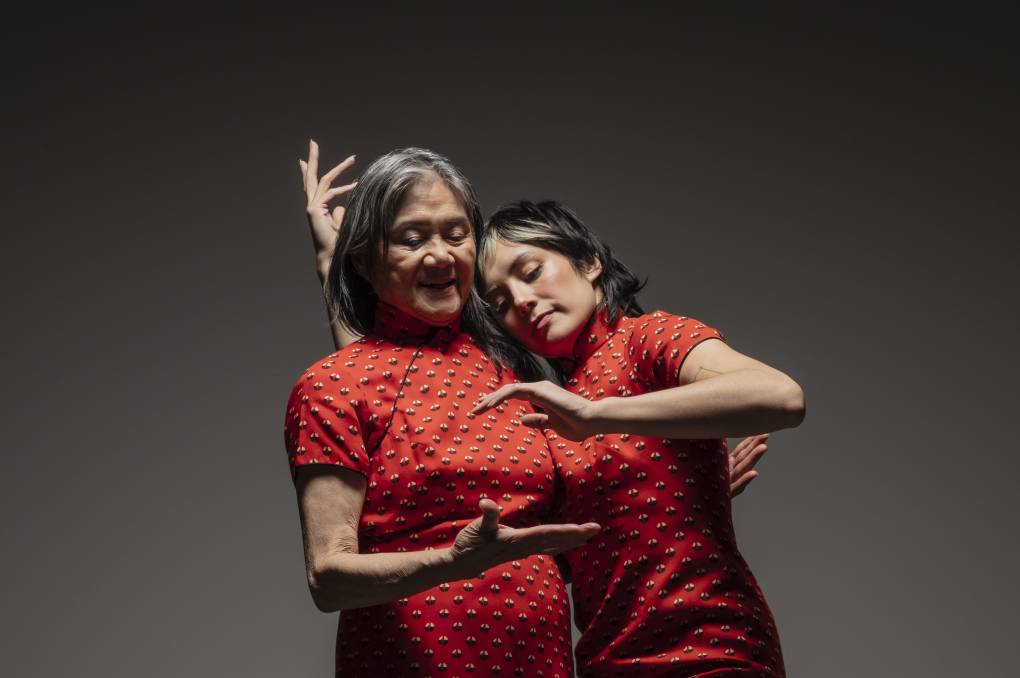
"caption": "Melissa Lewis Wong, right, with their mother Joy ChenYu Lewis. Together they perform in 'flowers and fog' at the Golden Gate Theatre in San Francisco's Chinatown.",
"description": null,
"title": null,
"credit": "RJ Muna",
"status": "inherit",
"altTag": null,
"isLoading": false,
"fetchFailed": false
},
"arts_13956223": {
"type": "attachments",
"id": "arts_13956223",
"meta": {
"index": "attachments_1716263798",
"site": "arts",
"id": "13956223",
"found": true
},
"parent": 13956218,
"imgSizes": {
"twentyfourteen-full-width": {
"file": "https://cdn.kqed.org/wp-content/uploads/sites/2/2024/04/Lounge-Chinatown-crop-1038x576.jpg",
"width": 1038,
"mimeType": "image/jpeg",
"height": 576
},
"thumbnail": {
"file": "https://cdn.kqed.org/wp-content/uploads/sites/2/2024/04/Lounge-Chinatown-crop-160x90.jpg",
"width": 160,
"mimeType": "image/jpeg",
"height": 90
},
"post-thumbnail": {
"file": "https://cdn.kqed.org/wp-content/uploads/sites/2/2024/04/Lounge-Chinatown-crop-672x372.jpg",
"width": 672,
"mimeType": "image/jpeg",
"height": 372
},
"kqedFullSize": {
"file": "https://cdn.kqed.org/wp-content/uploads/sites/2/2024/04/Lounge-Chinatown-crop.jpg",
"width": 1920,
"height": 1080
},
"large": {
"file": "https://cdn.kqed.org/wp-content/uploads/sites/2/2024/04/Lounge-Chinatown-crop-1020x574.jpg",
"width": 1020,
"mimeType": "image/jpeg",
"height": 574
},
"1536x1536": {
"file": "https://cdn.kqed.org/wp-content/uploads/sites/2/2024/04/Lounge-Chinatown-crop-1536x864.jpg",
"width": 1536,
"mimeType": "image/jpeg",
"height": 864
},
"medium": {
"file": "https://cdn.kqed.org/wp-content/uploads/sites/2/2024/04/Lounge-Chinatown-crop-800x450.jpg",
"width": 800,
"mimeType": "image/jpeg",
"height": 450
},
"medium_large": {
"file": "https://cdn.kqed.org/wp-content/uploads/sites/2/2024/04/Lounge-Chinatown-crop-768x432.jpg",
"width": 768,
"mimeType": "image/jpeg",
"height": 432
}
},
"publishDate": 1713486436,
"modified": 1713486519,
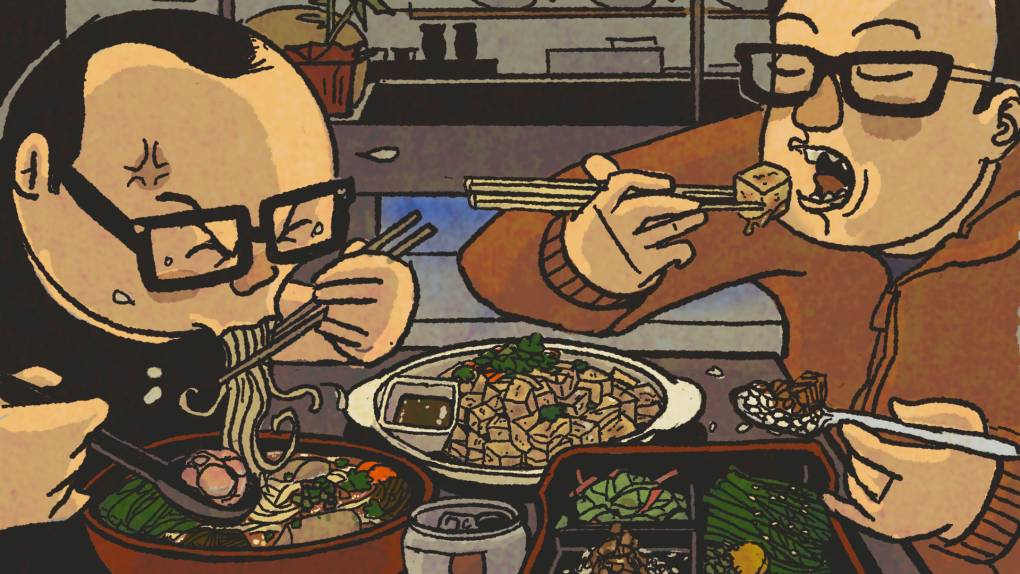
"caption": "Lounge Chinatown serves an array of Taiwanese street food classics — including stinky tofu — until 2:30 a.m. every night.",
"description": null,
"title": "Lounge Chinatown-crop",
"credit": "Thien Pham",
"status": "inherit",
"altTag": "Two men devouring a bowl of soup noodles and a plate of fried tofu, with chopsticks in their hands.",
"isLoading": false,
"fetchFailed": false
},
"arts_13952748": {
"type": "attachments",
"id": "arts_13952748",
"meta": {
"index": "attachments_1716263798",
"site": "arts",
"id": "13952748",
"found": true
},
"parent": 13952739,
"imgSizes": {
"twentyfourteen-full-width": {
"file": "https://cdn.kqed.org/wp-content/uploads/sites/2/2024/02/Lantern-Festival-Joyce-Xi-14-1038x576.jpg",
"width": 1038,
"mimeType": "image/jpeg",
"height": 576
},
"thumbnail": {
"file": "https://cdn.kqed.org/wp-content/uploads/sites/2/2024/02/Lantern-Festival-Joyce-Xi-14-160x90.jpg",
"width": 160,
"mimeType": "image/jpeg",
"height": 90
},
"post-thumbnail": {
"file": "https://cdn.kqed.org/wp-content/uploads/sites/2/2024/02/Lantern-Festival-Joyce-Xi-14-672x372.jpg",
"width": 672,
"mimeType": "image/jpeg",
"height": 372
},
"kqedFullSize": {
"file": "https://cdn.kqed.org/wp-content/uploads/sites/2/2024/02/Lantern-Festival-Joyce-Xi-14.jpg",
"width": 2000,
"height": 1125
},
"large": {
"file": "https://cdn.kqed.org/wp-content/uploads/sites/2/2024/02/Lantern-Festival-Joyce-Xi-14-1020x574.jpg",
"width": 1020,
"mimeType": "image/jpeg",
"height": 574
},
"1536x1536": {
"file": "https://cdn.kqed.org/wp-content/uploads/sites/2/2024/02/Lantern-Festival-Joyce-Xi-14-1536x864.jpg",
"width": 1536,
"mimeType": "image/jpeg",
"height": 864
},
"full-width": {
"file": "https://cdn.kqed.org/wp-content/uploads/sites/2/2024/02/Lantern-Festival-Joyce-Xi-14-1920x1080.jpg",
"width": 1920,
"mimeType": "image/jpeg",
"height": 1080
},
"medium": {
"file": "https://cdn.kqed.org/wp-content/uploads/sites/2/2024/02/Lantern-Festival-Joyce-Xi-14-800x450.jpg",
"width": 800,
"mimeType": "image/jpeg",
"height": 450
},
"medium_large": {
"file": "https://cdn.kqed.org/wp-content/uploads/sites/2/2024/02/Lantern-Festival-Joyce-Xi-14-768x432.jpg",
"width": 768,
"mimeType": "image/jpeg",
"height": 432
}
},
"publishDate": 1708565756,
"modified": 1708565855,
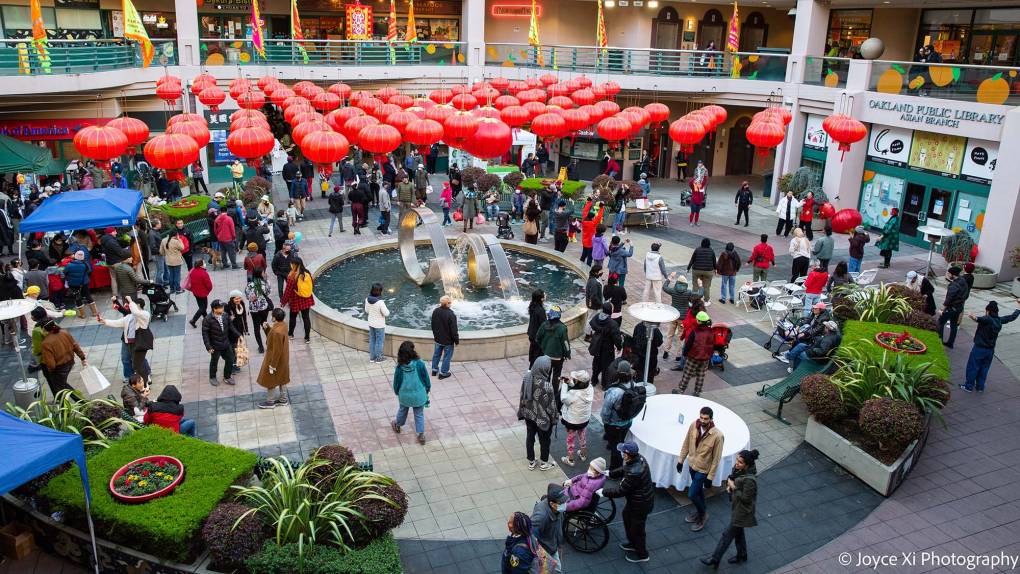
"caption": "This year's Lantern Festival celebration is meant to bring a lively sense of community to Oakland Chinatown.",
"description": null,
"title": "Lantern Festival -Joyce Xi-14",
"credit": "Joyce Xi, courtesy of Oakland Bloom",
"status": "inherit",
"altTag": "A plaza in Oakland Chinatown decorated with red paper lanterns",
"isLoading": false,
"fetchFailed": false
},
"arts_13938298": {
"type": "attachments",
"id": "arts_13938298",
"meta": {
"index": "attachments_1716263798",
"site": "arts",
"id": "13938298",
"found": true
},
"parent": 13938291,
"imgSizes": {
"twentyfourteen-full-width": {
"file": "https://ww2.kqed.org/app/uploads/sites/2/2023/11/BroadwayDragon2-JohnnyDismal_COVER-1038x576.jpg",
"width": 1038,
"mimeType": "image/jpeg",
"height": 576
},
"thumbnail": {
"file": "https://ww2.kqed.org/app/uploads/sites/2/2023/11/BroadwayDragon2-JohnnyDismal_COVER-160x126.jpg",
"width": 160,
"mimeType": "image/jpeg",
"height": 126
},
"post-thumbnail": {
"file": "https://ww2.kqed.org/app/uploads/sites/2/2023/11/BroadwayDragon2-JohnnyDismal_COVER-672x372.jpg",
"width": 672,
"mimeType": "image/jpeg",
"height": 372
},
"kqedFullSize": {
"file": "https://ww2.kqed.org/app/uploads/sites/2/2023/11/BroadwayDragon2-JohnnyDismal_COVER.jpg",
"width": 1454,
"height": 1148
},
"large": {
"file": "https://ww2.kqed.org/app/uploads/sites/2/2023/11/BroadwayDragon2-JohnnyDismal_COVER-1020x805.jpg",
"width": 1020,
"mimeType": "image/jpeg",
"height": 805
},
"medium": {
"file": "https://ww2.kqed.org/app/uploads/sites/2/2023/11/BroadwayDragon2-JohnnyDismal_COVER-800x632.jpg",
"width": 800,
"mimeType": "image/jpeg",
"height": 632
},
"medium_large": {
"file": "https://ww2.kqed.org/app/uploads/sites/2/2023/11/BroadwayDragon2-JohnnyDismal_COVER-768x606.jpg",
"width": 768,
"mimeType": "image/jpeg",
"height": 606
}
},
"publishDate": 1700517161,
"modified": 1700525351,
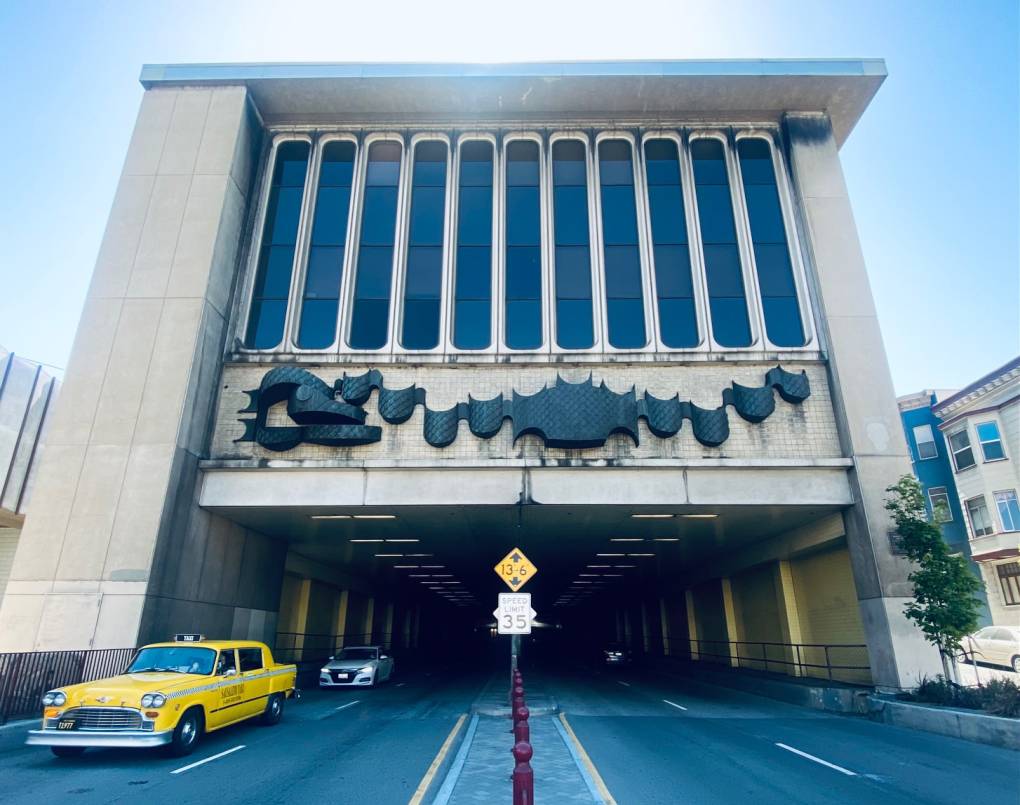
"caption": "Patti Bowler's 'Dragon Relief' has been mounted above the Broadway Tunnel on the facade of the Chinatown Public Health Center since 1970.",
"description": null,
"title": "BroadwayDragon2-JohnnyDismal_COVER",
"credit": "Johnny Dismal",
"status": "inherit",
"altTag": "two-way street goes under 70s style building with wide abstract metal dragon sculpture on face",
"isLoading": false,
"fetchFailed": false
},
"arts_13937701": {
"type": "attachments",
"id": "arts_13937701",
"meta": {
"index": "attachments_1716263798",
"site": "arts",
"id": "13937701",
"found": true
},
"parent": 0,
"imgSizes": {
"twentyfourteen-full-width": {
"file": "https://ww2.kqed.org/app/uploads/sites/2/2023/11/231104-HowToFriendsgiving-21-BL-KQED-1038x576.jpg",
"width": 1038,
"mimeType": "image/jpeg",
"height": 576
},
"thumbnail": {
"file": "https://ww2.kqed.org/app/uploads/sites/2/2023/11/231104-HowToFriendsgiving-21-BL-KQED-160x107.jpg",
"width": 160,
"mimeType": "image/jpeg",
"height": 107
},
"post-thumbnail": {
"file": "https://ww2.kqed.org/app/uploads/sites/2/2023/11/231104-HowToFriendsgiving-21-BL-KQED-672x372.jpg",
"width": 672,
"mimeType": "image/jpeg",
"height": 372
},
"kqedFullSize": {
"file": "https://ww2.kqed.org/app/uploads/sites/2/2023/11/231104-HowToFriendsgiving-21-BL-KQED.jpg",
"width": 2000,
"height": 1333
},
"large": {
"file": "https://ww2.kqed.org/app/uploads/sites/2/2023/11/231104-HowToFriendsgiving-21-BL-KQED-1020x680.jpg",
"width": 1020,
"mimeType": "image/jpeg",
"height": 680
},
"1536x1536": {
"file": "https://ww2.kqed.org/app/uploads/sites/2/2023/11/231104-HowToFriendsgiving-21-BL-KQED-1536x1024.jpg",
"width": 1536,
"mimeType": "image/jpeg",
"height": 1024
},
"full-width": {
"file": "https://ww2.kqed.org/app/uploads/sites/2/2023/11/231104-HowToFriendsgiving-21-BL-KQED-1920x1280.jpg",
"width": 1920,
"mimeType": "image/jpeg",
"height": 1280
},
"medium": {
"file": "https://ww2.kqed.org/app/uploads/sites/2/2023/11/231104-HowToFriendsgiving-21-BL-KQED-800x533.jpg",
"width": 800,
"mimeType": "image/jpeg",
"height": 533
},
"medium_large": {
"file": "https://ww2.kqed.org/app/uploads/sites/2/2023/11/231104-HowToFriendsgiving-21-BL-KQED-768x512.jpg",
"width": 768,
"mimeType": "image/jpeg",
"height": 512
}
},
"publishDate": 1699330773,
"modified": 1699382001,
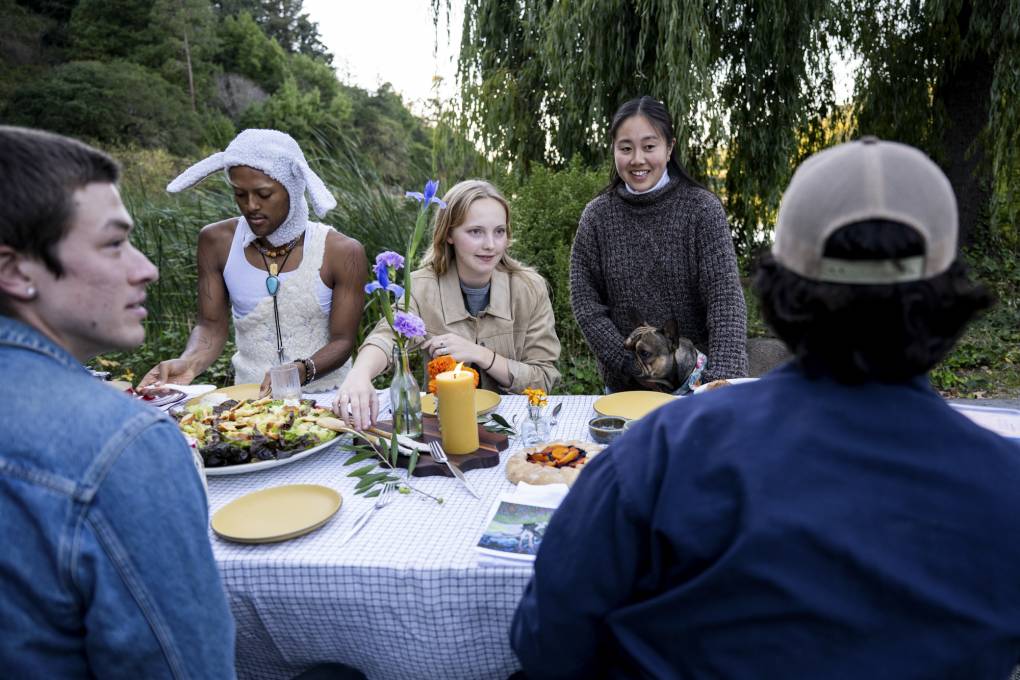
"caption": "Olivia Cruz Mayeda (right) hosts a Friendsgiving dinner for a group of friends at Lake Temescal in Oakland.",
"description": null,
"title": "231104-HowToFriendsgiving-21-BL-KQED",
"credit": "Beth LaBerge/KQED",
"status": "inherit",
"altTag": "A group of people talk around a picnic table set with a table cloth and a meal.",
"isLoading": false,
"fetchFailed": false
},
"arts_13933201": {
"type": "attachments",
"id": "arts_13933201",
"meta": {
"index": "attachments_1716263798",
"site": "arts",
"id": "13933201",
"found": true
},
"parent": 13932965,
"imgSizes": {
"twentyfourteen-full-width": {
"file": "https://ww2.kqed.org/app/uploads/sites/2/2023/08/opensfhistory_wnp12.00498-1000x576.jpg",
"width": 1000,
"mimeType": "image/jpeg",
"height": 576
},
"thumbnail": {
"file": "https://ww2.kqed.org/app/uploads/sites/2/2023/08/opensfhistory_wnp12.00498-160x110.jpg",
"width": 160,
"mimeType": "image/jpeg",
"height": 110
},
"post-thumbnail": {
"file": "https://ww2.kqed.org/app/uploads/sites/2/2023/08/opensfhistory_wnp12.00498-672x372.jpg",
"width": 672,
"mimeType": "image/jpeg",
"height": 372
},
"kqedFullSize": {
"file": "https://ww2.kqed.org/app/uploads/sites/2/2023/08/opensfhistory_wnp12.00498.jpg",
"width": 1000,
"height": 689
},
"medium": {
"file": "https://ww2.kqed.org/app/uploads/sites/2/2023/08/opensfhistory_wnp12.00498-800x551.jpg",
"width": 800,
"mimeType": "image/jpeg",
"height": 551
},
"medium_large": {
"file": "https://ww2.kqed.org/app/uploads/sites/2/2023/08/opensfhistory_wnp12.00498-768x529.jpg",
"width": 768,
"mimeType": "image/jpeg",
"height": 529
}
},
"publishDate": 1692119005,
"modified": 1692119102,
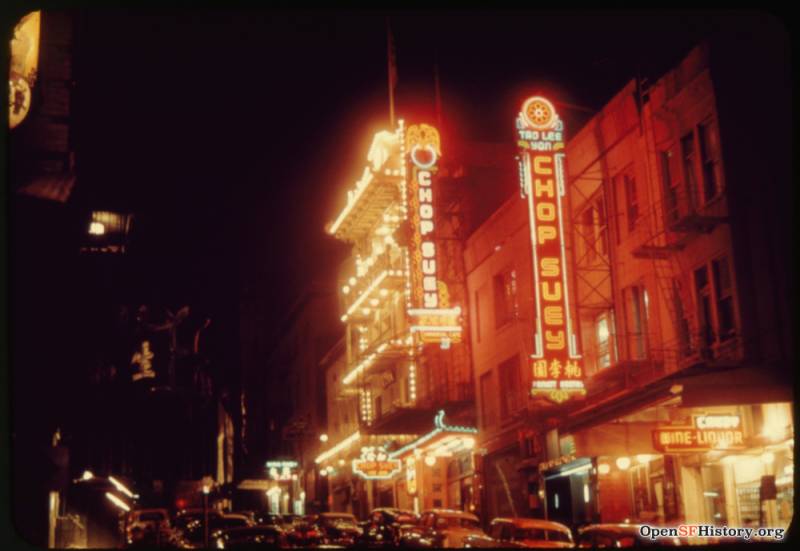
"caption": "Grant and Washington in Chinatown as it once looked.",
"description": null,
"title": "Grant and Washington in Chinatown as it once looked.",
"credit": "OpenSFHistory / wnp12.00498",
"status": "inherit",
"altTag": "A street at night, lit up by neon signs, two of which say CHOP SUEY.",
"isLoading": false,
"fetchFailed": false
},
"arts_13932820": {
"type": "attachments",
"id": "arts_13932820",
"meta": {
"index": "attachments_1716263798",
"site": "arts",
"id": "13932820",
"found": true
},
"parent": 13932789,
"imgSizes": {
"twentyfourteen-full-width": {
"file": "https://ww2.kqed.org/app/uploads/sites/2/2023/08/HIAH_ProRes422_230209__19_106349-1038x576.jpg",
"width": 1038,
"mimeType": "image/jpeg",
"height": 576
},
"thumbnail": {
"file": "https://ww2.kqed.org/app/uploads/sites/2/2023/08/HIAH_ProRes422_230209__19_106349-160x90.jpg",
"width": 160,
"mimeType": "image/jpeg",
"height": 90
},
"post-thumbnail": {
"file": "https://ww2.kqed.org/app/uploads/sites/2/2023/08/HIAH_ProRes422_230209__19_106349-672x372.jpg",
"width": 672,
"mimeType": "image/jpeg",
"height": 372
},
"kqedFullSize": {
"file": "https://ww2.kqed.org/app/uploads/sites/2/2023/08/HIAH_ProRes422_230209__19_106349-scaled.jpg",
"width": 2560,
"height": 1440
},
"2048x2048": {
"file": "https://ww2.kqed.org/app/uploads/sites/2/2023/08/HIAH_ProRes422_230209__19_106349-2048x1152.jpg",
"width": 2048,
"mimeType": "image/jpeg",
"height": 1152
},
"large": {
"file": "https://ww2.kqed.org/app/uploads/sites/2/2023/08/HIAH_ProRes422_230209__19_106349-1020x574.jpg",
"width": 1020,
"mimeType": "image/jpeg",
"height": 574
},
"1536x1536": {
"file": "https://ww2.kqed.org/app/uploads/sites/2/2023/08/HIAH_ProRes422_230209__19_106349-1536x864.jpg",
"width": 1536,
"mimeType": "image/jpeg",
"height": 864
},
"full-width": {
"file": "https://ww2.kqed.org/app/uploads/sites/2/2023/08/HIAH_ProRes422_230209__19_106349-1920x1080.jpg",
"width": 1920,
"mimeType": "image/jpeg",
"height": 1080
},
"medium": {
"file": "https://ww2.kqed.org/app/uploads/sites/2/2023/08/HIAH_ProRes422_230209__19_106349-800x450.jpg",
"width": 800,
"mimeType": "image/jpeg",
"height": 450
},
"medium_large": {
"file": "https://ww2.kqed.org/app/uploads/sites/2/2023/08/HIAH_ProRes422_230209__19_106349-768x432.jpg",
"width": 768,
"mimeType": "image/jpeg",
"height": 432
}
},
"publishDate": 1691534795,
"modified": 1691534892,
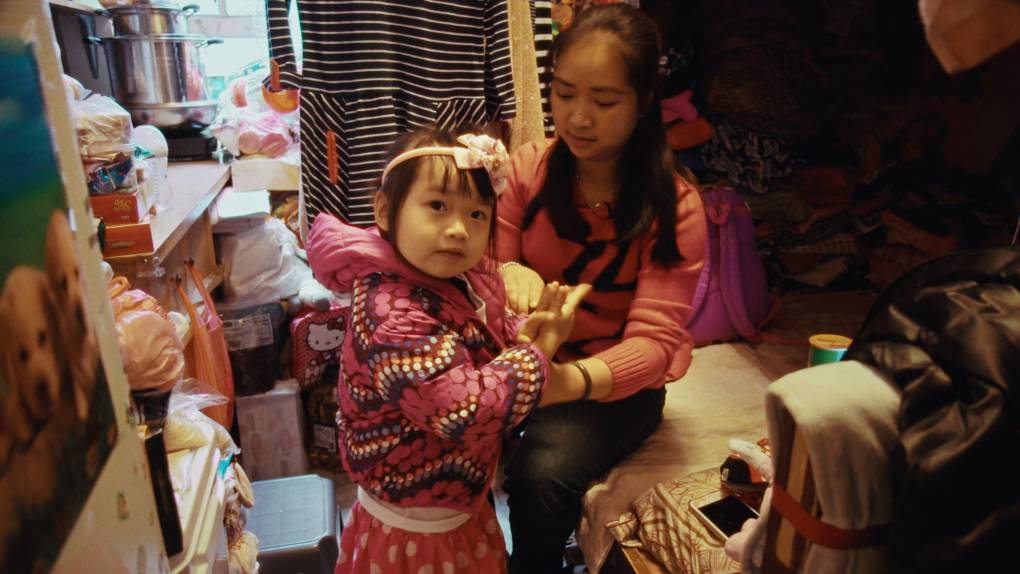
"caption": "Christina and her daughter Shirley in a still from 'Home Is a Hotel,' in their room at an SRO hotel in Chinatown.",
"description": null,
"title": "HIAH_ProRes422_230209__19_106349",
"credit": "Courtesy of Home Is a Hotel",
"status": "inherit",
"altTag": "a young Chinese American girl in pink clothes and her mother, a Chinese woman, in a crowded room",
"isLoading": false,
"fetchFailed": false
},
"arts_13924503": {
"type": "attachments",
"id": "arts_13924503",
"meta": {
"index": "attachments_1716263798",
"site": "arts",
"id": "13924503",
"found": true
},
"parent": 13924500,
"imgSizes": {
"twentyfourteen-full-width": {
"file": "https://ww2.kqed.org/app/uploads/sites/2/2023/01/image3-1038x576.jpg",
"width": 1038,
"mimeType": "image/jpeg",
"height": 576
},
"thumbnail": {
"file": "https://ww2.kqed.org/app/uploads/sites/2/2023/01/image3-160x115.jpg",
"width": 160,
"mimeType": "image/jpeg",
"height": 115
},
"post-thumbnail": {
"file": "https://ww2.kqed.org/app/uploads/sites/2/2023/01/image3-672x372.jpg",
"width": 672,
"mimeType": "image/jpeg",
"height": 372
},
"kqedFullSize": {
"file": "https://ww2.kqed.org/app/uploads/sites/2/2023/01/image3.jpg",
"width": 1604,
"height": 1150
},
"large": {
"file": "https://ww2.kqed.org/app/uploads/sites/2/2023/01/image3-1020x731.jpg",
"width": 1020,
"mimeType": "image/jpeg",
"height": 731
},
"1536x1536": {
"file": "https://ww2.kqed.org/app/uploads/sites/2/2023/01/image3-1536x1101.jpg",
"width": 1536,
"mimeType": "image/jpeg",
"height": 1101
},
"medium": {
"file": "https://ww2.kqed.org/app/uploads/sites/2/2023/01/image3-800x574.jpg",
"width": 800,
"mimeType": "image/jpeg",
"height": 574
},
"medium_large": {
"file": "https://ww2.kqed.org/app/uploads/sites/2/2023/01/image3-768x551.jpg",
"width": 768,
"mimeType": "image/jpeg",
"height": 551
}
},
"publishDate": 1675190951,
"modified": 1675191177,
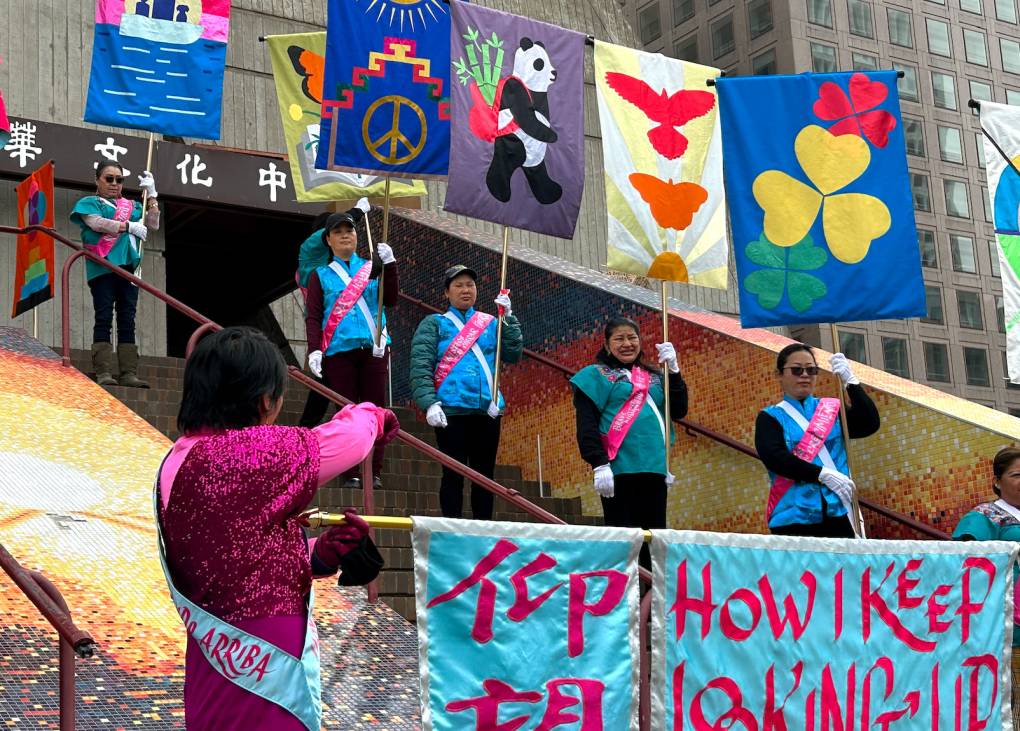
"caption": "‘How I Keep Looking Up’ members practice marching with their flags in preparation for the Chinese New Year Parade in San Francisco’s Chinatown.",
"description": null,
"title": "image3",
"credit": "Kristie Song",
"status": "inherit",
"altTag": "Women in blue vests and pink sashes hold multicolored flags on mosaic-covered steps",
"isLoading": false,
"fetchFailed": false
}
},
"audioPlayerReducer": {
"postId": "stream_live",
"isPaused": true,
"isPlaying": false,
"pfsActive": false,
"pledgeModalIsOpen": true,
"playerDrawerIsOpen": false,
"liveAudioPlayStartedAt": 0,
"liveAudioPlayContext": ""
},
"authorsReducer": {
"shotchkiss": {
"type": "authors",
"id": "61",
"meta": {
"index": "authors_1716337520",
"id": "61",
"found": true
},
"name": "Sarah Hotchkiss",
"firstName": "Sarah",
"lastName": "Hotchkiss",
"slug": "shotchkiss",
"email": "shotchkiss@kqed.org",
"display_author_email": true,
"staff_mastheads": [
"arts"
],
"title": "Senior Editor",
"bio": "Sarah Hotchkiss is a San Francisco \u003ca href=\"http://www.sarahhotchkiss.com\">artist\u003c/a> and arts writer. In 2019, she received the Dorothea & Leo Rabkin Foundation grant for visual art journalism and in 2020 she received a Society of Professional Journalists, Northern California award for excellence in arts and culture reporting.",
"avatar": "https://secure.gravatar.com/avatar/bc662df144b3d27fd8b1b6f1c2a420d34e91e53154d411bb7ad353cc8b6cea8d?s=600&d=blank&r=g",
"twitter": null,
"bluesky": null,
"facebook": null,
"instagram": null,
"linkedin": null,
"sites": [
{
"site": "",
"roles": [
"editor"
]
},
{
"site": "arts",
"roles": [
"Contributor",
"administrator"
]
},
{
"site": "artschool",
"roles": [
"administrator"
]
},
{
"site": "news",
"roles": [
"editor"
]
},
{
"site": "pop",
"roles": [
"administrator"
]
},
{
"site": "bayareabites",
"roles": [
"editor"
]
},
{
"site": "spark",
"roles": [
"editor"
]
},
{
"site": "checkplease",
"roles": [
"editor"
]
}
],
"headData": {
"title": "Sarah Hotchkiss | KQED",
"description": "Senior Editor",
"ogImgSrc": "https://secure.gravatar.com/avatar/bc662df144b3d27fd8b1b6f1c2a420d34e91e53154d411bb7ad353cc8b6cea8d?s=600&d=blank&r=g",
"twImgSrc": "https://secure.gravatar.com/avatar/bc662df144b3d27fd8b1b6f1c2a420d34e91e53154d411bb7ad353cc8b6cea8d?s=600&d=blank&r=g"
},
"isLoading": false,
"link": "/author/shotchkiss"
},
"esilvers": {
"type": "authors",
"id": "7237",
"meta": {
"index": "authors_1716337520",
"id": "7237",
"found": true
},
"name": "Emma Silvers",
"firstName": "Emma",
"lastName": "Silvers",
"slug": "esilvers",
"email": "esilvers@kqed.org",
"display_author_email": false,
"staff_mastheads": [],
"title": "KQED Contributor",
"bio": "Emma Silvers is an editor at KQED Arts and a former digital producer at KQED News. Born and raised in the Bay Area, she has previously been an arts and entertainment editor at the \u003cem>San Francisco Chronicle\u003c/em>, \u003cem>SF Weekly\u003c/em> and the \u003cem>San Francisco Bay Guardian.\u003c/em> \u003ca href=\"https://www.emmasilvers.com\">Her work\u003c/a> has also appeared in \u003cem>Rolling Stone\u003c/em>, Pitchfork and \u003cem>Mother Jones\u003c/em>. In 2017 she was the recipient of the Society of Professional Journalists-Northern California's award for arts and culture reporting. In 1993 she \u003ca href=\"https://www.kqed.org/pop/16759/wait-what-my-coworker-was-a-voice-over-hyperventilator-for-jurassic-park\">hyperventilated in \u003cem>Jurassic Park\u003c/em>\u003c/a>.",
"avatar": "https://secure.gravatar.com/avatar/247beada39b88ea5759db1f51dba05cf?s=600&d=blank&r=g",
"twitter": "emmaruthless",
"facebook": null,
"instagram": null,
"linkedin": null,
"sites": [
{
"site": "arts",
"roles": [
"editor"
]
},
{
"site": "news",
"roles": [
"editor"
]
},
{
"site": "pop",
"roles": [
"contributor"
]
},
{
"site": "bayareabites",
"roles": [
"editor"
]
},
{
"site": "food",
"roles": [
"contributor"
]
},
{
"site": "liveblog",
"roles": [
"editor"
]
}
],
"headData": {
"title": "Emma Silvers | KQED",
"description": "KQED Contributor",
"ogImgSrc": "https://secure.gravatar.com/avatar/247beada39b88ea5759db1f51dba05cf?s=600&d=blank&r=g",
"twImgSrc": "https://secure.gravatar.com/avatar/247beada39b88ea5759db1f51dba05cf?s=600&d=blank&r=g"
},
"isLoading": false,
"link": "/author/esilvers"
},
"ralexandra": {
"type": "authors",
"id": "11242",
"meta": {
"index": "authors_1716337520",
"id": "11242",
"found": true
},
"name": "Rae Alexandra",
"firstName": "Rae",
"lastName": "Alexandra",
"slug": "ralexandra",
"email": "ralexandra@kqed.org",
"display_author_email": true,
"staff_mastheads": [
"arts"
],
"title": "Reporter/Producer",
"bio": "Rae Alexandra is a Reporter/Producer for KQED Arts & Culture, and the creator/author of the \u003ca href=\"https://www.kqed.org/arts/program/rebel-girls-from-bay-area-history\">Rebel Girls From Bay Area History\u003c/a> and \u003ca href=\"https://www.kqed.org/bizarrebayarea\">Bizarre Bay Area\u003c/a> series. Her debut book, \u003ca href=\"https://citylights.com/politics-current-events-history/unsung-heroines35-women-who-changed/\">Unsung Heroines: 35 Women Who Changed the Bay Area\u003c/a> was published by City Lights in March 2026. In 2023, Rae was awarded an SPJ Excellence in Journalism Award for Arts & Culture. Rae was born and raised in Wales and subsequently — even after two decades in Northern California — still uses phrases that regularly baffle her coworkers.",
"avatar": "https://secure.gravatar.com/avatar/edfee8176c80cc0a382b051190f5341997df378a934a5774dcb0977732dfd401?s=600&d=blank&r=g",
"twitter": null,
"bluesky": null,
"facebook": null,
"instagram": null,
"linkedin": null,
"sites": [
{
"site": "arts",
"roles": [
"editor"
]
},
{
"site": "news",
"roles": [
"editor"
]
},
{
"site": "pop",
"roles": [
"editor"
]
},
{
"site": "bayareabites",
"roles": [
"editor"
]
},
{
"site": "science",
"roles": [
"editor"
]
}
],
"headData": {
"title": "Rae Alexandra | KQED",
"description": "Reporter/Producer",
"ogImgSrc": "https://secure.gravatar.com/avatar/edfee8176c80cc0a382b051190f5341997df378a934a5774dcb0977732dfd401?s=600&d=blank&r=g",
"twImgSrc": "https://secure.gravatar.com/avatar/edfee8176c80cc0a382b051190f5341997df378a934a5774dcb0977732dfd401?s=600&d=blank&r=g"
},
"isLoading": false,
"link": "/author/ralexandra"
},
"aproehl": {
"type": "authors",
"id": "11296",
"meta": {
"index": "authors_1716337520",
"id": "11296",
"found": true
},
"name": "Ariana Proehl",
"firstName": "Ariana",
"lastName": "Proehl",
"slug": "aproehl",
"email": "aproehl@KQED.org",
"display_author_email": true,
"staff_mastheads": [
"news"
],
"title": "Culture Reporter, KQED",
"bio": "Ariana Proehl is a Culture Reporter and Host.",
"avatar": "https://secure.gravatar.com/avatar/c96b24567eb5bb3a4f8bb295ed53e232?s=600&d=blank&r=g",
"twitter": "ArianaProehl",
"facebook": null,
"instagram": null,
"linkedin": null,
"sites": [
{
"site": "arts",
"roles": []
},
{
"site": "news",
"roles": []
},
{
"site": "education",
"roles": []
},
{
"site": "forum",
"roles": []
}
],
"headData": {
"title": "Ariana Proehl | KQED",
"description": "Culture Reporter, KQED",
"ogImgSrc": "https://secure.gravatar.com/avatar/c96b24567eb5bb3a4f8bb295ed53e232?s=600&d=blank&r=g",
"twImgSrc": "https://secure.gravatar.com/avatar/c96b24567eb5bb3a4f8bb295ed53e232?s=600&d=blank&r=g"
},
"isLoading": false,
"link": "/author/aproehl"
},
"ltsai": {
"type": "authors",
"id": "11743",
"meta": {
"index": "authors_1716337520",
"id": "11743",
"found": true
},
"name": "Luke Tsai",
"firstName": "Luke",
"lastName": "Tsai",
"slug": "ltsai",
"email": "ltsai@kqed.org",
"display_author_email": true,
"staff_mastheads": [
"arts"
],
"title": "Food Editor",
"bio": "Luke Tsai is KQED's food editor and resident stinky tofu connoisseur. Prior to KQED, he was an editor at Eater SF, \u003cem>San Francisco \u003c/em>magazine, and the \u003cem>East Bay Express\u003c/em>, and his work has also appeared in TASTE, the \u003cem>San Francisco Chronicle\u003c/em>, and the \u003cem>Best Food Writing\u003c/em> anthology. When he isn't writing or editing, you'll find him eating most everything he can get his hands on.",
"avatar": "https://secure.gravatar.com/avatar/1e59b45bf191526e7339d6ba46e33a57b2030d25c27660ecc64ea3cb863e34f7?s=600&d=blank&r=g",
"twitter": "theluketsai",
"bluesky": null,
"facebook": null,
"instagram": null,
"linkedin": null,
"sites": [
{
"site": "",
"roles": [
"editor"
]
},
{
"site": "arts",
"roles": [
"administrator"
]
},
{
"site": "news",
"roles": [
"editor",
"contributor"
]
},
{
"site": "bayareabites",
"roles": [
"editor"
]
},
{
"site": "food",
"roles": [
"editor"
]
}
],
"headData": {
"title": "Luke Tsai | KQED",
"description": "Food Editor",
"ogImgSrc": "https://secure.gravatar.com/avatar/1e59b45bf191526e7339d6ba46e33a57b2030d25c27660ecc64ea3cb863e34f7?s=600&d=blank&r=g",
"twImgSrc": "https://secure.gravatar.com/avatar/1e59b45bf191526e7339d6ba46e33a57b2030d25c27660ecc64ea3cb863e34f7?s=600&d=blank&r=g"
},
"isLoading": false,
"link": "/author/ltsai"
},
"achazaro": {
"type": "authors",
"id": "11748",
"meta": {
"index": "authors_1716337520",
"id": "11748",
"found": true
},
"name": "Alan Chazaro",
"firstName": "Alan",
"lastName": "Chazaro",
"slug": "achazaro",
"email": "agchazaro@gmail.com",
"display_author_email": true,
"staff_mastheads": [],
"title": "Food Writer and Reporter",
"bio": "Alan Chazaro is the author of \u003cem>This Is Not a Frank Ocean Cover Album\u003c/em> (Black Lawrence Press, 2019), \u003cem>Piñata Theory\u003c/em> (Black Lawrence Press, 2020), and \u003cem>Notes from the Eastern Span of the Bay Bridge\u003c/em> (Ghost City Press, 2021). He is a graduate of June Jordan’s Poetry for the People program at UC Berkeley and a former Lawrence Ferlinghetti Fellow at the University of San Francisco. He writes about sports, food, art, music, education, and culture while repping the Bay on \u003ca href=\"https://twitter.com/alan_chazaro\">Twitter\u003c/a> and \u003ca href=\"https://www.instagram.com/alan_chazaro/?hl=en\">Instagram\u003c/a> at @alan_chazaro.",
"avatar": "https://secure.gravatar.com/avatar/ea8b6dd970fc5c29e7a188e7d5861df7?s=600&d=blank&r=g",
"twitter": "alan_chazaro",
"facebook": null,
"instagram": null,
"linkedin": null,
"sites": [
{
"site": "arts",
"roles": [
"contributor"
]
},
{
"site": "news",
"roles": [
"editor"
]
}
],
"headData": {
"title": "Alan Chazaro | KQED",
"description": "Food Writer and Reporter",
"ogImgSrc": "https://secure.gravatar.com/avatar/ea8b6dd970fc5c29e7a188e7d5861df7?s=600&d=blank&r=g",
"twImgSrc": "https://secure.gravatar.com/avatar/ea8b6dd970fc5c29e7a188e7d5861df7?s=600&d=blank&r=g"
},
"isLoading": false,
"link": "/author/achazaro"
},
"tpham": {
"type": "authors",
"id": "11753",
"meta": {
"index": "authors_1716337520",
"id": "11753",
"found": true
},
"name": "Thien Pham",
"firstName": "Thien",
"lastName": "Pham",
"slug": "tpham",
"email": "thiendog@gmail.com",
"display_author_email": false,
"staff_mastheads": [],
"title": "KQED Contributor",
"bio": null,
"avatar": "https://secure.gravatar.com/avatar/fa68ed7d6a785e5294a7bb79a3f409c3?s=600&d=blank&r=g",
"twitter": null,
"facebook": null,
"instagram": null,
"linkedin": null,
"sites": [
{
"site": "arts",
"roles": [
"contributor"
]
}
],
"headData": {
"title": "Thien Pham | KQED",
"description": "KQED Contributor",
"ogImgSrc": "https://secure.gravatar.com/avatar/fa68ed7d6a785e5294a7bb79a3f409c3?s=600&d=blank&r=g",
"twImgSrc": "https://secure.gravatar.com/avatar/fa68ed7d6a785e5294a7bb79a3f409c3?s=600&d=blank&r=g"
},
"isLoading": false,
"link": "/author/tpham"
},
"ksong": {
"type": "authors",
"id": "11813",
"meta": {
"index": "authors_1716337520",
"id": "11813",
"found": true
},
"name": "Kristie Song",
"firstName": "Kristie",
"lastName": "Song",
"slug": "ksong",
"email": "ksong@kqed.org",
"display_author_email": false,
"staff_mastheads": [],
"title": "Editorial Intern ",
"bio": "Kristie Song is an Arts & Culture Intern at KQED. She is currently a graduate student at UC Berkeley, where she studies audio and multimedia journalism. Previously, she covered the local community for Oakland North, produced episodes for The Science of Happiness, and served as news director for KUCI, UC Irvine’s radio station. Outside of reporting, she likes drawing comics, listening to angsty rock, and practicing the guitar.",
"avatar": "https://secure.gravatar.com/avatar/c1149e78c3c44f92d4945a8ab0711af6?s=600&d=blank&r=g",
"twitter": null,
"facebook": null,
"instagram": null,
"linkedin": null,
"sites": [
{
"site": "arts",
"roles": [
"editor"
]
}
],
"headData": {
"title": "Kristie Song | KQED",
"description": "Editorial Intern ",
"ogImgSrc": "https://secure.gravatar.com/avatar/c1149e78c3c44f92d4945a8ab0711af6?s=600&d=blank&r=g",
"twImgSrc": "https://secure.gravatar.com/avatar/c1149e78c3c44f92d4945a8ab0711af6?s=600&d=blank&r=g"
},
"isLoading": false,
"link": "/author/ksong"
},
"omayeda": {
"type": "authors",
"id": "11872",
"meta": {
"index": "authors_1716337520",
"id": "11872",
"found": true
},
"name": "Olivia Cruz Mayeda",
"firstName": "Olivia Cruz",
"lastName": "Mayeda",
"slug": "omayeda",
"email": "omayeda@kqed.org",
"display_author_email": false,
"staff_mastheads": [],
"title": "Reporter",
"bio": "Olivia Cruz Mayeda is a journalist covering style, culture and reparations in the Bay Area, a place that has been home to her family for over 100 years. Her writing has also appeared in the \u003cem>San Francisco Chronicle\u003c/em> and \u003cem>El Tecolote\u003c/em>.",
"avatar": "https://secure.gravatar.com/avatar/a8c0baa30219ce1071a9474f4c14141f?s=600&d=blank&r=g",
"twitter": null,
"facebook": null,
"instagram": null,
"linkedin": null,
"sites": [
{
"site": "arts",
"roles": [
"contributor"
]
}
],
"headData": {
"title": "Olivia Cruz Mayeda | KQED",
"description": "Reporter",
"ogImgSrc": "https://secure.gravatar.com/avatar/a8c0baa30219ce1071a9474f4c14141f?s=600&d=blank&r=g",
"twImgSrc": "https://secure.gravatar.com/avatar/a8c0baa30219ce1071a9474f4c14141f?s=600&d=blank&r=g"
},
"isLoading": false,
"link": "/author/omayeda"
}
},
"pagesReducer": {
"arts_tag_chinatown": {
"type": "terms",
"id": "arts_2654",
"meta": {
"index": "terms_1716263798",
"site": "arts",
"id": "2654",
"score": 8.934054
},
"featImg": null,
"name": "chinatown",
"description": null,
"taxonomy": "tag",
"headData": {
"twImgId": null,
"twTitle": null,
"ogTitle": null,
"ogImgId": null,
"twDescription": null,
"description": null,
"title": "chinatown Archives | KQED Arts",
"ogDescription": null
},
"ttid": 2666,
"slug": "chinatown",
"isLoading": false,
"title": "chinatown",
"pageMeta": {
"site": "arts",
"WpPageTemplate": "page-topic-editorial",
"currentPage": 2
},
"blocks": [
{
"blockName": "kqed/post-list",
"attrs": {
"layout": "cardArticle2",
"query": "posts/arts?tag=chinatown",
"seeMore": false,
"paginated": true,
"page": 2
}
},
{
"blockName": "kqed/ad"
}
]
}
},
"pfsSessionReducer": {},
"postsReducer": {
"stream_live": {
"type": "live",
"id": "stream_live",
"audioUrl": "https://streams.kqed.org/kqedradio",
"title": "Live Stream",
"excerpt": "Live Stream information currently unavailable.",
"link": "/radio",
"featImg": "",
"label": {
"name": "KQED Live",
"link": "/"
}
},
"stream_kqedNewscast": {
"type": "posts",
"id": "stream_kqedNewscast",
"audioUrl": "https://www.kqed.org/.stream/anon/radio/RDnews/newscast.mp3?_=1",
"title": "KQED Newscast",
"featImg": "",
"label": {
"name": "88.5 FM",
"link": "/"
}
},
"arts_13967564": {
"type": "posts",
"id": "arts_13967564",
"meta": {
"index": "posts_1716263798",
"site": "arts",
"id": "13967564",
"score": null,
"sort": [
1730417056000
]
},
"guestAuthors": [],
"slug": "taishan-cuisine-san-francisco-chinatown-late-night-food",
"title": "Taishan Cuisine Is Keeping Chinatown’s Late-Night Food Scene Alive",
"publishDate": 1730417056,
"format": "aside",
"headTitle": "Taishan Cuisine Is Keeping Chinatown’s Late-Night Food Scene Alive | KQED",
"labelTerm": {},
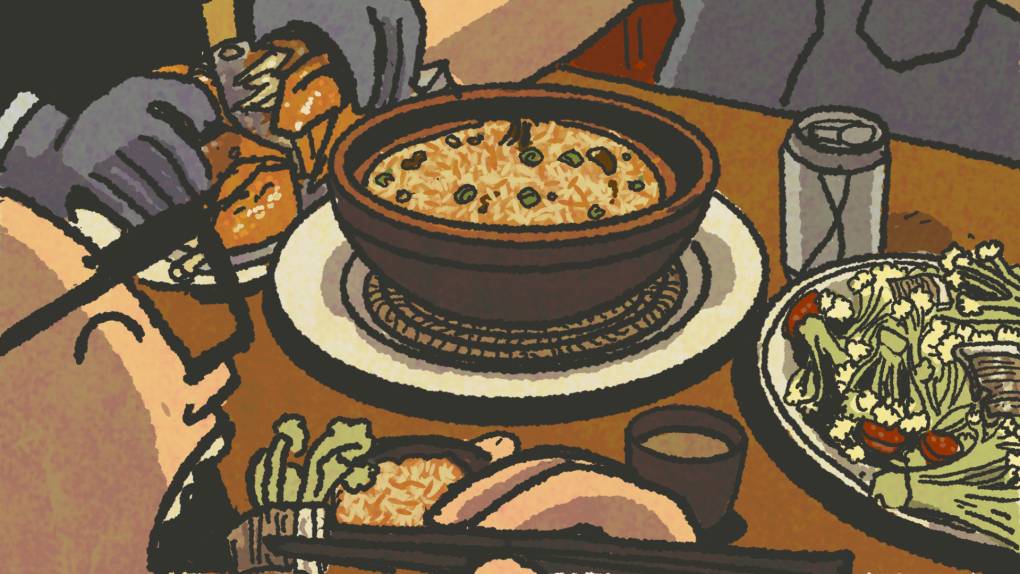
"content": "\u003cfigure id=\"attachment_13967573\" class=\"wp-caption alignnone\" style=\"max-width: 1920px\">\u003cimg loading=\"lazy\" decoding=\"async\" class=\"size-full wp-image-13967573\" src=\"https://cdn.kqed.org/wp-content/uploads/sites/2/2024/10/Taishan2.jpg\" alt=\"Illustration: Two men devouring a Chinese meal with chopsticks.\" width=\"1920\" height=\"1920\" srcset=\"https://cdn.kqed.org/wp-content/uploads/sites/2/2024/10/Taishan2.jpg 1920w, https://cdn.kqed.org/wp-content/uploads/sites/2/2024/10/Taishan2-800x800.jpg 800w, https://cdn.kqed.org/wp-content/uploads/sites/2/2024/10/Taishan2-1020x1020.jpg 1020w, https://cdn.kqed.org/wp-content/uploads/sites/2/2024/10/Taishan2-160x160.jpg 160w, https://cdn.kqed.org/wp-content/uploads/sites/2/2024/10/Taishan2-768x768.jpg 768w, https://cdn.kqed.org/wp-content/uploads/sites/2/2024/10/Taishan2-1536x1536.jpg 1536w\" sizes=\"(max-width: 1920px) 100vw, 1920px\">\u003cfigcaption class=\"wp-caption-text\">Taishan Cuisine is one of a handful of restaurants in San Francisco that specializes in Taishanese cooking, including its standout yellow eel claypot rice. \u003ccite>(Thien Pham)\u003c/cite>\u003c/figcaption>\u003c/figure>\n\u003cp>\u003ca href=\"https://www.kqed.org/arts/tag/the-midnight-diners\">\u003ci>The Midnight Diners\u003c/i>\u003c/a>\u003ci> is a regular collaboration between KQED food editor Luke Tsai and graphic novelist \u003c/i>\u003ca href=\"https://www.instagram.com/thiendog/?hl=en\">\u003ci>Thien Pham\u003c/i>\u003c/a>\u003ci>. Follow them each week as they explore the hot pot restaurants, taco carts and 24-hour casino buffets that make up the Bay Area’s after-hours dining scene.\u003c/i>\u003c/p>\n\u003cp>Late-night meals in San Francisco Chinatown are a long and storied tradition going back more than 100 years — for \u003ca href=\"https://gastronomica.org/2004/11/04/late-night-lions-den-chinese-restaurant-nightclubs-1940s-san-francisco/\">club-hoppers\u003c/a>, post-shift restaurant workers, \u003ca href=\"https://www.hungryonion.org/t/sf-chinatown-chinatown-food-memories/7734/6\">hippies\u003c/a>, Beat poets and boozehounds making one final pit stop after last call.\u003c/p>\n\u003cp>They’re also all but extinct.\u003c/p>\n\u003cp>These days, you can count on one hand the number of Chinatown restaurants open later than 9 p.m. \u003ca href=\"https://www.kqed.org/food/1337752/remembering-sam-wos-edsel-ford-fong-san-franciscos-rudest-waiter\">Sam Wo\u003c/a>, the neighborhood’s oldest and most iconic after-hours spot, recently announced it will \u003ca href=\"https://www.sfgate.com/food/article/sf-sam-wo-restaurant-sale-risk-of-closure-19808509.php\">close at the end of the year\u003c/a> (barring an eleventh-hour miracle) — and it hasn’t been open past 8:30 since pre-pandemic times anyway. These days, if you’re craving a bowl of jook or a plate of sizzling hot beef chow fun after midnight, you’ll find more options out in the Richmond or the Sunset than you will anywhere in the vicinity of Chinatown.\u003c/p>\n\u003cp>It’s hard, then, to overstate the value of a place like Taishan Cuisine, which very quietly serves some of the tastiest Chinese food in San Francisco until 3 a.m. every night. Quietly, anyway, to those outside the community: Taishan is your \u003ca href=\"https://www.kqed.org/arts/13962284/four-kings-hong-kong-restaurant-san-francisco-chinatown-hella-hungry-interview\">favorite Chinese chef’s\u003c/a> favorite Chinatown joint — a low-key cult favorite among \u003ca href=\"https://www.instagram.com/fuchsiadunlop/p/CztzEKex4G7/\">connoisseurs\u003c/a> of regional Chinese cuisine. And at a little before 10 o’clock on a recent Friday night, the dining room was bustling almost exclusively with Cantonese-speaking locals and only seemed to get busier the later it got.\u003c/p>\n\u003cp>[ad fullwidth]\u003c/p>\n\u003cp>Taishan opened in 2020, barely a month before lockdown, but it’s one of those Chinatown restaurants that looks and feels like it’s been around forever: weathered wooden tables, handwritten specials, the Hong Kong news playing on the TV. A series of red and yellow framed posters highlighting specific menu items has a vintage ’60s design aesthetic. (Each one is inscribed with a poetic Chinese idiom: A medicinal-looking pork belly hot pot dish, for instance, promises to fill men with vigor and serve as a “beauty salon” for women.) The only things that look new are the shiny, high-tech induction burners on each table, for hot pot, which feel almost anachronistic in this setting.\u003c/p>\n\u003cfigure id=\"attachment_13967575\" class=\"wp-caption alignnone\" style=\"max-width: 1920px\">\u003cimg loading=\"lazy\" decoding=\"async\" class=\"size-full wp-image-13967575\" src=\"https://cdn.kqed.org/wp-content/uploads/sites/2/2024/10/Taishan.jpg\" alt=\"Illustration: Exterior of Taishan Cuisine restaurant lit up at night.\" width=\"1920\" height=\"1920\" srcset=\"https://cdn.kqed.org/wp-content/uploads/sites/2/2024/10/Taishan.jpg 1920w, https://cdn.kqed.org/wp-content/uploads/sites/2/2024/10/Taishan-800x800.jpg 800w, https://cdn.kqed.org/wp-content/uploads/sites/2/2024/10/Taishan-1020x1020.jpg 1020w, https://cdn.kqed.org/wp-content/uploads/sites/2/2024/10/Taishan-160x160.jpg 160w, https://cdn.kqed.org/wp-content/uploads/sites/2/2024/10/Taishan-768x768.jpg 768w, https://cdn.kqed.org/wp-content/uploads/sites/2/2024/10/Taishan-1536x1536.jpg 1536w\" sizes=\"(max-width: 1920px) 100vw, 1920px\">\u003cfigcaption class=\"wp-caption-text\">Open until 3 a.m. every night, the restaurant is one of the last remaining late-night food spots in Chinatown. \u003ccite>(Thien Pham)\u003c/cite>\u003c/figcaption>\u003c/figure>\n\u003cp>The restaurant has one of those wide-spanning Chinese menus that can be intimidating for a first-time visitor. There’s a whole page dedicated to hot pot and another page for dim sum. It has a rice porridge section and a noodle section, with a handful of Chinese American standbys like Mongolian beef and sweet and sour chicken mixed in.\u003c/p>\n\u003cp>But the restaurant’s name itself gives a clear indication of what you should order: Taishan, aka Toisan, is the part of China’s Guangdong province from which many of the earliest immigrants to California hailed during the Gold Rush, back in the 1850s — the ones who built up San Francisco’s Chinatown. In that sense, you could say that Taishanese food is Chinatown’s mother cuisine, but today, only a handful of spots in San Francisco explicitly market themselves as specializing in dishes from that region.\u003c/p>\n\u003cp>\u003cspan style=\"font-weight: 400\">\u003cspan style=\"color: #2b2b2b;font-weight: 400\">[aside postID='arts_13966812,arts_13963437,arts_13956218']\u003c/span>\u003c/span>At Taishan Cuisine, most of these are listed as “house specials” or “chef’s specials,” and sometimes include the word “Taishan” in the name of the dish. If you stick to these, you’ll do very well for yourself. So, of course we had to order the Taishan roast chicken, which turns out to be a whole, foil-wrapped chicken with golden-brown skin that our efficient server disassembles tableside. Which is to say she rips it apart limb from limb — head, neck and all — with gloved hands until we’re left with a tidy pile of meat and bones. It comes with no sauce or seasoning dip, so we worry it might be a touch bland. But the chicken’s own juices are so flavorful, and the meat is so tender and, well, supremely chicken-y, we can’t stop eating it.\u003c/p>\n\u003cp>Another Taishan classic: a plate of Chinese cauliflower (skinnier and more pleasantly crunchy than Western varietals), which comes studded with garlic and tossed with thick slices of preserved sausage until it’s slicked with pork fat and salty juices. It’s one of the most delicious and addicting vegetable stir-fries I’ve eaten in a while.\u003c/p>\n\u003cp>Taishanese food is probably best known for its claypot rice dishes, the most famous being yellow eel claypot rice. At Taishan Cuisine, it’s the biggest splurge on the menu at $48, but the portion is big enough to feed four people easily. It’s hard to describe how fragrant this pot of rice was when our server lifted up the lid. Again, there isn’t much seasoning to speak of — just a bit of soy sauce mixed with rendered eel fat to coat each glistening grain of rice. The eel itself, shredded into small chunks, tastes akin to a mild catfish — mild enough that you can order the dish as a fine and luxurious substitute for white rice, to accompany the rest of your meal. And the best part? The toasty, crunchy, utterly glorious crust that forms at the bottom of the pot.\u003c/p>\n\u003cp>If we hadn’t already, in typical fashion, ordered way too much food for two people, we would have loved to try the Taishan-style braised goose or cleansed our palate with the cloudy beef bone soup we saw on several other tables around us. As it was, I felt like we’d barely scratched the surface of what the restaurant, and the cuisine, had to offer.\u003c/p>\n\u003cp>For the last few weeks, then, this is the meal I keep thinking about. When the hunger pangs strike past midnight, I start daydreaming about claypot rice — and, maybe, for a return to a time when all of Chinatown is lit up late into the night with jook shops and noodle houses and stylish Hong Kong–style cafes. For now, it’ll have to be enough to plan my next meal at Taishan Cuisine. As long as they’re around, Chinatown’s late-night food scene isn’t dead yet.\u003c/p>\n\u003chr>\n\u003cp>[ad floatright]\u003c/p>\n\u003cp>\u003ci>Taishan Cuisine is open 11 a.m.–3 p.m. and 5 p.m.–3 a.m. daily at 781 Broadway in San Francisco.\u003c/i>\u003c/p>\n\n",
"blocks": [],
"excerpt": "A local favorite, the restaurant serves claypot rice and other Taishanese specialties until 3 a.m. ",
"status": "publish",
"parent": 0,
"modified": 1730417056,
"stats": {
"hasAudio": false,
"hasVideo": false,
"hasChartOrMap": false,
"iframeSrcs": [],
"hasGoogleForm": false,
"hasGallery": false,
"hasHearkenModule": false,
"hasPolis": false,
"paragraphCount": 16,
"wordCount": 1192
},
"headData": {
"title": "Taishan Cuisine Is Keeping SF Chinatown’s Late-Night Food Scene Alive | KQED",
"description": "A local favorite, the restaurant serves claypot rice and other Taishanese specialties until 3 a.m. ",
"ogTitle": "Taishan Cuisine Is Keeping Chinatown’s Late-Night Food Scene Alive",
"ogDescription": "",
"ogImgId": "",
"twTitle": "Taishan Cuisine Is Keeping Chinatown’s Late-Night Food Scene Alive",
"twDescription": "",
"twImgId": "",
"socialTitle": "Taishan Cuisine Is Keeping SF Chinatown’s Late-Night Food Scene Alive %%page%% %%sep%% KQED",
"schema": {
"@context": "https://schema.org",
"@type": "Article",
"headline": "Taishan Cuisine Is Keeping Chinatown’s Late-Night Food Scene Alive",
"datePublished": "2024-10-31T16:24:16-07:00",
"dateModified": "2024-10-31T16:24:16-07:00",
"image": "https://cdn.kqed.org/wp-content/uploads/2020/02/KQED-OG-Image@1x.png"
}
},
"source": "The Midnight Diners",
"sourceUrl": "https://www.kqed.org/arts/tag/the-midnight-diners",
"sticky": false,
"nprStoryId": "kqed-13967564",
"excludeFromSiteSearch": "Include",
"articleAge": "0",
"path": "/arts/13967564/taishan-cuisine-san-francisco-chinatown-late-night-food",
"audioTrackLength": null,
"parsedContent": [
{
"type": "contentString",
"content": "\u003cdiv class=\"post-body\">\u003cp>\u003cfigure id=\"attachment_13967573\" class=\"wp-caption alignnone\" style=\"max-width: 1920px\">\u003cimg loading=\"lazy\" decoding=\"async\" class=\"size-full wp-image-13967573\" src=\"https://cdn.kqed.org/wp-content/uploads/sites/2/2024/10/Taishan2.jpg\" alt=\"Illustration: Two men devouring a Chinese meal with chopsticks.\" width=\"1920\" height=\"1920\" srcset=\"https://cdn.kqed.org/wp-content/uploads/sites/2/2024/10/Taishan2.jpg 1920w, https://cdn.kqed.org/wp-content/uploads/sites/2/2024/10/Taishan2-800x800.jpg 800w, https://cdn.kqed.org/wp-content/uploads/sites/2/2024/10/Taishan2-1020x1020.jpg 1020w, https://cdn.kqed.org/wp-content/uploads/sites/2/2024/10/Taishan2-160x160.jpg 160w, https://cdn.kqed.org/wp-content/uploads/sites/2/2024/10/Taishan2-768x768.jpg 768w, https://cdn.kqed.org/wp-content/uploads/sites/2/2024/10/Taishan2-1536x1536.jpg 1536w\" sizes=\"(max-width: 1920px) 100vw, 1920px\">\u003cfigcaption class=\"wp-caption-text\">Taishan Cuisine is one of a handful of restaurants in San Francisco that specializes in Taishanese cooking, including its standout yellow eel claypot rice. \u003ccite>(Thien Pham)\u003c/cite>\u003c/figcaption>\u003c/figure>\n\u003cp>\u003ca href=\"https://www.kqed.org/arts/tag/the-midnight-diners\">\u003ci>The Midnight Diners\u003c/i>\u003c/a>\u003ci> is a regular collaboration between KQED food editor Luke Tsai and graphic novelist \u003c/i>\u003ca href=\"https://www.instagram.com/thiendog/?hl=en\">\u003ci>Thien Pham\u003c/i>\u003c/a>\u003ci>. Follow them each week as they explore the hot pot restaurants, taco carts and 24-hour casino buffets that make up the Bay Area’s after-hours dining scene.\u003c/i>\u003c/p>\n\u003cp>Late-night meals in San Francisco Chinatown are a long and storied tradition going back more than 100 years — for \u003ca href=\"https://gastronomica.org/2004/11/04/late-night-lions-den-chinese-restaurant-nightclubs-1940s-san-francisco/\">club-hoppers\u003c/a>, post-shift restaurant workers, \u003ca href=\"https://www.hungryonion.org/t/sf-chinatown-chinatown-food-memories/7734/6\">hippies\u003c/a>, Beat poets and boozehounds making one final pit stop after last call.\u003c/p>\n\u003cp>They’re also all but extinct.\u003c/p>\n\u003cp>These days, you can count on one hand the number of Chinatown restaurants open later than 9 p.m. \u003ca href=\"https://www.kqed.org/food/1337752/remembering-sam-wos-edsel-ford-fong-san-franciscos-rudest-waiter\">Sam Wo\u003c/a>, the neighborhood’s oldest and most iconic after-hours spot, recently announced it will \u003ca href=\"https://www.sfgate.com/food/article/sf-sam-wo-restaurant-sale-risk-of-closure-19808509.php\">close at the end of the year\u003c/a> (barring an eleventh-hour miracle) — and it hasn’t been open past 8:30 since pre-pandemic times anyway. These days, if you’re craving a bowl of jook or a plate of sizzling hot beef chow fun after midnight, you’ll find more options out in the Richmond or the Sunset than you will anywhere in the vicinity of Chinatown.\u003c/p>\n\u003cp>It’s hard, then, to overstate the value of a place like Taishan Cuisine, which very quietly serves some of the tastiest Chinese food in San Francisco until 3 a.m. every night. Quietly, anyway, to those outside the community: Taishan is your \u003ca href=\"https://www.kqed.org/arts/13962284/four-kings-hong-kong-restaurant-san-francisco-chinatown-hella-hungry-interview\">favorite Chinese chef’s\u003c/a> favorite Chinatown joint — a low-key cult favorite among \u003ca href=\"https://www.instagram.com/fuchsiadunlop/p/CztzEKex4G7/\">connoisseurs\u003c/a> of regional Chinese cuisine. And at a little before 10 o’clock on a recent Friday night, the dining room was bustling almost exclusively with Cantonese-speaking locals and only seemed to get busier the later it got.\u003c/p>\n\u003cp>\u003c/p>\u003c/div>",
"attributes": {
"named": {},
"numeric": []
}
},
{
"type": "component",
"content": "",
"name": "ad",
"attributes": {
"named": {
"label": "fullwidth"
},
"numeric": [
"fullwidth"
]
}
},
{
"type": "contentString",
"content": "\u003cdiv class=\"post-body\">\u003cp>\u003c/p>\n\u003cp>Taishan opened in 2020, barely a month before lockdown, but it’s one of those Chinatown restaurants that looks and feels like it’s been around forever: weathered wooden tables, handwritten specials, the Hong Kong news playing on the TV. A series of red and yellow framed posters highlighting specific menu items has a vintage ’60s design aesthetic. (Each one is inscribed with a poetic Chinese idiom: A medicinal-looking pork belly hot pot dish, for instance, promises to fill men with vigor and serve as a “beauty salon” for women.) The only things that look new are the shiny, high-tech induction burners on each table, for hot pot, which feel almost anachronistic in this setting.\u003c/p>\n\u003cfigure id=\"attachment_13967575\" class=\"wp-caption alignnone\" style=\"max-width: 1920px\">\u003cimg loading=\"lazy\" decoding=\"async\" class=\"size-full wp-image-13967575\" src=\"https://cdn.kqed.org/wp-content/uploads/sites/2/2024/10/Taishan.jpg\" alt=\"Illustration: Exterior of Taishan Cuisine restaurant lit up at night.\" width=\"1920\" height=\"1920\" srcset=\"https://cdn.kqed.org/wp-content/uploads/sites/2/2024/10/Taishan.jpg 1920w, https://cdn.kqed.org/wp-content/uploads/sites/2/2024/10/Taishan-800x800.jpg 800w, https://cdn.kqed.org/wp-content/uploads/sites/2/2024/10/Taishan-1020x1020.jpg 1020w, https://cdn.kqed.org/wp-content/uploads/sites/2/2024/10/Taishan-160x160.jpg 160w, https://cdn.kqed.org/wp-content/uploads/sites/2/2024/10/Taishan-768x768.jpg 768w, https://cdn.kqed.org/wp-content/uploads/sites/2/2024/10/Taishan-1536x1536.jpg 1536w\" sizes=\"(max-width: 1920px) 100vw, 1920px\">\u003cfigcaption class=\"wp-caption-text\">Open until 3 a.m. every night, the restaurant is one of the last remaining late-night food spots in Chinatown. \u003ccite>(Thien Pham)\u003c/cite>\u003c/figcaption>\u003c/figure>\n\u003cp>The restaurant has one of those wide-spanning Chinese menus that can be intimidating for a first-time visitor. There’s a whole page dedicated to hot pot and another page for dim sum. It has a rice porridge section and a noodle section, with a handful of Chinese American standbys like Mongolian beef and sweet and sour chicken mixed in.\u003c/p>\n\u003cp>But the restaurant’s name itself gives a clear indication of what you should order: Taishan, aka Toisan, is the part of China’s Guangdong province from which many of the earliest immigrants to California hailed during the Gold Rush, back in the 1850s — the ones who built up San Francisco’s Chinatown. In that sense, you could say that Taishanese food is Chinatown’s mother cuisine, but today, only a handful of spots in San Francisco explicitly market themselves as specializing in dishes from that region.\u003c/p>\n\u003cp>\u003cspan style=\"font-weight: 400\">\u003cspan style=\"color: #2b2b2b;font-weight: 400\">\u003c/p>\u003c/div>",
"attributes": {
"named": {},
"numeric": []
}
},
{
"type": "component",
"content": "",
"name": "aside",
"attributes": {
"named": {
"postid": "arts_13966812,arts_13963437,arts_13956218",
"label": ""
},
"numeric": []
}
},
{
"type": "contentString",
"content": "\u003cdiv class=\"post-body\">\u003cp>\u003c/span>\u003c/span>At Taishan Cuisine, most of these are listed as “house specials” or “chef’s specials,” and sometimes include the word “Taishan” in the name of the dish. If you stick to these, you’ll do very well for yourself. So, of course we had to order the Taishan roast chicken, which turns out to be a whole, foil-wrapped chicken with golden-brown skin that our efficient server disassembles tableside. Which is to say she rips it apart limb from limb — head, neck and all — with gloved hands until we’re left with a tidy pile of meat and bones. It comes with no sauce or seasoning dip, so we worry it might be a touch bland. But the chicken’s own juices are so flavorful, and the meat is so tender and, well, supremely chicken-y, we can’t stop eating it.\u003c/p>\n\u003cp>Another Taishan classic: a plate of Chinese cauliflower (skinnier and more pleasantly crunchy than Western varietals), which comes studded with garlic and tossed with thick slices of preserved sausage until it’s slicked with pork fat and salty juices. It’s one of the most delicious and addicting vegetable stir-fries I’ve eaten in a while.\u003c/p>\n\u003cp>Taishanese food is probably best known for its claypot rice dishes, the most famous being yellow eel claypot rice. At Taishan Cuisine, it’s the biggest splurge on the menu at $48, but the portion is big enough to feed four people easily. It’s hard to describe how fragrant this pot of rice was when our server lifted up the lid. Again, there isn’t much seasoning to speak of — just a bit of soy sauce mixed with rendered eel fat to coat each glistening grain of rice. The eel itself, shredded into small chunks, tastes akin to a mild catfish — mild enough that you can order the dish as a fine and luxurious substitute for white rice, to accompany the rest of your meal. And the best part? The toasty, crunchy, utterly glorious crust that forms at the bottom of the pot.\u003c/p>\n\u003cp>If we hadn’t already, in typical fashion, ordered way too much food for two people, we would have loved to try the Taishan-style braised goose or cleansed our palate with the cloudy beef bone soup we saw on several other tables around us. As it was, I felt like we’d barely scratched the surface of what the restaurant, and the cuisine, had to offer.\u003c/p>\n\u003cp>For the last few weeks, then, this is the meal I keep thinking about. When the hunger pangs strike past midnight, I start daydreaming about claypot rice — and, maybe, for a return to a time when all of Chinatown is lit up late into the night with jook shops and noodle houses and stylish Hong Kong–style cafes. For now, it’ll have to be enough to plan my next meal at Taishan Cuisine. As long as they’re around, Chinatown’s late-night food scene isn’t dead yet.\u003c/p>\n\u003chr>\n\u003cp>\u003c/p>\u003c/div>",
"attributes": {
"named": {},
"numeric": []
}
},
{
"type": "component",
"content": "",
"name": "ad",
"attributes": {
"named": {
"label": "floatright"
},
"numeric": [
"floatright"
]
}
},
{
"type": "contentString",
"content": "\u003cdiv class=\"post-body\">\u003cp>\u003c/p>\n\u003cp>\u003ci>Taishan Cuisine is open 11 a.m.–3 p.m. and 5 p.m.–3 a.m. daily at 781 Broadway in San Francisco.\u003c/i>\u003c/p>\n\n\u003c/div>\u003c/p>",
"attributes": {
"named": {},
"numeric": []
}
}
],
"link": "/arts/13967564/taishan-cuisine-san-francisco-chinatown-late-night-food",
"authors": [
"11743",
"11753"
],
"series": [
"arts_22316"
],
"categories": [
"arts_1",
"arts_12276"
],
"tags": [
"arts_2654",
"arts_21727",
"arts_10278",
"arts_1297",
"arts_8805",
"arts_1146",
"arts_21928"
],
"featImg": "arts_13967574",
"label": "source_arts_13967564"
},
"arts_13960573": {
"type": "posts",
"id": "arts_13960573",
"meta": {
"index": "posts_1716263798",
"site": "arts",
"id": "13960573",
"score": null,
"sort": [
1729865897000
]
},
"guestAuthors": [],
"slug": "chinese-telephone-exchange-san-francisco-chinatown-history",
"title": "Ring, Ring! The Stories Behind SF’s Chinese Telephone Exchange",
"publishDate": 1729865897,
"format": "aside",
"headTitle": "Ring, Ring! The Stories Behind SF’s Chinese Telephone Exchange | KQED",
"labelTerm": {
"site": "arts"
},
"content": "\u003cfigure id=\"attachment_13967078\" class=\"wp-caption aligncenter\" style=\"max-width: 1496px\">\u003cimg loading=\"lazy\" decoding=\"async\" class=\"size-full wp-image-13967078\" src=\"https://cdn.kqed.org/wp-content/uploads/sites/2/2024/10/Harriett.jpg\" alt=\"A young Asian woman operates a switchboard, while wearing a silk gown and telephone headset.\" width=\"1496\" height=\"2000\" srcset=\"https://cdn.kqed.org/wp-content/uploads/sites/2/2024/10/Harriett.jpg 1496w, https://cdn.kqed.org/wp-content/uploads/sites/2/2024/10/Harriett-800x1070.jpg 800w, https://cdn.kqed.org/wp-content/uploads/sites/2/2024/10/Harriett-1020x1364.jpg 1020w, https://cdn.kqed.org/wp-content/uploads/sites/2/2024/10/Harriett-160x214.jpg 160w, https://cdn.kqed.org/wp-content/uploads/sites/2/2024/10/Harriett-768x1027.jpg 768w, https://cdn.kqed.org/wp-content/uploads/sites/2/2024/10/Harriett-1149x1536.jpg 1149w\" sizes=\"auto, (max-width: 1496px) 100vw, 1496px\">\u003cfigcaption class=\"wp-caption-text\">Harriett Ng, an operator at the Chinese Telephone Exchange, date unknown. \u003ccite>(George Rinhart/Corbis via Getty Images)\u003c/cite>\u003c/figcaption>\u003c/figure>\n\u003cp>At the turn of the 20th century, as more and more homes and businesses began utilizing telephones, an issue arose in San Francisco. The white operators tasked with connecting calls around the city were struggling to understand the residents of Chinatown. Not only was this a source of frustration for the operators, it meant that the Pacific Telephone and Telegraph Company was failing an entire population of the city.\u003c/p>\n\u003cp>[aside postid='arts_13914487']The phone company solved this problem by giving Chinatown its very own telephone exchange and dedicated set of operators. Not only did these operators need to memorize hundreds — and later thousands — of local phone numbers (and who they belonged to), they needed to do so in several different dialects. What’s more, while each phone in San Francisco was being used roughly four times a day, the phones of Chinatown were a lot more active — used, on average, eight times a day.\u003c/p>\n\u003cp>The Chinese Telephone Exchange’s switchboard operators, with their exceptional memory skills, quickly became a point of public fascination. For decades, spectators would frequently stop outside the Chinatown building’s windows to watch the operators working. The exchange finally closed down in 1949, as more and more people installed phones that could be self-dialed at home. But for many, the fascination with this most unusual operation has persisted.\u003c/p>\n\u003cp>Here are five things you may not know.\u003c/p>\n\u003cfigure id=\"attachment_13967075\" class=\"wp-caption aligncenter\" style=\"max-width: 2000px\">\u003cimg loading=\"lazy\" decoding=\"async\" class=\"size-full wp-image-13967075\" src=\"https://cdn.kqed.org/wp-content/uploads/sites/2/2024/10/1904-cte.jpg\" alt=\"A man with a long braid dressed in traditional Chinese clothing sits at a switchboard with headphones on. A middle-aged man is standing near him, as is a small boy in an outfit that resembles a bell hop. \" width=\"2000\" height=\"1526\" srcset=\"https://cdn.kqed.org/wp-content/uploads/sites/2/2024/10/1904-cte.jpg 2000w, https://cdn.kqed.org/wp-content/uploads/sites/2/2024/10/1904-cte-800x610.jpg 800w, https://cdn.kqed.org/wp-content/uploads/sites/2/2024/10/1904-cte-1020x778.jpg 1020w, https://cdn.kqed.org/wp-content/uploads/sites/2/2024/10/1904-cte-160x122.jpg 160w, https://cdn.kqed.org/wp-content/uploads/sites/2/2024/10/1904-cte-768x586.jpg 768w, https://cdn.kqed.org/wp-content/uploads/sites/2/2024/10/1904-cte-1536x1172.jpg 1536w, https://cdn.kqed.org/wp-content/uploads/sites/2/2024/10/1904-cte-1920x1465.jpg 1920w\" sizes=\"auto, (max-width: 2000px) 100vw, 2000px\">\u003cfigcaption class=\"wp-caption-text\">The Chinese Telephone Exchange in 1904. \u003ccite>(Underwood Archives/Getty Images)\u003c/cite>\u003c/figcaption>\u003c/figure>\n\u003ch2>Female operators were hired after the male ones kept fighting\u003c/h2>\n\u003cp>The original Chinese Telephone Exchange was established in 1887 when a single small switchboard was installed in the offices of \u003ca href=\"https://fleming-collections.uvm.edu/objects/13558/chinese-newspaper;jsessionid=837DD2F0CDA09FEA5C4920215DB80FC9?ctx=2cb9cd42-225c-4fcc-9b84-63888fffc3ab&idx=2#gsc.tab=0\">\u003cem>Mun Kee & Co\u003c/em>\u003c/a>, a Chinese newspaper located at 821 Washington St. The telephone exchange got its own headquarters a few years later, before moving into its permanent home at 743 Washington St.\u003c/p>\n\u003cp>[ad fullwidth]\u003c/p>\n\u003cp>Until the offices were destroyed by the 1906 fires, the telephone exchange was operated exclusively by six men and one errand boy. Only after a 1909 reopening did the exchange turn to women to keep things running. Why? Because the male operators kept getting into spats with customers that apparently needed to be settled in person.\u003c/p>\n\u003cp>According to an issue of \u003cem>Electrical Engineering and Telephone\u003c/em> from 1901, “Every little while a difference of opinion between an operator and a subscriber is settled at arm’s length out of office hours. This mode of arbitration disturbs the equilibrium of the service and never happens when the operator and the subscriber are of different sexes.”\u003c/p>\n\u003cfigure id=\"attachment_13960578\" class=\"wp-caption aligncenter\" style=\"max-width: 1920px\">\u003cimg loading=\"lazy\" decoding=\"async\" class=\"size-full wp-image-13960578\" src=\"https://cdn.kqed.org/wp-content/uploads/sites/2/2024/06/1926-directory-scaled-e1719614271985.jpg\" alt=\"The cover of a 1926 phone directory and row after row of Chinese lettering, as seen on the inside pages.\" width=\"1920\" height=\"1127\">\u003cfigcaption class=\"wp-caption-text\">The 1926 Chinese Telephone Directory. The original pages were hand-painted using a small brush and ink made from cuttlefish. \u003ccite>(Rae Alexandra/Courtesy of the San Francisco History Center)\u003c/cite>\u003c/figcaption>\u003c/figure>\n\u003ch2>There was something fishy about the phone directories\u003c/h2>\n\u003cp>In 1898, the Chinese Telephone Exchange had just 54 subscribers. By 1936, that number had swelled to 2,200. Each and every year, as subscriber numbers increased, sending out new phone directories was a necessity. But even as these phonebooks got longer and longer, the methods of making them changed very little.\u003c/p>\n\u003cp>The original pages were hand-lettered using a small brush and homemade ink, then duplicated. What kind of ink, you ask? Well, from the sacs of \u003ca href=\"https://en.wikipedia.org/wiki/Cuttlefish\">cuttlefish\u003c/a>! The ink was purchased in a dry form, ground in a mortar using a pestle and then mixed with water. That concoction was then poured over a sponge which acted as a sort of ink pot for the writer’s paintbrush.\u003c/p>\n\u003cp>So, no. They don’t make ’em like they used to.\u003c/p>\n\u003cfigure id=\"attachment_13967084\" class=\"wp-caption aligncenter\" style=\"max-width: 1566px\">\u003cimg loading=\"lazy\" decoding=\"async\" class=\"size-full wp-image-13967084\" src=\"https://cdn.kqed.org/wp-content/uploads/sites/2/2024/10/1941-cte.jpg\" alt=\"Two Asian women wearing intricate gowns sit in front of a switchboard.\" width=\"1566\" height=\"2000\" srcset=\"https://cdn.kqed.org/wp-content/uploads/sites/2/2024/10/1941-cte.jpg 1566w, https://cdn.kqed.org/wp-content/uploads/sites/2/2024/10/1941-cte-800x1022.jpg 800w, https://cdn.kqed.org/wp-content/uploads/sites/2/2024/10/1941-cte-1020x1303.jpg 1020w, https://cdn.kqed.org/wp-content/uploads/sites/2/2024/10/1941-cte-160x204.jpg 160w, https://cdn.kqed.org/wp-content/uploads/sites/2/2024/10/1941-cte-768x981.jpg 768w, https://cdn.kqed.org/wp-content/uploads/sites/2/2024/10/1941-cte-1203x1536.jpg 1203w\" sizes=\"auto, (max-width: 1566px) 100vw, 1566px\">\u003cfigcaption class=\"wp-caption-text\">Two Chinese Telephone Exchange operators in 1941. \u003ccite>(Bettmann/Getty Images)\u003c/cite>\u003c/figcaption>\u003c/figure>\n\u003ch2>Being an operator could be a family affair\u003c/h2>\n\u003cp>When Chan Yung Lai retired his position at the Chinese Telephone Exchange, he wanted his daughter Choy Chan to take his place. Choy was already familiar with the way the exchange worked — as a girl, she would run and fetch women so they could receive long distance calls. Not only did Choy take her father’s place at the exchange, she stayed in the position until the Chinese Telephone Exchange finally closed in 1949.\u003c/p>\n\u003cp>[aside postid='arts_13897608']It wasn’t unusual for women to stay working at the phone exchange for many years. In part, because they didn’t lose their jobs the moment they got married — a common practice elsewhere. Grace Wong and Maud Chin both served for more than 20 years each. Nellie How broke 15. And in 1936, the \u003cem>Red Bluff Daily News\u003c/em> paid tribute to Ho Lee, an operator who worked at the exchange for over 25 years. When Lee retired, her daughter Elizabeth swiftly took her place.\u003c/p>\n\u003cp>“[Ho Lee’s] soft intonation as she queried ‘Del Huey bin she ah?’ (‘Number please?’) will be heard no more in the world’s most interesting telephone exchange,” the newspaper reported. “In calamity, her voice was quick and rapid and assistance swift. In grief she was consoling, understanding. But though she has retired to domestic life, her work at the telephone office is carried on. Elizabeth Lee, dainty, nimble-fingered, almond-eyed daughter of Ho Lee … will pick up the threads in this tapestry of life begun by her family, and continue the weaving.”\u003c/p>\n\u003cfigure id=\"attachment_13960579\" class=\"wp-caption aligncenter\" style=\"max-width: 1861px\">\u003cimg loading=\"lazy\" decoding=\"async\" class=\"size-full wp-image-13960579\" src=\"https://cdn.kqed.org/wp-content/uploads/sites/2/2024/06/20240627_150533-scaled.jpg\" alt=\"The colorful cover of a Chinese directory of phone numbers from 1949.\" width=\"1861\" height=\"2560\" srcset=\"https://cdn.kqed.org/wp-content/uploads/sites/2/2024/06/20240627_150533-scaled.jpg 1861w, https://cdn.kqed.org/wp-content/uploads/sites/2/2024/06/20240627_150533-800x1101.jpg 800w, https://cdn.kqed.org/wp-content/uploads/sites/2/2024/06/20240627_150533-1020x1403.jpg 1020w, https://cdn.kqed.org/wp-content/uploads/sites/2/2024/06/20240627_150533-160x220.jpg 160w, https://cdn.kqed.org/wp-content/uploads/sites/2/2024/06/20240627_150533-768x1057.jpg 768w, https://cdn.kqed.org/wp-content/uploads/sites/2/2024/06/20240627_150533-1116x1536.jpg 1116w, https://cdn.kqed.org/wp-content/uploads/sites/2/2024/06/20240627_150533-1489x2048.jpg 1489w, https://cdn.kqed.org/wp-content/uploads/sites/2/2024/06/20240627_150533-1920x2642.jpg 1920w\" sizes=\"auto, (max-width: 1861px) 100vw, 1861px\">\u003cfigcaption class=\"wp-caption-text\">This souvenir directory was released in 1949 — the same year the Chinese Telephone Exchange became obsolete. \u003ccite>(Rae Alexandra/Courtesy of the San Francisco History Center)\u003c/cite>\u003c/figcaption>\u003c/figure>\n\u003ch2>Underpaid operators fought back\u003c/h2>\n\u003cp>In 1943, 30 Chinese Telephone Exchange workers joined the Telephone Traffic Employees Organization to fight for better working conditions. With the help of the local union, the operators filed several complaints with the War Labor Board. These workers kicked back against their grueling seven-day work week and demanded back pay and overtime for hours they’d never been compensated for. And they won — including $5,000 in back pay. (The equivalent of about $90,000 today.)\u003c/p>\n\u003cp>This action and others like it around the country inspired the National Federation of Telephone Workers to call a nationwide strike of switchboard operators in 1947 that went on for five weeks. AT&T, the Bell Telephone Company, the New York Telephone Company and others caved to their employees’ demands, forced finally to recognize the importance of their work.\u003c/p>\n\u003cfigure id=\"attachment_13967085\" class=\"wp-caption aligncenter\" style=\"max-width: 2000px\">\u003cimg loading=\"lazy\" decoding=\"async\" class=\"size-full wp-image-13967085\" src=\"https://cdn.kqed.org/wp-content/uploads/sites/2/2024/10/cte-postcard.jpg\" alt=\"A postcard depicting women lined up around the perimeter of a wooden, attractively decorated room. They are all working at a switchboard while one standing woman watches on.\" width=\"2000\" height=\"1277\" srcset=\"https://cdn.kqed.org/wp-content/uploads/sites/2/2024/10/cte-postcard.jpg 2000w, https://cdn.kqed.org/wp-content/uploads/sites/2/2024/10/cte-postcard-800x511.jpg 800w, https://cdn.kqed.org/wp-content/uploads/sites/2/2024/10/cte-postcard-1020x651.jpg 1020w, https://cdn.kqed.org/wp-content/uploads/sites/2/2024/10/cte-postcard-160x102.jpg 160w, https://cdn.kqed.org/wp-content/uploads/sites/2/2024/10/cte-postcard-768x490.jpg 768w, https://cdn.kqed.org/wp-content/uploads/sites/2/2024/10/cte-postcard-1536x981.jpg 1536w, https://cdn.kqed.org/wp-content/uploads/sites/2/2024/10/cte-postcard-1920x1226.jpg 1920w\" sizes=\"auto, (max-width: 2000px) 100vw, 2000px\">\u003cfigcaption class=\"wp-caption-text\">Chinatown’s Telephone Exchange building was erected in 1909. \u003ccite>(Rykoff Collection/CORBIS/Corbis via Getty Images)\u003c/cite>\u003c/figcaption>\u003c/figure>\n\u003ch2>The exchange was also a tea room of sorts\u003c/h2>\n\u003cp>Though an image persists of rows of women sitting dutifully at a large switchboard, the Chinese Telephone Exchange was much more than that. Because it was necessary for people to come into the building in order to receive long distance calls, it also was a social space.\u003c/p>\n\u003cp>[aside postid='arts_13880286']In 1905, a writer from \u003cem>Telephone Magazine\u003c/em> reported that when people entered the exchange: “A smiling official extends a cordial welcome. Steaming hot tea is served in little china cups with lids. Tobacco and cigarettes are also offered … In this un-American way, the tedium of waiting for a message or a long distance call is beguiled.”\u003c/p>\n\u003cp>In 1913, \u003cem>Pacific Telephone\u003c/em> magazine noted that the exchange was “built in conformity with the best Chinese architecture” and also marveled at the beauty of the exchange’s decor. “The interior is elaborately frescoed with dragons and Chinese designs,” the magazine said, “the woodwork being finished in ebony and gold.” At one point, there was a painted Chinese phrase on the wall inside that translated to “A line will convey good news to you.”\u003c/p>\n\u003cp>[ad floatright]\u003c/p>\n\u003cp>Today, the exterior looks much the same as it did when it housed the telephone exchange. Say hello next time you’re in Chinatown.\u003c/p>\n\u003cfigure id=\"attachment_13960574\" class=\"wp-caption aligncenter\" style=\"max-width: 2327px\">\u003cimg loading=\"lazy\" decoding=\"async\" class=\"size-full wp-image-13960574\" src=\"https://cdn.kqed.org/wp-content/uploads/sites/2/2024/06/20240627_160924-scaled.jpg\" alt=\"A three-tiered building styled after traditional Chinese pagodas.\" width=\"2327\" height=\"2560\" srcset=\"https://cdn.kqed.org/wp-content/uploads/sites/2/2024/06/20240627_160924-scaled.jpg 2327w, https://cdn.kqed.org/wp-content/uploads/sites/2/2024/06/20240627_160924-800x880.jpg 800w, https://cdn.kqed.org/wp-content/uploads/sites/2/2024/06/20240627_160924-1020x1122.jpg 1020w, https://cdn.kqed.org/wp-content/uploads/sites/2/2024/06/20240627_160924-160x176.jpg 160w, https://cdn.kqed.org/wp-content/uploads/sites/2/2024/06/20240627_160924-768x845.jpg 768w, https://cdn.kqed.org/wp-content/uploads/sites/2/2024/06/20240627_160924-1396x1536.jpg 1396w, https://cdn.kqed.org/wp-content/uploads/sites/2/2024/06/20240627_160924-1862x2048.jpg 1862w, https://cdn.kqed.org/wp-content/uploads/sites/2/2024/06/20240627_160924-1920x2112.jpg 1920w\" sizes=\"auto, (max-width: 2327px) 100vw, 2327px\">\u003cfigcaption class=\"wp-caption-text\">This building at 743 Washington St. used to house the Chinese Telephone Exchange. \u003ccite>(Rae Alexandra)\u003c/cite>\u003c/figcaption>\u003c/figure>\n\n",
"blocks": [],
"excerpt": "Fighting men! Fishy directories! Free tobacco! The exchange was more than just its famously big-brained operators.",
"status": "publish",
"parent": 0,
"modified": 1739761030,
"stats": {
"hasAudio": false,
"hasVideo": false,
"hasChartOrMap": false,
"iframeSrcs": [],
"hasGoogleForm": false,
"hasGallery": false,
"hasHearkenModule": false,
"hasPolis": false,
"paragraphCount": 21,
"wordCount": 1337
},
"headData": {
"title": "The Chinese Telephone Exchange’s Storied History in SF | KQED",
"description": "Fighting men! Fishy directories! Free tobacco! The exchange was more than just its famously big-brained operators.",
"ogTitle": "5 Things You Might Not Know About SF’s Chinese Telephone Exchange",
"ogDescription": "",
"ogImgId": "",
"twTitle": "5 Things You Might Not Know About SF’s Chinese Telephone Exchange",
"twDescription": "",
"twImgId": "",
"socialTitle": "The Chinese Telephone Exchange’s Storied History in SF %%page%% %%sep%% KQED",
"schema": {
"@context": "https://schema.org",
"@type": "Article",
"headline": "Ring, Ring! The Stories Behind SF’s Chinese Telephone Exchange",
"datePublished": "2024-10-25T07:18:17-07:00",
"dateModified": "2025-02-16T18:57:10-08:00",
"image": "https://cdn.kqed.org/wp-content/uploads/2020/02/KQED-OG-Image@1x.png"
}
},
"audioUrl": "https://traffic.omny.fm/d/clips/0af137ef-751e-4b19-a055-aaef00d2d578/ffca7e9f-6831-4[…]f-aaef00f5a073/544cbb67-5d0b-4f22-bdea-b27901674f44/audio.mp3",
"sticky": false,
"nprStoryId": "kqed-13960573",
"templateType": "standard",
"featuredImageType": "standard",
"excludeFromSiteSearch": "Include",
"articleAge": "0",
"path": "/arts/13960573/chinese-telephone-exchange-san-francisco-chinatown-history",
"audioTrackLength": null,
"parsedContent": [
{
"type": "contentString",
"content": "\u003cdiv class=\"post-body\">\u003cp>\u003cfigure id=\"attachment_13967078\" class=\"wp-caption aligncenter\" style=\"max-width: 1496px\">\u003cimg loading=\"lazy\" decoding=\"async\" class=\"size-full wp-image-13967078\" src=\"https://cdn.kqed.org/wp-content/uploads/sites/2/2024/10/Harriett.jpg\" alt=\"A young Asian woman operates a switchboard, while wearing a silk gown and telephone headset.\" width=\"1496\" height=\"2000\" srcset=\"https://cdn.kqed.org/wp-content/uploads/sites/2/2024/10/Harriett.jpg 1496w, https://cdn.kqed.org/wp-content/uploads/sites/2/2024/10/Harriett-800x1070.jpg 800w, https://cdn.kqed.org/wp-content/uploads/sites/2/2024/10/Harriett-1020x1364.jpg 1020w, https://cdn.kqed.org/wp-content/uploads/sites/2/2024/10/Harriett-160x214.jpg 160w, https://cdn.kqed.org/wp-content/uploads/sites/2/2024/10/Harriett-768x1027.jpg 768w, https://cdn.kqed.org/wp-content/uploads/sites/2/2024/10/Harriett-1149x1536.jpg 1149w\" sizes=\"auto, (max-width: 1496px) 100vw, 1496px\">\u003cfigcaption class=\"wp-caption-text\">Harriett Ng, an operator at the Chinese Telephone Exchange, date unknown. \u003ccite>(George Rinhart/Corbis via Getty Images)\u003c/cite>\u003c/figcaption>\u003c/figure>\n\u003cp>At the turn of the 20th century, as more and more homes and businesses began utilizing telephones, an issue arose in San Francisco. The white operators tasked with connecting calls around the city were struggling to understand the residents of Chinatown. Not only was this a source of frustration for the operators, it meant that the Pacific Telephone and Telegraph Company was failing an entire population of the city.\u003c/p>\n\u003cp>\u003c/p>\u003c/div>",
"attributes": {
"named": {},
"numeric": []
}
},
{
"type": "component",
"content": "",
"name": "aside",
"attributes": {
"named": {
"postid": "arts_13914487",
"label": ""
},
"numeric": []
}
},
{
"type": "contentString",
"content": "\u003cdiv class=\"post-body\">\u003cp>The phone company solved this problem by giving Chinatown its very own telephone exchange and dedicated set of operators. Not only did these operators need to memorize hundreds — and later thousands — of local phone numbers (and who they belonged to), they needed to do so in several different dialects. What’s more, while each phone in San Francisco was being used roughly four times a day, the phones of Chinatown were a lot more active — used, on average, eight times a day.\u003c/p>\n\u003cp>The Chinese Telephone Exchange’s switchboard operators, with their exceptional memory skills, quickly became a point of public fascination. For decades, spectators would frequently stop outside the Chinatown building’s windows to watch the operators working. The exchange finally closed down in 1949, as more and more people installed phones that could be self-dialed at home. But for many, the fascination with this most unusual operation has persisted.\u003c/p>\n\u003cp>Here are five things you may not know.\u003c/p>\n\u003cfigure id=\"attachment_13967075\" class=\"wp-caption aligncenter\" style=\"max-width: 2000px\">\u003cimg loading=\"lazy\" decoding=\"async\" class=\"size-full wp-image-13967075\" src=\"https://cdn.kqed.org/wp-content/uploads/sites/2/2024/10/1904-cte.jpg\" alt=\"A man with a long braid dressed in traditional Chinese clothing sits at a switchboard with headphones on. A middle-aged man is standing near him, as is a small boy in an outfit that resembles a bell hop. \" width=\"2000\" height=\"1526\" srcset=\"https://cdn.kqed.org/wp-content/uploads/sites/2/2024/10/1904-cte.jpg 2000w, https://cdn.kqed.org/wp-content/uploads/sites/2/2024/10/1904-cte-800x610.jpg 800w, https://cdn.kqed.org/wp-content/uploads/sites/2/2024/10/1904-cte-1020x778.jpg 1020w, https://cdn.kqed.org/wp-content/uploads/sites/2/2024/10/1904-cte-160x122.jpg 160w, https://cdn.kqed.org/wp-content/uploads/sites/2/2024/10/1904-cte-768x586.jpg 768w, https://cdn.kqed.org/wp-content/uploads/sites/2/2024/10/1904-cte-1536x1172.jpg 1536w, https://cdn.kqed.org/wp-content/uploads/sites/2/2024/10/1904-cte-1920x1465.jpg 1920w\" sizes=\"auto, (max-width: 2000px) 100vw, 2000px\">\u003cfigcaption class=\"wp-caption-text\">The Chinese Telephone Exchange in 1904. \u003ccite>(Underwood Archives/Getty Images)\u003c/cite>\u003c/figcaption>\u003c/figure>\n\u003ch2>Female operators were hired after the male ones kept fighting\u003c/h2>\n\u003cp>The original Chinese Telephone Exchange was established in 1887 when a single small switchboard was installed in the offices of \u003ca href=\"https://fleming-collections.uvm.edu/objects/13558/chinese-newspaper;jsessionid=837DD2F0CDA09FEA5C4920215DB80FC9?ctx=2cb9cd42-225c-4fcc-9b84-63888fffc3ab&idx=2#gsc.tab=0\">\u003cem>Mun Kee & Co\u003c/em>\u003c/a>, a Chinese newspaper located at 821 Washington St. The telephone exchange got its own headquarters a few years later, before moving into its permanent home at 743 Washington St.\u003c/p>\n\u003cp>\u003c/p>\u003c/div>",
"attributes": {
"named": {},
"numeric": []
}
},
{
"type": "component",
"content": "",
"name": "ad",
"attributes": {
"named": {
"label": "fullwidth"
},
"numeric": [
"fullwidth"
]
}
},
{
"type": "contentString",
"content": "\u003cdiv class=\"post-body\">\u003cp>\u003c/p>\n\u003cp>Until the offices were destroyed by the 1906 fires, the telephone exchange was operated exclusively by six men and one errand boy. Only after a 1909 reopening did the exchange turn to women to keep things running. Why? Because the male operators kept getting into spats with customers that apparently needed to be settled in person.\u003c/p>\n\u003cp>According to an issue of \u003cem>Electrical Engineering and Telephone\u003c/em> from 1901, “Every little while a difference of opinion between an operator and a subscriber is settled at arm’s length out of office hours. This mode of arbitration disturbs the equilibrium of the service and never happens when the operator and the subscriber are of different sexes.”\u003c/p>\n\u003cfigure id=\"attachment_13960578\" class=\"wp-caption aligncenter\" style=\"max-width: 1920px\">\u003cimg loading=\"lazy\" decoding=\"async\" class=\"size-full wp-image-13960578\" src=\"https://cdn.kqed.org/wp-content/uploads/sites/2/2024/06/1926-directory-scaled-e1719614271985.jpg\" alt=\"The cover of a 1926 phone directory and row after row of Chinese lettering, as seen on the inside pages.\" width=\"1920\" height=\"1127\">\u003cfigcaption class=\"wp-caption-text\">The 1926 Chinese Telephone Directory. The original pages were hand-painted using a small brush and ink made from cuttlefish. \u003ccite>(Rae Alexandra/Courtesy of the San Francisco History Center)\u003c/cite>\u003c/figcaption>\u003c/figure>\n\u003ch2>There was something fishy about the phone directories\u003c/h2>\n\u003cp>In 1898, the Chinese Telephone Exchange had just 54 subscribers. By 1936, that number had swelled to 2,200. Each and every year, as subscriber numbers increased, sending out new phone directories was a necessity. But even as these phonebooks got longer and longer, the methods of making them changed very little.\u003c/p>\n\u003cp>The original pages were hand-lettered using a small brush and homemade ink, then duplicated. What kind of ink, you ask? Well, from the sacs of \u003ca href=\"https://en.wikipedia.org/wiki/Cuttlefish\">cuttlefish\u003c/a>! The ink was purchased in a dry form, ground in a mortar using a pestle and then mixed with water. That concoction was then poured over a sponge which acted as a sort of ink pot for the writer’s paintbrush.\u003c/p>\n\u003cp>So, no. They don’t make ’em like they used to.\u003c/p>\n\u003cfigure id=\"attachment_13967084\" class=\"wp-caption aligncenter\" style=\"max-width: 1566px\">\u003cimg loading=\"lazy\" decoding=\"async\" class=\"size-full wp-image-13967084\" src=\"https://cdn.kqed.org/wp-content/uploads/sites/2/2024/10/1941-cte.jpg\" alt=\"Two Asian women wearing intricate gowns sit in front of a switchboard.\" width=\"1566\" height=\"2000\" srcset=\"https://cdn.kqed.org/wp-content/uploads/sites/2/2024/10/1941-cte.jpg 1566w, https://cdn.kqed.org/wp-content/uploads/sites/2/2024/10/1941-cte-800x1022.jpg 800w, https://cdn.kqed.org/wp-content/uploads/sites/2/2024/10/1941-cte-1020x1303.jpg 1020w, https://cdn.kqed.org/wp-content/uploads/sites/2/2024/10/1941-cte-160x204.jpg 160w, https://cdn.kqed.org/wp-content/uploads/sites/2/2024/10/1941-cte-768x981.jpg 768w, https://cdn.kqed.org/wp-content/uploads/sites/2/2024/10/1941-cte-1203x1536.jpg 1203w\" sizes=\"auto, (max-width: 1566px) 100vw, 1566px\">\u003cfigcaption class=\"wp-caption-text\">Two Chinese Telephone Exchange operators in 1941. \u003ccite>(Bettmann/Getty Images)\u003c/cite>\u003c/figcaption>\u003c/figure>\n\u003ch2>Being an operator could be a family affair\u003c/h2>\n\u003cp>When Chan Yung Lai retired his position at the Chinese Telephone Exchange, he wanted his daughter Choy Chan to take his place. Choy was already familiar with the way the exchange worked — as a girl, she would run and fetch women so they could receive long distance calls. Not only did Choy take her father’s place at the exchange, she stayed in the position until the Chinese Telephone Exchange finally closed in 1949.\u003c/p>\n\u003cp>\u003c/p>\u003c/div>",
"attributes": {
"named": {},
"numeric": []
}
},
{
"type": "component",
"content": "",
"name": "aside",
"attributes": {
"named": {
"postid": "arts_13897608",
"label": ""
},
"numeric": []
}
},
{
"type": "contentString",
"content": "\u003cdiv class=\"post-body\">\u003cp>It wasn’t unusual for women to stay working at the phone exchange for many years. In part, because they didn’t lose their jobs the moment they got married — a common practice elsewhere. Grace Wong and Maud Chin both served for more than 20 years each. Nellie How broke 15. And in 1936, the \u003cem>Red Bluff Daily News\u003c/em> paid tribute to Ho Lee, an operator who worked at the exchange for over 25 years. When Lee retired, her daughter Elizabeth swiftly took her place.\u003c/p>\n\u003cp>“[Ho Lee’s] soft intonation as she queried ‘Del Huey bin she ah?’ (‘Number please?’) will be heard no more in the world’s most interesting telephone exchange,” the newspaper reported. “In calamity, her voice was quick and rapid and assistance swift. In grief she was consoling, understanding. But though she has retired to domestic life, her work at the telephone office is carried on. Elizabeth Lee, dainty, nimble-fingered, almond-eyed daughter of Ho Lee … will pick up the threads in this tapestry of life begun by her family, and continue the weaving.”\u003c/p>\n\u003cfigure id=\"attachment_13960579\" class=\"wp-caption aligncenter\" style=\"max-width: 1861px\">\u003cimg loading=\"lazy\" decoding=\"async\" class=\"size-full wp-image-13960579\" src=\"https://cdn.kqed.org/wp-content/uploads/sites/2/2024/06/20240627_150533-scaled.jpg\" alt=\"The colorful cover of a Chinese directory of phone numbers from 1949.\" width=\"1861\" height=\"2560\" srcset=\"https://cdn.kqed.org/wp-content/uploads/sites/2/2024/06/20240627_150533-scaled.jpg 1861w, https://cdn.kqed.org/wp-content/uploads/sites/2/2024/06/20240627_150533-800x1101.jpg 800w, https://cdn.kqed.org/wp-content/uploads/sites/2/2024/06/20240627_150533-1020x1403.jpg 1020w, https://cdn.kqed.org/wp-content/uploads/sites/2/2024/06/20240627_150533-160x220.jpg 160w, https://cdn.kqed.org/wp-content/uploads/sites/2/2024/06/20240627_150533-768x1057.jpg 768w, https://cdn.kqed.org/wp-content/uploads/sites/2/2024/06/20240627_150533-1116x1536.jpg 1116w, https://cdn.kqed.org/wp-content/uploads/sites/2/2024/06/20240627_150533-1489x2048.jpg 1489w, https://cdn.kqed.org/wp-content/uploads/sites/2/2024/06/20240627_150533-1920x2642.jpg 1920w\" sizes=\"auto, (max-width: 1861px) 100vw, 1861px\">\u003cfigcaption class=\"wp-caption-text\">This souvenir directory was released in 1949 — the same year the Chinese Telephone Exchange became obsolete. \u003ccite>(Rae Alexandra/Courtesy of the San Francisco History Center)\u003c/cite>\u003c/figcaption>\u003c/figure>\n\u003ch2>Underpaid operators fought back\u003c/h2>\n\u003cp>In 1943, 30 Chinese Telephone Exchange workers joined the Telephone Traffic Employees Organization to fight for better working conditions. With the help of the local union, the operators filed several complaints with the War Labor Board. These workers kicked back against their grueling seven-day work week and demanded back pay and overtime for hours they’d never been compensated for. And they won — including $5,000 in back pay. (The equivalent of about $90,000 today.)\u003c/p>\n\u003cp>This action and others like it around the country inspired the National Federation of Telephone Workers to call a nationwide strike of switchboard operators in 1947 that went on for five weeks. AT&T, the Bell Telephone Company, the New York Telephone Company and others caved to their employees’ demands, forced finally to recognize the importance of their work.\u003c/p>\n\u003cfigure id=\"attachment_13967085\" class=\"wp-caption aligncenter\" style=\"max-width: 2000px\">\u003cimg loading=\"lazy\" decoding=\"async\" class=\"size-full wp-image-13967085\" src=\"https://cdn.kqed.org/wp-content/uploads/sites/2/2024/10/cte-postcard.jpg\" alt=\"A postcard depicting women lined up around the perimeter of a wooden, attractively decorated room. They are all working at a switchboard while one standing woman watches on.\" width=\"2000\" height=\"1277\" srcset=\"https://cdn.kqed.org/wp-content/uploads/sites/2/2024/10/cte-postcard.jpg 2000w, https://cdn.kqed.org/wp-content/uploads/sites/2/2024/10/cte-postcard-800x511.jpg 800w, https://cdn.kqed.org/wp-content/uploads/sites/2/2024/10/cte-postcard-1020x651.jpg 1020w, https://cdn.kqed.org/wp-content/uploads/sites/2/2024/10/cte-postcard-160x102.jpg 160w, https://cdn.kqed.org/wp-content/uploads/sites/2/2024/10/cte-postcard-768x490.jpg 768w, https://cdn.kqed.org/wp-content/uploads/sites/2/2024/10/cte-postcard-1536x981.jpg 1536w, https://cdn.kqed.org/wp-content/uploads/sites/2/2024/10/cte-postcard-1920x1226.jpg 1920w\" sizes=\"auto, (max-width: 2000px) 100vw, 2000px\">\u003cfigcaption class=\"wp-caption-text\">Chinatown’s Telephone Exchange building was erected in 1909. \u003ccite>(Rykoff Collection/CORBIS/Corbis via Getty Images)\u003c/cite>\u003c/figcaption>\u003c/figure>\n\u003ch2>The exchange was also a tea room of sorts\u003c/h2>\n\u003cp>Though an image persists of rows of women sitting dutifully at a large switchboard, the Chinese Telephone Exchange was much more than that. Because it was necessary for people to come into the building in order to receive long distance calls, it also was a social space.\u003c/p>\n\u003cp>\u003c/p>\u003c/div>",
"attributes": {
"named": {},
"numeric": []
}
},
{
"type": "component",
"content": "",
"name": "aside",
"attributes": {
"named": {
"postid": "arts_13880286",
"label": ""
},
"numeric": []
}
},
{
"type": "contentString",
"content": "\u003cdiv class=\"post-body\">\u003cp>In 1905, a writer from \u003cem>Telephone Magazine\u003c/em> reported that when people entered the exchange: “A smiling official extends a cordial welcome. Steaming hot tea is served in little china cups with lids. Tobacco and cigarettes are also offered … In this un-American way, the tedium of waiting for a message or a long distance call is beguiled.”\u003c/p>\n\u003cp>In 1913, \u003cem>Pacific Telephone\u003c/em> magazine noted that the exchange was “built in conformity with the best Chinese architecture” and also marveled at the beauty of the exchange’s decor. “The interior is elaborately frescoed with dragons and Chinese designs,” the magazine said, “the woodwork being finished in ebony and gold.” At one point, there was a painted Chinese phrase on the wall inside that translated to “A line will convey good news to you.”\u003c/p>\n\u003cp>\u003c/p>\u003c/div>",
"attributes": {
"named": {},
"numeric": []
}
},
{
"type": "component",
"content": "",
"name": "ad",
"attributes": {
"named": {
"label": "floatright"
},
"numeric": [
"floatright"
]
}
},
{
"type": "contentString",
"content": "\u003cdiv class=\"post-body\">\u003cp>\u003c/p>\n\u003cp>Today, the exterior looks much the same as it did when it housed the telephone exchange. Say hello next time you’re in Chinatown.\u003c/p>\n\u003cfigure id=\"attachment_13960574\" class=\"wp-caption aligncenter\" style=\"max-width: 2327px\">\u003cimg loading=\"lazy\" decoding=\"async\" class=\"size-full wp-image-13960574\" src=\"https://cdn.kqed.org/wp-content/uploads/sites/2/2024/06/20240627_160924-scaled.jpg\" alt=\"A three-tiered building styled after traditional Chinese pagodas.\" width=\"2327\" height=\"2560\" srcset=\"https://cdn.kqed.org/wp-content/uploads/sites/2/2024/06/20240627_160924-scaled.jpg 2327w, https://cdn.kqed.org/wp-content/uploads/sites/2/2024/06/20240627_160924-800x880.jpg 800w, https://cdn.kqed.org/wp-content/uploads/sites/2/2024/06/20240627_160924-1020x1122.jpg 1020w, https://cdn.kqed.org/wp-content/uploads/sites/2/2024/06/20240627_160924-160x176.jpg 160w, https://cdn.kqed.org/wp-content/uploads/sites/2/2024/06/20240627_160924-768x845.jpg 768w, https://cdn.kqed.org/wp-content/uploads/sites/2/2024/06/20240627_160924-1396x1536.jpg 1396w, https://cdn.kqed.org/wp-content/uploads/sites/2/2024/06/20240627_160924-1862x2048.jpg 1862w, https://cdn.kqed.org/wp-content/uploads/sites/2/2024/06/20240627_160924-1920x2112.jpg 1920w\" sizes=\"auto, (max-width: 2327px) 100vw, 2327px\">\u003cfigcaption class=\"wp-caption-text\">This building at 743 Washington St. used to house the Chinese Telephone Exchange. \u003ccite>(Rae Alexandra)\u003c/cite>\u003c/figcaption>\u003c/figure>\n\n\u003c/div>\u003c/p>",
"attributes": {
"named": {},
"numeric": []
}
}
],
"link": "/arts/13960573/chinese-telephone-exchange-san-francisco-chinatown-history",
"authors": [
"11242"
],
"categories": [
"arts_1",
"arts_7862"
],
"tags": [
"arts_2654",
"arts_10342",
"arts_10278",
"arts_2640"
],
"featImg": "arts_13967079",
"label": "arts"
},
"arts_13966489": {
"type": "posts",
"id": "arts_13966489",
"meta": {
"index": "posts_1716263798",
"site": "arts",
"id": "13966489",
"score": null,
"sort": [
1728678162000
]
},
"guestAuthors": [],
"slug": "asian-american-chefs-msg-event-series-sf-chinatown-edge-on-the-square",
"title": "Asian American Chefs Talk MSG (Making, Sharing, Gathering) in SF Chinatown",
"publishDate": 1728678162,
"format": "standard",
"headTitle": "Asian American Chefs Talk MSG (Making, Sharing, Gathering) in SF Chinatown | KQED",
"labelTerm": {},
"content": "\u003cp>You don’t have to go far back to remember when MSG was the most vilified ingredient in America. At the peak of this hysteria, in the ’80s and ’90s, the flavor enhancer was frequently \u003ca href=\"https://www.smithsonianmag.com/arts-culture/its-the-umami-stupid-why-the-truth-about-msg-is-so-easy-to-swallow-180947626/\">maligned\u003c/a> as a grotesque transmitter of heart palpitations, migraine headaches and assorted other maladies — though, curiously, only when consumed in Chinese takeout and not, say, a \u003ca href=\"https://www.bonappetit.com/story/give-msg-a-chance\">bag of Doritos\u003c/a>. These days, of course, these sentiments have largely been debunked as \u003ca href=\"https://www.npr.org/sections/health-shots/2023/09/12/1197874002/umami-savory-taste-history\">bad science\u003c/a> (undergirded by a healthy dose of \u003ca href=\"https://www.cnn.com/2020/01/18/asia/chinese-restaurant-syndrome-msg-intl-hnk-scli/index.html\">racism\u003c/a>), and a new generation of young Asian American chefs have proudly taken up the MSG banner. (One \u003ca href=\"https://www.foodandwine.com/cook-with-msg-8421862\">trendy Cantonese American restaurant\u003c/a> in Brooklyn incorporates it into almost every dish.)\u003c/p>\n\u003cp>It’s with a knowing and pointed wink, then, that \u003ca href=\"https://www.edgeonthesquare.org/\">Edge on the Square\u003c/a>, a contemporary art hub in San Francisco Chinatown, named its new series of food workshops “MSG\u003ci>” \u003c/i>— only in this case, the letters stand for “making,” “sharing” and “gathering\u003ci>.\u003c/i>” And while monosodium glutamate itself won’t be a primary subject of discussion, those kinds of broader cultural narratives around Asian Americans and food very much \u003ci>are\u003c/i>.\u003c/p>\n\u003cp>In other words, says Edge on the Square head curator Candace Huey, “If food is your primary point of contact about this culture, what types of myths and stereotypes can we dispel?”\u003c/p>\n\u003cp>Toward that end, \u003ca href=\"https://www.edgeonthesquare.org/msg\">\u003ci>MSG: Making, Sharing, Gathering\u003c/i>\u003c/a> will feature six talented Asian American chefs, cookbook authors and pop-up entrepreneurs from around San Francisco and the East Bay, each of whom have their own particular relationships to food nostalgia, the Asian diaspora and, in some cases, San Francisco Chinatown itself. Joyce Tang, the Chinese American pastry chef behind Oakland’s \u003ca href=\"https://www.instagram.com/bakesumpastries/?hl=en\">Bake Sum\u003c/a>, will kick off the series on \u003ca href=\"https://www.edgeonthesquare.org/joyce-tang\">Saturday, Oct. 19\u003c/a>.\u003c/p>\n\u003cfigure id=\"attachment_13966499\" class=\"wp-caption alignnone\" style=\"max-width: 2000px\">\u003cimg loading=\"lazy\" decoding=\"async\" class=\"size-full wp-image-13966499\" src=\"https://cdn.kqed.org/wp-content/uploads/sites/2/2024/10/Joyce-Tang_@thejoycetang_1.jpg\" alt=\"A box of assorted pastries with Asian American flavors.\" width=\"2000\" height=\"1984\" srcset=\"https://cdn.kqed.org/wp-content/uploads/sites/2/2024/10/Joyce-Tang_@thejoycetang_1.jpg 2000w, https://cdn.kqed.org/wp-content/uploads/sites/2/2024/10/Joyce-Tang_@thejoycetang_1-800x794.jpg 800w, https://cdn.kqed.org/wp-content/uploads/sites/2/2024/10/Joyce-Tang_@thejoycetang_1-1020x1012.jpg 1020w, https://cdn.kqed.org/wp-content/uploads/sites/2/2024/10/Joyce-Tang_@thejoycetang_1-160x159.jpg 160w, https://cdn.kqed.org/wp-content/uploads/sites/2/2024/10/Joyce-Tang_@thejoycetang_1-768x762.jpg 768w, https://cdn.kqed.org/wp-content/uploads/sites/2/2024/10/Joyce-Tang_@thejoycetang_1-1536x1524.jpg 1536w, https://cdn.kqed.org/wp-content/uploads/sites/2/2024/10/Joyce-Tang_@thejoycetang_1-1920x1905.jpg 1920w\" sizes=\"(max-width: 2000px) 100vw, 2000px\">\u003cfigcaption class=\"wp-caption-text\">A box of assorted pastries from Bake Sum in Oakland. \u003ccite>(Courtesy of Joyce Tang)\u003c/cite>\u003c/figcaption>\u003c/figure>\n\u003cp>Future editions will star Tracy Goh of the Malaysian restaurant \u003ca href=\"https://www.kqed.org/arts/13953078/curry-puff-malaysian-damansara-sf-noe-valley\">Damansara\u003c/a> (Dec. 8), chef Babo Waheed of \u003ca href=\"https://www.instagram.com/babosconceptkitchen/\">Babo’s Kitchen\u003c/a> (Jan. 18), James Beard Award–winning cookbook author \u003ca href=\"https://eatchofood.com/\">Kristina Cho\u003c/a> (Feb. 8), \u003ca href=\"https://www.instagram.com/batikandbaker/?hl=en\">Batik and Baker’s\u003c/a> Audrey Tang (April 12) and Taiwanese dumpling specialist Henry Hsu of \u003ca href=\"https://www.instagram.com/eatoramasama/?hl=en\">Oramasama Dumplings\u003c/a> (May 18).\u003c/p>\n\u003cp>[ad fullwidth]\u003c/p>\n\u003cp>The workshops are meant to provide a critical lens on how food acts as an “identity marker” and how it helps shape the narrative of Asian America, Huey explains. “We’re thinking about questions related to immigrants and the different threads of colonization, as well as when you move through the pathway of diaspora, how that changes the rituals and the practices related to food preparation.”\u003c/p>\n\u003cp>\u003cspan style=\"font-weight: 400\">\u003cspan style=\"color: #2b2b2b;font-weight: 400\">[aside postID='arts_13962284,arts_13953078,arts_13924997']\u003c/span>\u003c/span>“Edge’s mission is always about how we can shift the narrative and how art” — and, in this case, food — “can be a vehicle for this widening of the aperture,” Huey says.\u003c/p>\n\u003cp>Each session will be different, but at the most basic level, there will always be a personal storytelling component and a Q&A. Each chef will share samples of their food (either cooked while guests watch or prepared ahead of time) that connect in some way to the story of their immigrant experience or their cultural heritage.\u003c/p>\n\u003cp>For the inaugural workshop, Bake Sum’s Tang will pass out a small box of pastries to help elucidate her theme of “Past, Present and Future.” Attendees will receive a green onion croissant that evokes Tang’s childhood memories of eating green onion pancakes in Chinatown, an okonomiyaki Danish that speaks to the present day and her interpretation of a mooncake, which points toward the future of Asian American diasporic cooking.\u003c/p>\n\u003cp>Guests will sit at long banquet tables inside the gallery, in the heart of Chinatown, surrounded by the artwork in Edge on the Square’s current exhibition, \u003ca href=\"https://www.edgeonthesquare.org/walking-stories\">\u003ci>Walking Stories\u003c/i>\u003c/a> — which, fittingly, is also centered on stories and storytellers.\u003c/p>\n\u003cfigure id=\"attachment_13963121\" class=\"wp-caption alignnone\" style=\"max-width: 2000px\">\u003cimg loading=\"lazy\" decoding=\"async\" class=\"size-full wp-image-13963121\" src=\"https://cdn.kqed.org/wp-content/uploads/sites/2/2024/08/HighFive_2000.jpg\" alt=\"image of crowd holding banners under Chinatown lanterns and an image of a projection on a building front\" width=\"2000\" height=\"864\" srcset=\"https://cdn.kqed.org/wp-content/uploads/sites/2/2024/08/HighFive_2000.jpg 2000w, https://cdn.kqed.org/wp-content/uploads/sites/2/2024/08/HighFive_2000-800x346.jpg 800w, https://cdn.kqed.org/wp-content/uploads/sites/2/2024/08/HighFive_2000-1020x441.jpg 1020w, https://cdn.kqed.org/wp-content/uploads/sites/2/2024/08/HighFive_2000-160x69.jpg 160w, https://cdn.kqed.org/wp-content/uploads/sites/2/2024/08/HighFive_2000-768x332.jpg 768w, https://cdn.kqed.org/wp-content/uploads/sites/2/2024/08/HighFive_2000-1536x664.jpg 1536w, https://cdn.kqed.org/wp-content/uploads/sites/2/2024/08/HighFive_2000-1920x829.jpg 1920w\" sizes=\"(max-width: 2000px) 100vw, 2000px\">\u003cfigcaption class=\"wp-caption-text\">Scene from ‘Under the Same Sun,’ a previous event hosted by Edge on the Square. \u003ccite>(Henrik Kam)\u003c/cite>\u003c/figcaption>\u003c/figure>\n\u003cp>Tickets for the workshops are pay-what-you-can, with a suggested donation of $20 — though Linda Lui, the art hub’s communications director, stresses that they don’t want the cost to deter anyone from coming. Past Edge on the Square events, like a mahjong night and a concept barter shop, have drawn college students, prominent Asian American intellectuals and activists, and the local “popo” who walks past the Chinatown gallery every night.\u003c/p>\n\u003cp>While the \u003ci>MSG \u003c/i>series itself will run through May, that won’t be the end of the project. Edge on the Square is also collaborating with the \u003ca href=\"https://www.goodmedicinefilms.com/forever-chinatown\">Emmy-nominated\u003c/a> San Francisco director James Q. Chan, who will be on hand to film the workshops, with plans to turn them into a six-part documentary series.\u003c/p>\n\u003chr>\n\u003cp>\u003c/p>\n\u003cp>\u003ci>The \u003c/i>\u003ca href=\"https://www.edgeonthesquare.org/msg\">MSG: Making, Sharing, Gathering\u003c/a>\u003ci> workshops will be held approximately once a month, through May 2025, at Edge on the Square (800 Grant Ave., San Francisco). Tickets for each session will be released online 30 days in advance. The first workshop, featuring Joyce Tang of Bake Sum, will be on Saturday, Oct. 19, 4–5 p.m. Tickets are pay-what-you-can, but must be \u003c/i>\u003ca href=\"https://www.edgeonthesquare.org/joyce-tang\">\u003ci>reserved ahead of time\u003c/i>\u003c/a>\u003ci>, as seating is extremely limited.\u003c/i>\u003c/p>\n\n",
"blocks": [],
"excerpt": "Six prominent chefs will share their stories — and tasty food — at Edge on the Square.",
"status": "publish",
"parent": 0,
"modified": 1728679139,
"stats": {
"hasAudio": false,
"hasVideo": false,
"hasChartOrMap": false,
"iframeSrcs": [],
"hasGoogleForm": false,
"hasGallery": false,
"hasHearkenModule": false,
"hasPolis": false,
"paragraphCount": 15,
"wordCount": 891
},
"headData": {
"title": "Asian American Chefs Talk MSG (Making, Sharing, Gathering) in SF Chinatown | KQED",
"description": "Six prominent chefs will share their stories — and tasty food — at Edge on the Square.",
"ogTitle": "",
"ogDescription": "",
"ogImgId": "",
"twTitle": "",
"twDescription": "",
"twImgId": "",
"schema": {
"@context": "https://schema.org",
"@type": "Article",
"headline": "Asian American Chefs Talk MSG (Making, Sharing, Gathering) in SF Chinatown",
"datePublished": "2024-10-11T13:22:42-07:00",
"dateModified": "2024-10-11T13:38:59-07:00",
"image": "https://cdn.kqed.org/wp-content/uploads/2020/02/KQED-OG-Image@1x.png"
}
},
"source": "Food",
"sourceUrl": "https://www.kqed.org/food",
"sticky": false,
"nprStoryId": "kqed-13966489",
"excludeFromSiteSearch": "Include",
"articleAge": "0",
"path": "/arts/13966489/asian-american-chefs-msg-event-series-sf-chinatown-edge-on-the-square",
"audioTrackLength": null,
"parsedContent": [
{
"type": "contentString",
"content": "\u003cdiv class=\"post-body\">\u003cp>\u003cp>You don’t have to go far back to remember when MSG was the most vilified ingredient in America. At the peak of this hysteria, in the ’80s and ’90s, the flavor enhancer was frequently \u003ca href=\"https://www.smithsonianmag.com/arts-culture/its-the-umami-stupid-why-the-truth-about-msg-is-so-easy-to-swallow-180947626/\">maligned\u003c/a> as a grotesque transmitter of heart palpitations, migraine headaches and assorted other maladies — though, curiously, only when consumed in Chinese takeout and not, say, a \u003ca href=\"https://www.bonappetit.com/story/give-msg-a-chance\">bag of Doritos\u003c/a>. These days, of course, these sentiments have largely been debunked as \u003ca href=\"https://www.npr.org/sections/health-shots/2023/09/12/1197874002/umami-savory-taste-history\">bad science\u003c/a> (undergirded by a healthy dose of \u003ca href=\"https://www.cnn.com/2020/01/18/asia/chinese-restaurant-syndrome-msg-intl-hnk-scli/index.html\">racism\u003c/a>), and a new generation of young Asian American chefs have proudly taken up the MSG banner. (One \u003ca href=\"https://www.foodandwine.com/cook-with-msg-8421862\">trendy Cantonese American restaurant\u003c/a> in Brooklyn incorporates it into almost every dish.)\u003c/p>\n\u003cp>It’s with a knowing and pointed wink, then, that \u003ca href=\"https://www.edgeonthesquare.org/\">Edge on the Square\u003c/a>, a contemporary art hub in San Francisco Chinatown, named its new series of food workshops “MSG\u003ci>” \u003c/i>— only in this case, the letters stand for “making,” “sharing” and “gathering\u003ci>.\u003c/i>” And while monosodium glutamate itself won’t be a primary subject of discussion, those kinds of broader cultural narratives around Asian Americans and food very much \u003ci>are\u003c/i>.\u003c/p>\n\u003cp>In other words, says Edge on the Square head curator Candace Huey, “If food is your primary point of contact about this culture, what types of myths and stereotypes can we dispel?”\u003c/p>\n\u003cp>Toward that end, \u003ca href=\"https://www.edgeonthesquare.org/msg\">\u003ci>MSG: Making, Sharing, Gathering\u003c/i>\u003c/a> will feature six talented Asian American chefs, cookbook authors and pop-up entrepreneurs from around San Francisco and the East Bay, each of whom have their own particular relationships to food nostalgia, the Asian diaspora and, in some cases, San Francisco Chinatown itself. Joyce Tang, the Chinese American pastry chef behind Oakland’s \u003ca href=\"https://www.instagram.com/bakesumpastries/?hl=en\">Bake Sum\u003c/a>, will kick off the series on \u003ca href=\"https://www.edgeonthesquare.org/joyce-tang\">Saturday, Oct. 19\u003c/a>.\u003c/p>\n\u003cfigure id=\"attachment_13966499\" class=\"wp-caption alignnone\" style=\"max-width: 2000px\">\u003cimg loading=\"lazy\" decoding=\"async\" class=\"size-full wp-image-13966499\" src=\"https://cdn.kqed.org/wp-content/uploads/sites/2/2024/10/Joyce-Tang_@thejoycetang_1.jpg\" alt=\"A box of assorted pastries with Asian American flavors.\" width=\"2000\" height=\"1984\" srcset=\"https://cdn.kqed.org/wp-content/uploads/sites/2/2024/10/Joyce-Tang_@thejoycetang_1.jpg 2000w, https://cdn.kqed.org/wp-content/uploads/sites/2/2024/10/Joyce-Tang_@thejoycetang_1-800x794.jpg 800w, https://cdn.kqed.org/wp-content/uploads/sites/2/2024/10/Joyce-Tang_@thejoycetang_1-1020x1012.jpg 1020w, https://cdn.kqed.org/wp-content/uploads/sites/2/2024/10/Joyce-Tang_@thejoycetang_1-160x159.jpg 160w, https://cdn.kqed.org/wp-content/uploads/sites/2/2024/10/Joyce-Tang_@thejoycetang_1-768x762.jpg 768w, https://cdn.kqed.org/wp-content/uploads/sites/2/2024/10/Joyce-Tang_@thejoycetang_1-1536x1524.jpg 1536w, https://cdn.kqed.org/wp-content/uploads/sites/2/2024/10/Joyce-Tang_@thejoycetang_1-1920x1905.jpg 1920w\" sizes=\"(max-width: 2000px) 100vw, 2000px\">\u003cfigcaption class=\"wp-caption-text\">A box of assorted pastries from Bake Sum in Oakland. \u003ccite>(Courtesy of Joyce Tang)\u003c/cite>\u003c/figcaption>\u003c/figure>\n\u003cp>Future editions will star Tracy Goh of the Malaysian restaurant \u003ca href=\"https://www.kqed.org/arts/13953078/curry-puff-malaysian-damansara-sf-noe-valley\">Damansara\u003c/a> (Dec. 8), chef Babo Waheed of \u003ca href=\"https://www.instagram.com/babosconceptkitchen/\">Babo’s Kitchen\u003c/a> (Jan. 18), James Beard Award–winning cookbook author \u003ca href=\"https://eatchofood.com/\">Kristina Cho\u003c/a> (Feb. 8), \u003ca href=\"https://www.instagram.com/batikandbaker/?hl=en\">Batik and Baker’s\u003c/a> Audrey Tang (April 12) and Taiwanese dumpling specialist Henry Hsu of \u003ca href=\"https://www.instagram.com/eatoramasama/?hl=en\">Oramasama Dumplings\u003c/a> (May 18).\u003c/p>\n\u003cp>\u003c/p>\u003c/div>",
"attributes": {
"named": {},
"numeric": []
}
},
{
"type": "component",
"content": "",
"name": "ad",
"attributes": {
"named": {
"label": "fullwidth"
},
"numeric": [
"fullwidth"
]
}
},
{
"type": "contentString",
"content": "\u003cdiv class=\"post-body\">\u003cp>\u003c/p>\n\u003cp>The workshops are meant to provide a critical lens on how food acts as an “identity marker” and how it helps shape the narrative of Asian America, Huey explains. “We’re thinking about questions related to immigrants and the different threads of colonization, as well as when you move through the pathway of diaspora, how that changes the rituals and the practices related to food preparation.”\u003c/p>\n\u003cp>\u003cspan style=\"font-weight: 400\">\u003cspan style=\"color: #2b2b2b;font-weight: 400\">\u003c/p>\u003c/div>",
"attributes": {
"named": {},
"numeric": []
}
},
{
"type": "component",
"content": "",
"name": "aside",
"attributes": {
"named": {
"postid": "arts_13962284,arts_13953078,arts_13924997",
"label": ""
},
"numeric": []
}
},
{
"type": "contentString",
"content": "\u003cdiv class=\"post-body\">\u003cp>\u003c/span>\u003c/span>“Edge’s mission is always about how we can shift the narrative and how art” — and, in this case, food — “can be a vehicle for this widening of the aperture,” Huey says.\u003c/p>\n\u003cp>Each session will be different, but at the most basic level, there will always be a personal storytelling component and a Q&A. Each chef will share samples of their food (either cooked while guests watch or prepared ahead of time) that connect in some way to the story of their immigrant experience or their cultural heritage.\u003c/p>\n\u003cp>For the inaugural workshop, Bake Sum’s Tang will pass out a small box of pastries to help elucidate her theme of “Past, Present and Future.” Attendees will receive a green onion croissant that evokes Tang’s childhood memories of eating green onion pancakes in Chinatown, an okonomiyaki Danish that speaks to the present day and her interpretation of a mooncake, which points toward the future of Asian American diasporic cooking.\u003c/p>\n\u003cp>Guests will sit at long banquet tables inside the gallery, in the heart of Chinatown, surrounded by the artwork in Edge on the Square’s current exhibition, \u003ca href=\"https://www.edgeonthesquare.org/walking-stories\">\u003ci>Walking Stories\u003c/i>\u003c/a> — which, fittingly, is also centered on stories and storytellers.\u003c/p>\n\u003cfigure id=\"attachment_13963121\" class=\"wp-caption alignnone\" style=\"max-width: 2000px\">\u003cimg loading=\"lazy\" decoding=\"async\" class=\"size-full wp-image-13963121\" src=\"https://cdn.kqed.org/wp-content/uploads/sites/2/2024/08/HighFive_2000.jpg\" alt=\"image of crowd holding banners under Chinatown lanterns and an image of a projection on a building front\" width=\"2000\" height=\"864\" srcset=\"https://cdn.kqed.org/wp-content/uploads/sites/2/2024/08/HighFive_2000.jpg 2000w, https://cdn.kqed.org/wp-content/uploads/sites/2/2024/08/HighFive_2000-800x346.jpg 800w, https://cdn.kqed.org/wp-content/uploads/sites/2/2024/08/HighFive_2000-1020x441.jpg 1020w, https://cdn.kqed.org/wp-content/uploads/sites/2/2024/08/HighFive_2000-160x69.jpg 160w, https://cdn.kqed.org/wp-content/uploads/sites/2/2024/08/HighFive_2000-768x332.jpg 768w, https://cdn.kqed.org/wp-content/uploads/sites/2/2024/08/HighFive_2000-1536x664.jpg 1536w, https://cdn.kqed.org/wp-content/uploads/sites/2/2024/08/HighFive_2000-1920x829.jpg 1920w\" sizes=\"(max-width: 2000px) 100vw, 2000px\">\u003cfigcaption class=\"wp-caption-text\">Scene from ‘Under the Same Sun,’ a previous event hosted by Edge on the Square. \u003ccite>(Henrik Kam)\u003c/cite>\u003c/figcaption>\u003c/figure>\n\u003cp>Tickets for the workshops are pay-what-you-can, with a suggested donation of $20 — though Linda Lui, the art hub’s communications director, stresses that they don’t want the cost to deter anyone from coming. Past Edge on the Square events, like a mahjong night and a concept barter shop, have drawn college students, prominent Asian American intellectuals and activists, and the local “popo” who walks past the Chinatown gallery every night.\u003c/p>\n\u003cp>While the \u003ci>MSG \u003c/i>series itself will run through May, that won’t be the end of the project. Edge on the Square is also collaborating with the \u003ca href=\"https://www.goodmedicinefilms.com/forever-chinatown\">Emmy-nominated\u003c/a> San Francisco director James Q. Chan, who will be on hand to film the workshops, with plans to turn them into a six-part documentary series.\u003c/p>\n\u003chr>\n\u003cp>\u003c/p>\n\u003cp>\u003ci>The \u003c/i>\u003ca href=\"https://www.edgeonthesquare.org/msg\">MSG: Making, Sharing, Gathering\u003c/a>\u003ci> workshops will be held approximately once a month, through May 2025, at Edge on the Square (800 Grant Ave., San Francisco). Tickets for each session will be released online 30 days in advance. The first workshop, featuring Joyce Tang of Bake Sum, will be on Saturday, Oct. 19, 4–5 p.m. Tickets are pay-what-you-can, but must be \u003c/i>\u003ca href=\"https://www.edgeonthesquare.org/joyce-tang\">\u003ci>reserved ahead of time\u003c/i>\u003c/a>\u003ci>, as seating is extremely limited.\u003c/i>\u003c/p>\n\n\u003c/div>\u003c/p>",
"attributes": {
"named": {},
"numeric": []
}
}
],
"link": "/arts/13966489/asian-american-chefs-msg-event-series-sf-chinatown-edge-on-the-square",
"authors": [
"11743"
],
"programs": [
"arts_140"
],
"categories": [
"arts_1",
"arts_12276",
"arts_22313"
],
"tags": [
"arts_4672",
"arts_2654",
"arts_21727",
"arts_22101",
"arts_10278",
"arts_1297",
"arts_1146",
"arts_585"
],
"featImg": "arts_13966498",
"label": "source_arts_13966489"
},
"arts_13962284": {
"type": "posts",
"id": "arts_13962284",
"meta": {
"index": "posts_1716263798",
"site": "arts",
"id": "13962284",
"score": null,
"sort": [
1725475357000
]
},
"guestAuthors": [],
"slug": "four-kings-hong-kong-restaurant-san-francisco-chinatown-hella-hungry-interview",
"title": "This Hong Kong-Inspired Hot Spot Abounds With Cantonese Soul",
"publishDate": 1725475357,
"format": "standard",
"headTitle": "This Hong Kong-Inspired Hot Spot Abounds With Cantonese Soul | KQED",
"labelTerm": {},
"content": "\u003cp>[dropcap]I[/dropcap]’ve never actually been to Hong Kong. How fortunate, then, that a multiverse portal to a 1990s Cantopop-themed iteration of the island city has ripped through the Bay Area’s space-time continuum.\u003c/p>\n\u003cp>On a hilly, jam-packed street in San Francisco’s Chinatown, Four Kings beckons. Led by chefs Franky Ho and Mike Long and their partners Lucy Li and Millie Boonkokua, the five-month-old restaurant is where the past, present and future of San Franciscan Cantonese food abounds.\u003c/p>\n\u003cp>Nightly, not one but \u003ci>two\u003c/i> queues of curious locals overflow down opposite ends of the tiny block. Once seated inside, you’ll quickly surrender to the temptations of the casually upscale hot spot’s culinary éclat and abundance.\u003c/p>\n\u003cp>This is where you go when you want to feast on HK favorites — saucy pork chop rice, succulent black pepper steak and fusion offerings like mapo spaghetti or XO escargot — while industrial kitchen appliances hum around you, longtime friends chatter nearby and the immortal Wong Ka Kui croons over the speakers. If you’re savvy, you’ll enjoy a glass of monkey-picked oolong tea, a boozy Chinese almond milk highball or a crisp Taiwanese lager brewed with discarded bread crusts while observing the bustling energy from an intimately tight spot at the counter.\u003c/p>\n\u003cfigure id=\"attachment_13961953\" class=\"wp-caption alignnone\" style=\"max-width: 2000px\">\u003cimg loading=\"lazy\" decoding=\"async\" class=\"size-full wp-image-13961953\" src=\"https://cdn.kqed.org/wp-content/uploads/sites/2/2024/08/20240729-HELLAHUNGRYFOURKINGS-JY-012-KQED.jpg\" alt=\"\" width=\"2000\" height=\"1333\" srcset=\"https://cdn.kqed.org/wp-content/uploads/sites/2/2024/08/20240729-HELLAHUNGRYFOURKINGS-JY-012-KQED.jpg 2000w, https://cdn.kqed.org/wp-content/uploads/sites/2/2024/08/20240729-HELLAHUNGRYFOURKINGS-JY-012-KQED-800x533.jpg 800w, https://cdn.kqed.org/wp-content/uploads/sites/2/2024/08/20240729-HELLAHUNGRYFOURKINGS-JY-012-KQED-1020x680.jpg 1020w, https://cdn.kqed.org/wp-content/uploads/sites/2/2024/08/20240729-HELLAHUNGRYFOURKINGS-JY-012-KQED-160x107.jpg 160w, https://cdn.kqed.org/wp-content/uploads/sites/2/2024/08/20240729-HELLAHUNGRYFOURKINGS-JY-012-KQED-768x512.jpg 768w, https://cdn.kqed.org/wp-content/uploads/sites/2/2024/08/20240729-HELLAHUNGRYFOURKINGS-JY-012-KQED-1536x1024.jpg 1536w, https://cdn.kqed.org/wp-content/uploads/sites/2/2024/08/20240729-HELLAHUNGRYFOURKINGS-JY-012-KQED-1920x1280.jpg 1920w\" sizes=\"(max-width: 2000px) 100vw, 2000px\">\u003cfigcaption class=\"wp-caption-text\">The pork chop rice with tomato egg — Four Kings’ take on a classic Hong Kong cha chaan teng–style dish. \u003ccite>(Juliana Yamada for KQED)\u003c/cite>\u003c/figcaption>\u003c/figure>\n\u003cp>And just when you’ve finally begun to settle in and appreciate the restaurant’s funkier elements (unframed posters of Cantopop celebrities, golden maneki-neko playfully waving their paws, a kitschy array of knickknacks bathed in neon-lit perfection), a plate of fried squab arrives to recenter your attention.\u003c/p>\n\u003cp>[ad fullwidth]\u003c/p>\n\u003cp>That squab is the headlining draw at Four Kings, and, like the rest of the menu here, it’s both an ode to and a deviation from traditional Cantonese fare. The malt-sugar-brushed bird comes with its claws and beak intact, and you’ll need to properly angle it with your hands to get a piece of thigh — the best part, I’m told.\u003c/p>\n\u003cfigure id=\"attachment_13961950\" class=\"wp-caption alignnone\" style=\"max-width: 2000px\">\u003cimg loading=\"lazy\" decoding=\"async\" class=\"size-full wp-image-13961950\" src=\"https://cdn.kqed.org/wp-content/uploads/sites/2/2024/08/20240729-HELLAHUNGRYFOURKINGS-JY-001-KQED.jpg\" alt=\"\" width=\"2000\" height=\"1333\" srcset=\"https://cdn.kqed.org/wp-content/uploads/sites/2/2024/08/20240729-HELLAHUNGRYFOURKINGS-JY-001-KQED.jpg 2000w, https://cdn.kqed.org/wp-content/uploads/sites/2/2024/08/20240729-HELLAHUNGRYFOURKINGS-JY-001-KQED-800x533.jpg 800w, https://cdn.kqed.org/wp-content/uploads/sites/2/2024/08/20240729-HELLAHUNGRYFOURKINGS-JY-001-KQED-1020x680.jpg 1020w, https://cdn.kqed.org/wp-content/uploads/sites/2/2024/08/20240729-HELLAHUNGRYFOURKINGS-JY-001-KQED-160x107.jpg 160w, https://cdn.kqed.org/wp-content/uploads/sites/2/2024/08/20240729-HELLAHUNGRYFOURKINGS-JY-001-KQED-768x512.jpg 768w, https://cdn.kqed.org/wp-content/uploads/sites/2/2024/08/20240729-HELLAHUNGRYFOURKINGS-JY-001-KQED-1536x1024.jpg 1536w, https://cdn.kqed.org/wp-content/uploads/sites/2/2024/08/20240729-HELLAHUNGRYFOURKINGS-JY-001-KQED-1920x1280.jpg 1920w\" sizes=\"(max-width: 2000px) 100vw, 2000px\">\u003cfigcaption class=\"wp-caption-text\">Salted egg squash croquettes. \u003ccite>(Juliana Yamada for KQED)\u003c/cite>\u003c/figcaption>\u003c/figure>\n\u003cp>Having grown up in Chinatown after immigrating from China, Ho is serving heat in the neighborhood where he was raised by his grandmother and mother, who still regularly drops off homemade soup at the restaurant in the mornings. While working as a chef at Mister Jiu’s, he struck up a friendship with Long, who brings his Los Angeles flare and memories of living in Hong Kong to Four Kings, which the duo started as a pop-up last year. With Li running the business end and Boonkokua greeting guests as the hostess, the team of four has overtaken San Francisco’s dining scene like a monsoon.\u003c/p>\n\u003cp>Built on a shared sense of childhood nostalgia, migratory friendships and the comfort of home away from home, Four Kings has an anima — a deep soulfulness — that can only be unlocked after living abroad, after tasting a homeland. It’s hot mustard jellyfish salad and sweet red bean shaved ice for the soul.\u003c/p>\n\u003cp>Four Kings isn’t the traditional dining experience you might encounter in the historic center of Chinatown. Instead, it’s like being inside the culinary fever dream of first-generation Cantonese millennials — where plates of sensory-overloading goodness keep piling up in front of you, and where you’re lavished with attention as the royal guest of honor.\u003c/p>\n\u003cp>\u003ci>This interview has been edited for length and clarity.\u003c/i>\u003c/p>\n\u003cp style=\"text-align: center\">********\u003c/p>\n\u003cfigure id=\"attachment_13961956\" class=\"wp-caption alignnone\" style=\"max-width: 2000px\">\u003cimg loading=\"lazy\" decoding=\"async\" class=\"size-full wp-image-13961956\" src=\"https://cdn.kqed.org/wp-content/uploads/sites/2/2024/08/20240729-HELLAHUNGRYFOURKINGS-JY-022-KQED.jpg\" alt=\"\" width=\"2000\" height=\"1333\" srcset=\"https://cdn.kqed.org/wp-content/uploads/sites/2/2024/08/20240729-HELLAHUNGRYFOURKINGS-JY-022-KQED.jpg 2000w, https://cdn.kqed.org/wp-content/uploads/sites/2/2024/08/20240729-HELLAHUNGRYFOURKINGS-JY-022-KQED-800x533.jpg 800w, https://cdn.kqed.org/wp-content/uploads/sites/2/2024/08/20240729-HELLAHUNGRYFOURKINGS-JY-022-KQED-1020x680.jpg 1020w, https://cdn.kqed.org/wp-content/uploads/sites/2/2024/08/20240729-HELLAHUNGRYFOURKINGS-JY-022-KQED-160x107.jpg 160w, https://cdn.kqed.org/wp-content/uploads/sites/2/2024/08/20240729-HELLAHUNGRYFOURKINGS-JY-022-KQED-768x512.jpg 768w, https://cdn.kqed.org/wp-content/uploads/sites/2/2024/08/20240729-HELLAHUNGRYFOURKINGS-JY-022-KQED-1536x1024.jpg 1536w, https://cdn.kqed.org/wp-content/uploads/sites/2/2024/08/20240729-HELLAHUNGRYFOURKINGS-JY-022-KQED-1920x1280.jpg 1920w\" sizes=\"(max-width: 2000px) 100vw, 2000px\">\u003cfigcaption class=\"wp-caption-text\">A full house of customers. Since opening in the spring of 2024, Four Kings has been one of San Francisco’s buzziest restaurants. \u003ccite>(Juliana Yamada for KQED)\u003c/cite>\u003c/figcaption>\u003c/figure>\n\u003cp>\u003cb>Alan Chazaro: Cantopop music is a major element at Four Kings. How did you get into that genre and how does it fit with your concept? Also, any Cantopop recommendations?\u003c/b>\u003c/p>\n\u003cp>\u003cb>Mike Long:\u003c/b> Cantopop is huge for Cantonese kids. Our parents play it all the time on TVB — that’s the channel for Cantonese stuff. Beyond is my favorite group.\u003c/p>\n\u003cp>\u003cb>Lucy Li: \u003c/b>Our name, Four Kings, references the Four Heavenly Kings, which is a specific group of Cantopop stars from the ’90s. They’re not an actual group, but they were dubbed as the four. It’s like Britney or Christina, but this is for four men in Cantopop [Jacky Cheung, Andy Lau, Leon Lai and Aaron Kwok]. Out of those four, I like Jacky Cheung’s music the best.\u003c/p>\n\u003cp>When we used to all hang out before we worked together, we would always listen to a Chinese playlist, and then we just kept adding to it. So that’s what started it. We were like, oh, we should just play this at our future restaurant because we like it so much.\u003c/p>\n\u003cp>\u003cb>Millie Boonkokua::\u003c/b> We have \u003ca href=\"https://open.spotify.com/playlist/7m5GmSTmYNqJ0VpZFyPG6A?si=c8282f11eef64212&nd=1&dlsi=d4a6f3ea1bdf4a88\">a Cantopop playlist\u003c/a> that we’re happy to share with customers if they ask about it at the restaurant.\u003c/p>\n\u003cp>\u003c!-- iframe plugin v.4.3 wordpress.org/plugins/iframe/ -->\u003cbr>\n\u003ciframe style=\"border-radius:12px\" src=\"https://open.spotify.com/embed/playlist/7m5GmSTmYNqJ0VpZFyPG6A?utm_source=generator\" width=\"100%\" height=\"352\" frameborder=\"0\" allowfullscreen allow=\"autoplay; clipboard-write; encrypted-media; fullscreen; picture-in-picture\" loading=\"lazy\" scrolling=\"yes\" class=\"iframe-class\">\u003c/iframe>\u003c/p>\n\u003cp>\u003cb>How are you all feeling a few months into your successful opening? You entered this endeavor as friends and life partners, so I’m sure there have been plenty of highlights and struggles in running your first food business in San Francisco.\u003c/b>\u003c/p>\n\u003cp>\u003cb>Mike:\u003c/b> The struggle has always been there, and it’s probably going to keep going, but the reward has definitely been amazing. We spent a lot of time in our careers working for other people, and Franky and I transitioned from fine dining to where we’re at now. That has always been a goal of ours, to open a more low-key, casual, approachable spot. But the whole journey has been really good. It really helps to have this team right here: Lucy, Millie, Franky. Each one of us brings a different strength to this team. Without it, this isn’t doable. It’s a lot easier to do it together.\u003c/p>\n\u003cp>\u003cb>Lucy:\u003c/b> It might look like we have a big team from the outside, but it’s really just the four of us. I’m doing press and accounting. I have no PR training. Millie is doing everything. She’s making drinks and serving. Mike and Franky are in the kitchen. Mike \u003ca href=\"https://www.itsfourkings.com/menu\">designed our menu\u003c/a>. And we love our staff. They’re amazing, and we can’t do this without them.\u003c/p>\n\u003cp>\u003cb>Franky:\u003c/b> Yes, I agree. [Group laughs].\u003c/p>\n\u003cp>\u003cb>Millie: \u003c/b>I just want to say, as the person who does the hosting and works the front every day, I just feel overwhelmed with joy. I get to be the one who physically opens our door every night, and sometimes there are 40 people or more waiting outside. It really is just a feeling of joy.\u003c/p>\n\u003cfigure id=\"attachment_13962301\" class=\"wp-caption alignnone\" style=\"max-width: 2560px\">\u003cimg loading=\"lazy\" decoding=\"async\" class=\"size-full wp-image-13962301\" src=\"https://cdn.kqed.org/wp-content/uploads/sites/2/2024/08/20240729-HellaHungryFourKings-JY-003-scaled.jpg\" alt=\"\" width=\"2560\" height=\"1707\" srcset=\"https://cdn.kqed.org/wp-content/uploads/sites/2/2024/08/20240729-HellaHungryFourKings-JY-003-scaled.jpg 2560w, https://cdn.kqed.org/wp-content/uploads/sites/2/2024/08/20240729-HellaHungryFourKings-JY-003-800x533.jpg 800w, https://cdn.kqed.org/wp-content/uploads/sites/2/2024/08/20240729-HellaHungryFourKings-JY-003-1020x680.jpg 1020w, https://cdn.kqed.org/wp-content/uploads/sites/2/2024/08/20240729-HellaHungryFourKings-JY-003-160x107.jpg 160w, https://cdn.kqed.org/wp-content/uploads/sites/2/2024/08/20240729-HellaHungryFourKings-JY-003-768x512.jpg 768w, https://cdn.kqed.org/wp-content/uploads/sites/2/2024/08/20240729-HellaHungryFourKings-JY-003-1536x1024.jpg 1536w, https://cdn.kqed.org/wp-content/uploads/sites/2/2024/08/20240729-HellaHungryFourKings-JY-003-2048x1365.jpg 2048w, https://cdn.kqed.org/wp-content/uploads/sites/2/2024/08/20240729-HellaHungryFourKings-JY-003-1920x1280.jpg 1920w\" sizes=\"(max-width: 2560px) 100vw, 2560px\">\u003cfigcaption class=\"wp-caption-text\">KQED Arts Reporter Alan Chazaro eats the hot mustard jellyfish salad. \u003ccite>(Juliana Yamada for KQED)\u003c/cite>\u003c/figcaption>\u003c/figure>\n\u003cp>\u003cb>When I visited, I could definitely feel that vibe of deep friendship and teamwork. You all seem to be doing multiple things at once.\u003c/b>\u003c/p>\n\u003cp>\u003cb>Mike:\u003c/b> The big ethos of our restaurant is that no one person is doing just one specific task. We want our kitchen to kind of operate in a way where each person gets each other’s back and everyone’s able to flow into helping one another out. A lot of traditional restaurants have a disconnect between front and back of the house. But for us, in a way, we’re like, hey, they’re a little busy right now. We’re going to help run food. And that’s kind of also what we want to encourage, that engagement with our guests and being able to drop off some food, check in on everyone.\u003c/p>\n\u003cp>\u003cb>What did you all learn from running a pop-up together?\u003c/b>\u003c/p>\n\u003cp>\u003cb>Franky:\u003c/b> Our pop-up was extremely busy. There were long lines and we would run out of food. We were very short-staffed.\u003c/p>\n\u003cp>\u003cb>Lucy:\u003c/b> It was just the four of us [laughs].\u003c/p>\n\u003cp>\u003cb>Mike: \u003c/b>Yeah, and the dishwasher had to be downstairs. So with running up and down the stairs to do that on top of cooking and serving, it was pretty rough. We were a little…\u003c/p>\n\u003cp>\u003cb>Lucy:\u003c/b> Very slammed. But the reception, seeing people line up, was a good indicator of like, okay, maybe we’re doing something right. And then seeing continued interest only further confirmed that. That energy we had during the pop-up never went away. It just kept increasing.\u003c/p>\n\u003cp>\u003cb>I love pop-ups. A lot can be learned and creatively developed at that stage.\u003c/b>\u003c/p>\n\u003cp>\u003cb>Mike: \u003c/b>With our pop-up, we had this idea of doing a Cantonese izakaya–style concept. But I think initially, it was a hard image for a lot of people to think about. But by doing our pop-up slowly, people began to recognize what we were trying to do. And it’s the same for ourselves, too, right? It allows us to start actually seeing what we had planned.\u003c/p>\n\u003cp>Up until now, even with the brick-and-mortar, we are still trying to realize that goal. It wasn’t until our opening night and seeing guests here that it really felt like we hit it. That’s when we felt like, okay, this is the spot where we want to be. A lot of energy and people just having a good time in a casual neighborhood spot. Sharing small-plate foods, enjoying everything. I think it’s through the pop-up phase that we were able to learn all that.\u003c/p>\n\u003cfigure id=\"attachment_13961955\" class=\"wp-caption alignnone\" style=\"max-width: 2000px\">\u003cimg loading=\"lazy\" decoding=\"async\" class=\"size-full wp-image-13961955\" src=\"https://cdn.kqed.org/wp-content/uploads/sites/2/2024/08/20240729-HELLAHUNGRYFOURKINGS-JY-016-KQED.jpg\" alt=\"\" width=\"2000\" height=\"1333\" srcset=\"https://cdn.kqed.org/wp-content/uploads/sites/2/2024/08/20240729-HELLAHUNGRYFOURKINGS-JY-016-KQED.jpg 2000w, https://cdn.kqed.org/wp-content/uploads/sites/2/2024/08/20240729-HELLAHUNGRYFOURKINGS-JY-016-KQED-800x533.jpg 800w, https://cdn.kqed.org/wp-content/uploads/sites/2/2024/08/20240729-HELLAHUNGRYFOURKINGS-JY-016-KQED-1020x680.jpg 1020w, https://cdn.kqed.org/wp-content/uploads/sites/2/2024/08/20240729-HELLAHUNGRYFOURKINGS-JY-016-KQED-160x107.jpg 160w, https://cdn.kqed.org/wp-content/uploads/sites/2/2024/08/20240729-HELLAHUNGRYFOURKINGS-JY-016-KQED-768x512.jpg 768w, https://cdn.kqed.org/wp-content/uploads/sites/2/2024/08/20240729-HELLAHUNGRYFOURKINGS-JY-016-KQED-1536x1024.jpg 1536w, https://cdn.kqed.org/wp-content/uploads/sites/2/2024/08/20240729-HELLAHUNGRYFOURKINGS-JY-016-KQED-1920x1280.jpg 1920w\" sizes=\"(max-width: 2000px) 100vw, 2000px\">\u003cfigcaption class=\"wp-caption-text\">KQED Arts Reporter Alan Chazaro waits in line outside the Chinatown restaurant with Four Kings co-owner Lucy Li. \u003ccite>(Juliana Yamada for KQED)\u003c/cite>\u003c/figcaption>\u003c/figure>\n\u003cp>\u003cb>And you’re doing it all in San Francisco’s Chinatown, the neighborhood where Franky grew up. How does it feel being there and what’s your relationship with this community? \u003c/b>\u003c/p>\n\u003cp>\u003cb>Franky:\u003c/b> It’s been nice coming back and having a restaurant where [my family and I] first immigrated to [from Guangdong province of China]. We really like the neighborhood. We try to support a lot of the local producers and the produce people. We get a lot of our live seafood from Chinatown, and our noodles are all made in Chinatown. We weren’t specifically looking to be in Chinatown, but we just somehow ended up in the perfect space.\u003c/p>\n\u003cp>\u003cb>\u003cspan style=\"font-weight: 400\">[aside postID='arts_13961696,arts_13950866,arts_13924997']\u003c/span>Mike: \u003c/b>Our building used to be an old shrimp company. When our landlord took over the space years ago, his wife wanted to build a Kumon. The space downstairs became a restaurant prior to us taking over. I definitely feel very honored to be in Chinatown. Being in this space, you see more and more of the culture. Just walking from the parking lot [beneath Portsmouth Square] to the restaurant, you see all the grandmas and grandpas playing chess and cards in the park. It’s dope to see everyday.\u003c/p>\n\u003cp>\u003cb>Lucy:\u003c/b> It’s a vibrant community.\u003c/p>\n\u003cp>\u003cb>Mike:\u003c/b> Yeah. It gives you glimpses of the vibes of being in Hong Kong. Especially if you go down Stockton Street. When I think about Hong Kong, it’s walking down crowded streets. It’s hot, it’s humid. And then you have AC blasting from the storefronts, and they’re just selling random knickknacks. Sometimes when you walk down Chinatown in San Francisco, you hit those same feelings.\u003c/p>\n\u003cp>\u003cb>Have you been back to Hong Kong recently? \u003c/b>\u003ca href=\"https://video.kqed.org/video/crackdown-1710973659/\">\u003cb>The government has implemented new national security laws\u003c/b>\u003c/a>\u003cb>. What’s the political climate there right now?\u003c/b>\u003c/p>\n\u003cp>\u003cb>Mike:\u003c/b> Lucy and I actually went [a year ago]. Politics isn’t necessarily what you see on the streets. It doesn’t really affect tourism, doesn’t affect visitors. But you do see it in the families. like for me and my relatives. There’s a divide between people who are pro-China and people who are in support of the youth movements for liberation and democracy. So you definitely see the tension within families, but not necessarily out in the streets.\u003c/p>\n\u003cp>\u003cb>Do you all have any go-to spots in Chinatown or nearby? How is being here a source of culinary inspiration?\u003c/b>\u003c/p>\n\u003cp>\u003cb>Mike:\u003c/b> We go out in Chinatown all the time. Every Monday night after service, after a long week, we take our staff to eat dinner at like 2 a.m., and the only spot that’s open, which happens, in our opinion, to be the best place in Chinatown is \u003ca href=\"https://maps.app.goo.gl/Q3TFUs2W6LRwHMQS6\">Taishan Cuisine\u003c/a> on Broadway. We also go to Hon’s Wun-Tun around the corner. They have two locations. But yeah, we definitely eat out in Chinatown for sure.\u003c/p>\n\u003cfigure id=\"attachment_13961957\" class=\"wp-caption alignnone\" style=\"max-width: 2000px\">\u003cimg loading=\"lazy\" decoding=\"async\" class=\"size-full wp-image-13961957\" src=\"https://cdn.kqed.org/wp-content/uploads/sites/2/2024/08/20240729-HELLAHUNGRYFOURKINGS-JY-027-KQED.jpg\" alt=\"\" width=\"2000\" height=\"1333\" srcset=\"https://cdn.kqed.org/wp-content/uploads/sites/2/2024/08/20240729-HELLAHUNGRYFOURKINGS-JY-027-KQED.jpg 2000w, https://cdn.kqed.org/wp-content/uploads/sites/2/2024/08/20240729-HELLAHUNGRYFOURKINGS-JY-027-KQED-800x533.jpg 800w, https://cdn.kqed.org/wp-content/uploads/sites/2/2024/08/20240729-HELLAHUNGRYFOURKINGS-JY-027-KQED-1020x680.jpg 1020w, https://cdn.kqed.org/wp-content/uploads/sites/2/2024/08/20240729-HELLAHUNGRYFOURKINGS-JY-027-KQED-160x107.jpg 160w, https://cdn.kqed.org/wp-content/uploads/sites/2/2024/08/20240729-HELLAHUNGRYFOURKINGS-JY-027-KQED-768x512.jpg 768w, https://cdn.kqed.org/wp-content/uploads/sites/2/2024/08/20240729-HELLAHUNGRYFOURKINGS-JY-027-KQED-1536x1024.jpg 1536w, https://cdn.kqed.org/wp-content/uploads/sites/2/2024/08/20240729-HELLAHUNGRYFOURKINGS-JY-027-KQED-1920x1280.jpg 1920w\" sizes=\"(max-width: 2000px) 100vw, 2000px\">\u003cfigcaption class=\"wp-caption-text\">Line cook Brenda Lau plates a dessert. \u003ccite>(Juliana Yamada for KQED)\u003c/cite>\u003c/figcaption>\u003c/figure>\n\u003cp>\u003cb>Have other chefs or business owners in the area stopped by since you’ve moved in?\u003c/b>\u003c/p>\n\u003cp>\u003cb>Lucy: \u003c/b>One of our big inspirations in the Bay Area is actually \u003ca href=\"https://sf.eater.com/2022/6/8/23160058/chome-izakaya-san-francisco-mission\">Chome\u003c/a>. They’re a Japanese izakaya [in the Mission], and we’ve been there plenty. They actually came to eat at Four Kings since we opened, and it was really cute. We love Chome.\u003c/p>\n\u003cp>\u003cb>Franky:\u003c/b> R & G Lounge has stopped by. They’re right near to us.\u003c/p>\n\u003cp>\u003cb>Mike:\u003c/b> Mow Lee [Shing Kee & Company]. They’re very established and do Chinese charcuterie plates just up the street. The owner’s son has eaten here. There has been a lot of support in general.\u003c/p>\n\u003cp>\u003cb>Franky, you’ve been in Chinatown the longest. How has the area changed over time?\u003c/b>\u003c/p>\n\u003cp>\u003cb>Franky: \u003c/b>It changed a lot for a while, but I feel like it’s back to where it was when [my family and I] first immigrated here. We’re getting a lot more people again, and all the vendors are busy, the streets are busy. I feel like a couple of years ago it was pretty dead. And a lot of restaurants and businesses were closing, but it seems like it’s back to where it was from what I remember. I see a lot of the younger generations coming back to hang out in Chinatown.\u003c/p>\n\u003cp>\u003ca href=\"https://www.itsfourkings.com/about\">\u003cb>Your amazing website\u003c/b>\u003c/a>\u003cb> lists Franky as being better than “a walking encyclopedia of Chinese food knowledge.” So I humbly ask, what defines Cantonese food for you, Franky?\u003c/b>\u003c/p>\n\u003cp>\u003cb>Franky:\u003c/b> There’s a few descriptions and explanations for Cantonese food. In China, Cantonese food is pure food. They don’t add a lot of seasoning. Everything is fresh. That’s why many things are steamed or blanched. But when you move towards Hong Kong or Macau, Cantonese food becomes fusion food. A mixture of French cuisine. British influences. It can be more flavorful.\u003c/p>\n\u003cp>\u003cb>What dish do you serve at Four Kings that most embodies your version of Cantonese food?\u003c/b>\u003c/p>\n\u003cp>\u003cb>Mike:\u003c/b> The pork chop rice. The inspiration for ours comes from cha chaan teng, which are the Hong Kong-style cafes we go to. One of our favorite orders that we get there is this big pork chop on either rice or spaghetti. And that’s kind of our take on it for our restaurant. We really needed to be able to bring something that’s nostalgic. It hits home for us and for a lot of young Cantonese kids, too.\u003c/p>\n\u003cp>\u003cb>Lucy:\u003c/b> The dish also takes inspiration from Japanese katsudon.\u003c/p>\n\u003cp>\u003cb>Mike: \u003c/b>Yeah, so we bread it with panko and deep-fry our pork chops after we brine it for a few days. And then we serve it with a tomato egg slurry versus the traditional sauce.\u003c/p>\n\u003cp>\u003cb>Franky:\u003c/b> I also really like our take on a Hong Kong version of a Sichuan fish dish, which is fermented mustard greens and fried fish. I guess we do a San Francisco version of it. And we add butter, which is from the French influence.\u003c/p>\n\u003cp>\u003cb>Mike:\u003c/b> The fried squab is also an easy answer.\u003c/p>\n\u003cfigure id=\"attachment_13962300\" class=\"wp-caption alignnone\" style=\"max-width: 2560px\">\u003cimg loading=\"lazy\" decoding=\"async\" class=\"size-full wp-image-13962300\" src=\"https://cdn.kqed.org/wp-content/uploads/sites/2/2024/08/20240729-HellaHungryFourKings-JY-019-scaled.jpg\" alt=\"\" width=\"2560\" height=\"1707\" srcset=\"https://cdn.kqed.org/wp-content/uploads/sites/2/2024/08/20240729-HellaHungryFourKings-JY-019-scaled.jpg 2560w, https://cdn.kqed.org/wp-content/uploads/sites/2/2024/08/20240729-HellaHungryFourKings-JY-019-800x533.jpg 800w, https://cdn.kqed.org/wp-content/uploads/sites/2/2024/08/20240729-HellaHungryFourKings-JY-019-1020x680.jpg 1020w, https://cdn.kqed.org/wp-content/uploads/sites/2/2024/08/20240729-HellaHungryFourKings-JY-019-160x107.jpg 160w, https://cdn.kqed.org/wp-content/uploads/sites/2/2024/08/20240729-HellaHungryFourKings-JY-019-768x512.jpg 768w, https://cdn.kqed.org/wp-content/uploads/sites/2/2024/08/20240729-HellaHungryFourKings-JY-019-1536x1024.jpg 1536w, https://cdn.kqed.org/wp-content/uploads/sites/2/2024/08/20240729-HellaHungryFourKings-JY-019-2048x1365.jpg 2048w, https://cdn.kqed.org/wp-content/uploads/sites/2/2024/08/20240729-HellaHungryFourKings-JY-019-1920x1280.jpg 1920w\" sizes=\"(max-width: 2560px) 100vw, 2560px\">\u003cfigcaption class=\"wp-caption-text\">Fried squab hanging in the kitchen. \u003ccite>(Juliana Yamada for KQED)\u003c/cite>\u003c/figcaption>\u003c/figure>\n\u003cp>\u003cb>For those who don’t know, what exactly is squab, and why isn’t it more commonly served in the U.S.?\u003c/b>\u003c/p>\n\u003cp>\u003cb>Franky:\u003c/b> I feel like a lot of people don’t really eat squab because they’re pigeons. But a good amount of fine dining restaurants use them.\u003c/p>\n\u003cp>\u003cb>Mike: \u003c/b>There aren’t any farms for squab. So the general price for it is pretty expensive. And I guess for most people to get a smaller bird for that price, it’s not ideal. Hence, it’s a harder protein to sell at a restaurant because it always comes with a higher price tag.\u003c/p>\n\u003cp>\u003cb>Lucy: \u003c/b>Franky, you have a personal connection to squab.\u003c/p>\n\u003cp>\u003cb>Franky:\u003c/b> Yeah, so in my hometown in China, we’re famous for our squab. Our dialect is squab, or “squab speak” in Chinese. Most banquets will serve one fried squab per person. We wanted to bring that here. We also really want people to eat it with their hands, to just devour it.\u003c/p>\n\u003cp>\u003cb>Mike:\u003c/b> The squab is ideal for our restaurant concept because we want to serve smaller plates for our size [the building is narrow]. It’s my favorite course from a Cantonese banquet. All the kids always fight for the squab.\u003c/p>\n\u003chr>\n\u003cp>[ad floatright]\u003c/p>\n\u003cp>\u003ci>Four Kings (710 Commercial St., San Francisco) is open Thurs. through Mon. from 6 to 11 p.m. \u003c/i>\u003ca href=\"https://www.opentable.com/restref/client/?restref=1329550&lang=en-US&ot_source=Restaurant%20website&corrid=ba87a81d-b5c9-4732-9555-dbc3fd2783f1\">\u003ci>Reservations\u003c/i>\u003c/a>\u003ci> are recommended up to three weeks in advance; walk-in counter seating is available on a limited basis. Fried squab is offered in small quantities on a first-come, first-served basis.\u003c/i>\u003c/p>\n\n",
"blocks": [],
"excerpt": "Four Kings buzzes with funky ebullience and inventive spirit in SF Chinatown — and there’s fried squab.",
"status": "publish",
"parent": 0,
"modified": 1727131728,
"stats": {
"hasAudio": false,
"hasVideo": false,
"hasChartOrMap": false,
"iframeSrcs": [],
"hasGoogleForm": false,
"hasGallery": false,
"hasHearkenModule": false,
"hasPolis": false,
"paragraphCount": 63,
"wordCount": 2969
},
"headData": {
"title": "Four Kings Abounds With Cantonese Soul in SF Chinatown | KQED",
"description": "Four Kings buzzes with funky ebullience and inventive spirit in SF Chinatown — and there’s fried squab.",
"ogTitle": "This Hong Kong-Inspired Hot Spot Abounds With Cantonese Soul",
"ogDescription": "",
"ogImgId": "",
"twTitle": "This Hong Kong-Inspired Hot Spot Abounds With Cantonese Soul",
"twDescription": "",
"twImgId": "",
"socialTitle": "Four Kings Abounds With Cantonese Soul in SF Chinatown %%page%% %%sep%% KQED",
"schema": {
"@context": "https://schema.org",
"@type": "Article",
"headline": "This Hong Kong-Inspired Hot Spot Abounds With Cantonese Soul",
"datePublished": "2024-09-04T11:42:37-07:00",
"dateModified": "2024-09-23T15:48:48-07:00",
"image": "https://cdn.kqed.org/wp-content/uploads/2020/02/KQED-OG-Image@1x.png"
}
},
"source": "¡Hella Hungry!",
"sourceUrl": "https://www.kqed.org/hellahungry",
"sticky": false,
"nprStoryId": "kqed-13962284",
"excludeFromSiteSearch": "Include",
"articleAge": "0",
"path": "/arts/13962284/four-kings-hong-kong-restaurant-san-francisco-chinatown-hella-hungry-interview",
"audioTrackLength": null,
"parsedContent": [
{
"type": "contentString",
"content": "\u003cdiv class=\"post-body\">\u003cp>\u003cp>\u003c/p>\u003cp>\u003cspan class=\"utils-parseShortcode-shortcodes-__dropcapShortcode__dropcap\">I\u003c/span>\u003c/p>\u003cp>’ve never actually been to Hong Kong. How fortunate, then, that a multiverse portal to a 1990s Cantopop-themed iteration of the island city has ripped through the Bay Area’s space-time continuum.\u003c/p>\n\u003cp>On a hilly, jam-packed street in San Francisco’s Chinatown, Four Kings beckons. Led by chefs Franky Ho and Mike Long and their partners Lucy Li and Millie Boonkokua, the five-month-old restaurant is where the past, present and future of San Franciscan Cantonese food abounds.\u003c/p>\n\u003cp>Nightly, not one but \u003ci>two\u003c/i> queues of curious locals overflow down opposite ends of the tiny block. Once seated inside, you’ll quickly surrender to the temptations of the casually upscale hot spot’s culinary éclat and abundance.\u003c/p>\n\u003cp>This is where you go when you want to feast on HK favorites — saucy pork chop rice, succulent black pepper steak and fusion offerings like mapo spaghetti or XO escargot — while industrial kitchen appliances hum around you, longtime friends chatter nearby and the immortal Wong Ka Kui croons over the speakers. If you’re savvy, you’ll enjoy a glass of monkey-picked oolong tea, a boozy Chinese almond milk highball or a crisp Taiwanese lager brewed with discarded bread crusts while observing the bustling energy from an intimately tight spot at the counter.\u003c/p>\n\u003cfigure id=\"attachment_13961953\" class=\"wp-caption alignnone\" style=\"max-width: 2000px\">\u003cimg loading=\"lazy\" decoding=\"async\" class=\"size-full wp-image-13961953\" src=\"https://cdn.kqed.org/wp-content/uploads/sites/2/2024/08/20240729-HELLAHUNGRYFOURKINGS-JY-012-KQED.jpg\" alt=\"\" width=\"2000\" height=\"1333\" srcset=\"https://cdn.kqed.org/wp-content/uploads/sites/2/2024/08/20240729-HELLAHUNGRYFOURKINGS-JY-012-KQED.jpg 2000w, https://cdn.kqed.org/wp-content/uploads/sites/2/2024/08/20240729-HELLAHUNGRYFOURKINGS-JY-012-KQED-800x533.jpg 800w, https://cdn.kqed.org/wp-content/uploads/sites/2/2024/08/20240729-HELLAHUNGRYFOURKINGS-JY-012-KQED-1020x680.jpg 1020w, https://cdn.kqed.org/wp-content/uploads/sites/2/2024/08/20240729-HELLAHUNGRYFOURKINGS-JY-012-KQED-160x107.jpg 160w, https://cdn.kqed.org/wp-content/uploads/sites/2/2024/08/20240729-HELLAHUNGRYFOURKINGS-JY-012-KQED-768x512.jpg 768w, https://cdn.kqed.org/wp-content/uploads/sites/2/2024/08/20240729-HELLAHUNGRYFOURKINGS-JY-012-KQED-1536x1024.jpg 1536w, https://cdn.kqed.org/wp-content/uploads/sites/2/2024/08/20240729-HELLAHUNGRYFOURKINGS-JY-012-KQED-1920x1280.jpg 1920w\" sizes=\"(max-width: 2000px) 100vw, 2000px\">\u003cfigcaption class=\"wp-caption-text\">The pork chop rice with tomato egg — Four Kings’ take on a classic Hong Kong cha chaan teng–style dish. \u003ccite>(Juliana Yamada for KQED)\u003c/cite>\u003c/figcaption>\u003c/figure>\n\u003cp>And just when you’ve finally begun to settle in and appreciate the restaurant’s funkier elements (unframed posters of Cantopop celebrities, golden maneki-neko playfully waving their paws, a kitschy array of knickknacks bathed in neon-lit perfection), a plate of fried squab arrives to recenter your attention.\u003c/p>\n\u003cp>\u003c/p>\u003c/div>",
"attributes": {
"named": {},
"numeric": []
}
},
{
"type": "component",
"content": "",
"name": "ad",
"attributes": {
"named": {
"label": "fullwidth"
},
"numeric": [
"fullwidth"
]
}
},
{
"type": "contentString",
"content": "\u003cdiv class=\"post-body\">\u003cp>\u003c/p>\n\u003cp>That squab is the headlining draw at Four Kings, and, like the rest of the menu here, it’s both an ode to and a deviation from traditional Cantonese fare. The malt-sugar-brushed bird comes with its claws and beak intact, and you’ll need to properly angle it with your hands to get a piece of thigh — the best part, I’m told.\u003c/p>\n\u003cfigure id=\"attachment_13961950\" class=\"wp-caption alignnone\" style=\"max-width: 2000px\">\u003cimg loading=\"lazy\" decoding=\"async\" class=\"size-full wp-image-13961950\" src=\"https://cdn.kqed.org/wp-content/uploads/sites/2/2024/08/20240729-HELLAHUNGRYFOURKINGS-JY-001-KQED.jpg\" alt=\"\" width=\"2000\" height=\"1333\" srcset=\"https://cdn.kqed.org/wp-content/uploads/sites/2/2024/08/20240729-HELLAHUNGRYFOURKINGS-JY-001-KQED.jpg 2000w, https://cdn.kqed.org/wp-content/uploads/sites/2/2024/08/20240729-HELLAHUNGRYFOURKINGS-JY-001-KQED-800x533.jpg 800w, https://cdn.kqed.org/wp-content/uploads/sites/2/2024/08/20240729-HELLAHUNGRYFOURKINGS-JY-001-KQED-1020x680.jpg 1020w, https://cdn.kqed.org/wp-content/uploads/sites/2/2024/08/20240729-HELLAHUNGRYFOURKINGS-JY-001-KQED-160x107.jpg 160w, https://cdn.kqed.org/wp-content/uploads/sites/2/2024/08/20240729-HELLAHUNGRYFOURKINGS-JY-001-KQED-768x512.jpg 768w, https://cdn.kqed.org/wp-content/uploads/sites/2/2024/08/20240729-HELLAHUNGRYFOURKINGS-JY-001-KQED-1536x1024.jpg 1536w, https://cdn.kqed.org/wp-content/uploads/sites/2/2024/08/20240729-HELLAHUNGRYFOURKINGS-JY-001-KQED-1920x1280.jpg 1920w\" sizes=\"(max-width: 2000px) 100vw, 2000px\">\u003cfigcaption class=\"wp-caption-text\">Salted egg squash croquettes. \u003ccite>(Juliana Yamada for KQED)\u003c/cite>\u003c/figcaption>\u003c/figure>\n\u003cp>Having grown up in Chinatown after immigrating from China, Ho is serving heat in the neighborhood where he was raised by his grandmother and mother, who still regularly drops off homemade soup at the restaurant in the mornings. While working as a chef at Mister Jiu’s, he struck up a friendship with Long, who brings his Los Angeles flare and memories of living in Hong Kong to Four Kings, which the duo started as a pop-up last year. With Li running the business end and Boonkokua greeting guests as the hostess, the team of four has overtaken San Francisco’s dining scene like a monsoon.\u003c/p>\n\u003cp>Built on a shared sense of childhood nostalgia, migratory friendships and the comfort of home away from home, Four Kings has an anima — a deep soulfulness — that can only be unlocked after living abroad, after tasting a homeland. It’s hot mustard jellyfish salad and sweet red bean shaved ice for the soul.\u003c/p>\n\u003cp>Four Kings isn’t the traditional dining experience you might encounter in the historic center of Chinatown. Instead, it’s like being inside the culinary fever dream of first-generation Cantonese millennials — where plates of sensory-overloading goodness keep piling up in front of you, and where you’re lavished with attention as the royal guest of honor.\u003c/p>\n\u003cp>\u003ci>This interview has been edited for length and clarity.\u003c/i>\u003c/p>\n\u003cp style=\"text-align: center\">********\u003c/p>\n\u003cfigure id=\"attachment_13961956\" class=\"wp-caption alignnone\" style=\"max-width: 2000px\">\u003cimg loading=\"lazy\" decoding=\"async\" class=\"size-full wp-image-13961956\" src=\"https://cdn.kqed.org/wp-content/uploads/sites/2/2024/08/20240729-HELLAHUNGRYFOURKINGS-JY-022-KQED.jpg\" alt=\"\" width=\"2000\" height=\"1333\" srcset=\"https://cdn.kqed.org/wp-content/uploads/sites/2/2024/08/20240729-HELLAHUNGRYFOURKINGS-JY-022-KQED.jpg 2000w, https://cdn.kqed.org/wp-content/uploads/sites/2/2024/08/20240729-HELLAHUNGRYFOURKINGS-JY-022-KQED-800x533.jpg 800w, https://cdn.kqed.org/wp-content/uploads/sites/2/2024/08/20240729-HELLAHUNGRYFOURKINGS-JY-022-KQED-1020x680.jpg 1020w, https://cdn.kqed.org/wp-content/uploads/sites/2/2024/08/20240729-HELLAHUNGRYFOURKINGS-JY-022-KQED-160x107.jpg 160w, https://cdn.kqed.org/wp-content/uploads/sites/2/2024/08/20240729-HELLAHUNGRYFOURKINGS-JY-022-KQED-768x512.jpg 768w, https://cdn.kqed.org/wp-content/uploads/sites/2/2024/08/20240729-HELLAHUNGRYFOURKINGS-JY-022-KQED-1536x1024.jpg 1536w, https://cdn.kqed.org/wp-content/uploads/sites/2/2024/08/20240729-HELLAHUNGRYFOURKINGS-JY-022-KQED-1920x1280.jpg 1920w\" sizes=\"(max-width: 2000px) 100vw, 2000px\">\u003cfigcaption class=\"wp-caption-text\">A full house of customers. Since opening in the spring of 2024, Four Kings has been one of San Francisco’s buzziest restaurants. \u003ccite>(Juliana Yamada for KQED)\u003c/cite>\u003c/figcaption>\u003c/figure>\n\u003cp>\u003cb>Alan Chazaro: Cantopop music is a major element at Four Kings. How did you get into that genre and how does it fit with your concept? Also, any Cantopop recommendations?\u003c/b>\u003c/p>\n\u003cp>\u003cb>Mike Long:\u003c/b> Cantopop is huge for Cantonese kids. Our parents play it all the time on TVB — that’s the channel for Cantonese stuff. Beyond is my favorite group.\u003c/p>\n\u003cp>\u003cb>Lucy Li: \u003c/b>Our name, Four Kings, references the Four Heavenly Kings, which is a specific group of Cantopop stars from the ’90s. They’re not an actual group, but they were dubbed as the four. It’s like Britney or Christina, but this is for four men in Cantopop [Jacky Cheung, Andy Lau, Leon Lai and Aaron Kwok]. Out of those four, I like Jacky Cheung’s music the best.\u003c/p>\n\u003cp>When we used to all hang out before we worked together, we would always listen to a Chinese playlist, and then we just kept adding to it. So that’s what started it. We were like, oh, we should just play this at our future restaurant because we like it so much.\u003c/p>\n\u003cp>\u003cb>Millie Boonkokua::\u003c/b> We have \u003ca href=\"https://open.spotify.com/playlist/7m5GmSTmYNqJ0VpZFyPG6A?si=c8282f11eef64212&nd=1&dlsi=d4a6f3ea1bdf4a88\">a Cantopop playlist\u003c/a> that we’re happy to share with customers if they ask about it at the restaurant.\u003c/p>\n\u003cp>\u003c!-- iframe plugin v.4.3 wordpress.org/plugins/iframe/ -->\u003cbr>\n\u003ciframe style=\"border-radius:12px\" src=\"https://open.spotify.com/embed/playlist/7m5GmSTmYNqJ0VpZFyPG6A?utm_source=generator\" width=\"100%\" height=\"352\" frameborder=\"0\" allowfullscreen allow=\"autoplay; clipboard-write; encrypted-media; fullscreen; picture-in-picture\" loading=\"lazy\" scrolling=\"yes\" class=\"iframe-class\">\u003c/iframe>\u003c/p>\n\u003cp>\u003cb>How are you all feeling a few months into your successful opening? You entered this endeavor as friends and life partners, so I’m sure there have been plenty of highlights and struggles in running your first food business in San Francisco.\u003c/b>\u003c/p>\n\u003cp>\u003cb>Mike:\u003c/b> The struggle has always been there, and it’s probably going to keep going, but the reward has definitely been amazing. We spent a lot of time in our careers working for other people, and Franky and I transitioned from fine dining to where we’re at now. That has always been a goal of ours, to open a more low-key, casual, approachable spot. But the whole journey has been really good. It really helps to have this team right here: Lucy, Millie, Franky. Each one of us brings a different strength to this team. Without it, this isn’t doable. It’s a lot easier to do it together.\u003c/p>\n\u003cp>\u003cb>Lucy:\u003c/b> It might look like we have a big team from the outside, but it’s really just the four of us. I’m doing press and accounting. I have no PR training. Millie is doing everything. She’s making drinks and serving. Mike and Franky are in the kitchen. Mike \u003ca href=\"https://www.itsfourkings.com/menu\">designed our menu\u003c/a>. And we love our staff. They’re amazing, and we can’t do this without them.\u003c/p>\n\u003cp>\u003cb>Franky:\u003c/b> Yes, I agree. [Group laughs].\u003c/p>\n\u003cp>\u003cb>Millie: \u003c/b>I just want to say, as the person who does the hosting and works the front every day, I just feel overwhelmed with joy. I get to be the one who physically opens our door every night, and sometimes there are 40 people or more waiting outside. It really is just a feeling of joy.\u003c/p>\n\u003cfigure id=\"attachment_13962301\" class=\"wp-caption alignnone\" style=\"max-width: 2560px\">\u003cimg loading=\"lazy\" decoding=\"async\" class=\"size-full wp-image-13962301\" src=\"https://cdn.kqed.org/wp-content/uploads/sites/2/2024/08/20240729-HellaHungryFourKings-JY-003-scaled.jpg\" alt=\"\" width=\"2560\" height=\"1707\" srcset=\"https://cdn.kqed.org/wp-content/uploads/sites/2/2024/08/20240729-HellaHungryFourKings-JY-003-scaled.jpg 2560w, https://cdn.kqed.org/wp-content/uploads/sites/2/2024/08/20240729-HellaHungryFourKings-JY-003-800x533.jpg 800w, https://cdn.kqed.org/wp-content/uploads/sites/2/2024/08/20240729-HellaHungryFourKings-JY-003-1020x680.jpg 1020w, https://cdn.kqed.org/wp-content/uploads/sites/2/2024/08/20240729-HellaHungryFourKings-JY-003-160x107.jpg 160w, https://cdn.kqed.org/wp-content/uploads/sites/2/2024/08/20240729-HellaHungryFourKings-JY-003-768x512.jpg 768w, https://cdn.kqed.org/wp-content/uploads/sites/2/2024/08/20240729-HellaHungryFourKings-JY-003-1536x1024.jpg 1536w, https://cdn.kqed.org/wp-content/uploads/sites/2/2024/08/20240729-HellaHungryFourKings-JY-003-2048x1365.jpg 2048w, https://cdn.kqed.org/wp-content/uploads/sites/2/2024/08/20240729-HellaHungryFourKings-JY-003-1920x1280.jpg 1920w\" sizes=\"(max-width: 2560px) 100vw, 2560px\">\u003cfigcaption class=\"wp-caption-text\">KQED Arts Reporter Alan Chazaro eats the hot mustard jellyfish salad. \u003ccite>(Juliana Yamada for KQED)\u003c/cite>\u003c/figcaption>\u003c/figure>\n\u003cp>\u003cb>When I visited, I could definitely feel that vibe of deep friendship and teamwork. You all seem to be doing multiple things at once.\u003c/b>\u003c/p>\n\u003cp>\u003cb>Mike:\u003c/b> The big ethos of our restaurant is that no one person is doing just one specific task. We want our kitchen to kind of operate in a way where each person gets each other’s back and everyone’s able to flow into helping one another out. A lot of traditional restaurants have a disconnect between front and back of the house. But for us, in a way, we’re like, hey, they’re a little busy right now. We’re going to help run food. And that’s kind of also what we want to encourage, that engagement with our guests and being able to drop off some food, check in on everyone.\u003c/p>\n\u003cp>\u003cb>What did you all learn from running a pop-up together?\u003c/b>\u003c/p>\n\u003cp>\u003cb>Franky:\u003c/b> Our pop-up was extremely busy. There were long lines and we would run out of food. We were very short-staffed.\u003c/p>\n\u003cp>\u003cb>Lucy:\u003c/b> It was just the four of us [laughs].\u003c/p>\n\u003cp>\u003cb>Mike: \u003c/b>Yeah, and the dishwasher had to be downstairs. So with running up and down the stairs to do that on top of cooking and serving, it was pretty rough. We were a little…\u003c/p>\n\u003cp>\u003cb>Lucy:\u003c/b> Very slammed. But the reception, seeing people line up, was a good indicator of like, okay, maybe we’re doing something right. And then seeing continued interest only further confirmed that. That energy we had during the pop-up never went away. It just kept increasing.\u003c/p>\n\u003cp>\u003cb>I love pop-ups. A lot can be learned and creatively developed at that stage.\u003c/b>\u003c/p>\n\u003cp>\u003cb>Mike: \u003c/b>With our pop-up, we had this idea of doing a Cantonese izakaya–style concept. But I think initially, it was a hard image for a lot of people to think about. But by doing our pop-up slowly, people began to recognize what we were trying to do. And it’s the same for ourselves, too, right? It allows us to start actually seeing what we had planned.\u003c/p>\n\u003cp>Up until now, even with the brick-and-mortar, we are still trying to realize that goal. It wasn’t until our opening night and seeing guests here that it really felt like we hit it. That’s when we felt like, okay, this is the spot where we want to be. A lot of energy and people just having a good time in a casual neighborhood spot. Sharing small-plate foods, enjoying everything. I think it’s through the pop-up phase that we were able to learn all that.\u003c/p>\n\u003cfigure id=\"attachment_13961955\" class=\"wp-caption alignnone\" style=\"max-width: 2000px\">\u003cimg loading=\"lazy\" decoding=\"async\" class=\"size-full wp-image-13961955\" src=\"https://cdn.kqed.org/wp-content/uploads/sites/2/2024/08/20240729-HELLAHUNGRYFOURKINGS-JY-016-KQED.jpg\" alt=\"\" width=\"2000\" height=\"1333\" srcset=\"https://cdn.kqed.org/wp-content/uploads/sites/2/2024/08/20240729-HELLAHUNGRYFOURKINGS-JY-016-KQED.jpg 2000w, https://cdn.kqed.org/wp-content/uploads/sites/2/2024/08/20240729-HELLAHUNGRYFOURKINGS-JY-016-KQED-800x533.jpg 800w, https://cdn.kqed.org/wp-content/uploads/sites/2/2024/08/20240729-HELLAHUNGRYFOURKINGS-JY-016-KQED-1020x680.jpg 1020w, https://cdn.kqed.org/wp-content/uploads/sites/2/2024/08/20240729-HELLAHUNGRYFOURKINGS-JY-016-KQED-160x107.jpg 160w, https://cdn.kqed.org/wp-content/uploads/sites/2/2024/08/20240729-HELLAHUNGRYFOURKINGS-JY-016-KQED-768x512.jpg 768w, https://cdn.kqed.org/wp-content/uploads/sites/2/2024/08/20240729-HELLAHUNGRYFOURKINGS-JY-016-KQED-1536x1024.jpg 1536w, https://cdn.kqed.org/wp-content/uploads/sites/2/2024/08/20240729-HELLAHUNGRYFOURKINGS-JY-016-KQED-1920x1280.jpg 1920w\" sizes=\"(max-width: 2000px) 100vw, 2000px\">\u003cfigcaption class=\"wp-caption-text\">KQED Arts Reporter Alan Chazaro waits in line outside the Chinatown restaurant with Four Kings co-owner Lucy Li. \u003ccite>(Juliana Yamada for KQED)\u003c/cite>\u003c/figcaption>\u003c/figure>\n\u003cp>\u003cb>And you’re doing it all in San Francisco’s Chinatown, the neighborhood where Franky grew up. How does it feel being there and what’s your relationship with this community? \u003c/b>\u003c/p>\n\u003cp>\u003cb>Franky:\u003c/b> It’s been nice coming back and having a restaurant where [my family and I] first immigrated to [from Guangdong province of China]. We really like the neighborhood. We try to support a lot of the local producers and the produce people. We get a lot of our live seafood from Chinatown, and our noodles are all made in Chinatown. We weren’t specifically looking to be in Chinatown, but we just somehow ended up in the perfect space.\u003c/p>\n\u003cp>\u003cb>\u003cspan style=\"font-weight: 400\">\u003c/p>\u003c/div>",
"attributes": {
"named": {},
"numeric": []
}
},
{
"type": "component",
"content": "",
"name": "aside",
"attributes": {
"named": {
"postid": "arts_13961696,arts_13950866,arts_13924997",
"label": ""
},
"numeric": []
}
},
{
"type": "contentString",
"content": "\u003cdiv class=\"post-body\">\u003cp>\u003c/span>Mike: \u003c/b>Our building used to be an old shrimp company. When our landlord took over the space years ago, his wife wanted to build a Kumon. The space downstairs became a restaurant prior to us taking over. I definitely feel very honored to be in Chinatown. Being in this space, you see more and more of the culture. Just walking from the parking lot [beneath Portsmouth Square] to the restaurant, you see all the grandmas and grandpas playing chess and cards in the park. It’s dope to see everyday.\u003c/p>\n\u003cp>\u003cb>Lucy:\u003c/b> It’s a vibrant community.\u003c/p>\n\u003cp>\u003cb>Mike:\u003c/b> Yeah. It gives you glimpses of the vibes of being in Hong Kong. Especially if you go down Stockton Street. When I think about Hong Kong, it’s walking down crowded streets. It’s hot, it’s humid. And then you have AC blasting from the storefronts, and they’re just selling random knickknacks. Sometimes when you walk down Chinatown in San Francisco, you hit those same feelings.\u003c/p>\n\u003cp>\u003cb>Have you been back to Hong Kong recently? \u003c/b>\u003ca href=\"https://video.kqed.org/video/crackdown-1710973659/\">\u003cb>The government has implemented new national security laws\u003c/b>\u003c/a>\u003cb>. What’s the political climate there right now?\u003c/b>\u003c/p>\n\u003cp>\u003cb>Mike:\u003c/b> Lucy and I actually went [a year ago]. Politics isn’t necessarily what you see on the streets. It doesn’t really affect tourism, doesn’t affect visitors. But you do see it in the families. like for me and my relatives. There’s a divide between people who are pro-China and people who are in support of the youth movements for liberation and democracy. So you definitely see the tension within families, but not necessarily out in the streets.\u003c/p>\n\u003cp>\u003cb>Do you all have any go-to spots in Chinatown or nearby? How is being here a source of culinary inspiration?\u003c/b>\u003c/p>\n\u003cp>\u003cb>Mike:\u003c/b> We go out in Chinatown all the time. Every Monday night after service, after a long week, we take our staff to eat dinner at like 2 a.m., and the only spot that’s open, which happens, in our opinion, to be the best place in Chinatown is \u003ca href=\"https://maps.app.goo.gl/Q3TFUs2W6LRwHMQS6\">Taishan Cuisine\u003c/a> on Broadway. We also go to Hon’s Wun-Tun around the corner. They have two locations. But yeah, we definitely eat out in Chinatown for sure.\u003c/p>\n\u003cfigure id=\"attachment_13961957\" class=\"wp-caption alignnone\" style=\"max-width: 2000px\">\u003cimg loading=\"lazy\" decoding=\"async\" class=\"size-full wp-image-13961957\" src=\"https://cdn.kqed.org/wp-content/uploads/sites/2/2024/08/20240729-HELLAHUNGRYFOURKINGS-JY-027-KQED.jpg\" alt=\"\" width=\"2000\" height=\"1333\" srcset=\"https://cdn.kqed.org/wp-content/uploads/sites/2/2024/08/20240729-HELLAHUNGRYFOURKINGS-JY-027-KQED.jpg 2000w, https://cdn.kqed.org/wp-content/uploads/sites/2/2024/08/20240729-HELLAHUNGRYFOURKINGS-JY-027-KQED-800x533.jpg 800w, https://cdn.kqed.org/wp-content/uploads/sites/2/2024/08/20240729-HELLAHUNGRYFOURKINGS-JY-027-KQED-1020x680.jpg 1020w, https://cdn.kqed.org/wp-content/uploads/sites/2/2024/08/20240729-HELLAHUNGRYFOURKINGS-JY-027-KQED-160x107.jpg 160w, https://cdn.kqed.org/wp-content/uploads/sites/2/2024/08/20240729-HELLAHUNGRYFOURKINGS-JY-027-KQED-768x512.jpg 768w, https://cdn.kqed.org/wp-content/uploads/sites/2/2024/08/20240729-HELLAHUNGRYFOURKINGS-JY-027-KQED-1536x1024.jpg 1536w, https://cdn.kqed.org/wp-content/uploads/sites/2/2024/08/20240729-HELLAHUNGRYFOURKINGS-JY-027-KQED-1920x1280.jpg 1920w\" sizes=\"(max-width: 2000px) 100vw, 2000px\">\u003cfigcaption class=\"wp-caption-text\">Line cook Brenda Lau plates a dessert. \u003ccite>(Juliana Yamada for KQED)\u003c/cite>\u003c/figcaption>\u003c/figure>\n\u003cp>\u003cb>Have other chefs or business owners in the area stopped by since you’ve moved in?\u003c/b>\u003c/p>\n\u003cp>\u003cb>Lucy: \u003c/b>One of our big inspirations in the Bay Area is actually \u003ca href=\"https://sf.eater.com/2022/6/8/23160058/chome-izakaya-san-francisco-mission\">Chome\u003c/a>. They’re a Japanese izakaya [in the Mission], and we’ve been there plenty. They actually came to eat at Four Kings since we opened, and it was really cute. We love Chome.\u003c/p>\n\u003cp>\u003cb>Franky:\u003c/b> R & G Lounge has stopped by. They’re right near to us.\u003c/p>\n\u003cp>\u003cb>Mike:\u003c/b> Mow Lee [Shing Kee & Company]. They’re very established and do Chinese charcuterie plates just up the street. The owner’s son has eaten here. There has been a lot of support in general.\u003c/p>\n\u003cp>\u003cb>Franky, you’ve been in Chinatown the longest. How has the area changed over time?\u003c/b>\u003c/p>\n\u003cp>\u003cb>Franky: \u003c/b>It changed a lot for a while, but I feel like it’s back to where it was when [my family and I] first immigrated here. We’re getting a lot more people again, and all the vendors are busy, the streets are busy. I feel like a couple of years ago it was pretty dead. And a lot of restaurants and businesses were closing, but it seems like it’s back to where it was from what I remember. I see a lot of the younger generations coming back to hang out in Chinatown.\u003c/p>\n\u003cp>\u003ca href=\"https://www.itsfourkings.com/about\">\u003cb>Your amazing website\u003c/b>\u003c/a>\u003cb> lists Franky as being better than “a walking encyclopedia of Chinese food knowledge.” So I humbly ask, what defines Cantonese food for you, Franky?\u003c/b>\u003c/p>\n\u003cp>\u003cb>Franky:\u003c/b> There’s a few descriptions and explanations for Cantonese food. In China, Cantonese food is pure food. They don’t add a lot of seasoning. Everything is fresh. That’s why many things are steamed or blanched. But when you move towards Hong Kong or Macau, Cantonese food becomes fusion food. A mixture of French cuisine. British influences. It can be more flavorful.\u003c/p>\n\u003cp>\u003cb>What dish do you serve at Four Kings that most embodies your version of Cantonese food?\u003c/b>\u003c/p>\n\u003cp>\u003cb>Mike:\u003c/b> The pork chop rice. The inspiration for ours comes from cha chaan teng, which are the Hong Kong-style cafes we go to. One of our favorite orders that we get there is this big pork chop on either rice or spaghetti. And that’s kind of our take on it for our restaurant. We really needed to be able to bring something that’s nostalgic. It hits home for us and for a lot of young Cantonese kids, too.\u003c/p>\n\u003cp>\u003cb>Lucy:\u003c/b> The dish also takes inspiration from Japanese katsudon.\u003c/p>\n\u003cp>\u003cb>Mike: \u003c/b>Yeah, so we bread it with panko and deep-fry our pork chops after we brine it for a few days. And then we serve it with a tomato egg slurry versus the traditional sauce.\u003c/p>\n\u003cp>\u003cb>Franky:\u003c/b> I also really like our take on a Hong Kong version of a Sichuan fish dish, which is fermented mustard greens and fried fish. I guess we do a San Francisco version of it. And we add butter, which is from the French influence.\u003c/p>\n\u003cp>\u003cb>Mike:\u003c/b> The fried squab is also an easy answer.\u003c/p>\n\u003cfigure id=\"attachment_13962300\" class=\"wp-caption alignnone\" style=\"max-width: 2560px\">\u003cimg loading=\"lazy\" decoding=\"async\" class=\"size-full wp-image-13962300\" src=\"https://cdn.kqed.org/wp-content/uploads/sites/2/2024/08/20240729-HellaHungryFourKings-JY-019-scaled.jpg\" alt=\"\" width=\"2560\" height=\"1707\" srcset=\"https://cdn.kqed.org/wp-content/uploads/sites/2/2024/08/20240729-HellaHungryFourKings-JY-019-scaled.jpg 2560w, https://cdn.kqed.org/wp-content/uploads/sites/2/2024/08/20240729-HellaHungryFourKings-JY-019-800x533.jpg 800w, https://cdn.kqed.org/wp-content/uploads/sites/2/2024/08/20240729-HellaHungryFourKings-JY-019-1020x680.jpg 1020w, https://cdn.kqed.org/wp-content/uploads/sites/2/2024/08/20240729-HellaHungryFourKings-JY-019-160x107.jpg 160w, https://cdn.kqed.org/wp-content/uploads/sites/2/2024/08/20240729-HellaHungryFourKings-JY-019-768x512.jpg 768w, https://cdn.kqed.org/wp-content/uploads/sites/2/2024/08/20240729-HellaHungryFourKings-JY-019-1536x1024.jpg 1536w, https://cdn.kqed.org/wp-content/uploads/sites/2/2024/08/20240729-HellaHungryFourKings-JY-019-2048x1365.jpg 2048w, https://cdn.kqed.org/wp-content/uploads/sites/2/2024/08/20240729-HellaHungryFourKings-JY-019-1920x1280.jpg 1920w\" sizes=\"(max-width: 2560px) 100vw, 2560px\">\u003cfigcaption class=\"wp-caption-text\">Fried squab hanging in the kitchen. \u003ccite>(Juliana Yamada for KQED)\u003c/cite>\u003c/figcaption>\u003c/figure>\n\u003cp>\u003cb>For those who don’t know, what exactly is squab, and why isn’t it more commonly served in the U.S.?\u003c/b>\u003c/p>\n\u003cp>\u003cb>Franky:\u003c/b> I feel like a lot of people don’t really eat squab because they’re pigeons. But a good amount of fine dining restaurants use them.\u003c/p>\n\u003cp>\u003cb>Mike: \u003c/b>There aren’t any farms for squab. So the general price for it is pretty expensive. And I guess for most people to get a smaller bird for that price, it’s not ideal. Hence, it’s a harder protein to sell at a restaurant because it always comes with a higher price tag.\u003c/p>\n\u003cp>\u003cb>Lucy: \u003c/b>Franky, you have a personal connection to squab.\u003c/p>\n\u003cp>\u003cb>Franky:\u003c/b> Yeah, so in my hometown in China, we’re famous for our squab. Our dialect is squab, or “squab speak” in Chinese. Most banquets will serve one fried squab per person. We wanted to bring that here. We also really want people to eat it with their hands, to just devour it.\u003c/p>\n\u003cp>\u003cb>Mike:\u003c/b> The squab is ideal for our restaurant concept because we want to serve smaller plates for our size [the building is narrow]. It’s my favorite course from a Cantonese banquet. All the kids always fight for the squab.\u003c/p>\n\u003chr>\n\u003cp>\u003c/p>\u003c/div>",
"attributes": {
"named": {},
"numeric": []
}
},
{
"type": "component",
"content": "",
"name": "ad",
"attributes": {
"named": {
"label": "floatright"
},
"numeric": [
"floatright"
]
}
},
{
"type": "contentString",
"content": "\u003cdiv class=\"post-body\">\u003cp>\u003c/p>\n\u003cp>\u003ci>Four Kings (710 Commercial St., San Francisco) is open Thurs. through Mon. from 6 to 11 p.m. \u003c/i>\u003ca href=\"https://www.opentable.com/restref/client/?restref=1329550&lang=en-US&ot_source=Restaurant%20website&corrid=ba87a81d-b5c9-4732-9555-dbc3fd2783f1\">\u003ci>Reservations\u003c/i>\u003c/a>\u003ci> are recommended up to three weeks in advance; walk-in counter seating is available on a limited basis. Fried squab is offered in small quantities on a first-come, first-served basis.\u003c/i>\u003c/p>\n\n\u003c/div>\u003c/p>",
"attributes": {
"named": {},
"numeric": []
}
}
],
"link": "/arts/13962284/four-kings-hong-kong-restaurant-san-francisco-chinatown-hella-hungry-interview",
"authors": [
"11748"
],
"series": [
"arts_22307"
],
"categories": [
"arts_1",
"arts_12276"
],
"tags": [
"arts_4672",
"arts_2654",
"arts_21727",
"arts_10278",
"arts_1297",
"arts_17573",
"arts_1050",
"arts_8805",
"arts_1146"
],
"featImg": "arts_13963613",
"label": "source_arts_13962284"
},
"arts_13957845": {
"type": "posts",
"id": "arts_13957845",
"meta": {
"index": "posts_1716263798",
"site": "arts",
"id": "13957845",
"score": null,
"sort": [
1715729990000
]
},
"parent": 0,
"labelTerm": {
"site": "arts",
"term": 140
},
"blocks": [],
"publishDate": 1715729990,
"format": "standard",
"title": "Mother and Daughter Duet in Multi-Disciplinary ‘flowers and fog’ Show",
"headTitle": "Mother and Daughter Duet in Multi-Disciplinary ‘flowers and fog’ Show | KQED",
"content": "\u003cp>For most of \u003ca href=\"https://www.melissalewis.art/\">Melissa Lewis Wong\u003c/a>’s adult life, no news was good news in their family – it was normal for Wong and their parents to go several weeks without talking. But when Covid hit, the dance and drag artist felt an urge to connect more frequently, and deeply, with their parents.\u003c/p>\n\u003cp>“The fear of them passing or having complications from Covid was really, really present for me,” Wong says. “It made me realize, especially with my mom, how much I felt that I didn’t know yet – that I hadn’t really asked, that I just wanted more information and connection around.”\u003c/p>\n\u003cp>[aside postID='news_11973503']Wong decided to funnel that fear and desire into a \u003ca href=\"https://vimeo.com/553398262\">short film project\u003c/a> in collaboration with their mother, Joy ChenYu Lewis, who is a singer and performer. They shot it remotely during the pandemic. Now, Wong and Lewis have adapted the project, titled \u003ca href=\"https://www.eventbrite.com/e/flowers-and-fog-show-tickets-874105211217\">\u003ci>flowers and fog\u003c/i>\u003c/a>, for the stage; a two-weekend run opens with a preview on Friday, May 17 at the Gateway Theatre in San Francisco’s Chinatown.\u003c/p>\n\u003cp>The experimental show meditates on the relationship between parent and child – and the ups and downs it can go through – with contemporary dance, classical Chinese song, video projection, drag performance and a communal Mahjong game. Up to 12 people can also opt to attend a pre-performance picnic at Chinatown’s Portsmouth Square that includes Dim Sum, tea and storytelling. A different drag artist, including local favorites like \u003ca href=\"https://www.instagram.com/kinglotusboy/?hl=en\">LOTUS BOY\u003c/a> and \u003ca href=\"https://www.instagram.com/hennessy_williams/\">Hennessy Williams\u003c/a>, will open each show.\u003c/p>\n\u003cfigure id=\"attachment_13957848\" class=\"wp-caption aligncenter\" style=\"max-width: 800px\">\u003cimg loading=\"lazy\" decoding=\"async\" class=\"wp-image-13957848 size-medium\" src=\"https://cdn.kqed.org/wp-content/uploads/sites/2/2024/05/Melissa-Lewis-Wong-right-with-their-mother-Joy-ChenYu-Lewis.-Photo-by-RJ-Muna-4-800x523.jpg\" alt=\"\" width=\"800\" height=\"523\" srcset=\"https://cdn.kqed.org/wp-content/uploads/sites/2/2024/05/Melissa-Lewis-Wong-right-with-their-mother-Joy-ChenYu-Lewis.-Photo-by-RJ-Muna-4-800x523.jpg 800w, https://cdn.kqed.org/wp-content/uploads/sites/2/2024/05/Melissa-Lewis-Wong-right-with-their-mother-Joy-ChenYu-Lewis.-Photo-by-RJ-Muna-4-1020x667.jpg 1020w, https://cdn.kqed.org/wp-content/uploads/sites/2/2024/05/Melissa-Lewis-Wong-right-with-their-mother-Joy-ChenYu-Lewis.-Photo-by-RJ-Muna-4-160x105.jpg 160w, https://cdn.kqed.org/wp-content/uploads/sites/2/2024/05/Melissa-Lewis-Wong-right-with-their-mother-Joy-ChenYu-Lewis.-Photo-by-RJ-Muna-4-768x502.jpg 768w, https://cdn.kqed.org/wp-content/uploads/sites/2/2024/05/Melissa-Lewis-Wong-right-with-their-mother-Joy-ChenYu-Lewis.-Photo-by-RJ-Muna-4-1536x1004.jpg 1536w, https://cdn.kqed.org/wp-content/uploads/sites/2/2024/05/Melissa-Lewis-Wong-right-with-their-mother-Joy-ChenYu-Lewis.-Photo-by-RJ-Muna-4-2048x1339.jpg 2048w, https://cdn.kqed.org/wp-content/uploads/sites/2/2024/05/Melissa-Lewis-Wong-right-with-their-mother-Joy-ChenYu-Lewis.-Photo-by-RJ-Muna-4-1920x1255.jpg 1920w\" sizes=\"(max-width: 800px) 100vw, 800px\">\u003cfigcaption class=\"wp-caption-text\">Melissa Lewis Wong, right, and their mother Joy ChenYu Lewis combine Classical Chinese song, dance, drag and more in limited-run “flowers and fog” performances. \u003ccite>(RJ Muna)\u003c/cite>\u003c/figcaption>\u003c/figure>\n\u003cp>“I do feel like looking at our own personal lives and histories and relationships with our family or loved ones [is] like a very precious creative truth,” Wong says.\u003c/p>\n\u003cp>[ad fullwidth]\u003c/p>\n\u003cp>Wong recalled learning during this reconnection phase that Lewis, who fled to Inner Mongolia during China’s Cultural Revolution before immigrating to the U.S. in 1980, had written a memoir about her life in Inner Mongolia. “It felt so cinematic to me,” Wong says of the revelation. (Lewis’ memoir will be published in 2025.)\u003c/p>\n\u003cp>[aside postID='arts_13956218']Wong also has their own memories of not feeling understood by their parents or peers, growing up as a queer, mixed Chinese and white kid in small-town Massachusetts. That lent to the distance Wong felt between themselves and their parents for much of their life.\u003c/p>\n\u003cp>While pulling from stories and experiences of their pasts, though, Wong and Lewis are fully embracing the present. The title \u003ci>flowers and fog\u003c/i> is inspired by the poem “Flower No Flower” by ancient Chinese musician and poet Bai JuYi that is about seizing the moment.\u003c/p>\n\u003cp>“The explanation of that poetry is to catch the spirit or the inspiration right away otherwise it disappears,” Lewis says. “And a flower can wilt and the fog will disappear, but when they appear, that’s the time to catch it.”\u003c/p>\n\u003cfigure id=\"attachment_13957849\" class=\"wp-caption aligncenter\" style=\"max-width: 800px\">\u003cimg loading=\"lazy\" decoding=\"async\" class=\"size-medium wp-image-13957849\" src=\"https://cdn.kqed.org/wp-content/uploads/sites/2/2024/05/Melissa-Lewis-Wong-right-with-their-mother-Joy-ChenYu-Lewis.-Photo-by-RJ-Muna-1-800x558.jpg\" alt=\"\" width=\"800\" height=\"558\" srcset=\"https://cdn.kqed.org/wp-content/uploads/sites/2/2024/05/Melissa-Lewis-Wong-right-with-their-mother-Joy-ChenYu-Lewis.-Photo-by-RJ-Muna-1-800x558.jpg 800w, https://cdn.kqed.org/wp-content/uploads/sites/2/2024/05/Melissa-Lewis-Wong-right-with-their-mother-Joy-ChenYu-Lewis.-Photo-by-RJ-Muna-1-1020x711.jpg 1020w, https://cdn.kqed.org/wp-content/uploads/sites/2/2024/05/Melissa-Lewis-Wong-right-with-their-mother-Joy-ChenYu-Lewis.-Photo-by-RJ-Muna-1-160x112.jpg 160w, https://cdn.kqed.org/wp-content/uploads/sites/2/2024/05/Melissa-Lewis-Wong-right-with-their-mother-Joy-ChenYu-Lewis.-Photo-by-RJ-Muna-1-768x536.jpg 768w, https://cdn.kqed.org/wp-content/uploads/sites/2/2024/05/Melissa-Lewis-Wong-right-with-their-mother-Joy-ChenYu-Lewis.-Photo-by-RJ-Muna-1-1536x1071.jpg 1536w, https://cdn.kqed.org/wp-content/uploads/sites/2/2024/05/Melissa-Lewis-Wong-right-with-their-mother-Joy-ChenYu-Lewis.-Photo-by-RJ-Muna-1-2048x1428.jpg 2048w, https://cdn.kqed.org/wp-content/uploads/sites/2/2024/05/Melissa-Lewis-Wong-right-with-their-mother-Joy-ChenYu-Lewis.-Photo-by-RJ-Muna-1-1920x1339.jpg 1920w\" sizes=\"(max-width: 800px) 100vw, 800px\">\u003cfigcaption class=\"wp-caption-text\">Melissa Lewis Wong, right, with their mother Joy ChenYu Lewis. \u003ccite>( RJ Muna)\u003c/cite>\u003c/figcaption>\u003c/figure>\n\u003cp>Lewis, who recalled audience members coming up to her in tears after past previews and saying they want to know more about their parents or grandparents after seeing the show, says she hopes more audience members walk away feeling that impulse.\u003c/p>\n\u003cp>“We were a little late to start [our] interest in each other,” Lewis says of herself and her daughter. “But you’re never too late. Catch it and then you will never feel sorry about it.”\u003c/p>\n\u003chr>\n\u003cp>\u003c/p>\n\u003cp>\u003ci>‘flowers and fog’ runs weekends, May 17–26, at the Gateway Theatre in San Francisco. \u003ca href=\"https://www.eventbrite.com/e/flowers-and-fog-show-tickets-874105211217\">Details here\u003c/a>.\u003c/i>\u003c/p>\n\n",
"stats": {
"hasVideo": false,
"hasChartOrMap": false,
"hasAudio": false,
"hasPolis": false,
"wordCount": 643,
"hasGoogleForm": false,
"hasGallery": false,
"hasHearkenModule": false,
"iframeSrcs": [],
"paragraphCount": 14
},
"modified": 1715889875,
"excerpt": "Melissa Lewis Wong and mother Joy ChenYu Lewis explore familial bonds in a short film-turned-stage show.",
"headData": {
"twImgId": "",
"twTitle": "",
"ogTitle": "",
"ogImgId": "",
"twDescription": "",
"description": "Melissa Lewis Wong and mother Joy ChenYu Lewis explore familial bonds in a short film-turned-stage show.",
"title": "Mother and Daughter Duet in Multi-Disciplinary ‘flowers and fog’ Show | KQED",
"ogDescription": "",
"schema": {
"@context": "https://schema.org",
"@type": "Article",
"headline": "Mother and Daughter Duet in Multi-Disciplinary ‘flowers and fog’ Show",
"datePublished": "2024-05-14T16:39:50-07:00",
"dateModified": "2024-05-16T13:04:35-07:00",
"image": "https://cdn.kqed.org/wp-content/uploads/2020/02/KQED-OG-Image@1x.png"
}
},
"guestAuthors": [],
"slug": "mother-and-daughter-duet-flowers-and-fog-joy-chenyu-lewis-melissa-lewis-wong",
"status": "publish",
"templateType": "standard",
"audioUrl": "https://traffic.omny.fm/d/clips/0af137ef-751e-4b19-a055-aaef00d2d578/ffca7e9f-6831-41c5-bcaf-aaef00f5a073/1f6ab9b3-72a2-454b-bc9a-b172010aa31f/audio.mp3",
"excludeFromSiteSearch": "Include",
"featuredImageType": "standard",
"sticky": false,
"articleAge": "0",
"nprStoryId": "kqed-13957845",
"path": "/arts/13957845/mother-and-daughter-duet-flowers-and-fog-joy-chenyu-lewis-melissa-lewis-wong",
"audioTrackLength": null,
"parsedContent": [
{
"type": "contentString",
"content": "\u003cdiv class=\"post-body\">\u003cp>\u003cp>For most of \u003ca href=\"https://www.melissalewis.art/\">Melissa Lewis Wong\u003c/a>’s adult life, no news was good news in their family – it was normal for Wong and their parents to go several weeks without talking. But when Covid hit, the dance and drag artist felt an urge to connect more frequently, and deeply, with their parents.\u003c/p>\n\u003cp>“The fear of them passing or having complications from Covid was really, really present for me,” Wong says. “It made me realize, especially with my mom, how much I felt that I didn’t know yet – that I hadn’t really asked, that I just wanted more information and connection around.”\u003c/p>\n\u003cp>\u003c/p>\u003c/div>",
"attributes": {
"named": {},
"numeric": []
}
},
{
"type": "component",
"content": "",
"name": "aside",
"attributes": {
"named": {
"postid": "news_11973503",
"label": ""
},
"numeric": []
}
},
{
"type": "contentString",
"content": "\u003cdiv class=\"post-body\">\u003cp>Wong decided to funnel that fear and desire into a \u003ca href=\"https://vimeo.com/553398262\">short film project\u003c/a> in collaboration with their mother, Joy ChenYu Lewis, who is a singer and performer. They shot it remotely during the pandemic. Now, Wong and Lewis have adapted the project, titled \u003ca href=\"https://www.eventbrite.com/e/flowers-and-fog-show-tickets-874105211217\">\u003ci>flowers and fog\u003c/i>\u003c/a>, for the stage; a two-weekend run opens with a preview on Friday, May 17 at the Gateway Theatre in San Francisco’s Chinatown.\u003c/p>\n\u003cp>The experimental show meditates on the relationship between parent and child – and the ups and downs it can go through – with contemporary dance, classical Chinese song, video projection, drag performance and a communal Mahjong game. Up to 12 people can also opt to attend a pre-performance picnic at Chinatown’s Portsmouth Square that includes Dim Sum, tea and storytelling. A different drag artist, including local favorites like \u003ca href=\"https://www.instagram.com/kinglotusboy/?hl=en\">LOTUS BOY\u003c/a> and \u003ca href=\"https://www.instagram.com/hennessy_williams/\">Hennessy Williams\u003c/a>, will open each show.\u003c/p>\n\u003cfigure id=\"attachment_13957848\" class=\"wp-caption aligncenter\" style=\"max-width: 800px\">\u003cimg loading=\"lazy\" decoding=\"async\" class=\"wp-image-13957848 size-medium\" src=\"https://cdn.kqed.org/wp-content/uploads/sites/2/2024/05/Melissa-Lewis-Wong-right-with-their-mother-Joy-ChenYu-Lewis.-Photo-by-RJ-Muna-4-800x523.jpg\" alt=\"\" width=\"800\" height=\"523\" srcset=\"https://cdn.kqed.org/wp-content/uploads/sites/2/2024/05/Melissa-Lewis-Wong-right-with-their-mother-Joy-ChenYu-Lewis.-Photo-by-RJ-Muna-4-800x523.jpg 800w, https://cdn.kqed.org/wp-content/uploads/sites/2/2024/05/Melissa-Lewis-Wong-right-with-their-mother-Joy-ChenYu-Lewis.-Photo-by-RJ-Muna-4-1020x667.jpg 1020w, https://cdn.kqed.org/wp-content/uploads/sites/2/2024/05/Melissa-Lewis-Wong-right-with-their-mother-Joy-ChenYu-Lewis.-Photo-by-RJ-Muna-4-160x105.jpg 160w, https://cdn.kqed.org/wp-content/uploads/sites/2/2024/05/Melissa-Lewis-Wong-right-with-their-mother-Joy-ChenYu-Lewis.-Photo-by-RJ-Muna-4-768x502.jpg 768w, https://cdn.kqed.org/wp-content/uploads/sites/2/2024/05/Melissa-Lewis-Wong-right-with-their-mother-Joy-ChenYu-Lewis.-Photo-by-RJ-Muna-4-1536x1004.jpg 1536w, https://cdn.kqed.org/wp-content/uploads/sites/2/2024/05/Melissa-Lewis-Wong-right-with-their-mother-Joy-ChenYu-Lewis.-Photo-by-RJ-Muna-4-2048x1339.jpg 2048w, https://cdn.kqed.org/wp-content/uploads/sites/2/2024/05/Melissa-Lewis-Wong-right-with-their-mother-Joy-ChenYu-Lewis.-Photo-by-RJ-Muna-4-1920x1255.jpg 1920w\" sizes=\"(max-width: 800px) 100vw, 800px\">\u003cfigcaption class=\"wp-caption-text\">Melissa Lewis Wong, right, and their mother Joy ChenYu Lewis combine Classical Chinese song, dance, drag and more in limited-run “flowers and fog” performances. \u003ccite>(RJ Muna)\u003c/cite>\u003c/figcaption>\u003c/figure>\n\u003cp>“I do feel like looking at our own personal lives and histories and relationships with our family or loved ones [is] like a very precious creative truth,” Wong says.\u003c/p>\n\u003cp>\u003c/p>\u003c/div>",
"attributes": {
"named": {},
"numeric": []
}
},
{
"type": "component",
"content": "",
"name": "ad",
"attributes": {
"named": {
"label": "fullwidth"
},
"numeric": [
"fullwidth"
]
}
},
{
"type": "contentString",
"content": "\u003cdiv class=\"post-body\">\u003cp>\u003c/p>\n\u003cp>Wong recalled learning during this reconnection phase that Lewis, who fled to Inner Mongolia during China’s Cultural Revolution before immigrating to the U.S. in 1980, had written a memoir about her life in Inner Mongolia. “It felt so cinematic to me,” Wong says of the revelation. (Lewis’ memoir will be published in 2025.)\u003c/p>\n\u003cp>\u003c/p>\u003c/div>",
"attributes": {
"named": {},
"numeric": []
}
},
{
"type": "component",
"content": "",
"name": "aside",
"attributes": {
"named": {
"postid": "arts_13956218",
"label": ""
},
"numeric": []
}
},
{
"type": "contentString",
"content": "\u003cdiv class=\"post-body\">\u003cp>Wong also has their own memories of not feeling understood by their parents or peers, growing up as a queer, mixed Chinese and white kid in small-town Massachusetts. That lent to the distance Wong felt between themselves and their parents for much of their life.\u003c/p>\n\u003cp>While pulling from stories and experiences of their pasts, though, Wong and Lewis are fully embracing the present. The title \u003ci>flowers and fog\u003c/i> is inspired by the poem “Flower No Flower” by ancient Chinese musician and poet Bai JuYi that is about seizing the moment.\u003c/p>\n\u003cp>“The explanation of that poetry is to catch the spirit or the inspiration right away otherwise it disappears,” Lewis says. “And a flower can wilt and the fog will disappear, but when they appear, that’s the time to catch it.”\u003c/p>\n\u003cfigure id=\"attachment_13957849\" class=\"wp-caption aligncenter\" style=\"max-width: 800px\">\u003cimg loading=\"lazy\" decoding=\"async\" class=\"size-medium wp-image-13957849\" src=\"https://cdn.kqed.org/wp-content/uploads/sites/2/2024/05/Melissa-Lewis-Wong-right-with-their-mother-Joy-ChenYu-Lewis.-Photo-by-RJ-Muna-1-800x558.jpg\" alt=\"\" width=\"800\" height=\"558\" srcset=\"https://cdn.kqed.org/wp-content/uploads/sites/2/2024/05/Melissa-Lewis-Wong-right-with-their-mother-Joy-ChenYu-Lewis.-Photo-by-RJ-Muna-1-800x558.jpg 800w, https://cdn.kqed.org/wp-content/uploads/sites/2/2024/05/Melissa-Lewis-Wong-right-with-their-mother-Joy-ChenYu-Lewis.-Photo-by-RJ-Muna-1-1020x711.jpg 1020w, https://cdn.kqed.org/wp-content/uploads/sites/2/2024/05/Melissa-Lewis-Wong-right-with-their-mother-Joy-ChenYu-Lewis.-Photo-by-RJ-Muna-1-160x112.jpg 160w, https://cdn.kqed.org/wp-content/uploads/sites/2/2024/05/Melissa-Lewis-Wong-right-with-their-mother-Joy-ChenYu-Lewis.-Photo-by-RJ-Muna-1-768x536.jpg 768w, https://cdn.kqed.org/wp-content/uploads/sites/2/2024/05/Melissa-Lewis-Wong-right-with-their-mother-Joy-ChenYu-Lewis.-Photo-by-RJ-Muna-1-1536x1071.jpg 1536w, https://cdn.kqed.org/wp-content/uploads/sites/2/2024/05/Melissa-Lewis-Wong-right-with-their-mother-Joy-ChenYu-Lewis.-Photo-by-RJ-Muna-1-2048x1428.jpg 2048w, https://cdn.kqed.org/wp-content/uploads/sites/2/2024/05/Melissa-Lewis-Wong-right-with-their-mother-Joy-ChenYu-Lewis.-Photo-by-RJ-Muna-1-1920x1339.jpg 1920w\" sizes=\"(max-width: 800px) 100vw, 800px\">\u003cfigcaption class=\"wp-caption-text\">Melissa Lewis Wong, right, with their mother Joy ChenYu Lewis. \u003ccite>( RJ Muna)\u003c/cite>\u003c/figcaption>\u003c/figure>\n\u003cp>Lewis, who recalled audience members coming up to her in tears after past previews and saying they want to know more about their parents or grandparents after seeing the show, says she hopes more audience members walk away feeling that impulse.\u003c/p>\n\u003cp>“We were a little late to start [our] interest in each other,” Lewis says of herself and her daughter. “But you’re never too late. Catch it and then you will never feel sorry about it.”\u003c/p>\n\u003chr>\n\u003cp>\u003c/p>\n\u003cp>\u003ci>‘flowers and fog’ runs weekends, May 17–26, at the Gateway Theatre in San Francisco. \u003ca href=\"https://www.eventbrite.com/e/flowers-and-fog-show-tickets-874105211217\">Details here\u003c/a>.\u003c/i>\u003c/p>\n\n\u003c/div>\u003c/p>",
"attributes": {
"named": {},
"numeric": []
}
}
],
"link": "/arts/13957845/mother-and-daughter-duet-flowers-and-fog-joy-chenyu-lewis-melissa-lewis-wong",
"authors": [
"11296"
],
"programs": [
"arts_140"
],
"categories": [
"arts_1",
"arts_967"
],
"tags": [
"arts_2654",
"arts_3226",
"arts_6285",
"arts_585"
],
"featImg": "arts_13957847",
"label": "arts_140"
},
"arts_13956218": {
"type": "posts",
"id": "arts_13956218",
"meta": {
"index": "posts_1716263798",
"site": "arts",
"id": "13956218",
"score": null,
"sort": [
1713487017000
]
},
"guestAuthors": [],
"slug": "late-night-taiwanese-beef-noodle-soup-stinky-tofu-oakland-chinatown",
"title": "This Sleek Taiwanese Street Food Lounge Serves Beef Noodle Soup Until 2:30 a.m.",
"publishDate": 1713487017,
"format": "aside",
"headTitle": "This Sleek Taiwanese Street Food Lounge Serves Beef Noodle Soup Until 2:30 a.m. | KQED",
"labelTerm": {},
"content": "\u003cfigure id=\"attachment_13956224\" class=\"wp-caption alignnone\" style=\"max-width: 1920px\">\u003cimg loading=\"lazy\" decoding=\"async\" class=\"size-full wp-image-13956224\" src=\"https://cdn.kqed.org/wp-content/uploads/sites/2/2024/04/Lounge-Chinatown.jpg\" alt=\"Two men devouring a bowl of soup noodles and a plate of fried tofu, with chopsticks in their hands.\" width=\"1920\" height=\"1920\" srcset=\"https://cdn.kqed.org/wp-content/uploads/sites/2/2024/04/Lounge-Chinatown.jpg 1920w, https://cdn.kqed.org/wp-content/uploads/sites/2/2024/04/Lounge-Chinatown-800x800.jpg 800w, https://cdn.kqed.org/wp-content/uploads/sites/2/2024/04/Lounge-Chinatown-1020x1020.jpg 1020w, https://cdn.kqed.org/wp-content/uploads/sites/2/2024/04/Lounge-Chinatown-160x160.jpg 160w, https://cdn.kqed.org/wp-content/uploads/sites/2/2024/04/Lounge-Chinatown-768x768.jpg 768w, https://cdn.kqed.org/wp-content/uploads/sites/2/2024/04/Lounge-Chinatown-1536x1536.jpg 1536w\" sizes=\"(max-width: 1920px) 100vw, 1920px\">\u003cfigcaption class=\"wp-caption-text\">Lounge Chinatown serves an array of Taiwanese street food classics — including stinky tofu — until 2:30 a.m. every night. \u003ccite>(Thien Pham)\u003c/cite>\u003c/figcaption>\u003c/figure>\n\u003cp>\u003ca href=\"https://www.kqed.org/arts/tag/the-midnight-diners\">\u003ci>\u003cspan style=\"font-weight: 400\">The Midnight Diners\u003c/span>\u003c/i>\u003c/a>\u003ci> is a regular collaboration between KQED food editor Luke Tsai and artist Thien Pham. Follow them each week as they explore the hot pot restaurants, taco carts and 24-hour casino buffets that make up the Bay Area’s after-hours dining scene.\u003c/i>\u003c/p>\n\u003cp>Much has been written about the \u003ca href=\"https://www.theatlantic.com/technology/archive/2019/02/americas-chinatowns-are-disappearing/581767/\">demise of the American Chinatown\u003c/a>, as well as the specific troubles that have plagued Oakland Chinatown in recent years — a \u003ca href=\"https://www.mercurynews.com/2022/08/01/oakland-chinatown-faces-a-dual-pandemic-of-violence-covid/\">double whammy\u003c/a> of pandemic-related doldrums and \u003ca href=\"https://oaklandside.org/2021/02/12/oakland-chinatown-policing-hate-crimes-community/\">fears about anti-Asian violence\u003c/a>. These days, the neighborhood feels like a ghost town anytime after 6 o’clock at night, to say nothing of the late-night jook and roast duck feasts I remember enjoying even just five or six years ago.\u003c/p>\n\u003cp>You’d never guess at any of this, though, if your only data point was Lounge Chinatown, a stylish Taiwanese bar and restaurant that opened in December of 2022 with the explicit intention of being a late-night destination: It serves its massive menu of Taiwanese and Chinese street food specialties until 2:30 a.m., seven days a week.\u003c/p>\n\u003cp>Run by the folks behind Dragon Gate (\u003ca href=\"https://www.kqed.org/arts/13918993/dragon-gate-oakland-taiwanese-restaurant-reopening-karaoke\">another classic Oakland night spot\u003c/a>), Lounge stands out like a gaudily neon-lit, bamboo-bedecked beacon amid the well-weathered storefronts and boarded-up windows of 8th Street, in the heart of Chinatown. At a little past 9 o’clock on a recent Thursday night, it was one of just a small handful of places in the entire neighborhood that was still open.\u003c/p>\n\u003cp>The first thing you notice about Lounge Chinatown is the decor, which is so hiply and aggressively Asia-fied in its aesthetics that 20-year-old me, at the very height of my AZN pride, would have \u003ci>eaten it up\u003c/i> — all sleek red leather booths, lucky cat figurines and sexily back-lit Taiwanese whiskey bottles. Five or six different kinds of light fixtures, all designed to resemble various paper lanterns, bask the dining room in a nightclub-like glow. Meanwhile, a mural running the length of the restaurant depicts an unidentified Asian night market scene in such a way that the night market looks like the coolest damn place in the world.\u003c/p>\n\u003cp>[ad fullwidth]\u003c/p>\n\u003cp>This is the kind of restaurant where you might imagine Jet Li — or Son Goku, at the height of his powers — strolling in for a late-night bowl of noodles. And, honest to God, even middle-aged me found the whole vibe to be pretty badass.\u003c/p>\n\u003cfigure id=\"attachment_13956225\" class=\"wp-caption alignnone\" style=\"max-width: 1920px\">\u003cimg loading=\"lazy\" decoding=\"async\" class=\"size-full wp-image-13956225\" src=\"https://cdn.kqed.org/wp-content/uploads/sites/2/2024/04/Lounge-Chinatown-2.jpg\" alt='Exterior of a restaurant on a dark street. The sign reads \"Lounge Chinatown,\" and the entrance is suffused in glowing purple light.' width=\"1920\" height=\"1920\" srcset=\"https://cdn.kqed.org/wp-content/uploads/sites/2/2024/04/Lounge-Chinatown-2.jpg 1920w, https://cdn.kqed.org/wp-content/uploads/sites/2/2024/04/Lounge-Chinatown-2-800x800.jpg 800w, https://cdn.kqed.org/wp-content/uploads/sites/2/2024/04/Lounge-Chinatown-2-1020x1020.jpg 1020w, https://cdn.kqed.org/wp-content/uploads/sites/2/2024/04/Lounge-Chinatown-2-160x160.jpg 160w, https://cdn.kqed.org/wp-content/uploads/sites/2/2024/04/Lounge-Chinatown-2-768x768.jpg 768w, https://cdn.kqed.org/wp-content/uploads/sites/2/2024/04/Lounge-Chinatown-2-1536x1536.jpg 1536w\" sizes=\"(max-width: 1920px) 100vw, 1920px\">\u003cfigcaption class=\"wp-caption-text\">The restaurant’s aggressively Asia-fied aesthetics are a whole vibe. \u003ccite>(Thien Pham)\u003c/cite>\u003c/figcaption>\u003c/figure>\n\u003cp>The main reason we’d come, however, is because I can never resist the siren call of \u003ca href=\"https://www.kqed.org/arts/13940133/stinky-tofu-childrens-book-ra-pu-zel\">stinky tofu\u003c/a> — or of \u003ca href=\"https://www.kqed.org/arts/13897272/bay-area-taiwanese-food-scene-nostalgia\">Taiwanese street food\u003c/a>, more broadly. Even more so when it’s still available hours after midnight. As it turns out, the menu covers a surprisingly (and intimidatingly) vast range of Chinese and Taiwanese food genres, running the gamut from meat skewers to hot pot and malatang. You’ll do very well for yourself if you stick to the most famous Taiwanese classics.\u003c/p>\n\u003cp>If you aren’t unnecessarily squeamish, you’ll start, as we did, with an order of the fried stinky tofu, which arrives at the table crisp-edged and deliciously pungent, served with all the standard accompaniments: pickled cabbage, soy paste dressing and a dollop of chili sauce. It’s about as tasty a version as you can find in the East Bay.\u003c/p>\n\u003cp>\u003cspan style=\"color: #2b2b2b;font-weight: 400\">\u003cb>\u003cstrong>\u003cspan style=\"font-weight: 400\">[aside postID='arts_13955884,arts_13951914,arts_13952823']\u003c/span>\u003c/strong>\u003c/b>\u003c/span>The best way to sample a bunch of things is to order one of the bento boxes, which come with a big scoop of \u003ca href=\"https://www.kqed.org/arts/13897498/mama-liu-lu-rou-fan-taiwanese-food-comic\">lu rou fan\u003c/a> (braised pork rice), pickles, sautéed greens and a marinated egg. We went with the fried pork chop — a nostalgic classic for anyone who’s ever bought a boxed lunch at a \u003ca href=\"https://www.eater.com/2019/3/6/18241749/bento-box-best-food-train-stations-taiwan\">train station in Taiwan\u003c/a>. Lounge’s version hits all the right notes: the jolt of five-spice powder on the crunchy batter, the juiciness and lavish fattiness of the thick, bone-in chop.\u003c/p>\n\u003cp>But the star of the menu has got to be the beef noodle soup, a faithful rendition of one of Taiwan’s most famous dishes. The noodles are thick and chewy. The generous chunks of beef shank and tendon are slow-cooked to a jiggly, luxurious tenderness. And the broth? Spicy and savory, heavy on the tongue-numbing Sichuan peppercorn — almost \u003ci>too \u003c/i>boldly flavorful for me to finish the entire bowl, making it perfect for sharing. It’s pure comfort food.\u003c/p>\n\u003cp>I’ll have to come back again, with more stomach space or a larger group, to try the extensive selection of lu wei, a uniquely Taiwanese genre of cold, braised street snacks.\u003c/p>\n\u003cp>My usual worry with a place like Lounge Chinatown is that it’ll be too loud or too trendy — too many weekend karaoke warriors singing badly in public. But the truth is, the restaurant was busy during our visit but not exceptionally so. The vibe was more Chill Place for Quiet Conversation than it was Loud Party Zone. Like the rest of Chinatown, it seems, the restaurant is just starting to get things rolling again. And I, for one, am ready to see what it looks like when it really hits its stride.\u003c/p>\n\u003chr>\n\u003cp>\u003c/p>\n\u003cp>\u003ci>Lounge Chinatown is open 10:30 a.m.–2:30 a.m. daily at 366 8th St. in Oakland.\u003c/i>\u003c/p>\n\n",
"blocks": [],
"excerpt": "Oakland Chinatown nightlife is alive and well — and delicious — at Lounge Chinatown. ",
"status": "publish",
"parent": 0,
"modified": 1726786343,
"stats": {
"hasAudio": false,
"hasVideo": false,
"hasChartOrMap": false,
"iframeSrcs": [],
"hasGoogleForm": false,
"hasGallery": false,
"hasHearkenModule": false,
"hasPolis": false,
"paragraphCount": 15,
"wordCount": 943
},
"headData": {
"title": "Oakland Chinatown Late-Night Restaurant Serves Taiwanese Beef Noodle Soup and Stinky Tofu | KQED",
"description": "Oakland Chinatown nightlife is alive and well — and delicious — at Lounge Chinatown. ",
"ogTitle": "This Sleek Taiwanese Street Food Lounge Serves Beef Noodle Soup Until 2:30 a.m.",
"ogDescription": "",
"ogImgId": "",
"twTitle": "This Sleek Taiwanese Street Food Lounge Serves Beef Noodle Soup Until 2:30 a.m.",
"twDescription": "",
"twImgId": "",
"socialTitle": "Oakland Chinatown Late-Night Restaurant Serves Taiwanese Beef Noodle Soup and Stinky Tofu%%page%% %%sep%% KQED",
"schema": {
"@context": "https://schema.org",
"@type": "Article",
"headline": "This Sleek Taiwanese Street Food Lounge Serves Beef Noodle Soup Until 2:30 a.m.",
"datePublished": "2024-04-18T17:36:57-07:00",
"dateModified": "2024-09-19T15:52:23-07:00",
"image": "https://cdn.kqed.org/wp-content/uploads/2020/02/KQED-OG-Image@1x.png"
}
},
"source": "The Midnight Diners",
"sourceUrl": "https://www.kqed.org/arts/tag/the-midnight-diners",
"sticky": false,
"excludeFromSiteSearch": "Include",
"articleAge": "0",
"path": "/arts/13956218/late-night-taiwanese-beef-noodle-soup-stinky-tofu-oakland-chinatown",
"audioTrackLength": null,
"parsedContent": [
{
"type": "contentString",
"content": "\u003cdiv class=\"post-body\">\u003cp>\u003cfigure id=\"attachment_13956224\" class=\"wp-caption alignnone\" style=\"max-width: 1920px\">\u003cimg loading=\"lazy\" decoding=\"async\" class=\"size-full wp-image-13956224\" src=\"https://cdn.kqed.org/wp-content/uploads/sites/2/2024/04/Lounge-Chinatown.jpg\" alt=\"Two men devouring a bowl of soup noodles and a plate of fried tofu, with chopsticks in their hands.\" width=\"1920\" height=\"1920\" srcset=\"https://cdn.kqed.org/wp-content/uploads/sites/2/2024/04/Lounge-Chinatown.jpg 1920w, https://cdn.kqed.org/wp-content/uploads/sites/2/2024/04/Lounge-Chinatown-800x800.jpg 800w, https://cdn.kqed.org/wp-content/uploads/sites/2/2024/04/Lounge-Chinatown-1020x1020.jpg 1020w, https://cdn.kqed.org/wp-content/uploads/sites/2/2024/04/Lounge-Chinatown-160x160.jpg 160w, https://cdn.kqed.org/wp-content/uploads/sites/2/2024/04/Lounge-Chinatown-768x768.jpg 768w, https://cdn.kqed.org/wp-content/uploads/sites/2/2024/04/Lounge-Chinatown-1536x1536.jpg 1536w\" sizes=\"(max-width: 1920px) 100vw, 1920px\">\u003cfigcaption class=\"wp-caption-text\">Lounge Chinatown serves an array of Taiwanese street food classics — including stinky tofu — until 2:30 a.m. every night. \u003ccite>(Thien Pham)\u003c/cite>\u003c/figcaption>\u003c/figure>\n\u003cp>\u003ca href=\"https://www.kqed.org/arts/tag/the-midnight-diners\">\u003ci>\u003cspan style=\"font-weight: 400\">The Midnight Diners\u003c/span>\u003c/i>\u003c/a>\u003ci> is a regular collaboration between KQED food editor Luke Tsai and artist Thien Pham. Follow them each week as they explore the hot pot restaurants, taco carts and 24-hour casino buffets that make up the Bay Area’s after-hours dining scene.\u003c/i>\u003c/p>\n\u003cp>Much has been written about the \u003ca href=\"https://www.theatlantic.com/technology/archive/2019/02/americas-chinatowns-are-disappearing/581767/\">demise of the American Chinatown\u003c/a>, as well as the specific troubles that have plagued Oakland Chinatown in recent years — a \u003ca href=\"https://www.mercurynews.com/2022/08/01/oakland-chinatown-faces-a-dual-pandemic-of-violence-covid/\">double whammy\u003c/a> of pandemic-related doldrums and \u003ca href=\"https://oaklandside.org/2021/02/12/oakland-chinatown-policing-hate-crimes-community/\">fears about anti-Asian violence\u003c/a>. These days, the neighborhood feels like a ghost town anytime after 6 o’clock at night, to say nothing of the late-night jook and roast duck feasts I remember enjoying even just five or six years ago.\u003c/p>\n\u003cp>You’d never guess at any of this, though, if your only data point was Lounge Chinatown, a stylish Taiwanese bar and restaurant that opened in December of 2022 with the explicit intention of being a late-night destination: It serves its massive menu of Taiwanese and Chinese street food specialties until 2:30 a.m., seven days a week.\u003c/p>\n\u003cp>Run by the folks behind Dragon Gate (\u003ca href=\"https://www.kqed.org/arts/13918993/dragon-gate-oakland-taiwanese-restaurant-reopening-karaoke\">another classic Oakland night spot\u003c/a>), Lounge stands out like a gaudily neon-lit, bamboo-bedecked beacon amid the well-weathered storefronts and boarded-up windows of 8th Street, in the heart of Chinatown. At a little past 9 o’clock on a recent Thursday night, it was one of just a small handful of places in the entire neighborhood that was still open.\u003c/p>\n\u003cp>The first thing you notice about Lounge Chinatown is the decor, which is so hiply and aggressively Asia-fied in its aesthetics that 20-year-old me, at the very height of my AZN pride, would have \u003ci>eaten it up\u003c/i> — all sleek red leather booths, lucky cat figurines and sexily back-lit Taiwanese whiskey bottles. Five or six different kinds of light fixtures, all designed to resemble various paper lanterns, bask the dining room in a nightclub-like glow. Meanwhile, a mural running the length of the restaurant depicts an unidentified Asian night market scene in such a way that the night market looks like the coolest damn place in the world.\u003c/p>\n\u003cp>\u003c/p>\u003c/div>",
"attributes": {
"named": {},
"numeric": []
}
},
{
"type": "component",
"content": "",
"name": "ad",
"attributes": {
"named": {
"label": "fullwidth"
},
"numeric": [
"fullwidth"
]
}
},
{
"type": "contentString",
"content": "\u003cdiv class=\"post-body\">\u003cp>\u003c/p>\n\u003cp>This is the kind of restaurant where you might imagine Jet Li — or Son Goku, at the height of his powers — strolling in for a late-night bowl of noodles. And, honest to God, even middle-aged me found the whole vibe to be pretty badass.\u003c/p>\n\u003cfigure id=\"attachment_13956225\" class=\"wp-caption alignnone\" style=\"max-width: 1920px\">\u003cimg loading=\"lazy\" decoding=\"async\" class=\"size-full wp-image-13956225\" src=\"https://cdn.kqed.org/wp-content/uploads/sites/2/2024/04/Lounge-Chinatown-2.jpg\" alt='Exterior of a restaurant on a dark street. The sign reads \"Lounge Chinatown,\" and the entrance is suffused in glowing purple light.' width=\"1920\" height=\"1920\" srcset=\"https://cdn.kqed.org/wp-content/uploads/sites/2/2024/04/Lounge-Chinatown-2.jpg 1920w, https://cdn.kqed.org/wp-content/uploads/sites/2/2024/04/Lounge-Chinatown-2-800x800.jpg 800w, https://cdn.kqed.org/wp-content/uploads/sites/2/2024/04/Lounge-Chinatown-2-1020x1020.jpg 1020w, https://cdn.kqed.org/wp-content/uploads/sites/2/2024/04/Lounge-Chinatown-2-160x160.jpg 160w, https://cdn.kqed.org/wp-content/uploads/sites/2/2024/04/Lounge-Chinatown-2-768x768.jpg 768w, https://cdn.kqed.org/wp-content/uploads/sites/2/2024/04/Lounge-Chinatown-2-1536x1536.jpg 1536w\" sizes=\"(max-width: 1920px) 100vw, 1920px\">\u003cfigcaption class=\"wp-caption-text\">The restaurant’s aggressively Asia-fied aesthetics are a whole vibe. \u003ccite>(Thien Pham)\u003c/cite>\u003c/figcaption>\u003c/figure>\n\u003cp>The main reason we’d come, however, is because I can never resist the siren call of \u003ca href=\"https://www.kqed.org/arts/13940133/stinky-tofu-childrens-book-ra-pu-zel\">stinky tofu\u003c/a> — or of \u003ca href=\"https://www.kqed.org/arts/13897272/bay-area-taiwanese-food-scene-nostalgia\">Taiwanese street food\u003c/a>, more broadly. Even more so when it’s still available hours after midnight. As it turns out, the menu covers a surprisingly (and intimidatingly) vast range of Chinese and Taiwanese food genres, running the gamut from meat skewers to hot pot and malatang. You’ll do very well for yourself if you stick to the most famous Taiwanese classics.\u003c/p>\n\u003cp>If you aren’t unnecessarily squeamish, you’ll start, as we did, with an order of the fried stinky tofu, which arrives at the table crisp-edged and deliciously pungent, served with all the standard accompaniments: pickled cabbage, soy paste dressing and a dollop of chili sauce. It’s about as tasty a version as you can find in the East Bay.\u003c/p>\n\u003cp>\u003cspan style=\"color: #2b2b2b;font-weight: 400\">\u003cb>\u003cstrong>\u003cspan style=\"font-weight: 400\">\u003c/p>\u003c/div>",
"attributes": {
"named": {},
"numeric": []
}
},
{
"type": "component",
"content": "",
"name": "aside",
"attributes": {
"named": {
"postid": "arts_13955884,arts_13951914,arts_13952823",
"label": ""
},
"numeric": []
}
},
{
"type": "contentString",
"content": "\u003cdiv class=\"post-body\">\u003cp>\u003c/span>\u003c/strong>\u003c/b>\u003c/span>The best way to sample a bunch of things is to order one of the bento boxes, which come with a big scoop of \u003ca href=\"https://www.kqed.org/arts/13897498/mama-liu-lu-rou-fan-taiwanese-food-comic\">lu rou fan\u003c/a> (braised pork rice), pickles, sautéed greens and a marinated egg. We went with the fried pork chop — a nostalgic classic for anyone who’s ever bought a boxed lunch at a \u003ca href=\"https://www.eater.com/2019/3/6/18241749/bento-box-best-food-train-stations-taiwan\">train station in Taiwan\u003c/a>. Lounge’s version hits all the right notes: the jolt of five-spice powder on the crunchy batter, the juiciness and lavish fattiness of the thick, bone-in chop.\u003c/p>\n\u003cp>But the star of the menu has got to be the beef noodle soup, a faithful rendition of one of Taiwan’s most famous dishes. The noodles are thick and chewy. The generous chunks of beef shank and tendon are slow-cooked to a jiggly, luxurious tenderness. And the broth? Spicy and savory, heavy on the tongue-numbing Sichuan peppercorn — almost \u003ci>too \u003c/i>boldly flavorful for me to finish the entire bowl, making it perfect for sharing. It’s pure comfort food.\u003c/p>\n\u003cp>I’ll have to come back again, with more stomach space or a larger group, to try the extensive selection of lu wei, a uniquely Taiwanese genre of cold, braised street snacks.\u003c/p>\n\u003cp>My usual worry with a place like Lounge Chinatown is that it’ll be too loud or too trendy — too many weekend karaoke warriors singing badly in public. But the truth is, the restaurant was busy during our visit but not exceptionally so. The vibe was more Chill Place for Quiet Conversation than it was Loud Party Zone. Like the rest of Chinatown, it seems, the restaurant is just starting to get things rolling again. And I, for one, am ready to see what it looks like when it really hits its stride.\u003c/p>\n\u003chr>\n\u003cp>\u003c/p>\n\u003cp>\u003ci>Lounge Chinatown is open 10:30 a.m.–2:30 a.m. daily at 366 8th St. in Oakland.\u003c/i>\u003c/p>\n\n\u003c/div>\u003c/p>",
"attributes": {
"named": {},
"numeric": []
}
}
],
"link": "/arts/13956218/late-night-taiwanese-beef-noodle-soup-stinky-tofu-oakland-chinatown",
"authors": [
"11743",
"11753"
],
"series": [
"arts_22316"
],
"categories": [
"arts_1",
"arts_12276"
],
"tags": [
"arts_2654",
"arts_21727",
"arts_10278",
"arts_1297",
"arts_8805",
"arts_1143",
"arts_14396",
"arts_15151",
"arts_21928"
],
"featImg": "arts_13956223",
"label": "source_arts_13956218"
},
"arts_13952739": {
"type": "posts",
"id": "arts_13952739",
"meta": {
"index": "posts_1716263798",
"site": "arts",
"id": "13952739",
"score": null,
"sort": [
1708566620000
]
},
"parent": 0,
"labelTerm": {},
"blocks": [],
"publishDate": 1708566620,
"format": "standard",
"title": "Oakland Chinatown Lantern Festival Embraces Tradition, Old and New",
"headTitle": "Oakland Chinatown Lantern Festival Embraces Tradition, Old and New | KQED",
"content": "\u003cp>This weekend’s Oakland Chinatown Lantern Festival celebration is decidedly new-school: Street food offerings will include Hong Kong curry fish balls, Malagasy hot pepper sauce and Oaxacan chocolate. In place of a traditional lion or dragon dance will be a performance by the Bay Area hip-hop dance crew \u003ca href=\"https://www.instagram.com/p/C3iugrJyww1/\">Tribe of the Dragon\u003c/a>. A lineup of globally-inspired DJs will close out the holiday with a full-on dance party.\u003c/p>\n\u003cp>If that doesn’t quite sound like your grandmother’s Lantern Festival, that’s very much intentional — although Diana Wu, executive director of the nonprofit kitchen incubator \u003ca href=\"https://www.kqed.org/arts/13903133/oakland-bloom-understory-primas-corner-asukar-cuban-palestinian-pop-up\">Oakland Bloom\u003c/a>, stresses that the event will still offer plenty to Chinatown’s longstanding communities of immigrant grandparents, too.\u003c/p>\n\u003cp>“We do want to share the legacies, themes and spirit of the festival,” says Wu, whose organization is co-hosting the event at Chinatown’s Pacific Renaissance Plaza for the second year in a row. “But we also wanted to make it reflect Oakland — to serve the different diverse communities that make up Oakland.”\u003c/p>\n\u003cfigure id=\"attachment_13952750\" class=\"wp-caption alignnone\" style=\"max-width: 2000px\">\u003cimg loading=\"lazy\" decoding=\"async\" class=\"size-full wp-image-13952750\" src=\"https://cdn.kqed.org/wp-content/uploads/sites/2/2024/02/oakland-bloom-lantern-fest.jpg\" alt=\"Five people pose for a photo; the two on the edges form a heart shape with their arms. \" width=\"2000\" height=\"1500\" srcset=\"https://cdn.kqed.org/wp-content/uploads/sites/2/2024/02/oakland-bloom-lantern-fest.jpg 2000w, https://cdn.kqed.org/wp-content/uploads/sites/2/2024/02/oakland-bloom-lantern-fest-800x600.jpg 800w, https://cdn.kqed.org/wp-content/uploads/sites/2/2024/02/oakland-bloom-lantern-fest-1020x765.jpg 1020w, https://cdn.kqed.org/wp-content/uploads/sites/2/2024/02/oakland-bloom-lantern-fest-160x120.jpg 160w, https://cdn.kqed.org/wp-content/uploads/sites/2/2024/02/oakland-bloom-lantern-fest-768x576.jpg 768w, https://cdn.kqed.org/wp-content/uploads/sites/2/2024/02/oakland-bloom-lantern-fest-1536x1152.jpg 1536w, https://cdn.kqed.org/wp-content/uploads/sites/2/2024/02/oakland-bloom-lantern-fest-1920x1440.jpg 1920w\" sizes=\"(max-width: 2000px) 100vw, 2000px\">\u003cfigcaption class=\"wp-caption-text\">Staff from the kitchen incubator Oakland Bloom at last year’s inaugural Lantern Festival event. \u003ccite>(Courtesy of Oakland Bloom)\u003c/cite>\u003c/figcaption>\u003c/figure>\n\u003cp>Co-organized with the \u003ca href=\"https://stickyriceclub.org/\">Sticky Rice Club\u003c/a> nonprofit community development corporation and \u003ca href=\"https://www.instagram.com/aapih4l/\">AAPI Healers for Liberation\u003c/a>, this year’s two-day Lantern Festival celebration will build on the themes of last year’s inaugural event, which was conceived in large part as a “healing space.” That focus on self-care and community healing felt especially pertinent in light of the violence that had impacted Asian American communities both within and outside of Chinatown around that time, including mass shootings in \u003ca href=\"https://www.kqed.org/news/11938855/monterey-park-community-devastated-by-weekend-mass-shooting\">Monterey Park\u003c/a> and \u003ca href=\"https://www.kqed.org/news/11973071/survivors-of-half-moon-bay-mass-shooting-struggle-to-rebuild-1-year-later\">Half Moon Bay\u003c/a>.\u003c/p>\n\u003cp>Traditionally, the Lantern Festival — aka Yuanxiao Jie — takes place on the 15th day of the Lunar New Year, marking the end of holiday festivities with red paper lanterns symbolizing a prosperous new beginning.\u003c/p>\n\u003cp>[ad fullwidth]\u003c/p>\n\u003cp>At the Oakland Chinatown event, even the most seemingly “traditional” aspects of the celebration will have a modern, multicultural twist. As part of an altar-building activity to honor the ancestors, the chef behind the Palestinian-Cuban pop-up \u003ca href=\"https://www.instagram.com/palestinian_cuban_fusion/?hl=en\">Asúkar\u003c/a> will create an altar for Palestine. Even the guqin performance — featuring the traditional seven-string instrument with more than 3,000 years of history in China — will be slightly unorthodox: The performer, \u003ca href=\"https://www.gabriellawen.com/about\">Gabby Wen\u003c/a>, uses synthesizers and field recordings along with the guqin to make experimental electroacoustic music.\u003c/p>\n\u003cfigure id=\"attachment_13952753\" class=\"wp-caption alignnone\" style=\"max-width: 2000px\">\u003cimg loading=\"lazy\" decoding=\"async\" class=\"size-full wp-image-13952753\" src=\"https://cdn.kqed.org/wp-content/uploads/sites/2/2024/02/MandD-2.jpg\" alt=\"An egg custard tart topped with a marshmallow\" width=\"2000\" height=\"1500\" srcset=\"https://cdn.kqed.org/wp-content/uploads/sites/2/2024/02/MandD-2.jpg 2000w, https://cdn.kqed.org/wp-content/uploads/sites/2/2024/02/MandD-2-800x600.jpg 800w, https://cdn.kqed.org/wp-content/uploads/sites/2/2024/02/MandD-2-1020x765.jpg 1020w, https://cdn.kqed.org/wp-content/uploads/sites/2/2024/02/MandD-2-160x120.jpg 160w, https://cdn.kqed.org/wp-content/uploads/sites/2/2024/02/MandD-2-768x576.jpg 768w, https://cdn.kqed.org/wp-content/uploads/sites/2/2024/02/MandD-2-1536x1152.jpg 1536w, https://cdn.kqed.org/wp-content/uploads/sites/2/2024/02/MandD-2-1920x1440.jpg 1920w\" sizes=\"(max-width: 2000px) 100vw, 2000px\">\u003cfigcaption class=\"wp-caption-text\">A non-traditional egg custard tart, topped with a marshmallow, from Hong Kong-style food pop-up M and D. \u003ccite>(Courtesy of Oakland Bloom)\u003c/cite>\u003c/figcaption>\u003c/figure>\n\u003cp>The emerging immigrant food entrepreneurs in Oakland Bloom’s incubator program will supply the food for the event — and here, too, Wu says, the idea is to engage the multiple generations and diasporas that make up Oakland. So, even though it’s a Lunar New Year event, not all of the food will be Asian. Alongside, say, \u003ca href=\"https://www.instagram.com/p/C3dmGChyFRv/?img_index=1\">Tabachito’s\u003c/a> Filipino fusion offerings, there will also be \u003ca href=\"https://www.instagram.com/palestinian_cuban_fusion/?hl=en\">Palestinian-Cuban food\u003c/a>, and perhaps the only Bay Area food business that specializes in the \u003ca href=\"https://www.facebook.com/ResataurantFelana/\">cuisine of Madagascar\u003c/a>.\u003c/p>\n\u003cp>[aside postID='arts_13903133,arts_13952052,arts_13924997']Wu says one Oakland Bloom vendor, \u003ca href=\"https://www.instagram.com/mandd_food/\">M and D Food\u003c/a>, is especially emblematic of the festival’s multigenerational approach. Known for its take on Hong Kong street foods like milk tea and curry fish balls, the business itself is a mother-and-daughter operation. Meanwhile, the chef’s father is visiting from Hong Kong, so he’ll be on hand to provide customers with auspicious, handwritten \u003ca href=\"https://www.instagram.com/p/C3mJFF_LXGh/?img_index=2\">Chinese calligraphy scrolls\u003c/a> — a traditional touch from the older generation.\u003c/p>\n\u003cp>As for the actual lantern component of the festival, Wu concedes that there won’t be quite as magnificent a display as there was during last year’s inaugural event, when 88 red lanterns soared over the Pacific Renaissance Plaza. This year, a smaller number of lanterns will be integrated into the festival decor, and \u003ca href=\"https://www.friendsoflincolnsquarepark.org/\">Friends of Lincoln Square Park\u003c/a> will lead a hands-on activity that will give kids the opportunity to make small paper lanterns of their own.\u003c/p>\n\u003cfigure id=\"attachment_13952755\" class=\"wp-caption alignnone\" style=\"max-width: 2000px\">\u003cimg loading=\"lazy\" decoding=\"async\" class=\"size-full wp-image-13952755\" src=\"https://cdn.kqed.org/wp-content/uploads/sites/2/2024/02/Tabacito-pork-bbq.jpg\" alt=\"Filipino pork skewers on a metal tray.\" width=\"2000\" height=\"1500\" srcset=\"https://cdn.kqed.org/wp-content/uploads/sites/2/2024/02/Tabacito-pork-bbq.jpg 2000w, https://cdn.kqed.org/wp-content/uploads/sites/2/2024/02/Tabacito-pork-bbq-800x600.jpg 800w, https://cdn.kqed.org/wp-content/uploads/sites/2/2024/02/Tabacito-pork-bbq-1020x765.jpg 1020w, https://cdn.kqed.org/wp-content/uploads/sites/2/2024/02/Tabacito-pork-bbq-160x120.jpg 160w, https://cdn.kqed.org/wp-content/uploads/sites/2/2024/02/Tabacito-pork-bbq-768x576.jpg 768w, https://cdn.kqed.org/wp-content/uploads/sites/2/2024/02/Tabacito-pork-bbq-1536x1152.jpg 1536w, https://cdn.kqed.org/wp-content/uploads/sites/2/2024/02/Tabacito-pork-bbq-1920x1440.jpg 1920w\" sizes=\"(max-width: 2000px) 100vw, 2000px\">\u003cfigcaption class=\"wp-caption-text\">Filipino barbecue pork skewers by Tabachito. \u003ccite>(Courtesy of Oakland Bloom)\u003c/cite>\u003c/figcaption>\u003c/figure>\n\u003cp>On both days of the event, the itinerary will extend after dark, until 8 p.m., when many of Oakland Chinatown’s businesses will have already closed. For a neighborhood still struggling to get on its feet in the wake of a \u003ca href=\"https://www.kqed.org/news/11851735/small-business-owners-struggle-to-stay-open-in-an-empty-oakland-chinatown\">devastating pandemic\u003c/a>, the hope is that events like the Lantern Festival — with those red lanterns shining bright in the sky — can help bring a lively sense of community.\u003c/p>\n\u003cp>“One of the goals was to create moments of community coming together in publicly accessible spaces in Oakland Chinatown and to really support people coming out at night there,” Wu says.\u003c/p>\n\u003cp>\u003cimg loading=\"lazy\" decoding=\"async\" class=\"alignnone size-full wp-image-12127869\" src=\"https://cdn.kqed.org/wp-content/uploads/sites/2/2016/09/Q.Logo_.Break_.jpg\" alt=\"\" width=\"800\" height=\"78\" srcset=\"https://cdn.kqed.org/wp-content/uploads/sites/2/2016/09/Q.Logo_.Break_.jpg 800w, https://cdn.kqed.org/wp-content/uploads/sites/2/2016/09/Q.Logo_.Break_-400x39.jpg 400w, https://cdn.kqed.org/wp-content/uploads/sites/2/2016/09/Q.Logo_.Break_-768x75.jpg 768w\" sizes=\"(max-width: 800px) 100vw, 800px\">\u003c/p>\n\u003cp>\u003c/p>\n\u003cp>\u003ci>The Oakland Chinatown Lantern Festival will take place in and around the Pacific Renaissance Plaza (388 9th St., Oakland) on Saturday, Feb. 24 and Sunday, Feb. 25, from 3–8 p.m. each day. Check the \u003c/i>\u003ca href=\"https://stickyriceclub.org/lanternfestival2024\">\u003ci>full event schedule\u003c/i>\u003c/a>\u003ci> for each day’s lineup of workshops, performances and food vendors, and follow \u003c/i>\u003ca href=\"https://www.instagram.com/oaklandbloom\">\u003ci>Oakland Bloom\u003c/i>\u003c/a>\u003ci> and \u003c/i>\u003ca href=\"https://www.instagram.com/aapih4l/\">\u003ci>AAPI Healers for Liberation\u003c/i>\u003c/a>\u003ci> on Instagram for updates. \u003c/i>\u003c/p>\n\n",
"stats": {
"hasVideo": false,
"hasChartOrMap": false,
"hasAudio": false,
"hasPolis": false,
"wordCount": 884,
"hasGoogleForm": false,
"hasGallery": false,
"hasHearkenModule": false,
"iframeSrcs": [],
"paragraphCount": 15
},
"modified": 1709077932,
"excerpt": "The two-day event will close out this year’s Lunar New Year festivities with a bang.",
"headData": {
"twImgId": "",
"twTitle": "",
"ogTitle": "",
"ogImgId": "",
"twDescription": "",
"description": "The two-day event will close out this year’s Lunar New Year festivities with a bang.",
"title": "Oakland Chinatown Lantern Festival Embraces Tradition, Old and New | KQED",
"ogDescription": "",
"schema": {
"@context": "https://schema.org",
"@type": "Article",
"headline": "Oakland Chinatown Lantern Festival Embraces Tradition, Old and New",
"datePublished": "2024-02-21T17:50:20-08:00",
"dateModified": "2024-02-27T15:52:12-08:00",
"image": "https://cdn.kqed.org/wp-content/uploads/2020/02/KQED-OG-Image@1x.png"
}
},
"guestAuthors": [],
"slug": "lantern-festival-oakland-chinatown-oakland-bloom",
"status": "publish",
"sourceUrl": "https://www.kqed.org/food",
"excludeFromSiteSearch": "Include",
"sticky": false,
"source": "Food",
"articleAge": "0",
"path": "/arts/13952739/lantern-festival-oakland-chinatown-oakland-bloom",
"audioTrackLength": null,
"parsedContent": [
{
"type": "contentString",
"content": "\u003cdiv class=\"post-body\">\u003cp>\u003cp>This weekend’s Oakland Chinatown Lantern Festival celebration is decidedly new-school: Street food offerings will include Hong Kong curry fish balls, Malagasy hot pepper sauce and Oaxacan chocolate. In place of a traditional lion or dragon dance will be a performance by the Bay Area hip-hop dance crew \u003ca href=\"https://www.instagram.com/p/C3iugrJyww1/\">Tribe of the Dragon\u003c/a>. A lineup of globally-inspired DJs will close out the holiday with a full-on dance party.\u003c/p>\n\u003cp>If that doesn’t quite sound like your grandmother’s Lantern Festival, that’s very much intentional — although Diana Wu, executive director of the nonprofit kitchen incubator \u003ca href=\"https://www.kqed.org/arts/13903133/oakland-bloom-understory-primas-corner-asukar-cuban-palestinian-pop-up\">Oakland Bloom\u003c/a>, stresses that the event will still offer plenty to Chinatown’s longstanding communities of immigrant grandparents, too.\u003c/p>\n\u003cp>“We do want to share the legacies, themes and spirit of the festival,” says Wu, whose organization is co-hosting the event at Chinatown’s Pacific Renaissance Plaza for the second year in a row. “But we also wanted to make it reflect Oakland — to serve the different diverse communities that make up Oakland.”\u003c/p>\n\u003cfigure id=\"attachment_13952750\" class=\"wp-caption alignnone\" style=\"max-width: 2000px\">\u003cimg loading=\"lazy\" decoding=\"async\" class=\"size-full wp-image-13952750\" src=\"https://cdn.kqed.org/wp-content/uploads/sites/2/2024/02/oakland-bloom-lantern-fest.jpg\" alt=\"Five people pose for a photo; the two on the edges form a heart shape with their arms. \" width=\"2000\" height=\"1500\" srcset=\"https://cdn.kqed.org/wp-content/uploads/sites/2/2024/02/oakland-bloom-lantern-fest.jpg 2000w, https://cdn.kqed.org/wp-content/uploads/sites/2/2024/02/oakland-bloom-lantern-fest-800x600.jpg 800w, https://cdn.kqed.org/wp-content/uploads/sites/2/2024/02/oakland-bloom-lantern-fest-1020x765.jpg 1020w, https://cdn.kqed.org/wp-content/uploads/sites/2/2024/02/oakland-bloom-lantern-fest-160x120.jpg 160w, https://cdn.kqed.org/wp-content/uploads/sites/2/2024/02/oakland-bloom-lantern-fest-768x576.jpg 768w, https://cdn.kqed.org/wp-content/uploads/sites/2/2024/02/oakland-bloom-lantern-fest-1536x1152.jpg 1536w, https://cdn.kqed.org/wp-content/uploads/sites/2/2024/02/oakland-bloom-lantern-fest-1920x1440.jpg 1920w\" sizes=\"(max-width: 2000px) 100vw, 2000px\">\u003cfigcaption class=\"wp-caption-text\">Staff from the kitchen incubator Oakland Bloom at last year’s inaugural Lantern Festival event. \u003ccite>(Courtesy of Oakland Bloom)\u003c/cite>\u003c/figcaption>\u003c/figure>\n\u003cp>Co-organized with the \u003ca href=\"https://stickyriceclub.org/\">Sticky Rice Club\u003c/a> nonprofit community development corporation and \u003ca href=\"https://www.instagram.com/aapih4l/\">AAPI Healers for Liberation\u003c/a>, this year’s two-day Lantern Festival celebration will build on the themes of last year’s inaugural event, which was conceived in large part as a “healing space.” That focus on self-care and community healing felt especially pertinent in light of the violence that had impacted Asian American communities both within and outside of Chinatown around that time, including mass shootings in \u003ca href=\"https://www.kqed.org/news/11938855/monterey-park-community-devastated-by-weekend-mass-shooting\">Monterey Park\u003c/a> and \u003ca href=\"https://www.kqed.org/news/11973071/survivors-of-half-moon-bay-mass-shooting-struggle-to-rebuild-1-year-later\">Half Moon Bay\u003c/a>.\u003c/p>\n\u003cp>Traditionally, the Lantern Festival — aka Yuanxiao Jie — takes place on the 15th day of the Lunar New Year, marking the end of holiday festivities with red paper lanterns symbolizing a prosperous new beginning.\u003c/p>\n\u003cp>\u003c/p>\u003c/div>",
"attributes": {
"named": {},
"numeric": []
}
},
{
"type": "component",
"content": "",
"name": "ad",
"attributes": {
"named": {
"label": "fullwidth"
},
"numeric": [
"fullwidth"
]
}
},
{
"type": "contentString",
"content": "\u003cdiv class=\"post-body\">\u003cp>\u003c/p>\n\u003cp>At the Oakland Chinatown event, even the most seemingly “traditional” aspects of the celebration will have a modern, multicultural twist. As part of an altar-building activity to honor the ancestors, the chef behind the Palestinian-Cuban pop-up \u003ca href=\"https://www.instagram.com/palestinian_cuban_fusion/?hl=en\">Asúkar\u003c/a> will create an altar for Palestine. Even the guqin performance — featuring the traditional seven-string instrument with more than 3,000 years of history in China — will be slightly unorthodox: The performer, \u003ca href=\"https://www.gabriellawen.com/about\">Gabby Wen\u003c/a>, uses synthesizers and field recordings along with the guqin to make experimental electroacoustic music.\u003c/p>\n\u003cfigure id=\"attachment_13952753\" class=\"wp-caption alignnone\" style=\"max-width: 2000px\">\u003cimg loading=\"lazy\" decoding=\"async\" class=\"size-full wp-image-13952753\" src=\"https://cdn.kqed.org/wp-content/uploads/sites/2/2024/02/MandD-2.jpg\" alt=\"An egg custard tart topped with a marshmallow\" width=\"2000\" height=\"1500\" srcset=\"https://cdn.kqed.org/wp-content/uploads/sites/2/2024/02/MandD-2.jpg 2000w, https://cdn.kqed.org/wp-content/uploads/sites/2/2024/02/MandD-2-800x600.jpg 800w, https://cdn.kqed.org/wp-content/uploads/sites/2/2024/02/MandD-2-1020x765.jpg 1020w, https://cdn.kqed.org/wp-content/uploads/sites/2/2024/02/MandD-2-160x120.jpg 160w, https://cdn.kqed.org/wp-content/uploads/sites/2/2024/02/MandD-2-768x576.jpg 768w, https://cdn.kqed.org/wp-content/uploads/sites/2/2024/02/MandD-2-1536x1152.jpg 1536w, https://cdn.kqed.org/wp-content/uploads/sites/2/2024/02/MandD-2-1920x1440.jpg 1920w\" sizes=\"(max-width: 2000px) 100vw, 2000px\">\u003cfigcaption class=\"wp-caption-text\">A non-traditional egg custard tart, topped with a marshmallow, from Hong Kong-style food pop-up M and D. \u003ccite>(Courtesy of Oakland Bloom)\u003c/cite>\u003c/figcaption>\u003c/figure>\n\u003cp>The emerging immigrant food entrepreneurs in Oakland Bloom’s incubator program will supply the food for the event — and here, too, Wu says, the idea is to engage the multiple generations and diasporas that make up Oakland. So, even though it’s a Lunar New Year event, not all of the food will be Asian. Alongside, say, \u003ca href=\"https://www.instagram.com/p/C3dmGChyFRv/?img_index=1\">Tabachito’s\u003c/a> Filipino fusion offerings, there will also be \u003ca href=\"https://www.instagram.com/palestinian_cuban_fusion/?hl=en\">Palestinian-Cuban food\u003c/a>, and perhaps the only Bay Area food business that specializes in the \u003ca href=\"https://www.facebook.com/ResataurantFelana/\">cuisine of Madagascar\u003c/a>.\u003c/p>\n\u003cp>\u003c/p>\u003c/div>",
"attributes": {
"named": {},
"numeric": []
}
},
{
"type": "component",
"content": "",
"name": "aside",
"attributes": {
"named": {
"postid": "arts_13903133,arts_13952052,arts_13924997",
"label": ""
},
"numeric": []
}
},
{
"type": "contentString",
"content": "\u003cdiv class=\"post-body\">\u003cp>Wu says one Oakland Bloom vendor, \u003ca href=\"https://www.instagram.com/mandd_food/\">M and D Food\u003c/a>, is especially emblematic of the festival’s multigenerational approach. Known for its take on Hong Kong street foods like milk tea and curry fish balls, the business itself is a mother-and-daughter operation. Meanwhile, the chef’s father is visiting from Hong Kong, so he’ll be on hand to provide customers with auspicious, handwritten \u003ca href=\"https://www.instagram.com/p/C3mJFF_LXGh/?img_index=2\">Chinese calligraphy scrolls\u003c/a> — a traditional touch from the older generation.\u003c/p>\n\u003cp>As for the actual lantern component of the festival, Wu concedes that there won’t be quite as magnificent a display as there was during last year’s inaugural event, when 88 red lanterns soared over the Pacific Renaissance Plaza. This year, a smaller number of lanterns will be integrated into the festival decor, and \u003ca href=\"https://www.friendsoflincolnsquarepark.org/\">Friends of Lincoln Square Park\u003c/a> will lead a hands-on activity that will give kids the opportunity to make small paper lanterns of their own.\u003c/p>\n\u003cfigure id=\"attachment_13952755\" class=\"wp-caption alignnone\" style=\"max-width: 2000px\">\u003cimg loading=\"lazy\" decoding=\"async\" class=\"size-full wp-image-13952755\" src=\"https://cdn.kqed.org/wp-content/uploads/sites/2/2024/02/Tabacito-pork-bbq.jpg\" alt=\"Filipino pork skewers on a metal tray.\" width=\"2000\" height=\"1500\" srcset=\"https://cdn.kqed.org/wp-content/uploads/sites/2/2024/02/Tabacito-pork-bbq.jpg 2000w, https://cdn.kqed.org/wp-content/uploads/sites/2/2024/02/Tabacito-pork-bbq-800x600.jpg 800w, https://cdn.kqed.org/wp-content/uploads/sites/2/2024/02/Tabacito-pork-bbq-1020x765.jpg 1020w, https://cdn.kqed.org/wp-content/uploads/sites/2/2024/02/Tabacito-pork-bbq-160x120.jpg 160w, https://cdn.kqed.org/wp-content/uploads/sites/2/2024/02/Tabacito-pork-bbq-768x576.jpg 768w, https://cdn.kqed.org/wp-content/uploads/sites/2/2024/02/Tabacito-pork-bbq-1536x1152.jpg 1536w, https://cdn.kqed.org/wp-content/uploads/sites/2/2024/02/Tabacito-pork-bbq-1920x1440.jpg 1920w\" sizes=\"(max-width: 2000px) 100vw, 2000px\">\u003cfigcaption class=\"wp-caption-text\">Filipino barbecue pork skewers by Tabachito. \u003ccite>(Courtesy of Oakland Bloom)\u003c/cite>\u003c/figcaption>\u003c/figure>\n\u003cp>On both days of the event, the itinerary will extend after dark, until 8 p.m., when many of Oakland Chinatown’s businesses will have already closed. For a neighborhood still struggling to get on its feet in the wake of a \u003ca href=\"https://www.kqed.org/news/11851735/small-business-owners-struggle-to-stay-open-in-an-empty-oakland-chinatown\">devastating pandemic\u003c/a>, the hope is that events like the Lantern Festival — with those red lanterns shining bright in the sky — can help bring a lively sense of community.\u003c/p>\n\u003cp>“One of the goals was to create moments of community coming together in publicly accessible spaces in Oakland Chinatown and to really support people coming out at night there,” Wu says.\u003c/p>\n\u003cp>\u003cimg loading=\"lazy\" decoding=\"async\" class=\"alignnone size-full wp-image-12127869\" src=\"https://cdn.kqed.org/wp-content/uploads/sites/2/2016/09/Q.Logo_.Break_.jpg\" alt=\"\" width=\"800\" height=\"78\" srcset=\"https://cdn.kqed.org/wp-content/uploads/sites/2/2016/09/Q.Logo_.Break_.jpg 800w, https://cdn.kqed.org/wp-content/uploads/sites/2/2016/09/Q.Logo_.Break_-400x39.jpg 400w, https://cdn.kqed.org/wp-content/uploads/sites/2/2016/09/Q.Logo_.Break_-768x75.jpg 768w\" sizes=\"(max-width: 800px) 100vw, 800px\">\u003c/p>\n\u003cp>\u003c/p>\n\u003cp>\u003ci>The Oakland Chinatown Lantern Festival will take place in and around the Pacific Renaissance Plaza (388 9th St., Oakland) on Saturday, Feb. 24 and Sunday, Feb. 25, from 3–8 p.m. each day. Check the \u003c/i>\u003ca href=\"https://stickyriceclub.org/lanternfestival2024\">\u003ci>full event schedule\u003c/i>\u003c/a>\u003ci> for each day’s lineup of workshops, performances and food vendors, and follow \u003c/i>\u003ca href=\"https://www.instagram.com/oaklandbloom\">\u003ci>Oakland Bloom\u003c/i>\u003c/a>\u003ci> and \u003c/i>\u003ca href=\"https://www.instagram.com/aapih4l/\">\u003ci>AAPI Healers for Liberation\u003c/i>\u003c/a>\u003ci> on Instagram for updates. \u003c/i>\u003c/p>\n\n\u003c/div>\u003c/p>",
"attributes": {
"named": {},
"numeric": []
}
}
],
"link": "/arts/13952739/lantern-festival-oakland-chinatown-oakland-bloom",
"authors": [
"11743"
],
"programs": [
"arts_140"
],
"categories": [
"arts_1",
"arts_12276"
],
"tags": [
"arts_2654",
"arts_21727",
"arts_1297",
"arts_13164",
"arts_1143",
"arts_585"
],
"featImg": "arts_13952748",
"label": "source_arts_13952739"
},
"arts_13938291": {
"type": "posts",
"id": "arts_13938291",
"meta": {
"index": "posts_1716263798",
"site": "arts",
"id": "13938291",
"score": null,
"sort": [
1700521118000
]
},
"guestAuthors": [],
"slug": "sfac-remove-dragon-relief-broadway-tunnel-chinatown",
"title": "SFAC Votes to Remove ‘Dragon Relief’ Over Broadway Tunnel",
"publishDate": 1700521118,
"format": "standard",
"headTitle": "SFAC Votes to Remove ‘Dragon Relief’ Over Broadway Tunnel | KQED",
"labelTerm": {
"site": "arts"
},
"content": "\u003cp>In a Visual Arts Committee meeting on Nov. 15, members of the San Francisco Arts Commission voted unanimously to remove the bronze and brass dragon sculpture over the Broadway Tunnel and place the public artwork in storage.\u003c/p>\n\u003cp>The decision was prompted by planned upgrades to the 1968 Chinatown Public Health Center, which include enlarging the windows over the tunnel and eliminating the wall on which the sculpture is currently mounted.\u003c/p>\n\u003cp>[aside postID='news_11891329']Also on the table was the option of relocating Patti Bowler’s \u003ci>Dragon Relief\u003c/i> to the building’s roof or in a vertical rearrangement to its Broadway-facing side. But letters, petitions and public comment directly from Chinatown community members and neighborhood organizations made it clear this was a unique opportunity to reassess the sculpture’s suitability.\u003c/p>\n\u003cp>“It’s a big moment for the community,” said Jenny Leung, executive director of the \u003ca href=\"https://www.cccsf.us/\">Chinese Culture Center\u003c/a>, of the committee’s decision. “There’s so much structural exclusion of people of color from making these big decisions about public spaces and public art.”\u003c/p>\n\u003cp>The CCC was one of seven Chinatown organizations that wrote a letter arguing for the sculpture’s removal, stating that \u003ci>Dragon Relief\u003c/i> “does not inspire community pride, does not have a foundation in community process, and holds little value toward community health and wellness.”\u003c/p>\n\u003cp>[ad fullwidth]\u003c/p>\n\u003cp>Patti Bowler, who died in 1992, designed \u003ci>Dragon Relief\u003c/i> as one of the first commissions under the city’s Art Enrichment Ordinance, which sets aside a percentage of a building’s budget for public art. The 56-foot-long ribbon of metal was fabricated in Santa Rosa by Wade Lux and installed in 1970 on the Clarence Mayhew-designed health center. (\u003ca href=\"https://www.kqed.org/news/11891329/hiding-in-plain-sight-the-dragon-sitting-on-top-of-s-fs-broadway-tunnel\">KQED previously reported\u003c/a> that Bowler’s husband, architect J. Carson Bowler, was once employed by Mayhew, who selected Bowler for the $27,500 project.)\u003c/p>\n\u003cp>As Visual Arts Committee member JD Beltran noted in the Nov. 15 meeting, the selection of Bowler, in consultation with seemingly no other stakeholders than the architect, is no longer the norm.\u003c/p>\n\u003cp>“In the six decades since this was created, our process as a commission has completely changed — for the better,” said Beltran. “We don’t even take a step forward until we actually consult with the community. And I think now that we do have those processes in place … since this is public art and it is community art, I think we should honor that process.”\u003c/p>\n\u003cp>In addition to questioning the relationship between Bowler’s artwork and the neighborhood served by the health center, letters and public comment touched on concerns for the safety and privacy of patients; a desire to honor Bowler’s original design; and potential distractions to drivers and pedestrians. Ultimately, no comments emerged as strongly in favor of relocating the sculpture to another part of the building.\u003c/p>\n\u003cfigure id=\"attachment_13938308\" class=\"wp-caption aligncenter\" style=\"max-width: 2000px\">\u003cimg loading=\"lazy\" decoding=\"async\" class=\"size-full wp-image-13938308\" src=\"https://ww2.kqed.org/app/uploads/sites/2/2023/11/CPHCUpgrade2_2000.jpg\" alt=\"Architectural rendering of glass-fronted building with red wrapping shape and Chinese characters on column\" width=\"2000\" height=\"1125\" srcset=\"https://cdn.kqed.org/wp-content/uploads/sites/2/2023/11/CPHCUpgrade2_2000.jpg 2000w, https://cdn.kqed.org/wp-content/uploads/sites/2/2023/11/CPHCUpgrade2_2000-800x450.jpg 800w, https://cdn.kqed.org/wp-content/uploads/sites/2/2023/11/CPHCUpgrade2_2000-1020x574.jpg 1020w, https://cdn.kqed.org/wp-content/uploads/sites/2/2023/11/CPHCUpgrade2_2000-160x90.jpg 160w, https://cdn.kqed.org/wp-content/uploads/sites/2/2023/11/CPHCUpgrade2_2000-768x432.jpg 768w, https://cdn.kqed.org/wp-content/uploads/sites/2/2023/11/CPHCUpgrade2_2000-1536x864.jpg 1536w, https://cdn.kqed.org/wp-content/uploads/sites/2/2023/11/CPHCUpgrade2_2000-1920x1080.jpg 1920w\" sizes=\"(max-width: 2000px) 100vw, 2000px\">\u003cfigcaption class=\"wp-caption-text\">A view of the planned upgrades to the Chinatown Public Health Center, as seen from Mason Street. \u003ccite>(San Francisco Public Works)\u003c/cite>\u003c/figcaption>\u003c/figure>\n\u003cp>While the city may make an attempt to keep \u003ci>Dragon Relief\u003c/i> in public view, large pieces of public artwork do not often reemerge from storage. According to their presentation at the meeting, the SFAC has removed 12 large-scale public artworks over the past 20 years — only one has been successfully relocated to another city property.\u003c/p>\n\u003cp>Placing an an artwork like \u003ci>Dragon Relief\u003c/i> in storage, then, is not a decision to be taken lightly. In recent years, the SFAC has worked to build back public trust after the high-profile debacle of Lava Thomas’ rejected, then re-awarded \u003ca href=\"https://www.kqed.org/arts/13889089/sfac-awards-the-maya-angelou-monument-to-lava-thomas-finally\">Maya Angelou monument\u003c/a>, when top-down decision making seemed to fly in the face of both public desires and the SFAC’s own commissioning processes.\u003c/p>\n\u003cp>SFAC staff members noted that the amount of community outreach done around \u003ci>Dragon Relief\u003c/i> went beyond their usual approach, and was informed by their work with the \u003ca href=\"https://www.sfartscommission.org/content/monuments-and-memorials-advisory-committee\">Monuments and Memorials Advisory Committee\u003c/a>, established in 2020 to reevaluate the city’s historical markers.\u003c/p>\n\u003cp>Seismic upgrades and a modernization of the health center are planned to begin in spring 2025 and last two years, pending voter approval of a bond measure on the November 2024 ballot. The SFAC will have a budget of $691,461 for new art enrichment in the building, which could include an exterior mosaic, interior murals and the purchase of two-dimensional work. The CCC will work with the SFAC to facilitate applications by monolingual artists like \u003ca href=\"https://www.papercutlady.com/index.html\">Yumei Hou\u003c/a>, whose \u003ca href=\"https://sfartscommission.org/experience-art/projects/central-subway-public-art-program\">artwork\u003c/a> in the Central Subway’s Chinatown station is based on her traditional cut paper pieces.\u003c/p>\n\u003cp>\u003c/p>\n\u003cp>“Today, we can speak more holistically about what it means to have an artwork that is representative of the community, having something that represents their story, having something that actually excites and galvanizes the community to be a part of,” said CCC Deputy Director Hoi Leung at the Nov. 15 meeting. “The community really cares about art if they’re educated and empowered to think about art.”\u003c/p>\n\n",
"blocks": [],
"excerpt": "After an outpouring of community feedback, the SFAC took the opportunity to reassess the 1970 sculpture.\r\n",
"status": "publish",
"parent": 0,
"modified": 1726757560,
"stats": {
"hasAudio": false,
"hasVideo": false,
"hasChartOrMap": false,
"iframeSrcs": [],
"hasGoogleForm": false,
"hasGallery": false,
"hasHearkenModule": false,
"hasPolis": false,
"paragraphCount": 16,
"wordCount": 851
},
"headData": {
"title": "SFAC Votes to Remove ‘Dragon Relief’ Over Broadway Tunnel | KQED",
"description": "After an outpouring of community feedback, the SFAC took the opportunity to reassess the 1970 sculpture.\r\n",
"ogTitle": "",
"ogDescription": "",
"ogImgId": "",
"twTitle": "",
"twDescription": "",
"twImgId": "",
"schema": {
"@context": "https://schema.org",
"@type": "Article",
"headline": "SFAC Votes to Remove ‘Dragon Relief’ Over Broadway Tunnel",
"datePublished": "2023-11-20T14:58:38-08:00",
"dateModified": "2024-09-19T07:52:40-07:00",
"image": "https://cdn.kqed.org/wp-content/uploads/2020/02/KQED-OG-Image@1x.png"
}
},
"sticky": false,
"templateType": "standard",
"featuredImageType": "standard",
"excludeFromSiteSearch": "Include",
"articleAge": "0",
"path": "/arts/13938291/sfac-remove-dragon-relief-broadway-tunnel-chinatown",
"audioTrackLength": null,
"parsedContent": [
{
"type": "contentString",
"content": "\u003cdiv class=\"post-body\">\u003cp>\u003cp>In a Visual Arts Committee meeting on Nov. 15, members of the San Francisco Arts Commission voted unanimously to remove the bronze and brass dragon sculpture over the Broadway Tunnel and place the public artwork in storage.\u003c/p>\n\u003cp>The decision was prompted by planned upgrades to the 1968 Chinatown Public Health Center, which include enlarging the windows over the tunnel and eliminating the wall on which the sculpture is currently mounted.\u003c/p>\n\u003cp>\u003c/p>\u003c/div>",
"attributes": {
"named": {},
"numeric": []
}
},
{
"type": "component",
"content": "",
"name": "aside",
"attributes": {
"named": {
"postid": "news_11891329",
"label": ""
},
"numeric": []
}
},
{
"type": "contentString",
"content": "\u003cdiv class=\"post-body\">\u003cp>Also on the table was the option of relocating Patti Bowler’s \u003ci>Dragon Relief\u003c/i> to the building’s roof or in a vertical rearrangement to its Broadway-facing side. But letters, petitions and public comment directly from Chinatown community members and neighborhood organizations made it clear this was a unique opportunity to reassess the sculpture’s suitability.\u003c/p>\n\u003cp>“It’s a big moment for the community,” said Jenny Leung, executive director of the \u003ca href=\"https://www.cccsf.us/\">Chinese Culture Center\u003c/a>, of the committee’s decision. “There’s so much structural exclusion of people of color from making these big decisions about public spaces and public art.”\u003c/p>\n\u003cp>The CCC was one of seven Chinatown organizations that wrote a letter arguing for the sculpture’s removal, stating that \u003ci>Dragon Relief\u003c/i> “does not inspire community pride, does not have a foundation in community process, and holds little value toward community health and wellness.”\u003c/p>\n\u003cp>\u003c/p>\u003c/div>",
"attributes": {
"named": {},
"numeric": []
}
},
{
"type": "component",
"content": "",
"name": "ad",
"attributes": {
"named": {
"label": "fullwidth"
},
"numeric": [
"fullwidth"
]
}
},
{
"type": "contentString",
"content": "\u003cdiv class=\"post-body\">\u003cp>\u003c/p>\n\u003cp>Patti Bowler, who died in 1992, designed \u003ci>Dragon Relief\u003c/i> as one of the first commissions under the city’s Art Enrichment Ordinance, which sets aside a percentage of a building’s budget for public art. The 56-foot-long ribbon of metal was fabricated in Santa Rosa by Wade Lux and installed in 1970 on the Clarence Mayhew-designed health center. (\u003ca href=\"https://www.kqed.org/news/11891329/hiding-in-plain-sight-the-dragon-sitting-on-top-of-s-fs-broadway-tunnel\">KQED previously reported\u003c/a> that Bowler’s husband, architect J. Carson Bowler, was once employed by Mayhew, who selected Bowler for the $27,500 project.)\u003c/p>\n\u003cp>As Visual Arts Committee member JD Beltran noted in the Nov. 15 meeting, the selection of Bowler, in consultation with seemingly no other stakeholders than the architect, is no longer the norm.\u003c/p>\n\u003cp>“In the six decades since this was created, our process as a commission has completely changed — for the better,” said Beltran. “We don’t even take a step forward until we actually consult with the community. And I think now that we do have those processes in place … since this is public art and it is community art, I think we should honor that process.”\u003c/p>\n\u003cp>In addition to questioning the relationship between Bowler’s artwork and the neighborhood served by the health center, letters and public comment touched on concerns for the safety and privacy of patients; a desire to honor Bowler’s original design; and potential distractions to drivers and pedestrians. Ultimately, no comments emerged as strongly in favor of relocating the sculpture to another part of the building.\u003c/p>\n\u003cfigure id=\"attachment_13938308\" class=\"wp-caption aligncenter\" style=\"max-width: 2000px\">\u003cimg loading=\"lazy\" decoding=\"async\" class=\"size-full wp-image-13938308\" src=\"https://ww2.kqed.org/app/uploads/sites/2/2023/11/CPHCUpgrade2_2000.jpg\" alt=\"Architectural rendering of glass-fronted building with red wrapping shape and Chinese characters on column\" width=\"2000\" height=\"1125\" srcset=\"https://cdn.kqed.org/wp-content/uploads/sites/2/2023/11/CPHCUpgrade2_2000.jpg 2000w, https://cdn.kqed.org/wp-content/uploads/sites/2/2023/11/CPHCUpgrade2_2000-800x450.jpg 800w, https://cdn.kqed.org/wp-content/uploads/sites/2/2023/11/CPHCUpgrade2_2000-1020x574.jpg 1020w, https://cdn.kqed.org/wp-content/uploads/sites/2/2023/11/CPHCUpgrade2_2000-160x90.jpg 160w, https://cdn.kqed.org/wp-content/uploads/sites/2/2023/11/CPHCUpgrade2_2000-768x432.jpg 768w, https://cdn.kqed.org/wp-content/uploads/sites/2/2023/11/CPHCUpgrade2_2000-1536x864.jpg 1536w, https://cdn.kqed.org/wp-content/uploads/sites/2/2023/11/CPHCUpgrade2_2000-1920x1080.jpg 1920w\" sizes=\"(max-width: 2000px) 100vw, 2000px\">\u003cfigcaption class=\"wp-caption-text\">A view of the planned upgrades to the Chinatown Public Health Center, as seen from Mason Street. \u003ccite>(San Francisco Public Works)\u003c/cite>\u003c/figcaption>\u003c/figure>\n\u003cp>While the city may make an attempt to keep \u003ci>Dragon Relief\u003c/i> in public view, large pieces of public artwork do not often reemerge from storage. According to their presentation at the meeting, the SFAC has removed 12 large-scale public artworks over the past 20 years — only one has been successfully relocated to another city property.\u003c/p>\n\u003cp>Placing an an artwork like \u003ci>Dragon Relief\u003c/i> in storage, then, is not a decision to be taken lightly. In recent years, the SFAC has worked to build back public trust after the high-profile debacle of Lava Thomas’ rejected, then re-awarded \u003ca href=\"https://www.kqed.org/arts/13889089/sfac-awards-the-maya-angelou-monument-to-lava-thomas-finally\">Maya Angelou monument\u003c/a>, when top-down decision making seemed to fly in the face of both public desires and the SFAC’s own commissioning processes.\u003c/p>\n\u003cp>SFAC staff members noted that the amount of community outreach done around \u003ci>Dragon Relief\u003c/i> went beyond their usual approach, and was informed by their work with the \u003ca href=\"https://www.sfartscommission.org/content/monuments-and-memorials-advisory-committee\">Monuments and Memorials Advisory Committee\u003c/a>, established in 2020 to reevaluate the city’s historical markers.\u003c/p>\n\u003cp>Seismic upgrades and a modernization of the health center are planned to begin in spring 2025 and last two years, pending voter approval of a bond measure on the November 2024 ballot. The SFAC will have a budget of $691,461 for new art enrichment in the building, which could include an exterior mosaic, interior murals and the purchase of two-dimensional work. The CCC will work with the SFAC to facilitate applications by monolingual artists like \u003ca href=\"https://www.papercutlady.com/index.html\">Yumei Hou\u003c/a>, whose \u003ca href=\"https://sfartscommission.org/experience-art/projects/central-subway-public-art-program\">artwork\u003c/a> in the Central Subway’s Chinatown station is based on her traditional cut paper pieces.\u003c/p>\n\u003cp>\u003c/p>\n\u003cp>“Today, we can speak more holistically about what it means to have an artwork that is representative of the community, having something that represents their story, having something that actually excites and galvanizes the community to be a part of,” said CCC Deputy Director Hoi Leung at the Nov. 15 meeting. “The community really cares about art if they’re educated and empowered to think about art.”\u003c/p>\n\n\u003c/div>\u003c/p>",
"attributes": {
"named": {},
"numeric": []
}
}
],
"link": "/arts/13938291/sfac-remove-dragon-relief-broadway-tunnel-chinatown",
"authors": [
"61"
],
"categories": [
"arts_1",
"arts_235"
],
"tags": [
"arts_2654",
"arts_3835",
"arts_2628",
"arts_1146",
"arts_1879"
],
"featImg": "arts_13938298",
"label": "arts"
},
"arts_13937608": {
"type": "posts",
"id": "arts_13937608",
"meta": {
"index": "posts_1716263798",
"site": "arts",
"id": "13937608",
"score": null,
"sort": [
1699383270000
]
},
"parent": 0,
"labelTerm": {},
"blocks": [],
"publishDate": 1699383270,
"format": "standard",
"title": "Friendsgiving: How to Glam Up the Superior 'Giving",
"headTitle": "Friendsgiving: How to Glam Up the Superior ‘Giving | KQED",
"content": "\u003cp>Friendsgiving is Thanksgiving’s chicer, less problematic cousin that guarantees you’ll only see people you actually want to see and eat food you actually want to eat. It’s a chill picnic at Lake Merritt with plenty of knit layers, a full sit-down at your apartment or a cramped cocktail party with half your guests sitting on your bed — it’s adaptable to whatever you’ve got going on. No formal invite needed: an “I’d love to have you over for a lil’ Friendsgiving on X date” text will make anyone feel loved and frankly elated.\u003c/p>\n\u003cp>Here are six guideposts to throwing a lovely, vibey Friendsgiving anywhere, be it a dank college dorm room or an overgrown backyard.\u003c/p>\n\u003ch2>\u003cb>1. A turkeyless Friendsgiving is more than fine.\u003c/b>\u003c/h2>\n\u003cp>A roast duck from Yung Kee in Oakland Chinatown bought a day in advance makes a beautiful substitute — it’s more unctuous than turkey, it’s basically no work on your part and it reheats spectacularly in an oven or microwave. Bonus points if you serve it with the head and beak still on because that’s very cool of you. Any celebratory protein works here, though: a poke bowl station with spicy tuna from \u003ca href=\"https://www.instagram.com/tokyofishmarket/?hl=en\">Tokyo Fish Market\u003c/a>, a wokful of eggplant adobo with tofu, a platter of nachos with carnitas you bought that morning.\u003c/p>\n\u003cfigure id=\"attachment_13937703\" class=\"wp-caption alignnone\" style=\"max-width: 2000px\">\u003cimg loading=\"lazy\" decoding=\"async\" class=\"size-full wp-image-13937703\" src=\"https://ww2.kqed.org/app/uploads/sites/2/2023/11/231104-HowToFriendsgiving-31-BL-KQED.jpg\" alt=\"A person serves themselves duck at a picnic table set with a table cloth and a meal.\" width=\"2000\" height=\"1333\" srcset=\"https://cdn.kqed.org/wp-content/uploads/sites/2/2023/11/231104-HowToFriendsgiving-31-BL-KQED.jpg 2000w, https://cdn.kqed.org/wp-content/uploads/sites/2/2023/11/231104-HowToFriendsgiving-31-BL-KQED-800x533.jpg 800w, https://cdn.kqed.org/wp-content/uploads/sites/2/2023/11/231104-HowToFriendsgiving-31-BL-KQED-1020x680.jpg 1020w, https://cdn.kqed.org/wp-content/uploads/sites/2/2023/11/231104-HowToFriendsgiving-31-BL-KQED-160x107.jpg 160w, https://cdn.kqed.org/wp-content/uploads/sites/2/2023/11/231104-HowToFriendsgiving-31-BL-KQED-768x512.jpg 768w, https://cdn.kqed.org/wp-content/uploads/sites/2/2023/11/231104-HowToFriendsgiving-31-BL-KQED-1536x1024.jpg 1536w, https://cdn.kqed.org/wp-content/uploads/sites/2/2023/11/231104-HowToFriendsgiving-31-BL-KQED-1920x1280.jpg 1920w\" sizes=\"(max-width: 2000px) 100vw, 2000px\">\u003cfigcaption class=\"wp-caption-text\">Roast duck from your favorite Chinatown barbecue shop makes for an excellent turkey alternative. \u003ccite>(Beth LaBerge/KQED)\u003c/cite>\u003c/figcaption>\u003c/figure>\n\u003ch2>\u003cb>2. Don’t overthink the guest list. \u003c/b>\u003c/h2>\n\u003cp>You’re delightful, and your friends are delightful. Don’t stress about who has what in common with who. They’re adults, and they’ll figure it out. Also, there’s no such thing as too small. If you roll with four people and one of them is your cat, do your thing!\u003c/p>\n\u003ch2>\u003cb>3. Punch bowls are very glam.\u003c/b>\u003c/h2>\n\u003cp>Some gin, seltzer, ice and honey in that cute bowl you thrifted and never use is easy and communal. You can dress it up with some sliced citrus or punchy herbs, but no absolute need. Some heated apple cider from the store — or \u003ca href=\"https://www.instagram.com/rainbow_orchards_ca/?hl=en\">Rainbow Orchards\u003c/a>’ farmers market stand — with additional warming spices from your pantry is also perfect.\u003c/p>\n\u003cfigure id=\"attachment_13937709\" class=\"wp-caption alignnone\" style=\"max-width: 1920px\">\u003cimg loading=\"lazy\" decoding=\"async\" class=\"size-full wp-image-13937709\" src=\"https://ww2.kqed.org/app/uploads/sites/2/2023/11/231104-HowToFriendsgiving-09-BL-qut.jpg\" alt=\"A colorful outdoor table setting with a black-and-white checkered tablecloth, candles and fresh flowers — plus a fruit galette and big platter of salad.\" width=\"1920\" height=\"1280\" srcset=\"https://cdn.kqed.org/wp-content/uploads/sites/2/2023/11/231104-HowToFriendsgiving-09-BL-qut.jpg 1920w, https://cdn.kqed.org/wp-content/uploads/sites/2/2023/11/231104-HowToFriendsgiving-09-BL-qut-800x533.jpg 800w, https://cdn.kqed.org/wp-content/uploads/sites/2/2023/11/231104-HowToFriendsgiving-09-BL-qut-1020x680.jpg 1020w, https://cdn.kqed.org/wp-content/uploads/sites/2/2023/11/231104-HowToFriendsgiving-09-BL-qut-160x107.jpg 160w, https://cdn.kqed.org/wp-content/uploads/sites/2/2023/11/231104-HowToFriendsgiving-09-BL-qut-768x512.jpg 768w, https://cdn.kqed.org/wp-content/uploads/sites/2/2023/11/231104-HowToFriendsgiving-09-BL-qut-1536x1024.jpg 1536w\" sizes=\"(max-width: 1920px) 100vw, 1920px\">\u003cfigcaption class=\"wp-caption-text\">A dinner table prepared by Olivia Cruz Mayeda for a Friendsgiving dinner she is hosting at Lake Temescal in Oakland, Calif., on Nov. 4, 2023. \u003ccite>(Beth LaBerge/KQED)\u003c/cite>\u003c/figcaption>\u003c/figure>\n\u003ch2>\u003cb>4. A lil’ ambience goes a very long way. \u003c/b>\u003c/h2>\n\u003cp>Even that half-burned candle in your bathroom and a handful of pretty plant stems from a walk around your neighborhood will make any table setting feel vibier. Lay some sprigs on the table for added organic dimension. If you have the budget, you can pick up some hand-dipped, flower-pressed (and not-already-in-your-bathroom) beeswax candles from Oakland artist \u003ca href=\"https://www.instagram.com/seraphimfairy/\">Seraphina Perkins\u003c/a> or a gorgeous paper lantern from \u003ca href=\"http://www.murasaki-oakland.com/Products/Lamps/lighting.html\">Murasaki\u003c/a> in Oakland. And a tablecloth — a vintage one from Berkeley’s \u003ca href=\"https://lacismuseum.org/\">Lacis Museum\u003c/a> or even just a bed sheet — will do some heavy lifting with minimal effort.\u003c/p>\n\u003cfigure id=\"attachment_13937704\" class=\"wp-caption alignnone\" style=\"max-width: 2000px\">\u003cimg loading=\"lazy\" decoding=\"async\" class=\"size-full wp-image-13937704\" src=\"https://ww2.kqed.org/app/uploads/sites/2/2023/11/231104-HowToFriendsgiving-38-BL-KQED.jpg\" alt=\"A person serves themselves brownish orange-colored ice cream at a picnic table set with a tablecloth and a meal.\" width=\"2000\" height=\"1333\" srcset=\"https://cdn.kqed.org/wp-content/uploads/sites/2/2023/11/231104-HowToFriendsgiving-38-BL-KQED.jpg 2000w, https://cdn.kqed.org/wp-content/uploads/sites/2/2023/11/231104-HowToFriendsgiving-38-BL-KQED-800x533.jpg 800w, https://cdn.kqed.org/wp-content/uploads/sites/2/2023/11/231104-HowToFriendsgiving-38-BL-KQED-1020x680.jpg 1020w, https://cdn.kqed.org/wp-content/uploads/sites/2/2023/11/231104-HowToFriendsgiving-38-BL-KQED-160x107.jpg 160w, https://cdn.kqed.org/wp-content/uploads/sites/2/2023/11/231104-HowToFriendsgiving-38-BL-KQED-768x512.jpg 768w, https://cdn.kqed.org/wp-content/uploads/sites/2/2023/11/231104-HowToFriendsgiving-38-BL-KQED-1536x1024.jpg 1536w, https://cdn.kqed.org/wp-content/uploads/sites/2/2023/11/231104-HowToFriendsgiving-38-BL-KQED-1920x1280.jpg 1920w\" sizes=\"(max-width: 2000px) 100vw, 2000px\">\u003cfigcaption class=\"wp-caption-text\">A sweet ending for a Friendsgiving feast: homemade Thai tea ice cream. \u003ccite>(Beth LaBerge/KQED)\u003c/cite>\u003c/figcaption>\u003c/figure>\n\u003ch2>\u003cb>5. Make the dessert you feel excited about.\u003c/b>\u003c/h2>\n\u003cp>\u003cb>\u003cstrong>\u003cspan style=\"font-weight: 400\">[aside postID='arts_13937055,arts_13923127']\u003c/span>\u003c/strong>\u003c/b>I’m swinging for homemade Thai tea ice cream this year, which is pretty rad and does adhere to the fall color theme. There won’t be any fussy uncles badgering you for not making a pumpkin pie, so dream big, and dream outside the Western canon: conchas from Casa Latina in Berkeley, knafeh from \u003ca href=\"https://www.instagram.com/reemscalifornia/?hl=en\">Reem’s\u003c/a>, a tub of ube-macapuno ice cream from \u003ca href=\"https://www.instagram.com/mitchellsicecreamsanfran/?hl=en\">Mitchell’s\u003c/a>. Something classic from the grocery store is fine too, but at the very least grab a small carton of heavy cream while you’re there. All you need is a whisk and a bowl to zhuzh up your Costco apple pie with ample dollops of hand-whipped cream. Enlisting the arm strength of your friends will make everyone feel helpful and involved.\u003c/p>\n\u003ch2>\u003cb>6. Finally, delegate — and let your friends lean into their strengths.\u003c/b>\u003c/h2>\n\u003cp>You know which of your friends you can count on to bring a gorgeous little roast veggie dish and which ones are too busy to call you back, much less bring the salad. Some people only have the capacity to bring themselves, and that’s cool too — we need someone to wash the dishes in our dishwasher-less kitchen anyway. Assigning aux to a friend is a nice way of saying, “I trust you with my life and the life of this party.” If you’re lucky, that will mean someone who’s made a playlist before the party even starts.\u003c/p>\n\u003cfigure id=\"attachment_13937698\" class=\"wp-caption alignnone\" style=\"max-width: 2000px\">\u003cimg loading=\"lazy\" decoding=\"async\" class=\"size-full wp-image-13937698\" src=\"https://ww2.kqed.org/app/uploads/sites/2/2023/11/231104-HowToFriendsgiving-03-BL-KQED.jpg\" alt=\"A dog pops up from beneath a picnic table laid with a tablecloth.\" width=\"2000\" height=\"1333\" srcset=\"https://cdn.kqed.org/wp-content/uploads/sites/2/2023/11/231104-HowToFriendsgiving-03-BL-KQED.jpg 2000w, https://cdn.kqed.org/wp-content/uploads/sites/2/2023/11/231104-HowToFriendsgiving-03-BL-KQED-800x533.jpg 800w, https://cdn.kqed.org/wp-content/uploads/sites/2/2023/11/231104-HowToFriendsgiving-03-BL-KQED-1020x680.jpg 1020w, https://cdn.kqed.org/wp-content/uploads/sites/2/2023/11/231104-HowToFriendsgiving-03-BL-KQED-160x107.jpg 160w, https://cdn.kqed.org/wp-content/uploads/sites/2/2023/11/231104-HowToFriendsgiving-03-BL-KQED-768x512.jpg 768w, https://cdn.kqed.org/wp-content/uploads/sites/2/2023/11/231104-HowToFriendsgiving-03-BL-KQED-1536x1024.jpg 1536w, https://cdn.kqed.org/wp-content/uploads/sites/2/2023/11/231104-HowToFriendsgiving-03-BL-KQED-1920x1280.jpg 1920w\" sizes=\"(max-width: 2000px) 100vw, 2000px\">\u003cfigcaption class=\"wp-caption-text\">A very happy Friendsgiving for Romeo the dog. \u003ccite>(Beth LaBerge/KQED)\u003c/cite>\u003c/figcaption>\u003c/figure>\n\u003cp>[ad fullwidth]\u003c/p>\u003cp>\u003c/p>\n",
"stats": {
"hasVideo": false,
"hasChartOrMap": false,
"hasAudio": false,
"hasPolis": false,
"wordCount": 821,
"hasGoogleForm": false,
"hasGallery": false,
"hasHearkenModule": false,
"iframeSrcs": [],
"paragraphCount": 10
},
"modified": 1705003128,
"excerpt": "Chinatown roast duck and not a pumpkin pie in sight.",
"headData": {
"twImgId": "",
"twTitle": "Friendsgiving: How to Glam Up the Superior 'Giving",
"socialTitle": "How to Host a Glam Friendsgiving %%page%% %%sep%% KQED",
"ogTitle": "Friendsgiving: How to Glam Up the Superior 'Giving",
"ogImgId": "",
"twDescription": "",
"description": "Chinatown roast duck and not a pumpkin pie in sight.",
"title": "How to Host a Glam Friendsgiving | KQED",
"ogDescription": "",
"schema": {
"@context": "https://schema.org",
"@type": "Article",
"headline": "Friendsgiving: How to Glam Up the Superior 'Giving",
"datePublished": "2023-11-07T10:54:30-08:00",
"dateModified": "2024-01-11T11:58:48-08:00",
"image": "https://cdn.kqed.org/wp-content/uploads/2020/02/KQED-OG-Image@1x.png"
}
},
"guestAuthors": [],
"slug": "how-to-host-friendsgiving",
"status": "publish",
"sourceUrl": "https://www.kqed.org/food/",
"templateType": "standard",
"excludeFromSiteSearch": "Include",
"featuredImageType": "standard",
"sticky": false,
"source": "Food",
"articleAge": "0",
"path": "/arts/13937608/how-to-host-friendsgiving",
"audioTrackLength": null,
"parsedContent": [
{
"type": "contentString",
"content": "\u003cdiv class=\"post-body\">\u003cp>\u003cp>Friendsgiving is Thanksgiving’s chicer, less problematic cousin that guarantees you’ll only see people you actually want to see and eat food you actually want to eat. It’s a chill picnic at Lake Merritt with plenty of knit layers, a full sit-down at your apartment or a cramped cocktail party with half your guests sitting on your bed — it’s adaptable to whatever you’ve got going on. No formal invite needed: an “I’d love to have you over for a lil’ Friendsgiving on X date” text will make anyone feel loved and frankly elated.\u003c/p>\n\u003cp>Here are six guideposts to throwing a lovely, vibey Friendsgiving anywhere, be it a dank college dorm room or an overgrown backyard.\u003c/p>\n\u003ch2>\u003cb>1. A turkeyless Friendsgiving is more than fine.\u003c/b>\u003c/h2>\n\u003cp>A roast duck from Yung Kee in Oakland Chinatown bought a day in advance makes a beautiful substitute — it’s more unctuous than turkey, it’s basically no work on your part and it reheats spectacularly in an oven or microwave. Bonus points if you serve it with the head and beak still on because that’s very cool of you. Any celebratory protein works here, though: a poke bowl station with spicy tuna from \u003ca href=\"https://www.instagram.com/tokyofishmarket/?hl=en\">Tokyo Fish Market\u003c/a>, a wokful of eggplant adobo with tofu, a platter of nachos with carnitas you bought that morning.\u003c/p>\n\u003cfigure id=\"attachment_13937703\" class=\"wp-caption alignnone\" style=\"max-width: 2000px\">\u003cimg loading=\"lazy\" decoding=\"async\" class=\"size-full wp-image-13937703\" src=\"https://ww2.kqed.org/app/uploads/sites/2/2023/11/231104-HowToFriendsgiving-31-BL-KQED.jpg\" alt=\"A person serves themselves duck at a picnic table set with a table cloth and a meal.\" width=\"2000\" height=\"1333\" srcset=\"https://cdn.kqed.org/wp-content/uploads/sites/2/2023/11/231104-HowToFriendsgiving-31-BL-KQED.jpg 2000w, https://cdn.kqed.org/wp-content/uploads/sites/2/2023/11/231104-HowToFriendsgiving-31-BL-KQED-800x533.jpg 800w, https://cdn.kqed.org/wp-content/uploads/sites/2/2023/11/231104-HowToFriendsgiving-31-BL-KQED-1020x680.jpg 1020w, https://cdn.kqed.org/wp-content/uploads/sites/2/2023/11/231104-HowToFriendsgiving-31-BL-KQED-160x107.jpg 160w, https://cdn.kqed.org/wp-content/uploads/sites/2/2023/11/231104-HowToFriendsgiving-31-BL-KQED-768x512.jpg 768w, https://cdn.kqed.org/wp-content/uploads/sites/2/2023/11/231104-HowToFriendsgiving-31-BL-KQED-1536x1024.jpg 1536w, https://cdn.kqed.org/wp-content/uploads/sites/2/2023/11/231104-HowToFriendsgiving-31-BL-KQED-1920x1280.jpg 1920w\" sizes=\"(max-width: 2000px) 100vw, 2000px\">\u003cfigcaption class=\"wp-caption-text\">Roast duck from your favorite Chinatown barbecue shop makes for an excellent turkey alternative. \u003ccite>(Beth LaBerge/KQED)\u003c/cite>\u003c/figcaption>\u003c/figure>\n\u003ch2>\u003cb>2. Don’t overthink the guest list. \u003c/b>\u003c/h2>\n\u003cp>You’re delightful, and your friends are delightful. Don’t stress about who has what in common with who. They’re adults, and they’ll figure it out. Also, there’s no such thing as too small. If you roll with four people and one of them is your cat, do your thing!\u003c/p>\n\u003ch2>\u003cb>3. Punch bowls are very glam.\u003c/b>\u003c/h2>\n\u003cp>Some gin, seltzer, ice and honey in that cute bowl you thrifted and never use is easy and communal. You can dress it up with some sliced citrus or punchy herbs, but no absolute need. Some heated apple cider from the store — or \u003ca href=\"https://www.instagram.com/rainbow_orchards_ca/?hl=en\">Rainbow Orchards\u003c/a>’ farmers market stand — with additional warming spices from your pantry is also perfect.\u003c/p>\n\u003cfigure id=\"attachment_13937709\" class=\"wp-caption alignnone\" style=\"max-width: 1920px\">\u003cimg loading=\"lazy\" decoding=\"async\" class=\"size-full wp-image-13937709\" src=\"https://ww2.kqed.org/app/uploads/sites/2/2023/11/231104-HowToFriendsgiving-09-BL-qut.jpg\" alt=\"A colorful outdoor table setting with a black-and-white checkered tablecloth, candles and fresh flowers — plus a fruit galette and big platter of salad.\" width=\"1920\" height=\"1280\" srcset=\"https://cdn.kqed.org/wp-content/uploads/sites/2/2023/11/231104-HowToFriendsgiving-09-BL-qut.jpg 1920w, https://cdn.kqed.org/wp-content/uploads/sites/2/2023/11/231104-HowToFriendsgiving-09-BL-qut-800x533.jpg 800w, https://cdn.kqed.org/wp-content/uploads/sites/2/2023/11/231104-HowToFriendsgiving-09-BL-qut-1020x680.jpg 1020w, https://cdn.kqed.org/wp-content/uploads/sites/2/2023/11/231104-HowToFriendsgiving-09-BL-qut-160x107.jpg 160w, https://cdn.kqed.org/wp-content/uploads/sites/2/2023/11/231104-HowToFriendsgiving-09-BL-qut-768x512.jpg 768w, https://cdn.kqed.org/wp-content/uploads/sites/2/2023/11/231104-HowToFriendsgiving-09-BL-qut-1536x1024.jpg 1536w\" sizes=\"(max-width: 1920px) 100vw, 1920px\">\u003cfigcaption class=\"wp-caption-text\">A dinner table prepared by Olivia Cruz Mayeda for a Friendsgiving dinner she is hosting at Lake Temescal in Oakland, Calif., on Nov. 4, 2023. \u003ccite>(Beth LaBerge/KQED)\u003c/cite>\u003c/figcaption>\u003c/figure>\n\u003ch2>\u003cb>4. A lil’ ambience goes a very long way. \u003c/b>\u003c/h2>\n\u003cp>Even that half-burned candle in your bathroom and a handful of pretty plant stems from a walk around your neighborhood will make any table setting feel vibier. Lay some sprigs on the table for added organic dimension. If you have the budget, you can pick up some hand-dipped, flower-pressed (and not-already-in-your-bathroom) beeswax candles from Oakland artist \u003ca href=\"https://www.instagram.com/seraphimfairy/\">Seraphina Perkins\u003c/a> or a gorgeous paper lantern from \u003ca href=\"http://www.murasaki-oakland.com/Products/Lamps/lighting.html\">Murasaki\u003c/a> in Oakland. And a tablecloth — a vintage one from Berkeley’s \u003ca href=\"https://lacismuseum.org/\">Lacis Museum\u003c/a> or even just a bed sheet — will do some heavy lifting with minimal effort.\u003c/p>\n\u003cfigure id=\"attachment_13937704\" class=\"wp-caption alignnone\" style=\"max-width: 2000px\">\u003cimg loading=\"lazy\" decoding=\"async\" class=\"size-full wp-image-13937704\" src=\"https://ww2.kqed.org/app/uploads/sites/2/2023/11/231104-HowToFriendsgiving-38-BL-KQED.jpg\" alt=\"A person serves themselves brownish orange-colored ice cream at a picnic table set with a tablecloth and a meal.\" width=\"2000\" height=\"1333\" srcset=\"https://cdn.kqed.org/wp-content/uploads/sites/2/2023/11/231104-HowToFriendsgiving-38-BL-KQED.jpg 2000w, https://cdn.kqed.org/wp-content/uploads/sites/2/2023/11/231104-HowToFriendsgiving-38-BL-KQED-800x533.jpg 800w, https://cdn.kqed.org/wp-content/uploads/sites/2/2023/11/231104-HowToFriendsgiving-38-BL-KQED-1020x680.jpg 1020w, https://cdn.kqed.org/wp-content/uploads/sites/2/2023/11/231104-HowToFriendsgiving-38-BL-KQED-160x107.jpg 160w, https://cdn.kqed.org/wp-content/uploads/sites/2/2023/11/231104-HowToFriendsgiving-38-BL-KQED-768x512.jpg 768w, https://cdn.kqed.org/wp-content/uploads/sites/2/2023/11/231104-HowToFriendsgiving-38-BL-KQED-1536x1024.jpg 1536w, https://cdn.kqed.org/wp-content/uploads/sites/2/2023/11/231104-HowToFriendsgiving-38-BL-KQED-1920x1280.jpg 1920w\" sizes=\"(max-width: 2000px) 100vw, 2000px\">\u003cfigcaption class=\"wp-caption-text\">A sweet ending for a Friendsgiving feast: homemade Thai tea ice cream. \u003ccite>(Beth LaBerge/KQED)\u003c/cite>\u003c/figcaption>\u003c/figure>\n\u003ch2>\u003cb>5. Make the dessert you feel excited about.\u003c/b>\u003c/h2>\n\u003cp>\u003cb>\u003cstrong>\u003cspan style=\"font-weight: 400\">\u003c/p>\u003c/div>",
"attributes": {
"named": {},
"numeric": []
}
},
{
"type": "component",
"content": "",
"name": "aside",
"attributes": {
"named": {
"postid": "arts_13937055,arts_13923127",
"label": ""
},
"numeric": []
}
},
{
"type": "contentString",
"content": "\u003cdiv class=\"post-body\">\u003cp>\u003c/span>\u003c/strong>\u003c/b>I’m swinging for homemade Thai tea ice cream this year, which is pretty rad and does adhere to the fall color theme. There won’t be any fussy uncles badgering you for not making a pumpkin pie, so dream big, and dream outside the Western canon: conchas from Casa Latina in Berkeley, knafeh from \u003ca href=\"https://www.instagram.com/reemscalifornia/?hl=en\">Reem’s\u003c/a>, a tub of ube-macapuno ice cream from \u003ca href=\"https://www.instagram.com/mitchellsicecreamsanfran/?hl=en\">Mitchell’s\u003c/a>. Something classic from the grocery store is fine too, but at the very least grab a small carton of heavy cream while you’re there. All you need is a whisk and a bowl to zhuzh up your Costco apple pie with ample dollops of hand-whipped cream. Enlisting the arm strength of your friends will make everyone feel helpful and involved.\u003c/p>\n\u003ch2>\u003cb>6. Finally, delegate — and let your friends lean into their strengths.\u003c/b>\u003c/h2>\n\u003cp>You know which of your friends you can count on to bring a gorgeous little roast veggie dish and which ones are too busy to call you back, much less bring the salad. Some people only have the capacity to bring themselves, and that’s cool too — we need someone to wash the dishes in our dishwasher-less kitchen anyway. Assigning aux to a friend is a nice way of saying, “I trust you with my life and the life of this party.” If you’re lucky, that will mean someone who’s made a playlist before the party even starts.\u003c/p>\n\u003cfigure id=\"attachment_13937698\" class=\"wp-caption alignnone\" style=\"max-width: 2000px\">\u003cimg loading=\"lazy\" decoding=\"async\" class=\"size-full wp-image-13937698\" src=\"https://ww2.kqed.org/app/uploads/sites/2/2023/11/231104-HowToFriendsgiving-03-BL-KQED.jpg\" alt=\"A dog pops up from beneath a picnic table laid with a tablecloth.\" width=\"2000\" height=\"1333\" srcset=\"https://cdn.kqed.org/wp-content/uploads/sites/2/2023/11/231104-HowToFriendsgiving-03-BL-KQED.jpg 2000w, https://cdn.kqed.org/wp-content/uploads/sites/2/2023/11/231104-HowToFriendsgiving-03-BL-KQED-800x533.jpg 800w, https://cdn.kqed.org/wp-content/uploads/sites/2/2023/11/231104-HowToFriendsgiving-03-BL-KQED-1020x680.jpg 1020w, https://cdn.kqed.org/wp-content/uploads/sites/2/2023/11/231104-HowToFriendsgiving-03-BL-KQED-160x107.jpg 160w, https://cdn.kqed.org/wp-content/uploads/sites/2/2023/11/231104-HowToFriendsgiving-03-BL-KQED-768x512.jpg 768w, https://cdn.kqed.org/wp-content/uploads/sites/2/2023/11/231104-HowToFriendsgiving-03-BL-KQED-1536x1024.jpg 1536w, https://cdn.kqed.org/wp-content/uploads/sites/2/2023/11/231104-HowToFriendsgiving-03-BL-KQED-1920x1280.jpg 1920w\" sizes=\"(max-width: 2000px) 100vw, 2000px\">\u003cfigcaption class=\"wp-caption-text\">A very happy Friendsgiving for Romeo the dog. \u003ccite>(Beth LaBerge/KQED)\u003c/cite>\u003c/figcaption>\u003c/figure>\n\u003cp>\u003c/p>\u003c/div>",
"attributes": {
"named": {},
"numeric": []
}
},
{
"type": "component",
"content": "",
"name": "ad",
"attributes": {
"named": {
"label": "fullwidth"
},
"numeric": [
"fullwidth"
]
}
},
{
"type": "contentString",
"content": "\u003cdiv class=\"post-body\">\u003cp>\u003c/p>\u003cp>\u003c/p>\n\u003c/div>\u003c/p>",
"attributes": {
"named": {},
"numeric": []
}
}
],
"link": "/arts/13937608/how-to-host-friendsgiving",
"authors": [
"11872"
],
"categories": [
"arts_1",
"arts_12276",
"arts_235"
],
"tags": [
"arts_2654",
"arts_10342",
"arts_10278",
"arts_1297",
"arts_1006",
"arts_1143",
"arts_6062"
],
"featImg": "arts_13937701",
"label": "source_arts_13937608"
},
"arts_13932965": {
"type": "posts",
"id": "arts_13932965",
"meta": {
"index": "posts_1716263798",
"site": "arts",
"id": "13932965",
"score": null,
"sort": [
1694530825000
]
},
"parent": 0,
"labelTerm": {
"site": "arts",
"term": 140
},
"blocks": [],
"publishDate": 1694530825,
"format": "standard",
"title": "New Podcast Charts One Man's Journey From Chinatown Gangs to Hollywood",
"headTitle": "New Podcast Charts One Man’s Journey From Chinatown Gangs to Hollywood | KQED",
"content": "\u003cp>In 2015, journalist and video editor \u003ca href=\"https://www.mayasugarman.com/\">Maya Lin Sugarman\u003c/a> lost her uncle \u003ca href=\"https://www.imdb.com/name/nm0950724/?ref_=tt_ov_wr\">Galen Yuen\u003c/a> to a blood infection. To Lin Sugarman, Yuen had been a lovable goofball — a man fond of donuts, offbeat restaurants and \u003cem>Big Brother\u003c/em> marathons. It was only when her beloved “popo” (Cantonese for maternal grandmother) died five years later that Lin Sugarman discovered a box of her uncle’s writing that revealed a different picture — a nefarious past she didn’t know he’d had.\u003c/p>\n\u003cp>[aside postid='arts_13914487']Lin Sugarman’s journey to uncover Yuen’s true story is now a podcast titled \u003cem>Magnificent Jerk. \u003c/em>Across seven engrossing episodes, we find out that Yuen had been a member of notorious Chinese-American gangs in the Chinatowns of both San Francisco and Oakland. He had acted as a pimp, served time in prison and survived serious drug addiction. Yuen started innumerable street brawls, attempted to extort a family, and was not averse to brandishing guns to make a point. And, in a remarkable twist, when he finally left his criminal past behind, he used his street knowledge to start a career in Hollywood.\u003c/p>\n\u003cp>Yuen’s experience in Hollywood, as told by Lin Sugarman in the Apple Original podcast, is a startling reflection of the racism that was rife in the entertainment industry in the 1990s. Yuen’s biggest project, \u003ca href=\"https://www.youtube.com/watch?v=e_c-xagWUGk\">\u003cem>Crazy Six\u003c/em>\u003c/a>, started as a script he wrote about Asian American gangs and a drug deal set in Oakland. (The “Crazy Six” of the title was named after a Chinese American gangster Yuen knew.) By the time Hollywood was done with the project, it was a movie set in Eastern Europe starring Rob Lowe, Burt Reynolds, Ice-T and exactly zero Asian American actors.\u003c/p>\n\u003cp>Lin Sugarman’s deep frustration about the fate of her uncle’s movie here is plain to hear. Still, she jumps at the chance to watch it on a big screen when the opportunity presents itself.\u003c/p>\n\u003cfigure id=\"attachment_13933209\" class=\"wp-caption aligncenter\" style=\"max-width: 800px\">\u003cimg loading=\"lazy\" decoding=\"async\" class=\"size-medium wp-image-13933209\" src=\"https://ww2.kqed.org/app/uploads/sites/2/2023/08/Galen-03751000-800x800.jpg\" alt=\"A young, slender Chinese American man with chin length hair stands in a living room wearing a black and white floral shirt, his hands in his pockets.\" width=\"800\" height=\"800\" srcset=\"https://cdn.kqed.org/wp-content/uploads/sites/2/2023/08/Galen-03751000-800x800.jpg 800w, https://cdn.kqed.org/wp-content/uploads/sites/2/2023/08/Galen-03751000-1020x1021.jpg 1020w, https://cdn.kqed.org/wp-content/uploads/sites/2/2023/08/Galen-03751000-160x160.jpg 160w, https://cdn.kqed.org/wp-content/uploads/sites/2/2023/08/Galen-03751000-768x768.jpg 768w, https://cdn.kqed.org/wp-content/uploads/sites/2/2023/08/Galen-03751000-1536x1536.jpg 1536w, https://cdn.kqed.org/wp-content/uploads/sites/2/2023/08/Galen-03751000.jpg 1815w\" sizes=\"(max-width: 800px) 100vw, 800px\">\u003cfigcaption class=\"wp-caption-text\">Galen Yuen in the 1970s, the same era he was involved with the Suey Sing gang. \u003ccite>(Courtesy of the Yuen family)\u003c/cite>\u003c/figcaption>\u003c/figure>\n\u003cp>After the whitewashing of \u003cem>Crazy Six\u003c/em>, Yuen decided to use the gumption and tenacity that once made him an effective gangster to help other Asian Americans in the movie industry. He set up an agency called Asian Talent Force and attempted to negotiate better roles and more money for his clients. Still, Yuen’s own acting career consisted largely of bit parts and small, often stereotypical roles in movies like \u003cem>Kindergarten Cop\u003c/em>, \u003cem>Cyborg 2\u003c/em> and \u003cem>Crank: High Voltage\u003c/em>. Yuen was offered very few opportunities to write. One exception was \u003ca href=\"https://www.imdb.com/title/tt0120021/?ref_=nm_flmg_t_2_wr\">\u003cem>Riot\u003c/em>\u003c/a>, a four-part TV movie about the unrest in LA that followed the Rodney King verdict in 1992. Yuen was hired to write the Asian American perspective. The fact that he was not of Korean descent — as most of the Asians caught up in the riots were — did not matter to the producers.\u003c/p>\n\u003cp>[ad fullwidth]\u003c/p>\n\u003cp>Yuen’s story is peppered with grief, misadventure, ambition and, by the end of his life, attempts at redemption. Lin Sugarman explores her uncle’s history with a keen curiosity that occasionally lapses into anxiety and trepidation. Still, she doggedly pursues Yuen’s truth even as she worries her family will harbor resentments towards her for doing so. (Some of the most engrossing conversations in the podcast happen between Lin Sugarman and her worried aunties.) As she explore’s Yuen’s past, Lin Sugarman must also contend with the fading memories of those who knew her uncle, as well as the fears of gang violence victims too scared to speak on the record, even 50 years later.\u003c/p>\n\u003cp>\u003cem>Magnificent Jerk\u003c/em> would have benefited from more detail about the history of gangs in San Francisco and Oakland’s Chinatown districts. We are offered only cursory information about the Suey Sing crew that her uncle was a part of, and few mentions of the other gangs that were also active at the time. We get some sense of the gang members’ motivations — anti-Asian discrimination certainly played a part — but extra background about the whens, hows and whys of the Chinatowns’ criminal underworld would have given the podcast sturdier ground to stand on.\u003c/p>\n\u003cp>[aside postid='arts_13923980']The beating heart at the center of each episode of \u003cem>Magnificent Jerk\u003c/em> is Lin Sugarman. The rollercoaster of emotions she experiences as she finds things out about her uncle that she would rather not lends an engaging intimacy to the proceedings. And though Lin Sugarman ultimately uncovers many of her uncle’s darkest secrets, one gets the impression that Yuen would probably enjoy the final impression of him left by \u003cem>Magnificent Jerk.\u003c/em> It is, after all, the first chance Galen Yuen — a complex, multifaceted, talented person — has had to exist in public without the stereotyping that dogged him in life.\u003c/p>\n\u003cp>\u003cimg loading=\"lazy\" decoding=\"async\" class=\"aligncenter size-medium wp-image-12127869\" src=\"https://ww2.kqed.org/arts/wp-content/uploads/sites/2/2016/09/Q.Logo_.Break_-800x78.jpg\" alt=\"\" width=\"800\" height=\"78\" srcset=\"https://cdn.kqed.org/wp-content/uploads/sites/2/2016/09/Q.Logo_.Break_.jpg 800w, https://cdn.kqed.org/wp-content/uploads/sites/2/2016/09/Q.Logo_.Break_-400x39.jpg 400w, https://cdn.kqed.org/wp-content/uploads/sites/2/2016/09/Q.Logo_.Break_-768x75.jpg 768w\" sizes=\"(max-width: 800px) 100vw, 800px\">\u003c/p>\n\u003cp>\u003c/p>\n\u003cp>\u003cem>‘Magnificent Jerk,’ an Apple Original podcast, premieres on Monday, Sept. 18, 2023.\u003c/em>\u003c/p>\n\n",
"stats": {
"hasVideo": false,
"hasChartOrMap": false,
"hasAudio": false,
"hasPolis": false,
"wordCount": 848,
"hasGoogleForm": false,
"hasGallery": false,
"hasHearkenModule": false,
"iframeSrcs": [],
"paragraphCount": 12
},
"modified": 1705535933,
"excerpt": "In ‘Magnificent Jerk,’ Maya Lin Sugarman profiles her uncle Gaylen Yuen, a Bay Area gangster turned scriptwriter and actor.",
"headData": {
"twImgId": "",
"twTitle": "New Podcast Charts One Man's Journey From Chinatown Gangs to Hollywood",
"socialTitle": "SF Chinatown Gangster Galen Yuen is Profiled in New Podcast %%page%% %%sep%% KQED",
"ogTitle": "New Podcast Charts One Man's Journey From Chinatown Gangs to Hollywood",
"ogImgId": "",
"twDescription": "",
"description": "In ‘Magnificent Jerk,’ Maya Lin Sugarman profiles her uncle Gaylen Yuen, a Bay Area gangster turned scriptwriter and actor.",
"title": "SF Chinatown Gangster Galen Yuen is Profiled in New Podcast | KQED",
"ogDescription": "",
"schema": {
"@context": "https://schema.org",
"@type": "Article",
"headline": "New Podcast Charts One Man's Journey From Chinatown Gangs to Hollywood",
"datePublished": "2023-09-12T08:00:25-07:00",
"dateModified": "2024-01-17T15:58:53-08:00",
"image": "https://cdn.kqed.org/wp-content/uploads/2020/02/KQED-OG-Image@1x.png"
}
},
"guestAuthors": [],
"slug": "magnificent-jerk-podcast-gaylen-yuen-maya-lin-sugarman-chinatown-gangs-crazy-six",
"status": "publish",
"templateType": "standard",
"excludeFromSiteSearch": "Include",
"featuredImageType": "standard",
"sticky": false,
"articleAge": "0",
"path": "/arts/13932965/magnificent-jerk-podcast-gaylen-yuen-maya-lin-sugarman-chinatown-gangs-crazy-six",
"audioTrackLength": null,
"parsedContent": [
{
"type": "contentString",
"content": "\u003cdiv class=\"post-body\">\u003cp>\u003cp>In 2015, journalist and video editor \u003ca href=\"https://www.mayasugarman.com/\">Maya Lin Sugarman\u003c/a> lost her uncle \u003ca href=\"https://www.imdb.com/name/nm0950724/?ref_=tt_ov_wr\">Galen Yuen\u003c/a> to a blood infection. To Lin Sugarman, Yuen had been a lovable goofball — a man fond of donuts, offbeat restaurants and \u003cem>Big Brother\u003c/em> marathons. It was only when her beloved “popo” (Cantonese for maternal grandmother) died five years later that Lin Sugarman discovered a box of her uncle’s writing that revealed a different picture — a nefarious past she didn’t know he’d had.\u003c/p>\n\u003cp>\u003c/p>\u003c/div>",
"attributes": {
"named": {},
"numeric": []
}
},
{
"type": "component",
"content": "",
"name": "aside",
"attributes": {
"named": {
"postid": "arts_13914487",
"label": ""
},
"numeric": []
}
},
{
"type": "contentString",
"content": "\u003cdiv class=\"post-body\">\u003cp>Lin Sugarman’s journey to uncover Yuen’s true story is now a podcast titled \u003cem>Magnificent Jerk. \u003c/em>Across seven engrossing episodes, we find out that Yuen had been a member of notorious Chinese-American gangs in the Chinatowns of both San Francisco and Oakland. He had acted as a pimp, served time in prison and survived serious drug addiction. Yuen started innumerable street brawls, attempted to extort a family, and was not averse to brandishing guns to make a point. And, in a remarkable twist, when he finally left his criminal past behind, he used his street knowledge to start a career in Hollywood.\u003c/p>\n\u003cp>Yuen’s experience in Hollywood, as told by Lin Sugarman in the Apple Original podcast, is a startling reflection of the racism that was rife in the entertainment industry in the 1990s. Yuen’s biggest project, \u003ca href=\"https://www.youtube.com/watch?v=e_c-xagWUGk\">\u003cem>Crazy Six\u003c/em>\u003c/a>, started as a script he wrote about Asian American gangs and a drug deal set in Oakland. (The “Crazy Six” of the title was named after a Chinese American gangster Yuen knew.) By the time Hollywood was done with the project, it was a movie set in Eastern Europe starring Rob Lowe, Burt Reynolds, Ice-T and exactly zero Asian American actors.\u003c/p>\n\u003cp>Lin Sugarman’s deep frustration about the fate of her uncle’s movie here is plain to hear. Still, she jumps at the chance to watch it on a big screen when the opportunity presents itself.\u003c/p>\n\u003cfigure id=\"attachment_13933209\" class=\"wp-caption aligncenter\" style=\"max-width: 800px\">\u003cimg loading=\"lazy\" decoding=\"async\" class=\"size-medium wp-image-13933209\" src=\"https://ww2.kqed.org/app/uploads/sites/2/2023/08/Galen-03751000-800x800.jpg\" alt=\"A young, slender Chinese American man with chin length hair stands in a living room wearing a black and white floral shirt, his hands in his pockets.\" width=\"800\" height=\"800\" srcset=\"https://cdn.kqed.org/wp-content/uploads/sites/2/2023/08/Galen-03751000-800x800.jpg 800w, https://cdn.kqed.org/wp-content/uploads/sites/2/2023/08/Galen-03751000-1020x1021.jpg 1020w, https://cdn.kqed.org/wp-content/uploads/sites/2/2023/08/Galen-03751000-160x160.jpg 160w, https://cdn.kqed.org/wp-content/uploads/sites/2/2023/08/Galen-03751000-768x768.jpg 768w, https://cdn.kqed.org/wp-content/uploads/sites/2/2023/08/Galen-03751000-1536x1536.jpg 1536w, https://cdn.kqed.org/wp-content/uploads/sites/2/2023/08/Galen-03751000.jpg 1815w\" sizes=\"(max-width: 800px) 100vw, 800px\">\u003cfigcaption class=\"wp-caption-text\">Galen Yuen in the 1970s, the same era he was involved with the Suey Sing gang. \u003ccite>(Courtesy of the Yuen family)\u003c/cite>\u003c/figcaption>\u003c/figure>\n\u003cp>After the whitewashing of \u003cem>Crazy Six\u003c/em>, Yuen decided to use the gumption and tenacity that once made him an effective gangster to help other Asian Americans in the movie industry. He set up an agency called Asian Talent Force and attempted to negotiate better roles and more money for his clients. Still, Yuen’s own acting career consisted largely of bit parts and small, often stereotypical roles in movies like \u003cem>Kindergarten Cop\u003c/em>, \u003cem>Cyborg 2\u003c/em> and \u003cem>Crank: High Voltage\u003c/em>. Yuen was offered very few opportunities to write. One exception was \u003ca href=\"https://www.imdb.com/title/tt0120021/?ref_=nm_flmg_t_2_wr\">\u003cem>Riot\u003c/em>\u003c/a>, a four-part TV movie about the unrest in LA that followed the Rodney King verdict in 1992. Yuen was hired to write the Asian American perspective. The fact that he was not of Korean descent — as most of the Asians caught up in the riots were — did not matter to the producers.\u003c/p>\n\u003cp>\u003c/p>\u003c/div>",
"attributes": {
"named": {},
"numeric": []
}
},
{
"type": "component",
"content": "",
"name": "ad",
"attributes": {
"named": {
"label": "fullwidth"
},
"numeric": [
"fullwidth"
]
}
},
{
"type": "contentString",
"content": "\u003cdiv class=\"post-body\">\u003cp>\u003c/p>\n\u003cp>Yuen’s story is peppered with grief, misadventure, ambition and, by the end of his life, attempts at redemption. Lin Sugarman explores her uncle’s history with a keen curiosity that occasionally lapses into anxiety and trepidation. Still, she doggedly pursues Yuen’s truth even as she worries her family will harbor resentments towards her for doing so. (Some of the most engrossing conversations in the podcast happen between Lin Sugarman and her worried aunties.) As she explore’s Yuen’s past, Lin Sugarman must also contend with the fading memories of those who knew her uncle, as well as the fears of gang violence victims too scared to speak on the record, even 50 years later.\u003c/p>\n\u003cp>\u003cem>Magnificent Jerk\u003c/em> would have benefited from more detail about the history of gangs in San Francisco and Oakland’s Chinatown districts. We are offered only cursory information about the Suey Sing crew that her uncle was a part of, and few mentions of the other gangs that were also active at the time. We get some sense of the gang members’ motivations — anti-Asian discrimination certainly played a part — but extra background about the whens, hows and whys of the Chinatowns’ criminal underworld would have given the podcast sturdier ground to stand on.\u003c/p>\n\u003cp>\u003c/p>\u003c/div>",
"attributes": {
"named": {},
"numeric": []
}
},
{
"type": "component",
"content": "",
"name": "aside",
"attributes": {
"named": {
"postid": "arts_13923980",
"label": ""
},
"numeric": []
}
},
{
"type": "contentString",
"content": "\u003cdiv class=\"post-body\">\u003cp>The beating heart at the center of each episode of \u003cem>Magnificent Jerk\u003c/em> is Lin Sugarman. The rollercoaster of emotions she experiences as she finds things out about her uncle that she would rather not lends an engaging intimacy to the proceedings. And though Lin Sugarman ultimately uncovers many of her uncle’s darkest secrets, one gets the impression that Yuen would probably enjoy the final impression of him left by \u003cem>Magnificent Jerk.\u003c/em> It is, after all, the first chance Galen Yuen — a complex, multifaceted, talented person — has had to exist in public without the stereotyping that dogged him in life.\u003c/p>\n\u003cp>\u003cimg loading=\"lazy\" decoding=\"async\" class=\"aligncenter size-medium wp-image-12127869\" src=\"https://ww2.kqed.org/arts/wp-content/uploads/sites/2/2016/09/Q.Logo_.Break_-800x78.jpg\" alt=\"\" width=\"800\" height=\"78\" srcset=\"https://cdn.kqed.org/wp-content/uploads/sites/2/2016/09/Q.Logo_.Break_.jpg 800w, https://cdn.kqed.org/wp-content/uploads/sites/2/2016/09/Q.Logo_.Break_-400x39.jpg 400w, https://cdn.kqed.org/wp-content/uploads/sites/2/2016/09/Q.Logo_.Break_-768x75.jpg 768w\" sizes=\"(max-width: 800px) 100vw, 800px\">\u003c/p>\n\u003cp>\u003c/p>\n\u003cp>\u003cem>‘Magnificent Jerk,’ an Apple Original podcast, premieres on Monday, Sept. 18, 2023.\u003c/em>\u003c/p>\n\n\u003c/div>\u003c/p>",
"attributes": {
"named": {},
"numeric": []
}
}
],
"link": "/arts/13932965/magnificent-jerk-podcast-gaylen-yuen-maya-lin-sugarman-chinatown-gangs-crazy-six",
"authors": [
"11242"
],
"programs": [
"arts_140"
],
"categories": [
"arts_1",
"arts_75"
],
"tags": [
"arts_2654",
"arts_3837",
"arts_769",
"arts_585"
],
"featImg": "arts_13933201",
"label": "arts_140"
},
"arts_13932789": {
"type": "posts",
"id": "arts_13932789",
"meta": {
"index": "posts_1716263798",
"site": "arts",
"id": "13932789",
"score": null,
"sort": [
1691589625000
]
},
"parent": 0,
"labelTerm": {
"site": "arts",
"term": 140
},
"blocks": [],
"publishDate": 1691589625,
"format": "standard",
"title": "A Gripping View of Life in San Francisco’s SROs",
"headTitle": "A Gripping View of Life in San Francisco’s SROs | KQED",
"content": "\u003cp>“Before coming here from China, I thought that American homes were large, beautiful and luxurious, from the television,” says Christina, a mother who’s newly single after leaving her abusive husband.\u003c/p>\n\u003cp>She’s crouched on the floor, helping her young daughter get dressed for the day inside their single-room home in San Francisco’s Chinatown. In the 80-square-foot room, piles of folded clothes crowd against a mattress, jammed next to a shelf stacked with toys, boxes, a cooking pot. The bathroom is shared, down the hall.\u003c/p>\n\u003cp>[aside postid='forum_2010101889042']“Had I known the living conditions here,” she says in Cantonese, “I wouldn’t have decided to come to the U.S.”\u003c/p>\n\u003cp>Christina and her daughter are just two of the more than 20,000 people who currently live in San Francisco’s single-room occupancy hotels, commonly referred to as SROs. Theirs is one of five households at the heart of \u003ca href=\"https://www.homeisahotel.com/\" target=\"_blank\" rel=\"noopener\">\u003cem>Home Is a Hotel\u003c/em>\u003c/a>, a poignant, powerful documentary about SRO residents from Bay Area filmmaker Kevin Duncan Wong, with co-directors/producers Kar Yin Tham and Todd Sills. Following the film’s premiere at the San Francisco International Film Festival — where it won both the juried Documentary Feature Award and the Audience Award — it makes its non-festival debut at the \u003ca href=\"https://roxie.com/film/home-is-a-hotel/\" target=\"_blank\" rel=\"noopener\">Roxie Theater on Aug. 17. \u003c/a>A second screening at the Roxie is scheduled for \u003ca href=\"https://roxie.com/film/home-is-a-hotel/\" target=\"_blank\" rel=\"noopener\">Aug. 28\u003c/a>.\u003c/p>\n\u003cfigure id=\"attachment_13932822\" class=\"wp-caption aligncenter\" style=\"max-width: 800px\">\u003ca href=\"https://ww2.kqed.org/app/uploads/sites/2/2023/08/HIAH_ProRes422_230209__28_127804-scaled.jpg\">\u003cimg loading=\"lazy\" decoding=\"async\" class=\"size-medium wp-image-13932822\" src=\"https://ww2.kqed.org/app/uploads/sites/2/2023/08/HIAH_ProRes422_230209__28_127804-800x450.jpg\" alt=\"a Black woman with braids combs her toddler son's hair\" width=\"800\" height=\"450\" srcset=\"https://cdn.kqed.org/wp-content/uploads/sites/2/2023/08/HIAH_ProRes422_230209__28_127804-800x450.jpg 800w, https://cdn.kqed.org/wp-content/uploads/sites/2/2023/08/HIAH_ProRes422_230209__28_127804-1020x574.jpg 1020w, https://cdn.kqed.org/wp-content/uploads/sites/2/2023/08/HIAH_ProRes422_230209__28_127804-160x90.jpg 160w, https://cdn.kqed.org/wp-content/uploads/sites/2/2023/08/HIAH_ProRes422_230209__28_127804-768x432.jpg 768w, https://cdn.kqed.org/wp-content/uploads/sites/2/2023/08/HIAH_ProRes422_230209__28_127804-1536x864.jpg 1536w, https://cdn.kqed.org/wp-content/uploads/sites/2/2023/08/HIAH_ProRes422_230209__28_127804-2048x1152.jpg 2048w, https://cdn.kqed.org/wp-content/uploads/sites/2/2023/08/HIAH_ProRes422_230209__28_127804-1920x1080.jpg 1920w\" sizes=\"(max-width: 800px) 100vw, 800px\">\u003c/a>\u003cfigcaption class=\"wp-caption-text\">Jacque and her son Zallah at home. \u003ccite>(Courtesy of 'Home Is a Hotel')\u003c/cite>\u003c/figcaption>\u003c/figure>\n\u003cp>Shot in and around its subjects’ living spaces in Chinatown, the Mission and the Tenderloin, the character-driven documentary is predicated on a deep, obvious trust between the filmmakers and their housing-insecure subjects. That’s the result, says Wong, of shooting over more than five years.\u003c/p>\n\u003cp>“Part of the challenge, the reason a film like this is hard to make, is it really does require that you spend years getting to know folks and them getting to know you,” says Wong. “You can’t make this kind of film if you’re just parachuting in.”\u003c/p>\n\u003cp>While the viewer gets a basic history of SROs in San Francisco via title cards — they were first introduced here in the ’80s, intended as a temporary way to get people off the street while their names sat on affordable housing waitlists — the filmmakers otherwise let the documentary’s subjects narrate their own stories. Which is smart, because the people in \u003cem>Home Is a Hotel\u003c/em> are compelling, complicated, endearing, tragic, funny and relatable, despite having been dealt some incredibly rough hands.\u003c/p>\n\u003cfigure id=\"attachment_13932823\" class=\"wp-caption aligncenter\" style=\"max-width: 800px\">\u003ca href=\"https://ww2.kqed.org/app/uploads/sites/2/2023/08/HIAH_ProRes422_230209__8_100444-scaled.jpg\">\u003cimg loading=\"lazy\" decoding=\"async\" class=\"size-medium wp-image-13932823\" src=\"https://ww2.kqed.org/app/uploads/sites/2/2023/08/HIAH_ProRes422_230209__8_100444-800x450.jpg\" alt=\"three white people sit on the floor of a small room with a dog\" width=\"800\" height=\"450\" srcset=\"https://cdn.kqed.org/wp-content/uploads/sites/2/2023/08/HIAH_ProRes422_230209__8_100444-800x450.jpg 800w, https://cdn.kqed.org/wp-content/uploads/sites/2/2023/08/HIAH_ProRes422_230209__8_100444-1020x574.jpg 1020w, https://cdn.kqed.org/wp-content/uploads/sites/2/2023/08/HIAH_ProRes422_230209__8_100444-160x90.jpg 160w, https://cdn.kqed.org/wp-content/uploads/sites/2/2023/08/HIAH_ProRes422_230209__8_100444-768x432.jpg 768w, https://cdn.kqed.org/wp-content/uploads/sites/2/2023/08/HIAH_ProRes422_230209__8_100444-1536x864.jpg 1536w, https://cdn.kqed.org/wp-content/uploads/sites/2/2023/08/HIAH_ProRes422_230209__8_100444-2048x1152.jpg 2048w, https://cdn.kqed.org/wp-content/uploads/sites/2/2023/08/HIAH_ProRes422_230209__8_100444-1920x1080.jpg 1920w\" sizes=\"(max-width: 800px) 100vw, 800px\">\u003c/a>\u003cfigcaption class=\"wp-caption-text\">Sunbear and Amy with their son Marley inside their SRO. \u003ccite>(Courtesy of 'Home Is a Hotel')\u003c/cite>\u003c/figcaption>\u003c/figure>\n\u003cp>There’s Jacque, who’s balancing a job and raising a toddler son while searching the city for her older daughter, a teenager who has run away from her foster home. Sylvester, a soft-spoken painter with PTSD, is under house arrest as he awaits a trial for killing a neighbor in self-defense. Esther is an elderly, blind librettist who’s facing eviction. Sunbear and Amy, a former couple in recovery, are trying to do right by their 6-year-old while staying sober, and dealing with a microwave so riddled with cockroaches it’s unusable — not to mention sharing an 80-square-foot home with an ex.\u003c/p>\n\u003cp>“In some ways the entire purpose of the film is about being able to cut through certain things and really reach people at an emotional level,” says Tham, of the filmmakers’ light touch. The severe lack of affordable housing isn’t a political talking point here; it’s the reason a kid is going to school with bedbug bites on his arms.\u003c/p>\n\u003cp>https://www.youtube.com/watch?v=dicNcmt10DU\u003c/p>\n\u003cp>\u003cspan style=\"color: #ffffff\">p\u003c/span>\u003cbr>\nIn between these intimate, often painful stories, tenderly framed shots of San Francisco provide a moment for the viewer to take a breath — as well as commentary on the staggering inequality that’s come to characterize the city over the last decade. “I really wanted the film to feel like what it feels like to be in San Francisco,” says Wong.\u003c/p>\n\u003cp>That means showing both the beauty and the blight: The city skyline glowing under golden hour sunlight. People dining inside a high-end restaurant while others sleep on the sidewalk outside. Jacque, who is Black, walking the neighborhood with “missing” signs for her daughter, whom she believes is with a child abuser and drug dealer, and noting that “the police don’t seem to give a shit.” Moments later, news blares from a bar TV, reporting that the reward for a missing white woman at the University of Iowa has climbed to $172,000.\u003c/p>\n\u003cp>By the film’s end — again, the narratives span five years — some of the subjects have finally gotten off the Section 8 housing waitlist and into their own homes, modest spaces that feel palatial and triumphant to the viewer after even an hour of watching scenes in SROs. Other subjects are more or less right where we left them. And everyone’s lives have been permanently altered by the pandemic.\u003c/p>\n\u003cfigure id=\"attachment_13932828\" class=\"wp-caption aligncenter\" style=\"max-width: 800px\">\u003ca href=\"https://ww2.kqed.org/app/uploads/sites/2/2023/08/Armstrong_Wong_Tham_Sills_byTommyLau_01.jpg\">\u003cimg loading=\"lazy\" decoding=\"async\" class=\"size-medium wp-image-13932828\" src=\"https://ww2.kqed.org/app/uploads/sites/2/2023/08/Armstrong_Wong_Tham_Sills_byTommyLau_01-800x533.jpg\" alt=\"four people on a stage at a film festival in front of a packed theater\" width=\"800\" height=\"533\" srcset=\"https://cdn.kqed.org/wp-content/uploads/sites/2/2023/08/Armstrong_Wong_Tham_Sills_byTommyLau_01-800x533.jpg 800w, https://cdn.kqed.org/wp-content/uploads/sites/2/2023/08/Armstrong_Wong_Tham_Sills_byTommyLau_01-1020x680.jpg 1020w, https://cdn.kqed.org/wp-content/uploads/sites/2/2023/08/Armstrong_Wong_Tham_Sills_byTommyLau_01-160x107.jpg 160w, https://cdn.kqed.org/wp-content/uploads/sites/2/2023/08/Armstrong_Wong_Tham_Sills_byTommyLau_01-768x512.jpg 768w, https://cdn.kqed.org/wp-content/uploads/sites/2/2023/08/Armstrong_Wong_Tham_Sills_byTommyLau_01-1536x1024.jpg 1536w, https://cdn.kqed.org/wp-content/uploads/sites/2/2023/08/Armstrong_Wong_Tham_Sills_byTommyLau_01-2048x1365.jpg 2048w, https://cdn.kqed.org/wp-content/uploads/sites/2/2023/08/Armstrong_Wong_Tham_Sills_byTommyLau_01-1920x1280.jpg 1920w\" sizes=\"(max-width: 800px) 100vw, 800px\">\u003c/a>\u003cfigcaption class=\"wp-caption-text\">Filmmakers Kevin Duncan Wong, Kar Yin Tham and Todd Sills spoke with Rod Armstrong, SFFILM’s associate director of programming, at the film festival in April. ‘Home Is a Hotel’ won both the Documentary Feature Award and the Audience Award. \u003ccite>(Tommy Lau, courtesy of SFFILM)\u003c/cite>\u003c/figcaption>\u003c/figure>\n\u003cp>They have also been altered in a positive way, the filmmakers hope, by participating in the documentary. Most of the subjects attended the SFFILM premiere in April, and they seemed “touched, and shocked in a good way” by the rapturous applause, says Wong.\u003c/p>\n\u003cp>“Part of the point [of the film] is that this is a population that isn’t listened to very often,” says the director. “So that was probably the most meaningful thing for us, was them being able to feel the audience response, and see how people were responding to their stories.”\u003c/p>\n\u003cp>“It actually gave me more optimism around San Francisco and where we’re headed,” adds Tham. “Because it felt like people really got it, and maybe they left thinking ‘We can do better.’ We can be a different kind of city, you know?”\u003c/p>\n\u003cp>\u003cimg loading=\"lazy\" decoding=\"async\" class=\"aligncenter size-full wp-image-12127869\" src=\"https://ww2.kqed.org/app/uploads/sites/2/2016/09/Q.Logo_.Break_.jpg\" alt=\"\" width=\"800\" height=\"78\" srcset=\"https://cdn.kqed.org/wp-content/uploads/sites/2/2016/09/Q.Logo_.Break_.jpg 800w, https://cdn.kqed.org/wp-content/uploads/sites/2/2016/09/Q.Logo_.Break_-400x39.jpg 400w, https://cdn.kqed.org/wp-content/uploads/sites/2/2016/09/Q.Logo_.Break_-768x75.jpg 768w\" sizes=\"(max-width: 800px) 100vw, 800px\">\u003c/p>\n\u003cp>\u003cem>\u003cspan style=\"font-weight: 400\">‘\u003c/span>Home Is a Hotel\u003cspan style=\"font-weight: 400\">’\u003c/span> screens at 6:30 p.m. on Aug. 17 at the Roxie Theater in San Francisco\u003c/em>. \u003cem>The filmmakers and some documentary participants will be in attendance for a post-screening Q&A. A second screening is scheduled for 6:30 p.m. on Aug. 28. \u003ca href=\"https://roxie.com/film/home-is-a-hotel/\" target=\"_blank\" rel=\"noopener\">Tickets and more info here\u003c/a>. \u003c/em>\u003c/p>\n\u003cp>[ad fullwidth]\u003c/p>\n\u003cp>[ad floatright]\u003c/p>\n",
"stats": {
"hasVideo": true,
"hasChartOrMap": false,
"hasAudio": false,
"hasPolis": false,
"wordCount": 1150,
"hasGoogleForm": false,
"hasGallery": false,
"hasHearkenModule": false,
"iframeSrcs": [],
"paragraphCount": 19
},
"modified": 1705005175,
"excerpt": "The poignant, award-winning documentary ‘Home Is a Hotel’ screens Aug. 17 at the Roxie Theater. ",
"headData": {
"twImgId": "",
"twTitle": "",
"ogTitle": "",
"ogImgId": "",
"twDescription": "",
"description": "The poignant, award-winning documentary ‘Home Is a Hotel’ screens Aug. 17 at the Roxie Theater. ",
"title": "A Gripping View of Life in San Francisco’s SROs | KQED",
"ogDescription": "",
"schema": {
"@context": "https://schema.org",
"@type": "Article",
"headline": "A Gripping View of Life in San Francisco’s SROs",
"datePublished": "2023-08-09T07:00:25-07:00",
"dateModified": "2024-01-11T12:32:55-08:00",
"image": "https://cdn.kqed.org/wp-content/uploads/2020/02/KQED-OG-Image@1x.png"
}
},
"guestAuthors": [],
"slug": "a-gripping-view-of-life-in-san-franciscos-sros",
"status": "publish",
"templateType": "standard",
"excludeFromSiteSearch": "Include",
"featuredImageType": "standard",
"sticky": false,
"articleAge": "0",
"path": "/arts/13932789/a-gripping-view-of-life-in-san-franciscos-sros",
"audioTrackLength": null,
"parsedContent": [
{
"type": "contentString",
"content": "\u003cdiv class=\"post-body\">\u003cp>\u003cp>“Before coming here from China, I thought that American homes were large, beautiful and luxurious, from the television,” says Christina, a mother who’s newly single after leaving her abusive husband.\u003c/p>\n\u003cp>She’s crouched on the floor, helping her young daughter get dressed for the day inside their single-room home in San Francisco’s Chinatown. In the 80-square-foot room, piles of folded clothes crowd against a mattress, jammed next to a shelf stacked with toys, boxes, a cooking pot. The bathroom is shared, down the hall.\u003c/p>\n\u003cp>\u003c/p>\u003c/div>",
"attributes": {
"named": {},
"numeric": []
}
},
{
"type": "component",
"content": "",
"name": "aside",
"attributes": {
"named": {
"postid": "forum_2010101889042",
"label": ""
},
"numeric": []
}
},
{
"type": "contentString",
"content": "\u003cdiv class=\"post-body\">\u003cp>“Had I known the living conditions here,” she says in Cantonese, “I wouldn’t have decided to come to the U.S.”\u003c/p>\n\u003cp>Christina and her daughter are just two of the more than 20,000 people who currently live in San Francisco’s single-room occupancy hotels, commonly referred to as SROs. Theirs is one of five households at the heart of \u003ca href=\"https://www.homeisahotel.com/\" target=\"_blank\" rel=\"noopener\">\u003cem>Home Is a Hotel\u003c/em>\u003c/a>, a poignant, powerful documentary about SRO residents from Bay Area filmmaker Kevin Duncan Wong, with co-directors/producers Kar Yin Tham and Todd Sills. Following the film’s premiere at the San Francisco International Film Festival — where it won both the juried Documentary Feature Award and the Audience Award — it makes its non-festival debut at the \u003ca href=\"https://roxie.com/film/home-is-a-hotel/\" target=\"_blank\" rel=\"noopener\">Roxie Theater on Aug. 17. \u003c/a>A second screening at the Roxie is scheduled for \u003ca href=\"https://roxie.com/film/home-is-a-hotel/\" target=\"_blank\" rel=\"noopener\">Aug. 28\u003c/a>.\u003c/p>\n\u003cfigure id=\"attachment_13932822\" class=\"wp-caption aligncenter\" style=\"max-width: 800px\">\u003ca href=\"https://ww2.kqed.org/app/uploads/sites/2/2023/08/HIAH_ProRes422_230209__28_127804-scaled.jpg\">\u003cimg loading=\"lazy\" decoding=\"async\" class=\"size-medium wp-image-13932822\" src=\"https://ww2.kqed.org/app/uploads/sites/2/2023/08/HIAH_ProRes422_230209__28_127804-800x450.jpg\" alt=\"a Black woman with braids combs her toddler son's hair\" width=\"800\" height=\"450\" srcset=\"https://cdn.kqed.org/wp-content/uploads/sites/2/2023/08/HIAH_ProRes422_230209__28_127804-800x450.jpg 800w, https://cdn.kqed.org/wp-content/uploads/sites/2/2023/08/HIAH_ProRes422_230209__28_127804-1020x574.jpg 1020w, https://cdn.kqed.org/wp-content/uploads/sites/2/2023/08/HIAH_ProRes422_230209__28_127804-160x90.jpg 160w, https://cdn.kqed.org/wp-content/uploads/sites/2/2023/08/HIAH_ProRes422_230209__28_127804-768x432.jpg 768w, https://cdn.kqed.org/wp-content/uploads/sites/2/2023/08/HIAH_ProRes422_230209__28_127804-1536x864.jpg 1536w, https://cdn.kqed.org/wp-content/uploads/sites/2/2023/08/HIAH_ProRes422_230209__28_127804-2048x1152.jpg 2048w, https://cdn.kqed.org/wp-content/uploads/sites/2/2023/08/HIAH_ProRes422_230209__28_127804-1920x1080.jpg 1920w\" sizes=\"(max-width: 800px) 100vw, 800px\">\u003c/a>\u003cfigcaption class=\"wp-caption-text\">Jacque and her son Zallah at home. \u003ccite>(Courtesy of 'Home Is a Hotel')\u003c/cite>\u003c/figcaption>\u003c/figure>\n\u003cp>Shot in and around its subjects’ living spaces in Chinatown, the Mission and the Tenderloin, the character-driven documentary is predicated on a deep, obvious trust between the filmmakers and their housing-insecure subjects. That’s the result, says Wong, of shooting over more than five years.\u003c/p>\n\u003cp>“Part of the challenge, the reason a film like this is hard to make, is it really does require that you spend years getting to know folks and them getting to know you,” says Wong. “You can’t make this kind of film if you’re just parachuting in.”\u003c/p>\n\u003cp>While the viewer gets a basic history of SROs in San Francisco via title cards — they were first introduced here in the ’80s, intended as a temporary way to get people off the street while their names sat on affordable housing waitlists — the filmmakers otherwise let the documentary’s subjects narrate their own stories. Which is smart, because the people in \u003cem>Home Is a Hotel\u003c/em> are compelling, complicated, endearing, tragic, funny and relatable, despite having been dealt some incredibly rough hands.\u003c/p>\n\u003cfigure id=\"attachment_13932823\" class=\"wp-caption aligncenter\" style=\"max-width: 800px\">\u003ca href=\"https://ww2.kqed.org/app/uploads/sites/2/2023/08/HIAH_ProRes422_230209__8_100444-scaled.jpg\">\u003cimg loading=\"lazy\" decoding=\"async\" class=\"size-medium wp-image-13932823\" src=\"https://ww2.kqed.org/app/uploads/sites/2/2023/08/HIAH_ProRes422_230209__8_100444-800x450.jpg\" alt=\"three white people sit on the floor of a small room with a dog\" width=\"800\" height=\"450\" srcset=\"https://cdn.kqed.org/wp-content/uploads/sites/2/2023/08/HIAH_ProRes422_230209__8_100444-800x450.jpg 800w, https://cdn.kqed.org/wp-content/uploads/sites/2/2023/08/HIAH_ProRes422_230209__8_100444-1020x574.jpg 1020w, https://cdn.kqed.org/wp-content/uploads/sites/2/2023/08/HIAH_ProRes422_230209__8_100444-160x90.jpg 160w, https://cdn.kqed.org/wp-content/uploads/sites/2/2023/08/HIAH_ProRes422_230209__8_100444-768x432.jpg 768w, https://cdn.kqed.org/wp-content/uploads/sites/2/2023/08/HIAH_ProRes422_230209__8_100444-1536x864.jpg 1536w, https://cdn.kqed.org/wp-content/uploads/sites/2/2023/08/HIAH_ProRes422_230209__8_100444-2048x1152.jpg 2048w, https://cdn.kqed.org/wp-content/uploads/sites/2/2023/08/HIAH_ProRes422_230209__8_100444-1920x1080.jpg 1920w\" sizes=\"(max-width: 800px) 100vw, 800px\">\u003c/a>\u003cfigcaption class=\"wp-caption-text\">Sunbear and Amy with their son Marley inside their SRO. \u003ccite>(Courtesy of 'Home Is a Hotel')\u003c/cite>\u003c/figcaption>\u003c/figure>\n\u003cp>There’s Jacque, who’s balancing a job and raising a toddler son while searching the city for her older daughter, a teenager who has run away from her foster home. Sylvester, a soft-spoken painter with PTSD, is under house arrest as he awaits a trial for killing a neighbor in self-defense. Esther is an elderly, blind librettist who’s facing eviction. Sunbear and Amy, a former couple in recovery, are trying to do right by their 6-year-old while staying sober, and dealing with a microwave so riddled with cockroaches it’s unusable — not to mention sharing an 80-square-foot home with an ex.\u003c/p>\n\u003cp>“In some ways the entire purpose of the film is about being able to cut through certain things and really reach people at an emotional level,” says Tham, of the filmmakers’ light touch. The severe lack of affordable housing isn’t a political talking point here; it’s the reason a kid is going to school with bedbug bites on his arms.\u003c/p>\u003c/p>\u003cp>\u003cspan class='utils-parseShortcode-shortcodes-__youtubeShortcode__embedYoutube'>\n \u003cspan class='utils-parseShortcode-shortcodes-__youtubeShortcode__embedYoutubeInside'>\n \u003ciframe\n loading='lazy'\n class='utils-parseShortcode-shortcodes-__youtubeShortcode__youtubePlayer'\n type='text/html'\n src='//www.youtube.com/embed/dicNcmt10DU'\n title='//www.youtube.com/embed/dicNcmt10DU'\n allowfullscreen='true'\n style='border:0;'>\u003c/iframe>\n \u003c/span>\n \u003c/span>\u003c/p>\u003cp>\u003cp>\u003cspan style=\"color: #ffffff\">p\u003c/span>\u003cbr>\nIn between these intimate, often painful stories, tenderly framed shots of San Francisco provide a moment for the viewer to take a breath — as well as commentary on the staggering inequality that’s come to characterize the city over the last decade. “I really wanted the film to feel like what it feels like to be in San Francisco,” says Wong.\u003c/p>\n\u003cp>That means showing both the beauty and the blight: The city skyline glowing under golden hour sunlight. People dining inside a high-end restaurant while others sleep on the sidewalk outside. Jacque, who is Black, walking the neighborhood with “missing” signs for her daughter, whom she believes is with a child abuser and drug dealer, and noting that “the police don’t seem to give a shit.” Moments later, news blares from a bar TV, reporting that the reward for a missing white woman at the University of Iowa has climbed to $172,000.\u003c/p>\n\u003cp>By the film’s end — again, the narratives span five years — some of the subjects have finally gotten off the Section 8 housing waitlist and into their own homes, modest spaces that feel palatial and triumphant to the viewer after even an hour of watching scenes in SROs. Other subjects are more or less right where we left them. And everyone’s lives have been permanently altered by the pandemic.\u003c/p>\n\u003cfigure id=\"attachment_13932828\" class=\"wp-caption aligncenter\" style=\"max-width: 800px\">\u003ca href=\"https://ww2.kqed.org/app/uploads/sites/2/2023/08/Armstrong_Wong_Tham_Sills_byTommyLau_01.jpg\">\u003cimg loading=\"lazy\" decoding=\"async\" class=\"size-medium wp-image-13932828\" src=\"https://ww2.kqed.org/app/uploads/sites/2/2023/08/Armstrong_Wong_Tham_Sills_byTommyLau_01-800x533.jpg\" alt=\"four people on a stage at a film festival in front of a packed theater\" width=\"800\" height=\"533\" srcset=\"https://cdn.kqed.org/wp-content/uploads/sites/2/2023/08/Armstrong_Wong_Tham_Sills_byTommyLau_01-800x533.jpg 800w, https://cdn.kqed.org/wp-content/uploads/sites/2/2023/08/Armstrong_Wong_Tham_Sills_byTommyLau_01-1020x680.jpg 1020w, https://cdn.kqed.org/wp-content/uploads/sites/2/2023/08/Armstrong_Wong_Tham_Sills_byTommyLau_01-160x107.jpg 160w, https://cdn.kqed.org/wp-content/uploads/sites/2/2023/08/Armstrong_Wong_Tham_Sills_byTommyLau_01-768x512.jpg 768w, https://cdn.kqed.org/wp-content/uploads/sites/2/2023/08/Armstrong_Wong_Tham_Sills_byTommyLau_01-1536x1024.jpg 1536w, https://cdn.kqed.org/wp-content/uploads/sites/2/2023/08/Armstrong_Wong_Tham_Sills_byTommyLau_01-2048x1365.jpg 2048w, https://cdn.kqed.org/wp-content/uploads/sites/2/2023/08/Armstrong_Wong_Tham_Sills_byTommyLau_01-1920x1280.jpg 1920w\" sizes=\"(max-width: 800px) 100vw, 800px\">\u003c/a>\u003cfigcaption class=\"wp-caption-text\">Filmmakers Kevin Duncan Wong, Kar Yin Tham and Todd Sills spoke with Rod Armstrong, SFFILM’s associate director of programming, at the film festival in April. ‘Home Is a Hotel’ won both the Documentary Feature Award and the Audience Award. \u003ccite>(Tommy Lau, courtesy of SFFILM)\u003c/cite>\u003c/figcaption>\u003c/figure>\n\u003cp>They have also been altered in a positive way, the filmmakers hope, by participating in the documentary. Most of the subjects attended the SFFILM premiere in April, and they seemed “touched, and shocked in a good way” by the rapturous applause, says Wong.\u003c/p>\n\u003cp>“Part of the point [of the film] is that this is a population that isn’t listened to very often,” says the director. “So that was probably the most meaningful thing for us, was them being able to feel the audience response, and see how people were responding to their stories.”\u003c/p>\n\u003cp>“It actually gave me more optimism around San Francisco and where we’re headed,” adds Tham. “Because it felt like people really got it, and maybe they left thinking ‘We can do better.’ We can be a different kind of city, you know?”\u003c/p>\n\u003cp>\u003cimg loading=\"lazy\" decoding=\"async\" class=\"aligncenter size-full wp-image-12127869\" src=\"https://ww2.kqed.org/app/uploads/sites/2/2016/09/Q.Logo_.Break_.jpg\" alt=\"\" width=\"800\" height=\"78\" srcset=\"https://cdn.kqed.org/wp-content/uploads/sites/2/2016/09/Q.Logo_.Break_.jpg 800w, https://cdn.kqed.org/wp-content/uploads/sites/2/2016/09/Q.Logo_.Break_-400x39.jpg 400w, https://cdn.kqed.org/wp-content/uploads/sites/2/2016/09/Q.Logo_.Break_-768x75.jpg 768w\" sizes=\"(max-width: 800px) 100vw, 800px\">\u003c/p>\n\u003cp>\u003cem>\u003cspan style=\"font-weight: 400\">‘\u003c/span>Home Is a Hotel\u003cspan style=\"font-weight: 400\">’\u003c/span> screens at 6:30 p.m. on Aug. 17 at the Roxie Theater in San Francisco\u003c/em>. \u003cem>The filmmakers and some documentary participants will be in attendance for a post-screening Q&A. A second screening is scheduled for 6:30 p.m. on Aug. 28. \u003ca href=\"https://roxie.com/film/home-is-a-hotel/\" target=\"_blank\" rel=\"noopener\">Tickets and more info here\u003c/a>. \u003c/em>\u003c/p>\n\u003cp>\u003c/p>\u003c/div>",
"attributes": {
"named": {},
"numeric": []
}
},
{
"type": "component",
"content": "",
"name": "ad",
"attributes": {
"named": {
"label": "fullwidth"
},
"numeric": [
"fullwidth"
]
}
},
{
"type": "contentString",
"content": "\u003cdiv class=\"post-body\">\u003cp>\u003c/p>\n\u003cp>\u003c/p>\u003c/div>",
"attributes": {
"named": {},
"numeric": []
}
},
{
"type": "component",
"content": "",
"name": "ad",
"attributes": {
"named": {
"label": "floatright"
},
"numeric": [
"floatright"
]
}
},
{
"type": "contentString",
"content": "\u003cdiv class=\"post-body\">\u003cp>\u003c/p>\n\u003c/div>\u003c/p>",
"attributes": {
"named": {},
"numeric": []
}
}
],
"link": "/arts/13932789/a-gripping-view-of-life-in-san-franciscos-sros",
"authors": [
"7237"
],
"programs": [
"arts_140"
],
"categories": [
"arts_1",
"arts_74"
],
"tags": [
"arts_11374",
"arts_2654",
"arts_13672",
"arts_10278",
"arts_7321",
"arts_17882",
"arts_3163",
"arts_3772",
"arts_1020",
"arts_585"
],
"featImg": "arts_13932820",
"label": "arts_140"
},
"arts_13924500": {
"type": "posts",
"id": "arts_13924500",
"meta": {
"index": "posts_1716263798",
"site": "arts",
"id": "13924500",
"score": null,
"sort": [
1675203065000
]
},
"guestAuthors": [],
"slug": "christine-wong-yap-migrant-women-flags-chinese-new-year-parade",
"title": "Migrant Women Will March With Flags of Resilience in SF’s Chinese New Year Parade",
"publishDate": 1675203065,
"format": "standard",
"headTitle": "Migrant Women Will March With Flags of Resilience in SF’s Chinese New Year Parade | KQED",
"labelTerm": {
"term": 140,
"site": "arts"
},
"content": "\u003cp>In preparation for her latest endeavor, Bay Area artist \u003ca href=\"https://christinewongyap.com/\">Christine Wong Yap\u003c/a> had to brush up on her self-described “terrible” Spanish. She knew she was about to embark upon something ambitious: a trilingual community-based project that would push her to engage with strangers about the difficult subjects of mental health and migration. Over a year of extensive planning led to Yap’s \u003cem>\u003ca href=\"https://www.cccsf.us/how-i-keep-looking-up\">How I Keep Looking Up\u003c/a>\u003c/em>, a public art action that centers 16 Chinese and Latinx migrant women’s resounding stories of struggle and hope.\u003c/p>\n\u003cp>For the past three months, Yap led workshops at \u003ca href=\"https://www.41ross.org/\">41 Ross\u003c/a> and the \u003ca href=\"https://missionculturalcenter.org/\">Mission Cultural Center for Latino Arts\u003c/a>, where the women learned phrases from each other’s languages, shared meaningful anecdotes and designed flags that focus on their resilience. Many based their illustrations on comforting symbols like butterflies, birds and flowers to represent what they treasure most: their families, communities and personal journeys.\u003c/p>\n\u003cfigure id=\"attachment_13924501\" class=\"wp-caption aligncenter\" style=\"max-width: 1742px\">\u003cimg loading=\"lazy\" decoding=\"async\" class=\"size-full wp-image-13924501\" src=\"https://ww2.kqed.org/app/uploads/sites/2/2023/01/image1.jpg\" alt=\"View of Portsmouth Square pedestrian bridge with line of flag holders extending down stairs and across bridge\" width=\"1742\" height=\"1308\" srcset=\"https://cdn.kqed.org/wp-content/uploads/sites/2/2023/01/image1.jpg 1742w, https://cdn.kqed.org/wp-content/uploads/sites/2/2023/01/image1-800x601.jpg 800w, https://cdn.kqed.org/wp-content/uploads/sites/2/2023/01/image1-1020x766.jpg 1020w, https://cdn.kqed.org/wp-content/uploads/sites/2/2023/01/image1-160x120.jpg 160w, https://cdn.kqed.org/wp-content/uploads/sites/2/2023/01/image1-768x577.jpg 768w, https://cdn.kqed.org/wp-content/uploads/sites/2/2023/01/image1-1536x1153.jpg 1536w\" sizes=\"(max-width: 1742px) 100vw, 1742px\">\u003cfigcaption class=\"wp-caption-text\">‘How I Keep Looking Up’ members display their flags at a rehearsal. \u003ccite>(Kristie Song)\u003c/cite>\u003c/figcaption>\u003c/figure>\n\u003cp>Participant Lupita Iraheta imagined herself as a boat, providing solace for those in search of safety, home and stability — a search that, at one point, burdened her deeply. Iraheta and her fellow designers will proudly carry their flags at the \u003ca href=\"https://chineseparade.com/\">San Francisco Chinatown Chinese New Year Parade\u003c/a> on Saturday, Feb. 4.\u003c/p>\n\u003cp>From the beginning, the women were eager to connect with one another despite their language barriers. “I think there’s an assumption that people who live in neighborhoods which are considered ethnic enclaves are not interested in building bridges with people in other neighborhoods,” says Yap. But the group readily interacted with one another — in an environment that fostered cross-cultural dialogue, vulnerability and open communication, their stories poured out. “I think when people can see that other people are learning from their experiences, it can be very powerful,” Yap continues.\u003c/p>\n\u003cfigure id=\"attachment_13924502\" class=\"wp-caption aligncenter\" style=\"max-width: 1764px\">\u003cimg loading=\"lazy\" decoding=\"async\" class=\"size-full wp-image-13924502\" src=\"https://ww2.kqed.org/app/uploads/sites/2/2023/01/image2.jpg\" alt=\"Women in blue vests and pink sashes stretch their arms in a carpeted indoor space\" width=\"1764\" height=\"1165\" srcset=\"https://cdn.kqed.org/wp-content/uploads/sites/2/2023/01/image2.jpg 1764w, https://cdn.kqed.org/wp-content/uploads/sites/2/2023/01/image2-800x528.jpg 800w, https://cdn.kqed.org/wp-content/uploads/sites/2/2023/01/image2-1020x674.jpg 1020w, https://cdn.kqed.org/wp-content/uploads/sites/2/2023/01/image2-160x106.jpg 160w, https://cdn.kqed.org/wp-content/uploads/sites/2/2023/01/image2-768x507.jpg 768w, https://cdn.kqed.org/wp-content/uploads/sites/2/2023/01/image2-1536x1014.jpg 1536w\" sizes=\"(max-width: 1764px) 100vw, 1764px\">\u003cfigcaption class=\"wp-caption-text\">‘How I Keep Looking Up’ designers stretch at their parade rehearsal. \u003ccite>(Kristie Song)\u003c/cite>\u003c/figcaption>\u003c/figure>\n\u003cp>One week before their big parade debut, the group met for rehearsal at the Chinese Culture Center. Dressed in their performance costumes — iridescent blue vests adorned with shimmering flowers — they huddled close, sipping from paper cups as they awaited choreography instructions. Shortly after, \u003cem>How I Keep Looking Up\u003c/em> team members Andreína Maldonado and Stephan Xie lead the women through a series of marches and moves, translating instructions into Spanish and Cantonese, respectively.\u003c/p>\n\u003cp>[ad fullwidth]\u003c/p>\n\u003cp>Bright mariachi songs bounced against the walls and the room broke into laughter as they marched and danced in place, playfully chiding one another for missed steps and mistakes. It is this infectious sense of joy that will propel them forward in the cold. As the women walked in neat rows and earnest unison, they never failed to look after their neighbors — reminding each other in small ways that the bonds they’ve created here are lasting and affirming. Despite an initial lack of understanding, they’ve seen one another. On Feb. 4, they will march together, keeping each other’s stories safe.\u003c/p>\n\u003cp>\u003cimg loading=\"lazy\" decoding=\"async\" class=\"aligncenter size-full wp-image-12127869\" src=\"https://ww2.kqed.org/app/uploads/sites/2/2016/09/Q.Logo_.Break_.jpg\" alt=\"\" width=\"800\" height=\"78\" srcset=\"https://cdn.kqed.org/wp-content/uploads/sites/2/2016/09/Q.Logo_.Break_.jpg 800w, https://cdn.kqed.org/wp-content/uploads/sites/2/2016/09/Q.Logo_.Break_-400x39.jpg 400w, https://cdn.kqed.org/wp-content/uploads/sites/2/2016/09/Q.Logo_.Break_-768x75.jpg 768w\" sizes=\"(max-width: 800px) 100vw, 800px\">\u003c/p>\n\u003cp>\u003c/p>\n\u003cp>\u003ci>‘How I Keep Looking Up’ designers will debut their flags at the \u003ca href=\"https://chineseparade.com/\">Chinese New Year Parade\u003c/a> in San Francisco’s Chinatown on Feb. 4. Afterwards, the flags will be exhibited at the Chinese Culture Center of San Francisco Feb. 7–April 1. More information \u003ca href=\"https://www.cccsf.us/how-i-keep-looking-up\">here\u003c/a>.\u003c/i>\u003c/p>\n\n",
"blocks": [],
"excerpt": "Over three months of workshops led by artist Christine Wong Yap, Chinese and Latinx women shared their stories of migration.",
"status": "publish",
"parent": 0,
"modified": 1726759047,
"stats": {
"hasAudio": false,
"hasVideo": false,
"hasChartOrMap": false,
"iframeSrcs": [],
"hasGoogleForm": false,
"hasGallery": false,
"hasHearkenModule": false,
"hasPolis": false,
"paragraphCount": 10,
"wordCount": 571
},
"headData": {
"title": "Women Carry Flags of Resilience in Chinese New Year Parade | KQED",
"description": "Over three months of workshops led by artist Christine Wong Yap, Chinese and Latinx women shared their stories of migration.",
"ogTitle": "Migrant Women Will March With Flags of Resilience in SF’s Chinese New Year Parade",
"ogDescription": "",
"ogImgId": "",
"twTitle": "Migrant Women Will March With Flags of Resilience in SF’s Chinese New Year Parade",
"twDescription": "",
"twImgId": "",
"socialTitle": "Women Carry Flags of Resilience in Chinese New Year Parade %%page%% %%sep%% KQED",
"schema": {
"@context": "https://schema.org",
"@type": "Article",
"headline": "Migrant Women Will March With Flags of Resilience in SF’s Chinese New Year Parade",
"datePublished": "2023-01-31T14:11:05-08:00",
"dateModified": "2024-09-19T08:17:27-07:00",
"image": "https://cdn.kqed.org/wp-content/uploads/2020/02/KQED-OG-Image@1x.png"
}
},
"sticky": false,
"templateType": "standard",
"featuredImageType": "standard",
"excludeFromSiteSearch": "Include",
"articleAge": "0",
"path": "/arts/13924500/christine-wong-yap-migrant-women-flags-chinese-new-year-parade",
"audioTrackLength": null,
"parsedContent": [
{
"type": "contentString",
"content": "\u003cdiv class=\"post-body\">\u003cp>\u003cp>In preparation for her latest endeavor, Bay Area artist \u003ca href=\"https://christinewongyap.com/\">Christine Wong Yap\u003c/a> had to brush up on her self-described “terrible” Spanish. She knew she was about to embark upon something ambitious: a trilingual community-based project that would push her to engage with strangers about the difficult subjects of mental health and migration. Over a year of extensive planning led to Yap’s \u003cem>\u003ca href=\"https://www.cccsf.us/how-i-keep-looking-up\">How I Keep Looking Up\u003c/a>\u003c/em>, a public art action that centers 16 Chinese and Latinx migrant women’s resounding stories of struggle and hope.\u003c/p>\n\u003cp>For the past three months, Yap led workshops at \u003ca href=\"https://www.41ross.org/\">41 Ross\u003c/a> and the \u003ca href=\"https://missionculturalcenter.org/\">Mission Cultural Center for Latino Arts\u003c/a>, where the women learned phrases from each other’s languages, shared meaningful anecdotes and designed flags that focus on their resilience. Many based their illustrations on comforting symbols like butterflies, birds and flowers to represent what they treasure most: their families, communities and personal journeys.\u003c/p>\n\u003cfigure id=\"attachment_13924501\" class=\"wp-caption aligncenter\" style=\"max-width: 1742px\">\u003cimg loading=\"lazy\" decoding=\"async\" class=\"size-full wp-image-13924501\" src=\"https://ww2.kqed.org/app/uploads/sites/2/2023/01/image1.jpg\" alt=\"View of Portsmouth Square pedestrian bridge with line of flag holders extending down stairs and across bridge\" width=\"1742\" height=\"1308\" srcset=\"https://cdn.kqed.org/wp-content/uploads/sites/2/2023/01/image1.jpg 1742w, https://cdn.kqed.org/wp-content/uploads/sites/2/2023/01/image1-800x601.jpg 800w, https://cdn.kqed.org/wp-content/uploads/sites/2/2023/01/image1-1020x766.jpg 1020w, https://cdn.kqed.org/wp-content/uploads/sites/2/2023/01/image1-160x120.jpg 160w, https://cdn.kqed.org/wp-content/uploads/sites/2/2023/01/image1-768x577.jpg 768w, https://cdn.kqed.org/wp-content/uploads/sites/2/2023/01/image1-1536x1153.jpg 1536w\" sizes=\"(max-width: 1742px) 100vw, 1742px\">\u003cfigcaption class=\"wp-caption-text\">‘How I Keep Looking Up’ members display their flags at a rehearsal. \u003ccite>(Kristie Song)\u003c/cite>\u003c/figcaption>\u003c/figure>\n\u003cp>Participant Lupita Iraheta imagined herself as a boat, providing solace for those in search of safety, home and stability — a search that, at one point, burdened her deeply. Iraheta and her fellow designers will proudly carry their flags at the \u003ca href=\"https://chineseparade.com/\">San Francisco Chinatown Chinese New Year Parade\u003c/a> on Saturday, Feb. 4.\u003c/p>\n\u003cp>From the beginning, the women were eager to connect with one another despite their language barriers. “I think there’s an assumption that people who live in neighborhoods which are considered ethnic enclaves are not interested in building bridges with people in other neighborhoods,” says Yap. But the group readily interacted with one another — in an environment that fostered cross-cultural dialogue, vulnerability and open communication, their stories poured out. “I think when people can see that other people are learning from their experiences, it can be very powerful,” Yap continues.\u003c/p>\n\u003cfigure id=\"attachment_13924502\" class=\"wp-caption aligncenter\" style=\"max-width: 1764px\">\u003cimg loading=\"lazy\" decoding=\"async\" class=\"size-full wp-image-13924502\" src=\"https://ww2.kqed.org/app/uploads/sites/2/2023/01/image2.jpg\" alt=\"Women in blue vests and pink sashes stretch their arms in a carpeted indoor space\" width=\"1764\" height=\"1165\" srcset=\"https://cdn.kqed.org/wp-content/uploads/sites/2/2023/01/image2.jpg 1764w, https://cdn.kqed.org/wp-content/uploads/sites/2/2023/01/image2-800x528.jpg 800w, https://cdn.kqed.org/wp-content/uploads/sites/2/2023/01/image2-1020x674.jpg 1020w, https://cdn.kqed.org/wp-content/uploads/sites/2/2023/01/image2-160x106.jpg 160w, https://cdn.kqed.org/wp-content/uploads/sites/2/2023/01/image2-768x507.jpg 768w, https://cdn.kqed.org/wp-content/uploads/sites/2/2023/01/image2-1536x1014.jpg 1536w\" sizes=\"(max-width: 1764px) 100vw, 1764px\">\u003cfigcaption class=\"wp-caption-text\">‘How I Keep Looking Up’ designers stretch at their parade rehearsal. \u003ccite>(Kristie Song)\u003c/cite>\u003c/figcaption>\u003c/figure>\n\u003cp>One week before their big parade debut, the group met for rehearsal at the Chinese Culture Center. Dressed in their performance costumes — iridescent blue vests adorned with shimmering flowers — they huddled close, sipping from paper cups as they awaited choreography instructions. Shortly after, \u003cem>How I Keep Looking Up\u003c/em> team members Andreína Maldonado and Stephan Xie lead the women through a series of marches and moves, translating instructions into Spanish and Cantonese, respectively.\u003c/p>\n\u003cp>\u003c/p>\u003c/div>",
"attributes": {
"named": {},
"numeric": []
}
},
{
"type": "component",
"content": "",
"name": "ad",
"attributes": {
"named": {
"label": "fullwidth"
},
"numeric": [
"fullwidth"
]
}
},
{
"type": "contentString",
"content": "\u003cdiv class=\"post-body\">\u003cp>\u003c/p>\n\u003cp>Bright mariachi songs bounced against the walls and the room broke into laughter as they marched and danced in place, playfully chiding one another for missed steps and mistakes. It is this infectious sense of joy that will propel them forward in the cold. As the women walked in neat rows and earnest unison, they never failed to look after their neighbors — reminding each other in small ways that the bonds they’ve created here are lasting and affirming. Despite an initial lack of understanding, they’ve seen one another. On Feb. 4, they will march together, keeping each other’s stories safe.\u003c/p>\n\u003cp>\u003cimg loading=\"lazy\" decoding=\"async\" class=\"aligncenter size-full wp-image-12127869\" src=\"https://ww2.kqed.org/app/uploads/sites/2/2016/09/Q.Logo_.Break_.jpg\" alt=\"\" width=\"800\" height=\"78\" srcset=\"https://cdn.kqed.org/wp-content/uploads/sites/2/2016/09/Q.Logo_.Break_.jpg 800w, https://cdn.kqed.org/wp-content/uploads/sites/2/2016/09/Q.Logo_.Break_-400x39.jpg 400w, https://cdn.kqed.org/wp-content/uploads/sites/2/2016/09/Q.Logo_.Break_-768x75.jpg 768w\" sizes=\"(max-width: 800px) 100vw, 800px\">\u003c/p>\n\u003cp>\u003c/p>\n\u003cp>\u003ci>‘How I Keep Looking Up’ designers will debut their flags at the \u003ca href=\"https://chineseparade.com/\">Chinese New Year Parade\u003c/a> in San Francisco’s Chinatown on Feb. 4. Afterwards, the flags will be exhibited at the Chinese Culture Center of San Francisco Feb. 7–April 1. More information \u003ca href=\"https://www.cccsf.us/how-i-keep-looking-up\">here\u003c/a>.\u003c/i>\u003c/p>\n\n\u003c/div>\u003c/p>",
"attributes": {
"named": {},
"numeric": []
}
}
],
"link": "/arts/13924500/christine-wong-yap-migrant-women-flags-chinese-new-year-parade",
"authors": [
"11813"
],
"programs": [
"arts_140"
],
"categories": [
"arts_1",
"arts_70"
],
"tags": [
"arts_2654",
"arts_3835",
"arts_13165",
"arts_10278",
"arts_3649",
"arts_585"
],
"featImg": "arts_13924503",
"label": "arts_140"
}
},
"podcastsReducer": {
"isFetching": false,
"fetchFailed": false,
"hasFetched": false,
"podcasts": {}
},
"radioProgramsReducer": {
"isFetching": false,
"fetchFailed": false,
"hasFetched": false,
"radioPrograms": {}
},
"programsReducer": {
"all-things-considered": {
"id": "all-things-considered",
"title": "All Things Considered",
"info": "Every weekday, \u003cem>All Things Considered\u003c/em> hosts Robert Siegel, Audie Cornish, Ari Shapiro, and Kelly McEvers present the program's trademark mix of news, interviews, commentaries, reviews, and offbeat features. Michel Martin hosts on the weekends.",
"airtime": "MON-FRI 1pm-2pm, 4:30pm-6:30pm\u003cbr />SAT-SUN 5pm-6pm",
"imageSrc": "https://cdn.kqed.org/wp-content/uploads/2024/04/All-Things-Considered-Podcast-Tile-360x360-1.jpg",
"officialWebsiteLink": "https://www.npr.org/programs/all-things-considered/",
"meta": {
"site": "news",
"source": "npr"
},
"link": "/radio/program/all-things-considered"
},
"american-suburb-podcast": {
"id": "american-suburb-podcast",
"title": "American Suburb: The Podcast",
"tagline": "The flip side of gentrification, told through one town",
"info": "Gentrification is changing cities across America, forcing people from neighborhoods they have long called home. Call them the displaced. Now those priced out of the Bay Area are looking for a better life in an unlikely place. American Suburb follows this migration to one California town along the Delta, 45 miles from San Francisco. But is this once sleepy suburb ready for them?",
"imageSrc": "https://cdn.kqed.org/wp-content/uploads/2024/04/American-Suburb-Podcast-Tile-703x703-1.jpg",
"officialWebsiteLink": "/news/series/american-suburb-podcast",
"meta": {
"site": "news",
"source": "kqed",
"order": 19
},
"link": "/news/series/american-suburb-podcast/",
"subscribe": {
"npr": "https://rpb3r.app.goo.gl/RBrW",
"apple": "https://itunes.apple.com/WebObjects/MZStore.woa/wa/viewPodcast?mt=2&id=1287748328",
"tuneIn": "https://tunein.com/radio/American-Suburb-p1086805/",
"rss": "https://ww2.kqed.org/news/series/american-suburb-podcast/feed/podcast",
"google": "https://podcasts.google.com/feed/aHR0cHM6Ly9mZWVkcy5tZWdhcGhvbmUuZm0vS1FJTkMzMDExODgxNjA5"
}
},
"baycurious": {
"id": "baycurious",
"title": "Bay Curious",
"tagline": "Exploring the Bay Area, one question at a time",
"info": "KQED’s new podcast, Bay Curious, gets to the bottom of the mysteries — both profound and peculiar — that give the Bay Area its unique identity. And we’ll do it with your help! You ask the questions. You decide what Bay Curious investigates. And you join us on the journey to find the answers.",
"imageSrc": "https://cdn.kqed.org/wp-content/uploads/2024/04/Bay-Curious-Podcast-Tile-703x703-1.jpg",
"imageAlt": "KQED Bay Curious",
"officialWebsiteLink": "/news/series/baycurious",
"meta": {
"site": "news",
"source": "kqed",
"order": 3
},
"link": "/podcasts/baycurious",
"subscribe": {
"apple": "https://podcasts.apple.com/us/podcast/bay-curious/id1172473406",
"npr": "https://www.npr.org/podcasts/500557090/bay-curious",
"rss": "https://ww2.kqed.org/news/category/bay-curious-podcast/feed/podcast",
"amazon": "https://music.amazon.com/podcasts/9a90d476-aa04-455d-9a4c-0871ed6216d4/bay-curious",
"stitcher": "https://www.stitcher.com/podcast/kqed/bay-curious",
"spotify": "https://open.spotify.com/show/6O76IdmhixfijmhTZLIJ8k"
}
},
"bbc-world-service": {
"id": "bbc-world-service",
"title": "BBC World Service",
"info": "The day's top stories from BBC News compiled twice daily in the week, once at weekends.",
"airtime": "MON-FRI 9pm-10pm, TUE-FRI 1am-2am",
"imageSrc": "https://cdn.kqed.org/wp-content/uploads/2024/04/BBC-World-Service-Podcast-Tile-360x360-1.jpg",
"officialWebsiteLink": "https://www.bbc.co.uk/sounds/play/live:bbc_world_service",
"meta": {
"site": "news",
"source": "BBC World Service"
},
"link": "/radio/program/bbc-world-service",
"subscribe": {
"apple": "https://itunes.apple.com/us/podcast/global-news-podcast/id135067274?mt=2",
"tuneIn": "https://tunein.com/radio/BBC-World-Service-p455581/",
"rss": "https://podcasts.files.bbci.co.uk/p02nq0gn.rss"
}
},
"californiareport": {
"id": "californiareport",
"title": "The California Report",
"tagline": "California, day by day",
"info": "KQED’s statewide radio news program providing daily coverage of issues, trends and public policy decisions.",
"imageSrc": "https://cdn.kqed.org/wp-content/uploads/2024/04/The-California-Report-Podcast-Tile-703x703-1.jpg",
"imageAlt": "KQED The California Report",
"officialWebsiteLink": "/californiareport",
"meta": {
"site": "news",
"source": "kqed",
"order": 8
},
"link": "/californiareport",
"subscribe": {
"apple": "https://podcasts.apple.com/us/podcast/kqeds-the-california-report/id79681292",
"amazon": "https://music.amazon.com/podcasts/26099305-72af-4542-9dde-ac1807fe36d5/kqed-s-the-california-report",
"npr": "https://www.npr.org/podcasts/432285393/the-california-report",
"stitcher": "https://www.stitcher.com/podcast/kqedfm-kqeds-the-california-report-podcast-8838",
"rss": "https://ww2.kqed.org/news/tag/tcram/feed/podcast"
}
},
"californiareportmagazine": {
"id": "californiareportmagazine",
"title": "The California Report Magazine",
"tagline": "Your state, your stories",
"info": "Every week, The California Report Magazine takes you on a road trip for the ears: to visit the places and meet the people who make California unique. The in-depth storytelling podcast from the California Report.",
"airtime": "FRI 4:30pm-5pm, 6:30pm-7pm, 11pm-11:30pm",
"imageSrc": "https://cdn.kqed.org/wp-content/uploads/2024/04/The-California-Report-Magazine-Podcast-Tile-703x703-1.jpg",
"imageAlt": "KQED The California Report Magazine",
"officialWebsiteLink": "/californiareportmagazine",
"meta": {
"site": "news",
"source": "kqed",
"order": 10
},
"link": "/californiareportmagazine",
"subscribe": {
"apple": "https://podcasts.apple.com/us/podcast/the-california-report-magazine/id1314750545",
"google": "https://podcasts.google.com/feed/aHR0cHM6Ly9mZWVkcy5tZWdhcGhvbmUuZm0vS1FJTkM3NjkwNjk1OTAz",
"npr": "https://www.npr.org/podcasts/564733126/the-california-report-magazine",
"stitcher": "https://www.stitcher.com/podcast/kqed/the-california-report-magazine",
"rss": "https://ww2.kqed.org/news/tag/tcrmag/feed/podcast"
}
},
"city-arts": {
"id": "city-arts",
"title": "City Arts & Lectures",
"info": "A one-hour radio program to hear celebrated writers, artists and thinkers address contemporary ideas and values, often discussing the creative process. Please note: tapes or transcripts are not available",
"imageSrc": "https://ww2.kqed.org/radio/wp-content/uploads/sites/50/2018/05/cityartsandlecture-300x300.jpg",
"officialWebsiteLink": "https://www.cityarts.net/",
"airtime": "SUN 1pm-2pm, TUE 10pm, WED 1am",
"meta": {
"site": "news",
"source": "City Arts & Lectures"
},
"link": "https://www.cityarts.net",
"subscribe": {
"tuneIn": "https://tunein.com/radio/City-Arts-and-Lectures-p692/",
"rss": "https://www.cityarts.net/feed/"
}
},
"closealltabs": {
"id": "closealltabs",
"title": "Close All Tabs",
"tagline": "Your irreverent guide to the trends redefining our world",
"info": "Close All Tabs breaks down how digital culture shapes our world through thoughtful insights and irreverent humor.",
"imageSrc": "https://cdn.kqed.org/wp-content/uploads/2025/02/CAT_2_Tile-scaled.jpg",
"imageAlt": "KQED Close All Tabs",
"officialWebsiteLink": "/podcasts/closealltabs",
"meta": {
"site": "news",
"source": "kqed",
"order": 1
},
"link": "/podcasts/closealltabs",
"subscribe": {
"apple": "https://podcasts.apple.com/us/podcast/close-all-tabs/id214663465",
"rss": "https://feeds.megaphone.fm/KQINC6993880386",
"amazon": "https://music.amazon.com/podcasts/92d9d4ac-67a3-4eed-b10a-fb45d45b1ef2/close-all-tabs",
"spotify": "https://open.spotify.com/show/6LAJFHnGK1pYXYzv6SIol6?si=deb0cae19813417c"
}
},
"code-switch-life-kit": {
"id": "code-switch-life-kit",
"title": "Code Switch / Life Kit",
"info": "\u003cem>Code Switch\u003c/em>, which listeners will hear in the first part of the hour, has fearless and much-needed conversations about race. Hosted by journalists of color, the show tackles the subject of race head-on, exploring how it impacts every part of society — from politics and pop culture to history, sports and more.\u003cbr />\u003cbr />\u003cem>Life Kit\u003c/em>, which will be in the second part of the hour, guides you through spaces and feelings no one prepares you for — from finances to mental health, from workplace microaggressions to imposter syndrome, from relationships to parenting. The show features experts with real world experience and shares their knowledge. Because everyone needs a little help being human.\u003cbr />\u003cbr />\u003ca href=\"https://www.npr.org/podcasts/510312/codeswitch\">\u003cem>Code Switch\u003c/em> offical site and podcast\u003c/a>\u003cbr />\u003ca href=\"https://www.npr.org/lifekit\">\u003cem>Life Kit\u003c/em> offical site and podcast\u003c/a>\u003cbr />",
"airtime": "SUN 9pm-10pm",
"imageSrc": "https://cdn.kqed.org/wp-content/uploads/2024/04/Code-Switch-Life-Kit-Podcast-Tile-360x360-1.jpg",
"meta": {
"site": "radio",
"source": "npr"
},
"link": "/radio/program/code-switch-life-kit",
"subscribe": {
"apple": "https://podcasts.apple.com/podcast/1112190608?mt=2&at=11l79Y&ct=nprdirectory",
"google": "https://podcasts.google.com/feed/aHR0cHM6Ly93d3cubnByLm9yZy9yc3MvcG9kY2FzdC5waHA_aWQ9NTEwMzEy",
"spotify": "https://open.spotify.com/show/3bExJ9JQpkwNhoHvaIIuyV",
"rss": "https://feeds.npr.org/510312/podcast.xml"
}
},
"commonwealth-club": {
"id": "commonwealth-club",
"title": "Commonwealth Club of California Podcast",
"info": "The Commonwealth Club of California is the nation's oldest and largest public affairs forum. As a non-partisan forum, The Club brings to the public airwaves diverse viewpoints on important topics. The Club's weekly radio broadcast - the oldest in the U.S., dating back to 1924 - is carried across the nation on public radio stations and is now podcasting. Our website archive features audio of our recent programs, as well as selected speeches from our long and distinguished history. This podcast feed is usually updated twice a week and is always un-edited.",
"airtime": "THU 10pm, FRI 1am",
"imageSrc": "https://cdn.kqed.org/wp-content/uploads/2024/04/Commonwealth-Club-Podcast-Tile-360x360-1.jpg",
"officialWebsiteLink": "https://www.commonwealthclub.org/podcasts",
"meta": {
"site": "news",
"source": "Commonwealth Club of California"
},
"link": "/radio/program/commonwealth-club",
"subscribe": {
"apple": "https://itunes.apple.com/us/podcast/commonwealth-club-of-california-podcast/id976334034?mt=2",
"google": "https://podcasts.google.com/feed/aHR0cDovL3d3dy5jb21tb253ZWFsdGhjbHViLm9yZy9hdWRpby9wb2RjYXN0L3dlZWtseS54bWw",
"tuneIn": "https://tunein.com/radio/Commonwealth-Club-of-California-p1060/"
}
},
"forum": {
"id": "forum",
"title": "Forum",
"tagline": "The conversation starts here",
"info": "KQED’s live call-in program discussing local, state, national and international issues, as well as in-depth interviews.",
"airtime": "MON-FRI 9am-11am, 10pm-11pm",
"imageSrc": "https://cdn.kqed.org/wp-content/uploads/2024/04/Forum-Podcast-Tile-703x703-1.jpg",
"imageAlt": "KQED Forum with Mina Kim and Alexis Madrigal",
"officialWebsiteLink": "/forum",
"meta": {
"site": "news",
"source": "kqed",
"order": 9
},
"link": "/forum",
"subscribe": {
"apple": "https://podcasts.apple.com/us/podcast/kqeds-forum/id73329719",
"google": "https://podcasts.google.com/feed/aHR0cHM6Ly9mZWVkcy5tZWdhcGhvbmUuZm0vS1FJTkM5NTU3MzgxNjMz",
"npr": "https://www.npr.org/podcasts/432307980/forum",
"stitcher": "https://www.stitcher.com/podcast/kqedfm-kqeds-forum-podcast",
"rss": "https://feeds.megaphone.fm/KQINC9557381633"
}
},
"freakonomics-radio": {
"id": "freakonomics-radio",
"title": "Freakonomics Radio",
"info": "Freakonomics Radio is a one-hour award-winning podcast and public-radio project hosted by Stephen Dubner, with co-author Steve Levitt as a regular guest. It is produced in partnership with WNYC.",
"imageSrc": "https://ww2.kqed.org/news/wp-content/uploads/sites/10/2018/05/freakonomicsRadio.png",
"officialWebsiteLink": "http://freakonomics.com/",
"airtime": "SUN 1am-2am, SAT 3pm-4pm",
"meta": {
"site": "radio",
"source": "WNYC"
},
"link": "/radio/program/freakonomics-radio",
"subscribe": {
"npr": "https://rpb3r.app.goo.gl/4s8b",
"apple": "https://itunes.apple.com/us/podcast/freakonomics-radio/id354668519",
"tuneIn": "https://tunein.com/podcasts/WNYC-Podcasts/Freakonomics-Radio-p272293/",
"rss": "https://feeds.feedburner.com/freakonomicsradio"
}
},
"fresh-air": {
"id": "fresh-air",
"title": "Fresh Air",
"info": "Hosted by Terry Gross, \u003cem>Fresh Air from WHYY\u003c/em> is the Peabody Award-winning weekday magazine of contemporary arts and issues. One of public radio's most popular programs, Fresh Air features intimate conversations with today's biggest luminaries.",
"airtime": "MON-FRI 7pm-8pm",
"imageSrc": "https://cdn.kqed.org/wp-content/uploads/2024/04/Fresh-Air-Podcast-Tile-360x360-1.jpg",
"officialWebsiteLink": "https://www.npr.org/programs/fresh-air/",
"meta": {
"site": "radio",
"source": "npr"
},
"link": "/radio/program/fresh-air",
"subscribe": {
"npr": "https://rpb3r.app.goo.gl/4s8b",
"apple": "https://itunes.apple.com/WebObjects/MZStore.woa/wa/viewPodcast?s=143441&mt=2&id=214089682&at=11l79Y&ct=nprdirectory",
"tuneIn": "https://tunein.com/radio/Fresh-Air-p17/",
"rss": "https://feeds.npr.org/381444908/podcast.xml"
}
},
"here-and-now": {
"id": "here-and-now",
"title": "Here & Now",
"info": "A live production of NPR and WBUR Boston, in collaboration with stations across the country, Here & Now reflects the fluid world of news as it's happening in the middle of the day, with timely, in-depth news, interviews and conversation. Hosted by Robin Young, Jeremy Hobson and Tonya Mosley.",
"airtime": "MON-THU 11am-12pm",
"imageSrc": "https://cdn.kqed.org/wp-content/uploads/2024/04/Here-And-Now-Podcast-Tile-360x360-1.jpg",
"officialWebsiteLink": "http://www.wbur.org/hereandnow",
"meta": {
"site": "news",
"source": "npr"
},
"link": "/radio/program/here-and-now",
"subsdcribe": {
"apple": "https://itunes.apple.com/WebObjects/MZStore.woa/wa/viewPodcast?mt=2&id=426698661",
"tuneIn": "https://tunein.com/radio/Here--Now-p211/",
"rss": "https://feeds.npr.org/510051/podcast.xml"
}
},
"hidden-brain": {
"id": "hidden-brain",
"title": "Hidden Brain",
"info": "Shankar Vedantam uses science and storytelling to reveal the unconscious patterns that drive human behavior, shape our choices and direct our relationships.",
"imageSrc": "https://ww2.kqed.org/radio/wp-content/uploads/sites/50/2018/05/hiddenbrain.jpg",
"officialWebsiteLink": "https://www.npr.org/series/423302056/hidden-brain",
"airtime": "SUN 7pm-8pm",
"meta": {
"site": "news",
"source": "NPR"
},
"link": "/radio/program/hidden-brain",
"subscribe": {
"apple": "https://itunes.apple.com/us/podcast/hidden-brain/id1028908750?mt=2",
"tuneIn": "https://tunein.com/podcasts/Science-Podcasts/Hidden-Brain-p787503/",
"rss": "https://feeds.npr.org/510308/podcast.xml"
}
},
"how-i-built-this": {
"id": "how-i-built-this",
"title": "How I Built This with Guy Raz",
"info": "Guy Raz dives into the stories behind some of the world's best known companies. How I Built This weaves a narrative journey about innovators, entrepreneurs and idealists—and the movements they built.",
"imageSrc": "https://ww2.kqed.org/news/wp-content/uploads/sites/10/2018/05/howIBuiltThis.png",
"officialWebsiteLink": "https://www.npr.org/podcasts/510313/how-i-built-this",
"airtime": "SUN 7:30pm-8pm",
"meta": {
"site": "news",
"source": "npr"
},
"link": "/radio/program/how-i-built-this",
"subscribe": {
"npr": "https://rpb3r.app.goo.gl/3zxy",
"apple": "https://itunes.apple.com/us/podcast/how-i-built-this-with-guy-raz/id1150510297?mt=2",
"tuneIn": "https://tunein.com/podcasts/Arts--Culture-Podcasts/How-I-Built-This-p910896/",
"rss": "https://feeds.npr.org/510313/podcast.xml"
}
},
"hyphenacion": {
"id": "hyphenacion",
"title": "Hyphenación",
"tagline": "Where conversation and cultura meet",
"info": "What kind of no sabo word is Hyphenación? For us, it’s about living within a hyphenation. Like being a third-gen Mexican-American from the Texas border now living that Bay Area Chicano life. Like Xorje! Each week we bring together a couple of hyphenated Latinos to talk all about personal life choices: family, careers, relationships, belonging … everything is on the table. ",
"imageSrc": "https://cdn.kqed.org/wp-content/uploads/2025/03/Hyphenacion_FinalAssets_PodcastTile.png",
"imageAlt": "KQED Hyphenación",
"officialWebsiteLink": "/podcasts/hyphenacion",
"meta": {
"site": "news",
"source": "kqed",
"order": 15
},
"link": "/podcasts/hyphenacion",
"subscribe": {
"apple": "https://podcasts.apple.com/us/podcast/hyphenaci%C3%B3n/id1191591838",
"spotify": "https://open.spotify.com/show/2p3Fifq96nw9BPcmFdIq0o?si=39209f7b25774f38",
"youtube": "https://www.youtube.com/c/kqedarts",
"amazon": "https://music.amazon.com/podcasts/6c3dd23c-93fb-4aab-97ba-1725fa6315f1/hyphenaci%C3%B3n",
"rss": "https://feeds.megaphone.fm/KQINC2275451163"
}
},
"jerrybrown": {
"id": "jerrybrown",
"title": "The Political Mind of Jerry Brown",
"tagline": "Lessons from a lifetime in politics",
"info": "The Political Mind of Jerry Brown brings listeners the wisdom of the former Governor, Mayor, and presidential candidate. Scott Shafer interviewed Brown for more than 40 hours, covering the former governor's life and half-century in the political game – and Brown has some lessons he'd like to share. ",
"imageSrc": "https://cdn.kqed.org/wp-content/uploads/2024/04/The-Political-Mind-of-Jerry-Brown-Podcast-Tile-703x703-1.jpg",
"imageAlt": "KQED The Political Mind of Jerry Brown",
"officialWebsiteLink": "/podcasts/jerrybrown",
"meta": {
"site": "news",
"source": "kqed",
"order": 18
},
"link": "/podcasts/jerrybrown",
"subscribe": {
"npr": "https://www.npr.org/podcasts/790253322/the-political-mind-of-jerry-brown",
"apple": "https://itunes.apple.com/us/podcast/id1492194549",
"rss": "https://ww2.kqed.org/news/series/jerrybrown/feed/podcast/",
"tuneIn": "http://tun.in/pjGcK",
"stitcher": "https://www.stitcher.com/podcast/kqed/the-political-mind-of-jerry-brown",
"spotify": "https://open.spotify.com/show/54C1dmuyFyKMFttY6X2j6r?si=K8SgRCoISNK6ZbjpXrX5-w",
"amazon": "https://music.amazon.com/podcasts/44420f75-3b0e-4301-ab3b-16da6b09e543/the-political-mind-of-jerry-brown"
}
},
"latino-usa": {
"id": "latino-usa",
"title": "Latino USA",
"airtime": "MON 1am-2am, SUN 6pm-7pm",
"info": "Latino USA, the radio journal of news and culture, is the only national, English-language radio program produced from a Latino perspective.",
"imageSrc": "https://ww2.kqed.org/radio/wp-content/uploads/sites/50/2018/04/latinoUsa.jpg",
"officialWebsiteLink": "http://latinousa.org/",
"meta": {
"site": "news",
"source": "npr"
},
"link": "/radio/program/latino-usa",
"subscribe": {
"npr": "https://rpb3r.app.goo.gl/xtTd",
"apple": "https://itunes.apple.com/WebObjects/MZStore.woa/wa/viewPodcast?s=143441&mt=2&id=79681317&at=11l79Y&ct=nprdirectory",
"tuneIn": "https://tunein.com/radio/Latino-USA-p621/",
"rss": "https://feeds.npr.org/510016/podcast.xml"
}
},
"marketplace": {
"id": "marketplace",
"title": "Marketplace",
"info": "Our flagship program, helmed by Kai Ryssdal, examines what the day in money delivered, through stories, conversations, newsworthy numbers and more. Updated Monday through Friday at about 3:30 p.m. PT.",
"airtime": "MON-FRI 4pm-4:30pm, MON-WED 6:30pm-7pm",
"imageSrc": "https://cdn.kqed.org/wp-content/uploads/2024/04/Marketplace-Podcast-Tile-360x360-1.jpg",
"officialWebsiteLink": "https://www.marketplace.org/",
"meta": {
"site": "news",
"source": "American Public Media"
},
"link": "/radio/program/marketplace",
"subscribe": {
"apple": "https://itunes.apple.com/WebObjects/MZStore.woa/wa/viewPodcast?s=143441&mt=2&id=201853034&at=11l79Y&ct=nprdirectory",
"tuneIn": "https://tunein.com/radio/APM-Marketplace-p88/",
"rss": "https://feeds.publicradio.org/public_feeds/marketplace-pm/rss/rss"
}
},
"masters-of-scale": {
"id": "masters-of-scale",
"title": "Masters of Scale",
"info": "Masters of Scale is an original podcast in which LinkedIn co-founder and Greylock Partner Reid Hoffman sets out to describe and prove theories that explain how great entrepreneurs take their companies from zero to a gazillion in ingenious fashion.",
"airtime": "Every other Wednesday June 12 through October 16 at 8pm (repeats Thursdays at 2am)",
"imageSrc": "https://cdn.kqed.org/wp-content/uploads/2024/04/Masters-of-Scale-Podcast-Tile-360x360-1.jpg",
"officialWebsiteLink": "https://mastersofscale.com/",
"meta": {
"site": "radio",
"source": "WaitWhat"
},
"link": "/radio/program/masters-of-scale",
"subscribe": {
"apple": "http://mastersofscale.app.link/",
"rss": "https://rss.art19.com/masters-of-scale"
}
},
"mindshift": {
"id": "mindshift",
"title": "MindShift",
"tagline": "A podcast about the future of learning and how we raise our kids",
"info": "The MindShift podcast explores the innovations in education that are shaping how kids learn. Hosts Ki Sung and Katrina Schwartz introduce listeners to educators, researchers, parents and students who are developing effective ways to improve how kids learn. We cover topics like how fed-up administrators are developing surprising tactics to deal with classroom disruptions; how listening to podcasts are helping kids develop reading skills; the consequences of overparenting; and why interdisciplinary learning can engage students on all ends of the traditional achievement spectrum. This podcast is part of the MindShift education site, a division of KQED News. KQED is an NPR/PBS member station based in San Francisco. You can also visit the MindShift website for episodes and supplemental blog posts or tweet us \u003ca href=\"https://twitter.com/MindShiftKQED\">@MindShiftKQED\u003c/a> or visit us at \u003ca href=\"/mindshift\">MindShift.KQED.org\u003c/a>",
"imageSrc": "https://cdn.kqed.org/wp-content/uploads/2024/04/Mindshift-Podcast-Tile-703x703-1.jpg",
"imageAlt": "KQED MindShift: How We Will Learn",
"officialWebsiteLink": "/mindshift/",
"meta": {
"site": "news",
"source": "kqed",
"order": 12
},
"link": "/podcasts/mindshift",
"subscribe": {
"apple": "https://podcasts.apple.com/us/podcast/mindshift-podcast/id1078765985",
"google": "https://podcasts.google.com/feed/aHR0cHM6Ly9mZWVkcy5tZWdhcGhvbmUuZm0vS1FJTkM1NzY0NjAwNDI5",
"npr": "https://www.npr.org/podcasts/464615685/mind-shift-podcast",
"stitcher": "https://www.stitcher.com/podcast/kqed/stories-teachers-share",
"spotify": "https://open.spotify.com/show/0MxSpNYZKNprFLCl7eEtyx"
}
},
"morning-edition": {
"id": "morning-edition",
"title": "Morning Edition",
"info": "\u003cem>Morning Edition\u003c/em> takes listeners around the country and the world with multi-faceted stories and commentaries every weekday. Hosts Steve Inskeep, David Greene and Rachel Martin bring you the latest breaking news and features to prepare you for the day.",
"airtime": "MON-FRI 3am-9am",
"imageSrc": "https://cdn.kqed.org/wp-content/uploads/2024/04/Morning-Edition-Podcast-Tile-360x360-1.jpg",
"officialWebsiteLink": "https://www.npr.org/programs/morning-edition/",
"meta": {
"site": "news",
"source": "npr"
},
"link": "/radio/program/morning-edition"
},
"onourwatch": {
"id": "onourwatch",
"title": "On Our Watch",
"tagline": "Deeply-reported investigative journalism",
"info": "For decades, the process for how police police themselves has been inconsistent – if not opaque. In some states, like California, these proceedings were completely hidden. After a new police transparency law unsealed scores of internal affairs files, our reporters set out to examine these cases and the shadow world of police discipline. On Our Watch brings listeners into the rooms where officers are questioned and witnesses are interrogated to find out who this system is really protecting. Is it the officers, or the public they've sworn to serve?",
"imageSrc": "https://cdn.kqed.org/wp-content/uploads/2024/04/On-Our-Watch-Podcast-Tile-703x703-1.jpg",
"imageAlt": "On Our Watch from NPR and KQED",
"officialWebsiteLink": "/podcasts/onourwatch",
"meta": {
"site": "news",
"source": "kqed",
"order": 11
},
"link": "/podcasts/onourwatch",
"subscribe": {
"apple": "https://podcasts.apple.com/podcast/id1567098962",
"google": "https://podcasts.google.com/feed/aHR0cHM6Ly9mZWVkcy5ucHIub3JnLzUxMDM2MC9wb2RjYXN0LnhtbD9zYz1nb29nbGVwb2RjYXN0cw",
"npr": "https://rpb3r.app.goo.gl/onourwatch",
"spotify": "https://open.spotify.com/show/0OLWoyizopu6tY1XiuX70x",
"tuneIn": "https://tunein.com/radio/On-Our-Watch-p1436229/",
"stitcher": "https://www.stitcher.com/show/on-our-watch",
"rss": "https://feeds.npr.org/510360/podcast.xml"
}
},
"on-the-media": {
"id": "on-the-media",
"title": "On The Media",
"info": "Our weekly podcast explores how the media 'sausage' is made, casts an incisive eye on fluctuations in the marketplace of ideas, and examines threats to the freedom of information and expression in America and abroad. For one hour a week, the show tries to lift the veil from the process of \"making media,\" especially news media, because it's through that lens that we see the world and the world sees us",
"airtime": "SUN 2pm-3pm, MON 12am-1am",
"imageSrc": "https://ww2.kqed.org/radio/wp-content/uploads/sites/50/2018/04/onTheMedia.png",
"officialWebsiteLink": "https://www.wnycstudios.org/shows/otm",
"meta": {
"site": "news",
"source": "wnyc"
},
"link": "/radio/program/on-the-media",
"subscribe": {
"apple": "https://itunes.apple.com/us/podcast/on-the-media/id73330715?mt=2",
"tuneIn": "https://tunein.com/radio/On-the-Media-p69/",
"rss": "http://feeds.wnyc.org/onthemedia"
}
},
"pbs-newshour": {
"id": "pbs-newshour",
"title": "PBS NewsHour",
"info": "Analysis, background reports and updates from the PBS NewsHour putting today's news in context.",
"airtime": "MON-FRI 3pm-4pm",
"imageSrc": "https://cdn.kqed.org/wp-content/uploads/2024/04/PBS-News-Hour-Podcast-Tile-360x360-1.jpg",
"officialWebsiteLink": "https://www.pbs.org/newshour/",
"meta": {
"site": "news",
"source": "pbs"
},
"link": "/radio/program/pbs-newshour",
"subscribe": {
"apple": "https://itunes.apple.com/us/podcast/pbs-newshour-full-show/id394432287?mt=2",
"tuneIn": "https://tunein.com/radio/PBS-NewsHour---Full-Show-p425698/",
"rss": "https://www.pbs.org/newshour/feeds/rss/podcasts/show"
}
},
"perspectives": {
"id": "perspectives",
"title": "Perspectives",
"tagline": "KQED's series of daily listener commentaries since 1991",
"info": "KQED's series of daily listener commentaries since 1991.",
"imageSrc": "https://cdn.kqed.org/wp-content/uploads/2025/01/Perspectives_Tile_Final.jpg",
"imageAlt": "KQED Perspectives",
"officialWebsiteLink": "/perspectives/",
"meta": {
"site": "radio",
"source": "kqed",
"order": 14
},
"link": "/perspectives",
"subscribe": {
"apple": "https://podcasts.apple.com/us/podcast/id73801135",
"npr": "https://www.npr.org/podcasts/432309616/perspectives",
"rss": "https://ww2.kqed.org/perspectives/category/perspectives/feed/",
"google": "https://podcasts.google.com/feed/aHR0cHM6Ly93dzIua3FlZC5vcmcvcGVyc3BlY3RpdmVzL2NhdGVnb3J5L3BlcnNwZWN0aXZlcy9mZWVkLw"
}
},
"planet-money": {
"id": "planet-money",
"title": "Planet Money",
"info": "The economy explained. Imagine you could call up a friend and say, Meet me at the bar and tell me what's going on with the economy. Now imagine that's actually a fun evening.",
"airtime": "SUN 3pm-4pm",
"imageSrc": "https://ww2.kqed.org/radio/wp-content/uploads/sites/50/2018/04/planetmoney.jpg",
"officialWebsiteLink": "https://www.npr.org/sections/money/",
"meta": {
"site": "news",
"source": "npr"
},
"link": "/radio/program/planet-money",
"subscribe": {
"npr": "https://rpb3r.app.goo.gl/M4f5",
"apple": "https://itunes.apple.com/us/podcast/planet-money/id290783428?mt=2",
"tuneIn": "https://tunein.com/podcasts/Business--Economics-Podcasts/Planet-Money-p164680/",
"rss": "https://feeds.npr.org/510289/podcast.xml"
}
},
"politicalbreakdown": {
"id": "politicalbreakdown",
"title": "Political Breakdown",
"tagline": "Politics from a personal perspective",
"info": "Political Breakdown is a new series that explores the political intersection of California and the nation. Each week hosts Scott Shafer and Marisa Lagos are joined with a new special guest to unpack politics -- with personality — and offer an insider’s glimpse at how politics happens.",
"airtime": "THU 6:30pm-7pm",
"imageSrc": "https://cdn.kqed.org/wp-content/uploads/2024/04/Political-Breakdown-2024-Podcast-Tile-703x703-1.jpg",
"imageAlt": "KQED Political Breakdown",
"officialWebsiteLink": "/podcasts/politicalbreakdown",
"meta": {
"site": "radio",
"source": "kqed",
"order": 5
},
"link": "/podcasts/politicalbreakdown",
"subscribe": {
"apple": "https://podcasts.apple.com/us/podcast/political-breakdown/id1327641087",
"amazon": "https://music.amazon.com/podcasts/e0c2d153-ad36-4c8d-901d-f1da6a724824/political-breakdown",
"npr": "https://www.npr.org/podcasts/572155894/political-breakdown",
"stitcher": "https://www.stitcher.com/podcast/kqed/political-breakdown",
"spotify": "https://open.spotify.com/show/07RVyIjIdk2WDuVehvBMoN",
"rss": "https://ww2.kqed.org/news/tag/political-breakdown/feed/podcast"
}
},
"possible": {
"id": "possible",
"title": "Possible",
"info": "Possible is hosted by entrepreneur Reid Hoffman and writer Aria Finger. Together in Possible, Hoffman and Finger lead enlightening discussions about building a brighter collective future. The show features interviews with visionary guests like Trevor Noah, Sam Altman and Janette Sadik-Khan. Possible paints an optimistic portrait of the world we can create through science, policy, business, art and our shared humanity. It asks: What if everything goes right for once? How can we get there? Each episode also includes a short fiction story generated by advanced AI GPT-4, serving as a thought-provoking springboard to speculate how humanity could leverage technology for good.",
"airtime": "SUN 2pm",
"imageSrc": "https://cdn.kqed.org/wp-content/uploads/2024/04/Possible-Podcast-Tile-360x360-1.jpg",
"officialWebsiteLink": "https://www.possible.fm/",
"meta": {
"site": "news",
"source": "Possible"
},
"link": "/radio/program/possible",
"subscribe": {
"apple": "https://podcasts.apple.com/us/podcast/possible/id1677184070",
"spotify": "https://open.spotify.com/show/730YpdUSNlMyPQwNnyjp4k"
}
},
"pri-the-world": {
"id": "pri-the-world",
"title": "PRI's The World: Latest Edition",
"info": "Each weekday, host Marco Werman and his team of producers bring you the world's most interesting stories in an hour of radio that reminds us just how small our planet really is.",
"airtime": "MON-FRI 2pm-3pm",
"imageSrc": "https://cdn.kqed.org/wp-content/uploads/2024/04/The-World-Podcast-Tile-360x360-1.jpg",
"officialWebsiteLink": "https://www.pri.org/programs/the-world",
"meta": {
"site": "news",
"source": "PRI"
},
"link": "/radio/program/pri-the-world",
"subscribe": {
"apple": "https://itunes.apple.com/us/podcast/pris-the-world-latest-edition/id278196007?mt=2",
"tuneIn": "https://tunein.com/podcasts/News--Politics-Podcasts/PRIs-The-World-p24/",
"rss": "http://feeds.feedburner.com/pri/theworld"
}
},
"radiolab": {
"id": "radiolab",
"title": "Radiolab",
"info": "A two-time Peabody Award-winner, Radiolab is an investigation told through sounds and stories, and centered around one big idea. In the Radiolab world, information sounds like music and science and culture collide. Hosted by Jad Abumrad and Robert Krulwich, the show is designed for listeners who demand skepticism, but appreciate wonder. WNYC Studios is the producer of other leading podcasts including Freakonomics Radio, Death, Sex & Money, On the Media and many more.",
"airtime": "SUN 12am-1am, SAT 2pm-3pm",
"imageSrc": "https://ww2.kqed.org/radio/wp-content/uploads/sites/50/2018/04/radiolab1400.png",
"officialWebsiteLink": "https://www.wnycstudios.org/shows/radiolab/",
"meta": {
"site": "science",
"source": "WNYC"
},
"link": "/radio/program/radiolab",
"subscribe": {
"apple": "https://itunes.apple.com/us/podcast/radiolab/id152249110?mt=2",
"tuneIn": "https://tunein.com/radio/RadioLab-p68032/",
"rss": "https://feeds.wnyc.org/radiolab"
}
},
"reveal": {
"id": "reveal",
"title": "Reveal",
"info": "Created by The Center for Investigative Reporting and PRX, Reveal is public radios first one-hour weekly radio show and podcast dedicated to investigative reporting. Credible, fact based and without a partisan agenda, Reveal combines the power and artistry of driveway moment storytelling with data-rich reporting on critically important issues. The result is stories that inform and inspire, arming our listeners with information to right injustices, hold the powerful accountable and improve lives.Reveal is hosted by Al Letson and showcases the award-winning work of CIR and newsrooms large and small across the nation. In a radio and podcast market crowded with choices, Reveal focuses on important and often surprising stories that illuminate the world for our listeners.",
"airtime": "SAT 4pm-5pm",
"imageSrc": "https://ww2.kqed.org/radio/wp-content/uploads/sites/50/2018/04/reveal300px.png",
"officialWebsiteLink": "https://www.revealnews.org/episodes/",
"meta": {
"site": "news",
"source": "npr"
},
"link": "/radio/program/reveal",
"subscribe": {
"apple": "https://itunes.apple.com/us/podcast/reveal/id886009669",
"tuneIn": "https://tunein.com/radio/Reveal-p679597/",
"rss": "http://feeds.revealradio.org/revealpodcast"
}
},
"rightnowish": {
"id": "rightnowish",
"title": "Rightnowish",
"tagline": "Art is where you find it",
"info": "Rightnowish digs into life in the Bay Area right now… ish. Journalist Pendarvis Harshaw takes us to galleries painted on the sides of liquor stores in West Oakland. We'll dance in warehouses in the Bayview, make smoothies with kids in South Berkeley, and listen to classical music in a 1984 Cutlass Supreme in Richmond. Every week, Pen talks to movers and shakers about how the Bay Area shapes what they create, and how they shape the place we call home.",
"imageSrc": "https://cdn.kqed.org/wp-content/uploads/2024/04/Rightnowish-Podcast-Tile-500x500-1.jpg",
"imageAlt": "KQED Rightnowish with Pendarvis Harshaw",
"officialWebsiteLink": "/podcasts/rightnowish",
"meta": {
"site": "arts",
"source": "kqed",
"order": 16
},
"link": "/podcasts/rightnowish",
"subscribe": {
"npr": "https://www.npr.org/podcasts/721590300/rightnowish",
"rss": "https://ww2.kqed.org/arts/programs/rightnowish/feed/podcast",
"apple": "https://podcasts.apple.com/us/podcast/rightnowish/id1482187648",
"stitcher": "https://www.stitcher.com/podcast/kqed/rightnowish",
"google": "https://podcasts.google.com/feed/aHR0cHM6Ly9mZWVkcy5tZWdhcGhvbmUuZm0vS1FJTkMxMjU5MTY3NDc4",
"spotify": "https://open.spotify.com/show/7kEJuafTzTVan7B78ttz1I"
}
},
"science-friday": {
"id": "science-friday",
"title": "Science Friday",
"info": "Science Friday is a weekly science talk show, broadcast live over public radio stations nationwide. Each week, the show focuses on science topics that are in the news and tries to bring an educated, balanced discussion to bear on the scientific issues at hand. Panels of expert guests join host Ira Flatow, a veteran science journalist, to discuss science and to take questions from listeners during the call-in portion of the program.",
"airtime": "FRI 11am-1pm",
"imageSrc": "https://cdn.kqed.org/wp-content/uploads/2024/04/Science-Friday-Podcast-Tile-360x360-1.jpg",
"officialWebsiteLink": "https://www.wnycstudios.org/shows/science-friday",
"meta": {
"site": "news",
"source": "npr"
},
"link": "/radio/program/science-friday",
"subscribe": {
"apple": "https://itunes.apple.com/WebObjects/MZStore.woa/wa/viewPodcast?s=143441&mt=2&id=73329284&at=11l79Y&ct=nprdirectory",
"tuneIn": "https://tunein.com/radio/Science-Friday-p394/",
"rss": "http://feeds.wnyc.org/science-friday"
}
},
"snap-judgment": {
"id": "snap-judgment",
"title": "Snap Judgment",
"tagline": "Real stories with killer beats",
"info": "The Snap Judgment radio show and podcast mixes real stories with killer beats to produce cinematic, dramatic radio. Snap's musical brand of storytelling dares listeners to see the world through the eyes of another. This is storytelling... with a BEAT!! Snap first aired on public radio stations nationwide in July 2010. Today, Snap Judgment airs on over 450 public radio stations and is brought to the airwaves by KQED & PRX.",
"airtime": "SAT 1pm-2pm, 9pm-10pm",
"imageSrc": "https://cdn.kqed.org/wp-content/uploads/2024/05/Snap-Judgment-Podcast-Tile-703x703-1.jpg",
"imageAlt": "KQED Snap Judgment",
"officialWebsiteLink": "https://snapjudgment.org",
"meta": {
"site": "arts",
"source": "kqed",
"order": 4
},
"link": "https://snapjudgment.org",
"subscribe": {
"apple": "https://podcasts.apple.com/us/podcast/snap-judgment/id283657561",
"npr": "https://www.npr.org/podcasts/449018144/snap-judgment",
"stitcher": "https://www.pandora.com/podcast/snap-judgment/PC:241?source=stitcher-sunset",
"spotify": "https://open.spotify.com/show/3Cct7ZWmxHNAtLgBTqjC5v",
"rss": "https://snap.feed.snapjudgment.org/"
}
},
"soldout": {
"id": "soldout",
"title": "SOLD OUT: Rethinking Housing in America",
"tagline": "A new future for housing",
"info": "Sold Out: Rethinking Housing in America",
"imageSrc": "https://cdn.kqed.org/wp-content/uploads/2024/04/Sold-Out-Podcast-Tile-703x703-1.jpg",
"imageAlt": "KQED Sold Out: Rethinking Housing in America",
"officialWebsiteLink": "/podcasts/soldout",
"meta": {
"site": "news",
"source": "kqed",
"order": 13
},
"link": "/podcasts/soldout",
"subscribe": {
"npr": "https://www.npr.org/podcasts/911586047/s-o-l-d-o-u-t-a-new-future-for-housing",
"apple": "https://podcasts.apple.com/us/podcast/introducing-sold-out-rethinking-housing-in-america/id1531354937",
"rss": "https://feeds.megaphone.fm/soldout",
"spotify": "https://open.spotify.com/show/38dTBSk2ISFoPiyYNoKn1X",
"stitcher": "https://www.stitcher.com/podcast/kqed/sold-out-rethinking-housing-in-america",
"tunein": "https://tunein.com/radio/SOLD-OUT-Rethinking-Housing-in-America-p1365871/"
}
},
"spooked": {
"id": "spooked",
"title": "Spooked",
"tagline": "True-life supernatural stories",
"info": "",
"imageSrc": "https://cdn.kqed.org/wp-content/uploads/2024/10/Spooked-Podcast-Tile-703x703-1.jpg",
"imageAlt": "KQED Spooked",
"officialWebsiteLink": "https://spookedpodcast.org/",
"meta": {
"site": "news",
"source": "kqed",
"order": 7
},
"link": "https://spookedpodcast.org/",
"subscribe": {
"apple": "https://podcasts.apple.com/us/podcast/spooked/id1279361017",
"npr": "https://www.npr.org/podcasts/549547848/snap-judgment-presents-spooked",
"spotify": "https://open.spotify.com/show/76571Rfl3m7PLJQZKQIGCT",
"rss": "https://feeds.simplecast.com/TBotaapn"
}
},
"tech-nation": {
"id": "tech-nation",
"title": "Tech Nation Radio Podcast",
"info": "Tech Nation is a weekly public radio program, hosted by Dr. Moira Gunn. Founded in 1993, it has grown from a simple interview show to a multi-faceted production, featuring conversations with noted technology and science leaders, and a weekly science and technology-related commentary.",
"airtime": "FRI 10pm",
"imageSrc": "https://cdn.kqed.org/wp-content/uploads/2024/04/Tech-Nation-Radio-Podcast-Tile-360x360-1.jpg",
"officialWebsiteLink": "http://technation.podomatic.com/",
"meta": {
"site": "science",
"source": "Tech Nation Media"
},
"link": "/radio/program/tech-nation",
"subscribe": {
"rss": "https://technation.podomatic.com/rss2.xml"
}
},
"ted-radio-hour": {
"id": "ted-radio-hour",
"title": "TED Radio Hour",
"info": "The TED Radio Hour is a journey through fascinating ideas, astonishing inventions, fresh approaches to old problems, and new ways to think and create.",
"airtime": "SUN 3pm-4pm, SAT 10pm-11pm",
"imageSrc": "https://ww2.kqed.org/radio/wp-content/uploads/sites/50/2018/04/tedRadioHour.jpg",
"officialWebsiteLink": "https://www.npr.org/programs/ted-radio-hour/?showDate=2018-06-22",
"meta": {
"site": "news",
"source": "npr"
},
"link": "/radio/program/ted-radio-hour",
"subscribe": {
"npr": "https://rpb3r.app.goo.gl/8vsS",
"apple": "https://itunes.apple.com/WebObjects/MZStore.woa/wa/viewPodcast?s=143441&mt=2&id=523121474&at=11l79Y&ct=nprdirectory",
"tuneIn": "https://tunein.com/radio/TED-Radio-Hour-p418021/",
"rss": "https://feeds.npr.org/510298/podcast.xml"
}
},
"thebay": {
"id": "thebay",
"title": "The Bay",
"tagline": "Local news to keep you rooted",
"info": "Host Devin Katayama walks you through the biggest story of the day with reporters and newsmakers.",
"imageSrc": "https://cdn.kqed.org/wp-content/uploads/2024/04/The-Bay-Podcast-Tile-703x703-1.jpg",
"imageAlt": "KQED The Bay",
"officialWebsiteLink": "/podcasts/thebay",
"meta": {
"site": "radio",
"source": "kqed",
"order": 2
},
"link": "/podcasts/thebay",
"subscribe": {
"apple": "https://podcasts.apple.com/us/podcast/the-bay/id1350043452",
"amazon": "https://music.amazon.com/podcasts/d800ea4c-7a2c-42f2-b861-edaf78a5db0b/the-bay",
"npr": "https://www.npr.org/podcasts/586725995/the-bay",
"stitcher": "https://www.stitcher.com/podcast/kqed/the-bay",
"spotify": "https://open.spotify.com/show/4BIKBKIujizLHlIlBNaAqQ",
"rss": "https://feeds.megaphone.fm/KQINC8259786327"
}
},
"thelatest": {
"id": "thelatest",
"title": "The Latest",
"tagline": "Trusted local news in real time",
"info": "",
"imageSrc": "https://cdn.kqed.org/wp-content/uploads/2025/05/The-Latest-2025-Podcast-Tile-703x703-1.jpg",
"imageAlt": "KQED The Latest",
"officialWebsiteLink": "/thelatest",
"meta": {
"site": "news",
"source": "kqed",
"order": 6
},
"link": "/thelatest",
"subscribe": {
"apple": "https://podcasts.apple.com/us/podcast/the-latest-from-kqed/id1197721799",
"npr": "https://www.npr.org/podcasts/1257949365/the-latest-from-k-q-e-d",
"spotify": "https://open.spotify.com/show/5KIIXMgM9GTi5AepwOYvIZ?si=bd3053fec7244dba",
"rss": "https://feeds.megaphone.fm/KQINC9137121918"
}
},
"theleap": {
"id": "theleap",
"title": "The Leap",
"tagline": "What if you closed your eyes, and jumped?",
"info": "Stories about people making dramatic, risky changes, told by award-winning public radio reporter Judy Campbell.",
"imageSrc": "https://cdn.kqed.org/wp-content/uploads/2024/04/The-Leap-Podcast-Tile-703x703-1.jpg",
"imageAlt": "KQED The Leap",
"officialWebsiteLink": "/podcasts/theleap",
"meta": {
"site": "news",
"source": "kqed",
"order": 17
},
"link": "/podcasts/theleap",
"subscribe": {
"apple": "https://podcasts.apple.com/us/podcast/the-leap/id1046668171",
"npr": "https://www.npr.org/podcasts/447248267/the-leap",
"stitcher": "https://www.stitcher.com/podcast/kqed/the-leap",
"spotify": "https://open.spotify.com/show/3sSlVHHzU0ytLwuGs1SD1U",
"rss": "https://ww2.kqed.org/news/programs/the-leap/feed/podcast"
}
},
"the-moth-radio-hour": {
"id": "the-moth-radio-hour",
"title": "The Moth Radio Hour",
"info": "Since its launch in 1997, The Moth has presented thousands of true stories, told live and without notes, to standing-room-only crowds worldwide. Moth storytellers stand alone, under a spotlight, with only a microphone and a roomful of strangers. The storyteller and the audience embark on a high-wire act of shared experience which is both terrifying and exhilarating. Since 2008, The Moth podcast has featured many of our favorite stories told live on Moth stages around the country. For information on all of our programs and live events, visit themoth.org.",
"airtime": "SAT 8pm-9pm and SUN 11am-12pm",
"imageSrc": "https://ww2.kqed.org/radio/wp-content/uploads/sites/50/2018/04/theMoth.jpg",
"officialWebsiteLink": "https://themoth.org/",
"meta": {
"site": "arts",
"source": "prx"
},
"link": "/radio/program/the-moth-radio-hour",
"subscribe": {
"apple": "https://itunes.apple.com/us/podcast/the-moth-podcast/id275699983?mt=2",
"tuneIn": "https://tunein.com/radio/The-Moth-p273888/",
"rss": "http://feeds.themoth.org/themothpodcast"
}
},
"the-new-yorker-radio-hour": {
"id": "the-new-yorker-radio-hour",
"title": "The New Yorker Radio Hour",
"info": "The New Yorker Radio Hour is a weekly program presented by the magazine's editor, David Remnick, and produced by WNYC Studios and The New Yorker. Each episode features a diverse mix of interviews, profiles, storytelling, and an occasional burst of humor inspired by the magazine, and shaped by its writers, artists, and editors. This isn't a radio version of a magazine, but something all its own, reflecting the rich possibilities of audio storytelling and conversation. Theme music for the show was composed and performed by Merrill Garbus of tUnE-YArDs.",
"airtime": "SAT 10am-11am",
"imageSrc": "https://cdn.kqed.org/wp-content/uploads/2024/04/The-New-Yorker-Podcast-Tile-360x360-1.jpg",
"officialWebsiteLink": "https://www.wnycstudios.org/shows/tnyradiohour",
"meta": {
"site": "arts",
"source": "WNYC"
},
"link": "/radio/program/the-new-yorker-radio-hour",
"subscribe": {
"apple": "https://itunes.apple.com/us/podcast/id1050430296",
"tuneIn": "https://tunein.com/podcasts/WNYC-Podcasts/New-Yorker-Radio-Hour-p803804/",
"rss": "https://feeds.feedburner.com/newyorkerradiohour"
}
},
"the-sam-sanders-show": {
"id": "the-sam-sanders-show",
"title": "The Sam Sanders Show",
"info": "One of public radio's most dynamic voices, Sam Sanders helped launch The NPR Politics Podcast and hosted NPR's hit show It's Been A Minute. Now, the award-winning host returns with something brand new, The Sam Sanders Show. Every week, Sam Sanders and friends dig into the culture that shapes our lives: what's driving the biggest trends, how artists really think, and even the memes you can't stop scrolling past. Sam is beloved for his way of unpacking the world and bringing you up close to fresh currents and engaging conversations. The Sam Sanders Show is smart, funny and always a good time.",
"airtime": "FRI 12-1pm AND SAT 11am-12pm",
"imageSrc": "https://cdn.kqed.org/wp-content/uploads/2025/11/The-Sam-Sanders-Show-Podcast-Tile-400x400-1.jpg",
"officialWebsiteLink": "https://www.kcrw.com/shows/the-sam-sanders-show/latest",
"meta": {
"site": "arts",
"source": "KCRW"
},
"link": "https://www.kcrw.com/shows/the-sam-sanders-show/latest",
"subscribe": {
"rss": "https://feed.cdnstream1.com/zjb/feed/download/ac/28/59/ac28594c-e1d0-4231-8728-61865cdc80e8.xml"
}
},
"the-splendid-table": {
"id": "the-splendid-table",
"title": "The Splendid Table",
"info": "\u003cem>The Splendid Table\u003c/em> hosts our nation's conversations about cooking, sustainability and food culture.",
"imageSrc": "https://cdn.kqed.org/wp-content/uploads/2024/04/The-Splendid-Table-Podcast-Tile-360x360-1.jpg",
"officialWebsiteLink": "https://www.splendidtable.org/",
"airtime": "SUN 10-11 pm",
"meta": {
"site": "radio",
"source": "npr"
},
"link": "/radio/program/the-splendid-table"
},
"this-american-life": {
"id": "this-american-life",
"title": "This American Life",
"info": "This American Life is a weekly public radio show, heard by 2.2 million people on more than 500 stations. Another 2.5 million people download the weekly podcast. It is hosted by Ira Glass, produced in collaboration with Chicago Public Media, delivered to stations by PRX The Public Radio Exchange, and has won all of the major broadcasting awards.",
"airtime": "SAT 12pm-1pm, 7pm-8pm",
"imageSrc": "https://ww2.kqed.org/radio/wp-content/uploads/sites/50/2018/04/thisAmericanLife.png",
"officialWebsiteLink": "https://www.thisamericanlife.org/",
"meta": {
"site": "news",
"source": "wbez"
},
"link": "/radio/program/this-american-life",
"subscribe": {
"apple": "https://itunes.apple.com/WebObjects/MZStore.woa/wa/viewPodcast?s=143441&mt=2&id=201671138&at=11l79Y&ct=nprdirectory",
"rss": "https://www.thisamericanlife.org/podcast/rss.xml"
}
},
"tinydeskradio": {
"id": "tinydeskradio",
"title": "Tiny Desk Radio",
"info": "We're bringing the best of Tiny Desk to the airwaves, only on public radio.",
"airtime": "SUN 8pm and SAT 9pm",
"imageSrc": "https://cdn.kqed.org/wp-content/uploads/2025/04/300x300-For-Member-Station-Logo-Tiny-Desk-Radio-@2x.png",
"officialWebsiteLink": "https://www.npr.org/series/g-s1-52030/tiny-desk-radio",
"meta": {
"site": "news",
"source": "npr"
},
"link": "/radio/program/tinydeskradio",
"subscribe": {
"rss": "https://feeds.npr.org/g-s1-52030/rss.xml"
}
},
"wait-wait-dont-tell-me": {
"id": "wait-wait-dont-tell-me",
"title": "Wait Wait... Don't Tell Me!",
"info": "Peter Sagal and Bill Kurtis host the weekly NPR News quiz show alongside some of the best and brightest news and entertainment personalities.",
"airtime": "SUN 10am-11am, SAT 11am-12pm, SAT 6pm-7pm",
"imageSrc": "https://cdn.kqed.org/wp-content/uploads/2024/04/Wait-Wait-Podcast-Tile-300x300-1.jpg",
"officialWebsiteLink": "https://www.npr.org/programs/wait-wait-dont-tell-me/",
"meta": {
"site": "news",
"source": "npr"
},
"link": "/radio/program/wait-wait-dont-tell-me",
"subscribe": {
"npr": "https://rpb3r.app.goo.gl/Xogv",
"apple": "https://itunes.apple.com/WebObjects/MZStore.woa/wa/viewPodcast?s=143441&mt=2&id=121493804&at=11l79Y&ct=nprdirectory",
"tuneIn": "https://tunein.com/radio/Wait-Wait-Dont-Tell-Me-p46/",
"rss": "https://feeds.npr.org/344098539/podcast.xml"
}
},
"weekend-edition-saturday": {
"id": "weekend-edition-saturday",
"title": "Weekend Edition Saturday",
"info": "Weekend Edition Saturday wraps up the week's news and offers a mix of analysis and features on a wide range of topics, including arts, sports, entertainment, and human interest stories. The two-hour program is hosted by NPR's Peabody Award-winning Scott Simon.",
"airtime": "SAT 5am-10am",
"imageSrc": "https://cdn.kqed.org/wp-content/uploads/2024/04/Weekend-Edition-Podcast-Tile-360x360-1.jpg",
"officialWebsiteLink": "https://www.npr.org/programs/weekend-edition-saturday/",
"meta": {
"site": "news",
"source": "npr"
},
"link": "/radio/program/weekend-edition-saturday"
},
"weekend-edition-sunday": {
"id": "weekend-edition-sunday",
"title": "Weekend Edition Sunday",
"info": "Weekend Edition Sunday features interviews with newsmakers, artists, scientists, politicians, musicians, writers, theologians and historians. The program has covered news events from Nelson Mandela's 1990 release from a South African prison to the capture of Saddam Hussein.",
"airtime": "SUN 5am-10am",
"imageSrc": "https://cdn.kqed.org/wp-content/uploads/2024/04/Weekend-Edition-Podcast-Tile-360x360-1.jpg",
"officialWebsiteLink": "https://www.npr.org/programs/weekend-edition-sunday/",
"meta": {
"site": "news",
"source": "npr"
},
"link": "/radio/program/weekend-edition-sunday"
}
},
"racesReducer": {},
"racesGenElectionReducer": {},
"racesGenElection2026Reducer": {},
"radioSchedulesReducer": {},
"listsReducer": {
"posts/arts?tag=chinatown": {
"isFetching": false,
"latestQuery": {
"from": 12,
"size": 12
},
"vitalsOnly": false,
"totalRequested": 12,
"isLoading": false,
"isLoadingMore": true,
"total": {
"value": 44,
"relation": "eq"
},
"items": [
"arts_13967564",
"arts_13960573",
"arts_13966489",
"arts_13962284",
"arts_13957845",
"arts_13956218",
"arts_13952739",
"arts_13938291",
"arts_13937608",
"arts_13932965",
"arts_13932789",
"arts_13924500"
],
"complete": true
}
},
"recallGuideReducer": {
"intros": {},
"policy": {},
"candidates": {}
},
"savedArticleReducer": {
"articles": [],
"status": {}
},
"newslettersReducer": {
"isFetching": false,
"fetchFailed": false,
"hasFetched": false,
"newsletters": {},
"isSubscribing": false,
"isUnsubscribing": false,
"subscribedNewsletters": {}
},
"termsReducer": {
"about": {
"name": "About",
"type": "terms",
"id": "about",
"slug": "about",
"link": "/about",
"taxonomy": "site"
},
"arts": {
"name": "Arts & Culture",
"grouping": [
"arts",
"pop",
"trulyca"
],
"description": "KQED Arts provides daily in-depth coverage of the Bay Area's music, art, film, performing arts, literature and arts news, as well as cultural commentary and criticism.",
"type": "terms",
"id": "arts",
"slug": "arts",
"link": "/arts",
"taxonomy": "site"
},
"artschool": {
"name": "Art School",
"parent": "arts",
"type": "terms",
"id": "artschool",
"slug": "artschool",
"link": "/artschool",
"taxonomy": "site"
},
"bayareabites": {
"name": "KQED food",
"grouping": [
"food",
"bayareabites",
"checkplease"
],
"parent": "food",
"type": "terms",
"id": "bayareabites",
"slug": "bayareabites",
"link": "/food",
"taxonomy": "site"
},
"bayareahiphop": {
"name": "Bay Area Hiphop",
"type": "terms",
"id": "bayareahiphop",
"slug": "bayareahiphop",
"link": "/bayareahiphop",
"taxonomy": "site"
},
"campaign21": {
"name": "Campaign 21",
"type": "terms",
"id": "campaign21",
"slug": "campaign21",
"link": "/campaign21",
"taxonomy": "site"
},
"careers": {
"name": "Careers",
"type": "terms",
"id": "careers",
"slug": "careers",
"link": "/careers",
"taxonomy": "site"
},
"checkplease": {
"name": "KQED food",
"grouping": [
"food",
"bayareabites",
"checkplease"
],
"parent": "food",
"type": "terms",
"id": "checkplease",
"slug": "checkplease",
"link": "/food",
"taxonomy": "site"
},
"education": {
"name": "Education",
"grouping": [
"education"
],
"type": "terms",
"id": "education",
"slug": "education",
"link": "/education",
"taxonomy": "site"
},
"elections": {
"name": "Elections",
"type": "terms",
"id": "elections",
"slug": "elections",
"link": "/elections",
"taxonomy": "site"
},
"events": {
"name": "Events",
"type": "terms",
"id": "events",
"slug": "events",
"link": "/events",
"taxonomy": "site"
},
"event": {
"name": "Event",
"alias": "events",
"type": "terms",
"id": "event",
"slug": "event",
"link": "/event",
"taxonomy": "site"
},
"filmschoolshorts": {
"name": "Film School Shorts",
"type": "terms",
"id": "filmschoolshorts",
"slug": "filmschoolshorts",
"link": "/filmschoolshorts",
"taxonomy": "site"
},
"food": {
"name": "KQED food",
"grouping": [
"food",
"bayareabites",
"checkplease"
],
"type": "terms",
"id": "food",
"slug": "food",
"link": "/food",
"taxonomy": "site"
},
"forum": {
"name": "Forum",
"relatedContentQuery": "posts/forum?",
"parent": "news",
"type": "terms",
"id": "forum",
"slug": "forum",
"link": "/forum",
"taxonomy": "site"
},
"futureofyou": {
"name": "Future of You",
"grouping": [
"science",
"futureofyou"
],
"parent": "science",
"type": "terms",
"id": "futureofyou",
"slug": "futureofyou",
"link": "/futureofyou",
"taxonomy": "site"
},
"jpepinheart": {
"name": "KQED food",
"relatedContentQuery": "posts/food,bayareabites,checkplease",
"parent": "food",
"type": "terms",
"id": "jpepinheart",
"slug": "jpepinheart",
"link": "/food",
"taxonomy": "site"
},
"liveblog": {
"name": "Live Blog",
"type": "terms",
"id": "liveblog",
"slug": "liveblog",
"link": "/liveblog",
"taxonomy": "site"
},
"livetv": {
"name": "Live TV",
"parent": "tv",
"type": "terms",
"id": "livetv",
"slug": "livetv",
"link": "/livetv",
"taxonomy": "site"
},
"lowdown": {
"name": "The Lowdown",
"relatedContentQuery": "posts/lowdown?",
"parent": "news",
"type": "terms",
"id": "lowdown",
"slug": "lowdown",
"link": "/lowdown",
"taxonomy": "site"
},
"mindshift": {
"name": "Mindshift",
"parent": "news",
"description": "MindShift explores the future of education by highlighting the innovative – and sometimes counterintuitive – ways educators and parents are helping all children succeed.",
"type": "terms",
"id": "mindshift",
"slug": "mindshift",
"link": "/mindshift",
"taxonomy": "site"
},
"news": {
"name": "News",
"grouping": [
"news",
"forum"
],
"type": "terms",
"id": "news",
"slug": "news",
"link": "/news",
"taxonomy": "site"
},
"newsletters": {
"name": "newsletters",
"type": "terms",
"id": "newsletters",
"slug": "newsletters",
"link": "/newsletters",
"taxonomy": "site"
},
"perspectives": {
"name": "Perspectives",
"parent": "radio",
"type": "terms",
"id": "perspectives",
"slug": "perspectives",
"link": "/perspectives",
"taxonomy": "site"
},
"podcasts": {
"name": "Podcasts",
"type": "terms",
"id": "podcasts",
"slug": "podcasts",
"link": "/podcasts",
"taxonomy": "site"
},
"pop": {
"name": "Pop",
"parent": "arts",
"type": "terms",
"id": "pop",
"slug": "pop",
"link": "/pop",
"taxonomy": "site"
},
"pressroom": {
"name": "Pressroom",
"type": "terms",
"id": "pressroom",
"slug": "pressroom",
"link": "/pressroom",
"taxonomy": "site"
},
"quest": {
"name": "Quest",
"parent": "science",
"type": "terms",
"id": "quest",
"slug": "quest",
"link": "/quest",
"taxonomy": "site"
},
"radio": {
"name": "Radio",
"grouping": [
"forum",
"perspectives"
],
"description": "Listen to KQED Public Radio – home of Forum and The California Report – on 88.5 FM in San Francisco, 89.3 FM in Sacramento, 88.3 FM in Santa Rosa and 88.1 FM in Martinez.",
"type": "terms",
"id": "radio",
"slug": "radio",
"link": "/radio",
"taxonomy": "site"
},
"root": {
"name": "KQED",
"image": "https://ww2.kqed.org/app/uploads/2020/02/KQED-OG-Image@1x.png",
"imageWidth": 1200,
"imageHeight": 630,
"headData": {
"title": "KQED | News, Radio, Podcasts, TV | Public Media for Northern California",
"description": "KQED provides public radio, television, and independent reporting on issues that matter to the Bay Area. We’re the NPR and PBS member station for Northern California."
},
"type": "terms",
"id": "root",
"slug": "root",
"link": "/root",
"taxonomy": "site"
},
"science": {
"name": "Science",
"grouping": [
"science",
"futureofyou"
],
"description": "KQED Science brings you award-winning science and environment coverage from the Bay Area and beyond.",
"type": "terms",
"id": "science",
"slug": "science",
"link": "/science",
"taxonomy": "site"
},
"stateofhealth": {
"name": "State of Health",
"parent": "science",
"type": "terms",
"id": "stateofhealth",
"slug": "stateofhealth",
"link": "/stateofhealth",
"taxonomy": "site"
},
"support": {
"name": "Support",
"type": "terms",
"id": "support",
"slug": "support",
"link": "/support",
"taxonomy": "site"
},
"thedolist": {
"name": "The Do List",
"parent": "arts",
"type": "terms",
"id": "thedolist",
"slug": "thedolist",
"link": "/thedolist",
"taxonomy": "site"
},
"trulyca": {
"name": "Truly CA",
"grouping": [
"arts",
"pop",
"trulyca"
],
"parent": "arts",
"type": "terms",
"id": "trulyca",
"slug": "trulyca",
"link": "/trulyca",
"taxonomy": "site"
},
"tv": {
"name": "TV",
"type": "terms",
"id": "tv",
"slug": "tv",
"link": "/tv",
"taxonomy": "site"
},
"voterguide": {
"name": "Voter Guide",
"parent": "elections",
"alias": "elections",
"type": "terms",
"id": "voterguide",
"slug": "voterguide",
"link": "/voterguide",
"taxonomy": "site"
},
"guiaelectoral": {
"name": "Guia Electoral",
"parent": "elections",
"alias": "elections",
"type": "terms",
"id": "guiaelectoral",
"slug": "guiaelectoral",
"link": "/guiaelectoral",
"taxonomy": "site"
},
"arts_tag_chinatown": {
"isLoading": true
},
"arts_2654": {
"type": "terms",
"id": "arts_2654",
"meta": {
"index": "terms_1716263798",
"site": "arts",
"id": "2654",
"found": true
},
"relationships": {},
"featImg": null,
"name": "chinatown",
"description": null,
"taxonomy": "tag",
"headData": {
"twImgId": null,
"twTitle": null,
"ogTitle": null,
"ogImgId": null,
"twDescription": null,
"description": null,
"title": "chinatown Archives | KQED Arts",
"ogDescription": null
},
"ttid": 2666,
"slug": "chinatown",
"isLoading": false,
"link": "/arts/tag/chinatown"
},
"source_arts_13967564": {
"type": "terms",
"id": "source_arts_13967564",
"meta": {
"override": true
},
"name": "The Midnight Diners",
"link": "https://www.kqed.org/arts/tag/the-midnight-diners",
"isLoading": false
},
"source_arts_13966489": {
"type": "terms",
"id": "source_arts_13966489",
"meta": {
"override": true
},
"name": "Food",
"link": "https://www.kqed.org/food",
"isLoading": false
},
"source_arts_13962284": {
"type": "terms",
"id": "source_arts_13962284",
"meta": {
"override": true
},
"name": "¡Hella Hungry!",
"link": "https://www.kqed.org/hellahungry",
"isLoading": false
},
"source_arts_13956218": {
"type": "terms",
"id": "source_arts_13956218",
"meta": {
"override": true
},
"name": "The Midnight Diners",
"link": "https://www.kqed.org/arts/tag/the-midnight-diners",
"isLoading": false
},
"source_arts_13952739": {
"type": "terms",
"id": "source_arts_13952739",
"meta": {
"override": true
},
"name": "Food",
"link": "https://www.kqed.org/food",
"isLoading": false
},
"source_arts_13937608": {
"type": "terms",
"id": "source_arts_13937608",
"meta": {
"override": true
},
"name": "Food",
"link": "https://www.kqed.org/food/",
"isLoading": false
},
"arts_22316": {
"type": "terms",
"id": "arts_22316",
"meta": {
"index": "terms_1716263798",
"site": "arts",
"id": "22316",
"found": true
},
"relationships": {},
"name": "The Midnight Diners",
"slug": "midnight-diners",
"taxonomy": "series",
"description": null,
"featImg": null,
"headData": {
"title": "The Midnight Diners | KQED Arts",
"description": null,
"ogTitle": null,
"ogDescription": null,
"ogImgId": null,
"twTitle": null,
"twDescription": null,
"twImgId": null
},
"ttid": 22328,
"isLoading": false,
"link": "/arts/series/midnight-diners"
},
"arts_1": {
"type": "terms",
"id": "arts_1",
"meta": {
"index": "terms_1716263798",
"site": "arts",
"id": "1",
"found": true
},
"relationships": {},
"featImg": null,
"name": "Arts",
"description": null,
"taxonomy": "category",
"headData": {
"twImgId": null,
"twTitle": null,
"ogTitle": null,
"ogImgId": null,
"twDescription": null,
"description": null,
"title": "Arts Archives | KQED Arts",
"ogDescription": null
},
"ttid": 1,
"slug": "arts",
"isLoading": false,
"link": "/arts/category/arts"
},
"arts_12276": {
"type": "terms",
"id": "arts_12276",
"meta": {
"index": "terms_1716263798",
"site": "arts",
"id": "12276",
"found": true
},
"relationships": {},
"featImg": null,
"name": "Food",
"description": null,
"taxonomy": "category",
"headData": {
"twImgId": null,
"twTitle": null,
"ogTitle": null,
"ogImgId": null,
"twDescription": null,
"description": "Explore the Bay Area culinary scene through KQED's food stories, recipes, dining experiences, and stories from the diverse tastemakers that define the Bay's cuisines.",
"title": "Bay Area Food Archives, Articles, News, and Reviews | KQED",
"ogDescription": null
},
"ttid": 12288,
"slug": "food",
"isLoading": false,
"link": "/arts/category/food"
},
"arts_21727": {
"type": "terms",
"id": "arts_21727",
"meta": {
"index": "terms_1716263798",
"site": "arts",
"id": "21727",
"found": true
},
"relationships": {},
"featImg": null,
"name": "chinese food",
"description": null,
"taxonomy": "tag",
"headData": {
"twImgId": null,
"twTitle": null,
"ogTitle": null,
"ogImgId": null,
"twDescription": null,
"description": null,
"title": "chinese food Archives | KQED Arts",
"ogDescription": null
},
"ttid": 21739,
"slug": "chinese-food",
"isLoading": false,
"link": "/arts/tag/chinese-food"
},
"arts_10278": {
"type": "terms",
"id": "arts_10278",
"meta": {
"index": "terms_1716263798",
"site": "arts",
"id": "10278",
"found": true
},
"relationships": {},
"featImg": null,
"name": "featured-arts",
"description": null,
"taxonomy": "tag",
"headData": {
"twImgId": null,
"twTitle": null,
"ogTitle": null,
"ogImgId": null,
"twDescription": null,
"description": null,
"title": "featured-arts Archives | KQED Arts",
"ogDescription": null
},
"ttid": 10290,
"slug": "featured-arts",
"isLoading": false,
"link": "/arts/tag/featured-arts"
},
"arts_1297": {
"type": "terms",
"id": "arts_1297",
"meta": {
"index": "terms_1716263798",
"site": "arts",
"id": "1297",
"found": true
},
"relationships": {},
"featImg": null,
"name": "food",
"description": null,
"taxonomy": "tag",
"headData": {
"twImgId": null,
"twTitle": null,
"ogTitle": null,
"ogImgId": null,
"twDescription": null,
"description": null,
"title": "food Archives | KQED Arts",
"ogDescription": null
},
"ttid": 1309,
"slug": "food",
"isLoading": false,
"link": "/arts/tag/food"
},
"arts_8805": {
"type": "terms",
"id": "arts_8805",
"meta": {
"index": "terms_1716263798",
"site": "arts",
"id": "8805",
"found": true
},
"relationships": {},
"featImg": null,
"name": "late night",
"description": null,
"taxonomy": "tag",
"headData": {
"twImgId": null,
"twTitle": null,
"ogTitle": null,
"ogImgId": null,
"twDescription": null,
"description": null,
"title": "late night Archives | KQED Arts",
"ogDescription": null
},
"ttid": 8817,
"slug": "late-night",
"isLoading": false,
"link": "/arts/tag/late-night"
},
"arts_1146": {
"type": "terms",
"id": "arts_1146",
"meta": {
"index": "terms_1716263798",
"site": "arts",
"id": "1146",
"found": true
},
"relationships": {},
"featImg": null,
"name": "San Francisco",
"description": null,
"taxonomy": "tag",
"headData": {
"twImgId": null,
"twTitle": null,
"ogTitle": null,
"ogImgId": null,
"twDescription": null,
"description": null,
"title": "San Francisco Archives | KQED Arts",
"ogDescription": null
},
"ttid": 701,
"slug": "san-francisco",
"isLoading": false,
"link": "/arts/tag/san-francisco"
},
"arts_21928": {
"type": "terms",
"id": "arts_21928",
"meta": {
"index": "terms_1716263798",
"site": "arts",
"id": "21928",
"found": true
},
"relationships": {},
"featImg": null,
"name": "The Midnight Diners",
"description": "The Midnight Diners is a regular collaboration between KQED food editor Luke Tsai and artist Thien Pham. Follow them each week as they explore the hot pot restaurants, taco carts and 24-hour casino buffets that make up the Bay Area’s after-hours dining scene.",
"taxonomy": "tag",
"headData": {
"twImgId": null,
"twTitle": null,
"ogTitle": null,
"ogImgId": null,
"twDescription": null,
"description": "The Midnight Diners is a regular collaboration between KQED food editor Luke Tsai and artist Thien Pham. Follow them each week as they explore the hot pot restaurants, taco carts and 24-hour casino buffets that make up the Bay Area’s after-hours dining scene.",
"title": "The Midnight Diners Archives | KQED Arts",
"ogDescription": null
},
"ttid": 21940,
"slug": "the-midnight-diners",
"isLoading": false,
"link": "/arts/tag/the-midnight-diners"
},
"arts_21866": {
"type": "terms",
"id": "arts_21866",
"meta": {
"index": "terms_1716263798",
"site": "arts",
"id": "21866",
"found": true
},
"relationships": {},
"featImg": null,
"name": "Arts and Culture",
"description": null,
"taxonomy": "interest",
"headData": {
"twImgId": null,
"twTitle": null,
"ogTitle": null,
"ogImgId": null,
"twDescription": null,
"description": null,
"title": "Arts and Culture Archives | KQED Arts",
"ogDescription": null
},
"ttid": 21878,
"slug": "arts-and-culture",
"isLoading": false,
"link": "/arts/interest/arts-and-culture"
},
"arts_21868": {
"type": "terms",
"id": "arts_21868",
"meta": {
"index": "terms_1716263798",
"site": "arts",
"id": "21868",
"found": true
},
"relationships": {},
"featImg": null,
"name": "California",
"description": null,
"taxonomy": "interest",
"headData": {
"twImgId": null,
"twTitle": null,
"ogTitle": null,
"ogImgId": null,
"twDescription": null,
"description": null,
"title": "California Archives | KQED Arts",
"ogDescription": null
},
"ttid": 21880,
"slug": "california",
"isLoading": false,
"link": "/arts/interest/california"
},
"arts_21865": {
"type": "terms",
"id": "arts_21865",
"meta": {
"index": "terms_1716263798",
"site": "arts",
"id": "21865",
"found": true
},
"relationships": {},
"featImg": null,
"name": "Food and Drink",
"description": null,
"taxonomy": "interest",
"headData": {
"twImgId": null,
"twTitle": null,
"ogTitle": null,
"ogImgId": null,
"twDescription": null,
"description": null,
"title": "Food and Drink Archives | KQED Arts",
"ogDescription": null
},
"ttid": 21877,
"slug": "food-and-drink",
"isLoading": false,
"link": "/arts/interest/food-and-drink"
},
"arts_21859": {
"type": "terms",
"id": "arts_21859",
"meta": {
"index": "terms_1716263798",
"site": "arts",
"id": "21859",
"found": true
},
"relationships": {},
"featImg": null,
"name": "San Francisco",
"description": null,
"taxonomy": "interest",
"headData": {
"twImgId": null,
"twTitle": null,
"ogTitle": null,
"ogImgId": null,
"twDescription": null,
"description": null,
"title": "San Francisco Archives | KQED Arts",
"ogDescription": null
},
"ttid": 21871,
"slug": "san-francisco",
"isLoading": false,
"link": "/arts/interest/san-francisco"
},
"arts_7862": {
"type": "terms",
"id": "arts_7862",
"meta": {
"index": "terms_1716263798",
"site": "arts",
"id": "7862",
"found": true
},
"relationships": {},
"featImg": null,
"name": "History",
"description": null,
"taxonomy": "category",
"headData": {
"twImgId": null,
"twTitle": null,
"ogTitle": null,
"ogImgId": null,
"twDescription": null,
"description": null,
"title": "History Archives | KQED Arts",
"ogDescription": null
},
"ttid": 7874,
"slug": "history",
"isLoading": false,
"link": "/arts/category/history"
},
"arts_10342": {
"type": "terms",
"id": "arts_10342",
"meta": {
"index": "terms_1716263798",
"site": "arts",
"id": "10342",
"found": true
},
"relationships": {},
"featImg": null,
"name": "editorspick",
"description": null,
"taxonomy": "tag",
"headData": {
"twImgId": null,
"twTitle": null,
"ogTitle": null,
"ogImgId": null,
"twDescription": null,
"description": null,
"title": "editorspick Archives | KQED Arts",
"ogDescription": null
},
"ttid": 10354,
"slug": "editorspick",
"isLoading": false,
"link": "/arts/tag/editorspick"
},
"arts_2640": {
"type": "terms",
"id": "arts_2640",
"meta": {
"index": "terms_1716263798",
"site": "arts",
"id": "2640",
"found": true
},
"relationships": {},
"featImg": null,
"name": "history",
"description": null,
"taxonomy": "tag",
"headData": {
"twImgId": null,
"twTitle": null,
"ogTitle": null,
"ogImgId": null,
"twDescription": null,
"description": null,
"title": "history Archives | KQED Arts",
"ogDescription": null
},
"ttid": 2652,
"slug": "history",
"isLoading": false,
"link": "/arts/tag/history"
},
"arts_140": {
"type": "terms",
"id": "arts_140",
"meta": {
"index": "terms_1716263798",
"site": "arts",
"id": "140",
"found": true
},
"relationships": {},
"name": "The Do List",
"slug": "the-do-list",
"taxonomy": "program",
"description": null,
"featImg": "https://cdn.kqed.org/wp-content/uploads/sites/2/2015/11/The-Do-LIst-logo-2014-horizontal-015.png",
"headData": {
"title": "The Do List Archives | KQED Arts",
"description": null,
"ogTitle": null,
"ogDescription": null,
"ogImgId": null,
"twTitle": null,
"twDescription": null,
"twImgId": null
},
"ttid": 141,
"isLoading": false,
"link": "/arts/program/the-do-list"
},
"arts_22313": {
"type": "terms",
"id": "arts_22313",
"meta": {
"index": "terms_1716263798",
"site": "arts",
"id": "22313",
"found": true
},
"relationships": {},
"name": "The Do List",
"slug": "the-do-list",
"taxonomy": "category",
"description": null,
"featImg": null,
"headData": {
"title": "The Do List | KQED Arts",
"description": null,
"ogTitle": null,
"ogDescription": null,
"ogImgId": null,
"twTitle": null,
"twDescription": null,
"twImgId": null
},
"ttid": 22325,
"isLoading": false,
"link": "/arts/category/the-do-list"
},
"arts_4672": {
"type": "terms",
"id": "arts_4672",
"meta": {
"index": "terms_1716263798",
"site": "arts",
"id": "4672",
"found": true
},
"relationships": {},
"featImg": null,
"name": "Asian American",
"description": null,
"taxonomy": "tag",
"headData": {
"twImgId": null,
"twTitle": null,
"ogTitle": null,
"ogImgId": null,
"twDescription": null,
"description": null,
"title": "Asian American Archives | KQED Arts",
"ogDescription": null
},
"ttid": 4684,
"slug": "asian-american",
"isLoading": false,
"link": "/arts/tag/asian-american"
},
"arts_22101": {
"type": "terms",
"id": "arts_22101",
"meta": {
"index": "terms_1716263798",
"site": "arts",
"id": "22101",
"found": true
},
"relationships": {},
"featImg": null,
"name": "Event",
"description": null,
"taxonomy": "tag",
"headData": {
"twImgId": null,
"twTitle": null,
"ogTitle": null,
"ogImgId": null,
"twDescription": null,
"description": null,
"title": "Event Archives | KQED Arts",
"ogDescription": null
},
"ttid": 22113,
"slug": "event",
"isLoading": false,
"link": "/arts/tag/event"
},
"arts_585": {
"type": "terms",
"id": "arts_585",
"meta": {
"index": "terms_1716263798",
"site": "arts",
"id": "585",
"found": true
},
"relationships": {},
"featImg": null,
"name": "thedolist",
"description": null,
"taxonomy": "tag",
"headData": {
"twImgId": null,
"twTitle": null,
"ogTitle": null,
"ogImgId": null,
"twDescription": null,
"description": null,
"title": "thedolist Archives | KQED Arts",
"ogDescription": null
},
"ttid": 590,
"slug": "thedolist",
"isLoading": false,
"link": "/arts/tag/thedolist"
},
"arts_21870": {
"type": "terms",
"id": "arts_21870",
"meta": {
"index": "terms_1716263798",
"site": "arts",
"id": "21870",
"found": true
},
"relationships": {},
"featImg": null,
"name": "Events",
"description": null,
"taxonomy": "interest",
"headData": {
"twImgId": null,
"twTitle": null,
"ogTitle": null,
"ogImgId": null,
"twDescription": null,
"description": null,
"title": "Events Archives | KQED Arts",
"ogDescription": null
},
"ttid": 21882,
"slug": "events",
"isLoading": false,
"link": "/arts/interest/events"
},
"arts_21878": {
"type": "terms",
"id": "arts_21878",
"meta": {
"index": "terms_1716263798",
"site": "arts",
"id": "21878",
"found": true
},
"relationships": {},
"featImg": null,
"name": "Immigration",
"description": null,
"taxonomy": "interest",
"headData": {
"twImgId": null,
"twTitle": null,
"ogTitle": null,
"ogImgId": null,
"twDescription": null,
"description": null,
"title": "Immigration Archives | KQED Arts",
"ogDescription": null
},
"ttid": 21890,
"slug": "immigration",
"isLoading": false,
"link": "/arts/interest/immigration"
},
"arts_22307": {
"type": "terms",
"id": "arts_22307",
"meta": {
"index": "terms_1716263798",
"site": "arts",
"id": "22307",
"found": true
},
"relationships": {},
"name": "¡Hella Hungry!",
"slug": "hella-hungry",
"taxonomy": "series",
"description": null,
"featImg": null,
"headData": {
"title": "¡Hella Hungry! | KQED Arts",
"description": null,
"ogTitle": null,
"ogDescription": null,
"ogImgId": null,
"twTitle": null,
"twDescription": null,
"twImgId": null
},
"ttid": 22319,
"isLoading": false,
"link": "/arts/series/hella-hungry"
},
"arts_17573": {
"type": "terms",
"id": "arts_17573",
"meta": {
"index": "terms_1716263798",
"site": "arts",
"id": "17573",
"found": true
},
"relationships": {},
"featImg": null,
"name": "hella hungry",
"description": null,
"taxonomy": "tag",
"headData": {
"twImgId": null,
"twTitle": null,
"socialTitle": "From Tamales to Trendy Toasts: Hella Hungry Tours Bay Area Flavors",
"ogTitle": null,
"ogImgId": null,
"twDescription": null,
"description": "KQED's food blog, Hella Hungry, dives into the Bay Area's diverse culinary scene. Discover hidden gems, meet passionate chefs, and explore the stories behind the flavors.",
"metaRobotsNoIndex": "index",
"title": "From Tamales to Trendy Toasts: Hella Hungry Tours Bay Area Flavors",
"ogDescription": null
},
"ttid": 17585,
"slug": "hella-hungry",
"isLoading": false,
"link": "/arts/tag/hella-hungry"
},
"arts_1050": {
"type": "terms",
"id": "arts_1050",
"meta": {
"index": "terms_1716263798",
"site": "arts",
"id": "1050",
"found": true
},
"relationships": {},
"featImg": null,
"name": "interview",
"description": null,
"taxonomy": "tag",
"headData": {
"twImgId": null,
"twTitle": null,
"ogTitle": null,
"ogImgId": null,
"twDescription": null,
"description": null,
"title": "interview Archives | KQED Arts",
"ogDescription": null
},
"ttid": 1067,
"slug": "interview",
"isLoading": false,
"link": "/arts/tag/interview"
},
"arts_967": {
"type": "terms",
"id": "arts_967",
"meta": {
"index": "terms_1716263798",
"site": "arts",
"id": "967",
"found": true
},
"relationships": {},
"featImg": null,
"name": "Theater",
"description": null,
"taxonomy": "category",
"headData": {
"twImgId": null,
"twTitle": null,
"ogTitle": null,
"ogImgId": null,
"twDescription": null,
"description": null,
"title": "Theater Archives | KQED Arts",
"ogDescription": null
},
"ttid": 985,
"slug": "theater",
"isLoading": false,
"link": "/arts/category/theater"
},
"arts_3226": {
"type": "terms",
"id": "arts_3226",
"meta": {
"index": "terms_1716263798",
"site": "arts",
"id": "3226",
"found": true
},
"relationships": {},
"name": "LGBTQ+",
"slug": "lgbtq",
"taxonomy": "tag",
"description": null,
"featImg": null,
"headData": {
"title": "LGBTQ+ | KQED Arts",
"description": null,
"ogTitle": null,
"ogDescription": null,
"ogImgId": null,
"twTitle": null,
"twDescription": null,
"twImgId": null
},
"ttid": 3238,
"isLoading": false,
"link": "/arts/tag/lgbtq"
},
"arts_6285": {
"type": "terms",
"id": "arts_6285",
"meta": {
"index": "terms_1716263798",
"site": "arts",
"id": "6285",
"found": true
},
"relationships": {},
"featImg": null,
"name": "Parenthood",
"description": null,
"taxonomy": "tag",
"headData": {
"twImgId": null,
"twTitle": null,
"ogTitle": null,
"ogImgId": null,
"twDescription": null,
"description": null,
"title": "Parenthood Archives | KQED Arts",
"ogDescription": null
},
"ttid": 6297,
"slug": "parenthood",
"isLoading": false,
"link": "/arts/tag/parenthood"
},
"arts_1143": {
"type": "terms",
"id": "arts_1143",
"meta": {
"index": "terms_1716263798",
"site": "arts",
"id": "1143",
"found": true
},
"relationships": {},
"featImg": null,
"name": "Oakland",
"description": null,
"taxonomy": "tag",
"headData": {
"twImgId": null,
"twTitle": null,
"ogTitle": null,
"ogImgId": null,
"twDescription": null,
"description": null,
"title": "Oakland Archives | KQED Arts",
"ogDescription": null
},
"ttid": 692,
"slug": "oakland",
"isLoading": false,
"link": "/arts/tag/oakland"
},
"arts_14396": {
"type": "terms",
"id": "arts_14396",
"meta": {
"index": "terms_1716263798",
"site": "arts",
"id": "14396",
"found": true
},
"relationships": {},
"featImg": null,
"name": "taiwanese",
"description": null,
"taxonomy": "tag",
"headData": {
"twImgId": null,
"twTitle": null,
"ogTitle": null,
"ogImgId": null,
"twDescription": null,
"description": null,
"title": "taiwanese Archives | KQED Arts",
"ogDescription": null
},
"ttid": 14408,
"slug": "taiwanese",
"isLoading": false,
"link": "/arts/tag/taiwanese"
},
"arts_15151": {
"type": "terms",
"id": "arts_15151",
"meta": {
"index": "terms_1716263798",
"site": "arts",
"id": "15151",
"found": true
},
"relationships": {},
"featImg": null,
"name": "taiwanese food",
"description": null,
"taxonomy": "tag",
"headData": {
"twImgId": null,
"twTitle": null,
"ogTitle": null,
"ogImgId": null,
"twDescription": null,
"description": null,
"title": "taiwanese food Archives | KQED Arts",
"ogDescription": null
},
"ttid": 15163,
"slug": "taiwanese-food",
"isLoading": false,
"link": "/arts/tag/taiwanese-food"
},
"arts_21871": {
"type": "terms",
"id": "arts_21871",
"meta": {
"index": "terms_1716263798",
"site": "arts",
"id": "21871",
"found": true
},
"relationships": {},
"featImg": null,
"name": "East Bay",
"description": null,
"taxonomy": "interest",
"headData": {
"twImgId": null,
"twTitle": null,
"ogTitle": null,
"ogImgId": null,
"twDescription": null,
"description": null,
"title": "East Bay Archives | KQED Arts",
"ogDescription": null
},
"ttid": 21883,
"slug": "east-bay",
"isLoading": false,
"link": "/arts/interest/east-bay"
},
"arts_21860": {
"type": "terms",
"id": "arts_21860",
"meta": {
"index": "terms_1716263798",
"site": "arts",
"id": "21860",
"found": true
},
"relationships": {},
"featImg": null,
"name": "Oakland",
"description": null,
"taxonomy": "interest",
"headData": {
"twImgId": null,
"twTitle": null,
"ogTitle": null,
"ogImgId": null,
"twDescription": null,
"description": null,
"title": "Oakland Archives | KQED Arts",
"ogDescription": null
},
"ttid": 21872,
"slug": "oakland",
"isLoading": false,
"link": "/arts/interest/oakland"
},
"arts_13164": {
"type": "terms",
"id": "arts_13164",
"meta": {
"index": "terms_1716263798",
"site": "arts",
"id": "13164",
"found": true
},
"relationships": {},
"featImg": null,
"name": "Lunar New Year",
"description": null,
"taxonomy": "tag",
"headData": {
"twImgId": null,
"twTitle": null,
"ogTitle": null,
"ogImgId": null,
"twDescription": null,
"description": null,
"title": "Lunar New Year Archives | KQED Arts",
"ogDescription": null
},
"ttid": 13176,
"slug": "lunar-new-year",
"isLoading": false,
"link": "/arts/tag/lunar-new-year"
},
"arts_235": {
"type": "terms",
"id": "arts_235",
"meta": {
"index": "terms_1716263798",
"site": "arts",
"id": "235",
"found": true
},
"relationships": {},
"featImg": null,
"name": "News",
"description": null,
"taxonomy": "category",
"headData": {
"twImgId": null,
"twTitle": null,
"ogTitle": null,
"ogImgId": null,
"twDescription": null,
"description": null,
"title": "News Archives | KQED Arts",
"ogDescription": null
},
"ttid": 236,
"slug": "news",
"isLoading": false,
"link": "/arts/category/news"
},
"arts_3835": {
"type": "terms",
"id": "arts_3835",
"meta": {
"index": "terms_1716263798",
"site": "arts",
"id": "3835",
"found": true
},
"relationships": {},
"featImg": null,
"name": "chinese culture center",
"description": null,
"taxonomy": "tag",
"headData": {
"twImgId": null,
"twTitle": null,
"ogTitle": null,
"ogImgId": null,
"twDescription": null,
"description": null,
"title": "chinese culture center Archives | KQED Arts",
"ogDescription": null
},
"ttid": 3847,
"slug": "chinese-culture-center",
"isLoading": false,
"link": "/arts/tag/chinese-culture-center"
},
"arts_2628": {
"type": "terms",
"id": "arts_2628",
"meta": {
"index": "terms_1716263798",
"site": "arts",
"id": "2628",
"found": true
},
"relationships": {},
"name": "Public Art",
"slug": "public-art",
"taxonomy": "tag",
"description": null,
"featImg": null,
"headData": {
"title": "Public Art | KQED Arts",
"description": null,
"ogTitle": null,
"ogDescription": null,
"ogImgId": null,
"twTitle": null,
"twDescription": null,
"twImgId": null
},
"ttid": 2640,
"isLoading": false,
"link": "/arts/tag/public-art"
},
"arts_1879": {
"type": "terms",
"id": "arts_1879",
"meta": {
"index": "terms_1716263798",
"site": "arts",
"id": "1879",
"found": true
},
"relationships": {},
"featImg": null,
"name": "sfac",
"description": null,
"taxonomy": "tag",
"headData": {
"twImgId": null,
"twTitle": null,
"ogTitle": null,
"ogImgId": null,
"twDescription": null,
"description": null,
"title": "sfac Archives | KQED Arts",
"ogDescription": null
},
"ttid": 1891,
"slug": "sfac",
"isLoading": false,
"link": "/arts/tag/sfac"
},
"arts_1006": {
"type": "terms",
"id": "arts_1006",
"meta": {
"index": "terms_1716263798",
"site": "arts",
"id": "1006",
"found": true
},
"relationships": {},
"featImg": null,
"name": "guide",
"description": null,
"taxonomy": "tag",
"headData": {
"twImgId": null,
"twTitle": null,
"ogTitle": null,
"ogImgId": null,
"twDescription": null,
"description": null,
"title": "guide Archives | KQED Arts",
"ogDescription": null
},
"ttid": 1023,
"slug": "guide",
"isLoading": false,
"link": "/arts/tag/guide"
},
"arts_6062": {
"type": "terms",
"id": "arts_6062",
"meta": {
"index": "terms_1716263798",
"site": "arts",
"id": "6062",
"found": true
},
"relationships": {},
"featImg": null,
"name": "thanksgiving",
"description": null,
"taxonomy": "tag",
"headData": {
"twImgId": null,
"twTitle": null,
"ogTitle": null,
"ogImgId": null,
"twDescription": null,
"description": null,
"title": "thanksgiving Archives | KQED Arts",
"ogDescription": null
},
"ttid": 6074,
"slug": "thanksgiving",
"isLoading": false,
"link": "/arts/tag/thanksgiving"
},
"arts_75": {
"type": "terms",
"id": "arts_75",
"meta": {
"index": "terms_1716263798",
"site": "arts",
"id": "75",
"found": true
},
"relationships": {},
"featImg": null,
"name": "Pop Culture",
"description": null,
"taxonomy": "category",
"headData": {
"twImgId": null,
"twTitle": null,
"ogTitle": null,
"ogImgId": null,
"twDescription": null,
"description": null,
"title": "Pop Culture Archives | KQED Arts",
"ogDescription": null
},
"ttid": 76,
"slug": "popculture",
"isLoading": false,
"link": "/arts/category/popculture"
},
"arts_3837": {
"type": "terms",
"id": "arts_3837",
"meta": {
"index": "terms_1716263798",
"site": "arts",
"id": "3837",
"found": true
},
"relationships": {},
"featImg": null,
"name": "podcasts",
"description": null,
"taxonomy": "tag",
"headData": {
"twImgId": null,
"twTitle": null,
"ogTitle": null,
"ogImgId": null,
"twDescription": null,
"description": null,
"title": "podcasts Archives | KQED Arts",
"ogDescription": null
},
"ttid": 3849,
"slug": "podcasts",
"isLoading": false,
"link": "/arts/tag/podcasts"
},
"arts_769": {
"type": "terms",
"id": "arts_769",
"meta": {
"index": "terms_1716263798",
"site": "arts",
"id": "769",
"found": true
},
"relationships": {},
"featImg": null,
"name": "review",
"description": null,
"taxonomy": "tag",
"headData": {
"twImgId": null,
"twTitle": null,
"ogTitle": null,
"ogImgId": null,
"twDescription": null,
"description": null,
"title": "review Archives | KQED Arts",
"ogDescription": null
},
"ttid": 787,
"slug": "review",
"isLoading": false,
"link": "/arts/tag/review"
},
"arts_74": {
"type": "terms",
"id": "arts_74",
"meta": {
"index": "terms_1716263798",
"site": "arts",
"id": "74",
"found": true
},
"relationships": {},
"featImg": null,
"name": "Movies",
"description": null,
"taxonomy": "category",
"headData": {
"twImgId": null,
"twTitle": null,
"ogTitle": null,
"ogImgId": null,
"twDescription": null,
"description": null,
"title": "Movies Archives | KQED Arts",
"ogDescription": null
},
"ttid": 75,
"slug": "movies",
"isLoading": false,
"link": "/arts/category/movies"
},
"arts_11374": {
"type": "terms",
"id": "arts_11374",
"meta": {
"index": "terms_1716263798",
"site": "arts",
"id": "11374",
"found": true
},
"relationships": {},
"featImg": null,
"name": "arts-featured",
"description": null,
"taxonomy": "tag",
"headData": {
"twImgId": null,
"twTitle": null,
"ogTitle": null,
"ogImgId": null,
"twDescription": null,
"description": null,
"title": "arts-featured Archives | KQED Arts",
"ogDescription": null
},
"ttid": 11386,
"slug": "arts-featured",
"isLoading": false,
"link": "/arts/tag/arts-featured"
},
"arts_13672": {
"type": "terms",
"id": "arts_13672",
"meta": {
"index": "terms_1716263798",
"site": "arts",
"id": "13672",
"found": true
},
"relationships": {},
"name": "Documentaries",
"slug": "documentaries",
"taxonomy": "tag",
"description": null,
"featImg": null,
"headData": {
"title": "Documentaries | KQED Arts",
"description": null,
"ogTitle": null,
"ogDescription": null,
"ogImgId": null,
"twTitle": null,
"twDescription": null,
"twImgId": null
},
"ttid": 13684,
"isLoading": false,
"link": "/arts/tag/documentaries"
},
"arts_7321": {
"type": "terms",
"id": "arts_7321",
"meta": {
"index": "terms_1716263798",
"site": "arts",
"id": "7321",
"found": true
},
"relationships": {},
"featImg": null,
"name": "housing crisis",
"description": null,
"taxonomy": "tag",
"headData": {
"twImgId": null,
"twTitle": null,
"ogTitle": null,
"ogImgId": null,
"twDescription": null,
"description": null,
"title": "housing crisis Archives | KQED Arts",
"ogDescription": null
},
"ttid": 7333,
"slug": "housing-crisis",
"isLoading": false,
"link": "/arts/tag/housing-crisis"
},
"arts_17882": {
"type": "terms",
"id": "arts_17882",
"meta": {
"index": "terms_1716263798",
"site": "arts",
"id": "17882",
"found": true
},
"relationships": {},
"featImg": null,
"name": "Kar Yin Tham",
"description": null,
"taxonomy": "tag",
"headData": {
"twImgId": null,
"twTitle": null,
"ogTitle": null,
"ogImgId": null,
"twDescription": null,
"description": null,
"title": "Kar Yin Tham Archives | KQED Arts",
"ogDescription": null
},
"ttid": 17894,
"slug": "kar-yin-tham",
"isLoading": false,
"link": "/arts/tag/kar-yin-tham"
},
"arts_3163": {
"type": "terms",
"id": "arts_3163",
"meta": {
"index": "terms_1716263798",
"site": "arts",
"id": "3163",
"found": true
},
"relationships": {},
"featImg": null,
"name": "Roxie Theater",
"description": null,
"taxonomy": "tag",
"headData": {
"twImgId": null,
"twTitle": null,
"ogTitle": null,
"ogImgId": null,
"twDescription": null,
"description": null,
"title": "Roxie Theater Archives | KQED Arts",
"ogDescription": null
},
"ttid": 3175,
"slug": "roxie-theater",
"isLoading": false,
"link": "/arts/tag/roxie-theater"
},
"arts_3772": {
"type": "terms",
"id": "arts_3772",
"meta": {
"index": "terms_1716263798",
"site": "arts",
"id": "3772",
"found": true
},
"relationships": {},
"name": "SFFILM",
"slug": "sffilm",
"taxonomy": "tag",
"description": null,
"featImg": null,
"headData": {
"title": "SFFILM | KQED Arts",
"description": null,
"ogTitle": null,
"ogDescription": null,
"ogImgId": null,
"twTitle": null,
"twDescription": null,
"twImgId": null
},
"ttid": 3784,
"isLoading": false,
"link": "/arts/tag/sffilm"
},
"arts_1020": {
"type": "terms",
"id": "arts_1020",
"meta": {
"index": "terms_1716263798",
"site": "arts",
"id": "1020",
"found": true
},
"relationships": {},
"featImg": null,
"name": "Tenderloin",
"description": null,
"taxonomy": "tag",
"headData": {
"twImgId": null,
"twTitle": null,
"ogTitle": null,
"ogImgId": null,
"twDescription": null,
"description": null,
"title": "Tenderloin Archives | KQED Arts",
"ogDescription": null
},
"ttid": 1037,
"slug": "tenderloin",
"isLoading": false,
"link": "/arts/tag/tenderloin"
},
"arts_70": {
"type": "terms",
"id": "arts_70",
"meta": {
"index": "terms_1716263798",
"site": "arts",
"id": "70",
"found": true
},
"relationships": {},
"featImg": null,
"name": "Visual Arts",
"description": null,
"taxonomy": "category",
"headData": {
"twImgId": null,
"twTitle": null,
"ogTitle": null,
"ogImgId": null,
"twDescription": null,
"description": null,
"title": "Visual Arts Archives | KQED Arts",
"ogDescription": null
},
"ttid": 71,
"slug": "visualarts",
"isLoading": false,
"link": "/arts/category/visualarts"
},
"arts_13165": {
"type": "terms",
"id": "arts_13165",
"meta": {
"index": "terms_1716263798",
"site": "arts",
"id": "13165",
"found": true
},
"relationships": {},
"featImg": null,
"name": "Chinese New Year",
"description": null,
"taxonomy": "tag",
"headData": {
"twImgId": null,
"twTitle": null,
"ogTitle": null,
"ogImgId": null,
"twDescription": null,
"description": null,
"title": "Chinese New Year Archives | KQED Arts",
"ogDescription": null
},
"ttid": 13177,
"slug": "chinese-new-year",
"isLoading": false,
"link": "/arts/tag/chinese-new-year"
},
"arts_3649": {
"type": "terms",
"id": "arts_3649",
"meta": {
"index": "terms_1716263798",
"site": "arts",
"id": "3649",
"found": true
},
"relationships": {},
"featImg": null,
"name": "galleries",
"description": null,
"taxonomy": "tag",
"headData": {
"twImgId": null,
"twTitle": null,
"ogTitle": null,
"ogImgId": null,
"twDescription": null,
"description": null,
"title": "galleries Archives | KQED Arts",
"ogDescription": null
},
"ttid": 3661,
"slug": "galleries",
"isLoading": false,
"link": "/arts/tag/galleries"
}
},
"userPermissionsReducer": {
"wpLoggedIn": false
},
"eventsReducer": {},
"fssReducer": {},
"tvDailyScheduleReducer": {},
"tvWeeklyScheduleReducer": {},
"tvPrimetimeScheduleReducer": {},
"tvMonthlyScheduleReducer": {},
"userAccountReducer": {
"user": {
"email": null,
"emailStatus": "EMAIL_UNVALIDATED",
"loggedStatus": "LOGGED_OUT",
"loggingChecked": false,
"articles": [],
"firstName": null,
"lastName": null,
"phoneNumber": null,
"fetchingMembership": false,
"membershipError": false,
"memberships": [
{
"id": null,
"startDate": null,
"firstName": null,
"lastName": null,
"familyNumber": null,
"memberNumber": null,
"memberSince": null,
"expirationDate": null,
"pfsEligible": false,
"isSustaining": false,
"membershipLevel": "Prospect",
"membershipStatus": "Non Member",
"lastGiftDate": null,
"renewalDate": null,
"lastDonationAmount": null
}
]
},
"authModal": {
"isOpen": false,
"view": "LANDING_VIEW"
},
"error": null
},
"youthMediaReducer": {},
"checkPleaseReducer": {
"filterData": {
"region": {
"key": "Restaurant Region",
"filters": [
"Any Region"
]
},
"cuisine": {
"key": "Restaurant Cuisine",
"filters": [
"Any Cuisine"
]
}
},
"restaurantDataById": {},
"restaurantIdsSorted": [],
"error": null
},
"userAgentReducer": {
"userAgent": "Mozilla/5.0 AppleWebKit/537.36 (KHTML, like Gecko; compatible; ClaudeBot/1.0; +claudebot@anthropic.com)",
"isBot": true
}
}