window.__IS_SSR__=true
window.__INITIAL_STATE__={
"attachmentsReducer": {
"audio_0": {
"type": "attachments",
"id": "audio_0",
"imgSizes": {
"kqedFullSize": {
"file": "https://ww2.kqed.org/news/wp-content/themes/KQED-unified/img/audio_bgs/background0.jpg"
}
}
},
"audio_1": {
"type": "attachments",
"id": "audio_1",
"imgSizes": {
"kqedFullSize": {
"file": "https://ww2.kqed.org/news/wp-content/themes/KQED-unified/img/audio_bgs/background1.jpg"
}
}
},
"audio_2": {
"type": "attachments",
"id": "audio_2",
"imgSizes": {
"kqedFullSize": {
"file": "https://ww2.kqed.org/news/wp-content/themes/KQED-unified/img/audio_bgs/background2.jpg"
}
}
},
"audio_3": {
"type": "attachments",
"id": "audio_3",
"imgSizes": {
"kqedFullSize": {
"file": "https://ww2.kqed.org/news/wp-content/themes/KQED-unified/img/audio_bgs/background3.jpg"
}
}
},
"audio_4": {
"type": "attachments",
"id": "audio_4",
"imgSizes": {
"kqedFullSize": {
"file": "https://ww2.kqed.org/news/wp-content/themes/KQED-unified/img/audio_bgs/background4.jpg"
}
}
},
"placeholder": {
"type": "attachments",
"id": "placeholder",
"imgSizes": {
"thumbnail": {
"file": "https://cdn.kqed.org/wp-content/uploads/2024/12/KQED-Default-Image-816638274-2000x1333-1-160x107.jpg",
"width": 160,
"height": 107,
"mimeType": "image/jpeg"
},
"medium": {
"file": "https://cdn.kqed.org/wp-content/uploads/2024/12/KQED-Default-Image-816638274-2000x1333-1-800x533.jpg",
"width": 800,
"height": 533,
"mimeType": "image/jpeg"
},
"medium_large": {
"file": "https://cdn.kqed.org/wp-content/uploads/2024/12/KQED-Default-Image-816638274-2000x1333-1-768x512.jpg",
"width": 768,
"height": 512,
"mimeType": "image/jpeg"
},
"large": {
"file": "https://cdn.kqed.org/wp-content/uploads/2024/12/KQED-Default-Image-816638274-2000x1333-1-1020x680.jpg",
"width": 1020,
"height": 680,
"mimeType": "image/jpeg"
},
"1536x1536": {
"file": "https://cdn.kqed.org/wp-content/uploads/2024/12/KQED-Default-Image-816638274-2000x1333-1-1536x1024.jpg",
"width": 1536,
"height": 1024,
"mimeType": "image/jpeg"
},
"fd-lrg": {
"file": "https://cdn.kqed.org/wp-content/uploads/2024/12/KQED-Default-Image-816638274-2000x1333-1-1536x1024.jpg",
"width": 1536,
"height": 1024,
"mimeType": "image/jpeg"
},
"fd-med": {
"file": "https://cdn.kqed.org/wp-content/uploads/2024/12/KQED-Default-Image-816638274-2000x1333-1-1020x680.jpg",
"width": 1020,
"height": 680,
"mimeType": "image/jpeg"
},
"fd-sm": {
"file": "https://cdn.kqed.org/wp-content/uploads/2024/12/KQED-Default-Image-816638274-2000x1333-1-800x533.jpg",
"width": 800,
"height": 533,
"mimeType": "image/jpeg"
},
"post-thumbnail": {
"file": "https://cdn.kqed.org/wp-content/uploads/2024/12/KQED-Default-Image-816638274-2000x1333-1-672x372.jpg",
"width": 672,
"height": 372,
"mimeType": "image/jpeg"
},
"twentyfourteen-full-width": {
"file": "https://cdn.kqed.org/wp-content/uploads/2024/12/KQED-Default-Image-816638274-2000x1333-1-1038x576.jpg",
"width": 1038,
"height": 576,
"mimeType": "image/jpeg"
},
"xxsmall": {
"file": "https://cdn.kqed.org/wp-content/uploads/2024/12/KQED-Default-Image-816638274-2000x1333-1-160x107.jpg",
"width": 160,
"height": 107,
"mimeType": "image/jpeg"
},
"xsmall": {
"file": "https://cdn.kqed.org/wp-content/uploads/2024/12/KQED-Default-Image-816638274-2000x1333-1-672x372.jpg",
"width": 672,
"height": 372,
"mimeType": "image/jpeg"
},
"small": {
"file": "https://cdn.kqed.org/wp-content/uploads/2024/12/KQED-Default-Image-816638274-2000x1333-1-672x372.jpg",
"width": 672,
"height": 372,
"mimeType": "image/jpeg"
},
"xlarge": {
"file": "https://cdn.kqed.org/wp-content/uploads/2024/12/KQED-Default-Image-816638274-2000x1333-1-1020x680.jpg",
"width": 1020,
"height": 680,
"mimeType": "image/jpeg"
},
"full-width": {
"file": "https://cdn.kqed.org/wp-content/uploads/2024/12/KQED-Default-Image-816638274-2000x1333-1-1920x1280.jpg",
"width": 1920,
"height": 1280,
"mimeType": "image/jpeg"
},
"guest-author-32": {
"file": "https://cdn.kqed.org/wp-content/uploads/2025/01/KQED-Default-Image-816638274-1333x1333-1-160x160.jpg",
"width": 32,
"height": 32,
"mimeType": "image/jpeg"
},
"guest-author-50": {
"file": "https://cdn.kqed.org/wp-content/uploads/2025/01/KQED-Default-Image-816638274-1333x1333-1-160x160.jpg",
"width": 50,
"height": 50,
"mimeType": "image/jpeg"
},
"guest-author-64": {
"file": "https://cdn.kqed.org/wp-content/uploads/2025/01/KQED-Default-Image-816638274-1333x1333-1-160x160.jpg",
"width": 64,
"height": 64,
"mimeType": "image/jpeg"
},
"guest-author-96": {
"file": "https://cdn.kqed.org/wp-content/uploads/2025/01/KQED-Default-Image-816638274-1333x1333-1-160x160.jpg",
"width": 96,
"height": 96,
"mimeType": "image/jpeg"
},
"guest-author-128": {
"file": "https://cdn.kqed.org/wp-content/uploads/2025/01/KQED-Default-Image-816638274-1333x1333-1-160x160.jpg",
"width": 128,
"height": 128,
"mimeType": "image/jpeg"
},
"detail": {
"file": "https://cdn.kqed.org/wp-content/uploads/2025/01/KQED-Default-Image-816638274-1333x1333-1-160x160.jpg",
"width": 160,
"height": 160,
"mimeType": "image/jpeg"
},
"kqedFullSize": {
"file": "https://cdn.kqed.org/wp-content/uploads/2024/12/KQED-Default-Image-816638274-2000x1333-1.jpg",
"width": 2000,
"height": 1333
}
}
},
"arts_13974251": {
"type": "attachments",
"id": "arts_13974251",
"meta": {
"index": "attachments_1716263798",
"site": "arts",
"id": "13974251",
"found": true
},
"title": "BTS-Mar-2023-Living-Harriet-Tubman_2000",
"publishDate": 1744153277,
"status": "inherit",
"parent": 0,
"modified": 1744155554,
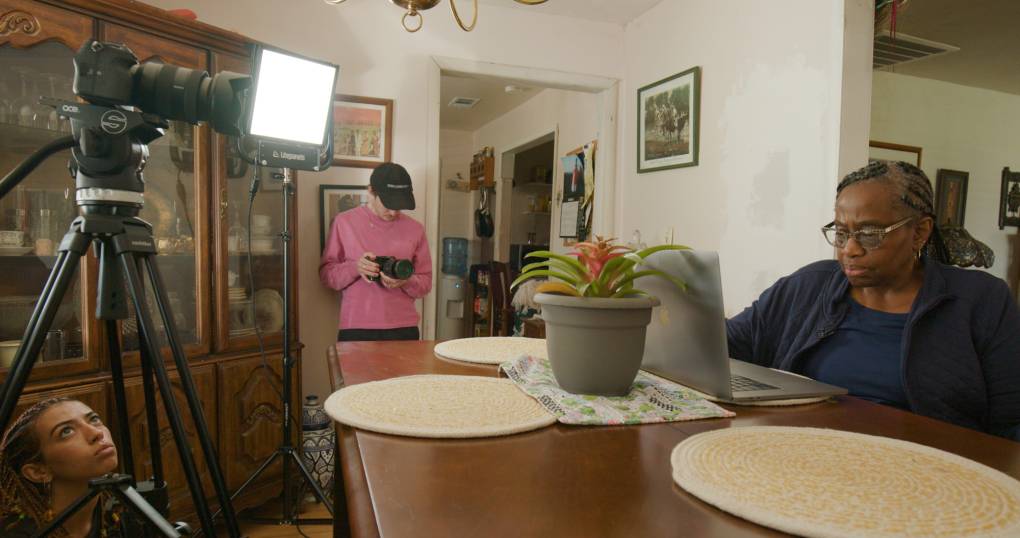
"caption": "Brandon Tauszik and Amelia Alemayehu film Nancy Whittle during the making of 'Living Harriet Tubman.' The film received a $30,000 California Humanities grant that was suddenly canceled on April 4, 2025.",
"credit": "Theo Schear",
"altTag": "camera equipment points at older Black woman at dining room table, photographer in corner",
"description": null,
"imgSizes": {
"medium": {
"file": "https://cdn.kqed.org/wp-content/uploads/sites/2/2025/04/BTS-Mar-2023-Living-Harriet-Tubman_2000-800x422.jpg",
"width": 800,
"height": 422,
"mimeType": "image/jpeg"
},
"large": {
"file": "https://cdn.kqed.org/wp-content/uploads/sites/2/2025/04/BTS-Mar-2023-Living-Harriet-Tubman_2000-1020x538.jpg",
"width": 1020,
"height": 538,
"mimeType": "image/jpeg"
},
"thumbnail": {
"file": "https://cdn.kqed.org/wp-content/uploads/sites/2/2025/04/BTS-Mar-2023-Living-Harriet-Tubman_2000-160x84.jpg",
"width": 160,
"height": 84,
"mimeType": "image/jpeg"
},
"medium_large": {
"file": "https://cdn.kqed.org/wp-content/uploads/sites/2/2025/04/BTS-Mar-2023-Living-Harriet-Tubman_2000-768x405.jpg",
"width": 768,
"height": 405,
"mimeType": "image/jpeg"
},
"1536x1536": {
"file": "https://cdn.kqed.org/wp-content/uploads/sites/2/2025/04/BTS-Mar-2023-Living-Harriet-Tubman_2000-1536x810.jpg",
"width": 1536,
"height": 810,
"mimeType": "image/jpeg"
},
"post-thumbnail": {
"file": "https://cdn.kqed.org/wp-content/uploads/sites/2/2025/04/BTS-Mar-2023-Living-Harriet-Tubman_2000-672x372.jpg",
"width": 672,
"height": 372,
"mimeType": "image/jpeg"
},
"twentyfourteen-full-width": {
"file": "https://cdn.kqed.org/wp-content/uploads/sites/2/2025/04/BTS-Mar-2023-Living-Harriet-Tubman_2000-1038x576.jpg",
"width": 1038,
"height": 576,
"mimeType": "image/jpeg"
},
"full-width": {
"file": "https://cdn.kqed.org/wp-content/uploads/sites/2/2025/04/BTS-Mar-2023-Living-Harriet-Tubman_2000-1920x1013.jpg",
"width": 1920,
"height": 1013,
"mimeType": "image/jpeg"
},
"kqedFullSize": {
"file": "https://cdn.kqed.org/wp-content/uploads/sites/2/2025/04/BTS-Mar-2023-Living-Harriet-Tubman_2000.jpg",
"width": 2000,
"height": 1055
}
},
"isLoading": false,
"fetchFailed": false
},
"arts_10417940": {
"type": "attachments",
"id": "arts_10417940",
"meta": {
"index": "attachments_1716263798",
"site": "arts",
"id": "10417940",
"found": true
},
"title": "Xtigone13",
"publishDate": 1424747311,
"status": "inherit",
"parent": 10417934,
"modified": 1743749535,
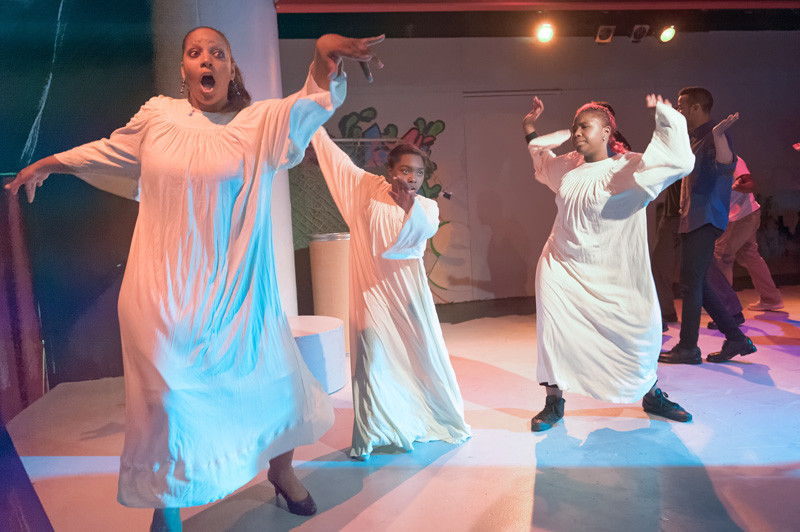
"caption": "Spirits (Jasmine Strange, Brooklyn Fields and Tavia Percia) bring the ancestors to solve the city conflict in African-American Shakespeare Company’s 2015 production of ‘Xtigone.’",
"credit": "Lance Huntley",
"altTag": null,
"description": null,
"imgSizes": {
"thumbnail": {
"file": "https://cdn.kqed.org/wp-content/uploads/sites/2/2015/02/Xtigone13-400x266.jpg",
"width": 400,
"height": 266,
"mimeType": "image/jpeg"
},
"medium": {
"file": "https://cdn.kqed.org/wp-content/uploads/sites/2/2015/02/Xtigone13-800x532.jpg",
"width": 800,
"height": 532,
"mimeType": "image/jpeg"
},
"post-thumbnail": {
"file": "https://cdn.kqed.org/wp-content/uploads/sites/2/2015/02/Xtigone13-672x372.jpg",
"width": 672,
"height": 372,
"mimeType": "image/jpeg"
},
"guest-author-32": {
"file": "https://cdn.kqed.org/wp-content/uploads/sites/2/2015/02/Xtigone13-32x32.jpg",
"width": 32,
"height": 32,
"mimeType": "image/jpeg"
},
"guest-author-64": {
"file": "https://cdn.kqed.org/wp-content/uploads/sites/2/2015/02/Xtigone13-64x64.jpg",
"width": 64,
"height": 64,
"mimeType": "image/jpeg"
},
"guest-author-96": {
"file": "https://cdn.kqed.org/wp-content/uploads/sites/2/2015/02/Xtigone13-96x96.jpg",
"width": 96,
"height": 96,
"mimeType": "image/jpeg"
},
"guest-author-128": {
"file": "https://cdn.kqed.org/wp-content/uploads/sites/2/2015/02/Xtigone13-128x128.jpg",
"width": 128,
"height": 128,
"mimeType": "image/jpeg"
},
"detail": {
"file": "https://cdn.kqed.org/wp-content/uploads/sites/2/2015/02/Xtigone13-75x75.jpg",
"width": 75,
"height": 75,
"mimeType": "image/jpeg"
},
"kqedFullSize": {
"file": "https://cdn.kqed.org/wp-content/uploads/sites/2/2015/02/Xtigone13.jpg",
"width": 800,
"height": 532
}
},
"isLoading": false,
"fetchFailed": false
},
"arts_13973880": {
"type": "attachments",
"id": "arts_13973880",
"meta": {
"index": "attachments_1716263798",
"site": "arts",
"id": "13973880",
"found": true
},
"title": "trump.kidrock",
"publishDate": 1743475888,
"status": "inherit",
"parent": 13973879,
"modified": 1743476069,
"caption": "Kid Rock appears in the oval office for the signing of an executive order meant to target the live events ticketing industry.",
"credit": "APF",
"altTag": null,
"description": null,
"imgSizes": {
"medium": {
"file": "https://cdn.kqed.org/wp-content/uploads/sites/2/2025/03/trump.kidrock-800x533.jpg",
"width": 800,
"height": 533,
"mimeType": "image/jpeg"
},
"large": {
"file": "https://cdn.kqed.org/wp-content/uploads/sites/2/2025/03/trump.kidrock-1020x680.jpg",
"width": 1020,
"height": 680,
"mimeType": "image/jpeg"
},
"thumbnail": {
"file": "https://cdn.kqed.org/wp-content/uploads/sites/2/2025/03/trump.kidrock-160x107.jpg",
"width": 160,
"height": 107,
"mimeType": "image/jpeg"
},
"medium_large": {
"file": "https://cdn.kqed.org/wp-content/uploads/sites/2/2025/03/trump.kidrock-768x512.jpg",
"width": 768,
"height": 512,
"mimeType": "image/jpeg"
},
"1536x1536": {
"file": "https://cdn.kqed.org/wp-content/uploads/sites/2/2025/03/trump.kidrock-1536x1024.jpg",
"width": 1536,
"height": 1024,
"mimeType": "image/jpeg"
},
"post-thumbnail": {
"file": "https://cdn.kqed.org/wp-content/uploads/sites/2/2025/03/trump.kidrock-672x372.jpg",
"width": 672,
"height": 372,
"mimeType": "image/jpeg"
},
"twentyfourteen-full-width": {
"file": "https://cdn.kqed.org/wp-content/uploads/sites/2/2025/03/trump.kidrock-1038x576.jpg",
"width": 1038,
"height": 576,
"mimeType": "image/jpeg"
},
"kqedFullSize": {
"file": "https://cdn.kqed.org/wp-content/uploads/sites/2/2025/03/trump.kidrock.jpg",
"width": 1920,
"height": 1280
}
},
"isLoading": false,
"fetchFailed": false
},
"arts_13973184": {
"type": "attachments",
"id": "arts_13973184",
"meta": {
"index": "attachments_1716263798",
"site": "arts",
"id": "13973184",
"found": true
},
"title": "NLY.MAIN",
"publishDate": 1742251406,
"status": "inherit",
"parent": 0,
"modified": 1742251941,
"caption": "Jason Veasey (far right) with Ana Yi Puig, Seth Hanson, Molly Hager, A.J. Holmes and John-Michael Lyles (background, L–R) in ‘Nobody Loves You’ at ACT. ",
"credit": "Kevin Berne",
"altTag": "A slender Black man in a yellow suit points to the right while young contestants in colorful clothes stand against a blue wall",
"description": null,
"imgSizes": {
"medium": {
"file": "https://cdn.kqed.org/wp-content/uploads/sites/2/2025/03/NLY.MAIN_-800x450.jpg",
"width": 800,
"height": 450,
"mimeType": "image/jpeg"
},
"large": {
"file": "https://cdn.kqed.org/wp-content/uploads/sites/2/2025/03/NLY.MAIN_-1020x574.jpg",
"width": 1020,
"height": 574,
"mimeType": "image/jpeg"
},
"thumbnail": {
"file": "https://cdn.kqed.org/wp-content/uploads/sites/2/2025/03/NLY.MAIN_-160x90.jpg",
"width": 160,
"height": 90,
"mimeType": "image/jpeg"
},
"medium_large": {
"file": "https://cdn.kqed.org/wp-content/uploads/sites/2/2025/03/NLY.MAIN_-768x432.jpg",
"width": 768,
"height": 432,
"mimeType": "image/jpeg"
},
"1536x1536": {
"file": "https://cdn.kqed.org/wp-content/uploads/sites/2/2025/03/NLY.MAIN_-1536x864.jpg",
"width": 1536,
"height": 864,
"mimeType": "image/jpeg"
},
"post-thumbnail": {
"file": "https://cdn.kqed.org/wp-content/uploads/sites/2/2025/03/NLY.MAIN_-672x372.jpg",
"width": 672,
"height": 372,
"mimeType": "image/jpeg"
},
"twentyfourteen-full-width": {
"file": "https://cdn.kqed.org/wp-content/uploads/sites/2/2025/03/NLY.MAIN_-1038x576.jpg",
"width": 1038,
"height": 576,
"mimeType": "image/jpeg"
},
"full-width": {
"file": "https://cdn.kqed.org/wp-content/uploads/sites/2/2025/03/NLY.MAIN_-1920x1080.jpg",
"width": 1920,
"height": 1080,
"mimeType": "image/jpeg"
},
"kqedFullSize": {
"file": "https://cdn.kqed.org/wp-content/uploads/sites/2/2025/03/NLY.MAIN_.jpg",
"width": 2000,
"height": 1125
}
},
"isLoading": false,
"fetchFailed": false
},
"arts_13882672": {
"type": "attachments",
"id": "arts_13882672",
"meta": {
"index": "attachments_1716263798",
"site": "arts",
"id": "13882672",
"found": true
},
"title": "Lin-Manuel Miranda and Phillipa Soo played Alexander and Eliza Hamilton in the original Broadway production of 'Hamilton.' A film production of the show, taped in 2016, debuts on Disney+ on July 3.",
"publishDate": 1593457968,
"status": "inherit",
"parent": 13882671,
"modified": 1741222053,
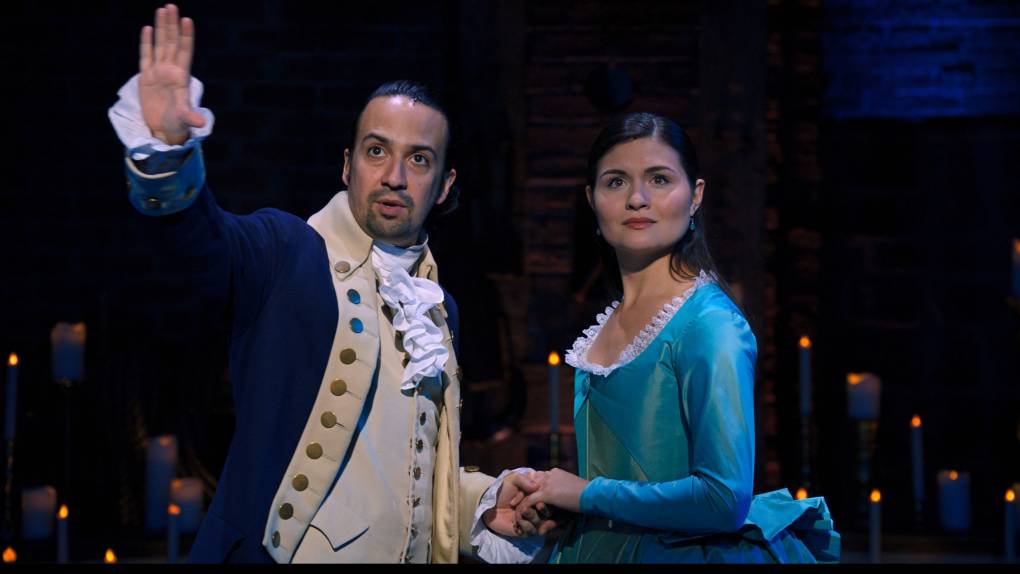
"caption": "Lin-Manuel Miranda and Phillipa Soo played Alexander and Eliza Hamilton in the original Broadway production of 'Hamilton.' ",
"credit": "Disney+",
"altTag": "Lin-Manuel Miranda and Phillipa Soo played Alexander and Eliza Hamilton in the original Broadway production of 'Hamilton.' A film production of the show, taped in 2016, debuts on Disney+ on July 3.",
"description": "Lin-Manuel Miranda and Phillipa Soo played Alexander and Eliza Hamilton in the original Broadway production of 'Hamilton.' A film production of the show, taped in 2016, debuts on Disney+ on July 3.",
"imgSizes": {
"medium": {
"file": "https://cdn.kqed.org/wp-content/uploads/sites/2/2020/06/fg24xang_wide-f6fc578f836c1b8bf489a09c162c048284bcb249-800x450.jpe",
"width": 800,
"height": 450,
"mimeType": "image/jpeg"
},
"large": {
"file": "https://cdn.kqed.org/wp-content/uploads/sites/2/2020/06/fg24xang_wide-f6fc578f836c1b8bf489a09c162c048284bcb249-1020x574.jpe",
"width": 1020,
"height": 574,
"mimeType": "image/jpeg"
},
"thumbnail": {
"file": "https://cdn.kqed.org/wp-content/uploads/sites/2/2020/06/fg24xang_wide-f6fc578f836c1b8bf489a09c162c048284bcb249-160x90.jpe",
"width": 160,
"height": 90,
"mimeType": "image/jpeg"
},
"medium_large": {
"file": "https://cdn.kqed.org/wp-content/uploads/sites/2/2020/06/fg24xang_wide-f6fc578f836c1b8bf489a09c162c048284bcb249-768x432.jpe",
"width": 768,
"height": 432,
"mimeType": "image/jpeg"
},
"1536x1536": {
"file": "https://cdn.kqed.org/wp-content/uploads/sites/2/2020/06/fg24xang_wide-f6fc578f836c1b8bf489a09c162c048284bcb249-1536x864.jpe",
"width": 1536,
"height": 864,
"mimeType": "image/jpeg"
},
"2048x2048": {
"file": "https://cdn.kqed.org/wp-content/uploads/sites/2/2020/06/fg24xang_wide-f6fc578f836c1b8bf489a09c162c048284bcb249-2048x1152.jpe",
"width": 2048,
"height": 1152,
"mimeType": "image/jpeg"
},
"post-thumbnail": {
"file": "https://cdn.kqed.org/wp-content/uploads/sites/2/2020/06/fg24xang_wide-f6fc578f836c1b8bf489a09c162c048284bcb249-672x372.jpe",
"width": 672,
"height": 372,
"mimeType": "image/jpeg"
},
"twentyfourteen-full-width": {
"file": "https://cdn.kqed.org/wp-content/uploads/sites/2/2020/06/fg24xang_wide-f6fc578f836c1b8bf489a09c162c048284bcb249-1038x576.jpe",
"width": 1038,
"height": 576,
"mimeType": "image/jpeg"
},
"full-width": {
"file": "https://cdn.kqed.org/wp-content/uploads/sites/2/2020/06/fg24xang_wide-f6fc578f836c1b8bf489a09c162c048284bcb249-1920x1080.jpe",
"width": 1920,
"height": 1080,
"mimeType": "image/jpeg"
},
"kqedFullSize": {
"file": "https://cdn.kqed.org/wp-content/uploads/sites/2/2020/06/fg24xang_wide-f6fc578f836c1b8bf489a09c162c048284bcb249-scaled-e1593461486338.jpe",
"width": 1920,
"height": 1080
}
},
"isLoading": false,
"fetchFailed": false
},
"arts_13971984": {
"type": "attachments",
"id": "arts_13971984",
"meta": {
"index": "attachments_1716263798",
"site": "arts",
"id": "13971984",
"found": true
},
"title": "11-BTTF-Tour_Don-Stephenson-and-Lucas-Hallauer_Photo-by-McLeod9-Creative",
"publishDate": 1739899247,
"status": "inherit",
"parent": 13971981,
"modified": 1739900219,
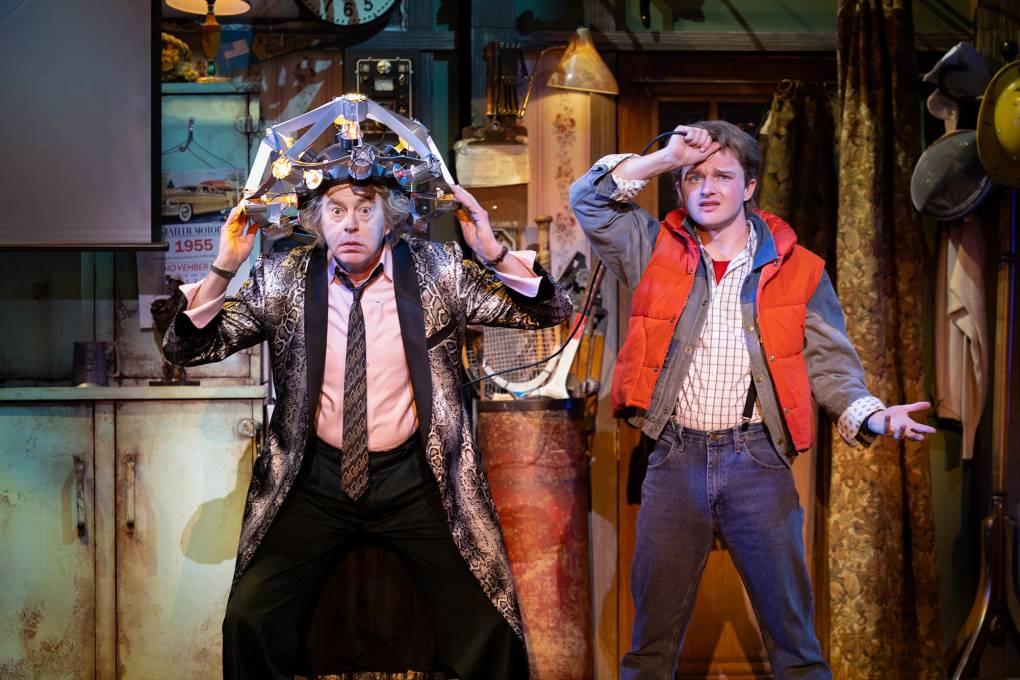
"caption": "(L-R): Don Stephenson (Doc Brown) and Lucas Hallauer (Marty McFly) in ‘Back to the Future: The Muscial.’",
"credit": "McLeod9 Creative",
"altTag": "An older man with a scientific steel contraption on his head stands next to a young teenager in an orange vest and jeans, both with confused looks on their faces",
"description": null,
"imgSizes": {
"medium": {
"file": "https://cdn.kqed.org/wp-content/uploads/sites/2/2025/02/11-BTTF-Tour_Don-Stephenson-and-Lucas-Hallauer_Photo-by-McLeod9-Creative-800x533.jpg",
"width": 800,
"height": 533,
"mimeType": "image/jpeg"
},
"large": {
"file": "https://cdn.kqed.org/wp-content/uploads/sites/2/2025/02/11-BTTF-Tour_Don-Stephenson-and-Lucas-Hallauer_Photo-by-McLeod9-Creative-1020x680.jpg",
"width": 1020,
"height": 680,
"mimeType": "image/jpeg"
},
"thumbnail": {
"file": "https://cdn.kqed.org/wp-content/uploads/sites/2/2025/02/11-BTTF-Tour_Don-Stephenson-and-Lucas-Hallauer_Photo-by-McLeod9-Creative-160x107.jpg",
"width": 160,
"height": 107,
"mimeType": "image/jpeg"
},
"medium_large": {
"file": "https://cdn.kqed.org/wp-content/uploads/sites/2/2025/02/11-BTTF-Tour_Don-Stephenson-and-Lucas-Hallauer_Photo-by-McLeod9-Creative-768x512.jpg",
"width": 768,
"height": 512,
"mimeType": "image/jpeg"
},
"1536x1536": {
"file": "https://cdn.kqed.org/wp-content/uploads/sites/2/2025/02/11-BTTF-Tour_Don-Stephenson-and-Lucas-Hallauer_Photo-by-McLeod9-Creative-1536x1024.jpg",
"width": 1536,
"height": 1024,
"mimeType": "image/jpeg"
},
"post-thumbnail": {
"file": "https://cdn.kqed.org/wp-content/uploads/sites/2/2025/02/11-BTTF-Tour_Don-Stephenson-and-Lucas-Hallauer_Photo-by-McLeod9-Creative-672x372.jpg",
"width": 672,
"height": 372,
"mimeType": "image/jpeg"
},
"twentyfourteen-full-width": {
"file": "https://cdn.kqed.org/wp-content/uploads/sites/2/2025/02/11-BTTF-Tour_Don-Stephenson-and-Lucas-Hallauer_Photo-by-McLeod9-Creative-1038x576.jpg",
"width": 1038,
"height": 576,
"mimeType": "image/jpeg"
},
"full-width": {
"file": "https://cdn.kqed.org/wp-content/uploads/sites/2/2025/02/11-BTTF-Tour_Don-Stephenson-and-Lucas-Hallauer_Photo-by-McLeod9-Creative-1920x1280.jpg",
"width": 1920,
"height": 1280,
"mimeType": "image/jpeg"
},
"kqedFullSize": {
"file": "https://cdn.kqed.org/wp-content/uploads/sites/2/2025/02/11-BTTF-Tour_Don-Stephenson-and-Lucas-Hallauer_Photo-by-McLeod9-Creative.jpg",
"width": 2000,
"height": 1333
}
},
"isLoading": false,
"fetchFailed": false
},
"arts_13971973": {
"type": "attachments",
"id": "arts_13971973",
"meta": {
"index": "attachments_1716263798",
"site": "arts",
"id": "13971973",
"found": true
},
"title": "FGY_102",
"publishDate": 1739832126,
"status": "inherit",
"parent": 13971967,
"modified": 1739832703,
"caption": "Adam KuveNiemann (Tiger), Jamella Cross (Froggy), and Michael Ray Wisely (One\nArmed Teddy) in the world premiere of ‘Froggy’ at Center REP. ",
"credit": "Kevin Berne",
"altTag": "A young Black woman stands looking frightened at the center while two men dressed as video game characters run in opposing directions; lights and effects project upon a background screen",
"description": null,
"imgSizes": {
"medium": {
"file": "https://cdn.kqed.org/wp-content/uploads/sites/2/2025/02/FGY_102-800x532.jpg",
"width": 800,
"height": 532,
"mimeType": "image/jpeg"
},
"large": {
"file": "https://cdn.kqed.org/wp-content/uploads/sites/2/2025/02/FGY_102-1020x679.jpg",
"width": 1020,
"height": 679,
"mimeType": "image/jpeg"
},
"thumbnail": {
"file": "https://cdn.kqed.org/wp-content/uploads/sites/2/2025/02/FGY_102-160x106.jpg",
"width": 160,
"height": 106,
"mimeType": "image/jpeg"
},
"medium_large": {
"file": "https://cdn.kqed.org/wp-content/uploads/sites/2/2025/02/FGY_102-768x511.jpg",
"width": 768,
"height": 511,
"mimeType": "image/jpeg"
},
"1536x1536": {
"file": "https://cdn.kqed.org/wp-content/uploads/sites/2/2025/02/FGY_102-1536x1022.jpg",
"width": 1536,
"height": 1022,
"mimeType": "image/jpeg"
},
"post-thumbnail": {
"file": "https://cdn.kqed.org/wp-content/uploads/sites/2/2025/02/FGY_102-672x372.jpg",
"width": 672,
"height": 372,
"mimeType": "image/jpeg"
},
"twentyfourteen-full-width": {
"file": "https://cdn.kqed.org/wp-content/uploads/sites/2/2025/02/FGY_102-1038x576.jpg",
"width": 1038,
"height": 576,
"mimeType": "image/jpeg"
},
"full-width": {
"file": "https://cdn.kqed.org/wp-content/uploads/sites/2/2025/02/FGY_102-1920x1278.jpg",
"width": 1920,
"height": 1278,
"mimeType": "image/jpeg"
},
"kqedFullSize": {
"file": "https://cdn.kqed.org/wp-content/uploads/sites/2/2025/02/FGY_102.jpg",
"width": 2000,
"height": 1331
}
},
"isLoading": false,
"fetchFailed": false
},
"arts_13971923": {
"type": "attachments",
"id": "arts_13971923",
"meta": {
"index": "attachments_1716263798",
"site": "arts",
"id": "13971923",
"found": true
},
"title": "Redacted.AlisonGreen",
"publishDate": 1739563629,
"status": "inherit",
"parent": 13971920,
"modified": 1739564382,
"caption": "Santa Rosa High School ArtQuest theater student Alison Green performs as ‘Helen Hightower’ in a one-act musical cowritten by students called ‘[REDACTED].’ ",
"credit": "Laurel Merrick",
"altTag": "A young woman in red light screams as hands protrude around her from below",
"description": null,
"imgSizes": {
"medium": {
"file": "https://cdn.kqed.org/wp-content/uploads/sites/2/2025/02/Redacted.AlisonGreen-800x533.jpg",
"width": 800,
"height": 533,
"mimeType": "image/jpeg"
},
"large": {
"file": "https://cdn.kqed.org/wp-content/uploads/sites/2/2025/02/Redacted.AlisonGreen-1020x680.jpg",
"width": 1020,
"height": 680,
"mimeType": "image/jpeg"
},
"thumbnail": {
"file": "https://cdn.kqed.org/wp-content/uploads/sites/2/2025/02/Redacted.AlisonGreen-160x107.jpg",
"width": 160,
"height": 107,
"mimeType": "image/jpeg"
},
"medium_large": {
"file": "https://cdn.kqed.org/wp-content/uploads/sites/2/2025/02/Redacted.AlisonGreen-768x512.jpg",
"width": 768,
"height": 512,
"mimeType": "image/jpeg"
},
"1536x1536": {
"file": "https://cdn.kqed.org/wp-content/uploads/sites/2/2025/02/Redacted.AlisonGreen-1536x1024.jpg",
"width": 1536,
"height": 1024,
"mimeType": "image/jpeg"
},
"post-thumbnail": {
"file": "https://cdn.kqed.org/wp-content/uploads/sites/2/2025/02/Redacted.AlisonGreen-672x372.jpg",
"width": 672,
"height": 372,
"mimeType": "image/jpeg"
},
"twentyfourteen-full-width": {
"file": "https://cdn.kqed.org/wp-content/uploads/sites/2/2025/02/Redacted.AlisonGreen-1038x576.jpg",
"width": 1038,
"height": 576,
"mimeType": "image/jpeg"
},
"full-width": {
"file": "https://cdn.kqed.org/wp-content/uploads/sites/2/2025/02/Redacted.AlisonGreen-1920x1280.jpg",
"width": 1920,
"height": 1280,
"mimeType": "image/jpeg"
},
"kqedFullSize": {
"file": "https://cdn.kqed.org/wp-content/uploads/sites/2/2025/02/Redacted.AlisonGreen.jpg",
"width": 2000,
"height": 1333
}
},
"isLoading": false,
"fetchFailed": false
},
"arts_13971811": {
"type": "attachments",
"id": "arts_13971811",
"meta": {
"index": "attachments_1716263798",
"site": "arts",
"id": "13971811",
"found": true
},
"title": "293856322_10160078794117114_8950989765050861662_n",
"publishDate": 1739399714,
"status": "inherit",
"parent": 13971719,
"modified": 1739400016,
"caption": "A scene from ‘Both Eyes Open' at the Presidio Theatre in San Francisco in 2022.",
"credit": "Terry Lorant Photography",
"altTag": "woman and man shake hands on stage under large ID images projected behind them",
"description": null,
"imgSizes": {
"medium": {
"file": "https://cdn.kqed.org/wp-content/uploads/sites/2/2025/02/293856322_10160078794117114_8950989765050861662_n-800x533.jpeg",
"width": 800,
"height": 533,
"mimeType": "image/jpeg"
},
"large": {
"file": "https://cdn.kqed.org/wp-content/uploads/sites/2/2025/02/293856322_10160078794117114_8950989765050861662_n-1020x680.jpeg",
"width": 1020,
"height": 680,
"mimeType": "image/jpeg"
},
"thumbnail": {
"file": "https://cdn.kqed.org/wp-content/uploads/sites/2/2025/02/293856322_10160078794117114_8950989765050861662_n-160x107.jpeg",
"width": 160,
"height": 107,
"mimeType": "image/jpeg"
},
"medium_large": {
"file": "https://cdn.kqed.org/wp-content/uploads/sites/2/2025/02/293856322_10160078794117114_8950989765050861662_n-768x512.jpeg",
"width": 768,
"height": 512,
"mimeType": "image/jpeg"
},
"1536x1536": {
"file": "https://cdn.kqed.org/wp-content/uploads/sites/2/2025/02/293856322_10160078794117114_8950989765050861662_n-1536x1024.jpeg",
"width": 1536,
"height": 1024,
"mimeType": "image/jpeg"
},
"post-thumbnail": {
"file": "https://cdn.kqed.org/wp-content/uploads/sites/2/2025/02/293856322_10160078794117114_8950989765050861662_n-672x372.jpeg",
"width": 672,
"height": 372,
"mimeType": "image/jpeg"
},
"twentyfourteen-full-width": {
"file": "https://cdn.kqed.org/wp-content/uploads/sites/2/2025/02/293856322_10160078794117114_8950989765050861662_n-1038x576.jpeg",
"width": 1038,
"height": 576,
"mimeType": "image/jpeg"
},
"full-width": {
"file": "https://cdn.kqed.org/wp-content/uploads/sites/2/2025/02/293856322_10160078794117114_8950989765050861662_n-1920x1280.jpeg",
"width": 1920,
"height": 1280,
"mimeType": "image/jpeg"
},
"kqedFullSize": {
"file": "https://cdn.kqed.org/wp-content/uploads/sites/2/2025/02/293856322_10160078794117114_8950989765050861662_n.jpeg",
"width": 2048,
"height": 1365
}
},
"isLoading": false,
"fetchFailed": false
},
"arts_13971307": {
"type": "attachments",
"id": "arts_13971307",
"meta": {
"index": "attachments_1716263798",
"site": "arts",
"id": "13971307",
"found": true
},
"title": "_37A4926",
"publishDate": 1738697928,
"status": "inherit",
"parent": 13971294,
"modified": 1738699134,
"caption": "Richard Strauss’ ‘Elektra’ returns to San Francisco Opera in June 2026. ",
"credit": "Cory Weaver/San Francisco Opera",
"altTag": "An Ancient Greek-inspired opera set in which a performer wields an axe prop.",
"description": null,
"imgSizes": {
"medium": {
"file": "https://cdn.kqed.org/wp-content/uploads/sites/2/2025/02/37A4926-800x533.jpg",
"width": 800,
"height": 533,
"mimeType": "image/jpeg"
},
"large": {
"file": "https://cdn.kqed.org/wp-content/uploads/sites/2/2025/02/37A4926-1020x679.jpg",
"width": 1020,
"height": 679,
"mimeType": "image/jpeg"
},
"thumbnail": {
"file": "https://cdn.kqed.org/wp-content/uploads/sites/2/2025/02/37A4926-160x107.jpg",
"width": 160,
"height": 107,
"mimeType": "image/jpeg"
},
"medium_large": {
"file": "https://cdn.kqed.org/wp-content/uploads/sites/2/2025/02/37A4926-768x511.jpg",
"width": 768,
"height": 511,
"mimeType": "image/jpeg"
},
"1536x1536": {
"file": "https://cdn.kqed.org/wp-content/uploads/sites/2/2025/02/37A4926-1536x1023.jpg",
"width": 1536,
"height": 1023,
"mimeType": "image/jpeg"
},
"post-thumbnail": {
"file": "https://cdn.kqed.org/wp-content/uploads/sites/2/2025/02/37A4926-672x372.jpg",
"width": 672,
"height": 372,
"mimeType": "image/jpeg"
},
"twentyfourteen-full-width": {
"file": "https://cdn.kqed.org/wp-content/uploads/sites/2/2025/02/37A4926-1038x576.jpg",
"width": 1038,
"height": 576,
"mimeType": "image/jpeg"
},
"full-width": {
"file": "https://cdn.kqed.org/wp-content/uploads/sites/2/2025/02/37A4926-1920x1279.jpg",
"width": 1920,
"height": 1279,
"mimeType": "image/jpeg"
},
"kqedFullSize": {
"file": "https://cdn.kqed.org/wp-content/uploads/sites/2/2025/02/37A4926.jpg",
"width": 2000,
"height": 1332
}
},
"isLoading": false,
"fetchFailed": false
},
"arts_13971245": {
"type": "attachments",
"id": "arts_13971245",
"meta": {
"index": "attachments_1716263798",
"site": "arts",
"id": "13971245",
"found": true
},
"title": "250129-TenderloinMuseum-33-BL_qed (1)",
"publishDate": 1738630502,
"status": "inherit",
"parent": 13971214,
"modified": 1738630925,
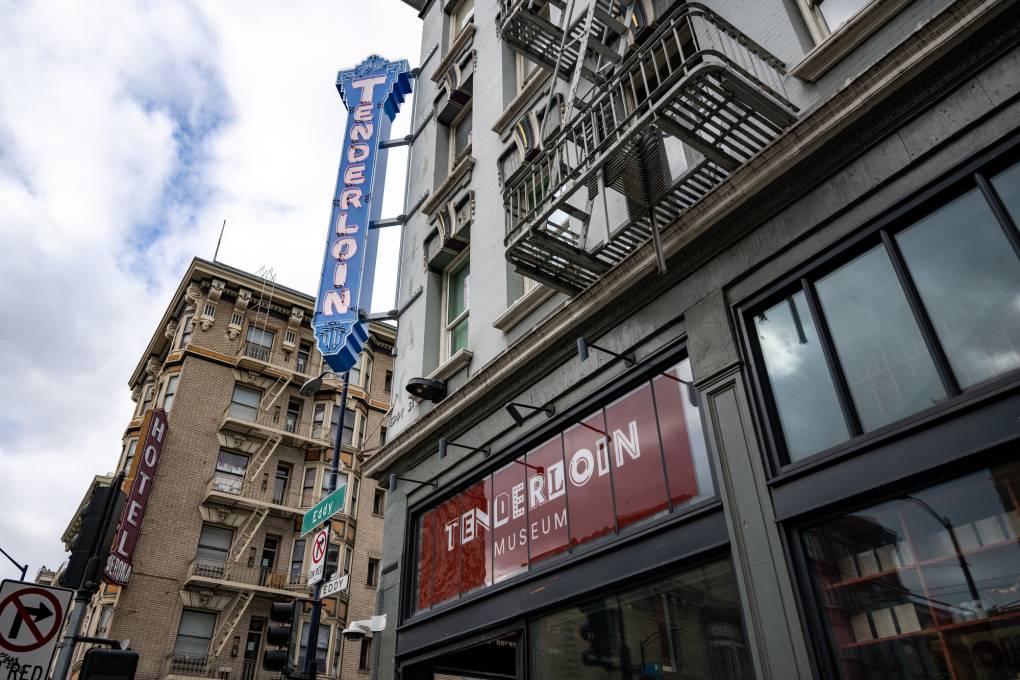
"caption": "San Francisco's Tenderloin Museum in opened its doors in 2015, dedicated to local history, activism and culture.",
"credit": "Beth LaBerge/KQED",
"altTag": "old corner building with 'tenderloin' neon sign attached, 'tenderloin museum' sign in window",
"description": null,
"imgSizes": {
"medium": {
"file": "https://cdn.kqed.org/wp-content/uploads/sites/2/2025/02/250129-TenderloinMuseum-33-BL_qed-1-800x533.jpg",
"width": 800,
"height": 533,
"mimeType": "image/jpeg"
},
"large": {
"file": "https://cdn.kqed.org/wp-content/uploads/sites/2/2025/02/250129-TenderloinMuseum-33-BL_qed-1-1020x680.jpg",
"width": 1020,
"height": 680,
"mimeType": "image/jpeg"
},
"thumbnail": {
"file": "https://cdn.kqed.org/wp-content/uploads/sites/2/2025/02/250129-TenderloinMuseum-33-BL_qed-1-160x107.jpg",
"width": 160,
"height": 107,
"mimeType": "image/jpeg"
},
"medium_large": {
"file": "https://cdn.kqed.org/wp-content/uploads/sites/2/2025/02/250129-TenderloinMuseum-33-BL_qed-1-768x512.jpg",
"width": 768,
"height": 512,
"mimeType": "image/jpeg"
},
"1536x1536": {
"file": "https://cdn.kqed.org/wp-content/uploads/sites/2/2025/02/250129-TenderloinMuseum-33-BL_qed-1-1536x1024.jpg",
"width": 1536,
"height": 1024,
"mimeType": "image/jpeg"
},
"post-thumbnail": {
"file": "https://cdn.kqed.org/wp-content/uploads/sites/2/2025/02/250129-TenderloinMuseum-33-BL_qed-1-672x372.jpg",
"width": 672,
"height": 372,
"mimeType": "image/jpeg"
},
"twentyfourteen-full-width": {
"file": "https://cdn.kqed.org/wp-content/uploads/sites/2/2025/02/250129-TenderloinMuseum-33-BL_qed-1-1038x576.jpg",
"width": 1038,
"height": 576,
"mimeType": "image/jpeg"
},
"full-width": {
"file": "https://cdn.kqed.org/wp-content/uploads/sites/2/2025/02/250129-TenderloinMuseum-33-BL_qed-1-1920x1280.jpg",
"width": 1920,
"height": 1280,
"mimeType": "image/jpeg"
},
"kqedFullSize": {
"file": "https://cdn.kqed.org/wp-content/uploads/sites/2/2025/02/250129-TenderloinMuseum-33-BL_qed-1.jpg",
"width": 1999,
"height": 1333
}
},
"isLoading": false,
"fetchFailed": false
},
"arts_13970887": {
"type": "attachments",
"id": "arts_13970887",
"meta": {
"index": "attachments_1716263798",
"site": "arts",
"id": "13970887",
"found": true
},
"title": "SFP_ExoticDeadlyOrTheMSGPlay_JessicaPalopoli4",
"publishDate": 1738097910,
"status": "inherit",
"parent": 13970881,
"modified": 1738098360,
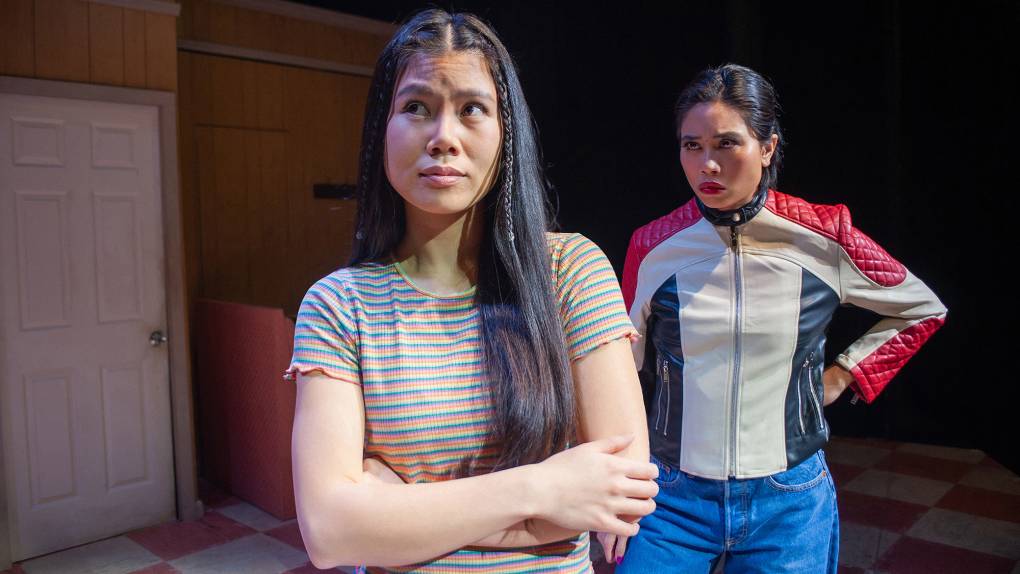
"caption": "Ami (Ana Ming Bostwick-Singer) is intimidated by rebellious new girl Exotic Deadly (Francesca Fernandez) in San Francisco Playhouse's 'Exotic Deadly: Or the MSG Play,' performing Jan. 3–March 8.",
"credit": "Jessica Palopoli",
"altTag": "Asian woman in the foreground with her arms crossed; another woman glares at her from behind.",
"description": null,
"imgSizes": {
"medium": {
"file": "https://cdn.kqed.org/wp-content/uploads/sites/2/2025/01/SFP_ExoticDeadlyOrTheMSGPlay_JessicaPalopoli4-800x450.jpg",
"width": 800,
"height": 450,
"mimeType": "image/jpeg"
},
"large": {
"file": "https://cdn.kqed.org/wp-content/uploads/sites/2/2025/01/SFP_ExoticDeadlyOrTheMSGPlay_JessicaPalopoli4-1020x574.jpg",
"width": 1020,
"height": 574,
"mimeType": "image/jpeg"
},
"thumbnail": {
"file": "https://cdn.kqed.org/wp-content/uploads/sites/2/2025/01/SFP_ExoticDeadlyOrTheMSGPlay_JessicaPalopoli4-160x90.jpg",
"width": 160,
"height": 90,
"mimeType": "image/jpeg"
},
"medium_large": {
"file": "https://cdn.kqed.org/wp-content/uploads/sites/2/2025/01/SFP_ExoticDeadlyOrTheMSGPlay_JessicaPalopoli4-768x432.jpg",
"width": 768,
"height": 432,
"mimeType": "image/jpeg"
},
"1536x1536": {
"file": "https://cdn.kqed.org/wp-content/uploads/sites/2/2025/01/SFP_ExoticDeadlyOrTheMSGPlay_JessicaPalopoli4-1536x865.jpg",
"width": 1536,
"height": 865,
"mimeType": "image/jpeg"
},
"post-thumbnail": {
"file": "https://cdn.kqed.org/wp-content/uploads/sites/2/2025/01/SFP_ExoticDeadlyOrTheMSGPlay_JessicaPalopoli4-672x372.jpg",
"width": 672,
"height": 372,
"mimeType": "image/jpeg"
},
"twentyfourteen-full-width": {
"file": "https://cdn.kqed.org/wp-content/uploads/sites/2/2025/01/SFP_ExoticDeadlyOrTheMSGPlay_JessicaPalopoli4-1038x576.jpg",
"width": 1038,
"height": 576,
"mimeType": "image/jpeg"
},
"full-width": {
"file": "https://cdn.kqed.org/wp-content/uploads/sites/2/2025/01/SFP_ExoticDeadlyOrTheMSGPlay_JessicaPalopoli4-1920x1081.jpg",
"width": 1920,
"height": 1081,
"mimeType": "image/jpeg"
},
"kqedFullSize": {
"file": "https://cdn.kqed.org/wp-content/uploads/sites/2/2025/01/SFP_ExoticDeadlyOrTheMSGPlay_JessicaPalopoli4.jpg",
"width": 2000,
"height": 1126
}
},
"isLoading": false,
"fetchFailed": false
}
},
"audioPlayerReducer": {
"postId": "stream_live",
"isPaused": true,
"isPlaying": false,
"pfsActive": false,
"pledgeModalIsOpen": true,
"playerDrawerIsOpen": false,
"liveAudioPlayStartedAt": 0,
"liveAudioPlayContext": ""
},
"authorsReducer": {
"byline_arts_13973879": {
"type": "authors",
"id": "byline_arts_13973879",
"meta": {
"override": true
},
"slug": "byline_arts_13973879",
"name": "Will Weissert, Associated Press",
"isLoading": false
},
"byline_arts_13972698": {
"type": "authors",
"id": "byline_arts_13972698",
"meta": {
"override": true
},
"slug": "byline_arts_13972698",
"name": "Mark Kennedy, Associated Press",
"isLoading": false
},
"shotchkiss": {
"type": "authors",
"id": "61",
"meta": {
"index": "authors_1716337520",
"id": "61",
"found": true
},
"name": "Sarah Hotchkiss",
"firstName": "Sarah",
"lastName": "Hotchkiss",
"slug": "shotchkiss",
"email": "shotchkiss@kqed.org",
"display_author_email": true,
"staff_mastheads": [
"arts"
],
"title": "Senior Editor",
"bio": "Sarah Hotchkiss is a San Francisco \u003ca href=\"http://www.sarahhotchkiss.com\">artist\u003c/a> and arts writer. In 2019, she received the Dorothea & Leo Rabkin Foundation grant for visual art journalism and in 2020 she received a Society of Professional Journalists, Northern California award for excellence in arts and culture reporting.",
"avatar": "https://secure.gravatar.com/avatar/bc662df144b3d27fd8b1b6f1c2a420d34e91e53154d411bb7ad353cc8b6cea8d?s=600&d=blank&r=g",
"twitter": null,
"bluesky": null,
"facebook": null,
"instagram": null,
"linkedin": null,
"sites": [
{
"site": "",
"roles": [
"editor"
]
},
{
"site": "arts",
"roles": [
"Contributor",
"administrator"
]
},
{
"site": "artschool",
"roles": [
"administrator"
]
},
{
"site": "news",
"roles": [
"editor"
]
},
{
"site": "pop",
"roles": [
"administrator"
]
},
{
"site": "bayareabites",
"roles": [
"editor"
]
},
{
"site": "spark",
"roles": [
"editor"
]
},
{
"site": "checkplease",
"roles": [
"editor"
]
}
],
"headData": {
"title": "Sarah Hotchkiss | KQED",
"description": "Senior Editor",
"ogImgSrc": "https://secure.gravatar.com/avatar/bc662df144b3d27fd8b1b6f1c2a420d34e91e53154d411bb7ad353cc8b6cea8d?s=600&d=blank&r=g",
"twImgSrc": "https://secure.gravatar.com/avatar/bc662df144b3d27fd8b1b6f1c2a420d34e91e53154d411bb7ad353cc8b6cea8d?s=600&d=blank&r=g"
},
"isLoading": false,
"link": "/author/shotchkiss"
},
"gmeline": {
"type": "authors",
"id": "185",
"meta": {
"index": "authors_1716337520",
"id": "185",
"found": true
},
"name": "Gabe Meline",
"firstName": "Gabe",
"lastName": "Meline",
"slug": "gmeline",
"email": "gmeline@kqed.org",
"display_author_email": true,
"staff_mastheads": [
"arts"
],
"title": "Senior Editor, KQED Arts & Culture",
"bio": "Gabe Meline entered journalism at age 15 making photocopied zines, and has since earned awards from the Edward R. Murrow Awards, the Society for Professional Journalists, the Online Journalism Awards, the Association of Alternative Newsweeklies and the California Newspaper Publishers Association. Prior to KQED, he was the editor of the \u003cem>North Bay Bohemian\u003c/em> and a touring musician. He lives with his wife and daughter in his hometown of Santa Rosa, CA.",
"avatar": "https://secure.gravatar.com/avatar/5bebe57be0d8bc2dd318934feb47299e2d2d10cba28d09d8d7afb389a2ce2bdd?s=600&d=blank&r=g",
"twitter": null,
"bluesky": null,
"facebook": null,
"instagram": null,
"linkedin": null,
"sites": [
{
"site": "",
"roles": [
"editor"
]
},
{
"site": "arts",
"roles": [
"administrator"
]
},
{
"site": "artschool",
"roles": [
"editor"
]
},
{
"site": "news",
"roles": [
"author"
]
},
{
"site": "pop",
"roles": [
"editor"
]
},
{
"site": "bayareabites",
"roles": [
"editor"
]
},
{
"site": "food",
"roles": [
"editor"
]
},
{
"site": "forum",
"roles": [
"administrator"
]
},
{
"site": "liveblog",
"roles": [
"editor"
]
},
{
"site": "hiphop",
"roles": [
"editor"
]
}
],
"headData": {
"title": "Gabe Meline | KQED",
"description": "Senior Editor, KQED Arts & Culture",
"ogImgSrc": "https://secure.gravatar.com/avatar/5bebe57be0d8bc2dd318934feb47299e2d2d10cba28d09d8d7afb389a2ce2bdd?s=600&d=blank&r=g",
"twImgSrc": "https://secure.gravatar.com/avatar/5bebe57be0d8bc2dd318934feb47299e2d2d10cba28d09d8d7afb389a2ce2bdd?s=600&d=blank&r=g"
},
"isLoading": false,
"link": "/author/gmeline"
},
"nvoynovskaya": {
"type": "authors",
"id": "11387",
"meta": {
"index": "authors_1716337520",
"id": "11387",
"found": true
},
"name": "Nastia Voynovskaya",
"firstName": "Nastia",
"lastName": "Voynovskaya",
"slug": "nvoynovskaya",
"email": "nvoynovskaya@kqed.org",
"display_author_email": false,
"staff_mastheads": [
"arts"
],
"title": "Editor and reporter",
"bio": "Nastia Voynovskaya is a reporter, editor and host at KQED Arts & Culture. She's been covering the arts in the Bay Area for over a decade, with a focus on music, queer culture, labor issues and grassroots organizing. She has edited KQED story series such as Trans Bay: A History of San Francisco's Gender-Diverse Community, and co-created KQED's Bay Area hip-hop history project, That's My Word. Nastia's work has been recognized by the Society of Professional Journalists and San Francisco Press Club. She regularly appears on podcasts and radio programs, including NPR's All Songs Considered, and hosts live events where music, culture and conversation meet.",
"avatar": "https://secure.gravatar.com/avatar/5025ee460e5a85d69ca20ea6c6f2f80d7e17795c828f61ea3aecfcd924e9042e?s=600&d=blank&r=g",
"twitter": null,
"bluesky": null,
"facebook": null,
"instagram": "https://www.instagram.com/nananastia/",
"linkedin": null,
"sites": [
{
"site": "",
"roles": [
"editor"
]
},
{
"site": "arts",
"roles": [
"administrator"
]
},
{
"site": "news",
"roles": [
"editor"
]
},
{
"site": "pop",
"roles": [
"administrator"
]
},
{
"site": "bayareabites",
"roles": [
"editor"
]
},
{
"site": "podcasts",
"roles": [
"editor"
]
},
{
"site": "hiphop",
"roles": [
"editor"
]
}
],
"headData": {
"title": "Nastia Voynovskaya | KQED",
"description": "Editor and reporter",
"ogImgSrc": "https://secure.gravatar.com/avatar/5025ee460e5a85d69ca20ea6c6f2f80d7e17795c828f61ea3aecfcd924e9042e?s=600&d=blank&r=g",
"twImgSrc": "https://secure.gravatar.com/avatar/5025ee460e5a85d69ca20ea6c6f2f80d7e17795c828f61ea3aecfcd924e9042e?s=600&d=blank&r=g"
},
"isLoading": false,
"link": "/author/nvoynovskaya"
},
"ltsai": {
"type": "authors",
"id": "11743",
"meta": {
"index": "authors_1716337520",
"id": "11743",
"found": true
},
"name": "Luke Tsai",
"firstName": "Luke",
"lastName": "Tsai",
"slug": "ltsai",
"email": "ltsai@kqed.org",
"display_author_email": true,
"staff_mastheads": [
"arts"
],
"title": "Food Editor",
"bio": "Luke Tsai is KQED's food editor and resident stinky tofu connoisseur. Prior to KQED, he was an editor at Eater SF, \u003cem>San Francisco \u003c/em>magazine, and the \u003cem>East Bay Express\u003c/em>, and his work has also appeared in TASTE, the \u003cem>San Francisco Chronicle\u003c/em>, and the \u003cem>Best Food Writing\u003c/em> anthology. When he isn't writing or editing, you'll find him eating most everything he can get his hands on.",
"avatar": "https://secure.gravatar.com/avatar/1e59b45bf191526e7339d6ba46e33a57b2030d25c27660ecc64ea3cb863e34f7?s=600&d=blank&r=g",
"twitter": "theluketsai",
"bluesky": null,
"facebook": null,
"instagram": null,
"linkedin": null,
"sites": [
{
"site": "",
"roles": [
"editor"
]
},
{
"site": "arts",
"roles": [
"administrator"
]
},
{
"site": "news",
"roles": [
"editor",
"contributor"
]
},
{
"site": "bayareabites",
"roles": [
"editor"
]
},
{
"site": "food",
"roles": [
"editor"
]
}
],
"headData": {
"title": "Luke Tsai | KQED",
"description": "Food Editor",
"ogImgSrc": "https://secure.gravatar.com/avatar/1e59b45bf191526e7339d6ba46e33a57b2030d25c27660ecc64ea3cb863e34f7?s=600&d=blank&r=g",
"twImgSrc": "https://secure.gravatar.com/avatar/1e59b45bf191526e7339d6ba46e33a57b2030d25c27660ecc64ea3cb863e34f7?s=600&d=blank&r=g"
},
"isLoading": false,
"link": "/author/ltsai"
},
"djchavez": {
"type": "authors",
"id": "11905",
"meta": {
"index": "authors_1716337520",
"id": "11905",
"found": true
},
"name": "David John Chávez",
"firstName": "David John",
"lastName": "Chávez",
"slug": "djchavez",
"email": "theatrechavez@gmail.com",
"display_author_email": false,
"staff_mastheads": [],
"title": "KQED Contributor",
"bio": "Based in San José, David is a theater critic and reporter who who served as Executive Chair of the American Theatre Critics/Journalists Association (’22-’25), as well as a regular theater contributor to The Mercury News, San Francisco Chronicle, American Theatre Magazine and KQED, among other publications. He is a two-time juror for the Pulitzer Prize for Drama (’22-’23) and a 2020 fellow of the Eugene O'Neill National Critics Institute.",
"avatar": "https://secure.gravatar.com/avatar/5eaa3ce994228213820907c390795c28f7b97165c2b575f46d15fc9273a132b7?s=600&d=blank&r=g",
"twitter": null,
"bluesky": null,
"facebook": "https://www.facebook.com/bydavidjchavez",
"instagram": "https://www.instagram.com/davidjchavez/",
"linkedin": null,
"sites": [
{
"site": "arts",
"roles": [
"contributor"
]
}
],
"headData": {
"title": "David John Chávez | KQED",
"description": "KQED Contributor",
"ogImgSrc": "https://secure.gravatar.com/avatar/5eaa3ce994228213820907c390795c28f7b97165c2b575f46d15fc9273a132b7?s=600&d=blank&r=g",
"twImgSrc": "https://secure.gravatar.com/avatar/5eaa3ce994228213820907c390795c28f7b97165c2b575f46d15fc9273a132b7?s=600&d=blank&r=g"
},
"isLoading": false,
"link": "/author/djchavez"
},
"sfaulise": {
"type": "authors",
"id": "11919",
"meta": {
"index": "authors_1716337520",
"id": "11919",
"found": true
},
"name": "Shannon Faulise",
"firstName": "Shannon",
"lastName": "Faulise",
"slug": "sfaulise",
"email": "sfaulise@kqed.org",
"display_author_email": false,
"staff_mastheads": [],
"title": "Contributor, KQED Arts & Culture",
"bio": "Shannon Faulise is a graduate of the UC Berkeley Graduate School of Journalism, where she concentrated on photojournalism and feature writing. Shannon's photos, audio pieces and written stories have appeared in The Oaklandside, The Redwood City Pulse and KALX. Outside of reporting, Shannon loves kpop, women's sports and concerts. She served as an intern for KQED Arts & Culture in 2024–25.",
"avatar": "https://secure.gravatar.com/avatar/76449df2627a603d6b02f0534ec3c913007029bff4f1c0572071401f9a293a02?s=600&d=blank&r=g",
"twitter": null,
"bluesky": null,
"facebook": null,
"instagram": null,
"linkedin": null,
"sites": [
{
"site": "arts",
"roles": [
"subscriber"
]
}
],
"headData": {
"title": "Shannon Faulise | KQED",
"description": "Contributor, KQED Arts & Culture",
"ogImgSrc": "https://secure.gravatar.com/avatar/76449df2627a603d6b02f0534ec3c913007029bff4f1c0572071401f9a293a02?s=600&d=blank&r=g",
"twImgSrc": "https://secure.gravatar.com/avatar/76449df2627a603d6b02f0534ec3c913007029bff4f1c0572071401f9a293a02?s=600&d=blank&r=g"
},
"isLoading": false,
"link": "/author/sfaulise"
}
},
"pagesReducer": {
"arts_category_theater": {
"type": "terms",
"id": "arts_967",
"meta": {
"index": "terms_1716263798",
"site": "arts",
"id": "967",
"score": 12.28665
},
"featImg": null,
"name": "Theater",
"description": null,
"taxonomy": "category",
"headData": {
"twImgId": null,
"twTitle": null,
"ogTitle": null,
"ogImgId": null,
"twDescription": null,
"description": null,
"title": "Theater Archives | KQED Arts",
"ogDescription": null
},
"ttid": 985,
"slug": "theater",
"isLoading": false,
"title": "Theater",
"pageMeta": {
"site": "arts",
"WpPageTemplate": "page-topic-editorial",
"currentPage": 6
},
"blocks": [
{
"blockName": "kqed/post-list",
"attrs": {
"layout": "cardArticle2",
"query": "posts/arts?category=theater",
"seeMore": false,
"paginated": true,
"page": 6
}
},
{
"blockName": "kqed/ad"
}
]
}
},
"pfsSessionReducer": {},
"postsReducer": {
"stream_live": {
"type": "live",
"id": "stream_live",
"audioUrl": "https://streams.kqed.org/kqedradio",
"title": "Live Stream",
"excerpt": "Live Stream information currently unavailable.",
"link": "/radio",
"featImg": "",
"label": {
"name": "KQED Live",
"link": "/"
}
},
"stream_kqedNewscast": {
"type": "posts",
"id": "stream_kqedNewscast",
"audioUrl": "https://www.kqed.org/.stream/anon/radio/RDnews/newscast.mp3?_=1",
"title": "KQED Newscast",
"featImg": "",
"label": {
"name": "88.5 FM",
"link": "/"
}
},
"arts_13974246": {
"type": "posts",
"id": "arts_13974246",
"meta": {
"index": "posts_1716263798",
"site": "arts",
"id": "13974246",
"score": null,
"sort": [
1744155003000
]
},
"guestAuthors": [],
"slug": "neh-funding-canceled-grants-california-humanities",
"title": "NEH Funding Cuts Lead to Canceled Grants for Bay Area Artists",
"publishDate": 1744155003,
"format": "standard",
"headTitle": "NEH Funding Cuts Lead to Canceled Grants for Bay Area Artists | KQED",
"labelTerm": {
"site": "arts"
},
"content": "\u003cp>On Friday afternoon, April 4, recipients of California Humanities grants received an email announcing the sudden cancellation of their funding from the statewide nonprofit.\u003c/p>\n\u003cp>“We are currently unable to issue any outstanding grant payments,” the email read. “All grants to state humanities and jurisdictions, including California Humanities have been suspended.”\u003c/p>\n\u003cp>California Humanities receives over 90% of its funding from the National Endowment for the Humanities (NEH), which on April 3 \u003ca href=\"https://www.npr.org/2025/04/03/nx-s1-5350994/neh-grants-cut-humanities-doge-trump\">canceled millions of dollars\u003c/a> in previously awarded federal grants to arts and cultural groups across the country.\u003c/p>\n\u003cp>“I hadn’t heard of the NEH, frankly, until last week,” said Matty Lynn Barnes, executive producer of the 30-minute documentary short \u003ci>Living Harriet Tubman\u003c/i>, which received a $30,000 \u003ca href=\"https://calhum.org/2024-california-documentary-project-awards/\">California Documentary Project grant\u003c/a> from Californa Humanities in 2024. “We had zero clue where Cal Humanities money comes from.” \u003c/p>\n\u003cp>Colin Mandlin, managing director of \u003ca href=\"https://oaklandtheaterproject.org/\">Oakland Theater Project\u003c/a>, said he was similarly unaware his organization’s $25,000 grant could be in jeopardy from federal funding cuts. This was the theater’s first grant from California Humanities, which was to go towards environmental justice-focused civic debates, an exhibition, a school workshop series and a walking tour of West Oakland to accompany their 2026 season. \u003c/p>\n\u003cp>[ad fullwidth]\u003c/p>\n\u003cp>“If no other funding comes through, then definitely we’ll have to cut some of these activities,” Mandlin said. Like the \u003ci>Living Harriet Tubman\u003c/i> team, Oakland Theater Project had only received an initial payment of half the grant.\u003c/p>\n\u003cfigure id=\"attachment_13974253\" class=\"wp-caption aligncenter\" style=\"max-width: 2000px\">\u003cimg loading=\"lazy\" decoding=\"async\" src=\"https://cdn.kqed.org/wp-content/uploads/sites/2/2025/04/Proud_Stutter0385_2000.jpg\" alt=\"two Black men face each other, smiling and laughing\" width=\"2000\" height=\"1334\" class=\"size-full wp-image-13974253\" srcset=\"https://cdn.kqed.org/wp-content/uploads/sites/2/2025/04/Proud_Stutter0385_2000.jpg 2000w, https://cdn.kqed.org/wp-content/uploads/sites/2/2025/04/Proud_Stutter0385_2000-800x534.jpg 800w, https://cdn.kqed.org/wp-content/uploads/sites/2/2025/04/Proud_Stutter0385_2000-1020x680.jpg 1020w, https://cdn.kqed.org/wp-content/uploads/sites/2/2025/04/Proud_Stutter0385_2000-160x107.jpg 160w, https://cdn.kqed.org/wp-content/uploads/sites/2/2025/04/Proud_Stutter0385_2000-768x512.jpg 768w, https://cdn.kqed.org/wp-content/uploads/sites/2/2025/04/Proud_Stutter0385_2000-1536x1025.jpg 1536w, https://cdn.kqed.org/wp-content/uploads/sites/2/2025/04/Proud_Stutter0385_2000-1920x1281.jpg 1920w\" sizes=\"auto, (max-width: 2000px) 100vw, 2000px\">\u003cfigcaption class=\"wp-caption-text\">An image from Maya Chupkov’s feature-length documentary, which follows Issac Bailey and Jay Jordan, two Black men who stutter and whose lives are largely shaped by their speech. The film received a $35,000 California Humanities grant in 2023. \u003ccite>(Brian Bowen Smith)\u003c/cite>\u003c/figcaption>\u003c/figure>\n\u003cp>Maya Chupkov, a recipient of a 2023 California Documentary Project grant for \u003ca href=\"https://www.proudstutter.org/documentary\">a feature-length documentary\u003c/a> based on stories from the podcast \u003ci>Proud Stutter\u003c/i>, had just received her second check from California Humanities when the email came about her canceled award. California Humanities grants are disbursed in 50%, 40% and 10% chunks over the course of supported projects. \u003c/p>\n\u003cp>“I feel grateful that I was able to get the second installment,” she said, “but we’re gonna have to figure out how to fill that hole.” Without the final $3,500 of her grant, she said, she’ll need to reassess a major shoot and do more fundraising.\u003c/p>\n\u003cp>“The independent film world is just really tough right now,” she said.\u003c/p>\n\u003cp>[aside postID='arts_13875290']Barnes and \u003ci>Living Harriet Tubman\u003c/i> director Brandon Tauszik immediately launched \u003ca href=\"https://www.gofundme.com/f/please-help-doge-defunded-our-documentary\">a GoFundMe\u003c/a> for the remaining $15,000 they expected to receive for the film, which tells the story of \u003ca href=\"https://www.kqed.org/arts/13875290/meet-the-civil-war-reenactor-upholding-harriet-tubmans-legacy\">Nancy Whittle\u003c/a>, a Fresno resident who spent 30 years portraying the abolitionist leader at Civil War reenactments across the state.\u003c/p>\n\u003cp>The goal of the film is to “reveal the power of facing painful histories.” (The National Park Service only recently restored \u003ca href=\"https://www.nps.gov/subjects/undergroundrailroad/what-is-the-underground-railroad.htm\">a web page about the Underground Railroad\u003c/a> that had been \u003ca href=\"https://apnews.com/article/harriet-tubman-park-service-trump-dei-a8dbb6fa252518d0598aad5f0ce6f1ab\">changed in February\u003c/a> to remove a large image of Tubman and quotations from her.)\u003c/p>\n\u003cp>“This is a devastating loss to our otherwise self-funded project,” the filmmakers wrote on the fundraising site. “The Trump administration’s cuts to humanities and DEI funding aren’t just budgetary — they’re ideological attempts to erase cultural memory and reshape history.”\u003c/p>\n\u003cfigure id=\"attachment_13974252\" class=\"wp-caption aligncenter\" style=\"max-width: 2000px\">\u003cimg loading=\"lazy\" decoding=\"async\" src=\"https://cdn.kqed.org/wp-content/uploads/sites/2/2025/04/HarrietTubman_2000.jpg\" alt=\"two people hold cameras pointed at an older Black woman in front of home\" width=\"2000\" height=\"1500\" class=\"size-full wp-image-13974252\" srcset=\"https://cdn.kqed.org/wp-content/uploads/sites/2/2025/04/HarrietTubman_2000.jpg 2000w, https://cdn.kqed.org/wp-content/uploads/sites/2/2025/04/HarrietTubman_2000-800x600.jpg 800w, https://cdn.kqed.org/wp-content/uploads/sites/2/2025/04/HarrietTubman_2000-1020x765.jpg 1020w, https://cdn.kqed.org/wp-content/uploads/sites/2/2025/04/HarrietTubman_2000-160x120.jpg 160w, https://cdn.kqed.org/wp-content/uploads/sites/2/2025/04/HarrietTubman_2000-768x576.jpg 768w, https://cdn.kqed.org/wp-content/uploads/sites/2/2025/04/HarrietTubman_2000-1536x1152.jpg 1536w, https://cdn.kqed.org/wp-content/uploads/sites/2/2025/04/HarrietTubman_2000-1920x1440.jpg 1920w\" sizes=\"auto, (max-width: 2000px) 100vw, 2000px\">\u003cfigcaption class=\"wp-caption-text\">Theo Schear and Amelia Alemayehu filming Nancy Whittle outside her home in Fresno during the making of ‘Living Harriet Tubman.’ \u003ccite>(Brandon Tauszik)\u003c/cite>\u003c/figcaption>\u003c/figure>\n\u003cp>California Humanities was established in 1975 as a nonpartisan affiliate of the NEH, and has awarded over $44 million in grants during its 50 years. In addition to the California Documentary Project, the organization currently funds the programs Humanities for All, the Library Innovation Lab, Literature & Medicine, and Emerging Journalist Fellowships. \u003c/p>\n\u003cp>In other words, as they wrote in an \u003ca href=\"https://calhum.org/save-california-humanities-doge-cuts-to-the-neh-will-damage-cultural-organizaitons-in-our-state/\">April 4 press release\u003c/a>, “We give resources to the organizations and individuals who bring you family library programs, documentary films that uncover little-known CA histories, hospital staff who focus on their patients as people, not pathologies, and stories generated by local journalists, not AI.”\u003c/p>\n\u003cp>California Humanities staff could not be reached for comment on Tuesday. But in the April 4 press release, the organization said it had joined with 56 other state and jurisdictional councils “to strategize how to work together to ensure no humanities council will shut its doors.” \u003c/p>\n\u003cp>Whether any of their grantees will receive the rest of their awards is up in the air. Mandlin notes it’s a difficult time for governmental funding at all levels. “Last year our state of California general operating grant was shrunk, our city of Oakland general operating grant was shrunk,” he said. \u003c/p>\n\u003cp>“It’s another degree of challenge with money that’s already been promised,” Mandlin said. “It can really lead leaders to think about retracting, playing it safe and cutting back in a way that doesn’t serve anyone.” \u003c/p>\n\u003cp>\u003c/p>\n\u003cp>\u003ci>\u003ca href=\"https://www.kqed.org/author/sfaulise\">Shannon Faulise\u003c/a> contributed reporting to this story.\u003c/i>\u003c/p>\n\n",
"blocks": [],
"excerpt": "California Humanities, directly funded by the NEH, has suddenly terminated awards to projects across the state.",
"status": "publish",
"parent": 0,
"modified": 1752853502,
"stats": {
"hasAudio": false,
"hasVideo": false,
"hasChartOrMap": false,
"iframeSrcs": [],
"hasGoogleForm": false,
"hasGallery": false,
"hasHearkenModule": false,
"hasPolis": false,
"paragraphCount": 20,
"wordCount": 864
},
"headData": {
"title": "NEH Cuts Lead to Canceled Bay Area Artists’ Grants | KQED",
"description": "California Humanities, directly funded by the NEH, has suddenly terminated awards to projects across the state.",
"ogTitle": "NEH Funding Cuts Lead to Canceled Grants for Bay Area Artists",
"ogDescription": "",
"ogImgId": "",
"twTitle": "NEH Funding Cuts Lead to Canceled Grants for Bay Area Artists",
"twDescription": "",
"twImgId": "",
"socialTitle": "NEH Cuts Lead to Canceled Bay Area Artists’ Grants %%page%% %%sep%% KQED",
"schema": {
"@context": "https://schema.org",
"@type": "Article",
"headline": "NEH Funding Cuts Lead to Canceled Grants for Bay Area Artists",
"datePublished": "2025-04-08T16:30:03-07:00",
"dateModified": "2025-07-18T08:45:02-07:00",
"image": "https://cdn.kqed.org/wp-content/uploads/2020/02/KQED-OG-Image@1x.png"
}
},
"primaryCategory": {
"termId": 1,
"slug": "arts",
"name": "Arts"
},
"sticky": false,
"WpOldSlug": "neh-funding-canceled-grants-arts-cal-humanities",
"nprStoryId": "kqed-13974246",
"templateType": "standard",
"featuredImageType": "standard",
"excludeFromSiteSearch": "Include",
"articleAge": "0",
"path": "/arts/13974246/neh-funding-canceled-grants-california-humanities",
"audioTrackLength": null,
"parsedContent": [
{
"type": "contentString",
"content": "\u003cdiv class=\"post-body\">\u003cp>\u003cp>On Friday afternoon, April 4, recipients of California Humanities grants received an email announcing the sudden cancellation of their funding from the statewide nonprofit.\u003c/p>\n\u003cp>“We are currently unable to issue any outstanding grant payments,” the email read. “All grants to state humanities and jurisdictions, including California Humanities have been suspended.”\u003c/p>\n\u003cp>California Humanities receives over 90% of its funding from the National Endowment for the Humanities (NEH), which on April 3 \u003ca href=\"https://www.npr.org/2025/04/03/nx-s1-5350994/neh-grants-cut-humanities-doge-trump\">canceled millions of dollars\u003c/a> in previously awarded federal grants to arts and cultural groups across the country.\u003c/p>\n\u003cp>“I hadn’t heard of the NEH, frankly, until last week,” said Matty Lynn Barnes, executive producer of the 30-minute documentary short \u003ci>Living Harriet Tubman\u003c/i>, which received a $30,000 \u003ca href=\"https://calhum.org/2024-california-documentary-project-awards/\">California Documentary Project grant\u003c/a> from Californa Humanities in 2024. “We had zero clue where Cal Humanities money comes from.” \u003c/p>\n\u003cp>Colin Mandlin, managing director of \u003ca href=\"https://oaklandtheaterproject.org/\">Oakland Theater Project\u003c/a>, said he was similarly unaware his organization’s $25,000 grant could be in jeopardy from federal funding cuts. This was the theater’s first grant from California Humanities, which was to go towards environmental justice-focused civic debates, an exhibition, a school workshop series and a walking tour of West Oakland to accompany their 2026 season. \u003c/p>\n\u003cp>\u003c/p>\u003c/div>",
"attributes": {
"named": {},
"numeric": []
}
},
{
"type": "component",
"content": "",
"name": "ad",
"attributes": {
"named": {
"label": "fullwidth"
},
"numeric": [
"fullwidth"
]
}
},
{
"type": "contentString",
"content": "\u003cdiv class=\"post-body\">\u003cp>\u003c/p>\n\u003cp>“If no other funding comes through, then definitely we’ll have to cut some of these activities,” Mandlin said. Like the \u003ci>Living Harriet Tubman\u003c/i> team, Oakland Theater Project had only received an initial payment of half the grant.\u003c/p>\n\u003cfigure id=\"attachment_13974253\" class=\"wp-caption aligncenter\" style=\"max-width: 2000px\">\u003cimg loading=\"lazy\" decoding=\"async\" src=\"https://cdn.kqed.org/wp-content/uploads/sites/2/2025/04/Proud_Stutter0385_2000.jpg\" alt=\"two Black men face each other, smiling and laughing\" width=\"2000\" height=\"1334\" class=\"size-full wp-image-13974253\" srcset=\"https://cdn.kqed.org/wp-content/uploads/sites/2/2025/04/Proud_Stutter0385_2000.jpg 2000w, https://cdn.kqed.org/wp-content/uploads/sites/2/2025/04/Proud_Stutter0385_2000-800x534.jpg 800w, https://cdn.kqed.org/wp-content/uploads/sites/2/2025/04/Proud_Stutter0385_2000-1020x680.jpg 1020w, https://cdn.kqed.org/wp-content/uploads/sites/2/2025/04/Proud_Stutter0385_2000-160x107.jpg 160w, https://cdn.kqed.org/wp-content/uploads/sites/2/2025/04/Proud_Stutter0385_2000-768x512.jpg 768w, https://cdn.kqed.org/wp-content/uploads/sites/2/2025/04/Proud_Stutter0385_2000-1536x1025.jpg 1536w, https://cdn.kqed.org/wp-content/uploads/sites/2/2025/04/Proud_Stutter0385_2000-1920x1281.jpg 1920w\" sizes=\"auto, (max-width: 2000px) 100vw, 2000px\">\u003cfigcaption class=\"wp-caption-text\">An image from Maya Chupkov’s feature-length documentary, which follows Issac Bailey and Jay Jordan, two Black men who stutter and whose lives are largely shaped by their speech. The film received a $35,000 California Humanities grant in 2023. \u003ccite>(Brian Bowen Smith)\u003c/cite>\u003c/figcaption>\u003c/figure>\n\u003cp>Maya Chupkov, a recipient of a 2023 California Documentary Project grant for \u003ca href=\"https://www.proudstutter.org/documentary\">a feature-length documentary\u003c/a> based on stories from the podcast \u003ci>Proud Stutter\u003c/i>, had just received her second check from California Humanities when the email came about her canceled award. California Humanities grants are disbursed in 50%, 40% and 10% chunks over the course of supported projects. \u003c/p>\n\u003cp>“I feel grateful that I was able to get the second installment,” she said, “but we’re gonna have to figure out how to fill that hole.” Without the final $3,500 of her grant, she said, she’ll need to reassess a major shoot and do more fundraising.\u003c/p>\n\u003cp>“The independent film world is just really tough right now,” she said.\u003c/p>\n\u003cp>\u003c/p>\u003c/div>",
"attributes": {
"named": {},
"numeric": []
}
},
{
"type": "component",
"content": "",
"name": "aside",
"attributes": {
"named": {
"postid": "arts_13875290",
"label": ""
},
"numeric": []
}
},
{
"type": "contentString",
"content": "\u003cdiv class=\"post-body\">\u003cp>Barnes and \u003ci>Living Harriet Tubman\u003c/i> director Brandon Tauszik immediately launched \u003ca href=\"https://www.gofundme.com/f/please-help-doge-defunded-our-documentary\">a GoFundMe\u003c/a> for the remaining $15,000 they expected to receive for the film, which tells the story of \u003ca href=\"https://www.kqed.org/arts/13875290/meet-the-civil-war-reenactor-upholding-harriet-tubmans-legacy\">Nancy Whittle\u003c/a>, a Fresno resident who spent 30 years portraying the abolitionist leader at Civil War reenactments across the state.\u003c/p>\n\u003cp>The goal of the film is to “reveal the power of facing painful histories.” (The National Park Service only recently restored \u003ca href=\"https://www.nps.gov/subjects/undergroundrailroad/what-is-the-underground-railroad.htm\">a web page about the Underground Railroad\u003c/a> that had been \u003ca href=\"https://apnews.com/article/harriet-tubman-park-service-trump-dei-a8dbb6fa252518d0598aad5f0ce6f1ab\">changed in February\u003c/a> to remove a large image of Tubman and quotations from her.)\u003c/p>\n\u003cp>“This is a devastating loss to our otherwise self-funded project,” the filmmakers wrote on the fundraising site. “The Trump administration’s cuts to humanities and DEI funding aren’t just budgetary — they’re ideological attempts to erase cultural memory and reshape history.”\u003c/p>\n\u003cfigure id=\"attachment_13974252\" class=\"wp-caption aligncenter\" style=\"max-width: 2000px\">\u003cimg loading=\"lazy\" decoding=\"async\" src=\"https://cdn.kqed.org/wp-content/uploads/sites/2/2025/04/HarrietTubman_2000.jpg\" alt=\"two people hold cameras pointed at an older Black woman in front of home\" width=\"2000\" height=\"1500\" class=\"size-full wp-image-13974252\" srcset=\"https://cdn.kqed.org/wp-content/uploads/sites/2/2025/04/HarrietTubman_2000.jpg 2000w, https://cdn.kqed.org/wp-content/uploads/sites/2/2025/04/HarrietTubman_2000-800x600.jpg 800w, https://cdn.kqed.org/wp-content/uploads/sites/2/2025/04/HarrietTubman_2000-1020x765.jpg 1020w, https://cdn.kqed.org/wp-content/uploads/sites/2/2025/04/HarrietTubman_2000-160x120.jpg 160w, https://cdn.kqed.org/wp-content/uploads/sites/2/2025/04/HarrietTubman_2000-768x576.jpg 768w, https://cdn.kqed.org/wp-content/uploads/sites/2/2025/04/HarrietTubman_2000-1536x1152.jpg 1536w, https://cdn.kqed.org/wp-content/uploads/sites/2/2025/04/HarrietTubman_2000-1920x1440.jpg 1920w\" sizes=\"auto, (max-width: 2000px) 100vw, 2000px\">\u003cfigcaption class=\"wp-caption-text\">Theo Schear and Amelia Alemayehu filming Nancy Whittle outside her home in Fresno during the making of ‘Living Harriet Tubman.’ \u003ccite>(Brandon Tauszik)\u003c/cite>\u003c/figcaption>\u003c/figure>\n\u003cp>California Humanities was established in 1975 as a nonpartisan affiliate of the NEH, and has awarded over $44 million in grants during its 50 years. In addition to the California Documentary Project, the organization currently funds the programs Humanities for All, the Library Innovation Lab, Literature & Medicine, and Emerging Journalist Fellowships. \u003c/p>\n\u003cp>In other words, as they wrote in an \u003ca href=\"https://calhum.org/save-california-humanities-doge-cuts-to-the-neh-will-damage-cultural-organizaitons-in-our-state/\">April 4 press release\u003c/a>, “We give resources to the organizations and individuals who bring you family library programs, documentary films that uncover little-known CA histories, hospital staff who focus on their patients as people, not pathologies, and stories generated by local journalists, not AI.”\u003c/p>\n\u003cp>California Humanities staff could not be reached for comment on Tuesday. But in the April 4 press release, the organization said it had joined with 56 other state and jurisdictional councils “to strategize how to work together to ensure no humanities council will shut its doors.” \u003c/p>\n\u003cp>Whether any of their grantees will receive the rest of their awards is up in the air. Mandlin notes it’s a difficult time for governmental funding at all levels. “Last year our state of California general operating grant was shrunk, our city of Oakland general operating grant was shrunk,” he said. \u003c/p>\n\u003cp>“It’s another degree of challenge with money that’s already been promised,” Mandlin said. “It can really lead leaders to think about retracting, playing it safe and cutting back in a way that doesn’t serve anyone.” \u003c/p>\n\u003cp>\u003c/p>\n\u003cp>\u003ci>\u003ca href=\"https://www.kqed.org/author/sfaulise\">Shannon Faulise\u003c/a> contributed reporting to this story.\u003c/i>\u003c/p>\n\n\u003c/div>\u003c/p>",
"attributes": {
"named": {},
"numeric": []
}
}
],
"link": "/arts/13974246/neh-funding-canceled-grants-california-humanities",
"authors": [
"61"
],
"categories": [
"arts_1",
"arts_74",
"arts_235",
"arts_967"
],
"tags": [
"arts_2552",
"arts_22457",
"arts_10278",
"arts_977",
"arts_22411",
"arts_22476",
"arts_21781"
],
"featImg": "arts_13974251",
"label": "arts"
},
"arts_13974119": {
"type": "posts",
"id": "arts_13974119",
"meta": {
"index": "posts_1716263798",
"site": "arts",
"id": "13974119",
"score": null,
"sort": [
1743782406000
]
},
"guestAuthors": [],
"slug": "city-of-san-francisco-cancels-14-million-in-dream-keeper-initiative-funding",
"title": "City of San Francisco Cancels $14 Million in Dream Keeper Initiative Funding",
"publishDate": 1743782406,
"format": "standard",
"headTitle": "City of San Francisco Cancels $14 Million in Dream Keeper Initiative Funding | KQED",
"labelTerm": {
"site": "arts"
},
"content": "\u003cp>The City of \u003ca href=\"https://www.kqed.org/arts/tag/san-francisco\">San Francisco\u003c/a> has officially canceled $14.4 million in grants to more than 30 San Francisco-based cultural organizations working in social services and the arts.\u003c/p>\n\u003cp>In a March 26 email, organizations including the African American Shakespeare Company and San Francisco Bay Area Theatre Company were notified that former grant awards and agreements under the Dream Keepers Initiative had been rescinded. The organizations are welcome to submit new proposals, the email said. \u003c/p>\n\u003cp>Organizations whose funds were canceled include the Chinese Culture Foundation ($200,000), the Transgender District ($375,000), Zaccho Dance Theatre ($300,000) and Fillmore Jazz Ambassadors ($210,000).\u003c/p>\n\u003cp>The grant cancellations come as the city attempts to revamp its Dream Keeper Initiative, launched in February of 2021 as a response to the murder of George Floyd. The initiative had aimed to invest $60 million in Black communities and organizations annually. One recipient, the Booker T. Washington Community Service Center, had recently been awarded $1,750,000 across four separate grants. \u003c/p>\n\u003cfigure id=\"attachment_13960996\" class=\"wp-caption aligncenter\" style=\"max-width: 2000px\">\u003cimg loading=\"lazy\" decoding=\"async\" src=\"https://cdn.kqed.org/wp-content/uploads/sites/2/2024/07/240122-PORTSMOUTHSQUARE-11-BL-KQED.jpg\" alt=\"Birds fly above a pedestrian bridge connecting a Hilton to Portsmouth Square in San Francisco's Chinatown neighborhood on Jan. 22, 2024.\" width=\"2000\" height=\"1333\" class=\"size-full wp-image-13960996\" srcset=\"https://cdn.kqed.org/wp-content/uploads/sites/2/2024/07/240122-PORTSMOUTHSQUARE-11-BL-KQED.jpg 2000w, https://cdn.kqed.org/wp-content/uploads/sites/2/2024/07/240122-PORTSMOUTHSQUARE-11-BL-KQED-800x533.jpg 800w, https://cdn.kqed.org/wp-content/uploads/sites/2/2024/07/240122-PORTSMOUTHSQUARE-11-BL-KQED-1020x680.jpg 1020w, https://cdn.kqed.org/wp-content/uploads/sites/2/2024/07/240122-PORTSMOUTHSQUARE-11-BL-KQED-160x107.jpg 160w, https://cdn.kqed.org/wp-content/uploads/sites/2/2024/07/240122-PORTSMOUTHSQUARE-11-BL-KQED-768x512.jpg 768w, https://cdn.kqed.org/wp-content/uploads/sites/2/2024/07/240122-PORTSMOUTHSQUARE-11-BL-KQED-1536x1024.jpg 1536w, https://cdn.kqed.org/wp-content/uploads/sites/2/2024/07/240122-PORTSMOUTHSQUARE-11-BL-KQED-1920x1280.jpg 1920w\" sizes=\"auto, (max-width: 2000px) 100vw, 2000px\">\u003cfigcaption class=\"wp-caption-text\">The Chinese Culture Center in Portsmouth Square. The Chinese Culture Foundation is one of more than 30 organizations which have had funding from the city rescinded. \u003ccite>(Beth LaBerge/KQED)\u003c/cite>\u003c/figcaption>\u003c/figure>\n\u003cp>But financial scandals, like one relating to former Human Rights Commission head \u003ca href=\"https://www.kqed.org/news/12004687/mayor-breed-taps-new-sf-human-rights-director-as-misspending-scrutiny-intensifies\">Sheryl Davis\u003c/a>, and another relating to former city official \u003ca href=\"https://www.sf.gov/news--release-additional-information-contracts-grants-dwayne-jones-related-entities-following-criminal-charges\">Rudolph Dwayne Jones\u003c/a>, caused former mayor London Breed to freeze all Dream Keeper Initiative funds in September of 2024. \u003c/p>\n\u003cp>[ad fullwidth]\u003c/p>\n\u003cp>Those frozen funds have now been officially rescinded. Under Mayor Daniel Lurie, the city is preparing a rebranded version of the initiative that promises more transparency and accountability going forward. \u003c/p>\n\u003cp>“We are implementing stronger oversight measures to ensure funding reaches the communities it was intended to serve — especially those that have historically been kept out of access to critical resources,” acting Human Rights Commission executive director Mawuli Tugbenyoh said in a statement. Tugbenyoh also noted the commission will be “expanding support for grantees.” \u003c/p>\n\u003cp>[aside postID='arts_13971749']But with previously awarded funding now gone, and without a clear timeline for when new funding will come in to relieve current gaps, some arts organizations are concerned with the way changes are being implemented. \u003c/p>\n\u003cp>“How do we know that the same thing won’t happen again?” said Sherri Young, founder and executive director of the African American Shakespeare Company, which according to a document supplied by the city had $300,000 in recent funding canceled. “Once you start dismantling funding, it takes a lot of effort to bring back, it’s not a quick thing.” \u003c/p>\n\u003cp>Young also expressed frustration at having to create and submit another proposal. “It’s staff members’ time filling out requests for proposals and having meetings and discussions, there’s a lot that goes into it,” she said.\u003c/p>\n\u003cp>Young said she, her staff and board members have discussed potential layoffs as a result of the canceled funds. And while she’s no longer able to commit to plans for the African American Shakespeare Company’s 30th anniversary, Young said she remains hopeful. \u003c/p>\n\u003cp>\u003c/p>\n\u003cp>“Even if I have to donate my time again, which is how I started 30 years ago, I’ll go back to that,” she said. “But I won’t close our doors.”\u003c/p>\n\n",
"blocks": [],
"excerpt": "More than 30 San Francisco arts and social service organizations have had their funding rescinded.",
"status": "publish",
"parent": 0,
"modified": 1743772043,
"stats": {
"hasAudio": false,
"hasVideo": false,
"hasChartOrMap": false,
"iframeSrcs": [],
"hasGoogleForm": false,
"hasGallery": false,
"hasHearkenModule": false,
"hasPolis": false,
"paragraphCount": 14,
"wordCount": 555
},
"headData": {
"title": "City of San Francisco Cancels $14 Million in Dream Keeper Initiative Funding | KQED",
"description": "More than 30 San Francisco arts and social service organizations have had their funding rescinded.",
"ogTitle": "",
"ogDescription": "",
"ogImgId": "",
"twTitle": "",
"twDescription": "",
"twImgId": "",
"schema": {
"@context": "https://schema.org",
"@type": "Article",
"headline": "City of San Francisco Cancels $14 Million in Dream Keeper Initiative Funding",
"datePublished": "2025-04-04T09:00:06-07:00",
"dateModified": "2025-04-04T06:07:23-07:00",
"image": "https://cdn.kqed.org/wp-content/uploads/2020/02/KQED-OG-Image@1x.png"
}
},
"sticky": false,
"templateType": "standard",
"featuredImageType": "standard",
"excludeFromSiteSearch": "Include",
"articleAge": "0",
"path": "/arts/13974119/city-of-san-francisco-cancels-14-million-in-dream-keeper-initiative-funding",
"audioTrackLength": null,
"parsedContent": [
{
"type": "contentString",
"content": "\u003cdiv class=\"post-body\">\u003cp>\u003cp>The City of \u003ca href=\"https://www.kqed.org/arts/tag/san-francisco\">San Francisco\u003c/a> has officially canceled $14.4 million in grants to more than 30 San Francisco-based cultural organizations working in social services and the arts.\u003c/p>\n\u003cp>In a March 26 email, organizations including the African American Shakespeare Company and San Francisco Bay Area Theatre Company were notified that former grant awards and agreements under the Dream Keepers Initiative had been rescinded. The organizations are welcome to submit new proposals, the email said. \u003c/p>\n\u003cp>Organizations whose funds were canceled include the Chinese Culture Foundation ($200,000), the Transgender District ($375,000), Zaccho Dance Theatre ($300,000) and Fillmore Jazz Ambassadors ($210,000).\u003c/p>\n\u003cp>The grant cancellations come as the city attempts to revamp its Dream Keeper Initiative, launched in February of 2021 as a response to the murder of George Floyd. The initiative had aimed to invest $60 million in Black communities and organizations annually. One recipient, the Booker T. Washington Community Service Center, had recently been awarded $1,750,000 across four separate grants. \u003c/p>\n\u003cfigure id=\"attachment_13960996\" class=\"wp-caption aligncenter\" style=\"max-width: 2000px\">\u003cimg loading=\"lazy\" decoding=\"async\" src=\"https://cdn.kqed.org/wp-content/uploads/sites/2/2024/07/240122-PORTSMOUTHSQUARE-11-BL-KQED.jpg\" alt=\"Birds fly above a pedestrian bridge connecting a Hilton to Portsmouth Square in San Francisco's Chinatown neighborhood on Jan. 22, 2024.\" width=\"2000\" height=\"1333\" class=\"size-full wp-image-13960996\" srcset=\"https://cdn.kqed.org/wp-content/uploads/sites/2/2024/07/240122-PORTSMOUTHSQUARE-11-BL-KQED.jpg 2000w, https://cdn.kqed.org/wp-content/uploads/sites/2/2024/07/240122-PORTSMOUTHSQUARE-11-BL-KQED-800x533.jpg 800w, https://cdn.kqed.org/wp-content/uploads/sites/2/2024/07/240122-PORTSMOUTHSQUARE-11-BL-KQED-1020x680.jpg 1020w, https://cdn.kqed.org/wp-content/uploads/sites/2/2024/07/240122-PORTSMOUTHSQUARE-11-BL-KQED-160x107.jpg 160w, https://cdn.kqed.org/wp-content/uploads/sites/2/2024/07/240122-PORTSMOUTHSQUARE-11-BL-KQED-768x512.jpg 768w, https://cdn.kqed.org/wp-content/uploads/sites/2/2024/07/240122-PORTSMOUTHSQUARE-11-BL-KQED-1536x1024.jpg 1536w, https://cdn.kqed.org/wp-content/uploads/sites/2/2024/07/240122-PORTSMOUTHSQUARE-11-BL-KQED-1920x1280.jpg 1920w\" sizes=\"auto, (max-width: 2000px) 100vw, 2000px\">\u003cfigcaption class=\"wp-caption-text\">The Chinese Culture Center in Portsmouth Square. The Chinese Culture Foundation is one of more than 30 organizations which have had funding from the city rescinded. \u003ccite>(Beth LaBerge/KQED)\u003c/cite>\u003c/figcaption>\u003c/figure>\n\u003cp>But financial scandals, like one relating to former Human Rights Commission head \u003ca href=\"https://www.kqed.org/news/12004687/mayor-breed-taps-new-sf-human-rights-director-as-misspending-scrutiny-intensifies\">Sheryl Davis\u003c/a>, and another relating to former city official \u003ca href=\"https://www.sf.gov/news--release-additional-information-contracts-grants-dwayne-jones-related-entities-following-criminal-charges\">Rudolph Dwayne Jones\u003c/a>, caused former mayor London Breed to freeze all Dream Keeper Initiative funds in September of 2024. \u003c/p>\n\u003cp>\u003c/p>\u003c/div>",
"attributes": {
"named": {},
"numeric": []
}
},
{
"type": "component",
"content": "",
"name": "ad",
"attributes": {
"named": {
"label": "fullwidth"
},
"numeric": [
"fullwidth"
]
}
},
{
"type": "contentString",
"content": "\u003cdiv class=\"post-body\">\u003cp>\u003c/p>\n\u003cp>Those frozen funds have now been officially rescinded. Under Mayor Daniel Lurie, the city is preparing a rebranded version of the initiative that promises more transparency and accountability going forward. \u003c/p>\n\u003cp>“We are implementing stronger oversight measures to ensure funding reaches the communities it was intended to serve — especially those that have historically been kept out of access to critical resources,” acting Human Rights Commission executive director Mawuli Tugbenyoh said in a statement. Tugbenyoh also noted the commission will be “expanding support for grantees.” \u003c/p>\n\u003cp>\u003c/p>\u003c/div>",
"attributes": {
"named": {},
"numeric": []
}
},
{
"type": "component",
"content": "",
"name": "aside",
"attributes": {
"named": {
"postid": "arts_13971749",
"label": ""
},
"numeric": []
}
},
{
"type": "contentString",
"content": "\u003cdiv class=\"post-body\">\u003cp>But with previously awarded funding now gone, and without a clear timeline for when new funding will come in to relieve current gaps, some arts organizations are concerned with the way changes are being implemented. \u003c/p>\n\u003cp>“How do we know that the same thing won’t happen again?” said Sherri Young, founder and executive director of the African American Shakespeare Company, which according to a document supplied by the city had $300,000 in recent funding canceled. “Once you start dismantling funding, it takes a lot of effort to bring back, it’s not a quick thing.” \u003c/p>\n\u003cp>Young also expressed frustration at having to create and submit another proposal. “It’s staff members’ time filling out requests for proposals and having meetings and discussions, there’s a lot that goes into it,” she said.\u003c/p>\n\u003cp>Young said she, her staff and board members have discussed potential layoffs as a result of the canceled funds. And while she’s no longer able to commit to plans for the African American Shakespeare Company’s 30th anniversary, Young said she remains hopeful. \u003c/p>\n\u003cp>\u003c/p>\n\u003cp>“Even if I have to donate my time again, which is how I started 30 years ago, I’ll go back to that,” she said. “But I won’t close our doors.”\u003c/p>\n\n\u003c/div>\u003c/p>",
"attributes": {
"named": {},
"numeric": []
}
}
],
"link": "/arts/13974119/city-of-san-francisco-cancels-14-million-in-dream-keeper-initiative-funding",
"authors": [
"11919"
],
"categories": [
"arts_1",
"arts_966",
"arts_69",
"arts_967"
],
"tags": [
"arts_3835",
"arts_22458",
"arts_22071",
"arts_22411",
"arts_3590",
"arts_4953",
"arts_22195"
],
"featImg": "arts_10417940",
"label": "arts"
},
"arts_13973879": {
"type": "posts",
"id": "arts_13973879",
"meta": {
"index": "posts_1716263798",
"site": "arts",
"id": "13973879",
"score": null,
"sort": [
1743476843000
]
},
"guestAuthors": [],
"slug": "trump-ticket-scalping-executive-order",
"title": "Trump Tries to Curb Ticket Industry’s Price-Gouging in Executive Order",
"publishDate": 1743476843,
"format": "standard",
"headTitle": "Trump Tries to Curb Ticket Industry’s Price-Gouging in Executive Order | KQED",
"labelTerm": {
"site": "arts"
},
"content": "\u003cp>President Donald Trump invited Kid Rock into the Oval Office on Monday and signed an executive order that he says will help curb \u003ca href=\"https://www.kqed.org/arts/tag/tickets\">ticket scalping\u003c/a> and bring “commonsense” changes to the way live events are priced.\u003c/p>\n\u003cp>“Anyone who’s bought a concert ticket in the last decade, maybe 20 years — no matter what your politics are — knows that it’s a conundrum,” said Kid Rock, who wore a red bedazzled suit featuring an American flag motif and a straw fedora.\u003c/p>\n\u003cp>Designed to stop “price-gouging by middlemen,” \u003ca href=\"https://www.whitehouse.gov/presidential-actions/2025/03/combating-unfair-practices-in-the-live-entertainment-market/\">the order\u003c/a> directs Attorney General Pam Bondi and Treasury Secretary Scott Bessent to ensure that scalpers offering tickets at higher prices than their face value comply with all Internal Revenue Service rules.\u003c/p>\n\u003cp>[aside postID='arts_13841293']It also orders the Federal Trade Commission to ensure “price transparency at all stages of the ticket-purchase process” and to “take enforcement action to prevent unfair, deceptive, and anti-competitive conduct in the secondary ticketing market,” which the Trump administration argues can restore sensibility and order to the ticket market.\u003c/p>\n\u003cp>Trump said he knows Kid Rock, a longtime supporter whose real name is Robert James Ritchie, as simply “Bob.”\u003c/p>\n\u003cp>[ad fullwidth]\u003c/p>\n\u003cp>“He’s been a good friend for a long time,” Trump said.\u003c/p>\n\u003cp>The president said rising fees for concerts and other events have “gotten worse and worse with time.” Kid Rock agreed.\u003c/p>\n\u003cp>“You can buy a ticket for $100. By the time you check out, it’s $170. You don’t know what you’ve been charged for,” Kid Rock said. “But, more importantly, the bots, you know, they come in, they get all the good tickets to your favorite shows you want to go to, and then they’re relisted immediately for sometimes 400-500% markup.”\u003c/p>\n\u003cp>[aside postID='arts_13958396']The order mostly directs federal agencies to enforce existing laws. Still, it marks a rare instance of policy crossover with the administration of Democratic President Joe Biden, which used the FTC to target “junk fees,” or levies tacked on at the end of the purchase process that can mask the full price of things like concert tickets, hotel rooms and utility bills.\u003c/p>\n\u003cp>Under Biden, the Justice Department also \u003ca href=\"https://https://www.kqed.org/arts/13958396/ticketmaster-lawsuit-justice-department-fees-scalping-monopoly\">sued Ticketmaster\u003c/a> and its parent company, Live Nation Entertainment, last year. It accused them of running an illegal monopoly over live events and asked a court to break up the system that squelches competition and drives up prices for fans.\u003c/p>\n\u003cp>Live Nation said Monday evening that “scalpers and bots prevent fans from getting tickets at the prices artists set, and we thank President Trump for taking them head-on.”\u003c/p>\n\u003cp>“We support any meaningful resale reforms,” the company said in a statement, adding that it included backing caps on resale prices. Live Nation CEO Michael Rapino also thanked Trump and Kid Rock in a post on X.\u003c/p>\n\u003cp>Those companies have a history of clashing with major artists, including Bruce Springsteen and \u003ca href=\"https://www.kqed.org/arts/tag/taylor-swift\">Taylor Swift\u003c/a>, whose summer 2022 stadium tour was plagued by difficulty getting tickets. Country music star Zach Bryan even released a 2022 album titled \u003ca href=\"https://www.kqed.org/arts/13923059/all-my-homies-hate-ticketmaster-zach-bryan\">\u003cem>All My Homies Hate Ticketmaster\u003c/em>\u003c/a>.\u003c/p>\n\u003cp>[aside postID='arts_13923059']A representative for Bryan said he had “nothing to add” when asked to comment on the executive order.\u003c/p>\n\u003cp>The Biden administration used such initiatives as a way to protect consumers from rising prices that were already inflated. Trump, meanwhile, campaigned on combating high ticket prices, calling them “very unfortunate.”\u003c/p>\n\u003cp>Kid Rock, known for hits like “Cowboy” and “Bawitdaba,” called Trump’s order a “great first step” and said he’d eventually like to see a cap on resale prices on tickets — while quickly adding, “I’m a capitalist.” He also said he’d spoken to Ticketmaster, which he described as “on board” with the change.\u003c/p>\n\u003cp>The White House says America’s live concert and entertainment industry has a total nationwide economic impact of $132.6 billion and supports 913,000 jobs, “But it has become blighted by unscrupulous middle-men who impose egregious fees on fans with no benefit to artists,” according to a fact sheet it released Monday.\u003c/p>\n\u003cp>[aside postID='arts_13926475']Trump’s order further directs federal officials and the FTC to deliver a report in six months “summarizing actions taken to address the issue of unfair practices in the live concert and entertainment industry and recommend additional regulations or legislation needed to protect consumers in this industry.”\u003c/p>\n\u003cp>“Ticket scalpers use bots and other unfair means to acquire large quantities of face-value tickets, then re-sell them at an enormous markup on the secondary market, price-gouging consumers and depriving fans of the opportunity to see their favorite artists without incurring extraordinary expenses,” the White House fact sheet said.\u003c/p>\n\u003cp>It also noted that higher prices don’t mean additional profits for artists but instead go “solely to the scalper and the ticketing agency.”\u003c/p>\n\u003cp>Kid Rock agreed that such markups don’t benefit artists like himself, then chuckled while offering, “I’ll be the first one to say, and I know the president doesn’t like when I say this, but, I’m a little overpaid right now.”\u003c/p>\n\u003cp>“It’s kind of ridiculous. I would rather be, you know, a hero to working-class people and have them be able to come attend my shows and give them a fair ticket price,” he said. “I can’t control that right now so hopefully this is a step to make that happen.”\u003c/p>\n\u003cp>\u003c/p>\n\u003cp>\u003cem>Associated Press writer Maria Sherman contributed to this report from New York.\u003c/em>\u003c/p>\n\n",
"blocks": [],
"excerpt": "The order targets ‘price-gouging by middlemen’ — without outlining any specifics on how to do so.",
"status": "publish",
"parent": 0,
"modified": 1743476843,
"stats": {
"hasAudio": false,
"hasVideo": false,
"hasChartOrMap": false,
"iframeSrcs": [],
"hasGoogleForm": false,
"hasGallery": false,
"hasHearkenModule": false,
"hasPolis": false,
"paragraphCount": 25,
"wordCount": 985
},
"headData": {
"title": "Trump Tries to Curb Ticket Industry’s Price-Gouging in Executive Order | KQED",
"description": "The order targets ‘price-gouging by middlemen’ — without outlining any specifics on how to do so.",
"ogTitle": "",
"ogDescription": "",
"ogImgId": "",
"twTitle": "",
"twDescription": "",
"twImgId": "",
"schema": {
"@context": "https://schema.org",
"@type": "Article",
"headline": "Trump Tries to Curb Ticket Industry’s Price-Gouging in Executive Order",
"datePublished": "2025-03-31T20:07:23-07:00",
"dateModified": "2025-03-31T20:07:23-07:00",
"image": "https://cdn.kqed.org/wp-content/uploads/2020/02/KQED-OG-Image@1x.png"
}
},
"sticky": false,
"nprByline": "Will Weissert, Associated Press",
"nprStoryId": "kqed-13973879",
"templateType": "standard",
"featuredImageType": "standard",
"excludeFromSiteSearch": "Include",
"showOnAuthorArchivePages": "No",
"articleAge": "0",
"path": "/arts/13973879/trump-ticket-scalping-executive-order",
"audioTrackLength": null,
"parsedContent": [
{
"type": "contentString",
"content": "\u003cdiv class=\"post-body\">\u003cp>\u003cp>President Donald Trump invited Kid Rock into the Oval Office on Monday and signed an executive order that he says will help curb \u003ca href=\"https://www.kqed.org/arts/tag/tickets\">ticket scalping\u003c/a> and bring “commonsense” changes to the way live events are priced.\u003c/p>\n\u003cp>“Anyone who’s bought a concert ticket in the last decade, maybe 20 years — no matter what your politics are — knows that it’s a conundrum,” said Kid Rock, who wore a red bedazzled suit featuring an American flag motif and a straw fedora.\u003c/p>\n\u003cp>Designed to stop “price-gouging by middlemen,” \u003ca href=\"https://www.whitehouse.gov/presidential-actions/2025/03/combating-unfair-practices-in-the-live-entertainment-market/\">the order\u003c/a> directs Attorney General Pam Bondi and Treasury Secretary Scott Bessent to ensure that scalpers offering tickets at higher prices than their face value comply with all Internal Revenue Service rules.\u003c/p>\n\u003cp>\u003c/p>\u003c/div>",
"attributes": {
"named": {},
"numeric": []
}
},
{
"type": "component",
"content": "",
"name": "aside",
"attributes": {
"named": {
"postid": "arts_13841293",
"label": ""
},
"numeric": []
}
},
{
"type": "contentString",
"content": "\u003cdiv class=\"post-body\">\u003cp>It also orders the Federal Trade Commission to ensure “price transparency at all stages of the ticket-purchase process” and to “take enforcement action to prevent unfair, deceptive, and anti-competitive conduct in the secondary ticketing market,” which the Trump administration argues can restore sensibility and order to the ticket market.\u003c/p>\n\u003cp>Trump said he knows Kid Rock, a longtime supporter whose real name is Robert James Ritchie, as simply “Bob.”\u003c/p>\n\u003cp>\u003c/p>\u003c/div>",
"attributes": {
"named": {},
"numeric": []
}
},
{
"type": "component",
"content": "",
"name": "ad",
"attributes": {
"named": {
"label": "fullwidth"
},
"numeric": [
"fullwidth"
]
}
},
{
"type": "contentString",
"content": "\u003cdiv class=\"post-body\">\u003cp>\u003c/p>\n\u003cp>“He’s been a good friend for a long time,” Trump said.\u003c/p>\n\u003cp>The president said rising fees for concerts and other events have “gotten worse and worse with time.” Kid Rock agreed.\u003c/p>\n\u003cp>“You can buy a ticket for $100. By the time you check out, it’s $170. You don’t know what you’ve been charged for,” Kid Rock said. “But, more importantly, the bots, you know, they come in, they get all the good tickets to your favorite shows you want to go to, and then they’re relisted immediately for sometimes 400-500% markup.”\u003c/p>\n\u003cp>\u003c/p>\u003c/div>",
"attributes": {
"named": {},
"numeric": []
}
},
{
"type": "component",
"content": "",
"name": "aside",
"attributes": {
"named": {
"postid": "arts_13958396",
"label": ""
},
"numeric": []
}
},
{
"type": "contentString",
"content": "\u003cdiv class=\"post-body\">\u003cp>The order mostly directs federal agencies to enforce existing laws. Still, it marks a rare instance of policy crossover with the administration of Democratic President Joe Biden, which used the FTC to target “junk fees,” or levies tacked on at the end of the purchase process that can mask the full price of things like concert tickets, hotel rooms and utility bills.\u003c/p>\n\u003cp>Under Biden, the Justice Department also \u003ca href=\"https://https://www.kqed.org/arts/13958396/ticketmaster-lawsuit-justice-department-fees-scalping-monopoly\">sued Ticketmaster\u003c/a> and its parent company, Live Nation Entertainment, last year. It accused them of running an illegal monopoly over live events and asked a court to break up the system that squelches competition and drives up prices for fans.\u003c/p>\n\u003cp>Live Nation said Monday evening that “scalpers and bots prevent fans from getting tickets at the prices artists set, and we thank President Trump for taking them head-on.”\u003c/p>\n\u003cp>“We support any meaningful resale reforms,” the company said in a statement, adding that it included backing caps on resale prices. Live Nation CEO Michael Rapino also thanked Trump and Kid Rock in a post on X.\u003c/p>\n\u003cp>Those companies have a history of clashing with major artists, including Bruce Springsteen and \u003ca href=\"https://www.kqed.org/arts/tag/taylor-swift\">Taylor Swift\u003c/a>, whose summer 2022 stadium tour was plagued by difficulty getting tickets. Country music star Zach Bryan even released a 2022 album titled \u003ca href=\"https://www.kqed.org/arts/13923059/all-my-homies-hate-ticketmaster-zach-bryan\">\u003cem>All My Homies Hate Ticketmaster\u003c/em>\u003c/a>.\u003c/p>\n\u003cp>\u003c/p>\u003c/div>",
"attributes": {
"named": {},
"numeric": []
}
},
{
"type": "component",
"content": "",
"name": "aside",
"attributes": {
"named": {
"postid": "arts_13923059",
"label": ""
},
"numeric": []
}
},
{
"type": "contentString",
"content": "\u003cdiv class=\"post-body\">\u003cp>A representative for Bryan said he had “nothing to add” when asked to comment on the executive order.\u003c/p>\n\u003cp>The Biden administration used such initiatives as a way to protect consumers from rising prices that were already inflated. Trump, meanwhile, campaigned on combating high ticket prices, calling them “very unfortunate.”\u003c/p>\n\u003cp>Kid Rock, known for hits like “Cowboy” and “Bawitdaba,” called Trump’s order a “great first step” and said he’d eventually like to see a cap on resale prices on tickets — while quickly adding, “I’m a capitalist.” He also said he’d spoken to Ticketmaster, which he described as “on board” with the change.\u003c/p>\n\u003cp>The White House says America’s live concert and entertainment industry has a total nationwide economic impact of $132.6 billion and supports 913,000 jobs, “But it has become blighted by unscrupulous middle-men who impose egregious fees on fans with no benefit to artists,” according to a fact sheet it released Monday.\u003c/p>\n\u003cp>\u003c/p>\u003c/div>",
"attributes": {
"named": {},
"numeric": []
}
},
{
"type": "component",
"content": "",
"name": "aside",
"attributes": {
"named": {
"postid": "arts_13926475",
"label": ""
},
"numeric": []
}
},
{
"type": "contentString",
"content": "\u003cdiv class=\"post-body\">\u003cp>Trump’s order further directs federal officials and the FTC to deliver a report in six months “summarizing actions taken to address the issue of unfair practices in the live concert and entertainment industry and recommend additional regulations or legislation needed to protect consumers in this industry.”\u003c/p>\n\u003cp>“Ticket scalpers use bots and other unfair means to acquire large quantities of face-value tickets, then re-sell them at an enormous markup on the secondary market, price-gouging consumers and depriving fans of the opportunity to see their favorite artists without incurring extraordinary expenses,” the White House fact sheet said.\u003c/p>\n\u003cp>It also noted that higher prices don’t mean additional profits for artists but instead go “solely to the scalper and the ticketing agency.”\u003c/p>\n\u003cp>Kid Rock agreed that such markups don’t benefit artists like himself, then chuckled while offering, “I’ll be the first one to say, and I know the president doesn’t like when I say this, but, I’m a little overpaid right now.”\u003c/p>\n\u003cp>“It’s kind of ridiculous. I would rather be, you know, a hero to working-class people and have them be able to come attend my shows and give them a fair ticket price,” he said. “I can’t control that right now so hopefully this is a step to make that happen.”\u003c/p>\n\u003cp>\u003c/p>\n\u003cp>\u003cem>Associated Press writer Maria Sherman contributed to this report from New York.\u003c/em>\u003c/p>\n\n\u003c/div>\u003c/p>",
"attributes": {
"named": {},
"numeric": []
}
}
],
"link": "/arts/13973879/trump-ticket-scalping-executive-order",
"authors": [
"byline_arts_13973879"
],
"categories": [
"arts_1",
"arts_69",
"arts_967"
],
"tags": [
"arts_4802",
"arts_4798",
"arts_22412"
],
"featImg": "arts_13973880",
"label": "arts"
},
"arts_13973162": {
"type": "posts",
"id": "arts_13973162",
"meta": {
"index": "posts_1716263798",
"site": "arts",
"id": "13973162",
"score": null,
"sort": [
1742253594000
]
},
"guestAuthors": [],
"slug": "review-nobody-loves-you-act-san-francisco",
"title": "Don’t Change the Channel on ACT’s Witty, Potent ‘Nobody Loves You’",
"publishDate": 1742253594,
"format": "aside",
"headTitle": "Don’t Change the Channel on ACT’s Witty, Potent ‘Nobody Loves You’ | KQED",
"labelTerm": {},
"content": "\u003cfigure id=\"attachment_13973179\" class=\"wp-caption aligncenter\" style=\"max-width: 2000px\">\u003cimg loading=\"lazy\" decoding=\"async\" src=\"https://cdn.kqed.org/wp-content/uploads/sites/2/2025/03/NLY_036.jpg\" alt=\"A slender Black man in a yellow suit points to the right while young contestants in colorful clothes stand against a blue wall\" width=\"2000\" height=\"1331\" class=\"size-full wp-image-13973179\" srcset=\"https://cdn.kqed.org/wp-content/uploads/sites/2/2025/03/NLY_036.jpg 2000w, https://cdn.kqed.org/wp-content/uploads/sites/2/2025/03/NLY_036-800x532.jpg 800w, https://cdn.kqed.org/wp-content/uploads/sites/2/2025/03/NLY_036-1020x679.jpg 1020w, https://cdn.kqed.org/wp-content/uploads/sites/2/2025/03/NLY_036-160x106.jpg 160w, https://cdn.kqed.org/wp-content/uploads/sites/2/2025/03/NLY_036-768x511.jpg 768w, https://cdn.kqed.org/wp-content/uploads/sites/2/2025/03/NLY_036-1536x1022.jpg 1536w, https://cdn.kqed.org/wp-content/uploads/sites/2/2025/03/NLY_036-1920x1278.jpg 1920w\" sizes=\"auto, (max-width: 2000px) 100vw, 2000px\">\u003cfigcaption class=\"wp-caption-text\">Jason Veasey (far right) with Ana Yi Puig, Seth Hanson, Molly Hager, A.J. Holmes and John-Michael Lyles (background, L–R) in ‘Nobody Loves You’ at ACT. \u003ccite>(Kevin Berne)\u003c/cite>\u003c/figcaption>\u003c/figure>\n\u003cp>Are there any bigger losers than winners of a dating show?\u003c/p>\n\u003cp>In \u003ca href=\"https://www.kqed.org/arts/tag/american-conservatory-theater\">American Conservatory Theater\u003c/a>’s stupendous production of \u003cem>Nobody Loves You\u003c/em>, the answer is a resounding yes. As in, yes, everyone involved with reality dating shows are gluttons for embarrassment on a national level.\u003c/p>\n\u003cp>The action revolves around Jeff (A.J. Holmes), whose bouncy girlfriend Tanya (Ashley D. Williams, in multiple roles) locks in with the rest of the country to see who will be told “nobody loves you,” the popular sign-off where losers of the same-named reality dating show are reminded just how undesirable they are.\u003c/p>\n\u003cfigure id=\"attachment_13973182\" class=\"wp-caption aligncenter\" style=\"max-width: 2000px\">\u003cimg loading=\"lazy\" decoding=\"async\" src=\"https://cdn.kqed.org/wp-content/uploads/sites/2/2025/03/NLY_186.jpg\" alt=\"\" width=\"2000\" height=\"1331\" class=\"size-full wp-image-13973182\" srcset=\"https://cdn.kqed.org/wp-content/uploads/sites/2/2025/03/NLY_186.jpg 2000w, https://cdn.kqed.org/wp-content/uploads/sites/2/2025/03/NLY_186-800x532.jpg 800w, https://cdn.kqed.org/wp-content/uploads/sites/2/2025/03/NLY_186-1020x679.jpg 1020w, https://cdn.kqed.org/wp-content/uploads/sites/2/2025/03/NLY_186-160x106.jpg 160w, https://cdn.kqed.org/wp-content/uploads/sites/2/2025/03/NLY_186-768x511.jpg 768w, https://cdn.kqed.org/wp-content/uploads/sites/2/2025/03/NLY_186-1536x1022.jpg 1536w, https://cdn.kqed.org/wp-content/uploads/sites/2/2025/03/NLY_186-1920x1278.jpg 1920w\" sizes=\"auto, (max-width: 2000px) 100vw, 2000px\">\u003cfigcaption class=\"wp-caption-text\">(L–R) Ana Yi Puig, Molly Hager, A.J. Holmes, Seth Hanson, and John-Michael Lyles in ‘Nobody Loves You’ at ACT. \u003ccite>(Kevin Berne)\u003c/cite>\u003c/figcaption>\u003c/figure>\n\u003cp>Jeff, who is much more consumed with trying to find a philosophy dissertation focus, soon realizes that he can explore the sociological impact of reality dating, where spontaneous meet cutes are impromptu only until a director asks for a re-shoot with a new camera angle. And if he can infiltrate the operation as a covert contestant, he can not only win back Tanya, but expose the rot within the genre, allowing grateful citizens to someday welcome him as their great liberator. \u003c/p>\n\u003cp>But how does one with only a Ph.D mandate and dreams of destruction take down a billion-dollar entertainment juggernaut? What awaits Jeff is a societal microcosm, a merry band of narcissists ready for inane competitions to obtain sweet, sweet lovin’. The capricious nature of what plays well for the millions of fans who hang on every vapidity make this level of “reality” as truthful as a three-dollar bill.\u003c/p>\n\u003cp>[ad fullwidth]\u003c/p>\n\u003cp>\u003cem>Nobody Loves You\u003c/em> is created by two Berkeley natives and childhood friends – Tony-winning playwright Itamar Moses and composer Gaby Alter, who clearly understand what makes reality shows tick. There are opposites who attract when they really don’t, such as the Jesus-loving, aptly named Christian (Seth Hanson), paired with party girl Megan (Molly Hager), who does what she can to bring sexy back when a sauna is her dance partner.\u003c/p>\n\u003cfigure id=\"attachment_13973180\" class=\"wp-caption aligncenter\" style=\"max-width: 2000px\">\u003cimg loading=\"lazy\" decoding=\"async\" src=\"https://cdn.kqed.org/wp-content/uploads/sites/2/2025/03/NLY_075.jpg\" alt=\"\" width=\"2000\" height=\"1331\" class=\"size-full wp-image-13973180\" srcset=\"https://cdn.kqed.org/wp-content/uploads/sites/2/2025/03/NLY_075.jpg 2000w, https://cdn.kqed.org/wp-content/uploads/sites/2/2025/03/NLY_075-800x532.jpg 800w, https://cdn.kqed.org/wp-content/uploads/sites/2/2025/03/NLY_075-1020x679.jpg 1020w, https://cdn.kqed.org/wp-content/uploads/sites/2/2025/03/NLY_075-160x106.jpg 160w, https://cdn.kqed.org/wp-content/uploads/sites/2/2025/03/NLY_075-768x511.jpg 768w, https://cdn.kqed.org/wp-content/uploads/sites/2/2025/03/NLY_075-1536x1022.jpg 1536w, https://cdn.kqed.org/wp-content/uploads/sites/2/2025/03/NLY_075-1920x1278.jpg 1920w\" sizes=\"auto, (max-width: 2000px) 100vw, 2000px\">\u003cfigcaption class=\"wp-caption-text\">Molly Hager and Seth Hanson in ‘Nobody Loves You’ at ACT. \u003ccite>(Kevin Berne)\u003c/cite>\u003c/figcaption>\u003c/figure>\n\u003cp>A third complication comes aboard in the form of Samantha (Ana Yi Puig), a third grade teacher looking for love and validation. But just like smarmy, silky-smooth soul singer and vacuous show host Byron (Jason Veasey) clearly states, triangles and love make for poor bedfellows, a dazzling soul tune accompanying the point.\u003c/p>\n\u003cp>[aside postID='arts_13971920']What makes the show especially delightful is the way it both handles and exploits the minutiae of the reality-TV world under Pam MacKinnon’s assured direction. Whether it’s doing the tango while trying to avoid a truth mine, embarking on an “Intense Crush Ceremony” or watching the grand finale two-hour special the day before the actual grand finale two-hour special, Moses’ script goes wild with wit. \u003c/p>\n\u003cp>Those witticisms spill towards a different kind of tango when the freshly-freed Jeff meets the show’s assistant producer, who feels the same about the reality genre. Jenny (Kuhoo Verma) has big plans to lean into her unapologetic femininity as a documentarian, a dream most definitely deferred. Can both of these curious, pensive souls avoid the pitfalls of this plastic world of Crush Ceremony Mix CDs?\u003c/p>\n\u003cfigure id=\"attachment_13973178\" class=\"wp-caption aligncenter\" style=\"max-width: 2000px\">\u003cimg loading=\"lazy\" decoding=\"async\" src=\"https://cdn.kqed.org/wp-content/uploads/sites/2/2025/03/NLY_126.jpg\" alt=\"\" width=\"2000\" height=\"1331\" class=\"size-full wp-image-13973178\" srcset=\"https://cdn.kqed.org/wp-content/uploads/sites/2/2025/03/NLY_126.jpg 2000w, https://cdn.kqed.org/wp-content/uploads/sites/2/2025/03/NLY_126-800x532.jpg 800w, https://cdn.kqed.org/wp-content/uploads/sites/2/2025/03/NLY_126-1020x679.jpg 1020w, https://cdn.kqed.org/wp-content/uploads/sites/2/2025/03/NLY_126-160x106.jpg 160w, https://cdn.kqed.org/wp-content/uploads/sites/2/2025/03/NLY_126-768x511.jpg 768w, https://cdn.kqed.org/wp-content/uploads/sites/2/2025/03/NLY_126-1536x1022.jpg 1536w, https://cdn.kqed.org/wp-content/uploads/sites/2/2025/03/NLY_126-1920x1278.jpg 1920w\" sizes=\"auto, (max-width: 2000px) 100vw, 2000px\">\u003cfigcaption class=\"wp-caption-text\">(L-R) Molly Hager, John-Michael Lyles, Ana Yi Puig and Seth Hanson in ‘Nobody Loves\u003cbr>You’ at ACT. \u003ccite>(Kevin Berne)\u003c/cite>\u003c/figcaption>\u003c/figure>\n\u003cp>The magic of MacKinnon’s succinct pacing alongside Steph Paul’s snazzy choreography make this story tight and compact. It doesn’t hurt that the cast is full of of triple-threat talent that doesn’t let up. Hanson, Hager and Puig are terrific at playing the sacrificial lambs for mass entertainment, hoofing and bleating as the chaos unfolds. Holmes excels at divvying up Jeff’s own inner torture and conflicted feelings, and Williams plays well with the audience, providing a nod and a wink to let them in on inside jokes.\u003c/p>\n\u003cp>As the host, Veasey channels James Ingram, with dashes of Barry White and Luther Vandross; his costumes (designed by Sarita Fellows) seem to indicate that the sequin store is missing most of its stash. The frenetically hilarious John-Michael Lyles, and his turn as Evan, reveals a joyous dance with this genre in the show’s waning moments. \u003c/p>\n\u003cp>Yet the most potent number belongs to Verma, who rattles off “Jenny’s Song” within a moment of personal tragedy, and drills into every ounce of the tune’s pure intentions with assured gravitas. Sure, the job sucked, but when you’re young, and connections that’ve taken years to build go poof, it’s a tough thing to reckon with.\u003c/p>\n\u003cfigure id=\"attachment_13973181\" class=\"wp-caption aligncenter\" style=\"max-width: 2000px\">\u003cimg loading=\"lazy\" decoding=\"async\" src=\"https://cdn.kqed.org/wp-content/uploads/sites/2/2025/03/NLY_157.jpg\" alt=\"\" width=\"2000\" height=\"1331\" class=\"size-full wp-image-13973181\" srcset=\"https://cdn.kqed.org/wp-content/uploads/sites/2/2025/03/NLY_157.jpg 2000w, https://cdn.kqed.org/wp-content/uploads/sites/2/2025/03/NLY_157-800x532.jpg 800w, https://cdn.kqed.org/wp-content/uploads/sites/2/2025/03/NLY_157-1020x679.jpg 1020w, https://cdn.kqed.org/wp-content/uploads/sites/2/2025/03/NLY_157-160x106.jpg 160w, https://cdn.kqed.org/wp-content/uploads/sites/2/2025/03/NLY_157-768x511.jpg 768w, https://cdn.kqed.org/wp-content/uploads/sites/2/2025/03/NLY_157-1536x1022.jpg 1536w, https://cdn.kqed.org/wp-content/uploads/sites/2/2025/03/NLY_157-1920x1278.jpg 1920w\" sizes=\"auto, (max-width: 2000px) 100vw, 2000px\">\u003cfigcaption class=\"wp-caption-text\">John-Michael Lyles and Kuhoo Verma in ‘Nobody Loves You’ at ACT. \u003ccite>(Kevin Berne)\u003c/cite>\u003c/figcaption>\u003c/figure>\n\u003cp>Mindless entertainment is a necessary evil. With perceived triumphs and consequences in every episode, reality television appeals to our inner voyeur and allows our own placement atop the societal pyramid. \u003c/p>\n\u003cp>While \u003cem>Nobody Loves You\u003c/em> can offer pure laughs — and reality shows may lead the league in unintentional comedy — there’s a hint of melancholia in watching folks debase themselves in pursuit of love, the thing we all strive to obtain. As Jenny says with potency, “You can perform or you can connect, but you can’t do both at the same time.”\u003c/p>\n\u003cp>Whether or not there’s truth in that sentiment, rest assured that the 15 seniors looking for love in “Golden Nobody Loves You” will be trying to prove Jenny wrong.\u003c/p>\n\u003chr>\n\u003cp>\u003c/p>\n\u003cp>\u003cem>‘Nobody Loves You’ runs through March 30 at the Toni Rembe Theater in San Francisco. \u003ca href=\"https://www.act-sf.org/whats-on/2024-25-season/nobody-loves-you/\">Details here\u003c/a>. \u003c/em>\u003c/p>\n\n",
"blocks": [],
"excerpt": "Set on a reality TV dating show, ‘Nobody Loves You’ has excellent performances and a rich modern setting.",
"status": "publish",
"parent": 0,
"modified": 1742316218,
"stats": {
"hasAudio": false,
"hasVideo": false,
"hasChartOrMap": false,
"iframeSrcs": [],
"hasGoogleForm": false,
"hasGallery": false,
"hasHearkenModule": false,
"hasPolis": false,
"paragraphCount": 18,
"wordCount": 1021
},
"headData": {
"title": "Review: ‘Nobody Loves You’ at ACT is a Witty Exploration of Dating Shows | KQED",
"description": "Set on a reality TV dating show, ‘Nobody Loves You’ has excellent performances and a rich modern setting.",
"ogTitle": "",
"ogDescription": "",
"ogImgId": "",
"twTitle": "",
"twDescription": "",
"twImgId": "",
"socialTitle": "Review: ‘Nobody Loves You’ at ACT is a Witty Exploration of Dating Shows %%page%% %%sep%% KQED",
"schema": {
"@context": "https://schema.org",
"@type": "Article",
"headline": "Don’t Change the Channel on ACT’s Witty, Potent ‘Nobody Loves You’",
"datePublished": "2025-03-17T16:19:54-07:00",
"dateModified": "2025-03-18T09:43:38-07:00",
"image": "https://cdn.kqed.org/wp-content/uploads/2020/02/KQED-OG-Image@1x.png"
}
},
"source": "The Do List",
"sourceUrl": "https://www.kqed.org/thedolist",
"sticky": false,
"nprStoryId": "kqed-13973162",
"templateType": "standard",
"featuredImageType": "standard",
"excludeFromSiteSearch": "Include",
"articleAge": "0",
"path": "/arts/13973162/review-nobody-loves-you-act-san-francisco",
"audioTrackLength": null,
"parsedContent": [
{
"type": "contentString",
"content": "\u003cdiv class=\"post-body\">\u003cp>\u003cfigure id=\"attachment_13973179\" class=\"wp-caption aligncenter\" style=\"max-width: 2000px\">\u003cimg loading=\"lazy\" decoding=\"async\" src=\"https://cdn.kqed.org/wp-content/uploads/sites/2/2025/03/NLY_036.jpg\" alt=\"A slender Black man in a yellow suit points to the right while young contestants in colorful clothes stand against a blue wall\" width=\"2000\" height=\"1331\" class=\"size-full wp-image-13973179\" srcset=\"https://cdn.kqed.org/wp-content/uploads/sites/2/2025/03/NLY_036.jpg 2000w, https://cdn.kqed.org/wp-content/uploads/sites/2/2025/03/NLY_036-800x532.jpg 800w, https://cdn.kqed.org/wp-content/uploads/sites/2/2025/03/NLY_036-1020x679.jpg 1020w, https://cdn.kqed.org/wp-content/uploads/sites/2/2025/03/NLY_036-160x106.jpg 160w, https://cdn.kqed.org/wp-content/uploads/sites/2/2025/03/NLY_036-768x511.jpg 768w, https://cdn.kqed.org/wp-content/uploads/sites/2/2025/03/NLY_036-1536x1022.jpg 1536w, https://cdn.kqed.org/wp-content/uploads/sites/2/2025/03/NLY_036-1920x1278.jpg 1920w\" sizes=\"auto, (max-width: 2000px) 100vw, 2000px\">\u003cfigcaption class=\"wp-caption-text\">Jason Veasey (far right) with Ana Yi Puig, Seth Hanson, Molly Hager, A.J. Holmes and John-Michael Lyles (background, L–R) in ‘Nobody Loves You’ at ACT. \u003ccite>(Kevin Berne)\u003c/cite>\u003c/figcaption>\u003c/figure>\n\u003cp>Are there any bigger losers than winners of a dating show?\u003c/p>\n\u003cp>In \u003ca href=\"https://www.kqed.org/arts/tag/american-conservatory-theater\">American Conservatory Theater\u003c/a>’s stupendous production of \u003cem>Nobody Loves You\u003c/em>, the answer is a resounding yes. As in, yes, everyone involved with reality dating shows are gluttons for embarrassment on a national level.\u003c/p>\n\u003cp>The action revolves around Jeff (A.J. Holmes), whose bouncy girlfriend Tanya (Ashley D. Williams, in multiple roles) locks in with the rest of the country to see who will be told “nobody loves you,” the popular sign-off where losers of the same-named reality dating show are reminded just how undesirable they are.\u003c/p>\n\u003cfigure id=\"attachment_13973182\" class=\"wp-caption aligncenter\" style=\"max-width: 2000px\">\u003cimg loading=\"lazy\" decoding=\"async\" src=\"https://cdn.kqed.org/wp-content/uploads/sites/2/2025/03/NLY_186.jpg\" alt=\"\" width=\"2000\" height=\"1331\" class=\"size-full wp-image-13973182\" srcset=\"https://cdn.kqed.org/wp-content/uploads/sites/2/2025/03/NLY_186.jpg 2000w, https://cdn.kqed.org/wp-content/uploads/sites/2/2025/03/NLY_186-800x532.jpg 800w, https://cdn.kqed.org/wp-content/uploads/sites/2/2025/03/NLY_186-1020x679.jpg 1020w, https://cdn.kqed.org/wp-content/uploads/sites/2/2025/03/NLY_186-160x106.jpg 160w, https://cdn.kqed.org/wp-content/uploads/sites/2/2025/03/NLY_186-768x511.jpg 768w, https://cdn.kqed.org/wp-content/uploads/sites/2/2025/03/NLY_186-1536x1022.jpg 1536w, https://cdn.kqed.org/wp-content/uploads/sites/2/2025/03/NLY_186-1920x1278.jpg 1920w\" sizes=\"auto, (max-width: 2000px) 100vw, 2000px\">\u003cfigcaption class=\"wp-caption-text\">(L–R) Ana Yi Puig, Molly Hager, A.J. Holmes, Seth Hanson, and John-Michael Lyles in ‘Nobody Loves You’ at ACT. \u003ccite>(Kevin Berne)\u003c/cite>\u003c/figcaption>\u003c/figure>\n\u003cp>Jeff, who is much more consumed with trying to find a philosophy dissertation focus, soon realizes that he can explore the sociological impact of reality dating, where spontaneous meet cutes are impromptu only until a director asks for a re-shoot with a new camera angle. And if he can infiltrate the operation as a covert contestant, he can not only win back Tanya, but expose the rot within the genre, allowing grateful citizens to someday welcome him as their great liberator. \u003c/p>\n\u003cp>But how does one with only a Ph.D mandate and dreams of destruction take down a billion-dollar entertainment juggernaut? What awaits Jeff is a societal microcosm, a merry band of narcissists ready for inane competitions to obtain sweet, sweet lovin’. The capricious nature of what plays well for the millions of fans who hang on every vapidity make this level of “reality” as truthful as a three-dollar bill.\u003c/p>\n\u003cp>\u003c/p>\u003c/div>",
"attributes": {
"named": {},
"numeric": []
}
},
{
"type": "component",
"content": "",
"name": "ad",
"attributes": {
"named": {
"label": "fullwidth"
},
"numeric": [
"fullwidth"
]
}
},
{
"type": "contentString",
"content": "\u003cdiv class=\"post-body\">\u003cp>\u003c/p>\n\u003cp>\u003cem>Nobody Loves You\u003c/em> is created by two Berkeley natives and childhood friends – Tony-winning playwright Itamar Moses and composer Gaby Alter, who clearly understand what makes reality shows tick. There are opposites who attract when they really don’t, such as the Jesus-loving, aptly named Christian (Seth Hanson), paired with party girl Megan (Molly Hager), who does what she can to bring sexy back when a sauna is her dance partner.\u003c/p>\n\u003cfigure id=\"attachment_13973180\" class=\"wp-caption aligncenter\" style=\"max-width: 2000px\">\u003cimg loading=\"lazy\" decoding=\"async\" src=\"https://cdn.kqed.org/wp-content/uploads/sites/2/2025/03/NLY_075.jpg\" alt=\"\" width=\"2000\" height=\"1331\" class=\"size-full wp-image-13973180\" srcset=\"https://cdn.kqed.org/wp-content/uploads/sites/2/2025/03/NLY_075.jpg 2000w, https://cdn.kqed.org/wp-content/uploads/sites/2/2025/03/NLY_075-800x532.jpg 800w, https://cdn.kqed.org/wp-content/uploads/sites/2/2025/03/NLY_075-1020x679.jpg 1020w, https://cdn.kqed.org/wp-content/uploads/sites/2/2025/03/NLY_075-160x106.jpg 160w, https://cdn.kqed.org/wp-content/uploads/sites/2/2025/03/NLY_075-768x511.jpg 768w, https://cdn.kqed.org/wp-content/uploads/sites/2/2025/03/NLY_075-1536x1022.jpg 1536w, https://cdn.kqed.org/wp-content/uploads/sites/2/2025/03/NLY_075-1920x1278.jpg 1920w\" sizes=\"auto, (max-width: 2000px) 100vw, 2000px\">\u003cfigcaption class=\"wp-caption-text\">Molly Hager and Seth Hanson in ‘Nobody Loves You’ at ACT. \u003ccite>(Kevin Berne)\u003c/cite>\u003c/figcaption>\u003c/figure>\n\u003cp>A third complication comes aboard in the form of Samantha (Ana Yi Puig), a third grade teacher looking for love and validation. But just like smarmy, silky-smooth soul singer and vacuous show host Byron (Jason Veasey) clearly states, triangles and love make for poor bedfellows, a dazzling soul tune accompanying the point.\u003c/p>\n\u003cp>\u003c/p>\u003c/div>",
"attributes": {
"named": {},
"numeric": []
}
},
{
"type": "component",
"content": "",
"name": "aside",
"attributes": {
"named": {
"postid": "arts_13971920",
"label": ""
},
"numeric": []
}
},
{
"type": "contentString",
"content": "\u003cdiv class=\"post-body\">\u003cp>What makes the show especially delightful is the way it both handles and exploits the minutiae of the reality-TV world under Pam MacKinnon’s assured direction. Whether it’s doing the tango while trying to avoid a truth mine, embarking on an “Intense Crush Ceremony” or watching the grand finale two-hour special the day before the actual grand finale two-hour special, Moses’ script goes wild with wit. \u003c/p>\n\u003cp>Those witticisms spill towards a different kind of tango when the freshly-freed Jeff meets the show’s assistant producer, who feels the same about the reality genre. Jenny (Kuhoo Verma) has big plans to lean into her unapologetic femininity as a documentarian, a dream most definitely deferred. Can both of these curious, pensive souls avoid the pitfalls of this plastic world of Crush Ceremony Mix CDs?\u003c/p>\n\u003cfigure id=\"attachment_13973178\" class=\"wp-caption aligncenter\" style=\"max-width: 2000px\">\u003cimg loading=\"lazy\" decoding=\"async\" src=\"https://cdn.kqed.org/wp-content/uploads/sites/2/2025/03/NLY_126.jpg\" alt=\"\" width=\"2000\" height=\"1331\" class=\"size-full wp-image-13973178\" srcset=\"https://cdn.kqed.org/wp-content/uploads/sites/2/2025/03/NLY_126.jpg 2000w, https://cdn.kqed.org/wp-content/uploads/sites/2/2025/03/NLY_126-800x532.jpg 800w, https://cdn.kqed.org/wp-content/uploads/sites/2/2025/03/NLY_126-1020x679.jpg 1020w, https://cdn.kqed.org/wp-content/uploads/sites/2/2025/03/NLY_126-160x106.jpg 160w, https://cdn.kqed.org/wp-content/uploads/sites/2/2025/03/NLY_126-768x511.jpg 768w, https://cdn.kqed.org/wp-content/uploads/sites/2/2025/03/NLY_126-1536x1022.jpg 1536w, https://cdn.kqed.org/wp-content/uploads/sites/2/2025/03/NLY_126-1920x1278.jpg 1920w\" sizes=\"auto, (max-width: 2000px) 100vw, 2000px\">\u003cfigcaption class=\"wp-caption-text\">(L-R) Molly Hager, John-Michael Lyles, Ana Yi Puig and Seth Hanson in ‘Nobody Loves\u003cbr>You’ at ACT. \u003ccite>(Kevin Berne)\u003c/cite>\u003c/figcaption>\u003c/figure>\n\u003cp>The magic of MacKinnon’s succinct pacing alongside Steph Paul’s snazzy choreography make this story tight and compact. It doesn’t hurt that the cast is full of of triple-threat talent that doesn’t let up. Hanson, Hager and Puig are terrific at playing the sacrificial lambs for mass entertainment, hoofing and bleating as the chaos unfolds. Holmes excels at divvying up Jeff’s own inner torture and conflicted feelings, and Williams plays well with the audience, providing a nod and a wink to let them in on inside jokes.\u003c/p>\n\u003cp>As the host, Veasey channels James Ingram, with dashes of Barry White and Luther Vandross; his costumes (designed by Sarita Fellows) seem to indicate that the sequin store is missing most of its stash. The frenetically hilarious John-Michael Lyles, and his turn as Evan, reveals a joyous dance with this genre in the show’s waning moments. \u003c/p>\n\u003cp>Yet the most potent number belongs to Verma, who rattles off “Jenny’s Song” within a moment of personal tragedy, and drills into every ounce of the tune’s pure intentions with assured gravitas. Sure, the job sucked, but when you’re young, and connections that’ve taken years to build go poof, it’s a tough thing to reckon with.\u003c/p>\n\u003cfigure id=\"attachment_13973181\" class=\"wp-caption aligncenter\" style=\"max-width: 2000px\">\u003cimg loading=\"lazy\" decoding=\"async\" src=\"https://cdn.kqed.org/wp-content/uploads/sites/2/2025/03/NLY_157.jpg\" alt=\"\" width=\"2000\" height=\"1331\" class=\"size-full wp-image-13973181\" srcset=\"https://cdn.kqed.org/wp-content/uploads/sites/2/2025/03/NLY_157.jpg 2000w, https://cdn.kqed.org/wp-content/uploads/sites/2/2025/03/NLY_157-800x532.jpg 800w, https://cdn.kqed.org/wp-content/uploads/sites/2/2025/03/NLY_157-1020x679.jpg 1020w, https://cdn.kqed.org/wp-content/uploads/sites/2/2025/03/NLY_157-160x106.jpg 160w, https://cdn.kqed.org/wp-content/uploads/sites/2/2025/03/NLY_157-768x511.jpg 768w, https://cdn.kqed.org/wp-content/uploads/sites/2/2025/03/NLY_157-1536x1022.jpg 1536w, https://cdn.kqed.org/wp-content/uploads/sites/2/2025/03/NLY_157-1920x1278.jpg 1920w\" sizes=\"auto, (max-width: 2000px) 100vw, 2000px\">\u003cfigcaption class=\"wp-caption-text\">John-Michael Lyles and Kuhoo Verma in ‘Nobody Loves You’ at ACT. \u003ccite>(Kevin Berne)\u003c/cite>\u003c/figcaption>\u003c/figure>\n\u003cp>Mindless entertainment is a necessary evil. With perceived triumphs and consequences in every episode, reality television appeals to our inner voyeur and allows our own placement atop the societal pyramid. \u003c/p>\n\u003cp>While \u003cem>Nobody Loves You\u003c/em> can offer pure laughs — and reality shows may lead the league in unintentional comedy — there’s a hint of melancholia in watching folks debase themselves in pursuit of love, the thing we all strive to obtain. As Jenny says with potency, “You can perform or you can connect, but you can’t do both at the same time.”\u003c/p>\n\u003cp>Whether or not there’s truth in that sentiment, rest assured that the 15 seniors looking for love in “Golden Nobody Loves You” will be trying to prove Jenny wrong.\u003c/p>\n\u003chr>\n\u003cp>\u003c/p>\n\u003cp>\u003cem>‘Nobody Loves You’ runs through March 30 at the Toni Rembe Theater in San Francisco. \u003ca href=\"https://www.act-sf.org/whats-on/2024-25-season/nobody-loves-you/\">Details here\u003c/a>. \u003c/em>\u003c/p>\n\n\u003c/div>\u003c/p>",
"attributes": {
"named": {},
"numeric": []
}
}
],
"link": "/arts/13973162/review-nobody-loves-you-act-san-francisco",
"authors": [
"11905"
],
"programs": [
"arts_140"
],
"categories": [
"arts_1",
"arts_22313",
"arts_967",
"arts_990"
],
"tags": [
"arts_1238",
"arts_1175",
"arts_21951",
"arts_10278",
"arts_769",
"arts_1146",
"arts_5422",
"arts_585"
],
"featImg": "arts_13973184",
"label": "source_arts_13973162"
},
"arts_13972698": {
"type": "posts",
"id": "arts_13972698",
"meta": {
"index": "posts_1716263798",
"site": "arts",
"id": "13972698",
"score": null,
"sort": [
1741222145000
]
},
"guestAuthors": [],
"slug": "hamilton-cancels-kennedy-center-2026",
"title": "Broadway Musical ‘Hamilton’ Cancels Run at the Kennedy Center for 2026",
"publishDate": 1741222145,
"format": "standard",
"headTitle": "Broadway Musical ‘Hamilton’ Cancels Run at the Kennedy Center for 2026 | KQED",
"labelTerm": {
"site": "arts"
},
"content": "\u003cp>The megahit Broadway musical \u003cem>Hamilton\u003c/em> is pulling out of plans to perform at the John F. Kennedy Center for the Performing Arts in Washington, D.C., next year, citing President Donald Trump’s takeover of the art institution’s leadership.\u003c/p>\n\u003cp>“Our show simply cannot, in good conscience, participate and be a part of this new culture that is being imposed on the Kennedy Center,” producer Jeffrey Seller said in a statement Wednesday.\u003c/p>\n\u003cp>Lin-Manuel Miranda’s hip-hop-flavored biography about the first U.S. treasury secretary, Alexander Hamilton, won the best new musical Tony Award, the Pulitzer Prize for drama, a Grammy and the Edward M. Kennedy Prize for Drama Inspired by American History. It also earned Miranda a MacArthur Foundation “genius” grant.\u003c/p>\n\u003cp>[aside postID='arts_13971959']The show played the Kennedy Center in 2018 during Trump’s first administration and again in 2022 when Joe Biden was president. It was scheduled again March 3-April 26, 2026. Those plans are now off. Tickets had yet to go on sale.\u003c/p>\n\u003cp>“We are not acting against his administration, but against the partisan policies of the Kennedy Center as a result of his recent takeover,” said Seller. “These actions bring a new spirit of partisanship to the national treasure that is the Kennedy Center.”\u003c/p>\n\u003cp>[ad fullwidth]\u003c/p>\n\u003cp>The Kennedy Center has been in upheaval since Trump forced out the center’s leadership and took over as chair of the board of trustees. His decision to do so is part of his broad campaign against “woke” culture.\u003c/p>\n\u003cp>[aside postID='arts_12368326']Actor Issa Rae, singer-musician Rhiannon Giddens, author Louise Penny and the rock band Low Cut Connie also have canceled scheduled Kennedy Center events. Singer-songwriter Victoria Clark went ahead with her Feb. 15 show, but on stage wore a T-shirt reading “ANTI TRUMP AF.” Bay Area comedian and director \u003ca href=\"https://www.kqed.org/arts/13971959/w-kamau-bell-kennedy-center-trump\">W. Kamau Bell also performed his scheduled shows\u003c/a>. \u003c/p>\n\u003cp>This is not the first time the musical has taken a political stance. In 2016, \u003ca href=\"https://www.kqed.org/arts/12368326/counterpoint-the-theater-should-not-be-a-safe-place\">the \u003cem>Hamilton\u003c/em> cast delivered a curtain call appeal to Vice President-elect Mike Pence\u003c/a>, who was in the Broadway audience, asking that the Trump administration “uphold our American values” and “work on behalf of all of us.”\u003c/p>\n\u003cp>\u003c/p>\n\u003cp>The Kennedy Center, supported by government money and private donations, attracts millions of visitors each year to a complex that features a concert hall, opera house and theater, along with a lecture hall, meeting spaces and a “Millennium Stage” that has been the site for free shows.\u003c/p>\n\n",
"blocks": [],
"excerpt": "Organizers cited President Donald Trump's takeover of the institution's leadership as the reason.",
"status": "publish",
"parent": 0,
"modified": 1743195323,
"stats": {
"hasAudio": false,
"hasVideo": false,
"hasChartOrMap": false,
"iframeSrcs": [],
"hasGoogleForm": false,
"hasGallery": false,
"hasHearkenModule": false,
"hasPolis": false,
"paragraphCount": 11,
"wordCount": 437
},
"headData": {
"title": "Broadway Musical ‘Hamilton’ Cancels Run at the Kennedy Center for 2026 | KQED",
"description": "Organizers cited President Donald Trump's takeover of the institution's leadership as the reason.",
"ogTitle": "",
"ogDescription": "",
"ogImgId": "",
"twTitle": "",
"twDescription": "",
"twImgId": "",
"schema": {
"@context": "https://schema.org",
"@type": "Article",
"headline": "Broadway Musical ‘Hamilton’ Cancels Run at the Kennedy Center for 2026",
"datePublished": "2025-03-05T16:49:05-08:00",
"dateModified": "2025-03-28T13:55:23-07:00",
"image": "https://cdn.kqed.org/wp-content/uploads/2020/02/KQED-OG-Image@1x.png"
}
},
"sticky": false,
"nprByline": "Mark Kennedy, Associated Press",
"nprStoryId": "kqed-13972698",
"templateType": "standard",
"featuredImageType": "standard",
"excludeFromSiteSearch": "Include",
"showOnAuthorArchivePages": "No",
"articleAge": "0",
"path": "/arts/13972698/hamilton-cancels-kennedy-center-2026",
"audioTrackLength": null,
"parsedContent": [
{
"type": "contentString",
"content": "\u003cdiv class=\"post-body\">\u003cp>\u003cp>The megahit Broadway musical \u003cem>Hamilton\u003c/em> is pulling out of plans to perform at the John F. Kennedy Center for the Performing Arts in Washington, D.C., next year, citing President Donald Trump’s takeover of the art institution’s leadership.\u003c/p>\n\u003cp>“Our show simply cannot, in good conscience, participate and be a part of this new culture that is being imposed on the Kennedy Center,” producer Jeffrey Seller said in a statement Wednesday.\u003c/p>\n\u003cp>Lin-Manuel Miranda’s hip-hop-flavored biography about the first U.S. treasury secretary, Alexander Hamilton, won the best new musical Tony Award, the Pulitzer Prize for drama, a Grammy and the Edward M. Kennedy Prize for Drama Inspired by American History. It also earned Miranda a MacArthur Foundation “genius” grant.\u003c/p>\n\u003cp>\u003c/p>\u003c/div>",
"attributes": {
"named": {},
"numeric": []
}
},
{
"type": "component",
"content": "",
"name": "aside",
"attributes": {
"named": {
"postid": "arts_13971959",
"label": ""
},
"numeric": []
}
},
{
"type": "contentString",
"content": "\u003cdiv class=\"post-body\">\u003cp>The show played the Kennedy Center in 2018 during Trump’s first administration and again in 2022 when Joe Biden was president. It was scheduled again March 3-April 26, 2026. Those plans are now off. Tickets had yet to go on sale.\u003c/p>\n\u003cp>“We are not acting against his administration, but against the partisan policies of the Kennedy Center as a result of his recent takeover,” said Seller. “These actions bring a new spirit of partisanship to the national treasure that is the Kennedy Center.”\u003c/p>\n\u003cp>\u003c/p>\u003c/div>",
"attributes": {
"named": {},
"numeric": []
}
},
{
"type": "component",
"content": "",
"name": "ad",
"attributes": {
"named": {
"label": "fullwidth"
},
"numeric": [
"fullwidth"
]
}
},
{
"type": "contentString",
"content": "\u003cdiv class=\"post-body\">\u003cp>\u003c/p>\n\u003cp>The Kennedy Center has been in upheaval since Trump forced out the center’s leadership and took over as chair of the board of trustees. His decision to do so is part of his broad campaign against “woke” culture.\u003c/p>\n\u003cp>\u003c/p>\u003c/div>",
"attributes": {
"named": {},
"numeric": []
}
},
{
"type": "component",
"content": "",
"name": "aside",
"attributes": {
"named": {
"postid": "arts_12368326",
"label": ""
},
"numeric": []
}
},
{
"type": "contentString",
"content": "\u003cdiv class=\"post-body\">\u003cp>Actor Issa Rae, singer-musician Rhiannon Giddens, author Louise Penny and the rock band Low Cut Connie also have canceled scheduled Kennedy Center events. Singer-songwriter Victoria Clark went ahead with her Feb. 15 show, but on stage wore a T-shirt reading “ANTI TRUMP AF.” Bay Area comedian and director \u003ca href=\"https://www.kqed.org/arts/13971959/w-kamau-bell-kennedy-center-trump\">W. Kamau Bell also performed his scheduled shows\u003c/a>. \u003c/p>\n\u003cp>This is not the first time the musical has taken a political stance. In 2016, \u003ca href=\"https://www.kqed.org/arts/12368326/counterpoint-the-theater-should-not-be-a-safe-place\">the \u003cem>Hamilton\u003c/em> cast delivered a curtain call appeal to Vice President-elect Mike Pence\u003c/a>, who was in the Broadway audience, asking that the Trump administration “uphold our American values” and “work on behalf of all of us.”\u003c/p>\n\u003cp>\u003c/p>\n\u003cp>The Kennedy Center, supported by government money and private donations, attracts millions of visitors each year to a complex that features a concert hall, opera house and theater, along with a lecture hall, meeting spaces and a “Millennium Stage” that has been the site for free shows.\u003c/p>\n\n\u003c/div>\u003c/p>",
"attributes": {
"named": {},
"numeric": []
}
}
],
"link": "/arts/13972698/hamilton-cancels-kennedy-center-2026",
"authors": [
"byline_arts_13972698"
],
"categories": [
"arts_1",
"arts_69",
"arts_967"
],
"tags": [
"arts_1922",
"arts_13825",
"arts_22412"
],
"featImg": "arts_13882672",
"label": "arts"
},
"arts_13971981": {
"type": "posts",
"id": "arts_13971981",
"meta": {
"index": "posts_1716263798",
"site": "arts",
"id": "13971981",
"score": null,
"sort": [
1739908200000
]
},
"guestAuthors": [],
"slug": "review-back-to-the-future-musical-san-francisco-orpheum-theatre",
"title": "Who Is a ‘Back to the Future’ Musical For?",
"publishDate": 1739908200,
"format": "standard",
"headTitle": "Who Is a ‘Back to the Future’ Musical For? | KQED",
"labelTerm": {
"term": 140,
"site": "arts"
},
"content": "\u003cp>Travel back in time, and you’ll find an \u003ca href=\"https://www.psychologytoday.com/us/blog/divorce-busting/202002/the-singing-cow\">axiom of practical wisdom\u003c/a>: “Never teach a cow to sing. It wastes time, and annoys the cow.”\u003c/p>\n\u003cp>At \u003cem>Back to the Future: The Musical\u003c/em>, which opened Thursday night in San Francisco, the cow is the audience of \u003cem>Back to the Future\u003c/em> fans. The futile singing lesson is the format of musical theater itself.\u003c/p>\n\u003cp>Who wanted a \u003cem>Back to the Future\u003c/em> musical? That was my first question, and the only answer I could surmise was: someone who wants to milk a beloved franchise for even more money. Once the curtain rose, and I watched this would-be 88 mph production grind to a halt over and over with introspective singing, I had several other questions, too. \u003c/p>\n\u003cfigure id=\"attachment_13971986\" class=\"wp-caption aligncenter\" style=\"max-width: 2000px\">\u003cimg loading=\"lazy\" decoding=\"async\" src=\"https://cdn.kqed.org/wp-content/uploads/sites/2/2025/02/17-BTTF-Tour_Luke-Antony-Neville_Lucas-Hallauer_Photo-by-McLeod9-Creative.jpg\" alt=\"\" width=\"2000\" height=\"1333\" class=\"size-full wp-image-13971986\" srcset=\"https://cdn.kqed.org/wp-content/uploads/sites/2/2025/02/17-BTTF-Tour_Luke-Antony-Neville_Lucas-Hallauer_Photo-by-McLeod9-Creative.jpg 2000w, https://cdn.kqed.org/wp-content/uploads/sites/2/2025/02/17-BTTF-Tour_Luke-Antony-Neville_Lucas-Hallauer_Photo-by-McLeod9-Creative-800x533.jpg 800w, https://cdn.kqed.org/wp-content/uploads/sites/2/2025/02/17-BTTF-Tour_Luke-Antony-Neville_Lucas-Hallauer_Photo-by-McLeod9-Creative-1020x680.jpg 1020w, https://cdn.kqed.org/wp-content/uploads/sites/2/2025/02/17-BTTF-Tour_Luke-Antony-Neville_Lucas-Hallauer_Photo-by-McLeod9-Creative-160x107.jpg 160w, https://cdn.kqed.org/wp-content/uploads/sites/2/2025/02/17-BTTF-Tour_Luke-Antony-Neville_Lucas-Hallauer_Photo-by-McLeod9-Creative-768x512.jpg 768w, https://cdn.kqed.org/wp-content/uploads/sites/2/2025/02/17-BTTF-Tour_Luke-Antony-Neville_Lucas-Hallauer_Photo-by-McLeod9-Creative-1536x1024.jpg 1536w, https://cdn.kqed.org/wp-content/uploads/sites/2/2025/02/17-BTTF-Tour_Luke-Antony-Neville_Lucas-Hallauer_Photo-by-McLeod9-Creative-1920x1280.jpg 1920w\" sizes=\"auto, (max-width: 2000px) 100vw, 2000px\">\u003cfigcaption class=\"wp-caption-text\">(L-R): Luke Antony Neville (Principal Strickland) and Lucas Hallauer (Marty McFly) in ‘Back to the Future: The Muscial.’ \u003ccite>(McLeod9 Creative)\u003c/cite>\u003c/figcaption>\u003c/figure>\n\u003cp>Primarily, why would any Broadway producer believe \u003cem>Back to the Future\u003c/em> fans will like musical theater? The show knows its audience is a bunch of Gen X nerds; it serves up Pac-Man and \u003cem>Frankenstein\u003c/em> references, a \u003cem>Star Trek\u003c/em> joke and a \u003cem>Star Wars\u003c/em> sight gag. These are not people planning their summer vacations around Patti LuPone’s performances. \u003c/p>\n\u003cp>But surely, you say, there must be some crossover fanbase. And I would say: yes! That person is me! I was the prime age of 10 when \u003cem>Back to the Future\u003c/em> came out, I watched it approximately 137 times on a grainy VHS dub, and also grew up to love musical theater. I even adore a few other trashy musical adaptations from movies, like \u003cem>Mean Girls: The Musical\u003c/em> and \u003cem>Legally Blonde: The Musical\u003c/em>.\u003c/p>\n\u003cp>[ad fullwidth]\u003c/p>\n\u003cp>[aside postID='arts_13971920']But \u003cem>Mean Girls: The Musical\u003c/em> and \u003cem>Legally Blonde: The Musical\u003c/em> are based on camp classics, and thus have a built-in audience of musical theater fans. \u003cem>Back to the Future: The Musical\u003c/em> spends too much time on navel-gazing ballads and character development for anyone, but especially for those from the \u003ca href=\"https://www.youtube.com/watch?v=hHZctSnNrsw\">Van Halen generation\u003c/a>. We already know these characters; I counted at least two people on opening night wearing Marty McFly-inspired puffy orange vests. Just be funny!\u003c/p>\n\u003cp>Instead, we get George McFly, looking through binoculars in a tree, somberly singing that “\u003ca href=\"https://www.allmusicals.com/lyrics/backtothefuture/mymyopia.htm\">My myopia is my utopia\u003c/a>.” \u003c/p>\n\u003cfigure id=\"attachment_13971987\" class=\"wp-caption aligncenter\" style=\"max-width: 2000px\">\u003cimg loading=\"lazy\" decoding=\"async\" src=\"https://cdn.kqed.org/wp-content/uploads/sites/2/2025/02/22-BTTF-Tour_Lucas-Hallauer-and-Kiara-Lee_Photo-by-McLeod9-Creative.jpg\" alt=\"\" width=\"2000\" height=\"1333\" class=\"size-full wp-image-13971987\" srcset=\"https://cdn.kqed.org/wp-content/uploads/sites/2/2025/02/22-BTTF-Tour_Lucas-Hallauer-and-Kiara-Lee_Photo-by-McLeod9-Creative.jpg 2000w, https://cdn.kqed.org/wp-content/uploads/sites/2/2025/02/22-BTTF-Tour_Lucas-Hallauer-and-Kiara-Lee_Photo-by-McLeod9-Creative-800x533.jpg 800w, https://cdn.kqed.org/wp-content/uploads/sites/2/2025/02/22-BTTF-Tour_Lucas-Hallauer-and-Kiara-Lee_Photo-by-McLeod9-Creative-1020x680.jpg 1020w, https://cdn.kqed.org/wp-content/uploads/sites/2/2025/02/22-BTTF-Tour_Lucas-Hallauer-and-Kiara-Lee_Photo-by-McLeod9-Creative-160x107.jpg 160w, https://cdn.kqed.org/wp-content/uploads/sites/2/2025/02/22-BTTF-Tour_Lucas-Hallauer-and-Kiara-Lee_Photo-by-McLeod9-Creative-768x512.jpg 768w, https://cdn.kqed.org/wp-content/uploads/sites/2/2025/02/22-BTTF-Tour_Lucas-Hallauer-and-Kiara-Lee_Photo-by-McLeod9-Creative-1536x1024.jpg 1536w, https://cdn.kqed.org/wp-content/uploads/sites/2/2025/02/22-BTTF-Tour_Lucas-Hallauer-and-Kiara-Lee_Photo-by-McLeod9-Creative-1920x1280.jpg 1920w\" sizes=\"auto, (max-width: 2000px) 100vw, 2000px\">\u003cfigcaption class=\"wp-caption-text\">(L-R): Lucas Hallauer (Marty McFly) and Kiara Lee (Jennifer Parker) in ‘Back to the Future: The Muscial.’ \u003ccite>(McLeod9 Creative)\u003c/cite>\u003c/figcaption>\u003c/figure>\n\u003cp>It’s a problem of earnestness, and it starts to make sense when you learn that the musical was co-written by Glenn Ballard, who shot to fame as the co-writer of Alanis Morissette’s album \u003cem>Jagged Little Pill\u003c/em>. If the producers were looking for a good fit, they really should have gotten Weird Al.\u003c/p>\n\u003cp>“OK, fine,” you say. “Surely there must have been \u003cem>some\u003c/em> good things about it.”\u003c/p>\n\u003cp>You’re right. As Marty McFly, Lucas Hallauer mimics Michael J. Fox’s mannerisms and speaking style with astounding accuracy; he moves, scoots and squeaks just like Fox. “Gotta Start Somewhere,” sung by Cartreze Tucker as the diner custodian and future Hill Valley mayor Goldie Wilson, steals the show. And the special effects with the DeLorean, naturally, are dazzling; at one point I thought it would fly off of the stage and over the seats. \u003c/p>\n\u003cfigure id=\"attachment_13971983\" class=\"wp-caption aligncenter\" style=\"max-width: 2000px\">\u003cimg loading=\"lazy\" decoding=\"async\" src=\"https://cdn.kqed.org/wp-content/uploads/sites/2/2025/02/2-BTTF-Tour_Don-Stephenson-and-Lucas-Hallauer_Photo-by-McLeod9-Creative.jpg\" alt=\"\" width=\"2000\" height=\"1333\" class=\"size-full wp-image-13971983\" srcset=\"https://cdn.kqed.org/wp-content/uploads/sites/2/2025/02/2-BTTF-Tour_Don-Stephenson-and-Lucas-Hallauer_Photo-by-McLeod9-Creative.jpg 2000w, https://cdn.kqed.org/wp-content/uploads/sites/2/2025/02/2-BTTF-Tour_Don-Stephenson-and-Lucas-Hallauer_Photo-by-McLeod9-Creative-800x533.jpg 800w, https://cdn.kqed.org/wp-content/uploads/sites/2/2025/02/2-BTTF-Tour_Don-Stephenson-and-Lucas-Hallauer_Photo-by-McLeod9-Creative-1020x680.jpg 1020w, https://cdn.kqed.org/wp-content/uploads/sites/2/2025/02/2-BTTF-Tour_Don-Stephenson-and-Lucas-Hallauer_Photo-by-McLeod9-Creative-160x107.jpg 160w, https://cdn.kqed.org/wp-content/uploads/sites/2/2025/02/2-BTTF-Tour_Don-Stephenson-and-Lucas-Hallauer_Photo-by-McLeod9-Creative-768x512.jpg 768w, https://cdn.kqed.org/wp-content/uploads/sites/2/2025/02/2-BTTF-Tour_Don-Stephenson-and-Lucas-Hallauer_Photo-by-McLeod9-Creative-1536x1024.jpg 1536w, https://cdn.kqed.org/wp-content/uploads/sites/2/2025/02/2-BTTF-Tour_Don-Stephenson-and-Lucas-Hallauer_Photo-by-McLeod9-Creative-1920x1280.jpg 1920w\" sizes=\"auto, (max-width: 2000px) 100vw, 2000px\">\u003cfigcaption class=\"wp-caption-text\">(L-R): Don Stephenson (Doc Brown) and Lucas Hallauer (Marty McFly) in ‘Back to the Future: The Muscial.’ \u003ccite>(McLeod9 Creative)\u003c/cite>\u003c/figcaption>\u003c/figure>\n\u003cp>Plus, the second half picks up velocity with all the climactic plot turns you know and love. A knockout punch. A dance floor kiss. A lightning strike on the clock tower, with terrific technical effects. If you watched the movie on repeat, as I did, it’s hard not to be thrilled when these key moments take place, among an audience finally coming alive with rapturous applause.\u003c/p>\n\u003cp>Is it worth the pain of sitting through the rest? This cow says: \u003cem>moooooooooooo\u003c/em>.\u003c/p>\n\u003chr>\n\u003cp>\u003c/p>\n\u003cp>\u003cem>‘\u003ca href=\"https://www.broadwaysf.com/events/back-to-the-future/\">Back to the Future: The Musical\u003c/a>’ runs through Sunday, March 9, at the Orpheum Theatre in San Francisco. Details here.\u003c/em>\u003c/p>\n\n",
"blocks": [],
"excerpt": "‘Back to the Future: The Musical’ knows its audience — and gives them exactly what they don’t want.",
"status": "publish",
"parent": 0,
"modified": 1739919733,
"stats": {
"hasAudio": false,
"hasVideo": false,
"hasChartOrMap": false,
"iframeSrcs": [],
"hasGoogleForm": false,
"hasGallery": false,
"hasHearkenModule": false,
"hasPolis": false,
"paragraphCount": 15,
"wordCount": 690
},
"headData": {
"title": "Review: ‘Back to the Future: The Musical’ in San Francisco | KQED",
"description": "At the Orpheum, this show knows its audience — and gives them exactly what they don’t want.",
"ogTitle": "Who Is a ‘Back to the Future’ Musical For?",
"ogDescription": "",
"ogImgId": "",
"twTitle": "Who Is a ‘Back to the Future’ Musical For?",
"twDescription": "",
"twImgId": "",
"socialTitle": "Review: ‘Back to the Future: The Musical’ in San Francisco %%page%% %%sep%% KQED",
"socialDescription": "At the Orpheum, this show knows its audience — and gives them exactly what they don’t want.",
"schema": {
"@context": "https://schema.org",
"@type": "Article",
"headline": "Who Is a ‘Back to the Future’ Musical For?",
"datePublished": "2025-02-18T11:50:00-08:00",
"dateModified": "2025-02-18T15:02:13-08:00",
"image": "https://cdn.kqed.org/wp-content/uploads/2020/02/KQED-OG-Image@1x.png"
}
},
"sticky": false,
"nprStoryId": "kqed-13971981",
"templateType": "standard",
"featuredImageType": "standard",
"excludeFromSiteSearch": "Include",
"articleAge": "0",
"path": "/arts/13971981/review-back-to-the-future-musical-san-francisco-orpheum-theatre",
"audioTrackLength": null,
"parsedContent": [
{
"type": "contentString",
"content": "\u003cdiv class=\"post-body\">\u003cp>\u003cp>Travel back in time, and you’ll find an \u003ca href=\"https://www.psychologytoday.com/us/blog/divorce-busting/202002/the-singing-cow\">axiom of practical wisdom\u003c/a>: “Never teach a cow to sing. It wastes time, and annoys the cow.”\u003c/p>\n\u003cp>At \u003cem>Back to the Future: The Musical\u003c/em>, which opened Thursday night in San Francisco, the cow is the audience of \u003cem>Back to the Future\u003c/em> fans. The futile singing lesson is the format of musical theater itself.\u003c/p>\n\u003cp>Who wanted a \u003cem>Back to the Future\u003c/em> musical? That was my first question, and the only answer I could surmise was: someone who wants to milk a beloved franchise for even more money. Once the curtain rose, and I watched this would-be 88 mph production grind to a halt over and over with introspective singing, I had several other questions, too. \u003c/p>\n\u003cfigure id=\"attachment_13971986\" class=\"wp-caption aligncenter\" style=\"max-width: 2000px\">\u003cimg loading=\"lazy\" decoding=\"async\" src=\"https://cdn.kqed.org/wp-content/uploads/sites/2/2025/02/17-BTTF-Tour_Luke-Antony-Neville_Lucas-Hallauer_Photo-by-McLeod9-Creative.jpg\" alt=\"\" width=\"2000\" height=\"1333\" class=\"size-full wp-image-13971986\" srcset=\"https://cdn.kqed.org/wp-content/uploads/sites/2/2025/02/17-BTTF-Tour_Luke-Antony-Neville_Lucas-Hallauer_Photo-by-McLeod9-Creative.jpg 2000w, https://cdn.kqed.org/wp-content/uploads/sites/2/2025/02/17-BTTF-Tour_Luke-Antony-Neville_Lucas-Hallauer_Photo-by-McLeod9-Creative-800x533.jpg 800w, https://cdn.kqed.org/wp-content/uploads/sites/2/2025/02/17-BTTF-Tour_Luke-Antony-Neville_Lucas-Hallauer_Photo-by-McLeod9-Creative-1020x680.jpg 1020w, https://cdn.kqed.org/wp-content/uploads/sites/2/2025/02/17-BTTF-Tour_Luke-Antony-Neville_Lucas-Hallauer_Photo-by-McLeod9-Creative-160x107.jpg 160w, https://cdn.kqed.org/wp-content/uploads/sites/2/2025/02/17-BTTF-Tour_Luke-Antony-Neville_Lucas-Hallauer_Photo-by-McLeod9-Creative-768x512.jpg 768w, https://cdn.kqed.org/wp-content/uploads/sites/2/2025/02/17-BTTF-Tour_Luke-Antony-Neville_Lucas-Hallauer_Photo-by-McLeod9-Creative-1536x1024.jpg 1536w, https://cdn.kqed.org/wp-content/uploads/sites/2/2025/02/17-BTTF-Tour_Luke-Antony-Neville_Lucas-Hallauer_Photo-by-McLeod9-Creative-1920x1280.jpg 1920w\" sizes=\"auto, (max-width: 2000px) 100vw, 2000px\">\u003cfigcaption class=\"wp-caption-text\">(L-R): Luke Antony Neville (Principal Strickland) and Lucas Hallauer (Marty McFly) in ‘Back to the Future: The Muscial.’ \u003ccite>(McLeod9 Creative)\u003c/cite>\u003c/figcaption>\u003c/figure>\n\u003cp>Primarily, why would any Broadway producer believe \u003cem>Back to the Future\u003c/em> fans will like musical theater? The show knows its audience is a bunch of Gen X nerds; it serves up Pac-Man and \u003cem>Frankenstein\u003c/em> references, a \u003cem>Star Trek\u003c/em> joke and a \u003cem>Star Wars\u003c/em> sight gag. These are not people planning their summer vacations around Patti LuPone’s performances. \u003c/p>\n\u003cp>But surely, you say, there must be some crossover fanbase. And I would say: yes! That person is me! I was the prime age of 10 when \u003cem>Back to the Future\u003c/em> came out, I watched it approximately 137 times on a grainy VHS dub, and also grew up to love musical theater. I even adore a few other trashy musical adaptations from movies, like \u003cem>Mean Girls: The Musical\u003c/em> and \u003cem>Legally Blonde: The Musical\u003c/em>.\u003c/p>\n\u003cp>\u003c/p>\u003c/div>",
"attributes": {
"named": {},
"numeric": []
}
},
{
"type": "component",
"content": "",
"name": "ad",
"attributes": {
"named": {
"label": "fullwidth"
},
"numeric": [
"fullwidth"
]
}
},
{
"type": "contentString",
"content": "\u003cdiv class=\"post-body\">\u003cp>\u003c/p>\n\u003cp>\u003c/p>\u003c/div>",
"attributes": {
"named": {},
"numeric": []
}
},
{
"type": "component",
"content": "",
"name": "aside",
"attributes": {
"named": {
"postid": "arts_13971920",
"label": ""
},
"numeric": []
}
},
{
"type": "contentString",
"content": "\u003cdiv class=\"post-body\">\u003cp>But \u003cem>Mean Girls: The Musical\u003c/em> and \u003cem>Legally Blonde: The Musical\u003c/em> are based on camp classics, and thus have a built-in audience of musical theater fans. \u003cem>Back to the Future: The Musical\u003c/em> spends too much time on navel-gazing ballads and character development for anyone, but especially for those from the \u003ca href=\"https://www.youtube.com/watch?v=hHZctSnNrsw\">Van Halen generation\u003c/a>. We already know these characters; I counted at least two people on opening night wearing Marty McFly-inspired puffy orange vests. Just be funny!\u003c/p>\n\u003cp>Instead, we get George McFly, looking through binoculars in a tree, somberly singing that “\u003ca href=\"https://www.allmusicals.com/lyrics/backtothefuture/mymyopia.htm\">My myopia is my utopia\u003c/a>.” \u003c/p>\n\u003cfigure id=\"attachment_13971987\" class=\"wp-caption aligncenter\" style=\"max-width: 2000px\">\u003cimg loading=\"lazy\" decoding=\"async\" src=\"https://cdn.kqed.org/wp-content/uploads/sites/2/2025/02/22-BTTF-Tour_Lucas-Hallauer-and-Kiara-Lee_Photo-by-McLeod9-Creative.jpg\" alt=\"\" width=\"2000\" height=\"1333\" class=\"size-full wp-image-13971987\" srcset=\"https://cdn.kqed.org/wp-content/uploads/sites/2/2025/02/22-BTTF-Tour_Lucas-Hallauer-and-Kiara-Lee_Photo-by-McLeod9-Creative.jpg 2000w, https://cdn.kqed.org/wp-content/uploads/sites/2/2025/02/22-BTTF-Tour_Lucas-Hallauer-and-Kiara-Lee_Photo-by-McLeod9-Creative-800x533.jpg 800w, https://cdn.kqed.org/wp-content/uploads/sites/2/2025/02/22-BTTF-Tour_Lucas-Hallauer-and-Kiara-Lee_Photo-by-McLeod9-Creative-1020x680.jpg 1020w, https://cdn.kqed.org/wp-content/uploads/sites/2/2025/02/22-BTTF-Tour_Lucas-Hallauer-and-Kiara-Lee_Photo-by-McLeod9-Creative-160x107.jpg 160w, https://cdn.kqed.org/wp-content/uploads/sites/2/2025/02/22-BTTF-Tour_Lucas-Hallauer-and-Kiara-Lee_Photo-by-McLeod9-Creative-768x512.jpg 768w, https://cdn.kqed.org/wp-content/uploads/sites/2/2025/02/22-BTTF-Tour_Lucas-Hallauer-and-Kiara-Lee_Photo-by-McLeod9-Creative-1536x1024.jpg 1536w, https://cdn.kqed.org/wp-content/uploads/sites/2/2025/02/22-BTTF-Tour_Lucas-Hallauer-and-Kiara-Lee_Photo-by-McLeod9-Creative-1920x1280.jpg 1920w\" sizes=\"auto, (max-width: 2000px) 100vw, 2000px\">\u003cfigcaption class=\"wp-caption-text\">(L-R): Lucas Hallauer (Marty McFly) and Kiara Lee (Jennifer Parker) in ‘Back to the Future: The Muscial.’ \u003ccite>(McLeod9 Creative)\u003c/cite>\u003c/figcaption>\u003c/figure>\n\u003cp>It’s a problem of earnestness, and it starts to make sense when you learn that the musical was co-written by Glenn Ballard, who shot to fame as the co-writer of Alanis Morissette’s album \u003cem>Jagged Little Pill\u003c/em>. If the producers were looking for a good fit, they really should have gotten Weird Al.\u003c/p>\n\u003cp>“OK, fine,” you say. “Surely there must have been \u003cem>some\u003c/em> good things about it.”\u003c/p>\n\u003cp>You’re right. As Marty McFly, Lucas Hallauer mimics Michael J. Fox’s mannerisms and speaking style with astounding accuracy; he moves, scoots and squeaks just like Fox. “Gotta Start Somewhere,” sung by Cartreze Tucker as the diner custodian and future Hill Valley mayor Goldie Wilson, steals the show. And the special effects with the DeLorean, naturally, are dazzling; at one point I thought it would fly off of the stage and over the seats. \u003c/p>\n\u003cfigure id=\"attachment_13971983\" class=\"wp-caption aligncenter\" style=\"max-width: 2000px\">\u003cimg loading=\"lazy\" decoding=\"async\" src=\"https://cdn.kqed.org/wp-content/uploads/sites/2/2025/02/2-BTTF-Tour_Don-Stephenson-and-Lucas-Hallauer_Photo-by-McLeod9-Creative.jpg\" alt=\"\" width=\"2000\" height=\"1333\" class=\"size-full wp-image-13971983\" srcset=\"https://cdn.kqed.org/wp-content/uploads/sites/2/2025/02/2-BTTF-Tour_Don-Stephenson-and-Lucas-Hallauer_Photo-by-McLeod9-Creative.jpg 2000w, https://cdn.kqed.org/wp-content/uploads/sites/2/2025/02/2-BTTF-Tour_Don-Stephenson-and-Lucas-Hallauer_Photo-by-McLeod9-Creative-800x533.jpg 800w, https://cdn.kqed.org/wp-content/uploads/sites/2/2025/02/2-BTTF-Tour_Don-Stephenson-and-Lucas-Hallauer_Photo-by-McLeod9-Creative-1020x680.jpg 1020w, https://cdn.kqed.org/wp-content/uploads/sites/2/2025/02/2-BTTF-Tour_Don-Stephenson-and-Lucas-Hallauer_Photo-by-McLeod9-Creative-160x107.jpg 160w, https://cdn.kqed.org/wp-content/uploads/sites/2/2025/02/2-BTTF-Tour_Don-Stephenson-and-Lucas-Hallauer_Photo-by-McLeod9-Creative-768x512.jpg 768w, https://cdn.kqed.org/wp-content/uploads/sites/2/2025/02/2-BTTF-Tour_Don-Stephenson-and-Lucas-Hallauer_Photo-by-McLeod9-Creative-1536x1024.jpg 1536w, https://cdn.kqed.org/wp-content/uploads/sites/2/2025/02/2-BTTF-Tour_Don-Stephenson-and-Lucas-Hallauer_Photo-by-McLeod9-Creative-1920x1280.jpg 1920w\" sizes=\"auto, (max-width: 2000px) 100vw, 2000px\">\u003cfigcaption class=\"wp-caption-text\">(L-R): Don Stephenson (Doc Brown) and Lucas Hallauer (Marty McFly) in ‘Back to the Future: The Muscial.’ \u003ccite>(McLeod9 Creative)\u003c/cite>\u003c/figcaption>\u003c/figure>\n\u003cp>Plus, the second half picks up velocity with all the climactic plot turns you know and love. A knockout punch. A dance floor kiss. A lightning strike on the clock tower, with terrific technical effects. If you watched the movie on repeat, as I did, it’s hard not to be thrilled when these key moments take place, among an audience finally coming alive with rapturous applause.\u003c/p>\n\u003cp>Is it worth the pain of sitting through the rest? This cow says: \u003cem>moooooooooooo\u003c/em>.\u003c/p>\n\u003chr>\n\u003cp>\u003c/p>\n\u003cp>\u003cem>‘\u003ca href=\"https://www.broadwaysf.com/events/back-to-the-future/\">Back to the Future: The Musical\u003c/a>’ runs through Sunday, March 9, at the Orpheum Theatre in San Francisco. Details here.\u003c/em>\u003c/p>\n\n\u003c/div>\u003c/p>",
"attributes": {
"named": {},
"numeric": []
}
}
],
"link": "/arts/13971981/review-back-to-the-future-musical-san-francisco-orpheum-theatre",
"authors": [
"185"
],
"programs": [
"arts_140"
],
"categories": [
"arts_1",
"arts_74",
"arts_22313",
"arts_967"
],
"tags": [
"arts_10493",
"arts_10278",
"arts_13825",
"arts_2366",
"arts_769",
"arts_3797",
"arts_585"
],
"featImg": "arts_13971984",
"label": "arts_140"
},
"arts_13971967": {
"type": "posts",
"id": "arts_13971967",
"meta": {
"index": "posts_1716263798",
"site": "arts",
"id": "13971967",
"score": null,
"sort": [
1739832887000
]
},
"guestAuthors": [],
"slug": "froggy-center-rep-lesher-center-walnut-creek-review",
"title": "In Walnut Creek, ‘Froggy’ Finds Humanity Behind the Video Game Screen",
"publishDate": 1739832887,
"format": "standard",
"headTitle": "In Walnut Creek, ‘Froggy’ Finds Humanity Behind the Video Game Screen | KQED",
"labelTerm": {
"term": 140,
"site": "arts"
},
"content": "\u003cp>Video games have evolved over the years to become incredibly lifelike, with different game genres all offering an escape from reality. But what if, just like a video game, we could simply reset after a fatal mistake? \u003c/p>\n\u003cp>Center Repertory Company’s world premiere production of Froggy teases out a heavy dose of humanity from inside a bootleg video game. With that humanity comes hurt, as the title character’s quixotic, motion-capture quest gets underway.\u003c/p>\n\u003cp>Inside playwright Jennifer Haley and director Matt M. Morrow’s world is Froggy, from Texas, at different levels of her life. The young tweener Froggy (Maeve Coyne) enjoys scarfing Cheetos while huffing and puffing her every feeling. \u003c/p>\n\u003cfigure id=\"attachment_13971971\" class=\"wp-caption aligncenter\" style=\"max-width: 2000px\">\u003cimg loading=\"lazy\" decoding=\"async\" src=\"https://cdn.kqed.org/wp-content/uploads/sites/2/2025/02/FGY_164.jpg\" alt=\"\" width=\"2000\" height=\"1331\" class=\"size-full wp-image-13971971\" srcset=\"https://cdn.kqed.org/wp-content/uploads/sites/2/2025/02/FGY_164.jpg 2000w, https://cdn.kqed.org/wp-content/uploads/sites/2/2025/02/FGY_164-800x532.jpg 800w, https://cdn.kqed.org/wp-content/uploads/sites/2/2025/02/FGY_164-1020x679.jpg 1020w, https://cdn.kqed.org/wp-content/uploads/sites/2/2025/02/FGY_164-160x106.jpg 160w, https://cdn.kqed.org/wp-content/uploads/sites/2/2025/02/FGY_164-768x511.jpg 768w, https://cdn.kqed.org/wp-content/uploads/sites/2/2025/02/FGY_164-1536x1022.jpg 1536w, https://cdn.kqed.org/wp-content/uploads/sites/2/2025/02/FGY_164-1920x1278.jpg 1920w\" sizes=\"auto, (max-width: 2000px) 100vw, 2000px\">\u003cfigcaption class=\"wp-caption-text\">Jamella Cross (Froggy) in the world premiere of ‘Froggy’ at Center REP. \u003ccite>(Kevin Berne)\u003c/cite>\u003c/figcaption>\u003c/figure>\n\u003cp>The mature, pensive Froggy (Jamella Cross), on the other hand, finds herself locked inside a tragedy. Her boyfriend is actor Michael (Adam KuveNiemann), a self-consumed B-film performer tasked with delivering vapid lines. When Michael goes missing, Froggy’s obsession with finding him leads her through the inner workings of an underground video game, where animals and other characters are ready with hints to be unlocked. The right move means a direct progression to the end credits.\u003c/p>\n\u003cp>The play’s rather tight runtime, 80 minutes, is perfect for a show built on its aesthetic richness. Aside from a few clunky moments, director Matthew M. Morrow’s staging is fluid and direct. \u003c/p>\n\u003cp>[ad fullwidth]\u003c/p>\n\u003cp>The star of the show is the visually stunning digital work. Each jagged edge of Sibyl Wickersheimer’s scenic design provides an opportunity for Jared Mezzocchi’s creative technology to soar. Whether in the opening credits or the various visuals of critical settings, Mezzocchi and lighting designer Spense Matubang have built a playground of motion-capture heaven. Becky Bodurtha’s costumes, ranging from subtle to playful, further enhance the story.\u003c/p>\n\u003cfigure id=\"attachment_13971970\" class=\"wp-caption aligncenter\" style=\"max-width: 2000px\">\u003cimg loading=\"lazy\" decoding=\"async\" src=\"https://cdn.kqed.org/wp-content/uploads/sites/2/2025/02/FGY_041.jpg\" alt=\"\" width=\"2000\" height=\"1331\" class=\"size-full wp-image-13971970\" srcset=\"https://cdn.kqed.org/wp-content/uploads/sites/2/2025/02/FGY_041.jpg 2000w, https://cdn.kqed.org/wp-content/uploads/sites/2/2025/02/FGY_041-800x532.jpg 800w, https://cdn.kqed.org/wp-content/uploads/sites/2/2025/02/FGY_041-1020x679.jpg 1020w, https://cdn.kqed.org/wp-content/uploads/sites/2/2025/02/FGY_041-160x106.jpg 160w, https://cdn.kqed.org/wp-content/uploads/sites/2/2025/02/FGY_041-768x511.jpg 768w, https://cdn.kqed.org/wp-content/uploads/sites/2/2025/02/FGY_041-1536x1022.jpg 1536w, https://cdn.kqed.org/wp-content/uploads/sites/2/2025/02/FGY_041-1920x1278.jpg 1920w\" sizes=\"auto, (max-width: 2000px) 100vw, 2000px\">\u003cfigcaption class=\"wp-caption-text\">Adam KuveNiemann (Tiger) in the world premiere of ‘Froggy’ at Center REP. \u003ccite>(Kevin Berne)\u003c/cite>\u003c/figcaption>\u003c/figure>\n\u003cp>As Froggy, Cross has a terrific knack for getting lost in the artificial world without swallowing every ounce of energy built around her. Constantly scanning and plotting, she evinces a keen awareness of the stakes that Froggy faces, built from both past memories and present realities.\u003c/p>\n\u003cp>Strengthening Froggy’s resolve is her having lost her brother (Jed Parsario), along with labored interactions with her dad (Michael Ray Wisely). The enhancement of Emily Newsome as the omnipresent narrator breathing life into the story works divinely.\u003c/p>\n\u003cp>The play does a terrific job with noir-ish storytelling elements both digitally newfangled and classic. An upstage foley table used by rotating cast members adds savory texture — the clip-clop of cowboy steps, the crunch of boots on dirt. GoPro camera feeds provide even more to stare at, without seeming fancy or superfluous; each technical decision feels deliberate.\u003c/p>\n\u003cfigure id=\"attachment_13971972\" class=\"wp-caption aligncenter\" style=\"max-width: 2000px\">\u003cimg loading=\"lazy\" decoding=\"async\" src=\"https://cdn.kqed.org/wp-content/uploads/sites/2/2025/02/FGY_014.jpg\" alt=\"\" width=\"2000\" height=\"1331\" class=\"size-full wp-image-13971972\" srcset=\"https://cdn.kqed.org/wp-content/uploads/sites/2/2025/02/FGY_014.jpg 2000w, https://cdn.kqed.org/wp-content/uploads/sites/2/2025/02/FGY_014-800x532.jpg 800w, https://cdn.kqed.org/wp-content/uploads/sites/2/2025/02/FGY_014-1020x679.jpg 1020w, https://cdn.kqed.org/wp-content/uploads/sites/2/2025/02/FGY_014-160x106.jpg 160w, https://cdn.kqed.org/wp-content/uploads/sites/2/2025/02/FGY_014-768x511.jpg 768w, https://cdn.kqed.org/wp-content/uploads/sites/2/2025/02/FGY_014-1536x1022.jpg 1536w, https://cdn.kqed.org/wp-content/uploads/sites/2/2025/02/FGY_014-1920x1278.jpg 1920w\" sizes=\"auto, (max-width: 2000px) 100vw, 2000px\">\u003cfigcaption class=\"wp-caption-text\">Maeve Coyne (Little Froggy) and Michael Ray Wisely (Dad) in the world premiere of ‘Froggy’ at Center REP. \u003ccite>(Kevin Berne)\u003c/cite>\u003c/figcaption>\u003c/figure>\n\u003cp>The play’s style lends itself to organic opportunities for honest, expressive performances. Wisely’s portrayal of the dad’s inner torture bubbles brutally to the surface as he reckons with his son’s passing. Nancy Carlin’s various pop-up appearances are their own Easter eggs, whether delivering heartbreaking truths or simply providing a chuckle as a Denny’s waitress. Parsario shows skill and range in scenes between he and Coyne, tenderly setting up a crushing payoff.\u003c/p>\n\u003cp>It’s those tender moments that are filled with the most humanity inside a heavy and unsettled world. By the time the play’s denouement arrives, it feels as if there were no other logical way to end it; Haley’s writing leads the story to a finality that doesn’t feel satisfying, but certainly appropriate, and definitely heartbreaking.\u003c/p>\n\u003cp>Why do we as humans hang onto toxicity that burdens us, when letting go would preserve our sanity? Maybe it’s because when we let go of others, in a sense, we let go of ourselves. Video games, often encompassing more details than a major Hollywood blockbuster, provide a chance to shape another’s ability to redeem themselves — whether it’s a character’s redemption or our own.\u003c/p>\n\u003chr>\n\u003cp>\u003c/p>\n\u003cp>\u003cem>‘Froggy’ runs through March 2 at the Lesher Center in Walnut Creek. \u003ca href=\"https://www.centerrep.org/what-s-on/24-25-season/froggy\">Details here\u003c/a>.\u003c/em>\u003c/p>\n\n",
"blocks": [],
"excerpt": "Center REP’s world premiere lends a noir-ish richness to a story set in an underground video game.",
"status": "publish",
"parent": 0,
"modified": 1739832887,
"stats": {
"hasAudio": false,
"hasVideo": false,
"hasChartOrMap": false,
"iframeSrcs": [],
"hasGoogleForm": false,
"hasGallery": false,
"hasHearkenModule": false,
"hasPolis": false,
"paragraphCount": 15,
"wordCount": 740
},
"headData": {
"title": "In Walnut Creek, ‘Froggy’ Finds Humanity Behind the Video Game Screen | KQED",
"description": "Center REP’s world premiere lends a noir-ish richness to a story set in an underground video game.",
"ogTitle": "",
"ogDescription": "",
"ogImgId": "",
"twTitle": "",
"twDescription": "",
"twImgId": "",
"schema": {
"@context": "https://schema.org",
"@type": "Article",
"headline": "In Walnut Creek, ‘Froggy’ Finds Humanity Behind the Video Game Screen",
"datePublished": "2025-02-17T14:54:47-08:00",
"dateModified": "2025-02-17T14:54:47-08:00",
"image": "https://cdn.kqed.org/wp-content/uploads/2020/02/KQED-OG-Image@1x.png"
}
},
"sticky": false,
"nprStoryId": "kqed-13971967",
"templateType": "standard",
"featuredImageType": "standard",
"excludeFromSiteSearch": "Include",
"articleAge": "0",
"path": "/arts/13971967/froggy-center-rep-lesher-center-walnut-creek-review",
"audioTrackLength": null,
"parsedContent": [
{
"type": "contentString",
"content": "\u003cdiv class=\"post-body\">\u003cp>\u003cp>Video games have evolved over the years to become incredibly lifelike, with different game genres all offering an escape from reality. But what if, just like a video game, we could simply reset after a fatal mistake? \u003c/p>\n\u003cp>Center Repertory Company’s world premiere production of Froggy teases out a heavy dose of humanity from inside a bootleg video game. With that humanity comes hurt, as the title character’s quixotic, motion-capture quest gets underway.\u003c/p>\n\u003cp>Inside playwright Jennifer Haley and director Matt M. Morrow’s world is Froggy, from Texas, at different levels of her life. The young tweener Froggy (Maeve Coyne) enjoys scarfing Cheetos while huffing and puffing her every feeling. \u003c/p>\n\u003cfigure id=\"attachment_13971971\" class=\"wp-caption aligncenter\" style=\"max-width: 2000px\">\u003cimg loading=\"lazy\" decoding=\"async\" src=\"https://cdn.kqed.org/wp-content/uploads/sites/2/2025/02/FGY_164.jpg\" alt=\"\" width=\"2000\" height=\"1331\" class=\"size-full wp-image-13971971\" srcset=\"https://cdn.kqed.org/wp-content/uploads/sites/2/2025/02/FGY_164.jpg 2000w, https://cdn.kqed.org/wp-content/uploads/sites/2/2025/02/FGY_164-800x532.jpg 800w, https://cdn.kqed.org/wp-content/uploads/sites/2/2025/02/FGY_164-1020x679.jpg 1020w, https://cdn.kqed.org/wp-content/uploads/sites/2/2025/02/FGY_164-160x106.jpg 160w, https://cdn.kqed.org/wp-content/uploads/sites/2/2025/02/FGY_164-768x511.jpg 768w, https://cdn.kqed.org/wp-content/uploads/sites/2/2025/02/FGY_164-1536x1022.jpg 1536w, https://cdn.kqed.org/wp-content/uploads/sites/2/2025/02/FGY_164-1920x1278.jpg 1920w\" sizes=\"auto, (max-width: 2000px) 100vw, 2000px\">\u003cfigcaption class=\"wp-caption-text\">Jamella Cross (Froggy) in the world premiere of ‘Froggy’ at Center REP. \u003ccite>(Kevin Berne)\u003c/cite>\u003c/figcaption>\u003c/figure>\n\u003cp>The mature, pensive Froggy (Jamella Cross), on the other hand, finds herself locked inside a tragedy. Her boyfriend is actor Michael (Adam KuveNiemann), a self-consumed B-film performer tasked with delivering vapid lines. When Michael goes missing, Froggy’s obsession with finding him leads her through the inner workings of an underground video game, where animals and other characters are ready with hints to be unlocked. The right move means a direct progression to the end credits.\u003c/p>\n\u003cp>The play’s rather tight runtime, 80 minutes, is perfect for a show built on its aesthetic richness. Aside from a few clunky moments, director Matthew M. Morrow’s staging is fluid and direct. \u003c/p>\n\u003cp>\u003c/p>\u003c/div>",
"attributes": {
"named": {},
"numeric": []
}
},
{
"type": "component",
"content": "",
"name": "ad",
"attributes": {
"named": {
"label": "fullwidth"
},
"numeric": [
"fullwidth"
]
}
},
{
"type": "contentString",
"content": "\u003cdiv class=\"post-body\">\u003cp>\u003c/p>\n\u003cp>The star of the show is the visually stunning digital work. Each jagged edge of Sibyl Wickersheimer’s scenic design provides an opportunity for Jared Mezzocchi’s creative technology to soar. Whether in the opening credits or the various visuals of critical settings, Mezzocchi and lighting designer Spense Matubang have built a playground of motion-capture heaven. Becky Bodurtha’s costumes, ranging from subtle to playful, further enhance the story.\u003c/p>\n\u003cfigure id=\"attachment_13971970\" class=\"wp-caption aligncenter\" style=\"max-width: 2000px\">\u003cimg loading=\"lazy\" decoding=\"async\" src=\"https://cdn.kqed.org/wp-content/uploads/sites/2/2025/02/FGY_041.jpg\" alt=\"\" width=\"2000\" height=\"1331\" class=\"size-full wp-image-13971970\" srcset=\"https://cdn.kqed.org/wp-content/uploads/sites/2/2025/02/FGY_041.jpg 2000w, https://cdn.kqed.org/wp-content/uploads/sites/2/2025/02/FGY_041-800x532.jpg 800w, https://cdn.kqed.org/wp-content/uploads/sites/2/2025/02/FGY_041-1020x679.jpg 1020w, https://cdn.kqed.org/wp-content/uploads/sites/2/2025/02/FGY_041-160x106.jpg 160w, https://cdn.kqed.org/wp-content/uploads/sites/2/2025/02/FGY_041-768x511.jpg 768w, https://cdn.kqed.org/wp-content/uploads/sites/2/2025/02/FGY_041-1536x1022.jpg 1536w, https://cdn.kqed.org/wp-content/uploads/sites/2/2025/02/FGY_041-1920x1278.jpg 1920w\" sizes=\"auto, (max-width: 2000px) 100vw, 2000px\">\u003cfigcaption class=\"wp-caption-text\">Adam KuveNiemann (Tiger) in the world premiere of ‘Froggy’ at Center REP. \u003ccite>(Kevin Berne)\u003c/cite>\u003c/figcaption>\u003c/figure>\n\u003cp>As Froggy, Cross has a terrific knack for getting lost in the artificial world without swallowing every ounce of energy built around her. Constantly scanning and plotting, she evinces a keen awareness of the stakes that Froggy faces, built from both past memories and present realities.\u003c/p>\n\u003cp>Strengthening Froggy’s resolve is her having lost her brother (Jed Parsario), along with labored interactions with her dad (Michael Ray Wisely). The enhancement of Emily Newsome as the omnipresent narrator breathing life into the story works divinely.\u003c/p>\n\u003cp>The play does a terrific job with noir-ish storytelling elements both digitally newfangled and classic. An upstage foley table used by rotating cast members adds savory texture — the clip-clop of cowboy steps, the crunch of boots on dirt. GoPro camera feeds provide even more to stare at, without seeming fancy or superfluous; each technical decision feels deliberate.\u003c/p>\n\u003cfigure id=\"attachment_13971972\" class=\"wp-caption aligncenter\" style=\"max-width: 2000px\">\u003cimg loading=\"lazy\" decoding=\"async\" src=\"https://cdn.kqed.org/wp-content/uploads/sites/2/2025/02/FGY_014.jpg\" alt=\"\" width=\"2000\" height=\"1331\" class=\"size-full wp-image-13971972\" srcset=\"https://cdn.kqed.org/wp-content/uploads/sites/2/2025/02/FGY_014.jpg 2000w, https://cdn.kqed.org/wp-content/uploads/sites/2/2025/02/FGY_014-800x532.jpg 800w, https://cdn.kqed.org/wp-content/uploads/sites/2/2025/02/FGY_014-1020x679.jpg 1020w, https://cdn.kqed.org/wp-content/uploads/sites/2/2025/02/FGY_014-160x106.jpg 160w, https://cdn.kqed.org/wp-content/uploads/sites/2/2025/02/FGY_014-768x511.jpg 768w, https://cdn.kqed.org/wp-content/uploads/sites/2/2025/02/FGY_014-1536x1022.jpg 1536w, https://cdn.kqed.org/wp-content/uploads/sites/2/2025/02/FGY_014-1920x1278.jpg 1920w\" sizes=\"auto, (max-width: 2000px) 100vw, 2000px\">\u003cfigcaption class=\"wp-caption-text\">Maeve Coyne (Little Froggy) and Michael Ray Wisely (Dad) in the world premiere of ‘Froggy’ at Center REP. \u003ccite>(Kevin Berne)\u003c/cite>\u003c/figcaption>\u003c/figure>\n\u003cp>The play’s style lends itself to organic opportunities for honest, expressive performances. Wisely’s portrayal of the dad’s inner torture bubbles brutally to the surface as he reckons with his son’s passing. Nancy Carlin’s various pop-up appearances are their own Easter eggs, whether delivering heartbreaking truths or simply providing a chuckle as a Denny’s waitress. Parsario shows skill and range in scenes between he and Coyne, tenderly setting up a crushing payoff.\u003c/p>\n\u003cp>It’s those tender moments that are filled with the most humanity inside a heavy and unsettled world. By the time the play’s denouement arrives, it feels as if there were no other logical way to end it; Haley’s writing leads the story to a finality that doesn’t feel satisfying, but certainly appropriate, and definitely heartbreaking.\u003c/p>\n\u003cp>Why do we as humans hang onto toxicity that burdens us, when letting go would preserve our sanity? Maybe it’s because when we let go of others, in a sense, we let go of ourselves. Video games, often encompassing more details than a major Hollywood blockbuster, provide a chance to shape another’s ability to redeem themselves — whether it’s a character’s redemption or our own.\u003c/p>\n\u003chr>\n\u003cp>\u003c/p>\n\u003cp>\u003cem>‘Froggy’ runs through March 2 at the Lesher Center in Walnut Creek. \u003ca href=\"https://www.centerrep.org/what-s-on/24-25-season/froggy\">Details here\u003c/a>.\u003c/em>\u003c/p>\n\n\u003c/div>\u003c/p>",
"attributes": {
"named": {},
"numeric": []
}
}
],
"link": "/arts/13971967/froggy-center-rep-lesher-center-walnut-creek-review",
"authors": [
"11905"
],
"programs": [
"arts_140"
],
"categories": [
"arts_1",
"arts_22313",
"arts_967"
],
"tags": [
"arts_22415",
"arts_769",
"arts_585",
"arts_4149",
"arts_21957"
],
"featImg": "arts_13971973",
"label": "arts_140"
},
"arts_13971920": {
"type": "posts",
"id": "arts_13971920",
"meta": {
"index": "posts_1716263798",
"site": "arts",
"id": "13971920",
"score": null,
"sort": [
1739567934000
]
},
"guestAuthors": [],
"slug": "santa-rosa-artquest-censorship-lenaea-festival",
"title": "After Censorship, Santa Rosa Students Write Their Own Play — and Take the Gold",
"publishDate": 1739567934,
"format": "standard",
"headTitle": "After Censorship, Santa Rosa Students Write Their Own Play — and Take the Gold | KQED",
"labelTerm": {
"site": "arts"
},
"content": "\u003cp>You can’t keep good kids down.\u003c/p>\n\u003cp>After having their fall play suddenly canceled due to subject matter, and faced with continued monitoring by the administration, the students in Santa Rosa High School’s ArtQuest theater program refused to back away.\u003c/p>\n\u003cp>Instead, they fought back the best way they know how: by co-writing a pointed, smart and hilarious one-act musical called \u003cem>[REDACTED]\u003c/em>, which satirized the school district and the impulse to censor content deemed “unsuitable.”\u003c/p>\n\u003cp>And you know what? Over the weekend, \u003cem>[REDACTED]\u003c/em> won the gold medal at the \u003ca href=\"https://www.lenaea.org/\">Lenaea Festival\u003c/a>, a statewide theater competition of over 70 high schools. Santa Rosa also \u003ca href=\"https://www.instagram.com/p/DF5wn4-ypqb/\">won 12 other awards\u003c/a> at the festival, including the Spirit of Lenaea award, one of the festival’s very top honors.\u003c/p>\n\u003cfigure id=\"attachment_13971926\" class=\"wp-caption aligncenter\" style=\"max-width: 1920px\">\u003cimg loading=\"lazy\" decoding=\"async\" class=\"size-full wp-image-13971926\" src=\"https://cdn.kqed.org/wp-content/uploads/sites/2/2025/02/Redacted.Lenaea.Stage_.jpg\" alt=\"\" width=\"1920\" height=\"1080\" srcset=\"https://cdn.kqed.org/wp-content/uploads/sites/2/2025/02/Redacted.Lenaea.Stage_.jpg 1920w, https://cdn.kqed.org/wp-content/uploads/sites/2/2025/02/Redacted.Lenaea.Stage_-800x450.jpg 800w, https://cdn.kqed.org/wp-content/uploads/sites/2/2025/02/Redacted.Lenaea.Stage_-1020x574.jpg 1020w, https://cdn.kqed.org/wp-content/uploads/sites/2/2025/02/Redacted.Lenaea.Stage_-160x90.jpg 160w, https://cdn.kqed.org/wp-content/uploads/sites/2/2025/02/Redacted.Lenaea.Stage_-768x432.jpg 768w, https://cdn.kqed.org/wp-content/uploads/sites/2/2025/02/Redacted.Lenaea.Stage_-1536x864.jpg 1536w\" sizes=\"auto, (max-width: 1920px) 100vw, 1920px\">\u003cfigcaption class=\"wp-caption-text\">Santa Rosa High School ArtQuest theater students performing ‘[REDACTED]’ at the Lenaea Festival in Folsom. \u003ccite>(Brent Lindsay)\u003c/cite>\u003c/figcaption>\u003c/figure>\n\u003cp>I’ve had a front-row seat to this entire episode, since my daughter is friends with some of the young actors in the theater program. And I’ve watched as they’ve fought against censorship and clawed back their agency, again and again.\u003c/p>\n\u003cp>[ad fullwidth]\u003c/p>\n\u003cp>Jereme Anglin, who teaches theater at Santa Rosa, said the awards ceremony “pretty much brought everyone to tears.”\u003c/p>\n\u003cp>“We all got pretty emotional with it,” Anglin said. To win so many awards, up against so many other high schools, “it just felt like our struggle had been recognized.”\u003c/p>\n\u003cp>It’s quite a curtain call for a long, painful episode.\u003c/p>\n\u003cfigure id=\"attachment_13971924\" class=\"wp-caption aligncenter\" style=\"max-width: 2000px\">\u003cimg loading=\"lazy\" decoding=\"async\" class=\"size-full wp-image-13971924\" src=\"https://cdn.kqed.org/wp-content/uploads/sites/2/2025/02/Redacted.DeanJahnsen.jpg\" alt=\"\" width=\"2000\" height=\"1333\" srcset=\"https://cdn.kqed.org/wp-content/uploads/sites/2/2025/02/Redacted.DeanJahnsen.jpg 2000w, https://cdn.kqed.org/wp-content/uploads/sites/2/2025/02/Redacted.DeanJahnsen-800x533.jpg 800w, https://cdn.kqed.org/wp-content/uploads/sites/2/2025/02/Redacted.DeanJahnsen-1020x680.jpg 1020w, https://cdn.kqed.org/wp-content/uploads/sites/2/2025/02/Redacted.DeanJahnsen-160x107.jpg 160w, https://cdn.kqed.org/wp-content/uploads/sites/2/2025/02/Redacted.DeanJahnsen-768x512.jpg 768w, https://cdn.kqed.org/wp-content/uploads/sites/2/2025/02/Redacted.DeanJahnsen-1536x1024.jpg 1536w, https://cdn.kqed.org/wp-content/uploads/sites/2/2025/02/Redacted.DeanJahnsen-1920x1280.jpg 1920w\" sizes=\"auto, (max-width: 2000px) 100vw, 2000px\">\u003cfigcaption class=\"wp-caption-text\">Santa Rosa High School ArtQuest theater student Dean Jahnsen performs as ‘Mr. Thumb’ in a one-act musical cowritten by students called ‘[REDACTED].’ \u003ccite>(Laurel Merrick)\u003c/cite>\u003c/figcaption>\u003c/figure>\n\u003cp>Last November, after rehearsing for four months, the Santa Rosa students opened their fall play, \u003cem>Dog Sees God: Confessions of a Teenage Blockhead\u003c/em> by Bert V. Royal. In its imagining of the characters from \u003cem>Peanuts\u003c/em> grown up and in high school, Linus is a stoner. Lucy is in a juvenile institution. Pigpen is homophobic, which is a problem, because Charlie Brown is experimenting with his sexuality.\u003c/p>\n\u003cp>Your usual high-school stuff, in other words.\u003c/p>\n\u003cp>After opening night, citing “complaints” — without elaborating — the school district suddenly canceled the play’s remaining performances. Undeterred, students Dean Jahnsen and Leila Paine mobilized schoolmates to get on the phone to the local paper, \u003cem>The Press Democrat\u003c/em>. They also contacted the Mercury Theatre in nearby Petaluma to check about availability.\u003c/p>\n\u003cp>The result? \u003ca href=\"https://www.pressdemocrat.com/article/news/school-play-canceled-obscenity-complaints-censorship-santa-rosa/\">Days\u003c/a> \u003ca href=\"https://www.pressdemocrat.com/article/news/canceled-santa-rosa-high-school-play/\">of\u003c/a> \u003ca href=\"https://www.sfchronicle.com/entertainment/article/santa-rosa-school-play-19933155.php\">media coverage\u003c/a>, hundreds of social media comments lambasting school officials’ priorities and two sold-out performances of \u003cem>Dog Sees God\u003c/em> at the Mercury Theatre that raised over $3,500 for their theater program.\u003c/p>\n\u003cfigure id=\"attachment_13971930\" class=\"wp-caption aligncenter\" style=\"max-width: 2000px\">\u003cimg loading=\"lazy\" decoding=\"async\" class=\"size-full wp-image-13971930\" src=\"https://cdn.kqed.org/wp-content/uploads/sites/2/2025/02/ARtQuest.DogSeesGod.jpg\" alt=\"\" width=\"2000\" height=\"1125\" srcset=\"https://cdn.kqed.org/wp-content/uploads/sites/2/2025/02/ARtQuest.DogSeesGod.jpg 2000w, https://cdn.kqed.org/wp-content/uploads/sites/2/2025/02/ARtQuest.DogSeesGod-800x450.jpg 800w, https://cdn.kqed.org/wp-content/uploads/sites/2/2025/02/ARtQuest.DogSeesGod-1020x574.jpg 1020w, https://cdn.kqed.org/wp-content/uploads/sites/2/2025/02/ARtQuest.DogSeesGod-160x90.jpg 160w, https://cdn.kqed.org/wp-content/uploads/sites/2/2025/02/ARtQuest.DogSeesGod-768x432.jpg 768w, https://cdn.kqed.org/wp-content/uploads/sites/2/2025/02/ARtQuest.DogSeesGod-1536x864.jpg 1536w, https://cdn.kqed.org/wp-content/uploads/sites/2/2025/02/ARtQuest.DogSeesGod-1920x1080.jpg 1920w\" sizes=\"auto, (max-width: 2000px) 100vw, 2000px\">\u003cfigcaption class=\"wp-caption-text\">A curtain call by Santa Rosa High School ArtsQuest theater students for ‘Dog Sees God: Confessions of a Teenage Blockhead’ at the Mercury Theatre in Petaluma, Nov. 16, 2024. \u003ccite>(Gabe Meline/KQED)\u003c/cite>\u003c/figcaption>\u003c/figure>\n\u003cp>The district \u003ca href=\"https://www.pressdemocrat.com/article/news/school-play-canceled-obscenity-complaints-censorship-santa-rosa/\">reversed course\u003c/a>, formally apologized, and said the play could be produced on campus. But it also asked to proofread scripts of future productions, and instituted an age restriction for certain shows with “adult themes.”\u003c/p>\n\u003cp>\u003ca href=\"https://www.kqed.org/arts/13970807/sara-bareilles-awards-national-high-school-musical-theatre-eureka\">Speaking with KQED\u003c/a>, the singer and Broadway composer Sara Bareilles (\u003cem>Waitress, The Interestings\u003c/em>) said the censorship at Santa Rosa High School “makes me so angry,” calling it a misuse of the district’s energy.\u003c/p>\n\u003cp>[aside postID='arts_13971959']“We think that by removing stories about ‘problematic’ subject matter, it removes those experiences from the world. The world is not getting less complicated because we talk about these subjects less; people are given less tools with which to cope with those subjects. And that is what makes me so sad, that these kids have put in all of this effort,” Bareilles said. \u003c/p>\n\u003cp>The district also installed a new principal at the high school, who last month \u003ca href=\"https://www.pressdemocrat.com/article/news/santa-rosa-high-theater-censorship/\">raised concern over the content\u003c/a> of three student monologues that were to be performed at the Lenaea Festival, and asked that the monologues be approved by the students’ parents.\u003c/p>\n\u003cp>If that sounds a little bit like “Mommies Against the Arts,” well, that’s what the students thought, too.\u003c/p>\n\u003cfigure id=\"attachment_13971927\" class=\"wp-caption aligncenter\" style=\"max-width: 2000px\">\u003cimg loading=\"lazy\" decoding=\"async\" class=\"size-full wp-image-13971927\" src=\"https://cdn.kqed.org/wp-content/uploads/sites/2/2025/02/Redacted.MJ_.jpg\" alt=\"\" width=\"2000\" height=\"1333\" srcset=\"https://cdn.kqed.org/wp-content/uploads/sites/2/2025/02/Redacted.MJ_.jpg 2000w, https://cdn.kqed.org/wp-content/uploads/sites/2/2025/02/Redacted.MJ_-800x533.jpg 800w, https://cdn.kqed.org/wp-content/uploads/sites/2/2025/02/Redacted.MJ_-1020x680.jpg 1020w, https://cdn.kqed.org/wp-content/uploads/sites/2/2025/02/Redacted.MJ_-160x107.jpg 160w, https://cdn.kqed.org/wp-content/uploads/sites/2/2025/02/Redacted.MJ_-768x512.jpg 768w, https://cdn.kqed.org/wp-content/uploads/sites/2/2025/02/Redacted.MJ_-1536x1024.jpg 1536w, https://cdn.kqed.org/wp-content/uploads/sites/2/2025/02/Redacted.MJ_-1920x1280.jpg 1920w\" sizes=\"auto, (max-width: 2000px) 100vw, 2000px\">\u003cfigcaption class=\"wp-caption-text\">Milo Ward performs as ‘Killian Keller’ in a one-act musical cowritten by students called ‘[REDACTED].’ \u003ccite>(Laurel Merrick)\u003c/cite>\u003c/figcaption>\u003c/figure>\n\u003cp>In \u003cem>[REDACTED]\u003c/em>, a collaboration between the students and Brent Lindsay of the local theater company \u003ca href=\"https://theimaginists.org/\">the Imaginists\u003c/a>, a group called Mommies Against the Arts intervenes at a local school. They deride the librarian as “too woke,” celebrate that “indecent art is dying fast” after reprimanding “Mr. A,” and chant “Protecting kiddies is our duty! / We cancel anything that smells a little fruity!”\u003c/p>\n\u003cp>There are references to canceling plays, burning books and the school board having nothing better to do. The Mommies parade about, defending district employees, “particularly those who make over $200,000 a year.” One discovers a student script and screams, “You’ve been writing this? Without my approval?! \u003cem>Burn these words\u003c/em>!!!”\u003c/p>\n\u003cp>Anglin invited the school board, district officials and the administration to see \u003cem>[REDACTED]\u003c/em>. Not many came, he said. One woman from the district left partway through. The principal “didn’t really have much of a response to it.”\u003c/p>\n\u003cfigure id=\"attachment_13971925\" class=\"wp-caption aligncenter\" style=\"max-width: 1920px\">\u003cimg loading=\"lazy\" decoding=\"async\" class=\"size-full wp-image-13971925\" src=\"https://cdn.kqed.org/wp-content/uploads/sites/2/2025/02/Redacted.Lenaea.jpg\" alt=\"\" width=\"1920\" height=\"1080\" srcset=\"https://cdn.kqed.org/wp-content/uploads/sites/2/2025/02/Redacted.Lenaea.jpg 1920w, https://cdn.kqed.org/wp-content/uploads/sites/2/2025/02/Redacted.Lenaea-800x450.jpg 800w, https://cdn.kqed.org/wp-content/uploads/sites/2/2025/02/Redacted.Lenaea-1020x574.jpg 1020w, https://cdn.kqed.org/wp-content/uploads/sites/2/2025/02/Redacted.Lenaea-160x90.jpg 160w, https://cdn.kqed.org/wp-content/uploads/sites/2/2025/02/Redacted.Lenaea-768x432.jpg 768w, https://cdn.kqed.org/wp-content/uploads/sites/2/2025/02/Redacted.Lenaea-1536x864.jpg 1536w\" sizes=\"auto, (max-width: 1920px) 100vw, 1920px\">\u003cfigcaption class=\"wp-caption-text\">Santa Rosa High School ArtQuest theater students celebrate their win at the Lenaea Festival in Folsom. \u003ccite>(Brent Lindsay)\u003c/cite>\u003c/figcaption>\u003c/figure>\n\u003cp>The judges at Lenaea, however, certainly did. In \u003ca href=\"https://www.youtube.com/live/RRu699S92lk?feature=shared&t=6485\">awarding the students the Spirit of Lenaea Award\u003c/a>, Board director Cheena Moslen was emphatic.\u003c/p>\n\u003cp>“This group refused to be silenced. They mobilized their community, pushed back against censorship driven by fear, and ultimately staged their production, selling out performances. But that hurdle seems to be the beginning of a larger issue of silencing and oppression,” Moslen said.\u003c/p>\n\u003cp>\u003c/p>\n\u003cp>“My experience with this school reminded me that we are not just performers — we are powerful, and our voices matter.”\u003c/p>\n\n",
"blocks": [],
"excerpt": "A state festival awarded top honors to ‘REDACTED,’ which ruthlessly lampooned district officials.",
"status": "publish",
"parent": 0,
"modified": 1739905595,
"stats": {
"hasAudio": false,
"hasVideo": false,
"hasChartOrMap": false,
"iframeSrcs": [],
"hasGoogleForm": false,
"hasGallery": false,
"hasHearkenModule": false,
"hasPolis": false,
"paragraphCount": 25,
"wordCount": 1004
},
"headData": {
"title": "After Censorship, Santa Rosa Students Write Their Own Play — and Take the Gold | KQED",
"description": "A state festival awarded top honors to ‘REDACTED,’ which ruthlessly lampooned district officials.",
"ogTitle": "",
"ogDescription": "",
"ogImgId": "",
"twTitle": "",
"twDescription": "",
"twImgId": "",
"schema": {
"@context": "https://schema.org",
"@type": "Article",
"headline": "After Censorship, Santa Rosa Students Write Their Own Play — and Take the Gold",
"datePublished": "2025-02-14T13:18:54-08:00",
"dateModified": "2025-02-18T11:06:35-08:00",
"image": "https://cdn.kqed.org/wp-content/uploads/2020/02/KQED-OG-Image@1x.png"
}
},
"sticky": false,
"nprStoryId": "kqed-13971920",
"templateType": "standard",
"featuredImageType": "standard",
"excludeFromSiteSearch": "Include",
"articleAge": "0",
"path": "/arts/13971920/santa-rosa-artquest-censorship-lenaea-festival",
"audioTrackLength": null,
"parsedContent": [
{
"type": "contentString",
"content": "\u003cdiv class=\"post-body\">\u003cp>\u003cp>You can’t keep good kids down.\u003c/p>\n\u003cp>After having their fall play suddenly canceled due to subject matter, and faced with continued monitoring by the administration, the students in Santa Rosa High School’s ArtQuest theater program refused to back away.\u003c/p>\n\u003cp>Instead, they fought back the best way they know how: by co-writing a pointed, smart and hilarious one-act musical called \u003cem>[REDACTED]\u003c/em>, which satirized the school district and the impulse to censor content deemed “unsuitable.”\u003c/p>\n\u003cp>And you know what? Over the weekend, \u003cem>[REDACTED]\u003c/em> won the gold medal at the \u003ca href=\"https://www.lenaea.org/\">Lenaea Festival\u003c/a>, a statewide theater competition of over 70 high schools. Santa Rosa also \u003ca href=\"https://www.instagram.com/p/DF5wn4-ypqb/\">won 12 other awards\u003c/a> at the festival, including the Spirit of Lenaea award, one of the festival’s very top honors.\u003c/p>\n\u003cfigure id=\"attachment_13971926\" class=\"wp-caption aligncenter\" style=\"max-width: 1920px\">\u003cimg loading=\"lazy\" decoding=\"async\" class=\"size-full wp-image-13971926\" src=\"https://cdn.kqed.org/wp-content/uploads/sites/2/2025/02/Redacted.Lenaea.Stage_.jpg\" alt=\"\" width=\"1920\" height=\"1080\" srcset=\"https://cdn.kqed.org/wp-content/uploads/sites/2/2025/02/Redacted.Lenaea.Stage_.jpg 1920w, https://cdn.kqed.org/wp-content/uploads/sites/2/2025/02/Redacted.Lenaea.Stage_-800x450.jpg 800w, https://cdn.kqed.org/wp-content/uploads/sites/2/2025/02/Redacted.Lenaea.Stage_-1020x574.jpg 1020w, https://cdn.kqed.org/wp-content/uploads/sites/2/2025/02/Redacted.Lenaea.Stage_-160x90.jpg 160w, https://cdn.kqed.org/wp-content/uploads/sites/2/2025/02/Redacted.Lenaea.Stage_-768x432.jpg 768w, https://cdn.kqed.org/wp-content/uploads/sites/2/2025/02/Redacted.Lenaea.Stage_-1536x864.jpg 1536w\" sizes=\"auto, (max-width: 1920px) 100vw, 1920px\">\u003cfigcaption class=\"wp-caption-text\">Santa Rosa High School ArtQuest theater students performing ‘[REDACTED]’ at the Lenaea Festival in Folsom. \u003ccite>(Brent Lindsay)\u003c/cite>\u003c/figcaption>\u003c/figure>\n\u003cp>I’ve had a front-row seat to this entire episode, since my daughter is friends with some of the young actors in the theater program. And I’ve watched as they’ve fought against censorship and clawed back their agency, again and again.\u003c/p>\n\u003cp>\u003c/p>\u003c/div>",
"attributes": {
"named": {},
"numeric": []
}
},
{
"type": "component",
"content": "",
"name": "ad",
"attributes": {
"named": {
"label": "fullwidth"
},
"numeric": [
"fullwidth"
]
}
},
{
"type": "contentString",
"content": "\u003cdiv class=\"post-body\">\u003cp>\u003c/p>\n\u003cp>Jereme Anglin, who teaches theater at Santa Rosa, said the awards ceremony “pretty much brought everyone to tears.”\u003c/p>\n\u003cp>“We all got pretty emotional with it,” Anglin said. To win so many awards, up against so many other high schools, “it just felt like our struggle had been recognized.”\u003c/p>\n\u003cp>It’s quite a curtain call for a long, painful episode.\u003c/p>\n\u003cfigure id=\"attachment_13971924\" class=\"wp-caption aligncenter\" style=\"max-width: 2000px\">\u003cimg loading=\"lazy\" decoding=\"async\" class=\"size-full wp-image-13971924\" src=\"https://cdn.kqed.org/wp-content/uploads/sites/2/2025/02/Redacted.DeanJahnsen.jpg\" alt=\"\" width=\"2000\" height=\"1333\" srcset=\"https://cdn.kqed.org/wp-content/uploads/sites/2/2025/02/Redacted.DeanJahnsen.jpg 2000w, https://cdn.kqed.org/wp-content/uploads/sites/2/2025/02/Redacted.DeanJahnsen-800x533.jpg 800w, https://cdn.kqed.org/wp-content/uploads/sites/2/2025/02/Redacted.DeanJahnsen-1020x680.jpg 1020w, https://cdn.kqed.org/wp-content/uploads/sites/2/2025/02/Redacted.DeanJahnsen-160x107.jpg 160w, https://cdn.kqed.org/wp-content/uploads/sites/2/2025/02/Redacted.DeanJahnsen-768x512.jpg 768w, https://cdn.kqed.org/wp-content/uploads/sites/2/2025/02/Redacted.DeanJahnsen-1536x1024.jpg 1536w, https://cdn.kqed.org/wp-content/uploads/sites/2/2025/02/Redacted.DeanJahnsen-1920x1280.jpg 1920w\" sizes=\"auto, (max-width: 2000px) 100vw, 2000px\">\u003cfigcaption class=\"wp-caption-text\">Santa Rosa High School ArtQuest theater student Dean Jahnsen performs as ‘Mr. Thumb’ in a one-act musical cowritten by students called ‘[REDACTED].’ \u003ccite>(Laurel Merrick)\u003c/cite>\u003c/figcaption>\u003c/figure>\n\u003cp>Last November, after rehearsing for four months, the Santa Rosa students opened their fall play, \u003cem>Dog Sees God: Confessions of a Teenage Blockhead\u003c/em> by Bert V. Royal. In its imagining of the characters from \u003cem>Peanuts\u003c/em> grown up and in high school, Linus is a stoner. Lucy is in a juvenile institution. Pigpen is homophobic, which is a problem, because Charlie Brown is experimenting with his sexuality.\u003c/p>\n\u003cp>Your usual high-school stuff, in other words.\u003c/p>\n\u003cp>After opening night, citing “complaints” — without elaborating — the school district suddenly canceled the play’s remaining performances. Undeterred, students Dean Jahnsen and Leila Paine mobilized schoolmates to get on the phone to the local paper, \u003cem>The Press Democrat\u003c/em>. They also contacted the Mercury Theatre in nearby Petaluma to check about availability.\u003c/p>\n\u003cp>The result? \u003ca href=\"https://www.pressdemocrat.com/article/news/school-play-canceled-obscenity-complaints-censorship-santa-rosa/\">Days\u003c/a> \u003ca href=\"https://www.pressdemocrat.com/article/news/canceled-santa-rosa-high-school-play/\">of\u003c/a> \u003ca href=\"https://www.sfchronicle.com/entertainment/article/santa-rosa-school-play-19933155.php\">media coverage\u003c/a>, hundreds of social media comments lambasting school officials’ priorities and two sold-out performances of \u003cem>Dog Sees God\u003c/em> at the Mercury Theatre that raised over $3,500 for their theater program.\u003c/p>\n\u003cfigure id=\"attachment_13971930\" class=\"wp-caption aligncenter\" style=\"max-width: 2000px\">\u003cimg loading=\"lazy\" decoding=\"async\" class=\"size-full wp-image-13971930\" src=\"https://cdn.kqed.org/wp-content/uploads/sites/2/2025/02/ARtQuest.DogSeesGod.jpg\" alt=\"\" width=\"2000\" height=\"1125\" srcset=\"https://cdn.kqed.org/wp-content/uploads/sites/2/2025/02/ARtQuest.DogSeesGod.jpg 2000w, https://cdn.kqed.org/wp-content/uploads/sites/2/2025/02/ARtQuest.DogSeesGod-800x450.jpg 800w, https://cdn.kqed.org/wp-content/uploads/sites/2/2025/02/ARtQuest.DogSeesGod-1020x574.jpg 1020w, https://cdn.kqed.org/wp-content/uploads/sites/2/2025/02/ARtQuest.DogSeesGod-160x90.jpg 160w, https://cdn.kqed.org/wp-content/uploads/sites/2/2025/02/ARtQuest.DogSeesGod-768x432.jpg 768w, https://cdn.kqed.org/wp-content/uploads/sites/2/2025/02/ARtQuest.DogSeesGod-1536x864.jpg 1536w, https://cdn.kqed.org/wp-content/uploads/sites/2/2025/02/ARtQuest.DogSeesGod-1920x1080.jpg 1920w\" sizes=\"auto, (max-width: 2000px) 100vw, 2000px\">\u003cfigcaption class=\"wp-caption-text\">A curtain call by Santa Rosa High School ArtsQuest theater students for ‘Dog Sees God: Confessions of a Teenage Blockhead’ at the Mercury Theatre in Petaluma, Nov. 16, 2024. \u003ccite>(Gabe Meline/KQED)\u003c/cite>\u003c/figcaption>\u003c/figure>\n\u003cp>The district \u003ca href=\"https://www.pressdemocrat.com/article/news/school-play-canceled-obscenity-complaints-censorship-santa-rosa/\">reversed course\u003c/a>, formally apologized, and said the play could be produced on campus. But it also asked to proofread scripts of future productions, and instituted an age restriction for certain shows with “adult themes.”\u003c/p>\n\u003cp>\u003ca href=\"https://www.kqed.org/arts/13970807/sara-bareilles-awards-national-high-school-musical-theatre-eureka\">Speaking with KQED\u003c/a>, the singer and Broadway composer Sara Bareilles (\u003cem>Waitress, The Interestings\u003c/em>) said the censorship at Santa Rosa High School “makes me so angry,” calling it a misuse of the district’s energy.\u003c/p>\n\u003cp>\u003c/p>\u003c/div>",
"attributes": {
"named": {},
"numeric": []
}
},
{
"type": "component",
"content": "",
"name": "aside",
"attributes": {
"named": {
"postid": "arts_13971959",
"label": ""
},
"numeric": []
}
},
{
"type": "contentString",
"content": "\u003cdiv class=\"post-body\">\u003cp>“We think that by removing stories about ‘problematic’ subject matter, it removes those experiences from the world. The world is not getting less complicated because we talk about these subjects less; people are given less tools with which to cope with those subjects. And that is what makes me so sad, that these kids have put in all of this effort,” Bareilles said. \u003c/p>\n\u003cp>The district also installed a new principal at the high school, who last month \u003ca href=\"https://www.pressdemocrat.com/article/news/santa-rosa-high-theater-censorship/\">raised concern over the content\u003c/a> of three student monologues that were to be performed at the Lenaea Festival, and asked that the monologues be approved by the students’ parents.\u003c/p>\n\u003cp>If that sounds a little bit like “Mommies Against the Arts,” well, that’s what the students thought, too.\u003c/p>\n\u003cfigure id=\"attachment_13971927\" class=\"wp-caption aligncenter\" style=\"max-width: 2000px\">\u003cimg loading=\"lazy\" decoding=\"async\" class=\"size-full wp-image-13971927\" src=\"https://cdn.kqed.org/wp-content/uploads/sites/2/2025/02/Redacted.MJ_.jpg\" alt=\"\" width=\"2000\" height=\"1333\" srcset=\"https://cdn.kqed.org/wp-content/uploads/sites/2/2025/02/Redacted.MJ_.jpg 2000w, https://cdn.kqed.org/wp-content/uploads/sites/2/2025/02/Redacted.MJ_-800x533.jpg 800w, https://cdn.kqed.org/wp-content/uploads/sites/2/2025/02/Redacted.MJ_-1020x680.jpg 1020w, https://cdn.kqed.org/wp-content/uploads/sites/2/2025/02/Redacted.MJ_-160x107.jpg 160w, https://cdn.kqed.org/wp-content/uploads/sites/2/2025/02/Redacted.MJ_-768x512.jpg 768w, https://cdn.kqed.org/wp-content/uploads/sites/2/2025/02/Redacted.MJ_-1536x1024.jpg 1536w, https://cdn.kqed.org/wp-content/uploads/sites/2/2025/02/Redacted.MJ_-1920x1280.jpg 1920w\" sizes=\"auto, (max-width: 2000px) 100vw, 2000px\">\u003cfigcaption class=\"wp-caption-text\">Milo Ward performs as ‘Killian Keller’ in a one-act musical cowritten by students called ‘[REDACTED].’ \u003ccite>(Laurel Merrick)\u003c/cite>\u003c/figcaption>\u003c/figure>\n\u003cp>In \u003cem>[REDACTED]\u003c/em>, a collaboration between the students and Brent Lindsay of the local theater company \u003ca href=\"https://theimaginists.org/\">the Imaginists\u003c/a>, a group called Mommies Against the Arts intervenes at a local school. They deride the librarian as “too woke,” celebrate that “indecent art is dying fast” after reprimanding “Mr. A,” and chant “Protecting kiddies is our duty! / We cancel anything that smells a little fruity!”\u003c/p>\n\u003cp>There are references to canceling plays, burning books and the school board having nothing better to do. The Mommies parade about, defending district employees, “particularly those who make over $200,000 a year.” One discovers a student script and screams, “You’ve been writing this? Without my approval?! \u003cem>Burn these words\u003c/em>!!!”\u003c/p>\n\u003cp>Anglin invited the school board, district officials and the administration to see \u003cem>[REDACTED]\u003c/em>. Not many came, he said. One woman from the district left partway through. The principal “didn’t really have much of a response to it.”\u003c/p>\n\u003cfigure id=\"attachment_13971925\" class=\"wp-caption aligncenter\" style=\"max-width: 1920px\">\u003cimg loading=\"lazy\" decoding=\"async\" class=\"size-full wp-image-13971925\" src=\"https://cdn.kqed.org/wp-content/uploads/sites/2/2025/02/Redacted.Lenaea.jpg\" alt=\"\" width=\"1920\" height=\"1080\" srcset=\"https://cdn.kqed.org/wp-content/uploads/sites/2/2025/02/Redacted.Lenaea.jpg 1920w, https://cdn.kqed.org/wp-content/uploads/sites/2/2025/02/Redacted.Lenaea-800x450.jpg 800w, https://cdn.kqed.org/wp-content/uploads/sites/2/2025/02/Redacted.Lenaea-1020x574.jpg 1020w, https://cdn.kqed.org/wp-content/uploads/sites/2/2025/02/Redacted.Lenaea-160x90.jpg 160w, https://cdn.kqed.org/wp-content/uploads/sites/2/2025/02/Redacted.Lenaea-768x432.jpg 768w, https://cdn.kqed.org/wp-content/uploads/sites/2/2025/02/Redacted.Lenaea-1536x864.jpg 1536w\" sizes=\"auto, (max-width: 1920px) 100vw, 1920px\">\u003cfigcaption class=\"wp-caption-text\">Santa Rosa High School ArtQuest theater students celebrate their win at the Lenaea Festival in Folsom. \u003ccite>(Brent Lindsay)\u003c/cite>\u003c/figcaption>\u003c/figure>\n\u003cp>The judges at Lenaea, however, certainly did. In \u003ca href=\"https://www.youtube.com/live/RRu699S92lk?feature=shared&t=6485\">awarding the students the Spirit of Lenaea Award\u003c/a>, Board director Cheena Moslen was emphatic.\u003c/p>\n\u003cp>“This group refused to be silenced. They mobilized their community, pushed back against censorship driven by fear, and ultimately staged their production, selling out performances. But that hurdle seems to be the beginning of a larger issue of silencing and oppression,” Moslen said.\u003c/p>\n\u003cp>\u003c/p>\n\u003cp>“My experience with this school reminded me that we are not just performers — we are powerful, and our voices matter.”\u003c/p>\n\n\u003c/div>\u003c/p>",
"attributes": {
"named": {},
"numeric": []
}
}
],
"link": "/arts/13971920/santa-rosa-artquest-censorship-lenaea-festival",
"authors": [
"185"
],
"categories": [
"arts_1",
"arts_967"
],
"tags": [
"arts_7573",
"arts_10342",
"arts_10278",
"arts_13825",
"arts_2721",
"arts_9159"
],
"featImg": "arts_13971923",
"label": "arts"
},
"arts_13971719": {
"type": "posts",
"id": "arts_13971719",
"meta": {
"index": "posts_1716263798",
"site": "arts",
"id": "13971719",
"score": null,
"sort": [
1739400283000
]
},
"guestAuthors": [],
"slug": "both-eyes-open-opera-japanese-american-incarceration-wwii",
"title": "An Opera Connects Immigrant Experiences from the 1940s to the Present",
"publishDate": 1739400283,
"format": "standard",
"headTitle": "An Opera Connects Immigrant Experiences from the 1940s to the Present | KQED",
"labelTerm": {
"term": 140,
"site": "arts"
},
"content": "\u003cp>Philip Kan Gotanda spent more than four decades as a filmmaker and playwright before he decided to try storytelling in a new format: opera. Gotanda, whose work focuses primarily on the Japanese American experience and World War II, was feeling creatively blocked; he was looking for a new approach to his work. With the help of a composer (Max Giteck Duykers) and a director (Melissa Weaver), Gotanda took on the role of librettist for his first experimental opera, \u003ca href=\"https://secure-tickets.berkeley.edu/26079/26080\">\u003cem>Both Eyes Open\u003c/em>\u003c/a>. \u003c/p>\n\u003cp>[aside postID='news_12025052']The opera follows the stories of Jinzo Matsumoto, a fictional Japanese American farmer from Stockton, and his wife, Catherine, as they endure incarceration and the loss of their farmland. An impressionistic, experimental production, \u003cem>Both Eyes Open\u003c/em> uses projections, interactive video elements and a unique instrument called the Marimba Lumina to set its scenes. \u003c/p>\n\u003cp>Creating the work was a collaborative effort of herculean scale: it took Gotanda and his colleagues a full decade to complete \u003ci>Both Eyes Open\u003c/i>. It debuted in 2022 at the Presidio Theatre in San Francisco and plays for two days only this weekend at UC Berkeley’s Zellerbach Playhouse. \u003c/p>\n\u003cfigure id=\"attachment_13971812\" class=\"wp-caption aligncenter\" style=\"max-width: 2048px\">\u003cimg loading=\"lazy\" decoding=\"async\" src=\"https://cdn.kqed.org/wp-content/uploads/sites/2/2025/02/BothEyesOpen6_2000.jpeg\" alt=\"woman and man in old fashioned clothes hold hands on stage\" width=\"2048\" height=\"1365\" class=\"size-full wp-image-13971812\" srcset=\"https://cdn.kqed.org/wp-content/uploads/sites/2/2025/02/BothEyesOpen6_2000.jpeg 2048w, https://cdn.kqed.org/wp-content/uploads/sites/2/2025/02/BothEyesOpen6_2000-800x533.jpeg 800w, https://cdn.kqed.org/wp-content/uploads/sites/2/2025/02/BothEyesOpen6_2000-1020x680.jpeg 1020w, https://cdn.kqed.org/wp-content/uploads/sites/2/2025/02/BothEyesOpen6_2000-160x107.jpeg 160w, https://cdn.kqed.org/wp-content/uploads/sites/2/2025/02/BothEyesOpen6_2000-768x512.jpeg 768w, https://cdn.kqed.org/wp-content/uploads/sites/2/2025/02/BothEyesOpen6_2000-1536x1024.jpeg 1536w, https://cdn.kqed.org/wp-content/uploads/sites/2/2025/02/BothEyesOpen6_2000-1920x1280.jpeg 1920w\" sizes=\"auto, (max-width: 2048px) 100vw, 2048px\">\u003cfigcaption class=\"wp-caption-text\">The characters of Catherine and Jinzo Matsumoto in ‘Both Eyes Open.’ \u003ccite>(Terry Lorant Photography)\u003c/cite>\u003c/figcaption>\u003c/figure>\n\u003cp>“The idea was that the story would … be relevant to the times,” says Gotanda. “It creates a through line, showing the reasons behind the original incarceration are very much related to all the anti-immigrant, anti-Asian hatred that’s going on now.” \u003c/p>\n\u003cp>Hatred, says Gotanda, is part of the soil in \u003cem>Both Eyes Open\u003c/em>, just like it was back in the early 1900s for other immigrants. He points to \u003ca href=\"https://en.wikipedia.org/wiki/George_Shima\">George Shima\u003c/a> as an example, the real-life Japanese American immigrant businessman whose success growing potatoes in the drained swampland of the San Joaquin Delta was cut short by government-sanctioned racism. \u003c/p>\n\u003cp>[ad fullwidth]\u003c/p>\n\u003cp>The through line of racist lawmaking is clear. For Shima, it was the California Alien Land Law of 1913 that prevented him from owning land, and the Immigration Act of 1924, which excluded immigration from Asia and cut off his supply of workers. For the opera’s Jinzo and Catherine Matsumoto, it’s President Roosevelt’s Executive Order 9066, which resulted in Japanese American incarceration and the loss of their land.\u003c/p>\n\u003cfigure id=\"attachment_13971813\" class=\"wp-caption aligncenter\" style=\"max-width: 2048px\">\u003cimg loading=\"lazy\" decoding=\"async\" src=\"https://cdn.kqed.org/wp-content/uploads/sites/2/2025/02/BothEyesOpen2_2000.jpeg\" alt=\"view of stage with musicians at left, man and woman center and man dressed as monk on right, american flag-colored fan image behind\" width=\"2048\" height=\"1365\" class=\"size-full wp-image-13971813\" srcset=\"https://cdn.kqed.org/wp-content/uploads/sites/2/2025/02/BothEyesOpen2_2000.jpeg 2048w, https://cdn.kqed.org/wp-content/uploads/sites/2/2025/02/BothEyesOpen2_2000-800x533.jpeg 800w, https://cdn.kqed.org/wp-content/uploads/sites/2/2025/02/BothEyesOpen2_2000-1020x680.jpeg 1020w, https://cdn.kqed.org/wp-content/uploads/sites/2/2025/02/BothEyesOpen2_2000-160x107.jpeg 160w, https://cdn.kqed.org/wp-content/uploads/sites/2/2025/02/BothEyesOpen2_2000-768x512.jpeg 768w, https://cdn.kqed.org/wp-content/uploads/sites/2/2025/02/BothEyesOpen2_2000-1536x1024.jpeg 1536w, https://cdn.kqed.org/wp-content/uploads/sites/2/2025/02/BothEyesOpen2_2000-1920x1280.jpeg 1920w\" sizes=\"auto, (max-width: 2048px) 100vw, 2048px\">\u003cfigcaption class=\"wp-caption-text\">A scene from ‘Both Eyes Open’ at the Presidio Theatre in 2022. \u003ccite>(Terry Lorant Photography)\u003c/cite>\u003c/figcaption>\u003c/figure>\n\u003cp>For immigrants today, it’s President Trump’s \u003ca href=\"https://www.kqed.org/news/12025052/we-really-need-to-fight-japanese-americans-who-remember-internment-vow-to-resist-trump\">vow\u003c/a> to invoke the Alien Enemies Act of 1798, his \u003ca href=\"https://www.kqed.org/news/12024776/laken-riley-act-raises-alarms-from-bay-area-civil-rights-attorneys\">signing\u003c/a> of the Laken Riley Act, and his outspoken \u003ca href=\"https://www.kqed.org/news/12026443/trumps-shock-and-awe-immigration-orders-are-creating-fear-experts-say-thats-the-point\">desire to end birthright citizenship\u003c/a>. \u003c/p>\n\u003cp>Before getting back to rehearsal, Gotanda tells me he credits \u003cem>Both Eyes Open\u003c/em> for keeping him alive artistically. “It has been [an experience] which is very much representative of art that emerges from the Bay Area,” he says. “[The opera] has a kind of political world that surrounds the artistic piece.”\u003c/p>\n\u003cp>That shared culture behind the scenes feeds straight into the production: “I want audiences to come away thinking, ‘This is a story about right now.’”\u003c/p>\n\u003chr>\n\u003cp>\u003c/p>\n\u003cp>\u003ci>‘\u003ca href=\"https://secure-tickets.berkeley.edu/26079/26080\">Both Eyes Open\u003c/a>’ will be performed at UC Berkeley’s Zellerbach Playhouse on Feb. 15 and 16, 2025.\u003c/i>\u003c/p>\n\n",
"blocks": [],
"excerpt": "‘Both Eyes Open,’ playing Feb. 15 and 16, tells a story of Japanese Americans incarcerated during WWII.",
"status": "publish",
"parent": 0,
"modified": 1739400283,
"stats": {
"hasAudio": false,
"hasVideo": false,
"hasChartOrMap": false,
"iframeSrcs": [],
"hasGoogleForm": false,
"hasGallery": false,
"hasHearkenModule": false,
"hasPolis": false,
"paragraphCount": 12,
"wordCount": 543
},
"headData": {
"title": "‘Both Eyes Open’: Timely Opera of Immigrant Experience | KQED",
"description": "‘Both Eyes Open,’ playing Feb. 15 and 16, tells a story of Japanese Americans incarcerated during WWII.",
"ogTitle": "An Opera Connects Immigrant Experiences from the 1940s to the Present",
"ogDescription": "",
"ogImgId": "",
"twTitle": "An Opera Connects Immigrant Experiences from the 1940s to the Present",
"twDescription": "",
"twImgId": "",
"socialTitle": "‘Both Eyes Open’: Timely Opera of Immigrant Experience %%page%% %%sep%% KQED",
"schema": {
"@context": "https://schema.org",
"@type": "Article",
"headline": "An Opera Connects Immigrant Experiences from the 1940s to the Present",
"datePublished": "2025-02-12T14:44:43-08:00",
"dateModified": "2025-02-12T14:44:43-08:00",
"image": "https://cdn.kqed.org/wp-content/uploads/2020/02/KQED-OG-Image@1x.png"
}
},
"sticky": false,
"nprStoryId": "kqed-13971719",
"templateType": "standard",
"featuredImageType": "standard",
"excludeFromSiteSearch": "Include",
"articleAge": "0",
"path": "/arts/13971719/both-eyes-open-opera-japanese-american-incarceration-wwii",
"audioTrackLength": null,
"parsedContent": [
{
"type": "contentString",
"content": "\u003cdiv class=\"post-body\">\u003cp>\u003cp>Philip Kan Gotanda spent more than four decades as a filmmaker and playwright before he decided to try storytelling in a new format: opera. Gotanda, whose work focuses primarily on the Japanese American experience and World War II, was feeling creatively blocked; he was looking for a new approach to his work. With the help of a composer (Max Giteck Duykers) and a director (Melissa Weaver), Gotanda took on the role of librettist for his first experimental opera, \u003ca href=\"https://secure-tickets.berkeley.edu/26079/26080\">\u003cem>Both Eyes Open\u003c/em>\u003c/a>. \u003c/p>\n\u003cp>\u003c/p>\u003c/div>",
"attributes": {
"named": {},
"numeric": []
}
},
{
"type": "component",
"content": "",
"name": "aside",
"attributes": {
"named": {
"postid": "news_12025052",
"label": ""
},
"numeric": []
}
},
{
"type": "contentString",
"content": "\u003cdiv class=\"post-body\">\u003cp>The opera follows the stories of Jinzo Matsumoto, a fictional Japanese American farmer from Stockton, and his wife, Catherine, as they endure incarceration and the loss of their farmland. An impressionistic, experimental production, \u003cem>Both Eyes Open\u003c/em> uses projections, interactive video elements and a unique instrument called the Marimba Lumina to set its scenes. \u003c/p>\n\u003cp>Creating the work was a collaborative effort of herculean scale: it took Gotanda and his colleagues a full decade to complete \u003ci>Both Eyes Open\u003c/i>. It debuted in 2022 at the Presidio Theatre in San Francisco and plays for two days only this weekend at UC Berkeley’s Zellerbach Playhouse. \u003c/p>\n\u003cfigure id=\"attachment_13971812\" class=\"wp-caption aligncenter\" style=\"max-width: 2048px\">\u003cimg loading=\"lazy\" decoding=\"async\" src=\"https://cdn.kqed.org/wp-content/uploads/sites/2/2025/02/BothEyesOpen6_2000.jpeg\" alt=\"woman and man in old fashioned clothes hold hands on stage\" width=\"2048\" height=\"1365\" class=\"size-full wp-image-13971812\" srcset=\"https://cdn.kqed.org/wp-content/uploads/sites/2/2025/02/BothEyesOpen6_2000.jpeg 2048w, https://cdn.kqed.org/wp-content/uploads/sites/2/2025/02/BothEyesOpen6_2000-800x533.jpeg 800w, https://cdn.kqed.org/wp-content/uploads/sites/2/2025/02/BothEyesOpen6_2000-1020x680.jpeg 1020w, https://cdn.kqed.org/wp-content/uploads/sites/2/2025/02/BothEyesOpen6_2000-160x107.jpeg 160w, https://cdn.kqed.org/wp-content/uploads/sites/2/2025/02/BothEyesOpen6_2000-768x512.jpeg 768w, https://cdn.kqed.org/wp-content/uploads/sites/2/2025/02/BothEyesOpen6_2000-1536x1024.jpeg 1536w, https://cdn.kqed.org/wp-content/uploads/sites/2/2025/02/BothEyesOpen6_2000-1920x1280.jpeg 1920w\" sizes=\"auto, (max-width: 2048px) 100vw, 2048px\">\u003cfigcaption class=\"wp-caption-text\">The characters of Catherine and Jinzo Matsumoto in ‘Both Eyes Open.’ \u003ccite>(Terry Lorant Photography)\u003c/cite>\u003c/figcaption>\u003c/figure>\n\u003cp>“The idea was that the story would … be relevant to the times,” says Gotanda. “It creates a through line, showing the reasons behind the original incarceration are very much related to all the anti-immigrant, anti-Asian hatred that’s going on now.” \u003c/p>\n\u003cp>Hatred, says Gotanda, is part of the soil in \u003cem>Both Eyes Open\u003c/em>, just like it was back in the early 1900s for other immigrants. He points to \u003ca href=\"https://en.wikipedia.org/wiki/George_Shima\">George Shima\u003c/a> as an example, the real-life Japanese American immigrant businessman whose success growing potatoes in the drained swampland of the San Joaquin Delta was cut short by government-sanctioned racism. \u003c/p>\n\u003cp>\u003c/p>\u003c/div>",
"attributes": {
"named": {},
"numeric": []
}
},
{
"type": "component",
"content": "",
"name": "ad",
"attributes": {
"named": {
"label": "fullwidth"
},
"numeric": [
"fullwidth"
]
}
},
{
"type": "contentString",
"content": "\u003cdiv class=\"post-body\">\u003cp>\u003c/p>\n\u003cp>The through line of racist lawmaking is clear. For Shima, it was the California Alien Land Law of 1913 that prevented him from owning land, and the Immigration Act of 1924, which excluded immigration from Asia and cut off his supply of workers. For the opera’s Jinzo and Catherine Matsumoto, it’s President Roosevelt’s Executive Order 9066, which resulted in Japanese American incarceration and the loss of their land.\u003c/p>\n\u003cfigure id=\"attachment_13971813\" class=\"wp-caption aligncenter\" style=\"max-width: 2048px\">\u003cimg loading=\"lazy\" decoding=\"async\" src=\"https://cdn.kqed.org/wp-content/uploads/sites/2/2025/02/BothEyesOpen2_2000.jpeg\" alt=\"view of stage with musicians at left, man and woman center and man dressed as monk on right, american flag-colored fan image behind\" width=\"2048\" height=\"1365\" class=\"size-full wp-image-13971813\" srcset=\"https://cdn.kqed.org/wp-content/uploads/sites/2/2025/02/BothEyesOpen2_2000.jpeg 2048w, https://cdn.kqed.org/wp-content/uploads/sites/2/2025/02/BothEyesOpen2_2000-800x533.jpeg 800w, https://cdn.kqed.org/wp-content/uploads/sites/2/2025/02/BothEyesOpen2_2000-1020x680.jpeg 1020w, https://cdn.kqed.org/wp-content/uploads/sites/2/2025/02/BothEyesOpen2_2000-160x107.jpeg 160w, https://cdn.kqed.org/wp-content/uploads/sites/2/2025/02/BothEyesOpen2_2000-768x512.jpeg 768w, https://cdn.kqed.org/wp-content/uploads/sites/2/2025/02/BothEyesOpen2_2000-1536x1024.jpeg 1536w, https://cdn.kqed.org/wp-content/uploads/sites/2/2025/02/BothEyesOpen2_2000-1920x1280.jpeg 1920w\" sizes=\"auto, (max-width: 2048px) 100vw, 2048px\">\u003cfigcaption class=\"wp-caption-text\">A scene from ‘Both Eyes Open’ at the Presidio Theatre in 2022. \u003ccite>(Terry Lorant Photography)\u003c/cite>\u003c/figcaption>\u003c/figure>\n\u003cp>For immigrants today, it’s President Trump’s \u003ca href=\"https://www.kqed.org/news/12025052/we-really-need-to-fight-japanese-americans-who-remember-internment-vow-to-resist-trump\">vow\u003c/a> to invoke the Alien Enemies Act of 1798, his \u003ca href=\"https://www.kqed.org/news/12024776/laken-riley-act-raises-alarms-from-bay-area-civil-rights-attorneys\">signing\u003c/a> of the Laken Riley Act, and his outspoken \u003ca href=\"https://www.kqed.org/news/12026443/trumps-shock-and-awe-immigration-orders-are-creating-fear-experts-say-thats-the-point\">desire to end birthright citizenship\u003c/a>. \u003c/p>\n\u003cp>Before getting back to rehearsal, Gotanda tells me he credits \u003cem>Both Eyes Open\u003c/em> for keeping him alive artistically. “It has been [an experience] which is very much representative of art that emerges from the Bay Area,” he says. “[The opera] has a kind of political world that surrounds the artistic piece.”\u003c/p>\n\u003cp>That shared culture behind the scenes feeds straight into the production: “I want audiences to come away thinking, ‘This is a story about right now.’”\u003c/p>\n\u003chr>\n\u003cp>\u003c/p>\n\u003cp>\u003ci>‘\u003ca href=\"https://secure-tickets.berkeley.edu/26079/26080\">Both Eyes Open\u003c/a>’ will be performed at UC Berkeley’s Zellerbach Playhouse on Feb. 15 and 16, 2025.\u003c/i>\u003c/p>\n\n\u003c/div>\u003c/p>",
"attributes": {
"named": {},
"numeric": []
}
}
],
"link": "/arts/13971719/both-eyes-open-opera-japanese-american-incarceration-wwii",
"authors": [
"11919"
],
"programs": [
"arts_140"
],
"categories": [
"arts_1",
"arts_7862",
"arts_22352",
"arts_22313",
"arts_967"
],
"tags": [
"arts_10278",
"arts_763",
"arts_585"
],
"featImg": "arts_13971811",
"label": "arts_140"
},
"arts_13971294": {
"type": "posts",
"id": "arts_13971294",
"meta": {
"index": "posts_1716263798",
"site": "arts",
"id": "13971294",
"score": null,
"sort": [
1738702772000
]
},
"guestAuthors": [],
"slug": "san-francisco-opera-103rd-season-2025-2026-monkey-king-dead-man-walking",
"title": "SF Opera’s New Season: ‘Dead Man Walking,’ ‘The Monkey King’ and More",
"publishDate": 1738702772,
"format": "standard",
"headTitle": "SF Opera’s New Season: ‘Dead Man Walking,’ ‘The Monkey King’ and More | KQED",
"labelTerm": {
"term": 140,
"site": "arts"
},
"content": "\u003cp>The \u003ca href=\"https://www.kqed.org/arts/tag/sf-opera\">San Francisco Opera\u003c/a> on Tuesday announced a dynamic 2025–26 season, the centerpiece of which is a highly anticipated new commission: \u003ci>The Monkey King\u003c/i>, an action-adventure opera by composer Huang Ruo and librettist Henry David Hwang.\u003c/p>\n\u003cp>Premiering Nov. 14, \u003ci>The Monkey King\u003c/i> is based on \u003ci>Journey to the West\u003c/i>, a 1592 Chinese literary classic that’s inspired countless films, animations and even a massively popular video game, \u003ci>Black Myth: Wukong\u003c/i>. The new work, which runs through Nov. 30, promises to push SF Opera to new technical heights, utilizing dance and puppetry to tell the story of the ruler of the monkey kingdom who faces off against gods, demons and his own ego in his quest for immortality.\u003c/p>\n\u003cfigure id=\"attachment_13971300\" class=\"wp-caption aligncenter\" style=\"max-width: 2000px\">\u003cimg loading=\"lazy\" decoding=\"async\" class=\"size-full wp-image-13971300\" src=\"https://cdn.kqed.org/wp-content/uploads/sites/2/2025/02/The-Gods-Erland-and-his-brothers.jpg\" alt=\"A digital sketch of colorful costumes inspired by traditional Chinese clothing. \" width=\"2000\" height=\"1294\" srcset=\"https://cdn.kqed.org/wp-content/uploads/sites/2/2025/02/The-Gods-Erland-and-his-brothers.jpg 2000w, https://cdn.kqed.org/wp-content/uploads/sites/2/2025/02/The-Gods-Erland-and-his-brothers-800x518.jpg 800w, https://cdn.kqed.org/wp-content/uploads/sites/2/2025/02/The-Gods-Erland-and-his-brothers-1020x660.jpg 1020w, https://cdn.kqed.org/wp-content/uploads/sites/2/2025/02/The-Gods-Erland-and-his-brothers-160x104.jpg 160w, https://cdn.kqed.org/wp-content/uploads/sites/2/2025/02/The-Gods-Erland-and-his-brothers-768x497.jpg 768w, https://cdn.kqed.org/wp-content/uploads/sites/2/2025/02/The-Gods-Erland-and-his-brothers-1536x994.jpg 1536w, https://cdn.kqed.org/wp-content/uploads/sites/2/2025/02/The-Gods-Erland-and-his-brothers-1920x1242.jpg 1920w\" sizes=\"auto, (max-width: 2000px) 100vw, 2000px\">\u003cfigcaption class=\"wp-caption-text\">Costume designs by Anita Yavich for Erlang and the gods in Huang Ruo and David Henry Hwang’s ‘The Monkey King.’ \u003ccite>(Anita Yavich/Courtesy of SF Opera)\u003c/cite>\u003c/figcaption>\u003c/figure>\n\u003cp>Another season highlight is the return of \u003ci>Dead Man Walking\u003c/i>, which premiered at SF Opera 25 years ago and has since become one of the most popular modern operas of this century. Coming to the War Memorial Opera House stage Sept. 14–28, the libretto by Terrence McNally tells the real-life story of Sister Helen Prejean as she undergoes a spiritual journey while ministering to a man facing the death penalty.\u003c/p>\n\u003cp>The season kicks off with Verdi’s \u003cem>Rigoletto\u003c/em>, running Sept. 5–27, with a cast that includes Mongolian baritone Amartuvshin Enkhbat in the title role alongside Adela Zaharia, Giovanni Sala, J’Nai Bridges, Peixin Chen and Aleksey Bogdanov.\u003c/p>\n\u003cp>From Oct. 25–Nov. 13, SF Opera will present a new production of Richard Wagner’s final work, \u003ci>Parsifal\u003c/i>, the story of a knight’s spiritual quest, which — like \u003ci>The Monkey King\u003c/i> — is heavily influenced by Buddhism. The opera is part of SF Opera Music Director Eun Sun Kim’s ongoing exploration of the 19th century German composer’s work, and will be directed by Matthew Ozawa. (Kim and SF Opera General Director Matthew Shilvock will appear live at KQED’s Mission District venue, The Commons, on Feb. 4 for a \u003ca href=\"https://www.kqed.org/event/4930\">conversation with \u003cem>Forum\u003c/em> host Mina Kim\u003c/a>.)\u003c/p>\n\u003cfigure id=\"attachment_13971302\" class=\"wp-caption aligncenter\" style=\"max-width: 2000px\">\u003cimg loading=\"lazy\" decoding=\"async\" class=\"size-full wp-image-13971302\" src=\"https://cdn.kqed.org/wp-content/uploads/sites/2/2025/02/DEAD-MAN-WALKING_Lyric-Opera-of-Chicago_c-Andrew-Cioffi.jpg\" alt=\"An opera set with fences and barbed wire that look like a prison. \" width=\"2000\" height=\"1333\" srcset=\"https://cdn.kqed.org/wp-content/uploads/sites/2/2025/02/DEAD-MAN-WALKING_Lyric-Opera-of-Chicago_c-Andrew-Cioffi.jpg 2000w, https://cdn.kqed.org/wp-content/uploads/sites/2/2025/02/DEAD-MAN-WALKING_Lyric-Opera-of-Chicago_c-Andrew-Cioffi-800x533.jpg 800w, https://cdn.kqed.org/wp-content/uploads/sites/2/2025/02/DEAD-MAN-WALKING_Lyric-Opera-of-Chicago_c-Andrew-Cioffi-1020x680.jpg 1020w, https://cdn.kqed.org/wp-content/uploads/sites/2/2025/02/DEAD-MAN-WALKING_Lyric-Opera-of-Chicago_c-Andrew-Cioffi-160x107.jpg 160w, https://cdn.kqed.org/wp-content/uploads/sites/2/2025/02/DEAD-MAN-WALKING_Lyric-Opera-of-Chicago_c-Andrew-Cioffi-768x512.jpg 768w, https://cdn.kqed.org/wp-content/uploads/sites/2/2025/02/DEAD-MAN-WALKING_Lyric-Opera-of-Chicago_c-Andrew-Cioffi-1536x1024.jpg 1536w, https://cdn.kqed.org/wp-content/uploads/sites/2/2025/02/DEAD-MAN-WALKING_Lyric-Opera-of-Chicago_c-Andrew-Cioffi-1920x1280.jpg 1920w\" sizes=\"auto, (max-width: 2000px) 100vw, 2000px\">\u003cfigcaption class=\"wp-caption-text\">Jake Heggie and Terrence McNally’s ‘Dead Man Walking.’ \u003ccite>(Andrew Cioffi/Lyric Opera of Chicago)\u003c/cite>\u003c/figcaption>\u003c/figure>\n\u003cp>Other season highlights include a June 2026 staging of Gioachino Rossini’s iconic 19th-century comedy \u003ci>The Barber of Seville\u003c/i> and Richard Strauss’ Greek mythology-fueled \u003ci>Elektra\u003c/i>. A special concert for Pride month is also slated for June.\u003c/p>\n\u003cp>[ad fullwidth]\u003c/p>\n\u003cp>This season, SF Opera will offer new Saturday matinee concerts; some of the season’s productions will also be livestreamed on select dates. SF Opera will also present its annual Opera in the Park, a free concert in Golden Gate Park’s Robin Williams Meadow, on Sept. 7, featuring the SF Opera Orchestra and soloists with Kim at the podium.\u003c/p>\n\u003cp>\u003c/p>\n\u003cp>The San Francisco Opera’s 103rd season kicks off Sept. 5. \u003ca href=\"https://www.sfopera.com/\">A full schedule of events can be found here\u003c/a>.\u003c/p>\n\n",
"blocks": [],
"excerpt": "The season includes an anticipated premiere, the return of a modern masterpiece and reimagined classics.",
"status": "publish",
"parent": 0,
"modified": 1738707086,
"stats": {
"hasAudio": false,
"hasVideo": false,
"hasChartOrMap": false,
"iframeSrcs": [],
"hasGoogleForm": false,
"hasGallery": false,
"hasHearkenModule": false,
"hasPolis": false,
"paragraphCount": 10,
"wordCount": 513
},
"headData": {
"title": "San Francisco Opera Reveals Its 103rd Season | KQED",
"description": "The season includes an anticipated premiere, the return of a modern masterpiece and reimagined classics.",
"ogTitle": "SF Opera’s New Season Features ‘The Monkey King,’ ‘Dead Man Walking’ and More",
"ogDescription": "",
"ogImgId": "",
"twTitle": "SF Opera’s New Season Features ‘The Monkey King,’ ‘Dead Man Walking’ and More",
"twDescription": "",
"twImgId": "",
"socialTitle": "San Francisco Opera Reveals Its 103rd Season %%page%% %%sep%% KQED",
"schema": {
"@context": "https://schema.org",
"@type": "Article",
"headline": "SF Opera’s New Season: ‘Dead Man Walking,’ ‘The Monkey King’ and More",
"datePublished": "2025-02-04T12:59:32-08:00",
"dateModified": "2025-02-04T14:11:26-08:00",
"image": "https://cdn.kqed.org/wp-content/uploads/2020/02/KQED-OG-Image@1x.png"
}
},
"sticky": false,
"nprStoryId": "kqed-13971294",
"templateType": "standard",
"featuredImageType": "standard",
"excludeFromSiteSearch": "Include",
"articleAge": "0",
"path": "/arts/13971294/san-francisco-opera-103rd-season-2025-2026-monkey-king-dead-man-walking",
"audioTrackLength": null,
"parsedContent": [
{
"type": "contentString",
"content": "\u003cdiv class=\"post-body\">\u003cp>\u003cp>The \u003ca href=\"https://www.kqed.org/arts/tag/sf-opera\">San Francisco Opera\u003c/a> on Tuesday announced a dynamic 2025–26 season, the centerpiece of which is a highly anticipated new commission: \u003ci>The Monkey King\u003c/i>, an action-adventure opera by composer Huang Ruo and librettist Henry David Hwang.\u003c/p>\n\u003cp>Premiering Nov. 14, \u003ci>The Monkey King\u003c/i> is based on \u003ci>Journey to the West\u003c/i>, a 1592 Chinese literary classic that’s inspired countless films, animations and even a massively popular video game, \u003ci>Black Myth: Wukong\u003c/i>. The new work, which runs through Nov. 30, promises to push SF Opera to new technical heights, utilizing dance and puppetry to tell the story of the ruler of the monkey kingdom who faces off against gods, demons and his own ego in his quest for immortality.\u003c/p>\n\u003cfigure id=\"attachment_13971300\" class=\"wp-caption aligncenter\" style=\"max-width: 2000px\">\u003cimg loading=\"lazy\" decoding=\"async\" class=\"size-full wp-image-13971300\" src=\"https://cdn.kqed.org/wp-content/uploads/sites/2/2025/02/The-Gods-Erland-and-his-brothers.jpg\" alt=\"A digital sketch of colorful costumes inspired by traditional Chinese clothing. \" width=\"2000\" height=\"1294\" srcset=\"https://cdn.kqed.org/wp-content/uploads/sites/2/2025/02/The-Gods-Erland-and-his-brothers.jpg 2000w, https://cdn.kqed.org/wp-content/uploads/sites/2/2025/02/The-Gods-Erland-and-his-brothers-800x518.jpg 800w, https://cdn.kqed.org/wp-content/uploads/sites/2/2025/02/The-Gods-Erland-and-his-brothers-1020x660.jpg 1020w, https://cdn.kqed.org/wp-content/uploads/sites/2/2025/02/The-Gods-Erland-and-his-brothers-160x104.jpg 160w, https://cdn.kqed.org/wp-content/uploads/sites/2/2025/02/The-Gods-Erland-and-his-brothers-768x497.jpg 768w, https://cdn.kqed.org/wp-content/uploads/sites/2/2025/02/The-Gods-Erland-and-his-brothers-1536x994.jpg 1536w, https://cdn.kqed.org/wp-content/uploads/sites/2/2025/02/The-Gods-Erland-and-his-brothers-1920x1242.jpg 1920w\" sizes=\"auto, (max-width: 2000px) 100vw, 2000px\">\u003cfigcaption class=\"wp-caption-text\">Costume designs by Anita Yavich for Erlang and the gods in Huang Ruo and David Henry Hwang’s ‘The Monkey King.’ \u003ccite>(Anita Yavich/Courtesy of SF Opera)\u003c/cite>\u003c/figcaption>\u003c/figure>\n\u003cp>Another season highlight is the return of \u003ci>Dead Man Walking\u003c/i>, which premiered at SF Opera 25 years ago and has since become one of the most popular modern operas of this century. Coming to the War Memorial Opera House stage Sept. 14–28, the libretto by Terrence McNally tells the real-life story of Sister Helen Prejean as she undergoes a spiritual journey while ministering to a man facing the death penalty.\u003c/p>\n\u003cp>The season kicks off with Verdi’s \u003cem>Rigoletto\u003c/em>, running Sept. 5–27, with a cast that includes Mongolian baritone Amartuvshin Enkhbat in the title role alongside Adela Zaharia, Giovanni Sala, J’Nai Bridges, Peixin Chen and Aleksey Bogdanov.\u003c/p>\n\u003cp>From Oct. 25–Nov. 13, SF Opera will present a new production of Richard Wagner’s final work, \u003ci>Parsifal\u003c/i>, the story of a knight’s spiritual quest, which — like \u003ci>The Monkey King\u003c/i> — is heavily influenced by Buddhism. The opera is part of SF Opera Music Director Eun Sun Kim’s ongoing exploration of the 19th century German composer’s work, and will be directed by Matthew Ozawa. (Kim and SF Opera General Director Matthew Shilvock will appear live at KQED’s Mission District venue, The Commons, on Feb. 4 for a \u003ca href=\"https://www.kqed.org/event/4930\">conversation with \u003cem>Forum\u003c/em> host Mina Kim\u003c/a>.)\u003c/p>\n\u003cfigure id=\"attachment_13971302\" class=\"wp-caption aligncenter\" style=\"max-width: 2000px\">\u003cimg loading=\"lazy\" decoding=\"async\" class=\"size-full wp-image-13971302\" src=\"https://cdn.kqed.org/wp-content/uploads/sites/2/2025/02/DEAD-MAN-WALKING_Lyric-Opera-of-Chicago_c-Andrew-Cioffi.jpg\" alt=\"An opera set with fences and barbed wire that look like a prison. \" width=\"2000\" height=\"1333\" srcset=\"https://cdn.kqed.org/wp-content/uploads/sites/2/2025/02/DEAD-MAN-WALKING_Lyric-Opera-of-Chicago_c-Andrew-Cioffi.jpg 2000w, https://cdn.kqed.org/wp-content/uploads/sites/2/2025/02/DEAD-MAN-WALKING_Lyric-Opera-of-Chicago_c-Andrew-Cioffi-800x533.jpg 800w, https://cdn.kqed.org/wp-content/uploads/sites/2/2025/02/DEAD-MAN-WALKING_Lyric-Opera-of-Chicago_c-Andrew-Cioffi-1020x680.jpg 1020w, https://cdn.kqed.org/wp-content/uploads/sites/2/2025/02/DEAD-MAN-WALKING_Lyric-Opera-of-Chicago_c-Andrew-Cioffi-160x107.jpg 160w, https://cdn.kqed.org/wp-content/uploads/sites/2/2025/02/DEAD-MAN-WALKING_Lyric-Opera-of-Chicago_c-Andrew-Cioffi-768x512.jpg 768w, https://cdn.kqed.org/wp-content/uploads/sites/2/2025/02/DEAD-MAN-WALKING_Lyric-Opera-of-Chicago_c-Andrew-Cioffi-1536x1024.jpg 1536w, https://cdn.kqed.org/wp-content/uploads/sites/2/2025/02/DEAD-MAN-WALKING_Lyric-Opera-of-Chicago_c-Andrew-Cioffi-1920x1280.jpg 1920w\" sizes=\"auto, (max-width: 2000px) 100vw, 2000px\">\u003cfigcaption class=\"wp-caption-text\">Jake Heggie and Terrence McNally’s ‘Dead Man Walking.’ \u003ccite>(Andrew Cioffi/Lyric Opera of Chicago)\u003c/cite>\u003c/figcaption>\u003c/figure>\n\u003cp>Other season highlights include a June 2026 staging of Gioachino Rossini’s iconic 19th-century comedy \u003ci>The Barber of Seville\u003c/i> and Richard Strauss’ Greek mythology-fueled \u003ci>Elektra\u003c/i>. A special concert for Pride month is also slated for June.\u003c/p>\n\u003cp>\u003c/p>\u003c/div>",
"attributes": {
"named": {},
"numeric": []
}
},
{
"type": "component",
"content": "",
"name": "ad",
"attributes": {
"named": {
"label": "fullwidth"
},
"numeric": [
"fullwidth"
]
}
},
{
"type": "contentString",
"content": "\u003cdiv class=\"post-body\">\u003cp>\u003c/p>\n\u003cp>This season, SF Opera will offer new Saturday matinee concerts; some of the season’s productions will also be livestreamed on select dates. SF Opera will also present its annual Opera in the Park, a free concert in Golden Gate Park’s Robin Williams Meadow, on Sept. 7, featuring the SF Opera Orchestra and soloists with Kim at the podium.\u003c/p>\n\u003cp>\u003c/p>\n\u003cp>The San Francisco Opera’s 103rd season kicks off Sept. 5. \u003ca href=\"https://www.sfopera.com/\">A full schedule of events can be found here\u003c/a>.\u003c/p>\n\n\u003c/div>\u003c/p>",
"attributes": {
"named": {},
"numeric": []
}
}
],
"link": "/arts/13971294/san-francisco-opera-103rd-season-2025-2026-monkey-king-dead-man-walking",
"authors": [
"11387"
],
"programs": [
"arts_140"
],
"categories": [
"arts_1",
"arts_69",
"arts_22313",
"arts_967"
],
"tags": [
"arts_10278",
"arts_1071",
"arts_3316",
"arts_585"
],
"featImg": "arts_13971307",
"label": "arts_140"
},
"arts_13971214": {
"type": "posts",
"id": "arts_13971214",
"meta": {
"index": "posts_1716263798",
"site": "arts",
"id": "13971214",
"score": null,
"sort": [
1738684856000
]
},
"guestAuthors": [],
"slug": "tenderloin-museum-expansion-comptons-cafeteria-riot-play",
"title": "The Tenderloin Museum to Expand, Bucking Local Trends",
"publishDate": 1738684856,
"format": "standard",
"headTitle": "The Tenderloin Museum to Expand, Bucking Local Trends | KQED",
"labelTerm": {
"site": "arts"
},
"content": "\u003cp>In early 2024, the \u003ca href=\"https://www.tenderloinmuseum.org/\">Tenderloin Museum\u003c/a>’s plans for the future were thrown into thrilling disarray. Executive Director Katie Conry was getting ready to expand from the ground floor into the basement of the Cadillac Hotel, where the museum currently occupies about 3,200 square feet at the corner of Leavenworth and Eddy. \u003c/p>\n\u003cp>Kathy Looper, longtime owner of the Cadillac and the museum’s board president, came over with the news. The childcare center next door had closed. Would Conry be interested in taking a look?\u003c/p>\n\u003cp>“You could see the light bulbs going off in all of our heads as we walked around the space,” Looper remembers. “Much better than a basement.”\u003c/p>\n\u003cp>Underneath an elegant glass ceiling, they surveyed what had once been the hotel’s formal dining room, built in 1907, and later became \u003ca href=\"https://www.sfheritage.org/news/landmark-tuesdays-the-cadillac-hotel/\">Newman’s Gym\u003c/a>, where boxers Muhammad Ali, Jack Dempsey, George Foreman and Sugar Ray Robinson all trained or competed. (The floor still shows the boxing ring’s outline.)\u003c/p>\n\u003cfigure id=\"attachment_13971229\" class=\"wp-caption aligncenter\" style=\"max-width: 2000px\">\u003cimg loading=\"lazy\" decoding=\"async\" src=\"https://cdn.kqed.org/wp-content/uploads/sites/2/2025/02/250129-TenderloinMuseum-10-BL_qed.jpg\" alt=\"large indoor space under glass ceiling\" width=\"2000\" height=\"1333\" class=\"size-full wp-image-13971229\" srcset=\"https://cdn.kqed.org/wp-content/uploads/sites/2/2025/02/250129-TenderloinMuseum-10-BL_qed.jpg 2000w, https://cdn.kqed.org/wp-content/uploads/sites/2/2025/02/250129-TenderloinMuseum-10-BL_qed-800x533.jpg 800w, https://cdn.kqed.org/wp-content/uploads/sites/2/2025/02/250129-TenderloinMuseum-10-BL_qed-1020x680.jpg 1020w, https://cdn.kqed.org/wp-content/uploads/sites/2/2025/02/250129-TenderloinMuseum-10-BL_qed-160x107.jpg 160w, https://cdn.kqed.org/wp-content/uploads/sites/2/2025/02/250129-TenderloinMuseum-10-BL_qed-768x512.jpg 768w, https://cdn.kqed.org/wp-content/uploads/sites/2/2025/02/250129-TenderloinMuseum-10-BL_qed-1536x1024.jpg 1536w, https://cdn.kqed.org/wp-content/uploads/sites/2/2025/02/250129-TenderloinMuseum-10-BL_qed-1920x1280.jpg 1920w\" sizes=\"auto, (max-width: 2000px) 100vw, 2000px\">\u003cfigcaption class=\"wp-caption-text\">The former childcare center was the Cadillac Hotel’s dining room, and later a boxing gym. \u003ccite>(Beth LaBerge/KQED)\u003c/cite>\u003c/figcaption>\u003c/figure>\n\u003cp>At 6,850 square feet, it was so much more space than the museum had ever hoped to gain. And with that space, they could entertain some of their wildest dreams. The opportunity was too good to pass up. \u003c/p>\n\u003cp>[ad fullwidth]\u003c/p>\n\u003cp>An expansion project would be plenty of work for most museums, especially when so many other San Francisco cultural institutions are struggling with attendance and fundraising. But the Tenderloin Museum is now producing a play, building out an off-site theater venue \u003ci>and\u003c/i> launching a capital campaign that seeks to raise $4.2 million over the next three years. The plan is to open the expanded museum in early 2026. \u003c/p>\n\u003cp>All of this work aims to tell a different, more in-depth story about the Tenderloin — and those who have shaped it.\u003c/p>\n\u003cp>“For me, it’s all about enhancing people’s understanding of the community,” Looper says. “Instead of the Tenderloin being a negative thing, it could be a positive. We are \u003ci>literally\u003c/i> the best cut, the tenderloin of the city.”\u003c/p>\n\u003cfigure id=\"attachment_13971244\" class=\"wp-caption aligncenter\" style=\"max-width: 2000px\">\u003cimg loading=\"lazy\" decoding=\"async\" src=\"https://cdn.kqed.org/wp-content/uploads/sites/2/2025/02/250129-TenderloinMuseum-16-BL_qed.jpg\" alt=\"white woman in black poses at table in museum gallery\" width=\"2000\" height=\"1333\" class=\"size-full wp-image-13971244\" srcset=\"https://cdn.kqed.org/wp-content/uploads/sites/2/2025/02/250129-TenderloinMuseum-16-BL_qed.jpg 2000w, https://cdn.kqed.org/wp-content/uploads/sites/2/2025/02/250129-TenderloinMuseum-16-BL_qed-800x533.jpg 800w, https://cdn.kqed.org/wp-content/uploads/sites/2/2025/02/250129-TenderloinMuseum-16-BL_qed-1020x680.jpg 1020w, https://cdn.kqed.org/wp-content/uploads/sites/2/2025/02/250129-TenderloinMuseum-16-BL_qed-160x107.jpg 160w, https://cdn.kqed.org/wp-content/uploads/sites/2/2025/02/250129-TenderloinMuseum-16-BL_qed-768x512.jpg 768w, https://cdn.kqed.org/wp-content/uploads/sites/2/2025/02/250129-TenderloinMuseum-16-BL_qed-1536x1024.jpg 1536w, https://cdn.kqed.org/wp-content/uploads/sites/2/2025/02/250129-TenderloinMuseum-16-BL_qed-1920x1280.jpg 1920w\" sizes=\"auto, (max-width: 2000px) 100vw, 2000px\">\u003cfigcaption class=\"wp-caption-text\">Executive Director Katie Conry at the Tenderloin Museum on Jan. 30, 2025. \u003ccite>(Beth LaBerge/KQED)\u003c/cite>\u003c/figcaption>\u003c/figure>\n\u003ch2>Room for a more nuanced history\u003c/h2>\n\u003cp>If Conry has learned one thing during her decade at the museum, it’s that there is so much more to the Tenderloin than the current displays can capture. The museum’s main gallery covers the neighborhood’s vibrant history as an entertainment zone, immigrant hub and center for numerous social movements. On the ceiling, a delightful three-dimensional light-up map shows the Tenderloin’s buildings and intersections. \u003c/p>\n\u003cp>But in the lobby, just one wall is available for contemporary art shows. Recent history is radically condensed. Space isn’t just an issue for displays, either; staff offices are essentially a closet, making it tricky to have private or sensitive conversations — or solicit donors.\u003c/p>\n\u003cp>With this expansion, the museum will more than triple in size. The permanent exhibition space will move into the old childcare center, to be replaced by a new neon art gallery, with pieces borrowed from Jim Rizzo’s \u003ca href=\"http://www.neonwks.com/\">Neon Works\u003c/a> collection. \u003c/p>\n\u003cfigure id=\"attachment_13971239\" class=\"wp-caption aligncenter\" style=\"max-width: 1999px\">\u003cimg loading=\"lazy\" decoding=\"async\" src=\"https://cdn.kqed.org/wp-content/uploads/sites/2/2025/02/250129-TenderloinMuseum-03-BL_qed.jpg\" alt=\"framed photos and text on red patterned wallpaper\" width=\"1999\" height=\"1333\" class=\"size-full wp-image-13971239\" srcset=\"https://cdn.kqed.org/wp-content/uploads/sites/2/2025/02/250129-TenderloinMuseum-03-BL_qed.jpg 1999w, https://cdn.kqed.org/wp-content/uploads/sites/2/2025/02/250129-TenderloinMuseum-03-BL_qed-800x533.jpg 800w, https://cdn.kqed.org/wp-content/uploads/sites/2/2025/02/250129-TenderloinMuseum-03-BL_qed-1020x680.jpg 1020w, https://cdn.kqed.org/wp-content/uploads/sites/2/2025/02/250129-TenderloinMuseum-03-BL_qed-160x107.jpg 160w, https://cdn.kqed.org/wp-content/uploads/sites/2/2025/02/250129-TenderloinMuseum-03-BL_qed-768x512.jpg 768w, https://cdn.kqed.org/wp-content/uploads/sites/2/2025/02/250129-TenderloinMuseum-03-BL_qed-1536x1024.jpg 1536w, https://cdn.kqed.org/wp-content/uploads/sites/2/2025/02/250129-TenderloinMuseum-03-BL_qed-1920x1280.jpg 1920w\" sizes=\"auto, (max-width: 1999px) 100vw, 1999px\">\u003cfigcaption class=\"wp-caption-text\">A display in the current main gallery of the Tenderloin Museum. After the expansion, this area will become part of a neon gallery. \u003ccite>(Beth LaBerge/KQED)\u003c/cite>\u003c/figcaption>\u003c/figure>\n\u003cp>Two generous galleries behind the permanent exhibition will host contemporary art exhibitions and a long-term installation on South Asian immigrants in the hotel industry. There is also a kitchen, extra bathrooms, a future youth-focused library, and plenty of room to host private events (and hopefully bring in additional revenue). \u003c/p>\n\u003cp>[aside postID='arts_13970919,arts_13968003']On a tour through the emptied-out childcare center, which still boasts a diminutive door next to an adult-sized one, the word that kept coming out of my mouth was, “Wow.”\u003c/p>\n\u003cp>The museum hopes to be closed for only the loudest part of the construction process — just a month or two, this spring. And despite the challenges ahead, Conry is optimistic they can buck local trends, which see San Francisco museums closing either temporarily or permanently. “I think we’re a unique space that has a dedicated following,” she says. “We’re able to be a bit more nimble than the larger organizations.”\u003c/p>\n\u003cp>That said, she wants the museum to be even more financially stable. Enter, stage left, another income stream: \u003ca href=\"https://www.comptonscafeteriariot.com/\">an ambitious play\u003c/a> based on the indelible neighborhood story of the Compton’s Cafeteria riot.\u003c/p>\n\u003cfigure id=\"attachment_13971242\" class=\"wp-caption aligncenter\" style=\"max-width: 2000px\">\u003cimg loading=\"lazy\" decoding=\"async\" src=\"https://cdn.kqed.org/wp-content/uploads/sites/2/2025/02/250129-TenderloinMuseum-61-BL_qed.jpg\" alt=\"person looks at notebook of dialogue while holding chin\" width=\"2000\" height=\"1333\" class=\"size-full wp-image-13971242\" srcset=\"https://cdn.kqed.org/wp-content/uploads/sites/2/2025/02/250129-TenderloinMuseum-61-BL_qed.jpg 2000w, https://cdn.kqed.org/wp-content/uploads/sites/2/2025/02/250129-TenderloinMuseum-61-BL_qed-800x533.jpg 800w, https://cdn.kqed.org/wp-content/uploads/sites/2/2025/02/250129-TenderloinMuseum-61-BL_qed-1020x680.jpg 1020w, https://cdn.kqed.org/wp-content/uploads/sites/2/2025/02/250129-TenderloinMuseum-61-BL_qed-160x107.jpg 160w, https://cdn.kqed.org/wp-content/uploads/sites/2/2025/02/250129-TenderloinMuseum-61-BL_qed-768x512.jpg 768w, https://cdn.kqed.org/wp-content/uploads/sites/2/2025/02/250129-TenderloinMuseum-61-BL_qed-1536x1024.jpg 1536w, https://cdn.kqed.org/wp-content/uploads/sites/2/2025/02/250129-TenderloinMuseum-61-BL_qed-1920x1280.jpg 1920w\" sizes=\"auto, (max-width: 2000px) 100vw, 2000px\">\u003cfigcaption class=\"wp-caption-text\">Director Ezra Reaves works with the cast of ‘Compton’s Cafeteria Riot’ during a rehearsal on Jan. 30, 2025. \u003ccite>(Beth LaBerge/KQED)\u003c/cite>\u003c/figcaption>\u003c/figure>\n\u003ch2>Art in service of a larger goal\u003c/h2>\n\u003cp>Five blocks away from the museum, an energetic team of theater professionals is rehearsing lines, blocking fight choreography and turning 835 Larkin St. into a semi-functional 1960s diner. \u003c/p>\n\u003cp>[aside postID='arts_13835520,arts_11838357']The play, written by Collette LeGrande, Mark Nassar and Donna Personna, initially premiered at \u003ca href=\"https://www.kqed.org/arts/13835520/a-new-generation-gathers-strength-from-the-courageous-queens-of-the-comptons-cafeteria-riot\">New Village Cafe in 2018\u003c/a> and sold out its two-month-plus run.\u003c/p>\n\u003cp>\u003ci>Compton’s Cafeteria Riot\u003c/i> takes place on an August night in 1966, at a 24-hour diner on the corner of Turk and Taylor. There, fed-up trans women, drag queens and sex workers rebelled in what \u003ca href=\"https://www.kqed.org/arts/11838357/in-66-on-one-hot-august-night-trans-women-fought-for-their-rights\">historian Susan Stryker\u003c/a> identifies as the “first known instance of collective militant queer resistance to police harassment in United States history.”\u003c/p>\n\u003cp>The play, drawn largely from LeGrande and Personna’s own experiences, collapses the distance between audience and performer, lived history and theatrical retelling. Action takes place throughout the diner as audience members sit elbow-to-elbow with actors, or get a plate of pancakes from them.\u003c/p>\n\u003cp>“This is by far the most ambitious thing I’ve ever done,” says director Ezra Reaves, who has a background in immersive theater. “Every element needs so much more time than a traditional play because we have to build it out in extreme detail.”\u003c/p>\n\u003cfigure id=\"attachment_13971235\" class=\"wp-caption aligncenter\" style=\"max-width: 2000px\">\u003cimg loading=\"lazy\" decoding=\"async\" src=\"https://cdn.kqed.org/wp-content/uploads/sites/2/2025/02/250129-TenderloinMuseum-69-BL_qed.jpg\" alt=\"people look at person speaking, holding hands in emphasis, in a table-filled space\" width=\"2000\" height=\"1333\" class=\"size-full wp-image-13971235\" srcset=\"https://cdn.kqed.org/wp-content/uploads/sites/2/2025/02/250129-TenderloinMuseum-69-BL_qed.jpg 2000w, https://cdn.kqed.org/wp-content/uploads/sites/2/2025/02/250129-TenderloinMuseum-69-BL_qed-800x533.jpg 800w, https://cdn.kqed.org/wp-content/uploads/sites/2/2025/02/250129-TenderloinMuseum-69-BL_qed-1020x680.jpg 1020w, https://cdn.kqed.org/wp-content/uploads/sites/2/2025/02/250129-TenderloinMuseum-69-BL_qed-160x107.jpg 160w, https://cdn.kqed.org/wp-content/uploads/sites/2/2025/02/250129-TenderloinMuseum-69-BL_qed-768x512.jpg 768w, https://cdn.kqed.org/wp-content/uploads/sites/2/2025/02/250129-TenderloinMuseum-69-BL_qed-1536x1024.jpg 1536w, https://cdn.kqed.org/wp-content/uploads/sites/2/2025/02/250129-TenderloinMuseum-69-BL_qed-1920x1280.jpg 1920w\" sizes=\"auto, (max-width: 2000px) 100vw, 2000px\">\u003cfigcaption class=\"wp-caption-text\">Director Ezra Reaves (center) and the cast of ‘Compton’s Cafeteria Riot’ during rehearsal in a Larkin Street storefront converted to look like a 1960s diner. \u003ccite>(Beth LaBerge/KQED)\u003c/cite>\u003c/figcaption>\u003c/figure>\n\u003cp>In addition to drag, live singing, a violent confrontation and harrowing, real stories, \u003ci>Compton’s Cafeteria Riot\u003c/i> comes with the sights, smells and tastes of breakfast (for dinner). The venue’s ongoing transformation from empty concrete box to 1960s diner is remarkable. Set designer \u003ca href=\"https://www.instagram.com/neogirlneon/\">Roxy Rose\u003c/a> is working on a neon sign for the storefront, and helped source the furnishings — booths, a cash register, bar, stools, jukebox and cigarette machine — that give the space its authentic ambiance.\u003c/p>\n\u003cp>Reaves says they brought LeGrande and Personna to Amoeba Records to select songs from the time period. “They picked a lot of Lesley Gore, which I love, and we put in a lot of Dionne Warwick,” Reaves says. “So we’ve got plenty of divas in the show.”\u003c/p>\n\u003cp>It’s been a difficult seven-year journey to bring the play back to audiences, largely due to the pandemic and the team’s commitment to immersive theater, which led to a year of permitting delays. But the importance of the production kept everyone focused on the end goal. “We died on this hill,” Conry says with a laugh.\u003c/p>\n\u003cfigure id=\"attachment_13971237\" class=\"wp-caption aligncenter\" style=\"max-width: 2000px\">\u003cimg loading=\"lazy\" decoding=\"async\" src=\"https://cdn.kqed.org/wp-content/uploads/sites/2/2025/02/250129-TenderloinMuseum-45-BL_qed.jpg\" alt=\"two people stand in front of jukebox looking to right\" width=\"2000\" height=\"1333\" class=\"size-full wp-image-13971237\" srcset=\"https://cdn.kqed.org/wp-content/uploads/sites/2/2025/02/250129-TenderloinMuseum-45-BL_qed.jpg 2000w, https://cdn.kqed.org/wp-content/uploads/sites/2/2025/02/250129-TenderloinMuseum-45-BL_qed-800x533.jpg 800w, https://cdn.kqed.org/wp-content/uploads/sites/2/2025/02/250129-TenderloinMuseum-45-BL_qed-1020x680.jpg 1020w, https://cdn.kqed.org/wp-content/uploads/sites/2/2025/02/250129-TenderloinMuseum-45-BL_qed-160x107.jpg 160w, https://cdn.kqed.org/wp-content/uploads/sites/2/2025/02/250129-TenderloinMuseum-45-BL_qed-768x512.jpg 768w, https://cdn.kqed.org/wp-content/uploads/sites/2/2025/02/250129-TenderloinMuseum-45-BL_qed-1536x1024.jpg 1536w, https://cdn.kqed.org/wp-content/uploads/sites/2/2025/02/250129-TenderloinMuseum-45-BL_qed-1920x1280.jpg 1920w\" sizes=\"auto, (max-width: 2000px) 100vw, 2000px\">\u003cfigcaption class=\"wp-caption-text\">Jaylyn Abergas (left) and Shane Zaldivar, members of the ‘Compton’s Cafeteria Riot’ cast, rehearse on Jan. 30, 2025. \u003ccite>(Beth LaBerge/KQED)\u003c/cite>\u003c/figcaption>\u003c/figure>\n\u003cp>\u003ci>Compton’s Cafeteria Riot\u003c/i> is, Nassar points out proudly, a “trans-centric production.” Conry sees it as an investment in the neighborhood. Reaves echoes the sentiment.\u003c/p>\n\u003cp>“It’s been my mission to not just make a show for entertainment, but to create a community here,” they say. “To create a piece of art that will continue to bring more people into the fold, and ultimately be an engine of creativity and employment for trans people in the community.”\u003c/p>\n\u003cp>As national politicians turn trans rights into a wedge issue, Conry says, works of art like \u003ci>Compton’s Cafeteria Riot\u003c/i> can bridge divides with understanding and empathy. So much of what the museum does — whether through exhibitions, walking tours, or, now, live theater — is about correcting misconceptions drawn from dominant, damaging narratives.\u003c/p>\n\u003cp>[ad floatright]\u003c/p>\n\u003cp>“There’s so many people who think they’ve never met a trans person, so they don’t know anything about their experience,” Conry says. “The arts really have the ability to change people’s hearts and minds. And when you see the play, you’re really there.”\u003c/p>\n\n",
"blocks": [],
"excerpt": "The 10-year-old history museum is tripling in size and restaging its immersive ‘Compton’s Cafeteria Riot’ play.",
"status": "publish",
"parent": 0,
"modified": 1739387971,
"stats": {
"hasAudio": false,
"hasVideo": false,
"hasChartOrMap": false,
"iframeSrcs": [],
"hasGoogleForm": false,
"hasGallery": false,
"hasHearkenModule": false,
"hasPolis": false,
"paragraphCount": 29,
"wordCount": 1485
},
"headData": {
"title": "The Tenderloin Museum to Expand, Bucking Local Trends | KQED",
"description": "The 10-year-old history museum is tripling in size and restaging its immersive ‘Compton’s Cafeteria Riot’ play.",
"ogTitle": "",
"ogDescription": "",
"ogImgId": "",
"twTitle": "",
"twDescription": "",
"twImgId": "",
"schema": {
"@context": "https://schema.org",
"@type": "Article",
"headline": "The Tenderloin Museum to Expand, Bucking Local Trends",
"datePublished": "2025-02-04T08:00:56-08:00",
"dateModified": "2025-02-12T11:19:31-08:00",
"image": "https://cdn.kqed.org/wp-content/uploads/2020/02/KQED-OG-Image@1x.png"
}
},
"audioUrl": "https://traffic.omny.fm/d/clips/0af137ef-751e-4b19-a055-aaef00d2d578/ffca7e9f-6831-41c5-bcaf-aaef00f5a073/b06087d4-f241-4563-92d3-b27c01073d18/audio.mp3",
"sticky": false,
"nprStoryId": "kqed-13971214",
"templateType": "standard",
"featuredImageType": "standard",
"excludeFromSiteSearch": "Include",
"articleAge": "0",
"path": "/arts/13971214/tenderloin-museum-expansion-comptons-cafeteria-riot-play",
"audioTrackLength": null,
"parsedContent": [
{
"type": "contentString",
"content": "\u003cdiv class=\"post-body\">\u003cp>\u003cp>In early 2024, the \u003ca href=\"https://www.tenderloinmuseum.org/\">Tenderloin Museum\u003c/a>’s plans for the future were thrown into thrilling disarray. Executive Director Katie Conry was getting ready to expand from the ground floor into the basement of the Cadillac Hotel, where the museum currently occupies about 3,200 square feet at the corner of Leavenworth and Eddy. \u003c/p>\n\u003cp>Kathy Looper, longtime owner of the Cadillac and the museum’s board president, came over with the news. The childcare center next door had closed. Would Conry be interested in taking a look?\u003c/p>\n\u003cp>“You could see the light bulbs going off in all of our heads as we walked around the space,” Looper remembers. “Much better than a basement.”\u003c/p>\n\u003cp>Underneath an elegant glass ceiling, they surveyed what had once been the hotel’s formal dining room, built in 1907, and later became \u003ca href=\"https://www.sfheritage.org/news/landmark-tuesdays-the-cadillac-hotel/\">Newman’s Gym\u003c/a>, where boxers Muhammad Ali, Jack Dempsey, George Foreman and Sugar Ray Robinson all trained or competed. (The floor still shows the boxing ring’s outline.)\u003c/p>\n\u003cfigure id=\"attachment_13971229\" class=\"wp-caption aligncenter\" style=\"max-width: 2000px\">\u003cimg loading=\"lazy\" decoding=\"async\" src=\"https://cdn.kqed.org/wp-content/uploads/sites/2/2025/02/250129-TenderloinMuseum-10-BL_qed.jpg\" alt=\"large indoor space under glass ceiling\" width=\"2000\" height=\"1333\" class=\"size-full wp-image-13971229\" srcset=\"https://cdn.kqed.org/wp-content/uploads/sites/2/2025/02/250129-TenderloinMuseum-10-BL_qed.jpg 2000w, https://cdn.kqed.org/wp-content/uploads/sites/2/2025/02/250129-TenderloinMuseum-10-BL_qed-800x533.jpg 800w, https://cdn.kqed.org/wp-content/uploads/sites/2/2025/02/250129-TenderloinMuseum-10-BL_qed-1020x680.jpg 1020w, https://cdn.kqed.org/wp-content/uploads/sites/2/2025/02/250129-TenderloinMuseum-10-BL_qed-160x107.jpg 160w, https://cdn.kqed.org/wp-content/uploads/sites/2/2025/02/250129-TenderloinMuseum-10-BL_qed-768x512.jpg 768w, https://cdn.kqed.org/wp-content/uploads/sites/2/2025/02/250129-TenderloinMuseum-10-BL_qed-1536x1024.jpg 1536w, https://cdn.kqed.org/wp-content/uploads/sites/2/2025/02/250129-TenderloinMuseum-10-BL_qed-1920x1280.jpg 1920w\" sizes=\"auto, (max-width: 2000px) 100vw, 2000px\">\u003cfigcaption class=\"wp-caption-text\">The former childcare center was the Cadillac Hotel’s dining room, and later a boxing gym. \u003ccite>(Beth LaBerge/KQED)\u003c/cite>\u003c/figcaption>\u003c/figure>\n\u003cp>At 6,850 square feet, it was so much more space than the museum had ever hoped to gain. And with that space, they could entertain some of their wildest dreams. The opportunity was too good to pass up. \u003c/p>\n\u003cp>\u003c/p>\u003c/div>",
"attributes": {
"named": {},
"numeric": []
}
},
{
"type": "component",
"content": "",
"name": "ad",
"attributes": {
"named": {
"label": "fullwidth"
},
"numeric": [
"fullwidth"
]
}
},
{
"type": "contentString",
"content": "\u003cdiv class=\"post-body\">\u003cp>\u003c/p>\n\u003cp>An expansion project would be plenty of work for most museums, especially when so many other San Francisco cultural institutions are struggling with attendance and fundraising. But the Tenderloin Museum is now producing a play, building out an off-site theater venue \u003ci>and\u003c/i> launching a capital campaign that seeks to raise $4.2 million over the next three years. The plan is to open the expanded museum in early 2026. \u003c/p>\n\u003cp>All of this work aims to tell a different, more in-depth story about the Tenderloin — and those who have shaped it.\u003c/p>\n\u003cp>“For me, it’s all about enhancing people’s understanding of the community,” Looper says. “Instead of the Tenderloin being a negative thing, it could be a positive. We are \u003ci>literally\u003c/i> the best cut, the tenderloin of the city.”\u003c/p>\n\u003cfigure id=\"attachment_13971244\" class=\"wp-caption aligncenter\" style=\"max-width: 2000px\">\u003cimg loading=\"lazy\" decoding=\"async\" src=\"https://cdn.kqed.org/wp-content/uploads/sites/2/2025/02/250129-TenderloinMuseum-16-BL_qed.jpg\" alt=\"white woman in black poses at table in museum gallery\" width=\"2000\" height=\"1333\" class=\"size-full wp-image-13971244\" srcset=\"https://cdn.kqed.org/wp-content/uploads/sites/2/2025/02/250129-TenderloinMuseum-16-BL_qed.jpg 2000w, https://cdn.kqed.org/wp-content/uploads/sites/2/2025/02/250129-TenderloinMuseum-16-BL_qed-800x533.jpg 800w, https://cdn.kqed.org/wp-content/uploads/sites/2/2025/02/250129-TenderloinMuseum-16-BL_qed-1020x680.jpg 1020w, https://cdn.kqed.org/wp-content/uploads/sites/2/2025/02/250129-TenderloinMuseum-16-BL_qed-160x107.jpg 160w, https://cdn.kqed.org/wp-content/uploads/sites/2/2025/02/250129-TenderloinMuseum-16-BL_qed-768x512.jpg 768w, https://cdn.kqed.org/wp-content/uploads/sites/2/2025/02/250129-TenderloinMuseum-16-BL_qed-1536x1024.jpg 1536w, https://cdn.kqed.org/wp-content/uploads/sites/2/2025/02/250129-TenderloinMuseum-16-BL_qed-1920x1280.jpg 1920w\" sizes=\"auto, (max-width: 2000px) 100vw, 2000px\">\u003cfigcaption class=\"wp-caption-text\">Executive Director Katie Conry at the Tenderloin Museum on Jan. 30, 2025. \u003ccite>(Beth LaBerge/KQED)\u003c/cite>\u003c/figcaption>\u003c/figure>\n\u003ch2>Room for a more nuanced history\u003c/h2>\n\u003cp>If Conry has learned one thing during her decade at the museum, it’s that there is so much more to the Tenderloin than the current displays can capture. The museum’s main gallery covers the neighborhood’s vibrant history as an entertainment zone, immigrant hub and center for numerous social movements. On the ceiling, a delightful three-dimensional light-up map shows the Tenderloin’s buildings and intersections. \u003c/p>\n\u003cp>But in the lobby, just one wall is available for contemporary art shows. Recent history is radically condensed. Space isn’t just an issue for displays, either; staff offices are essentially a closet, making it tricky to have private or sensitive conversations — or solicit donors.\u003c/p>\n\u003cp>With this expansion, the museum will more than triple in size. The permanent exhibition space will move into the old childcare center, to be replaced by a new neon art gallery, with pieces borrowed from Jim Rizzo’s \u003ca href=\"http://www.neonwks.com/\">Neon Works\u003c/a> collection. \u003c/p>\n\u003cfigure id=\"attachment_13971239\" class=\"wp-caption aligncenter\" style=\"max-width: 1999px\">\u003cimg loading=\"lazy\" decoding=\"async\" src=\"https://cdn.kqed.org/wp-content/uploads/sites/2/2025/02/250129-TenderloinMuseum-03-BL_qed.jpg\" alt=\"framed photos and text on red patterned wallpaper\" width=\"1999\" height=\"1333\" class=\"size-full wp-image-13971239\" srcset=\"https://cdn.kqed.org/wp-content/uploads/sites/2/2025/02/250129-TenderloinMuseum-03-BL_qed.jpg 1999w, https://cdn.kqed.org/wp-content/uploads/sites/2/2025/02/250129-TenderloinMuseum-03-BL_qed-800x533.jpg 800w, https://cdn.kqed.org/wp-content/uploads/sites/2/2025/02/250129-TenderloinMuseum-03-BL_qed-1020x680.jpg 1020w, https://cdn.kqed.org/wp-content/uploads/sites/2/2025/02/250129-TenderloinMuseum-03-BL_qed-160x107.jpg 160w, https://cdn.kqed.org/wp-content/uploads/sites/2/2025/02/250129-TenderloinMuseum-03-BL_qed-768x512.jpg 768w, https://cdn.kqed.org/wp-content/uploads/sites/2/2025/02/250129-TenderloinMuseum-03-BL_qed-1536x1024.jpg 1536w, https://cdn.kqed.org/wp-content/uploads/sites/2/2025/02/250129-TenderloinMuseum-03-BL_qed-1920x1280.jpg 1920w\" sizes=\"auto, (max-width: 1999px) 100vw, 1999px\">\u003cfigcaption class=\"wp-caption-text\">A display in the current main gallery of the Tenderloin Museum. After the expansion, this area will become part of a neon gallery. \u003ccite>(Beth LaBerge/KQED)\u003c/cite>\u003c/figcaption>\u003c/figure>\n\u003cp>Two generous galleries behind the permanent exhibition will host contemporary art exhibitions and a long-term installation on South Asian immigrants in the hotel industry. There is also a kitchen, extra bathrooms, a future youth-focused library, and plenty of room to host private events (and hopefully bring in additional revenue). \u003c/p>\n\u003cp>\u003c/p>\u003c/div>",
"attributes": {
"named": {},
"numeric": []
}
},
{
"type": "component",
"content": "",
"name": "aside",
"attributes": {
"named": {
"postid": "arts_13970919,arts_13968003",
"label": ""
},
"numeric": []
}
},
{
"type": "contentString",
"content": "\u003cdiv class=\"post-body\">\u003cp>On a tour through the emptied-out childcare center, which still boasts a diminutive door next to an adult-sized one, the word that kept coming out of my mouth was, “Wow.”\u003c/p>\n\u003cp>The museum hopes to be closed for only the loudest part of the construction process — just a month or two, this spring. And despite the challenges ahead, Conry is optimistic they can buck local trends, which see San Francisco museums closing either temporarily or permanently. “I think we’re a unique space that has a dedicated following,” she says. “We’re able to be a bit more nimble than the larger organizations.”\u003c/p>\n\u003cp>That said, she wants the museum to be even more financially stable. Enter, stage left, another income stream: \u003ca href=\"https://www.comptonscafeteriariot.com/\">an ambitious play\u003c/a> based on the indelible neighborhood story of the Compton’s Cafeteria riot.\u003c/p>\n\u003cfigure id=\"attachment_13971242\" class=\"wp-caption aligncenter\" style=\"max-width: 2000px\">\u003cimg loading=\"lazy\" decoding=\"async\" src=\"https://cdn.kqed.org/wp-content/uploads/sites/2/2025/02/250129-TenderloinMuseum-61-BL_qed.jpg\" alt=\"person looks at notebook of dialogue while holding chin\" width=\"2000\" height=\"1333\" class=\"size-full wp-image-13971242\" srcset=\"https://cdn.kqed.org/wp-content/uploads/sites/2/2025/02/250129-TenderloinMuseum-61-BL_qed.jpg 2000w, https://cdn.kqed.org/wp-content/uploads/sites/2/2025/02/250129-TenderloinMuseum-61-BL_qed-800x533.jpg 800w, https://cdn.kqed.org/wp-content/uploads/sites/2/2025/02/250129-TenderloinMuseum-61-BL_qed-1020x680.jpg 1020w, https://cdn.kqed.org/wp-content/uploads/sites/2/2025/02/250129-TenderloinMuseum-61-BL_qed-160x107.jpg 160w, https://cdn.kqed.org/wp-content/uploads/sites/2/2025/02/250129-TenderloinMuseum-61-BL_qed-768x512.jpg 768w, https://cdn.kqed.org/wp-content/uploads/sites/2/2025/02/250129-TenderloinMuseum-61-BL_qed-1536x1024.jpg 1536w, https://cdn.kqed.org/wp-content/uploads/sites/2/2025/02/250129-TenderloinMuseum-61-BL_qed-1920x1280.jpg 1920w\" sizes=\"auto, (max-width: 2000px) 100vw, 2000px\">\u003cfigcaption class=\"wp-caption-text\">Director Ezra Reaves works with the cast of ‘Compton’s Cafeteria Riot’ during a rehearsal on Jan. 30, 2025. \u003ccite>(Beth LaBerge/KQED)\u003c/cite>\u003c/figcaption>\u003c/figure>\n\u003ch2>Art in service of a larger goal\u003c/h2>\n\u003cp>Five blocks away from the museum, an energetic team of theater professionals is rehearsing lines, blocking fight choreography and turning 835 Larkin St. into a semi-functional 1960s diner. \u003c/p>\n\u003cp>\u003c/p>\u003c/div>",
"attributes": {
"named": {},
"numeric": []
}
},
{
"type": "component",
"content": "",
"name": "aside",
"attributes": {
"named": {
"postid": "arts_13835520,arts_11838357",
"label": ""
},
"numeric": []
}
},
{
"type": "contentString",
"content": "\u003cdiv class=\"post-body\">\u003cp>The play, written by Collette LeGrande, Mark Nassar and Donna Personna, initially premiered at \u003ca href=\"https://www.kqed.org/arts/13835520/a-new-generation-gathers-strength-from-the-courageous-queens-of-the-comptons-cafeteria-riot\">New Village Cafe in 2018\u003c/a> and sold out its two-month-plus run.\u003c/p>\n\u003cp>\u003ci>Compton’s Cafeteria Riot\u003c/i> takes place on an August night in 1966, at a 24-hour diner on the corner of Turk and Taylor. There, fed-up trans women, drag queens and sex workers rebelled in what \u003ca href=\"https://www.kqed.org/arts/11838357/in-66-on-one-hot-august-night-trans-women-fought-for-their-rights\">historian Susan Stryker\u003c/a> identifies as the “first known instance of collective militant queer resistance to police harassment in United States history.”\u003c/p>\n\u003cp>The play, drawn largely from LeGrande and Personna’s own experiences, collapses the distance between audience and performer, lived history and theatrical retelling. Action takes place throughout the diner as audience members sit elbow-to-elbow with actors, or get a plate of pancakes from them.\u003c/p>\n\u003cp>“This is by far the most ambitious thing I’ve ever done,” says director Ezra Reaves, who has a background in immersive theater. “Every element needs so much more time than a traditional play because we have to build it out in extreme detail.”\u003c/p>\n\u003cfigure id=\"attachment_13971235\" class=\"wp-caption aligncenter\" style=\"max-width: 2000px\">\u003cimg loading=\"lazy\" decoding=\"async\" src=\"https://cdn.kqed.org/wp-content/uploads/sites/2/2025/02/250129-TenderloinMuseum-69-BL_qed.jpg\" alt=\"people look at person speaking, holding hands in emphasis, in a table-filled space\" width=\"2000\" height=\"1333\" class=\"size-full wp-image-13971235\" srcset=\"https://cdn.kqed.org/wp-content/uploads/sites/2/2025/02/250129-TenderloinMuseum-69-BL_qed.jpg 2000w, https://cdn.kqed.org/wp-content/uploads/sites/2/2025/02/250129-TenderloinMuseum-69-BL_qed-800x533.jpg 800w, https://cdn.kqed.org/wp-content/uploads/sites/2/2025/02/250129-TenderloinMuseum-69-BL_qed-1020x680.jpg 1020w, https://cdn.kqed.org/wp-content/uploads/sites/2/2025/02/250129-TenderloinMuseum-69-BL_qed-160x107.jpg 160w, https://cdn.kqed.org/wp-content/uploads/sites/2/2025/02/250129-TenderloinMuseum-69-BL_qed-768x512.jpg 768w, https://cdn.kqed.org/wp-content/uploads/sites/2/2025/02/250129-TenderloinMuseum-69-BL_qed-1536x1024.jpg 1536w, https://cdn.kqed.org/wp-content/uploads/sites/2/2025/02/250129-TenderloinMuseum-69-BL_qed-1920x1280.jpg 1920w\" sizes=\"auto, (max-width: 2000px) 100vw, 2000px\">\u003cfigcaption class=\"wp-caption-text\">Director Ezra Reaves (center) and the cast of ‘Compton’s Cafeteria Riot’ during rehearsal in a Larkin Street storefront converted to look like a 1960s diner. \u003ccite>(Beth LaBerge/KQED)\u003c/cite>\u003c/figcaption>\u003c/figure>\n\u003cp>In addition to drag, live singing, a violent confrontation and harrowing, real stories, \u003ci>Compton’s Cafeteria Riot\u003c/i> comes with the sights, smells and tastes of breakfast (for dinner). The venue’s ongoing transformation from empty concrete box to 1960s diner is remarkable. Set designer \u003ca href=\"https://www.instagram.com/neogirlneon/\">Roxy Rose\u003c/a> is working on a neon sign for the storefront, and helped source the furnishings — booths, a cash register, bar, stools, jukebox and cigarette machine — that give the space its authentic ambiance.\u003c/p>\n\u003cp>Reaves says they brought LeGrande and Personna to Amoeba Records to select songs from the time period. “They picked a lot of Lesley Gore, which I love, and we put in a lot of Dionne Warwick,” Reaves says. “So we’ve got plenty of divas in the show.”\u003c/p>\n\u003cp>It’s been a difficult seven-year journey to bring the play back to audiences, largely due to the pandemic and the team’s commitment to immersive theater, which led to a year of permitting delays. But the importance of the production kept everyone focused on the end goal. “We died on this hill,” Conry says with a laugh.\u003c/p>\n\u003cfigure id=\"attachment_13971237\" class=\"wp-caption aligncenter\" style=\"max-width: 2000px\">\u003cimg loading=\"lazy\" decoding=\"async\" src=\"https://cdn.kqed.org/wp-content/uploads/sites/2/2025/02/250129-TenderloinMuseum-45-BL_qed.jpg\" alt=\"two people stand in front of jukebox looking to right\" width=\"2000\" height=\"1333\" class=\"size-full wp-image-13971237\" srcset=\"https://cdn.kqed.org/wp-content/uploads/sites/2/2025/02/250129-TenderloinMuseum-45-BL_qed.jpg 2000w, https://cdn.kqed.org/wp-content/uploads/sites/2/2025/02/250129-TenderloinMuseum-45-BL_qed-800x533.jpg 800w, https://cdn.kqed.org/wp-content/uploads/sites/2/2025/02/250129-TenderloinMuseum-45-BL_qed-1020x680.jpg 1020w, https://cdn.kqed.org/wp-content/uploads/sites/2/2025/02/250129-TenderloinMuseum-45-BL_qed-160x107.jpg 160w, https://cdn.kqed.org/wp-content/uploads/sites/2/2025/02/250129-TenderloinMuseum-45-BL_qed-768x512.jpg 768w, https://cdn.kqed.org/wp-content/uploads/sites/2/2025/02/250129-TenderloinMuseum-45-BL_qed-1536x1024.jpg 1536w, https://cdn.kqed.org/wp-content/uploads/sites/2/2025/02/250129-TenderloinMuseum-45-BL_qed-1920x1280.jpg 1920w\" sizes=\"auto, (max-width: 2000px) 100vw, 2000px\">\u003cfigcaption class=\"wp-caption-text\">Jaylyn Abergas (left) and Shane Zaldivar, members of the ‘Compton’s Cafeteria Riot’ cast, rehearse on Jan. 30, 2025. \u003ccite>(Beth LaBerge/KQED)\u003c/cite>\u003c/figcaption>\u003c/figure>\n\u003cp>\u003ci>Compton’s Cafeteria Riot\u003c/i> is, Nassar points out proudly, a “trans-centric production.” Conry sees it as an investment in the neighborhood. Reaves echoes the sentiment.\u003c/p>\n\u003cp>“It’s been my mission to not just make a show for entertainment, but to create a community here,” they say. “To create a piece of art that will continue to bring more people into the fold, and ultimately be an engine of creativity and employment for trans people in the community.”\u003c/p>\n\u003cp>As national politicians turn trans rights into a wedge issue, Conry says, works of art like \u003ci>Compton’s Cafeteria Riot\u003c/i> can bridge divides with understanding and empathy. So much of what the museum does — whether through exhibitions, walking tours, or, now, live theater — is about correcting misconceptions drawn from dominant, damaging narratives.\u003c/p>\n\u003cp>\u003c/p>\u003c/div>",
"attributes": {
"named": {},
"numeric": []
}
},
{
"type": "component",
"content": "",
"name": "ad",
"attributes": {
"named": {
"label": "floatright"
},
"numeric": [
"floatright"
]
}
},
{
"type": "contentString",
"content": "\u003cdiv class=\"post-body\">\u003cp>\u003c/p>\n\u003cp>“There’s so many people who think they’ve never met a trans person, so they don’t know anything about their experience,” Conry says. “The arts really have the ability to change people’s hearts and minds. And when you see the play, you’re really there.”\u003c/p>\n\n\u003c/div>\u003c/p>",
"attributes": {
"named": {},
"numeric": []
}
}
],
"link": "/arts/13971214/tenderloin-museum-expansion-comptons-cafeteria-riot-play",
"authors": [
"61"
],
"categories": [
"arts_1",
"arts_7862",
"arts_967"
],
"tags": [
"arts_10342",
"arts_10278",
"arts_3226",
"arts_1020",
"arts_5066"
],
"featImg": "arts_13971245",
"label": "arts"
},
"arts_13970881": {
"type": "posts",
"id": "arts_13970881",
"meta": {
"index": "posts_1716263798",
"site": "arts",
"id": "13970881",
"score": null,
"sort": [
1738098911000
]
},
"guestAuthors": [],
"slug": "msg-play-sf-playhouse-exotic-deadly-time-travel-asian-stereotypes",
"title": "How to Debunk MSG Myths? Go Back in Time and Alter History, Of Course",
"publishDate": 1738098911,
"format": "standard",
"headTitle": "How to Debunk MSG Myths? Go Back in Time and Alter History, Of Course | KQED",
"labelTerm": {},
"content": "\u003cp>When playwright Keiko Green was in her early teens, she learned that her grandfather — her ojiichan — had worked as a food scientist for Ajinomoto, the Tokyo-based company best known for inventing monosodium glutamate, a.k.a. MSG. In that moment, Green recalls, she didn’t feel a sense of pride in her family’s contribution to culinary history. Instead, she felt something more akin to shame. For a biracial \u003ca href=\"https://www.kqed.org/arts/tag/japanese-american\">Japanese American\u003c/a> kid growing up in a predominantly white suburb of Atlanta, Georgia, the MSG link was just one more thing that made her different.\u003c/p>\n\u003cp>“It just felt like I was sticking out so much,” she recalls. “And there was that teenage part of you that wants to just disappear into the background and be a little invisible.”\u003c/p>\n\u003cp>And anyway, \u003ca href=\"https://www.kqed.org/arts/13966489/asian-american-chefs-msg-event-series-sf-chinatown-edge-on-the-square\">wasn’t MSG \u003ci>bad\u003c/i>\u003c/a>?\u003c/p>\n\u003cp>Well, no. Years later — long after Green had learned that those old “\u003ca href=\"https://www.sciencehistory.org/stories/magazine/the-rotten-science-behind-the-msg-scare/\">Chinese Restaurant Syndrome\u003c/a>” campaigns were based on \u003ca href=\"https://www.newyorker.com/culture/annals-of-gastronomy/an-msg-convert-visits-the-high-church-of-umami\">bad science\u003c/a> and, often, blatant \u003ca href=\"https://www.nbcnews.com/news/asian-america/eddie-huang-racial-insensitivities-behind-msg-chinese-food-criticisms-n1115386\">racism\u003c/a> — the playwright recreated this moment of racialized teen angst in her play \u003ca href=\"https://www.sfplayhouse.org/sfph/2024-2025-season/exotic-deadly-or-the-msg-play/\">\u003ci>Exotic Deadly: Or the MSG Play\u003c/i>\u003c/a>, which opens at San Francisco Playhouse on Jan. 30, directed by Jesca Prudencio.\u003c/p>\n\u003cfigure id=\"attachment_13970888\" class=\"wp-caption alignnone\" style=\"max-width: 2000px\">\u003cimg loading=\"lazy\" decoding=\"async\" class=\"size-full wp-image-13970888\" src=\"https://cdn.kqed.org/wp-content/uploads/sites/2/2025/01/SFP_ExoticDeadlyWorkshop_JessicaPalopoli4.jpg\" alt=\"A woman in a baseball cap seated in a theater with her arms outstretched. \" width=\"2000\" height=\"1333\" srcset=\"https://cdn.kqed.org/wp-content/uploads/sites/2/2025/01/SFP_ExoticDeadlyWorkshop_JessicaPalopoli4.jpg 2000w, https://cdn.kqed.org/wp-content/uploads/sites/2/2025/01/SFP_ExoticDeadlyWorkshop_JessicaPalopoli4-800x533.jpg 800w, https://cdn.kqed.org/wp-content/uploads/sites/2/2025/01/SFP_ExoticDeadlyWorkshop_JessicaPalopoli4-1020x680.jpg 1020w, https://cdn.kqed.org/wp-content/uploads/sites/2/2025/01/SFP_ExoticDeadlyWorkshop_JessicaPalopoli4-160x107.jpg 160w, https://cdn.kqed.org/wp-content/uploads/sites/2/2025/01/SFP_ExoticDeadlyWorkshop_JessicaPalopoli4-768x512.jpg 768w, https://cdn.kqed.org/wp-content/uploads/sites/2/2025/01/SFP_ExoticDeadlyWorkshop_JessicaPalopoli4-1536x1024.jpg 1536w, https://cdn.kqed.org/wp-content/uploads/sites/2/2025/01/SFP_ExoticDeadlyWorkshop_JessicaPalopoli4-1920x1280.jpg 1920w\" sizes=\"auto, (max-width: 2000px) 100vw, 2000px\">\u003cfigcaption class=\"wp-caption-text\">Keiko Green wrote ‘Exotic Deadly’ during the pandemic, drawing on her own family connection to the Japanese company that invented MSG. \u003ccite>(Jessica Palopoli)\u003c/cite>\u003c/figcaption>\u003c/figure>\n\u003cp>Like Green, the protagonist, Ami (played by Ana Ming Bostwick-Singer), is an Asian American teen growing up in the late ’90s. Ami first hears about MSG from a doctor on TV who warns about the flavor enhancer “poisoning America.” When she learns that her grandfather was the Japanese scientist who invented the headache-inducing powder, it’s like finding out that her own blood is tainted. She, too, wishes she could just make herself invisible.\u003c/p>\n\u003cp>[ad fullwidth]\u003c/p>\n\u003cp>This is where the play deviates a bit from personal biography. Ami decides that the best thing to do is to travel back in time to prevent her ojiichan from ever inventing MSG, thus redeeming her family’s reputation and saving the entire world in the process. As you do.\u003c/p>\n\u003cp>Madcap sci-fi twists notwithstanding, Green says \u003ci>Exotic Deadly\u003c/i> draws on her own adolescent experience more than any of her previous work. The play taps into the self-consciousness that Green felt about her Asian identity, especially when it came to the “lovely, nutritious bento” lunches that her mother packed for her every day. Those lunchboxes became a daily battle, Green recalls, even though she \u003ci>loved \u003c/i>her mother’s cooking. She especially relished her traditional Japanese breakfasts: a full spread of grilled fish, rice, miso soup, pickled plums and, her favorite, the sticky, funky fermented soybeans known as natto. (“I would obviously never take natto to school,” she says.)\u003c/p>\n\u003cp>Green remembers having bottles of the MSG seasoning powder at home, but her mom kept them hidden in a little cupboard — as though she, too, believed there was something shameful about the stuff.\u003c/p>\n\u003cp>“Later on, when I thought about that shame of internalized racism, I really thought back to the image of my mom keeping that bottle hidden away,” Green says.\u003c/p>\n\u003cfigure id=\"attachment_13970890\" class=\"wp-caption alignnone\" style=\"max-width: 2000px\">\u003cimg loading=\"lazy\" decoding=\"async\" class=\"size-full wp-image-13970890\" src=\"https://cdn.kqed.org/wp-content/uploads/sites/2/2025/01/SFP_ExoticDeadlyWorkshop_JessicaPalopoli2.jpg\" alt=\"\" width=\"2000\" height=\"1331\" srcset=\"https://cdn.kqed.org/wp-content/uploads/sites/2/2025/01/SFP_ExoticDeadlyWorkshop_JessicaPalopoli2.jpg 2000w, https://cdn.kqed.org/wp-content/uploads/sites/2/2025/01/SFP_ExoticDeadlyWorkshop_JessicaPalopoli2-800x532.jpg 800w, https://cdn.kqed.org/wp-content/uploads/sites/2/2025/01/SFP_ExoticDeadlyWorkshop_JessicaPalopoli2-1020x679.jpg 1020w, https://cdn.kqed.org/wp-content/uploads/sites/2/2025/01/SFP_ExoticDeadlyWorkshop_JessicaPalopoli2-160x106.jpg 160w, https://cdn.kqed.org/wp-content/uploads/sites/2/2025/01/SFP_ExoticDeadlyWorkshop_JessicaPalopoli2-768x511.jpg 768w, https://cdn.kqed.org/wp-content/uploads/sites/2/2025/01/SFP_ExoticDeadlyWorkshop_JessicaPalopoli2-1536x1022.jpg 1536w, https://cdn.kqed.org/wp-content/uploads/sites/2/2025/01/SFP_ExoticDeadlyWorkshop_JessicaPalopoli2-1920x1278.jpg 1920w\" sizes=\"auto, (max-width: 2000px) 100vw, 2000px\">\u003cfigcaption class=\"wp-caption-text\">Director Jesca Prudencio (left) and Green at a workshop for SF Playhouse’s production of ‘Exotic Deadly.’ \u003ccite>(Jessica Palopoli)\u003c/cite>\u003c/figcaption>\u003c/figure>\n\u003cp>Green, whose recent work includes a writing credit on \u003ca href=\"https://www.npr.org/2024/11/29/1215793965/interior-chinatown-is-a-genre-bending-exploration-of-asian-american-identity\">Hulu’s genre-bending adaptation of Charles Yu’s \u003ci>Interior Chinatown\u003c/i>\u003c/a>, knew she wanted to write a play about her family connection to MSG. But every time she tried, it always felt a little bit too clichéd. It was only after the COVID shutdown hit, she says, that she stopped worrying about whether the “gatekeepers” of the theater world would approve of the play. She wrote \u003ci>Exotic Deadly \u003c/i>mainly just to make herself laugh.\u003c/p>\n\u003cp>Though the play does deal with heavy themes of racism, Green says, it’s also by far the “craziest” play she’s ever written. “It breaks every rule,” she says. “It has a bajillion characters. Sometimes we change locations three times on a page.”\u003c/p>\n\u003cp>And since pseudoscience had imbued MSG with so many fake, insidious properties, Green thought it would be fun to give MSG even \u003ci>more \u003c/i>fake effects: “In this play, MSG makes you really good at kung fu fighting. It can make you time travel. It heals your bones.”\u003c/p>\n\u003cp>Then there’s the character who goes by “Exotic Deadly” (played by Francesca Fernandez) — a phrase that Green took directly from an old article about MSG. The name also evokes her memories of her early days as a stage actress, when every role for Asian American women seemed overtly sexualized. “Even in Shakespeare, they wanted you to play the prostitute,” she recalls. In the play, Exotic Deadly is the new girl from Japan who serves as Ami’s foil — who loves MSG, is proud of her Asian identity, and is full of rage toward the systems and stereotypes that oppress her.\u003c/p>\n\u003cp>The play ends with a big spectacle, and the idea, Green says, is for the climactic moment to \u003ci>feel\u003c/i> the way that MSG tastes.\u003c/p>\n\u003cp>\u003cspan style=\"font-weight: 400\">\u003cspan style=\"color: #2b2b2b;font-weight: 400\">[aside postID='arts_13966489,arts_13934852,arts_13920714']\u003c/span>\u003c/span>For Asian Americans who grew up in the heyday of \u003ca href=\"https://www.reddit.com/r/aznidentity/comments/qhxho4/what_are_all_the_azn_pride_people_back_in_the/\">AZN Pride\u003c/a>, the reclamation of MSG has been a major project of the past dozen years, championed by chefs like David Chang and Anthony Bourdain, and food scientists like \u003ca href=\"https://web.archive.org/web/20150115205527/https://luckypeach.com/on-msg-and-chinese-restaurant-syndrome/\">Harold McGee\u003c/a>. These days, MSG pride is as mainstream — and as widely \u003ca href=\"https://www.tiktok.com/@iantedy/video/7056639071141121306\">memeified\u003c/a> — as boba pride, and “Chinese Restaurant Syndrome” has been thoroughly debunked.\u003c/p>\n\u003cp>Even still, Green says that every time she wonders if a play like \u003ci>Exotic Deadly \u003c/i>is still relevant after such a sea change, she’ll see a comment from a theater colleague or a random poster on the internet who says, in full earnestness, “Finally, someone is talking about how deadly [MSG] is.”\u003c/p>\n\u003cp>And while COVID helped birth the play, it also set off a wave of anti-Asian sentiment in the U.S. In March 2021, when Green was preparing for the first big stage reading for \u003ci>Exotic Deadly\u003c/i> at The Old Globe in San Diego, the Atlanta spa shootings happened — eight people, including six women of Asian descent, shot and killed by a young man who told police he had a sex addiction.\u003c/p>\n\u003cp>\u003ci>Exotic Deadly\u003c/i> doesn’t deal directly with the violent side of exotification — to be clear, by Green’s own account, the play is a pure comedy. But the spate of anti-Asian hate crimes in the past few years has made her think about how for so many immigrants, their culture’s food is often the very first thing they’re made to feel ashamed of.\u003c/p>\n\u003cp>“We’re taught at such a young age that it’s okay to ‘other’ certain kinds of culture and food,” she says. “So when I see violence, when I see anti-Asian hate, I actually feel like it’s all extremely connected.”\u003c/p>\n\u003chr>\n\u003cp>[ad floatright]\u003c/p>\n\u003cp>\u003ca href=\"https://www.sfplayhouse.org/sfph/2024-2025-season/exotic-deadly-or-the-msg-play/\">Exotic Deadly: Or the MSG Play\u003c/a>\u003ci> runs from Jan. 30 through March 8 at SF Playhouse (450 Post St., San Francisco).\u003c/i>\u003c/p>\n\n",
"blocks": [],
"excerpt": "Keiko Green’s play ‘Exotic Deadly’ explores a family history while slaying an anti-Asian stereotype. ",
"status": "publish",
"parent": 0,
"modified": 1738098982,
"stats": {
"hasAudio": false,
"hasVideo": false,
"hasChartOrMap": false,
"iframeSrcs": [],
"hasGoogleForm": false,
"hasGallery": false,
"hasHearkenModule": false,
"hasPolis": false,
"paragraphCount": 22,
"wordCount": 1230
},
"headData": {
"title": "SF Playhouse's New Play About MSG Debunks Anti-Asian Stereotypes | KQED",
"description": "Keiko Green’s play ‘Exotic Deadly’ explores a family history while slaying an anti-Asian stereotype. ",
"ogTitle": "How to Debunk MSG Myths? Go Back in Time and Alter History, Of Course",
"ogDescription": "",
"ogImgId": "",
"twTitle": "How to Debunk MSG Myths? Go Back in Time and Alter History, Of Course",
"twDescription": "",
"twImgId": "",
"socialTitle": "SF Playhouse's New Play About MSG Debunks Anti-Asian Stereotypes %%page%% %%sep%% KQED",
"schema": {
"@context": "https://schema.org",
"@type": "Article",
"headline": "How to Debunk MSG Myths? Go Back in Time and Alter History, Of Course",
"datePublished": "2025-01-28T13:15:11-08:00",
"dateModified": "2025-01-28T13:16:22-08:00",
"image": "https://cdn.kqed.org/wp-content/uploads/2020/02/KQED-OG-Image@1x.png"
}
},
"source": "Food",
"sourceUrl": "https://www.kqed.org/food",
"sticky": false,
"nprStoryId": "kqed-13970881",
"excludeFromSiteSearch": "Include",
"articleAge": "0",
"path": "/arts/13970881/msg-play-sf-playhouse-exotic-deadly-time-travel-asian-stereotypes",
"audioTrackLength": null,
"parsedContent": [
{
"type": "contentString",
"content": "\u003cdiv class=\"post-body\">\u003cp>\u003cp>When playwright Keiko Green was in her early teens, she learned that her grandfather — her ojiichan — had worked as a food scientist for Ajinomoto, the Tokyo-based company best known for inventing monosodium glutamate, a.k.a. MSG. In that moment, Green recalls, she didn’t feel a sense of pride in her family’s contribution to culinary history. Instead, she felt something more akin to shame. For a biracial \u003ca href=\"https://www.kqed.org/arts/tag/japanese-american\">Japanese American\u003c/a> kid growing up in a predominantly white suburb of Atlanta, Georgia, the MSG link was just one more thing that made her different.\u003c/p>\n\u003cp>“It just felt like I was sticking out so much,” she recalls. “And there was that teenage part of you that wants to just disappear into the background and be a little invisible.”\u003c/p>\n\u003cp>And anyway, \u003ca href=\"https://www.kqed.org/arts/13966489/asian-american-chefs-msg-event-series-sf-chinatown-edge-on-the-square\">wasn’t MSG \u003ci>bad\u003c/i>\u003c/a>?\u003c/p>\n\u003cp>Well, no. Years later — long after Green had learned that those old “\u003ca href=\"https://www.sciencehistory.org/stories/magazine/the-rotten-science-behind-the-msg-scare/\">Chinese Restaurant Syndrome\u003c/a>” campaigns were based on \u003ca href=\"https://www.newyorker.com/culture/annals-of-gastronomy/an-msg-convert-visits-the-high-church-of-umami\">bad science\u003c/a> and, often, blatant \u003ca href=\"https://www.nbcnews.com/news/asian-america/eddie-huang-racial-insensitivities-behind-msg-chinese-food-criticisms-n1115386\">racism\u003c/a> — the playwright recreated this moment of racialized teen angst in her play \u003ca href=\"https://www.sfplayhouse.org/sfph/2024-2025-season/exotic-deadly-or-the-msg-play/\">\u003ci>Exotic Deadly: Or the MSG Play\u003c/i>\u003c/a>, which opens at San Francisco Playhouse on Jan. 30, directed by Jesca Prudencio.\u003c/p>\n\u003cfigure id=\"attachment_13970888\" class=\"wp-caption alignnone\" style=\"max-width: 2000px\">\u003cimg loading=\"lazy\" decoding=\"async\" class=\"size-full wp-image-13970888\" src=\"https://cdn.kqed.org/wp-content/uploads/sites/2/2025/01/SFP_ExoticDeadlyWorkshop_JessicaPalopoli4.jpg\" alt=\"A woman in a baseball cap seated in a theater with her arms outstretched. \" width=\"2000\" height=\"1333\" srcset=\"https://cdn.kqed.org/wp-content/uploads/sites/2/2025/01/SFP_ExoticDeadlyWorkshop_JessicaPalopoli4.jpg 2000w, https://cdn.kqed.org/wp-content/uploads/sites/2/2025/01/SFP_ExoticDeadlyWorkshop_JessicaPalopoli4-800x533.jpg 800w, https://cdn.kqed.org/wp-content/uploads/sites/2/2025/01/SFP_ExoticDeadlyWorkshop_JessicaPalopoli4-1020x680.jpg 1020w, https://cdn.kqed.org/wp-content/uploads/sites/2/2025/01/SFP_ExoticDeadlyWorkshop_JessicaPalopoli4-160x107.jpg 160w, https://cdn.kqed.org/wp-content/uploads/sites/2/2025/01/SFP_ExoticDeadlyWorkshop_JessicaPalopoli4-768x512.jpg 768w, https://cdn.kqed.org/wp-content/uploads/sites/2/2025/01/SFP_ExoticDeadlyWorkshop_JessicaPalopoli4-1536x1024.jpg 1536w, https://cdn.kqed.org/wp-content/uploads/sites/2/2025/01/SFP_ExoticDeadlyWorkshop_JessicaPalopoli4-1920x1280.jpg 1920w\" sizes=\"auto, (max-width: 2000px) 100vw, 2000px\">\u003cfigcaption class=\"wp-caption-text\">Keiko Green wrote ‘Exotic Deadly’ during the pandemic, drawing on her own family connection to the Japanese company that invented MSG. \u003ccite>(Jessica Palopoli)\u003c/cite>\u003c/figcaption>\u003c/figure>\n\u003cp>Like Green, the protagonist, Ami (played by Ana Ming Bostwick-Singer), is an Asian American teen growing up in the late ’90s. Ami first hears about MSG from a doctor on TV who warns about the flavor enhancer “poisoning America.” When she learns that her grandfather was the Japanese scientist who invented the headache-inducing powder, it’s like finding out that her own blood is tainted. She, too, wishes she could just make herself invisible.\u003c/p>\n\u003cp>\u003c/p>\u003c/div>",
"attributes": {
"named": {},
"numeric": []
}
},
{
"type": "component",
"content": "",
"name": "ad",
"attributes": {
"named": {
"label": "fullwidth"
},
"numeric": [
"fullwidth"
]
}
},
{
"type": "contentString",
"content": "\u003cdiv class=\"post-body\">\u003cp>\u003c/p>\n\u003cp>This is where the play deviates a bit from personal biography. Ami decides that the best thing to do is to travel back in time to prevent her ojiichan from ever inventing MSG, thus redeeming her family’s reputation and saving the entire world in the process. As you do.\u003c/p>\n\u003cp>Madcap sci-fi twists notwithstanding, Green says \u003ci>Exotic Deadly\u003c/i> draws on her own adolescent experience more than any of her previous work. The play taps into the self-consciousness that Green felt about her Asian identity, especially when it came to the “lovely, nutritious bento” lunches that her mother packed for her every day. Those lunchboxes became a daily battle, Green recalls, even though she \u003ci>loved \u003c/i>her mother’s cooking. She especially relished her traditional Japanese breakfasts: a full spread of grilled fish, rice, miso soup, pickled plums and, her favorite, the sticky, funky fermented soybeans known as natto. (“I would obviously never take natto to school,” she says.)\u003c/p>\n\u003cp>Green remembers having bottles of the MSG seasoning powder at home, but her mom kept them hidden in a little cupboard — as though she, too, believed there was something shameful about the stuff.\u003c/p>\n\u003cp>“Later on, when I thought about that shame of internalized racism, I really thought back to the image of my mom keeping that bottle hidden away,” Green says.\u003c/p>\n\u003cfigure id=\"attachment_13970890\" class=\"wp-caption alignnone\" style=\"max-width: 2000px\">\u003cimg loading=\"lazy\" decoding=\"async\" class=\"size-full wp-image-13970890\" src=\"https://cdn.kqed.org/wp-content/uploads/sites/2/2025/01/SFP_ExoticDeadlyWorkshop_JessicaPalopoli2.jpg\" alt=\"\" width=\"2000\" height=\"1331\" srcset=\"https://cdn.kqed.org/wp-content/uploads/sites/2/2025/01/SFP_ExoticDeadlyWorkshop_JessicaPalopoli2.jpg 2000w, https://cdn.kqed.org/wp-content/uploads/sites/2/2025/01/SFP_ExoticDeadlyWorkshop_JessicaPalopoli2-800x532.jpg 800w, https://cdn.kqed.org/wp-content/uploads/sites/2/2025/01/SFP_ExoticDeadlyWorkshop_JessicaPalopoli2-1020x679.jpg 1020w, https://cdn.kqed.org/wp-content/uploads/sites/2/2025/01/SFP_ExoticDeadlyWorkshop_JessicaPalopoli2-160x106.jpg 160w, https://cdn.kqed.org/wp-content/uploads/sites/2/2025/01/SFP_ExoticDeadlyWorkshop_JessicaPalopoli2-768x511.jpg 768w, https://cdn.kqed.org/wp-content/uploads/sites/2/2025/01/SFP_ExoticDeadlyWorkshop_JessicaPalopoli2-1536x1022.jpg 1536w, https://cdn.kqed.org/wp-content/uploads/sites/2/2025/01/SFP_ExoticDeadlyWorkshop_JessicaPalopoli2-1920x1278.jpg 1920w\" sizes=\"auto, (max-width: 2000px) 100vw, 2000px\">\u003cfigcaption class=\"wp-caption-text\">Director Jesca Prudencio (left) and Green at a workshop for SF Playhouse’s production of ‘Exotic Deadly.’ \u003ccite>(Jessica Palopoli)\u003c/cite>\u003c/figcaption>\u003c/figure>\n\u003cp>Green, whose recent work includes a writing credit on \u003ca href=\"https://www.npr.org/2024/11/29/1215793965/interior-chinatown-is-a-genre-bending-exploration-of-asian-american-identity\">Hulu’s genre-bending adaptation of Charles Yu’s \u003ci>Interior Chinatown\u003c/i>\u003c/a>, knew she wanted to write a play about her family connection to MSG. But every time she tried, it always felt a little bit too clichéd. It was only after the COVID shutdown hit, she says, that she stopped worrying about whether the “gatekeepers” of the theater world would approve of the play. She wrote \u003ci>Exotic Deadly \u003c/i>mainly just to make herself laugh.\u003c/p>\n\u003cp>Though the play does deal with heavy themes of racism, Green says, it’s also by far the “craziest” play she’s ever written. “It breaks every rule,” she says. “It has a bajillion characters. Sometimes we change locations three times on a page.”\u003c/p>\n\u003cp>And since pseudoscience had imbued MSG with so many fake, insidious properties, Green thought it would be fun to give MSG even \u003ci>more \u003c/i>fake effects: “In this play, MSG makes you really good at kung fu fighting. It can make you time travel. It heals your bones.”\u003c/p>\n\u003cp>Then there’s the character who goes by “Exotic Deadly” (played by Francesca Fernandez) — a phrase that Green took directly from an old article about MSG. The name also evokes her memories of her early days as a stage actress, when every role for Asian American women seemed overtly sexualized. “Even in Shakespeare, they wanted you to play the prostitute,” she recalls. In the play, Exotic Deadly is the new girl from Japan who serves as Ami’s foil — who loves MSG, is proud of her Asian identity, and is full of rage toward the systems and stereotypes that oppress her.\u003c/p>\n\u003cp>The play ends with a big spectacle, and the idea, Green says, is for the climactic moment to \u003ci>feel\u003c/i> the way that MSG tastes.\u003c/p>\n\u003cp>\u003cspan style=\"font-weight: 400\">\u003cspan style=\"color: #2b2b2b;font-weight: 400\">\u003c/p>\u003c/div>",
"attributes": {
"named": {},
"numeric": []
}
},
{
"type": "component",
"content": "",
"name": "aside",
"attributes": {
"named": {
"postid": "arts_13966489,arts_13934852,arts_13920714",
"label": ""
},
"numeric": []
}
},
{
"type": "contentString",
"content": "\u003cdiv class=\"post-body\">\u003cp>\u003c/span>\u003c/span>For Asian Americans who grew up in the heyday of \u003ca href=\"https://www.reddit.com/r/aznidentity/comments/qhxho4/what_are_all_the_azn_pride_people_back_in_the/\">AZN Pride\u003c/a>, the reclamation of MSG has been a major project of the past dozen years, championed by chefs like David Chang and Anthony Bourdain, and food scientists like \u003ca href=\"https://web.archive.org/web/20150115205527/https://luckypeach.com/on-msg-and-chinese-restaurant-syndrome/\">Harold McGee\u003c/a>. These days, MSG pride is as mainstream — and as widely \u003ca href=\"https://www.tiktok.com/@iantedy/video/7056639071141121306\">memeified\u003c/a> — as boba pride, and “Chinese Restaurant Syndrome” has been thoroughly debunked.\u003c/p>\n\u003cp>Even still, Green says that every time she wonders if a play like \u003ci>Exotic Deadly \u003c/i>is still relevant after such a sea change, she’ll see a comment from a theater colleague or a random poster on the internet who says, in full earnestness, “Finally, someone is talking about how deadly [MSG] is.”\u003c/p>\n\u003cp>And while COVID helped birth the play, it also set off a wave of anti-Asian sentiment in the U.S. In March 2021, when Green was preparing for the first big stage reading for \u003ci>Exotic Deadly\u003c/i> at The Old Globe in San Diego, the Atlanta spa shootings happened — eight people, including six women of Asian descent, shot and killed by a young man who told police he had a sex addiction.\u003c/p>\n\u003cp>\u003ci>Exotic Deadly\u003c/i> doesn’t deal directly with the violent side of exotification — to be clear, by Green’s own account, the play is a pure comedy. But the spate of anti-Asian hate crimes in the past few years has made her think about how for so many immigrants, their culture’s food is often the very first thing they’re made to feel ashamed of.\u003c/p>\n\u003cp>“We’re taught at such a young age that it’s okay to ‘other’ certain kinds of culture and food,” she says. “So when I see violence, when I see anti-Asian hate, I actually feel like it’s all extremely connected.”\u003c/p>\n\u003chr>\n\u003cp>\u003c/p>\u003c/div>",
"attributes": {
"named": {},
"numeric": []
}
},
{
"type": "component",
"content": "",
"name": "ad",
"attributes": {
"named": {
"label": "floatright"
},
"numeric": [
"floatright"
]
}
},
{
"type": "contentString",
"content": "\u003cdiv class=\"post-body\">\u003cp>\u003c/p>\n\u003cp>\u003ca href=\"https://www.sfplayhouse.org/sfph/2024-2025-season/exotic-deadly-or-the-msg-play/\">Exotic Deadly: Or the MSG Play\u003c/a>\u003ci> runs from Jan. 30 through March 8 at SF Playhouse (450 Post St., San Francisco).\u003c/i>\u003c/p>\n\n\u003c/div>\u003c/p>",
"attributes": {
"named": {},
"numeric": []
}
}
],
"link": "/arts/13970881/msg-play-sf-playhouse-exotic-deadly-time-travel-asian-stereotypes",
"authors": [
"11743"
],
"programs": [
"arts_140"
],
"categories": [
"arts_1",
"arts_12276",
"arts_22313",
"arts_967"
],
"tags": [
"arts_4672",
"arts_4876",
"arts_10278",
"arts_1297",
"arts_21673",
"arts_21732",
"arts_3652",
"arts_1321",
"arts_585"
],
"featImg": "arts_13970887",
"label": "source_arts_13970881"
}
},
"podcastsReducer": {
"isFetching": false,
"fetchFailed": false,
"hasFetched": false,
"podcasts": {}
},
"radioProgramsReducer": {
"isFetching": false,
"fetchFailed": false,
"hasFetched": false,
"radioPrograms": {}
},
"radioSearchSegmentsReducer": {},
"programsReducer": {
"all-things-considered": {
"id": "all-things-considered",
"title": "All Things Considered",
"info": "Every weekday, \u003cem>All Things Considered\u003c/em> hosts Robert Siegel, Audie Cornish, Ari Shapiro, and Kelly McEvers present the program's trademark mix of news, interviews, commentaries, reviews, and offbeat features. Michel Martin hosts on the weekends.",
"airtime": "MON-FRI 1pm-2pm, 4:30pm-6:30pm\u003cbr />SAT-SUN 5pm-6pm",
"imageSrc": "https://cdn.kqed.org/wp-content/uploads/2024/04/All-Things-Considered-Podcast-Tile-360x360-1.jpg",
"officialWebsiteLink": "https://www.npr.org/programs/all-things-considered/",
"meta": {
"site": "news",
"source": "npr"
},
"link": "/radio/program/all-things-considered"
},
"american-suburb-podcast": {
"id": "american-suburb-podcast",
"title": "American Suburb: The Podcast",
"tagline": "The flip side of gentrification, told through one town",
"info": "Gentrification is changing cities across America, forcing people from neighborhoods they have long called home. Call them the displaced. Now those priced out of the Bay Area are looking for a better life in an unlikely place. American Suburb follows this migration to one California town along the Delta, 45 miles from San Francisco. But is this once sleepy suburb ready for them?",
"imageSrc": "https://cdn.kqed.org/wp-content/uploads/2024/04/American-Suburb-Podcast-Tile-703x703-1.jpg",
"officialWebsiteLink": "/news/series/american-suburb-podcast",
"meta": {
"site": "news",
"source": "kqed",
"order": 19
},
"link": "/news/series/american-suburb-podcast/",
"subscribe": {
"npr": "https://rpb3r.app.goo.gl/RBrW",
"apple": "https://itunes.apple.com/WebObjects/MZStore.woa/wa/viewPodcast?mt=2&id=1287748328",
"tuneIn": "https://tunein.com/radio/American-Suburb-p1086805/",
"rss": "https://ww2.kqed.org/news/series/american-suburb-podcast/feed/podcast",
"google": "https://podcasts.google.com/feed/aHR0cHM6Ly9mZWVkcy5tZWdhcGhvbmUuZm0vS1FJTkMzMDExODgxNjA5"
}
},
"baycurious": {
"id": "baycurious",
"title": "Bay Curious",
"tagline": "Exploring the Bay Area, one question at a time",
"info": "KQED’s new podcast, Bay Curious, gets to the bottom of the mysteries — both profound and peculiar — that give the Bay Area its unique identity. And we’ll do it with your help! You ask the questions. You decide what Bay Curious investigates. And you join us on the journey to find the answers.",
"imageSrc": "https://cdn.kqed.org/wp-content/uploads/2024/04/Bay-Curious-Podcast-Tile-703x703-1.jpg",
"imageAlt": "KQED Bay Curious",
"officialWebsiteLink": "/news/series/baycurious",
"meta": {
"site": "news",
"source": "kqed",
"order": 3
},
"link": "/podcasts/baycurious",
"subscribe": {
"apple": "https://podcasts.apple.com/us/podcast/bay-curious/id1172473406",
"npr": "https://www.npr.org/podcasts/500557090/bay-curious",
"rss": "https://ww2.kqed.org/news/category/bay-curious-podcast/feed/podcast",
"amazon": "https://music.amazon.com/podcasts/9a90d476-aa04-455d-9a4c-0871ed6216d4/bay-curious",
"stitcher": "https://www.stitcher.com/podcast/kqed/bay-curious",
"spotify": "https://open.spotify.com/show/6O76IdmhixfijmhTZLIJ8k"
}
},
"bbc-world-service": {
"id": "bbc-world-service",
"title": "BBC World Service",
"info": "The day's top stories from BBC News compiled twice daily in the week, once at weekends.",
"airtime": "MON-FRI 9pm-10pm, TUE-FRI 1am-2am",
"imageSrc": "https://cdn.kqed.org/wp-content/uploads/2024/04/BBC-World-Service-Podcast-Tile-360x360-1.jpg",
"officialWebsiteLink": "https://www.bbc.co.uk/sounds/play/live:bbc_world_service",
"meta": {
"site": "news",
"source": "BBC World Service"
},
"link": "/radio/program/bbc-world-service",
"subscribe": {
"apple": "https://itunes.apple.com/us/podcast/global-news-podcast/id135067274?mt=2",
"tuneIn": "https://tunein.com/radio/BBC-World-Service-p455581/",
"rss": "https://podcasts.files.bbci.co.uk/p02nq0gn.rss"
}
},
"californiareport": {
"id": "californiareport",
"title": "The California Report",
"tagline": "California, day by day",
"info": "KQED’s statewide radio news program providing daily coverage of issues, trends and public policy decisions.",
"imageSrc": "https://cdn.kqed.org/wp-content/uploads/2024/04/The-California-Report-Podcast-Tile-703x703-1.jpg",
"imageAlt": "KQED The California Report",
"officialWebsiteLink": "/californiareport",
"meta": {
"site": "news",
"source": "kqed",
"order": 8
},
"link": "/californiareport",
"subscribe": {
"apple": "https://podcasts.apple.com/us/podcast/kqeds-the-california-report/id79681292",
"amazon": "https://music.amazon.com/podcasts/26099305-72af-4542-9dde-ac1807fe36d5/kqed-s-the-california-report",
"npr": "https://www.npr.org/podcasts/432285393/the-california-report",
"stitcher": "https://www.stitcher.com/podcast/kqedfm-kqeds-the-california-report-podcast-8838",
"rss": "https://ww2.kqed.org/news/tag/tcram/feed/podcast"
}
},
"californiareportmagazine": {
"id": "californiareportmagazine",
"title": "The California Report Magazine",
"tagline": "Your state, your stories",
"info": "Every week, The California Report Magazine takes you on a road trip for the ears: to visit the places and meet the people who make California unique. The in-depth storytelling podcast from the California Report.",
"airtime": "FRI 4:30pm-5pm, 6:30pm-7pm, 11pm-11:30pm",
"imageSrc": "https://cdn.kqed.org/wp-content/uploads/2024/04/The-California-Report-Magazine-Podcast-Tile-703x703-1.jpg",
"imageAlt": "KQED The California Report Magazine",
"officialWebsiteLink": "/californiareportmagazine",
"meta": {
"site": "news",
"source": "kqed",
"order": 10
},
"link": "/californiareportmagazine",
"subscribe": {
"apple": "https://podcasts.apple.com/us/podcast/the-california-report-magazine/id1314750545",
"google": "https://podcasts.google.com/feed/aHR0cHM6Ly9mZWVkcy5tZWdhcGhvbmUuZm0vS1FJTkM3NjkwNjk1OTAz",
"npr": "https://www.npr.org/podcasts/564733126/the-california-report-magazine",
"stitcher": "https://www.stitcher.com/podcast/kqed/the-california-report-magazine",
"rss": "https://ww2.kqed.org/news/tag/tcrmag/feed/podcast"
}
},
"city-arts": {
"id": "city-arts",
"title": "City Arts & Lectures",
"info": "A one-hour radio program to hear celebrated writers, artists and thinkers address contemporary ideas and values, often discussing the creative process. Please note: tapes or transcripts are not available",
"imageSrc": "https://ww2.kqed.org/radio/wp-content/uploads/sites/50/2018/05/cityartsandlecture-300x300.jpg",
"officialWebsiteLink": "https://www.cityarts.net/",
"airtime": "SUN 1pm-2pm, TUE 10pm, WED 1am",
"meta": {
"site": "news",
"source": "City Arts & Lectures"
},
"link": "https://www.cityarts.net",
"subscribe": {
"tuneIn": "https://tunein.com/radio/City-Arts-and-Lectures-p692/",
"rss": "https://www.cityarts.net/feed/"
}
},
"closealltabs": {
"id": "closealltabs",
"title": "Close All Tabs",
"tagline": "Your irreverent guide to the trends redefining our world",
"info": "Close All Tabs breaks down how digital culture shapes our world through thoughtful insights and irreverent humor.",
"imageSrc": "https://cdn.kqed.org/wp-content/uploads/2025/02/CAT_2_Tile-scaled.jpg",
"imageAlt": "KQED Close All Tabs",
"officialWebsiteLink": "/podcasts/closealltabs",
"meta": {
"site": "news",
"source": "kqed",
"order": 1
},
"link": "/podcasts/closealltabs",
"subscribe": {
"apple": "https://podcasts.apple.com/us/podcast/close-all-tabs/id214663465",
"rss": "https://feeds.megaphone.fm/KQINC6993880386",
"amazon": "https://music.amazon.com/podcasts/92d9d4ac-67a3-4eed-b10a-fb45d45b1ef2/close-all-tabs",
"spotify": "https://open.spotify.com/show/6LAJFHnGK1pYXYzv6SIol6?si=deb0cae19813417c"
}
},
"code-switch-life-kit": {
"id": "code-switch-life-kit",
"title": "Code Switch / Life Kit",
"info": "\u003cem>Code Switch\u003c/em>, which listeners will hear in the first part of the hour, has fearless and much-needed conversations about race. Hosted by journalists of color, the show tackles the subject of race head-on, exploring how it impacts every part of society — from politics and pop culture to history, sports and more.\u003cbr />\u003cbr />\u003cem>Life Kit\u003c/em>, which will be in the second part of the hour, guides you through spaces and feelings no one prepares you for — from finances to mental health, from workplace microaggressions to imposter syndrome, from relationships to parenting. The show features experts with real world experience and shares their knowledge. Because everyone needs a little help being human.\u003cbr />\u003cbr />\u003ca href=\"https://www.npr.org/podcasts/510312/codeswitch\">\u003cem>Code Switch\u003c/em> offical site and podcast\u003c/a>\u003cbr />\u003ca href=\"https://www.npr.org/lifekit\">\u003cem>Life Kit\u003c/em> offical site and podcast\u003c/a>\u003cbr />",
"airtime": "SUN 9pm-10pm",
"imageSrc": "https://cdn.kqed.org/wp-content/uploads/2024/04/Code-Switch-Life-Kit-Podcast-Tile-360x360-1.jpg",
"meta": {
"site": "radio",
"source": "npr"
},
"link": "/radio/program/code-switch-life-kit",
"subscribe": {
"apple": "https://podcasts.apple.com/podcast/1112190608?mt=2&at=11l79Y&ct=nprdirectory",
"google": "https://podcasts.google.com/feed/aHR0cHM6Ly93d3cubnByLm9yZy9yc3MvcG9kY2FzdC5waHA_aWQ9NTEwMzEy",
"spotify": "https://open.spotify.com/show/3bExJ9JQpkwNhoHvaIIuyV",
"rss": "https://feeds.npr.org/510312/podcast.xml"
}
},
"commonwealth-club": {
"id": "commonwealth-club",
"title": "Commonwealth Club of California Podcast",
"info": "The Commonwealth Club of California is the nation's oldest and largest public affairs forum. As a non-partisan forum, The Club brings to the public airwaves diverse viewpoints on important topics. The Club's weekly radio broadcast - the oldest in the U.S., dating back to 1924 - is carried across the nation on public radio stations and is now podcasting. Our website archive features audio of our recent programs, as well as selected speeches from our long and distinguished history. This podcast feed is usually updated twice a week and is always un-edited.",
"airtime": "THU 10pm, FRI 1am",
"imageSrc": "https://cdn.kqed.org/wp-content/uploads/2024/04/Commonwealth-Club-Podcast-Tile-360x360-1.jpg",
"officialWebsiteLink": "https://www.commonwealthclub.org/podcasts",
"meta": {
"site": "news",
"source": "Commonwealth Club of California"
},
"link": "/radio/program/commonwealth-club",
"subscribe": {
"apple": "https://itunes.apple.com/us/podcast/commonwealth-club-of-california-podcast/id976334034?mt=2",
"google": "https://podcasts.google.com/feed/aHR0cDovL3d3dy5jb21tb253ZWFsdGhjbHViLm9yZy9hdWRpby9wb2RjYXN0L3dlZWtseS54bWw",
"tuneIn": "https://tunein.com/radio/Commonwealth-Club-of-California-p1060/"
}
},
"forum": {
"id": "forum",
"title": "Forum",
"tagline": "The conversation starts here",
"info": "KQED’s live call-in program discussing local, state, national and international issues, as well as in-depth interviews.",
"airtime": "MON-FRI 9am-11am, 10pm-11pm",
"imageSrc": "https://cdn.kqed.org/wp-content/uploads/2024/04/Forum-Podcast-Tile-703x703-1.jpg",
"imageAlt": "KQED Forum with Mina Kim and Alexis Madrigal",
"officialWebsiteLink": "/forum",
"meta": {
"site": "news",
"source": "kqed",
"order": 9
},
"link": "/forum",
"subscribe": {
"apple": "https://podcasts.apple.com/us/podcast/kqeds-forum/id73329719",
"google": "https://podcasts.google.com/feed/aHR0cHM6Ly9mZWVkcy5tZWdhcGhvbmUuZm0vS1FJTkM5NTU3MzgxNjMz",
"npr": "https://www.npr.org/podcasts/432307980/forum",
"stitcher": "https://www.stitcher.com/podcast/kqedfm-kqeds-forum-podcast",
"rss": "https://feeds.megaphone.fm/KQINC9557381633"
}
},
"freakonomics-radio": {
"id": "freakonomics-radio",
"title": "Freakonomics Radio",
"info": "Freakonomics Radio is a one-hour award-winning podcast and public-radio project hosted by Stephen Dubner, with co-author Steve Levitt as a regular guest. It is produced in partnership with WNYC.",
"imageSrc": "https://ww2.kqed.org/news/wp-content/uploads/sites/10/2018/05/freakonomicsRadio.png",
"officialWebsiteLink": "http://freakonomics.com/",
"airtime": "SUN 1am-2am, SAT 3pm-4pm",
"meta": {
"site": "radio",
"source": "WNYC"
},
"link": "/radio/program/freakonomics-radio",
"subscribe": {
"npr": "https://rpb3r.app.goo.gl/4s8b",
"apple": "https://itunes.apple.com/us/podcast/freakonomics-radio/id354668519",
"tuneIn": "https://tunein.com/podcasts/WNYC-Podcasts/Freakonomics-Radio-p272293/",
"rss": "https://feeds.feedburner.com/freakonomicsradio"
}
},
"fresh-air": {
"id": "fresh-air",
"title": "Fresh Air",
"info": "Hosted by Terry Gross, \u003cem>Fresh Air from WHYY\u003c/em> is the Peabody Award-winning weekday magazine of contemporary arts and issues. One of public radio's most popular programs, Fresh Air features intimate conversations with today's biggest luminaries.",
"airtime": "MON-FRI 7pm-8pm",
"imageSrc": "https://cdn.kqed.org/wp-content/uploads/2024/04/Fresh-Air-Podcast-Tile-360x360-1.jpg",
"officialWebsiteLink": "https://www.npr.org/programs/fresh-air/",
"meta": {
"site": "radio",
"source": "npr"
},
"link": "/radio/program/fresh-air",
"subscribe": {
"npr": "https://rpb3r.app.goo.gl/4s8b",
"apple": "https://itunes.apple.com/WebObjects/MZStore.woa/wa/viewPodcast?s=143441&mt=2&id=214089682&at=11l79Y&ct=nprdirectory",
"tuneIn": "https://tunein.com/radio/Fresh-Air-p17/",
"rss": "https://feeds.npr.org/381444908/podcast.xml"
}
},
"here-and-now": {
"id": "here-and-now",
"title": "Here & Now",
"info": "A live production of NPR and WBUR Boston, in collaboration with stations across the country, Here & Now reflects the fluid world of news as it's happening in the middle of the day, with timely, in-depth news, interviews and conversation. Hosted by Robin Young, Jeremy Hobson and Tonya Mosley.",
"airtime": "MON-THU 11am-12pm",
"imageSrc": "https://cdn.kqed.org/wp-content/uploads/2024/04/Here-And-Now-Podcast-Tile-360x360-1.jpg",
"officialWebsiteLink": "http://www.wbur.org/hereandnow",
"meta": {
"site": "news",
"source": "npr"
},
"link": "/radio/program/here-and-now",
"subsdcribe": {
"apple": "https://itunes.apple.com/WebObjects/MZStore.woa/wa/viewPodcast?mt=2&id=426698661",
"tuneIn": "https://tunein.com/radio/Here--Now-p211/",
"rss": "https://feeds.npr.org/510051/podcast.xml"
}
},
"hidden-brain": {
"id": "hidden-brain",
"title": "Hidden Brain",
"info": "Shankar Vedantam uses science and storytelling to reveal the unconscious patterns that drive human behavior, shape our choices and direct our relationships.",
"imageSrc": "https://ww2.kqed.org/radio/wp-content/uploads/sites/50/2018/05/hiddenbrain.jpg",
"officialWebsiteLink": "https://www.npr.org/series/423302056/hidden-brain",
"airtime": "SUN 7pm-8pm",
"meta": {
"site": "news",
"source": "NPR"
},
"link": "/radio/program/hidden-brain",
"subscribe": {
"apple": "https://itunes.apple.com/us/podcast/hidden-brain/id1028908750?mt=2",
"tuneIn": "https://tunein.com/podcasts/Science-Podcasts/Hidden-Brain-p787503/",
"rss": "https://feeds.npr.org/510308/podcast.xml"
}
},
"how-i-built-this": {
"id": "how-i-built-this",
"title": "How I Built This with Guy Raz",
"info": "Guy Raz dives into the stories behind some of the world's best known companies. How I Built This weaves a narrative journey about innovators, entrepreneurs and idealists—and the movements they built.",
"imageSrc": "https://ww2.kqed.org/news/wp-content/uploads/sites/10/2018/05/howIBuiltThis.png",
"officialWebsiteLink": "https://www.npr.org/podcasts/510313/how-i-built-this",
"airtime": "SUN 7:30pm-8pm",
"meta": {
"site": "news",
"source": "npr"
},
"link": "/radio/program/how-i-built-this",
"subscribe": {
"npr": "https://rpb3r.app.goo.gl/3zxy",
"apple": "https://itunes.apple.com/us/podcast/how-i-built-this-with-guy-raz/id1150510297?mt=2",
"tuneIn": "https://tunein.com/podcasts/Arts--Culture-Podcasts/How-I-Built-This-p910896/",
"rss": "https://feeds.npr.org/510313/podcast.xml"
}
},
"hyphenacion": {
"id": "hyphenacion",
"title": "Hyphenación",
"tagline": "Where conversation and cultura meet",
"info": "What kind of no sabo word is Hyphenación? For us, it’s about living within a hyphenation. Like being a third-gen Mexican-American from the Texas border now living that Bay Area Chicano life. Like Xorje! Each week we bring together a couple of hyphenated Latinos to talk all about personal life choices: family, careers, relationships, belonging … everything is on the table. ",
"imageSrc": "https://cdn.kqed.org/wp-content/uploads/2025/03/Hyphenacion_FinalAssets_PodcastTile.png",
"imageAlt": "KQED Hyphenación",
"officialWebsiteLink": "/podcasts/hyphenacion",
"meta": {
"site": "news",
"source": "kqed",
"order": 15
},
"link": "/podcasts/hyphenacion",
"subscribe": {
"apple": "https://podcasts.apple.com/us/podcast/hyphenaci%C3%B3n/id1191591838",
"spotify": "https://open.spotify.com/show/2p3Fifq96nw9BPcmFdIq0o?si=39209f7b25774f38",
"youtube": "https://www.youtube.com/c/kqedarts",
"amazon": "https://music.amazon.com/podcasts/6c3dd23c-93fb-4aab-97ba-1725fa6315f1/hyphenaci%C3%B3n",
"rss": "https://feeds.megaphone.fm/KQINC2275451163"
}
},
"jerrybrown": {
"id": "jerrybrown",
"title": "The Political Mind of Jerry Brown",
"tagline": "Lessons from a lifetime in politics",
"info": "The Political Mind of Jerry Brown brings listeners the wisdom of the former Governor, Mayor, and presidential candidate. Scott Shafer interviewed Brown for more than 40 hours, covering the former governor's life and half-century in the political game – and Brown has some lessons he'd like to share. ",
"imageSrc": "https://cdn.kqed.org/wp-content/uploads/2024/04/The-Political-Mind-of-Jerry-Brown-Podcast-Tile-703x703-1.jpg",
"imageAlt": "KQED The Political Mind of Jerry Brown",
"officialWebsiteLink": "/podcasts/jerrybrown",
"meta": {
"site": "news",
"source": "kqed",
"order": 18
},
"link": "/podcasts/jerrybrown",
"subscribe": {
"npr": "https://www.npr.org/podcasts/790253322/the-political-mind-of-jerry-brown",
"apple": "https://itunes.apple.com/us/podcast/id1492194549",
"rss": "https://ww2.kqed.org/news/series/jerrybrown/feed/podcast/",
"tuneIn": "http://tun.in/pjGcK",
"stitcher": "https://www.stitcher.com/podcast/kqed/the-political-mind-of-jerry-brown",
"spotify": "https://open.spotify.com/show/54C1dmuyFyKMFttY6X2j6r?si=K8SgRCoISNK6ZbjpXrX5-w",
"amazon": "https://music.amazon.com/podcasts/44420f75-3b0e-4301-ab3b-16da6b09e543/the-political-mind-of-jerry-brown"
}
},
"latino-usa": {
"id": "latino-usa",
"title": "Latino USA",
"airtime": "MON 1am-2am, SUN 6pm-7pm",
"info": "Latino USA, the radio journal of news and culture, is the only national, English-language radio program produced from a Latino perspective.",
"imageSrc": "https://ww2.kqed.org/radio/wp-content/uploads/sites/50/2018/04/latinoUsa.jpg",
"officialWebsiteLink": "http://latinousa.org/",
"meta": {
"site": "news",
"source": "npr"
},
"link": "/radio/program/latino-usa",
"subscribe": {
"npr": "https://rpb3r.app.goo.gl/xtTd",
"apple": "https://itunes.apple.com/WebObjects/MZStore.woa/wa/viewPodcast?s=143441&mt=2&id=79681317&at=11l79Y&ct=nprdirectory",
"tuneIn": "https://tunein.com/radio/Latino-USA-p621/",
"rss": "https://feeds.npr.org/510016/podcast.xml"
}
},
"marketplace": {
"id": "marketplace",
"title": "Marketplace",
"info": "Our flagship program, helmed by Kai Ryssdal, examines what the day in money delivered, through stories, conversations, newsworthy numbers and more. Updated Monday through Friday at about 3:30 p.m. PT.",
"airtime": "MON-FRI 4pm-4:30pm, MON-WED 6:30pm-7pm",
"imageSrc": "https://cdn.kqed.org/wp-content/uploads/2024/04/Marketplace-Podcast-Tile-360x360-1.jpg",
"officialWebsiteLink": "https://www.marketplace.org/",
"meta": {
"site": "news",
"source": "American Public Media"
},
"link": "/radio/program/marketplace",
"subscribe": {
"apple": "https://itunes.apple.com/WebObjects/MZStore.woa/wa/viewPodcast?s=143441&mt=2&id=201853034&at=11l79Y&ct=nprdirectory",
"tuneIn": "https://tunein.com/radio/APM-Marketplace-p88/",
"rss": "https://feeds.publicradio.org/public_feeds/marketplace-pm/rss/rss"
}
},
"masters-of-scale": {
"id": "masters-of-scale",
"title": "Masters of Scale",
"info": "Masters of Scale is an original podcast in which LinkedIn co-founder and Greylock Partner Reid Hoffman sets out to describe and prove theories that explain how great entrepreneurs take their companies from zero to a gazillion in ingenious fashion.",
"airtime": "Every other Wednesday June 12 through October 16 at 8pm (repeats Thursdays at 2am)",
"imageSrc": "https://cdn.kqed.org/wp-content/uploads/2024/04/Masters-of-Scale-Podcast-Tile-360x360-1.jpg",
"officialWebsiteLink": "https://mastersofscale.com/",
"meta": {
"site": "radio",
"source": "WaitWhat"
},
"link": "/radio/program/masters-of-scale",
"subscribe": {
"apple": "http://mastersofscale.app.link/",
"rss": "https://rss.art19.com/masters-of-scale"
}
},
"mindshift": {
"id": "mindshift",
"title": "MindShift",
"tagline": "A podcast about the future of learning and how we raise our kids",
"info": "The MindShift podcast explores the innovations in education that are shaping how kids learn. Hosts Ki Sung and Katrina Schwartz introduce listeners to educators, researchers, parents and students who are developing effective ways to improve how kids learn. We cover topics like how fed-up administrators are developing surprising tactics to deal with classroom disruptions; how listening to podcasts are helping kids develop reading skills; the consequences of overparenting; and why interdisciplinary learning can engage students on all ends of the traditional achievement spectrum. This podcast is part of the MindShift education site, a division of KQED News. KQED is an NPR/PBS member station based in San Francisco. You can also visit the MindShift website for episodes and supplemental blog posts or tweet us \u003ca href=\"https://twitter.com/MindShiftKQED\">@MindShiftKQED\u003c/a> or visit us at \u003ca href=\"/mindshift\">MindShift.KQED.org\u003c/a>",
"imageSrc": "https://cdn.kqed.org/wp-content/uploads/2024/04/Mindshift-Podcast-Tile-703x703-1.jpg",
"imageAlt": "KQED MindShift: How We Will Learn",
"officialWebsiteLink": "/mindshift/",
"meta": {
"site": "news",
"source": "kqed",
"order": 12
},
"link": "/podcasts/mindshift",
"subscribe": {
"apple": "https://podcasts.apple.com/us/podcast/mindshift-podcast/id1078765985",
"google": "https://podcasts.google.com/feed/aHR0cHM6Ly9mZWVkcy5tZWdhcGhvbmUuZm0vS1FJTkM1NzY0NjAwNDI5",
"npr": "https://www.npr.org/podcasts/464615685/mind-shift-podcast",
"stitcher": "https://www.stitcher.com/podcast/kqed/stories-teachers-share",
"spotify": "https://open.spotify.com/show/0MxSpNYZKNprFLCl7eEtyx"
}
},
"morning-edition": {
"id": "morning-edition",
"title": "Morning Edition",
"info": "\u003cem>Morning Edition\u003c/em> takes listeners around the country and the world with multi-faceted stories and commentaries every weekday. Hosts Steve Inskeep, David Greene and Rachel Martin bring you the latest breaking news and features to prepare you for the day.",
"airtime": "MON-FRI 3am-9am",
"imageSrc": "https://cdn.kqed.org/wp-content/uploads/2024/04/Morning-Edition-Podcast-Tile-360x360-1.jpg",
"officialWebsiteLink": "https://www.npr.org/programs/morning-edition/",
"meta": {
"site": "news",
"source": "npr"
},
"link": "/radio/program/morning-edition"
},
"onourwatch": {
"id": "onourwatch",
"title": "On Our Watch",
"tagline": "Deeply-reported investigative journalism",
"info": "For decades, the process for how police police themselves has been inconsistent – if not opaque. In some states, like California, these proceedings were completely hidden. After a new police transparency law unsealed scores of internal affairs files, our reporters set out to examine these cases and the shadow world of police discipline. On Our Watch brings listeners into the rooms where officers are questioned and witnesses are interrogated to find out who this system is really protecting. Is it the officers, or the public they've sworn to serve?",
"imageSrc": "https://cdn.kqed.org/wp-content/uploads/2024/04/On-Our-Watch-Podcast-Tile-703x703-1.jpg",
"imageAlt": "On Our Watch from NPR and KQED",
"officialWebsiteLink": "/podcasts/onourwatch",
"meta": {
"site": "news",
"source": "kqed",
"order": 11
},
"link": "/podcasts/onourwatch",
"subscribe": {
"apple": "https://podcasts.apple.com/podcast/id1567098962",
"google": "https://podcasts.google.com/feed/aHR0cHM6Ly9mZWVkcy5ucHIub3JnLzUxMDM2MC9wb2RjYXN0LnhtbD9zYz1nb29nbGVwb2RjYXN0cw",
"npr": "https://rpb3r.app.goo.gl/onourwatch",
"spotify": "https://open.spotify.com/show/0OLWoyizopu6tY1XiuX70x",
"tuneIn": "https://tunein.com/radio/On-Our-Watch-p1436229/",
"stitcher": "https://www.stitcher.com/show/on-our-watch",
"rss": "https://feeds.npr.org/510360/podcast.xml"
}
},
"on-the-media": {
"id": "on-the-media",
"title": "On The Media",
"info": "Our weekly podcast explores how the media 'sausage' is made, casts an incisive eye on fluctuations in the marketplace of ideas, and examines threats to the freedom of information and expression in America and abroad. For one hour a week, the show tries to lift the veil from the process of \"making media,\" especially news media, because it's through that lens that we see the world and the world sees us",
"airtime": "SUN 2pm-3pm, MON 12am-1am",
"imageSrc": "https://ww2.kqed.org/radio/wp-content/uploads/sites/50/2018/04/onTheMedia.png",
"officialWebsiteLink": "https://www.wnycstudios.org/shows/otm",
"meta": {
"site": "news",
"source": "wnyc"
},
"link": "/radio/program/on-the-media",
"subscribe": {
"apple": "https://itunes.apple.com/us/podcast/on-the-media/id73330715?mt=2",
"tuneIn": "https://tunein.com/radio/On-the-Media-p69/",
"rss": "http://feeds.wnyc.org/onthemedia"
}
},
"pbs-newshour": {
"id": "pbs-newshour",
"title": "PBS NewsHour",
"info": "Analysis, background reports and updates from the PBS NewsHour putting today's news in context.",
"airtime": "MON-FRI 3pm-4pm",
"imageSrc": "https://cdn.kqed.org/wp-content/uploads/2024/04/PBS-News-Hour-Podcast-Tile-360x360-1.jpg",
"officialWebsiteLink": "https://www.pbs.org/newshour/",
"meta": {
"site": "news",
"source": "pbs"
},
"link": "/radio/program/pbs-newshour",
"subscribe": {
"apple": "https://itunes.apple.com/us/podcast/pbs-newshour-full-show/id394432287?mt=2",
"tuneIn": "https://tunein.com/radio/PBS-NewsHour---Full-Show-p425698/",
"rss": "https://www.pbs.org/newshour/feeds/rss/podcasts/show"
}
},
"perspectives": {
"id": "perspectives",
"title": "Perspectives",
"tagline": "KQED's series of daily listener commentaries since 1991",
"info": "KQED's series of daily listener commentaries since 1991.",
"imageSrc": "https://cdn.kqed.org/wp-content/uploads/2025/01/Perspectives_Tile_Final.jpg",
"imageAlt": "KQED Perspectives",
"officialWebsiteLink": "/perspectives/",
"meta": {
"site": "radio",
"source": "kqed",
"order": 14
},
"link": "/perspectives",
"subscribe": {
"apple": "https://podcasts.apple.com/us/podcast/id73801135",
"npr": "https://www.npr.org/podcasts/432309616/perspectives",
"rss": "https://ww2.kqed.org/perspectives/category/perspectives/feed/",
"google": "https://podcasts.google.com/feed/aHR0cHM6Ly93dzIua3FlZC5vcmcvcGVyc3BlY3RpdmVzL2NhdGVnb3J5L3BlcnNwZWN0aXZlcy9mZWVkLw"
}
},
"planet-money": {
"id": "planet-money",
"title": "Planet Money",
"info": "The economy explained. Imagine you could call up a friend and say, Meet me at the bar and tell me what's going on with the economy. Now imagine that's actually a fun evening.",
"airtime": "SUN 3pm-4pm",
"imageSrc": "https://ww2.kqed.org/radio/wp-content/uploads/sites/50/2018/04/planetmoney.jpg",
"officialWebsiteLink": "https://www.npr.org/sections/money/",
"meta": {
"site": "news",
"source": "npr"
},
"link": "/radio/program/planet-money",
"subscribe": {
"npr": "https://rpb3r.app.goo.gl/M4f5",
"apple": "https://itunes.apple.com/us/podcast/planet-money/id290783428?mt=2",
"tuneIn": "https://tunein.com/podcasts/Business--Economics-Podcasts/Planet-Money-p164680/",
"rss": "https://feeds.npr.org/510289/podcast.xml"
}
},
"politicalbreakdown": {
"id": "politicalbreakdown",
"title": "Political Breakdown",
"tagline": "Politics from a personal perspective",
"info": "Political Breakdown is a new series that explores the political intersection of California and the nation. Each week hosts Scott Shafer and Marisa Lagos are joined with a new special guest to unpack politics -- with personality — and offer an insider’s glimpse at how politics happens.",
"airtime": "THU 6:30pm-7pm",
"imageSrc": "https://cdn.kqed.org/wp-content/uploads/2024/04/Political-Breakdown-2024-Podcast-Tile-703x703-1.jpg",
"imageAlt": "KQED Political Breakdown",
"officialWebsiteLink": "/podcasts/politicalbreakdown",
"meta": {
"site": "radio",
"source": "kqed",
"order": 5
},
"link": "/podcasts/politicalbreakdown",
"subscribe": {
"apple": "https://podcasts.apple.com/us/podcast/political-breakdown/id1327641087",
"amazon": "https://music.amazon.com/podcasts/e0c2d153-ad36-4c8d-901d-f1da6a724824/political-breakdown",
"npr": "https://www.npr.org/podcasts/572155894/political-breakdown",
"stitcher": "https://www.stitcher.com/podcast/kqed/political-breakdown",
"spotify": "https://open.spotify.com/show/07RVyIjIdk2WDuVehvBMoN",
"rss": "https://ww2.kqed.org/news/tag/political-breakdown/feed/podcast"
}
},
"possible": {
"id": "possible",
"title": "Possible",
"info": "Possible is hosted by entrepreneur Reid Hoffman and writer Aria Finger. Together in Possible, Hoffman and Finger lead enlightening discussions about building a brighter collective future. The show features interviews with visionary guests like Trevor Noah, Sam Altman and Janette Sadik-Khan. Possible paints an optimistic portrait of the world we can create through science, policy, business, art and our shared humanity. It asks: What if everything goes right for once? How can we get there? Each episode also includes a short fiction story generated by advanced AI GPT-4, serving as a thought-provoking springboard to speculate how humanity could leverage technology for good.",
"airtime": "SUN 2pm",
"imageSrc": "https://cdn.kqed.org/wp-content/uploads/2024/04/Possible-Podcast-Tile-360x360-1.jpg",
"officialWebsiteLink": "https://www.possible.fm/",
"meta": {
"site": "news",
"source": "Possible"
},
"link": "/radio/program/possible",
"subscribe": {
"apple": "https://podcasts.apple.com/us/podcast/possible/id1677184070",
"spotify": "https://open.spotify.com/show/730YpdUSNlMyPQwNnyjp4k"
}
},
"pri-the-world": {
"id": "pri-the-world",
"title": "PRI's The World: Latest Edition",
"info": "Each weekday, host Marco Werman and his team of producers bring you the world's most interesting stories in an hour of radio that reminds us just how small our planet really is.",
"airtime": "MON-FRI 2pm-3pm",
"imageSrc": "https://cdn.kqed.org/wp-content/uploads/2024/04/The-World-Podcast-Tile-360x360-1.jpg",
"officialWebsiteLink": "https://www.pri.org/programs/the-world",
"meta": {
"site": "news",
"source": "PRI"
},
"link": "/radio/program/pri-the-world",
"subscribe": {
"apple": "https://itunes.apple.com/us/podcast/pris-the-world-latest-edition/id278196007?mt=2",
"tuneIn": "https://tunein.com/podcasts/News--Politics-Podcasts/PRIs-The-World-p24/",
"rss": "http://feeds.feedburner.com/pri/theworld"
}
},
"radiolab": {
"id": "radiolab",
"title": "Radiolab",
"info": "A two-time Peabody Award-winner, Radiolab is an investigation told through sounds and stories, and centered around one big idea. In the Radiolab world, information sounds like music and science and culture collide. Hosted by Jad Abumrad and Robert Krulwich, the show is designed for listeners who demand skepticism, but appreciate wonder. WNYC Studios is the producer of other leading podcasts including Freakonomics Radio, Death, Sex & Money, On the Media and many more.",
"airtime": "SUN 12am-1am, SAT 2pm-3pm",
"imageSrc": "https://ww2.kqed.org/radio/wp-content/uploads/sites/50/2018/04/radiolab1400.png",
"officialWebsiteLink": "https://www.wnycstudios.org/shows/radiolab/",
"meta": {
"site": "science",
"source": "WNYC"
},
"link": "/radio/program/radiolab",
"subscribe": {
"apple": "https://itunes.apple.com/us/podcast/radiolab/id152249110?mt=2",
"tuneIn": "https://tunein.com/radio/RadioLab-p68032/",
"rss": "https://feeds.wnyc.org/radiolab"
}
},
"reveal": {
"id": "reveal",
"title": "Reveal",
"info": "Created by The Center for Investigative Reporting and PRX, Reveal is public radios first one-hour weekly radio show and podcast dedicated to investigative reporting. Credible, fact based and without a partisan agenda, Reveal combines the power and artistry of driveway moment storytelling with data-rich reporting on critically important issues. The result is stories that inform and inspire, arming our listeners with information to right injustices, hold the powerful accountable and improve lives.Reveal is hosted by Al Letson and showcases the award-winning work of CIR and newsrooms large and small across the nation. In a radio and podcast market crowded with choices, Reveal focuses on important and often surprising stories that illuminate the world for our listeners.",
"airtime": "SAT 4pm-5pm",
"imageSrc": "https://ww2.kqed.org/radio/wp-content/uploads/sites/50/2018/04/reveal300px.png",
"officialWebsiteLink": "https://www.revealnews.org/episodes/",
"meta": {
"site": "news",
"source": "npr"
},
"link": "/radio/program/reveal",
"subscribe": {
"apple": "https://itunes.apple.com/us/podcast/reveal/id886009669",
"tuneIn": "https://tunein.com/radio/Reveal-p679597/",
"rss": "http://feeds.revealradio.org/revealpodcast"
}
},
"rightnowish": {
"id": "rightnowish",
"title": "Rightnowish",
"tagline": "Art is where you find it",
"info": "Rightnowish digs into life in the Bay Area right now… ish. Journalist Pendarvis Harshaw takes us to galleries painted on the sides of liquor stores in West Oakland. We'll dance in warehouses in the Bayview, make smoothies with kids in South Berkeley, and listen to classical music in a 1984 Cutlass Supreme in Richmond. Every week, Pen talks to movers and shakers about how the Bay Area shapes what they create, and how they shape the place we call home.",
"imageSrc": "https://cdn.kqed.org/wp-content/uploads/2024/04/Rightnowish-Podcast-Tile-500x500-1.jpg",
"imageAlt": "KQED Rightnowish with Pendarvis Harshaw",
"officialWebsiteLink": "/podcasts/rightnowish",
"meta": {
"site": "arts",
"source": "kqed",
"order": 16
},
"link": "/podcasts/rightnowish",
"subscribe": {
"npr": "https://www.npr.org/podcasts/721590300/rightnowish",
"rss": "https://ww2.kqed.org/arts/programs/rightnowish/feed/podcast",
"apple": "https://podcasts.apple.com/us/podcast/rightnowish/id1482187648",
"stitcher": "https://www.stitcher.com/podcast/kqed/rightnowish",
"google": "https://podcasts.google.com/feed/aHR0cHM6Ly9mZWVkcy5tZWdhcGhvbmUuZm0vS1FJTkMxMjU5MTY3NDc4",
"spotify": "https://open.spotify.com/show/7kEJuafTzTVan7B78ttz1I"
}
},
"science-friday": {
"id": "science-friday",
"title": "Science Friday",
"info": "Science Friday is a weekly science talk show, broadcast live over public radio stations nationwide. Each week, the show focuses on science topics that are in the news and tries to bring an educated, balanced discussion to bear on the scientific issues at hand. Panels of expert guests join host Ira Flatow, a veteran science journalist, to discuss science and to take questions from listeners during the call-in portion of the program.",
"airtime": "FRI 11am-1pm",
"imageSrc": "https://cdn.kqed.org/wp-content/uploads/2024/04/Science-Friday-Podcast-Tile-360x360-1.jpg",
"officialWebsiteLink": "https://www.wnycstudios.org/shows/science-friday",
"meta": {
"site": "news",
"source": "npr"
},
"link": "/radio/program/science-friday",
"subscribe": {
"apple": "https://itunes.apple.com/WebObjects/MZStore.woa/wa/viewPodcast?s=143441&mt=2&id=73329284&at=11l79Y&ct=nprdirectory",
"tuneIn": "https://tunein.com/radio/Science-Friday-p394/",
"rss": "http://feeds.wnyc.org/science-friday"
}
},
"snap-judgment": {
"id": "snap-judgment",
"title": "Snap Judgment",
"tagline": "Real stories with killer beats",
"info": "The Snap Judgment radio show and podcast mixes real stories with killer beats to produce cinematic, dramatic radio. Snap's musical brand of storytelling dares listeners to see the world through the eyes of another. This is storytelling... with a BEAT!! Snap first aired on public radio stations nationwide in July 2010. Today, Snap Judgment airs on over 450 public radio stations and is brought to the airwaves by KQED & PRX.",
"airtime": "SAT 1pm-2pm, 9pm-10pm",
"imageSrc": "https://cdn.kqed.org/wp-content/uploads/2024/05/Snap-Judgment-Podcast-Tile-703x703-1.jpg",
"imageAlt": "KQED Snap Judgment",
"officialWebsiteLink": "https://snapjudgment.org",
"meta": {
"site": "arts",
"source": "kqed",
"order": 4
},
"link": "https://snapjudgment.org",
"subscribe": {
"apple": "https://podcasts.apple.com/us/podcast/snap-judgment/id283657561",
"npr": "https://www.npr.org/podcasts/449018144/snap-judgment",
"stitcher": "https://www.pandora.com/podcast/snap-judgment/PC:241?source=stitcher-sunset",
"spotify": "https://open.spotify.com/show/3Cct7ZWmxHNAtLgBTqjC5v",
"rss": "https://snap.feed.snapjudgment.org/"
}
},
"soldout": {
"id": "soldout",
"title": "SOLD OUT: Rethinking Housing in America",
"tagline": "A new future for housing",
"info": "Sold Out: Rethinking Housing in America",
"imageSrc": "https://cdn.kqed.org/wp-content/uploads/2024/04/Sold-Out-Podcast-Tile-703x703-1.jpg",
"imageAlt": "KQED Sold Out: Rethinking Housing in America",
"officialWebsiteLink": "/podcasts/soldout",
"meta": {
"site": "news",
"source": "kqed",
"order": 13
},
"link": "/podcasts/soldout",
"subscribe": {
"npr": "https://www.npr.org/podcasts/911586047/s-o-l-d-o-u-t-a-new-future-for-housing",
"apple": "https://podcasts.apple.com/us/podcast/introducing-sold-out-rethinking-housing-in-america/id1531354937",
"rss": "https://feeds.megaphone.fm/soldout",
"spotify": "https://open.spotify.com/show/38dTBSk2ISFoPiyYNoKn1X",
"stitcher": "https://www.stitcher.com/podcast/kqed/sold-out-rethinking-housing-in-america",
"tunein": "https://tunein.com/radio/SOLD-OUT-Rethinking-Housing-in-America-p1365871/"
}
},
"spooked": {
"id": "spooked",
"title": "Spooked",
"tagline": "True-life supernatural stories",
"info": "",
"imageSrc": "https://cdn.kqed.org/wp-content/uploads/2024/10/Spooked-Podcast-Tile-703x703-1.jpg",
"imageAlt": "KQED Spooked",
"officialWebsiteLink": "https://spookedpodcast.org/",
"meta": {
"site": "news",
"source": "kqed",
"order": 7
},
"link": "https://spookedpodcast.org/",
"subscribe": {
"apple": "https://podcasts.apple.com/us/podcast/spooked/id1279361017",
"npr": "https://www.npr.org/podcasts/549547848/snap-judgment-presents-spooked",
"spotify": "https://open.spotify.com/show/76571Rfl3m7PLJQZKQIGCT",
"rss": "https://feeds.simplecast.com/TBotaapn"
}
},
"tech-nation": {
"id": "tech-nation",
"title": "Tech Nation Radio Podcast",
"info": "Tech Nation is a weekly public radio program, hosted by Dr. Moira Gunn. Founded in 1993, it has grown from a simple interview show to a multi-faceted production, featuring conversations with noted technology and science leaders, and a weekly science and technology-related commentary.",
"airtime": "FRI 10pm",
"imageSrc": "https://cdn.kqed.org/wp-content/uploads/2024/04/Tech-Nation-Radio-Podcast-Tile-360x360-1.jpg",
"officialWebsiteLink": "http://technation.podomatic.com/",
"meta": {
"site": "science",
"source": "Tech Nation Media"
},
"link": "/radio/program/tech-nation",
"subscribe": {
"rss": "https://technation.podomatic.com/rss2.xml"
}
},
"ted-radio-hour": {
"id": "ted-radio-hour",
"title": "TED Radio Hour",
"info": "The TED Radio Hour is a journey through fascinating ideas, astonishing inventions, fresh approaches to old problems, and new ways to think and create.",
"airtime": "SUN 3pm-4pm, SAT 10pm-11pm",
"imageSrc": "https://ww2.kqed.org/radio/wp-content/uploads/sites/50/2018/04/tedRadioHour.jpg",
"officialWebsiteLink": "https://www.npr.org/programs/ted-radio-hour/?showDate=2018-06-22",
"meta": {
"site": "news",
"source": "npr"
},
"link": "/radio/program/ted-radio-hour",
"subscribe": {
"npr": "https://rpb3r.app.goo.gl/8vsS",
"apple": "https://itunes.apple.com/WebObjects/MZStore.woa/wa/viewPodcast?s=143441&mt=2&id=523121474&at=11l79Y&ct=nprdirectory",
"tuneIn": "https://tunein.com/radio/TED-Radio-Hour-p418021/",
"rss": "https://feeds.npr.org/510298/podcast.xml"
}
},
"thebay": {
"id": "thebay",
"title": "The Bay",
"tagline": "Local news to keep you rooted",
"info": "Host Devin Katayama walks you through the biggest story of the day with reporters and newsmakers.",
"imageSrc": "https://cdn.kqed.org/wp-content/uploads/2024/04/The-Bay-Podcast-Tile-703x703-1.jpg",
"imageAlt": "KQED The Bay",
"officialWebsiteLink": "/podcasts/thebay",
"meta": {
"site": "radio",
"source": "kqed",
"order": 2
},
"link": "/podcasts/thebay",
"subscribe": {
"apple": "https://podcasts.apple.com/us/podcast/the-bay/id1350043452",
"amazon": "https://music.amazon.com/podcasts/d800ea4c-7a2c-42f2-b861-edaf78a5db0b/the-bay",
"npr": "https://www.npr.org/podcasts/586725995/the-bay",
"stitcher": "https://www.stitcher.com/podcast/kqed/the-bay",
"spotify": "https://open.spotify.com/show/4BIKBKIujizLHlIlBNaAqQ",
"rss": "https://feeds.megaphone.fm/KQINC8259786327"
}
},
"thelatest": {
"id": "thelatest",
"title": "The Latest",
"tagline": "Trusted local news in real time",
"info": "",
"imageSrc": "https://cdn.kqed.org/wp-content/uploads/2025/05/The-Latest-2025-Podcast-Tile-703x703-1.jpg",
"imageAlt": "KQED The Latest",
"officialWebsiteLink": "/thelatest",
"meta": {
"site": "news",
"source": "kqed",
"order": 6
},
"link": "/thelatest",
"subscribe": {
"apple": "https://podcasts.apple.com/us/podcast/the-latest-from-kqed/id1197721799",
"npr": "https://www.npr.org/podcasts/1257949365/the-latest-from-k-q-e-d",
"spotify": "https://open.spotify.com/show/5KIIXMgM9GTi5AepwOYvIZ?si=bd3053fec7244dba",
"rss": "https://feeds.megaphone.fm/KQINC9137121918"
}
},
"theleap": {
"id": "theleap",
"title": "The Leap",
"tagline": "What if you closed your eyes, and jumped?",
"info": "Stories about people making dramatic, risky changes, told by award-winning public radio reporter Judy Campbell.",
"imageSrc": "https://cdn.kqed.org/wp-content/uploads/2024/04/The-Leap-Podcast-Tile-703x703-1.jpg",
"imageAlt": "KQED The Leap",
"officialWebsiteLink": "/podcasts/theleap",
"meta": {
"site": "news",
"source": "kqed",
"order": 17
},
"link": "/podcasts/theleap",
"subscribe": {
"apple": "https://podcasts.apple.com/us/podcast/the-leap/id1046668171",
"npr": "https://www.npr.org/podcasts/447248267/the-leap",
"stitcher": "https://www.stitcher.com/podcast/kqed/the-leap",
"spotify": "https://open.spotify.com/show/3sSlVHHzU0ytLwuGs1SD1U",
"rss": "https://ww2.kqed.org/news/programs/the-leap/feed/podcast"
}
},
"the-moth-radio-hour": {
"id": "the-moth-radio-hour",
"title": "The Moth Radio Hour",
"info": "Since its launch in 1997, The Moth has presented thousands of true stories, told live and without notes, to standing-room-only crowds worldwide. Moth storytellers stand alone, under a spotlight, with only a microphone and a roomful of strangers. The storyteller and the audience embark on a high-wire act of shared experience which is both terrifying and exhilarating. Since 2008, The Moth podcast has featured many of our favorite stories told live on Moth stages around the country. For information on all of our programs and live events, visit themoth.org.",
"airtime": "SAT 8pm-9pm and SUN 11am-12pm",
"imageSrc": "https://ww2.kqed.org/radio/wp-content/uploads/sites/50/2018/04/theMoth.jpg",
"officialWebsiteLink": "https://themoth.org/",
"meta": {
"site": "arts",
"source": "prx"
},
"link": "/radio/program/the-moth-radio-hour",
"subscribe": {
"apple": "https://itunes.apple.com/us/podcast/the-moth-podcast/id275699983?mt=2",
"tuneIn": "https://tunein.com/radio/The-Moth-p273888/",
"rss": "http://feeds.themoth.org/themothpodcast"
}
},
"the-new-yorker-radio-hour": {
"id": "the-new-yorker-radio-hour",
"title": "The New Yorker Radio Hour",
"info": "The New Yorker Radio Hour is a weekly program presented by the magazine's editor, David Remnick, and produced by WNYC Studios and The New Yorker. Each episode features a diverse mix of interviews, profiles, storytelling, and an occasional burst of humor inspired by the magazine, and shaped by its writers, artists, and editors. This isn't a radio version of a magazine, but something all its own, reflecting the rich possibilities of audio storytelling and conversation. Theme music for the show was composed and performed by Merrill Garbus of tUnE-YArDs.",
"airtime": "SAT 10am-11am",
"imageSrc": "https://cdn.kqed.org/wp-content/uploads/2024/04/The-New-Yorker-Podcast-Tile-360x360-1.jpg",
"officialWebsiteLink": "https://www.wnycstudios.org/shows/tnyradiohour",
"meta": {
"site": "arts",
"source": "WNYC"
},
"link": "/radio/program/the-new-yorker-radio-hour",
"subscribe": {
"apple": "https://itunes.apple.com/us/podcast/id1050430296",
"tuneIn": "https://tunein.com/podcasts/WNYC-Podcasts/New-Yorker-Radio-Hour-p803804/",
"rss": "https://feeds.feedburner.com/newyorkerradiohour"
}
},
"the-sam-sanders-show": {
"id": "the-sam-sanders-show",
"title": "The Sam Sanders Show",
"info": "One of public radio's most dynamic voices, Sam Sanders helped launch The NPR Politics Podcast and hosted NPR's hit show It's Been A Minute. Now, the award-winning host returns with something brand new, The Sam Sanders Show. Every week, Sam Sanders and friends dig into the culture that shapes our lives: what's driving the biggest trends, how artists really think, and even the memes you can't stop scrolling past. Sam is beloved for his way of unpacking the world and bringing you up close to fresh currents and engaging conversations. The Sam Sanders Show is smart, funny and always a good time.",
"airtime": "FRI 12-1pm AND SAT 11am-12pm",
"imageSrc": "https://cdn.kqed.org/wp-content/uploads/2025/11/The-Sam-Sanders-Show-Podcast-Tile-400x400-1.jpg",
"officialWebsiteLink": "https://www.kcrw.com/shows/the-sam-sanders-show/latest",
"meta": {
"site": "arts",
"source": "KCRW"
},
"link": "https://www.kcrw.com/shows/the-sam-sanders-show/latest",
"subscribe": {
"rss": "https://feed.cdnstream1.com/zjb/feed/download/ac/28/59/ac28594c-e1d0-4231-8728-61865cdc80e8.xml"
}
},
"the-splendid-table": {
"id": "the-splendid-table",
"title": "The Splendid Table",
"info": "\u003cem>The Splendid Table\u003c/em> hosts our nation's conversations about cooking, sustainability and food culture.",
"imageSrc": "https://cdn.kqed.org/wp-content/uploads/2024/04/The-Splendid-Table-Podcast-Tile-360x360-1.jpg",
"officialWebsiteLink": "https://www.splendidtable.org/",
"airtime": "SUN 10-11 pm",
"meta": {
"site": "radio",
"source": "npr"
},
"link": "/radio/program/the-splendid-table"
},
"this-american-life": {
"id": "this-american-life",
"title": "This American Life",
"info": "This American Life is a weekly public radio show, heard by 2.2 million people on more than 500 stations. Another 2.5 million people download the weekly podcast. It is hosted by Ira Glass, produced in collaboration with Chicago Public Media, delivered to stations by PRX The Public Radio Exchange, and has won all of the major broadcasting awards.",
"airtime": "SAT 12pm-1pm, 7pm-8pm",
"imageSrc": "https://ww2.kqed.org/radio/wp-content/uploads/sites/50/2018/04/thisAmericanLife.png",
"officialWebsiteLink": "https://www.thisamericanlife.org/",
"meta": {
"site": "news",
"source": "wbez"
},
"link": "/radio/program/this-american-life",
"subscribe": {
"apple": "https://itunes.apple.com/WebObjects/MZStore.woa/wa/viewPodcast?s=143441&mt=2&id=201671138&at=11l79Y&ct=nprdirectory",
"rss": "https://www.thisamericanlife.org/podcast/rss.xml"
}
},
"tinydeskradio": {
"id": "tinydeskradio",
"title": "Tiny Desk Radio",
"info": "We're bringing the best of Tiny Desk to the airwaves, only on public radio.",
"airtime": "SUN 8pm and SAT 9pm",
"imageSrc": "https://cdn.kqed.org/wp-content/uploads/2025/04/300x300-For-Member-Station-Logo-Tiny-Desk-Radio-@2x.png",
"officialWebsiteLink": "https://www.npr.org/series/g-s1-52030/tiny-desk-radio",
"meta": {
"site": "news",
"source": "npr"
},
"link": "/radio/program/tinydeskradio",
"subscribe": {
"rss": "https://feeds.npr.org/g-s1-52030/rss.xml"
}
},
"wait-wait-dont-tell-me": {
"id": "wait-wait-dont-tell-me",
"title": "Wait Wait... Don't Tell Me!",
"info": "Peter Sagal and Bill Kurtis host the weekly NPR News quiz show alongside some of the best and brightest news and entertainment personalities.",
"airtime": "SUN 10am-11am, SAT 11am-12pm, SAT 6pm-7pm",
"imageSrc": "https://cdn.kqed.org/wp-content/uploads/2024/04/Wait-Wait-Podcast-Tile-300x300-1.jpg",
"officialWebsiteLink": "https://www.npr.org/programs/wait-wait-dont-tell-me/",
"meta": {
"site": "news",
"source": "npr"
},
"link": "/radio/program/wait-wait-dont-tell-me",
"subscribe": {
"npr": "https://rpb3r.app.goo.gl/Xogv",
"apple": "https://itunes.apple.com/WebObjects/MZStore.woa/wa/viewPodcast?s=143441&mt=2&id=121493804&at=11l79Y&ct=nprdirectory",
"tuneIn": "https://tunein.com/radio/Wait-Wait-Dont-Tell-Me-p46/",
"rss": "https://feeds.npr.org/344098539/podcast.xml"
}
},
"weekend-edition-saturday": {
"id": "weekend-edition-saturday",
"title": "Weekend Edition Saturday",
"info": "Weekend Edition Saturday wraps up the week's news and offers a mix of analysis and features on a wide range of topics, including arts, sports, entertainment, and human interest stories. The two-hour program is hosted by NPR's Peabody Award-winning Scott Simon.",
"airtime": "SAT 5am-10am",
"imageSrc": "https://cdn.kqed.org/wp-content/uploads/2024/04/Weekend-Edition-Podcast-Tile-360x360-1.jpg",
"officialWebsiteLink": "https://www.npr.org/programs/weekend-edition-saturday/",
"meta": {
"site": "news",
"source": "npr"
},
"link": "/radio/program/weekend-edition-saturday"
},
"weekend-edition-sunday": {
"id": "weekend-edition-sunday",
"title": "Weekend Edition Sunday",
"info": "Weekend Edition Sunday features interviews with newsmakers, artists, scientists, politicians, musicians, writers, theologians and historians. The program has covered news events from Nelson Mandela's 1990 release from a South African prison to the capture of Saddam Hussein.",
"airtime": "SUN 5am-10am",
"imageSrc": "https://cdn.kqed.org/wp-content/uploads/2024/04/Weekend-Edition-Podcast-Tile-360x360-1.jpg",
"officialWebsiteLink": "https://www.npr.org/programs/weekend-edition-sunday/",
"meta": {
"site": "news",
"source": "npr"
},
"link": "/radio/program/weekend-edition-sunday"
}
},
"racesReducer": {},
"racesGenElectionReducer": {},
"racesGenElection2026Reducer": {},
"racesGenElection2026PresidentialReducer": {},
"radioSchedulesReducer": {},
"listsReducer": {
"posts/arts?category=theater": {
"isFetching": false,
"latestQuery": {
"from": 60,
"size": 12
},
"vitalsOnly": false,
"totalRequested": 12,
"isLoading": false,
"isLoadingMore": true,
"total": {
"value": 983,
"relation": "eq"
},
"items": [
"arts_13974246",
"arts_13974119",
"arts_13973879",
"arts_13973162",
"arts_13972698",
"arts_13971981",
"arts_13971967",
"arts_13971920",
"arts_13971719",
"arts_13971294",
"arts_13971214",
"arts_13970881"
],
"complete": true
}
},
"recallGuideReducer": {
"intros": {},
"policy": {},
"candidates": {}
},
"savedArticleReducer": {
"articles": [],
"status": {}
},
"newslettersReducer": {
"isFetching": false,
"fetchFailed": false,
"hasFetched": false,
"newsletters": {},
"isSubscribing": false,
"isUnsubscribing": false,
"subscribedNewsletters": {}
},
"termsReducer": {
"about": {
"name": "About",
"type": "terms",
"id": "about",
"slug": "about",
"link": "/about",
"taxonomy": "site"
},
"arts": {
"name": "Arts & Culture",
"grouping": [
"arts",
"pop",
"trulyca"
],
"description": "KQED Arts provides daily in-depth coverage of the Bay Area's music, art, film, performing arts, literature and arts news, as well as cultural commentary and criticism.",
"type": "terms",
"id": "arts",
"slug": "arts",
"link": "/arts",
"taxonomy": "site"
},
"artschool": {
"name": "Art School",
"parent": "arts",
"type": "terms",
"id": "artschool",
"slug": "artschool",
"link": "/artschool",
"taxonomy": "site"
},
"bayareabites": {
"name": "KQED food",
"grouping": [
"food",
"bayareabites",
"checkplease"
],
"parent": "food",
"type": "terms",
"id": "bayareabites",
"slug": "bayareabites",
"link": "/food",
"taxonomy": "site"
},
"bayareahiphop": {
"name": "Bay Area Hiphop",
"type": "terms",
"id": "bayareahiphop",
"slug": "bayareahiphop",
"link": "/bayareahiphop",
"taxonomy": "site"
},
"campaign21": {
"name": "Campaign 21",
"type": "terms",
"id": "campaign21",
"slug": "campaign21",
"link": "/campaign21",
"taxonomy": "site"
},
"careers": {
"name": "Careers",
"type": "terms",
"id": "careers",
"slug": "careers",
"link": "/careers",
"taxonomy": "site"
},
"checkplease": {
"name": "KQED food",
"grouping": [
"food",
"bayareabites",
"checkplease"
],
"parent": "food",
"type": "terms",
"id": "checkplease",
"slug": "checkplease",
"link": "/food",
"taxonomy": "site"
},
"education": {
"name": "Education",
"grouping": [
"education"
],
"type": "terms",
"id": "education",
"slug": "education",
"link": "/education",
"taxonomy": "site"
},
"elections": {
"name": "Elections",
"type": "terms",
"id": "elections",
"slug": "elections",
"link": "/elections",
"taxonomy": "site"
},
"events": {
"name": "Events",
"type": "terms",
"id": "events",
"slug": "events",
"link": "/events",
"taxonomy": "site"
},
"event": {
"name": "Event",
"alias": "events",
"type": "terms",
"id": "event",
"slug": "event",
"link": "/event",
"taxonomy": "site"
},
"filmschoolshorts": {
"name": "Film School Shorts",
"type": "terms",
"id": "filmschoolshorts",
"slug": "filmschoolshorts",
"link": "/filmschoolshorts",
"taxonomy": "site"
},
"food": {
"name": "KQED food",
"grouping": [
"food",
"bayareabites",
"checkplease"
],
"type": "terms",
"id": "food",
"slug": "food",
"link": "/food",
"taxonomy": "site"
},
"forum": {
"name": "Forum",
"relatedContentQuery": "posts/forum?",
"parent": "news",
"type": "terms",
"id": "forum",
"slug": "forum",
"link": "/forum",
"taxonomy": "site"
},
"futureofyou": {
"name": "Future of You",
"grouping": [
"science",
"futureofyou"
],
"parent": "science",
"type": "terms",
"id": "futureofyou",
"slug": "futureofyou",
"link": "/futureofyou",
"taxonomy": "site"
},
"jpepinheart": {
"name": "KQED food",
"relatedContentQuery": "posts/food,bayareabites,checkplease",
"parent": "food",
"type": "terms",
"id": "jpepinheart",
"slug": "jpepinheart",
"link": "/food",
"taxonomy": "site"
},
"liveblog": {
"name": "Live Blog",
"type": "terms",
"id": "liveblog",
"slug": "liveblog",
"link": "/liveblog",
"taxonomy": "site"
},
"livetv": {
"name": "Live TV",
"parent": "tv",
"type": "terms",
"id": "livetv",
"slug": "livetv",
"link": "/livetv",
"taxonomy": "site"
},
"lowdown": {
"name": "The Lowdown",
"relatedContentQuery": "posts/lowdown?",
"parent": "news",
"type": "terms",
"id": "lowdown",
"slug": "lowdown",
"link": "/lowdown",
"taxonomy": "site"
},
"mindshift": {
"name": "Mindshift",
"parent": "news",
"description": "MindShift explores the future of education by highlighting the innovative – and sometimes counterintuitive – ways educators and parents are helping all children succeed.",
"type": "terms",
"id": "mindshift",
"slug": "mindshift",
"link": "/mindshift",
"taxonomy": "site"
},
"news": {
"name": "News",
"grouping": [
"news",
"forum"
],
"type": "terms",
"id": "news",
"slug": "news",
"link": "/news",
"taxonomy": "site"
},
"newsletters": {
"name": "newsletters",
"type": "terms",
"id": "newsletters",
"slug": "newsletters",
"link": "/newsletters",
"taxonomy": "site"
},
"perspectives": {
"name": "Perspectives",
"parent": "radio",
"type": "terms",
"id": "perspectives",
"slug": "perspectives",
"link": "/perspectives",
"taxonomy": "site"
},
"podcasts": {
"name": "Podcasts",
"type": "terms",
"id": "podcasts",
"slug": "podcasts",
"link": "/podcasts",
"taxonomy": "site"
},
"pop": {
"name": "Pop",
"parent": "arts",
"type": "terms",
"id": "pop",
"slug": "pop",
"link": "/pop",
"taxonomy": "site"
},
"pressroom": {
"name": "Pressroom",
"type": "terms",
"id": "pressroom",
"slug": "pressroom",
"link": "/pressroom",
"taxonomy": "site"
},
"quest": {
"name": "Quest",
"parent": "science",
"type": "terms",
"id": "quest",
"slug": "quest",
"link": "/quest",
"taxonomy": "site"
},
"radio": {
"name": "Radio",
"grouping": [
"forum",
"perspectives"
],
"description": "Listen to KQED Public Radio – home of Forum and The California Report – on 88.5 FM in San Francisco, 89.3 FM in Sacramento, 88.3 FM in Santa Rosa and 88.1 FM in Martinez.",
"type": "terms",
"id": "radio",
"slug": "radio",
"link": "/radio",
"taxonomy": "site"
},
"root": {
"name": "KQED",
"image": "https://ww2.kqed.org/app/uploads/2020/02/KQED-OG-Image@1x.png",
"imageWidth": 1200,
"imageHeight": 630,
"headData": {
"title": "KQED | News, Radio, Podcasts, TV | Public Media for Northern California",
"description": "KQED provides public radio, television, and independent reporting on issues that matter to the Bay Area. We’re the NPR and PBS member station for Northern California."
},
"type": "terms",
"id": "root",
"slug": "root",
"link": "/root",
"taxonomy": "site"
},
"science": {
"name": "Science",
"grouping": [
"science",
"futureofyou"
],
"description": "KQED Science brings you award-winning science and environment coverage from the Bay Area and beyond.",
"type": "terms",
"id": "science",
"slug": "science",
"link": "/science",
"taxonomy": "site"
},
"stateofhealth": {
"name": "State of Health",
"parent": "science",
"type": "terms",
"id": "stateofhealth",
"slug": "stateofhealth",
"link": "/stateofhealth",
"taxonomy": "site"
},
"support": {
"name": "Support",
"type": "terms",
"id": "support",
"slug": "support",
"link": "/support",
"taxonomy": "site"
},
"thedolist": {
"name": "The Do List",
"parent": "arts",
"type": "terms",
"id": "thedolist",
"slug": "thedolist",
"link": "/thedolist",
"taxonomy": "site"
},
"trulyca": {
"name": "Truly CA",
"grouping": [
"arts",
"pop",
"trulyca"
],
"parent": "arts",
"type": "terms",
"id": "trulyca",
"slug": "trulyca",
"link": "/trulyca",
"taxonomy": "site"
},
"tv": {
"name": "TV",
"type": "terms",
"id": "tv",
"slug": "tv",
"link": "/tv",
"taxonomy": "site"
},
"voterguide": {
"name": "Voter Guide",
"parent": "elections",
"alias": "elections",
"type": "terms",
"id": "voterguide",
"slug": "voterguide",
"link": "/voterguide",
"taxonomy": "site"
},
"guiaelectoral": {
"name": "Guia Electoral",
"parent": "elections",
"alias": "elections",
"type": "terms",
"id": "guiaelectoral",
"slug": "guiaelectoral",
"link": "/guiaelectoral",
"taxonomy": "site"
},
"arts_category_theater": {
"isLoading": true
},
"arts_967": {
"type": "terms",
"id": "arts_967",
"meta": {
"index": "terms_1716263798",
"site": "arts",
"id": "967",
"found": true
},
"relationships": {},
"featImg": null,
"name": "Theater",
"description": null,
"taxonomy": "category",
"headData": {
"twImgId": null,
"twTitle": null,
"ogTitle": null,
"ogImgId": null,
"twDescription": null,
"description": null,
"title": "Theater Archives | KQED Arts",
"ogDescription": null
},
"ttid": 985,
"slug": "theater",
"isLoading": false,
"link": "/arts/category/theater"
},
"source_arts_13973162": {
"type": "terms",
"id": "source_arts_13973162",
"meta": {
"override": true
},
"name": "The Do List",
"link": "https://www.kqed.org/thedolist",
"isLoading": false
},
"source_arts_13970881": {
"type": "terms",
"id": "source_arts_13970881",
"meta": {
"override": true
},
"name": "Food",
"link": "https://www.kqed.org/food",
"isLoading": false
},
"arts_1": {
"type": "terms",
"id": "arts_1",
"meta": {
"index": "terms_1716263798",
"site": "arts",
"id": "1",
"found": true
},
"relationships": {},
"featImg": null,
"name": "Arts",
"description": null,
"taxonomy": "category",
"headData": {
"twImgId": null,
"twTitle": null,
"ogTitle": null,
"ogImgId": null,
"twDescription": null,
"description": null,
"title": "Arts Archives | KQED Arts",
"ogDescription": null
},
"ttid": 1,
"slug": "arts",
"isLoading": false,
"link": "/arts/category/arts"
},
"arts_74": {
"type": "terms",
"id": "arts_74",
"meta": {
"index": "terms_1716263798",
"site": "arts",
"id": "74",
"found": true
},
"relationships": {},
"featImg": null,
"name": "Movies",
"description": null,
"taxonomy": "category",
"headData": {
"twImgId": null,
"twTitle": null,
"ogTitle": null,
"ogImgId": null,
"twDescription": null,
"description": null,
"title": "Movies Archives | KQED Arts",
"ogDescription": null
},
"ttid": 75,
"slug": "movies",
"isLoading": false,
"link": "/arts/category/movies"
},
"arts_235": {
"type": "terms",
"id": "arts_235",
"meta": {
"index": "terms_1716263798",
"site": "arts",
"id": "235",
"found": true
},
"relationships": {},
"featImg": null,
"name": "News",
"description": null,
"taxonomy": "category",
"headData": {
"twImgId": null,
"twTitle": null,
"ogTitle": null,
"ogImgId": null,
"twDescription": null,
"description": null,
"title": "News Archives | KQED Arts",
"ogDescription": null
},
"ttid": 236,
"slug": "news",
"isLoading": false,
"link": "/arts/category/news"
},
"arts_2552": {
"type": "terms",
"id": "arts_2552",
"meta": {
"index": "terms_1716263798",
"site": "arts",
"id": "2552",
"found": true
},
"relationships": {},
"featImg": null,
"name": "Arts Funding",
"description": null,
"taxonomy": "tag",
"headData": {
"twImgId": null,
"twTitle": null,
"ogTitle": null,
"ogImgId": null,
"twDescription": null,
"description": null,
"title": "Arts Funding Archives | KQED Arts",
"ogDescription": null
},
"ttid": 2564,
"slug": "arts-funding",
"isLoading": false,
"link": "/arts/tag/arts-funding"
},
"arts_22457": {
"type": "terms",
"id": "arts_22457",
"meta": {
"index": "terms_1716263798",
"site": "arts",
"id": "22457",
"found": true
},
"relationships": {},
"name": "doge",
"slug": "doge",
"taxonomy": "tag",
"description": null,
"featImg": null,
"headData": {
"title": "doge | KQED Arts",
"description": null,
"ogTitle": null,
"ogDescription": null,
"ogImgId": null,
"twTitle": null,
"twDescription": null,
"twImgId": null
},
"ttid": 22469,
"isLoading": false,
"link": "/arts/tag/doge"
},
"arts_10278": {
"type": "terms",
"id": "arts_10278",
"meta": {
"index": "terms_1716263798",
"site": "arts",
"id": "10278",
"found": true
},
"relationships": {},
"featImg": null,
"name": "featured-arts",
"description": null,
"taxonomy": "tag",
"headData": {
"twImgId": null,
"twTitle": null,
"ogTitle": null,
"ogImgId": null,
"twDescription": null,
"description": null,
"title": "featured-arts Archives | KQED Arts",
"ogDescription": null
},
"ttid": 10290,
"slug": "featured-arts",
"isLoading": false,
"link": "/arts/tag/featured-arts"
},
"arts_977": {
"type": "terms",
"id": "arts_977",
"meta": {
"index": "terms_1716263798",
"site": "arts",
"id": "977",
"found": true
},
"relationships": {},
"name": "Film",
"slug": "film",
"taxonomy": "tag",
"description": null,
"featImg": null,
"headData": {
"title": "Film Archives | KQED Arts",
"description": null,
"ogTitle": null,
"ogDescription": null,
"ogImgId": null,
"twTitle": null,
"twDescription": null,
"twImgId": null
},
"ttid": 995,
"isLoading": false,
"link": "/arts/tag/film"
},
"arts_22411": {
"type": "terms",
"id": "arts_22411",
"meta": {
"index": "terms_1716263798",
"site": "arts",
"id": "22411",
"found": true
},
"relationships": {},
"name": "funding",
"slug": "funding",
"taxonomy": "tag",
"description": null,
"featImg": null,
"headData": {
"title": "funding | KQED Arts",
"description": null,
"ogTitle": null,
"ogDescription": null,
"ogImgId": null,
"twTitle": null,
"twDescription": null,
"twImgId": null
},
"ttid": 22423,
"isLoading": false,
"link": "/arts/tag/funding"
},
"arts_22476": {
"type": "terms",
"id": "arts_22476",
"meta": {
"index": "terms_1716263798",
"site": "arts",
"id": "22476",
"found": true
},
"relationships": {},
"name": "National Endowment for the Humanities",
"slug": "national-endowment-for-the-humanities",
"taxonomy": "tag",
"description": null,
"featImg": null,
"headData": {
"title": "National Endowment for the Humanities | KQED Arts",
"description": null,
"ogTitle": null,
"ogDescription": null,
"ogImgId": null,
"twTitle": null,
"twDescription": null,
"twImgId": null
},
"ttid": 22488,
"isLoading": false,
"link": "/arts/tag/national-endowment-for-the-humanities"
},
"arts_21781": {
"type": "terms",
"id": "arts_21781",
"meta": {
"index": "terms_1716263798",
"site": "arts",
"id": "21781",
"found": true
},
"relationships": {},
"featImg": null,
"name": "oakland theater project",
"description": null,
"taxonomy": "tag",
"headData": {
"twImgId": null,
"twTitle": null,
"ogTitle": null,
"ogImgId": null,
"twDescription": null,
"description": null,
"title": "oakland theater project Archives | KQED Arts",
"ogDescription": null
},
"ttid": 21793,
"slug": "oakland-theater-project",
"isLoading": false,
"link": "/arts/tag/oakland-theater-project"
},
"arts_21866": {
"type": "terms",
"id": "arts_21866",
"meta": {
"index": "terms_1716263798",
"site": "arts",
"id": "21866",
"found": true
},
"relationships": {},
"featImg": null,
"name": "Arts and Culture",
"description": null,
"taxonomy": "interest",
"headData": {
"twImgId": null,
"twTitle": null,
"ogTitle": null,
"ogImgId": null,
"twDescription": null,
"description": null,
"title": "Arts and Culture Archives | KQED Arts",
"ogDescription": null
},
"ttid": 21878,
"slug": "arts-and-culture",
"isLoading": false,
"link": "/arts/interest/arts-and-culture"
},
"arts_21863": {
"type": "terms",
"id": "arts_21863",
"meta": {
"index": "terms_1716263798",
"site": "arts",
"id": "21863",
"found": true
},
"relationships": {},
"featImg": null,
"name": "News",
"description": null,
"taxonomy": "interest",
"headData": {
"twImgId": null,
"twTitle": null,
"ogTitle": null,
"ogImgId": null,
"twDescription": null,
"description": null,
"title": "News Archives | KQED Arts",
"ogDescription": null
},
"ttid": 21875,
"slug": "news",
"isLoading": false,
"link": "/arts/interest/news"
},
"arts_966": {
"type": "terms",
"id": "arts_966",
"meta": {
"index": "terms_1716263798",
"site": "arts",
"id": "966",
"found": true
},
"relationships": {},
"featImg": null,
"name": "Dance",
"description": null,
"taxonomy": "category",
"headData": {
"twImgId": null,
"twTitle": null,
"ogTitle": null,
"ogImgId": null,
"twDescription": null,
"description": null,
"title": "Dance Archives | KQED Arts",
"ogDescription": null
},
"ttid": 984,
"slug": "dance",
"isLoading": false,
"link": "/arts/category/dance"
},
"arts_69": {
"type": "terms",
"id": "arts_69",
"meta": {
"index": "terms_1716263798",
"site": "arts",
"id": "69",
"found": true
},
"relationships": {},
"featImg": null,
"name": "Music",
"description": null,
"taxonomy": "category",
"headData": {
"twImgId": null,
"twTitle": null,
"ogTitle": null,
"ogImgId": null,
"twDescription": null,
"description": null,
"title": "Music Archives | KQED Arts",
"ogDescription": null
},
"ttid": 70,
"slug": "music",
"isLoading": false,
"link": "/arts/category/music"
},
"arts_3835": {
"type": "terms",
"id": "arts_3835",
"meta": {
"index": "terms_1716263798",
"site": "arts",
"id": "3835",
"found": true
},
"relationships": {},
"featImg": null,
"name": "chinese culture center",
"description": null,
"taxonomy": "tag",
"headData": {
"twImgId": null,
"twTitle": null,
"ogTitle": null,
"ogImgId": null,
"twDescription": null,
"description": null,
"title": "chinese culture center Archives | KQED Arts",
"ogDescription": null
},
"ttid": 3847,
"slug": "chinese-culture-center",
"isLoading": false,
"link": "/arts/tag/chinese-culture-center"
},
"arts_22458": {
"type": "terms",
"id": "arts_22458",
"meta": {
"index": "terms_1716263798",
"site": "arts",
"id": "22458",
"found": true
},
"relationships": {},
"name": "daniel lurie",
"slug": "daniel-lurie",
"taxonomy": "tag",
"description": null,
"featImg": null,
"headData": {
"title": "daniel lurie | KQED Arts",
"description": null,
"ogTitle": null,
"ogDescription": null,
"ogImgId": null,
"twTitle": null,
"twDescription": null,
"twImgId": null
},
"ttid": 22470,
"isLoading": false,
"link": "/arts/tag/daniel-lurie"
},
"arts_22071": {
"type": "terms",
"id": "arts_22071",
"meta": {
"index": "terms_1716263798",
"site": "arts",
"id": "22071",
"found": true
},
"relationships": {},
"featImg": null,
"name": "DEI",
"description": null,
"taxonomy": "tag",
"headData": {
"twImgId": null,
"twTitle": null,
"ogTitle": null,
"ogImgId": null,
"twDescription": null,
"description": null,
"title": "DEI Archives | KQED Arts",
"ogDescription": null
},
"ttid": 22083,
"slug": "dei",
"isLoading": false,
"link": "/arts/tag/dei"
},
"arts_3590": {
"type": "terms",
"id": "arts_3590",
"meta": {
"index": "terms_1716263798",
"site": "arts",
"id": "3590",
"found": true
},
"relationships": {},
"featImg": null,
"name": "grants",
"description": null,
"taxonomy": "tag",
"headData": {
"twImgId": null,
"twTitle": null,
"ogTitle": null,
"ogImgId": null,
"twDescription": null,
"description": null,
"title": "grants Archives | KQED Arts",
"ogDescription": null
},
"ttid": 3602,
"slug": "grants",
"isLoading": false,
"link": "/arts/tag/grants"
},
"arts_4953": {
"type": "terms",
"id": "arts_4953",
"meta": {
"index": "terms_1716263798",
"site": "arts",
"id": "4953",
"found": true
},
"relationships": {},
"featImg": null,
"name": "london breed",
"description": null,
"taxonomy": "tag",
"headData": {
"twImgId": null,
"twTitle": null,
"ogTitle": null,
"ogImgId": null,
"twDescription": null,
"description": null,
"title": "london breed Archives | KQED Arts",
"ogDescription": null
},
"ttid": 4965,
"slug": "london-breed",
"isLoading": false,
"link": "/arts/tag/london-breed"
},
"arts_22195": {
"type": "terms",
"id": "arts_22195",
"meta": {
"index": "terms_1716263798",
"site": "arts",
"id": "22195",
"found": true
},
"relationships": {},
"name": "transgender cultural district",
"slug": "transgender-cultural-district",
"taxonomy": "tag",
"description": null,
"featImg": null,
"headData": {
"title": "transgender cultural district Archives | KQED Arts",
"description": null,
"ogTitle": null,
"ogDescription": null,
"ogImgId": null,
"twTitle": null,
"twDescription": null,
"twImgId": null
},
"ttid": 22207,
"isLoading": false,
"link": "/arts/tag/transgender-cultural-district"
},
"arts_21864": {
"type": "terms",
"id": "arts_21864",
"meta": {
"index": "terms_1716263798",
"site": "arts",
"id": "21864",
"found": true
},
"relationships": {},
"featImg": null,
"name": "Local Politics",
"description": null,
"taxonomy": "interest",
"headData": {
"twImgId": null,
"twTitle": null,
"ogTitle": null,
"ogImgId": null,
"twDescription": null,
"description": null,
"title": "Local Politics Archives | KQED Arts",
"ogDescription": null
},
"ttid": 21876,
"slug": "local-politics",
"isLoading": false,
"link": "/arts/interest/local-politics"
},
"arts_21859": {
"type": "terms",
"id": "arts_21859",
"meta": {
"index": "terms_1716263798",
"site": "arts",
"id": "21859",
"found": true
},
"relationships": {},
"featImg": null,
"name": "San Francisco",
"description": null,
"taxonomy": "interest",
"headData": {
"twImgId": null,
"twTitle": null,
"ogTitle": null,
"ogImgId": null,
"twDescription": null,
"description": null,
"title": "San Francisco Archives | KQED Arts",
"ogDescription": null
},
"ttid": 21871,
"slug": "san-francisco",
"isLoading": false,
"link": "/arts/interest/san-francisco"
},
"arts_4802": {
"type": "terms",
"id": "arts_4802",
"meta": {
"index": "terms_1716263798",
"site": "arts",
"id": "4802",
"found": true
},
"relationships": {},
"featImg": null,
"name": "ticketmaster",
"description": null,
"taxonomy": "tag",
"headData": {
"twImgId": null,
"twTitle": null,
"ogTitle": null,
"ogImgId": null,
"twDescription": null,
"description": null,
"title": "ticketmaster Archives | KQED Arts",
"ogDescription": null
},
"ttid": 4814,
"slug": "ticketmaster",
"isLoading": false,
"link": "/arts/tag/ticketmaster"
},
"arts_4798": {
"type": "terms",
"id": "arts_4798",
"meta": {
"index": "terms_1716263798",
"site": "arts",
"id": "4798",
"found": true
},
"relationships": {},
"featImg": null,
"name": "tickets",
"description": null,
"taxonomy": "tag",
"headData": {
"twImgId": null,
"twTitle": null,
"ogTitle": null,
"ogImgId": null,
"twDescription": null,
"description": null,
"title": "tickets Archives | KQED Arts",
"ogDescription": null
},
"ttid": 4810,
"slug": "tickets",
"isLoading": false,
"link": "/arts/tag/tickets"
},
"arts_22412": {
"type": "terms",
"id": "arts_22412",
"meta": {
"index": "terms_1716263798",
"site": "arts",
"id": "22412",
"found": true
},
"relationships": {},
"name": "trump",
"slug": "trump",
"taxonomy": "tag",
"description": null,
"featImg": null,
"headData": {
"title": "trump | KQED Arts",
"description": null,
"ogTitle": null,
"ogDescription": null,
"ogImgId": null,
"twTitle": null,
"twDescription": null,
"twImgId": null
},
"ttid": 22424,
"isLoading": false,
"link": "/arts/tag/trump"
},
"arts_21879": {
"type": "terms",
"id": "arts_21879",
"meta": {
"index": "terms_1716263798",
"site": "arts",
"id": "21879",
"found": true
},
"relationships": {},
"featImg": null,
"name": "Entertainment",
"description": null,
"taxonomy": "interest",
"headData": {
"twImgId": null,
"twTitle": null,
"ogTitle": null,
"ogImgId": null,
"twDescription": null,
"description": null,
"title": "Entertainment Archives | KQED Arts",
"ogDescription": null
},
"ttid": 21891,
"slug": "entertainment",
"isLoading": false,
"link": "/arts/interest/entertainment"
},
"arts_21870": {
"type": "terms",
"id": "arts_21870",
"meta": {
"index": "terms_1716263798",
"site": "arts",
"id": "21870",
"found": true
},
"relationships": {},
"featImg": null,
"name": "Events",
"description": null,
"taxonomy": "interest",
"headData": {
"twImgId": null,
"twTitle": null,
"ogTitle": null,
"ogImgId": null,
"twDescription": null,
"description": null,
"title": "Events Archives | KQED Arts",
"ogDescription": null
},
"ttid": 21882,
"slug": "events",
"isLoading": false,
"link": "/arts/interest/events"
},
"arts_140": {
"type": "terms",
"id": "arts_140",
"meta": {
"index": "terms_1716263798",
"site": "arts",
"id": "140",
"found": true
},
"relationships": {},
"name": "The Do List",
"slug": "the-do-list",
"taxonomy": "program",
"description": null,
"featImg": "https://cdn.kqed.org/wp-content/uploads/sites/2/2015/11/The-Do-LIst-logo-2014-horizontal-015.png",
"headData": {
"title": "The Do List Archives | KQED Arts",
"description": null,
"ogTitle": null,
"ogDescription": null,
"ogImgId": null,
"twTitle": null,
"twDescription": null,
"twImgId": null
},
"ttid": 141,
"isLoading": false,
"link": "/arts/program/the-do-list"
},
"arts_22313": {
"type": "terms",
"id": "arts_22313",
"meta": {
"index": "terms_1716263798",
"site": "arts",
"id": "22313",
"found": true
},
"relationships": {},
"name": "The Do List",
"slug": "the-do-list",
"taxonomy": "category",
"description": null,
"featImg": null,
"headData": {
"title": "The Do List | KQED Arts",
"description": null,
"ogTitle": null,
"ogDescription": null,
"ogImgId": null,
"twTitle": null,
"twDescription": null,
"twImgId": null
},
"ttid": 22325,
"isLoading": false,
"link": "/arts/category/the-do-list"
},
"arts_990": {
"type": "terms",
"id": "arts_990",
"meta": {
"index": "terms_1716263798",
"site": "arts",
"id": "990",
"found": true
},
"relationships": {},
"featImg": null,
"name": "TV",
"description": null,
"taxonomy": "category",
"headData": {
"twImgId": null,
"twTitle": null,
"ogTitle": null,
"ogImgId": null,
"twDescription": null,
"description": null,
"title": "TV Archives | KQED Arts",
"ogDescription": null
},
"ttid": 1008,
"slug": "tv",
"isLoading": false,
"link": "/arts/category/tv"
},
"arts_1238": {
"type": "terms",
"id": "arts_1238",
"meta": {
"index": "terms_1716263798",
"site": "arts",
"id": "1238",
"found": true
},
"relationships": {},
"featImg": null,
"name": "ACT",
"description": null,
"taxonomy": "tag",
"headData": {
"twImgId": null,
"twTitle": null,
"ogTitle": null,
"ogImgId": null,
"twDescription": null,
"description": null,
"title": "ACT Archives | KQED Arts",
"ogDescription": null
},
"ttid": 1250,
"slug": "act",
"isLoading": false,
"link": "/arts/tag/act"
},
"arts_1175": {
"type": "terms",
"id": "arts_1175",
"meta": {
"index": "terms_1716263798",
"site": "arts",
"id": "1175",
"found": true
},
"relationships": {},
"featImg": null,
"name": "American Conservatory Theater",
"description": null,
"taxonomy": "tag",
"headData": {
"twImgId": null,
"twTitle": null,
"ogTitle": null,
"ogImgId": null,
"twDescription": null,
"description": null,
"title": "American Conservatory Theater Archives | KQED Arts",
"ogDescription": null
},
"ttid": 1187,
"slug": "american-conservatory-theater",
"isLoading": false,
"link": "/arts/tag/american-conservatory-theater"
},
"arts_21951": {
"type": "terms",
"id": "arts_21951",
"meta": {
"index": "terms_1716263798",
"site": "arts",
"id": "21951",
"found": true
},
"relationships": {},
"featImg": null,
"name": "dating",
"description": null,
"taxonomy": "tag",
"headData": {
"twImgId": null,
"twTitle": null,
"ogTitle": null,
"ogImgId": null,
"twDescription": null,
"description": null,
"title": "dating Archives | KQED Arts",
"ogDescription": null
},
"ttid": 21963,
"slug": "dating",
"isLoading": false,
"link": "/arts/tag/dating"
},
"arts_769": {
"type": "terms",
"id": "arts_769",
"meta": {
"index": "terms_1716263798",
"site": "arts",
"id": "769",
"found": true
},
"relationships": {},
"featImg": null,
"name": "review",
"description": null,
"taxonomy": "tag",
"headData": {
"twImgId": null,
"twTitle": null,
"ogTitle": null,
"ogImgId": null,
"twDescription": null,
"description": null,
"title": "review Archives | KQED Arts",
"ogDescription": null
},
"ttid": 787,
"slug": "review",
"isLoading": false,
"link": "/arts/tag/review"
},
"arts_1146": {
"type": "terms",
"id": "arts_1146",
"meta": {
"index": "terms_1716263798",
"site": "arts",
"id": "1146",
"found": true
},
"relationships": {},
"featImg": null,
"name": "San Francisco",
"description": null,
"taxonomy": "tag",
"headData": {
"twImgId": null,
"twTitle": null,
"ogTitle": null,
"ogImgId": null,
"twDescription": null,
"description": null,
"title": "San Francisco Archives | KQED Arts",
"ogDescription": null
},
"ttid": 701,
"slug": "san-francisco",
"isLoading": false,
"link": "/arts/tag/san-francisco"
},
"arts_5422": {
"type": "terms",
"id": "arts_5422",
"meta": {
"index": "terms_1716263798",
"site": "arts",
"id": "5422",
"found": true
},
"relationships": {},
"featImg": null,
"name": "television",
"description": null,
"taxonomy": "tag",
"headData": {
"twImgId": null,
"twTitle": null,
"ogTitle": null,
"ogImgId": null,
"twDescription": null,
"description": null,
"title": "television Archives | KQED Arts",
"ogDescription": null
},
"ttid": 5434,
"slug": "television",
"isLoading": false,
"link": "/arts/tag/television"
},
"arts_585": {
"type": "terms",
"id": "arts_585",
"meta": {
"index": "terms_1716263798",
"site": "arts",
"id": "585",
"found": true
},
"relationships": {},
"featImg": null,
"name": "thedolist",
"description": null,
"taxonomy": "tag",
"headData": {
"twImgId": null,
"twTitle": null,
"ogTitle": null,
"ogImgId": null,
"twDescription": null,
"description": null,
"title": "thedolist Archives | KQED Arts",
"ogDescription": null
},
"ttid": 590,
"slug": "thedolist",
"isLoading": false,
"link": "/arts/tag/thedolist"
},
"arts_1922": {
"type": "terms",
"id": "arts_1922",
"meta": {
"index": "terms_1716263798",
"site": "arts",
"id": "1922",
"found": true
},
"relationships": {},
"featImg": null,
"name": "hamilton",
"description": null,
"taxonomy": "tag",
"headData": {
"twImgId": null,
"twTitle": null,
"ogTitle": null,
"ogImgId": null,
"twDescription": null,
"description": null,
"title": "hamilton Archives | KQED Arts",
"ogDescription": null
},
"ttid": 1934,
"slug": "hamilton",
"isLoading": false,
"link": "/arts/tag/hamilton"
},
"arts_13825": {
"type": "terms",
"id": "arts_13825",
"meta": {
"index": "terms_1716263798",
"site": "arts",
"id": "13825",
"found": true
},
"relationships": {},
"featImg": null,
"name": "musicals",
"description": null,
"taxonomy": "tag",
"headData": {
"twImgId": null,
"twTitle": null,
"ogTitle": null,
"ogImgId": null,
"twDescription": null,
"description": null,
"title": "musicals Archives | KQED Arts",
"ogDescription": null
},
"ttid": 13837,
"slug": "musicals",
"isLoading": false,
"link": "/arts/tag/musicals"
},
"arts_10493": {
"type": "terms",
"id": "arts_10493",
"meta": {
"index": "terms_1716263798",
"site": "arts",
"id": "10493",
"found": true
},
"relationships": {},
"featImg": null,
"name": "1980s",
"description": null,
"taxonomy": "tag",
"headData": {
"twImgId": null,
"twTitle": null,
"ogTitle": null,
"ogImgId": null,
"twDescription": null,
"description": null,
"title": "1980s Archives | KQED Arts",
"ogDescription": null
},
"ttid": 10505,
"slug": "1980s",
"isLoading": false,
"link": "/arts/tag/1980s"
},
"arts_2366": {
"type": "terms",
"id": "arts_2366",
"meta": {
"index": "terms_1716263798",
"site": "arts",
"id": "2366",
"found": true
},
"relationships": {},
"featImg": null,
"name": "orpheum theatre",
"description": null,
"taxonomy": "tag",
"headData": {
"twImgId": null,
"twTitle": null,
"ogTitle": null,
"ogImgId": null,
"twDescription": null,
"description": null,
"title": "orpheum theatre Archives | KQED Arts",
"ogDescription": null
},
"ttid": 2378,
"slug": "orpheum-theatre",
"isLoading": false,
"link": "/arts/tag/orpheum-theatre"
},
"arts_3797": {
"type": "terms",
"id": "arts_3797",
"meta": {
"index": "terms_1716263798",
"site": "arts",
"id": "3797",
"found": true
},
"relationships": {},
"featImg": null,
"name": "sci-fi",
"description": null,
"taxonomy": "tag",
"headData": {
"twImgId": null,
"twTitle": null,
"ogTitle": null,
"ogImgId": null,
"twDescription": null,
"description": null,
"title": "sci-fi Archives | KQED Arts",
"ogDescription": null
},
"ttid": 3809,
"slug": "sci-fi",
"isLoading": false,
"link": "/arts/tag/sci-fi"
},
"arts_22415": {
"type": "terms",
"id": "arts_22415",
"meta": {
"index": "terms_1716263798",
"site": "arts",
"id": "22415",
"found": true
},
"relationships": {},
"name": "lesher center",
"slug": "lesher-center",
"taxonomy": "tag",
"description": null,
"featImg": null,
"headData": {
"title": "lesher center | KQED Arts",
"description": null,
"ogTitle": null,
"ogDescription": null,
"ogImgId": null,
"twTitle": null,
"twDescription": null,
"twImgId": null
},
"ttid": 22427,
"isLoading": false,
"link": "/arts/tag/lesher-center"
},
"arts_4149": {
"type": "terms",
"id": "arts_4149",
"meta": {
"index": "terms_1716263798",
"site": "arts",
"id": "4149",
"found": true
},
"relationships": {},
"featImg": null,
"name": "video games",
"description": null,
"taxonomy": "tag",
"headData": {
"twImgId": null,
"twTitle": null,
"ogTitle": null,
"ogImgId": null,
"twDescription": null,
"description": null,
"title": "video games Archives | KQED Arts",
"ogDescription": null
},
"ttid": 4161,
"slug": "video-games",
"isLoading": false,
"link": "/arts/tag/video-games"
},
"arts_21957": {
"type": "terms",
"id": "arts_21957",
"meta": {
"index": "terms_1716263798",
"site": "arts",
"id": "21957",
"found": true
},
"relationships": {},
"featImg": null,
"name": "Walnut Creek",
"description": null,
"taxonomy": "tag",
"headData": {
"twImgId": null,
"twTitle": null,
"ogTitle": null,
"ogImgId": null,
"twDescription": null,
"description": null,
"title": "Walnut Creek Archives | KQED Arts",
"ogDescription": null
},
"ttid": 21969,
"slug": "walnut-creek",
"isLoading": false,
"link": "/arts/tag/walnut-creek"
},
"arts_21871": {
"type": "terms",
"id": "arts_21871",
"meta": {
"index": "terms_1716263798",
"site": "arts",
"id": "21871",
"found": true
},
"relationships": {},
"featImg": null,
"name": "East Bay",
"description": null,
"taxonomy": "interest",
"headData": {
"twImgId": null,
"twTitle": null,
"ogTitle": null,
"ogImgId": null,
"twDescription": null,
"description": null,
"title": "East Bay Archives | KQED Arts",
"ogDescription": null
},
"ttid": 21883,
"slug": "east-bay",
"isLoading": false,
"link": "/arts/interest/east-bay"
},
"arts_7573": {
"type": "terms",
"id": "arts_7573",
"meta": {
"index": "terms_1716263798",
"site": "arts",
"id": "7573",
"found": true
},
"relationships": {},
"featImg": null,
"name": "censorship",
"description": null,
"taxonomy": "tag",
"headData": {
"twImgId": null,
"twTitle": null,
"ogTitle": null,
"ogImgId": null,
"twDescription": null,
"description": null,
"title": "censorship Archives | KQED Arts",
"ogDescription": null
},
"ttid": 7585,
"slug": "censorship",
"isLoading": false,
"link": "/arts/tag/censorship"
},
"arts_10342": {
"type": "terms",
"id": "arts_10342",
"meta": {
"index": "terms_1716263798",
"site": "arts",
"id": "10342",
"found": true
},
"relationships": {},
"featImg": null,
"name": "editorspick",
"description": null,
"taxonomy": "tag",
"headData": {
"twImgId": null,
"twTitle": null,
"ogTitle": null,
"ogImgId": null,
"twDescription": null,
"description": null,
"title": "editorspick Archives | KQED Arts",
"ogDescription": null
},
"ttid": 10354,
"slug": "editorspick",
"isLoading": false,
"link": "/arts/tag/editorspick"
},
"arts_2721": {
"type": "terms",
"id": "arts_2721",
"meta": {
"index": "terms_1716263798",
"site": "arts",
"id": "2721",
"found": true
},
"relationships": {},
"featImg": null,
"name": "Santa Rosa",
"description": null,
"taxonomy": "tag",
"headData": {
"twImgId": null,
"twTitle": null,
"ogTitle": null,
"ogImgId": null,
"twDescription": null,
"description": null,
"title": "Santa Rosa Archives | KQED Arts",
"ogDescription": null
},
"ttid": 2733,
"slug": "santa-rosa",
"isLoading": false,
"link": "/arts/tag/santa-rosa"
},
"arts_9159": {
"type": "terms",
"id": "arts_9159",
"meta": {
"index": "terms_1716263798",
"site": "arts",
"id": "9159",
"found": true
},
"relationships": {},
"featImg": null,
"name": "schools",
"description": null,
"taxonomy": "tag",
"headData": {
"twImgId": null,
"twTitle": null,
"ogTitle": null,
"ogImgId": null,
"twDescription": null,
"description": null,
"title": "schools Archives | KQED Arts",
"ogDescription": null
},
"ttid": 9171,
"slug": "schools",
"isLoading": false,
"link": "/arts/tag/schools"
},
"arts_21873": {
"type": "terms",
"id": "arts_21873",
"meta": {
"index": "terms_1716263798",
"site": "arts",
"id": "21873",
"found": true
},
"relationships": {},
"featImg": null,
"name": "North Bay",
"description": null,
"taxonomy": "interest",
"headData": {
"twImgId": null,
"twTitle": null,
"ogTitle": null,
"ogImgId": null,
"twDescription": null,
"description": null,
"title": "North Bay Archives | KQED Arts",
"ogDescription": null
},
"ttid": 21885,
"slug": "north-bay",
"isLoading": false,
"link": "/arts/interest/north-bay"
},
"arts_7862": {
"type": "terms",
"id": "arts_7862",
"meta": {
"index": "terms_1716263798",
"site": "arts",
"id": "7862",
"found": true
},
"relationships": {},
"featImg": null,
"name": "History",
"description": null,
"taxonomy": "category",
"headData": {
"twImgId": null,
"twTitle": null,
"ogTitle": null,
"ogImgId": null,
"twDescription": null,
"description": null,
"title": "History Archives | KQED Arts",
"ogDescription": null
},
"ttid": 7874,
"slug": "history",
"isLoading": false,
"link": "/arts/category/history"
},
"arts_22352": {
"type": "terms",
"id": "arts_22352",
"meta": {
"index": "terms_1716263798",
"site": "arts",
"id": "22352",
"found": true
},
"relationships": {},
"name": "Immigration",
"slug": "immigration",
"taxonomy": "category",
"description": null,
"featImg": null,
"headData": {
"title": "Immigration | KQED Arts",
"description": null,
"ogTitle": null,
"ogDescription": null,
"ogImgId": null,
"twTitle": null,
"twDescription": null,
"twImgId": null
},
"ttid": 22364,
"isLoading": false,
"link": "/arts/category/immigration"
},
"arts_763": {
"type": "terms",
"id": "arts_763",
"meta": {
"index": "terms_1716263798",
"site": "arts",
"id": "763",
"found": true
},
"relationships": {},
"featImg": null,
"name": "Opera",
"description": null,
"taxonomy": "tag",
"headData": {
"twImgId": null,
"twTitle": null,
"ogTitle": null,
"ogImgId": null,
"twDescription": null,
"description": null,
"title": "Opera Archives | KQED Arts",
"ogDescription": null
},
"ttid": 781,
"slug": "opera",
"isLoading": false,
"link": "/arts/tag/opera"
},
"arts_21872": {
"type": "terms",
"id": "arts_21872",
"meta": {
"index": "terms_1716263798",
"site": "arts",
"id": "21872",
"found": true
},
"relationships": {},
"featImg": null,
"name": "Berkeley",
"description": null,
"taxonomy": "interest",
"headData": {
"twImgId": null,
"twTitle": null,
"ogTitle": null,
"ogImgId": null,
"twDescription": null,
"description": null,
"title": "Berkeley Archives | KQED Arts",
"ogDescription": null
},
"ttid": 21884,
"slug": "berkeley",
"isLoading": false,
"link": "/arts/interest/berkeley"
},
"arts_21878": {
"type": "terms",
"id": "arts_21878",
"meta": {
"index": "terms_1716263798",
"site": "arts",
"id": "21878",
"found": true
},
"relationships": {},
"featImg": null,
"name": "Immigration",
"description": null,
"taxonomy": "interest",
"headData": {
"twImgId": null,
"twTitle": null,
"ogTitle": null,
"ogImgId": null,
"twDescription": null,
"description": null,
"title": "Immigration Archives | KQED Arts",
"ogDescription": null
},
"ttid": 21890,
"slug": "immigration",
"isLoading": false,
"link": "/arts/interest/immigration"
},
"arts_1071": {
"type": "terms",
"id": "arts_1071",
"meta": {
"index": "terms_1716263798",
"site": "arts",
"id": "1071",
"found": true
},
"relationships": {},
"featImg": null,
"name": "San Francisco Opera",
"description": null,
"taxonomy": "tag",
"headData": {
"twImgId": null,
"twTitle": null,
"ogTitle": null,
"ogImgId": null,
"twDescription": null,
"description": null,
"title": "San Francisco Opera Archives | KQED Arts",
"ogDescription": null
},
"ttid": 1088,
"slug": "san-francisco-opera",
"isLoading": false,
"link": "/arts/tag/san-francisco-opera"
},
"arts_3316": {
"type": "terms",
"id": "arts_3316",
"meta": {
"index": "terms_1716263798",
"site": "arts",
"id": "3316",
"found": true
},
"relationships": {},
"featImg": null,
"name": "SF Opera",
"description": null,
"taxonomy": "tag",
"headData": {
"twImgId": null,
"twTitle": null,
"ogTitle": null,
"ogImgId": null,
"twDescription": null,
"description": null,
"title": "SF Opera Archives | KQED Arts",
"ogDescription": null
},
"ttid": 3328,
"slug": "sf-opera",
"isLoading": false,
"link": "/arts/tag/sf-opera"
},
"arts_3226": {
"type": "terms",
"id": "arts_3226",
"meta": {
"index": "terms_1716263798",
"site": "arts",
"id": "3226",
"found": true
},
"relationships": {},
"name": "LGBTQ+",
"slug": "lgbtq",
"taxonomy": "tag",
"description": null,
"featImg": null,
"headData": {
"title": "LGBTQ+ | KQED Arts",
"description": null,
"ogTitle": null,
"ogDescription": null,
"ogImgId": null,
"twTitle": null,
"twDescription": null,
"twImgId": null
},
"ttid": 3238,
"isLoading": false,
"link": "/arts/tag/lgbtq"
},
"arts_1020": {
"type": "terms",
"id": "arts_1020",
"meta": {
"index": "terms_1716263798",
"site": "arts",
"id": "1020",
"found": true
},
"relationships": {},
"featImg": null,
"name": "Tenderloin",
"description": null,
"taxonomy": "tag",
"headData": {
"twImgId": null,
"twTitle": null,
"ogTitle": null,
"ogImgId": null,
"twDescription": null,
"description": null,
"title": "Tenderloin Archives | KQED Arts",
"ogDescription": null
},
"ttid": 1037,
"slug": "tenderloin",
"isLoading": false,
"link": "/arts/tag/tenderloin"
},
"arts_5066": {
"type": "terms",
"id": "arts_5066",
"meta": {
"index": "terms_1716263798",
"site": "arts",
"id": "5066",
"found": true
},
"relationships": {},
"featImg": null,
"name": "Tenderloin Museum",
"description": null,
"taxonomy": "tag",
"headData": {
"twImgId": null,
"twTitle": null,
"ogTitle": null,
"ogImgId": null,
"twDescription": null,
"description": null,
"title": "Tenderloin Museum Archives | KQED Arts",
"ogDescription": null
},
"ttid": 5078,
"slug": "tenderloin-museum",
"isLoading": false,
"link": "/arts/tag/tenderloin-museum"
},
"arts_12276": {
"type": "terms",
"id": "arts_12276",
"meta": {
"index": "terms_1716263798",
"site": "arts",
"id": "12276",
"found": true
},
"relationships": {},
"featImg": null,
"name": "Food",
"description": null,
"taxonomy": "category",
"headData": {
"twImgId": null,
"twTitle": null,
"ogTitle": null,
"ogImgId": null,
"twDescription": null,
"description": "Explore the Bay Area culinary scene through KQED's food stories, recipes, dining experiences, and stories from the diverse tastemakers that define the Bay's cuisines.",
"title": "Bay Area Food Archives, Articles, News, and Reviews | KQED",
"ogDescription": null
},
"ttid": 12288,
"slug": "food",
"isLoading": false,
"link": "/arts/category/food"
},
"arts_4672": {
"type": "terms",
"id": "arts_4672",
"meta": {
"index": "terms_1716263798",
"site": "arts",
"id": "4672",
"found": true
},
"relationships": {},
"featImg": null,
"name": "Asian American",
"description": null,
"taxonomy": "tag",
"headData": {
"twImgId": null,
"twTitle": null,
"ogTitle": null,
"ogImgId": null,
"twDescription": null,
"description": null,
"title": "Asian American Archives | KQED Arts",
"ogDescription": null
},
"ttid": 4684,
"slug": "asian-american",
"isLoading": false,
"link": "/arts/tag/asian-american"
},
"arts_4876": {
"type": "terms",
"id": "arts_4876",
"meta": {
"index": "terms_1716263798",
"site": "arts",
"id": "4876",
"found": true
},
"relationships": {},
"featImg": null,
"name": "bay area theater",
"description": null,
"taxonomy": "tag",
"headData": {
"twImgId": null,
"twTitle": null,
"ogTitle": null,
"ogImgId": null,
"twDescription": null,
"description": null,
"title": "bay area theater Archives | KQED Arts",
"ogDescription": null
},
"ttid": 4888,
"slug": "bay-area-theater",
"isLoading": false,
"link": "/arts/tag/bay-area-theater"
},
"arts_1297": {
"type": "terms",
"id": "arts_1297",
"meta": {
"index": "terms_1716263798",
"site": "arts",
"id": "1297",
"found": true
},
"relationships": {},
"featImg": null,
"name": "food",
"description": null,
"taxonomy": "tag",
"headData": {
"twImgId": null,
"twTitle": null,
"ogTitle": null,
"ogImgId": null,
"twDescription": null,
"description": null,
"title": "food Archives | KQED Arts",
"ogDescription": null
},
"ttid": 1309,
"slug": "food",
"isLoading": false,
"link": "/arts/tag/food"
},
"arts_21673": {
"type": "terms",
"id": "arts_21673",
"meta": {
"index": "terms_1716263798",
"site": "arts",
"id": "21673",
"found": true
},
"relationships": {},
"featImg": null,
"name": "japanese american",
"description": null,
"taxonomy": "tag",
"headData": {
"twImgId": null,
"twTitle": null,
"ogTitle": null,
"ogImgId": null,
"twDescription": null,
"description": null,
"title": "japanese american Archives | KQED Arts",
"ogDescription": null
},
"ttid": 21685,
"slug": "japanese-american",
"isLoading": false,
"link": "/arts/tag/japanese-american"
},
"arts_21732": {
"type": "terms",
"id": "arts_21732",
"meta": {
"index": "terms_1716263798",
"site": "arts",
"id": "21732",
"found": true
},
"relationships": {},
"featImg": null,
"name": "japanese food",
"description": null,
"taxonomy": "tag",
"headData": {
"twImgId": null,
"twTitle": null,
"ogTitle": null,
"ogImgId": null,
"twDescription": null,
"description": null,
"title": "japanese food Archives | KQED Arts",
"ogDescription": null
},
"ttid": 21744,
"slug": "japanese-food",
"isLoading": false,
"link": "/arts/tag/japanese-food"
},
"arts_3652": {
"type": "terms",
"id": "arts_3652",
"meta": {
"index": "terms_1716263798",
"site": "arts",
"id": "3652",
"found": true
},
"relationships": {},
"featImg": null,
"name": "racism",
"description": null,
"taxonomy": "tag",
"headData": {
"twImgId": null,
"twTitle": null,
"ogTitle": null,
"ogImgId": null,
"twDescription": null,
"description": null,
"title": "racism Archives | KQED Arts",
"ogDescription": null
},
"ttid": 3664,
"slug": "racism",
"isLoading": false,
"link": "/arts/tag/racism"
},
"arts_1321": {
"type": "terms",
"id": "arts_1321",
"meta": {
"index": "terms_1716263798",
"site": "arts",
"id": "1321",
"found": true
},
"relationships": {},
"featImg": null,
"name": "San Francisco Playhouse",
"description": null,
"taxonomy": "tag",
"headData": {
"twImgId": null,
"twTitle": null,
"ogTitle": null,
"ogImgId": null,
"twDescription": null,
"description": null,
"title": "San Francisco Playhouse Archives | KQED Arts",
"ogDescription": null
},
"ttid": 1333,
"slug": "san-francisco-playhouse",
"isLoading": false,
"link": "/arts/tag/san-francisco-playhouse"
},
"arts_21865": {
"type": "terms",
"id": "arts_21865",
"meta": {
"index": "terms_1716263798",
"site": "arts",
"id": "21865",
"found": true
},
"relationships": {},
"featImg": null,
"name": "Food and Drink",
"description": null,
"taxonomy": "interest",
"headData": {
"twImgId": null,
"twTitle": null,
"ogTitle": null,
"ogImgId": null,
"twDescription": null,
"description": null,
"title": "Food and Drink Archives | KQED Arts",
"ogDescription": null
},
"ttid": 21877,
"slug": "food-and-drink",
"isLoading": false,
"link": "/arts/interest/food-and-drink"
}
},
"userPermissionsReducer": {
"wpLoggedIn": false
},
"eventsReducer": {},
"fssReducer": {},
"tvDailyScheduleReducer": {},
"tvWeeklyScheduleReducer": {},
"tvPrimetimeScheduleReducer": {},
"tvMonthlyScheduleReducer": {},
"userAccountReducer": {
"user": {
"email": null,
"emailStatus": "EMAIL_UNVALIDATED",
"loggedStatus": "LOGGED_OUT",
"loggingChecked": false,
"articles": [],
"firstName": null,
"lastName": null,
"phoneNumber": null,
"fetchingMembership": false,
"membershipError": false,
"memberships": [
{
"id": null,
"startDate": null,
"firstName": null,
"lastName": null,
"familyNumber": null,
"memberNumber": null,
"memberSince": null,
"expirationDate": null,
"pfsEligible": false,
"isSustaining": false,
"membershipLevel": "Prospect",
"membershipStatus": "Non Member",
"lastGiftDate": null,
"renewalDate": null,
"lastDonationAmount": null
}
]
},
"authModal": {
"isOpen": false,
"view": "LANDING_VIEW"
},
"error": null
},
"youthMediaReducer": {},
"checkPleaseReducer": {
"filterData": {
"region": {
"key": "Restaurant Region",
"filters": [
"Any Region"
]
},
"cuisine": {
"key": "Restaurant Cuisine",
"filters": [
"Any Cuisine"
]
}
},
"restaurantDataById": {},
"restaurantIdsSorted": [],
"error": null
},
"userAgentReducer": {
"userAgent": "Mozilla/5.0 AppleWebKit/537.36 (KHTML, like Gecko; compatible; ClaudeBot/1.0; +claudebot@anthropic.com)",
"isBot": true
},
"requestOutcomesReducer": {
"notFound": []
}
}