window.__IS_SSR__=true
window.__INITIAL_STATE__={
"attachmentsReducer": {
"audio_0": {
"type": "attachments",
"id": "audio_0",
"imgSizes": {
"kqedFullSize": {
"file": "https://ww2.kqed.org/news/wp-content/themes/KQED-unified/img/audio_bgs/background0.jpg"
}
}
},
"audio_1": {
"type": "attachments",
"id": "audio_1",
"imgSizes": {
"kqedFullSize": {
"file": "https://ww2.kqed.org/news/wp-content/themes/KQED-unified/img/audio_bgs/background1.jpg"
}
}
},
"audio_2": {
"type": "attachments",
"id": "audio_2",
"imgSizes": {
"kqedFullSize": {
"file": "https://ww2.kqed.org/news/wp-content/themes/KQED-unified/img/audio_bgs/background2.jpg"
}
}
},
"audio_3": {
"type": "attachments",
"id": "audio_3",
"imgSizes": {
"kqedFullSize": {
"file": "https://ww2.kqed.org/news/wp-content/themes/KQED-unified/img/audio_bgs/background3.jpg"
}
}
},
"audio_4": {
"type": "attachments",
"id": "audio_4",
"imgSizes": {
"kqedFullSize": {
"file": "https://ww2.kqed.org/news/wp-content/themes/KQED-unified/img/audio_bgs/background4.jpg"
}
}
},
"placeholder": {
"type": "attachments",
"id": "placeholder",
"imgSizes": {
"thumbnail": {
"file": "https://cdn.kqed.org/wp-content/uploads/2024/12/KQED-Default-Image-816638274-2000x1333-1-160x107.jpg",
"width": 160,
"height": 107,
"mimeType": "image/jpeg"
},
"medium": {
"file": "https://cdn.kqed.org/wp-content/uploads/2024/12/KQED-Default-Image-816638274-2000x1333-1-800x533.jpg",
"width": 800,
"height": 533,
"mimeType": "image/jpeg"
},
"medium_large": {
"file": "https://cdn.kqed.org/wp-content/uploads/2024/12/KQED-Default-Image-816638274-2000x1333-1-768x512.jpg",
"width": 768,
"height": 512,
"mimeType": "image/jpeg"
},
"large": {
"file": "https://cdn.kqed.org/wp-content/uploads/2024/12/KQED-Default-Image-816638274-2000x1333-1-1020x680.jpg",
"width": 1020,
"height": 680,
"mimeType": "image/jpeg"
},
"1536x1536": {
"file": "https://cdn.kqed.org/wp-content/uploads/2024/12/KQED-Default-Image-816638274-2000x1333-1-1536x1024.jpg",
"width": 1536,
"height": 1024,
"mimeType": "image/jpeg"
},
"fd-lrg": {
"file": "https://cdn.kqed.org/wp-content/uploads/2024/12/KQED-Default-Image-816638274-2000x1333-1-1536x1024.jpg",
"width": 1536,
"height": 1024,
"mimeType": "image/jpeg"
},
"fd-med": {
"file": "https://cdn.kqed.org/wp-content/uploads/2024/12/KQED-Default-Image-816638274-2000x1333-1-1020x680.jpg",
"width": 1020,
"height": 680,
"mimeType": "image/jpeg"
},
"fd-sm": {
"file": "https://cdn.kqed.org/wp-content/uploads/2024/12/KQED-Default-Image-816638274-2000x1333-1-800x533.jpg",
"width": 800,
"height": 533,
"mimeType": "image/jpeg"
},
"post-thumbnail": {
"file": "https://cdn.kqed.org/wp-content/uploads/2024/12/KQED-Default-Image-816638274-2000x1333-1-672x372.jpg",
"width": 672,
"height": 372,
"mimeType": "image/jpeg"
},
"twentyfourteen-full-width": {
"file": "https://cdn.kqed.org/wp-content/uploads/2024/12/KQED-Default-Image-816638274-2000x1333-1-1038x576.jpg",
"width": 1038,
"height": 576,
"mimeType": "image/jpeg"
},
"xxsmall": {
"file": "https://cdn.kqed.org/wp-content/uploads/2024/12/KQED-Default-Image-816638274-2000x1333-1-160x107.jpg",
"width": 160,
"height": 107,
"mimeType": "image/jpeg"
},
"xsmall": {
"file": "https://cdn.kqed.org/wp-content/uploads/2024/12/KQED-Default-Image-816638274-2000x1333-1-672x372.jpg",
"width": 672,
"height": 372,
"mimeType": "image/jpeg"
},
"small": {
"file": "https://cdn.kqed.org/wp-content/uploads/2024/12/KQED-Default-Image-816638274-2000x1333-1-672x372.jpg",
"width": 672,
"height": 372,
"mimeType": "image/jpeg"
},
"xlarge": {
"file": "https://cdn.kqed.org/wp-content/uploads/2024/12/KQED-Default-Image-816638274-2000x1333-1-1020x680.jpg",
"width": 1020,
"height": 680,
"mimeType": "image/jpeg"
},
"full-width": {
"file": "https://cdn.kqed.org/wp-content/uploads/2024/12/KQED-Default-Image-816638274-2000x1333-1-1920x1280.jpg",
"width": 1920,
"height": 1280,
"mimeType": "image/jpeg"
},
"guest-author-32": {
"file": "https://cdn.kqed.org/wp-content/uploads/2025/01/KQED-Default-Image-816638274-1333x1333-1-160x160.jpg",
"width": 32,
"height": 32,
"mimeType": "image/jpeg"
},
"guest-author-50": {
"file": "https://cdn.kqed.org/wp-content/uploads/2025/01/KQED-Default-Image-816638274-1333x1333-1-160x160.jpg",
"width": 50,
"height": 50,
"mimeType": "image/jpeg"
},
"guest-author-64": {
"file": "https://cdn.kqed.org/wp-content/uploads/2025/01/KQED-Default-Image-816638274-1333x1333-1-160x160.jpg",
"width": 64,
"height": 64,
"mimeType": "image/jpeg"
},
"guest-author-96": {
"file": "https://cdn.kqed.org/wp-content/uploads/2025/01/KQED-Default-Image-816638274-1333x1333-1-160x160.jpg",
"width": 96,
"height": 96,
"mimeType": "image/jpeg"
},
"guest-author-128": {
"file": "https://cdn.kqed.org/wp-content/uploads/2025/01/KQED-Default-Image-816638274-1333x1333-1-160x160.jpg",
"width": 128,
"height": 128,
"mimeType": "image/jpeg"
},
"detail": {
"file": "https://cdn.kqed.org/wp-content/uploads/2025/01/KQED-Default-Image-816638274-1333x1333-1-160x160.jpg",
"width": 160,
"height": 160,
"mimeType": "image/jpeg"
},
"kqedFullSize": {
"file": "https://cdn.kqed.org/wp-content/uploads/2024/12/KQED-Default-Image-816638274-2000x1333-1.jpg",
"width": 2000,
"height": 1333
}
}
},
"arts_13894231": {
"type": "attachments",
"id": "arts_13894231",
"meta": {
"index": "attachments_1716263798",
"site": "arts",
"id": "13894231",
"found": true
},
"parent": 13894223,
"imgSizes": {
"twentyfourteen-full-width": {
"file": "https://ww2.kqed.org/app/uploads/sites/2/2021/03/Eisa-Davis-Photo-by-Dennis-J.-Photography-1038x576.jpeg",
"width": 1038,
"mimeType": "image/jpeg",
"height": 576
},
"thumbnail": {
"file": "https://ww2.kqed.org/app/uploads/sites/2/2021/03/Eisa-Davis-Photo-by-Dennis-J.-Photography-160x106.jpeg",
"width": 160,
"mimeType": "image/jpeg",
"height": 106
},
"post-thumbnail": {
"file": "https://ww2.kqed.org/app/uploads/sites/2/2021/03/Eisa-Davis-Photo-by-Dennis-J.-Photography-672x372.jpeg",
"width": 672,
"mimeType": "image/jpeg",
"height": 372
},
"kqedFullSize": {
"file": "https://ww2.kqed.org/app/uploads/sites/2/2021/03/Eisa-Davis-Photo-by-Dennis-J.-Photography-scaled.jpeg",
"width": 2560,
"height": 1696
},
"2048x2048": {
"file": "https://ww2.kqed.org/app/uploads/sites/2/2021/03/Eisa-Davis-Photo-by-Dennis-J.-Photography-2048x1357.jpeg",
"width": 2048,
"mimeType": "image/jpeg",
"height": 1357
},
"large": {
"file": "https://ww2.kqed.org/app/uploads/sites/2/2021/03/Eisa-Davis-Photo-by-Dennis-J.-Photography-1020x676.jpeg",
"width": 1020,
"mimeType": "image/jpeg",
"height": 676
},
"1536x1536": {
"file": "https://ww2.kqed.org/app/uploads/sites/2/2021/03/Eisa-Davis-Photo-by-Dennis-J.-Photography-1536x1017.jpeg",
"width": 1536,
"mimeType": "image/jpeg",
"height": 1017
},
"full-width": {
"file": "https://ww2.kqed.org/app/uploads/sites/2/2021/03/Eisa-Davis-Photo-by-Dennis-J.-Photography-1920x1272.jpeg",
"width": 1920,
"mimeType": "image/jpeg",
"height": 1272
},
"medium": {
"file": "https://ww2.kqed.org/app/uploads/sites/2/2021/03/Eisa-Davis-Photo-by-Dennis-J.-Photography-800x530.jpeg",
"width": 800,
"mimeType": "image/jpeg",
"height": 530
},
"medium_large": {
"file": "https://ww2.kqed.org/app/uploads/sites/2/2021/03/Eisa-Davis-Photo-by-Dennis-J.-Photography-768x509.jpeg",
"width": 768,
"mimeType": "image/jpeg",
"height": 509
}
},
"publishDate": 1616100415,
"modified": 1616112361,
"caption": "Contributing writer to 'Place/Settings,' Eisa Davis.",
"description": "Contributing writer to 'Place/Settings,' Eisa Davis.",
"title": "Contributing writer Eisa Davis (Dennis J. Photography)",
"credit": "Dennis J. Photography",
"status": "inherit",
"altTag": "Contributing writer to 'Place/Settings,' Eisa Davis.",
"isLoading": false,
"fetchFailed": false
},
"arts_13894138": {
"type": "attachments",
"id": "arts_13894138",
"meta": {
"index": "attachments_1716263798",
"site": "arts",
"id": "13894138",
"found": true
},
"parent": 13894101,
"imgSizes": {
"twentyfourteen-full-width": {
"file": "https://ww2.kqed.org/app/uploads/sites/2/2021/03/RS47846_VOXCV_Mask_Galen_Till_photo_Sean_Karlin-qut-1038x576.jpg",
"width": 1038,
"mimeType": "image/jpeg",
"height": 576
},
"thumbnail": {
"file": "https://ww2.kqed.org/app/uploads/sites/2/2021/03/RS47846_VOXCV_Mask_Galen_Till_photo_Sean_Karlin-qut-160x107.jpg",
"width": 160,
"mimeType": "image/jpeg",
"height": 107
},
"post-thumbnail": {
"file": "https://ww2.kqed.org/app/uploads/sites/2/2021/03/RS47846_VOXCV_Mask_Galen_Till_photo_Sean_Karlin-qut-672x372.jpg",
"width": 672,
"mimeType": "image/jpeg",
"height": 372
},
"kqedFullSize": {
"file": "https://ww2.kqed.org/app/uploads/sites/2/2021/03/RS47846_VOXCV_Mask_Galen_Till_photo_Sean_Karlin-qut.jpg",
"width": 1920,
"height": 1280
},
"large": {
"file": "https://ww2.kqed.org/app/uploads/sites/2/2021/03/RS47846_VOXCV_Mask_Galen_Till_photo_Sean_Karlin-qut-1020x680.jpg",
"width": 1020,
"mimeType": "image/jpeg",
"height": 680
},
"1536x1536": {
"file": "https://ww2.kqed.org/app/uploads/sites/2/2021/03/RS47846_VOXCV_Mask_Galen_Till_photo_Sean_Karlin-qut-1536x1024.jpg",
"width": 1536,
"mimeType": "image/jpeg",
"height": 1024
},
"medium": {
"file": "https://ww2.kqed.org/app/uploads/sites/2/2021/03/RS47846_VOXCV_Mask_Galen_Till_photo_Sean_Karlin-qut-800x533.jpg",
"width": 800,
"mimeType": "image/jpeg",
"height": 533
},
"medium_large": {
"file": "https://ww2.kqed.org/app/uploads/sites/2/2021/03/RS47846_VOXCV_Mask_Galen_Till_photo_Sean_Karlin-qut-768x512.jpg",
"width": 768,
"mimeType": "image/jpeg",
"height": 512
}
},
"publishDate": 1615997409,
"modified": 1615997488,
"caption": "Galen Till, Sr. costume production supervisor at San Francisco Opera, demos the new SF Opera / UCSF mask for singers.",
"description": "Galen Till, Sr. costume production supervisor at San Francisco Opera, demos the new SF Opera / UCSF mask for singers.",
"title": "RS47846_VOXCV_Mask_Galen_Till_photo_Sean_Karlin-qut",
"credit": "Sean Karlin/SF Opera",
"status": "inherit",
"altTag": null,
"isLoading": false,
"fetchFailed": false
},
"arts_13894017": {
"type": "attachments",
"id": "arts_13894017",
"meta": {
"index": "attachments_1716263798",
"site": "arts",
"id": "13894017",
"found": true
},
"parent": 13894006,
"imgSizes": {
"twentyfourteen-full-width": {
"file": "https://ww2.kqed.org/app/uploads/sites/2/2021/03/SFP-LHT_hieroglyph_Jessica-Palopoli_1-scaled-1-1038x576.jpg",
"width": 1038,
"mimeType": "image/jpeg",
"height": 576
},
"thumbnail": {
"file": "https://ww2.kqed.org/app/uploads/sites/2/2021/03/SFP-LHT_hieroglyph_Jessica-Palopoli_1-scaled-1-160x107.jpg",
"width": 160,
"mimeType": "image/jpeg",
"height": 107
},
"post-thumbnail": {
"file": "https://ww2.kqed.org/app/uploads/sites/2/2021/03/SFP-LHT_hieroglyph_Jessica-Palopoli_1-scaled-1-672x372.jpg",
"width": 672,
"mimeType": "image/jpeg",
"height": 372
},
"kqedFullSize": {
"file": "https://ww2.kqed.org/app/uploads/sites/2/2021/03/SFP-LHT_hieroglyph_Jessica-Palopoli_1-scaled-1.jpg",
"width": 2560,
"height": 1707
},
"2048x2048": {
"file": "https://ww2.kqed.org/app/uploads/sites/2/2021/03/SFP-LHT_hieroglyph_Jessica-Palopoli_1-scaled-1-2048x1366.jpg",
"width": 2048,
"mimeType": "image/jpeg",
"height": 1366
},
"large": {
"file": "https://ww2.kqed.org/app/uploads/sites/2/2021/03/SFP-LHT_hieroglyph_Jessica-Palopoli_1-scaled-1-1020x680.jpg",
"width": 1020,
"mimeType": "image/jpeg",
"height": 680
},
"1536x1536": {
"file": "https://ww2.kqed.org/app/uploads/sites/2/2021/03/SFP-LHT_hieroglyph_Jessica-Palopoli_1-scaled-1-1536x1024.jpg",
"width": 1536,
"mimeType": "image/jpeg",
"height": 1024
},
"full-width": {
"file": "https://ww2.kqed.org/app/uploads/sites/2/2021/03/SFP-LHT_hieroglyph_Jessica-Palopoli_1-scaled-1-1920x1280.jpg",
"width": 1920,
"mimeType": "image/jpeg",
"height": 1280
},
"medium": {
"file": "https://ww2.kqed.org/app/uploads/sites/2/2021/03/SFP-LHT_hieroglyph_Jessica-Palopoli_1-scaled-1-800x533.jpg",
"width": 800,
"mimeType": "image/jpeg",
"height": 533
},
"medium_large": {
"file": "https://ww2.kqed.org/app/uploads/sites/2/2021/03/SFP-LHT_hieroglyph_Jessica-Palopoli_1-scaled-1-768x512.jpg",
"width": 768,
"mimeType": "image/jpeg",
"height": 512
}
},
"publishDate": 1615836047,
"modified": 1615935953,
"caption": "Jamella Cross as davis and Khary L. Moye as ernest in '[hieroglyph]' by Erika Dickerson-Despenza.",
"description": "Jamella Cross as davis and Khary L. Moye as ernest in '[hieroglyph]' by Erika Dickerson-Despenza.",
"title": "SFP-LHT_hieroglyph_Jessica-Palopoli_1-scaled",
"credit": "Jessica Palopoli",
"status": "inherit",
"altTag": "Jamella Cross as davis and Khary L. Moye as ernest in '[hieroglyph]' by Erika Dickerson-Despenza.",
"isLoading": false,
"fetchFailed": false
},
"arts_13894051": {
"type": "attachments",
"id": "arts_13894051",
"meta": {
"index": "attachments_1716263798",
"site": "arts",
"id": "13894051",
"found": true
},
"parent": 13893953,
"imgSizes": {
"twentyfourteen-full-width": {
"file": "https://ww2.kqed.org/app/uploads/sites/2/2021/03/One_Yr_SIP.jpg-1038x576.jpeg",
"width": 1038,
"mimeType": "image/jpeg",
"height": 576
},
"thumbnail": {
"file": "https://ww2.kqed.org/app/uploads/sites/2/2021/03/One_Yr_SIP.jpg-160x90.jpeg",
"width": 160,
"mimeType": "image/jpeg",
"height": 90
},
"post-thumbnail": {
"file": "https://ww2.kqed.org/app/uploads/sites/2/2021/03/One_Yr_SIP.jpg-672x372.jpeg",
"width": 672,
"mimeType": "image/jpeg",
"height": 372
},
"kqedFullSize": {
"file": "https://ww2.kqed.org/app/uploads/sites/2/2021/03/One_Yr_SIP.jpg.jpeg",
"width": 1920,
"height": 1080
},
"large": {
"file": "https://ww2.kqed.org/app/uploads/sites/2/2021/03/One_Yr_SIP.jpg-1020x574.jpeg",
"width": 1020,
"mimeType": "image/jpeg",
"height": 574
},
"1536x1536": {
"file": "https://ww2.kqed.org/app/uploads/sites/2/2021/03/One_Yr_SIP.jpg-1536x864.jpeg",
"width": 1536,
"mimeType": "image/jpeg",
"height": 864
},
"medium": {
"file": "https://ww2.kqed.org/app/uploads/sites/2/2021/03/One_Yr_SIP.jpg-800x450.jpeg",
"width": 800,
"mimeType": "image/jpeg",
"height": 450
},
"medium_large": {
"file": "https://ww2.kqed.org/app/uploads/sites/2/2021/03/One_Yr_SIP.jpg-768x432.jpeg",
"width": 768,
"mimeType": "image/jpeg",
"height": 432
}
},
"publishDate": 1615913369,
"modified": 1615913464,
"caption": "A year of COVID completely upended nearly every sector of the arts. How have you gotten by?",
"description": "A year of COVID completely upended nearly every sector of the arts. How have you gotten by?",
"title": "One_Yr_SIP.jpg",
"credit": "Illustration by Vida Kuang",
"status": "inherit",
"altTag": "A year of COVID completely upended nearly every sector of the arts. How have you gotten by?",
"isLoading": false,
"fetchFailed": false
},
"arts_13835971": {
"type": "attachments",
"id": "arts_13835971",
"meta": {
"index": "attachments_1716263798",
"site": "arts",
"id": "13835971",
"found": true
},
"parent": 13835968,
"imgSizes": {
"small": {
"file": "https://ww2.kqed.org/app/uploads/sites/2/2018/06/Brunnhilde.WithWomen-520x347.jpg",
"width": 520,
"mimeType": "image/jpeg",
"height": 347
},
"twentyfourteen-full-width": {
"file": "https://ww2.kqed.org/app/uploads/sites/2/2018/06/Brunnhilde.WithWomen-1038x576.jpg",
"width": 1038,
"mimeType": "image/jpeg",
"height": 576
},
"thumbnail": {
"file": "https://ww2.kqed.org/app/uploads/sites/2/2018/06/Brunnhilde.WithWomen-160x107.jpg",
"width": 160,
"mimeType": "image/jpeg",
"height": 107
},
"fd-sm": {
"file": "https://ww2.kqed.org/app/uploads/sites/2/2018/06/Brunnhilde.WithWomen-960x641.jpg",
"width": 960,
"mimeType": "image/jpeg",
"height": 641
},
"post-thumbnail": {
"file": "https://ww2.kqed.org/app/uploads/sites/2/2018/06/Brunnhilde.WithWomen-672x372.jpg",
"width": 672,
"mimeType": "image/jpeg",
"height": 372
},
"xsmall": {
"file": "https://ww2.kqed.org/app/uploads/sites/2/2018/06/Brunnhilde.WithWomen-375x250.jpg",
"width": 375,
"mimeType": "image/jpeg",
"height": 250
},
"kqedFullSize": {
"file": "https://ww2.kqed.org/app/uploads/sites/2/2018/06/Brunnhilde.WithWomen.jpg",
"width": 1600,
"height": 1068
},
"large": {
"file": "https://ww2.kqed.org/app/uploads/sites/2/2018/06/Brunnhilde.WithWomen-1020x681.jpg",
"width": 1020,
"mimeType": "image/jpeg",
"height": 681
},
"xlarge": {
"file": "https://ww2.kqed.org/app/uploads/sites/2/2018/06/Brunnhilde.WithWomen-1180x788.jpg",
"width": 1180,
"mimeType": "image/jpeg",
"height": 788
},
"complete_open_graph": {
"file": "https://ww2.kqed.org/app/uploads/sites/2/2018/06/Brunnhilde.WithWomen-1200x801.jpg",
"width": 1200,
"mimeType": "image/jpeg",
"height": 801
},
"guest-author-50": {
"file": "https://ww2.kqed.org/app/uploads/sites/2/2018/06/Brunnhilde.WithWomen-50x50.jpg",
"width": 50,
"mimeType": "image/jpeg",
"height": 50
},
"guest-author-96": {
"file": "https://ww2.kqed.org/app/uploads/sites/2/2018/06/Brunnhilde.WithWomen-96x96.jpg",
"width": 96,
"mimeType": "image/jpeg",
"height": 96
},
"medium": {
"file": "https://ww2.kqed.org/app/uploads/sites/2/2018/06/Brunnhilde.WithWomen-800x534.jpg",
"width": 800,
"mimeType": "image/jpeg",
"height": 534
},
"guest-author-64": {
"file": "https://ww2.kqed.org/app/uploads/sites/2/2018/06/Brunnhilde.WithWomen-64x64.jpg",
"width": 64,
"mimeType": "image/jpeg",
"height": 64
},
"guest-author-32": {
"file": "https://ww2.kqed.org/app/uploads/sites/2/2018/06/Brunnhilde.WithWomen-32x32.jpg",
"width": 32,
"mimeType": "image/jpeg",
"height": 32
},
"fd-med": {
"file": "https://ww2.kqed.org/app/uploads/sites/2/2018/06/Brunnhilde.WithWomen-1180x788.jpg",
"width": 1180,
"mimeType": "image/jpeg",
"height": 788
},
"detail": {
"file": "https://ww2.kqed.org/app/uploads/sites/2/2018/06/Brunnhilde.WithWomen-150x150.jpg",
"width": 150,
"mimeType": "image/jpeg",
"height": 150
},
"medium_large": {
"file": "https://ww2.kqed.org/app/uploads/sites/2/2018/06/Brunnhilde.WithWomen-768x513.jpg",
"width": 768,
"mimeType": "image/jpeg",
"height": 513
},
"guest-author-128": {
"file": "https://ww2.kqed.org/app/uploads/sites/2/2018/06/Brunnhilde.WithWomen-128x128.jpg",
"width": 128,
"mimeType": "image/jpeg",
"height": 128
},
"xxsmall": {
"file": "https://ww2.kqed.org/app/uploads/sites/2/2018/06/Brunnhilde.WithWomen-240x160.jpg",
"width": 240,
"mimeType": "image/jpeg",
"height": 160
}
},
"publishDate": 1530006275,
"modified": 1614967479,
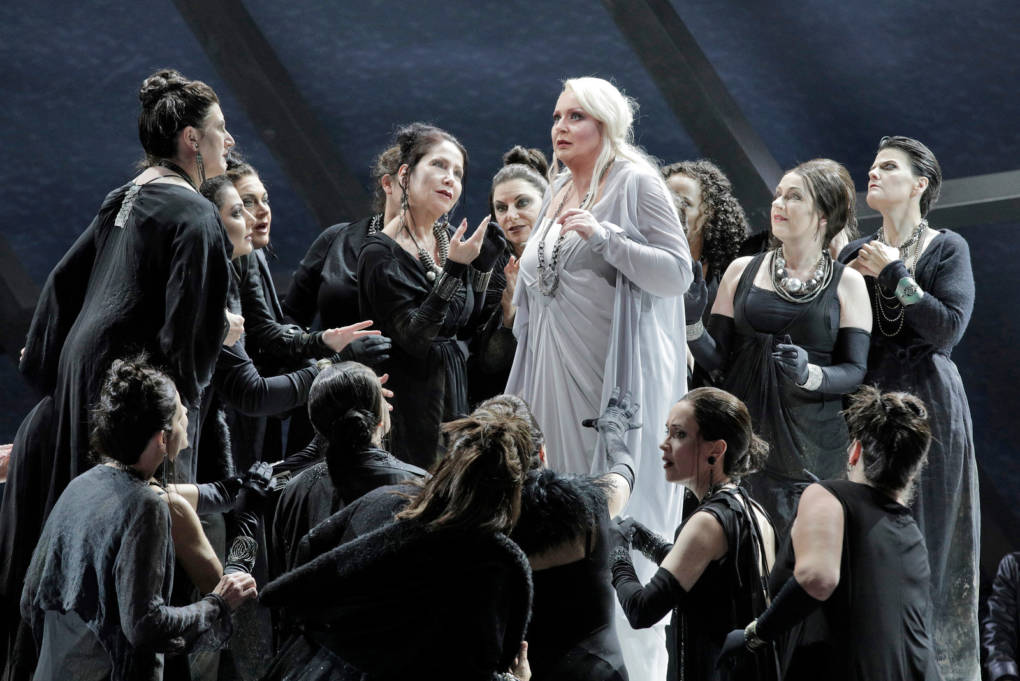
"caption": "Iréne Theorin as Brünnhilde with members of the San Franciso Opera Chorus in Wagner's 'Götterdämmerung,' part of the Ring cycle at SF Opera.",
"description": "Iréne Theorin as Brünnhilde with members of the San Franciso Opera Chorus in Wagner's 'Götterdämmerung.'",
"title": "Brunnhilde.WithWomen",
"credit": "Cory Weaver/San Francisco Opera",
"status": "inherit",
"altTag": "Iréne Theorin as Brünnhilde with members of the San Franciso Opera Chorus in Wagner's 'Götterdämmerung.'",
"isLoading": false,
"fetchFailed": false
},
"arts_13893064": {
"type": "attachments",
"id": "arts_13893064",
"meta": {
"index": "attachments_1716263798",
"site": "arts",
"id": "13893064",
"found": true
},
"parent": 13893062,
"imgSizes": {
"twentyfourteen-full-width": {
"file": "https://ww2.kqed.org/app/uploads/sites/2/2021/02/CounterPulse_credit_ScottFin-1038x576.jpg",
"width": 1038,
"mimeType": "image/jpeg",
"height": 576
},
"thumbnail": {
"file": "https://ww2.kqed.org/app/uploads/sites/2/2021/02/CounterPulse_credit_ScottFin-160x107.jpg",
"width": 160,
"mimeType": "image/jpeg",
"height": 107
},
"post-thumbnail": {
"file": "https://ww2.kqed.org/app/uploads/sites/2/2021/02/CounterPulse_credit_ScottFin-672x372.jpg",
"width": 672,
"mimeType": "image/jpeg",
"height": 372
},
"kqedFullSize": {
"file": "https://ww2.kqed.org/app/uploads/sites/2/2021/02/CounterPulse_credit_ScottFin.jpg",
"width": 2048,
"height": 1366
},
"large": {
"file": "https://ww2.kqed.org/app/uploads/sites/2/2021/02/CounterPulse_credit_ScottFin-1020x680.jpg",
"width": 1020,
"mimeType": "image/jpeg",
"height": 680
},
"1536x1536": {
"file": "https://ww2.kqed.org/app/uploads/sites/2/2021/02/CounterPulse_credit_ScottFin-1536x1025.jpg",
"width": 1536,
"mimeType": "image/jpeg",
"height": 1025
},
"full-width": {
"file": "https://ww2.kqed.org/app/uploads/sites/2/2021/02/CounterPulse_credit_ScottFin-1920x1281.jpg",
"width": 1920,
"mimeType": "image/jpeg",
"height": 1281
},
"medium": {
"file": "https://ww2.kqed.org/app/uploads/sites/2/2021/02/CounterPulse_credit_ScottFin-800x534.jpg",
"width": 800,
"mimeType": "image/jpeg",
"height": 534
},
"medium_large": {
"file": "https://ww2.kqed.org/app/uploads/sites/2/2021/02/CounterPulse_credit_ScottFin-768x512.jpg",
"width": 768,
"mimeType": "image/jpeg",
"height": 512
}
},
"publishDate": 1614016563,
"modified": 1614017027,
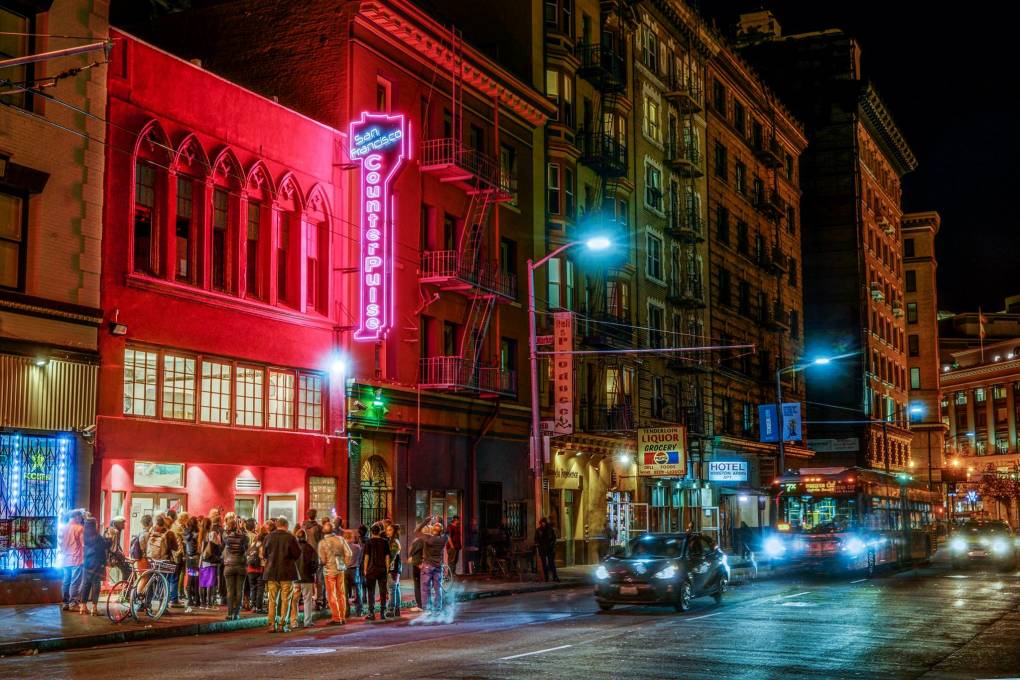
"caption": "CounterPulse in non-pandemic times.",
"description": "CounterPulse in non-pandemic times.",
"title": "CounterPulse_credit_ScottFin",
"credit": "Scott Fin",
"status": "inherit",
"altTag": null,
"isLoading": false,
"fetchFailed": false
},
"arts_13892235": {
"type": "attachments",
"id": "arts_13892235",
"meta": {
"index": "attachments_1716263798",
"site": "arts",
"id": "13892235",
"found": true
},
"parent": 13892223,
"imgSizes": {
"twentyfourteen-full-width": {
"file": "https://ww2.kqed.org/app/uploads/sites/2/2021/02/CatastrophistStill1-1038x576.jpg",
"width": 1038,
"mimeType": "image/jpeg",
"height": 576
},
"thumbnail": {
"file": "https://ww2.kqed.org/app/uploads/sites/2/2021/02/CatastrophistStill1-160x90.jpg",
"width": 160,
"mimeType": "image/jpeg",
"height": 90
},
"post-thumbnail": {
"file": "https://ww2.kqed.org/app/uploads/sites/2/2021/02/CatastrophistStill1-672x372.jpg",
"width": 672,
"mimeType": "image/jpeg",
"height": 372
},
"kqedFullSize": {
"file": "https://ww2.kqed.org/app/uploads/sites/2/2021/02/CatastrophistStill1.jpg",
"width": 1920,
"height": 1080
},
"large": {
"file": "https://ww2.kqed.org/app/uploads/sites/2/2021/02/CatastrophistStill1-1020x574.jpg",
"width": 1020,
"mimeType": "image/jpeg",
"height": 574
},
"1536x1536": {
"file": "https://ww2.kqed.org/app/uploads/sites/2/2021/02/CatastrophistStill1-1536x864.jpg",
"width": 1536,
"mimeType": "image/jpeg",
"height": 864
},
"medium": {
"file": "https://ww2.kqed.org/app/uploads/sites/2/2021/02/CatastrophistStill1-800x450.jpg",
"width": 800,
"mimeType": "image/jpeg",
"height": 450
},
"medium_large": {
"file": "https://ww2.kqed.org/app/uploads/sites/2/2021/02/CatastrophistStill1-768x432.jpg",
"width": 768,
"mimeType": "image/jpeg",
"height": 432
}
},
"publishDate": 1612469011,
"modified": 1612469074,
"caption": "William DeMeritt (Nathan) in 'The Catastrophist' produced by Marin Theatre Company and Round House Theatre.",
"description": "William DeMeritt (Nathan) in 'The Catastrophist' produced by Marin Theatre Company and Round House Theatre.",
"title": "Catastrophist+Still+1",
"credit": "Courtesy Marin Theatre Company",
"status": "inherit",
"altTag": "William DeMeritt (Nathan) in 'The Catastrophist' produced by Marin Theatre Company and Round House Theatre.",
"isLoading": false,
"fetchFailed": false
},
"arts_13891758": {
"type": "attachments",
"id": "arts_13891758",
"meta": {
"index": "attachments_1716263798",
"site": "arts",
"id": "13891758",
"found": true
},
"parent": 13891756,
"imgSizes": {
"twentyfourteen-full-width": {
"file": "https://ww2.kqed.org/app/uploads/sites/2/2021/01/WordForWord_GendellHingHernandez_EdieFlores_inRetablos_photocredit_LorenzoFernandez-Kopec-1038x576.jpg",
"width": 1038,
"mimeType": "image/jpeg",
"height": 576
},
"thumbnail": {
"file": "https://ww2.kqed.org/app/uploads/sites/2/2021/01/WordForWord_GendellHingHernandez_EdieFlores_inRetablos_photocredit_LorenzoFernandez-Kopec-160x96.jpg",
"width": 160,
"mimeType": "image/jpeg",
"height": 96
},
"post-thumbnail": {
"file": "https://ww2.kqed.org/app/uploads/sites/2/2021/01/WordForWord_GendellHingHernandez_EdieFlores_inRetablos_photocredit_LorenzoFernandez-Kopec-672x372.jpg",
"width": 672,
"mimeType": "image/jpeg",
"height": 372
},
"kqedFullSize": {
"file": "https://ww2.kqed.org/app/uploads/sites/2/2021/01/WordForWord_GendellHingHernandez_EdieFlores_inRetablos_photocredit_LorenzoFernandez-Kopec.jpg",
"width": 1200,
"height": 717
},
"large": {
"file": "https://ww2.kqed.org/app/uploads/sites/2/2021/01/WordForWord_GendellHingHernandez_EdieFlores_inRetablos_photocredit_LorenzoFernandez-Kopec-1020x609.jpg",
"width": 1020,
"mimeType": "image/jpeg",
"height": 609
},
"medium": {
"file": "https://ww2.kqed.org/app/uploads/sites/2/2021/01/WordForWord_GendellHingHernandez_EdieFlores_inRetablos_photocredit_LorenzoFernandez-Kopec-800x478.jpg",
"width": 800,
"mimeType": "image/jpeg",
"height": 478
},
"medium_large": {
"file": "https://ww2.kqed.org/app/uploads/sites/2/2021/01/WordForWord_GendellHingHernandez_EdieFlores_inRetablos_photocredit_LorenzoFernandez-Kopec-768x459.jpg",
"width": 768,
"mimeType": "image/jpeg",
"height": 459
}
},
"publishDate": 1611600408,
"modified": 1611702024,
"caption": "Gendell Hing-Hernández and Edie Flores from 2020's Word for Word production of 'Retablos.' Flores stars in Word for Wordcast's latest recording—Greg Sarris' 'Citizen'—with Hing-Hernández directing.",
"description": "Gendell Hing-Hernández and Edie Flores from 2020's Word for Word production of 'Retablos.' Flores stars in Word for Wordcast's latest recording—Greg Sarris' 'Citizen'—with Hing-Hernández directing.",
"title": "WordForWord_GendellHingHernandez_EdieFlores_inRetablos_photocredit_LorenzoFernandez-Kopec",
"credit": "Lorenzo Fernandez-Kopec",
"status": "inherit",
"altTag": "Gendell Hing-Hernández and Edie Flores from 2020's Word for Word production of 'Retablos.' Flores stars in Word for Wordcast's latest recording—Greg Sarris' 'Citizen'—with Hing-Hernández directing.",
"isLoading": false,
"fetchFailed": false
},
"arts_13891697": {
"type": "attachments",
"id": "arts_13891697",
"meta": {
"index": "attachments_1716263798",
"site": "arts",
"id": "13891697",
"found": true
},
"parent": 13891696,
"imgSizes": {
"twentyfourteen-full-width": {
"file": "https://ww2.kqed.org/app/uploads/sites/2/2021/01/1-derek-delgaudio-in-in-of-itself-c-matthew-murphy-1-1_wide-2b2746d554421070f8064d29020884ca3584106e-1038x576.jpg",
"width": 1038,
"mimeType": "image/jpeg",
"height": 576
},
"thumbnail": {
"file": "https://ww2.kqed.org/app/uploads/sites/2/2021/01/1-derek-delgaudio-in-in-of-itself-c-matthew-murphy-1-1_wide-2b2746d554421070f8064d29020884ca3584106e-160x90.jpg",
"width": 160,
"mimeType": "image/jpeg",
"height": 90
},
"post-thumbnail": {
"file": "https://ww2.kqed.org/app/uploads/sites/2/2021/01/1-derek-delgaudio-in-in-of-itself-c-matthew-murphy-1-1_wide-2b2746d554421070f8064d29020884ca3584106e-672x372.jpg",
"width": 672,
"mimeType": "image/jpeg",
"height": 372
},
"kqedFullSize": {
"file": "https://ww2.kqed.org/app/uploads/sites/2/2021/01/1-derek-delgaudio-in-in-of-itself-c-matthew-murphy-1-1_wide-2b2746d554421070f8064d29020884ca3584106e-scaled-e1611343009459.jpg",
"width": 1920,
"height": 1080
},
"2048x2048": {
"file": "https://ww2.kqed.org/app/uploads/sites/2/2021/01/1-derek-delgaudio-in-in-of-itself-c-matthew-murphy-1-1_wide-2b2746d554421070f8064d29020884ca3584106e-2048x1152.jpg",
"width": 2048,
"mimeType": "image/jpeg",
"height": 1152
},
"large": {
"file": "https://ww2.kqed.org/app/uploads/sites/2/2021/01/1-derek-delgaudio-in-in-of-itself-c-matthew-murphy-1-1_wide-2b2746d554421070f8064d29020884ca3584106e-1020x574.jpg",
"width": 1020,
"mimeType": "image/jpeg",
"height": 574
},
"1536x1536": {
"file": "https://ww2.kqed.org/app/uploads/sites/2/2021/01/1-derek-delgaudio-in-in-of-itself-c-matthew-murphy-1-1_wide-2b2746d554421070f8064d29020884ca3584106e-1536x864.jpg",
"width": 1536,
"mimeType": "image/jpeg",
"height": 864
},
"full-width": {
"file": "https://ww2.kqed.org/app/uploads/sites/2/2021/01/1-derek-delgaudio-in-in-of-itself-c-matthew-murphy-1-1_wide-2b2746d554421070f8064d29020884ca3584106e-1920x1080.jpg",
"width": 1920,
"mimeType": "image/jpeg",
"height": 1080
},
"medium": {
"file": "https://ww2.kqed.org/app/uploads/sites/2/2021/01/1-derek-delgaudio-in-in-of-itself-c-matthew-murphy-1-1_wide-2b2746d554421070f8064d29020884ca3584106e-800x450.jpg",
"width": 800,
"mimeType": "image/jpeg",
"height": 450
},
"medium_large": {
"file": "https://ww2.kqed.org/app/uploads/sites/2/2021/01/1-derek-delgaudio-in-in-of-itself-c-matthew-murphy-1-1_wide-2b2746d554421070f8064d29020884ca3584106e-768x432.jpg",
"width": 768,
"mimeType": "image/jpeg",
"height": 432
}
},
"publishDate": 1611342408,
"modified": 1611343052,
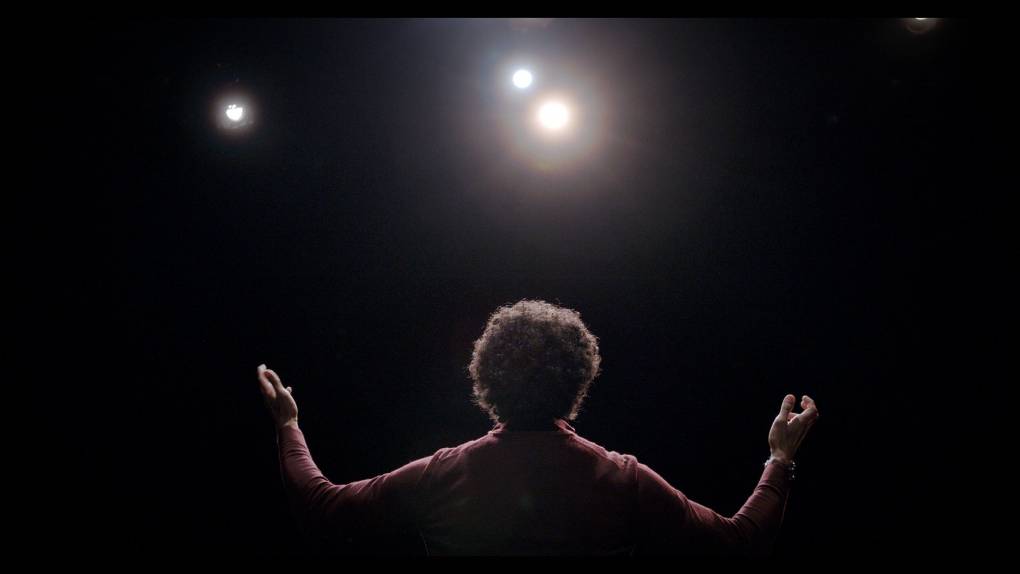
"caption": "Derek DelGaudio uses a little magic and a lot of storytelling to talk about identity in 'In & Of Itself.'",
"description": "Derek DelGaudio uses a little magic and a lot of storytelling to talk about identity in 'In & Of Itself.'",
"title": "Derek DelGaudio uses a little magic and a lot of storytelling to talk about identity in 'In & Of Itself.'",
"credit": "Matthew Murphy/Hulu",
"status": "inherit",
"altTag": "Derek DelGaudio uses a little magic and a lot of storytelling to talk about identity in 'In & Of Itself.'",
"isLoading": false,
"fetchFailed": false
},
"arts_13891529": {
"type": "attachments",
"id": "arts_13891529",
"meta": {
"index": "attachments_1716263798",
"site": "arts",
"id": "13891529",
"found": true
},
"parent": 13891522,
"imgSizes": {
"twentyfourteen-full-width": {
"file": "https://ww2.kqed.org/app/uploads/sites/2/2021/01/DestinyArtsCenter-1038x576.jpg",
"width": 1038,
"mimeType": "image/jpeg",
"height": 576
},
"thumbnail": {
"file": "https://ww2.kqed.org/app/uploads/sites/2/2021/01/DestinyArtsCenter-160x92.jpg",
"width": 160,
"mimeType": "image/jpeg",
"height": 92
},
"post-thumbnail": {
"file": "https://ww2.kqed.org/app/uploads/sites/2/2021/01/DestinyArtsCenter-672x372.jpg",
"width": 672,
"mimeType": "image/jpeg",
"height": 372
},
"kqedFullSize": {
"file": "https://ww2.kqed.org/app/uploads/sites/2/2021/01/DestinyArtsCenter.jpg",
"width": 1920,
"height": 1104
},
"large": {
"file": "https://ww2.kqed.org/app/uploads/sites/2/2021/01/DestinyArtsCenter-1020x587.jpg",
"width": 1020,
"mimeType": "image/jpeg",
"height": 587
},
"1536x1536": {
"file": "https://ww2.kqed.org/app/uploads/sites/2/2021/01/DestinyArtsCenter-1536x883.jpg",
"width": 1536,
"mimeType": "image/jpeg",
"height": 883
},
"medium": {
"file": "https://ww2.kqed.org/app/uploads/sites/2/2021/01/DestinyArtsCenter-800x460.jpg",
"width": 800,
"mimeType": "image/jpeg",
"height": 460
},
"medium_large": {
"file": "https://ww2.kqed.org/app/uploads/sites/2/2021/01/DestinyArtsCenter-768x442.jpg",
"width": 768,
"mimeType": "image/jpeg",
"height": 442
}
},
"publishDate": 1611180825,
"modified": 1611180887,
"caption": "Kyziah Shavers, Amber Julian and dancers from Destiny Arts Center, which is part of this year's Night of Ideas.",
"description": "Kyziah Shavers, Amber Julian and dancers from Destiny Arts Center, which is part of this year's Night of Ideas.",
"title": "DestinyArtsCenter",
"credit": "Yoram Savion",
"status": "inherit",
"altTag": "Kyziah Shavers, Amber Julian and dancers from Destiny Arts Center, which is part of this year's Night of Ideas.",
"isLoading": false,
"fetchFailed": false
},
"arts_13891021": {
"type": "attachments",
"id": "arts_13891021",
"meta": {
"index": "attachments_1716263798",
"site": "arts",
"id": "13891021",
"found": true
},
"parent": 13891018,
"imgSizes": {
"twentyfourteen-full-width": {
"file": "https://ww2.kqed.org/app/uploads/sites/2/2021/01/PeoplesWPA_DeliveringDemocracy_credit_IsaacScott-1038x576.jpeg",
"width": 1038,
"mimeType": "image/jpeg",
"height": 576
},
"thumbnail": {
"file": "https://ww2.kqed.org/app/uploads/sites/2/2021/01/PeoplesWPA_DeliveringDemocracy_credit_IsaacScott-160x90.jpeg",
"width": 160,
"mimeType": "image/jpeg",
"height": 90
},
"post-thumbnail": {
"file": "https://ww2.kqed.org/app/uploads/sites/2/2021/01/PeoplesWPA_DeliveringDemocracy_credit_IsaacScott-672x372.jpeg",
"width": 672,
"mimeType": "image/jpeg",
"height": 372
},
"kqedFullSize": {
"file": "https://ww2.kqed.org/app/uploads/sites/2/2021/01/PeoplesWPA_DeliveringDemocracy_credit_IsaacScott.jpeg",
"width": 2000,
"height": 1125
},
"large": {
"file": "https://ww2.kqed.org/app/uploads/sites/2/2021/01/PeoplesWPA_DeliveringDemocracy_credit_IsaacScott-1020x574.jpeg",
"width": 1020,
"mimeType": "image/jpeg",
"height": 574
},
"1536x1536": {
"file": "https://ww2.kqed.org/app/uploads/sites/2/2021/01/PeoplesWPA_DeliveringDemocracy_credit_IsaacScott-1536x864.jpeg",
"width": 1536,
"mimeType": "image/jpeg",
"height": 864
},
"full-width": {
"file": "https://ww2.kqed.org/app/uploads/sites/2/2021/01/PeoplesWPA_DeliveringDemocracy_credit_IsaacScott-1920x1080.jpeg",
"width": 1920,
"mimeType": "image/jpeg",
"height": 1080
},
"medium": {
"file": "https://ww2.kqed.org/app/uploads/sites/2/2021/01/PeoplesWPA_DeliveringDemocracy_credit_IsaacScott-800x450.jpeg",
"width": 800,
"mimeType": "image/jpeg",
"height": 450
},
"medium_large": {
"file": "https://ww2.kqed.org/app/uploads/sites/2/2021/01/PeoplesWPA_DeliveringDemocracy_credit_IsaacScott-768x432.jpeg",
"width": 768,
"mimeType": "image/jpeg",
"height": 432
}
},
"publishDate": 1610399513,
"modified": 1610681175,
"caption": "Delivering Democracy in Pennsylvania, with L.M. Bogad and support from the People's WPA & the Center for Artistic Activism.",
"description": "Delivering Democracy in Pennsylvania, with L.M. Bogad and support from the People's WPA & the Center for Artistic Activism.",
"title": "PeoplesWPA_DeliveringDemocracy_credit_IsaacScott",
"credit": "Issac Scott",
"status": "inherit",
"altTag": null,
"isLoading": false,
"fetchFailed": false
},
"arts_13890058": {
"type": "attachments",
"id": "arts_13890058",
"meta": {
"index": "attachments_1716263798",
"site": "arts",
"id": "13890058",
"found": true
},
"parent": 13890054,
"imgSizes": {
"twentyfourteen-full-width": {
"file": "https://ww2.kqed.org/app/uploads/sites/2/2020/12/SFPlayhouse_JohnnyMoreno_JomarTagatac_BobakBakhtiari_photocredit_DonnyGilliland-1038x576.jpg",
"width": 1038,
"mimeType": "image/jpeg",
"height": 576
},
"thumbnail": {
"file": "https://ww2.kqed.org/app/uploads/sites/2/2020/12/SFPlayhouse_JohnnyMoreno_JomarTagatac_BobakBakhtiari_photocredit_DonnyGilliland-160x107.jpg",
"width": 160,
"mimeType": "image/jpeg",
"height": 107
},
"post-thumbnail": {
"file": "https://ww2.kqed.org/app/uploads/sites/2/2020/12/SFPlayhouse_JohnnyMoreno_JomarTagatac_BobakBakhtiari_photocredit_DonnyGilliland-672x372.jpg",
"width": 672,
"mimeType": "image/jpeg",
"height": 372
},
"kqedFullSize": {
"file": "https://ww2.kqed.org/app/uploads/sites/2/2020/12/SFPlayhouse_JohnnyMoreno_JomarTagatac_BobakBakhtiari_photocredit_DonnyGilliland.jpg",
"width": 2000,
"height": 1333
},
"large": {
"file": "https://ww2.kqed.org/app/uploads/sites/2/2020/12/SFPlayhouse_JohnnyMoreno_JomarTagatac_BobakBakhtiari_photocredit_DonnyGilliland-1020x680.jpg",
"width": 1020,
"mimeType": "image/jpeg",
"height": 680
},
"1536x1536": {
"file": "https://ww2.kqed.org/app/uploads/sites/2/2020/12/SFPlayhouse_JohnnyMoreno_JomarTagatac_BobakBakhtiari_photocredit_DonnyGilliland-1536x1024.jpg",
"width": 1536,
"mimeType": "image/jpeg",
"height": 1024
},
"full-width": {
"file": "https://ww2.kqed.org/app/uploads/sites/2/2020/12/SFPlayhouse_JohnnyMoreno_JomarTagatac_BobakBakhtiari_photocredit_DonnyGilliland-1920x1280.jpg",
"width": 1920,
"mimeType": "image/jpeg",
"height": 1280
},
"medium": {
"file": "https://ww2.kqed.org/app/uploads/sites/2/2020/12/SFPlayhouse_JohnnyMoreno_JomarTagatac_BobakBakhtiari_photocredit_DonnyGilliland-800x533.jpg",
"width": 800,
"mimeType": "image/jpeg",
"height": 533
},
"medium_large": {
"file": "https://ww2.kqed.org/app/uploads/sites/2/2020/12/SFPlayhouse_JohnnyMoreno_JomarTagatac_BobakBakhtiari_photocredit_DonnyGilliland-768x512.jpg",
"width": 768,
"mimeType": "image/jpeg",
"height": 512
}
},
"publishDate": 1607374282,
"modified": 1607992509,
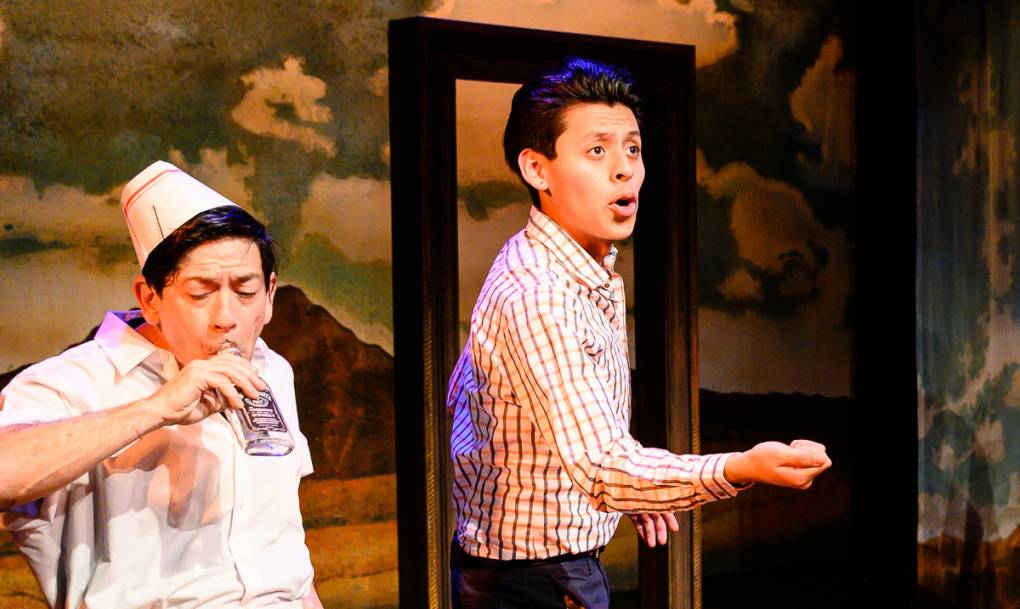
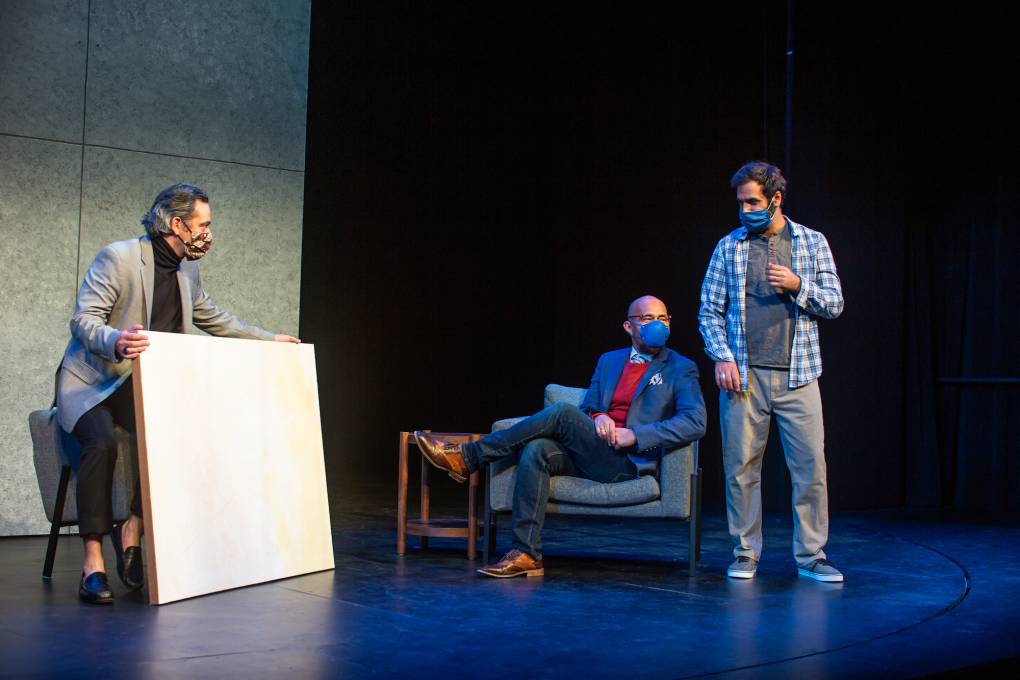
"caption": "San Francisco Playhouse filmed its production of Yasmina Reza's 'Art' on their main stage with Johnny Moreno, Jomar Tagatac and Bobak Bakhtiari.",
"description": "San Francisco Playhouse filmed their production of Yasmina Reza's Art on their manistage. With Johnny Moreno, Jomar Tagatac, and Bobak Bakhtiari.",
"title": "SFPlayhouse_JohnnyMoreno_JomarTagatac_BobakBakhtiari_photocredit_DonnyGilliland",
"credit": "Donny Gilliland",
"status": "inherit",
"altTag": null,
"isLoading": false,
"fetchFailed": false
}
},
"audioPlayerReducer": {
"postId": "stream_live",
"isPaused": true,
"isPlaying": false,
"pfsActive": false,
"pledgeModalIsOpen": true,
"playerDrawerIsOpen": false,
"liveAudioPlayStartedAt": 0,
"liveAudioPlayContext": ""
},
"authorsReducer": {
"byline_arts_13891696": {
"type": "authors",
"id": "byline_arts_13891696",
"meta": {
"override": true
},
"slug": "byline_arts_13891696",
"name": "Linda Holmes",
"isLoading": false
},
"shotchkiss": {
"type": "authors",
"id": "61",
"meta": {
"index": "authors_1716337520",
"id": "61",
"found": true
},
"name": "Sarah Hotchkiss",
"firstName": "Sarah",
"lastName": "Hotchkiss",
"slug": "shotchkiss",
"email": "shotchkiss@kqed.org",
"display_author_email": true,
"staff_mastheads": [
"arts"
],
"title": "Senior Editor",
"bio": "Sarah Hotchkiss is a San Francisco \u003ca href=\"http://www.sarahhotchkiss.com\">artist\u003c/a> and arts writer. In 2019, she received the Dorothea & Leo Rabkin Foundation grant for visual art journalism and in 2020 she received a Society of Professional Journalists, Northern California award for excellence in arts and culture reporting.",
"avatar": "https://secure.gravatar.com/avatar/bc662df144b3d27fd8b1b6f1c2a420d34e91e53154d411bb7ad353cc8b6cea8d?s=600&d=blank&r=g",
"twitter": null,
"bluesky": null,
"facebook": null,
"instagram": null,
"linkedin": null,
"sites": [
{
"site": "",
"roles": [
"editor"
]
},
{
"site": "arts",
"roles": [
"Contributor",
"administrator"
]
},
{
"site": "artschool",
"roles": [
"administrator"
]
},
{
"site": "news",
"roles": [
"editor"
]
},
{
"site": "pop",
"roles": [
"administrator"
]
},
{
"site": "bayareabites",
"roles": [
"editor"
]
},
{
"site": "spark",
"roles": [
"editor"
]
},
{
"site": "checkplease",
"roles": [
"editor"
]
}
],
"headData": {
"title": "Sarah Hotchkiss | KQED",
"description": "Senior Editor",
"ogImgSrc": "https://secure.gravatar.com/avatar/bc662df144b3d27fd8b1b6f1c2a420d34e91e53154d411bb7ad353cc8b6cea8d?s=600&d=blank&r=g",
"twImgSrc": "https://secure.gravatar.com/avatar/bc662df144b3d27fd8b1b6f1c2a420d34e91e53154d411bb7ad353cc8b6cea8d?s=600&d=blank&r=g"
},
"isLoading": false,
"link": "/author/shotchkiss"
},
"gmeline": {
"type": "authors",
"id": "185",
"meta": {
"index": "authors_1716337520",
"id": "185",
"found": true
},
"name": "Gabe Meline",
"firstName": "Gabe",
"lastName": "Meline",
"slug": "gmeline",
"email": "gmeline@kqed.org",
"display_author_email": true,
"staff_mastheads": [
"arts"
],
"title": "Senior Editor, KQED Arts & Culture",
"bio": "Gabe Meline entered journalism at age 15 making photocopied zines, and has since earned awards from the Edward R. Murrow Awards, the Society for Professional Journalists, the Online Journalism Awards, the Association of Alternative Newsweeklies and the California Newspaper Publishers Association. Prior to KQED, he was the editor of the \u003cem>North Bay Bohemian\u003c/em> and a touring musician. He lives with his wife and daughter in his hometown of Santa Rosa, CA.",
"avatar": "https://secure.gravatar.com/avatar/5bebe57be0d8bc2dd318934feb47299e2d2d10cba28d09d8d7afb389a2ce2bdd?s=600&d=blank&r=g",
"twitter": null,
"bluesky": null,
"facebook": null,
"instagram": null,
"linkedin": null,
"sites": [
{
"site": "",
"roles": [
"editor"
]
},
{
"site": "arts",
"roles": [
"administrator"
]
},
{
"site": "artschool",
"roles": [
"editor"
]
},
{
"site": "news",
"roles": [
"author"
]
},
{
"site": "pop",
"roles": [
"editor"
]
},
{
"site": "bayareabites",
"roles": [
"editor"
]
},
{
"site": "food",
"roles": [
"editor"
]
},
{
"site": "forum",
"roles": [
"administrator"
]
},
{
"site": "liveblog",
"roles": [
"editor"
]
},
{
"site": "hiphop",
"roles": [
"editor"
]
}
],
"headData": {
"title": "Gabe Meline | KQED",
"description": "Senior Editor, KQED Arts & Culture",
"ogImgSrc": "https://secure.gravatar.com/avatar/5bebe57be0d8bc2dd318934feb47299e2d2d10cba28d09d8d7afb389a2ce2bdd?s=600&d=blank&r=g",
"twImgSrc": "https://secure.gravatar.com/avatar/5bebe57be0d8bc2dd318934feb47299e2d2d10cba28d09d8d7afb389a2ce2bdd?s=600&d=blank&r=g"
},
"isLoading": false,
"link": "/author/gmeline"
},
"cveltman": {
"type": "authors",
"id": "8608",
"meta": {
"index": "authors_1716337520",
"id": "8608",
"found": true
},
"name": "Chloe Veltman",
"firstName": "Chloe",
"lastName": "Veltman",
"slug": "cveltman",
"email": "cveltman@kqed.org",
"display_author_email": true,
"staff_mastheads": [],
"title": "Arts and Culture Reporter",
"bio": "Chloe Veltman is a former arts and culture reporter for KQED. Prior to joining the organization, she launched and led the arts bureau at Colorado Public Radio, served as the Bay Area's culture columnist for the New York Times, and was the founder, host and executive producer of VoiceBox, a national award-winning weekly podcast/radio show and live events series all about the human voice. Chloe is the recipient of numerous prizes, grants and fellowships including a Webby Award for her work on interactive storytelling, both the John S Knight Journalism Fellowship and Humanities Center Fellowship at Stanford University, the Sundance Arts Writing Fellowship and a Library of Congress Research Fellowship. She is the author of the book \"On Acting\" and has appeared as a guest lecturer at Yale University and the San Francisco Conservatory of Music among other institutions. She holds a BA in english literature from King's College, Cambridge, and a Masters in Dramaturgy from the Central School of Speech and Drama/Harvard Institute for Advanced Theater Training.\r\n\u003ca href=\"https://www.chloeveltman.com\">www.chloeveltman.com\u003c/a>",
"avatar": "https://secure.gravatar.com/avatar/55403394b00a1ddab683952c2eb2cf85?s=600&d=blank&r=g",
"twitter": "chloeveltman",
"facebook": null,
"instagram": null,
"linkedin": null,
"sites": [
{
"site": "arts",
"roles": []
},
{
"site": "news",
"roles": [
"author"
]
},
{
"site": "pop",
"roles": [
"editor"
]
},
{
"site": "science",
"roles": []
}
],
"headData": {
"title": "Chloe Veltman | KQED",
"description": "Arts and Culture Reporter",
"ogImgSrc": "https://secure.gravatar.com/avatar/55403394b00a1ddab683952c2eb2cf85?s=600&d=blank&r=g",
"twImgSrc": "https://secure.gravatar.com/avatar/55403394b00a1ddab683952c2eb2cf85?s=600&d=blank&r=g"
},
"isLoading": false,
"link": "/author/cveltman"
},
"nvoynovskaya": {
"type": "authors",
"id": "11387",
"meta": {
"index": "authors_1716337520",
"id": "11387",
"found": true
},
"name": "Nastia Voynovskaya",
"firstName": "Nastia",
"lastName": "Voynovskaya",
"slug": "nvoynovskaya",
"email": "nvoynovskaya@kqed.org",
"display_author_email": false,
"staff_mastheads": [
"arts"
],
"title": "Editor and reporter",
"bio": "Nastia Voynovskaya is a reporter, editor and host at KQED Arts & Culture. She's been covering the arts in the Bay Area for over a decade, with a focus on music, queer culture, labor issues and grassroots organizing. She has edited KQED story series such as Trans Bay: A History of San Francisco's Gender-Diverse Community, and co-created KQED's Bay Area hip-hop history project, That's My Word. Nastia's work has been recognized by the Society of Professional Journalists and San Francisco Press Club. She regularly appears on podcasts and radio programs, including NPR's All Songs Considered, and hosts live events where music, culture and conversation meet.",
"avatar": "https://secure.gravatar.com/avatar/5025ee460e5a85d69ca20ea6c6f2f80d7e17795c828f61ea3aecfcd924e9042e?s=600&d=blank&r=g",
"twitter": null,
"bluesky": null,
"facebook": null,
"instagram": "https://www.instagram.com/nananastia/",
"linkedin": null,
"sites": [
{
"site": "",
"roles": [
"editor"
]
},
{
"site": "arts",
"roles": [
"administrator"
]
},
{
"site": "news",
"roles": [
"editor"
]
},
{
"site": "pop",
"roles": [
"administrator"
]
},
{
"site": "bayareabites",
"roles": [
"editor"
]
},
{
"site": "podcasts",
"roles": [
"editor"
]
},
{
"site": "hiphop",
"roles": [
"editor"
]
}
],
"headData": {
"title": "Nastia Voynovskaya | KQED",
"description": "Editor and reporter",
"ogImgSrc": "https://secure.gravatar.com/avatar/5025ee460e5a85d69ca20ea6c6f2f80d7e17795c828f61ea3aecfcd924e9042e?s=600&d=blank&r=g",
"twImgSrc": "https://secure.gravatar.com/avatar/5025ee460e5a85d69ca20ea6c6f2f80d7e17795c828f61ea3aecfcd924e9042e?s=600&d=blank&r=g"
},
"isLoading": false,
"link": "/author/nvoynovskaya"
},
"ngluckstern": {
"type": "authors",
"id": "11497",
"meta": {
"index": "authors_1716337520",
"id": "11497",
"found": true
},
"name": "Nicole Gluckstern",
"firstName": "Nicole",
"lastName": "Gluckstern",
"slug": "ngluckstern",
"email": "gluckstern.nicole@gmail.com",
"display_author_email": false,
"staff_mastheads": [],
"title": "KQED Contributor",
"bio": null,
"avatar": "https://secure.gravatar.com/avatar/2c3d593194017bfe811a998ad03140909de330b22abebf4889e1a564ce5b3495?s=600&d=blank&r=g",
"twitter": null,
"bluesky": null,
"facebook": null,
"instagram": null,
"linkedin": null,
"sites": [
{
"site": "arts",
"roles": [
"contributor"
]
}
],
"headData": {
"title": "Nicole Gluckstern | KQED",
"description": "KQED Contributor",
"ogImgSrc": "https://secure.gravatar.com/avatar/2c3d593194017bfe811a998ad03140909de330b22abebf4889e1a564ce5b3495?s=600&d=blank&r=g",
"twImgSrc": "https://secure.gravatar.com/avatar/2c3d593194017bfe811a998ad03140909de330b22abebf4889e1a564ce5b3495?s=600&d=blank&r=g"
},
"isLoading": false,
"link": "/author/ngluckstern"
},
"sgetachew": {
"type": "authors",
"id": "11734",
"meta": {
"index": "authors_1716337520",
"id": "11734",
"found": true
},
"name": "Samuel Getachew",
"firstName": "Samuel",
"lastName": "Getachew",
"slug": "sgetachew",
"email": "sgetachew@kqed.org",
"display_author_email": false,
"staff_mastheads": [],
"title": "KQED Contributor",
"bio": "\u003cspan style=\"font-weight: 400;\">Samuel Getachew is an 18-year-old poet and writer from Oakland, California. He is the 2019 Oakland Youth Poet Laureate, a 2020 Finalist for National Youth Poet Laureate, and a 4-time YoungArts Winner. His writing has been published in Teen Vogue, the New York Times, the Washington Post, and more. He will attend Yale University in the fall of 2021.\u003c/span>",
"avatar": "https://secure.gravatar.com/avatar/ebad3dcf2295975cfe77698fa670a089?s=600&d=blank&r=g",
"twitter": null,
"facebook": null,
"instagram": null,
"linkedin": null,
"sites": [
{
"site": "arts",
"roles": [
"subscriber"
]
}
],
"headData": {
"title": "Samuel Getachew | KQED",
"description": "KQED Contributor",
"ogImgSrc": "https://secure.gravatar.com/avatar/ebad3dcf2295975cfe77698fa670a089?s=600&d=blank&r=g",
"twImgSrc": "https://secure.gravatar.com/avatar/ebad3dcf2295975cfe77698fa670a089?s=600&d=blank&r=g"
},
"isLoading": false,
"link": "/author/sgetachew"
}
},
"pagesReducer": {
"arts_category_theater": {
"type": "terms",
"id": "arts_967",
"meta": {
"index": "terms_1716263798",
"site": "arts",
"id": "967",
"score": 12.286735
},
"featImg": null,
"name": "Theater",
"description": null,
"taxonomy": "category",
"headData": {
"twImgId": null,
"twTitle": null,
"ogTitle": null,
"ogImgId": null,
"twDescription": null,
"description": null,
"title": "Theater Archives | KQED Arts",
"ogDescription": null
},
"ttid": 985,
"slug": "theater",
"isLoading": false,
"title": "Theater",
"pageMeta": {
"site": "arts",
"WpPageTemplate": "page-topic-editorial",
"currentPage": 18
},
"blocks": [
{
"blockName": "kqed/post-list",
"attrs": {
"layout": "cardArticle2",
"query": "posts/arts?category=theater",
"seeMore": false,
"paginated": true,
"page": 18
}
},
{
"blockName": "kqed/ad"
}
]
}
},
"pfsSessionReducer": {},
"postsReducer": {
"stream_live": {
"type": "live",
"id": "stream_live",
"audioUrl": "https://streams.kqed.org/kqedradio",
"title": "Live Stream",
"excerpt": "Live Stream information currently unavailable.",
"link": "/radio",
"featImg": "",
"label": {
"name": "KQED Live",
"link": "/"
}
},
"stream_kqedNewscast": {
"type": "posts",
"id": "stream_kqedNewscast",
"audioUrl": "https://www.kqed.org/.stream/anon/radio/RDnews/newscast.mp3?_=1",
"title": "KQED Newscast",
"featImg": "",
"label": {
"name": "88.5 FM",
"link": "/"
}
},
"arts_13894223": {
"type": "posts",
"id": "arts_13894223",
"meta": {
"index": "posts_1716263798",
"site": "arts",
"id": "13894223",
"score": null,
"sort": [
1616166014000
]
},
"parent": 0,
"labelTerm": {
"site": "arts"
},
"blocks": [],
"publishDate": 1616166014,
"format": "audio",
"title": "Berkeley Rep Builds a Theatrical Experience Through Sound With 'Place/Settings'",
"headTitle": "Berkeley Rep Builds a Theatrical Experience Through Sound With ‘Place/Settings’ | KQED",
"content": "\u003cp>Over the past year without live performances and theatre, venues throughout the Bay Area have been forced to pivot to creating \u003ca href=\"https://www.kqed.org/arts/13890054/livestreaming-defined-the-performing-arts-in-2020-how-can-it-be-sustained\" rel=\"noopener noreferrer\" target=\"_blank\">virtual programming\u003c/a> throughout the COVID-19 pandemic. And while streamed theatre can be a hit-or-miss, as Berkeley Rep artistic director Johanna Pfaelzer recently told \u003ca href=\"https://www.berkeleyside.com/2021/01/11/berkeley-rep-launches-place-settings-10-audio-stories-set-in-berkeley\">the Berkeleyside\u003c/a>, “sound can create an entire world.”\u003c/p>\n\u003cp>That’s the premise of \u003cem>Place/Settings\u003c/em>, a new series from Berkeley Rep and the latest example of a Bay Area theater company pivoting to digital offerings. Unlike many recent theatre productions, \u003cem>Place/Settings\u003c/em> isn’t a streamed recording of a play, but an audio-only, 10-episode podcast series that takes listeners to different key locations around Berkeley.\u003c/p>\n\u003cp>The stories of \u003cem>Place/Settings\u003c/em> come courtesy of 10 different writers, all with strong ties to the city—some stories are based on true events, some are fictional, and some fall in between. Whether read by the author or a voice actor, the stories utilize sound design and narration styles to build an entirely sonic theatrical experience. All are personal and unique, each with its own stylistic flair.\u003c/p>\n\u003cfigure id=\"attachment_13894233\" class=\"wp-caption aligncenter\" style=\"max-width: 800px\">\u003cimg loading=\"lazy\" decoding=\"async\" src=\"https://ww2.kqed.org/app/uploads/sites/2/2021/03/Richard-Montoya-photo-by-Jenny-Graham-800x531.jpeg\" alt=\"Richard Montoya, a contributing writer to Berkeley Rep's 'Place/Settings.'\" width=\"800\" height=\"531\" class=\"size-medium wp-image-13894233\" srcset=\"https://cdn.kqed.org/wp-content/uploads/sites/2/2021/03/Richard-Montoya-photo-by-Jenny-Graham-800x531.jpeg 800w, https://cdn.kqed.org/wp-content/uploads/sites/2/2021/03/Richard-Montoya-photo-by-Jenny-Graham-1020x677.jpeg 1020w, https://cdn.kqed.org/wp-content/uploads/sites/2/2021/03/Richard-Montoya-photo-by-Jenny-Graham-160x106.jpeg 160w, https://cdn.kqed.org/wp-content/uploads/sites/2/2021/03/Richard-Montoya-photo-by-Jenny-Graham-768x510.jpeg 768w, https://cdn.kqed.org/wp-content/uploads/sites/2/2021/03/Richard-Montoya-photo-by-Jenny-Graham.jpeg 1500w\" sizes=\"(max-width: 800px) 100vw, 800px\">\u003cfigcaption class=\"wp-caption-text\">Richard Montoya, a contributing writer to Berkeley Rep’s ‘Place/Settings.’ \u003ccite>(Jenny Graham)\u003c/cite>\u003c/figcaption>\u003c/figure>\n\u003cp>Upon listening to a cross-section of episodes, I found \u003cem>Place/Settings\u003c/em> to be an artistically distinctive and heartwarming tribute to one of the most exceptional cities in the Bay. Although I grew up in Oakland, I spent a good deal of my childhood visiting the neighboring city of Berkeley. Many of the featured writers of \u003cem>Place/Settings\u003c/em> grew up in neighboring cities as well, like Daniel Handler, whose episode tells the story of visiting Berkeley from his hometown of San Francisco, or Kamala Parks, who moved to Berkeley from her mother’s house in San Jose.\u003c/p>\n\u003cp>Handler, better known by his pen name Lemony Snicket, contributes a story from his time growing up in San Francisco, when he viewed Berkeley as a formidable, fascinating place. He describes one real-life journey to the “glamorous” city in “The Black Mass Sonata.” Read by Lance Gardner, the episode puts the listener in the shoes of a teenage Handler during a lonely period of his life as he aimlessly wanders alone along Bancroft Way before finding himself in the Musical Offering Cafe.\u003c/p>\n\u003cp>[ad fullwidth]\u003c/p>\n\u003cp>Handler’s descriptions of trepidation at entering the shops and restaurants he’d deemed “too cool” for him brought me back to the memory of an uncomfortable period of my own adolescence: just barely old enough to venture out on my own, but not yet old enough to have a group of friends to make the experience less daunting. And yet in that cafe, the lost Handler finds clarity as he eats a cup of soup and discovers a sonata playing in the cafe that he does not yet know will snap him out of a bout of amnesia just a few years later.\u003c/p>\n\u003cfigure id=\"attachment_13894232\" class=\"wp-caption aligncenter\" style=\"max-width: 800px\">\u003cimg loading=\"lazy\" decoding=\"async\" src=\"https://ww2.kqed.org/app/uploads/sites/2/2021/03/Kamala-Parks-photo-by-Frank-Piegaro-800x600.jpeg\" alt=\"Contributing writer Kamala Parks (Frank Piegaro)\" width=\"800\" height=\"600\" class=\"size-medium wp-image-13894232\" srcset=\"https://cdn.kqed.org/wp-content/uploads/sites/2/2021/03/Kamala-Parks-photo-by-Frank-Piegaro-800x600.jpeg 800w, https://cdn.kqed.org/wp-content/uploads/sites/2/2021/03/Kamala-Parks-photo-by-Frank-Piegaro-1020x765.jpeg 1020w, https://cdn.kqed.org/wp-content/uploads/sites/2/2021/03/Kamala-Parks-photo-by-Frank-Piegaro-160x120.jpeg 160w, https://cdn.kqed.org/wp-content/uploads/sites/2/2021/03/Kamala-Parks-photo-by-Frank-Piegaro-768x576.jpeg 768w, https://cdn.kqed.org/wp-content/uploads/sites/2/2021/03/Kamala-Parks-photo-by-Frank-Piegaro-1536x1152.jpeg 1536w, https://cdn.kqed.org/wp-content/uploads/sites/2/2021/03/Kamala-Parks-photo-by-Frank-Piegaro-2048x1536.jpeg 2048w, https://cdn.kqed.org/wp-content/uploads/sites/2/2021/03/Kamala-Parks-photo-by-Frank-Piegaro-1920x1440.jpeg 1920w\" sizes=\"(max-width: 800px) 100vw, 800px\">\u003cfigcaption class=\"wp-caption-text\">Kamala Parks, a contributing writer to Berkeley Rep’s ‘Place/Settings.’ \u003ccite>(Frank Piegaro)\u003c/cite>\u003c/figcaption>\u003c/figure>\n\u003cp>In “The Third Sphere,” drummer, 924 Gilman founder, and BART planner Kamala Parks tells her story of grappling with her parents’ divorce in early adolescence. In Parks’ story, narrated by Denmo Ibrahim, the North Berkeley BART station serves as the backdrop for her first strides into independence after she moves in with her father to escape the jealous abuse of her temperamental brother.\u003c/p>\n\u003cp>The city of Berkeley also serves as the site for Parks’ encounters with the consequences of California’s Prop. 13, as slashed education funding forces her into a remedial class full of rowdy students that she skips school to avoid. As a lifelong Oakland public school student and recent high school graduate, I found her descriptions of classroom dynamics entertaining and comfortingly familiar; although my middle school years came decades after hers, our experiences echo one another.[aside postID='arts_13840541']\u003c/p>\n\u003cp>Tilden Regional Park makes its perhaps-inevitable appearance in Philip Kan Gotanda’s “night fishing,” an eerie tale of an old fisherman who frequents Jewel Lake. Read by Steven Anthony Jones and BD Wong, the theatrical storytelling and masterful sound design of this episode construct an ominous scene around the listener, building up to a cliffhanger ending. In contrast to the others that I listened to, this episode feels more like a horror movie-turned-audiobook than a personal narrative, demonstrating the versatility of the series and the distinctions between the styles of the different writers.\u003c/p>\n\u003cp>Of all the episodes I sampled, “night fishing” perhaps best exemplifies the purpose of \u003cem>Place/Settings\u003c/em> in its immersiveness, creating its own world through sound, just as Pfaelzer describes, and evoking the mystic and unmistakably magical energy of Berkeley. After living and working remotely from the East Coast for the past month, it brought me back home, even if just for a moment—and therein lies \u003cem>Place/Settings\u003c/em>’ success.\u003c/p>\n\u003cp>\u003cimg loading=\"lazy\" decoding=\"async\" src=\"https://ww2.kqed.org/app/uploads/sites/2/2016/09/Q.Logo_.Break_-800x78.jpg\" alt=\"\" width=\"800\" height=\"78\" class=\"aligncenter size-medium wp-image-12127869\" srcset=\"https://cdn.kqed.org/wp-content/uploads/sites/2/2016/09/Q.Logo_.Break_.jpg 800w, https://cdn.kqed.org/wp-content/uploads/sites/2/2016/09/Q.Logo_.Break_-400x39.jpg 400w, https://cdn.kqed.org/wp-content/uploads/sites/2/2016/09/Q.Logo_.Break_-768x75.jpg 768w\" sizes=\"(max-width: 800px) 100vw, 800px\">\u003c/p>\n\u003cp>\u003c/p>\n\u003cp>\u003cem>All 10 episodes of ‘Place/Settings’ are available now. \u003ca href=\"https://www.berkeleyrep.org/season/2021/15861.asp\">Details here\u003c/a>.\u003c/em>\u003c/p>\n\n",
"stats": {
"hasVideo": false,
"hasChartOrMap": false,
"hasAudio": false,
"hasPolis": false,
"wordCount": 848,
"hasGoogleForm": false,
"hasGallery": false,
"hasHearkenModule": false,
"iframeSrcs": [],
"paragraphCount": 14
},
"modified": 1705019318,
"excerpt": "Ten stories, about 10 key places in the city of Berkeley, come to life in the new podcast series. ",
"headData": {
"twImgId": "",
"twTitle": "",
"ogTitle": "",
"ogImgId": "",
"twDescription": "",
"description": "Ten stories, about 10 key places in the city of Berkeley, come to life in the new podcast series. ",
"title": "Berkeley Rep Builds a Theatrical Experience Through Sound With 'Place/Settings' | KQED",
"ogDescription": "",
"schema": {
"@context": "https://schema.org",
"@type": "Article",
"headline": "Berkeley Rep Builds a Theatrical Experience Through Sound With 'Place/Settings'",
"datePublished": "2021-03-19T08:00:14-07:00",
"dateModified": "2024-01-11T16:28:38-08:00",
"image": "https://cdn.kqed.org/wp-content/uploads/2020/02/KQED-OG-Image@1x.png"
}
},
"guestAuthors": [],
"slug": "berkeley-rep-builds-a-theatrical-experience-through-sound-with-place-settings",
"status": "publish",
"templateType": "standard",
"audioUrl": "https://traffic.omny.fm/d/clips/0af137ef-751e-4b19-a055-aaef00d2d578/ffca7e9f-6831-41c5-bcaf-aaef00f5a073/44a9a650-5646-476b-bef6-ad0c012797b1/audio.mp3",
"featuredImageType": "standard",
"sticky": false,
"path": "/arts/13894223/berkeley-rep-builds-a-theatrical-experience-through-sound-with-place-settings",
"audioTrackLength": null,
"parsedContent": [
{
"type": "contentString",
"content": "\u003cdiv class=\"post-body\">\u003cp>\u003cp>Over the past year without live performances and theatre, venues throughout the Bay Area have been forced to pivot to creating \u003ca href=\"https://www.kqed.org/arts/13890054/livestreaming-defined-the-performing-arts-in-2020-how-can-it-be-sustained\" rel=\"noopener noreferrer\" target=\"_blank\">virtual programming\u003c/a> throughout the COVID-19 pandemic. And while streamed theatre can be a hit-or-miss, as Berkeley Rep artistic director Johanna Pfaelzer recently told \u003ca href=\"https://www.berkeleyside.com/2021/01/11/berkeley-rep-launches-place-settings-10-audio-stories-set-in-berkeley\">the Berkeleyside\u003c/a>, “sound can create an entire world.”\u003c/p>\n\u003cp>That’s the premise of \u003cem>Place/Settings\u003c/em>, a new series from Berkeley Rep and the latest example of a Bay Area theater company pivoting to digital offerings. Unlike many recent theatre productions, \u003cem>Place/Settings\u003c/em> isn’t a streamed recording of a play, but an audio-only, 10-episode podcast series that takes listeners to different key locations around Berkeley.\u003c/p>\n\u003cp>The stories of \u003cem>Place/Settings\u003c/em> come courtesy of 10 different writers, all with strong ties to the city—some stories are based on true events, some are fictional, and some fall in between. Whether read by the author or a voice actor, the stories utilize sound design and narration styles to build an entirely sonic theatrical experience. All are personal and unique, each with its own stylistic flair.\u003c/p>\n\u003cfigure id=\"attachment_13894233\" class=\"wp-caption aligncenter\" style=\"max-width: 800px\">\u003cimg loading=\"lazy\" decoding=\"async\" src=\"https://ww2.kqed.org/app/uploads/sites/2/2021/03/Richard-Montoya-photo-by-Jenny-Graham-800x531.jpeg\" alt=\"Richard Montoya, a contributing writer to Berkeley Rep's 'Place/Settings.'\" width=\"800\" height=\"531\" class=\"size-medium wp-image-13894233\" srcset=\"https://cdn.kqed.org/wp-content/uploads/sites/2/2021/03/Richard-Montoya-photo-by-Jenny-Graham-800x531.jpeg 800w, https://cdn.kqed.org/wp-content/uploads/sites/2/2021/03/Richard-Montoya-photo-by-Jenny-Graham-1020x677.jpeg 1020w, https://cdn.kqed.org/wp-content/uploads/sites/2/2021/03/Richard-Montoya-photo-by-Jenny-Graham-160x106.jpeg 160w, https://cdn.kqed.org/wp-content/uploads/sites/2/2021/03/Richard-Montoya-photo-by-Jenny-Graham-768x510.jpeg 768w, https://cdn.kqed.org/wp-content/uploads/sites/2/2021/03/Richard-Montoya-photo-by-Jenny-Graham.jpeg 1500w\" sizes=\"(max-width: 800px) 100vw, 800px\">\u003cfigcaption class=\"wp-caption-text\">Richard Montoya, a contributing writer to Berkeley Rep’s ‘Place/Settings.’ \u003ccite>(Jenny Graham)\u003c/cite>\u003c/figcaption>\u003c/figure>\n\u003cp>Upon listening to a cross-section of episodes, I found \u003cem>Place/Settings\u003c/em> to be an artistically distinctive and heartwarming tribute to one of the most exceptional cities in the Bay. Although I grew up in Oakland, I spent a good deal of my childhood visiting the neighboring city of Berkeley. Many of the featured writers of \u003cem>Place/Settings\u003c/em> grew up in neighboring cities as well, like Daniel Handler, whose episode tells the story of visiting Berkeley from his hometown of San Francisco, or Kamala Parks, who moved to Berkeley from her mother’s house in San Jose.\u003c/p>\n\u003cp>Handler, better known by his pen name Lemony Snicket, contributes a story from his time growing up in San Francisco, when he viewed Berkeley as a formidable, fascinating place. He describes one real-life journey to the “glamorous” city in “The Black Mass Sonata.” Read by Lance Gardner, the episode puts the listener in the shoes of a teenage Handler during a lonely period of his life as he aimlessly wanders alone along Bancroft Way before finding himself in the Musical Offering Cafe.\u003c/p>\n\u003cp>\u003c/p>\u003c/div>",
"attributes": {
"named": {},
"numeric": []
}
},
{
"type": "component",
"content": "",
"name": "ad",
"attributes": {
"named": {
"label": "fullwidth"
},
"numeric": [
"fullwidth"
]
}
},
{
"type": "contentString",
"content": "\u003cdiv class=\"post-body\">\u003cp>\u003c/p>\n\u003cp>Handler’s descriptions of trepidation at entering the shops and restaurants he’d deemed “too cool” for him brought me back to the memory of an uncomfortable period of my own adolescence: just barely old enough to venture out on my own, but not yet old enough to have a group of friends to make the experience less daunting. And yet in that cafe, the lost Handler finds clarity as he eats a cup of soup and discovers a sonata playing in the cafe that he does not yet know will snap him out of a bout of amnesia just a few years later.\u003c/p>\n\u003cfigure id=\"attachment_13894232\" class=\"wp-caption aligncenter\" style=\"max-width: 800px\">\u003cimg loading=\"lazy\" decoding=\"async\" src=\"https://ww2.kqed.org/app/uploads/sites/2/2021/03/Kamala-Parks-photo-by-Frank-Piegaro-800x600.jpeg\" alt=\"Contributing writer Kamala Parks (Frank Piegaro)\" width=\"800\" height=\"600\" class=\"size-medium wp-image-13894232\" srcset=\"https://cdn.kqed.org/wp-content/uploads/sites/2/2021/03/Kamala-Parks-photo-by-Frank-Piegaro-800x600.jpeg 800w, https://cdn.kqed.org/wp-content/uploads/sites/2/2021/03/Kamala-Parks-photo-by-Frank-Piegaro-1020x765.jpeg 1020w, https://cdn.kqed.org/wp-content/uploads/sites/2/2021/03/Kamala-Parks-photo-by-Frank-Piegaro-160x120.jpeg 160w, https://cdn.kqed.org/wp-content/uploads/sites/2/2021/03/Kamala-Parks-photo-by-Frank-Piegaro-768x576.jpeg 768w, https://cdn.kqed.org/wp-content/uploads/sites/2/2021/03/Kamala-Parks-photo-by-Frank-Piegaro-1536x1152.jpeg 1536w, https://cdn.kqed.org/wp-content/uploads/sites/2/2021/03/Kamala-Parks-photo-by-Frank-Piegaro-2048x1536.jpeg 2048w, https://cdn.kqed.org/wp-content/uploads/sites/2/2021/03/Kamala-Parks-photo-by-Frank-Piegaro-1920x1440.jpeg 1920w\" sizes=\"(max-width: 800px) 100vw, 800px\">\u003cfigcaption class=\"wp-caption-text\">Kamala Parks, a contributing writer to Berkeley Rep’s ‘Place/Settings.’ \u003ccite>(Frank Piegaro)\u003c/cite>\u003c/figcaption>\u003c/figure>\n\u003cp>In “The Third Sphere,” drummer, 924 Gilman founder, and BART planner Kamala Parks tells her story of grappling with her parents’ divorce in early adolescence. In Parks’ story, narrated by Denmo Ibrahim, the North Berkeley BART station serves as the backdrop for her first strides into independence after she moves in with her father to escape the jealous abuse of her temperamental brother.\u003c/p>\n\u003cp>The city of Berkeley also serves as the site for Parks’ encounters with the consequences of California’s Prop. 13, as slashed education funding forces her into a remedial class full of rowdy students that she skips school to avoid. As a lifelong Oakland public school student and recent high school graduate, I found her descriptions of classroom dynamics entertaining and comfortingly familiar; although my middle school years came decades after hers, our experiences echo one another.\u003c/p>\u003c/div>",
"attributes": {
"named": {},
"numeric": []
}
},
{
"type": "component",
"content": "",
"name": "aside",
"attributes": {
"named": {
"postid": "arts_13840541",
"label": ""
},
"numeric": []
}
},
{
"type": "contentString",
"content": "\u003cdiv class=\"post-body\">\u003cp>\u003c/p>\n\u003cp>Tilden Regional Park makes its perhaps-inevitable appearance in Philip Kan Gotanda’s “night fishing,” an eerie tale of an old fisherman who frequents Jewel Lake. Read by Steven Anthony Jones and BD Wong, the theatrical storytelling and masterful sound design of this episode construct an ominous scene around the listener, building up to a cliffhanger ending. In contrast to the others that I listened to, this episode feels more like a horror movie-turned-audiobook than a personal narrative, demonstrating the versatility of the series and the distinctions between the styles of the different writers.\u003c/p>\n\u003cp>Of all the episodes I sampled, “night fishing” perhaps best exemplifies the purpose of \u003cem>Place/Settings\u003c/em> in its immersiveness, creating its own world through sound, just as Pfaelzer describes, and evoking the mystic and unmistakably magical energy of Berkeley. After living and working remotely from the East Coast for the past month, it brought me back home, even if just for a moment—and therein lies \u003cem>Place/Settings\u003c/em>’ success.\u003c/p>\n\u003cp>\u003cimg loading=\"lazy\" decoding=\"async\" src=\"https://ww2.kqed.org/app/uploads/sites/2/2016/09/Q.Logo_.Break_-800x78.jpg\" alt=\"\" width=\"800\" height=\"78\" class=\"aligncenter size-medium wp-image-12127869\" srcset=\"https://cdn.kqed.org/wp-content/uploads/sites/2/2016/09/Q.Logo_.Break_.jpg 800w, https://cdn.kqed.org/wp-content/uploads/sites/2/2016/09/Q.Logo_.Break_-400x39.jpg 400w, https://cdn.kqed.org/wp-content/uploads/sites/2/2016/09/Q.Logo_.Break_-768x75.jpg 768w\" sizes=\"(max-width: 800px) 100vw, 800px\">\u003c/p>\n\u003cp>\u003c/p>\n\u003cp>\u003cem>All 10 episodes of ‘Place/Settings’ are available now. \u003ca href=\"https://www.berkeleyrep.org/season/2021/15861.asp\">Details here\u003c/a>.\u003c/em>\u003c/p>\n\n\u003c/div>\u003c/p>",
"attributes": {
"named": {},
"numeric": []
}
}
],
"link": "/arts/13894223/berkeley-rep-builds-a-theatrical-experience-through-sound-with-place-settings",
"authors": [
"11734"
],
"categories": [
"arts_1",
"arts_967"
],
"tags": [
"arts_1270",
"arts_1237",
"arts_3837",
"arts_1072"
],
"featImg": "arts_13894231",
"label": "arts"
},
"arts_13894101": {
"type": "posts",
"id": "arts_13894101",
"meta": {
"index": "posts_1716263798",
"site": "arts",
"id": "13894101",
"score": null,
"sort": [
1616025643000
]
},
"parent": 0,
"labelTerm": {
"site": "arts"
},
"blocks": [],
"publishDate": 1616025643,
"format": "audio",
"title": "SF Opera and UCSF's New Mask for Singers Helps Bring Back In-Person Performances",
"headTitle": "SF Opera and UCSF’s New Mask for Singers Helps Bring Back In-Person Performances | KQED",
"content": "\u003cp>\u003ca href=\"https://surgery.ucsf.edu/faculty/general-surgery/sanziana-a-roman,-md,-facs.aspx\" target=\"_blank\" rel=\"noopener noreferrer\">Sanziana Roman\u003c/a> is a classically-trained soprano who also happens to be a professor of surgery and thyroid surgeon at the \u003ca href=\"http://ucsf.edu/\" target=\"_blank\" rel=\"noopener noreferrer\">University of California San Francisco\u003c/a> (UCSF).\u003c/p>\n\u003cp>“I just couldn’t bear the thought that I may not make it as a singer,” Roman says. “So I went to medical school.”\u003c/p>\n\u003cp>\u003ca href=\"https://sfopera.com/\" target=\"_blank\" rel=\"noopener noreferrer\">San Francisco Opera\u003c/a> (SF Opera) has enlisted Roman as one of a handful of UCSF medical experts to help determine what it would take to bring live opera back.\u003c/p>\n\u003cfigure id=\"attachment_13894139\" class=\"wp-caption alignright\" style=\"max-width: 720px\">\u003cimg loading=\"lazy\" decoding=\"async\" class=\"size-full wp-image-13894139\" src=\"https://ww2.kqed.org/app/uploads/sites/2/2021/03/RS47844_ROMAN_Sanziana_singing-qut.jpg\" alt=\"\" width=\"720\" height=\"960\" srcset=\"https://cdn.kqed.org/wp-content/uploads/sites/2/2021/03/RS47844_ROMAN_Sanziana_singing-qut.jpg 720w, https://cdn.kqed.org/wp-content/uploads/sites/2/2021/03/RS47844_ROMAN_Sanziana_singing-qut-160x213.jpg 160w\" sizes=\"(max-width: 720px) 100vw, 720px\">\u003cfigcaption class=\"wp-caption-text\">UCSF professor of surgery and thyroid surgeon Sanziana Roman was on track to become a professional soprano before changing track to pursue a career in medicine. \u003ccite>(Courtesy Sanziana Roman)\u003c/cite>\u003c/figcaption>\u003c/figure>\n\u003cp>The group has met every Monday morning on Zoom since last June. And one night not too long after the collaboration began, Roman decided to get creative.\u003c/p>\n\u003cp>“I had some old masks from the operating room that I brought home,” Roman says. “I cut them up at my kitchen table and kind of pasted them together.”\u003c/p>\n\u003cp>[ad fullwidth]\u003c/p>\n\u003cp>The result was the prototype for a new mask specially designed for singers, and aimed at keeping performers safe as they return to live productions.\u003c/p>\n\u003cp>Roman’s invention has since gone through rounds of testing and further design tweaks. UCSF and SF Opera have filed a patent for the mask, and it’s currently being manufactured in the opera company’s costume shop as the team searches for a commercial entity like 3M to potentially license the mask to and ramp up its production.\u003c/p>\n\u003cp>“It was really designed to get singers practicing, working together, and being in close proximity without worrying so much about aerosols,” Roman says of her new creation, officially called the VOXCV mask.\u003c/p>\n\u003cp>Even though COVID-19 infection rates are dropping in California, singing in public is still considered a high-risk activity. That’s because of the aerosols that singing produces—fine mists of tiny particles that tend to float in the air for extended periods of time. This makes them potentially more hazardous than the larger droplets created by regular speaking, which generally fall to the ground more easily.\u003c/p>\n\u003cp>The media has reported on \u003ca href=\"https://www.theguardian.com/world/2020/may/17/did-singing-together-spread-coronavirus-to-four-choirs\" target=\"_blank\" rel=\"noopener noreferrer\">several singing-related COVID-19 outbreaks\u003c/a> over the past year, including one in Washington State that left two choristers dead.\u003c/p>\n\u003cp>In tests conducted at \u003ca href=\"https://www.ucdavis.edu/\" target=\"_blank\" rel=\"noopener noreferrer\">UC Davis\u003c/a>, Roman’s new mask design has proved to be almost as efficient at filtering out particles as the gold-standard N95 mask. (According to a UC Davis research paper shared with KQED, it filters out 94% of particles; the N95 filters 95%.)\u003c/p>\n\u003cfigure id=\"attachment_13894140\" class=\"wp-caption alignright\" style=\"max-width: 800px\">\u003cimg loading=\"lazy\" decoding=\"async\" class=\"size-medium wp-image-13894140\" src=\"https://ww2.kqed.org/app/uploads/sites/2/2021/03/RS47845_MacINTOSH-Ann-Marie-HeadshotHighRes-qut-800x1000.jpg\" alt=\"\" width=\"800\" height=\"1000\" srcset=\"https://cdn.kqed.org/wp-content/uploads/sites/2/2021/03/RS47845_MacINTOSH-Ann-Marie-HeadshotHighRes-qut-800x1000.jpg 800w, https://cdn.kqed.org/wp-content/uploads/sites/2/2021/03/RS47845_MacINTOSH-Ann-Marie-HeadshotHighRes-qut-1020x1275.jpg 1020w, https://cdn.kqed.org/wp-content/uploads/sites/2/2021/03/RS47845_MacINTOSH-Ann-Marie-HeadshotHighRes-qut-160x200.jpg 160w, https://cdn.kqed.org/wp-content/uploads/sites/2/2021/03/RS47845_MacINTOSH-Ann-Marie-HeadshotHighRes-qut-768x960.jpg 768w, https://cdn.kqed.org/wp-content/uploads/sites/2/2021/03/RS47845_MacINTOSH-Ann-Marie-HeadshotHighRes-qut-1229x1536.jpg 1229w, https://cdn.kqed.org/wp-content/uploads/sites/2/2021/03/RS47845_MacINTOSH-Ann-Marie-HeadshotHighRes-qut-1638x2048.jpg 1638w, https://cdn.kqed.org/wp-content/uploads/sites/2/2021/03/RS47845_MacINTOSH-Ann-Marie-HeadshotHighRes-qut.jpg 1920w\" sizes=\"(max-width: 800px) 100vw, 800px\">\u003cfigcaption class=\"wp-caption-text\">SF Opera Adler Fellow Anne-Marie MacIntosh got to try out and offer feedback on the new singing mask. \u003ccite>(Anne-Marie MacIntosh/SF Opera)\u003c/cite>\u003c/figcaption>\u003c/figure>\n\u003cp>San Francisco Opera \u003ca href=\"https://sfopera.com/about-us/opera-center/adler-fellowship-program/adler-fellows/\" target=\"_blank\" rel=\"noopener noreferrer\">Adler Fellow\u003c/a> \u003ca href=\"https://sfopera.com/about-us/people/bios/adlers/AnneMarieMacIntosh/\" target=\"_blank\" rel=\"noopener noreferrer\">Anne-Marie MacIntosh\u003c/a>, a resident artist with the company, is impressed with the thinking that’s gone into the design.\u003c/p>\n\u003cp>“It has a really nice drawstring at the bottom that goes underneath your chin to ensure again that there aren’t aerosols escaping through the bottom of the mask,” MacIntosh says.\u003c/p>\n\u003cp>MacIntosh was able to try out and offer feedback on the new mask, which is made of washable cotton and has plastic boning to keep it off the face.\u003c/p>\n\u003cp>“And also it has a roll-up extension at the bottom, which you can open up to drink water out of, so that you’re not having to take the mask on and off in rehearsal and put yourself and others in danger,” MacIntosh says.\u003c/p>\n\u003cp>MacIntosh unfurls the long flap at the front of the mask, which flops around like the trunk of a dejected elephant. It’s not very flattering, in other words. (Roman says the original prototype looked even weirder.)\u003c/p>\n\u003cp>But MacIntosh says after months of being stuck in her apartment doing rehearsals on Zoom, she can live with the aesthetics.\u003c/p>\n\u003cp>“We’re creating a new trend here!” she says with a laugh.\u003c/p>\n\u003cp>Other opera companies, like \u003ca href=\"https://www.operasj.org/\" target=\"_blank\" rel=\"noopener noreferrer\">Opera San Jose\u003c/a>, have also developed singer masks in their costume shops. The company’s general director, \u003ca href=\"https://www.operasj.org/company/\" target=\"_blank\" rel=\"noopener noreferrer\">Khori Dastoor\u003c/a>, says she can see them becoming part of a performer’s everyday toolkit, alongside things like pitch pipes and throat lozenges, well after this pandemic ends.\u003c/p>\n\u003cp>“If it reduces our risk to get the flu or to get any kind of run-of-the-mill rhinovirus, that will stay,” Dastoor says.\u003c/p>\n\u003cp>UCSF’s Roman says masks should be thought of as just one part of a larger solution to enable a safe return to live performances.\u003c/p>\n\u003cp>“Masks are not the only thing that will be protective,” she says. “You have to have good ventilation. You have to have some separation from each other. And you need to have a lot of good testing.”\u003c/p>\n\u003cp>Meanwhile, singer MacIntosh is about to get her first chance to sing before a live audience in more than a year.\u003c/p>\n\u003cp>Together with a number of fellow San Francisco Opera artists, MacIntosh is ramping up for \u003ca href=\"https://sfopera.com/on-stage/the-adlers-live-at-the-drive-in/\" target=\"_blank\" rel=\"noopener noreferrer\">a series of live outdoor performances\u003c/a> in late April and May, held at the Marin Center for a drive-in audience. So she’s getting used to practicing in her new mask.\u003c/p>\n\u003cp>MacIntosh says rehearsing in the mask isn’t ideal. It gets a little stuffy in there after a while. But that’s a small price to pay.\u003c/p>\n\u003cp>\u003c/p>\n\u003cp>“It’s just exciting to get to work with other people,” MacIntosh says. “We’re going to do whatever it takes to make that happen.”\u003c/p>\n\n",
"stats": {
"hasVideo": false,
"hasChartOrMap": false,
"hasAudio": false,
"hasPolis": false,
"wordCount": 950,
"hasGoogleForm": false,
"hasGallery": false,
"hasHearkenModule": false,
"iframeSrcs": [],
"paragraphCount": 28
},
"modified": 1705019332,
"excerpt": "The VOXCV mask was developed—and patented—by SF Opera and UCSF in order to bring back live opera.",
"headData": {
"twImgId": "",
"twTitle": "",
"ogTitle": "",
"ogImgId": "",
"twDescription": "",
"description": "The VOXCV mask was developed—and patented—by SF Opera and UCSF in order to bring back live opera.",
"title": "SF Opera and UCSF's New Mask for Singers Helps Bring Back In-Person Performances | KQED",
"ogDescription": "",
"schema": {
"@context": "https://schema.org",
"@type": "Article",
"headline": "SF Opera and UCSF's New Mask for Singers Helps Bring Back In-Person Performances",
"datePublished": "2021-03-17T17:00:43-07:00",
"dateModified": "2024-01-11T16:28:52-08:00",
"image": "https://cdn.kqed.org/wp-content/uploads/2020/02/KQED-OG-Image@1x.png"
}
},
"guestAuthors": [],
"slug": "sf-opera-and-ucsfs-new-mask-for-singers-helps-bring-back-in-person-performances",
"status": "publish",
"templateType": "standard",
"audioUrl": "https://www.kqed.org/.stream/anon/radio//2021/03/Newscast535PM3212021.mp3",
"featuredImageType": "standard",
"sticky": false,
"path": "/arts/13894101/sf-opera-and-ucsfs-new-mask-for-singers-helps-bring-back-in-person-performances",
"audioDuration": 239000,
"audioTrackLength": null,
"parsedContent": [
{
"type": "contentString",
"content": "\u003cdiv class=\"post-body\">\u003cp>\u003cp>\u003ca href=\"https://surgery.ucsf.edu/faculty/general-surgery/sanziana-a-roman,-md,-facs.aspx\" target=\"_blank\" rel=\"noopener noreferrer\">Sanziana Roman\u003c/a> is a classically-trained soprano who also happens to be a professor of surgery and thyroid surgeon at the \u003ca href=\"http://ucsf.edu/\" target=\"_blank\" rel=\"noopener noreferrer\">University of California San Francisco\u003c/a> (UCSF).\u003c/p>\n\u003cp>“I just couldn’t bear the thought that I may not make it as a singer,” Roman says. “So I went to medical school.”\u003c/p>\n\u003cp>\u003ca href=\"https://sfopera.com/\" target=\"_blank\" rel=\"noopener noreferrer\">San Francisco Opera\u003c/a> (SF Opera) has enlisted Roman as one of a handful of UCSF medical experts to help determine what it would take to bring live opera back.\u003c/p>\n\u003cfigure id=\"attachment_13894139\" class=\"wp-caption alignright\" style=\"max-width: 720px\">\u003cimg loading=\"lazy\" decoding=\"async\" class=\"size-full wp-image-13894139\" src=\"https://ww2.kqed.org/app/uploads/sites/2/2021/03/RS47844_ROMAN_Sanziana_singing-qut.jpg\" alt=\"\" width=\"720\" height=\"960\" srcset=\"https://cdn.kqed.org/wp-content/uploads/sites/2/2021/03/RS47844_ROMAN_Sanziana_singing-qut.jpg 720w, https://cdn.kqed.org/wp-content/uploads/sites/2/2021/03/RS47844_ROMAN_Sanziana_singing-qut-160x213.jpg 160w\" sizes=\"(max-width: 720px) 100vw, 720px\">\u003cfigcaption class=\"wp-caption-text\">UCSF professor of surgery and thyroid surgeon Sanziana Roman was on track to become a professional soprano before changing track to pursue a career in medicine. \u003ccite>(Courtesy Sanziana Roman)\u003c/cite>\u003c/figcaption>\u003c/figure>\n\u003cp>The group has met every Monday morning on Zoom since last June. And one night not too long after the collaboration began, Roman decided to get creative.\u003c/p>\n\u003cp>“I had some old masks from the operating room that I brought home,” Roman says. “I cut them up at my kitchen table and kind of pasted them together.”\u003c/p>\n\u003cp>\u003c/p>\u003c/div>",
"attributes": {
"named": {},
"numeric": []
}
},
{
"type": "component",
"content": "",
"name": "ad",
"attributes": {
"named": {
"label": "fullwidth"
},
"numeric": [
"fullwidth"
]
}
},
{
"type": "contentString",
"content": "\u003cdiv class=\"post-body\">\u003cp>\u003c/p>\n\u003cp>The result was the prototype for a new mask specially designed for singers, and aimed at keeping performers safe as they return to live productions.\u003c/p>\n\u003cp>Roman’s invention has since gone through rounds of testing and further design tweaks. UCSF and SF Opera have filed a patent for the mask, and it’s currently being manufactured in the opera company’s costume shop as the team searches for a commercial entity like 3M to potentially license the mask to and ramp up its production.\u003c/p>\n\u003cp>“It was really designed to get singers practicing, working together, and being in close proximity without worrying so much about aerosols,” Roman says of her new creation, officially called the VOXCV mask.\u003c/p>\n\u003cp>Even though COVID-19 infection rates are dropping in California, singing in public is still considered a high-risk activity. That’s because of the aerosols that singing produces—fine mists of tiny particles that tend to float in the air for extended periods of time. This makes them potentially more hazardous than the larger droplets created by regular speaking, which generally fall to the ground more easily.\u003c/p>\n\u003cp>The media has reported on \u003ca href=\"https://www.theguardian.com/world/2020/may/17/did-singing-together-spread-coronavirus-to-four-choirs\" target=\"_blank\" rel=\"noopener noreferrer\">several singing-related COVID-19 outbreaks\u003c/a> over the past year, including one in Washington State that left two choristers dead.\u003c/p>\n\u003cp>In tests conducted at \u003ca href=\"https://www.ucdavis.edu/\" target=\"_blank\" rel=\"noopener noreferrer\">UC Davis\u003c/a>, Roman’s new mask design has proved to be almost as efficient at filtering out particles as the gold-standard N95 mask. (According to a UC Davis research paper shared with KQED, it filters out 94% of particles; the N95 filters 95%.)\u003c/p>\n\u003cfigure id=\"attachment_13894140\" class=\"wp-caption alignright\" style=\"max-width: 800px\">\u003cimg loading=\"lazy\" decoding=\"async\" class=\"size-medium wp-image-13894140\" src=\"https://ww2.kqed.org/app/uploads/sites/2/2021/03/RS47845_MacINTOSH-Ann-Marie-HeadshotHighRes-qut-800x1000.jpg\" alt=\"\" width=\"800\" height=\"1000\" srcset=\"https://cdn.kqed.org/wp-content/uploads/sites/2/2021/03/RS47845_MacINTOSH-Ann-Marie-HeadshotHighRes-qut-800x1000.jpg 800w, https://cdn.kqed.org/wp-content/uploads/sites/2/2021/03/RS47845_MacINTOSH-Ann-Marie-HeadshotHighRes-qut-1020x1275.jpg 1020w, https://cdn.kqed.org/wp-content/uploads/sites/2/2021/03/RS47845_MacINTOSH-Ann-Marie-HeadshotHighRes-qut-160x200.jpg 160w, https://cdn.kqed.org/wp-content/uploads/sites/2/2021/03/RS47845_MacINTOSH-Ann-Marie-HeadshotHighRes-qut-768x960.jpg 768w, https://cdn.kqed.org/wp-content/uploads/sites/2/2021/03/RS47845_MacINTOSH-Ann-Marie-HeadshotHighRes-qut-1229x1536.jpg 1229w, https://cdn.kqed.org/wp-content/uploads/sites/2/2021/03/RS47845_MacINTOSH-Ann-Marie-HeadshotHighRes-qut-1638x2048.jpg 1638w, https://cdn.kqed.org/wp-content/uploads/sites/2/2021/03/RS47845_MacINTOSH-Ann-Marie-HeadshotHighRes-qut.jpg 1920w\" sizes=\"(max-width: 800px) 100vw, 800px\">\u003cfigcaption class=\"wp-caption-text\">SF Opera Adler Fellow Anne-Marie MacIntosh got to try out and offer feedback on the new singing mask. \u003ccite>(Anne-Marie MacIntosh/SF Opera)\u003c/cite>\u003c/figcaption>\u003c/figure>\n\u003cp>San Francisco Opera \u003ca href=\"https://sfopera.com/about-us/opera-center/adler-fellowship-program/adler-fellows/\" target=\"_blank\" rel=\"noopener noreferrer\">Adler Fellow\u003c/a> \u003ca href=\"https://sfopera.com/about-us/people/bios/adlers/AnneMarieMacIntosh/\" target=\"_blank\" rel=\"noopener noreferrer\">Anne-Marie MacIntosh\u003c/a>, a resident artist with the company, is impressed with the thinking that’s gone into the design.\u003c/p>\n\u003cp>“It has a really nice drawstring at the bottom that goes underneath your chin to ensure again that there aren’t aerosols escaping through the bottom of the mask,” MacIntosh says.\u003c/p>\n\u003cp>MacIntosh was able to try out and offer feedback on the new mask, which is made of washable cotton and has plastic boning to keep it off the face.\u003c/p>\n\u003cp>“And also it has a roll-up extension at the bottom, which you can open up to drink water out of, so that you’re not having to take the mask on and off in rehearsal and put yourself and others in danger,” MacIntosh says.\u003c/p>\n\u003cp>MacIntosh unfurls the long flap at the front of the mask, which flops around like the trunk of a dejected elephant. It’s not very flattering, in other words. (Roman says the original prototype looked even weirder.)\u003c/p>\n\u003cp>But MacIntosh says after months of being stuck in her apartment doing rehearsals on Zoom, she can live with the aesthetics.\u003c/p>\n\u003cp>“We’re creating a new trend here!” she says with a laugh.\u003c/p>\n\u003cp>Other opera companies, like \u003ca href=\"https://www.operasj.org/\" target=\"_blank\" rel=\"noopener noreferrer\">Opera San Jose\u003c/a>, have also developed singer masks in their costume shops. The company’s general director, \u003ca href=\"https://www.operasj.org/company/\" target=\"_blank\" rel=\"noopener noreferrer\">Khori Dastoor\u003c/a>, says she can see them becoming part of a performer’s everyday toolkit, alongside things like pitch pipes and throat lozenges, well after this pandemic ends.\u003c/p>\n\u003cp>“If it reduces our risk to get the flu or to get any kind of run-of-the-mill rhinovirus, that will stay,” Dastoor says.\u003c/p>\n\u003cp>UCSF’s Roman says masks should be thought of as just one part of a larger solution to enable a safe return to live performances.\u003c/p>\n\u003cp>“Masks are not the only thing that will be protective,” she says. “You have to have good ventilation. You have to have some separation from each other. And you need to have a lot of good testing.”\u003c/p>\n\u003cp>Meanwhile, singer MacIntosh is about to get her first chance to sing before a live audience in more than a year.\u003c/p>\n\u003cp>Together with a number of fellow San Francisco Opera artists, MacIntosh is ramping up for \u003ca href=\"https://sfopera.com/on-stage/the-adlers-live-at-the-drive-in/\" target=\"_blank\" rel=\"noopener noreferrer\">a series of live outdoor performances\u003c/a> in late April and May, held at the Marin Center for a drive-in audience. So she’s getting used to practicing in her new mask.\u003c/p>\n\u003cp>MacIntosh says rehearsing in the mask isn’t ideal. It gets a little stuffy in there after a while. But that’s a small price to pay.\u003c/p>\n\u003cp>\u003c/p>\n\u003cp>“It’s just exciting to get to work with other people,” MacIntosh says. “We’re going to do whatever it takes to make that happen.”\u003c/p>\n\n\u003c/div>\u003c/p>",
"attributes": {
"named": {},
"numeric": []
}
}
],
"link": "/arts/13894101/sf-opera-and-ucsfs-new-mask-for-singers-helps-bring-back-in-person-performances",
"authors": [
"8608"
],
"categories": [
"arts_1",
"arts_69",
"arts_967"
],
"tags": [
"arts_10126",
"arts_11014",
"arts_10985",
"arts_10902",
"arts_1071",
"arts_3316"
],
"featImg": "arts_13894138",
"label": "arts"
},
"arts_13894006": {
"type": "posts",
"id": "arts_13894006",
"meta": {
"index": "posts_1716263798",
"site": "arts",
"id": "13894006",
"score": null,
"sort": [
1615939215000
]
},
"parent": 0,
"labelTerm": {
"site": "arts",
"term": 140
},
"blocks": [],
"publishDate": 1615939215,
"format": "standard",
"title": "In '[hieroglyph],' a Tale of Displacement is Brought to Rich, Evocative Life",
"headTitle": "In ‘[hieroglyph],’ a Tale of Displacement is Brought to Rich, Evocative Life | KQED",
"content": "\u003cp>In 2005, after over twenty-five years years, playwright August Wilson completed his 10-play Pittsburgh Cycle—a tribute to a century’s worth of Black experience, and widely considered one of the masterpieces of contemporary American Theater. So it’s thrilling to encounter a 21st century cohort of playwrights seeking to match that achievement. Locally, playwright and costume designer Regina Evans is working on a 10-play cycle called \u003cem>Infrastructure\u003c/em>, using household objects as departure points for plays connecting them to the long history of slavery, both historical and modern. And in Chicago-raised Erika Dickerson-Despenza’s projected 10-play cycle, the central focus of each will be the reverberating effects of Hurricane Katrina on the still-displaced Katrina Diaspora.\u003c/p>\n\u003cp>In \u003cem>[hieroglyph]\u003c/em>—the second play of Dickerson-Despenza’s series, which uses lowercase names for all its characters—a pair of storm-tossed, Hurricane Katrina evacuees wash up onto Chicago’s urban shore, their transition to the north far from smooth. The adolescent davis (Jamella Cross) is 13 and having trouble settling into her new school, except for art class, where she excels. Her father ernest (Khary L. Moye), a janitor at The DuSable Museum of African American History, is concerned for her, stymied by her falling grades and (to him) unexplainable mood swings. That davis’ mother has chosen to stay behind in New Orleans is another source of tension for them both, and it’s clear that as a family unit they have much to mourn.\u003c/p>\n\u003cfigure id=\"attachment_13894018\" class=\"wp-caption aligncenter\" style=\"max-width: 800px\">\u003cimg loading=\"lazy\" decoding=\"async\" class=\"size-medium wp-image-13894018\" src=\"https://ww2.kqed.org/app/uploads/sites/2/2021/03/SFP-LHT_hieroglyph_Jessica-Palopoli13-scaled-1-800x533.jpg\" alt=\"\" width=\"800\" height=\"533\" srcset=\"https://cdn.kqed.org/wp-content/uploads/sites/2/2021/03/SFP-LHT_hieroglyph_Jessica-Palopoli13-scaled-1-800x533.jpg 800w, https://cdn.kqed.org/wp-content/uploads/sites/2/2021/03/SFP-LHT_hieroglyph_Jessica-Palopoli13-scaled-1-1020x680.jpg 1020w, https://cdn.kqed.org/wp-content/uploads/sites/2/2021/03/SFP-LHT_hieroglyph_Jessica-Palopoli13-scaled-1-160x107.jpg 160w, https://cdn.kqed.org/wp-content/uploads/sites/2/2021/03/SFP-LHT_hieroglyph_Jessica-Palopoli13-scaled-1-768x512.jpg 768w, https://cdn.kqed.org/wp-content/uploads/sites/2/2021/03/SFP-LHT_hieroglyph_Jessica-Palopoli13-scaled-1.jpg 1200w\" sizes=\"(max-width: 800px) 100vw, 800px\">\u003cfigcaption class=\"wp-caption-text\">Jamella Cross as davis and Safiya Fredericks as ms. t. in ‘[hieroglyph]’ by Erika Dickerson-Despenza. \u003ccite>(Jessica Palopoil)\u003c/cite>\u003c/figcaption>\u003c/figure>\n\u003cp>But it’s davis’ artistic talent that connects much of the play’s activity. Her detailed sketches and portraits are given prominence via a series of projections (designed by Teddy Hulsker), and many scenes begin or end with her poring over her sketchbook or discussing the relevance of one or another of her drawings. As ms. t. (Safiya Fredericks) the art teacher notes, they’re remarkably realistic and assured, but each are marked with an indecipherable character, like a cross. “Hieroglyphic,” ms. t. calls them, as she shows them to davis’ father. Neither of them can decipher them, though, and davis is reluctant to explain her artistic choices. At one point she reveals only that her portraits connect to her memories of New Orleans, and that by committing them to paper, she is exorcising them from her body. This telling compartmentalization remains a mystery to her teacher and her father—until it doesn’t.\u003c/p>\n\u003cfigure id=\"attachment_13894019\" class=\"wp-caption aligncenter\" style=\"max-width: 800px\">\u003cimg loading=\"lazy\" decoding=\"async\" class=\"size-medium wp-image-13894019\" src=\"https://ww2.kqed.org/app/uploads/sites/2/2021/03/SFP-LHT_hieroglyph_Jessica-Palopoli6-scaled-1-800x542.jpg\" alt=\"\" width=\"800\" height=\"542\" srcset=\"https://cdn.kqed.org/wp-content/uploads/sites/2/2021/03/SFP-LHT_hieroglyph_Jessica-Palopoli6-scaled-1-800x542.jpg 800w, https://cdn.kqed.org/wp-content/uploads/sites/2/2021/03/SFP-LHT_hieroglyph_Jessica-Palopoli6-scaled-1-1020x691.jpg 1020w, https://cdn.kqed.org/wp-content/uploads/sites/2/2021/03/SFP-LHT_hieroglyph_Jessica-Palopoli6-scaled-1-160x108.jpg 160w, https://cdn.kqed.org/wp-content/uploads/sites/2/2021/03/SFP-LHT_hieroglyph_Jessica-Palopoli6-scaled-1-768x520.jpg 768w, https://cdn.kqed.org/wp-content/uploads/sites/2/2021/03/SFP-LHT_hieroglyph_Jessica-Palopoli6-scaled-1.jpg 1200w\" sizes=\"(max-width: 800px) 100vw, 800px\">\u003cfigcaption class=\"wp-caption-text\">Anna Marie Sharpe as leah and Jamella Cross as davis in ‘[hieroglyph]’ by Erika Dickerson-Despenza. \u003ccite>(Jessica Palopoli)\u003c/cite>\u003c/figcaption>\u003c/figure>\n\u003cp>As davis, Jamella Cross deftly portrays a lanky, reserved teenager processing the physical and emotional trauma that both haunts her dreams and keeps her closed in on herself. Meanwhile, her sympathetic new friend leah (Anna Marie Sharpe) tries to teach her how to party South Side-style and diligently tutors her in algebra. Although neither actor is an actual teenager, they both manage to embody the spirit of teenhood in the easy cadence of their banter—the way they simultaneously appear to be sizing each other up and yet admiring what they see. Meanwhile Fredericks and Moye wear their mantles of adulthood with more gravity, but with no less grace. As ms. t., Fredericks draws careful boundaries around her that prove more permeable, less protective, than she’d like. Even her accumulated knowledge of African-American art history cannot completely block out her own complicated history, a fragile core that she tries desperately to keep hidden. And Moye, as ernest, carries worry etched on his face as stark as the mysterious hieroglyphs in davis’ drawings, even while he perpetuates his own cycles of careless harm. But what does not feel careless in the slightest is his deep concern for davis and his inability to pinpoint just what it is that she needs.\u003c/p>\n\u003cfigure id=\"attachment_13894016\" class=\"wp-caption aligncenter\" style=\"max-width: 800px\">\u003cimg loading=\"lazy\" decoding=\"async\" class=\"size-medium wp-image-13894016\" src=\"https://ww2.kqed.org/app/uploads/sites/2/2021/03/SFP-LHT_hieroglyph_Jessica-Palopoli_scaled-800x533.jpg\" alt=\"\" width=\"800\" height=\"533\" srcset=\"https://cdn.kqed.org/wp-content/uploads/sites/2/2021/03/SFP-LHT_hieroglyph_Jessica-Palopoli_scaled-800x533.jpg 800w, https://cdn.kqed.org/wp-content/uploads/sites/2/2021/03/SFP-LHT_hieroglyph_Jessica-Palopoli_scaled-1020x680.jpg 1020w, https://cdn.kqed.org/wp-content/uploads/sites/2/2021/03/SFP-LHT_hieroglyph_Jessica-Palopoli_scaled-160x107.jpg 160w, https://cdn.kqed.org/wp-content/uploads/sites/2/2021/03/SFP-LHT_hieroglyph_Jessica-Palopoli_scaled-768x512.jpg 768w, https://cdn.kqed.org/wp-content/uploads/sites/2/2021/03/SFP-LHT_hieroglyph_Jessica-Palopoli_scaled.jpg 1170w\" sizes=\"(max-width: 800px) 100vw, 800px\">\u003cfigcaption class=\"wp-caption-text\">Khary L. Moye as ernest and Safiya Fredericks as ms. t. in ‘[hieroglyph]’ by Erika Dickerson-Despenza. \u003ccite>(Jessica Palopoli)\u003c/cite>\u003c/figcaption>\u003c/figure>\n\u003cp>One of the play’s most dramatically surprising moments is a makeout session between Fredericks and Moye, not only because it takes an unfortunate turn, but because an onstage kiss feels like an act of sheer daring after a year of physically distanced theatre-making. In an article about the co-production \u003ca href=\"https://www.americantheatre.org/2021/03/11/a-heiroglyph-from-another-time-of-trauma/\">in \u003cem>American Theatre Magazine\u003c/em>\u003c/a>, San Francisco Playhouse’s artistic director Bill English describes the process for getting this kiss approved by Actor’s Equity, including a period of enforced solitary quarantine for the two actors involved, and filming their scene out of sequence before coming into contact with the other actors. The initial effect was as electrifying as if I’d just witnessed a scandalous ankle reveal in the Victorian era, so pent-up has my need for in-the-same-room performance been.\u003c/p>\n\u003cp>[ad fullwidth]\u003c/p>\n\u003cp>Under Margo Hall’s assured direction, none of the scenes feel out of sequence with another, or “filmed,” and each actor inhabits the space purposefully, as if it were a stage filled with bit players vying for their own moment in the spotlight. Having had to adapt the script to the unique production circumstances, Dickerson-Despenza gives even these off-stage characters lives of their own. And if occasionally a line telegraphs a message rather than an emotion, the actors still make their essence feel completely genuine. Lighting flourishes by Kevin Myrick and dramatic sound design by Everett Elton Bradman imbue the production with an extra layer of theatricality, and the savvy costume design by Regina Evans turns the clock back to 2005: white sneakers and fuzzy sweaters for the teenagers, chunky elegant jewelry and long tunics for ms. t.\u003c/p>\n\u003cfigure id=\"attachment_13894020\" class=\"wp-caption aligncenter\" style=\"max-width: 800px\">\u003cimg loading=\"lazy\" decoding=\"async\" class=\"size-medium wp-image-13894020\" src=\"https://ww2.kqed.org/app/uploads/sites/2/2021/03/SFP-LHT_hieroglyph_Jessica-Palopoli17-scaled-1-800x533.jpg\" alt=\"\" width=\"800\" height=\"533\" srcset=\"https://cdn.kqed.org/wp-content/uploads/sites/2/2021/03/SFP-LHT_hieroglyph_Jessica-Palopoli17-scaled-1-800x533.jpg 800w, https://cdn.kqed.org/wp-content/uploads/sites/2/2021/03/SFP-LHT_hieroglyph_Jessica-Palopoli17-scaled-1-1020x680.jpg 1020w, https://cdn.kqed.org/wp-content/uploads/sites/2/2021/03/SFP-LHT_hieroglyph_Jessica-Palopoli17-scaled-1-160x107.jpg 160w, https://cdn.kqed.org/wp-content/uploads/sites/2/2021/03/SFP-LHT_hieroglyph_Jessica-Palopoli17-scaled-1-768x512.jpg 768w, https://cdn.kqed.org/wp-content/uploads/sites/2/2021/03/SFP-LHT_hieroglyph_Jessica-Palopoli17-scaled-1-1536x1024.jpg 1536w, https://cdn.kqed.org/wp-content/uploads/sites/2/2021/03/SFP-LHT_hieroglyph_Jessica-Palopoli17-scaled-1-2048x1366.jpg 2048w, https://cdn.kqed.org/wp-content/uploads/sites/2/2021/03/SFP-LHT_hieroglyph_Jessica-Palopoli17-scaled-1-1920x1280.jpg 1920w\" sizes=\"(max-width: 800px) 100vw, 800px\">\u003cfigcaption class=\"wp-caption-text\">The cast of ‘[hieroglyph]’ with playwright Erika Dickerson-Despenza. \u003ccite>(Jessica Palopoli)\u003c/cite>\u003c/figcaption>\u003c/figure>\n\u003cp>This co-production between San Francisco Playhouse and the Lorraine Hansberry Theatre represents a momentous collaboration. It’s director Margo Hall’s first play as the \u003ca href=\"https://www.kqed.org/arts/13889584/margo-hall-set-to-lead-the-lorraine-hansberry-theatre-into-an-exciting-new-future\">newly appointed artistic director\u003c/a> of the 40-year-old Lorraine Hansberry Theatre, and the company’s first foray into \u003cem>almost \u003c/em>post-pandemic producing. It merges the creative capacities of two notable theater district mainstays, with the additional twist of reuniting the Lorraine Hansberry Theatre with their short-held space at 450 Post (which they had to relinquish in 2010 after the unexpected deaths of both of their founders). It makes use of San Francisco Playhouse’s trialing of fully-filmed productions under a unique contract with Actor’s Equity. And it brings a richly evocative work about the Hurricane Katrina disaster to empathetic life, during a time when the failures of government to respond to the disasters that affect its most vulnerable populations is on full and constant display.\u003c/p>\n\u003cp>It shouldn’t need to take a global pandemic to underscore lessons we should already have learned about structural inequality and environmental racism. But at least with artistic documentation, such as Dickerson-Despenza’s plays, we can’t say we weren’t warned.\u003c/p>\n\u003cp>[ad floatright]\u003c/p>\n\u003cp>\u003cem>‘[hieroglyph]’ is available on-demand through April 3. \u003ca href=\"https://www.lhtsf.org\">Details here\u003c/a>.\u003c/em>\u003c/p>\n\n",
"stats": {
"hasVideo": false,
"hasChartOrMap": false,
"hasAudio": false,
"hasPolis": false,
"wordCount": 1217,
"hasGoogleForm": false,
"hasGallery": false,
"hasHearkenModule": false,
"iframeSrcs": [],
"paragraphCount": 11
},
"modified": 1705019338,
"excerpt": "Erika Dickerson-Despenza's story of Hurricane Katrina refugees in Chicago is a remarkable collaboration.",
"headData": {
"twImgId": "",
"twTitle": "",
"ogTitle": "",
"ogImgId": "",
"twDescription": "",
"description": "Erika Dickerson-Despenza's story of Hurricane Katrina refugees in Chicago is a remarkable collaboration.",
"title": "In '[hieroglyph],' a Tale of Displacement is Brought to Rich, Evocative Life | KQED",
"ogDescription": "",
"schema": {
"@context": "https://schema.org",
"@type": "Article",
"headline": "In '[hieroglyph],' a Tale of Displacement is Brought to Rich, Evocative Life",
"datePublished": "2021-03-16T17:00:15-07:00",
"dateModified": "2024-01-11T16:28:58-08:00",
"image": "https://cdn.kqed.org/wp-content/uploads/2020/02/KQED-OG-Image@1x.png"
}
},
"guestAuthors": [],
"slug": "hieroglyph-lorraine-hansberry-san-francisco-playhouse-review",
"status": "publish",
"templateType": "standard",
"featuredImageType": "standard",
"sticky": false,
"subhead": "a co-production between the Lorraine Hansberry Theatre and San Francisco Playhouse, Erika Dickerson-Despenza’s Katrina-themed play finds an empathetic home.",
"path": "/arts/13894006/hieroglyph-lorraine-hansberry-san-francisco-playhouse-review",
"audioTrackLength": null,
"parsedContent": [
{
"type": "contentString",
"content": "\u003cdiv class=\"post-body\">\u003cp>\u003cp>In 2005, after over twenty-five years years, playwright August Wilson completed his 10-play Pittsburgh Cycle—a tribute to a century’s worth of Black experience, and widely considered one of the masterpieces of contemporary American Theater. So it’s thrilling to encounter a 21st century cohort of playwrights seeking to match that achievement. Locally, playwright and costume designer Regina Evans is working on a 10-play cycle called \u003cem>Infrastructure\u003c/em>, using household objects as departure points for plays connecting them to the long history of slavery, both historical and modern. And in Chicago-raised Erika Dickerson-Despenza’s projected 10-play cycle, the central focus of each will be the reverberating effects of Hurricane Katrina on the still-displaced Katrina Diaspora.\u003c/p>\n\u003cp>In \u003cem>[hieroglyph]\u003c/em>—the second play of Dickerson-Despenza’s series, which uses lowercase names for all its characters—a pair of storm-tossed, Hurricane Katrina evacuees wash up onto Chicago’s urban shore, their transition to the north far from smooth. The adolescent davis (Jamella Cross) is 13 and having trouble settling into her new school, except for art class, where she excels. Her father ernest (Khary L. Moye), a janitor at The DuSable Museum of African American History, is concerned for her, stymied by her falling grades and (to him) unexplainable mood swings. That davis’ mother has chosen to stay behind in New Orleans is another source of tension for them both, and it’s clear that as a family unit they have much to mourn.\u003c/p>\n\u003cfigure id=\"attachment_13894018\" class=\"wp-caption aligncenter\" style=\"max-width: 800px\">\u003cimg loading=\"lazy\" decoding=\"async\" class=\"size-medium wp-image-13894018\" src=\"https://ww2.kqed.org/app/uploads/sites/2/2021/03/SFP-LHT_hieroglyph_Jessica-Palopoli13-scaled-1-800x533.jpg\" alt=\"\" width=\"800\" height=\"533\" srcset=\"https://cdn.kqed.org/wp-content/uploads/sites/2/2021/03/SFP-LHT_hieroglyph_Jessica-Palopoli13-scaled-1-800x533.jpg 800w, https://cdn.kqed.org/wp-content/uploads/sites/2/2021/03/SFP-LHT_hieroglyph_Jessica-Palopoli13-scaled-1-1020x680.jpg 1020w, https://cdn.kqed.org/wp-content/uploads/sites/2/2021/03/SFP-LHT_hieroglyph_Jessica-Palopoli13-scaled-1-160x107.jpg 160w, https://cdn.kqed.org/wp-content/uploads/sites/2/2021/03/SFP-LHT_hieroglyph_Jessica-Palopoli13-scaled-1-768x512.jpg 768w, https://cdn.kqed.org/wp-content/uploads/sites/2/2021/03/SFP-LHT_hieroglyph_Jessica-Palopoli13-scaled-1.jpg 1200w\" sizes=\"(max-width: 800px) 100vw, 800px\">\u003cfigcaption class=\"wp-caption-text\">Jamella Cross as davis and Safiya Fredericks as ms. t. in ‘[hieroglyph]’ by Erika Dickerson-Despenza. \u003ccite>(Jessica Palopoil)\u003c/cite>\u003c/figcaption>\u003c/figure>\n\u003cp>But it’s davis’ artistic talent that connects much of the play’s activity. Her detailed sketches and portraits are given prominence via a series of projections (designed by Teddy Hulsker), and many scenes begin or end with her poring over her sketchbook or discussing the relevance of one or another of her drawings. As ms. t. (Safiya Fredericks) the art teacher notes, they’re remarkably realistic and assured, but each are marked with an indecipherable character, like a cross. “Hieroglyphic,” ms. t. calls them, as she shows them to davis’ father. Neither of them can decipher them, though, and davis is reluctant to explain her artistic choices. At one point she reveals only that her portraits connect to her memories of New Orleans, and that by committing them to paper, she is exorcising them from her body. This telling compartmentalization remains a mystery to her teacher and her father—until it doesn’t.\u003c/p>\n\u003cfigure id=\"attachment_13894019\" class=\"wp-caption aligncenter\" style=\"max-width: 800px\">\u003cimg loading=\"lazy\" decoding=\"async\" class=\"size-medium wp-image-13894019\" src=\"https://ww2.kqed.org/app/uploads/sites/2/2021/03/SFP-LHT_hieroglyph_Jessica-Palopoli6-scaled-1-800x542.jpg\" alt=\"\" width=\"800\" height=\"542\" srcset=\"https://cdn.kqed.org/wp-content/uploads/sites/2/2021/03/SFP-LHT_hieroglyph_Jessica-Palopoli6-scaled-1-800x542.jpg 800w, https://cdn.kqed.org/wp-content/uploads/sites/2/2021/03/SFP-LHT_hieroglyph_Jessica-Palopoli6-scaled-1-1020x691.jpg 1020w, https://cdn.kqed.org/wp-content/uploads/sites/2/2021/03/SFP-LHT_hieroglyph_Jessica-Palopoli6-scaled-1-160x108.jpg 160w, https://cdn.kqed.org/wp-content/uploads/sites/2/2021/03/SFP-LHT_hieroglyph_Jessica-Palopoli6-scaled-1-768x520.jpg 768w, https://cdn.kqed.org/wp-content/uploads/sites/2/2021/03/SFP-LHT_hieroglyph_Jessica-Palopoli6-scaled-1.jpg 1200w\" sizes=\"(max-width: 800px) 100vw, 800px\">\u003cfigcaption class=\"wp-caption-text\">Anna Marie Sharpe as leah and Jamella Cross as davis in ‘[hieroglyph]’ by Erika Dickerson-Despenza. \u003ccite>(Jessica Palopoli)\u003c/cite>\u003c/figcaption>\u003c/figure>\n\u003cp>As davis, Jamella Cross deftly portrays a lanky, reserved teenager processing the physical and emotional trauma that both haunts her dreams and keeps her closed in on herself. Meanwhile, her sympathetic new friend leah (Anna Marie Sharpe) tries to teach her how to party South Side-style and diligently tutors her in algebra. Although neither actor is an actual teenager, they both manage to embody the spirit of teenhood in the easy cadence of their banter—the way they simultaneously appear to be sizing each other up and yet admiring what they see. Meanwhile Fredericks and Moye wear their mantles of adulthood with more gravity, but with no less grace. As ms. t., Fredericks draws careful boundaries around her that prove more permeable, less protective, than she’d like. Even her accumulated knowledge of African-American art history cannot completely block out her own complicated history, a fragile core that she tries desperately to keep hidden. And Moye, as ernest, carries worry etched on his face as stark as the mysterious hieroglyphs in davis’ drawings, even while he perpetuates his own cycles of careless harm. But what does not feel careless in the slightest is his deep concern for davis and his inability to pinpoint just what it is that she needs.\u003c/p>\n\u003cfigure id=\"attachment_13894016\" class=\"wp-caption aligncenter\" style=\"max-width: 800px\">\u003cimg loading=\"lazy\" decoding=\"async\" class=\"size-medium wp-image-13894016\" src=\"https://ww2.kqed.org/app/uploads/sites/2/2021/03/SFP-LHT_hieroglyph_Jessica-Palopoli_scaled-800x533.jpg\" alt=\"\" width=\"800\" height=\"533\" srcset=\"https://cdn.kqed.org/wp-content/uploads/sites/2/2021/03/SFP-LHT_hieroglyph_Jessica-Palopoli_scaled-800x533.jpg 800w, https://cdn.kqed.org/wp-content/uploads/sites/2/2021/03/SFP-LHT_hieroglyph_Jessica-Palopoli_scaled-1020x680.jpg 1020w, https://cdn.kqed.org/wp-content/uploads/sites/2/2021/03/SFP-LHT_hieroglyph_Jessica-Palopoli_scaled-160x107.jpg 160w, https://cdn.kqed.org/wp-content/uploads/sites/2/2021/03/SFP-LHT_hieroglyph_Jessica-Palopoli_scaled-768x512.jpg 768w, https://cdn.kqed.org/wp-content/uploads/sites/2/2021/03/SFP-LHT_hieroglyph_Jessica-Palopoli_scaled.jpg 1170w\" sizes=\"(max-width: 800px) 100vw, 800px\">\u003cfigcaption class=\"wp-caption-text\">Khary L. Moye as ernest and Safiya Fredericks as ms. t. in ‘[hieroglyph]’ by Erika Dickerson-Despenza. \u003ccite>(Jessica Palopoli)\u003c/cite>\u003c/figcaption>\u003c/figure>\n\u003cp>One of the play’s most dramatically surprising moments is a makeout session between Fredericks and Moye, not only because it takes an unfortunate turn, but because an onstage kiss feels like an act of sheer daring after a year of physically distanced theatre-making. In an article about the co-production \u003ca href=\"https://www.americantheatre.org/2021/03/11/a-heiroglyph-from-another-time-of-trauma/\">in \u003cem>American Theatre Magazine\u003c/em>\u003c/a>, San Francisco Playhouse’s artistic director Bill English describes the process for getting this kiss approved by Actor’s Equity, including a period of enforced solitary quarantine for the two actors involved, and filming their scene out of sequence before coming into contact with the other actors. The initial effect was as electrifying as if I’d just witnessed a scandalous ankle reveal in the Victorian era, so pent-up has my need for in-the-same-room performance been.\u003c/p>\n\u003cp>\u003c/p>\u003c/div>",
"attributes": {
"named": {},
"numeric": []
}
},
{
"type": "component",
"content": "",
"name": "ad",
"attributes": {
"named": {
"label": "fullwidth"
},
"numeric": [
"fullwidth"
]
}
},
{
"type": "contentString",
"content": "\u003cdiv class=\"post-body\">\u003cp>\u003c/p>\n\u003cp>Under Margo Hall’s assured direction, none of the scenes feel out of sequence with another, or “filmed,” and each actor inhabits the space purposefully, as if it were a stage filled with bit players vying for their own moment in the spotlight. Having had to adapt the script to the unique production circumstances, Dickerson-Despenza gives even these off-stage characters lives of their own. And if occasionally a line telegraphs a message rather than an emotion, the actors still make their essence feel completely genuine. Lighting flourishes by Kevin Myrick and dramatic sound design by Everett Elton Bradman imbue the production with an extra layer of theatricality, and the savvy costume design by Regina Evans turns the clock back to 2005: white sneakers and fuzzy sweaters for the teenagers, chunky elegant jewelry and long tunics for ms. t.\u003c/p>\n\u003cfigure id=\"attachment_13894020\" class=\"wp-caption aligncenter\" style=\"max-width: 800px\">\u003cimg loading=\"lazy\" decoding=\"async\" class=\"size-medium wp-image-13894020\" src=\"https://ww2.kqed.org/app/uploads/sites/2/2021/03/SFP-LHT_hieroglyph_Jessica-Palopoli17-scaled-1-800x533.jpg\" alt=\"\" width=\"800\" height=\"533\" srcset=\"https://cdn.kqed.org/wp-content/uploads/sites/2/2021/03/SFP-LHT_hieroglyph_Jessica-Palopoli17-scaled-1-800x533.jpg 800w, https://cdn.kqed.org/wp-content/uploads/sites/2/2021/03/SFP-LHT_hieroglyph_Jessica-Palopoli17-scaled-1-1020x680.jpg 1020w, https://cdn.kqed.org/wp-content/uploads/sites/2/2021/03/SFP-LHT_hieroglyph_Jessica-Palopoli17-scaled-1-160x107.jpg 160w, https://cdn.kqed.org/wp-content/uploads/sites/2/2021/03/SFP-LHT_hieroglyph_Jessica-Palopoli17-scaled-1-768x512.jpg 768w, https://cdn.kqed.org/wp-content/uploads/sites/2/2021/03/SFP-LHT_hieroglyph_Jessica-Palopoli17-scaled-1-1536x1024.jpg 1536w, https://cdn.kqed.org/wp-content/uploads/sites/2/2021/03/SFP-LHT_hieroglyph_Jessica-Palopoli17-scaled-1-2048x1366.jpg 2048w, https://cdn.kqed.org/wp-content/uploads/sites/2/2021/03/SFP-LHT_hieroglyph_Jessica-Palopoli17-scaled-1-1920x1280.jpg 1920w\" sizes=\"(max-width: 800px) 100vw, 800px\">\u003cfigcaption class=\"wp-caption-text\">The cast of ‘[hieroglyph]’ with playwright Erika Dickerson-Despenza. \u003ccite>(Jessica Palopoli)\u003c/cite>\u003c/figcaption>\u003c/figure>\n\u003cp>This co-production between San Francisco Playhouse and the Lorraine Hansberry Theatre represents a momentous collaboration. It’s director Margo Hall’s first play as the \u003ca href=\"https://www.kqed.org/arts/13889584/margo-hall-set-to-lead-the-lorraine-hansberry-theatre-into-an-exciting-new-future\">newly appointed artistic director\u003c/a> of the 40-year-old Lorraine Hansberry Theatre, and the company’s first foray into \u003cem>almost \u003c/em>post-pandemic producing. It merges the creative capacities of two notable theater district mainstays, with the additional twist of reuniting the Lorraine Hansberry Theatre with their short-held space at 450 Post (which they had to relinquish in 2010 after the unexpected deaths of both of their founders). It makes use of San Francisco Playhouse’s trialing of fully-filmed productions under a unique contract with Actor’s Equity. And it brings a richly evocative work about the Hurricane Katrina disaster to empathetic life, during a time when the failures of government to respond to the disasters that affect its most vulnerable populations is on full and constant display.\u003c/p>\n\u003cp>It shouldn’t need to take a global pandemic to underscore lessons we should already have learned about structural inequality and environmental racism. But at least with artistic documentation, such as Dickerson-Despenza’s plays, we can’t say we weren’t warned.\u003c/p>\n\u003cp>\u003c/p>\u003c/div>",
"attributes": {
"named": {},
"numeric": []
}
},
{
"type": "component",
"content": "",
"name": "ad",
"attributes": {
"named": {
"label": "floatright"
},
"numeric": [
"floatright"
]
}
},
{
"type": "contentString",
"content": "\u003cdiv class=\"post-body\">\u003cp>\u003c/p>\n\u003cp>\u003cem>‘[hieroglyph]’ is available on-demand through April 3. \u003ca href=\"https://www.lhtsf.org\">Details here\u003c/a>.\u003c/em>\u003c/p>\n\n\u003c/div>\u003c/p>",
"attributes": {
"named": {},
"numeric": []
}
}
],
"link": "/arts/13894006/hieroglyph-lorraine-hansberry-san-francisco-playhouse-review",
"authors": [
"11497"
],
"programs": [
"arts_140"
],
"categories": [
"arts_1",
"arts_967"
],
"tags": [
"arts_10278",
"arts_2335",
"arts_769",
"arts_1321",
"arts_1072"
],
"featImg": "arts_13894017",
"label": "arts_140"
},
"arts_13893953": {
"type": "posts",
"id": "arts_13893953",
"meta": {
"index": "posts_1716263798",
"site": "arts",
"id": "13893953",
"score": null,
"sort": [
1615929641000
]
},
"parent": 0,
"labelTerm": {
"site": "arts"
},
"blocks": [],
"publishDate": 1615929641,
"format": "standard",
"title": "Bay Area Artists on Challenges, Unexpected Victories in the Pandemic",
"headTitle": "Bay Area Artists on Challenges, Unexpected Victories in the Pandemic | KQED",
"content": "\u003cp>A year ago, on the verge of shelter in place, country singer/songwriter Rosanne Cash offered an encouraging reminder to the world’s artists, writers, musicians and other creatives: that “\u003ca href=\"https://twitter.com/rosannecash/status/1238700345548627969\" target=\"_blank\" rel=\"noopener noreferrer\">when Shakespeare was quarantined because of the plague, he wrote \u003ci>King Lear\u003c/i>\u003c/a>.”\u003c/p>\n\u003cp>Looking back now, things didn’t work out quite so well for most artists in today’s pandemic. With jobs lost, income evaporated and safety nets thinner than ever, the Bay Area’s arts sector was lucky to simply hang on (let alone write a 350-page tragedy).\u003c/p>\n\u003cp>One year into shelter in place, we asked Bay Area artists how the pandemic has affected their creative practice. Several themes emerged: loss of work, loss of inspiration, pivoting to streaming, tackling side hustles and mental health challenges. At the same time, some were able to take advantage of the new pace of life and continued to create.\u003c/p>\n\u003cp>Hear from them below—and if you’re an artist who wants to join the conversation, \u003ca href=\"#typeform\">let us know here\u003c/a>.\u003c/p>\n\u003cfigure id=\"attachment_13894049\" class=\"wp-caption aligncenter\" style=\"max-width: 800px\">\u003cimg loading=\"lazy\" decoding=\"async\" src=\"https://ww2.kqed.org/app/uploads/sites/2/2021/03/4_5_Writer_Vida_3.15.jpg.jpeg\" alt=\"A man writes in a notebook\" width=\"800\" height=\"640\" class=\"size-full wp-image-13894049\" srcset=\"https://cdn.kqed.org/wp-content/uploads/sites/2/2021/03/4_5_Writer_Vida_3.15.jpg.jpeg 800w, https://cdn.kqed.org/wp-content/uploads/sites/2/2021/03/4_5_Writer_Vida_3.15.jpg-160x128.jpeg 160w, https://cdn.kqed.org/wp-content/uploads/sites/2/2021/03/4_5_Writer_Vida_3.15.jpg-768x614.jpeg 768w\" sizes=\"(max-width: 800px) 100vw, 800px\">\u003cfigcaption class=\"wp-caption-text\">(Illustration by Vida Kuang)\u003c/figcaption>\u003c/figure>\n\u003ch2>Losing Inspiration to Create\u003c/h2>\n\u003cp>\u003cem>For many artists we talked to, the dearth of outside stimulus and the gloppy elasticity of time has meant a severe loss of inspiration. Add in guilty feelings from being unproductive, and creative struggles were very, very common.—Gabe Meline\u003c/em> \u003c/p>\n\u003cp>\u003cstrong>\u003ca href=\"https://chrisblackdance.wixsite.com/dance/about\" rel=\"noopener noreferrer\" target=\"_blank\">Chris Black\u003c/a>, San Francisco choreographer\u003c/strong>\u003c/p>\n\u003cp>“You know, dance is such a social endeavor. Especially how I’ve made work over the years, it’s just usually very collaborative. And the isolation and the space and combination kind of just made it harder and harder to bother, honestly, or to focus on it, or feel like I was getting anything out of it. … I think the Trump years were kind of hard on me in that department as well, at times. Just with the juggernaut of all of it, my creativity definitely went up and down a lot, even before this. It’s just been harder and harder to focus.\u003c/p>\n\u003cp>[ad fullwidth]\u003c/p>\n\u003cp>“It’s interesting, before the pandemic, I had this sort of studio practice that was very geared towards still imagery and video. And even that outlet (livestreaming or Zoom), I’ve just not been interested in. There’s something about the idea of making something only for the screen, when I can’t do the other thing that I like so much to do—which is be in a room with people, whether it’s other dancers and/or audience—and it’s just not in the least bit appealing. It’s been really hard for me to watch things, too. I’ve got friends and colleagues who’ve done things online, and even when I want to be supportive, it’s been hard to make myself attend some of those events because it’s kind of heartbreaking.”[aside postID='arts_13893812']\u003c/p>\n\u003cp>\u003cstrong>\u003ca href=\"https://www.tanya-rey.com/\" rel=\"noopener noreferrer\" target=\"_blank\">Tanya Rey\u003c/a>, Oakland writer and author\u003c/strong>\u003c/p>\n\u003cp>“I just feel like somehow maybe things just take longer right now. I don’t know about you, but I’m really tired. And it seems like things just seem to take longer than I think they’re going to take, and eat up my day in this way that I just don’t anticipate. And so I can’t necessarily like make time for it, because there is no schedule, you know?\u003c/p>\n\u003cp>“On a day-to-day basis, I’m constantly frustrated that I’m not writing enough … and the harder I am on myself as an artist, that doesn’t breed good grounds for productivity, and it doesn’t breed the best creative self that I know that I can access. So I know that in order to actually make something worthwhile and to enjoy that process, I can’t be too hard on myself. It’s only going to take me twice as long.\u003c/p>\n\u003cp>“So it’s been really challenging. I think that we are experiencing a collective grief. And within that grief, there’s our own personal grieving. I know I’ve lost people, and certain relationships have been strained by this time and distance, and all of that compounds itself. And so I have certainly have had days where I just want to be on the couch or in bed.” \u003c/p>\n\u003cp>\u003cstrong>\u003ca href=\"https://traceyrolandelli.com/\" rel=\"noopener noreferrer\" target=\"_blank\">Tracey Rolandelli\u003c/a>, Oakland painter and artist now staying with and helping family in Santa Rosa\u003c/strong>\u003c/p>\n\u003cp>“As an artist who was having two solo shows a year, it has affected me financially. Even my online sales have suffered. It has also affected me creatively, because I haven’t been able to attend live life drawing sessions, which I did weekly. That also was a community near and dear to my social life. A tightknit group that meets at an artist’s house every Tuesday night.\u003c/p>\n\u003cp>“Because I’m high-risk (autoimmune disease related), I also have been affected by not feeling as comfortable going out to sketch in public. To be honest, while my area might not be as bad as other parts of the country with conspiracy-theorist anti-maskers, I’m nervous enough now around other people, due to my risk, if I became sick.”\u003c/p>\n\u003cfigure id=\"attachment_13894050\" class=\"wp-caption aligncenter\" style=\"max-width: 800px\">\u003cimg loading=\"lazy\" decoding=\"async\" src=\"https://ww2.kqed.org/app/uploads/sites/2/2021/03/800x600_Singer_Vida_3.15.jpg.jpeg\" alt=\"A woman sings into a microphone\" width=\"800\" height=\"600\" class=\"size-full wp-image-13894050\" srcset=\"https://cdn.kqed.org/wp-content/uploads/sites/2/2021/03/800x600_Singer_Vida_3.15.jpg.jpeg 800w, https://cdn.kqed.org/wp-content/uploads/sites/2/2021/03/800x600_Singer_Vida_3.15.jpg-160x120.jpeg 160w, https://cdn.kqed.org/wp-content/uploads/sites/2/2021/03/800x600_Singer_Vida_3.15.jpg-768x576.jpeg 768w\" sizes=\"(max-width: 800px) 100vw, 800px\">\u003cfigcaption class=\"wp-caption-text\">(Illustration by Vida Kuang)\u003c/figcaption>\u003c/figure>\n\u003ch2>A Surprisingly Productive Time\u003c/h2>\n\u003cp>\u003ci>While many artists found their creative energies tapped out this year, for some, the new speed of life—one without concerts, tours, commutes and everyday distractions—allowed them to give more space to their practices, and let their work grow in unexpected ways. With little control over anything else in 2020, these artists relished the opportunity to reflect more deeply on their art—and their work flourished as a result.—Sarah Hotchkiss\u003c/i>\u003c/p>\n\u003cp>\u003cb>\u003ca href=\"https://www.ekishola.com/\" rel=\"noopener noreferrer\" target=\"_blank\">Eki’Shola\u003c/a>, Santa Rosa musician, physician and founder of \u003ci>UNMUTE\u003c/i> magazine\u003c/b>\u003c/p>\n\u003cp>\u003c!-- iframe plugin v.4.3 wordpress.org/plugins/iframe/ -->\u003cbr>\n\u003ciframe loading=\"lazy\" style=\"border: 0; width: 100%; height: 120px;\" src=\"https://bandcamp.com/EmbeddedPlayer/album=4161882285/size=large/bgcol=ffffff/linkcol=0687f5/tracklist=false/artwork=small/transparent=true/\" width=\"100%\" height=\"500\" scrolling=\"yes\" class=\"iframe-class\" frameborder=\"0\">\u003c/iframe>\u003c/p>\n\u003cp>“I released the album [\u003ci>Essential\u003c/i>], and the challenge is, ‘Okay I have this album, now what? How do I get it out there?’ … But for better or worse, we’re all plugged in more now. So I just went on a virtual tour. And the beauty of it was that I was able to play for audiences in Japan and the UK and across the country all from my music studio. That was wonderful. 2020 was actually probably one of the more prolific years for me in terms of the opportunities. \u003c/p>\n\u003cp>“It forced me to think outside the box a bit more. If I were to have toured it would have been to music venues. But this time, I was able to really meld the three things I’ve always wanted to do, which is music, mindfulness and wellness. … I ended up being able to do performance, share my story, teach a mindfulness tool and talk about health—all in one hour. And I did that for health care organizations, for colleges, for all different kinds of groups.”\u003c/p>\n\u003cp>\u003cb>\u003ca href=\"https://www.janiceleelazaro.com/\" rel=\"noopener noreferrer\" target=\"_blank\">Janice Lee Lazaro\u003c/a>, San Leandro singer/songwriter\u003c/b>\u003c/p>\n\u003cp>\u003c!-- iframe plugin v.4.3 wordpress.org/plugins/iframe/ -->\u003cbr>\n\u003ciframe loading=\"lazy\" width=\"100%\" height=\"166\" scrolling=\"no\" frameborder=\"no\" allow=\"autoplay\" src=\"https://w.soundcloud.com/player/?url=https%3A//api.soundcloud.com/tracks/916356599&color=%23ff5500&auto_play=false&hide_related=false&show_comments=true&show_user=true&show_reposts=false&show_teaser=true\" class=\"iframe-class\">\u003c/iframe>\u003c/p>\n\u003cp>“Now that I no longer have to commute and am spending more time at home, I’ve been dedicating my extra time to writing music and releasing my original songs. With that being said, it has been a great experience to finally be able to devote more time to music, making me feel happier, productive and fulfilled. \u003c/p>\n\u003cp>“The biggest challenge has been learning how to pivot fully remote. I learned to adapt, however, it was a bit of an adjustment to rely on wifi to keep up with Zoom communications with folks. Maintaining relationships has been a huge shift for me to adjust to.” \u003c/p>\n\u003cp>\u003cb>\u003ca href=\"https://www.loreneanderson.com/\" rel=\"noopener noreferrer\" target=\"_blank\">Lorene Anderson\u003c/a>, Oakland visual artist\u003c/b>\u003c/p>\n\u003cp>“I had been scheduled for a \u003ca href=\"http://kimperialfineart.com/lorene-anderson-cusp-february-22-march-31-2021/\" rel=\"noopener noreferrer\" target=\"_blank\">solo show\u003c/a> that was supposed to open last fall. So I was working really hard, but when the shutdown happened, everything kind of came to a screeching halt. … After a few days, I decided I wanted to keep the thread of my regular studio practice. I go five days a week, and I was lucky that it was still accessible—I have friends whose buildings were locked.\u003c/p>\n\u003cfigure id=\"attachment_13894040\" class=\"wp-caption aligncenter\" style=\"max-width: 1200px\">\u003cimg loading=\"lazy\" decoding=\"async\" src=\"https://ww2.kqed.org/app/uploads/sites/2/2021/03/Lorene_Anderson-untitled_24-18x24-1.jpeg\" alt=\"\" width=\"1200\" height=\"891\" class=\"size-full wp-image-13894040\" srcset=\"https://cdn.kqed.org/wp-content/uploads/sites/2/2021/03/Lorene_Anderson-untitled_24-18x24-1.jpeg 1200w, https://cdn.kqed.org/wp-content/uploads/sites/2/2021/03/Lorene_Anderson-untitled_24-18x24-1-800x594.jpeg 800w, https://cdn.kqed.org/wp-content/uploads/sites/2/2021/03/Lorene_Anderson-untitled_24-18x24-1-1020x757.jpeg 1020w, https://cdn.kqed.org/wp-content/uploads/sites/2/2021/03/Lorene_Anderson-untitled_24-18x24-1-160x119.jpeg 160w, https://cdn.kqed.org/wp-content/uploads/sites/2/2021/03/Lorene_Anderson-untitled_24-18x24-1-768x570.jpeg 768w\" sizes=\"(max-width: 1200px) 100vw, 1200px\">\u003cfigcaption class=\"wp-caption-text\">Lorene Anderson, ‘Cleaving Grain,’ 2020; acrylic on panel, 18 x 24 inches. \u003ccite>(Courtesy the artist)\u003c/cite>\u003c/figcaption>\u003c/figure>\n\u003cp>“I felt really compelled to look over the past 30 years of my old work. I don’t know if it’s that feeling of mortality and ‘What’s going to happen to all of us?’ but elements of old work have started creeping into my current work. … Sometimes I feel like I’m just hurtling through my life and studio practice, and to stop and make thoughtful decisions and reflections was something I hadn’t done in a long time, if ever. …\u003c/p>\n\u003cp>“I can be very self-deprecating and doubtful about stuff and maybe not so brave and I think [the pandemic] has made me get rid of that BS, and I feel braver, in a way, about my own work.”\u003c/p>\n\u003cfigure id=\"attachment_13894048\" class=\"wp-caption aligncenter\" style=\"max-width: 800px\">\u003cimg loading=\"lazy\" decoding=\"async\" src=\"https://ww2.kqed.org/app/uploads/sites/2/2021/03/4_5_Painter_Vida_3.15.jpg.jpeg\" alt=\"A painter sizes up her subject\" width=\"800\" height=\"600\" class=\"size-full wp-image-13894048\" srcset=\"https://cdn.kqed.org/wp-content/uploads/sites/2/2021/03/4_5_Painter_Vida_3.15.jpg.jpeg 800w, https://cdn.kqed.org/wp-content/uploads/sites/2/2021/03/4_5_Painter_Vida_3.15.jpg-160x120.jpeg 160w, https://cdn.kqed.org/wp-content/uploads/sites/2/2021/03/4_5_Painter_Vida_3.15.jpg-768x576.jpeg 768w\" sizes=\"(max-width: 800px) 100vw, 800px\">\u003cfigcaption class=\"wp-caption-text\">(Illustration by Vida Kuang)\u003c/figcaption>\u003c/figure>\n\u003ch2>Year of the Pivot\u003c/h2>\n\u003cp>\u003cem>Although it hasn’t been easy by any means, some artists have used their time in the pandemic to successfully change gears. Out of necessity, musicians, writers and other performers have learned new skills and become full-on media production houses, filming, editing, recording and organizing online collaborators from their communities and even all over the world. The road has been bumpy, but these evolutions have opened new avenues and expanded their creative practices.–Nastia Voynovskaya\u003c/em>\u003c/p>\n\u003cp>\u003cstrong>\u003ca href=\"https://www.sahbakia.com/\" target=\"_blank\" rel=\"noopener noreferrer\">Sahba Aminikia\u003c/a>, San Francisco classical musician, composer and founder of the Flying Carpet Festival\u003c/strong>\u003c/p>\n\u003cp>“2020 has been one of the busiest years for me. I worked on seven different projects, but each of them ended up being becoming basically a \u003ca href=\"https://www.sahbakia.com/videos\" target=\"_blank\" rel=\"noopener noreferrer\">YouTube or Facebook video\u003c/a>.\u003c/p>\n\u003cp>https://youtu.be/W2WxvoK3LJw\u003c/p>\n\u003cp>“In the context of my festival \u003ca href=\"https://www.flyingcarpetfestival.org/\" target=\"_blank\" rel=\"noopener noreferrer\">Flying Carpet\u003c/a>, we work with 5,000, 6,000 children [in Turkey] every year. And this year, we’ve been able to reach out to maybe 200 children through online means, which brings a lot of issues because they’re in an area where data is expensive. … This year, we are planning on creating a home edition of this online Carpet Festival and reaching out to embassies and organizations for the funds to create a magical box that we can send to children in that region. And each box would include 10 to 12 modules created by different artists.\u003c/p>\n\u003cp>“One of the things I learned is that my work has always been in the line of human human rights work.[aside postid='arts_13860293']\u003c/p>\n\u003cp>“I think artists have an essential job in unifying the nation and unifying the people in a real sense, instead of just unifying your own allies or people who think like you. I think it’s the time for artists to reach out to rural areas, to areas where entertainment exists—maybe even good lifestyle exists, privileged lifestyle—but culture does not exist. And it’s a very good time to separate culture from entertainment because culture definitely has an educational aspect to it.”\u003c/p>\n\u003cp>\u003cstrong>\u003ca href=\"http://www.autumnallee.com/\" target=\"_blank\" rel=\"noopener noreferrer\">Autumn Allee\u003c/a>, Oakland opera singer, voice coach and creative producer of Exquisite Corpse Projects\u003c/strong>\u003c/p>\n\u003cp>“I had been considering doing a production company for a while, even before the pandemic. The concept was bringing together of artists from completely different mediums to create theater, which is my medium. And so I have a friend who’s a ceramicist. I have a friend who’s a playwright, a friend who is a classical music composer, that kind of thing. Completely different mindsets, completely different artists, bringing them together and create something completely unique.\u003c/p>\n\u003cp>https://www.instagram.com/p/CEMYnPlBr3N/\u003c/p>\n\u003cp>“Once the pandemic happened, I had a couple of goals for what I wanted for the project. I didn’t want to waste artists’ time and I wanted to pay them something. So I came up with an idea to create these short one-minute videos. And each artist watched and responded to another artist’s video, so it creates this chain of videos, each by a different artist taking something from the previous video and transforming it through their own lens and through their own medium, et cetera. Then we presented it and we we got funds through donations, essentially. And then we were able to pay our artists a stipend for the work that they did.”\u003c/p>\n\u003cp>\u003cstrong>\u003ca href=\"https://bronwynemery.com/\" target=\"_blank\" rel=\"noopener noreferrer\">Bronwyn Emery\u003c/a>, Alameda writer, writing and creativity coach\u003c/strong>\u003c/p>\n\u003cp>“My personal creative process has taken a backseat because my practice has expanded to meet the needs of people who can’t get together anymore. And writing in particular is an isolated, isolating experience. You write by yourself. But a lot of people need accountability; they thrive in a group setting that has gives them inspiration and motivation. The shelter in place, the pandemic and the existential dread of the past few years has impacted creativity, so coming together in groups has been more important and has had a greater impact. So I spend a lot more time establishing online write-alongs and places to share what you’ve written that day, places to share what you’ve been working on and polishing for a month or two. Places where people can get together and talk about the writing process, different workshops. It’s really kind of taken over. Now I’m at the point where I need to coach myself on where do I find my place to be creative?”\u003c/p>\n\u003cp>\u003ca id=\"typeform\">\u003c/a>\u003c/p>\n\u003cdiv class=\"typeform-widget\" data-url=\"https://form.typeform.com/to/dQxuwlO4?typeform-medium=embed-snippet\" style=\"width: 100%; height: 500px;\">\u003c/div>\n\u003cp> \u003cscript> (function() { var qs,js,q,s,d=document, gi=d.getElementById, ce=d.createElement, gt=d.getElementsByTagName, id=\"typef_orm\", b=\"https://embed.typeform.com/\"; if(!gi.call(d,id)) { js=ce.call(d,\"script\"); js.id=id; js.src=b+\"embed.js\"; q=gt.call(d,\"script\")[0]; q.parentNode.insertBefore(js,q) } })() \u003c/script>\u003c/p>\n\u003cp>[ad floatright]\u003c/p>\n",
"stats": {
"hasVideo": false,
"hasChartOrMap": true,
"hasAudio": true,
"hasPolis": false,
"wordCount": 2353,
"hasGoogleForm": false,
"hasGallery": false,
"hasHearkenModule": false,
"iframeSrcs": [
"https://bandcamp.com/EmbeddedPlayer/album=4161882285/size=large/bgcol=ffffff/linkcol=0687f5/tracklist=false/artwork=small/transparent=true/"
],
"paragraphCount": 43
},
"modified": 1705019340,
"excerpt": "Did that burst of creative inspiration fail to arrive? Don't worry—you're not alone. ",
"headData": {
"twImgId": "",
"twTitle": "",
"ogTitle": "",
"ogImgId": "",
"twDescription": "",
"description": "Did that burst of creative inspiration fail to arrive? Don't worry—you're not alone. ",
"title": "Bay Area Artists on Challenges, Unexpected Victories in the Pandemic | KQED",
"ogDescription": "",
"schema": {
"@context": "https://schema.org",
"@type": "Article",
"headline": "Bay Area Artists on Challenges, Unexpected Victories in the Pandemic",
"datePublished": "2021-03-16T14:20:41-07:00",
"dateModified": "2024-01-11T16:29:00-08:00",
"image": "https://cdn.kqed.org/wp-content/uploads/2020/02/KQED-OG-Image@1x.png"
}
},
"guestAuthors": [],
"slug": "bay-area-artists-on-challenges-unexpected-victories-in-the-pandemic",
"status": "publish",
"templateType": "standard",
"featuredImageType": "standard",
"sticky": false,
"path": "/arts/13893953/bay-area-artists-on-challenges-unexpected-victories-in-the-pandemic",
"audioTrackLength": null,
"parsedContent": [
{
"type": "contentString",
"content": "\u003cdiv class=\"post-body\">\u003cp>\u003cp>A year ago, on the verge of shelter in place, country singer/songwriter Rosanne Cash offered an encouraging reminder to the world’s artists, writers, musicians and other creatives: that “\u003ca href=\"https://twitter.com/rosannecash/status/1238700345548627969\" target=\"_blank\" rel=\"noopener noreferrer\">when Shakespeare was quarantined because of the plague, he wrote \u003ci>King Lear\u003c/i>\u003c/a>.”\u003c/p>\n\u003cp>Looking back now, things didn’t work out quite so well for most artists in today’s pandemic. With jobs lost, income evaporated and safety nets thinner than ever, the Bay Area’s arts sector was lucky to simply hang on (let alone write a 350-page tragedy).\u003c/p>\n\u003cp>One year into shelter in place, we asked Bay Area artists how the pandemic has affected their creative practice. Several themes emerged: loss of work, loss of inspiration, pivoting to streaming, tackling side hustles and mental health challenges. At the same time, some were able to take advantage of the new pace of life and continued to create.\u003c/p>\n\u003cp>Hear from them below—and if you’re an artist who wants to join the conversation, \u003ca href=\"#typeform\">let us know here\u003c/a>.\u003c/p>\n\u003cfigure id=\"attachment_13894049\" class=\"wp-caption aligncenter\" style=\"max-width: 800px\">\u003cimg loading=\"lazy\" decoding=\"async\" src=\"https://ww2.kqed.org/app/uploads/sites/2/2021/03/4_5_Writer_Vida_3.15.jpg.jpeg\" alt=\"A man writes in a notebook\" width=\"800\" height=\"640\" class=\"size-full wp-image-13894049\" srcset=\"https://cdn.kqed.org/wp-content/uploads/sites/2/2021/03/4_5_Writer_Vida_3.15.jpg.jpeg 800w, https://cdn.kqed.org/wp-content/uploads/sites/2/2021/03/4_5_Writer_Vida_3.15.jpg-160x128.jpeg 160w, https://cdn.kqed.org/wp-content/uploads/sites/2/2021/03/4_5_Writer_Vida_3.15.jpg-768x614.jpeg 768w\" sizes=\"(max-width: 800px) 100vw, 800px\">\u003cfigcaption class=\"wp-caption-text\">(Illustration by Vida Kuang)\u003c/figcaption>\u003c/figure>\n\u003ch2>Losing Inspiration to Create\u003c/h2>\n\u003cp>\u003cem>For many artists we talked to, the dearth of outside stimulus and the gloppy elasticity of time has meant a severe loss of inspiration. Add in guilty feelings from being unproductive, and creative struggles were very, very common.—Gabe Meline\u003c/em> \u003c/p>\n\u003cp>\u003cstrong>\u003ca href=\"https://chrisblackdance.wixsite.com/dance/about\" rel=\"noopener noreferrer\" target=\"_blank\">Chris Black\u003c/a>, San Francisco choreographer\u003c/strong>\u003c/p>\n\u003cp>“You know, dance is such a social endeavor. Especially how I’ve made work over the years, it’s just usually very collaborative. And the isolation and the space and combination kind of just made it harder and harder to bother, honestly, or to focus on it, or feel like I was getting anything out of it. … I think the Trump years were kind of hard on me in that department as well, at times. Just with the juggernaut of all of it, my creativity definitely went up and down a lot, even before this. It’s just been harder and harder to focus.\u003c/p>\n\u003cp>\u003c/p>\u003c/div>",
"attributes": {
"named": {},
"numeric": []
}
},
{
"type": "component",
"content": "",
"name": "ad",
"attributes": {
"named": {
"label": "fullwidth"
},
"numeric": [
"fullwidth"
]
}
},
{
"type": "contentString",
"content": "\u003cdiv class=\"post-body\">\u003cp>\u003c/p>\n\u003cp>“It’s interesting, before the pandemic, I had this sort of studio practice that was very geared towards still imagery and video. And even that outlet (livestreaming or Zoom), I’ve just not been interested in. There’s something about the idea of making something only for the screen, when I can’t do the other thing that I like so much to do—which is be in a room with people, whether it’s other dancers and/or audience—and it’s just not in the least bit appealing. It’s been really hard for me to watch things, too. I’ve got friends and colleagues who’ve done things online, and even when I want to be supportive, it’s been hard to make myself attend some of those events because it’s kind of heartbreaking.”\u003c/p>\u003c/div>",
"attributes": {
"named": {},
"numeric": []
}
},
{
"type": "component",
"content": "",
"name": "aside",
"attributes": {
"named": {
"postid": "arts_13893812",
"label": ""
},
"numeric": []
}
},
{
"type": "contentString",
"content": "\u003cdiv class=\"post-body\">\u003cp>\u003c/p>\n\u003cp>\u003cstrong>\u003ca href=\"https://www.tanya-rey.com/\" rel=\"noopener noreferrer\" target=\"_blank\">Tanya Rey\u003c/a>, Oakland writer and author\u003c/strong>\u003c/p>\n\u003cp>“I just feel like somehow maybe things just take longer right now. I don’t know about you, but I’m really tired. And it seems like things just seem to take longer than I think they’re going to take, and eat up my day in this way that I just don’t anticipate. And so I can’t necessarily like make time for it, because there is no schedule, you know?\u003c/p>\n\u003cp>“On a day-to-day basis, I’m constantly frustrated that I’m not writing enough … and the harder I am on myself as an artist, that doesn’t breed good grounds for productivity, and it doesn’t breed the best creative self that I know that I can access. So I know that in order to actually make something worthwhile and to enjoy that process, I can’t be too hard on myself. It’s only going to take me twice as long.\u003c/p>\n\u003cp>“So it’s been really challenging. I think that we are experiencing a collective grief. And within that grief, there’s our own personal grieving. I know I’ve lost people, and certain relationships have been strained by this time and distance, and all of that compounds itself. And so I have certainly have had days where I just want to be on the couch or in bed.” \u003c/p>\n\u003cp>\u003cstrong>\u003ca href=\"https://traceyrolandelli.com/\" rel=\"noopener noreferrer\" target=\"_blank\">Tracey Rolandelli\u003c/a>, Oakland painter and artist now staying with and helping family in Santa Rosa\u003c/strong>\u003c/p>\n\u003cp>“As an artist who was having two solo shows a year, it has affected me financially. Even my online sales have suffered. It has also affected me creatively, because I haven’t been able to attend live life drawing sessions, which I did weekly. That also was a community near and dear to my social life. A tightknit group that meets at an artist’s house every Tuesday night.\u003c/p>\n\u003cp>“Because I’m high-risk (autoimmune disease related), I also have been affected by not feeling as comfortable going out to sketch in public. To be honest, while my area might not be as bad as other parts of the country with conspiracy-theorist anti-maskers, I’m nervous enough now around other people, due to my risk, if I became sick.”\u003c/p>\n\u003cfigure id=\"attachment_13894050\" class=\"wp-caption aligncenter\" style=\"max-width: 800px\">\u003cimg loading=\"lazy\" decoding=\"async\" src=\"https://ww2.kqed.org/app/uploads/sites/2/2021/03/800x600_Singer_Vida_3.15.jpg.jpeg\" alt=\"A woman sings into a microphone\" width=\"800\" height=\"600\" class=\"size-full wp-image-13894050\" srcset=\"https://cdn.kqed.org/wp-content/uploads/sites/2/2021/03/800x600_Singer_Vida_3.15.jpg.jpeg 800w, https://cdn.kqed.org/wp-content/uploads/sites/2/2021/03/800x600_Singer_Vida_3.15.jpg-160x120.jpeg 160w, https://cdn.kqed.org/wp-content/uploads/sites/2/2021/03/800x600_Singer_Vida_3.15.jpg-768x576.jpeg 768w\" sizes=\"(max-width: 800px) 100vw, 800px\">\u003cfigcaption class=\"wp-caption-text\">(Illustration by Vida Kuang)\u003c/figcaption>\u003c/figure>\n\u003ch2>A Surprisingly Productive Time\u003c/h2>\n\u003cp>\u003ci>While many artists found their creative energies tapped out this year, for some, the new speed of life—one without concerts, tours, commutes and everyday distractions—allowed them to give more space to their practices, and let their work grow in unexpected ways. With little control over anything else in 2020, these artists relished the opportunity to reflect more deeply on their art—and their work flourished as a result.—Sarah Hotchkiss\u003c/i>\u003c/p>\n\u003cp>\u003cb>\u003ca href=\"https://www.ekishola.com/\" rel=\"noopener noreferrer\" target=\"_blank\">Eki’Shola\u003c/a>, Santa Rosa musician, physician and founder of \u003ci>UNMUTE\u003c/i> magazine\u003c/b>\u003c/p>\n\u003cp>\u003c!-- iframe plugin v.4.3 wordpress.org/plugins/iframe/ -->\u003cbr>\n\u003ciframe loading=\"lazy\" style=\"border: 0; width: 100%; height: 120px;\" src=\"https://bandcamp.com/EmbeddedPlayer/album=4161882285/size=large/bgcol=ffffff/linkcol=0687f5/tracklist=false/artwork=small/transparent=true/\" width=\"100%\" height=\"500\" scrolling=\"yes\" class=\"iframe-class\" frameborder=\"0\">\u003c/iframe>\u003c/p>\n\u003cp>“I released the album [\u003ci>Essential\u003c/i>], and the challenge is, ‘Okay I have this album, now what? How do I get it out there?’ … But for better or worse, we’re all plugged in more now. So I just went on a virtual tour. And the beauty of it was that I was able to play for audiences in Japan and the UK and across the country all from my music studio. That was wonderful. 2020 was actually probably one of the more prolific years for me in terms of the opportunities. \u003c/p>\n\u003cp>“It forced me to think outside the box a bit more. If I were to have toured it would have been to music venues. But this time, I was able to really meld the three things I’ve always wanted to do, which is music, mindfulness and wellness. … I ended up being able to do performance, share my story, teach a mindfulness tool and talk about health—all in one hour. And I did that for health care organizations, for colleges, for all different kinds of groups.”\u003c/p>\n\u003cp>\u003cb>\u003ca href=\"https://www.janiceleelazaro.com/\" rel=\"noopener noreferrer\" target=\"_blank\">Janice Lee Lazaro\u003c/a>, San Leandro singer/songwriter\u003c/b>\u003c/p>\n\u003cp>\u003c!-- iframe plugin v.4.3 wordpress.org/plugins/iframe/ -->\u003cbr>\n\u003ciframe loading=\"lazy\" width=\"100%\" height=\"166\" scrolling=\"no\" frameborder=\"no\" allow=\"autoplay\" src=\"https://w.soundcloud.com/player/?url=https%3A//api.soundcloud.com/tracks/916356599&color=%23ff5500&auto_play=false&hide_related=false&show_comments=true&show_user=true&show_reposts=false&show_teaser=true\" class=\"iframe-class\">\u003c/iframe>\u003c/p>\n\u003cp>“Now that I no longer have to commute and am spending more time at home, I’ve been dedicating my extra time to writing music and releasing my original songs. With that being said, it has been a great experience to finally be able to devote more time to music, making me feel happier, productive and fulfilled. \u003c/p>\n\u003cp>“The biggest challenge has been learning how to pivot fully remote. I learned to adapt, however, it was a bit of an adjustment to rely on wifi to keep up with Zoom communications with folks. Maintaining relationships has been a huge shift for me to adjust to.” \u003c/p>\n\u003cp>\u003cb>\u003ca href=\"https://www.loreneanderson.com/\" rel=\"noopener noreferrer\" target=\"_blank\">Lorene Anderson\u003c/a>, Oakland visual artist\u003c/b>\u003c/p>\n\u003cp>“I had been scheduled for a \u003ca href=\"http://kimperialfineart.com/lorene-anderson-cusp-february-22-march-31-2021/\" rel=\"noopener noreferrer\" target=\"_blank\">solo show\u003c/a> that was supposed to open last fall. So I was working really hard, but when the shutdown happened, everything kind of came to a screeching halt. … After a few days, I decided I wanted to keep the thread of my regular studio practice. I go five days a week, and I was lucky that it was still accessible—I have friends whose buildings were locked.\u003c/p>\n\u003cfigure id=\"attachment_13894040\" class=\"wp-caption aligncenter\" style=\"max-width: 1200px\">\u003cimg loading=\"lazy\" decoding=\"async\" src=\"https://ww2.kqed.org/app/uploads/sites/2/2021/03/Lorene_Anderson-untitled_24-18x24-1.jpeg\" alt=\"\" width=\"1200\" height=\"891\" class=\"size-full wp-image-13894040\" srcset=\"https://cdn.kqed.org/wp-content/uploads/sites/2/2021/03/Lorene_Anderson-untitled_24-18x24-1.jpeg 1200w, https://cdn.kqed.org/wp-content/uploads/sites/2/2021/03/Lorene_Anderson-untitled_24-18x24-1-800x594.jpeg 800w, https://cdn.kqed.org/wp-content/uploads/sites/2/2021/03/Lorene_Anderson-untitled_24-18x24-1-1020x757.jpeg 1020w, https://cdn.kqed.org/wp-content/uploads/sites/2/2021/03/Lorene_Anderson-untitled_24-18x24-1-160x119.jpeg 160w, https://cdn.kqed.org/wp-content/uploads/sites/2/2021/03/Lorene_Anderson-untitled_24-18x24-1-768x570.jpeg 768w\" sizes=\"(max-width: 1200px) 100vw, 1200px\">\u003cfigcaption class=\"wp-caption-text\">Lorene Anderson, ‘Cleaving Grain,’ 2020; acrylic on panel, 18 x 24 inches. \u003ccite>(Courtesy the artist)\u003c/cite>\u003c/figcaption>\u003c/figure>\n\u003cp>“I felt really compelled to look over the past 30 years of my old work. I don’t know if it’s that feeling of mortality and ‘What’s going to happen to all of us?’ but elements of old work have started creeping into my current work. … Sometimes I feel like I’m just hurtling through my life and studio practice, and to stop and make thoughtful decisions and reflections was something I hadn’t done in a long time, if ever. …\u003c/p>\n\u003cp>“I can be very self-deprecating and doubtful about stuff and maybe not so brave and I think [the pandemic] has made me get rid of that BS, and I feel braver, in a way, about my own work.”\u003c/p>\n\u003cfigure id=\"attachment_13894048\" class=\"wp-caption aligncenter\" style=\"max-width: 800px\">\u003cimg loading=\"lazy\" decoding=\"async\" src=\"https://ww2.kqed.org/app/uploads/sites/2/2021/03/4_5_Painter_Vida_3.15.jpg.jpeg\" alt=\"A painter sizes up her subject\" width=\"800\" height=\"600\" class=\"size-full wp-image-13894048\" srcset=\"https://cdn.kqed.org/wp-content/uploads/sites/2/2021/03/4_5_Painter_Vida_3.15.jpg.jpeg 800w, https://cdn.kqed.org/wp-content/uploads/sites/2/2021/03/4_5_Painter_Vida_3.15.jpg-160x120.jpeg 160w, https://cdn.kqed.org/wp-content/uploads/sites/2/2021/03/4_5_Painter_Vida_3.15.jpg-768x576.jpeg 768w\" sizes=\"(max-width: 800px) 100vw, 800px\">\u003cfigcaption class=\"wp-caption-text\">(Illustration by Vida Kuang)\u003c/figcaption>\u003c/figure>\n\u003ch2>Year of the Pivot\u003c/h2>\n\u003cp>\u003cem>Although it hasn’t been easy by any means, some artists have used their time in the pandemic to successfully change gears. Out of necessity, musicians, writers and other performers have learned new skills and become full-on media production houses, filming, editing, recording and organizing online collaborators from their communities and even all over the world. The road has been bumpy, but these evolutions have opened new avenues and expanded their creative practices.–Nastia Voynovskaya\u003c/em>\u003c/p>\n\u003cp>\u003cstrong>\u003ca href=\"https://www.sahbakia.com/\" target=\"_blank\" rel=\"noopener noreferrer\">Sahba Aminikia\u003c/a>, San Francisco classical musician, composer and founder of the Flying Carpet Festival\u003c/strong>\u003c/p>\n\u003cp>“2020 has been one of the busiest years for me. I worked on seven different projects, but each of them ended up being becoming basically a \u003ca href=\"https://www.sahbakia.com/videos\" target=\"_blank\" rel=\"noopener noreferrer\">YouTube or Facebook video\u003c/a>.\u003c/p>\u003c/p>\u003cp>\u003cspan class='utils-parseShortcode-shortcodes-__youtubeShortcode__embedYoutube'>\n \u003cspan class='utils-parseShortcode-shortcodes-__youtubeShortcode__embedYoutubeInside'>\n \u003ciframe\n loading='lazy'\n class='utils-parseShortcode-shortcodes-__youtubeShortcode__youtubePlayer'\n type='text/html'\n src='//www.youtube.com/embed/W2WxvoK3LJw'\n title='//www.youtube.com/embed/W2WxvoK3LJw'\n allowfullscreen='true'\n style='border:0;'>\u003c/iframe>\n \u003c/span>\n \u003c/span>\u003c/p>\u003cp>\u003cp>“In the context of my festival \u003ca href=\"https://www.flyingcarpetfestival.org/\" target=\"_blank\" rel=\"noopener noreferrer\">Flying Carpet\u003c/a>, we work with 5,000, 6,000 children [in Turkey] every year. And this year, we’ve been able to reach out to maybe 200 children through online means, which brings a lot of issues because they’re in an area where data is expensive. … This year, we are planning on creating a home edition of this online Carpet Festival and reaching out to embassies and organizations for the funds to create a magical box that we can send to children in that region. And each box would include 10 to 12 modules created by different artists.\u003c/p>\n\u003cp>“One of the things I learned is that my work has always been in the line of human human rights work.\u003c/p>\u003c/div>",
"attributes": {
"named": {},
"numeric": []
}
},
{
"type": "component",
"content": "",
"name": "aside",
"attributes": {
"named": {
"postid": "arts_13860293",
"label": ""
},
"numeric": []
}
},
{
"type": "contentString",
"content": "\u003cdiv class=\"post-body\">\u003cp>\u003c/p>\n\u003cp>“I think artists have an essential job in unifying the nation and unifying the people in a real sense, instead of just unifying your own allies or people who think like you. I think it’s the time for artists to reach out to rural areas, to areas where entertainment exists—maybe even good lifestyle exists, privileged lifestyle—but culture does not exist. And it’s a very good time to separate culture from entertainment because culture definitely has an educational aspect to it.”\u003c/p>\n\u003cp>\u003cstrong>\u003ca href=\"http://www.autumnallee.com/\" target=\"_blank\" rel=\"noopener noreferrer\">Autumn Allee\u003c/a>, Oakland opera singer, voice coach and creative producer of Exquisite Corpse Projects\u003c/strong>\u003c/p>\n\u003cp>“I had been considering doing a production company for a while, even before the pandemic. The concept was bringing together of artists from completely different mediums to create theater, which is my medium. And so I have a friend who’s a ceramicist. I have a friend who’s a playwright, a friend who is a classical music composer, that kind of thing. Completely different mindsets, completely different artists, bringing them together and create something completely unique.\u003c/p>\u003c/p>\u003c/div>",
"attributes": {
"named": {},
"numeric": []
}
},
{
"type": "component",
"content": "",
"name": "instagramLink",
"attributes": {
"named": {
"instagramUrl": "https://www.instagram.com/p/CEMYnPlBr3N/"
},
"numeric": []
}
},
{
"type": "contentString",
"content": "\u003cdiv class=\"post-body\">\u003cp>\u003cp>“Once the pandemic happened, I had a couple of goals for what I wanted for the project. I didn’t want to waste artists’ time and I wanted to pay them something. So I came up with an idea to create these short one-minute videos. And each artist watched and responded to another artist’s video, so it creates this chain of videos, each by a different artist taking something from the previous video and transforming it through their own lens and through their own medium, et cetera. Then we presented it and we we got funds through donations, essentially. And then we were able to pay our artists a stipend for the work that they did.”\u003c/p>\n\u003cp>\u003cstrong>\u003ca href=\"https://bronwynemery.com/\" target=\"_blank\" rel=\"noopener noreferrer\">Bronwyn Emery\u003c/a>, Alameda writer, writing and creativity coach\u003c/strong>\u003c/p>\n\u003cp>“My personal creative process has taken a backseat because my practice has expanded to meet the needs of people who can’t get together anymore. And writing in particular is an isolated, isolating experience. You write by yourself. But a lot of people need accountability; they thrive in a group setting that has gives them inspiration and motivation. The shelter in place, the pandemic and the existential dread of the past few years has impacted creativity, so coming together in groups has been more important and has had a greater impact. So I spend a lot more time establishing online write-alongs and places to share what you’ve written that day, places to share what you’ve been working on and polishing for a month or two. Places where people can get together and talk about the writing process, different workshops. It’s really kind of taken over. Now I’m at the point where I need to coach myself on where do I find my place to be creative?”\u003c/p>\n\u003cp>\u003ca id=\"typeform\">\u003c/a>\u003c/p>\n\u003cdiv class=\"typeform-widget\" data-url=\"https://form.typeform.com/to/dQxuwlO4?typeform-medium=embed-snippet\" style=\"width: 100%; height: 500px;\">\u003c/div>\n\u003cp> \u003cscript> (function() { var qs,js,q,s,d=document, gi=d.getElementById, ce=d.createElement, gt=d.getElementsByTagName, id=\"typef_orm\", b=\"https://embed.typeform.com/\"; if(!gi.call(d,id)) { js=ce.call(d,\"script\"); js.id=id; js.src=b+\"embed.js\"; q=gt.call(d,\"script\")[0]; q.parentNode.insertBefore(js,q) } })() \u003c/script>\u003c/p>\n\u003cp>\u003c/p>\u003c/div>",
"attributes": {
"named": {},
"numeric": []
}
},
{
"type": "component",
"content": "",
"name": "ad",
"attributes": {
"named": {
"label": "floatright"
},
"numeric": [
"floatright"
]
}
},
{
"type": "contentString",
"content": "\u003cdiv class=\"post-body\">\u003cp>\u003c/p>\n\u003c/div>\u003c/p>",
"attributes": {
"named": {},
"numeric": []
}
}
],
"link": "/arts/13893953/bay-area-artists-on-challenges-unexpected-victories-in-the-pandemic",
"authors": [
"61",
"185",
"11387"
],
"categories": [
"arts_1",
"arts_73",
"arts_966",
"arts_74",
"arts_69",
"arts_967",
"arts_70"
],
"tags": [
"arts_10126",
"arts_11014",
"arts_10342",
"arts_10278",
"arts_4773"
],
"featImg": "arts_13894051",
"label": "arts"
},
"arts_13893676": {
"type": "posts",
"id": "arts_13893676",
"meta": {
"index": "posts_1716263798",
"site": "arts",
"id": "13893676",
"score": null,
"sort": [
1614975984000
]
},
"parent": 0,
"labelTerm": {
"site": "arts",
"term": 140
},
"blocks": [],
"publishDate": 1614975984,
"format": "standard",
"title": "SF Opera’s ‘The Ring’ Streams All Throughout March—For Free",
"headTitle": "SF Opera’s ‘The Ring’ Streams All Throughout March—For Free | KQED",
"content": "\u003cp>You’ve probably never wondered what the classical composer Richard Wagner has in common with the Grateful Dead. I never did, myself. But in 2018, when I saw San Francisco Opera’s production of the \u003cem>Ring\u003c/em> cycle—Wagner’s 17-hour epic opera of gods, nymphs, giants and valkyries—I couldn’t help but notice the crowd in the $10 standing-room-only peanut gallery at the War Memorial Opera House. These were people decked in flamboyant outfits, who’d camped out in line for cheap tickets, who sometimes slept on the floor during intermissions and who, I learned, \u003ca href=\"https://www.cbc.ca/radio/sunday/the-sunday-edition-for-october-27-2019-1.5335017/ring-heads-of-the-world-unite-1.5335022\" target=\"_blank\" rel=\"noopener noreferrer\">regularly traveled around the world\u003c/a> to see as many stagings of \u003cem>The Ring\u003c/em> as possible.\u003c/p>\n\u003cp>In other words: They were Deadheads. But for opera.\u003c/p>\n\u003cp>After \u003ca href=\"https://www.kqed.org/arts/13835968/how-crazy-do-you-have-to-be-to-sit-through-15-hours-of-opera\" target=\"_blank\" rel=\"noopener noreferrer\">being transformed by \u003cem>The Ring\u003c/em>\u003c/a>, especially director Francesca Zambello’s dynamic, modern staging of it, I understood where they were coming from. Like a dewy-eyed Deadhead waxing rhapsodic about Jerry Garcia, I turned into a proselytizing \u003cem>Ring\u003c/em> zealot, urging anyone within earshot to give this slow-moving, 17-hour, 162-year-old opera a chance.\u003c/p>\n\u003cfigure id=\"attachment_13835972\" class=\"wp-caption aligncenter\" style=\"max-width: 800px\">\u003cimg loading=\"lazy\" decoding=\"async\" class=\"size-medium wp-image-13835972\" src=\"https://ww2.kqed.org/app/uploads/sites/2/2018/06/SiegfriedBrunnhildeSleeping-800x533.jpg\" alt=\"Iréne Theorin as Brünnhilde and Daniel Brenna as the title role in Wagner's 'Siegfried.'\" width=\"800\" height=\"533\" srcset=\"https://cdn.kqed.org/wp-content/uploads/sites/2/2018/06/SiegfriedBrunnhildeSleeping-800x533.jpg 800w, https://cdn.kqed.org/wp-content/uploads/sites/2/2018/06/SiegfriedBrunnhildeSleeping-160x107.jpg 160w, https://cdn.kqed.org/wp-content/uploads/sites/2/2018/06/SiegfriedBrunnhildeSleeping-768x512.jpg 768w, https://cdn.kqed.org/wp-content/uploads/sites/2/2018/06/SiegfriedBrunnhildeSleeping-1020x680.jpg 1020w, https://cdn.kqed.org/wp-content/uploads/sites/2/2018/06/SiegfriedBrunnhildeSleeping-1200x800.jpg 1200w, https://cdn.kqed.org/wp-content/uploads/sites/2/2018/06/SiegfriedBrunnhildeSleeping-1180x786.jpg 1180w, https://cdn.kqed.org/wp-content/uploads/sites/2/2018/06/SiegfriedBrunnhildeSleeping-960x640.jpg 960w, https://cdn.kqed.org/wp-content/uploads/sites/2/2018/06/SiegfriedBrunnhildeSleeping-240x160.jpg 240w, https://cdn.kqed.org/wp-content/uploads/sites/2/2018/06/SiegfriedBrunnhildeSleeping-375x250.jpg 375w, https://cdn.kqed.org/wp-content/uploads/sites/2/2018/06/SiegfriedBrunnhildeSleeping-520x346.jpg 520w, https://cdn.kqed.org/wp-content/uploads/sites/2/2018/06/SiegfriedBrunnhildeSleeping.jpg 1600w\" sizes=\"(max-width: 800px) 100vw, 800px\">\u003cfigcaption class=\"wp-caption-text\">Iréne Theorin as Brünnhilde and Daniel Brenna as the title role in Wagner’s ‘Siegfried.’ \u003ccite>(Cory Weaver/San Francisco Opera)\u003c/cite>\u003c/figcaption>\u003c/figure>\n\u003cp>Which is why I’m here to tell you: \u003cem>The Ring\u003c/em> is coming back. For free. All through the month of March, San Francisco Opera is streaming its 2018 production of \u003cem>The Ring\u003c/em>, in its entirety—one of each four parts each weekend, \u003ca href=\"https://sfopera.com/\" target=\"_blank\" rel=\"noopener noreferrer\">online\u003c/a>. For those that couldn’t score a miracle ticket in 2018, it’s the perfect opportunity to see this thrilling staging.\u003c/p>\n\u003cp>In addition, SF Opera is hosting \u003cem>The Ring Festival\u003c/em>, a series of talks and interviews from actors, authors and those behind the scenes all about \u003cem>The Ring\u003c/em>‘s themes and impact. Those streams are just $15 each, and also run through the month.\u003c/p>\n\u003cp>[ad fullwidth]\u003c/p>\n\u003cp>And who knows? After March, you too might be putting on a horned helmet and waiting in line at the Opera House next time \u003cem>The Ring\u003c/em> comes around… and you might even see me there.\u003c/p>\n\u003cp>\u003c/p>\n\u003cp>\u003cem>‘The Ring’ streams for free, one installment each weekend, in March. \u003ca href=\"https://sfopera.com/\" target=\"_blank\" rel=\"noopener noreferrer\">Details here\u003c/a>.\u003c/em>\u003c/p>\n\n",
"stats": {
"hasVideo": false,
"hasChartOrMap": false,
"hasAudio": false,
"hasPolis": false,
"wordCount": 381,
"hasGoogleForm": false,
"hasGallery": false,
"hasHearkenModule": false,
"iframeSrcs": [],
"paragraphCount": 9
},
"modified": 1705019387,
"excerpt": "Believe me: the slow-moving, 17-hour, 162-year-old opera is worth your time.",
"headData": {
"twImgId": "",
"twTitle": "",
"ogTitle": "",
"ogImgId": "",
"twDescription": "",
"description": "Believe me: the slow-moving, 17-hour, 162-year-old opera is worth your time.",
"title": "SF Opera’s ‘The Ring’ Streams All Throughout March—For Free | KQED",
"ogDescription": "",
"schema": {
"@context": "https://schema.org",
"@type": "Article",
"headline": "SF Opera’s ‘The Ring’ Streams All Throughout March—For Free",
"datePublished": "2021-03-05T12:26:24-08:00",
"dateModified": "2024-01-11T16:29:47-08:00",
"image": "https://cdn.kqed.org/wp-content/uploads/2020/02/KQED-OG-Image@1x.png"
}
},
"guestAuthors": [],
"slug": "sf-operas-the-ring-streams-all-throughout-march-for-free",
"status": "publish",
"templateType": "standard",
"featuredImageType": "standard",
"sticky": false,
"path": "/arts/13893676/sf-operas-the-ring-streams-all-throughout-march-for-free",
"audioTrackLength": null,
"parsedContent": [
{
"type": "contentString",
"content": "\u003cdiv class=\"post-body\">\u003cp>\u003cp>You’ve probably never wondered what the classical composer Richard Wagner has in common with the Grateful Dead. I never did, myself. But in 2018, when I saw San Francisco Opera’s production of the \u003cem>Ring\u003c/em> cycle—Wagner’s 17-hour epic opera of gods, nymphs, giants and valkyries—I couldn’t help but notice the crowd in the $10 standing-room-only peanut gallery at the War Memorial Opera House. These were people decked in flamboyant outfits, who’d camped out in line for cheap tickets, who sometimes slept on the floor during intermissions and who, I learned, \u003ca href=\"https://www.cbc.ca/radio/sunday/the-sunday-edition-for-october-27-2019-1.5335017/ring-heads-of-the-world-unite-1.5335022\" target=\"_blank\" rel=\"noopener noreferrer\">regularly traveled around the world\u003c/a> to see as many stagings of \u003cem>The Ring\u003c/em> as possible.\u003c/p>\n\u003cp>In other words: They were Deadheads. But for opera.\u003c/p>\n\u003cp>After \u003ca href=\"https://www.kqed.org/arts/13835968/how-crazy-do-you-have-to-be-to-sit-through-15-hours-of-opera\" target=\"_blank\" rel=\"noopener noreferrer\">being transformed by \u003cem>The Ring\u003c/em>\u003c/a>, especially director Francesca Zambello’s dynamic, modern staging of it, I understood where they were coming from. Like a dewy-eyed Deadhead waxing rhapsodic about Jerry Garcia, I turned into a proselytizing \u003cem>Ring\u003c/em> zealot, urging anyone within earshot to give this slow-moving, 17-hour, 162-year-old opera a chance.\u003c/p>\n\u003cfigure id=\"attachment_13835972\" class=\"wp-caption aligncenter\" style=\"max-width: 800px\">\u003cimg loading=\"lazy\" decoding=\"async\" class=\"size-medium wp-image-13835972\" src=\"https://ww2.kqed.org/app/uploads/sites/2/2018/06/SiegfriedBrunnhildeSleeping-800x533.jpg\" alt=\"Iréne Theorin as Brünnhilde and Daniel Brenna as the title role in Wagner's 'Siegfried.'\" width=\"800\" height=\"533\" srcset=\"https://cdn.kqed.org/wp-content/uploads/sites/2/2018/06/SiegfriedBrunnhildeSleeping-800x533.jpg 800w, https://cdn.kqed.org/wp-content/uploads/sites/2/2018/06/SiegfriedBrunnhildeSleeping-160x107.jpg 160w, https://cdn.kqed.org/wp-content/uploads/sites/2/2018/06/SiegfriedBrunnhildeSleeping-768x512.jpg 768w, https://cdn.kqed.org/wp-content/uploads/sites/2/2018/06/SiegfriedBrunnhildeSleeping-1020x680.jpg 1020w, https://cdn.kqed.org/wp-content/uploads/sites/2/2018/06/SiegfriedBrunnhildeSleeping-1200x800.jpg 1200w, https://cdn.kqed.org/wp-content/uploads/sites/2/2018/06/SiegfriedBrunnhildeSleeping-1180x786.jpg 1180w, https://cdn.kqed.org/wp-content/uploads/sites/2/2018/06/SiegfriedBrunnhildeSleeping-960x640.jpg 960w, https://cdn.kqed.org/wp-content/uploads/sites/2/2018/06/SiegfriedBrunnhildeSleeping-240x160.jpg 240w, https://cdn.kqed.org/wp-content/uploads/sites/2/2018/06/SiegfriedBrunnhildeSleeping-375x250.jpg 375w, https://cdn.kqed.org/wp-content/uploads/sites/2/2018/06/SiegfriedBrunnhildeSleeping-520x346.jpg 520w, https://cdn.kqed.org/wp-content/uploads/sites/2/2018/06/SiegfriedBrunnhildeSleeping.jpg 1600w\" sizes=\"(max-width: 800px) 100vw, 800px\">\u003cfigcaption class=\"wp-caption-text\">Iréne Theorin as Brünnhilde and Daniel Brenna as the title role in Wagner’s ‘Siegfried.’ \u003ccite>(Cory Weaver/San Francisco Opera)\u003c/cite>\u003c/figcaption>\u003c/figure>\n\u003cp>Which is why I’m here to tell you: \u003cem>The Ring\u003c/em> is coming back. For free. All through the month of March, San Francisco Opera is streaming its 2018 production of \u003cem>The Ring\u003c/em>, in its entirety—one of each four parts each weekend, \u003ca href=\"https://sfopera.com/\" target=\"_blank\" rel=\"noopener noreferrer\">online\u003c/a>. For those that couldn’t score a miracle ticket in 2018, it’s the perfect opportunity to see this thrilling staging.\u003c/p>\n\u003cp>In addition, SF Opera is hosting \u003cem>The Ring Festival\u003c/em>, a series of talks and interviews from actors, authors and those behind the scenes all about \u003cem>The Ring\u003c/em>‘s themes and impact. Those streams are just $15 each, and also run through the month.\u003c/p>\n\u003cp>\u003c/p>\u003c/div>",
"attributes": {
"named": {},
"numeric": []
}
},
{
"type": "component",
"content": "",
"name": "ad",
"attributes": {
"named": {
"label": "fullwidth"
},
"numeric": [
"fullwidth"
]
}
},
{
"type": "contentString",
"content": "\u003cdiv class=\"post-body\">\u003cp>\u003c/p>\n\u003cp>And who knows? After March, you too might be putting on a horned helmet and waiting in line at the Opera House next time \u003cem>The Ring\u003c/em> comes around… and you might even see me there.\u003c/p>\n\u003cp>\u003c/p>\n\u003cp>\u003cem>‘The Ring’ streams for free, one installment each weekend, in March. \u003ca href=\"https://sfopera.com/\" target=\"_blank\" rel=\"noopener noreferrer\">Details here\u003c/a>.\u003c/em>\u003c/p>\n\n\u003c/div>\u003c/p>",
"attributes": {
"named": {},
"numeric": []
}
}
],
"link": "/arts/13893676/sf-operas-the-ring-streams-all-throughout-march-for-free",
"authors": [
"185"
],
"programs": [
"arts_140"
],
"categories": [
"arts_1",
"arts_69",
"arts_967"
],
"tags": [
"arts_10278",
"arts_10318",
"arts_763",
"arts_3316",
"arts_5196",
"arts_585"
],
"featImg": "arts_13835971",
"label": "arts_140"
},
"arts_13893062": {
"type": "posts",
"id": "arts_13893062",
"meta": {
"index": "posts_1716263798",
"site": "arts",
"id": "13893062",
"score": null,
"sort": [
1614038247000
]
},
"parent": 0,
"labelTerm": {
"site": "arts"
},
"blocks": [],
"publishDate": 1614038247,
"format": "standard",
"title": "Celebrating 30 Years, CounterPulse Continues to Shine in the Tenderloin",
"headTitle": "Celebrating 30 Years, CounterPulse Continues to Shine in the Tenderloin | KQED",
"content": "\u003cp>In 1991, three friends—Keith Hennessey, Michael “Med-O” Whitson, and Todd Eugene—co-founded an underground performance venue on Divisadero Street known as 848 Community Space. A hub for body-based art and activism, including dance, pagan sex rituals, and performance art, 848 was a place where queer and sex-positive San Francisco could gather, perform, and create among allies. Born during a time when AIDS was still a full-blown public health crisis—a portent of pandemics to come—848 provided a safe haven of radical access and acceptance to its artists and audiences alike.\u003c/p>\n\u003cp>“One of the powerful aspects of 848 was that people lived there,” recalls Rick Darnell, CounterPulse’s current Associate Director of Neighborhood Arts, who performed at 848 in the early years with his own dance company—the High Risk Group. “People waking, making art, sleeping, and loving there really blessed the space…truly epic, authentic, vision-grade stuff.”\u003c/p>\n\u003cp>Now, 30 years, three spaces, and a name change later, CounterPulse may have lost some of its original outsider shine, but it’s gained an expansive constellation of resident artists, fiscal sponsees and co-presenters whose points of inquiry remain both the body and transformative experiences. Now located in the heart of the Tenderloin’s \u003ca href=\"https://en.wikipedia.org/wiki/Compton%27s_Transgender_Cultural_District\" target=\"_blank\" rel=\"noopener noreferrer\">Compton’s Transgender Cultural District\u003c/a>, CounterPulse continues to expand its vision even as COVID-19 has contracted its in-person programming.\u003c/p>\n\u003cfigure id=\"attachment_13893067\" class=\"wp-caption aligncenter\" style=\"max-width: 800px\">\u003cimg loading=\"lazy\" decoding=\"async\" class=\"size-medium wp-image-13893067\" src=\"https://ww2.kqed.org/app/uploads/sites/2/2021/02/BeyondGravity_ChibuezeCrouch_credit_CounterPulse-800x533.jpg\" alt=\"\" width=\"800\" height=\"533\" srcset=\"https://cdn.kqed.org/wp-content/uploads/sites/2/2021/02/BeyondGravity_ChibuezeCrouch_credit_CounterPulse-800x533.jpg 800w, https://cdn.kqed.org/wp-content/uploads/sites/2/2021/02/BeyondGravity_ChibuezeCrouch_credit_CounterPulse-1020x680.jpg 1020w, https://cdn.kqed.org/wp-content/uploads/sites/2/2021/02/BeyondGravity_ChibuezeCrouch_credit_CounterPulse-160x107.jpg 160w, https://cdn.kqed.org/wp-content/uploads/sites/2/2021/02/BeyondGravity_ChibuezeCrouch_credit_CounterPulse-768x512.jpg 768w, https://cdn.kqed.org/wp-content/uploads/sites/2/2021/02/BeyondGravity_ChibuezeCrouch_credit_CounterPulse-1536x1024.jpg 1536w, https://cdn.kqed.org/wp-content/uploads/sites/2/2021/02/BeyondGravity_ChibuezeCrouch_credit_CounterPulse-1920x1280.jpg 1920w, https://cdn.kqed.org/wp-content/uploads/sites/2/2021/02/BeyondGravity_ChibuezeCrouch_credit_CounterPulse.jpg 2048w\" sizes=\"(max-width: 800px) 100vw, 800px\">\u003cfigcaption class=\"wp-caption-text\">Beyond Gravity and Performing Diaspora performer Chibueze Crouch on the streets of the Tenderloin. \u003ccite>(courtesy of CounterPulse)\u003c/cite>\u003c/figcaption>\u003c/figure>\n\u003cp>While planning any season comes with myriad challenges, planning an anniversary season in the middle of a global pandemic is definitely next-level hard. Hedging their bets, CounterPulse—like many other performing arts companies around the Bay—released their Spring season schedule just weeks ago, mostly without set dates. This precaution, Artistic and Executive Director Julie Phelps points out, was prescient, as several announced presentations, including their Spring Festival, have already been quietly withdrawn and pushed to the fall.\u003c/p>\n\u003cp>“Postponement has become a whole new feature of programming, and it feels less like ‘postponed’ and more like we’re ‘ongoing trying to find a place to situate this thing that we’re going to do,’” Phelps says. “When they made the announcement about the potential that the entire Bay Area would be vaccinated potentially as soon as August… I don’t know if we can have hope in that…or how we can expect that to change audience behavior, or what staff will feel comfortable with.” (Indeed, just days after we spoke, CounterPulse announced that this month’s Gravity Dance performance, scheduled as a virtual presentation, had also been postponed.)\u003c/p>\n\u003cfigure id=\"attachment_13893068\" class=\"wp-caption aligncenter\" style=\"max-width: 800px\">\u003cimg loading=\"lazy\" decoding=\"async\" class=\"size-medium wp-image-13893068\" src=\"https://ww2.kqed.org/app/uploads/sites/2/2021/02/BeyondGravity_IndiaSkyDavis_credit_KaliMaJulien-800x533.jpg\" alt=\"\" width=\"800\" height=\"533\" srcset=\"https://cdn.kqed.org/wp-content/uploads/sites/2/2021/02/BeyondGravity_IndiaSkyDavis_credit_KaliMaJulien-800x533.jpg 800w, https://cdn.kqed.org/wp-content/uploads/sites/2/2021/02/BeyondGravity_IndiaSkyDavis_credit_KaliMaJulien-1020x680.jpg 1020w, https://cdn.kqed.org/wp-content/uploads/sites/2/2021/02/BeyondGravity_IndiaSkyDavis_credit_KaliMaJulien-160x107.jpg 160w, https://cdn.kqed.org/wp-content/uploads/sites/2/2021/02/BeyondGravity_IndiaSkyDavis_credit_KaliMaJulien-768x512.jpg 768w, https://cdn.kqed.org/wp-content/uploads/sites/2/2021/02/BeyondGravity_IndiaSkyDavis_credit_KaliMaJulien-1536x1024.jpg 1536w, https://cdn.kqed.org/wp-content/uploads/sites/2/2021/02/BeyondGravity_IndiaSkyDavis_credit_KaliMaJulien.jpg 1890w\" sizes=\"(max-width: 800px) 100vw, 800px\">\u003cfigcaption class=\"wp-caption-text\">Beyond Gravity performer and founder of Topsy-Turvy Queer Circus India Sky Davis in ‘Wavelength.’ \u003ccite>(Kali Ma Julien)\u003c/cite>\u003c/figcaption>\u003c/figure>\n\u003cp>One performance that’s still scheduled to go on as planned—though the granular details of the presentation format are in ongoing conversation—is April’s Combustible residency, with StratoFyzika and Pseuda. Rescheduled from 2020, this double bill features two companies devising at the intersections of dance and technology. For their piece \u003cem>Human/ID,\u003c/em> Europe’s StratoFyzika draws inspiration from the laws of physics and the inner workings of the human mind, and the Bay Area’s Pseuda presents work combining the immersive qualities of an installation piece with the isolating effects of screens and “rapidly evolving” technologies. The aspect of isolation is leavened somewhat, creator Nicholas Navarro adds, by the evolving realization that in the pandemic, virtual connection also provides “beauty and importance and power…in terms of visibility, representation, community and mobilizing people.”\u003c/p>\n\u003cfigure id=\"attachment_13893063\" class=\"wp-caption aligncenter\" style=\"max-width: 800px\">\u003cimg loading=\"lazy\" decoding=\"async\" class=\"wp-image-13893063 size-medium\" src=\"https://ww2.kqed.org/app/uploads/sites/2/2021/02/Pseuda_rehearsal_KimIp_TaurinBarerra_credit_NicholasNavarro-800x600.jpg\" alt=\"\" width=\"800\" height=\"600\" srcset=\"https://cdn.kqed.org/wp-content/uploads/sites/2/2021/02/Pseuda_rehearsal_KimIp_TaurinBarerra_credit_NicholasNavarro-800x600.jpg 800w, https://cdn.kqed.org/wp-content/uploads/sites/2/2021/02/Pseuda_rehearsal_KimIp_TaurinBarerra_credit_NicholasNavarro-1020x765.jpg 1020w, https://cdn.kqed.org/wp-content/uploads/sites/2/2021/02/Pseuda_rehearsal_KimIp_TaurinBarerra_credit_NicholasNavarro-160x120.jpg 160w, https://cdn.kqed.org/wp-content/uploads/sites/2/2021/02/Pseuda_rehearsal_KimIp_TaurinBarerra_credit_NicholasNavarro-768x576.jpg 768w, https://cdn.kqed.org/wp-content/uploads/sites/2/2021/02/Pseuda_rehearsal_KimIp_TaurinBarerra_credit_NicholasNavarro-1536x1152.jpg 1536w, https://cdn.kqed.org/wp-content/uploads/sites/2/2021/02/Pseuda_rehearsal_KimIp_TaurinBarerra_credit_NicholasNavarro.jpg 1800w\" sizes=\"(max-width: 800px) 100vw, 800px\">\u003cfigcaption class=\"wp-caption-text\">Pseuda rehearsal on CounterPulse mainstage with Kim Ip and Taurin Barrera. \u003ccite>(Nicholas Navarro)\u003c/cite>\u003c/figcaption>\u003c/figure>\n\u003cp>“The pandemic started out as a speed bump in our path to enjoying in-person dance rehearsals and viewing our process through the lens of IRL rehearsal,” Navarro’s collaborator and choreographer Kim Ip reflects. “(But) once Nick and I realized our piece pertains to the social dilemma of socializing on screens, we understood that rehearsing online was the safest and most apropos—to the concept—option.” Now meeting and filming in small groups at CounterPulse in anticipation of their presentation, they look forward to sharing the results.\u003c/p>\n\u003cp>[ad fullwidth]\u003c/p>\n\u003cp>The evolving role of technology has also manifested in CounterPulse’s neighborhood arts programming facilitated by Darnell, though with its own unique set of challenges. Designed to engage directly with the Tenderloin neighborhood—of which Darnell is a resident—TenderArts has included block parties, mural painting, workshops, skill-shares, open mics and other in-person performance opportunities. By partnering with community-based service organizations and inviting SRO residents and other Tenderloin-dwellers to participate in creative work, TenderArts had grown into a highly visible component of the CounterPulse calendar.\u003c/p>\n\u003cp>“The Tenderloin has really allowed CounterPulse to stretch our social justice muscle in ways that are authentic, loving, and community-centered,” Darnell asserts. Some of that has been through computer donations to low-income SRO residents in the neighborhood, and offering stipends to participants for upcoming workshops. But, Darnell readily admits, it’s impossible to keep the engagement with his neighborhood with the same frequency virtually as in-person.\u003c/p>\n\u003cp>“It’s actually painful to not be engaged in activities at the level of we were at…We’ll get back to the level of engagement we once enjoyed in about another year, I think.”\u003c/p>\n\u003cfigure id=\"attachment_13893065\" class=\"wp-caption aligncenter\" style=\"max-width: 800px\">\u003cimg loading=\"lazy\" decoding=\"async\" class=\"size-medium wp-image-13893065\" src=\"https://ww2.kqed.org/app/uploads/sites/2/2021/02/TenderArts_Plants_credit_CounterPulse-800x600.jpg\" alt=\"\" width=\"800\" height=\"600\" srcset=\"https://cdn.kqed.org/wp-content/uploads/sites/2/2021/02/TenderArts_Plants_credit_CounterPulse-800x600.jpg 800w, https://cdn.kqed.org/wp-content/uploads/sites/2/2021/02/TenderArts_Plants_credit_CounterPulse-1020x765.jpg 1020w, https://cdn.kqed.org/wp-content/uploads/sites/2/2021/02/TenderArts_Plants_credit_CounterPulse-160x120.jpg 160w, https://cdn.kqed.org/wp-content/uploads/sites/2/2021/02/TenderArts_Plants_credit_CounterPulse-768x576.jpg 768w, https://cdn.kqed.org/wp-content/uploads/sites/2/2021/02/TenderArts_Plants_credit_CounterPulse-1536x1152.jpg 1536w, https://cdn.kqed.org/wp-content/uploads/sites/2/2021/02/TenderArts_Plants_credit_CounterPulse-1920x1440.jpg 1920w, https://cdn.kqed.org/wp-content/uploads/sites/2/2021/02/TenderArts_Plants_credit_CounterPulse.jpg 2048w\" sizes=\"(max-width: 800px) 100vw, 800px\">\u003cfigcaption class=\"wp-caption-text\">TenderArts workshop at CounterPulse on planting seedlings hosted by Associate Director of Neighborhood Arts, Rick Darnell. \u003ccite>(courtesy of CounterPulse)\u003c/cite>\u003c/figcaption>\u003c/figure>\n\u003cp>Despite the challenges, an event currently in the works is TenderFest (scheduled for March 11), a large-scale collaboration with Larkin Street Youth Services, the Tenderloin Museum and Skywatchers, a Tenderloin-based performance company. Focused on devised works and own voices, Skywatchers has performed several times at CounterPulse, and their shared commitments to the Tenderloin arts scene makes them ideal collaborators. In fact, Malia Byrne, Skywatchers’ Associate co-Artistic Director, mentions, the idea for TenderFest happened early on in the pandemic: a conversation between arts organizations working together to support each other and share their creative resources.\u003c/p>\n\u003cp>“Art is \u003cem>thriving\u003c/em> in the Tenderloin,” emphasizes Byrne. “and…coming together and sharing is what provides abundance. That’s something that Skywatchers’ work really centers around and…that is sort of what we’re sort of centralizing this event around.” By foregrounding a creative response to the pandemic year, Skywatchers’ festival offering will be video-oriented, with clips of past works and footage of Zoom rehearsals—an inquiry and a document of a unique time in history.\u003c/p>\n\u003cfigure id=\"attachment_13893093\" class=\"wp-caption aligncenter\" style=\"max-width: 800px\">\u003cimg loading=\"lazy\" decoding=\"async\" class=\"size-medium wp-image-13893093\" src=\"https://ww2.kqed.org/app/uploads/sites/2/2021/02/Skywatchers_CameHereToLive_LawannaBracy_JoelYates_ShavonneAllen_credit_DeirdreVisser-800x533.jpg\" alt=\"Lawanna Bracy, Joel Yates, and Shavonne Allen in Skywatchers' 'Came Here to Live' at CounterPulse (2019).\" width=\"800\" height=\"533\" srcset=\"https://cdn.kqed.org/wp-content/uploads/sites/2/2021/02/Skywatchers_CameHereToLive_LawannaBracy_JoelYates_ShavonneAllen_credit_DeirdreVisser-800x533.jpg 800w, https://cdn.kqed.org/wp-content/uploads/sites/2/2021/02/Skywatchers_CameHereToLive_LawannaBracy_JoelYates_ShavonneAllen_credit_DeirdreVisser-1020x680.jpg 1020w, https://cdn.kqed.org/wp-content/uploads/sites/2/2021/02/Skywatchers_CameHereToLive_LawannaBracy_JoelYates_ShavonneAllen_credit_DeirdreVisser-160x107.jpg 160w, https://cdn.kqed.org/wp-content/uploads/sites/2/2021/02/Skywatchers_CameHereToLive_LawannaBracy_JoelYates_ShavonneAllen_credit_DeirdreVisser-768x512.jpg 768w, https://cdn.kqed.org/wp-content/uploads/sites/2/2021/02/Skywatchers_CameHereToLive_LawannaBracy_JoelYates_ShavonneAllen_credit_DeirdreVisser-1536x1024.jpg 1536w, https://cdn.kqed.org/wp-content/uploads/sites/2/2021/02/Skywatchers_CameHereToLive_LawannaBracy_JoelYates_ShavonneAllen_credit_DeirdreVisser-1920x1280.jpg 1920w, https://cdn.kqed.org/wp-content/uploads/sites/2/2021/02/Skywatchers_CameHereToLive_LawannaBracy_JoelYates_ShavonneAllen_credit_DeirdreVisser.jpg 2000w\" sizes=\"(max-width: 800px) 100vw, 800px\">\u003cfigcaption class=\"wp-caption-text\">Lawanna Bracy, Joel Yates, and Shavonne Allen in Skywatchers’ ‘Came Here to Live’ at CounterPulse (2019). \u003ccite>(Dierdre Visser)\u003c/cite>\u003c/figcaption>\u003c/figure>\n\u003cp>While working remotely has been a much slower process than creating together in a room might be, according to Skywatchers ensemble member Shavonne Allen, it’s still been a generative one. Through facilitated two-hour Zoom meetings where ideas are brainstormed and workshopped, and time spent alone developing the ideas into moments of movement, music, and spoken text, Skywatchers continues to create together from a physical—but not a social—distance.\u003c/p>\n\u003cp>Sometimes the work even takes the form of visual art, such as the ongoing Opulence project, a collaborative series of portraits of Tenderloin residents channeling their inner power, which will hopefully live in the kiosks along Market Street sometime in the next year.\u003c/p>\n\u003cp>“The idea is to envision yourself as your highest self,” explains Allen. “Something that you want to own and possess something within you. The idea is to claim the heroes that we see in our community and to post them up so that we can have an opportunity to see each other. And also for the rest of the city, our neighbors, to see us…in a different light.”\u003c/p>\n\u003cp>By helping to amplify that light, CounterPulse continues to be a safe haven in a dark time, while building towards a still-emergent future.\u003c/p>\n\u003cp>\u003cimg loading=\"lazy\" decoding=\"async\" class=\"aligncenter size-full wp-image-12127869\" src=\"https://ww2.kqed.org/app/uploads/sites/2/2016/09/Q.Logo_.Break_.jpg\" alt=\"\" width=\"800\" height=\"78\" srcset=\"https://cdn.kqed.org/wp-content/uploads/sites/2/2016/09/Q.Logo_.Break_.jpg 800w, https://cdn.kqed.org/wp-content/uploads/sites/2/2016/09/Q.Logo_.Break_-400x39.jpg 400w, https://cdn.kqed.org/wp-content/uploads/sites/2/2016/09/Q.Logo_.Break_-768x75.jpg 768w\" sizes=\"(max-width: 800px) 100vw, 800px\">\u003c/p>\n\u003cp>[ad floatright]\u003c/p>\n\u003cp>Watch for CounterPulse’s 30-year Anniversary programming all year\u003ca href=\"https://www.counterpulse.org\"> here\u003c/a>.\u003c/p>\n\n",
"stats": {
"hasVideo": false,
"hasChartOrMap": false,
"hasAudio": false,
"hasPolis": false,
"wordCount": 1406,
"hasGoogleForm": false,
"hasGallery": false,
"hasHearkenModule": false,
"iframeSrcs": [],
"paragraphCount": 20
},
"modified": 1705019443,
"excerpt": "CounterPulse's programming—with transformative experiences at its core—is rooted in the neighborhood.",
"headData": {
"twImgId": "",
"twTitle": "",
"ogTitle": "",
"ogImgId": "",
"twDescription": "",
"description": "CounterPulse's programming—with transformative experiences at its core—is rooted in the neighborhood.",
"title": "Celebrating 30 Years, CounterPulse Continues to Shine in the Tenderloin | KQED",
"ogDescription": "",
"schema": {
"@context": "https://schema.org",
"@type": "Article",
"headline": "Celebrating 30 Years, CounterPulse Continues to Shine in the Tenderloin",
"datePublished": "2021-02-22T15:57:27-08:00",
"dateModified": "2024-01-11T16:30:43-08:00",
"image": "https://cdn.kqed.org/wp-content/uploads/2020/02/KQED-OG-Image@1x.png"
}
},
"guestAuthors": [],
"slug": "celebrating-30-years-counterpulse-continues-to-shine-in-the-tenderloin",
"status": "publish",
"templateType": "standard",
"featuredImageType": "standard",
"sticky": false,
"path": "/arts/13893062/celebrating-30-years-counterpulse-continues-to-shine-in-the-tenderloin",
"audioTrackLength": null,
"parsedContent": [
{
"type": "contentString",
"content": "\u003cdiv class=\"post-body\">\u003cp>\u003cp>In 1991, three friends—Keith Hennessey, Michael “Med-O” Whitson, and Todd Eugene—co-founded an underground performance venue on Divisadero Street known as 848 Community Space. A hub for body-based art and activism, including dance, pagan sex rituals, and performance art, 848 was a place where queer and sex-positive San Francisco could gather, perform, and create among allies. Born during a time when AIDS was still a full-blown public health crisis—a portent of pandemics to come—848 provided a safe haven of radical access and acceptance to its artists and audiences alike.\u003c/p>\n\u003cp>“One of the powerful aspects of 848 was that people lived there,” recalls Rick Darnell, CounterPulse’s current Associate Director of Neighborhood Arts, who performed at 848 in the early years with his own dance company—the High Risk Group. “People waking, making art, sleeping, and loving there really blessed the space…truly epic, authentic, vision-grade stuff.”\u003c/p>\n\u003cp>Now, 30 years, three spaces, and a name change later, CounterPulse may have lost some of its original outsider shine, but it’s gained an expansive constellation of resident artists, fiscal sponsees and co-presenters whose points of inquiry remain both the body and transformative experiences. Now located in the heart of the Tenderloin’s \u003ca href=\"https://en.wikipedia.org/wiki/Compton%27s_Transgender_Cultural_District\" target=\"_blank\" rel=\"noopener noreferrer\">Compton’s Transgender Cultural District\u003c/a>, CounterPulse continues to expand its vision even as COVID-19 has contracted its in-person programming.\u003c/p>\n\u003cfigure id=\"attachment_13893067\" class=\"wp-caption aligncenter\" style=\"max-width: 800px\">\u003cimg loading=\"lazy\" decoding=\"async\" class=\"size-medium wp-image-13893067\" src=\"https://ww2.kqed.org/app/uploads/sites/2/2021/02/BeyondGravity_ChibuezeCrouch_credit_CounterPulse-800x533.jpg\" alt=\"\" width=\"800\" height=\"533\" srcset=\"https://cdn.kqed.org/wp-content/uploads/sites/2/2021/02/BeyondGravity_ChibuezeCrouch_credit_CounterPulse-800x533.jpg 800w, https://cdn.kqed.org/wp-content/uploads/sites/2/2021/02/BeyondGravity_ChibuezeCrouch_credit_CounterPulse-1020x680.jpg 1020w, https://cdn.kqed.org/wp-content/uploads/sites/2/2021/02/BeyondGravity_ChibuezeCrouch_credit_CounterPulse-160x107.jpg 160w, https://cdn.kqed.org/wp-content/uploads/sites/2/2021/02/BeyondGravity_ChibuezeCrouch_credit_CounterPulse-768x512.jpg 768w, https://cdn.kqed.org/wp-content/uploads/sites/2/2021/02/BeyondGravity_ChibuezeCrouch_credit_CounterPulse-1536x1024.jpg 1536w, https://cdn.kqed.org/wp-content/uploads/sites/2/2021/02/BeyondGravity_ChibuezeCrouch_credit_CounterPulse-1920x1280.jpg 1920w, https://cdn.kqed.org/wp-content/uploads/sites/2/2021/02/BeyondGravity_ChibuezeCrouch_credit_CounterPulse.jpg 2048w\" sizes=\"(max-width: 800px) 100vw, 800px\">\u003cfigcaption class=\"wp-caption-text\">Beyond Gravity and Performing Diaspora performer Chibueze Crouch on the streets of the Tenderloin. \u003ccite>(courtesy of CounterPulse)\u003c/cite>\u003c/figcaption>\u003c/figure>\n\u003cp>While planning any season comes with myriad challenges, planning an anniversary season in the middle of a global pandemic is definitely next-level hard. Hedging their bets, CounterPulse—like many other performing arts companies around the Bay—released their Spring season schedule just weeks ago, mostly without set dates. This precaution, Artistic and Executive Director Julie Phelps points out, was prescient, as several announced presentations, including their Spring Festival, have already been quietly withdrawn and pushed to the fall.\u003c/p>\n\u003cp>“Postponement has become a whole new feature of programming, and it feels less like ‘postponed’ and more like we’re ‘ongoing trying to find a place to situate this thing that we’re going to do,’” Phelps says. “When they made the announcement about the potential that the entire Bay Area would be vaccinated potentially as soon as August… I don’t know if we can have hope in that…or how we can expect that to change audience behavior, or what staff will feel comfortable with.” (Indeed, just days after we spoke, CounterPulse announced that this month’s Gravity Dance performance, scheduled as a virtual presentation, had also been postponed.)\u003c/p>\n\u003cfigure id=\"attachment_13893068\" class=\"wp-caption aligncenter\" style=\"max-width: 800px\">\u003cimg loading=\"lazy\" decoding=\"async\" class=\"size-medium wp-image-13893068\" src=\"https://ww2.kqed.org/app/uploads/sites/2/2021/02/BeyondGravity_IndiaSkyDavis_credit_KaliMaJulien-800x533.jpg\" alt=\"\" width=\"800\" height=\"533\" srcset=\"https://cdn.kqed.org/wp-content/uploads/sites/2/2021/02/BeyondGravity_IndiaSkyDavis_credit_KaliMaJulien-800x533.jpg 800w, https://cdn.kqed.org/wp-content/uploads/sites/2/2021/02/BeyondGravity_IndiaSkyDavis_credit_KaliMaJulien-1020x680.jpg 1020w, https://cdn.kqed.org/wp-content/uploads/sites/2/2021/02/BeyondGravity_IndiaSkyDavis_credit_KaliMaJulien-160x107.jpg 160w, https://cdn.kqed.org/wp-content/uploads/sites/2/2021/02/BeyondGravity_IndiaSkyDavis_credit_KaliMaJulien-768x512.jpg 768w, https://cdn.kqed.org/wp-content/uploads/sites/2/2021/02/BeyondGravity_IndiaSkyDavis_credit_KaliMaJulien-1536x1024.jpg 1536w, https://cdn.kqed.org/wp-content/uploads/sites/2/2021/02/BeyondGravity_IndiaSkyDavis_credit_KaliMaJulien.jpg 1890w\" sizes=\"(max-width: 800px) 100vw, 800px\">\u003cfigcaption class=\"wp-caption-text\">Beyond Gravity performer and founder of Topsy-Turvy Queer Circus India Sky Davis in ‘Wavelength.’ \u003ccite>(Kali Ma Julien)\u003c/cite>\u003c/figcaption>\u003c/figure>\n\u003cp>One performance that’s still scheduled to go on as planned—though the granular details of the presentation format are in ongoing conversation—is April’s Combustible residency, with StratoFyzika and Pseuda. Rescheduled from 2020, this double bill features two companies devising at the intersections of dance and technology. For their piece \u003cem>Human/ID,\u003c/em> Europe’s StratoFyzika draws inspiration from the laws of physics and the inner workings of the human mind, and the Bay Area’s Pseuda presents work combining the immersive qualities of an installation piece with the isolating effects of screens and “rapidly evolving” technologies. The aspect of isolation is leavened somewhat, creator Nicholas Navarro adds, by the evolving realization that in the pandemic, virtual connection also provides “beauty and importance and power…in terms of visibility, representation, community and mobilizing people.”\u003c/p>\n\u003cfigure id=\"attachment_13893063\" class=\"wp-caption aligncenter\" style=\"max-width: 800px\">\u003cimg loading=\"lazy\" decoding=\"async\" class=\"wp-image-13893063 size-medium\" src=\"https://ww2.kqed.org/app/uploads/sites/2/2021/02/Pseuda_rehearsal_KimIp_TaurinBarerra_credit_NicholasNavarro-800x600.jpg\" alt=\"\" width=\"800\" height=\"600\" srcset=\"https://cdn.kqed.org/wp-content/uploads/sites/2/2021/02/Pseuda_rehearsal_KimIp_TaurinBarerra_credit_NicholasNavarro-800x600.jpg 800w, https://cdn.kqed.org/wp-content/uploads/sites/2/2021/02/Pseuda_rehearsal_KimIp_TaurinBarerra_credit_NicholasNavarro-1020x765.jpg 1020w, https://cdn.kqed.org/wp-content/uploads/sites/2/2021/02/Pseuda_rehearsal_KimIp_TaurinBarerra_credit_NicholasNavarro-160x120.jpg 160w, https://cdn.kqed.org/wp-content/uploads/sites/2/2021/02/Pseuda_rehearsal_KimIp_TaurinBarerra_credit_NicholasNavarro-768x576.jpg 768w, https://cdn.kqed.org/wp-content/uploads/sites/2/2021/02/Pseuda_rehearsal_KimIp_TaurinBarerra_credit_NicholasNavarro-1536x1152.jpg 1536w, https://cdn.kqed.org/wp-content/uploads/sites/2/2021/02/Pseuda_rehearsal_KimIp_TaurinBarerra_credit_NicholasNavarro.jpg 1800w\" sizes=\"(max-width: 800px) 100vw, 800px\">\u003cfigcaption class=\"wp-caption-text\">Pseuda rehearsal on CounterPulse mainstage with Kim Ip and Taurin Barrera. \u003ccite>(Nicholas Navarro)\u003c/cite>\u003c/figcaption>\u003c/figure>\n\u003cp>“The pandemic started out as a speed bump in our path to enjoying in-person dance rehearsals and viewing our process through the lens of IRL rehearsal,” Navarro’s collaborator and choreographer Kim Ip reflects. “(But) once Nick and I realized our piece pertains to the social dilemma of socializing on screens, we understood that rehearsing online was the safest and most apropos—to the concept—option.” Now meeting and filming in small groups at CounterPulse in anticipation of their presentation, they look forward to sharing the results.\u003c/p>\n\u003cp>\u003c/p>\u003c/div>",
"attributes": {
"named": {},
"numeric": []
}
},
{
"type": "component",
"content": "",
"name": "ad",
"attributes": {
"named": {
"label": "fullwidth"
},
"numeric": [
"fullwidth"
]
}
},
{
"type": "contentString",
"content": "\u003cdiv class=\"post-body\">\u003cp>\u003c/p>\n\u003cp>The evolving role of technology has also manifested in CounterPulse’s neighborhood arts programming facilitated by Darnell, though with its own unique set of challenges. Designed to engage directly with the Tenderloin neighborhood—of which Darnell is a resident—TenderArts has included block parties, mural painting, workshops, skill-shares, open mics and other in-person performance opportunities. By partnering with community-based service organizations and inviting SRO residents and other Tenderloin-dwellers to participate in creative work, TenderArts had grown into a highly visible component of the CounterPulse calendar.\u003c/p>\n\u003cp>“The Tenderloin has really allowed CounterPulse to stretch our social justice muscle in ways that are authentic, loving, and community-centered,” Darnell asserts. Some of that has been through computer donations to low-income SRO residents in the neighborhood, and offering stipends to participants for upcoming workshops. But, Darnell readily admits, it’s impossible to keep the engagement with his neighborhood with the same frequency virtually as in-person.\u003c/p>\n\u003cp>“It’s actually painful to not be engaged in activities at the level of we were at…We’ll get back to the level of engagement we once enjoyed in about another year, I think.”\u003c/p>\n\u003cfigure id=\"attachment_13893065\" class=\"wp-caption aligncenter\" style=\"max-width: 800px\">\u003cimg loading=\"lazy\" decoding=\"async\" class=\"size-medium wp-image-13893065\" src=\"https://ww2.kqed.org/app/uploads/sites/2/2021/02/TenderArts_Plants_credit_CounterPulse-800x600.jpg\" alt=\"\" width=\"800\" height=\"600\" srcset=\"https://cdn.kqed.org/wp-content/uploads/sites/2/2021/02/TenderArts_Plants_credit_CounterPulse-800x600.jpg 800w, https://cdn.kqed.org/wp-content/uploads/sites/2/2021/02/TenderArts_Plants_credit_CounterPulse-1020x765.jpg 1020w, https://cdn.kqed.org/wp-content/uploads/sites/2/2021/02/TenderArts_Plants_credit_CounterPulse-160x120.jpg 160w, https://cdn.kqed.org/wp-content/uploads/sites/2/2021/02/TenderArts_Plants_credit_CounterPulse-768x576.jpg 768w, https://cdn.kqed.org/wp-content/uploads/sites/2/2021/02/TenderArts_Plants_credit_CounterPulse-1536x1152.jpg 1536w, https://cdn.kqed.org/wp-content/uploads/sites/2/2021/02/TenderArts_Plants_credit_CounterPulse-1920x1440.jpg 1920w, https://cdn.kqed.org/wp-content/uploads/sites/2/2021/02/TenderArts_Plants_credit_CounterPulse.jpg 2048w\" sizes=\"(max-width: 800px) 100vw, 800px\">\u003cfigcaption class=\"wp-caption-text\">TenderArts workshop at CounterPulse on planting seedlings hosted by Associate Director of Neighborhood Arts, Rick Darnell. \u003ccite>(courtesy of CounterPulse)\u003c/cite>\u003c/figcaption>\u003c/figure>\n\u003cp>Despite the challenges, an event currently in the works is TenderFest (scheduled for March 11), a large-scale collaboration with Larkin Street Youth Services, the Tenderloin Museum and Skywatchers, a Tenderloin-based performance company. Focused on devised works and own voices, Skywatchers has performed several times at CounterPulse, and their shared commitments to the Tenderloin arts scene makes them ideal collaborators. In fact, Malia Byrne, Skywatchers’ Associate co-Artistic Director, mentions, the idea for TenderFest happened early on in the pandemic: a conversation between arts organizations working together to support each other and share their creative resources.\u003c/p>\n\u003cp>“Art is \u003cem>thriving\u003c/em> in the Tenderloin,” emphasizes Byrne. “and…coming together and sharing is what provides abundance. That’s something that Skywatchers’ work really centers around and…that is sort of what we’re sort of centralizing this event around.” By foregrounding a creative response to the pandemic year, Skywatchers’ festival offering will be video-oriented, with clips of past works and footage of Zoom rehearsals—an inquiry and a document of a unique time in history.\u003c/p>\n\u003cfigure id=\"attachment_13893093\" class=\"wp-caption aligncenter\" style=\"max-width: 800px\">\u003cimg loading=\"lazy\" decoding=\"async\" class=\"size-medium wp-image-13893093\" src=\"https://ww2.kqed.org/app/uploads/sites/2/2021/02/Skywatchers_CameHereToLive_LawannaBracy_JoelYates_ShavonneAllen_credit_DeirdreVisser-800x533.jpg\" alt=\"Lawanna Bracy, Joel Yates, and Shavonne Allen in Skywatchers' 'Came Here to Live' at CounterPulse (2019).\" width=\"800\" height=\"533\" srcset=\"https://cdn.kqed.org/wp-content/uploads/sites/2/2021/02/Skywatchers_CameHereToLive_LawannaBracy_JoelYates_ShavonneAllen_credit_DeirdreVisser-800x533.jpg 800w, https://cdn.kqed.org/wp-content/uploads/sites/2/2021/02/Skywatchers_CameHereToLive_LawannaBracy_JoelYates_ShavonneAllen_credit_DeirdreVisser-1020x680.jpg 1020w, https://cdn.kqed.org/wp-content/uploads/sites/2/2021/02/Skywatchers_CameHereToLive_LawannaBracy_JoelYates_ShavonneAllen_credit_DeirdreVisser-160x107.jpg 160w, https://cdn.kqed.org/wp-content/uploads/sites/2/2021/02/Skywatchers_CameHereToLive_LawannaBracy_JoelYates_ShavonneAllen_credit_DeirdreVisser-768x512.jpg 768w, https://cdn.kqed.org/wp-content/uploads/sites/2/2021/02/Skywatchers_CameHereToLive_LawannaBracy_JoelYates_ShavonneAllen_credit_DeirdreVisser-1536x1024.jpg 1536w, https://cdn.kqed.org/wp-content/uploads/sites/2/2021/02/Skywatchers_CameHereToLive_LawannaBracy_JoelYates_ShavonneAllen_credit_DeirdreVisser-1920x1280.jpg 1920w, https://cdn.kqed.org/wp-content/uploads/sites/2/2021/02/Skywatchers_CameHereToLive_LawannaBracy_JoelYates_ShavonneAllen_credit_DeirdreVisser.jpg 2000w\" sizes=\"(max-width: 800px) 100vw, 800px\">\u003cfigcaption class=\"wp-caption-text\">Lawanna Bracy, Joel Yates, and Shavonne Allen in Skywatchers’ ‘Came Here to Live’ at CounterPulse (2019). \u003ccite>(Dierdre Visser)\u003c/cite>\u003c/figcaption>\u003c/figure>\n\u003cp>While working remotely has been a much slower process than creating together in a room might be, according to Skywatchers ensemble member Shavonne Allen, it’s still been a generative one. Through facilitated two-hour Zoom meetings where ideas are brainstormed and workshopped, and time spent alone developing the ideas into moments of movement, music, and spoken text, Skywatchers continues to create together from a physical—but not a social—distance.\u003c/p>\n\u003cp>Sometimes the work even takes the form of visual art, such as the ongoing Opulence project, a collaborative series of portraits of Tenderloin residents channeling their inner power, which will hopefully live in the kiosks along Market Street sometime in the next year.\u003c/p>\n\u003cp>“The idea is to envision yourself as your highest self,” explains Allen. “Something that you want to own and possess something within you. The idea is to claim the heroes that we see in our community and to post them up so that we can have an opportunity to see each other. And also for the rest of the city, our neighbors, to see us…in a different light.”\u003c/p>\n\u003cp>By helping to amplify that light, CounterPulse continues to be a safe haven in a dark time, while building towards a still-emergent future.\u003c/p>\n\u003cp>\u003cimg loading=\"lazy\" decoding=\"async\" class=\"aligncenter size-full wp-image-12127869\" src=\"https://ww2.kqed.org/app/uploads/sites/2/2016/09/Q.Logo_.Break_.jpg\" alt=\"\" width=\"800\" height=\"78\" srcset=\"https://cdn.kqed.org/wp-content/uploads/sites/2/2016/09/Q.Logo_.Break_.jpg 800w, https://cdn.kqed.org/wp-content/uploads/sites/2/2016/09/Q.Logo_.Break_-400x39.jpg 400w, https://cdn.kqed.org/wp-content/uploads/sites/2/2016/09/Q.Logo_.Break_-768x75.jpg 768w\" sizes=\"(max-width: 800px) 100vw, 800px\">\u003c/p>\n\u003cp>\u003c/p>\u003c/div>",
"attributes": {
"named": {},
"numeric": []
}
},
{
"type": "component",
"content": "",
"name": "ad",
"attributes": {
"named": {
"label": "floatright"
},
"numeric": [
"floatright"
]
}
},
{
"type": "contentString",
"content": "\u003cdiv class=\"post-body\">\u003cp>\u003c/p>\n\u003cp>Watch for CounterPulse’s 30-year Anniversary programming all year\u003ca href=\"https://www.counterpulse.org\"> here\u003c/a>.\u003c/p>\n\n\u003c/div>\u003c/p>",
"attributes": {
"named": {},
"numeric": []
}
}
],
"link": "/arts/13893062/celebrating-30-years-counterpulse-continues-to-shine-in-the-tenderloin",
"authors": [
"11497"
],
"categories": [
"arts_1",
"arts_967"
],
"tags": [
"arts_11374",
"arts_1018",
"arts_10342",
"arts_3226",
"arts_1020"
],
"featImg": "arts_13893064",
"label": "arts"
},
"arts_13892223": {
"type": "posts",
"id": "arts_13892223",
"meta": {
"index": "posts_1716263798",
"site": "arts",
"id": "13892223",
"score": null,
"sort": [
1612469136000
]
},
"parent": 0,
"labelTerm": {
"site": "arts",
"term": 140
},
"blocks": [],
"publishDate": 1612469136,
"format": "standard",
"title": "One-Man Show Examines a Life Spent Studying Viruses in 'The Catastrophist'",
"headTitle": "One-Man Show Examines a Life Spent Studying Viruses in ‘The Catastrophist’ | KQED",
"content": "\u003cp>Named by \u003cem>American Theatre\u003c/em> as the most-produced playwright in America in 2017 and 2019, the Bay Area’s Lauren Gunderson returns this month with her latest play, \u003cem>The Catastrophist\u003c/em>. Based on the life and work of virologist Nathan Wolfe, \u003cem>The Catastrophist\u003c/em> dives into his story in a pre-COVID world. \u003c/p>\n\u003cp>Wolfe was named one of TIME’s 100 Most Influential People in the World in 2011 for his work tracking Ebola and swine flu, and proposed the concept of pandemic insurance long before COVID-19. For the past eight years, he’s also been married to Gunderson, whose 70-minute play follows Wolfe’s life as he contends with professional and personal challenges. \u003c/p>\n\u003cp>\u003cem>The Catastrophist\u003c/em> is strikingly contemporary and relevant in both content and production. As one-man show (Wolfe is played by William DeMeritt, in a performance \u003cem>The Economist\u003c/em> calls “\u003ca href=\"https://www.economist.com/prospero/2021/01/28/a-new-play-examines-attitudes-towards-risk-and-disaster\" rel=\"noopener noreferrer\" target=\"_blank\">mesmerizing\u003c/a>”), its physical and metaphorical isolation of Wolfe’s character evokes that of current-day COVID guidelines and stay-at-home orders. \u003c/p>\n\u003cp>Gunderson, playwright-in-residence at Marin Theatre Company, is a winner of the Berrilla Kerr Award for American Theatre, Global Age Project, Young Playwright’s Award, Eric Bentley New Play Award, Essential Theatre Prize, and more.\u003c/p>\n\u003cp>\u003cem>‘The Catastrophist’ streams online through Feb. 28 through the Marin Theatre Company and Round House Theatre. \u003ca href=\"https://www.marintheatre.org/productions/the-catastrophist#overview\" rel=\"noopener noreferrer\" target=\"_blank\">Details here\u003c/a>.\u003c/em> \u003c/p>\n\u003cp>[ad fullwidth]\u003c/p>\u003cp>\u003c/p>\n",
"stats": {
"hasVideo": false,
"hasChartOrMap": false,
"hasAudio": false,
"hasPolis": false,
"wordCount": 230,
"hasGoogleForm": false,
"hasGallery": false,
"hasHearkenModule": false,
"iframeSrcs": [],
"paragraphCount": 7
},
"modified": 1705019540,
"excerpt": "Lauren Gunderson's latest work follows the life and work of her husband, the virologist Nathan Wolfe.",
"headData": {
"twImgId": "",
"twTitle": "",
"ogTitle": "",
"ogImgId": "",
"twDescription": "",
"description": "Lauren Gunderson's latest work follows the life and work of her husband, the virologist Nathan Wolfe.",
"title": "One-Man Show Examines a Life Spent Studying Viruses in 'The Catastrophist' | KQED",
"ogDescription": "",
"schema": {
"@context": "https://schema.org",
"@type": "Article",
"headline": "One-Man Show Examines a Life Spent Studying Viruses in 'The Catastrophist'",
"datePublished": "2021-02-04T12:05:36-08:00",
"dateModified": "2024-01-11T16:32:20-08:00",
"image": "https://cdn.kqed.org/wp-content/uploads/2020/02/KQED-OG-Image@1x.png"
}
},
"guestAuthors": [],
"slug": "one-man-show-examines-a-life-spent-studying-viruses-in-the-catastrophist",
"status": "publish",
"templateType": "standard",
"featuredImageType": "standard",
"sticky": false,
"path": "/arts/13892223/one-man-show-examines-a-life-spent-studying-viruses-in-the-catastrophist",
"audioTrackLength": null,
"parsedContent": [
{
"type": "contentString",
"content": "\u003cdiv class=\"post-body\">\u003cp>\u003cp>Named by \u003cem>American Theatre\u003c/em> as the most-produced playwright in America in 2017 and 2019, the Bay Area’s Lauren Gunderson returns this month with her latest play, \u003cem>The Catastrophist\u003c/em>. Based on the life and work of virologist Nathan Wolfe, \u003cem>The Catastrophist\u003c/em> dives into his story in a pre-COVID world. \u003c/p>\n\u003cp>Wolfe was named one of TIME’s 100 Most Influential People in the World in 2011 for his work tracking Ebola and swine flu, and proposed the concept of pandemic insurance long before COVID-19. For the past eight years, he’s also been married to Gunderson, whose 70-minute play follows Wolfe’s life as he contends with professional and personal challenges. \u003c/p>\n\u003cp>\u003cem>The Catastrophist\u003c/em> is strikingly contemporary and relevant in both content and production. As one-man show (Wolfe is played by William DeMeritt, in a performance \u003cem>The Economist\u003c/em> calls “\u003ca href=\"https://www.economist.com/prospero/2021/01/28/a-new-play-examines-attitudes-towards-risk-and-disaster\" rel=\"noopener noreferrer\" target=\"_blank\">mesmerizing\u003c/a>”), its physical and metaphorical isolation of Wolfe’s character evokes that of current-day COVID guidelines and stay-at-home orders. \u003c/p>\n\u003cp>Gunderson, playwright-in-residence at Marin Theatre Company, is a winner of the Berrilla Kerr Award for American Theatre, Global Age Project, Young Playwright’s Award, Eric Bentley New Play Award, Essential Theatre Prize, and more.\u003c/p>\n\u003cp>\u003cem>‘The Catastrophist’ streams online through Feb. 28 through the Marin Theatre Company and Round House Theatre. \u003ca href=\"https://www.marintheatre.org/productions/the-catastrophist#overview\" rel=\"noopener noreferrer\" target=\"_blank\">Details here\u003c/a>.\u003c/em> \u003c/p>\n\u003cp>\u003c/p>\u003c/div>",
"attributes": {
"named": {},
"numeric": []
}
},
{
"type": "component",
"content": "",
"name": "ad",
"attributes": {
"named": {
"label": "fullwidth"
},
"numeric": [
"fullwidth"
]
}
},
{
"type": "contentString",
"content": "\u003cdiv class=\"post-body\">\u003cp>\u003c/p>\u003cp>\u003c/p>\n\u003c/div>\u003c/p>",
"attributes": {
"named": {},
"numeric": []
}
}
],
"link": "/arts/13892223/one-man-show-examines-a-life-spent-studying-viruses-in-the-catastrophist",
"authors": [
"11734"
],
"programs": [
"arts_140"
],
"categories": [
"arts_1",
"arts_967"
],
"tags": [
"arts_2331",
"arts_1072"
],
"featImg": "arts_13892235",
"label": "arts_140"
},
"arts_13891756": {
"type": "posts",
"id": "arts_13891756",
"meta": {
"index": "posts_1716263798",
"site": "arts",
"id": "13891756",
"score": null,
"sort": [
1611710373000
]
},
"parent": 0,
"labelTerm": {
"site": "arts",
"term": 140
},
"blocks": [],
"publishDate": 1611710373,
"format": "standard",
"title": "Greg Sarris' 'Citizen' a Highlight of Word for Wordcast's Adaptations of Short Fiction",
"headTitle": "Greg Sarris’ ‘Citizen’ a Highlight of Word for Wordcast’s Adaptations of Short Fiction | KQED",
"content": "\u003cp>Cars rush along River Road, past a lot where day laborers wait to be selected. A memory of a restless spirit haunts the highways. A yearning for a restless mother haunts the heart of her abandoned son. The joyful sounds of morning birdsong punctuate a narrator’s rapturous description of vineyards and purple lupine.\u003c/p>\n\u003cp>So begins the latest Word for Wordcast, a two-part narration of Greg Sarris’ \u003cem>Citizen\u003c/em>, directed by company member Gendell Hing-Hernández. In a semi-regular series of podcasts, Word for Word’s unique adaptation process is given the radio play treatment in Word for Wordcast, which began with September’s three-part production of E.M. Forster’s \u003cem>The Machine Stops\u003c/em> and continues in February with \u003cem>Books and Roses\u003c/em> by Helen Oyeyemi.\u003c/p>\n\u003cp>As with a staged Word for Word play, each word of each page is read aloud, interpreted by various cast members from the point of view of their respective characters. This gives the podcast versions the effect of an audiobook as much as of a radio play—albeit with multiple actors. While during a full Word for Word production the narrated characters stride across the stage in full regalia and three solid dimensions, in the audio version these dimensions are dependent on an individual’s ability to conjure them up at home, an exercise in focus. A workout for the imagination.\u003c/p>\n\u003cfigure id=\"attachment_13891761\" class=\"wp-caption aligncenter\" style=\"max-width: 800px\">\u003cimg loading=\"lazy\" decoding=\"async\" class=\"size-medium wp-image-13891761\" src=\"https://ww2.kqed.org/app/uploads/sites/2/2021/01/WordForWord_EdieFlores_inRetablos_photocredit_LorenzoFernandez-Kopec-800x545.jpg\" alt=\"\" width=\"800\" height=\"545\" srcset=\"https://cdn.kqed.org/wp-content/uploads/sites/2/2021/01/WordForWord_EdieFlores_inRetablos_photocredit_LorenzoFernandez-Kopec-800x545.jpg 800w, https://cdn.kqed.org/wp-content/uploads/sites/2/2021/01/WordForWord_EdieFlores_inRetablos_photocredit_LorenzoFernandez-Kopec-160x109.jpg 160w, https://cdn.kqed.org/wp-content/uploads/sites/2/2021/01/WordForWord_EdieFlores_inRetablos_photocredit_LorenzoFernandez-Kopec-768x523.jpg 768w, https://cdn.kqed.org/wp-content/uploads/sites/2/2021/01/WordForWord_EdieFlores_inRetablos_photocredit_LorenzoFernandez-Kopec.jpg 844w\" sizes=\"(max-width: 800px) 100vw, 800px\">\u003cfigcaption class=\"wp-caption-text\">Edie Flores in 2020’s Word for Word production of ‘Retablos.’ Flores stars in Word for Wordcast’s latest recording of Greg Sarris’ ‘Citizen,’ as Salvador. \u003ccite>(Lorenzo Fernandez-Kopec)\u003c/cite>\u003c/figcaption>\u003c/figure>\n\u003cp>As Salvador, the aforementioned abandoned son, Edie Flores smoothly moves the bulk of the narrative forward, his voice coloring each passage with a golden resonance. Through him we learn of Salvador’s abandonment, first by his mother, and then by his older brother. His struggles to earn money and restart his life in Santa Rosa, where he stays with his aunt Eldine (Carolyn Dunn), are warmly described by Flores in a lilting—if sometimes lulling—cadence.\u003c/p>\n\u003cp>His reliance on Eldine and her boarder Marcos (Carlos Aguirre)—who first takes Salvador to the day labor lineup to find work—encapsulates the experiences of so many new immigrants who rely on tenuous connections with distant family to establish themselves in their new home. That Salvador is U.S.-born, and therefore a returning citizen, is both a source of relief and impedance. It’s hard for him to connect with his newly found family members and unfamiliar terrain. And without English language skills, even most low-wage work is out of reach. All in all, he discovers that the holding pattern of his old life has followed him into the new, but he remains hopeful, relishing each small victory.\u003c/p>\n\u003cp>[ad fullwidth]\u003c/p>\n\u003cp>Sarris came onto the literary stage with 1994’s \u003cem>Grand Avenue\u003c/em>—an acclaimed short-story collection that was \u003ca href=\"https://www.youtube.com/watch?v=654ALPKSJcY\" rel=\"noopener noreferrer\" target=\"_blank\">adapted for the screen\u003c/a> by HBO. It, too, was set in Santa Rosa. (As the Chairman of the Federated Indians of Graton Rancheria, Sarris is now in charge of the popular Graton Rancheria Casino, just south of Santa Rosa.) Echoes of other Sarris stories are found in \u003cem>Citizen\u003c/em>‘s characters, such as Salvador’s “great-great-Grandfather Tom Duke,” an indigenous medicine man credited with creating “an earthquake that destroyed everything, even San Francisco,” in 1906.\u003c/p>\n\u003cp>In \u003cem>Citizen\u003c/em>, Tom Duke serves as a proxy for Sarris’ own ancestor and muse Tom Smith, and Salvador’s found family also feels like familiar ground for Sarris, himself an adoptee. Reuniting several key cast members from last year’s \u003cem>Retablos\u003c/em>, \u003cem>Citizen\u003c/em> creates an atmosphere of comfortable intimacy between its many voices—and as Sarris is a member of Word for Word’s Author’s Council, it marks \u003cem>Citizen\u003c/em> as a family affair.\u003c/p>\n\u003cfigure id=\"attachment_13891760\" class=\"wp-caption aligncenter\" style=\"max-width: 800px\">\u003cimg loading=\"lazy\" decoding=\"async\" class=\"size-medium wp-image-13891760\" src=\"https://ww2.kqed.org/app/uploads/sites/2/2021/01/WordForWord_castOfCitizen_courtesyofWordForWord-800x485.png\" alt=\"\" width=\"800\" height=\"485\" srcset=\"https://cdn.kqed.org/wp-content/uploads/sites/2/2021/01/WordForWord_castOfCitizen_courtesyofWordForWord-800x485.png 800w, https://cdn.kqed.org/wp-content/uploads/sites/2/2021/01/WordForWord_castOfCitizen_courtesyofWordForWord-1020x619.png 1020w, https://cdn.kqed.org/wp-content/uploads/sites/2/2021/01/WordForWord_castOfCitizen_courtesyofWordForWord-160x97.png 160w, https://cdn.kqed.org/wp-content/uploads/sites/2/2021/01/WordForWord_castOfCitizen_courtesyofWordForWord-768x466.png 768w, https://cdn.kqed.org/wp-content/uploads/sites/2/2021/01/WordForWord_castOfCitizen_courtesyofWordForWord.png 1200w\" sizes=\"(max-width: 800px) 100vw, 800px\">\u003cfigcaption class=\"wp-caption-text\">The cast of Word for Wordcast’s ‘Citizen,’ by Greg Sarris. \u003ccite>(courtesy of Word for Word)\u003c/cite>\u003c/figcaption>\u003c/figure>\n\u003cp>Sarris’ densely descriptive prose is well-suited to adapt into theater for its vivid portraiture of the everyday, yet somewhat daunting to dive into as a radio play. The plot is minimal, elongated, and with very little dialogue; stripped of the riotous highs and lows and banter that bring classic radio dramas to vivid life. On the plus side, there’s a richness to the language that imbues the aural experience of it with poetry and purpose. The overall effect of listening to both halves of \u003cem>Citizen\u003c/em> back to back is one of letting the flow of words—like the cars on River Road—rush by impressionistically. After a while, it’s less about individual scenes or voices standing out, but about the shifting moods of a Santa Rosa summer, the thrumming of human hearts in transit.\u003c/p>\n\u003cfigure id=\"attachment_13891757\" class=\"wp-caption aligncenter\" style=\"max-width: 800px\">\u003cimg loading=\"lazy\" decoding=\"async\" class=\"size-medium wp-image-13891757\" src=\"https://ww2.kqed.org/app/uploads/sites/2/2021/01/WordForWord_GregSarris_photocredit_ChrisCoughlin-800x552.jpg\" alt=\"\" width=\"800\" height=\"552\" srcset=\"https://cdn.kqed.org/wp-content/uploads/sites/2/2021/01/WordForWord_GregSarris_photocredit_ChrisCoughlin-800x552.jpg 800w, https://cdn.kqed.org/wp-content/uploads/sites/2/2021/01/WordForWord_GregSarris_photocredit_ChrisCoughlin-1020x704.jpg 1020w, https://cdn.kqed.org/wp-content/uploads/sites/2/2021/01/WordForWord_GregSarris_photocredit_ChrisCoughlin-160x110.jpg 160w, https://cdn.kqed.org/wp-content/uploads/sites/2/2021/01/WordForWord_GregSarris_photocredit_ChrisCoughlin-768x530.jpg 768w, https://cdn.kqed.org/wp-content/uploads/sites/2/2021/01/WordForWord_GregSarris_photocredit_ChrisCoughlin-1536x1060.jpg 1536w, https://cdn.kqed.org/wp-content/uploads/sites/2/2021/01/WordForWord_GregSarris_photocredit_ChrisCoughlin.jpg 1800w\" sizes=\"(max-width: 800px) 100vw, 800px\">\u003cfigcaption class=\"wp-caption-text\">Author of ‘Citizen,’ Greg Sarris. \u003ccite>(Chris Coughlin)\u003c/cite>\u003c/figcaption>\u003c/figure>\n\u003cp>What saves \u003cem>Citizen\u003c/em> from drifting totally unmoored from the physical plane is David R. Molina’s evocative soundscape. Tightly woven scraps of sound effects, strands of music and ethereal voices comprise a crucial framework that underpins the narration and colors in the blanks. A bonus feature—original music featuring Aguirre as Emcee Infinite—caps off Part 1 with a welcome, if unexpected, jolt; like that moment on the radio when the DJ ends a shift and plays a banger for you to remember them by. As an epilogue, it lacks cohesion. But as a portal back to the present moment, it’s an artful approach.\u003c/p>\n\u003cp>\u003cimg loading=\"lazy\" decoding=\"async\" src=\"https://ww2.kqed.org/app/uploads/sites/2/2016/09/Q.Logo_.Break_.jpg\" alt=\"\" width=\"800\" height=\"78\" class=\"aligncenter size-full wp-image-12127869\" srcset=\"https://cdn.kqed.org/wp-content/uploads/sites/2/2016/09/Q.Logo_.Break_.jpg 800w, https://cdn.kqed.org/wp-content/uploads/sites/2/2016/09/Q.Logo_.Break_-400x39.jpg 400w, https://cdn.kqed.org/wp-content/uploads/sites/2/2016/09/Q.Logo_.Break_-768x75.jpg 768w\" sizes=\"(max-width: 800px) 100vw, 800px\">\u003c/p>\n\u003cp>\u003c/p>\n\u003cp>\u003cem>Word for Wordcasts are \u003ca href=\"http://www.zspace.org/pod\" rel=\"noopener noreferrer\" target=\"_blank\">available online here\u003c/a> through the end of 2021, and are free to access and listen to.\u003c/em>\u003c/p>\n\n",
"stats": {
"hasVideo": false,
"hasChartOrMap": false,
"hasAudio": false,
"hasPolis": false,
"wordCount": 958,
"hasGoogleForm": false,
"hasGallery": false,
"hasHearkenModule": false,
"iframeSrcs": [],
"paragraphCount": 13
},
"modified": 1705019582,
"excerpt": "The story of an abandoned son making a new life in Santa Rosa gets a podcast treatment by Word for Word.",
"headData": {
"twImgId": "",
"twTitle": "",
"ogTitle": "",
"ogImgId": "",
"twDescription": "",
"description": "The story of an abandoned son making a new life in Santa Rosa gets a podcast treatment by Word for Word.",
"title": "Greg Sarris' 'Citizen' a Highlight of Word for Wordcast's Adaptations of Short Fiction | KQED",
"ogDescription": "",
"schema": {
"@context": "https://schema.org",
"@type": "Article",
"headline": "Greg Sarris' 'Citizen' a Highlight of Word for Wordcast's Adaptations of Short Fiction",
"datePublished": "2021-01-26T17:19:33-08:00",
"dateModified": "2024-01-11T16:33:02-08:00",
"image": "https://cdn.kqed.org/wp-content/uploads/2020/02/KQED-OG-Image@1x.png"
}
},
"guestAuthors": [],
"slug": "greg-sarris-citizen-a-highlight-of-word-for-wordcasts-adaptations-of-short-fiction",
"status": "publish",
"templateType": "standard",
"featuredImageType": "standard",
"sticky": false,
"path": "/arts/13891756/greg-sarris-citizen-a-highlight-of-word-for-wordcasts-adaptations-of-short-fiction",
"audioTrackLength": null,
"parsedContent": [
{
"type": "contentString",
"content": "\u003cdiv class=\"post-body\">\u003cp>\u003cp>Cars rush along River Road, past a lot where day laborers wait to be selected. A memory of a restless spirit haunts the highways. A yearning for a restless mother haunts the heart of her abandoned son. The joyful sounds of morning birdsong punctuate a narrator’s rapturous description of vineyards and purple lupine.\u003c/p>\n\u003cp>So begins the latest Word for Wordcast, a two-part narration of Greg Sarris’ \u003cem>Citizen\u003c/em>, directed by company member Gendell Hing-Hernández. In a semi-regular series of podcasts, Word for Word’s unique adaptation process is given the radio play treatment in Word for Wordcast, which began with September’s three-part production of E.M. Forster’s \u003cem>The Machine Stops\u003c/em> and continues in February with \u003cem>Books and Roses\u003c/em> by Helen Oyeyemi.\u003c/p>\n\u003cp>As with a staged Word for Word play, each word of each page is read aloud, interpreted by various cast members from the point of view of their respective characters. This gives the podcast versions the effect of an audiobook as much as of a radio play—albeit with multiple actors. While during a full Word for Word production the narrated characters stride across the stage in full regalia and three solid dimensions, in the audio version these dimensions are dependent on an individual’s ability to conjure them up at home, an exercise in focus. A workout for the imagination.\u003c/p>\n\u003cfigure id=\"attachment_13891761\" class=\"wp-caption aligncenter\" style=\"max-width: 800px\">\u003cimg loading=\"lazy\" decoding=\"async\" class=\"size-medium wp-image-13891761\" src=\"https://ww2.kqed.org/app/uploads/sites/2/2021/01/WordForWord_EdieFlores_inRetablos_photocredit_LorenzoFernandez-Kopec-800x545.jpg\" alt=\"\" width=\"800\" height=\"545\" srcset=\"https://cdn.kqed.org/wp-content/uploads/sites/2/2021/01/WordForWord_EdieFlores_inRetablos_photocredit_LorenzoFernandez-Kopec-800x545.jpg 800w, https://cdn.kqed.org/wp-content/uploads/sites/2/2021/01/WordForWord_EdieFlores_inRetablos_photocredit_LorenzoFernandez-Kopec-160x109.jpg 160w, https://cdn.kqed.org/wp-content/uploads/sites/2/2021/01/WordForWord_EdieFlores_inRetablos_photocredit_LorenzoFernandez-Kopec-768x523.jpg 768w, https://cdn.kqed.org/wp-content/uploads/sites/2/2021/01/WordForWord_EdieFlores_inRetablos_photocredit_LorenzoFernandez-Kopec.jpg 844w\" sizes=\"(max-width: 800px) 100vw, 800px\">\u003cfigcaption class=\"wp-caption-text\">Edie Flores in 2020’s Word for Word production of ‘Retablos.’ Flores stars in Word for Wordcast’s latest recording of Greg Sarris’ ‘Citizen,’ as Salvador. \u003ccite>(Lorenzo Fernandez-Kopec)\u003c/cite>\u003c/figcaption>\u003c/figure>\n\u003cp>As Salvador, the aforementioned abandoned son, Edie Flores smoothly moves the bulk of the narrative forward, his voice coloring each passage with a golden resonance. Through him we learn of Salvador’s abandonment, first by his mother, and then by his older brother. His struggles to earn money and restart his life in Santa Rosa, where he stays with his aunt Eldine (Carolyn Dunn), are warmly described by Flores in a lilting—if sometimes lulling—cadence.\u003c/p>\n\u003cp>His reliance on Eldine and her boarder Marcos (Carlos Aguirre)—who first takes Salvador to the day labor lineup to find work—encapsulates the experiences of so many new immigrants who rely on tenuous connections with distant family to establish themselves in their new home. That Salvador is U.S.-born, and therefore a returning citizen, is both a source of relief and impedance. It’s hard for him to connect with his newly found family members and unfamiliar terrain. And without English language skills, even most low-wage work is out of reach. All in all, he discovers that the holding pattern of his old life has followed him into the new, but he remains hopeful, relishing each small victory.\u003c/p>\n\u003cp>\u003c/p>\u003c/div>",
"attributes": {
"named": {},
"numeric": []
}
},
{
"type": "component",
"content": "",
"name": "ad",
"attributes": {
"named": {
"label": "fullwidth"
},
"numeric": [
"fullwidth"
]
}
},
{
"type": "contentString",
"content": "\u003cdiv class=\"post-body\">\u003cp>\u003c/p>\n\u003cp>Sarris came onto the literary stage with 1994’s \u003cem>Grand Avenue\u003c/em>—an acclaimed short-story collection that was \u003ca href=\"https://www.youtube.com/watch?v=654ALPKSJcY\" rel=\"noopener noreferrer\" target=\"_blank\">adapted for the screen\u003c/a> by HBO. It, too, was set in Santa Rosa. (As the Chairman of the Federated Indians of Graton Rancheria, Sarris is now in charge of the popular Graton Rancheria Casino, just south of Santa Rosa.) Echoes of other Sarris stories are found in \u003cem>Citizen\u003c/em>‘s characters, such as Salvador’s “great-great-Grandfather Tom Duke,” an indigenous medicine man credited with creating “an earthquake that destroyed everything, even San Francisco,” in 1906.\u003c/p>\n\u003cp>In \u003cem>Citizen\u003c/em>, Tom Duke serves as a proxy for Sarris’ own ancestor and muse Tom Smith, and Salvador’s found family also feels like familiar ground for Sarris, himself an adoptee. Reuniting several key cast members from last year’s \u003cem>Retablos\u003c/em>, \u003cem>Citizen\u003c/em> creates an atmosphere of comfortable intimacy between its many voices—and as Sarris is a member of Word for Word’s Author’s Council, it marks \u003cem>Citizen\u003c/em> as a family affair.\u003c/p>\n\u003cfigure id=\"attachment_13891760\" class=\"wp-caption aligncenter\" style=\"max-width: 800px\">\u003cimg loading=\"lazy\" decoding=\"async\" class=\"size-medium wp-image-13891760\" src=\"https://ww2.kqed.org/app/uploads/sites/2/2021/01/WordForWord_castOfCitizen_courtesyofWordForWord-800x485.png\" alt=\"\" width=\"800\" height=\"485\" srcset=\"https://cdn.kqed.org/wp-content/uploads/sites/2/2021/01/WordForWord_castOfCitizen_courtesyofWordForWord-800x485.png 800w, https://cdn.kqed.org/wp-content/uploads/sites/2/2021/01/WordForWord_castOfCitizen_courtesyofWordForWord-1020x619.png 1020w, https://cdn.kqed.org/wp-content/uploads/sites/2/2021/01/WordForWord_castOfCitizen_courtesyofWordForWord-160x97.png 160w, https://cdn.kqed.org/wp-content/uploads/sites/2/2021/01/WordForWord_castOfCitizen_courtesyofWordForWord-768x466.png 768w, https://cdn.kqed.org/wp-content/uploads/sites/2/2021/01/WordForWord_castOfCitizen_courtesyofWordForWord.png 1200w\" sizes=\"(max-width: 800px) 100vw, 800px\">\u003cfigcaption class=\"wp-caption-text\">The cast of Word for Wordcast’s ‘Citizen,’ by Greg Sarris. \u003ccite>(courtesy of Word for Word)\u003c/cite>\u003c/figcaption>\u003c/figure>\n\u003cp>Sarris’ densely descriptive prose is well-suited to adapt into theater for its vivid portraiture of the everyday, yet somewhat daunting to dive into as a radio play. The plot is minimal, elongated, and with very little dialogue; stripped of the riotous highs and lows and banter that bring classic radio dramas to vivid life. On the plus side, there’s a richness to the language that imbues the aural experience of it with poetry and purpose. The overall effect of listening to both halves of \u003cem>Citizen\u003c/em> back to back is one of letting the flow of words—like the cars on River Road—rush by impressionistically. After a while, it’s less about individual scenes or voices standing out, but about the shifting moods of a Santa Rosa summer, the thrumming of human hearts in transit.\u003c/p>\n\u003cfigure id=\"attachment_13891757\" class=\"wp-caption aligncenter\" style=\"max-width: 800px\">\u003cimg loading=\"lazy\" decoding=\"async\" class=\"size-medium wp-image-13891757\" src=\"https://ww2.kqed.org/app/uploads/sites/2/2021/01/WordForWord_GregSarris_photocredit_ChrisCoughlin-800x552.jpg\" alt=\"\" width=\"800\" height=\"552\" srcset=\"https://cdn.kqed.org/wp-content/uploads/sites/2/2021/01/WordForWord_GregSarris_photocredit_ChrisCoughlin-800x552.jpg 800w, https://cdn.kqed.org/wp-content/uploads/sites/2/2021/01/WordForWord_GregSarris_photocredit_ChrisCoughlin-1020x704.jpg 1020w, https://cdn.kqed.org/wp-content/uploads/sites/2/2021/01/WordForWord_GregSarris_photocredit_ChrisCoughlin-160x110.jpg 160w, https://cdn.kqed.org/wp-content/uploads/sites/2/2021/01/WordForWord_GregSarris_photocredit_ChrisCoughlin-768x530.jpg 768w, https://cdn.kqed.org/wp-content/uploads/sites/2/2021/01/WordForWord_GregSarris_photocredit_ChrisCoughlin-1536x1060.jpg 1536w, https://cdn.kqed.org/wp-content/uploads/sites/2/2021/01/WordForWord_GregSarris_photocredit_ChrisCoughlin.jpg 1800w\" sizes=\"(max-width: 800px) 100vw, 800px\">\u003cfigcaption class=\"wp-caption-text\">Author of ‘Citizen,’ Greg Sarris. \u003ccite>(Chris Coughlin)\u003c/cite>\u003c/figcaption>\u003c/figure>\n\u003cp>What saves \u003cem>Citizen\u003c/em> from drifting totally unmoored from the physical plane is David R. Molina’s evocative soundscape. Tightly woven scraps of sound effects, strands of music and ethereal voices comprise a crucial framework that underpins the narration and colors in the blanks. A bonus feature—original music featuring Aguirre as Emcee Infinite—caps off Part 1 with a welcome, if unexpected, jolt; like that moment on the radio when the DJ ends a shift and plays a banger for you to remember them by. As an epilogue, it lacks cohesion. But as a portal back to the present moment, it’s an artful approach.\u003c/p>\n\u003cp>\u003cimg loading=\"lazy\" decoding=\"async\" src=\"https://ww2.kqed.org/app/uploads/sites/2/2016/09/Q.Logo_.Break_.jpg\" alt=\"\" width=\"800\" height=\"78\" class=\"aligncenter size-full wp-image-12127869\" srcset=\"https://cdn.kqed.org/wp-content/uploads/sites/2/2016/09/Q.Logo_.Break_.jpg 800w, https://cdn.kqed.org/wp-content/uploads/sites/2/2016/09/Q.Logo_.Break_-400x39.jpg 400w, https://cdn.kqed.org/wp-content/uploads/sites/2/2016/09/Q.Logo_.Break_-768x75.jpg 768w\" sizes=\"(max-width: 800px) 100vw, 800px\">\u003c/p>\n\u003cp>\u003c/p>\n\u003cp>\u003cem>Word for Wordcasts are \u003ca href=\"http://www.zspace.org/pod\" rel=\"noopener noreferrer\" target=\"_blank\">available online here\u003c/a> through the end of 2021, and are free to access and listen to.\u003c/em>\u003c/p>\n\n\u003c/div>\u003c/p>",
"attributes": {
"named": {},
"numeric": []
}
}
],
"link": "/arts/13891756/greg-sarris-citizen-a-highlight-of-word-for-wordcasts-adaptations-of-short-fiction",
"authors": [
"11497"
],
"programs": [
"arts_140"
],
"categories": [
"arts_1",
"arts_967"
],
"tags": [
"arts_1240"
],
"featImg": "arts_13891758",
"label": "arts_140"
},
"arts_13891696": {
"type": "posts",
"id": "arts_13891696",
"meta": {
"index": "posts_1716263798",
"site": "arts",
"id": "13891696",
"score": null,
"sort": [
1611343240000
]
},
"parent": 0,
"labelTerm": {
"site": "arts",
"term": 137
},
"blocks": [],
"publishDate": 1611343240,
"format": "standard",
"title": "'In & Of Itself' is a Study of Identity and Magic",
"headTitle": "‘In & Of Itself’ is a Study of Identity and Magic | KQED",
"content": "\u003cp>\u003cem>Who are you?\u003c/em>\u003c/p>\n\u003cp>If you saw Derek DelGaudio’s \u003cem>In & Of Itself \u003c/em>in its original incarnation as live theater, the first thing that happened was that as you went into the Daryl Roth Theatre, you passed a wall with little cards hanging on it, and you were meant to choose one. They said “I AM” on the top half, and then there was a word or a phrase on the bottom half. So you could choose “I AM the life of the party,” or “I AM a father,” or “I AM an accountant.” The first time I went to see it in October 2017, I had sold my book only a couple of months earlier, and it was a year and a half away from publication. I chose “I AM a novelist.” They collected the cards and tore them—you kept your I AM half, they kept the other half. The cards they kept were placed in a little stack. That’s how it started.\u003c/p>\n\u003cp>I ultimately saw the show one more time with a friend in January 2018 (that time, I believe I chose “I AM a gamechanger” or something), because I couldn’t bear that no one I was close to had seen it and could talk about it with me. Now, a filmed adaptation is available on Hulu. And they’ve managed to do something that’s always hard with filmed theater and seemed like it was going to be almost impossible here: They’ve made this version feel very, very much the way one of the most powerful theatrical experiences I’ve ever had felt when I was in the room.\u003c/p>\n\u003cp>DelGaudio is … well, he’s a storyteller, and he’s a performer, and he’s a magician. You’ll hear \u003cem>In & Of Itself \u003c/em>referred to as conceptual magic or interactive theater or a one-man show. Those things are all technically true, but they’re desperately incomplete. I might describe it as a series of vignettes, punctuated by some basic sleight-of-hand, some card tricks, and two of the most extraordinary audience-involved sequences I ever expect to see. I don’t understand—at all—how either was done. I have tried not to make too many guesses. I don’t want people to tell me their guesses. I know both sequences have earthly explanations, but I don’t need them. I don’t want them.\u003c/p>\n\u003cp>https://www.youtube.com/watch?v=_62BeXxd_jo\u003c/p>\n\u003cp>[ad fullwidth]\u003c/p>\n\u003cp>I don’t mean to stall with the basics; I want to describe the show to you, because of how badly I want to persuade you to watch the film. But I knew essentially nothing when I first saw it except that it was kind of magic-adjacent and several people I trusted had recommended it. I want that for you. So I don’t want to tell you too much about the elephant, or the brick, or the boat, or the moment in the film when you can see a familiar audience member’s hand shaking with emotion. (The film is assembled from several live performances, so you’ll glimpse a handful of the many famous people who made their way into the theater at some point or another, but no attention is drawn to them unless you’re looking for it.) [aside postid='arts_13882001']\u003c/p>\n\u003cp>One of the traps of watching magic is that it can be like watching fireworks: At the beginning, there’s the startle that comes from just being reminded that a particular thing—explosions, or card tricks—can be really impressive and grand. But once you see that a couple of times, the effect quickly fades. And with magic, what are your choices once you’ve seen something flashy other than to either forget about it or fuss over how it was done? Once it’s over, what can you do with it, with the fact of it, other than try to ruin it for yourself? What’s special about this magic relative to a lot of lesser presentations is that it’s \u003cem>about \u003c/em>something. It’s about seeing people and being seen by them, and about how your own narrative of who you are—I AM a novelist, I AM a gamechanger—collides with stories about who you are that you didn’t get to write.\u003c/p>\n\u003cp>The place of magic in \u003cem>In & Of Itself\u003c/em> is not to amaze for amazement’s sake, although I was certainly stunned by some of what happened. It’s that the unreal is used to create the super-real: an experience you know not to take literally creates a truthful feeling of connectedness in an audience. You’ll see that feeling in the climax of the show, which starts about 15 minutes from the end of the film, and I can honestly, truly tell you it felt just like that to me when I saw it. The things you’re seeing aren’t literally what they seem, in the same way a body is not literally being sawed in half in another show, or a rabbit isn’t really spontaneously appearing in a hat. But the feeling was entirely genuine, in that it activated a part of me that craved that moment of being seen and identified and recognized as \u003cem>myself\u003c/em>, and that’s what you see in the often emotional reactions of DelGaudio’s audience in the film.\u003c/p>\n\u003cp>(Stay for the credits; there’s a series of photos and videos that reflect the way the show sends a bit of itself out into the world, out into the places where its specific illusions don’t persist.)\u003c/p>\n\u003cp>Not often but occasionally, you’ll see quick cuts through the same moment in the show as it happened during a bunch of performances, generally to demonstrate how it looked with all different people in the audience. It’s an effective technique, partly because it can put to rest some theories about how some of the show’s magic might have been accomplished (no, it was not the same person in that seat or in this situation every night) and partly to emphasize over and over one of the things that makes live theater special, which is that each performance only exists relative to its audience, especially with something like this. You never see \u003cem>the \u003c/em>show, only \u003cem>your \u003c/em>show. You see your show on your night, with your company, in your mood. In less expert hands, that could break the film by making each individual moment feel interchangeable, but director Frank Oz—who was also DelGaudio’s partner in the production of the original show—knows how to deploy those techniques sparingly, so that you’re just briefly reminded that this reality was created over and over, and it was always a little different.\u003c/p>\n\u003cp>[ad floatright]\u003c/p>\n\u003cp>I’m probably always going to want to know how some of this was done, but I try not to think about it. Do not tell me. I prefer to sit quietly with my not-understanding, which is to say, my wonder. I AM a skeptic; I AM a critic; I AM a novelist; I AM satisfied.\u003c/p>\n\u003cdiv class=\"fullattribution\">\u003cem>Copyright 2021 NPR. To see more, visit \u003ca href=\"https://www.npr.org\" target=\"_blank\" rel=\"noopener noreferrer\">NPR\u003c/a>.\u003cimg decoding=\"async\" src=\"https://www.google-analytics.com/__utm.gif?utmac=UA-5828686-4&utmdt=%27In+%26+Of+Itself%27+Is+A+Study+Of+Identity+And+Magic&utme=8(APIKey)9(MDAxOTAwOTE4MDEyMTkxMDAzNjczZDljZA004)\">\u003c/em>\u003c/div>\n\n",
"stats": {
"hasVideo": true,
"hasChartOrMap": false,
"hasAudio": false,
"hasPolis": false,
"wordCount": 1269,
"hasGoogleForm": false,
"hasGallery": false,
"hasHearkenModule": false,
"iframeSrcs": [],
"paragraphCount": 12
},
"modified": 1705019606,
"excerpt": "Derek DelGaudio's magical off-Broadway show has been given a marvelous film adaptation that captures the stage production.",
"headData": {
"twImgId": "",
"twTitle": "",
"ogTitle": "",
"ogImgId": "",
"twDescription": "",
"description": "Derek DelGaudio's magical off-Broadway show has been given a marvelous film adaptation that captures the stage production.",
"title": "'In & Of Itself' is a Study of Identity and Magic | KQED",
"ogDescription": "",
"schema": {
"@context": "https://schema.org",
"@type": "Article",
"headline": "'In & Of Itself' is a Study of Identity and Magic",
"datePublished": "2021-01-22T11:20:40-08:00",
"dateModified": "2024-01-11T16:33:26-08:00",
"image": "https://cdn.kqed.org/wp-content/uploads/2020/02/KQED-OG-Image@1x.png"
}
},
"guestAuthors": [],
"slug": "in-of-itself-is-a-study-of-identity-and-magic",
"status": "publish",
"nprApiLink": "http://api.npr.org/query?id=959305116&apiKey=MDAxOTAwOTE4MDEyMTkxMDAzNjczZDljZA004",
"templateType": "standard",
"nprStoryDate": "Fri, 22 Jan 2021 05:00:27 -0500",
"nprLastModifiedDate": "Fri, 22 Jan 2021 05:00:27 -0500",
"featuredImageType": "standard",
"nprHtmlLink": "https://www.npr.org/2021/01/22/959305116/in-of-itself-is-a-study-of-identity-and-magic?ft=nprml&f=959305116",
"nprImageAgency": "Hulu",
"nprStoryId": "959305116",
"nprByline": "Linda Holmes",
"sticky": false,
"nprImageCredit": "Matthew Murphy",
"nprRetrievedStory": "1",
"nprPubDate": "Fri, 22 Jan 2021 05:00:00 -0500",
"path": "/arts/13891696/in-of-itself-is-a-study-of-identity-and-magic",
"audioTrackLength": null,
"parsedContent": [
{
"type": "contentString",
"content": "\u003cdiv class=\"post-body\">\u003cp>\u003cp>\u003cem>Who are you?\u003c/em>\u003c/p>\n\u003cp>If you saw Derek DelGaudio’s \u003cem>In & Of Itself \u003c/em>in its original incarnation as live theater, the first thing that happened was that as you went into the Daryl Roth Theatre, you passed a wall with little cards hanging on it, and you were meant to choose one. They said “I AM” on the top half, and then there was a word or a phrase on the bottom half. So you could choose “I AM the life of the party,” or “I AM a father,” or “I AM an accountant.” The first time I went to see it in October 2017, I had sold my book only a couple of months earlier, and it was a year and a half away from publication. I chose “I AM a novelist.” They collected the cards and tore them—you kept your I AM half, they kept the other half. The cards they kept were placed in a little stack. That’s how it started.\u003c/p>\n\u003cp>I ultimately saw the show one more time with a friend in January 2018 (that time, I believe I chose “I AM a gamechanger” or something), because I couldn’t bear that no one I was close to had seen it and could talk about it with me. Now, a filmed adaptation is available on Hulu. And they’ve managed to do something that’s always hard with filmed theater and seemed like it was going to be almost impossible here: They’ve made this version feel very, very much the way one of the most powerful theatrical experiences I’ve ever had felt when I was in the room.\u003c/p>\n\u003cp>DelGaudio is … well, he’s a storyteller, and he’s a performer, and he’s a magician. You’ll hear \u003cem>In & Of Itself \u003c/em>referred to as conceptual magic or interactive theater or a one-man show. Those things are all technically true, but they’re desperately incomplete. I might describe it as a series of vignettes, punctuated by some basic sleight-of-hand, some card tricks, and two of the most extraordinary audience-involved sequences I ever expect to see. I don’t understand—at all—how either was done. I have tried not to make too many guesses. I don’t want people to tell me their guesses. I know both sequences have earthly explanations, but I don’t need them. I don’t want them.\u003c/p>\u003c/p>\u003cp>\u003cspan class='utils-parseShortcode-shortcodes-__youtubeShortcode__embedYoutube'>\n \u003cspan class='utils-parseShortcode-shortcodes-__youtubeShortcode__embedYoutubeInside'>\n \u003ciframe\n loading='lazy'\n class='utils-parseShortcode-shortcodes-__youtubeShortcode__youtubePlayer'\n type='text/html'\n src='//www.youtube.com/embed/_62BeXxd_jo'\n title='//www.youtube.com/embed/_62BeXxd_jo'\n allowfullscreen='true'\n style='border:0;'>\u003c/iframe>\n \u003c/span>\n \u003c/span>\u003c/p>\u003cp>\u003cp>\u003c/p>\u003c/div>",
"attributes": {
"named": {},
"numeric": []
}
},
{
"type": "component",
"content": "",
"name": "ad",
"attributes": {
"named": {
"label": "fullwidth"
},
"numeric": [
"fullwidth"
]
}
},
{
"type": "contentString",
"content": "\u003cdiv class=\"post-body\">\u003cp>\u003c/p>\n\u003cp>I don’t mean to stall with the basics; I want to describe the show to you, because of how badly I want to persuade you to watch the film. But I knew essentially nothing when I first saw it except that it was kind of magic-adjacent and several people I trusted had recommended it. I want that for you. So I don’t want to tell you too much about the elephant, or the brick, or the boat, or the moment in the film when you can see a familiar audience member’s hand shaking with emotion. (The film is assembled from several live performances, so you’ll glimpse a handful of the many famous people who made their way into the theater at some point or another, but no attention is drawn to them unless you’re looking for it.) \u003c/p>\u003c/div>",
"attributes": {
"named": {},
"numeric": []
}
},
{
"type": "component",
"content": "",
"name": "aside",
"attributes": {
"named": {
"postid": "arts_13882001",
"label": ""
},
"numeric": []
}
},
{
"type": "contentString",
"content": "\u003cdiv class=\"post-body\">\u003cp>\u003c/p>\n\u003cp>One of the traps of watching magic is that it can be like watching fireworks: At the beginning, there’s the startle that comes from just being reminded that a particular thing—explosions, or card tricks—can be really impressive and grand. But once you see that a couple of times, the effect quickly fades. And with magic, what are your choices once you’ve seen something flashy other than to either forget about it or fuss over how it was done? Once it’s over, what can you do with it, with the fact of it, other than try to ruin it for yourself? What’s special about this magic relative to a lot of lesser presentations is that it’s \u003cem>about \u003c/em>something. It’s about seeing people and being seen by them, and about how your own narrative of who you are—I AM a novelist, I AM a gamechanger—collides with stories about who you are that you didn’t get to write.\u003c/p>\n\u003cp>The place of magic in \u003cem>In & Of Itself\u003c/em> is not to amaze for amazement’s sake, although I was certainly stunned by some of what happened. It’s that the unreal is used to create the super-real: an experience you know not to take literally creates a truthful feeling of connectedness in an audience. You’ll see that feeling in the climax of the show, which starts about 15 minutes from the end of the film, and I can honestly, truly tell you it felt just like that to me when I saw it. The things you’re seeing aren’t literally what they seem, in the same way a body is not literally being sawed in half in another show, or a rabbit isn’t really spontaneously appearing in a hat. But the feeling was entirely genuine, in that it activated a part of me that craved that moment of being seen and identified and recognized as \u003cem>myself\u003c/em>, and that’s what you see in the often emotional reactions of DelGaudio’s audience in the film.\u003c/p>\n\u003cp>(Stay for the credits; there’s a series of photos and videos that reflect the way the show sends a bit of itself out into the world, out into the places where its specific illusions don’t persist.)\u003c/p>\n\u003cp>Not often but occasionally, you’ll see quick cuts through the same moment in the show as it happened during a bunch of performances, generally to demonstrate how it looked with all different people in the audience. It’s an effective technique, partly because it can put to rest some theories about how some of the show’s magic might have been accomplished (no, it was not the same person in that seat or in this situation every night) and partly to emphasize over and over one of the things that makes live theater special, which is that each performance only exists relative to its audience, especially with something like this. You never see \u003cem>the \u003c/em>show, only \u003cem>your \u003c/em>show. You see your show on your night, with your company, in your mood. In less expert hands, that could break the film by making each individual moment feel interchangeable, but director Frank Oz—who was also DelGaudio’s partner in the production of the original show—knows how to deploy those techniques sparingly, so that you’re just briefly reminded that this reality was created over and over, and it was always a little different.\u003c/p>\n\u003cp>\u003c/p>\u003c/div>",
"attributes": {
"named": {},
"numeric": []
}
},
{
"type": "component",
"content": "",
"name": "ad",
"attributes": {
"named": {
"label": "floatright"
},
"numeric": [
"floatright"
]
}
},
{
"type": "contentString",
"content": "\u003cdiv class=\"post-body\">\u003cp>\u003c/p>\n\u003cp>I’m probably always going to want to know how some of this was done, but I try not to think about it. Do not tell me. I prefer to sit quietly with my not-understanding, which is to say, my wonder. I AM a skeptic; I AM a critic; I AM a novelist; I AM satisfied.\u003c/p>\n\u003cdiv class=\"fullattribution\">\u003cem>Copyright 2021 NPR. To see more, visit \u003ca href=\"https://www.npr.org\" target=\"_blank\" rel=\"noopener noreferrer\">NPR\u003c/a>.\u003cimg decoding=\"async\" src=\"https://www.google-analytics.com/__utm.gif?utmac=UA-5828686-4&utmdt=%27In+%26+Of+Itself%27+Is+A+Study+Of+Identity+And+Magic&utme=8(APIKey)9(MDAxOTAwOTE4MDEyMTkxMDAzNjczZDljZA004)\">\u003c/em>\u003c/div>\n\n\u003c/div>\u003c/p>",
"attributes": {
"named": {},
"numeric": []
}
}
],
"link": "/arts/13891696/in-of-itself-is-a-study-of-identity-and-magic",
"authors": [
"byline_arts_13891696"
],
"categories": [
"arts_1",
"arts_967",
"arts_990"
],
"tags": [
"arts_5234",
"arts_11381"
],
"affiliates": [
"arts_137"
],
"featImg": "arts_13891697",
"label": "arts_137"
},
"arts_13891522": {
"type": "posts",
"id": "arts_13891522",
"meta": {
"index": "posts_1716263798",
"site": "arts",
"id": "13891522",
"score": null,
"sort": [
1611182531000
]
},
"parent": 0,
"labelTerm": {
"site": "arts",
"term": 140
},
"blocks": [],
"publishDate": 1611182531,
"format": "standard",
"title": "Third Annual 'Night of Ideas' Pulls Together Leaders, Thinkers, Artists",
"headTitle": "Third Annual ‘Night of Ideas’ Pulls Together Leaders, Thinkers, Artists | KQED",
"content": "\u003cp>Although we may not be able to gather physically to experience it, the Bay Area’s creative spirit and artistic drive has persisted throughout the pandemic. On Jan. 28, KQED and its partners present a unique opportunity to congregate virtually and keep that spirit alive during the third San Francisco edition of the Night of Ideas. An initiative of the Institut Français, more than 200 Night of Ideas will occur on one evening in over 35 cities across the world, from Finland to Sydney to South Africa. \u003c/p>\n\u003cp>While typically held in person at the San Francisco Public Library as a seven-hour marathon of speakers and performances, this year’s event has been adapted into a free two-hour virtual event featuring some of the Bay Area’s most prominent leaders, thinkers, and artists. Meditating on the theme of “closing the distance,” San Francisco’s performers and speakers will explore how we can create a better future with more inclusive and equitable civic spaces. \u003c/p>\n\u003cp>The program includes a special conversation between KQED’s own Mina Kim and San Francisco Mayor London Breed, an intergenerational collaboration between the Destiny Arts Youth Performance Company and the Elders Project, performances from young poets with Youth Speaks and Chapter 510, and much more. Taking full advantage of the virtual format, speakers from beyond the Bay Area will participate as well, including farmer, artist, and writer Nikiko Masumoto, who will join from her family farm in the Central Valley. \u003c/p>\n\u003cp>To be broadcast globally from France as part of a 24-hour program by the Institut Français, San Francisco’s Night of Ideas also includes tributes to our essential workers and artists, and features some of the Bay Area’s iconic scenery. “This Night of Ideas will remind us of everything that we love about our city,” said Mayor Breed. “And hopefully provide some fun and joy during an otherwise challenging time.”\u003c/p>\n\u003cp>\u003cem>The third annual Night of Ideas takes place on Jan. 28, from 7-9pm PST. \u003ca href=\"https://www.nightofideassf.com/\" rel=\"noopener noreferrer\" target=\"_blank\">Details here\u003c/a>. \u003c/em>\u003c/p>\n\u003cp>[ad fullwidth]\u003c/p>\u003cp>\u003c/p>\n",
"stats": {
"hasVideo": false,
"hasChartOrMap": false,
"hasAudio": false,
"hasPolis": false,
"wordCount": 352,
"hasGoogleForm": false,
"hasGallery": false,
"hasHearkenModule": false,
"iframeSrcs": [],
"paragraphCount": 7
},
"modified": 1705019619,
"excerpt": "In a virtual setting, the two-hour program explores the theme 'closing the distance.'",
"headData": {
"twImgId": "",
"twTitle": "",
"ogTitle": "",
"ogImgId": "",
"twDescription": "",
"description": "In a virtual setting, the two-hour program explores the theme 'closing the distance.'",
"title": "Third Annual 'Night of Ideas' Pulls Together Leaders, Thinkers, Artists | KQED",
"ogDescription": "",
"schema": {
"@context": "https://schema.org",
"@type": "Article",
"headline": "Third Annual 'Night of Ideas' Pulls Together Leaders, Thinkers, Artists",
"datePublished": "2021-01-20T14:42:11-08:00",
"dateModified": "2024-01-11T16:33:39-08:00",
"image": "https://cdn.kqed.org/wp-content/uploads/2020/02/KQED-OG-Image@1x.png"
}
},
"guestAuthors": [],
"slug": "third-annual-night-of-ideas-pulls-together-leaders-thinkers-artists",
"status": "publish",
"templateType": "standard",
"featuredImageType": "standard",
"sticky": false,
"path": "/arts/13891522/third-annual-night-of-ideas-pulls-together-leaders-thinkers-artists",
"audioTrackLength": null,
"parsedContent": [
{
"type": "contentString",
"content": "\u003cdiv class=\"post-body\">\u003cp>\u003cp>Although we may not be able to gather physically to experience it, the Bay Area’s creative spirit and artistic drive has persisted throughout the pandemic. On Jan. 28, KQED and its partners present a unique opportunity to congregate virtually and keep that spirit alive during the third San Francisco edition of the Night of Ideas. An initiative of the Institut Français, more than 200 Night of Ideas will occur on one evening in over 35 cities across the world, from Finland to Sydney to South Africa. \u003c/p>\n\u003cp>While typically held in person at the San Francisco Public Library as a seven-hour marathon of speakers and performances, this year’s event has been adapted into a free two-hour virtual event featuring some of the Bay Area’s most prominent leaders, thinkers, and artists. Meditating on the theme of “closing the distance,” San Francisco’s performers and speakers will explore how we can create a better future with more inclusive and equitable civic spaces. \u003c/p>\n\u003cp>The program includes a special conversation between KQED’s own Mina Kim and San Francisco Mayor London Breed, an intergenerational collaboration between the Destiny Arts Youth Performance Company and the Elders Project, performances from young poets with Youth Speaks and Chapter 510, and much more. Taking full advantage of the virtual format, speakers from beyond the Bay Area will participate as well, including farmer, artist, and writer Nikiko Masumoto, who will join from her family farm in the Central Valley. \u003c/p>\n\u003cp>To be broadcast globally from France as part of a 24-hour program by the Institut Français, San Francisco’s Night of Ideas also includes tributes to our essential workers and artists, and features some of the Bay Area’s iconic scenery. “This Night of Ideas will remind us of everything that we love about our city,” said Mayor Breed. “And hopefully provide some fun and joy during an otherwise challenging time.”\u003c/p>\n\u003cp>\u003cem>The third annual Night of Ideas takes place on Jan. 28, from 7-9pm PST. \u003ca href=\"https://www.nightofideassf.com/\" rel=\"noopener noreferrer\" target=\"_blank\">Details here\u003c/a>. \u003c/em>\u003c/p>\n\u003cp>\u003c/p>\u003c/div>",
"attributes": {
"named": {},
"numeric": []
}
},
{
"type": "component",
"content": "",
"name": "ad",
"attributes": {
"named": {
"label": "fullwidth"
},
"numeric": [
"fullwidth"
]
}
},
{
"type": "contentString",
"content": "\u003cdiv class=\"post-body\">\u003cp>\u003c/p>\u003cp>\u003c/p>\n\u003c/div>\u003c/p>",
"attributes": {
"named": {},
"numeric": []
}
}
],
"link": "/arts/13891522/third-annual-night-of-ideas-pulls-together-leaders-thinkers-artists",
"authors": [
"11734"
],
"programs": [
"arts_140"
],
"categories": [
"arts_1",
"arts_966",
"arts_69",
"arts_967"
],
"tags": [
"arts_4953",
"arts_3573"
],
"featImg": "arts_13891529",
"label": "arts_140"
},
"arts_13891018": {
"type": "posts",
"id": "arts_13891018",
"meta": {
"index": "posts_1716263798",
"site": "arts",
"id": "13891018",
"score": null,
"sort": [
1610656423000
]
},
"guestAuthors": [],
"slug": "the-peoples-wpa-isnt-waiting-around-for-a-future-new-deal",
"title": "The People’s WPA Isn’t Waiting Around for a Future 'New Deal'",
"publishDate": 1610656423,
"format": "standard",
"headTitle": "The People’s WPA Isn’t Waiting Around for a Future ‘New Deal’ | KQED",
"labelTerm": {
"site": "arts"
},
"content": "\u003cp>As Inauguration Day inches closer, so does the reported promise of a “new deal” presidency to combat the devastation of COVID-19 and the proposed cuts in arts funding from the outgoing administration. But rather than waiting on a promise that may never be entirely realized, artists and community organizers across the country have coalesced around a grassroots new deal of their own—the People’s WPA.\u003c/p>\n\u003cp>Conceived and organized by the \u003ca href=\"https://usdac.us/\">U.S. Department of Arts and Culture (USDAC)\u003c/a>, the People’s WPA is a project designed to address the creative needs of culture workers and change-makers with more immediacy than any official government program could provide. Since 2013, the USDAC has specialized in creating toolkits and policy papers for community-based creatives to apply to their own projects. By assuming the trappings of an official government entity (which it emphatically is not), the USDAC makes a compelling case for the importance of the arts as community and capacity-building hubs.[aside postID='arts_13890207']\u003c/p>\n\u003cp>Should the government be interested in replicating any of their cohort-based projects and policy demands, their materials are as in-depth as they are practical. As People’s WPA organizer Carol Zou points out, the pandemic has been for many artists and culture-workers a “portal moment.”\u003c/p>\n\u003cp>“We’ve seen that a lot of people wanted to step up and change the system,” Zou says. “They saw that there was no going back to these old and broken systems that have failed us, and so they really wanted to be future-focused.” So rather than serve specifically as a blueprint for future government programs, the USDAC is content to serve their network of activist artists and organizers directly.\u003c/p>\n\u003cp>While Zou admits that the group doesn’t have a lot of money available for direct grants, what they can provide is networking and educational opportunities—workshops on grant-writing, for example. Also, in the spirit of the original WPA of the 1930s, which famously gave over 40,000 artists paid creative work, the People’s WPA has paired each cohort member with a visual artist who’s been commissioned to create a poster of their project. The group is also creating a booklet assembling information about each project and artist involved for public distribution in the Spring of 2021.[aside postID='arts_13890679']\u003c/p>\n\u003cp>Multi-cultural, multi-ethnic, and multi-generational, the USDAC as an organization embodies the ethos of diversity. Going even further, the USDAC works to balance each project geographically and disciplinarily. So it is with the People’s WPA: from Michigan to Maryland, South Dakota to Guam, the cohort hails from every possible corner of the nation, representing on-the-ground community organizers and culture-shapers from each. Even the California-based projects represent a broad diversity of tactics and missions within their respective regions.\u003c/p>\n\u003cfigure id=\"attachment_13891022\" class=\"wp-caption aligncenter\" style=\"max-width: 800px\">\u003cimg loading=\"lazy\" decoding=\"async\" class=\"size-medium wp-image-13891022\" src=\"https://ww2.kqed.org/app/uploads/sites/2/2021/01/PeoplesWPA_LarryBogadEconomusic_photocredit_ThatcherHayward-800x534.jpeg\" alt=\"L.M. Bogad's 'Economusic,' a project supported by the People's WPA, translates economic charts into musical scores.\" width=\"800\" height=\"534\" srcset=\"https://cdn.kqed.org/wp-content/uploads/sites/2/2021/01/PeoplesWPA_LarryBogadEconomusic_photocredit_ThatcherHayward-800x534.jpeg 800w, https://cdn.kqed.org/wp-content/uploads/sites/2/2021/01/PeoplesWPA_LarryBogadEconomusic_photocredit_ThatcherHayward-160x107.jpeg 160w, https://cdn.kqed.org/wp-content/uploads/sites/2/2021/01/PeoplesWPA_LarryBogadEconomusic_photocredit_ThatcherHayward-768x512.jpeg 768w, https://cdn.kqed.org/wp-content/uploads/sites/2/2021/01/PeoplesWPA_LarryBogadEconomusic_photocredit_ThatcherHayward.jpeg 1000w\" sizes=\"(max-width: 800px) 100vw, 800px\">\u003cfigcaption class=\"wp-caption-text\">L.M. Bogad’s ‘Economusic,’ a project supported by the People’s WPA, translates economic charts into musical scores. \u003ccite>(Thatcher Hayward)\u003c/cite>\u003c/figcaption>\u003c/figure>\n\u003cp>Take East Bay-based activist-artist L.M. Bogad, who chairs the Theatre and Dance department at UC Davis, and is the USDAC’s “Minister of Tactical Performance.” For the People’s WPA, Bogad is working on beefing up his long-running \u003cem>Economusic\u003c/em> project, and spearheading the creation of \u003cem>Delivering Democracy\u003c/em>, a cohort of dancing mailboxes first deployed in Pennsylvania in order to encourage voting by mail.\u003c/p>\n\u003cp>Bogad’s stock-in-trade is that of public intervention and the creation of moments using a “tactical” perspective in their deployment. Something he emphasizes in his practice is what he terms “the irresistible image.”\u003c/p>\n\u003cp>[ad fullwidth]\u003c/p>\n\u003cp>“You create an image that tells your idea… it contains your point that you’re trying to make and it’s so beautiful or troubling or \u003cem>weird\u003c/em> that everybody reproduces the image, including people who don’t like you. That’s when you \u003cem>know…\u003c/em>ok we’re onto something.” With \u003cem>Delivering Democracy, \u003c/em>photos of his band of merry mailboxes showed up in the \u003cem>New York Times\u003c/em>, while on the ground, they distributed flyers in Joe Biden’s birthplace of Scranton, Pennsylvania detailing how to get votes in by mail. With \u003cem>Economusic\u003c/em>, he uses charts of economic data translated into music scores to create live performances of dissonance with an audience participation component.\u003c/p>\n\u003cp>“It’s a different way (for the audience) to get the numbers and learn the data,” he explains, adding that he himself is no economist—and no musician. But by encouraging the audience to embody the charts he presents, they’re able to internalize their peaks and valleys, highs and lows.\u003c/p>\n\u003cfigure id=\"attachment_13891023\" class=\"wp-caption aligncenter\" style=\"max-width: 800px\">\u003cimg loading=\"lazy\" decoding=\"async\" class=\"size-medium wp-image-13891023\" src=\"https://ww2.kqed.org/app/uploads/sites/2/2021/01/PeoplesWPA_AEMP_ClarionAlley2015_ClaudiaTirado_photocredit_courtesyoftheAEMP-800x800.jpeg\" alt=\"\" width=\"800\" height=\"800\" srcset=\"https://cdn.kqed.org/wp-content/uploads/sites/2/2021/01/PeoplesWPA_AEMP_ClarionAlley2015_ClaudiaTirado_photocredit_courtesyoftheAEMP-800x800.jpeg 800w, https://cdn.kqed.org/wp-content/uploads/sites/2/2021/01/PeoplesWPA_AEMP_ClarionAlley2015_ClaudiaTirado_photocredit_courtesyoftheAEMP-1020x1020.jpeg 1020w, https://cdn.kqed.org/wp-content/uploads/sites/2/2021/01/PeoplesWPA_AEMP_ClarionAlley2015_ClaudiaTirado_photocredit_courtesyoftheAEMP-160x160.jpeg 160w, https://cdn.kqed.org/wp-content/uploads/sites/2/2021/01/PeoplesWPA_AEMP_ClarionAlley2015_ClaudiaTirado_photocredit_courtesyoftheAEMP-768x768.jpeg 768w, https://cdn.kqed.org/wp-content/uploads/sites/2/2021/01/PeoplesWPA_AEMP_ClarionAlley2015_ClaudiaTirado_photocredit_courtesyoftheAEMP-1536x1536.jpeg 1536w, https://cdn.kqed.org/wp-content/uploads/sites/2/2021/01/PeoplesWPA_AEMP_ClarionAlley2015_ClaudiaTirado_photocredit_courtesyoftheAEMP-2048x2048.jpeg 2048w, https://cdn.kqed.org/wp-content/uploads/sites/2/2021/01/PeoplesWPA_AEMP_ClarionAlley2015_ClaudiaTirado_photocredit_courtesyoftheAEMP-1920x1920.jpeg 1920w\" sizes=\"(max-width: 800px) 100vw, 800px\">\u003cfigcaption class=\"wp-caption-text\">Claudia Tirado speaking in Clarion Alley to commemorate an anti-displacement mural, a partnership between the Clarion Alley Mural Project and the Anti-Eviction Mapping Project in 2015. \u003ccite>(courtesy of the AEMP)\u003c/cite>\u003c/figcaption>\u003c/figure>\n\u003cp>Meanwhile, the Anti-Eviction Mapping Project (AEMP), founded in 2013 in the Bay Area and since expanded to LA and NYC, has fused data and interdisciplinary artistic practices for years. As described by the co-director of the L.A. chapter, Elana Eden, these include the collection and presentation of oral histories and portraits of those fighting eviction and displacement; the creation of protest art; and audio, lighting, and projection installations. (The group will soon publish a book with PM Press titled \u003cem>Counterpoints: A San Francisco Bay Area Atlas of Displacement & Resistance\u003c/em>.)\u003c/p>\n\u003cp>But, as the AEMP has helped document, the arts can also be used to accelerate gentrification. Citing a recent collaboration between the Boyle Heights Alliance Against Artwashing and Displacement (BHAAAD) and the AEMP, Eden describes the distinction they’ve drawn between grassroots-level artist communities and an influx of capital-backed galleries and real estate speculators. That’s why the group has focused their advocacy to support the many “homegrown” projects and organizations that are “not just excluded but actively quashed by the state, or the city, or whoever is interested in moving capital through that space.”\u003c/p>\n\u003cfigure id=\"attachment_13891025\" class=\"wp-caption aligncenter\" style=\"max-width: 800px\">\u003cimg loading=\"lazy\" decoding=\"async\" class=\"size-medium wp-image-13891025\" src=\"https://ww2.kqed.org/app/uploads/sites/2/2021/01/PeopledWPA_YahdiHarris_UnboundGrowing_courtesyofYahdiHarris-800x767.jpeg\" alt=\"\" width=\"800\" height=\"767\" srcset=\"https://cdn.kqed.org/wp-content/uploads/sites/2/2021/01/PeopledWPA_YahdiHarris_UnboundGrowing_courtesyofYahdiHarris-800x767.jpeg 800w, https://cdn.kqed.org/wp-content/uploads/sites/2/2021/01/PeopledWPA_YahdiHarris_UnboundGrowing_courtesyofYahdiHarris-1020x978.jpeg 1020w, https://cdn.kqed.org/wp-content/uploads/sites/2/2021/01/PeopledWPA_YahdiHarris_UnboundGrowing_courtesyofYahdiHarris-160x153.jpeg 160w, https://cdn.kqed.org/wp-content/uploads/sites/2/2021/01/PeopledWPA_YahdiHarris_UnboundGrowing_courtesyofYahdiHarris-768x736.jpeg 768w, https://cdn.kqed.org/wp-content/uploads/sites/2/2021/01/PeopledWPA_YahdiHarris_UnboundGrowing_courtesyofYahdiHarris-1536x1472.jpeg 1536w, https://cdn.kqed.org/wp-content/uploads/sites/2/2021/01/PeopledWPA_YahdiHarris_UnboundGrowing_courtesyofYahdiHarris-2048x1963.jpeg 2048w, https://cdn.kqed.org/wp-content/uploads/sites/2/2021/01/PeopledWPA_YahdiHarris_UnboundGrowing_courtesyofYahdiHarris-1920x1841.jpeg 1920w\" sizes=\"(max-width: 800px) 100vw, 800px\">\u003cfigcaption class=\"wp-caption-text\">CoFED Racial Justice fellow Yahdi Harris of Unbound Growing, a project supported by the People’s WPA. \u003ccite>(courtesy of Yahdi Harris)\u003c/cite>\u003c/figcaption>\u003c/figure>\n\u003cp>One of several People’s WPA projects centering food and land justice is Santa Rosa’s Cooperative Food Empowerment Directive (CoFED). Since 2011, the group has worked to develop food and land cooperatives across the United States and Canada. For the People’s WPA, Yahdi Harris—a CoFED Racial Justice Fellow—brought their project, Unbound Growing, to the cohort. Building kits for micro-gardening in urban and low-light spaces (kits include a lightbulb), Harris’ ultimate goal is to encourage BIPOC connection to the healing potential of land access and plant cultivation.\u003c/p>\n\u003cp>With the People’s WPA, the USDAC hopes to continue to strengthen a national network for under-resourced artists and communities in the spirit of a public works initiative, but one designed by the arts workers, not a room of bureaucrats. While there is some \u003ca href=\"https://www.kqed.org/arts/13890905/a-biden-cabinet-secretary-for-arts-advocates-are-hopeful\">hope that a legislative “new deal” will include the arts in a meaningful way\u003c/a>, the projects participating in the USDAC’s cohort represent artists and culture workers using their own vision in order to create the future \u003cem>they\u003c/em> wish to see in the world—no matter who occupies the Oval Office.\u003c/p>\n\u003cp> \u003c/p>\n\u003cp>\u003cem>Find out more about a People’s WPA project near you \u003ca href=\"https://usdac.us/peopleswpa\">here\u003c/a>.\u003c/em>\u003c/p>\n\u003cp>[ad floatright]\u003c/p>\n",
"blocks": [],
"excerpt": "For the cohort organizers, there's \"no going back to these old and broken systems that have failed us.\"",
"status": "publish",
"parent": 0,
"modified": 1726761200,
"stats": {
"hasAudio": false,
"hasVideo": false,
"hasChartOrMap": false,
"iframeSrcs": [],
"hasGoogleForm": false,
"hasGallery": false,
"hasHearkenModule": false,
"hasPolis": false,
"paragraphCount": 17,
"wordCount": 1271
},
"headData": {
"title": "The People’s WPA Isn’t Waiting Around for a Future 'New Deal' | KQED",
"description": "For the cohort organizers, there's "no going back to these old and broken systems that have failed us."",
"ogTitle": "",
"ogDescription": "",
"ogImgId": "",
"twTitle": "",
"twDescription": "",
"twImgId": "",
"schema": {
"@context": "https://schema.org",
"@type": "Article",
"headline": "The People’s WPA Isn’t Waiting Around for a Future 'New Deal'",
"datePublished": "2021-01-14T12:33:43-08:00",
"dateModified": "2024-09-19T08:53:20-07:00",
"image": "https://cdn.kqed.org/wp-content/uploads/2020/02/KQED-OG-Image@1x.png"
}
},
"sticky": false,
"templateType": "standard",
"featuredImageType": "standard",
"path": "/arts/13891018/the-peoples-wpa-isnt-waiting-around-for-a-future-new-deal",
"audioTrackLength": null,
"parsedContent": [
{
"type": "contentString",
"content": "\u003cdiv class=\"post-body\">\u003cp>\u003cp>As Inauguration Day inches closer, so does the reported promise of a “new deal” presidency to combat the devastation of COVID-19 and the proposed cuts in arts funding from the outgoing administration. But rather than waiting on a promise that may never be entirely realized, artists and community organizers across the country have coalesced around a grassroots new deal of their own—the People’s WPA.\u003c/p>\n\u003cp>Conceived and organized by the \u003ca href=\"https://usdac.us/\">U.S. Department of Arts and Culture (USDAC)\u003c/a>, the People’s WPA is a project designed to address the creative needs of culture workers and change-makers with more immediacy than any official government program could provide. Since 2013, the USDAC has specialized in creating toolkits and policy papers for community-based creatives to apply to their own projects. By assuming the trappings of an official government entity (which it emphatically is not), the USDAC makes a compelling case for the importance of the arts as community and capacity-building hubs.\u003c/p>\u003c/div>",
"attributes": {
"named": {},
"numeric": []
}
},
{
"type": "component",
"content": "",
"name": "aside",
"attributes": {
"named": {
"postid": "arts_13890207",
"label": ""
},
"numeric": []
}
},
{
"type": "contentString",
"content": "\u003cdiv class=\"post-body\">\u003cp>\u003c/p>\n\u003cp>Should the government be interested in replicating any of their cohort-based projects and policy demands, their materials are as in-depth as they are practical. As People’s WPA organizer Carol Zou points out, the pandemic has been for many artists and culture-workers a “portal moment.”\u003c/p>\n\u003cp>“We’ve seen that a lot of people wanted to step up and change the system,” Zou says. “They saw that there was no going back to these old and broken systems that have failed us, and so they really wanted to be future-focused.” So rather than serve specifically as a blueprint for future government programs, the USDAC is content to serve their network of activist artists and organizers directly.\u003c/p>\n\u003cp>While Zou admits that the group doesn’t have a lot of money available for direct grants, what they can provide is networking and educational opportunities—workshops on grant-writing, for example. Also, in the spirit of the original WPA of the 1930s, which famously gave over 40,000 artists paid creative work, the People’s WPA has paired each cohort member with a visual artist who’s been commissioned to create a poster of their project. The group is also creating a booklet assembling information about each project and artist involved for public distribution in the Spring of 2021.\u003c/p>\u003c/div>",
"attributes": {
"named": {},
"numeric": []
}
},
{
"type": "component",
"content": "",
"name": "aside",
"attributes": {
"named": {
"postid": "arts_13890679",
"label": ""
},
"numeric": []
}
},
{
"type": "contentString",
"content": "\u003cdiv class=\"post-body\">\u003cp>\u003c/p>\n\u003cp>Multi-cultural, multi-ethnic, and multi-generational, the USDAC as an organization embodies the ethos of diversity. Going even further, the USDAC works to balance each project geographically and disciplinarily. So it is with the People’s WPA: from Michigan to Maryland, South Dakota to Guam, the cohort hails from every possible corner of the nation, representing on-the-ground community organizers and culture-shapers from each. Even the California-based projects represent a broad diversity of tactics and missions within their respective regions.\u003c/p>\n\u003cfigure id=\"attachment_13891022\" class=\"wp-caption aligncenter\" style=\"max-width: 800px\">\u003cimg loading=\"lazy\" decoding=\"async\" class=\"size-medium wp-image-13891022\" src=\"https://ww2.kqed.org/app/uploads/sites/2/2021/01/PeoplesWPA_LarryBogadEconomusic_photocredit_ThatcherHayward-800x534.jpeg\" alt=\"L.M. Bogad's 'Economusic,' a project supported by the People's WPA, translates economic charts into musical scores.\" width=\"800\" height=\"534\" srcset=\"https://cdn.kqed.org/wp-content/uploads/sites/2/2021/01/PeoplesWPA_LarryBogadEconomusic_photocredit_ThatcherHayward-800x534.jpeg 800w, https://cdn.kqed.org/wp-content/uploads/sites/2/2021/01/PeoplesWPA_LarryBogadEconomusic_photocredit_ThatcherHayward-160x107.jpeg 160w, https://cdn.kqed.org/wp-content/uploads/sites/2/2021/01/PeoplesWPA_LarryBogadEconomusic_photocredit_ThatcherHayward-768x512.jpeg 768w, https://cdn.kqed.org/wp-content/uploads/sites/2/2021/01/PeoplesWPA_LarryBogadEconomusic_photocredit_ThatcherHayward.jpeg 1000w\" sizes=\"(max-width: 800px) 100vw, 800px\">\u003cfigcaption class=\"wp-caption-text\">L.M. Bogad’s ‘Economusic,’ a project supported by the People’s WPA, translates economic charts into musical scores. \u003ccite>(Thatcher Hayward)\u003c/cite>\u003c/figcaption>\u003c/figure>\n\u003cp>Take East Bay-based activist-artist L.M. Bogad, who chairs the Theatre and Dance department at UC Davis, and is the USDAC’s “Minister of Tactical Performance.” For the People’s WPA, Bogad is working on beefing up his long-running \u003cem>Economusic\u003c/em> project, and spearheading the creation of \u003cem>Delivering Democracy\u003c/em>, a cohort of dancing mailboxes first deployed in Pennsylvania in order to encourage voting by mail.\u003c/p>\n\u003cp>Bogad’s stock-in-trade is that of public intervention and the creation of moments using a “tactical” perspective in their deployment. Something he emphasizes in his practice is what he terms “the irresistible image.”\u003c/p>\n\u003cp>\u003c/p>\u003c/div>",
"attributes": {
"named": {},
"numeric": []
}
},
{
"type": "component",
"content": "",
"name": "ad",
"attributes": {
"named": {
"label": "fullwidth"
},
"numeric": [
"fullwidth"
]
}
},
{
"type": "contentString",
"content": "\u003cdiv class=\"post-body\">\u003cp>\u003c/p>\n\u003cp>“You create an image that tells your idea… it contains your point that you’re trying to make and it’s so beautiful or troubling or \u003cem>weird\u003c/em> that everybody reproduces the image, including people who don’t like you. That’s when you \u003cem>know…\u003c/em>ok we’re onto something.” With \u003cem>Delivering Democracy, \u003c/em>photos of his band of merry mailboxes showed up in the \u003cem>New York Times\u003c/em>, while on the ground, they distributed flyers in Joe Biden’s birthplace of Scranton, Pennsylvania detailing how to get votes in by mail. With \u003cem>Economusic\u003c/em>, he uses charts of economic data translated into music scores to create live performances of dissonance with an audience participation component.\u003c/p>\n\u003cp>“It’s a different way (for the audience) to get the numbers and learn the data,” he explains, adding that he himself is no economist—and no musician. But by encouraging the audience to embody the charts he presents, they’re able to internalize their peaks and valleys, highs and lows.\u003c/p>\n\u003cfigure id=\"attachment_13891023\" class=\"wp-caption aligncenter\" style=\"max-width: 800px\">\u003cimg loading=\"lazy\" decoding=\"async\" class=\"size-medium wp-image-13891023\" src=\"https://ww2.kqed.org/app/uploads/sites/2/2021/01/PeoplesWPA_AEMP_ClarionAlley2015_ClaudiaTirado_photocredit_courtesyoftheAEMP-800x800.jpeg\" alt=\"\" width=\"800\" height=\"800\" srcset=\"https://cdn.kqed.org/wp-content/uploads/sites/2/2021/01/PeoplesWPA_AEMP_ClarionAlley2015_ClaudiaTirado_photocredit_courtesyoftheAEMP-800x800.jpeg 800w, https://cdn.kqed.org/wp-content/uploads/sites/2/2021/01/PeoplesWPA_AEMP_ClarionAlley2015_ClaudiaTirado_photocredit_courtesyoftheAEMP-1020x1020.jpeg 1020w, https://cdn.kqed.org/wp-content/uploads/sites/2/2021/01/PeoplesWPA_AEMP_ClarionAlley2015_ClaudiaTirado_photocredit_courtesyoftheAEMP-160x160.jpeg 160w, https://cdn.kqed.org/wp-content/uploads/sites/2/2021/01/PeoplesWPA_AEMP_ClarionAlley2015_ClaudiaTirado_photocredit_courtesyoftheAEMP-768x768.jpeg 768w, https://cdn.kqed.org/wp-content/uploads/sites/2/2021/01/PeoplesWPA_AEMP_ClarionAlley2015_ClaudiaTirado_photocredit_courtesyoftheAEMP-1536x1536.jpeg 1536w, https://cdn.kqed.org/wp-content/uploads/sites/2/2021/01/PeoplesWPA_AEMP_ClarionAlley2015_ClaudiaTirado_photocredit_courtesyoftheAEMP-2048x2048.jpeg 2048w, https://cdn.kqed.org/wp-content/uploads/sites/2/2021/01/PeoplesWPA_AEMP_ClarionAlley2015_ClaudiaTirado_photocredit_courtesyoftheAEMP-1920x1920.jpeg 1920w\" sizes=\"(max-width: 800px) 100vw, 800px\">\u003cfigcaption class=\"wp-caption-text\">Claudia Tirado speaking in Clarion Alley to commemorate an anti-displacement mural, a partnership between the Clarion Alley Mural Project and the Anti-Eviction Mapping Project in 2015. \u003ccite>(courtesy of the AEMP)\u003c/cite>\u003c/figcaption>\u003c/figure>\n\u003cp>Meanwhile, the Anti-Eviction Mapping Project (AEMP), founded in 2013 in the Bay Area and since expanded to LA and NYC, has fused data and interdisciplinary artistic practices for years. As described by the co-director of the L.A. chapter, Elana Eden, these include the collection and presentation of oral histories and portraits of those fighting eviction and displacement; the creation of protest art; and audio, lighting, and projection installations. (The group will soon publish a book with PM Press titled \u003cem>Counterpoints: A San Francisco Bay Area Atlas of Displacement & Resistance\u003c/em>.)\u003c/p>\n\u003cp>But, as the AEMP has helped document, the arts can also be used to accelerate gentrification. Citing a recent collaboration between the Boyle Heights Alliance Against Artwashing and Displacement (BHAAAD) and the AEMP, Eden describes the distinction they’ve drawn between grassroots-level artist communities and an influx of capital-backed galleries and real estate speculators. That’s why the group has focused their advocacy to support the many “homegrown” projects and organizations that are “not just excluded but actively quashed by the state, or the city, or whoever is interested in moving capital through that space.”\u003c/p>\n\u003cfigure id=\"attachment_13891025\" class=\"wp-caption aligncenter\" style=\"max-width: 800px\">\u003cimg loading=\"lazy\" decoding=\"async\" class=\"size-medium wp-image-13891025\" src=\"https://ww2.kqed.org/app/uploads/sites/2/2021/01/PeopledWPA_YahdiHarris_UnboundGrowing_courtesyofYahdiHarris-800x767.jpeg\" alt=\"\" width=\"800\" height=\"767\" srcset=\"https://cdn.kqed.org/wp-content/uploads/sites/2/2021/01/PeopledWPA_YahdiHarris_UnboundGrowing_courtesyofYahdiHarris-800x767.jpeg 800w, https://cdn.kqed.org/wp-content/uploads/sites/2/2021/01/PeopledWPA_YahdiHarris_UnboundGrowing_courtesyofYahdiHarris-1020x978.jpeg 1020w, https://cdn.kqed.org/wp-content/uploads/sites/2/2021/01/PeopledWPA_YahdiHarris_UnboundGrowing_courtesyofYahdiHarris-160x153.jpeg 160w, https://cdn.kqed.org/wp-content/uploads/sites/2/2021/01/PeopledWPA_YahdiHarris_UnboundGrowing_courtesyofYahdiHarris-768x736.jpeg 768w, https://cdn.kqed.org/wp-content/uploads/sites/2/2021/01/PeopledWPA_YahdiHarris_UnboundGrowing_courtesyofYahdiHarris-1536x1472.jpeg 1536w, https://cdn.kqed.org/wp-content/uploads/sites/2/2021/01/PeopledWPA_YahdiHarris_UnboundGrowing_courtesyofYahdiHarris-2048x1963.jpeg 2048w, https://cdn.kqed.org/wp-content/uploads/sites/2/2021/01/PeopledWPA_YahdiHarris_UnboundGrowing_courtesyofYahdiHarris-1920x1841.jpeg 1920w\" sizes=\"(max-width: 800px) 100vw, 800px\">\u003cfigcaption class=\"wp-caption-text\">CoFED Racial Justice fellow Yahdi Harris of Unbound Growing, a project supported by the People’s WPA. \u003ccite>(courtesy of Yahdi Harris)\u003c/cite>\u003c/figcaption>\u003c/figure>\n\u003cp>One of several People’s WPA projects centering food and land justice is Santa Rosa’s Cooperative Food Empowerment Directive (CoFED). Since 2011, the group has worked to develop food and land cooperatives across the United States and Canada. For the People’s WPA, Yahdi Harris—a CoFED Racial Justice Fellow—brought their project, Unbound Growing, to the cohort. Building kits for micro-gardening in urban and low-light spaces (kits include a lightbulb), Harris’ ultimate goal is to encourage BIPOC connection to the healing potential of land access and plant cultivation.\u003c/p>\n\u003cp>With the People’s WPA, the USDAC hopes to continue to strengthen a national network for under-resourced artists and communities in the spirit of a public works initiative, but one designed by the arts workers, not a room of bureaucrats. While there is some \u003ca href=\"https://www.kqed.org/arts/13890905/a-biden-cabinet-secretary-for-arts-advocates-are-hopeful\">hope that a legislative “new deal” will include the arts in a meaningful way\u003c/a>, the projects participating in the USDAC’s cohort represent artists and culture workers using their own vision in order to create the future \u003cem>they\u003c/em> wish to see in the world—no matter who occupies the Oval Office.\u003c/p>\n\u003cp> \u003c/p>\n\u003cp>\u003cem>Find out more about a People’s WPA project near you \u003ca href=\"https://usdac.us/peopleswpa\">here\u003c/a>.\u003c/em>\u003c/p>\n\u003cp>\u003c/p>\u003c/div>",
"attributes": {
"named": {},
"numeric": []
}
},
{
"type": "component",
"content": "",
"name": "ad",
"attributes": {
"named": {
"label": "floatright"
},
"numeric": [
"floatright"
]
}
},
{
"type": "contentString",
"content": "\u003cdiv class=\"post-body\">\u003cp>\u003c/p>\n\u003c/div>\u003c/p>",
"attributes": {
"named": {},
"numeric": []
}
}
],
"link": "/arts/13891018/the-peoples-wpa-isnt-waiting-around-for-a-future-new-deal",
"authors": [
"11497"
],
"categories": [
"arts_1",
"arts_967",
"arts_70"
],
"tags": [
"arts_2552",
"arts_10278",
"arts_2640"
],
"featImg": "arts_13891021",
"label": "arts"
},
"arts_13890054": {
"type": "posts",
"id": "arts_13890054",
"meta": {
"index": "posts_1716263798",
"site": "arts",
"id": "13890054",
"score": null,
"sort": [
1607976040000
]
},
"parent": 0,
"labelTerm": {},
"blocks": [],
"publishDate": 1607976040,
"format": "standard",
"title": "Livestreaming Defined the Performing Arts in 2020. How Can it Be Sustained?",
"headTitle": "Livestreaming Defined the Performing Arts in 2020. How Can it Be Sustained? | KQED",
"content": "\u003cp>The last in-person performance I saw in \u003ca href=\"https://www.kqed.org/arts/13876835/despite-an-early-closing-toni-stone-hits-a-home-run-at-a-c-t\">2020 was \u003cem>Toni Stone\u003c/em> at A.C.T.\u003c/a>—a show that opened and closed on the same night in early March, right before the city implemented its first, strict, stay-at-home orders of the COVID-19 pandemic.\u003c/p>\n\u003cp>Since it wasn’t clear in those early weeks just how long the shutdown would last, theaters continued to be optimistic about their fall and winter shows, and in the interim, many branched out into broadcasting previously filmed shows (\u003cem>Toni Stone\u003c/em> among them), as well as staging readings, discussions, and original content on Zoom—a web-conferencing software many had never used before.\u003c/p>\n\u003cp>While those first heady weeks of streaming \u003cem>everything\u003c/em> available were fun, a saturation point was quickly reached, and performers watched audience numbers dwindle as their own enthusiasm for the limited capabilities of streamed content waned. As drag performer Honey Mahogany mentioned recently on KQED Forum, discussing the Stud’s regular livestreams on Twitch, “The numbers have been going down week after week. It’s really unsustainable.”\u003c/p>\n\u003cp>Even so,\u003ca href=\"https://www.kqed.org/arts/13890093/2020-decimated-the-concert-industry-and-it-cant-rebuild-without-government-help\"> just like local music venues\u003c/a>, it’s unclear when theater spaces will be able to open their doors again to live performance. So continuing to innovate new ways of creating and presenting their works in the interim is crucial to their continued survival.\u003c/p>\n\u003ch2>New Formats, New Platforms\u003c/h2>\n\u003cp>For many, July 4 means opening day of the San Francisco Mime Troupe’s annual show in Dolores Park. This year, while other theaters were still tentatively trying to figure out whether or not they could schedule any shows at all, the Mime Troupe had their decision made for them in April, when the City told them they couldn’t have a permit to present in the park.\u003c/p>\n\u003cfigure id=\"attachment_13890059\" class=\"wp-caption aligncenter\" style=\"max-width: 800px\">\u003cimg loading=\"lazy\" decoding=\"async\" class=\"size-medium wp-image-13890059\" src=\"https://ww2.kqed.org/app/uploads/sites/2/2020/12/SFMT_VelinaBrown_MichaelGeneSullivan_photocredit_ZacharySullivan-800x402.jpg\" alt=\"\" width=\"800\" height=\"402\" srcset=\"https://cdn.kqed.org/wp-content/uploads/sites/2/2020/12/SFMT_VelinaBrown_MichaelGeneSullivan_photocredit_ZacharySullivan-800x402.jpg 800w, https://cdn.kqed.org/wp-content/uploads/sites/2/2020/12/SFMT_VelinaBrown_MichaelGeneSullivan_photocredit_ZacharySullivan-1020x513.jpg 1020w, https://cdn.kqed.org/wp-content/uploads/sites/2/2020/12/SFMT_VelinaBrown_MichaelGeneSullivan_photocredit_ZacharySullivan-160x80.jpg 160w, https://cdn.kqed.org/wp-content/uploads/sites/2/2020/12/SFMT_VelinaBrown_MichaelGeneSullivan_photocredit_ZacharySullivan-768x386.jpg 768w, https://cdn.kqed.org/wp-content/uploads/sites/2/2020/12/SFMT_VelinaBrown_MichaelGeneSullivan_photocredit_ZacharySullivan-1536x772.jpg 1536w, https://cdn.kqed.org/wp-content/uploads/sites/2/2020/12/SFMT_VelinaBrown_MichaelGeneSullivan_photocredit_ZacharySullivan-1920x965.jpg 1920w, https://cdn.kqed.org/wp-content/uploads/sites/2/2020/12/SFMT_VelinaBrown_MichaelGeneSullivan_photocredit_ZacharySullivan.jpg 2000w\" sizes=\"(max-width: 800px) 100vw, 800px\">\u003cfigcaption class=\"wp-caption-text\">San Francisco Mime Troupe’s Velina Brown and Micheal Gene Sullivan recording ‘A Red Carol’ at home. \u003ccite>(Zachary Sullivan)\u003c/cite>\u003c/figcaption>\u003c/figure>\n\u003cp>A lifelong love of radio plays offered an idea to the company’s chief playwright, Michael Gene Sullivan. He’d already toyed with the idea of a show in which four interconnected stories come together in a blockbuster ending. Why not write it for the radio? When he brought the idea to the rest of the company, they quickly approved, and the company’s 10-episode serial radio drama, \u003ca href=\"http://www.sfmt.org/talesoftheresistance\">\u003cem>Tales of the Resistance\u003c/em>\u003c/a>, was born.\u003c/p>\n\u003cp>[ad fullwidth]\u003c/p>\n\u003cp>As company member, Velina Brown had already been on deck to direct their live show this year, and she gamely took the lead on directing the radio series, working closely with sound engineer Taylor Gonzalez and music director Daniel Savio. After becoming frustrated with Zoom as a rehearsal platform due to its delays and bandwidth usage, they hit upon using Discord, a chatroom app popular with gamers. This made it possible, Brown says, to rehearse with fewer delays and glitches by using Discord’s audio-only features, all while developing their own radio play “vocabulary” as a group. That vocabulary was passed over to Sullivan, for directing their brand new holiday play, \u003ca href=\"http://www.sfmt.org/a-red-carol\">\u003cem>A Red Carol\u003c/em>\u003c/a> (which opened Dec. 11).\u003c/p>\n\u003cfigure id=\"attachment_13890057\" class=\"wp-caption aligncenter\" style=\"max-width: 800px\">\u003cimg loading=\"lazy\" decoding=\"async\" class=\"size-medium wp-image-13890057\" src=\"https://ww2.kqed.org/app/uploads/sites/2/2020/12/PianoFight_DrunkImprov_Gather_Screenshot_NicoleGluckstern-800x440.png\" alt=\"\" width=\"800\" height=\"440\" srcset=\"https://cdn.kqed.org/wp-content/uploads/sites/2/2020/12/PianoFight_DrunkImprov_Gather_Screenshot_NicoleGluckstern-800x440.png 800w, https://cdn.kqed.org/wp-content/uploads/sites/2/2020/12/PianoFight_DrunkImprov_Gather_Screenshot_NicoleGluckstern-1020x561.png 1020w, https://cdn.kqed.org/wp-content/uploads/sites/2/2020/12/PianoFight_DrunkImprov_Gather_Screenshot_NicoleGluckstern-160x88.png 160w, https://cdn.kqed.org/wp-content/uploads/sites/2/2020/12/PianoFight_DrunkImprov_Gather_Screenshot_NicoleGluckstern-768x423.png 768w, https://cdn.kqed.org/wp-content/uploads/sites/2/2020/12/PianoFight_DrunkImprov_Gather_Screenshot_NicoleGluckstern.png 1152w\" sizes=\"(max-width: 800px) 100vw, 800px\">\u003cfigcaption class=\"wp-caption-text\">Drunk Theatre Company on the PianoFight Gather “mainstage.” \u003ccite>(Nicole Gluckstern)\u003c/cite>\u003c/figcaption>\u003c/figure>\n\u003cp>And Discord isn’t the only gaming interface being used by theater-makers. Companies such as PianoFight, Dragon Productions, and Mystic Ventures Collective have all built out virtual spaces in retro-cute, pixelated graphics on a program called \u003ca href=\"https://gather.town/\" target=\"_blank\" rel=\"noopener noreferrer\">Gather\u003c/a>. For myself, rolling up to \u003ca href=\"http://www.pianofight.com\">PianoFight’s pre-Halloween fundraising party\u003c/a> felt almost exactly the same as in person. I staked out a hiding place in the bar and watched the crowd trickle in, and once everyone had found someone else to socialize with, made a beeline for the main stage to watch some Drunk Theatre Company. That’s one of the big upsides of a Gather space: being able to move around and encounter fellow attendees spontaneously, without losing the ability to watch the entertainment.\u003c/p>\n\u003cfigure id=\"attachment_13890061\" class=\"wp-caption aligncenter\" style=\"max-width: 800px\">\u003cimg loading=\"lazy\" decoding=\"async\" class=\"size-medium wp-image-13890061\" src=\"https://ww2.kqed.org/app/uploads/sites/2/2020/12/QueerCatProductions_postcardpackages_courtesyQCP-800x600.jpg\" alt=\"\" width=\"800\" height=\"600\" srcset=\"https://cdn.kqed.org/wp-content/uploads/sites/2/2020/12/QueerCatProductions_postcardpackages_courtesyQCP-800x600.jpg 800w, https://cdn.kqed.org/wp-content/uploads/sites/2/2020/12/QueerCatProductions_postcardpackages_courtesyQCP-160x120.jpg 160w, https://cdn.kqed.org/wp-content/uploads/sites/2/2020/12/QueerCatProductions_postcardpackages_courtesyQCP-768x576.jpg 768w, https://cdn.kqed.org/wp-content/uploads/sites/2/2020/12/QueerCatProductions_postcardpackages_courtesyQCP.jpg 1000w\" sizes=\"(max-width: 800px) 100vw, 800px\">\u003cfigcaption class=\"wp-caption-text\">Queer Cat Productions sending out packages of postcards to campaign participants. \u003ccite>(Queer Cat Productions)\u003c/cite>\u003c/figcaption>\u003c/figure>\n\u003ch2>Bringing it All Back Home\u003c/h2>\n\u003cp>Exploring tangibility as a theatrical imperative was the driving force behind \u003ca href=\"http://www.queercatproductions.com\">Queer Cat Productions\u003c/a>’ pre-election postcard campaign in October, Faultline Theater’s \u003ca href=\"https://www.faultlinetheater.com/merch/fck-2020-bingo-game\">F*CK 2020 Bingo Game\u003c/a>, and \u003ca href=\"http://www.playonkit.com\">\u003cem>Play On!\u003c/em>\u003c/a>, the latest project from Bay Area Children’s Theater. Recognizing a need to move “zoomed-out” children away from their screens, BACT’s narrative activity kits come with all of the materials kids need to develop and stage their own shows at home.\u003c/p>\n\u003cp>“As we created the kits, we really put the process through a traditional theatrical design lens,” BACT’s executive director, Nina Meehan, explained in an email. “So each element is created with the notion that the story will activate the imagination and the element will support that activation.” For example, in their holiday edition, \u003cem>The Gingerbread Family\u003c/em>, families embark on an interactive adventure to “Grandma’s” house, accompanied by a stuffed purple reindeer and a suite of physical activities, crafts, board games, and singalongs.\u003c/p>\n\u003cfigure id=\"attachment_13890062\" class=\"wp-caption aligncenter\" style=\"max-width: 800px\">\u003cimg loading=\"lazy\" decoding=\"async\" class=\"size-medium wp-image-13890062\" src=\"https://ww2.kqed.org/app/uploads/sites/2/2020/12/BACT_PlayOnHolidayKit_photocredit_NinaMeehan-800x663.jpeg\" alt=\"\" width=\"800\" height=\"663\" srcset=\"https://cdn.kqed.org/wp-content/uploads/sites/2/2020/12/BACT_PlayOnHolidayKit_photocredit_NinaMeehan-800x663.jpeg 800w, https://cdn.kqed.org/wp-content/uploads/sites/2/2020/12/BACT_PlayOnHolidayKit_photocredit_NinaMeehan-160x133.jpeg 160w, https://cdn.kqed.org/wp-content/uploads/sites/2/2020/12/BACT_PlayOnHolidayKit_photocredit_NinaMeehan-768x637.jpeg 768w, https://cdn.kqed.org/wp-content/uploads/sites/2/2020/12/BACT_PlayOnHolidayKit_photocredit_NinaMeehan.jpeg 1000w\" sizes=\"(max-width: 800px) 100vw, 800px\">\u003cfigcaption class=\"wp-caption-text\">Bay Area Children’s Theater debuted their Play On! kits, including this holiday-inspired one, ‘The Gingerbread Family.’ \u003ccite>(Nina Meehan)\u003c/cite>\u003c/figcaption>\u003c/figure>\n\u003ch2>Artist-Oriented Streaming Models\u003c/h2>\n\u003cp>For many performers—such as comedy artists \u003ca href=\"http://www.potatoesmashed.com\">Edna Mira Raia\u003c/a> and \u003ca href=\"http://www.margagomez.com\">Marga Gomez\u003c/a>—the pandemic has meant brushing up on tech skills and upgrading personal equipment in order to stream live from home (Raia on OBS, Gomez on ECAMM). But Raia, who performs most often as a pantheon of comedic characters and drag personae, has found filming and editing comedy videos for YouTube to be ultimately more satisfying, although not without its drawbacks.\u003c/p>\n\u003cp>“Recording allows me to make mistakes and correct them, which I can’t do onstage,” she admitted. “The advantages are that editing gives a soloist more room to play multiple characters or easily change costumes…the downside is that the audience feedback is so delayed because you have to wait for people to watch on their own time to leave a comment, if they say anything at all. I miss hearing laughter and applause.”\u003c/p>\n\u003cfigure id=\"attachment_13890060\" class=\"wp-caption aligncenter\" style=\"max-width: 800px\">\u003cimg loading=\"lazy\" decoding=\"async\" class=\"size-medium wp-image-13890060\" src=\"https://ww2.kqed.org/app/uploads/sites/2/2020/12/EdnaMiraRaia_JaminJollo_photocredit_EdnaMiraRaia-800x650.jpg\" alt=\"\" width=\"800\" height=\"650\" srcset=\"https://cdn.kqed.org/wp-content/uploads/sites/2/2020/12/EdnaMiraRaia_JaminJollo_photocredit_EdnaMiraRaia-800x650.jpg 800w, https://cdn.kqed.org/wp-content/uploads/sites/2/2020/12/EdnaMiraRaia_JaminJollo_photocredit_EdnaMiraRaia-160x130.jpg 160w, https://cdn.kqed.org/wp-content/uploads/sites/2/2020/12/EdnaMiraRaia_JaminJollo_photocredit_EdnaMiraRaia-768x624.jpg 768w, https://cdn.kqed.org/wp-content/uploads/sites/2/2020/12/EdnaMiraRaia_JaminJollo_photocredit_EdnaMiraRaia.jpg 1000w\" sizes=\"(max-width: 800px) 100vw, 800px\">\u003cfigcaption class=\"wp-caption-text\">Edna Mira Raia and Jamin Jollo clown for the camera. \u003ccite>(Edna Mira Raia)\u003c/cite>\u003c/figcaption>\u003c/figure>\n\u003cp>That loss of interactivity with an audience, as well as with other performers, is one of artists’ biggest gripes about Zoom. But artist-led technology projects are in the works, being designed to specifically address those particular aspects of the user experience. One of these, \u003ca href=\"https://pineappl.studio\">Pineappl\u003c/a>, being developed by long-time improv artists Chris Griswold and Michael Parlato, is currently in its beta-testing stage. In a tour conducted by Griswold, he showed how easily performers could interact on the screen, as well as maintain (or swap) position. Backgrounds can be preset and easily switched around, and it’s easier for multiple people to speak at the same time.\u003c/p>\n\u003cp>“There are types of improv that I teach that were not translating well to Zoom,” Griswold said about the impetus behind his custom app. “So we built a tool that we could do all kinds of things on!”\u003c/p>\n\u003cfigure id=\"attachment_13890075\" class=\"wp-caption aligncenter\" style=\"max-width: 800px\">\u003cimg loading=\"lazy\" decoding=\"async\" class=\"size-medium wp-image-13890075\" src=\"https://ww2.kqed.org/app/uploads/sites/2/2020/12/ChrisGriswoldMichaelParlato_PineapplScreenshot_ChrisGriswold-800x500.png\" alt=\"\" width=\"800\" height=\"500\" srcset=\"https://cdn.kqed.org/wp-content/uploads/sites/2/2020/12/ChrisGriswoldMichaelParlato_PineapplScreenshot_ChrisGriswold-800x500.png 800w, https://cdn.kqed.org/wp-content/uploads/sites/2/2020/12/ChrisGriswoldMichaelParlato_PineapplScreenshot_ChrisGriswold-160x100.png 160w, https://cdn.kqed.org/wp-content/uploads/sites/2/2020/12/ChrisGriswoldMichaelParlato_PineapplScreenshot_ChrisGriswold-768x480.png 768w, https://cdn.kqed.org/wp-content/uploads/sites/2/2020/12/ChrisGriswoldMichaelParlato_PineapplScreenshot_ChrisGriswold.png 1000w\" sizes=\"(max-width: 800px) 100vw, 800px\">\u003cfigcaption class=\"wp-caption-text\">Chris Griswold and Michael Parlato test-drive Pineappl with friends. \u003ccite>(Chris Griswold)\u003c/cite>\u003c/figcaption>\u003c/figure>\n\u003ch2>Back on Stage\u003c/h2>\n\u003cp>Meanwhile, in a considerable leap back towards performer interaction, \u003ca href=\"http://www.sfplayhouse.org\">San Francisco Playhouse\u003c/a> was recently given a green light from Actor’s Equity to film shows on their physical stage with rigorous testing and social distancing protocols in place.\u003c/p>\n\u003cp>“Our space has a capacity of 700, so limiting it to ten people in the room at any given time feels really safe,” explained producing director Susi Damilano as she described the three-camera shoots of live-staged performances. To date they’ve presented Yasmina Reza’s \u003cem>Art\u003c/em>, and Brian Copeland’s \u003cem>The Jewelry Box\u003c/em>, and opened \u003cem>Songs for a New World\u003c/em>, by Jason Robert Brown, on December 12.\u003c/p>\n\u003cp>If there’s one thing that artists are uniquely suited for, its creative problem-solving in the face of adversity. And while it’s impossible at this point to make a solid prediction for what the face of theater will look like in 2021, what is certain is that there are still surprising discoveries to be made, as artists continue to build new methods and tools for themselves to create with.\u003c/p>\n\u003cp>[ad floatright]\u003c/p>\n\u003cp>“This has been an incredible time for theater, keeping it alive while the ground keeps shifting,” reflected Damilano. “It really feels like we are all in this together and by holding each other up, we will come out of this stronger than ever.”\u003c/p>\n\n",
"stats": {
"hasVideo": false,
"hasChartOrMap": false,
"hasAudio": false,
"hasPolis": false,
"wordCount": 1456,
"hasGoogleForm": false,
"hasGallery": false,
"hasHearkenModule": false,
"iframeSrcs": [],
"paragraphCount": 20
},
"modified": 1705019742,
"excerpt": "As audiences experienced screen fatigue, performers got innovative, laying the groundwork for an exciting 2021. ",
"headData": {
"twImgId": "",
"twTitle": "",
"ogTitle": "",
"ogImgId": "",
"twDescription": "",
"description": "As audiences experienced screen fatigue, performers got innovative, laying the groundwork for an exciting 2021. ",
"title": "Livestreaming Defined the Performing Arts in 2020. How Can it Be Sustained? | KQED",
"ogDescription": "",
"schema": {
"@context": "https://schema.org",
"@type": "Article",
"headline": "Livestreaming Defined the Performing Arts in 2020. How Can it Be Sustained?",
"datePublished": "2020-12-14T12:00:40-08:00",
"dateModified": "2024-01-11T16:35:42-08:00",
"image": "https://cdn.kqed.org/wp-content/uploads/2020/02/KQED-OG-Image@1x.png"
}
},
"guestAuthors": [],
"slug": "livestreaming-defined-the-performing-arts-in-2020-how-can-it-be-sustained",
"status": "publish",
"sourceUrl": "https://www.kqed.org/2020inreview",
"templateType": "standard",
"featuredImageType": "standard",
"sticky": false,
"source": "2020 in Review",
"path": "/arts/13890054/livestreaming-defined-the-performing-arts-in-2020-how-can-it-be-sustained",
"audioTrackLength": null,
"parsedContent": [
{
"type": "contentString",
"content": "\u003cdiv class=\"post-body\">\u003cp>\u003cp>The last in-person performance I saw in \u003ca href=\"https://www.kqed.org/arts/13876835/despite-an-early-closing-toni-stone-hits-a-home-run-at-a-c-t\">2020 was \u003cem>Toni Stone\u003c/em> at A.C.T.\u003c/a>—a show that opened and closed on the same night in early March, right before the city implemented its first, strict, stay-at-home orders of the COVID-19 pandemic.\u003c/p>\n\u003cp>Since it wasn’t clear in those early weeks just how long the shutdown would last, theaters continued to be optimistic about their fall and winter shows, and in the interim, many branched out into broadcasting previously filmed shows (\u003cem>Toni Stone\u003c/em> among them), as well as staging readings, discussions, and original content on Zoom—a web-conferencing software many had never used before.\u003c/p>\n\u003cp>While those first heady weeks of streaming \u003cem>everything\u003c/em> available were fun, a saturation point was quickly reached, and performers watched audience numbers dwindle as their own enthusiasm for the limited capabilities of streamed content waned. As drag performer Honey Mahogany mentioned recently on KQED Forum, discussing the Stud’s regular livestreams on Twitch, “The numbers have been going down week after week. It’s really unsustainable.”\u003c/p>\n\u003cp>Even so,\u003ca href=\"https://www.kqed.org/arts/13890093/2020-decimated-the-concert-industry-and-it-cant-rebuild-without-government-help\"> just like local music venues\u003c/a>, it’s unclear when theater spaces will be able to open their doors again to live performance. So continuing to innovate new ways of creating and presenting their works in the interim is crucial to their continued survival.\u003c/p>\n\u003ch2>New Formats, New Platforms\u003c/h2>\n\u003cp>For many, July 4 means opening day of the San Francisco Mime Troupe’s annual show in Dolores Park. This year, while other theaters were still tentatively trying to figure out whether or not they could schedule any shows at all, the Mime Troupe had their decision made for them in April, when the City told them they couldn’t have a permit to present in the park.\u003c/p>\n\u003cfigure id=\"attachment_13890059\" class=\"wp-caption aligncenter\" style=\"max-width: 800px\">\u003cimg loading=\"lazy\" decoding=\"async\" class=\"size-medium wp-image-13890059\" src=\"https://ww2.kqed.org/app/uploads/sites/2/2020/12/SFMT_VelinaBrown_MichaelGeneSullivan_photocredit_ZacharySullivan-800x402.jpg\" alt=\"\" width=\"800\" height=\"402\" srcset=\"https://cdn.kqed.org/wp-content/uploads/sites/2/2020/12/SFMT_VelinaBrown_MichaelGeneSullivan_photocredit_ZacharySullivan-800x402.jpg 800w, https://cdn.kqed.org/wp-content/uploads/sites/2/2020/12/SFMT_VelinaBrown_MichaelGeneSullivan_photocredit_ZacharySullivan-1020x513.jpg 1020w, https://cdn.kqed.org/wp-content/uploads/sites/2/2020/12/SFMT_VelinaBrown_MichaelGeneSullivan_photocredit_ZacharySullivan-160x80.jpg 160w, https://cdn.kqed.org/wp-content/uploads/sites/2/2020/12/SFMT_VelinaBrown_MichaelGeneSullivan_photocredit_ZacharySullivan-768x386.jpg 768w, https://cdn.kqed.org/wp-content/uploads/sites/2/2020/12/SFMT_VelinaBrown_MichaelGeneSullivan_photocredit_ZacharySullivan-1536x772.jpg 1536w, https://cdn.kqed.org/wp-content/uploads/sites/2/2020/12/SFMT_VelinaBrown_MichaelGeneSullivan_photocredit_ZacharySullivan-1920x965.jpg 1920w, https://cdn.kqed.org/wp-content/uploads/sites/2/2020/12/SFMT_VelinaBrown_MichaelGeneSullivan_photocredit_ZacharySullivan.jpg 2000w\" sizes=\"(max-width: 800px) 100vw, 800px\">\u003cfigcaption class=\"wp-caption-text\">San Francisco Mime Troupe’s Velina Brown and Micheal Gene Sullivan recording ‘A Red Carol’ at home. \u003ccite>(Zachary Sullivan)\u003c/cite>\u003c/figcaption>\u003c/figure>\n\u003cp>A lifelong love of radio plays offered an idea to the company’s chief playwright, Michael Gene Sullivan. He’d already toyed with the idea of a show in which four interconnected stories come together in a blockbuster ending. Why not write it for the radio? When he brought the idea to the rest of the company, they quickly approved, and the company’s 10-episode serial radio drama, \u003ca href=\"http://www.sfmt.org/talesoftheresistance\">\u003cem>Tales of the Resistance\u003c/em>\u003c/a>, was born.\u003c/p>\n\u003cp>\u003c/p>\u003c/div>",
"attributes": {
"named": {},
"numeric": []
}
},
{
"type": "component",
"content": "",
"name": "ad",
"attributes": {
"named": {
"label": "fullwidth"
},
"numeric": [
"fullwidth"
]
}
},
{
"type": "contentString",
"content": "\u003cdiv class=\"post-body\">\u003cp>\u003c/p>\n\u003cp>As company member, Velina Brown had already been on deck to direct their live show this year, and she gamely took the lead on directing the radio series, working closely with sound engineer Taylor Gonzalez and music director Daniel Savio. After becoming frustrated with Zoom as a rehearsal platform due to its delays and bandwidth usage, they hit upon using Discord, a chatroom app popular with gamers. This made it possible, Brown says, to rehearse with fewer delays and glitches by using Discord’s audio-only features, all while developing their own radio play “vocabulary” as a group. That vocabulary was passed over to Sullivan, for directing their brand new holiday play, \u003ca href=\"http://www.sfmt.org/a-red-carol\">\u003cem>A Red Carol\u003c/em>\u003c/a> (which opened Dec. 11).\u003c/p>\n\u003cfigure id=\"attachment_13890057\" class=\"wp-caption aligncenter\" style=\"max-width: 800px\">\u003cimg loading=\"lazy\" decoding=\"async\" class=\"size-medium wp-image-13890057\" src=\"https://ww2.kqed.org/app/uploads/sites/2/2020/12/PianoFight_DrunkImprov_Gather_Screenshot_NicoleGluckstern-800x440.png\" alt=\"\" width=\"800\" height=\"440\" srcset=\"https://cdn.kqed.org/wp-content/uploads/sites/2/2020/12/PianoFight_DrunkImprov_Gather_Screenshot_NicoleGluckstern-800x440.png 800w, https://cdn.kqed.org/wp-content/uploads/sites/2/2020/12/PianoFight_DrunkImprov_Gather_Screenshot_NicoleGluckstern-1020x561.png 1020w, https://cdn.kqed.org/wp-content/uploads/sites/2/2020/12/PianoFight_DrunkImprov_Gather_Screenshot_NicoleGluckstern-160x88.png 160w, https://cdn.kqed.org/wp-content/uploads/sites/2/2020/12/PianoFight_DrunkImprov_Gather_Screenshot_NicoleGluckstern-768x423.png 768w, https://cdn.kqed.org/wp-content/uploads/sites/2/2020/12/PianoFight_DrunkImprov_Gather_Screenshot_NicoleGluckstern.png 1152w\" sizes=\"(max-width: 800px) 100vw, 800px\">\u003cfigcaption class=\"wp-caption-text\">Drunk Theatre Company on the PianoFight Gather “mainstage.” \u003ccite>(Nicole Gluckstern)\u003c/cite>\u003c/figcaption>\u003c/figure>\n\u003cp>And Discord isn’t the only gaming interface being used by theater-makers. Companies such as PianoFight, Dragon Productions, and Mystic Ventures Collective have all built out virtual spaces in retro-cute, pixelated graphics on a program called \u003ca href=\"https://gather.town/\" target=\"_blank\" rel=\"noopener noreferrer\">Gather\u003c/a>. For myself, rolling up to \u003ca href=\"http://www.pianofight.com\">PianoFight’s pre-Halloween fundraising party\u003c/a> felt almost exactly the same as in person. I staked out a hiding place in the bar and watched the crowd trickle in, and once everyone had found someone else to socialize with, made a beeline for the main stage to watch some Drunk Theatre Company. That’s one of the big upsides of a Gather space: being able to move around and encounter fellow attendees spontaneously, without losing the ability to watch the entertainment.\u003c/p>\n\u003cfigure id=\"attachment_13890061\" class=\"wp-caption aligncenter\" style=\"max-width: 800px\">\u003cimg loading=\"lazy\" decoding=\"async\" class=\"size-medium wp-image-13890061\" src=\"https://ww2.kqed.org/app/uploads/sites/2/2020/12/QueerCatProductions_postcardpackages_courtesyQCP-800x600.jpg\" alt=\"\" width=\"800\" height=\"600\" srcset=\"https://cdn.kqed.org/wp-content/uploads/sites/2/2020/12/QueerCatProductions_postcardpackages_courtesyQCP-800x600.jpg 800w, https://cdn.kqed.org/wp-content/uploads/sites/2/2020/12/QueerCatProductions_postcardpackages_courtesyQCP-160x120.jpg 160w, https://cdn.kqed.org/wp-content/uploads/sites/2/2020/12/QueerCatProductions_postcardpackages_courtesyQCP-768x576.jpg 768w, https://cdn.kqed.org/wp-content/uploads/sites/2/2020/12/QueerCatProductions_postcardpackages_courtesyQCP.jpg 1000w\" sizes=\"(max-width: 800px) 100vw, 800px\">\u003cfigcaption class=\"wp-caption-text\">Queer Cat Productions sending out packages of postcards to campaign participants. \u003ccite>(Queer Cat Productions)\u003c/cite>\u003c/figcaption>\u003c/figure>\n\u003ch2>Bringing it All Back Home\u003c/h2>\n\u003cp>Exploring tangibility as a theatrical imperative was the driving force behind \u003ca href=\"http://www.queercatproductions.com\">Queer Cat Productions\u003c/a>’ pre-election postcard campaign in October, Faultline Theater’s \u003ca href=\"https://www.faultlinetheater.com/merch/fck-2020-bingo-game\">F*CK 2020 Bingo Game\u003c/a>, and \u003ca href=\"http://www.playonkit.com\">\u003cem>Play On!\u003c/em>\u003c/a>, the latest project from Bay Area Children’s Theater. Recognizing a need to move “zoomed-out” children away from their screens, BACT’s narrative activity kits come with all of the materials kids need to develop and stage their own shows at home.\u003c/p>\n\u003cp>“As we created the kits, we really put the process through a traditional theatrical design lens,” BACT’s executive director, Nina Meehan, explained in an email. “So each element is created with the notion that the story will activate the imagination and the element will support that activation.” For example, in their holiday edition, \u003cem>The Gingerbread Family\u003c/em>, families embark on an interactive adventure to “Grandma’s” house, accompanied by a stuffed purple reindeer and a suite of physical activities, crafts, board games, and singalongs.\u003c/p>\n\u003cfigure id=\"attachment_13890062\" class=\"wp-caption aligncenter\" style=\"max-width: 800px\">\u003cimg loading=\"lazy\" decoding=\"async\" class=\"size-medium wp-image-13890062\" src=\"https://ww2.kqed.org/app/uploads/sites/2/2020/12/BACT_PlayOnHolidayKit_photocredit_NinaMeehan-800x663.jpeg\" alt=\"\" width=\"800\" height=\"663\" srcset=\"https://cdn.kqed.org/wp-content/uploads/sites/2/2020/12/BACT_PlayOnHolidayKit_photocredit_NinaMeehan-800x663.jpeg 800w, https://cdn.kqed.org/wp-content/uploads/sites/2/2020/12/BACT_PlayOnHolidayKit_photocredit_NinaMeehan-160x133.jpeg 160w, https://cdn.kqed.org/wp-content/uploads/sites/2/2020/12/BACT_PlayOnHolidayKit_photocredit_NinaMeehan-768x637.jpeg 768w, https://cdn.kqed.org/wp-content/uploads/sites/2/2020/12/BACT_PlayOnHolidayKit_photocredit_NinaMeehan.jpeg 1000w\" sizes=\"(max-width: 800px) 100vw, 800px\">\u003cfigcaption class=\"wp-caption-text\">Bay Area Children’s Theater debuted their Play On! kits, including this holiday-inspired one, ‘The Gingerbread Family.’ \u003ccite>(Nina Meehan)\u003c/cite>\u003c/figcaption>\u003c/figure>\n\u003ch2>Artist-Oriented Streaming Models\u003c/h2>\n\u003cp>For many performers—such as comedy artists \u003ca href=\"http://www.potatoesmashed.com\">Edna Mira Raia\u003c/a> and \u003ca href=\"http://www.margagomez.com\">Marga Gomez\u003c/a>—the pandemic has meant brushing up on tech skills and upgrading personal equipment in order to stream live from home (Raia on OBS, Gomez on ECAMM). But Raia, who performs most often as a pantheon of comedic characters and drag personae, has found filming and editing comedy videos for YouTube to be ultimately more satisfying, although not without its drawbacks.\u003c/p>\n\u003cp>“Recording allows me to make mistakes and correct them, which I can’t do onstage,” she admitted. “The advantages are that editing gives a soloist more room to play multiple characters or easily change costumes…the downside is that the audience feedback is so delayed because you have to wait for people to watch on their own time to leave a comment, if they say anything at all. I miss hearing laughter and applause.”\u003c/p>\n\u003cfigure id=\"attachment_13890060\" class=\"wp-caption aligncenter\" style=\"max-width: 800px\">\u003cimg loading=\"lazy\" decoding=\"async\" class=\"size-medium wp-image-13890060\" src=\"https://ww2.kqed.org/app/uploads/sites/2/2020/12/EdnaMiraRaia_JaminJollo_photocredit_EdnaMiraRaia-800x650.jpg\" alt=\"\" width=\"800\" height=\"650\" srcset=\"https://cdn.kqed.org/wp-content/uploads/sites/2/2020/12/EdnaMiraRaia_JaminJollo_photocredit_EdnaMiraRaia-800x650.jpg 800w, https://cdn.kqed.org/wp-content/uploads/sites/2/2020/12/EdnaMiraRaia_JaminJollo_photocredit_EdnaMiraRaia-160x130.jpg 160w, https://cdn.kqed.org/wp-content/uploads/sites/2/2020/12/EdnaMiraRaia_JaminJollo_photocredit_EdnaMiraRaia-768x624.jpg 768w, https://cdn.kqed.org/wp-content/uploads/sites/2/2020/12/EdnaMiraRaia_JaminJollo_photocredit_EdnaMiraRaia.jpg 1000w\" sizes=\"(max-width: 800px) 100vw, 800px\">\u003cfigcaption class=\"wp-caption-text\">Edna Mira Raia and Jamin Jollo clown for the camera. \u003ccite>(Edna Mira Raia)\u003c/cite>\u003c/figcaption>\u003c/figure>\n\u003cp>That loss of interactivity with an audience, as well as with other performers, is one of artists’ biggest gripes about Zoom. But artist-led technology projects are in the works, being designed to specifically address those particular aspects of the user experience. One of these, \u003ca href=\"https://pineappl.studio\">Pineappl\u003c/a>, being developed by long-time improv artists Chris Griswold and Michael Parlato, is currently in its beta-testing stage. In a tour conducted by Griswold, he showed how easily performers could interact on the screen, as well as maintain (or swap) position. Backgrounds can be preset and easily switched around, and it’s easier for multiple people to speak at the same time.\u003c/p>\n\u003cp>“There are types of improv that I teach that were not translating well to Zoom,” Griswold said about the impetus behind his custom app. “So we built a tool that we could do all kinds of things on!”\u003c/p>\n\u003cfigure id=\"attachment_13890075\" class=\"wp-caption aligncenter\" style=\"max-width: 800px\">\u003cimg loading=\"lazy\" decoding=\"async\" class=\"size-medium wp-image-13890075\" src=\"https://ww2.kqed.org/app/uploads/sites/2/2020/12/ChrisGriswoldMichaelParlato_PineapplScreenshot_ChrisGriswold-800x500.png\" alt=\"\" width=\"800\" height=\"500\" srcset=\"https://cdn.kqed.org/wp-content/uploads/sites/2/2020/12/ChrisGriswoldMichaelParlato_PineapplScreenshot_ChrisGriswold-800x500.png 800w, https://cdn.kqed.org/wp-content/uploads/sites/2/2020/12/ChrisGriswoldMichaelParlato_PineapplScreenshot_ChrisGriswold-160x100.png 160w, https://cdn.kqed.org/wp-content/uploads/sites/2/2020/12/ChrisGriswoldMichaelParlato_PineapplScreenshot_ChrisGriswold-768x480.png 768w, https://cdn.kqed.org/wp-content/uploads/sites/2/2020/12/ChrisGriswoldMichaelParlato_PineapplScreenshot_ChrisGriswold.png 1000w\" sizes=\"(max-width: 800px) 100vw, 800px\">\u003cfigcaption class=\"wp-caption-text\">Chris Griswold and Michael Parlato test-drive Pineappl with friends. \u003ccite>(Chris Griswold)\u003c/cite>\u003c/figcaption>\u003c/figure>\n\u003ch2>Back on Stage\u003c/h2>\n\u003cp>Meanwhile, in a considerable leap back towards performer interaction, \u003ca href=\"http://www.sfplayhouse.org\">San Francisco Playhouse\u003c/a> was recently given a green light from Actor’s Equity to film shows on their physical stage with rigorous testing and social distancing protocols in place.\u003c/p>\n\u003cp>“Our space has a capacity of 700, so limiting it to ten people in the room at any given time feels really safe,” explained producing director Susi Damilano as she described the three-camera shoots of live-staged performances. To date they’ve presented Yasmina Reza’s \u003cem>Art\u003c/em>, and Brian Copeland’s \u003cem>The Jewelry Box\u003c/em>, and opened \u003cem>Songs for a New World\u003c/em>, by Jason Robert Brown, on December 12.\u003c/p>\n\u003cp>If there’s one thing that artists are uniquely suited for, its creative problem-solving in the face of adversity. And while it’s impossible at this point to make a solid prediction for what the face of theater will look like in 2021, what is certain is that there are still surprising discoveries to be made, as artists continue to build new methods and tools for themselves to create with.\u003c/p>\n\u003cp>\u003c/p>\u003c/div>",
"attributes": {
"named": {},
"numeric": []
}
},
{
"type": "component",
"content": "",
"name": "ad",
"attributes": {
"named": {
"label": "floatright"
},
"numeric": [
"floatright"
]
}
},
{
"type": "contentString",
"content": "\u003cdiv class=\"post-body\">\u003cp>\u003c/p>\n\u003cp>“This has been an incredible time for theater, keeping it alive while the ground keeps shifting,” reflected Damilano. “It really feels like we are all in this together and by holding each other up, we will come out of this stronger than ever.”\u003c/p>\n\n\u003c/div>\u003c/p>",
"attributes": {
"named": {},
"numeric": []
}
}
],
"link": "/arts/13890054/livestreaming-defined-the-performing-arts-in-2020-how-can-it-be-sustained",
"authors": [
"11497"
],
"categories": [
"arts_1",
"arts_967"
],
"tags": [
"arts_12958",
"arts_1238",
"arts_10278",
"arts_10318",
"arts_1321",
"arts_1072",
"arts_10478"
],
"featImg": "arts_13890058",
"label": "source_arts_13890054"
}
},
"podcastsReducer": {
"isFetching": false,
"fetchFailed": false,
"hasFetched": false,
"podcasts": {}
},
"radioProgramsReducer": {
"isFetching": false,
"fetchFailed": false,
"hasFetched": false,
"radioPrograms": {}
},
"radioSearchSegmentsReducer": {},
"programsReducer": {
"all-things-considered": {
"id": "all-things-considered",
"title": "All Things Considered",
"info": "Every weekday, \u003cem>All Things Considered\u003c/em> hosts Robert Siegel, Audie Cornish, Ari Shapiro, and Kelly McEvers present the program's trademark mix of news, interviews, commentaries, reviews, and offbeat features. Michel Martin hosts on the weekends.",
"airtime": "MON-FRI 1pm-2pm, 4:30pm-6:30pm\u003cbr />SAT-SUN 5pm-6pm",
"imageSrc": "https://cdn.kqed.org/wp-content/uploads/2024/04/All-Things-Considered-Podcast-Tile-360x360-1.jpg",
"officialWebsiteLink": "https://www.npr.org/programs/all-things-considered/",
"meta": {
"site": "news",
"source": "npr"
},
"link": "/radio/program/all-things-considered"
},
"american-suburb-podcast": {
"id": "american-suburb-podcast",
"title": "American Suburb: The Podcast",
"tagline": "The flip side of gentrification, told through one town",
"info": "Gentrification is changing cities across America, forcing people from neighborhoods they have long called home. Call them the displaced. Now those priced out of the Bay Area are looking for a better life in an unlikely place. American Suburb follows this migration to one California town along the Delta, 45 miles from San Francisco. But is this once sleepy suburb ready for them?",
"imageSrc": "https://cdn.kqed.org/wp-content/uploads/2024/04/American-Suburb-Podcast-Tile-703x703-1.jpg",
"officialWebsiteLink": "/news/series/american-suburb-podcast",
"meta": {
"site": "news",
"source": "kqed",
"order": 19
},
"link": "/news/series/american-suburb-podcast/",
"subscribe": {
"npr": "https://rpb3r.app.goo.gl/RBrW",
"apple": "https://itunes.apple.com/WebObjects/MZStore.woa/wa/viewPodcast?mt=2&id=1287748328",
"tuneIn": "https://tunein.com/radio/American-Suburb-p1086805/",
"rss": "https://ww2.kqed.org/news/series/american-suburb-podcast/feed/podcast",
"google": "https://podcasts.google.com/feed/aHR0cHM6Ly9mZWVkcy5tZWdhcGhvbmUuZm0vS1FJTkMzMDExODgxNjA5"
}
},
"baycurious": {
"id": "baycurious",
"title": "Bay Curious",
"tagline": "Exploring the Bay Area, one question at a time",
"info": "KQED’s new podcast, Bay Curious, gets to the bottom of the mysteries — both profound and peculiar — that give the Bay Area its unique identity. And we’ll do it with your help! You ask the questions. You decide what Bay Curious investigates. And you join us on the journey to find the answers.",
"imageSrc": "https://cdn.kqed.org/wp-content/uploads/2024/04/Bay-Curious-Podcast-Tile-703x703-1.jpg",
"imageAlt": "KQED Bay Curious",
"officialWebsiteLink": "/news/series/baycurious",
"meta": {
"site": "news",
"source": "kqed",
"order": 3
},
"link": "/podcasts/baycurious",
"subscribe": {
"apple": "https://podcasts.apple.com/us/podcast/bay-curious/id1172473406",
"npr": "https://www.npr.org/podcasts/500557090/bay-curious",
"rss": "https://ww2.kqed.org/news/category/bay-curious-podcast/feed/podcast",
"amazon": "https://music.amazon.com/podcasts/9a90d476-aa04-455d-9a4c-0871ed6216d4/bay-curious",
"stitcher": "https://www.stitcher.com/podcast/kqed/bay-curious",
"spotify": "https://open.spotify.com/show/6O76IdmhixfijmhTZLIJ8k"
}
},
"bbc-world-service": {
"id": "bbc-world-service",
"title": "BBC World Service",
"info": "The day's top stories from BBC News compiled twice daily in the week, once at weekends.",
"airtime": "MON-FRI 9pm-10pm, TUE-FRI 1am-2am",
"imageSrc": "https://cdn.kqed.org/wp-content/uploads/2024/04/BBC-World-Service-Podcast-Tile-360x360-1.jpg",
"officialWebsiteLink": "https://www.bbc.co.uk/sounds/play/live:bbc_world_service",
"meta": {
"site": "news",
"source": "BBC World Service"
},
"link": "/radio/program/bbc-world-service",
"subscribe": {
"apple": "https://itunes.apple.com/us/podcast/global-news-podcast/id135067274?mt=2",
"tuneIn": "https://tunein.com/radio/BBC-World-Service-p455581/",
"rss": "https://podcasts.files.bbci.co.uk/p02nq0gn.rss"
}
},
"californiareport": {
"id": "californiareport",
"title": "The California Report",
"tagline": "California, day by day",
"info": "KQED’s statewide radio news program providing daily coverage of issues, trends and public policy decisions.",
"imageSrc": "https://cdn.kqed.org/wp-content/uploads/2024/04/The-California-Report-Podcast-Tile-703x703-1.jpg",
"imageAlt": "KQED The California Report",
"officialWebsiteLink": "/californiareport",
"meta": {
"site": "news",
"source": "kqed",
"order": 8
},
"link": "/californiareport",
"subscribe": {
"apple": "https://podcasts.apple.com/us/podcast/kqeds-the-california-report/id79681292",
"amazon": "https://music.amazon.com/podcasts/26099305-72af-4542-9dde-ac1807fe36d5/kqed-s-the-california-report",
"npr": "https://www.npr.org/podcasts/432285393/the-california-report",
"stitcher": "https://www.stitcher.com/podcast/kqedfm-kqeds-the-california-report-podcast-8838",
"rss": "https://ww2.kqed.org/news/tag/tcram/feed/podcast"
}
},
"californiareportmagazine": {
"id": "californiareportmagazine",
"title": "The California Report Magazine",
"tagline": "Your state, your stories",
"info": "Every week, The California Report Magazine takes you on a road trip for the ears: to visit the places and meet the people who make California unique. The in-depth storytelling podcast from the California Report.",
"airtime": "FRI 4:30pm-5pm, 6:30pm-7pm, 11pm-11:30pm",
"imageSrc": "https://cdn.kqed.org/wp-content/uploads/2024/04/The-California-Report-Magazine-Podcast-Tile-703x703-1.jpg",
"imageAlt": "KQED The California Report Magazine",
"officialWebsiteLink": "/californiareportmagazine",
"meta": {
"site": "news",
"source": "kqed",
"order": 10
},
"link": "/californiareportmagazine",
"subscribe": {
"apple": "https://podcasts.apple.com/us/podcast/the-california-report-magazine/id1314750545",
"google": "https://podcasts.google.com/feed/aHR0cHM6Ly9mZWVkcy5tZWdhcGhvbmUuZm0vS1FJTkM3NjkwNjk1OTAz",
"npr": "https://www.npr.org/podcasts/564733126/the-california-report-magazine",
"stitcher": "https://www.stitcher.com/podcast/kqed/the-california-report-magazine",
"rss": "https://ww2.kqed.org/news/tag/tcrmag/feed/podcast"
}
},
"city-arts": {
"id": "city-arts",
"title": "City Arts & Lectures",
"info": "A one-hour radio program to hear celebrated writers, artists and thinkers address contemporary ideas and values, often discussing the creative process. Please note: tapes or transcripts are not available",
"imageSrc": "https://ww2.kqed.org/radio/wp-content/uploads/sites/50/2018/05/cityartsandlecture-300x300.jpg",
"officialWebsiteLink": "https://www.cityarts.net/",
"airtime": "SUN 1pm-2pm, TUE 10pm, WED 1am",
"meta": {
"site": "news",
"source": "City Arts & Lectures"
},
"link": "https://www.cityarts.net",
"subscribe": {
"tuneIn": "https://tunein.com/radio/City-Arts-and-Lectures-p692/",
"rss": "https://www.cityarts.net/feed/"
}
},
"closealltabs": {
"id": "closealltabs",
"title": "Close All Tabs",
"tagline": "Your irreverent guide to the trends redefining our world",
"info": "Close All Tabs breaks down how digital culture shapes our world through thoughtful insights and irreverent humor.",
"imageSrc": "https://cdn.kqed.org/wp-content/uploads/2025/02/CAT_2_Tile-scaled.jpg",
"imageAlt": "KQED Close All Tabs",
"officialWebsiteLink": "/podcasts/closealltabs",
"meta": {
"site": "news",
"source": "kqed",
"order": 1
},
"link": "/podcasts/closealltabs",
"subscribe": {
"apple": "https://podcasts.apple.com/us/podcast/close-all-tabs/id214663465",
"rss": "https://feeds.megaphone.fm/KQINC6993880386",
"amazon": "https://music.amazon.com/podcasts/92d9d4ac-67a3-4eed-b10a-fb45d45b1ef2/close-all-tabs",
"spotify": "https://open.spotify.com/show/6LAJFHnGK1pYXYzv6SIol6?si=deb0cae19813417c"
}
},
"code-switch-life-kit": {
"id": "code-switch-life-kit",
"title": "Code Switch / Life Kit",
"info": "\u003cem>Code Switch\u003c/em>, which listeners will hear in the first part of the hour, has fearless and much-needed conversations about race. Hosted by journalists of color, the show tackles the subject of race head-on, exploring how it impacts every part of society — from politics and pop culture to history, sports and more.\u003cbr />\u003cbr />\u003cem>Life Kit\u003c/em>, which will be in the second part of the hour, guides you through spaces and feelings no one prepares you for — from finances to mental health, from workplace microaggressions to imposter syndrome, from relationships to parenting. The show features experts with real world experience and shares their knowledge. Because everyone needs a little help being human.\u003cbr />\u003cbr />\u003ca href=\"https://www.npr.org/podcasts/510312/codeswitch\">\u003cem>Code Switch\u003c/em> offical site and podcast\u003c/a>\u003cbr />\u003ca href=\"https://www.npr.org/lifekit\">\u003cem>Life Kit\u003c/em> offical site and podcast\u003c/a>\u003cbr />",
"airtime": "SUN 9pm-10pm",
"imageSrc": "https://cdn.kqed.org/wp-content/uploads/2024/04/Code-Switch-Life-Kit-Podcast-Tile-360x360-1.jpg",
"meta": {
"site": "radio",
"source": "npr"
},
"link": "/radio/program/code-switch-life-kit",
"subscribe": {
"apple": "https://podcasts.apple.com/podcast/1112190608?mt=2&at=11l79Y&ct=nprdirectory",
"google": "https://podcasts.google.com/feed/aHR0cHM6Ly93d3cubnByLm9yZy9yc3MvcG9kY2FzdC5waHA_aWQ9NTEwMzEy",
"spotify": "https://open.spotify.com/show/3bExJ9JQpkwNhoHvaIIuyV",
"rss": "https://feeds.npr.org/510312/podcast.xml"
}
},
"commonwealth-club": {
"id": "commonwealth-club",
"title": "Commonwealth Club of California Podcast",
"info": "The Commonwealth Club of California is the nation's oldest and largest public affairs forum. As a non-partisan forum, The Club brings to the public airwaves diverse viewpoints on important topics. The Club's weekly radio broadcast - the oldest in the U.S., dating back to 1924 - is carried across the nation on public radio stations and is now podcasting. Our website archive features audio of our recent programs, as well as selected speeches from our long and distinguished history. This podcast feed is usually updated twice a week and is always un-edited.",
"airtime": "THU 10pm, FRI 1am",
"imageSrc": "https://cdn.kqed.org/wp-content/uploads/2024/04/Commonwealth-Club-Podcast-Tile-360x360-1.jpg",
"officialWebsiteLink": "https://www.commonwealthclub.org/podcasts",
"meta": {
"site": "news",
"source": "Commonwealth Club of California"
},
"link": "/radio/program/commonwealth-club",
"subscribe": {
"apple": "https://itunes.apple.com/us/podcast/commonwealth-club-of-california-podcast/id976334034?mt=2",
"google": "https://podcasts.google.com/feed/aHR0cDovL3d3dy5jb21tb253ZWFsdGhjbHViLm9yZy9hdWRpby9wb2RjYXN0L3dlZWtseS54bWw",
"tuneIn": "https://tunein.com/radio/Commonwealth-Club-of-California-p1060/"
}
},
"forum": {
"id": "forum",
"title": "Forum",
"tagline": "The conversation starts here",
"info": "KQED’s live call-in program discussing local, state, national and international issues, as well as in-depth interviews.",
"airtime": "MON-FRI 9am-11am, 10pm-11pm",
"imageSrc": "https://cdn.kqed.org/wp-content/uploads/2024/04/Forum-Podcast-Tile-703x703-1.jpg",
"imageAlt": "KQED Forum with Mina Kim and Alexis Madrigal",
"officialWebsiteLink": "/forum",
"meta": {
"site": "news",
"source": "kqed",
"order": 9
},
"link": "/forum",
"subscribe": {
"apple": "https://podcasts.apple.com/us/podcast/kqeds-forum/id73329719",
"google": "https://podcasts.google.com/feed/aHR0cHM6Ly9mZWVkcy5tZWdhcGhvbmUuZm0vS1FJTkM5NTU3MzgxNjMz",
"npr": "https://www.npr.org/podcasts/432307980/forum",
"stitcher": "https://www.stitcher.com/podcast/kqedfm-kqeds-forum-podcast",
"rss": "https://feeds.megaphone.fm/KQINC9557381633"
}
},
"freakonomics-radio": {
"id": "freakonomics-radio",
"title": "Freakonomics Radio",
"info": "Freakonomics Radio is a one-hour award-winning podcast and public-radio project hosted by Stephen Dubner, with co-author Steve Levitt as a regular guest. It is produced in partnership with WNYC.",
"imageSrc": "https://ww2.kqed.org/news/wp-content/uploads/sites/10/2018/05/freakonomicsRadio.png",
"officialWebsiteLink": "http://freakonomics.com/",
"airtime": "SUN 1am-2am, SAT 3pm-4pm",
"meta": {
"site": "radio",
"source": "WNYC"
},
"link": "/radio/program/freakonomics-radio",
"subscribe": {
"npr": "https://rpb3r.app.goo.gl/4s8b",
"apple": "https://itunes.apple.com/us/podcast/freakonomics-radio/id354668519",
"tuneIn": "https://tunein.com/podcasts/WNYC-Podcasts/Freakonomics-Radio-p272293/",
"rss": "https://feeds.feedburner.com/freakonomicsradio"
}
},
"fresh-air": {
"id": "fresh-air",
"title": "Fresh Air",
"info": "Hosted by Terry Gross, \u003cem>Fresh Air from WHYY\u003c/em> is the Peabody Award-winning weekday magazine of contemporary arts and issues. One of public radio's most popular programs, Fresh Air features intimate conversations with today's biggest luminaries.",
"airtime": "MON-FRI 7pm-8pm",
"imageSrc": "https://cdn.kqed.org/wp-content/uploads/2024/04/Fresh-Air-Podcast-Tile-360x360-1.jpg",
"officialWebsiteLink": "https://www.npr.org/programs/fresh-air/",
"meta": {
"site": "radio",
"source": "npr"
},
"link": "/radio/program/fresh-air",
"subscribe": {
"npr": "https://rpb3r.app.goo.gl/4s8b",
"apple": "https://itunes.apple.com/WebObjects/MZStore.woa/wa/viewPodcast?s=143441&mt=2&id=214089682&at=11l79Y&ct=nprdirectory",
"tuneIn": "https://tunein.com/radio/Fresh-Air-p17/",
"rss": "https://feeds.npr.org/381444908/podcast.xml"
}
},
"here-and-now": {
"id": "here-and-now",
"title": "Here & Now",
"info": "A live production of NPR and WBUR Boston, in collaboration with stations across the country, Here & Now reflects the fluid world of news as it's happening in the middle of the day, with timely, in-depth news, interviews and conversation. Hosted by Robin Young, Jeremy Hobson and Tonya Mosley.",
"airtime": "MON-THU 11am-12pm",
"imageSrc": "https://cdn.kqed.org/wp-content/uploads/2024/04/Here-And-Now-Podcast-Tile-360x360-1.jpg",
"officialWebsiteLink": "http://www.wbur.org/hereandnow",
"meta": {
"site": "news",
"source": "npr"
},
"link": "/radio/program/here-and-now",
"subsdcribe": {
"apple": "https://itunes.apple.com/WebObjects/MZStore.woa/wa/viewPodcast?mt=2&id=426698661",
"tuneIn": "https://tunein.com/radio/Here--Now-p211/",
"rss": "https://feeds.npr.org/510051/podcast.xml"
}
},
"hidden-brain": {
"id": "hidden-brain",
"title": "Hidden Brain",
"info": "Shankar Vedantam uses science and storytelling to reveal the unconscious patterns that drive human behavior, shape our choices and direct our relationships.",
"imageSrc": "https://ww2.kqed.org/radio/wp-content/uploads/sites/50/2018/05/hiddenbrain.jpg",
"officialWebsiteLink": "https://www.npr.org/series/423302056/hidden-brain",
"airtime": "SUN 7pm-8pm",
"meta": {
"site": "news",
"source": "NPR"
},
"link": "/radio/program/hidden-brain",
"subscribe": {
"apple": "https://itunes.apple.com/us/podcast/hidden-brain/id1028908750?mt=2",
"tuneIn": "https://tunein.com/podcasts/Science-Podcasts/Hidden-Brain-p787503/",
"rss": "https://feeds.npr.org/510308/podcast.xml"
}
},
"how-i-built-this": {
"id": "how-i-built-this",
"title": "How I Built This with Guy Raz",
"info": "Guy Raz dives into the stories behind some of the world's best known companies. How I Built This weaves a narrative journey about innovators, entrepreneurs and idealists—and the movements they built.",
"imageSrc": "https://ww2.kqed.org/news/wp-content/uploads/sites/10/2018/05/howIBuiltThis.png",
"officialWebsiteLink": "https://www.npr.org/podcasts/510313/how-i-built-this",
"airtime": "SUN 7:30pm-8pm",
"meta": {
"site": "news",
"source": "npr"
},
"link": "/radio/program/how-i-built-this",
"subscribe": {
"npr": "https://rpb3r.app.goo.gl/3zxy",
"apple": "https://itunes.apple.com/us/podcast/how-i-built-this-with-guy-raz/id1150510297?mt=2",
"tuneIn": "https://tunein.com/podcasts/Arts--Culture-Podcasts/How-I-Built-This-p910896/",
"rss": "https://feeds.npr.org/510313/podcast.xml"
}
},
"hyphenacion": {
"id": "hyphenacion",
"title": "Hyphenación",
"tagline": "Where conversation and cultura meet",
"info": "What kind of no sabo word is Hyphenación? For us, it’s about living within a hyphenation. Like being a third-gen Mexican-American from the Texas border now living that Bay Area Chicano life. Like Xorje! Each week we bring together a couple of hyphenated Latinos to talk all about personal life choices: family, careers, relationships, belonging … everything is on the table. ",
"imageSrc": "https://cdn.kqed.org/wp-content/uploads/2025/03/Hyphenacion_FinalAssets_PodcastTile.png",
"imageAlt": "KQED Hyphenación",
"officialWebsiteLink": "/podcasts/hyphenacion",
"meta": {
"site": "news",
"source": "kqed",
"order": 15
},
"link": "/podcasts/hyphenacion",
"subscribe": {
"apple": "https://podcasts.apple.com/us/podcast/hyphenaci%C3%B3n/id1191591838",
"spotify": "https://open.spotify.com/show/2p3Fifq96nw9BPcmFdIq0o?si=39209f7b25774f38",
"youtube": "https://www.youtube.com/c/kqedarts",
"amazon": "https://music.amazon.com/podcasts/6c3dd23c-93fb-4aab-97ba-1725fa6315f1/hyphenaci%C3%B3n",
"rss": "https://feeds.megaphone.fm/KQINC2275451163"
}
},
"jerrybrown": {
"id": "jerrybrown",
"title": "The Political Mind of Jerry Brown",
"tagline": "Lessons from a lifetime in politics",
"info": "The Political Mind of Jerry Brown brings listeners the wisdom of the former Governor, Mayor, and presidential candidate. Scott Shafer interviewed Brown for more than 40 hours, covering the former governor's life and half-century in the political game – and Brown has some lessons he'd like to share. ",
"imageSrc": "https://cdn.kqed.org/wp-content/uploads/2024/04/The-Political-Mind-of-Jerry-Brown-Podcast-Tile-703x703-1.jpg",
"imageAlt": "KQED The Political Mind of Jerry Brown",
"officialWebsiteLink": "/podcasts/jerrybrown",
"meta": {
"site": "news",
"source": "kqed",
"order": 18
},
"link": "/podcasts/jerrybrown",
"subscribe": {
"npr": "https://www.npr.org/podcasts/790253322/the-political-mind-of-jerry-brown",
"apple": "https://itunes.apple.com/us/podcast/id1492194549",
"rss": "https://ww2.kqed.org/news/series/jerrybrown/feed/podcast/",
"tuneIn": "http://tun.in/pjGcK",
"stitcher": "https://www.stitcher.com/podcast/kqed/the-political-mind-of-jerry-brown",
"spotify": "https://open.spotify.com/show/54C1dmuyFyKMFttY6X2j6r?si=K8SgRCoISNK6ZbjpXrX5-w",
"amazon": "https://music.amazon.com/podcasts/44420f75-3b0e-4301-ab3b-16da6b09e543/the-political-mind-of-jerry-brown"
}
},
"latino-usa": {
"id": "latino-usa",
"title": "Latino USA",
"airtime": "MON 1am-2am, SUN 6pm-7pm",
"info": "Latino USA, the radio journal of news and culture, is the only national, English-language radio program produced from a Latino perspective.",
"imageSrc": "https://ww2.kqed.org/radio/wp-content/uploads/sites/50/2018/04/latinoUsa.jpg",
"officialWebsiteLink": "http://latinousa.org/",
"meta": {
"site": "news",
"source": "npr"
},
"link": "/radio/program/latino-usa",
"subscribe": {
"npr": "https://rpb3r.app.goo.gl/xtTd",
"apple": "https://itunes.apple.com/WebObjects/MZStore.woa/wa/viewPodcast?s=143441&mt=2&id=79681317&at=11l79Y&ct=nprdirectory",
"tuneIn": "https://tunein.com/radio/Latino-USA-p621/",
"rss": "https://feeds.npr.org/510016/podcast.xml"
}
},
"marketplace": {
"id": "marketplace",
"title": "Marketplace",
"info": "Our flagship program, helmed by Kai Ryssdal, examines what the day in money delivered, through stories, conversations, newsworthy numbers and more. Updated Monday through Friday at about 3:30 p.m. PT.",
"airtime": "MON-FRI 4pm-4:30pm, MON-WED 6:30pm-7pm",
"imageSrc": "https://cdn.kqed.org/wp-content/uploads/2024/04/Marketplace-Podcast-Tile-360x360-1.jpg",
"officialWebsiteLink": "https://www.marketplace.org/",
"meta": {
"site": "news",
"source": "American Public Media"
},
"link": "/radio/program/marketplace",
"subscribe": {
"apple": "https://itunes.apple.com/WebObjects/MZStore.woa/wa/viewPodcast?s=143441&mt=2&id=201853034&at=11l79Y&ct=nprdirectory",
"tuneIn": "https://tunein.com/radio/APM-Marketplace-p88/",
"rss": "https://feeds.publicradio.org/public_feeds/marketplace-pm/rss/rss"
}
},
"masters-of-scale": {
"id": "masters-of-scale",
"title": "Masters of Scale",
"info": "Masters of Scale is an original podcast in which LinkedIn co-founder and Greylock Partner Reid Hoffman sets out to describe and prove theories that explain how great entrepreneurs take their companies from zero to a gazillion in ingenious fashion.",
"airtime": "Every other Wednesday June 12 through October 16 at 8pm (repeats Thursdays at 2am)",
"imageSrc": "https://cdn.kqed.org/wp-content/uploads/2024/04/Masters-of-Scale-Podcast-Tile-360x360-1.jpg",
"officialWebsiteLink": "https://mastersofscale.com/",
"meta": {
"site": "radio",
"source": "WaitWhat"
},
"link": "/radio/program/masters-of-scale",
"subscribe": {
"apple": "http://mastersofscale.app.link/",
"rss": "https://rss.art19.com/masters-of-scale"
}
},
"mindshift": {
"id": "mindshift",
"title": "MindShift",
"tagline": "A podcast about the future of learning and how we raise our kids",
"info": "The MindShift podcast explores the innovations in education that are shaping how kids learn. Hosts Ki Sung and Katrina Schwartz introduce listeners to educators, researchers, parents and students who are developing effective ways to improve how kids learn. We cover topics like how fed-up administrators are developing surprising tactics to deal with classroom disruptions; how listening to podcasts are helping kids develop reading skills; the consequences of overparenting; and why interdisciplinary learning can engage students on all ends of the traditional achievement spectrum. This podcast is part of the MindShift education site, a division of KQED News. KQED is an NPR/PBS member station based in San Francisco. You can also visit the MindShift website for episodes and supplemental blog posts or tweet us \u003ca href=\"https://twitter.com/MindShiftKQED\">@MindShiftKQED\u003c/a> or visit us at \u003ca href=\"/mindshift\">MindShift.KQED.org\u003c/a>",
"imageSrc": "https://cdn.kqed.org/wp-content/uploads/2024/04/Mindshift-Podcast-Tile-703x703-1.jpg",
"imageAlt": "KQED MindShift: How We Will Learn",
"officialWebsiteLink": "/mindshift/",
"meta": {
"site": "news",
"source": "kqed",
"order": 12
},
"link": "/podcasts/mindshift",
"subscribe": {
"apple": "https://podcasts.apple.com/us/podcast/mindshift-podcast/id1078765985",
"google": "https://podcasts.google.com/feed/aHR0cHM6Ly9mZWVkcy5tZWdhcGhvbmUuZm0vS1FJTkM1NzY0NjAwNDI5",
"npr": "https://www.npr.org/podcasts/464615685/mind-shift-podcast",
"stitcher": "https://www.stitcher.com/podcast/kqed/stories-teachers-share",
"spotify": "https://open.spotify.com/show/0MxSpNYZKNprFLCl7eEtyx"
}
},
"morning-edition": {
"id": "morning-edition",
"title": "Morning Edition",
"info": "\u003cem>Morning Edition\u003c/em> takes listeners around the country and the world with multi-faceted stories and commentaries every weekday. Hosts Steve Inskeep, David Greene and Rachel Martin bring you the latest breaking news and features to prepare you for the day.",
"airtime": "MON-FRI 3am-9am",
"imageSrc": "https://cdn.kqed.org/wp-content/uploads/2024/04/Morning-Edition-Podcast-Tile-360x360-1.jpg",
"officialWebsiteLink": "https://www.npr.org/programs/morning-edition/",
"meta": {
"site": "news",
"source": "npr"
},
"link": "/radio/program/morning-edition"
},
"onourwatch": {
"id": "onourwatch",
"title": "On Our Watch",
"tagline": "Deeply-reported investigative journalism",
"info": "For decades, the process for how police police themselves has been inconsistent – if not opaque. In some states, like California, these proceedings were completely hidden. After a new police transparency law unsealed scores of internal affairs files, our reporters set out to examine these cases and the shadow world of police discipline. On Our Watch brings listeners into the rooms where officers are questioned and witnesses are interrogated to find out who this system is really protecting. Is it the officers, or the public they've sworn to serve?",
"imageSrc": "https://cdn.kqed.org/wp-content/uploads/2024/04/On-Our-Watch-Podcast-Tile-703x703-1.jpg",
"imageAlt": "On Our Watch from NPR and KQED",
"officialWebsiteLink": "/podcasts/onourwatch",
"meta": {
"site": "news",
"source": "kqed",
"order": 11
},
"link": "/podcasts/onourwatch",
"subscribe": {
"apple": "https://podcasts.apple.com/podcast/id1567098962",
"google": "https://podcasts.google.com/feed/aHR0cHM6Ly9mZWVkcy5ucHIub3JnLzUxMDM2MC9wb2RjYXN0LnhtbD9zYz1nb29nbGVwb2RjYXN0cw",
"npr": "https://rpb3r.app.goo.gl/onourwatch",
"spotify": "https://open.spotify.com/show/0OLWoyizopu6tY1XiuX70x",
"tuneIn": "https://tunein.com/radio/On-Our-Watch-p1436229/",
"stitcher": "https://www.stitcher.com/show/on-our-watch",
"rss": "https://feeds.npr.org/510360/podcast.xml"
}
},
"on-the-media": {
"id": "on-the-media",
"title": "On The Media",
"info": "Our weekly podcast explores how the media 'sausage' is made, casts an incisive eye on fluctuations in the marketplace of ideas, and examines threats to the freedom of information and expression in America and abroad. For one hour a week, the show tries to lift the veil from the process of \"making media,\" especially news media, because it's through that lens that we see the world and the world sees us",
"airtime": "SUN 2pm-3pm, MON 12am-1am",
"imageSrc": "https://ww2.kqed.org/radio/wp-content/uploads/sites/50/2018/04/onTheMedia.png",
"officialWebsiteLink": "https://www.wnycstudios.org/shows/otm",
"meta": {
"site": "news",
"source": "wnyc"
},
"link": "/radio/program/on-the-media",
"subscribe": {
"apple": "https://itunes.apple.com/us/podcast/on-the-media/id73330715?mt=2",
"tuneIn": "https://tunein.com/radio/On-the-Media-p69/",
"rss": "http://feeds.wnyc.org/onthemedia"
}
},
"pbs-newshour": {
"id": "pbs-newshour",
"title": "PBS NewsHour",
"info": "Analysis, background reports and updates from the PBS NewsHour putting today's news in context.",
"airtime": "MON-FRI 3pm-4pm",
"imageSrc": "https://cdn.kqed.org/wp-content/uploads/2024/04/PBS-News-Hour-Podcast-Tile-360x360-1.jpg",
"officialWebsiteLink": "https://www.pbs.org/newshour/",
"meta": {
"site": "news",
"source": "pbs"
},
"link": "/radio/program/pbs-newshour",
"subscribe": {
"apple": "https://itunes.apple.com/us/podcast/pbs-newshour-full-show/id394432287?mt=2",
"tuneIn": "https://tunein.com/radio/PBS-NewsHour---Full-Show-p425698/",
"rss": "https://www.pbs.org/newshour/feeds/rss/podcasts/show"
}
},
"perspectives": {
"id": "perspectives",
"title": "Perspectives",
"tagline": "KQED's series of daily listener commentaries since 1991",
"info": "KQED's series of daily listener commentaries since 1991.",
"imageSrc": "https://cdn.kqed.org/wp-content/uploads/2025/01/Perspectives_Tile_Final.jpg",
"imageAlt": "KQED Perspectives",
"officialWebsiteLink": "/perspectives/",
"meta": {
"site": "radio",
"source": "kqed",
"order": 14
},
"link": "/perspectives",
"subscribe": {
"apple": "https://podcasts.apple.com/us/podcast/id73801135",
"npr": "https://www.npr.org/podcasts/432309616/perspectives",
"rss": "https://ww2.kqed.org/perspectives/category/perspectives/feed/",
"google": "https://podcasts.google.com/feed/aHR0cHM6Ly93dzIua3FlZC5vcmcvcGVyc3BlY3RpdmVzL2NhdGVnb3J5L3BlcnNwZWN0aXZlcy9mZWVkLw"
}
},
"planet-money": {
"id": "planet-money",
"title": "Planet Money",
"info": "The economy explained. Imagine you could call up a friend and say, Meet me at the bar and tell me what's going on with the economy. Now imagine that's actually a fun evening.",
"airtime": "SUN 3pm-4pm",
"imageSrc": "https://ww2.kqed.org/radio/wp-content/uploads/sites/50/2018/04/planetmoney.jpg",
"officialWebsiteLink": "https://www.npr.org/sections/money/",
"meta": {
"site": "news",
"source": "npr"
},
"link": "/radio/program/planet-money",
"subscribe": {
"npr": "https://rpb3r.app.goo.gl/M4f5",
"apple": "https://itunes.apple.com/us/podcast/planet-money/id290783428?mt=2",
"tuneIn": "https://tunein.com/podcasts/Business--Economics-Podcasts/Planet-Money-p164680/",
"rss": "https://feeds.npr.org/510289/podcast.xml"
}
},
"politicalbreakdown": {
"id": "politicalbreakdown",
"title": "Political Breakdown",
"tagline": "Politics from a personal perspective",
"info": "Political Breakdown is a new series that explores the political intersection of California and the nation. Each week hosts Scott Shafer and Marisa Lagos are joined with a new special guest to unpack politics -- with personality — and offer an insider’s glimpse at how politics happens.",
"airtime": "THU 6:30pm-7pm",
"imageSrc": "https://cdn.kqed.org/wp-content/uploads/2024/04/Political-Breakdown-2024-Podcast-Tile-703x703-1.jpg",
"imageAlt": "KQED Political Breakdown",
"officialWebsiteLink": "/podcasts/politicalbreakdown",
"meta": {
"site": "radio",
"source": "kqed",
"order": 5
},
"link": "/podcasts/politicalbreakdown",
"subscribe": {
"apple": "https://podcasts.apple.com/us/podcast/political-breakdown/id1327641087",
"amazon": "https://music.amazon.com/podcasts/e0c2d153-ad36-4c8d-901d-f1da6a724824/political-breakdown",
"npr": "https://www.npr.org/podcasts/572155894/political-breakdown",
"stitcher": "https://www.stitcher.com/podcast/kqed/political-breakdown",
"spotify": "https://open.spotify.com/show/07RVyIjIdk2WDuVehvBMoN",
"rss": "https://ww2.kqed.org/news/tag/political-breakdown/feed/podcast"
}
},
"possible": {
"id": "possible",
"title": "Possible",
"info": "Possible is hosted by entrepreneur Reid Hoffman and writer Aria Finger. Together in Possible, Hoffman and Finger lead enlightening discussions about building a brighter collective future. The show features interviews with visionary guests like Trevor Noah, Sam Altman and Janette Sadik-Khan. Possible paints an optimistic portrait of the world we can create through science, policy, business, art and our shared humanity. It asks: What if everything goes right for once? How can we get there? Each episode also includes a short fiction story generated by advanced AI GPT-4, serving as a thought-provoking springboard to speculate how humanity could leverage technology for good.",
"airtime": "SUN 2pm",
"imageSrc": "https://cdn.kqed.org/wp-content/uploads/2024/04/Possible-Podcast-Tile-360x360-1.jpg",
"officialWebsiteLink": "https://www.possible.fm/",
"meta": {
"site": "news",
"source": "Possible"
},
"link": "/radio/program/possible",
"subscribe": {
"apple": "https://podcasts.apple.com/us/podcast/possible/id1677184070",
"spotify": "https://open.spotify.com/show/730YpdUSNlMyPQwNnyjp4k"
}
},
"pri-the-world": {
"id": "pri-the-world",
"title": "PRI's The World: Latest Edition",
"info": "Each weekday, host Marco Werman and his team of producers bring you the world's most interesting stories in an hour of radio that reminds us just how small our planet really is.",
"airtime": "MON-FRI 2pm-3pm",
"imageSrc": "https://cdn.kqed.org/wp-content/uploads/2024/04/The-World-Podcast-Tile-360x360-1.jpg",
"officialWebsiteLink": "https://www.pri.org/programs/the-world",
"meta": {
"site": "news",
"source": "PRI"
},
"link": "/radio/program/pri-the-world",
"subscribe": {
"apple": "https://itunes.apple.com/us/podcast/pris-the-world-latest-edition/id278196007?mt=2",
"tuneIn": "https://tunein.com/podcasts/News--Politics-Podcasts/PRIs-The-World-p24/",
"rss": "http://feeds.feedburner.com/pri/theworld"
}
},
"radiolab": {
"id": "radiolab",
"title": "Radiolab",
"info": "A two-time Peabody Award-winner, Radiolab is an investigation told through sounds and stories, and centered around one big idea. In the Radiolab world, information sounds like music and science and culture collide. Hosted by Jad Abumrad and Robert Krulwich, the show is designed for listeners who demand skepticism, but appreciate wonder. WNYC Studios is the producer of other leading podcasts including Freakonomics Radio, Death, Sex & Money, On the Media and many more.",
"airtime": "SUN 12am-1am, SAT 2pm-3pm",
"imageSrc": "https://ww2.kqed.org/radio/wp-content/uploads/sites/50/2018/04/radiolab1400.png",
"officialWebsiteLink": "https://www.wnycstudios.org/shows/radiolab/",
"meta": {
"site": "science",
"source": "WNYC"
},
"link": "/radio/program/radiolab",
"subscribe": {
"apple": "https://itunes.apple.com/us/podcast/radiolab/id152249110?mt=2",
"tuneIn": "https://tunein.com/radio/RadioLab-p68032/",
"rss": "https://feeds.wnyc.org/radiolab"
}
},
"reveal": {
"id": "reveal",
"title": "Reveal",
"info": "Created by The Center for Investigative Reporting and PRX, Reveal is public radios first one-hour weekly radio show and podcast dedicated to investigative reporting. Credible, fact based and without a partisan agenda, Reveal combines the power and artistry of driveway moment storytelling with data-rich reporting on critically important issues. The result is stories that inform and inspire, arming our listeners with information to right injustices, hold the powerful accountable and improve lives.Reveal is hosted by Al Letson and showcases the award-winning work of CIR and newsrooms large and small across the nation. In a radio and podcast market crowded with choices, Reveal focuses on important and often surprising stories that illuminate the world for our listeners.",
"airtime": "SAT 4pm-5pm",
"imageSrc": "https://ww2.kqed.org/radio/wp-content/uploads/sites/50/2018/04/reveal300px.png",
"officialWebsiteLink": "https://www.revealnews.org/episodes/",
"meta": {
"site": "news",
"source": "npr"
},
"link": "/radio/program/reveal",
"subscribe": {
"apple": "https://itunes.apple.com/us/podcast/reveal/id886009669",
"tuneIn": "https://tunein.com/radio/Reveal-p679597/",
"rss": "http://feeds.revealradio.org/revealpodcast"
}
},
"rightnowish": {
"id": "rightnowish",
"title": "Rightnowish",
"tagline": "Art is where you find it",
"info": "Rightnowish digs into life in the Bay Area right now… ish. Journalist Pendarvis Harshaw takes us to galleries painted on the sides of liquor stores in West Oakland. We'll dance in warehouses in the Bayview, make smoothies with kids in South Berkeley, and listen to classical music in a 1984 Cutlass Supreme in Richmond. Every week, Pen talks to movers and shakers about how the Bay Area shapes what they create, and how they shape the place we call home.",
"imageSrc": "https://cdn.kqed.org/wp-content/uploads/2024/04/Rightnowish-Podcast-Tile-500x500-1.jpg",
"imageAlt": "KQED Rightnowish with Pendarvis Harshaw",
"officialWebsiteLink": "/podcasts/rightnowish",
"meta": {
"site": "arts",
"source": "kqed",
"order": 16
},
"link": "/podcasts/rightnowish",
"subscribe": {
"npr": "https://www.npr.org/podcasts/721590300/rightnowish",
"rss": "https://ww2.kqed.org/arts/programs/rightnowish/feed/podcast",
"apple": "https://podcasts.apple.com/us/podcast/rightnowish/id1482187648",
"stitcher": "https://www.stitcher.com/podcast/kqed/rightnowish",
"google": "https://podcasts.google.com/feed/aHR0cHM6Ly9mZWVkcy5tZWdhcGhvbmUuZm0vS1FJTkMxMjU5MTY3NDc4",
"spotify": "https://open.spotify.com/show/7kEJuafTzTVan7B78ttz1I"
}
},
"science-friday": {
"id": "science-friday",
"title": "Science Friday",
"info": "Science Friday is a weekly science talk show, broadcast live over public radio stations nationwide. Each week, the show focuses on science topics that are in the news and tries to bring an educated, balanced discussion to bear on the scientific issues at hand. Panels of expert guests join host Ira Flatow, a veteran science journalist, to discuss science and to take questions from listeners during the call-in portion of the program.",
"airtime": "FRI 11am-1pm",
"imageSrc": "https://cdn.kqed.org/wp-content/uploads/2024/04/Science-Friday-Podcast-Tile-360x360-1.jpg",
"officialWebsiteLink": "https://www.wnycstudios.org/shows/science-friday",
"meta": {
"site": "news",
"source": "npr"
},
"link": "/radio/program/science-friday",
"subscribe": {
"apple": "https://itunes.apple.com/WebObjects/MZStore.woa/wa/viewPodcast?s=143441&mt=2&id=73329284&at=11l79Y&ct=nprdirectory",
"tuneIn": "https://tunein.com/radio/Science-Friday-p394/",
"rss": "http://feeds.wnyc.org/science-friday"
}
},
"snap-judgment": {
"id": "snap-judgment",
"title": "Snap Judgment",
"tagline": "Real stories with killer beats",
"info": "The Snap Judgment radio show and podcast mixes real stories with killer beats to produce cinematic, dramatic radio. Snap's musical brand of storytelling dares listeners to see the world through the eyes of another. This is storytelling... with a BEAT!! Snap first aired on public radio stations nationwide in July 2010. Today, Snap Judgment airs on over 450 public radio stations and is brought to the airwaves by KQED & PRX.",
"airtime": "SAT 1pm-2pm, 9pm-10pm",
"imageSrc": "https://cdn.kqed.org/wp-content/uploads/2024/05/Snap-Judgment-Podcast-Tile-703x703-1.jpg",
"imageAlt": "KQED Snap Judgment",
"officialWebsiteLink": "https://snapjudgment.org",
"meta": {
"site": "arts",
"source": "kqed",
"order": 4
},
"link": "https://snapjudgment.org",
"subscribe": {
"apple": "https://podcasts.apple.com/us/podcast/snap-judgment/id283657561",
"npr": "https://www.npr.org/podcasts/449018144/snap-judgment",
"stitcher": "https://www.pandora.com/podcast/snap-judgment/PC:241?source=stitcher-sunset",
"spotify": "https://open.spotify.com/show/3Cct7ZWmxHNAtLgBTqjC5v",
"rss": "https://snap.feed.snapjudgment.org/"
}
},
"soldout": {
"id": "soldout",
"title": "SOLD OUT: Rethinking Housing in America",
"tagline": "A new future for housing",
"info": "Sold Out: Rethinking Housing in America",
"imageSrc": "https://cdn.kqed.org/wp-content/uploads/2024/04/Sold-Out-Podcast-Tile-703x703-1.jpg",
"imageAlt": "KQED Sold Out: Rethinking Housing in America",
"officialWebsiteLink": "/podcasts/soldout",
"meta": {
"site": "news",
"source": "kqed",
"order": 13
},
"link": "/podcasts/soldout",
"subscribe": {
"npr": "https://www.npr.org/podcasts/911586047/s-o-l-d-o-u-t-a-new-future-for-housing",
"apple": "https://podcasts.apple.com/us/podcast/introducing-sold-out-rethinking-housing-in-america/id1531354937",
"rss": "https://feeds.megaphone.fm/soldout",
"spotify": "https://open.spotify.com/show/38dTBSk2ISFoPiyYNoKn1X",
"stitcher": "https://www.stitcher.com/podcast/kqed/sold-out-rethinking-housing-in-america",
"tunein": "https://tunein.com/radio/SOLD-OUT-Rethinking-Housing-in-America-p1365871/"
}
},
"spooked": {
"id": "spooked",
"title": "Spooked",
"tagline": "True-life supernatural stories",
"info": "",
"imageSrc": "https://cdn.kqed.org/wp-content/uploads/2024/10/Spooked-Podcast-Tile-703x703-1.jpg",
"imageAlt": "KQED Spooked",
"officialWebsiteLink": "https://spookedpodcast.org/",
"meta": {
"site": "news",
"source": "kqed",
"order": 7
},
"link": "https://spookedpodcast.org/",
"subscribe": {
"apple": "https://podcasts.apple.com/us/podcast/spooked/id1279361017",
"npr": "https://www.npr.org/podcasts/549547848/snap-judgment-presents-spooked",
"spotify": "https://open.spotify.com/show/76571Rfl3m7PLJQZKQIGCT",
"rss": "https://feeds.simplecast.com/TBotaapn"
}
},
"tech-nation": {
"id": "tech-nation",
"title": "Tech Nation Radio Podcast",
"info": "Tech Nation is a weekly public radio program, hosted by Dr. Moira Gunn. Founded in 1993, it has grown from a simple interview show to a multi-faceted production, featuring conversations with noted technology and science leaders, and a weekly science and technology-related commentary.",
"airtime": "FRI 10pm",
"imageSrc": "https://cdn.kqed.org/wp-content/uploads/2024/04/Tech-Nation-Radio-Podcast-Tile-360x360-1.jpg",
"officialWebsiteLink": "http://technation.podomatic.com/",
"meta": {
"site": "science",
"source": "Tech Nation Media"
},
"link": "/radio/program/tech-nation",
"subscribe": {
"rss": "https://technation.podomatic.com/rss2.xml"
}
},
"ted-radio-hour": {
"id": "ted-radio-hour",
"title": "TED Radio Hour",
"info": "The TED Radio Hour is a journey through fascinating ideas, astonishing inventions, fresh approaches to old problems, and new ways to think and create.",
"airtime": "SUN 3pm-4pm, SAT 10pm-11pm",
"imageSrc": "https://ww2.kqed.org/radio/wp-content/uploads/sites/50/2018/04/tedRadioHour.jpg",
"officialWebsiteLink": "https://www.npr.org/programs/ted-radio-hour/?showDate=2018-06-22",
"meta": {
"site": "news",
"source": "npr"
},
"link": "/radio/program/ted-radio-hour",
"subscribe": {
"npr": "https://rpb3r.app.goo.gl/8vsS",
"apple": "https://itunes.apple.com/WebObjects/MZStore.woa/wa/viewPodcast?s=143441&mt=2&id=523121474&at=11l79Y&ct=nprdirectory",
"tuneIn": "https://tunein.com/radio/TED-Radio-Hour-p418021/",
"rss": "https://feeds.npr.org/510298/podcast.xml"
}
},
"thebay": {
"id": "thebay",
"title": "The Bay",
"tagline": "Local news to keep you rooted",
"info": "Host Devin Katayama walks you through the biggest story of the day with reporters and newsmakers.",
"imageSrc": "https://cdn.kqed.org/wp-content/uploads/2024/04/The-Bay-Podcast-Tile-703x703-1.jpg",
"imageAlt": "KQED The Bay",
"officialWebsiteLink": "/podcasts/thebay",
"meta": {
"site": "radio",
"source": "kqed",
"order": 2
},
"link": "/podcasts/thebay",
"subscribe": {
"apple": "https://podcasts.apple.com/us/podcast/the-bay/id1350043452",
"amazon": "https://music.amazon.com/podcasts/d800ea4c-7a2c-42f2-b861-edaf78a5db0b/the-bay",
"npr": "https://www.npr.org/podcasts/586725995/the-bay",
"stitcher": "https://www.stitcher.com/podcast/kqed/the-bay",
"spotify": "https://open.spotify.com/show/4BIKBKIujizLHlIlBNaAqQ",
"rss": "https://feeds.megaphone.fm/KQINC8259786327"
}
},
"thelatest": {
"id": "thelatest",
"title": "The Latest",
"tagline": "Trusted local news in real time",
"info": "",
"imageSrc": "https://cdn.kqed.org/wp-content/uploads/2025/05/The-Latest-2025-Podcast-Tile-703x703-1.jpg",
"imageAlt": "KQED The Latest",
"officialWebsiteLink": "/thelatest",
"meta": {
"site": "news",
"source": "kqed",
"order": 6
},
"link": "/thelatest",
"subscribe": {
"apple": "https://podcasts.apple.com/us/podcast/the-latest-from-kqed/id1197721799",
"npr": "https://www.npr.org/podcasts/1257949365/the-latest-from-k-q-e-d",
"spotify": "https://open.spotify.com/show/5KIIXMgM9GTi5AepwOYvIZ?si=bd3053fec7244dba",
"rss": "https://feeds.megaphone.fm/KQINC9137121918"
}
},
"theleap": {
"id": "theleap",
"title": "The Leap",
"tagline": "What if you closed your eyes, and jumped?",
"info": "Stories about people making dramatic, risky changes, told by award-winning public radio reporter Judy Campbell.",
"imageSrc": "https://cdn.kqed.org/wp-content/uploads/2024/04/The-Leap-Podcast-Tile-703x703-1.jpg",
"imageAlt": "KQED The Leap",
"officialWebsiteLink": "/podcasts/theleap",
"meta": {
"site": "news",
"source": "kqed",
"order": 17
},
"link": "/podcasts/theleap",
"subscribe": {
"apple": "https://podcasts.apple.com/us/podcast/the-leap/id1046668171",
"npr": "https://www.npr.org/podcasts/447248267/the-leap",
"stitcher": "https://www.stitcher.com/podcast/kqed/the-leap",
"spotify": "https://open.spotify.com/show/3sSlVHHzU0ytLwuGs1SD1U",
"rss": "https://ww2.kqed.org/news/programs/the-leap/feed/podcast"
}
},
"the-moth-radio-hour": {
"id": "the-moth-radio-hour",
"title": "The Moth Radio Hour",
"info": "Since its launch in 1997, The Moth has presented thousands of true stories, told live and without notes, to standing-room-only crowds worldwide. Moth storytellers stand alone, under a spotlight, with only a microphone and a roomful of strangers. The storyteller and the audience embark on a high-wire act of shared experience which is both terrifying and exhilarating. Since 2008, The Moth podcast has featured many of our favorite stories told live on Moth stages around the country. For information on all of our programs and live events, visit themoth.org.",
"airtime": "SAT 8pm-9pm and SUN 11am-12pm",
"imageSrc": "https://ww2.kqed.org/radio/wp-content/uploads/sites/50/2018/04/theMoth.jpg",
"officialWebsiteLink": "https://themoth.org/",
"meta": {
"site": "arts",
"source": "prx"
},
"link": "/radio/program/the-moth-radio-hour",
"subscribe": {
"apple": "https://itunes.apple.com/us/podcast/the-moth-podcast/id275699983?mt=2",
"tuneIn": "https://tunein.com/radio/The-Moth-p273888/",
"rss": "http://feeds.themoth.org/themothpodcast"
}
},
"the-new-yorker-radio-hour": {
"id": "the-new-yorker-radio-hour",
"title": "The New Yorker Radio Hour",
"info": "The New Yorker Radio Hour is a weekly program presented by the magazine's editor, David Remnick, and produced by WNYC Studios and The New Yorker. Each episode features a diverse mix of interviews, profiles, storytelling, and an occasional burst of humor inspired by the magazine, and shaped by its writers, artists, and editors. This isn't a radio version of a magazine, but something all its own, reflecting the rich possibilities of audio storytelling and conversation. Theme music for the show was composed and performed by Merrill Garbus of tUnE-YArDs.",
"airtime": "SAT 10am-11am",
"imageSrc": "https://cdn.kqed.org/wp-content/uploads/2024/04/The-New-Yorker-Podcast-Tile-360x360-1.jpg",
"officialWebsiteLink": "https://www.wnycstudios.org/shows/tnyradiohour",
"meta": {
"site": "arts",
"source": "WNYC"
},
"link": "/radio/program/the-new-yorker-radio-hour",
"subscribe": {
"apple": "https://itunes.apple.com/us/podcast/id1050430296",
"tuneIn": "https://tunein.com/podcasts/WNYC-Podcasts/New-Yorker-Radio-Hour-p803804/",
"rss": "https://feeds.feedburner.com/newyorkerradiohour"
}
},
"the-sam-sanders-show": {
"id": "the-sam-sanders-show",
"title": "The Sam Sanders Show",
"info": "One of public radio's most dynamic voices, Sam Sanders helped launch The NPR Politics Podcast and hosted NPR's hit show It's Been A Minute. Now, the award-winning host returns with something brand new, The Sam Sanders Show. Every week, Sam Sanders and friends dig into the culture that shapes our lives: what's driving the biggest trends, how artists really think, and even the memes you can't stop scrolling past. Sam is beloved for his way of unpacking the world and bringing you up close to fresh currents and engaging conversations. The Sam Sanders Show is smart, funny and always a good time.",
"airtime": "FRI 12-1pm AND SAT 11am-12pm",
"imageSrc": "https://cdn.kqed.org/wp-content/uploads/2025/11/The-Sam-Sanders-Show-Podcast-Tile-400x400-1.jpg",
"officialWebsiteLink": "https://www.kcrw.com/shows/the-sam-sanders-show/latest",
"meta": {
"site": "arts",
"source": "KCRW"
},
"link": "https://www.kcrw.com/shows/the-sam-sanders-show/latest",
"subscribe": {
"rss": "https://feed.cdnstream1.com/zjb/feed/download/ac/28/59/ac28594c-e1d0-4231-8728-61865cdc80e8.xml"
}
},
"the-splendid-table": {
"id": "the-splendid-table",
"title": "The Splendid Table",
"info": "\u003cem>The Splendid Table\u003c/em> hosts our nation's conversations about cooking, sustainability and food culture.",
"imageSrc": "https://cdn.kqed.org/wp-content/uploads/2024/04/The-Splendid-Table-Podcast-Tile-360x360-1.jpg",
"officialWebsiteLink": "https://www.splendidtable.org/",
"airtime": "SUN 10-11 pm",
"meta": {
"site": "radio",
"source": "npr"
},
"link": "/radio/program/the-splendid-table"
},
"this-american-life": {
"id": "this-american-life",
"title": "This American Life",
"info": "This American Life is a weekly public radio show, heard by 2.2 million people on more than 500 stations. Another 2.5 million people download the weekly podcast. It is hosted by Ira Glass, produced in collaboration with Chicago Public Media, delivered to stations by PRX The Public Radio Exchange, and has won all of the major broadcasting awards.",
"airtime": "SAT 12pm-1pm, 7pm-8pm",
"imageSrc": "https://ww2.kqed.org/radio/wp-content/uploads/sites/50/2018/04/thisAmericanLife.png",
"officialWebsiteLink": "https://www.thisamericanlife.org/",
"meta": {
"site": "news",
"source": "wbez"
},
"link": "/radio/program/this-american-life",
"subscribe": {
"apple": "https://itunes.apple.com/WebObjects/MZStore.woa/wa/viewPodcast?s=143441&mt=2&id=201671138&at=11l79Y&ct=nprdirectory",
"rss": "https://www.thisamericanlife.org/podcast/rss.xml"
}
},
"tinydeskradio": {
"id": "tinydeskradio",
"title": "Tiny Desk Radio",
"info": "We're bringing the best of Tiny Desk to the airwaves, only on public radio.",
"airtime": "SUN 8pm and SAT 9pm",
"imageSrc": "https://cdn.kqed.org/wp-content/uploads/2025/04/300x300-For-Member-Station-Logo-Tiny-Desk-Radio-@2x.png",
"officialWebsiteLink": "https://www.npr.org/series/g-s1-52030/tiny-desk-radio",
"meta": {
"site": "news",
"source": "npr"
},
"link": "/radio/program/tinydeskradio",
"subscribe": {
"rss": "https://feeds.npr.org/g-s1-52030/rss.xml"
}
},
"wait-wait-dont-tell-me": {
"id": "wait-wait-dont-tell-me",
"title": "Wait Wait... Don't Tell Me!",
"info": "Peter Sagal and Bill Kurtis host the weekly NPR News quiz show alongside some of the best and brightest news and entertainment personalities.",
"airtime": "SUN 10am-11am, SAT 11am-12pm, SAT 6pm-7pm",
"imageSrc": "https://cdn.kqed.org/wp-content/uploads/2024/04/Wait-Wait-Podcast-Tile-300x300-1.jpg",
"officialWebsiteLink": "https://www.npr.org/programs/wait-wait-dont-tell-me/",
"meta": {
"site": "news",
"source": "npr"
},
"link": "/radio/program/wait-wait-dont-tell-me",
"subscribe": {
"npr": "https://rpb3r.app.goo.gl/Xogv",
"apple": "https://itunes.apple.com/WebObjects/MZStore.woa/wa/viewPodcast?s=143441&mt=2&id=121493804&at=11l79Y&ct=nprdirectory",
"tuneIn": "https://tunein.com/radio/Wait-Wait-Dont-Tell-Me-p46/",
"rss": "https://feeds.npr.org/344098539/podcast.xml"
}
},
"weekend-edition-saturday": {
"id": "weekend-edition-saturday",
"title": "Weekend Edition Saturday",
"info": "Weekend Edition Saturday wraps up the week's news and offers a mix of analysis and features on a wide range of topics, including arts, sports, entertainment, and human interest stories. The two-hour program is hosted by NPR's Peabody Award-winning Scott Simon.",
"airtime": "SAT 5am-10am",
"imageSrc": "https://cdn.kqed.org/wp-content/uploads/2024/04/Weekend-Edition-Podcast-Tile-360x360-1.jpg",
"officialWebsiteLink": "https://www.npr.org/programs/weekend-edition-saturday/",
"meta": {
"site": "news",
"source": "npr"
},
"link": "/radio/program/weekend-edition-saturday"
},
"weekend-edition-sunday": {
"id": "weekend-edition-sunday",
"title": "Weekend Edition Sunday",
"info": "Weekend Edition Sunday features interviews with newsmakers, artists, scientists, politicians, musicians, writers, theologians and historians. The program has covered news events from Nelson Mandela's 1990 release from a South African prison to the capture of Saddam Hussein.",
"airtime": "SUN 5am-10am",
"imageSrc": "https://cdn.kqed.org/wp-content/uploads/2024/04/Weekend-Edition-Podcast-Tile-360x360-1.jpg",
"officialWebsiteLink": "https://www.npr.org/programs/weekend-edition-sunday/",
"meta": {
"site": "news",
"source": "npr"
},
"link": "/radio/program/weekend-edition-sunday"
}
},
"racesReducer": {},
"racesGenElectionReducer": {},
"racesGenElection2026Reducer": {},
"racesGenElection2026PresidentialReducer": {},
"radioSchedulesReducer": {},
"listsReducer": {
"posts/arts?category=theater": {
"isFetching": false,
"latestQuery": {
"from": 204,
"size": 12
},
"vitalsOnly": false,
"totalRequested": 12,
"isLoading": false,
"isLoadingMore": true,
"total": {
"value": 983,
"relation": "eq"
},
"items": [
"arts_13894223",
"arts_13894101",
"arts_13894006",
"arts_13893953",
"arts_13893676",
"arts_13893062",
"arts_13892223",
"arts_13891756",
"arts_13891696",
"arts_13891522",
"arts_13891018",
"arts_13890054"
],
"complete": true
}
},
"recallGuideReducer": {
"intros": {},
"policy": {},
"candidates": {}
},
"savedArticleReducer": {
"articles": [],
"status": {}
},
"newslettersReducer": {
"isFetching": false,
"fetchFailed": false,
"hasFetched": false,
"newsletters": {},
"isSubscribing": false,
"isUnsubscribing": false,
"subscribedNewsletters": {}
},
"termsReducer": {
"about": {
"name": "About",
"type": "terms",
"id": "about",
"slug": "about",
"link": "/about",
"taxonomy": "site"
},
"arts": {
"name": "Arts & Culture",
"grouping": [
"arts",
"pop",
"trulyca"
],
"description": "KQED Arts provides daily in-depth coverage of the Bay Area's music, art, film, performing arts, literature and arts news, as well as cultural commentary and criticism.",
"type": "terms",
"id": "arts",
"slug": "arts",
"link": "/arts",
"taxonomy": "site"
},
"artschool": {
"name": "Art School",
"parent": "arts",
"type": "terms",
"id": "artschool",
"slug": "artschool",
"link": "/artschool",
"taxonomy": "site"
},
"bayareabites": {
"name": "KQED food",
"grouping": [
"food",
"bayareabites",
"checkplease"
],
"parent": "food",
"type": "terms",
"id": "bayareabites",
"slug": "bayareabites",
"link": "/food",
"taxonomy": "site"
},
"bayareahiphop": {
"name": "Bay Area Hiphop",
"type": "terms",
"id": "bayareahiphop",
"slug": "bayareahiphop",
"link": "/bayareahiphop",
"taxonomy": "site"
},
"campaign21": {
"name": "Campaign 21",
"type": "terms",
"id": "campaign21",
"slug": "campaign21",
"link": "/campaign21",
"taxonomy": "site"
},
"careers": {
"name": "Careers",
"type": "terms",
"id": "careers",
"slug": "careers",
"link": "/careers",
"taxonomy": "site"
},
"checkplease": {
"name": "KQED food",
"grouping": [
"food",
"bayareabites",
"checkplease"
],
"parent": "food",
"type": "terms",
"id": "checkplease",
"slug": "checkplease",
"link": "/food",
"taxonomy": "site"
},
"education": {
"name": "Education",
"grouping": [
"education"
],
"type": "terms",
"id": "education",
"slug": "education",
"link": "/education",
"taxonomy": "site"
},
"elections": {
"name": "Elections",
"type": "terms",
"id": "elections",
"slug": "elections",
"link": "/elections",
"taxonomy": "site"
},
"events": {
"name": "Events",
"type": "terms",
"id": "events",
"slug": "events",
"link": "/events",
"taxonomy": "site"
},
"event": {
"name": "Event",
"alias": "events",
"type": "terms",
"id": "event",
"slug": "event",
"link": "/event",
"taxonomy": "site"
},
"filmschoolshorts": {
"name": "Film School Shorts",
"type": "terms",
"id": "filmschoolshorts",
"slug": "filmschoolshorts",
"link": "/filmschoolshorts",
"taxonomy": "site"
},
"food": {
"name": "KQED food",
"grouping": [
"food",
"bayareabites",
"checkplease"
],
"type": "terms",
"id": "food",
"slug": "food",
"link": "/food",
"taxonomy": "site"
},
"forum": {
"name": "Forum",
"relatedContentQuery": "posts/forum?",
"parent": "news",
"type": "terms",
"id": "forum",
"slug": "forum",
"link": "/forum",
"taxonomy": "site"
},
"futureofyou": {
"name": "Future of You",
"grouping": [
"science",
"futureofyou"
],
"parent": "science",
"type": "terms",
"id": "futureofyou",
"slug": "futureofyou",
"link": "/futureofyou",
"taxonomy": "site"
},
"jpepinheart": {
"name": "KQED food",
"relatedContentQuery": "posts/food,bayareabites,checkplease",
"parent": "food",
"type": "terms",
"id": "jpepinheart",
"slug": "jpepinheart",
"link": "/food",
"taxonomy": "site"
},
"liveblog": {
"name": "Live Blog",
"type": "terms",
"id": "liveblog",
"slug": "liveblog",
"link": "/liveblog",
"taxonomy": "site"
},
"livetv": {
"name": "Live TV",
"parent": "tv",
"type": "terms",
"id": "livetv",
"slug": "livetv",
"link": "/livetv",
"taxonomy": "site"
},
"lowdown": {
"name": "The Lowdown",
"relatedContentQuery": "posts/lowdown?",
"parent": "news",
"type": "terms",
"id": "lowdown",
"slug": "lowdown",
"link": "/lowdown",
"taxonomy": "site"
},
"mindshift": {
"name": "Mindshift",
"parent": "news",
"description": "MindShift explores the future of education by highlighting the innovative – and sometimes counterintuitive – ways educators and parents are helping all children succeed.",
"type": "terms",
"id": "mindshift",
"slug": "mindshift",
"link": "/mindshift",
"taxonomy": "site"
},
"news": {
"name": "News",
"grouping": [
"news",
"forum"
],
"type": "terms",
"id": "news",
"slug": "news",
"link": "/news",
"taxonomy": "site"
},
"newsletters": {
"name": "newsletters",
"type": "terms",
"id": "newsletters",
"slug": "newsletters",
"link": "/newsletters",
"taxonomy": "site"
},
"perspectives": {
"name": "Perspectives",
"parent": "radio",
"type": "terms",
"id": "perspectives",
"slug": "perspectives",
"link": "/perspectives",
"taxonomy": "site"
},
"podcasts": {
"name": "Podcasts",
"type": "terms",
"id": "podcasts",
"slug": "podcasts",
"link": "/podcasts",
"taxonomy": "site"
},
"pop": {
"name": "Pop",
"parent": "arts",
"type": "terms",
"id": "pop",
"slug": "pop",
"link": "/pop",
"taxonomy": "site"
},
"pressroom": {
"name": "Pressroom",
"type": "terms",
"id": "pressroom",
"slug": "pressroom",
"link": "/pressroom",
"taxonomy": "site"
},
"quest": {
"name": "Quest",
"parent": "science",
"type": "terms",
"id": "quest",
"slug": "quest",
"link": "/quest",
"taxonomy": "site"
},
"radio": {
"name": "Radio",
"grouping": [
"forum",
"perspectives"
],
"description": "Listen to KQED Public Radio – home of Forum and The California Report – on 88.5 FM in San Francisco, 89.3 FM in Sacramento, 88.3 FM in Santa Rosa and 88.1 FM in Martinez.",
"type": "terms",
"id": "radio",
"slug": "radio",
"link": "/radio",
"taxonomy": "site"
},
"root": {
"name": "KQED",
"image": "https://ww2.kqed.org/app/uploads/2020/02/KQED-OG-Image@1x.png",
"imageWidth": 1200,
"imageHeight": 630,
"headData": {
"title": "KQED | News, Radio, Podcasts, TV | Public Media for Northern California",
"description": "KQED provides public radio, television, and independent reporting on issues that matter to the Bay Area. We’re the NPR and PBS member station for Northern California."
},
"type": "terms",
"id": "root",
"slug": "root",
"link": "/root",
"taxonomy": "site"
},
"science": {
"name": "Science",
"grouping": [
"science",
"futureofyou"
],
"description": "KQED Science brings you award-winning science and environment coverage from the Bay Area and beyond.",
"type": "terms",
"id": "science",
"slug": "science",
"link": "/science",
"taxonomy": "site"
},
"stateofhealth": {
"name": "State of Health",
"parent": "science",
"type": "terms",
"id": "stateofhealth",
"slug": "stateofhealth",
"link": "/stateofhealth",
"taxonomy": "site"
},
"support": {
"name": "Support",
"type": "terms",
"id": "support",
"slug": "support",
"link": "/support",
"taxonomy": "site"
},
"thedolist": {
"name": "The Do List",
"parent": "arts",
"type": "terms",
"id": "thedolist",
"slug": "thedolist",
"link": "/thedolist",
"taxonomy": "site"
},
"trulyca": {
"name": "Truly CA",
"grouping": [
"arts",
"pop",
"trulyca"
],
"parent": "arts",
"type": "terms",
"id": "trulyca",
"slug": "trulyca",
"link": "/trulyca",
"taxonomy": "site"
},
"tv": {
"name": "TV",
"type": "terms",
"id": "tv",
"slug": "tv",
"link": "/tv",
"taxonomy": "site"
},
"voterguide": {
"name": "Voter Guide",
"parent": "elections",
"alias": "elections",
"type": "terms",
"id": "voterguide",
"slug": "voterguide",
"link": "/voterguide",
"taxonomy": "site"
},
"guiaelectoral": {
"name": "Guia Electoral",
"parent": "elections",
"alias": "elections",
"type": "terms",
"id": "guiaelectoral",
"slug": "guiaelectoral",
"link": "/guiaelectoral",
"taxonomy": "site"
},
"arts_category_theater": {
"isLoading": true
},
"arts_967": {
"type": "terms",
"id": "arts_967",
"meta": {
"index": "terms_1716263798",
"site": "arts",
"id": "967",
"found": true
},
"relationships": {},
"featImg": null,
"name": "Theater",
"description": null,
"taxonomy": "category",
"headData": {
"twImgId": null,
"twTitle": null,
"ogTitle": null,
"ogImgId": null,
"twDescription": null,
"description": null,
"title": "Theater Archives | KQED Arts",
"ogDescription": null
},
"ttid": 985,
"slug": "theater",
"isLoading": false,
"link": "/arts/category/theater"
},
"source_arts_13890054": {
"type": "terms",
"id": "source_arts_13890054",
"meta": {
"override": true
},
"name": "2020 in Review",
"link": "https://www.kqed.org/2020inreview",
"isLoading": false
},
"arts_1": {
"type": "terms",
"id": "arts_1",
"meta": {
"index": "terms_1716263798",
"site": "arts",
"id": "1",
"found": true
},
"relationships": {},
"featImg": null,
"name": "Arts",
"description": null,
"taxonomy": "category",
"headData": {
"twImgId": null,
"twTitle": null,
"ogTitle": null,
"ogImgId": null,
"twDescription": null,
"description": null,
"title": "Arts Archives | KQED Arts",
"ogDescription": null
},
"ttid": 1,
"slug": "arts",
"isLoading": false,
"link": "/arts/category/arts"
},
"arts_1270": {
"type": "terms",
"id": "arts_1270",
"meta": {
"index": "terms_1716263798",
"site": "arts",
"id": "1270",
"found": true
},
"relationships": {},
"featImg": null,
"name": "Berkeley",
"description": null,
"taxonomy": "tag",
"headData": {
"twImgId": null,
"twTitle": null,
"ogTitle": null,
"ogImgId": null,
"twDescription": null,
"description": null,
"title": "Berkeley Archives | KQED Arts",
"ogDescription": null
},
"ttid": 1282,
"slug": "berkeley",
"isLoading": false,
"link": "/arts/tag/berkeley"
},
"arts_1237": {
"type": "terms",
"id": "arts_1237",
"meta": {
"index": "terms_1716263798",
"site": "arts",
"id": "1237",
"found": true
},
"relationships": {},
"featImg": null,
"name": "Berkeley Rep",
"description": null,
"taxonomy": "tag",
"headData": {
"twImgId": null,
"twTitle": null,
"ogTitle": null,
"ogImgId": null,
"twDescription": null,
"description": null,
"title": "Berkeley Rep Archives | KQED Arts",
"ogDescription": null
},
"ttid": 1249,
"slug": "berkeley-rep",
"isLoading": false,
"link": "/arts/tag/berkeley-rep"
},
"arts_3837": {
"type": "terms",
"id": "arts_3837",
"meta": {
"index": "terms_1716263798",
"site": "arts",
"id": "3837",
"found": true
},
"relationships": {},
"featImg": null,
"name": "podcasts",
"description": null,
"taxonomy": "tag",
"headData": {
"twImgId": null,
"twTitle": null,
"ogTitle": null,
"ogImgId": null,
"twDescription": null,
"description": null,
"title": "podcasts Archives | KQED Arts",
"ogDescription": null
},
"ttid": 3849,
"slug": "podcasts",
"isLoading": false,
"link": "/arts/tag/podcasts"
},
"arts_1072": {
"type": "terms",
"id": "arts_1072",
"meta": {
"index": "terms_1716263798",
"site": "arts",
"id": "1072",
"found": true
},
"relationships": {},
"featImg": null,
"name": "theater",
"description": null,
"taxonomy": "tag",
"headData": {
"twImgId": null,
"twTitle": null,
"ogTitle": null,
"ogImgId": null,
"twDescription": null,
"description": null,
"title": "theater Archives | KQED Arts",
"ogDescription": null
},
"ttid": 1089,
"slug": "theater",
"isLoading": false,
"link": "/arts/tag/theater"
},
"arts_69": {
"type": "terms",
"id": "arts_69",
"meta": {
"index": "terms_1716263798",
"site": "arts",
"id": "69",
"found": true
},
"relationships": {},
"featImg": null,
"name": "Music",
"description": null,
"taxonomy": "category",
"headData": {
"twImgId": null,
"twTitle": null,
"ogTitle": null,
"ogImgId": null,
"twDescription": null,
"description": null,
"title": "Music Archives | KQED Arts",
"ogDescription": null
},
"ttid": 70,
"slug": "music",
"isLoading": false,
"link": "/arts/category/music"
},
"arts_10126": {
"type": "terms",
"id": "arts_10126",
"meta": {
"index": "terms_1716263798",
"site": "arts",
"id": "10126",
"found": true
},
"relationships": {},
"featImg": null,
"name": "coronavirus",
"description": null,
"taxonomy": "tag",
"headData": {
"twImgId": null,
"twTitle": null,
"ogTitle": null,
"ogImgId": null,
"twDescription": null,
"description": null,
"title": "coronavirus Archives | KQED Arts",
"ogDescription": null
},
"ttid": 10138,
"slug": "coronavirus",
"isLoading": false,
"link": "/arts/tag/coronavirus"
},
"arts_11014": {
"type": "terms",
"id": "arts_11014",
"meta": {
"index": "terms_1716263798",
"site": "arts",
"id": "11014",
"found": true
},
"relationships": {},
"featImg": null,
"name": "COVID",
"description": null,
"taxonomy": "tag",
"headData": {
"twImgId": null,
"twTitle": null,
"ogTitle": null,
"ogImgId": null,
"twDescription": null,
"description": null,
"title": "COVID Archives | KQED Arts",
"ogDescription": null
},
"ttid": 11026,
"slug": "covid",
"isLoading": false,
"link": "/arts/tag/covid"
},
"arts_10985": {
"type": "terms",
"id": "arts_10985",
"meta": {
"index": "terms_1716263798",
"site": "arts",
"id": "10985",
"found": true
},
"relationships": {},
"featImg": null,
"name": "masks",
"description": null,
"taxonomy": "tag",
"headData": {
"twImgId": null,
"twTitle": null,
"ogTitle": null,
"ogImgId": null,
"twDescription": null,
"description": null,
"title": "masks Archives | KQED Arts",
"ogDescription": null
},
"ttid": 10997,
"slug": "masks",
"isLoading": false,
"link": "/arts/tag/masks"
},
"arts_10902": {
"type": "terms",
"id": "arts_10902",
"meta": {
"index": "terms_1716263798",
"site": "arts",
"id": "10902",
"found": true
},
"relationships": {},
"featImg": null,
"name": "reopening",
"description": null,
"taxonomy": "tag",
"headData": {
"twImgId": null,
"twTitle": null,
"ogTitle": null,
"ogImgId": null,
"twDescription": null,
"description": null,
"title": "reopening Archives | KQED Arts",
"ogDescription": null
},
"ttid": 10914,
"slug": "reopening",
"isLoading": false,
"link": "/arts/tag/reopening"
},
"arts_1071": {
"type": "terms",
"id": "arts_1071",
"meta": {
"index": "terms_1716263798",
"site": "arts",
"id": "1071",
"found": true
},
"relationships": {},
"featImg": null,
"name": "San Francisco Opera",
"description": null,
"taxonomy": "tag",
"headData": {
"twImgId": null,
"twTitle": null,
"ogTitle": null,
"ogImgId": null,
"twDescription": null,
"description": null,
"title": "San Francisco Opera Archives | KQED Arts",
"ogDescription": null
},
"ttid": 1088,
"slug": "san-francisco-opera",
"isLoading": false,
"link": "/arts/tag/san-francisco-opera"
},
"arts_3316": {
"type": "terms",
"id": "arts_3316",
"meta": {
"index": "terms_1716263798",
"site": "arts",
"id": "3316",
"found": true
},
"relationships": {},
"featImg": null,
"name": "SF Opera",
"description": null,
"taxonomy": "tag",
"headData": {
"twImgId": null,
"twTitle": null,
"ogTitle": null,
"ogImgId": null,
"twDescription": null,
"description": null,
"title": "SF Opera Archives | KQED Arts",
"ogDescription": null
},
"ttid": 3328,
"slug": "sf-opera",
"isLoading": false,
"link": "/arts/tag/sf-opera"
},
"arts_140": {
"type": "terms",
"id": "arts_140",
"meta": {
"index": "terms_1716263798",
"site": "arts",
"id": "140",
"found": true
},
"relationships": {},
"name": "The Do List",
"slug": "the-do-list",
"taxonomy": "program",
"description": null,
"featImg": "https://cdn.kqed.org/wp-content/uploads/sites/2/2015/11/The-Do-LIst-logo-2014-horizontal-015.png",
"headData": {
"title": "The Do List Archives | KQED Arts",
"description": null,
"ogTitle": null,
"ogDescription": null,
"ogImgId": null,
"twTitle": null,
"twDescription": null,
"twImgId": null
},
"ttid": 141,
"isLoading": false,
"link": "/arts/program/the-do-list"
},
"arts_10278": {
"type": "terms",
"id": "arts_10278",
"meta": {
"index": "terms_1716263798",
"site": "arts",
"id": "10278",
"found": true
},
"relationships": {},
"featImg": null,
"name": "featured-arts",
"description": null,
"taxonomy": "tag",
"headData": {
"twImgId": null,
"twTitle": null,
"ogTitle": null,
"ogImgId": null,
"twDescription": null,
"description": null,
"title": "featured-arts Archives | KQED Arts",
"ogDescription": null
},
"ttid": 10290,
"slug": "featured-arts",
"isLoading": false,
"link": "/arts/tag/featured-arts"
},
"arts_2335": {
"type": "terms",
"id": "arts_2335",
"meta": {
"index": "terms_1716263798",
"site": "arts",
"id": "2335",
"found": true
},
"relationships": {},
"featImg": null,
"name": "Margo Hall",
"description": null,
"taxonomy": "tag",
"headData": {
"twImgId": null,
"twTitle": null,
"ogTitle": null,
"ogImgId": null,
"twDescription": null,
"description": null,
"title": "Margo Hall Archives | KQED Arts",
"ogDescription": null
},
"ttid": 2347,
"slug": "margo-hall",
"isLoading": false,
"link": "/arts/tag/margo-hall"
},
"arts_769": {
"type": "terms",
"id": "arts_769",
"meta": {
"index": "terms_1716263798",
"site": "arts",
"id": "769",
"found": true
},
"relationships": {},
"featImg": null,
"name": "review",
"description": null,
"taxonomy": "tag",
"headData": {
"twImgId": null,
"twTitle": null,
"ogTitle": null,
"ogImgId": null,
"twDescription": null,
"description": null,
"title": "review Archives | KQED Arts",
"ogDescription": null
},
"ttid": 787,
"slug": "review",
"isLoading": false,
"link": "/arts/tag/review"
},
"arts_1321": {
"type": "terms",
"id": "arts_1321",
"meta": {
"index": "terms_1716263798",
"site": "arts",
"id": "1321",
"found": true
},
"relationships": {},
"featImg": null,
"name": "San Francisco Playhouse",
"description": null,
"taxonomy": "tag",
"headData": {
"twImgId": null,
"twTitle": null,
"ogTitle": null,
"ogImgId": null,
"twDescription": null,
"description": null,
"title": "San Francisco Playhouse Archives | KQED Arts",
"ogDescription": null
},
"ttid": 1333,
"slug": "san-francisco-playhouse",
"isLoading": false,
"link": "/arts/tag/san-francisco-playhouse"
},
"arts_73": {
"type": "terms",
"id": "arts_73",
"meta": {
"index": "terms_1716263798",
"site": "arts",
"id": "73",
"found": true
},
"relationships": {},
"featImg": null,
"name": "Books",
"description": null,
"taxonomy": "category",
"headData": {
"twImgId": null,
"twTitle": null,
"ogTitle": null,
"ogImgId": null,
"twDescription": null,
"description": null,
"title": "Books Archives | KQED Arts",
"ogDescription": null
},
"ttid": 74,
"slug": "literature",
"isLoading": false,
"link": "/arts/category/literature"
},
"arts_966": {
"type": "terms",
"id": "arts_966",
"meta": {
"index": "terms_1716263798",
"site": "arts",
"id": "966",
"found": true
},
"relationships": {},
"featImg": null,
"name": "Dance",
"description": null,
"taxonomy": "category",
"headData": {
"twImgId": null,
"twTitle": null,
"ogTitle": null,
"ogImgId": null,
"twDescription": null,
"description": null,
"title": "Dance Archives | KQED Arts",
"ogDescription": null
},
"ttid": 984,
"slug": "dance",
"isLoading": false,
"link": "/arts/category/dance"
},
"arts_74": {
"type": "terms",
"id": "arts_74",
"meta": {
"index": "terms_1716263798",
"site": "arts",
"id": "74",
"found": true
},
"relationships": {},
"featImg": null,
"name": "Movies",
"description": null,
"taxonomy": "category",
"headData": {
"twImgId": null,
"twTitle": null,
"ogTitle": null,
"ogImgId": null,
"twDescription": null,
"description": null,
"title": "Movies Archives | KQED Arts",
"ogDescription": null
},
"ttid": 75,
"slug": "movies",
"isLoading": false,
"link": "/arts/category/movies"
},
"arts_70": {
"type": "terms",
"id": "arts_70",
"meta": {
"index": "terms_1716263798",
"site": "arts",
"id": "70",
"found": true
},
"relationships": {},
"featImg": null,
"name": "Visual Arts",
"description": null,
"taxonomy": "category",
"headData": {
"twImgId": null,
"twTitle": null,
"ogTitle": null,
"ogImgId": null,
"twDescription": null,
"description": null,
"title": "Visual Arts Archives | KQED Arts",
"ogDescription": null
},
"ttid": 71,
"slug": "visualarts",
"isLoading": false,
"link": "/arts/category/visualarts"
},
"arts_10342": {
"type": "terms",
"id": "arts_10342",
"meta": {
"index": "terms_1716263798",
"site": "arts",
"id": "10342",
"found": true
},
"relationships": {},
"featImg": null,
"name": "editorspick",
"description": null,
"taxonomy": "tag",
"headData": {
"twImgId": null,
"twTitle": null,
"ogTitle": null,
"ogImgId": null,
"twDescription": null,
"description": null,
"title": "editorspick Archives | KQED Arts",
"ogDescription": null
},
"ttid": 10354,
"slug": "editorspick",
"isLoading": false,
"link": "/arts/tag/editorspick"
},
"arts_4773": {
"type": "terms",
"id": "arts_4773",
"meta": {
"index": "terms_1716263798",
"site": "arts",
"id": "4773",
"found": true
},
"relationships": {},
"featImg": null,
"name": "mental health",
"description": null,
"taxonomy": "tag",
"headData": {
"twImgId": null,
"twTitle": null,
"ogTitle": null,
"ogImgId": null,
"twDescription": null,
"description": null,
"title": "mental health Archives | KQED Arts",
"ogDescription": null
},
"ttid": 4785,
"slug": "mental-health",
"isLoading": false,
"link": "/arts/tag/mental-health"
},
"arts_10318": {
"type": "terms",
"id": "arts_10318",
"meta": {
"index": "terms_1716263798",
"site": "arts",
"id": "10318",
"found": true
},
"relationships": {},
"featImg": null,
"name": "livestreaming",
"description": null,
"taxonomy": "tag",
"headData": {
"twImgId": null,
"twTitle": null,
"ogTitle": null,
"ogImgId": null,
"twDescription": null,
"description": null,
"title": "livestreaming Archives | KQED Arts",
"ogDescription": null
},
"ttid": 10330,
"slug": "livestreaming",
"isLoading": false,
"link": "/arts/tag/livestreaming"
},
"arts_763": {
"type": "terms",
"id": "arts_763",
"meta": {
"index": "terms_1716263798",
"site": "arts",
"id": "763",
"found": true
},
"relationships": {},
"featImg": null,
"name": "Opera",
"description": null,
"taxonomy": "tag",
"headData": {
"twImgId": null,
"twTitle": null,
"ogTitle": null,
"ogImgId": null,
"twDescription": null,
"description": null,
"title": "Opera Archives | KQED Arts",
"ogDescription": null
},
"ttid": 781,
"slug": "opera",
"isLoading": false,
"link": "/arts/tag/opera"
},
"arts_5196": {
"type": "terms",
"id": "arts_5196",
"meta": {
"index": "terms_1716263798",
"site": "arts",
"id": "5196",
"found": true
},
"relationships": {},
"featImg": null,
"name": "the ring",
"description": null,
"taxonomy": "tag",
"headData": {
"twImgId": null,
"twTitle": null,
"ogTitle": null,
"ogImgId": null,
"twDescription": null,
"description": null,
"title": "the ring Archives | KQED Arts",
"ogDescription": null
},
"ttid": 5208,
"slug": "the-ring",
"isLoading": false,
"link": "/arts/tag/the-ring"
},
"arts_585": {
"type": "terms",
"id": "arts_585",
"meta": {
"index": "terms_1716263798",
"site": "arts",
"id": "585",
"found": true
},
"relationships": {},
"featImg": null,
"name": "thedolist",
"description": null,
"taxonomy": "tag",
"headData": {
"twImgId": null,
"twTitle": null,
"ogTitle": null,
"ogImgId": null,
"twDescription": null,
"description": null,
"title": "thedolist Archives | KQED Arts",
"ogDescription": null
},
"ttid": 590,
"slug": "thedolist",
"isLoading": false,
"link": "/arts/tag/thedolist"
},
"arts_11374": {
"type": "terms",
"id": "arts_11374",
"meta": {
"index": "terms_1716263798",
"site": "arts",
"id": "11374",
"found": true
},
"relationships": {},
"featImg": null,
"name": "arts-featured",
"description": null,
"taxonomy": "tag",
"headData": {
"twImgId": null,
"twTitle": null,
"ogTitle": null,
"ogImgId": null,
"twDescription": null,
"description": null,
"title": "arts-featured Archives | KQED Arts",
"ogDescription": null
},
"ttid": 11386,
"slug": "arts-featured",
"isLoading": false,
"link": "/arts/tag/arts-featured"
},
"arts_1018": {
"type": "terms",
"id": "arts_1018",
"meta": {
"index": "terms_1716263798",
"site": "arts",
"id": "1018",
"found": true
},
"relationships": {},
"featImg": null,
"name": "Counterpulse",
"description": null,
"taxonomy": "tag",
"headData": {
"twImgId": null,
"twTitle": null,
"ogTitle": null,
"ogImgId": null,
"twDescription": null,
"description": null,
"title": "Counterpulse Archives | KQED Arts",
"ogDescription": null
},
"ttid": 1035,
"slug": "counterpulse",
"isLoading": false,
"link": "/arts/tag/counterpulse"
},
"arts_3226": {
"type": "terms",
"id": "arts_3226",
"meta": {
"index": "terms_1716263798",
"site": "arts",
"id": "3226",
"found": true
},
"relationships": {},
"name": "LGBTQ+",
"slug": "lgbtq",
"taxonomy": "tag",
"description": null,
"featImg": null,
"headData": {
"title": "LGBTQ+ | KQED Arts",
"description": null,
"ogTitle": null,
"ogDescription": null,
"ogImgId": null,
"twTitle": null,
"twDescription": null,
"twImgId": null
},
"ttid": 3238,
"isLoading": false,
"link": "/arts/tag/lgbtq"
},
"arts_1020": {
"type": "terms",
"id": "arts_1020",
"meta": {
"index": "terms_1716263798",
"site": "arts",
"id": "1020",
"found": true
},
"relationships": {},
"featImg": null,
"name": "Tenderloin",
"description": null,
"taxonomy": "tag",
"headData": {
"twImgId": null,
"twTitle": null,
"ogTitle": null,
"ogImgId": null,
"twDescription": null,
"description": null,
"title": "Tenderloin Archives | KQED Arts",
"ogDescription": null
},
"ttid": 1037,
"slug": "tenderloin",
"isLoading": false,
"link": "/arts/tag/tenderloin"
},
"arts_2331": {
"type": "terms",
"id": "arts_2331",
"meta": {
"index": "terms_1716263798",
"site": "arts",
"id": "2331",
"found": true
},
"relationships": {},
"featImg": null,
"name": "Marin Theatre Company",
"description": null,
"taxonomy": "tag",
"headData": {
"twImgId": null,
"twTitle": null,
"ogTitle": null,
"ogImgId": null,
"twDescription": null,
"description": null,
"title": "Marin Theatre Company Archives | KQED Arts",
"ogDescription": null
},
"ttid": 2343,
"slug": "marin-theatre-company",
"isLoading": false,
"link": "/arts/tag/marin-theatre-company"
},
"arts_1240": {
"type": "terms",
"id": "arts_1240",
"meta": {
"index": "terms_1716263798",
"site": "arts",
"id": "1240",
"found": true
},
"relationships": {},
"featImg": null,
"name": "Z Space",
"description": null,
"taxonomy": "tag",
"headData": {
"twImgId": null,
"twTitle": null,
"ogTitle": null,
"ogImgId": null,
"twDescription": null,
"description": null,
"title": "Z Space Archives | KQED Arts",
"ogDescription": null
},
"ttid": 1252,
"slug": "z-space",
"isLoading": false,
"link": "/arts/tag/z-space"
},
"arts_990": {
"type": "terms",
"id": "arts_990",
"meta": {
"index": "terms_1716263798",
"site": "arts",
"id": "990",
"found": true
},
"relationships": {},
"featImg": null,
"name": "TV",
"description": null,
"taxonomy": "category",
"headData": {
"twImgId": null,
"twTitle": null,
"ogTitle": null,
"ogImgId": null,
"twDescription": null,
"description": null,
"title": "TV Archives | KQED Arts",
"ogDescription": null
},
"ttid": 1008,
"slug": "tv",
"isLoading": false,
"link": "/arts/category/tv"
},
"arts_5234": {
"type": "terms",
"id": "arts_5234",
"meta": {
"index": "terms_1716263798",
"site": "arts",
"id": "5234",
"found": true
},
"relationships": {},
"featImg": null,
"name": "Hulu",
"description": null,
"taxonomy": "tag",
"headData": {
"twImgId": null,
"twTitle": null,
"ogTitle": null,
"ogImgId": null,
"twDescription": null,
"description": null,
"title": "Hulu Archives | KQED Arts",
"ogDescription": null
},
"ttid": 5246,
"slug": "hulu",
"isLoading": false,
"link": "/arts/tag/hulu"
},
"arts_11381": {
"type": "terms",
"id": "arts_11381",
"meta": {
"index": "terms_1716263798",
"site": "arts",
"id": "11381",
"found": true
},
"relationships": {},
"featImg": null,
"name": "magic",
"description": null,
"taxonomy": "tag",
"headData": {
"twImgId": null,
"twTitle": null,
"ogTitle": null,
"ogImgId": null,
"twDescription": null,
"description": null,
"title": "magic Archives | KQED Arts",
"ogDescription": null
},
"ttid": 11393,
"slug": "magic",
"isLoading": false,
"link": "/arts/tag/magic"
},
"arts_137": {
"type": "terms",
"id": "arts_137",
"meta": {
"index": "terms_1716263798",
"site": "arts",
"id": "137",
"found": true
},
"relationships": {},
"featImg": "https://ww2.kqed.org/app/uploads/sites/2/2014/04/logo-npr-lg1.png",
"name": "NPR",
"description": null,
"taxonomy": "affiliate",
"headData": {
"twImgId": null,
"twTitle": null,
"ogTitle": null,
"ogImgId": null,
"twDescription": null,
"description": null,
"title": "NPR Archives | KQED Arts",
"ogDescription": null
},
"ttid": 138,
"slug": "npr",
"isLoading": false,
"link": "/arts/affiliate/npr"
},
"arts_4953": {
"type": "terms",
"id": "arts_4953",
"meta": {
"index": "terms_1716263798",
"site": "arts",
"id": "4953",
"found": true
},
"relationships": {},
"featImg": null,
"name": "london breed",
"description": null,
"taxonomy": "tag",
"headData": {
"twImgId": null,
"twTitle": null,
"ogTitle": null,
"ogImgId": null,
"twDescription": null,
"description": null,
"title": "london breed Archives | KQED Arts",
"ogDescription": null
},
"ttid": 4965,
"slug": "london-breed",
"isLoading": false,
"link": "/arts/tag/london-breed"
},
"arts_3573": {
"type": "terms",
"id": "arts_3573",
"meta": {
"index": "terms_1716263798",
"site": "arts",
"id": "3573",
"found": true
},
"relationships": {},
"featImg": null,
"name": "San Francisco Public Library",
"description": null,
"taxonomy": "tag",
"headData": {
"twImgId": null,
"twTitle": null,
"ogTitle": null,
"ogImgId": null,
"twDescription": null,
"description": null,
"title": "San Francisco Public Library Archives | KQED Arts",
"ogDescription": null
},
"ttid": 3585,
"slug": "san-francisco-public-library",
"isLoading": false,
"link": "/arts/tag/san-francisco-public-library"
},
"arts_2552": {
"type": "terms",
"id": "arts_2552",
"meta": {
"index": "terms_1716263798",
"site": "arts",
"id": "2552",
"found": true
},
"relationships": {},
"featImg": null,
"name": "Arts Funding",
"description": null,
"taxonomy": "tag",
"headData": {
"twImgId": null,
"twTitle": null,
"ogTitle": null,
"ogImgId": null,
"twDescription": null,
"description": null,
"title": "Arts Funding Archives | KQED Arts",
"ogDescription": null
},
"ttid": 2564,
"slug": "arts-funding",
"isLoading": false,
"link": "/arts/tag/arts-funding"
},
"arts_2640": {
"type": "terms",
"id": "arts_2640",
"meta": {
"index": "terms_1716263798",
"site": "arts",
"id": "2640",
"found": true
},
"relationships": {},
"featImg": null,
"name": "history",
"description": null,
"taxonomy": "tag",
"headData": {
"twImgId": null,
"twTitle": null,
"ogTitle": null,
"ogImgId": null,
"twDescription": null,
"description": null,
"title": "history Archives | KQED Arts",
"ogDescription": null
},
"ttid": 2652,
"slug": "history",
"isLoading": false,
"link": "/arts/tag/history"
},
"arts_12958": {
"type": "terms",
"id": "arts_12958",
"meta": {
"index": "terms_1716263798",
"site": "arts",
"id": "12958",
"found": true
},
"relationships": {},
"featImg": null,
"name": "2020inreview",
"description": null,
"taxonomy": "tag",
"headData": {
"twImgId": null,
"twTitle": null,
"ogTitle": null,
"ogImgId": null,
"twDescription": null,
"description": null,
"title": "2020inreview Archives | KQED Arts",
"ogDescription": null
},
"ttid": 12970,
"slug": "2020inreview",
"isLoading": false,
"link": "/arts/tag/2020inreview"
},
"arts_1238": {
"type": "terms",
"id": "arts_1238",
"meta": {
"index": "terms_1716263798",
"site": "arts",
"id": "1238",
"found": true
},
"relationships": {},
"featImg": null,
"name": "ACT",
"description": null,
"taxonomy": "tag",
"headData": {
"twImgId": null,
"twTitle": null,
"ogTitle": null,
"ogImgId": null,
"twDescription": null,
"description": null,
"title": "ACT Archives | KQED Arts",
"ogDescription": null
},
"ttid": 1250,
"slug": "act",
"isLoading": false,
"link": "/arts/tag/act"
},
"arts_10478": {
"type": "terms",
"id": "arts_10478",
"meta": {
"index": "terms_1716263798",
"site": "arts",
"id": "10478",
"found": true
},
"relationships": {},
"featImg": null,
"name": "zoom",
"description": null,
"taxonomy": "tag",
"headData": {
"twImgId": null,
"twTitle": null,
"ogTitle": null,
"ogImgId": null,
"twDescription": null,
"description": null,
"title": "zoom Archives | KQED Arts",
"ogDescription": null
},
"ttid": 10490,
"slug": "zoom",
"isLoading": false,
"link": "/arts/tag/zoom"
}
},
"userPermissionsReducer": {
"wpLoggedIn": false
},
"eventsReducer": {},
"fssReducer": {},
"tvDailyScheduleReducer": {},
"tvWeeklyScheduleReducer": {},
"tvPrimetimeScheduleReducer": {},
"tvMonthlyScheduleReducer": {},
"userAccountReducer": {
"user": {
"email": null,
"emailStatus": "EMAIL_UNVALIDATED",
"loggedStatus": "LOGGED_OUT",
"loggingChecked": false,
"articles": [],
"firstName": null,
"lastName": null,
"phoneNumber": null,
"fetchingMembership": false,
"membershipError": false,
"memberships": [
{
"id": null,
"startDate": null,
"firstName": null,
"lastName": null,
"familyNumber": null,
"memberNumber": null,
"memberSince": null,
"expirationDate": null,
"pfsEligible": false,
"isSustaining": false,
"membershipLevel": "Prospect",
"membershipStatus": "Non Member",
"lastGiftDate": null,
"renewalDate": null,
"lastDonationAmount": null
}
]
},
"authModal": {
"isOpen": false,
"view": "LANDING_VIEW"
},
"error": null
},
"youthMediaReducer": {},
"checkPleaseReducer": {
"filterData": {
"region": {
"key": "Restaurant Region",
"filters": [
"Any Region"
]
},
"cuisine": {
"key": "Restaurant Cuisine",
"filters": [
"Any Cuisine"
]
}
},
"restaurantDataById": {},
"restaurantIdsSorted": [],
"error": null
},
"userAgentReducer": {
"userAgent": "Mozilla/5.0 AppleWebKit/537.36 (KHTML, like Gecko; compatible; ClaudeBot/1.0; +claudebot@anthropic.com)",
"isBot": true
},
"requestOutcomesReducer": {
"notFound": []
}
}


![Jamella Cross as davis and Khary L. Moye as ernest in '[hieroglyph]' by Erika Dickerson-Despenza.](https://ww2.kqed.org/app/uploads/sites/2/2021/03/SFP-LHT_hieroglyph_Jessica-Palopoli_1-scaled-1-1020x680.jpg)